

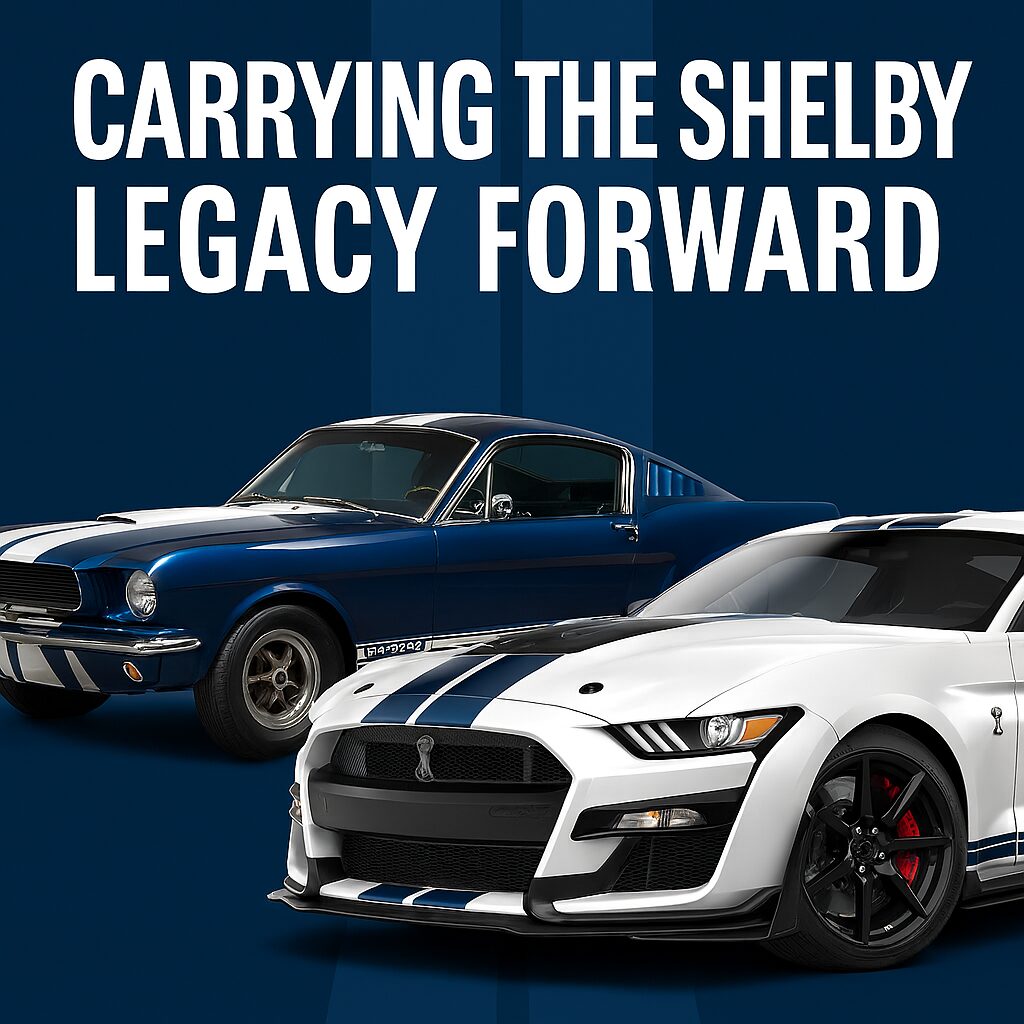
The Break/Fix Podcast has always been about capturing the living history of the automotive world – stories from racers, wrench-turners, designers, authors, and enthusiasts who’ve shaped car culture. In this episode, we welcomed Aaron Shelby, grandson of the legendary Carroll Shelby, to explore what it means to carry one of the most iconic names in motorsports into the future.
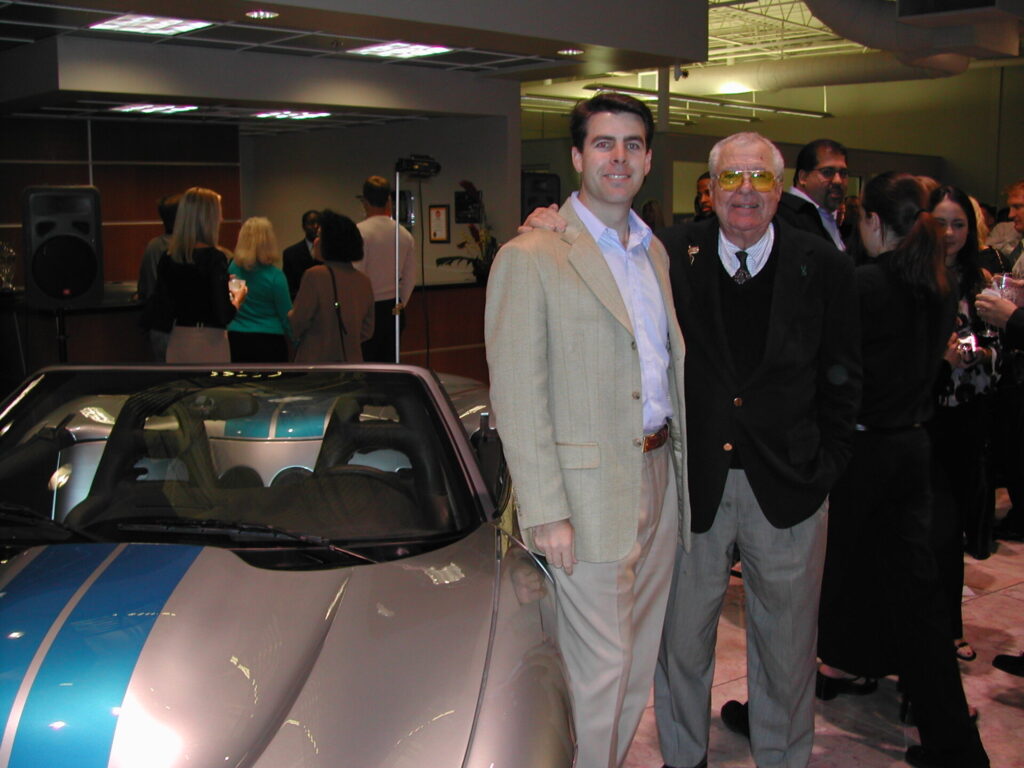
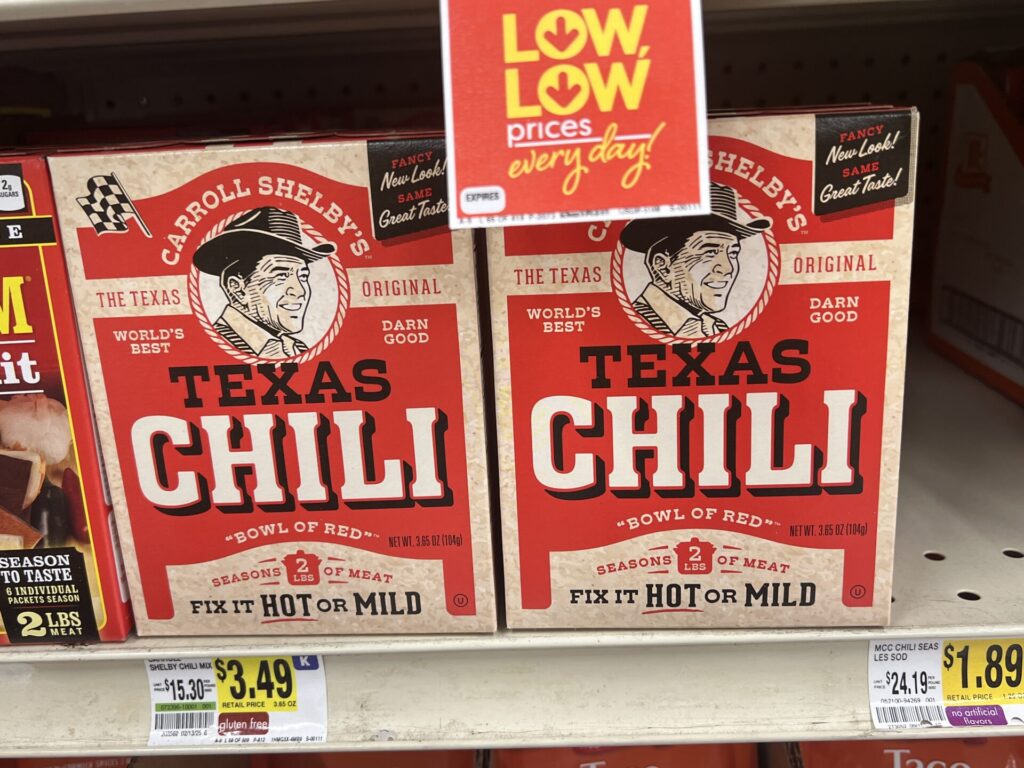
For Aaron, Carroll Shelby wasn’t just a racing icon – he was simply “Grandpa.” Born in 1971, Aaron spent his childhood between Dallas and Los Angeles, visiting Carroll at his wheel company office or swimming at his Marina del Rey apartment. Much of their time together was spent at Carroll’s East Texas farm, where family weekends were filled with stories, food experiments, and the famous chili that became a Shelby trademark.
It wasn’t until Aaron’s teenage years that he began to understand the scope of Carroll’s influence. By then, Carroll had reemerged in the car world through his partnership with Chrysler, bringing the Shelby name back into headlines and onto racetracks.
Tune in everywhere you stream, download or listen!



Aaron’s first car wasn’t a Shelby – it was a humble Acura Integra. Guided by his parents, he learned the value of starting small before stepping into performance vehicles.
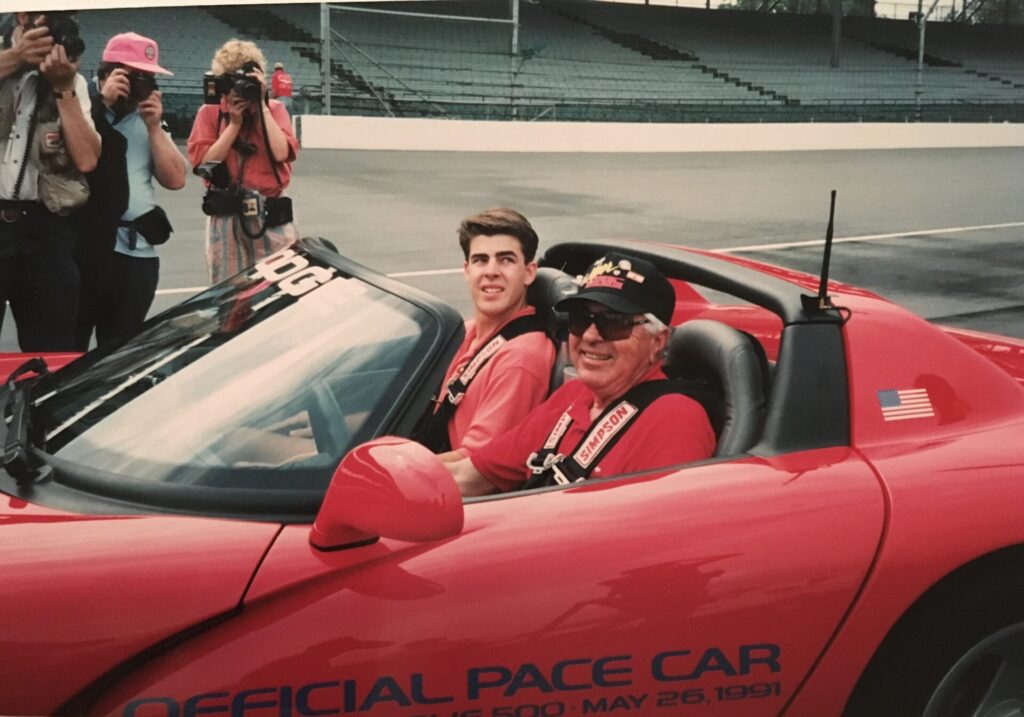
Professionally, Aaron pursued finance, eventually becoming a banking executive in Dallas. But when Carroll passed, Aaron was asked to step into the family legacy. With his business acumen and passion for motorsports, he now serves on the board of Carroll Shelby International, helping steward the brand into the future.
Spotlight
Aaron Shelby - Board Member, Carroll Shelby International, Co-President, Carroll Shelby Foundation. for Shelby American
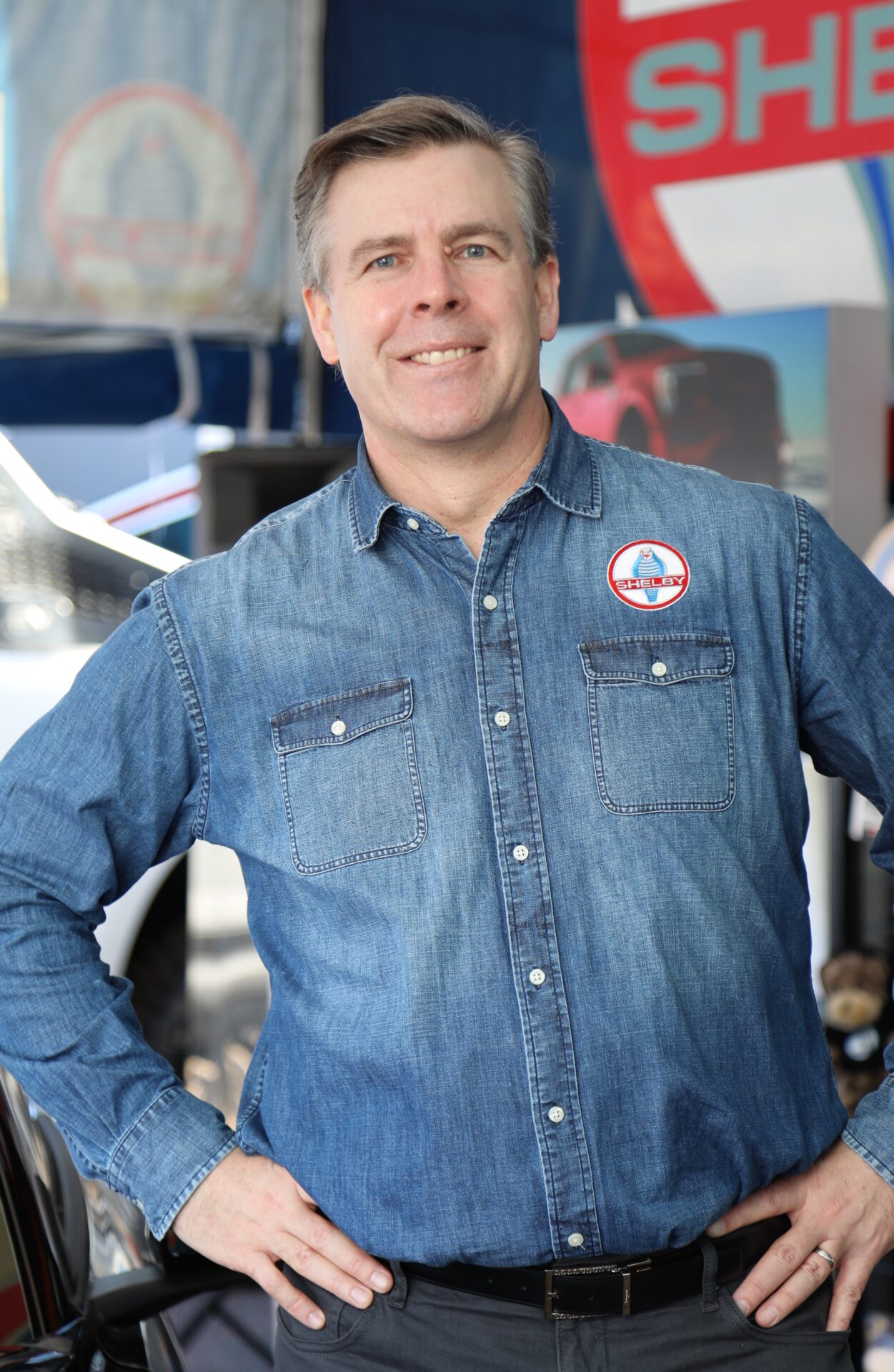
Born and raised primarily in Dallas, TX and graduated from Highland Park High School in 1990. Graduated from Santa Clara University in 1994 with BS Finance degree. Currently, Aaron's position at Prosperity Bank is DFW Area President and he manages the Bank's Mortgage Operation and a Commercial Lending Group in Dallas/Fort Worth. Aaron operates the Shelby family's timber business in East Texas- JFS Timber Partners In April of 2016 Aaron was named to the Board of Carroll Shelby International, the umbrella organization under which the Shelby entities operate. In this roll he acts as brand ambassador for Shelby and helps to maintain the relationship with Ford Motor Company His charity work currently includes being on the Board of Directors of the Carroll Shelby Foundation and previously working with NFTE (Network for Teaching Entrepreneurship) and The Dallas Children's Theater.

Contact: Aaron Shelby at aarons@shelby.com | N/A | Visit Online!
Synopsis
This Break/Fix episode features an in-depth interview with Aaron Shelby, the grandson of legendary automotive icon Carroll Shelby. Aaron discusses his upbringing surrounded by automotive history, his efforts to preserve and expand the Shelby name, and his role on the board of Carroll Shelby International. The conversation covers various aspects of the Shelby legacy, from iconic vehicles and racing history to the importance of auto tech education and the Carroll Shelby Foundation’s charitable work. Aaron also shares insights into future projects and developments at Shelby American, including new vehicle lines and international expansion, while emphasizing the brand’s core values of innovation and performance.
- Growing up as the grandson of Carroll Shelby, what are some of your earliest memories of the Shelby name and its impact on car culture?
- How has your perspective on your grandfather’s legacy evolved as you’ve taken on a more active role in preserving it?
- Shelby has always been synonymous with performance and racing innovation—how do you see that spirit carrying forward in today’s motorsport landscape? And in the media (Ford V Ferrari, etc.)?
- Are there particular races, cars, or moments from the Shelby racing legacy that resonate most deeply with you?
- What are some of the biggest challenges you face in keeping the Shelby name relevant to both lifelong fans and younger generations? How do we keep younger people interested in racing, tuning, engineering, etc.?
- If Carroll were alive today, what do you think he’d say about the direction of racing, particularly with electric and hybrid technology becoming more prevalent?
- Shelby cars have always embodied a blend of American ingenuity and performance—how do you ensure that DNA remains intact in current and future projects?
- When you think about the future of the Shelby legacy, what excites you most, and how do you personally hope to shape that vision? And what’s next for Shelby?
Transcript
Crew Chief Brad: [00:00:00] Break Fix podcast is all about capturing the living history of people from all over the autos sphere, from wrench, turners, and racers to artists, authors, designers, and everything in between. Our goal is to inspire a new generation of Petrolhead that wonder. How did they get that job or become that person?
The Road to Success is paved by all of us because everyone has a story.
Crew Chief Eric: Today on Break Fixx, we’re honored to welcome Aaron Shelby, grandson of the legendary Carroll Shelby. And while his grandfather forever changed the automotive and racing world with iconic machines like the Cobra and the GT 40. Aaron has carved out his own path and is a steward of that legacy,
Max Kaiserman: serving on the board of Carroll Shelby International, and leading efforts to preserve and expand the Shelby name.
Aaron Blends business acumen with a deep passion for motorsports and automotive culture. In this conversation, we’ll dive into what it means to carry on one of the most recognizable names in racing [00:01:00] history, how Aaron connects the past to the present and the exciting ways he’s keeping the Shelby spirit alive for future generations.
Crew Chief Eric: That’s right, and joining me tonight is returning guest. Max Kaiserman, who you might remember from our Luna Replicas episode. So welcome back, max.
Aaron Shelby: I see you.
Crew Chief Eric: And with that, let’s welcome Aaron to break fix.
Aaron Shelby: Hey guys, happy to be here today.
Crew Chief Eric: Normally we would start out an episode, tell us your superhero origin story, but you are the descendant of a superhero.
So let’s talk about growing up as the grandson of Carol Shelby. What are some of your earliest memories of your grandfather and the Shelby name and the impact that it had on you? The impact that you saw in car culture?
Aaron Shelby: Sure. You know, I was born in 1971, so my first decade roughly, Carol wasn’t in the car world.
We split some time. I was born in Dallas, we lived in LA for a bit. He and my father were partners in a company called Carol Shelby Wheels, a manufactured aluminum wheels in the garden area of Los Angeles. And so I would go up to the office every now and then as a little kid, and he would be up there sometimes, but it was just grandpa.
I’ve got a brother that’s two years [00:02:00] younger and we’d hang out with him a little bit. He lived in Marina del Rey in a high rise apartment that had a pool. I remember, you know, a number of times my mom taking us over there to go swim in the pool and hang out with him for lunch. And you know, a lot of ways, very typical.
We spent a ton of time with him in his farm in East Texas. That was where he was from originally. That’s where he always liked to go and recharge. And so we do a lot of. Family weekends out there when he was in town and he was just Carol, there was no car business out there. He never brought up car business.
He didn’t talk about it at all unless you really poked on him with it. Most everybody that saw him in East Texas was somebody he knew from high school or family, friends or cousins, and they didn’t talk about it. They were just, Hey, remember this time in 1940 when we did this and you know, we hung out and did this after school or whatever.
It was just very typical from that perspective. Until my teenage years,
Crew Chief Eric: almost like you were talking to a veteran of like a foreign war or something like that. It’s like, we won’t talk about it unless you ask me about it. Right.
Aaron Shelby: That’s exactly right. And one funny thing from him from that time period, you know, it, it changed as technology changed, but the man [00:03:00] lived on the telephone.
And he had this phone book that was like a Bible. It was huge. You know, assistant would type it all up and he had everybody’s phone number in there. And when he’d get a little bored, he’d just sit there and dial people’s numbers up and talk and see what was going on. And sometimes it was business related, sometimes just catching up with friends, but.
Every now and then he’d start yelling at somebody on the phone. And that was, you know, later in life that was, seemed to be his way to, uh, lead in or manage people. As the louder I yell, the more it’s gonna happen. And he’d always kind of do it with a smile on his face. I mean, it wasn’t, I don’t think out of anger necessarily ever, but it was just, that was his methodology on getting his point across loud.
Texans. Yes, exactly.
Crew Chief Eric: Speaking of last year, we had the privilege of having Leanne Patterson on, who was actually one of Carol’s PR folks, especially during the Dodge years. Yes. And she made it sound like every time you went to the ranch, quote unquote, there was always a pot of chili ready, and it was Carol’s secret sauce, and it was very down to earth.
Is that exactly, I mean, does it play out like that? That
Aaron Shelby: was pretty much it. You know, Carol was, um, an experimenter in the kitchen, let’s say. He, he did know how to cook things [00:04:00] and some things he cooked were really good. Could he do it again the next day? Probably not because he didn’t pay much attention to what he was doing or how he did it.
But yeah, there was definitely some surprise pots of things every now and then. And then there was some really good stuff that he cooked. You know, he had friends that raised cattle out there and he’d go buy fresh steaks and have a big freezer full of those. And it was like, oh, just go grab a few steaks outta the freezer.
We’ll do those tomorrow night for dinner. And at a bit of it, I’ll actually take back to his childhood and growing up in the depression era where his family did not have a lot. His ability to then make his own stuff and gather what he wanted from a food perspective, I think always played to him. And then later in life, you know, after his heart transplant particularly, he lost a lot of his sense of taste.
And so things that to him tasted good, were always a little strong to everybody else. Whether it was too salty or too hot or whatever. He was just trying to elicit some kind of taste outta it. It was definitely interesting and I had some, some good things and some interesting things out there.
Max Kaiserman: You know, the slogan for the, uh, Carol Shelby Chili is Fix it the way you like it.
There’s like a pound of hot powder in there you could add to it. That’s exactly
Aaron Shelby: right. And that’s what he wanted you to do. I mean, he knew [00:05:00] everybody was different. He wanted you to be able to customize that. And you talk about the chili, that was one of his just kind of whims of he caught lightning in a bottle there and just, it really worked for him.
Max Kaiserman: Still made today. It is, you know, coming from this family and, and with Carol’s legacy, what, what is your background? What did you find yourself at throughout life? So I’m
Aaron Shelby: a numbers guy. I’m not necessarily an idea guy, although I have a few of them, but nothing like Carol did. And then when my father started racing cars when I was eight, formula Ford’s initially at like Riverside and Willow Springs and places like that.
And your father was Michael, right? Patrick. Patrick. Oh, so he was the youngest son. He’s the youngest of the three? Correct. And you’re the older of your I’m the oldest of the grandkids. I’m the oldest of my brothers, but I’m the oldest of the six grandkids as well. Cool. You start to get. A little more of that Shelby history.
And then right on the heels of that, Carol joined Chrysler, the Dodge Years as I call him for the 1980s. All of a sudden, he’s on magazine covers again, and all the stories are talking about the Shelby history [00:06:00] from the sixties and where’s Carol been for the last 10 years, and which is a whole nother.
Story we’ll get into, and there he is in the car world again. And so I gotta go to some pretty neat races. When I was a kid, I went to the Las Vegas Grand Prix in 1982 I think it was. He was a Grand Marshall, so my mom and I flew over and met him there, and that’s when I met Mario Andretti. And so there’s certain things like that that popped up, but it really wasn’t until later, probably my teenage years that.
I began to understand more the scope of his history, what he and the team at Shelby American created and where he was going in with his life. What was your first car? Let’s see, probably a year old, maybe a year and a half old. Acura Integra. There was a base model with a five speed, and I loved it. It was great.
It was a good first car. I really wanted one of the Dodge Shelby cars. Probably pestered Carol for a year and wanted like the Shelby Lancer, the Daytona or whatever at the time, and he said, absolutely not. You need something that you can learn on and then maybe you can get one of these later on. My mom went out and bought this Acura for me and gave it to me when I turned 16.
It was awesome. [00:07:00] I loved it and had a couple of Acura after that and enjoyed ’em all. When I got outta school, I was a finance major. I went into banking and my grandmother and her side of the family, so Carol’s first wife, they’re, I could say prototypical Texans. They were an oil and gas and real estate and banking and all those things.
When dad sold the wheel company in the late eighties, he bought into a small bank in the Dallas market that my grandmother had ownership in and became chairman. And so I didn’t start there initially, but wound my way up there in 2003. And have been in that bank for, you know, 22 years now, almost 23 years.
So that’s where I’m comfortable, you know, do a lot of lender finance. We’ve sold the bank a couple of times now, so we don’t, family-wise, we don’t have much ownership there, but that’s my daily job run. Dallas-Fort Worth for this bank, in addition to our single family mortgage group, was really opportune for me on the side 10 plus years ago, almost 12 years ago now, to be able to jump into the Shelby world, it’s something I always had a passion about.
But it was Carol, you know, there wasn’t a succession plan in his mind [00:08:00] on I want this family member to be involved or that family member. My dad, like I said, was in racing. He’s always been passionate about the cars. My uncles liked it as well, but neither of them were wanting to step into that role, and so they asked me to come in and, and take a shot at it, and I’ve enjoyed it immensely.
So I think bringing that finance background that I have. Whether you’re talking about the foundation side of things and what we do or the business side of things, I do help Gary quite a bit when it comes to budgeting and kind of talking through numbers, and so I enjoy that. That’s what I bring to the table and just, I also look at what Carol did for so many years and he just made people feel comfortable.
You know, he made him feel like family and he made him feel like it’s just another guy you’re sitting down and talking to. And so I spend a lot of time with that as well. In today’s enthusiast world, we have the Texas Concourses Dallas area, and we had a little panel and a couple of guys have known Carol for.
35, 40 years, and they both said the same thing. He’s like, he was just somebody you could sit down next to and have a three hour conversation about fishing in the Gulf of Mexico and you never talk about cars. But he knew about it. You know, he just could talk about anything. And he made it about you. He [00:09:00] made it about what your interests were, not what he was interested in.
He would throw his knowledge in, of course, with different questions, but that’s really kind of where I saw he was successful and what’s helped that brand grow. And so that’s, you know, where my background is and where I try and carry us forward today.
Max Kaiserman: How have you seen the evolution of his legacy and how you’ve interacted with the legacy as you’ve become more involved with it?
Aaron Shelby: One of the best things that he wound up doing in life was joining back with Ford Motor Company in 2003, four timeframe. Obviously the next new Shelby didn’t come out till oh six, but that first couple years and just putting him back in that fold and with that team at Ford at that point in time, Edsel being a prime driver behind all that happening.
Really reenergized him. You think about that he was getting, you know, late sixties, early seventies, really, probably early seventies at that point in time. The end of the nineties was a struggle for him financially and business wise. He was, I wouldn’t say lost. There was plenty going on in his life, but there wasn’t a lot of constant in his life and.
That joining back [00:10:00] together with Ford and what that created for the last 10 years of his life was really critical to not just his personal wellbeing, but the brand today being what it represents. Had he not done that, I think we would be looking at a much different Shelby brand today than we are.
Crew Chief Eric: I don’t wanna discount the Chrysler years though, because.
As we know, Carol went to Chrysler because of Lee Iacocca, who was with him at Ford. And there’s all that partnership and friendship there. But the Viper and the Viper coup, which are basically the next generation Cobra and then Daytona coup are in their own right classics. I mean, they’re amazing vehicles.
I I don’t wanna shortchange them in any way. So is there anything happening between Shelby and Chrysler in the foreseeable future?
Aaron Shelby: Not at this point in time. You, you never say never on anything. Those were important years. I look at him as important ’cause it was my teenage years. So that’s kind of when I saw Carroll get in the car business and he and his team did a lot with a little, he first got over to Chrysler.
I think the comment was, you can go to our parts bin, but we don’t have a whole lot. We have no money to give you to do anything. Just [00:11:00] see what you can put together here. And I think for a 10 plus year partnership, they did a really good job. Putting out some fun cars. Carol was always really proud of the work was done with Chrysler and the vehicles that came out.
Given, again, kind of the budgetary constraints, the engine technology at the time, and doing those little turbo four cylinders. He had a lot of fun with that. Obviously culminating into Viper, which was how do you hit it outta the park? More than that, as a. Final feature before you leave. So really neat. We have a 92 Dodge Viper in our family collection.
I think it’s a really important piece of Shelby history that he was involved in that project, and I’ve been fortunate to be able to meet a lot of the team members that worked with him on that through the years. And it’s a scary car. Kinda like the four 20 seven’s a scary car, but it’s a important piece of Shelby history and in that important piece of Dodge and Chrysler and Shelby history as well.
Crew Chief Eric: So since we’re still waxing poetic about the Shelby legacy and a lot of the really cool cars that people identify with, like the GT 40 and the three. 50 and all those. There’s a couple unsung heroes in this list, and I’m not talking about the Omni GLHS or the Daytona or any of those cars. [00:12:00] What I’m referring to specifically is sort of that middle period there.
And you alluded to it earlier, Aaron, where Carol was experimenting, he was still trying to be in the car world and there were some offshoots. You had the series one, the series two, and then the V 10 Cobra concept in 2004, which is not too far off of the copperhead concept that Chrysler had put together.
So I wanna show a little love. For those cars. For the people out there that really like those and hope that they had gone into mass production, how are they reflected in the celebration of Shelby?
Aaron Shelby: The series one particularly, is an important vehicle. I’ll be real upfront. It’s my least favorite Shelby because I know the history of it and kind of the about bankrupted him, and I just knew a lot of the behind the scenes.
But from a engineering perspective and a company perspective, it’s really important. It’s actually the only ground up Shelby ever made as far as. Chassis created from nothing and just truly ground up. So there is that important part of Shelby history in that vehicle. We have one in our collection. You know, there was only 249 that got produced ultimately, uh, they were shooting for 500 and they just [00:13:00] didn’t have the money, nor the desire, I think, in the public to buy ’em at that point.
But I tell you, if I take that thing to a cars in coffee today, it turns heads. ’cause nobody ever sees one. And so I think from that perspective, they know it’s a Shelby. It, it’s not like some of our modern cars that have Shelby all over it. It has series one badging and you see Shelby on there one or two places and that’s it.
So you gotta know what it is and we get a lot of, particularly with the kids that don’t have any idea what it is, they get fascinated with it. You know, another interesting one, if you go back to the, the sixties timeframe is the Sunbeam tiger. And a lot of people don’t know what Carol had to do with that one.
And it’s unfor, I don’t fit in those cars, so I don’t have one. But, uh, does anybody
Crew Chief Eric: fit in those?
Aaron Shelby: It’s a neat little piece of history, you know, getting that 2 89 motor in there and, and really turning that thing into a fun little car. So. You look at that stuff, and it was Ford’s project, but the Shelby GR one, which was kind of an updated Daytona coup prototype car, if you want, came out around oh four.
So that car still looks fantastic today. It’s amazing how many people ask, well, why don’t you just license that? Start doing that on your own from Ford. I’ll be honest, super performance looked at it a while [00:14:00] back. It’s just kind of too difficult, unfortunately in today’s world to do something like that, but that design is really iconic.
You mentioned the V 10 Cobra, Chris Theodore that was on that team that did that, he actually bought it a number of years ago, hashed out the motor to make it work again. You know, it was an Unrun prototype. When they got rid of it, they plugged up the motor and all that. Well, he cleaned the whole thing out and got it running again, and he’s since sold it at auction.
But I just had somebody ping me wanting to know. We wanted to buy it. It’s coming back up for sale again. So it’s a neat piece of history as well. And I think there’s a lot of Shelby prototypes that are littered through there that will continue to gain value through the years. You look at what Craig Jackson has and the Little Red and the Green Hornet mustangs that were prototyped vehicles that tested different parts and just the story around that stuff.
It’s what continues the legacy to be as strong as it is today.
Crew Chief Eric: Can we give a little bit of credit to the instinct? Success. That was the GT 500 KR that came out a couple years after his return to Ford. I mean, that was a monster of a Mustang that hit the roads.
Aaron Shelby: It really was. And I think between oh seven and 12, that whole run of both Mustangs that Ford put together and [00:15:00] Shelby did with Ford’s help really just re-energized the Mustang brand, the Ford brand, and Shelby.
And what it meant to be a performance car company. Obviously the GT and oh five and oh six was a top-notch vehicle. I don’t want to discount that at all, but very limited and not everybody could obtain one of those. When you talk about the every man sports car in the Shelby Mustang, that really was the launchpad for where we are today.
Max Kaiserman: Shelby has become. Was even in the sixties in its own time periods, the synonymous with performance and racing and racing accessibility specifically. You go buy a Mustang and drive it to work on a Friday and drive to the track on a Saturday, it became a lot more accessible. And how do you see that spirit carrying forward today?
Is racing still accessible? Is the Shelby name still accessible?
Aaron Shelby: Yeah, I think we’ve evolved a little bit. I would love to get us. Personally back into racing. We’re not today. Obviously our cars are very performance driven and we encourage everybody to go take ’em to the track and have fun with them, but there’s not [00:16:00] necessarily a team component and certainly not a Shelby team component at the track today.
That’s something I think, and I’m speculating a bit ’cause I wasn’t in the room, but when Ford and Shelby were working on things back in oh seven to 10 to 12, Ford had some racing programs and ultimately when the three 50 came out, they did run that as a GT three car for a bit. I think that was important, but they really have their own racing umbrella, so it’s up to us if we wanna do that.
And I will say a step we’re taking in that direction next year is working with Turnkey Automotive. And what we have is our GT three 50 R model coming out for the TransAm Spec series next year. It’s not gonna be us running it, we’re gonna do it as a customer car to start with. But that’s kind of getting our toe back into the official racing waters,
Max Kaiserman: but it’s still available to the public.
It’s something that through SCCA or FIA, people could enter their own cars on a weekend or something. Exactly,
Aaron Shelby: and that’s
Max Kaiserman: the whole
Aaron Shelby: point of this one. So what you’ve got is your production stuff that any of our stuff you could take to the track today and have some fun with on a production basis. But this is gonna be more track geared under TransAm rules and it’ll be available to [00:17:00] anybody that wants to buy one and go race in that series.
Crew Chief Eric: That’s really interesting you bring that up because as of this year, Ford has. Campaign, the whole Dark Horse series as part of IMSA and the G, the lower GT three support races and things. And so are you aiming to compete against the Dark Horse with the dark horse as a replacement too? How is that gonna play out politically?
Aaron Shelby: So we talked to Ford about that a little bit. We specifically picked the TransAm series because Ford’s not corporately involved there. So it’s not a direct competition there. There are some of the drivers that race Mustang based cars. I won’t deny that, but there’s no Ford backing. Ford doesn’t have a sponsorship agreement with TransAm, et cetera.
So that was part of our choice. In addition to Turnkey, who’s helping us build those cars out of Michigan right now has a long history with the TransAm series and is well respected for creating some of their race cars, whether Camaro based or otherwise, over the last 10 years. And so they’ve helped us kind of navigate those political waters with TransAm and.
That we thought was a good entry point for us so that we’re not in direct conflict with Ford.
Crew Chief Eric: So I’ll add to this, ’cause [00:18:00] normally I ask this next question to our pro drivers about how they feel about something called BOP or balance of performance. Mm-hmm. So let’s just say a Shelby car comes to the forefront and is gonna run against.
The rest of the makes in, let’s say, GT three and IMSA or in WEC or at LAMA or something like that. How do you feel, let’s say, if you were the team principal about the balance of performance, do you think it would be in Shelby’s favor or against,
Aaron Shelby: I’ve watched this a lot in the last, well, I’ll say last 10 years.
I mean, when I started going in 16, when Ford went back with the GT and, and whether MSO or, or the a CO or, or wc. I don’t know that there’s a secret sauce to balance the performance. I think it’s a trial by error. And as soon as somebody other than Ferrari, I’ll say, gets out in front too far, they like to just reel ’em back in.
Whether it’s dialing back horsepower or putting more weight on you or doing something and it, it doesn’t seem to have a lot of rhyme or reason to it. And you talk to some of the team owners, doesn’t matter to the make, and they get a little frustrated with how it works ’cause they feel like they’re all being anchored back somehow from performance.
So from a Shelby [00:19:00] perspective, I like to think we’d be a little innovative and get out there with something that would blow everybody away. The first couple races. Then we’d have to get dialed back. That’s looking at our history and looking at, I think, where we would evolve into things.
Crew Chief Eric: I’m glad you you phrased it that way because I think at the heart of that is the ingenuity that American ingenuity that was brought to the forefront with the Shelby brand.
Something that I think a lot of us still continue to hang our hats on is it’s that roll up your sleeves to tenacity of, you know, never given up and wanting to win, and all the crazy stories that come out of that. Over the years, the Shelby cars obviously have embodied that. How do you ensure that that DNA.
That idea that ethos remains intact with current and future projects at Shelby.
Aaron Shelby: So for me, I’ll say I’ve got the easy role in this right now. The hard part of that falls on the team at Shelby American in Las Vegas, Gary Patterson, our CEO and President, and Vince La Violette, who’s our chief engineer and development officer there.
They both spent a lot of time working directly with Carol. These aren’t new hats to this. You guys may have probably met both of them through the years. They know Carol, they [00:20:00] know what he wanted. And they carry that DNA into the company today for any new associates, employees that come in and trying to train up what we’re doing, whether it’s working with our supplier partners and describing what we’re trying to accomplish with the vehicle or directly with the folks on the shop floor and just describing what the Shelby ethos looks like.
They have that burden more than I do, I think. ’cause I’m not there on a daily basis. You know, I act as a brand ambassador and I get to Vegas probably three or four times a year. But I meet with Gary probably every two weeks via phone call or something, so I know what’s going on. But they’re the ones that carry the mantle on innovation and efficiency and how do we push the envelope?
On something that maybe Ford couldn’t do because of, you know, they’re a big political company and there are just certain things they can’t do, and we’re gonna sell a hundred of something where they need to sell 5,000 of something to make it make sense. I don’t view it as pressure for me, I think it’s a live thing and it’s a live piece of Shelby DNA that we just try and instill through.
The various Shelby channels that we touch people with today.
Max Kaiserman: And I can say from the vintage perspective that I’m, I’m [00:21:00] sort of part of the vintage Shelby legacy of the sixties, what we do that’s incredibly alive and well. That is one of the most collectible cars, vintage GT three 50 or GT 500 Mustang.
They are still trading in the. Quarter million dollar range for a, a nice example. And people are very proud to have one. I have a clone, I have a 66, 3 50. Yeah. But even the Hertz legacy with Shelby Oh for sure. Has been renewed in just the last few years. The new GTS and the GT 500 H, you know, are now hitting the public because they’ve come off of the rental circuit.
It, it means something and
Aaron Shelby: that’s what is, I think if anything surprises me, it’s. The enthusiasm around the brand. I was just at the Goodwood Revival and while there was nothing Shelby specific this time, I just went to go have some fun and visit with some friends. You know, there was still a dozen cobras in two different classes that were racing.
There was two GT three 50 Rs that were racing in a separate race. And when you start to talk Shelby and you, if I wear my Shelby pitch shirt like you guys have on right now, people come up to you and ask you questions. There’s something about that brand and that. [00:22:00] Time period and the vintage cars and what they represent.
It’s just really special and it’s not something that can be recreated. You’ve got obviously a huge Porsche community in Corvette community and Ferrari community, but they’re different. One thing I hear repeatedly is how the Shelby community is like family. And it’s a small community based on comparing to some of those others.
But it’s a strong community and it is really all pulling in the same direction all the time, which I find interesting and, and a bit humbling. I think, to me, that’s something I didn’t expect when I started this 10 years ago.
Max Kaiserman: Well, the real hot rodders, and I think that’s the difference is, you know, a PORs.
You can buy a great Porsche outta the box. You can buy some of these other cars right out of the box. Uh, a Shelby Mustang, the original Daytona coup was a hot rotted and, and aluminum paneled modified British racing car from the fifties. I mean, like, and they, and it was winning. I mean, it was winning against purpose built cars.
Yep. In the mid sixties, Carol would say it’s an old car with buggy springs and, and they were getting it to win. To me, that’s the brotherhood. That’s somebody that says, we’re gonna put our [00:23:00] minds together. And anybody, the kids sweeping the floor might even have an idea that gets us an extra two seconds or something.
Exactly right. Peter Brock and Chuck Cantwell and you know, you name it, they’re still singing that song. Hey man, we were, we were a team. This was a real team.
Aaron Shelby: That’s exactly right. I was actually with both those guys at the SAC 50 out in Sonoma, you know, and Peter’s been a great friend to us. He’s in Las Vegas, so Vince and Gary involve him a lot.
And what we’re doing on the next car, so to speak. And they usually get him involved in looking at our design and the renderings. They love to have his input and I believe he just turned 89 years old. He is super active. His mind is still super sharp when it comes to talking aerodynamics and looks and what you want to see in today’s world.
And he was 20 when he did this stuff. It was crazy. He was a kid. Yeah. And Chuck is the same. I mean, what he added in that couple years that he was at Shelby, particularly the GT three 50 program, I guarantee you just talking to him today, he never envisioned that there would be this much celebration about that car.
60 years on. I mean, obviously he went on to a very [00:24:00] successful career with Penske and some other things later on, but we’re so fortunate to be able to have some of those. Folks that tie us to the past and tell their stories again, today, it’s uh, not gonna be many more years when we won’t have anybody left.
Unfortunately,
Max Kaiserman: also not for nothing. They are the nicest people in the world. Peter will sit there and talk to you for an hour. Chuck Cantwell. He’s so quiet. Sometimes you gotta lean in. But he has the greatest stories, you know, he does.
Aaron Shelby: And it’s just one of the things that I think. I certainly missed, I met some of these folks when I was younger around Carol, you know, I didn’t do a ton of events, but would show up every now and then.
I gotta meet Phil Hill and Dan Gurney and these guys, and, and I knew who they were, whether I was too shy or just didn’t know the questions I asked. I just kind of sat there and didn’t ask enough. I mean, I look back on it now, I’m like, well, I should ask ’em about this and that. I, I just didn’t, it wasn’t top of mind.
You know, these folks won’t be around forever, and I think that’s one of the neat things about all the vintage events today, whether it’s Goodwood or Sac, or Pebble Beach, whatever it is, they bring these guys together to tell their stories, to get their stories out to a wider audience.
Crew Chief Eric: So Aaron, you mentioned the Texas Concor this year at [00:25:00] Pebble Beach.
Shelby was the featured mark at the Concord to Elegance. Were you able to go out and participate and get involved in that?
Aaron Shelby: The team says Shelby kind of took over the peninsula on the weekend. I mean, we had an awesome weekend, not just. We had a team, Shelby group of enthusiasts, about 40 people out there.
But you know, at the track, obviously there’s always cobras and mustangs, but at the quail on Friday there was a GT three 50 class. We took our 65 R model out there for that. There was, I think, 12 cars in that class. It was great to see all those sitting there. In addition to Craig brought little red out for that, and in addition to two other prototype 60 sevens that were out there by their owners.
So really some neat recognition. Come into Sunday and you’ve got six cobras on the lawn at Pebble Beach. It was awesome that, you know, that kind of 65, 66 bumps up into the end of what they celebrate out there. So we were really fortunate to be able to have the cobras out there. Thursday, Gary Patterson and I were on a panel at Pebble Beach talking about Shelby history and, and what it means to be out there.
I was fortunate then to be able to give out the awards to the class winners in the Cobra class as well. A [00:26:00] lot of Shelby recognition. Really appreciate the team at Pebble Beach for helping put that on this year, and it was a special time for sure to celebrate the 60 years.
Max Kaiserman: Are there any historic races or current races that are still going, that are moments in Shelby racing that particularly resonate
Aaron Shelby: with you?
For me, I mean, it’s. The granddaddy of them all, so to speak, is the Lamont 24 hours. You know, Carol still is the only person to have won that as a driver, a manufacturer, and a team owner. I don’t think that’ll ever happen again. I just in, in today’s environment, how much it costs to go do that. I just don’t think it, it will.
So it’s a special place I try and go. Most years I was actually at Lamont in Lamont Classic this year, which was a lot of fun. The neat thing and we talk about the enthusiasts and the market that follows Shelby today, the French and the folks around Lama really appreciate the Shelby history there, winning it with Aston Martin in 59, and then the Daytona Coop winning its class in 64, and then obviously ultimately with the GTE forties under the Shelby umbrella in 66 and 67.
So there’s a lot of history and they appreciate that. Texan outlook, if you [00:27:00] will, and just what he came over and did more or less on a, I wouldn’t call it a shoestring budget with the gts, but it was a struggle to get there with the Daytona coops, and nobody expected anything outta that team. And this little ragtag bunch of Southern California guys came over and beat Ferrari.
It was, it was enormous at the time. And that still plays well over there.
Max Kaiserman: Well, I’d like to jump ahead real quick and talk about that for a second. The legacy of the hot Rodder, the chicken farmer that was beating Ferrari. Yeah. What do you see how that applies today? How do you, how do you get someone engaged in, Hey, you can do this too, we’re not special kind of thing.
Aaron Shelby: The best way to describe that part of the Carol Shelby Foundation today, one of our core pillars is auto tech education, and that is providing scholarship dollars for kids either while in high. School or usually a local community college to get their full auto tech degree and certificates on whatever it is that they need to work on.
And that’s a lot of what I talk about with these classes when I go talk to the kids. We’ve got five different schools around the country that we support with scholarship dollars in addition to. Several new car dealer associations that sponsor [00:28:00] different competitions and things that we provide some dollars to, and I talk about the opportunities that this can afford them.
You’re not having to pay for four years of your university. You’re getting usually a pretty inexpensive, if not free education, and there is a ready stream of jobs for this group to come out, whether it’s at a dealership or a mod shop or something like that. It can be a stepping stone. It’s not, I was telling somebody at lunch today.
You don’t qualify, get your certificate and go work on brake for the next 50 years. I mean, if you want to, you can, but you go work on brake for one or two years, then you move on to something else in the dealership and you move up and then all of a sudden you’re an assistant manager of the shop floor or you’re a manager of the shop floor and you’re making $250,000 a year.
We try and promote that side of it. There’s a different component to it where we have some internships that have come through Vegas. We don’t currently have any relationships. But in the past we’ve had some relationships with some NASCAR teams. We’d had internships out there. I’ve helped a couple of people get some jobs in the IMSA programs through the years.
There is that path. A lot of these kids just need a door to get open for them to get that opportunity. [00:29:00] Uh, to me it’s critical, I think, on how our society infrastructure is going to succeed going forward. We’ve gotta have those technical skills.
Max Kaiserman: You touched on earlier about Carol Shelby Foundation and the work you guys do with education.
Could you talk more about that?
Aaron Shelby: So Carol actually started the foundation after he had his heart transplants actually started up and officially was incorporated in 1996. We’re coming up on its 30 year anniversary next year, but it was a Shelby Heart Fund. Originally, he wanted to help families with children getting heart transplants.
That’s a pretty narrow scope that he realized pretty quickly and pretty expensive. So he broadened it. Through the years and now our focus is auto tech education as we discussed earlier. And then we also help families with children going through transplant care, not just hearts, but any kind of transplant.
So we work with five different transplant hospitals, pediatric
Max Kaiserman: transplant hospitals around the country. My best friend who I was just the best man at his wedding is a, uh, pediatric pediatric anesthesiologist Oh, wow. At Johns Hopkins. Yeah. Guys are linked in to Hopkins at all. I can get you connected with them.
Aaron Shelby: Yeah, that one [00:30:00] would be good. We use, uh, university of Pit. Bird Medical Center up there. We have a good relationship with, we’ve got one in Southern California, Loma Linda Children’s here in Dallas, one in Kansas City. A lot of these introductions start through our team Shelby Group meetings, and sometimes it’s somebody that they know and we do some local fundraising for them, and then we tie that relationship in, so it’s.
It’s impressive. I’d
Max Kaiserman: love to help with that in some way. Just Hopkins is huge on the East coast here. Of course. Major, major, major medical system.
Aaron Shelby: We also work with Children’s Organ Transplant Association out of Indianapolis. If you are a family in a rural area and your kid needs a kidney, a liver, whatever, they literally have a playbook for you.
This is what you need to think about. This is how you need to raise some funds to help yourself. You know, it’s not everybody that has a. Pediatric transplant hospital in their backyard. So it’s gonna involve a lot of travel and care for other family members or pets or travel and time off work. And Coda’s a great organization.
We do not have any kind of infrastructure to help with that, but we give money to Coda because they’ve got a staff that really helps families around the country. I think last year they helped 300 [00:31:00] families through that process. So you know, at the end of the day, the Carol Shelby Foundation is where Carol wanted his legacy to be remembered most.
And so having those core pillars of helping families with healthcare needs. And the auto tech education is critical for us to continue that Shelby legacy and brand.
Crew Chief Eric: See, I thought Max was gonna go in a totally different direction because I know his heart aligns with the Ford versus Ferrari movie ’cause some of the, the work he’s done with that.
So I’m wondering, going back to the California hot rodder and touching all those things you highlighted, let’s just dive into that for a second. How true. Was the movie to some of the stories, you know, or what did they get wrong and what did they get right?
Aaron Shelby: Some of the things that were correct. Obviously the overarching story is correct.
You are cramming five years into two hours, so there’s some things they gloss over, have to kind of Hollywood eyes to, so to speak. But the overall arching story is correct. It was this group that was not expected to do much. Became successful, got Ford’s wallet basically, and after their success to go make Ford successful.
And they did. There was a lot of politics involved. We’ve got [00:32:00] some commentary in our archives between Shelby executives and Ford and Ford executives and Pullman Moody and you know, the Ford executives were playing both those teams off of each other. That took place for sure, depending on who inside Ford had, what desire.
I think Matt Damon did a good job of getting Carol’s character across. I wasn’t necessarily a fan when I first heard he was gonna play Carol. I liked Matt a lot. I just didn’t see it. But he really did a good job bringing his character to life and I talked to him about it at the red carpet. I gotta meet him.
And I said, you know, you play a lot of real life characters. If you could look across his movie spectrum. How did you get into this role? And he said, you know, Aaron, your grandfather was one of the easiest because he’s got hundreds of hours of interviews on YouTube. And I just went and started watching interviews and watching interviews and, and it wasn’t all from like 2010, it was like 1962.
And then, you know, 1994 and 1987, there was all kinds of different ages and he really picked up a lot of Carol’s mannerisms and characteristics that way. And I thought he did a really good job of getting that across in the movie. Who would your grandfather have wanted to play him? [00:33:00] Well. I’ll, I’ll give you who I would’ve picked.
I would’ve picked Matthew McConaughey tall, skinny, Texan, just like Carol would’ve, sounded just like Carol. I don’t think that would’ve been a stretch at all.
Max Kaiserman: Was he as calm though? You know, McConaughey has this vibe of everything’s all right all the time.
Aaron Shelby: I, I think Carol could play that pretty easy. If you talk to the team, particularly back in the sixties, I mean, he was the leader and he was the pied piper, so to speak.
He didn’t have to be yelling at everybody to. Get ’em to do things. They wanted to do it ’cause they wanted to succeed and I think he could have done that pretty well. So it, it would’ve been interesting. Matt did a good job and I think in general played it in a really good light. I will expand just a little bit back to both of your questions.
So that movie has done more to gather a younger generation of Shelby fans than I think anything we could do outta the company today. It just really created that genesis story and got people to recognize. Even more modern enthusiasts that have become in the Shelby world in the last 15 years. When he joined back with Ford, a lot of ’em didn’t know the origin story, didn’t really understand that Carroll was a race car driver, and the success that the Cobra had and what [00:34:00] all happened back then.
That movie really opened a lot of eyes to the Shelby Ford partnership and where that success came from. You know, going back to the Ford versus Ferrari movie, outside of the Shelby recognition, the best thing it did was bring 10 miles achievements to light. ’cause so many people did not even know who Ken Miles was.
And he was so critical to the success. And he was a fantastic driver
Max Kaiserman: and an engineer. I mean, he was a, he was a born engineer. Phil Remington. Charlie apu. I mean these guys that really were critical to this. Phil Remington especially, and he designed mm-hmm. The whole control arm replacement system. Yeah.
For the UP engine G GT 40. These guys made that happen and it’s so great that it has a rebirth. You know that vintage history has a rebirth and now you know, has a modern take on it. Yep, that’s exactly right. Carol saw the rebirth of the electric car. You know, it had been a thing in the 10th century. Yes, yes.
What would he say today about the direction of electric vehicles in daily use and in racing as well? If you
Aaron Shelby: look at Carol’s history, he was a look forward guy and he was a technology guy. [00:35:00] He loved technology. And while a lot of stuff that he tried didn’t work, we actually have him on, in one of his last interviews in 2011 talking about electrification and that he was really excited about what he was reading about electrification for cars, but knowing that he wasn’t gonna see the optimum performance of that, whether you’re talking track or just daily use, but knowing it was coming from the engineers he was talking to.
And so I think he would love to see where it sits today. Would he base the whole company around it today? Probably not. Just like we’re not today. I think at some point. If there’s a spot for a Shelby Electric vehicle, we’ve done a couple little trial runs on some machs and things, but I don’t think the technology nor the market is where we need it to be.
To be a Shelby vehicle today. Doesn’t mean it won’t always be that way. At some point we might get there, but I do think Carol would really like it. What people don’t understand a lot of times is Carol was a, he was an entrepreneur. And he was an idea guy, and so he tried hundreds if not thousands of things through the years that just never worked and he didn’t care.
He just wanted to try ’em out. And I think electrification, he would be looking at the battery technology and the [00:36:00] software and he’d be looking at everything that the tech guys are looking at today and say, how do you make this better? I mean, it’s one thing to get in a Tesla and go, you know, zero to 60 in two seconds, but how do you get that thing to last for 20 laps in a race?
You can’t, doesn’t mean it won’t always be there. It’ll get there at some point in time.
Max Kaiserman: It’d be a killer drag race though. Oh yeah, for sure. Instant torque. You know? I can only
Crew Chief Brad: imagine. Yeah, he would love that.
Max Kaiserman: Yeah. Carol would’ve loved instant torque. I mean, it really was What, where the rubber hits the road literally.
Yep. And the endurance comes later. Right. That’s, that’s the, but in his own words, you know, Carol said he was a serial entrepreneur and had adult a DD. He just, he went from one thing to another. Thing when he got bored with it. But it all had a, a similar vein of that sort of innovation and engineering.
Exactly.
Crew Chief Eric: And I’m glad you guys went here with the electrification and the rebirth of the partnership with Ford. You know, and that’s getting stronger every day. Ford has been talking, there’s no longer rumors they have made it official. Right. There’s some Formula one stuff going on and we’ll leave that to the side side.
But they’re returning to LAMA for the projected 2027 season in the LMDH.
Aaron Shelby: Yeah. The [00:37:00] hypercar class. Mm-hmm. Yeah, exactly.
Crew Chief Eric: The GT P class. So are we gonna see a quote unquote, let’s call it another Ford GT in the upper echelons of racing? And is Shelby gonna be involved there, or can you say Aaron?
Aaron Shelby: Well, I, I can’t really say with any real knowledge on that.
I, I’m excited that Ford’s doing that. I tell you that I think from a Shelby perspective and just a racing enthusiast perspective, it’s gonna be really neat to see. I have had a lot of fun the last two years seeing the Mustangs race and the GT class over there. You know the Corvettes sound okay, but there’s nothing like that Mustang coming down the MO saying Strait.
It is just an awesome sound. It does not sound like a Porsche, Ferrari or Aston Martin by any means. So I think this is a logical step for Ford to take and I’m excited to see what the program looks like and and how they end up performing in 27.
Crew Chief Eric: You mentioned the family collection a couple of times for those that want to see Shelby’s up close.
There’s a couple collections. One in Boulder in Las Vegas, but is there a museum?
Aaron Shelby: So there’s really. Three, I’d almost say four museums at this point in time. Obviously at the Simeon, you’ve [00:38:00] got the 2287, the Daytona coop that’s there. I think they’ve got a Cobra as well, if I remember. But as far as official museums, the Shelby American Collection in Boulder is probably the most extensive when it comes to racing history, and whether it’s the cars or the memorabilia there.
The Miller Family Collection is housed there in addition to a number of other owners that keep their cars there, so that’s really a impressive one. It’s been open probably almost 30 years now. You’ve got the Cobra experience in Northern California, run by Drew Serb and his daughter Emily. Really neat history there.
They’ve done a good job of getting a lot of paraphernalia, let’s say, out of the old Venice shop and things that are on display in addition to all the great cars and a little film they put together. Just a ton of record history there. And then in Orange County you’ve got the Segerstrom Center. Ted and Ray Segerstrom opened this up about five years ago, and they’ve got a huge warehouse that they put their Shelby collection in.
They essentially had a collection of cars. They didn’t know what to do with it, so they wound up hiring museum design group and created a museum out of it. And they do events there, and it’s opened to the public. It’s really a neat place. So on the top of that, on the. Fourth [00:39:00] side, you’ve got Shelby American in Las Vegas.
We have a small museum there. What we curate through there changes a lot of stuff’s on loan. Some of it’s replica, some of it’s original stuff. We try and refresh things pretty frequently, but we give tours and tell the Shelby story there. Four really neat spots around the country you could go to to learn Shelby history and see some of these cars up close.
Max Kaiserman: When you think about the future of Shelby, what excites you the most and how do you personally hope to shape that future moving forward?
Aaron Shelby: So two things that I really think that we can add to our success level in. We have a lot of opportunity internationally. You know, it’s not just the movie, but. I will tell you in Europe, Australia, South Africa, there was already a really hardcore Shelby enthusiast group in, in all those areas to be able to get that out there.
I will tell you, it’s not easy when you’re trying to talk about homolog, getting these cars to go overseas and things like that. So that’s been a bit of our struggle, but. We’re getting there. We’ve got a good opportunity. We have a good distributor in Europe that’s working with some Ford dealers over there.
We were really doing well, kind of up to [00:40:00] 2019 into COVID and we got kind of kicked back with all that thing slowed down on us. Now the tariff stuff’s gonna probably kick us back a little bit as well, but to me that’s where we have a lot of opportunity and, and we see that in addition to licensing side, I think we have a lot more opportunity there.
This year. There’s been some neat things that came out. Lego did their first Shelby 4 27 Cobra Lego kit came out in July 4th, which I thought was apropos for that. I think they’ve been having great success with it, from what I understand. Just recently, Oliva introduced a new Shelby watch that’s gonna be a worldwide sale and they’re really fired up about it.
They had some at Pebble Beach and went to several events and were really enthused with the response that they got out of everybody that saw it. In addition, fossil earlier this year did, did a watch. Really limited run. It was only. 500 units. So that was a pretty small run, but I think they’re gonna be in line to do something else.
So, you know, I don’t see us being Harley Davidson, so to speak, and having the name on everything, but there’s other opportunities to partner with some pretty exciting companies out there on the licensing side, and that’s gonna be where we lead to success and continue to build just the brand awareness in the future.
Crew Chief Eric: [00:41:00] So leading off of. What Max was just asking you about shaping the Shelby legacy for the future. What’s next for Shelby? Any new vehicles, anything exciting? Any spoilers you can share with us?
Aaron Shelby: Yeah, we’ve got a few things, a few exciting announcements this year and what we realized a number of years ago is kind of from what we do with Shelby American in Las Vegas.
It’s doing more niche production runs. It keeps that desire out there and keeps the need out there. And so we introduced a Bear Jackson in January, the brand new GT three 50 that we’re producing at Shelby. A limited run of cars this year. We’ll do another limited run next year, but that’s our entry level Shelby Mustang right now, and we’re excited about that.
We already had the super snake that we had introduced last year. On top of that, at Pebble Beach, we introduced the supers snake R. So we have a more track oriented top end Shelby.
Crew Chief Brad: We
Aaron Shelby: put a ton of engineering work into that car. We’re only doing a hundred of ’em this year, and they’re already all called for excited about what we’ve got on the Mustang side.
And then what. A lot of people don’t recognize too, while we’re known for that work trucks is 70% of [00:42:00] our business today. You know, we’ve got five different Shelby truck platforms out there right now, and those evolve a bit as Ford updates, models and things. But anything from our super Baja F two 50, down to a kind of modern day Ford Lightning, if you want to call it that.
It’s our Shelby Supers snake, but single cab, short bed, lowered truck. With a supercharger on it. Probably I’ll do a hundred of those this year. So there’s a lot of neat stuff that we’re doing and always kind of tinkering and evolving whether you want to be off-road or on road with the trucks. And then all the track oriented stuff that we do with the Mustangs is really exciting.
Crew Chief Eric: So what I heard you say is that the Viper truck is coming back too, right?
Aaron Shelby: Uh, you might have read between the lines somewhere. We’ll see.
Crew Chief Eric: Well, on that note, Aaron, we’ve reached that point of the episode where I like to invite our guests to share any shout outs, promotions, thank yous, or anything else we haven’t covered thus far.
Aaron Shelby: Well, you know, I’ve gotta thank you guys for having me on for one, and just the Shelby community in general. It’s been so great to meet so many great people around the country and around the world that we deal with. None of this happens without the team at Shelby American, Gary Patterson and Vince Levi Violette, Tracy [00:43:00] Smith, et cetera.
You know, it takes a team to put all this together and make it look easy, although everybody knows it’s not behind the scenes. There’s a lot of effort just like you guys put on your show here. So just thank you to all of ’em and, um, continue to see people throughout the year. We got a few events left this year, and if anybody is out there and runs into us, come up and say
Max Kaiserman: hello.
From his personal memories of growing up being a part of the legendary Shelby family to his current role guiding Shelby International into the future, Aaron reminds us that history isn’t just something we preserve, it’s something we carry forward. The Shelby story is one of passion, innovation, and relentless pursuit of performance, and Aaron continues to keep that spirit alive for both longtime enthusiasts and new generations.
Discovering the brand. If you’d like to learn more, be sure to visit shelby.com and follow Shelby American across social media for the latest news events and performance cars.
Crew Chief Eric: And with that, Aaron, I can’t thank you enough for coming on break fix and sharing part of the Shelby legacy with us and the exciting news of all the things that are coming, we are looking forward to one of the best known, best American brands to [00:44:00] continue, especially in the Motorsport world for years to come.
So thank you for what you’re doing and keep up the great work.
Aaron Shelby: Will do. I appreciate it guys. Thanks for the time today.
Crew Chief Eric: Thank you.
We hope you enjoyed another awesome episode of Break Fix Podcast, brought to you by Grand Tour Motorsports. If you’d like to be a guest on the show or get involved, be sure to follow us on all social media platforms at Grand Touring Motorsports. And if you’d like to learn more about the content of this episode, be sure to check out the follow on article@gtmotorsports.org.
We remain a commercial free and no annual fees organization through our sponsors, but also through the generous support of our fans, families, and friends through Patreon. For as little as $2 and 50 cents a month, you can get access to more behind the scenes action, additional pit stop, minisodes and other VIP goodies, as well as keeping our team of creators.
Fed on their strict diet of fig Newton’s, Gumby bears, and monster. So [00:45:00] consider signing up for Patreon today at www.patreon.com/gt motorsports. And remember, without you, none of this would be possible.
Highlights
Skip ahead if you must… Here’s the highlights from this episode you might be most interested in and their corresponding time stamps.
- 00:00 Welcoming Aaron Shelby
- 01:25 Growing Up with Carroll Shelby
- 05:10 Aaron’s Early Career and Family Background
- 09:15 Shelby Legacy and Racing History
- 11:44 Shelby Prototypes and Unique Cars
- 15:43 Shelby in Modern Racing
- 20:57 Shelby Community and Legendary Figures in Shelby History
- 24:56 Shelby at Pebble Beach
- 26:07 The Legacy of Shelby Racing
- 27:32 The Carroll Shelby Foundation
- 31:30 The Ford vs. Ferrari Movie: Fact vs. Fiction
- 34:47 Shelby and the Future of Electric Vehicles
- 37:43 Shelby Museums and Collections
- 39:19 Future of Shelby: New Vehicles and International Expansion
- 42:38 Closing Remarks and Future Events
Learn More
STEM & Automotive Education Programs
- Scholarships for Automotive and Diesel Technology Students CSF partnered with the College of Southern Nevada to provide $37,500 in scholarships for students in automotive and diesel technology programs. This includes:
- Ten annual scholarships of $2,500 each
- Split across Fall and Spring semesters
- Designed to support students pursuing careers as certified technicians
- Support for Automotive Training Centers CSF contributes to educational infrastructure, such as the Carroll Shelby Automotive Technology Center at Northeast Texas Community College, helping students gain hands-on experience in automotive engineering and repair.
- Mission to Teach Life-Changing Skills Aaron Shelby emphasized that the Foundation’s expanded mission includes teaching kids skills that help them succeed in the auto industry, addressing the national shortage of qualified technicians.
Medical Assistance & Health Advocacy
- Support for Children with Life-Threatening Illnesses Originally founded to assist children needing coronary and kidney care, CSF continues to provide:
- Funding for major surgeries
- Grants to organizations conducting research in organ transplant management
- Global Charitable Impact CSF has helped charities worldwide raise funds and launch healthcare programs and facilities.
Additional Educational Support
- Scholarships Beyond Automotive Fields CSF also provides scholarship money to students pursuing education in automotive and related fields, not limited to technical training.
- Customized Fundraising Initiatives Through merchandise and commemorative items (like the authorized Carroll Shelby signature), CSF raises funds to support its programs
LEARN MORE AT https://foundation.shelby.com
Bonus Content
There's more to this story!
Be sure to check out the behind the scenes for this episode, filled with extras, bloopers, and other great moments not found in the final version. Become a Break/Fix VIP today by joining our Patreon.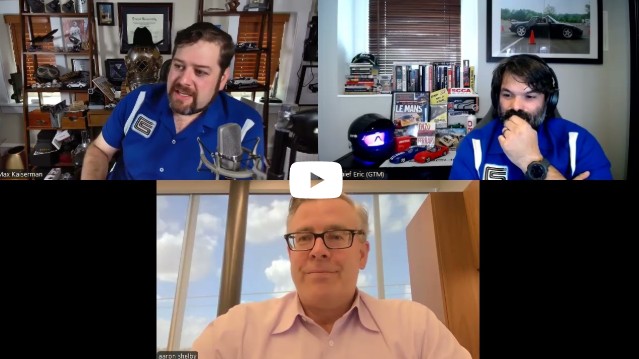
All of our BEHIND THE SCENES (BTS) Break/Fix episodes are raw and unedited, and expressly shared with the permission and consent of our guests.
Consider becoming a GTM Patreon Supporter and get behind the scenes content and schwag!
Do you like what you've seen, heard and read? - Don't forget, GTM is fueled by volunteers and remains a no-annual-fee organization, but we still need help to pay to keep the lights on... For as little as $2.50/month you can help us keep the momentum going so we can continue to record, write, edit and broadcast your favorite content. Support GTM today! or make a One Time Donation.

If you enjoyed this episode, please go to Apple Podcasts and leave us a review. That would help us beat the algorithms and help spread the enthusiasm to others by way of Break/Fix and GTM. Subscribe to Break/Fix using your favorite Podcast App:
Aaron emphasizes that Carroll’s genius wasn’t just about cars – it was about people. Carroll made everyone feel like family, whether they were talking about fishing or racing. That ethos continues to guide Shelby American today, where innovation and accessibility remain central.
From the GT500KR Mustangs of the mid-2000s to rare prototypes like the Series 1 and the V10 Cobra Concept, Aaron sees each chapter of Shelby history as vital to the brand’s identity. Even lesser-known projects, like the Sunbeam Tiger or Chrysler collaborations, hold a place in the Shelby story.
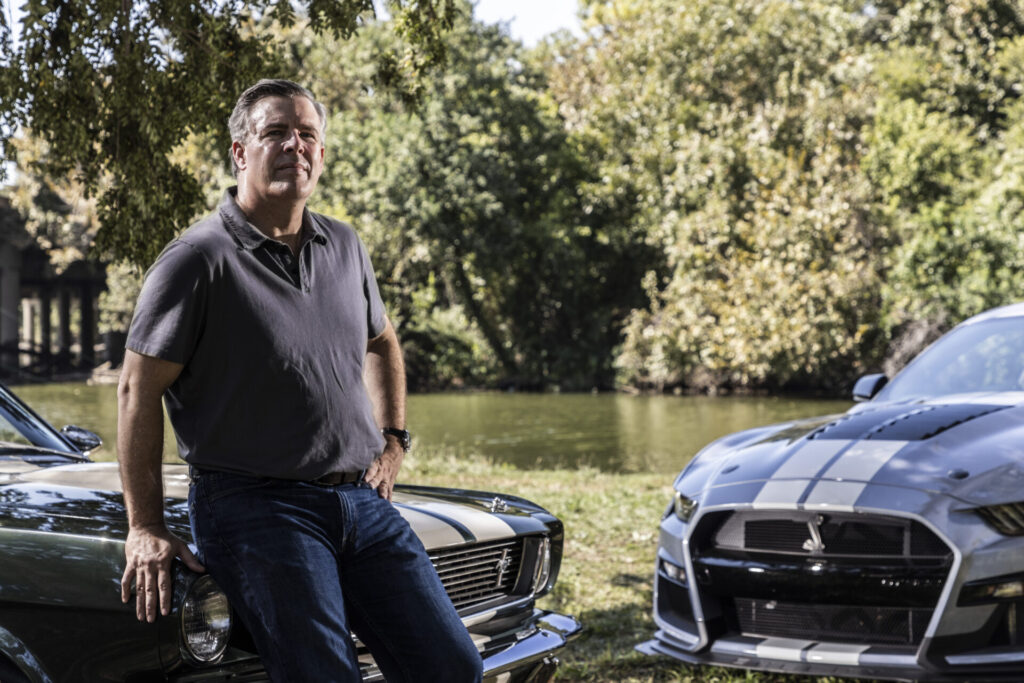
While Shelby American isn’t currently fielding a factory-backed race team, Aaron revealed exciting plans: the company is working with Turnkey Automotive to launch a GT350R TransAm-spec car for customer racing. It’s a step toward reconnecting Shelby with its racing roots, while keeping the spirit of accessibility alive – any enthusiast can buy one and compete.
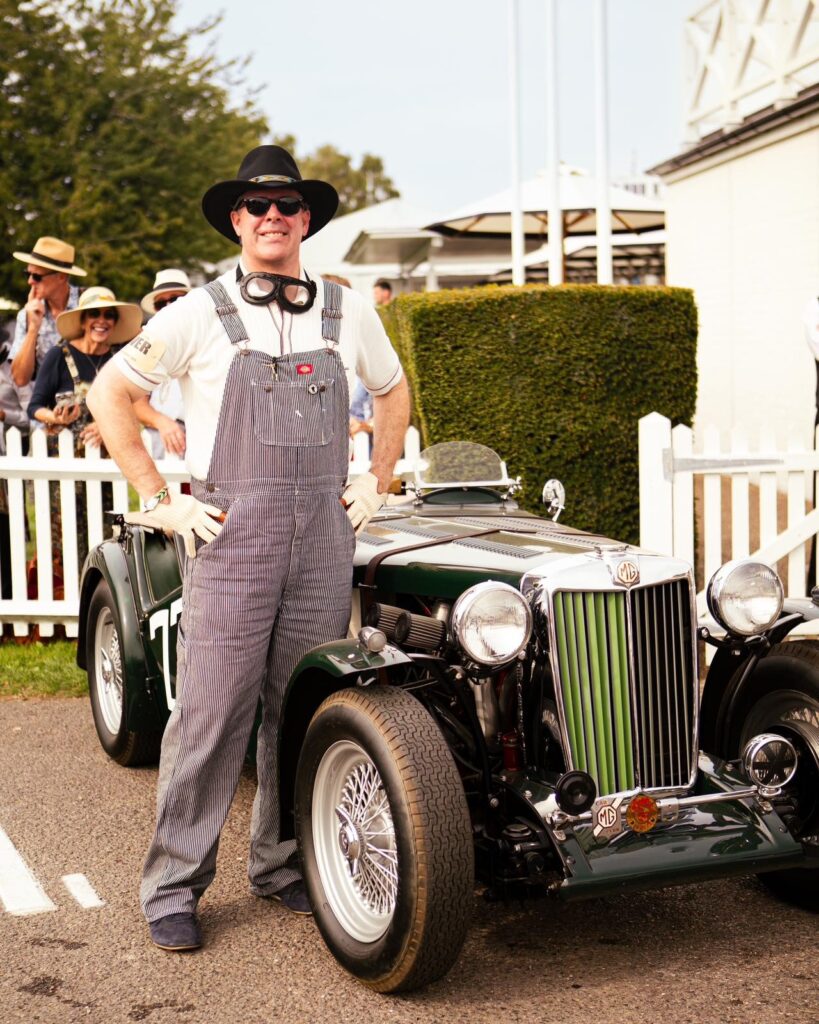
Perhaps the most powerful part of the legacy is the community. Shelby owners and fans form a tight-knit family, united by a passion for performance and ingenuity. Whether at Goodwood Revival (above) in the UK or a local cars-and-coffee in Texas, the Shelby name sparks conversations, admiration, and connection.
Aaron sees this as the true measure of Carroll’s impact: not just the cars, but the people who carry the spirit forward.
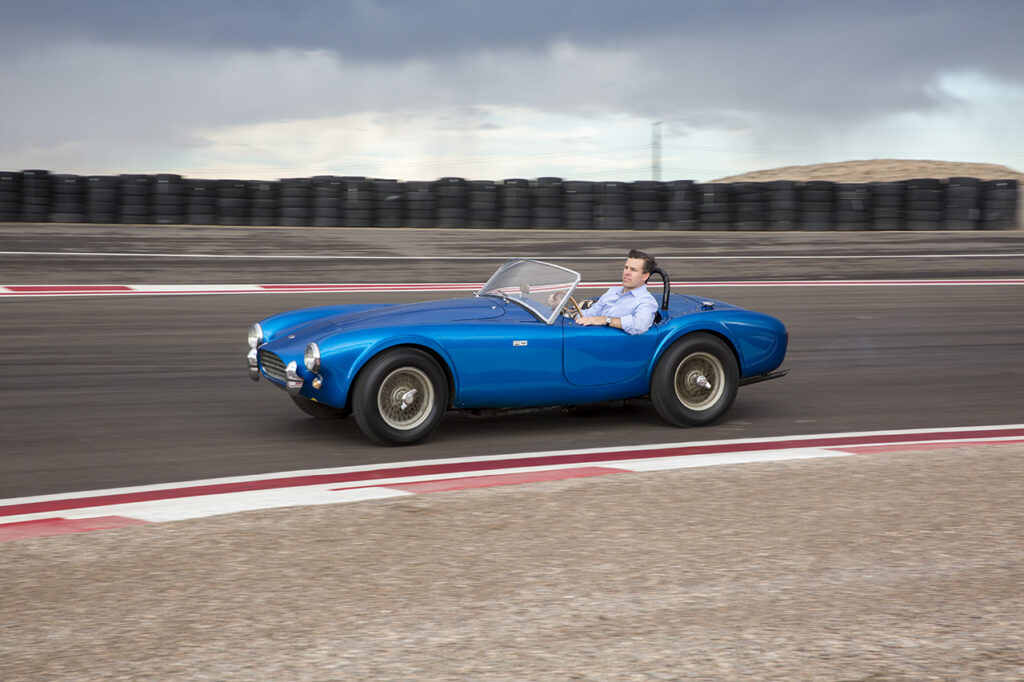
Carroll Shelby once said, “I never made a damn dime until I started doing what I wanted to do.” Aaron Shelby embodies that same philosophy – blending business discipline with a love for motorsports, ensuring the Shelby name remains synonymous with innovation, accessibility, and passion for generations to come.
Guest Co-Host: Max Kaiserman
In case you missed it... be sure to check out the Break/Fix episode with our co-host.This content has been brought to you in-part by sponsorship through...