

In the ever-evolving world of automotive enthusiasm, one thing remains constant: the desire to keep classic cars running, looking sharp, and loved for generations. Whether it’s your grandfather’s 1935 Packard, a 1963 Beetle convertible, or a Ferrari from the golden age of the 1980s, these vehicles are more than machines—they’re time capsules, cultural icons, and personal treasures.
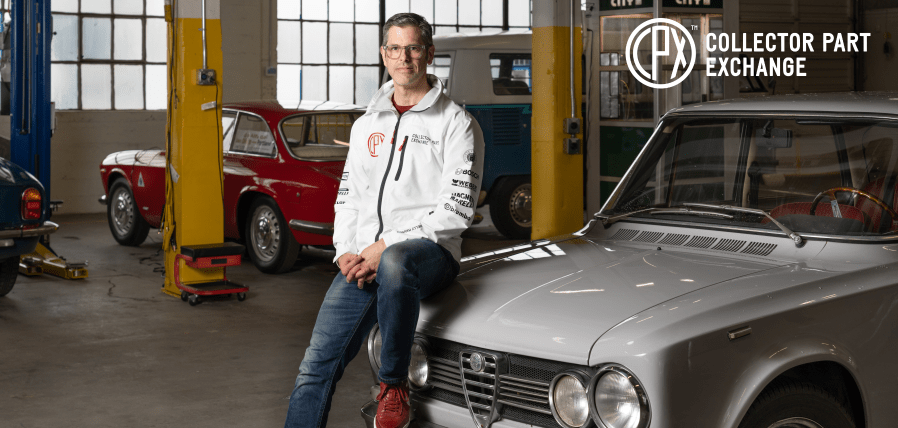
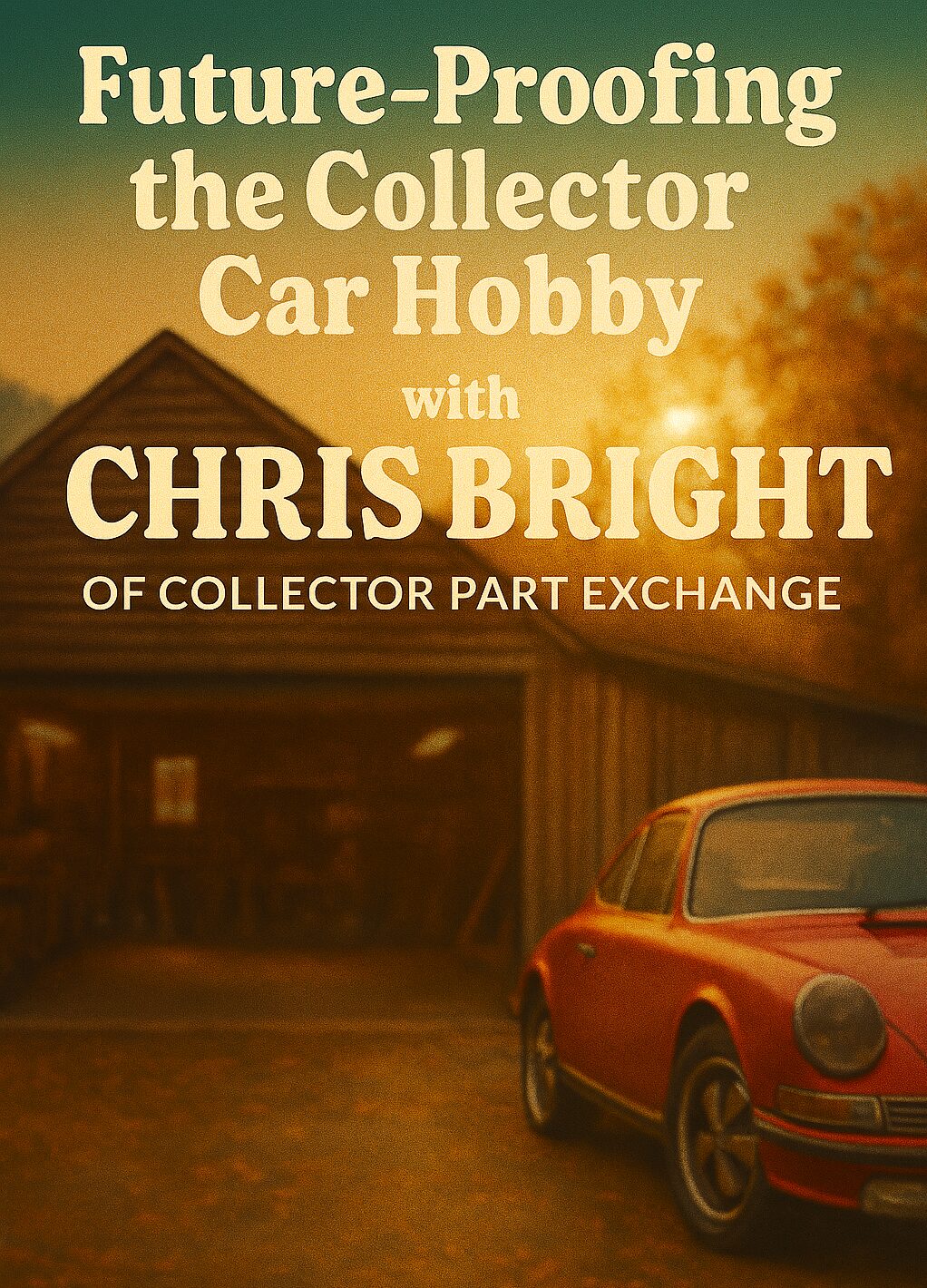
But keeping them on the road? That’s a challenge. Enter Chris Bright, co-founder of Collector Part Exchange (CPX), a new digital marketplace built for petrolheads, restoration shops, and anyone passionate about preserving automotive history.
Chris’s journey to CPX began not in a garage, but in a cabin deep in the Oregon woods. After leaving a successful software company post-acquisition, Chris and his business partner Aaron retreated to brainstorm their next venture. Surrounded by sticky notes and a wood-burning stove, they explored dozens of ideas—but one kept resurfacing: the collector car parts market.
Tune in everywhere you stream, download or listen!



Chris had long been puzzled by the persistence of old-school swap meets, especially in tech-savvy Portland. “120,000 people show up in the rain every year,” he said. “Why hasn’t this moved online?” While buying cars has become seamless thanks to platforms like Bring a Trailer, sourcing rare parts remains a frustrating, analog experience.
That frustration was personal. Chris’s first collector-grade car was a Porsche 928 – beautiful, underappreciated, and notoriously difficult to source parts for. Later, he owned a 1972 Alfa Romeo GTV, another gem with elusive components. “You had to know a guy,” he said. “And that guy’s inventory was in his brain, not online.”
Spotlight
Chris Bright - Co-Founder for Collector Part Exchange (CPX)

I enjoy creating and growing businesses and collecting cars, so CPX is a dream come true. My earliest memories are filled with Hot Wheels and Indy 500s on ABC’s Wide World of Sports. Life changing events include watching the Lambo in the opening scene of Cannonball Run and the R&T cover story on the Ferrari 288 GTO. My first interesting car was a Porsche 928 which I drove every day and put 175K miles on. I am the President of the Alfa Romeo Owners of Oregon (AROO) -- my daily driver is a 1974 Giulia Super 1.3 -- and have been a contributor to Sports Car Market and Alfa Owner magazines.

Contact: Chris Bright at Chris@CollectorPartExchange.com | N/A | Visit Online!




Notes
- The origin of CPX – the who/what/where/why of the effort + “What’s in a name”?
- You’re getting parts collecting dust back into circulation. Why is this important to the future of the hobby?
- The importance of the EV-olution to the Collector Car hobby
- Details about CPX like…
- What kind of cars do you personally consider to be collector cars? Any year ranges (or limits) on the parts one can list or purchase?
- How much does it cost to start a store in the online marketplace? How much does CPX take if a part sells?
- How often are new items listed?
- What’s PART PING?
- What else is available on CPX besides car parts?
Transcript
Crew Chief Brad: [00:00:00] Break Fix podcast is all about capturing the living history of people from all over the autos sphere, from wrench, turners, and racers to artists, authors, designers, and everything in between. Our goal is to inspire a new generation of Petrolhead that wonder. How did they get that job or become that person?
The road to success is paved by all of us because everyone has a story
Crew Chief Eric: with each passing gear and each generation. In the automotive world, more and more cars are becoming collector items from your grandfather’s 35 Packard to a 63 beetle convertible or iconic eighties Ferrari tucked away in your garage.
Wouldn’t it be awesome if there was a way to make it easier to keep these kinds of vehicles on the road no matter what? We all agree we wanna keep these cars running and looking their best for as long as we can. Enter Chris Bright, co-founder of the Collector part Exchange, CPX for short. [00:01:00] A new community designed specifically for an easy and fun to use website, supporting great businesses that keep this hobby vibrant.
And with that, let’s welcome Chris to break Fix.
Chris Bright: Oh, it’s great to be here. That was an awesome intro.
Crew Chief Eric: As I start out, many of these interviews, every great story has an origin. So let’s talk about the origin story behind CPX, the who, the what, the where, the why behind the effort. So Chris, tell us all about it.
Chris Bright: Sure. Yeah. Well, uh, how far do you want me to go back to birth or no collector product exchange? It was kind of a happy accident. I’ve been in tech startups and an entrepreneur pretty much for my entire career. That’s a natural place for me. And I’d actually been the co-founder of a pretty successful software company out here in Portland, Oregon, that it got acquired in 2017 and we were continuing to operate the company.
But once that transaction happens, things start to change culturally and just operationally, and it became less interesting. I’m more of a [00:02:00] startup person than I am, like running and a going concern type of thing. So I decided it was time to leave and, and one of my fellow executives, Aaron, who’s my business partner now, decided that.
He wanted to leave too. And I said, I’m gonna start a new company. I have no idea what it’s gonna be. We decided to just brainstorm. So I rented a cabin out in the woods. We were totally disconnected, only heated by a, a little wood-burning fire out in these cold old growth forest. And we just started brainstorming and we got those post-it notes that stick on the walls, and we would like just sit down and randomly start spouting out ideas and writing ’em up.
If someone had been passing by, they’d think we were the unabomber or something like that. And
Crew Chief Eric: guessing these ideas range the gamut, right from one end of the spectrum together. So how did you settle on cars?
Chris Bright: Yeah. During that conversation, I said, I’ve been into cars for my adult life. And I said, Aaron, there’s this thing that happens in Portland in April on the one of the wettest weekends of the year.
It’s called a swap meet. [00:03:00] This swap meet attracts 120,000 people and messes up traffic for days. People love it, and I don’t understand how that continues to exist in this. Electronic E-commerce, Amazon World. I said, there’s gotta be a, a better way to connect people and help them find those parts and help them get what they need for their cars because it’s really easy to buy stuff at a car level, bring a trailer, being the the best example today.
But if you wanna buy a car, you can buy a car online. It’s not that hard. Buying parts is a completely different story, and I have experienced that frustration in my own life. We didn’t choose that idea. Then we kept it in the hopper of like the good ideas. So we went back and we started looking at all the different things that we had available to us, and this one just continued to come back to us as the best idea.
I like the fact that it’s in an area that I’m interested in and that’s exciting to me personally, but I honestly think that can be a problem in, in the business world. Like if you’re a startup person and you do something that [00:04:00] you think is cool or fun, usually you don’t see the real business opportunity or even right.
So I kind of shun those ideas. But this one, the more we looked into it, the better it got because it’s a huge marketplace. It is one of those places that just hasn’t caught up with the modern way of buying and selling things. So if you’re looking for a rare part for whatever car, it’s pretty difficult to find just by searching in Google.
So we know from our backgrounds, Erin and I, that that’s something that can be solved. So we decided we don’t wanna own parts or sell parts ourselves. We wanna support all of these other businesses who haven’t yet modernized into the world because there’s new generations of buyers getting into this space, and they don’t want to pick up the phone.
Nobody wants to pick up the phone anymore, it seems like to call around and look for parts. They just want to go online, find it in Google, and then buy it. That’s essentially what we’re trying to create is connecting all of these small businesses in the universe of the collector car world and get them into one place where.
We can help [00:05:00] them be found in Google and help them find new customers wherever they may be. And we’re only six months into it, but it’s been a really exciting journey so far.
Crew Chief Eric: So before we get into the more technical details of the how it works and why it works and all that, let’s talk about the name for just a second.
I have to admit I struggled a bit. It’s not a plural parts, it’s it’s collector. Parts exchange or part. See, I’m doing it again. So why drop the S? There’s gotta be a stereotype. Every time you say
Chris Bright: parts exchange, we gotta drink something.
Crew Chief Eric: Agreed. Why drop the S?
Chris Bright: Originally it was that, and we have that URL.
But imagine the URL and you put the word parts and the word exchange next to each other. Now imagine that s not being part of parts, but part of sex change. Oh, once you see that, it’s like pretty hard not to see it again. So you decided. Eh, that could be problematic. So we just [00:06:00] went with the singular, but if you go to Collector Parts Exchange, it still gets you to our website.
Crew Chief Eric: You bought both domains. That’s a smart move, because I was gonna say, parts rolls off the tongue a little bit quicker. I know we all default to the plural because I don’t see myself buying one part. It, it’s gonna be multiple parts. Yeah. And all that. So you alluded to being a car guy, and obviously invention is bred by necessity, so you must have some sort of classic car or vintage vehicle.
That’s really the impetus behind this. So let’s dive into that a little bit.
Chris Bright: Yeah, I tend to like the unusual, gotta keep
Crew Chief Eric: Portland weird, right?
Chris Bright: Yeah, exactly. Always. So my very first collector grade car, I’ll say was a Porsche 9 28. You know, when I was growing up, that was on the cover of Road and Track Magazine and in all the top cars of the year type particles that you would, it was
Crew Chief Eric: also in the movie Scarface and in risky business.
Chris Bright: Exactly. So, and, and I just always thought it was a really cool and interesting car, but as we all know, it was. Quite [00:07:00] unloved. It was never accepted by Porsche files. I get why that happens. I don’t need to defend it. But if you just look at the car in and of itself, it’s an amazing hand-built machine, and it’s actually superior in many ways to the nine elevens in its build quality and the technology that it has and
Crew Chief Eric: aerodynamics.
But we won’t get into that.
Chris Bright: Even today. I look at ’em and I still find them to be. Very beautiful and even modern looking. Like the first one I think came out in 75 or something like that, at least the, the show car that predated it. I digress. So I had a Porsche 9 28 and I had a great mechanic, but finding parts for it wasn’t that easy, but there were a couple of people that did that.
And I drove that car. That was my daily driver, that was my only car for many years, and I put 175,000 miles on it. And it was great to own, to be honest with you. It, it rarely broke down. It was hugely over-engineered. Fast forward, the, the next car I got was uh, an Alpha Romeo. So I got an Alpha Romeo GTV, it’s a 1972.
And ooh, I’d been in Italy and I [00:08:00] saw one and it was like, oh man, that is a cool car. So I went and I started shopping around and I found one in my local. Alpha Romeo Club and somebody was selling it, so I bought it and God, what a great car that was, and just finding things for that. It was possible, but again, it was hard.
It was not online. You didn’t go somewhere, at least in, when I own the car, you didn’t go to some website and go click, click, click, and it arrives the next day and you can install it. It’s a lot of calling around. It’s a lot of like word of mouth or calling. There’s this guy John Norman down in the Bay Area who’s got like this stash of parts.
He’s a great guy, but none of it’s online and none of it’s even really cataloged in any way. It’s all cataloged in his brain. You know, you were always on the prowl for all of these parts and things that whether it was something that broke or something that you just wanted to upgrade or tweak on your car, whether it was wheels or seats or whatever.
To me that was. Frustrating because we’re spoiled nowadays. Honestly, whenever I click [00:09:00] something, I expect it to basically arrive within 24 hours. And I’m exaggerating, but only a little bit. If you have to call somebody and talk through things, it’s hard to make time for that in our busy lives. So for the individual owners, that’s a problem, but also.
Even more so for restoration shops and repair shops. If you run a specialty collector vehicle service or restoration business, you have staff or a lot of your time is dedicated to calling around and trying to find what you need. And to me, that could break the back of the collector car business in many ways.
Like if these parts get increasingly rare and increasingly hard to find, people aren’t gonna want to pay for that time to find them and do all of these things. Again, it’s a problem that can be easily solved, but it’s gonna take a lot of work and a lot of perseverance to kind of actually pull it off.
Crew Chief Eric: And some people might argue that that was part of the fund maybe 20 or 30 years ago, right? Where you didn’t have the accessibility is, is working on some of these rarer or vintage cars. You know, we have to put it in [00:10:00] perspective. It’s like a treasure hunt, right? You’re out there exploring, you’re meeting new people, you’re discovering, oh, this guy, you know, John Norman, he’s got the stash of parts in the Bay Area, you know, whatever.
And then you become friends with that guy, you know, and it, and it builds these relationships and it’s, it’s a different. Way of being. I suppose I came up through that era, right? But I also learned very quickly if I was smart, especially with European cars, I would cross match. I could figure out, well, that blah, blah, blah 9 28 part was actually available on every Volkswagen from, you know, 1982 to 1994.
So I could just go to the local junkyard and get the same thing and not pay, you know, the Porsche tax or whatever. Obviously it’s more difficult with something like an Alpha Romeo or a Ferrari, but I even learned working on some British cars like Lotuses and stuff, where it was like, oh, well that’s off a Nash, which is actually off of a Chevy.
You know, things like that. So again, that was part of the fun of, of learning that Then you became this subject matter expert. But now, as you said, times have changed. A lot of those folks that we relied on as pillars in this collector car world are now, you know, maybe [00:11:00] they’re gone or they’ve moved on, or, you know, collections have been inherited by.
The people that were left behind. So to your point, how do we overcome the challenge of, you know, getting, let’s say these large collections, some might say PAC Rat collections up on a website, let alone up on CPX. So how are you aiding people in doing that?
Chris Bright: You nailed it. I think it’s one of those situations where we have to help it adapt and that’s what I kind of see is the mission of collector part exchange, which is helping connect these business to the greater global network so that people can find ’em.
And to your point, it is part of the fun of getting to know people and trading that knowledge. But. It’s evaporating, it’s not captured anywhere. It’s all word of mouth. And those elders are moving on, whether by choice or not, I really feel a mission to try and create an alternative path to capture that knowledge.
Either through community forums. We don’t have those yet, but we intend to like build areas where you can go and ask for advice and get help. Yeah. And, and ask those subject matter [00:12:00] experts. ’cause you don’t know that subject matter expert for your car. He might be in Japan. Yeah. Or Australia. You know, you don’t know.
Like the one guy who knows that model inside and out isn’t in the US anymore, it’s somewhere else. So just having a place for that and then helping make sure that those parts don’t accidentally get trashed for businesses that are going under, or collectors that have have a mass, like a garage full of parts.
We need to have a ready place for them to send those parts. And that’s where collector part exchange comes in.
Crew Chief Eric: Yeah. And you know what always happens, and this, I saw this. Recently, a friend of mine unloaded a bunch of 16 valve Volkswagen stuff from the eighties, and he is like, nobody wants this stuff anymore, blah, blah, blah.
It’s all trash. And he dumps it without fail. Three weeks later, somebody goes, I’m looking for blah, blah, blah for a 16 valve. And he’s like, well, I just threw that away. I’m like,
Chris Bright: no, that, that happens all the time. And to me it’s like a, a, a little piece of my heart breaks when I hear stories like that. And I know of a really famous, um, alpha Romeo dealership on the east coast that the [00:13:00] guys aged out and they just wanted to be done.
So they basically shut down their business, put everything in some containers, and people were buying entire containers of parts for like $2,000 just so that they didn’t go into Yep, the landfill. We can’t have that happen. I wanna be tied into estate sales. I wanna be tied into junkyards. I wanna be tied into all these businesses and, and help broker.
If somebody wants to retire, Hey, I’ve, I, maybe I’ve had a successful business career and I’m a car guy. Maybe I wanna take over your business for you. It’s like that would be something that we could do. But getting back to your original question, which was how do we help them get parts on? Right now, anybody can load parts, indoor system, and it’s free, by the way, if you sell it, it’s a 5% commission.
So there’s no barrier to entry right now, we have people who either already sell on eBay or are a little more robust and they have things in databases. Those are our biggest sellers because we can just import their database and list their parts with it. If they have it in some sort of inventory management system, we can adapt that into our system, which is great, and [00:14:00] that’s the fastest thing.
You can do it on an individual basis. It just takes a little bit of time and I’ve done it and it’s not that hard. It just takes a few minutes to snap some pictures and create a listing. But five minutes or 10 minutes per item, it adds up. If you have a pretty big collection, if you know you have a few boxes of stuff, that’s a easy job.
But if you have a big shelf rack system in the back of your garage, that’s gonna take a lot longer. Uh, one thing that we hear people doing is they get their kids, or, you know, there, there’s a guy who runs a, a shop around here. He has a guy who he pays the cleanest shop and then he said, Hey, I’m gonna put parts over here and you take pictures and list them and I’ll pay you.
You know what we earn off of it. And that guy was like, very entrepreneurial. Got into it. So what we ultimately want to do is have more of a white glove system where if someone needs some help listing their parts, we can actually help them do it. We’ll send some people to their site. Again, this is a future state, but hey, we can send somebody into your garage or an estate sale or whatever and get all those parts listed and we can list them for sale or [00:15:00] we can auction ’em off and then have them go away in one fell swoop.
We’re gonna have lots of flexibility in how we sell these parts because our whole mission is how they get sold or need to be listed. We have a way to do it for anybody in this industry, whether you’ve been around a long time or you’re just new to it, and however it fits into your life, because newer people are getting into these cars, and I love it when I go to cars and coffee or shows and I see kids running around and kids are into it.
I mean. That really excites me. But by the time they become adults and are really into this hobby, the world will have changed. It’ll have turned over. So to me, I look at what we’re doing as being the future proofing for the hobby.
Crew Chief Eric: So that actually is a great segue into my next question, which is twofold.
One, you know, we talked about the parts exchange part of the name, but we didn’t define what the definition of collector was. So let’s put a wrap around that. Is there a. Age range or year range for what collector means and to the point that you just made. Let’s talk [00:16:00] about the evolution or the EV revolution at the same time and how that’s affecting the collector car world and the collector car market.
You know, just to throw in there, let’s talk about cash for clunkers. I think a lot of people forgot about that and how it rocked to collector car world as well. So let’s, let’s touch on this. Yeah, yeah,
Chris Bright: yeah. Well, let’s, uh, take ’em one at a time. What you decide is a collector car is a little subjective, right?
But to me, I’ll go with the accepted definition by the insurance companies, by the automobile world, which is essentially cars that are 25 years and older. That’s ultimately the market that I wanna serve. All of it from the antiques to the modern classics and everything in between, in all countries and Mars, all of it.
However, you can’t boil the ocean. You’ve got to pick a little part and boil that. We’ve narrowed our focus initially. It’s not exclusive to this, but. Our focus anyway, our European sports cars, we’ll say forties through eighties, kind of that range. Again, we’ve got lots of stuff for domestic cars. We’ve got even [00:17:00] modern aftermarket wheels and things like that.
So all of those things are acceptable. And even like aftermarket tuner cars, I’m down with that. If that gets somebody excited about a car, I’m all for it. So if we can have CPX or that motorcycles, anything that, that you want to be, I’m, I’m good with that. I, I was at the Hershey show this, um, October and you know, I look at all these Model T’s and Model A’s and things like that sitting around and I’ve hung around with some hot rod guys and I’m like, great, I wanna be there.
Because when I was walking that huge show, have you ever been to Hershey? Yep. It’s crazy Mammoth. Yeah, it’s huge. But this year, you know, it was sad because it was the first post COVID version and it was more lightly attended. But what caught my attention was it seemed like every fifth or sixth. Seller had something, it’s like, buy all of my parts.
Just make me out. Get it outta here. Yeah. Like I’m not coming back like this is my last rodeo, essentially. So you kind of even see a shift there. But [00:18:00] anything that’s in that category of cars is great. I think the thing that we also want to offer. Is not just what is defined as collectible, but what we offer in terms of parts, and I use that term loosely in that we’ve had an example where someone was looking for a Ferrari distributor for a sixties, Ferrari, literally a 10 plus million dollar car, and they reached out to us and and I went and I found them.
An original one that someone had scrounged up in the uk and that was literally a $10,000 part. I found somebody who had a remanufactured version of the original part. It’s a modern construction, but made in the correct style. But you know, again, you’re getting a little, you’re veering a little bit from originality.
What I also want to, I say co-mingle or put on the same shelf or service providers. I know this fellow down in California who can take that exact part. He’s an engineer and he will take it and rebuild it with, you know, more modern magnets and will he’ll rewire it and do all of the things and it will be the exact part that was in the [00:19:00] car originally.
And that’s a fraction of the cost. So I really love this idea of rebuilding, and I just wrote a piece about it where it’s like the radical idea of rebuilding we’re so conditioned that if a part breaks that you need to go find a new one and you’ll spend weeks or months kind of chasing those down when there’s probably somebody out there who can fix it for you.
And I wanna be able to have people. Look at all of those options in one place and be able to choose the one that’s best for them, whether it’s originality or speed, or they want something that’s more modern ’cause it’s gonna last longer. It doesn’t matter. It’s like everybody has their own choice, so, well, and to
Crew Chief Eric: that point, the goal in all three of those use cases is to keep that particular vehicle on the road and keep it running.
So yes, if you’re the purest, but you have a museum quality car, you want all original matching numbers, parts and accessories. Which by the way, most European cars, they never did a numbers matching like we stress here in America, which is, it’s a truly American thing. Show me 1, 9 11, with numbers matching from any period in time.
It doesn’t exist. That being said, I get it. The [00:20:00] purist wants it a certain way. For guys like myself, I frequent machine shops and fabricators all the time. I’m like, I don’t care what it looks like. It needs to be functional. Most of my stuff is race cars. There are better options than the original. The reason that original part failed because it probably wasn’t great to begin with.
You know, so something to consider depending on if you wanna love and enjoy the car and drive it as like a daily driver versus, you know, a life-size model car. Right. So there’s, there’s something for everybody in that statement.
Chris Bright: Let me see. There were two other parts of that conversation. Yeah, there
Crew Chief Eric: was.
There was. And so it was cash for Clunkers and how it affected the collector car world because there were a lot of folks turning in buy Turbo, Maseratis and you, our Quatros and all this stuff saying I can get more money for this car than it’s worth today. Which now we fast forward, you know, 10 or 15 years and the used car market is through the roof.
Yeah. And the other side of that is now that we are in. 2022. How does the evolution or the EV revolution change the collector car landscape as well? Yeah.
Chris Bright: You know, I think cash for clinkers, I hadn’t really thought [00:21:00] about that for a while, but yeah, you’re right. That did kind of move the needle. And I’d say the thing that’s really moved the needle more recently is bring a trailer chaos
Crew Chief Eric: online.
Yeah. Yeah.
Chris Bright: Well, I, I think what it’s done is. Make collecting cars like fun and cool again and accessible to a new generation of buyers. I think ultimately that’s what bring a trailer’s gift to the car community is it’s, but there’s
Crew Chief Eric: also, there’s a dark side to it, and I joke and we joke about bring a trailer a lot.
I, I love it. We’re all addicted to it, but the problem is it feels like how far can we push the envelope on these prices sometimes. Right, right. And, and you know that these, some of these deals don’t end at the value that they, you know, that they close that. And I’m like, this is making it worse. For people that are trying to sell a more, you know, local venues like, you know, Facebook marketplace, suddenly they go, well, I saw an E 30 BMW sell and bring a trailer for a quarter million dollars.
So obviously mine is worth 125.
Chris Bright: [00:22:00] It definitely is. I think that’ll all correct out eventually. You know, I I, it’s like a housing bubble, right? A little bit of a bubble. And as you well know, like the collector car hobby was counter pandemic. Like it was one of those hobbies that soared in the pandemic because it was something that we could all do by ourselves.
Let’s talk about EVs. ’cause I love EVs. I’m excited about EVs and I actually Haggerty in December, put. Their bull market list for 2022. And on that list was the Tesla Roadster, which is for those of you who may recall, it was a Lotus Elise body that they put batteries in and electrified, and that was the very first kind of mainstream Tesla product.
They look cool. They are great cars. I have a friend who has one and, and I just, I had dinner with him last night and I said, if you’re ever thinking about getting rid of that, let me know because I want it, I, I want it really bad. It’s a six figure valuation now because Tesla has become something more, it’s like the Model T of the EV [00:23:00] world in some ways.
So I think they’re exciting cars and they’re gonna be collectible, and we all know that back in the early day. There were lots of electric cars. So it’s kind of back to the future. You know, in the early days of cars, there was petrol, there was electric, and there was steam for a while. They were all equal.
And women for a reason liked the electric vehicles because they didn’t require a starter. So when they were in their fancy dresses, they didn’t have to get out and kind of like go crank the little crank arm, uh Yep. To turn the motor over. So I, I think there’s two vectors where we’re going in the future.
Which is autonomous vehicles and electric vehicles and I’m excited for both. I think they’re both important. I believe that you can’t stop progress. Progress is going to happen. So you kind of just do with it what you can. It will have a downstream impact on the collector car hobby as we get more electrified because we’re not a generational away from not being able to get gas, but like some of my cars, I wanna run on race fuel.
Well, it’s like there’s a couple pumps in my area where you can get that [00:24:00] easily. I think that’s gonna be at some point, and I’m talking like 40 years from now where that’s gonna be hard, that’s gonna be right. A bit more challenging to find. And I think when we have autonomous vehicles where it’s pretty easy to imagine the interstate highway system getting to a point where.
Take your car on the interstate and it’s just running autopilot. So people who don’t have those types of cars are gonna be excluded from those because one dope in a Ford Mustang cutting off an EV car or an autonomous car is gonna coming out
Crew Chief Eric: of a cars and coffee, but, you know, whatever. Yeah, it’s gonna,
Chris Bright: it’s gonna break everything, right?
All of a sudden it’s just gonna be trash, so you’re gonna be excluded. So I think at some point it’ll be like national parks for driving roads. Like you’ll have to go out into the country and, you know, have like certain kind of beacons and technology to help make sure that you don’t mess up. And accidentally clash with an autonomous thing, but we’ll see how all that plays out.
More to your point, EVs are exciting. I think it’s great. No problems. It’s just gonna make gas harder to come [00:25:00] by ultimately, but it’s the right thing to do. I’m an environmentalist. I want, I think we need to make some changes and, and I’m all for it. One exception to that rule is. Do not take your collector car and turn it into an electric vehicle.
I was wondering if we were gonna go there
Crew Chief Eric: because that’s, that’s the other side of that conversation. It’s
Chris Bright: an abomination.
Crew Chief Eric: We talk about that quite a bit. It comes up almost every month on the drive through. Yet another British company that’s converting classic Aston Martin or Lotus or whatever have you to an ev.
Obviously EV West out in California has been doing Volkswagens and Porsches for years now using Tesla power plants and things like that. It’s gaining popularity. I sort of like the idea, I see it both ways in terms of now I can be ecologically friendly and still drive a 1950s, 3 56 and be super cool and, and it’s retro and it’s hip, but there’s the dark side of that equation.
Which somebody actually brought up in a recent conversation, which was, yes, it’s an abomination to your point, but also [00:26:00] you paid a million bucks to turn a vintage DB six into an ev, and now that guy’s left with this classic petrol power plant and it’s sitting on a shelf in a crate for years and years and years, and it suddenly, it becomes cool again to have a petrol car.
You’re gonna pay for this conversion like 12 times by the time it’s all said and done.
Chris Bright: Yeah. To me it doesn’t make sense. I get the appeal and I will put limits on it. If it’s a mass produced car, a VW Beetle, hey, there were millions of those made and they, they were made up until the eighties in Mexico and 2003.
Yeah, 2003. Even better, right? It’s like I’m cool, like if it’s a mass produced vehicle, no problem. Committed to an ev, but taking something that’s. Somewhat rare and turning it into an ev, to me, it takes the whole spirit of the car away. It’s like that part of the experience of a car is leaving it in its proper state so that you can hear the sounds, you can have the correct gear shifts, and all of those experiences.
It’s not [00:27:00] just the look of the car, in my opinion, it’s the car in Toto that is really important to preserve. I look at them as historical objects and you wouldn’t take other antiquities and try and change them. I’m not saying that they’re worth that, but to me it’s really important to keep them as they are.
And that’s just my opinion. I know other people have different opinions and No, and,
Crew Chief Eric: and you’re not wrong because it, it’s been said before that vehicles, if you kind of stand back and look at them in their parts and not as a whole, first of all, you’re right, they’re time capsules. They are signs of the time in which they were created and, and some of those cars were created earlier than when they were sold as well.
So you gotta kind of put that in perspective. But you take something like one of the cars, I absolutely can’t stand the Ciro and Ds. A lot of people love that thing, but it is also quintessential French and also quintessential sixties. It is a sign of the time. But when you take that vehicle apart, you have to look at it for its pieces and to to be punny, I [00:28:00] suppose, in that the science, the engineering, the aerodynamics, the fluid dynamics, every person that was involved in that.
A car is not created in a vacuum, nor is it just an appliance. It is a culmination of a team of people and their imagination to create this thing. And as I dove into and worked on vintage vehicles, first question sometimes comes across your mind is why in the hell did they do it that way? And then you realize.
This was cutting edge technology in 1961. And so you have to be somewhat respectful of what you’re being presented with. And so looking at those time capitals for what they are and preserving them to your point is super important. It’s also really kind of cool. And so there’s a lot to be learned from that, but you also start to realize that some ideas that are presented as new even today or invented many, many years ago.
Chris Bright: Yeah, that’s the best part of it, in my opinion, is and, and I loved how you described that. It’s like they are these. Things, but they’re also visceral experiences. Like hearing a [00:29:00] inline four in my alpha is a cool experience. That’s just part of it, and I get the environmental impact, but I truly believe that we use these cars so little.
The average collector car is driven. About 2000 miles a year, maybe two, two miles or something like that, I think is what I read. That’s negligible because I, my
Crew Chief Eric: lawnmower em admits more than the classic car does. You know what I mean? Exactly. They have a reason to
Chris Bright: exist and that reason gets harmed if you tamper with them and kind of change them from fundamentally what they were created to be.
Right. It’s a philosophy. It’s just something that I, I don’t like when I see people take really nice cars and turn ’em into EVs, like a DB six for example, that really gets my goat, that’s a legit thing. And it’s been
Crew Chief Eric: up of recent news too, that that is happening. Oh, I saw it. I saw it and I, it’s like DB fours, fives, and sixes.
I was like, just, uh, shook my head at all of it. But you know, this actually gives me a great opportunity to ask you two pit stop style [00:30:00] questions while we’re at it. One of which I’ve never asked somebody on our show, which is what’s the best sounding engine?
Chris Bright: The one that I imprinted on is the Kunta. Oh, the V 12 Kunta.
I think the Lamborghini engines sound better than the Ferrari v twelves and maybe an Aston Martin V 12 sounds as good, but I imprinted on it in watching the opening scene of Cannonball Run that scene the first five minutes of that movie where they’re running that white Lamborghini down those, I think Nevada Highways.
I never saw a car that looked like that, and I never heard a car that sounded anything close to that. As I’m talking about, I can hear that in my mind, like that noise, just that throaty growl and yeah, it’s gotta be a V 12 and specifically a Lamborghini V 12
Crew Chief Eric: I, I wanna remind our listeners yet again that.
Petrol heads of a certain age, the answer is always Lamborghini Kunta.[00:31:00]
Chris Bright: No, it’s funny because I, I didn’t really like v eights for a long time, but now I’ve really come around and a great V eight sounds amazing, but shoot, I’ve got people with, I don’t know, the boxer fours. I’ve owned Porsches. You know, those boxer sixes are pretty great. I don’t know. They all, they, they’re all.
Good in their own way. But if I had to pick one, yes, it would have to be the Lamborghini Kosh. And you are exactly right. There’s a whole generation of cannonball run heads that, like I said, imprinting is real. And that was the first like mass market exotic car that, yeah, it was even like James Bond movies didn’t quite make the impact that that exact movie did.
But yeah, the
Crew Chief Eric: tester Rosas weren’t nearly as popular as the Kunta, you know, in comparison. And they came out at the same time. So think about it that way. Which actually leads into my other more famous, more normal pit stop question, which is, maybe the answer is the same, the sexiest car of all time, in your opinion.
Oh,
Chris Bright: it’s similar, but it’s not [00:32:00] the same. Oh, okay. Um, I have two and they’re kind of similar. One is. The Lamborghini ura. I went to a car show when I was a kid. My, I don’t come from a family of car people, so I kind of was like forging my own path. So I had my driver’s license and I saw that a car show was coming and there was gonna be a Lamborghini Kage there.
So it’s like I’d never seen one. So I went to this car show and I saw it, and I don’t know if you’ve had this experience, but it didn’t look exactly how I imagined it. It was smaller, it was a little more tiny and,
Crew Chief Eric: oh, I thought you were gonna say the opposite. The first time I stood next to an F 40 i I wept a little bit, you know?
Yeah.
Chris Bright: Well, GH Kunta, it’s got a, the proportion and the wheel sizes and stuff kind like didn’t totally hit me, but part of the reason was it was right next to a Lamborghini URA on that. I was like. It was crazy. Low to the ground. It was swoopy, it was, man, I did. It was wider, you know, the stance, just everything about it I thought was great.
So if I had to pick one, I’d probably say [00:33:00] that. But an Alpha Romeo Tepo 33 Strada is arguably the most beautiful car of, of my preference, you know? But now I’m gonna change one more time, which is, I love 50 sports cars like Maseratis and those open top road racing cars, like the original Testa Roses and Maserati, 300 S’s and four 50 S’s, and those sorts of things are.
I will stick by my answer. I’ll go with the Lamborghini mirror, but I think ultimately, if I had to pick, they’re far, far less common, but the TEPO 33 Rad is right up there.
Crew Chief Eric: Before we get back to our main thought here, I do have one more pit stop question I wanna ask you. And I think it’s important because, you know, you came from the, the IT world, from the startup world.
You’re used to being in the boardroom and obviously decisions have to get made and you’re the last one and it rides on you. And you have to pick between the legendary Porsche 9 59 and the F 40. Which one is it?
Chris Bright: F 40? [00:34:00] Close.
Sorry. I’m an Italian car guy if you haven’t deduced that. Although I’ve earned own Porsches of course, but uh, they’re both great cars to me. I think that those are perfect cars to put side by side and I think it’s. It’s a head versus heart thing in many ways. Like you look at the the 9 59 and it’s like, what an amazing piece of technology that was.
And the F 40, it wasn’t that level of technology. They used F1 technology and it, it was important, but it wasn’t like as innovative or cutting edge as the 9 59. They’re both cool. They’re both beautiful, but the sounds, and oh man, that F 40 is just crazy.
Crew Chief Eric: So I guess we should probably get back to talking about CPX.
We’re here. Yeah. Gonna ask more head stop questions. Come on. So why don’t we dive into some of maybe the more technical details about the site. So obviously we talked about the year ranges, so you’re talking about anything from the turn of the [00:35:00] 20th century. Up through 1997 at this point. I mean, that was 25 years ago, folks, 1997, which means all of my Mark four VWs still are not old enough to be on the collective parts exchange, but you know, a couple more years will be okay.
Which actually brings up a great point. If a car is within a generation and the generation begins within that year range, does that qualify? Can you go up through Okay.
Chris Bright: And again, we don’t really police it, but we don’t want our people coming onto the site and selling what you could get at Napa. We have no desire to be in that commoditized business where it’s just like moving parts along.
We wanna be the place where you go for the hard to find, not exclusively. We’ve got a seller who sells Launch A Parts, you know, not a popular mark, but he’s got a following and there’s plenty of ’em around. Sure. If you need a water pump for it, it’s not an exciting part, but it’s a specific water pump. So I want you to be able to find that here.
But if it’s something that you could just go anywhere and get at any time, eh, it’s not as exciting or not as [00:36:00] interesting. Right. I’d rather have it be a, a more curated experience for people where they come in and they find the hard to find.
Crew Chief Eric: Maybe something even rare though, it could be modern. Like for instance, in my generation of Volkswagens that everybody knows I’m in love with.
You know, there’s some Benetton parts that were created, very limited numbers, you know, things like that. I could see finding their way onto something like CPX because they were in such limited quantity. You know, that’s important kind of stuff to have out there for somebody that’s trying to recreate the period or trying to get that novelty part a little bit more about what you mentioned earlier.
Obviously it’s free to list. There’s a 5% commission if something sales, you know, based on the value of the sale itself. So it kind of sounds a little bit like the brokering on eBay, but the simplicity of listing reminds me of some other sites where, take the picture, do your listing on your phone, submit it.
What I’m wondering is, is everybody getting a personalized storefront, like an eBay, or are they connecting to their backends on the more technical note? How is all this orchestrated for folks that already have something in place versus somebody that’s coming at this for the first time going, man, I just want to clear out all this [00:37:00] junk out of my garage.
Chris Bright: Well, we’ll take the second case there. Just the individual folks. You know, it’s super simple to list. We’ve tried to make it as streamlined the user experience or UI in the, in the jargon of the tech world. We’re trying to replicate the jitterbug cell phone. You know, I want it to be built for your 85-year-old grandmother could, uh, list parts on this site and not really have a problem doing it.
We don’t always achieve that, but for the most part, we want it to be as simple as as it can be from that standpoint. To sell a part, you register on the site. Then you do have to create a store and it takes five minutes to set up. Just have to connect it to your bank account. So we use on the backend Stripe, which is a very popular payment system, fastest growing one, super secure.
They’re great to work with. You just connect your bank account to Stripe, and then you’re good to go. And if you put a bunch of parts on there, if you wanted one for GTM, you could create a store for yourself on our site. You could point people directly to that store if you want, or all of your [00:38:00] stuff is just kind of generally available in this big mishmash of parts that are within the system.
And then on this buyer side, we’ve put a lot of investment into making you be able to find what you’re looking for. With the least amount of effort. So we’ve got for tech people, natural language search built into the system itself. And we’ve also architected the site to have the proper structure so that web crawlers, like Google and Bing and all of those other places can find what’s in our site quite easily.
So if you go and search for a part in Google, we want you to find it, but it’ll probably be listed on our site. We’ve engineered the site, so it’s got all of those properties just inherently built into it. But getting back to the selling part, yeah, you set up a store and then you can take your cell phone and you just go out on your garage and take some pictures and you start listing ’em piece by piece.
And if someone is interested in it, they can buy it and you work out what the shipping would be. The problem with car parts is [00:39:00] oftentimes they’re odd sizes. And they’re heavy. Yeah. Someone bought a transmission or bought a a car door, you’re not able to just go down to the local FedEx stop and like chuck that across the counter at ’em.
It takes a little more effort than that, or people might be overseas or they might be in a hurry, so you just work out what the shipping is and off it goes. That’s the most streamlined way to get things done. One of the thing that I’d like to mention is we encourage open communication between buyer and seller, like eBay.
One of the things that they do that annoys people is you can’t just say, Hey, call me. If you even try and send somebody your email address, they intercept it and scrape it out or phone number, like they just disallow it and car parts do not work that way. It requires a high. Amount of communication to make sure that you’re getting the exact part that you need.
’cause you don’t want to go to the effort of shipping something out and having somebody get it and have it not be the right thing. And, and then you have to either return it or figure out some way to figure out how to resolve that issue. You can talk [00:40:00] to people openly. So if you, there’s a part, if you look anywhere on our site, there’s a button that says, send the buyer a message.
And you can just, like, it’s basically like chat. They’ll get a message and you’ll start talking to each other and figuring out what you need or call ’em. You know, everybody’s name is exposed. So it’s like when you’re on our site, you can go in and you’ll know that, oh well that’s, um, Lancia down in California.
If you want, you can reach out to them. We’re pretty much trusting the universe ’cause there’s some people will take advantage of that and just go around it. But we really believe that the 5% commission and all of those sorts of things really make the bar quite low and doesn’t discourage people from going around.
It’s not like if we were charging 20%, people would be going all over the place and we’d have to put in guidelines to make sure that they don’t leak around our system versus going direct. And if you’re a bigger system and a bigger company, this is more than just a hobby. If you have an eBay store, we can take all of your eBay inventory and replicate it on our [00:41:00] site and you can sell ’em both side by side.
And when we outperform eBay, uh, you can take your eBay store down. Right. And we’ve got guys who are like wishing for that because eBay is really hard to deal with. Especially with car parts, they have a standard policy where they side with the buyer. So if a buyer goes, oh, they shipped that car door to me and it wasn’t as described, it had more scratches on it.
eBay will almost, without even talking to the seller, just like refund their money and take the money out of your account. I mean, I’ve heard numerous horror stories where things are happening like that and they’re quite expensive. They’re more probably in real dollars, like 15 or 20% or even more to sell on eBay.
Whereas we’re obviously quite low. But we’re small. We’re lean, we’re mean, and we can get it done because we’ve tried to build some efficiencies into the system so we can sync up, if you have it in eBay, if you have it on your own site, we can take all of your inventory and replicate it on our site, which the advantage of that is what I [00:42:00] already alluded to, which is the search engine.
Stuff. And then we promote our items in Google Marketplace and other type areas. So people find things. It’s funny, I had a, a seller who sells British parts out of Tennessee. He was starting to see a fair amount of sales coming through collective part exchange. So he looked and he only had like a few dozen parts listed.
It’s like, wow, that’s like an unusually high volume given the amount of inventory that I have on there. So he started looking and he started searching for his own parts in Google. His parts were coming up on our site, not on his own site, but he’s had it established for years because search engines. Are goofy.
It’s a black art as you well know. Trying to deal with that is not something that a car person wants to deal with. And I think that’s one of the fundamental reasons, like all of these car guys don’t have e-commerce sites. ’cause there’s a lot of trickery and expense and just stuff that you don’t want to necessarily deal with.
So you just kind of stick with your old ways and deal with your normal customers and off you go. And that’s [00:43:00] been good enough, but I think that’s not gonna be good enough going into the future.
Crew Chief Eric: Yeah. What’s that saying about good enough is the enemy of greatness and Yeah. Yeah. And all that. So that actually makes me think of two different questions.
One of ’em I wanna have to. Size the word part yet again. So I’m assuming it’s not just water pumps and radiators and headlights. It could also include memorabilia, shop manuals, original things like that, badges and things like that you see at these swap meets, like you said. So that’s something else. ’cause I’ve looked for that myself, like some original documentation going back in time and that’s also difficult to get your hands on.
It also makes me think, how often do parts or new parts get listed on the site? And I can imagine that’s very ad hoc unless there’s some sort of gating system where you guys are verifying the part before it gets listed.
Chris Bright: We’re on the honor system, we’re, we’re kind of, if someone misrepresents or puts junky parts in, we’ll kind of see it, but we’ll deactivate it like we’ve been approached by companies in other parts of the world.
I won’t name names, but you can [00:44:00] probably deduce and uh, it’s like, no, we we’re good. We don’t need that. Like, that isn’t. Interesting to us. You know, essentially there’s parts getting added all the time and you know, it comes in fits and starts, but there’s always something changing on the site every single day.
Whether, you know, there’s parts that have gotten sold out of inventory ’cause they only had one of ’em, or parts that are getting added. And we’re working really hard to get people more comfortable with listing parts. So we’ve got some changes that I think we’re gonna make on the backend to make it a little bit easier for people to just do things in bulk.
The problem is like, if you think about your own garage, you go, oh yeah, I’ve got six boxes of stuff. How, how many do you think you have in your. Garage.
Crew Chief Eric: I have a 24 by 12 container full of Volkswagen parts, so I got quite a bit.
Chris Bright: Let’s see you as the Guinea pig here. It’s like to go and list those parts, [00:45:00] you’d have to take a few weeks off of work.
Pretty much.
Crew Chief Eric: It’s one of my winter goals and many winters have gone by.
Chris Bright: Right, right. No, it’s a, but if you can get a process going, so what I want to do is create tutorials. It’s like, here’s the most efficient way to list, right? 10. Here’s the most efficient way to list a thousand parts and everything in between, and just kinda like have little guidelines for people to go, okay, well here’s a system.
Like if you’re doing a bunch. Go and take pictures. Just do the pictures. Don’t worry about everything else. Just like go out into your container, have a little light box or whatever set up, and you go in, get a part, take five pictures, next part, next part, next part, next part, and do that. Those sorts of things.
So there’s just gonna be techniques that we’re gonna have to teach people to do it, but you know, that’s a big job and it’s gonna take you a while to do that. But we’ve also created something called Part Ping, which is part of CPX, which if you have something that you can’t find on the site, you can put out a little ping for it.
What we’ll do is go to people that we know have those types of parts and ask ’em if they’ve got it. [00:46:00] Somebody who’s looking for a VW part, and now actually I will. Include you. If I find somebody who needs a VW part, someone was just reaching out for pistons for an 84 Rocco, I was like, okay, I might know
Crew Chief Eric: somebody.
So, yeah,
Chris Bright: yeah, yeah. It’s like, I’ll send it to you ’cause it’ll help you and it’ll help them. So, hey, we just want to connect the dots for you. The point in me bringing that up though, is until the point when you actually have everything listed, there’s still ways for you to connect with customers, which is through this process and we’re actually finding some success with it.
So we wanna try and automate it even further where like if someone is looking for parts for Volkswagens from a certain era, or even just like specific submodels, like you could go and pick out, it’s like if somebody’s looking for something, I’ve got things for these models, so I will automatically get notified that somebody’s looking for it.
Crew Chief Eric: Are you able to designate the exact part number that you’re looking for? ’cause obviously in, in the VAG system, there’s a very logical way that they do all that by part number. And so it’s like, I need [00:47:00] O2 J, da da, you know, whatever. And if somebody’s got that, then it’s easy to look it up, right?
Chris Bright: Yes, we, we definitely support that.
But for you, you might not know what your parts are. Right? Right. You may not have the books and manuals to be able to do that,
Crew Chief Eric: which was actually part of my question. When you’re cataloging, are you guys leveraging any OCR to say, Hey, when I take a picture of this particular part, if the part number is recognizable that’s being extracted by the software itself,
Chris Bright: you’re ahead of the game.
But yes, we are definitely thinking about doing all of that, which is optical character recognition for all of those who don’t know what that the non
Crew Chief Eric: nerds, I, I get what you’re saying.
Chris Bright: You’re just, you’ve got your pinwheel hat on right now. No. Um. Ultimately, it’d be great if you could just hold up your phone and point it at something and it would automatically recognize it, but that’s a gonna take a long time to actually evolve.
It may never actually come to be, but what you could do is, oh, if you know what it is, and even if you have a part number or something, or a serial [00:48:00] number or something that you can identify it with, you can put it in and then it’ll auto-populate what that part is. It’ll go, oh, well, it’s a Morelli O2 dash 36 slash B distributor.
Oh, okay, well here’s one. I’ve already got pictures of that. So you can just like represent these pictures and we’ll put not the actual part that you’ll be buying. You can put what condition it is. You could add some pictures if it’s got some mods or damage or something like that. And it’ll definitely compress the time it’ll take.
So to me it’s important to realize we are six months old. We have tens of thousands of ideas that we need to execute against, but we’re a very lean and mean team and we’ll get there and do course. So we’re, we welcome these ideas and these brainstorms because we’ve come up with very few of ’em. It’s been ideas of others who have approached us and said, Hey, you could do this or that, or this system does that, you know, over here in, in this other part of my life, you should be able to do that.
And, and you’re right, there are like huge databases that. [00:49:00] Have catalogs that we’re working to get tapped into. The problem is those things really came into force like in the eighties where the parts were really systematized and had like universal numbering and things like that. That was a little bit more commonplace.
And it can be frustrating because in the fifties and sixties and seventies, none of that existed, or very little of it existed. I think actually in the US. Stuff
Crew Chief Eric: it existed, but, and the Porsche stuff, I know it did. They’ve been using, you know, 9 0 1 for a very long time. Yeah, exactly. So
Chris Bright: you kind of, you get, there’s some places it’s not evenly distributed.
Yeah, I can, I can promise you Alpha Romeo was not doing any of that. No,
Crew Chief Eric: no. Dr. Porsche was ahead of his time, but we’ll leave that where it is. Right? Yeah. De that reasons, which actually, you know, we talked about a lot of what CPX is, but I don’t think we’ve touched upon what it isn’t. I’m gonna reframe one of my earlier [00:50:00] questions to say what things shouldn’t be.
Or won’t ever be listed on CPX?
Chris Bright: That’s a great question, but I aspire to have more in it than not in it. Like I was saying earlier, I don’t wanna become the, maybe at some point it’ll make sense to do the parts store kind of thing, but I don’t think so.
Crew Chief Eric: We did episodes in the past with members of the Classic Car Club of America.
We’ve had, you know, Sal finale on from Porsche Diesel and we talk about a collector market there. But that’s tractors. You know, we recently, uh, saw an article come across our desk about the Ferrari speedboat, things like that. So does this go beyond cars in two boats and aircraft and, and tractors
Chris Bright: ultimately?
Yeah. I love all of those things. I was really hot to trot to get a, a Greyhound bus about a year and a half ago. I was like, actually. Going out and looking at them and it’s like, crap. I wanna have bus parts and things like that. Yeah. So I see it as being all of the above as or as much as the above. That makes sense.
What I mean by that, [00:51:00] I could even see tires, for example, being sold on our site, but it would be more like those Avon tires or the more specialty tires. We do not wanna compete with TireRack or name your tires direct or whatever brand you care to mention. TireRack does that great. Where someone has solved that problem, I don’t need to go and resol it and I would even build partnerships.
It’s like, oh well if you’re looking for that, hey, we tap into name your big auto parts guy thing and you can tap into their inventory and and do it that way. I’m okay with that because. That’s good for everybody. Essentially. I just want this to be the place where you can go. If you need a new upholstery, you can get new upholstery.
You can get buttons remanufactured in the future, I imagine things where we 3D print on demand switches. There’s 3D printers that do metal people are building printed cars right now. I mean, it’s a big thing that’s happening using Source Forge as the mainstream technology that you can buy today to do that.
That is amazing. And [00:52:00] I think that’s gonna be the lifeline for a lot of these cars because some of those super original parts, they will be non-existent. They just won’t. So you get somebody who has. One, you borrow it from ’em, you laser scan it, you print it out and you’ve got to the mill exact copy. And maybe even with a better material that’s gonna be more, you know, suitable.
Now that we know better. I really want this to be that proverbial huge swap meet in the cloud where. Anything that you can imagine And automobilia yes. A million times, yes. Some people put some really cool stuff on CPX already. There’s a guy who has some trophies that Roger Penske won when he was racing and he is selling those types of things.
I mean, that’s super cool. You would think Penske would want those back, right? Yeah, they, I don’t think they were like his really good ones. So
Crew Chief Eric: they’re all the third place trophies. Nobody cares about that. Yeah, it’s like
Chris Bright: the trophy and it’s got Roger’s DNA on it somewhere. But No, no,
Crew Chief Eric: that’s always fun. The [00:53:00] memorabilia, what we call the auto MOA stuff, you know, the lifestyle stuff or even the Petroliana, I mean, all of that, right?
It’s part of the larger community. And to see that all in one place and have it accessible, you know, maybe I wanna buy a Sinclair pump along with my Alpha Romeo water pump housing and whatever else I need, you know, so one stop shopping, right?
Chris Bright: You’ve got a, a guy who’s got. Neon sign on there. So, and books.
I’m looking up at my bookshelves in my office and they’re filled with car books and, and models. I love car models. One of the things, I was doing some stuff for like vintage racing, old like fifties style stuff and I could not find helmets. Those old fifties helmets, Sterling Moss, most people don’t realize this, but his racing helmet, which is pretty iconic, was just a polo helmet.
I mean the guy was out driving, that was the only helmet that was commercially available in the public at that time. So he races cars in polo helmet, as did a lot of the guys of the day. So, but they’re hard to find and hey, if someone has ’em and they want sell ’em on on CPX, I think that’s [00:54:00] the thing to do.
And I know you’re into the racing world. I would love to be able to like. Support the racing community in and of itself too. Just, hey, I
Crew Chief Eric: could definitely see a connection between you guys and racing junk because what do we do with race cars? We strip ’em down and all those original factory parts end up somewhere, either in a trash heap or somebody else going, Hey, I got a street car that’ll go on.
You know, that sort of thing. So that’s a great also connection, so we’re not just throwing those harder to find parts in the trash anymore.
Chris Bright: Your question of what’s excluded? I mean, the one big thing that I will say is like, I don’t wanna sell cars. We do have a section that we call project. Cars. So I was gonna
Crew Chief Eric: say, rolling chassis are probably okay, right?
Yeah. We’ve got,
Chris Bright: we’ve got people who have like midway through some sort of build or whatever and they kind of tap out or whatever. Or people have chased project cars and they aren’t. So we’ve got a few Ferraris. We’ve got a Lamborghini chassis on there. Even a race car, a Maserati race car I think listed on our site.
So if I had time and money to do it, I would, I would take on that [00:55:00] project myself, but I don’t at this particular moment. So I look at it and I go, gosh, the reason we started this this business is because no one was doing it and the only place that people really had was eBay. And eBay is still probably pretty good for cars, but it’s pretty rough for collector car parts in my opinion.
And the things like. When you search for something, you get presented with 20 sponsored items from floor mats to something that has nothing to do with your car whatsoever. It gets really hard to find exactly what you’re looking for. ’cause people game the system and it’s annoying. That was part of the reason that we were inspired to do it, was there was no one doing it, or if they were doing it, they were doing it in a way that was detrimental to the hobby.
Crew Chief Eric: And necessity breeds invention. Right. So I think you guys are, you guys are definitely onto something.
Chris Bright: Yeah.
Crew Chief Eric: It’s gonna take a while though. It’s a, it’s a big, nasty, hairy
Chris Bright: problem
Crew Chief Eric: and I like all it projects are
Chris Bright: exactly right. So I, I’ve always liked the idea of [00:56:00] call ’em unsexy projects. ’cause there’s some people, like even in business, like when people would go, oh man, I don’t wanna like.
Do we have to like catalog or clean out that closet or something like that, you know, and you know, we’re a tech company and all that. No, that actually needs to get done. We’re moving offices and we’re, we’ve moved this pile of stuff 10 times in the in, in the last five years. It’s like someone’s gotta take this on.
So going in and like tearing that out and just figuring out what needs to be done. I don’t know. There’s a satisfaction in doing something that is maybe not as interesting, but I find interesting, like solving this problem is genuinely meaningful to me and I think it’s gonna be meaningful to others over the long haul for this hobby.
And if we can create the one central place when you. Restoring or repairing or maintaining your collector vehicle and the one place you think of to go to when you need something for it, whether it’s advice, a picture, a video, or a part or service. I want you to think of CPX first, and that’s where I want you to go.
Crew Chief Eric: I [00:57:00] couldn’t agree more, and I think what you guys are doing is absolutely awesome because I’ve struggled with this dilemma myself. And you know, to your point, cataloging, this is one of those things that it’s, I I always get issued a round to it if, for our listeners that are of a certain age know what exactly what that is, and you always say you’re gonna get a round to it.
And it’s difficult because every journey starts with a step inventory and car parts is one of those things that it’s like, do we start with the nuts and bolts or the fenders and the doors? You know, and, and somewhere you gotta get it all done and it’s difficult. So I’m glad you’re facilitating a way to make it easier to get it out there to other people that need it and hopefully clear out my container full of Volkswagen parts.
So with that being said. Chris, any shout outs, promotions, things you wanna talk about or other services, things that you’re into that you want people to know about before we wrap up this episode?
Chris Bright: Hey, sign up for our newsletter. We do a weekly newsletter and I produce it myself. It’s all kind of like a, we’re a cottage industry and you know, like I wrote the history of Bosch fuel injections this week and [00:58:00] you know, there’s lots of information that I think you’ll just find generally interesting and valuable.
But go ahead and check out collector part exchange, find something that you want in there. Create an account, but also think about what’s in your own garage and make a New Year’s resolution. Hey, happy New Year everybody. It’s 2022. Let’s get in there and clean out one box of stuff in the back of your garage.
Like if you could do that, that would be great for us and great for other people in the car community to make sure that some of the best parts in the world are in boxes in the back of a garage. You know, not all barn finds are cars. A lot of the barn finds are. Parts STEs that people have like hoarded over these years.
Something that you’ve got is going to be valuable to someone else. So go and get it back in circulation so it’s not just collecting dust and someone else can have the value of that part that’s probably been created for 50 or 60 years and it needs a new home.
Crew Chief Eric: Well, Chris, I know you enjoyed our pit stop question so much, so I figure you know what, how about one last one before we close out?[00:59:00]
Oh yeah. Bonus round. May. May. Maybe two. Maybe two. I got two and nine. Hey, lightning round. Nightmare car that you would still own. Ooh, I’ve heard they’re
Chris Bright: nightmares. In fact, I’ve heard never buy one, but I really, really, really, really want one, which is a Rene R five T two. Oh my God, those are so cool. Drove
Crew Chief Eric: one.
I wrote an article about it. It’s one of those never drive your heroes moments. So is it, I’ll send you the link. How about that? You can read the article. Okay.
Chris Bright: Yeah. I’ll have to look that up because yeah, it’s one of those things where it’s like, oh gosh, yeah, you can think of lots of crappy cars. Like that’s an easy way to go.
Like I would never own a Pontiac Aztec, you know? It’s like, in my opinion, all time worst
Crew Chief Eric: car ever created. Oh, I love it. We always go to the Aztec for some reason.
Chris Bright: It was horrible the moment it came out. I don’t know what someone was even thinking when they came out with that car. Yeah, a total nightmare.
Crew Chief Eric: So if you could have a [01:00:00] beer with, or maybe a glass of wine depending, or maybe it’s bourbon with either. Clarkson, Hammond or May, who would it be? Hmm? Probably the hamster. You know what? Congratulations. You are the first person to actually select Richard Hammond as the person they would’ve a beer with. So now I need to know why.
No, no.
Chris Bright: I think he’s an interesting guy. I think he and I share a taste in cars, like Clarkson is a narcissist, and that would get on my nerves. I don’t think I’d want to be around that for too long. And May is he’s actually pretty interesting guy, but I don’t know. I, I think the hamster is, I don’t know.
He’s the one who’s crashed the most cars I wanna hear about. Like, he’s almost killed himself multiple times on that show. I mean, I, I’m down for that. It starts with, what were you thinking? Yeah, exactly. Hey guys, watch this.
Crew Chief Eric: Yeah. Hey, hold my beer. Right. Well, Chris, this has been an absolute blast. So I wanna summarize our whole conversation here by reminding everybody that Collector Parts Exchange is putting greatly [01:01:00] needed parts back into circulation that would otherwise continue to collect dust in someone’s basement or garage and remain unused.
They’re doing their part to help preserve the collector car hobby and its culture. Their goal is to be the hub for all collector car repair and maintenance, where people can go for information and networking about parts, service providers, car information, automobilia, and more. So if you’re struggling to find the right.
Part for your classic vintage, or 25 year or older vehicle, don’t wait. Be sure to check out www.collectorpartexchange.com as your source for those harder to find items, and why not make it a New Year’s resolution to clean out that garage shed or shop. Upload those parts laying around and turn them into cash to buy parts that you can actually use.
Remember, it’s free, it’s easy. There’s tutorials on the site that’ll help you out and get you started very quickly. And don’t forget to sign up for their weekly CPX newsletter that has [01:02:00] interesting stories and newly listed parts as part of the highlight. With that, be sure to follow them on social media at Collector part exchange on Facebook.
And at CPX guys on Instagram as well as their YouTube channel. So Chris, I can’t thank you enough for coming on the show. This has been an education and I look forward to working with you on future projects and listing some of my own parts on CPX. So thank you for doing this for the community. We wish you the best of success in the coming years.
Thank you and
Chris Bright: happy New Year to everybody. Have a great 2022.
Crew Chief Eric: That’s right. Listeners, if you enjoyed this episode, be sure to check out our Patreon for a follow on pitstop Mini. So check that out on www.patreon.com/gt motorsports and get access to all sorts of behind the scenes content from this episode and more.
Crew Chief Brad: If you like what you’ve heard [01:03:00] and want to learn more about GTM, be sure to check us out on www.gt motorsports.org.
You can also find us on Instagram at Grand Tour Motorsports. Also, if you want to get involved or have suggestions for future shows, you can call or text us at (202) 630-1770 or send us an email at Crew chief@gtmotorsports.org. We’d love to hear from you.
Crew Chief Eric: Hey everybody, crew Chief Eric here. We really hope you enjoyed this episode of Break Fix, and we wanted to remind you that GTM remains a no annual FEES organization, and our goal is to continue to bring you quality episodes like this one at no charge.
As a loyal listener, please consider subscribing to our Patreon for bonus and behind the scenes content, extra goodies and GTM swag. For as little as $2 and 50 cents a month, you can keep our developers, writers, editors, casters, and other volunteers fed on their strict diet of Fig Newton’s, gummy bears and monster.
Consider [01:04:00] signing up for Patreon today at www.patreon.com/gt motorsports. And remember, without fans, supporters, and members like you, none of this would be possible.
Highlights
Skip ahead if you must… Here’s the highlights from this episode you might be most interested in and their corresponding time stamps.
- 00:00 Meet Chris Bright: Co-Founder of CPX
- 01:19 The Origin Story of CPX; Challenges in the Collector Car Market
- 06:16 Chris’s Personal Car Collection
- 15:43 The Future of Collector Cars
- 20:29 Impact of Cash for Clunkers and EV Revolution
- 25:06 The Debate on Converting Classic Cars to EVs
- 30:01 Pit Stop Questions: Best Sounding Engine and Sexiest Car
- 32:09 A Lamborghini Encounter
- 32:58 Favorite Classic Sports Cars
- 33:51 Porsche 959 vs. Ferrari F40
- 34:42 Introduction to CPX
- 34:50 Technical Details of CPX; Listing and Selling on CPX
- 40:54 Expanding CPX Inventory
- 42:42 Future of CPX and Car Parts
- 49:44 CPX’s Unique Offerings
- 57:39 Final Thoughts and Promotions
Learn More
CPX is putting greatly needed parts back into circulation that would otherwise continue to collect dust and go unused. They’re doing their part to help preserve the collector car hobby and culture. And their goal is to be “the” hub for all collector car repair and maintenance where people can go for information and networking about parts, service providers, car info, automobilia and more.

If you’re struggling to find the right part for your classic, don’t wait! be sure to check out www.collectorpartexchange.com as your source for those harder to find items, and why not make it a New Years resolution to clean out that garage shed, or shop, upload those parts laying around, and turn them into cash to buy parts you can actually use! It’s free and it’s easy and there’s tutorials on the site to help. Don’t forget to sign up for the weekly CPX newsletter that has interesting stories and newly listed parts highlights. Be sure to follow them on social media @collectorpartexchange on FB, @cpxguys on IG, as well as their YT channel.
Bonus Content
There’s more to this story…
Some stories are just too good for the main episode… Check out this Behind the Scenes Pit Stop Minisode! Available exclusively on our Patreon.
 Bonus content available as a #PITSTOP mini-sode.
Consider becoming a GTM Patreon Supporter and get behind the scenes content and schwag!
Do you like what you've seen, heard and read? - Don't forget, GTM is fueled by volunteers and remains a no-annual-fee organization, but we still need help to pay to keep the lights on... For as little as $2.50/month you can help us keep the momentum going so we can continue to record, write, edit and broadcast your favorite content. Support GTM today! or make a One Time Donation.

If you enjoyed this episode, please go to Apple Podcasts and leave us a review. That would help us beat the algorithms and help spread the enthusiasm to others by way of Break/Fix and GTM. Subscribe to Break/Fix using your favorite Podcast App:
CPX isn’t just about selling parts – it’s about supporting the businesses and individuals who keep the hobby alive. Chris and Aaron didn’t want to become parts dealers themselves. Instead, they built a platform to help small shops and collectors modernize, connect, and thrive. “We’re future-proofing the hobby,” Chris explained. “New generations don’t want to pick up the phone. They want to search, click, and buy.”
The platform is free to list, with a modest 5% commission on sales. For sellers with existing databases or eBay stores, CPX offers easy imports. For those with shelves of unsorted treasures, CPX is working toward white-glove services – sending teams to catalog, photograph, and list parts, even offering auction options for estate sales or shop closures.
Defining “Collector” in a Changing World
So what qualifies as a collector car? CPX follows the industry standard: vehicles 25 years or older. But Chris’s vision is inclusive. From antique Fords to tuner imports, motorcycles to hot rods, CPX welcomes anything that sparks passion.
Their initial focus is European sports cars from the 1940s to 1980s, but the platform already hosts parts for domestic classics, modern aftermarket upgrades, and more.
And it’s not just about parts. CPX aims to connect users with service providers who can rebuild, refurbish, or remanufacture rare components – offering alternatives to costly originals and keeping cars on the road in creative, authentic ways.
The EV Revolution and the Collector Car Future
Chris is bullish on electric vehicles and autonomous tech. He sees them as progress, not threats. “You can’t stop the future,” he said. “But we can adapt.”
He predicts that driving may one day be restricted to designated zones – like national parks for cars. Fuel may become harder to source. But the spirit of the hobby will endure.
One caveat? “Don’t convert your collector car to electric,” he said with a laugh. “It’s an abomination.” While he supports EVs in general, he believes rare classics should be preserved in their original form. “It’s not just the look – it’s the sound, the feel, the experience.”
Chris’ Ride! – 1974 Alfa Romeo Giulia Super 1.3
“I am the President of the Alfa Romeo Owners of Oregon (AROO) — my daily driver is a 1974 Giulia Super 1.3 — and have been a contributor to Sports Car Market and Alfa Owner magazines. Beyond cars, I spend my time focusing on supporting those experiencing homelessness in my community. And while I don’t race cars, I’ve raced bicycles for 30+ years (a bit easier on the bank account!).”
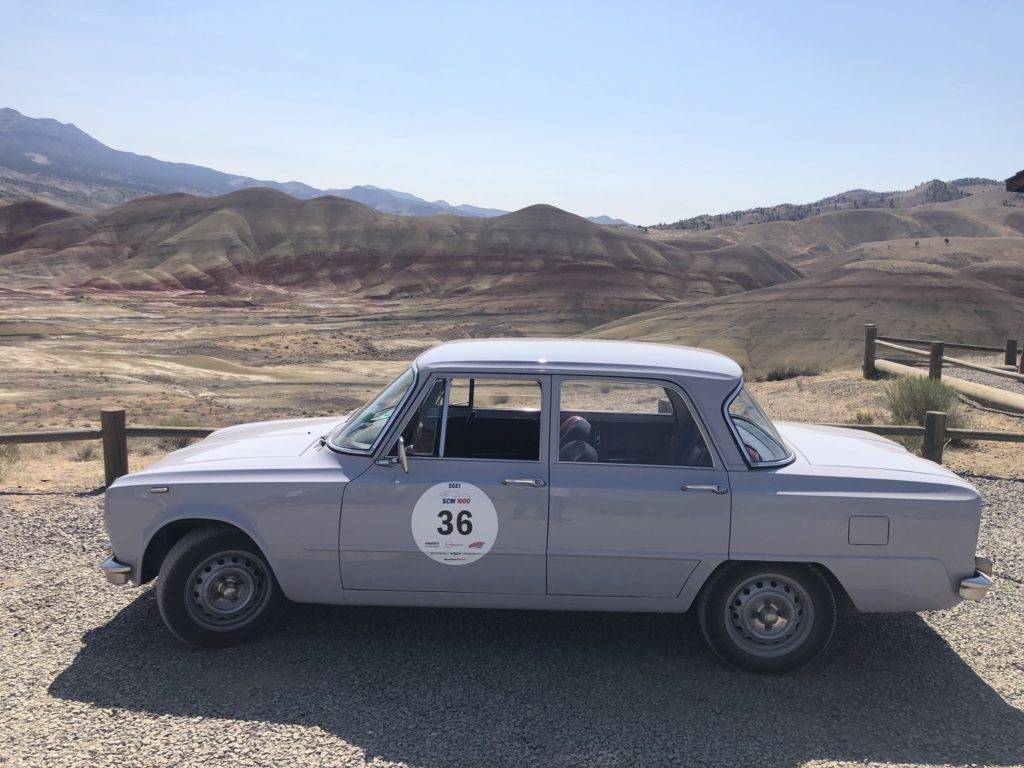
“I have owned this particular Alfa since 2014 and was the first stateside owner. The car was originally delivered to a customer in Lucca, Italy, and then made its way to Palermo. I bought it from a guy who imports them into the U.S. The first steps were to get it titled in the U.S., which required translating the prior documents. I use it as my daily driver as it is very utilitarian with a huge trunk (holds an entire bicycle!) and room for four (comfortably!) I enjoy getting it out for drives to the wine country or on regional driving events. Love it!” – Chris Bright
From swap meets to search engines, CPX is bridging the gap between generations. It’s a place where purists, racers, restorers, and newcomers can find what they need – and maybe even discover something they didn’t know they were looking for. As Chris put it, “We’re not just selling parts. We’re preserving stories.”