

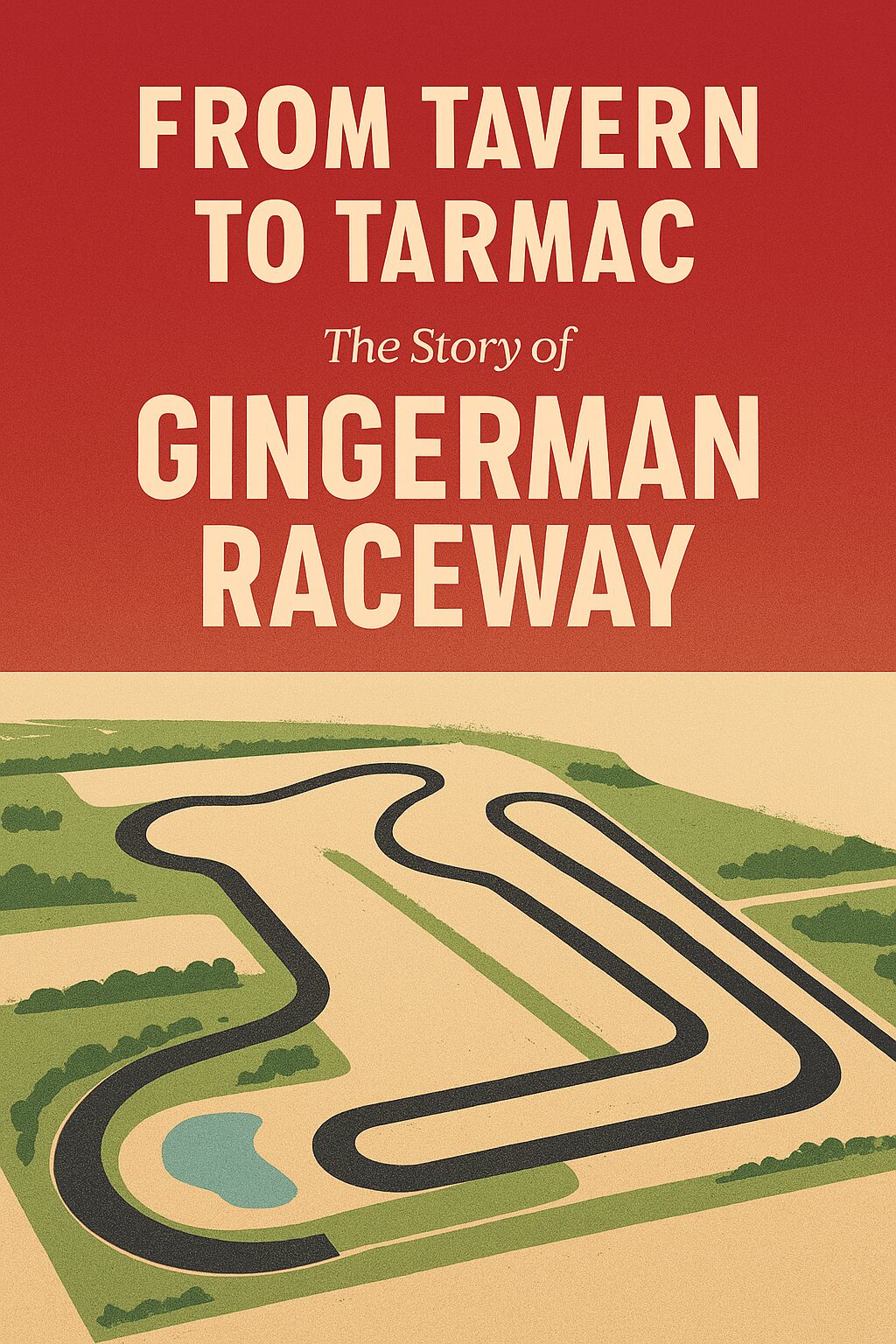
Nestled just east of South Haven, Michigan, Gingerman Raceway has become a beloved destination for motorsports enthusiasts across the Midwest. With its 2.14-mile, 11-turn layout and reputation for safety and community, the track has grown from a bold dream into a family-run institution. As Gingerman celebrates its 25th anniversary, we sat down with General Manager Zachary Schnitta, Customer Service Manager Mary Beth Jordan, and Track Operations Director JR Marchand to explore the track’s origins, evolution, and enduring legacy.
The story of Gingerman Raceway begins not with asphalt, but with literature. Dan Schnider, an SCCA racer and Chicago bar owner, named his tavern “The Ginger Man” after the controversial 1950s novel by J.P. Donleavy. That same name – and the revenue from the bar—would eventually fund the construction of the raceway in 1995.
Dan’s passion for racing ran deep. Before Gingerman, he built a 0.6-mile track in his backyard in Sister Lakes, Michigan, where a young Zachary raced go-karts. But Dan had bigger dreams. After years of searching for land with no zoning restrictions, he found an old apple orchard in South Haven. It was there that Gingerman Raceway took root.
Tune in everywhere you stream, download or listen!



From the beginning, Gingerman has been a family business. Zachary now manages the track, his sister and mother are involved in operations, and JR – Zach’s brother-in-law – oversees maintenance. Mary Beth, who started as kitchen manager over a decade ago, is affectionately known as the “track mom” by regulars. “We care a lot about what we do,” Zach says. “We want people to feel like this is a warm, friendly place—not a corporate machine.”
Spotlight
GingerMan Raceway - GingerMan Raceway
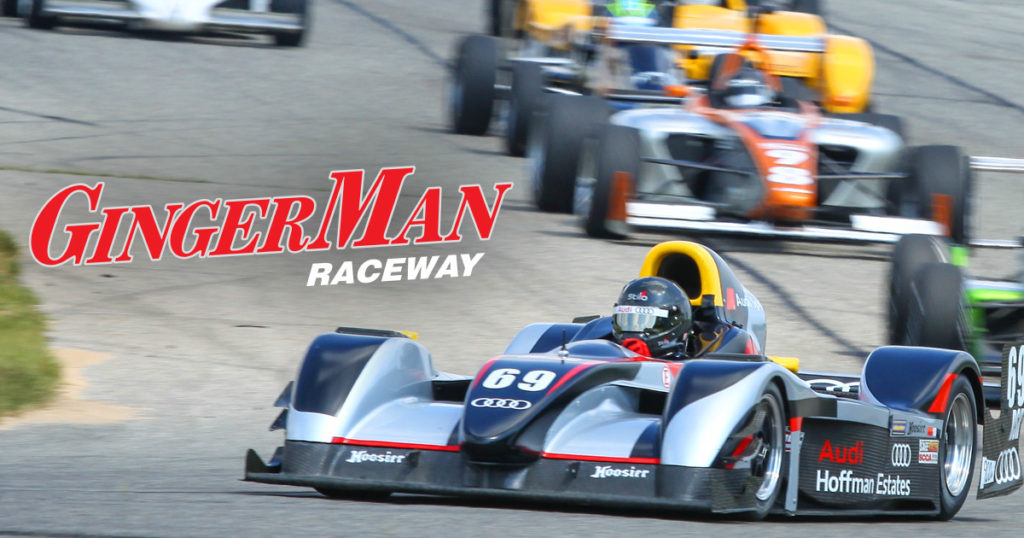
GingerMan Raceway is a road course located east of the town of South Haven in Southwest Michigan, United States. Built in 1995, the track opened for its first full season of racing sports cars and motorcycles in 1996.

Contact: GingerMan Raceway at gingermanraceway@gmail.com | 269-253-4445 | Visit Online!


Notes
- Gingerman is celebrating its 25th anniversary this year; why don’t we talk about how it all got started? Where did the name come from?
- Let’s talk about the track design: Were any of the corners mirrored after another track? What was the inspiration for the layout?
- Gingerman is noted for being “dedicated to the safety of the driver” – talk to us about how Gingerman is considered one of the safest tracks in your area.
- For the first timers: What types of amenities are available at Gingerman? What are some other expectations of the venue?
- We noticed that there was a repave in 2015; how has the track changed because of that? Are you seeing a difference in lap times? Were safety changes made at the same time?
- Does Gingerman have its own “club” for member-days, etc?
- What does the next 25 years look like? Are there any other upcoming changes or new features that drivers and organizers should expect from Gingerman in the next few seasons? When should we expect to see Gingerman available in iRacing?
and much, much more!
Transcript
Crew Chief Brad: [00:00:00] Grand Touring Motorsport started as a social group of car enthusiasts, but we’ve expanded into all sorts of motor sports disciplines, and we want to share our stories with you. Years of racing wrenching and motorsports experience brings together a topnotch collection of knowledge and information through our podcast.
Break Fix
2.14 miles, 11 corners, 36 feet wide, 350 acres. If you haven’t guessed yet, we’re talking about a racetrack founded in 1995. Gingerman Raceway is a road course located east of South Haven, Michigan. Where many sports, car and motorcycle enthusiasts call home
Crew Chief Eric: during the weekend, and we’re very excited to have the friendly folks from Gingerman Raceway on the show with us.
So please join me in welcoming Zachary Sch, general manager of Gingerman Raceway, along with Mary Beth Jordan, customer service manager, and JR Marchand Track Operations and maintenance director to talk with us about the [00:01:00] history of the track, its evolution, and its future. Welcome to Break Fix, Zach Marybeth and jr.
Zachary Schnitta: Hello.
Crew Chief Eric: Hey, thanks for having me. Absolutely. So, hey guys, we realized Gingerman is celebrating its 25th anniversary this year. Why don’t we talk about how it all got started back in 1995? Let’s talk about the who, the what, the, when, the, where, and the founding of Gingerman.
A lot of people, you know, they, they pronounce it Gingerman Raceway, but it’s actually Gingerman.
It’s not a big deal, you know, but it, it’s Gingerman. ’cause the track was built by my father, Dan Sch, who had a bar called the Gingerman Tavern, and the money from that, he used to build the track in 95. And he got that name from a book by JP Dunlevy called The Gingerman. And he named his bar and his racetrack after this book,
Crew Chief Eric: but not his red hair.
The book.
Yeah, just the book. Yeah. It was his favorite book growing up as a young man, and it meant a lot to him. The book
Mary Beth Jordan: was actually banned in the [00:02:00] United States when it was written initially.
In the fifties? Yeah, in the fifties, yeah. Risque. Risque, yeah. Yes, kind was. Yeah. And uh, so it’s actually Ginger man, but a lot of people say gingerman, but you know, that’s fine.
So how does one go
Crew Chief Eric: from bar owner proprietor to racetrack, owner and operator? How does that work?
JR Marchand: I have an answer for that. He was an SCCA racer since like the early seventies, plus his last residence before building on Gingerman had an actual 12 foot wide, maybe 14 foot wide racetrack in the backyard.
Zach will tell you about that. So he was always getting closer and closer to. Know, maybe someday owning his own one dream after the next. I think he realized it with the last one, but he had a little racetrack at some point in his [00:03:00] backyard too, so it’s kind of funny that he
still does. Yeah, it’s still
Mary Beth Jordan: in the backyard.
Dan’s original track was in Sister Lakes. It was near AAU Claire. It was, uh, 0.6 miles, 12 feet wide. I used to race go-karts on it when I was really small, but yeah, I guess so that was really the first Gingerman Raceway really. It was just this little small track he had. Yeah, in his backyard.
Mary Beth Jordan: Then the movie, the Color of Money, part of that was filmed in the Gingerman Tavern in Chicago, and then Zach actually like met some of the people from the movie, you know, Tom Cruise and all those people.
Paul Newman and Paul Newman and Dan got to be friends. But the added revenue from people coming into the bar, you know, I wanna go where they film the color of money. The money he made during that afforded him to be able to buy the property that and build the track.
Yeah. Paul Newman eventually came out to the track years later.
Crew Chief Eric: So if the bar was originally in Chicago, then how did you end up in Michigan?
Dan, when he lived in Chicago, liked to visit Michigan, [00:04:00] union Pier, new Buffalo, and eventually he bought a house here and he had a family here and I was raised in Michigan. And he kind of split his time between Michigan and Chicago.
And then it was just a point of trying to find the land, to build a track and to find someplace that had no zoning. You know, someplace where there were no regulations as to like having a racetrack. So that that took him a number of years. And so what you’re saying is a place with no civilization? Yeah.
Basically, yeah, it used to be Orchard. There’s no, yeah, there’s no ordinances. And he found this in South Haven, there was no zoning, so he was able to build this track, but it took him a while to find that land. And that’s really
Crew Chief Eric: rare in the nineties to still be able to find a patch of land like that that wasn’t, you know, zoned differently or slated for housing and whatnot.
It’s, it’s not like if you were trying to build a track in the sixties where it would’ve been, you know, much more open and you could have probably put it just about anywhere.
Mary Beth Jordan: Yeah. This was actually an orchard, apple orchard. Yeah.
Crew Chief Eric: So very similar to Summit Point in some [00:05:00] respects. ’cause it is also nestled in a large portion of apple orchard as well.
So very, uh, common story there. I guess more we see how many more tracks are built that way.
Mary Beth Jordan: There’s actually a few trees still from the orchard up the driveway to the far west side. There’s some trees from that orchard still there. And then some back in the back edge of the property.
We should give, uh, a big shout out to, to Dan Schnitt.
I mean, yeah. My father who built it, he always says, and I believe him, you know, he says when he, when he built this, everyone, a lot of people thought he was crazy nuts. And they’re like, why are you doing this? You know, you’re gonna lose money this risky venture financially on a number of levels. You know, they, they thought he was kind of quixotic or.
I, I don’t know what you know, but as, as it turns out, he is, he was very prophetic and he, he had this prophecy and, you know, it came true. I mean, it, it’s turned out to be this really cool thing that a lot of people really like. And it, and it, and that’s really, it’s great when [00:06:00] people come up to me and they’re like, this place means a lot to me.
And, and, and it does make money. You know, it, it, it is, it’s been a good financial adventure and, um, but I, I gotta give credit to Dan just for seeing this vision and being bold, kinda have the balls, I guess, to, to do this
Mary Beth Jordan: sole proprietorship that, you know, Dan owns it, it’s been in since the beginning and he’s still there and is now Zach and, and JR.
And Jill. Are in it and running it.
I’ve only been manager about, this is my fourth season. I mean, I’ve been around a long time.
Mary Beth Jordan: You know that that’s huge. That it’s still in the family, that it’s still growing.
Yeah. You know, it’s kind of, it’s become a family business. ’cause my sister works here, jar, uh, as my brother-in-law, my mother works in the kitchen and you know, we care a lot about what we do.
And while we grow and expand, that’s great. But I don’t wanna lose the sense of, of it being a family business or a sense of it being kind of, uh, soulful. People have called us very soulful. I mean, ’cause we’re not a big corporation. We don’t have tons of money. But given what we [00:07:00] have, we’re, we’re, we’re trying to expand and, you know, we are slowly but surely, and I, I always want people to feel this is a warm, kind of friendly place.
I don’t want it to ever feel corporate or, you know, there’s a great familiarity. Right. Mary Marybeth, you can attest to this.
Mary Beth Jordan: Yeah, definitely.
A lot of people come in and they talk to Marybeth, you know, it’s like part of their ritual. They chitchat and
Mary Beth Jordan: I mean, I mean, you know, they feel like they’re at
home.
It’s, it’s not
Mary Beth Jordan: right. Yeah, you feel comfortable here. I mean, a lot of the, um, regulars that come in, I call ’em my boys. They’re my track boys and they call me their track mom. And this’ll be my 13th season this year with Gingerman, and I started out as the kitchen manager and went from there. And yeah, I mean, it is a family.
I’m not a schnitter, but you know, I caught myself lucky to be considered part of the family as well.
Crew Chief Eric: So Zach, your dad had this dream to build a racetrack. He’s an amateur racer, you know, A SCC, A racer, et cetera. So he finally gets to the point where he is like, I can do this. I’m gonna build this track.
Where did the design come from? Did he come up with that [00:08:00] on a, on a napkin in the bar or did he work with some other people to do it? How was the track built?
Yeah, I, I asked him about this because I, I said I was going on this podcast and for one, he, he built it with Alan Wilson, who I think went on to help design the Auto Bunch Chicago.
Zachary Schnitta: Yeah.
And I asked him if he was inspired by any tracks in particular, and he said no. He said there wasn’t one track in particular. He said it was kind of based on the topography and it was based on how can you design something where you don’t have to worry about flooding, you know, he wanted the water to drain away.
So he looked, he found all the high points. He said he wanted something that was different. He said a lot of tracks before then, you know, you have a few little turns or crazy corners, but then you have a lot of like straight sections or straightaways, and it was kind of boring to him. He wanted something where there was continuously turns.
A snake-like motion increasing radiuses he mentioned from corner one to corner 11, where it kind of like increasingly challenged the driver. He, he wanted the driver to be surprised. He wasn’t worried so [00:09:00] much about speed or having a fast track. It was more about a challenge. So according to him, he, yeah, he said a lot of it was just a trek He wished he could drive at things that he wasn’t seeing in other tracks,
Mary Beth Jordan: and he wanted it to be safe and safe.
Yeah. Safety was a huge, uh,
Mary Beth Jordan: it’s always been a huge deal with Dan for it to be safe. Yeah. There’s no cement pylons to run into or nothing over the track. You know, like a walkway, you know, that people can run into no trees. You know, there’s safety berms all the way around the track.
Lot of
Crew Chief Eric: runoff
area. The
Mary Beth Jordan: biggest thing is we’re known as the safest track in the, in the Midwest.
Crew Chief Eric: So I wonder now, looking back over 25 years, if people compare tracks that they’ve been to to Gingerman or if they go Man, that corner, you know, turn six to Gingerman is just like X, Y, Z at, you know, at VIR or New Jersey or something like that. Are there any parallels like that now as you look back over and having spent so much time with the courses designer?
Or is it truly unique to the venue itself? Um, I, we’re
Mary Beth Jordan: a customer service, so I get a lot [00:10:00] of daily interaction with the customers and you know, I hear ’em talking about the track and this and that, and I don’t think I’ve ever heard them compare Gingerman as far as, you know, this corner is like this somewhere else.
You know, I’ve never really heard them say that. All I hear them say I agree is very, it’s safe, it’s fun, and it’s safe and it’s a good place to learn to drive on a track.
Crew Chief Eric: The design that you see today of Gingerman, is that the same as when it started or has the track changed over the years?
JR Marchand: So you were talking about designing stuff on a handkerchief or a piece of paper or whatnot.
So that’s how the extension to the original tracks started in like 2007 was a lot of scribbling around ideas between Dan and I, we went on this probably for three years and it was mostly me chasing him around going like, we really have to do this. This is what I have in mind. What do you [00:11:00] think? We pretty much collaborated on this for like three years before ground break, you know?
Before we, yeah, because I actually run this over by a whole bunch of people just, I mean, we’re not engineers, we were not track designers per se, but I mean he’s an SCCA racer. I’m an SCCA racer too, so it was kind of like. I also lived at the track at the time. I had been living at the track for close to a decade.
I guess. I was like really in tune with making the changes to it, and he was also on board with the whole idea and, uh, we just took our time. It made sense. It didn’t really change the flow of things as far as speed or there was no real heavy braking added to the extension of the track. If anything, it added about a [00:12:00] quarter mile or so of extra straightaway.
Plus some really cool areas of high speed and whatnot. So it was kind of like, are we gonna do this? And it really happened. We, he, uh, hired some local companies and we got it all done. And I think it might have taken like three or four months to get the whole thing done. But the idea itself, I really had to push him to do it ’cause he was really happy with the way things were.
But I was traveling, racing a lot, and I, and I knew that the track had something had left out and it was just the actual straightaway it was too short and it had become too much of that technical track that didn’t give the driver a little break or maybe let the car open up a little bit more. It was too much of a maybe go-kart track, and it can still be like that.
A lot of people [00:13:00] think of it that way, like maybe it’s still too boring because it’s too safe, but I think it’s still what you make out of it because there’s not a lot of stuff to hit. But you can get in a lot of trouble and you can destroy your car and no time. Oh yeah. I’m sure there’s plenty of proof.
Oh yeah, we don’t eat that. You don’t have like a corner six blah, blah, blah that eats up cars or the kink, but our drivers don’t spend time in the hospital.
Zachary Schnitta: Usually,
JR Marchand: usually, yeah. The cars are gone forever, but the drivers, we don’t have any, any,
Zachary Schnitta: they walk away.
JR Marchand: Yeah. So it’s, it’s all good on that respect. So the track’s still very safe and Yeah, it is kind of a amateur club track and it serves its purpose for the beginners and for the manufacturers to do a lot of testing.
And, uh, you can get really good at driving here if you come here and if you, if you keep the tires on the track, because a lot of people don’t, [00:14:00] a lot of people don’t. A lot of people go like, well, there’s no walls. I’m just gonna throw it out there and. The whole terminology, send your cars. So yeah, we see a lot of that at Jin Giant
Crew Chief Eric: Jr.
You mentioned that you were also racing around, so I’m wondering, you know, when Dan designed the track, what kind of car was he running at the time and did that influence the design of the track? And when you extended the track, what kind of car were you driving or are you still driving? Did that have an effect on the design as well?
JR Marchand: Okay. We were both really heavy on Formula Mazdas. Yeah. Which are open wheel formula cars, spec cars, which back then they were the thing that a lot of people were getting into, and I think it still may be a class in some capacity, but we were just doing open wheel cars and, and now I don’t do so much of that now.
I am more like the spec Miata guy. Which is okay ’cause I feel good [00:15:00] driving a spec me out like I did back then. But it did influence some of it. It was really a continuation of the rest of the track, just wide open corners that, you know, with a lot of runoff there’s some elevation changes that were added to it.
Like when you’re getting on the straightaway, kind of, you’re looking up at the sky for a minute and it’s kind of cool. Yeah, it’s really cool. So I like that. Yeah, and and in the beginning people didn’t know what to make of it. Like they really thought that it was a straightaway and then there’s a dog leg and then they end up putting wheels off there.
Yeah. It’s not where you wanna check your lap times when you’re on the, it’s kind of a cool track and yeah, I’ve been to all the other tracks like Sebring and, and Watkins Glen and yeah. And I’ve been to also Summit Point. I’ve been to all these places, but I always felt like gingerman, it was designed, I guess they just had the extra, uh, [00:16:00] land to build the track.
’cause in other tracks, you just run outta land and you don’t know what to do and you’re screwed forever. And gingerman, there’s some places that we actually had to move the guardrail in some areas and, and that took a while also to get it through the owner’s head to get some changes done, because that’s what we ended up with.
The, or the track ended up with the designer. So to make changes, it takes a while. Right now we’re actually installing our first catch fence. The whole tracks never had a fence. The whole perimeter of the track never had a piece of fence. Wow. So we’re actually
Zachary Schnitta: installing
JR Marchand: 450 lineal feet of catch fence with the suicide posts.
It’s like 16 overall foot of fence. It’s gonna look really cool. So what’s the
Crew Chief Eric: reasoning behind adding the fence now 25 years later? Is that part of the safety package that you guys have created?
JR Marchand: [00:17:00] As you would think, 48 inches of guardrail is not gonna stop much of anything. So we’ve had instances where debris actually made it over the
Yeah.
Turn 11. Right.
JR Marchand: Uh, we’ve had tires, I guess body work and fender similar things. Fender, yeah. So it was just time to close it up. Uh, I guess my worst nightmare spending 18 years at the track here. It would be that we have a car going over at speed and landing on people and that’s it. I would never be able to come back not having tried to really seal up that area of the track.
’cause now it’s done so now I can sleep a lot better.
Crew Chief Eric: So. So that actually brings up a really great question in that or there are a lot of spectator areas at Gingerman because some of the smaller tracks don’t usually have a ton of grandstands. Like you mentioned, you’ve been to Summit Point, you’ve been to some other locations and there’s not a lot to to pick from, unlike a Watkins Glen or some of the bigger [00:18:00] like IMSA tracks where they have to have tons and tons of grandstands because of multipurpose NASCAR going there.
Things of that nature. Is that part of the concern is ’cause there is a lot of spectator area gingerman.
JR Marchand: We do have a lot of spectator areas, but turn 11 it’s specific. It’s not really so much that spectator, but that on the other side of turn 11. A lot of people are there to paddock. They’re not really looking at the cars, they’re working on their cars, so they’re not watching for things going over.
So we wanted to make sure that people are safe there and they don’t need to be really looking at the track at all times to make sure that they’re safe. Because I gotta tell you, with that fence in place, it just feels safer and I know a lot of people are gonna appreciate it.
Crew Chief Eric: Yeah, you’re less
JR Marchand: peace of mind,
Crew Chief Eric: you’re less exposed, I guess, is the way I it.
Yeah, it’s
JR Marchand: feels great. Just even now, it’s not finished. It’s like, oh my god, people are [00:19:00] really gonna appreciate just like the blanket of safety. And I was really crazy about this whole thing. I’ve been like kind of naughty about it. But yeah, I lived there and I’m kind of tied into the whole family and everything, so I.
It’s kind of crazy about the whole fence thing
Crew Chief Eric: with the design of the track. You guys mentioned it was really important to deal with water runoff and things like that, and we’ve noticed with some of the newer tracks that the surfaces are oftentimes crowned, which is very similar to the road surfaces, which are designed to allow water to push off from both sides of the track versus some of the older tracks where the water is graded to run where you wanted it to go.
So I’m wondering, with Gingerman, what’s the design of the track surface, like the
JR Marchand: straightaways? Most road engineers, they build in the crowns, so you don’t get puddles in the middle being 36 to 50 ish feet wide in some areas, maybe even 60 feet wide, where the [00:20:00] extension starts. That area there, we didn’t want to have puddles because going from the old configuration into the extension, that’s like the widest point of the whole track.
We wanted to make sure that you’re not hanging in there 90 mile an hour quick left-hander, and if it’s holding water, it would just really be a problem pushing people into the grass really easy. And so that was one of the key things. And all through the track, you can see how it was designed like, you know, regular crown, but then you have to deal with the same thing on the corners.
And at least these corners we did, it was pretty easy to manage the water like 10 B, most of the water’s going to the inside, which is like really crazy because if you think about it, that whole straightaway, the beginning of it now. It’s a downhill, so you’re pushing a lot of water down into that little carousel at the beginning of 10 B, but it seems to do very well.
And yeah, we get a lot of [00:21:00] wash, like the ground gets washed off. And we got a lot of sand on track because we got a lot of water crossing over with sand and But that’s just dealing with nature just like everything else.
Mary Beth Jordan: Yeah. Between five and six
JR Marchand: and we alleviate that over time.
Mary Beth Jordan: Oh yeah.
JR Marchand: Taking stabs at it.
But water management, that was one of the things. Dan, the owner always talked about super elevation and where do you want the water to go?
Mary Beth Jordan: Most of it drains into the pond.
JR Marchand: Yeah. There’s a pond that I think the pond was not there originally, even for the orchard. It was not there. It was actually built for the truck.
Zachary Schnitta: Yeah.
JR Marchand: The local fire department uses it to like flush their fire engines and stuff like that, which is pretty cool to watch ’em do that when they’re flushing their hydrants and whatnot. Or their fire engines pretty cool.
Mary Beth Jordan: If there’s a local fire, they can come into the track and. Pull water out of our pond [00:22:00] and put it into their tanker truck and rush it over to where the fire is.
If it’s close by,
Crew Chief Eric: it’s a good way to get back to the community, right. All that runoff from and whatnot might have a little bit of antifreeze oil in it, but you know, hey, whatever. It’s okay. Yeah. Let me ask you this. A lot of tracks have recently been going through Repres because, you know, after decades of people just kind of punishing the asphalt, it’s always time to go through a repave.
So has Gingerman gone through a repave, and if so, how has the track changed because of it? The last one was in 2015, right?
Jr.
Mary Beth Jordan: Yeah.
JR Marchand: Yeah. We did like partial repa.
Mary Beth Jordan: We did from what, turn nine all the way through to 11 backwards.
JR Marchand: Yeah. It was nine through 11 and then they had to come back out and, and do
Zachary Schnitta: some
JR Marchand: finessing, but nothing too bad from that.
The, it’s been holding up pretty good. It’s always been a pretty abrasive track because of the content. There’s quite a bit of limestone and the slag. Yeah, the [00:23:00] slag over time has exposed itself, which gives you quite a bit of grip, but it tears up tires if you’re very aggressive or it depends, many things.
But it is known for being a, uh, abrasive track because the slag and the limestone are very, very well exposed.
Mary Beth Jordan: They don’t complain that tires get used up as much since it got repaved. They’ll go karts. They didn’t like coming because the old track was really bumpy. Yeah, in some spots. But after the repave it, you know, it was flattened down and, and they loved it.
And motorcycles too, because before, when it was initially paved, it was three separate things of asphalt that were laid down. And we had a lot of, of that tar in between ’em to seal it. The motorcycles didn’t like that either. ’cause the, that tar made it really slippery for them. But after we repaved, they were super happy that we didn’t have so much tar.
And then on top of that, we did have a few complaints about people saying, well, my reference points aren’t there anymore. I don’t know where to look. I don’t know, I, I can’t find my [00:24:00] reference point. It’s gone. So, because they look at specific spots on the track itself and they were gone.
JR Marchand: I was gonna say that, that repay Mary Beth was talking about, they were doing the, uh, the no seams and it’s just like a one pass.
And it was quite a bit different machinery than what had been used previously for the original. Which, uh, you don’t have these two guys doing tandem passes, uh, which gives you no seam and makes it look a lot cleaner, and obviously you don’t get that crack in between the lanes, if you will. Mm-hmm. That was quite cool.
Watching them do that whole strategy was different for them too, but they really nailed it just. How they ran the machines differently and they were actually illustrated in some magazine for asphalt companies nationwide. So it was like quite a thing they accomplished. I don’t think we use them so much anymore ’cause we, we haven’t had that [00:25:00] many issues.
But the track surface, it’s been pretty consistent now going into, what, six years? So,
Crew Chief Eric: yeah. So the biggest thing on everybody’s mind after repave is did the lap times get better? So Oh yeah,
Mary Beth Jordan: they did, right? They did. They
Crew Chief Eric: did.
Mary Beth Jordan: There’s a group out there track Midwest and the big deal is getting a sub one 40 at Gingerman now and they actually have decals and stuff out there of, they’ll send them to people if they get a sub one 40 and yeah.
That’s very cool.
Mary Beth Jordan: Yeah. Yeah, it’s kind of neat.
We also repaid the paddock, that was it two years? Yeah, that was in 2019. So that was kind of a big project as well. Uh, anytime you pay costs a lot of money and Yeah. It’s kind of a,
Crew Chief Eric: yeah. Which actually brings up a really good question because VIR did that a couple years ago as well, and it became a sticking point for a lot of people because then they started having the security guards patrolling the paddock, making sure that people, you know, put stuff under the jack pads and you couldn’t, you know, that was us too.
Okay. I just wanted to, wanted to see, we had
boards we’d [00:26:00] give out for people Yeah. And signs and Yeah. It was, it was a whole big thing. It was, yeah. ‘
Mary Beth Jordan: cause we got ours done in July. Oh yeah.
It, it took, it took a while for it to, uh, solidify and, yeah. No, that, that was definitely an issue. It,
Mary Beth Jordan: it wasn’t security guards, it was me and Zach and Jr.
Running around or having the maintenance guys running around. Here’s these boards, here’s these boards. So
Crew Chief Eric: I’d rather be handed a board than a fine. So I, I very much appreciate that. Exactly. Exactly. One big project to the next, expanding the track, adding more safety, et cetera.
Crew Chief Brad: So, yeah, talking about safety and everything, and you guys are known as the, one of the safest tracks in the area, if not the safest track in the area.
You’re adding a new fence and everything. What about some other, uh, non-structural safety things? Like do you, what’s your safety crew like? How quickly do they deploy? Do you have onsite ambulance? Do you have an onsite med bay or like
Mary Beth Jordan: Yeah, we have a crew of two M-F-R-E-M-T medic people during most events.
Sometimes we hire out, depending on the [00:27:00] event and what the event coordinators want, we’ll hire out a full service EMT full stock ambulance that can transport. Our guys are basic life support. They don’t transport, but it takes South Haven Emergency Services maybe five to seven minutes to get to us. When we do have to call them, we have a group called The Rescue Guys that come to most of the sanctioned events, uh, the Lemons Race, SECA, nasa, and they will go out and do tows and pick ups.
They’re really good at what they do. Yeah.
Mary Beth Jordan: Yeah. We’ll hire Harbor Towing, which is local here to South Haven, and they come out and do hot toes during sanctioned events. We also have our crew of race marshals and our lead control person that during like a test and tune or an open track weekend that we host, we’ll, um, shut the track down if there’s, you know, an accident that needs to go get picked up or something, and we’ll pull ’em in.
But if it’s a sanctioned event, we, um, go above and beyond for ’em and get, get [00:28:00] the people here to make sure that they get their events happening and going.
Crew Chief Eric: Are you guys providing the flackers or are those being provided by the organizers?
Mary Beth Jordan: Well, it depends on the event. If it’s like an SECA sanctioned event, they have their own corner workers.
They’re volunteers that they bring in. Our corner marshals are there for all the other events. We do the lemons races. We do motorcycle races, we do motorcycle test and tunes and track weekends. We do the carting event. That happens every September. We have a flag crew, depending on what the customer wants.
We’ll have those flaggers out there. We’ll, we’ll have our lead control person and our race marshals out there, and we have a young crew, but we constantly get comments on how professional they are and how, how good they are at their job.
Crew Chief Eric: Is every corner manned or are only certain corners?
Mary Beth Jordan: It, it depends on the amount of vehicles on the track itself.
Like for our Fast Guy club, which is our group, normally for like our open tracks, we usually have 1, 3, [00:29:00] 5, 7, 10, and 11 manned. But if it’s a sanctioned race, there’s one or two corner workers or per station. You know, it just, it just depends. It, it’s all about what the customer wants and we wanna make sure we’re out there for everybody.
Well, Jerry probably talk about the lights you’ve set up. I mean, oh
Mary Beth Jordan: yeah. That’s nice. That’s a great point.
JR Marchand: Yeah, so like, again, another thing that you can always do so much, you know, so it was just trying to catch up with other tracks, I guess. And we needed lights. We needed caution lights ’cause they really get your attention.
It’s, it’s a very consistent stimulus. It’s just proven, it’s been proven for a hundred years out on the roads, flashing light, a red light, green light, whatever. We didn’t wanna like spend 60 grand on some system or 40 grand on some system that probably has been implemented at some other racetrack.
There’s plenty of those. We’ve, I mean, I’ve done [00:30:00] consultations. We did it a little kind of go on the cheap, if you will. Uh, installed some really high intensity strobe LED bars on the corner stations with solar panels to charge 12 volt batteries to enable the corner marshal to switch on and off to use, along with their flags.
It worked out really good because you could see these things from, you know, a mile away, like literally, you can probably see them from a mile away. But the thing is that from the closer distances on the track, it just makes a huge difference compared to a flag. That’s why FIA, by like year 2022 or something like that, next year, most grade A and grade B tracks or something are gonna be required to have lights.
The jobs for the, the marshals are still gonna be there, but the [00:31:00] flags themselves. Are probably gonna be diminishing over time because flags, if they’re close to the track, they’re putting corner workers at a great stake for sure. So you move these people away from the track and you put the lights closer to the track and now you can save some or marshals, uh, lives or what have you.
But that’s one of the things that with the lights, we still have people on the corner and the corner stations, but we’ve changed maybe the stimulus of the condition for a caution because flags with human error? Yeah. Or was it flat? Was it waving hard enough, the intensity of the flag or whatnot? I just, I think it worked out really well that actually we got a
Mary Beth Jordan: lot of compliments from drivers and from event coordinators that really liked the lights.
They appreciate it.
Crew Chief Eric: At first, I thought you were gonna tell me that you guys are running night events.
Mary Beth Jordan: We have run night events with Grid, grid. Grid life.
Crew Chief Eric: [00:32:00] Yeah.
Grid Life has done night events here.
Mary Beth Jordan: Oh, very cool. Yeah, they bring in light towers and stuff and place them on the infield, in the outfield and actually run at night.
Our neighbors don’t like it too much, but,
Crew Chief Eric: but it actually really brought up a, a great question because JR mentioned something about the solar panels and you know, we’re all petrolhead here. We’re still burning dinosaur blood as long as we can help it. But it brings up a question about the green initiatives, the EV revolution and things like that with respect to the race tracks themselves, not just the cars.
So what kind of initiatives has Gingerman taken to embrace green technology or other things around the racetrack itself?
Mary Beth Jordan: We have installed two Tesla chargers. At the track.
Crew Chief Eric: Sounds like solar panels is another one. Probably more of that stuff in the
future. Yeah, I’m kind of excited about the future of that because I’ve read articles about these cars.
Uh, Teslas are when they’re, when they drive on their own, you know, these smart cars or whatever, they’re gonna need places to test them. You know, we provide a great place to test all this technology and there’s still a lot [00:33:00] of work that they have to do to perfect all this stuff. And, you know, we have a great safe place where they can do that.
JR Marchand: Oh, I’m sure. We’re open for that. We have the infrastructure. Just, I’m trying to think about
green stuff, I guess that were, um,
JR Marchand: oh, yeah. I don’t know. I guess I did mention that using solar panels saved us, uh, a lot because we didn’t have to dig and bury cable and then use the nuclear power that just south of here provides us with.
And, uh, so
that’s more of an issue for the, the drivers. And I mean, we provide the facility and the course seems like that’s more of a thing for the actual cars and the teams and yeah. Organizations that come here. Uh, I mean, at some point we’ve thought about having a, a fleet of cars or, well, we do have some cars you could rent out, but I mean, at some point we could have cars that are electric, you know?
Mm-hmm. I suppose. Or if we ever developed this idea of having cars to rent out for people. Definitely. I think some of ’em could be electric. That could be something that’d be an idea
Mary Beth Jordan: That’s funny about renting cars. Someone asked if they could rent [00:34:00] Dan’s Acura to take on the track for the weekend.
Crew Chief Eric: I’m assuming that’s an NSX.
He
Mary Beth Jordan: just got it. Yeah. Very nice.
Crew Chief Eric: So, you guys mentioned that Gingerman itself holds different events, be it motorcycles, go-karts, your own, you know, des uh, high performance drivers, education events, things like that. You know, for somebody coming to Gingerman for the first time, you know, they’re kind of, they’re psyched up through the organization.
They’re coming with, you know, they want to come to the track. What kind of amenities are available, you know, what kind of expectations should the first timer have when they, they cross the gates at Gingerman, what should they expect to see
Mary Beth Jordan: any given event? You pull up, you park at the gatehouse, you get out, come sign waivers, our track waiver and the groups waiver.
And then you get your bands. You pay for camping and electric, and then you proceed inside and find yourself. If you got electric, then you go to your electric spot that we have 29 electric, 30 amp spots that you can rent for 20 bucks for 24 hours. So, if. If you [00:35:00] come in on Thursday, it’s 80 bucks for electric.
Camping is $10 per person per night. Kids 12 and under are free. We have two shower houses, our north bathrooms, there’s four rooms. And then our south bathrooms, we have showers in both the men’s side and the lady side.
Crew Chief Eric: Do you guys have a go-kart track?
Mary Beth Jordan: Go-karts come in September. They have their, so they
Crew Chief Eric: run, they run on the track.
There’s not a separate go-karting
facility. Correct. So we thought about doing that. We def That’s an idea we’ve had.
Mary Beth Jordan: Yeah, we have a kitchen that’s open from seven to three every day during the event serves. Wonderful breakfast.
My mo my mother runs healthy. I always liked my mom’s food and yeah, it’s good.
Yeah, I, I really, I I love it.
Crew Chief Eric: Yeah.
It’s a
Crew Chief Eric: home. Cook it on top of it all. Look at that. Oh yeah, definitely.
Mary Beth Jordan: Definitely. Carol’s an amazing cook and some of the stuff that she brings in chicken fajitas and. And chili and just Mexican
BLTs. Every year I’d like to have something new on the menu. Last year was Mexican BLTs, and this year I was kind of thinking of like a Indian [00:36:00] food panini chicken vindaloo.
Oh, that’d be cool. I don’t know. We’re thinking about it. I mean, it’s, it’s kind of, it’s in the works. It might be too tough for a racetrack.
Mary Beth Jordan: And then we have a gift shop where we sell what you forgot to pack type stuff. We also sell lubricants for vehicles, all different kinds of stuff. We have the
gas 93, a hundred, 107.
Mary Beth Jordan: We sell helmets. We sell anything, any sweatpants, sweatshirts, t-shirts, kids clothes, hats. We pretty much keep you covered for the whole weekend. You know, whatever you need. Oh yeah. We have a, a huge communal fire pit in front of our La Dolce Vita building, which is like the lunch room or meeting room people call it.
And then we have the pond that you can fish in. There’s fish in there.
I used, I used to swim in there when I was a kid, but we don’t really encourage swimming anymore.
Mary Beth Jordan: Dogs that go in and play,
we have a sign. Yeah, we don’t have lifeguards. People don’t really swim in there anymore. But you could theoretically, but you stock it with fish.
What kind of fish are in there? Is it just,
Mary Beth Jordan: I don’t know. The [00:37:00] SECA, they stocked it. Last time, part of their summer festival of speed was a fishing contest for kids and so they stocked it with fish and, I don’t know, blue gill, some trout. I don’t know.
Jared, you, you fished?
JR Marchand: Yeah, I’ve, I’ve actually cut large mouth purge on flies or uh, blue gills on flies.
And I’ve actually cut. A huge catfish. A huge catfish. Did you eat it? Did you, no, somebody put it in there. So I just, you know, caught it. I caught that thing. I was sick. Huge. I put it back so pretty nasty. I don’t, there’s,
Mary Beth Jordan: there’s like little otters, like sea little otters that muskrats I guess, that live in there.
And we have blue herons and turtles and a
lot of wildlife in general.
Mary Beth Jordan: Lots of snakes. We have geese that fly up and land on top of our three story tower. The tower,
Crew Chief Eric: tower, every state. Are we talking about a race track or Dr. Doolittle? I mean
Mary Beth Jordan: Yeah, exactly. Well, I mean, it’s, it’s three 15 acres out in the [00:38:00] country.
It, it’s a really pretty track. We don’t wanna talk about the landscape, but like, you know, it’s out in the, it’s pastoral, there’s rolling hills and farmlands. It’s pretty, we’re out. It’s scenic. You know what I mean? I know it’s time to go fishing. What are you talking about? Yeah. And there’s fishing. Heck yeah.
You have little woods you can hike through, you know, and yeah, it’s, it’s, it’s pretty,
Mary Beth Jordan: I mean, sometimes we have to put yellow flags up for deer on the track.
Well, we’ve never had an issue. We’ve never had an incident though with deer on the track. I, that’s more in the off, in the off season. That’s when you see maybe some more like, well, especially the do, well spring
Mary Beth Jordan: and fall.
Spring and fall, the corner workers will call in, you know, we’ve got deer out by turn eight. You know, just keep an eye on ’em, let us know where they’re at. And then, you know, if they get a too close, they’ll, they’ll throw yellow flag out. We’ve had squished animals like, you know, um, chipmunks and that kind of thing.
Squirrels. Out on the track a few times. What was really cool is during the first or second major grid life festival, they had somebody put a sign up that said duck nesting, be quiet by the fence. [00:39:00] And there was a, a mama duck with a bunch of baby eggs. And that Monday or Tuesday after Grid life, the eggs hatched and the mama walked him across the track across turn two and all the way to the pond.
Crew Chief Eric: Wow.
Mary Beth Jordan: Like is a mama duck with like five little babies. It was the cutest thing ever. I have pictures of them.
Crew Chief Eric: So going back to the first timer, you know, oftentimes, you know, somebody coming to the track for the first time spends a good portion of their day in the classroom. Right. So are the classrooms, you know, heated and cooled, you know, what kind of things should folks expect there as well?
Mary Beth Jordan: Yeah, we do have heat. We don’t have air conditioning in the, in La Dolce Vita, but we do have air conditioning in the tower. It depends on where the group wants to hold their class. We do not, per se, hold classes during our particular events. But auto interest and CGI motor sports and that kind of stuff, they hold classes mostly in the pavilion.
The adult VTA building, they hold their classes, but that building can be opened up doors on both sides. So it’s a nice breeze [00:40:00] walkthrough. You check in there, you go to your class, and then you don’t spend all day in class, you know, because while advanced and intermediate are on track, the novices are in the classroom and then it’s time for them to go out.
So, you know, they spend. Time in the classroom and out on the track.
One of the services we offer are, we have our own coaches, and I mean, JR is one of the coaches and we have a couple other guys through me or, you know, on the website, we can schedule them and our, our rule is you need at least three track days experience at our track or one like ours to get on the track.
But if you don’t, you can go, we have driving schools like c, GI, but, uh, we could also, yeah, hire a coach who can work with you on an open track day, or you can even run, run out the track, you know, if you have some money. It’s like with, with basketball, you know, how do you play basketball? It’s easy. You find a ball, then you go to a court or whatever.
But racing, it’s always, it’s more difficult. It’s a more complex and so I try to simplify and streamline that process as much as possible on our website. There’s a big section that says, I am new. What do I do? Because I get that question so many [00:41:00] times over the years, like, how do I get involved in racing?
Or, I, I’m very aware of that and I’ve tried pretty hard to, to make it as easy as possible for people.
JR Marchand: That’s such a great point. Zach, I, I wanna go back to probably 1996. When the track Ginger just had been built, there were very little options of finding, obviously a website or help on how to get on the track.
So this has come such a long ways and we don’t realize that ’cause everything’s given to us these day and age. But back then, even through the mid two thousands, getting into an actual track date, you would almost have to be friends with the organizer or lie about your experience or lie about who worked on your car to make it to the track.
Now it’s really easy, and I don’t know if you guys agree, but Zach’s just, it’s making it easy for the newcomer that has no idea. Otherwise, we wouldn’t be [00:42:00] here because of them. The track has come a long way. It’s because we’ve really opened the door for the newcomers. That’s our main people. It’s like the advance, the intermediates and the novices.
We’re not like a pro track by any means, so it’s a really cool thing.
Mary Beth Jordan: And the only way to grow the sport is to get the novices in,
JR Marchand: right? That too.
Mary Beth Jordan: Or else you know, you can only advance so far.
And CCGI. They’re a really good partner. They’ve been with us for years and they’re here once a month and they offer really great driving school classroom and one-on-one instruction and it’s a whole day and it’s affordable and it’s really nice that they’re here too because they’ve been coming here probably since 99,
Crew Chief Eric: since we’re still talking about first timers.
And you guys are definitely veterans of Gingerman. You know all the secrets, right? So how about hot Takes on some of the corners of the track, like you know, things you maybe should do and you things you really shouldn’t do. So you wanna share some of that knowledge. Pay attention
Mary Beth Jordan: to your break [00:43:00] markers, your turn in apex turnout cones.
Don’t think you know it all when you get there because you have no idea as a novice when you come in. Don’t think because you can go fast on the highway. That you can go fast on the racetrack and don’t be an idiot once you leave the racetrack and think, well, I can go fast on the racetrack, so I’m gonna go fast on the roads, because that just makes it bad for everybody.
Pay attention to what your coaches say.
The police don’t
Mary Beth Jordan: appreciate it. Pay attention. Prep your car the right way before you come. Put the high end break fluid in your car. You know, don’t boil your brakes. There’s a lot going on there that we get phone calls all the time. You know, I’m so excited. I just got this car and I wanna bring it out on your track.
What do I have to do? And it’s like, well, have you run been on a road course before? No, but I’ve done, um, autocross or I’ve done drag strip. Well, that’s that avenue, but road course racing is completely different. And you gotta go to a, a driving school or attend an event that has coaches Before we made, made this three track day rule before you [00:44:00] could sign up as an office.
This one particular kid came out, he had a brand new GTR. His friend took him for like eight laps and then he got out in the car and forgot to break. Going into turn three, he did over $10,000 damage to his car and it cost him 600 bucks to tow his car home. And he stood there with his mouth open and couldn’t even speak when he came into eight and a half where I work and was like, what do I do?
You know, he could, he couldn’t even speak. He couldn’t form words. I mean, to get that car out of where it was took time away from everybody else that wanted to have track time. You know, to save everybody the track time and save people from hurting their car and possibly themselves, which hasn’t happened.
Thank God. That’s why we mandated that three time rule. And we also say, you know, if you sign up and. You lied about your experience, we can pull you off the track because we don’t want you jeopardizing somebody else. Or their track time. That’s fair. That’s completely fair.
Crew Chief Brad: Yeah. That brings up a good question.
With that example of the person doing that much damage to their car, uh, I’m assuming that there was some damage [00:45:00] to either the track or the, the wall, uh, or the tire wall or something like that. Are those costs passed on to the participant? How does Gingerman handle situations like that where there’s actual monetary costs and damage to Gingerman property?
Crew Chief Eric: I’m gonna, and I’m gonna tack onto that. How much does a bag of kitty litter actually cost?
Mary Beth Jordan: We’re not telling.
That’s a big question and it’s kind of a complex question you bring up. Some of it depends on insurance, depends on what kind of insurance you get. If you’re going on our policy or you pay more money and get your own policy and you pay more money, so.
It covers bodily injury and damage to track property, but a lot of groups don’t do that. So then, yeah, it’s in the contract. I mean any, any damage to the facility, it’s on you.
Mary Beth Jordan: And then whether the group passes that, that cost onto the driver. That’s up to the group.
Yeah. Well, there, yeah, sometimes they’ll, the individual will be responsible.
There’s certain circumstances. I’m trying to remember, like [00:46:00]
Mary Beth Jordan: I’m gonna talk about the kitty litter for a second. Zach, why you think, okay. Well,
no, but yeah, essentially, no, I’m not
Mary Beth Jordan: gonna say how much it cost or anything, but Oh, okay. Gone away from the clay kitty litter to this other stuff that absorbs twice as much and you can reuse it.
And it’s still biodegradable. Fire departments and police departments in our area started using it. And we still get it from the hardware or the automotive store, but it’s a lot lighter and it’s more absorbent and you can just, you know, you put it down, you spread it out and you can shovel it back in and use it again.
But it still is biodegradable, so it’s not gonna hurt the, the property or anything.
Crew Chief Eric: So I’m renting the kitty litter now. I’m not, I’m not actually buying it. I got it. I got it. But the
price hasn’t changed. It’s still the same price you’re
Mary Beth Jordan: paying for
Zachary Schnitta: it.
That’s funny. But I think we’re pretty reasonable with certain things.
I mean, there was one incident where someone, uh, ran into a corner station by 10 B. We didn’t charge them. I think it was NASA because it was in a bad spot. People had hit that before. And we were gonna [00:47:00] rebuild it, so we didn’t really feel like it was fair to give them the bill, you know what I mean? So
Crew Chief Eric: they, they aided you a demolition, so Yeah.
You gave ’em a break.
Yeah. In, in general, yeah. You’re, you’re responsible for damage. You cause, and most groups are really good about that. You know, the biggest thing is guardrail. Like it costs a lot more than you would think it does to fix and repair. I warn people, I’m like, it doesn’t look like, you know, a hu a lot of damage, but we gotta fix this.
And yeah, it’s gonna cost more than you think, you
Crew Chief Eric: know, especially at the Glen ’cause it’s blue and because it’s painted, it’s more expensive. So just gonna find it out there.
Crew Chief Brad: And, and I, I don’t bring this up to, to put you guys on the spot or anything because what you’re saying is not something that’s any different than we’ve heard from other tracks or experienced with people gonna other tracks or anything like that.
But it’s something that I want our listeners to know, you know, from a responsibility standpoint, that if you’re gonna do this, if you’re gonna go to a track and everything, it can be a lot more expensive than just your car. You gotta be careful with, with what happens. You’re liable for everything that [00:48:00] happens.
Well,
exactly. I’d say if you’re a group, if it was me, I would get that extra insurance. I’d get my own insurance that would cover property damage. A lot of tracks don’t and some of ’em do. Some of ’em have that insurance that covers property damage? It kind of depends on the group. And like Mary Beth was saying, they just say, well, we’ll have the individual cover it, you know, and if they don’t wanna cover it, well then we’ll kick ’em out.
You know, or whatever.
Mary Beth Jordan: Like, well, and it’s not all property damage on, on the track itself. You know, you get some silly individual that after the track day’s over has ingested too much alcohol and decides, wants to punch a hole in the bathroom wall. You know,
they take a golf cart and run over or menu.
Mary Beth Jordan: Oh yeah.
That time that guy just destroyed her.
Mary Beth Jordan: Yeah. Our a-frame menu board. So it’s not just during the track day.
Yeah, there’s always yeah. Kind of things. Someone at Lemon accidentally set a garbage can on fire, which was the first,
Mary Beth Jordan: and that burnt through to the, the new asphalt.
Yeah. I didn’t like, I, I didn’t care so much was a garbage can, but it sucked that it.
Kinda messed up the asphalt a little bit.
Mary Beth Jordan: We, we actually, we [00:49:00] actually had to have at one time, between Thursday and Friday, when 24 hour lemons comes, we lock the gate at 11 o’clock on Thursday night. You know, we close the gate and then Friday morning we, we reopen at seven for the test and tune for the day, for their practice day.
Well, some lemons boys decided to take our gate apart, just leave it there. I mean,
Crew Chief Eric: have tools will travel so,
Mary Beth Jordan: and left it there so they could get in and get a paddock spot and, you know, blah, blah, blah, blah, blah. We wouldn’t start the practice day until they put the gate back on there.
Crew Chief Eric: So JR Hot takes on the track.
Do’s and don’ts certain corners,
JR Marchand: you know, you get used to your references or lack of, once you get used to it, it’s definitely a late breaking and late turn style of a track. Uh, most tracks you’re not gonna gain anything but this one because there really isn’t anything to [00:50:00] hit by maybe locking up or testing the limits of the track.
That’s what it’s meant for really. So breaking late and waiting to turn, wait for it, because you’re probably doing it too early and it’s just one of those tracks that rewards you and that matter. But like individual do’s and don’ts, I guess. I don’t have a whole bunch of ’em say Off the grass, please. It, it takes a lot of, yeah, we don’t have walls and things like that, but if you’re putting two wheels off on the same corner on every lap and you’re digging out dirt and you’re, you know, you’re making it out like six feet wide.
Your car gets six feet wide every lap onto the grass. It’s crazy. We see it happen. We see the whole entertainment happen every lap after lab, during NASA or Lamons, but it’s just terrible. It’s like. It turns into rally sometimes. So I don’t know if you’re doing it, you’re not gaining [00:51:00] any time.
Crew Chief Eric: It, it kind of begs the question on both sides.
If the drivers are doing that, they must be doing it to gain some sort of advantage or at least their telemetry is telling them. So, and I’ve seen that at certain tracks. Mid Ohio is an example. The racing line is off of the pavement. Summit point turn one, you see all the Miata guys kick their car out to the outside and basically chop off part of the grass to make turn one.
It kind of begs the question going as, as the track, you know, providers, as the designers and maintainers to say, well, why don’t we add three extra feet of asphalt? Is that because you’re worried that people are gonna go take that three feet and then another three feet more on top of that? Or you know, is there a compromise that can be made between the drivers chewing up the grass and just adding a little bit more asphalt?
And I know I make it sound like just adding asphalt is a cheap thing, but over time it’s like, well, maybe there’s a reason they keep taking these turns this way.
JR Marchand: So that’s like right on point. I was talking to this guy from Grid Life and I was telling him how we’re gonna [00:52:00] putting a whole bunch of grass seed and it’s like late October and I’m hoping that all these bare spots are looking decent by our 25th anniversary year.
’cause it looked like hell, dude. I mean it was really rough and there a lot of dirt had to be put back onto the verges to protect the track next year or this year. So a lot went into that. I’m thinking it only takes like a weekend of, it could be lemon, so it could be grid life or a couple sessions of drifting gone wrong and there goes a lot of sod or dirt and it’s just, the track deteriorates really quick.
The edges of the track can go to hell, uh, over a weekend of drifting. You know, it’s just, it’s good entertainment but. From the health of the track, you have to like somehow find a happy medium between, like you said, the drivers and the track. We haven’t done anything drastic, if anything, I think the track, [00:53:00] when it was originally built, because the track didn’t have walls, they built these crazy curbs.
They were like half dome on the exits of the turns, and they were there to keep people from like going too wide or whatnot. But the Indy Lights teams from back then, from the nineties, late nineties, they refused to test the Jim German had because of the curbing. So they had to shave those curves. Those bumps completely.
Gone and so we’re not gonna do anything drastic to try to keep people in bounds. We may paint some of the curbing to make it more slippery, so yet they’re still gonna use the curbing. It’s gonna be more slippery, but maybe they won’t go on the dirt because there’s not gonna be any grip on the big old s slaps of curbing we have.
I may have to try some paint really quick here as soon as it warms up.
Crew Chief Eric: So, for Trialers, [00:54:00] like myself, I’m assuming that timing is built into the track surface and then we can just use our My laps or other telemetry systems, or is there a different mechanism that you guys employ? Let’s put it this way,
JR Marchand: we are not gonna sanction a timed event if we don’t have to.
The insurance for a timed event. It’s much more now. We do have the MyLabs receiver and all of its capacity available if you want, if it needs to be set up for, if you don’t have your own equipment per se. Yeah, we can rent our own MyLabs and set it up for you guys. But for like an or open test and tune, we don’t actually have it on for those.
So you’re probably gonna just rely on your GPS timers or your friend with a watch or whatnot. It’s not always live. You follow me?
Crew Chief Eric: I understand. So a lot of tracks now have instituted this concept of a club, its own personal, like driving organization. I think you guys alluded to that. Does Gingerman have its own club [00:55:00] for quote unquote member days or anything like that?
And, and if people wanna get involved in that, what’s the subscription like or what’s the, you know, what are the fees, like things like that. What should people expect if they wanna join that particular service?
Mary Beth Jordan: We have the Fast Guy Club, which is our exclusive club. It’s $2,500 for the year. They get 10 exclusive track days that are just fast guy members.
And they’re guests. They get five guest passes.
Guest driver passes.
Mary Beth Jordan: Yes. Guest driver passes. Yeah. Spectators are free that day. They also get entry into our open season weekend and end of the season. Weekend. That’s included. And test and tunes are included.
Meeting, test and tunes.
Mary Beth Jordan: Yeah, because we have five evening test and tombs over the season.
And then they also get half price food in the kitchen. So special
garage rate is it? Fast guy? Club garage.
Mary Beth Jordan: You get free storage for their tires, right?
Mm-hmm.
Mary Beth Jordan: Some of the fast guys are in lemons, 24 hour lemons, so they get. Preferential paddock spots. You know, they say, Hey, can I have my spot? You [00:56:00] know, and, and I’ll go outta the way to make sure they get their spot, you know, that kind of thing.
So just little perks here and there that they get. It’s open to open wheel and closed wheel cars. If a open wheel car driver comes and brings us open wheel car, then we run 40 minutes of the hour for closed wheel cars, and then we run a 20 minute run group for the open wheel cars. We do that every hour.
We switch off. And then some days we have five drivers all day, and some days we have 35. You know, it all depends. If they use up their five special corporate passes, they can bring a guest and the guest has to pay $200. Core group of guys that have been there since the beginning that are amazing, um, really good guys.
They help out other drivers that are new, they talk to ’em. It, it’s really comradery and friendship and fun. And the Porsche guys stick together and the Mustang guys hang out together and everybody will hang out and have a beer after five o’clock when they’re done for the day. And, you know, it, it’s a, it’s a really good time, a really fun group.
Come to an [00:57:00] event, sign up or send us a $2,500 check and say, I wanna be in fast guys. What else do I have to do? You know?
Crew Chief Eric: So in this post COVID world that we’re living in, are there any special rules or regulations for coming to Ginger Man that people should be aware of now that, you know, we’re, we’re dealing with all these new personal, you know, protection and all this other kind of stuff.
Mary Beth Jordan: We have sanitizing stations all throughout the track. We’ve hired a custodian that goes back and forth between the two, bathhouses the bathrooms and cleans, and cleans the tower and you know, does deep cleaning in different areas of the track every week.
Quick shout out to, uh, Karina, our custodian. She does a really great job.
Mary Beth Jordan: Yeah, she’s amazing. And she’s coming back this year. But we have sanitizing stations at the gatehouse in La Dolce Vita at eight and a half at the tower. At both of the bathrooms. There’s hand sanitizer everywhere. We’ve hired in more porta-potties. I know we have a mask mandate in Michigan.
People do driver’s meetings outside.
We do. We have stickers put off and we just like any, anywhere else, I, I guess we’re all hoping, you know, [00:58:00] hopefully this year things will kind of go back to normal. We’ll see. To a new normal. Yeah. We didn’t wanna run out track helmets. I know. ’cause the virus. Yeah, that was too complicated. And we
Mary Beth Jordan: sold a lot of helmets last year though, because of that 24 hour lemons.
They usually did all their stuff in the pavilion. Well, this year they did it down at the gatehouse and they, um, they changed the way they did things. Grid life changed the way they did things. We limited the amount of people that could come in eight and a half at a time because it’s a small building. We kept La Dolce Vita closed for the most part over the season.
Very seldom was it ever used because, you know, we didn’t want people congregating inside of it.
Well, and it’s also, it was really up to the group. Certain groups cared more about it, took more precautions than others. And, you know, it was really what, what the customer wanted.
Mary Beth Jordan: Certain events you had to have your mask on if you left your paddock spot.
Third life had spots that were mask mandated. You had to have masks on in this area or, you know, that area. And like Grid Life didn’t have their concerts like they, they did [00:59:00] last year because of it. Because of COVID. So
yeah, it wasn’t the 6,000 person event. It was like 2000 people and yeah, there was no live music.
There’s no concerts.
Crew Chief Eric: Still a lot of people though. So that, that answers another question. Were there, are there limits at the facility? But sounds like those are really probably mandated by the county that you guys reside in, so you’re just really filing state and county regulations at that point, and how many people can congregate in one spot.
I think most people don’t realize though, that. In the world of motor sport, especially circuit racing, it’s probably a lesser likelihood of exposure, especially, you know, out outside of coaching where you’ve got your paddock space, you know, and you’re doing your thing and everybody spreads out anyway, and you’re outdoors.
There’s tons of oxygen, and when you’re in the car, even with the coach, you got helmets on and the windows down. And I’m not saying that there isn’t the possibility or probability of, of anything happening, but I think it’s, it’s very, very low compared to, you know, some other sports that are out there or other, you know, [01:00:00] activities that you could be participating.
Definitely.
I, I agree. Yeah, definitely. And, and yeah, we have 350 acres. We have a lot of space. It’s, it’s easy to isolate yourself. Most events aren’t 2000 people or 6,000 people, you know. Two, 300 or whatever. And yeah, we have plenty of space to spread out.
Crew Chief Eric: Zach, you mentioned you have been at the helm now of Gingerman Raceway for about four seasons.
So meaning you took over from your dad, you’re in charge of the racetrack and all of that. So it kind of makes me wonder what are some of the new features, the upcoming changes, what you have in mind to evolve Gingerman for the next 25 years? What does that look like?
Well, yeah, there, there was a manager before me, not my father, but yeah, this, this will be my fourth season and I think, yeah, going into the future, well, every year, I mean, we’re gonna add things, new projects.
I mean, looking at a list right now, you know, everything from like a kid’s playground to uh, a skid pad. I’ve had people tell me we should build a skid pad. Like, that’d be a great place for people to learn. Great place for [01:01:00] drifting, you know, testing go-kart track. We’d like to buy more land. We’re always looking to expand.
We have a lot of acreage, but could use more land. I mean, there’s like a million things, but I guess because, because you’re talking about the, the future now, right? Like what are the big future projects? Uh, I mean, one of ’em is endless summer where we want to sell lots to, to racers where they can have their own land and then build their own garage and maybe have like their own condo.
We have about a hundred acres in the southwest part of the facility where you can do that. Especially my father right now. He’s trying to develop that to make a little community of racers, you know, where they can have their own house here, kinda like auton. Have you been to Autobahn or seen Yeah,
Crew Chief Eric: Monticello has that.
There’s a bunch of other Yeah, exactly. New Jersey started doing that as well. And, and in some, some fashion have one
Autobahn, their, the houses overlook the track or you know, these huge Taj Mahal garages, you know, and driving around the track seems like Super Mario Cart or something. And it’s cool ’cause each Taj Mahal garage is [01:02:00] different, you know, architecturally and I thought it was pretty cool.
Yeah, I mean we’re, we’re, we’re getting faster internet service, but we’re gonna have much faster internet service and have free wifi for all of our customers. Just like you go to a hotel, like anywhere in the facility, you can get free wifi, fast wifi. I’d really love to have cameras at all the corners and that, and that’s part, part of the thing we didn’t really mention or talk about with, with the safety issue.
But I would love to have our chief, you know, race marshal be at one or wherever he is. And it could have an iPad and for smaller events where we don’t have a lot of race marshals. And it’s just him and maybe someone else. He can quickly pull up and look at all the corners, you know, on his iPad or something.
And, and I mean, there’s, there’s tons of uses and a lot of groups would appreciate, you know, you go to the tower and well, which a lot of big tracks have, you go to a room and then you have monitor, you could see each corner right in this big room and all the different monitors. And
JR Marchand: we wanna develop this control room.
’cause our tower really all, it’s, it’s like a timing tower. And [01:03:00] organizations go in there and they can set up their laptops. Pretty much just get your times and that’s about it. And so we wanna integrate cameras from most of the corners to cover pretty much the whole track, every corner and straightaways, and turn that tower into something that would increase the safety, where you can actually not only view the corners or view the whole track from the tower, but to be able to control the lights too from the tower as you’re watching that, that sort of system, you know, that we could probably integrate that into our grassroots style racetrack.
That’s definitely something we’d like to develop. And I, you know, and I guess as I mentioned, maybe a fleet of cars or, or this idea of coming here and you could rent a car, like they have an auto bond and I, I think that’s something we could definitely do. Or even like a, a clubhouse. We, we thought about possibly having a, like a bar, you know, a place where you could buy [01:04:00] beer someday.
I think it’d be cool. Yeah. You go to our place, we have a little bar club, you know, nice mahogany, uh, tables and nice cushy couches and yeah, I mean, there’s, there’s a lot of room to grow. There’s a lot, you know, a lot of things.
Crew Chief Eric: You wanna make the racetrack a destination, right? You want it to a place where people frequent, potentially haunt and, and whatnot.
So it sounds like you guys are headed in the right direction. Obviously Rome wasn’t built in a day and Gingerman is, is here to stay so. I guess the big question on a lot of people’s minds though is still is when are we gonna see gingerman and I racing? Right? People wanna try it that haven’t been there yet or maybe can’t get there.
So I say that jokingly, but there’s a lot of seriousness in that question as well. We should do that.
JR Marchand: Yeah, I was gonna say, I was actually approached, now I wanna say like twice. Just recently some pretty genuine and sounds like people are actually working on this. So that being said, the ball is definitely rolling in that [01:05:00] regard.
I don’t know to what capacity, but it’s coming and it’s just a matter of like checking in and saying, Hey, with that conversation you were asking me about the whole getting the track mapped, where did that go? Or what do we have to do to like hold hands into that venture? But definitely would be, that would be great.
Uh, I think maybe they could make it more exciting for some people. I don’t know.
Crew Chief Eric: I mean, I’m looking forward to it ’cause it would give me an opportunity to practice the track before I get there. You know what I mean? You’re talking about those three days and all that kind of thing. I mean it, it’s been proven time and dime again, that simulation is a great way to familiarize yourself with the track.
I mean, there’s no substitute for the real thing, but that would be really cool to see if you’re gonna add that to your list of things to do in the next, you know, let’s call it 10 years, not maybe 25. Zach, big shout out to your dad. Obviously, you know, a round of applause for him for doing this and somebody to have the gusto against all odds to just do something like this and see their dream to its end.
So this is awesome. So do you want to give [01:06:00] any shout outs to anybody else as we wrap up?
Well, yeah, well there’s a lot of big shout outs.
Mary Beth Jordan: We have a lot of partners that we do, you know,
tire, tire rack, lane automotive.
Mary Beth Jordan: Motor State
SCCA. This is our 25th anniversary and I’m developing our poster and brochure and it’s also gonna be a T-shirt, but we’re gonna have an homage to all these organizations that have been with us since the beginning, or been with us a long time.
SCCA, NASA Grid Life, lemons,
Mary Beth Jordan: Honda Meat,
but yeah, so yeah. S-C-C-A-A big shout out to, also to Grid Life. We’re their home track. They started here and they’ve grown to this huge thing. We’ve gotten so much exposure. So many people know about us because of Grid Life. Yeah. Younger people. And you know, we have concerts here.
We had Waka. Flaka like it, it’s. They brought all that here. You know this, it’s back in the day when I was a kid here, I never thought we’d have like a big rapper or any big musical. It took it to a different level with Grid Life. It showed that this place, there’s a lot of potential here and like, so yeah.
And, and, and saying a shout out to Grid Life, also to Chris Stewart. Big shout out. He’s, he’s been our best customer and he is [01:07:00] really cool guy and, and very loyal and he runs Grid Life in West Michigan, Honda meet.
Crew Chief Eric: But I’m, I’m really, I’m really impressed with the progress you guys have made. I think it’s rarer and rarer these days that new tracks are being built.
In the United States. I mean, there’s a glut of them to begin with. I think if I last count, there’s like 88 or, or maybe more closer to a hundred different tracks. But to see tracks being built in the last 25 years, I think I can count those on the fingers of one hand, especially, you know, really recognizable tracks.
The most recent being Coda obviously, and that’s, you know, now used for F1. But on the smaller scale and the tracks that, you know, that we frequent the most, I mean Ginger Min’s right up there on the list of tracks that I can think of that have been built in this last quarter century. And, and again, they’re not popping up overnight.
So I applaud you guys for everything you’ve been doing and, and keep up the good work.
Mary Beth Jordan: Thank you.
Crew Chief Eric: Thanks. And I tip my hat to you guys at Gingerman and for those that are listening out there, if you haven’t been out to visit, and even if you’re from the DMV [01:08:00] like we are, it’s still within that, you know, 12 hour drive to get there.
And I think it’s well worth going to check it out and see what it’s all about and become re-inspired and reinvigorated by a grassroots motor sports organization. Like Gingerman. So I, I highly recommend it. And if you wanna learn more about Gingerman Raceway, I tell you guys to check out gingerman raceway.com or follow them on Facebook and Instagram at Gingerman Raceway, or use their online contact us form to get in touch with Marybeth directly.
Mary Beth Jordan: Yeah,
Crew Chief Eric: so I can’t thank you guys enough for coming on the show. Zach, Marybeth and Jr, this has been an absolute pleasure and I hope that our listeners have learned something new and come out to check out Gingerman in the near future, especially this season when people are look, look to do something different.
Well, thank you. Yeah, thanks for having us on. I really thank you very much. It was fun.
Crew Chief Brad: If you like what you’ve heard and want to learn [01:09:00] more about GTM, be sure to check us out on www.gt motorsports.org. You can also find us on Instagram at Grand Tour Motorsports. Also, if you want to get involved or have suggestions for future shows. You can call or text us at (202) 630-1770 or send us an email at crew chief@gtmotorsports.org.
We’d love to hear from you.
Crew Chief Eric: Hey everybody, crew, chief Eric here. We really hope you enjoyed this episode of Break Fix and we wanted to remind you that GTM remains a no annual FEES organization, and our goal is to continue to bring you quality episodes like this one at no charge. As a loyal listener, please consider subscribing to our Patreon for bonus and behind the scenes content, extra goodies and GTM swag.
For as little as $2 and 50 cents a month, you can keep our developers, writers, editors, casters, and other volunteers fed on their strict diet of Fig Newton’s, gummy bears and monster. Consider signing up [01:10:00] for Patreon today at www.patreon.com/gt motorsports. And remember, without fans, supporters, and members like you, none of this would be possible.
Highlights
Skip ahead if you must… Here’s the highlights from this episode you might be most interested in and their corresponding time stamps.
- 00:00 Welcome to Gingerman Raceway
- 00:46 Meet the Gingerman Raceway Team
- 01:14 The Origin of Gingerman Raceway
- 02:12 From Bar Owner to Racetrack Owner
- 07:57 Designing the Track
- 13:38 Track Safety and Improvements
- 32:08 Gingerman’s Green Initiatives
- 34:07 Amenities and Visitor Experience
- 39:19 Classroom and Coaching for First Timers
- 42:48 Track Rules and Safety Measures
- 44:54 Handling Damages and Insurance
- 55:12 Fast Guy Club Membership
- 57:05 COVID-19 Safety Protocols
- 01:00:22 Future Plans for Gingerman Raceway
- 01:06:02 Shoutouts and Final Thoughts
Learn More
Consider becoming a GTM Patreon Supporter and get behind the scenes content and schwag!
Do you like what you've seen, heard and read? - Don't forget, GTM is fueled by volunteers and remains a no-annual-fee organization, but we still need help to pay to keep the lights on... For as little as $2.50/month you can help us keep the momentum going so we can continue to record, write, edit and broadcast your favorite content. Support GTM today! or make a One Time Donation.

If you enjoyed this episode, please go to Apple Podcasts and leave us a review. That would help us beat the algorithms and help spread the enthusiasm to others by way of Break/Fix and GTM. Subscribe to Break/Fix using your favorite Podcast App:
Dan collaborated with track designer Alan Wilson (also known for Autobahn Country Club) to create a layout that prioritized safety and driver engagement. Rather than long, boring straights, Gingerman features a flowing, snake-like rhythm with increasing-radius corners that challenge drivers without punishing them (seen below). “There’s nothing to hit,” JR explains. “No concrete walls, no over-track walkways, no trees. Just runoffs and safety berms. That’s why we’re known as one of the safest tracks in the country.”
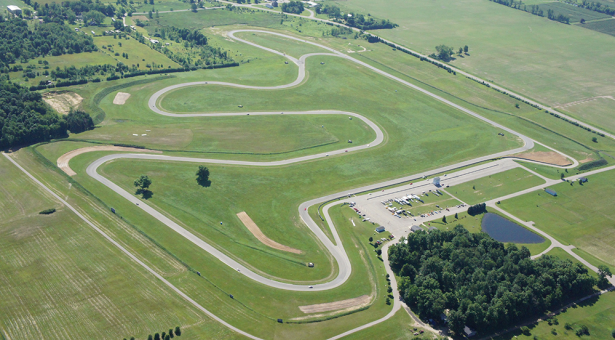
In 2007, JR and Dan began sketching ideas for a track extension—literally on napkins. After years of planning, they added a quarter-mile of high-speed sweepers and elevation changes that preserved the original flow while giving drivers a chance to open up their cars. “It was a continuation of the original vision,” JR says. “We didn’t want to change the character – just enhance it.”
Safety First, Always
Gingerman’s commitment to safety goes beyond layout. In recent years, they’ve added a 450-foot catch fence at Turn 11 to protect paddock areas from debris. The track also features solar-powered LED caution lights at corner stations, a local EMT crew, and partnerships with professional rescue teams for major events. “We’ve never had a driver seriously injured here,” Mary Beth notes. “That’s something we’re really proud of.”
In 2015, Gingerman underwent a partial repave using a seamless, single-pass technique that improved grip and smoothed out bumps. The result? Happier motorcyclists, faster lap times, and a new benchmark: the sub-1:40 club, celebrated by local group Track Midwest with custom decals.
The paddock was repaved in 2019, and while there were growing pains – like enforcing jack pad rules – the improvements have been well received.
Looking Ahead: The Next 25 Years
As Gingerman continues to grow, its team remains focused on preserving the soul of the track: a place where racers feel at home, where safety and community come first, and where a dream that started in a Chicago tavern lives on in every lap. “We’re not a big corporation,” Zach says. “But we’ve got heart. And that’s what keeps people coming back.”