

What do a bi-turbo V12 Mercedes SL, a veteran’s outreach program, and a lunar racecar have in common? If you’re Mary Hagy, the answer is everything.
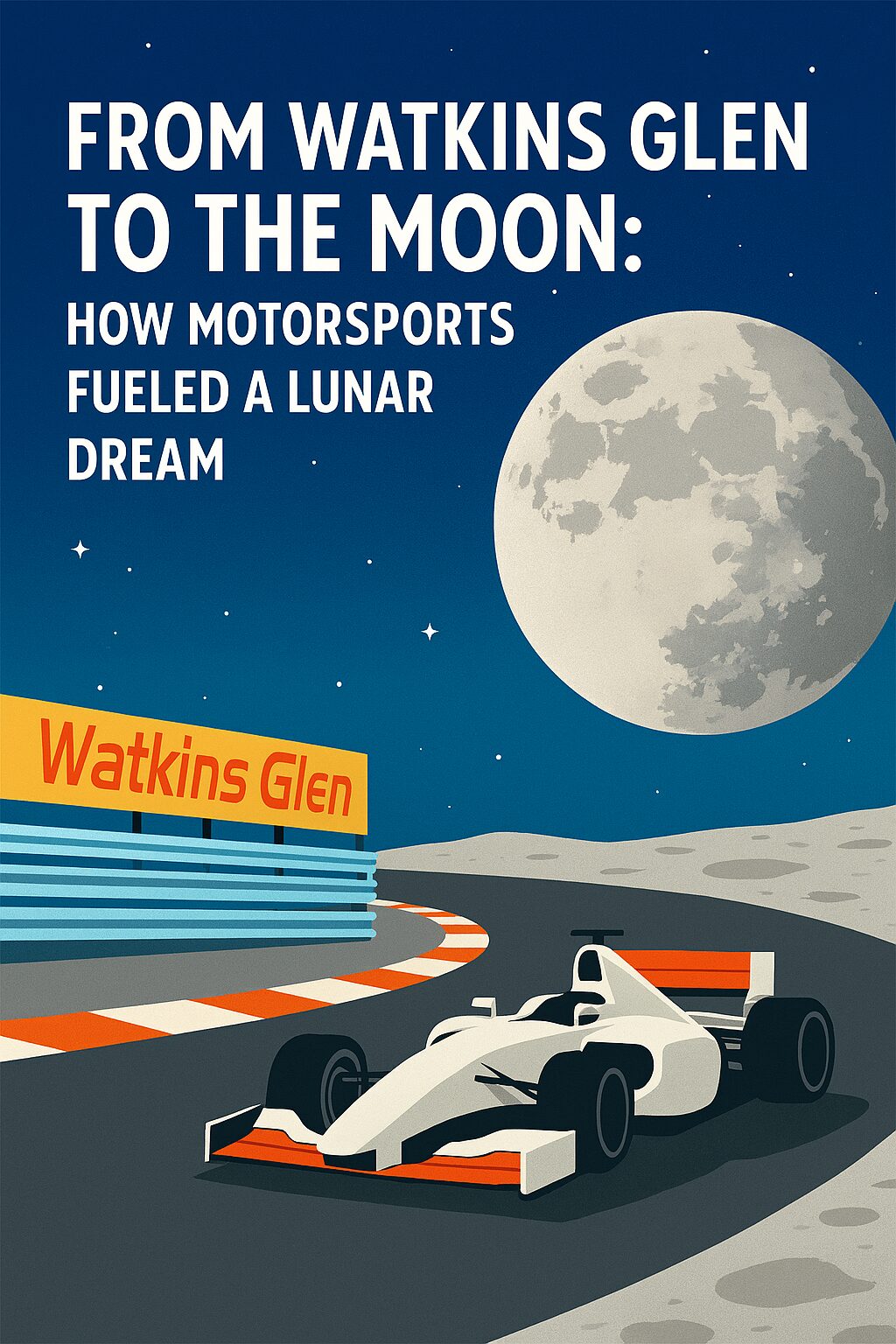
In a recent episode of the Gran Touring Motorsports podcast Break/Fix, host Eric and guest co-host Tania sat down with Mary Hagy – Army veteran, businesswoman, and founder of Moon Mark – to unpack a story that’s equal parts motorsports adrenaline and STEM-fueled ambition. Alongside Moon Mark’s project administrator Marianne Barrea, the conversation traced a path from Watkins Glen to the lunar surface, with plenty of turbocharged detours along the way.
Tune in everywhere you stream, download or listen!



Mary’s love affair with driving began at 15 with a stick shift and quickly escalated to Jeep antics in South Korea during her military service. Years later, her passion for speed and precision led her to HPDE events with Hooked on Driving, where she piloted her SL400 with such ferocity that Eric – her right-seat coach – had to rein her in from target fixating on Mustangs.
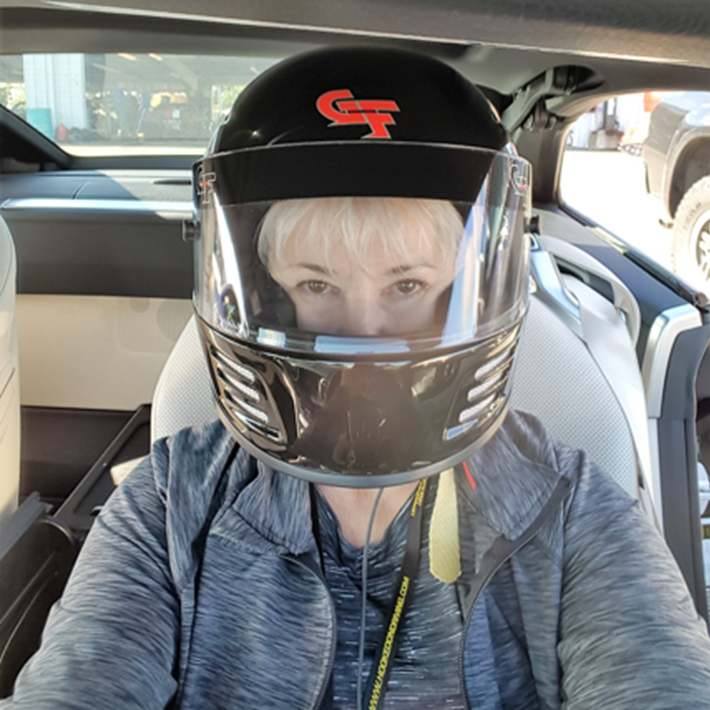
But Mary’s story isn’t just about horsepower. It’s about purpose. After noticing how media narratives often painted veterans as broken or dangerous, she launched Our Vet Success and the Triumph Games to spotlight veterans thriving in civilian life. Motorsports became a key component of that mission, offering camaraderie, challenge, and a platform for transformation.
Spotlight
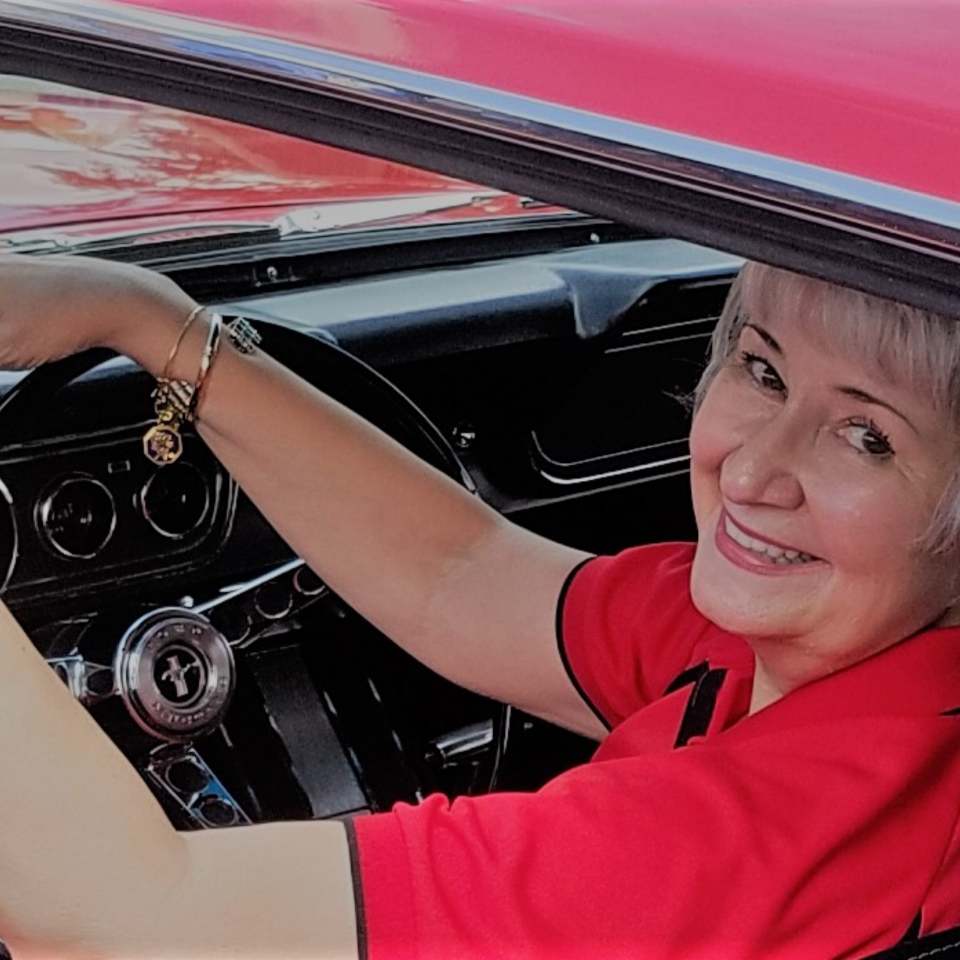
Mary Hagy - Founder and CEO for Moon Mark
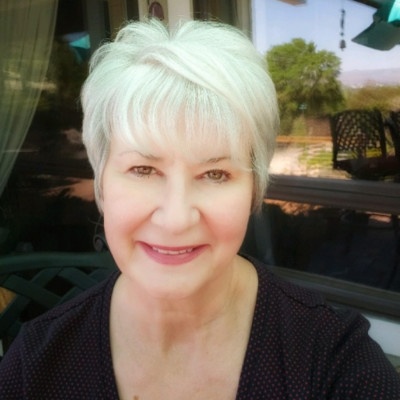
Mary Hagy is a former U.S Army soldier, renowned Philadelphia businesswoman, and currently the CEO and Founder of Moon Mark - an organization that captures the adventures of high school students from around the world who will compete to design, build, land, and race two vehicles on the Moon!
Contact: Mary Hagy at mary.hagy@moonmark.space | N/A | Visit Online!


Notes
- Let’s talk about Moon Mark – How did you decide to be the first to race on the Moon? Why bother?
- How can high school students build space-worthy racers?
- Why high schoolers? Why didn’t you choose more advanced racers?
- You’re not a space person. How can you pull this off?
- Racing is expensive. Space is lots more expensive. How are you managing the financials around this?
and much, much more!
Transcript
Crew Chief Brad: [00:00:00] Break Fix podcast is all about capturing the living history of people from all over the autos sphere, from wrench, turners, and racers to artists, authors, designers, and everything in between. Our goal is to inspire a new generation of Petrolhead that wonder. How did they get that job or become that person?
The Road to Success is paved by all of us because everyone has a story.
Crew Chief Eric: The Motorsports community is full of interesting people, and the more time I spend in it, the more stories I uncover. And tonight’s guest is no exception. I had the great honor of working with our guest throughout several HPDE seasons in conjunction with Hooked On Driving.
At that time, she was operating a veterans outreach organization known as our vet success, and I even rode right seat in her buy Turbo V 12 Mercedes SL at Watkins Glen. And let me tell you, that thing was an absolute rocket [00:01:00] ship.
Executive Producer Tania: So ladies and gentle drivers, our guest tonight is Mary Hague, a former US Army soldier.
Thank you for your service. She is a renowned Philadelphia businesswoman and currently the CEO and founder of Moon Mark, an organization that captures the adventures of high school students from around the world who are going to compete to design, build, land, and race two vehicles on the moon. Joining Mary with us on the show is also Moon Mark, project administrator Maryanne Bea,
Crew Chief Eric: and as you’ve guessed it, my special guest host tonight is from our drive through series.
You know her as Tanya, who’s filling in for Brad while he’s on vacation. With all that, I’m sure our listeners can’t wait for us to unpack all of this. So how about we head to the moon and back? Welcome to Break Fix. Maryanne. Maryanne.
Executive Producer Tania: Thank you.
Crew Chief Eric: So,
Executive Producer Tania: hey,
Crew Chief Eric: let’s go. Alright, Mary, let’s reminisce in the past a little bit.
Let’s talk about motor sports, your involvement in that world, your passion with cars, [00:02:00] and let’s go back to, you know, where we met, you know, circa, let’s call it the 2016 era. Okay, well you’re a little late
Executive Producer Tania: in the game there, Eric. Because I had a passion for driving since I can remember, and I first learned how to drive with a stick shift.
And in recent times, the paddles are like, okay, okay. But I love that stick. When I was 15 years old, I started driving and by the time I was 18 years old and, and thank you Tanya for introducing me as a military veteran. I really appreciate it. I was in South Korea serving there, and I had, I don’t know who gave me the questionable judgment of the possession of a Jeep, but I I, I drove that thing on about two wheels most of the time, so, oh, yeah.
[00:03:00] Yeah. So, you know, this has been in my blood for a long, long time. You and I, Eric met at Watkins Glen, like you said, and it was through, uh, a series of really, really meaningful things that kind of brought me from being a kid who couldn’t drive other than as I needed to drive to a place where it was really a much more important and meaningful experience, meaning understanding the physics and the engineering and the safety.
And oh by the way, everything to do with the camaraderie of Motorsport. And so that’s where you and I met like some years ago after you know that Jeep, right?
Crew Chief Eric: Yeah, I would say a long time after that Jeep problem. Hey, hey, hey, hey. I’m kidding. I’m kidding. I’m kidding. [00:04:00] So it sounds like you came about motorsport and racing and the passion for cars.
Honestly,
Executive Producer Tania: I am really glad to tell you that over my lifetime I have. Thoroughly enjoyed driving and driving safe and fast and stuff like that. But you and I encountered each other with the, our Vet Success program.
Crew Chief Eric: That’s correct.
Executive Producer Tania: And as an Army veteran. Um, just a little bit of backstory. After 2010 I, in 2011, you know, coming out of the Great Recession, uh, I started to feel like and understand that the media was portraying military veterans in a victimized way.
That they were homeless, that they were homicidal, that they were suicidal, that they were unemployable. And, and I started to, you know, just be consumed with these messages. I said to [00:05:00] myself, I must do something. To affect this narrative because it’s not right. Military veterans have come out of the military and every human carries around a bag of rocks.
Okay? But 80% of the post nine 11 veterans coming back, they were doing their best to transition, but they were, you know, surrounded by this narrative, right? This media narrative,
Mary & Marianne: right?
Executive Producer Tania: And so that is why I started our vet success, and that’s why I created the Triumph Games. So, long story short, Solomon Rosenthal, does that name ring a bell?
Crew Chief Eric: It does.
Executive Producer Tania: Okay. Solomon Rosenthal and I were sitting around in Philadelphia a few years ago, and I’m talking to him about this, and I’m saying, I’m gonna do this television program because I need to tell stories about [00:06:00] veterans who are successful, right? And he says, well, you gotta have motor sports.
Crew Chief Eric: Absolutely.
Executive Producer Tania: And, and I said, what? So we created the television program and a part of the competition that we created was motor sports. And that first year the production for CBS sports was at Willg Racing Manor in the Hudson Valley. And, uh, Alan Wilson was so wonderful to welcome us up and Jack Roush Jr.
Provided a wonderful Roush Mustang for our competitors to drive on Alan’s court.
Crew Chief Eric: Here’s the interesting crossover between the story you are telling and a guest we had on not, but a couple weeks ago. So another name you might be familiar with, who was also friends with Solomon Rosenthals, Paul Willams.
And he told the story from his perspective. Oh, because he was invited. Oh,
Executive Producer Tania: Paul was there. Oh yeah. Oh yeah. [00:07:00] Good old
Crew Chief Eric: Pauly. Right. So he tells the story from his perspective as a coach and, and working with Brock Hs Jr. And all these other folks that were at that same event. So on his episode, he talks about this story as well.
So it’s a small, small world, uh, you know, when we’re talking about motorsport.
Executive Producer Tania: Yes, it really is. And it’s a wonderful world. It is a wonderful world. Paul is a super guy and I also wanna call out Papa Joe Ella. It’s his birthday today. Right? And he’s the head of NASA Northeast. Mm-hmm. So NASA Northeast came to Wilson Manor and trained the athletes so that they could perform and.
You know, compete, uh, effectively and safely, you know, so NASA and HOG booked on driving both of those. So what you’re hearing me say is that the motor sports community is not only small, but it’s really, [00:08:00] really a wonderful experience to be together and make things happen. That’s what we did. And, and then the next year, the next series, Solomon and Brian Humphreys, his cohort in crime, we created a, a racetrack on the sea slope of West Point Military Academy.
Whoa. Uhhuh? Yeah. On the other side of that, I got the bug.
Crew Chief Eric: You don’t say,
Executive Producer Tania: oh, yeah. Oh yeah. I got it. I got it. I got it. That’s why I ended up spending as many hours. On the track with people I care about and who are having a great time as I possibly can. And this actually influences the story of Moon Mark.
Interesting. ’cause if it were not for the time that I have spent in motor sports, whether it be at an [00:09:00] HPDE event or it be in, you know, volunteering, uh, or being a part of the pit crew in NASCAR and IndyCar and ISAI, I mean, I just had to be there. And it has influenced how we are ending up racing on the moon.
Crew Chief Eric: I, a woman of action. I, I absolutely love it. And I have to add a little color to this. So when we got together in the 2016 timeframe as you were there, frequenting Watkins Glen, just like I do, I’ll never forget, I of, if it was Micah Rigo and Chris Lou and, and a couple others, they came up to me and they said, Hey.
We need to put you in the car with the TV lady, right? And I’m like, what are you, what are you talking about? Just, just go out there, don’t, you don’t have to worry about it. Don’t, don’t just, you’ll be okay. Just get in the right seat. And I’m a coach, a veteran coach, and I’m like, come on. Okay, what, whatever.
And I’m like, are you guys sure? Oh yeah, we’ll stick her out in advance, she’ll be fine. I’m like, what are you guys talking about? I get in the car with you and I had met you casually because you guys were filming and doing everything you were doing. And I glommed onto the whole [00:10:00] idea of what you guys were doing.
’cause I was already invested with, you know, wounded warriors and helmets off to heroes and things like that. So for me, what you guys were doing really resonated. And I’m like, okay, they’re gonna stick me in the car with this lady. I’m like, whatever. And then I see your car and I’m like, oh boy, all black Mercedes SL convertible.
And I’m like, wow. So we get out and I didn’t know what to expect. I’m be totally honest with you. About turn two, you lit up those turbos and it was like, oh, we are in for a treat and I gotta, I gotta tell the audience, Mary can drive. Okay. I was blown away. Now we did work on a couple of little pointers here and there, but the one thing I remember and it, it’s one of the few students, and I’m gonna, I’m gonna put the label student on you that I’ve had where I’ve actually had to kind of pull the reins back and be like, stop target fixating.
’cause you are hunting people on track. ’cause that Mercedes is wicked fast. My biggest fear was that we were gonna run out of brakes ’cause it’s a big, heavy car and there was [00:11:00] no problem going where we needed to be. It was just making sure that we could slow down. But that was an absolute epic ride.
Executive Producer Tania: Oh, well thank you Eric.
It was such a pleasure, uh, to, to, uh, do that with you. And, and my memory of that particular round with you that you’re talking about is I was chasing a Mustang.
And I was like, come on baby, come here, come to mama.
Crew Chief Eric: The red mist was ever apparent, that’s for sure. But no, I, I was like, no,
Executive Producer Tania: no, no, no, no, no, no. I, I, I didn’t have a lot of red mist. Um. Just laser focus, all that track.
Crew Chief Eric: Oh yeah, like a missile.
Speaking about the successes you had with our vet success, I was wondering if you might have crossed paths with one of our previous guests on break fix, which is Peter Klein from Vet Motorsports. So if there was any overlap with that. And then my [00:12:00] second question is, what happened to the Mercedes and what are you driving now?
So I know they’re totally unrelated questions, but I gotta throw ’em out there.
Executive Producer Tania: I have not had the privilege of communicating or connecting with Peter, although I am aware of his work. And you know, one of the things that happens in the course of creating things, which is what I do, is that you go in and with a particular intent to impact and then you see the impact and then you figure out is this still the right place or are others coming in, and things like that.
So there are some amazing people and organizations that are helping veterans in the Motorsport world right now.
Mary & Marianne: Absolutely. And
Executive Producer Tania: you know, when I looked around and I, and I recognized that, I said, okay. This is good. This is really good. So I have not met leader, but I would, I would love an introduction [00:13:00] to him and always glad to talk with folks that are supporting veterans and, and so are we.
Crew Chief Eric: Absolutely. And I, I’d like to think that Vet Motorsports is definitely leading the charge. They’re at the pointy end of that stick when it comes to veterans outreach and the con, you know, and that intersection with Motorsport and all that. And for our listeners who might not be aware of what we’re talking about, go back and review the Vet Motorsports episode that we did with Peter Klein and he explains their entire, you know, process and the program and everything like that.
Awesome amounts of detail. So let’s get back to, let’s get back to the car stuff though. So that Mercedes, that big black Mercedes, what happened to that thing? Is it still around? And if not, what are you driving? Now? Now
Executive Producer Tania: I wanna do tell you, ’cause this is really important. My SL was a 400 and I took a four 50 on the tractor and I didn’t like it at all.
I had to have that 400 because I just melded into it. She was such a [00:14:00] beautiful,
Crew Chief Eric: is that from the torque? Is that from the torque pushing you into the seat from all the acceleration?
Executive Producer Tania: Uh, yeah. Yeah, that was it. Totally. Okay. Now I’ll tell you what happened to that car. So I now live in Northern Nevada in the beautiful, beautiful foothills of the Sierras overlooking Reno.
Uh, I drove across country in that car, and I have to tell you. I didn’t spare the horses. That was a fast cross country was a cannonball. It was not a cannonball. But thank you Tanya. Thank you Tanya. Sounds like she didnt
Crew Chief Eric: spare the cowboys either. Good lord.
Executive Producer Tania: So you gonna love this, this story because Maryanne and I recently just traversed the same road. It’s called the Loneliest Road in [00:15:00] America. Okay? It’s Route 50. You come outta Utah and you come across to Nevada, but you come around to pass and shit. Howdy. That’s a nice ribbon. A road right there.
And I said, I said at the time now, now this is before Maryanne was with me. I didn’t do this with Maryanne. I only hit the one oh oh like a couple of times before she said Mary. Mary.
Crew Chief Eric: But while you were asleep,
Executive Producer Tania: honestly, I couldn’t, I couldn’t even fall asleep. Tell her what, what I drove while she was asleep.
Mary & Marianne: I slept with my hand gripped to the side of the car. Just, you know, just waiting for it.
Crew Chief Eric: A white knuckle sleep. Can you believe that’s, that’s like me on, that was like me on track in the right seat. It must be a right seat thing.
Executive Producer Tania: So, so I’m driving, uh, and, and I got my little [00:16:00] dog. I like, I get little, my, my little brown dog and I’m saying, oh man, you know what? I need to see if there’s a regulator on this thing.
Crew Chief Eric: Oh wow. Of
Executive Producer Tania: course you do. Oh yeah, Roger. Oh yeah, I did. And, and there’s nothing. I mean, I mean, it’s the great basin. It is gorgeous.
It is absolutely beautiful.
Crew Chief Eric: So what, what does it look like at 178 miles an hour?
Executive Producer Tania: I don’t even want it. Allegedly nothing. Allegedly. I’m so not confessing to that. I’m only gonna tell you that the regulator didn’t tip. Ah, so did you have like spare fuel cans? Any trunk or something?
Crew Chief Eric: See, only Mercedes going down Route 50 with Jerry cans on it.
Like mad Max,
Executive Producer Tania: but, but, but the tire shred.
Crew Chief Eric: Oh.
Executive Producer Tania: Just driven across country. You know that car that you know, [00:17:00] Eric, there’s no spare tire.
Crew Chief Eric: Yes. Probably run flats. Yeah.
Executive Producer Tania: Oh yeah, those run flats. Oh, mm-hmm. Mm-hmm. They work really well until
Crew Chief Eric: you.
Executive Producer Tania: Speed. Limit. Limit. You’re supposed to drive miles 50 miles an hour, just like she was verifying whether there was a regulator or not.
She was verifying the max speed rating on the,
Mary & Marianne: she found out.
Crew Chief Eric: Yeah, 1 55 is not so, yeah,
Executive Producer Tania: so I end up 80 miles east of the closest town, which is Fallon, Nevada. So even if I decide to run out the run flats, I am going there. Right? This is a two lane road. There’s no place to pull off. I finally found some utility thing, right? Utility something or other [00:18:00] and, and I pulled off there and I called a friend of mine who’s with the CIA for 29 years, and I said, Carl, I don’t know if you might.
Somehow hear that. I’m not gonna be out of this, but my bones are here. See, I was gonna say, you call aaa, but who needs AA when you got CIA? No. Oh no. Oh no. Somebody queue up the secret agent man soundtrack. I called the people and I said, Hey, your run flat tires are shit. Okay. Um, and can you please come pick me up seven hours?
Oh, there’s this weird noise engine. I se it’s, it really is. It’s that long. Okay. It was seven hours later and it was, I, I got no complaints ’cause it’s a beautiful day. Um, and I was off the road. I got my little brown dog. So the way that I arrived into Nevada for the first time was on a tow [00:19:00] truck with my car on the tow truck and sitting in the front seat with the driver who was very nice.
With an escort, you mean you arrived, escorted into Nevada
Mary & Marianne: CIA,
Executive Producer Tania: was an all black tinted tow truck, but
Crew Chief Eric: nonetheless undercover Crown Victoria in front of the tow truck too.
Executive Producer Tania: So Eric, that’s a long-winded way of saying by the time I got here with that beautiful car, which is the most wonderful car that I’ve ever loved, I also have a very steep driveway. It doesn’t do well in snow at all.
So you don’t
Crew Chief Eric: say
Executive Producer Tania: So I had to, um, I had to get a new one and I still do have a Mercedes.
Crew Chief Eric: A G wagon, please tell me it’s a gwa.
Mary & Marianne: If she did, I’d steal it. [00:20:00]
Crew Chief Eric: You and every soccer mom in LA, right? Yeah,
Executive Producer Tania: yeah. No, it’s not a G wagon, but it is an all wheel drive. Very cool. And she’s got some pep in her step.
Mary & Marianne: She’s faster than my car, I’ll tell you that.
Oh, you
Executive Producer Tania: should know you drove it.
Mary & Marianne: And listen, I may not be a speed demon, but I think I got her up almost. I think I hit a hundred a couple times, which is like pretty fast for me.
Crew Chief Eric: So I’m gonna ask, before we transition to talking about Moon Mark, I do wanna ask one question. So. Has it always been Mercedes? Was that the big draw? Was, is the goal always been Mercedes or is that what you feel is like the sexiest brand out there or the sexiest car? Or is there something else that is maybe above that that you’re still kind of aspiring and reaching for?
Executive Producer Tania: Hmm mm-hmm. What a question.
Crew Chief Eric: Um, normally I just ask point blank, what’s the sexiest car of all time, in your opinion? I figured I’d make it a little bit more interesting.
Executive Producer Tania: Well, I I’ll answer that. I’ll answer that [00:21:00] question, but the other question you answered or you’re asked, so it hasn’t always been Mercedes.
I love
Crew Chief Eric: Audis. Oh, okay. So,
Executive Producer Tania: oh yeah. You and your tt.
Crew Chief Eric: You and your tt. That’s right. You remember?
Executive Producer Tania: I do. I absolutely do. I love Audis and I thoroughly enjoyed them. The SL 400 that you and I had the privilege of sharing was my second one, and I had also driven a four 50 and a five. They’re just really, like you said, they’re really heavy cars, but the 400 was just exactly right for me.
Nice. So we’ll have to, I, I’m, I’m holding off on my sexiest car answer though.
Crew Chief Eric: Oh, that’s good. We’ll hold it, we’ll hold it for later. That’s okay. And you’re a good company. ’cause Tanya’s a big Mercedes fan too. She’s usually at the top of her list.
Executive Producer Tania: Oh, I’m.
And the sl hundred is a beautiful car, always. [00:22:00] It so is I. Um, yeah. You know, we had, we had a really nice time together. Right. So let’s start going back. Moon Mark, we talked about in the intro, you know, high school kids and designing some sort of vehicle that was gonna race on the moon. And, and people are probably wondering, what the heck, what is this episode about?
And, and really stepping back, it’s, it’s very, for people that are familiar with STEM, science, technology, engineering, mathematics, this sounds, and you will correct me, but it’s highly STEM focused, it’s outreach to high school students. I’m a engineer by degree as well. So in, in university I was involved in a couple different outreach programs with one of my professors and we didn’t do things nearly as epic as moon mark.
I mean, we were, you know. You always did the classic drop an egg and, you know, don’t let it break. Or, you know, we did filtration experiments and [00:23:00] probably the most sophisticated one we did was, uh, you know, having the kids, when we had high schoolers come in and basically do a hemodialysis machine and, and we had stimulated blood and they were filtering out, you know, stuff, whatever.
We, I don’t even remember what we put in it. That’s, that’s so,
Crew Chief Eric: that’s so pedestrian. You know, Mary’s full send, she can’t just do that kind of stuff.
Executive Producer Tania: No, I mean, we’re sending vehicles to the moon and racing ’em. It doesn’t get better than this. Tell us how the heck did this come about? I welcome that question because Eric, I think you may appreciate this and it’s related to Watson’s Glen.
So, while I was still living in Philadelphia, I went to a robotics competition on a Saturday afternoon. I didn’t have anything else to do, so
Crew Chief Eric: I went to see things people say all the time.
Executive Producer Tania: I went to see these high school students compete in a robotics competition. You know, I [00:24:00] had some wonderful people that, that welcomed me there.
And they introduced me to, um, some young people and one of the, the students said, Mary. Would you like to see our pit? And I went, oh, I’m done.
Oh heck yes, let’s go. All of the teams had their robots in pits and they were working on them to compete much as we see, you know, in motor sports. So I came out of there and I said, I really wanna work with young people. And then somebody along the line told me that somebody was going to the moon. And, and I went, moon, I thought we were done with the moon.
I thought we were gonna Marx, right? But if, if somebody’s going to the moon, we’re going to get kids work on that lander and it’s gonna land on the moon [00:25:00] and it’s gonna be a way for that generation. To have a defining moment that means something to them. And so there’s, you know, a bunch of backstory behind that.
It took me about almost two years talking and talking and talking about it with different people and stakeholders and opportunities and things like that. And I just was not at all making any headway. And I, I was, you know, it was kind of like perplexing because I said, why don’t people get that space?
Commercialization is here now and this generation needs to have skilled workforce to do it and stuff like that. And I just said, hush up Mary. You need to listen to what people are telling you. And what they were telling me was that they could not. Contemplate high school kids being on the moon or having their [00:26:00] work on the moon.
The repeated message that I kept getting was, Mary, you silly foe. You need to understand that it’s gonna take hundreds of millions of dollars and decades to do what you’re saying. And I knew differently because. I’m an entrepreneur and I, I looked at the market. I knew what we could do for what we could do it, but the messaging was not right.
I could not get the support behind it.
Crew Chief Eric: I just like the fact that in Mary’s style and flair and what I like to call bravado, she has basically told all the naysayers, okay, boomer, we’re going to the moon. Right? And I love it and I applaud you for it.
Executive Producer Tania: And so this is what I mean, Eric, by reckoning back to another time when I was at Watkins Glen and I’m there in the paddock and I’m just looking around, you know, it dawned on me that so much of my [00:27:00] really, really rich experience.
In motor sports, not meaning, you know, just going out and having fun and racing around and stuff like that. The meaning of it, the physics behind it, the engineering behind it, the problem solving the technology, and I love, love, love that you do. Build, break, fix, repeat. That’s what you do. Mm-hmm. And that’s what we’ve done with Moon Mark.
And I’m looking around and I’m saying, okay, there’s so much analogous work here between aerospace and rockets and things like that, which I know nothing about. And these really cool people that are on the racetrack, right?
Mary & Marianne: Yeah. Uh,
Executive Producer Tania: and I said, alright, we’re gonna race on the moon. That’s how we got to be a race on the moon.
Because anything that you do in either one of these industries. Is not only useful to young [00:28:00] people who wanna find their paths, whether it’s in space. And on the track, uh, in medicine, whatever it is. But if you give ’em something that’s compelling and you wrap around an experience, then you can really make a difference.
And that’s how Moon Mark came about. I mean, that’s really very incredible. I, I can’t even imagine thinking back in high school and, and, and this being a project to work on. I mean, it’s just. Literally out of this world
Crew Chief Eric: to think about. Absolutely. And you know, I’m gonna nerd out here for a minute because Mary, I think you touched on something really important, which is what we oftentimes reference on this show as car adjacent, right?
A lot of things that we talk about aren’t necessarily completely tied to vehicles or even motorsport in that way, but it’s interesting how, if you play the Kevin Bacon game, how they’re all really related. And what you touched on and alluded to was the intersection between motorsport and aerospace. And a lot of people don’t realize that there is a blending there, especially when you look at Formula [00:29:00] One level technology.
There’s a lot of aerospace influence in that. And little known fact when I was a lot younger and you know, earlier in my career I worked for British Aerospace and one of my goals was to go work on the McLaren team, and I also signed up to do engine management on helicopters. That’s a whole nother story.
We can talk about that another day. But you know, let’s say I’m not doing that today, unfortunately. SOB story there. But what, what I’m getting at is, if you look at the history of cars and airplanes and what is now aerospace, they’re very tightly coupled, right? The Wright brothers first flight was in 1903.
The first car was invented in 1897. Thank you, Mercedes. But if you look at famous car manufacturers and builders, they got their influence from airplanes and from aeronautics and from aerospace. Let’s take Porsche as an example. They were building airplane engines. Before they were building cars Lotus.
Right. Colin Chapman also developed his first Lotus based on [00:30:00] airplane technology that he learned in the RAF, you know, stuff like that. So there’s multiple manufacturers that started that way. So there’s an interesting blend.
Executive Producer Tania: You don’t mention SOB in this
Crew Chief Eric: Born from Jets. Yes, I know. Uh, I’m glad somebody remembered Saab and for the one listener that has one out there, uh, I congratulate you on still having it moving on.
Uh, but no, I, I, it’s interesting, right? And one feeds the other in some ways. And so maybe your mission is to go to Mars, but you gotta start somewhere. And I heard many of people that, you know, when I was coming up, you know, in a different era, I was like, I went to work as an intern for Ford Aerospace. And then you scratch your head for a second and say, wait, what?
Ford Aerospace, how does that work? Right? So there’s a lot of interesting things out there, so you gotta open your mind to it. So I’m, I’m really behind this. I think this is a super cool idea. The other thing I looked at is there’s some pretty big names backing this. If you look at the Moon Mark website, especially folks from the racing community, names that [00:31:00] our audience might be familiar with.
Folks like Scott Elkins, who is, you know, famous from FIA, but also the Motorsport Safety Foundation. You have Ross Bentley on that list, you have a bunch of other folks from the Motorsport world. So I thought that was kind of cool. So how did you tie all these people together? How did you convince them that, you know, this is viable?
Executive Producer Tania: There’s a, uh, you know, a pretty cool story. I don’t know why everything leads back to Watkins Glen. All
Crew Chief Eric: roads lead to the Glen
Executive Producer Tania: All wa Roads lead to Watkins Glen. So when I was, uh, at Watkins Glen for one of the events, I met Ross Bentley and we had a really great conversation and it’s, you know, a panic kind of conversation and I learned a lot from him and we parted ways.
So when I moved to, uh, Northern Nevada, the thing that I immediately went looking for is, where’s the nearest track and what am I gonna do? Right? So [00:32:00] the SCCA was having an event at Thunder Hill, and so I said, well, I’m gonna stop out there and see them. So I drove over there, and
Crew Chief Eric: Mary, you said you went from your new place to Thunder Hill, so for you, that’s a hop, skip, and a jump.
But for anybody else who looks it up on Google Maps, that’s a 219 mile drive. So it’s not like it was in your backyard, but that’s, uh, knowing the stories you’ve already told, it didn’t take you very long. But so,
Executive Producer Tania: and I go in and I’ve not been to the track before. When I go in, I immediately see all of these cars parked in front of the building and I said, well, this must be where we are.
So I went in there and lo and behold, the, the place was filled. And Ross was talking, he was having a session, and I’m like, I didn’t know Ross was here this weekend. And I said, well, I’m gonna sit down and learn something. So David Gray, [00:33:00] God bless him, who owns, uh, hooked on driving and it was their event. I, I wandered into the wrong event.
That’s, that’s a, that’s a great story. So I wandered into the wrong event and I, uh, learned a lot in the session. Uh, and then I approached Ross afterwards, and David, you know, welcomed me. I, I, I told him, I said, I know this is gonna sound, I know this is gonna sound a little bit out there, okay, but we’re gonna race on the moon and I would love to have you work with us on that.
And Ross’s first reaction was. You had me at Moon, but you know, that’s the kind of person he is and he’s just a really, really super supporter for us as well as obviously, you know, has deep technical expertise. So he introduced me to Scott Elkins. [00:34:00] And so Scott is actually gonna design the track on the moon.
Crew Chief Eric: Wow.
Executive Producer Tania: Mm-hmm. It’s pretty cool. Now, the person that you didn’t mention, who I’m surprised about, is Frank Stephenson. He’s designed Clarence Ferraris menus. He just is a freaking amazing, not only human being, but an amalgam of art and science in auto sports. And also because, you know, he, he now has a, a really great portfolio in automated aviation.
Crew Chief Eric: This is a great way to segue over to Maryanne when you’re talking about Frank Steffenson and the design of the cars and things like that. So, let’s talk a little bit about the parameters of this particular event and the logistics and what the students are gonna do and what they’re designing towards and, and things like that.
So, can you unpack that for us and kind of give us an idea of what the competition is like?
Mary & Marianne: Absolutely. Before we talk about the [00:35:00] competition itself, which is gonna be coming in 2022, what we did was we created a challenge for students to kind of get a feel of what they were capable of essentially. And also, you know, wanted to see if what we were designing was of interest to them too.
And you know, we had a lot of people, like Mary said earlier, every time we told somebody that what we were doing, they’re like, no way, that’s not gonna happen. Or they would say, wow, I wish I could, I had that opportunity when I was in high school. So it was a good way for us to kind of like test the waters.
So we came up with a lunar race car design challenge, and Mary and I really just sat down together and hammered out everything and it became. Just a really awesome initiative that we did. So we put it out there. We had 35 teams, essentially from 11 different countries, which we then whittled down to six teams who went forward with the competition.
So we like to say, you know, when we’re talking about building race cars for the moon, we do this with parental guidance essentially, because we really wanna make sure that these cars work. Um, but we [00:36:00] also wanna give these kids, you know, freedom to create and, and do what they’re best at. And so we gave them specification, we gave them guidelines as to how to create it, what they were going to need, and, and what it was gonna be able to withstand, you know, on the moon and the different environments and things like that.
When we created it, I kept thinking to myself when I was talking to Mary about it, we used the term steam instead of stem, which includes the A with for arts, you know, and I am, I’m an A, didn’t get super into science or because I didn’t have initiatives like this when I was in school. So. When I was talking to her, I was like, I don’t know how these kids are gonna do it.
And I was a little doubtful myself. I was like, there’s no way these kids are gonna be able, these high school students are gonna be able to cars that could actually run on the moon. I was looking at the specification and Mary was like, Marianne, you had to give him a chance. You’d be surprised what these people like.
You know what these kids can do. So I was like, all right. So we put it out there and the results were incredible. We had the six teams that competed, so over the course of four weeks, they would submit videos that were answering key questions throughout the [00:37:00] challenge of how their design was going. And so we weren’t asking them to actually build it, it was just to design, you know, what it would look like and you know, all the specifications between like what parts and things like that.
So we ended up with four winning teams, and we had different categories that each team won in, and those four winners actually got a thousand dollars to donate to their charity. So that was like a really cool initiative that they. Kind of like inspired them to do it. Like, Hey, if we do this, we can, we can help our community.
So I saw that as, you know, a really cool way for them to, to motivate them through the challenge. But by the end of it, we came out with two lunar viable racers essentially, that were cleared by our, uh, engineering teams, in our aerospace engineers that were from opposite side. You know, we had one team from Argentina, one team from China.
So watching the kids go through this process and, and seeing exactly what they’re capable and the fact that they actually did design two, you know, very feasible. Options for us really helped us kind [00:38:00] of realize that we were on the right track. Like this is definitely possible. These kids definitely have the motivation, they have the skills.
So it was really just figuring out how we wanna frame it. So that was a really great test pilot to know what we’re gonna be doing in, in 2022.
Executive Producer Tania: I think I have a question in terms of the, the kids that are participating in this. So the race is supposed to happen, so next year, 2022, sort of TVD. So are, are these kids, are any of these kids gonna be graduated from high school and, and if so, will they still be able to continue obviously in the program?
Absolutely. That’s, that’s pretty exciting. I do wanna caveat that as we’ve gone along here, COVID has really kicked us in the sheds. Like everybody. So the fact of what we’re doing with Moon Mark is global. It’s not us kids.
Crew Chief Eric: It’s galactic.
Executive Producer Tania: Nobody owns the moon. Everybody, every human from birth has had an experience with the moon.
Our goal is, we say in the prime [00:39:00] directive, right Marianne, the prime directive is to reach and engage as many people on earth and in space as possible. COVID has prevented us, for example, this summer. We’re fortunately coming through what we hope will be the worst of it, but we can’t bring in a lot of kids from around the world, right?
It’s just not feasible. So, um, we’re doing a lot of other things that will give rich experiences beyond that. While we can
Crew Chief Eric: start with the basics. How big are these things?
Mary & Marianne: The design that we put out there for the kids, I think they were about 11 pounds, was the requirement for us. So they were pretty, they’re pretty small.
Crew Chief Eric: So like an RC car, basically a remote control car.
Mary & Marianne: Yes.
Crew Chief Eric: Thereabouts. Okay.
Executive Producer Tania: So to put that part in context, the market cost to launch on a rocket and then on a lander, and then land on the moon is $1.2 [00:40:00] million a kilo
Crew Chief Eric: per kilo. Wow. Okay.
Executive Producer Tania: Yep. Per kilo. So
Crew Chief Eric: 2.2 and change kilos per pound. Right.
Executive Producer Tania: Talking you so funny. It’s like, uh, after, after a while, it’s like, uh, what? You know,
Crew Chief Eric: it’s all monopoly money. It’s okay.
Executive Producer Tania: Um, you know, it’s not monopoly money, but what it is is a change. It’s a pivot in space commercialization. Right? And this is something that we’ve been able to see over the last couple of years.
It’s the same thing with racing and spacing. So with racing, it’s very expensive,
Mary & Marianne: right?
Executive Producer Tania: It’s always been very expensive. You’ve got the name, you’ve got the money, you’ve got a ride. You don’t got those. You don’t gotta ride. And that’s one of the things that really has impacted me over the past few years, that along with being in the pits and looking at [00:41:00] the stands and seeing lots of empty seats.
Right. That’s really, really bothered me because that means that the sport is not doing, and this is before COVID, the sport is not drawing people as it should, and so we need to get more young people into the sport. That doesn’t change the reality of you gotta name, you got money, you got a ride. Exactly.
So I think that there’s also a potential for pivoting for the sport as well as looking at how, for example, SpaceX has, because of commercialization, brought down the cost of getting anything into space. So I kept hearing again and again and again. Mary, you can’t do this because it’s gonna be hundreds of millions of dollars.
It’s gonna take decades. And I’m looking at the people that are saying this to me and [00:42:00] their frame of reference and their filter is, is nasa, right? Right. This is what, you know, 50 years ago and, and 50 years, hence this is what it’s taken to get into space, but not now. And that’s what, uh, I’m looking at is the juxtaposition.
For motor sports is, maybe this time is not now for kids who wanna come and young people that wanna come into the sport and how can we find opportunities for them to do that, right? If that’s what they wanna do and not be confined by the constraints that we know have existed for a long time. I mean, I’d be remiss not to.
Uh, if you listen to our drive through series, I’d be remiss somehow not to bring up Tesla or Tesla adjacent. You mentioned SpaceX, right? So I mean, that’s an Elon Musk company. Whatever you feel towards [00:43:00] Elon or, or Tesla or SpaceX, I mean, it takes him and those kind of companies or someone like him to be a disruptor.
The status quo because until it becomes, and mainstream’s a strong word, but until more and more people are trying to do these things, like go into space, the cost can’t come down. You know, something as simple as solar panels, the first time someone came up with a solar panel to power homes, they were astronomically priced and everyone said, this will never be mainstream because the cost is prohibitive.
But now we’ve already seen over the last decade, the price has really come down and it’s only gonna further come down as, as more manufacturers come online, as technology improves. This is pretty incredible experience for these young kids around the world to take part in this and, and get to. Who knows what comes out of this.
Maybe some new, something is invented that cuts costs or, or does something better that, you know, NASA or even SpaceX or you know Virgin Galactic are [00:44:00] able to use in the future. And its technology that. Become something that the world is using and these kids can, you know, say one day hopefully that they were a part of it.
I mean, it’s really incredible.
Crew Chief Eric: But I do wanna circle back because you know, my imagination is still pretty good. So I’m trying to figure out how this is all really gonna work. So I’m putting the money aside, like suspension of disbelief, right? Which you have to do with a lot of science fiction I envision.
Face X rocket. They’re like, yeah, we’re not going to the moon, we’re going to Mars, but we’re gonna drop off your package like the UPS guy, kicking it down the hallway in an apartment building, and your RC car is then gonna land on the moon via parachute, and then the race starts. So am I totally off base here, Marianne.
How is this gonna work?
Mary & Marianne: SpaceX does take us to space. We still have to have vessel that will land us on the moon. So there are multiple companies that are doing lunar landers, so putting our racers on a lunar lander that will land us on the moon, that will then, you know, by robotic arm, drop us on the surface.
And [00:45:00] within those landers, and obviously on our cars too, there’s going to be footage from a lot of different angles. You know, all the different machinery has cameras on them. So not exactly dropping it off, but kind of with the robotic arm and kind of like, you know, setting it down. So pretty much. And then, uh, once they’re on the ground, they will take off and they’ll, they’ll start racing.
So there’s gonna be a little like time to get, you know, everything accu acclimated once they’re on the ground. I think there’s a few people who wanna race ’em. So
Executive Producer Tania: looking at your, your site a little bit, I mean, it seems like that part is still under development, like logistically the actual race piece.
’cause that’s where my question is, is like. Which robot is going out and putting cones down or something. Marking the track.
Crew Chief Eric: Alright. Alright, so that dovetails, that dovetails into my question, which was, which Motorsport discipline does this most closely relate to? Are we talking about off-roading? Are we talking about drag racing, auto crossing rally?
Is it gonna be a circuit track? What? What kind of race is this?
Executive Producer Tania: Oh hell [00:46:00] yes.
Mary & Marianne: I knew she was gonna wanna say that.
Executive Producer Tania: It’s gotta compete five different segments. First is the drag race followed by the off road payload test.
Crew Chief Eric: It’s
Executive Producer Tania: gonna end up like a episode of road kill. But anyway, it’s gonna pick up some Blue Rocks at the end and bring them back to pit lane.
I, I really appreciate your question Tanya. And as an engineer, you know, you wanna know how this can happen. Thank heaven. Mary’s not figuring that out. Okay, that would be really scary. But we’re surrounded by an incredible group of people both on the race side and the space side that are philosophically aligned with us.
Meaning we are all intending for this to be a generation defining moment for young people. And so we need to give them as much opportunity and flexibility as possible. But also, as [00:47:00] Maryanne was saying, to have adult supervision so that when what we have up there actually races actually goes.
Crew Chief Eric: I need adult supervision at the track too.
So
Executive Producer Tania: it’s that’s, that’s so true, Eric. It’s so true. And it’s one of the things that I saw as one of the, like you say, adjacent things between auto, sports and aerospace. When we get there, the lunar day is 14 days long, then it’s done. That means that our electronics are gonna fry and stuff like that. So we’re gonna get there, and then we’ll have a couple of days of the lander, you know, adjusting and making sure that all of the, the payloads are doing what they’re supposed to do.
And then we drop down, uh, on the surface as we get closer to the launch date, you know, where we’re planning to land is [00:48:00] at the South Pole of the moon. And so the landing site will come into Sharper Relief and we have people on our team that are gonna enable us to examine. We’re gonna be able to understand like within a hundred meters.
Of where the land is gonna land, we’ll be able to figure out and we’ll do this well ahead of time, how to geo map that whole area and figure out different tracks. And so yeah, we’ll do a drag race. Yeah, we’ll do an off-road race. Uh, we’ll do a bunch of stuff at the end of that. It’s really important to know the racers that we put up there are not just gonna sit there as space jump.
They are going to have a scientific purpose. Right now our plan is for 30 years. Oh wow. After we [00:49:00] are finished racing, we’ve got those things in place.
Crew Chief Eric: You know, we could probably spend a lot of time really nerding out on the requirements of the vehicles and getting into specifics, but every little facet of the car, of this lunar racer is going to be intricate down from the suspension to the tires, to the propulsion system and, and all these different kinds of things.
There’s tons to read about on the website, but I think the one thing, the killer thing is gonna be despite all that, and, and to get you the most followers and the most likes, is you’re gonna have to do some sick. Lunar burnouts with whatever these racers are. So you gotta add that to the list of requirements.
Must be able to achieve a burnout on the moon. You awesome.
Mary & Marianne: Burnout on the moon might cause some, you know, disruption to our cameras just because regular lingers, you know, the, the material on the moon once it, how
Crew Chief Eric: awesome would look though. Come on now.
Mary & Marianne: It would be pretty cool.
Executive Producer Tania: Moon dust for us lay people is gonna cover the camera lens.
That’s right, that’s right. Going back to [00:50:00] your question or your comment, Tanya, about what, what about technology in this. So what we are finding is as we are creating and making this happen, we are accelerating technology. You know, we’re thinking, oh, we’re just go up there and build the race. Yeah, no, that’s not, that’s not happened.
We have to figure out a lot of way. Uh, if, if, if you wanna get an Apollo kind of video from the moon, that can happen. But what we need is something much more than that. What we are challenging our partners to do is really to come up with solutions that accelerate technology in ways that will also enable future moon exploration or Mars exploration or whatever.
So it’s, it’s a pretty interesting process. I mean, logistically, there’s just so [00:51:00] much to, to do, let, let alone just, oh, the design of the track, but just. Everything. I mean, my head is just reeling through how are you doing all the camera recording and making sure you have all the right angles. How are you controlling these things?
Or is somebody sitting here on earth like they’re playing a video game, watching it through a screen? Is it somehow you guys map out the track and then you prerecord instructions into these, you know, vehicles and, and they go for it at 1.1 million a kilo, 1.2, 1.2, excuse me. That, that, that 0.1 adds up after a while.
So it’s, it’s kinda like an inspiration from the Motorsports community for me has been we figure out how to do this. It’s not that we don’t think about the money, we think about how to make it happen. No, no. Yeah. And in my comment there was more at, at 1.2 million a kilo. You, you definitely want adult [00:52:00] supervision on this.
And, and the adults here are the, you know, astrophysicists that you have on the team and the, the lunar geologists and, and other, you know, scientists and extremely intelligent people. ’cause you don’t want the payload drops off the vehicles and then suddenly they’re long dead on arrival. Yeah. If the moon has long, you know, their, their lawn ornaments there for the next 30 years, we want them to be long ornaments after they’ve competed.
So, you know, what is great about this project, how it relates to what I believe and really appreciate about motor sports. There are a lot of what I call gulp. Moments. You know, you do your best to manage the risk around those moments. That’s all you can do. And then I’ve been asked again and again, what if it crashes Mary?
It’s like, okay, what’s it gonna,
Crew Chief Eric: what’s it gonna hit? That’s what I wanna know. Did you put up a tire
Executive Producer Tania: barrier that we didn’t know about? Hey, the last two [00:53:00] landers, one from Israel and one from India, they both crashed.
Crew Chief Eric: Oh well, yeah. The surface of the moon. Yeah.
Executive Producer Tania: Uhhuh. So it’s, it’s not a matter of, you know, are you, you know, you trying to get around the boot at the Glen.
It really is. There’s a lot of golf moments. The point of what we’re trying to do, and we are doing is that we want to bring young people into the sport and we wanna bring young people into thinking big, figuring out and knowing that they can achieve their dreams. That’s what this is about, and bringing them into steam.
I like that. I like the addition of the, a very often engineers stereotypically are not known for being very creative people, but at the same time, I’ve met a lot of engineers that have that creative side to them. And, and you often unfortunately, get it beat out of you depending on the industries you work in, which is unfortunate because the creativity is very important for innovation and [00:54:00] advancement.
So, I mean, I think this is, again, I’ve said it like 18 times, I think this is great. It’s very exciting. You wanna know some big news? I’m only telling you guys
Crew Chief Eric: all ears. Sorry. We’re all ears. I mean, I don’t know what’s bigger than the moon at this point, but Good. Go, go ahead. Shock me please. Mary’s going too.
She’s, she’s dropping the green flag. She’s the, she’s the only corner worker on the moon. I’ll do
Executive Producer Tania: that and then I’ll go to sleep. While we are, we’re going through the march to launch, we are doing lots of things with young people to bring them into both Moon Mark and Motorsport. So one of the things that we’ve just recently developed, and I’m extremely excited about.
Is a partnership with
Mary & Marianne: NHRA National Hot Rod Association,
Crew Chief Eric: the drag racers, we’re gonna shoot these
Executive Producer Tania: [00:55:00] things
Mary & Marianne: straight off
Executive Producer Tania: the moon, neath the space
Crew Chief Eric: top fuel lunar landers. It’s gonna be amazing. Four second quarter mile on the moon.
Executive Producer Tania: I’m not a drag racer, but I, I really like this, uh, organization, which is the largest sanctioning body racing body in the country, and we’re incredibly blessed to be partnering with them.
In addition to that, we are partnering with. Los Angeles County program called Delete the Divide. And, okay, delete the Divide is a way to reach young people who do not have internet access. They don’t have computers or laptops or phones or any of that. And there are currently about 500,000 of them. And so we’re doing two events with both of the groups, and one of them is on July 30th, [00:56:00] uh, at pom, and the other one is their national Championship on November 12th.
What we are gonna do with Delete the Divide and Moon Mark is there to bring space and race together and give kids the experience of understanding the interdisciplinary offering of both of these industries in both of these beautiful, beautiful ecosystems. So we’re really excited about that.
Mary & Marianne: And, and to touch on what you said Tanya, about, you know, adding the a and and engineers, you know, some kids may not have it in them to be engineers, and I think it’s really important what we’ve discussed with our partnership with the NHRA and and delete the divide is that these different industries have people that all have teams around them, of other people.
And they may not all be scientists, they may not all be engineers, but each person plays a very key role. You know, it’s not one person that sends a rocket to space. It’s not one person that drives a car. You know, they have these entire teams around them that each play their [00:57:00] role. And so inspiring kids to understand that they could fit into any aspect of these things if they really want to.
Uh, is something that, you know, we’ve talked about over and over again. And, and it’s, it’s something that we hold close to us.
Crew Chief Eric: And it goes back to what we talked about earlier, not just the intersection between aerospace and automobiles. It’s all the different branches of science that are involved just in building a vehicle.
People look at a vehicle and they go, oh, it’s a bucket of nuts and bolts and some sheet metal, but it’s chemistry, it’s physics, math, it’s thermodynamics, it’s electronics, it’s mathematics, it’s aerodynamics. It’s all sorts of things. There’s, it’s not just a toaster. You know, I, I hate it when people think cars are just appliances because they’re not, they’re beautiful pieces of engineering.
Sometimes, you know, handcrafted, you know, they came out of someone’s dream or maybe they were designed by a computer, like the most recent McLaren that we’ve seen, the optimal design or whatever it might be. But there’s a lot of thought, a lot of patients, and a lot of. To Mary’s point, trial and error [00:58:00] that goes into that, but a ton of science.
Sure. And a ton of dedication. No car, no vehicle, whether it be these lunar landers or these lunar racers rather, or, or the cars that you drive on the street. You know, even that base model rental car, there’s teams of people involved. It’s not designed in a vacuum and it’s just incredible what goes into what we take for granted every day.
What I also see from this is kind of, you know, fantasizing a little bit again about what the future looks like. I mean, we’ve been spoonfed science fiction since the sixties, right? Since Mary mentioned Star Trek and you had Star Wars and the ideas of what the future would look like. And even in, in some video games where it’s like they can take liberties with what science is gonna be like.
As an example, and this is gonna be really current mass effect, super popular title. Probably one of the best stories of all time in the video game world has a whole section in it about landing on planet, but what the rover is like six by six. You know, all these different kinds of things and what the physics are like to drive that thing on a, on a alien planet.
Kind of [00:59:00] interesting. It, it all come together and if you think about it, you know. 30 years ago, 40 years ago, 50 years ago, when somebody said, Hey, do you think we’re gonna have a watch that we can talk to, like on Dick Tracy? People are like, what are you talking about? That’s, that’s nonsense. I mean now even the pads on Star Trek, they called ’em, right?
Which are the little tablets that they would go around. We already have that. Those are iPads, right? All that technology, it’s just foreshadowing. And I think to Tanya’s point to everything that we’ve been talking about, this is the beginning of something big. And I like the fact that you guys are doing this with vehicles because I think even though it’s miniature, because of the cost, it’s eventually going to scale up.
And that’s where I was going with my example about, you know, like mass effect and some of these other things, because maybe one day it’ll be shuttle craft, just like in Star Trek, right? You never know.
Mary & Marianne: And I think too, it’s gonna grow with the kids, right? We get ’em in while they’re young and they have this small remote controled car.
We know we’re building a future workforce with those kids. So those ideas are just gonna get bigger. Those cars are gonna get bigger places are gonna be farther away.
Executive Producer Tania: Yeah. [01:00:00] Not to get on the soapbox. I mean, our society, our country as a whole, we need to push them or steam at younger and younger ages and particularly, you know, historically women, were the minority kind of in that grouping.
And we need to push even, you know, more women to that field and to realize that you too can be an engineer. And so it’s really critical if we, if we start ’em young and they, and they’re learning those skills or how to think differently and especially when they start out young, they’re not jaded. Yeah. And, and the creativity and imagination is so much different when you’re young versus when you’ve gone through college or whatever and you’re working a job.
Uh, life can tamp that out of you a bit. So harnessing that energy and that force. Is critical to all this innovation and advancement, so it’s great. Well, we had a lot of spirited discussion about whether to focus our attention on high school kids. Or [01:01:00] college kids.
Crew Chief Eric: I was wondering about that.
Executive Producer Tania: It was a, a very meaningful, not only discussion, but decision process.
And like you are saying, Tanya, we concluded that the, the creativity spark. An ability to reach the demographic that we wanted in order for them to be inspired, motivated, and achieved at that moment in their life is really in the high school versus college age. By the time you get to college, there’s a lot of other things going on, and high school was challenging enough, but we’ve proven out with our lunar race car design challenge.
Clearly, if teams of high school kids can design lunar worthy racers within four weeks and they estimated the cost would 30,000 bucks, that’s kind of indicative. And, and [01:02:00] Maryanne as and I as as bright as we are, we’re not the ones that determine that. Okay. Our space partners determined that, that, that they were viable.
So if you have that kind of backing of information and data and experience, that starts to really inform what you do going forward
Mary & Marianne: with this opportunity. Being for high school, you see a lot of kids when they’re going into college, right? Kind of like a demoralization if they don’t get into the college that they want or if they can’t excel in the, you know, in the subject that they are passionate about.
And so what this opportunity does, you know, getting them to the moon, giving it to high school students, it kind of propels them through that. And it’s like, all right, well, I mean, maybe I didn’t get this, you know, specific college scholarship, but I already sent something to the moon, so like, I’m not gonna let this hold me back from like pursuing something beyond that.
Plus
Executive Producer Tania: you probably would’ve lost a bunch of people in the sense that once you get into [01:03:00] college at a certain point. Everyone is compartmentalized in their major or whatnot, right? So you’ve got all the engineers over here and astrophysicists and this, that, and the other, and suddenly all the people that are gonna register for this program are gonna be, you know, PhD graduate students that are gonna spend two years and it’s gonna cost not 30,000, 300,000.
I’m sure it’s probably gonna work, but it would’ve been way more than needed in when the kids are still in high school. They’re not thinking about all that. No, no one is, oh, you’re the engineer, you’re the physicist, you’re the, everyone is just kind of the same. And so you probably have more people willing to put themselves out there.
Mary & Marianne: And that’s what we also found with the Lunar Race Car Design challenge. You know, we didn’t tell them who needed to be on their team. You know, we gave them the specifications. We said, this is what you need. It’d be good to have. And they were the ones that came in. They were like, okay, you’re good at science.
You can help us. You’re good at math, you can help us. Like you’re good at art. You can make videos, you can make designs, you can help us. Like, that was their doing and it [01:04:00] really worked amazing. You know, they had teams that really came together and created something incredible.
Executive Producer Tania: I do wanna mention our uh, lunar race provider partner, which is Lunar Outpost.
And they have done an amazing job of putting together our prototypes. And we’re all working with Frank Stinson on the design side for the bodies. And so by the time we get to the moon, number one, we’re gonna know that the young people are gonna be able to race these things. And number two, they’re gonna look pretty freaking awesome.
They’re gonna look like race cars. That’s awesome. Got some stickers on them, some stickers that don’t melt or freeze on the
Crew Chief Eric: moon. I’m gonna, I’m gonna leave the audience with some food for thought. So on the moon, is there a design that cheats the wind? And I’ll let, I’ll let Stefon [01:05:00] answer that question on his own time, right?
So you gotta think about that for a minute.
Executive Producer Tania: Thank you, listeners for staying tuned in with us. I hope you enjoyed it as much as we did. You wanna learn more about Mary? You can always find her on LinkedIn, but if you’re interested in racing on the moon with Mary. Be sure to check out www moon space or follow their progress via Instagram at moon mark space and be sure to reach out to Maryanne for her updates and additional details on the program.
So thank you both again.
Crew Chief Eric: Absolutely. This has been pretty epic. I, I don’t think we’ve had any discussion like this of any kind before. I think this is gonna be a pretty eye-opening experience for a lot of people. And I, and I love the crossover here between the education side of this, the motor sports side, the competitive side, aerospace engineering, all the things we talked about.
I cannot applaud you guys enough for the initiative that you’ve taken on. This is above and beyond to infinity and beyond, I suppose, to, I salute you both and I wish you all the best of luck and I cannot thank you [01:06:00] guys enough, Maryanne, Maryanne, for coming on break Fix and talking with us and telling your story.
Executive Producer Tania: Tanya and Eric, thank you so much. Really appreciate your time this evening, Maryanne. Thank you as always. Um, no, appreciate your time, both of yours. Let’s, uh, that was fun. Let’s go get on track.
Crew Chief Eric: Yeah, absolutely. Watkins Glen, October. I’ll see you there.
Mary & Marianne: Okay,
Crew Chief Eric: that’s right. Listeners. If you enjoyed this episode, be sure to check out our Patreon for a follow on pit stop mini episode. So check that out on www.patreon.com/gt motorsports and get access to all sorts of behind the scenes content from this episode and more.
Crew Chief Brad: If you like what you’ve heard and want to learn more about GTM, be sure to check us out on www.gt motorsports.org.
You can also find us on Instagram at Grand Tour Motorsports. Also, if you want to [01:07:00] get involved or have suggestions for future shows, you can call or text us at (202) 630-1770 or send us an email at Crew chief@gtmotorsports.org. We’d love to hear from you.
Crew Chief Eric: Hey everybody, crew Chief Eric here. We really hope you enjoyed this episode of Break Fix, and we wanted to remind you that GTM remains a no annual fees organization, and our goal is to continue to bring you quality episodes like this one at no charge.
As a loyal listener, please consider subscribing to our Patreon for bonus and behind the scenes content, extra goodies and GTM swag. For as little as $2 and 50 cents a month, you can keep our developers, writers, editors, casters, and other volunteers fed on their strict diet of fig Newton’s, gummy bears, and Monster.
Consider signing up for Patreon today at www.patreon.com/gt motorsports. And remember, without fans, supporters, and members like [01:08:00] you, none of this would be possible.
Highlights
Skip ahead if you must… Here’s the highlights from this episode you might be most interested in and their corresponding time stamps.
00:00:00 Meet Mary Hag7: From Army Soldier to CEO
00:01:50 Mary’s Motorsport Journey
00:04:17 Our Vet Success and Triumph Games
00:06:42 Racing Stories and Memorable Moments
00:14:13 The Epic Cross-Country Drive
00:20:29 Moon Mark: Racing to the Moon
00:28:31 The Intersection of Motorsport and Aerospace
00:31:17 A Serendipitous Encounter at Thunder Hill
00:33:21 Racing on the Moon: The Vision
00:34:44 Lunar Race Car Design Challenge
00:38:16 Challenges and Logistics of Moon Racing
00:41:03 The Future of Space and Motorsports
00:53:16 Inspiring the Next Generation
00:54:29 Exciting Partnerships and Initiatives
01:05:03 Final Thoughts and Farewell
Learn More
To learn more about Mary you can always find her on LinkedIn, but if you’re interested in racing on the moon with Mary, be sure to check out www.moonmark.space or follow their progress via IG @moonmark.space; and be sure to reach out to Marianne for for updates and additional details on the program.

🌕 Moon Mark: Racing Beyond Earth
Moon Mark began with a simple question: “What if high school students could race on the moon?” Inspired by a robotics competition and her own motorsports experience, Mary envisioned a STEM initiative that would empower teens to design, build, and race lunar vehicles.
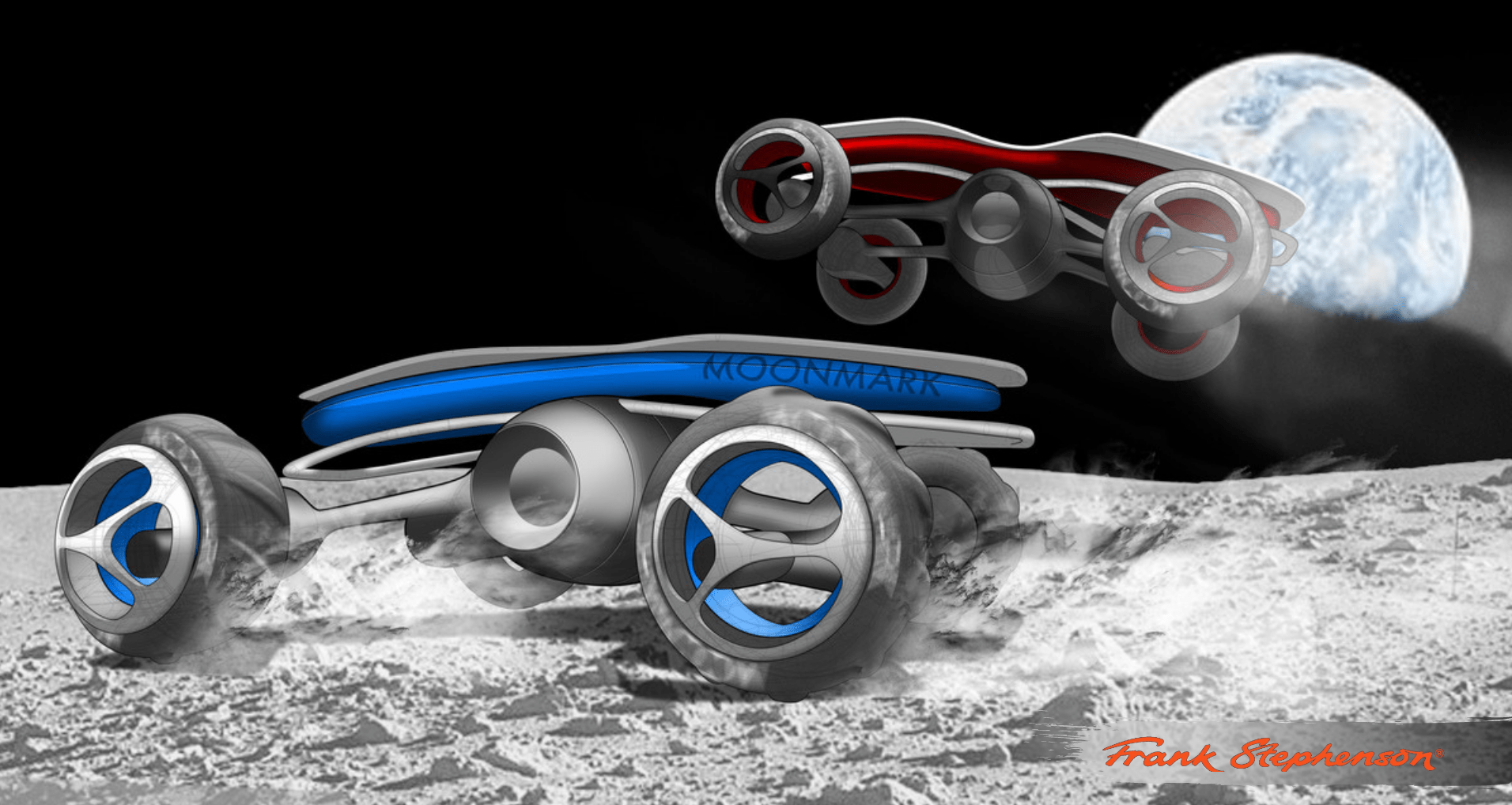
Despite skepticism from industry insiders – who claimed it would take hundreds of millions and decades – Mary persisted. With support from motorsports legends like Ross Bentley and Scott Elkins (who’s designing the lunar track), and design input from Frank Stephenson (McLaren, Ferrari, Mini), Moon Mark took shape.
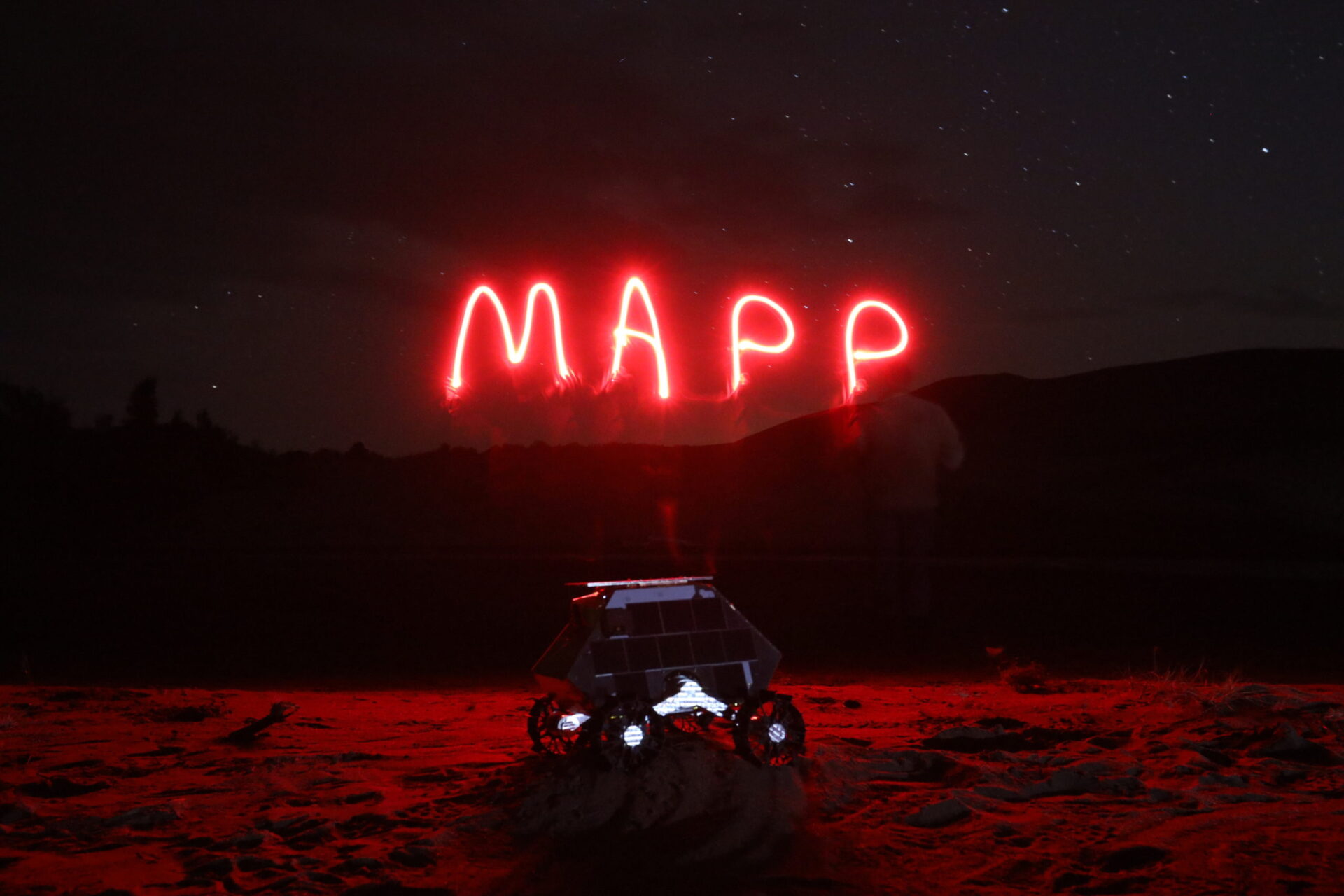
The program launched a global Lunar Race Car Design Challenge, attracting 35 teams from 11 countries. Six finalists emerged, and two designs – one from Argentina, one from China- were deemed lunar viable by aerospace engineers. The winning teams earned donations for their chosen charities and a place in Moon Mark’s history.
🧠 STEAM Over STEM
Moon Mark isn’t just about science and engineering – it’s about creativity. By embracing STEAM (adding “Arts” to STEM), the program invites students of all backgrounds to contribute. Whether designing bodywork, crafting videos, or solving technical challenges, participants learn that innovation thrives at the intersection of disciplines.
As Marianne put it, “It’s not one person that sends a rocket to space. It’s not one person that drives a car. They have entire teams around them.” Moon Mark reflects that ethos, building a future workforce that’s collaborative, imaginative, and bold.
🌍 Earthly Partnerships, Galactic Goals
Moon Mark’s reach extends beyond the moon. Partnerships with NHRA and LA County’s Delete the Divide initiative aim to bring space and race to underserved communities. By offering hands-on experiences and mentorship, Moon Mark is helping close the digital divide and inspire the next generation of explorers.
Mary’s journey – from Jeep antics in Korea to racing on the moon – is a testament to what happens when passion meets purpose. Motorsports gave her the tools, the community, and the confidence to dream big. Now, she’s giving that gift to students around the world. As Eric said, “This is above and beyond – to infinity and beyond, I suppose.” And with Moon Mark, that’s not just a catchphrase. It’s a trajectory.
There’s more to this story…
We go behind the scenes with Mary & Marianne from Moon Mark, talk about their favorite cars and what they would love to turn into space junk!
Some stories are just too good for the main episode… Check out this Behind the Scenes Pit Stop Minisode! Available exclusively on our Patreon.