

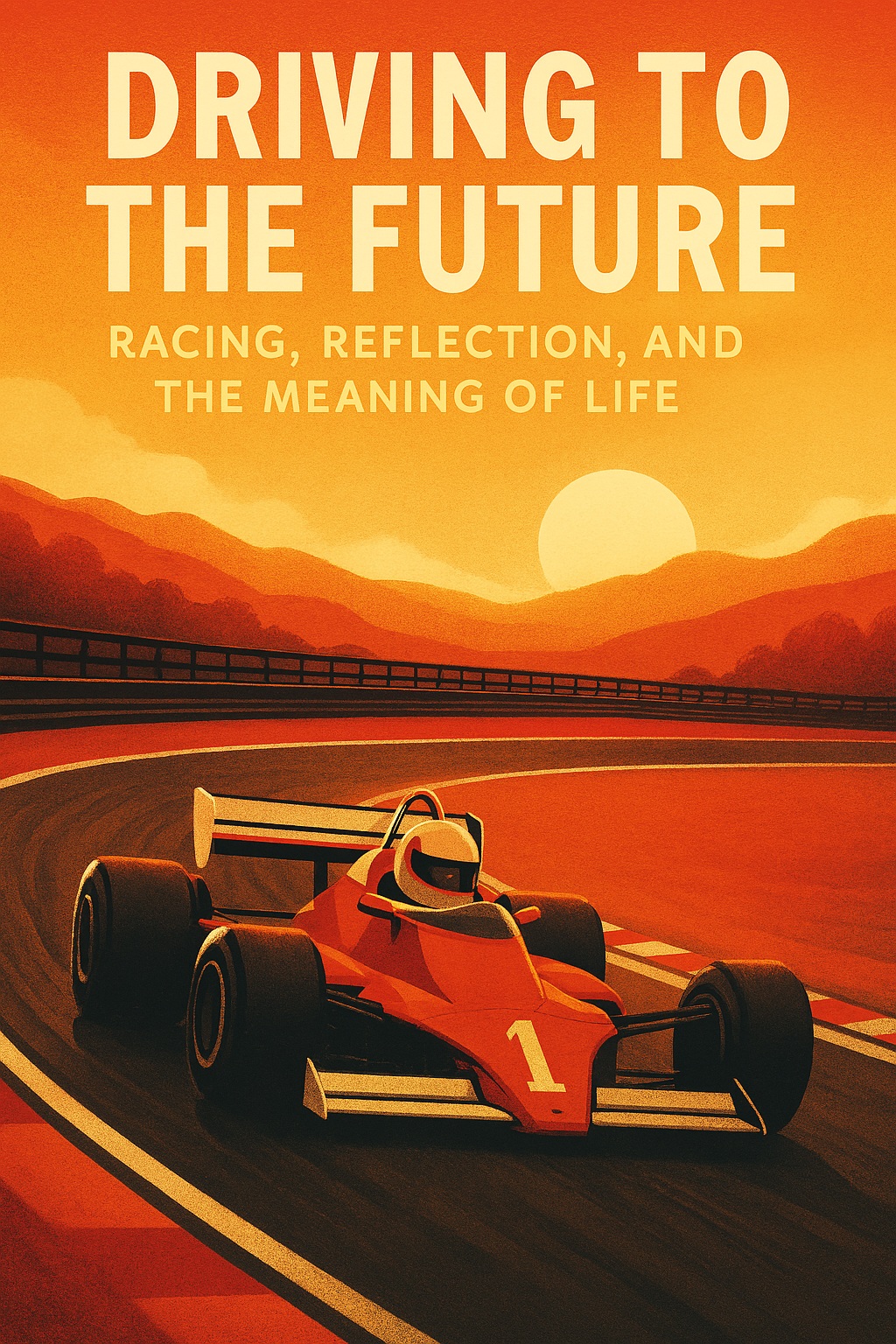
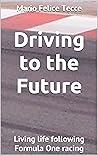
Formula One has always been more than a sport. It is a crucible of speed, risk, and human willpower. Yet in Driving to the Future, Dr. Mario Felice Tecce reframes racing as something larger: a meditation on existence itself. Through his voice – equal parts scientist, philosopher, and motorsport devotee – we are invited to see the track not only as asphalt but as metaphor, a place where choices, courage, and meaning converge.
Mario begins with the “last turn” – that decisive curve where instinct takes over and clarity emerges. He recalls Gilles Villeneuve, commanding an unstable car with sheer defiance, teaching that driving is not about control but surrender. For Mario, the last turn is both literal and symbolic: a reminder that life’s defining moments are rarely about speed, but about understanding what truly matters.
Tune in everywhere you stream, download or listen!



From Jackie Stewart’s virtuous drive at Monza in 1973 to Ayrton Senna’s transcendent lap in the rain at Donington in 1993, Mario sees racing not as conflict but collaboration. Competition, he reminds us, comes from the Latin cum petere – to seek together. Rivals are not enemies but fellow seekers, pushing one another toward excellence. Each lap becomes a shared search for truth.
Mario’s reflections stretch across decades of motorsport history. He recalls Giacomelli’s missed chance to showcase Italy’s dream at Monza in 1979, Senna’s tragic death at Imola in 1994, and Jacques Villeneuve’s surreal pole position in 1997 – three drivers setting identical lap times down to the thousandth of a second. For Mario, these moments are not coincidences but symbols of justice, redemption, and the pursuit of meaning even when outcomes defy effort.
Spotlight
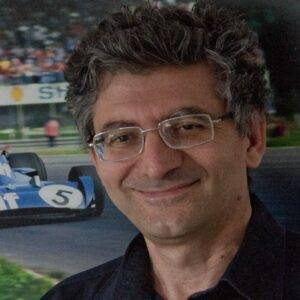
Dr. Tecce received his M.D. and PhD. at the University of Naples, Italy, and is currently full profession of biochemistry at University of Salerno. Besides his molecular research about cancer mechanisms, he explored race car driving as a major reference paradigm of pursuing the best and of free will exercise.
Synopsis
This audio adaptation of Dr. Mario Felice Tecce’s book of the same title, narrated by Crew Chief Eric from the Motoring Podcast Network and Revel Arroway from you’re listening to radio revel, covers profound reflections on life, death, and choices through the lens of Formula One racing. Mario, a narrator with decades of experience in motorsports and science, uses his story to explore metaphors of driving for understanding existence. Highlighting legendary racers and pivotal moments, Mario discusses themes of free will, virtue, hope, and love. He juxtaposes motorsport experiences with reflections on biology, theology, and metaphysics, illustrating the philosophical and emotional depth of racing. Mario’s reflections extend to deeper questions about the meaning of life, the role of virtues, and the nature of immortality. The book weaves personal experiences, historical races, and philosophical inquiries into a narrative that honors the pursuit of excellence and the eternal race we all run.
Highlights
Skip ahead if you must… Here’s the highlights from this episode you might be most interested in and their corresponding time stamps.
- 00:00 Introduction to “Driving to the Future”
- 00:29 Prelude
- 02:20 Scene 1: The Last Turn
- 05:08 Scene 2: Three Turns
- 09:49 Scene 3: More Turns
- 17:24 Scene 4: The Dream Turn, The Real Turn.
- 21:11 Scene 5: Beyond the Last Turn, Faith & Hope.
- 27:22 Scene 6: Turning to a Wonderful Smile and Seeing Love.
- 32:30 Scene 7: Turning, Driving, Choosing… Free Will.
- 36:46 Scene 8: Turning by Fundamental Virtues
- 40:39 Scene 9: Turning Around… Molecular Energy for Life.
- 45:50 Scene 10: The Last Turn. The Infinite.
- 49:59 Prologue
- 50:53 Outro & Learn More!
Transcript
Crew Chief Eric: [00:00:00] Driving to the future Living Life following Formula One. Racing by Dr. Mario Felice Tecce.
Adapted for audio and read by crew Chief Eric from the Motoring Podcast Network and Revel Arroway from your listening to Radio Revel
driving to the future.
This is not just a story about racing. It’s a meditation on life, death, and the choices we make in between. Told through the voice of Mario, a reflective narrator shaped by decades of motorsports, science and personal experience. Driving to the future invites us into a journey that begins on the track, but reaches far beyond it.
Across the 11 chapters of his [00:01:00] book, Mario explores the metaphor of driving as a lens for understanding existence. He revisits legendary races and iconic drivers like Jills v nv, ton Sena, and Jackie Stewart. Not to dryly recite statistics, but to eliminate character, courage and conviction. Each turn on the circuit becomes a philosophical pivot toward memory, excellence, loss, and redemption.
The narrative weaves together the experience Mario has with Motorsports history, his career as a molecular biologist, and his thoughts on theology and metaphysic. Mario draws parallels between the roar of the racetrack and the silence of the biologically microscopic. Between the sometimes depth defying risks of overtaking at Monaco and those risks involved in Loving Deeply, Mario reflects on free will, virtue, hope, and the Infinite always returning to the central question, what does it mean to live well?
Mario’s story is a tribute to those who take the steering wheel in their hands, not only on the asphalt, but in the driving [00:02:00] of their own lives. It honors the racers who have never lifted, the thinkers, who have never stopped asking, and the loved ones who smiles carried us through the toughest turns. It’s a story of motion, meaning, and the eternal race wheel run.
Now let’s let Mario take the wheel.
Scene one, the last turn.
Revel Arroway: I always keep the last turn in mind, not just on the track, but in. It is the place where everything slows down, where instinct takes over, and where you understand what really matters. I’ve taken many turns in my life, some fast, some reckless, some cautious, but the last turn is different. It’s not about speed, [00:03:00] it’s about clarity.
I think of Jesus, he never slowed down, not even in the last turn. He believed in pushing beyond limits, even when the car protested, even when the world said no, that was jz. Pure defiant, beautiful. I’m watching JZ drive at Z. The car is twitching, unstable, but holds it together with sheer will. He isn’t driving the car, he’s commanding it.
And in that moment I understood. Driving isn’t about control, it’s about surrender.
Crew Chief Eric: When Mario speaks of Gils Vnu, one can almost hear a certain reverence. Not just admiration, but a connection, a shared understanding between drivers who see the world through the lens of velocity and risk. Mario doesn’t romanticize his vivid memories. He doesn’t [00:04:00] glorify danger either. He respects it. He knows what it takes to face the last turn and what it costs him to never back down.
Revel Arroway: I’ve lost friends to that last turn. I’ve seen helmets, fly engines explode, silence fall, and yet we keep driving. Not because we are fearless, but because we are faithful. Faithful to the road, to the machine, to the dream
Crew Chief Eric: for Mario. The last turn is both a metaphor and a reality. It’s the curve that tests everything you are, and when you emerge from it, if you emerge, you’re changed.
Revel Arroway: I don’t race anymore, not like I used to, but every time I get behind the wheel, I feel it. That pull, that whisper, that question. Are you ready? And I answer not with words, but [00:05:00] with motion.
Crew Chief Eric: Scene two three turns.
Revel Arroway: I remember Jackie Stewart at Monsa in 1973. The parabolic turn so fast, so unforgiving. Jackie’s, Tyrell dances through it with precision, like the car is stitched through the asphalt. He wasn’t just driving, he was fox trotting. Every movement had intent. Every choice mattered. He started fourth that day, but a puncture forced him into the pits.
In those days, pit stops were rare, almost a guaranteed loss for your race. But Jackie came back from last place. He surged forward overtaking with Grace in Fury, [00:06:00] finishing fourth and cleansing his third world championship. That drive wasn’t just fast, it was virtuous. It became the pursuit of excellence.
Crew Chief Eric: Mario sees Jackie Stewart’s performance not just as a technical feat, but as a moral one for him, it’s a demonstration of fortitude, patience, and purpose. It’s a reminder that greatness isn’t always about winning. It’s about how you respond when the odds turn against you.
Revel Arroway: A few weeks later, Stewart retired.
His teammate Francois er, had died in a crash er, had been waiting for his moment in the spotlight, helping Jackie learning, growing. But fate intervened like Gil’s never got the chance to demonstrate what he could become. And 1973 marked the beginning of the global oil crisis. Suddenly [00:07:00] driving was discouraged, fuel was rationed.
Sundays in Italy became car free. It felt like the world was turning against everything. I loved. Some even called for motor sports to be banned, to save fuel, to set an example. But the point of motor sports was being missed. Racing isn’t about waste, it’s about striving. It’s about doing the best you can together.
Crew Chief Eric: Mario’s defense of motorsport is philosophical. He sees competition not as conflict, but as collaboration. The Latin roots of competition combine cum with Petra to seek together as in to aim higher, not against each other, but with each other.
Revel Arroway: Sena always understood that he was collaborating with his rivals on the track.
So did Jesus. So did Jackie. They weren’t fighting one another. They were searching together, searching for the edge, for the truth, for [00:08:00] the best version of themselves. For example, I think of Gilles in Argentina in 1981. His Ferrari is over steering, drifting off the racing line, but Gils holds the car, controls it, pushes it.
That in movement is etched in my mind, his car dancing on the limit. I didn’t see recklessness. I saw mastery. I’ve always believed that excellence isn’t just about results, it’s about commitment, about doing your best, even when the odds are stacked against you. I remember watching Sena take his first lap in the rain at Dunnington in 1993.
He’d started fourth. Yet, by the end of that lap, he is leading. It was like watching a miracle unfold before my eyes. He wasn’t just faster, he was transcendent. Now, I don’t worship drivers or teams, so you’d be hard pressed to call me a teso, [00:09:00] but that lap moved me. It was pure. It was beautiful. It was the kind of moment that reminds you of why you care.
Crew Chief Eric: Mario’s reflections are not just about motorsport, they’re about life. His memories are tactile. You can feel the tires skidding, the engine roaring the tension in the air. But beneath this detail, you can almost sense a deeper question being mold upon. What does it mean to live well? To do good, to be good.
That comes down to choices and the pursuit of something greater than victory. It is in the rain,
Revel Arroway: in the chaos, in the silence after the race that I find meaning
Crew Chief Eric: scene three more turns.
Revel Arroway: It is 1979, the Italian Grand [00:10:00] Prix, Bruno Ali’s Alpha Romeo, is flying through the parabolas that’s sweeping final curves, so respected at Monsa. The movement is fast, aggressive, beautiful. For several laps. Gia Lee has been faster inching closer. He’s closing in on Nikki Lau’s. Braum ready to overtake. And then just as the past seems inevitable, GIA Melli loses control and spins off the track.
This was heartbreaking, not just for the race, but for the all Italian dream that it represented. Gia Elli, an Italian driver piloting the Alpha Romero, an Italian car powered by an Italian engine, engineered by an Italian, built at an Italian factory, and it is this Italian dream all converging into.
Beautiful reality at Monsa, the temple of Italian Motorsport, that moment was [00:11:00] more than a missed overtake, more than an embarrassing retirement from the race after only 28 laps, it was a missed opportunity to show the world what Italy could do.
Crew Chief Eric: Mario’s disappointment wasn’t just technical, it was cultural.
Giacomo’s Alpha Rome was a symbol of national pride and its failure felt personal. But even in defeat, Mario saw value. The potential was there. The dream was real.
Revel Arroway: The 1979 Grand Prix was won by two Ferraris. Jodi Schechter took the championship, Gilles V following team orders had hung back, did not take his chance to win.
Gilles was loyal, he was patient, but that chance to win would not come again. Formula One and the world have changed so much since those days. In racing, the championship was mostly European and Italy had a much stronger industrial political role in the [00:12:00] world. That role was given a new reinforcement with the visit of the Pope Pope John Paul II visited the Ferrari factory in 1988, just months before Enso Ferrari died.
The Pope stepped outta a stately protocol and asked for a ride in a Ferrari around Theran North Circuit. John Paul II demonstrated an understanding of the spirit of the place. That moment of faith meeting engineering was unforgettable.
Crew Chief Eric: Mario’s memories stretch across decades, but they’re not just snapshots like the race cars.
He’s loved watching. The memories are living moments in movement. He revisits races that didn’t just shape motorsports, but helped shaped his own sense of possibility, pride and disappointment. Italian dreams, global shifts and personal reflections converge in the turns of Monza EZ and Monaco.
Revel Arroway: Senna’s death [00:13:00] in 1994 still haunts me.
He was trying so hard, pushing so much, he deserved better. Then a tiny piece of suspension pierces his helmet. Had that final crash, had mola not occurred, Sena would’ve won in 94, 95, 96. Maybe even 97, but sometimes effort doesn’t match the outcome. That’s life that’s racing. It is 1997 and Jacques Vi Gil’s son clocks an excellent lap time that earns him his position on pole at the European Grand Prix in Jez.
Then the unbelievable occurred. Two other drivers set the exact same lap time identical down to the thousandth of a second. A third driver did the [00:14:00] same. What seemed a coincidence? Felt surreal. Having set time. First Jacques kept pole and the next day he won the championship. It felt like divine justice for Jacques’s father, Gilles, for Sena, for all the good, their untimely deaths had denied them and the world.
Crew Chief Eric: Mario doesn’t believe in coincidence. He believes in meaning that race with its impossible symmetry and the poetic justice of the outcome. The Grand Prix of EZ was more than a sporting event. It became a moment of redemption. He sees justice in both results and in effort, and also in commitment. The willingness to do good even when the world doesn’t seem to reward it.
Revel Arroway: Louis Hamilton is winning at Monaco and. 2008 in the rain. The track is changing constantly, but Hamilton keeps getting faster. His yellow helmet drifting through the Grand Hotel, hairpin Hamilton’s [00:15:00] command of the car and the track brought back memories of Sena in 89. Same track, same brilliance. Hamilton was going to accomplish a lot that day.
I saw it clearly. Driving is more than a movement. It’s a way to feel your potential to go fast as marvelous. But not because of the speed, rather because of what it reveals. Your instincts, your courage, your control. I started with motorcycles, a 50 cc Vespa, then in 1 25 CC Gera later cars. I love the sound, the throttle response, the feeling of acceleration.
Oh, I never liked diesel. Too dull, too slow. I wanted to be a racing driver, but of course, life took me elsewhere. I studied, I taught, I worked at a university. Still the desire for speed and its marvels never
Crew Chief Eric: left me. [00:16:00] Mario’s admiration isn’t blind. It’s earned. He sees greatness not in fame, but in moments, in choices.
In turns well taken. Mario’s journey isn’t one of regret. It’s one of reflection. Though he didn’t become a racer, he became a thinker, a storyteller, and a seeker. Mario sees excellence everywhere in skiing and racing and in life. January
Revel Arroway: 18th, 1975. The slalom ski champion Gusta Thony races downhill at swell.
No one expected thony to do well in that downhill, but he did. He committed, he excelled even as only three thousandths of a second separated him from the winner. France Clammer. That performance helped Thony win the Alpine Ski World Cup. That’s what I admire. Not just the result, but the [00:17:00] effort. TH’s downhill run reminded me of Formula One, high speed precision.
Risk and the pursuit of something greater to live well. To do Good. That’s the turn I keep chasing.
Crew Chief Eric: Scene four, the dream turn, the real turn.
Revel Arroway: Scott Stoddard is driving fast, too fast. He’s closing in on his teammate who doesn’t want to be passed. Monaco is unforgiving and overtaking there is nearly impossible, but Scott tries anyway, coming out of the tunnel, driving into the chica, the teammates collide. The crash is violent. Flames erupt. Scott is seriously injured, [00:18:00] but he didn’t give up.
He came back, he raced again. Scott Stoddard demonstrates the ambition, the pain, the determination, even though they are on the screen, they are real. They represent the reflection of the spirit of drivers like Lorenzo Badini, who died in a similar crash at Monaco just a year after the film was released.
Crew Chief Eric: The story of Stoddard portrayed by Brian Bedford in the movie Grand Prix resonates to Mario because it captures something he believes to be essential, the willingness to risk everything for excellence, not out of recklessness, but out of purpose. And he finds himself exploring the emotional truths revealed through the fictional characters in the movie as they mirror real life drivers, their risks and their choices.
Revel Arroway: Stadard in the film wasn’t being reckless. His was commitment. He knew the risks and he accepted them. That’s what racing [00:19:00] was. In those days. The cars were dangerous, the tracks were unforgiving, but the drivers weren’t suicidal. They were seekers. Today, the risks are lower. Technology has made the sports safer, but that essence remains the pursuit, the drive, the dream.
Crew Chief Eric: Mario can draw parallels between the fictional stoddard and the real driver. Nikki Lauda, who returned to racing after a near fatal crash, Lau’s comeback at Monza in 1976 was legendary. His decision to stop racing in Japan later that year was controversial, but deeply human. Lauda was always in my
Revel Arroway: thoughts.
I followed his career closely. I read his interviews, I watched his races. I felt like I knew him even though we never met. When he died, it felt personal, like losing a friend. He was buried with his original Ferrari racing suit. That gesture said everything. I remember loudest words when he left Ferrari in [00:20:00] 1977.
He wondered to himself where he and Ferrari would be in two years. Ironically, Ferrari won the championship exactly two years later. 21 years would pass before Ferrari would see their next win. And in the middle of those 21 years was 1982, the year in which Geo’s Vinu
Crew Chief Eric: should have won. Mario’s connection to Nikki Lauda is emblematic of how fans experience motorsport, not just as entertainment, but as a relationship.
Through media, memory and emotion, drivers become part of our lives. His reflections are layered with irony, insight, and longing, and he sees the sport not just as a series of races, but as a tapestry of choices, consequences, and character. We
Revel Arroway: follow drivers, we admire them, we learn from them, and sometimes we feel like we know them, but the truth is we only know [00:21:00] fragments.
Still. Those fragments matter. They shape us.
Crew Chief Eric: Scene five, beyond the last turn, faith and hope.
Revel Arroway: I am running late for a meeting, driving at about a hundred kilometers per hour, reasonable for a moderately crowded road in ideal conditions, but this time I am pushing the limit. It’s raining and visibility is poor. I’m just coming out of that tight curve when I see the two lanes of stopped cars, barely 50 meters ahead.
The road is slick. Breaking hard, seems impossible. I downshift from fourth to third, the engine roaring. The gears resisting. I jerk the steering wheel and the car begins to drift. Somehow the rear wheels swung around, helped to break the speed. Then [00:22:00] miraculously the car straightens and slips through the narrow gap between the two lanes of cars.
Once I stopped, I saw I had only had a minor bump, just a broken mirror. I was alive, unhurt, but shaken in those few seconds as I managed my auto into that unlikely safe stop. I saw death. I found myself revisiting my life, my youth, my studies, my marriage, my children, my work, like the refrain of a favorite song.
My thoughts began focusing on three questions. Had I lived well, had I done good, was I afraid to die?
Crew Chief Eric: A moment of crisis, a tight turn, a blocked road, and the looming possibility of death. Yet he doesn’t dwell on the fear, jumping at the chance the experience gives him. He [00:23:00] reflects on life mortality and the search for meaning. His questions are universal. They echo through philosophy, religion, and science.
What is life? What is death and what does it mean to live well?
Revel Arroway: Here is an image that taunts me. Eton Sena on the grid at Ola helmet off. Eyes closed moments before what will be his final race. Sena looks troubled. Of course. He was troubled that crash just yesterday that had taken Roland Rut, Berger’s life during the second qualifying session.
Today, Sena had packed an Austrian flight to unfurl after the race in Roland’s honor. And yet, perhaps the trouble behind his brow is something anchored more profoundly in his soul. He closes his eyes, his expression softens. He is ready not just to race, but to [00:24:00] face whatever the race might bring. Only seven laps later.
He would be gone. I’ve watched that footage many times. It forces me to confront the question. So many of us avoid asking ourselves, what is death? Why do we fear it, and how do we live knowing it’s always near.
Crew Chief Eric: Not one to shy away from the hard questions. Mario confronts them with logic, science and faith.
His background in medical biochemistry gives him a unique lens, one that blends molecular precision with metaphysical inquiry.
Revel Arroway: Professionally, I am a medical biochemist. I’ve studied the chemistry of life, the textbook definition that defines life as reproduction, growth, substance exchange, adaptation. Yet these definitions falls short.
Life is more than molecules. [00:25:00] We are all familiar with the never ending debate on the origin of life. Evolution versus creation. Evolution explains how life changes. But does it explain how life began? Oh, yes. Amino acids could form in early earth conditions, but that primitive formation we know about doesn’t explain the how of existence itself.
How does a hydrogen atom exist? How does anything exist? Aristotle spoke of the premium move-ins, the unmoved mover. St. Thomas Aquinas echoed this, everything that moves is moved by something else. And this concept leads to the need of a first cause. A creator,
Crew Chief Eric: Mario’s logic inevitably leads him to faith, not as superstition, but has reason.
If existence has a [00:26:00] cause, then that cause must be beyond matter. And if that beyond matter cause is a creator, then death is not the end. These are not abstract reflections. They’re grounded in experience, in moments of fear, in memories of loved ones, in the quiet realization that life is finite, but meaning is infinite.
Faith gives us hope,
Revel Arroway: real hope, not wishful thinking, but certainty. Certainty that something good will happen, that life continues beyond death. The Sermon on the Mount says,
Voice of the Spirits: blessed are the poor in spirit for theirs is the kingdom of heaven. Blessed are those who mourn for they will be comforted. Blessed are the meek for they will inherit the earth.
Revel Arroway: These words are not just poetry. They are promises. We all live with expectations. We say we hope for a better life, but true [00:27:00] hope is not statistical. It’s not about chances. It’s about truth. If we are immortal, then hope is real. And if we were created out of love, then death is not a failure. It’s a transition.
Crew Chief Eric: Scene six, turning to a wonderful smile and seeing love.
Revel Arroway: It is July, 2019. I’m at Goodwood in the uk. Jackie Stewart has returned to the circuit in a blue car, the mantra. He drove to his first championship 50 years earlier in 1969. He will be followed by two Terrell’s, both driven by his sons, Paul and Mark. Jackie stops before loading himself into the mantra and looks back to an elderly [00:28:00] woman who has accompanied him sitting in her wheelchair.
This was Helen, his wife, and as she smiles towards him, he approaches and hands her the flower he’d secretly brought with him. Just for her that tableau stayed with me. It wasn’t just a nostalgic moment between an old married couple. It was love, a love that had endured decades, victories, losses, and illness.
A love that had grown
Crew Chief Eric: deeper with time. Mario sees in Jackie and Helen Stewart, something timeless, not just a racing legacy, but a human one. A relationship built on care, respect, and shared experience, it reminds him of his own journey. Love isn’t defined by sentiment alone, and for Mario, it’s a metaphysical reality and unselfish force that transcends biology, logic, and even time.
March, 2011.
Revel Arroway: Spring is in the [00:29:00] air. I am not in the mood for spring, though I’m in the ICU after having suffered a heart attack. Myocardial infarction is what my doctor notes in my chart. I know exactly what is happening. My medical training makes it impossible to ignore. A stent has been placed, the damage has been contained, but just as in the moments after slipping between two rows of stopped cars on a rainy highway.
I find myself shaken as I lay in that hospital bed. I look to my left and see Lisa, my wife, standing there in a surgical gown as she notices me glancing at her, she smiles. And in that moment, that shaken feeling melts away. That smile my wife offered me went beyond comforting. It was transcendent, embedded in the upturn corners of her lips, the lines that bracketed her mouth, the fanned out [00:30:00] wrinkles around her eyes.
I could visualize our past, our present, our future. It was love, real love, the kind that doesn’t fade, the kind that reveals something
Crew Chief Eric: eternal. Mario’s reflections turn inward. The racetrack fades and in its place emerges something quieter, more intimate, A smile, a memory, a moment of grace. Love for Mario is not just an emotion, it’s a metaphysical truth, A force that binds individuals across time, space, and spirit.
Love is not just
Revel Arroway: attraction or affection. It’s a gift, an unconditional donation. It’s not about preserving oneself or one’s species. It’s about giving even when it costs you. St. Paul said
Voice of the Spirits: Love is patient. Love is kind. It is not jealous. It is not pompous. It bears all things, [00:31:00] believes all things, hopes all things, endures all things.
Love never fails.
Revel Arroway: Like the words of the Sermon on the Mount, these lines are not simply poetic. They contain description of self, something real, something that exists beyond physical matter.
Crew Chief Eric: Mario’s Reflections on Love are grounded in experience, in smiles, in memories, in the quiet moments that reveal eternity.
Mario sees love as proof of the metaphysical. If love exists and it does, then so must the soul. So must the creator. Ergo so must meaning. Each person
Revel Arroway: has a unique molecular identity. Our genes, our environment, our experiences, they shape us. But love goes further. It connects us not just horizontally with others, but vertically with our origin.
Love is a [00:32:00] three dimensional relationship. It is the bridge between individuality and universality between the finite and the infinite. Lisa’s smile in that ICU wasn’t just beautiful. It was a revelation. It reminded me that love is real, that life has meaning, that we are not alone.
Crew Chief Eric: Scene seven, turning, driving. Choosing free will.
Revel Arroway: I remember Alto a good driver. More importantly, a good man when asked at Monaco in 1982 about the risks of racing, he didn’t romanticize them. He simply said his wrists were no greater than those faced by the Carre, the Italian police who confront danger every [00:33:00] day. That humility stayed with me, though.
While Barreto’s career was brilliant, he was never fully rewarded. He did nearly win the championship with Ferrari in 1985, but technical failures cost him dearly. Then in April, 2001, Reto is testing, uh, LA Man’s prototype. He’s 44 years old, no longer in Formula One, but still racing, still chasing excellence until a mechanical failure sends him into a wall.
He died instantly.
Crew Chief Eric: Mario sees Al Barreto’s life as a testament to quiet integrity. Not every great driver wins championships. Not every good person is recognized, but the choices they make, the risk that they accept, reveal something profound. Mario, of course, must confront the concept of free will, and not as an abstract philosophy, but as a lived experience through the lives and choices of drivers [00:34:00] like Michaela ato, Nico Rossberg, and Lewis Hamilton.
He explores how decision making under pressure reveals character, courage, and conviction. Commitment is the
Revel Arroway: only part of success that deserves reward, talent, luck and resources matter, but only commitment comes from choice. Nico Roseberg has to pass Max Verta to win the championship at the Abu Dhabi Grand Prix in 2016.
Overtaking the Dutch Belgium driver will be risky. Verta is a hard one to pass yet Roseberg does not hesitate. He drives inside. He goes wide. He nearly collides but makes it, and with that move wins the title. He then retired from racing. That decision shocked everyone, but I think he actually decided during the race, perhaps at the moment when he realized how close he came to losing everything he had achieved his goal.
That was enough. [00:35:00] Louis Hamilton is pushing it hard on the soaked track at Austin, Texas in that final practice in 2015. Everyone else is being cautious, but Hamilton is having none of that. He dances on the edge, sets the fastest lap, beats them all by nearly a second. Hamilton didn’t need to take that risk.
The championship wasn’t at stake, but he chose to compete, chose to excel. Hamilton exercised free will. Free will allows us to choose to be good, to do
Crew Chief Eric: good. Mario believes that knowing when to stop is as important as knowing when to push on. Free will is not just about action. It’s about discernment. He also sees driving as a metaphor for moral agency.
Every turn is a choice. Every lap is a test. To drive well is to choose. Well.
Voice of the Spirits: St.
Crew Chief Eric: Paul said.
Voice of the Spirits: Do you not know that the runners in these stadium [00:36:00] all run in the race, but only one wins the prize run so as to win.
Crew Chief Eric: Mario’s Reflections on free will are grounded in experience in racing, in medicine, and in teaching.
He sees choice not as a burden, but as a gift, and driving for him remains one of the purest expressions of that gift.
Revel Arroway: With the coming of autonomous self-driving cars, drivers, and driving may soon become obsolete, but the act of choosing of steering one’s life that will never disappear, we will always drive, even if not with wheels, then with will.
Crew Chief Eric: Scene eight. Turning by fundamental virtues.
Revel Arroway: Sebastian Betel is driving for Toro Rossi, a team [00:37:00] no one expected to win. We at Monsa, the year is 2008. Viel takes the poll possession and wins the race. Despite the rain, despite the treacherous conditions of the track, Batel drove with precision, courage and grace. He didn’t just win. He revealed something deeper.
The power of virtue that weekend reminded me of Donnington in 1993 when Sena won in the same kind of dangerous, rainy, wet conditions with an inferior car. But Patel’s wind was different. Toroso wasn’t just under powered. It was underestimated. And yet he prevailed.
Crew Chief Eric: Mario has shifted gears on us, literally and metaphorically.
He explores how the fundamental virtues that guide human behavior also apply to motorsport. Racing for him is not just about speed or skill, it’s about character, about choosing well under pressure, about living with purpose. [00:38:00] Mario uses vet’s performance as a reflection of the cardinal virtues. Not just talent, but prudence, justice, fortitude and temperance.
Each playing a role in the dance between driver and machine.
Revel Arroway: Prudence is the charioteer of the virtues. It guides decisions at Monsa, the BOL turn demands it. You must break just enough. Not too early, not too late. You must accelerate with care. Knowing that the exit speed determines your lap time prudence is in caution.
It’s wisdom. Justice comes next on the main street at 340 kilometers per hour. You’re not alone. You’re surrounded by others, each with their own goals. Justice means respecting their space, their rights, their dignity, even in competition. Fairness matters. Fortitude is tested in the first chicane. You break from top speed to [00:39:00] a crawl.
It’s violent, it’s risky, but you must commit, you must endure. Fortitude is not bravado, it’s resolve. Temperance arrives at a sca. The temptation to overdrive is strong, but excess leads to error. Temperance, moderates desire, it balances ambition
Crew Chief Eric: with control. Mario’s reflections are not just technical, they’re moral.
He sees racing as a crucible for character, a place where virtues are tested, revealed, and refined. Mario’s view of racing is expansive. It’s not just about cars or circuits. It’s about humanity, about the pursuit of excellence, about the choices we make and the virtues we embody. Motor
Revel Arroway: sport is a relationship horizontal between drivers, vertical, between man and meaning.
It’s not just about winning, it’s about striving, about [00:40:00] doing good, about being good. The Theological Virtues, faith, hope, and Love guide our goals. The Cardinal Virtues, prudence, justice, fortitude, and Temperance guide our actions. I’ve seen many drivers win, but the ones I admire most are those who drive with virtue, who compete not just to beat others, but to better themselves.
That’s the real race and it never ends.
Crew Chief Eric: Scene nine, turning around molecular energy for life.
Revel Arroway: It is a beautiful engine, not the one you hear roaring down a straight way, but the one that hums silently inside every living cell. The A [00:41:00] TP syntheses an exquisite molecular machine that rotates like a turbine driven by a stream of protons. This motor assembles the energy currency of life. Without the energy this motor creates, we wouldn’t move, think, or breathe.
Its structure is perfect. It’s function precise, and yet it’s invisible to the naked eye measured in nanometers, a billionth of a meter. Some call it proof of intelligent design. I don’t, I see it as evidence of something deeper. The mystery of existence itself.
Crew Chief Eric: Mario often uses this molecular level rotary cell motor as a pole position from which he may present a more fundamental question. How does anything exist at all? Not how it functions, but how it came to be. He easily draws [00:42:00] striking parallels between the natural elegance of this motor and the roar of the engine in a Formula One car.
For Mario, science and spirit are not opposites. They’re intertwined. While we can
Revel Arroway: explain transformations, how molecules combine, how energy flows, explaining existence continues to escape our abilities. Aristotle doesn’t clear the concept for us with his unmoved mover. Neither did Saint Thomas Aquina suggesting an instigator of all movement, and that’s where my faith begins.
Not in complexity, but in origin. I admire the invisible organic engine working silently deep within the mitochondria in the same way I admire a Ferrari V 12 roaring with compression under the brightly painted hood. Both are engines, motors that convert energy into motion.
Crew Chief Eric: Both
Revel Arroway: are beautiful.
Crew Chief Eric: Mario’s [00:43:00] scientific training gives him clarity, and Mario’s reflections are not dogmatic.
They’re deductive. He sees science as a tool for understanding, not a weapon for argument, but his philosophical curiosity gives him depth. It’s not just a molecule, it’s a metaphor. He sees the molecular world, not just as a system, but as a story. That being a story of creation, purpose, and possibility.
We’ve come a long
Revel Arroway: way. We’ve mapped genomes, build molecular models, synthesized lives, building blocks. We’ve disproved the old idea of V Vitalis, the vital force. But in doing so, we’ve risked throwing out our humility with the bath water. Not being able to locate a soul in a cell doesn’t prove it, isn’t there?
Not physically. But
Crew Chief Eric: metaphysically Mario’s reflections of molecular biology lead him back to the human condition, to fear, to hope to the [00:44:00] COVID-19 pandemic. It’s March,
Revel Arroway: 2020. I am confined in my hometown of Naples. Confined like so many others here, like so many others across the globe. The streets are empty, the sun is shining, but the city is quiet.
People are quietly confined with their worst fear. Not of the virus, but of death, mystery, the unknown. These paralyze us despite our knowledge, our technology, our progress. That mystery stops us in our tracks. Of course, we searched for answers. Naturally, we clung to statistics, to headlines, to hope. But real hope doesn’t come from probability.
It comes from truth. Truth requires education, not just information, but formation. The ability to think, to discern,
Crew Chief Eric: to choose. Mario sees the [00:45:00] pandemic as both a medical and philosophical crisis. COVID-19 exposed our fragility, our ignorance, our need for meaning. And so his reflections returned to the drivers.
He admires not just for their speed, but for their choices. For example, Gunnar Nielsen, who died of cancer at age 30, founded a research foundation that still supports oncology today. Ni didn’t just
Revel Arroway: race, he gave. He chose to do good even as he was dying. That’s what it means to live well, to drive well, to turn well.
We are driven by energy, by love, by hope, and even when the track is silent, the race continues.
Crew Chief Eric: Scene 10, the last turn, the infinite.
Revel Arroway: Pete [00:46:00] Aaron stands alone on the Manza circuit. The grandstand are empty. The track is still littered with the debris from the race. The day before he had won the championship, but Sati had died. Stadard had suffered. Aaron walks slowly, silently asking himself, did I deserve this? Did they deserve more? That final scene from Grand Prix with James Gardner portraying Peter Darin always stayed with me.
It wasn’t about victory, it was about reflection, about the weight of consequence, about the mystery of fate.
Crew Chief Eric: Air in silence holds a universal truth. Our lives are shaped by both our choices and by circumstances beyond our control. We must keep walking, driving, and choosing, and therefore Mario considers this truth to show a beginning [00:47:00] rather than an ending. A leading transition from the physical to the metaphysical, from the racetrack to eternity through the lens of motorsport.
He explores death, not as defeat, but as a doorway to the infinite
Revel Arroway: cena’s final lap at Ola Jill’s final qualifying run. It’s older. Both were chasing excellent. Both were betrayed by circumstance, and yet both lived with purpose, with passion, with love. Their deaths were not the end. They were transitions.
Their lives did not end with the body. They continue in memory, in meaning in the infinite. I believe we are immortal, not metaphorically. Literally, our souls do not die. Our choices matter. Our love endures. I imagine Sena and Jills still [00:48:00] driving, not on Ola or Z, but on a track beyond time, a circuit of light, a race without end.
I see them side by side. Their cars glowing, their hamlet’s bright,
Crew Chief Eric: their spirit’s free. Eternity is more than an abstraction. It’s also a destination, a place where justice is restored, where love is fulfilled. Where hope is realized. Mario’s reflections transcend motorsport. He sees in every turn a metaphor, in every race, a parable in every driver, a seeker of truth.
Revel Arroway: I remember the words of St. Paul.
Voice of the Spirits: I have competed well. I have finished the race. I have kept the faith.
Revel Arroway: That’s what I want, not just to drive fast. Mm-hmm. Not just to [00:49:00] win, but to live well, to do good, to finish the race. With faith, I’m getting older. My body is slowing, but my spirit is accelerating. I am ready for the next turn, the eternal turn, and I know I won’t be alone.
My final turn will not be a farewell. It’s a promise, a commitment to keep driving through memory, through meaning through the infinite.[00:50:00]
Crew Chief Eric: We are all drivers, some of us with engines, others with ideas, with love and with hope, but all of us face turns moments that test our courage, our character, and our commitment. And in those terms, we discover who we are. Mario’s journey reminds us that life is not measured in laps or trophies, but in choices and in the way we treat others, but also the way we respond to loss, on the way we keep driving.
Even when the road disappears, the track may change, the car may age, but the spirit, that being the will to strive to love and to believe remains so as we approach our final turns, may we do so with grace. With memory, with faith, and may we find beyond that last curve, not an end, but a beginning to something infinite because the race never truly ends.
It just changes lanes. We hope you enjoyed this audio adaptation of Dr. Mario TE’s book, driving to [00:51:00] the Future, living Life Following Formula One Racing. The part of the narrator was performed by Crew Chief Eric from the Motoring Podcast Network. And the voice of Mario was provided by Revel Arroway. From your listening to Radio Revel, driving Through the future is a deeply personal and philosophical journey told through the lens of Motorsport.
Across its chapters, Mario reflects on excellence and purpose through the lives of drivers like Gils, VV Ton Sena, and Jackie Stewart. Mario explores the pursuit of greatness, not for fame, but for meaning. Racing becomes a metaphor for striving towards one’s best self. He also covers memory and reflection because the past is not romanticized, but revisited with clarity.
Mario honors moments of triumph and tragedy using them to ask deeper questions about justice, legacy, and the fragility of life. He also talks about virtue and free will racing demands, prudence, fortitude, justice, and temperance. Mario sees these virtues not just as overtakes and pit stops, but the moral choices drivers make on and off the track.
He leans into love and [00:52:00] relationship from Jackie and Helen Stewart’s enduring bond to his wife. Lisa’s smile while in the ICU Love is portrayed as a metaphysical truth, an unselfish force that transcends biology and time. With his background, he also leans into science as well as faith. Mario Bridges, molecular biology and metaphysics, drawing parallels between a TP Synthes and Ferrari engines.
He sees in both the fingerprints of design, mystery, and divine origin, and finally, he touches on morality and hope. Death is not feared, but contemplated. Mario believes in the soul’s immortality and in the continuation of meaning beyond the body and the eternal race. We all run. If you wanna learn more about Dr.
TE’s original book, you can pick it up today by searching, driving to the future, living life. Following Formula One Racing. Pick up a hardcover copy for 1399, a paperback for $5 and 30 cents, or on Kindle all through amazon.com.[00:53:00]
We hope you enjoyed another awesome episode [00:54:00] of Break Fix Podcast, brought to you by Grand Tour Motorsports. If you’d like to be a guest on the show or get involved, be sure to follow us on all social media platforms at Grand Touring Motorsports. And if you’d like to learn more about the content of this episode, be sure to check out the follow on article@gtmotorsports.org.
We remain a commercial free and no annual fees organization through our sponsors, but also through the generous support of our fans, families, and friends through Patreon. For as little as $2 and 50 cents a month, you can get access to more behind the scenes action, additional pit stop, minisodes and other VIP goodies, as well as keeping our team of creators.
Fed on their strict diet of fig Newton’s, Gumby bears, and monster. So consider signing up for Patreon today at www.patreon.com/gt motorsports. And remember, without you, none of this would be [00:55:00] possible.
Learn More
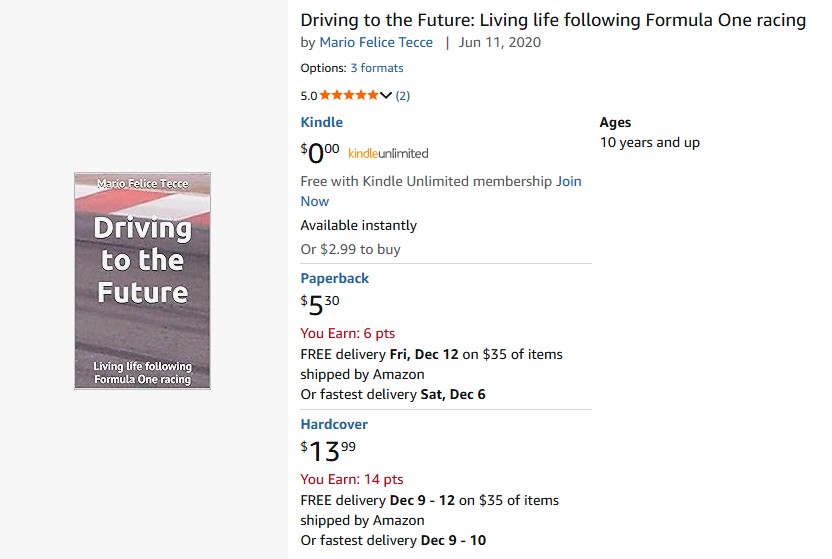
If you wanna learn more about Dr. Mario Tecce’s original book, you can pick it up today by searching: Driving to the Future, Living life following Formula One Racing. Pick up a hardcover copy for $13.99, a paperback for $5.30, or free on Kindle all through Amazon.com.
The narrative shifts from the roar of engines to the silence of mortality. Mario recounts a near-death experience on a rainy highway and his time in the ICU after a heart attack. These crises force him to confront universal questions: Have I lived well? Have I done good? Am I afraid to die? His scientific background in molecular biology blends with theology, leading him to see faith not as superstition but as reason – a belief that death is not an end but a transition.
Beyond the Track: Faith and Mortality
Perhaps the most poignant passages are not about racing at all, but about love. Mario recalls Jackie Stewart handing a flower to his wife Helen at Goodwood, and his own wife Lisa smiling at him in the ICU. For him, love is not sentiment but metaphysical truth – a force that proves the existence of the soul, the Creator, and meaning itself. Love, like racing, is commitment, risk, and transcendence.
Mario closes by reflecting on free will and the virtues revealed through racing. From Nico Rosberg’s daring pass in Abu Dhabi to Sebastian Vettel’s improbable win at Monza in 2008, he sees prudence, justice, fortitude, and temperance alive on the track. Racing becomes a crucible for character, a place where choices matter more than results. Even in an age of autonomous cars, Mario insists, the act of choosing – the steering of one’s life – will never disappear.
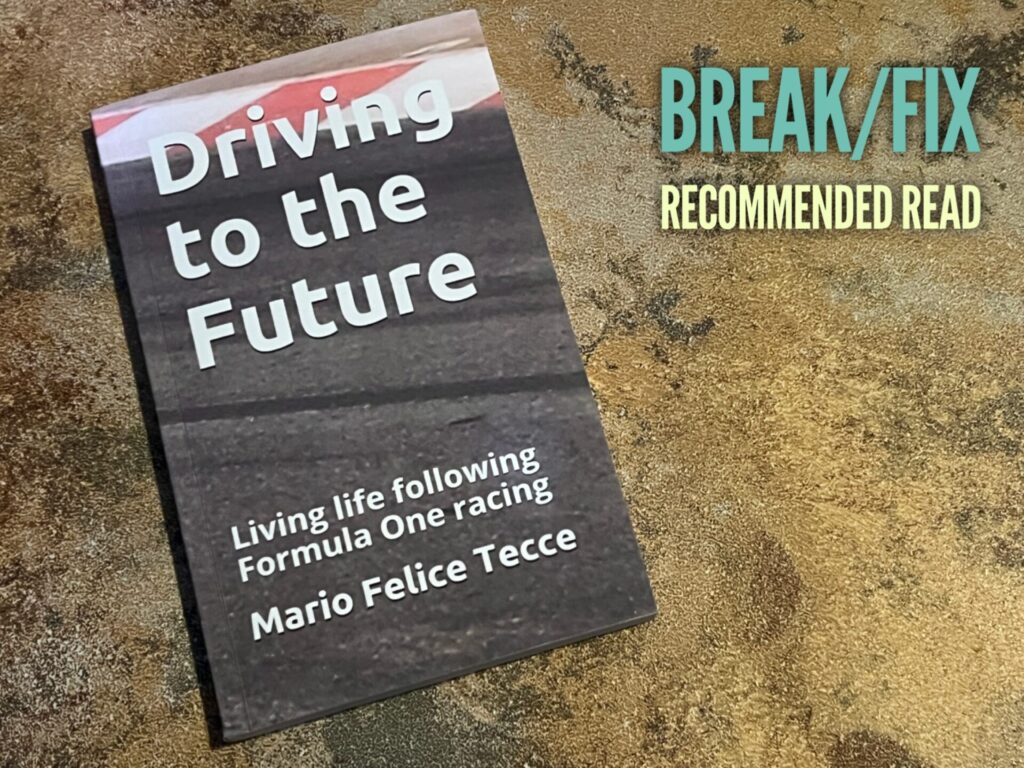
Driving to the Future is not just a book about motorsport. It is a meditation on life, death, faith, and love, told through the lens of racing history. Dr. Mario Tecce invites us to see every lap, every turn, as a metaphor for existence itself. To drive well is to live well. To commit is to find meaning. And to love is to prove that eternity is real.
Guest Co-Host: Revel Arroway
In case you missed it... be sure to check out the Break/Fix episode with our co-host.Other Recommended Reads
Reading List








Goodreads

This content has been brought to you in-part by sponsorship through...