

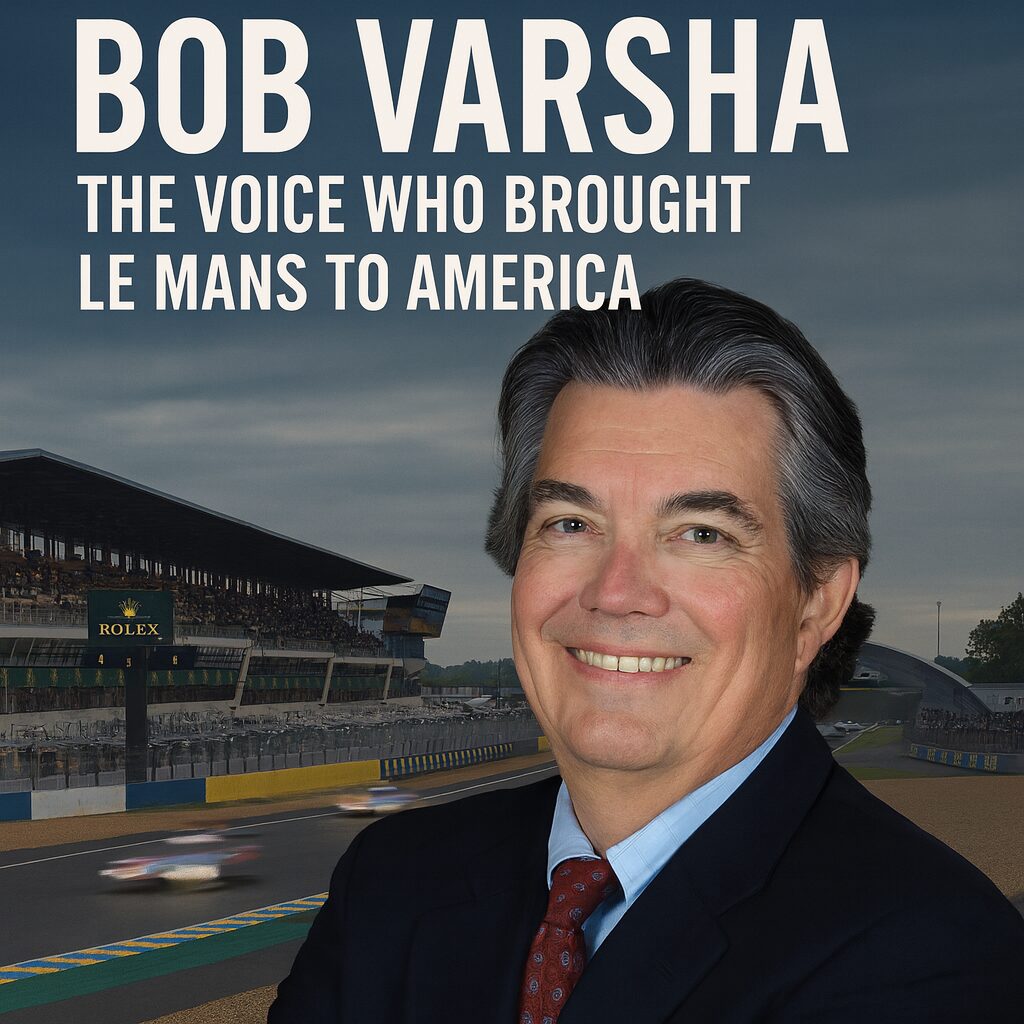
For over a century, the 24 Hours of Le Mans has stood as one of motorsport’s most enduring legends – a race that blends endurance, engineering, and human drama into a spectacle unlike any other. For American fans, much of that magic was translated through the voice of Bob Varsha, one of the most recognizable narrators in motorsport broadcasting. His signature blend of technical insight and storytelling helped transform Le Mans from a distant European tradition into a must-watch event for U.S. audiences.
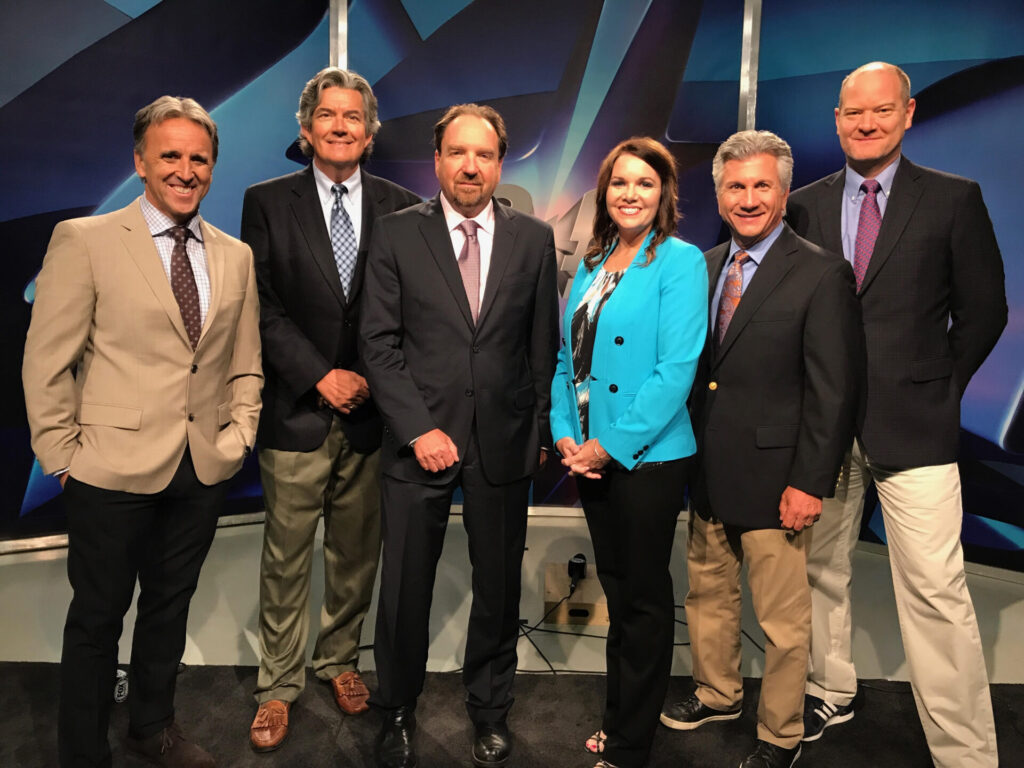
Varsha’s path to the commentary box was anything but conventional. Trained as a lawyer at Emory Law School, he seemed destined for a career in the courtroom. Yet his passion for running—he competed in the 1976 Olympic Trials—led him into Atlanta’s vibrant sports community. A chance invitation to commentate on the Peachtree Road Race opened the door to broadcasting, first with Turner Broadcasting and later CNN.
When CNN downsized after the 1984 Olympics, Varsha stumbled into motorsport almost by accident. A trailer in the Turner parking lot housed World Sports Enterprises, a pioneering motorsports production company. With no prior racing knowledge, Varsha dove headfirst into covering IMSA’s Camel GT series, learning the craft alongside legends of the sport. That leap eventually brought him to ESPN, where he became a fixture in Formula One, MotoGP, and endurance racing coverage.
Tune in everywhere you stream, download or listen!



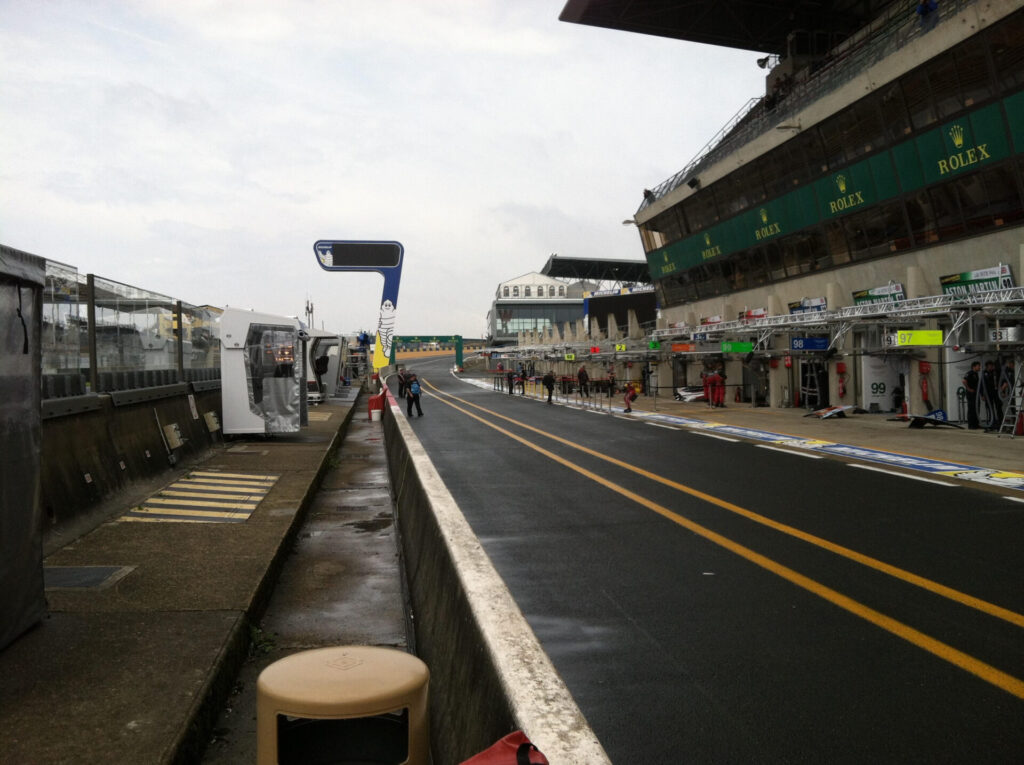
Varsha’s Le Mans journey began in 1986, when producer Terry Langner tapped him to join the ESPN crew. Arriving at the Circuit de la Sarthe, he was struck by the sensory overload: the sound of engines echoing through the French countryside, the patchwork of industrial parks, farmland, and forest that make up the eight-mile circuit. His first night trackside brought both awe and danger—bits of bodywork from a Mercedes exploded tire rained down on him and his Japanese colleagues. It was a baptism into the unpredictable theater of Le Mans.
Synopsis
On this episode of Evening With a Legend we interview Bob Varsha, a renowned motorsport broadcaster, about his extensive career and experiences covering the 24 Hours of Le Mans. Varsha discusses his unconventional path from law to broadcasting, the intricacies of commentating long endurance races, memorable moments at Le Mans, and his broadcasting style. The conversation also touches on the logistics and challenges of broadcasting such a complex event, the evolution of motorsport broadcasting and facilities at Le Mans, and advice for aspiring broadcasters. The interview provides a deep dive into Varsha’s contributions to motorsport broadcasting and his love for storytelling.
- Everyone has a unique “Road to Le Mans” story; take us through the events that led you to get “that first call” to come to announce the 24.
- What was that experience like calling the 24 Hours of Le Mans (compared to other events), and how did you prepare for such a complex event? Who were you in the box with?
- What were some of the biggest challenges of commentating on a 24-hour race compared to shorter formats like Formula 1 or IndyCar?
- Can you share a moment from your Le Mans broadcasts that you consider the most dramatic or memorable?
- How did you approach balancing the technical side of the race with storytelling to keep both hardcore fans and casual viewers engaged?
- What role do you think broadcasters play in shaping the way audiences perceive Le Mans and endurance racing in general?
- Were there times when the unpredictability of Le Mans forced you to adapt your commentary style on the fly?
Transcript
Crew Chief Eric: [00:00:00] Evening With a Legend is a series of presentations exclusive to legends of the famous 24 hours of Le Mans giving us an opportunity to bring a piece of Le Mans to you. By sharing stories and highlights of the big event, you get a chance to become part of the Legend of Le Mans with guests from different eras of over 100 years of racing.
Tonight we have an opportunity to bring a piece of Le Mans to you sharing in the Legend of Le Mans with guests from different eras of over 100 years of racing. And as your host, I’m delighted to introduce Bob Varsha, one of America’s most recognizable voices in Motorsport broadcasting, bringing his signature depth, clarity, and enthusiasm to coverage of the 24 hours Le Mans for us audiences.
Over the years, Bob served as lead commentator for [00:01:00] networks like Speed Channel and ESPN guiding viewers through the complexities of the race with a rare blend of technical knowledge and storytelling, his ability to balance real-time analysis and historical context made Le Mans’s broadcast, both engaging for seasoned fans and accessible for newcomers.
Whether calling the drama of late night stints, dissecting strategy, or capturing the emotion of the finish, Bob’s commentary helped elevate Le Mans into a must watch event for American Motorsport. Enthusiasts cementing his reputation as one of the sport’s premier narrators. And with that, I’m your host crew chief Eric from the Motoring Podcast Network, welcoming everyone to this evening with a legend.
So Bob, welcome to the show. Thank you very much, Eric. Pleasure to be here. Bob, you started your broadcasting career in 1980, and your first LA mob broadcast was in 1986, still in the days of quote unquote the old Le Mans before all of the renovations. So let’s talk about your unique. Road to Le Mans story and take us through the [00:02:00] events that led you to get that first call to come announce the 24.
Bob Varsha: My entire career, all 41 years of it, I guess, has been total happenstance. I trained as a lawyer at Emory Law School here in Atlanta. Figured that was gonna be my career. I was gonna be an attorney and I was for about four years, but I was also a distance runner of some note Olympic trials in 1976 for the Montreal Games.
I did very well. Finished six there. So I was kind of a part of the running community here in Atlanta. And Atlanta is a big running town, so, um. By Hooker, by Crook. I wound up as the executive director of the Atlanta Track Club, and our biggest event of the year was and is the Peachtree Road Race, 65,000 people running a 10 K through Atlanta on the 4th of July.
And I got an invitation from a local TV broadcaster to come and help comment on the race because I knew it inside and out. So I did that, didn’t think much about it. And then I got a call from Turner [00:03:00] Broadcasting, which is based here in Atlanta. They said, would you like to come and do that for our national broadcast?
And I said, okay, great. So I did it. A few weeks after that, I got a phone call offering me a part-time job, which wound up being 22nd news reports in the commercial breaks of the late night movies. But one thing led to another and I moved to CNN Sports and CNN radio and on and on and on because those opportunities were there.
To be honest, I was the only guy in the very small CNN radio sports department eventually got fired in Word. We had a great news department on the CNN side with great people. Kathleen Sullivan, Dan Patrick, Keith Berman. These folks were all at CNN when I was, but for whatever reason, oh, well I know the reason.
It was after the 84 Olympics in, uh, Los Angeles. They wanted to slim down the department, so I was let go. But I knew that out in the parking lot at Turner Broadcasting, there was a construction [00:04:00] trailer, which housed the first ever motor sports production company I’d ever heard about called World Sports Enterprises.
So I went over there and said, Hey, is there a job here? And they said, yep, come on. So I became a Motorsports reporter at that point, having no knowledge whatsoever about Motorsports. They sent me off to do the uh, camel GT program and the great days of the Porsche nine 60 twos and the Nissans and Toyotas and what have you.
I went there, learned a lot, met some ESPN people. Who asked, will you come and host some of our stuff? So, you know, that was sort of the theme of my career. I was inundated with opportunities, picked and chose and, and wound up 10 years at ESPN. And it was during those 10 years that I became a Le Mansr host, a Formula one host, plus motorcycles, motor gp, and all sorts of things.
Or whenever there was an opportunity at ESPN, I put my hand in the air because I love telling stories and I love researching new things. Loved the [00:05:00] people I worked with. And so, you know, it all really worked out. And then it became Speed, vision, outdoor Life, and uh, Fox Sports and so on and so forth. And now I’m a freelancer just looking for work here, there, and everywhere.
You ask how I got to Le Mans, it was a phone call from our coordinating motor sports producer, a guy named Terry Langner, who also stuck me into the Formula One seat. As I said, I love telling stories. The internet was alive and growing, so there was plenty of opportunity to learn various nuances. I also knew who I was working with.
We had a great crew, David Hobbs, Brian Till, Calvin Fish, and the group kind of changed over the years, but we had basically. 10 solid announcers, some of which knew vastly more than I did, like HaBO and others, who, this isn’t gonna sound right, but needed a little guidance, a little, um, mentoring. Yeah, mentoring.
There you go. But I also had tremendous respect for Le Mansr. You know, I used to do my [00:06:00] search by reading everything I could get my hands on. I had a shelf of books just like that one behind you. And dug through them working with a producer to find out what we’re likely to be talking about. Fully aware that our pictures and television is a picture medium, not a words medium.
We’re coming from the French who create the world feed, as we call it, that everybody uses supplementing with a camera or two, which is what we did.
So you get to Le Mans 86, the first time you’re on hallowed ground.
Bob Varsha: Absolutely. The first time I went to Le Mans. We had a, a skeleton crew for ESPN and we stayed in people’s houses.
We rented space. I was in a house with a small crew of Japanese television people. Nobody spoke any English. We go out on the, uh, the first day and Le Mansr is really all about sounds. The daily traffic stops, it goes away. And then the trucks come and bolt on the armco and then the sweeper trucks come through and, and clear the road.
And then you hear off in the distance miles away. The car’s starting up, [00:07:00] run, run, run, run, run. And then they, they go, which means they’ve left the pit lane and they’re going up over the Dunlop curve and down through, uh, church Rouge and onto the straightaway. And that’s when the engine note goes Rain.
And it never comes down because they’re coming down the mosan and there’s no other chicanes there or anything. And uh, so my Japanese pals and I are standing up by the Armco. I let my ego get the best of me. So I’m gonna show these Japanese guys what’s going on. And we watch a car go by Porsche and the Japanese guys look at me and say, ah, I, there goes a Jaguar about the fourth or fifth car that comes by, gets to within.
50 yards of us and he goes, ring blows a tire. It was one of the Mercedes, the Salberg Heim Mercedes was introducing Michelin’s new long distance racing [00:08:00] tire. This thing went off with a bang that would deafen you and for about the next 30 seconds, little bits of race car came raining down on us. So we all got a a little souvenir of the body work of the Mercedes.
But part of the magic of LA Mall is it’s different every quarter of a mile. You’re either you’re in the Bugatti circuit or you’re out going down through Terra Rouge. Uh, you go through an industrial park and there’s a stadium there, and then you’re off into the trees until they come out down at Mosan Corner and that’s like farmland and then back down through Indianapolis and Arage and Porsche.
So it’s like a different racetrack every quarter of a mile. The scenery is different. The, uh, pavement is different. You can get as deep into Le Mans as you like. You know,
and then you’ve been to many tracks around the world and around the country. Mm-hmm. What was the experience of calling the 24 like compared to other events like the Indy 500 or Daytona or anything like that?
Bob Varsha: So, you know, it, it was a big, kind of [00:09:00] fraternal kind of thing. A big adventure. We all got on, fly over to Charles Leal airport, go down to the TVG platform, get on the, the rocket train and, and be in Le Mans in an hour or so. Having said that, there was an awful lot to get used to. The French do things their own way as everybody does credentialing and parking.
And where are we staying? Where we eating and you know, all that kind of nitty gritty stuff had to be sought out. But again, having HaBO there, having raced in the 24 hours, 20 times, it was pretty easy to find our way around. And just about any time you approached one of the old hands that was directing traffic and they spotted David, they would recognize him and suddenly they couldn’t do enough for us.
So it was kind of a, um, golden road we had because we had David there as our credential, if you like.
You mentioned HaBO a couple of times already. Yep. More than just coworkers, but friends I’ve seen you guys present before together in, in other, uh, instances. And he was just [00:10:00] here on evening with a legend, as a matter of fact.
So any good stories, some good gossips, some good dirt on behind the scenes with HaBO in the LeMans box.
Bob Varsha: Oh God. David and I traveled together for 25 years or so doing Formula One, but at Le Mansr, obviously he was working with this huge backlog of experiences. Not a lot of those stories can be told on a family show.
We kind of hooked up with the British television contingent, as you might expect, and just had some great times and sort of helped each other out when somebody was short of a body or some information or some video or whatever it might happen to be. But David could tell so many stories about Le Mansr. It’s one of the great regrets of his life, I can tell you as it is with Mario Andretti, that they didn’t win the overall at Le Mansr.
The great driver, Bob Wallach once won a GT category and someone was congratulating him on the podium and he said, oh, it’s just a class win. As if it didn’t count. [00:11:00] Everybody wants to win the overall, David did win things. He won the index of performance one year driving a spitfire. He won some GT things.
He was third in the overall once He accomplished a lot there, but he didn’t have that one big. Win. We had lots of fun dealing with that in various way, shape, or form during, uh, the broadcasts. How do you prepare for such a long race? It’s a complex race. It’s a fairly compact racetrack. You know, the Bugatti circuit is the purpose built racetrack within the big eight mile loop of public roads that constitutes Le Mansr race course.
And there’s not a lot of room in there when you get 60 racing teams and all of their stuff. And, and since that first race, way back when in the old LA Mall, teams like Porsche and Audi and so on have erected these giant garages behind the pit lane. People everywhere. It can get pretty chaotic there, but you know, but it’s still fun [00:12:00] because you know, you’re still there, you’re at LA Mall, you’ve got a job to do and you’re going to, uh, to do it.
We would rotate responsibilities. So I actually put in some time as a pit reporter during the, uh, nighttime hours and uh, I would remember walking down the pit lane and above. On top of the building were hundreds of people sitting with their legs dangling over the edge of the roof. And I would hear people yelling, oh, ESPN, Hey Faria, what are you doing?
And of course, a lot of ’em were drunk as hell, but that was okay. Nobody fell off. But if you’ve seen the movie Le Mans, you get little glimpses of what it was actually like back then. The characters, you know, stomping around in these dusty concrete hallways behind the garages. It was pretty rustic, I have to say.
And in fact, after one of their appearances in the race without a result, the Jaguar team might have been that first year in 1986, spray painted on the inside walls of their garage. We will be back. They are putting so much [00:13:00] ego into coming back, having not won the race since 1957 with a D type. Tom Walkinshaw was selling a bill of goods about what they could accomplish, which they finally did.
Yeah, that was uh, the crazy old days at Le Mansr. Now it’s all clean and shiny and that’s a good thing. ’cause it desperately needed it. It was all part of a general. Wake up period. In international motor sport, you cannot just be an athletic endeavor or contest. You have to be entertaining. You have to follow up your stories.
You have to honor your past greats, you know, all of these things. You had to have good facilities, clean bathrooms, and all that sort of thing. But they left some touches there that I appreciate and point out to people from time to time. It’s a magical place. It really is.
On evening with a legend. We happen to have a lot of pro drivers come on here.
And obviously we know what their job description is, drive car fast, win races, right? But there’s so many other jobs that are going on at the same time in this microcosm that is the [00:14:00] 24 hours of Le Manss. So I wanna hone in a little bit more on what happens in the box. Let’s talk about some of the challenges of commentating a 24 hour race.
There’s only a few in the world. Le Mans, Rolex, Bergrin and Spa being the big four on the list, but how does that compare to commentating action packed races that are more condensed, like IndyCar and Formula One?
Bob Varsha: Well, it’s an entirely different exercise. You know, short races are a bit more intense. It’s more important that you stay on top of everything as it’s happening.
Long races. I actually prefer, because you can speak more, you can bring up stories, you can do things. And that’s more interesting to me. ’cause as I said, I got into it to tell stories and, uh, there’s so many great stories. I’ve met so many wonderful people over the years that, yeah, I just prefer those long races.
I like that. Have a subject that I can really tear big chunks out of and chew ’em up.
So like the drivers do the broadcasters have minimum air times or maximum [00:15:00] air times that you can be behind the mic?
Bob Varsha: Not by rule, we do. Just for the sake of maintaining energy and that sort of thing. Typically we would have two teams of announcers, two or three up top may be supplemented by.
Someone we bumped into and invited up to the booth, and then two groups of probably three pit reporters each. ’cause uh, that’s a long pit lane at Le Mansr. You gotta be very careful. You can’t walk down the pit lane as such because the pit marshals or commissars as, uh, Derek Bell likes to call them. Are out there telling you to get outta the way and the cars are coming up from behind you, yada, yada, yada.
So yeah, it takes manpower, no doubt about it. And then you have the technical side, and those folks are supplemented, of course, by the World Feed and what you get, your audio and video all worked out. You have. Two to three cameras of your own, and there’s a story behind that. You’d have a high camera looking down on the pit complex, you would have two pit cameras walking up and down, [00:16:00] especially during the night because that first year we went to LA Mall with ESPN, nobody seemed to know until our production manager found out that the French World feed does not play all night.
We’re there to do the 24 hours. We had this big six hour hole in the middle of the night with the French all go home. So we had to quickly rig up a system, which amounted to me in front of a green screen type of arrangement. It was actually a tarp hung over. A two by four nailed to the wall and they would play headlights running around in the dark while I was sitting on a stool and basically talking about anything I could think of for, for six hours.
We, we did have one guy over in the pits, so he would interrupt from time to time with something happening down there. But yeah, I mean, we almost got caught with our pants down in terms of. Having pictures to show the folks at home. Then, fortunately, within a few years, they had a [00:17:00] 24 hour French feed. It’s spectacular.
They do a great job, including the um, Le Mans Air Force, we call it. It was like six helicopters in a relay type race. They would land at the airstrip, which is right across the country road from the racetrack, where teams would go to warm engines and check repairs and adjustments and go up and down the runway.
But these helicopters. Pass the baton and just go and go and go for the whole 24 hours, which is great fun.
Well, you mentioned earlier you have a very, very long tenure at the 24 hours Le Mans from 86 all the way up through 2016 with three different broadcasting companies, ESPN, speed, vision, and then Fox.
You kind of described a memorable moment there, but. Are there some from the races themselves that stick out to you? One of them, for me growing up, watching the race every year was when Audi stage, the three cars crossing the line together and you guys are like, can you believe this? We haven’t seen this since, you know, the 1960s or whatever.
Like those moments captured with your [00:18:00] voice and with HaBO and everybody else. Are there others that really stuck with you? Were important.
Bob Varsha: Oh gosh, yes. One of the E early ESPN years. Well, we didn’t have a booth and I was sitting in the back seat of a van with, it was Larry Newberg from ESPN. As I mentioned earlier, Jaguar had said, we will return.
We wanna win this race. So they started coming back and failing until 1988. They came with a fleet of cars, five and all, including all of their factory guys, plus Danny Sullivan, who I was doing. Champ Car with at that time Derek Daley, who I did Champ Car and Formula One with, you know Davey Jones. A lot of very, very good drivers.
Race goes on. Big dramatic moment was when Porsche factory driver plus Ludwig ran the car outta gas on the back stretch. Now this is the mall. You only get about seven laps on a tank of gas and you’ve got to be careful to get in clouds. Kind of forgot and had to grind. About four miles around the [00:19:00] track on the starter motor to get it back to the pit lane where they could fix it.
At that point, they lost the race lead. Jaguar took over and believe it or not, the Porsches almost came back and caught Jaguar, but they weren’t able to. And the car with Andy Wallace and John Lamers and the Earl of Butte, Johnny Re, a British nobleman, good guy. They hung on. Won the race and then two of the original five Jaguars that were still in the race joined up with the race leaders and came across in that three wide echelon style that always thrills.
Now everybody knows, or everybody likes to say, they know that Le Mansr is a British race on French soil. So after, um, years of domination by the Germans with their Porsches. A lot of the Brits stopped coming, but during the race, as it became more and more clear that Jaguar had a legitimate shot at winning for the first time since 1957.
This is 1988, the ports [00:20:00] at Kle, the ferries. Became jammed as British fans crossed the channel to come to Le Mans so they could say they were there to witness Jaguar’s comeback win at Le Mans. And I remember those laps of honor after the finish. Confetti flying everywhere. Jaguar flags, British Union Jacks singing the national anthem.
I mean, it was this thundering grandstand of people and it was about as emotional as I’ve ever gotten on the air. I was just so impressed with the, uh, national support for the Jaguar victory in 88, and that actually kicked off from, I would say 87 when Porsche won as usual, and then Jaguar won, and then Mercedes won.
With the, uh, C nine, and then somebody else won, and then Mazda won with their 7 87 B four rotor car that made an absolutely eye watering noise. And then years after that, it was a different [00:21:00] brand or a different model car from a different brand every single year. I mean, there was something new every year, which we weren’t used to because we had spent seventies and eighties watching Porsches.
Sweep the table. That’s one moment that will stick with me forever was the year the Toyota Hybrid came around and died at the start of the last lap. That one I’ll always remember. So that was fun going back, knowing there was a a chance we were gonna see something different and new.
So you talked about pit reporting, which gives you an opportunity to talk to the drivers.
You know, they’re fatigued, let’s say they just jumped out of the car. You gotta get that instant report. But the question that always comes up, everybody wants to know who’s the best interview. Some say it’s andretti, others say it’s HaBO, whatever. Is there a best interview and were there some tough interviews and why?
Bob Varsha: Well, that comes naturally, you know, is there a prettiest girl? No. It just depends on your taste. Now you mentioned Mario Andretti, I assume. Yes, Mario is a wonderful interview. [00:22:00] He remains just a darling of the media rooms overseas. People just love to know that Mario’s gonna be there that weekend and every journalist wants an interview with him as far as the worst go.
Well, you went there. I said tough. Oh, I’m sure there is, but I tend to stick with the good guys. One thing that Le Mans taught me right away is that drivers who are from foreign countries. For whom English is not a first language, and drivers who have not been exposed to the pretty prudish American broadcast standards.
When it comes to expressing yourself, you can get some really crazy comments from drivers. I remember one Jamal Delmondo son of the famous actor, Alba Mondo. Was driving a GT car, I think, and there was an OnTrack Contra to, and he got out of the car and I wasn’t doing the interview, but one of my colleagues was this guy got so worked up, [00:23:00] he was dropping F-bombs left, right and center, and I was working in the booth for that race with Alan McNich.
And of course Alan being a first time broadcaster, hadn’t been through this before himself. So I looked over at Alan and he had an expression on his face, something like this, and I just gave him the, the hand signal to calm down, count down, you apologize, you explain. People don’t understand. I mean, I heard Sena didn’t understand that an F-bomb was not appreciated on, on American broadcast.
And the Brits have come around to that as well. So. You have to watch out for that. As far as the toughest interview and full credit to these drivers who may have just gotten out of the car and been through life changing experiences, gosh, who would I pick on? My toughest interview was my first year at Le Mansr.
David Hobbs was not going on air with us. He was driving with Damon Hill. I know. And I knew David. I knew we’re gonna work together and so on, and he had just gotten out of the [00:24:00] car. He was driving a Richard Lloyd Porsche. And, you know, I walked up to him, little hail fellow, well met, how’s it going? And he looked right through me.
It was like he had no idea who I was. And you know, I got a couple of monosyllabic comments out of him and I thought, this is not gonna work. He’s got some explaining to do later on. Does David, but no, I, I can’t think of anybody who gave bad interviews unless they were just afraid of their English. Course.
Remember too, at Le Mansr, there’s an army of journalists there. Everybody I think, is somewhat reconciled to the idea that you’re gonna have to talk because you’re just gonna be waves beating on the shore, people asking you to comment on this or that, the other thing. So I don’t recall a bad experience with anybody in that context.
Speaking a little bit more to your broadcasting style. You talked about the amount of research you do, trying to keep up learning new things, all the new cars that are coming. So how did you approach balancing all that technical information with [00:25:00] storytelling to keep both us hardcore fans engaged, but also casual newcomers that might be turning on Le Mans for the first time?
Bob Varsha: That touches on a subject that I’ve always felt pretty strongly about. Making a broadcast, you wanna throw your net as far as you can, because every viewer is a potentially new viewer. They may know all about the sport, they may know nothing about the sport. So you really have to include those people in your commentary narrative to provide the greatest opportunity for them to be entertained, to be appreciated.
During my early formula one days, we used to go through the qualifying system every Saturday in our broadcast. And I used to get occasional emails from people saying, why do you keep talking about the qualifying format? Every time there’s a qualifying show, we know what it is, just get on with it. And I thought, no, you really don’t.
Because there’s a lot of people out there who may not understand that it’s a three session deal and we drop five cars and blah, blah, blah, blah, blah, [00:26:00] blah. So I’ve always tried to uh, one, stay away from very technical topics ’cause I’m not a technician. Stay away from trying to explain what a driver did wrong.
That came up badly for him because I’m not a driver. That’s why our booth at Speed Vision with me, David Hobbs, Steve Matchett, and Sam Posey, it worked because we each knew what our role was. I’m getting us in and outta breaks and setting the scene and all that. David, as the driver takes over when there’s a replay that calls for driver expertise, same thing when we have a dramatic event in the garage.
Steve was a mechanic, he can explain that. And Sam was just the poet laureate. So we each played our role and I think, uh, it really led to the best, most economical in terms of words broadcast in American broadcasting. We don’t talk constantly. We talk a lot. Well listen to Sky TV with the Formula One shows constant words, [00:27:00] words, words, words.
They never stopped to take a breath. I call that the Murray Walker syndrome. Murray worked alone in the booth before he hooked up with James Hunt and would just talk, talk, talk, talk, talk, talk, and he became famous for his screw ups. There are whole books full of what they call mems, you know, hilarious things like that.
Formula One car is absolutely one of a kind. There’s nothing quite like it except the car behind it, which is identical, that kind of stuff. Unless I am terribly wrong and it appears I am, you know, that’s just the way he would do things. But he would talk constantly and everybody since that I’ve worked with on international broadcasts.
Does that, and I never quite understood why. Because to me, you want the squeal of tires, you want the roar of the engines, you want the sound of motor sports not, uh, filtered through some constant chatter from a guy like me.
And I feel that the broadcasting style that you and your team brought to the table is actually similar to the [00:28:00] way radio IMSA and Radio Le Mansn work, because John Hind Hoff does the same thing.
There’s all these pauses. And you just hear the background sounds of the cars going for a while, and then they kind of regain their steam and peter off and things like that. And so I’ve always appreciated that because like you just said, it’s a lot for the audience to take in, but you’re just this constant waterfall of words all the time.
It makes me wonder as announcers, do you get to decide what the TV coverage should focus on, or are you constantly being reactive to what you see
Bob Varsha: generally speaking? It depends what country you’re in. I did a lot of Formula E stuff with British television and they think announcers are light bulbs.
Unscrew one screw in another one, shut up until we tell you to talk. It was quite different here in America, the producer and director and so on. We’ll sit with the announcers and we agree on what the key themes are coming into the race weekend, which I really appreciated. I was kind of put out when I did my first show overseas.
They don’t want to hear what you think. [00:29:00] So yeah, it’s a very different style of broadcasting that you have to know your audience, know who you’re working with. Well, and the reason
I bring it up is because I feel like one of the most underappreciated classes Yep. At Le Mans every year is LMP two. They just never seem to get any airtime.
Right. And I always wonder. Is that a decision of the folks behind the cameras, or is it the announcers that are like, it’s really not that interesting, we’re just gonna follow the leaders around for the next three hours. Where it would be nice to, you know, switch gears a little bit. Yes. Look at what else is going on in the race.
So do you play a part in influencing what we see on the television
Bob Varsha: in a very casual way? Yeah, we’ll talk and the producers, you know, they’re not dubbing, they’ve done their homework. They know what the key. Elements of this race bring out, whether it’s the points championship or the mechanical reliability of certain cars, it’s a group function.
You talk amongst yourself, you learn what you think is important. And then you talked about being reactive. You absolutely have to do that. The pit [00:30:00] reporters. Play a big role in that because they find out all the information before we do. And sometimes you’ll be just totally surprised by something like one of the first years the, uh, Audi R eight was racing somebody’s car broke gearbox problem, swing it back into the garage.
And David Hobbes’s son guy was being a pit reporter. And so he disappears behind the car into the garage and we’re talking about something else. All of a sudden he says, oh my God, I can’t believe this. And we thought, oh, oh, what terrible thing happened. The Audi guys had built their car in a modular fashion so they could take off the rear body work.
And the gearbox and unplug it and plug it. Not they came. So, you know, we got a camera down there and watched all this happen and somebody put a stopwatch on it in like seven minutes. That car came back out with a new rear end on it, you know, away they went. So you learn a lot just by watching the teams, manufacturers keep their latest innovations under a [00:31:00] cover until they really need it.
And you mentioned the other classes. That’s mainly a factor that all of the big recognizable driver names. And the fastest cars in class are gonna be in prototype and well, what is now GT three Pro? So yeah, they’re just naturally going to attract more attention. They’re gonna have the bigger accidents, the more drama, the fantastic numbers in terms of terminal velocity and all that kind of thing.
So I agree with you. I think LMP too deserves a little more attention and everyone, I mean, if you’re at lab ball, you’re spending money, you’re risking your life, you’re doing something. Huge in your own life, you deserve a little attention, I think. But that’s not always possible when you’re working in the international format that we are.
You know, we can’t go say, anybody, speak enough French to tell the director in there. We want to go see something else on track. Yeah. We just react to the pictures we see.
So for those of us at home, perception is reality. Mm-hmm. That’s why I’m asking this question about how the broadcasters and [00:32:00] how the announcers kind of shape the way we see things.
Right. And one of the biggest things, doesn’t matter the discipline of racing, but especially at Le Mans, there’s always the rivalries. Yeah. Famously, Porsche versus Corvette. Corvette versus Viper, and maybe more realistically Porsche versus Ferrari. Mm-hmm. How much of that is real? Because if you ask the drivers, they’re sort of like, well, eh, maybe sort of, kind of.
Yeah, in the booth, it’s all this energy and this excitement around these rivalries. Are they contrived or are they real
Bob Varsha: to the guys in the booth? This is a war pure and simple. There is, you know, no quarter asked or taken, you know, to the drivers, to the mechanics, to the team personnel. They are professionals.
This is what they do for a living. And that other garage down there may be where you’re working next year. You may get hired, you switch teams. You, you know, you wanna do a good job, which is why the drivers are so friendly out of the car. You know, you don’t want to close off any potential pathway for your career.
I mean, there’s a certain amount of huge pride [00:33:00] in what they do. Corvette racing is a great example. You go there and win nine championships in 12 years or whatever it was. The Corvettes were huge favorites at Le Mansr, a lot of American flags waving, all that sort of thing. But there was a lot of pride in being a part of the Corvette team.
T-shirts everywhere. On and on and on. Yeah. I mean, the rivalries are there, you know, back in the board rooms of Porsche and Audi and, you know, general Motors or whomever that win means a lot. Look what Ford went through before they finally got, you know, the 66 victory and then the, the All American AJ and Dan Gurney win in 67.
That means a lot. The marketers want fresh meat all the time. You know, the drivers know it’s racing, it’s sport, it’s fun, and they do it for nothing, but they don’t want you to spread that around.
You’ve mentioned throughout, there’s a lot of unpredictability, especially on a very long race, like the 24 hours of Le Mans.
You talked about some of the things you did to react [00:34:00] in creative ways, the makeshift green screen and things like that. Then you touched on, especially the downtimes, nighttime has to be really hard. The drivers talk about how hard it is for them because they feel like they’re just driving on the highway.
Cars are spread out. Lots of cars have retired. I don’t wanna say it gets boring, but it, it does kind of get boring. Sure. How do you keep your energy up? How does your team. Are you guys slamming Red Bulls? I mean, how do you keep talking through the night to continue coverage?
Bob Varsha: Well, we each kind of have our own way, our own schedule, our own diet and so on.
I drink a lot of coffee and we, we lean on our poor pit reporters to find something because, uh, as you say, it can get boring. I mean, there are boring races and I’ve always said the hardest race to call is a bad race. A boring race because then your mind starts to wander. You’re thinking of silly things and you start saying silly things, and that’s no fun.
The easiest races to call are the exciting ones because that’s where you know the action [00:35:00] speaks for itself. And you’re calling the Kentucky Derby, you know, here’s who they are and here’s what they’re doing. And there’s much more energy g just naturally in the way you talk about things.
So Bob, with a couple extra minutes here, we’re gonna go to some audience questions and I’m gonna try to interpret this one from David Schmidt.
He wants to know about the gentleman drivers at Le Mans. Le Mans is an anomaly in racing ’cause it’s one of the few races in the world where, I hate to say it, you can pay to play. What’s your take on the whole gentleman driver situation at Le Mans?
Bob Varsha: Well, you know, at Seabring and Daytona, and you know, the long races are by and large, not necessarily all of them are, uh, exactly like that.
You can buy your way into the race naturally. You have to have resources and licenses and all that sort of thing. I think. Berg Ring 24 is the only one that has very specific. You gotta show that you can handle a few laps by yourself before you can get into a [00:36:00] field of 120 cars going around and around. I, I always admired that fact that a race like Le Mansr is a race you could get into.
As I say, a minimum of experience and so on, and I used to think that was a great thing. I’m not so sure anymore, especially given the power and speed of current race cars and the potential to spoil a great experience for race fans all over the world by doing something stupid and getting in the way. And we’ve seen that a lot of times in these enduros, if you like, around the world.
You need some way of assuring yourself that guys are gonna be able to handle themselves at that first Le Mansr I went to do for ESPN, the guy who put me in the chair, Terry Langner was driving in the race. He paid his money and rented a seat. The thing that makes me think twice about my opinion is that these teams, unless you’re a big manufacturer, gm, Porsche, Ferrari, whatever, [00:37:00] the smaller teams that provide the bulk of the field in a race are.
Businesses. They are people earning a living by building and tuning and perfecting race cars and renting seats to hopefully qualified people. There’s that business aspect to it that I think the race would suffer from if it weren’t there.
Well, I’m gonna ask a fan favorite, and based upon what you said earlier, spoke very fondly of the Jaguar team and their memorable win in 88.
If you could have driven a car at Le Mans, is there one in particular you would’ve liked to have gotten behind the wheel of?
Bob Varsha: Oh gosh, I, I mean, there’s so many favorites out there. I would probably go with the 12 centimeter jag, whether it’s a nine or the 12. I just love it. I mean, Jaguar is the true spirit of Le Mans, I think.
Of course now I could drive a dark horse Mustang, you know, something like that. The cars that are coming to Le Mans. Coming to the sports car racing generally are of a quality we’ve never seen before. At least not in my experience going back to 1980. The focus [00:38:00] on efficiency and safety and all of these sorts of things, it just keeps calling me back.
It’s just so much fun to try to describe to people what’s going on out there. Who these people are. Ken Squire, one of my mentors told me many years ago, he said, if people don’t care about what happens to the drivers, you know, if the human element is not there, they’re just gonna switch off. So it’s part of my job as the, uh, as a host or a play about play guy, is to talk about the drivers.
Talk about the history of the brand, talk about where you are and what’s at stake and all those sorts of things. ’cause every racetrack in the world looks the same from curb to curb. And as I said earlier, I’m not gonna try to reverse engineer an accident or something like that. I should have people with me to do that.
There’s a, that element of romance to it.
One more crowd question and they’re gonna test my French here.
Bob Varsha: Okay.
John Quist asks, please describe your experience at [00:39:00] Albe de on Andre. You’re sitting alongside the Molson Straight for lunch. Seems like a great place to experience the speed. Were
Bob Varsha: you there with me, pal?
Yeah. So Bear, there’s more than one of them. You’d literally sit, you can sit by the Trackside wall. A couple of feet away, other side of that, couple of feet beyond you get to the pavement and cars come by. The time I was most impressed with it was we’d had a brief rain shower. So we’re sitting there heating our kds in way or whatever it was, the cars, and you can hear them all the way around the racetrack.
So here comes a car from, you know, let’s say four miles away and you can hear it coming. They get into top gear and top revs and don’t shift, which is a really weird sound. And then they go flashing by and if you stood up, you could hit ’em with your crumpet. They are literally three to four feet away.
It’s noisy and uh, in the rain it’s messy, but it is really fun.
Bob, as we transition into our final segment, we often ask our pro [00:40:00] drivers this on evening with the legend. The question is, what did Le Manss teach you or what did you bring home from the experience? So how does that apply to your career as a broadcaster?
Did Le Mans teach you anything?
Bob Varsha: Oh yeah. Every race teaches me something, whether it’s an exciting one or a boring one or what have you, Le Mansr. Teaches me more about broadcasting in terms of the dynamics of time, how much is available, you know, what else do you have to be thinking about while you’re talking about the action that’s happening in front of you?
Working with fellow commentators in the booth, radios if we have them. But Le Mansr, as much as anything taught me about racing history. The racing business because the business is a huge part of what happens on a racing weekend, as big as Le Ba, and as far as I’m concerned, it’s the biggest and best race in the world.
Do you have any advice for aspiring broadcasters, any words of wisdom for folks that might step up and one day commentate at a race like the 24?
Bob Varsha: You know, as I explained off [00:41:00] the top. I never intended to be a broadcaster. I was a lawyer, fell into the business, met a lot of very helpful people to help me hone my craft, if you will.
Awful lot of learning about racing, about, you know, the mechanicals, about the people who do it, about how they get to do it and so on. So I never trained, I never took a, a film and television course at any university. I’m living proof that you don’t have to do that to embark on a career in broadcasting.
Now times are constantly changing. AI and new electronic gizmos are changing the nature of the business very, very quickly, but the racing is still out there. So what I recommend to young people is not so much sure. You know, take a a university level course that’ll help you with a lot of the history and whatnot.
But get out there and do it right. Even if you have to sweep up in the newspaper hallways or, or submit reports to websites and [00:42:00] the constantly diminishing print media out there, magazines, newspapers. If you hope to be on the air someday, then find a way to get involved at your local racetrack and do whatever you have to do to get to that point.
If I. Clean the grants stands afterwards. I’m serious. I mean, you may have some, what you might consider otherwise demeaning work to do, but that’s how you get started. Chip Robinson, who won a bazillion races in imsa, raced for Bob Tulio, the Jaguar team, Al Holbert, Porsche, even on and on on, he started sweeping out the shops.
You know, any way you can get your foot in the door, do it. Then keep your eyes and ears open, probably your mouth shut and just soak it all in. But you know, the most important thing is to get that first gig to get in the door. And unless I’m mistaken, college homework isn’t gonna help you get there. There may be some way through a university level course, but nothing beats.
On the job training doing it.
So Bob, when you look [00:43:00] back and you reflect on your very long and prestigious career in broadcasting, part of what we do on this show is very similar to what you did in the booth, which is bringing the Le Mans experience to those that may never get the chance. Mm-hmm. To be there themselves.
So when you think about that and you, and you reflect on it, how does that make you feel?
Bob Varsha: I’m proud of my career and what I’ve done. I still have unfinished business. Like any career, I suppose. It’s not always fair, but you then make a decision about whether it’s really what you want to do, and this is all I really want to do, and if people come away from what we’ve talked about tonight and think, I didn’t know it was like that.
But I’ll find a way.
Well, since we’re speaking about advice and you speak so fondly of your many trips to Le Mans, any advice for people going for the first time?
Bob Varsha: And I do recommend that you go to Le Mans. Absolutely. Go. I would hook up with a regarded tour company, and there are lots of them out there that will arrange your tickets, your [00:44:00] seats, if you have any hotels, all that kind of stuff.
Stuff. And if not that go with someone, A person you know who’s been there before, knows the ins and outs. ’cause it’s a pretty crowded, complicated place on the race weekend. And the race is just so diverse. There is so much to see and do at Le Mansr. The fan zone areas have all kinds of crazy stuff you can buy in addition to the usual books and model cars and all that kind of stuff.
The museum that the, uh, a CO has is, uh. Good, good fun. They get great cars in there, so there’s so much to see and do. It really can be a family event. You can go down the road to, uh, wonderful old hotels like Lahar or you can go camp out in some open field. So you can, you can drive around, you see camps, and these are commercial operations.
You’ll see like a hundred. Identical little red tents with a stake in the ground and a number on it like your mailbox at home. People will camp there. You know, you rent [00:45:00] one for the weekend, and so you’ll see a beautiful little red tent with this monster Bentley parked next to it, or a Ferrari parked next to it, or you know you no right away.
That, uh, you’re in a place that’s very special to car guys.
Well, Bob, you said you had some unfinished business, so what’s next? Spoilers, surprises, things that we should be looking out for you on?
Bob Varsha: I’m a freelancer now. I had prostate cancer that took me off the stage, if you will, for a couple of years. And I came back to try to reinvent myself, thinking I was just gonna slide right into where I left.
But that wasn’t happening. And people have short memories by and large. Hey, I’m 74 years old. Not as old as Hobbes, but a lot older than a lot of the people who do the hiring. And nothing’s more frustrating to be than to walk up to a fan or a, or a fellow professional and have ’em say, Hey, I didn’t know you were still alive.
What’s going on? You know, I mean, they’re genuinely happy to see me, but they’re [00:46:00] not thinking of me top of mind. When they want somebody with the, uh, experience and the, uh, the talent, who’s the baggage? You know, I’ve done so many forms of motor sports, so many sports generally over the years that, um, I’m pretty firm in the belief that I can do just about anything that comes up out there.
Preferably bleeding motorsports, but if it doesn’t happen, I could be happy with what I’ve had.
That begs the question, will we see you commentating at Le Mans Classic in the future?
Bob Varsha: Boy, I would love to do that, but again, the international chauvinism kind of pops up. You know, there’s a, a lot of companies and a lot of individuals in Europe who want to do that, and so they do.
Now over here, of course, we have vintage racing programs. They get great cars. It’s always fun to go to, uh, California. To, uh, Monterey or, uh, or any of the HSR events or what have you here, but no, nobody has, uh, dialed me up about the Le Mans historics. That would be fun.
Before [00:47:00] we sign off, I wanna pass the mic to our A-C-O-U-S-A representative David Lowe for some parting
David Lowe: thoughts.
Bob, on behalf of the a CO and endurance racing fans around the world, thank you so much for incredible evening taking your time out to share with us. Very informative. Thank you.
Bob Varsha: Thank you, David. It’s a pleasure.
Well, folks, that brings us to the end of this evening with a legend where we explored the voice behind so many unforgettable moments at the 24 hours of Le Mans.
For decades, Bob CIA’s insight, passion, and storytelling helped bring the magic of Le Mans to living rooms across America guiding fans through the drama of night stints, last minute heartbreaks and historic victories. His commentary not only explained the race, but elevated it, making the spectacle of an endurance racing accessible to all.
So if you’d like to keep up with Bob, you can follow him on Twitter at Bob Varsha for latest insights on racing, or check out his ongoing appearances across motor sports media. With that. We hope you enjoyed this presentation and look forward to more evening with the [00:48:00] legends throughout the season. On behalf of everyone here and those listening at home, thank you Bob for sharing your stories with us.
Thank you.
This episode has been brought to you by the Automobile Club of the West and the A-C-O-U-S-A from the awe-inspiring speed demons that have graced the track to the courageous drivers who have pushed the limits of endurance. The 24 hours of the Le Mans is an automotive spectacle like no other. For over a century the 24 hours Le Mans has urged manufacturers to innovate for the benefit of future motorists, and it’s a celebration of the relentless pursuit of speed and excellence in the world of motorsports.
To learn more about or to become a member of the ACO USA, look no further than www.Le Mansn.org, click on English in the upper right corner and then click on the a CO members tab for club offers. Once you’ve become a member, you can [00:49:00] follow all the action on the Facebook group, A-C-O-U-S-A Members Club, and become part of the Legend with Future Evening with the legend meetups.
This episode has been brought to you by Grand Touring Motorsports as part of our Motoring Podcast network. For more episodes like this, tune in each week for more exciting and educational content from organizations like The Exotic Car Marketplace, the Motoring Historian, break Fix, and many others. If you’d like to support Grand Touring Motorsport and the Motoring Podcast Network, sign up for one of our many sponsorship tiers at www.patreon.com/gt Motorsports.
Please note that the content, opinions and materials presented and expressed in this episode are those of its creator, and this episode has been published with their consent. If you have any inquiries about this program, please contact the creators of this episode via email or social media as mentioned in the [00:50:00] episode.
Highlights
Skip ahead if you must… Here’s the highlights from this episode you might be most interested in and their corresponding time stamps.
- 00:00 Meet Bob Varsha: The Voice of Motorsport
- 01:42 Bob Varsha’s Journey to Broadcasting
- 06:23 First Experiences at Le Mans
- 11:21 Challenges and Stories from the Pit Lane
- 17:27 Memorable Moments and Interviews
- 24:46 Balancing Technical Information and Storytelling
- 25:22 Broadcasting Styles and Audience Engagement
- 28:20 Influence of Announcers on TV Coverage
- 32:03 Rivalries and Realities in Racing
- 33:49 Challenges of Long Races and Nighttime Coverage
- 35:19 Gentleman Drivers and Business of Racing
- 40:50 Advice for Aspiring Broadcasters
- 42:58 Reflections on a Broadcasting Career
- 45:15 Final Thoughts and Future Plans
Bonus Content
All of our BEHIND THE SCENES (BTS) Break/Fix episodes are raw and unedited, and expressly shared with the permission and consent of our guests.There's more to this story!
Be sure to check out the behind the scenes for this episode, filled with extras, bloopers, and other great moments not found in the final version. Become a Break/Fix VIP today by joining our Patreon.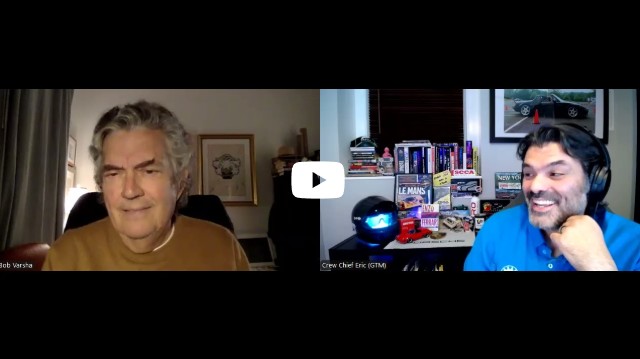
Learn More
Evening With A Legend
We hope you enjoyed this presentation and look forward to more Evening With A Legend throughout this season. Sign up for the next EWAL TODAY!
Evening With A Legend is a series of presentations exclusive to Legends of the famous 24 Hours of Le Mans giving us an opportunity to bring a piece of Le Mans to you. By sharing stories and highlights of the big event, you get a chance to become part of the Legend of Le Mans with guests from different eras of over 100 years of racing.
Unlike sprint races such as IndyCar or Formula One, endurance events demand a different rhythm. For Varsha, the long format was a gift: “You can speak more, you can bring up stories, you can do things. And that’s more interesting to me, because I got into it to tell stories.”
Preparation was exhaustive. Varsha filled shelves with books, studied historical nuances, and leaned on the expertise of colleagues like David Hobbs, Calvin Fish, and Brian Till. Together, they balanced technical analysis with narrative, ensuring broadcasts resonated with both hardcore fans and newcomers.
The early years weren’t without hiccups. In 1986, ESPN discovered mid-race that the French world feed shut down overnight. Varsha improvised, sitting in front of a tarp “green screen” while headlights played in the background, filling six hours with stories until coverage resumed. It was a reminder that endurance applied not just to drivers, but to broadcasters too.
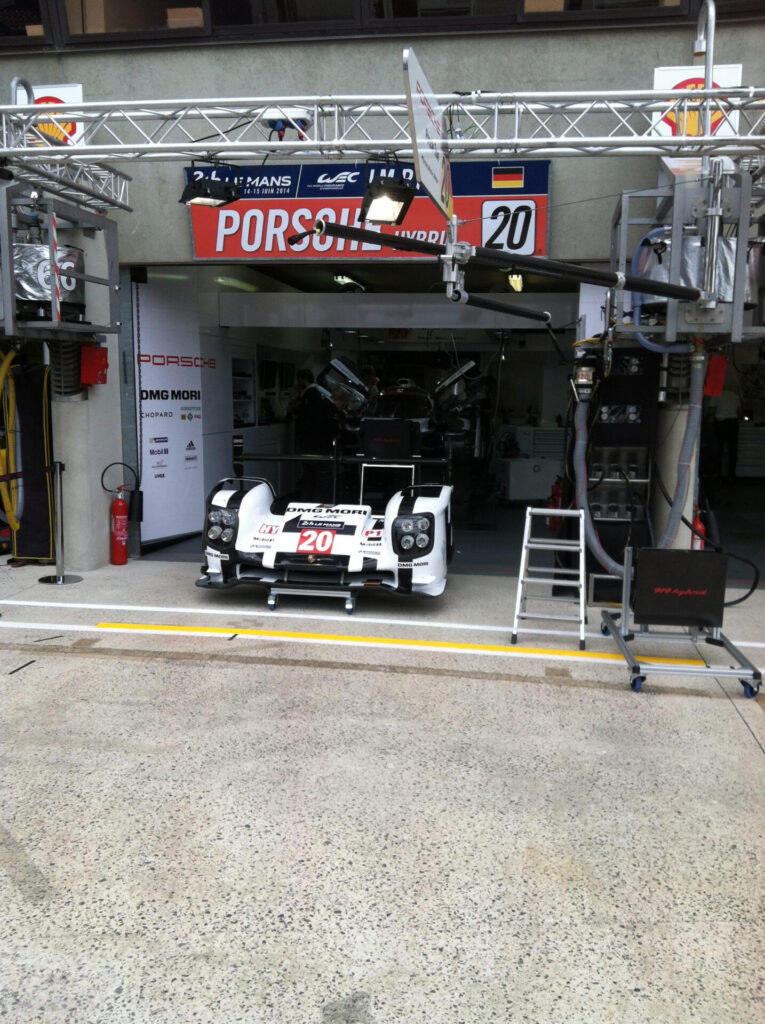
Over three decades, Varsha witnessed some of the race’s most iconic chapters. He recalls Jaguar’s triumphant 1988 comeback, when British fans flooded ferries to witness the brand’s first win since 1957. The emotional finish saw three Jaguars cross the line together, Union Jacks waving and anthems echoing across the grandstands.
He also remembers the heartbreaks – Toyota’s hybrid faltering on the final lap, or Porsche’s Ludwig running out of fuel and grinding four miles on the starter motor. Each moment underscored Le Mans’ unique blend of triumph and tragedy.
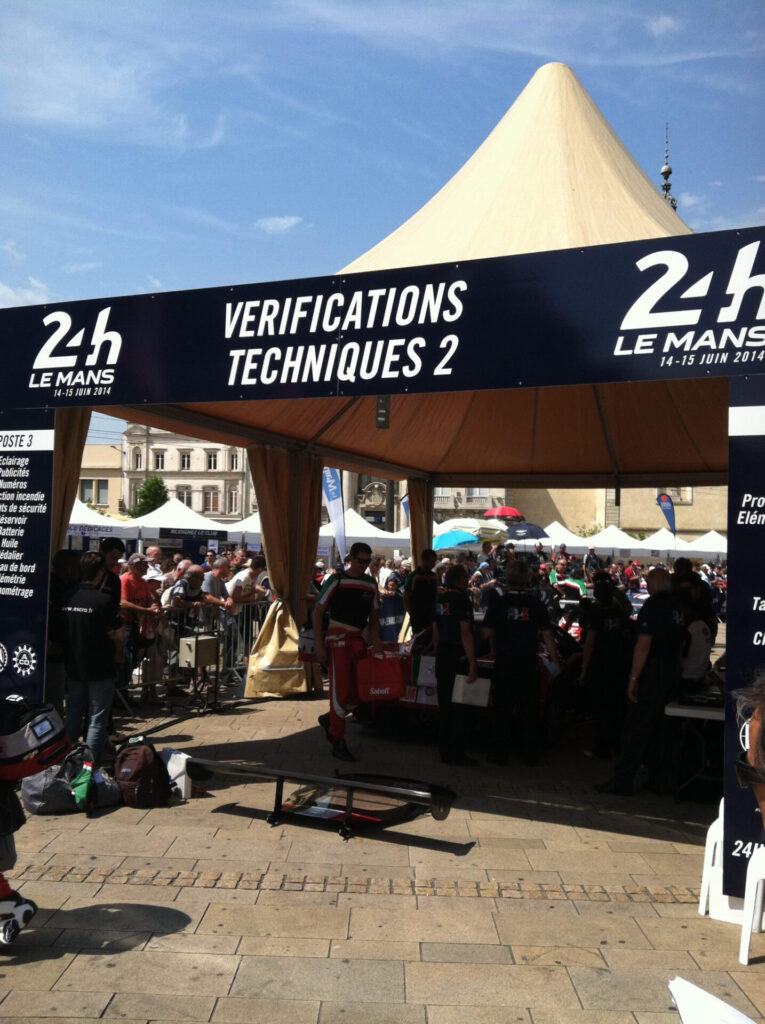
Varsha’s broadcasting philosophy was simple: cast the widest net possible. Every viewer, whether seasoned or new, deserved context and clarity. That meant explaining qualifying formats, avoiding overly technical jargon, and letting the sounds of racing breathe between commentary.
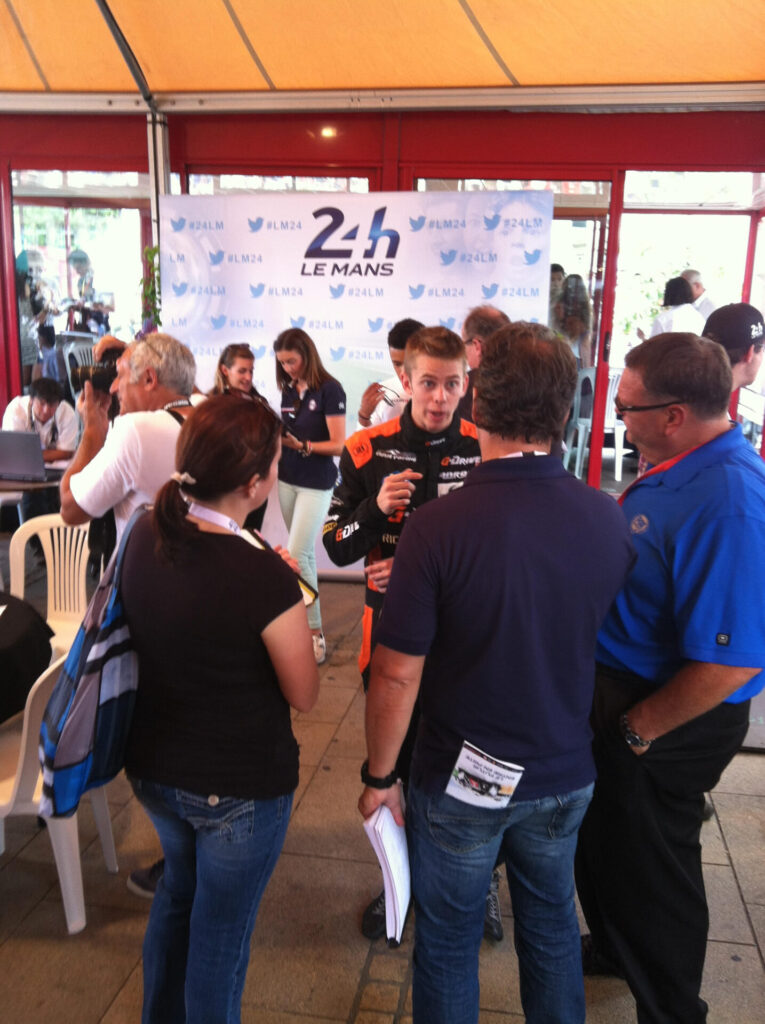
His booth chemistry was legendary. With Hobbs offering driver insight, Steve Matchett dissecting mechanical details, and Sam Posey weaving poetic narratives, the team struck a balance that elevated American motorsport broadcasting. “We don’t talk constantly,” Varsha noted, contrasting their style with the nonstop chatter of some international feeds. For him, silence wasn’t empty – it was the roar of engines speaking for themselves.
The Legacy of a Storyteller
From 1986 through 2016, across ESPN, Speedvision, and Fox Sports, Bob Varsha’s voice became inseparable from Le Mans for American fans. His career, born of happenstance, evolved into a vocation defined by curiosity, preparation, and a love of storytelling.
Le Mans is a race of endurance, but it is also a race of memory. For countless fans, Varsha’s commentary is part of that memory – moments of triumph, heartbreak, and history, carried across the Atlantic by a voice that made them feel like they were standing trackside in France.
ACO USA
To learn more about or to become a member of the ACO USA, look no further than www.lemans.org, Click on English in the upper right corner and then click on the ACO members tab for Club Offers. Once you become a Member you can follow all the action on the Facebook group ACOUSAMembersClub; and become part of the Legend with future Evening With A Legend meet ups.
This content has been brought to you in-part by support through...