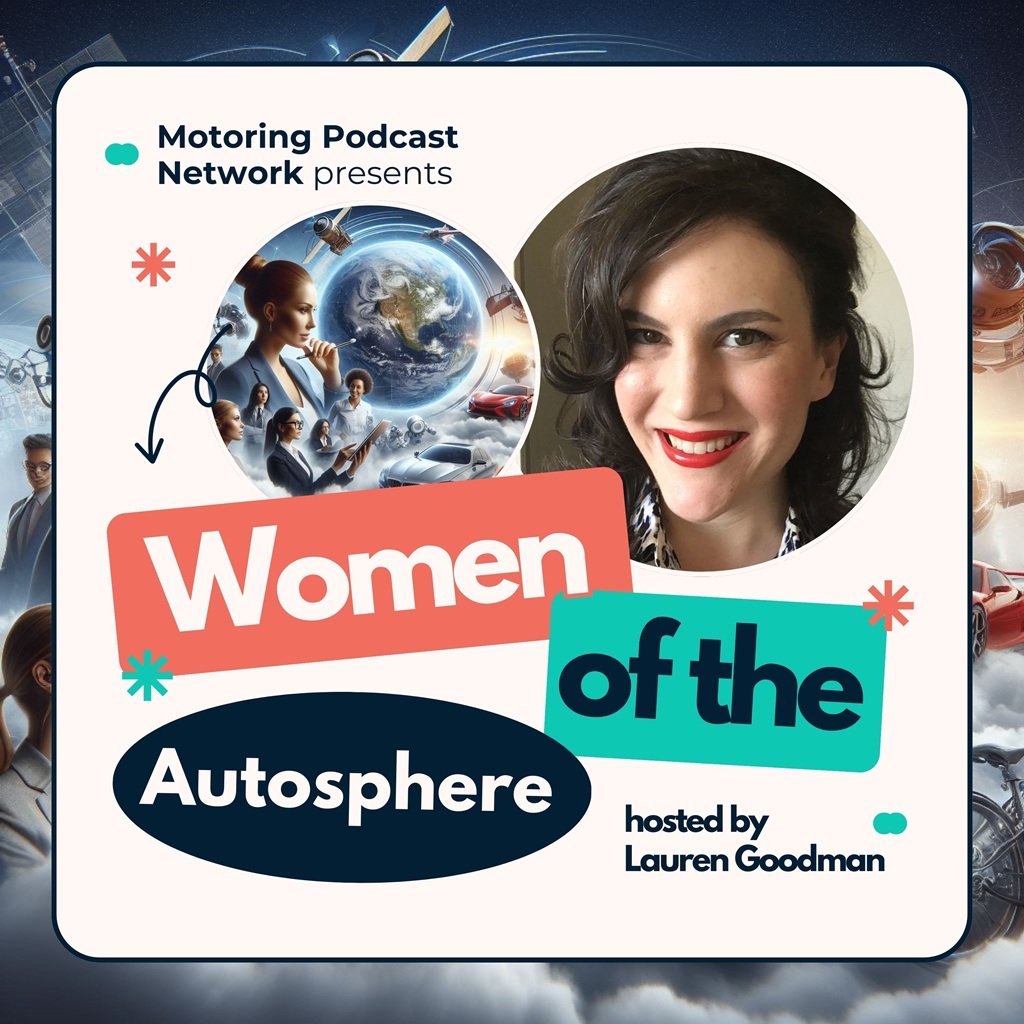


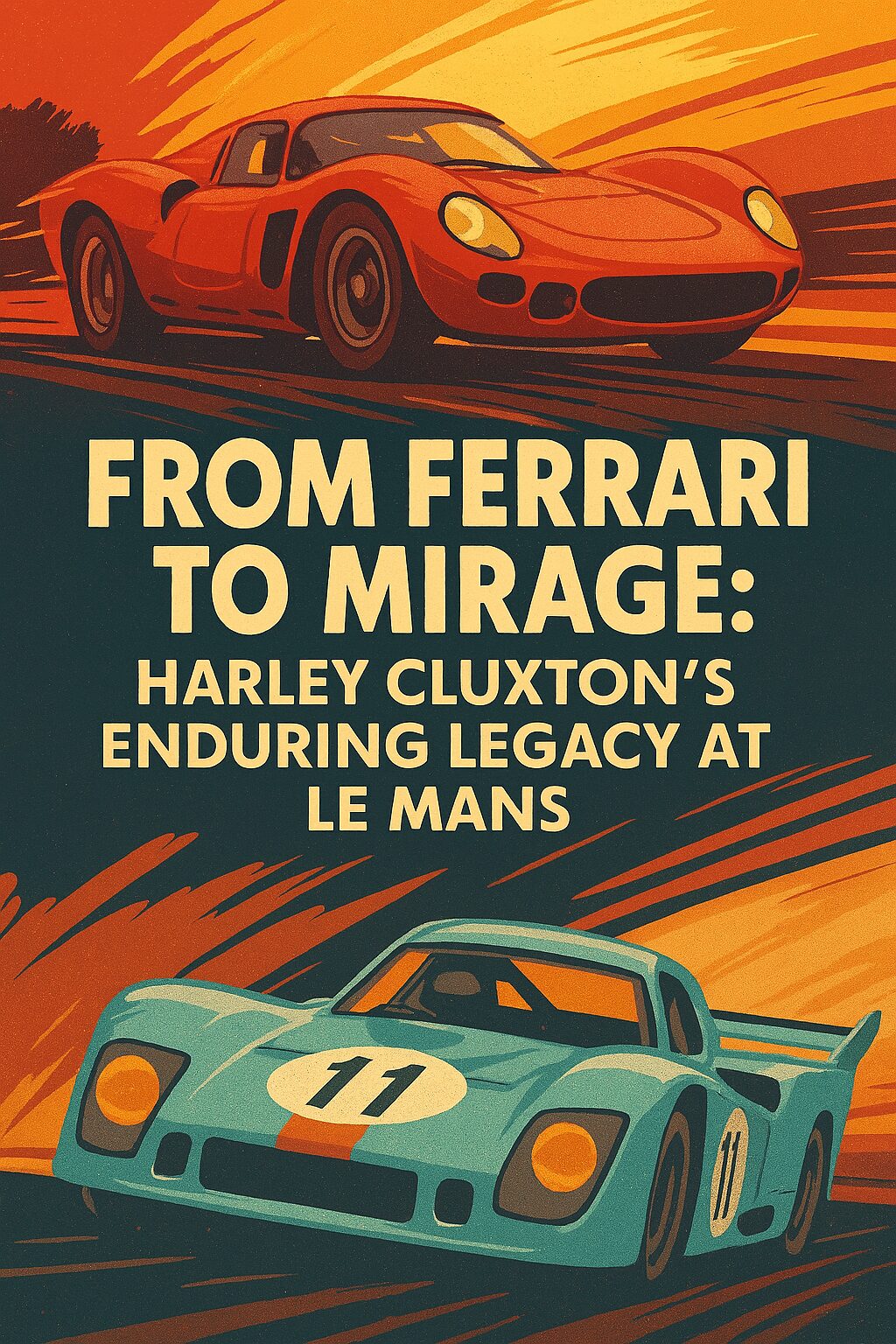
On a recent installment of Evening With a Legend, motorsports fans were treated to a rare, intimate conversation with Harley Cluxton III – a man whose journey from teenage dreamer to Le Mans team owner is as improbable as it is inspiring.
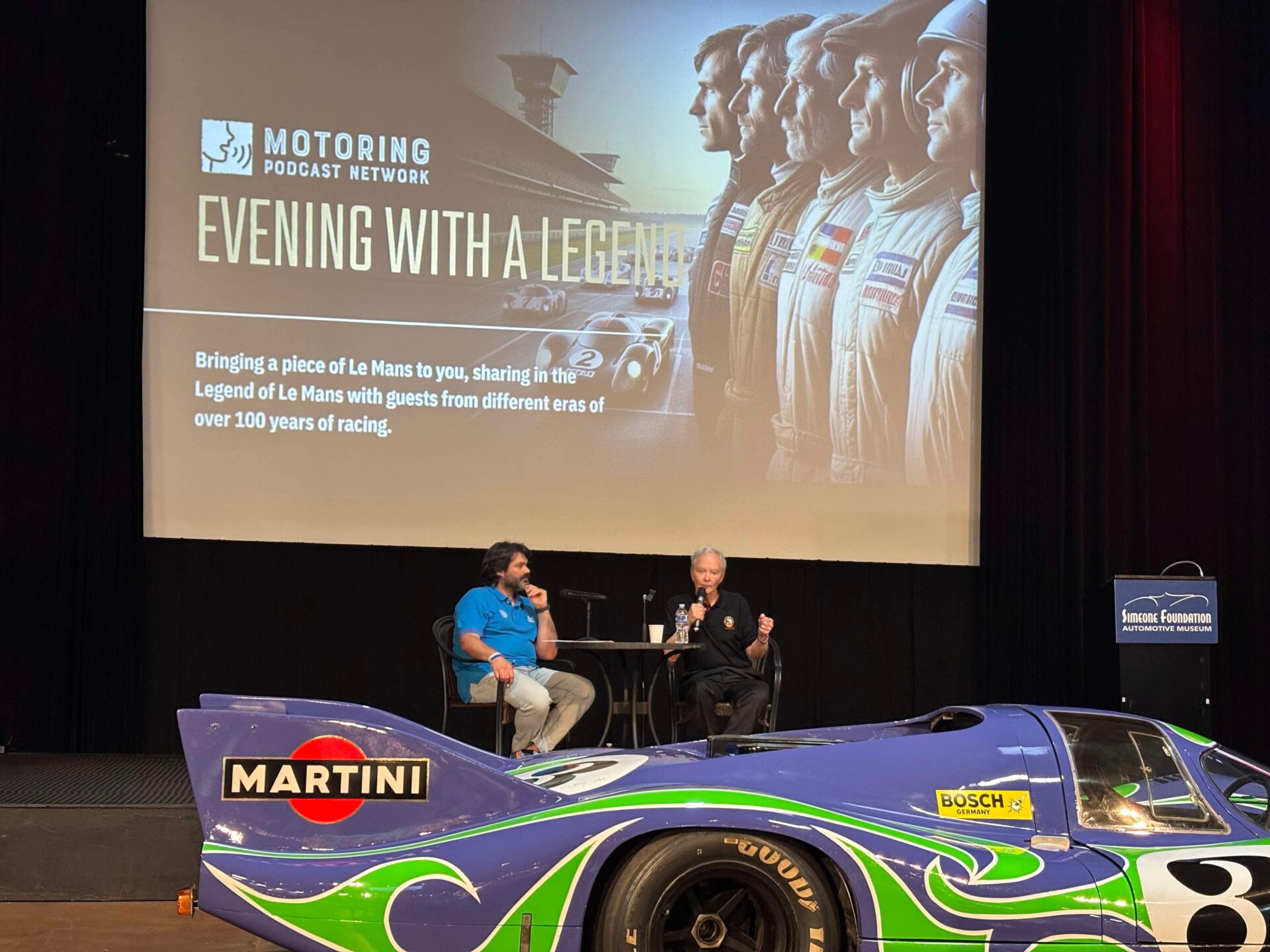 Harley’s story begins in the late 1950s at Culver Military Academy, where access to television was limited and road racing magazines became his window into the world. Inspired by American legends like Dan Gurney and Phil Hill, Harley began writing letters to Luigi Chinetti, the famed Ferrari importer and Le Mans winner. For years, he received no reply – until one day, Chinetti invited him to Greenwich, Connecticut.
That meeting led to an invitation to Ferrari’s driving school at Monza, where Harley found himself among future greats like Jackie Ickx and Derek Bell. “I was incredibly fast for the first lap,” Harley joked, “and then I usually went off.” But the hook was set.
Tune in everywhere you stream, download or listen!



Through college, Harley raced Ferraris under Chinetti’s guidance, including a 275 GTB that still holds a lap record at Lime Rock. He sold Ferraris in New Orleans to pay tuition, often receiving used cars from Chinetti with one instruction: sell it, send the money. One buyer even told Harley, “Luigi called me and said I should buy this car.” That was the test – and Harley passed.
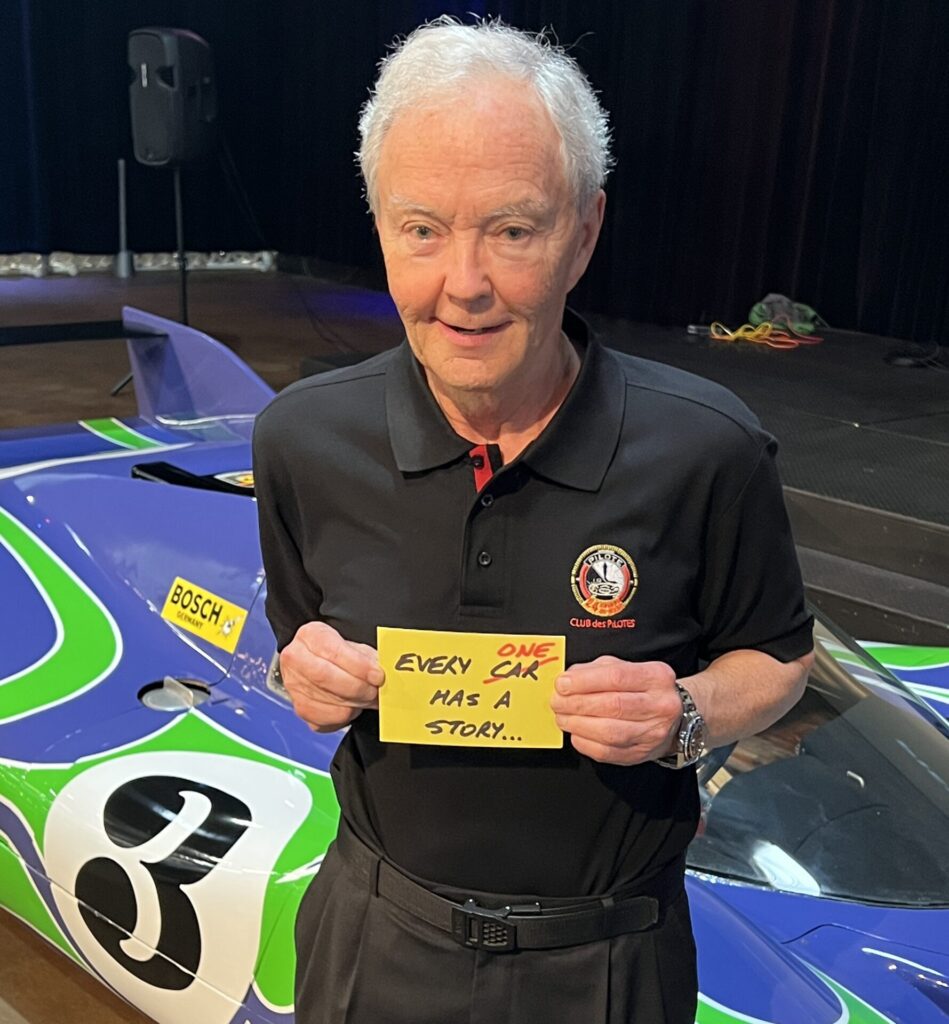
After college and a stint in the military, Harley entered law school. But the reality of legal work in Chicago didn’t sit well. “I couldn’t see myself practicing law for the next 20 years,” he said. So he called Chinetti again.
Ferrari offered Harley a dealership west of the Mississippi. He chose Arizona for its roads, weather, and potential. Ferrari and Chinetti funded his first three years. But Harley’s ambitions didn’t stop at selling cars.
Synopsis
This LIVE Evening With a Legend, features Harley Cluxton III, a notable figure in the motorsports community. It covers Harley’s illustrious career, including his time with the Ferrari factory team and his role in advancing the Mirage racing team’s legacy at the 24 Hours of Le Mans in the 1970s. The host, Crew Chief Eric from Motoring Podcast Network, guides the conversation as Harley recounts his early racing days, his significant contributions to motorsport, and personal anecdotes involving legendary drivers such as Pedro Rodriguez and Dan Gurney. The discussion also highlights Harley’s transition from racer to team owner, his experiences at Le Mans, and his views on the evolution of endurance racing. The transcript concludes with a look at future prospects for Mirage’s participation in vintage racing and Harley’s ongoing involvement in motorsport.
- Our first-ever LIVE EWAL recording from the Simeone Foundation Museum in Philadelphia, PA.
- Before we get into the Mirage story, earlier today, there was a presentation here at the Simeone Foundation Museum about Luigi Chinetti and his involvement with LeMans; as we mentioned in the intro you’re also a part of that story, so to kick things off and lead us into your LeMans journey briefly tell us about your early racing days with NART, the Chinettis and Ferrari.
- What motivated you to acquire the Mirage Racing Team after Gulf Oil’s departure, and what did you envision for its future at Le Mans?
- What were the biggest challenges you faced in keeping Mirage competitive during the mid-to-late 1970s at Le Mans?
- How important was the collaboration with John Wyer and John Horsman in maintaining Mirage’s success during your tenure?
- How did the Mirage cars evolve during the years you were involved, and what role did you play in their technical development?
- How do you reflect today on Mirage’s legacy in endurance racing and your role in preserving and extending it?
- What advice would you give to modern team owners or privateers looking to make a mark at Le Mans, based on your experience with Mirage?
Transcript
Crew Chief Brad: [00:00:00] Evening With a Legend is a series of presentations exclusive to legends of the famous 24 hours of Le Mans giving us an opportunity to bring a piece of Le Mans to you. By sharing stories and highlights of the big event, you get a chance to become part of the Legend of Le Mans with guests from different eras of over 100 years of racing.
Crew Chief Eric: All right everyone. Welcome to a live evening with the legend tonight. We have an opportunity to bring a piece of Le Mans to you sharing in the Legend of Le Mans with guests from different eras of over 100 years of racing. And as your host, I’m delighted to introduce Harley Clarkston, a notable figure in the Motorsports community.
Known for successful racing career with the Ferrari factory team and North American Racing team, [00:01:00] Nat in the 1970s, becoming the youngest. Exclusive authorized Ferrari dealer in the US at the age of 26, but did you know that he played a pivotal role in sustaining and advancing the Mirage racing team’s legacy at the 24 hours of Le Mans during the 1970s in 1975 following Gulf?
Oil’s withdrawal from International Motorsport. Harley acquired the Mirage team from John Wire and operating under his company Grand Touring Cars. He relocated the team to Arizona and continued to Field Mirage prototypes at Le Mans through the 1970s. Under his leadership, the Mirage cars consistently performed well at Le Mans, never finishing outside of the top 10.
And Harley’s commitment ensued that Mirage remained a competitive force in endurance racing during a transformative period in the sport. As a result, he was also recognized as member number one of the International Club de Piot in 2012, highlighting his significant contributions to Motorsport. And he’s with us here tonight to recount [00:02:00] some of that story.
And with that, I’m your host crew chief Eric from the Motoring Podcast Network, welcoming everyone to this evening with a legend. So Harley, welcome to the show.
Harley Cluxton III: Thank you. Pleasure being here.
Crew Chief Eric: Alright, Harley. Before we get into the Mirage story, earlier today there was a presentation that the folks here at the Sione Foundation enjoyed about Luigi Chinetti and his involvement with Le Manss. And as we mentioned in the introduction, you are also part of that story. So to kick things off and lead us into your Le Mans journey, briefly tell us about the early racing days with Nat, the and Ferrari.
Harley Cluxton III: Go back farther. My, uh. Father had sent me to Culver Military Academy in Indiana in my eighth grade year because I had a case of terminal telephone eyes with girls, and that was 19 59, 19 60. Only first classmen or seniors had a television. So the Plebes, which I was one, all we did for our hours off usually [00:03:00] read magazines, and I had my road and tracks.
I first started writing Mr. Connet because my heroes were Dan Gurney, Phil Hill, I. And I’d noticed that all of these Americans had driven for Mr. Cnet, Nat, and I’m sure you’ve, you’ve heard earlier that he had won Le Mans the 24 hours of Le Mans two times pre-war in Alpha and. And the third time he won, it was in 1946.
That was after that, misunderstandings with the Germans and the French. And so he won the first race, post-war driving 23 hours himself because his co-driver, Lord Shelton, was drunk on cognac. So this is a guy. It drove 23 hours and won the 24 hours of Le Mansr himself in a Ferrari. So that was the relationship between Ferrari and Kennet and Ferrari only wanted to go racing.
Kennet said, you build me the [00:04:00] cars, ’cause I have a lot of rich quote customers in California. So built on that called, called California. Super America, America, whatever, and I’ll sell ’em. So that was the relationship between CNET and it worked out pretty well. I think I wrote for three years or something and I, and I got really ’cause of road and track versed on suspensions and what was happening and I was just kept on writing all this stuff to him, never getting anything back.
Never really expecting to get anything back until my junior year, I think, and I got a letter back from him. By that time I was asking questions like, well, what happened to Phil, you know, at Le Mans? Why did Jean to be in, didn’t do something or whatever. So I got a letter back and he said. Come to Greenwich, Connecticut.
Oh, I was in New York at that point. So I went there and I met him for the first time. And you know, he asked if I had had any racing or anything like that. And at that point I said, oh, just [00:05:00] motorcycles. And he said, okay. I. He said, well, if you come over to Italy to Monza, Ferrari has a driving school at Monza, I’ll sponsor you.
And they were Formula Two cars. Now, I had never driven a Formula two car before and there were people that had just graduated like Jackie Icks and Derek Bell. And so it was, um, a real eye-opening experience. I was incredibly fast for the first lap, and then I usually went off, but I was hooked. And at that point, Mr.
Canadian was always, you know, say, okay, so, you know, you showed some good reactions, but you’re not concentrated hard enough. Never really understood what that was until two, three years later afterwards. So all through that, um, I graduated and then went to college. And in college got my license, my SCCA license through Mr.
Connet, but it was up in Connecticut at that point, and I was at [00:06:00] touring in New Orleans. He provided me a Ferri 2 75 GTB that I raised, and I still think I have the lap record at Limerock and B production in that. So it was that sort of relationship and that continued through my last two years in college.
I had a real falling out with my father. And so I had to, uh, pay my tuition. So I said to Mr. Connet, I, is there anything I can do in the summer or anything like that? Thankfully in New Orleans, and the drinking age was 18 at that point, another big plus for me ended up being a bartender at Pete Fountain’s.
And at the same time, Mr. Connet would send me a used Ferrari to sell it. And he said, what I want you to do is. You sell the car. This is how much I want for the car, and you send all the money to me. And I said, okay. Yes sir, I will. Well, I said, Mr. Kennedy, I, I’ve never sold a car before. Said, well, you figure it out.
I was figuring it out. And uh, this guy [00:07:00] calls very well known. I. Man in New Orleans. He said, uh, I saw your ad. I’d like to see this car. It was a 2 52 plus two Ferrari. And I said, yes sir. Um, I’ll bring it over. He said, yeah, bring it over. I just wanna tell you that Luigi called me and told me I should buy this car.
I. I went, thanks. I drove over and I had all the paperwork and I had all this other stuff and he said, okay, how much do you want for it? I think it was $5,500. And I said, $5,500. He said, okay. Do you want me to make out the check to you or how do you wanna do that? So I said, just send it Mr. Kti, please. So that was his big test.
That was Mr. CTI’s test, which I passed. So then he continued. Send more cars to me and I got to know the car business pretty well. By that time, after college, I went into the military. I came out and on the GI Bill, I uh, went to law school. My first year back, I guess you would [00:08:00] say, I was in law school, a freshman first year law.
And so he asked me if I said, I’d really like to race if I could. And he said, okay, well why don’t you go race Daytona then you can race for me at Daytona. And that was pretty exciting. And so Ronnie Bucknam was my co-driver who’s a pretty famous American driver. He drove for Ford at Le Mans and very, very good driver and, and he won Honda Formula One’s first race in Formula One.
So he was really good. Impatient. Could have been drunk, I’m not sure, but we’re doing really well and I was picking up my lap times and everything. About three o’clock in the morning, the left front wheel came off the car while I was driving. Everybody said at that point it was just lucky that the left front wheel came off ’cause it was the right front wheel.
I’d probably be in Pompano Beach right now. At that point there was at Daytona, there was no lights. I mean there’s [00:09:00] some lights on the track. But not a lot of light, not like the infield is now or anything like that. So there’s sparks and I went into the infield and then I walked back across the grass into the pits.
Mr. Cane looked at me and said, where’s the car? And I was going, uh, well, it’s over there. What happened? I said, well, the wheel came off. And he says to me, just dead serious, the steering wheel or the tire? I said, Mr. Kade, it was a tire. The wheel. Okay. Go sit over there. And at that point, Dan Gurney, my hero was racing a five 12 s 1970 with Chuck Parsons.
I go back into the pits and I’m sitting there and Dan comes in and I’d met him really for the first time. He was a very big man. I mean, he was huge, but he also had huge hands. And I remember I came into the pits. And he was pissed. The door of the five 12 flew open the whole shift, along with the shift [00:10:00] knob itself came flying into the pits.
And I mean, I saw it coming and ducked, almost yelled grenade, and this thing, bang, smashed everything. He said something, I don’t remember what it was, and he gets out of the car and then Parsons goes, looks in and says, well, it’s screwed. He had ripped the whole shift, linkage everything out of the car. So that was the first time I got to meet Dan Gurney.
Crew Chief Eric: So let’s fast forward a little bit. So you finally get to Le Mans behind the wheel of a Ferrari five 12 long tail. And you told me a story earlier that I think the crowd would really enjoy, which was your story about Pedro Rodriguez down the straightaway. So you wanna share that with them? I think it’s a fun little anecdote.
Harley Cluxton III: So Pedro Rodriguez was my driving instructor when I was getting my license. But, and that was when, I think I was 16 years old, or 17, I guess, you know, because I would go up with Connet, go up to Elkhart Lake, and he would be racing for Connet in the Canam and stuff like that. And I got to know him. He was great.
I mean, he was intense. Would call me [00:11:00] gringo. I was, when I say a piece of work, really a piece of work. But he was very, very good. And so when I raced at Daytona. Pedro had called me over. I saw him, he introduced me to John Wire. That’s how I met John Wire. There’s, anyway, there’s kind of famous picture of me sitting there and kind of looking down at him and he’s looking up at me and he’s has his hands together and sort of like explaining stuff to me and what he was saying was, you stay green, go.
In your lane? I pass. I pass, I pass. So that was Pedro at Le Mansr in 1970. I was driving a five 12 long tail. The same way that this car is, this is nine 17. Obviously it was a five 12 s, but a long tail and. It was raining, it was pissing with rain, and unlike this car re decided it would be really cool to put the rear view mirror up above your head and then cut a hole in the back so that you would look in the [00:12:00] roof.
The theory was you could look up and see this behind you. Well, that was all great. Except it was raining, so all of the water was coming in. The wind wiper was at that point, difficult Ferrari. It was going like mad, but it was like three inches off the windshield because of the aerodynamics. So it was going crazy.
I’m looking down, all the water’s going and the battery’s over here. I don’t think, oh, this is just great. And so I’m going down the Mulan, which at that point was four point. Eight miles. Very daunting. The first time you do it, you are watching your RPM and it’s up where it’s supposed to be, but it just goes on and on and on and on, you know?
And you hear every little bit of noise, everything. And the thing is screaming
Crew Chief Eric: at speeds of an excess of 230 miles an hour. Yeah. I was
Harley Cluxton III: doing 2 28, Pedro was doing 2 37. So it’s raining, as I said, and the reason they call it the Mosan Strait is the [00:13:00] town of Mosan is down at the end. If you just went straight, you go right through the town.
Well then there’s a hard right corner at the end. I’m going down and I’m thinking at this point I. There’s no human alive that’s going as fast as I am because I was gripping the wheel like you’re, you’re not supposed to be doing. I was rigid and I was talking to myself saying, I have the wheel straight.
I’m not moving. And the car was aquaplaning and it was like, and so I’m looking through, this would be rear view mirror and I see these blinking lights, you know, they’re coming in. I’m thinking, what the hell? And so they come up closer and I see it’s a golf Porsche. I. And it comes up and here’s little Pedro.
It’s like down like this. And as he drives by, he goes and just motors right by me. So I don’t know if you’ve ever been kicked in the nuts before, but that’s what I felt like and so I’m wasn’t supposed to say that. You’re good. Okay. I lost about, I don’t know, 500 [00:14:00] RPMI come into the pits, it’s rained fog.
Gary’s there going, and the Italians are going like this. And I pull in and I tell Fogger he was the engineer and the team manager and everything else that it was having a problem with the gearbox. I was jumping out at fifth unless I was on it all the time. So I told him, it’s a cambio, you know that? And Mr.
K’s sitting there with his stupid looking hat on. It’s a rain hat kind of. And looked, he looked like cso, honestly. I mean, I loved the guy, but he looked like Inspector cso, the, and he had this beige aqua raincoat on, and he’s sitting there and you know, I mean, I never understood the Italian aristocracy, whether it was Ferrari or whether it was Kitty.
At Alpha, they wear a belt and suspenders, which never understood, never do. But anyway, so the theory was, and I come over to him. And I go, yes. And he looks at me, he looks at me in the eyes, and then he grabs me [00:15:00] By the, your collar? Yeah. On my driving suit. And pulls me really close about this far and he looks at me in the eyes and he goes, Pedro.
And I go, and then he just walks over. So that was, that was Pedro. And this car was racing at the same time.
Crew Chief Eric: We’re gonna get more into this car as we go along. Yeah. So after your whole adventure at Ferrari, which was a beautiful relationship that you had, especially being an authorized dealer here in the States, and it motivated you to acquire Mirage, what was the impetus for that decision?
What made you get involved in that? Going from driver to now team owner, what did you envision for Mirage’s future?
Harley Cluxton III: I did go to law school. I did graduate and I also got my master’s in constitutional law and then reality set in, and I had to go work at a law firm, which was a huge law firm in downtown Chicago called Baker McKinsey, which is a gigantic law firm, and that was definitely no fun.
It was reality and everything you’ve heard about Chicago is true. And I was a constitutional lawyer and [00:16:00] I’d just come back in the military and they were saying, well, you’ve gotta represent this Alderman and Alderman in Chicago. It’s a fiefdom. So you got eight different areas in Chicago, all downtown, and they’re supposed to represent this group of, uh, eight blocks, 10 blocks.
Well, at the same time, they were holding up all of the store owners for protection, and I was supposed to be representing this guy well. I told him I wasn’t gonna do that. So I just couldn’t see myself practicing law for the next 20 years or 30 years and call up Mr. Connet and I said, I can’t do this anymore.
And he said, okay, probably I have to talk to Ferrari. Okay. I. He talked to Ferrari and they said, we’ll give you a dealership, but it has to be west of the Mississippi River. Well, I’d gone east to get my master’s in constitutional law and I didn’t like the weather there. I hated Chicago weather, snow, and all that stuff.
So I looked, and California was definitely out of the question. So I looked at Arizona, I thought. This is great. [00:17:00] It’s got fantastic airport, international. There’s nobody living there. It’s got roads you can go crazy on. And so I said I’d like to have Arizona. So he gave me Arizona, Colorado, and New Mexico.
And then the other thing that they did, which was fantastic was they knew that I didn’t have any money to speak of Ferrari and kti. Funded me for the first three years. In other words, paid my floor plan. They would send the cars out and then I would sell them and everything like that. So we’re done with Ferrari?
Mm-hmm. Okay. During that time, I continued to race for cnet, and as I said, Pedro Rodriguez, my driving instructor, he had introduced me to John Wire. But all during this time, I’d never got to physically see the golf team cars, the GT forties running. Actually the first time I saw 10 75, which is the first Double Le Mans winning car.
It won in 1968 and 69 68. It won with Pedro [00:18:00] Rodriguez, uh, and in 69 it was Jackie Icks, which ended up to be the closest race and most famous race at the 24 hours of LeMans. So this was the car. Knew Derrick Bell by that point really, really well. And so he had been racing mirage and after the 68, 69, he was racing for Ferrari.
Then in 1970, the FIA came out with his formula. It was a five year formula and you had to make 25 cars. Porsche made 25 cars. Ferrari made 25 cars, but that was Ferrari because the last eight cars, the tires were wood and there was, you know, it was Ferrari and Porsche of course had everything down. So that’s how that happened.
And so it just continued to flow. And when I, I. Who was still racing for Ferrari. John Wire had called, I mean, I respected the heck out of him just because he, he approached Le Mansr the way that you should approach it. You’ve [00:19:00] got to be able to manage your drivers, but wire was just a master. Ferrari could never figure it out.
John made sure that the drivers stayed within maybe a second. Every lap, and they could go faster, but they were never allowed to go faster. They had to stay each of them. And that was because you would build up enough time that when you made a pit stop and you had to fix something, you had 20 minutes. Or 30 minutes, you wouldn’t lose the lead.
And that happened when he won Le Mans, he won the World Championship for Porsche. He won the World Championship for Ford. When Ford didn’t do it, you know, with the GT forties, he was a master tactician, but he kept to an absolute, this is the way you do it. And I learned from that and he was my mentor as far as learning how to manage a car, manage drivers and everything like that.
So John called and said, Harley Gulf Oil, you [00:20:00] all don’t remember, but maybe you do. They got into a lot of problems along with Texaco, with the US government because they were going down to South America, both of them. And paying off their oil ministers, whatever country it was for drilling rights. And that was a big no-no.
So TCO was less, but apparently Gulf Oil was pretty blatant about it. So their lawyers said. To them, you’ve gotta go low profile. Well, it’s kind of hard to go low profile when you’ve got a baby blue, an orange race car, and you’re also sponsoring all the tennis tournaments in the United States, and you’re also sponsoring all the golf tournaments in the United States.
So John said, well, they have to sell the team in the cars. Okay, well that’s cool. That’s really cool. You need to buy ’em. I said, well, John, and at that point he was in grass in France. He had just retired. And so this was the longest phone call. And I said, well, John, I’m thinking to myself, are you kidding me?
And, and I said, no, [00:21:00] that’s great. Thank you so much. I, it is a real compliment, but John, I, I just, I don’t have the experience. Yes, you do. Well, I don’t have that sort of money. Yes, you do. Oh, I don’t, I don’t think I do. And so this went back and forth. I said, I don’t wanna embarrass you and I don’t wanna embarrass myself.
He said. Just make the bloody offer a lot more colorful. I said, okay, if I go and I call these people and I buy it, I’m not gonna buy it unless you promise that you will consult. And he said, absolutely, I’ll be there. And then John Horsman said, I’ll move to the United States. And I said, okay. So I called up gentleman, I was supposed to call.
And I said, Mr. I think his name’s Kelsey. Mrs. Harley Collection. Oh, yes, Mr. Collection. We were looking forward to your calling. How much are you offering? And this was the whole team. That was all of the trademark rights. That was all of the equipment. Two race cars. Ready to go a transporter, which we named the Queen Mary.
I think three mechanics were thrown into it. And John [00:22:00] Horsman. So I offered ridiculous amount of money.
Crew Chief Eric: 50 bucks I heard.
Harley Cluxton III: Yeah. Well no, 75. That was ridiculous. It was, I think it was $200,000. No, maybe it was 120
Crew Chief Eric: in 1970s dollars.
Harley Cluxton III: Yeah. $75. Yeah. So I buy, Mirage came. I was racing at Le Mans in 1975 for Mr. Connet.
I’m there with five cars. Kennedy has basically representing the factory because that 75 was going to be a fuel run, so you had to have these cars yet the most fuel efficient. In other words, what they did was they cut down a 60 gallon fuel tank down to 40 gallons and cars had to go slower, which meant also it had to be more aerodynamically efficient.
And you could stretch the mileage and still keep the speed up with Connet. He didn’t have any of these prototypes or the Group six cars, which the Mirage were, he was racing [00:23:00] 365 boxer and three day tos, and I was in a 3 0 8 GT four. And so he got into a real contest with one of the a CO supervisors, I should say, uh, a technical inspection.
And they had put the 3 0 8 GT four in group five, which is a 9 35 Porsche, and he said, that’s impossible because they’ve made enough cars. Now, this Frenchman said, well, Ferrari never notified us of that. And Kennet went, well, I can get him to notify you right now. And he said, no, it’s too late. You can’t race the car.
You can’t race it in this. So he said, if I can’t race this car, then I’m gonna pull the cars. Well, it got ugly. Kennet finally said, well, I’m gonna pull all the cars. And the Frenchman said. You do it. So he pulled all the cars. I went to Mr. Canadian, I said, can I go over to the Mirage team? And he said, yeah, go, go, go.
And so I was over in my Ferri driving suit and then they won the 24 hours of Loma. [00:24:00] That was where then I brought ’em home.
Crew Chief Eric: I. So that’s a very important point that you bring up because this weekend coincides with the 50th anniversary of the Mirage GR Eights, finishing the 1975 Le Mans, which you just mentioned winning.
And there’s some other notable stats here that you shared with me. So six time Le Mans winner Jackie Hicks behind the wheel, a second win and five time winner. Derrick. Bell, first time Winford, Joad, et cetera. There’s a whole list of famous names at Mirage at this point, and you’re joining the team and you’re getting more and more involved.
Harley Cluxton III: Everybody that is famous in your mind drove for John Wire and he, he was called Death Ray. He would talk to his drivers and they had to be absolutely loyal. And when I say loyal, because he would go and he never did it to me. But I could see how he could do it. He would go and when they, he was giving a driver test for a potential team driver, and it would be at Brand’s Hatch, it could be at Silverstone, and he would be hiding in the bushes.
[00:25:00] And I swear to God, Vern Schoen told me that, and he’s Australian, so he’s really colorful language. And he said, I was going, I, and I screwed it up. And I looked up and there was death Ray looking at me. And at that point, again, was important to remember. That when I drove the 24 hours of Le Mans and when Mario, who drove for me, drove the 24 hours of Le Mans in 82, it was the old 24 hours of Le Mans.
You only had two drivers. Now you have three drivers, and it’s a sprint because. The course has been cut up and you’ve got so many chicanes have been put in and you never get up to a lot of speed. They did it for safety, apparently,
Crew Chief Eric: and then you stay involved, like you said, through the seventies, into the eighties with Mario Andretti and things like that.
So let’s talk about your time as a team owner. What sticks out and stands out to you as some of the memorable moments at Mirage?
Harley Cluxton III: Learning from John Wire, all of the drivers loved him and respected him. He was such a figure. It was Mr. Wire, it was this that, you know, and [00:26:00] always, and it was baffled me how I ever got into that position with him.
I brought him to Scottsdale and he was just world of knowledge. And so basically the deal was with John and John. I said, I’ll get the sponsorship. You run the cars, and that was the deal.
Crew Chief Eric: 75. Last time you drove at Le Mans, did you retire from Motorsport at that point as a driver? Yes. Okay. So full-time team owner in that.
So when you reflect back on Mirage’s legacy and all the time you spent there, how did that change you? You mean as far
Harley Cluxton III: as the way I look at the French?
Crew Chief Eric: Well, how you look at Motorsport, right? Because it’s a different lens when you’re a team owner and a team principal versus being a driver, right? Yeah.
More politics. More bureaucracy, more to do more, more, more. Well,
Harley Cluxton III: I think. Having driven there and been a driver. Going back to Le Mansr, it’s a love hate relationship and I mean really hate and whoever the twisted, really demented, A CO member that came up with said, okay, well we have 12 hour [00:27:00] races. Why don’t we have a 24 hour race?
I know so many Americans that. Have been looking for this jerks grave just to beat it to death because it’s, it’s one of those deals you just keep on going ’cause it’s heartbreak until the very last. You never know. We were leading the 79 race up until the 23rd hour. Again, it was pissing vein and we fell out.
Derek was driving for me then. And the 9 36 s, which were my nemesis because we’d won in 75 and I came in second in 76 behind them. And then 77, I thought I was really gonna get ’em. ’cause we were using rno. Turbocharge Miller came in second again, and that was the second most famous race. That’s when. Went crazy and drove
Crew Chief Eric: with Ley Haywood.
Yeah, yeah.
Harley Cluxton III: All that stuff, and UroGen bath and all that continued. And then with Le Mans, it’s a real sickness. It really is, because if you go and you’re a team owner or a driver, you just pray that if you’re gonna [00:28:00] fall out, you fall out in the first two hours, three hours, because it just sucks to fall out at four o’clock in the morning, or just when the sun’s coming up.
There are things that John. Would expect of his drivers. You will do this, you will do that. Your pit stops are gonna be this, and if there’s a screw up. And so he was the first manager, I guess you would say, and he’s a legend of Le Mans that would take notes and I have all of his notes, everything. And take the time it took in the pits, each car in each driver, and then figure out, came in with a broken whatever and how long it was in the pits.
Also the growth of the tires, you know, which is a big deal. ’cause if you’re doing 235 miles an hour, the tires grow. That lifts the car up and then it gets really ly, you know? And so it was all of that stuff and the pit stops were down. I. To half seconds fueling everything and then the drivers comparison every lap.
And you drivers are drivers. [00:29:00] So, so anyway, I, I learned all of that and I learned race management, which is hugely important to be able to manage everything to make sure that you’ve built up enough. Reserve time with your lap times that you’ve set that you can repair something. ’cause the cars were always breaking.
Unlike today that’s going on right now. It’s a sprint race. You have the Mulan, but then you have two of these Chicanes and I doubt the hypercar are getting up to two hundred and ten, two hundred fifteen. I mean Porsche’s. This Porsche was actually the 1971 Porsche Long Tail, which Laro was driving. Gerard Laro was driving this car too.
248 miles an hour every lap at night. That’s impressive.
Crew Chief Eric: With your legs hanging out up by the lights, legs short
Harley Cluxton III: now, but that’s, I, it’s, I impressive.
Crew Chief Eric: Well, since you mentioned it, and we promised the audience that we would talk more about this car, so you got involved in this car, you [00:30:00] competed against this car.
You talked about your racing against Pedro Rodriguez in the Ferraris and whatnot. How did you get involved? In the hippie Porsche, how did you come to own this car and and what drew you to it? This
Harley Cluxton III: was a two year deal. It’s 25 cars, 70 and 71. It went to a new formula, which was group six, and that turned into, it had to be a three liter formula one motor, and you could.
Do it open. You could do a close, but it had to be a three liter formula, one base motor before through 1967. It was bringing you grace, what you belong. Anyway, Ford of course, brought 550 horsepower. Ferrari was 475 horsepower in the P fours or less. But that was a difference in mm-hmm. What, what we were doing.
So my love for Porsches, I mean, I can tell you everything about the tail end of a 9 36 or one of these things. So he motivated me.
Crew Chief Eric: Yeah. You acquired this [00:31:00] car, you had it in your possession for a while. Did you ever get to turn a lap in this car? And what was it like compared to the Ferraris that you drove?
Harley Cluxton III: John Wire had told me and Horsman also, you know, because I always looked at the five twelves as clunkers compared to these Porsche and John Wire said they were built better. The Germans didn’t really care about the drivers, they were expendable. And he said the Mray, which was the 1971 car, was actually pretty good.
He said, but Ferrari decided, which they did ’cause it was the end of the last year, they didn’t develop. The only thing I did was I pretty well known for this piece of, again, it’s Arizona had a very good relationship with the um, Scottsdale Airport management. ’cause I also, I. Fly helicopters. So I knew them and I asked them all along the way, can I test a car on the runway?
And I said, yeah, sure, no problem. So I tested Formula One cars and everything like that. Well, I went out in this car, we just painted it. It was everything that I had heard from John Wire about [00:32:00] Your feet are hanging out in front of the wheels. It all came back to me because as I accelerated, first of all, you know, I’m short.
The visual, you know, your site picture, you know, you usually go off the front vendors, stuff like that, or a visual point. Well, there’s nothing. The way that it’s this windshield is that you can really get a visual shot at what you’re aiming at. But more than that was, I don’t think I was doing 60 miles an hour starting South airport runways.
I don’t know if you’ve ever been on one, but. They’re not like roads. They’re usually cement and stuff. So you go, boom, boom. I was getting so much wind through the cockpit, through the foot well, and I was getting dust. I was getting everything else, and it was like my feet were that far out and I could feel through my driving shoes, I could feel coming up.
It was air. And that is not a good feeling you wanna have, knowing that the first thing you’re gonna hit if you go in nose first is your feet. That was what [00:33:00] was really lethal with a lot of drivers and then also the fuel deal, so to say, if I got up to a hundred miles an hour, I doubt it. I doubt it incredibly fast cars.
But I mean, if you made a mistake or somebody made a mistake for you, guy in front of you, whatever, lethal, no bueno.
Crew Chief Eric: Getting into our final segment here, let’s talk a little bit about the future. So for those of you sitting in the audience, you’re here watching Le Mans as part of the viewing party in a couple of weeks.
The Le Mans Classic is happening, that’s 24 hours of vintage cars. Harley. Do you see Mirage participating in the classic in the future? And if so, will you be involved?
Harley Cluxton III: Well, they, they already have, they’ve won the GR Sevens, which is the Golf racing Sevens, so that would be a 1974 car. We have of the two, there’s the number 10 car that came in second, two times well came in third was Schoen driving in the 1975 La Ma.
And then second overall is now racing. Uh, LA Ma Classic. And [00:34:00] the 74 car has won the Le Mans Classic three times. So it’s a golf Mirage with a Cosworth motor. So yes, they’re very, very good. And the great thing about it is that when you go to the classic, you’ll see all of these cars. You won’t see the nine seventeens that much.
I mean, the last time I think that a nine 17 race there was with Bobby Ra Hall race of nine 17 that he owned with Brian Redmond. Mm-hmm. And they had exactly the same problem that wire had with his nine seventeens. With the aerodynamic changes that the inner wheel bearings when you’re running it to get really hot.
And then they seize
Crew Chief Eric: and wheels come flying off. Yeah.
Harley Cluxton III: That or youth go flying off. And so they were apparently arguing with each other and, and to stop. And it was smart enough, mature enough I guess you’d say. Say now let’s do this again. So if you ever look at Brian Redmond, you see, you know, he’s got all of these wrinkles around, [00:35:00] was baklava, you wear ba I should say not the Greek food.
Sorry. And it’s burned. And that was in a 9 0 8. Porsche winning the Target Florio in 19. He ran it in 1973 and I think maybe it was 1974. Same car. The car was upside down, crashed, and he was caught fuel tank burst and he was caught on fire and he was able to crawl out because there was, this is a target Florida, nobody came for 35 minutes, so that’s why they don’t do that anymore.
But I’m just saying how dangerous these cars are. Pedro died in a five 12. Mm-hmm. Same deal. So the Le Mansr Classic, you know, in talking with really great guy Chris McAllister, who has a nine 17 Porsche that has a golf car and God knows what else he drives it just the way it was. That’s the cool thing about the Le Mansr Classic.
You’re gonna see real cars out there. You’d never see any other place driving at Le [00:36:00] Mans. So it, it is really exciting, it’s really fun. And as Gerard Roos told me when he brought me back after I promised I’d never go back to Le Mans after Le Mans E two and he called up You, you’ve gotta come back, make you, I don’t remember number one.
And I thought it was gonna be another dim. And I told him that. And he said, no, no, no, it’s okay. It’s okay. So I came back and I hadn’t been to Le Mansr and this was 2011. He came back and he said, I have to warn you, the track has changed. And I said, okay. For the good or bad, he said, it’s really bad. It’s really bad.
It’s really bad. I. And then I went and I watched, it was like really bad. Really bad. Just because, you know, it was the most difficult road race in the world. Now it’s a sprint race. Mm-hmm. You know, I mean, you’ve lost so many factors that went into it that make it the most difficult and the race for manufacturers to win.
Crew Chief Eric: Well, I guess we’ll give that to the Bergen 24 now, right?
Harley Cluxton III: Yeah. Oh, the old spa. Yeah. Yeah.
Crew Chief Eric: All right, so let’s talk about Le [00:37:00] Mans. We’re here, we’re watching the race. Are you rooting for Ferrari? Do you have any other projections?
Harley Cluxton III: I think it’s great that Ferrari won and they did, and knowing Ferrari as I do, and I’m sure that you all know enough that know that there F1 team is hopeless.
Um, nobody was allowed to work. None of the engineers, none of the F went in. No, no. Uhuh You guys just continued to screw your things up over and there. So this was all done by Alpha Corso and so, which is, I guess you’d say a semi factory team. Delara built the car and then a of course. So working, driving and all these team, and they won in last year and the year before.
And this year they’re having a, a tough time. I think. I’m just surprised. Penske hasn’t won. Uh, they’ve got four cars and it’s a very, very difficult formula because the only thing that a manufacturer has is that you have three chassis choices. You have [00:38:00] Multimatic, you have Dara. Cadillac has picked Dara.
BMW has Dara. Porsche has Multimatic, which is of course in Canada. And then all you do is you put your motor in. Everybody has the same transmissions. You can do aerodynamically comes from Dara, or you can have your design guy, you know, as long as it meets that spec. Well, you know, this hybrid stuff, it’s just, it’s so expensive and I think, you know, to answer your question, who do I want to win?
I’d love to see ASIN Martin win only because no one is that the whole team is in Arizona and it’s a normally aspirated car. It’s a 6.4 liter, 12 cylinder. How bad is that? But of course then you have to dumb it down to 580 horsepower or whatever it is. And there are too many regulations as far as if you have one team win, whether it’s in.
GT three [00:39:00] or hypercar, if they win like three years in a row, well then they get this BOP selectively served on ’em. Mm-hmm. So Ray Hall’s had it happen. So it’s a very difficult formula to understand. I don’t like it. What can I tell you? I mean, we have it. We have it in Indy car, and it’s just a joke. I’ll give you an example with these hypercar, as they call ’em, the drive shafts have torque meters on ’em, and the torque meter is to make sure that you’re putting out 528 horsepower.
Well, that’s really great. But if you go off the road, this torque meter, one wheel is gonna go crazy. Well, what happens is they have home base, and so they’ll sit there and the minute they see it, they go, and you lose 200 horsepower on the street, gimme a break. Let’s go racing. So that’s my opinion on it.
Crew Chief Eric: All right. Well, Harley, last question. What’s next for you? You’re still very much involved in Motorsport. What’s next? Anything coming up you wanna share?
Harley Cluxton III: No, I’m just [00:40:00] desperately looking for fun. Oh yeah. No, it’s, um, I like vintage racing. It’s really fun, but you get to the age where you’re not as good as you think you should be, or wanna admit, and I’m, I’m there, you know, and so I have fun.
Now, if I go and buy an Alpha GTA. And you go out and smoke Porsches all day, you know, or a cobra or something that, you know, that’s great. Vintage racing for me should be, or any professional driver, you should be able to take a black and white picture of that car that you’re, you’re driving, and then take a pick of black and white picture of you driving.
And if it isn’t all twisted up and one wheel up, you know you’re cheating. Because it, that’s the way that the cars were.
Crew Chief Eric: Well, on that note, folks, we’ve had the privilege of revisiting a fascinating chapter in endurance racing history through the experiences of Harley Clarkston from taking the reins of the Mirage team after golf oil’s exit, and guiding them through a remarkable run of successes at Le Mans, including the win in 75 and podium finishes in 76 and 77.
[00:41:00] Harley’s vision and leadership helped. Preserve one of the sport’s most iconic privateer efforts. His dedication not only extended the Mirage legacy, but also embodied the entrepreneurial spirit that defines motorsports. Golden age.
Harley Cluxton III: God. I love him. I love him. I know, right? I absolutely love it.
Crew Chief Eric: With that, we hope you enjoyed this presentation and look forward to more evening with a legend throughout the season, and on behalf of everyone here, the A-C-O-U-S-A and those listening at home.
Listening at home,
Harley Cluxton III: what? You never told me that.
Crew Chief Eric: Oh yeah. Thank you, Harley. Oh
Harley Cluxton III: God.
Crew Chief Eric: And that’s a wrap. Thank you.
This episode has been brought to you by the Automobile Club of the West and the A-C-O-U-S-A from the awe-inspiring speed demons that have graced the track to the [00:42:00] courageous drivers who have pushed the limits of endurance. The 24 hours of Le Mans is an automotive spectacle like no other. For over a century the 24 hours Le Mans has urged manufacturers to innovate for the benefit of future motorists, and it’s a celebration of the relentless pursuit of speed and excellence in the world of motorsports.
To learn more about or to become a member of the ACO ussa look no further than www.Le Mansn.org, click on English in the upper right corner and then click on the a CO members tab for club offers. Once you’ve become a member, you can follow all the action on the Facebook group, A-C-O-U-S-A Members Club, and become part of the Legend with Future Evening with the legend meetups.
This episode has been brought to you by Grand Touring Motorsports as part of our Motoring Podcast network. For more episodes like this, tune in each week for more exciting and educational content from [00:43:00] organizations like The Exotic Car Marketplace, the Motoring Historian, break Fix, and many others. If you’d like to support Grand Touring Motorsport and the Motoring Podcast Network, sign up for one of our many sponsorship tiers at www.patreon.com/gt Motorsports.
Please note that the content, opinions and materials presented and expressed in this episode are those of its creator, and this episode has been published with their consent. If you have any inquiries about this program, please contact the creators of this episode via email or social media as mentioned in the episode.
Highlights
Skip ahead if you must… Here’s the highlights from this episode you might be most interested in and their corresponding time stamps.
- 00:00 Meet Harley Cluxton: A Racing Icon
- 02:14 Harley’s Early Racing Days
- 03:52 The Ferrari Connection
- 05:02 Racing Adventures and Challenges
- 15:18 Transition to Team Ownership; Acquiring the Mirage Team
- 22:18 Le Mans 1975: A Fuel Efficiency Challenge
- 23:54 The Mirage Team and John Wyer’s Legacy
- 26:44 The Love-Hate Relationship with Le Mans
- 30:04 The Hippie Porsche 917: A Unique Ownership Experience
- 33:18 The Future of Mirage and Le Mans Classic
- 36:58 Reflections on Modern Motorsport
- 40:40 Closing Remarks and Acknowledgements
Simeone Event
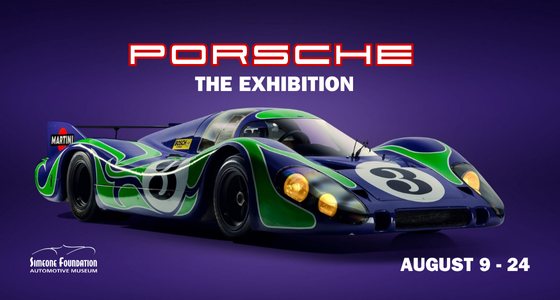
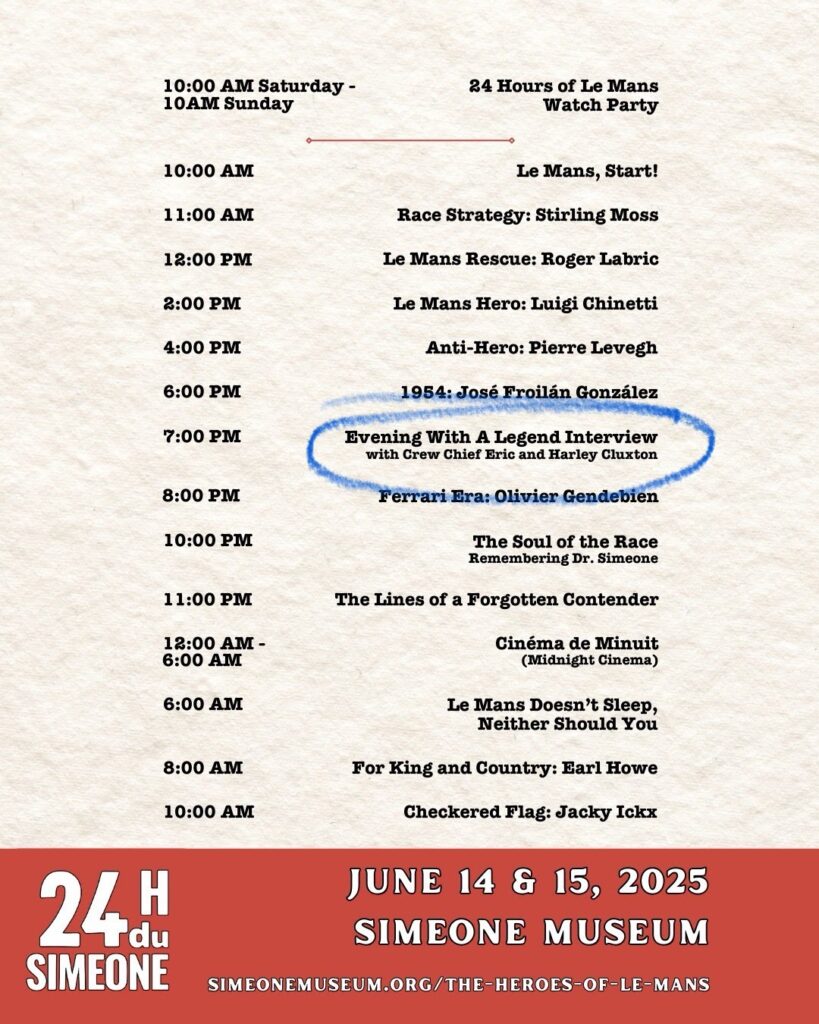
Thank you to the more than 1,000 guests who joined us over the course of 24 Heures du Simeone: The Heroes of Le Mans. Your presence helped make this one of the most meaningful events we have ever hosted—a powerful tribute to the endurance, ingenuity, and spirit that define the legacy of Le Mans. READ MORE.

Bonus Content
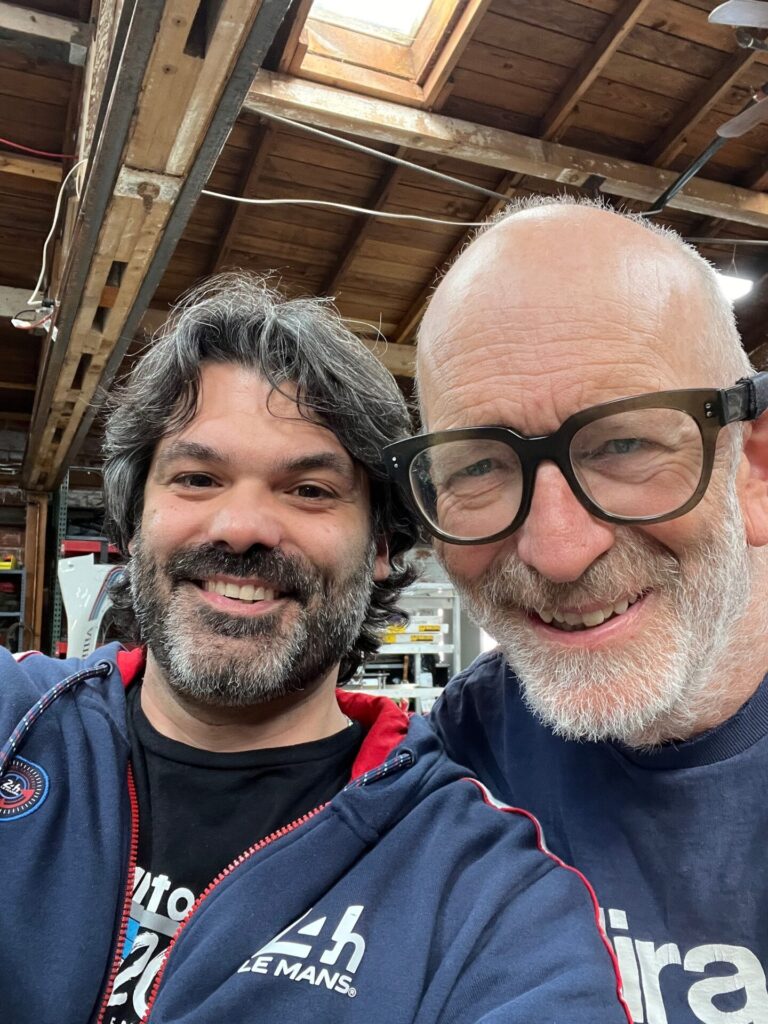
We recently ran into one of Harley’s former Mirage employees Brian (below; who Harley apparently always called “Nihge” – short for Nigel). We talk about his story in Drive Thru News #59 – tune in to check it out. #smallworld
Learn More
Evening With A Legend (EWAL)
Evening With A Legend is a series of presentations exclusive to Legends of the famous 24 Hours of Le Mans giving us an opportunity to bring a piece of Le Mans to you. By sharing stories and highlights of the big event, you get a chance to become part of the Legend of Le Mans with guests from different eras of over 100 years of racing.
We hope you enjoyed this presentation and look forward to more Evening With A Legend throughout this season. Sign up for the next EWAL TODAY!
In 1975, Gulf Oil withdrew from motorsports amid scandal, and John Wyer – the mastermind behind Gulf’s racing success – called Harley. “You need to buy Mirage,” Wyer insisted. Harley protested: “I don’t have the experience.” Wyer replied, “Yes, you do.” With Wyer’s mentorship and John Horsman’s commitment to move stateside, Harley made the deal.
That same year, Harley was racing for Chinetti at Le Mans when a dispute with race officials led Chinetti to withdraw all his cars. Harley asked, “Can I go over to the Mirage team?” Chinetti agreed. Mirage won Le Mans that year, and Harley brought the team home to Arizona.
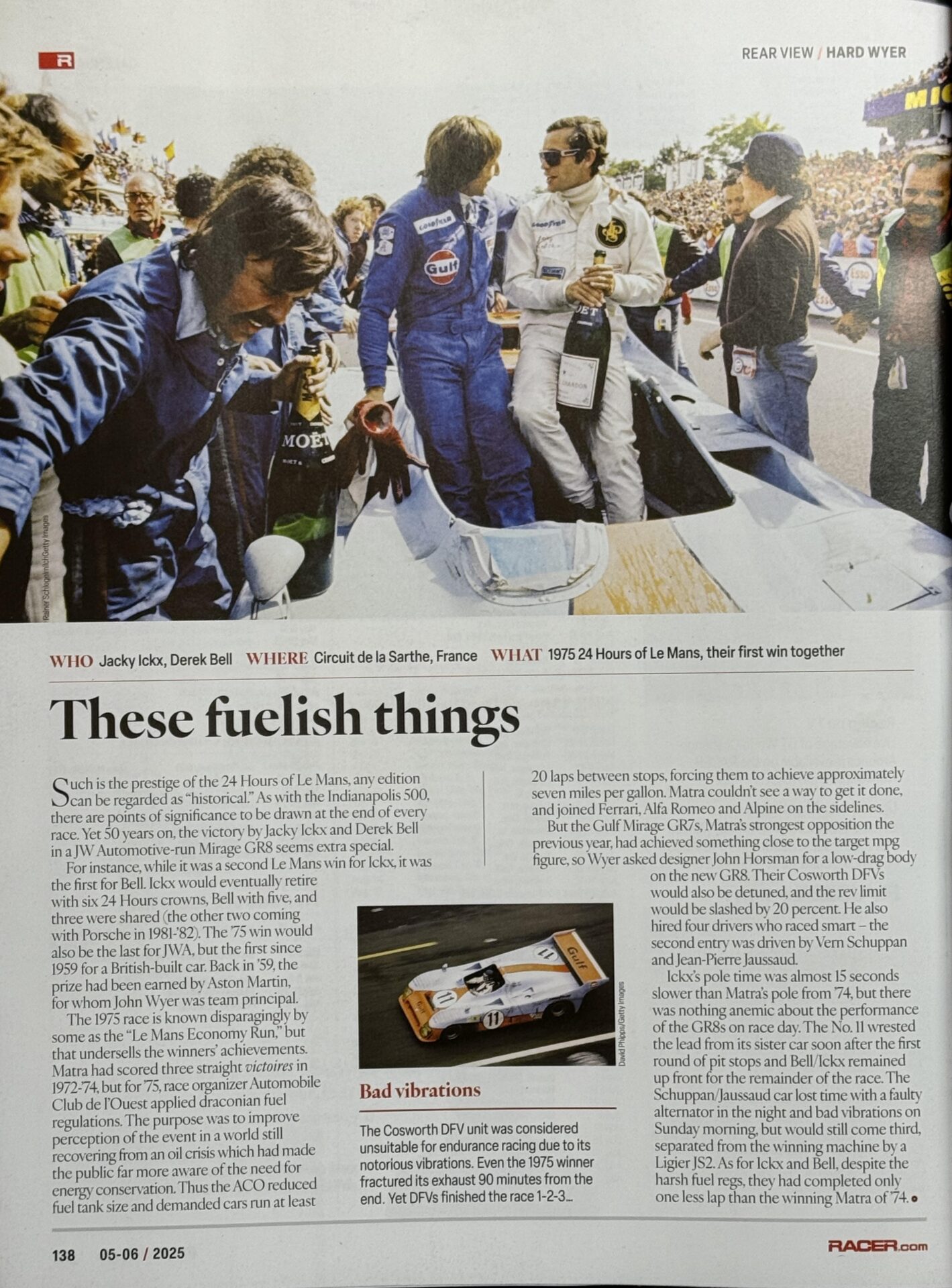
Under Harley’s leadership, Mirage remained a top-10 contender throughout the 1970s. The 1975 win with Jackie Ickx and Derek Bell marked a turning point. Harley emphasized Wyer’s tactical brilliance: “He made sure drivers stayed within a second every lap. You build up time so you can fix things and not lose the lead.”
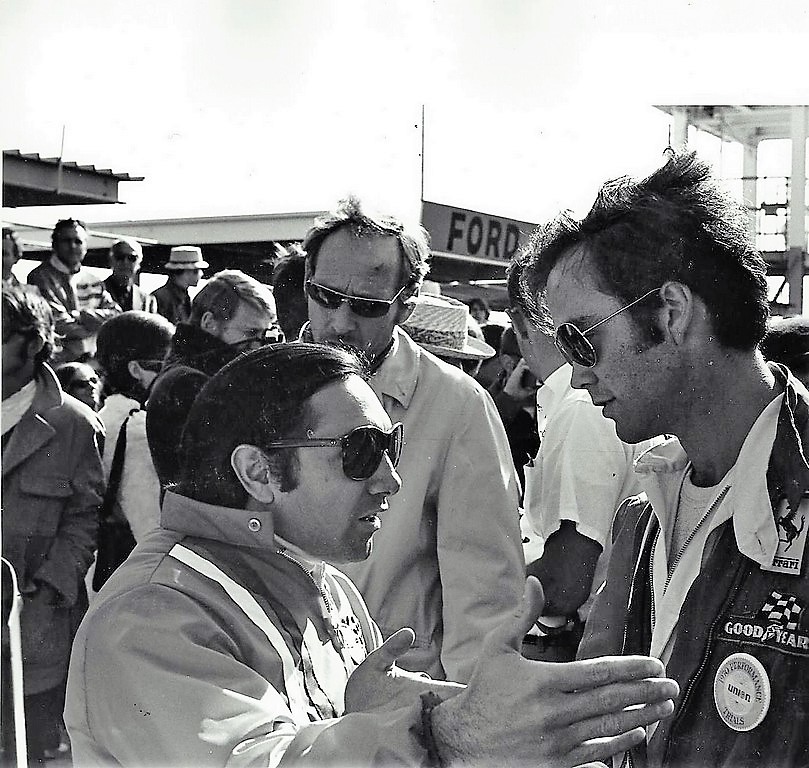
Harley’s stories are rich with humor and reverence. He recalled Pedro Rodriguez, his driving instructor, passing him in the rain at 237 mph on the Mulsanne Straight. “He looked over and gave me a little wave,” Harley said. “It felt like getting kicked in the nuts.”
He also recounted meeting Dan Gurney at Daytona, where Gurney ripped the shift linkage out of a Ferrari 512S and hurled it into the pits. “I ducked. Almost yelled ‘grenade.’”
Lessons in Race Management
Harley credits Wyer for teaching him race management: tracking pit stop times, tire growth at high speeds, and driver consistency. “You never know at Le Mans. We were leading in ’79 until the 23rd hour—and then we fell out.”
He also reflected on the emotional toll: “It’s a love-hate relationship. You pray that if you’re going to fall out, it happens in the first few hours. Not at dawn.”
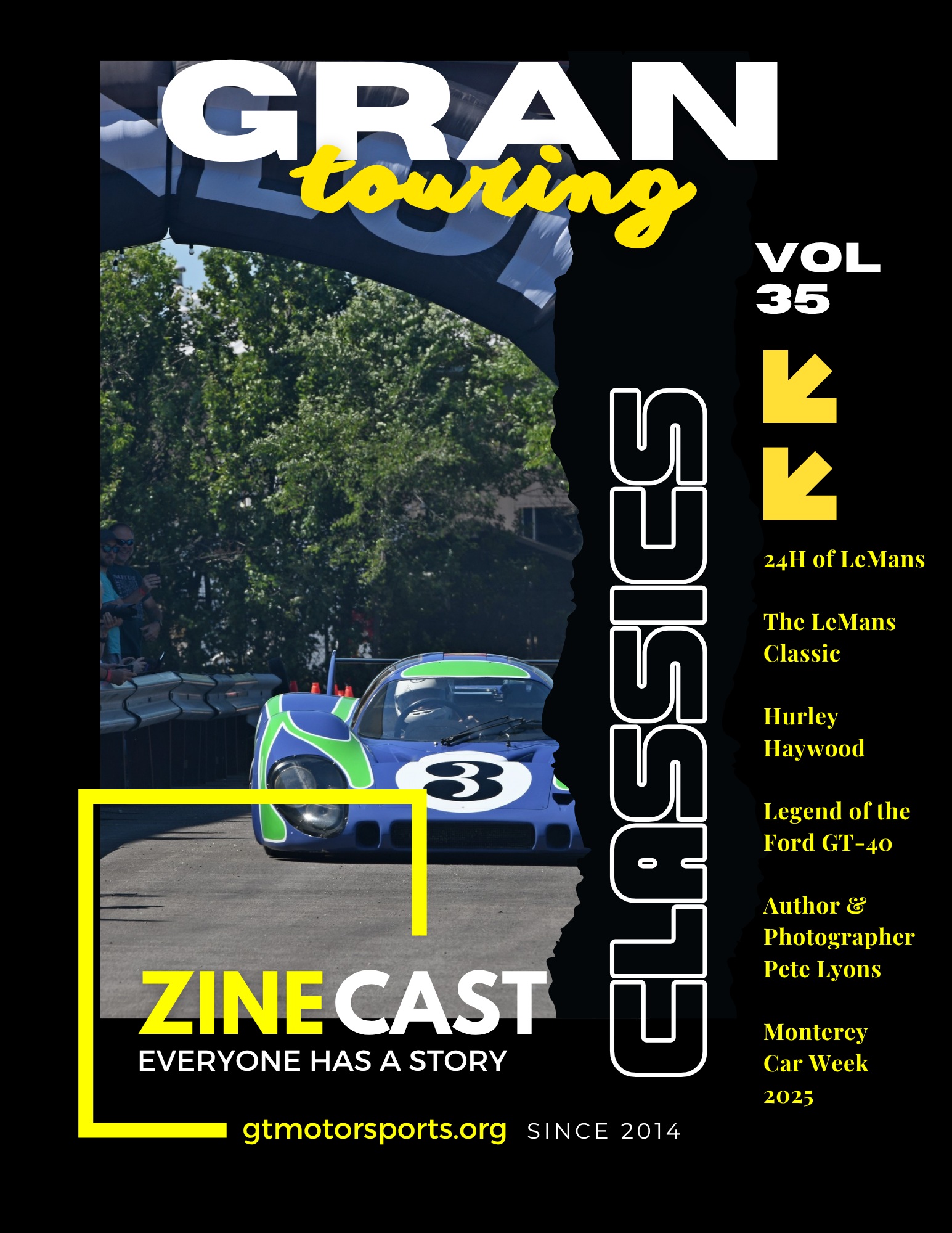
Harley eventually acquired the iconic 917 “hippie” Porsche (above), a car he once competed against. Though he admired Porsche’s engineering, he noted, “The Germans didn’t care about the drivers. They were expendable.” Mirage, by contrast, was built with care and precision.
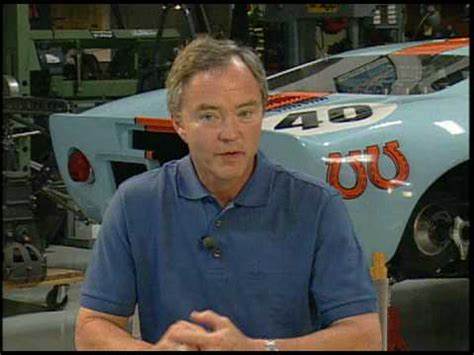
Harley Cluxton’s journey is more than a tale of racing. It’s a story of mentorship, grit, and a relentless pursuit of excellence. From selling Ferraris in New Orleans to owning one of the most storied teams in Le Mans history, Harley’s legacy is etched into motorsports lore. As he put it, “With Le Mans, it’s a real sickness. You just keep going. It’s heartbreak until the very last.”
ACO USA
To learn more about or to become a member of the ACO USA, look no further than www.lemans.org, Click on English in the upper right corner and then click on the ACO members tab for Club Offers. Once you become a Member you can follow all the action on the Facebook group ACOUSAMembersClub; and become part of the Legend with future Evening With A Legend meet ups.
This content has been brought to you in-part by support through...