

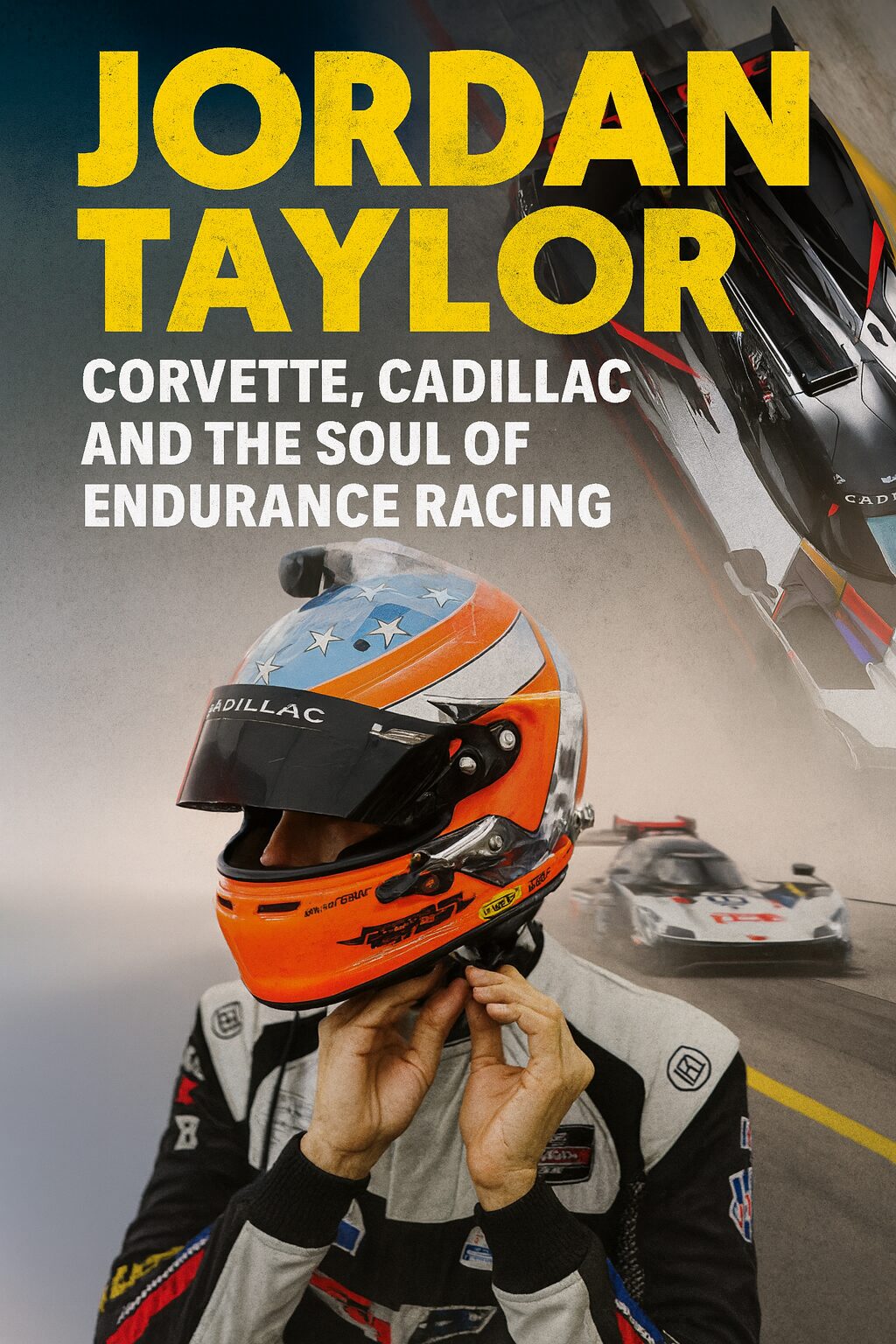
Over 100 years of racing history converged at this special Evening With a Legend, where host Crew Chief Eric welcomed Jordan Taylor – Corvette factory driver, Le Mans veteran, and one of the most versatile endurance racers of his generation.
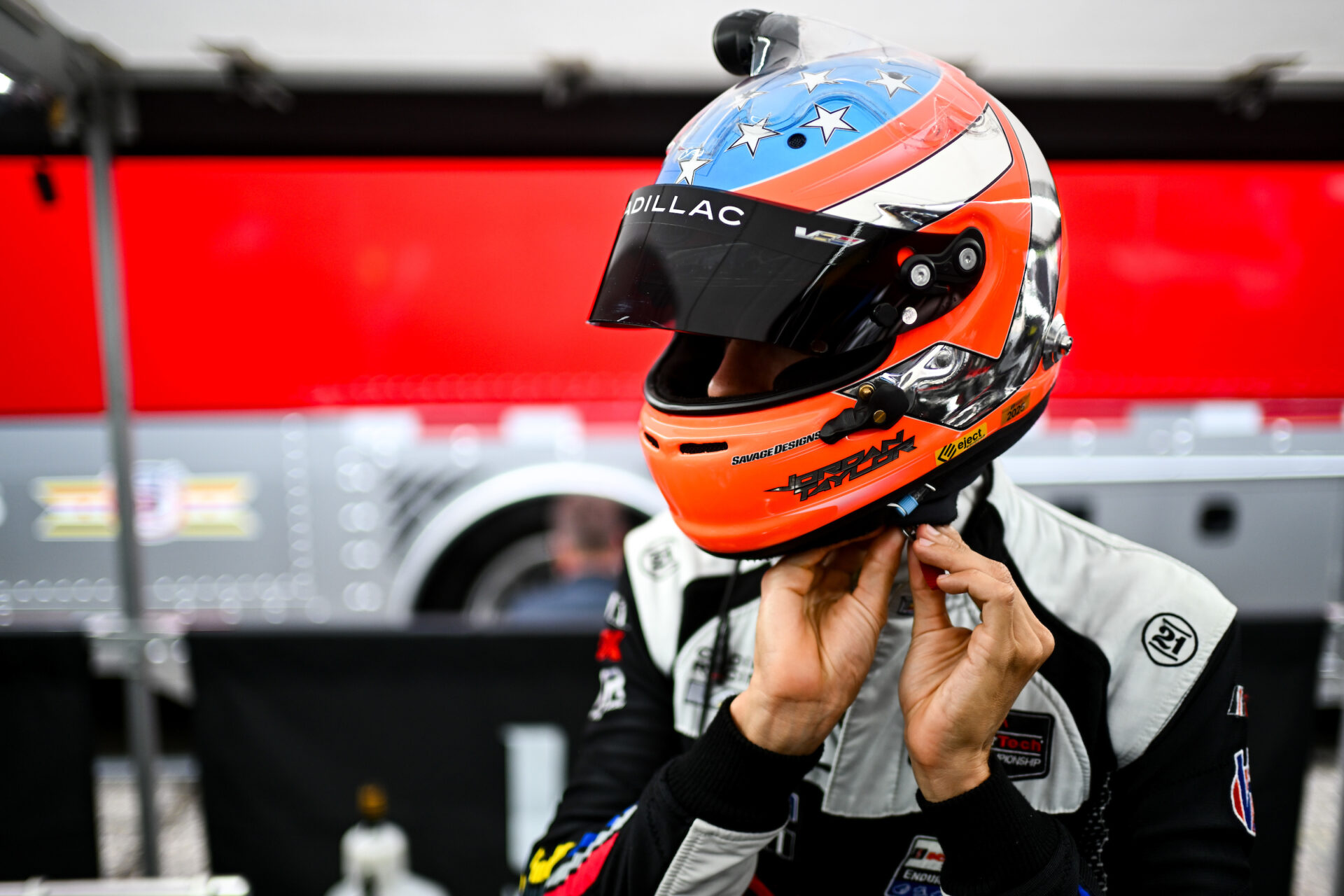
Jordan’s first trip to Le Mans wasn’t as a driver – it was as a kid tagging along with his dad, Wayne Taylor, who raced Cadillac in the early 2000s. Sharing hospitality with Corvette Racing legends like Kelly Collins, Ron Fellows, and Oliver Gavin, Jordan’s dream was born: to one day represent an American brand on the world stage.
Tune in everywhere you stream, download or listen!



That dream came true in 2012, when he flew straight from Detroit’s Belle Isle Grand Prix to Le Mans, arriving by helicopter and diving into the test day with barely a moment to breathe. “Thrown in the deep end,” he recalled, “but driving down Mulsanne with that loud V8 behind me was unforgettable.”
Synopsis
This episode of Evening With a Legend features an in-depth conversation with Jordan Taylor, a renowned competitor in the 24 Hours of Le Mans and a factory driver for Corvette Racing. We cover Taylor’s experiences and insights from over eight Le Mans campaigns. Topics discussed include Taylor’s first impressions driving at Le Mans, the unique challenges of the track compared to other endurance races, and his experiences with different Corvette racing models. Additional highlights include stories of teamwork, strategy, and handling the physical and mental demands of endurance racing. Taylor also shares anecdotes about colleagues and mentors, details on car differences, and his role as a driver coach for the Garage 56 program. The episode concludes with Taylor’s reflections on his racing career, the integration of IMSA and WEC racing fields, and his plans for future races, including a return to Le Mans with Wayne Taylor Racing and Cadillac.
- You’re part of the “next generation” of Team Corvette drivers, picking up where folks like Kelly Collins, Andy Pilgrim and others left off. What was going through your mind the first time you drove at Le Mans (esp. in a Corvette), and how did that experience shape your career or change you as a driver?
- Your first LeMans was in the C6-R, then you moved to the C7-R, and through the C8-R, can you talk about the differences in the cars. Is there one generation that you prefer over the others?
- You’ve been asked several times about the comparison between the Rolex 24 Hours of Daytona and Le Mans, do they really compare? Can you describe the unique challenges of racing at Le Mans compared to other endurance events you’ve competed in?
- Can you walk us through the strategy behind managing stints, pit stops, and fatigue during the race? How do you mentally and physically prepare for the demands of a 24-hour race like Le Mans?
- Let’s dive into the Garage-56 experience during the 100th
- What has been your most memorable moment at Le Mans, and why does it stand out to you? What do you think LeMans taught you?
- For young and upcoming drivers – What do you feel is the most challenging part of driving at the 24 hours of LeMans?
- What’s next for Jordan Taylor, and Wayne Taylor Racing?
Transcript
Crew Chief Brad: [00:00:00] Evening With a Legend is a series of presentations exclusive to legends of the famous 24 hours of Lama giving us an opportunity to bring a piece of LAMA to you. By sharing stories and highlights of the big event, you get a chance to become part of the Legend of Lama with guests from different eras of over 100 years of racing.
Crew Chief Eric: Tonight we have an opportunity to bring a piece of LAMA to you sharing in the Legend of Lama with guests from different eras of over 100 years of racing. And as your host, I’m delighted to introduce Jordan Taylor, who has established himself as a formidable competitor at the 24 hours Lama showcasing his exceptional talent in endurance racing.
As a longtime factory driver for Corvette racing, Jordan has played a key role in over eight LeMans campaigns, [00:01:00] contributing to podium, finishes, and class victories. Known for his speed, consistency, and racecraft. He has mastered the demands of the circuit. Losar excelling in both day and night. Stints and his adaptability and strategic mindset have made him a crucial asset to his teams, solidifying his reputation as one of the top endurance racers of his generation.
And with that, I’m your host crew Chief Eric of the Motoring Podcast Network, welcoming everyone to this evening with a legend. So, Jordan, welcome to the show.
Jordan Taylor: Oh yeah. Thanks for having me on.
Crew Chief Eric: Well, Jordan, you are part of the next generation of Team Corvette drivers picking up where folks like Kelly Collins and Andy Pilgrim left off.
So what was going through your mind the first time you drove at Lamont, especially in a Corvette? How did that experience shape your career or change you as a driver?
Jordan Taylor: Yeah, it was amazing. Obviously my first time going to Lamar kind of as a fan or a viewer was. Back in 2001 and 2002 when my dad raised the Cadillac there, so that was the GM team, Cadillac and Corvette, and the hospitality was shared with Cadillac and Corvette.
So my first time there, you know, I was hanging in the [00:02:00] hospitality with those guys like you mentioned, Kelly Collins, Oliver Gavin, Ron Fellows, all those, you know, legendary Corvette driver names to go there with my first time. And as one of those guys, it was pretty surreal. It was always kind of the goal.
After seeing an interpersonal was to get there, especially with an American brand like Corvette, to represent them on a world stage. Like that was amazing. And yeah, the first time I was able to go was 2012, I believe, after Detroit, the Bell Isle Grand Prix. Usually Lamar like you have this huge buildup to it, but for us, bell Isle was the week of the test day.
So I raced in Bell Island Saturday, had to fly out that night. Landed in Paris Sunday morning. I got on a helicopter with Peter Baron and Ron dl. We flew to the racetrack. Did a little private driver’s meeting over lunch and then I was able to get in the car for the afternoon, so it was kind of thrown in the deep end.
I didn’t really get to make the most of my first experience there. But yeah, just being able to drive down Wilson on that first time with that huge, loud V eight behind you or in front of you, I guess in the Corvette was super cool and you know, a great memory.
Crew Chief Eric: [00:03:00] Well, I’m sure you got that. Sense that LAMA is hollowed ground.
And so I’m sure you’ve been asked several times to compare between endurance racing in the United States and then racing at Lamont. Do they really compare? Can you describe the unique challenges of racing at LAMA compared to like the 24 hours of Daytona?
Jordan Taylor: They’re much different style races. Lama, it’s its own animal.
Daytona obviously is an SSA race, so for SSA racing, you know, you always, you, you know, you’re gonna have a yellow caution. At some point it’s gonna bunch everyone back up. It’s easier to get laps back. The goal at Daytona is to stand the lead lap or within a lap until the last four hours, and then you kind of go racing.
So it’s more of a survival race, and then you battle at the end. And you need a quick car just because it is kind of a head-to-head fight. At LA Mall, you need a quick car, but the, the way the race goes is. You don’t get those yellows to kind of bring you back together. So every second you lose, that could just accumulate over 24 hours to kind of be on your game and focus.
The whole race is even more important at LA Mall. All those little mistakes you make, dropping a wheel, any issues in the pits that time just accumulate over 24 hours. And there have been new [00:04:00] rules coming in with some of the wave rounds and things to kind of bring that a little bit closer. Most of the year that I was there was three safety cars, so you could get a luck an unlucky brake and lose two minutes with that.
So. Lamar, you’re always kind of pushing, always on the limit. In Daytona, you’re, you can kind of relax a bit. I’d say for the first 16 to 18 hours.
Crew Chief Eric: So having raced at other venues in Europe and all over the world really, how does Lamar compare to some of the other tracks you’ve been to?
Jordan Taylor: Uh, it’s not really like anything else.
That’s what makes it kind of difficult. Obviously most of it is public roads. No one gets a test on it and it seems like every year we go there, there’s some little adjustment or change the T track where either the town has changed something for the highways. Or you know, the racetrack has seen something on the, on the Bugatti side.
So yeah, I remember one year we drove down Mossana to test day and there were just tons of little bits of asphalt coming up the whole way down just because they had just repaved it. But then once it was clean, the grip was super high. So that track evolution over the race week and between the test day and the race week is always huge.
But then you [00:05:00] also don’t know if it’s gonna make the car more under steer or more over steer as it grips up. So you’re always kind of on your toes. It’s such a long lap and GT card. It’s almost four minutes. Getting a read on a change takes a lot more time Getting a read for high speed corners versus low speed.
Sometimes if you get traffic in the porch square, you’re like, ah, I didn’t get a read this lap. Gimme another four minutes to get a read. So it makes changes a little bit more difficult, which means your preparation is a. That much more crucial, kinda leading into it to be kind of as prepared as possible with the car that you want to have for race week.
Crew Chief Eric: So your first LAMA was in a C six R and then you moved to the C seven and the C eight, obviously as a factor driver for Corvette. So can you talk about the differences in the cars? Is there one generation of the Corvette that you prefer over the other?
Jordan Taylor: I mean, I had the most success in the C eight, so that’s probably the one I’d say I enjoyed the most.
The C seven, obviously winning LAMA is a amazing memory. I. And the C six I’d say was maybe the least memorable just because it was kind of my first introduction into proper professional GT racing. [00:06:00] It was a very difficult car to drive. It was very finicky with how you had to drive with the driving style.
Very unique driving style that I. You know, it took time to kind of wrap your head around and kind of going from the C six to the C seven. I’d say it kept a bit of that trend where the driving style was very unique. Some guys didn’t adjust to it. They had some IndyCar guys come test it, other, you know, renowned sports car drivers, and it just required this weird driving style that if it clicked, it clicked.
If it didn’t, it just didn’t make any sense. And sometimes you’d get in it and it wouldn’t make sense. And then other days you’d get an in, it would and it would click. So the C seven I, I really enjoyed once I understood the driving style. And then the C eight was more natural, I’d say it felt more like a natural race car with the mid-engine, with the weight distribution, it just made more sense naturally to drive it.
The C seven, you just had to be so smooth with everything. I think with all the weight on the front of the car, you had to be so smooth with your inputs, especially with the brake pedal. Anything you did with kinda your feet could really upset it really quickly. And I think each guy. Over the years had one spin in that car that just never made sense.
I [00:07:00] had one at, uh, the Road America test that I just had no idea what happened. Antonio had one at Long Beach, didn’t know what happened. I think Ollie had one somewhere and Tommy had one somewhere. So it was also a bit of a finicky car, but it won a lot of races. It won a lot of championships. It won Lama for us in 2015, so can’t complain too much about it.
Crew Chief Eric: All right, Jordan, I got a question from the audience here. Any favorite Doug Feehan stories from your Corvette racing days?
Jordan Taylor: I love Doug Feehan. Let me see. I’ve been around Doug probably since I was four or five years old, just because he was involved with my dad’s stuff. Actually, I think he was involved with my dad the year I was born as well.
So I’ve known Doug my entire life and I can’t remember, I think it was Petite Lama one year. And Antonio Garcia was qualifying our car and I was sitting next to, uh, my teammate Nikki Katz, and Doug was, must’ve been like down below and Antonio, like we weren’t very quick all practice. And then Antonio goes P one and we just hear Doug from down low, like, take that bitch.
And we’re like, what was that? It was still pure, like, it was like, that’s [00:08:00] so dope. Like he just loves winning, loves Corvette, loves the brands. And it is so passionate. I think that’s my favorite Ian story.
Crew Chief Eric: Alright, so let’s compare green apples to red apples. Last year you drove a Ferrari mid engine car. So how did that compare to the C eight?
Jordan Taylor: Yeah, quite different. So the C eight car that I drove was the G-T-L-M-G-T-E version. So it was designed for that class. So it wasn’t designed for the spec Michelin that it runs on, or the spec Goodyear that it runs on in wac. When we transitioned between, what would that have meant? 2021 and 2022 to kind of GT three rules in imsa, the car didn’t really fit the class very well, so the way it handled, the way we had to set up the car geometry wise to get it to work with that tire, it always felt a bit funky.
So I think when we started development, I was there for the development of the new car, the GT three Corvette. As soon as that one kind of rolled out, it felt way better instantly on that spec tire just because the car was designed for it. I think the way the GT three rules are written, every car that’s kind of built to that homologation, it’s a pretty tight window of what you can do.
[00:09:00] Everyone’s got the same sort of Bosch a BS system. Everyone runs the same tire. You’re supposed to be in the similar weight range, similar downforce range. So all the GTD cars, I think, feel relatively similar. It’s just gonna depend on how the BOP positions you with. Arrow levels and power levels and and what that feels like.
When I jumped into Ferrari last year, I thought it was gonna be this crazy new thing to feel, but once you start pushing and getting to the limit of it, it felt relatively similar. I think with it being a mid engine as well, and probably just overall weight and arrow levels. It was pretty similar but I’d say drivability.
The engine was much different, obviously much different type of engine and build. But yeah, it was a good experience. Obviously all my gt experience has been in GM products, whether it’s a Camaro, Cadillac, GT three Car, or Corvettes. To try something different like a Ferrari, especially at a place like LA Mall was, was super special.
Crew Chief Eric: So how did that come together? I mean, you’ve been with Corvette for so long. Why a Ferrari?
Jordan Taylor: Well, I wasn’t planning on going to LA Mall and a buddy of mine, Marco Sorenson, who races for Aston Martin reached out and said. Basically like, Hey, if you wanna do Lamont, I know some [00:10:00] guys who are looking for, you know, a gold platinum raided driver.
And it was this great family, Johnny and Conrad Larson, and I think it was gonna be Johnny’s last race. So we spoke on the phone a few times and I flew out to Paul Ricard to test with them and I. I just loved them. It kind of reminded me of my family with my dad being in racing and Conrad being super young and up and coming.
It was a fun experience. Obviously anytime you can do La Ma, it’s something you want to jump after, and it was with Af Porta, who obviously has a lot of success. It’s a team that I’ve raced against many years, especially at La Ma. I think a couple years that we were finished, second at La Ma, they won, and the year that we won, they finished seconds.
The team also I can kinda learn from and see, you know, where their strengths and weaknesses are and something that I can kind of take away from it.
Crew Chief Eric: Well, I’m glad you brought up teammates, teamwork, things like that. I mean, that obviously factors into the success of lama. Let’s maybe compare and contrast a of course to gm.
You know, how are the teams different? If you can talk about that. What makes for a good, strong driver lineup, you know, how are they choosing, you know, obviously they chose you to come and drive for them, but how much does that play into the [00:11:00] success as well?
Jordan Taylor: The teams were much different. A lot more coffee at af Corsa and espresso and pasta now, like I, I was so used to being there with Corvette over the years and everyone speaking English and it feeling like I’m having my little America experience over in France and.
My brother had been with so many different teams and I’m, I’m always hearing his experiences of language barriers and food issues and, and things like that. So for me it was a cultural change. Uh, I’d never been with a non-American team, so for me that was interesting. It was just so much different mentality from the team.
Different way to approach practice sessions. Different way to approach the race strategy wise, different way to organize meetings, logistics, communications. It was just interesting to see it from a whole different perspective and see why they’re successful. But yeah, picking drivers is always a difficult thing.
Corvette has done a very good job over the years. Same as going to the racing. I think they both have a very similar mentality where you take the personality, the driver as a big part of it, making sure that they fit in personality wise. There’s no clashes with egos or anything like [00:12:00] that. You have to be pretty easygoing and friendly and relatively lighthearted where you don’t take your job too seriously, but serious enough to get the job done.
So that’s, I think, one of the most important criteria that both Corvette and WTR take into it, and I think that’s been a big recipe for the success. Obviously there’s a lot of very fast and competitive drivers, but if they’re creating friction in the team, it’s gonna drag everyone down so you can find the personality and the driver that’s fast.
That’s the perfect recipe. And I think when you look at, when I joined, uh, a of course the last year, obviously with the way the GT three rules are, you can only have one Golder platinum. So by that time they were pretty limited on who, on who they could pick. So they were asking around and Marco was able to recommend me and the personality was a big part of it.
Even Johnny told me, Johnny Larson, that. He wanted to talk to me, get to know me a little bit before he kind of made that commitment, just because he also wanted to have a good experience with Lama. He didn’t want to have a driver come in and only care about himself for setting fast laps. And thankfully it all went well.
They’re a great family and good to see that different teams have that approach as well. And it’s not just, I. Driver out [00:13:00] there to set fast labs and and out there for themselves.
Crew Chief Eric: So you alluded to it earlier, you know, Lama is a high stakes environment and even in your time there’s been rules changes since 2012 to today.
One of them, you know, we’re talking about teammates still, we’re talking about the changes in the teams, even minimum drive times and maximum drive times have changed over the last 15 years or so. So can you walk us. Through what the strategy is like of managing the pits and the pit stops and managing your fatigue and your health and mental wellbeing, and how do you prepare for a race like Lamar or even the 24 hours of Daytona or any of these endurance races.
Jordan Taylor: The first one or two time you do a 24 hour, it’s probably the worst experience you’re gonna have, hopefully, and you, and you learn from it. Especially Lamar. You have the whole week there and you do the test day on Sunday, you have Scru Friday, Saturday, you’ve already done two days of media. By the time you get in the car, you get to drive a little bit on Sunday.
And then you have Monday, Tuesday to kind of get back into media stuff and meetings. You have the drivers parade on Friday, so you have all this stuff outside the car that’s mentally draining you and kind of distracting you from what you’re [00:14:00] there to actually do. So the first two times you do it, or first time for sure that you do it, you’re just mentally exhausted and drained.
And by the time you do actually get to the race car, you’re like, ah. Like this is what I’m actually here to do. Your head’s not really fully in the game like it should be. So that’s the first thing I think a young driver learns doing these events is. You gotta do your media commitments on everything else outside the car, but your job is to be a hundred percent when you do get in the cars.
That’s something that you kinda learn, I think, over a career is how to balance those two things. And at WCR, we do a lot of driver science work with a doctor named Dr. Ferguson. He’s doing a lot of driver studies just to kinda understand the mental fatigue and physical fatigue. So we wear sweat rate patches, heart rate monitors, body temp sensors.
He’s measuring everything pretty much before we get in the car and after we get in the car and he can kind of tell us. Our sweat rate and if we’ve been drinking enough. And the goal is to have that live for the telemetry, for the engineers to kind of monitor our sweat rate, to keep us ahead of things for hydration.
Because if you do a three hour stint and you become into this [00:15:00] massively dehydrated state, it’s gonna take you a long time to get back to that, and you might not have enough time to get that hydration back in by the next time you get in. So. We’re still constantly learning kind of what each driver needs.
My brother and I are, are obviously brothers, but we have much different sweat breaks, so he needs a lot more sodium. He sweats out between four and five pounds per hour. I sweat out between two and three pounds per hour. Understanding each driver’s needs is super important and it’s been nice to have, you know, Dr.
Ferguson coming into there with us and supporting that. So we think about it a little bit, but he can kind of just tell us. Hey, you need to be doing this. You need to be doing this to stay on top of things. I think we’re a little bit ahead of the game than a lot of other guys with, I’d say the nutrition side, just because kind of our hobbies include some like triathlon training and things like that where we can kind of practice those things with hydration and nutrition on our weekends, and then when we go to the racetrack, we’re better prepared.
Crew Chief Eric: Well, this leads us into a conversation about the 2023 season, the hundredth anniversary of LAMA, and your involvement as a driver coach. The Garage 56 program. That’s what everybody probably wants to [00:16:00] hear about. So let’s do a deep dive into that experience. What it was like putting it together, what it meant for you, what it meant for America and for American fans.
Jordan Taylor: It was super cool. I think when I kind of signed up to be a part of it, I definitely didn’t think it was gonna be as. Big of a story as it was. I don’t think anyone involved thought it would be as big of a story as it was. But yeah, really early on, I think, I don’t know how far be, before the program was official, Chad Kau reached out, just kind of picked my brain a little about Lama just again, asking generic questions like a month later I was like, Hey, if you, our guys are ever thinking about something, like I’d love to be involved in some way.
So, I don’t know, it must’ve been, you know, six or eight months later, you know, he is asking more questions and I’m like, all right, what’s going on? And then it gets announced. That it’s happening. And then John Dunan from SA called and was like, Hey, we’d like to have you involved in some way, maybe as a reserve driver or or a advisor.
And I said, yeah, like anything to be involved. I’d, I’d love to be involved with it just because it’s like, I’m not racing there. It’ll be a much different experience. I’ll get to test the car with them and go as a reserve driver. And then when I got to the [00:17:00] actual driver announcement in Daytona, they told me that I’d be quoted as the driver coach.
I didn’t know that going into it, but it was pretty funny just. Title to have, you know, when the drivers are Jensen buttoned, like Rockefeller and Jimmy Johnson. Three guys who definitely don’t need driver coaches, but it was an amazing experience. Obviously jumping in the car early days and testing at Daytona was fun.
Then we went to Sebring for a 24 hour test through the night. We did test at Coda back to Sebring, and every time you’d get in the car, there’d be some big jump in performance and it was always something new, but it was just fun to be part of something where there’s no rule set, there’s no ho allegation that you have to stick to.
There’s a general rule of what we have to stick within. But as far as car development, you know, you can just do whatever you want to to try and make it faster and more reliable. So that’s fun as a driver where we’ve kind of lost that in professional racing, where once you kind of build a car that’s.
Your car and to moated, especially in GT three, you can’t touch anything. So to kind of be able to be hands on and as a driver say like, Hey, I think this would be cool if we could do something here. And then next week they’ve built a part for it or [00:18:00] developed something or developed three parts for it, and they’re like, let’s try this one.
Let’s try this one. What about this one? And I think just the involvement of Hendrick, NASCAR and General Motors. There’s just three massive companies that are pushing performance and kind of excellence. And then by the time we got to Lamont, we still probably didn’t expect it to be as popular as it was just because it was so close to us.
Like we were so used to seeing the car and hearing it and being involved with it. At that point, it was just a race car and it was loud, it was cool, but we didn’t think the kind of reaction would be as amazing as it was when we did get the tracks. Obviously the car ran very well. It was super fast, you know, in the race leading the GT pack for most of it until we had a little gearbox issue near the end, but the car made it to finish, I think proved a lot of people wrong thinking that, you know, a NASCAR can’t go to Lamont and be competitive.
I don’t think it was a pure NASCAR by that point. It was pretty far developed. Super cool program. Probably one of the cooler experiences I’ve I’ve had in my life.
Crew Chief Eric: Being there to see it live in person and seeing the reactions of the people. I mean, it was definitely mixed. A lot of folks were like, oh, they’re never gonna make it.
Yeah, they’re gonna run out of [00:19:00] tires and blah, blah, blah. You know, you fired that thing up. You could hear it pretty much all the way around Lama, but at the end, when you guys crossed the finish line at the end of the 24, I mean, people are saluting and they’re cheering and they’re crying and there’s American flags, and it was the most amazing spectacle you had ever seen.
Hang your hat on that. Be proud of that because it’s a long time coming that we see. See, you know, that type of ingenuity and to take something out of nascar to bring to endurance is absolutely incredible. And to your point, I don’t know how similar it is to, what is it, the car of tomorrow that I guess they’re quoting is the next generation nascar.
But I’d like to see more of those kinds of cars running around. Do you think there’ll be a homologated version of that car coming back to Lamar or something else like it?
Jordan Taylor: Not that I’ve heard. I mean, that car is probably pretty expensive at this point to make. I think they poured quite a bit of money into it.
I mean, at the end of the day, it had carbon breaks. Had all shift, had a ton of electronics in it. You know, we did a lot of tire testing with Goodyear to kind of develop a tire for it. But yeah, I mean, probably relatively, the car probably isn’t that expensive to, compared to, you know, a hypercar or something like that.
But, uh, I know it would be super cool [00:20:00] to see, you know, 20 or 25 of ’em out, out there racing each other. There was a design to have a rear wing on it, which would’ve made it way more efficient. Drag versus downforce. So I think if we, we were able to develop it. Properly into, you know, a race car. It could be properly quick.
And there were some limitations that we were on that you had to keep a spoiler to kind of keep it more NASCAR and very similar look to it. But yeah, I, I would love to see more of ’em out there. It was, it was one of the more enjoyable cars I’ve driven. We were, we took it to Dakota to do a lap before the motor GP race.
Took it to VIR to do the lightning lap for car and driver, and those are just such fun driving experiences. The purity of the car is something you don’t get as much these days. Obviously there’s a lot of electronics driver aids in GT three and Hypercar that are kind of supporting the driver and when you get an ad thing, it’s just.
A raw machine and you’re just connected to the ground through this crazy car. And for the driver’s experience, it was much more raw and emotional.
Crew Chief Eric: And to your point from earlier, I think the BOP probably would’ve killed that car and wouldn’t have done as well as it did [00:21:00] or would, didn’t have stood out as much as it did.
So there’s also that to consider, but. And mean. I don’t think it’s a direct catalyst for this because the talks were already happening, but we saw even last year, a deeper merger between the IM SSA field and the WEC field, and you had cars from Lexus and BMW and all sorts of other brands showing up at Lamont.
So for a lot of us, it started really paying more attention to the racing. You’re like, oh, I recognize those. You know, it’s not just Italian and French and German stuff out there in your eyes. How is that working out, bringing more of the IMSA fleet to Lama with the balance of power? For me, it’s
Jordan Taylor: great. I mean, I, I grew up an, IM SA guy watching LAMA every year kind of on TV as a kid.
So for me, that’s my perfect schedule as an IMSA year, Daytona Sebring, petite and all of our American races and Lama. So to kind of get that eligibility for us to kind of race there with our cars is. A dream come true. It’s what we were always hoping for when I was young and growing up, was to have that ability to do both in the same car, in the same team.
It was something that my dad was able to do through [00:22:00] the nineties where if he won Daytona or Sebring or Petite or the championship, he would get an entry to lama, which he did in the late nineties, like 95 through 98. So yeah, for us, when those rules change and. And there was some eligibility for our GTP class to go join the hypercar and the GT three class in to join the GT three class.
There was perfect and, and getting entries that way. So it’s weird to kind of be involved with it as a driver. I think I’m so used to looking at it from an outsider’s perspective and when you watch, you know, those LMP one fields racing for an overall win, you kind of. Put those guys on a different level and when you’re watching them and now it’s the same level that, that we’re racing at there, those guys are coming to race with us at Daytona and some of the bigger races here, and then we’re going to race them kind of on more of their homegrown.
So it’s really to kind of be a part of it. As a fan, I still look at it as this much different level, uh, just because it’s something that I grew up watching this year, going there for the first time as an overall winner. Gonna be an interesting feel, but it’s something that I’m excited about just because I’ve been in the car now all year, and [00:23:00] it’s something that I’m comfortable with being in the car, and it’s just gonna be, hopefully another race on the calendar.
Just a little bit more of an important one.
Crew Chief Eric: Well, you mentioned the, let’s call it LMP one, GTP, hybrid hypercar class. Whatever it is now, it feels like it’s changing all the time. How do we entice more of the, let’s label them the obscure brands. To come race the United States. Let’s take Porsche off the table ’cause they’ll race anywhere.
But how do we bring Projo over? How do we get Ferrari to bring the 4 9 9 to race here in the States?
Jordan Taylor: Yeah. I mean, I would love to have them. I, there’s so many good cars in the class now and the WEC Hypercar field is so strong and so deep. I think most of the entries are going to WEC just because the York guaranteed those Lamont entries.
And it’s such a big budget to pick one or the other that I think at least initially for them, it’s smart to go there just ’cause they know they’re gonna get a Lamont entry and if you just join him. So there’s a bit of a question mark as as if you’ll get invited there. So I would love it. I think there’s been, talk about REI getting a Ferrari here and eo.
I haven’t heard much of a customer talk with them, but with forward coming and Genesis, it would be great [00:24:00] to have some of those come over here. Even if it’s just for endurance races like Daytona, Sebring, and Petite are classics. Those are still. World renowned events that everyone wants to win. So yeah, it would be fantastic.
I don’t know how to entice them more. I think when people come and and race in America on our tracks, especially those ones like Seabring Petit and Watkins Glen, those are some pure race tracks. The drivers really enjoy driving, and I know from European drivers that have come to America and only been here for a year or two, they just love our racetracks just because.
They still have that old school feel where most of the European tracks have kind of developed those track limit violations type designs. And for a driver, it’s difficult to kind of find those limits when there’s extra asphalt there that you want to use and then you can get a penalty for it. I love that we kept that raw feel to our attraction American.
I think the drivers appreciated and respect that as well.
Crew Chief Eric: So what do you think has been your most memorable moment at Lamont, and why does this stand out to you?
Jordan Taylor: Definitely winning Lamont in 15, that whole week was kind of a whirlwind. It was the year that the sister car, the other Corvet, the 63 car that year [00:25:00] with Magnusson, had a throttle stuck in the ports grove, and he had a massive crash and then they were unable to fix it.
So we were down to one car for the race. And obviously that was the first time in history that Corbett Racing had entered the race with just one car. So being one of the three drivers, kind of representing the brands. When you’ve got a million people there supporting you from management and upper levels of GM and obviously all the team personnel, and it’s just such a ordeal to get there.
And now there’s only one bullet in the gun is us, and it’s up to us to kind of not make mistakes and get the job done. So I. Heading into it. It was terrifying just to know that. But it was amazing to have the support, both sides of the garage, 63 and 64 engineers swapped off through the race. So one stint I would have, Chuck was the four car engineer in my, in my ear.
The next stints Kyle from the three car would be in my ear. So it was really good. How. The team split duties and used everyone kind of to their fullest. And Ryan Briscoe was in the three cars, stayed the whole race even though he wasn’t racing and was kind of always keeping us up to date with what was going on between stints and, and how we were [00:26:00] doing.
So I think the way that week went and just kind of feeling down and out of it before the race even started to then be in, in the hunt, um, Sunday morning, and then when the Ferrari fell out with like an hour or two to go, we knew. We just needed to survive from that point. It was just a massive weight off of everyone’s shoulders, I think.
And then, yeah, obviously just bursting into tears after the race. And then I’ll never forget waiting in the stairwell to go up onto the podium and Oliver Gavin had his wrong shoes on in the car, so he was radioing. Get my podium shoes ready, get my podium shoes to the guys to find someone to go find those proper shoes to wear on the podium.
Super cool experience. Obviously, walking onto that podium, seeing all the people down there, all the blow horns that you kind of see in the videos. Raising the American flag with the anthem was super cool. And yeah, just having those memories and pictures and videos to kinda look back on is always a nice thing.
Crew Chief Eric: So you brought up something that I don’t think I’ve asked a pro driver in quite a while talking about Oliver Gavin in his podium shoes. Do you have any superstitions, any rituals, anything that gets you prepared for the race?
Jordan Taylor: Nothing good. I [00:27:00] think Ollie’s thing was he had a. Sponsor for shoes and he was driving with a different brand shoes that he didn’t wanna go to the podium with.
I think I’m pretty basic. I think I’m like right glove, right shoe first. Yeah. I’d say if, if I put my left glove on first or something happens, I would probably take it back off and start with my right hand again just to kind of take that out of play just in case.
Crew Chief Eric: So biggest oops moment. It doesn’t necessarily have to be at Lamont, but if there is one at Lamont, what did you learn from it?
Oh yeah,
Jordan Taylor: it was at Lamont. It was my first ever proper crash in the race car was at LAMA 2012. It was at that test day that I was talking about where we flew over the night of the test and then I was in the car right after lunch. So it was my first time there. First time experiencing the track. You need to do 10 laps at the test day to qualify for race week as a rookie driver back then.
So I go out, I’m doing my run, I’m just gonna do a 10 lap run just to make sure I qualify. And I get to like lap eight. And then they do a full course yellow simulation to kind of see how all the systems are working. So we do a full course yellow, and I’m driving around, kind of looking around and rating the guy’s like [00:28:00] what I’m seeing and how cool is this.
Then it goes green again. I do lap nine, and then I do lap 10. And then they’re like, all right, stay up, do one more lap. And I was gonna do 11 laps and one lap. 11 I spun in the Porsche curves and hit the wall. And I hadn’t crashed a car until then in my whole career, which no one really believed, but like, so I crashed.
And I was like, wow, like I destroyed the car. It felt like such a big crash. And then I’m like, sorry guys. The car is destroyed as I’m sitting in it. And then they come tow me out and DJ from the team comes and he is like, what’s wrong? And I’m like, I don’t know. I’m sorry I destroyed the car. He’s like, you could have driven this back.
And I was like, no way. It was a huge crash. And then they got the car back. Couple body panels were damaged, but the car was still straight. All the wheels were straight. No suspension damage. So they said if that happens in the race, like if you don’t drive that car back, just don’t bother coming back because the car was perfectly fine.
So it was an oops moment, obviously crashing. But it was also a good like learning experience was like, wow, these cars are pretty strong. I think it could take a hit like that and I should have driven it back. Good learning moment. And I’ll never [00:29:00] forget Magnuson. Came up afterwards. I was looking at the car and felt bad.
Obviously I must have been like 20 or 21 years old, and I felt bad that I crashed their car. And he is like, eh, it’s not your first crash. It won’t be your last crash. And I’m like, yeah, it wasn’t my first crash, but hopefully it’s my laptop for a little while.
Crew Chief Eric: So a lot of drivers have said that Lama changed them.
The experience was so profound. It was so different than what they were used to. It might’ve been the first time that they had ever raced in Europe. And obviously in the old days there wasn’t a lot to go on. There wasn’t videos to watch. There weren’t. Simulators to test on and train on and things like that.
Do you think Lamont changed you as a driver? Did you take something home to the states and apply that to your racing here?
Jordan Taylor: Yeah, it’s a much different experience there, like we were talking about at the beginning, where you kind of have to stay focused at all times through the race because every, any kind of second you lose is accumulating over the race distance.
One of the years we were, you know, lapsed down and I was driving around. The straits are so long, especially in a GT car where you can feel like your mind will wander a little bit just because you’re just flat out [00:30:00] in sixth gear for such a long time, and by the time you get to the next chicane or mosan or down to Indianapolis.
Gotta kind of click your brain back on and, and walk back in to kind of be on a limit for the break zone and for that corner. And I’ll never forget finishing that sentence being like, wow, my mental, that kind of focus and fatigue wasn’t good there. And thankfully we were kind of out of the race that year.
We, we weren’t even competing. We were just laps down, doing laps. And I was like, I can never kind of let that happen again. Where I’m letting my mind kinda wander. And that’s something you don’t get. I have never experienced anywhere else. I think it’s because Lama is so big and with it being 56 cars. And in the GT class, I think that was one of the years when there weren’t many LMP one cars.
It was at night. You could be driving around in the pitch black, not see a car for like 30 minutes if the pitch weekends was doing that. So you’re out there in the pitch black driving by yourself. It’s, it basically feels like you’re driving on the highway between two cities. And I just, I’ll, I’ll always remember kind of getting on the car and being like, I gotta make sure that never happens if we’re actually in the race.
’cause if we were in the race, that would’ve been a bad situation. So that was a big learning [00:31:00] experience. That’s something I’m glad I had it because it’s a good realization to make sure that it doesn’t happen. But if that’s something that LAMA is the only place you can kind of get that feeling where you can kind of be all by yourself and it’s a unique experience.
Crew Chief Eric: If you could change any aspect about racing at lama, is that something you would change? And I bring that in reference to some of the older drivers that I. They used to complain about the pits until the pits got changed. And then, you know, the mosan changed in the late eighties, early nineties. So it’s seen a lot of evolution, but you’re not done racing at Lama.
There’s something when you go there, you’re like, man, I really wish they would just change this corner or do this thing. Or maybe it’s something as simple, it’s, it’s a squeaky door in the, going into one of the rooms or something. What would you change about Lamont? Um,
Jordan Taylor: I mean, there could be more bathrooms in the pit lane.
That would be nice. Yeah, the bathroom situation isn’t great. I feel bad for the crew. Guys are kind of locked in there for the whole thing. I’d say TrackWise, there’s obviously been a lot of evolution, I’d say during my career there. Obviously the force curves have changed quite a bit. After Magnuson had that crash in the wall, Duval had a crash into, uh, in the one on the left and they kind of pushed all that back.[00:32:00]
Uh, a lot of the track limits stuff has, has changed kind of outta Ta Rouge and the Ford Chicas changed a bit. I’m more a fan of the old school stuff, where I like that kind of more on the edge feel less track limits violations, keeping that kind of risk versus reward feel to the racetrack. I understand the safety aspect is a huge part of it and there were some big crashes, but I like to leave it a little bit more in the driver’s hands rather than, than the official hands.
Forcing them to make those calls when they have to make, you know, attract them as call for left time or attract them as call due to a pass. And kind of when you get into the night at Lama, it’s so dark and there’s so many places you can make up a little bit of an advantage that officials can’t get everything.
So if someone finds a second year, a second there, that’s gonna add up. And, uh, one year in the Dunlop Chica, the first one, you know, one of the manufacturers claim that they had cold tires on every outlet, and they would just straight line it and make up, you know, three or four seconds every outlet. And you’re like, if you put a gravel trap there, there’s, they’re not doing that.
They’re making the corner and you know, the [00:33:00] manufacturer’s saying, ah, we’re struggling with cold tire in our out lab, so we can’t do anything about it. So I think putting it in the driver’s hands and giving us that possibility and the teams that possibility, they’re gonna maximize that and push those limits.
And I think if you kind of take that out of the driver’s hands and make it more of a black and white rule. It would just make everything a little bit cleaner, I think.
Crew Chief Eric: Well, LAMA is one of those tracks that it’s sort of tough to get practice laps on. That’s one of the things I’ve heard from a lot of drivers, and it’s a once a year event realistically, and you’re of a generation where you spend a lot of time on the simulator, so who’s gotten it right?
What’s your favorite SIM for lama? Is it iRacing? Is it LMU? Is it one of the other ones? What do you use to practice your laps for Lamont?
Jordan Taylor: Yeah. I practice on iRacing most of the time. I enjoy that just because you can get out there with. Traffic and if you find a good like hosted session, you know, there’s 60 cars out there and you can get a feel for where to pass cars, where cars are passing you, where to place your car to kind of defend a little bit better.
For me it’s, it’s less about the absolute like driving experience [00:34:00] and lap time gain. It’s more about the flow of traffic and passing and getting that race ability out of it because. We get to go to, you know, our super expensive simulators with Delara and Cadillac and GM and spend days on that thing to kind of perfect our lap time and performance.
When I’m home, I like to kind of get that racing aspect and I’ll hop in there with our teammates with going to the racing guys and I mean, it’s a great place to practice racing craft. I remember when I racing first came out, I would always hop on there with. And find guys like Will Power or Dale Lanar Jr.
If you start racing with them, you start learning something that is probably they’re doing on, on the real race tracks. And that’s kind of invaluable information that you, you’re probably never like, I’m never gonna get it from willpower. I never race against him. So you can learn something from a guy you’re never gonna race against.
And. You’re not gonna use it against him, obviously, but it’s something you can use against someone else. Or if you kind of see that on the racetrack and you need to defend for it, maybe you’ve defended that guy in I racing a little bit before to kinda understand those strengths and weaknesses. So yeah, I, I love getting on there and racing with new people.
You can always learn something, [00:35:00] especially the sim drivers these days are. Next level of how good they are. I’m not fast anymore on there, but at least I can understand a bit of racecraft.
Crew Chief Eric: Jordan, that’s the perfect segue into our next question, which really has to do with up and coming and young drivers that are holding LAMA as part of their crown jewels that they want to collect.
So if you could share some advice for rookies up and comers. People are working their way up through the system, and this applies to racing in general. What do you. Feel are some of the challenges that they need to overcome, they need to address, maybe they need to acknowledge, like you said, like you learned from lamont, took home with you.
How do these folks prepare for their journey to Lamont?
Jordan Taylor: Yeah. I think the good thing about these days is you have so much kind of at your hands with video and onboard and past races. Simulators like we were talking about iRacing. My always go-to is I start watching old races like we’re going to Detroit.
I’ve watched last year’s Detroit, I’ve watched a qualifying session. I’ve watched all the onboards from the different cars, and I think it’s the best way to prepare just watching other people do it and [00:36:00] see it from a different perspective. It’s a lot easier to pick things out when you watch from a different perspective.
Even myself, like if I have onboarded my own, I’ll go and watch it after the fact and see stuff that maybe you don’t see in the moment. So I think the first thing is to start watching it from the outside. Watch old races, watch old events, watch onboards, and then hop on a simulator and, and get up to speed on the track.
And like we were saying, obviously there’s a lap time part of it, but I think there’s also a racecraft part of it. And if you’re new to the track, my always go-to thing is. Especially on a sim as you find the fast guys and drive around them. ’cause you’re gonna learn good tendencies and good habits from those guys.
And if you’re following the guys around similar to your pace and you’re, you know, a little bit off the pace, you’re not gonna learn as much. So you kind of, kind of push yourself into the deep end a little bit and force yourself to kind of learn from the fast guys and, and understand what they’re doing.
But going from virtual world to the real world is definitely different. Obviously the Trek is. A little daunting. It’s very old school. With the old school guardrails down, moan. The speeds are so high down the straits, four squares are crazy [00:37:00] fast. I think when you get there in real life, it’s a little bit of like a reset.
It was like, okay, this is LA Mall. Like this is serious. There is a lot of risk to get time out here. The conditions are always changing. I think the more you can prepare ahead of time with watching those things where you know you’re watching dry footage, watch some wet footage, watch some changing conditions.
See where the puddles stay. See where the lines are graduating in the, in the rain, and as it’s drawing up what corners are staying wet the longest. The more you can learn ahead of time, the better prepared you’re gonna be there and the more relaxed you’ll feel going into it that first time you hit the track, because it’ll feel way more familiar to you if you’ve studied enough.
Crew Chief Eric: All right, Jordan, I got a question from the audience here. This one feels a little personal. Scott writes, I haven’t seen Rodney in a while. Did he retire?
Jordan Taylor: He hasn’t retired. He’s just been a. Yeah, it’s been a while since. I think he’s popped up. I can’t even remember the last time. He’s still around now. He’s still, he’ll, he’ll come out at some point.
Crew Chief Eric: So let’s talk about what’s next. 2025 LAMA is right around the corner. Are you back in the seat of Yvette? Any plans [00:38:00] to jump up to l and p one? What’s going on?
Jordan Taylor: I was actually announced today. We’ll be there. Win Taylor Racing and Cadillac and the mobile one Cadillac, GTP car. So that’s super exciting. It’ll be my first time there going for the overall win.
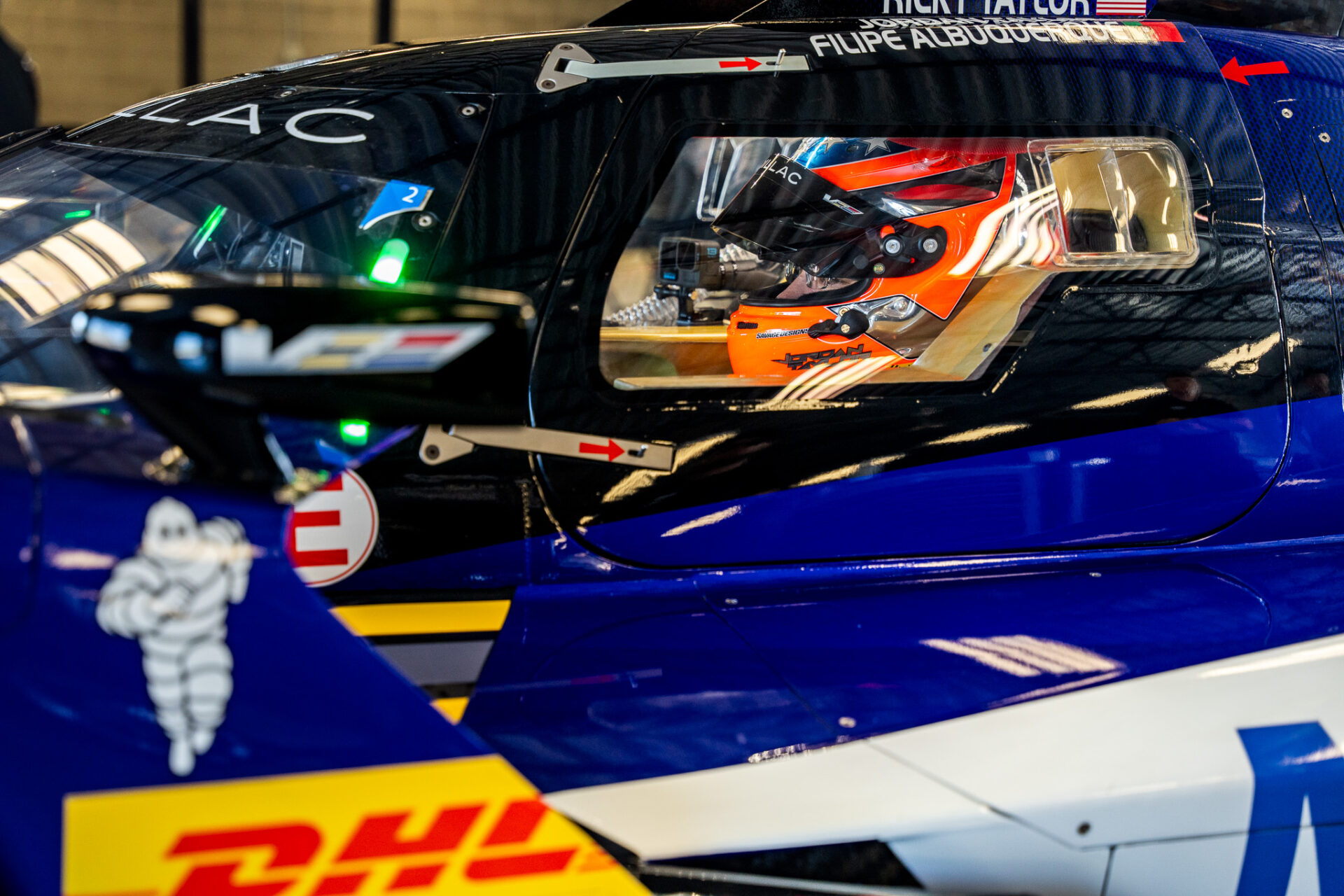
I’ll be with my brother Ricky and Philippe Albuquerque, who’s my brother’s full-time teammate in the 10 car in imsa. So he’s had obviously a ton of experience there. I think he was there over with Audi back in 2015. Ricky has a lot of experience there at LMP two. It’ll be my first time there in a prototype.
We were talking about, I’m watching lots of prototype onboard to kind of understand. I think going there with having a GT background, I kind of understand where the prototypes pass. So like now putting myself in a prototype, I need to kind of understand where to make those moves. And then I also need to kind of bring into it where not to make those moves, where to be a little bit easier on a GT car because I know if I do that, make that move, I’m putting myself at risk.
Because I’ve seen it from the GTS side. So yeah, I’m excited about it. It’s obviously a big event for the team. It’s way Taylor the racing’s, first time going there, our technical director, Brian’s been there with my brother one year in LP two, so we’ve got [00:39:00] lots of little bits of information leading into it, but I think once we get there, there’s still a lot to learn.
But we’ve got good teammates with Action Express has been there the last two years with Cadillac, and Joda now has joined Cadillac this year in wac. They obviously have a lot of success there. In the past and it’s someone we can kind of rely on a little bit once we get there for race week to kind of bounce ideas off of and everything.
Crew Chief Eric: How different is that car compared to the one that you’ve run here in the states?
Jordan Taylor: Uh, it’s pretty similar. We shook down Arla Ma car in Indianapolis at Putnam Park, and the car itself is pretty much the same. There’s just some electronic differences and different stickers on the car make it fit into the rules, but we don’t use slow zones.
In America and, and some of the limitations on the data transfer to the telemetry is a little bit more limited on the west side. Just getting into the habit of, you know, understanding what the dash is gonna look like, making sure all the slow zone stuff works at that test was important. Just so when we do get to the law, like we were talking about it, such limited running, we want to make the most of it.
So we don’t want to kind of be fiddling with how those little things.
Crew Chief Eric: So if you could race any car in the current lineup last couple of [00:40:00] years at lama, not offending anybody, any sponsors or your dad, what would you run at Lama if you were king for a day
Jordan Taylor: watching last year? The sound of the Cadillac. I don’t think you could beat that.
So I feel pretty lucky to be in it. This was a car that, you know, even when I was racing a a different car last year, the sound of the Cadillac is, is hard to beat. And obviously coming from Corvette, a lot of motorsport has lost that sound aspect of the va. I’m very happy that Cadillac didn’t go down the turbo route like most of the guys did and has that kind of pure rumble.
So I’m lucky that I can say it even if it’s a political answer, but it’s still a good, fair answer I’d say.
Crew Chief Eric: So what would Rodney
Jordan Taylor: pick? He’s Duffy an American guy, so he is picking the Cadillac.
Crew Chief Eric: Now that the LAMA Classic is back, do you see yourself participating in any of those events? And if so, that’s sort of an open question too.
What would you pick over all the different generations of LAMA cars that are out there in a vintage endurance race?
Jordan Taylor: Yeah, so I, I drove a Greenwood Corvette at Daytona and Laguna, and that was. One of the coolest and craziest cars I’ve ever [00:41:00] driven, it was garage 56, like times 20 with how pure the car was.
It had so much torque at Laguna that I think I only used third and fourth gear, the whole track. You could leave the hairpin in third gear and still spin the tires and then just shift to fourth. I don’t know if I’d wanna race that one at Lamont. I think that would be terrifying. I think at Daytona we, we were doing almost 200 miles an hour.
We don’t even do that in the hypercar these days. So to do that at the mall would be very scary. Even accelerating at Daytona, you wouldn’t feel down force. You would feel lift as you were accelerating. Those guys were insanely brave to be racing that around the mall back then, especially with the safety, the lighting at night where it’s probably raining as well.
So I probably wouldn’t choose that to race. And the classic, I was a big fan of like the group C era. I, I didn’t grow up watching, but I think went out old enough to kind of watch and understand race cars. I’ve got a bunch of books downstairs of those cars and like we were talking earlier, like I’m a big fan of our development and kind of more of open rule book and, and the books that I have was every year than manufacturer brought their car.
And it was always these new cool [00:42:00] arrow updates and evolutions of things and engine updates and it’s something we don’t see as much these days. Those cars were super cool. I think like a silk cut jag was. A beautiful car. That’s something I would probably jump back to drive at someday.
Crew Chief Eric: You gotta listen to Hurley’s episode, he’ll tell you otherwise.
Oh.
Jordan Taylor: Oh really? Was it not good? Oh, no,
Crew Chief Eric: in his opinion, I’m gonna put it in air quotes. Okay. That said, what’s next Jordan, what’s next for you? Outside of Lama, what’s next for Wayne Taylor? Racing
Jordan Taylor: for us, obviously it’s, it’s our first year back with Cadillac, so it’s been, I’d say a lot of learning this. Year. I think Laguna was our best race performance wise.
If we’re just comparing with our teammates in Action Express. I think we were a bit behind them at Sebring and Long Beach, but Laguna, we felt kind of on top of the game. So I think for the rest of the year, we’re definitely excited for Lamar. The big opportunity for everyone on the team and kind of representing Cadillac, especially as an American driver going there.
Representing an American brand is always special, so there’s nothing too new for me. I’m excited just to be back racing prototypes and have the opportunity to race at LAMA overall. [00:43:00] So I’m not, I’m not looking too far ahead. I’m very much focused on lama. I leave tomorrow to go up to Indianapolis to sit in our simulator for two days for LAMA Prep or fully focused on it.
I’m not looking too far past June at this point, I don’t think.
Crew Chief Eric: Well, at this point, Jordan, we would turn the mic over to one of the representatives from the IMRs. C to give a couple of words, but in this case, that happens to be you. You’re the 2025 membership spokesperson for the International Motor Racing Research Center.
So would you like to say a couple words?
Jordan Taylor: Yeah, it’s a huge honor to be involved with the research center. I went there, you know, maybe seven or eight years ago, there was an event during the walk-ins. Spend six hour. Then Ricky and I actually went back up for the historic event on the old Walkins Glen Trek with maybe like forties or fifties themed cars.
Like we’ve been talking, like, I’m a big fan of kind of the history and, and more of the old school stuff. So to kind of be involved, the research center is perfect for me. It’s, I love the history of our sport. I think we can learn so much from it, and I don’t want to go too far away from it. You know, in the future, I think there’s so many good lessons that we need to keep and, and remember and [00:44:00] I think having that place to go to, to kind of have those folks and those memories to kind of reflect on and, and not forget kind of where we came from is super important.
So after Lama is our walk-in spend six hour weekend. So I’ll, I’ll go over there, see everyone during the race weekend and I think we, we will probably have a few more events. Plan in the future. But yeah, it’s a huge honor to be involved with it. I’m a huge racing fan. If I wasn’t the driver, I’d still be, you know, a big racing fan and advocate for it.
It’s kind of best of both worlds for me.
Crew Chief Eric: And on that note, I’m gonna pass microphone to David Lowe, A-C-O-U-S-A President for some closing thoughts.
David Lowe: Jordan, on behalf of the A CO, as well as the A-C-O-U-S-A members that were present tonight and will be following up watching online, thank you so much for an incredible evening on a personal note.
Typically the legends and most recently have been much older than you. So for you sharing your perspective was quite entertaining and interesting. Thank you. Yeah, thanks
Jordan Taylor: for having
David Lowe: me on. I appreciate
Crew Chief Eric: it. Jordan’s Lama performances continued to reflect his dedication to excellence in one of Motorsport’s [00:45:00] most grueling and prestigious events.
From his unforgettable stints behind the wheel, to the teamwork and strategy that define this iconic race. Jordan’s Insights give us a true look into what it takes to thrive on Motorsports biggest stage. If you enjoyed this episode, be sure to follow Jordan on social media where you can find him on Instagram and Twitter at Jordan 10 Taylor, for a mix of racing updates behind the scenes moments and his signature sense of humor, you can also check out his official website at www.jordantaylorracing.com for more of his progress in upcoming events.
And on behalf of everyone here and those listening at home, thank you Jordan for sharing your stories and your time with us, and we wish you the best of luck this year in the continuing seasons, and we hope that you enjoyed this presentation and look forward to more evening with a legend throughout the season.
Jordan Taylor: Thank you.
IMRRC/SAH Promo: This episode is brought to you in part by the [00:46:00] International Motor Racing Research Center. Its charter is to collect, share, and preserve the history of motor sports spanning continents, eras, and race series. The Center’s collection embodies the speed, drama and camaraderie of amateur and professional motor racing throughout the world.
The Center welcomes serious researchers and casual fans alike to share stories of race drivers race series, and race cars captured on their shelves and walls, and brought to life through a regular calendar of public lectures and special events. To learn more about the center, visit www.racing archives.org.
This episode is also brought to you by the Society of Automotive Historian. They encourage research into any aspect of automotive history. The SAH actively supports the compilation and preservation of [00:47:00] papers, organizational records, print ephemera, and images to safeguard, as well as to broaden and deepen the understanding.
Of motorized wheeled land transportation through the modern age and into the future. For more information about the SAH, visit www.auto history.org.
Crew Chief Eric: This episode has been brought to you by the Automobile Club of the West and the A-C-O-U-S-A from the awe-inspiring speed demons that have graced the track to the courageous drivers who have pushed the limits of endurance.
The 24 hours of LAMA is an automotive spectacle like no other for over a century. The 24 hours LAMA has urged manufacturers to innovate for the benefit of future motorists, and it’s a celebration of the relentless pursuit of speed and excellence in the world of motorsports. To learn more about or to become a member of the A-C-O-U-S-A look no further than www do laman.org.
Click on English in the upper right corner, and then click on the [00:48:00] a CO members tab for club offers. Once you’ve become a member, you can follow all the action on the Facebook group, ACO USA Members Club, and become part of the Legend with Future Evening with the legend meetups.
This episode has been brought to you by Grand Touring Motorsports as part of our Motoring Podcast network. For more episodes like this, tune in each week for more exciting and educational content from organizations like The Exotic Car Marketplace, the Motoring Historian, break Fix, and many others. If you’d like to support Grand Tour Motor Sports and the Motoring Podcast Network, sign up for one of our many sponsorship tiers at www.patreon.com/gt Motorsports.
Please note that the content, opinions and materials presented and expressed in this episode are those of its creator, and this episode has been published with their consent. If you have any inquiries about this program, please contact the [00:49:00] creators of this episode via email or social media as mentioned in the episode.
Highlights
Skip ahead if you must… Here’s the highlights from this episode you might be most interested in and their corresponding time stamps.
- 00:00 Meet Jordan Taylor: Corvette Racing Star
- 01:43 Jordan’s First Le Mans Experience
- 03:03 Comparing Le Mans and Daytona
- 04:17 Challenges of Racing at Le Mans
- 05:30 Evolution of Corvette Models
- 07:17 Memorable Moments and Stories
- 08:09 Driving a Ferrari at Le Mans
- 10:40 Team Dynamics and Driver Selection
- 13:11 Preparing for Endurance Races
- 15:47 The Garage 56 Program and NASCAR at Le Mans
- 21:04 Future of Racing and IMSA & WEC
- 26:19 Memorable Moments and Podium Shoes
- 27:18 Biggest Oops Moment at Le Mans
- 29:15 The Impact of Le Mans on Drivers, Changes and Challenges
- 33:19 Simulators and Racing Practice
- 35:07 Advice for Aspiring Drivers
- 37:52 Upcoming Races and Future Plans
- 43:12 Closing Thoughts and Acknowledgements
Bonus Content
All of our BEHIND THE SCENES (BTS) Break/Fix episodes are raw and unedited, and expressly shared with the permission and consent of our guests.There's more to this story!
Be sure to check out the behind the scenes for this episode, filled with extras, bloopers, and other great moments not found in the final version. Become a Break/Fix VIP today by joining our Patreon.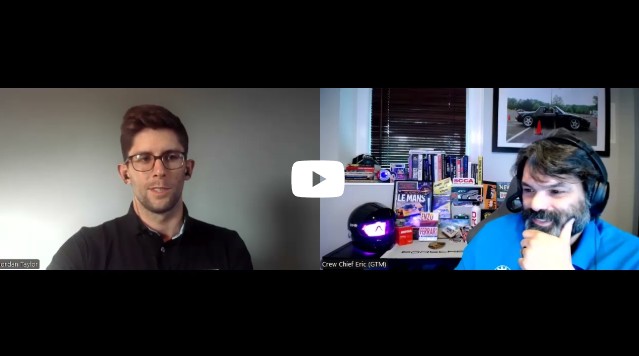
Learn More
Cadillac Wayne Taylor Racing’s Jordan Taylor Joins IMRRC as Annual Membership Chairperson for 2025
Jordan Taylor, driver for the No. 40 Cadillac Wayne Taylor Racing V-Series.R GTP Team in the IMSA WeatherTech SportsCar Championship, has been named the 2025 Annual Membership Chairperson for the International Motor Racing Research Center, located in Watkins Glen, New York.
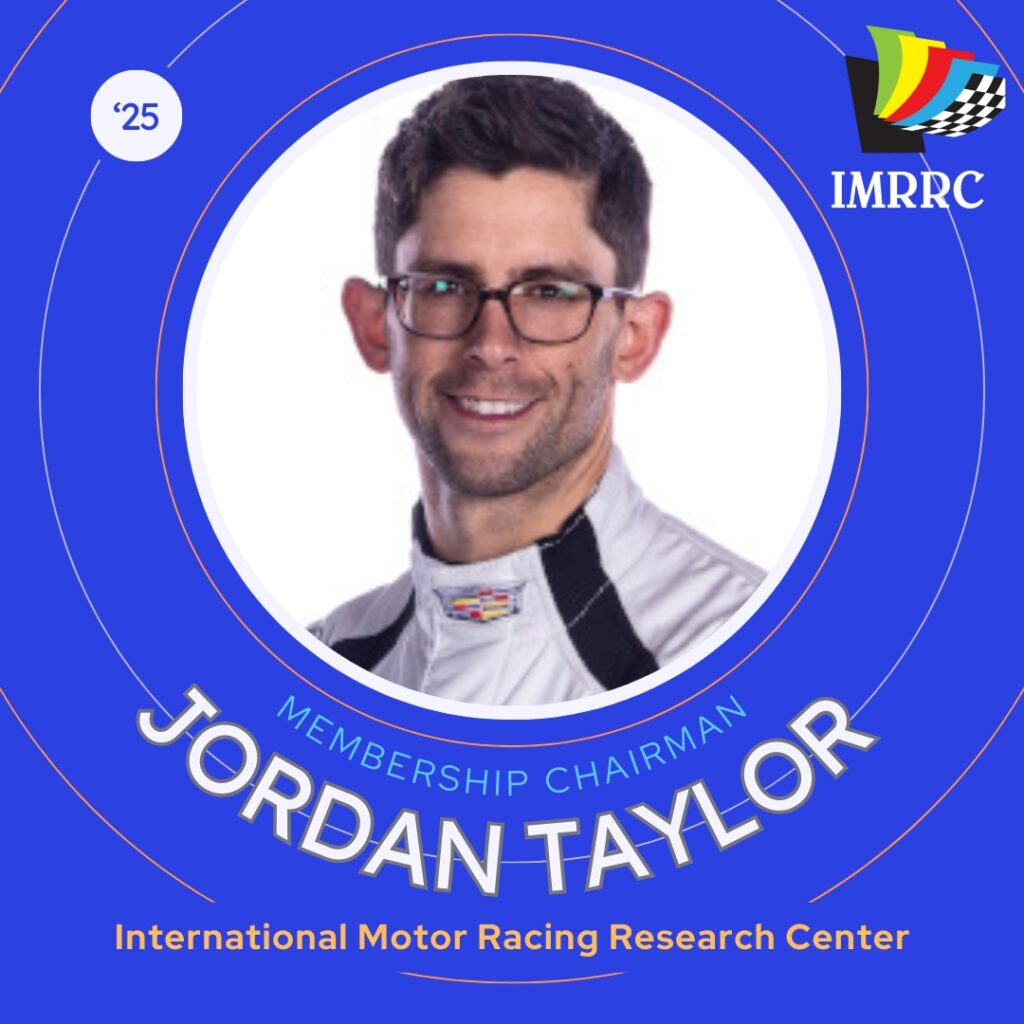
Taylor, 33, of Forest City, Florida, joins a stellar roster of past membership chairpersons, including Brian Redman, Helio Castroneves, Mario Andretti, Lyn St. James, Phil Hill, Dan Gurney, Sir Stirling Moss, among other illustrious icons of motorsports.
Taylor’s duties for the year include being an advocate in support of the IMRRC’s mission to collect, preserve and share the global history of motorsports, and to help create sustainability by drawing in new generations of motor racing fans.
“I am a huge fan of motorsports, obviously, growing up around the sport and being around sports car racing in particular, as long as I can remember,” said Taylor, son of IMSA team owner and three time World Sportscar Champion, Wayne Taylor. “I’ve always been a fan of the history of the sport, especially my dad’s generation, and the different evolutions of race cars. For me, just being a big fan of the sport makes this assignment exciting for me.”
Jordan’s racing career began in 2011, competing for Autohaus Motorsports. He then moved to Corvette Racing from 2012-2017. Now racing for Cadillac Wayne Taylor Racing in IMSA, Taylor and the team won the 2024 12 Hours of Sebring, and were third at the Rolex 24 At Daytona. During his tenure with WTR and Cadillac Racing, he’s collected two overall Prototype championships (2013 and 2017) and two overall Rolex 24 wins (2017 and 2019). Prior to his return to prototype racing, Taylor captured two GTLM championships in 2020 and 2021, a third in GTD-Pro in 2022 and a GTLM class victory at the 2021
Rolex 24.
“I’m probably one of the younger people who has been honored with this position at the IMRRC,” added Taylor. “I think I can connect to the younger generation, who may not appreciate the history of the sport as much as the older generation. I’d like to help my generation get up to speed.”
Mark Steigerwald, Executive Director of the IMRRC, welcomed Taylor, saying, “We are honored to have Jordan join our team as this year’s membership chairperson. I’m confident his passion for the sport as an advocate for the Center’s mission will reach all generations of motor racing fans who can appreciate what the Center is doing to preserve the sport’s rich history.”
This episode of Evening With A Legend was sponsored by the International Motor Racing Research Center (IMRRC). Learn more at racingarchives.org
Evening With A Legend (EWAL)
Evening With A Legend is a series of presentations exclusive to Legends of the famous 24 Hours of Le Mans giving us an opportunity to bring a piece of Le Mans to you. By sharing stories and highlights of the big event, you get a chance to become part of the Legend of Le Mans with guests from different eras of over 100 years of racing.
We hope you enjoyed this presentation and look forward to more Evening With A Legend throughout this season. Sign up for the next EWAL TODAY!
Jordan broke down the key differences between the 24 Hours of Le Mans and the 24 Hours of Daytona. “No yellows to save you,” he said. “Every mistake counts.”
- Daytona: A survival race with frequent cautions and a strategic sprint in the final hours.
- Le Mans: A relentless push from start to finish, where every second lost can snowball into defeat.
Jordan’s journey through Corvette’s GT racing lineage revealed the quirks and character of each generation:
- C6.R: His introduction to pro GT racing – difficult, finicky, and demanding a unique driving style.
- C7.R: A championship-winning machine with unpredictable handling. “Each of us had a mystery spin in that car,” he laughed.
- C8.R: The mid-engine layout brought natural balance and drivability. “It just made sense,” he said. “More intuitive, more fun.”
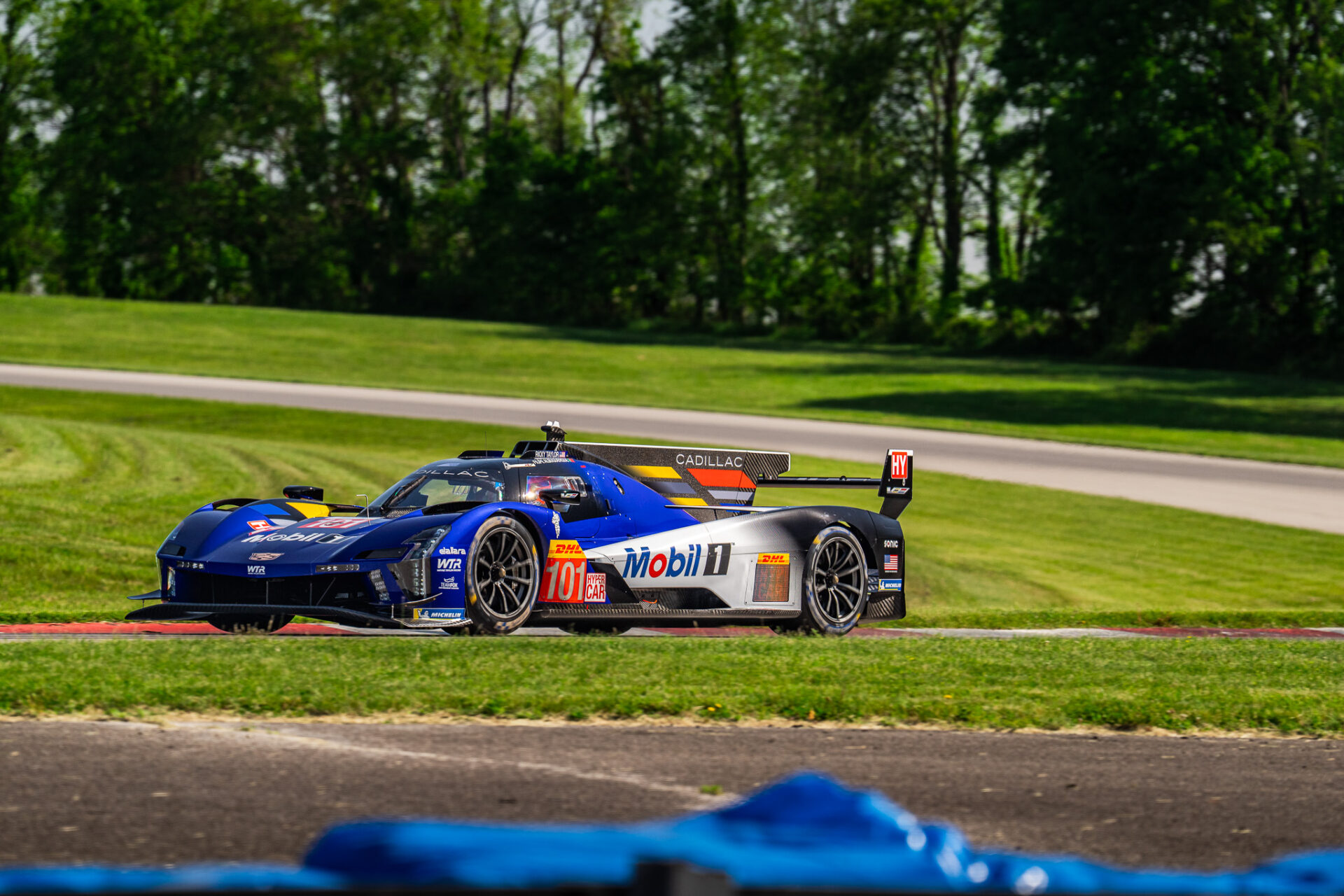
In 2023, Jordan raced a Ferrari at Le Mans with AF Corse – a dramatic shift from his American roots. “More espresso, more pasta,” he joked. But the experience was deeply rewarding. The team reminded him of his own family, and the car – though different – felt surprisingly familiar once pushed to the limit.
Whether with Corvette or AF Corse, Jordan emphasized the importance of team chemistry. “You need drivers who are fast, but also easygoing. No egos. That’s the secret sauce.”
Endurance racing isn’t just about speed – it’s about stamina. Jordan and his team work with Dr. Ferguson to monitor hydration, sweat rate, and fatigue. “My brother Ricky sweats out 4–5 pounds per hour. I’m more like 2–3,” he said. “Understanding that helps us stay sharp.”
Garage 56: NASCAR Goes to Le Mans
One of the most talked-about moments of 2023 was the Garage 56 program, where a modified NASCAR Camaro thundered through Le Mans. Jordan served as driver coach for Jenson Button, Mike Rockenfeller, and Jimmie Johnson.
“It was raw, emotional, and loud,” he said. “We didn’t expect the reaction to be so huge. People were crying, waving flags, cheering. It was one of the coolest experiences of my life.”
Jordan celebrated the growing crossover between IMSA and WEC, with more American teams and cars appearing at Le Mans. “It’s what we always hoped for,” he said. “Now we get to race on both sides of the pond.”
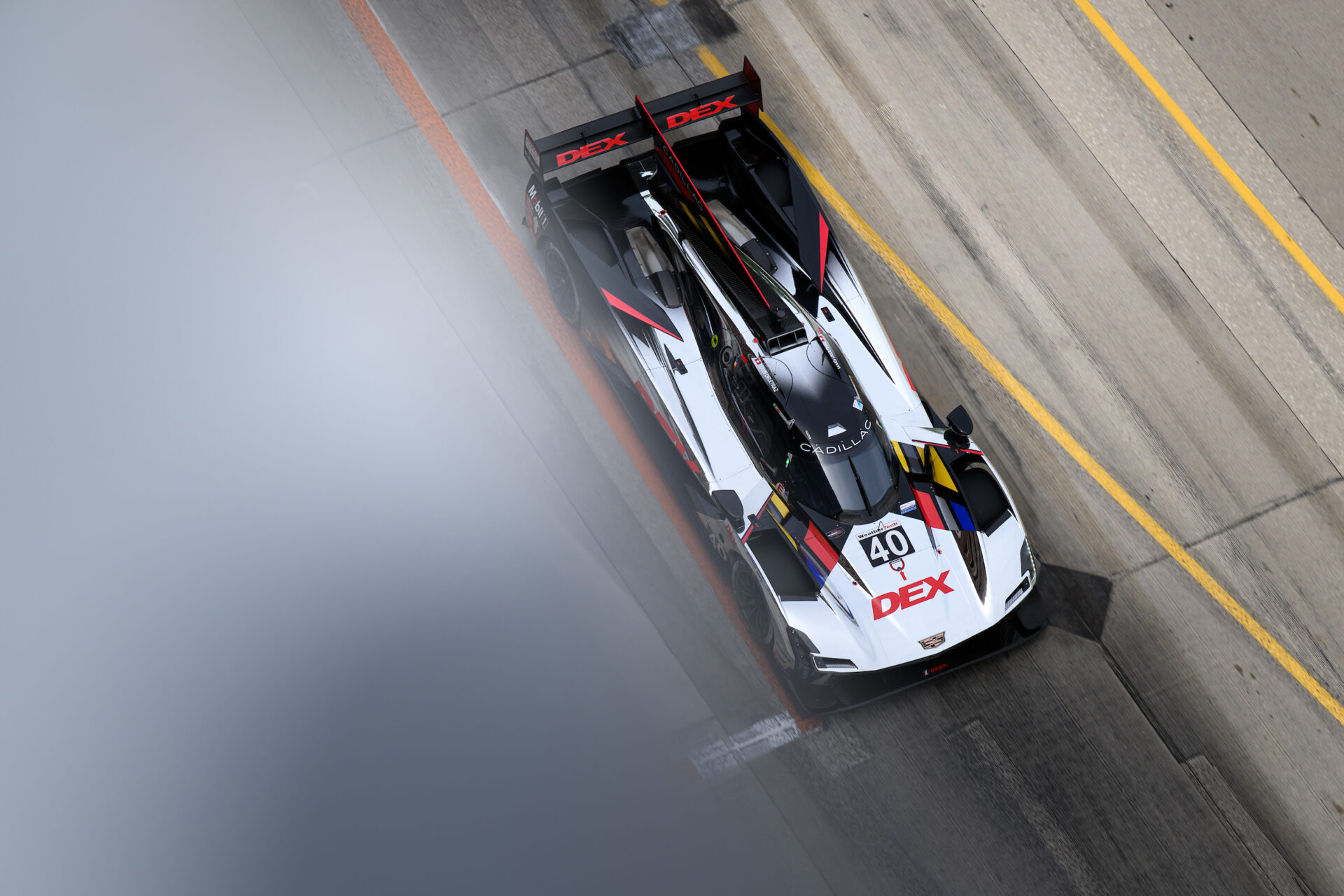
As the hypercar era unfolds, Jordan hopes to see more obscure brands – like Peugeot and Ferrari – bring their machines to the U.S. “We’re racing at the same level now,” he said. “It’s surreal, but exciting.”
Jordan Taylor’s story is one of evolution – of cars, teams, and the endurance racing landscape itself. From Corvette to Ferrari, from Daytona to Le Mans, he’s not just chasing speed. He’s chasing legacy.
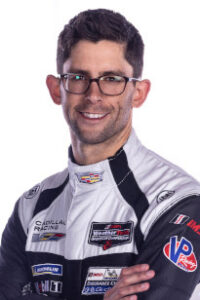
If you enjoyed this episode, be sure to follow Jordan on social media: where you can find him on Instagram and Twitter @jordan10taylor for a mix of racing updates, behind-the-scenes moments, and his signature sense of humor. You can also check out his official website at www.jordantaylorracing.com for more of his progress and upcoming events.
ACO USA
To learn more about or to become a member of the ACO USA, look no further than www.lemans.org, Click on English in the upper right corner and then click on the ACO members tab for Club Offers. Once you become a Member you can follow all the action on the Facebook group ACOUSAMembersClub; and become part of the Legend with future Evening With A Legend meet ups.

This content has been brought to you in-part by support through...