

Ferrari is synonymous with speed, prestige, and dominance in Formula 1. But did you know that Ferrari once made a serious attempt to compete in the Indianapolis 500? While their involvement was brief, it remains a fascinating chapter in motorsport history. Read on to explore their involvement in the Indy 500, or tune into the Ferrari Marketplace Podcast episode below!
Tune in everywhere you stream, download or listen!



The year was 1952, and Ferrari was at the height of its Formula 1 prowess. Many might not be aware, but The Indianapolis 500 was a part of the F1 World Championship at that time, a strange anomaly considering that European teams rarely ventured across the Atlantic to participate. But Ferrari decided to break the trend, sending a fully backed factory entry driven by Alberto Ascari, along with three privately entered Ferrari 375s.
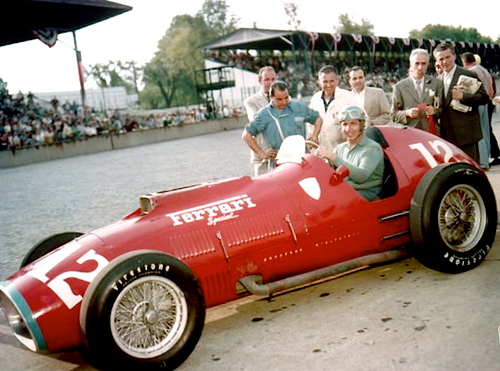
The 1952 Ferrari 375 Indianapolis Prototype
Ferrari’s primary attempt at the Indy 500 came in 1952 with the modified 375 F1. Originally designed for Formula 1, the car had to undergo significant modifications to meet the unique demands of the Indianapolis Motor Speedway, and while Ferrari’s participation was ambitious, the team quickly faced challenges:
- Chassis Adjustments: To increase stability at sustained high speeds, Ferrari lengthened the chassis. This modification shifted the weight distribution but introduced handling challenges unfamiliar to their European engineers.
- Wheel Selection: Ferrari opted for Borrani wire wheels instead of American magnesium alternatives.
- Tire Compatibility Issues: The car had to run Firestone tires instead of its usual European compound, which altered grip dynamics and required adjustments to suspension setups.
- Aerodynamics & Drag: Indy’s oval layout demanded different aero tuning than road circuits. Ferrari’s limited experience in optimizing for continuous left turns likely contributed to some of their performance shortcomings.
- Engine Adjustments: Additionally, the Ferrari 375’s high-revving engine, designed for short bursts of acceleration in F1 road circuits, lacked the low-end torque needed for sustained oval performance. The power curve (and gearing) was also likely mismatched for the wide-open throttle demands of the Indy 500.
Despite their best efforts, the Ferrari team had made a crucial mistake: they stuck with their Borrani Wire Wheels instead of switching to more durable magnesium wheels, despite advice from their American counterparts. That decision ultimately led to disaster.
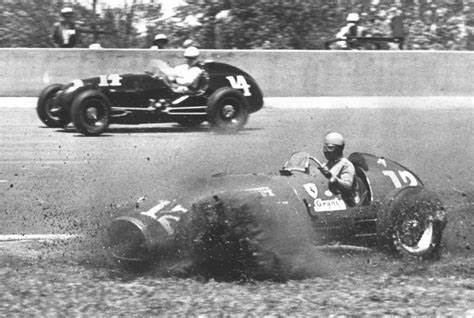
Ascari managed to qualify in 25th place – far from ideal but enough to make the grid. Despite initial struggles, he worked his way up to ninth during the race. However, his effort was cut short on lap 40 when the Borrani wheels failed under sustained load, forcing him to retire.
Despite this blemish on his record, interestingly, the 1952 season turned out to be one of Ascari’s most dominant. Of the eight World Championship races that year, he won six, securing the F1 championship title despite missing the Swiss Grand Prix due to his commitment to the Indy 500.
Ferrari’s later attempts: Engine Experimentation & Technical Exploration
Ferrari didn’t give up after 1952, but their future flirtations with the Indy 500 were half-hearted at best. They attempted collaborations in the late ’50s, experimenting with engines in various chassis but never seeing real success.
- Mid-1950s Engine Testing: Attempts to pair Ferrari-built engines with Curtis Craft chassis revealed difficulties in integrating Italian power units into existing American designs.
- 1973 Scouting Efforts: Ferrari discreetly sent engineers to Indy disguised as “Mario Andretti’s Uncle Franco” to analyze race technologies, but no formal entry emerged.
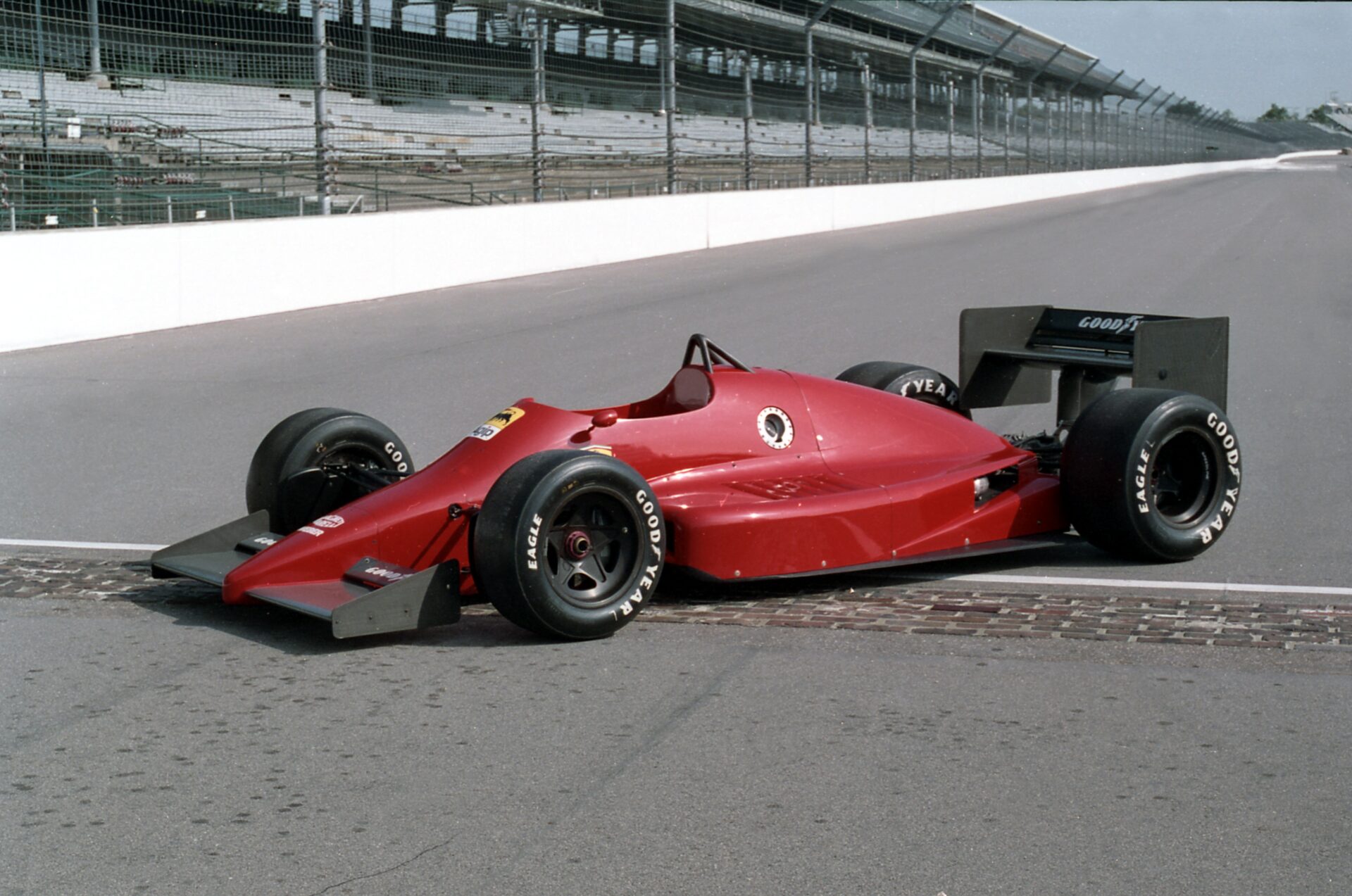
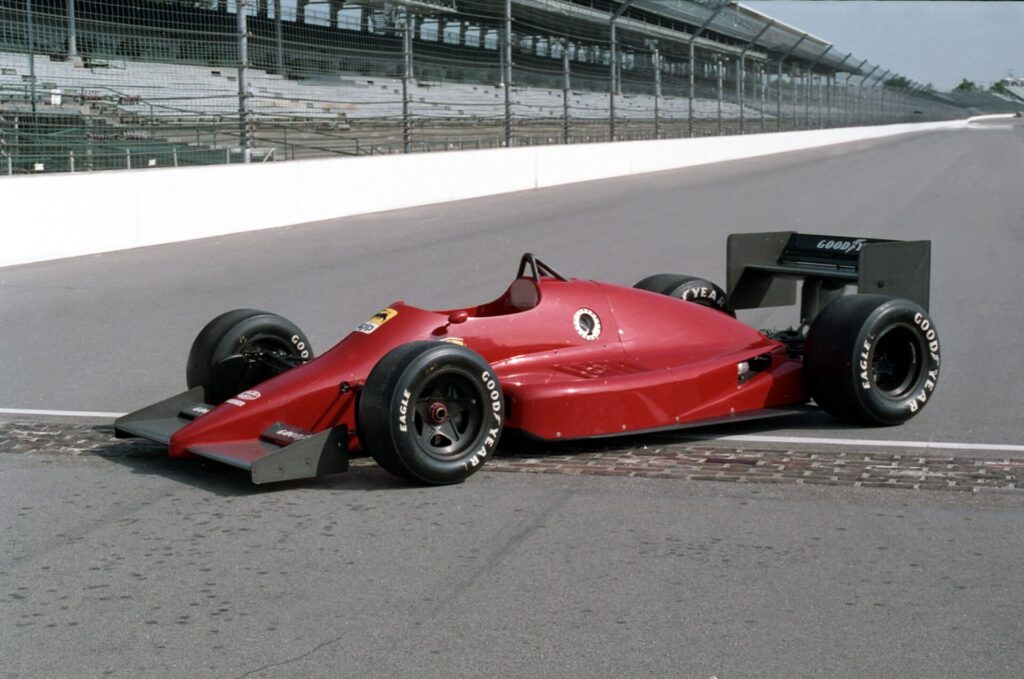
- 1986 Ferrari 637 Prototype: Perhaps the most ambitious IndyCar project came in 1986 with the Ferrari 637 (below), a stunning single-seater designed specifically for Indianapolis. Sadly, the car never saw competitive action, and the project was ultimately scrapped because of FIA politics and shifting priorities which led to the project’s cancellation. The 637’s advanced aerodynamic package and bespoke engine technology were transferred to Alfa Romeo racing program.
What Could Have Been?
Ferrari’s limited involvement in the Indianapolis 500 offers an intriguing case study in race engineering and adaptation. While their efforts never materialized into sustained participation, the technical aspects of their approach reveal crucial lessons in aerodynamics, chassis tuning, and strategic miscalculations. Had they persisted with a proper development program… could they have won America’s most famous race? Could an Indy success have cemented Ferrari’s presence in the U.S. earlier?
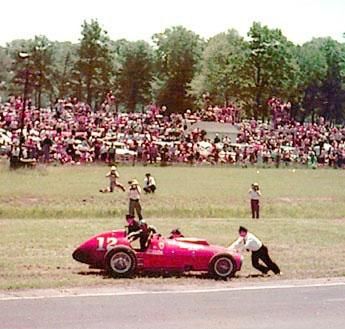
Ferrari’s brief encounters with the Indianapolis 500 truly emphasize the importance of specialized engineering for oval track competition. Their failure to incorporate race-proven materials (such as magnesium wheels) and fully adjust their aerodynamics and engine characteristics to the track conditions led to their ultimate withdrawal.
Had Ferrari persisted in refining its Indy package – leveraging its renowned powertrain development alongside American chassis expertise – the outcome could have been vastly different. Instead, the lack of sustained investment and adaptation prevented Ferrari from gaining a foothold in America’s most iconic race. And although Ferrari never conquered the Indy 500, their brief involvement remains an intriguing “what if” in motorsports history; an untold story of risk, adaptation, and the pursuit of racing glory!