

Max Kaiserman’s journey began with a deep fascination for both space and machinery. From earning a ham radio license at 10 to restoring a WWII Jeep at age 16, his early life was a blend of hands-on engineering and scientific curiosity. His grandfather’s WWII tank battalion history and a love for military vehicles sparked an enduring passion for historical preservation.
Luna Replicas was born from a desire to recreate the iconic flight jackets of the Apollo era. Max and his original partner Jonathan Mayer envisioned museum-quality reproductions of NASA gear, similar to the fidelity found in WWII reenactment uniforms. After Jonathan stepped away, Max took the reins, sourcing original pieces and partnering with skilled manufacturers to bring the vision to life.
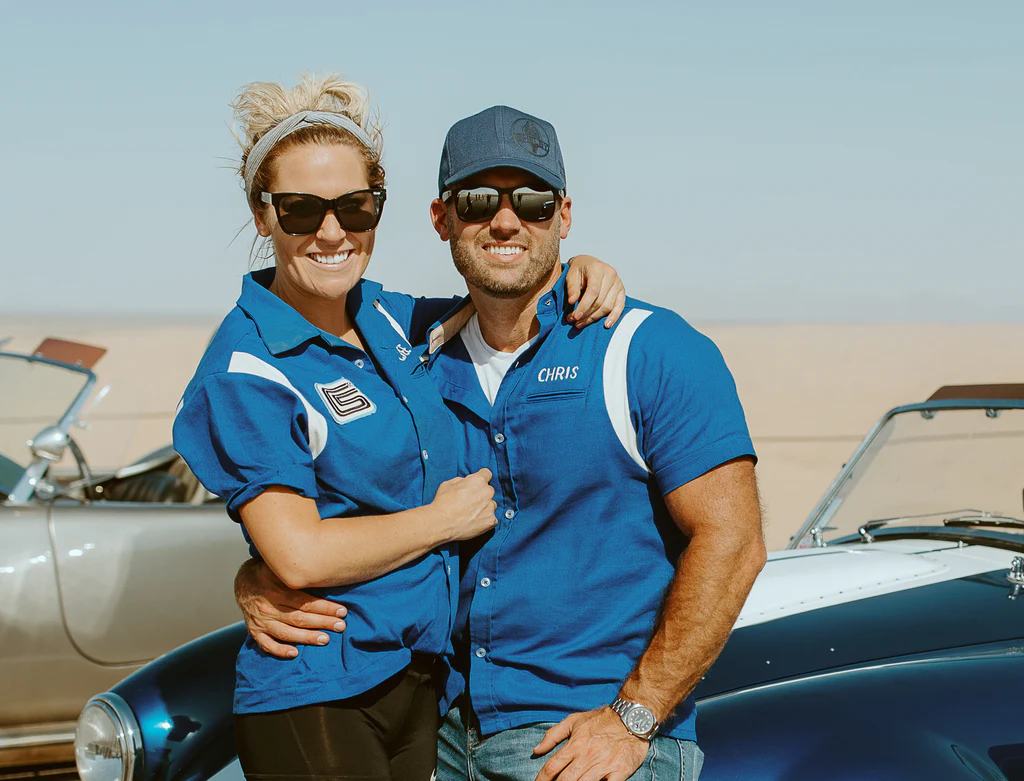
The brand quickly gained traction – not just among space enthusiasts, but also within the motorsports community. Why? Because the same spirit of innovation and engineering excellence that defined the Apollo missions also powered the golden age of racing.
What do NASA astronauts and Shelby pit crews have in common?
More than you might think. In this episode of the Break/Fix Podcast, Crew Chief Eric and returning co-host Don Weberg from Garage Style Magazine sit down with Max Kaiserman, founder and director of Luna Replicas – a brand that fuses aerospace legacy with motorsports heritage through authentic, wearable art.
Tune in everywhere you stream, download or listen!



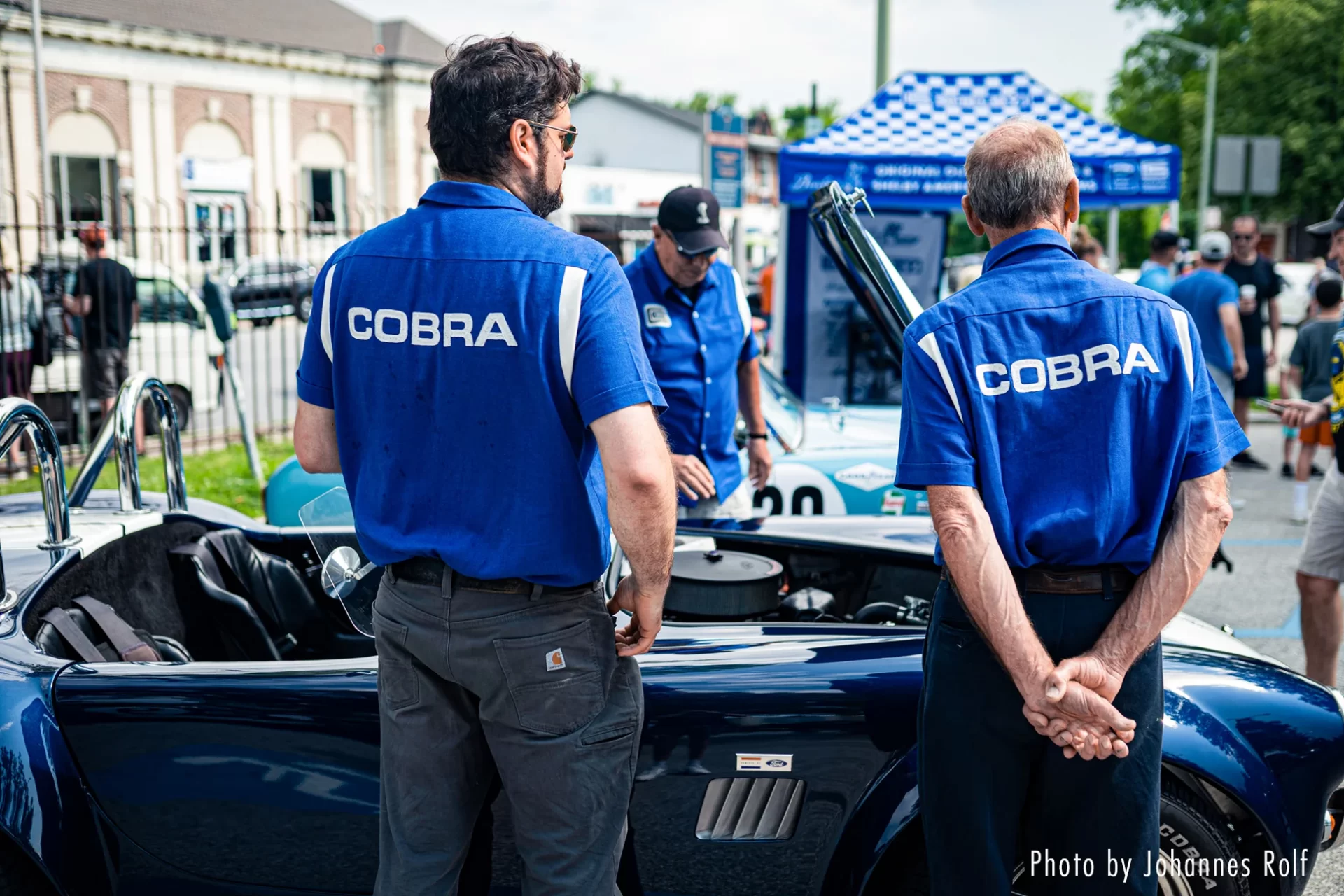
Luna Replicas’ crossover into motorsports was catalyzed by involvement in the film Ford v Ferrari. Max and his team helped recreate the Shelby team uniforms using original patterns and vintage machinery. This led to a direct licensing agreement with Shelby and Ford, allowing Luna Replicas to continue producing historically accurate gear for fans and collectors.
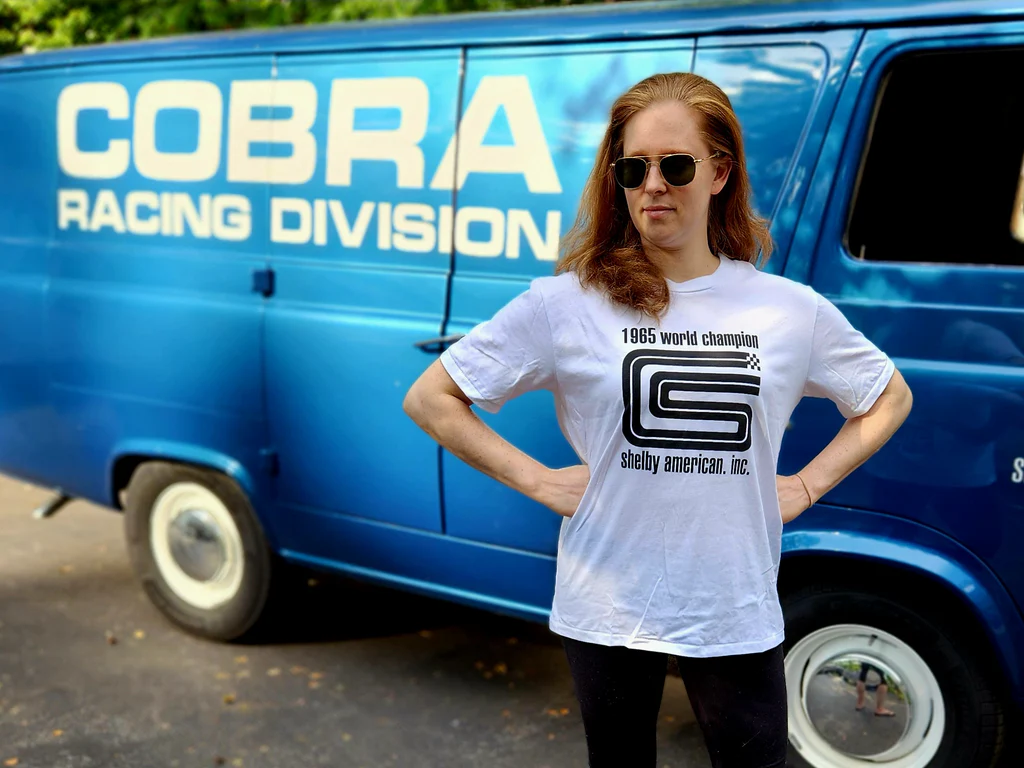
One standout piece of Max’s collection is the original Shelby Cobra van (seen above) used in the film – a 1966 Econoline with only 6,000 miles, complete with a screen-used typo in the lettering. It’s now a rolling piece of history, used to distribute Shelby uniforms at events.
Spotlight
Max Kaiserman - Owner & Director of Operations for Luna Replicas
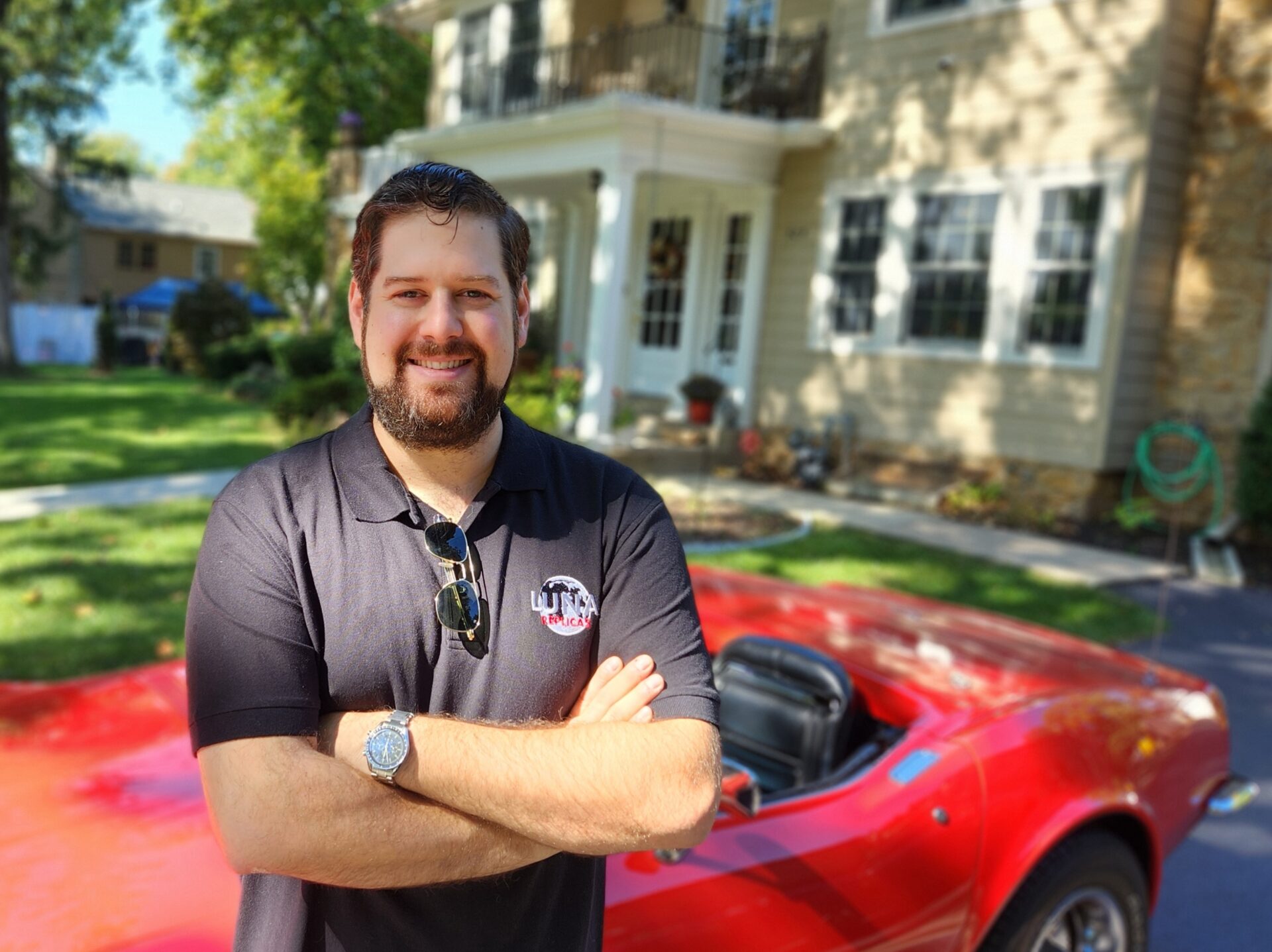
Specializing in reproduction apparel and flight gear from America's early space program as well as historic automotive racing history. "Flite Wear" and "Bowler's Shirt & Uniform" by Luna Replicas are exact reproduction jackets, shirts, and gear, painstakingly copied from original examples, and proudly made in the U.S.A. Licensed and approved by NASA, Ford Motor Company, & Carroll Shelby Licensing. Authorized retailers of products from original Apollo Program suppliers: American Optical sunglasses, Fisher Space Pens, Case Cutlery, and others.

Contact: Max Kaiserman at max@lunareplicas.com | N/A | Visit Online!




Synopsis
On this episode of Break/Fix, we chat with Max Kaiserman, owner and director of operations at Luna Replicas. Luna Replicas is known for crafting authentic, wearable art from the NASA era, including flight jackets and accessories. The discussion spans Max’s dual passion for motorsport and aerospace, stemming from his childhood interests and family history in World War II. Highlighting the intricate process of recreating historically accurate gear, Max shares anecdotes about collaborations with notable institutions and individuals in both fields. The episode also delves into Max’s car collection, including the iconic Cobra van from the movie ‘Ford vs. Ferrari.’ Future projects at Luna Replicas aim to bridge the gap between historical preservation and everyday wear, with potential expansions into more apparel and functional gear for both racing and aviation. Special mentions include collaborations with museums and their role in honoring both motorsport and space exploration legacies.
- How did a passion for spaceflight history translate into being involved in the Ford v Ferrari movie? What’s the connection?
- You’re the official Shelby American apparel/accessories manufacturer; tell us about how that came to be?
- Let’s talk about the Cobra “Bowling Shirt” – why such a bold fashion choice back in the day?
- Can you walk us through the process of recreating one of your most iconic pieces—how do you ensure historical accuracy?
- What connections have you discovered between the space exploration world and the automotive or motorsport communities?
- Is the astrovette the bridge between space and racing in this case?
- Have you faced any challenges sourcing authentic materials or replicating designs that meet both historical and modern quality standards?
- Are there any upcoming designs or collections that you’re particularly excited about or that fans should be on the lookout for?
Transcript
Crew Chief Brad: [00:00:00] Break Fix podcast is all about capturing the living history of people from all over the autos sphere, from wrench, turners, and racers to artists, authors, designers, and everything in between. Our goal is to inspire a new generation of Petrolhead that wonder. How did they get that job or become that person?
The Road to Success is paved by all of us because everyone has a story.
Crew Chief Eric: Welcome back to another episode of Break Fix Podcast, where we connect the past, present, and future of automotive and Motorsport culture. In this episode, we’re reaching for the stars. Literally as we sit down with the owner and director of operations at Luna Replicas, a brand that blends the spirit of adventure with the precision of history known for their meticulously recreated NASA era, flight jackets, watches, and accessories.
Luna Replicas celebrates the heroes of the space age through authentic wearable art.
Don Weberg: But this isn’t just about fashion. It’s about legacy. We’re [00:01:00] joined by Max Kaiserman to explore how his team channels their passion for aerospace and motorsports into every stitch, and how the automotive communities have embraced these designs for their shared love of engineering excellence and bold storytelling.
So buckle up for a conversation that’s going to be. Proud of this world
Crew Chief Eric: and joining us tonight is returning co-host Don Webert from Garage Style Magazine, one of the many personalities on the Motoring Podcast Network. So welcome back, Don.
Don Weberg: Hola. Thank you for having me again, Eric.
Crew Chief Eric: And with that, let’s welcome Maxed Break Fix
Don Weberg: Max.
Good to meet you
Max Kaiserman: gentlemen, Don, Eric, it’s so nice. To be aboard your spaceship here today. It’s a pleasure to talk to you about how space history and sort of the golden era, the 1960s and seventies of Mercury, Gemini and Apollo, as well as Ford, Shelby, and several of the other teams. You know, there, there’s a huge Venn diagram where they intersect, uh, and that’s where lunar replicas comes in.
Crew Chief Eric: Very cool. So were you always into [00:02:00] space flight and travel and astronomy, things like that? Did that fuel you as a kid or were you more into motorsport or was it about equal?
Max Kaiserman: It’s about equal. You know, I grew up with Apollo 13 from the earth to the moon, and equally movies like Lamont and I, I was actually, I was a big fan of military vehicles, so my grand.
Father was a tanker in World War ii. He was in the seven 41st Tank Battalion, which is one of the units that actually drove tanks onto Omaha Beach. He was a D-Day veteran. I never got to meet him and he didn’t talk about it much with his daughters who were my mother and my aunt. So in searching his history, I learned a lot about these special duplex drive tanks, and I said, wow, this is really interesting.
And the vehicles and the equipment that was required to maintain, uh, an armored company, Jeeps, all the way up to, you know, 10 ton wreckers and stuff. I got really interested in that and I actually, when I was 16, I went out and bought a World War II Jeep. It was my first car, it was World War II Jeep, and I threw a manual and through military veterans I learned how to work on it.
And I also, I went to a [00:03:00] dorky science camp as a kid, so I, I got way involved in engineering and astronomy and even ham radio. I had a ham radio license when I was. 10 years old, but we also had a minibike shop where, you know, we would take apart the minibikes and fix them and stuff like that. So I rode a motorcycle.
As a kid, I was always doing something hands-on, and that very quickly led to automobiles. My first car was the Jeep. My second car was a 1955 Chevy Bel Air, which I still have. I have, I have both of them. And now several more and possibly another in a few weeks, but my wife will kill me if she hears that.
Crew Chief Eric: Well, we’ll talk about one of the other vehicles in your collection here in a little bit, but let’s talk about the origin story behind Luna Replicas. So let’s talk about the who, what, when, and where of the company and how you got involved.
Max Kaiserman: I was involved since the beginning, but a friend of mine, Jonathan Mayer, who is actually current Canadian military police officer actually, so shout out to Jonathan and the, uh, our friends up north there.
I say that I get free pancakes and syrup. Actually, that’s the plug. [00:04:00] No. So he was interested and we were both interested at the same time of recreating the look. Of the iconic flight jackets and look of those astronauts from the sixties. Where I came in was, uh, you know, I had done World War II reenacting.
I had worked with museums before as an interpreter and knew that, you know, you can get an A two flight jacket, you can get a tanker jacket, you can, you know, bomber jackets and stuff for available, and that it’s this iconic design that has never stopped being made. Some of the same companies are even still making those jackets, you know, alpha Industries or Eastman leather or whatever.
They’ve been around forever. And uh, we both said, how come we can’t do that with Apollo stuff? How cool would that be if I could have that NASA blue flight jacket or the gold flight jacket, which is later? I reached out to collectors that owned them and I found out very quickly that getting an original one is tens of thousands of dollars.
And then I reached out to some of these companies that were making reproduction World War II uniforms, and they were doing it. You know, stitch Perfect, like museum quality, world War II uniforms that had to be these reenactors and [00:05:00] museums and movies and things that were using them and needed to be perfect.
They said, why don’t we do the same Fidelity with the Apollo program with Mercury and Gemini over the course of about a year and a half? And for one reason or another, Jonathan had to bow out. You know, he had some military service and stuff he had to do, and I took over the whole company through the generous donation of, you know, lending from these collectors of original pieces and stuff.
We picked up at auction over about that year or two, and my manufacturing partner in California who does World War II stuff, we recreated this brand. And it’s been incredibly rewarding. It’s one of the most amazing things I’ve been involved with. And through that, we were involved with original Apollo astronauts.
One of them was a partner in the company for a little bit until fortunately, he passed away during COVID that was Al Warden. Through him and his family, his grandson and I basically inherited his Corvette that he was given during the Apollo program. One, one of only three original custom Corvettes that are left from the Apollo program.
Crew Chief Eric: Those are the Astro Vets, [00:06:00] right?
Max Kaiserman: Yeah, the Astro Vet. Yeah. We are calling it Astro Vet Endeavor, which was AL’S command module. He was the command module pilot on Apollo 15, one of 24 guys to go to the moon. His other car was the Corvette, so that’s a main project. And then through just that same time period in high fidelity costumes and uniforms and stuff, we got involved in the movie Ford versus Ferrari.
Monty Ham was a huge part of that. He had done the uniforms for. Tony Branda a number of years ago and then had original pieces, and so there is this pedigree and line of connection between World War II and aviation history through NASA and the Blue Angels and stuff like that. And then to. Bowler shirt and uniform, which was the original manufacturer of uniforms for Shelby, who actually then became the uniform supplier to NASA after the previous company ducked out.
I mean, like I said, this Venn diagram has a massive overlap and coincidentally, so do my interests and so do a lot of interests of motorsports and NASA enthusiast it. It really is In the same vein.
Crew Chief Eric: [00:07:00] Let’s talk a little bit more about crossing the threshold from space. Into Motorsport, especially getting the call from Shelby American.
What was that like? The call came from Fox
Max Kaiserman: at the time, it was Lamont 66 was the, was the film 20th Century Fox. That project had been in production hell for like 10 or 20 years. Originally, I think Tom Cruise was attached to it, like it went through a bunch of iterations when then it finally landed where it.
Did. Which by the way, I think it’s a phenomenal movie if you’re not a motor sports fan or if you are, it’s still exciting. The only people that don’t like that movie are the ones that know the history, like inside and out. ’cause you’re, oh, well they didn’t show 65 Lamont properly. There’s some historical inaccuracies.
But what they do get right. Is the excitement and the can-do attitude of that team. You know, Shelby was an old school, hot Rodder. Phil Remington was an old school, hot Rodder. I mean, these guys were making engines out of, you know, thirties old mobiles and stuff really sing. And that’s what they did with the Cobra.
I mean, they took a [00:08:00] 1950s British car with, as Shelby says, with buggy springs. And they made that start winning the, the Daytona coop started winning FIA and SCCA races like across the board and it was just body and engine mods with the 2 89 Ford Engine independent rear. And that like can-do attitude.
Was something that is exactly the same in the aviation field, early aviation and Apollo, and you know, mercury, Gemini. Have you ever see a mercury spacecraft up close? Friendship seven, freedom seven, any of them, it’s like thrown together with bailing wire and network cables and stuff like that. Like they’re really handbuilt.
It’s such the same like STEM science, technology, engineering, and math can do attitude. And I really was attracted to that. And I find that talking with people about it and connecting the two, there’s a really interesting person that gets into it, and that is the Hot Rodder, that’s the science teacher, the whatever, the weekend warriors, which a lot of these guys were.
Crew Chief Eric: Were you [00:09:00] already making the Shelby apparel and reproductions before? For the movie or as a result of being involved with the movie?
Max Kaiserman: No, it was as a result of being involved in the movie. I mean, it came from the movie Monty handled most of it. It was really about, Monty had made them for like a club or something a few years before, maybe 10 years before, and he had had original pieces from bowlers.
And bowlers is a neat story too. The guy was literally a professional bowler and designed a shirt, which we’re wearing right now, which you can’t see on the podcast.
Crew Chief Eric: They can see it on Patreon though.
Max Kaiserman: Yeah, they designed a shirt with these gussets so that the arms could move freely. And this is in the fifties, you know, so athletic wear didn’t really exist other than a little bit lighter collared shirt and a bow tie or something.
So the, uh, the shirt design came out of sports and then his son, Rick von Henkel, met with the Shelbys and said, you know, this would be really neat for your pit crew. So how we got to it was the film reached out. Because Monty had done it before we spooled up, did it for the film. The film was so good, and I [00:10:00] got really into it and said, you know, why don’t we do this for the public?
For the same reasons that the NASA stuff, you know, why doesn’t anybody, why is this not available in a gift shop at a museum or something? I would love to wear this. Plus if you own a 66 Mustang or a Cobra Replica or a GT 40 or something like that, I mean, this is the ubiquitous look. That jacket or the team shirt of that entire time period.
So about two years after the film, the film came out in 2019, COVID hit. We were looking for stuff to do during and after COVID and 20th Century Fox had been purchased by Disney. They basically said, you know, if you wanna make Ford versus Ferrari merchandise, you’re on your own. Like, we’re not endorsing that.
So since everything that we were doing was originally licensed by Shelby and Ford reached out directly to Shelby and Ford. And over the course of about nine months, we convinced them to give us a license directly. We lobbied and then had several conversations and proposals. We reached out to the Von Henkel family, actually the original family, and got a, a letter from them that said, you [00:11:00] can inherit.
Our entire history. So the name and history we’re allowed to say we are the original uniform supplier. They handed over some notes and patterns and things like that, so it really is, it’s a continuation, just like a continuation cobra. This is a continuation of the original company that made Shelby gear, just like we’re continuation of the flight wear company that made NASA gear in the 1960s.
Crew Chief Eric: Not only is it a continuation as you described, but you’re also reproducing these uniforms on all the other apparel, on the original machinery as well, which makes it super unique to anybody else that’s out there,
Max Kaiserman: just like vintage cars, vintage sewing machines and embroidery machines and stuff actually work.
A lot better and are maintainable than some modern, you know, machines. So what we have done is there’s certain processes in these shirts and jackets that are not done anymore. They’re too labor intensive, so we have restored original machines to bring back the original look as well as the original process.
On [00:12:00] the backs of our team shirts, for instance, it says Cobra, and it’s in change. Stitch embroidery like that is not done by a computer. That’s done by an operator, basically by hand. They’re moving the deck of the embroidery machine by hand and four or five times around for each letter, and it’s done pretty manually.
You’re manually moving this thing. Each shirt takes about 45 minutes to embroider, whereas a computer controlled one would do it a lot faster. So to keep that feeling real, we have restored the original machines to do it.
Crew Chief Eric: Don’s been awful quiet. ’cause I think he’s chopping at the bit to hear about one of the cars in your collection, which just happens to be the Cobra van that is in the Ford versus Ferrari movie.
So you wanna talk about that a little bit?
Max Kaiserman: Yes. The car collection that went into Ford versus Ferrari was absolutely incredible. Just stepping back, the stable of cars that they got for that movie, I think they had something like 200 cars. I think his name’s Billy Stabile or Stabile. It’s like a longstanding family.
That did movie cars for the film and they had, you know, the GT [00:13:00] forties and the Ferrari’s and stuff that went around the track, but they also had all the cars that were at the Venice, California, you know, the Shelby shop in Venice. And then also, you know, if they pass by a parking lot in Dearborn, Michigan at the Ford plant or whatever, they had all those cars too.
Or all the cars in the parking lot at Willow Springs or whatever, like, you know. All of those were part of the movie car production of that. Anyway, the Cobra van for Ford versus Ferrari, the shop in Venice, you know, which is actually still there. The building is still there. It was really cool to try and recreate, you know that whole look driving up in a country, squire whatever, and parked right there was the shop van Shelby had a several original vans, 1966 E one 60 Econoline van.
It’s actually the super van was the one six. The, so Shelby had a, a racing school. Peter Brock was the head of the racing school. I think it was actually one of the first Shelby employees was Shelby American employees. And there’s a great video that you can find on YouTube of them teaching racing. And one of those vans is in the video.
They would hang a chalkboard on the side of the, it’s like a [00:14:00] drip rail on top, and they would go through every turn, you know. After the production was over, the van that was restored for the film went to auction and I bid on it and lost It. Went to Chicago or something? It was, it wound up in Chicago and a few years later, after we had started doing bowlers and doing the gear and stuff like that, one of the main goals was to get out and do more historical stuff and be at more events and things.
Locally, I’m, I’m outside of Philadelphia, so we’ve got Carlisle’s an hour away or an hour and a half away. You’ve got New Jersey Motor Sports Park at Millville is nearby. There’s Dover. You know, like we’re in the center of car culture on the East Coast. Well, wouldn’t it be cool if you could get your uniform from the 65 Shelby team issued from the 65 Shelby Cobra van, just like it would’ve been in the sixties.
And weird enough it, it’s like one of these weird coincidences that just, I thought that thought. And, uh, the van came back up for sale on Facebook Marketplace. The guy that had bought it, I guess he had some financial trouble or something, medical bill came [00:15:00] up or something. It wound up on this like weird vehicle.
Literally, it was like a weird vehicle Facebook group, and a buddy of mine sent it to me. He is like, dude, you have to pull the trigger on this. This is ridiculous. I called him and long story short, a week later the van showed up and we, we had a truck to my house. It’s an original condition. Actually. It only has 6,000 miles on it.
It’s a real unrestored 66 econ line that was barely used, delivered to California originally. No rust. It was repainted for the movie and then lettered for the film. In fact, there’s a typo on it. The shop is on Princeton Drive, but it says Priceton. And the guy that did the lettering on the movie, he’s like, oh, I can redo that for you.
He is like, no, no, no, no. It’s screen use. I can’t change it now. You know? Oh, so it says price than drive on it. And Yeah, I’m, I’ve been getting it back on the road. I’ve driven it up to Carlisle before It’s having some issues that e Conno lines have of, especially with the big engine, they, it’s having some heating issues, but it should be back on the road very soon.
And the goal is to be issued your Shelby uniform outside of the Cobra van.
Don Weberg: That is [00:16:00] awesome. I love that.
Max Kaiserman: It’s fun to drive too. It’s like driving a bus. It’s a cab over.
Don Weberg: It’s a cab over van.
Max Kaiserman: Oh yeah. The engines between the front seats. It’s in a doghouse between the front seats.
Don Weberg: Yeah. Yeah. Okay.
Crew Chief Eric: Like a Dodge, A 100 and all those types like that.
Yeah,
Don Weberg: exactly. We had a collection years ago that we photographed up in Carmel, Monterey, California. Weirdest experience. The guy was a diehard hot rodder. He was in his eighties running businesses. He was Mr. Go-getter. He, I loved him. He was fantastic. He passed away. A couple of years ago, unfortunately, I really, really like that man.
His name was Donna Rosco, so I’m photographing. He has garage attached to garage, attached to garage, and every garage is just back filled with hot rod memorabilia. Cobra memorabilia, more hot rod style ’cause it’s diehard hot Rodder. The last garage I walked into, I’ll never forget ’cause it had two human doors and you open ’em and you walk in, well, you open ’em and bam, you can’t walk in because there’s this wall right in front of you and you think, what the heck is this thing?
And I, I tried edging through. Once I got through, I was okay. I realized I’m looking at that silvery light blue [00:17:00] and white. I’m like, what the hell is this? A huge, huge truck. It was the piggy backer, the original Cobra Vehicle hauler that hauled the GT three fifties, hauled the cobras, all this stuff. Why it was so close to the human door, why it wasn’t further in giving everybody a little bit of breathing room.
The Ferrari hauler was on the other side of it. The dude had both of them, and they were the original trucks. I’m, I’m trying to photograph this thing. How do you photograph these two behemoths that are shoulder to shoulder in this garage? You know, I never thought I’d call any of his garages small. Until I saw the Cobra and the Ferrari truck, that was one of those moments where you’re literally pinching yourself because not only are you in the presence of one, but you’re in the presence of the other.
And this is long before Ford versus Ferrari came out. So the only people who really appreciated this were those who knew at least some of the history between Ford and Ferrari. Not at the racing level, but at the corporate level where those two big egos clashed and all hell broke loose.
Max Kaiserman: So there you go.
Of [00:18:00] course. Well, if walls could talk,
Don Weberg: right?
Max Kaiserman: So Eric and I met at the Ion Museum outside of Philadelphia, and boy, you talk about if cars could talk. Yeah. Collection is just the who’s who and, and when’s when of every. Major race of the 20th century, and it’s there. I mean, the Fred Simeon collected this incredible pedigree of every single one of his pieces, and it’s not like a GT 40 or a Bugatti tank.
It is the Bugatti tank. It is the Allen Mann GT 40, like it’s every single one is, has a story. I wonder when those lights go out there, you know what night at the museum looks like at the ion?
Don Weberg: Yeah. Dr. S what I liked about his collection too, for the most part. He didn’t restore anything.
Max Kaiserman: No. It’s all preserved.
Don Weberg: Yeah, it was all preserved. It was pretty much just as he found it or as it came off the racetrack or off the streets, whatever. Really, really amazing, uh, what he had put together.
Max Kaiserman: Fred unfortunately passed away a few years ago, but with Simone’s help when this opportunity [00:19:00] came up with Al Warden’s grandson will.
To get his original Apollo 15, 19 71 Corvette that they were given, all the astronauts were allowed a GM car a year for a dollar. And it was all through Jim Rothman’s dealership in Florida. But, and most of the guys got Corvettes and they were off the floor. Apollo 12 decided to custom order their Corvettes and they were inseparable from their Corvettes.
They were all best of friends, and they got these gold and black custom Corvettes, you know, 4 27 big block Corvettes in 69. The backup crew for Apollo 12 was the crew that became the primary crew for Apollo 15. So Dave Scott, Al Warden and Jim Irwin decided we’re gonna get Corvettes when our time comes and they’re gonna match too, but we don’t like the gold and black.
We’re gonna get them in red, white, and blue. So they had red, white, and blue with red, white, and blue stripes across the entire car. In any case, long story short, one of the Apollo 12 Corvettes still exists and two of the Apollo 15 cars still exist [00:20:00] and the rest of them are gone. So half of the three of the six are the only ones that survived and al’s the white car of the red, white and blue Apollo 15 cars had sat out in a junkyard for probably about 20 years.
The collector that was the Apollo collector, this guy Danny Reed, had feelers out all over the world and this one came up around 2017. He was the first owner of the Apollo 12 Alan Bean car. So that which is now preserved car and it’s on the, the National Registry of Historic Vehicles. He got the Al Al warden car and didn’t touch.
And coincidentally enough, when that went to a museum as on loan, somebody rang up the museum and said, Hey, I have the blue one. And apparently it was like 10 minutes down the road, so Danny went out and bought the blue one, and now he found Dave Scott’s car from Apollo 15. Fast forward a few years later, Danny’s getting a little bit older.
This s needs some work and it’s really be nice if it went back to the family. I was very good friends with Al and his grandson, and I got the car from Danny Reed. Literally had [00:21:00] hornet’s nests in it. It had sat outside. It had been driven, it had been modified. The engine was original, transmission’s original, but things had been moved over the years and stuff.
The Sion collection, I approached them about it and I’m a local and I had done some volunteering with them. They said, yeah, wouldn’t it be cool if we didn’t exhibit about this? It’s gonna be the 50th anniversary of Apollo 11. All of this stuff is kind of, it’d be neat to do an exhibit about the connection of, of Apollo and Corvette and race cars and stuff.
So it went there, unrestored, it just sat there with a display behind it, a a projector display of some images and, and video footage and stuff. And it was at the end of those nine months there, we did a talk on preservation versus restoration. Which was Fred Simeon’s whole thing. He wrote a book with Miles Colliers about preservation versus restoration.
You know, along with Harry Hurst, who is longtime historian and was a photographer at races since the late sixties, Harry put together this panel of me Corvette Restoration and Preservation people. We had this amazing talk and [00:22:00] literally during the talk, put it out to the audience. We did, you know, phone in votes and stuff, what should we do with the car?
Should it be preserved or restored to pristine condition? And the overwhelming response was, preserve it. Don’t touch the paint, don’t touch the carpet, don’t touch the cigarette butts in the, in the ash ashtray, ’cause that’s history. And it was, that was really Al’s Carr, and he loved it. Said he should never have sold it or given it back, I guess.
So that’s what we did. We preserved it. The body came off the, the entire chassis was brought back to original factory condition. I mean, really original, even reproducing the handwriting and inspection stamps and stuff. This is all done at county Corvette. In Westchester, Pennsylvania, who have been incredible along this process.
Don Weberg: Do you know that they took a lot of pictures while they were restoring that car?
Max Kaiserman: Oh, yeah. We’ve photographed and videoed the entire process, which is also part of the mission. It’s kind of teach about this stuff, and actually you can check our YouTube channel, which is lunar replicas. We also have an Instagram and Facebook and stuff like that.
We’ll be posting stuff there. It’s called Project Astro [00:23:00] Endeavor, which is sort of the homage to Al Warden’s command module, which was Endeavor. It’s the English spelling, E-A-V-O-U-R. It went back together a few weeks ago and we’re actually going to be rolling out some videos and where it’s gonna be stored for the next year or two before it goes on display at a museum someplace.
Don Weberg: That’s awesome.
Max Kaiserman: Al Warden was changed by going to space. He was a test pilot, he’s a military pilot. He became a test pilot instructor. The Air Force lent him to England for a little bit to be at a test pilot school there ’cause he was so good. This guy was Captain America West Point graduate as well. You know, going to space for them was another job.
It was important they learned the job, but it was just, it was another goal to step over for these day personalities and, and go-getters and seeing the earth from 250,000 miles away, everything that was there, every person you’ve ever known, every living and dead human. While the three humans were that far away, absolutely [00:24:00] changed him.
And from the day he landed back on Earth, which actually as of this recording we’re in the anniversary, that was Apollo 15. They landed in August of 1971. From that day till the day he died, his mission was to educate people and get them into science and engineering and preservation, and all of the things that would make the world better.
I think part of the goal for the car is to continue some of that legacy and to get people interested in automotive engineering or aerospace. And the car is a really good vehicle for that. You know, everybody’s into cars, kids love cars, adults love cars. It’s exhilarating. But when you open the hood, there’s so much engineering going on.
There’s physics, there’s chemical engineering, there’s even just in carburetors and stuff, the, the amount of engineering that goes into this, the science. That goes into a car is fascinating. And I think that if we can use that as a tool to teach and preserve history and talk about Apollo, we’ve done al a a good service.
Don Weberg: You were kind of just doing the whole, the [00:25:00] people and then the science involved, the engineering. Just wondering if we can bring that together. What connections have you discovered? Between the space exploration world and the automotive motor sports community?
Max Kaiserman: Well, Scott Carpenter owned a Cobra right from Shelby, so there’s, there’s that.
Okay. No, these guys actually raced on the weekends and stuff. But as far as automotive and aviation go, I mean the airplane and the car were developed. Kind of at the same time, you know, the Wright brothers, well they were building bicycles and stuff like that, but the horseless carriage and the airplane were kind of, and, and also shrinking engines and stuff down were, were developed at the same time.
There’s a ton of aerodynamic overlap with air foils. There were rocket sleds and with downdraft and stuff on cars, and frankly, the precursor to nasa, which was naca, NACA, which existed in the teens, you know, pre-World War I. Their goal was to develop a more streamlined and safe air foils, which were then used on civilian aircraft and military aircraft.
Still to this day, [00:26:00] a lot of those aviation principles are part of racing. Antilock breaks was developed, I believe, for the Concord, for instance. Uh, and if not for the Concord, then certainly for some military aircraft somewhere. Goodyear tires, you know, made all sorts of rubber tires. Goodyear and BF Goodrich made tires for the space shuttle program.
An airplane is a motor vehicle until it takes off. Right. You know, there’s a lot of similarities. And then, you know, you have the computer technologies for analysis and then more for engine management and stuff like that. Like those have translated to aerospace as well. So there’s a ton of overlap.
Don Weberg: Yeah, I would imagine GPS probably found its roots in aerospace too, wouldn’t it?
Max Kaiserman: Absolutely. Yeah. I mean, so there’s also, there’s aerospace as it relates to international travel. You, you just, the lecture Max Kaiser man’s lecture tonight, the, uh, the, uh, you know, accurate timekeeping was designed for crossing the Atlantic Ocean. It got even better. When we were flying seven oh sevens and [00:27:00] seven 40 sevens across in transatlantic flight, it was crucial to have accurate timekeeping before there were GPS satellites and subsequently accurate timekeeping when you’re, you know, racing was incredibly important too.
That’s why companies like. Rolex and Omega and Seiko and stuff like that were all very involved in race timing as much as they were involved in celestial navigation and transatlantic flight. The GPS satellite, you know, revolutionized a lot of that.
Crew Chief Eric: I do think there’s a lot of leap. Fogging though, if you look at the history of aviation and motorsport as a whole, because if you go pre-World War ii, the 1920s, there were already land speed record attempts.
You know, the auto bonds being created in the thirties and Mercedes is, you know, setting its records that the record walk-in and things like that. And they’re designing principles. That would come later to aviation as the jets were being created post-World War ii, and then again, we leapfrog post-World War ii.
Then the cars start to pick up because everybody coming back from the war brought their information that [00:28:00] they learned from aviation with them. And then again, it starts to leapfrog and leapfrog and leapfrog throughout the eighties like you’re saying with electronics. Yeah. And obviously we’re highlighting this.
Sixties when we’re talking about Shelby, you know, the heyday of Lama and their winds with the GT forties and stuff like that. But still, I think it’s very much intertwined in the greater story that we’re telling that we’re talking about here.
Max Kaiserman: Yeah, and and also, you know, the sixties you realize was, you know, the jet set era, people had disposable income.
More of the world was now able to afford automobiles, which had, you know, because of technologies and advancements in metallurgy even. The, was it the 66 Ford Mustang was the first car to build a million a year. I think it was 66 or 67 or something like that. By the way, Ford that made B 20 fours during World War II and was the first commercial airliner with the Ford Tri Motor.
I mean they, there really is a huge overlap now that air travel was affordable. And like rental cars became a real thing. You know, Hertz became this international rental car company that, you know, more [00:29:00] people were traveling and taking road trips overseas or somewhere else in the United States
Crew Chief Eric: pulling on the GT three 50 H that they used to have back.
Right. Well there’s
Max Kaiserman: that too. Yeah, there’s Could rent a racer for the weekend. It’s unfortunately though, now you know, Hertz, they brought it back the GTH, which is a phenomenal rental car actually, that Shelby did a great job with Hertz on those, but they clock you. They know if you’re taking it on a track.
Yeah, I think it was something, it was like $15 and 30 cents a mile or something. You could rent a Shelby. But yeah, aviation. There’s a bunch of stuff I’m not thinking of right now, but there are individuals that even had a foot in both camps that were designing better engines for both cars and aviation needs.
Don Weberg: Well, I mean, if you think about it, it makes sense because here you’ve got motor manufacturers, car manufacturers, we need to build airplanes. Why would we go anywhere else? Those guys right over there. They’re already building engines. Yep. We just have to adapt the engine to do something else. I mean, look at BMW.
They’re rooted.
Max Kaiserman: It’s World War I I just saw one on display at the National Air and Space Museum. There’s a BMW engine with [00:30:00] the same logo. By the way, they haven’t changed their logo in 120 years. Yeah. World War IBMW Engine off of, uh, German aircraft in World War I. I can tell you the Porsche engines, the Boxer engines.
Is very, very similar to a continental engine that goes on a light Cessna. That boxer engine design, air cooled, is exactly what’s used in general aviation. Moreover than that, if you step back 30,000 to a hundred thousand feet, it’s the same can-do attitude. It’s the same. We’re going to miniaturize and lighten and get every ounce out of this explosion.
Or every piece of lift or downdraft that you can get out of this body panel, out of this control surface. I mean, it really is apples to apples. Aviation and racing the essence of time. Let’s circle back.
Don Weberg: Gonna say, you know, max, the airplane guy takes this way out.
Max Kaiserman: And I’m a student pilot, by the way. Like I, I’ve, I really have encompassed this whole thing.
I, I drive my Porsche boxer to the airfield [00:31:00] and hop on a Cessna 1 72. But,
Don Weberg: uh, we were curious. If you had any stories about customers who connected really, really deeply with your pieces, maybe they even tied into their own personal history, you know, they’re linked to that logo or that topography, any, anything like that.
Max Kaiserman: Yeah. On a regular basis, I am blown away. By the people I meet or work with people send me emails from both the Shelby and Ford History and nasa. Nasa. I mean, I, on one hand I can tell you the number of people that have gone to the moon that are wearing our stuff. Almost every living Apollo astronaut and some who are not living anymore, unfortunately, I spoke to, and our customers are, they get a free one by the way.
So everyone who worked on the Apollo program directly, some of them are flight directors and flight controllers that worked, you know, in Mission control, Jerry Griffin and Gene Kranz. I consider friends of mine who were NASA flight directors. As a matter of fact, through that connection with them, we designed the [00:32:00] current.
NASA flight director uniform. They’ve never had a uniform before. They never had their own flight jacket and they didn’t wanna look like astronauts. And about a year and a half ago, Jerry Griffin introduced us to the current chief flight director at NASA and said, we wanna have our own uniform. So in the pedigree of Apollo, we designed the current flight director uniform.
So yeah, almost all sitting on duty flight directors at NASA are wearing something from lunar replicas. That’s really special to me.
Don Weberg: Yeah. That’s incredible.
Max Kaiserman: The other really amazing history that I’ve gotten into are the families of the veterans, Pete Conrad’s son, Peter, the Bean family, Al Warden’s family.
Obviously Allison and, and Will, uh, his grandson. But I also had the honor of meeting Aaron Shelby. Aaron was such a nice guy. It’s funny people don’t realize that Carol Shelby was pretty tall. Aaron is about as tall as I am. I’m six foot three. He’s a big dude. Carol Shelby was a big guy too, which is funny ’cause Matt Damon is not particularly tall.
So they had, they must have had him [00:33:00] up on an apple box or something to stand next to Phil Remington. But yeah, they, uh, the Shelby family, you know, just in the few interactions that I’ve had with Aaron and Sean A. Little bit, they’re really excited to be a part of their family history and I’m excited to be a part of that.
Their attorney, the, uh, group that controls the Shelby name. Their office has been incredibly lovely to deal with as well. They’re really excited to have something that comes from a real place of history and heart and not just a signature for a buck on eBay. You know, this is really a historic endeavor and you know, I started this as a side project.
This is a total passion project for me and. I think that shows through a lot of ways is that this is not kitschy. It’s not your discount aisle, baseball caps and t-shirts. I mean, we’re really trying to rebirth something that has a lot of history and everyone that I’ve met that’s purchased our stuff, especially those that have that deep connection.
Have been amazing,
Don Weberg: you know, going into all the originality and all the original people and this, that, and the other. What are the challenges you’ve had [00:34:00] sourcing the original materials, replicating the design, meeting, the historical and modern quality standard? How has that been a challenge to you?
Max Kaiserman: Yeah, it’s a challenge every day and you know, you have to do things in bulk.
There’s a cash flow where you could normally buy some fabric off of another roll and do a short run or whatever. I, I have to buy a thousand yards at a time because we’re making the fabric, the general supply chain things, but also just finding the people that can do it at this quality level and in the US is a challenge.
The sewing and garment industry in the US has almost disappeared, so we’ve kept a few sewing shops alive because of this. We haven’t quite gotten to the point of having our own sewing shop, but we’re a main customer of two or three sewing shops in in Los Angeles. Some of them are now. Because the buildings got sold to make apartment buildings and stuff, they’ve now moved the shop into people’s garages, which is interesting because flight wear, land manufacturing, and bowlers at certain points in time [00:35:00] in the sixties we’re, we’re doing them out of garages and Quonset huts next to the house.
I would love to do a podcast with the Land Family, which is the guy that owned started Flight Wear. The story of that guy is fascinating. I mean, it really is this, he’s just gonna bid on a military contract whether he can do it or not, but he always delivered. He delivered every time, you know? He even eventually started making motorcycle helmets and racing helmets.
Actually, that’s the land racing helmet, was the first polycarbonate helmet, which was then purchased by the military and used on helicopters and fighter jets. So they supplied the Blue Angels. Out of this guy’s garage in Wichita, Kansas. I think they were bought by Bell Helmet in like 1972.
Don Weberg: Yeah. It’s amazing how it’s gone full circle like that.
I didn’t know anything about that, but you’re right, so many, so many, so many companies, industries have literally been started in a garage.
Max Kaiserman: Oh, absolutely. And you wouldn’t believe what you can do in a garage.
Don Weberg: Well, I would, you know.
Max Kaiserman: Yeah. You go to a store, you go to a Ralph Lauren [00:36:00] or a LL Bean or something like that.
Those guys all started in their, in their living room.
Don Weberg: Yeah. Well, the Disney Corporation, I mean, people don’t realize Walt Disney and his brother, it was in that little garage and, and that garage is still in existence, believe it or not. There’s a museum in Orange County, California of garages. And that is where the Disney Garage is sitting.
Hewlett Packard started in the garage up in Northern Company. Microsoft. Microsoft. Yeah. Google.
Max Kaiserman: All of them. Everyone. Amazon, they were selling books in his living room and he’d ship it at his local post office and, and at the same token, you’ve got the Mercury Project where they took intercontinental ballistic missiles and said, I think we can put a guy on top of that.
And then you had guys with balls big enough to say, Hey, you know what? I might sit on top of that. Let’s see what happens. What could go wrong? The first orbital missions were on Atlas Rockets. John Glenn was on Atlas Rocket prior to John Glenn’s launch. I believe the Atlas self-destruct rate was 50%. It would blow up on the pad.
Crew Chief Brad: Wow.
Max Kaiserman: You know, in the same token, you’ve got guys that are racing engines until they [00:37:00] explode. Yeah. Early NASCAR was a stock car race. They had to take production cars and trick ’em out within the confines of that chassis and frame and body and the production engines. So you got, you know, Strokers and Overboards and stuff like that.
Like this is hot rod, mercury and Gemini were hot rods. Apollo started to be really. Purpose built, but they were repurposing Air Force missiles until the Saturn one and the Saturn five were, were purpose built. In fact, the Saturn one rocket was just six Mercury Redstone rockets taped together and put a capsule on top of nice Apollo was a hot rod.
Crew Chief Eric: So Max. Kind of switching gears here into our last segment, let’s look to the future. Let’s look to the sky a little bit. What kind of research and collaboration goes into designing new products at Luna, and are there any upcoming designs or collections, anything you’re particularly excited about that we should be on the lookout for?
Max Kaiserman: Yeah, so it’s a very complicated process of, oh my God, that’s cool. Let’s make that I am customer number one, you know, and if I think it’s cool or I want it for myself, you [00:38:00] know, as you can see, all this stuff, I’m a very eclectic. Interest person. I’m into cars and historic diving and stuff and there’s a huge connection between diving and space suits.
And you know, I even restored telephones at one point in time. I love rotary phones ’cause it’s just the most interesting mechanical device. So, you know, we don’t just do clothing loon, replicas, we do flashlights, we do tether hooks. It’s basically, for me it was Apollo every day. How can you incorporate this history into your everyday life?
It was tested to death to be working on the Apollo program as far as, uh, racing goes. It was tested to death to withstand 24 hour races or the pit crews and gasoline and whatever. Why not make that part of your every day and now you have something that’s meaningful that’s part of your every day? So we’re getting into more cold weather gear, so like more jackets.
Also being issued a flight jacket is a big deal. Same thing. If you get the jacket, ’cause you’re on the pit crew, you’re on the team. That’s a huge deal. So, you know, it’s this rite of passage in a lot of ways. So finding more of the historic [00:39:00] flight jackets and pit crew jackets. We’re working on that right now.
We’re working on the 1967 Laman jacket, the famous jacket, the Dan Gurney and AJ Foyt wore at the end of the 67 Lamont, where Shelby finally won, even though they should have won in 66 2. That’s a whole separate thing. We do some connections with the Navy with historic recovery caps and stuff. The Navy ships that picked up the Apollo capsules.
At the end of the mission, we’re doing some work with the USS Hornet, possibly with the Midway and the Intrepid, which were kind of involved in the same time period. There’s also the U-S-S-E-O Jima and the Okinawa, which also picked up Apollo 13 and Apollo 15. Unfortunately, those ships no longer exist, but the the Hornet, which picked up 11 and 12, that is still a museum in San Francisco.
We’re doing some stuff with them. The biggest thing coming out right now and the single largest piece that we’re working on is finishing the Astro Vet and showing everyone the Astro Clone because we weren’t able to fully restore the [00:40:00] Astro Vet. And you know, the paint is very fragile. It’s the original paint that will not be going outside, it won’t be going to as many events.
We decided, and Al would’ve liked us to have something that people could. Feel and touch and sit in or even take around the block. So we found another one. We found a 19 71, 4 54 Corvette and restored it to what the Astro VTE would’ve looked like and driven like the day it rolled off the line.
Crew Chief Eric: Is it gonna be the red one since that’s the one that’s missing?
Yeah, we’re
Max Kaiserman: doing, it’s a white one and it’s actually, we found a car. This is crazy. This is, again, one of those, like I’m the luckiest person in the world and it’s the gift that keeps on giving. I found. Locally, the exact same configured car built two weeks before the Astro bet was. It is four digits off the VIN number of Al’s car, and literally it’s exactly the same configuration.
All we did was restore it and paint the stripes on it, and it’s done. So that’s gonna be rolled out and that will hopefully be at events and people can sit in it and feel it and be part of that.
Crew Chief Eric: As fans of the show know we spent some time in Europe this [00:41:00] summer. We noted that there was a lot of buzz around Shelby, and this is to bring the conversation back to Shelby and talk about the future.
Shelby just recently celebrated its 60th anniversary established in 1962. We’re somewhere in between 60 and 65 years now. And so again, there’s all this buzz, all these. You know, new lines of apparel. Folks like Jean Pierre at Classic Legend Motors is coming out with a whole new line of Shelby’s stuff, which looks awesome.
We got a sneak peek. We too got to sit down and chat with Aaron Shelby on some of the stuff he’s working on. And so I’m wondering what’s in the works for Luna and Shelby? Is there more to do? Do you have some other plans? Are you gonna venture into some of Perel, Shelby’s other projects like, you know.
Skunk Works, Viper and some of the other stuff that
Max Kaiserman: he worked on. We’re gonna do something on the Chrysler, I think is what the, uh, you know, the 1980s Shelby? No, no, no. My goal is to keep going with 65 66. 67 through 69. What we’ve discussed doing is more every day apparel, watches, sunglasses, maybe even like racing shoes and racing [00:42:00] gloves.
Shelby himself, he was a shock to the system of the gentleman racer. He was just a chicken farmer that would then sit there and race with, you know, lords and ladies and stuff like that. Like he was a really interesting character, but I think he was also, he was a gentleman himself. It’s neat to emulate that time period with stuff that you can use every day.
You know, the driving gloves that have. A mesh back so they’re more comfortable to wear. I go to events and I wear the big black Stetson hat. I would love to do Carol Shelby Stetson in some way. I know other people have done it. Stetson itself did it at one point in time. And then just sort of the Shelby look of Hot Rod plus gentleman racer.
I think that’d be really neat. And I’m not sure what that looks like just yet, but we’re getting there. The helmet bags and like overnight stuff. Stuff that you can stick in your, you know, a racing trunk, was it famously? The FIA Valise, you know, had to fit in the Cobra Trunk. Maybe we’ll do a version of a Shelby Valise.
With a wrench or what, what was it? Uh, he had a hammer and he, he pounded the, the, you know, we’ll have a, we’ll have a [00:43:00] special, you know, break here for emergency or something. There’s a couple of fun things we’re thinking about, but the big stuff is exact reproduction.
Crew Chief Eric: So do you see yourself looking at some of the other teams that were, at the same time, maybe like a Cunningham or camaraderie, are you gonna venture into other American motor sports teams?
Max Kaiserman: And even more than I, I would like to do stuff with Goodyear. We’ve been looking at trying to reach out to them. For licensing. But Goodyear was a big sponsor of Shelby teams and Shelby himself was a Goodyear distributor. I mean, he had a Goodyear Tire shop, the Shelby Tire Shop, I think it was in the valley someplace.
Goodyear and Dunlop, and you know, a lot of those less leston and stuff, which was, you know, uniform supplier back then out of England. Doing stuff with those, which then opens the door. And maybe if anyone’s listening here from the Porsche shop, bowler shirt and uniforms, supplied the uniforms for the Porsche teams in 69 and 70.
And I would love to do something with Porsche design, if possible. That would be really cool. I have the patterns for that jacket. Oh, there you [00:44:00] go.
Don Weberg: Oh, there it is. This is a bowler’s 500 jacket. Yeah, there it is.
Crew Chief Eric: I know some people that would line up around the block. For that.
Max Kaiserman: They could always use some more suppliers.
You know,
Crew Chief Eric: I miss the sunglasses from the eighties. Those basically Serengeti knockoffs. I think Serengeti might have actually made them with the Porsche design. Mm-hmm. Almost carbon look. Those are really cool. But anyway, moving on.
Max Kaiserman: I am a relatively recent Porsche convert. I only drive a Porsche at home. I mean, my daily driver, I have a cayenne and a boxer, uh, s and I may have a nine 11 in a few weeks.
Ah, that’s what you didn’t wanna tell your wife about, man, the 9, 9 1, it’s a great car. It’s a great daily drive it in the weather, like seriously, they’re made to drive in the Alps, you know, so snow, rain, everything. They’re phenomenal cars. That’s
Don Weberg: fun. You’ve told us a little bit about your Porsche that’s peeking in through your back door there.
What’s next for Max?
Max Kaiserman: We’re trying to be more involved with museums, trying to do more aviation events. I’m finishing my pilot’s license. I would like to get my racing [00:45:00] license. Maybe we’ll take the boxer out. By the way, for affordable track day cars, you cannot beat a 9 86 or 9 87 boxer or Cayman. I mean for five to 10 grand.
You have this incredible platform that are meant to be work. Dawn and stuff, they’re really great cars. I have a 9 81 s, so it’s a little more expensive than a 9 86, but just being more involved and being part of the community so that we can serve the community better. And whether that’s with historic stuff that people wanna see.
Again, you know, we learn the best from our past. Or if it’s new stuff, you know, maybe, maybe Lunar replicas becomes a company that is front lining new types of. Technologies, cooling shirts that help modern race car drivers. Using some of the, the NASA technologies actually and bringing them back to racing or even just, you know, hobby racing, SCCA and stuff like that where you can have a cooling garment or you know, a material science.
That that works a little bit better. Uh, flame, you know, retardants and stuff like that would be, you know, [00:46:00] maybe something we look into in the future. I don’t know what the legalities of that stuff is. You know, I’m just spit balling and if nothing else, I’ll, I’ll show you one thing we’re working on now.
This is an original crew bumper sticker from Apollo 15. You would get these if you were a team member of Apollo 15. This let you on the NASA facility. What’s really neat about this is, you know, they use the wheels from the rover. Apollo 15 was the first mission to go to the moon with a rover. And over the next five years we are going back to the moon.
The Artemis program is going back to the moon. Next year they’ll be launching, they’ll do a crude, Artemis two is going to go around the moon and not land. And then Artemis three is gonna land and we might see another rover on the moon. There will be a new car. A new rover on the moon and that’ll just be really neat to see that within my lifetime, you know, our lifetimes, another car on the moon.
Crew Chief Eric: Well, max, we’ve reached that part of the episode where I like to invite our guests to share any shout outs, promotions, thank yous, or anything else you’d like to mention that we haven’t covered this. Far,
Max Kaiserman: I’ve got a mountain of stuff we could talk about. We’re all the same [00:47:00] geek. You know, I think it’s, uh, that’s what makes it amazing.
You go to these events and you talk to people forever, and you meet some really neat people. One of the partners of Luna Replicas say, partner. It’s like we’re the same geek. You know, there’s a couple of other little companies around that do. Same fidelity reproductions of something and one of the guys that does the same fidelity, not a little company, but global effects.
So Chris Gilman, a global effect. They’ve made every spacesuit for every movie. They even made real spacesuits for a little while from like, you know, the eighties through today. Chris has become a really good friend. Uh, he specializes in machining. Exact reproduction fittings and things like that for spacesuits.
And then the whole space suit, like he’ll make it for literally every, if you’ve ever seen a movie that has a spacesuit in it, whether science fiction or real, it went through global effects 90% of the time. He grew up on SCCA tracks. His parents either owned a track or they, they were very heavily involved.
He grew up with Carol Shelby coming over for dinner. Wow. Same thing his father did, you know, machining, [00:48:00] they had a machine shop and they were making racing parts. And then his mom ran the front of house for these racetracks to the point where he even told me at one point that his mother invented the paper wrist bracelet for track days.
Oh
Don Weberg: wow.
Max Kaiserman: He’s an Abarth guy though, so I’m, I, I joke with him. I’ve got a boxer and he’s got something tiny and he’s bigger than me and I don’t know how he fits in that damn thing. And then he invented, have you ever seen the uh, the Darwin fish. That’s on the back of people’s cars stuff. Yeah. He invented the Darwin Fish, you know, back in like 91 or something.
They were working on a movie and he said he had been drawing them on this, uh, film set as a joke and someone said, man, you should really make that. So he is one of the inventors of the Darwin Fish.
Don Weberg: Very cool.
Max Kaiserman: The artist that you had out at Simone doing that pointillism, Samantha Zimmerman. Yeah, I, I talked with her for an hour.
I mean, that was absolutely incredible, the people we meet doing this stuff. So, another thing that I’m really proud of is Cool Cars for Kids, which is a nonprofit with. The Children’s Hospital of Philadelphia. We do a fundraiser every year for kids with rare genetic [00:49:00] disorders. Um, we connect into the automotive world with these doctors that are doing breakthrough stuff that absolutely makes a difference, and it’s stuff that you’ve never heard of.
It’s really one of one cases. But in the several years it’s been around, we’ve raised money to help have comfortable places for families to go. Some research and you know, attracting doctors and biologists and stuff like that to come and research these genetic differences that some kids are born with.
So. Cool Cars for Kids. The next fundraiser should be next year, and it should be really neat. It’s a, we actually, the Concourse to Elegance. The Philadelphia Concourse is the fundraiser for, you know, so does a real concourse that is a fundraiser for cool cars for kids. So my me, my message to everybody is check out luna replicas.com bowler shirt and uniform.
Uh, we’re actually doing some stuff with World War II now with the aviation crowd in World War II with watches and sunglasses and some other, you know, leather jackets and stuff. Really the goal is for you to put our stuff on and then have your own adventure. Go [00:50:00] out and do it. This is a goal for anybody listening.
Anybody out there. Make it part of your everyday life. Learn from history and then do it yourself. Make it better. Leave something better for your kids and for ourselves.
Don Weberg: Specializing in vintage era spacing and racing gear that make history come alive from their authentic vintage space and motorsports collection, there’s something for everyone over at www.
Lunar replicas.com. If today’s episode sparked your curiosity, be sure to check out Lunar replicas online and follow their journey on social media at Lunar replicas on Instagram and at lunar replicas LC on Facebook as they continue to honor the pioneers of aerospace and Motorsport history.
Crew Chief Eric: And with that, max, I can’t thank you enough for coming on Break Fix and sharing your story with us.
You said during the episode that this started as a passion project and it’s obviously become more than that. It’s a true passion and it shows when you talk about lunar replicas and you talk about everything you’re working on, we [00:51:00] appreciate everything you’re doing for both communities, the world of aviation and of motorsports, and we really can’t wait to see what you guys come up with next.
So thank you so much.
Max Kaiserman: It’s been such a pleasure to meet you guys. Eric and Don, thanks for coming aboard. Thanks for having me aboard.
Crew Chief Eric: We hope you enjoyed another awesome episode of Break Fix Podcasts, brought to you by Grand Tour Motorsports. If you’d like to be a guest on the show or get involved, be sure to follow us on all social media platforms at Grand Touring Motorsports. And if you’d like to learn more about the content of this episode, be sure to check out the follow on article@gtmotorsports.org.
We remain a commercial free and no annual fees organization through our sponsors, but also through the generous support of our fans, families, and friends through Patreon. For as little as $2 and 50 cents a month, you can get access to more behind the scenes action, additional pit stop, minisodes and other VIP goodies, as well as keeping our team of [00:52:00] creators.
Fed on their strict diet of fig Newton’s, Gumby bears, and monster. So consider signing up for Patreon today at www.patreon.com/gt motorsports. And remember, without you, none of this would be possible.
Highlights
Skip ahead if you must… Here’s the highlights from this episode you might be most interested in and their corresponding time stamps.
- 00:00 Meet Max Kaiserman of Luna Replicas
- 01:58 Max’s Early Passion for Space and Motorsports
- 03:33 The Origin Story of Luna Replicas
- 07:03 Involvement in the Ford vs. Ferrari Movie
- 12:30 The Shelby Cobra Van
- 18:54 Apollo 15 (Astrovette) Corvette Restoration
- 25:04 Connections Between Space Exploration and Motorsports
- 31:03 Customer Stories and Historical Connections
- 33:58 Challenges in Sourcing and Manufacturing
- 37:33 Innovative Projects and Future Plans
- 44:51 Collaborations and Community Engagement
- 46:48 Final Thoughts and Shoutouts
Bonus Content
There's more to this story!
Be sure to check out the behind the scenes for this episode, filled with extras, bloopers, and other great moments not found in the final version. Become a Break/Fix VIP today by joining our Patreon.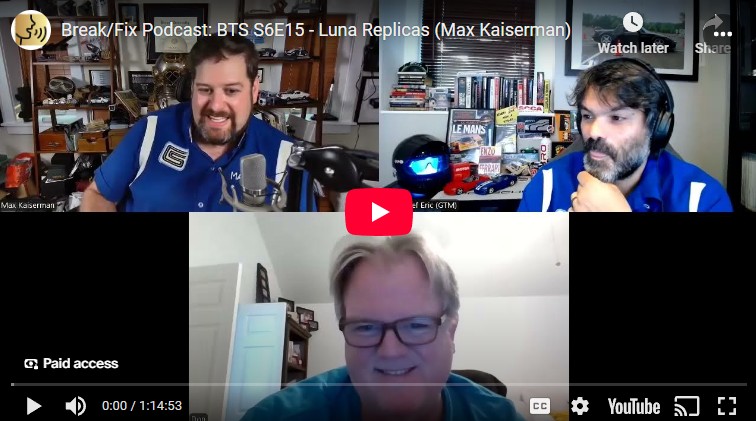
All of our BEHIND THE SCENES (BTS) Break/Fix episodes are raw and unedited, and expressly shared with the permission and consent of our guests.
Consider becoming a GTM Patreon Supporter and get behind the scenes content and schwag!
Do you like what you've seen, heard and read? - Don't forget, GTM is fueled by volunteers and remains a no-annual-fee organization, but we still need help to pay to keep the lights on... For as little as $2.50/month you can help us keep the momentum going so we can continue to record, write, edit and broadcast your favorite content. Support GTM today! or make a One Time Donation.

If you enjoyed this episode, please go to Apple Podcasts and leave us a review. That would help us beat the algorithms and help spread the enthusiasm to others by way of Break/Fix and GTM. Subscribe to Break/Fix using your favorite Podcast App:
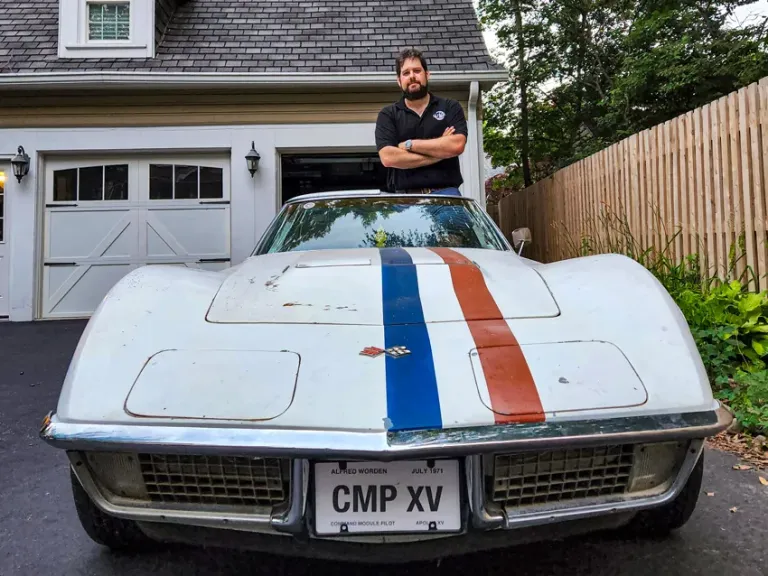
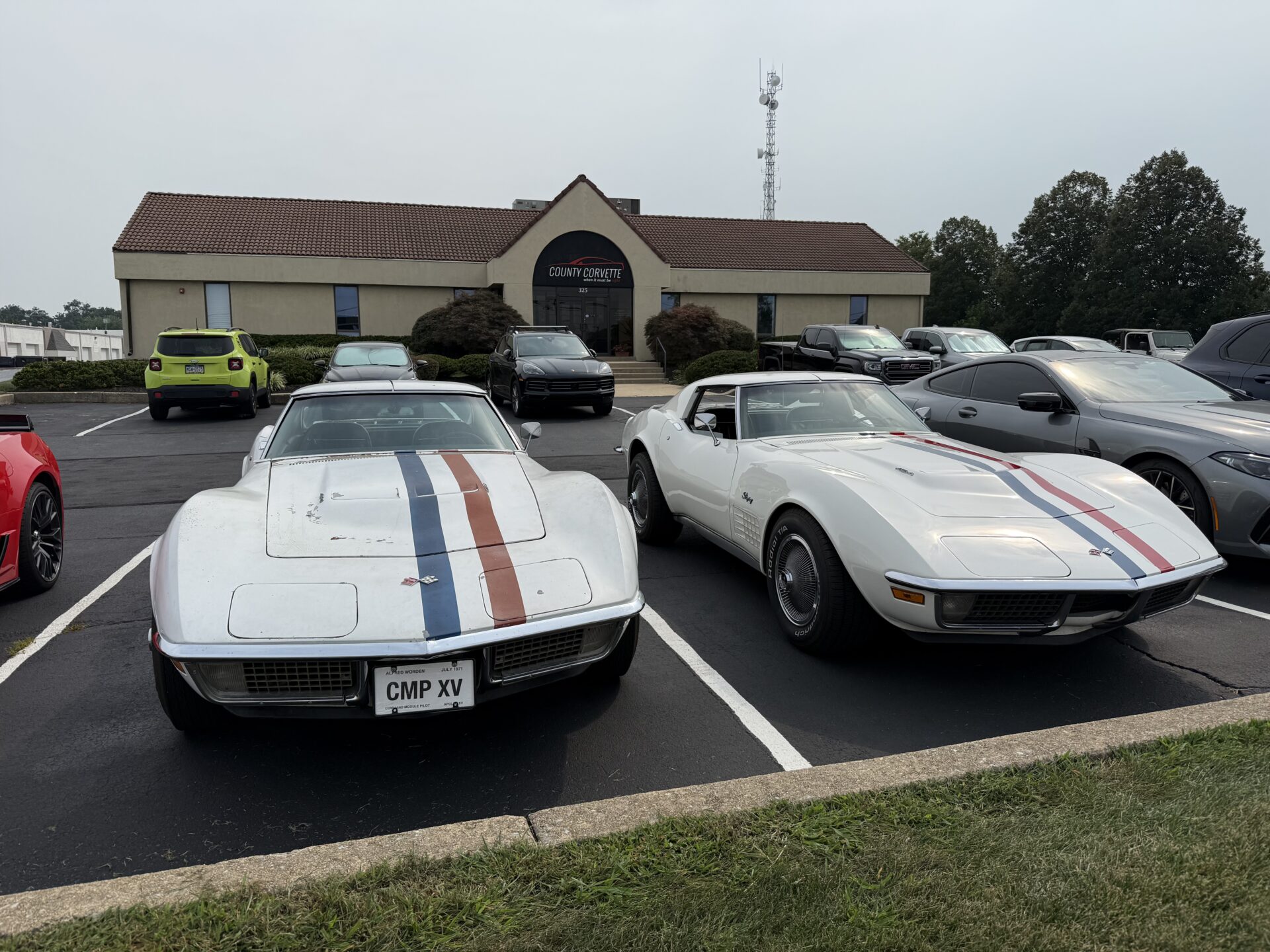
Max also acquired astronaut Al Worden’s Apollo 15 Corvette—one of only three surviving “AstroVettes” gifted to astronauts during the Apollo program. Rather than restoring it to showroom condition, Max chose to preserve its original state, honoring Worden’s legacy and using the car as an educational tool to inspire interest in STEM fields.
Whether it’s restoring vintage sewing machines or collaborating with NASA flight directors to design new uniforms, Luna Replicas thrives on authenticity. Max’s work bridges the gap between past and present, showing how aerospace and motorsports share a common DNA: precision, passion, and a relentless drive to innovate.
What’s next for Luna Replicas?
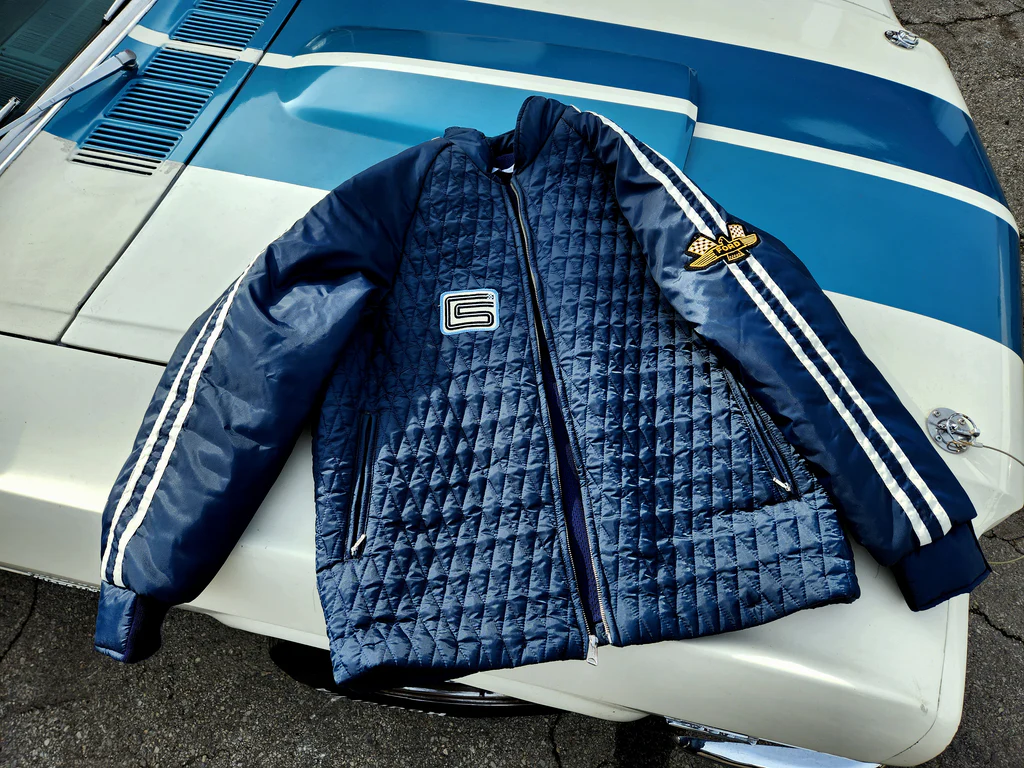
- New Collections: Cold-weather gear, 1967 Le Mans jackets, and more pit crew apparel.
- Museum Collaborations: Projects with the USS Hornet and other historic ships.
- The AstroClone: A fully restored replica of the Apollo 15 Corvette for public engagement.
- Shelby Expansion: Everyday wearables like watches, sunglasses, and racing gloves inspired by Carroll Shelby’s legacy.
Max’s story is a testament to how history can be preserved, celebrated, and worn. Luna Replicas isn’t just about clothing—it’s about connecting people to the pioneering spirit of those who dared to push boundaries, whether on the racetrack or in orbit.
To explore more, visit www.lunareplicas.com and follow them on Instagram (@lunareplicas) and Facebook (@lunarreplicasllc).
Guest Co-Host: Don Weberg
In case you missed it... be sure to check out the Break/Fix episode with our co-host.This content has been brought to you in-part by sponsorship through...