

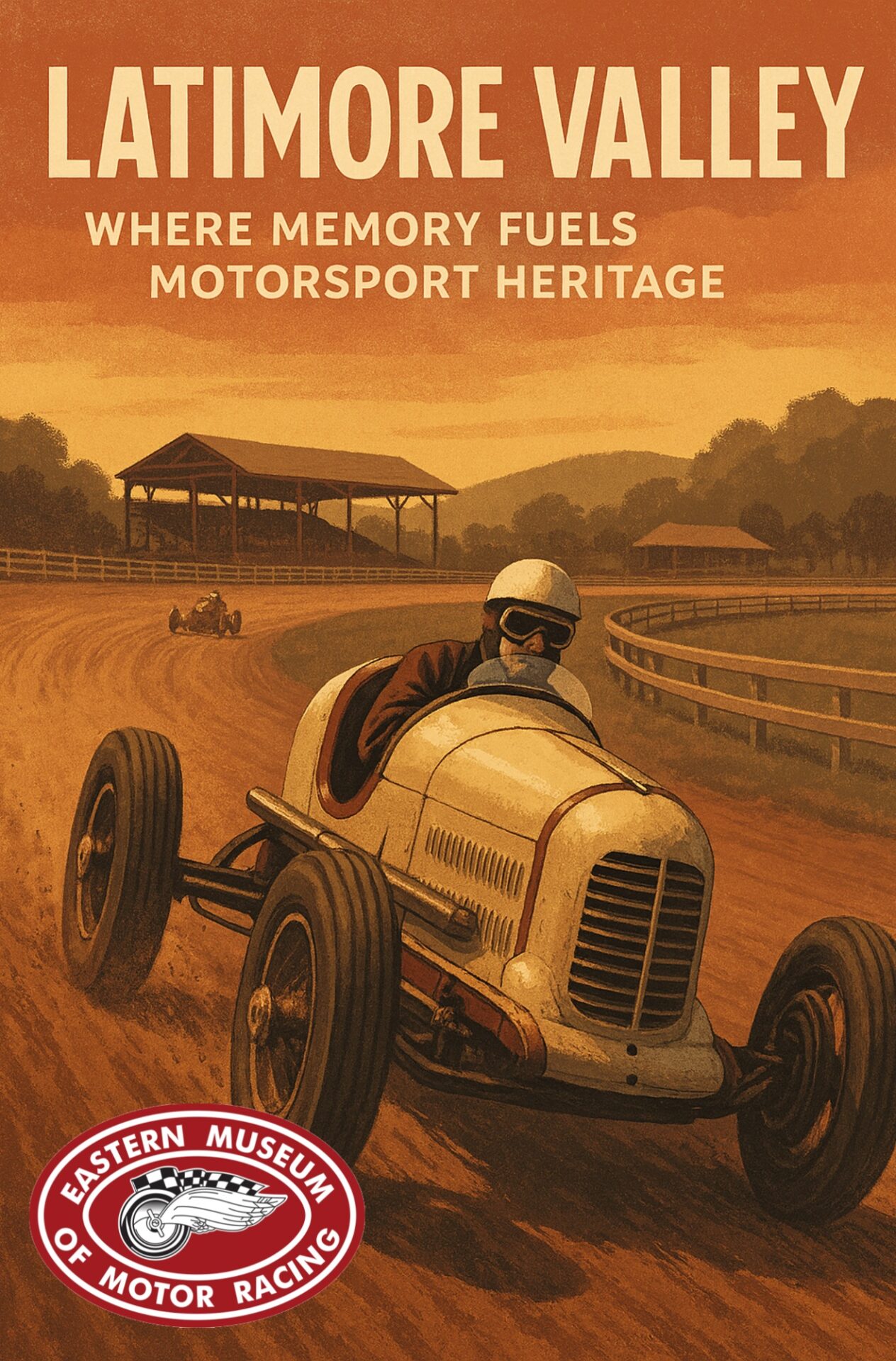
In the rolling hills of Adams County, Pennsylvania, a quiet fairground once echoed with the roar of engines and the cheers of spectators. The Latimore Valley Fairgrounds, first opened in 1925, began as a lively rural festival with mule races, trapeze artists, and even airplane rides – a thrilling novelty for small-town Pennsylvanians. Yet it was the introduction of automobile racing that transformed Latimore into a cultural landmark, bridging rural tradition with the modern age of speed.
The debut fair was not without controversy. A police raid in 1925 underscored the tensions between wholesome agricultural exhibitions and the temptations of gambling and vice. To survive, organizers turned to auto racing. By 1927, Latimore boasted a permanent speedway, drawing crowds with big cars fashioned from stripped-down Model Ts and Chevrolet innovations. Racing became both entertainment and experimentation, a grassroots culture where mechanics and hobbyists tested their ingenuity on dirt ovals.
Tune in everywhere you stream, download or listen!



By the late 1920s, economic pressures and shifting entertainment trends dimmed Latimore’s lights. The Great Depression forced closures, though the grounds remained a hub for livestock auctions and community markets. Racing briefly revived in the late 1930s, but tragedies like the death of young driver Leroy Swaggart became part of local lore. Ultimately, the rise of Williams Grove Speedway and the onset of World War II sealed Latimore’s decline, relegating it to the ranks of Pennsylvania’s “ghost tracks.”
Bio

Alison Kreitzer is Director of Collections at the Eastern Museum of Motor Racing in York Springs, Pennsylvania. She earned her Ph.D. in the History of American Civilization from the University of Delaware in 2017.
Synopsis
This episode of The Logbook, our History of Motorsports Series, delves into the history and community heritage of the Latimore Valley Fairgrounds in Adams County, Pennsylvania. Starting from its inception in the 1920s as a fairground and dirt speedway, the site experienced decline before being revived in the 1980s by the Eastern Museum of Motor Racing (EMMR) as a vintage race car exhibition venue. Led by Alison Kreitzer, director of Collections at EMMR, the narrative details the impact of institutional memory in preserving cultural heritage, highlighting the role of grassroots efforts and the Williams Grove Old Timers. The story encompasses the socio-cultural dynamics of rural America, including moments of innovation, racial exclusion, and revival efforts. The episode also emphasizes the importance of preserving motorsport history through community engagement, oral histories, and the ongoing activities at Latimore Valley and the EMMR, ensuring the legacy and passion of motorsports continue to thrive.
Follow along using the video version of the Slide Deck from this Presentation
Transcript
[00:00:00] Break Fix’s History of Motorsports Series is brought to you in part by the International Motor Racing Research Center, as well as the Society of Automotive Historians, the Watkins Glen Area Chamber of Commerce, and the Argo Singer family.
On this episode of the Logbook We’ll Journey into the Heart of Motorsports, history and community heritage. This story begins at the Latimore Valley Fairgrounds in Adams County, Pennsylvania. A place that first roared to life in the 1920s and thirties as a local fairground and dirt speedway. Though time brought decline, the spirit of racing never truly faded.
But by the 1980s, members of the Eastern Museum of Motor Racing stepped in, reviving the dormant track and transforming it into one of the nation’s first dedicated vintage race car exhibition venues here. History isn’t just remembered. It’s lived through the thunder of engines in the passion of enthusiasts across generations.
At the center of this narrative is the power of institutional memory, the collective knowledge, stories, and experiences that guide [00:01:00] preservation, programming, and community connection. And leading us through this exploration is Alison Kreitzer, director of Collections at the EMMR, with a PhD in the history of American Civilization for the University of Delaware.
Alison brings both scholarly insight and deep dedication to preserving Motorsport heritage. Together we’ll uncover how memory shapes legacy, and how Latimore Valley became a living bridge between the past and the present.
Good afternoon. Today I want to take you on a journey spanning nearly a century of Motorsport, history, community engagement, and preservation. This story centers on the Latimore Valley Fairgrounds, a site located in Adams County, Pennsylvania. That evolved from a vibrant local fair in the 1920s through decades of dormancy to its revival in the 1980s as one of the nation’s first vintage race car exhibition tracks.
But this presentation is about more than just the rise and rebirth [00:02:00] of the historic speedway. It’s a story about institutional memory, the collective knowledge that organizations accumulate over time through both historical documents and artifacts. As well as informally through storytelling and mentorship, Latimer Valley exemplifies how this institutional memory built from the shared experiences of its community can shape the way cultural heritage is preserved and interpreted.
At the Eastern Museum of Motor Racing or EMMR, we see this every day. Our mission extends beyond preserving physical artifacts. We strive to safeguard the stories, the human connections. And the living traditions that define motor sports culture. The emergence of the Latimore Valley Fair in the late 1920s offers a revealing case study of rural life in Interwar America.
Both the activities on the race track and the events surrounding the fairgrounds mirror the broader cultural shifts and tensions. Unfolding across Pennsylvania at this time. The [00:03:00] Latimore Valley first opened in August, 1925. It was the vision of Robert B. Nelson, a York Springs resident who transformed his private property into a bustling public fairground.
That first fair was a lively spectacle, a four day celebration featuring glee clubs, live bands, trape artists, roller skating champions, and displays of modern consumer culture. Like automobiles and furniture, visitors could enjoy mule races, stroll the midway, or even take an airplane, ride, a thrilling novelty for Royal Pennsylvanians in the 1920s.
Yet the fair debut ended dramatically. The Lebanon Daily News reported a state police raid during the Saturday of the fair. Seven people were arrested and officers confiscated roughly $800 worth of gambling equipment and merchandise. Latimore wasn’t the only regional fair to attract the attention of the state police.
In 1924, [00:04:00] Pennsylvania had banned gambling and immoral entertainments at publicly funded fares. Critics complained that what had once been wholesome agricultural expositions were turning into spectacles of vice with alcohol, gambling, rig games, and burlesque shows becoming common Midway entertainments.
Many fair organizers, including those at Latimore, sought new ways to attract visitors without running afoul of the law. One of the most effective and popular solutions was automobile racing. Throughout the late 1920s, fairground associations across the state began hosting auto race. On their existing horse tracks, the combination of speed, noise, and local talent proved irresistible transforming motor racing into a major attraction throughout South Central Pennsylvania.
This enthusiasm for technology centered hobbies reflected a larger transformation in rural life. In 1914, only about 7% of Pennsylvania farmers owned automobiles. By [00:05:00] 1921, that number had risen to 72%. Automobiles were reshaping not just transportation, but culture. A 1925 Harrisburg Telegraph reporter remarked quote, nearly everyone owns an automobile these days, and nearly everyone craves speed.
Americans modified their passenger cars into trucks, tractors, campers, and increasingly raced cars. Fairs like Latimore became a natural stage for technological tinkering in the pursuit of new speed. Records determined to recover from the setbacks of the initial 1925 Latimore Valley Fair Coordinators announced their plans to construct a permanent racetrack for future events.
Organizers sent letters to local elites attempting to entice area residents to buy stock in the Latimore Valley Fair Association for $50 per share. By 1927, the Fairground Speedway was complete. The Latimore Valley Fair hosted auto and horse races under the promotion of the Dolphin County Auto [00:06:00] Racing Association.
The event offered $1,000 in prize money, a remarkable sum for the time amounting to nearly $19,000. Today, the race drew notable entries like the Chevrolet Special driven by CH Rule, who also happened to be the president of the Pennsylvania Bar Association. Racing even then attracted a fascinating mix of professional and working class enthusiast.
Henry Ford’s Model T played a central role in the development of grassroots racing, affordable and widely available. It provided an entry point for spying racers. By the 1920s, a thriving aftermarket industry had emerged, offering parts to increase the power and performance of the humble Model. T mechanics and hobbyists stripped down cars, removing fenders, lights, and unnecessary weight to create sleek, cigar shaped racers known as big cars, innovations from the likes of the Chevrolet Brothers.
Such as high compression cylinder heads and improved camshafts turned everyday [00:07:00] engines into the competitive racing machines that competed, uh, at Latimore and other area fairground tracks. Drivers worked out of garages and barns fabricating by hand. Safety features were minimal. Creativity and courage were essential.
This was the backyard mechanic culture where racing was accessible and experimental. While the interest in automobile racing brought many local residents together at the Lamore Valley Fairgrounds, the site also reflects a more complicated truth. Community spaces often mirror the social, racial, and ethnic divisions of their time.
In 1927 and 1928, the KKK held at least two major events at Latimore. A 1927 advertisement for a clan picnic promised amusements of all kinds for everybody. End quote. These amusements included baseball games, foot races, live music, fireworks, and notably the burning of what the clan claimed would be the largest cross ever ignited in [00:08:00] Pennsylvania.
The following year, the clan returned to Latimore to host a six day fair featuring daily entertainments, dancing and onsite camping. These were not isolated occurrences. Membership records preserved in the Pennsylvania State Archives estimate that by the mid 1920s, nearly a quarter of a million Pennsylvanians belonged to the clan.
That Second Air Clan found support among many native born working class Americans. Tapping into nativist fears over immigration, job competition, racial and religious differences, organized crime and other perceived threats to white Protestant identity. These anxieties were widely felt across the nation and contributed to federal policies such as the Johnson Reed Act of 1924, which imposed strict quotas on immigrants from Eastern and Southern Europe and barred immigration from most of Asia.
The clan of the 1920s promoted an ideology that was intensely racist towards African Americans, as well as anti-Catholic, [00:09:00] anti-Semitic, and anti-immigrant. At the same time, its leaders sought to normalize the organization by presenting it as a community service network, helping members find employment, offering mutual aid and hosting family oriented social events with food, entertainment, and recreational activities such as those hosted at Latimore.
By acknowledging this history, we better understand how places like Lamore Valley were shaped, not only by moments of celebration, innovation, and community building, but also by the exclusionary forces that define much of American society. During the 1920s, historians have shown that African-Americans were largely barred from full participation in mainstream automobile racing during the interwar years.
Even exceptionally skilled drivers such as Charlie Wiggins were systematically shut out of fairground dirt tracks and major racing venues. In response to this exclusion, groups such as the Indianapolis Colored Speedway Association were [00:10:00] created to have opportunities for black drivers from 1924 to 1936.
The Colored Speedway Association organized a 100 mile race for African Americans at the half mile track at the Indiana State Fairgrounds, known as the Golden Glory Sweepstakes. This annual event quickly became the premier national stage for African American racers, showcasing extraordinary talent and determination in the face of widespread discrimination.
One of the earliest documented racing events for African American drivers in Pennsylvania took place at Arden Downs Fairground, which is located in Washington. It’s about 30 minutes south of Pittsburgh on July 4th, 1927. The holiday program drew prominent African American racers from as far away as Detroit and Chicago.
A year later on Labor Day 1928, Arden Downs made an remarkable leap. The track hosted an integrated field of 40 black and white drivers competing together [00:11:00] on its half mile oval. Local African American undertaker Quinn Banks surged to an early lead before collision with Fence, took him out of contention, allowing white driver Tony Boyle to take the checkered flag.
Coverage in the black press celebrated the event as a sign of racial progress. The Pittsburgh Courier reported that quote, competent color drivers match their wi skill and courage against Ottawas of the other group, and the comparison was favorable. Yet this moment of integrated motor racing in Pennsylvania was short-lived.
Arden Downs does not appear to have hosted similar interracial contest after the 1929 season, and there is no evidence that Latimore Valley ever held such events. By the late 1920s, the Timore Valley fairgrounds, like many small, rural, fair sites, were struggling to remain financially viable, declining attendance, increased competition from larger regional fairs and shifting entertainment trends all took a toll.
In 1928, the property [00:12:00] was put up for public sale, 26 acres with a half mile track, grandstand, stables, and several exhibit buildings. Yet not a single bid was made a sign of the growing economic uncertainty gripping the region even before the Great Depression fully took hold. Throughout the early 1930s, the fairgrounds passed through the hands of several owners, each attempting unsuccessfully to revive racing and generate steady revenue.
Their difficulties were far from unique. During the depression, many local racetracks either closed or temporarily disappeared altogether. Families had fewer resources for leisure activities. And promoters face rising insurance costs in declining gate receipts at Latimore, both the automobile races and the annual fair were suspended in the early years of the Depression.
Yet the grounds did not sit idle. As farm prices plummeted, Latimore became an important site of practical day-to-day exchanges. Local farmers and residents gathered here for public sales, livestock [00:13:00] auctions, and community markets. These years illustrated a lotti more like many community fairgrounds adapted to changing circumstances.
By 1935, a new generations of organizers were determined to revive the fair. This also included reviving the automobile races that were held there. Drivers from across the eastern United States met in 1935 to compete for modest purse money, and a mission was set at just 10 cents a price that reflected both the desire to make the event accessible and the continuing economic strain of the depression.
But again, the revival was not without local controversy. This time, LATI Moore’s new owner, Bruce Wagner, faced community backlash when he held races on Sundays. He was charged with quote desecration of the Sabbath and fined $4 a relatively small sum, amounting to about $90 today, but significant in symbolism.
Wagner’s prosecution fell under Pennsylvania’s longstanding blue [00:14:00] laws, which dated back to the colonial time of the 1740s. These laws were still largely in effect during the 1930s and restricted commercial and recreational activities on Sundays for religious observance. Racing at the Latimore Valley Fairgrounds peaked in the period of 1937 to 1939.
During this period, promoters hosted races roughly every other weekend resulting to about 10 races per season. The races drew large crowds, eager to see the local competition. The track operated as an outlaw venue independent of the American Automobile Association, and became a hub for a diverse cross section of Eastern drivers independent tracks.
Lake Lamore Valley played a dual role in the racing ecosystem. They offered local drivers a place to learn and hone their skills, and they provided an opportunity to earn money outside the tightly controlled AAA circuit. The distinction between independent and AAA racing was not always clear. Cut. Many AAA [00:15:00] drivers raced under assumed names at Outlaw tracks to supplement their income while avoiding fines or disciplinary action from the governing body.
Keep in mind that they also race motorcycles at Lamore during that period. So if you think the big cars were bumpy, um, I can’t even imagine what it would’ve been like to race. A motorcycle during that period to think about the drivers that were competing in this period of the late thirties. A case study that is good to kind of illustrate these local independent drivers is Vic Naman.
Like many of his peers, he relied on a local car owner to fund his racing career. NAM and ZR two was owned by Leonard Redding. Who operated an auto repair garage in nearby Shippensburg Redding supported a two car team during the late 1930s. He’s shown in the top right, uh, with the team car, the ZR one, driven by Elmer Norris.
Norris and Naman, along with their contemporaries, often served as their own mechanics At the races, independent drivers had to be inventive, [00:16:00] adjusting on the fly, patching cars after crashes, and experimenting with setups to gain even small advantages on the track. Like many of his peers, Naman raced it, several independent tracks across central Pennsylvania, traveling from Lancaster to Lebanon to the Harrisburg region throughout the racing season.
Oral histories play a vital role in preserving community memory, yet they also can diverge from the verifiable facts over time as stories are retold and reinterpreted through generations. A telling example of this at Latimore can be found in the case of racer Leroy Swaggart. The 19-year-old racing novice died at Latimore when he blew a tire and crashed into a tree.
Swagger’s story became part of Lattimer’s local lore. Just one day earlier, he had married his sweetheart who witnessed his fatal accident from the grandstands. Over time, Swagger’s accident became intertwined with explanations for the Speedway decline. To this day, MMR members [00:17:00] consistently used this story as evidence for why big cars stopped racing at the track after the 1939 season.
At some point, a museum volunteer even wrote on the bottom of the photograph of Swaggart killed at Latimore in 1939, and you can see the handwriting right there. It’s a little blurry on the slide today. However, contemporary newspaper records confirm that Swagger’s death actually took place in 19 37, 2 years earlier than the collective memory suggests.
This discrepancy illustrates how institutional and community narratives can shift sometimes unintentionally blending fact and fiction. And with our conversations this morning, I think it’s also relevant that we’re reading 21st century responses to things such as accidents and thinking through safety onto this period of the 1930s.
Because the newspaper coverage from the 1930s focused on the sensationalism surrounding his age and his recent marriage, his untimely death does not appear to have [00:18:00] significantly impacted the 1937 racing season or to have created a critical response. Over changes to track safety. The closure of the Lamore Valley fairgrounds at the end of the 1940 season was most likely influenced by notable factors such as the opening of nearby Williams Grove Speedway, known as the Ascot of the East Williams Grove was a purpose built facility that quickly became one of the premier racing venues on the East coast.
And I’ll show my sprint car bias in this room and say, I still think it holds that status today. Unlike Latimore. Williams Grove regularly sanctioned AAA races and consistently attracted top tier drivers from across the region. The Grove offered significantly higher purses, drawing both competitors and spectators away from the smaller fairground tracks.
Its modern amenities and central location made it a natural magnet for race fans effectively eclipsing local venues like Latimore. Lamar’s decline was compounded by the broader context of the [00:19:00] late 1930s and early 1940s. The onset of World War II restricted rubber and fuel supplies, curtailing racing events.
Lamore was unable to sustain regular racing even before the federal government officially banned all auto racing in 1942. In the decades following the war, Latimore largely returned to practical community uses. The fairgrounds hosted livestock auctions, public sales, and other local gatherings. While the track itself fell into disuse, Latimore joined the ranks of Pennsylvania ghost tracks.
Remember primarily through the stories told by drivers and spectators who had once gathered there even without formal preservation. The fairgrounds lived on through these oral histories, but also through the personal collecting of individuals who had attended races there. Family photographs, newspaper clippings, racing trophies.
Fair ribbons and ticket stubs were carefully saved each a tangible reminder of excitement and adventure experienced at Latimore. [00:20:00] This kind of grassroots preservation reveals the powerful impact that shared experiences can have on individuals and communities. In the large scope of racing history landmark’s impact is minimal.
However, the fair and Its Speedway was memorable to the people who had experienced it firsthand enough so that they took the effort to save and preserve these mementos from the fairgrounds. In some cases, for over 50 years, these informal archives later proved invaluable in guiding the tracks reconstruction and interpretation.
Many artifacts eventually found a permanent home at the Eastern Museum of Motor Racing. Allowing the new generations to connect with the history stories and spirit of Latimore Valley. The photographs are of Drivers Vic Nomans on the top right. The dairy bottles are there because in the 1930s, the local dairy crawls.
Dairy had a truck, and the dairy truck became the ambulance for the speedway. So if a driver was hurt, crawls, dairy, generously then transported the injured driver [00:21:00] to the local physician or maybe a nearby hospital. For many racers and fans who grew up hearing stories about racing in this period of the twenties and thirties, Latimore and other Ghost Treks became symbols of a history worth preserving, and it was precisely the sense of nostalgia and responsibility.
The desire to keep the spirit of places like Latimore Alive that inspired new generation of racers to take action by the 1970s. Williams Grove Speedway promoter, Jack Gunn wanted to honor racing pioneers and preserve the rich history of Williams Grove Speedway. He envisioned uniting past and present members of the racing fraternity through the formation of a new club called the Williams Grove.
Old-timers well-known drivers, Dwayne Carter, Joey Chitwood and Cliff Griffith were among the club’s early supporters. Within a year, the Williams Grove Oldtimers had grown to over 375 members. Charter members of the group hailed from over 10 different states. The group published their first newsletter in April, [00:22:00] 1975, stating their mission and vision for the social club quote.
We’re very glad to have you in the cockpit with us. You are now a charter member of what is about to become one of racing’s finest organizations. The Grove Oldtimers. With its inception, we hope to bring you and all of our members nostalgia, surrounding methanol memories and castor oil charisma of the fabulous dirt track past.
To do this, we have to enlist your aid in obtaining the whereabouts of old time drivers, mechanics, and car owners. After all, this is what this club is all about. We want to get these greats together and bestow long and belated honors upon them. Members mingled with racing legends at the early conventions held at Williams Grove Speedway.
Attendees spent the weekend camping at the track, enjoying barbecue picnics, watching old racing movies and bench racing. They hosted track time for vintage race cars, interviewed former drivers and displayed their personal collections of [00:23:00] racing memorabilia in an old barn located off turn, one of the speedway.
One of the early participants of the Williams Grove Old Timers was a local sprint car driver named Lynn Paxton. Popular with the fans. Paxton captured multiple feature wins across Pennsylvania’s toughest circuits, including Williams Grove, port Royal and Seals Grove during the late 1970s. He was hardly an old timer, but he had a keen interest and enthusiasm for history.
He had already acquired several of his own vintage race cars by the late 1970s, including a 1947 Miracle Power special driven by his personal racing hero, Tommy Haner with his established connections within the racing community. An interest in racing history. Lynn was a natural fit to become a leader in the developing Williams Grove old timers.
When Jack Gunn died in 1980, the future of the old timers was in jeopardy. Since the group operated out of guns, Williams Grove office [00:24:00] members worried that the tracks knew owners once support the club. A small group of members led by Lynn Paxton recognized that the old timers was more than just a social group, that they were a group that had an important role in documenting Mid-Atlantic racing history.
In 1981, the Williams Grove old timers were formally established as a Pennsylvania educational nonprofit. The vision of the newly formed board of directors was ambitious. They wanted to create a living museum where history could be experienced, not just displayed. They hoped to achieve this goal by building both the permanent museum and an exhibition track.
As Williams Grove Oldtimer President Carl Schweigert envisioned quote, the exhibition track will not only serve the needs of those acquiring and restoring antique race cars, but together with our Planned Museum of Automobile Racing history will help fulfill our ultimate purpose of preserving and displaying the history of American automobile racing for the benefit of the general public, and will enable us to present [00:25:00] operating examples of this history.
While the group started searching for a site for the Eastern Museum of Motor Racing, they also began actively collecting donations of historic race cars and other artifacts related to motor racing history. The board of directors first approached winds growth Speedway about purchasing land for a proposed racing museum when the tracks owners declined.
Mel Paxton, Lynn’s father. Recommended an alternative, the long abandoned dirt track at the Lamore Valley Fairgrounds. Mel had deep personal ties to the site, having raced there in the 1930s and attended the fair all the way back to the early 1920s as a trial. The revival of the Lammore Valley fairgrounds truly began then in 1982 when the old timers purchased the historic property.
While they envisioned Latimore as the future home of their museum, their immediate priority was creating the dedicated exhibition track for vintage race cars. As swagger explained, the [00:26:00] exhibition track at the museum will be the first permanent facility of its type in the United States, devoted solely to the exhibition of antique racing machinery, and our ownership of the facility will guarantee its continued existence.
All the work was done by members and volunteers, organized work parties to begin clearing and restoring the old racetrack. Early in the process, they discovered that previous land surveys of the fairgrounds were inaccurate. One of the turns actually extended beyond the property line to faithfully reconstruct the historic oval.
The board of directors had to approach the neighboring farmer and negotiate the purchase of an additional two acres. EMMR members then installed wooden guardrail around the track, built bridges over Latimore Creek, constructed pavilions and restored the original house in small barn on the property. In 1983, members held their first open house at the fairgrounds.
They wanted to showcase the revitalized speedway, but weren’t quite ready yet for vintage [00:27:00] racing. The event featured a static display as well as 1938 Lamore Valley Speedway Track Champion at Stein, who paced the oval in a vintage 1930 sprinter local racing greats such as Stein Tommy Henner ship. And Buster Workie played a vital role in the early years of the old timers As active members, they regularly attended conventions and track time events serving as living links between racing’s past and present.
Their participation helped bridge the generational gap. Allowing younger fans and aspiring drivers to learn directly from those who had shaped the sport. These legends generously shared their knowledge and experience posing for photographs, offering interviews, and discussing not only their racing careers, but also their contributions to car design, fabrication, and mechanical innovation.
By engaging directly with members and fans, they helped cultivate a shared sense of community. This intergenerational involvement became a defining [00:28:00] feature of EM’S culture. Also in 1983, the old timers took on a second major step in expanding their public outreach. They purchased Shorty Miller’s Mobile Museum of Racing History, a 30 foot trailer outfitted with display cases, lighting and climate control.
This mobile museum allowed WTOT to bring the history of motorsports directly to the public. Volunteers traveled to Speedways Faires. Conventions throughout the region. For many, this was their first opportunity to see historic racing artifacts up close. Making the sports pass tangible and accessible. At the time, the old timers had already masked an impressive collection of drivers, uniforms, trophies, helmets, and safety equipment, as well as an extensive archive of racing photographs and programs documenting the sports evolution.
Lynn Paxton was. Essential in acquiring these objects for the future museum. He’s shown here on the left with Bruce Craig, [00:29:00] who was a member and a local photographer, and they would travel around Wednesdays was the day where they go to different places across the Mid-Atlantic region to acquire things that they thought would be good for the Racing Museum.
So an example that they’re shown here, this is the tale from Ted Horn’s car that he died in in 1948. And it’s still something that we display at the museum to this day. By bringing artifacts, stories, and racing history directly to fans across the region. The mobile museum demonstrated the public’s interest and engagement, proving that a full-time brick and mortar museum was both necessary and sustainable.
Latimore Valley, once again, echoed with the sounds of racing engines. By 1984, during the second annual open house members like Stein and Billy Gauss took to the track and restored cars that they had originally raced there in the 1930s. For the first time in over 40 years, cars raced around Lamar’s oval turning memory [00:30:00] into motion.
The group hosted track time on both Saturday and Sunday. These events weren’t designed to stage races. Instead, drivers paced the track at speeds roughly 20 miles per hour to showcase the restore machines for their fellow enthusiasts and first time visitors. While the cars circled the TrackR announcers shared details and historical information about each car as well as each different period of racing history, much like the independent racers of the 1920s and thirties.
Vintage race car restorers are artists and craftsmen dedicating countless hours to rebuilding cars, sourcing hard to find parts, and fabricating components by hand. In doing so, they preserve not just machines, but the skills, creativity, and relationships that define racing culture. Recognizing the importance of preserving the identities and stories of historic race cars.
The old timers established one of the earliest organized historical databases for vintage racing [00:31:00] vehicles. Members understood the need to have accurate documentation to protect and share these histories. Vintage Conos could officially register their vehicles and received a number dash plaques signifying inclusion in the organization’s historical record.
By the mid 1980s, the old timers had documented histories and photographs for over 130 significant cars, and this number has continued to grow. To this day, I think we’re approaching about 400, 4 50 that have been registered. So car owners frankly come to the museum to trace the lineage of vehicles bearing these original dash plaques when they purchase a vintage race car.
Even to this day in 1985, the Williams Grove Oldtimers had another milestone, the first rebirth of the Latimore Valley fair with supportive local volunteers. They reopen the fair featuring antique tractors and engine live entertainment crafts, children’s games, and of course vintage race cars. The Latimore Valley Fair [00:32:00] became an annual tradition and the primary fundraising event for the organization in 2025.
The fair celebrated its 40th anniversary today. The event both preserves the legacy of the original fair while reinforcing Lati Moore’s role as a community gathering place and a living museum for racing history. By the time construction of the Eastern Museum began in 1989, the Williams Grove Oldtimers had 1700 members.
Phase one of the museum included exhibition space for about 20 cars, as well as displays a library and a gift shop. Today the museum has expanded through several renovations and grown to offer nearly 24,000 square feet of exhibit space. We now display more than 60 vintage race cars alongside countless artifacts from Chris Mackie’s typewriter to Malcolm Durham’s racing jacket to Jimmy McGuire’s prosthetic arm In less than a decade after becoming a 5 0 1 C3 [00:33:00] nonprofit.
The Williams Grove Oldtimers had not only achieved their original goals, but they had made their mark on preserving Pennsylvania racing history. Their leadership drove the purchase and restoration of the Lamore Valley Speedway, the revival of the Lamore Valley Fair, and the construction of a permanent museum dedicated to the region’s motorsports history.
The passion and vision of those original Williams Grove Alzheimer’s founders inspired a broad network of volunteers. Local businessmen area speedways and racing enthusiasts to rally behind the organization. The legacy they set in motion continues to grow. Vintage race car exhibitions have expanded far beyond Latimore, now held annually at area tracks such as Williams Grove, Lincoln, Babs, port Royal, and Hagerstown in 2025.
EMMR additionally hosted three track time events at Latimore, and in 2026, the Jalopy Showdown will return to the fairgrounds, demonstrating that the spirit first [00:34:00] cultivated by the Williams Grove Old timers remains very much alive at EMMR today. Alongside ongoing museum expansions and the development of a permanent drag racing exhibit, this Giy Showdown event helped EMMR broaden its mission beyond sprint cars and midgets, celebrating the full diversity of regional racing vintage race car exhibits at Latimar Valley.
Transform then history into living experience. Visitors see these cars not just as static artifacts, but as functioning machines that once thrill crowds. Tested engineering limits and showcase driver skill. Each lap around the track bridges past and present highlighting the craftsmanship, innovation, and passion that define generations of Pennsylvania motorsport.
Through these events, the fairgrounds have become more than a historic site. They’re a dynamic classroom where motorsports continues to educate, inspire and engage people of all ages. For over four decades, then Lynn Paxton, who’s shown in that Miracle power [00:35:00] special in the upper right, led these efforts ensuring that the stories, artifacts, and experiences of racing history were collected, celebrated, and shared.
Following his passing in 2024, EMMR launched the Lin Paxton Memorial Fund to honor his dedication to public history and the museum’s mission.
Are there any questions? So I’m interested in the Chris Koma connection. What do you have in that collection or a little bit and, uh, how did it come that you got it? Sure. I think Chris’s collection was spread. Some of it’s here at Watkins Glen. Some of it’s at the Revs Institute, and some of it came to EMMR.
So what we have are a lot of Chris’s personal mementos like that typewriter, as well as a lot of his awards that he has pictures of him throughout his career with the A b, C wide world of sport. As well as things such as the newspaper [00:36:00] bag that he handed out his original newspapers and when he was just a boy.
So we have a lot of that as well as a large collection of his books came to EMMR. So we have a research room that has a display, uh, with a lot of the books that came in from the Kane Mackey collection. And Corin, his daughter actually just donated a series of programs to us that date back to that early period of the twenties and thirties from various tracks throughout the Mid-Atlantic.
I noticed when you were playing that video, it mentioned one of the founding members was a swaggert. Yes. I’m assuming relative of Leroy. No, not that I think, I don’t think there’s any historical connection there that I’ve been able to find out. Carl Schweigert was a track announcer at a variety of tracks and an amateur historian.
So he came to the organization because of this shared love for history, and we actually have a lot of his scrapbooks. So all the races that he attended from that period of the thirties and forties, he made scrapbooks of a lot of like the [00:37:00] information, the tickets of the ephemera, and we still have those today.
He was working as an amateur historian, writing kind of histories of area racing and participating actively, and then joined our organization when it started in the seventies. I can attest to the uh, fact that Lynn was a storyteller. I’ve only visited the place once, but honestly, within 15 minutes of walking in, we were in a discussion with him and it was like we’d known him forever and he was just.
Fabulous and and definitely appeared to be the driving force behind that place. Those were brave men that drove those cars. Then they’re brave men that drive those cars. Now, seriously, I urge anybody that has not visited EMMR at some point in time, you’ve gotta put that into your. Itinerary because it is just a absolutely fabulous place.
So happy you were able to come up and join us today. And I will second what Kip said. I had the distinct pleasure of interviewing Lynn a couple of years ago, and he took us on a guided tour of the museum. We actually have that as a podcast episode and thanks to Allison, we’ve [00:38:00] been working to digitally remaster a lot of the old they call racers Roundtable, which would be the equivalent in IMRC.
Speak to the center conversations, which do feature Lynn and a lot of his comedy and a lot of. The sarcasm and you get to really know him as a person and his personality. So look for those in the next couple of months as we continue to drop those. If you’re interested, just come see me. But it’s been an absolute pleasure to be able to work on those projects as well.
Have you ever. Driven any of the cars out in the track. I have not driven the cars on the track, but I grew up attending dirt track races in central Pennsylvania. Silver Spring, Williams Grove Lincoln were the tracks that I’ve attended since childhood. So I have the fan perspective and some of the promotional perspective because my family was involved in that, but never took an interest in wanting to get behind the wheel, having witnessed.
Some of those accidents as a child, especially fire is something that very much concerns me when you’re strapped in like that, but definitely grew up at dirt tracks. So it’s interesting to be at EMMR because we have this thriving drag [00:39:00] racing culture and it’s a whole different speak, right? It’s a whole different vocabulary, a whole different kind of community.
So it’s been great to expand my background in racing with lots of other different types of racing since coming to the museum. I just wanted to say thank you and I really appreciate the perspective of your presentation in a variety of ways, but you really hit on, I think, an aspect of racing that sometimes gets overlooked as we talk about F1, nascar, imsa, all that.
Like I actually think, even though I didn’t grow up going to those sorts of things, for me as an archivist in all kinds of racing history, that kind of stuff gets overlooked, and I think it’s really, really fascinating. I love looking at the old pictures. We have some great amateur photography from tracks that look just like that, and so I’m really excited to see that.
Thank you, Allison. I’m just wondering, do you have any kind of educational outreach to local schools, to thinking some of the local colleges nearby, like Penn State, Harrisburg, and [00:40:00] places like that? Is there any kind of educational component that you go out. Or have kids come in to see. So we’re trying to build that, since I’ve joined the museum in the last three years, starting mostly with school groups, so the Boy Scouts as well as homeschooling groups in the area and charter schools, we’ve started to bring them in to do.
Tours, but also have kind of educational activities planned. So I have a scavenger hunt now where there’s great pictures of different things in the collection and they have to identify that object and then answer questions about it. And I’m also trying to move some of our exhibits. We now have a rotating exhibit gallery.
That’s using more STEM connections with existing programs. So for example, the NHRA has a YES program where they have on their website a whole set of lesson plans. So it’s very easy to incorporate those into our galleries and encourage them families as they’re there visiting to finish these activities as well.
Now, can I thank Allison?[00:41:00]
This episode is brought to you in part by the International Motor Racing Research Center. Its charter is to collect, share, and preserve the history of motor sports spanning continence, eras, and race series. The Center’s collection embodies the speed, drama and camaraderie of amateur and professional motor racing throughout the world.
The center welcomes serious researchers and casual fans alike to share stories of race drivers. Race series and race cars captured on their shelves and walls and brought to life through a regular calendar of public lectures and special events. To learn more about the center, visit www.racing archives.org.
This [00:42:00] episode is also brought to you by the Society of Automotive Historians. They encourage research into any aspect of automotive history. The SAH actively supports the compilation and preservation of papers, organizational records, print ephemera, and images to safeguard, as well as to broaden and deepen the understanding of motorized wheeled land transportation.
Through the modern age and into the future. For more information about the SAH, visit www.auto history.org. We hope you enjoyed another awesome episode of Break Fix Podcasts, brought to you by Grand Tour Motorsports. If you’d like to be a guest on the show or get involved, be sure to follow us on all social media platforms at Grand Touring Motorsports.
And if you’d like to learn more about the content of this episode, be sure to check out the follow on article@gtmotorsports.org. [00:43:00] We remain a commercial free and no annual fees organization through our sponsors, but also through the generous support of our fans, families, and friends through Patreon. For as little as $2 and 50 cents a month, you can get access to more behind the scenes action, additional pit stop, minisodes and other VIP goodies, as well as keeping our team of creators.
Fed on their strict diet of fig Newton’s, Gumby bears, and monster. So consider signing up for Patreon today at www.patreon.com/gt motorsports. And remember, without you, none of this would be possible.
Highlights
Skip ahead if you must… Here’s the highlights from this episode you might be most interested in and their corresponding time stamps.
- 00:00 Latimore Valley Fairgrounds: A Historical Overview
- 02:41 The Emergence of Automobile Racing
- 03:36 Challenges and Controversies in the 1920s
- 07:19 Racing and Social Divisions
- 11:42 The Decline and Revival Efforts
- 16:18 The Role of Oral Histories
- 21:25 The Williams Grove Old Timers and EMMR
- 31:39 The Rebirth of Latimore Valley Fair
- 32:18 Expansion and Legacy of EMMR
- 35:24 Q&A Session
- 41:11 Closing Remarks and Credits
Livestream
Learn More
 If you enjoyed this History of Motorsports Series episode, please go to Apple Podcasts and leave us a review. That would help us beat the algorithms and help spread the enthusiasm to others. Subscribe to Break/Fix using your favorite Podcast App:
Consider becoming a Patreon VIP and get behind the scenes content and schwag from the Motoring Podcast Network
Do you like what you've seen, heard and read? - Don't forget, GTM is fueled by volunteers and remains a no-annual-fee organization, but we still need help to pay to keep the lights on... For as little as $2.50/month you can help us keep the momentum going so we can continue to record, write, edit and broadcast your favorite content. Support GTM today! or make a One Time Donation.
Yet Latimore never truly disappeared. Families saved ticket stubs, trophies, and photographs, creating informal archives that kept its spirit alive. These personal collections became invaluable decades later, when nostalgia and responsibility inspired a new generation of racers to act. In 1982, the Williams Grove Old Timers, led by figures like Lynn Paxton, purchased the abandoned fairgrounds. Their vision was bold: not just a museum, but a living exhibition track where history could be experienced in motion.
Volunteers cleared brush, rebuilt guardrails, and restored the oval. By 1984, vintage cars once again circled Latimore’s track – not in competition, but in demonstration, allowing enthusiasts to witness the craftsmanship of restorers and the legacy of drivers. The Eastern Museum of Motor Racing (EMMR) emerged from this effort, safeguarding artifacts and stories while fostering intergenerational connections. Oral histories, exhibitions, and track time events turned Latimore into a bridge between past and present.
Today, Latimore Valley stands as more than a preserved site. It is a testament to institutional memory – the collective stories, documents, and traditions that shape how heritage is remembered and celebrated. Through the dedication of EMMR and its community, Latimore is not just a relic of motorsport’s past; it is a living archive where engines, artifacts, and memories continue to inspire.
This episode is sponsored in part by: The International Motor Racing Research Center (IMRRC), The Society of Automotive Historians (SAH), The Watkins Glen Area Chamber of Commerce, and the Argetsinger Family – and was recorded in front of a live studio audience.
About the EMMR
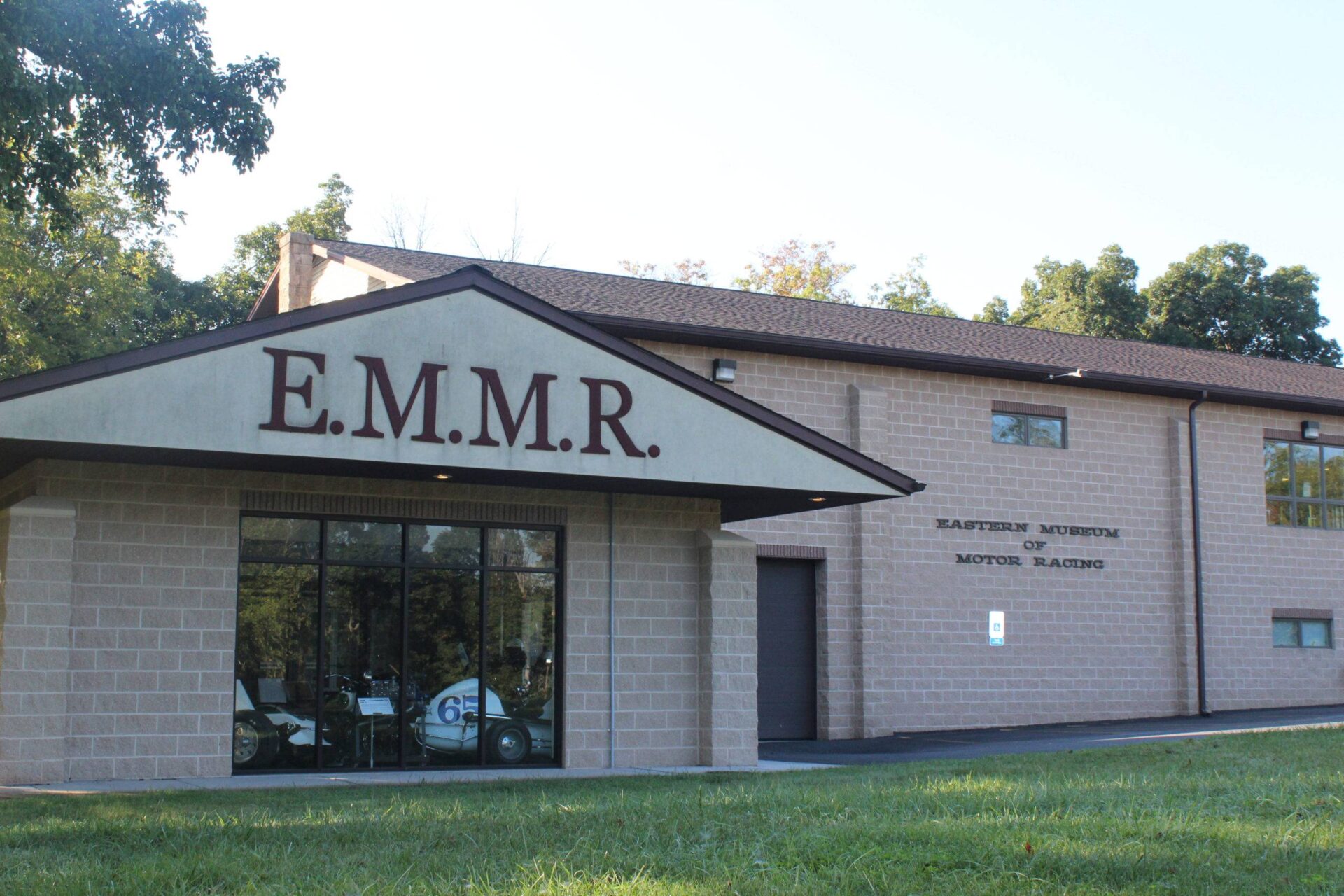
The Eastern Museum of Motor Racing is a premiere destination for motor racing enthusiasts, showcasing a vast collection of historic racing cars, artifacts and memorabilia.
Each roundtable brings together voices from across the motorsports world, from grassroots heroes to seasoned veterans, as they share stories, insights, and behind-the-scenes tales that shaped their racing journeys. Whether you’re a die-hard fan of dirt tracks, drag strips, or open-wheel icons, the Racers Roundtable is your seat at the table for candid conversations and timeless memories from those who lived it.
To learn more about the EMMR, or to take part of the next in-person Racers Roundtable, you can plan your visit, or support the museum’s mission to preserve and celebrate the legacy of racing by heading to www.EMMR.org. Follow them on social media for the latest news, upcoming events, and exclusive content.
Tune in everywhere you stream, download or listen!
This content has been brought to you in-part by support through...