spot_img
Home Blog Page 10

Screen to Speed: From Love at first Lap!

Catharina Geissler, hailing from Germany, has been a lifelong motorsport enthusiast. Her passion ignited in childhood as a fan, but it wasn’t until she met her now-wife, Jessica Weser, in 2013 that she found herself behind the wheel. Jessica, an avid kart racer, introduced Catharina to karting, and it was love at first lap—both with racing and with Jessica. Since then, Catharina has been actively competing, starting with karting and later transitioning to auto slalom in 2017. Catharina’s journey into sim racing began with the GT Academy and flourished during the pandemic when she embraced iRacing.

She now competes weekly at her local sim center, Zeeemracing, where she participates in cup races, honing her skills in a virtual arena. Her impressive racing résumé includes a 3rd place finish in the Hassian Karting Championship (2016) and being the Best Female in the Main-Kinzig-Slalompokal AutoCross for three consecutive years (2021–2023). When not racing, Catharina enjoys Wing Tsun, video games, and diving into her love for Star Wars, comics, and manga.

Married to Jessica, the pair share a unique dynamic as both competitors and motivators, pushing each other to new heights. Having connected with the Screen to Speed family at the Women’s Arena at the ADAC SimRacing Expo, Catharina now takes on the Screen to Speed International Women’s Day Race after a good showing in the Holiday Invitational at the end of 2024. With her diverse background and unrelenting drive, she’s ready to make her mark on the grid. Jessica Weser, from Germany, has been immersed in motorsport since childhood. Inspired by the legendary Michael Schumacher, she began her racing journey at age 11, competing in indoor karting and consistently outperforming her peers despite her smaller stature. By 1999, Jessica transitioned to kart championships and the KS2000 Cup, where she has since accumulated countless podiums and several vice-championship titles.

Tune in everywhere you stream, download or listen!

Listen on Apple
Listen on YouTube
Listen on Spotify

Her passion and dedication also led her to explore auto slalom racing, where she has achieved significant success. Her impressive list of accolades includes being the 2020 AutoCross Club Champion, a multiple-time vice Hessen champion in karting and KS2000 Cup, and a Radio Galaxy Kart Champion in 2015. Jessica’s blend of consistency, competitive drive, and versatility has made her a standout in both karting and auto slalom disciplines. These achievements underscore her status as a seasoned and determined racer. Jessica shares her passion for motorsport with her wife, Catharina Geissler, and together they travel extensively to motorsport events.

Highlights

Skip ahead if you must… Here’s the highlights from this episode you might be most interested in and their corresponding time stamps.

  • 00:00 Introduction to Screen to Speed
  • 00:53 Meet Catharina and Jessica
  • 01:25 Catharina’s Journey into Motorsports
  • 03:16 Jessica’s Transition from Karting to Sim Racing
  • 04:01 The Challenges of Sim Racing
  • 06:32 Meeting Through Motorsports
  • 12:47 Achievements in Karting and Sim Racing
  • 20:45 Racing Equipment and Setups
  • 24:50 Favorite iRacing Series and Combos
  • 28:41 Future Racing Plans
  • 30:37 Sim Racing Training and Local Community
  • 31:11 Screen to Speed Event Experience
  • 32:54 Challenges and Strategies in Racing
  • 35:49 Women in Sim Racing and Community Support
  • 39:32 Comparing Karting and Sim Racing Communities
  • 45:53 Hobbies Outside of Racing
  • 49:58 Plans for 2025 and Endurance Karting
  • 53:38 Driving Styles and Team Songs
  • 58:30 Conclusion and Final Thoughts

Transcript

Crew Chief Brad: [00:00:00] Welcome to Screen to Speed powered by INIT Esports. In this podcast, we dive into the journeys of remarkable individuals, making waves in sim racing, and bridging the virtual with the real. From the thrill of digital circuits to the roar of real life racetracks, we explore the passion, Dedication and innovation that drives the world of motor sports.

We’ll hear from athletes, creators, and pioneers sharing their stories, insights, and the powerful ways sim racing is connecting communities and creating pathways into motor sports. So buckle up screen. The speed starts now.

Lyubov Ozeretskovskaya: Hi everyone. Welcome to any talks. Happy to see everybody in chat. Hello. Hello. Uh, welcome to our, uh, today’s, uh, show and, uh, please welcome Katherine and [00:01:00] Jessica. Hello. Thanks for having us. Yeah. Thank you so much for joining. Uh, it looks pretty. Thank you so much. All right. And, uh, let’s start from, uh, Katerina.

Can you tell how you start, uh, your way into motorsports? I know you both in motorsports. Uh, let’s start with you and then Jessica can answer on this question as well.

Catharina Geissler: Okay. Um, my journey, um, yeah, started, um, pretty late, I guess, uh, which is not common, um, because I was always interested in motorsports, watching Formula One and, um, here in Germany, GTM.

Um, but I was never able to, uh, go karting or things like that as a child. So, um, yeah, I have focused on playing, uh, Gran Turismo and so on, so PlayStation’s games. And, um, I remember when the GT Academy started, I was, um, so [00:02:00] hyped and I thought, Oh my God, this is so cool. You get the opportunity to race a real car.

And, um, that’s when I started to, uh, buy a steering wheel and, uh, Built a little small setup and I was really focused in driving GT academy. So, um, yeah, that, that was the moment where it all made click and I thought, Oh my God, this is so cool. And I really can do it. Um, and later I met Jessica, um, she’s, uh, she was carting at that time and I never sit in a cart or something like that.

And, uh, yeah, she introduced me into this world. And we did a bit of real life racing there. So, um, that was my twenties, I guess. And, uh, yeah, about sim racing, um, really serious. It got when COVID came because we couldn’t [00:03:00] do the real life racing any longer. So, um, we decided to give it a try and, uh. Build our setup forward and jumped right into iRacing, which was a quite a big step.

Yeah, and um, yeah, my part started also with Gran Turismo many years ago, just as gaming and but I focused at first on real time, also real life karting and yeah. I had, I was lucky I had the opportunity to do it and yeah, so I focused at first on this one. Yeah, it was more like, uh, I introduced her into the sim racing

Lyubov Ozeretskovskaya: and

Catharina Geissler: she used me into the real life racing, which was kind of funny because we both coached each other and yeah, that’s really cool for me.[00:04:00]

Yes. Yeah. For me, it was. At the beginning, really complicated to start sim racing because the

Jessica Weser: feeling was really different. I had just the steering wheel

Catharina Geissler: and yeah, so

Jessica Weser: to adapt it from

Catharina Geissler: real life to sim, that’s not so easy.

Yeah, and for me it was, it was also crazy because, um, I mean, sim racing can be exhausting too, but when you sit in a real, real car, you feel the g force for the first time and it, your neck goes like this.

Quite an experience.

Lyubov Ozeretskovskaya: Yeah, that’s awesome that you, uh, like started from sim racing. She started in karting and you both, uh, kind of like, uh, get involved into sim racing and karting as well. That’s really cool. Uh, I started from karting when I was nine years old. So yeah, I understand what you’re talking about and, uh, actually karting because we’ve got a really [00:05:00] small kart circus.

Uh, circuits, it’s really, uh, you know, pretty intense races, uh, compared to what you got in the, um, normal road racing, um, like formalists. It’s a lot of things just, uh, happen, you know, uh, slower, uh, in, in formalists or in the, in cars, uh, compared to karting. So, yeah, it’s, it’s crazy. Um, who, uh, who are your biggest motorsports?

Uh, Idol. So for me that was Valentino Rossi. So I started karting because of my dad, so he getting, uh, me into the karting. And, uh, I was a big fan of Valentino Rossi. I was watching MotoGPs and when I started, I picked the 46 number. So who was it for you, uh, Katarina?

Catharina Geissler: Um, for me, it was, uh, Michael Hecken, actually, even though I’m German, which mostly means that most people like Michael [00:06:00] Schumacher, so, um, uh, as a child, I really looked up to Michael Hecken, and later on Sebastian Vettel, you

Jessica Weser: know.

Catharina Geissler: Yeah.

Jessica Weser: For me, it started with Michael Schumacher and, yeah, later also with Sebastian Vettel,

Catharina Geissler: Yeah,

Lyubov Ozeretskovskaya: it fits good. That’s nice. I also was a big fan of Michael Schumacher. I remember I was playing this, uh, the card Michael Schumacher game, uh, when it was in my childhood. It was really fun. Um, so can you tell me how you met each other in Karthing, how this happened?

And, uh, you also mentioned in your bio that you, uh, fall in love with each other as well as you fall in love in Karthing also.

Catharina Geissler: Um, actually it was, uh, uh, with the dating side, it was, it was, it’s quite a crazy. I, [00:07:00] um, I just, uh, yeah, got on the stating side and I thought, okay. I just do it. Maybe something comes up or even not. I, I didn’t believe in it that it would really work, uh, would work out, but actually it did. I, uh, just made, uh, three years, uh, three years, um, membership.

So, well, because I thought, okay, yeah, it will take time. And yeah, not quite, I don’t know, four weeks after I just met them, made a membership, which is connected and it fit immediately. So I, I paid for it three years and I never used it anymore. So it was,

Jessica Weser: yeah. And you even did not manage. You mentioned that, um, that you like motorsports at first, so we just found out

Catharina Geissler: it a little bit later.

And, yeah, so

Jessica Weser: the first time I [00:08:00] came

Catharina Geissler: to you

Jessica Weser: and I saw

Catharina Geissler: you have in your living

Jessica Weser: room a little sim rig.

Catharina Geissler: And, yeah, I thought, wow, great. Yeah, even though I was a big motorsport fan, I didn’t thought that anybody would love it like I do. So, because in all my, uh, all my friends, they never really cared about motorsports.

So I thought, okay, I can, But

Jessica Weser: yeah, then you found me.

Lyubov Ozeretskovskaya: Well, I think, you know, I’m just, uh, thinking that you’re from Germany and, uh, I think a lot of people in Germany are into motorsport because, uh, here’s a lot of, uh, racing tracks, especially the big Nordschleife where people, uh, uh, doing track days and all this stuff.

So yeah, it’s interesting to see that, uh, you didn’t have anyone in your, uh, surroundings who was into [00:09:00] motorsport. Yeah, it’s crazy. Yeah. All right. So you met each other, uh, at Karsing and How was the first experience for you, Katerina, to, uh, like transition from sim racing to karting? Like, was it really hard to adapt to it?

Uh, I know that you mentioned before, uh, there was a bit weird with G forces. Uh, but in terms of how you understand the line on the track and, uh, all the stuff, did sim racing help you, uh, to start your way in karting?

Catharina Geissler: I think, um, the feeling of the car and, or the car in that case, and, uh, the lines, I think I could, uh, adapt that really quickly and, uh, it helped, it helped me definitely out.

But, um, also I had a very good coach, which is always fun to do it and, uh. Yeah, I gave me tips. Um, so I think it helps a lot. Definitely.

Lyubov Ozeretskovskaya: So

Catharina Geissler: and [00:10:00] still it does as well because we also train in the simulator for our real life championships now. So it does help. Definitely.

Lyubov Ozeretskovskaya: Mhm. That’s awesome. So I think the same stuff happened to me.

So it was in the open wheelers, it was in karsing before, then open wheelers, then I jump into sim racing was quite easy to adapt. Uh, it was crazy with all, uh, competition, which you meeting in, uh, in sim racing. It’s absolutely crazy. Uh, I know that you, you doing karsing in, uh, Germany. Yeah. I guess, uh, but I was doing it in Kazakhstan and I four times won the championship here and, uh, I was just pulling away from everybody.

And when I jump into some racing, I’m like, wow, I finally can race with people. And I finally got, uh, you know, someone who’s. Faster than me. And it’s really cool actually. Um, so the same question for you, Jessica, uh, how [00:11:00] was your transition from karting, uh, to sim racing? Uh, was it really hard to lose all the G forces and feelings, uh, which you got in the real life?

Catharina Geissler: Yeah, at first it was not so easy to, um, yeah, to miss the G forces and the feedback from the tires in real life. And, yeah, the motion of the card, the way it moves in a certain way, because I, um, drove, um, yeah, a slalom championship, so not on track, so you have just one time to look at the track, to walk around, and then this one run must fit in a certain way.

And you have to just. And yeah, it has to be perfect. And in simracing you can try again and again and yeah. [00:12:00] It’s a little bit different in a way, but yeah. I got even to a good coach,

Jessica Weser: more experience and yeah, so we still learn from each other every time. And yeah,

Lyubov Ozeretskovskaya: this is awesome actually to have person who support you.

I also got husband, uh, he’s into some racing and, uh, he also teach me a lot in sim racing and, uh, also bring me into our racing because, uh, before that I was. James, most of the courses and project cars too. Uh, so yeah, we also help each other on the racing track and it’s, it’s really, really cool there. You got, uh, the same partnership.

It’s a really. Awesome. Um, can you tell me about your biggest achievements in karting and in some racing? Let’s start with Katarina. Um,

Catharina Geissler: I [00:13:00] think one of the biggest things I achieved is, um, being third in the championship, um, in my third year. So, um, when you think of all the people I raced against, um, they are all doing it since they were little.

So, um, I don’t know, five, six years old and I started in my twenties, so I think that’s, uh, kind of cool. And, um, also since, I don’t, I think 2017 or so on, we, um, also do it with, uh, drive cars and, um, I’ve managed to be, uh, three times a club champion. So that’s, uh, Also cool. Yeah. And yeah,

Jessica Weser: I have, uh, I don’t know how much, why second place, uh, hasn’t championships from the ADAC slalom championship [00:14:00] and third and fourth places.

I can’t count over the years. Um, yeah, but I never got the title. So the competition is really,

Catharina Geissler: really hard and all the other. Um, yeah, I fight, or I fought with the last years, they all started even at the age of eight years about, and so, if you go there on track, so the first seven, eight, ten people, everybody can win.

And that’s the thing. It’s every day just, uh, yeah, a tenth or even less after two runs and, yeah, every little mistakes, yeah, the run is gone. The day. Yeah, but that’s also the thing, the thing which makes it great because it’s not like you go there and you can win it easily, you really have to fight [00:15:00] for it and a lot of effort in it.

And that makes fun because, um, it’s, it’s hard, but it’s also cool because you get better and better and better and better. You work on the card, have the opportunity to tune your card to, yeah. to make it fit better to your own driving style. And yeah, the regulations allow it in this class. And yeah, so everybody has its own cart, uh, optimized for their own racing style, I would like to say.

Jessica Weser: And yeah, the competition is really hard.

Lyubov Ozeretskovskaya: Well, I think it’s always great when you got a high Competition level, uh, because as you said, uh, Katerina, you always got, like, you getting better and better. You always got a [00:16:00] place to improvements and it’s, uh, really cool. Uh, you mentioned that you did some car, car racing.

Uh, what cars did you drive and did you race? And, uh, what tracks if, or you did also some kind of, uh, car slalom as Jessica?

Catharina Geissler: We own a Toyota Yaris, um, but not the super cool new one. It’s actually the car from 2005, so it’s a little bit low budget. Um, and it’s, uh, we, you know, championship we drive. It’s pretty similar to carting slalom, but with cars, um, There are different, uh, tracks and levels.

We have, um, we have a small local tracks, which is basically also on carting tracks. And, but we also drove a German championship, um, some, some years ago and they’re on, um, old [00:17:00] airplane fields, which is basically have a track that’s about two kilometers. And um, yeah, that’s, that’s kind of cool. Um, it’s not, it’s not that we drove with two or three cars at the same time.

Uh, You always drive your own run, and the fastest one wins, so it’s more like, uh, yeah, I don’t, not like a drag, but a drag race, but, um, the best time counts, because this is, um, the most affordable way to do some, um, racing in a, in a car here for, um, I would say normal people, because when you come to, you mentioned that you drove formula cars and so on.

Um, I think there’s always the budget problem.

Things like that. I mean, we, we also did, um, some, um, formula for car training on. But, um, yeah, it was a one time thing where [00:18:00] we just thought, okay, that’s cool. We really want to experience that. So, but, uh, doing a championship in that is really expensive. So.

Lyubov Ozeretskovskaya: Yeah, that’s true. So formal was really expensive and I had a good sponsor.

I had, I was part of the Astana Motorsports team, uh, they support me as they closed the program. I stopped to do any in real life racing because I didn’t have this opportunity. I’m not from the rich family. Uh, just get opportunity to. jump and continue my career, but, uh, you know, some racing, uh, found me and, um, actually really happy about this, uh, because I’m still doing the same and also got my own community.

I’m also streaming. It’s really cool. Um, you also said that you started iRacing, yeah, in, uh, 2020. So during the pandemic, like many of us started from this, uh, Can you tell me more about, uh, how you choose iRacing? Like, [00:19:00] uh, you did some Gran Turismo. Did you have any simulators between Gran Turismo and iRacing?

Or you just directly jump into iRacing? Uh, let’s start from Jessica.

Catharina Geissler: Um, yeah, no, we actually started directly, uh, with iRacing and yeah, during Corona, um, we, we informed about the simulation and, um, yeah, the feedback was really good. And that’s, it’s, yeah, would be hard to say, um, competitive, competitive in a way.

And yeah. So we decided to start directly with iRacing, and we liked it, and yeah, but our, yeah, equipment was at that point not so good, but yeah. Yeah, we only had a [00:20:00] Thrustmaster, so with no basic feedback, no load cell, nothing just really basic. And, um, yeah, when you start iRacing, it’s really hard when you hit the brakes for the first time, you think, Oh my God, what’s happening, why did I turn the car?

Yeah. It was not that easy, but we, we quickly adapt because yeah, we had time, I mean, um, I was new, working full time remote. You were able to go out because your, um, company was, uh, you, you have a job where you need to go out, but I was the whole time here. So I had a lot of time to, uh, to get into it.

Lyubov Ozeretskovskaya: Yeah. I also get into iRacing during pandemic, and, uh, I remember that I had a G27, so you started from really basic equipment, uh, I started also, so now I got triple, DD wheel, [00:21:00] uh, load cell pedals, I think load cell pedals for me, that was the biggest improvement which, uh, I got in my equipment, um, so speaking about equipment, what do you have right now?

Because I see, uh, the AT20 rig behind you, I think. I’m a pro, I’m a pro.

Catharina Geissler: Uh, yeah, that’s actually a new one. We just built, um, the, the other ones in the other room, which, uh, we started from, um, that was, or is still a basic setup with, um, uh, formula one seat and, uh, a trust master. 300 RS and the TLC load cell break.

So we got that basic setup. We, we, we started during pandemic and this other one was, uh, yeah, it happened, but it happens. Yeah. Um, yeah, that, that we have a full, uh, camera set up actually. Um, the camera [00:22:00] C5. And

Jessica Weser: now with the load cell break, um, for those cameras and

Catharina Geissler: yeah, um, that was, that was quite a story because we were less, less, two years ago we were on the ADAC sim racing expo and right before we, we said, okay, um, we go, we go there and we stick to one setup.

You will not build a second one and then there was some challenges and we actually won the Camus C5 there. So then we came back and said, okay, then we need to build a second one. So it just happened and yeah, so yeah, it started and yeah, so everything just a little bit. New monitor. Yeah. Now triple screen.

At first, a single street [00:23:00] screen now triple screen and

Lyubov Ozeretskovskaya: that’s great. Uh, do you have any plans for your other, which, uh, got T 300 right now on it, not,

Catharina Geissler: not quite yet, but, uh, I. Yeah, maybe, um, maybe some new pedals. I don’t know. Um, we still use it for PlayStation, uh, for Gran Turismo.

Jessica Weser: I drive a

Catharina Geissler: little bit

Jessica Weser: more on Gran Turismo. It’s also fun to do weekly challenges at Gran Turismo.

And yeah, so it’s a nice switch between iRacing and Gran Turismo.

Catharina Geissler: And choose what you want to do. Yeah.

Lyubov Ozeretskovskaya: Yeah.

Catharina Geissler: It’s more like a fun thing. So, um, maybe some, some new panels if, um, there are some, um, good stuff is coming up from [00:24:00] Trustmaster, which, um, fits PlayStation and, um, PC. I know it’s all, it’s always a compromise you need to go, but, um, it’s okay.

We, we got the other set up for iRacing. So.

Lyubov Ozeretskovskaya: That’s great Well, I think first master should have new pedals which they include to t598 bundle and This pedal set should have loads. So Keith, I’m waiting for it because I got this t598 Bundle, and I really like this pedals. So they great really cool that you can You know, move them around as a, so to position, which will be comfortable for you.

It’s really nice. So yeah, hopefully Yorick will get new pedals in the future. Um, so let’s talk about, uh, iRacing. Yeah. So you jump into it and what’s, what’s your favorite series right now? Let’s start from Katarina and then Jessica. [00:25:00]

Catharina Geissler: Um, I’m actually more into cheek. GT cars. Um, at the moment, uh, this season I drove the, um, Toyota, uh, GR, uh, 68.

Um, because really a fan of Toyota. So I really liked this guy. I love Toyota. I love the brand. So, um, I also drove a little bit of Ferrari and then I actually got into, uh, NASCAR series. Um, so I’m currently at my oval face, yeah, also with a Toyota, so it’s kind of fun.

Jessica Weser: Yeah. I like a little bit more the formula cars like you and yeah, I drove the formula four wheels.

I

Catharina Geissler: started in November with iRacing. At first we just had one account together because Yeah, it was really not necessary to have two [00:26:00] accounts. And, yeah, I drove for fun a little bit, um, rallycross. It was the W for how we people and yeah, so the difference between the formula

Jessica Weser: and rally course.

But it’s both fun and I like it and yeah.

Lyubov Ozeretskovskaya: Yeah, rallycross and iRacing is awesome. I also really like to do it from time to time. I didn’t touch it a long time because I was really into Porsche Cup and, uh, recently I just returned back to Formula 3, uh, because I didn’t race it long time. And I did rallycross. I did, uh, this, uh, big tracks with a rear wheel drive.

They’re really fun to drive. Love them. Um. So, yeah, and my favorite series will be Porsche Cup because here is no traction, no ABS system on the car. I really like it [00:27:00] So, yeah, what what’s your favorite combo will be, uh, Katarina?

Catharina Geissler: My favorite combo, um Um, that’s, that’s a tough one.

Um, I, I think it, I really loved the Toyota 68. I know it’s, it’s, it’s a basic car and it’s, uh, it’s a beginner car, but I really love it, uh, how it behaves and how it looks. And, um, I really love Suzuka. It’s a cool track. I mean, sure, for the Toyota, it’s a little bit, uh, slow, but yeah, that’s, that would probably be my combo.

Yeah, my combo, I

Jessica Weser: think it’s Laguna Seca and the Formula 4 at the moment, but the Formula 3, I like really too. So yeah, at the moment, [00:28:00] Formula

Lyubov Ozeretskovskaya: 4, Laguna Seca, I would say. Laguna Seca is a great track. I think it’s a little bit underrated by the community. Um, and I think people are just afraid of this track a little bit in iRacing.

Maybe. Yeah, Suzuka is a great track also. I like Suzuka. You know, when people ask me, like, what’s your favorite combo, I can’t decide, but usually that’s Porsche Cup and Road Atlanta. Um, because Most of the time I’m at World Atlanta. This is one of my favorite track. I really like how it goes with the flow and with the uphills and downhills.

It’s really cool to drive. It’s awesome. Um, do you plan to do any championships in a racing in the future in this year? So let’s talk about them if you’re planning some. Um, we definitely

Catharina Geissler: want to, um, raise the screen to speed challenges, uh, uh, coming up [00:29:00] and, um, and otherwise, I don’t know, I’m, we have some team members who want to drive some long distance races, like, um, Good seabrings, uh, and so on.

So maybe we, we jump in at maybe the 24 hours of Newark ring, but, uh, it’s, it’s nothing settled yet. We mostly it’s, uh, okay, we’ll race that. Yeah. And, um, we also have a local sim racing center here, um, where we, I think twice a week there. And there’s a little quiet community, uh, there where we can battle each other.

And they’re also doing championships. Um, we are mostly there and drive this ones too. So. Exactly, but they are not on iRacing, they are done [00:30:00]

Jessica Weser: on Assetto Corsa from the simulation, so yeah, it’s always a little bit different.

Catharina Geissler: But yeah, it’s always fun because it’s, this is also cool because, um, you have the, the sim racers who come there to drive and real life racers who are, uh, really competing in the 24 hours of Nürburgring.

And that’s, that’s sometimes crazy when you watch them, how quickly they can adapt to just sim racing thing and how fast they are. That’s really cool. So

Jessica Weser: of course we trained with this simulator several hours and this guy sits there and yeah, one lap, two laps, three, five, and then he has the time. We work for hours or longer.

Yeah, but yeah. [00:31:00] We can still learn and get better.

Lyubov Ozeretskovskaya: That’s really nice that we got a local sim racing center where you got a great community and can race also there. Uh, you mentioned screen to speed event and, uh, events. And, uh, I know that you finished P3 and P4, right? Recently. Uh, how is this, uh, for you?

And, uh, like, do you have any, like, team strategy, something like this? Uh, actually, uh,

Catharina Geissler: you just jumped in. Yes. It wasn’t planned, right? Because we said we need to, uh, look that both simulators run. But it runs when you were in, so let’s go. You didn’t have any training. Just one hour before it started,

Jessica Weser: we decided, oh, let’s, Let’s have a look and I jumped into the other Gran Turismo simulator, yeah, with nearly no feedback and I drove and I [00:32:00] just said, hey, try your best, you get a

Catharina Geissler: better setup and I just, I don’t want to collide with you with our first race last year together because at the, um, first, um, screen to speed race.

At Okayama, it was the Toyota we

Jessica Weser: drove together. So, um, yeah, I crashed a little bit into her and she spun around and, yeah. That was not fun.

Catharina Geissler: Well, it was funny because we, we decided, okay, we are not crashing each other. We try to, uh, to work together and then she just, uh, yeah, cut the corner and kicked me out.

I can’t see you. Yeah. But on Saturday it worked better. We didn’t kick each other out. Yes. Actually, there was no really strategy. We just thought okay, we try to survive that one because [00:33:00] always in all it’s always about surviving especially the starts and so on and We we also messed up our strategy a little bit because I I was confused Everybody was running on the safety car into the pits and we stayed out and I thought, Oh my God, that was, that was not good.

Yeah, but we, we managed to, to stay in the pack. And, uh, then I had to go to the pits and I, uh, did, uh, not enough, um, fuel fuel into my car. So I, I managed my gap, uh, to her, but, uh, then I realized, oh my gosh, this is not going to last till the end. I need to save her. And, and, and then I just, uh, need to lift and coast more and more and she comes closer and closer and closer.

I [00:34:00] was so happy when I see the white flag and I thought, okay, it will, it will, it will work out. Yes.

Jessica Weser: Yeah. And after my pit stop, I had about 70, 60, uh, 70 seconds.

Catharina Geissler: Yeah, I was behind, and then I, yeah, I saw that you are slower than me, but I didn’t know the reason why. I thought maybe a little accident, anything with your car happens that you can’t get, uh, go to pace, and, yeah.

So, every lap a little bit, a half a second sometimes, and I knew that. To the end, maybe. I was sweating. I’m coming.

Lyubov Ozeretskovskaya: Yes.

Jessica Weser: But, yeah. In the last lap, I think I had someone with me. And, [00:35:00] yeah, we finished. You just could manage it and stay before me

Catharina Geissler: and I, I really was over the line and then

Jessica Weser: less than a lap, not a half lap. So

Catharina Geissler: yeah,

Jessica Weser: it was really close one.

Catharina Geissler: Yeah. But I really wanted to avoid this second step because I knew when I do the second step, I will be way behind. So yeah,

Lyubov Ozeretskovskaya: Really nice that you managed to save fuel and, uh, and finish on P3. Congrats. Yeah, Sophie just, uh, said in chat that I wonder why you lost so much time.

Yeah,

Catharina Geissler: it was fuel

Lyubov Ozeretskovskaya: saving. How do you like the screen to speed community and how do you feel overall about, uh, like girls into sim racing and, uh, do you feel [00:36:00] that, uh, sim racing community is friendly and nice, uh, to women? What do you think about this? Uh, let’s start with Jessica.

Catharina Geissler: I think it’s

Lyubov Ozeretskovskaya: really fun to

Catharina Geissler: drive there

Jessica Weser: and yeah, I’m really excited.

Right now for the next races even, because that’s the first time with FF1600, so a little bit formula like, and I think that will be really cool.

Catharina Geissler: And from the community, we Get good feedback and yeah, it’s always great to be there. Yeah, I think There are always so good simracing girls and women on Events that’s so much fun.

And it’s most of the time. It’s really really fair and I think it’s really cool also, we just knew or about [00:37:00] screen to speed Uh, from the ADAC Sim Racing Expo last year, um, so that, that was the moment where we met, uh, the whole community and saw the race. It did it on, um, on the fair. That was also cool to have a space only for women in this whole, uh, man area.

So because even. On the Sim Racing Expo, it was when you come to the simulators there and ask, can I try it out? It always was, oh yeah, try it out. You can. And then after, when you do the first lap, they’re just getting their smartphones out and filming you. Because they can’t drive. So. Yeah, and, um, the community from Screen2Speed is really, really cool.

It’s really nice. Everybody’s nice. Everybody’s cool. So it’s, it’s, it’s a lot of fun to get to know each other and, um, race against, against each other. Um, [00:38:00] in iRacing, I think it’s a bit split. Sometimes you have Um, some weirdos who, who don’t like to be beat by a woman, so they might dive bomb you or things like that on the last lap, but, um, yeah, I think that’s happens.

And at the sim racing expo, we also got a little coaching from Nina Han, so that was very nice from her and yeah. So we met Yvonne and all the others there and got really good feedback. Yeah, we are looking really forward for this year and be there too.

Lyubov Ozeretskovskaya: Yeah, we got a lot of great people in the Sports and, uh, they did a really good job supporting women into some racing into motorsport as [00:39:00] well and give opportunity to girls who coming to some racing, uh, also to feel comfortable because sometimes, uh, Like, I get used to that, uh, here’s a lot of men, uh, in motorsports and racing, and I just get used to that.

Uh, some girls can be a little bit afraid of jumping into, uh, male dominated areas, uh, where here’s a lot of men, and that’s great to have a, a place where you can feel safe and can, can feel, uh, every time welcome. It’s really awesome. But, uh, from my experience, I also want to ask you about, uh, how can you compare the, uh, karting community to simracing, uh, one, because, uh, when I was in karting, it was really toxic, and, uh, when I was in open wheelers, I also was like, you know, only one person, so, like, guys, they communicating with each other, and they just, like, ignore me, uh, 100%, especially if If you’re winning, if you’re on top [00:40:00] three, top five, they’re like, oh, we’re not going to talk with you now.

So, yeah, it’s really, um, you know. I just get used to that, but I can feel that it can be a really painful thing for some people, especially for new people who coming into some racing. So yeah, what do you think about cars and community in Germany and how they treat you here? Let’s start with Katerina. Um,

Catharina Geissler: I think you have a little bit more experience about that, but I can say from my side, um, I got lucky because we, um, are in the motorsports club and they’re In this club, it’s really, really nice to, um, and you do, you get connected really fast and you help each other out.

So, um, even with the other clubs, it was, it was good for me. Um, when it comes to, [00:41:00] um, long distance racing, we also did in the past. Um, it depends. You, you always have some people who are, yeah. Like, I don’t want to get to know you, or we are enemies, and I don’t want to buy you. But, um, I think we, we are lucky that we always had some people around us who support us, and, um, yeah.

Didn’t look at our gender, if we are women or not, or, so, um, I think, for me, it was really positive. Yeah, for me too. So even in the championship, I did it for

Jessica Weser: about a really long time. And it was outstanding, yes. Um, yeah. And so everybody grew up in a way with, with all this. And they saw me year for year fighting [00:42:00] for the, yeah.

Top podium positions and yeah, so you get over the long distance a little respect of them. And yeah, they see, you

Catharina Geissler: know, how good you are, how good you deliver every time and then it grows. Most of the time and everybody knows, yeah, it’s even besides the track, you, you stay overnight, you camp there, you, um, you eat barbecue together and so on.

So I think that that also helps to, to get to know each other. Yeah, that’s then one big community and yeah, everybody are friends, most of them and

Jessica Weser: yeah. It’s really cool time, just like a big summer camp you see every weekend and

Catharina Geissler: yeah, you spend with this guys more than with some other guys, [00:43:00] your relatives or something like this.

Lyubov Ozeretskovskaya: Really cool that you got that positive experience. That’s really nice. Um, do you see that, uh, now, uh, you can mention more girls into karting and into some racing as well? So how do you think the industry changing for this years?

Catharina Geissler: Difficult. Um, I think it, it gets better even with, um, uh, things like, uh, screen to speed to help grow and you have more, um, yeah, female personalities in a sport where you can look up to here in Germany. It’s a Sophia flush. For example, um, I know that a lot of girls look up to her, um, yeah, but it’s, it’s still tough I think to get some sponsors and, um, yeah, when you, [00:44:00] when these, my feeling is when sponsors, uh, could choose between a boy or a girl or a woman or a man, firstly would choose the man because he is better to promote.

Um. But, um, yeah, we need to keep work on it, that it gets better, and, um, yeah, maybe someday we have a woman Formula One, competing, that would, that would be great, yeah.

Lyubov Ozeretskovskaya: Yeah, that would be awesome to, to have a women, woman in the Formula One, or even a lot of them, who knows.

Catharina Geissler: Yeah, that would be great, but, yeah, keep pushing everybody, and never give up.

That’s the message we could give to everybody. And yeah, so just make the first step, try it out and yeah, [00:45:00] if it’s fun, do it. Believe in your dreams and yeah, keep going.

Lyubov Ozeretskovskaya: Yeah, that’s true. We should just, uh, focus on our dreams and, uh, doesn’t matter if we girl or boy, like if you want to do some racing, you can jump to some racing and do it.

Uh, so I always, uh, answer to questions. Like, how do you feel to be only one girl on the grade? I’m like, I’m just a racing driver, you know, in the car and that’s it. So it doesn’t matter if I’m girl or boy when I’m in the racing car. Uh, so I believe that, uh, with some time, uh, people just going to race, uh, with girls and there’ll be absolutely normal thing, like nothing, uh, really, uh, the thing which stand out.

All right. Um, so speaking about other hobbies, uh, I know, Katharina, [00:46:00] that you’re into Chinese Kung Fu, right? So can you tell me more about it and how you started, how you get into this? Um,

Catharina Geissler: I’m, I first started, I think when I was 14 or 15. So a long time ago, um, it, it, I just came over school into it. There was, there was a trial training and I thought, okay, maybe I try it out for fun.

And I. Stick to it. Um, I did a little break over some years because of, um, school and work, but, um, yeah, I’m now really, really into it and trying to, um, get up to grades there. And I think it’s, it’s, uh, crazy how similar things are from, um, Kung Fu or martial arts to motorsports because Uh, about concentration, about [00:47:00] breathing, about, um, your body physics and, uh, feeling your body and feeling the car.

So you, you can adapt a lot of things from, from both worlds, uh, to each other. And yeah, for me, it’s, it’s, uh, more a way to relax, even though it’s exhausting to do it. So, but, but I always feel relaxed when I come from training. So that’s really cool.

Lyubov Ozeretskovskaya: That’s nice. Uh, what about you, Jessica? Do you have any other hobbies outside of racing and sim racing?

Jessica Weser: Well, not so much. It’s always a lot of stuff to do around the SimRig, our real part, the Toyota,

Catharina Geissler: the Yaris, and so Yeah. Yeah. A lot of things to do. Yeah. You, you like to, uh, to work on the things and, uh, try to understand how it [00:48:00] works. Yeah. And even improve it. Yeah. She’s always, um, yeah, improving the paddles and says, yeah, I would change that and this and that.

And I think, okay, yeah, do it. Understand possible landing, but it will be great.

Jessica Weser: I asked her if I did something, so, yeah, is it better or not, and she says, I don’t know.

But after a few times, then, yeah, it’s good. It’s getting faster and faster, and so, yeah.

Lyubov Ozeretskovskaya: So outside of being the driver, you’re also trying to be the sim racing engineer, yeah?

Catharina Geissler: Yes.

Lyubov Ozeretskovskaya: Yeah.

Catharina Geissler: And, and even mechanic on the cart and so on. So she can do that. I mean, I can change tires at least. So no,

Jessica Weser: I built a whole cart, um, [00:49:00] completely from ground up.

So yeah, I knew every screw at the cart. Yeah.

Catharina Geissler: So. Yeah. That’s awesome. Try it out. Yeah. Really cool. It’s also a kind of

Jessica Weser: Thank you.

Lyubov Ozeretskovskaya: Yeah, because, you know, I think that, uh, not so many drivers who’s into karting, into racing, they also, uh, kind of trying to dive deep into mechanic part of this and, uh, do something with their own hands and, uh, it’s It’s really awesome, uh, because I also really like to spend time with my, my dad, uh, my dad built, build my carts and I also help him to build it.

Uh, it was really fun for me. So I know I was always like, I want to screw something, do something because it’s really fun. All right. Um, do you have [00:50:00] any plans for motorsport? Do you have any plans for karting, uh, this year in 2025? Um, we

Catharina Geissler: will compete in, in the, um, in our local car championship with our Toyota, definitely.

Um, the season starts, I think, in May? In May? Um, unfortunately, there are not so many events like, uh, the last years, because, um, for all the clubs, it gets harder to get the tracks and so on, and, yeah. Also a financial problem for them. So, um, I think it’s four or five races. Um, when it comes to karting, I think we will do some long distance races.

With our team, but nothing specific planned. We will see, uh, comes up with our own card. I think it’s more like a fun, [00:51:00] fun drive. We can use our club track for free. So on Sundays we can go on a track and just drive without, um, yeah, competing in a championship or so on. ’cause we need to focus on some things.

When you do want to do everything in, in a high level, it’s a little bit too much. So, yeah. Um, I would say we do the carting stuff for fun. Yeah. And so, yeah, the screen to speed events we already mentioned, um, I think that’s quite a lot. Mm-hmm . And some videos for our channel. Mm-hmm .

Lyubov Ozeretskovskaya: Yeah, I think that’s good plans, which you got for 2025 and also probably I’m going to see you see you on one of the screen to speed events.

Uh, we got a question for you in the chat. How long is a regular stint in an endurance karting race?

Catharina Geissler: It depends on the, [00:52:00] uh, uh, distance for sure. Um, normally it’s about one hour you drive the car, but, um, it depends a little bit because, um, the, the driver times you have for the, for the stints is limited, so, um, I don’t know when you have a six hour race like that and you compete with three drivers, um, everybody needs to, um, at least drive, I think, one hour or something like that.

But mostly it makes sense to just split it into two hour splits. But, uh, there’s also a lot of strategy when you come in to do the driver change and the karting change, usually you need to change the karts. And so, um, it depends. But I would say one to two hours.

I can give a [00:53:00] right answer because it depends on the distance, you have three hours, six hours, eight hours, 12 hours, so

Lyubov Ozeretskovskaya: it also depends on the strategy which you’re running, right? Yes. Yes. Yeah.

Catharina Geissler: I

Lyubov Ozeretskovskaya: did some, some races, uh, encouraging endurance races. We had like four hour race or something like this. And, uh, we had, uh, three people in a team and, uh, someone Longer stints and, uh, some other drivers, uh, drove, uh, shorter stints.

So, yeah, it depends on, uh, a lot of things, as you said. All right. And before we wrap up, I got, uh, a few questions for you. Uh, can you describe your driving style in three words? Let’s start with Katerina and then, uh, Jessica. You can try it as well.

Catharina Geissler: Okay, um, three words. Um,

I [00:54:00] think Oh, that’s really tough.

Um, I think smooth. Um,

sometimes a bit crazy.

And, um, I don’t know.

Hmm. You have your own line. Oh, yeah. My line is special. So special. Definitely special. Yes.

Jessica Weser: All right. Drives in indoor karting or something like this behind her. Um, the one crashes into the barriers. So you can’t drive her line. It’s not possible. Yeah, it’s fast. I can’t

Catharina Geissler: drive it. Yeah. And my three words, um, yeah.[00:55:00]

What would you say ? Um,

Lyubov Ozeretskovskaya: maybe

Catharina Geissler: aggress

Lyubov Ozeretskovskaya: aggressive or something like this.

Catharina Geissler: Um, focused on perfection lab . That’s, that’s not my, that’s not word . That’s a sentence.

Lyubov Ozeretskovskaya: Yeah. Um, well, can say focused, uh, like perfect or perfection. Perfection,

Catharina Geissler: yeah, and I would say good looking, because it always looks good when you drive, so.

Lyubov Ozeretskovskaya: All right, that counts, I think.

All right, and, um, the last one will be, uh, what a team song would be for your racing career? Catherine and Jessica, uh, that [00:56:00] can be, like, your favorite song or something like this, so, uh, when you see your racing career, what song playing in your head?

Catharina Geissler: Oh, that’s, um, for me, I really have all the time, uh, music in my ears.

So it’s, it’s, it’s kind of hard to decide, but I would definitely go with something from the Imagine Dragons because I’m a huge Imagine Dragons fan. Um, Um, I think I go with Radioactive, that’s, that’s a powerful song, and I saw it live and that, that just really gets me pumped up, so.

Jessica Weser: Um,

Catharina Geissler: yeah,

Jessica Weser: good song. Um, yeah, I don’t know, there are so many good songs.

But, yeah, maybe

Catharina Geissler: you go with your favorite band?[00:57:00]

Hmm,

good question. There are so many good songs to make you focus and yeah, I think every time, every year has a good, you know, good new actors, good new songs and you combinate them with the season. So every season has one song or

Jessica Weser: something like this. So, but what does the best ?

Lyubov Ozeretskovskaya: So you can pick, uh, you can pick then, uh, your song of 2025

Catharina Geissler: 2025. Um, I dunno. Um, could we take, I dunno.

Jessica Weser: [00:58:00] I don’t want to listen to music at the moment so much, so,

Catharina Geissler: yeah, you’re not really into, into, uh, music. You always need to listen to my music, so,

Jessica Weser: yeah, all the time, music on and, yeah.

Lyubov Ozeretskovskaya: All right, so maybe we can count Imagine Dragons Radioactive as your song for your family.

Let me take that

Catharina Geissler: one.

Lyubov Ozeretskovskaya: Yeah. Okay. Thank you so much for talking. It was really fun, uh, to get in to know you closer. Uh, wish you good luck for 2025 with your plans. Uh, probably going to see you on track with screen to speed events and guys, thank you so much for watching and see you next time. Yes. Thank you.

Yeah. Thank you. It was a pleasure.[00:59:00]

Crew Chief Brad: Innate Esports focuses on sim racing events and digital tournaments. They bring Esports content to fans and sponsorship opportunities to brands while maximizing audience reach across multiple sports, industries, and platforms. Innate Esports is a woman led company where diversity, equity, inclusion, and accessibility is in their DNA.

And their platform aims to combat bullying and cheating to help make the e sports world as safe and fair as possible. To learn more, be sure to log on to www. initesports. gg or follow them on social media at init esports. Join their discord, check out their YouTube channel or follow their live content via Twitch.

Crew Chief Eric: This episode has been brought to you by Grand Touring Motorsports as part of our motoring podcast network. For more episodes like this, tune in each week for more exciting and educational content from organizations like The Exotic Car Marketplace, The Motoring Historian, BrakeFix, and many others. If you’d like to support Grand Touring Motorsports and the motoring podcast network, [01:00:00] sign up for one of our many sponsorship tiers at www.

patreon. com forward slash GT Motorsports. Please note that the content, opinions, and materials presented and expressed in this episode are those of its creator, and this episode has been published with their consent. If you have any inquiries about this program, please contact the creators of this episode via email or social media as mentioned in the episode.

While they may be rivals on the track, their mutual support and shared love for racing drive them to excel. After connecting with the Screen to Speed community at the Women’s Arena during the ADAC SimRacing Expo, Jessica is now ready to bring her wealth of experience and competitive spirit to the Screen to Speed International Women’s Day Race after a good showing in the Holiday Invitational at the end of 2024.

Copyright INIT eSports. This podcast is now produced as part of the Motoring Podcast Network and can be found everywhere you stream, download or listen! 


More Screen to Speed…

Dive into the journeys of remarkable individuals making waves in sim racing and bridging the virtual with the real. From the thrill of digital circuits to the roar of real-life racetracks, they explore the passion, dedication, and innovation that drives the world of motorsports. They hear from athletes, creators, and pioneers sharing their stories, insights, and the powerful ways sim racing is connecting communities and creating pathways into motorsports.

INIT eSports focuses on sim racing events and digital tournaments. They bring eSports content to fans and sponsorship opportunities to brands, while maximizing audience reach across multiple sports, industries, and platforms. INIT eSports is a woman-led company where Diversity, Equity, Inclusion and Accessibility is in their DNA, and their platform aims to combat bullying and cheating to help make the eSports world as safe and fair as possible. To learn more, be sure to logon to www.initesports.gg today or follow them on social media @initesports, join their discord, check out their YouTube Channel, or follow their live content via Twitch.

At INIT eSports, founder and CEO Stefy Bau doesn’t just settle for the ordinary. She creates extraordinary experiences by producing thrilling online competitions and real-life events that transcend the boundaries of the eSports universe. And she’s here with us on Break/Fix to share her story, and help you understand why you need to get more involved in the world of eSports. 

Tune in everywhere you stream, download or listen!

Listen on Apple
Listen on YouTube
Listen on Spotify

Decades make a Difference

We’re all on a path to somewhere, and then something comes along that brings clarity into our life, and often takes us in an unexpected direction. We ask, “did we manifest that” or did it “just happen?”

Lyn believes it’s likely a combination of things, but she believes things don’t just happen. The more difficult the challenge, the more difficult the climb, and the more important we need to pay attention to the things that influence our choices. It’s often upon reflection where we can see and learn how those influences impacted our lives. And depending on what decade we’re living in, and what decade of our life we’re reflecting on those choices, it can help shape our lives and the lives of those around us.

An important piece of advice – pay attention to your influences and how they impact your decisions. And always think about the bigger picture, because everything we invite to enter our sphere of awareness impacts what we do, and what we do has an impact on others.

This presentation is a recap of how my five decades in the motorsports industry has taken me down the path of racing around the world and provided me with incredible opportunities to be someone that would never have dreamed they could be. An incredible journey!

Tune in everywhere you stream, download or listen!

Listen on Apple
Listen on YouTube
Listen on Spotify

Bio: Lyn St. James

Co-Founder/President of Women in Motorsports North America, is a legendary race car driver, author, mentor, and motivational speaker. Named one of the “Top 100 Female Athletes of the 20th Century” by Sports Illustrated, Lyn St. James has set 21 national and international speed records and was a seven-time competitor in the world’s largest sporting event – the Indianapolis 500 – earning Rookie of the Year honors in 1992. She has competed all over the world, including twice at the 24 Hours of LeMans (1989, 91) with victories at the Rolex 24 Hours of Daytona, 12 Hours of Sebring, Watkins Glen, Road America, and Nurburgring.

Most recently Lyn was announced as an inductee into the National Motorsports Press Association Hall of Fame, and has been inducted into the Automotive Hall of Fame, the Sebring Hall of Fame, the Florida Sports Hall of Fame, was the 2022 Amelia Island Concours Honoree, is the recipient of the prestigious “Spirit of Ford” award, the “Guiding Woman in Sports Award”, the “Office Depot Visionary Sportswoman of the Year” and was named on Automotive News list of the Top 100 Women in the Automotive Industry. She is in demand as a speaker on women’s issues, gender equality, and diversity.

She serves on the board of ACCUS (Automobile Competition Committee of the United States) and on their Diversity and Inclusion Task Force. She has authored two books: Lyn St. James, An Incredible Journey and Oh By the Way, and is a former President of the Women’s Sports Foundation. Lyn is passionate about mentoring drivers in the sport of auto racing as well as women in the automotive and motorsports fields.

Notes

Follow along using the video version of the Slide Deck from this Presentation

Transcript

Crew Chief Brad: [00:00:00] Brake Fix’s History of Motorsports series is brought to you in part by the International Motor Racing Research Center, as well as the Society of Automotive Historians, the Watkins Glen Area Chamber of Commerce, and the Argettsinger family.

Crew Chief Eric: The Gene S. Argettsinger keynote address. Decades Make a Difference, by Lynn St. James. We’re all on a path to somewhere, and then something comes along that brings clarity into our life, and often takes us in an unexpected direction. We ask, did we manifest that? Or did it just happen? Lynn believes it’s likely a combination of things, but she also believes things don’t just happen.

The more difficult the challenge, the more difficult the climb, and the more important we need to pay attention to the things that influence our choices. It’s often upon reflection where we can see and learn how those influences impacted our lives, and depending on what decade we’re living in, and what decade of our life we’re reflecting on those choices, it can help shape our lives and the lives of those around us.

An important piece of advice, pay [00:01:00] attention to your influences and how they impact your decisions and always think about the bigger picture because everything we invite to enter our sphere of awareness impacts what we do and what we do has an impact on others. This presentation is a recap of how Lynn’s five decades in motor sports has taken her down the path of racing around the world and provided her with an incredible opportunity to be someone she never dreamed she could be.

Lynn St. James is the co founder and president of Women in Motorsports North America. She’s a legendary race car driver, author, mentor, and motivational speaker. Named one of the top 100 female athletes of the 20th century by Sports Illustrated, Lynn St. James has set 21 national and international speed records and was a seven time competitor in the world’s largest sporting event, the Indianapolis 500.

earning Rookie of the Year honors in 1992. She has competed all over the world, including twice at the 24 Hours of Le Mans in 1989 and 91, with victories at the Rolex 24 Hours of Daytona, 12 Hours of Sebring, Watkins Glen, Road [00:02:00] America, and the Nurburgring. Most recently, Lynn was announced as an inductee into the National Motorsports Press Association Hall of Fame and has been inducted into the Automotive Hall of Fame.

The Sebring Hall of Fame, the Florida Sports Hall of Fame. She was also the 2022 Amelia Island Concours honoree and is the recipient of the prestigious Spirit of Ford Award, the Guiding Women in Sports Award, the Office Depot Visionary Sportsman of the Year, and was named on the automotive news list of the top 100 women in the automotive industry.

She is in demand as a speaker on women’s issues, gender equality, and diversity. She serves on the board of ACUS, the Automobile Competition Committee of the United States, and on the Diversity and Inclusion Task Force. She has authored two books, Lynn St. James, An Incredible Journey, and Oh, By the Way, and is former president of the Women’s Sports Foundation.

Lynn is passionate about mentoring drivers in the sport of auto racing, as well as women in the automotive and motorsports fields.

Kip Zeiter: Lynn St. James racing career was as diverse and noteworthy as any driver, male or female. Two [00:03:00] time winner, class winner at the Daytona 24 hour, class winner at Sebring, class winner at the Nürburgring 24 hours, two time competitor at Le Mans, first woman to run over 200 miles an hour, seven time qualifier for the Indy 500, including in 1994, she out qualified Nigel Mansell and Mario Andretti, pretty impressive, elected into the Automotive Hall of Fame, the SCCA Hall of Fame, the Western Stock Car Hall of Fame, and the Sebring Hall of Fame.

She’s a member of ACUS, member of the FIA Women in Racing Foundation. She started the Women’s Winner’s Circle Foundation in 1994, and she is a co founder of the Women in Motorsports North America. To come back to the Hall of Fame, I did this earlier in the week, so it’s conceivable she’s been elected into several other Hall of Fames since I, since I did this.

If so, I’m very sorry, Lynn. My apologies. And to think it all started behind the wheel of a Ford Pinto. It is my sincere pleasure and we are honored to have Lynn St. James here as our keynote [00:04:00] speaker. So please welcome.

Lyn St. James: Thank you very much. Very much. No new halls of fame, please. But I have to share. I did just come from Daytona. John Saunders was there, but I was very honored to celebrate my 50th year in motorsports and did so by inviting many of my friends that were positive contributions and part of that, those 50 years.

So we had a number of people come into the Motorsports Hall of Fame, which I’m not in that Hall of Fame, but come into the Hall of Fame, and we had a lovely, lovely evening. John Doonan, president of IMSA, was the host, along with Frank Kelleher, who was the president of Daytona International Speedway, and they surprised me with a lot of things, being three cars.

that were part of my winning history at IMSA. They had the car from Watkins Glen that I won here in 1985. They had the Ford Probe that I set records with in 1985 as well. And then they had my first IMSA win was at a 1985 Ford Mustang at Road America. [00:05:00] So those were On display, which was unbelievable. And then, one of the things I wanted to do was turn my last laps in anger in a Ford GT that Kevin Doran had built from the 2007 chassis of the Ford GTs.

And I had raced it in a number of vintage races, including here at Watkins Glen. And it is the sweetest race car that I’d ever driven, and the most current from that era. And so I got to turn some laps in anger during the HSR. So I’m still on a high from all of that. And woke up this morning at the Harbor Hotel.

Thank you. Took pictures of the beautiful Lake Seneca. Told everybody, good morning from Watkins Glen, New York. So this is one of my favorite places in the entire country, if not the world. I came here in 1966. to the Formula One race from Ohio, drove over here with a boyfriend and never got out of the parking lot.

We didn’t have tickets, but it was a case of I’ve never seen so many exotic cars in my life. You know, and all I did was walk around the parking lot, having him take pictures of me in the parking lot would get some Maseratis and [00:06:00] Lamborghinis and things I’d never seen. And of course, just the sounds alone, it was extraordinary.

So it was cold and windy, but it was one of the little tastes that you get in motorsports. So James, where are you? I am so glad that I have never seen a presentation like that because I just thought about it because I encourage all of the drivers, male or female, understand a little bit more about the history of the sport.

Most race car drivers show up, male or female, and they think they’re God’s gift to the world, right? That they are the best race car driver in the world. And when I heard that presentation just sitting there, I was like, Oh my God, that is the first time I felt Discriminated against because I’m not a sporting gentleman.

It just hit me so weird, you know, and I never saw it that way when I went to the races, but this was an S. C. C. A. The decade a little bit decade later in the seventies. I mean, that’s what I loved about it was the fact that it wasn’t like when you go to a country club or you go someplace where there are the halves.

And if you aren’t a have that, that means you’re a have not. And in racing, it’s like whether you you’re [00:07:00] on a gas station or you work as a plumber, you have your race car and next to maybe somebody that has a motorhome and you know, but we’re all the same at the racetrack. And that’s something that just absolutely stuck with me.

So I kind of never felt discriminated against or not welcomed or whatever. So the sport meant something different to me than it did, I guess, to others. Decades make a difference. I’ve, you know, I’ve thought about it. I’m actually really glad, again, that I kind of hit the sport in the decade of the 70s. Not the summer jam decade of the 70s.

But I did go to the Indy 500 as a spectator. Didn’t say, oh, I’m going to do this. These were superstars. These were superheroes. These were super people. They weren’t real humans. And then I went to the 24 Hours of Daytona for the first time in 1972. I went, oh my God, real people drive race cars. You get to walk around the pits, you get to walk around the garages, you get to see people.

They’re human beings. Mark Donio, Joe Rodriguez, Mario Andretti, they were the super guys too. But at the same time, there were Corvettes and Camaros and Porsches. So it just [00:08:00] sent me a different message. And I sat outside of Turn 1 for the whole 24 hours, while either in the pits walking around or outside Turn 1.

Watching the glow of the brakes when they went down and break over into turn one. I mean, it was just an extraordinary experience. But at the same time, the decades make a difference, depending on your decade, when you’re watching what’s happening. I realized what a difference it was when I saw the Ruth Ginsburg film.

And saw what the 70s was like from her standpoint going to college. I didn’t go to college. Becoming a lawyer. I sat there and I’m like, I don’t remember it that way. So my point of reference was different. So this whole decades make a difference has kind of become a theme that I think really makes a difference of how you reflect on the world and what’s happening.

And I’m really honored to be amongst Well educated people, this is a symposium. This isn’t just where I get to inspire people, you know. Usually, I’m an inspirational speaker that most of the audience know nothing about racing, and so I have full command because whenever I tell them they got to believe, right?

Well, [00:09:00] you guys know a lot about racing. I’m hoping that I can still reflect on a few different things. But I’m also a real believer that timing is everything. Then things happen, and the timing, and this is what I’m experiencing, is a woman in racing who never felt that I should have been there. I’m the happiest when I’m at a racetrack.

I have felt that way since 1974 when I started racing. At the same time, I said, I don’t represent all women. I just, I’m me. There may be betters. Hopefully there are betters. I mean, but at the same time, I just kept focused. And then, of course, in the 90s, I did start to become a little more proactive, and I’ll explain that.

In the 2000s as well, but it didn’t necessarily resonate, but today it’s resonating. And so it’s the same story, the same message, but it makes a difference when you are delivering that message. And leadership is key. It’s great to be a doer. I always wanted to do it. But at the same time, how can you be a leader?

And that’s what, it also makes a big difference. Because the influences that we have also can make a difference. So for me in the seventies [00:10:00] again, I wasn’t paying attention to what Ruth Ginsburg was going through and others, but there was this thing called the Virginia Slims Tennis Tournament. And because in 1973 I, like some of you are old enough, probably remember watching Billie Jean King.

beat Bobby Riggs on television and I was a tennis player, not a great tennis player. So I went out, I didn’t smoke, but I bought two packs of cigarettes and took the tails off the bottom and put my 5 in and I still have that sweatshirt because I thought, you know, there’s something going on here. It’s relating to me.

If she can do that on television in front of billions of people, I think I can try to get in a race car. So what if it’s all guys racing out there? I think I can do that. So the things that influence us really make a difference. And that, again, when, with an influence issue, and it was after I’d seen the 24 Hours of Daytona, so I see real people do this.

She did this on television. Get out of your way, Lynn, and go do this if you could figure it out. So, how I found out. SCCA started a new class called showroom stock. She went out and bought a car. [00:11:00] There were about 2 or 3 cars eligible. The Pinto was the cheapest. I went out and ordered a Pinto at my local Ford dealer, put a roll bar in it, a 5 point seat belt, a 5 pound fire extinguisher, which was required for all Pintos, I mean all race cars, not just Pintos.

Boy, I blew that one. All race cars, not just Pintos. And, that car is how I started. I say, this is how I found racing and racing found me. I mean, literally when I went to school, my first driver instructor wouldn’t talk to me. It was like I was invisible. I wasn’t there with this other three or four students and I was complaining and my husband said, well, why don’t you just go to the chief instructor and ask for a different instructor?

That’s a good idea, so I did, and I got Joe Castellato, who was unbelievable, he’s Italian. He rode with me, I rode with him, drawing the racetrack on the sand and, you know, giving me about apexes. I mean, it was unbelievable how much I learned in that. I was hooked. I was in. My very first race, the X’s on the side of the car to let everybody know that this was a rookie.

Stay away from them because [00:12:00] they don’t know what they’re doing. They have past instructed doing really well. I thought for a while, and then as I’m going into turn two, they put a bunch of cars, different groups out at the same time, the overall leader came around to pass me. And I was not watching my mirrors, lost control of the car.

I spun out and I ended in, I thought it was the pond because in South Florida, Palm beach, international raceway. If you’ve all been there, it’s waters all over and the car hit the water. I opened the door and got out, hustled to the side, stood there, turned around, and watched my car go, blub, blub. It was like in quicksand and totally submerged.

It was gone. And I remember standing there going, if I could just beam myself out like Scotty, you know, from the TV or the movie. The evidence was gone, and maybe this didn’t really happen. So it was a really embarrassing way. I remember the entertainment of the evening was to go down and watch the divers pull the car out and Everybody’s standing there with their shorts and t shirt on and I was as well drinking a beer and the guy standing me says, So who’s driving that car?

And I said, I don’t [00:13:00] know. Did not put my name on the car because this was my street car that I drove back and forth to work as well. But I also remember thinking, wow, my dream. I’m gonna become a race car driver. Oh, baby. I’m not meant to be. To be a race car driver. It was incredibly embarrassing. And I remember a telling my husband.

I do not want to be that woman driver out there because that’s what everybody would talk about. If a woman driver screws up, it’s a woman driver. She doesn’t belong on the track. If a guy screws up, he’s a wanker. You know, I mean, it’s like it’s okay, just a wanker. And I just said, I’m not gonna do that. I’m not validating that terrible image of being the woman driver.

And he said, Lynn, two things. How bad you want it and how are you willing to work? And that’s been my mantra ever since. So the 70s for me was, I found my passion, and then I think when you’re blessed to do that, I don’t know if any of you actually race, I do know you know the sport of it, but when you get behind the wheel of a race car, I mean, it’s a hybrid.

It takes people. To help you to put a car on a racetrack, but then that point is you strap yourself in and now you’re all by yourself. You can’t, hey, ask a [00:14:00] question. You know, we didn’t have radios and things like that back then, particularly when you’re learning. You’re on your own, and so you have to really become this confidence and you have to believe in yourself.

You have to know you can do this. And once you really believe that, you carry that with you when you get out of the car. I mean, it transformed me as a person as well. You know, the whole 70s was just this incredible learning process. Which, of course, I’ve now learned never stops. The 80s. Okay. I think I’m getting important.

I think I’m really going to become a professional race car driver because I can’t afford to be able to race the way I want to race and win races. And so, you know, reality starts to set in. And it’s one thing to have a commitment, a goal, but I actually learned this from the motivational speaker who’s on TV all the time, whose name I can’t remember right now, it doesn’t matter, was that you have to make a declaration.

If you declare something, that’s different than an intention, different than a goal, it’s different than a wish, it’s different than a dream. A declaration is you’re going to [00:15:00] do it. You are declaring it. And so I made this declaration I was going to be a professional race car driver. That’s great. But that means how are you going to do that?

And so in 1978, there was an article in Car and Driver magazine entitled Ford and Feminism. 1978. They were a bit ahead of their time. And it was just a sidebar. And it talked about Ford wanting to provide equal employment opportunities for women in non traditional areas. Jim Olson was one of the people that quoted, I remember.

I thought, hey, I win on Sunday. I’m going to demonstrate Ford’s commitment. I need to be in a Ford. That way I’m telling, I’m telling everybody that Ford is really backing that. Well, I wrote him letters, and I wrote him a lot of letters, and I got a lot of, We’re not into racing, very nice, but keep us informed of your progress.

I bugged the heck out of him. I wrote him every time I raced anywhere, any article that was ever done, I just continued to pursue it. In 1981, I got Ford as a sponsor. It was not their idea. I’m convinced they said we have to do something and so we’ll just hire her because she won’t go away. Persistence [00:16:00] helps.

And then that’s when I got Ford as a sponsor and I became a factory driver for Ford Motor Company. It gave me credibility with the media. It gave me credibility with anybody in the industry. And yes, it was to fulfill their commitment. I spent the whole decade of the 80s racing different cars for Ford, setting records, winning here.

I mean, it was unbelievable. So then towards the end of the 80s, I was Also getting a little older. If you do the math, I was like, okay, I want to drive an IndyCar. I just want to drive an IndyCar. It is like, to me, the ultimate race car. I actually worked as a pit reporter for ESPN so that I could learn more about the cars.

Because I could talk to the crew chiefs. I could talk to the team managers. I talked to people about, tell me about the car so that I could talk about it online. Well, I got a lot more information than I needed that I was going to be able to talk about online. I started to learn a lot about the cars because it gave me an inside track.

And then I started talking to team owners. They were doing a test day. I’d love to drive an IndyCar. Long story short, I got a chance. Dick Simon finally, I think again, said [00:17:00] this woman keeps coming at me talking about wanting to drive an IndyCar. And he called me on a Monday after the Tamiami race, the last race of the season.

Hey kid, you want to drive an IndyCar? Be at Memphis tomorrow. That’s the way Dick talks. I was on the plane, went to Memphis. Didn’t even know there was a racetrack in Memphis, but that’s where I used to do a lot of testing. He was doing a rookie test for another driver. He pulled out Raul Bozell’s. Car, I got to turn laps in an Indy car, this track in Memphis, which is a drag strip with a little return route.

And talk about things are supposed to happen when they’re supposed to happen. This kid, they’re all kids to me, this kid had to work on that car that day. If I hadn’t shown up, he would have had the day off, because the car was on the trailer. Now, I figured he’s probably really happy to see me. And he’s trying to fit me in the car and we’re literally putting jackets and anything because I wasn’t able to pour a seat or anything.

And then he looks at me at one point and he goes, Were you ever at Snedderton? Which is a racetrack in England. I said, Yeah, I was there one day. This was in 1988. [00:18:00] So I was at Snedderton in 1984, four years prior to that, testing a Ford Argo GTP car that I ended up running. He said, I was there that day. He said, you ran good.

I had a crew guy that day. I had somebody who wanted me to do well. You know what I mean? Who was glad that he was able to work that day. Changed the whole thing. I end up driving an IndyCar that day. At the end of the day, I did fairly well. Dick, he left actually, then he came back. And at the end of the day, he said to me, we can do this.

He didn’t say you can do this. He said we can do this. And that meant, ah, I have an IndyCar team owner who’s willing to do this. So it only took us four years, 150 companies that said no in sponsorship searches, and JCPenney was the 151st company that I went after in sponsorship, which I got in 1992. So the 80s and the 90s were creating partnerships.

Ford Motor Company, who brought in Motorcraft. That’s good at Watkins Glen, that’s what I [00:19:00] want at Watkins Glen here in 1985. And then, J. C. Penney came along, and when they came along in 1992, they brought in Nike. One of the sweetest things was I found out that Phil Knight said, there will never be a Nike swoosh on a race car, because race car drivers are not athletes.

Guess what? There was a swoosh out of my car at Nike because it was a JCPenney sponsorship and Nike came along with the package. You know, sometimes there’s a little um that you get when you get to do something besides what you’re trying to get out of it. But creating partnerships, relationships are everything.

But you have to get results. It isn’t about just being intentional, making declarations, you have to get results. So obviously the victories that I’ve had, and then being at Indy in 1992. Winning Rookie of the Year. They had eight rookies that year. The last thing in the world I figured that I was going to be selected or earn Rookie of the Year, but I was the highest finishing rookie.

Another record that I held, talking about results that sometimes you [00:20:00] inherit, I guess. Is that I held the record until two years ago being the oldest rookie in the history of the Indianapolis 500. 796 drivers had raced in the area at that time. And the first time you race it into your rookie, no matter what your background is, none of them had been 45 years old until Jimmy Johnson two years ago.

Not seven time NASCAR champion beats 76. So results count. Teamwork, the value of teamwork. I told the story about the crew guy from, that had been at Snedderton. So many of these people, you know, they’re not just the team, but they’re there with you. They want it for you. They care about you. You learn their names.

You learn what they eat for lunch. You learn what they want for dinner, how much sleep they need. Some of them do, some of them don’t. But you become, not just a family, but it’s about teamwork. And then the team expands beyond just having the people that work on your car. And it never ends because, and that’s why it’s so much about relationships.

I was on this mission, very personal mission, [00:21:00] of just wanting to win races, beat Scott Pruitt, beat Tom Gloy. Then I started realizing, this is bigger than me. One of the people that helped me realize it was Billie Jean King. I got to meet my shero. I got to go to the Women’s Sports Foundation that she founded, that she puts dinner on every year, and I got to meet her and all of these other Olympic athletes and accomplished athletes.

And if you’ve been in the room or in the presence of Billie Jean King for, Five minutes, and you don’t walk away knowing that it’s your responsibility to change the world. This is the point, because she pounds on the table. While you are competing, you are the most powerful. It’s not about you, it’s about the future generation.

I’m like, what do you mean it’s not about me? If I don’t win, nobody gives a shit. You know, I mean, it’s like, it’s about me. But no, I mean, she really just gets you to get it. I kind of was processing that a lot in the 80s, that it wasn’t until I had the platform of Indie. When I got all this fan mail and people wanting advice, and I’m like, I just can’t send them an autograph.

So that’s when the common and when things happen to [00:22:00] you, the decades of how old you are, I’m now in my 40s, probably a little more of a mother mentality than 20s and 30s kick ass take names. And so, you know, I’m starting to care more than about me, and I realize it’s not just about me. And that whole that, and you know, on top of that, it gave me a new sense of power.

It’s tiring when all you do is care about yourself. And, and you have to be self centered. I had to learn, I created a new word with my coach called selfing. How you help yourself, but help others. So it’s selfing. It was a really powerful word for me. So, values of teamwork were getting me where I was going to go.

Communication, obviously getting results, but then communicating them, and they’re hard. They’re easier today because they’re everywhere, but they’re harder because you harder to manage, you know, you got to make sure you manage your communication. So setting the records at Talladega, Ford talking about safety and using motorsports as a message for safety.

And then to celebrate with your partners. Told you I just came from Daytona. All of these people that came that I invited, not everybody [00:23:00] that I, that I invited and John Doonan invited were able to come. But I wanted to give them something. I found out the importance of these little coins that you have made, the, the, uh, and I had a coin made celebrating my 50th year, but then I put a note in there.

Because I realized without those people, without the people that were in that room and got invited who will get theirs in the mail. I wouldn’t have made it. I wouldn’t have been able to do what I did. You know, you’ve got to tell people what you’re going to do. You’ve got to go do it. But you’ve got to tell them that you did it, because just because you told them you were doesn’t mean they’re paying attention, or that they really give a hoot.

So then you’ve got to tell them you did it, and then you’ve got to thank them. I mean, I was known during the 80s when I had sponsors, I would always at the end of the year send a thank you gift. And then sometimes, I mean, I didn’t know what they did with it, and I didn’t care, but I wanted them to know.

What this season represented and how they made a difference. And so you’ve got to really sell it. You’re in a hall of fame, that isn’t about you. You’re just being recognized for all the people that made you, enabled you to be able to do what you’re doing. So one of my tips to, when [00:24:00] I am mentoring, just always be authentic.

Don’t try to be something that you’re not. Don’t try to be what somebody else is. Yes, I’m old. I did try to pay the PR guy at Indy in 1992. I actually had 500 in my pocket. So will you quit putting my age next to my name? Because I didn’t want to draw attention to it, you know, and he said it doesn’t work that way, Lynn.

So my age is my age, you can look it up, but I’m a mother. Yes, I took piano lessons for 13 years, taught piano for 6 weeks and got fired. It’s good to know, it’s good to know what you’re not good at. I’m a race car driver, I try to be a speaker, I’ve tried to represent the sport well, but just be authentic. I don’t feel dressed unless I wear fingernail polish, and I’ve had some people literally fancy me when I’m not at the track.

You can’t be a race car driver. You’ve got fingernail polish on. I’m like, get over it, you know? So, you’ve just got to be who you are. And then, the leadership comes in. That Billie Jean King moment by Shiro, she was the honorary starter on qualifying day at Indy, and the year we had four women going to qualify at [00:25:00] the Indy 500.

So I was like, Billy, I did my work! Here they are! There’s Danica, there’s Sarah, and she was a hoot. She was the honorary starter, so she waved the flag to start the day. And you don’t do that up in the starter stand, you do it literally on pit lane. And so she’s down there, and she’s got the, she’s got the flag.

And she thinks she’s a deterbing servant, right? I mean, she’s got that crouch. And she’s waving the flag and the cars go by. And she’s waving the flag and the cars go by. She’s only supposed to wave the flag when the cars go by once, you know what I mean? I said, Billy, they’re done. It’s okay, because they want to go fast now.

You know, they were just warming it up. She absolutely loved it. They said most of the time, honorary starters jump back because they just hear the cars and they see them go by and, you know, they couldn’t get away. So she was fabulous. So I saw the quote, Never doubt that a small group of thoughtful, committed citizens Can change the world.

It’s the only thing that ever has made me think. Actually, as I read this, I’m Gene Arkansinger, who started the IMRRC. It’s not about you, but it’s about getting a community [00:26:00] together. So that has led me to also look at the future. But then I decided, Ooh, I need to look at the past. I read a book called the Bugatti Queen, and there was so much in there, not just about her, not about just about Holy Deeds, but about other women.

This was a time when there were a lot of gentlemen racers, but these gals were out there kicking butt. So I did end up talking to the Henry Ford Museum about this book. And this was about, I don’t know, 2000 something that I was chatting with them. He said, oh, you ought to do a traveling exhibit. I said, I don’t know how to do that.

These are one of the partners because I was helping them design their Driven to Win exhibit. They said we’ll help you. So I ended up creating a traveling exhibit, which is now retired, but on the history of women in racing. This is just a big banner that was on display starting from Camille de Gaeste that took us through the early 1900s up to 1933.

You mentioned Louis Chiron, the driver that was in the Bugatti. It’s [00:27:00] because of him that Helene Nice ended up, this is just my summation of the information, she ended up dying in destitute because he accused her. of being a spy because she was having affairs with some generals, giving trade secrets and stuff like that, and she was ostracized.

Ended up, you know, living actually, I think to like her 80s, but ended up, you know, living on nothing, you know, and it was just because he basically ruined her entire reputation and career, which was just Anyway, so the history to me was like, I knew about Janet Guthrie, I knew about Shirley Mildowney, you know, when I started racing.

That was about it, and I didn’t learn all this until I was already out of the seat professionally. But it was so inspiring for me and so important for me to be able to share the fact that there were very successful women that were going very, very fast and doing these great things at a time when it just wasn’t known and considered.

Another era from the 2000s to the 2010s of here we are. So, I mean, again, [00:28:00] it’s not just Shirley Muldowney or just Sarah Fisher or Danica Patrick. I mean, it’s kind of like There are decades here, this is just like, you know, capturing moments, periods, the modern era from 1980 to the 2000s of just capturing Desiree Wilson, who won an Aurora Series Formula One race, a year old Formula One cars at Brands Hatch, Michelle Mouton, who won Pikes Peak, and who went on to then show her leadership, and she was the founder and the creator, the FIA, Women in Motorsports Commission, and led it for over 10 years.

But then Robin McCall, maybe they didn’t hit the headlines, she didn’t beat Richard Petty or whatever, but it’s just hard because we want to be known as winners and competitors and get that at the same time. If you’re out there and you are competitive, if you were running in the top five or the top ten, they were just lost, we call it left behind, you know, that they weren’t always given the recognition at the time they were actually competing.

Kara Hendrick. Who was a contemporary of [00:29:00] Jeff Gordon, who ended up dying in a Sprint car midget, setting a track record, leading the race, and was absolutely considered an equal to Jeff Gordon at that time in beating him, and Jeff Gordon would admit, has said that, I mean, he just She was tough and she was good.

And I used to talk all the time and I can say, I’ll try to help you all I can, but I’m still trying to figure mine out, you know, and I still would do as much as I can to introduce her to people in this whole era. There were just so many racers and then the future. I really wanted to send the message that yes, we had a history, another Billie Jean quote, if you don’t know your history.

I really wanted the people that saw this exhibit to know that there was a future out there. When I first saw this, to share this with you, I thought, oh wow, that’s cool. I remember all those gals. And then I went, oh dear, are any of them still racing? And I got very sad. There weren’t many, but there were ten.

So 10 of those are continuing to race and still accomplishing something. But at first, when I read it, I was like, Oh [00:30:00] my God, that’s not a very good story. If you can’t say that this exhibit launched at the Toronto International Speedway in 2014 ran for five years. And then eventually the panels got kind of beat up from up and down, you know, and all that.

And then it went away. So these were young drivers that were all over the country racing in different forms of racing. And the race car drivers, one of the things I try to explain to people, we’re the ambassadors, we’re the messengers. We’re the people, we, meaning male, female, yeah, the stars, we’re the people that the media write about, that probably most of the research people refer to.

We are the messengers. Well, there aren’t enough women to be, as race car drivers, to show the depth of what the talent pool that has been and is out there. But what is really different now, which I’m loving, Is the fact that we now have women engineers, we have women mechanics, you know, we have women that are in all different, they’ve always been there, they’ve always been grid marshals or marketing [00:31:00] people, but it’s a little bit more behind the scenes.

So we’re now seeing more and more women in different areas, which led myself and Beth Perretta, I don’t know if you remember in 2000, when she had the female forward team at the Indy 500, I read about it, knew about it, excited about it. And at the Indy 500 that year, I walked down Pit Lane, which is what I do every year to wish people that are still there that I remember and all that the good luck.

And I walked down and I come upon her team and Simona, who I know is her driver, Beth, who I do a little bit. So, you know, okay, great. We had a woman driver and a woman owner and I turned and here’s like eight gals all in their race suits ready to go over the wall. The six of them are going to go over the wall.

I’m like that female presence, tears came to my eyes and I had a moment because I said I never knew I never felt alone, but I never knew how alone I was because I generally I was the only woman in a race suit ready to go to work [00:32:00] essentially in the race and I turned to Beth with those tears in my eyes and we hugged each other and I said, I had no idea how alone I was.

I did. I just never felt that way. Now I realize I probably was. She said, this is for all of us. And I mean, that was all she could get out at that moment because she was probably preoccupied getting ready to go lead the team for the N 500 when they did finish, actually. With that, and it was right after, it was during COVID and, you know, COVID had hit.

And so we started having these Zoom calls with other people that we knew that we thought were like minded, men and women. We ended up having 40 people on our list combined. We would meet every month and have a Zoom call and just talk about it. What can we do? What are you doing? What do you see? Just brainstorming.

And out of the result of that, you know, we got a lot going on here. There’s a lot of meat here. We created women in motor sports, North America. We now have a board. We’re two and a half years old. This year will be fourth annual summit. We actually had a summit before we existed, because we just got an opportunity to [00:33:00] pull some people together, and we had a great summit in Nashville at a Honky Tonk bar before the IndyCar race.

And we had over 100 people there, and then we went on to Charlotte, and we were at Phoenix last year, and we’ll be in Indianapolis this year. We’ll have over 500 men and women gathered for two days to talk about the opportunities, the challenges, the successes. How do we get over the failures? All of the discussions.

Crisis communication. What do you do when the shit hits the fan? All these different topics that are relevant to your career and to the sport. See, we’re a community to advance opportunities, to celebrate the ones that are there. And because it’s a community doing it. It’s so cool, because it’s not just Lynn trying to hammer everybody to, you know, come on, you got to do something.

But because so many people are doing things, we’ve got Shift Up Now, who’s helping with the women drivers. We’ve got Accelerate Her, that’s helping in young NASCAR drivers. We’ve got Jostens, who’s supporting our, guess who came up with this name? The SheRo Award. [00:34:00] We all have our heroes, but we need our SheRo’s, and those are the people that work above and beyond.

We want people to get a little trophy that says you’ve done a great job. You know, we can’t all get a promotion cause there’s not as many layers. Sometimes in motorsports, you have five different job titles, right? Cause you work at motorsports and you can’t always get a bonus. But what about a nice trophy that says you’ve worked hard?

We really appreciate how hard you’ve worked. So. You know, we’ve just got different alliances with different racetracks. If everybody does something that feels right for them, all ships rise. We’re only a little over two years old. We’ve got a great executive director, Cindy Sisson, who’s got 10 times more energy than I do.

And it’s just been great ideas. The community is working. And so it’s really this evolution. This is our summit, our Women’s Civic Drive. Men and women, 20 percent at least of our attendees are men. So this is not just us versus them. It’s not, we’re living in that mantra, but there will always be that by the way.

I remember working with Raul Sanchez in the development of the Miami Grand Prix [00:35:00] downtown Miami. I mean, when you’re trying to do something different, there’s those, no way that’s going to happen. And there are those, come on, you know, come with us. We’ll replant that tree. Sometimes it’s that kind of stuff that gets in the way.

So this is our Women With Drive Summit. And if you do all that, you create a new future with horsepower.

Kip Zeiter: Lynn, that was really great. Thank you so much. I have a question. I’d like to take you back to the 80s. I’m just curious as to what it was like to drive for Jack Roush.

Lyn St. James: Oh, this is a story. I met Jack before he got Ford as this big sponsor and I knew he was a racer and I knew he loved his engines and I’m like, man, this is going to be such a great team to work with.

And I was so excited. It didn’t work out that way. I raced for Jack Roush, 83 off and [00:36:00] on to 91. I mean, I’m not going to go into one year I was somebody else and all that, but most of those years. Had most of my success, actually. My wins. But it was in spite of Jack. So Jack, he was the toughest, meanest, treated drivers, but me in particular, unfairly.

And so, I had to find a way to try to be successful. I felt in spite of. So, if you read my book, which is called An Incredible Journey, I remember the publisher saying, Do you really want to say this? I’m like, hey, it’s the truth. And so, I was not a fan of Jack Roush, even though I admired his passion, but we just never could get on the same page.

I actually hired a basketball coach, the only coach I could find. And I say this, and I honestly say this, that if I hadn’t had that basketball coach, you wouldn’t be hearing from me, because I’d be in prison. I would have killed the guy. I was, I was that, I’m serious, I was that angry. I mean, Leo Mill has the story where I actually, because Jack’s a short guy, I actually had him by the collar with his feet going like this, because he wouldn’t give me qualifying tires.

And so, you know, I just [00:37:00] had a really, really tough time. So, as I was preparing for my 50th, I really took a lot of time to reflect, and I said, I can honestly say, and I will probably get the guts, maybe, because he’s still alive at some point, I might say this to his face, I have to thank Jack Roush, because he made it so tough on me.

That it made me work harder, dig deeper, want it more. That prepared me for the sustaining career and to stay in it long enough that I got to do Indy. And I got to go a whole frickin decade at Indy. From 1992 to 2000. And I mean even, and I got to work with a team owner who was a dream. This guy believed in his drivers.

He gave every driver everything he could possibly have to make this so successful. I had a completely It’s a 180 degree experience. I wouldn’t have had that if I let Jack defeat me. I mean, at one point, when Jack wouldn’t let me in the car at 24 hours at Daytona, at 2 o’clock in the morning, I called my friend Don Courtney in Miami and I said, I’ve had it.

I’m done. I am calling [00:38:00] a, I’m calling a press conference. I’m going to, this is in 1987. I’m going to retire from racing. I’m going to retire from racing. I am angry. This man is, I just can’t do it. I can’t deal with it. And he goes, Lynn, are you going to let somebody. Take and rob your passion. Not only that, it’s 2 o’clock in the morning.

And nobody cares. Nobody’s gonna show up. Get some sleep. Come in the first thing in the morning and get fixed. And I did. I ended up calling Lee Morris from Ford Motor Company. And I said, I’ll meet you at the track at 7. If I don’t get 4 hours in this car, I will not get credit for this race. The 24 Hours of Daytona is the very first race of the season.

You’re paying for the whole season? You can’t let this happen. We had a meeting in Pitts. I got four hours in. Twelve hours from when I was going to retire from racing and call you a press conference, I was on victory podium. That was my first win at the 24 Hours of Daytona. So, I mean, so Jack challenged every fiber of my body [00:39:00] and brain and I have to thank him now.

It took me literally until reflecting to get ready to realize how many people I want to thank for being in this sport. I have to thank him.

Kip Zeiter: So, so was Dick Simon the best? Oh my

Lyn St. James: god, he was the best.

Kip Zeiter: Okay.

Lyn St. James: Not just for me, but if you talk to Raul, you talk to, um, Ari Lyondon, you talk to any driver that’s ever raced for Dick.

He gave you everything, he, he didn’t have everything to give you, but everything he had he gave you. You know, he didn’t have the big money, the sponsors that a lot of the others had. I mean, he’s dope for putting two primary sponsors on the car. He puts one of them on the outside of the car and the other on the inside.

Because at Indy He has all of his sponsors from that company sitting outside the track, all the ones that are inside the track. They all think they’re the only sponsor. I mean, the guy creates it all. But he works with everything he can, yes. Dick was the absolute best team.

Kip Zeiter: That’s great. We have questions, I’m sure.

Audience Q&A: With the success of WNBA, Billie Jean King is like a hero of mine as well. Oh my gosh. [00:40:00] Has there been discussion or a vision of just a women’s only NASCAR level race taking place where it’s just women drivers?

Lyn St. James: I know that Chris is going to talk a little bit about it and probably know about the W Series and now the F1 Academy.

But first of all, we have a blessing, wonderful story to tell an opportunity. We, meaning motorsports, Not the only, but one of the very few. Equestrian is the other, and sailing is the other. Where women and men compete at an equal level. And that, to me, represents society. If we can actually get to the pinnacle, we don’t have to just be the CEO of Google, or the CEO of General Motors.

I mean, I know Mary Barra, and I respect her greatly. But, if you’re smart enough, and you hang in there long enough, you can become the CEO of a company, right, if a female. We have lots of demonstrations of that. But if we could accomplish that in motorsports, we are going to send a very powerful message about our sport.

And I am determined that that’s going to happen. But it isn’t going to be happening by separating women. Because then the whole story changes. The whole opportunity changes. It can’t be a [00:41:00] division and then conquer. It’s united and conquer. But the sanctioning bodies, the racetracks, the OEMs, the tire companies, the stakeholders in the sport need to Wake up and invest so that they can support, have a proper ladder system, have a proper way of these gals getting enough opportunities to be able to be as good as they could be at 18 like the kids, you know, the guys and then putting them in the proper team have teams who really wanted.

We’ve got a ways to go. But that’s where the effort needs to be made, not creating a whole women’s only thing.

Crew Chief Eric: Lynn, we’ve got one from the internet here. It’s actually a great clarifying question to what you were just talking about. Terry Johnson writes, Your opinion on the former W Series that was dominated by Jamie Chadwick, and should that be revived?

Lyn St. James: I happened to be there the year that they did the selection process for the W Series. So, you know, that was a bit of a hiccup for a lot of us women drivers, because a lot of people want to know what we thought. And, you know, there were days That I thought, oh, this is really terrible because it’s what I just answered, you know, [00:42:00] it’s going to separate it.

And then the other day, I was like, yeah, but it’s an opportunity to put somebody in a race car, in a really good race car. So then when I went and actually got to, they had over 50 drivers try out for that series. And I went to Austria and was part of the selection process. And then when I saw how the series was launched and what they provided.

I mean, they provided physical trainers, they provided coaches, they provided engineering support. So it gave not only a chance to just race in a race car, but they were A, proper race cars, and B, they learned all of the resources you really need to have to be a professional race car driver. So it was actually a very great experience that got out of hand from a business standpoint.

It doesn’t need to be resurrected because the F1 Academy is kind of replacing it. And Susie, I know Susie, it used to be Susie Stoddard, now Susie Wolf, you know, she’s really going to run it as a business and try to make that work. So I think it’s serving a purpose. Wouldn’t be bad if we had something over here maybe, but I’m not sure what category and I don’t want, I haven’t figured that [00:43:00] out yet, so.

We don’t need to replace it, or revive it. It’s got its own place.

Audience Q&A: One thing you did not have to deal with was the social media. And the cruelty that can come the way of drivers and be a severe distraction. So I’m just wondering, how would you advise young women now to put that out of their heads when it’s right in their face?

Lyn St. James: You’re so right. I’m so glad I didn’t have to deal with it in my career. It’s part of the business now, so you have to understand it. I go back to my being authentic. Don’t try to be to be something you’re not. Most of the top drivers have other people that manage their social media, which to a certain degree is probably not a bad idea.

As long as you’ve got An authentic relationship with whoever’s doing that. And then I think the other fearful that I have is because so many of the drivers are young, because our sport wants young. I worry about the safety of them. I mean, I had a stalker that ended up incarcerated. I mean, it’s frightening.

And that was before social media, you know. So, when you have [00:44:00] access like that, I advise them to have layers of protection, whether it’s parents or some other, but find layers of separation and protection. And my bottom line is, ignore it. Do not respond to the crap. Don’t let it affect you. I didn’t know like till I saw Willie T’s movie, Uppity, that I didn’t know he had death threats.

Depending on how serious it can get, again, I had a sucker, but just ignore it. Once you feed it. By responding and or let it impact how you think about yourself. If they’re really a race car driver to me and they’ve got their butt in the car and they believe in themselves as strongly as they need to, then they shouldn’t let anything penetrate that.

You know, and, and so I hope they have good family or good. They all have coaches and trainers and managers. I hope the people they surround them continues to instill the self-confidence so that they can deflect all of that and not let it affect them.

Crew Chief Eric: Vicente from Spain asks, what has been the best racing car you have ever driven?

Lyn St. James: Oh, that’s a toughie to say that I’ve ever driven. Obviously [00:45:00] this Ford GT was the best. I mean, it had sequential power steering. I could do 1, or 5 on the amount of power steering I wanted. I never had power steering, you know. It was like, it’s the first race car I didn’t have to wrestle around the racetrack.

So, you know, I’d have to say that Ford GT was the sweetest sports car that I’ve driven. I also got to drive this. 1976 Chevron B39 Formula Atlantic car that I thought I’d died and gone to heaven. I mean, it was the same car. Fast little, you know, so I’ve had so many wonderful race cars. I could not just pick one sports car.

There’s the Indy cars There’s the prototype cars. I mean, there’s just so many different categories that I can’t just pick one out of all of that That’s like try to pick your favorite child or something. You can’t do that.

Kip Zeiter: How about the most diabolical car you ever? Oh,

Lyn St. James: yeah, it was the Kelly American Challenge Mustang.

Oh, it was awful. It was so funny I had to make a presentation in Sacramento at the auto museum there, and they were so excited. This owner has one of your old cars, and we brought it, it’s on display. It was like this big surprise. They kept it [00:46:00] under wraps. And they opened it, and I’m like, oh my

Kip Zeiter: god, I

Lyn St. James: hate that car.

And I couldn’t react. I mean, I had, oh, how nice, you know, inside. I’m like, ugh. And I went up, looked at it, and the guy was vintage racing it. And I said, so how’s it going? You know. Oh, it’s pretty good. And then he made a lot of changes and all that. So that was. It was my Kelly concert in 1982.

Audience Q&A: I was originally going to ask you about your thoughts on the women’s series, but obviously F1 Academy has kind of been the next step, I think, beyond that for a lot of young female drivers.

Do you think that in the foreseeable future we may see a woman seated back in an F1 car?

Lyn St. James: I hope so. I can’t predict that it will happen out of this. I wish I could. Because it’s as much political as, and also my sense of my experience and my sense of observing. I’m a very good observer. There’s still a very strong anti.

Attitude over there. There’s anti american for one thing and then there’s it’s just not as likely to happen. I but I would hope so I mean the car Yeah, it is. Well, it’s it’s just this [00:47:00] elitist. I’m gonna get myself in trouble here, but i’m authentic I am not a huge formula one fan a race fan of formula one Because I love racing but i’m not a fan of their elitist attitude about everything You know, everything is more expensive ticket go into a race.

I remember when they came to indy And even though I had a frickin credential, they have all these, they put all of these gates up and all of these fences up, I’m like Hey, this is our turf here. What are you doing? Couldn’t go in this garage. You couldn’t go here. You have to go through these turnstiles.

When I talk to people from other cultures who say to me, you know, there’s fences around racetrack. I never thought about this that they immediately feel excluded. If they don’t see a black person or a hispanic person or somebody even on the other side of the fence, but the fact that there’s a fence there, the message, I mean, you have to have some, but in formula one, you add that with spades.

I mean, you just add it because it’s 10 layers of and all the different places you can’t go. And it’s like, come on. So I just have a, you know, an attitude about formula one. And I don’t know, I guess, yeah. I just want a [00:48:00] woman to win the Indy 500 and to win the NASCAR championship. Sorry, you know, let the Formula One figure out their own issues, but I’m more, that’s doable.

And I think it’s doable that we could have a woman, you know, literally win and be in contention for the NASCAR championship. We got to make a number of changes culturally, because we have to have teams that really want to make that happen. We don’t yet. The right teams, you know, like the existing strong, I’m working on Penske.

At the same time, and I definitely can see it happening in sports cars, and I definitely can see it happening in Indy cars. I

Kip Zeiter: just want to thank you for the important safety hint about fire extinguishers in cars, for the one car. Oh, yes, yes.

Lyn St. James: Well, that was required for all cars.

Audience Q&A: Those discouraging times when you went off track, what was it about your personality that you didn’t quit and that you got back on track?

Lyn St. James: Well, I mean, seriously, it was, the Pinto taught me this immediately, you know. I mean, if anything was going to stop me in my tracks. That would have been it. I mean, it was so awful [00:49:00] and laughable to everybody, as I said. But my husband said, how bad do you want and how hard are you willing to work? So, you know, the crash at Riverside probably caused.

the most concern for me because physically I walked away from it. I mean, I had more injuries that I realized, but I thought that was gonna end my career because I figured I hadn’t seen the film yet. You know, I mean, I just got hit out of nowhere and then I hit another car and the next thing were three missiles.

I mean, it was like, what the shit happened? I don’t know what happened, you know, until I saw the footage and men knew that it wasn’t my fault. But I thought, you know, I’m afraid, on the weak link, and maybe in the eyes of others, that this could end my career. And as it turned out, the exact opposite happened.

I was afraid Ford Motor Company would pull the sponsorship, because there is a concern, and I get this, there is a concern for people who make a decision to sponsor somebody. That if somebody gets killed, or seriously injured, that they feel a little sense of responsibility. If it’s a woman, there’s, you know what, the world was built this way.

The world was built for you guys to protect us. That’s a cultural [00:50:00] ingrained feeling that men have, and now sometimes women have as mothers. They have to get over that. We know this. We know we can die in a race car. Otherwise you wouldn’t let, balk at yourself in. But there’s that line of, how do we get over that?

And so when you’ve challenged that, then it’s so easy for them to fall back, the decision maker to fall back. I don’t want to go there again. She walked away from that one, but maybe not the next. And instead, the response from the executives I found out at Ford Motor Company was she really does race just like the guys.

And that was like my fourth year racing for Ford, you know. And yet, so it solidified their belief in me that because I’m tough enough. And she didn’t cry. That was the other comment. I’m like, you’re kidding me. But, you know, and then I came back for more, you know. So, I mean, we have to dispel the myth, but not defy it because it’s ingrained in most of us.

But that’s kind of. Two

Dan Simone: years ago I oversaw a roundtable on women in motor sport and I floated the [00:51:00] idea of International Motor Racing Women’s Hall of Fame at Whatcom Glen. That’s something I’d like to ask you to maybe bring back to Cindy and see if that’s maybe in the near future, but something that is worthy of a discussion at some point because your traveling exhibit.

It’s just a small piece of that very rich history and I think at some point it’s worth exploring the idea of a full hall of fame for women in racing, both on the track and off the track.

Lyn St. James: Definitely worth considering. I mean, I, I’m about inclusivity and, you know, and at the same time, yeah, we’ll talk about it.

Thank you for the idea though, for caring enough to bring it up.

Crew Chief Eric: First of all, I have to say thank you for allowing us to work with you so many times over the last couple of years, and we’re an ally of WMNA for sure. But one of my favorite questions, every time we’ve gotten together, and I’m not going to ask about Lamont, I’m not going to ask about this and that, it’s a one word question, and that is, Quatro.

Could you tell us a little bit [00:52:00] about racing against Hurley and Hans back in the days of Trans Am? Oh, I was going to

Lyn St. James: say, where are we going with that? Um, Well, when you have And you’re racing against all wheel drive. In other words, when you don’t have all wheel drive, and you’re racing against all wheel drive.

And that’s what we did for the season that Hanstuck and Hurley Haywood had the Audi Quattros against us with our Big engines, lots of power, but we only had two driving wheels rather than four. It’s just really frustrating because certain tracks we were okay, because we wore horse like gear and we were fine.

The one that was the worst was New Jersey, you know, when we raced around the stadium there in, uh, Meadowlands, Meadowlands, thank you. You know, I still have memories and visions of that, where that car would would be going places where we couldn’t do it, you know, and it was just like, how do you, how do you beat that?

There’s times when you just have to, you know, bite your lip and you got to deal with it. So, and then obviously the officials took care of that and that didn’t go forward the next season. So, it’s just really hard. [00:53:00] I mean, I would not want to be a technical inspection person or somebody writing the rules for, for trying.

I mean, I, I just bless, I can’t understand John Doonan and his team of how you can have 18 OEMs. With all of these different technologies, and now with all of the advanced technologies you’re trying to deal with, and somehow put them on a racetrack and make them at least somewhat equal, and then actually keep them in the game.

You know, it is incredibly challenging. We are in a challenging time with all this technology. All I can say is that I’m glad I drove when I drove, because we still have shifts here, we’re not doing this, we’ve got power steering that works, I mean, but there’s, I’m just glad I did what I did when I did. You know, there’s some things you just have to accept.

Somebody’s got advantage, and sometimes you just have to accept it. Suffer through the season and hope they fix that for, you know, the next season and you can go racing. But, but thank you for, for having me. Um, thank you for doing this. I didn’t quite understand it completely, to be honest, until I’ve now been able to, you know, there’s nothing like actually being in the space of when something is happening.

It’s hard to read about it and understand it. But [00:54:00] I think we need to do deeper dives of our sport. This is one way to do that. Maybe get a way of getting that out to the world a little more and communicating it. But. You know, our sport has a great history. It’s changing more rapidly now than it probably ever has.

And I just think keep doing what you’re doing and figure out how to maybe do it better. So thank you very much.

IMRRC/SAH Promo: This episode is brought to you in part. by the International Motor Racing Research Center. Its charter is to collect, share, and preserve the history of motorsports spanning continents, eras, and race series. The Center’s collection embodies the speed, drama, and camaraderie of amateur and professional motor racing throughout the world.

The Center welcomes serious researchers and casual fans alike. To share stories of race drivers, race series, and race cars captured on their shelves [00:55:00] and walls and brought to life through a regular calendar of public lectures and special events. To learn more about the Center, visit www. racingarchives.

org. This episode is also brought to you by the Society of Automotive Historians. They encourage research into any aspect of automotive history. The SAH actively supports the compilation and preservation of papers, organizational records, Print ephemera and images to safeguard, as well as to broaden and deepen the understanding of motorized wheeled land transportation through the modern age and into the future.

For more information about the SAH, visit www. sah. gov.

Crew Chief Eric: We hope you enjoyed another awesome episode of Brake Fix Podcast brought to you by [00:56:00] Grand Touring Motorsports. If you’d like to be a guest on the show or get involved, be sure to follow us on all social media platforms at Grand Touring Motorsports. And if you’d like to learn more about the content of this episode, be sure to check out the follow on article at gtmotorsports.

org. We remain a commercial free and no annual fees organization through our sponsors, but also through the generous support of our fans, families, and friends through Patreon. For as little as 2. 50 a month, you can get access to more behind the scenes action, additional Pit Stop minisodes, and other VIP goodies, as well as keeping our team of creators fed on their strict diet of Fig Newtons, Gumby Bears, and Monster.

So consider signing up for Patreon today at www. patreon. com forward slash GT Motorsports. And remember, without you, none of this would be [00:57:00] possible.

Highlights

Skip ahead if you must… Here’s the highlights from this episode you might be most interested in and their corresponding time stamps.

  • 00:00 Lyn St. James: A Legendary Career
  • 03:51 Early Inspirations and Challenges
  • 05:42 Finding Passion in Racing
  • 09:09 Breaking Barriers in Motorsports
  • 13:52 The Importance of Teamwork and Persistence
  • 18:52 Creating Partnerships and Achieving Success
  • 25:53 Reflecting on History and Legacy
  • 27:35 Reflecting on Women in Motorsports
  • 29:24 The Evolution of Female Representation
  • 30:39 Women in Various Roles in Motorsports
  • 32:20 The Birth of Women in Motorsports North America
  • 35:35 Challenges and Triumphs in Racing
  • 40:07 The Future of Women in Racing
  • 43:04 Social Media and Safety Concerns
  • 44:51 Memorable Cars and Racing Experiences
  • 50:51 Final Thoughts and Acknowledgements

Livestream

Learn More

If you enjoyed this History of Motorsports Series episode, please go to Apple Podcasts and leave us a review. That would help us beat the algorithms and help spread the enthusiasm to others. Subscribe to Break/Fix using your favorite Podcast App:
Listen on Apple
Listen on YouTube
Listen on Spotify

Consider becoming a Patreon VIP and get behind the scenes content and schwag from the Motoring Podcast Network

Do you like what you've seen, heard and read? - Don't forget, GTM is fueled by volunteers and remains a no-annual-fee organization, but we still need help to pay to keep the lights on... For as little as $2.50/month you can help us keep the momentum going so we can continue to record, write, edit and broadcast your favorite content. Support GTM today! or make a One Time Donation.

This episode is sponsored in part by: The International Motor Racing Research Center (IMRRC), The Society of Automotive Historians (SAH), The Watkins Glen Area Chamber of Commerce, and the Argetsinger Family – and was recorded in front of a live studio audience.


Support Women in Motorsports North America

The following episode is brought to you in part by Women in Motorsports North America, a community of professional women and men devoted to supporting opportunities for women across all disciplines of motorsport by creating an inclusive, resourceful environment to foster mentorship, advocacy, education, and growth, thereby ensuring the continued strength and successful future of our sport.

Women in Motorsports North America is a not-for-profit organization that began in 2022. Known as “WMNA,” it is a community that focuses on Advancing, Connecting, and Enabling with its many partners, including industry executives, drivers, team members, OEM sponsors, racetracks, and more. Learn from co-founder Lyn St. James about how and why WIMNA got started by tuning in below.

Tune in everywhere you stream, download or listen!

Listen on Apple
Listen on YouTube
Listen on Spotify

The Women with Drive summit continues its mission to bring together motorsports professionals. This unique event offers new pathways for individuals to explore career opportunities, discuss current industry challenges, and provides mentorship and resources for future growth in the industry.

If you’d like to stay informed about WIMNA and the Women with Drive Summit, be sure to log on to www.womeninmotorsportsna.com or follow them on social media @womeninmotorsportsna on Instagram and Facebook.


Other episodes you might enjoy

Michael R. Argetsinger Symposium on International Motor Racing History

The International Motor Racing Research Center (IMRRC), partnering with the Society of Automotive Historians (SAH), presents the annual Michael R. Argetsinger Symposium on International Motor Racing History. The Symposium established itself as a unique and respected scholarly forum and has gained a growing audience of students and enthusiasts. It provides an opportunity for scholars, researchers and writers to present their work related to the history of automotive competition and the cultural impact of motor racing. Papers are presented by faculty members, graduate students and independent researchers.The history of international automotive competition falls within several realms, all of which are welcomed as topics for presentations, including, but not limited to: sports history, cultural studies, public history, political history, the history of technology, sports geography and gender studies, as well as archival studies.

The symposium is named in honor of Michael R. Argetsinger (1944-2015), an award-winning motorsports author and longtime member of the Center's Governing Council. Michael's work on motorsports includes:
  • Walt Hansgen: His Life and the History of Post-war American Road Racing (2006)
  • Mark Donohue: Technical Excellence at Speed (2009)
  • Formula One at Watkins Glen: 20 Years of the United States Grand Prix, 1961-1980 (2011)
  • An American Racer: Bobby Marshman and the Indianapolis 500 (2019)

This content has been brought to you in-part by support through...

Motoring Podcast Network

Trailblazers on the Track: Celebrating Women in Short Track Racing!

In honor of International Women’s Month, the latest episode of Break/Fix brings together three powerhouse racers – Erin (Crocker) Evernham, Alison Sload, and Taylor Ferns – for a candid conversation about grit, growth, and the evolving face of motorsports. Hosted by Crew Chief Eric and Lauren Goodman from the Revs Institute, this episode dives deep into the origin stories, challenges, and triumphs of women who’ve made short track racing their proving ground.

About our Panelists

Erin (Crocker) Evernham is a highly accomplished short track racer who made history as one of the most successful female drivers in sprint car and stock car racing. She first gained national recognition in the early 2000s by dominating the dirt track scene, earning numerous victories in the World of Outlaws and USAC Sprint Car series. Her talent behind the wheel caught the attention of NASCAR teams, leading to opportunities in the ARCA Menards Series, NASCAR Truck Series, and Xfinity Series.

Photo courtesy of Erin Evernham – https://www.evernhammotorsports.com/

As the first woman to win a World of Outlaws feature race, Erin broke barriers in a male-dominated sport, earning respect for her skill, determination, and competitiveness. She later transitioned into team management alongside her husband, legendary NASCAR crew chief and team owner Ray Evernham, but her impact on racing remains strong. As both a driver and a mentor, Erin Evernham continues to inspire the next generation of racers, proving that talent and perseverance can lead to success at any level of motorsports.

Taylor Ferns has built a reputation as one of the most talented and versatile drivers in short track and open-wheel racing. Hailing from Michigan, she made history at a young age by becoming the youngest female driver to win a USAC Silver Crown race, showcasing her ability to compete at the highest levels of grassroots motorsports. Taylor has excelled in various disciplines, including midget racing, sprint cars, and Silver Crown competition, proving her adaptability on both pavement and dirt.

Photo courtesy Taylor Ferns – https://taylorferns.com

Beyond her accomplishments on the track, Taylor has been a strong advocate for women in motorsports, demonstrating that talent and determination can break down barriers in a traditionally male-dominated sport. She continues to make waves in short track racing, competing in high-profile events across the country and earning respect from fans and fellow drivers alike. With a passion for racing and a relentless drive for success, Taylor Ferns remains a rising star to watch in the world of motorsports.

Tune in everywhere you stream, download or listen!

Listen on Apple
Listen on YouTube
Listen on Spotify

Alison Sload has made a name for herself in the competitive world of short track racing, particularly in the asphalt super-modified scene. Known for her skill, consistency, and determination, Alison made history, becoming the first female to win a super-modified feature race in the 69-year history of Oswego Speedway.

Photo courtesy of Alison Sload (Social Media)

Her success behind the wheel has cemented her reputation as a formidable competitor in the Northeast super-modified racing. With a background in both late models and modifieds, Alison continues to push boundaries in a traditionally male-dominated sport. Her talent and drive make her a standout figure in short track racing, and she remains a driver to watch as she continues to carve out her legacy on the track.

So buckle up, because this conversation is going to be fast, fierce, and full of insight from the best in the business!

Tune in everywhere you stream, download or listen!

Listen on Apple
Listen on YouTube
Listen on Spotify

Synopsis

This podcast episode, sponsored by Women in Motorsports North America (WMNA), features a conversation with three prominent female drivers: Erin (Crocker) Evernham, Alison Sload, and Taylor Ferns. Hosted by Crew Chief Eric from the Motoring Podcast Network and Lauren Goodman from the Revs Institute, the discussion celebrates International Women’s Month by exploring the drivers’ early passions, challenges faced, and their experiences in the male-dominated world of short track racing. The drivers share their personal stories, from jumping into cars at young ages to overcoming gender biases and securing sponsorships. They stress the importance of mentorship, visibility, and community support in fostering the next generation of female racers. The episode also sheds light on the financial and sponsorship dynamics within the motorsport industry and the role of organizations like WMNA in promoting diversity and inclusion. The session concludes with the drivers reflecting on their future plans and offering advice to young women aspiring to join the world of motorsports.

  • Can you each share a little bit about your journey into short track racing? What sparked your passion for the sport?
  • For those that came from a racing family – What was it like growing up going to the track? Lots of kids “phase out” and maybe don’t follow in their parents footsteps, what drew you in? What helped you stay committed?
  • Motorsports require both mental and physical toughness. How do you prepare yourself for race day, both physically and mentally?
  • International Women’s Month is all about celebrating progress and representation. How have you seen opportunities for women in motorsports evolve over the years?
  • Let’s talk about the good, the bad and indifferent of racing – What do you think could be done to help more female racers gain sponsorships?
  • What advice would you give to young girls who dream of getting behind the wheel but might be hesitant to entering the sport?

Transcript

Crew Chief Eric: [00:00:00] The following episode is brought to you in part by Women in Motorsports North America, a community of professional women and men devoted to supporting opportunities for women across all disciplines of motorsport by creating an inclusive and resourceful environment to foster mentorship, advocacy, education, and growth, thereby ensuring the continued strength and successful future of our sport.

Lauren Goodman: It’s International Women’s Month, and we couldn’t think of a better way to honor it than by bringing together three phenomenal female drivers who are tearing up the track and rewriting the rules. From late models to sprint cars, these women have proven that racing isn’t just a man’s game. It’s anyone’s game.

If you’ve got the grit, guts, and drive to win, we’ll talk with Aaron Crocker Evernham, Alison Slode, and Taylor Ferns about their journeys, challenges, and how the sport is evolving for the next generation. So buckle up because this conversation is going to be fast, fierce, and full of insight from the best in the [00:01:00] biz.

Crew Chief Eric: And with that, I’m your host, Crew Chief Eric from the Motoring Podcast Network, along with Lauren Goodman from the Revs Institute, welcoming everyone to our Center Conversation. Aaron, Alison Taylor, welcome to the show.

Taylor Ferns: Hello. Hi, thanks for having us. Great to be here.

Crew Chief Eric: There’s always a superhero in origin story.

So let’s briefly talk about how everybody got into short track racing. Can each of you share a little bit about your journey into this discipline of motorsport? What sparked your passion for the sport? Who wants to kick it off? Alison?

Alison Sload: Sure. So I actually started out very young in my career doing gymnastics and dance.

Had nothing to do with motorsports whatsoever. So I watched my younger brother run around the racetrack and quarter midgets at a local track near us. After a year of watching him, I told my dad, you know, this isn’t it. I don’t want to sit in the stands anymore. So he put me in a car and that’s really history.

Pretty simple. I wasn’t too great when I started off. I was very timid, quiet, not very aggressive. So my dad, like three years in [00:02:00] said, I don’t know if this is for us. I don’t think this is going to work. And I don’t know what it was, but a switch kind of went off in my head and I haven’t stopped since. I’ve been racing since I was about seven.

So a little over 25 years.

Crew Chief Eric: Taylor, you’ve got a similar story starting off real young in sprint cars.

Taylor Ferns: Yeah, I started off in quarter midgets at six years old, but I got into that because I come from a racing family. My uncles on my mom’s side, raced late models and ARCA back in the eighties and early nineties.

So before I was ever even around, I just ended up growing up around it. You know, we celebrated Daytona 500s and our family, like it was the Superbowl. When my dad and my uncle discovered quarter midgets, when I was about six, we drove up to nearby Lansing, Michigan, and I sat in the car for the first time.

And just, it was. Love at first sight. Been doing it ever since. It’s definitely my number one passion. I’m completely obsessed with it, and definitely couldn’t imagine my life without it.

Crew Chief Eric: Aaron, how about you?

Erin (Crocker) Evernham: My story actually is very similar. It started in quarter midgets. I’m the youngest of five. I have two older brothers [00:03:00] and two older sisters, and I did everything my brothers did.

I played ice hockey. I played in the dirt, dirt bikes, you name it. So I grew up at the racetrack and I wanted my turn. I had one older sister who had raced and my dad called her a social racer because she wasn’t aggressive and she would let people pass her. So I knew from the get go that I needed to start strong.

So I started at seven years old and that was the beginning of a wonderful career.

Crew Chief Eric: Let’s talk a little bit more about growing up at the track. Like you guys, I grew up around the track too, in the road racing world, you know, the asphalt tracks. And you started to see a lot of kids phase out of racing because they were involved in it for so long.

You guys followed in your family’s footsteps. So what kept you there? What kept you committed? What kept you grounded in racing after all those years?

Taylor Ferns: I didn’t specifically grow up watching my uncles race because they raced before I was born. But I think being around the family that I was and how immersed and passionate my family was about it.

And then when My siblings and I, my cousin eventually started [00:04:00] racing. We were just so passionate about it. You know, I did have opportunities when I was 18, 19. And then through my early twenties, I went off and I went to college. I went for my master’s, you know, I worked for a law firm for five years and I wasn’t really racing that much, if at all.

And at that time, that’s when I really realized. I always kind of knew I was really passionate about racing, but you know, it’s kind of like you don’t recognize what you have until you lose it type of situation. So then when I came back, I just automatically knew that this was what I wanted to do even more so than before.

I think it’s your passion. I think you also realize your impact being a female in motorsports. You know, I remember growing up when I was watching racing before I actually physically started. And there wasn’t a high visibility of females in motorsports. So, you know, I wasn’t sure at that young age of what I could actually do in racing.

And so then grew up and I was younger and I’d be racing. I remember seeing Aaron race the Arca races and we’d be watching it on the TV in the trailer. That’s that visibility as I feel like I was coming up the ranks that more females [00:05:00] got the more time has gone on.

Lauren Goodman: So were there any other girls? on track with you?

Or are we looking at people like Aaron on the TV for your inspiration or even camaraderie?

Taylor Ferns: Yeah, I would say in quarter midgets, there was more girls, but it was almost kind of like the funnel effect. You know, you talk about people phasing out as they go up the ranks or they get older and have opportunities to go to school or play sports or whatever.

And, you know, as I got older and went up through the ranks, it was almost like immediately as I started racing midgets and sprint cars when I was 13, 14, I was. mainly the only girl for the most part, if not one extra here and there.

Lauren Goodman: Is that true for Aaron and Alison? Same for y’all?

Erin (Crocker) Evernham: Yeah, for me, it was really similar.

I feel like in quarter midgets, it was a family sport. A lot of girls did it. And then maybe you come middle school, high school. I don’t know if it was necessarily because they didn’t see anyone ahead of them doing it, or if it was because the family influence, like I always give my parents a lot of credit because they never told me I couldn’t do anything.

I played ice hockey with the boys. They never said that you’re a woman. You can’t be a race car driver. Moving out of quarter midgets and moving [00:06:00] up the ranks. It was fewer and fewer women around me. And thankfully there were women like Lynn St. James who helped provide even back then, 25 years ago, I’m aging myself, but she had her driver development program.

So we started to see a nice path or people that had already broken barriers for us.

Alison Sload: I’m pretty much in the same boat with Taylor and Aaron. Quarter midgets was a very family oriented, so I didn’t see too many, but I definitely saw more than when I went into three quarter midgets. And then eventually Isma super modified and Oswego super modified.

After I left quarter midgets, I was the only woman to race in the rest of those series.

Lauren Goodman: Well, some of that also, because you’re taking a step up, not just in competition and the commitment and the time it takes, but also the funding. Is that really when sponsorship comes into play when you’re taking that step?

Alison Sload: Yeah, I think once you get out of the quarter midgets and like the family oriented sport, and you want to move up in any type of racing, it’s definitely comes down to financial decisions that need to be made. And I was very fortunate that my family supported me [00:07:00] throughout my three quarter midget career and the early stages of my supermodel bike career.

But the last three to five years kind of turned into, I need to find money and need to find sponsorship in order to continue.

Crew Chief Eric: Alison, you brought up a really important point is when you made that transition away from the midgets into the bigger cars, you were alone as a woman, amongst all these other drivers did that.

In some way, incentivize you, motivate you, was that something you had to overcome? Would you say that was maybe one of the biggest challenges moving up the ranks?

Alison Sload: So I wouldn’t necessarily consider it a challenge. I definitely looked at it more as an opportunity to kind of just prove myself, you know, getting out on the track the first time in an Oswego Supermodified and all these guys that have been racing there for, 25, 30 years.

You know, I’m looking at somebody like Joe Gosek who’s run there the last 42 years and I ended up beating him in my first race out on the track. You know, it was more like a challenge for myself. I didn’t [00:08:00] really look at it as something to prove. You know, nobody likes getting beat by a girl. Not the guys at Oswego, I can tell you that.

I kind of used it as like a fun little joke with all those guys. Now they’re great. Get out there, prove yourself. And they can ask questions.

Crew Chief Eric: So Erin and Taylor, when you left the kids table and moved up, what was it like being the only woman?

Erin (Crocker) Evernham: Similar to Alison, even 20, 25 years ago, there were opportunities because I was a woman.

There’s always been some desire to have a woman be successful. So some doors opened for me, but obviously there’s a lot of scrutiny. Once you got through those doors, the magnifying glass was on you. But I sometimes took it as a little bit of motivation. One of the first years I was racing a sprint car in upstate New York, We had a motorsports expo, like before the season started, where everyone brings out their new cars and the tracks promote everything.

Another car owner in our series pulled the guy I was driving for at the time over and said, Hey, like, what are you doing? Putting her in a second car? Like you’re going to wreck all our stuff this year. And like it started right away and you know, those things obviously bother you, but they really motivated me.

And I [00:09:00] credit that to having four older siblings who always tease me. And to this day are still we bicker. So I always had thick skin and I always kind of get motivated. So right away you start dealing with, all right, we’re in a different world. Porter Midgets was family. Now this is getting real. And there are plenty of people that don’t want to see you succeed.

And thankfully there’s a good amount that want to see you succeed, but the tides definitely turn when you step up to the next level.

Taylor Ferns: As you’re moving up the ranks, the seriousness and the commitment level increases. Like Erin, also being young, like when I first started racing full size midgets and then full size sprint cars at 13, 14 years old, it’s like, I’ll echo the sentiment to where.

When you do start succeeding, I mean, I won my first full 410 sprint car race in my first ever start. And right after that, it was at first people were like, okay, first off, you’re putting this young racer in a car, but not only that she’s a girl. And so I think everybody was kind of giving, you know, the eyes with that.

And then when I went out there and won, then in the driver’s meetings thereafter, it was, people would have an issue with the line I was running [00:10:00] or this or that. And it’s like all these different nuances come up and it’s like. No offense, but I just kicked your butt in my first ever sprint car race. And now you’re trying to bring up reasons why I shouldn’t even be racing.

You have to just have a thick skin, like a tough mentality and just keep pushing through. And I was so young that it’s kind of like I didn’t even pay attention to it. It was almost like I didn’t even recognize those patterns until I was older and going through college and taking gender economics classes.

Lauren Goodman: Which I wanted to ask, since I have three fierce competitors here. to talk about the winning mindset because motorsport requires physical toughness, but also a lot of mental toughness. So once you get in the car, is that even on your mind or do you have a totally different process where you have to clear all of that out of your mind in order to win?

I think you just

Taylor Ferns: got to be focused on the task. When we all show up at the racetrack, to me, I would never think to myself mentally, Oh, I’m a girl. And then second guess my talents or my abilities. You know, I, I always thought of myself as one of the guys. I mean, I’d even show up [00:11:00] younger. I was super casual laid back.

I don’t show up with makeup or my hair done, you know, t shirt jeans, hair up in a bun or back in a hat, and I’m just one of the guys. Don’t even want to differentiate myself even based on my looks or my gender in that regard. So, you know, you get in the seat, you put your helmet on, you strap in, like, I want to win the race just as bad as anybody else.

You know, it’s just that mentality you have to have.

Erin (Crocker) Evernham: Yeah, I would 100 percent agree to me. Once the engine fires, I think I was able to block all of that out. You deal with that out of the car, but once you get in the car, whether that’s the winning mentality or whatever that might be, it’s easy to shut everything else off and just focus on your one job.

Alison Sload: Yeah, I’d have to agree as well. The track is one of my happy places, so getting there is nice, and getting checked into the track and walking in and unloading the car is kind of where it all starts. You meet with your crew chief, meet with your team, set up a game plan for the day, and you’re not really thinking about all this outside noise, whether it’s from social media or people at the track or fans.[00:12:00]

You’re really just focused on the task at hand and making sure you’re getting the job done.

Crew Chief Eric: Unfortunately, a lot of drivers fall victim to the red mist. We like to call it as coaches. So I’m wondering if that plays in it, you know, you strap in, you got your helmet on, you’re out there to win. Short track is probably one of the most intense disciplines of competition when it comes to motorsports.

So I wanted to talk about maybe some of the more memorable on track battles, standout moments, or where you were just overcome by the red mist.

Alison Sload: I don’t know about the redness, but I have a good story where I actually met my current teammate. I was racing ISMA wing supermodifieds at Oswego and got in one of those situations where I’m running out front.

I had car issues. I had actually a fuel pickup issue and at the time we didn’t quite know what it was. I just knew that I wasn’t gonna pull in running first. So Otto, my teammate, was actually running second behind me. I had never met him. I had never spoken to him. Knew a little bit about him, but the record didn’t intimidate me.

I just knew that I had to stay in front of him. And [00:13:00] on every restart, my fuel pickup was not functioning properly. And it would take me like a lap to kind of get going. And once I got going, I could stay out in front of him. I did not beat him. He beat me, which was the problem because everybody thought like, Oh my gosh, you couldn’t just cut her some slack.

She’s a girl. She was going to win her first supermodified race. I was like, absolutely not. I don’t want anybody to cut me slack. And they actually ended up giving him more of a hard time because he beat me. And that was. Potentially going to be one of my first wins. So that was like one of those situations where it was kind of a little bit backwards where people were wishing that he didn’t actually race me the way that I wanted to be raced.

I appreciate him for teaching me that lesson. And I told the fans, like, I don’t want anybody to ever cut me slack on the racetrack.

Taylor Ferns: Really memorable moment for me. And something that still gets brought up is when I was 15, I was racing up midget at Kokomo Speedway. And I was racing Dave Darlin of all people.

So, you know, if you know, short track racing, midget [00:14:00] sprint cars, Dave Darlin is one of the best. I was 15 at the time and we were racing for the lead. It was with one to go. And I remember the whole crowd was on their feet standing and Kokomo will pack them in. Something that happened with my motor. And so then I was like riding the cushion and I ended up almost like missing the cushion because what was, I was down a cylinder and I ended up spinning out.

Lost the race in that regard. It was not very memorable, but after the race, you would have thought I won the race with all the fans and everybody that was in the pits and lining up. And then Dave came down and even though we didn’t actually win, it was still a memorable moment for me and people still talk about it.

Erin (Crocker) Evernham: I mean, I have a few memorable moments. And I was in Australia racing a sprint car for a whole season and went over there at 21 years old, knew nobody, just flew over there, met this family, met this team, I flew over actually on Christmas Eve and landed and couldn’t even get McDonald’s, but regardless, we kind of struggled.

Wasn’t the most well funded team. And at the [00:15:00] very end was the grand annual sprint car classic. It’s like the biggest sprint car race they have in Australia. And I was running second in the B main one lap to go to qualify for the A main. No woman has ever done it before. And a fellow American took me out.

This completely cleared me out. So in Australia, they make calls. They disqualified him because he was aggressive driving. Well, he wouldn’t get off the track. They’re giving him a black flag. He won’t get off the track. So finally they just throw the check. So then you have to go back a lap. Technically the lap before I was in second.

So it was, it was a crazy story, but it was probably 15, 000 people. I don’t remember the exact number, but they pack them in in Australia. And they were all chanting my name. And it was the neatest moment because it was like, everyone was actually cheering for the girl crazy story. Cause it was a fellow American who I still kind of have a grudge with to this day because of that incident.

But it was a really neat moment in my career, but it was a really special moment where I felt like the entire crowd was rooting for me.

Crew Chief Eric: So to add to that, for those listening at home, the other thing that you have on your [00:16:00] CV. Is that yours to this date, the first and only woman to win a world of outlaws feature.

Is that right?

Erin (Crocker) Evernham: That is right. It is over 20 years ago, which again, makes me feel old. You know, I’m really proud of that, but I’m also not proud that there hasn’t been another woman that we’re not supporting more women. You know, it’s cool to have that record and people ask what I’ll feel like when it’s broken.

And I’m like, I’ll be happy. It stood for a long time, but it’s made to be broken. I want to see another woman be very successful in a sprint car.

Lauren Goodman: Specifically when it comes to short track in your own career, Erin, have you seen the opportunities expand? Is there kind of like a plateau? Where do you see it historically?

And where do you see the trajectory going? It’s

Erin (Crocker) Evernham: hard for me to say, because honestly, I still am involved in racing media, but I haven’t driven in goodness, 10 or so years. So we’re still involved in motor sports, but I’m not in the day to day thick of the short track stuff. You know, I see other women that are racing sprint cars now, but there’s not a lot.

There’s not a lot of the top levels. I see them racing at ARCA and there’s some, some of them are well funded. To be honest, you [00:17:00] know, sometimes I feel like we haven’t changed nearly as much as I would have liked. There’s been push for diversity. There’s been programs. I love what Lynn and Cindy Sisson are doing with women in motorsports North America.

There’s all this backing, but we’re still not getting the results I’d love to see.

Lauren Goodman: That’s really interesting. And I’ll throw this question out to Taylor and Alison too, because we’ve been talking to drivers from other disciplines that are having, I think, more success in getting women in the driver’s seat and also women engineers, women in the booth.

What are they doing that you think? Maybe we could import into short track.

Taylor Ferns: NHRA is doing such a great job with diversity. Also, late model racing, I feel like is thriving as in comparison to short track racing, open wheel short track racing, if you will, to where like Aaron’s right, like sprint car racing from when I started racing midget sprint cars when I was 13, 14.

And then if you want to do 10 years later, or Now 15 years later, instead of me just being the only girl at the track, now there may be two. But I still show up to a pavement sprint car race [00:18:00] no different than when I was 15, now I’m 29, I’m still the only girl for a pavement sprint car race. Almost the same thing when I was racing winged dirt 360 410 sprint cars.

And it’s like silver crown racing, okay I started doing that when I was 16, now we have two girls. It’s like, so we doubled, but there’s still 20, 30 car fields. So Aaron’s right to where the progress is really not there. And I feel like a lot of it comes back to, I don’t know if short track open wheel racing is just really daunting.

And obviously there’s not a lot of girls now, so it’s not really a selling point to the younger girls. Obviously I think there’s this perception that open wheel short track racing is really dangerous. And parents feel safer by putting their daughter or their kid in a late model or a stock car. And then I also feel like Open Wheel Short Track Racing, they don’t highlight the females that they have now.

Which I think is a really important thing to do. You know, you’ll look and see other series really pinpoint the girls that they have. And make sure that they’re posting that on social media and [00:19:00] highlighting that. And I also feel like there’s a little bit of a lapse. With what we’re doing as well,

Alison Sload: at least in my areas, southeastern Pennsylvania, I’m in the dirt track world and I don’t do any of it.

I am an asphalt girl through and through. I think it’s just the opportunity is also a little bit smaller, especially doing the kind of the track that I did. So quarter measures three quarter mentioned then super modified. So there’s not a whole lot of feeder series. If you’re not doing dirt and you’re not doing sprint cars and you’re not doing 270s and all that kind of stuff.

It’s very specific and I don’t think tracks and promoters aren’t really going out and looking for women. It’s really maybe lack of interest on our end. I do know that up in New York where Oswego Supermodifieds are It, there’s plenty of little girls running around the racetrack, you know, saying, I want to be a race car driver someday.

But then again, there’s not a lot of feeder programs that get people into three quarter midget asphalt racing and then super modified. So that may be where we’re missing.

Crew Chief Eric: Where [00:20:00] would you say it branches off though? Like if you found your way into those disciplines, like you did. Where would your next logical step be?

Let’s say, yeah, I’ve done what I need to do here. Where would you recommend people go after?

Alison Sload: I don’t know, because I don’t really have any interest in going anywhere other than super modified. So I really think it’s just personal preference. Like I said, I’m an asphalt girl through and through. And if somebody threw a dirt car ride at me, I’d have to think twice about it.

So it’s just, it’s a preference.

Crew Chief Eric: Would you ever consider a different discipline? Let’s just say going to Trans Am where the types of cars have similar layouts and things like that?

Alison Sload: Yeah, of course. I would definitely consider it. But like, my heart is super, super set on those Oswego Super Modifieds. There’s just something about them that, uh, I can’t fathom wrapping my head around anything else.

I grew up on quarter midgets going like, this is what I want to do someday. And then I watched people like Lou Ciccone and Joe Gosick run, kind of fell in [00:21:00] love. So that’s my passion.

Crew Chief Eric: So Aaron, to Alison’s point, there’s no feeder system into this. Talked about family. It’s a big Family discipline and motorsport Taylor to you’re kind of getting back into it.

Where would you set your sights after you’ve cut your teeth in these disciplines of racing?

Erin (Crocker) Evernham: Kind of had the opportunity to do it. And I raced an ARCA and I raised the NASCAR truck series. I ran some Xfinity series. It was the Bush series at the time. I really wanted to be an IndyCar driver though. The open wheel to me.

My first love in racing and to this day, my passion is sprint cars. I do a podcast every single week about World of Outlaws and wing sprint cars. In my younger years, I wanted to be the best. And you know, the best went to Indy, the best went to NASCAR. I just wanted to be the best. And I loved Indy cars. I have an engineering degree, so I’m fascinated with open wheel cars like that.

And when I finally won a World of Outlaw race and started to get opportunities. Met an agent and he said, well, we’re going NASCAR racing. And I said, well, I don’t want to go NASCAR racing. I want to go IndyCar racing. And he said, well, you don’t have any money. There’s opportunity in NASCAR. At the time there was a start [00:22:00] for the big diversity push in NASCAR.

I went that way because it was opportunity. Racing is extremely expensive and I didn’t have any money or funding behind me. I didn’t have any main sponsors and it was a wonderful experience. I, you know, I was able to race in an ARCA for a while. I ended up, like I said, trucks. Xfinity, and then when that kind of all started to fall apart, I went back to sprint cars.

Cause that’s to me, which we all have our personal preference, but I love a wing sprint car. There’s just so much horsepower, so much downforce, they weigh nothing and they are just really fun to drive. So, I mean, it’s really a matter of like Alison said, it’s a preference. You know, really my preference, like her passion is a super modify and mine is a sprint cars.

But when I was younger, I wanted to be the best. And I did want to get to the top level of the sport and see if I could compete against the best.

Taylor Ferns: I honestly feel a lot like how Aaron does. You know, like I’d grit my teeth sprint car racing, that’s what I love to do. But obviously it’s hard to make a living doing that.

Tried going the stock car route, late model route when I was 16. I did some ARCA when I was 17. And the plan for me was assuming [00:23:00] funding allowed me to do full time ARCA when I was 18 and kind of continue on that stock car path. I come from a stock car background. My family’s completely obsessed with NASCAR.

But I always, at the end of the day, just wanted to race. Cause that’s what I love to do and be the best at it. Like how Aaron said. And so when the whole stock car scene didn’t work out, that’s when I ended up going back wing sprint car racing. Cause that’s what I really loved. The path there from like the open wheel short track racing that we do, there really isn’t one.

It’s kind of like you make your own like the past 20 years. You’d probably see more. So people going from sprint cars. To NASCAR because it’s more, I feel like an easier jump. There’s more opportunity. It’s easier to get money for NASCAR because NASCAR is more marketable. Whereas I did have the opportunity.

I tried to do some Indynex racing last summer. Some of the oval races because I had funding for it. But I had funding for the races. I didn’t have the funding to necessarily accurately prepare me for those [00:24:00] races. I knew it was going to be a big jump, but it was a bigger jump than what I had even anticipated and planned for.

And so it takes a lot more money than what you even expect on pen and paper when they show you, Oh, it’s going to cost you this much to do this. You got to factor in another four or five hundred thousand dollars for all the other testing and experiences that you need before you actually get there.

Because. The path to doing that from sprint car racing isn’t really the same as what it was 20, 30 years ago.

Lauren Goodman: Can I ask about money? Brass tacks, the differences when you’re making jumps to levels, is it a factor of 10? You’re going from, say, 30, 000 to do a season to 300, 000. Is this the kind of numbers we’re talking about?

Alison Sload: I think it depends, again, on the series that you’re in. Obviously, if you’re going from quarter midgets to three quarter midgets to super modified, it’s not quite by 10, but it also depends on, you know, your team and your regiment and your maintenance program. And you know, what you show up to the track with, whether it’s one car or two cars, you have a backup car, you have a [00:25:00] team, that whole thing.

So, I mean, I raced with just my dad and I, and. In Super Modifieds when we first got into wing supers, and I had no team, I had no backup car, and we had very little spare parts, and if we broke, we broke, and that was it. But then, racing with John Ocotra and Otto Ciderly, they had two or three cars, and we had ten guys, and we had two trailers.

So I think it’s very specific to your sport and it’s very specific to how you like to prepare your car and you know, a maintenance program that your team has and how much money you spend.

Erin (Crocker) Evernham: I feel like I’m a little out of the loop, you know, I haven’t been in those situations in years, but it’s certainly when you climb the ladder from quarter midgets to say micros, if that’s the route that I kind of went to sprint cars, it is exponential.

I mean, it goes from family funded operation to, Oh goodness. Like if you want to win and you want to run for championships, you need spare motors, you need spare cars, especially in, in on the dirt, you heard a few chassis each year, there’s no way around it. So yeah, I think to do things [00:26:00] right, it goes exponential

Taylor Ferns: for sure.

I mean, you could probably, for what I’m running now, if I was just to run all the payments, front car races, and then the entire USEC silver crown schedule, I could easily go through 300, 400, 000, just doing that. If I want to run a full season of world of outlaws nowadays, it’s. It’s easily a million dollars.

Like what had Aaron mentioned, all the chassis you need, all the motors, all the travel accommodation, the crew guys that you need. I mean, you could easily go through money like it’s water. And then also if you want to jump and go NASCAR racing, or if you want to go IndyCar racing, that’s another big jump.

And also the structure of the organization and the team personally, the NASCAR structure and the way they do their kits now, as they call them. is more efficient, just my opinion, than the way IndyCar does it. It’s almost like with IndyCar or IndyNex, when you’re presented with an agreement, the number that they put down is basically your stake, if you will.

But then there’s a bunch of like, a la carte items, like everything else is [00:27:00] extra. So yeah, on pen and paper, your season might be 1. 2 million, but if you want to do this extra testing, or if you want to wrap on your car, or if you want to do this or that, you could easily spend another 200, 000, or then if you crash, then that doesn’t include crash flaws, and some driver last year had 400, 000 or 500, 000 in crash damage, like, it’s just crazy.

So, you could easily spend that money in Indynext, you could paid for a whole season in NASCAR trucks and everything’s included. So it’s kind of pick and choose your battles.

Crew Chief Eric: Taylor, I’m glad you took us there because this gives us an opportunity to talk about the good, the bad, and the indifferent of racing, the business side of everything.

Lauren mentioned earlier about sponsorship and visibility, how huge they are in racing. What I’m curious about is how sponsorship works in the sprint car, super modified dirt track world, because we see how big companies, tech firms rally behind the NASCARs and the IndyCars and the [00:28:00] world endurance championships.

And you see all these names of consumer goods that we all buy all the time, but that’s not the case in your guy’s world. So how does sponsorship work and what are the challenges to getting a business to sponsor you in the sprint car world?

Erin (Crocker) Evernham: I think that the sprint car world, again, I’m not in it every day now, so I can’t totally speak for it, but my time in the years after it’s a niche audience, right?

It’s a small audience, but there are people that are really passionate about sprint cars. So I feel like in the sprint car world, a lot of it is you get an opportunity to drive for somebody and they either have funding or they have the sponsorship. As a team getting sponsored is kind of up to you too.

It’s different than when I went to NASCAR. And like you said, it’s more corporate involved in world of outlaws. Sprint cars has gotten way more corporate. You go to a race. Now there’s hospitality suites. None of that existed when I was racing with the world of outlaws. But my first big break, big sponsor was my university.

I went to school at Rensselaer Polytechnic Institute and I was getting my engineering degree and one of my professors. actually approached me and said, have you ever talked to the school about [00:29:00] sponsoring you? Because, you know, you’re in a male dominated school. Why, you know, I think it’s a great fit. So I actually had the Dean of admissions.

I put this giant proposal together. I was a sophomore in college and thought I had written probably a hundred proposals and never heard from anyone, but I was putting this together. I went to meet with her. And she said, okay, well, how much do you need for next year? And I actually was like, uh, I kind of got stunned because I could tell she was kind of serious.

So I threw out a number. And by the time I walked back to my sorority house, cause yes, I was in a sorority, there was an email that the school would sponsor me and they actually went on to sponsor me for about three years and they helped me pay for travel. So I can finish getting my degree, which was obviously really important.

My mom never really understood this. Cause she was like, wait a second, I’m paying tuition and your race. They’re paying you to race. Like this doesn’t make sense, but I feel like it’s a much more individualized experience when you’re a short track racer to get your sponsors or the team, or as people, you know, it’s not like you said, the major corporations.

I

Alison Sload: think from a super modified standpoint, like I said, it’s very niche market. Like Aaron had [00:30:00] mentioned, it’s in upstate New York. So I’m a Pennsylvania girl. It doesn’t make a whole lot of sense for me to ask businesses down in Pennsylvania to advertise on my race car in New York. So that was definitely an added challenge for me.

I honestly have thought that like securing sponsorship dollars is probably the hardest part of racing and has been the biggest, I don’t want to say headache, but you have to put a lot of time and effort into it. And if you don’t, you’re not going to get the results. And I had a friend actually tell me in the last year, I was like, man, I just feel terrible walking up to people and asking them for money.

And he said. If you don’t ask, you won’t know. And when I put that in the back of my mind, and every time I met somebody new, every time I went to a new business, whether it was in Pennsylvania, New Jersey, wherever it was, it’s just like, hey, I run a super modified. This is what I do. This is when I do it.

Here’s my packet. And I actually ended up getting more sponsorship over the last two years that I ran than I did ever before. So if there’s any advice I can give, just ask. Because you never know

Crew Chief Eric: what [00:31:00] you’re saying resonates with the previous panel. We had the ladies from train, Sam said something very similar in the sense that you won’t know unless you ask, you have to ask, you just got to kind of get over that anxiety that it causes to ask people to help you out.

But one of the things that’s really never been explained, and maybe one of you guys can shed some light for all of us that are fans of racing, there’s the challenge of getting the sponsorship. But what are the commitments? Like what’s the return on investment for the business? What do you have to do to fulfill that sponsorship?

Alison Sload: Just from racing standpoint in New York, I got off really, really easy. People were just like, look, this is your passion. You love it. You do well at it. It’s really cool on Friday night or Saturday night. If I can look at flow and I can see my name on the side of the car in victory lane, I’ll take it. I didn’t really have to do any kind of bring the car here, show it here.

I did do a couple of speaking engagements. But other than that, I’ve gotten off pretty easy. So my sponsors have been very fortunate to have the people that have supported me and not ask for much in return. And I know that [00:32:00] that’s not very common.

Crew Chief Eric: So Taylor, you had the law firm you were working for on the side of your car.

How did that deal work out?

Taylor Ferns: When I started working there, I wasn’t racing at all. And then in the midst of my tenure there, I started racing, got the racing bug again. Completely obsessed. And, you know, my law firm is pretty well known in the state of Michigan being a personal injury firm. And so I had figured our consumer, I feel like in motorsports is very similar to their clientele base.

I just thought for me, it was an easy sell, you know, I worked there, raced in Michigan a little bit, and they had seen the whole Netflix drive to survive, and so then they were trying to get into racing a little bit. So I literally just asked, and you know, it’s kind of like what Alison said, if you don’t ask, you’ll never know the answer.

And so then it snowballed from there and then we did a commercial or shot a couple commercials. And then that’s really kind of what got me back into the thick of things. And then I got connected with other sponsors and now I’m mobile one and Bradford Allen and, you know, it just kind of [00:33:00] grew from there.

Yeah, definitely been very fortunate, but it’s one thing to get the sponsor and then another thing to keep them.

Crew Chief Eric: So Aaron, to you on that one, because as you Moved up. Did it get harder and harder to fulfill the commitments and what were the commitments like?

Erin (Crocker) Evernham: Certainly did. When my school sponsored me, there was like really no commitments.

It was, I think we brought the car to campus one time. They didn’t really have any expectations of activation or what their return was going to be. And it was actually really nice. When I first signed to race in NASCAR, I remember Ray Everham, who I was driving for the time and is now my husband, telling me that he’s like, this next year is going to be the hardest year of your career.

And I was like, I ran 102 races with the world of outlaws. Like nothing’s going to be harder. That’s like living in truck and trailer, nasty hotels, truck stops. I thought what’s harder than that. He was right because suddenly all these. Sponsor commitments come and it’s kind of hard when you’re racing a sprint car.

You’re going from one track to another. All your focus is on your car. You’ve got a small team. [00:34:00] It’s where are we racing next? What track are we running? Suddenly it was like, okay, well now you have to fly here because you have an appearance here. And at the racetrack, the morning of the race, you need to go to this suite.

You need to go to this suite. It is a wonderful opportunity. Don’t get me wrong, but it was a stark change from what I was used to. I almost don’t feel like looking back. I did a great job of. Managing that because I was so used to not having to worry about anything but my car and what was going on on the track that suddenly now I had to worry about public speaking.

I had to worry about media relations, but they were sending to me to media training. Betty Crocker and General Mills Cheerios sponsored me and I spent weeks in Minneapolis doing media training and it was It was wonderful. It was a great experience, but it was just very different. It was, you know, you go from focusing completely on a race car to now you, you’re a business person and you’re promoting yourself and you’re also representing these huge brands.

It was definitely, it was hard. You know, I, I am by nature shy growing up. I’ve kind of outgrown that as I’ve gotten older, but it was hard for me. Like some of that public speaking was. [00:35:00] In a way, you look back and think, I wish I managed that better and I didn’t let it be a distraction, but you’re trying to be good at everything, right?

You want the sponsor to love you, you want to be the best in the race car, and it’s kind of hard. My brain is, like, very all or nothing, so, like, I like to just be all in the car and the fun stuff, but suddenly I had to focus on stuff that wasn’t really fun for me.

Lauren Goodman: That sounds very tiring.

Erin (Crocker) Evernham: It was tiring, but I’m so thankful.

Like I cannot look back at that and think nothing but appreciation for the opportunities I had, but it was different. Ray was right. It was a bigger step than I realized. I thought, shoot, I ran with these tough guys and lived in a truck and trailer. I’ve got this. And then I was like, Oh, all right. And you have to be on all the time.

Like you have to be when you go to all these events and then suddenly you’re going to these charity events and you just have to be on. And for someone who can be a total introvert, that’s. It’s a lot.

Lauren Goodman: It’s almost like you’re becoming one of the commodities. Yeah. You thought, I’m delivering wins. The wins are what you want, right?

But they’re like, no, we want you as well. We want this whole package. We want all of it. Yeah. [00:36:00] Yeah. I would find that very overwhelming. And you were how old when this was happening? 23, 24. I was an idiot when I was 24. I don’t even understand how I could have.

Erin (Crocker) Evernham: Well, obviously I didn’t do it too well because I’m not racing anymore, but no, it was honestly wonderful opportunities.

I’ll never forget that one race said to me, it’s gonna be the hardest year of your career. And I thought, All right. I’ve raced against the roughest and toughest sprint car drivers. And then I realized what he meant. There’s a lot of commitments and they pull you in different directions.

Lauren Goodman: Some of y’all are involved in WMNA and I’ve actually met you at WMNA events, Women in Motorsport North America, either through organizations like that, or through relationship with somebody amazing like Lynn St.

James. What kind of role does that play in helping prepare drivers and other women in the sport for their futures?

Taylor Ferns: I’ve known Lynn since I was about 12 or 13 years old, so 15, 16 years now. Her program that she had her women in the Winter Circle Academy was super impactful on me, with the way you’d spend the weekend in Phoenix, and you know, you [00:37:00] kind of go through physical training, mental training, your nutrition, and then there was also an on track segment, and teaching those.

instrumental like characteristics and the certain mentality that you had to have at such a young age really gave me a really great foundation as I evolved and matured over time and so hope the same for what they’re doing with WMNA. I think they’re trying to institute some of those kind of clinics or workshops or whatnot.

But then also just by having such a large networking event once a year, that’s how I really learned to talk to people. I mean, I am innately a shy person. And I actually think this is the first time I met Erin. She was having a big event down in Daytona, maybe in like 2009. Lynn basically just threw me in a room and was like, go talk to all these executives.

And 13 years old. That’s when I learned icebreakers and, you know, how to really talk to people. And so. You don’t learn unless you try and do it and you learn by doing and so I feel like WMNA is trying to [00:38:00] kind of reciprocate some of those things that Lynn started so long ago.

Lauren Goodman: And there are a lot of sponsors in that room.

I’ve been at those conferences. There are a lot of sponsors milling about there.

Erin (Crocker) Evernham: Yeah, I love what they’re doing. I actually went to Lynn’s Women in the Werner Circle driver development program like 26 years ago. I was one of her first classes and Lynn took me under her wing and brought me to the Indy 500.

And, you know, she kind of did the same thing to me. We were on Pitt Road and I think it was Chip Ganassi. And she was like, you need to go introduce yourself. And I was like, horrified. You know, I knew exactly who he was. I was 18 or 19 years old. She’s like, no, you need to. And when Lynn tells you to do something, you better do it.

I went over there and I introduced myself, but I think what they’re doing now is, is wonderful. It’s the next level of it. They’re getting corporate sponsorship. I was involved in the beginning of it. I stay in touch with Lynn and Cindy both and I think it’s great. I love the networking. I love the opportunity.

It’s providing. I love the mentorship. It can provide for younger kids coming up and. Just the example, like they can see whether it’s an engineer or it’s marketing or [00:39:00] it’s broadcasting, whatever, they can see another woman doing those things day to day.

Alison Sload: I’m not in any of these programs out here in the East Coast.

So it would have been a really good thing maybe to have that growing up, being the only woman in the series that I’ve run, that would have been a really nice touch to have those mentors and to have that relationship with people that have been there and have done that. That’s really great that they’re doing something like that now.

And they offer that to drivers working their way through the ranks.

Lauren Goodman: I see some questions from the people. Yeah. I want to know what the people are saying.

Crew Chief Eric: Well, we do have a question from the audience and actually dovetails right into the next question we sort of had in mind, Margie Smith Haas writes, what types of things have you ladies done to encourage other young women to get into auto racing, any particular stories you’d like to share, and I’ll add to that any advice.

You’d like to give young ladies who dream of getting behind the wheel and maybe are hesitant to enter racing

Erin (Crocker) Evernham: I’ve tried to stay involved with lynn’s program, even though i’m not directly in motorsports day to day right now in my [00:40:00] life I have a daughter who obviously grew up with a mother and father who are complete racers and she likes different horsepower.

She rides horses, so she’s got me a little distracted from the racing world, but I still stay involved. I’ve always tell Lynn and Cindy if there’s any opportunity, whether it’s a panel to speak on or an event, I’m happy to do it. I’ve gone back numerous times to quarter midget track that I grew up in and spoke at their banquet.

I’ve helped even Kaylee Bryson, a mutual friend had asked if I would help like anytime someone gives me the opportunity or says that someone is looking for some help. I don’t know how much help I can be. I offer whatever I can because I would love to see more women doing more in the sport, winning more races, breaking more records.

Alison Sload: Yeah, I definitely always make it a priority at the racetrack specifically, the girls come to the front of line first. And if there’s a line of people and dads and their daughters, I’m definitely pulling them out of the crowd and saying, yeah, you want to get in the car. You want to sit in it. It might be a little sweaty, but get in there and see what it feels like.

I actually [00:41:00] had a fan at the time she raced the quarter midgets at a local racetrack. Her name is also Alison. She ended up painting her race car to match my race car. And her dad did this big reveal at the last race of the year and presented her with her quarter midget, which matched mine, which was super, super cool.

The only thing that I have. Incoming is four year old niece, and we’re really hoping that she’s going to get into quarter midgets. And, you know, my brother and I are going to get to do our childhood all over again and get the family back into quarter midget racing and go travel the United States and do it like we did it when we were kids.

Taylor Ferns: You know, I mentioned earlier how impact. Full lens women and the winter circle Academy was for me at such a young age. And, you know, I feel like throughout my time in motor sports too, I’ve collected all this knowledge that I would like to pass on. And, you know, I’d kind of come in touch with like a handful of younger girls.

I’ve been coming through the ranks and late models or sprint cars. And I kind of started to mentor them in my free time and would kind of compile what I took away from lens [00:42:00] programs and put them in presentations. And, you know, we’d meet once a month for an hour or things of that nature. And then I also recently started a non profit called The Safety Bank, which we aim to provide adequate safety equipment to racers in need.

So not just specific to girls, we’re open to both males and females, but a lot of our applicant base has been females, and my whole intention of this was to target the youth. Because I recognized when I was younger and up and coming, especially being a female, how much your body changes. And so, you know, every year having to get new safety equipment and things of that nature.

And so the donations that we get and how we’re just trying to recycle and repurpose safety gear, if that can alleviate the families a little bit to keep everybody racing. I think that’s had just a little bit of the impact of what we’ve been doing so far with that. But yeah, just always try to be active off the track and just encourage others.

Cause I think motor sports is such a great. Industry and community to be in

Crew Chief Eric: a lot of other disciplines are maybe more complex teams are huge. It’s not a family It’s a big business. [00:43:00] They kind of operate like the military, you know Everybody knows their swim lane and you got the tire guy and the gal that does the data and you know Everybody’s got their job right but in your guy’s world I’m sure you’ve turned plenty of wrenches yourselves because if there’s not a person to do it Somebody’s got to roll up their sleeves and get it done, but that doesn’t disqualify the importance of what you said earlier, Aaron, which is you come to the table with an engineering degree and there’s a lot more young women in STEM programs that are funneling into motor sports programs.

So I wanted to touch on that for a second. Maybe get your thoughts on the importance of that and how it plays into what we call the larger auto sphere, right? All these different career opportunities that are. Part of motorsport and the automotive world as a whole.

Erin (Crocker) Evernham: Well, I do think in general with the creation or not, their STEM has been around for a long time, but there’s such a push for STEM now, right?

To me, it’s allowing, or it’s letting women, young girls know that it’s okay to be in, when I went to my engineering. school, it was a quarter women and three quarters men. Now [00:44:00] it’s almost half and half granted. It’s been a few years since then, but it just shows as far as engineering, nevermind motor sports, but engineering has changed to not just be so male dominated.

And I do think, and this is my perspective, I have no statistics to back this up, but when I go to the racetrack, a NASCAR race or an IndyCar race, I see more women engineers, more women on crews than I’ve ever seen. I almost. In a way, feel like there’s a bigger change there than there is in the driver’s seat.

Alison Sload: I don’t see a whole lot of women in, in my side of racing. I don’t have an engineering degree. I come from communications world, social media side of things, TV and radio production. So yeah, I think I’d have to agree with Erin. When you turn on the TV now and you look at these teams, NASCAR teams, IndyCar teams, you definitely see a lot more women outside of the seat, which is amazing.

Taylor Ferns: I think you can visibly see more. Although it is ironic, and it’s great for the push though, because I think it’s trying to obviously attract females, maybe outside of motorsports, that weren’t aware that this was even an opportunity for them [00:45:00] before and trying to retain them in that way. I think it’s interesting that when I was actually graduating from college, One of my best friend’s moms had an engineering degree and when we were watching all the engineering degree recipients walk across the stage, she had made the comment like, wow, that’s so interesting.

It’s about the same amount of girls that are graduating with engineering degrees now as it was when she got her degree. 30, 40 plus years before. But I think it’s great though that what NASCAR or IndyCar or, you know, higher caliber, higher forms of racing is doing to try to retain those females because the ratio is so minimal.

Lauren Goodman: Looking ahead, I’m curious about what’s next in your portfolio for the next year or the next three to five year plan, whichever seems more clear at this time.

Alison Sload: I have not been racing. I’ve been off for one year and it’s about that time of the year where we try and figure out I’ve been very fortunate to have the teammate and the team that I’ve been able to race with in Oswego, and they have decided to step back from super modified racing.

So they’ve [00:46:00] downsized the team, which I can’t blame them. It’s a lot of running around and everybody wants to, you know, enjoy their lives outside of racing. They’ve been doing it for a long time. I’m not going to say that I’m done. I’m going to say that I’m taking a break. And if there’s an opportunity that presents itself, you know, at the track with another team or another type of racing, I’m always open for it.

Taylor Ferns: I have lots going on right now, not only on the track, but off the track. And so this year I do have sponsor obligations. So I’m probably going to race a little bit, not as much as I have been the past couple of years. But I’m going to be studying for the bar here soon. You know, I’ve been working closely with this attorney that I hope to work for.

Once I pass the bar, he works in motorsports. So I plan to stay in racing when I’m almost at the crossroads in this transition phase, where I feel like my impact off the track is almost as great as it is on the track. And so I’m always going to race. I love sprint car racing. So if I think, Oh, you know, maybe I’ll go run this.

Saturday at Winchester or something, probably go and do that. But yeah, I’m just kind of doing a little bit of everything right now.

Erin (Crocker) Evernham: [00:47:00] Well, I mean, I think I’ve kind of hung up the helmet. I never say for good. So there’s an occasion that Ray and I will go to a track day at VIR or go play around with some cars.

You know, my goal at this point is to stay involved in sprint car racing and still do my podcast weekly and be an ambassador for the sport, but for women in racing. And offer that help to Lynn and Cindy. We’ve got some things we are planning in the fall here in Charlotte, and I’m still involved with the Charlotte motor speedway, my husband, I do a lot of the concourse we’re going to be in an Amelia in a few weeks, I’ve been doing a lot of judging at concourse, we were just at the motor car cavalcade in Miami.

And that’s been a really neat experience for me to take some of that knowledge I have about cars and sports, but just being a different whole segment of motor sports in cars, so. Certainly will be involved in the sport. We are always tuned in to some sort of race in this house, whether it’s NASCAR or IndyCar or Dirt Vision watching the World of Outlaws.

I was still heavily involved, but unfortunately I think my sprint car driving days have come and gone.

Crew Chief Eric: Well, with that ladies, we’ve reached the part of the episode where we like to invite you to share [00:48:00] any shout outs, promotions, thank yous, or anything else you’d like to share that we haven’t covered thus far.

Alison Sload: Yeah, I don’t have anybody specific, shout outs, like I said, not recent at the time, but everybody that’s supported me up to this point, my family, my husband, my sponsors, it’s been fun.

Erin (Crocker) Evernham: You know, honestly, thank you guys for having us on. I want to thank Lynn and Cindy and people like Janet Guthrie, who I’ve had the chance to meet, who blazed the trail for us years ago.

And to all the fans that, and the people that have supported me, you know, sometimes we focus on the challenges that we face as women in racing, but I also had a ton of wonderful supporters, whether that be car owners, fans, sponsors. I’m always grateful for the career that I’ve had in the industry.

Taylor Ferns: Thanks to you guys.

Great to have this panel, you know, and learn from Erin and Alison and all our different journeys and how they overlap in a lot of ways. And, you know, I wouldn’t be doing this if it wasn’t for my family. First of all, you know, my sponsors, supporters, and, you know, we’ll see what the future holds.

Crew Chief Eric: And with that, I will pass the mic to our title sponsor, the International Motor Racing Research Center for some closing thoughts.

[00:49:00] Ladies,

Kip Zeiter: thank you so much for taking time out of your busy schedule to spend some time doing this. We really appreciate it. On behalf of the International Motor Racing Research Center, also our friends at the Society of Automotive Historians. We’re really happy to sponsor this series in terms of celebrating Women’s History Month.

Alison, we miss you at Oswego. I hope something comes about and we see you back on track there again. Good luck to Erin and Taylor and thank you so much for your time. Really

Crew Chief Eric: appreciate it. And on behalf of everyone here and those listening at home, thank you ladies for sharing your story with us.

Lauren Goodman: A huge thank you to our amazing panel of drivers for sharing their stories, passions, and insights into the world of short track racing.

It’s clear that the future of this sport is faster and fiercer than ever, thanks to women like these drivers who continue to push the limits and inspire the next generation. As we celebrate International Women’s Month, let’s keep supporting and amplifying their voices in motorsports. Not just today, but every day.

It’s through sponsorships, it’s through mentorship, and sometimes it’s just showing up at the track and being present. With the next generation, we can all play a part in driving [00:50:00] change.

Crew Chief Eric: We hope you enjoyed this presentation and look forward to more centered conversations throughout the season. Be sure to follow, subscribe, and stay with us for more incredible discussions from the world of motorsport.

So until next time, keep the wheels turning and the throttle wide open.

Alison Sload: Thank you. Thank you.

Crew Chief Eric: Yeah. Thank you ladies.

Alison Sload: Thanks Ken.

Crew Chief Eric: Women in Motorsports North America is a not for profit organization that began in 2022. Known as WMNA, it is a community that focuses on advancing, connecting, and enabling with its many partners including industry executives, drivers, team members, OEM sponsors, racetracks, and more. WMNA welcomes all who share their passion for motorsports.

The Women in Drives Summit continues its mission to bring together motorsports professionals. This unique event offers new pathways for individuals to explore career opportunities, discuss current industry challenges, and provides mentorship and resources for future growth in the industry. If you’d [00:51:00] like to stay informed about Wi Imna and the Women in Drive Summit, be sure to log on to www.womeninmotorsportsna.com or follow them on social media at Women in Motorsports, NA on Instagram and Facebook.

IMRRC/SAH Promo: This episode is brought to you in part. By the International Motor Racing Research Center. Its charter is to collect, share, and preserve the history of motorsports, spanning continents, eras, and race series. The Center’s collection embodies the speed, drama, and camaraderie of amateur and professional motor racing throughout the world.

The Center welcomes serious researchers and casual fans alike to share stories of race drivers, race series, and race cars captured on their shelves and walls. And brought to life through a regular calendar of public lectures and special events. To learn more about the Center, visit www. racingarchives.[00:52:00]

org. This episode is also brought to you by the Society of Automotive Historians. They encourage research into any aspect of automotive history. The SAH actively supports the compilation and preservation of papers, organizational records, print ephemera and images to safeguard, as well as to broaden and deepen the understanding of motorized wheeled land transportation through the modern age and into the future.

For more information about the SAH, Visit www. autohistory. org.

Crew Chief Eric: We hope you enjoyed another awesome episode of break fix podcast brought to you by Grand Touring Motorsports. If you’d like to be a guest on the show or get involved to be sure to follow us on all social media platforms at Grand Touring Motorsports, and if you’d like to learn more about the content of this [00:53:00] episode, be sure to check out the follow on article at gtmotorsports.

org. We remain a commercial free and no annual fees organization through our sponsors, but also through the generous support of our fans, families, and friends through Patreon. For as little as 2. 50 a month, you can get access to more behind the scenes action, additional Pit Stop minisodes, and other VIP goodies, as well as keeping our team of creators Fed on their strict diet of fig Newtons, gumby bears, and monster.

So consider signing up for Patreon today at www. patreon. com forward slash GT motorsports, and remember without you, none of this would be possible.
Highlights

Skip ahead if you must… Here’s the highlights from this episode you might be most interested in and their corresponding time stamps.

  • 00:00 Meet the Phenomenal Female Drivers: Erin, Taylor and Alison!
  • 01:29 Alison’s Journey into Racing
  • 02:11 Taylor’s Racing Background
  • 02:54 Erin’s Early Racing Days
  • 03:24 Growing Up at the Track; Challenges and Motivation in Racing
  • 10:29 The Winning Mindset
  • 12:19 Memorable On-Track Battles
  • 16:27 Opportunities and the Future of Women in Racing
  • 24:29 Discussing the Financial Aspects of Racing; Sponsorship Challenges in Sprint Car racing
  • 31:13 What are the commitments and ROI for Sponsors?
  • 36:27 Women in Motorsport North America (WMNA)
  • 39:30 Encouraging Young Women in Racing
  • 45:35 Future Plans and Reflections; Closing Remarks and Acknowledgements

Bonus Content

There's more to this story!

Be sure to check out the behind the scenes for this episode, filled with extras, bloopers, and other great moments not found in the final version. Become a Break/Fix VIP today by joining our Patreon.

All of our BEHIND THE SCENES (BTS) Break/Fix episodes are raw and unedited, and expressly shared with the permission and consent of our guests.

If you enjoyed this History of Motorsports Series episode, please go to Apple Podcasts and leave us a review. That would help us beat the algorithms and help spread the enthusiasm to others. Subscribe to Break/Fix using your favorite Podcast App:
Listen on Apple
Listen on YouTube
Listen on Spotify

Consider becoming a Patreon VIP and get behind the scenes content and schwag from the Motoring Podcast Network

Do you like what you've seen, heard and read? - Don't forget, GTM is fueled by volunteers and remains a no-annual-fee organization, but we still need help to pay to keep the lights on... For as little as $2.50/month you can help us keep the momentum going so we can continue to record, write, edit and broadcast your favorite content. Support GTM today! or make a One Time Donation.

About this Series

Lauren Goodman is the Supervising Producer of Media and Exhibitions at Revs Institute in Naples, Florida. Widely regarded as one of the top automotive museums in the world, Revs Institute is dedicated to the study of the automobile and offers visitors an exceptional opportunity to view over 100 of the most influential automobiles of our time. After earning her MFA in screenwriting from Florida State University’s College of Motion Picture Arts, Lauren spent the next six years in Hollywood in creative development for film and television, as well as in production for TV and new media advertising. A chance visit to Revs Institute led to volunteering at the museum and researching the history of women in racing.

Learn More

Super-modifieds a special variant of Short Track Racing 

The Oswego Speedway, located in Oswego New York, was built in 1951 when original owners Harry, George and William Caruso converted the one time Wine Creek Horse Track into a 3/8 mile dirt auto racing facility. The track was paved during 1952 and remained a 3/8 mile track until 1961 when it was enlarged to its current 5/8 mile size. The Oswego Speedway has been a continuously run weekly race track since it opened in August of 1951.

Tune in everywhere you stream, download or listen!

Listen on Apple
Listen on YouTube
Listen on Spotify

This episode is sponsored in part by: The International Motor Racing Research Center (IMRRC), The Society of Automotive Historians (SAH), The Watkins Glen Area Chamber of Commerce, and the Argetsinger Family – and was recorded in front of a live studio audience.


Support Women in Motorsports North America

The following episode is brought to you in part by Women in Motorsports North America, a community of professional women and men devoted to supporting opportunities for women across all disciplines of motorsport by creating an inclusive, resourceful environment to foster mentorship, advocacy, education, and growth, thereby ensuring the continued strength and successful future of our sport.

Women in Motorsports North America is a not-for-profit organization that began in 2022. Known as “WMNA,” it is a community that focuses on Advancing, Connecting, and Enabling with its many partners, including industry executives, drivers, team members, OEM sponsors, racetracks, and more. Learn from co-founder Lyn St. James about how and why WIMNA got started by tuning in below.

Tune in everywhere you stream, download or listen!

Listen on Apple
Listen on YouTube
Listen on Spotify

The Women with Drive summit continues its mission to bring together motorsports professionals. This unique event offers new pathways for individuals to explore career opportunities, discuss current industry challenges, and provides mentorship and resources for future growth in the industry.

If you’d like to stay informed about WIMNA and the Women with Drive Summit, be sure to log on to www.womeninmotorsportsna.com or follow them on social media @womeninmotorsportsna on Instagram and Facebook.

While many young racers phase out, these women stayed committed. Taylor stepped away to pursue college and law, only to return with renewed clarity: “You don’t recognize what you have until you lose it.” Erin credits her parents for never limiting her ambitions, and Alison notes the importance of visibility: “I remember seeing Erin race ARCA on TV in our trailer. That mattered.”

All three drivers observed a drop-off in female participation as they moved up the ranks. Quarter midgets were family-friendly, but by the time they hit midgets, sprint cars, or supermodifieds, they were often the only women on track. Erin remembers being underestimated early on: “Another car owner told my team I’d wreck everything. That just motivated me more.”

Photo courtesy Oswego Speedway, Oswego, NY

Despite the scrutiny, once the helmet goes on, it’s game time. “I never second-guessed my abilities,” says Taylor. “I showed up in jeans and a t-shirt, just one of the guys.” Erin and Alison agree – the track is a sanctuary where outside noise fades and focus takes over.


Memorable Battles and Lessons Learned

From intense duels to heartbreaks, each driver shared defining moments:

  • Alison’s first race in an Oswego Supermodified saw her beat a 42-year veteran – Joe Gosek – on debut.
  • Taylor nearly bested legend Dave Darlin at Kokomo Speedway at age 15, earning a standing ovation despite spinning out.
  • Erin recounted a dramatic race in Australia where she was taken out by a fellow American, only to have the crowd chant her name in support. “It was the neatest moment of my career.”

Racing isn’t just about talent – it’s about resources. Alison described the leap from racing with just her dad to joining a well-funded team with multiple cars and trailers. Erin and Taylor echoed the sentiment: moving from grassroots to professional levels requires exponential financial backing, often dictating career direction.

Despite being the first and only woman to win a World of Outlaws feature, Erin laments the lack of progress: “It’s cool to have that record, but it’s made to be broken.” Taylor points out that while other disciplines like NHRA and late models are thriving with female participation, open-wheel short track racing still struggles. “We doubled from one to two women in some series, but that’s not enough.”

Alison adds that feeder systems are lacking, especially for asphalt-focused disciplines like supermodifieds. “There’s plenty of little girls running around the track saying they want to race, but not enough programs to get them started.”


Passion Over Prestige

When asked about future aspirations, all three drivers emphasized personal passion over chasing prestige. Erin dreamed of IndyCar but followed opportunity into NASCAR. Taylor tried ARCA and stock cars but returned to sprint cars, her first love. Alison remains devoted to Oswego Supermodifieds: “There’s just something about them. I can’t imagine anything else.”

This episode isn’t just a celebration of women in motorsports – it’s a call to action. Visibility, opportunity, and support systems matter. And as these drivers prove, the road to victory isn’t paved with shortcuts – it’s carved out with resilience, passion, and a refusal to be underestimated.


This content has been brought to you in-part by support through...

TransAm, the first 50 years!

In celebration of 60 years of TransAm racing, and the inaugural class of Hall of Famers at Sebring in 2025; we wanted to take you back to 2015 when the IMRRC hosted a panel of notable figures in TransAm’s history. Folks like Chuck Cantwell, Lee Dykstra, Don Cox, John ‘Woody’ Woodard, Tommy Kendall, Butch Leitzinger were hosted by Judy Stropus – recapping the first 50 years of the series.

1977 Monza GT – Driven by Upstate New York driver Warren Agor ​

This panel covers the history and development of Trans Am racing, their personal experiences, stories of innovation and trickery in racing, and the evolution of race car technology. They also reflect on memorable races, provide insights into their careers, and discuss the competitive spirit and changes in this unique variant of Road Racing. Featuring a live audience Q&A, they also touch upon the current state of Trans Am compared to its earlier days.

Tune in everywhere you stream, download or listen!

Listen on Apple
Listen on YouTube
Listen on Spotify

Highlights

Skip ahead if you must… Here’s the highlights from this episode you might be most interested in and their corresponding time stamps.

  • 00:00 Celebrating 60 Years of Trans Am Racing
  • 01:07 Panel Introduction; Judy Stropas Takes the Stage
  • 07:35 Chuck Cantwell’s Early Trans Am Days
  • 11:14 Lee Dykstra’s Contributions to Trans Am
  • 14:03 Don Cox’s Chevrolet Insights
  • 20:04 John Woodard’s Penske Racing Journey
  • 25:33 Butch Leitzinger’s Trans Am Experience
  • 27:39 Tommy Kendall’s Racing Legacy
  • 35:55 Stories of Innovation and Trickery
  • 47:49 The Controversy of Traction Control
  • 53:55 Balance of Performance
  • 56:01 Roger Penske’s Winning Strategy
  • 58:35 Historic Trans Am Cars and Their Legacy
  • 01:05:51 Conclusion and Audience Q&A
  • 01:20:27 The Future of Racing: Innovation vs. Regulation

Transcript

Crew Chief Brad: [00:00:00] Brake Fix’s History of Motorsports series is brought to you in part by the International Motor Racing Research Center, as well as the Society of Automotive Historians, the Watkins Glen Area Chamber of Commerce, and the Argettsinger family.

Crew Chief Eric: In celebration of 60 years of Trans Am racing and the inaugural class of Hall of Famers at Sebring in 2025, we wanted to take you back to 2015 when the IMRRC hosted a panel of notable figures in Trans Am’s history.

Folks like Chuck Cantwell, Lee Dykstra, Don Cox, John Woody Woodard, Tommy Kendall, Butch Leitzinger, were all hosted by Judy Stropas for a recap of the first 50 years of the Trans Am series. This panel covers the history and development of Trans Am racing, personal experiences, stories of innovation and trickery in racing, and the evolution of race car technology.

The panel also reflects on memorable races, providing insights into their careers, and they discuss the competitive spirit and changes in this unique variant of road racing. [00:01:00] Featuring a live audience Q& A, they also touch upon the current state of Trans Am compared to its earlier days.

IMRRC: My name is Tom William, and if I haven’t had a chance to meet all of you, and I can’t tell you how delighted we are to have you all here, and have this wonderful panel here today.

As you know, the Motor Racing Research Center here in Watkins Glen is the archive, and we struggle to be, and strive to be, the international archive for the history of motor sports. Not just in Watkins Glen, but from all over the country, and indeed all over the world. So we’re going to be talking about TransAm, and now I’d like to introduce another very special person to the International Motor Racing Research Center.

Judy Stropas. Judy for many years was the timer scorer for the Butmore Racing, also for the AMC Javelin Team and the Penske Racing Trans Am. She also was the public relations manager for Chevrolet. And it is my pleasure now to introduce and turn this microphone over to Judy.[00:02:00]

Judy Stropus: panel. We have certainly people from the past and present who will, uh, help decipher all the secrets and all the maneuverings that went on back in the day and probably still go on. So now I’d like to introduce our panel. And because, as I said, we cover the gamut of several years. All 50 years, pretty much.

Although the last few, I don’t think we have anybody representing the last few years. So I’d like to introduce Chuck Cantrell. Chuck is a graduate of General Motors Institute in 1956 and he raced in SCCA in the 50s and joined GM Styling as a GM tech center as an engineer in 1960. He continued to be an avid SCCA racer.

I’m sure you’ll all correct me if there’s anything wrong with the title. Winning several divisional titles in F& B production and joined Ford Special Vehicles as a Shelby American liaison for a Mustang program. [00:03:00] Also working on the GT350 and 500 programs, spending three years in Trans Am racing with children.

Followed a 68 race season, he joined Penske Racing as race shop general manager in 2009. for the road racing teams through 73, which of course included a team’s Trans Am wins in 68, 69 in Camaros, and 71 through Javelins. Lee Dykstra. Lee also attended The General Motors Institute and work for Cadillac. He joined Car Craft as a race engineer from 1968 to 70, working on the Ford GT and the Trans Am program, where he was responsible for the handling package for the Ford ESV safety car.

He was also responsible for the design and development of the 1968 to 70 Trans Am Mustang. which won the championship in 70. Since that time, he started Econ Engineering, designing the Insta Title winning Chevy 77, designing 19 complete race cars for a number of series, as president of the Special Chassis, and director of technology for Champ Car World Series.

He was race [00:04:00] engineer for many years after that, for a number of open wheel series. John Woody Woodard. Woody worked for Penske Racing for more than 30 years, beginning in 69. In the first eight years, he was a full time race mechanic. In particular, he was the chief mechanic on Markdown. He was 1969 Trans Am Championship winning Camaro and the 1970 Javelin.

He was also chief mechanic on Penske Racing’s Sunoco Ferrari 512, below the Q192, the owner of Porsche 91710. Porsche 917 30 and worked on the NASCAR team fielding the AMC Matador and Mercury Montego. Who remembers those days? Um, continued to work for Penske Racing, another business that was a weekend warrior, through 89 on the IndyCar team.

He retired from Penske Corp in 1999. Don Copps. Don was Penske Racing’s first and only engineer from 1969 76. He started his career as an engineer in Chevrolet’s R& D department. 1964, he graduated from what he said was Kettering University, but that was [00:05:00] originally the General Motors Institute in 1962 and worked for Chevrolet on the Chaparral Project 66 to 68 before being assigned to Penske Racing to project in 69.

He left GM at the end of 69 to work Penske Raisings, TransAm Javelin program through 76. He was involved in all Penske Raisings project.

He also ended up doing business with Penske and ventured into the Detroit diesel business in 76. He retired in 2001 and now spends his free time driving the PCA events in the Northeast including Hawkins Lane. Tommy Kendall. Tommy began his career in S& GT driving a GT Mazda RX 7 and winning the 86 and 87 championships.

Later he won three other titles in the same car, which he still owns. Is that correct?

Tommy Kendall: Other people won three titles. Oh, okay.

Judy Stropus: I can fix this with that. He dominated the SECA Trans Am Series in the 90s, scoring four championships, racing a Chevy Beretta and a [00:06:00] Ford Mustang to those titles. In 97 in a Mustang, he won every single race on the schedule except for the last two, and then represented the series for six IROC seasons.

He’s competed in NASCAR, in the Bathurst In 1991, you might remember, he suffered serious leg injuries along his way when a mechanical failure caused his intrepid GTP Chevy to leave the track and crash head on into a car wall. NASCAR driver J. D. McDuffie had been killed in the same turn a month later.

Both crashes led to the addition of the chicane on the back stretch. He called it a crossroads in his career. He did, however, return racing in 92, and later competed in the Dodge Viper in the fail and escape. Now he has a broadcasting career. Hosting shows on Speed TV in the past and now Fox Sports Club.

Butch finished second in the 2002 Trans Am Series and ended up as the Rookie of the Year. And it was his only season driving in the Trans Am Series, racing Corvette [00:07:00] for Tomboy. His career includes racing for the Bentley factory team at Le Mans, the Cadillac team at Le Mans, and Panos He earned victories in the 2010 12 hours of Stephen Long Beach and a podium finish at Laguna Seca, competing in all four races that year.

He’s driven in the ALMS series for a number of teams, and he’s competed in NASCAR races, racing three times at Wadley’s Ladder with a best finish of 12. 95. And of course, he’s the son of popular, and son, and Trans Am driver, Bob Leitzinger. So, I’d like to start with the elder statesman of the, uh, series and of the panel.

And that would be Chuck Cantwell. So, Chuck, you were originally in the series in 1966

Chuck Cantwell: when it started. In 1966, in 1965, the SEC decided to have a series called Trans Hand. And, uh, Shelby involved one of us. We had a meeting with George Murrow and Louis Bensford and myself. And I was assigned the task of We’re doing the homologation papers for the cars for the [00:08:00] Trans Am N66.

We haven’t built a car, I mean, yet, so the car was sort of designed within the homologation papers. We had to run around and take pictures, accumulate dimensions, and get part numbers for all the options we wanted to put on the car. And that was sent to Ford, and all they had to do was paste up a, a main wheel on the side of a picture of a regular Ford sedan, because we didn’t have any pictures like that at the time.

After the first of the year, Shelby gave me a budget of 5, 000 to build a car. And, uh, that included going to the dealer and buying a car. So, we did that. We built a car and then tested it, uh, uh, several times. And then we ordered 10 more cars initially. And then I, all together we built 25 Trans Am cars for customers.

We had, uh, homologated Group 1 and Group 2 cars. The Group 2 would be on the Trans Am car. Group 1 was sort of a Modified Mustang. That was a rally car. We built four of ’em to begin [00:09:00] with and they went to Europe and and Australia. So we built the cars and the, the series was run First Race was at Sebring.

AJ Foyt ran in that race, ran a mustang of some kind, not one of ours. ’cause most of the drivers at the beginning were independent drivers that built their own cars. And we sold a Mustang, we sold the parts, but they ran. Or the first race was one like Jo and. In an alpha, I believe, when the Mustang was second in that race.

Or, Tulius was second in that part. And then the series went on from there. It ran only seven races in 1966. At the end of the sixth race, uh, Mustang and Chrysler were pretty close in points. Ford asked us to run a Mustang in the. Sixth race at Riverside. We had a car that I just tested and had been finished up and was ready for sale.

Hadn’t been bought yet, so we took that car and cleaned it up. Took it out to the track with two crew guys and ran the race and won the race. It wasn’t an [00:10:00] easy, particularly, it was sort of a wire to wire win almost. At the beginning, the car wouldn’t start until the Le Mans started, so he didn’t get off until the middle of the field.

And halfway through the race, he managed to, Titus, Terry Titus was driving, he managed to knock the car out. The oil filter loose and came in in a big cloud of smoke in the pits and they changed the oil filter and threw in four course of oil and hooked. That was enough, and then he went out and won the race.

So that won the championship for Ford and sort of set us up on the line to get a Ford sponsored team for the six to seven six.

Judy Stropus: I would then jump over to Lee Ra who got involved in, well, we skipped 1967. I may be the only one who was in the 1967 series on, or you were in the Trans Act.

John ‘Woody’ Woodard: I witnessed it.

Judy Stropus: I know you were, but besides you.

No, I know, but I mean, other than you. When I was with the Baltimore Cougar team, and that was an interesting, uh, I was introduced to the Cougar [00:11:00] team in Marlboro, I can’t even say Marlboro, Maryland, for a five hour race, and, uh, I got hired by them, and they paid me 25, but they, after that, it was We did a great job in my opinion, and it was hard for the rest of the season.

So let’s go to Lee Dykstra, who was very important with the Ford effort and Car Craft at the time. So how did Car Craft get involved in TransAm?

Lee Dykstra: So Car Craft got involved because Brad Fernandes, who was a Ford liaison for the Ford Motor Team, had a hold of me because we were doing the Ford long distance cars and essentially a racing engineering job for Ford, and asked about The rear suspension on the Mustang, well it had long upper link in the thing, which wasn’t compatible with the leaf spring geometry.

So we told him, this is what you have to do to it. And he must have been impressed or something like that. Because the next year, then essentially we got a couple of cars from Shelby, 67 cars. And we built the [00:12:00] 68 cars which you may have seen over at the museum. That was one of the cars that we built. So, just prior to the 24 hour of Daytona, we built the two cars, and the two cars were run by Titus and Buckner and Horst Quek and Alan Mocker.

We came in that race fourth overall in the thing, second car with Quek and Wilken Tower in the thing, so it was a DNF. Jerry’s car ran the whole thing and, uh, I can remember coming to pit stops and we put so much oil in this car that we needed one of the fuel rigs to feed the oil to. They would open the door and wipe the floor because there was so much oil in the cockpit that his foot was slipping off the pedals, so we had slipping clutch, slipping brakes, and slipping From then on, it was sort of I don’t know, it was a good thing that we did that first race because we got our spears up a little bit.

But from then on we got totally beat the whole time because we had [00:13:00] an engine that might have been down on power but was unreliable. And then we also were all homologated because the Penske cars had spoilers on the front and rear and we had nothing. So we spent the whole season, uh, eating whatever curl or whatever you want to call it.

And, you know, vowed to continue on and do this. So, we won, I think, four races and three races in 1968. And all of them were sort of by accident because we won, uh, Daytona, which is why the Penske car went out. At Sebring, we lost. We won again with, uh, Jerry, actually here at Flint. And we won at Horse Quek at Riverside.

And that was about the extent of it. I’ve got some stuff a little later with social pictures of us testing at Riverside, trying to get proper engines. So we had a Gurney Westlake in the car. We had Shelby guys, uh, John Donne, built proper, uh, teleport. We tested that. That was good. And then we had spoilers and all that sort of thing that we tested at Riverside.[00:14:00]

And came back strong in 69 with a proper race car.

Judy Stropus: Alright, so Don Cox as a GM engineer, as a Chevrolet engineer. At the time, while Ford was openly in racing, Chevrolet was still very much everything out the back door in those days, which made it very, really very exciting. So tell us about your role in that.

Don Cox: This is where it gets really exciting. Um, Lee and I went to college together. Lee and I built three race cars together after we got out of college. One of those cars was in the Mossport Grand Prix with people like Pedro Rodriguez, Jim Hall, John Surtees, Jothar Motsenbacher, all these kinds of people. And our car qualified 7th.

That’s why the Ford guy, Roy Lund, came over and offered all three of us a job on the spot. Lee and I went over to talk to him the next week. Lee ended up taking the job. I stayed with Chevrolet because I was working [00:15:00] on the Chaparral stuff and I was perfectly happy there. So, in June of 68, I ran into Lee on a ferry boat going across to Wisconsin or someplace in Michigan.

Lee was telling me how he was working on the Ford project and they were homologating all of this stuff. And they were going to beat the guy that was beating them so bad in 68. And I’m yawning and thinking, well that’s fun, that’s nice, because I’m working on all this other stuff. The chaparral and wings and all that stuff, so I was happy.

Well, as luck would have it, in March of 69, I get assigned to the Penske project. And I wake up in the morning and I think, oh my god, I’m going to be involved with the Trans Am cars. These are the same cars that Lee has been working on all of 1968 to go and beat Penske in 1969. And when we got to the first race, those cars were so fast, they beat us four out of the first five races, and the lap times weren’t even close.[00:16:00]

So, here’s two guys, went to school together, were in business together, that are exact opposites on the two teams. I’m representing Chevrolet, and Lee is representing Ford. That is my initiation into Trans Am Racing.

Judy Stropus: But my question was, about the backdoor, the Chevrolet backdoor during those early years of racing.

Well,

Don Cox: early years of Trans Am racing, I wasn’t involved in that. Penske was being helped, as a lot of other people, anybody who wanted to be helped, by the Product and Performance Group, with Vince Figgins and all these people. And it wasn’t until March of 69 that John DeLorean became head of Chevrolet.

Roger Pinsky and John DeLorean were big buddies. And Pinsky insisted on getting help from the R& D group as opposed to getting help from the product performance group. And so that’s how I got involved. At the end of [00:17:00] 69, Pinsky went to American Motors and hired me away from Chevrolet. But in 67 and 68, he got technical assistance from Chevrolet, but to my knowledge, never got a penny of actual money.

And when American Motors came along in 69 and offered Roger, I think in the order of a million dollars to run Javelins, that’s when Roger switched from Chevy to American Motors.

Judy Stropus: Jumping back to Lee, because you wanted to talk about how the three amigos, I should say hombres, You, Chuck, and Don got together, so you’re going to get some slides you want to show.

Lee Dykstra: One of the things that Don talked about was us building the car, so I’ve got some photographs just to show you the car, how it sort of evolved. I tried to do some pictures that sort of tied in some of the panels here. This is a car that we built in my garage in [00:18:00] Ferndale. So essentially that’s a brick aluminum powered C modified.

It had a space frame, it had a weight of about 1, 300 pounds. Don did the engine transmission and rear tempest transaxle. The guy driving is Bob Stout, who is another engineer who is in our same class. So he did all the fabrication and welding and that sort of thing. The body came from a place in Minnesota that built, this is sort of, looks like a birdcage Maserati.

This particular car learned me a lot of lessons because every time it went off the road, some suspension bent or something like that. We had a swing axle in the back with a totally decoupled, but it wasn’t. It gave me a damping involved. Don ended up crashing this car and totally knocked it out.

Don Cox: Which is the best thing that could have ever happened to me.

Lee Dykstra: It, uh, crashed at Waterford Hills because there was a car with a carburetor on it. And it kept cutting out in the dirt. [00:19:00] And we wouldn’t modify the body to put the proper carburetor on it. So it cut out in the dirt. Unfortunately, it ended up toting the car because of that. The second car I had, Don and I went to Ford to Jack Passmore and got a Ford engine.

And the Cadillac guys were so mad that I had a Ford engine in one of these cars, that they offered to build me a proper Cadillac racing engine. With hydraulic lifters and 300 horsepower and four barrel carburetor. So we built the car with a, um, Cadillac engine. This is still a front engine car. This is the one that raced at Mossport, where we ended up qualifying in seventh.

The thing, obviously, looks very nice because of no mold for the body. So it never looked much better than that. But it was pretty fast and the driver was Glenn Lyle. Some of you might know him that ran Ford Performance. Quite a few years. That’s how, essentially, I got into Trans Am, because I got the [00:20:00] job at Carcorac because of this car.

Judy Stropus: We’ll come back to these slides. But I do want to get to Woody, John Woodard, and his early years with Penske Racing. How did you end up getting that job?

John ‘Woody’ Woodard: In the mid 60s, uh, I was working in Annapolis, Maryland as a mechanic at a sports car shop right in downtown Annapolis. And Marlboro Raceway was less than 20 miles away.

And I went to a couple races and got interested and got my SECA license. Invested in a Lotus Super 7, and did a bunch of racing at Marlboro, up and down the east. And in 1967, I happened to attend the Marlboro, I thought it was a 6 hour race, but it could have been a 5 or a 3 or whatever. But I’m walking around the infield, the first day of practice, and this beautiful blue Chevrolet Slantback truck rolls in, with an absolutely gorgeous 67 Camaro Trans Am car on the back.

Candidates climb out, and they’re all dressed neatly in, uh, like uniforms, and [00:21:00] Mark Donohue gets out of a car, and he’s, uh, Mr. Nice, and, uh, it was just a first class operation. Gets in the car, he qualified on the pole, they started the race, and in spite of Judy’s excellent timekeeping with the footboard team, Mark Donohue left the entire field two times.

Early the next year, I went on up to work for George Alderman in Wilmington, Delaware. Figured out pretty quickly I couldn’t continue racing on a mechanic’s salary, so I sold the Lotus Supra 7. And I’m fixing rovers and stuff like that for George Alderman. And late in 68, I said, you know, I really like motor racing.

I was a pretty decent mechanic. I liked the competition. And I remembered the Penske team that I had seen at Marlboro. Newtown Square was less than an hour away. I get up one Saturday morning. It’s the Saturday before New Year’s. Bring in the New Year of 69. And I go on up the road looking for Newtown Square.

And I’m halfway there and I’m saying to myself What the hell am I doing? It’s the Saturday before [00:22:00] New Year’s. There’s not going to be anybody at Penske Racing. I drive into Newtown Square. Find a gas station. Ask them where Penske Racing is. He gives me instructions. I go down there, I find the place, the gate’s unlocked.

There are two cars in the parking lot. I drive up, park, knock on the door, and Martin Onahue opens the door. Invites me in. Introduces me to Roger Pinsky. I introduce myself, and I said, you know, I’m a mechanic. I work for George Alderman, who Martin knew quite well. And, uh, I’d like to work for you. I spent two hours, they walked me around the shop, uh, asking me a lot of questions, what I’ve worked on, you know, could I overhaul that Muncie transmission, et cetera, et cetera.

Two weeks later, Mark called me and said, I want you to start Monday. And that’s how I got my job with Penske Racing. My first job was the Bucknum, there were two 69 Trans Am chassis that were there. Both had come from the dipper, and, which is a different story. Um, one car had had the roll cage installed.

The chassis had been [00:23:00] painted, but there wasn’t a single bolt or rivet attached to it. And, uh, Mark was off to a test at GM, and then they were going to the 24 hour at, at Daytona. And he said, hey, there’s a shelf of parts for this car. Put together whatever you can. And when they came back after Daytona, the car was complete and ready for an engine.

I wound up building both. That first car was the Buckham car, the nine car. And then, uh, I built Mark’s car. I’ve been hired as, uh, Buckner’s Chief Mechanic. Mark’s Chief Mechanic was Leroy Gein. And the first race was at Michigan, which was quite a race. Judy remembers that one. Mark and Roger and Leroy had a bit of a falling out at the end of the race, and they fired Leroy Gein.

And I became, overnight, Mark Iley’s crew chief. That’s how I got my start.

Judy Stropus: Chuck, talk about your time at Penske Racing, and why you moved over from

Chuck Cantwell: Shelby to Penske. Well, I worked for [00:24:00] Shelby, started with the GP 350 program, and went to the Trans Am, three years of Trans Am racing. In 67 we won the championship, in 68 we were the lead.

We had cars that weren’t very reliable, and it was really a rather hectic season, even though we did manage to win three races. Mark won all the rest of them in 68. At the end of that year, I was wondering what I should do, and I knew that Shelby had one more year left in his contract. Since all the big international racing with the GT40s and stuff were done, I had time for him.

I knew he wasn’t too interested. He didn’t show a lot of interest in what was going on. He came to the Trans Am races, but he, he went home. This car out here was one horse quick to win the race at Riverside, and Shelby went home before the race was halfway over. So I, I thought, well if this wasn’t going to be there in a year, there probably wouldn’t be any job because Shelby Racing would all shut down.

So Roger had contacted me after the season was over, and asked [00:25:00] if I wanted to go to work there. And I agreed to do that. So I went to his house and interviewed, talked to him a while. Went to the race shop and looked around and so forth. Pretty easy decision to make, going with a top class team that had a future to it, rather than one that had, uh, its future was pretty much gone.

So I went to work for them and was very happy to do so.

Judy Stropus: So we’re going to jump a few dozen years, maybe not quite that many, to, uh, the later era, and we’ll start with Butch, his one year in Trans Am. But your history goes back to being with your dad, Bob, in Trans Am. What did you think about the series at the time as a young person?

Butch Leitzinger: Oh yeah, I grew up, you know, a racist family, so It’s not like today with racing, where you have so many different avenues, you can become, I mean, if you’re a NASCAR fan, there’s only NASCAR truck fans. Back then, if it was racing, you were a fan. Because there was so little to get, you know, you grabbed onto any bit of racing.

Of course, [00:26:00] you know, look at AutoWeek and Competition News, you would latch onto any information you had. So, I followed Trans Am all through the years. My dad raced in Trans Am in 81. He had raced in SCCA Nationals up in Zoban. You know, the family team had a, uh, 280ZX Datsun that he raced. And it wasn’t a terribly competitive car.

It was a normally aspirated 3 liter engine up against a lot of pretty heavy equipment. Tom Gloy, that year, came out with, like, Ford’s return to racing with the Mustang. Bob Solis had the Jaguar. Effie Weiss had a Corvette that was very fast. So, for my dad’s car, it didn’t do terribly well. Like, if this was at Lime Rock or at Sears Point where the handling was premier, he would do well.

Kind of the ending of his Trans Am career was, at the end of that year, the rule book came out. And in spite of having a pretty lackluster year, the rules were basically the same for all the cars at the end of the year. But it said, specific exception, Datsun 280ZX, normally aspirated, 200 pound weight gain.

And there [00:27:00] was one 280ZX normally aspirated in the country. So my dad called the competition director at the time and said, you know, I read the rule book here. I said, oh, okay. Did you see what it said? Well, we have said this. My dad said, no, no, no. That says Bob Inger. We don’t want your ass in TransAm, . And uh, they said, oh, oh, well, sorry to hear that.

So, yeah, that was kind of his departure from TransAm when, when I did Trans Am in 2002, when, when I told him that I was going to be doing it. You know, he kind of rolled his eyes like, oh no. I don’t know if you know what you’re getting into. But yeah, we’ll get to that later.

Judy Stropus: I was going to say, what did you get into?

We’ll go to Tommy Tenzel, the giant killer of the later, in the 90s and so. When you came in, clearly, the series had a tremendous history already. When you came in, did you even consider that history? Because you are a bit of a historian, in my opinion. When you started to race and you were in a Ford and competing against General Edmonds.

You were also in a [00:28:00] Chevrolet in the Beretta, competing against Ford. Run the gamut.

Tommy Kendall: Following up, a little bit of what Butch said, tell people today, to try to remember what it was like, there was no internet, there was three television channels, and there was a handful of magazines that came out once a month.

And so, if you didn’t know someone that did something, you could live your whole childhood and never know it existed. And so all of a sudden I got exposed to racing, it’s like my head exploded, and I subscribed to On Track magazine. So from about 81 on, I know everything that happened, because I used to read that cover to cover.

Before that, it took me a while, until I got more heavily involved to appreciate some of the stuff that went before that. Ironically, one of the first books I read was Paul Van Valkenburgh’s book, The Unfair Advantage. And I read that long before I ever drove even a go kart. The way things work out, and I was hell bent to get into open wheel cars, I wanted to go IndyCar racing, and budgets and heights inspired a little bit against that.

I ended up spending my whole life in sports cars, and I, you know, couldn’t have worked out better. All those years later, [00:29:00] to go up against some of those records that were set by some of these guys here, uh, it’s funny how that all works out. When you’re young, you don’t have a full appreciation for history, but I had an appreciation for what was happening right then.

So I started following Trans Am in 81. Finally got to driving in 85, 86. I did my first Trans Am race. There was a picture and it was focused on Pruitt on the victory stand. I was in a mobile one suit to the right. That was my very first Trans Am race. I was racing GTU and my dad bought that old Gloy Capri that had won the championship in 84.

And he said, do you want to run this at Long Beach? And I said, yeah. So we didn’t know anything about Trans Am cars. So yeah, I did all the legwork. I could, I tracked down Dave King who had been at Roush. I talked to Willie T, got as much information as I could. We showed up with our little ragtag team at Long Beach, qualified third and finished second behind Pruitt in the AmeriCorps.

The water main broke and flooded the garage. And everybody except Pruitt crashed in the water. I ended up backing out, lost the front end. Finished [00:30:00] a lap behind Pruitt, but finished in second. So, that’s a story that not a lot of people know. A lot of that focus is on the later years. But, you know, I was fortunate that late 60s, early 70s were the real glory years of Trans Am.

But in hindsight, I was honored to kind of be part of the second golden era in the 90s. As my Twitter profile said, I was big in the 90s. And, uh, so, you know, I was just, it’s funny how fate works out. Couldn’t be more, more minor. The cars are just kind of the perfect. Each step along the way, they were really ripe for that era.

They were quite a bit different through the years, but they were appropriate for what got people excited. And that includes today, one of the things I say. Very few series now have as much power as they used to. Everybody talks about the glory days of K& M, big horsepower. The glory days of MCGTP, big horsepower.

The only series running today, where the most powerful cars ever are running today, are Trans Am. Those cars are, like, almost 900 horsepower now, 800 and some horsepower. And Sprint Cup, they’re about 900 horsepower as well. Everything else is less than their [00:31:00] glory days. And I’m, you know, it’s a little newsflash to some of the people running these series.

If you want to get people excited, people like the big power, so.

Judy Stropus: Well, tell me about the Heredity. I mean, that is like an almost forgotten. It was hard to find anything on Google, and yet I was there. I was part of the Beretta team. Talk about that adventure with Chevrolet.

Tommy Kendall: I was really indebted, really, to Herb Fischel.

He kind of cherry picked me after I won those two GTU championships in the RX 7. I was going to school at UCLA, and he had this idea that race car drivers were going to become more You know, it’s going to be more about marketing and they need to be a little bit articulate and so forth. And so, he called me out of the blue and wanted to talk to me about a new program at Chevy.

And this was, they were more involved in the racing, but it wasn’t really totally above board. We’re proud that we’re in racing. So things were changing. In 88 they had a production car called the Beretta GTU. And they had a corresponding race program. And so I did that. We won the championship the first year in the Beretta.[00:32:00]

It was supposed to be two years. They said, well let’s switch it over to Trans Am. So that’s how the Beretta went into Trans Am. The team was run by Cars and Concepts out of Brighton, Michigan. And the person who designed that car was a guy named Trent Jarman. Lovely guy. But he was Employed at Cars and Concepts as an engineer designer.

They made sunroofs and convertible tops for automakers. And he designed this car. It was not so hot as you would maybe expect. And so we were throwing huge money at this and didn’t get any results. It’s been a second in the championship just by hanging around. Dorsey, you know, the rest of the guys pretty much comprehensively destroyed us.

Chevrolet hired Doug Fehan, who’s still involved in the Corvette program. to kind of assess the program and give his recommendations. And he came in with his whole list of stuff, which included firing both drivers. And so, fortunately, Herb went to bat for me and he says, We’ll fire one of them, but we want, you know, we’re sticking with Kendall.

And so, Bob Riley [00:33:00] designed that. 90 Beretta, which I look back on it, then I convince myself it looks like a Beretta. It’s one of the wilder looking pieces ever and Judy was a part of that program and we kicked off in fine style. We didn’t win a race until Cleveland. But they were adding weight to us even before we won, but won six races that year, and won the championship away from Roush, and uh, Chris Nifle was my teammate, we were the twin towers of Trans Am.

Really a cool program, and that GTU stuff, even though I won the three championships, Trans Am was finally getting into the big leagues. And you were running in front of big crowds, you were in the sport race for IndyCar Weekends on Saturday, it was really great. Trans Am on Saturday. At the Glen we ran with Winston Cup.

One story about that race, which sticks in my car, one of the races that NYFA won. They were adding weight to us, and so we were kind of starting to manage how quick we were showing in practice. And so, it was really getting bad, they’d added weight a couple times. And they said, listen, we’re really racing Dorsey.

We’re not racing the Dodgers, we’re not racing anyone else, we’re racing Dorsey. So, we’re going to key off of him. [00:34:00] We don’t want you qualifying up front. We need to be near the front. And so, I think I qualified fifth, which was my worst qualifying all year. And so, before the race Thien says, you know, just kind of watch him.

I don’t want you leading. If someone else is leading, let him go. Keep your eye on Dorsey, look up on him. And so I’m running around, like, fifth place, whatever, and Knifel is going to front. And he’s all over the leader. And then I’m like, technically he’s not leading, but it’s obvious he could be. It wasn’t a very good show, I didn’t think.

So all of a sudden, I think Dorsey dropped out, or maybe it was the IS car. All of a sudden I see on the radio, I said, what’s, what’s the deal? I said, deal’s off. Go for it. And I’m like, fifth and knife bullets way out in front. Knife and ham were really, really close for a lot of years. So there was a little interesting team dynamic going on.

So I got on my horse and I started reeling in knife. I caught him on the last lap. I got up next to him on the back straightaway and he ran me into the grass. And we were about to almost wreck him. And I was [00:35:00] hot. And so we were on the short course coming back. And I got partway alongside him coming into the final corner with a checker.

And I felt like I had, I was far enough alongside that if we hit it was going to be at least shared responsibility. But something told me that that argument wasn’t probably going to hold a lot of line. And so I got out of it. He chopped across. He won the race. And I felt like I’d been kind of hosed. And I was As racers, you’re totally Everything is egocentric.

It doesn’t matter. Team goals, all you’re thinking about is how to fetch you. So When Eiffel won, that was his first one of the year. I’d won, I think, four or five at that point. But, that was Little Trans Am related trivia inside the story. And then one of his friends is an artist and did a picture of that.

And he wanted me to sign, I sign, I

Judy Stropus: sign. Over the years there’s obviously been conflicts between the sanctioning group and the race teams and the manufacturers. So I know there are stories. Now I don’t know if Woody’s story about oil pan [00:36:00] testing in Elkhart Lake has any connection to SCCA’s rules. But I know you have a story.

John ‘Woody’ Woodard: I do have a story. Before I do that, I want to clear one thing up. In deference to my counterparts around me. I never attended nor graduated from General Motors this year.

When Roger signed the deal with American Motors to take on the Javelin project, it was a big project because there wasn’t much to start with. The Kaplan, uh, prior team was really, all they left was a house of junk in Southern California and we really had to start from scratch. There was an engine program in place from 67, Where, uh, Treco had built the AMC motors, and they were pretty successful at it, they had good power.

In 1969 and 70, we’re not allowed to dry sump. The rules were, stock oil pump, and basically a stock oil pan, although they didn’t bother you too much on the oil pan. We used the stock oil pump, and we took our best shot at the oil pan. And we learned [00:37:00] that in racing or testing, if there were some long corners, you know, the carousel, the down part way, or the like.

We were losing engine bearings. We were losing the oil pressure. It cost us a number of races early in the 1970’s season. And Mark decided that we needed to fix it, do something. You couldn’t remove the oil pan and the javelin without pulling the engine. And he had me take one of the two race cars and cut the center section out of the front crossmember and put flanges on it so I could bolt the crossmember in and out.

And he got five different aftermarket Southern California hot rod types to build five different configurations of oil pans. One of them was actually a big circle that had the oil pump feed came out of the center, and it was in a bearing that had this big thing swinging around no matter what direction it went.

Anyway, that one didn’t work.

Judy Stropus: But we

John ‘Woody’ Woodard: went to Elkhart Lake. For three days of testing, and [00:38:00] we tested oil pans, and back then, we didn’t have recorders. And Mark says, you know, I can’t drive the car and watch the oil pressure gauge. Unless I can, but then I can’t go as fast. As I need to go to see if we can destroy the engine.

So he says, you’re going to have to ride in the back. So I would change you, I would change you off him. And then I’d climb in the roll cage and there was no seat back there and there was no seat belt. I would kind of look like a monkey with a roll cage looking right over his shoulder. And he would go out and do laps through that carousel, I mean, just absolutely as fast as he was qualifying.

And I’d watch the oil pressure change. And I’d, up, down. I think we tried four different oil pans and we finally came up with one that would lift through the carousel. And we went home, and I don’t believe we ever failed another engine, but I was black and blue for a month.

Tommy Kendall: Now, every team has one or two or three dads, dad [00:39:00] acquisition geeks.

That was a dad acquisition stud. Want to add something?

Judy Stropus: I

Don Cox: did a similar thing. Mark, we were trying to, uh, learn something about pressures and air flow and on the car, so we were at, I think it was Donnybrook, and I didn’t really know about this before, but apparently it was something that Donny played on everybody. But, uh, I was ended up strapped into the back of a Camaro, using the same straps that you would tie the car down with in the trailer.

And, uh, trying to read these manometers as he was out driving, and it became kind of clear early on It wasn’t working so well, so. The plan was that we would go out and try to run a constant speed down the straightaway. You know, so many RPM, constant speed for the length of the straightaway. And then we’d go in and make changes, [00:40:00] and then go back out and run the same constant speed.

And try to see if we got any difference in these water manometers. This is the crudest thing you could ever imagine. But Donahue grew impatient with the whole process, so he finally, he just started driving really fast. I’m back there, scared half to death. And I looked up one time, and we’re going down the straightaway.

And we’re not going the standard, you know, 100 miles an hour. We should, he’s just flat out. And I’m seeing RPMs of 7, 7, 500. I look at the turn coming up, and I look over at his helmet, and I look at the turn coming up. And he’s not moving, and I’m convinced that he’s dead.

And all at once, he, you know, the car, he jumps on the brakes, the car slows down. To this day, I have, I wake up in the middle of the night. I have

Judy Stropus: a story similar. During the Trans Am series with the Camaro. Winning at Riverside, when Mark won at [00:41:00] Riverside, I think that claims the championship. It would be the only time that I said that I would ever ride in the passenger seat with the flag.

And so they put me in there, pictures of me being pushed in and dragged out, because as soon as Mark saw it was me in the passenger seat, and I was given the flag to hold, I held on to that flag. So hard, and he drove a regular, normal Trans Am racing lap, with me in the passenger seat, without a seatbelt.

And when we got back, the flag was in tatters. It was totally destroyed, but I held on to it until the bitter end. But that was Mark, he was a practicer for sure.

Lee Dykstra: Oh, I think that’s a driver thing too, because I rode around in the car, sliding on my haunches in the front seat. with George Fulmer going around mid Ohio, and we were third on the grid at the time with me in it.

I’m trying to engage. But along Woody’s stories, we [00:42:00] have some good oil pan stories too, because essentially the Ford engine sits in front of the crossmember, and the oil pan section is in front of the engine, so essentially whenever you accelerate, all the oil goes to the back, and you lose oil pressure.

So, Ford had this miraculous electronic sensor so they could tell when it was bad and this sort of thing, and they said, you gotta do something with the oil pan. It’d become a competition between Car Craft and Ford Engine and Foundry because both of us were trying to do a proper oil pan for the thing.

We at Car Craft, we had an oil pan with a little plastic thing over the top, in the back of a station wagon. So we had different little sensors. One of the pickups, one of the things like Woody was saying as far as how to pivot, so it could pivot around. Another one we had was from a jet aircraft that sits in one of the oil tanks there and it’s like a A lead wave on the end of a flexible thing, which the Ford management called the dick pickup.[00:43:00]

And we, you know, got dizzy riding in the station wagon, watching the oil move around and that sort of thing. So the final solution was, the guy that was my design guy, came up with a double oil pump, driven by the same shaft, and then we had a pickup in the back of the thing, plus various windows and that sort of thing.

Essentially part of the oil pan picked up in the back and dumped in the front, and then the proper oil pan pump could pick it up. Well, Ford E& F at the same time designed this cast aluminum pan, and it was near Christmas, and one of the Ford guys came in and he was on crutches. And Fran Amanda said to him, What happened, you dropped your oil can on your foot?

And so, And that oil pan never saw the light of day because it was about 60 pounds or something like that.

John ‘Woody’ Woodard: I want to stage a revolt against the 1970 Trans [00:44:00] Am. Because you had a cheating roll call. You were only allowed one.

Judy Stropus: Speaking of cheating. Yeah. And the roll calls and the rolls and the calls. All of you.

I think all of you were. I know the early ones were. I can’t speak for the late ones. But that was one of Roger’s great calls. to read the loopholes and work them to the team’s benefit. So I know all of you have something to do with that. So what about acid dipping and all of those things?

Lee Dykstra: We were at the L.

A. airport, and there was some chassis sitting there that were going to be shipped back to the Midwest. And so they were acid dipped and they were Camaros. And we wrote on the thing, This chassis is not legal for trans animals. Laughter

John ‘Woody’ Woodard: I have a funny dipping story. It’s a funny

Judy Stropus: dipping story.

John ‘Woody’ Woodard: I [00:45:00] believe everybody dipped their cars back then.

Osi’s cars were dipped and I know Chuck’s cars were dipped.

Chuck Cantwell: right? Not uh, well No. Okay,

Judy Stropus: so this

John ‘Woody’ Woodard: expires My story. We did acid dip the 69 Camaros and right when we finished painting them and we never noticed, the roofs were, didn’t look quite right we had no time to replace the roofs So Mark went down the street and got one of these Landau roof guys to come in the shop and they put rubber roofs on both cars.

And we went off in the races with a Landau roof on the two Camaros. And the Ford guys didn’t like it. And they’re complaining to John Tomanas, the head of technical inspection, just the greatest guy. And he’d come over and ask me, you know, Woody, off the side, you know, what’s, what’s with the rubber roof? It just, it just, it makes it look good, you know.

Roger. So we get to about the 4th or 5th [00:46:00] race, and Kurt beat the bet. And Ford was really putting a lot of pressure on the FCCA. And Tenus comes over to me again, it’s going off to the side, Woody, you gotta tell me what’s going on with the rubber roof. And I said, John, I can’t believe you ever figured it out.

It’s a golf ball effect,

Judy Stropus: And he looks at

John ‘Woody’ Woodard: me and he says, what do you mean golf ball? That guy said, have you ever held a golf ball? Yeah. Doesn’t it have little dipples over it? I says, yeah. I said, John, that creates lift. And

Rick Hughey: he just

John ‘Woody’ Woodard: walked away shaking his head.

Judy Stropus: Well, I have a similar story. As a Chevrolet representative, I had a fleet of Chevrolets, usually Camaros, in New York City to get to media to write stories about.

And at the same time, Jim Hall was running the Chaparral Camaros. And they were being sort of checked by SCCA. SCCA would never go to the manufacturer to get what they think was accurate information because they didn’t trust [00:47:00] the manufacturers to give them accurate information. So, Jim Hall shows up with a head with splayed valves in it.

And they said, that can’t be stopped. So I go to a party somewhere in New York, I don’t know what the event had to do with, and John Tomatis was there, and I drive in with one of my Chevrolet cars, and it’s a Camaro, and John says, Oh, let me take a look at that car. He opens up the hood, he looks in, and he says, Oh, dang, it’s got sled belts.

He says, You were put up by a Chevrolet to bring this car to this party. I know it, I know it. And I swore that’s what they believed, but it was clearly not true. Even when I raced the Chevy Mazda, they wouldn’t believe that I was a Chevrolet representative and I gave them the stats and the technical details about the car.

They wouldn’t believe me because I represented Chevrolet in any event. So, coming back to more recent, in your one year,

Butch Leitzinger: which

Judy Stropus: you had some issues, traction control.

Butch Leitzinger: Yeah, it was a very interesting year. I drove the Tommy [00:48:00] Bahama Corvette for Tom Floyd. Two or three races I did a pretty poor job. But then we got on a roll, and we won a few races in a row.

At that time, so it was 2002, traction control was the kind of magic. If you had traction control, you would win everything. I never actually saw it, but apparently in SpeedSport News, somebody advertised, it’s like a chip, just something that you kind of like put on your MSD box, on your little, like, ignition box, and it gave you traction control.

It was supposed to be like this big, and hide it in your pocket. So everyone was convinced, if someone did well, well, they obviously had traction control. We were at Fleur O Vier, and I won. Afterwards, we pulled on the track in front of the pits, and I got out, and no one was there, which was kind of odd. And I looked over and I saw the team was kind of corralled over this area.

So I ran over to them, like to high five and stuff. They all just kind of had their hands in their pockets, and they were kind of standing there. And then an official said, Get out of here! Get back over there! This is really weird. I walked back over to the car, and then there was an ambulance parked there.

[00:49:00] And they said, Going to that ambulance. This is really weird, but the Vickery Circle is on the other end of the street, and I thought, well, maybe there’s going to be a ride down there. So I was getting in the back of this ambulance, and I closed the door behind me. These two people, doctors in the front, gave me this look, and one of them said, we’re really sorry about this, butch.

What the hell have I gotten into? And they made me do a script search. I have to say, I ought to be somewhere. I took a little bit of a shutout for the race, I have to say. You know, and they invited me, obviously. They tore the car down quite a bit. They took the MSE boxes. They’re going to send them out to testing, and then the next race was, I think, Road to America.

We got there, and they were supposed to be returning the MSD boxes. Well, well, we don’t have any yet. Bill Fingerlo was our team manager. He said, well, instead of having to buy new boxes, we have two from last year. Can we use those? And apparently, from the year before to this year, you had to use a spent MSD box.

But the year before, you were allowed to put silicone all over it to keep the bits from rattling off. But the year [00:50:00] after, you couldn’t. But, you know, they said, well, we’ve got these from last year. Can we use these instead of, you know, making us buy new ones because you didn’t get finished? So they said, okay.

So we got through that weekend, the next weekend in Denver, after the race, one of the other teams looked at our MST box and said, Hey, those aren’t the spec M MST box, the SCCA guy, the, uh, the tech guy who approved it said, oh yeah, you’re right. So, uh, and that started off this long legal thing. Tom actually hired a lawyer and spent a lot of money, basically for the rest of the year going through appeals and things.

I think what ended up happening is they. We did one of these, well, we weren’t really at fault, but we were still kind of at fault, so they gave us the win back, but they took points away or something like that. So, and really, the net effect of all of it was that Tom Gluck, I’m so fed up with everything, and he just packed it all in at the end of the year, and that was it.

But, it was a very, very interesting year. And your dad

Tommy Kendall: said [00:51:00] That’s what they did to me when they told me to. Now, I have to ask you, was Paul Genovese in the series? That’s usually where these things start.

Butch Leitzinger: Yeah, he was pretty good about kind of pointing the finger around. There’s a little bit of Richard Penny syndrome, I think.

They must be cheating, because I’m cheating and they’re beating me.

Tommy Kendall: Well, the traction control thing didn’t start in 2002. I first started getting it in 1990 with the bread. separate fifth wheel chaparral and that’s where the Chevy engineers worked out and that was their office. Everyone was convinced this was NASA control and this is where all the stuff that was being manipulated and that’s where the traction control was being beamed to space or something and so they came up with this idea that one of the, I think it was Rhode Island, right before the start of the race they were going to go over there and they put a padlock on the trailer and they said you guys can’t go in there.

And they said, okay. Then, we won. [00:52:00] The car still ran, and so forth. So that’s where the traction control started. In 97, when we were on that street, it reached a fever pitch, and the car got torn apart every single weekend. And finally, between races, on like a mid week, there was a call to shop at Roush, and they said, we want to inspect your car at the shop.

And they’re like, okay. And they’re like, when? And they’re like, right now, we’re here. And they did a sneak attack. And we’re like, knock yourselves out. You know, and so, they went, did all this stuff. And Jim Lozzi is a smart guy, but what he does is he observes something, and then he works backwards and creates this crazy I’m not sure there really was a module for sale in SpeedSport News, but when he tells the story, he’ll say, I know it, you can buy it, I’ve spoken to the guy.

Butch Leitzinger: Actually, that was one of the things that Boris told me. Because Boris said he was racing at the same time. We raced at Cleveland. In qualifying, it was my first time at Cleveland. And, unfortunately, I was reading the schedule. I went out instead of time, and my plan was to come in, bleed the tire pressures down, and go back out for a second run.

So I did it in [00:53:00] time, came into pits. Tom Gloy puts the Winternet down and says, What are you doing? It’s a ten minute session. And put the fear of God into me. And I put the thing up and I got out of the pits really quick. And I set a time and I got on Paul. But Boris told me that Paul came over to him afterwards and said, Did you see that?

They’re totally cheating. Cause he came in the pits, they just took the Winternet down, put the Winternet back up. And then he gets Paul somehow. And Boris is a good guy. Just looked at him with a dead face and said, Oh, well they’re cheating. Well,

Judy Stropus: Tommy, I do remember one point when SCCA was penalizing drivers for being too fast,

Tommy Kendall: right?

It was kind of what’s evolved. It’s out of control today. It’s what BOP is today, balance of performance. Back then, they wouldn’t do it every race, but they would kind of tell you. At one point, it was if you stick up the show and you get too big a lead, we’re going to put out the pace car and so forth. So, but that 1990 season, they added weight.

We had a split valve. [00:54:00] Fuel injected V6 Beretta, really. One thing I learned is you don’t want to be the only person running a package. Because it’s easy for them to zap you and slow you down. So that, they added weight to the point where at the end of the year, We were, with a V6, we were the exact same weight.

Chevy, we were battling for the championship. And so they ran a third Beretta with RK Smith. And they went back to a non split valve head with a carburetor. And that allowed the car to run 175 pounds lighter. That’s where I gained my appreciation for weight. And the effect on performance because, uh, RK ran the car at Mid Ohio.

We clinched the manufacturer’s title, or the driver’s title, at Mid Ohio. And then, uh, we get to Elkhart on the test day, and RK was used to, he was a formula car guy. He didn’t have a lot of experience with sedans, so he said, RK wants you to drive his car and make sure it’s, everything’s in the window and so forth.

So I got in his car and went out on a Thursday. And I went out for 3 laps and I came in and I told Dan Biggs, my crew chief, I said, I’m racing this car. He says, what do you mean? I said, I’m racing this car. This thing is so much [00:55:00] faster. It had less power, I took it, it was 175 pounds lighter. And I, I raced that car and it was one of the easier wins I ever had.

I remember going down the straightaway into turn 5 with some of the Mustangs and stuff. And I remember just looking at them, not even really paying that much attention to the brake markers. Thinking, I’m just going to wait until they brake. And when they brake, then I’ll brake. And that’s how I work my way to the front.

And so, I own that car today. And it’s how it drove off the racetrack at Safe P. I get why you want to try to equalize, but it just kind of underscores that it’s really, really hard to do any sort of equivalency formulas in racing. And I really think they need to figure out a better way than BOP to do it.

Basically, where it got to in the 90s was everybody ran a 300 inch safe carburetor. Then if you’re getting beat, you’re just getting beat. And so, it opens the can of worms where whoever’s there last threatening to withdraw gets the extra sugar. It was a nightmare. Part of the deal. It wasn’t too bad. When you’re in the middle of it, you think it’s the worst thing ever and [00:56:00] they’re allowed to get you and so forth.

So, one thing I’ve learned up here from this, Roger Penske, if you sponsored his cars, you were going to win races and you were going to lose people at the end of the year. Because it looks like he poached people and they stayed with him. for the rest of the time.

Judy Stropus: Roger was excellent at that. In fact, many of the people who were still with him or have retired recently were there early on and he snatched them from American Motors, from Sears, from Chevrolet.

He has a great kn about putting the right people together.

Tommy Kendall: Was Roger always together? There gotta be some moments where he showed up and his hair wasn’t combed. never happened. Never happened. I did a Facebook Live this morning and I looked in the mirror afterwards and my eyebrow was like all crazy. I just did a broadcast of 5,000 people so I could never drive for, that’s why I never drove for Roger.

I did see him drink a glass of wine once.

Lee Dykstra: So I was just at an event this weekend. I met someone and said, Oh, well I saw Roger [00:57:00] Penske at NASA. I was walking by and he said, Hey guy, can you give me a hand? And he was the only guy on his car. And he said, could you tape my helmet please, because I can’t see with the sun shining in the eyes.

So this guy’s shining moment was to put two strips of tape on his visor so he could see in the sun.

Judy Stropus: This might be a good time to Jump again to current season

Tommy Kendall: this year during the Petit Le Mans. A lot was made about, uh, Christina Nielsen being the first female major motorsports champion in America. And that was not true because Amy Haruma was.

All privateers now. There’s no factory involvement there, and it really takes you back to when you first got started. And those teams, it’s her dad, it’s her sister, it’s her, and I mean, the extra few bucks for an extra West Coast race, and all the things. And so, she just really kind of, the core appeal of Trans Am has always been the privateers that support.

And they’re the ones that have kept it alive, [00:58:00] because the factories come and go, and so, it’s cool to see. They’re out in the big fields, and she touched on that. That big power, those things are nasty, those, those new cars. And like every driver, your car is your favorite car. So, you know, you picture it, you always picture it.

The new season, the new paint job, what it’s gonna look like. And like Junior Johnson said, I’ve never seen an ugly car in victory lane, so. Okay.

Judy Stropus: We’ll be doing questions in a little while, Doxtra, you had some other slides you wanted to show.

Lee Dykstra: I included some of the guys on the panel there. So, let’s jump in.

Testing at Riverside, essentially with a 68 Mustang. Now this is the car that you see in the museum, or the sister to it. And we’re testing aero stuff at Riverside, as long as you can see the little bubble in the hood. So that was a Gurney Westlake engineer thing. So, trying to give the driver an idea of something, a proper motor in the thing, as opposed to the Tunnelport Ford, which had And [00:59:00] zero of about zero or 7,000.

So this is our first 69 car. coming out of the shop at Car Craft. Judy is probably familiar with it because this is the car that somehow or another the SCCA scoring missed a lap and Parnelli did an extra lap before he got to check the time. Timing and scoring stuff happened to be in Rogers plane heading out right after the race.

This is the car we built for Smokey Unik. Absolutely for a Ford Vice President type of thing. It had to be absolutely perfect, and it never ran and got cut up by torches to run on. Circle track stuff. Okay, so this is actually the first car test in the Lockheed wind tunnel in Atlanta. They didn’t have the ability to drive the car into the tunnel.

So we had to drop it from the ceiling through a hole in the tunnel. So here it is, about 60 feet in the air, [01:00:00] supported by the four cables, as we’re dropping it in for the aero test. Okay, so there’s the hole in the tunnel to drop the car through the ceiling. Here we are standing underneath it. So you can see Fran Hernandez over here, myself in the center, and Mitch Marshe, who is my design engineer.

So we’re rolling the car into place. And now they can drive the car in the tunnel and everybody and his brother is tested in the locked in tunnel. Some of this stuff you probably haven’t seen, I think this is in one of the Trans Am books or something that people have as far as some of the additions we had in the front spoiler trying to get front down force in the car.

The adjustable rear wing on the back, that’s that full cap there. So we ran through the angles as far as the rear wing is concerned. Okay, so this is a windshield wiper test. You can see the wiper’s straight up, so that’s the minimum drag position for the wiper. Now there just happens to be this funny looking thing on the roof there, which sort of looks like the rear wing that was on the back there.[01:01:00]

One of the Ford guys thought that maybe you could put downforce in the middle of the car, this way, so it was balanced. Needless to say, It didn’t quite work because the air started flowing in the wrong direction. Yeah,

Judy Stropus: yeah. Alright, And, uh, I think, Chuck, did you have something to add and some slides to show?

The

Chuck Cantwell: 66th season was the first season. That was run pretty much by independent people. But, they didn’t quite go to the first race at, uh, Sebring. There was only a set of race series. The cars had to have the completed periods, including back seats, and all of the formats, and everything on the carpet. So, they were sort of a strange thing from what people have been racing before.

And, uh, they had a single carburetor, which gave about 350 horsepower. For 67, when the teams got involved, SEC allowed larger wheels. They had to be homologated cars, but they had larger wheels and, uh, two carburetors set up. 400 horsepower. [01:02:00] That’s what we raced with. The season started for us in the Mustang.

We got our cars. They, in the year after the first of the year, had to build up two cars to get to Daytona in February, which was a pretty strict schedule. We didn’t even have time to paint the cars. We ran them there, blew a tire on the banking, and managed to save them a 160 mile an hour. Which was probably a good deal, because the only safety structure we had in those cars at that time was a roll bar.

And that wouldn’t have done much good if you went into the fence. The, the Sebring, Sebring race, they got the cars painted and Titus was on the pole. He beat the pole time from the year before by 18 seconds. And, uh, you know, Parnelli was right behind him and Thompson right behind him. So, but all the cars were much faster than, than the year before.

The next race at Green Valley, Titus rolled the car in the afternoon. Tore it up really badly and the crew worked all night on it to rebuild it. And it looked like a new car when it came back on the track. That was a real hot race. We [01:03:00] didn’t that one. And so we went through the, the season, uh, we got hired pretty badly at Briar in the rain and lost that car by the end of the year after the last race, it mixed the last race.

It started us. Not only he would run two race, won two races, Shelby and the Mustang, and won four races. And the Cougars had won four races. So the points were very close. We went. The last race at Camp Raceway, Titus had a breakfast crash, which really destroyed the car, the one day overnight fix for that car.

So, Buckman drove our other team car, of course, and Titus drove John McComb’s car, which blew up. So, during the race, anyway, Mark Bayou and the Camaro ran away with everything. So, the championship, what all happened, we got second place with a Cougar or a Mustang. It finally blew up, but before it blew up, he had showered in blood.

Gurney’s windshield with rocks, and uh, Bucknum’s car was overheating, but Bucknum was in [01:04:00] second, and Gurney was in third. Bucknum trying to keep the car from blowing up, and Gurney trying to keep the windshield from falling in on his lap. And so they ran around that way, and Bucknum ended up getting the, uh, second place, and that gave us the championship for Mustang.

With, uh, a two point edge. We, it was the best, they had twelve races that year, and then they took the best nine out of the twelve races. We had a seven point advantage on Brooks, but when they took the best nine, we were down to two point lead. So it was a really close championship. The Cougar tech inspection, at the end of a race, was they would take the car off the track and weigh the car.

Bud Morgan convinced the stewards that everybody started the race on brand new tires. He would like to start putting new tires on the car before they went away to the cars. But what they didn’t know was that the new tires that Bud put on the car were half full of water. That added a little weight. And then at one race they found no one in the passenger [01:05:00] seat with a bar of lead on it.

I

Judy Stropus: was walking with Budmore to the inspection, and he was walking with the weights all in his pockets, and they were hanging, and I said, what? Chatting with somebody who’s thrown into the helmet. And, uh, Charlie Raines walked up and said, oh, we gotta move that helmet. He moved, he picks up the helmet, and he drops it on was pretty funny,

Chuck Cantwell: yeah.

Yeah, and it’s true. They didn’t do anything about this kind of violation. You know, the competition was some And, uh, the whole racing scene was so crappy, but with the Trans Am cars, they were really a fun car to watch for spectators and for anybody who was involved with the cars. It was just the beginning of a, as you heard here, how it’s progressed up and down over the years.

It was certainly a good beginning for the Trans Am series.

Judy Stropus: Great. Thank you, gentlemen. Thank you very much. And we’ll open it up for questions. If you have a question, please raise [01:06:00] your hand if I can see you. Yes, go ahead.

Rick Hughey: Yeah, thank you, Judy. You talked about acid dipping bodies. Were there acid dipped engines, too?

No, not as far as I know. No.

John ‘Woody’ Woodard: The bodies that were acquired were trucked out I believe there was only one company that could do it, and it was in Torrance, California. The bodies that were acquired would be shipped out there. I witnessed 70 cars being dipped. And with Mark. They would only do it at night, because there was a, it looked like, it would have been a cloud of mustard gas going on, but they didn’t have time to do it.

Rick Hughey: Well, in Donahue’s book, it talks about a series of engines taken off the line at Tonawanda and Buffalo, and acid dipped, and then taken back to be put back on the line to be finished, and that they were painted pastel colors. Do you know that story?

John ‘Woody’ Woodard: I was never involved there. I don’t recall ever having We’re hearing about it, and I’ve read Mark’s book a couple of times, so we’re called reading about it.

Well,

Rick Hughey: it’s in there, and I went to [01:07:00] Tonawanda for a tour a year ago, and I talked to the history guy there, and he said, Must have happened on a weekend.

Chuck Cantwell: I think it was when he came to Chevrolet, where Mark lost track, or Chevrolet lost track of him. Yeah. So he never got the image. Yeah. Are any

CROWD: of you guys working with Historic Trans Am to ensure that the cars continue to be illegal?

John ‘Woody’ Woodard: I have been asked to look at a couple of cars to give my judgment as to whether they were our cars. And I’ve done that on a number of occasions. All of our Cabarros, two missing up until recently. The Buckman car from 69 was sold to a, uh, a Mexican businessman. And it was in a storage in a underground garage under a tall office building.

When the 1984 earthquake in Mexico City came down, and it’s, it’s down there a few [01:08:00] hundred feet still, never to be seen again. One of the six, the one missing 67 car which went to Germany was just acquired in pieces by, uh, Pat Ryan. And it is, uh, now on national, it’s after life. All the rest of them are alive and well.

I think most of them are in Southern California. I’ve seen all of them. They’re all painted Sonoca blue and not one color matches the next one.

CROWD: Laughter. Can anybody offer any credence to the story that I don’t know the race, but I think it was Donahue and Fulmer both qualified the same car for the race.

Donahue and Fulmer were never on the same team in Trans

John ‘Woody’ Woodard: Am. Donahue and

CROWD: Fisher,

Chuck Cantwell: Fisher. But Donahue qualified, I think it’s secret, both cars for, uh, Trans Am and for Fisher. And the cars were different. One of them had vents and one of them didn’t have vents. But they just changed the numbers and nobody paid attention to this.

CROWD: If you can clear up any of you on the stage, the old Hertz rent racer and light of rock gates just [01:09:00] passing away, wasn’t there a story about they took Shelby three 50 and actually raced it, sent it back to Hertz after the race, or is that a figment of my imagination?

Chuck Cantwell: Well, there there were a lot of stories about Herdz cars being raced.

We don’t think any of them are really valid, but at one race, Tom Yeager borrowed the carburetor off of John Bishop’s GT350 Hertz car that he had, and used it on his Wicks car. And I think the marker will translate on that.

CROWD: Brock could have started the story. He could have. He would.

Chuck Cantwell: He’s a strict

Judy Stropus: rider. He was a script writer, an excellent one, and of course used editorial license every time.

CROWD: When you’re talking about the acid dipping, I guess that’s to take weight off of the metal of the body. With the Corvettes that you’ve seen here, do they have fiberglass bodies like the street cars? So you wouldn’t do acid dipping with a Corvette, I guess.

Tommy Kendall: Eventually they transitioned to removable fiberglass and then carbon fiber bodies.

So all the [01:10:00] cars had fiberglass later on. I’m sorry, probably. Late 70s? When my dad did it, it was still unibody. It was, yeah. 82, 83, something like

CROWD: that. When you were talking about that performance equalization and all these formulas and this and that, I mean, it seemed like metal body race cars and fiberglass race cars would be, did they run in separate classes?

You had a minimum weight

Tommy Kendall: that everybody had to meet. But what the acid dipping would do is it would get the weight and you could put it down lower in the car.

CROWD: Lower the center of gravity? It

Tommy Kendall: lowers the center of gravity, yeah. And that’s They’re obsessive. I mean, they were pretty obsessive, obviously, from back then.

So, it continues today, the lengths they’ll go to. This is not TransAmp related, but I heard that Formula 1 had to pass a rule. Probably 15, 20 years ago now, prohibiting the teams from using depleted uranium as ballast because it was so much denser. You would think that common sense, that if it’s faster, someone will do it.

And if someone does it, everyone has to do it. [01:11:00] It’s

CROWD: a light way to get rid of the radioactive waste.

Lee Dykstra: We are, we’re getting lightweight stampings, so essentially we didn’t have to do the acid stamping as far as finger swipes, glass, all these sorts of things.

Tommy Kendall: Yeah, those, those beautiful blood morph cars. I remember one of the guys that owned one that you could like literally bend the deck lid with your, with your finger.

It was just really light, light gauge metal. I drove Parnelli’s car. Ford brought us both to the proving grounds in, I think, oh, 96 or 97. And Parnelli drove my car and I drove his car. The seat, it only came up to about here. Now, granted, I was taller than Parnelli, but my shoulder blades were over the seat.

And there was a lever down here that, there was, the seat belt went into this cord. And the core went down into this little mechanism, and when you flip this lever, it would unlock, so he could reach forward, and he could get to the switches, and maybe wipe the, uh, the windshield windows. And then he’d go back here, and lock it down.

I was thinking, that doesn’t seem terribly safe. [01:12:00] But, yeah, I drove that car, and I’m like, man. I had admiration for Cornello before that, but after driving that car, I said, man, what an absolute stud. And I’m just throwing out, he got out of my car, and he was, Let’s see, this was almost 20 years ago, so he was in his 60s.

He says, If I knew they were this easy to drive now, I’d still be driving. Go

CROWD: ahead. How many of you mentioned that you still own the, uh, one of the Berettas, that you have a plan to, uh, get without any penetrations or anything like that?

Tommy Kendall: I do. It’s funny. I, I had them all sucked away and, and my dad Called me and said, you got to get all this crap out of here.

And it was good, because it was like a barn find, but it was all my own stuff. So, I mean, I found some un I mean, I knew I had those cars. But, I mean, in terms of some trophies and posters and stuff like that. So, I shipped all of them. I have four, four mile race cars. My first five championships. And I shipped them all back to Dan Banks in Michigan.

Goal was to get them out for some vintage racing. But every time he calls me, [01:13:00] it’s at least 7, 500. So I said, just space these calls out. And I sound like a total jerk. Because I didn’t have to pay for anything when I was doing it. And I didn’t care what it cost. I’m like, what do you mean you don’t have to put new brake rotors on?

We need new brake rotors. And so I’m hoping to get some of them out. The first one that’s going to be out, the RX 7 that I won my first two GT titles with. Nobody has seen that. It’s the winningest RX 7 in history. No one has seen it in almost 30 years. So, it’ll be at Amelia Island next year in the show.

And then, hopefully, a race shortly thereafter. The Beretta, all those cars, fortunately, they don’t have to be put back. Like a lot of cars, you have to kind of reconstruct what they were. Is that a different body, or a different this, a different that. Those are all like they drove off the racetrack. And that Beretta has The sister car that I drove more of the season, the former president of Cars and Concepts sold that to Bruce Canepa last year, and so it’s been out a little bit.

There’s only three of those Berettas they’re all accounted for, but the Beretta is probably the closest to being ready to race. Needs everything that has rubber in it. Needs [01:14:00] to be fixed and changed, air equipped and stuff like that. Yeah, the goal is to get them out for a race or two here pretty soon.

CROWD: Look, being a young rookie that you were that year in 2002, what other tracks besides Cleveland was your first time at? Long Beach?

Butch Leitzinger: C. There was a race at Washington, D. C. around, uh, RFK. That was really cool. Miami was a new event. It was new to everyone because it was the first year of that. Actually, Miami was horrible.

They, this one parking lot that they took the track to, and somebody decided to put a sealer down, like, probably a week before, and it was absolutely, you couldn’t stand up in it. And, and, and, like, no matter what you did, it Every time you go through it, you’d scare yourself to death. You’d come through it and go a little bit slower, and you’d still scare yourself just as badly.

So it probably just became, well, we might as well go fast, because if we’re gonna crash, we might as well make it big. But yeah, I think about Cleveland, though. That was the coolest track. I don’t know how you felt about Cleveland. That was the only time I ever got to race there. And it was so much fun.

Because it was, you know, most tracks, the line of the [01:15:00] track is very kind of obvious. You know, you can ride there in three laps and kind of figure it out. At Cleveland, you’re just given this expanse. And you can be approaching it from, you know, way over there, or you can go the shortest route. You just have so much freedom to kind of try different things.

Yeah, yes, yeah, the Cleveland Airport. And also if you’re racing somebody, you could be a hundred feet on the other side of the track from them. So they’d be looking in their ears trying to find where you were. And they’d not have any idea. I hope that they put it together and it’d be great if IndyCar worked back there.

Try it. Give it a try.

CROWD: Was there really any advantage to cooling the fuel with dry ice?

Don Cox: Yeah, there sure was. The fuel would become more dense. You could get more fuel energy into the car. We did that in Indianapolis for I don’t know how long. I mean, everything you do, they ban it eventually. But, uh, we used to have big saddlebags that we put on the fueling rig.

And we filled those [01:16:00] saddlebags with dry ice and there was all kinds of stuff that we You’d get pulled in and as it got burned and heated

Tommy Kendall: up, there was more in the tank than you could get in without pressurizing it. And in the, uh, the drivers

Don Cox: particularly liked it because as soon as you put fuel in the car, the car got really cold.

What’s the

Tommy Kendall: percentage? I don’t know what the percentage is. It would be, uh, yeah, be small. But that’s my tip for people. Fill your car up at night. Fill

Judy Stropus: the

Tommy Kendall: percent. Fill the percent.

Judy Stropus: And how about the mile high fuel rate that will stand after the first race?

Don Cox: Well, those are such obvious things to

Tommy Kendall: do, huh?

Judy Stropus: Yeah.

Tommy Kendall: There was no rule about how high the fuel cell could be. It had to be fed by gravity. So Pesky made one that was thirty something feet tall. Twenty four, I believe. Twenty four. And I remember, I remember that from reading the book. When the fuel stopped, there was so much, I don’t know what caused it, but it basically would whip the end of the fuel line and [01:17:00] not the fuel.

What, what,

Don Cox: what really happened, we, we had the fuel tank up really high because higher it isn’t, higher the pressure isn’t, faster the flow. What the refueling guy would do, he had a hose, three inch diameter hose, and he would jam it. The door on the top of the fuel cell was no longer something you had to unhook and open.

It was simply a door that, as you came down with the hose, the door would just spring loaded down. The fueler would stab the nozzle into the hole. Donnie would count to four. And we as he left. The fuel were just pulled up hose up fuel everywhere we had, we put 22 gallons of fuel in, in about four seconds.

John ‘Woody’ Woodard: and the 24 foot rig was only used one time. That was at the Michigan race in 69. They banned it right after that. It cut back to 12. But Don Lee, who used to own one of the [01:18:00] 69 cars out in uh. San Francisco area and an avid vintage racer on the west coast made a replica of the 24 footer right down to the paint scheme except same tubing and everything and he took it to a vintage race.

in uh, Laguna Seca. And they didn’t put fuel in it, but they put some colored water or something like that. And it did something. It did a test into a fuel cell. And it, it was like 3. 2 seconds and the fuel cell was blown up. It still exists out there.

Lee Dykstra: SCCA changed the, uh, rules with the thing to made it a rule that after they did their cell, that the valve had to be at 6 foot off the ground.

So, we did a cell that was still 24 feet in the air, as far as a 50 gallon drum, but then a steel tube came down to the valve, so the valve was at 6 feet. So that would also dump fuel in, in three and a half seconds, which we gave in the back of our car park parking lot. In the [01:19:00] 69 season, it sat for most of the race, but someone in their infinite wisdom decided that they’re going to have this thing at, One of the races on the West Coast, which I think was Kent, Washington, or one of those.

So we set up that rig, and the first time it got tested in a race was at the race itself. When he put the thing into the fuel for the first time, the fuel came in so fast that there was steel balls venting. on either side for the fuel tank. The flow of the fuel pushed the steel balls up and locked them so there was no vent and all the fuel came out.

Needless to say, on the front of his pants. Which he had to be rescued immediately dumping water on because you can imagine it probably burned fairly well. The balls were stuck in there so hard that we had to Go in with a broom handle and try to release them.

Don Cox: They do the boss of the tank now. Yeah.[01:20:00]

Judy Stropus: All four of them were in trouble.

Tommy Kendall: Races are clever, but they’re not always smart.

CROWD: The greatest racing I ever enjoyed was Can Am and Trans Am. Things are different today with BOP and all the restrictions and tighter formulas. It’s every race almost feels like a spec race. It’s not nearly as enjoyable. I wonder if anyone would care to comment or if you ever see this changing.

Ingenuity and creativity are gone.

Tommy Kendall: I get why it’s happened, but I was telling people beforehand, what it’s done is it’s sort of, it’s undermined the actual reason that racing was invented, which was to find out who the best was. You wonder why people aren’t as into it. Because you used to be able to tell if that guy was going 50 feet deeper before he hit the brakes.

You knew it was because he was somehow, he and his team were doing a better job of it. And now on these weekends, it’s whether the BOP is tipped in your favor. I think they’ve got to figure something out. Again, I mean equivalency formulas [01:21:00] are really, really hard to do. You know, NASCAR learned to more or less have a standard body, which is cook and cutter a little bit, but the teams are allowed to work hard and come up with their own.

They try, they gotta keep putting them back in their box a little bit, but they’re allowed to innovate. I joke that lemons racing, the 500 shitbox, this is part of my French, is the most innovation in racing right now because everybody goes to one of those races and they come back and they go, I know what I’m gonna do.

I’m gonna get a so and so Celica. And I’m gonna cut all the fenders off to save weight. And, and so it is all the, they’ve gotta figure out a way to get some of the creativity and innovation back. I agree. It’s not a simple answer, but the market is never wrong. And if everybody loses interest, they’ll get serious.

You yet about bringing some of that back? I’m not sure what the answer is, but I, I think this is not it.

Don Cox: It really is a real problem because. I have not talked to Rodger Pinsky about this lately, but I know how he thinks. To get into a racing series and know that if you [01:22:00] go a tenth of a second quicker than the next guy, they’re going to add weight to your car, you know, for the next race.

If you get three more horsepower than somebody else, they’re going to do something to you. I don’t know where it all ends up, and I’m sure a guy like, not that he’s ever said this to me, but a guy like Rodger is like, Why am I gonna get involved in that series? Because as soon as you even win a race, they penalize you.

It’s a problem.

Butch Leitzinger: I think one of the things that has happened is the tires are so good now, especially with when painted into regular tires and now when you watch the cars, they’re not really that dramatic because I mean, they’re growing really fast, but you don’t see any movement in the car where you look back at the, when the buys fly, the cross fly tires,

Don Cox: movies, you can see the cars moving around.

Exactly. It’s exciting. Yeah.

Butch Leitzinger: You know, when, when regulars came along, it was important for Goodyear and everyone to make regular race tires now and show what, you know, what they can do. But I think we’re past the point where anyone believes that the race tires really relate to the, the street tires. So, I think they should just [01:23:00] go back to frostbite tires and make them intentionally with big slip angles.

So the car won’t

Lee Dykstra: want to drive.

Butch Leitzinger: Well, no, you see I’m retired now, so I can say that. And, and, and, and, but also, uh, I think, uh, a lot of the, uh, I think Formula 1 and such, To get a lap time, if you had to have the car sideways a lot, that would reduce a lot of the aerodynamic independence. Yeah, you’d have to have the

Tommy Kendall: car that was good in the off.

So that’s the engineer to tell us why that would or wouldn’t be right.

Lee Dykstra: No, no, I’m going to say, while you’re doing your rolling, you need to have 8 inch rims or 12 inch tires. Right. So, these guys, um, Chuck and his company had to take a body grinder to the leaf spring in the back, so the tire would clear the spring, essentially.

And every time, no matter how far they’d round in the way, they’d come back and there’d be tire marks, essentially, on the spring. It’s

Don Cox: also interesting to think how, where the modern tire came from. Don’t forget, in Indianapolis, as late as, uh, I don’t know what years it would have been, uh, probably somewhere along in the [01:24:00] 60s, uh, There was one guy that came, had a car with some really wide tires.

But, I think Mickey Thompson. But really, along about that same time, I was doing test work at Jim Hall’s racetrack in Midland, Texas. With a tire test machine, where we had this machine that we could put tires in. We could put different rim widths. We could have different weights on the tires. We could measure the slip angles.

Change the camber. We could do all kinds of things. I spent hours on this, and one day, the apparatus I had, it typically was, you know, 6 inches, 8 inches wide tires. And so I had room, so I put two tires in there side by side. And all at once, it’s a whole new era. And that, I don’t know, but I think that may have been the start of wide tires.

Maybe other people were working at the same time, maybe Firestone was, maybe Goodyear was. But I remember distinctly going to Goodyear and asking them to make a 12 inch wide tire. [01:25:00] And they were like, why do you want that? And that was the beginning of what we’re facing today. So if we went back to narrower tires, we would end up with more exciting results.

Judy Stropus: I think today, correct me if I’m wrong, tires are pretty much spec tires. Back then, I think they were able to contact Goodyear Firestone and say hey, build me a tire. It was very competitive, very secretive about the tire situation.

Tommy Kendall: There is a spec tire in most series, but like in GTLM now, there is no spec tire.

Michelin has run almost everybody off, but Dunlop is, like, over in New York, Dunlop, there is a tire war. Wherever there’s a tire war, that stuff still happens.

Judy Stropus: Really? So they can still go and get special treatment? I know Michelin does. Yeah.

Tommy Kendall: What you have is when you get one group that is so good that they don’t leave the crumbs for anyone else, eventually people leave.

So that’s actually why some of these rules for equalizing, everybody needs to get a trophy. So they, [01:26:00] they, you know, there’s, I, I get why it comes. You’re not careful. It undermines the whole point.

Judy Stropus: But back in the day, I do remember the tire wars and the secrecy of the tires that Penske had. I remember Chuck was part of this story.

Peter, Greg showed up in the series and he had. This young guy who was hanging out with him ended up being Hurley Haywood. And we didn’t know Hurley at the time, but we watched. I said, I saw Hurley standing at that Penske pits. And he’s marking down the numbers of the tires. And I saw him doing that. And I said to Chuck, I said, hey.

And he said, okay, let’s follow him. So we followed Hurley, and we see he’s heading towards the Bruno’s pit, and there’s Peter facing us, and he’s laughing, and he says, Hurley, you’re following me! We had to see where exactly this information was going, but it was very competitive at the time.

Tommy Kendall: During the IndyCar Tire War, Firestone, they wouldn’t let a team take a tire home with them.

Because, like Roger would steal people, you [01:27:00] know, if someone was getting ready to go, Roger would never leave Goodyear because he was the distributor, but you wouldn’t let them have a tire. So they would have to, the teams would have to get all their, and they would have a certain set of maybe obsolete ones that they could align the car on, roll it, and so forth.

But they were so worried about the technology, both the construction and the compound, and the tires that they didn’t want them getting out of their hands.

CROWD: Two things actually that, I think TA2 currently is, has gone back to bias supply. Correct. Just for the reasons you guys are talking about. And it is great to watch the slip angles of those cars that you just don’t see today.

But I’d also like if, if Butch and Tommy, you guys both drove prototypes and Trans Am cars about the same time. Could you comment on the transition between the two? I mean, generally the Trans Am cars you drove were a little more Irish off course than the other cars. It’s starting to be quite a difference.

Tommy Kendall: It’s like anything. It’s no different than an engineer that gets a new formula. You’ve got to basically figure out what makes it work. And that applies to the driving style as well. And that feeds into [01:28:00] also the direction you push for with the engineers. I was fortunate to drive a lot of different cars coming up.

The danger is if you only drive one thing, your style evolves into a very narrow range and you don’t know why it is. You know it’s the fastest, but if you haven’t had to think about it switching back and forth. I was lucky that I drove from stock cars, I drove open wheel. And so you had to remind yourself, you know, when you got in it, if you were driving on the same season or even on the same weekend, you had to remember this one weighs 1, 800 pounds and that one weighs 2600 pounds or what have you, but generally speaking, you had to drive a high downforce car straighter.

You really had to talk to yourself to roll the speed into the corners. That’s where the speed was. Again, it’s figuring out how to unlock the potential of each one, both the tire and the, you know, the

CROWD: technical package. Trans Am today, you were talking previously about somebody thought you had traction control, but in the Trans Am series today, are there Are cars permitted to have [01:29:00] traction?

No. No.

Tommy Kendall: They’re, they’re still all age patterned. So there’s no paddle shifts. No paddle shifts. No electronics allowed. Compare that to the GT3 cars that are in GTD. They have, all the units of cars have full traction controls allowed. But the GT3 cars also have EDS, which, you know, it’s good for some of the drivers with less experience.

But,

CROWD: uh, Trans Am is still all, uh, old school. So on the other, on the other series, which are permitted, have, uh, paddle and ABS, my perception would be the racing would be much more interesting. And also, the more drivers wash out. And you maybe have less accidents. You might have less, adding weight penalty all the time deficiencies.

Butch Leitzinger: Well, yeah, I think all of us would agree with that. The, uh, I was in charge, and I think probably you guys as well. Everything will go back to H pattern gearboxes. No traction control, no ABS. Just because there are reasons why they did it. Car owners love paddle shifts because there’s no mis shifts [01:30:00] with, uh, exploding engines.

So it gets a lot cheaper that way. I used to actually be able to have an advantage on somebody. You were really good on the braking and the downshifting and everything, you know, you could actually have an advantage. Now, I raced the GT3 cars a couple years ago. A dead novice. And to me, having more experience, I couldn’t break any later than anyone.

Just because everyone just goes, you know, to commit to this number. And as well as their foot’s in the floor. So it becomes very, you know, kind of, what am I doing here? The previous question, I just wanted to add on. I’ve driven GT cars before, Trans Am, and then prototypes. And when I got into Trans Am, actually, Well, I was able to get up to speed just from watching Tommy before, because I remember everyone saying you had traction control, and I would go out and watch, and you would see that he was actually just really knew what the car was doing.

The Trans Am cars that we raced in were fixed axle, and so in the middle of the turn, you couldn’t do anything. You brake really late, and in the middle of the turn, you basically have to be off of everything. You didn’t dare touch the throttle, because it would just [01:31:00] drop the rear. It would look cool. You know, and you’d see, like, a lot of people that you were racing, would have the back hanging off, doing Joe Wilden stuff.

But Tommy would come off, and just, like, be patient, and wait, and get the weight transferred. As soon as the weight was transferred, he was gone. Probably looked suspicious, but it was, it was actually just really managing the weight transfer. And so when I started doing it, I just practiced that. Going from a prototype where you just, you know, as soon as you see, you know, that you’re going to make it through the turn, you weld your foot to the throttle.

With this, you know, you really have to wait until everything was done with the turn, and then go.

Tommy Kendall: It used to infuriate me, the traction control allegations. I remember talking to Gary Nelson, and he was the technical director of NASCAR. And he actually was the crew chief on the Mellow Yellow car when I drove it.

And I said, they all say I’m cheating. And I said, this is infuriating. They’re discrediting all the work we’re doing. He says, he says, I know it pisses you off. He says that. You ought to be happy when they say that stuff, he says, because they’re never actually going to figure out what you’re really doing.

Because it’s just all the hard work and so forth. So, I love Dorsey to death, but [01:32:00] he’s a tall cowboy. And, I mean, spectacular, fun to watch. If you didn’t have a stopwatch, you’re like, that guy’s the fastest. And I used to think, I’m like, is it my job to teach him? What’s easier on the tires, what’s faster, etc, etc.

So, it’s the way it goes. Smooth doesn’t look as good, but it is faster, no question. for those watching on live streaming. Mom! Mom,

Judy Stropus: hi mom. Um, glad

you were here, thank you very much.

IMRRC: Again, thank you for this wonderful panel. Terrific job. Thank you very much for your moderator. Thanks again for coming. Let’s go on over to support.

Crew Chief Eric: This episode is brought to you in part by the International Motor Racing Research Center. Its charter is to collect, share, and preserve the history of motorsports, spanning continents, eras, and race series. The center’s collection [01:33:00] embodies the speed, drama, and camaraderie of amateur and professional motor racing throughout the world.

The Center welcomes serious researchers and casual fans alike to share stories of race drivers, race series, and race cars captured on their shelves and walls and brought to life through a regular calendar of public lectures and special events. To learn more about the Center, visit www. racingarchives.

org. This episode is also brought to you by the Society of Automotive Historians. They encourage research into any aspect of automotive history. The SAH actively supports the compilation and preservation of papers. Organizational records, print ephemera and images to safeguard, as well as to broaden and deepen the understanding of motorized wheeled land transportation through the modern age and into the future.

For more information about the SAH, visit www. autohistory. org.

We hope you enjoyed another awesome episode of Brake Fix Podcast brought to you [01:34:00] by Grand Touring Motorsports. If you’d like to be a guest on the show or get involved, be sure to follow us on all social media platforms at GrandTouringMotorsports. And if you’d like to learn more about the content of this episode, be sure to check out the follow on article at GTMotorsports.

org. We remain a commercial free and no annual fees organization through our sponsors, but also through the generous support of our fans, families, and friends through Patreon. For as little as 2. 50 a month, you can get access to more behind the scenes action, additional Pit Stop minisodes, and other VIP goodies, as well as keeping our team of creators Fed on their strict diet of fig Newtons, gumby bears, and monster.

So consider signing up for Patreon today at www. patreon. com forward slash GT motorsports, and remember without you, none of this would be [01:35:00] possible.

Learn More

If you enjoyed this History of Motorsports Series episode, please go to Apple Podcasts and leave us a review. That would help us beat the algorithms and help spread the enthusiasm to others. Subscribe to Break/Fix using your favorite Podcast App:
Listen on Apple
Listen on YouTube
Listen on Spotify

Consider becoming a Patreon VIP and get behind the scenes content and schwag from the Motoring Podcast Network

Do you like what you've seen, heard and read? - Don't forget, GTM is fueled by volunteers and remains a no-annual-fee organization, but we still need help to pay to keep the lights on... For as little as $2.50/month you can help us keep the momentum going so we can continue to record, write, edit and broadcast your favorite content. Support GTM today! or make a One Time Donation.

This episode is sponsored in part by: The International Motor Racing Research Center (IMRRC), The Society of Automotive Historians (SAH), The Watkins Glen Area Chamber of Commerce, and the Argetsinger Family – and was recorded in front of a live studio audience.

1968 Shelby Mustang TransAm

Other episodes you might enjoy

This content has been brought to you in-part by support through...

Motoring Podcast Network

Ground Pounders & Trailblazers: Women of Trans Am Racing Reflect, Inspire, and Drive Forward

In honor of Women’s History Month, Break/Fix podcast flipped the script – stepping away from its usual deep-dive format to host a powerhouse panel of women who are reshaping the landscape of American road racing. Cindi Lux, Michele Abbate, Amy Ruman, and special guest Erin Vogel joined hosts Crew Chief Eric and Lauren Goodman for a spirited conversation about the past, present, and future of women in motorsports, with a spotlight on the Trans Am Series.

About our Panelists

Cindi Lux is a powerhouse in the world of motorsports, with an impressive career spanning multiple racing disciplines, including TransAm, SCCA, IMSA, and endurance racing. A highly accomplished driver, Cindi has earned numerous podiums, championships, and accolades, making her one of the most respected female racers in North America. Known for her fierce competitiveness, technical expertise, and deep understanding of vehicle dynamics, she has successfully competed in high-horsepower race cars, proving her skill against some of the best drivers in the sport.

Photo courtesy Cindi Lux – http://www.cindilux.com

Beyond her success on the track, Cindi is also a dedicated ambassador for motorsports, mentoring young drivers, working with manufacturers, and advocating for greater inclusion in racing. Her experience behind the wheel and leadership off the track have made her a role model for aspiring racers, especially women looking to break into professional motorsports. Whether it’s piloting a TransAm car at full throttle or coaching the next generation of drivers, Cindi Lux continues to leave an indelible mark on the racing world.

Tune in everywhere you stream, download or listen!

Listen on Apple
Listen on YouTube
Listen on Spotify

Amy Ruman is a trailblazer in TransAm racing, making history as the first woman to win a TransAm Championship—and she did it twice, securing back-to-back titles in 2015 and 2016. A fierce competitor with decades of experience, Amy has been a dominant force in the series, consistently battling at the front in the high-horsepower TA class. She has amassed multiple wins and podium finishes, proving her talent and resilience in one of the most demanding road racing series in North America.

Photo courtesy of Amy Ruman – https://rumanracing.com/

Coming from a racing family, Amy grew up around motorsports and quickly developed a passion for speed. Over the years, she has not only made a name for herself in TransAm but has also served as an inspiration for aspiring female racers looking to compete at the highest levels. With her skill, determination, and history-making achievements, Amy Ruman continues to be a powerhouse in road racing, pushing boundaries and setting new standards for excellence in the sport.

Tune in everywhere you stream, download or listen!

Listen on Apple
Listen on YouTube
Listen on Spotify

Michele Abbate is a highly skilled and determined road racer who has made her mark in the TransAm Series, competing in the TA2 class. As the founder and driver for Grr Racing, she has built a reputation for being a fierce competitor and an advocate for women in motorsports. Michele’s journey to professional road racing is a testament to perseverance, as she worked her way up through grassroots racing, excelling in autocross, time attack, and club racing before making the leap into TransAm.

Photo courtesy of Michele Abbate (Social Media)

Known for her tenacity on the track, Michele has competed against some of the best in the TA2 field, proving that she has both the skill and the drive to contend at a high level. Beyond racing, she is a mentor and role model, inspiring the next generation of female racers. Through her success and dedication to motorsports, Michele Abbate continues to break barriers and push the limits in one of the most competitive road racing series in North America.

Erin Vogel is a talented sports car racer competing in SRO America, where she has made history as a trailblazing female driver. She gained widespread recognition as the first woman to win an overall race in the Fanatec GT World Challenge America powered by AWS, a milestone achievement in her career. Erin has competed in both GT3 and GT4 machinery, showcasing her skill behind the wheel in high-performance race cars from manufacturers like Audi and McLaren.

Photo courtesy of Erin Vogel – https://www.erinvogelracing.com

Her journey in motorsports is one of dedication and growth, having transitioned from amateur racing into the professional ranks with a relentless drive to improve. As a strong advocate for diversity and inclusion in motorsports, Erin continues to inspire others, proving that talent and determination can break barriers. Whether battling on the track or mentoring the next generation of racers, Erin Vogel remains a powerful presence in sports car racing.

Whether you’re a die-hard racing fan or just love hearing inspiring stories from trailblazers, this is a conversation (below) you won’t want to miss!

Tune in everywhere you stream, download or listen!

Listen on Apple
Listen on YouTube
Listen on Spotify

Synopsis

This episode, sponsored by Women in Motorsports North America, features an in-depth panel discussion with four accomplished women in Trans Am and road racing: Cindi Lux, Michele Abbate, Amy Ruman, and Erin Vogel. The conversation explores their individual journeys into motorsports, challenges faced, and insights on the future of women in racing. They discuss the allure and unique aspects of Trans Am, mentorship, the importance of diversity in motorsports, and upcoming plans. The panel also touches on the impact of organizations like Women in Motorsports NA and the evolving nature of the sport.

Transcript

Crew Chief Eric: [00:00:00] The following episode is brought to you in part by Women in Motorsports North America, a community of professional women and men devoted to supporting opportunities for women across all disciplines of motorsport by creating an inclusive and resourceful environment to foster mentorship, advocacy, education, and growth, thereby ensuring the continued strength and successful future of our sport.

Lauren Goodman: Get ready for an electrifying discussion as we bring together four of the most accomplished women in Trans Am and road racing. Cindi Lux, Michele Abadie, Amy Reumann, and special guest Erin Vogel for an exclusive panel diving into the highs, the challenges, the lows, and the evolution of women in motorsports.

From the adrenaline filled battles to the precision of road racing, they’ll share their first hand experiences and their insights on what it takes to compete. at the highest levels. Normally, an episode of Break Fix will feature a deep dive into the personal history of our guest, but we’re shaking things up this March.

In honor of Women’s History Month, we’re setting our sights [00:01:00] on the future of women in racing. Whether you’re a diehard racing fan or just love hearing inspiring stories from trailblazers, this month will feature panels of some of the fiercest talent from all areas of motorsport. Some names are already familiar to our listeners.

Welcome back, Cindi Lux, but every one of our panelists today has an open invitation to return for an in depth conversation about her road to success.

Crew Chief Eric: And with that, I’m Crew Chief Eric from the Motoring Podcast Network, along with Lauren Goodman from the REVS Institute. Welcoming everyone to the International Motor Racing Research Center’s Virtual Center Conversation.

Cindi, Michele, Amy, and Aaron, welcome to the show.

Michele Abbate: Thank you. Bye. Thanks. Thank you. Hi. For

Crew Chief Eric: many of our listeners, you know, depending on what decade you tuned into Trans Am for the first time, you might recall maybe three distinct eras in its history. Early days with superstars like Mark Donohue and the rise of Roger Penske, or the golden era of the 80s with Lynn St.

James, Willie T. Ribbs, Hurley [00:02:00] Haywood, and so many others, or maybe you’re part of the next generation of Trans Am that kicked off with drivers like Tommy Kendall.

Lauren Goodman: But what we’d like to do, since Erin isn’t originally from Trans Am, but is part of road racing, let’s start with her impressions from the outside looking in.

And maybe by the end of the conversation, we might convince her to jump in a Trans Am car. So, we’ll kick off with you, Aaron. As we mentioned, you’re no stranger to road racing and even race at some of the same venues as the rest of our panelists. But, rather than the 700 plus horsepower Trans Am cars, you’re piloting vehicles like the GT4, GT3 classes in the SRO World Challenge.

Can you talk a little bit about why you chose road racing and your impressions of what Trans Am is like?

Erin Vogel: I chose road racing sort of by default just because I started out as a track day enthusiast in Audis and BMWs. So the natural progression, I guess, at that time for me seemed like continuing with those cars that looked familiar.

But I became aware of Trans Am through following Michele Abate, who also started in a, either a BRZ or an FRS, a GR86. [00:03:00] platform car, which was what I had started out in, and then she took the move into Trans Am. And so I’ve been able to be at some of her races live and watch some of them on TV. And from the outside, it’s a very exciting series.

You know, the noise alone that the cars make is thrilling. And it must be, you know, something that fans just are drawn to. We were out here testing a Button Willow today, and there was a Trans Am car testing on the other track, and the sound is just fantastic.

Crew Chief Eric: Cindi, Amy, Michele, why Trans Am rather than some other form of racing?

Was it family involvement? Was it opportunity? What drew you into this variant of road racing?

Michele Abbate: As Aaron mentioned, I kind of started in club racing with SCCA. Actually, I started in autocross, worked my way up. But along my journey in club racing, I, I made a connection with a friend of mine who was running a GT one car.

His name’s Tim Adelson. He actually was just walking through the pits and my husband and I were changing a fuel pump on my Scion cause we were having issues and we began to chat and he invited us into his garage and I was looking at his car and I’m like, Oh, [00:04:00] it’s like a NASCAR. Like I knew nothing about it.

I really wrote it off. I was just like, Oh, whatever. Like that’s not a production car. So I’m not really interested. You know, I didn’t know anything about the cars. Long story short, he basically wanted to get me into a GT one car. And along that he put me in a late model. So I was driving a late model and circle track at Irwindale for the NASCAR wheeling series.

He’s like, you could drive it. I’m like, I, well, I’ve never done circle track, so I don’t know if I’m going to be any good at this. You know, and he had all this confidence in me after watching me for a few years. And with that, he built a GT one car for me to campaign at the SCCA national runoffs at Sonoma in 2018.

Along that journey, I just completely fell in love with the two chassis V8 platform. Like I just was like, that is a race car. Like I sold everything I owned to buy my TA2 car at the end of 2018. Cause I was just like, I don’t want to do anything but drive these V8 two chassis cars. I just was obsessed.

Jokingly, I told him that he infected me. Like I am now diseased because I don’t want to drive anything else. [00:05:00] And so in December of 2018, I purchased my TA2 car, which was very old. It was a 2013 TA2 car. I was just going to club race with it. We had to go to Texas to buy it. And so we had a very long drive home.

My husband and I decided, let’s just go do West Coast Trans Am. We’ve got the car. It’s legal. You know, it’s going to cost us a little bit more money, but I felt. So excited about the program. And I had also crewed for Tim Adelson for a few Trans Am events. So I was familiar with the paddock and I was a little intimidated by the TA2 class because there’s so many competitors and they’re so like just aggressive out there.

You know what I mean? And it was, am I really going to go do this type thing? But I just absolutely love TA2. It just makes my heart beat. I just love Trans Am so much.

Cindi Lux: You know, I raced a variety of other series before I kind of dipped my toe in Trans Am back in 2015. There was just a lot of uniqueness with that series at that time.

And what really drew me was it was they’re driving state of the art racetracks. But more importantly, I just love the 100 mile or 90 minutes or 80 minutes, whatever it [00:06:00] may be, distance. Because there’s a lot more strategy than people kind of realize. Trying to figure out more car setup for the long term, etc.

But there’s a little bit different aspects about the Trans Am. But it’s also the community, you know, and I’m sure Michele and Amy, you know, will attest to this. Aaron, you probably see it in the SRO as well. The paddock, it really is family, you know, somebody has a problem or something happens, everybody truly rallies.

But there was something special about the Trans Am where, I don’t want to say it was blue collar type environment, but it was definitely more family, a little bit more hardcore racing, but they welcomed me with open arms. Plus it was a great way because of the multi class aspect, which is a separate discussion in itself.

It allowed us to basically run some Dodge Vipers for some clients and some folks and so forth, kind of travel around the country as well. So I think it’s very unique. There’s definitely some very unique aspects with Trans Am, much different from others. That’s kind of what keyed me on at first.

Crew Chief Eric: So Amy, for you, it was family.

Amy Ruman: Yes. My experience is a little different because I grew up going to the track, watching my father race in the Trans Am series. [00:07:00] He started in the late 90s, early 2000s, basically as a privateer team against factory teams back then when we had Ford and Chevy and all of them and Tommy Kendall and Paul Giannullosi and Greg Pickett and, and all those guys that my dad got to run against.

So I grew up going there. Witnessing all of that greatness all the time. And I was like, I’m doing this for sure. I just have to get my dad to sidestep and get a chance to get in there. And so my circumstance was a little different. You know, I grew up around racing. You know, we started off as just Corvette autocrossers and then.

One day my dad wanted to buy a GT1 car and got into SCCA. And then from then on it was Trans Am, Trans Am, Trans Am for us. And like Cindi, I drove a lot of different things before I got into Trans Am and GT1. And I second almost pretty much everything she said. It’s a family community. We’re an accessible paddock.

We love [00:08:00] fans. We love the people. We’re at the premier tracks in America. It’s the longest running road racing series in America. With all of that combined, I mean, to me, I drive a ground pounder, fast, loud, hot car. So, I mean, I just love it.

Crew Chief Eric: First, you and Cindi, what made you guys stay with Trans Am? Were you ever tempted to leave and go do maybe a different variant of road racing or a different discipline?

Amy Ruman: I always said if the opportunity presented itself, I wasn’t going to say no, but it had to be the right fit for me. I talked to some Xfinity NASCAR style at the time after I won my championships, but it’s usually comes down to money, getting together that money and getting that to be the right package for me.

I think for me as a female aspect, I just don’t want to run any car because if it’s not the right team or it’s not the right crew, not the right fit. We’re under the microscope. So next thing, you know, Oh, she’s terrible. [00:09:00] Like she can run this, but she can’t run that. And like, I feel like sometimes we’re a little bit more held to a different standard.

And so for me, it had to be the right fit. None of that really ever came together. Plus I just really liked doing it with my family. I mean, we’re a family based team. There’s no one else I’d rather do it with. Personally, and without their support, I would not be where I am today. That’s for sure. I

Michele Abbate: got to race NASCAR truck series race, and it was more of an experience than something that I was striving for.

I just really wanted to do it. And people are always like, Oh, are you going to go to NASCAR next? And it’s like, no, I really just want to race in Trans Am. You know what I mean? And. So I think it’s easy to get pushed in directions where people are trying to assume where you’re going to go next. Even I had to ground myself and be like, you know what?

I don’t have to go do NASCAR. I can still just race Trans

Cindi Lux: Am. You know what I mean? It’s kind of parallel, but somewhat different. My father raised, my two brothers raised way back when, but never in the Trans Am series. I kind of did the deal where I just wanted to try everything. I mean, I’ve done from circle track stuff to dirt [00:10:00] to drag racing snowmobiles in the summer on alfalfa, it’s crazy fields.

Anyway, I mean, just everything just to learn the different aspects. And I think that variety helped me in my career a little bit, but let me just tell you, I mean, as we. Chatted a long time ago and Amy and I have known each other since, gosh, 1999, if not sooner when we actually raced in another series together.

You could have said a sundial by me. I was so bad the first couple of years. I mean, I think I was laughed on, like laughed too when I first started off and I just made a commitment at that time to where, and it wasn’t really a male female thing, but it’s just truly, this is really a cool art. And the race car and the track and that’s it.

And I just need to figure out what it’s going to take to start hauling ass per se. And it was good for me because I grew up in a family, basically on a ranch. And so I was very much hands on in life and just there’s no excuses, but I kind of took a little bit different path, you know, with my family, much different from Amy and Amy.

I laugh about this when we talk about this. My family was very much. Very supportive off the racetrack, but never really encouraged me [00:11:00] to go racing. Um, it wasn’t until I kind of stole my dad’s razor to one of his cars off his dealership thoughts and kind of took it to a driving school and got in trouble.

But anyway, but it was kind of a calling. I kind of did a zigzag, you know, versus maybe Amy was more straightforward a little bit, you know, as long as we end up there, that’s the main thing.

Lauren Goodman: And Michele, if you could help me and the audience understand a little bit about the way Trans Am currently operates, because there’s a split between.

The national series and the West series, it means a lot of travel from what I understand. So could you talk a little bit about the differences there and why there’s a split?

Michele Abbate: I believe the West coast was kind of brought on. So it was a little more attainable. You know what I mean? There’s a lot of West coast racers that are doing great things, but they can’t afford the national series.

And I was one of those. So the West coast series allowed me to dip my toe into the series that allowed me to compete against 15 cars instead of 50 cars. And just to clarify, TA2 does run separately. So. We have our own race, whereas like Amy and Cindi would be racing together on the track at the same time.

Yeah, so the West Coast was like, I thought of it [00:12:00] as a feeder series to the national series. I just feel that the equipment isn’t really as competitive, I guess, in a way. The talent is obviously not as high, but it’s a great place to start and to get a feel for where you stack up and how you would do in a TA2 class.

And what’s really cool with that is there’s a couple of crossover events where the West guys And girls will run with the National Tour and although you’re scored separately, you do get to see where you stack up in the full field. So that was really cool too for the first couple years I got to kind of have these two races in my season where I got to see where I was at with the National Series, you know what I mean?

And so, whereas the National Tour is You’ve got to have so much funding to run the National Tour and it’s so much more to take on, especially if you want to go for the full season. If I can give you numbers, it’s probably a quarter of the cost to run West Coast as it is to run National Tour. So it’s significantly more affordable and that’s super appealing and I think it’s great for the sport.

And [00:13:00] alongside with that, National Series, as of last year, introduced a couple other championships within TA2 to help make it more attainable for Running national series. So they have like a pick six and then there’s also a program category. If you meet the requirements, you can run in program, which I got to do that last year, which put me on the podium a few times.

So that’s something really cool with Trans Am. I kind of take both sides because I really loved the giant fields of TA2, like running with 40, 50 cars. But at the same time, I’m admittedly a mid pack driver in the full field. So the pro am category allowed me to have the opportunity to earn a podium position, which is great for sponsors and media and things like that.

So I guess if I was a faster driver, I’d say, man, that’s stupid. They have that class, but really with where I’m at with my talent, it’s such a great opportunity to showcase my talent within a pro am class and then have the opportunity to be on the podium, which I did a few times, which was pretty cool.

Crew Chief Eric: So Aaron, back to you, let’s talk a little bit more about comparing and contrasting SRO world challenge to Trans Am in a [00:14:00] way, because both have their feeder series as everybody sort of alluded to either come from SCCA or maybe you come from NASA or one of the other organizations that builds up drivers for club racing, and then you go to the next rung, right?

And that could be SRO. And then from SRO, maybe you feed into IMSA or something like Trans Am with SRO. Where do you set your sights? Are you thinking a different discipline? Is there long term there for you?

Erin Vogel: For a lot of people, the goal from SRO would be, you know, kind of this next step would be IMSA, and then probably the step after that would be WEC, the World Endurance Challenge, you know, over in Europe, and eventually setting your sights on Le Mans.

And sort of a lateral step that’s really fun, I think, that a lot of people are doing these days is another one in Europe that’s doing, like, the Dubai 24 Hours and those 24 hours of snow. Spa and I’m blanking on the name of the series, but running some really great racing over there in, in GT four and GT three cars, but yes, another place to get to SRO from, which is where I’m actually running a team last year.

And this year is at WRL where we’re doing a lot of driver development

Crew Chief Eric: for the listeners. [00:15:00] That are maybe thinking about this and Googling Trans Am right now and try to figure out what have I been missing and how do I get into this? And how do I learn more about it? And we’re talking about feeder series.

So if all of us had to start over again today, what’s the best path to Trans Am? Is it through or is it through NASA and their programs? Because they do have their Thunder class and a bunch of other stuff. That sort of leads up to the big horsepower cars.

Michele Abbate: I used both NASA and SCCA. I never drove an American muscle car in either of those though.

So like that wasn’t the foray. I mean, you can also look at how NASCAR is now doing a lot more road racing than they used to. So you’ll probably get appeal from the local circle track guys that are maybe looking to. Move to Xfinity or trying to make, move into Arca and they want to get some road racing experience.

You’ll see them come to Trans Am. So, I mean, I can only speak from my experience and I did come from NASA and SCCA, but then I had that circle track experience getting me into the two chassis car. So I really feel like you can come from anywhere. I don’t, I [00:16:00] don’t think there’s a specific ladder. And I think that’s, what’s kind of cool about Trans Am is you’ve got kind of all types of drivers that make their way into the series.

Cindi Lux: Yeah, I mean, I would really agree with Michele, you know, but the thing is, is experience. They just got to get some seat time in other series, whether it’s endurance, whether it’s sprint. I think it’s a pretty tough series to come up from a HPDE program or whatever may be directly into this thing. So there’s so many avenues out there now to get experience, you know, and just get some seat time and just get some valuable coaching and just valuable experience.

You know, there’s, there’s no bad track time. You learn something, whether it’s good, bad or in the different. So. Really no certain best path, per se, to get to the Trans Am. It really is. There’s a variety, but seat time is seat time. And that’s, that’s the key thing is getting some seat time, but don’t come in as a rookie driver, relatively limited racing experience and everything.

Cause you’ll kind of get eaten up and not have fun and not enjoying yourself.

Lauren Goodman: You mentioned the importance of seat time, that nothing can replace seat time when it comes to being a real competitor. You’ve had a lot of storied career in Trans Am. Do you think? [00:17:00] Drivers today are facing the same challenges you were facing getting seat time as when you were starting, or do you think they’re actually new challenges?

Cindi Lux: I think the world has changed and motorsports has changed, you know what I mean? And when I kind of started getting into it, it wasn’t the world of Sims, you know, and Sims are great to a certain extent, but it’s not. Reality, you know, it’s not consequences for stuff in the wall or whatever it may be. But sims do help not only from engineering, not only for driver development, none of that has definitely changed a little bit recently.

I say recently, probably in the last 10 to 12 years, but they still face the exact same thing that I faced, you know, I mean, when I started off. About my first race car. I slept in the tow rig. I was digging tires out of the garbage can when Hoosier or Goodyear was doing their tire changes at the track. I was going through there in the middle of the night trying to dig out tires.

I couldn’t afford anything. You know, I mean, everybody has to start off someplace, you know, yes, it’s expensive, but it’s relative because it was expensive back then as well. And so. I think, you know, many facets, the industry has changed a little bit, but the bottom line is you got to have a desire, you got to have a passion, you know, and you just got to [00:18:00] just keep swinging the bat, as I like to say, and just keep pushing and pushing and pushing and, you know, there’s days where some, and I tell people this, and again, I’m sure everybody, especially, you know, Aaron and Amy and Michele, the most relaxing time for me is when I put my helmet on and get inside the race car.

I can get away from just for a minute of the business side or the team side, even though I love them, don’t get me wrong, but it’s just, it’s something where you work so hard to get your, yourself seated in that race car for that race weekend, and you just kind of take a deep breath and relax and go out and do a job and stuff.

And so the world has changed a little bit, but the challenge is still faced with. They’re just a little bit different, but I just cannot impress upon it enough is just flat out. Um, seat time is the key for anything, whether it’s dry rain, dirt, endurance, sprint, everything. You learn something, um, all the time.

I just love it.

Crew Chief Eric: So with world challenge, you’re still driving production based cars, but it’s more like things you would identify with off, let’s say the dealership lot or off the showroom floor. We’re talking Porsches, we’re talking BMWs, and in some cases, exotics like Ferraris. [00:19:00] And occasionally you do see, you know, Corvettes and so on as the rules allow for those cars.

How do you feel? In a mixed car environment that GT4 works for you. Let’s talk about balance of performance a little bit.

Erin Vogel: I find it fun. I enjoy racing against cars that have some differences. I’ve done some spec racing as well. I find it interesting to the strategy that I guess is involved in racing a car who’s.

platform behaves differently and whose torque and horsepower is different is always a fun challenge to figure out where is my car maybe a little stronger either in the chassis or the power delivery and where are they at an advantage and how do I work that to my advantage where you know where I was there trying to work it to their advantage as well.

So I find that fun and always a moving target. I think the balance of performance because of how different all the cars can be. I think it makes it fun. You know, they’re trying to make it even like Spec racing. So it should come down to the driver. It doesn’t always, but I think it adds a really fun element for me.

Crew Chief Eric: Pose the question to Aaron about balance of performance, which actually sets us up for a deeper [00:20:00] conversation about the more specifics about Trans Am. As we go along here, Trans Am is really interesting because if we look at Michele’s car, right, two frame T two livery and all that, and then Cindi’s got the Viper and Amy, you were running Corvettes.

You’re all running together. What was the balance of performance? Or is it like in Trans Am? How did this all get figured out?

Amy Ruman: Don’t take that. Well, at first we were all together as you know, Trans Am had a tick of a lull there for a minute and they brought the resurrected the series back and then they invented the TA2 and the other classes.

So originally it was just the TA classes, what I drive, and then they added those other classes. It was TA2 and three and all that. And then they recategorize them as. XGT and GT and the draw, the TA2 was so large that they split off to their own race group and then paired us in a multi class format, um, similar to like, you know, an IMSA [00:21:00] style and things like that.

So the speed differences are very intense, could be intense at time for all of the parties involved. There’s got a lot to be a lot of paying attention going on because there’s a lot of speed difference.

Crew Chief Eric: Sidney, you got the biggest displacement motor. On track, hands down, how does the Viper still fit into this mix?

Cindi Lux: Yeah, but we got the biggest restrictor. You know, it is kind of what Amy was talking about. You know, every class has a different what I call BOP, but it’s really not. I mean, it’s just like with Michele’s and Amy’s classes, it’s not a spec, but they really do control it with different manufacturers and different nuances.

But ours is a little bit more like errands. We got so many different manufacturers, so many different models, so many different. I mean, aspects and so forth. So it really just comes down to the data, what it really shows on acceleration traces or longevity or, you know, durability or fall off rate or whatever.

So there’s a little bit of trying to work with the officials and they’ve been really good about it long term, but the, one of the biggest aspects for the BOP for Trans Am, [00:22:00] it’s just not outright speed on one lap. It really is figuring out the speed over the duration of the a hundred miles. That’s to me is the creative part and that’s the challenging part.

That’s the aspect that I truly love is to have a race car there towards the end. To me, I love multi class racing. You know, I might be a minority on that, but to me, it just adds to the challenge and it adds to the complexity of the racing. I did a few ALMS races way back when, and I love the multi aspect because you can almost use it to your advantage and in some cases disadvantage, but to me, it’s just another level of, of challenge.

That’s all.

Crew Chief Eric: Aaron, you mentioned the goal. If you stay on your track is Lamar and for Trans Am, you know, there’s other places that everybody can go and people that are coming from. It’s a very interesting kind of collection of folks. And I’m wondering if there’s been a bridge here in the last couple of years.

Let’s go back to 2023 with the garage 56 car. This demonstration of not only just power and, you know, American ingenuity and all these kinds of things, but it’s a GT three Camaro, a car that they stopped producing that they never really made to begin [00:23:00] with. It’s that 7th generation NASCAR car. It can compete in road racing.

It can compete on the oval. Could it compete in Trans Am? Is it a draw for people to come in to this discipline?

Amy Ruman: I think so. I mean, I think with the likes of different people that we have involved in Trans Am, you know, we have Justin Marks, who’s really almost handpicking like all these different drivers and bringing them into NASCAR or different series, he runs in the TA class with us.

Sometimes you have a lot of these guys that are up and coming younger drivers that You have some people sticking them in to TA2 to get road racing experience so they can drive in NASCAR road races. And it’s almost like everyone’s kind of moving around and trying to get experience where they can, see time.

Our format, like Cindi says, is a unique format because we’re just 100 miles, it’s sprint race, that’s it. You gotta get what you gotta get done now, there’s no pit stops. If you have a problem, [00:24:00] then you’re probably most likely out of it. And that’s the end of it. So it takes all that other element out. And it basically boils down to the driver and the setup and the time.

And so I think a lot of people are really noticing that in the competition level is really tough. And I think you have a mix of newbies. You have a mix of champions. You have people coming back that were involved in the past and now they’re back. So I think it’s almost a rebirth in the last couple years of just this remaking it, but having to change with the times and involving XGTs and TA2s and TA and then collectively bringing all these other people.

Lauren Goodman: Amy, I’m just going to jump on that, correct me if I’m wrong, but you’re twice champion 2015 and 2016.

Amy Ruman: Correct. Yes.

Lauren Goodman: And you were the first woman to win eight out of 12 races in a year.

Amy Ruman: Yes. I was the first woman to win a Trans Am race in the history of [00:25:00] the series.

Lauren Goodman: Well, that’s pretty incredible. I imagine it’s pretty meaningful to have that distinction, you know, wherever you speak.

When you’re talking about the different levels of competition, but you also spoke a little bit about the extra pressure you felt for performance if you really screwed it up. And one of the things you worried about moving to a different series, if it wasn’t a good fit for you is they wouldn’t just say it about.

You as a driver, they might say it about all women as drivers, and I’m wondering if it’s something you still feel or notice that other drivers also take on themselves and feel

Amy Ruman: coming up, you know, I was younger than, and I think there’s so many more doors open now for females and diversity and a lot of different programs, and I think people have more respect for it.

I felt, you know, I just, I just wanted to prove myself that I belong there. Take care. And I just wanted to learn from pretty much everybody who, whoever was around me. I just tried to learn. I don’t focus on the female aspect of it as much as the outer world does. I’m very proud of that. Don’t get me wrong, but [00:26:00] also it’s not my main focus.

Like I’m just there to do a job. I’m there to drive just like everyone else. And I just happened to be a female. To me, you know, my accomplishments, I’m very proud of those. There’s a lot of firsts in my career. So I’m definitely super proud to be carrying that banner, if you will. But at the end of the day, like I’m just there, like everyone else trying to win, trying to get my name out there and have success for my team and my sponsors.

So again, I don’t focus on that. But it does, you know, loom around you because we have to pay attention to those things. Otherwise, sometimes I think we are under the microscope a little bit more than others that had a bad day or a bad race. It’s just not always there, but sometimes it is. But for the most part, I had a pretty good experience with people respecting me.

I mean, sometimes you get a little off color and like a little couple comments here and there. But for the most part, Trans Am community has always seemed to respect me and I can’t say anything really bad about that.

Cindi Lux: Did we address the fact that it was announced this week [00:27:00] that Amy Ruman has been inducted in the inaugural hall of fame for Trans Am, the first group of 18 drivers.

That’s pretty huge. So I just want to say congratulations to my friend. Super proud of you, you know, and it’s well deserved. But I think there’s going to be a big ceremony coming up at Sebring and it’s something where we need to really support her, but all the people. And yeah, it’s a great group of 18 people, not necessarily drivers, but everything, but I just want to say since Amy’s on this show tonight, just congratulations, my friend.

I’m proud of you.

Amy Ruman: Thank you so much. I appreciate it. I was. Super humbled when I got the news on that and just so grateful for my experiences over the last decade. And it just, you know, I, I just think, uh, you know, I have no words in a way to be standing up there with Roger Penske and Jack Roush and Paul Giannullosi and all the others, just.

To be included with the names of people like that is just mind blowing to me, but I’m super grateful and humbled. Thanks, Cindi. I mean, I’ve known her so long. We raced together so long [00:28:00] ago, and it’s just been cool that our friendship has stayed over time, and I appreciate it. Just

Cindi Lux: one

Amy Ruman: thing to

Cindi Lux: remember, there’s a reason why you’re standing up there on the stage when it comes time at Sebring.

I’m just saying, there’s a hardcore reason you’re there, so just remember that. Thank you.

Lauren Goodman: As racing drivers, if there were one aspect of your job Of your work that right now you could get rid of, you could offload it on somebody else. You could hire somebody else to do it. What would it be?

Cindi Lux: I bet you all of us are going to say the exact same thing.

Say at the same time. I’m kind of go out on a limb and saying that it is truly just the hunt for money. It’s just the sponsorship. It’s working, you know, it’s, it’s not only maintaining your relationship with your current sponsors, but it’s putting the feelers out, you know, for the next couple of years to see what’s going on.

And, you know, it’s part of the sport too, which we get. But sometimes it gets difficult to pick up the phone sometimes and do those cold calls or to do whatever, and just trying to do that. So, for me, that would be my, if I could delegate to somebody and give them that wonderful task. That would be my personal 1 agreed.[00:29:00]

Amy Ruman: I second that, but I’m going to say social media. I’m going to hire Michele to do my social media, bro. It is a whole time like I done spent I take pictures and video upload song. I can’t I’m gonna hire her for my social. I’m done.

Erin Vogel: Yeah, and I’m with Amy on that social media. I’ll farm that out right away.

Amy Ruman: So time consuming for me sometimes. Okay.

Cindi Lux: And it’s almost embarrassing. You don’t want to say I mean, it’s not like the the time sucker. Yeah, I don’t know.

Crew Chief Eric: I

Cindi Lux: know. It’s

Crew Chief Eric: Cindi’s got some pretty funny posts though, I enjoy them. Yeah, well,

Cindi Lux: I’m not going to say I take credit for that, but I don’t know. I do the bloopers, you know, there’s one thing I’ve, I have plenty of blooper reels on my deal and you know, but whatever it is what it is.

Michele Abbate: Amy, I’m happy to help anytime.

Amy Ruman: Well, you’re not busy doing your own thing. Sure.

Crew Chief Eric: I’m glad you guys opened the door for our third segment here, where we’re going to talk a little bit more about the business of racing itself. [00:30:00] And so this is for all of you, but let’s start with Erin again, because she’s been quietly kind of absorbing all this Trans Am data and taking it in and hopefully being influenced by you guys.

When you were starting out, because everybody’s got to start somewhere. And in this case, this conversation is centered around female drivers and Trans Am, like I’ve noticed in sprint racing has a lot of female drivers in it, which is commendable. It’s absolutely amazing. I’m like, wow, wish more disciplines would get with the program.

But when you guys were coming up, who was your inspiration? Who did you look up to male or female drivers and who was your role model? What kept you going and what brought you in outside of, you know, the things that we talked about earlier, family and opportunity and stuff like that.

Erin Vogel: Well, I have an interesting one that is not actually, she was not a sports car racer.

She was a racer though. My dad did some offshore powerboat racing in his youth. He was a navigator for a number of different teams. And for two seasons, he raced with Betty Cook, who won national championships. And they called her the grandmother of offshore powerboat [00:31:00] racing. And, you know, there was always this talk about like, Oh, what is she doing out here?

And, and everything. So I kind of grew up around with this idea of like, Yeah, there aren’t very many of us out there, but that doesn’t mean you can’t do it. And my dad always had that belief that, you know, that we were equally capable. And so I guess that’s kind of family, but not really. But she was kind of my idol as far as growing up and understanding that I could be that if I wanted to be.

Amy Ruman: Mine is my mom and my dad. Mine is just family. Cause I watched my mom, she was autocrossing and, and back then they, they had separate classes. So you had female class and male, but they would post everyone’s time. So you’d look, but you’d look over in the females, half the females were beaten all the males times, the group of people that I were around was, you know, everybody and their wives and coming out and they would.

Go out and do one lap at a time in Tire Town Corvette Club and just watching those different Corvette clubs meet and race like that was basically my mom and dad. [00:32:00] And she would put down fastest time of the day all the time, sometimes overall, sometimes. So I’d have to go with my parents. And then of course, you know, I watched racing growing up, you know, the Indianapolis 500 and all those things and you know, all the big names and stuff, but I would definitely go with my parents.

Cindi, what do you think?

Cindi Lux: Yeah, you know, I’m kind of the same with my family, even though, you know, they’re not able to come up to the track as much anymore and stuff. Um, my dad is 94. He’ll be coming to a couple of our races this year. And, but I think they just really instilled the can do attitude. You know, if you want it bad enough, you’ll figure it out, you know?

And if it takes. Figuring out from the business side, I came from a family of automotive dealerships. Let’s just say when I first started racing and I raced to the same manufacturer that was one of our dealers. And so I thought, you know, just because my name hadn’t be the same on the, the wall of the dealership that I can get free parts on my parts bill account.

Well, the end of the year, um, I got a call from the creditors and my dad turned me into collections because my bill was so high. And at the time I was mortified, I was ticked, I was mad. I’m like, dad, you just turned me into [00:33:00] collections. But I’m just telling you, that was the biggest gift that he gave me.

Don’t take anything for granted. You got to figure it out, like business, um, and so forth. And so, yeah, I just say, you know, my, my family and still the ethics, but you know, the one day that I did pick up the phone and, and actually did reach out to somebody that actually was Janet Guthrie and I was relatively new when she was so accommodating and so helpful.

Again, she didn’t know me from Adam, you know, I mean, I could have been, you know, trying to sell Avon or something on the phone to her or something. I mean, it was just. But she took the time and bottom line, she just flat out flat out said, you got to win and you got to produce and you got to win races to move on in your career.

Now, how do you get there? That’s up to you to figure out whether it’s business, the right cars and so forth. But she says, you just, you need to go win races. You need to work on yourself in the cars to go out there and be successful. And I just kind of took that to heart. And so, you know, time to put my big girl panties on and go figure it out.

Crew Chief Eric: Michele, how about you?

Michele Abbate: Yeah, that’s an easy and a hard one for me. I got into racing because of my older brother. He was a go karter and I always wanted to be just like my brother. And his name is on my [00:34:00] shirt. Unfortunately, he was killed by a drunk driver in 2023. And so. I’ve lost that, you know, and a man, I, he was my idol.

I loved everything he did. And he was so fast. He was in the first Red Bull F1 driver search when he was 15 years old. He was the youngest driver in that one, multiple championships that go karting worldwide was the first driver to be sponsored by rel, which is a very well known chassis in the go kart world.

And so yeah, my brother, and although he didn’t directly support my racing, he didn’t really like me racing. Cause he felt like I took it away from him and my dad. So it was a struggle when he was here because all I wanted to do was race with my brother, my whole life. I did get to do it two months before he was killed.

And that was really, really cool. And so, yeah, he’s always has been my inspiration and what’s really kind of neat is I recently bought a Mazda Miata that he was racing and I’m now campaigning that car locally at my local racetrack. And so it was one of his favorite cars. That’s really special to me. And it’s kind of neat because I can still chase his lap times to this day in a car [00:35:00] that he raced.

And so. I love my brother and I miss him very much.

Crew Chief Eric: Do you guys ever think about this from the other side of the coin? And what I mean by that is being conscious of the fact that you are in a position of being somebody’s role model right now. My 10 year old daughter’s looking at Amy and Cindi and Michele and Aaron and going, how do I become a race car driver like them?

This is super cool. I’m going to paraphrase something that Lynn always says from WMNA, which is if you can see it, you can be it. And so you guys are. The see it right now. Let’s say my daughter walked up to you and said, why race? Why do this? Why should I become part of this family? What would you say to her?

Cindi Lux: Ask her, do you like play basketball or do you play tennis or do you play? What sports do you like? In essence, motor sports is a sport. You know, it’s not necessarily a stick and ball sport, but it’s a sport. It’s a team sport. And so. I try to equate it a little bit to that and just kind of say everything is doable.

But I think the biggest thing, you know, Eric, when I’ve gotten to the point lately, probably in the last probably five or [00:36:00] six years of my career is, and I know Aaron and Amy and Michele are the exact same way, is that you just have to stop and take the time. You see someone over there shy, you know, but they’re looking at your car or they’re watching you get out of the car or they’re just holding their mom’s hand or dad’s hand, you know, but you can tell their eyes are just take the time.

Stop what you’re doing and just go over and just chat, you know, and I just tell people. And again, if I can do this sport, trust me, and it truly is, anybody can do this. It just depends on how bad they want it. But it’s no different from sticking ball. It’s no different than any other sport that these kids are playing at, you know, seven or eight years old now.

Yeah.

Amy Ruman: Takes a lot of hard work and dedication. And, you know, I try to take the time with the fans at the track. And I’ve known some of these kids, I’ve been in it so long now. I hate to say that I’ve seen them grow up, that they’ve been my fans. And then, you know, they’re giving me a beanie baby. I still have a beanie baby strapped in my car, the little green lucky bear that this kid gave me and still in my car today.

And the kids like. 15 or [00:37:00] 18 years old. Now he still comes to the track. Sometimes you have to take the time and appreciate that people are taking the time out to watch you pay attention to you and, you know, enjoy it. And also I just totally, not everybody has to be the driver either. There’s so many opportunities.

Now, on several aspects of the whole team, from engineering to social media now, and, and data, and truck driving, and mechanics, I mean, a lot of girls are involved with that now. I think the opportunities over time have increased for the females to get involved. So I tell them, if you don’t want to be a driver, you know, there’s a lot of other things you can do in motorsports.

There’s a lot of opportunities out there.

Michele Abbate: Just like Amy said, I always even take it a step further, where I just I really think that a lot of times, when I was being raised, no one wanted me to be a race car driver. That was not a viable thing. It was like, be a lawyer, be a doctor, go to school, make a lot of money, and then be a race car driver.

And so, I always take a [00:38:00] step back and I kind of try to tell people, like, no matter what your passion is, like, that’s what you should do. Whatever you love doing, that’s what you should commit all your time to do. I just feel like that’s so important. And sometimes that message can be lost because of the people surrounding you telling you, you should be doing something else, or maybe what you’re doing is a waste of time.

I can count on my fingers, how many people that I loved and were friends of mine that told me like. I could never race in Trans Am, like I was crazy. There’s no way I could do it. And so surrounding yourself with people that believe in you, even maybe when you don’t believe in yourself is super important.

And I think that’s usually the message that I try to share with young fans or people that are trying to do something, whether motorsport or not, when they need that extra push, it’s like, I feel like if you have a passion for something and you really want to do it, why do something else? It’s an honor to always be considered a role model for boys or girls or whomever, but I just wish people would continue to follow the things they love because I think a lot of times they stray from that.

And I think we’d have so much more success in the world if people just followed what they were drawn to, you know, and, [00:39:00] and I’m just so grateful. I’ve been able to kind of chase my dream for so long and be in Trans Am. And I, I think being a role model is just something that. All of us don’t really acknowledge all the time, but we definitely all are.

Amy was a huge one for me. I, I have followed Amy for a really long time. And when I got to like meet her the first time, I was so stoked. And so Trans Am’s just like a great paddock for that too.

Lauren Goodman: Do you think that’s one of the reasons this access that the fans have and are able to talk to you and see you and get encouragement is one of the reasons why that it’s doing such a great job with.

rates of women’s participation?

Michele Abbate: Maybe. I always like the girl dads, too, because the girl dads take their daughters and they come to the races, you know what I mean? So I think that it’s just a culmination of things. Being able to see a woman in every category of the Trans Am races is really great, but you see that as well in other sports, too.

I mean, you can look at ARCA, you can look at NASCAR, you can look at the SRO that Erin does. There’s a ton of women in that, too. So I think it’s just a Things are slowly changing, and it’s, it’s great to see.

Lauren Goodman: And Erin, talking about what series are doing [00:40:00] right, what is SRO doing right? I

Erin Vogel: think they’re making a lot of the same efforts I’ve heard Ladies and Trans Am talk about in terms of drawing fans in, all fans, but they’ve certainly, you know, always made an effort to come interview the women on Pit Lane, especially if we’re doing well, to really highlight that.

You know, I think the outreach is definitely there. Personally, that’s been very important. You know, everybody was talking about mentorship, and it’s something I’ve been incredibly Cognizant of from the very beginning, because I do think that there were very few role models for those of us on this call getting started that were women.

And there was a lot of varying levels of different kinds of talk like, Oh, that’s cute that you want to go racing, you know? And it’s like, well, I don’t know why I can’t be taken seriously just because I have long hair and some other things that are different. But I think it’s been very important for me to make sure that everyone knows that this is their space, whether they’re male or female, old or young.

You know, a lot of times at the track, we would do garage tours and the little boys would come up and touch the car, jump in the car and look in the car, and the girls would hang back in the corner of the garage or the corner of [00:41:00] the tent until I came up to them and said, Hi, I drive this race car. Do you want to come sit in it?

You could tell they didn’t feel like it was their space until someone invited them in. And so that’s always been incredibly important to me to make sure I’m doing my part to invite other women in because I don’t want them to have that voice in their head that, oh, it’s just cute that you think you can do that.

Because it’s so much more than that. We’re so capable. We’re looking at four women here, which fortunately right now is only a drop in the ocean. And the number of women has increased exponentially, I think, in the last couple of years that are in racing across all kinds of disciplines of racing. So, you know, to see four of them here, I think just getting that message out is so incredibly important and social media, as much as I deplore it, really helps with that too.

Lauren Goodman: So I’ve met some of you, uh, women with Drive Summit, and I know some of you work a lot with WMNA. I want to talk generally about if you could offer what your role is in the organization, those of you who work with the group, just to clarify for everybody, but also why increasing participation for women is actually important for motorsport [00:42:00] overall.

Why is it important for growth for everybody?

Erin Vogel: Well, I think it’s a super important fan base. that hasn’t been tapped entirely yet. There are a lot of followers that, when they see someone that looks like them, are a lot maybe more likely to follow along. I’ve had many people comment on my social media that they weren’t interested in racing until they saw me doing it.

And then they thought, Oh, well, maybe there is something here for me. Maybe this is something that’s relevant for me and that I should pay more attention to and maybe even will enjoy. Yeah, I think from that perspective, it’s incredibly important.

Cindi Lux: Yeah, the women organization, the Women in Motorsports North America, you know, is a good organization.

I’ve actually been fortunate enough to be one of the founding board of directors for that organization. And when we first came together and we started talking about this, you know, we were kind of like, well, it’s not just for drivers. That was my biggest thing is I want to make sure this is across the board.

So basically, honestly, it’s just, you know, it’s a group of community of professionals that we’re just trying to open up opportunities for everybody to learn about. And it’s just a matter of education. It’s a [00:43:00] matter of just connecting people. It’s a matter of just, it’s such a variety and such a safe environment.

This organization has absolutely exploded over the last two and a half years. But it’s due to a lot of hard work behind the scenes and it’s only going to get stronger. But the part that I really like about it is not just focusing on drivers. It’s it’s kind of everything that has to do from series to racetracks to TV broadcasting everything.

And it’s not just for females. It’s all inclusive for men as well. And This year at the summit, right before the PRI, our fourth summit, we had over 600 people attend, and it’s huge over the growth over the last couple of years. And the cool thing about it was the increase in men that’s attending promoters, managers, uh, some, some folks that come from Europe that were there, you know, and so it was something to where I’m very proud of.

At first, I was a little bit, I don’t want to say leery, you know, but I was just kind of like, you know, what is this really going to? But the people behind the scenes and the people we have running it right now are really taking it to a different level and really opening it up to, and I mean, even Aaron sees it, you [00:44:00] know, because women is very heavily involved with the SRO very heavily with a lot of other racing organizations as well as Trans Am or SBRA, but they’re now connecting with the universities and racetracks and broadcasting teams.

And so. I’ve learned a lot about my business, you know, not only from the motorsports side, but I’ve had doors open up for me now and other aspects of motorsports that wouldn’t have happened. And so anyway, that’s kind of how my involvement with it and it’s pretty special. It really is.

Michele Abbate: I attended the summit in 23 for the first time when it was at Phoenix and.

Yeah, it was a, it was a great networking event. You know, there was a lot of people involved and a lot of seminars to join. And so they were spreading a lot of information that was really cool. I made some good connections there, but I think it’s great to have several organizations that help bring awareness to women in motor sport and try to help raise funding.

Erin and I are part of shift up now, and it’s an amazing organization that has directly impacted my ability to race in the most competitive equipment that I can get into. So there’s a lot of things changing in our sport, which is. For the [00:45:00] better, I feel. And yeah, it’s, I’m honored to be a part of it on every aspect that I can.

Crew Chief Eric: Cindi, you brought up something that we call here the autosphere, right? All the different jobs and careers and people that it takes to keep this whole circus going. My next question, Actually dovetails off of a question from our crowd. So Joe Schill writes, how would you encourage more young women to get involved with motor sports?

And what are the career paths for those various jobs? And we talk a lot about women in STEM and we do expand that now to steam, right? Science, technology, engineering. Arts and math because art plays a big part in the auto sphere as well. We talked about the newbies of driving age or racing age that want to get into Trans Am and SRO and things like that.

But what about the young ladies or young men out there that want to get into the auto sphere? Again, there’s a million jobs, but what’s a good path to get into motorsport?

Cindi Lux: To be honest with you, it’s you can have such a. Varied background to come into motorsports from engineering to communication to [00:46:00] financial CPAs to, you know, everything.

And so there’s really not a clear, that’s the whole thing that’s happened lately is that it’s not just driving. It’s not just maybe the working on the cars, it’s, it’s blossomed into this whole industry that’s out there. And I don’t wanna say it’s behind the curtain per se, but it’s something to where if.

Honestly, I’ve seen people come in and for attorneys coming in and helping out with contracts with teams or sponsors or, you know, legal issues and stuff. And so there’s really no path per se, you know, is defined and so, but that’s what makes it so cool. It’s so open. It really is. You know, the world of broadcasting right now is fascinating me what’s happening, you know, in that regard, especially live streaming versus on television and this and that and the contracts and certain tire manufacturers have certain blimps flying over at the wrong time.

And, and, you know, it’s just, it’s a conflict of interest on certain, you know, just everything. And so I think that if there’s just an interest and you have a good general business background, you know, or, or just any type of passion, there’s, there’s a role in motorsports for you. I promise you that.

Crew Chief Eric: [00:47:00] Okay. So let’s re.

factored this question a little bit, then it is very wide in terms of depth and breadth, taking social media management off the table. Sorry, Amy, you can’t use that answer again. Let’s just say you needed somebody today to help you on your race team to be successful in the 2025 season. What kind of backgrounds skills or previous careers are you looking for that would be beneficial to help manage your team and make it successful?

Michele Abbate: Mine would be a sports agent. I need someone to help me raise money.

Amy Ruman: Facts. That’s true. I mean, if you’re talking team specific, obviously you check all the boxes with engineering, data, marketing, mechanic, truck driver, tire engineer, and then you go into the other aspects of, you know, you have accounting, legal, sponsorship.

So, I mean, there’s so many. Boxes to check. I mean, it really just takes a whole team and we have the easy part. I get to drive the race car. That’s the easiest job there [00:48:00] is over there compared to some of these other ones. I mean, if I get into an altercation, the guys are the ones sitting there fixing it all night or we have a motor problem, the engine guy is fixing it.

So, it’s so all encompassing as an industry from the team perspective, an owner’s perspective, a driver’s perspective. Everybody has roles. So you, if you know your role, if you’re good at math, if you’re good at engineering, if you’re good at arts and you want to be a graphic artist and design race suits, you could do that.

I mean, there’s so many possibilities. And if you just like a little bit of racing, I’m sure like Cindi said, there is definitely a spot for you in this industry.

Cindi Lux: Yeah, I mean, to me, I would love to work with a retired CEO, you know, or a retired person that thinks outside of the box that maybe is not even in sports possibly, because you’re looking for that advantage of being different.

You’re looking for that advantage of trying to help not only be a good leader, but to give people the tools in your business to do their jobs. And so I live about 4 miles away from Nike [00:49:00] headquarters here in Portland, Oregon. And I’ve worked with a lot of the different folks there. And one of the coolest things about it, when I was starting in motor sports, as I tried to use a lot of their methodology and a lot of their ideas from other sports over there, and I incorporated that into my motor sports.

So I would love to work with someone that had almost no racing experience, but general business experience on how to develop relationships or how to run a company or how to do the financial or whatever. I’m just craving to learn new stuff and to try new ideas to stand out and to make our business.

Lauren Goodman: Looking at the future and the future of a sport being for everybody and for growing, we’re talking men, women, people from lots of different backgrounds. And from your perspective, currently in the sport, is there something crucial or overlooking about widening the talent pool? So that way there are more people coming in at the ground level and coming up through the ranks.

I

Amy Ruman: think the talent pool is getting wider for sure. I mean, younger, younger, younger, younger, if you ask me, like everyone’s coming in is. I mean, Trans Am had a couple, they were [00:50:00] like, one kid was like 13 years old wanting to drive. So I had to put some stops on it and try to go for more 15, 16. But I think the talent pool is just wide open now.

And I think it’s just across Europe, across. The United States. You have karting. I mean, you got circle track. I talked to so many people, they’re like, Oh, I got my grandson. He’s right. You know, circle track. We got him a little quarter midget or whatever, you know, I don’t know all these, but there’s so many series throughout that.

I just think everyone’s coming from everywhere. You can find racing just about everywhere now.

Crew Chief Eric: After 60 years of Trans Am, coming from the early days of Mark Donohue and Roger Penske, like we were talking about up until now and all of its evolution. What are you guys hearing about the future of Trans Am?

How is it evolving? Is it growing? You know, are they going to do like NASCAR did and do a Trans Am event in the UK or somewhere in Europe? What’s going on with Trans Am?

Amy Ruman: I definitely think it’s growing. I mean. TA2 has taken off for [00:51:00] sure. They’re also trying to grow the TA class again. And a lot of the XGT and GT series are allowing different cars.

There’s so many different cars now to come in. We’ve had new ownership and Tony Perella and Motorsports Holdings, and he’s done such a great job with SVRA. And then when he bought Trans Am and just really giving us a social platform to be on live stream and be on TV, on MAV TV. The exposure is so much higher than it used to be.

We have promotion at the track. We have ticket sales you can buy online now. They promote us. The direction, we have a, we have a new president at Andy Lally that just signed with us this year. I’m interested to see how that’s going to go. He’s a great race car driver. I’ve been friends with him. We grew up going through the ranks together and going our separate ways, but we’ve always remained friends.

I’m super excited. I think from a driver’s perspective as the president of Trans Am, I think he could bring a lot of insight to that. So I’m, I’m super [00:52:00] excited to see if they do a lot of different things with that. I know Tony has a new ownership group on board, so I think we may get some more exposure yet as far as hopefully sponsorship for the series goes.

There’s a lot of levels in different directions we’re going. I think 2025 is shaping up to be super

Cindi Lux: interesting. I mean, Amy just pretty much just summed it up. I mean, honestly, it’s only going up. You just got to ride the wave and you just got to be a part of it and so forth. But I think there’s some good people behind the scenes and I think there’s some good people promoting it.

There’s some good people in the technical side. I feel more encouraged. I think there’s a lot more positivity on it and so forth, and so I think it’s really cool.

Crew Chief Eric: Well, since we’re speaking of futures, let’s talk about personal futures, starting with Michele. So, what’s next?

Michele Abbate: Yeah, that’s a tough one for me.

I do not have enough funding to race in Trans Am. Still. Really working on it. Unfortunately, my title sponsor got bought out by Dr. Pepper. And so with the acquisition happening over the off season, my program is in the air. Unfortunately, Lucas Oil is no [00:53:00] longer supporting me and they were a big part of my program.

And I’ve had a few other of my partners that have been with me for 10 years pull out. So I don’t know what the future is for me. Unfortunately, I wasn’t able to commit to a team this year and I am on the hunt for money and I’ve been on the hunt since August of last year in a full time way and it’s just for some reason not coming together for me.

And not to end on a, a bummer note on my program, there’ll be some news that will be announced in the next few weeks that I’m excited about, and it has to do with Dirt Fish Rally. So that’s kind of exciting, kind of a new thing for me, but I’m also heading to Wisconsin to do some ice driving in a couple weeks, so that’ll be fun.

Crew Chief Eric: Cindi, you’re coming off a recovery after a surgery. You’re back in the car this year. What else is lined up for you?

Cindi Lux: Yeah, it’s kind of, you know, maybe Michele, I kind of went through something last year that maybe what, but it wasn’t, you know, sponsor related, but it was mentally the same thing being out of it, but now we’re back at it.

We’re just hustling right now. We’re trying to go testing here in a couple of weeks up here in the Pacific [00:54:00] Northwest, which we’re trying to deal with weather, but anyway, so we’re pretty excited among that regard. So yeah, we’re going to get back in the seat this year and start rallying up. We’re not, I don’t know if it’s going to be a one, two or three car program just yet.

So we’re trying to figure that out, but in many ways, I’m more excited just again, not only from the competition and the level and so forth, but the social aspect of this scene, everybody I haven’t seen for a little bit. Yeah. I just crave being in the race seat. I just can’t stand it. You know, it’s my happy place.

Crew Chief Eric: Amy, what about you? What’s next?

Amy Ruman: 2025 is going to look a little similar to what I’ve been doing. You know, my long time sponsor, McNichols company will be with us again. Valley Automotive Group out of Ohio, so we’re excited about that. We’ll be running, uh, the McNichols 23 Valley Chevrolet Corvette again.

Made a lot of aero changes. We’ve been lacking in grip, so hopefully we’ll be able to keep up with the Mustangs and the Camaros. So, I think a lot of our aero changes, we got to do the test in January and C bring and had some good results with that. So we’re going to try to do the national program again, try to do one more shot for that title and see if we can [00:55:00] get it going again, but yeah, I’ll be mainly in Trans Am.

Crew Chief Eric: So Aaron, after listening to all of these wonderful stories about Trans Am and what it’s like to be there, is something like Trans Am attractive for you? Does it require you to reboot yourself in order to go from one sanctioning body to the other?

Erin Vogel: I think it would take a reboot. It seems to me, especially if I was to go to TA2 with the tube chassis car, I would imagine that it’s, you know, it’s like learning a whole new beast if there’s so much lighter, so much more horsepower.

I think it would be super fun. And I would love to drive one. I definitely wouldn’t say no if someone asked, but I think it would be a learning experience for sure.

Crew Chief Eric: Do you think Trans Am’s intimidating? It’s filled with almost 60 years of history where like we talked about in the intro, you know, these fire breathing dragons, all this noise and kind of insane, a little bit Wild West.

Do you think that attracts more people to it? Maybe deters people from it going like, I don’t know if I want to play in their sandbox,

Erin Vogel: you know, depending on where you’re racing in the grassroots world and what you’re racing, I think it would have seemed intimidating to me at the time, the step that Michele took would have [00:56:00] seemed very intimidating.

And I think I would have needed a push, like what she had to try it out. I think now it would seem less intimidating for me having driven some much faster cars than what I drove at that time. I would imagine it. I think that’s what draws the fans in because again, like you talk about, I mean, NASCAR, everybody loves it because it’s this American tradition.

And I think TA2 and Trans Am are, you know, whether it’s the Corvettes and, you know, that still look like a sports car, whether it’s the tube chassis. I think that that good old American muscle and the Viper and all of those cars that have a lot of. fan appeal, I think, and have a lot of history of fan appeal.

Like I said, just the noise that they make is so, to anyone who likes that kind of adrenaline rush that you get, is so attractive because, unfortunately, a lot of our modern sports cars are going turbocharged and losing a lot of that sound. So, I mean, we go to the racetrack now and we’re like, oh, it’s not that loud out here.

And I think that’s a lot of the appeal, personally. So, yeah, I think that Trans Am is, is I love that it still has that tradition, and I think that’s attractive.

Crew Chief Eric: Alright ladies, we’ve reached that part [00:57:00] of the episode where we’d like to invite our guests to share any shoutouts, promotions, or anything else we haven’t covered thus far.

So Michele, go ahead, take us home.

Michele Abbate: I’m just very thankful for you guys, thanks for having us on and letting us chat a bit about Trans Am and kind of our places in the sport. Congrats to Amy again, and Cindi, good luck to you this year, I’m very excited to watch you guys. And hopefully I’ll be out there, but we’ll have to wait and see, so thank you guys so much.

Amy Ruman: If your audience hasn’t had a chance to check out Trans Am, definitely check it out. They’re on the Facebook, Instagram. They just announced a new live streaming this year with a different company. I think we’ll be on Mav as well. And just take the time, check us out. You can visit my webpage, roomandracing.

com. All the social media platforms, same thing, roomandracing. com. Check out our sponsors, McNichols Company and Valley Automotive Group. Watch out for all the Hall of Fame festivities starting in a couple weeks at Sebring, the Trans Am opener. They’re going to have all of that, so we’re excited to do that, and I [00:58:00] appreciate everybody’s support, and thank you for having us on and giving us this platform.

Cindi Lux: These podcast interviews, whatever we’re calling it these days, they’re always fun when you kind of start talking about certain things. You can kind of share a few stories, but the most important thing is we’re accessible. If anybody has any questions they want to send us, there’s so many ways of hooking up with us these days.

We’re here to help. We’ve been in those shoes as people starting off or, or better yet, just inquiring about certain things, but here to help, we’re here to help each other. It’s a crazy time in the world and most common thing in this motor sports. This is one of the best sports ever, you know, and it’s truly a team sport.

Crew Chief Eric: Before I turn it over to our title sponsor, and we have several sponsors for this new series. our virtual center conversations. I wanted to turn the microphone quickly over to one of our ACO representatives who is also a first in the world of female motorsports. That’s Margie Smith Haas, the first American woman to run the 24 hours of Le Mans.

Margie Smith-Haas: Thank you guys so much. And for the recognition, you know, as, as I mentioned, I didn’t find out about being the first [00:59:00] woman to drive the 24 hours of Le Mans. Till 29 years after I did it because I didn’t do it to be the first. I did it because I just love to race and congratulations, Amy. I’ve watched you guys as I’ve been racing and I won my championship in the American city racing lane, as you probably know, race there at Portland and you know, Cindi, I remember seeing you up in the Portland area and PPG stuff.

I’d always come over and say hi to you, but you know, I just want you all to know how much I am so proud. So proud of what you’ve done and how you strive for your future goals and how you encourage and are a inspiration for the young ones coming up because we were there looking up at some of the people and, you know, what they had to say to us and encourage us again, it’s just, I would have never ever as a school teacher thought that I’d end up being the first woman in North America to win a professional road racing championship that happened in 94.

I was 44 years old. [01:00:00] And so. Yeah. Wasn’t a good time to try to get into higher levels of racing right then. But again, I wish you guys the best and how you encourage all these new drivers. You’re just amazing role models. And I was looking up all your wins and podiums and stuff. And I’m like, Oh my God, you guys are great.

I’m so proud to be. Part of a group such

Crew Chief Eric: as yours. Thank you. With that a word from our title sponsor, the International Motor Racing Research Center.

Kip Zeiter: I just want to take a couple of minutes and thank all of you for taking the time out of your very busy schedules to be part of this. I have found the last hour enlightening, fascinating, interesting, and I hope our viewers did as well.

Amy, again, congratulations on induction into the Hall of Fame, which the Trans Am Hall of Fame is ultimately going to be located in the International Motor Racing Research Center in Watkins Glen. So if any of your listeners or viewers are in Watkins Glen at any time this current season, please stop in and say hi on behalf of all of us and also our [01:01:00] partners at SAH.

We thank you very much for taking the time to do this. I think this has been a wonderful kickoff to what we anticipate are going to be three more presentations dealing with different disciplines of the sport. Thank you very much. We’re indebted to you.

Amy Ruman: Thank you. Thank you.

Crew Chief Eric: And on behalf of everyone here and those listening at home, thank you, ladies.

Lauren Goodman: What an incredible conversation with four of the most inspiring women in motorsports. These powerhouses prove that speed has no gender. Their stories remind us that the road to success isn’t always easy, but with perseverance and love, real love for the sport, anything is possible. So a huge thank you to you for participating.

It was a privilege for me to meet you and y’all inspire the next generations. And

Crew Chief Eric: we

Lauren Goodman: thank you for that, too.

Crew Chief Eric: We hope you enjoyed this presentation and look forward to more Center Conversations throughout the season. Be sure to follow, subscribe, and stay with us for more incredible discussions from the world of motorsports.

And until next time, keep the wheels turning and the throttle [01:02:00] wide open.

Women in Motorsports North America is a not for profit organization that began in 2022. Known as WMNA, it is a community that focuses on advancing, connecting, and enabling with its many partners, including industry executives, drivers, team members, OEM sponsors, racetracks, and more. WMNA welcomes all who share their passion for motorsports.

The Women in Drive Summit continues its mission to bring together motorsports professionals. This unique event offers new pathways for individuals to explore career opportunities, discuss current industry challenges, and provides mentorship and resources for future growth in the industry. If you’d like to stay informed about WMNA and the Women in Drive Summit, be sure to log on to www.

wmna. org. Dot women in motor sports N a dot com, or follow them on social media at women in motor sports N a on Instagram and Facebook.

IMRRC/SAH Promo: This episode is brought to you in part by the [01:03:00] international motor racing research center. Its charter is to collect, share, and preserve the history of motor sports, spanning continents, eras, and race series.

The Center’s collection embodies the speed, drama, and camaraderie of amateur and professional motor racing throughout the world. The Center welcomes serious researchers and casual fans alike to share stories of race drivers, race series, and race cars captured on their shelves and walls, and brought to life through a regular calendar of public lectures and special events.

To learn more about the Center, Visit www. racingarchives. org. This episode is also brought to you by the Society of Automotive Historians. They encourage research into any aspect of automotive history. The SAH actively supports the compilation and preservation of [01:04:00] papers. Organizational records print ephemera and images to safeguard, as well as to broaden and deepen the understanding of motorized wheeled land transportation through the modern age and into the future.

For more information about the SAH, Visit www. autohistory. org.

Crew Chief Eric: We hope you enjoyed another awesome episode of break fix podcasts brought to you by Grand Touring Motorsports. If you’d like to be a guest on the show or get involved, be sure to follow us on all social media platforms at Grand Touring Motorsports. And if you’d like to learn more about the content of this episode, be sure to check out the follow on article at gtmotorsports.

org. We remain a commercial free and no annual fees organization through our sponsors, but also through the generous support of our fans, families, and friends through Patreon. For as little as [01:05:00] 2. 50 a month, you can get access to more behind the scenes action, additional Pit Stop minisodes, and other VIP goodies, as well as keeping our team of creators fed on their strict diet of Fig Newtons, Gumby Bears, and Monster.

So consider signing up for Patreon today at www. patreon. com forward slash GT Motorsports. And remember, without you, none of this would be possible.
Highlights

Skip ahead if you must… Here’s the highlights from this episode you might be most interested in and their corresponding time stamps.

  • 00:00 Meet the Panelists
  • 03:25 Why Trans Am?
  • 06:51 Family Influence and Personal Stories
  • 08:25 Challenges and Opportunities in Racing
  • 11:15 Trans Am Series Structure
  • 16:50 The Importance of Seat Time
  • 19:54 Balance of Performance in Racing
  • 29:53 The Business of Racing
  • 30:27 Inspirations and Role Models; Encouraging the Next Generation
  • 37:11 Women in Motorsports: Opportunities and Challenges
  • 50:34 The Future of Trans Am and Personal Goals
  • 56:58 Final Thoughts and Shoutouts

Bonus Content

There's more to this story!

Be sure to check out the behind the scenes for this episode, filled with extras, bloopers, and other great moments not found in the final version. Become a Break/Fix VIP today by joining our Patreon.

All of our BEHIND THE SCENES (BTS) Break/Fix episodes are raw and unedited, and expressly shared with the permission and consent of our guests.

If you enjoyed this History of Motorsports Series episode, please go to Apple Podcasts and leave us a review. That would help us beat the algorithms and help spread the enthusiasm to others. Subscribe to Break/Fix using your favorite Podcast App:
Listen on Apple
Listen on YouTube
Listen on Spotify

Consider becoming a Patreon VIP and get behind the scenes content and schwag from the Motoring Podcast Network

Do you like what you've seen, heard and read? - Don't forget, GTM is fueled by volunteers and remains a no-annual-fee organization, but we still need help to pay to keep the lights on... For as little as $2.50/month you can help us keep the momentum going so we can continue to record, write, edit and broadcast your favorite content. Support GTM today! or make a One Time Donation.

About this Series

Lauren Goodman is the Supervising Producer of Media and Exhibitions at Revs Institute in Naples, Florida. Widely regarded as one of the top automotive museums in the world, Revs Institute is dedicated to the study of the automobile and offers visitors an exceptional opportunity to view over 100 of the most influential automobiles of our time. After earning her MFA in screenwriting from Florida State University’s College of Motion Picture Arts, Lauren spent the next six years in Hollywood in creative development for film and television, as well as in production for TV and new media advertising. A chance visit to Revs Institute led to volunteering at the museum and researching the history of women in racing.

Learn More

TransAM History & Highlights

Since its inception in 1966, TransAm has been a cornerstone of American road racing, showcasing high-performance muscle cars and talented drivers on some of the country’s most legendary tracks. Originally established by the Sports Car Club of America (SCCA) as a manufacturer-focused championship, the series quickly gained popularity with its thrilling battles between Ford, Chevrolet, Pontiac, and Dodge. The early years saw legends like Mark Donohue and Parnelli Jones dominating behind the wheel of iconic cars such as the Mustang Boss 302 and Camaro Z/28.

Tune in everywhere you stream, download or listen!

Listen on Apple
Listen on YouTube
Listen on Spotify

Through the 1970s and ‘80s, TransAm evolved into a proving ground for both established and up-and-coming talent, attracting stars like Paul Newman and Tommy Kendall. The 1990s saw factory-backed teams and exotic body styles take center stage, while the 2000s brought shifts in regulations and independent teams keeping the series alive. Today, TransAm remains a premier road racing series with multiple classes, from fire-breathing TA1 machines to the competitive TA2 category, keeping the spirit of American muscle alive. As it enters its seventh decade, TransAm continues to blend history with modern innovation, proving that its legacy of speed, competition, and raw horsepower is as strong as ever.

This episode is sponsored in part by: The International Motor Racing Research Center (IMRRC), The Society of Automotive Historians (SAH), The Watkins Glen Area Chamber of Commerce, and the Argetsinger Family – and was recorded in front of a live studio audience.


Support Women in Motorsports North America

The following episode is brought to you in part by Women in Motorsports North America, a community of professional women and men devoted to supporting opportunities for women across all disciplines of motorsport by creating an inclusive, resourceful environment to foster mentorship, advocacy, education, and growth, thereby ensuring the continued strength and successful future of our sport.

Women in Motorsports North America is a not-for-profit organization that began in 2022. Known as “WMNA,” it is a community that focuses on Advancing, Connecting, and Enabling with its many partners, including industry executives, drivers, team members, OEM sponsors, racetracks, and more. Learn from co-founder Lyn St. James about how and why WIMNA got started by tuning in below.

Tune in everywhere you stream, download or listen!

Listen on Apple
Listen on YouTube
Listen on Spotify

The Women with Drive summit continues its mission to bring together motorsports professionals. This unique event offers new pathways for individuals to explore career opportunities, discuss current industry challenges, and provides mentorship and resources for future growth in the industry.

If you’d like to stay informed about WIMNA and the Women with Drive Summit, be sure to log on to www.womeninmotorsportsna.com or follow them on social media @womeninmotorsportsna on Instagram and Facebook.

Erin Vogel, known for her work in GT4 and GT3 classes within the SRO World Challenge, kicked off the discussion with reflections on her journey from track day enthusiast to professional racer. Her path – starting with Audis and BMWs – mirrored that of Michele Abbate, who transitioned from autocross and club racing to the thunderous world of Trans Am TA2 cars.

Michele’s story is one of grit and obsession. After crewing for a friend and falling in love with the raw power of tube chassis V8s, she sold everything she owned to buy a 2013 TA2 car. “I just absolutely love TA2. It makes my heart beat,” she said. That passion led her to the West Coast Trans Am Series, a more accessible entry point for racers looking to test their mettle.


Family, Legacy, and the Call of the Track

For Amy Ruman, Trans Am is in her blood. Her father raced in the series during its factory-backed heyday in the late ’90s and early 2000s. Watching legends like Tommy Kendall and Greg Pickett, Amy knew she was destined to race. “I just had to get my dad to sidestep and give me a chance,” she laughed.

Cindi Lux, meanwhile, took a more winding path – drag racing snowmobiles, circle track, endurance events – before finding her groove in Trans Am. “I was so bad the first couple of years,” she admitted. “But I made a commitment. I just needed to figure out what it was going to take to start hauling ass.”

Photo courtesy of TransAm – https://gotransam.com

Despite opportunities to jump into NASCAR or other series, both Amy and Michele emphasized the importance of fit, family, and purpose. “We’re under the microscope,” Michele explained. “If it’s not the right team or crew, it reflects on all women drivers.” Amy echoed the sentiment: “I just want to race Trans Am. There’s no one else I’d rather do it with than my family.”

Cindi added that the series’ unique format: 100-mile sprint races with no pit stops – demands strategy, endurance, and precision. “It’s not just outright speed. It’s about having a race car that’s strong at the end.”

Michele broke down the structure of Trans Am’s split series. The West Coast Series offers a more affordable, less crowded entry point, while the National Series demands deeper funding and delivers stiffer competition. “It’s probably a quarter of the cost to run West Coast,” she noted. But thanks to new categories like Pro-Am and Pick Six, even mid-pack drivers can earn podiums and media attention.


Comparing SRO and Trans Am: Balance of Performance vs. Raw Power

Erin Vogel shared her appreciation for the mixed-platform racing in SRO, where GT4 and GT3 cars compete under balance-of-performance rules. “It’s a moving target,” she said. “But it’s fun to strategize against different platforms.”

In contrast, Trans Am’s multi-class format – TA, TA2, XGT, GT – offers its own complexity. Amy described the intense speed differentials and the need for constant awareness. Cindi, who races a Dodge Viper with the largest displacement motor on track, emphasized the importance of long-term performance over single-lap speed. “I love multi-class racing. It adds another level of challenge.”

The panel discussed the ripple effect of NASCAR’s Garage 56 project – a GT3 Camaro built for Le Mans – and its potential to draw more drivers into Trans Am. With crossover talent and increased visibility, the series is experiencing a renaissance. “It’s almost a rebirth,” Amy said. “We’re remaking it while changing with the times.”


The Pressure and Pride of Being First

Amy Ruman holds a historic distinction: first woman to win a Trans Am race, and a two-time champion. But she’s quick to downplay the gender narrative. “I don’t focus on the female aspect as much as the outer world does,” she said. “I’m just there to do a job. I just happen to be a female.”

Still, the pressure is real. “If you screw up, it’s not just about you – it’s about all women drivers,” Michele added. That’s why fit, support, and respect matter more than ever.

Whether it’s SCCA, NASA, WRL, or circle track, the panelists agreed: there’s no single path to Trans Am. But one thing is universal – seat time. “There’s no bad track time,” Cindi said. “You learn something every time. Just keep swinging the bat.”


This content has been brought to you in-part by support through...

Margie Smith Haas: Trailblazing Through Le Mans

Margie Smith-Haas is a trailblazer in motorsports, renowned for her remarkable contributions to endurance racing, particularly at the iconic 24 Hours of Le Mans.

Margie capturing her first of two consecutive poles to clinch the 1994

As the first American Woman to compete in this grueling event in 1984 (and 1985), she broke barriers while demonstrating exceptional skill, determination, and composure behind the wheel. Margie’s Le Mans career showcases her ability to tackle the demanding Circuit de la Sarthe, navigating its high-speed straights and challenging turns with precision.

  • The Charles Ivey Team, Porsche 930 Turbo driven by Margie Smith-Haas in 1984's 24 hours of Le Mans
  • Charles Ivey Team, Le Mans 1984
  • Charles Ivey Team, Le Mans 1984
  • Le Mans Mulsanne accident,1984

Her racing performances outside of Le Mans have earned her widespread respect within the racing community, highlighting her as a role model for aspiring drivers. Balancing technical expertise with endurance, Margie Smith-Haas’s legacy at Le Mans is one of perseverance, professionalism, and passion for the sport.

Tune in everywhere you stream, download or listen!

Listen on Apple
Listen on YouTube
Listen on Spotify
Photos courtesy of Margie Smith-Haas; Images will load as you scroll down. Click to zoom in.

Career Highlights

  • 2024 is the 40th Anniversary of Margie’s competing at the 1984 24 Hrs. Le Mans
    (June 16-17, 1984). 2024 is also the 30th Anniversary of Margie winning the ACRL Drivers Championship (as well as the ACRL Team Championship)
  • Margie is one of the ACO USA’s “Legends of Le Mans” in 2024, Margie most recently was invited to be a member of the prestigious RRDC (Road Racing Drivers Club).
  • PORSCHE most recently did a YouTube and Instagram “Taking the Wheel with Sabre’ Cook and Margie Smith-Haas (March 2024) as part of Women’s History month.
    porsche.com “Legacy takes a lap: inspiring the next generation of women racers
  • 2023 – Margie attended the 100th Anniversary Celebration of the 24 Hrs. of Le Mans where she made public appearances, signed autographs, participated in ACO and Club des Pilotes promotional activities. She has competed at the 24 Hrs. Le Mans in 1984 & 1985 (as the lone female driver), and as a visitor/guest at the race in 1982,1983, 2013 and 2023.
  • She was also one of the 50 Porsche Legend drivers that signed autographs for fans at Porsche’s 2023 RENNSPORT event at Monterey / Laguna Seca (Sept. 2023).
  • 2022 – Public appearance August 19, 2022 on the Pebble Beach Forum panel with Lyn St. James, featuring 5 outstanding women in motorsports.
  • She was also one of the historic 24 Hrs. of Le Mans Legend drivers that signed autographs for fans at the 2022 Monterey Historic Races / Laguna Seca to kick off of the 100 Year Anniversary of the 24 Hours of Le Mans on August 20, 2022.
  • 2018 – Featured in 4 part series by Porsche San Diego about her career racing and business (YouTube) “Barnyard Finds Race Car Legend, Margie Smith-Haas” – Part 1, Part 2, 3, and 4. (April 8, 2018)
  • June 2002 – “The Group B 930”. December 2021 – “Nevertheless, She Persisted – The First to be First.”
  • 1994 – First Woman to Win a Professional Road Racing Championship in North America
    when she won the the American City Racing League Driver Championship (Sanctioned by SCCA Pro Racing). She was delighted to be told and congratulated about her accomplishment by sportswriter icon, Chris Economaki (“SpeedSport News”)
    (The series ran as support races with IMSA, Indy Car, Grand Am, Trans Am, NASCAR, and Winston West)
  • Margie had a very impressive, successful 1994 ACRL season with SIX 2nd place finishes and 2 poles. When she earned her 2nd pole at Vancouver (a support race with Indy Car) along with her 2nd place finish and the 2 pole points, she clinched the 1994 Driver Championship by 1 point in the next to last race of the season! Race Car: Super Sports 2000/Ford Cosworth 16-valve, DOHC engine. Weight: 1310-lb w/driver. Team San Diego also won the American City Racing League CITY Championships in 1994 and 1997. SCCA Pro Racing sanctioned series / was a support race with Indy Car, IMSA, Trans AM, Grand American, NASCAR, and Winston West.
  • 1993 -1997 – Spokesperson for Valvoline’s “Say NO to Drugs” program along with Mark Martin, Al Unser, Jr., and Joe Amato. All three Team San Diego cars were in the Valvoline livery.
  • 1984 and 1985 – Porsche 930 Turbo – Group B. Porsche 930/3.3L F6. Codrivers: Paul Smith & David Ovey – Great Britain. 1985 – BMW M88 3.5L S6 – Group C2 (ran as high as 2nd in C2 class) Codrivers: Jens Winther (Denmark) and David Ovey (Great Britain)
  • June 15-16, 1985. BMW M88 3.5L S6 – Group C2 Only female competitor at Le Mans in 1984 and 1985.
  • 1984First American Woman to drive in the world famous 24 Hrs. of Le Mans race –
    42nd woman to compete at Le Mans. June 16 -17, 1984. Porsche 930 Turbo – Group B. Porsche 930/60 3.3L F6/ Charles Ivey Racing (England based)
  • When she competed in the 1984 24 Hrs. of Le Mans, she became the First American Woman to drive in BOTH world famous 24 Hrs. races: The 24 Hrs. of Daytona and the 24 Hrs. of Le Mans (As of 2023, 66 female drivers have driven the 24 Hrs. Le Mans, only 4 have been from the USA. Margie was the first American female driver.)
  • 1984 24 Hrs. of Daytona – First 24 Hr. Endurance race. 911 Carrera – GTO Class – Finished 6th in GTO Class of 32 cars)
  • 1983 – 1997 – Member of the PPG Pace Car Team that paced the Indy Car World Series Races in the USA, Canada, Australia, and South America. The team was made up of 14 professional woman drivers including Lyn St. James, Deborah Greg, Desire’ Wilson, and Kathy Rude.
  • 1983 – 1985 – Competed in the World Endurance Championship Series in England (Brands Hatch- 3rd Place), Silverstone, Italy (Monza & Mugello, (3rd place) Le Mans France (Le Mans), and Australia Sandown), Margie’s husband, Paul, drove as a codriver with her at a few races and solo himself a couple of other races. Her first World Endurance Championship (WEC) race was in 1983 at Monza, Italy driving a Porsche Kremer CK-5.
  • 1983 – Competed as one of the 5 pros in the Toyota Pro-Celebrity Race at Long Beach (Dan Gurney, Parnelli Jones, Margie Smith-Haas, Gene Hackman, Bruce Jenner). 1983 Dan Gurney then invited Margie to co-drive with actor/driver Gene Hackman on his Toyota Factory 3 car IMSA GTU 3 car team at the 6 Hr. LA Times Grand Prix at Riverside, CA. Finished 5th in Class. Margie is the ONLY female driver in Dan Gurney’s All American Racers stable of 66 professional drivers.
  • 1982 – Featured in “Porsche Panorama” magazine June 1982 -“You Want to Drive What, Lady?” (Test in 935)
  • 1980s – Competed in their Porsche 924 GTR race car in various races in IMSA and a few SCCA Trans Am races (Riverside, Sears Point, Portland, Watkins Glen) but unfortunately the car had many DNFs (mechanical).
  • 1979 – First professional race – IMSA Road America. Co-drivers: Paul Haas and Wayne Baker, Porsche 914 GTU
  • 1973 – Joined the Porsche Club of America (First Porsche was a 1973 914-1.7)
    Started her competitive driving in slaloms and time trial events when she was a school teacher and coach.
  • 1972 – First racing experience was one summer weekend after graduation when her parents were out of town … she popped off the hubcaps of the family Buick Electra, disconnected the odometer and took the car to Omaha, Nebraska to race at the drag races!

Revised: 11/27/24

Synopsis

In this episode of Evening With A Legend, Crew Chief Eric from the Motoring Podcast Network hosts trailblazer Margie Smith-Haas to discuss her groundbreaking journey in motorsports, particularly her contributions to the 24 Hours of Le Mans. As the first American woman to compete in this iconic race, Margie shares her origins in auto racing, starting with drag races in her father’s Buick Electra, progressing to professional racing at the age of 28, and finally making her historic mark at Le Mans in 1984 and 1985. She provides an in-depth look at her early career, including meeting her late husband Paul through racing, her transition from amateur to professional racing, and pivotal moments that led to her participation at Le Mans. Margie recounts her challenges, mechanical skills, and significant support from influential figures like Wayne Baker, Dan Gurney, and Juergen Barth. She reflects on the lessons learned at Le Mans, her achievements such as winning the ACRL championship, and her ongoing impact on women in motorsports, including her recent interactions with the Iron Dames and her involvement in a Porsche promotional film celebrating women’s achievements in racing.

  • How did you get into Motorsports? Did you come from a racing Family? In 1972, you started pro-racing at 28 years old at Road America?
  • Had you raced in Europe before 1984? If so, where, how did that go? When you got there, what were your first impressions of Le Mans?
  • Did you get any coaching / advice about Le Mans prior? Or did you learn it during your first laps out?
  • You were witness to the crash of John Sheldon in the Aston Martin; why didn’t they red flag the race?
  • Had you realized in ‘84 that you were the first American Woman to compete at Le Mans? What does that mean to you today?
  • You returned in 1985 racing for BMW in the URD Group C2 car, which was what we would consider closer to a prototype today than the 911 you had in ‘84. What was that like to drive? How did your ‘85 attempt differ from the year before; and how did that deal come together?  
  • What do you feel is the most challenging part of driving at the 24 hours of Le Mans?
  • Having returned to Le Mans many times including the 100th Anniversary celebration in 2023, you’ve seen a lot of change in the last 40 years; what are some of the best “new” things to have come to Le Mans since you started there? 

Transcript

Crew Chief Brad: [00:00:00] Evening with a Legend is a series of presentations exclusive to Legends of the Famous 24 Hours of Le Mans, giving us an opportunity to bring a piece of Le Mans to you. By sharing stories and highlights of the big event, you get a chance to become part of the legend of Le Mans, with guests from different eras of over 100 years of racing.

Crew Chief Eric: Tonight, we have an opportunity to bring a piece of Le Mans to you, sharing in the legend of Le Mans with guests from different eras of over 100 years of racing. And as your host, I’m delighted to introduce Margie Smith Haas. She’s a trailblazer in motorsports, renowned for her remarkable contributions to endurance racing, particularly at the iconic 24 Hours of Le Mans.

She was the first American woman to compete in this grueling event [00:01:00] in 1984 and then again in 1985, where she broke barriers while demonstrating exceptional skill, determination, and composure behind the wheel. Her racing performances outside of Le Mans have earned her widespread respect within the racing community, highlighting her as a role model for aspiring drivers.

Balancing both technical expertise with endurance, Margie’s legacy at Le Mans is one of perseverance, professionalism, and passion for the sport. And with that, I’m your host, Crew Chief Eric from the Motoring Podcast Network, welcoming everyone to this evening with a legend. And with that, Margie, welcome to the show.

Nice to be here. Thank you. Well, like all good stories, there’s an origin. So let’s talk about how you got into motorsports. Did you come from a racing family? When did you first turn laps? And let’s also evolve that into your road to Le Mans. How did you get there and how did you put that deal together?

Margie Smith-Haas: My first opportunity racing was in 1972.

When my parents were out of town and I disconnected the odometer on his Buick Electra and took it to the drag races, took [00:02:00] the hubcaps off and stuff. And he never found out about it until 10 years later, whenever I showed him some of the newspaper articles, cause I’d started racing and he said, you little.

I knew you did with that car and I’m like, yeah, dad, but now you can feel responsible because basically the start with the cars, I see the 914 over your head in the back, as you’re aware, we’re enthusiasts for 914 and I bought my first 914, got in Porsche club, did all kinds of their driving stuff. You know, I thought, well, wait a minute, I’m got pretty good talent here.

And, and that’s what got me started and taught me car control and mechanics on the car. As I understand

Crew Chief Eric: it, you started pro racing when you turned 28 years old and your first race was at Road America.

Margie Smith-Haas: That’s correct. In fact, Wayne Baker, who had a 914, had competed with me in some of the Porsche club stuff.

In fact, whenever we went to the 1978 Porsche parade, he let me drive his car. And I ended up taking top time a day for the whole parade till the [00:03:00] last two cars. So I got top time of the day in women. So with how I was showing my skill there, he invited me and my husband to drive at the race at Road America.

Because whenever I was getting my SCCA licenses and stuff, we would pit together with our 914s. So we got to know each other quite well. So you mentioned Paul, your late husband, and you met him through racing. Oh yeah, that’s quite a story. I was a school teacher in Phoenix, Arizona, and Paul lived in San Diego.

And there’s this This track in the middle of nowhere called Holtville in the middle of the desert in California. I saw that there was a, an event there, so I went to the event and we saw each other and my friend introduced us and, you know, we kind of compared our driving thoughts were and our goals were in driving and stuff and we really hit it off.

And so it ended up that we were dating about every 2 weeks. He’d fly to Arizona. I’d fly to San Diego. And then unfortunately, the day after school was out, I had a very bad car accident. I was thrown out of the car. [00:04:00] Luckily, he survived and he came over to help take care of me. And so I ended up having to take a medical leave of absence and ended up moving to San Diego.

We’ve just been an awesome team together because he’s such a coach and so smart in what he does as far as designing cars with aerodynamics and new things. And I think he was quite well respected by our other racers with his designs. So we were married for 43 years. Paul also had a hand in helping

Crew Chief Eric: you get to Le Mans.

So how did all that come together?

Margie Smith-Haas: From that, some SCCA Trans Am. We got a 924 GTR. We didn’t do well in that. Uh, we kept having head gaskets blow, but I’d driven the pro celebrity race at Long Beach, and there I met Dan Gurney. Dan Gurney said, where in the hell have you been? And I’m like, well, I’ve been driving Porsche Club stuff and whatever.

Soon after that pro celebrity race, I got a call from Terry Kargus, and He said, Dan wanted me to drive on his Toyota factory team. And I said, well, who will I be driving with? He said, Gene Hackman. Cause Gene was one of the drivers in the pro celebrity race too. I did well. I came home early from that [00:05:00] race and I get a call at two o’clock in the morning.

And it’s Juergen Barth calling from Germany and I’m saying, Juergen, what, why are you calling me? He says, Oh, Margie. He says, I want to know if you’d like to drive a Kremer CK5 at Monza, Italy in a couple of weeks. And I think the reason I was being invited to do that was because I’d had a. Very successful test in a 935 with Jim Busby.

Perhaps how I did with that and the fact that I’d just done the pro celebrity race and was going to drive for Gurney, maybe that’s why that invitation came. So, so he said, we’d like to know if you’d like to drive a Kramer CK5. And so I nudged Paul and I said, Hey, Paul, Juergen’s calling, wants to know if you want to drive a Kramer CK5.

And he said, tell him yes. And we’ll call him in the morning. So I called Jim Busby right away. And I said, Hey, Jim. I got a call from Jurgen. What the hell is a Krimmer CK5? Should I drive? And he said, yes, yes, yes. You’ll do great. You’ll do great. And if he would like me to drive Le Mans with you as your co driver, I would like to do that.

And I’m like, [00:06:00] wow. And so in result was, you know, Jim said, hey, listen, Margie, you can drive it. You did well with the 935. And, you know, Jim was a big part of the help that I got. And also, you know, obviously my husband, Paul and Wayne Baker, and obviously the Dan Gurney thing is a pretty cool story. I don’t know if we’ll get into that one, but that’s a little feather in my cap.

You know, as I look at my history, I felt that I made the right choice and not driving the 935 after the test, even though I stepped away from driving that. Race, because I didn’t feel I had enough laps in it. Otherwise I would have driven with Jim and Vern Shupin, but I felt it was a good choice to make.

You can really ruin your career if you step into something that’s over your head too fast. So either way, I went to Monza and drove the Kremer CK5. Unfortunately, we had the situation where as we were going down the straightaway, I say, wait, me in the car and I’m going into the hard braking area. Suddenly this tail came out and I backed into the sand pit.

But here comes all of these 956’s [00:07:00] launches and whatever they’re coming right at me. And I’m thinking, oh, this is scary because my feet were not behind the axle. This was a car that the feet were in front. So I thought, oh, I’m going to lose my feet. I didn’t get hit by them. I pulled back out on the track and then I had a slow spin and I pulled out again and it’s slow spin.

So I pulled off the track to find out that I had a hole in the, in the oil cooler. When I got to the pits, I asked Juergen about it and he says. Yeah, I saw the trail of oil going in. You must have gotten into some of the debris from the launches, tires that were exploding and taking out part of the body work and part of that body work went through that oil cooler.

So that was a short race. Didn’t get much time in it, especially since in the early part of that race, Richard Clear, who is the owner from England and Tony drawn, Richard was driving the car and he had the turbos below and there was a two page spread in a forming the one magazine that. Showed that car with the turbos blown.

So we didn’t get hardly any practice in the car [00:08:00] at all, but Juergen was there driving the boss car and, and as I said, Juergen was quite helpful in all of my racing and he helped many of the people that were customers of Porsche set him up with teams and cars, and he’s the one who then set me up for some of the races that were to follow.

With the world endurance championship series and the world endurance championship series centered at Silverstone. And we did not run because the car was overweight. Then the next race that was at Brands Hatch, that’s whenever I was connected with Charles Ivy racing. And a Porsche Group B 930

Crew Chief Eric: Turbo. This all leads up to 1984.

We’re still in the early eighties at this point. So let’s talk about Brands Hatch. Cause this is another stepping stone to how you got with the Charles Ivy team at Le Mans. So let’s keep going.

Margie Smith-Haas: Yeah. And so what happened is there would be some races where Paul would be driving a car in Europe too, and I would be driving the car and we’d be on the same track competing against each other.

It was pretty deep, but sometimes his car would break. And there was one time that they put him in the seat in the car with [00:09:00] me. And Paul Smith, and so they were trying to figure out what was Smith, Smith, Haas, Haas doing on the side door? Like, who are you married to? Or are you with both of these guys? So, either way, what happened at Brands Hatch?

Here, I’m getting to the car. I had never driven a right side drive car. I’d never done left side shift. I’d never driven in the rain and I’d never driven the track. So I’m like thinking I’m real green on this one, but you got to learn somewhere. So Paul Smith went out and he drove the car and he pulls in and we have an electrical fire.

So the electrical fire, they got it out and stuff. And then we just so happened to rain and here I’ve never driven in the rain either. It’s so happens to rain because of the electrical fire, the winter wipers wouldn’t work. I’m like thinking, is there anything else they could throw at me? And they could, and that’s coming.

So I did go out and I was learning the track and stuff. And in the back part of Brands Hatch is whenever you watch for the [00:10:00] 956s and the, you know, obviously the faster cars to come through. And so I was learning the track and then when I was in the back section, I would make sure that I would time their arrival to me so that even if I had to slow down, we wouldn’t be beside each other in the corner because it could end up slowing us both down.

And I’m sure they appreciated that too. And probably was easier on me as I’m going through that turn after they passed. Suddenly there’s just a big puff of like a sound that goes when I’m like, what the hell is that? And then suddenly I’m just starting to feel. Well, I wonder what that was. And I’m sort of like feeling really messed up.

And so, you know, how you see these pixelated pictures where they’ll cover stuff up you don’t want people to see. Well, that’s what everything was looking like. And I thought, Oh, my God, I’ve got two more turns. I got to get back to the pits. Can I find my way back to the pits? So I did. But of course, I arrived early.

And the next driver to get in is like, look at me like, What are you doing here? You know, they opened the door and I said, [00:11:00] I don’t know. I mean, it did really mess me up. And they said, I think we need to get her out of the car. So they got me out. And I think the medics looked at me and said, you can’t drive for, I think another hour or so, but that one, we did get a third place finish.

And was the first race with Charles Ivy Racing. From my reading, Juergen Barth had a lot of respect for Charles Ivy. And as we lead into the story about Le Mans, you know, Charles Ivy Racing had won their class at Le Mans three years in a row. I think that’s why whenever this 1st event at Silverstone didn’t work, considering we got all the way over there, and the car was overweight, didn’t even get to run.

That was a little disturbing. Juergen positioned us with a very reputable team, and I really got along with Paul Smith and David Ovi. So after Monza, I had gone into the Mugello race. We went there and, oh, there must have been eight, they were all white 930s. And I’ve got the video. I’ve got an old video that I looked at.

It’s awesome watching these old, old videos of these cars back in 83, the [00:12:00] 956s and all the old cars. So it ended up that we did well in that race. You know, we just kept our nose clean and we got a third place there. Obviously with endurance racing, you’ve got to go and get fast, but you also got to think smart.

It’s not who’s there at the 23rd hour, it’s who’s there at the 24th hour. The main thing that I wanted to do is prove to the team that I was a reliable driver. I would work up my skills and stuff. But you didn’t want to try to go too fast, too soon and make mistakes. And they were pleased. And then that started moving into them asking me and saying, Hey, listen, I think we should pair up for next year’s 24 Hours at Le Mans.

Crew Chief Eric: Unlike some of the other legends that we’ve had on the program, we’ll use Rick Knoop as an example, or even Rob Dyson, or some of the other folks that have come to talk who didn’t have. A lot of European driving experience before they got to Lamar, they sort of learned it when they showed up and did their practice laps.

Looking at your history, you spent a lot of time at different tracks in Europe. What kind of advice were you given [00:13:00] before going to Lamar? How were you able to practice it? Were there videos available, things like that, where you could study the track?

Margie Smith-Haas: I had nothing that I tell you nowadays, you look at what they got as far as tools to learn.

I mean, whenever I was in racing SCCA or even IMSA, you know, you’d call up your buddies. Hey, hey. Did you get any in car footage with that, you know, VHS tape that you had hooked to your roll bar? Oh yeah, I got some and that’s all you’d have. I mean, I think I had the drawing out of the booklet for what the track looked like at all these races.

I had no coaching, you know, I think we tried to walk the track between the rainstorms and stuff. But you know, one thing that was interesting, I, I remember going into Lamar. I had called Dick Barber. I was past president of Portia Club San Diego region and he was as well. And so I called him and asked him for his advice and he said, okay, here’s what you need to do.

You need to make sure that as if you’re going to notice this as you go down the straightaway, you’re going to see the restaurant on the left. I’m going to say, do I have time to look for the restaurant on the left? And he [00:14:00] said, then you’ll see, you know, and there were people there, you know, suddenly you can, oh, okay, there are people there.

And then he said, look off to the right. There’s a billboard. And whenever you see that billboard, I want you just to lift up and back down on the throttle. So you collapse the boost. So you don’t build up too much boost in the car. Cause you’ve got a long straightaway. And then he said, and then as you go through the kink and you’re going down the straightaway, you’re getting ready to come up and over the hill to break into the malls on corner.

He said. Drag your left foot on the break so that you will be able to heat up the rotors so that otherwise they heat up so fast they crack. So that was a lot of his main advice to me. So we go, you know, try to learn as much the track. In fact, the other day, I think I found. The scribbled sheet where I wrote everything.

Okay. And Dick said something about there’s some woman who’s scantily dressed who’s sitting on top. She’s always on the arm. Co going into Porsche cars. I’m like, do I really care? So, but Dick was [00:15:00] very helpful. I was very honored that he gave me his time to give me information. So I didn’t have any of the.

Audio visual stuff and whatever, you know, you just talk to other drivers and stuff like that. Now, as we got in and I’ll move on on kind of the transition to Lamar, they said, hey, listen, here’s what we need to do. Let’s have you drive the 24 hours of Daytona. So you can see how it’s like to drive a long race.

See how it’s like to drive at night. Do you have vertigo? Do you have problems with lights glaring in your eyes? Cause that’s, what’s going to happen at Le Mans. It’s probably good to know that before you go over to Le Mans. So the end result was I went to Daytona. We had a good team, but you know, there was some things that were not going well, technically or mechanical on the car.

I had mentioned to you that whenever I was a school teacher. I was racing my little Porsche and, you know, doing stuff and getting race tires and stuff, and that costs money. And on a school teacher’s budget, I cannot afford to pay to have all that done. So I learned [00:16:00] how to do my own valves, adjust my own carburetors, take out and rebuild my own carburetors.

Understood what a CV joint looked like, couldn’t get it fixed, so I had to keep going in circles till I could find a way to get into my driveway because I couldn’t turn the other direction. That was interesting. And then the other thing was I had at one stage, whenever I was driving the car, I had the throttle stick to the floor whenever I was taking the off ramp in Phoenix.

And so I knew that, you know, hey, to stamp that pedal and it popped up. Well, it’s a good thing I had some of this. Experience, because when I got to Daytona, I had to rely on it and I had to be able to give that feedback to the crew. I think a lot of more women drivers are doing it, being able to give feedback and understand the mechanics of the car and stuff, understanding the physics of the car, what it’s doing and how you can give feedback.

So they can best set the car up for your next session. So what happened at Daytona, they got into the car and the first session or a few times out. You know, you’ll go up in the banking and the banking is so steep. It [00:17:00] really, really is murder on CV joints. And so then when you come down in the back straight and you take the school bus turn, and then as you’re coming out of the school bus, you go to go back up on the banking.

Well, as I was coming out of the school bus turn, I noticed that I started to get a slipping. In other words, like the tranny was slipping. I thought, Oh my God, I’ve got a CV joint going. And I thought, if I can’t get this car back to the pits. We’re out of the race. So I’m thinking school teacher. Here we go.

And so what I did is I would jerk the car drastically back and forth trying to get 1 of those little balls to drop back into that mouse trap. So it would sort of start catching and it did catch and I was able to get the car into the pits. And they got that changed. So that was good. But then the next problem reared its ugly head.

My next step, when I got into the car, I pressed the accelerator full throttle and the straightaway coming out of the hot pits and the throttle stuck to the floor. And I’m like, Oh my God. So [00:18:00] obviously you don’t push the clutch in because you’re losing the engine. So I needed to shut the engine off. And then I started stamping my foot on the pedal, knowing I had had this happen with my 914.

Finally got it to come up. I went and I got went back in the pits and I pulled it. I said, hey, guys, the throttle sticking down. And I said, it’s right here under here. There’s this little hammer looks like a little toggle type thing. I said, I think it’s bent because I’ve had it happen in my car. And they said, Oh, no, no, no.

They kept working on the back and I, and what they said they were working on slide valve injection or something like that. I’m like, okay, no, they sent me back out and I did it again. And I came in and I said, listen, guys, you got to get this fixed because otherwise, you know, somebody is going to get hurt here and I don’t want to put this car in a wall and I definitely don’t want to get hurt and I’d like to finish this race.

And so they still kept saying slide valve injection in the back or whatever they called it. Paul comes in the window and said, Hey, Paul. Go get a rope. So we get a rope. We tie it to the pedal. We take it up to the roll [00:19:00] bar, ride it around the roll bar. So now I have like my giddy up. Whoa, whoa. So it’s like, I go out.

They said they had it fixed. It still got stuck. And I just pull that up. I had to drive the rest of my leg saying giddy up and whoa. So whenever I gave the car over to the next guy, I think his last name was Zuzelka, so I gave the car to him and he goes out and does one lap and he comes in and he was white as a ghost.

And he said, you either fix it. Or I ain’t driving it. Guess what? They fixed it. They unhooked the rope and they put in the part that was bent underneath the throttle. So sometimes, you know, being a woman in racing, they probably don’t believe what you have to say. And I could have saved him a lot of time, but that’s a hell of a story.

And we ended up finishing. Sixth in GTO

Crew Chief Eric: and maybe a lot of people don’t know. And we preface this episode talking about how you were the first American woman to run the 24 hours in Le Mans.

Margie Smith-Haas: Yeah, there were other women who drove the 24 hours of Daytona. I was the first to drive both of them because obviously, you know, and other people had driven it and done quite [00:20:00] well, but somebody said, well, you’re also, if you’re the first to do Le Mans, you also got to be the first to do both of that ties in well with the story of Le Mans, because.

It was a good testing ground. I’m glad we finished 6th in GTO.

Crew Chief Eric: So that springboards us into 1984. You’re with the Charles Ivey team in the 934, the burgundy 911 that you see in the pictures that’ll be in the follow on article and on the Facebook group. And so you get to Le Mans and you had already been to Monza, you’d been to Silverstone, you’d been to Mugello, you’d been to all these other places.

But Lamar is different. It has a different character. It is a different personality. It just greets the drivers differently. The whole thing is a circus in some respects. So tell us about your first impressions being there in 84 new car, new team, all these kinds of things. What did you take away from those first moments at Lamar?

Margie Smith-Haas: Well, it was almost like the whole welcome thing. You know, it’s. The track and part of the track is the area of the country. The people, the churches, the restaurants. Oh my God. The restaurants were great. If you had time to eat, but one thing that was cool. When we first got [00:21:00] there, the Porsche factory had boycotted in 1984.

They did not run in 84. And so what happened was, because the Portia family didn’t come, the lady who was with the public relations with Portia, Ilse Nadely, I think she was also a secretary to Husky von Honstein. So she said, well, Margie, we got you set up in the Chateau Vaudreuil. And that’s the one that the Porsche family stayed in.

So that was cool. So that’s my first thing, okay. And I’m thinking, wow, this is a cool start. Now let’s get out to the track and stuff. You step into the track and, because it was the old track, front straightaway looked a whole lot different. We’re talking the garages were quite old and in the back walkway, it was just a gravel thing and you needed to change your driver’s suit.

It was like, okay, guys, go for it. But this ain’t working for me. So I was having to go to the restroom and stuff. You know, you’d look up and then all the crowd will be up in the grandstands over you just going over the scene, the, the Ferris wheel and stuff that you’d heard about and whatever, and [00:22:00] just the old towns.

And then at the end of the malls on straight, the old buildings that are, you know, the town of malls on, you know, we didn’t have the canes in the back. Straight. We just had the kink, which I’m glad I got to experience the kink. It was definitely one of those pucker factors. Sort of like road America. Yeah.

Yeah. Once you did it, you better do it the same way next time. So the team was there and the unfortunate thing that happened. And I didn’t find this out really notice it that much. Cause I so focused on the track and stuff like that was that Charles Ivan was great, but here he’d won three races in a row.

And so they had a shirt printed out that said, let’s make it four and 84. That would have been absolutely awesome because, you know, I would have been a female that was winning. Of course, you know, there’s other awesome female drivers that I had met that weren’t driving that Le Mans. So one thing that happened back to Charles Ivy.

They had done so well in three races. And unfortunately, what did happen in this particular race, they entered too many cars, in fact, none of them finished. [00:23:00] It was unfortunate because Paul Smith said, he said, I think we could have had the opportunity to win, but also the car wasn’t running. Well, as he had said to me, it was overheating.

The oil was hydraulicking from what he was saying. So that was creating problems. So that led us into, you know, we did the practices. We tried to save the car. So we had plenty for the race. Then it was time for qualifying, and I had not qualified yet. Of course, they said every lap is really qualifying, I guess, but I was still way learning the track.

I had not been to the track before, and they had, and it’s not an easy track to learn. It’s a long one. I hadn’t turned a time that was quick enough yet, because you had to do a certain percentage of the number of cars, and that percentage kept getting higher because the faster cars were out there, and they’re moving the bars, so that meant the lower cars.

Had to move the bar too, because obviously we were the last few cars on the grid, the cars and the car was regularly a group B car, but they did make a and Paul said that by doing so, they were trying to take [00:24:00] advantage of certain things and lighter here and whatever. But there were some parts of the rules that they did not take advantage of that.

They could have done when it came to qualifying here. They’ve turned their times. And now it’s getting into the night and I need to turn a time that is fast enough. And I had not gone through the kink flat out yet. So they said, okay, we’re going to send you out and you do four laps. Well, the thing is you’re doing four laps, but those are long laps.

You’re not getting to learn a whole lot of the track. There’s a lot of stuff happening in between. So I come in and I think it was Peter Twitchen, I think, uh, was the crew chief’s name. And he said, tell me in his English accent. Well, how’s it going out there? You got more in the car? And I said, I think I’ve got lots.

And he says, well, can you give it to us now? Please? He even said, please. And Paul Smith was just, I guess he was beside himself. And I went out. And right after I left, after I’d gone by the first time, 10 seconds [00:25:00] later, they dropped the white flag. It wasn’t my last lap. I got to do one more flying lap. And on that last lap.

I knocked off 8 seconds because I said to myself, I’m going through that kink and I’m just going to keep that pedal down flat out and I’m going to come out on the other side. And hopefully it’s with all 4 wheels on the ground. I have got to knock a high amount of time off and I did. And I guess the crew is going nuts.

And so that was nice. So we did qualify the car, but we still had the overheating problems. So, during the course of the night, whenever I did my one leg, this was just before dusk, and I’m going down the Molson Strait, and I can see, you imagine this is a little traumatic for me to see the 1st time. Here’s cars burning.

The forest is on fire and there’s a driver laying in the road. And I’m going through the smoke and there was a car in front of me. I needed to make sure I didn’t hit him. Apparently, when we came around, you know, the ambulances were there and they were, John Sheldon and the Aston Martin and Drake Olson had come together.

One got into the [00:26:00] Armco and then bounced off and collected the other one. And John was burnt very badly. He did return the next year and drive. But unfortunately, one corner worker was killed and another one hurt badly. We were under almost an hour of yellow flag, but I watched my 1984 video of that race and the um, person who was behind the Pace car was saying, I cannot believe they haven’t red flagged this race, you know, and then put people back out.

So that was a little bit of a scary thing. So we drove through the night and I got out of the car and take a little rest in the Volkswagen when I came back to the pits for my next leg. The car was parked there with a puddle of oil under it, because he said something about the chain had broken through and busted.

I don’t know. So the car was out and, you know, he did say he felt that we would have done better had it not been for having too many cars entered in the race.

Crew Chief Eric: It was a disappointing finish in 84. You weren’t to be stopped in any way. This wasn’t the end of your racing career by any stretch of the imagination.

Margie Smith-Haas: I was looking at the video and [00:27:00] so they were interviewing Brian Redman and Brian said. I’ve driven this bloody race 10 times, and I’ve yet to finish. A lot of people, if you look at DNFs and whatever, need to understand when it’s a 24 hour race, there’s a lot of DNFs that happen, and, and you’re lucky if you’re one that gets through.

In fact, it’s amazing how many people will win Le Mans or be in the top three, that during the course of the night, with all their mechanical issues, you would have bet, you know, your life on it, that they’re not going to win the race or be in the top three. 1984,

Crew Chief Eric: you get to the end. of this event. Had you realized at that point that you were the first American woman to compete at Le Mans?

Did that hit you at any point when you were there?

Margie Smith-Haas: No, I did know I was the only woman in 84 and 85. You know, I was getting a lot of stares. I mean, it was like, even though there were other women drivers there and I, that’s whenever I did meet Charlotte Vernet, a lovely lady. So what happened was it came to 2013.

I ran it in 1984, now it’s 2013, and the man who [00:28:00] purchased the car that I drove in 1985, that was driven by Jens Venter, the Danish guy, he has a phenomenal auto museum. And in fact, he’s so close with Christensen that whenever that car comes off the track after winning Le Mans, it goes on a trailer with all the dirt on it and goes to his museum.

Just amazing museum. So, what happened was, he had bought the car. And he was going to have a promotional thing at the museum, and he brought David Ovey from England over, myself, and that was also Jens Venter from Denmark. He had us as the special guests. Whenever they were doing the press release about it, I get a call from the journalist, and he said, and I thought it was very nice.

It’s be nice if people would sometimes check if the press release is accurate. He had something in it and I said, wait, wait, hold, hold, hold it. What’s this? This is saying I was the first American woman to drive the 24 hours of Le Mans. Huh? He says, yeah, well, you were looking Wikipedia and see, I haven’t done any Wikipedia [00:29:00] stuff and whatever.

I haven’t, not a lot of my racing out there. In fact, I probably, people say you need to do something because people would like to know some of the history, even though it’s not always the best record, but you’re a pioneer. That was pretty surprising to me. But that was the first time. So 29 years later, I find out.

Because you know what? I was not driving to be the first at anything. I was driving because I love to compete and I wanted to win. And admittedly, you’ve got to pay your dues to win. So that was quite a surprise for me.

Crew Chief Eric: You had a second attempt at Lamar. Following year in 1985. And what’s interesting is if you look at your racing career, you really leapfrogged cars going from a nine 14, six to the nine 34.

And then you make this big jump into group C2 running the URD BMW. So totally different team, totally different car. If you look at the group C2 cars. They’re sort of the beginning of what we consider today, the prototype classes. What was it like taking the jump from a production car to basically a prototype?

What did [00:30:00] 85 teach you? How did that all work out for you in comparison to the year before?

Margie Smith-Haas: Well, I got more track time in 84. We lasted longer. The BMW was an extremely, extremely awesome car. In my discussions with David Mercer, he had mentioned that the car had no rev limiter. And it also had a very light and flywheel.

I had, uh, over revved, you know, I hadn’t blown an engine before. And after this all happened, because I was the person who, unfortunately, that happened while under my watch. Why they weren’t putting in a rev limiter. Couldn’t quite understand that. The car had its quirks and stuff and he said he’d driven it several times.

And there was a lot of stuff that he had to learn about the car that he already knew. And unfortunately, I had to witness and I made the mistake. And I have to admit, it’s really embarrassing. But I sit there thinking, well, look at all the other DNFs. I’m sure other people have had engines go, but it was unfortunate.

It was at such a phenomenal race. And a few years later, I talked to, uh, [00:31:00] Jens Venter, and he said that they really enjoyed driving with me and that he would have liked to see us drive some more. In fact, I’m trying to think that car had not finished any race over a thousand kilometers. But it was a beautiful car.

And I think it’s still at the museum. I really enjoyed driving it. It’s just unfortunate.

Crew Chief Eric: As a high aero, basically a ground effects car compared to the 911. Was it easier to drive?

Margie Smith-Haas: Oh, it was awesome. It was awesome. And it was like a slot car. I didn’t get to really experience it with the Kramer CK5 because that was a C1 car too, but we didn’t get hardly any time in that car.

In fact, one person said that I didn’t turn any laps at all and contacted Juergen. I said, was I not there? He said, yeah, you turned laps there. So the one thing about the URD. Was that the ground effects was something that you needed to work up to it. So you trust the car. And I think I mentioned to you with my American city racing league experience, even though, you know, that’s after the Lamar stuff.

And I went in and I won that championship, which I really, I’m still [00:32:00] just in awe that I was able to do that. I wish if I had it to do over again, that car taught me so much about aerodynamics. Cause I felt like I was part of the car. I didn’t feel like I was a driver getting in and driving the car. I felt like my body was part of it.

I probably would have had had a faster learning curve had I had more experience in an aerodynamic car. But still sometimes you got to take what you can. It was unfortunate that I didn’t make it at the second 24 hour race. But you know what? It’s just like Brian Redmond said, I’ve driven it how many times?

I still haven’t bloody finished. So I’m like thinking, Brian, thank you for your quote, because it really helps people understand what is going on

Crew Chief Eric: here. So was there an opportunity to run again 86 or later? Had you made a decision to just give up on endurance racing altogether? I mean, you already. Implied that you went to ACRL.

So what made you make that transition?

Margie Smith-Haas: Paul wanted to be in charge. We had a three car team and just the design of the car and stuff. We did invest [00:33:00] in Swift. We’re one of the helped invest in Swift and he just loved the cars and. We would go to races and he would do things to these cars that you’ve probably seen it.

We were called the Batmobile everything. We’d show up at the races and people look and say, look at that front nose. My God, look at that elongated tail and everything all done within the rules. You know, when we’d show up, we’d put a cover on it. Doesn’t you know how they cover all their stuff? So Paul would do that.

On the sports 2000 in the next week, everybody’d come with a nose or something that looked like Paul’s because they wanted to know what’s he got up his sleeve this week. And our car, whenever I won the championship in that car, it was the heaviest and oldest car in the grid. But what made it really work was the aerodynamics.

And the other thing too, he was a wonderful coach. He was so well learned in what he was doing. When I won that championship, he had cancer the first part of that year. The first two races, I was in second place by two tenths of a second. And so whenever he told me he had cancer, I said, well, I’m hanging up my helmet.

He says, no, no, no, no, no. He said, I know [00:34:00] this is your year. I’d have to help drive the rig and get the rig up to the races, and then another crew member would fly him in. So I ended up setting a pole, and then I went to Vancouver, and here I was in my Valvoline suit with the Say No to Drugs program. Robbie Gordon was also with Valvoline.

I had set the pole at the race before, and they said the only reason I set the pole was because the guy who usually ran first, Peter, was at a wedding. I sort of took that as a little bit of an insult, but I also realized when I get to that race, I could also push myself. I’ve thought smart. I’ve always put pressure on the person in front of me.

So if I can always finish second and make sure I put pressure on the person in front of me that they make a mistake, I’ve got this thing. So when we went to Vancouver, I thought, well, okay, Walls, I better just step it back. Don’t try to get the pole, just finish. But that was just sort of a different feeling than what I’d had through the whole season.

So when I walked out, just before we pulled out to go for qualifying, I still. Looked at everybody and I pointed my finger and I just [00:35:00] thought I can beat you, you, you, you, you. I got in the car. I went out. I thought that I wasn’t pushing it. Lo and behold, I got the pole. So that two pole points, I didn’t find out until after we finished the race.

I finished second. Scorekeeper called me in the car on the way home from the track and said, Margie, I am so sorry. I forgot to add the pole points in. You’ve clinched the championship by one point. And you don’t have to go to the next race. So Robbie and I, both of us, set the pole at Vancouver for Valvoline.

So that’s pretty cool. And so at the banquet, I dedicated the championship to Paul in tears,

Crew Chief Eric: and I couldn’t have done it without him. For those keeping track at home, that’s yet another first for you, Margie. You’re the first woman in North America to win a professional road racing championship.

Margie Smith-Haas: Yes, and you know how I found out about that?

I, I was just so glad that, you know, I did well. I get a call from The Meister, Chris Economackie, and he says, Margie, he says, I want to congratulate you. Do you realize you just became the first woman in North America to win a professional road racing championship? [00:36:00] What comes all around here is going from my little 914 slaloms, autocrosses.

Time trials, SCCA, the first American woman, I had no plans to be a race car driver. I was a school teacher, but I’ve enjoyed the challenge of it. And I’ve taken on not only the challenge of the driving, but of the educational process of understanding how the car works, the physics of the car, lift throttle, oversteer, kicking the tail out, dragging the left foot brake and stuff.

That all comes with experience. I didn’t expect as a PE teacher and coach that would happen. But you know what? When I graduated from college in 1972 is when they passed Roe versus Wade. And I did not have sports that I could compete in whenever I was in high school or college. Now I had a sport I could compete in and I did quite well in it.

All I know is that whenever I was in sixth grade, I did the softball throw and I had the city record. That’s the only thing. That was it. But it’s [00:37:00] such an honor. It’s unbelievable. And it wouldn’t have happened without. Paul and I owe everything I’ve had happen for me and him.

Crew Chief Eric: So many of the legends that come on here, we like to ask them about challenging parts of Lamont’s and the conditions and things like that.

But the bigger takeaway generally is that Lamont changed them. as a driver, mostly for the better. They thought they knew until they got to Lamar and Lamar tends to, let’s say, break the Mustang to use that pun. Right. What do you think Lamar taught you? How did it change you as a driver? Ultimately it brought you to that championship in the ACRL, but what did you take away from Lamar?

Margie Smith-Haas: You realize stuff happens no matter how prepared you can be. There’s things that are out of your control, but I think what I took away from it was goal setting. In other words, you don’t have to be unrealistic and think that you couldn’t win Le Mans, but it’s not an easy task, and it takes a way to get there in certain combinations of car, driver, crew, but I would say I learned major respect [00:38:00] for a long race.

I learned the appreciation of the history of the race and the history of the drivers. You know, when I ran those races over in Europe, I was just amazed at seeing the other cars and meeting other drivers and most of whom we didn’t speak the same language, but it was thrilling. It was really thrilling. I did hopscotch, leap a little head on some stuff, but sometimes You know, when the opportunity comes, you need to take it, but sometimes you don’t take it.

I didn’t take it in the, in the 935, but I did take it at both Le Mans. And I’m still glad I did because there’s a whole lot of other people that had the same thing happen, and they eventually won it or are still looking for that win. I won’t reach that. I’m a little too old now.

Crew Chief Eric: So as we wrap up here in our final segment, I’m actually going to incorporate one of the questions from our crowd into this next idea that we have here.

So you’ve returned to Le Mans many times after your 1984 and 1985 attempts, and I met you there at the 100th in 2023 [00:39:00] as we were celebrating that. You’ve seen a lot of change in the last 40 years. Oh my God. There’s a lot of good that has come. To Lamont and May Lee starts out by saying, thank you for being a trailblazer, but she wants to know, how do we increase the number of females and such a male dominated field?

And it reminds me of a story you were telling me about meeting the iron dames. So let’s talk about. Modern Lamar and what this all means and how you kind of open the doors for a future generation of drivers

Margie Smith-Haas: When I went to Lamar and David took me up to meet the Iron Doms I was just going nuts because I I was so excited about him I haven’t gotten to follow and be a supporter of women through this whole time because I’ve you know been dealing with you know, my business and Paul and so I didn’t get to really follow it through but I’d heard about them and it was just great to be able to meet them, but was so bizarre.

And I was so surprised at this. I walked over and I had a picture of the car that I drove at Le Mans, so I could give them the picture. So I could say, this is what it is now. This is [00:40:00] what it was then. David was introducing me. The one says, Oh my God, it’s you. And I’m like, how do you know me? She said, you’re the first woman from the United States who drove Le Mans.

Well, maybe David must have told him that or whatever, but either way, I was so shocked because I was receiving such a warm reception from them when it was them that I felt, you know, hey, you guys are the show here now and best of luck. Let’s pass the time and keep passing it so that we can. See a woman, hopefully win Le Mans.

I really was blown away when I got to meet Christine Beckers from Belgium. She had driven Le Mans four times in the seventies and she and I hit it off. And then the other thing, while I was there at the, uh, dinner at the end of the Malzahn Strait for the Club de Pelote members, I spent a long time talking with Charlotte Vernet.

She’s, I think, driven Le Mans the most times. And they’ve got quite a stable of women drivers from Europe, but we’ve only had four women from the United States drive the 24 Hours of Le Mans. We need to [00:41:00] see that change. If that’s the ultimate star in the sky, let’s start going for it.

Crew Chief Eric: We have women who do.

You were also featured in a film in the last couple of years that was done by Porsche, alongside of Sabre Cook. So what was that all about? Is that also trying to help promote women in racing and get more eyes on Le Mans?

Margie Smith-Haas: Yeah, well, actually, whenever I was in Australia last year, I got an email and it was from the ad agency for Porsche.

And they said, we’re doing this video and we want you. To be in it and it’s based around women’s achievement month, the month of March, which is sort of what we’re doing with some of this and that’s why they did it. And I’m sitting here thinking, well, you know, it’s really honored. Obviously I’ve dedicated a lot of my life with Porsche.

I’ve been a member for over 50 years. I’m a member in West Australia as well. So they called and I have to admit, I had to get over jet lag from. Australia. They put it off by a day because, you know, I needed to, I needed to at least get myself some sleep. And I met Sabra. What an amazing gal. [00:42:00] And so they were doing it to show the legacy of me as a legend and her as the upcoming person.

And what was amazing about it is whenever we took that video, she’s the same age I was whenever I started racing professionally, 28. And 1994 is when I won my championship, and then it was a situation where she was now competing. And so the new blood, so I was the grandma, you might say, which it’s hard to say this, but I could be her grandmother, but we hit it off.

And I was just so impressed with her and her being mechanical engineer and stuff. So it was nice that Portia did that. I was really flattered because like I said, as a school teacher, I didn’t expect to do all this.

Crew Chief Eric: Margie, if you could go back to Lamont today, behind the wheel of a race car, drive any of the cars from the 2023 season, the 2024 season, what would it be?

Would it be the 963? Or is there something else that gets you excited?

Margie Smith-Haas: No, I sort of liked the Porsche. I mean, it’s. I’ve been [00:43:00] a real follower and all my sports cars have been Porsches. And I just, I just think that, um, it would be such a different car. I mean, if you thought that cars were probably challenging before, I imagine with these ground effects are more challenging, but there’s also so much more technical stuff in it that’s keeping you from making mistakes with the car.

So the cars are kind of helping drive them. So I have to admit, I love jumping in my 914 6. And just driving it, and just a stick shift, no air conditioning. But boy, did I come a long way from there, didn’t I? Wish I could have gone further, but I guess winning a championship isn’t bad.

Crew Chief Eric: Nothing wrong with that.

So on that note, I’m gonna pass the baton to David Lowe for some final thoughts as we wrap out this evening with a legend.

David Lowe: Margie. On behalf of all the ACO USA members and also the ACO, thank you so much for giving your time and sharing your exciting, thrilling adventures with us this evening. Thank you.

Margie Smith-Haas: Well, you’re welcome, and I also want to thank you at the bottom of my heart for giving me the [00:44:00] opportunity to go to Le Mans in 2023, help introduce me and take me around. That was great, and hopefully I’ll be able to get back again. I had hoped to go last year because it was the anniversary when I drove, but the ACO USA is a great group, ACO is great, and it’s an honor to be part of your group.

Crew Chief Eric: Thank you again, Margie. Thank you so much. And on behalf of everyone here and those listening at home, thank you, Margie, for sharing your stories with us. Margie Smith Haas made history as the first American woman to race at the legendary 24 Hours of Le Mans, paving the way for future generations of women in motorsports.

Her groundbreaking achievement was more than just a personal milestone. It was a defining moment that challenged norms and highlighted the importance of diversity and inclusion in our sport. Competing on the world’s most demanding endurance racing stage twice, Margie demonstrated exceptional skill, determination, and resilience, proving that talent knows no boundaries.

And her legacy continues to inspire drivers worldwide, cementing her place [00:45:00] as a true pioneer in the storied history of Le Mans. And we hope you enjoyed this presentation and look forward to more evening with the legend throughout the season. And with that, Margie, I can’t thank you enough for coming on and dialing in from West Australia early in the morning to talk to us and share your stories about Lamaze.

So we look forward to seeing you again later this season and many seasons to come. And so thank you for everything you’ve done.

Margie Smith-Haas: And thank you. You’ve been a wonderful person doing the interview and you’ve guided me along the way been very patient and it’s an honor to be part of the group and be on your program.

Crew Chief Eric: This episode has been brought to you by the Automobile Club of the West and the ACO USA. From the awe inspiring speed demons that have graced the track to the courageous drivers who have pushed the limits of endurance, the 24 Hours of Le Mans is an automotive spectacle like no other. For over a century, the 24 [00:46:00] Hours of Le Mans has urged manufacturers to innovate for the benefit of future motorists, and it’s a celebration of the relentless pursuit of speed and excellence in the world of motorsports.

To learn more about or to become a member of the ACO USA, look no further than www. lemans. org, click on English in the upper right corner, and then click on the ACO Members tab for club offers. Once you’ve become a member, you can follow all the action on the Facebook group ACO USA Members Club and become part of the legend with future Evening with the Legend meetups.

This episode has been brought to you by Grand Touring Motorsports as part of our motoring podcast network. For more episodes like this, tune in each week for more exciting and educational content from organizations like the Exotic Car Marketplace, The Motoring Historian, Brake Fix, and many others. If you’d like to support Grand Touring Motorsports and the [00:47:00] Motoring Podcast Network, sign up for one of our many sponsorship tiers at www.patreon. com forward slash GT Motorsports. Please note that the content, opinions, and materials presented and expressed in this episode are those of its creator. And this episode has been published with their consent. If you have any inquiries about this program, please contact the creators of this episode via email or social media, as mentioned in the episode.

Highlights

Skip ahead if you must… Here’s the highlights from this episode you might be most interested in and their corresponding time stamps.

  • 00:00 Introduction to Evening With A Legend
  • 00:47 Meet Margie Smith-Haas: A Trailblazer in Motorsports
  • 01:49 Margie’s Early Racing Days
  • 02:42 Racing with Wayne Baker and Meeting Paul
  • 04:23 Paul’s Influence and Margie’s Path to Le Mans
  • 06:41 Challenges and Triumphs at Monza and Brands Hatch
  • 15:19 Preparing for Le Mans: Lessons from Daytona
  • 20:21 First Impressions of Le Mans 1984
  • 23:21 Qualifying Struggles and Overheating Issues
  • 25:29 A Night of Challenges and Tragedy
  • 26:52 Reflecting on the 1984 Le Mans Experience
  • 29:29 The 1985 Le Mans Attempt
  • 32:44 Transition to ACRL and Championship
  • 38:43 Legacy and Impact on Women in Racing
  • 42:45 Final Thoughts and Gratitude

Bonus Content

There's more to this story!

Be sure to check out the behind the scenes for this episode, filled with extras, bloopers, and other great moments not found in the final version. Become a Break/Fix VIP today by joining our Patreon.

All of our BEHIND THE SCENES (BTS) Break/Fix episodes are raw and unedited, and expressly shared with the permission and consent of our guests.

Learn More

Evening With A Legend (EWAL)

Evening With A Legend is a series of presentations exclusive to Legends of the famous 24 Hours of Le Mans giving us an opportunity to bring a piece of Le Mans to you. By sharing stories and highlights of the big event, you get a chance to become part of the Legend of Le Mans with guests from different eras of over 100 years of racing.

We hope you enjoyed this presentation and look forward to more Evening With A Legend throughout this season. Sign up for the next EWAL TODAY!

  • 1985 BMW URD at Le Mans
  • 1985 BMW URD at Le Mans
  • 1985 BMW URD Le Mans
  • 1985 BMW URD at Le Mans
  • 1985 BMW URD at Le Mans

Margie Smith-Haas made history as the first American woman to race at the legendary 24 Hours of Le Mans, paving the way for future generations of women in motorsports. Her groundbreaking achievement was more than just a personal milestone—it was a defining moment that challenged norms and highlighted the importance of diversity and inclusion in the sport.

ACRL Championship trophies, Vasser cup, picture, helmet
Photo courtesy of Margie Smith-Haas

Competing on the world’s most demanding endurance racing stage, twice, Margie demonstrated exceptional skill, determination, and resilience, proving that talent knows no boundaries. Her legacy continues to inspire drivers worldwide, cementing her place as a true pioneer in the storied history of Le Mans.


“…I dedicated the championship to Paul in tears, and I couldn’t have done it without him.”

Paul and Margie – photo courtesy of Margie Smith-Haas

Paul, your late husband, and you met him through racing… “… that’s quite a story. I was a school teacher in Phoenix, Arizona, and Paul lived in San Diego. And there’s this track in the middle of nowhere called Holtville in the desert in California. I saw that there was an event there, so I went to the event and we saw each other and my friend introduced us and we kind of compared our driving thoughts where our goals were in driving and we really hit it off. And so it ended up that we were dating about every 2 weeks. He’d fly to Arizona. I’d fly to San Diego. And then unfortunately, the day after school was out, I had a very bad car accident. I was thrown out of the car. Luckily, I survived and he came over to help take care of me. And so I ended up having to take a medical leave of absence and ended up moving to San Diego … We were married for 43 years. And it wouldn’t have happened without Paul, and I owe everything I’ve had happen for me, to him.” ~ Margie. 

Be sure to tune in to the episode (above) for more details on this part of Margie’s story!


Porsche brought Sabré Cook and Margie Smith-Haas together

As mentioned on the episode, check out this video from Porsche featuring Sabre Cook and Margie Smith-Haas. Porsche most recently did a YouTube and Instagram ‘Taking the Wheel with Sabre” Cook and Margie Smith-Haas (March 2024) as part of Women’s History month, check out Legacy takes a lap: inspiring the next generation of women racers.


ACO USA

To learn more about or to become a member of the ACO USA, look no further than www.lemans.org, Click on English in the upper right corner and then click on the ACO members tab for Club Offers. Once you become a Member you can follow all the action on the Facebook group ACOUSAMembersClub; and become part of the Legend with future Evening With A Legend meet ups.


This content has been brought to you in-part by support through...

Screen to Speed: Luca Munro

0

In today’s episode, Luca talks about his journey into sim racing from his humble beginnings on the Playstation to taking the plunge into pc racing and rubbing shoulders with the greatest drivers in sim racing. Luca also explains how he got into writing articles for Overtake (a subsidiary of Porsche) and where his love of writing came from. From the highs of winning championships and podium finishes to the lows of unlucky special events, Luca explains all from his point of view. A true advocate of inclusive racing Luca prides himself on being a Screen To Speed Ally and champions charity races such as Race For Mental Health.

Watch the livestream

Tune in everywhere you stream, download or listen!

Listen on Apple
Listen on YouTube
Listen on Spotify

Highlights

Skip ahead if you must… Here’s the highlights from this episode you might be most interested in and their corresponding time stamps.

  • 00:00:00 Meet Luca Munro
  • 00:01:08 Luca’s Journey into Sim Racing
  • 00:02:01 Joining OvertakeGG
  • 00:03:55 Early Racing Experiences
  • 00:07:34 Transition from Console to PC
  • 00:11:02 United Sim Team and Competitive Racing
  • 00:15:33 Versatility in Sim Racing
  • 00:22:36 Favorite Cars and Tracks
  • 00:26:42 Winning the Motorsport UK eSport Prototype Challenge
  • 00:31:30 Overcoming Negative Self-Talk
  • 00:33:14 Reflecting on Racing Emotions
  • 00:34:40 Overcoming Setbacks in Racing
  • 00:39:11 Team Dynamics and Support
  • 00:40:21 Inclusivity in Sim Racing
  • 00:49:29 Challenges and Improvements in iRacing
  • 01:03:21 Future Plans and Advice for New Sim Racers

Transcript

Crew Chief Brad: [00:00:00] Welcome to Screen to Speed powered by Ennit Esports. In this podcast, we dive into the journeys of remarkable individuals, making waves in sim racing, and bridging the virtual with the real. From the thrill of digital circuits to the roar of real life racetracks, we explore the passion, Dedication and innovation that drives the world of motor sports.

We’ll hear from athletes, creators, and pioneers sharing their stories, insights, and the powerful ways sim racing is connecting communities and creating pathways into motor sports. So buckle up screen. The speed starts now.

Lyubov Ozeretskovskaya: Welcome everyone to unique talks. Happy to see everybody here. Uh, tonight we got Luca Monroe with us. Uh, welcome in.

Luca Munro: Hello, thank you, Leoboff, and thank you to [00:01:00] everyone within Init who has asked me to come on the show.

Lyubov Ozeretskovskaya: Yeah, thank you so much for taking your time and be with us tonight. Uh, so let’s start with how you get into Simracing, how you get into this industry, and It’s actually how you start your way into it.

Luca Munro: Yeah, I’ll provide some background. So, uh, I have been a writer for the, uh, SimRacing publication website OvertakeGG since June 2021. Um, I’ve always been very big into, uh, racing and, and gaming. I’ve always been a firm believer in, in its brilliance. Um, and, uh, as far as PC SimRacing goes, I’ve been involved semi competitively within it for, since about 2023.

Uh, which would surprise some people considering what I’ve been doing for a living long before that. Um, but yeah, the, um, the, this industry is absolutely phenomenal. Uh, I’ve, I’m very, genuinely very privileged to be, to be a, a, a small cog in this very big machine. [00:02:00]

Lyubov Ozeretskovskaya: That’s great. So how are you actually getting to OvertakeGG?

How you found each other?

Luca Munro: So it was actually, I was, uh, doing a three year degree at university. This might surprise some people, uh, about comic books, which I don’t think many people would, would believe, but it’s true. Um, and I had actually entered into it because I decided I wanted to work in some kind of like artistry, uh, industry specifically, I wanted to, uh, potentially create like designs for cars within Grand Theft Auto.

Which, um, because if you don’t play a Grand Theft Auto, basically all the cars are fictional, but they’re based on real cars very loosely. Um, and, uh, I was, I was about one, two years into it when I sort of realized that maybe Rockstar wouldn’t exactly be the best work environment for me. And, uh, but it was around about that time that I discovered Overtake.

I’d been writing for a, for a, uh, a publication, [00:03:00] a voluntary, voluntary publication. Called the pit crew online until then writing about the sim racing. Um, and I discovered overtake when they put on an event called, um, a clash of races. Uh, and in fact, I believe you were involved in one of those, if I’m not wrong.

I might be wrong point is, is that I discovered that I thought it was absolutely brilliant and I forged quite a good connection of overtake. And then I, uh, applied in the latter part of 2020 and, uh, got accepted and, uh. It’s been a very wild ride. We’ve gone through many phases of leadership, but I’ve always stayed and it’s a job I’m very privileged to have.

Lyubov Ozeretskovskaya: That’s really great that you, uh, found each other. And I, I’m pretty sure that you had some kind of passion in racing before that. So, uh, do you remember maybe you play some racing games in your childhood or something like this? So tell me more about this.

Luca Munro: Yeah, I’ve, uh, I was introduced to racing games relatively young, um, my [00:04:00] brother had a copy of the 2004 F1 game, and, uh, he had a very, like, very basic steering wheel, and he would, like, balance, I would balance his steering wheel, like, on my, on my knees, and press the pedals into the carpet, um, and we would, uh, We would spend quite a while just driving.

I was always Michael Schumacher because everyone loves the red car and, uh, uh, I would meet, I would beat him predominantly most of the time, but the only times I couldn’t beat him was whenever we were driving at Monaco and he would just wall ride everywhere and I would try and do it legitimately and he’d do it in less than a minute.

Always irritated me that, um, but, uh, yeah. Going on from then I, uh, got into, I was, I was mainly always a PlayStation guy so, uh, the F1 games, um, Gran Turismo, those sorts of games were, were my mainstays. I was very, not, I was not into like the arcadey stuff, not that there’s anything wrong with that of course, um, And, uh, for a long, for the longest time, I actually kind of stayed, I mentioned earlier [00:05:00] that I only got into PC sim racing for 2023, uh, because I was just so like overwhelmed by it.

Like all the, all the various things. And I thought with how expensive PCs are, you know, like most people pay an offer of 2000 pounds for, you know, just the processor or. Something. And, uh, I was just like, I don’t know if I could ever justify the expense of that. So, um, I, I just sort of told myself to be content with what I have and to not overreach.

Um, but then it, we’ll get to it later. I, my reason is for getting into PC sim racing. Um, and I’m very, I’m, I ended up with a United sim team who, a couple of the people behind the scenes of init, uh, are involved in the running off. And, uh, it’s been quite a wild journey, uh, since 2023, I’ve come a very long way and I’m very fulfilled by all the sim racing I’ve been able to do.

Lyubov Ozeretskovskaya: Yes. You mentioned that you, uh, was a big fan of Michael Schumacher was, uh, as well, uh, during my childhood. So I raced in karting and also was really Passionate [00:06:00] about Ferrari and Michael Schumacher, uh, these days. And many people I think started from console. Actually, it’s really good way to start some racing because it’s not really expensive.

Uh, it’s a good way to just try some racing if you want to continue. So just like, uh, happened for you, for example. Yeah. So you just started with console, then you, uh, felt like, This is what I really want to do. And then you, uh, started to, uh, get funds for the PC and move to PC sim racing. And it’s a great, I think.

Luca Munro: Yeah. And, uh, the thing you said about that, like it’s always a good start. I think it’s, everyone needs that. Uh, initial foot in the door, metaphorically speaking, um, and, uh, consoles have always been a very relatively easy, uh, entry point for a lot of people, like, even with the, the more sort of arcade y style, right, uh, of driving, and, uh, for me, [00:07:00] getting, when I was mainly just F1 game, uh, and Gran Turismo for a while, Um, and I convinced myself I probably wouldn’t be that good on the hardcore simulations, like, you know, iRacing and ACC and, and R Factor and all that, because I didn’t think I was doing that good on the console.

So how, how could, you don’t want to fall into a trap of thinking, Oh, if I spend more, I’ll do better. Um, but, uh, thankfully I overcame that and, uh, been able to, uh, been do semi good in, uh, in a load of different, uh, events.

Lyubov Ozeretskovskaya: Um, so tell me please, how is your transition went from console to PC? So actually, uh, what was your first, uh, simulator on PC?

Uh, so when you jump into it.

Luca Munro: Well, I definitely tried to acclimatize myself, uh, by making the, uh, trying to identify the gaps between PC and PlayStation by going for a common title, and that [00:08:00] was Assetto Corsa Competizione. Um, uh, both of them being on PlayStation and PC. And so, uh, I think that was a good idea, because if I’d gone straight for something like R Factor or iRacing, I would have been too overwhelmed and just sort of like bailed out of panic.

Um, but the, uh, it was surprisingly quite familiar to me, uh, being able to, um, manage the, the, the, like, in game menus, and, and how, where everything is, and how to install everything. And, you know, there’s so many files when you, when you go to, like, for example, when you go, um, uh, I get setups from your setup provider, uh, you have to know where everything is, and then, and there’s so much involved, but, uh, thankfully for me, I had a lot of good people around me, uh, this was before I actually got involved with UnitedSim team, uh, I had a lot of people within the community who were helping me with, uh, with hardware specifications, and the biggest, uh, the biggest one that I [00:09:00] believe Um, a lot of people might take it for granted is, uh, you know, it’s the monitor.

Like I have a very traditional 16 by 9, uh, 48 inch, uh, monitor. Uh, I used to have a 58 inch flat screen TV and, uh, I didn’t realize at the time the amount of input lag I had. And I’d, I’d trained myself so much to just like turn the steering wheel in advance. And, uh, and, and it was like a really bad habit.

Uh, and then. Uh, it was actually Johan Half, who is an Apex Racing Team driver, who, uh, insisted that I needed to get a proper, uh, fast input, uh, rate monitor. And I, uh, it wasn’t until I actually had the monitor installed and I went to turn the wheel and I, I, I accidentally hit a wall on, on turning because I was just, I programmed myself to turn in too early.

And so it was quite alarming and eventually I got used to it. And I’m really glad that I, uh, I gave into Johan’s advice because it was kind of necessary.

Lyubov Ozeretskovskaya: Yeah, monitor. One [00:10:00] of the most important thing, uh, for some racing, I think because, uh, the responsive time and also, uh, for example, I got triple, it gives me more, um, angle view to the situation, which we got in race.

So that’s, uh, cool to have always. Um, so when people coming to my streams, I usually do. Telling them that you have to, like, think about your pedals first and then upgrade, uh, like, screen, which you got, and then think about wheel and the rest off on your rig.

Luca Munro: Yeah, definitely. And it’s absolutely necessary.

Do not dismiss that advice. I learned the hard way.

Lyubov Ozeretskovskaya: Yeah, that’s definitely a thing. Um, so you said that you, you’ve been in ACC. Uh, did you do any leaks? Like, uh, when? Was the moment when you started to think like I would like to take sim racing more seriously and on higher level for yourself?

Luca Munro: So the very good one there.

It’s actually quite [00:11:00] intrinsically connected to United sim team. So basically United sim team and previous guys were involved in a championship called the eSports Racing League Which was by VCO And I was actually semi involved in the conceptualizing of this championship, where I envisioned, uh, the ultimate sim racing championship that would test drivers in, uh, a variety of different cars, tracks, and sims.

Because someone who is very good in an open wheel or on iRacing may not necessarily be that good in a GT car on ACC or any other potential combination. And, uh, I would like to think that I came up with that idea, but it was actually the idea, um, predominantly, uh, Florian Harsper, who, uh, heads up VCO, who came up with that incredible idea, and so I, uh, I, I watched and I idolized all these incredible, uh, high level esports sim racers, and, uh, and I just thought, well, I’m never gonna be like that, you know, I’m, I’m gonna, I’m just gonna be content with watching from my [00:12:00] PlayStation, and, uh, but then it was in the lead up to Good.

They had three seasons within 2022 and it was the last season when I decided I really want to be involved in this. I really want to just be in this championship just to say that I have been. And then I got in contact with Yvonne Huffler who very kindly allowed me to take up a spot within the team. And I couldn’t, I didn’t end up doing ERL for pure logistical reasons because I didn’t have my own dedicated PC at the time.

And it was like, all right, if I’m going to do this, I need to do it for real. And that’s when I started getting the hardware. Uh, unfortunately there hasn’t been any other esports racing league action since, and I’m just praying that Florian will finally bring it back. Um, but if he doesn’t, there was another event that, well, I know that you’ve also been involved with VCO Infinity.

Which was another event that I, I sort of came up with the idea of, um, basically both of these events. I, I’ve always thought of sim races as [00:13:00] being not necessarily better, but have a different level of quality to real life races because they can jump from, you know, a single seater at Silverstone and then be on, uh, be at Spa in a GT car in less than a few clicks.

And so. I’ve always believed in the, uh, the, the value of versatility. I’ve never, I consider myself a bit of a sim racing journeyman because I never want to just get too comfortable in one car or one sim. And I want to try and like branch out, uh, cause the value for me is getting, uh, being a jack of all trades.

If even if I’m not a master of any, basically.

Lyubov Ozeretskovskaya: Um, you said about VCO Infinity, Vanya, what was taking part in this? I remember I was driving the Xfinity cars, uh, road course. It was huge. Why terrible? It was great. I know that was the best experience for me because, uh, it was really hard to actually to control the gas on this car, so I [00:14:00] really, uh, tried to pay.

More attention than ever on like cars like GT3 or Porsche Cup, uh, which I’m driving most of the time in a racing Uh, and that was really interesting because you’re like, okay on the exit we’re going to be careful with throttle Uh, it was great experience. Definitely. And I also took a part in previous vco events, which been pro sim Uh, so we had like in real life drivers and sim racers alongside on the track um Great events, and I’m looking forward for the next VCO, definitely, uh, Florian doing an amazing job with this event, uh, getting involved a lot of, uh, different people, a lot of famous racing drivers, so, I raced on the same track with, uh, Ruben Barco, it was great.

So, yeah, and you can go. Yeah, I

Luca Munro: just wanna, I just wanna say that when I said I was referring to myself in that particular car, that was my second race in the event. I did five [00:15:00] and I got the Xfinity just for the Monza race and, oh man, I was like three seconds slower than the person directly ahead of me on the grid.

I know we started quite close and you passed me at one point and I was just like, no, don’t be the person that takes all of 46, I’m gonna let it go. Because if I wouldn’t have forgiven myself, if I’d have messed you up.

Lyubov Ozeretskovskaya: All good. Yeah, that was really fun, especially at Monza, uh, Monza. That’s the track where everybody crashing in T1.

So with Xfinity it was a fun track to drive with, definitely. Uh, you mentioned, uh, Versatility is a key in sim racing. So, uh, can you explain why that’s so important to you? Because, you know, usually I’m trying, uh, to stick with the one car. Uh, like that was for me when I did the first champ, uh, first, uh, season in GT3s and I tried to stick with the one car for the whole season and try to not jump to like formulas or to other cars [00:16:00] because, um.

From my side, I think it’s really important to, uh, when you’re starting, just stick with the one car because, uh, this is how you’re building the good base. So without jumping around, uh, things,

Luca Munro: yeah, well, uh, a lot of, uh, sim racers that I have idolized have been ones who are never always firmly stuck in one car or one sim.

So, for example, Enzo Benito, uh, he is, to me, one of the best. Frederick Rasmussen, who has. Recently won the F1 sim racing championship, but it’s also a champion on iRacing and rFactor, which you can imagine how big the gaps that are there in terms of the quality and the abilities needed. Uh, and also, uh, Ulash Ojildirim, who, uh, is good on the F1 game, good on Rennsport, good on iRacing, good at ACC.

I’ve always been of the opinion that, um, you, it’s perfectly legitimate to be, uh, only. That good in, you know, [00:17:00] maybe a single seat on iris and, uh, for example, but, uh, for me, I, I like the idea of having, uh, the challenge to jump around on different cars and make sure that I don’t get too comfortable in in one.

So that I’m always kind of. I’m not relaxed, you know, which I guess is kind of, uh, a thing with me where I’m, I’m, I’m quite hectically jumping, like most weekends now, I’m always doing like as many solo endurance races as possible. Just, uh, the week, the week before last, I did three solo enduro races. Uh, across the weekend and I actually got some decent results.

I got a fourth, a fifth and 14th in a all GT3 race, the last one. Um, and, uh, having those experiences really feels very fulfilling. You know, I, I could just. Get myself comfortable in the one car and [00:18:00] I guess when it comes to iRacing enduro’s I’m kind of good in sports cars But I find that I’m quite I guess I ever since the road license split on iRacing I haven’t done that many formula car races because I’m petrified of losing safety rating because yeah They’re you know, the second you touch someone your car’s Bent suspension and you’re out.

Um, but yeah, if I could keep my safe through and I’ll probably do a lot more and try to, because, because right now, when it comes to, uh, like, for example, super formula, I’m definitely not that good in it. And I should be doing a lot more of it. Um, just making sure that you’re never too, uh, at ease, uh, in, in one car and relying solely on that to, to do well.

Uh, I think with, with how, You’re varied the experiences are within sim racing even just across the same titles like a Porsche cup on ACC behaves a lot differently to a Porsche cup on iRacing having those abilities, shared abilities across multiple platforms, multiple cars, it [00:19:00] makes things a lot more interesting and I think it really improves your abilities as a driver.

Lyubov Ozeretskovskaya: That’s a really interesting point, because I’m a little bit of a side point of this, because I personally think that you have to focus on one car and like work with the data, with telemetry, with your two And Correct your mistakes during the practice sessions. But it’s really interesting that you thinking that, you know, if you’re jumping from multiple platforms, multiple cars, so probably gaining more experience because of that, um, that kind of happened to me when I started to do ovals.

So that’s completely different discipline. And I learned a lot, which I didn’t learn and wrote a course because you know, um, Having that really close battles, unfortunately, in road course, uh, most of the time as you’re getting in this car. So, um, So it’s kind of working for me. Um, but I [00:20:00] prefer to be in a racing right now.

Real like I said, of course, the Evo, and I’m so excited for it. Uh, because I really like how car feels here, how it just feels on the track when you’re driving it and how the force of back feels and unfortunately, I’m not a big fan of the ACC. I just don’t understand how to drive GT3s here at all, uh, after racing.

So I need. A lot more time to get used to this.

Luca Munro: And you’re used to the oscillation on the back when you go around the corner, you’re just like, yeah, I don’t get why it does that either. Yeah.

Lyubov Ozeretskovskaya: ACC feels a bit weird for me after a racing, especially with breaks, because you have to really smash breaks in ACC and.

It just feels weird, so I need more time to adapt, because when I switched from iRacing to R Factor 2, that was quite easy to adapt. Um, because R Factor 2, in my opinion, really close to what we got in iRacing, um, in terms of feelings and how the car feels on [00:21:00] track. But yeah, ACC is different for me, but, you know, if people enjoy ACC and, you know, that That’s great opportunity that you can start from console with ACC and then, uh, move to PC sim racing.

So probably ACC just opened a lot of doors for many, uh, new sim racers, uh, maybe some of them already in racing and other simulators also.

Luca Munro: Definitely. And also on the note of, uh, ovals. Yeah. You’re braver than me because I tried to do an oval race once. I do not have the guts for it. I admire people who do.

Lyubov Ozeretskovskaya: You have to, because Oval’s just absolutely incredible. And we got this Draft Masters series, which is great, because people really like to drive Daytona, because that’s like a roulette. So, uh, you can guess what result you’re going to get, and every time you just, uh, focus on the race, then you I have to survive here and you’re trying to do everything to survive and you’re trying to, uh, predict [00:22:00] what people ahead of you going to do or maybe they started to move, uh, in a weird way and here’s a crash incoming.

So yeah, it’s, it’s a great, uh, experience definitely and give me a lot of practice with how to avoid crashes and how to be, uh, you know, focus on other points on track when crash happens. So you have to focus on the free space, which you see, uh, not be focused on the car, which crashed. Uh, so yeah, it’s definitely a good thing.

So you have to try if you’re going to have a free time, why not?

Luca Munro: Maybe.

Lyubov Ozeretskovskaya: Um, so speaking about cars, so maybe you got your favorite combo, like in a racing, maybe an ACC. Uh, so what’s the, will be the car and the track?

Luca Munro: Well, I can definitely tell you the car. Um, I, when I was starting out on, uh, iRacing, I didn’t try to like go head first into, [00:23:00] uh, very long races.

I wanted to try and ease myself into it. And, and, um, uh, the first two endurance races I ever did was actually with a mutual friend of ours, Elzendriani. We did a, um, a race at Road America, three hour one, and then we did the six hours of Watkins Glen, which I elected to do the Friday evening time slot, which meant that I was up until about 5 a.

m. Which was quite an experience. Um, but, uh, then when it came time to do an, uh, I wanted to drive prototypes and there was that, uh, in 2023, the event, um, the MS charity race and that year it was two GTP cars, the, at the time, the BMW and the Cadillac and then DBR nine and Corvette GT one and the GR 86. And, uh, I know that I wanted to do the, uh, uh, the prototype in that.

And I did it with one of my teammates, uh, called Patrick. Um, and, uh, I let him sort of like ease me into it. Uh, [00:24:00] and it was actually quite, uh, we ended up picking the Cadillac and it was quite an experience because, um, if anyone did that race, And you did it in the prototype. You would know that if you can dodge your way around GR86s, which are basically moving mobile cones, then you can be able to premeditate and go for the right gaps in with any car, because predominantly GT3s are the slowest cars that Cadillac would race against.

And that became, uh, for some reason, I just really gelled with the car. Um the cadillac and driving that no matter what track it is for the most part It was just an absolute dream. It really suited my style and obviously we all like loud noises the big the big v8 um as far as tracks go, I mean i’m a i’m a bit of a Um, you know, I’ll drive pretty much any track, you know, um, I’ve, I’ve enjoyed quite a few successes at Silverstone, um, Spa Francorchamps is another, [00:25:00] uh, we drove, um, my team, uh, we, we entered the, the 24 Global Endurance Tour race in August, and that was something I’d really wanted to do in, in the, in the Cadillac, and, and I’m also looking forward to driving the Hopefully the 12 hours of Sebring in a couple of weeks they’re all flowing the Cadillac and then I won’t pester anyone else to drive it again.

You know, I just need one teammate to do that with Yeah, basically any predominantly most tracks, you know, I’m not really fussed about that But as far as cars go quite easily the Cadillac and I’ve enjoyed quite a lot of successes in it I’ve even won a few championships in it

Lyubov Ozeretskovskaya: I really like also GTPs.

First time when I tried GTPs, there was at Daytona, we did 2023 Daytona with ETRS support. We had BMW GTP at this time. Uh, it was absolutely great experience because, uh, I used to drive a lot of prototypes, HPD, [00:26:00] LMP2, uh, but then I racing switch it to Dallara. I didn’t like Dallara a lot. And, uh, right now, to be honest, I really enjoy GTPs because, uh, they fast, they quite easy to adapt and, uh, quite easy to manage, uh, all in car stuff.

Uh, it was really complicated, for example, with LMP1, which we had, uh, before that. Um, So, yeah, I think the purple types just, uh, bring in like fresh air into our racing and, uh, into multi class racing as well. Um, because they, they’re just great. So I really like the scars and you mentioned, uh, that you won motorsport UK, eSport prototype challenge.

Uh, so can you tell me more about, uh, this leak and what did the championship, uh, mean for you?

Luca Munro: Well, um. A couple of the week before this series, I actually won my first ever league championship in another community, and that was quite a good, uh, [00:27:00] you know, a monkey off my back. I believe the phrases, uh, so I didn’t try to sort of go into this stage with the intention of winning the championship.

And for the first three rounds, I didn’t think I had the chance. I scored about 26 points across three races. Um, and, uh, it was. The, the, the, the pen round. Uh, just for some context, uh, I had actually, uh, suffered quite a, a humiliating defeat in the third race. I was second in class and I, and this was at Road America.

I was trying to navigate my way past the MP three, but that last sector is incredibly, you know, single file. And, uh, by the time I was able to get past. Not only did one of my teammates come past me, but another guy, and I ended up off the podium, and I was at, for a week, I was seething with myself. Um, and, uh, yeah, it wasn’t, it wasn’t the best moment.

Um, but then by some miracle, I, I, uh, managed to get myself into the lead of, in class of, um, the, the [00:28:00] penultimate round, which was at Suzuka. I’d actually, Been involved in a bit of an incident with my who would end up being my championship main championship rival. Um, uh, thankfully, I was cleared of any wrongdoing.

Um, but, uh, it was a huge point swing. And I said afterwards, you know, I’ve had a win. Now, if I don’t end up winning the championship, I don’t expect to. So be it thinking I had no chance, but then I saw the points afterwards and I was like only. Three or four behind and I thought, Oh, if I win the race, I could win the championship and I, for the, for the best part of a week, I was very nervous and anxious, but, uh, went into the final race didn’t qualify.

Well, I never, I never typically do. Um, and, uh, I just thought, okay, pressure off. I’m not going to win this. Let’s go for it. And, uh, first lap. Bit of a pileup, managed to dodge my way around that just, uh, got myself 4th in class, my main rival’s leading. Managed to muscle my way into 3rd, [00:29:00] settled there for a while, then the rain arrived.

2nd place spins off, and I’m easing in very closely on my main rival, but then we pit in. Uh, don’t fuel as much, uh, because I’m, I, I intend to only go like fill up just as much on the second stop, rather than a short one on the last, get out ahead. And then my main rival just starts spinning constantly. And I’m just sort of like looking, keep one eye on the, on the relative and it’s like, Oh, he’s moving in.

Oh, he’s gone. Oh, he’s opening. Oh, he’s gone again. And, uh, uh, from that last stop, I made the mistake of switching to new tires. Uh, when it was still raining, I could have. Kept my current pair and I wouldn’t have lost so much time. I lost quite a lot of time and he was only like a few seconds behind me. Uh, he kept me spun a few more times.

Um, which kept giving me like temporary moments to breathe. But then that last lap, oh my gosh, that was, that was an experience. I, uh, got stuck behind an LMP3, [00:30:00] a friend of mine, and my main rival is like more than a second a lap faster, and he’s within range. And then going through the first corner at Silverstone, did I say Silverstone?

I don’t think I did. First corner at Silverstone, and then navigate my way through there, got on the brakes, I look down again, and his, the gap is increased, and He spun again and it’s the last lap. And then I just was like, keep it steady, keep it steady. And I’m, I’m, I’m in the same channel as one of my teammates who’s in LMP3.

And it’s like, I’m coming up behind you. Don’t make it difficult. I’m about to win. And I get across the line and I am absolutely over the moon. It was Probably the highlight of my life and it’s also how I, uh, won this shirt, by the way, uh, because Abruzzi was a sponsor of the series and, uh, also, um, got these gloves as well, uh, and racing boots.

So, I got, uh, quite a good deal for winning that championship and, uh, I don’t think I’m ever going to, uh, I think I peaked there, you know, in, in this, in, uh, winning the LMDHM [00:31:00] championship in this, uh, series. It was something I’m very keen to look back on constantly whenever I’m feeling a bit down and I just remember.

I’ve won that championship and anything else now is a bonus.

Lyubov Ozeretskovskaya: That’s great experience which you had and congrats with the first position in this prototype challenge. Um, I hope you maybe going to get it once again, get a win in the more serious championships or maybe you’re going to take a part in this one once again.

Uh, you men, you mentioned some kind of overcoming negative self talk. So can you tell me more about this? Yes. So that happen after you win. Yes. And understand.

Luca Munro: Yeah, it kind of, I’m kind of in that first phase again now because I, we, we just had a really like gut wrenching defeat last week in the Bathurst 12 hours.

We just missed out on a podium and I, uh, not, not the fault of anyone, by the way, you know, like, but basically I, um, I, I keep getting into a bit [00:32:00] of a vicious cycle because I really want to succeed. I want to enjoy what I do. Um, but you know, yeah. If, if you can get an amazing result, you’re not gonna be like, oh no, I don’t need that amazing result.

I’m just gonna let the other person win. I don’t need, no, you wanna do it. Um, and, uh, not only in the Motorsport UK eSports series, but in the series that I’d won the, the, in the week leading up to that, um, I, uh, came very close to my first win. Uh, or at least a first really good result, first podium in both those series and then I keep losing them right at the end and I just convince myself, you know, I’ve, I messed up, uh, you know, you’re an idiot, that sort of thing.

And it’s, uh, it’s, it’s very all consuming in a way. Well, letting these things get to me and, uh, I know I shouldn’t let it, it’s just what we do for fun after all, but, uh, you, you want to care, um, and that’s, uh, in particular the, uh, the, after the Suzuka race, oh, I’ll [00:33:00] never lift this down, um, when I won, I was being interviewed afterwards, I was, I was weeping, I was crying.

And, uh, and, uh, the commentators were quite taken aback by my response, but they said it was great to see that you, that I cared so much. Um, I also come in a lot of like, you know, hindsight is obviously so 2020 thinking that, uh, you could have done things so much better, uh, in that moment, but you’re, you’re acting in real time and you can really.

overwhelmed with emotion and, uh, the best thing you can do for yourself is take the positive that you definitely care about what you do. Um, just. And, and, and try and keep going, try and learn from it, you know, like again, the Bathurst 12 hours last week, we were in third place and then this team, you’re like three seconds a lot quicker than us ended up passing us right at the end.

And yeah, [00:34:00] it was gutting. And I want to think that. we’ll look back on that in the future after having like a race win perhaps in another special event and then we’re like oh well that was just the look the temporary low before the great high and but right now we’re still in that phase where we we’re still having to wait potentially for that and if it’s ever going to happen so it’s a It’s the reality of what we do.

Uh, we, we, we really care. We want to get the best results possible. And sometimes it can just, uh, result in negative feelings, sometimes, uh, self doubt and you can overcome it. I know I have multiple times. I know I will again.

Lyubov Ozeretskovskaya: Yeah, definitely. We all get this moments in some racing and racing. I get a lot of this, uh, this moments.

And I remember I was leading the Pascal stars race with GD for it was King Glenn. Uh, and then, uh, I think there was mad Malone and Casey Kirwan. Uh, they’ve been incoming and we just had like, uh, I know, [00:35:00] maybe to go for this race and unfortunately crash happened and I get involved into this crash. I was really upset, uh, because it was leading literally like the whole race, uh, most of the parts of the race and, uh, that was really upset moment for me.

But what I understand, uh, right now that. Um, you know, I just I did my best and crash happened not because of my fault, and I actually understand that that kind of things can happen because we got people around us and people can make mistakes, something can go wrong, like your connection can be lost or something like this.

So that’s Just a part of some racing and not every time all things go smooth as we want to. And you know, I just, uh, always telling to myself that here’s always another one race, uh, which you can win probably, or you can, uh, get a really good result and, and you just, uh, have to get. [00:36:00] The most experience from, uh, the race, which you did even here is a crash happen.

You still can go watch replay. Um, maybe you could do something differently like to avoid this crash or, um, like you’re going to see on replay that nothing you can do and you’re going to feel relief because of that. Um, so, yeah, my advice to everybody, uh, will be just, uh, calm down, watch replay and just get, um.

All information which you can get from this incident, which happened to, uh, take this experience with you to the future. And, um, so yeah, I wanted to ask you, so what, what, uh, what’s your advice will be for some racers who struggle with, you know, some anger, some bad emotions after races or like during races.

Uh, so what do you think from your side?

Luca Munro: Well, uh, relying back to, uh, our Bathurst results, again, gutting, but, uh, the fact is, is that the team that ended [00:37:00] up beating us had actually started on Paul, and so they lost three positions. We gained What, 22? We started 33rd and I did the first two and a half hours and I was really happy with my performance.

I ended, we were like 10th and throughout the race I was just like, Hey, look, if we could just get a solid top 10 result, I’ll be happy. And then we got so close to the podium and it was just like, Oh, I don’t know. Should, should we be happy with that? We should, we should. Um, but yeah, I, I, I know that it’s probably not great.

Coming from me, because I know that I still suffer sometimes with a lot of the negativity and letting things get to me, but all I can say is, is that the pain is temporary, but the fulfillment, the glory is permanent. You know, we will always have an amazing result that you can look back on no matter how.

close you were to an even better result, you’ll still have performances out there, uh, in races that you will be very fulfilled by and you’ll [00:38:00] know that you tried your best and whether or not you get the result or not, you, that’s all you can do.

Lyubov Ozeretskovskaya: Yes, so you started butters. Yeah, not from the first like top five position And I think it’s really important to then when you see you getting the podium.

I completely understand you that you like I want to get it and after this you just Kind of reset your expectations of the race and you got the next goal for yourself I mean when you’re not reaching it, so probably you can feel upset but You need to get through this emotions and I think it will be great to look back at the race and see like, Oh, we started like, uh, from P 30.

Yeah, we gain a lot of positions. We get to five and that’s definitely great result. And we can work on our pace for the next race. So I think it, uh, It, it should be like this, at least from my side, it’s, it’s always helping me because I got [00:39:00] the same stuff as you, you know, when you’re getting the podium, you’re like, yes, I’m going to get it.

And then you lose it in the last moment. And you’re like, oh, oh, no, that happened again. Yeah, you know.

Luca Munro: Yeah, and, uh, I do just want to point out, like, uh, my teammates, uh, their names are Patrick and Julianne, and they were absolutely phenomenal, uh, I, uh, I, I’ve got to put my, I was definitely the weakest link in that race, I’d started quite early, I woke up after not much sleep, uh, we did the Saturday morning time slot, and we When it came round to do our second round of stints, I was completely out of it.

And so I just had to try and survive and then let Julien and Patrick do it. If, if I, if I had ran to my scheduled stint time, we probably wouldn’t have even been in the conversation for the podium. So, uh, yeah, I just, again, you, you want to have these positive experiences with your teammates. And in this race, none of us made mistakes, you know, like we, uh, we’re so like, as a team was so, uh.

We’re focused on just making no mistakes, and if we [00:40:00] do, we just have to rebound from there. You know, like, but in that instance, we got so close and we may never get as close again. But the fact is, we’re doing it as a team. This is meant to be a hobby. It’s an enjoyable experience for us. And, uh, I believe in the importance of surrounding yourself with like minded, good people who will accept you for who you are.

And that’s also why I’m so. Proud to be a staunch supporter of the Screen to Speed initiative because it allows people from backgrounds that perhaps wouldn’t be incentivized into such an environment and giving them the opportunity to learn at their pace without any, you know, pushback or discrimination of any kind.

Lyubov Ozeretskovskaya: Yeah, you know, some racing overall, I, uh, found out through the four or five years of streaming and being in a racing and being a part of the community. Um, it’s really friendly and, uh, people just welcome you. Uh, I’ve got some parts of [00:41:00] the great Olympus sport team and, uh, we actually started this. Team from like three people.

Now we got just a lot of people. So some of the drivers, I don’t know, and never race with them. Uh, and it’s really cool to see that some racing growing and, uh, definitely endurance racing is a part, um, which make some racing great, uh, because this teamwork, which you’re getting and you communicate with people, it’s absolutely priceless.

Uh, no matter what results you’re getting, you just, uh. Having fun with the team, you improving for the week, you practice together, you can, um, compare your data. You can definitely find, uh, some moments on track, which you can correct because, uh, someone in your team doing this, uh, sector faster than you, uh, and that’s definitely a good opportunity for you to grow, especially if you got, uh, people in the team who faster than you.

Um, And I really miss this, uh, when I was doing the in real life races, [00:42:00] so I was doing karting, um, and I was doing formulas, open wheelers, and I’m being alone on my own in track, and definitely the endurances and team racing, that’s, uh, the thing which, uh, bring a lot of people into racing, and I hope we’re going to see even more people in the future here, uh, and as you screen to speed doing the great stuff, and, you know, overall.

I would say that sim racing environment is really friendly, really welcome. Um, and, uh, even compared to in real life racing, because I had some toxic moments, uh, like on the track and outside of the track. Uh, so yes, sim racing is definitely more friendly place to be in.

Luca Munro: Yeah, and on the note where you just say they’re like, uh, I’ve, I’ve not been involved in, uh, in real life racing at all, but, uh, I’ve been studying it a lot because I’ve been wanting to write a series of books about like a, a, a kid who goes on to become a, you know, an F1 world champion, um, and, uh, [00:43:00] one of his, uh, best friends in, uh, in my story is, is a woman, is a girl and, uh, I, you see a lot, I saw a lot when I was, uh, going to karting tracks all over the country, that sort of like the, it’s a bit of a boys club, it’s a father and son living vicariously thing, and girls are often discouraged from, uh, being involved.

And that’s what I feel like is so brilliant about what Screen to Speed do, and all the other major communities out there where there are, you know, inclusive environments, you know, for people who are, uh, You know, of different sex, different gender identities, different, um, like sexualities, races, religions.

If it’s a safe space for these people to be able to come in and feel like they’re not being, uh, you know, not want to be hostile towards them. It’s, uh, it’s genuinely brilliant because then they feel like they’re in a, an environment where they, they can, they can flourish. And, uh, and seeing so many people growing [00:44:00] up, um, who are.

Actively discouraged from doing whatever it is that brings them fulfillment. Uh, that’s something that I’ve always really appreciated about all these various community teams, like United Sim Team, for example, we are, uh, open to anyone who wants to join and who wants to learn, who wants to, uh, have. Um, fun with this, with this incredible hobby that we have, uh, it’s, uh, it just sucks that we live in a world where so many of these people both in like occupations and also in hobbies are unfairly treated and, uh, and, and Screen to Speed is doing a lot to, to, uh, uh, correct the course for a lot of, uh, girls who never got that encouragement growing up.

Lyubov Ozeretskovskaya: Yeah, I think I agree with you with this, uh, that, you know, just no one should, uh, discourage you to, to do what you want to do and what you love to do. So no matter if you, uh, women or men, you, if you want to do some racing, like feel free to do this. If you want to, [00:45:00] I know running, if you want to go racing, uh, just do this and no matter what people go on to say to you and, uh, I find out that here is always people who’s going to support you.

So I had little incident in a racing. Uh, some people just, uh, bully me in races. They’ve been following me in every race, uh, and just, uh, Thanks to iRacing, iRacing just, uh, submit my, um, reports to these guys, and, uh, this thing’s completely stopped, and I also met a lot of support at this time, uh, from community, from Twitch, from iRacing as well, uh, many drivers, uh, who also race in this time, there was, uh, IndyPro, uh, with me, they also started to, like, protect me, so that was great, and, uh, definitely Screen2Speed give, uh, The place where, uh, we can feel safe and, uh, we can also find other female [00:46:00] drivers.

Who’s, you know, who’s doing some racing and you’re like, Oh, they doing some racing. I can do this too. So it’s really cool, uh, to see more, uh, girls into this. And we got, for example, the Porsche sports all stars this year, and we got three girls in it. This is me. This is a store Malina Emery, and I hope we’re going to get even more, uh, girls into, uh, e sport events and, uh, So we’ll, we’ll have a, you know, like more equal sim racing with a lot of girls and then a lot of, uh, guys also in it.

Luca Munro: Yeah, on the note that you mentioned there about, uh, those people that were being horrible towards you, um, as a team, United Sinti, we run, uh, pride flags on our car and I’m very proud to, uh, to, to don those flags, even though I’m not LGBT myself, but I have had instances of people seeing that, like, for example, this point last year, I think the week before the first 12 hours, uh, uh, there was a community, uh, call, uh, I won’t say their name because it’s not a fair reflection on them, but [00:47:00] one of their members had actually, uh, seen a car that me and one of my other teammates, Bill, had been driving with a pride flag on the spoiler and went to try and take us out.

Um, and, uh, I, they didn’t know that I was in their discord because I was going to do a net four series with them. And I saw that and, uh, reported them and they, well, They got disciplined, but, uh, unfortunately that is just a rare case of people, uh, being punished for what they do. And recently I had someone try and take me out in a, in a sport car challenge race after being in voice chat saying, why have you got a pride flag on your car?

It’s disgusting that the, the people, uh, who feel comfortable. treating others in such a, such a way. And, um, we have a long way to go, but starting off by having inclusive community teams like ours and, and organizers for events like Screen2Speed go a long way into helping correct a lot of these, uh, issues.

Lyubov Ozeretskovskaya: Oh, yeah, I think, you know, just, uh, when you [00:48:00] meet one negative person, uh, you got like, uh, I know, 10 good races and you meet this one person and just completely ruin your mood, uh, just because we, we people and we can be really, uh, you know, sensitive in some moments, uh, and, uh, it’s absolutely fine. Um, right now, just, uh, trying to do.

Not really paying attention to this, uh, people because I always, you know, got like iRacing support next to me. I got the community support next to me and, uh, whatever they going to do, the bad things, uh, they going to be like reported and iRacing going to deal with them, uh, anyway, because, uh, so usually I just see that, uh, um, I’m going to speak about erasing because I’m most of the time in this simulator, and, uh, I see that, uh, you know, I’m like, not meeting this people anymore.

So maybe they got some kind of break from erasing or something. Uh, so yeah, that’s a good thing that we got a community of [00:49:00] holes, uh, trying to, uh, Keep our hobby safe from this negative toxic people who just, uh, you know, coming and trying to destroy someone’s fun, uh, instead of having fun with, uh, everybody.

Um, so yeah, just don’t understand these people really, because like, You got hobby. You can have fun with it. You can have fun with people around you. Why care about like if that’s a girl Run next to you or car with a pride flag. So yeah, I just don’t understand these people but they are part of this world unfortunately or fortunately and We got everything in our hands to you know, make more safe environment for ourselves

Luca Munro: Um,

Lyubov Ozeretskovskaya: you mentioned that you’ve been critical about, uh, I racing, um, pricing structure.

So can you tell me more about this? Because I’m really curious. Uh, you said that, um, you know, uh, like some [00:50:00] content not using in a racing, um, going to tell that. I really don’t care about this, because, uh, you know, people just, uh, race what they want to race, like, GT3s, I know Formula 4, Formula 3, uh, and, uh, yeah, we got some cars, uh, we got some content, which, not using a lot, like, I know Formula 1, maybe, or, um, Mission R, Porsche, uh,

Luca Munro: no one uses that.

Lyubov Ozeretskovskaya: So I just, I’m just really curious about this. So why you care a lot about this?

Luca Munro: Right. How long have we got? No. Okay. Um, so specifically for me, it’s more about the tracks. So for example, I picked up Frookstern and, and, uh, Cadwell Park and Knock Hill, for example. Um, let’s just use one particular series, um, Formula Ford, uh, 1600 Set up which Motorsport UK eSports have recently just entered into a partnership with and subsequently I’ve mandated a majority British tracks.

And I honestly as as much as I get people’s [00:51:00] grievances with Removing the community inputs from that. I I think that it can still work But unfortunately for me the issue becomes that I racing are as much as I like them They are completely disconnected from the community. They think they can price a very, like, take Cardwell Park, for example.

Not, it would not be compatible with GT3 cars. You know, I wouldn’t, and subsequently not prototypes either. It wouldn’t be compatible with even, maybe GT4s is like the fastest car that can really race there. Um, and it’s going for 14. 95 as is the traditional iRacing track cost. Um, but then you’ve got tracks.

Like Alton Park and Snetterton which are higher in profile because I think most sim racers know them because they’re in ACC uh in the British GT Championship and uh They they are base content in iRacing. I’m not as much as I would love to say Everything in iRacing should be base content. We’re not in an ideal world However, they need to [00:52:00] realize that not every track is worth 14.

95. Like, there’s a reason why I saw a meme recently from Apex Racing Team. I races when they’re told to race something other than Spa, Monza, Daytona, Road Atlanta, Road America. Why should I? Why should I? Because no one’s, no, as a result, no one is really Parting with the cash to race a lot of these more obscure lower level, um, tracks that aren’t compatible with a lot of higher powered cars.

And as a result, Motorsport UK Esports Formula 1600 Open Trophy, bit of a mouthful I know, uh, is very rarely going official now. And they even went off their way to pick tracks that are not in the UK, but are also Very low in terms of participation, like Zolder and Saxon Ring, and it’s just like, it’s like you want the series to fail, it’s like you want people to see all of this content that is rarely ever used elsewhere, and to then not bother, because you’ve got a fixed set up, uh, formula [00:53:00] 1600 series.

Uh, with a lot of old base content, so why should you then bother trying to buy this track for a series that won’t have more than four signups, you know, because then the races won’t go official. So then what’s the point in doing them? Um, in my opinion, iRacing need to take, uh, their heads out of their, I won’t say where, and, uh, then realize that not every piece of content It should be priced the same, you know, if you, I mean, look, if you had the idea to go either spa or Cadwell Park for 14.

95 and you had neither, what would you go for? You don’t have to answer that. It’s spa. You would go for spa, wouldn’t you? Because it’s more compatible with more cars and it’s one that. So many people will love to drive and so that leaves Cadwell Park out to dry Like there’s a reason why the, you know, that French track, Leatherman It was added and then the season after it became base content So anyone who bought it then to feeling [00:54:00] a bit rightfully annoyed that the track is they’re not getting their money back for it And so Yeah, it’s just, it’s just frustrating because I love iRacing, I love driving it, but when certain pieces of content never end up getting used after you’ve already paid for it, and in officials anyway, you might go out of your way to coordinate with other communities and leagues that use the content, but the majority of people in iRacing are racing officials.

And if they can’t get into a race with a certain piece of content, then they’re not going to buy it because it was never used. And then subsequently the tracks are never used because no one buys them. And, uh, so yeah, it’s, it’s a source of frustration for me. And I just hope one day iRacing will start tiering the cost of their content, um, depending on what they think is going to be successful or not.

Lyubov Ozeretskovskaya: Well, um, I think in my opinion, uh, we, we got the same prices for tracks, uh, just because, uh, racing doing the same job for, for any track, like, doesn’t matter if it’s [00:55:00] Spa or Cadwell Park, uh, they’re going to, like, get the laser scan, get all objects and everything, so, uh, in terms of, uh, simulator, uh, they’re doing the same job, uh, for each track, and I think it’s kind of, I know not fair, but it’s okay.

Like if it’s cost like 15 for each track, it’s okay. Uh, like, uh, for example, if we’re talking about ovals and ovals, uh, we got some tracks, uh, which costs like 11, I think, and, uh, some other tracks, uh, cost a bit more, uh, so they, uh, got different prices for short tracks. They usually cost, uh, less than, uh, big speedways.

Um, and. Yeah, for Road Chorus, speaking about, uh, tracks, uh, which people don’t use, uh, often, yeah, so, we, we see a lot of people, like, in GT3s, running the Monza, Spa, I don’t know, Road America, Road Atlanta, but not a lot of people, people running, uh, like, Saxon [00:56:00] Ring, as you said, um, the reason in it, I think, because people just limited with, uh, practice time, probably, and they probably don’t have, uh, a lot of time to, Home Learn new tracks, which we got in a racing and they just, uh, you know, jumping tracks with the know pretty well, because many people started a racing many, many years ago, um, like in 2012 or even in 20 something like this.

So they just, uh, kind of don’t want to. Um, you know, spend time to learn new tracks. Uh, we’re learning new tracks as a content creators, uh, because we want to show new tracks to communities. So maybe they’re going to run them in some events in leagues, uh, whatever. Um, but yeah, the reason why people not using content in officials, um, especially new content and some complicated tracks, uh.

Like Saxon ring, uh, for example, I think that’s, uh, just because people, uh, [00:57:00] get used to race road, Atlanta road, America, because they familiar with this tracks and, uh, that that’s definitely not about the price. And I don’t think the price going to change anything because, uh, you mentioned also letting on circuit.

Um, so it was. for the price and then they made this free and for the free track also no one raised this. Oh yeah, you’re right. You know, that’s not changing really anything. Just because people get used to these tracks, they really like this. favorites, uh, favorites and, uh, tracks which we, we all like, and people like to see you racing, like, Road Atlanta, Road America.

If it’s, if it’s going to be, you know, all 13 weeks with Road America, people going to race it, and then people going to watch streams, you know?

Luca Munro: Yeah, yeah. I don’t know, I just wish that a lot of people would get, maybe if they did, like, package deals you know like a few other sims do where they [00:58:00] create packs of the maybe like a a british track pack for example for iris and you could have like brands donington uh and then maybe like these obscure ones like uh fruxton and cadwell you know just just to like have it on on there so that people would give it more of a chance you know because otherwise you just see a load of dead series and maybe the the community is just spread way too thin across different tracks and different disciplines and I don’t know I just I just want to be able to know that I don’t won’t have to go off my way to to find.

Uh people to then do race these tracks with because there are some amazing, um, tracks out there that just aren’t getting the love like, uh, Barber is another one. I’m going to be picking that up ahead of next season for the IndyCar race, but I just feel like for the regularly scheduled series. that Barbara won’t get a lot of signups, maybe.

I don’t know, I’ve checked what signups they get in other series. And Saxon Ring as well, I’ve specifically asked the [00:59:00] guy who’s heading up the sports car challenge series, like the, you know, the forum leader, I don’t know, community manager, there we go, to make sure that Saxon Ring gets included on the season three schedule, or at least have the option.

There, uh, because I do want to get it. I do like the track, but yeah, it’s just about if I’m going to get my money’s worth and at the moment I’m definitely won’t be, I have to be careful with, and meticulous with what content you pick up for iRacing because, you know, with how expensive it is and I limit myself to six pieces of content every season.

So that roughly comes up to about 300 before a subscription. So yeah, it’s, it’s, it can get exhausting, but I want to make sure that whatever I buy, I’m going to be able to use.

Lyubov Ozeretskovskaya: Yeah, I understand you that, uh, for some people, everything definitely can be expensive because you have to pay for a subscription.

You have to pay also, uh, for tracks and, and cars, uh, which you want to drive. Uh, what I suggest to people that if they want to try it, Here’s always a good discount. [01:00:00] Uh, if you starting the new account in a racing, uh, you can stick, uh, with a free contents, we got them to, uh, with all three tracks and we got to mix five, four more, one 600.

So when I started our racing, we had only mixed. License. Uh, right now we got a lot of more options for that. And that’s a really good thing, which I racing doing, in my opinion. Um, because it just opening different categories for people. So you didn’t have to raise MX five if you want to jump into formulas and you just.

Can raise formal, uh, V or formal one 600 and then jump forward into the formal license, which is great. And if you’re getting like five items, you get 20 percent discounts usually. And if you got If you own 40, uh, items on your account, uh, you’re getting forever 20 percent discount. So I got this on my account, uh, because I bought a lot of stuff and everything.

Uh, so it’s really [01:01:00] cool, uh, because it, it just, uh, really nice to see discounts. And, uh, you can buy one car with a 20 percent discount as you used to, um, you know, put the kind of bundle with the five items to get this. Um, it’s really good. So I hope they’re going to improve this and, uh, more people will come to iRacing and race in this, uh, great simulator and, uh, have fun in officials.

So I’m with you in this, uh, definitely it should be, you know, more open for everybody. And I think iRacing, uh, recently, like, Last two or three years, they did good job with, uh, um, rookie series and, uh, involve some, all free content into this, uh, because it’s great. You can just jump, try it. If you don’t like it, you just don’t have to buy tracks.

Don’t have to buy, uh, cars because you got an opportunity to try it.

Luca Munro: And another, another car that I’d like on the notes of cars, uh, Renault Clio. Uh, don’t ever see that [01:02:00] going official for the most part and I’ve, and I got it for, you remember the, uh, in 2024 season one or 2023 season four, they, uh, did the weekly challenge, which going back to what I was saying earlier about versatility, different car and different track for every, every week.

And I got it for that. And then I rarely ever use it now. And I just, yeah, I, I understand iRacing’s model of trying to like maximize profits, but maybe if they lowered the price of certain content that. isn’t getting as much love, they might be able to guarantee a bit more people get it and hopefully then it will be more worth it.

Lyubov Ozeretskovskaya: Yeah, we’ll see what will be in the future and definitely we, we can’t do anything with their, uh, you know, pricing, uh, because we were not working in our racing. So hopefully we just, uh, being as a sim racers and part of community, uh, going to hope that our racing going to grow and, uh, going to hear community also, uh, and maybe get involved more free content also, um, [01:03:00] maybe, you know, I think it will be a great idea to make our racing free for weekends, like, uh, some, uh, games in steam usually, uh, doing this, uh, free weekends.

It’s really cool to try for some people, uh, without paying even for three months a subscription. Um, so yeah, we’ll see how future will be for sim racing. Um, let’s talk about your future. So what’s your plans for, uh, sim racing for this year and, uh, for upcoming years?

Luca Munro: Uh, well, I’m definitely at a point now that I’m very satisfied with all that I do.

I, uh, have, um, a lot of, I’ve, I’ve seen the, uh, the announcement for a lot of the, uh, the annual series. That’s going to be like, for example. Tomorrow I’m going to be doing the IndyCar iRacing series around Sebring, um, which, uh, I didn’t do last year. Um, I did do like the Road America, Laguna Seca, Long Beach races, [01:04:00] but I didn’t do Sebring because I didn’t have a good idea as to what all that was.

Um, And then there’s also like the, the creventic series. Uh, we did the spa race at the end of last year, which, in which we’ve got, uh, I think we finished eighth, um, which I’m really happy about. I want to try and do a lot more of those. Um, and, uh, I do a lot of the, well, GT endurance, IMSA endurance, IMSA sports car endurance challenge races on the weekends, obviously all the special events.

Um, and, uh, I also plan on doing, uh, last year I did. Four solo, uh, five solo races in the Nürburgring Endurance Championship. One in each car class. Um, And with varied results, and I’m looking forward, especially this year. Now that the BMW M2 has been added because that that car is absolutely brilliant. And I know you were in a race with me recently in the M2 at Laguna Seca held by Ells again, and it was, uh, very enjoyable, even if it was quite tricky to [01:05:00] drive.

So, when we can put an open set up on that, it’s going to be, I’m really looking forward to seeing how that goes. Um, And as far as everything, I, I, I do, I wouldn’t mind trying to branch out a bit more to other sims. Um, I, uh, I, I’m getting very comfortable in iRacing and I know I shouldn’t be through my own philosophy doing that.

Um, and I’ve got, uh, well, my teammate Patrick. And wants me to do more LMU stuff. Um, he’s only just recently succeeded in bullying me into his, uh, community where he’s doing a, a 100 minute race around the secure outer layout. ’cause they’ve just added all the alternate layouts into LMU. Um, and, uh, and I would love to do Sophie’s in chat now, and I’m, I’m really worried that this is gonna seem like I’m calling her out.

Would I really want to try and get the, the whole a CC. Based Notch life for 24 hour race off our back because I’ve been I’m hoping that Luffield Motorsport will be [01:06:00] Starting, we’ll be doing that again. Um, and, uh, I’m just praying that we will have the team for it because, you know, we don’t know. We did the Nurburgring 24 on iRacing last year.

We’re going to do it again this year. And we’re, um, I’m looking forward to it, but ACC. You know, people have been wanting Nordschleife on there for years, and then they finally get it right when ACC is kind of dying off. I just want to do one, and uh, you know, any, any endurance event, and also plan, uh, plan on doing a lot of long haul sport, uh, formula car races, like I said there with IndyCar.

Also, the um, vintage Grand Prix Tour that’s starting up with the Lotus 79, that’s, I’m picking up the car, look, I’ve already test driven it in demo drive. It’s very, very fun. I would, I would recommend it to anyone. Just want to do as many long haul races as possible, be as successful as possible. It’s something I need to do.

It’s just, I’ve, I’ve rested on my laurels for so long with regards to [01:07:00] these high level sim racing events. I’m just really, really keen on, on doing as much as I can in this little time.

Lyubov Ozeretskovskaya: You got really good plans, uh, for this 2025. Wish you good luck with all your races, uh, hope you’re going to get podium, uh, and good result.

Um, main thing just, uh, I think be focused on your own pace and, uh, trying to, uh, like. Getting experience step by step, uh, and the last one, uh, I would like, uh, you to give advice to new sim racers, uh, like new girls, uh, boys who’s coming into sim racing. So what will be your advice for them?

Luca Munro: Uh, definitely get surrounded by a lot of, uh, people that you can trust and that have your best interests at, uh, at heart, make sure you don’t.

Just surround yourself with people who will not be afraid to, uh, criticize because that’s how you improve. [01:08:00] Um, so, yeah, very much, uh, it’s important to have the right people around you, uh, ones who can be quite tactful, but also that will be able to make you as great as you can, basically. Um, uh, just before we end off, I assume that was the last thing going to ask.

I just want to get this in before we finish. Leibov, um, you may recall an event we did together called race Chella also by El Zindriani. Um, that event, I actually went into voice chat after, after we finished to say that it was very starstruck to have been racing with you, um, because I’d become such a fan of yours after Porsche e sports all stars and, uh, to now know that I’ve just been interviewed by you.

It’s kind of like a weird subversion in a way, like you would think, you would think that I’d be the one interviewing you for Overtale, but you’re interviewing me. Um, yeah, I’ve, I’ve been a big fan of yours for a long time and it’s a privilege to have been interviewed by you.

Lyubov Ozeretskovskaya: Thank you so much. It was [01:09:00] nice to meet you.

Definitely. I had a lot of fun to talk with you and, uh, it was fun. Thank you so much for being here. Yeah. So wish you good luck. Yeah. Wish you good luck. Thank you so much for being with us and, uh, see you guys. Thank you so much for watching another one. Innate Talks.

Crew Chief Brad: Innate Esports focuses on sim racing events and digital tournaments. They bring Esports content to fans and sponsorship opportunities to brands while maximizing audience reach across multiple sports, industries, and platforms. eSports is a woman-led company where diversity, equity, inclusion, and accessibility is in their DNA and their platform aims to combat bullying and cheating to help make the eSports world as safe and fair as possible.

To learn more, be sure to log onto www.initesports.gg or [01:10:00] follow them on social media at init eSports. Join their discord, check out their YouTube channel, or follow their live content via switch.

Crew Chief Eric: This episode has been brought to you by Grand Touring Motorsports as part of our Motoring Podcast Network.

For more episodes like this, tune in each week for more exciting and educational content from organizations like The Exotic Car Marketplace, The Motoring Historian, Brake Fix, and many others. If you’d like to support Grand Touring Motorsports and the Motoring Podcast Network, sign up for one of our many sponsorship tiers at www.

patreon. com forward slash GT Motorsports. Please note that the content, opinions, and materials presented and expressed in this episode are those of its creator, and this episode has been published with their consent. If you have any inquiries about this program, please contact the creators of this episode via email or social media as mentioned in the [01:11:00] episode.

Copyright INIT eSports. This podcast is now produced as part of the Motoring Podcast Network and can be found everywhere you stream, download or listen! 


More Screen to Speed…

Dive into the journeys of remarkable individuals making waves in sim racing and bridging the virtual with the real. From the thrill of digital circuits to the roar of real-life racetracks, they explore the passion, dedication, and innovation that drives the world of motorsports. They hear from athletes, creators, and pioneers sharing their stories, insights, and the powerful ways sim racing is connecting communities and creating pathways into motorsports.

INIT eSports focuses on sim racing events and digital tournaments. They bring eSports content to fans and sponsorship opportunities to brands, while maximizing audience reach across multiple sports, industries, and platforms. INIT eSports is a woman-led company where Diversity, Equity, Inclusion and Accessibility is in their DNA, and their platform aims to combat bullying and cheating to help make the eSports world as safe and fair as possible. To learn more, be sure to logon to www.initesports.gg today or follow them on social media @initesports, join their discord, check out their YouTube Channel, or follow their live content via Twitch.

At INIT eSports, founder and CEO Stefy Bau doesn’t just settle for the ordinary. She creates extraordinary experiences by producing thrilling online competitions and real-life events that transcend the boundaries of the eSports universe. And she’s here with us on Break/Fix to share her story, and help you understand why you need to get more involved in the world of eSports. 

Tune in everywhere you stream, download or listen!

Listen on Apple
Listen on YouTube
Listen on Spotify

Best of the Bay – Vehicle Showdown

In this showdown Jon focuses on the ‘Best of the Bay 2024’ car event. He reminisces about his participation in various Western Automotive Journalists‘ events and acknowledges the organizers and contributors, especially Michael Coates and Page One Automotive. Throughout the series of podcast episodes, Jon shares his experiences and observations, providing insight into what sets each vehicle apart.

Photo courtesy of Jon Summers – jonsummers.net

Jon details the event format, including driving routes and the structure of the test drives. He highlights various vehicles, mentioning the Toyota Camry as the best overall car due to its value, and the Lucid Air as an impressive but expensive option.

Photo courtesy of Jon Summers – jonsummers.net

He also shares his love for more soulful, less efficient older machines compared to modern, efficient cars. Jon ends with a reflection on the emotional connection with vehicles that newer models often lack.

Tune in everywhere you stream, download or listen!

Listen on Apple
Listen on YouTube
Listen on Spotify

Jon begins Part-2 of his “Best of the Bay” recap with the Lexus GS550, highlighting its luxurious touch points and ideal size.

Photo courtesy of Jon Summers – jonsummers.net

He compares it to the Genesis GV series, favoring the Lexus for its subtle quality. Next, he reviews the Kia Sorento, noting its attractive interior and impressive features, although it falls short of the Lexus in material feel. Jon then examines the Kia Carnival minivan, praising its spacious design and handling.

Photo courtesy of Jon Summers – jonsummers.net

The Hyundai Ioniq 5N impresses him with its unique styling and sporty performance, albeit with a few quirks like a high trunk floor. Finally, he reviews the Elantra N, appreciating its old-school hot hatch feel and responsive handling.

Photo courtesy of Jon Summers – jonsummers.net

Tune in everywhere you stream, download or listen!

Listen on Apple
Listen on YouTube
Listen on Spotify

In Part-3, Jon reviews three Genesis vehicles during a road test in Santa Cruz. Exploring the Genesis GV80 Coupe, GV80, and G80 sedan, he compares them to other luxury brands like Bentley and Lexus. He discusses his initial skepticism about SUV coupes, his experiences with the vehicles’ infotainment systems, and the pros and cons of their design and performance. He finds the GV80 Coupe particularly impressive for its luxury feel and lessens the sting of its high price point. Jon also mentions how the Genesis brand is evolving its own design language, distinct from other luxury brands. The episode ends with a nod to his favorite, the G80 sedan.

Tune in everywhere you stream, download or listen!

Listen on Apple
Listen on YouTube
Listen on Spotify

The Motoring Historian

Jon Summers is the Motoring Historian. He was a company car thrashing technology sales rep that turned into a fairly inept sports bike rider. On his show he gets together with various co-hosts to talk about new and old cars, driving, motorbikes, motor racing, motoring travel.

Highlights

Skip ahead if you must… Here’s the highlights from this episode you might be most interested in and their corresponding time stamps.

Part-1

  • Welcome to the Motoring Historian
  • 00:44 Best of the Bay 2024 Overview
  • 01:49 Acknowledging Event Organizers
  • 05:24 Event Location: Santa Cruz
  • 07:21 Driving Routes and Experiences
  • 09:22 Test Driving and Voting Process
  • 15:02 Best Cars of the Event
  • 19:57 Personal Reflections and Conclusion
  • 23:19 Closing Remarks and Sponsorship

Part-2

  • 00:37 Lexus GS550 Review
  • 06:38 Kia Sorento Impressions
  • 10:14 Kia Carnival Minivan
  • 12:37 Hyundai Ioniq 5 N Experience
  • 17:29 Hyundai Elantra N Comparison
  • 20:14 Conclusion and Sponsor Message

Transcript (Part-1)

Crew Chief Brad: [00:00:00] Jon Summers is the motoring historian. He was a company car thrashing technology sales rep that turned into a fairly inept sports bike rider. Hailing from California, he collects cars and bikes built with plenty of cheap and fast, and not much reliable. On his show, he gets together with various co hosts to talk about new and old cars, driving, motorbikes, motor racing, and motoring travel.

Jon Summers: Good day, good morning, good afternoon. Welcome to the Motoring Historian with me, John Summers. So today, Best of the Bay 2024. What is that? I hear you cry. I mean, I don’t because there’s probably only about a dozen of you ever going to listen to this. But, you know, what is that? All three of you [00:01:00] clamor. And the answer is that it is a sort of, you know, I guess.

Badge of quality kind of a, you know, trademark, you know, market quality, which there’s been knocking around the bay, at least for as long as, uh, for the 20 or so years that I’ve lived in the Bay Area. And the notion is that, you know, maybe you’ve moved to the area and you need a plumber. Who’s the best plumber you look on best of the bay and it tells you, you know, so I guess there are other products that have come along that arguably of, uh, you know, eating their lunch somewhat, but that was the original value proposition.

And, and, you know, I guess, uh, they still do one for cars and, uh, we get involved in that as. Being, uh, the Western Automotive Journalists. So look, right, I shouldn’t talk too long, really, before I make a point of, of thanking the people who, who organized the event. So that is, of course, the Western Automotive Journalists [00:02:00] and, uh, and Michael Coates.

Let me, let me name you. Um, let me know you, Michael, because really, uh, I see how much work you did to pull the event together. And, and, uh, it was nice, uh, for you to be around to sort of, uh, chair and, and lead and, and sort of organize the, the event for us and, and be the, be the face of it somewhat. So thank you, Michael Coase.

And also thank you. Um, to the people at Page One Automotive, who always supply the press cards for these hashtag WAJ, Western Automotive Journalist events that I’ve done every year, annually now, test driving events annually now for, for must be, must be closer to. 10 years, then to five now. So, so that’s, uh, Aaron and, and Melissa, thank you for, uh, for, uh, you know, working with the manufacturers and making sure that we have cars to drive and making sure that we have good roads to, uh, to, to drive them on.

So, uh, thank [00:03:00] you one and all, and thanks obviously also to the car makers, right? Because they show up and, and give us really nice. Cars to drive, you know, and, and, uh, at no point do you feel under pressure to say nice things, you know, if you want to, you know, say terrible things you could, you know, if I wanted to, to make this a really negative, like, you know, shocking review, like, uh, terrible, like, uh, I could, right?

And, and nobody’s positioned it again, because nobody’s, you know, So, so I, I was worried as I got involved in, in journalism that there would be pressure at these kind of events to, to say nice things and, and, uh, I, I don’t feel it and, and therefore I have almost exclusively nice things to say about what was a really enjoyable event and what was some really superb cars and, and, uh, you know, I, I say that.

I mean, [00:04:00] regular people who’ve listened to this before know that, you know, if I think something’s crap, I’m going to tell you that I think it’s crap. I mean, I’m not doing this to get paid, not in some manufacturer’s pocket. I just like to communicate in an honest way about cars, vehicles, and motoring. And this.

Best of the Bay event with the Western Automotive Journalist and Page One and, you know, these, the OEMs that gave us cars and there were 18 cars, 17 cars, something like that. Thanks to those guys. Um, from the OEMs, a lot of cars came from, um, I mean, I think only one from Hyundai, but a couple from Kia and three from Genesis, I think.

So, um, you know, overall, thank you. Um, to, you know, Hyundai and, and your sort of spinoff brands. Thanks guys for coming and supporting the event. And thanks for giving us the, you know, the cool hot Roddy ones, rather than the boring grocery [00:05:00] getters that, you know, might have been the way, you know, William Woolard’s top gear, rather than Jeremy Clarkson’s top gear, I’m pleased that this was Jeremy Clarkson’s top gear.

So thank you for that. So having dispensed with the, the, you know. Unusual level of structure for me, let me immediately begin with with the full, uh, sort of prattle as as my wife would call it. So firstly, right, the location was was in Santa Cruz. Um, and it’s right on the beach, like my room. Overlooked the boardwalk at Santa Cruz, the beach, you know, there was the pool, then there was the beach, then there was the boardwalk, you know, the waves were crashing loudly, you know, if I’d have, you know, been at somebody who needed silence to sleep, it would not have been possible because even when I had the windows and the door close, you could still hear the waves of the Pacific crashing.

So, you know, even though where I live in San [00:06:00] Francisco, you know, we have a. We are lucky enough to have a bit of an ocean view off out of that house there, especially since the neighbors just cut the tree down, um, giving us a much better view. Thank you, neighbors. Yeah, but you know, this was better than that, you know, so that was, was really cool.

Um, and whilst I’m mentioning, you know, being vaguely serious and actually influencery, which I’m not normally, but, but look, right, you know, in case anybody listens and is staying in Santa Cruz, the dream in. Um, that was the name of the place and it was cool. It’s three stars and you’re probably looking on hotels.

com being that much money for three stars. Yeah, just do it because it’s right in the heart of Santa Cruz and they’ve got decent car parking and the rooms are clean and nice and not pretentious. It’s just a decent place to stay and in keeping with the coolness of Santa Cruz, um, which I’d been to once before many years ago, but It was a date with my wife and it really didn’t go [00:07:00] well and that’s a story for another time because, uh, I guess I associate Santa Cruz with almost crashing the car on a really important relationship on a relationship I perceived as important at the time and luckily I was able to get the car out of the ditch, but I, uh, yeah.

Uh, that’s maybe that’s why I’ve never really been back to Santa Cruz. But anyway, I enjoyed this visit to Santa Cruz. I guess the other thing that I should say is that you get that you can get down there by driving on to 80 and then 17 17 is a winding highway. 17 Pretty cool if you’re, um, you know, if you like Alpine roads, Alpine, you know, it’s a dual carriageway, but if you like Alpine twisty dual carriageway, it’s pretty cool.

Unfortunately, it’s usually clogged. And even when it’s not clogged, there’s like California, like left lane, like I’m doing the speed limit. I won’t move side people. So there’s also cops always over the crest. So, you know, 17, not that much fun, but I realized PCH [00:08:00] all the way down on highway one on the Pacific coast highway.

all the way down. I, I realized that I could do that. And I thought, you know, in the past, I think it’s pretty good, that stretch of road. Well, I’d forgotten how bloody good it is. I mean, it’s too traffic y between San Francisco and Half Moon Bay. But once you get past Half Moon Bay, all the BS just goes away.

And it turns into a really good, like, British A Road, French N Road, But with the most awesome scenery you have ever seen, because you’ve usually got views of, of the ocean. And I know when my parents drove PCH up from, from LA, they said that they thought the best bit was the bit as you come up towards San Francisco.

Now I have to say, I do like it down by Santa Barbara. But, you know, that has the same issue as the bit up by San Francisco, as is lots of traffic. This bit down towards Santa Cruz, it was quiet ish even [00:09:00] in the middle of the day and, and, uh, really nice. I drove down in the truck, uh, so, you know, I just had the cruise set and was just rolling.

It wasn’t like I was doing anything crazy. Um, and, you know, really enjoyed the drive down there and, and those roads are, are absolutely awesome, which is, of course, why. It was picked for, uh, for, for the event. So look, before I talk about the, uh, the test route there, just let me have a look at my checklist here and make sure I haven’t, you know, missed any of the bits and pieces that I should have covered, right?

Because it’s the best of the Bay thing, all of us had to drive each car and all of us had to commit to be there. Therefore, throughout the time. And [00:10:00] stick to a precise timetable. In other words, literally, it was like 930. So I must be in the Lexus. But by 10, you had to be back because then you’re out in the ionic 5n.

And, you know, you had to be back. Right. And, and the reality is that although. You know, if you think of it, you’ve got like lots of cars back to back, you’re bound to be leaping out and taking a pee and you’re bound to, whilst you’re learning the route, maybe take 35 minutes instead of 30 or something like that.

And that, and that compounds, but, but, you know, there were, you know, to be honest, it. Worked out really smoothly. And anytime, you know, somebody else was out in a car that, you know, you were meant to be driving that particular time. You weren’t like, damn it, where are you? It didn’t feel like that at all. That was an opportunity to, you know, take a pee and eat an energy bar in and feel like you could, uh, you know, it was quite a nice little, little respite.

And then at the end, we voted, right? And there were various different categories. [00:11:00] And, uh, you know, I’ll post, uh, post links to, to, to those, but let’s, let’s talk about this. So how do you compare cards of all different price points? And how do you. Name the best of the bay when you’ve only driven, uh, you know, 18, 17, 18 cars.

The answer to that is, well, of course, if you only driven 17 or 18 cars, you know, it is, it’s not going to be the best of all the bay. It’s going to be the best of the people who showed up for the event. Right. But. That doesn’t mean to say that if we’re going to recommend one car over another, that doesn’t mean that in the eyes of a punter, you know, a customer that might be worthwhile looking at the one that we recommended over the one that we didn’t recommend.

So you must drive each. You’ve got 30 minutes with each car and a designated route to drive. I’m going to talk a bit about the designated routes. There were two. One took us out of the hotel, um, [00:12:00] along like a 30 mile an hour, like bus lane, like just obviously pit lane, speed limit section fundamentally. And, and then.

Um, there was a stoplight and, and if you went straight over the stoplight, it sort of wound you up a little hill. And I guess when they were planning it, it’s a dual, so it would have worked quite well. But there was a rock slide and there were people work or mudslide and there was trucks working in the road and 25 mile an hour limit that seemed to be very badly placed.

And I saw there was a college up at the top of the hill. And there was a. Cop issuing tickets there. So I, although I use that route sometimes just for a bit of variety, most of the time I use the coastal route that they’d laid out and that ran West from Santa Cruz, but like stop signs and like strip mall and all of that.

And then that slackens off actually surprisingly quickly disappears. [00:13:00] And then you’re like out in the sticks. So in other words, if there’s members as you can pass them easily, the traffic’s thinned out any of the meaningful traffic that’s actually trying to get anywhere. It’s going to be leaving on highway 17 and leaving that way out of Santa Cruz.

It’s not leaving on highway one. That’s just like local traffic on, on highway one. So hence the fact that the traffic clears quite quickly and, and. Um, you would think half an hour wasn’t enough to explore the performance of cars with 400, 500 horsepower. It was, I’m not saying like, you know, I tested every vehicle’s top speed and naught to 60 and you know, I G meter on that.

No, right. No, of course not. But what I mean is. There was enough road for you to really get a seat of the pants feel for the cars. So at the end, when you were asked to compare them together [00:14:00] and say which the best was, you know, you felt like you had enough information to be able to do that. Just to talk about that process a little bit, so yeah, so we drove the cars and then at the end of the day, we did an, we did an online ballot, um, which most of us did, you know, that day before we left, we were able to post comments, qualifying comments as well, but I think a really important thing to note is something that Michael Coates said a couple of times, which is that we’re all capable of judging these cars as being the best at what they set out to do.

That’s what we’re judging them as being. Is this, is this the best, uh, what it set out to, to do? Very bluntly, a lot of the cars we drove were really expensive and that weighed heavily on my, you know, on my decision making. I mean, I mean, I can, why don’t I cut straight to the chase? There doesn’t need to be any like, you know, [00:15:00] tension, uh, uh, around the, the, the.

You know, my opinion around the awards, I felt all around the best car was the Camry that we drove, Toyota Camry, 2025 Camry. I know, right? Shocking. First he buys a Toyota, then he thinks one’s the best car. But really, it’s just most of the people, most of the time. And it does such a, you know, it doesn’t do a three star job.

It really does a four or a four and a half star job. All of the things, so I’ll talk more about it in a little bit, but, you know, that was a bloody good car. And therefore, and because of the price point, I liked it, right? An awful lot. Now, if you took that out and you said, you know, uh, they also had to do best SUV and best technology and that kind of stuff.

And that gave you a chance to talk about other things. But the best all around [00:16:00] Vehicle there was, uh, the, there’s an, we had an entry level Lucid to look at, you know, a couple of years ago I drove the 1100 horsepower one. Um, it’s my first pod. Fittingly, right, because I said it was an awesome.

groundbreaking car and and since then they’ve steadily decontented and they brought us a pretty decontented car and I was really keen to try it and what I found was something that did not feel that decontented it didn’t feel like Knock your socks off like the 1100 horsepower one had not in a luxury way, right?

The materials in that car was so nice. It had a moonroof. This car didn’t have that, but it also had a 70 grand price point, which, you know, well, 80 grand with the trim, the one that we had, but, you know, that kind of price point, like a semi normal price point, you [00:17:00] know, a lot less than the Hellcat Durango that we drove.

That was bloody a hundred and. 13 like 115 I think anyway, like way, you know, so, so for given, you know, those, those parameters, um, the lucid was clearly the most superior, the thing that fitted the definition of best car best for me, at least, um, I think for, for a lot of the others, uh, as, as well Questions they asked was, you know, if it was your money, what would you do?

And, you know, this is a Genesis sedan, a G80 sedan. It’s a 3. 5 all wheel drive turbo. It was everything I love about my E55. More, and new, and not going to break, and golf club presence, and just more, you know, more performance than my [00:18:00] Mercedes. Let’s be, let’s be real. And, uh, um, no, I’m gonna. put a number on it, but at the kind of speeds where you can measure a difference between a 20 year old sedan and a brand new one, this was a mighty.

Really, that’s really a mighty product was very, very impressed with the Genesis G80. So that’s what I’d bought with with my money. But look, right, whilst we’re talking about whilst we’re doing a like, you know, highlight, we drove this Fiat 500, right, which was easily the cheapest like EV there. It was in no way inadequate.

It did the job just fine. Right. I mean, I personally don’t like the driving position on Fiat 500s. I always feel like you’re sitting on the car. I always want to make the seat lower, didn’t buy one of the Abarth ones for exactly that reason. And this had that feeling, even though it’s like one of the new shape ones and all, [00:19:00] but you know, big trunk and nice inside, you know, basic, but you know, you’re bloody three of them.

In comparison to a lot of the other cars there, so, like, what’s not to like? That was really my thought, what is not to like? And that really is, is the takeaway. The, the, there were a lot of really good cars here, some absolutely brilliant ones, some many with absolutely breathtaking features, and really nothing that I was like, this is terrible.

There was stuff that I wouldn’t have wanted or Didn’t care for particularly and, you know, just the sheer eye watering price of new cars at the moment. I mean,

I’m sat in the garage here as I [00:20:00] always do when I record these, these pods, and I’m looking at 91 GSXR 1000 that I rode earlier today. And, and, uh, We, we just went around the block, you know, didn’t get into third gear, certainly didn’t get, you know, anywhere above 50 or 60 miles an hour, maybe.

It broke down, you know, stalls on me when you have the throttle open for a little bit, when you close it again, doesn’t want to run. Can’t bump start it at the side of the road trying to start it, won’t go. That experience. Both the heavy clutch and your hand hurt in trying to hold the throttle open slightly because it’s got these Mikuni flat slide carbs on it.

So the throttle [00:21:00] really takes some twisting. So like balancing the clutch when you’re like at idle speed, oh my word, it’s painful. It’s like an instrument of torture until all of a sudden it’s the most amazing piece of poetry ever. It’s like when you get whiskey. You know, or I’ve found in the cupboard some tequila that my wife bought for me ages ago, like ages and ages ago, and I was like, I’ll try this.

Why not? It’s amazing. Like I don’t know what I was missing out on. I was like, I don’t know what I’ve been doing with it for the past decade. I just forgot it was there. It’s incredible. So what am I trying to say here? Let me bring this first part to a conclusion by saying that whilst many of these cars were good, great, fast, they ticked every single box you could want them to tick if you were a spreadsheet box ticking kind of person, none of them fulfilled my soul in the same way as the Gixxer did.

None of them. And that’s the tequila parallel, [00:22:00] right? That you can’t rationalize why tequilas Awesome bro, really good tequila. This one’s awesome. I mean, you can try, but you just sound a bit silly. The point is that these are things that you feel in your gut, and great as a Camry is, you don’t feel it in your gut the same way as you do a Gixxer.

Great as a Lucid Air is, you don’t feel it in your gut the same way as you do a Ducati or a Harley Davidson. It’s just how it is as the machines get more efficient. They just get less interesting. An AGA is much more interesting than a brand new Hyundai microwave, but we all know which is going to heat your cup of coffee.

More efficiently and quickly. Thank you, Drive Thru.[00:23:00]

Transcript (Part-2)

Crew Chief Brad: [00:00:00] Jon Summers is the motoring historian. He was a company car thrashing, technology sales rep, that turned into a fairly inept sports bike rider. Hailing from California, he collects cars and bikes built with plenty of cheap and fast, and not much reliable. On his show, he gets together with various co hosts to talk about new and old cars, driving, motorbikes, motor racing, and motoring travel.

Jon Summers: Good day, good morning, good afternoon. It is John Summers, the motoring historian. So in this episode, I road tested some new cars. It was a couple of months ago now. I’ve only just edited together into something constructive, but you know, here are my thoughts on some new cars. So my 9am on the Tuesday morning was the Lexus GS550.

I think the information said it was the premium plus. At the end of the day, [00:01:00] when I’d driven all the other cars, I came back to the Lexus and I touched the steering wheel and I touched the shift lever just to remind myself what did the material really feel that much nicer than the other stuff that I’d driven, specifically the Genesis, which were about the same price point.

The answer is yes. If you go to the dealership, either with a significant other, or if you yourself walk out of there thinking these Lexus guys, they’re building to a higher quality than Genesis, or I want that it’s worth paying the premium to have the Lexus over the Toyota. Uh, yes. Yes, this GS550 definitely conveyed that feeling of absolute quality.

And I, uh, I want to apologize to the Lexus because I didn’t mention them in the comments. And I really should have mentioned that really, if the Genesis stuff was very ostentatious and nouveau riche, and I [00:02:00] loved it. but that grill is very big. The Lexus is everything that those Genesis GVs was, but with so much more subtlety and the touch points, you know, they were actually the Genesis has lovely seats, but the touch points of the Lexus, Oh, just so nice.

And our car was dark green and that was so nice. And it was just lovely to drive. And, and I, uh, At one point, I put it half off the road and, and I realized if I just carried on driving forward, there was like a earth bank. So I just did that to be like, how is it going to cope with that? And it just drove up it as easily as, you know, a normal car would drive up, you know, not a high kerb, but a low kerb, you know, it just went boink up it, you know, no problem at all.

Like. Very, very impressive and this is going to be perverse, but right size, right? Not too big, not too wide, not too long can fit in normal sized American parking [00:03:00] spaces. And it’s a bit like when you’re choosing schools for your kid. And when somebody says to you, think about the commute. And you’re like, what on earth?

I want little Johnny to, you know, get the best teachers he possibly can. I’m going to make a judgment on that. And then you’re like, Oh yeah, if the commute is 15 minutes, that means I’m spending an hour a day in the car. Cause if the commute is a half an hour, that means I’m spending two hours day in the car.

Huge difference, huge difference, huge. But at first you don’t perceive that, and of course that reflects on the kid because the kid hates sitting in the car, and if you’re bad tempered, you know, it all spins off, right? So in other words, that commute, that is a significant factor, and the relevant comparison here with the Lexus is that that size thing.

That’s the, the three row SUV. They can be too big. They can feel too big. You can feel like, you know, excursion, you can feel, I wanna add that. F two 50 in Santa [00:04:00] Monica, you know, a current F two 50 is just too big, right? You could, you know, in the BMW you can fit down this car street with parked cars, with another car coming in an F two 50, you can’t, and you just have to be patient and it’s annoying and you wonder why you’re driving such a behemoth.

in city streets. And this Lexus did not leave me feeling like that. It felt it was right sized. Bloody cool. So what else did I write down? Great throttle response. Two screens. Weird instruments. These, these moderns have a lot of screens. And this is the first car I drove. So I was probably coming to terms at the moment, at that time with, you know, the fact that it had any screens at all.

Yeah. Yeah. Couldn’t find the heater. It was cold, so the rep had put the heater on, and it was nice when I first got in here, but then I couldn’t turn it down. So I kept opening the windows to cool down and then putting it back up again, because I just didn’t know how to access the infotainment thing. Now this is what’s hard about [00:05:00] assessing the cars, because that was clearly user error.

I’m sure it has a really easy way to access the heater system. I just have, like, a left handed, cack handed Blood I, you know, I just didn’t learn how, just put the window down instead. I rode so chuckable, the car shrinks around you. Did feel like a car, didn’t feel like a, felt nothing like a body on frame SUV.

My last two comments were, but where are the fucking heater controls? Why the big pointless screen, and then separately, love the giddyup. Yeah, and I did love the giddyup. So, all around great car, marred only by the tester’s ineptitude and inability to find the, uh, the heater controls. And I should say, you know, I drove it on the back of having this Toyota truck, and, and the truck keeps on doing what it says on the tin.

You know, it just works. Which is all I wanted to do. [00:06:00] This Lexus had that feel about it. You know, there’s no like, it’s not showy. The styling apes land cruisers, but it just has that sort of retro feel. It’s, it’s, there’s nothing actually retro about it. The overall experience is very modern, very clean, very usable, very luxurious because of those materials.

It was a very high bar. That first vehicle set I felt.

So the next vehicle I drove was the Kia Sorento, which is, uh, like an SUV, I guess, like a Honda CRV, like RAV4 size SUV. I wrote, the first thing I wrote was lovely inside to look at. Now the feel was definitely not [00:07:00] Lexus, the feel of the materials, but the look. It’s so much closer to something really nice like that Lexus than you would ever expect.

Now the price point here, we were high fifties for this guy. So is there a noticeable difference between the 71 for the Lexus and the high fifties for, for this nicely appointed Sorento, Kia Sorento? Yes. Yes. Now this weird, like hybrid EV were the whole time, which, which I didn’t like. It’s just something that the Kia’s had that, interestingly, the Genesis didn’t have.

And it’s that the screens were curved slightly. I just want to talk about the screens, actually. You know, when I say they’re curved, a little bit like the way a Sierra’s dashboard used to be, if you can remember a Ford Sierra. Um, you know, in the, the, it just bends a little bit towards the driver and they were rounded off.

In the Genesis, they weren’t curved, they were rectangular and they weren’t. They curve towards you and they weren’t [00:08:00] rounded off in, in, in the same way. And, uh, I, I thought on the Kia, the rounding off and the curve towards the driver, I thought that was a really kind of elegant touch. Both of them did quite a good job at putting, making the screens unobtrusive, that having done the back to back to back to back driving of these cars, sort of speed dating of cars, if you will.

Having done that. I appreciate more and more how some makers have listened to what people have said about not liking screens and not wanting everything to be buried deep in drop down menus a la Tesla. And, and now what we do is we don’t have these big, like, tablet embedded on the screen, like, tablet embedded on the dashboard.

Hey, footnotes. We seem to be moving towards these sort of two or three inch high, sometimes more, sometimes four or five. But these instrument displays that are sort of around, like, below your eye [00:09:00] line. And a lot of these cars were doing the Honda, which I didn’t really The Acura, rather, that I didn’t have.

ZDX is the model, by the way. I didn’t really have much to say about it. It didn’t leave much of an impression on me in comparison to some of the other vehicles that I drove. But that ZDX, the one thing that was noticeable about that was the heads up display worked really well. A number of them had heads up.

Some of them it was distracting. Some of them it wasn’t bright enough. I didn’t notice it until the end. I dare say you can adjust to all that stuff, but, you know, that’s just the experience as it was, uh, as it was dealt with. To, to me, but look right through the suitcase. Sorrento had that. So did the Keir Carnival, the minivan that was going to talk about next.

So the content, awesome. The, the actual touch and feel, you know, not so, not quite so impressive. At freeway speeds, it was still responsive, right, which is the hybrid thing, but it really felt luxurious. It was very quiet at those kind of freeway speeds, and it felt as if it could go beyond. Allegedly, [00:10:00] other people, not me, allegedly it did well at much higher speeds than you would expect a mid priced minivan to cope with.

So yeah, so that was a pretty impressive piece of kit, there was just the annoying whirr all the time. Didn’t like that. Now, the Kia Carnival’s the minivan and it did not have that same annoying whirr. It was in a nice grey colour. That was the one that had the head up display that I found annoying. Maybe I just needed to adjust the brightness.

The gas motor was loud when it cut in. That was another comment that I made. The trunk lid was super. Like the load bed was like low, below the level of where the seats were mounted, like the normal floor, if you like. I guess because the hybrid or whatever. The design of it, for space wise, was just, you know, what MPVs always are, but next generation all around that.

You know, that was That was impressive. The other thing that I wrote was that it was surprisingly planted in high [00:11:00] speed sweeping turns. And this is what a coast road allowed. I didn’t think I’d taken it out along the coast road because I, I, that was when I, one of the first drives that I did. And that was when I realized that the forest route wasn’t going to be any good.

And I got out of it at the top of the hill and had a like, like a look around. And you know, I would say that I didn’t do that with all the cars, but with. Both of these keyers, the fit and finish, bloody awesome. The panel fit, the quality of the paint. I mean, I’m no paint inspector. I just like to look round and you know, you just feel like the overall standard, you feel like the overall standard is so much higher than it ever used to be.

Billing got some of that tequila I was talking about earlier, and it’s invigorated me to talk on about the, uh, next couple [00:12:00] of cars that I drove. So, it’s now sort of midway through the first morning of cars, and you now know the route off by heart, you know. Worrying about, should I be turning this way or that way?

You know where you need to be going and you can really focus on just, you know, making the most of, uh, of the cars rather than feeling like half an hour, wasn’t enough time. It was never like half an hour was enough. I was like too much time, but it definitely became easier as the day went on to get the car back at exactly the right time and feel like you’d actually experienced it completely.

One thing I did regret was I used. I did the IONIQ 5N, which is the performance version of like the triangle IONIQ 5, Hyundai IONIQ 5, um, which is really quite an interesting product to look at. Anyway, it’s the most, for me, it’s the most interesting interpretation of the whole, like, how do you do an SUV?

It’s the most interesting interpretation of that, outside of, of something like [00:13:00] the, In comparison to the Ferrari Purosang or something like that, which is sort of not really, uh, it is an SUV, but it doesn’t really have SUV proportions. Ioniq 5 has SUV proportions, but by doing those triangles and that kind of matrix thing they’ve got, they’ve created.

Uh, sort of citron cactus, like completely different looking and feeling kind of product and like the Scion XB or, you know, that kind of thing that can really be appealing and can be compelling. Hyundai’s N brand is. Compelling. They had a couple of N branded vehicles here. We’ll talk about the Elantra in a moment, but the Ioniq 5 N looked awesome.

Really, really did look awesome. Little skirts. The one that we had was black. I saw one on the street just earlier today that was white and, and the black one that we had, it had sort of orange accents. It really did look good. The steering wheel looks like a [00:14:00] gaming console steering wheel. It has this weird sort of push to pass kind of thing.

And a lot of the others were really impressed with, if you put it in like the sport mode, it would shift up and shift. Down as if you were driving a stick shift when our stick shift cars, if you were driving a gas powered car with a paddle shifter, you know, it would even like do the rev match down shifts and you know, snap, crackle, and pop in the exhaust.

So there’s something faintly comical about that, isn’t there? And it’s not quite Tesla’s fart mode, but it’s near that kind of, it’s approaching that kind of, of absurdity. There’s a sort of gamifying of performance. You think about how seriously somebody like AMG or BMW’s motorsport division takes performance, you know, this was, was a humorless kind of business, you know, Bentley, you know, this is a gentleman’s [00:15:00] club.

This is not an environment for, you know, fart jokes or loud shell suits. And, and, uh, Ionic N is, you know, uh, the 21st century version of the 1990s. Turquoise shell suit, isn’t it? It’s, it’s really a, a statement of the zeitgeist, which may be a little bit too much, but it’s still kind of cool, even if you wouldn’t really wear one yourself.

So what else? What did I actually write down about it? Crap turning circle. Feels track tight. I, I wrote Impreza and put a circle around it and that was because I, I, it reminded me of the first time I drove a Subaru Impreza Turbo and I remember coming out of like a greasy uphill. Junction that was like, Oh, I was kind of turning back on myself that the T wasn’t like a T.

It was like, you know, um, so it was more than a [00:16:00] 90 degree turn. And I remember this Subi because it was all wheel drive. It just like picked up at the front. And I’d never experienced that before. You know, I knew front wheel drive cars. I knew real drift cars. I never knew one that had got, you know, the benefits of both.

And that’s what I realized with the Subaru Impreza Ionic 5, it had that sort of feeling of absolute completeness and, and sure footedness. This was the one with the high trunk floor. It was a carnival with a low, huge trunk. It was the Ionic 5 that had the really high trunk floor. Alcantara seats. I also wrote down License Loser, um, that it walks and talks like a hot hash.

Yeah, I mean, that’s state of the art, super cool, hot hatch, awesome piece of kit and sub 60k, which, you know, in today’s world, something that cool for sub 60k, that feels extremely good value. And that was, uh, Because I did the [00:17:00] forest route in it and I didn’t get out and drive it really fast. Maybe I shortchanged it a little bit in the overall best of the bay analysis.

Maybe if I’d have done the, uh, you know, route along the coast there instead of the route up the hill, I’d have felt a little differently, uh, a little differently about it. But yeah, impressive, but. Clearly, right, an event where you’re driving cars back to back over the same route, clearly you have to be comparing them one with another.

And when you’ve got Elantra N, that you’ve driven straight after the Ioniq 5 N, you know, mid size hatchbacks, one EV, one not, one 37 grand, one 57 grand, I was keen to compare them together. The Elantra’s old school. The Elantra N is old school. cool hot hatch. It’s a bit bigger than my Fiesta. It’s, you know, a bit more sophisticated automatic transmission, this kind of thing.

Got the [00:18:00] same like crazy, like push to pass, like turbo shift thing, like, you know, gamification of performance at the Ioniq N. The Elantra N had something like that as well. It also has the same kind of triangular kind of styling on the door. I think it translates very well to, to the hatchback. I’d have saved myself 20 grand.

I really would. I loved the Elantra N. It was, uh, fast. Only really frightening moment was, was somebody trying to pull out on me and I was going quite quickly and, and the car was, you know, in a curve and, and in a lesser car, it might have ended badly. And in that one, it handled the situation very, very well.

Indeed, it was ahead of me in terms of its ability to, to cope with the situation and. Yeah, so we enjoyed that car, really appreciated it, very well designed. Although, you know, it’s a [00:19:00] young person’s car, right? It’s a bit sporty and, and, you know, where’s my backwards baseball cap kind of thing, really? Yeah, the Elantra and Alcantara interior as well, like the engine note.

On startup after the EVs and, uh, you know, what do I do to make it go? Because this is one of the interesting things about all of these cars that we drove, was that they were like different methods of transmission, you know, different methods of actually putting it in gear. And that was kind of peculiar, to be honest.

You do feel it’s like the 1920s where we’ve not yet settled on the H pattern, you know, we’re just like getting there and some people you have a little lever and you toggle it up and others you push a button and you toggle it and the Fiat 500 you just have these buttons on the dashboard like P for Park, D for Drive, R for Reverse, you know, just, yeah, very, uh, Simple and that’s cool, but you know, but to finish up, look on the Elantra N and the Ionic 5N, which are then [00:20:00] natural to compare the two to finish up there.

One feels very much like tomorrow’s product and the other feels very much like a really nice version of yesterday’s product. Obviously, I’d be keen to take yesterday’s. DriveThru.

Crew Chief Eric: This episode has been brought to you by Grand Touring Motorsports as part of our motoring podcast network. For more episodes like this, tune in each week for more exciting and educational content from organizations like the Exotic Car Marketplace, The Motoring Historian, Brake Fix, and [00:21:00] many others. If you’d like to support Grand Touring Motorsports and the motoring podcast network, sign up for one of our many sponsorship tiers at www.patreon. com forward slash GT Motorsports. Please note that the content, opinions, and materials presented and expressed in this episode are those of its creator, and this episode has been published with their consent. If you have any inquiries about this program, please contact the creators of this episode via email or social media as mentioned in the episode.

Photo courtesy of Jon Summers – jonsummers.net

Copyright Jon Summers, The Motoring Historian. This content is also available via jonsummers.net. This episode is part of the Motoring Podcast Network and has been republished with permission.


More Motoring Historian!

Jon Summers is the Motoring Historian. He was a company car thrashing technology sales rep that turned into a fairly inept sports bike rider. On his show he gets together with various co-hosts to talk about new and old cars, driving, motorbikes, motor racing, motoring travel.

Tune in everywhere you stream, download or listen!

Listen on Apple
Listen on YouTube
Listen on Spotify

Forged in Print: John Bond, Road & Track, and the Birth of Car Guy Culture

0

In the golden age of postwar American motoring, one man helped shape not just how we drove, but how we thought about driving. His name was John Bond, and from 1951 to 1972, he transformed Road & Track magazine into the blueprint for what we now call “car guy culture.”

Image courtesy of McPherson College, Road & Track Magazine

But what exactly did that culture look like? And how has it aged in the face of shifting gender roles, evolving technology, and a changing climate? At the Argotsinger Symposium, a trio of McPherson College scholars – Luke Chenelle, Kristie Sojka, and Ken Yohn – dug deep into the legacy of Bond’s editorial reign, revealing a complex portrait of a man who was part mythmaker, part engineer, and wholly devoted to the machine.

Tune in everywhere you stream, download or listen!

Listen on Apple
Listen on YouTube
Listen on Spotify

Luke Chenelle, a professor of automotive restoration, opened with a personal story: a teenage Mustang obsession, a neighbor’s trove of vintage car magazines, and a borrowed pickup truck full of Road & Track issues from the 1950s to the ’70s. That treasure trove sparked a lifelong fascination with how Bond’s editorial voice shaped American car enthusiasm.

Bond’s background – mechanical engineering at General Motors Institute, stints at Studebaker and Harley-Davidson – gave him a deep appreciation for independent manufacturers and prewar American cars. But it was his 1949 purchase of a struggling Road & Track that gave him a platform to define what a “sports car” should be: a dual-purpose machine, equally at home on the road and the racetrack.

Image courtesy of McPherson College, Road & Track Magazine

Bond’s editorials were unapologetically opinionated. He championed performance, competition, and historical literacy. He was skeptical of the Corvette, dismissive of Detroit’s early efforts, and relentless in his push for a true American sports car. His long-running column, “Miscellaneous Ramblings,” became a touchstone for engineering-minded readers hungry for technical depth and racing insight.

Bio: Ken Yohn

Ken Yohn is a social scientist keenly interested in how the automobile shapes our lives. With a Ph.D. in political science and postdoctoral work in history and economics, Yohn has held faculty positions at universities in Japan, Germany, France, and Poland, including a sabbatical as scholar in residence at the University of Science and Technology in Lille, France. For the past 25 years Yohn has been teaching at McPherson College in Kansas, where he is currently chair of the history and politics department.

Bio: Kristie Sojka

Kristie Sojka earned her BA in History from Wichita State University and her MLIS from Kent State University. She has worked in a variety of roles in Kansas libraries for the past 13 years. Sojka is currently entering her third year as the director of library services at Miller Library McPherson College. Her responsibilities include providing library and research services, support, and instruction to the entire campus  community. She also oversees the two special collections located within Miller Library: the Brethren and College Archives and the Paul Russell and Company Center for Automotive Research, which houses the special automotive materials collection. Sojka is currently serving as vice president of the College and University Libraries Section of the Kansas Library Association.

The Paul Russell and Company Center for Automotive Research housed within Miller Library at McPherson College currently holds over 5,000 automotive related titles. This presentation will consider the benefits and challenges of curating a special library collection and archives, which supports automotive restoration education. The presenter will discuss the types of materials currently available to researchers, the varying processes of obtaining materials, and options for organizing the collection.

Bio: Luke Chennell

Luke Chennell is an Associate Professor in the department of Automotive Restoration at McPherson College, currently in his 18th year. His teaching emphasis is in mechanical engineering history, focusing on power transmission, steering and suspension, and brakes. His research interests involve early automotive engineering, the cultural history of car collecting, and American railroads in the steam era. His current collector cars include a 1923 Buick and a 1992 Ford Mustang.

Synopsis

This episode of The Logbook, our History of Motorsports series, is a presentation from the symposium series ‘Perspectives on Motorsport Journalism 1952-1972’, focusing on the influential role of John Bond and Road & Track magazine in shaping American car enthusiast culture. It explores Bond’s editorial vision, his passionate advocacy for American sports cars, and the magazine’s focus on mechanical performance, historical appreciation, and automotive design.

Follow along using the video version of the Slide Deck from this Presentation

The session also delves into the gender dynamics within car culture through the lens of Road & Track, examining female representation in the magazine’s content and advertising. The third presenter discusses how car culture is transmitted intergenerationally, suggesting that new definitions of car culture are needed to better connect with younger generations. Additionally, the presentation includes reflections on how contemporary publications like Hagerty are working to engage younger audiences, as well as the broader implications of car culture in society.

Follow along using the video version of the Slide Deck from this Presentation

Transcript

Crew Chief Brad: [00:00:00] Brake Fix’s History of Motorsports series is brought to you in part by the International Motor Racing Research Center, as well as the Society of Automotive Historians, the Watkins Glen Area Chamber of Commerce, and the Argettsinger family.

Crew Chief Eric: Perspectives on Motorsport Journalism 1952 1972 with presenters from McPherson College, Luke Chenelle, Ken Yan, and Christy Soja. Forged in print, John Bond, Road and Track, and the formation of the Car Guy culture by Luke Chanel. John Bond, who lived from 1912 to 1989, and his wife Elaine, bought the faltering magazine Road and Track in 1949.

Over the course of his ownership and editorship, Bond built the magazine into a major cultural force. This presentation examines the dimensions that Bond engaged with his editorial viewpoint from a holistic cultural lens. Bond built a durable version of car culture, the practices and values of which remain in many forms today, although under challenge from [00:01:00] old and new trends in the automotive industry.

Bond’s version of car enthusiasm stemmed directly from two sources, his education at the General Motors Institute and his enthusiasm for European racing. Rodentrack’s coverage for the foreign motorsport scene for some time was the only widely available source of material for an American audience. This presentation argues that Bond’s two decade editorship from 1951 to 1972 of Road and Track created the foundational dimensions of traditional car guy culture with its familiar and clubby atmosphere to those in the know, but also acted in an exclusionary way to women, casual automobile and racing enthusiasts, and those who might have appreciated automobiles from other dimensions than their mechanical design or performance on certain tests.

Finally, the presentation examines Bond’s version of car culture in a contemporary light, considering the roles of the changing nature of racing and its relationship to road vehicles, the renaissance in electric vehicles, and debates about mobility in the contemporary climate. Luke Chenelle is an associate professor in the [00:02:00] Department of Automotive Restoration at McPherson College, currently in his 18th year.

His teaching emphasis is in mechanical engineering history, focusing on power transmission, steering and suspension, and brakes. His research interests involve early automotive engineering, the cultural history of car collecting, and American railroads in the steam era. His current collector cars include a 1923 Buick and a 1992 Ford Mustang.

Luke Chennel: Very pleased to be at the Argot Singer Symposium. So I wanted to start off by talking about the genesis of this project, which for me came about almost 25 years ago. A friend of mine and I, growing up, had Mustangs, and driving around our neighborhood, one of the neighbors stopped us one day and said, I have a bunch of old car magazines.

Would you like those? And it turned out he had a lot of old car magazines, and so I and my friend went up with a pickup truck that we borrowed and loaded up an entire pickup truck load of Motor Trend, Road and Track, all of these magazines from the 1950s to the 1970s. The gentleman we got them from had bought a Jaguar XK120 brand new in 1952.

And basically started a subscription to [00:03:00] every publication. So being an avid reader, I found myself reading these magazines for years and years and years and following through. And so I’ve wanted to do this project for a long time because I found those very influential in my own life. And as I reflect on it, I’ve think that these magazines, particularly the work of John Bond has been influential in our broader car culture and want to point that out.

I title my presentation, Forged in Print, John Bond, Road and Track, and the Creation of Car Guy Culture, because, again, I believe that Bond built a durable version of car culture that still influences us today. And it’s my thesis that that culture is now under questioning. Certainly, I think a number of the presentations today have questioned the gender roles, which my colleague, Christy Sojka, will speak to.

But I also see other facets of that car culture under duress or review or under questioning. And so I think it’s important, initially, to establish what that is. The dimensions of car culture are that John Bond forged in Road and Track and think about how our present automotive enthusiasm, racing enthusiasm, and car [00:04:00] culture in general reflects that.

Again, I want to go back to a personal story, and then I promise I’ll stop talking about myself. So, at one point in my life, I found myself in Lincoln, Nebraska, through, shall I say, no particular fault of my own, and Lincoln was a great, uh, Lincoln was a great place, but I needed a job. And so I took a job at the local parts store and I went down to this guy’s shop named road and track.

And I had spotted it immediately. The shop was run by a guy named Bud Dunklao. And so the picture I have up there might be somewhat deceptive in that it might look like an early headquarters of road and track, but it in fact is Bud Dunklao’s shop road and track that he founded in 1962. And so after making my first delivery, Some widget to bud.

I clearly like jumped in and was really interested in his Porsche speedster. He was working on a three Oh eight Ferrari, and we had a very common language. Right. And so bud, who is in his seventies at the time asks me, how did a young guy get to know about all this stuff? And I said, It’s the title on your building, Road and Track.

And so that common language, that common in that we had was [00:05:00] a durable way of intergenerational transfer, which again, my colleague Ken Yan will talk more about in the end of our presentation. First, I think it’s important to establish who John Bond was and really what he thought of his world, how his formative influences shaped him.

Bond was born in 1912. He attended GMI, which is now Kettering University, graduating in 1934 with a degree in mechanical engineering. After his graduation, before World War II, he worked variously for a lot of independent manufacturers. He worked for Studebaker, White Motor Truck, and also Harley Davidson.

And I point that out to say that I believe that working at the independent manufacturers, that Bond gained a real appreciation for them. For the diversity of automotive engineering and also a tremendous appreciation for pre war American cars, which would lead to many of his editorial positions later in road and track in the early 1950s.

It’s unclear to me what role the war played in Bond’s life. I believe he was a member of the service, though I have not been able to research that. What I can tell you, however, is that. Much is in the best years of our lives. He received a dear John [00:06:00] letter during the war, came home to be newly divorced. At which point he met a spouse, Elaine, who also was divorced immediately after the war.

And they set about building a life together. We’re married in 1950. Interestingly enough, their honeymoon. Was driving Bond’s brand new 1950 Ford to Watkins Glen for the road races. They drove from California and I can only say that Elaine must have been a saint to do that for her honeymoon. But Elaine played a key role in the magazine.

She was the one who ultimately, I think, brought about the broader editorial vision and Bond was really just, not just, but he was the executor of Elaine’s broader, grander vision for the magazine. One of the ways to approach people always is the cars they own. And so from an early 1952 issue of Road and Track, I have Bond’s list of cars that he had owned prior to buying the magazine in 1953.

His cars up until then included a 28 Ford, 29 Ford, 30 Ford, 35 Chevrolet, 37 Buick 60, a 40 Chevrolet, a 39 Buick 40, 33 Terraplane 8, 46 Ford 6, [00:07:00] 32 Ford V8, 47 Ford V8, 49 Ford V8, and then finally, probably the most interesting, a 1949 MGTC. And so we see here the genesis of Bond become interested in sports cars through his MG.

Given his pre war experience, he determined that The American manufacturers simply were not competing in this market, and his vision was that there should be the construction of an American sports car. And so Bond begins pushing pretty strongly in the magazine for the development and construction of a proper American sports car.

To do that first, though, he needs to define what a sports car is. And I like to joke quite often that my students often define their pickup trucks as sports cars because they have five speed transmissions, two doors, and four wheels. And that clearly was not Bond’s vision. So in a series of his early editorials, he laid out his vision for what a sports car really meant.

And that vision really was the combination of road and track. It was the idea that a road machine could also be a purpose built racing machine and serve as a driver. Dual function [00:08:00] vehicle for both road and track. And I want to talk more about racing specifically. And so I’ll get to that when one of my future slides, but one of the other major dimensions of car culture that Bond brought to road and track and ultimately to, I think our broader one is the determination that to be a true car enthusiast, you needed to have a deep historical background, which certainly the people in this room and myself consider a very important.

characteristic. But in particular, he used history as filler content. And I would use the December 1952 issue as particular evidence. When there were no racing events to cover, the issue was entirely automotive history and pre war automotive history. Bond regularly used historical examples to back up his logic and reasoning for how there once had been an American sports car industry and should be again, particularly manufacturers like Mercer, Duesenberg, and others.

And so Bond could never quite figure out exactly where this fit in the magazine until really about 1955, 56, 57 when it was codified into a standing feature in the magazine, the Salon, in [00:09:00] which classic cars, particularly classic European cars, were dissected not only from a mechanical standpoint, but from also a design standpoint.

And so it’s always been a great question of mine, why in America we have so many French concours style events. And I would point to John Bond salons in road and track and their enduring influence in creating an American appreciation for French cars in particular, in French design. The other piece that I would like to point out as a dimension of Bond’s kind of automotive enthusiasm was that he loved weird cars.

The more strange and kind of outlandish he could think of, the more he found interest in publishing those cars in the magazines. He was interested in oddities and variations. And I think kind of the pinnacle of this was when Robert Cumberford published a series of questions in 1957 suggesting a new ethos of design for automobiles, a simplistic design.

design, and a gentleman named Stan Mott developed this car he called the Cyclops, which was the ultimate minimalist form of the automobile. So the Cyclops became a regular feature in the [00:10:00] magazine, said to be the most raced and mythical car in the world. I would also point to this as an example of Bond creating his own world.

He is a myth maker. He is someone who sees. Not only the opportunity to report on the world as it exists, but also the opportunity to influence and to build his own vision or the visions of others into reality. I want to particularly dive in, finally, to the role of racing and what role racing has in the development of cars.

Bond and Lane were both avid attendees of various races. I have a photograph of them here on a DKW van, really oddball car, but attending and timing road race in the 1950s. Bond watched, I would say, very intently the developments of the American manufacturers and European manufacturers. His long running column, Miscellaneous Ramblings, was aptly titled, in that it was mainly a series of reports on engineering developments, not only in American cars, but also in European cars.

I’ve referenced that photograph from Veloce today, which has a really excellent primary source interview with John Bond Jr. on the history of [00:11:00] his father, and so I’ll give you some reference material there. He lays out, really, in 1952, 1953, the idea of building a true American sports car, declares that American manufacturers simply have not done it and are not going to do it.

He views the introduction of the Corvette with quite a bit of skepticism. He writes, rumors of a new sports car from a large established manufacturer in this country seem authentic. Is it too much 50 50 curb weight distribution, fore and aft, brakes that won’t fade, a straightforward manual four speed transmission, and steering that requires no more than three turns of the wheel, lock to lock?

The Corvette, at least in 1953, had none of those things. So Bond was again very skeptical of that. So he takes his own path and then builds a series of articles on American sports car design and does essentially a rehash of American engines, chassis, all sorts of combinations that he thought would make the proper American sports car.

So throughout the 1950s you see These broad features on independent backyard manufacturers attempting to build the great American sports car bond [00:12:00] pushes and pushes and pushes and competition is his real watchword. It’s his belief that competition is the one arbiter of performance and that if a car is not competitive on the track, that means it’s a failure.

And so I would jump forward to 1964 when Ford announces their total performance campaign. And so here’s what Bond writes in road and track. He says, April 1964, 10, 12 years ago, road and track was a lonely voice crying out that U. S. manufacturers should support motor racing in some form or another. Now, in the shape of FOMOCO, we have it.

And not just in token form. In summary, the Lola Ford GT, and we say it’s about time someone in the U. S. decided to take racing seriously. Ferrari has done a marvelous job of building up a well deserved performance image, but they can be beaten. And it’s about time someone did. Not even in the days of Mercer, Stutz, Duesenberg, et cetera, have we seen such a concerted effort towards all out racing from one manufacturer in all facets of the sport.

Meanwhile, the rest of the industry sleeps on. So, Bond maintained a very critical voice toward the American car industry, again, because [00:13:00] he found them lacking in performance. I would emphasize here that Bond’s role and vision of The role of racing in the development of road cars is paramount, and certainly think that emphasis on performance is something that is a durable and again, transient version of car culture in our present world.

Bond, after Ford wins Le Mans, which he considers the pinnacle of racing, after Ford wins Le Mans in 1966, Bond really, in some sense, loses his direction for the magazine because he’s, in some sense, achieved his goal. So while he’s still interested in pursuing engineering notes and miscellaneous ramblings, there’s a real transition period when the magazine starts to grow and Bond effectively cashes in to the point where he sells the magazine to CBS in 1972, more or less goes back to California, builds his own garage, a stable of roughly 15 cars, and essentially is retired until his death in the early 1990s.

However, I would like to point out that Bond did build, in fact, a durable movement, and particularly a number of [00:14:00] followers of his movement to the point that when safety regulations became a major contention in the early 1970s, it was the readers of Road and Track that mobilized to write letters to NHTSA, the EPA, and others to try to push off, stave off, safety regulations, which they viewed as interfering with The ultimate goal of performance and design of their cars.

So from 1972, I have this. Remember that proposal of the NHTSA to limit the top speed of new cars to 95 miles an hour and require flashing lights and a honking horn at anything over 80 and our editors, March, 1971, calling readers to action in opposing it. Our readers and other motoring enthusiasts responded.

NHTSA held its docket on the proposal until long after the original closing date because of the flood of mail it got. And when the docket was finally closed, they had 24, 300 responses. Eight times as many as they’d ever seen on a proposal. And so, Bond creates an army of movement enthusiasts who want to build and grow the vision that Bond saw in the pages of Road and Track.

So, it’s [00:15:00] not just about Bond as a poll influence on the media, right, where he reports on what he sees. He’s also able to create a push factor. And so, at this point, I would like to turn over to my colleague, Christy Sojka, who will discuss the role of gender and the creation of car guy culture in particular through the pages of Road and Track.

Thank you.

Crew Chief Eric: Woman’s Place in Car Culture. John Bond, Road and Track, and the Evolution of Gender Representation by Christy Soja. This presentation will explore the progression of gender representation within the time that John Bond owned and edited Road and Track magazine. It will examine all aspects of the publication between the years 1951 and 1972.

Including cover art, article content, photographs, and advertising. The presentation will compare and contrast the first 10 years of Bond’s editorship with the last 10 years to identify any potential changes in female representation. With a historical perspective of developing gender politics of the time period, the presentation will consider whether these societal shifts had any impact on [00:16:00] women’s representation within the pages of the publication.

Christy Soja earned her BA in history from Wichita State University. With an emphasis on women’s history and her MLIS from Kent State University, she has worked in a variety of roles in Kansas libraries for the past 14 years. Christy is currently entering her fourth year as the Director of Library Services at Miller Library at McPherson College.

Her responsibilities include providing library and research services, support, and instruction to the entire campus community. She also oversees two special collections located within the Miller Library, the Brethren and College Archives, and the Paul Russell and Company Center for Automotive Research, which houses the Special Automotive Materials Collection.

Her favorite aspect of working in academic libraries is the connections she makes with students. She also enjoys the relationships she has built since coming to Macpherson College with automotive enthusiasts from across the country.

Kristie Sojka: I am thrilled to be back here for my second year at the symposium and so grateful to Luke and Ken for [00:17:00] valuing my perspective that I bring to this topic.

Unlike Luke, I have not been familiar with Road and Track for 25 years. As a librarian, my familiarity with Road and Track was pretty much based on they come in, I catalog them, and they go on the shelf. And so I had to spend the last several months really immersing myself in this 20 years of the magazine.

And that involved just sitting down and going cover to cover. And I I read many pages of content. I looked at lots of advertising and you’re going to see that. And I will say that I really had to just do that deep dive and really look at what was happening while also thinking about what was happening in society at the time.

Luke gave us a great history of John and Elaine Bond. [00:18:00] One of the things that kept coming to my mind As I looked through these years that they were owners of Road and Track, was a piece of advice that I received from my mother in law as I was about to marry my husband, and she said take interest in each other’s interests.

And I feel that John and Elaine were really partners in this enterprise and I was very optimistic about what that might mean for this publication and what it would mean as far as women being represented in these pages. I have looked through the magazine, as I said, cover to cover, and so I thought I would start with cover art.

And we have these two examples where we do have some ladies who were represented on these two different covers. Very interesting. Both of these are from 1953, just a few months apart. [00:19:00] And the one on the left, this is a model. And we do get her name in the cover information. The cover on the right, these are two young ladies.

It really says in the cover information, these two young ladies work in the office of the Healy Company. And we don’t get their names. I thought that was a little telling. The other interesting thing about the cover art, these are the only two in the 20 year run that I looked at that actually had women on the cover.

So, I appreciate that they’re not draped over the hood. I do appreciate that, but I will say, Along with that, men are not really featured on the cover of Road and Track during this time either. It’s really about the car, something that sort of became a theme for me. So, article content. This caught my attention early as I was looking in the early 50s issues.

There was a series of four letters to the [00:20:00] editor and these were titled, A Yank Abroad. This was an American gentleman who was traveling around Europe by car, attending European races. In that first letter, he makes a reference to we at some point. We did this, and I thought, well, who is the other person in the we?

When we get to the second letter, we find out that the other person is his wife. He actually references her there, but she doesn’t have a name yet. We don’t get to learn her name. He’s writing in that second letter about his navigator sent him off in the wrong direction and, and then we find out that his navigator is his wife.

When we get to the third letter, we get this lovely editor’s note at the top explaining what this series of letters is about, and they tell us Mr. Harrison, who with his wife, is traveling around Europe. So again, we know it’s his wife, but she doesn’t have a name. [00:21:00] Finally, in the fourth letter, we get to part four where it says Burton and Helen Harrison.

She finally has a name, and it’s wonderful, and so I thought this was a really interesting progression. And then, as I studied more article content, I came across this really interesting little blurb titled Madame Unique. This woman in the picture on the left is a Czechoslovakian woman who was a race car driver in 1927 to 28.

She actually quit racing after her husband, her first husband, died in a racing accident. And so that prompted her to stop racing, but they It caught up with her where she had the opportunity to take a spin in a race car again, and she was expressing how much she enjoyed that. So I did appreciate this nod to her.

This next article was a gentleman who was pondering the possibility of sending a postcard [00:22:00] to other annoying drivers out there on the road, sort of like a very polite version of road rage. And we see at the top, Dear Madam, so this This postcard goes out to a woman that he encountered on the road, and he says, What irritated me was not the stench of potion coming out of your exhaust.

And so, obviously, we’re likening her to a witch at this point. With driving tactics like these, how have you managed to grow so old and ugly in the first place? And then we hear, For your own safety and mine, let me suggest that you trade in your broomstick on a wheelchair, but be sure and let somebody else push it.

Interestingly enough, that was about mid 60s when I found that article. Early 70s! I start seeing a regular column by a female writer by the name of Elizabeth [00:23:00] Hayward. And so I thought, okay, finally, we’re getting some great positive female representation. And that continued. I had this, you know, this optimism that built up.

When I got to this story about the Sun Valley Portia Parade, I believe this was a 19th century 70, maybe 71, but they gathered in Sun Valley. There was a concour where men and women could all enter their cars, and they were judged equally and not divided into two classes. However, there were two races that took place, and when it came time for the races, there were two different classes, one for men and one for women.

But the really exciting thing for me was that we have these female boosters listed the first, second, and third place winners of each race. And we have their names. By 1970, we’re getting to the point where women have names. And I love that. So we’re going to switch gears and we’re going to talk about advertising a little [00:24:00] bit.

Actually a lot. This is where you really get a real sense of female representation. So on the left, these first couple of ads, these are actresses that they posed next to these car companies. And so we just have sort of this elegant movie star aesthetic. Over on the right, we have ads for a women’s.

product. So we’ve got some head scarves here. So if you’d like to purchase those for your significant other who might be writing with a top down next to you, you have that option. In the 1960s, I start seeing these lovely ads by a company called M. G. Mitten. They are two page spreads. And at the top of the first page, there is this little note called Marion’s Meanderings.

And every month, it’s a different note to potential customers. I was just intrigued by these little [00:25:00] notes from Marion, and so I wanted to know more about Marion. And so I went out and did a little side research and found out that Marion Weber was the owner of MG Mitten. This was a company that she founded.

Her husband had an MG and she sewed a cover for that MG. When he would go to his meetings of the MG club, all of his friends and club members were like, we need one of those too. And so, This light bulb went off for Marion and she started sewing more of these car covers. It evolved to the point where there were other items for sale, gloves, scarves, jackets, all sorts of driving apparel.

And then the M. G. Mitten, obviously, a literative term for that M. G. car cover. And then so she took that and said, well, how about a Porsche Parka? or a Ferrari frock. I just really enjoyed doing that little bit of side research about Marian Webber. [00:26:00] In the late 60s, she moves away from this Marian’s meanderings and she hires Dave Deal, who is a cartoonist, and every month he has a different cartoon to go along with her little note instead of that picture of her.

So, a really, really interesting lady. So this is an evolution of carpet ads for your car. This is the same company, and we go from left to right here. We’re on the left hand side, early 60s, and then that middle ad is from about the mid 60s, and then we get to the late 60s. You’ll notice that the clothing has left as we have progressed forward, and I’m not sure about any of you, but I don’t know anyone, male or female, who hangs out like this on their car carpet.

No pun intended there. I will also point out, because I think it’s so fascinating, [00:27:00] because as a librarian, I’m focusing on this new world of artificial intelligence and AI images. If you look at that last picture over there, on the right hand side of the screen, you’ll notice something about this woman.

She has three legs. You might not have noticed that before. So then we continue. Goodyear has a variety of ads. They were really prolific within these pages and a lot of them featured women. I really liked this one. I sort of was thinking about boots and that we hear boot as kind of a nickname for tires, right?

And so I thought that was interesting and I had, you know, that Nancy Sinatra song running through my head as I look at this ad. In the middle, we have this midget ad and I think of this. as The Beach Barbie and Ken. If you get this midget, you can have this golden lifestyle. You can go to the beach and be tan.

And we have this midship ad [00:28:00] where we do get a woman draped on the hood of a car. Continuing with advertising in the 60s, I loved this ad for WD 40. The color just sort of appealed to me. But I also thought This could also be a great ad for hairspray. In the middle, this is an ad for a solicitation to join a group against government regulations on sports cars and racing.

And we can see Lady Liberty portrayed in a not very attractive light here. And VW parts ad. Again, I don’t know anyone who’s standing around with their parts like this. But, you know. So these two ads I thought was interesting for myself personally. These were the two that sort of raised my feminist hackles the most.

The one on the left is a Honda ad titled, Men’s Liberation. This was in the 70s. So [00:29:00] we have this, you know, resurgence. of the women’s liberation movement. We have the equal rights amendment. All of this is building up once again. And I just, I get it. I read through the content of the ad. I understand what they’re saying.

You know, it’s stressful getting away on your Honda is awesome, but I don’t know. I thought it was interesting, that play on the women’s liberation movement. And then the BMW ad, take me to your husband. This one really hit me personally because I’m the one who drives the BMW and not my husband. But I did take a step back, remind myself.

This was 71 or 72. Women in the United States, at this point, still cannot buy a car without her husband cosigning for her, like getting a car loan. So, you know, maybe in that sense, it sort of makes sense that you would take this car to your husband. It does say at the end, if you read [00:30:00] through the content, at least it’s not another woman.

Okay, so now let’s shift over to some photographs from some of the contents of the articles. This first one on the left, I really tried to find photographs of women attending races. It was challenging because, as you know, the crowd is often really blurred in those types of photographs. But I did find this one where I have a couple of women who are at the race.

And then these next two are really interesting. These two ladies are in the pits. They’re in Daytona. And obviously, relevant enough to have two pictures of them in this story. But again, they have no name. Neither of them has a name. And we don’t really know what they’re doing. In the middle picture, the woman on the right hand side, I believe she’s got a clipboard.

And stopwatches and things like that. So I’m wondering if they’re the significant other of one of the race car drivers, but I’m not sure because there’s nothing about them within the article or the captions. Auto [00:31:00] shows. Here we are, we’ve got the models. This is where the women are really leaning against the side, draped over.

This was the 1970 Paris auto show. I don’t know how well you can tell, but she does not have anything on. Those guys are not looking at the car. And I’ve got a few cartoons that I came across where we’ve got some women. This first one says, the brakes were fading badly in the eighth lab. And then in the ninth, I broke a bra strap.

And then in the middle, we have this gentleman, I assume an engineer, and he’s drawing out these curves on this chart while thinking of other curves. On the right hand side, we have some wishful thinking happening here with this gentleman, maybe not very enthused about getting in the car, you know, with, I assume, his wife, and really thinking about this young lady who’s over buying this sports car.

As I said, I was really optimistic because of Elaine’s [00:32:00] involvement with the magazine that I would see more female representation within these pages, and I’m sort of let down. I feel a little disappointed. On the other hand, I think that John Bond’s focus was really on the car. There are the sections on the races.

They do talk to the male drivers, but we heard some great things from both Lynn and Chris about female race car drivers that were racing during this time, and I didn’t find any. Anything about them in these pages. So there’s just that sense of disappointment for me, but I thought I’d leave with this page.

This is a dedication in the book, 50 years of road and track, and it says dedicated to John and Elaine, to whom we owe it all. Now, I will transition to my colleague, Ken Yong, and he’ll wrap this up.[00:33:00]

Crew Chief Eric: An Anthropological Perspective, John Bond, Road and Track, and the Formalization and Transmission of Car Culture, by Ken Yong. This presentation will explore car culture from an anthropological perspective as a complex whole combining both behavior and the material objects integral to the behavior. This formation of culture includes material, artifacts, rituals, customs, language, beliefs, institutions, and techniques, among other elements.

This presentation will address two main questions, as presented in Road and Track. What are the essential elements, behavior, and artifacts of car culture? Second, can we learn anything or draw non obvious conclusions about car culture by adopting this type of anthropological perspective? Ken Yan is a professor of history and politics and department chair at McPherson College.

In his 26th year at McPherson, Dr. Yan’s teaching responsibilities include courses on social and cultural history of the automobile, technology and social change, and international travel study courses focusing on European automobiles. His doctoral work in political science [00:34:00] was followed by post doctoral work in history, economics, and intercultural communications.

His personal interests include the restoration of vintage European racing bicycles and long distance cycle touring.

Ken Yohn: Very good, thank you so much. A continuation of road and track and car culture, and this time I’m looking through a lens, and it’s a photographer’s lens, and look at the intergenerational nature of car culture, which we’re all profoundly interested in, exactly where is this headed, 20, 30, 40, 50 years from now.

40, 50, 100 years from now. But first I want to zoom out before I zoom in, and I want to talk about the way this kind of project evolved from last year’s meeting here, tied with other experiences that the three of us have had in academic experiences, and one of them was the recurring nature of the concept of car culture.

It’s appearing again, and again, and again. And three quarters of the presentations have made reference to culture. And so one of the things we thought, well, is there anything we can do to contribute to that discussion? Luke and I, about 15 years ago, began teaching a series of courses at the University of Science and [00:35:00] Technology in France and Leipzig University on the cultural structure of technology.

And so we thought maybe we could take some of those ideas and roll them over into this. And so here’s kind of what we have is one thing we can notice is that there’s a whole raft of different ways that car culture is used in different contexts. One thing you might say within a country that there’s a car culture subset of the natural population is relationship with the cars is a key part of their identity.

And we break that out into all different kinds of flavors of that in different venues and different fans where we have dirt track or F1 or rat rod. Thinking of Katherine Wirth in Australia talking about an upper class racers as well as gentleman racers with Jim Miller about Mark Howell’s NASCAR nature and so we were using these terms pretty regularly here.

One of the first things that really enamored me with this conference was the kind of loving reminiscence I heard from some of you. speakers about their experiences at Watkins Glen, and particularly that even this venue had a specific culture, if you will, whatever that might mean. We [00:36:00] talk about national car cultures, U.

S., Germany, Italy. It’s a critical influence in national life. And then there’s, you know, a question that emerges again, is the German car fundamentally different from the Italian car? Is that fundamentally different from the Japanese car? And what is the reason for that? Is there some underlying spirit that’s behind it?

We have a range of practices. We refer to fast foods, drive ins, movies, cruisings, clothing, film, music are all elements of car culture. And then we have this global way of life that we embrace as the pinnacle tool of mobility and power and economic engines within our society. And then finally, the kickback.

And we often think of the kickback and the opposition to car culture as maybe outside of car culture, but it’s actually a fundamental part. You know, the questions and challenges about The deaths on our motorways or what’s happening to urban congestion and design and disenfranchisement of property for minority groups from where the highways were chosen to be built and the critique of the cars are fundamental.

So we, for a breakdown, it’s actually opening it up [00:37:00] rather than closing it down. And I want to clarify that a lot of times what we do when we define cultures, we build the definition of anything, is we’re attempting to create the space and say here’s where our discussion is going to be bounded. And actually, this definition that we’re kind of building and discussing today is one that does the opposite.

In fact, it’s an attempt to unbound it. To say that there’s no definitive authority that gets to say where culture is drawn and where it’s not drawn. And part of this was, you know, an inspiration. I was listening to Don. It was every time when he wraps things up, he talks about future research agendas and trying to put the pieces together to understand how our different efforts combined to a broader understanding of this thing that we, we all love.

And, and one of the things I did in my project was catalog the use of children in photography. Watkins Glen is the only racing venue in the United States that road and track ever showed pictures of children at. You all noticed that Watkins Glen was treated differently. So this venue has a special car culture, but how do we capture that within definition?

So I started by digging with [00:38:00] the most general definition and obsolete definition I could have so that we were going to kind of undefine what culture means. Not define it, but undefine it. Something we can talk about is a complex whole which includes knowledge, belief, art, law, morals, customs, capabilities acquired by man as a member of society.

And of course, I chose this specifically because this is One of the things that’s under fire, that we know that that doesn’t work anymore. But there’s other things we really love about this, and that’s we’re talking about capabilities. Because when we’re talking about capabilities, we’re talking about agency.

We’re talking about car culture is something that’s actually created. It’s not just a static domain that you live in. And if you look at, All of the presentations, one of the fundamental logical levers we’re all using is change. It’s a change in events. What prompted a new way of designing an Alfa Romeo?

What prompted another way of expressing national identity? What prompted another reason for creating a car series for women drivers? And so that’s our delta, if you will, like we’re constructing experiments. They’re [00:39:00] experiments that nature creates for us to test our ideas. And so this idea of capabilities and the acquisition It also becomes an important part of the way we approach it because one of our central questions is how is it acquired?

And that’s why we turned to John Bond, because he’s an agent of transmission of culture and why we’re looking at media as a way to understand it. And then it happens within an exogenous, we have an endogenous sense of agency from capability and then you have an exogenous structure of society. The things that change around us in development, whether it’s environment or technology.

And then it gives us a research agenda. You know, we’re talking about the language. We’re talking about the automobile as an object of art. We’re talking about the set of tools the vehicles themselves. We’re talking about the codes, the laws, both formal and informal, the institutions. One of the things I sometimes ask my students to do is pick any event in their lives and tell me the automobile story, you know.

In a wedding, what is the automobile rituals of a wedding? Tying the cans. Photo of the best man holding the keys out. Say, you got to get out of here. Here’s the [00:40:00] keys. You know, and we have all these things that you get a special car. But at any rate, it permeates all the things we do. And so then you have, again, to reopen it up and say it goes on and on and on.

So these were kind of a kicking off point for how we wanted to do it. And I especially like this idea of the complexity of it. And so then, now I want to take another level and say that this acquisition, When we were starting to teach the technological structure of culture, we realized that it became an endless pit.

And much of the things that we talk about in culture, we can point to these things really easily. You know, the food, the dress, the music, the visual arts. The thing about culture, the reason it’s a touchstone for all of us as a discussion, is because we know it’s actually very intimate, and it really shapes deeply the way we think.

And so interculturalists, they’re not anthropologists, they’re not sociologists, but they’re a branch of social science that really begins this wide open definition of culture based on the identities that you choose, which is [00:41:00] actually more in line with the way we think about culture. We think about, you claim your culture, I don’t sign it to you.

It represents courtesy, you know, like the courtesy of who opens a car door for whom. Our behaviors, nonverbal communication, how close do you stand, where do you stand near each other, and how do you, the notions of modesty. And it gets deeper and deeper about understandings of physical pain, what we consider to be kinship and family.

And so all of these really deep structures of how we interact with the world are actually embedded in car culture, but it’s really difficult to see from the inside. And you never think of it as something that needs to be explained, it’s just how you are. And so this intercultural perspective of when you have different cultural dispositions encountering each other and exploring that encounter, it makes a really good theoretical lever for building understanding.

This is a sample of one of these models that’s used by interculturalists. I didn’t want to teach you the model, but this is a sample. For example, Geerd Hofstede has the dimensions of national [00:42:00] cultural life, and he’ll say, for example, there’s a power distance of the hierarchical spaces we have. I taught in Japan for three years, and I can tell you when I walked into a Japanese classroom, it was like, you know, the admiral walking onto the bridge of an aircraft carrier.

And it was dramatically different. That power distance, which varies, this idea of uncertainty and avoidance, what kind of risk you take, this is an automotive class. This is at the heart of automotive racing. What does it mean to take those risks? And why do we admire the people that do and understand the technicals?

This idea of individual versus collectivism, which we’ve been talking about again and again, is part of self autonomy and self reliance and how it emerges in different parts of American culture. Masculinity and femininity is the core of this. Different cultures do it in different ways, express it in different ways.

Long term outlook. Are you looking for 20 years, or 30 years, or 40 years down the line? Are you solving it? But anyway, this is one of the ways you can do it. And so you can readily see how you might take a framework like this, and were you to go down this path, you would find that there are actually mechanisms for measuring these things.

And you can rate and compare. If you ever [00:43:00] Google Geert Hofstede, you can look up how these things work in Japan versus how they work in Germany versus how they work in England. And there’s a really great paper to be written there to compare drivers using these kind of analytic frameworks. But when I burrow down to get to my topic, What I wanted to add was this intergenerational dimension.

I wanted to get to this idea of how we acquire and how we distribute car culture. Because everybody wants to know what’s going to happen and we have these different ideas of how diffusion, that this approach to culture is really useful because it talks about how it changes and how you maintain it and how you preserve it.

Expansion diffusion is just the idea that it’s always moving from one place to another from a strong liberal source, you know, like social class. Within social classes, they develop standards for inter ownership patterns and racing patterns. Gender is diffused expansively. Contagious means from person to person within social equals.

So for example, if you have an audience at a race and you’re all bumping shoulders and you’re cheering and [00:44:00] you’re chatting and here. This is a diffusion among social equals, where you gather to spread ideas with each other. It also happens through government and authoritative sources. And this is not as significant a role.

But I want to get down to this one, this idea of relocation. So, like, Blackton Glen is such a great case study for this. because it represents both this expansion among fans, but it also recognizes that it’s a relocation of this traveling nexus of racers and vehicles who go from place to place to place, and it spreads out.

So if you look at car culture in Watkins Glen and the surrounding area, you have like a pebble being dropped into a pond in a series of ripples that travels across societies and across space. And then finally, this question of intergenerational, how does it move from one culture, and I was thinking specifically, Chris, when I was hearing you talk about the F1 Academy, I was thinking, you know, this is someone who is intentionally trying to diffuse it across generations, and when Luke was talking about him as a kid picking this up, John Bond, really not [00:45:00] interested in transferring across generations.

That’s not his goal. And so it’s just something that doesn’t appear. We’re going to talk about Signal, the messages people use to transfer questions. And so, this thing, we chose road and track images, and it became apparent to all of us as we began doing this research, that we found two road and track magazines.

We found one road and track magazine, It was generated by the publisher images and we found a second Road and Track magazine that was generated by the advertisers. And at first we thought, well, you know, this is a disconnect and maybe the advertising, but maybe the advertisers actually understood Road and Track more than the publishers did.

Because you publish it, you have your scarce resources, you’re applying them to the magazine, but the advertisers who have a lot of money on the line are trying to assess exactly what is the real market here, where is this really going to, and so it’s two different interpretations. And so if we look at these images.

It becomes broken down into a couple categories. We have non intergenerational content, which is the vast [00:46:00] majority. And it’s super technical. The sports car design number nine, frame analysis in one easy lesson. That is not one easy lesson. It’s all math, and it’s all fabricating jigs, and it’s all complex measurements.

And there was a really great one I liked on the, you know, the elements of turbochargers, and principles of supercharging for beginners, and things like that. But then it’s also these road tester, a fundamental staple. The American car with the European look, getting back to his theme. This is the Ferrari 365 GTB4, which sits right out of his office.

We have one of these at McPherson. It’s really cool, you can come sit in it if you want. But my favorite road test of Road and Track was in 1970, April, where they did the Sopwith Canal, complete with Snoopy. And this is another attribute that neither Christy nor Luke talk about much, but the vision of this was to be like a New Yorker.

This was going to be sophisticated, it was going to be humorous, it was going to be clever, it was going to be edgy. But nonetheless, there’s no children. [00:47:00] Supercharging, fundamentals, technical diagrams. There’s also intergenerational content that’s generated by road and track. For example, cross country in a Morris Minor in September of 1953.

So we have an intergenerational image. Here we have an article of road testing the Jeep. And there were three images that included children watching out of the window. Letters to the Editor. Actually, there was a surprising amount of the child images were in the Letters to the Editor. They weren’t actually in what the publisher wrote.

They were in the letters. People writing, well, when I was a child, and they were trying to connect their intergenerational experience to Rodin tracks, so the readers were providing it, in some sense. And then, here’s women’s live in the automobile, Brockbank, and that’s about it, there’s not many images. I’ll give you some more quantitative analysis in just a minute.

Watkins Glen, as I mentioned, also has some images of family. Now, advertisers intergenerational images. The Morris Minor, here we have a family. With the Morris Minor,

Audience: and oddly [00:48:00] enough,

Ken Yohn: it was European cars that were advertising. And Road and Track were the ones that were actually providing intergenerational images, which is kind of interesting because that was not the car that John Bond was defining the magazine as his target.

He was not talking about family cars, but it was the family cars that advertised. The world’s greatest performer, the Citroën. And this is funny because this is not my idealized French family, but nonetheless, there’s a Citroën ad. Opal GT by This Is GM, but you can see a child looking longingly. And then we have another Vega ad with a small child in the corner, but there’s not much.

This was the single largest source of any children images, was this one ad, which appeared three times, and kind of screws up my data. We looked at a lot of road and track. I read like 8, 000 pages of road and track, I figured out later, and we all went that, and then maybe a little bit more, trying to pour through these and find these trends and patterns, and I never feel like I’m doing my job as an academic if I don’t get to draw at least one graph with lines on it.

So, there’s the first whack [00:49:00] at it, and then this is by year. So 53 to 54, and it’s normalized to be per 1, 000 pages. So per 1, 000 pages, an average of 5 times per 1, 000 pages is their reference to the next generation. And within the content provided by Don Bond, there’s an average of 3 images from the publisher per 1, 000.

There’s no intergenerational transfer intended. It’s not a criticism, it’s an awareness. That’s his target, his and her target, because they’re partners in a way. It’s a kind of conclusion of some of the things that we like about how we approach this and why we like embracing this kind of intercultural framework.

One, it’s really agency centric. It really focuses on the specific decisions that leaders or members of an organization or society make, the decisions they make. At the same time, It’s balanced with a really complex exogenous. So whatever changes that happen in the world, you begin to ask, okay, who responded to it, and how did they [00:50:00] respond to it?

Was it the community of Watkins Glen that was responding to these changes in the dynamics of how Watkins Glen racing was working? So this question of who is making what decisions and how they’re acting on them in a world where We are dealing with changes in technology, and economy, and politics, and environment, and ideology.

And all these provide the exogenous context for agency. It’s a dynamic model where you have change emerging from definitions of individuals. And then the breadth and complexity of the kinds of questions you can ask if you’re identifying a research agenda brings in, like, the whole circus tent, the whole shebang of the study of the development of a single vehicle.

versus the question of someone’s identity compared to the economic forces that shape the sociological forces that make NASCAR Nation different from Gentleman Racers. And all these kinds of questions that we want to ask really make sense for us to approach with this kind of methodological perspective.

Christy and Luke and I [00:51:00] would like to be available for a couple minutes if you have any questions.

Kip Zeiter: I think Road and Track came before Car and Driver, but I know when I was growing up, those were the two magazines that I had to get every month. Christy, I swear to you, if I ever bought a Playboy, I just bought it to read the articles.

Honestly. Anyway, do we have questions? Actually,

Ken Yohn: that would be a remarkable magazine to study as a comparison. Playboy compared to what was happening in Road and Track would be an extraordinary Next year? No. Can I help

Kip Zeiter: do the research on that?

H. Don Capps: This is a good framework that could be applied to a number of the periodicals that have shaped car culture. That we talk about and talk around. And this is a very interesting way to do that. And I like the framework that you’ve established. Looking at the publisher. You could go to Sports Car Illustrated, which became Car and Driver.

And you could start [00:52:00] looking at those relationships. And you could go to other, focused on racing. Paul Achtman, for instance. And On Track, and all those things. That’s a very good framework. I really appreciate that. This, this really opens, I think, some doors that you pointed out, Ken. And Luke and Christy to further work as an area, I think, that here in academia, we can really open some interesting aspects up that we really haven’t looked at very closely.

So thank you very much. I appreciate that.

Luke Chennel: One of the elements of intergenerational transfer that I wanted to identify and did was the transfer of David E. Davis. Because he started and wrote the track in 1955, and then of course goes on to transport Sports Cars Illustrated into car driving. And I think there, again, is a tremendous amount of work to be done in that vein.

Bill Gillespie: Thank you for bringing up Stan Mott’s Sensational Cyclops. I haven’t thought of that for years. I used to love that cartoon when I was a kid, and that was almost the first thing I went to in Road and Track magazine, and I [00:53:00] was just struck when I saw the picture of the Cyclops car. The similarity, To R2 D2, and also more recently, the Minions.

There’s some kind of comparison there, and it just makes me wonder if they were derived from Stan Mott’s cartoon car.

Audience: A big concern that I’ve been reading about is how to keep and encourage, you know, younger people to get involved in the hobby. Can you talk a little bit about what automotive publications such as Hagerty and others are doing now to ensure that?

Ken Yohn: I know that Hagerty has actually made a concrete effort and began partnering with us about Fifteen years ago, there was a forum called the Collectors Foundation that was trying to look for the next generation of collectors. And so, Hagerty has made a very intentional effort, placed a number of grads with them where they were trying to produce content, whether it was YouTube channels or article series that were written by [00:54:00] young enthusiasts, for young enthusiasts.

So, Hagerty is one of the places you can look as part of their business model. As far as other journals and things, I think that would make a great thing to maybe pass the mic around if you had a minute because there’s probably some people who have some really great answers about where that happened. I can tell you, of the meetings and conferences I’ve been to in the last five years, it’s the question that everybody is asking.

Luke Chennel: I might speak just in general about Uh, that being part of the motivation for this project, because certainly that question comes up at every event I go to. And I think the reason I was so interested in researching Bond’s definition of car culture is that that process of having young people involved is not the process of using Bond’s model of car culture.

Young people are enthusiastic about cars, but they have their own dimensions and their own paths that they want to take. And trying to force an intergenerational approach on them is just simply untenable and simply will not work. And so, there are plenty of forms of car culture out there today. It’s just that we need to think more broadly about what that means [00:55:00] to young people.

Ken Yohn: Uh, let me dovetail on that. The car culture is alive and well where we live. It’s young people everywhere who are crazy and passionate about the car. But, It takes a lot of listening on our part because they come for reasons different from what we’re ready to provide. And so we are in a constant metamorphosis at our institution, trying to figure out how we can dovetail technical opportunities in space to what the next generation views as car culture.

And so it has to be something that’s in motion.

Chris Lezotte: Looking at both Christy’s and Ken’s portion of the presentation, we can sort of understand why women were portrayed in a certain way during this time, as opposed to car guy culture, because, you know, the Association of Women in Cars sort of devalued the cars.

But I’m a little perplexed as to why you feel that they were so adverse to representing the next generation. Do you think it made it too Family oriented, too feminine, or was there some other reason?

Ken Yohn: My theory of that is that the reason you’re here for the car is [00:56:00] because you had an experience that made something significant in your life.

It tied something together for you, and it was part of your meaning. And so, you’ve come to understand car culture from your very personal experience that’s dramatically different from the next generation. And so, they will find their meaning in a car in a way that’s different. And so, we’re just bound by our life experiences in a way that means we have to intentionally set aside our beliefs and listen and let someone else tell us what car culture is.

That’s my suspicion.

Joe Schill: We’re talking a lot about the different ways that younger generation is interacting with car culture. Personally, I’m a little confused about what that is, what the differences are. And in my mind, I’m thinking the movie American Graffiti versus Fast and Furious. I mean, is that what we’re talking about, or?

Ken Yohn: Yes, you are. You’re talking about Tuners and Bokazuka, Japanese cars. And you’re talking about Grand Theft Auto and you’re talking about all kinds of connection points as gamer societies and the way they connect across the [00:57:00] relationships and it has to do with the scarcity of space that’s available to work on cars, which is something we just assume.

And so it is some demographic and physiological things about the dimensions of the interactions. It’s about the solitude of music, where every person is their own music generator, where we grew up in generations where that was a connection, touchstone. And so it’s actually this whole complex set of technological changes that creates a very individualistic experience, different from ours.

Kip Zeiter: That was terrific. I mean, we could spend the rest of the afternoon on this, but I just want to thank you very much again for coming out. Please, a round of applause for all of the Pearson people. This episode is brought to you

Crew Chief Eric: in part by the International Motor Racing Research Center. Its charter is to collect, share, and preserve motorsports, spanning continents, eras, and race series.

The center’s collection embodies the speed, drama, and camaraderie of amateur and professional motor racing throughout the world. The Center welcomes serious researchers and casual fans alike to share [00:58:00] stories of race drivers, race series, and race cars captured on their shelves and walls and brought to life through a regular calendar of public lectures and special events.

To learn more about the Center, visit www. racingarchives. org. This episode is also brought to you by the Society of Automotive Historians. They encourage research into any aspect of automotive history. The SAH actively supports the compilation and preservation of papers. Organizational records, print ephemera and images to safeguard, as well as to broaden and deepen the understanding of motorized wheeled land transportation through the modern age and into the future.

For more information about the SAH, visit www. autohistory. org.

We hope you enjoyed another awesome episode of Brake Fix Podcast brought to you by Grand Touring Motorsports. If you’d like to be a guest on the show or get involved, be sure to follow us on all social media platforms at GrandTouringMotorsports. And if you’d like [00:59:00] to learn more about the content of this episode, be sure to check out the follow on article at GTMotorsports.

org. We remain a commercial free and no annual fees organization through our sponsors, but also through the generous support of our fans, families, and friends through Patreon. For as little as 2. 50 a month, you can get access to more behind the scenes action, additional Pit Stop minisodes, and other VIP goodies, as well as keeping our team of creators Fed on their strict diet of fig mutants, gumby bears, and monster.

So consider signing up for Patreon today at www. patreon. com forward slash GT motor sports, and remember without you, none of this would be possible.
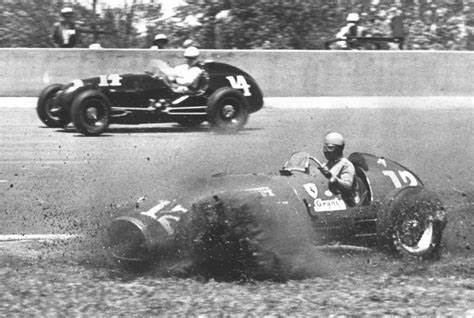
Highlights

Skip ahead if you must… Here’s the highlights from this episode you might be most interested in and their corresponding time stamps.

  • 00:00 Introduction and Overview
  • 00:26 John Bond and the Rise of Road & Track
  • 02:24 Luke Chennel’s Personal Journey
  • 03:51 John Bond’s Influence on Car Culture
  • 07:13 Bond’s Vision for American Sports Cars
  • 10:19 The Role of Racing in Car Development
  • 15:07 Kristie Sojka on Gender Representation
  • 23:56 Advertising and Gender in Road & Track
  • 31:56 Disappointment in Female Representation
  • 32:41 Dedication to John and Elaine
  • 33:01 Ken Yon’s Anthropological Perspective on Car Culture
  • 34:12 Exploring Car Culture Through Different Lenses
  • 37:01 Defining and Undefining Car Culture
  • 43:11 Intergenerational Transfer in Car Culture
  • 50:58 Q&A Session and Final Thoughts
  • 57:34 Sponsors and Closing Remarks

Livestream

Learn More

If you enjoyed this History of Motorsports Series episode, please go to Apple Podcasts and leave us a review. That would help us beat the algorithms and help spread the enthusiasm to others. Subscribe to Break/Fix using your favorite Podcast App:
Listen on Apple
Listen on YouTube
Listen on Spotify

Consider becoming a Patreon VIP and get behind the scenes content and schwag from the Motoring Podcast Network

Do you like what you've seen, heard and read? - Don't forget, GTM is fueled by volunteers and remains a no-annual-fee organization, but we still need help to pay to keep the lights on... For as little as $2.50/month you can help us keep the momentum going so we can continue to record, write, edit and broadcast your favorite content. Support GTM today! or make a One Time Donation.

Bond didn’t just report on car culture – he created it. He celebrated oddball designs, championed forgotten marques, and even invented the mythical Cyclops, a minimalist “car” that became a recurring satirical feature. His editorial world was both serious and playful, grounded in mechanical rigor but open to whimsy.
One of his most enduring contributions was the Salon feature, which debuted in the mid-1950s. These deep dives into classic European cars – often French – helped cultivate an American appreciation for design and heritage. Bond used history not just as filler, but as a foundation for his arguments about what cars should be.

Image courtesy of McPherson College, Road & Track Magazine

While Bond’s vision was expansive, it wasn’t always inclusive. Kristie Sojka, a historian and librarian at McPherson College, spent months combing through two decades of Road & Track issues to examine how women were represented – or more often, omitted.

Image courtesy of McPherson College, Road & Track Magazine

Her findings were telling. Only two covers in 20 years featured women, and even then, their names were often omitted. Articles rarely gave female participants full credit, and advertising leaned heavily on stereotypes – from bikini-clad models on car carpets to patronizing ad copy that assumed men were the only buyers.

Image courtesy of McPherson College, Road & Track Magazine

Yet there were glimmers of progress. By the early 1970s, women like Elizabeth Hayward were contributing regular columns. Female racers were named and celebrated in Porsche parade coverage. And in the background, figures like Elaine Bond – John’s wife and editorial partner – played a crucial, if under-acknowledged, role in shaping the magazine’s voice.

The Common Language of Enthusiasm

Bond’s influence didn’t end when he sold Road & Track to CBS in 1972. His readers became activists, flooding the National Highway Traffic Safety Administration with letters opposing speed limiters and safety mandates they saw as threats to performance. In many ways, Bond had built not just a magazine, but a movement.

Yet as Chenelle and Sojka both noted, that movement is now under review. The values Bond championed – mechanical purity, performance above all, a clubby insider tone – are being reexamined in light of gender equity, environmental concerns, and the rise of electric vehicles.

Still, the cultural architecture he built remains. Whether you’re wrenching on a vintage MG, debating the merits of dual overhead cams, or just thumbing through a back issue of Road & Track, you’re living in a world that John Bond helped create.

In a poignant anecdote, Chenelle recalled delivering parts to a Nebraska shop called “Road and Track” and bonding instantly with its owner over a shared love of Porsches and Ferraris. That moment, he said, was a testament to the intergenerational language that Bond helped codify – a language of torque curves, lap times, and shared obsession.

It’s a language still spoken today. But like any living language, it’s evolving. And thanks to scholars like Chenelle, Sojka, and Yohn, we’re better equipped to understand where it came from – and where it might go next.

This episode is sponsored in part by: The International Motor Racing Research Center (IMRRC), The Society of Automotive Historians (SAH), The Watkins Glen Area Chamber of Commerce, and the Argetsinger Family – and was recorded in front of a live studio audience.


Other episodes you might enjoy

Michael R. Argetsinger Symposium on International Motor Racing History

The International Motor Racing Research Center (IMRRC), partnering with the Society of Automotive Historians (SAH), presents the annual Michael R. Argetsinger Symposium on International Motor Racing History. The Symposium established itself as a unique and respected scholarly forum and has gained a growing audience of students and enthusiasts. It provides an opportunity for scholars, researchers and writers to present their work related to the history of automotive competition and the cultural impact of motor racing. Papers are presented by faculty members, graduate students and independent researchers.The history of international automotive competition falls within several realms, all of which are welcomed as topics for presentations, including, but not limited to: sports history, cultural studies, public history, political history, the history of technology, sports geography and gender studies, as well as archival studies.

The symposium is named in honor of Michael R. Argetsinger (1944-2015), an award-winning motorsports author and longtime member of the Center's Governing Council. Michael's work on motorsports includes:

  • Walt Hansgen: His Life and the History of Post-war American Road Racing (2006)
  • Mark Donohue: Technical Excellence at Speed (2009)
  • Formula One at Watkins Glen: 20 Years of the United States Grand Prix, 1961-1980 (2011)
  • An American Racer: Bobby Marshman and the Indianapolis 500 (2019)

This content has been brought to you in-part by support through...

Motoring Podcast Network

RRDC Celebration of 50 Years of the Grand Prix of Long Beach

0

LONG BEACH, Calif. (February 24, 2025) – Firestone returns as presenting sponsor of the expanded Road Racing Drivers Club annual legends dinner in Long Beach, California, on Thursday, April 10. The 2025 gala will celebrate the 50 years of racing on the streets of Long Beach, California, and will honor Mario Andretti, Al Unser Jr. and Brian Redman – legendary drivers from the Grand Prix’s rich history.

The “RRDC Celebration of 50 Years of the Grand Prix of Long Beach Presented by Firestone” is the RRDC’s 15th banquet honoring auto racing’s most influential leaders and iconic events. This is Firestone’s 14th year as presenting sponsor of the RRDC gala, and the brand has been affiliated with the Grand Prix of Long Beach for almost three decades.

The dinner and gala will be held at a new venue – the Westin Long Beach Hotel at 333 E. Ocean Blvd. – one day before the start of the 50th Anniversary Acura Grand Prix of Long Beach, the third race of the 2025 NTT INDYCAR SERIES.

All proceeds of the dinner will benefit The Mark Donohue Foundation, which supports the RRDC’s SAFEisFAST initiative, and the Grand Prix Foundation of Long Beach, which supports charities in the Long Beach area. The Foundation’s proceeds from the gala will go to Long Beach City College’s Automotive Technology Program.

Tickets may be purchased on the RRDC web site rrdc.org. All are welcome. This event is expected to sell out, so early reservations are recommended.

“Having Firestone support the RRDC Long Beach dinner for more than a decade is a true privilege,” said RRDC President Bobby Rahal. “This year’s gala is very special, as it celebrates the 50 years that racing has taken place annually on the streets of this great port city.

“Firestone has an unrivaled heritage in motorsports dating back to the first Indy 500® in 1911. We always welcome Firestone’s support, and salute the brand’s long-standing success and contributions to the sport.”

“Each year, the Road Racing Drivers Club event is a highlight of the Acura Grand Prix of Long Beach weekend,” said Grand Prix Association of Long Beach President & CEO Jim Michaelian. “And this year is especially meaningful as we join with the RRDC in honoring three true legends of the sport—Mario Andretti, Al Unser Jr., and Brian Redman. Their contributions to Long Beach motorsports history have inspired generations of drivers and fans alike, and we are thrilled to celebrate their incredible legacies during this special evening.”

In previous years, the RRDC has honored individual icons of the sport: Dan Gurney, Parnelli Jones, Roger Penske, Jim Hall, Brian Redman, Mario Andretti, Bobby Unser, George Follmer, Emerson Fittipaldi, Johnny Rutherford. David Hobbs, Rick Mears, Jacky Ickx and Sir Jackie Stewart. These RRDC galas are acknowledged as highlights of the auto-racing social calendar, drawing fans and luminaries from all forms of motorsports.

  • Mario Andretti won at Long Beach four times and is credited with establishing the race as a world-class event, winning the 1977 Formula 1 U.S. Grand Prix West and the 1984 race when the event switched to Indy cars. (Image courtesy of Grand Prix of Long Beach)
  • Al Unser Jr. is the winningest driver at Long Beach, with six victories (1988-91 and 1994-95) over a dominant eight-year span. (Image courtesy of Grand Prix of Long Beach)
  • Brian Redman won the inaugural Long Beach race in 1975, an SCCA/USAC Formula 5000 event, which set the stage for Formula 1 to race on the city streets for the next eight years. (Indira Flack image)

About Firestone Racing:

The Firestone brand has participated in world-class motorsports events for more than a century, and racing has played an integral role in building and shaping Firestone into the time-tested, iconic brand it is today. Harvey Firestone, the brand’s founder and a pioneer of sports marketing, was one of the first to use racing as the ultimate proving ground for his tires. Ever since Ray Harroun’s Firestone-equipped Marmon Wasp won the inaugural Indianapolis 500® in 1911, Firestone has worked to constantly evolve and advance race tire technology. Overall, Firestone tires have carried the winner of the Indy 500 to victory circle 75 times – more than double all other tire manufacturers combined. Firestone has served as INDYCAR’s sole tire supplier since 2000, and the brand’s on-track success translates to durable, dependable performance and uncompromising quality on the open road.

About the Road Racing Drivers Club:

The Road Racing Drivers Club was formed in 1952 as a way to give champion drivers a say in their sport, particularly in the areas of safety, and has evolved to serve the future of road racing by mentoring new drivers on both amateur and professional levels. The Club’s membership includes leading industry professionals, race officials and motorsports journalists, in addition to prominent racing names.

In 2011, the RRDC launched a free on-line training seminar – www.SAFEisFAST.com – featuring RRDC members and other industry experts in high-quality videos covering subjects from physical and mental preparation to driving techniques, driver safety to car setup and sponsorship. The videos are updated regularly. Each week, a professional from the world of motor racing answers readers’ questions on the site in a feature called ‘Ask a Pro.’ Bobby Rahal is President, John Fergus is Vice President/Treasurer and John Clagett is Secretary. The RRDC presents three annual awards: the Phil Hill Award, the Mark Donohue Award, and the Bob Akin Award. Membership in the RRDC is by invitation only. Additional information on the organization may be found at www.rrdc.org.
About the Acura Grand Prix of Long Beach:
The Acura Grand Prix of Long Beach celebrates its 50th anniversary April 11-13, 2025, and is North America’s longest-running street race. Hosting more than 190,000 people over its three-day weekend, the Acura Grand Prix is second only to the Indianapolis 500 in popularity on the NTT INDYCAR SERIES calendar. Five additional racing series, including the IMSA WeatherTech SportsCar Championship, compete during the weekend which also includes a variety of off-the-track activities such as concerts, a Lifestyle Expo, an exotic car show and more. For more information, visit gplb.com.

About the Grand Prix Foundation of Long Beach:

The Grand Prix Foundation of Long Beach, since its inception in 1991, has donated more than $4.2 million to Southern California charities. In addition, the Foundation donates tickets and hospitality packages to the Acura Grand Prix of Long Beach and tickets to the Foundation’s “Grand Prix Charity Days” events to charitable and civic organizations to assist them in their fundraising efforts or, in some cases, to bring the physically or mentally challenged to a “day at the races.” For more information, visit gpflb.com.