spot_img
Home Blog Page 12

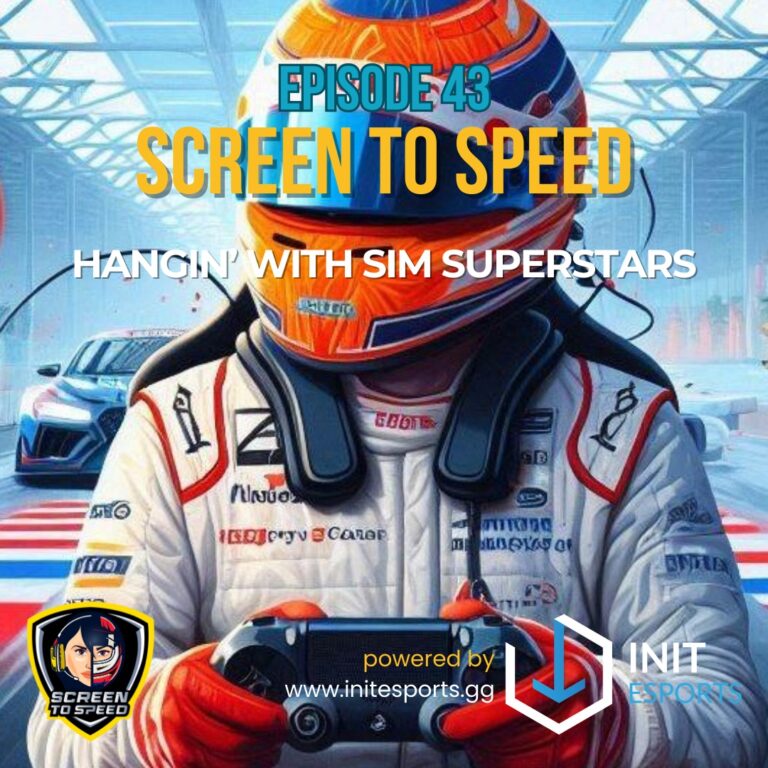
Screen to Speed: Daytona Dream Team

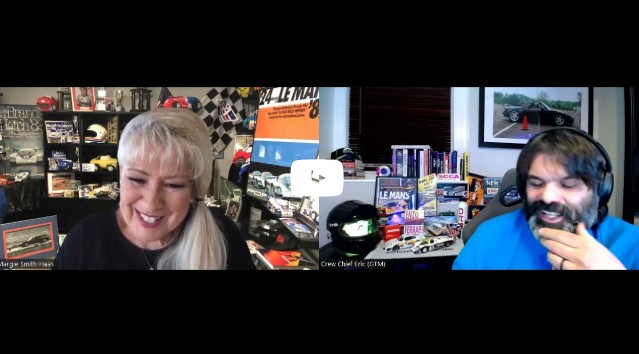
The Screen to Speed Dream Team: Nina Hahn (@downforce_girl) and Esmeralda Beemsterboer (@esmeraldabeemsterboer) return to INIT Talks, to chat with Lyubov Ozeretskovskaya (@LoveFortySix) about their experiences at the Daytona 24-hour endurance race.

CHECK OUT NINA’S
PREVIOUS EPISODE

CHECK OUT ESMERALDA’S PREVIOUS EPISODE

The conversation details their challenges and strategies during the race, including incidents with pit entries and driving in mixed weather conditions. Nina & Esmeralda share their setups and preparations for the race, the dynamics of managing traffic on the track, and their personal experiences in sim racing versus real-world racing. They also discuss upcoming events and their thoughts on various racing simulators, including iRacing and Assetto Corsa Competizione; along with some thoughts on the new AC EVO. They also discuss their plans and aspirations for the Dream Team and Nina and Esmeralda’s individual goals within the realm of sim racing.

Watch the livestream

Tune in everywhere you stream, download or listen!

Listen on Apple
Listen on YouTube
Listen on Spotify

Highlights

Skip ahead if you must… Here’s the highlights from this episode you might be most interested in and their corresponding time stamps.

  • 00:00 Introduction to Screen to Speed
  • 00:49 Welcome to Neat Talks
  • 01:09 Daytona 24 Race Recap: Nina’s Experience
  • 02:47 Daytona 24 Race Recap: Esmeralda’s Experience
  • 04:05 Challenges and Incidents During the Race
  • 12:38 Managing Traffic and Race Strategy
  • 17:15 Team Dynamics and Learning Experiences
  • 20:11 Pit Lane Dramas and Funny Moments
  • 26:49 Preparation and Setup for the Race
  • 29:28 Adjusting to the New Tire Update
  • 30:11 Setup Preferences and Team Dynamics
  • 31:44 Future Plans with Dream Team
  • 33:38 Discussing Sebring and Spa Events
  • 35:00 Exploring Car Preferences and Driving Styles
  • 35:37 GTP vs. LMP2: Pros and Cons
  • 38:44 Endurance Racing Strategies
  • 42:31 First Impressions of AC Evo
  • 53:57 Plans for 2025 and Beyond
  • 01:02:35 Closing Remarks and Thank You

Transcript

Crew Chief Eric: [00:00:00] Welcome to Screen to Speed powered by INIT Esports. In this podcast, we dive into the journeys of remarkable individuals, making waves in sim racing and bridging the virtual with the real. From the thrill of digital circuits to the roar of real life racetracks, we explore the passion, Dedication and innovation that drives the world of motorsports.

We’ll hear from athletes, creators, and pioneers sharing their stories, insights, and the powerful ways sim racing is connecting communities and creating pathways into motorsports. So buckle up, Screen to Speed starts now.

Lyubov Ozeretskovskaya: Welcome everyone to Neat Talks. Happy to see everybody. Welcome in. And, uh, we have Nina today and Esmeralda with us. Uh, so that’s a special Neat Talks. Uh, first time [00:01:00] we got two guests at the same time. Uh, they did Daytona 24. So welcome girls. Hello. Hi. Hello. Uh, so let’s start, uh, how was your Daytona 24?

What kind of issues did you experience through this race? Let’s, let’s go. Uh, I think we can start with, uh, with Nina and then Esmeralda, uh, going to tell about her experience as well.

Nina Hahn: Um, yeah, sure, so I did the qualifying, uh, which didn’t go as well as I planned, but like, you know, we qualified P9 in class, which is alright.

Um, but then, um, I dropped the start, and sadly had a spin, uh, at the start, completely like My own fault, but like, I didn’t touch anyone, didn’t touch the wall or whatever, so it was fine. I was just, um, down a couple of seconds off, like, the field. Um, but yeah, from then on, uh, we just kept it clean and, uh, maybe it was also a good thing that we weren’t in the field [00:02:00] because, like, there were, like, some, some issues up ahead that I saw and kind of that kind of stuff.

So, in a 24 hour race, there’s plenty of time to make up time, obviously. So, uh, We just, uh, completely went like, Hey, let’s keep it safe, just, um, without incidents and everything. And, uh, yeah, it was pretty much without incidents for the first, I don’t know, like two hours or something, just a couple of tracks, but nothing really.

And then, um, I already like left the cockpit. And gave it over to Sarah, I believe, at first. And then, uh, it was like between Sarah and Esmeralda for a little bit. And, um, eventually I went to bed, but maybe Esmeralda can talk about her stint a bit more then.

Esmeralda Beemsterboer: Uh, yeah, well, I have to be honest, I don’t remember very well. So, um, but yeah. I, I took the car, um, from, I think, from my first stint, it was [00:03:00] still without rain. Uh, stint went fine, no major issues, and then, um, in our next stint, It started to rain. Um, so that was, uh, interesting. Just a second. Um, sorry, I got a bit distracted there.

No, it was, um, pretty difficult conditions. And, uh, Sarah Dove, uh, drives, uh, with a, what was it? G29, I think, which makes it difficult to drive in the rain. So I took over. Um, yeah.

Lyubov Ozeretskovskaya: Is

Esmeralda Beemsterboer: it your cat again? Sorry.

Lyubov Ozeretskovskaya: It’s fine.

Esmeralda Beemsterboer: Um, so yeah, um, so I took over from Sarah and didn’t really have any major issues. And then I think Bajska took over.

Nina Hahn: Uh, yeah, that’s like right around the time when, when I then went [00:04:00] to bed. And, uh, obviously, as you mentioned, the first set of rain was very difficult. Very sporty rain and very, um, yeah, changing conditions. So the track was different, uh, every lap. Uh, but we fought our way. Our way back up to eighth place, if I remember correctly, and, uh, yeah, and then like with rain, it was like a bit all over the place, all teams had like different kind of like pit stops when people went on wets, maybe some people still was out and dries and everything, but.

Yeah, we just kept the clean, the car clean for, um, a very long time. And then, uh, yeah, as you said, uh, in the night, uh, Bayezidan, uh, went in and I went to bed because my stint was very early in the night. I think it was like, uh, like 3 a. m. Roughly. Uh, so in the night, um, there were like some, like one or two incidents, I think, [00:05:00] Esmeralda, um, which like lost a little bit of time, but, uh, yeah, it’s fine.

Esmeralda Beemsterboer: Yeah, Sarah got hit in the back. Oh, right. Yes. I, I don’t know if it was a GTP or, yeah. Oh, SpongeBob.

Nina Hahn: Yeah, it was a SpongeBob livery. Um. And I mean, yeah, it’s just, uh, they just went a bit wide into, uh, the entry of the second horseshoe and then just, you know, on the wet track, very difficult conditions, locked the tires a little bit and just like rear ended us a bit, which wasn’t too bad.

I think it was like six minutes of repair, so. It was all right. And, uh, yeah. Then in the night we had, I think, one contact with the wall of like 15 minutes of repair. And I think Bayecki went off as well. I don’t know if she had any, like, contact with that. Yeah, I think

Esmeralda Beemsterboer: she went straight into a wall once.[00:06:00]

Nina Hahn: Wow. Yeah. And then, and then we had, uh, wait, I actually have like a small recap on the side here. Uh, we went back in, back a couple of positions. I don’t remember. Oh yeah. We were up to sixth at first and went back to eighth because of that. Uh, and then when I got up, uh, it was like me and Beitske, uh, just.

you know, swapping stints. And, uh, we went back down to sixth with, I don’t know, I think like six hours to go or something when you and Sarah, uh, came back online. And, uh, yeah, from that, uh, just further, like trying to keep it clean and everything. And we managed to be in a very comfortable P4 in class. And, uh, with, like, a couple laps to the car behind and a couple laps to the car in front.

So, it was a very, um, stable condition at that stage. And then we just, uh, yeah, did our own race and, uh, kept it out of [00:07:00] the wall and everything. And that’s also where we finished. So, P4. That’s a great result. And, uh, yeah, I think also Esmeralda for you, it was like the highest SOF you ever drove in. Yeah, definitely.

And, uh, you did very well for that. So, uh, yeah, your times were really good. You were pretty consistent and everything. And, uh, yeah, overall great team. Like, uh, I’m looking forward to the next time I get to drive with the three girls and, uh, it was great fun.

Lyubov Ozeretskovskaya: Yeah. Um, you, you just said that you had some kind of like mixed, uh, conditions in the race.

I think we, uh, we had the same, I’m not sure if, uh, conditions were the same in the all. Uh, but we also had, uh, kind of spotted rain and, uh, it just, you know, started and then ended again, uh, race with Olympus Sport. Uh, this time we been in a GTP car, Ferrari, and, you know, wind up a [00:08:00] P5 and we actually didn’t finish.

So we, uh, we had like four or five hours. So the end of the race, and unfortunately we had to call in the car because, uh, one of the teammates, he just, uh, you know, braked and, uh, went straight to the wall, um, and just broke the whole front of the car. And yeah, unfortunately we’re just like, okay, we, we’re okay.

We P5, uh, like out of 22 cars. So only like four, uh, GTPs survive in the split. That was crazy.

Nina Hahn: That is crazy. Yes.

Lyubov Ozeretskovskaya: Yeah, you know, definitely. That’s the first Daytona for everybody in a racing where we had different conditions where we had rain first time. Um, would you like to have, uh, to, you know, to drive in the dry or like it was really interesting for you to drive in the rain and this mixed conditions and, um, How was it for you to, like, when you jump into the car and, uh, how was it to get used to, uh, [00:09:00] the conditions and Nina and Esmeralda?

Nina Hahn: I’ll let you go first.

Esmeralda Beemsterboer: Yeah, it’s fine. Um, so when I jumped in for Sarah, I, like, I hadn’t driven in the rain in that race yet, so I jumped in right in, in the rain. Um, but it actually went quite well. I was really comfortable with the car. So, I think I was really happy with how it went, because, you know, I’m, there’s nothing in that first thing that could have gone better than it did.

Um, unfortunately, in my second stint, um, as we already talked about, that we had some damage, I was on cold tires out in the rain, just got in the car, and, um, yeah, I, like, I completely misjudged the bus stop. Uh, which ended us in the wall. Uh, which was a shame, really. But after that, we picked up the pace again.

And, yeah, it was, like, It was challenging, [00:10:00] but I was also very comfortable, which was great for the circumstances.

Nina Hahn: Uh, yeah, and then, um, when I got back in, also because, like, I drove the very first Sint, and, um, it was obviously dry at that stage, and then I was just, like, around and, like, sporting and that kind of stuff, but I didn’t drive in the wet, uh, in the race until after I slept, and, um, so, yeah, I went out onto a track that had pretty st stable, but like medium rain.

And, uh, then for my second nightstand, uh, it was starting to, like, the rain had stopped just when I got back in the car. And then quite quickly, there was like the dry line really forming up. And, um, I went out. Like already on slicks again, which was, uh, which was fine on the line. But, um, if you ever needed to [00:11:00] like step off the line, then it was still very slippery.

But yeah, we, we managed to just, you know, uh, keep it on track, keep it pointed straight. And, uh, it was very fun. So I really, really enjoyed driving these like changing conditions where you kind of have to like. Judge every, every lap a little bit, like how much grip you have and just not overdoing it, but still trying to be as fast as you can.

And, uh, yeah, that was fun. It was also very rewarding because it was a drying track, so the conditions were getting better and better, and then it was just So rewarding to have like new fastest laps, like every couple of laps. And, um, it, it felt very rewarding driving in those conditions.

Lyubov Ozeretskovskaya: That’s great. Uh, also got questions to Esmeralda.

Was it your first time in LMP2 car or you drove this car before this race?

Esmeralda Beemsterboer: No, I’ve, I’ve, I’ve driven it before. Yeah, got plenty of experience in the [00:12:00] LMP2.

Lyubov Ozeretskovskaya: That’s great. You know, I found it, uh, by myself that LMP2 is a lot easier to drive in rain conditions. Like it’s really fun. Uh, if we’re talking about GDP, it’s really hard sometimes because you just.

speed because you can, uh, gain boost. You’re not breaking that hard with this car. Um, unfortunately I didn’t try Daytona in rain conditions, uh, because, uh, my stint should be like in the morning the next day and, um, the ultimate, uh, who drove, uh, before me crashed the car. So unfortunately I didn’t get into the car in wet conditions.

Um, so. How is it for you to manage the traffic because traffic at Daytona was crazy sometimes, especially on the start of the race when everybody close and you know, GTP is reaching you and you’re reaching in the same time actually the GT freeze. How did you manage to go through this?

Esmeralda Beemsterboer: Nina, you should start because you started the race.

Okay, yeah,

Nina Hahn: exactly. Um, [00:13:00] so, uh, since I was down by like five seconds to like the back of the LMPG field quite consistently, you know, I didn’t really lose much time to them at the start, but like, obviously, because of my spin, I was back a bit. Um, and then, I was in this condition or like in this position where I, um, just caught up to the GT3 field for lapping them the first time and right at the same time the GTP field arrived to lap me.

So I had You know, obviously because it’s like the first few laps of the race, the GT3 field was still very tight together and I had to really try to navigate them and get through them. Um, but I also had to yield to the GTPs coming from behind all the time. So in a couple of situations, it was really tight and really difficult to find your place.

And, um. Yeah, just to also predict where the other classes go [00:14:00] and just make it very obvious with your car positioning and your kind of like language that you convey with how you position your car where you want to go to. You know, signal like the slower class that you want to overtake, but also simultaneously to the GDP that you see them that you leave them the space.

And it was tricky and I did lose a bit of time in all of that traffic then. But, um, yeah, at the end it was fine because. Especially for like the first half of the race, it was just very much like, okay, just stay out of incidents, keep the car clean, a race is still going on for so many hours that like a bit of time here or there doesn’t matter.

It’s just important to keep it out of the wall and everything.

Lyubov Ozeretskovskaya: Yeah, that’s true. Um, I think the main thing, uh, in like endurance races overall in that long races like Daytona 24, just to keep car on the track. And if you like, you know, better to lose a bit more time on the track with the traffic [00:15:00] than end up with a crashing GT3 or something like this.

So, yeah, I think I agree with you with this. And Esmeralda, how was it for you? How did you manage the traffic from your side?

Esmeralda Beemsterboer: Um, so as Nina mentioned before, it was my first race in, like, this, uh, SOF. Um, so it was a lot easier than I was used to, um, because most of the time, uh, in lower SOF, it’s just less clean.

And they give you less space. Um, and also in like, I gave lots of space just to not come in contact with anyone, but I gave way too much than that was actually necessary. So, um, it takes a lot getting used to, cause the driving is way more clean than I’m, I am actually used to. And yeah, I, I still have loads to learn.

[00:16:00] Uh, so I’m taking every experience into the next race. And get better and better. It’s

Nina Hahn: also maybe a bit for context, like our, um, so F in the race of the LMP twos was I think 3. 2 K or something. And, um, you like your eye reading is I think like at like 1500 because you just don’t do that. A lot of officials, you know, there’s no shame in that.

And, um, I absolutely know the feeling. Uh, but yeah, it’s definitely that this like SF, you can really. trust the other cars around you to just hold their line. And it’s fine if you just give, like, on your, I don’t know, on your inside, to just have, like, I don’t know, 1. 2 cars of width, just giving them that for, like, a little bit of error, but, like, they will keep your line.

But if you’re not used to that, then you probably give, like, one and a half to two car widths of Space and in the inside, um, but you know, we were spotting for you and we’re trying to [00:17:00] just, um, yeah, uh, make sure that like, hey, um, you’re fine. You can absolutely do it like that. But you can also like be a bit closer people.

Uh, tend to keep their lines and you can trust them at that as well.

Lyubov Ozeretskovskaya: Yeah, you know, that’s actually really awesome that, uh, Esmeralda had this opportunity to drive with you because, uh, when you, you know, like starting, you’re not doing a lot of officials, you’re not doing, for example, a lot of, uh, endurances and you get into the team where it got, uh, uh, faster at people and who had, uh, who’s got more experience, uh, you definitely, you know, just, you know, the jumping to the next step after such events.

And I think there was a really good, those morale there. What do you think? How was it for you to to drive with like to gain experience from your teammates in this event?

Esmeralda Beemsterboer: Yeah, well, we talked about it last time that you interviewed [00:18:00] me, but I then it would be a dream for me to join this team. And then a couple of people made it happen.

Um, I have to thank Nina for this as well, uh, because she, she heard it and she immediately contacted Ceci about it. Um, so yeah, it’s for me, it was really a dream come true and they can learn me so much. Um, so it’s, it’s just overall a great opportunity for me to take steps in, in sim racing. And, uh, obviously I’m not there yet.

I still have lots to learn. I have to get quicker and quicker, but I’m with the right people for that now. So, yeah, I’m looking forward to all the races that we can do together and. I was truly honored to be able to raise this with the three girls.

Nina Hahn: That’s really awesome. It’s also, um, to add to that, maybe a little backstory, we were racing at the Sim Expo, you know, you were [00:19:00] part of that.

And then, um, that’s where I met you for the first time and we got along great and everything. And then the race came on and, um, obviously I looked at like people before and saw like, okay, a 1500 I rating. That’s. You know, not bad, but like, I don’t know what to expect in here and there. Uh, but then you really, really surprised me with your lap times.

You were really quick. You were up there with like, um, really like the fastest of us. And, um, that’s when also like you mentioned that you would love to be part of your dream team. And I was like, yeah, well, you definitely have the pace. And I was like, yeah, well, you’d be a great addition. And you absolutely were, um, very happy to have you on the team for, uh, this race.

Lyubov Ozeretskovskaya: Yeah, that’s, uh, you know, a little bit tricky thing about iRacing. Yeah, when you’re starting, you, you got like 1500, but you got a really good pace. And, uh, people just like, Oh, you’re just 1. 5k driver. Like, you’re not going to drive fast. Yeah, and [00:20:00] then you’re driving fast. It’s really cool. But I’m pretty sure that Esmeralda going to gain iRacing, like, with no time.

Um, here’s a really interesting question, um, in the chat. It’s a From, uh, from viewers, uh, were there any drummers, uh, drummers, uh, in the pit lane? Uh, you know, I saw one GT3 in our race, just, uh, uh, teammates, uh, that was Matt Loveridge, uh, who’s also in the, uh, Olympus team. And, uh, when he was out, I was, uh, watching his stream and, uh, his teammates, uh, they were going and, uh, you know, here’s the last lap.

Almost, uh, next to the pit lane, uh, the guy who’s driving, and teammates, like, shout, Go to pit lane, go to pit lane, because you almost miss it, and they, they get the spitting in pits, but he got into pit lane, that was, that was really crazy, so, uh, did you have Any, uh, did you have any, uh, experience like this?

Was it pit [00:21:00] lane? Maybe, uh, especially in the wet conditions, maybe, I don’t know, some people missed the, uh, their pit stall, or maybe you had some, uh, funny moments as well?

Nina Hahn: Yeah, I mean,

Lyubov Ozeretskovskaya: by

Nina Hahn: our smiling, you probably can guess that yes, we did have something. Um, so when the first rain hit, uh, we stayed out on dry ice for, um, quite a bit.

And, uh, but then it started raining, like, more. And, um, we were like, okay, um, the lap times are getting significantly slower, so, um, we have to pit for wet. And then Sarah was in the car at the time, and, um, we were just like, you know, okay, like, we have, uh, I don’t know, we had, just had a couple laps left in our stint anyway, so we were like, okay, we just pit, like, two, three laps early.

And then she went on to, like, the apron, and, um, like, you know, normal pit entry, and started turning left, and the car didn’t do [00:22:00] anything. Oh no. And then, you know, she, she held this, and she was in this, like, absolute aqua planning, and was absolutely dead center straight, the car did not move at all, and then she was like, oh, she’s gonna miss pit entry, well, okay, then we just do another lap.

Steered right, nothing happened. And then, and then it’s just like, okay, well, we passed it, like, we have to like, go back onto like, um, we were like, we’re like, the grass already starts at the tri oval. And then, um, kind of tried to make it on track, obviously, without spinning or hitting other cars and getting in the way and stuff.

And we actually had another team, um, message us, like, hey, Um, you’re sliding around, you should pit. And then we just like text a bet, like, yeah, we tried, like we just missed you. We a upon straight . Um, that was kind of funny. And then next lap, um, we just managed, it was just like you had like this really long straight and wide line where [00:23:00] like the water was completely standing.

Mm-hmm . Uh, so you had to really like positively cross. like that puddle to really get grip again and to be able to number one steer and number two slow down. And, uh, yeah, then later in the race, uh, I think it was like around like sunrise or something. Um, we also had one problem where, uh, we had a driver change and I think it was Bitescale.

I don’t remember exactly. But, um, When you do a driver swap, the pit limiter turns off. It’s on before, but like, since you get out of the car, which stops the engine, and then you get back into the car, that deactivates the pit limiter, obviously, and she went out on her first stint, and, um, Suddenly thought to herself like, Hmm, that’s a bit fast for pit lane.

And then Ori was like, Oh, pit limiter and slow down. But like, we already got like the, [00:24:00] um, the drive through penalty for that then. Yeah, it happens. It didn’t lose us any positions or something. That was, uh, during the time when we were already in P4 and just had like a comfortable, yeah, comfortable gap to the cars in front and behind.

So it was fine. It didn’t matter in the end, but, uh, it was kind of funny that, uh, We’re just, uh, driving and then suddenly, oh, that’s a bit fast. And I think, I think that was it for a pit lane, because since we had our echo planning at the start, um, we knew that, okay, pit entry is difficult and just take it easy.

Make sure that you, you know, don’t spin and that you slow down enough and that kind of stuff.

Esmeralda Beemsterboer: Well, I mean, when, um, Bicycle. tried to clear the penalty, I think, from cutting the track because she slid onto the grass. Uh, she, like, she drove one lap more and then tried to go for pit lane and also failed to get into the pit lane.

Nina Hahn: Oh, that was when I was [00:25:00] sleeping. All right. Yeah. Yeah.

Esmeralda Beemsterboer: So she went straight as well.

Nina Hahn: I saw even, uh, like, in the top split, even people did that, so it was, uh, certainly, um, we weren’t the only team who had to struggle with pit entry.

Esmeralda Beemsterboer: No, and now I think of it, I, uh, like, you have, on pit exit, you have the little turn.

Um, so I, I braked, uh, for the, that little turn, locked both front wheels and just slid out of the, out of the pit lane onto the track. So that got me a drive thru as well. Yeah.

Lyubov Ozeretskovskaya: Yeah.

Esmeralda Beemsterboer: But that’s it for pit lane incidents.

Lyubov Ozeretskovskaya: Overall, uh, Daytona pit enter is really tricky. I remember how I did, uh, oval race here with next gen cars.

And I think we had really long race, like, um, I know, like 80 laps or something like this. And we were going to, uh, to pit for a [00:26:00] fuel, uh, with a pack of the cars. So I had like, uh, two or three cars, uh, ahead of me. We pitted together. And, uh, one guy, he, uh, in the last moment from outside line, he felt like, okay, I’m going to pit with you.

guys. And, uh, you know, he just not in time. He just crossing my line. I looked up my front wheels and I just, uh, bowling the cars in front of me and we all go into the grass, you know, and then spinning in the pizza. Yeah. Even in, uh, you know, in dry conditions, uh, Daytona is not really easy to Pete’s. And, uh, yeah, as people saying in chat also first up and did it twice.

I, I think I saw that he missed the BitLane on Daytona 24 at this time. So if anything, we’re just as good as

Nina Hahn: F1

Lyubov Ozeretskovskaya: drivers. Yes, that’s true. Um, stepping back a little bit from the main event, uh, how was, uh, preparing for you? So what did you do? Uh, how you, uh, managed to create the [00:27:00] setup, which is, uh, comfortable for everybody in the team.

That’s the question to both of

Nina Hahn: you. Yeah, so, uh, at first we just, uh, you know, obviously had like some meetings before where like, okay, what is like the rough plan? When is everyone available and here and there? And because like we had the weather forecast as well. And then, uh, uh, it was really nice because, uh, pretty much everyone was available whenever it was the easiest planning I’ve done ever for an endurance race.

And, um, Yeah, and then we just started, uh, doing some labs. We looked at, like, we all have, like, the same conditions, kind of, roughly, and then, uh, had, I think, four different setup shops, uh, like, setups from different setup shops, and we’re just, uh, trying all of them out, see, okay, um, which one do we like best, which one is fast, and then we found one that everyone was, like, already pretty comfortable with, and then [00:28:00] Yeah, just, uh, changed, like, some, some slight things on it.

Uh, we didn’t change it a lot, but, uh, what did we change? We changed, like, um, the diff a little bit, um, just for, you know, it being more stable and secure. And then also, like, I think the third spring and the heave spring, uh, just for control in the bus stop, basically, because, uh, Again, we didn’t want to go for like absolute speed.

We wanted to go for consistency and definitely controllability. And yeah, once we had that, then we just, uh, drove in different conditions, um, made sure that the setup also works in the wet, for example, which is obviously very important. And uh, yeah, had a couple of very nice training sessions together. It was nice.

And, uh, Yeah, try to get everyone’s input and, uh, find something that fits everyone.

Lyubov Ozeretskovskaya: [00:29:00] That’s awesome.

Nina Hahn: Maybe you can also, uh, add to that, Esmeralda, how it felt for you. I don’t know how much, how much like practice for endurance, endurance events you had before. Can’t speak.

Esmeralda Beemsterboer: Uh, yeah, I mean,

it depends. On Daytona, I had quite a lot of experience because I’ve been doing the 24 hour event. I think this is my fourth time doing it. Um. So, yeah, but obviously with the new tire update, the car is completely different. Um, and then I practiced more for this one, I think. Uh, because, you know, I wanted to be quick enough.

Um, and well, yeah, setup wise, I just left it to you guys. Because, you know, I’m not that great with setups, I’ll be completely honest about that, I’m clueless. Um, so yeah, I tried the different setups, and they all felt [00:30:00] okay, this one felt, for me, as the best one. And thankfully for everyone, so yeah, it was, I mean, yeah.

Not too

Nina Hahn: much to add, sorry. Yeah, that’s fine. Also like, like I, for example, was I think the only one who preferred a different setup initially. But I also mainly drive the F4 usually, which is kind of like happy on the rear axle. So I’m, I’m really used to a car that is very like loose or like oversteering that kind of thing.

And, um, but then it was also like, uh, okay, I’m fine with driving. Different, like, driving style. I had to change, like, my pedal input slightly for that to, uh, get back to the pace, but, uh, it was definitely fine, and I was happy to, yeah, change my little part for the team effort so that everyone’s comfortable with the setup.

Lyubov Ozeretskovskaya: Yeah, also, you know, just, uh, let everybody choose the set and decide what to do with it. Uh, so [00:31:00] just like guys, you just share a set with me. I’m going to get used to it. So I don’t really care about setups because I usually drive, you know, Porsche Cops series, for example, and I’m driving the open set where a car, uh, more loose and I’m driving the.

Fix it said, uh, where a car a bit more in the series. So just, uh, kind of adopt my driving to it. And, um, it’s usually for me, uh, really easy to drive and endurance is because I’m like, I’m, I’m going to be okay with whatever said you’re driving. So, uh, because you know, some people just prefer a little bit more in the Syria because it’s a little bit more safe kind of, so if they feel okay with this, I’m like, all right, let’s go for it.

So, uh, what plans do you have with Dream Team, uh, for this year? So maybe some more special events and, uh, so what, what is your plans for the future?

Nina Hahn: Um, I don’t know [00:32:00] the exact, um, events by heart, uh, that you guys, uh, wanted to do, especially like Sarah and Esmeralda. Uh, Because, like, I have to, like, see a little bit how many, like, what weekends I’m free next year, because I will probably spend, like, uh, some weekends at the Nordschleife, uh, yeah, I’m gonna update on that, like, as soon as that’s more, like, ready and stuff, but, uh, I will probably spend, uh, quite some weekends where I’m not available, also the, um, IVRA, Season, like, continues in February, in about a month.

So, um, that’s also when I have, like, my weekends, where I do, like, race control, and where I’m just, like, occupied with other stuff. So, uh, but there are a couple races. That we definitely can do together and, um, for the others, especially if it’s like a shorter one, like a four hour or six hour, [00:33:00] um, we don’t need like four drivers for that, you know, so it’s absolutely fine if, um, Sarah and Esmeralda do it, like, maybe just the two of them, or maybe also ByteSkid can join them for, like, something.

It just depends, like, when we have time. But Esmeralda, if you know exactly, like, what races you want to do. Well, I

Esmeralda Beemsterboer: know

Nina Hahn: that.

Esmeralda Beemsterboer: The three of us all filled in Sebring, so that’s the first one that we’re gonna do. I don’t think Bice will be there, but I’d have to confirm. Um, so that’s the first thing that we’re gonna do as a team.

That will be Sebring, the 12 hours of Sebring. And then I wouldn’t know about the rest of the calendar. I’m trying to get everyone to drive Spa, but I’m the only one that wants to.

Lyubov Ozeretskovskaya: Why don’t you want to drive Spa, Nina?

Nina Hahn: Um, well, it’s, [00:34:00] it’s more that I don’t really enjoy GT3s that much. That’s more the thing. Um, it’s just, uh, I don’t know, uh, the car in iRacing, I’m just not. that well connected to the road in them. Uh, it’s hard to describe a little bit, but, um, for the limited time that I’ve spent in ACC, for example, it just felt more natural to me there, how the GT3s drive.

Um, but yeah, it’s definitely something that, I can get used to. So, uh, I’ll just have to see again if, if I’m free that weekend and that kind of stuff. And, uh, maybe it’s also just a nice challenge to drive something that I’m not that comfortable with and just, you know, see how it goes and maybe see that as like a little bit more of a, of a challenge to really like, um, I don’t think I’m that great in that car, but let’s still try to be fast.

So.

Lyubov Ozeretskovskaya: Yeah, that maybe can be a good [00:35:00] challenge for you. Also, a funny thing that you just said about ACC and it’s a completely opposite for me. So I just, I can’t drive GT3s in ACC. I’m really comfortable with them when they’re racing. So yeah, it’s really funny. So you said that you prefer more prototypes.

Yeah, GT3 is a little bit different. I also, you know, prefer more Porsche Cup over the GT3s, but for SPA24, yeah, I’ll be happy to drive this event because it’s, we got a new version of SPA also. It’s going to be really fun to drive here. I think it’s, it will be great. Um, speaking about Sebring 12 hours, are you planning to use the LMP2 again?

Or maybe give it a try to GTP cars or something like this?

Nina Hahn: Well, for me, I love the LMP2. It’s my second favorite car in iRacing, the first one just being the F4, my baby. And, um, I love the LMP2 as well, though. [00:36:00] Uh, but yeah, uh, GTP might be a thing. The reason why we didn’t go for that, um, this race was because you have a lot more setup options and Also like in car settings, you know, stuff that, um, you have to be aware of and have to know how to use it.

Like the whole hybrid system and then like the in car ABR, um, anti roll bar changes that you can do and that kind of stuff. Uh, so it’s definitely cool and interesting. Uh, it’s just, uh, quite a bit more complex. So, um, in my opinion, we just would need a bit more of preparation time. And that’s basically what it comes down to.

Uh, How much like preparing we have, uh, I wouldn’t mind driving GTPs again, as I said, like GT3, I’d rather not, and LMP2 is just something that I can quite easily jump into and be reasonably quick with, uh, rather quickly.

Lyubov Ozeretskovskaya: Awesome. Uh, Ms. Muraldo, what do you think about this? Would you [00:37:00] like to drive GTPs?

Esmeralda Beemsterboer: Well, we considered the idea and I think Nina might have forgotten, but we talked about it for like 10 seconds, I think.

And Sarah also agreed that we just do it in the LMP2, because the GTPs are, at this time, it’s just too much work. Um, but I’m definitely interested in doing some events with the GTP, but also I have maybe 10 labs in a GTP. I own one, but Like, in, in iRacing, before you faint behind me in real life, I want. Um, but I, I have driven ten laps, maybe, so, I mean, I first have to get a lot of practice in, and then see if it’s really as fun as it sounds.

Lyubov Ozeretskovskaya: Yeah, I found it for myself. So that was my second Daytona 24 with a GTP car. First one I did was a TRS Esports and we did with BMW. There was only one [00:38:00] GTP this time and uh, Beams Audio was a little bit understeering for me and we drove Ferrari this time. It was a really good balanced car, so I really like it.

And in my opinion, it’s, uh, you know, not that complicated as LMP1, uh, which, which we had, uh, were, uh, before. And I think you should give it a try. If you’re going to have, like, you know, more time for preparation, I think you can handle this car pretty well if you’re driving LMP2 in a nice way. So they’re really close with how you’re driving them on the track.

So yeah, I think it’s worth a try.

Nina Hahn: Yeah, definitely. Like, trying, definitely. One more thing I also just thought of in this conversation was, I do enjoy Being in the middle class in endurance races or at least not the fastest or the slowest because then you just have You have like cars to overtake of other classes, [00:39:00] but you also get this like hey you have faster cars approaching you have to you know See how to deal with faster traffic, and I just enjoy that that you have like you know both sides of the Yeah,

Lyubov Ozeretskovskaya: that’s interesting.

Um, because when you’re in middle class, uh, yeah, you, you just let go of someone and you’re overtaking the GT3 class. If you’re in GT3 class, you just let go everybody all the time. It’s, it can be a little bit annoying sometimes. In GTPs, you’re just, uh, driving and praying like, uh, I hope I’m not going to kill anyone like GD3 or LMP2, so yeah.

So yeah, as a faster

Nina Hahn: class, it’s always like, I hope they see me. And then, um, obviously, like, you know, you expect the slower classes to just keep their racing line. And then, um, not to somehow like jump out of your way in the last second, because That’s when you also change your lane to overtake them and then two cars, [00:40:00] two cars going for the same piece of tarmac is usually not a good combination.

Lyubov Ozeretskovskaya: Yeah, you know, funny thing that a couple of times I almost crash GT3s because in the last moment, so you just predicting that they will go and follow their racing line. And then last moment, they’re like, Oh, I should let go of this GTP and they like switching the line to the opposite side. I’m like, Oh, no.

That was, uh, really, um, you know, really scary to crash the GT3 because every time you, like, uh, crashing them, they’re so angry because they’re like, oh, that’s GTP again, that’s prototypes.

Nina Hahn: Yeah, like I always like for, um, endurance races or like multi class races, um, what I like to do is to, um, I don’t know, often a streamer or like somebody look at like a couple laps of other classes.

So I know, um, what like their normal laps look like. And, um, [00:41:00] also maybe where they are grip limited because maybe one, one of the corner is very understeer for a GT3. So, um, that way, if I’m in a faster class, I know that probably on the exit of this, where they are understeer. I shouldn’t overtake on the outside, but I should rather just cut back and overtake on the inside because they’re grip limited anyway.

So, um, I try to just, uh, preactive, preactively, proactively, uh, try to avoid like being in difficult situations for both of the cars.

Lyubov Ozeretskovskaya: That’s really good advice. I think for people who’s thinking about endurance races. Uh, so for myself, uh, what I did, I tried to drive in GT3s and then in prototypes on the same track.

So you, uh, kind of see then, uh, where, where to expect, uh, LMPs in coming, uh, being GT3 class. And, uh, as a prototype, you like already know that you. Can’t overtake here, uh, because you’re [00:42:00] already so, uh, being in GT3, uh, where LMP is, uh, incoming for you. So, yeah, I think that’s a good thing. Also that you can watch maybe replay instead of jumping to the car.

Maybe you’re going to need more time to adapt to race it. Uh, so just. Jump into replay and just see where, uh, people overtaken most of the time and where, uh, as you said, GT3s, uh, have had, like, more understeer or something like this. And I think that’s a good thing. Um, so we got, uh, I said, of course, uh, Evo, which just, uh, came out to early access and, uh, you just said that you tried it on SimRacing Xbox.

Can you give me some, uh, like emotions, which you had, uh, your feedback about it. Do you like it? That’s a question to Nina and Esmeralda. Not sure if Esmeralda, uh, tried it, uh, but yeah, I’m really curious about this. [00:43:00]

Nina Hahn: Um, me or you? I mean, you go

Esmeralda Beemsterboer: first.

Nina Hahn: Uh, so yeah, we, like, first off, we both tried it, um, we, since we had, like, an exhibitor pass for the CIM Expo, it was really nice because we could just, uh, on the evening of, like, the second to last, uh, day, we just went over to the stand that had AC Evo on, and we’re like, hey, Nice We’re working on this and that stand and would it be possible tomorrow morning?

Um, because we had an hour before it officially opens. Um, if maybe like tomorrow morning we can already try it before people come in because obviously we were there for, like, to work. So, uh, we didn’t really get much time to walk around all of the stands. And, uh, but yeah, it was nice because, uh, just before, like, it opened for everyone, we just Um, could try it for a little and, uh, didn’t have to wait in line forever and, uh, yeah.[00:44:00]

So, uh, I don’t know how much has changed since then because, uh, since it came out, I had Daytona to do and then, uh, also this week some other stuff. So I haven’t played it on my own rig, uh, yet. But from what it felt like on the SimExpo, it was really a nice, uh, how do you say? It’s not as much like a sim. As I racing, for example, but it’s also way more advanced than just like an arcade or something.

It’s a it’s a really good blend, in my opinion, of a realistic feeling car, but also it’s approachable for new people who. Want to get into this but, um, want something that’s just more than, like, Forza or Gran Turismo. Uh, to be fair, I haven’t driven Gran Turismo, so, but like, from what it looks like, it seems a bit more on the arcade side.

Uh, but yeah, uh, it felt nice. It really felt, uh, like, the feedback that I [00:45:00] was getting from the car felt, uh, As I said, not entirely real, but definitely predictable, and kind of like what I would expect from a car. So Yeah, I think, um, when they bring out the full game and everything, uh, it’s probably gonna be, uh, a really nice game to just spend some time on.

Lyubov Ozeretskovskaya: Mm hmm. So what about you, Esmeralda?

Esmeralda Beemsterboer: Well, it’s, um, not too much to add, I think. Um, so the last time I did a set of Corsair, it’s been a while, especially when I was at the Expo, it had been a while. Um, so it feels very different compared to iRacing. Um, for me personally, I prefer the way iRacing handles GT three.

Um, but I think it felt pretty good. It’s, it’s just weird, like the, the thing, the car slides so [00:46:00] much and I’m trying to make sense of the feedback I was getting, but I couldn’t really make sense of it. But I think that’s just because for me, it’s been so long since I did ACC, uh, and I’ve completely gotten used to iRacing.

So, like, I don’t have an opinion on it yet. I don’t know if I’m gonna get it because iRacing is my sole focus right now. Um, but yeah, it’s still an early access. There’s still a lot that can change and I’ve heard it was open world as well, which sounds awesome. But also, I think Nina is right, that it’s a blend between arcade and sim racing.

Nina Hahn: Yeah, maybe. Oh, sorry. No, go ahead. Um, maybe to add a little bit to it, again, it’s, um, iRacing is usually quite good on, like, race tires. Uh, so, from the, um, like, from the little bit of, like, race cars that I’ve driven in real life as well, um, That’s how I [00:47:00] always compare my stuff to, like, when I drive iRacing, and that feels very natural, especially in, like, formula cars or something.

Um, and Seta Corsa and also AC Evo, uh, I think what they do quite well is simulate, like, street tires on a circuit, where, um, you just don’t have this, like, absolute, like, Peak performance of a tire or something, but you have a tire that just, um, that’s more like a street tire, you know, you have way more of like a gradual loss of friction and like grip and race tires are usually you have way more grip, but once the grip is gone, it’s also like, uh, it’s way.

you have way more or way less margin from grip to no grip, whereas street tire is more like a bit more gradual from like peak grip to you’re absolutely like under steering or something.

Lyubov Ozeretskovskaya: Uh, what combo did you try? Like car and trek? Uh, do you try like different or there was the only one [00:48:00] combo for everybody?

Nina Hahn: No, we tried, uh, or like, I tried some, I think it was a Porsche Cup at, or Porsche GT three at Ola. And uh, another one was like, I think it was like an alpine at. Was it Brands Hatch or something? I don’t, I don’t quite remember, uh, but definitely like some Porsche at, uh, Imola. Mm hmm. Uh, what about I, I wouldn’t know.

Esmeralda Beemsterboer: I, I can’t remember. Uh, I don’t even know the track. But I think it was, I don’t think it was Imola. I can’t remember.

Nina Hahn: I’ve certainly driven Imola. Like there were a couple of different, um, things to try. I don’t know if you tried like the same stuff as I do, because on the Semiaxplorer it was like pre configured.

Like you had a choice of like three or four different combinations. And then it was like Porsche Cup at Imola and the next one was like [00:49:00] Alpine in the wet at this and that track and then you had Oh, I don’t know, BMW 1 Series at this and that or something.

Esmeralda Beemsterboer: So I drove in the wet. I know that for sure.

Nina Hahn: I don’t know exactly like the combinations anymore, but like it was something like that.

You just had to pick one of the combinations. And, uh, I tried two of those combinations. I don’t know if you Like switched over as well, but, uh, it’s, it’s been a while since, so like, don’t worry if you don’t remember.

Lyubov Ozeretskovskaya: Yeah, so I tried it on Early Access, uh, like a couple of days ago on my own rig, uh, with my, uh, Direct Drive T818.

It felt really good, so you saying that it’s like, uh, something between Arcade and Simulator, I would say that, like, For now, for me, it feels like, uh, more like iRacing. So, uh, it’s really close with, uh, Helm Breakin So I decided to, uh, go with Porsche Cup at Laguna Seca because I did it recently in iRacing, not a long time ago.[00:50:00]

And It felt really good, uh, in, in terms that we had some kind of, uh, so base set up in AC Evo, uh, it felt, uh, almost the same as in a racing, uh, in terms of, uh, how I’m breaking, uh, what, uh, force I’m implying to the brake pedal and, uh, overall how car feels on the track. It was great. Uh, can’t tell anything about street cars, so we tried a few cars like Ford Escort and, uh.

I think Alfa Romeo Giulia, um, and I tried also BMW M2, which we got in a racing, uh, in rookie class right now. And it felt also really close to what we got in the racing. And it was really cool to see that on low settings and graphics and everything, uh, it looks decent. So I think. That, uh, AC Evo going to be a good entry point for, uh, some people, uh, especially that it’s, uh, you know, more open to everybody.

[00:51:00] Like, uh, as you said, uh, here’s, uh, some, uh, some cars with a street tires and maybe some people, uh, can be interested in them, uh, because they driving their own cars on the racing tracks and, uh, you know, just would like to drive, uh, their cars in, in the seam as well. And so yeah, I think that’s going to be a great addition and for now just feel like it’s closer to our racing than to ACC, which is I’m happy with.

And, uh, yes, performance, not the best, uh, in terms of FPS, but I’m pretty sure they’re going to, um. Like improve it after some time, uh, and it should be a really interesting, um, addition to our sim racing world.

Esmeralda Beemsterboer: Yeah, it sounds like, oh, sorry. It sounds like it changed quite a bit since that we tried it. Um, so in that regard, obviously we, when was it?

I think

Nina Hahn: [00:52:00] October? Yeah, it was like in October. And, um, so like I think mid of October. And also what I wanted to add, uh, keep in mind that we, at the SimExpo, we just tried it with some rig that was set up like somehow, and we didn’t spend that much time on it. And, um, and also when I, when I said it’s like between Sim and Arcade.

Uh, to be fair, I’m comparing it to iRacing, which I find usually quite realistic, and, like, Gran Turismo 7, uh, which is also, like, pretty realistic, uh, but, you know, like, more on the arcade side, so it’s definitely more on the iRacing side, um, and, like, it’s definitely nowhere in the terms of, like, arcade, like, Need for Speed.

That’s not what I meant when I said arcade, just to, like, clarify. It’s definitely Uh, close to a simulator and, um, yeah, from what we drove, um, I bet they have improved a lot since then.

Lyubov Ozeretskovskaya: Yeah, so, uh, maybe I said, of course, uh, EO will [00:53:00] be, uh, I said, of course, which I’m going to drive and, uh, like with community, maybe if we’re going to have some kind of events here, um, like maybe championships, I’ll be, uh, happy to drive it because I really like it from the first try.

Uh, yes, it’s, it’s, uh, completely different as you said, uh, to trying, uh, the new simulator on your own rig because you got your own settings. Uh, like I’m aware that I have to turn off the, you know, all this effects like spring on all the stuff, uh, they can be, uh, on, on events, uh, because just, uh, I don’t know, guys just, uh, set up, uh, like the, something base for everybody, um, so yeah, just, uh, highly recommend to everybody to try it on their own rigs, I think, uh, you’re going to like it, and, uh, open world is really interesting and, uh, not sure how it’s, uh, going to be in the game, um, but, uh, I’m so excited to see it, uh, in the future.

All right. And, uh, we’d like to [00:54:00] ask, uh, about what is your own plans, Nina and Esmeralda? So outside of the Dream Team, what, what’s your plans for 2025, like in a racing or in other simulators as well?

Nina Hahn: Um, yeah, for me, it’s, uh, I definitely want to do some, uh, events with Olympus again, since, uh, I have, like, lately I really haven’t, uh, driven a lot with the team, uh, which I, you know, I want to spend time with them again, because I’m also way more active again on the Discord, and, uh, I just miss driving with the guys, and, uh, yeah, it’s always, uh, And, uh, so like probably the 24 hours of Nordschleife is something that I’m going to do with them again.

But I’ll, I’ll see how availability is and here and there. And, uh, so who knows, maybe I’m also doing it with Dream Team. It’s certainly a race that I want to do. And, uh, [00:55:00] yeah, apart from that, there are just a couple of different, uh, things on iRacing that I want to Uh, be part of like some events from other organizations or companies that I want to just give a go and just see how well I compare against people who do that.

And yeah, and also, uh, outside of like sim racing itself, as I said, I’m probably going to spend a couple of weekends, uh, in the next season at like a track in real life and, uh, not necessarily as driving, but. We’ll, we’ll see. We’ll get to that one once that’s there. And, uh, yeah.

Lyubov Ozeretskovskaya: All right. Uh, what about you, Esmeralda?

What’s your plans in sim racing? Maybe in your real life as well. So what, what’s your planning for 2025?

Esmeralda Beemsterboer: In real life, um, like racing related, I’m not planning anything at all. Um, Yeah, my focus right now is on sim [00:56:00] racing. Um, and then yeah, I haven’t figured out yet what exactly I’m going to do, but we’ve got, um, buffers coming up, which I’m not sure if I’m going to, but I might do it with my own team.

And then for all the special events that we’re not doing with the dream team, I might do it with my own team. And then we’ve also got some other, uh, endurance races coming up. that are not part of the special events that I might do with my own team. And, yeah, it’s not anything exciting, but, you know, there are plans outside of the Dream Team.

Lyubov Ozeretskovskaya: Yeah, I hope you’re going to enjoy some races with Dream Team. Uh, from my side, I will do some events with Olympus Esports, uh, that definitely will be, uh, special events like Sebring 12 Hours and, like, Spot 24. Uh, some other events as well. Um, And I think we’re going to continue the [00:57:00] championship in the EVRA club sport.

Um, so probably I’m going to do a couple of rounds in it. I’m so excited about this to drive Porsche Cup once again. Um, here’s a, another one question from the chat. It’s really interesting, I think. Um, so as we’ve been talking about AC Evo, uh, so people asking, uh, Where can you place the ACC, like, uh, where it stands between iRacing and AC Evo, uh, or, like, other simulators, uh, GT7?

So, for me, I think ACC is, uh, completely different, in my opinion, uh, than iRacing, like, uh, it feels a bit Weird for me when I’m trying to drive the GT3s in ACC. I don’t know why, uh, but I found it really hard to, you know, um, just transfer my driving skills, my knowledge and everything from my racing to ACC.

So usually I’m struggling, uh, quite a lot with brakes, uh, compared to our racing. You have to really push [00:58:00] brakes hard and, you know, it took. long time to get used to it. So how is it for you, Nina? How do you feel in ACC after racing?

Nina Hahn: Yeah, so like, I don’t have that much experience in ACC. I have like, 100 hours or something.

And like, 80 of them is like, What I spend, like, continuously, like, really trying to get, like, good laps in here and there. So, um, it’s, it’s very different how you have to use your pedals. So, it’s very difficult to, like, just simply switch between them. I had to really, like, re learn, uh, how to use the brake, just as you said.

Uh, and then it took me, like, I don’t know, probably like really like 10 or 20 hours to like properly figure it out. And then I had the same issue going back to iRacing again. So, uh, also like the feedback you get through the [00:59:00] wheel is quite different, because iRacing only gives you the forces that, um, you have like in a real steering column, whereas, uh, ACC also gives you, I think, some chassis feedback and that kind of thing.

Uh, You know, which is, it’s just a bit of a different approach, uh, it’s, um, from what I felt, is that, uh, on ACC, I can understand way more what the tire is doing, in terms of like slip angle, and also how the assist systems work, so like, uh, traction control and ABS. And then iRacing, uh, especially like GT3s, just feel a bit disconnected to me, but I’m also, again, I’m not that good on GT3s anyway, uh, so, who am I to judge?

But, um, yeah, so, uh, it’s, it’s just a bit of a different approach,

Lyubov Ozeretskovskaya: um. [01:00:00] Yeah, Esmerelda, what do you think about ACC? If you tried it, I’m not really sure in this.

Esmeralda Beemsterboer: Oh no. Yeah, I, I think 500 hours in a CC ’cause, um, mm-hmm. I used to do the more female racers, uh, series. Um, I think it’s really difficult to give feedback, uh, ’cause in a CC I’m a lot slower than I am at iRacing.

Um, a lot’s got to do with the braking, which I never really figured out in a CCI, I dunno why it’s just. Um, because you know, I can definitely trailbrake and in iRacing it’s all fine. But in ACC it’s the breaking zone where I lose out every single time. And I’ve looked at telemetry. A whole lot of times, but to, you know, get it right every time, it’s just so difficult.

Well, in [01:01:00] iRacing, for me, it comes naturally. Um, and then there’s the sliding. In ACC, I am sliding everywhere. The rear is just wiggling the whole lap. And, you know, I’m trying to go on onto the throttle as soon as I think I can, but it’s just every time it’s too soon, and I go sliding again. So. I can definitely drive an ACC and I’m maybe reasonably quick or just slow.

I’m not really quick, at least. So yeah, um, and where I put it between AC Evo and iRacing, it depends. If, if what you said is all correct, then ACC is definitely at the bottom. But as I tried ACEvo, it kind of felt the same as ACC with the sliding and stuff. So, yeah. With what you [01:02:00] said, with the changes, then I’d probably say Gran Turismo 7, and then ACC, and then AC Evo, and then iRacing.

And then iRacing would be the most realistic.

Lyubov Ozeretskovskaya: Yeah, as you said, I think I’m with you in this, so you said like, driving and racing, um, just Coming naturally, uh, compared to ACC. So ACC feels a bit weird for me. It was breaking with everything. So it’s really hard. Excuse me. Um, so yeah, uh, girls, it was really fun to speak with you.

That’s the first time we had any talks with two guests. It was really fun. Thank you so much for being here and I wish you good luck for 2025 with racing events, with everything. And, uh, I hope it will be good for us, uh, less crashes, uh, more podiums and, uh, fun racing. Thank you so much. [01:03:00] Yeah, same to you.

Thank you.

Esmeralda Beemsterboer: Thank you for

Lyubov Ozeretskovskaya: hosting. Okay, guys, uh, thank you so much for watching. Uh, we’ll see you on next N8 Talks. Bye bye. See you.

Crew Chief Eric: N8 Esports focuses on sim racing events and digital tournaments. They bring eSports content to fans and sponsorship opportunities to brands, while maximizing audience reach across multiple sports, industries, and platforms. Enit eSports is a woman led company where diversity, equity, inclusion, and accessibility is in their DNA.

And their platform aims to combat bullying and cheating to help make the eSports world as safe and fair as possible. To learn more, Be sure to log on to www. innitesports. gg or follow them on social media at Innit Esports. Join their Discord, check out their YouTube channel, [01:04:00] or follow their live content via Twitch.

This episode has been brought to you by Grand Touring Motorsports as part of our Motoring Podcast Network. For more episodes like this, tune in each week for more exciting and educational content from organizations like The Exotic Car Marketplace, The Motoring Historian, BrakeFix, and many others. If you’d like to support Grand Touring Motorsports and the Motoring Podcast Network, sign up for one of our many sponsorship tiers at www.

patreon. com forward slash GT Motorsports. Please note that the content, opinions, and materials presented and expressed in this episode are those of its creator, and this episode has been published with their consent. If you have any inquiries about this program, please contact the creators of this episode via email or social media as mentioned in the episode.

Copyright INIT eSports. This podcast is now produced as part of the Motoring Podcast Network and can be found everywhere you stream, download or listen! 


More Screen to Speed…

Dive into the journeys of remarkable individuals making waves in sim racing and bridging the virtual with the real. From the thrill of digital circuits to the roar of real-life racetracks, they explore the passion, dedication, and innovation that drives the world of motorsports. They hear from athletes, creators, and pioneers sharing their stories, insights, and the powerful ways sim racing is connecting communities and creating pathways into motorsports.

INIT eSports focuses on sim racing events and digital tournaments. They bring eSports content to fans and sponsorship opportunities to brands, while maximizing audience reach across multiple sports, industries, and platforms. INIT eSports is a woman-led company where Diversity, Equity, Inclusion and Accessibility is in their DNA, and their platform aims to combat bullying and cheating to help make the eSports world as safe and fair as possible. To learn more, be sure to logon to www.initesports.gg today or follow them on social media @initesports, join their discord, check out their YouTube Channel, or follow their live content via Twitch.

At INIT eSports, founder and CEO Stefy Bau doesn’t just settle for the ordinary. She creates extraordinary experiences by producing thrilling online competitions and real-life events that transcend the boundaries of the eSports universe. And she’s here with us on Break/Fix to share her story, and help you understand why you need to get more involved in the world of eSports. 

Tune in everywhere you stream, download or listen!

Listen on Apple
Listen on YouTube
Listen on Spotify

From Combat Boots to Pit Boxes: How Operation Motorsport Rebuilds Lives Through Racing

When the roar of engines replaces the thunder of helicopters, and the paddock becomes the new team room, something powerful happens. For medically retired and disabled veterans, Operation Motorsport offers more than just a second chance – it offers a new mission.

Founded in 2017, Operation Motorsport (OpMo) is a nonprofit that bridges the gap between military service and civilian life through the high-octane world of motorsports. With a footprint spanning the U.S. and Canada, and roots inspired by the UK’s Mission Motorsport, OpMo provides immersive recovery experiences for veterans – on track, in the paddock, and even in the virtual world.

Tune in everywhere you stream, download or listen!

Listen on Apple
Listen on YouTube
Listen on Spotify

Jason Leach, COO and Treasurer of OpMo, knows firsthand the identity crisis that can follow a medical discharge. “When your government tells you you’re no longer fit to meet mission, it’s a punch in the gut,” he says. That’s where OpMo steps in – restoring a sense of team, identity, and purpose through motorsports immersion.

The parallels between military operations and motorsports are uncanny: small teams, high stakes, rapid decision-making, and the ever-present Murphy’s Law. Veterans thrive in this environment, rediscovering their value as they wrench, strategize, and support race teams across IMSA, SRO, and FEL series.

Photo courtesy Operation Motorsport, Brian Cleary @BCPix

Jason’s own journey into OpMo began with a track car and a podcast. After retiring from the Army, he found himself volunteering with CORE Motorsport at Mid-Ohio, where a chance encounter with OpMo co-founder Diesel Lotter changed everything. What started as a volunteer gig turned into a five-year commitment to helping others find their post-service footing.

Photo courtesy Operation Motorsport, Brian Cleary @BCPix

OpMo’s flagship program, Motorsports Immersion, places veterans directly into race teams – not as spectators, but as crew. Whether it’s slinging tires, managing hospitality, or working in race control, beneficiaries gain hands-on experience and, in many cases, job offers. One standout story is Matt Smotherman, a former Army major who transitioned from tech to race control and now holds a paid position with SRO.

Spotlight

Synopsis

This Break/Fix episode features Jason Leach, COO, and treasurer of Operation Motorsport, alongside co-host Mountain Man Dan, discussing the organization’s role in aiding veteran recovery through motorsports. Established in 2017, Operation Motorsport aids medically retired and wounded service members from the US and Canadian armed forces, focusing on rehabilitation through team identity and purpose. The organization engages veterans in motorsport-related activities, providing training, qualifications, and job placements within the motorsport industry. Jason shares his personal journey, highlights the organization’s programs like Motorsports Immersion and Diversionary Therapy, and outlines future initiatives, including a Veterans Race for Remembrance event at Virginia International Raceway in 2025. The episode underscores the mission’s significance in helping veterans reintegrate into civilian life while emphasizing opportunities for donations, volunteering, and corporate partnerships.

  • Let’s talk about how Operation Motorsport got started. The who/what/when/where of the program
  • What is your footprint of operation? Your website has options to select the United States and Canada. Do you also assist Canadian veterans in their path of rehabilitation as well as American vets?
  • Your website states medically retired or retired veterans, are you also open to veterans who were not medically retired or retired after their minimum of 20 years of service which is only approximately 20% of veterans in the US?
  • Your website has a page that states the horrible statistics of 22 veterans a day that take their own lives. Do you have any sort of referral program for getting veterans in a bad place mentally to get involved to improve their mindset?
  • What type of Motorsports Programs is OM involved in? (SRO, IMSA, FEL, etc)
  • Which disciplines of motorsports are you involved with? ie road course, drag, dirt track, off roading, etc
  • What types of opportunities are available for OM beneficiaries in these series?
  • How does one go about becoming part of the OM team?

Transcript

Crew Chief Brad: [00:00:00] BreakFix podcast is all about capturing the living history of people from all over the autosphere, from wrench turners and racers to artists, authors, designers, and everything in between. Our goal is to inspire a new generation of petrolheads that wonder How did they get that job or become that person?

The road to success is paved by all of us because everyone has a story.

Crew Chief Eric: Established in 2017, Operation Motorsport promotes the physical, emotional, psychological, and educational life skills necessary for recovery and reintegration of our veterans into civilian life through motorsports. Operation Motorsport has three distinct roles.

To provide motorsport as a recovery activity, to provide training and qualifications to return beneficiaries to work, and as relationship managers to the motorsport industry for vocational opportunities for ill and injured service members and disabled veterans. And with us tonight is COO and treasurer [00:01:00] of Operation Motorsport, Jason Leach, to tell us all about the Rehabilitation and Outreach Program.

And with that, Jason, welcome to BreakFix.

Jason Leach: Thank you, Eric. I’m glad to be here tonight.

Crew Chief Eric: And joining me tonight is returning guest co host Mountain Man Dan, who you might remember from many different episodes of BreakFix podcast. But did you also know that he’s a former enlisted airman? So he’s here to help talk about this today.

Subject tonight. So Dan, welcome back. And as Dan will attest to the GTM clubhouse of our organization has always been lovingly referred to as the car club of the DOD since many former and active duty folks, as well as many support the U S military. So this topic really hits close to home for us. So Jason, let’s talk about Operation Motorsport, how it got started, the who, what, when the program and how you got involved with it.

Yeah, absolutely.

Jason Leach: As you mentioned, we were founded in 2017 out of Brighton, Ontario, and then it’s quickly into Raleigh, North Carolina. So we’re a dual organization engaging medically retired and wounded service members from the Canadian armed forces [00:02:00] and the U S armed forces. And we believe in three things that focus on, which is team identity and purpose.

That’s something that every veteran or military member struggles with as they leave the service. But when you’re being medically released, it’s even harder because your government is telling you you’re no longer fit to meet mission. And depending on where you’re at in your career, that can be a pretty big punch in the gut because you don’t know what’s going to come next.

Where our genesis was born from was from the race of remembrance, which is put on by an organization called Mission Motorsport. In the United Kingdom, they are similar to us, except they are focused really more on the vocational side. And they’ve got a lot of connections with OEMs in the UK. They’re backed by the UK government.

They are a much larger organization and much more focused in that rehabilitation vocational perspective. So in around 2015, 2016, Diesel and his wife, Tiffany, went to the race for remembrance, they were invited there and they just saw really the power of what motorsports can do for the veteran community.

Now, if you pause, I mean, every veteran or military member listening [00:03:00] will recognize this, but for the civilians that might be listening, there are so many parallels between motorsports and military operations. You know, that small team dynamic working towards the common goal, you all have your lane, you all have your job specialty, but.

When it gets down to it, you’ve got to sometimes pick up that person to your left or your right and help out on the day of competition. Murphy’s law is going to step in and throw you a curveball. You probably didn’t plan for it, but you’ve got to overcome that obstacle and continue to move forward as a team that just resonates so well across our military veteran community to where we see the change when guys come in on Wednesday and load in and then on Sunday after the checkered flag.

They are just completely different people. They’ve realized, yeah, there’s still value added, even though their military career kind of came to an end. Now, how I got involved, around 2019, I was looking to retire out of the army, and I was trying to figure out what was next. I was already interested in motorsports, I had a track car, I was doing track days here in the mid Atlantic region, having a lot of fun doing [00:04:00] that, but I had to take a little bit of a pause, because at the time, my military career, my family was taking a lot of priority.

So the car went away, the trailer went away, all of that, so I gave up that crack cabin. And I started listening to podcasts. I started researching online. How do I get involved in the motor sports world? I had some help from an organization called the commit foundation. And really it was another podcast cars.

Yeah. I was listening to Mark Ralph off from YMSA. Talk about the book they put out at that time, about the 50 years of YMSA. And his story really resonated. I got online and went and found him on LinkedIn and reached out to him. I was already planning to go to mid Ohio to the IMSA race. I was going to be a volunteer crew member with Corp Motorsport in the Michelin Pilot Series.

And Mark was like, Hey, come talk to me. Give me his phone number. And we sat down and we talked. I’ve always known from a young age, from my military career, that you make opportunities for yourself. You have to go and seek whatever it is you want to do. And you can’t be afraid to talk to people and tell your story.

While I was at Mid Ohio with CORE Motorsport, in walked this guy in an MZ uniform, red polo and black pants at the time, and he’s talking to the crew. I hear him talking about jumping out of [00:05:00] airplanes, and I was like, ooh, he’s a veteran, because I jump out of airplanes for my military job. So I went to introduce myself and we got to talking.

It turns out it was Diesel Lotter, the co founder and CEO of Operation Motorsport. And as we were talking, he asked me if I’d heard of Operation Motorsport. I said, I just found him online a little bit. I wasn’t medically retiring and releasing. So I said, I’m not really the person you’re looking for. He asked me who I was talking to.

And I mentioned, you know, somebody named Tiffany. So he said, hold on, I walked out of the garage, little area there and came back in and here’s this woman, same thing, in the uniform, and it was Tiffany. We met, it almost seemed fortuitous that after we were done racing on Saturday, I stayed there for Sunday, my dad lives just a few miles from the track, and We just started to build a relationship.

I really believe in the mission and what they were doing. I saw some of the things they were doing. Yeah, I came on board at that point as a volunteer, and five some odd years later, I’m still doing it.

Mountain Man Dan: What is the organization’s footprint of operation? Because I saw on your website that you guys have United States and Canada.

But you mentioned the UK as well.

Jason Leach: Mission Motorsport [00:06:00] is a supporter of us, but it’s more of that big brother type relationship. Again, their mission is slightly different. They don’t financially support us. They don’t support us from a governance perspective or anything like that. They’re there to kind of help advise and assist if we need it.

They were instrumental early on. Tiffany went and spent, I think, a month or two with them, kind of interning with them to kind of understand the business side and how they were using motorsports for the UK veteran and military community. So she learned a lot of good lessons learned and brought those back and they implemented that into what we are today.

I mean, even if you look at our logos, our logos are kind of similar. I mentioned the race for remembrance. We’re going to launch a veterans race for remembrance in November of 2025, a similar type format with a 12 hour endurance race over veterans day weekend. That’s their remembrance day weekend. Our footprint across Canada and the U S.

There’s no geographical limitations. If there’s somebody in Fort Liberty, they’re going to partner with a team and they’re going to go out to Sonoma Raceway, we get them there. We don’t see a lot of back and [00:07:00] forth from the U. S. to Canada or vice versa unless the race schedule calls for that.

Mountain Man Dan: Also on your website, I’d mention medically retired or retired veterans.

Now, I was curious, does it also open to veterans that didn’t retire? Because like myself, I only served a shy of eight years and got out, but I do have service connected disability.

Jason Leach: So we try to identify the service member before they leave the service. That in and of itself can be a bit tough because each branch of service does things a little bit differently.

And a lot of that really depends on what your Rolodex is. We do work with the USO on some occasions and try to identify people through some of their tracks. But if you’re a veteran, we try to find people who are less than 10 years released. For And they will have had to have gone through the VA process or the equivalent of in Canada.

They just have to have a service connected rating. We don’t target like a 50 percent or 80 percent or a hundred percent. We don’t target just post 9 11, although that’s really the case. Nowadays, you know, for the majority. But we’re pretty open in the veteran or the military member. It doesn’t have to have any particular skill set.

They just have to have an interest in motor [00:08:00] sports or they grow an interest. So I can remember we had one guy show up and he thought he was coming to like a car show and little did he know, put on a team uniform and he was slinging tires that weekend with the race team. Yeah. They just have to have an interest in motor sports.

Mountain Man Dan: It resonated with me when you were talking about everybody had their own individual role. But the reality is there’s that end goal that everybody’s working towards together, even though you have a different role to get there, the objective and the mission is still the same to get to that end point as a civilian.

There’s not many companies and stuff that have that sort of mentality to where you have that team that gets together to do that. And I think my experience in the track and like the paddocks and all the different. No matter what discipline I’ve been to, motorsports in general is a close knit community, much like the military.

Yes. It’s a small world. You might meet somebody one place and then not see them for years and see them halfway around the world and be like, hey, I remember you from this event.

Jason Leach: And it’s one of those things, too, where your reputation precedes yourself across the paddock, right? Your reputation, if you’re a good crew person, that’s going to get promulgated to other teams.

They’ll pick that up really quick that your [00:09:00] value add and then you become a commodity to where other teams might be trying to pick you up. It is so cool to see. I mean, for me, when I’m around the guys or whatever, it’s like being in the team room again, where you get some of that banter back and forth that I never got in the civilian jobs I worked with, even when I was around other veterans.

It’s just the civilian marketplace is just, it’s just different. Rather bland. Sometimes a little more PC.

Mountain Man Dan: Definitely. You guys mentioned veterans. Are there any specific ones you guys are geared towards reaching out to? On your website, it mentioned the horrible statistic about 22 veterans a day taking on.

I’ve had numerous guys I’ve served with or known through military service that unfortunately have taken their lives. So, that hits, you know, real close to home for me. Is there a way that other than the individual themselves reaching out to you, do you guys have any sort of like referral to where like, Hey, I got this person, would you be willing to reach out to them to see if it’s something that they’d be interested in doing?

Jason Leach: A lot of it’s word of mouth. I mean, right now we don’t follow up under the VA. We are working towards trying to get more of a established relationship with the USO. But generally speaking, [00:10:00] people find this either word of mouth or we’ve started to do a little more outreach. We were just at the military influencer conference for the first time this past year.

We’ve been to PRI a couple of different times. We’re a small organization. We don’t have a huge budget. So getting in physically into some of the places where we’d like to go can be a bit challenging. And then sometimes it’s. It’s a matter of people truly understanding what we do because when they look at the website or they first see it, right, they see the race cars and they think, okay, there’s an opportunity here to become a race car driver.

There is and there isn’t. So let me back up and let’s talk about the programs a bit more in depth. The Motorsports Immersion Program is our bread and butter. That’s where we spend a lot of our effort. That’s where a lot of our limited funding goes to support. Motorsports immersion is taking somebody and putting them in to become a crew member with a race car team.

That’s 90 percent of it. They can also go into tech. They could go into marketing, hospitality, photography, videography. If you look at everything from a business perspective that takes place inside of a paddock [00:11:00] during a race weekend. Minus putting somebody in the driver’s seat. We have a partnership where we know people that can make an opportunity for somebody.

So Dan, such as yourself, if you were interested in getting into race control, let’s say we know people in race control and we could potentially find an opportunity where you’d come in almost like as an intern or on the job skills training. And that’s where you would be for up to two race seasons, learning everything there is to know about race control.

And I’m going to talk about one guy. His name is Matt Smotherman. He was a medically retired U. S. Army major, and he came to us. First started off in tech, had, he had some back issues, so it kind of held him back a little bit on doing some of the physical stuff. But. The opportunity came up to go into race control at SRO, and he hit it right off the bat.

I mean, he describes it as feeling like he was back in that tactical operations center for deployed with all the computer screens, all the information coming in, having to make decisions to execute the race at the end of his second race season. SRO offered him a paid position to where he’s now doing that moving forward.

We’ve seen people get offered positions with [00:12:00] actual race car teams at the end of their season, or for some of them, they do their two race seasons and they realize that they’re better human beings or better fathers or better brothers or better sisters, better mothers, whatever it might be. So they take those skills and they apply it back to their normal life.

Back home with the family, you know, because, I mean, let’s be honest, if you look at like an IMSA schedule, that’s a lot of traveling throughout the year. You look at an SRO, not quite as heavy, but still a lot of traveling throughout the year. That can be pretty taxing on a family, especially when they think, Any, your military service came good and end yet you’re still out there.

You’re going all the time. Some of them do that. And then within the motor sports immersion program, and I want to make sure your audience understands what I say, there’s an opportunity to potentially try. In the past, we’ve had partnerships with different race schools and we look at like the race of remembrance.

We’ve been able to put some of our beneficiaries into the race car for that one event. When we look at what 2025 is going to look like with the Veterans Race for Remembrance, that’s still a goal. If the beneficiary has the right race [00:13:00] license, there’s an opportunity for them to actually get into the seat and drive.

Just like every other driver, they’ve got to go through the process of a race school and race licensing and whatever it may be. Then our second program is Diversionary Therapy. Here you can drive all you want, but it’s virtual. We do e motor sports or iRacing. We run an iRacing league. It’s a private league geared primarily towards veterans and military members, whether they’re beneficiaries with us or not.

So Dan, you do good. If you’re in iRacing, you could join us for our next race season. That’s going to kick off, I think, in February. And we run an eight week race schedule, but what we found, it was born out of COVID, when the big racing world shut down, we had to find a way to stay connected. So we came up with this idea, took somebody else’s playbook and said, okay, let’s adapt this to our own, create our own online racing league.

What was surprising about that, not only just creating a place for people to virtually come together, we found a new subset of veterans we would otherwise never have found because they were in the e motor sports or they’re in the e sports world. They’re not the ones necessarily coming to the [00:14:00] event, or they may not be the ones who feel comfortable yet kind of stepping away from the safety and the sanctuary of their homes.

Matt Sumner was one of those guys. I don’t say he wasn’t willing to step away from his home, but I don’t think we would have found a guy like Matt to go from iRacing to now helping out in SRO race control on a paid basis. I mean, that’s a pretty cool story.

Mountain Man Dan: Motorsports Immersion, that seems to be solely focused.

on the beneficiaries being veterans with medical status issues, disability claim, or whatever. But did I understand correctly when you said the iRacing portion of it’s open to any veteran? It is.

Jason Leach: So we run three classes within our iRacing program. So we have our beneficiary class. So those are people who are coming through our program.

Go through the same recruitment process, if you will, you know, the VA rating or. Medically releasing, medically retiring, what have you, or if you’re over that tenure mark, let’s say, yeah, you can come on, you just come on board, join our discord channel, fill out a form that says, you know, basically I won’t be complete idiot out on track.

We pride ourselves in the iRacing community that we police [00:15:00] ourselves. But that we hold ourselves to a pretty high standard that we have clean racing. We have people in our iRacing program that are brand new to the platform, to guys that are running in some of the higher iRacing one off event type things.

We have professional drivers from IMSA or SRO and FEL that come in and join us periodically because they’re friends of the community. We see a huge skill level between that. Every driver’s meeting is completely emphasized. Hey, I got it. You know, somebody might be brand new here, but give them grace, give them space.

And we tell the new guys, like it’s a track day, like be predictable on track. That’s how you communicate with other drivers. Plus we’ve got the discord channel and people are talking back and forth, but yeah, so we’ve got the beneficiary class and then we have our open class. It’s pretty much everybody else.

And then we have our pro class. And that will be dictated upon, are you a rear door race car driver? What is your eye rating? What is your safety rating? Certain levels would dictate that you would move into that class. And then we’ve seen enough of our beneficiaries actually grow in their eye racing skills to where we created a pro beneficiary [00:16:00] class.

They’re running the same cars as the pro class, except they’re just in a different subclass, if you will, kind of like the real racing world, we run a professional livery, we run sponsor decals on all the cars, right? We try to give it the look and the feel as if it’s a real racing event that you might see in an MZR or SRO or FEL pack.

Mountain Man Dan: When I was stationed over in Europe, one of the things, this was back before online gaming and Halo 1, you could set up multiple. So within USAFE, they set up a thing throughout the European bases to where there were competitions at each base, and then they had us go to Germany for finals. Each base said their best.

If you guys have had a chance to reach out to bases to see if there’s something they could, you know, get out there for troops on the bases to participate.

Jason Leach: So we were working with the USO North Carolina. They had a couple of donated sim rigs in one of their centers. They were joining us. Brian Knight was the guy who helped put that together.

And Brian’s still involved with us on the iRacing side and [00:17:00] whatnot. So there’s that piece of it. There’s also, I know it’s some of the military organizations have their own e sports organizations as well. We’ve reached out and talked to them to let them know who we are and give them an open invite. Kind of like sports car racing in the US, where it’s a very niche thing.

I think even in the e sports world, iReducing is a very niche thing. We are looking to expand those, some of that stuff. One of the things we’ve talked about doing is, again, we’re doing primarily sports car racing, but if we were to break that open and, uh, let’s go do a NASCAR league, because there’s a lot more people interested in NASCAR than there are in sports car racing.

You know, maybe we do some things like that. And we also use some of our eMotorsports for charity events as well.

Crew Chief Eric: You’ve mentioned a couple different racing bodies, whether it was SRO or IMSA, et cetera. So it sounds like you lean pretty heavy towards road racing. Are there any other organizations that you’re affiliated with?

Are there other disciplines of motorsport that veterans get involved with? Let’s just say drag racing, dirt, off roading, you know, things like that.

Jason Leach: So our goal is to be the leader in the motorsports world for all veterans. [00:18:00] That’s a long term goal. We’re not quite there yet. We’re primarily only focused on sports car racing.

So the three main series right now are IMSA, SRO, and FEL Motorsports up in Canada. There probably will be some additional stuff coming on board, specifically on the Canadian side. And when it comes to the drag racing, when it comes to off road, we would love to be in those places, but we just don’t have the bandwidth or the capacity to expand too heavily into them.

That doesn’t mean that if somebody comes to us, And he goes, Hey, that’s what I’m interested in. We know some people to help make those connections. In the nonprofit space, I learned early on, sometimes when you start talking to other nonprofits, and how do they do this? How do they do that? Can we partner?

They start to see you as a threat because every nonprofit is fighting for the dollar in order to support their programs. We look at it a little bit differently. We are not your competition from that perspective. How you guys get your financing is how you get your financing. Good luck and Godspeed, but I want to know about your programs.

I want you to know about our programs because at the end of the day, we’re all serving the same community. [00:19:00] If somebody comes into Operation Motorsport that’s a vet and wants to get into off road stuff, that’s not what we do. But here’s some resources. Let me help you make that connection to those people who are doing that.

Cause we know some of those people.

Crew Chief Eric: So when you make those connections with those organizations and you get folks placed, how does it work on the other side? Meaning on the receiving side, you described it as like an internship, learning on the job, those kinds of things. Is there some sort of playbook that you offer the organizers or the teams to say, Hey, look, we’ve got a service disabled veteran coming in, you know, maybe with these types of accommodations that might be necessary, et cetera, that sort of How do you educate the teams on the people that they’re bringing on board?

Jason Leach: It’s a constant piece of communication right now. I’m working to get stuff going for 2025, reaching out to teams, sending them a small deck. This is who we are. This is what we do. This is why we do it most importantly. And here’s the benefits for both sides of the organization. Here’s what you’re responsible for.

Here’s what we’re responsible for. And then every activation we have, and this is one of the things that [00:20:00] limit us from really expanding into other forms of motorsport right now, is We have an event coordinator on site at each event. If we just have one beneficiary in with a race team, let’s say at an SRO race, somebody like me, somebody like Tiffany is going to be on the ground there for a couple of reasons.

One, we’re there to kind of be that safety net. If something happens, we’re there to help defuse it. Unless you served or unless you’re like a first responder, some of the challenges that some of these guys or girls have, it’s hard to understand because you haven’t walked in their shoes. The paddock could be in a place where things get triggered, you know, whether it’s the smells of fuel or taking you back to a motor pool while you were deployed, right?

Or, you know, the loud noises or the sudden noises. That could trigger something that brings up a bad memory or a bad experience. We’ve seen it. Sometimes the crew members just don’t quite understand what the individual’s going through. So that’s why we have a staff member or volunteer on site to kind of put your arms around the individual and go, Hey, it’s going to be okay.

We got you. You know, we’re here for you also to help defuse anything [00:21:00] with the teams. You know, the other side of it with the team, specifically getting into motorsports can be a pretty daunting task. You know, there’s a lot of people that want to go do that kind of stuff, but they don’t know how to do it.

Sometimes our beneficiaries are almost looked at as a threat. To some of the crew members because they don’t understand why the team is partnering with us. So we’re there to help educate them on that. This is a good news story. This is a good branding story for your team, right? They’re not here to take your job.

They’re here just to learn how to do this stuff because it helps them feel a part of something again, right? So here’s your opportunity, Mr. crew member or Mrs. crew member to show them what you do. Give back to the community. Be a part of the solution. Be a part of helping the movement. forward. We’re there as the event coordinators to keep an eye on them.

But then we’re also there marketing and branding of the organization, talking to teams. Hey, how can we work together? Maybe later on the season or if it’s, you know, already kind of midway through the season, how do we do something next season? How do we create opportunities? Sometimes we’ll get up in front of drivers meetings and give a quick Five minute [00:22:00] elevator pitch about who we are and what we do.

Again, generate knowledge because when these guys or girls go in with their teams, they’re wearing the same uniform that the team members are. There’s nothing on them to identify them as a veteran. There’s nothing on them to identify them as an Operation Motorsport program participant, because that’s part of that identity.

That’s part of being in that team is looking like everybody else. So they blend in to everybody. So we don’t really stand out. So it’s one of those things where that’s so important to us that we’re not going to change that. At the same time, sometimes from a branding perspective, nobody knows who you are because they don’t recognize the organization.

Crew Chief Eric: And you mentioned earlier placing some people that had no idea, like what racing was about, what motorsport entails and things like that. Yeah. Take somebody like Dan, who his MOS was. Working on helicopters and airplanes. And he was on the flight line and he’s mechanically inclined and all that kind of thing.

So to drop him or anybody, like you said, in the motor pool, into a racing scenario, they’re going to get it. It’s all going to click. We’re turning wrenches, changing tires, we’re filling fuel. But in those instances with the teams, how do you help [00:23:00] them get over the, Oh man, we just brought on somebody that has no clue what they’re doing.

Is there a continuing education for the beneficiaries? Like, how do you get them up to speed in the world of motor sport?

Jason Leach: We start off with our Academy program. That’s just an online puncher through PowerPoint slides. Right. And we first start off with just trying to get them accustomed to the lingo, you know, the language, right.

Anytime any of us have ever stepped into a new organization or a new. One of the biggest barriers is communication, and that’s usually because each industry has its own way of talking. And unless you’ve been around it, you know, you don’t know what Castor is, you don’t know what Canberra is, you don’t know what tow in or anything like that, right?

So it takes a while to learn some of that. And sometimes that frustration comes from not understanding what somebody is saying, which creates its own challenges. So we’ve taken it upon ourselves to try to help just from that perspective. And then we try to give them an overview of what the weekend’s going to be like, right?

We’re trying to get them comfortable. I mean, if you go into, let’s say your first time you’re getting thrown into an Amazon WeatherTech team at the Rolex, you’re getting tossed in the deep end [00:24:00] really quick. But because of the relationships we have with the teams, we assess what are the team’s needs. Are they looking for somebody, maybe like a Dan who has some mechanical background that’s going to help make that transition a little bit easier?

Or do they want somebody to just, they don’t care, they want a green horn. They might not know what a, the difference between a Phillips and a flathead or metric and standard. Some teams are willing to take that, because what they’ll do, what every, what we ask every team to do is give them a battle buddy.

Give them somebody that’s going to shadow them and watch them and kind of hold their hand a little bit. through the process. And we also temper the expectations, though, with the beneficiaries. So again, I’m going to pick on Dan here a little bit. It comes from the aviation community, comes from that mechanically inclined background.

He understands complex systems and setup and all that stuff. Well, you know what, Dan, your first time into the team, you might be handed a rag and a cleaning bottle and go, Hey, just go wipe the car down. Everybody has to take a step back on the beneficiary’s side and understand that. Whatever you did in the military is great, or if you come from the motorsports world, or maybe you’re doing track days, maybe you got your own garage and [00:25:00] doing stuff like that.

Anytime you get into a new team in the military, it was like this, at least for me, you’ve got to take a step back and you’ve got to earn your way to be there again. It doesn’t matter where you came from, that team is going to do things a little bit different. So core motorsport and Michelin Pilot Series.

Might do things a little bit different than an archangel. That’s also a mission and pilot series, but different cars, different crews, different things, right? So you can’t always take what one team does or what one experience is and expect it to be a direct one for one translation to another team. So you got to eat a little bit of humble pie and check yourself, but that’s part of earning your way onto the team.

And then once you start to earn that trust. Then you start to see more opportunities come about within the team, where they’ll start to give you more tasks, they’ll start to give you more responsibility. I know I’ve mentioned Matt a couple times now, but his first day, or his first week, I think, in SRO Race Control was like, Hey, you just sit here and watch, and just listen, and absorb.

And now, He’s gotten to the point where he’s actually running certain parts of it. He’s got that level of responsibility.

Crew Chief Eric: So is your goal also to flush out if any [00:26:00] other vets exist on the teams now and use that as your part of your battle buddy system?

Jason Leach: Yeah, we have. I mean, I can think of a guy by the name of Adam Roberts.

When we met him, he was with Skip Barber Racing. He was an Air Force veteran and he got it. I mean, he understood already, but then also to hear him tell his own story when he was like, you know, nothing like this exists. I wish it did because it would have helped him in some of his own journey. There are a lot of veterans in the paddock.

So yeah, we, we lean on them as well to kind of help the individual, because again, they understand they get it in nine times out of 10, they really appreciate what we’re trying to do.

Mountain Man Dan: Even us, whether in seasoned wrench turners and stuff at one point started out as a gopher. So yeah, so you got to start somewhere.

So it’s one of those things, as long as people are willing to learn and Take the initiative, jump in there and do it. It’s like, for me, I love motor sports. And Eric knows I talk people’s ears off all the time when it comes to anything vehicle related.

Crew Chief Eric: And you know, what’s funny about motorsport compared to other sports.

And a lot of people sometimes don’t qualify motorsport as a sport. It’s literally in the name. There is physical exertion. You [00:27:00] know, we don’t need to get onto that soapbox, but it is one of the few team sports. In the sense that the team must work together to get to that common goal. Now you could say that about football, you could say that about basketball, but at the end of the day, you’ve got superstars and you’ve got second strings and you got this and that in racing, yes, you’ve got the pilot or the driver, it’s the whole team behind him or her that makes that driver and that car successful.

So it’s a completely different echelon of teamwork. And that’s where I feel that what you guys are talking about really resonates with the veteran community, dropping these folks in. There’s a moment of change, but I think it comes rather quickly. I think you can adjust a motorsport much faster than you could.

I’m going to make you a defensive coordinator for the Ravens. And you’re like, wait, what?

Jason Leach: Yeah, no, yeah, yeah, yeah. And in the motorsports levels we’re into, again, I know I mentioned like games and weather tech. I mean, that’s the cream of the crop when it comes to sports car racing. But if you look at some of the other teams, like SRO with even some of the mission pilot, they’re a bit more grassroot type teams.

[00:28:00] So there’s a bit more willingness. to let somebody new come in, right? Well, for a couple reasons. One, our beneficiaries cannot accept any compensation for their time. It’s strictly their volunteer OJT type stuff, internship. If I’m a new team owner, I’m fighting for money race to race, and you’re going to give me somebody who wants just to help and be productive and is a good fit?

Yeah, I’m going to take that because it helps me out from that perspective. But also, some of those guys are just learning as they go, so they can learn together. Now, we get asked sometimes, let’s say like NASCAR. Are you guys in NASCAR? Well, I can tell you here, NASCAR in the US, those crew members, a lot of them are like their top tier athletes coming out of college, D1 schools, whatever it might be, right?

That’s a hard place to come in and bring a newbie, somebody who’s never done it before. It’d be like F1 or IndyCar, right? I mean, that’s a much higher level. It’s not to say the guys or the girls can do the job, but I think it comes down to more, there’s so much more money in those sports from a brand perspective or marketing perspective that drives a lot of decisions.

Because [00:29:00] the

Crew Chief Eric: nice thing about NASCAR is that as the sixth and seventh generation NASCARs are coming out, you know, the car of the future, and now the next gen based on the garage 56 car we saw last year, what you begin to realize is it’s starting to converge with the sports car world. And so the skills that they’ll pick up.

Through SRO and IMSA and things like that will translate to the new generation NASCAR. So it’s actually a great place to cut your teeth while NASCAR is trying to figure out how they’re going to evolve. These lines are going to get really, really blurry here in the next five years or so. But it brings up a really interesting question.

If you talked about Matt a couple of times and how he’s become more involved in race control and he stayed behind past his two seasons and now he’s got a paying gig. Is there anybody else that’s gone beyond maybe to SRO in Europe or gone off to WEC or some other disciplines of racing once they kind of graduated from the program?

Jason Leach: No, this is the best of my knowledge. We haven’t seen anybody that’s gone really beyond the series they were introduced to. We might see somebody go from IMSA or SRO [00:30:00] or SRO to IMSA type stuff, but we haven’t seen anybody really branch out beyond

Crew Chief Eric: that. Well, you know, what we haven’t talked about yet, Jason is how do you become part of the operation motor sports team?

How does that whole process work? The vetting what’s involved?

Jason Leach: It’s pretty simple. It starts off first by completing an interest form on our website. And when you get to our website, you’ll see two landing pages. You’ll see a U S page and a Canadian page for the most part, they’re mirrors of each other.

There’s just some nuanced stuff towards each specific country. If you go on our webpage, you’ll see the big red button that says apply. Now that brings up an interest form that you’ll fill out. It just says some basic content. Which then, once you send, hits our inbox, and then that goes to our beneficiary trustee.

Currently, it’s Darren. And Darren will review your stuff, and he’ll reach out to you to have a conversation. Why are you reaching out? What are your goals? What are you struggling with? What is your time commitment? When we talk about IMSA or SRO or even FDL, right, we’re looking, ideally, for a 75 percent time commitment.

What’s your life like right now? Can you support that? Can your family [00:31:00] support that? Because the team is making an investment into the individual. And that’s why we ask for at least a 75 percent time because you’re going to be a part of that team. Ideally, you’ll become a lot of value added to that team.

And they want you to,

Mountain Man Dan: could you elaborate on 75%? Does that mean like make it to three out of four races of

Jason Leach: the race season? If we’re starting off with, let’s say Rolex with IMSA in January and 75 percent of the season, taking you to Petit Le Mans. And then once we kind of have a good feel for who you are, what’s going on, you copy your DD 214, have you gone through the VA process, if you are not still serving, then we’ll go into a longer application.

And at that point, then we’re starting to look to see where we can fit you in, what teams might be available or what interests you. If you want to do photography and videography, finding an opportunity is going to be a little bit different than if you just want to get out to a, if you want to get into marketing.

Again, that’s going to be a different conversation with somebody. So some of that can ebb and flow as far as timing. Timing is everything. We typically don’t activate after about the halfway point of the season, [00:32:00] depending on what the individual is looking for, because the race teams themselves are already very well solidified and they’re ideally working very well together.

It starts to become a bit of a disruption by introducing a new person halfway through the season. Doesn’t mean it can’t happen. It just depends. There’s an exception for the most part of everything I say. That’s pretty much the process. We’ve activated somebody as quickly as. A couple of days to where we’ve had some folks that have had to wait, trying to find them an opportunity where they may have had to wait a couple of months.

We’re talking about SRO right now, looking at 2025. Well, their racing season doesn’t start until March. I might have somebody that comes to us in the fall of 2024 and I can’t give you an opportunity until March of 2025. Some of it just comes down to

Crew Chief Eric: timing. So you mentioned it’s like an unpaid internship.

Is there any sort of way to help offset the cost of travel? Cause you mentioned to yourself, the schedule is all over the place. We’ll use SRO, you know, used to start in St. Petersburg and then they’re off in California and then they’re in Texas, then they’re in New York and all over the place. And so with the [00:33:00] cost of flights and hotels and all that, I mean, that’s a lot to bear when you’re not making any money.

So how do you help to offset that?

Jason Leach: So it’s zero cost to the beneficiary. They don’t pay for anything unless they want to buy a t shirt or souvenir at the track. Any costs they incur as part of their travel, they’re reimbursed for. Fuel to and from the airport. Parking at the airport. Like the government or the DOD, right?

You’ve got to have your receipts for everything, but you basically file a travel voucher. Once they’re with the team, the team picks up the care and feeding. The team provides their credential, whether it’s an annual or a single event, depending on where they’re at. The team picks up their lodging. They live with the team.

It is part of being a Merson doll. So the team is responsible for a lot of that. Operation Motorsport, we cover the flights. To and from, again, no geographical limitations. If there’s somebody in New York that’s got to go down to Sebring, we get them there. Kota, or wherever, right? We get them there. Right now, we’re partnered with Fisher House.

They’ve been a huge supporter for us on the flights. We would have a hard time executing our program with the amount of people [00:34:00] we have active right now if it wasn’t for organizations like Fisher House stepping in to help support.

Crew Chief Eric: And there’s always the opportunity for you. for a beneficiary to, let’s say, ride along in the truck, right?

If they’re in that type of situation, you don’t have to fly. You could be riding with the team as they’re transporting the cars.

Jason Leach: You could, you’d probably only tend to see that if just by happenstance, the beneficiary is co located in proximity to where the team is at. SRO, AMSA guys, they tend to be kind of scattered.

A lot of the crews are flying crews, so there’s very few people that actually have a shop that live and work on them. But yeah, that’s always a possibility.

Mountain Man Dan: I saw a post. And it’s stated that 98 percent of donations directly support the veteran recovery program. Yes. As a veteran, I want to give some huge kudos on that fact because so many other organizations out there have disappointingly gotten to where they have minimal percentages of donations actually going to support us as veterans.

On behalf of the veterans, I’d love to just say thank you on that because you’re not using the veteran community as a grip for you guys to fatten your pockets.

Jason Leach: We are not and I can tell you that is something that we hold true and we will continue to hold true to as an [00:35:00] organization regardless of financially how we grow.

We are run primarily by volunteers, even as the COO and as the treasurer for the organization. I am a volunteer. I am not compensated for the time I give. My compensation comes from helping solve problems. My compensation comes from helping give other people opportunities. The veteran is my way of giving back after serving for so many years.

So yeah, one, thank you. I appreciate that. That won’t change. Our overhead, those who do draw a salary with the organization, the pot of money that they’re paid from is from a grant. It does not come from the private donations that come in.

Crew Chief Eric: What about corporate sponsorship? They’re an opportunity for companies to get involved or even for companies to volunteer their folks to come help out.

Absolutely.

Jason Leach: We are always looking for ways to create more corporate partnerships. We have some already with like a Michelin or mobile one. We have good partnerships with them. What we have found in the motorsports world, when you walk through that paddock, there’s an illusion of money. There’s a lot of money in the paddock, but the money is going to [00:36:00] the racecars.

It’s generally not going to the people who are running everything. But that sometimes gives a false illusion that because we’re in that world, We’ve got all the money in the world to do what we do, and frankly, we don’t. We could help so much more if we could create more financial programmatic support from different corporations.

So yeah, we welcome those conversations, those who want to get back. If there’s a veteran ERGs, employee resource groups that want to get involved, we absolutely welcome that. We can have volunteers come out and support some of our events. I’m sure we’ll talk about the Veterans Race for Remembrance here in a little bit, but that’s going to be a big event where we’re going to be keen on needing volunteers.

A corporate donating or corporate matching programs, you know, sometimes those who want to come on board and volunteer as well. I know I used to work for Microsoft and for every hour I donated to Operation Motorsport of my time, Microsoft would give them X number of dollars per hour to this unreachable cap at the end of the year, which is awesome.

So I think the same programs out there. You know, we’re in fidelity charity. If people want [00:37:00] to donate that way, if people want to donate stock, we can take stock and help support our program. So there’s a lot of different ways that people can get involved and help financially support the organization.

Mountain Man Dan: So other than corporate sponsorship, like individuals, cause there’s a lot of people that support veterans.

Is there a spot on your website or people to reach out for, say, someone that only can donate five bucks or something like that to help you guys out to help a veteran in need?

Jason Leach: Absolutely. You can go right onto our website. At the top of the page, there’s a big red donate button that will take you to that portion of our website where you can donate as little or as much as you’d like.

On the U. S. side, it is a tax deductible per whatever you and your accountant have agreed. You will receive a tax donation for all U. S. side. And then as of January 1st, we will have. The equivalency of 501C3 status in Canada through CRA. So that’s going to be a huge potential game changer for us, especially North of the border, because that’s been a hold back.

There’s a lot of corporations or there’s a lot of individuals that want to give back or they want to donate, but sometimes we’re looking for that tax letter. [00:38:00] So come early 2025, we’ll no longer have that restriction on us inside Canada.

Crew Chief Eric: I sometimes feel like money’s the easy way out. It’s like, all right, I’m going to go hit that big red button and I’m going to donate 20 bucks.

It’s going to make me feel good. You mentioned a couple of times Operation Motorsport volunteers, and that’s where the rubber hits the road is volunteering your time, getting up off the couch, getting to the track, you know, whatever it is. So let’s talk a little bit more about the volunteer opportunities.

How can we help Operation Motorsport? Where do you need help? Program managers,

Jason Leach: event coordinators, people who want to go and support the veteran at the event, you know, help do that, website administration, marketing, writing, helping tell the story, branding. When you look at our organization on our, basically who’s who in the zoo side of it, you’re going to see quite a few folks, but like every small organization, there’s really just a handful of folks who are executing the day to day stuff.

So if there’s anybody listening and wants to reach out info at operation motorsport. org or just hit the volunteer button, it’s a blue button on our website. We’ll have that conversation.

Crew Chief Eric: [00:39:00] And I think it’s also important to remember when you think about the volunteer opportunities that the audience that we’re talking to, that’s listening to this.

Isn’t necessarily in our demographic. There might be a lot, and there are a lot younger folks. So if you’re in a position where you need to clock service hours for your high school or for your college or whatever it is, you want an opportunity to volunteer, and especially if one of your relatives or your parents are in the service or retired and serve, this is a great opportunity to be involved in that community.

As a kid. So that’s where I was sort of thinking about this is what are those jobs? There’s plenty of opportunities. I think there’s plenty of people out there with talents and they could plug into this, become part of it. Yeah. If I could get somebody to come on board and help me

Jason Leach: how to take advantage of tech talk, definitely welcome that one.

Mountain Man Dan: For the beneficiaries, you mentioned like a time commitment. Is it the same with your volunteers? Yeah. Let me use myself as an example. Like if I can only be present at one track to be like a liaison firm and everything.

Jason Leach: We would probably have [00:40:00] somebody else there with you, because part of being the event coordinator at the track is you start to build a bond with the beneficiaries.

To have somebody come in for just one time out of the year, maybe not, we would most likely have somebody with you. The other thing we are looking to do, kind of how you guys found us at Waukesha Squad, I think it was, for we were doing, A little bit of marketing and branding outreach. We had our pop up and I think Diesel’s car was there and stuff like that.

So that’s an opportunity to volunteer. There’d be a lead up. How do you tell the story? That’d be an opportunity to volunteers to come and help man our booth and help people understand who we are and what we do. Plenty

Mountain Man Dan: of

Jason Leach: options for people to help volunteer. That’s a great thing. Yeah, there’s plenty and there could be things that I’m not even thinking about that.

Again, let’s use a cars and coffee. For example, maybe you’re in a region of the country where that’s a thing and you want to give back. Well, let’s talk about how you could maybe host a cars and coffee with proceeds that benefit operation motor sport, lead that in your own community to benefit the organization.

That’s another opportunity that could potentially be there from a volunteer perspective.

Mountain Man Dan: When you’re [00:41:00] saying the fact. It, you know, there’s even things you haven’t thought of. Do you guys, by chance on your website, have like a suggestion box for people drop suggestions and things that could help? No,

Jason Leach: it’s a good idea.

I’ll bring that up with our webmaster. And sometimes crowdsourcing ideas can lead to stuff you haven’t thought of.

Crew Chief Eric: We’ll switch gears into our final segment. Let’s talk about. Let’s talk about the future of Operation Motorsports. Since you’re the COO and treasurer, what’s the two, five, maybe 10 year outlook?

New programs for 2025 and beyond, new initiatives. You talked about the race of remembrance. What’s going on?

Jason Leach: Ideally, if I was to look at what two to three years down the road looks like for Operation Motorsports specifically in the US, I’d like to build regional communities or centers. That’s one thing that it’s kind of sucks, frankly, with being geographically dispersed that we don’t have a brick and mortar anymore.

What if we were to create regions where beneficiaries in the Midwest can come together for special events or that peer to peer support type things, or host a cars and coffee, or host something that gets people more involved. But we’re going to need a volunteer base to [00:42:00] really help build something like that.

Long term, again, it’s creating more opportunities for more veterans, more potential beneficiaries. Our goal, minimum, is to have 10 beneficiaries in every race across each series throughout the season. If we can get there, that’s a huge win. And if we can grow that, we’ll happily grow that. We’d love to have somebody in with every race team.

But for 2025, I’d say the big thing we have coming up, it’s called a Veterans Race for Remembrance. Now we just got back from Anglesea this past November, where we campaigned two GT86 cars, a US and Canadian. It was Mission Motorsports 10th year of running that event. I think it was our 7th. It was also our final year.

So for 2025, we are bringing in the concept and the idea of the race for remembrance to Virginia International Raceway over Veterans Day weekend. So that will be November 7th through the 9th. It’s going to be a 12 hour endurance race for over two days, much like it is at Anglesey, but we’re going to blur it a little bit in the sense that for the UK, for Canada, it’s their Remembrance Day, which is the equivalent of our Memorial Day.

For the [00:43:00] U. S. side, it’s Veterans Day. It’s a celebration of veterans. So what we’re going to do is we’re going to put together an event that kind of merges those two things a celebration of veterans We want to create an opportunity to have like a veterans resource fair or a military resource fair there to track Give some of these companies an opportunity to maybe engage with a different product Part of the veteran community at a racetrack, which is something that might be kind of foreign to them, but could be kind of cool.

At the same time, we’re gonna have a couple different support race series. Mustang Cup has committed. We’re in final discussions right now with the second support race series.

Mountain Man Dan: Is that would be like an SRO event or an SSA event? Yeah, so it is a one off.

Jason Leach: USAC is gonna be the governing body. We are still finalizing what the class structure is gonna look like for the 12 hour race.

I would anticipate it’s going to be a mix of some of the stuff you might see in like a WRL level and some of the stuff you see in an MSA SRO.

Mountain Man Dan: Because I’m also an officer within the VFW, do you guys welcome out like VFW and American Legion people come out to try to bring their members out to see this?

Jason Leach: Yeah, we can definitely talk about [00:44:00] that. You know, it’s a matter of time. Just timing and what’s going on, depending on the event. I mean, we could potentially work with a partner to kind of give a little bit more of a hospitality or VIP type engagement, depending on the number of people. We did work with Michelin a couple of years ago at VIR and the boss program out of Fort Liberty.

Michelin carried a lot of that weight, but we stepped in to help them execute a little bit of that event where they had single soldiers come out and we helped host them a little bit. All that stuff’s possible. The nice thing is. With people like Tiffany and Diesel and their contacts and our reputation within the series and whatnot is most of the series are willing to help.

They want to engage the veteran community. They don’t always know how and that’s where we can help bridge that gap.

Mountain Man Dan: So for any of our listeners that might be interested in participating in that event, Is that something that you look forward to seeing on your website for being able to register for? Yeah, well,

Jason Leach: once we get everything finalized with USAC on the class structure and the timings and whatnot, then yeah, registration will open and we’ll start accepting teams.

You know, the other things we’re going to try to do there too is encourage teams to host a beneficiary for that event. We want to [00:45:00] connect with the military veteran community that might be interested in seeing what it’s like to be on a race car team for a weekend. You know, we haven’t quite figured out how we’re going to do that yet, but again, you might have listeners out there that want to go, Hey, I might be interested in something like that.

And one race weekend, you might just be wiping a car down and be a bit more of a spectator in the pits, or you could actually be setting up tires. I don’t know. It depends what the team needs. But yeah, we want to engage and give the veteran or military community something to do that weekend, other than just be a spectator.

Mountain Man Dan: Well, I’ll definitely say from the many times I’ve been down to VIR, any of our listeners that haven’t ever been there before, they want to come out just to support the veteran community. It’s an awesome track. It’s beautiful scenery. It really is a nice location.

Jason Leach: Yeah. And we’re going to have some other things down there too.

You know, we’re going to do some go karting down there. We’ll do some hot laps, most likely. I mean, I think we’re going to partner with a couple organizations for like a 5k track walk or run type thing. It’s going to be more than just racing. We’re talking about maybe a comedy show. We’re talking about maybe a concert of some sort.

So it’s going to be really a three, four day event where we want to engage the [00:46:00] military veteran community across Virginia, North Carolina, up to Washington, D. C. I mean, we’ve got people from the U. K. that are talking about coming over because they know about this, but, you know, from anywhere across the country, come and spend your weekend with us.

Learn more about what we do and take part in a really cool first ever veteran focused motorsports event on Veterans Day weekend. VIR has been a great friend of ours for a number of years. That’s where we had our first activation in 2017 for Operation Motorsport on the US side. It was at Virginia International Raceway.

So it makes a lot of sense. That was our first activation in the US. Well, now let’s do our first veterans race for a member. It’s at VIR. Plus VIR is just such a cool track anyways to be at in the fall of VIR is absolutely beautiful. That’s the big thing. We were going to be focused on this year. In addition to everything we’ve got going on inside of IMSA, SRO

Crew Chief Eric: and FEL.

You mentioned before the GR86 cup cars. And I was wondering, is there any ambition for Operation Motorsport to build their own team using the veterans that they’ve [00:47:00] trained on all the other race teams after all these years?

Jason Leach: That conversation comes up at least a couple of times out of the year, right? The closest we’ve seen right now is a couple of folks that have come through our programs, or there were drivers with us at the Race for Remembrance, gentlemen drivers, they’ve put together a team where they’re trying to do some stuff like in WRML level to put something together without more branding on it.

And again, they have the support. Operation Motorsport, you know, where we could not so much from a financial support, more from a thank you type support. And then the other thing we’ve looked at though, to do those work again with other teams or other organizations that might have teams out there that are doing more of the racing stuff and trying to connect those coming out of the motor sports immersion program into those arenas.

Because again, if I’m running a WRL team or even a champ car, chunk car type, right, and if you tell me, Hey, here’s a guy or girl, they just came out of spending two years at a IMSA team. Or SRO team, there’s a lot of knowledge potentially coming in with that individual that could help a grassroots race team take it to the next level that much faster.

Crew Chief Eric: And since we’re talking about [00:48:00] being forward looking, you guys also do an annual online auction and you do some things around Giving Tuesday. You want to elaborate on how people can get involved and what the auction’s all about?

Jason Leach: For us, it’s one of our bigger fundraising events out of the year. In conjunction with GivingTuesday, we run an online auction.

It kicks off on Wednesday before GivingTuesday. It runs until the Tuesday. But a lot of cool motorsport types events are items. Some of them are one off. Unique things you’re not going to get anywhere else unless you maybe you’re already a part of the motor sports world. We have what’s called the mobile one oil drop award.

If you’re not familiar with that, it’s an acrylic piece that mobile one puts together in conjunction with Corvette and Corvette racing, where they have drops of the actual oil used in the Corvettes throughout the race season. And then they got the little acrylic Corvettes on there. Really cool thing.

Unless you’re part of that racing world. That’s not going to show up magically under the shelf. We’ve got some driving experiences. If you want to go run a dark course in Charlotte with Ford Performance Racing School, we’ve got some NASCAR experiences this year. We’ve got tickets to Indy 500. We’ve got tickets to the Superbowl.

So it’s really some kind of cool, unique [00:49:00] things. We’re trying to expand it. We’ve got a bunch of gift baskets, things that may be of interest to others, other than just motor sports, right? We’re trying to expand as we go to our auction here to reach a larger audience.

Crew Chief Eric: Well, Jason, we’ve reached that part of the episode where we like to invite our guests.

to share any shout outs, promotions, or anything else that we didn’t cover this far.

Jason Leach: Follow us on Facebook, follow us on Instagram, follow us on LinkedIn, you know, website, Operation Motorsport. org. Get involved. And at the end of the day, if it’s not going to be with us, get back to the military and veteran community in some shape or fashion.

There are a lot of these guys or girls that could really use your help. We all have our own individual stories, but there’s one common bond that ties everybody together, and it’s that service. And once that service ends, It can be a difficult road depending on where you’re at, so if you see somebody struggling, just reach out and lend a helping hand.

Mountain Man Dan: By competing and racing and working together in motorsports hospitality, Operation Motorsport engenders a real team ethos. As previously mentioned, every day 22 veterans tragically take their lives. A donation of just 22 to Operation [00:50:00] Motorsport can provide a beneficiary with a recovery opportunity. To learn more and to donate today, be sure to log on to www.

OperationMotorsport. org or follow them on social at Ops Motorsport on Facebook and Twitter at Operation Motorsport on Instagram and Operation Motorsport on LinkedIn. If you’d like to personally reach out to Jason, please feel free to email him at info at operation motorsports. org.

Crew Chief Eric: And with that, Jason, I can’t thank you enough for coming on break fix and sharing your story and helping to educate us on operation motor sport and the absolutely incredible things that you guys are doing to give back not only to the motor sports community, but to the veteran community as well.

And like I said at the beginning, this is something that is near and dear to our hearts here at grand turning motorsports headquarters. So again, a big. Huge thank you to what you’re doing and keep up the good work and we hope to see you in the 2025 season.

Jason Leach: Yeah. Thanks again for having me. Sorry. Took so long for us to finally make this happen.

Crew Chief Eric: No worries.[00:51:00]

We hope you enjoyed another awesome episode of break fix podcasts brought to you by Grand Touring Motorsports. If you’d like to be a guest on the show or get involved, be sure to follow us on all social media platforms at Grand Touring Motorsports. And if you’d like to learn more about the content of this episode, be sure to check out the follow on article at gtmotorsports.

org. We remain a commercial free and no annual fees organization through our sponsors, but also through the generous support of our fans, families, and friends through Patreon. For as little as 2. 50 a month, you can get access to more behind the scenes action, additional Pit Stop minisodes, and other VIP goodies, as well as keeping our team of creators fed on their strict diet of Fig Newtons, Gumby Bears, and Monster.

So consider signing up for Patreon today at www. patreon. com forward slash gtmotorsports. And remember, without you, there would be no [00:52:00] None of this would be possible.

Highlights

Skip ahead if you must… Here’s the highlights from this episode you might be most interested in and their corresponding time stamps.

  • 00:00 Introduction to Break/Fix Podcast
  • 00:27 Operation Motorsport: Mission and Roles
  • 00:57 Meet Jason Leach: COO and Treasurer
  • 01:40 The Genesis of Operation Motorsport
  • 03:46 Jason’s Journey into Motorsports
  • 05:53 Operation Motorsport’s Footprint and Partnerships
  • 10:34 Motorsports Immersion Program
  • 13:08 Diversionary Therapy: eMotorsports and iRacing
  • 19:12 Challenges and Support for Veterans in Motorsports
  • 26:50 The Importance of Teamwork in Motorsport
  • 28:26 Challenges and Opportunities in NASCAR
  • 30:03 Joining Operation Motorsport
  • 33:06 Supporting Veterans Through Motorsport
  • 35:36 Volunteer Opportunities and Corporate Sponsorship
  • 41:15 Future Plans and Events
  • 47:58 Fundraising and Community Engagement
  • 49:09 Final Thoughts and Contact Information

Bonus Content

There's more to this story!

Be sure to check out the behind the scenes for this episode, filled with extras, bloopers, and other great moments not found in the final version. Become a Break/Fix VIP today by joining our Patreon.

All of our BEHIND THE SCENES (BTS) Break/Fix episodes are raw and unedited, and expressly shared with the permission and consent of our guests.

Learn More

Support Operation Motorsport Today!

Photo courtesy Operation Motorsport, Brian Cleary @BCPix

Every day, 22 Veterans tragically take their lives. A donation of just $22 to Operation Motorsport can provide a Beneficiary with a recovery opportunity. To learn more, and donate today, be sure to logon to www.operationmotorsport.org or follow them on social @opsmotorsport on Facebook and Twitter, @operationmotorsport on Instagram and operation-motorsport on LinkedIn, if you’d like to personally reach out to Jason please feel free to email him at info@operationmotorsports.org

Don’t forget about adding OpMo to your Giving Tuesday list; this one is OpMo’s largest fundraising campaigns of the year and helps subsidize their ongoing efforts.

For those not ready to travel or wrench, OpMo’s Diversionary Therapy program offers a virtual alternative: iRacing. Born during the pandemic, this private league welcomes veterans of all skill levels, from sim rookies to real-world pros. It’s more than a game – it’s a lifeline. Veterans like Matt Sumner have gone from sim racing to real-world race control roles, proving that healing and growth can start in a digital paddock.

Did you know you can also get involved with OpMo in the sim world? Listen to the episode or check out their website to learn more about how you can get involved.

The league features multiple classes, including a pro-beneficiary tier, and emphasizes clean racing, camaraderie, and community. It’s also a gateway for veterans who might not otherwise engage with traditional motorsports.


Building Bridges, Not Barriers

While OpMo currently focuses on sports car racing, the long-term vision is broader. Jason and his team aim to connect veterans with opportunities across all motorsport disciplines—from drag racing to off-road. And if OpMo can’t provide the path, they’ll help veterans find someone who can.

Education is key. Teams receive guidance on how to support veterans, and every activation includes an on-site coordinator to ensure a safe, productive experience. “We’re not here to take jobs,” Jason explains. “We’re here to help veterans feel part of something again.”

Photo courtesy Operation Motorsport, Brian Cleary @BCPix

In 2025, OpMo will launch its own Veterans Race of Remembrance – a 12-hour endurance event over Veterans Day weekend. It’s a symbolic and literal culmination of the organization’s mission: to honor service, foster recovery, and celebrate the power of motorsports to transform lives.

Whether it’s a wrench in hand or a sim rig at home, Operation Motorsport proves that the race isn’t over when the uniform comes off. For many veterans, it’s just beginning.


Guest Co-Host: Daniel Stauffer

In case you missed it... be sure to check out the Break/Fix episode with our co-host.
Listen on Apple
Listen on YouTube
Listen on Spotify

This content has been brought to you in-part by sponsorship through...

Motoring Podcast Network

Beitske Visser is ready to take that next big step!

Beitske Visser is a professional racing driver from the Netherlands. She is best known for her versatility across multiple racing disciplines, including single-seaters, touring cars, and endurance racing. Visser began her motorsport career in karting before transitioning to open-wheel racing, where she competed in the Formula BMW Talent Cup and ADAC Formel Masters, achieving multiple race wins and podiums.

In 2019, Visser gained international recognition as a front-runner in the W Series, a single-seater championship exclusively for women. She finished as the championship runner-up in its inaugural season, solidifying her status as one of the top female racers in the world. Her consistency and speed in the series earned her a reputation for being a tough competitor.

Beyond the W Series, Visser has also competed in endurance racing, including the European Le Mans Series (ELMS) and the prestigious 24 Hours of Le Mans. She has driven for renowned teams such as BMW Motorsport, competing in GT and endurance categories.

Visser is highly regarded for her technical understanding of racing and her ability to adapt to different car types, from single-seaters to GT and endurance machinery. She continues to build on her successful racing career, competing at a high level in multiple international championships.

Watch the livestream

Tune in everywhere you stream, download or listen!

Listen on Apple
Listen on YouTube
Listen on Spotify

Highlights

Skip ahead if you must… Here’s the highlights from this episode you might be most interested in and their corresponding time stamps.

  • 00:00 Introduction to Screen to Speed
  • 00:49 Meet Beitske Visser: A Racing Prodigy
  • 01:19 Karting Beginnings and Early Success
  • 02:46 Transition to Formula Racing
  • 04:34 Challenges and Triumphs with Red Bull
  • 06:35 From Formula Renault to GT Racing
  • 09:38 Endurance Racing and the W Series
  • 15:45 Sim Racing and the Impact of COVID-19
  • 27:40 Future Aspirations and Advice for Aspiring Racers
  • 36:38 Conclusion and Acknowledgements

Transcript

Crew Chief Brad: [00:00:00] Welcome to Screen to Speed powered by INIT Esports. In this podcast, we dive into the journeys of remarkable individuals making waves in sim racing and bridging the virtual with the real. From the thrill of digital circuits, to the roar of real life racetracks, we explore the passion, Dedication and innovation that drives the world of motor sports.

We’ll hear from athletes, creators, and pioneers sharing their stories, insights, and the powerful ways sim racing is connecting communities and creating pathways into motor sports. So buckle up screen. The speed starts now.

Lyubov Ozeretskovskaya: Hi everyone. Welcome to unique talks. Happy to see here. Um, today we got, uh, absolutely amazing racing driver was brilliant career, uh, in motorsport. Betsky Wieser. [00:01:00] Betsky, welcome to any talks.

Beitske Visser: Yeah, thank you.

Lyubov Ozeretskovskaya: Yeah. Thank you so much for joining us today. Um, let’s start with, uh, how you started your racing career.

Um, I know that that’s been in karting for us, for many racing drivers. Uh, so yeah, let’s start with this.

Beitske Visser: Uh, yeah, like many racing drivers, I started very young in, in karting. I started when I was five years old. Uh, I, I basically grew up around cars cause my parents, they used to have a car dealership. Um, so basically since I was a couple of days old, my mom took me back to work again with her.

So I was always around there. Maybe from when I was around two, I was riding around the showroom on like, uh, how do you call them? That like those little cars where you have to use your feet to move forward. Um, and, and since I was three years old, I was starting to ask, um, to [00:02:00] start with go karting. So yeah, then on my fifth birthday, I got a go kart and, uh, I was straight away addicted.

Lyubov Ozeretskovskaya: What do you remember most about those days when you started karting? Like your first emotions when you get in, uh, being five years old?

Beitske Visser: Um, well, it’s difficult to, to remember exactly the emotions cause it’s very long time ago, but, um, Yeah, I mean, if I look back at the pictures from then, I had a smile from ear to ear and, uh, I was always, uh, asking my parents that I wanted to go to the go kart track, um, every Wednesday afternoon out of school, I went to the track every weekend.

Um, so yeah, I, I just loved being there.

Lyubov Ozeretskovskaya: That’s awesome. Uh, and I know that you had a really good, uh, racing career in karting, so you’ve been into Kiza 2 class, uh, so tell us more about, uh, this and then how you moved to the Formula S, uh, and like, uh, started your, [00:03:00] um, big racing career after karting.

Beitske Visser: Uh, yes.

So when I was 14, I was, I was racing in junior still, um, but I was very tall, uh, for my age. Uh, so we were looking at what to do the next year and we thought about going to shifters. Um, everybody said that, uh, we were stupid because I was a young 14 year old girl. Uh, no way we could be strong enough. Uh, nobody would make that move, but.

We did it anyway, and, uh, we got the chance to do it with Intrepid. Um, and it turned out to be one of the best decisions in my career because, uh, against anyone’s expectations, uh, I managed to win the WSK championship, uh, on my first year. Um, and also the European championships, uh, I was, uh, leading until the, the last race.

Um, So yeah, that, that was a very good move and, uh, very [00:04:00] cool also to, to race in KZ, uh, like all over the world.

Lyubov Ozeretskovskaya: Yeah, KZ2, uh, absolutely incredible, uh, class and karting, I think it’s one of the best. It’s really, uh, fast cars and, uh, karts, um, and also, you know, competitive, uh, uh, Class as well. Uh, so I know that he moved to DAC formal masters after this.

And, um, I guess that you get into Red Bull during your program or that happened after a DAC formal masters?

Beitske Visser: Uh, well, the, the first year I, I raced in ADAC formal masters, uh, I was with And I had a pretty good season, even though I also had two very big crashes, so I didn’t do the whole championship. Um, and then after that, uh, I signed with Red Bull and did another year in, uh, ADAC formal masters.

But, uh, unfortunately the second year didn’t, we didn’t [00:05:00] get the results, uh, which we were hoping for. Uh, But yeah, we still got, uh, some podiums and some wins. So still not terrible season, but not, uh, not what we expected.

Lyubov Ozeretskovskaya: Mm hmm. Uh, how was it to you to be a Red Bull, uh, in Red Bull program? How was it for you?

I know that you, uh, left the program, um, and, uh, you, you wasn’t really satisfied with this. Uh, so. Tell me more about this.

Beitske Visser: Well, with the program itself, I was, I was very happy. Um, they, they helped a lot with preparing for the, for the races. Um, I went to the, the simulator in Milton Keynes, um, yeah, to do simulator work there.

And, uh, also they gave me a trainer. Um, so he would write me training programs. I would go on training camps. Um, To, to make sure I’m fit and, uh, fun fact, this trainer is still my trainer today. Um, so yeah, he’s definitely been, uh, been a [00:06:00] good trainer and, uh, yeah, I mean, they, they just give you a lot of support and, uh, for the races.

So the program itself has definitely been good. I was just disappointed with the results that year.

Lyubov Ozeretskovskaya: Uh, what kind of results do you have, uh, with Red Bull?

Beitske Visser: Uh, I think I finished B8 in a championship, uh, but we were hoping for a top three in a championship. All

Lyubov Ozeretskovskaya: right. So you just, uh, didn’t meet your expectations for the championship.

That’s understandable. Definitely. Uh, so then, uh, you moved to Formula Renault 3. 5. I remember I watched a few of your races when you raced there and, uh, you know, that’s a big car, uh, almost like a F2. Uh, and, uh, how was it for you to move from like a junior Formula to higher level Formulas?

Beitske Visser: This was again, a very massive step, like I did in karting.

Um, but like, [00:07:00] uh, ADHC Formula Masters is basically like Formula 4. Even a little bit slower. And then Formula Renault 3. 5 is like Formula 2. So I skipped all the steps in between and went straight, straight up there. So we knew the first year was going to be a learning year. Also physically, we knew that I would have to work very hard because, you know, there’s no force, um, power steering and, uh, Yeah, there’s a lot of G forces in the corner, so I would have to train very hard.

Um, so I moved to Spain to be with the, with the team. And, uh, basically every day I was there, I woke up, I went to the gym, then I went to the team, I drove on the simulator, I went back to the team. Gym to train again. And, and that was, that was my day. But, uh, yeah, I got, I got strong enough, which was good.

And, uh, yeah, for sure it was a, a very difficult championship. ’cause you, you had, uh, [00:08:00] basically it was the, the stepping stone for, uh, formula One. Mm-hmm . So, yeah, it was, was very cool to, to register.

Lyubov Ozeretskovskaya: Yeah, definitely. That’s a completely different series compared to what you raised before. Uh, you mentioned that you had, like, really hard training.

Uh, did you do this, uh, every day or you had, like, a few days in a week when you did this?

Beitske Visser: Uh, so Monday to Fri to Friday was like that. Uh, so two times gym. Uh, through the, throughout the day and then like in between, I was on the simulator at the team and then I was living in Barcelona and, uh, on, on, I remember on Tuesday and Thursdays in the evening, the, the track, the racetrack would open for bicycles.

So I would go cycling there and, uh, in the weekends I would have usually one day off and the other day some easy cardio, but yeah, it, it was, it was hard work. Yeah.

Lyubov Ozeretskovskaya: Yeah. Uh, did this, uh, hard work [00:09:00] help you, uh, to feel better in the formal Renault 3. 5? Like, uh, physically, did you manage to, like, maybe feel more relaxed in the, uh, in the race, uh, with all this, uh, training, which you did?

Beitske Visser: Yeah, definitely. I mean, it’s a very physical car to drive. Uh, and if you get tired, you’re throughout the race, um, you’re going to lose concentration and you’re going to start to make mistakes. Um, and when you drive cars that fast, you cannot afford that. So you need to make sure you are fitting off, uh, which is what we did.

And, uh, yeah, so that was needed. That’s

Lyubov Ozeretskovskaya: great. Um, so, uh, moving forward for your career, uh, then I think you get into BMW Motorsport Junior program, uh, and started to race in GT force. Yeah. So that, that’s also different discipline for you. Um, how was the transition from open wheelers to GT cars for [00:10:00] you? Was it really hard to get used to GT cars after foremost?

Beitske Visser: Um, it’s a very different driving style. I mean, first of all, the, the formula car is like 700 kilos and then you go to the GT4, which is double. Um, so yeah, the driving style is very different. Also, um, suddenly I was doing endurance racing. I suddenly had a teammate. So yeah, that’s also different like, uh, Yeah, you need to take care of the tires and all that stuff, but also on the setup side, normally I was used to make the setup like how I wanted.

And now you had to discuss with your teammate, what do you like? What do I like? What’s a compromise? How are we going to be together the quickest? Um, so yeah, it was a bit of a change, but, um, with BMW, uh, my teammates was that year also a junior. Um, and yeah, we, we, we were all [00:11:00] coming from formula cars, but, uh, uh, we all knew each other from a long time before already.

So we got on very well and, uh, yeah, we spent a lot of time together and, uh, we’re working well together.

Lyubov Ozeretskovskaya: Mm hmm. That’s awesome that you get this different experience. Do you prefer spring races or endurance is like after all this years being in spring races? Do you feel that you, um, you know, like feeling that endurance is?

Uh, better in some ways, uh, because personally, I really like endurance races and, uh, racing. Uh, it’s a completely different, um, mindset, which you got for the race. And I really like to work with the team all the time. So how was it for you?

Beitske Visser: I like both. If I can say that, um, yeah, I like sprint racing because I think the fighting on track is a bit more aggressive, but then I also like to drive a lot.

And in endurance racing, you drive a lot. [00:12:00] Um, So, uh, yeah, I, I would like to do both.

Lyubov Ozeretskovskaya: All right. That’s great. Uh, note that you’ve been a part of a W series. Uh, let’s talk about this and, uh, how do you feel about this program? And do you feel, uh, sad about the W series? Uh, unfortunately stopped to, uh, continue their program, uh, for this years.

Beitske Visser: I enjoyed racing there, definitely. Um, I mean, it was, it was a good chance for, for many girls to, to show what, uh, what we could do and that, uh, we can be as good as the guys. And also to, to show to many little girls that, um, are, are maybe like seven, eight years old or whatever age, uh, that, uh, it’s not, Just a men’s sport that a woman can do it as well.

So, uh, yeah, I enjoyed being there.

Lyubov Ozeretskovskaya: How do you feel for your [00:13:00] career to be a female racing driver? Do you feel any pressure being in a men’s dominated sports? Uh, so what do you think about this?

Beitske Visser: I mean, I don’t feel any pressure from it. I mean, many people are. ask me like, how does it feel to be like the only girl or one of the few girls in a man’s world?

Let’s say, um, I don’t know any difference of me doing this since I’m five years old. So I don’t know any other world than this, but, um, I think for woman, it’s, it’s harder to, to get the respect. Let’s say, uh, if you win one race, they say, oh, it’s lucky. Uh, you need to win quite a few more before they say, okay, She’s actually good.

But, uh, yeah, I think, um, with my results, I have gained that respect at least from, uh, when I’m at the, at the racetrack and stuff, I think every driver, uh, uh, respects [00:14:00] me. So I’m, I’m quite, quite happy, or not every driver, but almost every time you will never have every driver respecting you, I think. A lot of drivers do respect me and the teams as well.

Um, I think most of the, the hate or, yeah, I don’t know how to call it against women is actually on social media. Um, it’s when you are like anonymous, uh, typing on your keyboard. Nobody knows who you are. You can say whatever you want, but they’re not going to say that to your face.

Lyubov Ozeretskovskaya: Yeah, definitely. I agree with you.

And also, you know, some, some guys, they’re really upset when you are winning them on track also.

Beitske Visser: Yeah, I have to say it has taken me some time. I know in karting many times, um, they, they pushed me off the track a lot. Um, yeah. And I mean, you notice when they push you off more than they push [00:15:00] others off. And, um, basically my, my parents raised me with, uh, They basically told me, if they push you off, you push them off harder.

You have to, even if it’s going to cost you a race, cause I’ve gotten penalties for that as well, but, um, I had to do it to get respect and to, to show them that they cannot mess with me. And I think the best way to show it is, uh, being quick and being front. at the front every time again, but, uh, also you, you have to show that they cannot mess with you by just pushing you off.

Lyubov Ozeretskovskaya: Yeah. I think that’s the right way just to pay back what they give to you. Yeah. Uh, kind of, um, can you tell me when did you start, uh, sim racing? Like, uh, was it long time ago? You started, uh, like when you get into once 2020.

Beitske Visser: [00:16:00] Um, I started quite late, actually. Well, I’ve done a lot of driving on the simulators, like the race teams I raced at, but actual sim racing, like the rig I have at home, I started during COVID.

Then I was still with BMW, so they told me what simulator to get. And, uh, Yeah, that’s, that’s when I started. So 2020.

Lyubov Ozeretskovskaya: So as, uh, many racing drivers, I think get into sim racing in 2020 during pandemic, uh, here we had, uh, like a lot of e sport leagues, uh, going in a lot of, uh, championships. Uh, that’s really cool.

Um, So, you’ve been a part, also, of Richard Mille’s, uh, Mille, uh, racing team in, uh, European Le Mans series. Um, how was this experience, uh, compared to Formula 3. 5, uh, because you’ve been driving the prototype, uh, as I’m aware?

Beitske Visser: Uh, yes, I did a lot of this different disciplines. Um, yeah, the LMP2 was a very [00:17:00] cool car to drive very fast.

It’s a bit in the middle between formula car and GT car, the way you drive it. And yeah, I’ve been lucky enough to do Le Mans twice. Um, so yeah, that was very special to be part of that team. Um, I think we had a good team of drivers with Sophia and Tatiana, uh, who I also already knew from, from karting and, uh, we were a very strong team together.

So, uh, yeah, that was, uh, very, very cool that Richard Mill gave us, uh, the chance to, to do that program.

Lyubov Ozeretskovskaya: That’s really cool. There you got, uh, You know, you’re into different disciplines of, uh, racing and, uh, you’ve been driving the different cars and how you managed to, like, uh, balance and get used to, uh, fast enough to the new car when you jump into it.

Beitske Visser: Uh, a lot of simulator. Uh, that. That helps a [00:18:00] lot. And, uh, yeah, even when I drive on the simulator now, I, I drive, uh, random different cars. Um, I think it helps with getting, uh, adapted quickly to two different cars. So I drive in real life as well. And, uh, yeah, also when I arrive at the track, you, you need to sort of turn a switch like in your head.

Okay. endurance driving style, GT driving style, uh, prototype driving style. Um, yeah, it’s just a switch you need to, to change. And, uh, depending how quickly you can change that switch.

Lyubov Ozeretskovskaya: Um, what’s your thing about, uh, how close the simulators right now in 2025, uh, to real life? Um, so what do you think about this?

Beitske Visser: I think it’s pretty good. Um, I think the driving style, uh, for me, for me, I, I like iRacing the most. I think it’s the most, uh, realistic, um, and yeah, [00:19:00] just the way you need to drive. Obviously you’re going to have, uh, some, some differences, especially in, in races. Uh, people, uh, crash a little bit more in the sim than in, in real life.

Um, But yeah, there’s a lot of things you, you can already get used to on the same, like breaking points might be slightly different, obviously, but, uh, you can get reference points already, like curves and stuff, what to use, what not to use. Um, so yeah, I, I think it, it helps a lot to prepare for the rewards.

Lyubov Ozeretskovskaya: That’s great. They’re using a simulator to prepare for your Real life racing, uh, I think many, uh, racing drivers doing this. And, uh, actually I did also, uh, when I race in real life. Um, I remember that you had, uh, some kind of tradition that you, uh, got one glove blue and the other red. Are you still doing this tradition?

Beitske Visser: Uh, [00:20:00] yeah, I think I had it since I was like six or seven years old. So, um, right now I have, uh, one red, one white. Um, I don’t really mind the colors anymore, but I like to have two different ones.

Lyubov Ozeretskovskaya: How this, uh, actually started? Do you remember this? I have absolutely no idea.

Beitske Visser: Judging by the fact that I was like six or seven years old, I think it was, uh, my parents idea, but, uh, uh, yeah, I just kept it, kept doing it and, uh, yeah, I like it.

Lyubov Ozeretskovskaya: That’s awesome that you got some kind of mini tradition for yourself. It’s really cool. Um, so what races did you do in, uh, uh, in the previous year and did you do any in real life?

Beitske Visser: Uh, so last year I, I raced nor Life mm-hmm . Um, in, in the GT four with the girls only team, [00:21:00] uh, and the 24 hour Newberg Green. Um, so yeah, that was, that was very cool. Um, I did, uh, 24 hours older in, uh, M two. Um, and, uh, I did, uh, some, uh, did the 24 hour spa in C1 cup, um, which is also fun. The car is not very fast, but it’s 120 of the same car, so it makes for, for really fun racing.

And, uh, I tested, uh, formally in, uh, November, so yeah, that was also a very cool experience.

Lyubov Ozeretskovskaya: Tell us more about formal e experience and, uh, how is it to drive a car. with an electric car on the racing track?

Beitske Visser: It’s again, very, very different. Um, because, uh, yeah, with, with normal combustion engines, um, the amount of power you get depends a bit on the RPM as well.

And, um, with, uh, the electric [00:22:00] engine, you get like the full power instantly. I think it’s definitely, I think the Formula E is the fastest racing car in the world from zero to a hundred. Uh, I, I actually did a practice start there as well, and I could really feel my head moving backwards cause it’s 1. 8 seconds from zero to a hundred.

Wow. So yeah, it’s, that’s very cool. Um, and yeah, It’s just, just a very different feeling, especially on the brakes, I would say, um, because you don’t really use the normal brakes, um, or you try not to, you, you’re mainly braking with regenerating the energy, um, so the feeling of the, of the pedal is very different.

But yeah, in the end, all in all, it’s a very cool car to drive.

Lyubov Ozeretskovskaya: And speaking about braking, I think, uh, car weight, uh, a bit more, yeah, due to, uh, all like [00:23:00] electric side stuff and, uh, batteries and all these things. And that’s, uh, definitely also, um, Kind of changing the breaking, right?

Beitske Visser: Yeah, it’s, it’s, yeah, because of the batteries, it’s a little bit heavier than the, than a normal formula car, but it’s still a lot lighter than a GT car.

Lyubov Ozeretskovskaya: I

Beitske Visser: think in terms of weight, it’s quite similar to a LMP2.

Lyubov Ozeretskovskaya: Got it. Uh, and you mentioned that you race in, uh, Europe, uh, 24. Was it your first, uh, 24 hours of, uh, N Life or you did this, uh, before in your career?

Beitske Visser: Uh, I think, uh, well I did one in 2018 with BMW. Mm-hmm . So I’ve only done 24 hour neuro recruiting in A-B-M-W-G-G four

Uh, so I did it 2018, um, 2022, and. Three.

Lyubov Ozeretskovskaya: Mm hmm. Um, how was this, uh, experience, uh, like, uh, this is a [00:24:00] absolutely unique, uh, racing track, uh, thing which we got, uh, on our planet, uh, it’s really long and how was it for you to, like, memorize all corners and, uh, all track, uh, put all things together?

Beitske Visser: Uh, yeah, I think the 24 hour Nürburgring is the most crazy race there is in the world.

Um, I think you cannot compare it to anything else. Um, you have 150 cars on track. Okay, the track is a bit longer than normal, but the speed difference between the classes is crazy. You have a GT3 who does eight minutes per lap, and then you have a Dacia racing there who is doing 13 minutes per lap. So you can imagine how crazy it is on track and especially during the night because there is no lights at all around the track.

So it’s super, super dark. And the crazy thing you have around there is there’s fans everywhere around the track camping [00:25:00] And uh, they have barbecues at night, but when they turn the barbecues off it becomes, uh, foggy on track So at night we have fog on track, which is not actual fog but it’s from the barbecues.

So, and you can actually smell the barbecue in the car as well.

Lyubov Ozeretskovskaya: This is funny. Um, what, uh, kind of events, uh, do you take a part in sim racing, uh, like long endurances and what upcoming, uh, endurances, uh, you planning to do, uh, near time?

Beitske Visser: Uh, so this weekend I’m doing Daytona 24 hour. Um, and for the rest, I have nothing planned yet.

It depends a bit on my, my schedule with real racing as well. But, uh, yeah, when I’m at home in between races, I, I try to drive on the simulator and then I’ll see what comes up.

Lyubov Ozeretskovskaya: [00:26:00] Uh, I know that you’re going to take a part in Daytona 24, uh, with the Dream Team. Um, so how’s, uh, practice going for this event? Do you like this track?

Do you like the car which you’re going to drive in iRacing? Uh,

Beitske Visser: yeah, it’s been good. Um, the track is a nice track. It’s, uh, quite, quite tricky. Um, with, uh, with some break, hard braking zones. Um, and also we don’t know yet, uh, might be some rain during the race. So that could be entertaining. Uh, we’ll be driving the LMP2 car.

Um, so I, I know the car quite well from real life, um, and I’ve done quite a few, um, I racing races in that car as well, although it’s quite some time ago. So, um, yeah, I’m enjoying the car and, uh, we’ve, we’ve actually, we’re practicing just until we started, uh, this stream now. So, um, yeah, it’s been good. Uh, I [00:27:00] think we have a good team.

Lyubov Ozeretskovskaya: Nice, uh, wish you good luck for this event, uh, I think a lot of sim racers are going to take a part in this, as this is one of the biggest events, uh, which we’re running in sim racing, um, I’m pretty sure it’s going to be a cool one, uh, especially with adding some rain, uh, I remember, uh, People, previous year, um, was thinking about that we’re going to get rain maybe by surprise with, uh, with iRacing because iRacing didn’t, uh, like, edit, uh, yet.

Um, but yeah, this year, uh, it’s going to be with rain, I think, during the night or something like this. Uh, we’ll see how it’s, uh, going to be. Um, what is your plans for, uh, upcoming year and real life racing?

Beitske Visser: Uh, so I will race at the Nordschleife again, uh, but for the rest, uh, I don’t know yet.

Lyubov Ozeretskovskaya: What would you like, uh, to, to have?

Maybe, maybe you dream about some kind of, [00:28:00] uh, racing series, uh, where you want to see yourself?

Beitske Visser: Not specifically for, for this year, but, um, I would love to, to be more involved in formally and to, to raise their, and if you share, um, and, uh, I’m doing that on a 24 hour, the same this weekend, but I would love to, to do it in real life.

Um, and you know, like all the, the big races, uh, I’ve done Lamar twice, but it’s still pretty high up on my bucket list. Um, And, you know, the, the big GT3 championships or, uh, or, uh, prototypes in ELMS, WEC, uh, GT World Challenge, IMSA, um, I don’t know, I can keep going, but, yeah, like, like all those big races, I, I always, uh, enjoy to do.

Lyubov Ozeretskovskaya: Yeah, because you, uh, you’re good in, uh, like many different disciplines. Uh, you don’t mind what to race. Yeah, really? I [00:29:00] would love to race every weekend. Yeah, I got it. Uh, would you like to race in United States? Maybe, uh, what do you think about, uh, American tracks? Because personally in racing, uh, as we got a lot of American tracks here, I really like them.

I like, uh, Road Atlanta, Road America. I think, uh, these are great tracks and, uh, they, A bit different with feelings compared to European tracks.

Beitske Visser: I would love to race in the US. I think I’ve said that many times already. I’ve done two karting races there at the Scusa International in Vegas. And I did Daytona, but the four hour race before the 24 hour.

I think it was very cool. I like the atmosphere there. I like how enthousiastic the people are. So I always enjoy when I’m there. And I think the tracks are [00:30:00] super cool. They’re a bit old school. Um, so you have no room for error, which also makes it very difficult. Uh, especially if you are new there and having to learn the tracks, you cannot afford to, to make any mistakes.

But, uh, yeah, I think on, on iRacing, one of my favorite tracks is actually Watkins Glen. So that’s already in the U S uh, that’s. Yeah, apart from Daytona, I have not raced, uh, driven on any, uh, track in the U. S. yet.

Lyubov Ozeretskovskaya: Mm hmm. So hopefully in the future, uh, you’ll get to Watkins Glen. Uh, this is one of my favorite track too after Road Atlanta.

I really like it because it’s with up and downs, uh, and going with a really good flow. So I love the road Atlanta. Um, what can you tell to girls, uh, who wants to start racing? Who wants to start some racing? What will be your advice to them?

Beitske Visser: My advice is, um, do what you like. So [00:31:00] if you enjoy it, go and do it.

Um, don’t care what anyone else says. Um, I mean, if they give you advice, listen to it for sure. But if they tell you anything stupid that you can’t do it because you’re a woman or whatever, don’t listen. Um, and yeah, just, just start, uh, by practicing whether it’s on the same or in real life. Um, for sure it’s not a cheap sport, but, um, you can, you can definitely find ways to, to start cheaper.

And, uh, work your way up from, from there.

Lyubov Ozeretskovskaya: What do you think in your opinion, uh, what we should do for the future, like to get more girls into racing and sim racing, maybe like another, uh, women’s series, uh, racing series can help, or maybe some leaks in sim racing, uh, something like this. What do you think about this?

Beitske Visser: I think it’s [00:32:00] already changing a lot in the right direction. Like you, you have one academy now, um, and you have the girls on track program. I think that’s actually a really good program because they’re, they, they find the girls at the, at the young age in, in schools and at events and stuff. Um, and then they show you.

Show them not just the, the racing driver, but also the engineering side, the mechanic side. Um, because in the end there’s also a lot of, uh, girls and women that want to be an engineer or a mechanic or any other part of the, of the racing business. And, um, so yeah, I, I think that’s actually where it should start at a young age because, um, everyone that’s at the top started for the driver started at a, at a young age.

So, um. Yeah, you have to start getting the, the young girls excited for, for racing and then, uh, work their way to, through karting and then [00:33:00] into motorsport. So it’s, it’s not a thing that one year to the next, you can change it because, uh, six, seven year olds are not from one day to the next going to be ready for Formula One.

It, it takes 15 years or even more. Um, so yeah, it’s, it’s a long progress, but I, I think, uh, they are definitely doing, uh, doing the good things.

Lyubov Ozeretskovskaya: Yeah, definitely. Like, uh, given more visibility for girls who’s like already in racing and, uh, in some racing, uh, going to help, uh, to show, uh, young age, uh, girls, uh, to get into racing as well.

I agree with you in this. Um, what do you think when we’re going to see, uh, a woman in, uh, formal one, like, is it going to happen really soon or maybe in 10 years? What’s your opinion about this?

Beitske Visser: That depends on a lot of things. Um, you need to have someone that’s good enough. You need to have someone that has enough money.[00:34:00]

That’s probably the most important part. And you need to have a chance available. Like, um, you see it also with the guys. Um, Actually, this year is going to be a very good year because we’re going to have like four or five rookies in there, which is very unique, because if you look at previous years, I think there has been three or four years in a row where the winner in Formula 2 did not get a seat.

Um, so, yeah, it’s going You need to have the talent, you need to have the money and it, you need to be there at the right moment.

Lyubov Ozeretskovskaya: Mm-hmm . Yeah. I

Beitske Visser: think, and that all needs to, to fit together.

Lyubov Ozeretskovskaya: Mm-hmm . It’s really complicated. I agree with you. Um, it’s, it’s funny because, you know, in IndyCar for example, we see women like racing in two thousands and, uh, like, uh.

Quite a lot compared to formal one, of course, uh, because in formal one, we didn’t get any, uh, girls [00:35:00] racing, uh, in recent, like 10 years or so. That’s really sad. Yeah, well, hopefully in the future again, yeah, hopefully we’ll get someone in the formal one and, uh, maybe more girls going to go into the karting, into simulators.

as well. Um, and did you try any other simulators or are you just really focused on racing only?

Beitske Visser: I’ve tried some others. Uh, I’ve done a couple of races in R Factor. And I think that’s, I’ve tried some other sims, but not really races, but, uh, Personally, I find iRacing the, uh, the most realistic in the way I have to drive.

Lyubov Ozeretskovskaya: Mm hmm. Okay. And, uh, the last one will be, I think, um, so I already asked, uh, but if you have like a free time, uh, during the, uh, this year, yeah, um, apart [00:36:00] from your real life racing, uh, would you like to do some, uh, other special events, uh, maybe in iRacing, uh, like some endurances?

Beitske Visser: Uh, yeah, sure. Um, I mean, I don’t know my full program yet for the, for this year, but, uh, when I’m home, I always enjoy joy sim racing.

So, uh, yeah, I will try to, to do maybe some iRacing specials or, um, maybe just some random iRacing league race or, uh, I received official races, uh, during some weeks that, that I’m home.

Lyubov Ozeretskovskaya: Okay. Uh, so thank you so much for being here. That was a pleasure for me to talk with you about your absolutely amazing career, which is started at a fairly young age.

Uh, and we really hope to see more girls into motorsports and to some racing as well, and, uh, we wish you good luck for Daytona 24. I hope race will go well. [00:37:00] For everybody in your team. Thank you so much.

Beitske Visser: Yeah. Thank you.

Crew Chief Brad: Innate Esports focuses on sim racing events and digital tournaments. They bring Esports content to fans and sponsorship opportunities to brands while maximizing audience reach across multiple sports, industries, and platforms. eSports is a woman-led company where diversity, equity, inclusion, and accessibility is in their DNA and their platform aims to combat bullying and cheating to help make the eSports world as safe and fair as possible.

To learn more, be sure to log onto www.initesports.gg or follow them on social media at init eSports. Join their discord, check out their YouTube channel, or follow their live content via switch.

Crew Chief Eric: This episode has been brought to you by Grand Touring Motorsports as part of our Motoring Podcast Network.

For more [00:38:00] episodes like this, tune in each week for more exciting and educational content from organizations like The Exotic Car Marketplace, The Motoring Historian, Brake Fix, and many others. If you’d like to support Grand Touring Motorsports and the Motoring Podcast Network, sign up for one of our many sponsorship tiers at www.

patreon. com forward slash GT Motorsports. Please note that the content, opinions, and materials presented and expressed in this episode are those of its creator, and this episode has been published with their consent. If you have any inquiries about this program, please contact the creators of this episode via email or social media as mentioned in the episode.

Copyright INIT eSports. This podcast is now produced as part of the Motoring Podcast Network and can be found everywhere you stream, download or listen! 


More Screen to Speed…

Dive into the journeys of remarkable individuals making waves in sim racing and bridging the virtual with the real. From the thrill of digital circuits to the roar of real-life racetracks, they explore the passion, dedication, and innovation that drives the world of motorsports. They hear from athletes, creators, and pioneers sharing their stories, insights, and the powerful ways sim racing is connecting communities and creating pathways into motorsports.

INIT eSports focuses on sim racing events and digital tournaments. They bring eSports content to fans and sponsorship opportunities to brands, while maximizing audience reach across multiple sports, industries, and platforms. INIT eSports is a woman-led company where Diversity, Equity, Inclusion and Accessibility is in their DNA, and their platform aims to combat bullying and cheating to help make the eSports world as safe and fair as possible. To learn more, be sure to logon to www.initesports.gg today or follow them on social media @initesports, join their discord, check out their YouTube Channel, or follow their live content via Twitch.

At INIT eSports, founder and CEO Stefy Bau doesn’t just settle for the ordinary. She creates extraordinary experiences by producing thrilling online competitions and real-life events that transcend the boundaries of the eSports universe. And she’s here with us on Break/Fix to share her story, and help you understand why you need to get more involved in the world of eSports. 

Tune in everywhere you stream, download or listen!

Listen on Apple
Listen on YouTube
Listen on Spotify

1957 Ferrari 250 TR Tribute

This is a rare and unique tribute to one of the most significant, historic and beautiful Ferrari’s ever made, the 1957 Testarossa 250.  This car became notorious not only for its outstanding performance, but for its sound and looks. It’s a tribute to the Ferrari model that shocked the world with its famed and impressive “pontoon fenders” in 1957.

This is one of the very few seen in the world with this level of detail for a tribute car. The car was hand made in the 1980’s using as many original parts, bits and pieces available and found at the time by one of the most well reputed and respected automobile sculptors of that era, the famed Giovanni Giordanengo, from Cuneo, Italy; well renowned for his exact tributes of competition Ferraris, such as this one.  This example is the best evidence of his art, meticulous detail and talent, as a tribute to himself and the 1957 Testarossa TR 250 replicated here. This car, as a tribute to what it represents, is titled and registered true to its origin (the Ferrari donor car for its engine and transmission), a 1962 GT 250, serial number 3181.

It bears the correct 250 V12 engine modified to the Testarossas correct specifications, fed through six dual barrel carburetor’s that provide twelve open “petrol thirsty mouths” to give it its power, thrust and unique sound it is so famous for, as well as its “red heads” which give it its name, delivering 300 bhp at 7500 RPMs.

The detail on this car is magnificent. Built on a hand made tubular chassis/frame, identical in all respects to the car it emulates; an all-aluminum hand sculptured bodywork detailed to the hilt, as a tribute to this Ferrari model, breed and the history it represents.

Prior to its present ownership, this rarity was acquired by Ferrari expert, market connoisseur and trader Mr. Axel Urban, from Germany, together with six other Ferrari (a total of seven, from Mr. Pierre Fandl, of Bitburg, Germany.  The collection included the tribute Ferrari as well as a 1962 250 GTO both by Giovanni Giordanengo, as well as five other world class Ferraris of the era.

This specific Ferrari was then sent to the well-known, highly reputed Ferrari specialists’ establishment of Mr. Uwe Meissner in Germany, MODENA MOTORSPORT, for its complete refurbishment. The car was originally red, and it was there meticulously stripped down and painted to its present silver finish, to be shipped to its actual owner. this car has been stored and garaged for the past twenty years. It was only brough out publicly as a special favor to two close friends of the owner in 2017, to be displayed as the “center stage attraction” in San Juan’s then most important car event “La Gran Feria De Autos Antiguous de Puerto Rico.”

After the show, the car was brought back to its storage place. In the last two decades, this beauty has been driven less than ten miles through the hills and beautiful winding roads typical of the area where its stored, garaged and kept. A unique and rare find in excellent condition ready to be shown, driven and enjoyed; a tribute to a legend hard to find, available through this fine handmade work of art.

If you’re interested in learning more, or inquiring about purchasing this vehicle, please contact William Ross, william@theferrarimarketplace.com. More detailed pictures of this vehicle are available at Exotic Car Marketplace.

Racing with Heart: David Murry’s Journey to the Podium

From grassroots autocross to the hallowed tarmac of Le Mans, David Murry’s journey is one of persistence, precision, and passion. His racing roots trace back to autocross and Formula Ford – humble beginnings that taught him the value of car control and mechanical sympathy. His rise through the ranks of IMSA in the late ’80s and early ’90s was marked by a relentless drive to improve, often racing on shoestring budgets and sheer determination. “You learn to feel everything in those cars. No downforce, no electronics – just you and the machine.”

Tune in everywhere you stream, download or listen!

Listen on Apple
Listen on YouTube
Listen on Spotify

Over the years, Murry earned factory seats with Porsche, Lotus, and BMW. Each program demanded a different kind of discipline: the precision of Porsche, the unpredictability of Lotus, the engineering rigor of BMW. His ability to adapt – to different chassis, team cultures, and race formats – became his trademark.

Photo courtesy of David Murry – david@davidmurry.com

David’s Le Mans debut was a revelation. He describes the race not just as a test of speed, but as a “ballet” between GT and LMP drivers, each navigating their own rhythm while respecting the choreography of traffic and fatigue. “You think you’ve done and seen it all until you go to Le Mans. It’s a different place.”

  • Photo courtesy of David Murry - david@davidmurry.com
  • Photo courtesy of David Murry - david@davidmurry.com
  • Photo courtesy of David Murry - david@davidmurry.com

His 2011 run with Robertson Racing in the Ford GT was a career high: a privateer team punching above its weight, finishing on the podium against factory giants. The emotional weight of that achievement – shared with teammates David and Andrea Robertson – still resonates.

Synopsis

On this episode of Evening with a Legend featuring David Murry, a renowned racing driver. David discusses his storied career that began in 1981 with Formula Fords and took him to various racing challenges, culminating in multiple attempts at the iconic 24 Hours of Le Mans. He shares anecdotes from his racing days, detailing the trials and triumphs, including his association with manufacturers like Lotus, Porsche, and BMW. David recounts his first Le Mans attempt in 1998 with Porsche, subsequent races, and the particular challenges of endurance racing. He emphasizes his growth as a driver and the profound impact Le Mans had on him. After a ten-year gap, he returned to Le Mans in 2011, achieving a podium finish with the Robertson Racing Team in a Ford GT, marking a career highlight. The discussion also touches on the evolution of race car technology and the future of motorsports. The episode concludes with David’s current role in organizing track days, providing insights for developing racers. The interview underscores the camaraderie in racing, David’s dedication, and the unique experience that Le Mans offers.

  • So let’s begin near the beginning, you’d been racing for quite a number of years, building up your skills and reputation. Talk to us about how you got to Le Mans in 1998 with Porsche. How was the deal put together? 
  • 2000 – You return to Le Mans in a Porsche 911 GT3, but not with Porsche but with the privateer team: SKEA RACING. What was that like compared to racing for the factory?
  • 2001 – Back again at Lemans, this time in a Judd powered Reynard – what was that like? 
  • 2001 you were also in the middle of Audi’s rise to dominance at Le Mans – what was it like competing against the R8s? 
  • What happened between 2001-2011; 10 year gap before returning to Le Mans?
  • In 2011 you returned to Le Mans with Robertson Racing in their Ford GT40 – Share Stories – but also; how had Le Mans changed since you’d been back? 
  • What do you feel is the most challenging part of driving at the 24 hours of Le Mans?
  • If you could go back to Le Mans today and drive any of the 2023/24 season cars, what would that be?
  • What’s next for David Murry?

Transcript

Crew Chief Brad: [00:00:00] Evening with a Legend is a series of presentations exclusive to Legends of the Famous 24 Hours of Le Mans, giving us an opportunity to bring a piece of Le Mans to you. By sharing stories and highlights of the big event, you get a chance to become part of the legend of Le Mans, with guests from different eras of over 100 years of racing.

Crew Chief Eric: Tonight, we have an opportunity to bring a piece of Le Mans to you, sharing in the legend of Le Mans with guests from different eras of over 100 years of racing. And as your host, I’m delighted to introduce David Murray, whose career began in Formula Fords, leading to the Sports Renault series, and then driving everything he could get his hands on from 1981 to 1991.

He won numerous races in the 85 [00:01:00] Sports Renault Championship. And in 1991, he saw the beginning of his long term relationship with manufacturers like Lotus, Porsche, and BMW, contracting him to drive the infamous BMW M3 GTR. And in 1998, he began his journey to win at Le Mans with four attempts from 1998 through 2011.

And with that, I’m your host. Crew chief, Eric from the motoring podcast network, welcoming everyone to this evening with the legend and David, welcome to the show. Thanks very much. I heard a lot about it. I’m looking forward to being on. I appreciate you having me. You’ve been racing for quite a number of years, building up your skills and reputation.

Talk us through the early days and how you got to Le Mans in 1998 with Porsche. How was that deal put together? What led to it? To you going to lama. Was that always a goal? Absolutely not. This was the real odd part,

David Murry: but my whole world started. I was doing autocross. I had a Fiat X one nine. I bought brand new in 1975.

Wasn’t very smart. I thought, I can’t afford to do this. So when I started racing on the track, I had to sell it because I didn’t have time to work on that and the [00:02:00] race car as well. But I did that autocross. Got my feet wet, but it was frustrating to be at the autocross all day long and do three one minute runs.

So I said, gotta be better, work your job, save my money, bought a Formula Ford. And I did that. And the first session was 20 minutes long. It was more than I’d driven in a whole year. I’m hooked. All the guys I raced against from Mike Andretti to Chip Robinson, Drake Olson, all those guys went on to do great things.

And I just knew that was where I wanted to be because that to me was the ladder to F1, which was my desire at the time, my goals. I thought, well, being a poor American, how would I get to F1? I traced it backwards. So the step before that would be IndyCar. And then the step before that would either be Formula Super V, which some of the guys like Chip Robinson, those guys did, or would it be through Imsa’s GTP series?

When I was racing in the spec race for Sport Renault, I started even back in Formula Ford days, as soon as I got my car, I started looking for sponsorship. And I was calling everybody on the planet and go, will you sponsor me? No, no, no, no. And one of the last calls after. four years of Formula Ford was to Joyce [00:03:00] Julius, who was a VP at Domino’s Pizza.

And she said, yeah, I think we can. I’m like, did you just say what I thought you did? And so she said, yes, we’re going to do Indy B Series. Had me go talk to Doug Shearson about doing that. Well, Doug came to the race at Detroit. We did the support race for F1 and Got to know a little bit talking about some of the stuff.

The budget went away when Danny Sullivan went to Penske and had a half a million dollar budget for his salary. So they got John Paul Jr. So they had that much money to do Indy B Series. But then John had to go serve time in jail for his dad, poor guy. And so then they got Al Junior to drive, salary went back up.

So now we did spec race for Fort Renault back in the day called that. So did that. But when asked Doug, I said, how do I get to IndyCar? Would you rather have a driver that did Super V? Or would you rather have a driver that did GTP? And he said GTP because of the horsepower. So that guided me towards the IMSA route.

And so I went to all the IMSA races after those four years of Formula Ford and one year of Spec Racer, slept in my car. I couldn’t afford a hotel and talked to every team owner I could. Can I drive your car? And they said, do you have any money? I said, no. They said, we’ll [00:04:00] beat it. After two years, I think I drove a Mini Metro, but it was a Metro, MG Metro Turbo.

And we put a sticker on it, GTUU, because it was so slow. It was under the GTU category. My first IMSA race ever, Ken Madren, Mark’s Buick GTP car in 1986 at the finale at Daytona. He let me drive it. Funny enough, I was testing my Ford one day and his son was there and somebody else said, gee, why don’t you let his son drive your car?

I can’t afford to have anything happen to it. I don’t have any money. I’m working two jobs to make it five races a year. So I did anyway, and Ken remembered it. He wasn’t even there, but some must have told great people and he wanted to help me. So he actually let me drive his GTP car with him at Daytona.

So that was the beginning of EMSA. And of course, then you’d go around asking for rides, nothing happened. And finally, after teaching for Skip Barber, one of my students said, if I buy a race car, will you race it? That was a Camaro that we ended up racing in Firehawk. Then the slow process of moving through EMSA, but the goal was still, how do I get to F1 or IndyCar or whatever else?

As I got further into IMSA and did more and more racing, Doc Bundy was racing for Hendrick Motorsports [00:05:00] and the GTP Corvette. When that program ended, the active suspension was made by Lotus. So he convinced Lotus to come back in where they’re a spree in Supercar and World Challenge. And he got me a drive with that, which was great.

So that was how I got introduced to Porsche. And then Porsche hired me to run the world challenge series, which we won the championship in 1995 for that. Then as we went on, they decided they were going to run Le Mans. Well, I didn’t know they were going to run 1997 at the Porsche banquet in Germany, Alvin Springer, head of Motorsport North America for Porsche.

Porsche was there and he said, do you want to test at Daytona? Yeah, of course I did. Okay. So that was in November. Then in January for the pre Daytona race back then, the roar, they were testing it at a dozen dollars. Alan McNish was their factory driver. And then they had all these other drivers from Europe and Danny Sullivan was there and Mule was there.

All these guys were there testing. So I went to Alvin. I was there actually running with Jim Matthews. That was 1998, the beginning of the year. And I was driving his LMP one car, the Raleigh Scott. Yeah. And I saw Alvin there and I said, so Alvin, [00:06:00] when do I drive? Oh, you still want to do that? Well, of course I do.

So he said, see that motor home? Go talk to him. That was Herbert Ampfer, who was the head of Porsche Motorsport worldwide. He said, just trust me. And Alvin was really on our side and pushed for me and tried to help me. So I went there and talked to Ampfer. I said, you know, I really like to drive for you. He said, well, North America is behind me, Fred Schwab, because they want us to have Americans in the car so they can sell more cars.

So I came back out and a little bit later, he didn’t give me an answer. And Alvin came back up on the last day. I said, okay. You’re going to get in the car with a brand new set of tires and you’re going to get five laps. And then you’re going to get out of the car a little bit later. You get another set of new tires and get in the car, do another five laps.

That’s it. And I had no idea what the test was for. So I said, okay, well, of course the plan was from them. Give him 10 laps. He won’t go fast because he won’t have time. We’ll say, I told you so, and it’ll all be over. Well, I was pretty motivated and the Roar team that I ran for in the World Challenge Series 95 was running the car.

Brad Kettler was the crew chief, Jochen was there, the whole team. John Wright was on the team, and [00:07:00] Alvin looked at me and said, You don’t hold back, you drive as hard as you can. And of course, I had still been in the LMP1 car all week, so I had time. I hadn’t driven carbon brakes, hadn’t driven the GT, it was a 96 GT1 car.

And I went and I did my first five laps. And it got out of the car and these guys were driving the car for three days. To be fair, they probably didn’t have a lot of time each one, because they were splitting the car with 12 people. So I got my five laps and came in and it looked at times I was already midfield in the 12 guys.

I’m like, that’s plenty more to go. And Alan McNish was great. He, I said, you know, what’s different about carbon brakes. He helped me out a little bit here. I just told me a few things. So I got back out in the car and I went out and drove my next five laps, but the checker flag fell after four for the weekend.

So I think I only got four laps, still went quicker than everybody, including Alan by like a half second. And of course they didn’t want it. So then Alvin calls me in a week and says, you’re not hired, but we’ll give you another test in South France, Val de Vienne. So I went there and went quicker than everybody, except for Alan, who was getting out of the car, puffing pretty hard.

So you’re trying pretty hard this time. He goes F and A. So he was trying really hard to go fast. [00:08:00] That went well. Then they hired me for Le Mans and that was the first time I even knew what the test was for. I didn’t know what I was testing for. We went back home for Le Mans, and that time, it was actually pre qualifying.

You had to qualify for the race. It wasn’t invitational. It was pre invitational. And so, when you went there in May, which was a month before the race, you had to qualify. Well, we had gone to Paul Ricard to test. And the funny thing there, too, is I’m just lowering the car. I’ve never been the driver. Paul car before we had one GT one, the nine six GT one, where they were running four cars in Lamar, right two of each.

Two of open LMP ones, two GT one cars. So they had the 12 drivers, three from each car out there to do a 24 hour test in the GT one. This is the first time the LMP one car had rolled out. McKay TTA was driving that car and Stephan New Hansen was there ’cause they were gonna drive together. I was the first one to drive.

Both cars and Europeans are a different approach than Americans. They wanna go faster than the co-driver of the car. They don’t care about anything else. They were trying to be fast to each other. I was just getting used to the car on the track. Somebody had set a lap baseline and one driver, I won’t say who it was, was German and went [00:09:00] like two seconds faster than everybody else.

And of course, Porsche’s going, yeah, yeah, yeah. It’s the German, yeah, yeah. One of the other guys, Michael Bartles overlays the data. And Michael’s fast from this guy all the way until they get down the back straightaway, where they had a makeshift chicane to simulate Le Mans with cones. Well, funny, his steering didn’t change.

And he went like 20 miles an hour faster than anybody through there. Pretty clear. He was blowing the skein off, said, don’t do that anymore. And anyway, test didn’t work because the gearbox had some problems. They couldn’t run it, but I drove the LP one car got along really well with the Yost guys and Ralph Yutner.

And McKaylee was the nicest racer I’ve ever met in my life. And so he actually treated me with respect, which I didn’t expect. I made the gum in his shoe. You know, here’s an F1 Ferrari driver. And same thing for Stephan Johansson. You know, at the end of the day, after we did that, they slotted me to drive with McKinley Alvareta and Stephan Johansson at Le Mans, the biggest event in the planet.

And so we went for the test at Le Mans. It was raining and drying up, so you couldn’t afford to have anybody in the car except one person because the track was changing so rapidly. So McKinley was the only one that drove. [00:10:00] and they were having me d but then I’d have to driv So they didn’t have me dr I didn’t drive them all a

Crew Chief Eric: So there’s a lot of testi two years, 97 to 98 leadi did a lot of racing in th done any actual racing in that point?

That was

David Murry: my f For pre qualifying May and street clothes, people go, Oh, David Murray, David Murray had no idea how big the event was because being American, honestly, and I appreciate it now, and that’s what was great about going back in 2011. Talk about that. But I had no idea how big Lamar was because I said I was testing for portions.

Didn’t know what for. And then when it went there in May, I’m just kind of slowly getting a grasp of how big of an event it really is. You know, you go to a restaurant and they go, Pilat, Pilat. I’m like, what? Yes, I’m a, oh, pilot. Yes, I’m a driver. Because we call drivers, right? So all the culture and all those things over there, but slowly you start to get encompassed in just how big this event is.

But you’re still under the pressure of representing the factor of the biggest race in the world. You don’t have time [00:11:00] to really enjoy it and absorb it. You’re just doing your job.

Crew Chief Eric: Testing in May, and then you kind of jump forward to June to the actual race. It’s a whole different circus, let’s call it that, when the fans are there, and you have all, you know, the booths.

and all the things that happened and the music and the festivals and all that. So your impressions of Le Mans when it came down to practice and qualifying and the race itself, what were your impressions of it? Was it as intimidating as everybody says it is? I’ve been

David Murry: racing for about 20 something years before that.

And you think, okay, I’ve been to every track in the world. planet. This track, the atmosphere, the track itself is different because the corners himself, except for the force occurs in Indianapolis, are nothing spectacular. I would say not their diminishing at all. They’re great corners, but they’re not anything like super.

But the straightaways, your approach speed is so high that now you’re breaking from 200 miles an hour. And even though Daytona has one like that, you’re sitting there riding it forever at 200 miles an hour. And you’re waiting, did I go by the restaurant yet? Or the little bar? Because you’re worried [00:12:00] you’re going to miss that, and then you’re on top of the corner before you know it.

You can’t stop. But when I first went in pre qualifying, before I went over, I knew I was going to do Le Mans. So I wanted to learn the track. Well there was no videos or sims or any that kind of stuff. So I actually went and they have a VHS video called NCAR 956. And it has all the tracks from the NCAR 956.

So I got that tape and now I’m looking at this tape which has a lot of tracks on it from NCAR from 956. And I’m looking, nope can’t be it because the straightaway is not long enough. Nope. Nope. Nope. Watch finally get to Lamar, which I don’t know what Lamar even looks like. And here we go on the straightaway and they get the fifth gear, which is top gear back then.

And they’re going 200 something miles an hour. And it just keeps going and going. I remember today watching that video for the very first time and laughing out loud. I say, I know there’s a kink in the middle. We haven’t gotten that yet. And so it was huge how long this straightaway was and that video had lapsed before the chicanes.

So that’s why it was like super long. And so anyway, so I got this video and I took and copied it from the VHS tape to an eight millimeter tape so I could bring my little camera, little [00:13:00] eight millimeter camera with me everywhere. I have one lap and I’d sit there and watch it to where my eye would get red from looking at the video and watching on airplanes and non stop so I’d get to the track.

My very first time, and this is before the track goes green in May pre qualifying, and the streets are still open. So I’m going to take my rental car, and I’m going to drive around the track to get a feel of what it really looks like in person. Down the mall sign, I’m going, okay, I’m getting ready for the right hander, and all of a sudden, it’s a left hander.

Well, next one’s supposed to be a right hander. It’s a left hander. I’m opposite. What? I have no idea where I’m at now. All that studying is nothing. Oh, I’m going the wrong way. So I turned around, went the other way, And it all made sense. So that helped me a tremendous amount. So pre qualifying was learning to track and I had no idea what to expect.

Even watching the videos and you think, okay, I know Indianapolis is gonna be really fast and I was planning for that. I had no idea how fast the Porsche curves would be. I guess John Dous, he was having issues and so he ended up, he wanted to drive the GT one. There wasn’t a seat for him, so then he wanted to drive the LMP one car.

He wanted to drive with Michaela Alberta and Stef Hansen. And so [00:14:00] Porsche asked me would I move over to the other car, which was James Weaver and Pier Raffael. And I said, I’ll do it because I’m a team player, because they said car’s the same. And I said, you know what? Cars are the same. I’m sure they are.

Everything’s the same, and the drivers are probably good, but for me personally, to drive with Michaela Al Baretta. And Stephan Johansson, what a personal bucket list that would be. I have a model that they make it every year for prequalifying, and they make another model of the car at the rates. And so this was at prequalifying.

It was number seven car. And on the car is the driver name. And it says McKaylee Alvareta, Stephan Johansson, D Murray. And so that’s incredibly special to me because I was on the car then they asked me to move over and I did for the race, but I got Stephan to sign it. But before I got McKaylee to sign it.

He had the accent and was skilled. Honestly, he was the most gentleman person I’ve ever met. I’m jumping forward, but when we went Petit Le Mans that year, I ran Jim Matthews car, the LMP1 from Riley Scott. Stefan Johansson drove this car at Petit Le Mans. We both started the race and [00:15:00] we had an incredible battle for probably 45 minutes.

Where the Porsche was faster in the straight, I had more downforce. And I remember trying to, well, the only place I can do it is the corner. So I tried to get underneath him at turn three at Atlanta and he chopped the door on me. And I’m in my helmet in the race, laughing my head off and smiling, thinking, I just got chopped by McKinley Alberta.

How cool is that? So big, big impression for that. Go back to the race, the prequalifying, not a lot of fans. There’s still some there, but when you come back for the race, that’s when the impact hits you of how big a deal this really is. There’s 300, 000 fans there. Yeah. You go to the actual tech downtown at Lamar on Monday.

That’s how the whole thing starts. And they have a stage and they’re interviewing people. You go and it’s incredible the number of people and how big an event it is for the entire week, plus the pre qualified before. But that week, And then every day, more and more fans come from the Bentley ran there at the year, they had all the people from England coming over at another a hundred thousand, you know, we have a big fan base here and stuff, but the track there is spread out so big.

And to have that many people everywhere and you’re going in the infield, [00:16:00] it’s like you’re going to another city. It’s crazy. And there’s people everywhere. It was definitely an eyeopener for me in a great way. I think Indianapolis says they’re the biggest single day spectator event in the planet. Well, that’s because Lamar’s over two days.

When you have that many people, right? It’s mind boggling. And I’m flattered every year I get an email from ACO for a credential to go to Le Mans. So I’m waiting until I go back for my son races.

Crew Chief Eric: You were there during the new era of Le Mans. That transition happened in 1990 into 1991, where they added the chicanes and all the new pits and the new buildings and all those kinds of things.

And as you said, 1998, your first attempt at Le Mans, and they say you never forget your first. So run us through the 1998 race. What happened? How did it end? It could have ended

David Murry: better for me. It was great because when we first went there, like I said, we did the pre qualify and then we went back for the race.

Similar now, but at that time, there were Monday, Tuesday were tech, Wednesday and Thursday were on track, Friday’s a break. So Wednesday and Thursday were the same, seven to nine and 10 to midnight. And the 10 to midnight [00:17:00] was clarified as night running. So you had to run three laps at night and then the seven and nine and the same thing for the second.

And every lap was a qualifying lap. So they just took the best lap of four hours. And I remember we went there, Pierre Raffanel went out first because he was French and from that place. So he went out and we had two transmissions. We’re going to run. And again, I’m running the LMP one car. They asked me which one I want to drive.

And because I drove LMP over here and the GT one, I drove it at Paul Ricard and the tight corners. You couldn’t see the apex because the big giant mirror there and the APO stuff like that. So you know what? I like the open car better. So I picked that. And so James Weaver, Pierre Efrenel and myself. So Pierre started the session at seven o’clock on Wednesday and on the outlap, I think it was, or the second lap on the track, the car had a transmission failure.

We were trying to run the dog box up to qualifying until the race, because it was a little bit quicker and then run the synchro box. For the race. And so we went out there and the dog box failed on track. So we stuck on track until 9 PM when they then could tow the car back and now start changing the transmission.

So they [00:18:00] changed the gearbox. And by the time they get finished with our gearbox, it was after 11 o’clock, 11, 15, 1130, something like that. And each driver has to do three night laps. So you have to go by twice. And so, okay, we got to get a night run. So Pierre goes out first, checks the gearbox out, does his three laps, comes in, gets out of the car.

James Weaver’s been in before. He gets the car, goes out, does three laps, checker flag. So Dave still hasn’t qualified for the race. So now I’m like, okay, not nervous. And now the car, when James drove it, it was like, okay, we need to make some adjustments for the suspension too. We haven’t had a chance to sort it out.

So they took the car that night. Wednesday night to the airport, do some cornering and they made some changes, came back and then on Thursday, I started the session so that I get my time in. And so I did a full tank of gas, which is 45 minutes and probably what, seven times around the track. So I’ve seen this corner seven times now, but it helped to know where the track was and where it went.

And then I got back in at night and did my three laps at night and then time for the race. Well, as the race went on, I got more comfortable in the car. And we did test the car some other [00:19:00] places at VISOC and of course driving Jim’s LMP1 car. So I was comfortable in the car, just needed to learn the track.

And while I did my first 45 minutes, I actually contributed, made some shock changes in the car, which were the right direction. And James was happy with that. So we did that. When we did the race, I got better and better in the race. And at night, I had a battle with. We were leading went back and forth. It was raining.

One of the GT one cars had already been out. I think McKinley actually had to go off the gravel trap and hit the wires. And so they were done. Like I said, done a stint in the daytime and now at night it was dry. And then after my stint in the dry and we had issues with the electrical too. When I got the car the first time, I was supposed to leave it in gear, so I got in after Michele.

So he’s left it in first gear and shut the motor off. I get in, I’ll just start the motor up, because you have to have the motor off to do the fuel. The gear readout on the dash was jumping around, so I didn’t know what gear it was in, so it was a problem with the electrical. And Michele had to go back and forth with gear, because he couldn’t see what gear it was in.

And so anyway, then, then Yost Reinhold was like, did you leave it? I said, yep. I left it in gear, shut it off like I’m supposed to, but the electrical [00:20:00] glitches are happening. And it finally got to the point where the radio didn’t work. And then at night you’re breaking for the chicanes, the headlights would go out and they wouldn’t come on until you started to release the brakes, turned in for the chicanes.

But it wasn’t bad because at Lamar and when you went to the straightaway, the moon so bright, it’s lightened up pretty good. You’re only dark for what, five or six hours. Anyway, the guardrails are closed down the straightaways. So when your lights are on, they’re bouncing off the guardrails in addition to the ground.

So it’s pretty lit up better than it is in other tracks that are maybe. More of a permanent road course where there’s no guardrails close to the track. It’s further out. So all the electricals were out, the lights were going off, no radio. So I remember at night, I’d already been in the car a few stints. I ran one drive stint and we were leading in the LMP1 category.

At Vysoc, we tested the LMP1 car. It was faster than the GT1s were the day before. So, okay, good choice. Well, with the law, because they had a bigger restrictor and ABS and more downforce, they were faster at Lamar. So we were running for class with not overall one full step in the drive. Then it starts rain.

And I came in and [00:21:00] changed for rain tires. We were four seconds faster than GT ones at night in the rain. And my second step, Josh, that the West, that was over. As I was coming to the fuel load, the tread squirm, when you’re going through the kinks before Indianapolis, the car would wander out because the tread squirm was getting really, really bad.

Came in, they didn’t know what tires, because they couldn’t tell them on the radio. And I came in and I said, intermediates. And they put intermediates on. What they failed to tell me was they were not in the tire warmer. And so the first lap out, first chicane, slippery, and it just went around, just grazed the guardrail backwards.

And I said, you know what, I better go and check it out, Let’s be sure. So I went in, they didn’t see any damage, but then they looked at it and said, well, it changed the wing. They saw something that changed the wing. And I got out and Weber got in and he went out, ran 20 minutes and the deck lid blew off.

And the other, they took the deck lid off when they changed the wing and the catches must’ve come undone. So the deck lid blew off and they went, okay, they retired the car. That was a big letdown for there. But I think there was so many issues going on. Yost had won that race a bunch before because he had triple stinted.

We thought we were going to be able to go four stints on a [00:22:00] set of tires. We couldn’t go any further than the GT1, they would change tires every stint. So the advantage that we thought we had wasn’t there and their car was just so much faster. We couldn’t run with them and the Toyota was fast and the Mercedes and the Rails was fast.

We just couldn’t compete with those guys.

Crew Chief Eric: 1998, a little bit of a letdown, but so much experience gained from that first run at Le Mans. Two years goes by, here we are at the year 2000, and you return to Le Mans in a Porsche again, but this time a 911 GT3. And you’re not with the Porsche factory team.

You’re with a privateer, you’re with skier racing. So what was it like to go back to Lamar in a GT production based car compared to running an LMP?

David Murry: It was different. Both of our four experiences there, two were prototype and two were GT. The GT car, it’s funny cause you’re going straight away. You’re pretty fast in straights.

The cornering ability is nowhere near there where that is. You remember the track the same as it was. The Porsche curves, I will say, the one place that’s really tricky, after you make the very first really fast one coming off the straightaway, in the transition going from the right one to the left one, you’re slowing down, but you’re [00:23:00] going so fast.

I mean, a prototype, you’re probably doing 170 or something like that. And that transition, the only thing I can attest it to is the flat bottoms of the cars. When you’re making one transition to another, you’re changing the downforce, the platform, and the bottom to the ground. It gives more grip and then gives less grip.

So it makes it want to walk out. It feels like the car is going to get away from you on that transition. But the GT car, and even though we still had some factory, a little bit, not a lot, because Sascha Massen drove with us, and Johnny Molen and myself. So we were still a private team, but with Sascha there too, it helped with a little bit of stuff.

But we still, we were running against the factory cars, which was Dick Barber. And they had a huge budget and Tony Dow, and he knew how to make things fast. And they had another wing that was on the car within the rules and homologation, that was a very thin wing for the law. And so he could make it go faster in the straight, pick up time there.

And then it went in the race, but then it got disqualified for too big a fuel load on the car. And so we ended up finishing second because you’re in the middle of your [00:24:00] career, trying to still have a good result and performance. So it was still a big effort. And so that was, uh, I’ll say a different experience.

But the pressure is still there because now you’re trying to drive with other guys that are fast and it matters where you’re at and where’s your result. And so we’re not lucky, but we were glad that we had a good result to go back with too bad. We didn’t have a chance to win, but it was close. I’ve been the bridesmaid there and Daytona and Sebring more than you can count.

Crew Chief Eric: One of our other guests talked about being there in production cars versus LMP cars. It was kind of funny when they described being on the other side of the table, they’re used to going so fast that you kind of chew up and spit out the little cars, but when you’re the little guy, it’s a lot more intimidating.

You have to be a lot more situationally aware you’re driving in your mirrors a lot more. Did you find yourself suddenly a little bit more on edge because of the speed differential?

David Murry: No. And it’s funny when you say that all these memories come back because I had driven so much in the States. On both sides.

And that’s what I think really helps. If a driver’s only done one, he’s only done prototypes or only done GT cars, you don’t understand the [00:25:00] mindset and the challenges of the other driver. And because I’ve driven the LP1 cars, and now I’ve driven GT cars, you know what to look for. And of course, back then, The cars were open cockpit for the most part, the GT ones were closed.

But when you have an open cockpit car, it was great because in a GT car, you can look back and see the helmet, even the closed car, you can some degree and see who’s in the car. And you go, Oh, that’s Alan McNish. When I see Alan McNish, Butch Lightsinger, any of those guys, I’ll look back and go, I already know exactly what they’re thinking.

Their mindset is as mine is let’s get to the corner and don’t slow each other down. and try to make it as painless as it can for both of us. And the telegraph is huge. Let’s say McNish came up behind me or Butch. And I can see I’m getting ready to go to the brake zone for the chicane. If he pulls his car directly behind me, that’s telling me I’m not going to go past you.

So I can then focus on the corner, get to the corner, and as I’m exiting the corner, I can look back. And I remember one pass in particular, I’m in a GT. Here comes Allen. And he comes out and he goes back. Then you can go outside. You didn’t need to use the exit. [00:26:00] to the guardrail. So he would go to the outside and I come out, I’d move the left a little bit and give him room.

And there’s nothing better than that ballet between a GT driver and an LP driver. On the flip side, if you see somebody like Max Angeli behind you, you’re sweating and pouring down because you know it’s going to be not a good experience because he’s going to try and pass you when he shouldn’t and things like that.

So those are the things that you actually watch and see who’s in the car to know. What they’re going to do.

Crew Chief Eric: Well, I’m glad you brought that up because 2000 was also the year that Andretti was there in the Panos. Was he putting a little pressure on you to being in a GT car?

David Murry: Yeah. And you know, Lamar is such a big track.

It’s funny how you end up running with people, but not as close as you. There’s so many of the factors that’s not just racing against the other car. You’re aware of all that stuff, but at the end of the day, you’re saying, I want to keep that thing going because it’s a race for 24 hours. Who gets there first, not who’s going to battle out right then and there.

Went back in 2011, tuned it to the fuel over here and one’s E85, one’s E10. So we went over there, car wasn’t very fast in the straightaway. [00:27:00] And I remember in the race, faster car come by, they were good in the corners. And I started drafting and I picked up like three or four seconds a lap. And my engineer’s on the radio going, you better don’t, don’t take any chances.

Don’t take any chances. He thinks I’m taking all his chances and I’m on the radio going, Lee, it’s like so easy right now, got a hook to the car in front of me. I’m just riding. I’m not doing anything. I’m not driving hard at all. It’s a place where so many things matter that don’t matter in other places and vice versa to some degree.

You think you’ve done and seen it all until you go there. It’s like, no, it’s a different place.

Crew Chief Eric: So you just wave as Mario goes by down the straightaway. It’s all good. So that jumps us to 2001. You’re back at Lamar again, back to back. As you mentioned, you leapfrogged between LMP cars and production cars.

This time you’re there in a Judd powered Renard. And so I want to talk about the Renard and what that was like driving compared to the Porsche and everything else, but you’re also in the middle of everything. Audi’s rise to dominance at Le Mans, their first win in 2000, they had unfortunately been some setbacks with the original R8 Roadster back in the late nineties.

Now they’re rising [00:28:00] to power. They’re going to do their 13 years of dominance. What was that like being there with them in an LMP car as well? That

David Murry: was a whole different era. In 98, Porsche ran, and I remember they built a new LMP1 car for 99. And I remember Alan McNair talking about testing it at Vysok and stuff.

He was so excited. The car was so much better and faster than the 1998 car. But Porsche decided not to run it. Because Audi came out with their R8 and we’re going to run that. And I guess kids and cousins don’t race against each other. So they ended up pulling the Porsche and ran the Audi R8 starting in 99, I believe.

And then they ran 2000 on. And what I remember is Porsche was designed the car, 98 car, because they didn’t really win much FIA that year. They built it for the beginning of the season. Audi waited until Le Mans to have their final car. So they had six months more of development. And I remember when they ran it, Moskvort, they had off an incident, hit the wall, got it back in the pit lane and with four bolts, changed the entire rear [00:29:00] assembly, engine, transmission, and suspension, put a new one on like five minutes and went back out.

And that’s when Porsche went, okay, we’re never going to design and build a car for the beginning of the year. They want to wait for Le Mans to make sure it’s right, but in a series, you’re going to have to. So anyway, when Audi came out, it was the beginning of the Audi era, really, right? They won so many races nonstop because the cars were not only fast, but they were also reliable and they were built in a fashion of easy maintenance.

A lot of work to go into, let’s change this piece quick, make it happen. So they thought about the Reliability, speed and quick repairs, and they were quieter to, of course, the Peugeot was the beginning of the really quiet era, but these cars would come by you and you couldn’t even really hear him. If you’re a GT car until they were by here to win the turbo goodbye.

Whereas the old days. You had the loud engine noise, the engine sounds. That was when that era all started. And then they grew up to what? Thousand pounds of torque and just stupid fast of how much that stuff was. I think we ran in 98. We were running Ford motor. We ran the Raleigh Scott had like [00:30:00] 650 horsepower.

And it’s funny because my son ran the LMP2 cars past several years. Those cars are faster than the LMP1 cars when we ran back then. And a lot of it is due to the technology in Somewhat tires, but suspension, I mean, the aero for sure. That’s where our GT cars improved most recently was aero, but to see the LMP cars in the slow corners compared to like a Porsche 962 would turn so much quicker and crisper and be gone.

As opposed to the old cars, you know, I’ve driven those back in Rennsport. 962s or the BMW had to come out at the Monterey Historics and drive their old 86 GTP car. And it’s like, come on, baby, come on. You can do this. You know, it’s like, cause it just feels like a heavier car. So the technology of suspension stuff just continued to make those things so much faster and easier and better to drive.

Crew Chief Eric: So in 2001, you’re in the Renard, you’re in the mix with Audi. What was that like, just trying to stay at pace? That race, if

David Murry: you remember, it rained on the start of the race. And I was driving with Milka Duno and John Graham. And so she started the race and it was dry. So we went out halfway around the [00:31:00] track, on the pace lap, it poured.

They had a ton of cars go off and ours was one of them. So she went off, had the crash, came back in. And I remember getting ready to get up at midnight to get in the car. They finally got the car fixed. When the tech inspectors were there watching you do that, watching the crew fix the car and have to get it all fixed, put that together, ready to drop it out, they went, nope, you can’t do that because on the front crash box, it had ripped it off.

It pulled, I guess, the mounts or the threads out of the car. And so they just drilled them in a different spot, but it wasn’t homologated that way, so they wouldn’t let us run. And so that was super disappointing. So we didn’t get any laps really in the race at all. So we didn’t get a chance to do that stuff.

Crew Chief Eric: It’s funny you bring up the big downpour because one of our other Evening with the Legend guests talked about that particular race. And we’re kind of hyper focused on 2001 because it’s a special year in a lot of ways. The weather conditions, the beginning of Audi’s back to back, all these things are happening, the crashes and whatnot.

It’s funny. But if I look at your driver resume with a little bit more careful microscope, I noticed that you either leapfrog with this other guest or you ran in the same series together and [00:32:00] that’s Andy Pilgrim. And so he came on and talked about 2001 and being there with the C5R and the team Corvette program.

So I was wondering, you know, you guys traded paint over the years. What was it like running with Andy at Le Mans?

David Murry: Andy is one of the best people on the planet. Best drivers. Everything about Andy is awesome. We actually raced Firehawk together back in the early nineties. And so, yeah, we traded paint and rubbed each other a little bit here and there.

Had some great runs. He was in the Firebird and I was in a Porsche 944 for a while, 968, and then went back to some Firebirds and stuff like that. So we raced against each other a lot there. Then we ran Lotus for the factory, the Lotus Esprit that Doc started all the stuff. Running for a little bit, then Andy came and we all had our own car because it was short races.

And it was great because I remember we’d all go out for the first session. This is where Doc Bundy was great too. He had help for a setup and just organizing me. We’d all go out, run a session, come back, and Andy and Doc and I would sit and debrief, and we would talk about it with the engineers what we needed for the car.

So then we all agreed, okay, Doc’s going to stay [00:33:00] on the springs we’re on, and I’ll go softer and Andy will go stiffer. And we come back and debrief after the next session. So we knew where it was with Doc’s baseline of the springs that we ran before, and I’m softer than Andy Stiffer. So you knew which way to go.

You can’t do that with a lot of drivers, because I was saying before the European drivers, there’s so much competition. They’re not going to tell you anything. Oh, it was terrible, but keep me on the stiff springs. You should go to the soft spring, stuff like that. Andy and Doc. You could trust them implicitly to be honest and forth.

Cause we just want to do what was right for the team. At the end of the day, we’d all be doing better. And so Miami, one time we ran the Lotus Esprit and that race early in the year, we finished one, two, three. So it was a great team effort. And yeah, Andy, Andy is awesome. And like I said, he ended up going to Corvettes and run the GT1 category, which we were running the GT2 category or GT.

So we weren’t competing together, but be on the track same time. But we all, like I said, we did Firehawk race against each other, Firehawk and a bunch of other stuff.

Crew Chief Eric: And I bring it up because that’s at the peak of Corvette versus Viper and Corvette’s multi year dominance as well in GT1. So as an [00:34:00] American in France at Le Mans, seeing this all unfold, how did you feel about that?

Seeing Corvette just kicking butt and taking names?

David Murry: Most of my career has been with Porsche and I got a special place in my heart for them because of all that stuff. I got some really good friends in Porsche Motorsport, Porsche cars, everything else. And so that’ll always be geared to me because of the opportunities I had.

But there’s also that side of me that says, why don’t we have more Americans and more American entries everywhere? It’s like, Porsche won’t run a lot of Americans over there, but why don’t we run more Americans here? You know, it’s a great, I think it’s been since me, Patrick Long is about the only one that’s done that.

That’s been the Porsche driver. And I’m glad to see that was for a long term, but to see Corvette, Andy and Kelly Collins, and those guys, Americans running was awesome. And you want to just cheer him on for that stuff because of that stuff. And Doug Feehan run the program. It was great to see him being loyal to those guys.

But you know, when you see, I remember it was disappointing to me LMP one cars years and years ago. I think the only American on the team was Wayne Taylor. Which is kind of a [00:35:00] dual citizenship, but that was disappointing to me. And really disappointed when you see the commercial for Cadillac and they drive the LP one car down the street, pulling the all American driveway and the all American dad gets out and they have our mom and the three point two kids.

And you’re like, wait a minute. That’s not what I, so it’d be great if they did actually another marketing guys would like that. But it’s great to see that robbery. And of course we did the four GT and we raced against Corvette. And so that was

Crew Chief Eric: pretty emotional. That whole thing was great. Well, we’re going to get to that, but we got to explain what happened between 2001 and 2011.

You got a 10 year gap before returning to Lamont. Racing

David Murry: over the States. With a lot of EMSA GT stuff, we ran with Synergy. We ran Osco, ran helped Craig Stanton win the championship 2005. And so we had a lot of stuff going on that. We ran Peterson White Lightning, which was a quasi factory effort, but they had the true factory effort that they would get the, okay, this motor goes here and you get this motor.

And so it wasn’t quite the same, but we had a lot of factory support. And that was great because they had [00:36:00] myself and Johnny Mollem. You love the gentleman drivers because that’s what keeps this whole thing going. But when you have a chance to drive with another professional driver with a team that’s funding it all and running it, all they care about is winning.

That was a really special year. So we had Craig Stanton and I drove that year together. We finished in the podium, six out of nine races. Fantastic. And the only reason we didn’t win is because the factory cars, which had their special mojo, would be hard to beat. When we finished ahead of one of them sometimes, or right behind them most of the other time.

We had a really good season there. And then the other times you’re racing different cars, whether it’s with Porsche or other cars, trying to get back to Le Mans, but the opportunity is not always there. And so for me, you’re obviously trying to do what you can do, and the way to do that is to do it over here in Epsom.

Do well. And then when somebody needs somebody to drive at Le Mans, hopefully you’ll fill that bill, because that is the biggest prize out there.

Crew Chief Eric: That opportunity presented itself in 2011, and we got to see the car that you drove earlier this year at M1 Concourse when we did the Le Mans viewing party there, and Andrea Robertson was there with the GT40 [00:37:00] that you drove with her and Dave.

She shared some stories while on set. Stage about that year, and you know how you guys did and everything, but 10 years had passed since you had been to Lamont. So let’s talk about being there with a whole different car, you know, running a Ford on a private tier team. How did the track change? How did you change, you know, like a decade had gone by?

Did it all come back to you? Was it like riding a bicycle? You know,

David Murry: tracks were like that. When you went back to Lamont, it was like saying it. ’cause like you said. The track configuration is the same and it’s funny how when you drive a track and we drove three 24 hour races, you have enough laps. It’s instilled in you.

You don’t take any time to get back that muscle memory of how to drive the track. So that was all the same. What was great for me personally was in 98 the pressure was enormous because you’re trying to perform at your peak. Part of your career and everything matters. The pressure is there. And so you’re performing, but you don’t have a chance to enjoy it until now reliving it years later.

But when I went back in 2011 with Dave and Andrea, who are the best people on the planet, knowing you feel you’re [00:38:00] solid in that spot, The pressure after doing that, like I said, 10 years off and now going back at a different part of your career, you still want to win, but maybe the more confidence or I don’t know how you look at it, but I was able to actually enjoy it this time and it was fantastic.

And then to take Dave and Andrea, who had never done, I think they did Sebring before that, and we only finished nine hours, something like that. But anyway. They’ve never done a 24 hour race in their life. So to go over there and to kind of help them bring them along and cut a lot of shortcuts to the process and the experience down so they enjoy it.

Dave was at Sebring when we first did Sebring. He would drive his 45 minute stint or ever get out and walk around, drink coffee and talk to everybody. He’s like, no, Dave, you got to rest because you need your energy. At Le Mans that year, I think Dave drove like four hours. Andrew and I drove like almost 10 hours each.

She was a machine. And when we first met them, they were okay. And then, so Andrew and I, we worked out every day we were at the track. We get done, we go running, we go to the gym. And she was really motivated. And so we got great shape. So she could [00:39:00] run, but she wanted to. But her issue was, she was so nervous that she didn’t want to eat.

And then Andrew, you have to eat because you need that energy. Every time I do a 24 hours, every stint I’ll get out, I’ll eat 2000 calories because you burn that much. And so you did the first stint and she was like, I didn’t want to eat. They went, she got out and that took the butterflies off. And then she started eating like she should like 2000 calories.

So she did the entire race. Like I said, 10 hours, her eyes went back and forth most of the night. And it was really good to see that and have them come along and experience this incredible event as a participant. And then to come away with the podium finish. For me, I was happier for her and Dave to have that result than myself.

And I mean, and I was thrilled myself. But to have her there and experience that stuff. And I know she told you that, did she tell you it was her anniversary? Yep. Did she, she showed you a picture of that. She’s got, I was sleeping. So obviously getting rest. And I saw it later on where Dave stand there with a rose.

She gets out of the car. I get it to her. It gets in, drives away. I mean, what a unique couple and still performed, did the job they had to do. You know, and the nicest [00:40:00] people. And they let the team do the job. Okay. You do that. That’s what you do best. And if you have questions, you might ask her. But he relied on people and sometimes you’ll get folks that come in from the outside and well, I’ve been successful here.

So let me tell you how to do this. It’s not their forte. And once they start making decisions and the effort suffers a little bit. And so these guys didn’t do that at all. And then they could focus on the driving and that’s what they both did. And I think Andrew has worked at that harder than anybody I’ve ever seen.

We did a new track. Sure. She did it for Lamar as well. I sent a video of the entire race from a GT perspective from in car, cut that one good lap out so she could watch that lap over as much. She watched that one lap probably a hundred times, it was a three or four hour race. She watched the entire race four or five times before she went, so she was prepared before she went.

To put that effort and energy into it, but then you look at the results. My advice was when we went to Le Mans, everything matters, I said go as fast as you can go, knowing not thinking, you’re not going to make a mistake, because once you make that mistake. It’s over and so they did that and the only issue we had I think I had a tire that came apart and I just [00:41:00] went slow to bring it back in to get that fixed.

The paddle shifters had an issue and the team was prepared so we just kept driving it until we came in and they just connected the shifter. Went back out, didn’t miss it. That’s the only issues we had the entire time. And neither one of those took any time at all. And so that’s what said back in Lamar, you think all these other tracks, like Daytona or Sebring, cause they’re hard on the car.

And you think that would be an issue for liability. Lamar is a huge reliability factor involved in that. And it’s amazing, I guess because you wouldn’t think hard of a car being fairl but it’s tough.

Crew Chief Eric: There’s a mechanical sympathy and t that Lamont chooses its w to think about it from a I think a lot of legends that have been on the show have expressed the idea of Lamar changed them as a driver.

So I wonder, Dave, how did Lamar change you, all of its challenges, the changing weather conditions, all the things you went through, your four attempts at getting on the podium of Lamar and finally clinching it there in [00:42:00] 2011, what’s the biggest and most important takeaway from Lamar and again, how did it change you?

David Murry: How could it not change you? Right? You go there realizing it’s a once a year event. That’s the biggest event in the planet. And you realize that, okay, how many chances will you have? So I have four shots at it. It’s difficult for all the factors that go into it. And like I said, the weather changes, you don’t have the three mile track.

That’s okay. It might rain a little bit here, but the odds are it’s going to rain in one part of the track and the other part of the track are not going to be for long. And Le Mans, it’s such a big track. There’s no telling what will happen in one part of the track versus another. The change in the nighttime, there’s very little night running.

The guardrails. I mean, there’s so many different things about that event that are so different than anywhere else. It helps you to understand that each time you go to an event, whether it’s here, Daytona, wherever it is, it allows you to look at these new factors that weren’t a factor before. And be better at those because you have more experience in different circumstances, either whether it’s the weather difference, whether it’s the difference in [00:43:00] night, the guardrail lights, all these things bring more tools in your toolbox.

And it might not even be the instance that actually happened. We went there and I thought it was pretty neat. The team, they put a toolbox in the car, because you can work in the car if it stops on track. They put a cell phone in the car, so you can call and talk to the crew. In German, I don’t know, so you just push one and hold it and speed dials to the crew.

We didn’t have to use that, but I thought, what a clever idea. And that’s the difference between a factory and then, you a huge track, you’re so far away or radio might not work or maybe a car radio doesn’t work. And then if you’re back in the engine compartment, you want to have a light and a phone to say, well, this belt goes here.

Oh, take that. Okay. This bolt towards that. Okay. I got it. And there help talk you through. I can’t wait. So the future is going to be. They’re going to put headband with a camera in there and you’re going to have that on with the light shining on the engine and they go, yeah, see that bolt to your right? No, no, a little bit higher over that and take that and turn it.

It’s technology that continues to get better and better, better on that line. When I went, BMW had me come out to the Monterey historics a few years back when BMW was the mark and had me drive their [00:44:00] 86 GTP car. And I remember sliding down the seat to see if the fit was like. And I’m like, wow, there was one analog tachometer, push button reset, and two idiot lights in orange and red.

I went, how primitive? And I went, that’s how we drove them. That’s how it was. But the evolution is so continuous, you don’t see it happening. And now I’ll go back and tell my son, I said, wish I had good in car video. From back in 98, because that’d be great to have that. Oh, look here. I am at Lamont and the video was terrible back then.

And we even in 2011, it was not really much data. I mean, I remember 98, they had the flagship, which is like, wow. But in 2011, we had the smarty cam and put that in the Ford GT. It was standard definition. The antenna was inside, didn’t work. We kept telling them, no, it doesn’t work. No, no, it’s all good. And then they finally went, okay, so they got an external antenna.

And then finally the HD came out and was like, GoPro would have been great to have back then, just to have video, right? I mean, who’d have thought? Well, I went scuba diving back 100 years ago in Hawaii and we’re going to video. So we got a [00:45:00] VHS camera, big giant thing. It was in a big cylinder that weighed 120 pounds.

You put the water and video now a GoPro and 10 times better quality.

Crew Chief Eric: Well, since we’re talking about the evolution and a little bit about the future, we’ll wrap up with a couple of questions here for you, Dave. In the rise of popularity, especially in Formula 1, of people that never were really interested in racing, and some of this has to do with COVID and programs like Drive to Survive and things like that.

I often get these questions like, why would I want to watch endurance racing? Why would I want to watch 24 hours of Lamar? So if somebody came up to you that is into racing and says, Dave, you drove it Lamar, why would I want to watch this race? What would you say to them? What a fantastic

David Murry: question.

Crew Chief Eric: Because

David Murry: over my years, almost one of that myself, like, and F1, the car is great.

You know why there’s always, always passing in sports car racing, because you’re running multiple classes at the same time. Not only is it exciting to watch passing, but it sets up picks and opportunities for cars within their own class to [00:46:00] pass each other. If I become a prototype in this GT car there, I might use that GT car as a pick.

And that’s incredible racing. If you watch Le Mans, it works both ways because the excitement is, Oh, the prototype is going to catch these GT cars in about a half a lap. Well, what’s going to happen when that happens? And is that going to set up an opportunity for the second place prototype to pass for the lead?

Or is that going to set up for the number one prototype to keep the lead because it uses the pick, or is that going to affect the GT race? I mean, there’s so many things going on that in a single make race is nowhere near to me as exciting because how many times you watch single make race, it’s a boring lead follow race.

Not their fault, and Formula One’s tried by going, oh, let’s do DRS. Then they got so far, and the length of the straightaway depends on how easy it is. Then all of a sudden, they’re driving by them, there’s no defense, there’s no fight. Where’s the battle? And so that’s why I didn’t see it until a number of years ago, Rene Arnoux and Jill Villeneuve having a battle.

F1 race that went back and forth. That’s when I think the best racing was when they had these cars, you had shift with H patterns and they [00:47:00] actually draft each other and all this stuff. And they went back and forth several times. Of course, there’s only two cars, but how often do you get those cars that close to each other and have a good race?

And I said, the DRS, well, it does help passing. It loses some of the, well, where’s the battle. I hopefully I can get that a little bit better, but, but back to sports car, there’s

Crew Chief Eric: passing all the time. There’s always that challenge. So Dave, it’s been 10 plus years since you’ve been at Le Mans. Let’s say you could get back in the driver’s seat this coming season.

Drive any of the 2023 or 2024 cars at Le Mans. What would you drive? Because of my

David Murry: history and opportunities, the Penske Porsche would be pretty nice. But because of the American, a Wheelan Cadillac. You are an LMP guy through and through. It’s funny. I’ll tell you one of the story prototypes. It’s like, if you ever been in a track street car and then you have a GT car with It’s a massive difference between a GT car with slicks and a prototype is more than that.

It’s crazy how much faster it is. And until you’ve been in that situation, that car, you can’t appreciate it. [00:48:00] And my son, I told him that story. And of course, we tried to get him to go a little bit of NASCAR to expose me to everything. And I said, first time you drive a prototype. And of course, team asked me to do an LP three car.

We brought my son along. He did some laps and okay. Now let’s do a test day at Rhode Island. High speed track with downforce. He drove that car for the first time for a good 20, 30 minutes. And he got out of the car and we’re all watching him talk. And he’s trying to be cool. Yeah, well, this, that, and you can see a little inside and I said, pretty great.

And he goes, So same thing for him. Once you get that experience of a prototype that seems to defy the laws of physics because the aerodynamics and the speed, it’s nothing like it. Well, that said, what’s next for Dave Murray? When I was driving back in the mid 2000s and 2009 10, you know, driving is going to come to an end at some point.

60, my wife said, you better get a job. And I said, who’s going to hire a 60 year old pro racer. So I would always look for an opportunity. Finally, 2009 at one of the events, I was coaching a gentleman driver at one of the group 52 events [00:49:00] and said, you know, what’s a good format. And somebody that was running another program asked me what about it.

So we joined together and started David Murray track days. And so we started off just doing events where we had open track, which is something nobody else does. Whereas no sessions, no groups, just open track, go out when you want, you’re not gonna drive seven hours a day, but if you have more drivers, you can, but at least it gives you the opportunity to go out when you want, as long as you want for as often as you want.

So we started that and then we started realizing that it would be beneficial to some of the series if. They could test their cars, so we do that four times a year before the PCA club races. We do it at Sebring, VIR Atlanta, and Road America, and then we do it 15 other times in front of the IMSA races or SRO or Porsche Sprint.

It’s usually a couple weeks out. And they have a chance to bring their cars, saves them money. They don’t have to pay for the track rental by themselves. And then we limit the car account. So we get good quality testing and try to group the cars together. So we’ve been doing that for 16 years and we’ve got 19 events next year.

We had 15 this year with 19 next year. So it’s been a great continuation for me. [00:50:00] Because this is my family and my world. How can I do that to continue to go along? And with my son racing, it keeps me engaged and keeps those relationships going that I see people, you know, you’ll see people that you haven’t seen that live in Atlanta.

I’ve never seen them in Atlanta, but I’ve seen them. I’ve seen the racetrack thousands of times around the world. So it’s a great family and I’m glad I don’t have to part ways with that. I can continue on that and be involved and be engaged with it and help out, give folks something back.

Crew Chief Eric: Well, as we close out here, I want to pass the microphone to our ACO USA ambassadors tonight.

May Lee and William Withers.

May Lee: Well, since David Lowe couldn’t be here, I want to thank you, David, for joining us and thank Eric again for hosting another great evening with a legend. We really appreciate all of your time and sharing your stories with us.

William Withers: I’d like to thank you for coming by the booth at Road Atlanta last year and this year.

I know I missed you this year, and I’m sorry about that. I was running around doing a couple other things, but we’d like to thank you for everything you do for the club, and it’s just much appreciated.

David Murry: I don’t know. I appreciate you guys, what you’re [00:51:00] doing for ACO for the U. S. We’ve needed this for so long and it’s great to see David and have you guys all take this and create opportunities for people in the U.

S. That like me may not even know anything about ACO or Lamar or anything else until they’re exposed to it. So it’s really great to see this in the U. S. And I think there’s so many people are going to benefit from it. and enjoy it. I know you have a lot of functions, the boat function. That’s like, there’s so many things that can do in the watch parties for Le Mans.

I’m looking forward to seeing a lot of new fans for Le Mans.

William Withers: And we’re looking forward to working with you in the future for sure. Thank you. Thank you again.

Crew Chief Eric: And on behalf of everyone here and those listening at home, thank you Dave for sharing your story with us. Since 1981, when he first stepped into a Formula Ford, David Murray built a reputation as a fast and consistent driver and has become known as one of the good guys in the often wacky world of motorsports.

And he has continued racing for various brands all around the world. In 2009, late in his successful driving career, David started David Murray Track Days. This continues to be his primary focus today. And you can learn [00:52:00] from one of our legends of Le Mans with personalized instruction, interactive class time, evaluation of in car footage and or data, along with car setups and other ways to maximize your driving potential.

So if you want to learn more, be sure to check out David Murray Track Days at www. davidmurraytrackdays. com. DavidMurray. com. That’s David M U R R Y. com for more information. So we hope you enjoyed this presentation and look forward to more Evening with the Legends throughout the season. And with that, David, I can’t thank you enough for coming on and sharing your story with us, sharing your evening with us and telling us all these war stories of your multiple attempts at Le Mans and again, clinching that podium there at your last attempt.

So congratulations and keep up the good work. Thank you,

David Murry: Eric. Appreciate you doing this. And I know your library is going to be. Growing and a pretty neat to have this forever. Thank you for doing it.

Crew Chief Eric: This episode has been brought to you by the Automobile Club of the West and the [00:53:00] ACO USA. From the awe inspiring speed demons that have graced the track to the courageous drivers who have pushed the limits of endurance, the 24 Hours of Le Mans is an automotive spectacle like no other. For over a century, the 24 Hours of Le Mans has urged manufacturers to innovate for the benefit of future motorists.

And it’s a celebration of the relentless pursuit of speed and excellence in the world of motorsports. To learn more about or to become a member of the ACO USA, look no further than www. lemans. org, click on English in the upper right corner, and then click on the ACO members tab for club offers. Once you’ve become a member, you can follow all the action on the Facebook group ACOUSAMEMBERSCLUB and become part of the legend with future Evening with the Legend meetups.

This episode has been brought to you by Grand Touring Motorsports as part of our Motoring Podcast Network. [00:54:00] For more episodes like this, tune in each week for more exciting and educational content from organizations like the Exotic Car Marketplace, The Motoring Historian, Brake Fix, and many others. If you’d like to support Grand Touring Motorsports and the Motoring Podcast Network, sign up for one of our many sponsorship tiers at www.

patreon. com forward slash GT Motorsports. Please note that the content, opinions, and materials presented and expressed in this episode are those of its creator, and this episode has been published with their consent. If you have any inquiries about this program, please contact the creators of this episode via email or social media as mentioned in the episode.

Highlights

Skip ahead if you must… Here’s the highlights from this episode you might be most interested in and their corresponding time stamps.

  • 00:00 David Murry’s Early Racing Career
  • 02:45 Journey to Le Mans
  • 04:00 First IMSA Race and Sponsorship Struggles
  • 05:11 Breakthrough with Porsche
  • 06:27 Testing and Qualifying for Le Mans
  • 08:09 First Le Mans Experience
  • 09:52 Challenges and Lessons at Le Mans
  • 22:19 Return to Le Mans in 2000
  • 25:55 The Art of Racing: GT vs LP Drivers
  • 27:31 The Rise of Audi at Le Mans
  • 30:43 Challenges and Triumphs: Racing in the Rain
  • 31:50 Reflections on Racing with Andy Pilgrim
  • 33:48 The Evolution of Racing Technology
  • 36:49 A Decade Later: Returning to Le Mans
  • 45:09 The Future of Racing and Personal Endeavors

Bonus Content

There's more to this story!

Be sure to check out the behind the scenes for this episode, filled with extras, bloopers, and other great moments not found in the final version. Become a Break/Fix VIP today by joining our Patreon.

All of our BEHIND THE SCENES (BTS) Break/Fix episodes are raw and unedited, and expressly shared with the permission and consent of our guests.

Learn More

Evening With A Legend (EWAL)

We hope you enjoyed this presentation and look forward to more Evening With A Legend throughout this season. Sign up for the next EWAL TODAY!

Evening With A Legend is a series of presentations exclusive to Legends of the famous 24 Hours of Le Mans giving us an opportunity to bring a piece of Le Mans to you. By sharing stories and highlights of the big event, you get a chance to become part of the Legend of Le Mans with guests from different eras of over 100 years of racing.

Throughout the evening, Murry emphasizes the mental game: preparation, visualization, and the subtle cues that separate good drivers from great ones.

Photo courtesy of David Murry – david@davidmurry.com

He speaks candidly about the moments that tested him – mechanical failures, near-misses, and the grind of 24-hour racing. “You don’t just drive the car. You live it. You feel its heartbeat.”

David also mentioned watching a video over and over again on repeat video to train for his first attempt at the 24 Hours of Le Mans. We found a copy of the lap for you to check out (above).

Today, Murry channels his experience into coaching and track days, helping the next generation of drivers find their rhythm. His approach is grounded in empathy and precision – teaching not just technique, but the mindset of endurance. He built a reputation as a fast and consistent racing driver and has become known as one of the “good guys” in the often wacky world of motorsports. And has continued racing for various brands all around the world.

In 2009, late in his successful driving career, David started “David Murry Track Days” and it continues to be his primary focus today. And you can learn from one of our Legend of Le Mans with personalized instruction, interactive class time, evaluation of in-car footage and/or data, along with car setups and other ways to maximize your driving potential. To learn more, be sure to check out David Murry Track Days at www.davidmurry.com for more information.

Whether you’re a seasoned fan or new to the sport, David Murry’s story is a reminder that racing is as much about resilience as it is about speed. His journey to Le Mans is a testament to what’s possible when talent meets tenacity.


ACO USA

To learn more about or to become a member of the ACO USA, look no further than www.lemans.org, Click on English in the upper right corner and then click on the ACO members tab for Club Offers. Once you become a Member you can follow all the action on the Facebook group ACOUSAMembersClub; and become part of the Legend with future Evening With A Legend meet ups.


This content has been brought to you in-part by support through...

Lena Bee: Sim Racer, Cosplayer & Sound Designer

In Episode 36, host Lyubov Ozeretskovskaya (@LoveFortySix) welcomes Lena Bee (Lalena Bee) to INIT Talks. Lena is a sim-racer with Team Beehive and has been passionate about racing since childhood. Her love for racing began when her father introduced her to sim racing, and they spent countless hours playing classic titles like IndyCar by Papyrus, Gran Turismo, and GP2. Currently, she is focused primarily on iRacing, where she continues chasing new goals on the virtual track. She is also a sound engineer, singer, songwriter, and producer, which has led to some interesting opportunities within the Sim Racing world.

Lena talks about her other passions—fashion and cosplay are a big part of her personality. Heavily influenced by Japanese Pop Culture, she definitely stands out in a crowd. She showcases a lot of her work on Instagram. Whether behind the wheel or in the studio, She is always creating and pushing herself to new limits.

Watch the livestream

Tune in everywhere you stream, download or listen!

Listen on Apple
Listen on YouTube
Listen on Spotify

Highlights

Skip ahead if you must… Here’s the highlights from this episode you might be most interested in and their corresponding time stamps.

  • 00:00 Introduction to Screen to Speed
  • 00:59 Meet Lena Bee: Sim Racer, Cosplayer, and Sound Designer
  • 01:11 Exploring Thailand’s Car Culture
  • 07:36 Lena’s BMW Project Car
  • 13:32 From Real Racing to Sim Racing
  • 15:00 Journey into Sim Racing and Streaming
  • 23:49 Favorite Cars and Racing Series
  • 28:54 The World of Gaming Sound Design
  • 32:56 Gaining Confidence in Streaming and Racing
  • 33:27 Balancing Multiple Roles: Streamer, Cosplayer, and Game Sound Designer
  • 33:50 Challenges of Streaming and Racing Simultaneously
  • 35:04 The Importance of Dynamic Hobbies
  • 35:49 Returning to Twitch and Overcoming Technical Issues
  • 37:30 Experiences with iRacing and New Features
  • 41:44 Discussing Car Preferences and Racing Strategies
  • 52:07 Future Plans for Social Media and Content Creation
  • 59:41 Travel Experiences and Aspirations
  • 01:01:25 Advice for Women in Car Culture and Sim Racing
  • 1:03:13 Conclusion and Social Media Links

Transcript

Crew Chief Brad: [00:00:00] Welcome to Screen to Speed powered by INIT eSports. In this podcast, we dive into the journeys of remarkable individuals making waves in sim racing and bridging the virtual with the real. From the thrill of digital circuits to the roar of real life racetracks, we explore the passion, Dedication and innovation that drives the world of motorsports.

We’ll hear from athletes, creators, and pioneers sharing their stories, insights, and the powerful ways sim racing is connecting communities and creating pathways into motorsports. So buckle up. Screen to Speed starts now.

Lyubov Ozeretskovskaya: Hi everyone. Welcome to any talks. Happy to see you here. I hope you’re doing well and hope you spend your New Year in a good way, uh, welcome. We got today. Let it be with us. [00:01:00] She’s a sim racer cosplayer and gaming sound designer. Welcome, Lena. Hey, nice to be here. Hello guys. Been a while. Hello. Hello. Um, let’s start with, uh, I saw your last video, uh, on YouTube, uh, that you, uh, visited Thailand and can you tell more about car culture right here?

And I know that you also working on your project car. So let’s start with this.

Lena Bee: Yeah, sure. Um, so I somehow, um, dropped into the real car scene. Usually I was always around sim, sim rigs and sim racing, but, uh, somehow I drifted into the actual car scene, into the tuning scene. I was always into cars. So ever since I was a kid, I grew up around this, especially the Thai car scene, right, which, um, I’m half Thai.

So every year we went, there was this huge car scene. Um, just [00:02:00] happening. It’s like it evolved in front of my eyes. Right. And, uh, as a kid, you, you take that in and you’re like, wow, that’s, that’s crazy. Like, uh, that’s all the cool stuff. And I want to do that too, one day. So I always came back from Thailand and, um, I told my friends, I was like, guys, guys, you won’t believe me.

Like there’s like street racing happening on highways and stuff. Everyone’s like, yeah, sure. You know, like whatever they, they can’t imagine very much, but, um, yeah. So this year I actually took a camera with me and I was like, I have to film this, have to document this because, um, we all love racing and we all have motorsports, but I have a huge passion for cars, right?

So I really wanted to, to capture the scene there. Cause I feel like no one really knows about Thailand car culture here. And, um, yeah, it was, uh, it was quite a [00:03:00] journey because, uh, getting to know the people that take you to these like underground locations and meets was fairly difficult, but we were, we just got lucky.

Uh, we were so lucky that the first guy who was our Uber driver just happened to be, uh, uh, I don’t want to say street racer because we have the wrong picture of it, but they, they build cars to, to race, uh, In locations that are quiet, right? And he just happened to be one of those people. So we were telling him about car culture and stuff.

And he was like, Oh yes, yes, yes. I built this. And he was showing us his car, which was like a Mitsubishi Evo, completely tuned. And, um, yeah, this way we got into, uh, the underground car scene in Thailand and we got to film it. So, uh, if you guys don’t know it, it’s on my YouTube, I’m starting to do more videos.

Uh, those that know me probably know me mostly from. [00:04:00] Simracing and Twitch, but I’m trying new things now as well. So it’s

Lyubov Ozeretskovskaya: yeah, that’s really cool You know, I’ve been to Thailand long time ago. Didn’t really see, you know, a lot of modded and Cool cars here, but when I’ve been into Malaysia, which is not far away.

I saw that even You know people who’s working in taxi. They got This, uh, yeah. Little cute cars with the cool reams and, you know, they, uh, with, with low suspension, it’s really cool, you know, like, uh, even on the streets, uh, you, you see a lot of, uh, motor than tuning cars. It’s, it’s really cool ,

Lena Bee: it, it’s, it’s much easier there to, um, which you, uh, express yourself.

Mm-hmm . Um, uh, in the car scene, but not just in the car scene. I feel like also as a person in fashion and stuff. I feel like Southeast Asia really likes to express themselves in certain ways and it’s it’s a [00:05:00] breath of, uh, fresh air if you come from places like here, I think. Where are you from, by the way, love?

Lyubov Ozeretskovskaya: Um, I’m from Kazakhstan, from Almaty. Uh, you know, we got some car culture right here as well. Um, but. It’s not really huge, uh, but as we got a racing circuit right now, I hope it will grow Um from time to time so we got a really cool bmw club here with a lot of you know, classic bmws and Some modern ones as well And I think we got porsche club also And you know some people really like drift here Yeah, drifting is really popular right here.

So we got two drifting tracks. Uh, uh, that’s, uh, next to the Sokol international circuit, which, uh, work, uh, should work, uh, this summer already for some testing [00:06:00] days and some stuff. Uh, and other one, uh, it’s like 50 kilometers, 70 kilometers also from Almaty. That’s a huge, uh, drift, uh, track, uh, which people using for, um, Competitions and for practice sessions as well.

Lena Bee: And so, yeah. Nice. Nice. Nice. I don’t know anything about Kazakhstan, uh, car culture, if I’m honest. So it’s also really, I guess, an insight I’ve heard very.

Lyubov Ozeretskovskaya: It’s, it’s really funny actually, because, uh, maybe 10 years ago we had only SUVs, you know, like Land Cruiser Prado, uh, or something like this, uh, that, uh, yeah.

Like the favorite car here for people, uh, but right now I see, you know, a lot of smaller cars, a lot of Chinese cars as we living next to China and some people modding the Zikr, for example, that’s a [00:07:00] Chinese, uh, top tier electric car. Uh, so they trying to boost, uh, and, uh, like electric motors and all this stuff.

Uh, it’s really cool. So, yeah, it’s cool to see that, uh, right now, uh, in Almaty, you can see different, uh, kind of cars and not only SUVs. I’m happy because I’m not a big fan of SUVs, to be honest.

Lena Bee: I feel you. There are, I think there are some, like a few expectations I have, where I like SUVs, but. Mostly I agree with you and then it’s not my thing as well.

Lyubov Ozeretskovskaya: I know that you got a BMW first series, uh, can you tell me about plans for this project car? What do you want to do with it? And do you want to like race it on a racing track? Or do you want to go to the car show with it?

Lena Bee: Yeah, uh, uh, my plans are now to just repair it and have it [00:08:00] working. Because, uh, BMWs are notorious for just staying in the garage, right?

But, um, yeah, once it’s back on, on running perfectly again, I do want to take it to the Nürburgring, so I do actually want to, uh, drive over the track currently I’m putting on some proper, um, tires, uh, some, some better specs because the ones that I have run right now, they’re mostly just for show. Uh, and then I put on a new suspension.

Um, Yeah, depending on if I do it this year, I wanted to put on, um, a downpipe, an intercooler, the typical BMW tunes, right, and just go for a bit more horsepower and, um, yeah, a tune and then it’s, it’s basically, it’s my, my dream car, because the one series, the E82. It’s my dream car. Um, there’s the one M which is my absolute unaffordable dream car because it’s so [00:09:00] expensive, but the one 35, I just comes a second because it’s the car before that.

And I, I liked the engine more. It’s the N 55. It has the, in my opinion, better sound and it has more reliability and I’m not rich, so I need to, I need a reliable car, you know, so a reliable car, so. Yeah,

Lyubov Ozeretskovskaya: it’s really nice. I used to really like BMWs back in the days. I’m a big fan of E46 third series and I really like the old fifth series, which is like E34, I think.

But I’m not a big fan of modern BMWs, unfortunately, so they look a bit weird for me. Um, so I really like the classic design and, uh, I think the last BMW, which I really like, uh, that’s this first, um, series, uh, BMW, which you got, uh, so yeah, after this one, uh, not a big fan of [00:10:00] design, unfortunately, guys, sorry.

Lena Bee: It stops for me at the F series. I think that one was still all right. Not all of the models, but I think the F 80. The F 82, that was still really nice, the, the F Gen M3 and the M4 from that generation was also really nice. But, um, I wouldn’t say I’m a, I’m not a fan of the new ones. They get, they take time to get used to, I think, like, the new M2 looks, um Interesting.

Uh, I, I don’t know, maybe with the time they get normal, you know, because, uh, this was always the case with BMW when the E46 came out, people were like, Oh, what is this? It doesn’t look anything like the E30. And now we love the E46. It’s like a classic model. I think this will repeat itself over and over. I think that’s the same with the five [00:11:00] series from the E generation, the late E generation.

When it came out, people were like, Oh my God, it’s ugly. And Top Gear was like, Oh, it’s the worst looking car ever. But now, like, I think like it’s already 18 years old or something.

Lyubov Ozeretskovskaya: People

Lena Bee: call it the best, the best looking five series. So I wonder how we will look back at the current generation. Um, BMWs because we make fun of them now and they look very different, but.

I wonder how we look back at them in 15 years, if you say, Oh, that’s a classic, you know? Oh, with the big nose and the pig nose, that’s a classic. Well, who knows, maybe, yeah. Yeah, I think so, because, um, they’re really leaning far out of the window of, of their usual design, of their classic design, so, it’s very distinctive, I’m pretty sure that, well, still people calling, because it just looks like a pig, I guess, it looks like [00:12:00] a pig nose, so the car will always be known for that, but I’m pretty sure that it’s, like, having a distinctive look.

So I think 15, give it 15 years, it will probably age all right, but, um, I agree with you because we are from a different generation. Those cars are just, the older cars also appear a bit more to me currently.

Lyubov Ozeretskovskaya: Yeah, so I kind of agree with you, maybe in the future, like in 10 years, we’re going to say like, wow, that’s the most beautiful BMWs that we had

Lena Bee: in the history.

Yeah, and then the BMWs that come out at that time will be like, oh god, what are they doing? Go back to the other design, yeah. Yeah. So, yeah. I wonder how they’re Yeah, going to make new jokes,

Lyubov Ozeretskovskaya: yeah. Yeah. Yeah, what are your favorite cars? Yeah. Oh, my favorite car. I think everybody knows that this is a Porsche 911.

Absolutely my favorite. I really like. Which one? I think I really like old [00:13:00] generation. The last one is, uh, is really cool. Um, my favorite is from 2007, something like this. I really like this, uh, the body of the Porsche. It’s really nice. Uh, and I’m a big fan of Targa. So it looks really, um, I know classy and nice looking at the same time.

I love it. Nice, nice. Are you, uh, driving a Porsche already, perhaps? No, unfortunately no, but hopefully in the future I’m going to take the 911 for a ride. You were, uh, you were in motorsports, right? Yes, uh, I’ve been into racing. Um, I was working, um, As a coach on the racing track also after my racing career, uh, then I moved to sim racing.

So that was like this, uh, yeah, I raced some open wheelers, uh, before that I did some karting, uh, won four times. Championship of Kazakhstan. Uh, and then, yeah, [00:14:00] unfortunately I didn’t continue my racing career just because, um, they completely, so my team who sponsored me, they completely shut down the program here in Kazakhstan.

Um, and yeah, then, you know, the COVID happened and all this stuff. So we, we just have to, uh, start, I started streaming at this days and I started Uh, iRacing and, uh, full time simracing also. Uh, but I’m so happy that things, uh, went this way. Uh, because, uh, streaming gave me a lot of, um, experience, new experience, uh, which is, uh, makes me a, like, better person every day.

And, you know, you just, in streaming and in simracing, you’re growing every day, and you, like, you never stop, like, uh, The same as you building your rig, you can stop this process. Ah, it’s

Lena Bee: a downward spiral, yeah. You always make something new, yeah.

Lyubov Ozeretskovskaya: Yeah, true. [00:15:00] So, I know that you’re doing some cosplays, and you’re also working as a gaming sound designer, and you’re also a sim racer and streamer.

Can you tell me what was your, like, first activity which you started to do? Yeah. So,

Lena Bee: I always did cosplay, that like is just, I feel like that’s such a, like a separate part from, from everything else I do, because that’s like my, everyone has something they like to do, like, some people like to go and, uh, I don’t know, plant flowers or something, right?

Like, you have like this, this peaceful thing that you do. For me, that was always, uh, preparing cosplays, your outfits, and, uh, I’m big into fashion and that’s also how I got into like cosplay and stuff because the fashion of anime and, um, of, I don’t know, games I always loved. And I was like, I want to do this too, of [00:16:00] course.

And I saw other cosplayers like, uh, like Imiru and everyone. I was like, yeah. I want to do this too, you know, and, um, this is just a very separate thing from everything as like my, my wholly untouched, like I always try and cosplay every week, right. Or do something for that. But, um, uh, sim racing, I’m honest.

I got into it super randomly, like my, so I didn’t even know I was sim racing. Um, my dad, he had like a sim rig. Like not a SimRig, but like he had like this old Thrustmaster, you know, like, uh, and, um, I played on it as a, as a kid. I didn’t even know what it was, but he had this old, uh, Formula One game. And, um, I grew up around those things, I guess.

And then my dad always tried to, to push me into liking cars and motorsports and stuff. And he, he also, um, [00:17:00] uh, So when, when the PlayStation one came out, he was like, ah, yeah, I’m going to buy this so I can play Gran Turismo and you can play Spyro. But we ended up playing Gran Turismo together, right? So I got my first feel like really, really early, but I don’t, I don’t think that was the Simracing we know nowadays, right?

But, um, it was more like arcade, right. Um, and then, um, this like how I actually got into like normal sim racing for me was just through, uh, making liveries in Gran Turismo, you know, like, I just like making cars, like that was all. And then I wanted to show the liveries. So I just drove and I guess I had a talent or something, cause I got better fairly quick.

Yeah. And then I tried out, um, cause, uh, Gran Turismo was not really that [00:18:00] serious at sometimes you just kept punting each other out and stuff. It was really dirty racing. So it’s like, I want something more serious. And the most serious thing that was, it was eye racing. Right. And I, I actually tried it first.

I was like, Wow, this is awful. This is terrible. It was really bad at the start. So I didn’t pick it up. Then I left it for like, um, like, um, a month and I came back and I just drove. And I was starting to feel like, cause I had a direct drive then, I was like, wow, this feels amazing, you know. And somehow it didn’t stop anymore.

It was like an addiction, you know, like you had these small rewards every time you were getting faster and your rank was getting up and you were, it just, I didn’t even like, I don’t know. It just came naturally for some reason. And all of a sudden all the people came like, uh, Dan Suzuki, you and [00:19:00] everyone was like, all of a sudden around me, I was like, wow, that’s like a whole community.

And, um, Yeah, I really, I actually did really love the time when I was, you know, regularly also streaming and, and driving and was having fun, you know, so.

Lyubov Ozeretskovskaya: Yeah, it’s really cool. You know, um, our racing community is truly amazing. Uh, so when I started to stream, a lot of streamers started to support me with their raids and a lot of people came to help like with, you know, whatever, some settings, some, you know, maybe some tips on track in ovals, uh, especially because I was completely noob in ovals when I started racing, never tried this before.

Um, and I really like this category right now, really like to do it from time to time. Um, can you tell me how was it for you to like develop your driving skills? Because I know you Like over 4k iRacing, which is quite high, [00:20:00] so that’s like top 3 percent of all iRacers. Um, so yeah, I would like to know more about this.

Lena Bee: I’ll be honest, I was just driving. I, I, I really just like, I think I’m a person like if I really have fun with something and I’m like fascinated, I want to get better at something. I just keep going. Like I cannot stop it’s, but almost every game it’s like you get hooked and you, you keep pushing yourself to get better.

I feel like, and, um, uh, I work for a sim racing title and, um, I, what I will be saying is completely unbiased, right? But in my opinion, from all of the sim titles I’ve ever played and racing games, iRacing has always felt. The, like, I am connected to the car, you know, I like, I know what it’s gonna do. That’s why it was so easy for me to just, if you [00:21:00] know what’s gonna happen, if you know what’s gonna happen, if you go into the turn, if you know what to expect from the car, if you know what the tires are doing, if you know the, you know, if the physics all make sense.

Then it’s really easy, I think, to, oh, easy, but it’s easier to, to learn, you know, um, and yeah, that’s why I think, uh, out of all of the sim racing titles, iRacing was just the most natural for me, because I really struggled when I tried ACC, I don’t know if you ever.

Lyubov Ozeretskovskaya: Yeah, I’m with you in this, I think.

Lena Bee: It’s, it’s, it’s much, it’s much different, right? And all of a sudden it’s like, um. All of the cables are plugged in different, uh, cables, uh, connections, and I was like Hmm, this feels not familiar with me, so I struggled a bit more there, but on iRacing I really felt like it just all came sort of natural.[00:22:00]

Lyubov Ozeretskovskaya: Yeah, I agree with you in this, um, I think iRacing, uh, one of the best simulator for me, uh, right now, because of community, because of, uh, how you feel the car with, uh, force feedback, with, uh, like, uh, how you, uh, See the track with your eyes on the monitor and all this stuff. Um, I think that I was struggling with, uh, set a course competition a little bit.

So when I, um, tried some races in it after racing, I felt really weird, especially with, uh, with breaks. Um, and I don’t really like that. You really have to set up the tire pressure. Um, yeah, you know, pretty. Careful, uh, so I don’t really like this thing about ACC and also performance on triple screen So I had a 1080 ti these days and it was not really good for me Uh, so racing, uh was a lot better smoother with fps with everything But I think [00:23:00] the closest simulator, uh So transition to air factor 2 went kind of smooth for me after racing Um, it feels really Really good, um, and quite close to what we got in iRacing.

I think that was the easiest, uh, simulator, um, transition for me. So yeah, but I agree with you about ACC, just, that’s not my type of a simulator, unfortunately. I know that many people like it. Unfortunately

Lena Bee: too, because it’s super pretty, it’s like, it looks amazing. I love, I love everything about the game.

It’s just, it’s just I hate that I suck at it, you know, I wish I was better at it. So I really tried it, but I think once you, you figured it out, I’m pretty sure it’s like every other sim. So, yeah.

Lyubov Ozeretskovskaya: Yeah, true. Uh, what’s your favorite series in the racing and, uh, what, uh, do you race, uh, more and, uh, can you tell me also what do you prefer spring races or endurance [00:24:00] races?

Lena Bee: Um, my favorite series, actually, I think a lot of the, like, if my, if my viewers from Twitch were still here, they would be able to tell this immediately, which is like, uh, TCR. I love TCR. I don’t know why it’s, uh, I, I, I’m not even a fan of front wheel drive cars, but it was so fun because they were, they were like low powered cars compared to GT3s.

And you could just really. race hard, right? I love that. You could, you could, the cars didn’t immediately explode, you know, it was really fun to just, uh, go door to door. And, um, I actually like short races more. I am going to be honest, I, I’m, I get too anxious, uh, during long races. Uh, they make me really anxious.

Like, especially if it’s with a team, um, then I don’t want to let the teammates hang. You know, it’s, it feels like a big [00:25:00] responsibility. Like if you mess up, you ruined it for everyone. So, yeah. So I, I enjoyed the shorter races a bit more. So.

Lyubov Ozeretskovskaya: Okay, I think that from my side I enjoy, um, both, so I really like to do sprint races and endurances because here’s a different, um, strategies, uh, endurance races, so you just, uh, have to save fuel, you have to, uh, bring the car in one piece, so it’s really cool for me. I really like it. Um, favorite series. I think everybody knows that this is a Porsche Cup for me.

Uh, but I do like TCR because, you know, we did some community races with TCR. And I really like this, uh, uh, feeling when you break in. Uh, the back sliding a little bit. Yeah, the back slides into the apex. It’s a really nice ceiling. Yeah. Yeah, it’s, it’s really cool. And you [00:26:00] just, uh, like go in sliding with four wheels into the apex and then just go on throttle and car, uh, like.

Straight, uh, to, to the exit. And it’s really cool. So I really like, I think that TCR is a really fun, uh, series. And I really like that in iRacing we got different series and different categories. Uh, so you can jump to like front wheel drive cars. You can drive to the cars without traction and ABS. You can drive GT3s.

You can go to ovals, uh, do some rallycross and all this stuff. I

Lena Bee: think, uh, the camera disappeared on stream, but I’m still there in Teams.

Lyubov Ozeretskovskaya: Yeah, well, I will check. Wait a moment, guys.

Lena Bee: Hello, Cush, by the way.

Lyubov Ozeretskovskaya: Slightly technical, uh, issues. [00:27:00] Yeah. Are you a part of the sim sim racing team right now? Or, or not, or you, you just, uh, you know, like racing on your own?

Lena Bee: Usually I just like to race on my own with my friends, and then we just choose a silly name for a team and we sign up for our races on the weekends sometimes, or events.

Uh, it was back briefly. It’s not on my side, right. Or mm-hmm .

Lyubov Ozeretskovskaya: Yeah, that’s on my side. No worries. Good. Okay.

Lena Bee: But, um. Yeah, I think, um, the, the most, like I was in a few teams, I guess, uh, the team that was the most serious, uh, was, um, RSR. I guess they were taking things very serious. Um, and, oh God, my ex teammates are probably really disappointed in not being able to name all of the team [00:28:00] names.

But I was in quite a few teams, but I, like I said, like long endurance races were never my thing. I did, I never wanted to have the responsibility of crashing everyone. So, but it’s, if it works, it’s, it feels like very fulfilling. Like I can’t get by people like to do it, especially with the team together.

If you get to the finish line after two to four hours. It’s uh, really fulfilling

Lyubov Ozeretskovskaya: That’s great. Yeah, uh, so, uh, i’ve been a part of olympus sports a long time and you know It’s really funny because we started team was like two three people only and right now we got A lot of people in the team. I don’t know all of them.

So it’s really cool how teams are growing and the overall community in racing is growing as well. So can you tell me more about gaming sound [00:29:00] design which you’re doing and how long are you in this industry and what do you like the most about it?

Lena Bee: Okay, so of course I cannot say Uh, things, uh, in detail, cause, well, NDA, right?

So, I can’t really get into details of things, but, um, I am working, um, Well, I’m part of a team that works on, um, a sim racing title and, um, we’re making, uh, we get to record sounds, which is, um, a really nice experience. If you get to see certain cars you’ve never seen before, this close and you get to touch them, you get to work with them, which is really cool.

You get to know the teams and stuff. Um, it’s always really like, um, like I’m, I’m really fortunate to. be able to work in a field where I have actual, [00:30:00] like, personal interests in, right? Um, honestly, I never thought I was gonna end up in the game development space. Because I was more so in the overall audio space, but when the opportunity opened up for me, since I love motor sports, since I love sim racing, um, sure I took the, it was basically right after university, right.

And, uh, the slot was open. So I was like, why not? You know, and, uh, I got the chance to work along, uh, really professional people. Learn some stuff. It’s a huge stress sometimes because working in game development in 2025 in general is It’s very stressful because, uh, yeah, it’s, it’s different times now, right?

Games, they do ship way too early in a way too early state. People get to test them. [00:31:00] Um, you don’t always have to expect constructive criticism. It’s gamers, like you get a very, very unfiltered criticism, but you’ll definitely learn to learn. To deal with it, and I think this entire job also made me stronger as a person because, um, If you are, like, you are just part of this entire project that constantly stands in the light of a lot of things, right?

Like, um, if you, like, any game that’s in an early state and releases, And, uh, things are not really that finished. There’s always this, this, uh, feedback that comes in. And if this is your first title that you work on in game development, it’s overwhelming at first. You have to imagine this, like you, it’s not you, you’re just part of it, but all of these people talk about [00:32:00] this and you’re just on this ship and it’s, it’s very overwhelming at first, but.

You start to really get tough skin, you know, and I feel like with everything I do, it’s cosplay because you can also imagine that being a cosplayer is, is the same thing, right? You put yourself out there and people are just gonna say things. You know this as a streamer as well, right? Like, when you start first, you have like, you’re like, uh, you don’t have tough skin yet, right?

And I feel like over the last year, I really got some tough skin from, from all of the things that I did, if it was cosplaying. If it was game development and getting used to how, how things go there, you know, so it’s, um, huge. Like, I’m experiencing a huge character development arc, you know, so, yeah.

Lyubov Ozeretskovskaya: Yeah, I know that, uh, you know, you’re gaining experience, you’re also [00:33:00] feeling more confident and comfortable, uh, in the, like, in, in job where you’re working and, uh, with more experience you’re just, like, feeling better.

Uh, so when I started streaming I also was really shy, was, you know, getting nervous on the stream, uh, usually, but right now it’s like, natural, uh, for me and I really like, uh, to communicate with community and also racing in the same time. Um, and so speaking of this, um, how, how’s, uh, for you to balance, uh, with racing and, uh, talking at the same time on the stream and how is it to balance with also, uh, being a cosplayer and, uh, game sound designer?

Lena Bee: I’m really bad with talking and racing. Um, this is, this is why I actually didn’t like streaming and racing at first, cause I kept performing worse. I don’t know if you’d experienced the same. [00:34:00] If by now you’re probably natural at it, but at the start was really difficult for me. I would end up way worse than if I was just racing by myself.

Right.

Lyubov Ozeretskovskaya: But,

Lena Bee: um, I guess I’ve gotten better at it, but I keep crashing. Sometimes if I rechat and do stupid stuff, like the typical streamer stuff that we get them called out for on YouTube, you know, when we end up in those compilations and do something stupid, uh, But yeah, those things happen sometimes, you know, so I was not, uh, I was not really that good at it, but I, I got better at it and, uh, balancing all things together, I guess, um, it’s also a reason why I don’t simrace that much, um, I’m pretty sure you can imagine that if you work, like if this is your work, you work on a title that after eight, nine, 10 hours of work today, you [00:35:00] don’t want to sit in the rig and play the other sim racing titles.

So I like to have a dynamic currently. So after I’m done with work, I like to cosplay or I like to work on my car or go for a ride, you know? So. I like to have some sort of dynamic because Otherwise, you feel, I feel like, and that’s with anything, you burn yourself out, you know?

Lyubov Ozeretskovskaya: Yeah, when a lot of stuff running around you, yeah, it’s really hard to balance all these things around.

And I understand you, that’s the reason why we didn’t see you streaming and racing and racing. Long time, uh, but hopefully you’re going to have more free time. So we’ll see you once again on Twitch. Oh, for sure. Yeah,

Lena Bee: for sure. I, I just got, um, access back to my Twitch as well. So, uh, I lost access to my Twitch account because, um, the, the old phone [00:36:00] number.

So I had, I had a phone and it was set up a two step verification and I, I got a new contract and, um, The phone, the person from the phone, um, contract thingy, he was like, yeah, yeah, we can take your new phone number. It’s not a problem. And right before I went to Thailand. It didn’t work and I lost my phone number.

So I lost everything that was connected to the two step verification. I was so, I was so mad. Yeah. Including my bank and you’re like in a different country, right? I hate this guy. I swear to God, this guy. Yeah. But I will be back. Definitely streaming. Um, I take it easy with sim racing. I don’t think I will ever try and be super competitive and put in.

Okay. six hours of, uh, practice again, I just try and enjoy, you know, like,

Lyubov Ozeretskovskaya: so you would like to have more relaxing sim racing, I guess.

Lena Bee: Yeah, relaxing, [00:37:00] like, as relaxing as it can be, you know, but, um, yeah, just not take it. I try and not take it too serious because I’m pretty sure like, you know it yourself, like, we are just competitive people when we race.

And it can sometimes be consuming the fun, I feel like, especially when you’re getting too competitive. So, I just like to keep it fun, I hope, and then See where that goes. I missed so much stuff on iRacing. You guys have so many new cars. You have so many new things

Lyubov Ozeretskovskaya: Yeah, I don’t know if you try rain in iRacing.

We got this right now.

Lena Bee: Not yet But I saw it and I was like, oh god, that looks painful It’s gonna be fun for around a week and then everyone’s gonna be Uh, worried about their rank, right?

Lyubov Ozeretskovskaya: I know it’s, uh, you know, it’s really fun. Uh, I really like rain races with Formal 1600. It feels really good on [00:38:00] track in the rain conditions.

Porsche Cup also really fun, uh, especially, you know, when people just, uh, starting to rush, they, uh, just fail their break ins and you gain a lot of positions. Uh, but most of the time I. I was surprised that races, uh, kind of clean and nice in rain, so just people trying to be really cautious and careful on track, it’s, uh, it’s nice to see.

Yeah.

Lena Bee: I thought it was gonna be that rain would be there, and for a week everyone loves rain. And after a week, everyone’s like, Oh, no, my rating. I’m not going to drive. So the FO, uh, what’s it called? SLF goes lower. I was expecting it to be more like that. But it’s good to hear that people actually enjoy it.

So

Lyubov Ozeretskovskaya: Yeah, I think people enjoy it. And also, you know, having, you know, rain, like every week in some series, it just from time to time. I think it just connected [00:39:00] to the real life weather as well. Oh, really? Yeah, it’s like

Lena Bee: Ah, that’s so cool. So after location you have the.

Lyubov Ozeretskovskaya: Yes,

Lena Bee: the extra. Oh, that’s so cool. Yeah, it’s really

Lyubov Ozeretskovskaya: cool.

And we got the series which got rain all weeks in our racing. I think it’s with Ferrari GT3. Um, but yeah, on the series like Porsche Cup, I think previous season we had like two, three weeks with rain, there was Red Bull Ring, Suzuka, and I think another one track, rest of the race has been with a sunny and good weather.

Yeah. Um, so yeah, just, uh, people who don’t like rain and, uh, they got no clue how to race in it. Uh, they just can skip few weeks and, uh, still gain some points to championship. Um, so it’s, it’s really cool, uh, because, you know, some people were joking about that, uh, when iRacing added, uh, the, uh, the [00:40:00] day switching, uh, here being all sunset races.

Every time, um, for the, like, a few months or so, so people been joking that it’s going to be, like, in all series will have rain, whole month or two, but that didn’t happen like this, so yeah, everybody been, you know, scary, scared about this.

Lena Bee: Yeah, I remember people were so hyped for Reign, that’s when I was still playing.

Every time they did a stream or something, the chat was going like, Oh, now they’re going to reveal, like, surprise Reign in Daytona 24 hours or something. And I was like, there was actual conspiracy that this was going to happen. Think I was hoping like, hopefully they do this. That would actually be super cool.

But sadly that never happens. Uh, iRacing has have wasted their chance there to make the coolest, uh, the coolest, uh, I guess, release of their range just randomly make it happen [00:41:00] during. like a big event, right? That would have been so cool. But yeah, I’ve, uh, I’ve seen some videos about how you guys have like the dry line and the wet lines and the puddles and stuff.

And they are like form really realistically. So I think because I want to go to the Nordschleife this, uh, this year, I, I might just give it a try, I guess. Is it the updated version of the Nordschleife? Do you know? Like the

Lyubov Ozeretskovskaya: Um, I think so, that not, I’m not sure if they’re planning to update it, the last track which they updated was Spa Frankenchamp, so it’s updated right now, actually the newest version we got in a racing, it’s really cool.

Um, also speaking about Nordschleife and all this practice, we got also BMW M2, you can try it, so I think it should be quite close to your car. Oh, yeah, I mean, yeah,

Lena Bee: I mean, there’s still quite some difference, but yeah, I [00:42:00] guess from the, which one is it? Um, it’s the first generation M2, right? So it might even have a dissimilar engine inside the M55.

so. I think

Lyubov Ozeretskovskaya: so.

Lena Bee: Yeah, so, that’s cool. No, I, I think, I don’t know which engine it has, but, yeah, I will definitely try it out. Did you try the M2s? Are they fun? Yes, I

Lyubov Ozeretskovskaya: tried, uh, you know, we did a lot of races, uh, during week, uh, 14th, because we had, uh, This time, uh, it was really fun, uh, because we’ve been racing at spa and, uh, here’s a cool draft.

Uh, all cars are really close to each other and it’s, uh, it’s bring a lot of fun and a lot of cool fights. And, uh, compared to GR86 and, uh, MX5, uh, this car is more predictable for me. So it’s, uh, like, uh, less on the theory. Uh, it’s really predictable when it’s starting to lose [00:43:00] the rear, uh, you can catch it really easily.

So yeah, I really like this car. And, um, yeah, guys, if you’re starting a racing, I highly recommend to try this car. This is free car in a racing. Uh, this is also cool.

Lena Bee: Nice. Uh, did you like the GR 86? Oh, no, really. Doesn’t sound like you. Yeah. You know,

Lyubov Ozeretskovskaya: I’m, I’m struggling with the MX 5 and GR86, uh, because this car feels really weird for me.

So I don’t know how to balance it for the corner, how to make it, you know, uh, work on like 100%. Uh, let’s say like this. So it’s for me either, uh, you know, it’s like, it’s like, I’m loading tires on like 60 percent or I’m just overloading them and, you know, car, uh, doing a really weird thing. So I just really can’t find the balance on this car.

I know why. Um, speaking about the MX 5, MX 5 is, uh, trying to kill you, especially with, uh, with the advanced set for my [00:44:00] racing. It’s just really tricky with cold tires, uh, Yeah. We’ve been doing some community racing, uh, races recently, and I’ve been struggling with MX 5. Uh, so yeah, when I jumped to a racing, I tried to get out of MX 5 as soon as possible, and then I just started to do some formulas.

Uh, so yeah, it’s still, still the same. I don’t know why, but, uh, I don’t, not a big fan of these

Lena Bee: cars. Do you think, do you think it’s because you’ve raced, uh, open wheelers in real life that much? That maybe you just. You, you went from MX 5, you were like, Hmm, this is not for me. And then immediately went to OpenWheelers and It feels just more natural to you.

Lyubov Ozeretskovskaya: Well, I don’t know. Um, maybe open wheeler is more natural for me because I got like more experience with them. Uh, so I never drove any road cars on a racing track before, uh, that, uh, so, you know, tried some, uh, Porsche 911 on track and, [00:45:00] uh, also in W Series selection event, we had a Porsche Cayman, uh, GTS, uh, been driving the small track in Austria.

Uh, but You know, just maybe a lack of experience or something But right now I’m quite Experienced in Porsche Cup series. I’m doing really good flip times in Porsche Cup And I understand car and how it handles for the corners, and I still don’t know what to do with MX 5, really.

Lena Bee: I don’t, I don’t understand Porsche Cup.

I’ve never understood it. The car is very You need to drive it in such a special way, like, especially now, before, I remember it was very, uh, it wanted to kill you on throttle all the time, if you were, um, giving it too much throttle, and if you had a tiny bit of slip, you’d just die. Like, it was just over.

Um, but now I feel like when I tried them again, they are [00:46:00] just very understeery. Like, I don’t know if it’s still the same. You

Lyubov Ozeretskovskaya: know, on cold tires, it’s a little bit understeery right now, uh, but, uh, when you warm up tires and, uh, temperatures, uh, and, uh, tire pressure getting normal, um, Absolutely no issues with it.

So it, it has a really good grip, even, you know, on the throttle. Yeah. Sometimes you can, um, you know, slide a little bit and overheat the back and you’re going to have some issues, uh, with tires, uh, for a couple of corners. Um, but you can, you know, switch the brake bias, uh, play with it, uh, just to get back, uh, the tire pressure into normal and everything will be fine.

But yeah, uh, cold tires, uh, Like, unpredictable, so you need time to get used to this, uh, you, like, you need two laps, uh, to warm up tires on Porsche Cup, and then you’re going to feel okay with it, and right now it’s more friendly with [00:47:00] brakes, so it’s harder to look up, uh, wheels on it. So overall it’s really fun series and compared to GT3s people Because we don’t have traction.

We don’t have ABS system in my opinion Porsche Cup series more cleaner and You know just better racing compared to GT3s Uh recently I had a GT3 race at Monza, uh, like that was maybe three four weeks ago or something like this uh, and You know, guys crashed after Lesmo before Ascari on a straight line.

I was like, how you did this?

Lena Bee: But, uh, so I haven’t raced for so long. Where are you now, in terms of fine rating?

Lyubov Ozeretskovskaya: Um, so I just, uh, I get 5k and, uh, now dropped to 4. 6, 4. 7, something like this.

Lena Bee: Yeah,

Lyubov Ozeretskovskaya: yeah,

Lena Bee: I tried, I tried my best. I was almost at [00:48:00] 5k. I said, uh, 4, 800 something, it’s getting almost to 5k and then Road Atlanta happened.

I remember this very vividly, like very clearly. And I’m, I’m good at hot lapping Road Atlanta, but I’m terrible at Keeping my tires, uh, in a good condition. So every, like, at the last few laps in the GT4, I was leading the race every time. And I was just grinding. I was just farming every goddamn time in that like section, when you go like the.

This spiral down section, this S, uh, with the downhill section, right? Uh, this, you go right, you stay on the right side and then you, the apex is on the inside and then you really fly out and then there’s the wall, right? There’s this wall where if you go too far, you go into the wall. But I already died every time clipping this curb on the [00:49:00] inside.

Lyubov Ozeretskovskaya: And

Lena Bee: my setup was just not set up correctly for the car every time I died in the last lap. So I went from 4, 800 iRating to 4, 600 iRating to 4, 400 iRating and at some point I was like, I guess uh, it’s just not supposed to be to get to 5k this time Yeah, that’s the last attempt that I had and then another track.

I’m really good at I guess and a combination I’m also pretty good at is um when the ferrari, uh The, what is it called? The Ferrari challenge?

Lyubov Ozeretskovskaya: Yeah. Was it? Ferrari challenge. Correct.

Lena Bee: Yeah. That, that one was really fun at money, money core, money core. I don’t know how to pronounce it. My French friends will be angry, but, uh, that one was always super fun.

But also it’s just a hot lapping track. So all of these like hot lapping track, I was always really good at. And, um, [00:50:00] The, the ones where you have to actually really race. I was not that good at, I was just good at hot lapping, I guess. Uh, yeah, that was also really fun, a really fun car, the 488. I really enjoyed it.

People didn’t like it, especially the Ferrari challenge. I remember everyone said, uh, the chat, the Ferrari challenge set up was not good. I liked it. I don’t know.

Lyubov Ozeretskovskaya: Yeah. You know, it was, uh, in my opinion, bit understeery, but, uh, I think you can get used to this and you can make the car, uh, driving in the way how you want it to drive it.

So usually I’m just saying like, uh, I don’t have enough skills for this, for this setup. Yeah. It’s a weird setup. Yeah, it’s weird. It’s just different compared to what we get used to in GT3s, in open sets, for example.

Lena Bee: But what I felt like, [00:51:00] and I think that was the intent behind it, maybe, I’m not sure. But, um, when I drove it, it was so difficult.

But when you got good at it, and you then went into the normal GT3, it was super easy to drive. Just, uh, a good setup with, like, uh, Like a proper setup, but, um, yeah, so for me, it was easier to go to, like, I like starting with the Ferrari fix challenge. And then when I got into IMSA, no, what was it? Um, there’s like two, two series, right?

One is IMSA and one is the VRS. Yeah. Yeah. And I got into VRS. It was actually much easier for me to just drive it to normal set up. And I was still competitive. Yeah. But only in a Ferrari, no other car, because I knew it, you know, so.

Lyubov Ozeretskovskaya: Yeah, usually it’s really good when you’re starting GT3s, just stick with one car, because you get used to it and you just need [00:52:00] to adapt to the tracks and don’t spend time to switch around cars, so I think that’s a good thing.

Yeah. Um, can you tell me, uh, what is your plans for, um, for social medias? I know that you got 65, 000 followers on Instagram and, uh, I saw that you, uh, doing some videos for YouTube. So what are your, what are your plans for the future in social medias?

Lena Bee: Well, um, a big focus right now is on the, on YouTube. I really like making long form content and, uh, Instagram is the same stuff like always.

I, I just make cosplay and fashion and stuff like that. Uh, I also like to mix those things up sometimes. Um, like I, I do really enjoy, uh, streaming, cosplaying, simracing, and cosplaying, even if it was a bit goofy, but it was still really fun with the community. Uh, yeah, things like this. Like, I like to combine, [00:53:00] So I think my community is a mix of people who enjoy anime, who enjoy Japanese cars, drifting, and cars in general.

And yeah, so that’s basically who I tried to cater to, to, right. So I tried to make these, uh, long form videos with, um, yeah, this, with my, with my influence of, of my hobbies and things like even in the last Thailand video, we still Into the shopping mall. So I guess you’re the normal car guy to be sitting like in front of a video he’s like thinking he’s gonna see like cars and exhaust flames and stuff and then I take them to like the ketchup place and Shopping mall at first and it’s it’s different.

You know, I like to just make my own content sort of and I I really don’t care if what’s trending right now [00:54:00] is, uh, this or that, you know, I just like to do, I just like to do what I do and I’m a believer that if you do something with a passion, it, it will find its way, right? Yeah, that’s true. Yeah,

Lyubov Ozeretskovskaya: I think if you, if you like to do what you, what you like to do, uh, then you can find people who like the same stuff which you enjoy.

So, yeah.

Lena Bee: Exactly, yeah. And then, um, people will also see that you’re having fun. And I feel like with sim racing, like, as much as I, I love sim racing, but I, when you only stream it, and you don’t do anything other than sim racing all the time, then For me, that was just like, it was not everything I wanted to do, you know, there was like, I still want to come back to simracing for sure.

I also want to practice Nordschleife on the sim. I want to see how much the sim actually can prepare me, you [00:55:00] know, for it, or how much, you know, It can compare, I mean, of course, on iRacing, I get to drive a race car and it’s going to be much different than my car, right? But still is, I’m pretty sure that I have a big advantage already.

The moment I get on track, I know much more than someone who never drove on a sim or something before, you know? So, and I’m also super happy to be documenting the entire process on YouTube basically. So, it’s also something I want to do. And then, yeah, I try and either go or both places, I want to go back to Thailand this year and I might stop in Japan on the way and then also film something about Japanese car culture.

Lyubov Ozeretskovskaya: I just wanted to ask you, like, if you’re planning to go to Japan, [00:56:00] because you, uh, really like anime, cosplay, and also, I think, car culture in Japan is just huge, with a lot of different tuning, a lot of different, uh, you know, styles, and, uh, all the stuff, it’s going to be really interesting to watch on your YouTube, uh, so, when you get the chance to get into Japan.

Lena Bee: Yeah, I wanted to go always. Um, but, um, since, um, so like, it’s so Asian culture, I grew up with it, right? So like, cosplay or stuff like that, like Japanese influences, or like Japanese pop culture influences, like the entirety of Asia, right? You have like, everything is inspired by Japanese pop culture or Japanese car culture as well, right?

Because Like, uh, but, um, I, I grew up with it, but every time I get the chance to go to Asia, I love Thailand so much because it’s my home, right? It’s also my home that I, [00:57:00] I, I don’t leave. Like, I always plan to go to Japan. I just, I, I can’t, I can’t leave. It’s, I, I can only recommend if someone has never gone to Thailand, it’s paradise, like, and, uh, it’s just really nice to have these.

You have, you have Bangkok with these like skylines and modern buildings and you’re surrounded by this gigantic city, but then there’s palm trees and beaches, you know, and I just, I just love it. So, but this year I try for sure to make a stop at Japan and, uh, I’m going to be excited to also see, um, Japanese culture and how it really is.

Cause I only experienced it on the internet, right? So. I have no idea what to expect actually, so I wonder, uh, I heard a lot of things from my friends that are from Japan and stories, but it’s always different if you go, I guess, you know, it’s always, uh, [00:58:00] it’s always going to be a bit different from what you’ve seen on the Internet from what you’ve got told from your friends.

I’m really excited to see it for the first time. Yeah.

Lyubov Ozeretskovskaya: Yeah, I think when you will go in real life, uh, to whatever places, you gain, uh, gaining your own experience, uh, so this is not a problem. Which is something you can take from internet or something like this. Yeah, exactly. Yeah. And speaking about Asia and like Thailand, Malaysia, I think if someone got opportunity to go to this countries ever, they just have to go here because it’s a different culture and it’s nice to see for experience and truly Kuala Lumpur, Bangkok, so beautiful cities with a big skyscrapers.

Just amazing. Absolutely. Uh, so real like, uh, Kuala Lumpur. I’ve been to Malaysia eight times because I race in the Asia Cup series and, uh, for more BMW. So I really like this [00:59:00] country.

Lena Bee: It’s super hot in the car. Indonesia has also Oh, yeah, it

Lyubov Ozeretskovskaya: was really hot. We had like 58 Celsius in the cockpit. Or foremost, we had 34 outside.

Uh, it was, it was really hot. But, you know, I still enjoy racing here, Sepang. It’s a great track. I’m still waiting until it’s going to be in a racing. I heard some rumors about this, uh, and yeah, just, uh, you know, food is amazing. People really friendly. And just I’m big fan of Asian countries. They really nice.

Lena Bee: Where have you are like, where, where have you already been continent wise? Um, where have you traveled already? Like, have you been on all continents in the world already or?

Lyubov Ozeretskovskaya: Uh, no, you know, I, I just, uh, I’ve been on my, uh, continent, unfortunately I didn’t, [01:00:00] uh, visit United States or Canada, uh, but in the future I’m planning to do this because I got, uh, like, a lot of friends living in United States and also one of my dream is, uh, to try maybe some street stalk on Oval, uh, track, uh, that would be great.

Uh, because, you know, iRacing really pushed me into the ovals. Into oval, yeah. So now that that’s my little dream to try oval car in real life, uh, that’ll be great. But I’ve been to Austria, I’ve been to China, Thailand, Malaysia, Turkey, so yeah, quite a lot of countries, uh, but I’m planning to visit the United States, uh, because, uh, this is place, uh, which I have to visit because iRacing is from, from United States.

And, um, most of my community from United States also really, uh, would love to see their culture and their people also.

Lena Bee: Yeah. Um, fun fact. It’s like [01:01:00] the, the Arkham and Arts car. I don’t know which one it was, but the VA is one of the best sounding race cars I’ve ever heard. In general, NASCARs just sound like absolute forces of nature.

I love it. I love it. Especially if they are all in one pack and they fly by, it’s insane, yeah.

Lyubov Ozeretskovskaya: That’s true. Um, so before we wrap up, uh, can you give an advice to girls who want to go into the like car culture, uh, maybe tuning their car and they want to jump into some racing as well? So what can you tell for them?

Lena Bee: Just do what you like. If you want to, if you want to modify a Peugeot 106 or something, just do it. Uh, I feel like. The car culture is about expressing yourself. It’s, um, it’s turning into a [01:02:00] very toxic place. I think in the West here, it’s turning into like, Oh, this isn’t an M car or, Oh, don’t care, just do it for what you really want to do.

And if it’s something that you really want to get into, don’t shy away from doing it. I really encourage you to go and try and, and just express yourself through You know your car or whatever you want to do I think it’s really important that people just don’t like just do what you want to do and don’t don’t listen to the internet Don’t listen to the cool people that say like no you have to do this or that If you want to try out something and yeah, don’t, just do it yourself.

That’s my tip.

Lyubov Ozeretskovskaya: Yeah, that’s the best advice I think. Many people in sim racing also go on to tell that, Oh, you have to drive like direct drive wheelbase. You have to have really, um, I know expensive equipment to be competitive. [01:03:00] So yeah, I would, I would like to say that, uh, with any equipment you can be competitive and you just, uh, need to have fun in it.

And, uh, doesn’t matter what you’re doing. Uh, the main thing is to have fun. Uh, so guys, here’s the links to social medias of Lena B. So be sure that you follow her on Instagram, on Twitch also, and on YouTube channel for upcoming videos. Uh, Lena, thank you so much for being here with us. It was awesome. Thank you so much.

Yeah, guys, we’ll see you next time. Bye. Thank you for having me.

Crew Chief Brad: Innate Esports focuses on sim racing events and digital tournaments. They bring esports content to fans and sponsorship opportunities to brands while maximizing audience reach across multiple sports, industries, and platforms. [01:04:00] eSports is a woman-led company where diversity, equity, inclusion, and accessibility is in their DNA and their platform aims to combat bullying and cheating to help make the eSports world as safe and fair as possible To learn more, be sure to log on to www.initesports.gg or follow them on social media at init eSports.

Join their discord, check out their YouTube channel, or follow their live content via switch.

Crew Chief Eric: This episode has been brought to you by Grand Touring Motorsports as part of our Motoring Podcast Network. For more episodes like this, tune in each week for more exciting and educational content from organizations like The Exotic Car Marketplace, The Motoring Historian, Brake Fix, and many others.

If you’d like to support Grand Touring Motorsports and the Motoring Podcast Network, sign up for one of our many sponsorship tiers at www. patreon. com forward slash GT Motorsports. Please note that the content, opinions, and materials presented and expressed in this episode are those of its creator, and this episode has been published with their consent.

If you [01:05:00] have any inquiries about this program, please contact the creators of this episode via email or social media as mentioned in the episode.

Copyright INIT eSports. This podcast is now produced as part of the Motoring Podcast Network and can be found everywhere you stream, download or listen! 


More Screen to Speed…

Dive into the journeys of remarkable individuals making waves in sim racing and bridging the virtual with the real. From the thrill of digital circuits to the roar of real-life racetracks, they explore the passion, dedication, and innovation that drives the world of motorsports. They hear from athletes, creators, and pioneers sharing their stories, insights, and the powerful ways sim racing is connecting communities and creating pathways into motorsports.

INIT eSports focuses on sim racing events and digital tournaments. They bring eSports content to fans and sponsorship opportunities to brands, while maximizing audience reach across multiple sports, industries, and platforms. INIT eSports is a woman-led company where Diversity, Equity, Inclusion and Accessibility is in their DNA, and their platform aims to combat bullying and cheating to help make the eSports world as safe and fair as possible. To learn more, be sure to logon to www.initesports.gg today or follow them on social media @initesports, join their discord, check out their YouTube Channel, or follow their live content via Twitch.

At INIT eSports, founder and CEO Stefy Bau doesn’t just settle for the ordinary. She creates extraordinary experiences by producing thrilling online competitions and real-life events that transcend the boundaries of the eSports universe. And she’s here with us on Break/Fix to share her story, and help you understand why you need to get more involved in the world of eSports. 

Tune in everywhere you stream, download or listen!

Listen on Apple
Listen on YouTube
Listen on Spotify

Group B Rally: The Wild, Brief, Brilliant Era That Changed Everything

If you’ve ever stared at a blinking router like it’s the monolith from 2001: A Space Odyssey, you’re not alone. That’s me with technology. But when it comes to Group B rallying, I’ve been down the rabbit hole for hours – and what a rabbit hole it is.

Group B wasn’t just a motorsport category. It was a cultural flashpoint, a technological arms race, and a spectacle so dangerous it made Formula One look tame. From 1982 to 1986, rallying captured the imagination of people who wouldn’t normally tune in for motorsport. Farmers stood in ditches. Kids skipped bedtime. And I nearly got run over by Bruno Saby.

Group B’s rules were deceptively simple: build 200 road-going versions of your rally car, and you’re in. But by 1983, the game changed. Homologation gave way to evolution. Manufacturers realized they could bend reality – cut wheelbases, move engines, and create monsters that barely resembled their showroom siblings.

Tune in everywhere you stream, download or listen!

Listen on Apple
Listen on YouTube
Listen on Spotify

Take the Audi Quattro. It started as a long-wheelbase coupe with understeer issues and a cast-iron five-cylinder hanging off the nose. By 1984, Audi had chopped 13 inches off the wheelbase and created the twitchy, turbocharged Sport Quattro. It was a car born from military tech – the Iltis – and refined by Roland Gumpert and Ferdinand Piëch, the same minds behind the Porsche 917 and Bugatti Veyron.

Bio

Jon Summers is a teaching assistant and guest lecturer at Stanford University. He’s an independent automotive historian, podcaster, and Pebble Beach Docent.

Synopsis

In this extensive discussion, motoring historian Jon Summers and Crew Chief Eric, his co-producer, delve into the fascinating history of Group B rally cars and their drivers. They discuss the key evolutionary milestones and rapid technological advancements in rallying during the short-lived Group B era from 1981 to 1986. The discussion features detailed analyses of legendary cars like the Audi Quattro, Lancia Delta S4, Peugeot 205 T16, and the MG Metro 6R4, among others. They highlight contributions from iconic drivers such as Hannu Mikkola, Ari Vatanen, Walter Röhrl, Michèle Mouton, and Henri Toivonen. The conversation also touches on the abrupt end of Group B due to safety concerns and fatal accidents, which led to the evolution of rallying into its modern form. The legacy of Group B is explored, with acknowledgment of its lasting impact on motorsport, including its representation in digital simulations and its cultural significance.

Follow along using the video version of the Slide Deck from this Presentation

Transcript

Crew Chief Brad: [00:00:00] John Summers is the motoring historian. He was a company car thrashing technology sales rep that turned into a fairly inept sports bike rider. Hailing from California, he collects cars and bikes built with plenty of cheap and fast, and not much reliable. On his show, he gets together with various co hosts to talk about new and old cars, driving, motorbikes, motor racing, and motoring travel.

Jon Summers: Have you seen that movie, 2001 A Space Odyssey? Yes,

Crew Chief Eric: I have.

Jon Summers: You know, the black rock where the monkeys are like, uh, uh, uh, uh, with the, that’s me with technology.

Crew Chief Eric: It’s like the IT crowd where the internet is in the box with the blinking light.

Jon Summers: Yeah. Yeah. And you know, it is directly related to what we’re going to talk about tonight because I’ve been down this group B rat hole for the last however many hours.

All I’ve done is watch group B rallying videos. [00:01:00] And what I’m struck by is how fast the technological Changes came. Yeah. You basically had today’s world rally car competing against Steve and Mike in an Escort Mk2. They prepared in Mark’s dad’s shed. That’s been my learning. The changes were incremental, but the increments were so incredibly fast.

The organizers just did not keep up with it. In other words, from. A 270 horse Opel Ascona 400 in 1982 at the beginning of Group B to 320 horse for the first Audis. And I’ve heard different figures and you’re probably better informed than me. But that’s a big jump and there’s the jump around traction as well.

But early on there was the unreliability and, you know, the first year of Group B, well, should we? Actually do an intro here.

Crew Chief Eric: I think we [00:02:00] should, because we’re going to talk about one of my favorite topics, which I often feel completely alone in the world with respect to rally. And it’s, I think one of the, probably the most interesting disciplines of motorsport, maybe one of the most divisive when we really dig deep into the golden era of rally, which is group B.

Jon Summers: I’m really keen to do this Eric. Let me do my, uh, traditional beginning of the episode. Good day. Good morning. Good afternoon. And welcome to the motoring historian with John Summers and with Eric, his producer, Eric, there are two British comedians called the two Ronnies. One of them was fat and funny. And the other one was little and not so funny.

And the little one would always do a talk to the camera. And it always used to be very boring to me when I was a small boy about Ollie’s age, watching it, just because I wanted to stay up and not go to bed, as you want to do when you’re a small boy. And he would always tell a story sitting in his chair, where he said, the producer said this, and the producer said that.

And I was like, who the fuck is [00:03:00] this producer character? Is it his wife? And it was only when I got involved in TV stuff that I was aware that there was always a producer there and you know in the world of reality tv each star has their own producer right if the star gets cut from the show the producer loses their income as well so the production team is structured so that they wind up the reality tv stars to do the absurd things that they do and we only see one side of the equation the Sistine Chapel do you know who paid Michelangelo to paint that it was the Pope So that image on the Sistine Chapel where there’s all the completely inappropriate, is this, what am I actually looking at here on the wall of a church stuff that Michelangelo painted that was a direct dig at the Pope.

He was biting the hand that fed it. And I use that metaphor with the Sistine Chapel on purpose, right? That behind the artist, there’s always the financier is what I’m, uh, what I’m trying to say. And look, we’re going to talk about Group B rally. today and we’re [00:04:00] going to take it from a perspective that we’re going to set the scene a little bit Then we’re going to talk about the cars a little bit because you know These are the power behind the throne right the pope vartanen is not vartanen without a really decent rally car

Crew Chief Eric: It is said that group b rally was more popular than Formula One at the time.

Jon Summers: That wasn’t what I witnessed in period. What the was, was a capture of the zeitgeist, right? Right. People who wouldn’t turn on the TV to watch a Formula One race, but people who were just like, you know, Pamplona running of the bulls types. Those were the types who came from the farms and it would stand at the side of the road in stupid places.

Crew Chief Eric: Yes, and we’ll get into that. Real

Jon Summers: rally fans, because I was nearly run over by Bruno Sabe one time because I was standing in a stupid place. Sorry, Bruno. But, you know, it’s really short period, right? It’s 82 to 86. So it’s a very short period. And in that period, the spectacle is incredible. The danger was palpable to everybody then.

I was [00:05:00] spat by it. For God’s sake, I won’t fall down that rat hole. I won’t do an aside now. I’ll stay on course somewhat. So this fascinating thing with group B is that it has resonated in a way that, oh my God, this group B stuff, it is hot as you like, isn’t it? And that’s why I felt like it was worth talking about it.

So, so look, our title today is. Related to the presentation that I promised I would give at the IMRRC, and I dare say, will appear in a future episode, so by the time you’re listening to this, that might have been published, and then you yourself can see how well I’ve interpreted what Eric and I talk about, how well I’ve turned that out.

into what I present at the IMRRC, which is The Real History.

Crew Chief Eric: I think this is going to be absolutely entertaining, but I feel underdressed today. Like, I don’t have enough quattro paraphernalia. I have a ton in the house. I just wanted to keep it subtle. I have no bias, no bias for this. So if you’re watching this behind the scenes on Patreon, you’ll understand what we’re talking about.

Jon Summers: See, with me, not only do you get [00:06:00] Rembrandt’s Night Watch, but you also get all the sketches as well. I always like to go for the jugular with this stuff. Everyone wants to know who the greatest driver was. So you have to talk about that. But we can’t talk about that without talking about the cars. And we can’t talk about that without talking about the actual drivers.

Canvas the actual backdrop against which these events took place because that seems to be really important and I’ll talk about that in a minute, but let’s begin at the beginning with that rules package of what Group B really means.

Crew Chief Eric: So the rules are very strange because early Group B was all about homologation cars and around 1983.

Um, When the horsepower numbers doubled, they became evolution cars. So I think we need to split hairs in terms of the rules package. You know, we’re going to talk about Lancia. We’re going to talk about Audi. You mentioned the Citroen BX4TC, which was designed to meet Group [00:07:00] B regulations. But we also have to look at the cars That carried over prior to group B.

So I’ll give a prime example. The lunch at 037 was adopted into group B, but it was the replacement for the Stratos, which had just exited in 1978 1979 with Marco lane behind the wheel. So homologation rules versus. The evolution rules where that all stems from. We have to go back and talk about John Marie Balestra, who was at the head of world rally.

It wasn’t called WRC like it is today, but as part of the FIA, he was at the head of what we would call WRC today. And the pages were mostly blank as far as he was concerned. When you look back over reports and documentaries that talk about Balestra. They talk about him more as a businessman. He was very coin operated.

He could have cared less about racing. It was all about making money for the FIA.

Jon Summers: There was a cultural divide [00:08:00] between the frustration, both in Formula One, that these British garage Easters were winning with these Ford V8s. 100%. And you know who was winning in rally? Oh, it would have been lovely if it was those Stratos.

Yeah, it would have been, wouldn’t it? But it wasn’t. It was those. Fucking Fords again, wasn’t it? It was. So there was this frustration. I learned this just last night. The rules were developed in partnership with the manufacturer.

Crew Chief Eric: Yes.

Jon Summers: So just like in Formula One, the turbos were a deliberate attempt to destabilize The British hegemony, if you will, that at least is one argument that you could make.

I’m not trying to make it, but it just occurred to me. How come the Metro 6R4 wasn’t turbocharged? How come when Malcolm Wilson was interviewed in the rally that he does in Equatro, he moans about turbo lag when the Metro 6R4 is not laggy. Oh, I guess there was a lot of politics lurking even behind the technical decisions that were made.

Crew Chief Eric: There was, [00:09:00] and the Metro 6R4 falls into the evolution period of Group B, rather than the homologation period. Though it looked like an MG Metro that was off the street, because that was always the facade, that was that illusion that they wanted to paint.

Jon Summers: One thing though, Eric, you might not be aware of this, being American and all.

Peugeot ran very successful or very memorable advertising campaign. It was in magazines. It was also advertisement hoardings, and it was a picture of a 205 GTI and then reflected in a puddle nighttime. And it was like neon lights and the car was black when reflected in the puddle. It was a T 16. So you’ve got the 205 on the 1.

9 GTI. Alloys. And then in the reflection, you’ve got the T16 on the rally car wheels. That ad alone lets you know how widely understood, you know, the British public, the viewing public wouldn’t recognize what was going [00:10:00] on here, that that was not just a car reflected in the puddle. It was a rally car reflected in the puddle and it was the rally car that had won everything.

Crew Chief Eric: And that’s what drove Balestra was that you would walk into the dealership and buy a Peugeot 205 Rally, but that was a front wheel drive, front mount, 100 horsepower, GTI type of hatchback versus the Peugeot 205 T16 that you saw on the rally stage. They were selling the dream. They were selling the fantasy.

If you think about Formula One at that time, at the same time, yes, In period, Formula One was exciting, you have Senna doing his thing in the rise, you have Andretti clinching his Formula One championship, you have the rivalry quote unquote between Pironi and Villeneuve, you have a lot of things happening there, but Formula One couldn’t sell the dream.

The same way that Raleigh could. So to your point for the FIA and for Balestra, Raleigh is the golden child. It’s where the money is being made. It’s Indy

Jon Summers: versus NASCAR. [00:11:00] Exactly. In that sense, Balestra is sort of a big bill. Exactly. Who knew? Fascinating concept.

Crew Chief Eric: So the evolution period of Group B is just absolutely mental.

But the thing is, we have to step back to the homologation period. So again, that rules package, as dictated by the FIA, said you have to build 200 cars based on a production vehicle. Okay, well that’s doable. That lasted until 1984. And for

Jon Summers: that, I would say the Audi was forward looking, right? Yes. Feel like you could buy a road car.

The other Group B cars at that time were stuff that was not so different from, you know, the Escorts of the 1970s.

Crew Chief Eric: Opel Manta, all those kinds. The Manta

Jon Summers: 400 is the key evolution, isn’t it? The previous version of the Manta is the Escona, I now understand, and, you know, the Manta was better balanced than the Bit more power according to Jimmy [00:12:00] McCray, but this is fundamentally 270 horse.

Yeah, normally

Crew Chief Eric: aspirated, but there was a lot of games that were being played by the different manufacturers. It wasn’t hard for Audi to crank out 200 cars. I mean, they sent 627 UR Quattros to the United States. They sold 10 times that amount in the United Kingdom alone. So the homologation rules were really strange and the way they worked was sort of like Stock car used to be where it needed to be based on a production car, just like Trans Am was in the 80s.

It needed to be based on the Firebird that you could buy from Chevrolet and that you could do whatever you wanted with the motor. Even at 300 horsepower when the Audis hit the scene. That was not what was in the street car. The Audi’s five cylinder was a 20 valve, 2. 1 liter turbo making somewhere between 275 and 320.

The numbers are all over the map. The homologation car made 165 horsepower with a 10 valve turbo. [00:13:00] So the homologation rules, you had to have 200 at a minimum production cars sold in dealerships. It didn’t matter where it was in the world. And then you could qualify to modify it for WRC. And again, that lasted until 1984, and to your point, the Opel Manta 400 was one of the first cars, but the one that really kind of just punched everybody in the gut was when Audi decided to cut almost 13 inches out of the wheelbase on the Quattro and created the Shorty, or the short wheelbase Quattro, or the sport Quattro, it’s referred to.

They had to then produce 200 of those for the street, of which they sold six in the United States. And then the rest went all over the world. But the shorty is where you suddenly saw in 1983 and 84. It’s like Peugeot, Renault, Lancia. And everybody’s going, wait, hold on a second. What do you guys wait? We’re allowed to cut the cars now.

This isn’t a production chat. What do you guys, what are you doing here? And so now begin the period of the evolution cars. And so [00:14:00] Balestra stands back and he goes. The fans are loving it. We’ve got 300, 000 people lining the roads in Portugal to watch you crazy bastards go down at 130 miles an hour and hope that nobody gets killed.

And so the power numbers continue to increase. It became like a space race. Oh, like the Mille Miglia in the fifties.

Jon Summers: Exactly. It was completely an accident waiting to happen. I’ve watched, as I say, for the last 24 hours, all I’ve done. Is watch all of the rally reports from the 1983, 1984, 1985, and 1986 RAC rallies.

So that was the lens that I had when I was a boy. I’m just stupefied that when you’ve got guys like Mikkola saying, you know, the straights are getting shorter and the corners, they are coming quicker. Oh man, it was.

Crew Chief Eric: I mean, if you go back to the early days of rally with the Lancia Fulvias and stuff like that, they did 85 miles an hour downhill.

If they were lucky. So as we said in the beginning, you know, Group B started in 81 and you had a lot of carryover cars. The Lancia [00:15:00] 037 is still in Group B by the rules because they sold homologation versions of it on the street and things like that. But it was based on the Lancia Beta Monte Carlo.

Jon Summers: It wasn’t really, was it?

I mean, I always think Lancia completely took the piss with the designer cars. I always felt like Audi, at least it vaguely. Yes. Whereas Lancia, you were like, what, what, that, like that Delta S4. I mean, that looked like nothing, like no fucking road car you could ever buy. The Stratos. Was the beginning, arguably the Stratos was the first prototype rally car, although I just think the Alpine A110 is more of that.

Crew Chief Eric: I would agree. That was sort

Jon Summers: of positioned as a road car to like slide under the rules. Whereas again, Lancia just completely took a piss and put a Formula One engine in a bespoke chassis and.

Crew Chief Eric: Well, the Stratos was a Dino 246 motor.

Jon Summers: Yeah, it was a Ferrari derived from the engine that bloody Tony Brooks had used to win the 1959 British Grand Prix.

You know, really it was, it was that engine, which, uh. Lancia invented the V6, did you know that?

Crew Chief Eric: I did [00:16:00] know that, yeah, in the Aurelia, if I remember correctly.

Jon Summers: Yeah, well, so let’s talk about events, right, because that is really, I, I think, worth talking about that, you know, for me, I’ve said in the past that I fell in love with, you know, motorsport really through rallying and it was because rallying made the equivalent of wide world of sport it was called grandstand and rallying made grandstand and looking back it captured the imagination of the british people so the lens for me is the traditional season ending event the lombard rec rally of great britain the thing about this event is no pace notes every other event you’re allowed pace notes for I guess the striking thing for me is that the season will begin with Monte Carlo, the Monte Carlo rally.

So this is snow and ice. They do the one in Finland called the Thousand Lakes, which is when you’ve seen rally cars jumping, that’s where it’s going to be. The one in Africa, the safari rally, that was always won by local people. Yeah. Like they [00:17:00] weren’t even sent the first time. Valtteror, Valtteror had been a rally driver.

He’d been world rally champion. Once before he even went to the thousand lakes, because he was like, why would I go there? It’s like a pissing competition between these fins. And I just, you know, I didn’t grow up driving these roads. I’m just not gonna be a madman to try and, you know, mix it with them. So the events are from a spectacle perspective, perhaps similar to the way that they are at the moment, but the endurance that was expected of cruise is just.

boggles the mind today.

Crew Chief Eric: We have to put it in perspective for those that don’t know as much as we do about Group B. So first of all, 1981 to 1986, 12 countries in a season all over the world, to your point. It could be Corsica, it could be Portugal, it could be Kenya, it could be up in Scandinavia. They did over 5, 000 kilometers of driving.

And this wasn’t driving down the highway down the A1 or the M1. This [00:18:00] is 5, 000 hard kilometers at breaking

Jon Summers: speeds. The 1985 RAC Rally, I learned that from Tuesday night until Thursday morning, the end of the rally, there was 10 hours of halt. So you could expect to get perhaps five hours sleep, not counting the time that you can sleep in the passenger seat whilst the co drivers driving.

The route around England in five days was 2, 000 miles. Vartanen was like, you know, are they trying to do a parry dakka? That. Did not mix and that’s this is something this is why I wanted to start out by talking about the events because that didn’t mix With the cars as they were coming along and and involving let’s Talk first about the cars.

Then we’ll talk about the drivers and then You know, hopefully come to some kind of conclusions. So clearly these early [00:19:00] cars, the Ascona 400, the Renault 5 Turbo, these two wheel drive things were not competitive as time went on. I watched one event from the, like the British Open Rally Championship from the beginning of 1982.

You’ve got Vatanen fully brain out in an Escort, which has got to have the same horsepower as the Opel Manta. And you’ve got Micola with a quattro struggling to come to terms with not knowing the roads as well, the car being understeery and then bits and pieces breaking on it all the time because it was so many revolutionary technology.

Crew Chief Eric: The cars were popular, they were hot, but we also saw them at Geneva in 1980 and they were prototyped in 1979. And so people were already excited about this. production car with all wheel drive and it’s unique and it’s different and

Jon Summers: [00:20:00] Volkswagen thing it was based on. When did that come out?

Crew Chief Eric: So the Iltis, if we go all the way back to World War II.

Jon Summers: Oh, all right. Oh, it’s right the way back there. Yeah, it comes post World War II. All the language the British commentators talk about Audi’s approach. William Woolard talks about military precision, you know, they’re not quite there. British commentators flirt with that kind of thing all the time, very noticeably.

Crew Chief Eric: So if we drop the pin all the way back there, you have to realize In World War II, the Germans used the Kübelwagen, which was sold in the United States as the VW Thing. So that was their military jeep. But remember, it’s based on a Beetle. It’s rear wheel drive, rear engine, every problem that a Beetle has, the Kübelwagen had as well.

Post war, when they were still able to develop and refine and this and that, they were building other military vehicles because there were other wars that were happening, right? You had the war in Korea, and later on you had Vietnam and all these kinds of things. So the Iltis Was born and you can look this up.

The Volkswagen Iltis I L T I [00:21:00] S was the first for Volkswagen, all mechanical, all wheel drive system, punching in the nose, other mechanical all wheel drive systems that existed. Ahead of the Jeep. I’d have to look at who did it first, but I will say the Iltis was better because if you look at the trials that they did with the Iltis, that thing could almost climb a vertical wall.

Right. Is it insane how good it was? So they basically lifted that. Longitudinal design and they’re like, we’re going to put that in a production car. And that was the result of the brainchild of Roland Gumper, who, as we know, later designed his own car company. He was at the head of Audi development for a long time.

Very famous in German circles.

Jon Summers: Pieck is team manager. Am I correct? Yes. Okay. So that’s for people who don’t know, that’s the dude that did the Porsche 917. The dude that will go on to do the Bugatti Veyron because, you know, cars are going to be all green in the 21st century. So we need a quad turbo V16, don’t we?

Crew Chief Eric: Most people will associate Ferdinand [00:22:00] Piëch with the Volkswagen Phaeton. That was sort of his swan song. You mean the Bentley Continental? Yeah, you mean the Audi 88L?

Jon Summers: This is why I’m faintly uncomfortable with what Audi and Lamborghini are a wild bull. Bentleys are occasionally faster than them. You can’t snack rank them in your nice little German brand thing.

No, I rebel. But all that to

Crew Chief Eric: say, it is a bit of a coven or a mafia when you think about it, because Audi, Volkswagen, and Porsche have really always been almost in bed together, if you use that analogy. But the thing is, Audi, being the auto union going all the way back to the days of the silver arrows been around for forever already had a racing pedigree and those kinds of things and just as an aside it’s a footnote audi didn’t become part of the volkswagen audi group officially until 1985 bear that in mind they were getting the support because talks were already there and this and that but audi was this Cutting edge, very [00:23:00] different, always thinking outside of the box, one of the biggest problems having owned many Audis from the 80s and the 90s especially, they used the public as their test bed for new technologies.

And it’s like, well it might work, it might not work, they’re plagued with electrical gremlins, but the ideas were way ahead of their time.

Jon Summers: First car I ever had to stop start on was uh, an Audi 80. On the way to a rugby match, aged about 9 or 10, it completely made up for the fact that I hated rugby. You know, I’d never known a car do that before.

It was, I felt the same way about that technology now as I do then, which is that the kind of old Fords my dad had in damp England, when they started, you generally didn’t want to turn them off. In case they might not want to start again early on. Right. I think we can say that probably in the very early days of group B, the best car was not the Audi as we move through, certainly by 83, you can say.

very much that it was, but then [00:24:00] the moment somebody else did a new car, so when the Peugeot 205 T16 came, that car made the champion. When the Lancia Delta S4 came, that car made the championship. Arguably the RS200, the Ford was the next step over that. So I think this whitewash of the question, which car was best, is it depends exactly which year you’re asking.

Our debate Has Audi versus Lancia versus Peugeot.

Crew Chief Eric: Yeah, and I agree with what you’re saying. It’s almost like debating the vintages of wines, you know. Is the 71 bottling of Chateau whatever as good as the 72 and the 73? And that’s sort of where we’re at, and we do have to split hairs because as you mentioned in the beginning, the technology jumps.

Very, very quickly, but some of it is a bit quid pro quo. Some of it is tit for tat. Some of it is completely reactionary. So I want to highlight the years because it’s really important to understand this reaction and why the technology moves. So you mentioned it before looking at [00:25:00] 1982. You have Hana Mikola struggling.

With the long base quattro coupe and it just understeers like a broken ox cart through every turn and you can see it. I mean the amount of wheel deflection and everything that’s happening and having owned a UR quattro that polar moment. Of having that cast iron five cylinder hanging out over the front end of that car.

That was not the best design from a weight balance proportionally. So that’s why it makes sense. The mid engine cars came later. But the thing is they worked with what they had because that’s how the Iltis was laid out. It was front mount longitudinal with this boat anchor hanging out over the front wheels.

So they’re like, we’re going to keep refining this technology. It’s very German. We’re going to evolve it until it’s perfect. Just look at the 911. It’s incredibly German. It really is.

Jon Summers: Yeah.

Crew Chief Eric: If you look at the Audi, you’re right, they struggled every time they won, it was a miracle that they did. [00:26:00] And they were getting beat by Vauxhall Chevettes and Talbot would be equivalent to like the Omni.

Jon Summers: Oh, no, no, Eric, not the equivalent of the Omni. I just wanna, the Omni we got as the Horizon. Yes. It was a shortened, narrow version of that with a Lotus twin cam. Yes. Which in silver and black, those really look the business. They were a tasty car. And I say that as a committed Ford guy, as a committed, which of the seventies rally cars would I have had?

I’d probably have an escort even now over Stratos. I would.

Crew Chief Eric: So in that mix, you still have Nissan, you have some Toyotas in there, all rear wheel drive layouts. And the reason they were beating the Quattro in the early days. And Quatro did finally show its superiority is that they could rotate through a corner.

And that understeer, that polar moment, that big brick that’s up in front of the Audi was its Achilles heel. Eric, let’s call a spade a spade. It looked crap. [00:27:00] It looks

Jon Summers: crap. It sounds amazing. Steering your way to victory, like there’s no glory in that. The glory lies in Ari Vartanen with one wheel in the ditch and all the dirt out of the back.

Oh, 100%, 100%. When he won the RAC Rally in 1984, he was leading the whole event, apart from a few minutes after he had a roll on the last day.

Crew Chief Eric: You would roll it on the last, like, what? He was so cavalier about that, he’s like, well, that’s my weekend, it’s over. So Audi’s response to getting beat by rear wheel drive cars, That the all wheel drive could and would be superior in the long run.

They had to make the car pivot somehow, but they couldn’t move the motor because the homologation rules said it had to be based on a production vehicle. They didn’t have a mid engine production car at that time. Now there’s some other concepts and prototypes we can go down rabbit holes about, but the point is their solution was.

The wheelbase of the Audi is longer than all of these rear wheel drive cars. What if we shorten it? So if they [00:28:00] shorten it, which they shortened it almost 13 inches, it caused the car to become extremely twitchy and it made it easier for them to rotate. Now what people with the lens of today’s WRC don’t understand is, We’re still running three pedals back then, and nobody had Billy Club hydraulic handbrakes that they could just wrap on next to their sequential gearboxes.

You weren’t yanking the handbrake to get the car to come around. That wasn’t an emergency type of thing. So that’s why you see the famous videos of Walter Rural jumping on the pedals and left foot braking, and left foot braking became a thing because of Rally, because they needed to keep the turbos spooled up.

But it also helped them to get the car to pitch in.

Jon Summers: Eric Carlson did that in those two stroke Saabs. They had so little power, he would just, like, you never wanted to let them lose weight. He’d just keep his foot on the throttle and dab at the brake.

Crew Chief Eric: Yeah, exactly. So the other thing that they did was, when the Sport Quattro came out in 83, they also started to reduce the weight.

What people don’t realize is the long wheelbase cars, We’re still [00:29:00] sheet metal. They were still very much a factory car that you could buy, but with a lot more horsepower. The thing was, the five cylinder is an overbuilt engine. It’s extremely reliable even to this day. It revs like a four. It has the torque of a six.

But when you put it with a turbo, suddenly it wakes up. It’s alive. It has like tremendous horsepower and it can turn to 10, 000 RPM without batting an eye. Audi brought the turbos to WRC, but that was being borrowed from Formula One technology because the turbo era had already come to Formula One. But in a strange way, turbos made more sense in rally, even though they were laggy.

Volkswagen, Audi, Porsche working together. Where did the turbo technology come from? From the 9 11 that had already come out in the late 70s in 1975 78 with the 9 thirties, you know, things like that. So it wasn’t a foreign concept. So, when the sport quattro came out slightly bigger engine 2. 2 liter all the way up to 2.

3 at 1 point and things [00:30:00] like that. And that motor continued to evolve. Suddenly it was made of. Carbon kevlar and it had crank fire ignition and it had some other tricky bits that later became the torsion torque sensing differentials and all this stuff that they were working on and in one of the videos you know that we looked at together dual clutch direct sequential gearboxes which We all go, well, Volkswagen invented that with the GTI in the 2000s.

Well, Audi worked on that 30 years before that point. So a lot of experimentation, a lot of development happening. And every year they kept upping the ante. So as soon as Audi shortened the car and Balestra raised his hands and said, you all do whatever you want. I don’t really care because sales are up.

He’s making money on the back end somehow. And well, the sport

Jon Summers: was generating so much money at that point. It was when you said he was more, I’d not thought of him as a businessman before, but when you said that I had a sort of like, duh moment with it, because the reason that everyone was ignoring the obvious accident waiting to happen was that everyone was [00:31:00] getting rich off it because, you know, you weren’t living in Europe at the time.

Well, we were watching it in the States, but it was, there was a real buzz. I mean, the BBC sponsored an Audi Quattro in the 1984 Lombard IRC rally. They actually sponsored a car themselves so that they could have proper camera access and all of that. The Lancias though, you talked a bit there about the Audis.

Talk about the Lancias though, because we talked about how the Stratos is the 70s thing. Yeah. The 037 or the Lancia Rally as it seemed to be known in period. Yes, it was based on what we in Europe called the Monte Carlo and what I think in the States was called the Lancia Scorpion. Correct. But it wasn’t really, was it?

I mean, my understanding is you really didn’t want to crash head on in it. Because there’s basically just a spare tire and some suspension bits and your feet and the pedal box, you know, and you’re just going to get your legs all mangled up. So in that sense, the things like a formula one car. So that was supercharged.

Wasn’t it? That was Lancey’s experiment supercharger. Was that [00:32:00] not more developed than the short wheelbase Quattros, even though it was a earlier car. Exactly. But only two wheel drive, so awesome on the tarmac events, okay on like the safari and the endurance kind of event, crappy on events like the RAC.

Yeah.

Crew Chief Eric: So Lancia, or Lancia, depending on how you want to pronounce it, it all goes back to a, the race director. Of the motor sports program there. So we have to talk about Cesare Fiorio for just a second. And there’s a great way to summarize this for anybody that wants to dive off the deep end. Go watch last year’s movie, Race to Glory.

And it’s about the sort of dogfight between Audi and Lancia. And some of it is a dramatization, but it’s a really interesting way to engage with Group B. But again, going back to the Stratos, to your point, The Stratos was the beginning of, like, the prototype cars, but going even further back, Lancia had its racing heritage buried in Rally, going back to the Fulvia [00:33:00] and other cars, and they just continued to evolve.

When you’re the incumbent, sometimes the rules are bent in your favor, but then when you have somebody like Fiorio at the helm, who says, If you can’t be as strong as your competitors, you must be more clever. And he was known for doing all sorts of shenanigans, but the Oh, 37, even though it looked, it was reminiscent to the beta Monte Carlo or the Scorpion in its shell, the reality of the situation was as a completely tube frame car, the homologation rules were written that it forced.

Lancia to build street versions of that car. And there’s a really funny scene and it’s based on a true story where Lancia couldn’t build the 200 cars. They played the shell game. And when the inspectors from the FIA came, they had a hundred cars in one location. They said, well, there’s only a hundred here.

Where’s the rest of them? Well, Well, let’s go to lunch. We’ll do lunch, blah, blah, blah. And then we’ll take you to where the other cars are. Meanwhile, they load up those hundred cars, move them to another facility. And then after [00:34:00] lunch, drive those guys over and they go, Oh, there’s a hundred cars over here.

Now we have 200. So again, if you can’t be stronger, be more clever. So these are the kinds of shenanigans that Lance is doing because they want to maintain. Their reputation as the kings of rally, but when it came to group B, the Oh, 37, unless it was a completely tarmac rally like Corsica, which it was predominantly in the dry.

And that’s where the 37 failed was in the rain at the RAC Lombard rallies. Is it just it couldn’t do the job of the other cars. They carried it as long as they could. And once you sort of scrambling going, what do we do? What do we do? We are now the also rams. They have great drivers. They got Marco and I lane Toyvan and all these folks driving for them.

And it’s like, we can’t make this work. The Oh 37 wasn’t a failure. It was just past its prime because the beta. Monte Carlo that it was based on was a car from the 70s. It was old technology. So what did they do? They said, you know what? Jujaro built us a really cool [00:35:00] car, the Delta, which was also a 70s car.

I want to point that out. By that point, by 1984, 1985, we had moved away from homologation into the Group B evolution period. And now, and I think it was In Lancia’s favor that they changed the rules, they developed the Lancia Delta S4, which, to your point, the only thing that reminds you of a Delta is the backside of it, that it’s still a hatchback.

Jon Summers: And it was a little con, right? I remember I spent Christmas, when I was first getting into reading car magazines, and I spent a Christmas in Germany, Christmas 1985, and my uncle, very kindly, had bought me all these car magazines. For me to read, because you knew I had an interest in cars and in a couple of these were pictures of the launch of the Delta S4 and the pictures of it, it looks like a normal Delta with like big wheels at the back.

It looks nothing like what the actual Delta S4 looked like [00:36:00] when it rocked up on the street, because what the actual Delta S4 looks like is nothing like. What the five door hatchback, the Giugiaro ped, you know, no element,

Crew Chief Eric: the windshield might’ve been the same. That was about it. You know, Lancia comes to the table with the S4, but that wasn’t until 1985.

And what’s interesting about that is that’s when the horsepower wars really started to ramp up because the S4 came to the table and Lancia said, we just broke the 500 horsepower mark. And they’re like, well, how did you do that? And to your point from earlier, they used the supercharging technology and then partnered with the turbocharger.

So they twin charged the engine to reduce turbo lag. And now they have linear power, almost unlimited power compared to everybody else, a huge rev range in a four cylinder package in an extremely light car, mid engine, all wheel drive. And they’re just kicking everybody’s butt. But that’s at the tail end of Group B.

So now you have to remember, it’s a quid pro quo [00:37:00] situation. So Audi says, well, we got the sport quattro. It only makes 350 and we’re limited at 135 miles an hour. And the Delta is just 200 more horsepower. So what are we going to do? Here comes the Evo S1. And there’s another iteration beyond that when we go beyond Group B.

So Audi reacts. It takes the sport quattro and puts it on steroids. And then Peugeot, though they had already introduced the 205 T16 at that point, and everybody went, whoa. Lancia I think copied the 205 T16 because who in their right mind puts a motor in the middle of a three door hatchback?

Jon Summers: Absolutely. I felt like when the Delta S4 came along, the permission for the Delta S4 had come from the Peugeot 205 T16, and I felt like the T16 had been allowed to have a longer wheelbase and have this engine in the backseat, which no real Peugeot 205 ever had.

It was allowed to have that partly because Peugeot Sport and Ballest were based about 50 miles apart in [00:38:00] Paris there.

Crew Chief Eric: Well, not only that, Jean Todd, who went to lead Peugeot Motorsport, which brought Peugeot back from the brink of extinction. Everybody’s French, we all get along, so Countrymen alike, we need to support each other, patriotism, all these kinds of things.

So you don’t think Ballester is going to turn a blind eye to Peugeot developing a car that makes absolutely no sense.

Jon Summers: And if it had the original wheelbase, it would have been too twitchy. Yes. I mean, again, listening to these rally reports, the Metro 6R4, Tony Pond on that first RAC rally on the straights, he couldn’t keep it straight.

It was so twitchy because the wheelbase is so short.

Crew Chief Eric: Same thing. What Austin Rover, MG Metro on the planet. came with a six cylinder that made 400 horsepower. Zero.

Jon Summers: Before we talk about the Metro 6R4, I want to talk about this Astra 4S. Had you heard of that? I had not heard of that before doing research for this presentation and I wonder if Voxel were feeling like, you know, as if they had to do something because Austin Rover and everybody else was.

But my [00:39:00] understanding is that this was a four wheel drive Astra, but it used a Zaxpeed Turbo Formula One engine.

Crew Chief Eric: Like the Capri had.

Jon Summers: Oh, like the Capri 1700 Zaxpeed. Oh, one of my all time favorite cars, that car. I love a Ford Capri like nothing else. Those Zaxpeed ones are just so awesome. Yeah. Wow. So let’s talk about the 6R4 then for a little bit.

Crew Chief Eric: What an awe inspiring car, but a disappointment at the same time. Like, I could never get on board with the 6R4. I have more appreciation for it today with the eyes of a veteran WRC fan than I did in period. In period, I was like, what a joke. What a weird car. This is never going to work, especially when you compared it to the Peugeot, or to the Lancia, and even the Audi, which at that time was sort of falling behind the curve.

But the sound of the 6R4 is one of those things that, at first, you’re like, is that the [00:40:00] 939? Which most folks don’t know is the rally edition of the 911, which then later they developed into the 959 and all those kinds of things. And so, no, it’s not a 911. That’s Austin Rover. Like, wait, what?

Jon Summers: Yeah,

Crew Chief Eric: 400 naturally aspirated horsepower in a car.

That’s the size of a Fiat 500 or Fiat Panda. Really? I mean, it’s absolutely microscopic compared to the other cars. And to your point, the early six R four was short. If you listen to Pond and Wilson, they talk about how they had to make the car longer and slightly wider to make it less twitchy and make it more maneuverable.

But again, all of this comes as part of this space race. Everybody’s trying to catch up with Pujo until Lancia came on the scene and suddenly now the bar was, well you only have 400 horsepower? We’ve got 520.

Jon Summers: I had the same sense as you, Eric, that I was disappointed in Pyrrhage, and for me it was like yet another, like, Austin Rover, wah wah.

Right? It was like yet another [00:41:00] Red Robbo on strike. It was just like wet cardboard, just like England, like, get out of my face. Right. Like, that’s how I felt about it. And I, so I remember reading the article about the launch and being like, it’s not fucking turbocharged. Why are we even turning up? Yeah, whereas my thought now is if it could put the power down better watching these RAC rallies, it’s clear that Pond is expecting Arlen and Teuvenin to crash.

Yes. And they do. It just so happens they get back on the road. You know, by freakness, they get back on the road, you know, literally it. So at the time I was all about Lancia, but looking back now, I’m like Austin Rover had a super pragmatic approach and certainly the events that, you know, the RAC rally that I watched, they, they were.

Competitive ish and didn’t seem to feel the need to put it off the road or roll it or all of this other tomfoolery that those awesome fins that I so loved in period did

Crew Chief Eric: and I think when we look [00:42:00] back on it now with more education about the mechanics of these cars and things like that what you can come to respect about a non turbo six cylinder metro 6r4 making 400 horsepower compared to everybody else is that the torque was immediate.

They didn’t have to wait and so when you look at some of those time trials and special stages from, let’s say, Lombard and other parts of the and other parts of the, you realize the Metro was quicker out of the corners, even though it didn’t have the top end that everybody else had. So, yes, the could go into a situation.

Speed trap at 100 miles an hour and the Audi was right behind it at 90 and the metro would come trundling along at 88. But the difference was as Hanu Mikola would say, you know, the corners came up a lot faster. So you had to break harder. You had to drop so much more speed. And when you drop that kind of speed in a corner, now you’re outside of the optimal torque band and rev range and boost parameters that the motor is looking for.

And they’re absolute. [00:43:00] Dogs versus the metro was small. It was agile. They could toss it in the corner and just stand on it and wring its neck, but they had six cylinder torque. And that was what made that car extremely special.

Jon Summers: So I feel like the Peugeot had to do an extended wheelbase. And if you look at later iterations, Of the T 16, you know, the Pikes Peak car that Vartanen uses.

That’s a 405 that was a four door sedan, bigger class of car. And, and it allowed them to do that longer wheelbase to balance it a bit more. And this is exactly the right opportunity then to be like, well, what the F happened to Ford, given they were the dominant force all the way through. And it goes right back to the place that we started with this two stages of homologation, because they had a car, I guess they were caught wrong footed because of the whole like.

Silhouette issue that in 1980, the old escort was replaced by a new escort. The escort mark three, that was a front wheel drive hatchback. Well, that was shit for rally.

Crew Chief Eric: It was shit in general. I mean, come on.

Jon Summers: [00:44:00] No, no, it wasn’t. It was actually a really good car. It was the beginning of Ford. The ones we got in America were terrible.

Oh, you did get that body style in America. Didn’t you? I’m sorry. The European ones, they were light on their feet and faster than the The first generation Astra was better than that first generation Escort, but the rest of the time through the eighties, the Escorts were okay, but front wheel drive, right?

No good for rallying. So Ford developed this thing called the RS 1700 T. There were about three of them built. And by the time Audi were there with the Quattro, I think Ford thought this thing’s just not fast enough for us to be competitive with. So they were like, right back to the drawing board and created this thing, the RS 200, the.

Right at the end of group B, so it launches and in those early warmup events is involved in one of the accidents that ends group B.

Crew Chief Eric: I always looked at the RS 200 as a day late and a dollar short . To summarize that thought.

Jon Summers: No, no, not a dollar short. I think it would’ve [00:45:00] been, I think it was a day late. I think it, it could have been developed into a, I mean, fundamentally, who do you trust to organize winning rallies more?

Ford or Lancia, I mean. Ford, right? If

Crew Chief Eric: I look at the stats, I’d lean on Lancia.

Jon Summers: Had the accidents not happened? Yes. The RS 200 would’ve been destroying, and I say this as a committed RL fan, he would not have been competitive. ’cause I think the Fords would’ve been faster. I think the RS 200 was right at the bottom of its development care.

Crew Chief Eric: True. But the RS 200 took us back 10 years, if you think about it, because. The reason I looked at it as a day late and a dollar short, not because Ford didn’t spend an exorbitant amount of money developing the RS200. When you really stood back and looked at it, that’s a really interesting 037 with all wheel drive.

It’s basically the same principle, the same idea. The drivers like Stig and Marco Alain and other people that got behind the wheel of an RS200 were the same guys that drove [00:46:00] 037s and cars like that. So did they design that car for them or did they design it? To compete, there wasn’t a clear motivation for the RS 200 other than Ford wanted to come in and win.

And Ford didn’t become dominant in WRC until now with M Sport and all those other things with the Puma and the Fiesta and all those cars that we can talk about it in a later date. To me, the RS 200 was the beginning of something good. But it’s a day late and a dollar short because of how Group B ended prematurely.

And we’ll, we’ll get into that.

Jon Summers: So Ford like miscoordinated, right? The timing was just unfortunate for them. They had one car that was uncompetitive, developed another one that would have been competitive. Classic Ford, I think, but you know, it just arrived a bit too late.

Crew Chief Eric: I think with a couple more seasons, had they been going the way they’d been going, we’d be also not just talking about the RS200, we’d be talking about the battle between Ford.

An MG.

Jon Summers: Yeah. Before this recent research, I’d have not felt like that was the case at all. But with this recent research, [00:47:00] I have felt like that because I just feel fundamentally the Austin Rover package was going to be more reliable.

Crew Chief Eric: Yeah.

Jon Summers: than this turbocharged, supercharged space frame driven by these crashy fins.

That feels like

Crew Chief Eric: Lotus. It feels like Lotus. That’s what it feels like.

Jon Summers: Yeah.

Crew Chief Eric: But to talk about Lancia, the story continues. The Delta lives on a car as it hit its zenith in the nineties in Group A with that Delta HF Integrale, which is Take the S4 motor and detune it and put it at the front of the car with a synchro style all wheel drive system similar to a rally golf and some of the other products that were out there.

Then you had a car that won from 87 to 93 and Lancia cemented itself. Because a new class was born around that car. But it

Jon Summers: was tiddlywinks, Eric. It was. It was tiddlywinks. And I have respect for Mickey [00:48:00] Biazion, who was the winning driver of that period. You’ve told a nice story about how it was, but no, it wasn’t right.

This was the Giugiaro car from the early seventies. Exactly. Hatchback with the slab side body with the transverse inline four cylinder engine, making a feeble hundred horsepower with a turbo on it. It was a bloody yawn in comparison to the way that it had to be. Bit. The music was gone. Oh yeah. A hundred percent.

But I so loved it in period. Oh, absolutely. I love the Lanius Imper. And you can’t understate that Martini livery looked good. Oh, that martini livery really looked good,

Crew Chief Eric: but they all looked good. I mean, let’s be real. I mean, they’re iconic. Even to this day. I mean, if I could. paint my cars or my house or myself in, you know, an Audi sport livery or the Peugeot livery or the Martini of old Rothmans cars.

They’re all gorgeous. Never to be done again in some respects. I mean, we pay tribute to those cars. There’s all sorts of things like that that exist today, but it’s just not the same.

Jon Summers: [00:49:00] Citroën. They too are gorgeous. We’re caught with their pants down. The Visa GTI was meant to be what Group B was meant to be.

It was meant to be budget rallying, but then Audi and everyone kind of got ahead of themselves. And so Citroen too were caught on the hot and then they did that BX. Before TC. Right at the end. And we were talking about this sort of before we came on air. I was talking with my producer before we came on air.

Yeah.

Crew Chief Eric: Yeah, the 4TC was their answer to Group B, but again, another car that showed up in 1985. It took them two years to figure out what they were going to build, and then by 85 into 86, Group B was disbanded. Again, a day late and a dollar short, right?

Jon Summers: I’ll tell you, it wasn’t a day late or a dollar short, and I was watching my rally and thinking, Oh, cool cars.

The Toyota Celicas. Celica Sika with the two JayZ. These would’ve been early examples of Turbocharging two [00:50:00] Jay-Z’s, and they’re big and long. This is full on Dukes of Hazard stuff. Oh yeah. And awesome. And the Nissans were the same, but not Turbocharged. They were Nissan two forties that were similar and, and not Turbocharged.

Crew Chief Eric: Maybe we look on it with a bit of nostalgia, rose colored glasses. But I tell you what, you made the comment earlier about. The virtual world and how it’s paid homage to these cars.

Jon Summers: That’s exactly what I was going to say, right? Because when I’d been knocking around the idea of revisiting Group B for ages, because I noticed how it had come along in the games, and I noticed the way that my gamer mates love the cars.

I’m not a gamer myself, but I was sufficiently aware of the gaming community to see how the cars of Group B had continually made themselves relevant.

Crew Chief Eric: Group B was the motorsport that I imprinted on as a kid. I’m less than 10 years your junior, let’s say. So I had a different way of absorbing the data. You were there [00:51:00] at some of those events.

I was watching them here through very expensive cable feeds and whatnot. But I’m watching them happen. I’m watching the videos later. My dad would buy them from the UK and we’d watch the replays. And I still have them on the shelves to this day. I wanted to be a rally driver. Formula one was amazing. And I, and I love Senna and we did that whole tribute episode to him, but I wanted to be Hanu Mikola.

I wanted to ride shotgun with Michel Mouton. I wanted to meet Walter Rural, Stig Blumfuss, all these guys, like they were incredible. Now, granted I’m, I’m listing all of the works teams, drivers for Audi, but Marco Alain, all the same, right? Today, and ever since then, I started playing The Sims, the original Dirt series by Codemasters, the Network Q Rally series that existed on the PC, and now it’s all WRC, this and that, and Electronic Arts has bought them all.

What’s interesting is, the really hardcore Sims, the stuff that’s on par with the Assetto Corsas and the iRacings of the world, They’ve done a very [00:52:00] good job of studying those cars, analyzing those cars, testing those cars, doing the 3d renderings, all those. And when I get behind the wheel on a sophisticated SIM of a rally car, yes, I’m, I’m sort of living through the digital experience, having driven some of these homologation versions, the R5 turbo two owning a UR quattro lunch at Delta, you know, some of these other cars I get behind the digital wheel.

And it translates to me. I have a feeling of what it was like and I watched the videos and I’m like the car reacts the way it does in the file footage. They’ve done a very good job of that. And so my only analysis of the actual group B cars and their performance. Is through the digital world. What is interesting is they’re so vastly different handling characteristics, acceleration.

The Audi is like a missile when it comes to off the line and at high speed, because it can turn 10, 000 RPM. It’s just unbelievably good at the [00:53:00] top end, but you get it into a corner and you’re like, Oh God, it’s just plowing a field and it doesn’t matter if it’s the evolution versions either. But the Peugeot is quick and it’s nimble.

But then suddenly, because it’s not designed to be a mid engine car, its polar moment is completely wrong. And when you think it’s going to lift throttle oversteer, it just completely snaps. And it’s all over the place. And then you can’t control it. And it’s tank slapping. And it’s a mess. And when you watch the videos, it does the exact same thing.

You’re like, why did he spin there? Because the cars are twitchy. The Metro 6R4 the same. The Delta S4. They did a lot of learning and studying the mistakes of everybody else. It’s very smooth, but it has this, if you scruff it a little too hard, it’s going to bite you back. You know, those kinds of things. I recommend people, if you want to get a first hand experience, go try the latest version of WRC, which is WRC 11 by Electronic Arts, where they bought Codemasters and they’re one big happy family [00:54:00] now.

You get a sense of these cars. It’s unlike anything else. I prefer the Group A cars, they’re easier to drive, they’re a lot more fun. Your stage times are actually quicker with half the horsepower.

Jon Summers: Well, that’s why I wonder if that Metro mightn’t have been, uh, a bit of a world beater, had the Binscope to do it.

So, I’ll put you on the spot now, Eric, which was the best car of the era? I don’t mind going first whilst you’re thinking. I think, probably, based upon what we’ve said here, Delta S4.

Crew Chief Eric: A lot of people would agree with you that it is the halo car of the Group B, period. As legendary as the Audi S1 is, as legendary as the 205 T16 is, as quirky as the Renault 5 Turbo 2 is, and some of the other cars that are in the field, my heart Always sort of leans Audi.

I bleed Audi. But if I have to pick one, the best? The Lancia is on paper the best, but I think the Peugeot, [00:55:00] as proven with the right drivers, and this is where we get into the conversation of is it the car or is it the driver, I think the Peugeot is something to respect. But I also think it was probably the best car.

It was the most well thought out. It was constantly refined, but in an iterative way, not in a gigantic way like the Audi was, or like the Delta S4, just outlandish coming on the scene and being ostentatious. The Peugeot was just there, and their changes, like I said, were subtle. Think about when they added the aerodynamics package to the 205 T16.

Is that all you guys are doing? You’re putting a spoiler and an airfoil on the front? Like, really? That’s all you’re going to do because if you listen to the drivers, all we needed was a little bit more control over the jumps to keep the rear end down so we could continue to maintrain traction, you know, things like that.

So it doesn’t seem very French because they do very big and outlandish things with their cars. But the Peugeot, I think, was the best. If it had gotten more time, it would have continued to [00:56:00] evolve. They would Lanta

Jon Summers: and Vatanen. Would have come back, wouldn’t he? Yes. People may or may not be aware, but sort of midway through 85 Argentina, Vartan had a horrible accident where the car did that jumping business.

Yep. Didn’t land properly and he end over ended and the seat fell off inside the car. So he got all knocked around in the car and really

Crew Chief Eric: flattened his knees, broke his back. He was in. Traction basically for like a year and a half or something. I believe he said in an interview.

Jon Summers: So, so we’ve, uh, we’ve talked about the cars there.

Let’s pivot now. We’ll talk about the drivers, see if we can do a little thumbnail on each. I’ve sort of stack rank, the ones that we mentioned in the title of our presentation here. And it begins at ends where if you look at any footage of Ari Vartanen driving a Ford Escort, You’ve got the car being driven completely out of control, completely wildly.

And then when he’s interviewed afterwards, his English is perfect, [00:57:00] his demeanour is completely calm. The theatre of that made it an awesome TV spectacle. So the spectacle was almost there before the cars came along and made it a thing. But what I realized that I’m predisposed to feel very positively towards Hannu Mikkola, because he had an amazing run at the RAC rally.

You talk about being imprinted as rallying and motorsport was imprinted on me. The superiority of Hannu Mikkola and first the Escort and then the Quattro, that was really impressed upon me. In our notes here I put the comeback king and when you watch the videos of events now that’s what’s really striking about him is that he can have issues but he will still be there at the finish and he seems to have incredible stamina.

He seems to get better the longer the event goes on.

Crew Chief Eric: Hanumikola is a legend. He’s one of those people that big [00:58:00] fish stories are written about. It’s so unbelievable, the stuff that happened to him, but it’s also true. And he also kind of epitomizes what I call the full send. Sort of mentality. I mean, there’s one of the videos that you and I reviewed where they broke the front suspension and I won’t talk about the stupidity of the steering box design on those cars.

You know, it all makes sense when you put it in the context of rally, but he’s like, you know what, to your point, I’m bringing the car home with my shielder on it. Very Greek in that sense. So he decides, well, we can’t go forward. So I’ll drive it backwards for the next eight miles to the service stop. And you’re like, what?

There’s another one where he lost a front wheel and he tells his co pilot to get out on the back of the car to counterbalance the fact that he doesn’t have a front wheel. And he continues to go just full out with only three wheels and just. The nuttiest stuff happened to him, but he would get out of the car and they’re like, I don’t know what’s going on.

And he’s got this cat ate the canary grin on his face. He was always [00:59:00] so happy. He’s just one of these people that would light up an interview. And you’re like, how could you find fault with Hanu Mikola? Not only that, he was sort of the elder statesman, when you compare him to Alain, who was in his 30s, Toivonen, who was in his late 20s, Walter Rural was sort of there, but Hanomikola was in his 40s.

And I don’t want to say he was an original flying fin, but he’s of that generation of rally drivers growing up in Scandinavia, where to go to school every day, it was like driving a rally for him. So, he was The guy, you know, he was the man, if you will. And so I realized that as a kid, I’m like, this is somebody to aspire to be.

Hannu Mikkola, unbelievable.

Jon Summers: He’s from that part of Finland, right up in the north, fought the Russians in the war. And there’s definitely a difference between these sort of blonde Finns in the north and the guys like Toivonen and Arlen. who have dark hair and dark eyes and are from around Helsinki and I need to do more [01:00:00] research but wasn’t Arlen’s dad like an ice racing champion?

So you feel like their skills are more the way that Kenny Roberts grew up racing dirt track and therefore he could slide a two stroke sports race bike in exactly the same way. You felt like there was that translation for Arlen and Teuvenin. There doesn’t seem to be any of that for these guys like Vartanen and Mikkola, who live in the far north.

Crew Chief Eric: What’s also interesting about Hanno is he was the first to come over to the works team, and then they brought over other popular drivers. You look at Stig Blomqvist, you look at Walter Röhrl, Michel Mouton. They were already successful with other cars, rear wheel drive cars, and so was Hanno Mikkola. But the thing was, when you looked at the progression, Audi didn’t favor him as their prized calf.

If you look, while everybody else was running the Sport Quattro, he was still driving the long wheelbase car. And when the S1 came out, then he got the Sport Quattro. And it’s like, he was always a generation behind, even though all of these things [01:01:00] happened in very rapid succession. It was like, your most experienced guy, Doesn’t have

Jon Summers: your best card.

No, because I think they gave him the card of finning.

Crew Chief Eric: Yeah.

Jon Summers: I think Mouton was a like, go out and win or crash. And I hadn’t realized to be honest that she was just that much. Super aggressive. She was like that until I did some research for this. I think Rawl, the RAC rally that I watched where he was using that DSG gearbox.

In the interview, he talks about how the team just wanted to get as far as possible. And there was no way he was going to, I mean, that whole no pace notes thing on the RAC rally, really that benefits the local runners, right? Anybody, any British rally guys, they’re going to have used these stages for local rallies.

So it was a way of tipping the tables a little bit in our favor. And somebody like Roel, who’d only came for the international event, you know, inevitably he’s at a bit of a disadvantage. So I can understand, you know, why would you want to commit to an event like that where you’re at a disadvantage? I rate.

More and more as the years go by. Partly because of stuff [01:02:00] I’ve seen him do with Porsche in the years since World Rally. He was World Rally Champion in 1980, he was Champion in 82, even when the Audi was borderline a developed car. And he did that by not trying to beat it on sheer speed, but just by doing the best that he could with his Ascona 400.

and letting the reliability of the Audi be its own undoing. Apart from Mouton, he and Mouton are the only, I would describe those two as the only non Scandinavian front rank drivers.

Crew Chief Eric: At that time, yes, there were a handful of Italians and a couple of other Frenchmen in there and things like that. Not front runners.

Because what you don’t realize about WRC at that time is, there was still, A clear delineation between the four wheel drive cars, the two wheel drive groupies, and then everybody else. And today, you know, we call that WRC1, WRC2, and WRCJr. And so back then they sort of didn’t do that. It was like, you know, here’s everybody.

Yes, your front runners are going to be the works [01:03:00] teams drivers that we’re talking about. But when you specifically talk about Walter Wuerl, you have to remember that his legacy starts in rally. But continues with Audi for many years after that, because he came to the States and then partnered with Hans Stuck and Hurley Haywood and ran in Trans Am and then in IMSA.

Audi used Walter to teach Hans, who was already a well established driver and Hurley, this is how you drive an Audi. This is how you drive a turbo all wheel drive car. We need to use rally techniques in road racing to get these cars to be competitive. We have quote unquote an unfair advantage here because of Quattro and we won’t get into that, but Walter always compared himself to Ari Vatanen.

They were rivals without being rivals because for whatever reason you would think rally would be one of these disciplines of motorsport where it’s like coming after a football match and you know bloody noses and smelling of beer and sweat and things like that, but it was actually very civilized.

polite in some ways.

Jon Summers: Well, because what you’re doing is so [01:04:00] dangerous. Exactly. You know, I read Kankanen, the next car through the stage, comes upon Arlen in trouble, stops, helps Arlen get back on the road, helps push the Lancia back on the road, doesn’t just drive by. And that’s a legacy of that business of when the events were less about speed and more about endurance.

Yeah, there is a camaraderie, isn’t there, about rallying that you get a sense that they’re all friends with each other and certainly there’s a theater about the interview which take place where it seems like the interviewer always says, you know, do you know what position you’re in? And the driver who’s competing in the rally says, No, I’ve no idea.

what position I’m in. And you can see that there’s a banter about that, which is all sort of summed up by that phrase that we all know so well, associated with rallying. How will you be driving Markku? Oh, maximum attack.

Crew Chief Eric: My other favorite phrase of his was, My mechanic is fantastic.

Jon Summers: Like, come on. I wasn’t gonna talk about him first, but now we’ve started talking about him.

[01:05:00] There’s one interview where he’s like, he’s got those Frankenstein dour brows, and he’s like, leaning over the interview, and it’s a dark rally stage, and they’re talking about the Delta S4. And then they mention to him about the Stratos, and How much he must have enjoyed and his face lights up. He’s like a child, like a child.

He’s been given a gift. Like his face lights up and oh man, I was struck in that moment. I realized that again, you talk about the imprinted. That was the moment. It was those interviews that made me such a Marco Arlen fan. But what about Michel Mouton? Because I have to say you bigged her up before we did this.

And I thought. You know what? She was a great piece of marketing fluff. And, you know, she could drive a bit, but she was great marketing fluff. Oh, on the contrary, she could drive a lot and the marketing fluff was good too. You know, 100%. So what was her background? Because I know very little about her.

Crew Chief Eric: She’s very private.

It’s really [01:06:00] hard to get her backstory. What I’ve been able to collect over the years, she’s still on my, you know, Mount Everest of People that I would love to interview on break fix is that she came from money, Southern France, everything that goes along with that. And so how she got into racing is still a little bit foggy, but she got in.

Cause she’s French and she got in with a French team and then they realized she was really fast and she could do all these things. And then moved around like all the rally drivers did. If you follow them, you’re like, man, Stig Blumfuss drove a Talbot? Really? Like, I always thought he just drove for Audi.

And, you know, Walter Ruhl drove an Opel. They all had to start somewhere. So her beginnings are a little foggy. How she came to Audi, I have never been able to figure out. Other than the fact that if you look at what Audi did, they sort of cherry picked the best drivers at the time. Stig Blumfuss, Walter Ruhl, Hannu Mikkola, Michel Mouton.

And they said, Let’s do this. They talk about it a little bit in that movie, Race to Glory. They [01:07:00] introduce her as the new kid compared to Hanu, compared to Walter, but they don’t go much more into that. What makes her more important in some ways than just the marketing fluff and her speed, because she’s still fast to this day when she gets behind the wheel of a rally car, Is that there were a surprising number of women in rally.

Even one of the commentators from Top Gear, Sue Baker, was a former rally co driver. We saw that in some of those interviews. You know, her and Fabrizia Pons, an all woman team on an underdog. Audi had never done rally before. They were the new kid on the block. Everything was new. All wheel drive was new.

All of it was new. And here we have a woman and a female co driver and they’re out running with the bulls, kicking butt and taking names. Now, Is she as winning as the others? Yes and no. On paper, maybe not. Hanu Mikala had 20 rally wins under his belt by the time he had gotten to Audi. Again, he was the elder statesman, right?

He had already seen it, been there, done that, [01:08:00] gotten the t shirt. But Michelle, she’s someone to aspire to. In the face of everything, in the face of the early 80s, and all the tropes and the stereotypes and the discrimination and everything that goes along with motorsport at that time, she persevered. But what’s interesting is, Rally supported her.

It didn’t hold her back. They didn’t say, well, you’re just a third rate, we need a fourth driver, and you’re going to drive the slowest car. Those kinds of things. They let her shine. They let her excel.

Jon Summers: Isn’t there something of the sort of Margaret Thatcher thing? They always said that, you know, in a cabinet meeting that Margaret Thatcher just outmanned all the men.

In the room. In some ways you could say that. And in that sense, there’s almost an argument that she sort of knocked back equality because she was just so fucking awesome. Yeah. You know, almost like a Barack Obama was another, you know, his sheer ability as an individual overcame. Whatever prejudices there might’ve been knocking around, her speed overcame.

You know, I’ve had that revelation now that I really [01:09:00] thought it was clever marketing for Audi because Audi always did have clever marketing and I’m sure as shit it was that, but she’s really fast. And that decision in one of those RAC rallies to give her the short wheelbase car with more power, like absolutely give her the fast car and give Mikkola the car that’s more likely to get home.

Like that’s exactly what I would have done if I was the team manager. What a awesome pairing. There is film I’ve seen, this was some years ago, of her and Mikkola communicating with each other basically where it’s a safari rally and Mikkola has stopped to help and the teamwork there with Mikkola making the effort to help her with it being about Audi.

Finishing that I remember feeling was, uh, was really cool.

Crew Chief Eric: Audi viewed it more as an endurance than a race. They were proving their technology in a big way. They needed those cars to finish because think about it. If the Quattros failed consistently and they broke, they didn’t fail, but they broke. But if they had failed miserably, [01:10:00] where would we be with Audi today?

Think about that for a second.

Jon Summers: Yeah. Well, my granddad had an Audi coupe in 1970. There were hundreds of Audis in Britain, only hundreds, you know, it was that. By 1980, and when the Quattro came along, the brand was established. They did that very famous Vaux Brun Duc technique advertising campaign, which was based around the Quattro.

Crew Chief Eric: Not to wax poetic about Michelle Mouton, but one thing I want to point out about her, when you watch her drive, she’s not as Ham fisted, like Hanumikola is, where he’s willing to take the risk. He brings the car home, but he’s going to bring it home again, come hell or high water, but she’s not as precise.

As Walter rural, Walter is very exact. He’s very consistent. You know, it’s just his very German way of being and of driving. So we got a flamboyant Flynn and we got a very stoic German. And then we have this French woman who sort of blends the two together. Watching her drive was like watching [01:11:00] someone ballroom dance.

She had this relationship with the quattro, especially with the sport quattro. Once they got her away from the long wheelbase car, that’s where she began to blossom. She could get it to rotate. It’s like watching a formula drift person today. Where it’s just like, it’s like no sweat to have the car completely out of control.

And she is composed and as cool as a cucumber. So, that’s the magic. Of Michel Mouton is when you understand that she’s the middle ground. And then sadly you have Stig Blumfist, who’s the quiet guy in the background, but is an absolute unbelievable driver behind the wheel. And he gets out and he’s just.

Very mild mannered Clark Kent type and you’re just like, oh, okay, but again, behind the wheel, you’re Superman.

Jon Summers: We should draw a distinction between the true Scandinavians, the Swedes and the Norwegians. We’re not mentioning Norwegians. The Swedes like Blomqvist. And of course, Stig Blomqvist is the reason why Top Gear had the Stig.

That’s where the name came from.

Crew Chief Eric: So the Audi Works team, superstars. In [01:12:00] some respects. Here’s the thing, I want to go back to rural for a second, just a second, because it brings us to Peugeot. As you and I have been studying this and talking about this, I began to reanalyze it with a whole new lens.

Something started to emerge from this. Listening to interviews where Walter would say something about Ari Vatanen, and he’s like, well, don’t tell Ari I said that, and Ari would be like, well, don’t tell Walter I said that, you know, and they would critique each other. You know, again, very stoic, very German, Walter World.

This is how we do things. This is the moment that we turn. This is the time at which we break and all these kinds of things. And Ari Vatanen talks about playing music with his eyes closed and how driving a rally car was like playing the piano and this and that. And I began to realize There was two other drivers, very notable rivalry, that you and I have talked about quite a bit, that paralleled the two of them, and that is, the professor himself, Alan Prost, is like Walter Rural, and Ari Vatanen is like Ayrton Senna.

Jon Summers: I mean, [01:13:00] Vatanen’s appeal to me is similar to the appeal that Senna had. Exactly. I mean, the two of them both leapt off the screen for me. Vartanen, the level of commitment that Vartanen shows is just God is protecting him, let’s be clear. There’s also, especially with the escorts, And you talk about the artistry of the drift, the length of the slide, the elegance of the slide, that is just what Ari Vatanen did.

Just feel like nobody else.

Crew Chief Eric: I didn’t come to respect Vatanen until he broke Audi’s record at Pike’s Peak. If you go back and watch the film, and you can search for this on YouTube, it’s called Climb Dance. It’s set to music with the sound of the 205 engine in that 405, the whole way up Pike’s Peak. Then you see the magic.

of Ari Vatanen, because he’s by himself, as are the rules of the Pikes Peak Hill Climb, in the old days of Pikes Peak. Not today, where it’s asphalt all the way to the summit. This is back when it was loose gravel [01:14:00] and dirt and changing weather conditions. 13 miles of hell. To get to the top

Jon Summers: of Pikes Peak.

I’m not going to spoil it. If Ollie and I, my son, we’ll talk about the Ari Vatanen sun visor, because there’s one moment where he comes around the corner and the sun’s right in his eyes. And he’s holding the car in a slide right on the edge of the mountain. And he puts his arm up to block the sun. Yep.

And I always think of that. You know, I have a class of students every year and they quite often come up with that as students are wont to do. They’re quite into solving problems that don’t really exist. And a couple of students have talked about how the sun in the eyes is really dangerous and what you need is one of these windshields that light shade, light.

And I’m like, you know, I’ve got something that’s really going to work well for you. It’s the Vatanen. The Vatanen Sun Visor!

Crew Chief Eric: And again, that whole trip to the summit is incredible. And if you’ve never seen it, you have to watch it. But what you do need to realize, though, is even though Ari Vatanen broke the record [01:15:00] at Pike’s Peak at that time, in period, it wasn’t by that much.

If you go back and look at the timesheet, it’s enough. But it’s not like, oh, we destroyed it by 10 seconds, like what the Peugeot 205 T16 was doing when it first came on the scene way ahead of everybody. So it’s a glorious run. It’s sort of like the lap of the gods at Monaco. When you’re watching Senna, he’s just in the zone.

He’s doing his thing. Although I don’t think Senna ever put his hands up to the sun, but the point is, I began to draw a parallel between Prost and Senna. and Volta Rural and Ari Vatnan. I think it works. I think it’s valid.

Jon Summers: Yeah, I mean, I feel like rallying is so much more random than Formula One. I mean, I feel like Rural.

Well, I don’t know, Prost was too, weren’t you? You produced a calculated approach. You didn’t just throw caution to the wind in the way that people like Senna and Vatnan did. There was a definite sense that they threw caution to the wind and, and if you were an event competing with them, if you were going to win, you needed to be able to have that same kind of brain out.

[01:16:00] commitment because the British stuff they always talk about how only Roger Clark could like compete with the Scandinavians and it’s yeah only Roger Clark had the courage to slide the car that much all the others British guys prior to that time they just didn’t have the commitment level. So we talked about Vartan in there.

Final thing I would say about him is like Mikkola, he’s from the north from that. So there’s that kind of sort of stoicism about him. The other thing I’d say about him is, and you and I’ve talked about this before, Eric, there’s a wonderful biography that’s about him. And it’s, I mean, he had this terrible accident and then he convinced himself he had AIDS and couldn’t rid himself of the idea that he had AIDS.

It was a. full on like and as bonkers as he was behind the wheel this was as bonkers as a whole that he fell down and somehow managed to drag himself out of it’s really an incredible kind of a story and then he goes on and does like pike peak and harry dakar and it’s like no slower than he was before and then he goes on to be a member of the european parliament because obviously [01:17:00] that’s you know that’s

Crew Chief Eric: what you do i mean you know that’s

Jon Summers: what you do yeah so we’ll move to my favorite Now, you described Lancia as the sort of grandee team of rallying.

You know, I think they were, right? Because they had this continual presence. And you would expect them, therefore, to pick the best driver. And this is why I feel like, although I love Vartanen, he’s like Mouton. I mean, the guy just couldn’t finish.

Crew Chief Eric: No.

Jon Summers: He finished more than Mouton. He couldn’t finish enough.

And your comparison with Roar. I mean, Roar was a finisher. With him, it was done in a very, very study. I’d have no fear sitting next to him driving fast. Sitting next to Vartanen, fucking hell, you were taking your life in your hands, right? Because Extra insurance policy. I mean, the bloke, he drove it like it was like a computer game, right?

Where it doesn’t matter if you crash. Literally, that’s how he was. Now, I feel like I’ll end. Was like that as well. And Arlen was at Lance here for 20 years. When you see interviews of him, [01:18:00] his Italian’s like mine. The Finns would call him like the Italian Finn, because he like lost his temper and was all like gesturing and was passionate.

You know, it was like the Finns were like, this is, he’s not one of ours anymore. He’s like, he’s gone native. Sort

Crew Chief Eric: of like

Jon Summers: Schumacher in that way, right? So many years of Ferrari. No, because Schumacher never humanized Arlen. He was Dauer, and then there was the moment of humanity. So comical. In the interviews, whenever they ask him what’s happening, he always beats up his own performance.

They’re like, oh, you crashed off down a fire road, and he’s not like, oh, I’m lucky to still be in the rally. He’s like, oh, Two minute penalty that penalized us two minutes and 12 seconds kind of thing. It’s, it’s like all of this. I’ve an auto sport that I, I wish I’d found the quote before we did this, but that where the journalist interviews him and throughout the interview, it’s San Remo or something like that.

And it’s like between throughout the interview, he just keeps muttering too fast, too fast, or he’s just set [01:19:00] fastest stage times, but he just keeps muttering too fast. On one of the RAC rallies, he spins the S4 flat in fifth, and then he’s able to recover. And in the next two stages, sets fastest stage time.

I mean, the bloke just had, I wouldn’t say no fear, because I feel like that’s Vartanen. I feel like he just erred the right side of the Vartanen. But he would be my number one. Like Lancia, I would have picked him. And I might have picked Mikkola. As a backup, if I was gonna pick a dream team.

Crew Chief Eric: And then if you talk about like Toivonen, his teammate in the other car, who had also been rallying forever.

And unfortunately, Toivonen died in a horrific accident.

Jon Summers: Well, and let’s be clear, if people aren’t aware, it’s the accident that ends Group B. There were other accidents, and we don’t want to dwell on that. But really, it’s Toivonen’s accident, which ends Group B. And something that I hadn’t learned until I was reading about that, was that, without getting into details.

It was the design of the [01:20:00] car. Yes. The fact that the car was fundamentally a Formula One car, not like a Skoda 400, a converted road car. No, it was a Formula One kind of construction, which then meant that it was particularly delicate and vulnerable when the worst happened.

Crew Chief Eric: To be explicit about it, it was a bomb.

They were sitting on top of the gas tank, much like a series one Land Rover, where you sit on top of the gas tank. So those cars were made out of tube frame and carbon Kevlar. They were super light. They had none of the crash impact and safety things because again, this was the middle eighties and developed on top of 1970s ideas.

So the protection wasn’t there. And the rules of the FIA didn’t dictate like they do now where the gas tank must be protected in this way and so many inches from the driver and blah blah blah blah blah and all these systems that exist there was no fire prevention there was maybe a fire extinguisher if they were lucky That crash was absolutely [01:21:00] horrific and, and there’s others that go right along with it.

But the thing about Toivonen though is when you listen to his interviews, you know, with his big gradiated aviator glasses that he always wore, like a lot of other Scandinavians of the style of that time, you know, those big ski glasses that they would wear. But the thing is, he reminds me so much of, like, an Oittanic, if you follow today’s WRC.

He’s one of those types. Like, there’s a certain aura in the new drivers that remind me of Toivonen. If you ask me, paint me a picture of a rally driver, It’s Toivonen. That’s the guy that you go to as sort of the stereotypical rally driver, especially from Scandinavia. And he was entertaining, you know, his English wasn’t so great.

He always made for a good interview. Like, Hannu Mikkola, he was always kind of happy. And that’s also part of the tragedy because he’s another one of these cast of characters of Group B. That today we have, as you say, there’s this bit of theater, it’s [01:22:00] almost artificial drama, if you think about it, like is painted even in formula one, they want to make racing more exciting.

Back then there was a camaraderie and you could tell that they were partying the night before and things were happening. And it was just the spirit of rally and of motorsport at that time was very different than it is today. And I think he epitomized all of it in one person Toivonen was that example of what it was to be group B rally.

He was another one, like Pond, who was the MG driver. These guys were relentless. They had this tenacity, and it was stupid, and it was foolish, to get behind the wheel of a car knowing that you’re suffering from influenza. Today, your doctor would not clear you to get on track, or to get on a rally, knowing that you’re sick.

They’d be like, look, we’re gonna call another driver, you’re gonna lose your driver points, whatever it is. There’s a lot more precaution. Taken today than there was back then launches putting pressure. They’ve got two cars, especially at Corsica and a lot of the other [01:23:00] tracks. We need to get this done. I don’t care if you’re sick, get out there race.

But they had that drive. They had that foolish determination.

Jon Summers: I feel like Toyford in his head was just farther above the parapet that anybody else is. The car was faster and more fragile than the others. And he. was a Vatanen of a driver. Yes. Rather than an Ahlen of a driver. He fell on the wrong side of the two fast.

Crew Chief Eric: And I think Ahlen was lucky. That’s the word I’d use to describe. It was always, he was on the edge. But to your point, I think he drove at 11 tenths. Whereas Vatanen and Teuvenen drove at 13 tenths. They were well over their skis.

Jon Summers: Yeah.

Crew Chief Eric: When something went wrong.

Jon Summers: Yeah, I think so as, uh, as well. Of course, Arlen and Teufel and both from the Helsinki area, you know, as I say, I, I feel like there’s further investigation around whether or not it was the ice racing stuff, how they got involved in longer stage rallying in the first place, because I feel like for [01:24:00] Vatanen and for Mikkola growing up in the North, it would have been natural for them to be on those dirt roads all the time.

Less so for people living in Helsinki.

Crew Chief Eric: So I want to come back to your lead in question, to this whole discussion, to your presentation, to what you’re doing at the symposium, you laid it out. Who was the best? Was it the Audi works team? Was it Lancia? Was it Peugeot? And when you say the best, not necessarily the manufacturer, but we’re talking about the driver specifically.

And we’ve been talking about them now for a little bit.

Jon Summers: My research, rather than making it easier for me to answer the questions about the driver, it’s actually made it harder. Because the opportunity to show greatness was so based on the car,

Crew Chief Eric: you

Jon Summers: know, like Vatanen was only great when he had the Peugeot, Arlen was only actually competing on the rallies when the Delta S4 was there.

So it, cause let’s be clear, right? Audi won in 18. to 83. Audi won some events, but Roar won in 82 with a Niscona 400, which then evolves into the Manta later on. In 83, [01:25:00] Blancas is champion for Audi. 84 is the year that the Peugeot comes and is dominant. And then 85, you have the Lancia come in and that being dominant, don’t you?

And yes, absolutely. Maybe we should have talked about the Audi, then the Peugeot, then the Lancia. That is the progression, that is the progression.

Crew Chief Eric: My response to that, my only pushback to the question is, if you look at how Rally was organized before Group B, and even after Group B, where the drivers would switch teams, if Group B had lasted longer, On the global stage, and we had shuffled the deck, let’s just say Vatnan got behind the wheel of the Audi and Marco Alain broke his relationship with Lancia and maybe went to Peugeot and Walter Rural went to, you know, lots of, we shuffled it around.

It goes back to, is it the car or is it the driver? So can we really quantify who was the best? And if we’re going to say who is the best, what criteria do we use? I think [01:26:00] this actually goes a lot back to our conversation. We had. about the greatness of Senna. Where does he stack rank against a Lewis Hamilton or a Michael Schumacher or a Fangio?

So if you look at it just between 1981 and 1986, how do we quantify who’s the best?

Jon Summers: I picked a question that was going to provoke us talking. I didn’t necessarily pick a question that I thought was something that we could answer in a meaningful way. I suppose I hedged my bets already, didn’t I? I picked somebody who errs if there’s a line.

with crashing on this side and being too slow on the other side. I picked Arlene, who I feel sits on the crashing too much side, but just by a little bit. And I’d pick Mikala, who I feel sits on the slow side of the line, but just by a little bit. For me, the other people we’ve had, they fall too far on one side or the other.

You don’t think

Crew Chief Eric: Michelle is most iconic of the bunch, based on all the other facts involved?

Jon Summers: No, [01:27:00] maybe that’s because, for me, it is that childhood imprint, right? And am I thinking specifically about that period, 81, 82 to 86? Maybe I’m not. Maybe I’m thinking about the earlier period as well. And maybe that’s why Mickela and Vartanen, uh, sort of loom large for me.

I do feel like, you know, you can measure it in different ways, can’t you? You can look at the statistics and say who won the most events, and you can see who won the most points. And you can also use these satiric measures and say, you know, you could just see. By the way that Vartanen drives, there’s an artistry there, which is a kind of greatness.

That work that I did around Senna and the strange way that he’s moved to being considered the greatest of all time in Formula One, whether or not he really is, that sort of weird beatification thing that I’ve done. Talked about with Senna, the hard thought coming out of that work is that maybe greatness is about the way in which you do things rather than what you do.

So it’s not about whether you win 50 [01:28:00] million championships. It’s about whether you do it with style and class and panache. And then it’s about what appeals, right? So definitely Vatanen appeals to me for that. You know, in this presentation that we’ve done tonight, I feel like my passion for Arlen’s method of communication and the fact that he is in just the right place for me, right?

As I say, if I was, he’s the first guy that I would want to sign. Absolutely no question. And I’d go for Vatanen afterwards as well, because my thought would be, I’ve got two cars, so one of them will probably finish. Yeah.

Crew Chief Eric: I think if we played the pit stop question game, where it’s like, well, who do you want to have a beer with?

It’s sort of like, Alain, Hannu Mikola, and Vatanen. Those are the guys you want to sit down at a pub and have a pint and drink. Talk war stories about rally because they’re entertaining. They’re personal.

Jon Summers: Oh, pond is yeah. To love to have a beer with Tony pond because he’s so understated. It would have to be a pub in the Midlands, like a pub in the Midlands in [01:29:00] England, right?

It would have to be, I would just want to meet him, you know, because he died very young. 56 in 2002 pancreatic cancer. My God.

Crew Chief Eric: So the problem is in period. You can only go based on the time sheets and the results and the rally stage wins and the points and all that kind of stuff to say, who is the best?

Was it Walter? Was it Hanu? Was it Marco, et cetera. But 40 years later, when you look at it under new eyes, this is the conclusion that I came to when you talk about who was the best, and it was very simple. If we just stay within the confines and the parameters of Lancia, Peugeot, and Audi. Launcher doesn’t exist anymore.

Stellantis has no plans. They’ve teased, you know, the Epsilon might be coming. There’s some tribute cars out there, like singer style, Delta HFs and O37s and Stratos’s and things like that, that have been developed at the factory. Launcher doesn’t really exist. So they’re gone. [01:30:00] Peugeot Sport. No,

Jon Summers: it’s gone. I read that they closed it a couple of years ago, the original place on the road out of Paris, South of Paris.

That

Crew Chief Eric: they’re sort of still around only in LMP one GTP now in WEC, the world endurance championship with the Peugeot nine X eight, you could say Peugeot sport is still around their branded as Peugeot sport, you know, but it’s different, it’s not the Peugeot sport of John Todd of the eighties and all that.

One could say Lancia doesn’t exist as a brand, Peugeot is still around making cars, they make some really interesting stuff. I’d love to drive some of the new 208s and some of those cars that I’ve seen even last year when I was in Europe. But on the racing scene, not so much. They did a couple of things in the past with Le Mans.

They’ve done Formula 1, if you think about Jordan Peugeot based. So that’s great. And then Audi. Audi has come well beyond anybody’s expectations. If you think about Audi in 1980, when it [01:31:00] approaches rally with a new car and a new technology and a team of all stars, but really an underdog and unknown Roland Gumpert, who’s this guy, the head of Audi development, what, who Audi, what?

You think about it. Audi went, proved what they needed to prove. And this is a very German thing, right? We’ve done what we needed to do. Now we move on. They go to Trans Am and they kick butt and they get banned. Then they go to DTM and they kick butt and they get banned. They go to IMSA and they kick butt and they get banned.

Then they end up in ALMS forever. They end up winning at Le Mans. And now next year they’re going to be in Formula One. So if you think about it from that perspective, who’s the best? It’s still Audi. And people like Walter Rural and Michelle Mouton who are still with us are still associated with the brand that to me and I’m trying to put my bias aside, but they’ve proven themselves to be the best.

And I think they will continue in any discipline that they apply themselves. But they have to realize that their roots came from [01:32:00] WRC.

Jon Summers: That’s an interesting perspective, Eric. I’m not sure if I agree. I, I still feel like you have to look at it from the perspective of the period itself. And in that period, you have to pick the Lancia.

It’s the most technologically advanced.

Crew Chief Eric: Just to bring this full circle for those that are maybe now Googling Group B, learning more about it. Maybe you knew something about it before. Maybe you’ve learned something from this. I want to let people know that group B did continue after it was disbanded. So there’s a couple things that we have to myth bust here at the tail end of this.

So Toivonen’s death was the turning point. That’s when Balestra said it’s time to pump the brakes. The space race is over. We’re not doing this unlimited horsepower thing anymore. We’re not letting you do evolution cars, all this kind of stuff. He did a complete 180 on group B and he shut it down. What people don’t realize is.

Audi had already pulled out basically the tail end of the season before, because of a death that had occurred at Portugal. And they were like, this is getting [01:33:00] crazy. Crowd control is an issue, which begs the question, if we had better crowd control, would the rally stage times have been faster? Because the drivers had to really compensate for people in the middle of the road and the journalists and all this kind of thing.

There were other deaths before that point, you know, they call the Group B years also the killer years in motorsport. And so, Toivonen’s death is that moment in which Group B died. But, it got two extra years everywhere else around the world because of special events like Perry Dakar, Pike’s Peak Hill Climb, where Group B cars were still used in official events, but they weren’t sanctioned WRC Group B class events, those kinds of things.

Group B, like I said before, was disbanded and replaced by Group A. And that’s where the Delta HF Integrale comes on the scene. This is where you start to see Mitsubishi coming to play.

Jon Summers: And of course, the Subies. That’s the

Crew Chief Eric: Exactly. Subaru is making a bigger splash. The

Jon Summers: Celica GT4. That’s right. That’s the other car that the [01:34:00] young’uns like now.

Real rally pedigree

Crew Chief Eric: and that’s a whole new generation of rally fans coming into the 90s into the early 2000s the lower horsepower cars to this day even the current WRC cars with their hybrid systems on their tricky bits and all the stuff that they have going on are not as powerful and Has been proven.

They’re not as fast As the group B cars, the group B cars are the monsters of rally. And they always will be never to be repeated again. I think it’s like in the rule book at FIA that nothing like it will ever happen again, you know, because of everything that went down and Toyvan and his death and all that.

So for those of you listening to this and listening to us pontificate about group B for so long now, it’s one of those things that if you’re not familiar with it, you will suddenly become addicted to it. And then follow rally. It’s really interesting. And I try to remind people all the time, you don’t have to buy WRC plus.

Although it’s awesome to go back [01:35:00] just like Formula 1 subscription service. You can go back and watch all the old footage and all the old rallies, which is really cool because rally, there’s a lot of it captured in the 80s. They had amazing footage considering how long a rally stage is and how complicated they are and things like that.

But today you can watch Red Bull’s coverage. Of WRC on the Red Bull app for free. And I highly recommend people do that. You can jump into the cars. You can watch Terry Neuville live, Oitanic, Esa Pekka Lappi, all the current drivers and the hilarity of rally hasn’t changed the danger. It’s the riskiest, if not the riskiest, one of the riskiest motor sports out there.

But their car control is second to none. Now, granted, they’re two pedal cars, they’re ruddering, hybrids and hydraulic this and flappy paddle that and all that. And it’s not, it doesn’t have the same appeal, let’s say, as Group B does. But go back and check out Group B footage. It’s all over YouTube. Group A footage for that matter.

It’ll get you excited. And I wish there was a drive to survive sort of thing for Rally because I [01:36:00] think more people would be interested in it. And you get to see some of the most unique. Biomes and the planet by watching rally. You don’t get that. Yeah. Formula one, you’re like, Oh yeah, they go to Singapore and they go to Austin and they go to Australia, but it’s on a paved circuit in rally.

You never know what’s going to happen. The weather is constantly changing. Sometimes it’s at night. Sometimes it’s a day, something torrential downpour. You never know what you’re going to get.

Jon Summers: Ah, well, thank you for that insight into, uh, into Modern Rally there, Eric. That’s, uh, that’s really useful for me.

We’ve come to the end of the agenda here now. So I feel like I have more than enough material, not just create a pod here, but also to create something for the IMRRC.

Crew Chief Eric: I always jump at the opportunity to do a crossover episode with you, John.

Jon Summers: Thank you very much, Eric. Good stuff.

Crew Chief Eric: Well, anyway, I look forward to seeing.

What you come up with for the, uh, symposium. So I want to know how you’re going to boil all this down.

Jon Summers: Yeah. Well, I want to know I’m going to do it as well. And yeah, I’m going to really get on the case and do this [01:37:00] sooner rather than later, because I’m just not going to have time. Otherwise.[01:38:00]

Crew Chief Eric: This episode has been brought to you by Grand Touring Motorsports as part of our motoring podcast network. For more episodes like this, tune in each week for more exciting and educational content from organizations like the Exotic Car Marketplace, The Motoring Historian, BrakeFix, and many others. If you’d like to support Grand Touring Motorsports and the Motoring Podcast Network, sign up for one of our many sponsorship tiers at www.

patreon. com forward slash GT Motorsports. Please note that the content, opinions, and materials presented and expressed in this episode are those of its creator. And this episode has been published with their consent. If you have any inquiries about this program, please contact the creators of this episode via email or social media, as mentioned in the [01:39:00] episode.

Highlights

Skip ahead if you must… Here’s the highlights from this episode you might be most interested in and their corresponding time stamps.

  • 00:00 Introduction to John Summers and His Show
  • 00:47 Group B Rallying: A Technological Revolution
  • 02:07 The Golden Era of Rally: Group B
  • 03:01 The Role of Producers in Reality TV and Motorsport
  • 03:56 Setting the Scene: Group B Rally Cars
  • 06:19 The Evolution of Group B Rally Cars
  • 11:06 The Impact of Group B on Motorsport
  • 35:04 The Rise of Lancia and the Delta S4
  • 43:29 Ford’s Struggle and the RS200
  • 47:21 The Legacy of Group B and Its Cars
  • 49:33 Group B Disbandment and Nostalgia
  • 50:15 The Influence of Virtual World on Group B
  • 50:47 Personal Connection to Rallying
  • 51:36 The Evolution of Rally Cars in Games
  • 52:35 Analyzing Group B Cars’ Performance
  • 54:20 Best Car of the Group B Era
  • 56:30 Legendary Drivers of Group B
  • 57:13 Hannu Mikkola: The Comeback King
  • 01:05:33 Michel Mouton: Breaking Barriers
  • 01:12:33 Ari Vatanen: The Artistry of Drift
  • 01:19:42 The Tragic End of Group B
  • 01:32:22 Legacy and Modern Rallying
  • 01:36:30 Conclusion and Final Thoughts

Livestream

Bonus Content

Tune in everywhere you stream, download or listen!

Listen on Apple
Listen on YouTube
Listen on Spotify

There's more to this story!

Be sure to check out the behind the scenes for this episode, filled with extras, bloopers, and other great moments not found in the final version. Become a Break/Fix VIP today by joining our Patreon.

All of our BEHIND THE SCENES (BTS) Break/Fix episodes are raw and unedited, and expressly shared with the permission and consent of our guests.

If you enjoyed this History of Motorsports Series episode, please go to Apple Podcasts and leave us a review. That would help us beat the algorithms and help spread the enthusiasm to others. Subscribe to Break/Fix using your favorite Podcast App:

Listen on Apple
Listen on YouTube
Listen on Spotify

Consider becoming a Patreon VIP and get behind the scenes content and schwag from the Motoring Podcast Network

Do you like what you've seen, heard and read? - Don't forget, GTM is fueled by volunteers and remains a no-annual-fee organization, but we still need help to pay to keep the lights on... For as little as $2.50/month you can help us keep the momentum going so we can continue to record, write, edit and broadcast your favorite content. Support GTM today! or make a One Time Donation.

Learn More

Ari Vatenan’s Climb Dance

Climb Dance is a cinéma vérité short film, which features Finnish rally driver Ari Vatanen setting a record time in the highly modified four-wheel drive, all-wheel steering Peugeot 405 Turbo 16 at the 1988 Pikes Peak International Hillclimb in Colorado, United States. The film was produced by Peugeot and directed by Jean Louis Mourey. The record time set was 10:47.77


Reliving Group B in the Virtual World

Crew Chief Eric entered the historic WRC Group B event for Kenya, defaulting to the rear-wheel-drive Lancia 037. He could have done much better, taking a 90 second penalty for a puncture, no real engine damage, tires were shot, but survived relatively unscathed. Battered and bruised, but not defeated, it gives you an idea of what it might have been like. Check out the footage below of how you can relive the glory days of Group B using simulators like EA WRC 24.

The Cars That Defined the Era

  • Audi Quattro: Military precision meets turbocharged madness. It wasn’t the best-balanced car, but it changed everything.
  • Lancia 037 & Delta S4: Lancia took the piss, frankly. These were barely road cars, with Ferrari-derived engines and prototype chassis.
  • Peugeot 205 T16: A mid-engine marvel that sold the dream with clever advertising—GTI on the street, T16 in the puddle.
  • Ford RS200 & Metro 6R4: British engineering with a rebellious streak. The RS200 was the next step, while the Metro skipped the turbo and went full evolution.

Each year brought a new king. Audi in ’83. Peugeot in ’84. Lancia in ’85. The RS200 was poised to dominate before the curtain fell.

Rallying wasn’t just fast – it was brutal. Drivers tackled 5,000 km across 12 countries, from the icy Monte Carlo to the airborne Thousand Lakes and the brutal Safari Rally. The RAC Rally in Britain was the season-ender, with no pace notes and barely any sleep. It was motorsport as endurance trial, and Group B cars weren’t built for comfort.

Crew Chief Eric’s pick is Hannu “The Finisher” Mikkola racing for the Audi werks team

Names like Vatanen, Mikkola, Röhrl, and McRae weren’t just drivers – they were gladiators. Vatanen’s 1984 RAC win came despite a roll on the final day. Mikkola wrestled understeering Audis through British forests. These men didn’t just drive – they survived.

Jon’s hero remains the stoic but ironically charismatic Markku Alen from Martini/Lancia

Group B was short-lived, but its impact was seismic. It pushed technology, marketing, and spectacle to the edge. It birthed legends and nightmares. And it left us with a question that still sparks debate: which car was best?

What if Marku Alen had driven for Peugeot?

The answer depends on the year. But the real takeaway? Group B was motorsport’s Sistine Chapel – painted by engineers, funded by manufacturers, and adored by fans who stood far too close to the action.

This episode is sponsored in part by: The International Motor Racing Research Center (IMRRC), The Society of Automotive Historians (SAH), The Watkins Glen Area Chamber of Commerce, and the Argetsinger Family – and was recorded in front of a live studio audience.


Other episodes you might enjoy

Michael R. Argetsinger Symposium on International Motor Racing History

The International Motor Racing Research Center (IMRRC), partnering with the Society of Automotive Historians (SAH), presents the annual Michael R. Argetsinger Symposium on International Motor Racing History. The Symposium established itself as a unique and respected scholarly forum and has gained a growing audience of students and enthusiasts. It provides an opportunity for scholars, researchers and writers to present their work related to the history of automotive competition and the cultural impact of motor racing. Papers are presented by faculty members, graduate students and independent researchers.The history of international automotive competition falls within several realms, all of which are welcomed as topics for presentations, including, but not limited to: sports history, cultural studies, public history, political history, the history of technology, sports geography and gender studies, as well as archival studies.
The symposium is named in honor of Michael R. Argetsinger (1944-2015), an award-winning motorsports author and longtime member of the Center's Governing Council. Michael's work on motorsports includes:
  • Walt Hansgen: His Life and the History of Post-war American Road Racing (2006)
  • Mark Donohue: Technical Excellence at Speed (2009)
  • Formula One at Watkins Glen: 20 Years of the United States Grand Prix, 1961-1980 (2011)
  • An American Racer: Bobby Marshman and the Indianapolis 500 (2019)

This content has been brought to you in-part by support through...

Motoring Podcast Network

B/F: The Drive Thru #52

0

This special episode of ‘The Drive Thru’ delves into the latest news and controversies surrounding Tesla’s Cybertruck. Sponsors like HPDEjunkie.com and Garage Style Magazine help support the show. The hosts discuss ongoing issues with Tesla and the Cybertruck, such as build quality, maintenance challenges, pricing surprises, and the overall consumer experience. Various anecdotes highlight the car’s susceptibility to rust, performance in adverse weather conditions, and unconventional design choices like the visor-mounted shifter. They also touch on Tesla’s trouble scaling production and reflect on Elon Musk’s surprising admission that the Cybertruck might have been an ill-conceived venture. The episode ends with lighter, humorous takes on Tesla’s marketing stunts and potential future recalls, capturing the hosts’ skepticism and critique of this highly-publicized electric vehicle.

Tune in everywhere you stream, download or listen!

Listen on Apple
Listen on YouTube
Listen on Spotify

Showcase: Brad’s CyberTruck buying Journey

Tesla's Cybertruck Could Be A Lot More Expensive Than People Thought, And Some Are Cancelling Their Reservations

One anonymous Cybertruck buyer says Tesla offered them a tri-motor truck for over $100,000  ... [READ MORE]

Tesla Cybertrucks Keep Getting Stuck In Snow

Seems like those factory tires aren't good for much when the flakes start piling up  ... [READ MORE]

YouTuber Takes Tesla Cybertruck On Cross-Country Road Trip, Stops 12 Times To Charge Over 1,340 Miles

From in-car glitches to worse-than-expected efficiency, nothing about this trip sounds fun.  ... [READ MORE]

Tesla Cybertruck Vs. Porsche 911 Drag Race Was Pure Spectacle

The electric Cybertruck beat a gas-powered Porsche 911 Carrera in drag race while towing a 911 Carrera, of course  ... [READ MORE]

Elon Musk: We dug our own grave with the Cyber Truck

 ... [READ MORE]

Tesla Cybertruck owners complain their new vehicles are rusting

 ... [READ MORE]

2024 Tesla Cybertruck vs. Rivian R1T vs. Ford F-150 Lightning: The Only Comparison Test You'll Need

We test the Cybertruck’s mettle against two prime painted-pony rivals and find stark differences and a reality that contradicts some Tesla claims. ... [READ MORE]

WhistlinDiesel Got His Hands On A Tesla Cybertruck And Ford F-150

The future doesn't look bright for the full-size trucks which are going to star in a new video by "the CEO of destruction" ... [READ MORE]

Tesla recalls over 11,000 Cybertrucks over trim detaching and wiper issue

 ... [READ MORE]

You Can Just Peel Open A Cybertruck Like An Orange

With a little effort, a thief in Atlanta, Georgia was able to gain entrance into the incredibly secure Tesla Cybertruck  ... [READ MORE]

**All photos and articles are dynamically aggregated from the source; click on the image or link to be taken to the original article. GTM makes no claims to this material and is not responsible for any claims made by the original authors, publishers or their sponsoring organizations. All rights to original content remain with authors/publishers.


Everything you wanted to know about the Cyber Truck but were afraid to ask! 

For a list of all the articles and events referenced on this episode check out the show notes below.

Financing

Lowered Expectations

News

Recalls

Truck Thangs!

Washing & Detailing

Welp!

TRANSCRIPT

Executive Producer Tania: [00:00:00] The Drive Thru is our monthly news episode and is sponsored in part by organizations like HPTEjunkie. com, CollectorCarGuide. net, Project Motoring, Garage Style Magazine, The Exotic Car Marketplace, and many others. If you are interested in becoming a sponsor of The Drive Thru, look no further than www.

motoringpodcast. net. Click about, and then advertising. Thank you again to everyone that supports The Motoring Podcast Network. Grand Touring Motorsports, our podcast, Brake Fix, and all the other services we provide.

Crew Chief Eric: I guess we would be remiss if we didn’t talk about Tesla.

Executive Producer Tania: Oh, didn’t we talk about him enough already?

Crew Chief Eric: Was that

Executive Producer Tania: the Law and Order music? Yep.

Crew Chief Eric: What kind of shenanigans is Elon up to this time? Have you noticed that we have begun to really split hairs on Tesla? I remember when it was just, we would be remiss. And then it became Teslagate, and then it became stupid shit that Elon [00:01:00] does, and now the Cybertruck has its own segment by itself, because it is a spectacle.

Crew Chief Brad: Yes.

Crew Chief Eric: I love how it’s all inclusive. It’s the car, it’s the man, it’s the company, just all rolled up into one.

Crew Chief Brad: There you go, there’s their new slogan, the car, the man, the company. Musk. They should just drop Tesla. They should just be Musk. Are you driving? God, I can’t even say it. Are you driving your Musk? Yes, I got my Musk.

Riding in my Musk.

Crew Chief Eric: What was the name of that perfume in Anchorman where he was like, Musk. Jaguar bottle. He would open it up and it would like smell like hell. Like that’s exactly what I’m thinking here.

Executive Producer Tania: Sex Panther? Was that what it was?

Crew Chief Brad: Musk. But before we dig in to the showcase, I have breaking news. I received an email from Tesla.

Executive Producer Tania: They, uh, hacked your account and have all your personal info.

Crew Chief Brad: They would like

Crew Chief Eric: you to reset [00:02:00] your password.

Crew Chief Brad: Yes. There was a security breach and the, no, I’m kidding.

Crew Chief Eric: We found out a little secret when we were doing a

Crew Chief Brad: crossover episode. With one of our guests, Elon Musk snort my hundred dollars up his nose. Is that what happened?

Crew Chief Eric: Well, he must’ve spent it on something because you didn’t get your day one t shirt that you were supposed to get as a reservation holder.

Crew Chief Brad: Did you get it as a reservation holder or after you place your order?

Crew Chief Eric: No, you were supposed to get it when you placed your reservation. Oh, I didn’t get anything.

That’s what we were told. Remember, you were all upset about that.

Crew Chief Brad: It wouldn’t fit me now anyway. I don’t know what happened to my t shirt.

Crew Chief Eric: You know what’s funny is that t shirt might be worth more than that Cybertruck allotment at this point.

Crew Chief Brad: If everybody got one and there’s like millions of people put in orders for Cybertrucks.

Executive Producer Tania: Man, those were some expensive t shirts, 100.

Crew Chief Brad: Where is your order? Have you received Dogecoin? Your limited edition Foundation Series Cybertruck is ready to order. Did

Executive Producer Tania: you say limited edition?

Crew Chief Brad: Limited edition Foundation Series. Cybertruck is ready to order. I have been spending all my time literally 24 7 for the [00:03:00] last month Trying to cancel my order and and just not having any luck Canceling my order because I got in with my deposit on day one So i’m one of like the first couple hundred as an early reservation holder.

You have been invited to order Your foundation series, Cybertruck with early access to delivery. I’m guessing that means 2027, maybe. I don’t know. It says further on that they’re delivering trucks in California and Texas, and they’re delivering as early as 2024. I don’t know, whatever. Warm

Crew Chief Eric: climates. Okay.

Yeah. Well, we’ll get into that. We’ll get into that.

Crew Chief Brad: So yeah, I need to call Tesla and get my a hundred dollars back. That’s what’s going to happen with that. So let’s dive into the showcase. If you haven’t been able to tell, we are talking about all things, Cybertruck. That’s

Crew Chief Eric: right. I am so glad you’re back.

This is going to be a hell of a winter recap. Obviously, congratulations are in order. You had your second son, you know, that’s an awesome big event in your life, but maybe not as big as getting the opportunity

Crew Chief Brad: to

Crew Chief Eric: pick up this Cybertruck.

Crew Chief Brad: Yes, yes, yes. [00:04:00]

Crew Chief Eric: So to quote Steven Izzy from our Everything I Learned From Movies episodes, what have we learned about the Cybertruck now that people are taking delivery of these things?

Crew Chief Brad: We’ve learned that they’re available, but they’re not available. Tesla really doesn’t want to sell any because they’re trying to offer you money to buy another Tesla. So you don’t sit around waiting for a cyber truck that may or may not exist. All the ones that are out there running or doing funky things like crashing and weird things like that.

All good things. Let’s start with this. You’ve got that email.

Crew Chief Eric: Does it give you any details? Are you able to go in and maybe spec it out and figure out how much it’s going to cost? Because I’ve heard some rumors about what may be the real price. is for these

Crew Chief Brad: Cybertrucks. So this one’s going to be expensive.

Your Cybertruck will be fully optioned. It will include limited edition laser etched badging, premium accessories, charging equipment with PowerShare home backup hardware, all terrain tires, full self driving [00:05:00] capability.

Executive Producer Tania: Wait, all terrain tires?

Crew Chief Brad: All terrains.

Executive Producer Tania: She

Crew Chief Eric: got hung up on all

Executive Producer Tania: terrain

Crew Chief Eric: tires?

Executive Producer Tania: Wait, what do we mean?

The tires that can’t get up a hill in the woods? Or when there’s like snow?

Crew Chief Brad: Be the ones. I don’t know which all terrain tires they are offering, but they’re probably not Duratrax, which means they’re probably not very good. Don’t ruin it for everybody. But here’s the part I thought Tanya would have honed in on.

Self driving capability.

Crew Chief Eric: That’s what I thought too. She got hung up on these all terrain tires. I wasn’t listening

Crew Chief Brad: Full self driving capability that will need to be recalled before I even take delivery. Yeah, because that’s false advertising So maybe I should take this email and just sue tesla.

Executive Producer Tania: Well, the lawsuit’s not over yet That’s why that’s why they can still use it I guess

Crew Chief Brad: but still

Crew Chief Eric: no talk about

Crew Chief Brad: what it costs Well, I can continue to my account.

I haven’t logged into this in like three years, four years, maybe five. When was it first announced?

Executive Producer Tania: Like 15 years ago with that

Crew Chief Brad: steampunk kind of like cyberpunk.

Executive Producer Tania: Wasn’t it in the year before [00:06:00] COVID? The year 2000. And the time before?

Crew Chief Brad: Yeah, it was like in the before times. Yeah. It was like in the November. BC

Executive Producer Tania: before COVID.

Yeah.

Crew Chief Brad: Before COVID. I was working at that terrible mortgage company. Oh

Crew Chief Eric: man, that was a while ago then. Yeah, 2019. Jeez, five years since you put this deposit down. And the one thing that makes your particular deposit special is you actually went full in on the tri motor version of this thing. So it is like the upper echelon of Cybertrucks if it ever comes to fruition.

Crew Chief Brad: That’s why it’s the top of the line limited edition. Some or other. Limited

Crew Chief Eric: to

Crew Chief Brad: somebody. Limited to my imagination.

Crew Chief Eric: What I’ve read is They had all these bargain basement prices. Oh, you can get a cyber truck. It’s going to be the cheapest truck in town. Blah, blah, blah. 30, 000. You know, all these numbers that you never sure.

It’s sort of like Christmas time where they double the price and then put it on sale 50 percent off. One of those kinds of deals. But I’m reading over a hundred grand for these things.

Crew Chief Brad: So the all wheel [00:07:00] drive foundation series tri motor. Fully loaded 99, 990 before taxes. Yeah. Well, they lost the tax credit, didn’t they?

So you can’t get that. You can get the cyber beast. I can upgrade if I wanted to, to the cyber beast for 119, 990. Stop playing games. Tesla a hundred thousand dollars or 120, 000 is dropping that 10 off does not make it any better. I apparently had very lofty goals for my income when I put the order in on this truck, I will tell you

Crew Chief Eric: what.

But, but let’s put that in perspective though. We already know that pickup trucks are expensive to begin with, but how much truck, real truck can you buy for a hundred grand these days?

Crew Chief Brad: I mean, you can get a fully optioned out. Diesel 3500 dually or something like that. F 250 King Ranch or something like that.

Crew Chief Eric: Talk about a beast. That’s a real beast compared to this thing. And we’ll get into more of these [00:08:00] specifics of what’s working and what’s not with the Cybertruck here as we’ve learned in doing this research. I’m not even done.

Executive Producer Tania: But wait, there’s more! Call now!

Crew Chief Brad: So yeah, 100, 000 or 120, 000. You can add the range extender for 16, 000.

So it’s 116, 000 or 136,

000

Crew Chief Brad: for any of the tri motor versions. Uh, what percentage APR these days? Car loans are for excellent credits and like the five to 7 percent range, something like that, and it only goes up from there. Still a lot. Well, you financed it for 30 years, like a mortgage.

Crew Chief Eric: I mean, when you’re talking six figure cars.

Crew Chief Brad: So, okay. Yeah. The interest rate would be 6. 59%. You can do up to 84 months. With a 4, 500 down payment, your monthly payment for seven years

Crew Chief Eric: on a

Crew Chief Brad: truck that probably won’t last two years is 1, 500. Tesla not only does their own insurance, but I think they do their own financing too.

Crew Chief Eric: Well, they also do some other [00:09:00] financing.

Do you guys remember the Tesla Roadster and the thousand people that put money down on that thing like 10 years ago? If you do the math on that, it’s like a cool quarter million dollars they got tax free.

Executive Producer Tania: What kind of scheme is it? The Like, does it have a name where you get people to put deposits down and you get a million people to put a hundred dollars down and then you use that money to finance yourself and don’t give them anything?

Crew Chief Brad: I believe that’s called a sweepstakes. So this is the Tesla model. We’ve got this great idea. We can’t afford to build it, so we’re going to sell it now, and then we’re going to use the funds from the sale to build it, and then we’re going to come up with another idea, and we’re going to sell that, we’re going to sell the idea, and then use those funds to build this other idea.

Crew Chief Eric: I figured it out. It’s like the Fyre Festival. Everybody putting all this money.

Crew Chief Brad: Yes, yes. Some

Crew Chief Eric: people got t shirts. Tesla is the

Crew Chief Brad: Fyre Festival of the automotive world. I love it. Like Eric said, the Ponzi scheme,

Crew Chief Eric: all of it’s vaporware. So how many Tesla [00:10:00] roadsters are going to get built? Do you think,

Crew Chief Brad: well, the Tesla roadsters are funding the cyber truck.

Crew Chief Eric: Can you put your deposit down yet? A thousand people or something put down deposits on those things. And how many years ago was that? We’re talking about the lasers and the cannons and it’s gonna be 0 to 60 in 1. 9 seconds. It’s gonna be the fastest car to play. Remember that episode we did season one, Brad, like five years ago with Bobby Parks.

And he was talking about how they were going to go drag racing with the Tesla Roadster. And I’m like, yeah, okay. I didn’t believe it then. And we’re all cautiously optimistic, but it’s literally been five years. It’s never going

Executive Producer Tania: to

Crew Chief Eric: happen. Well, we said the same thing about the Cybertruck, so.

Executive Producer Tania: Yes, but it’s also here rife with problems.

Yes.

Crew Chief Eric: So this is the Tesla Roadster Sweepstake and Cybertruck Semi Truck Program.

Executive Producer Tania: Great, if you order now, we’ll throw in

Crew Chief Brad: A windshield wiper blade.

Executive Producer Tania: Does it have

Crew Chief Eric: windshield wipers?

Crew Chief Brad: Yeah, it’s got that one, it’s got that one giant windshield wiper.

Executive Producer Tania: Large one. That wiper blade keeps giving them issues. [00:11:00]

Crew Chief Eric: Something so basic.

Executive Producer Tania: And remember I said blade, not

Crew Chief Eric: blades. It’s that six foot windshield wiper.

Executive Producer Tania: They’re delaying Cybertruck orders because the windshield wiper doesn’t work.

Crew Chief Eric: Well, it also takes 37 menu clicks to turn it on. They don’t want you to use it. That’s why it’s buried so far down in the menu. Just

Executive Producer Tania: the supply chain quality issue on the wiper motors.

They’re failing. Nobody. Well, you have to

Crew Chief Eric: imagine the torque put on that wiper motor with a single arm that’s like six feet long and then the air resistance. How big is that motor that’s got to move that thing?

Executive Producer Tania: I didn’t do the engineering calcs.

Crew Chief Brad: It’s a 2. 3 liter EcoBoost.

Crew Chief Eric: Just to move the windshield wiper.

It does remind me having seen it in person. If you remember the 190E and some of the other Mercedes of that time period, in like the late 80s, early 90s. Some of them had like that big scissor wiper.

Executive Producer Tania: Honda Civic had that.

Crew Chief Eric: Yeah, but they also had a single wiper [00:12:00] blade on the Mercedes and it was massive. It worked then, I guess.

Okay, so we confirmed that. It has side mirrors now. It doesn’t have lasers or sharks with lasers. It kind of looks like a shark toy with lasers on it in a way. We’ll talk about the aesthetics here as we go. We already know about the less than 10 microns of panel gap and all that stuff. We’ve reviewed that in the past.

Crew Chief Brad: Better than Legos. You know what I’m not seeing? I’m not seeing how to get my 100 back. That’s what I’m not seeing. Where’s the link for that?

Crew Chief Eric: You told the ethos, the great wide interwebs. You would give away your Cybertruck allotment for a bucket of chicken. Has anybody taken you up on this yet? I mean, come on, man.

Crew Chief Brad: No, I’ve been waiting for Mark Hewitt to give me a call and he just has not reached out. So I don’t know what’s going on with that.

Crew Chief Eric: Because he’s trying to figure out how to buy Dogecoin because even that doesn’t exist anymore.

Executive Producer Tania: Is your donation to the Tesla Corporation, is that tax deductible on your yearly taxes?

It’s

Crew Chief Brad: supposed to be fully refundable. Yeah, yeah. I, I filed it. I got the tax write off for that back in [00:13:00] 2019. I do have a correction to make though breaking news. My foundation series is not the tri motor cyber beast. Oh, it’s just dual motor. So the dual motor is a hundred thousand dollars. When the dual motor was supposed to be 80, 000 when they first announced it.

Crew Chief Eric: Do we have a countdown timer for this like we did with the DeLorean? Remember that? That we need the same thing for you.

Crew Chief Brad: Oh, the stopwatch was stopped back in 2019 because I’m not actually ever going to pick up one of these fucking things.

Crew Chief Eric: No, because you want a bucket of chicken for this.

Crew Chief Brad: Yes, I want a bucket of chicken.

I will even take a bucket 2019. You know what? No. I want, when it was first announced, one of the day one Popeye’s had that chicken sandwich that was sold out and people were like stabbing each other for them. I want one of those. Give me one of those Popeye’s chicken sandwiches and you can have my 100.

Crew Chief Eric: So you’re saying that’s worth more than your Cybertruck allotment? I don’t

Crew Chief Brad: Yeah, yes, yes, exactly.

Crew Chief Eric: Even if you did get your cyber truck, I’m going to convince you to buy this thing by the time it’s over, right? This [00:14:00] is like our little, what should I buy here? You’re not going to convince my

Crew Chief Brad: wallet

Crew Chief Eric: to buy it.

You only get one car to buy them. It’s a cyber truck,

Executive Producer Tania: but you only get one car to buy it. It’s a cyber truck. I guess I’m riding my bicycle

Crew Chief Eric: cyber bike. Think of the mulch you can haul or you can’t haul. Apparently we’ll talk about that too. If you did take delivery of this thing, let’s say you set up all the financing and you’re making your payments and all this kind of stuff.

And you could, I got my cyber truck and you decide in three months, you want to get rid of it. There was a bunch of, again, shenanigans are the words I’m going to use here about whether or not you could actually. Unload the car, trade it in, get rid of it, sell it. Were you going to get sued? Aren’t you going to get sued?

I still don’t know the answer to this.

Crew Chief Brad: I don’t know either. I would assume you would get sued, but it depends. I think if you try to flip it for more than you paid, like if I took it to CarMax and said, Hey, will you take this? First of all, they won’t take it. But second of all, If CarMax was to take it, I certainly wouldn’t get market value.

I’d get below market value for it. So I don’t think Tesla would have a problem with that. I think they’re trying [00:15:00] to stop the people that are taking their day one investment and flipping it to somebody else for 150, 000, 200, 000.

Crew Chief Eric: They just sold one at Mecum and it came in at 105, 000, which is just Barely over sticker.

And I’m like,

Crew Chief Brad: wow. Okay. Which is what I was hoping to do until I couldn’t even get it, uh, bought a good chicken for it.

Crew Chief Eric: You mentioned before that they’re offering people a thousand bucks to change their reservations over. Is that in the system? Can you do that now? Can you convert that to a Tesla model three reservation instead?

Crew Chief Brad: Not anymore. I could only have done that by end of year last year.

Crew Chief Eric: That’s really timely too because they just announced that they’re going to be restyling the Model 3. So if you missed that window and said, you know what, the heck with the Cybertruck. I want to get that new Model 3 that’s coming out. Now you’re sort of stuck.

But with, again, what you got, uh, okay. So that’s out the window. That’s no fun. You can’t sell it. You can’t get a thousand bucks for it. You can’t get the economic rebate from the government for

Crew Chief Brad: it. The price went up because of [00:16:00] inflation from the day they announced it. Exactly. Exactly. What’s he going to do?

What are you to do?

Crew Chief Eric: Well, you’re going to buy a bucket of chicken because you’re hungry, but nobody’s going to give it to you for that cyber trick. A lot. I mean, we’ve established that

Crew Chief Brad: I’m going to get my a hundred dollars back and then I’m going to buy a hundred dollars worth of chicken and I’m going to share it with my closest friends.

Crew Chief Eric: And I think this next article sort of. It’s this idea right on the head, which is the cyber truck is just another bloated EV that misses the point of being green transportation. And this is written by like an it blog or whatever. And so they’re comparing the cyber truck to the F 1T and all this kind of stuff.

I have this like Dodoi moment when I look at this, because it is not functional. And this does give us an opportunity to talk about the aesthetics of the truck. You see the videos like on YouTube and stuff. I don’t know what to think. I don’t know who to believe when people say, Oh, it’s so amazing. It looks so good.

What do you consider ugly? Right? I guess I need to phrase it that way because I don’t see the beauty. I can understand someone in the art community trying to explain to me [00:17:00] why you bism and all the Picasso and the melting clocks and all this stuff is beautiful. Okay, great. But I don’t see the beauty in this thing.

Crew Chief Brad: I think beautiful is The wrong word. There’s nothing beautiful about it. There are very few cars these days that are beautiful.

Crew Chief Eric: But why would you buy this thing? Is it just ironic? Is it like those memes that I don’t understand?

Crew Chief Brad: Because in that very peak, it looks like it’s got a lot of headroom for the driver.

That’s all I care about.

Crew Chief Eric: Have you seen anybody say that? sit in it.

Crew Chief Brad: No.

Crew Chief Eric: It’s like a Supra. You’re on the slope side of the roof. So there is no headroom. Oh, well, that’s dumb. It’s so weird. I don’t even know how you see out of these. I don’t get it.

Crew Chief Brad: And so when you flip it over, you can spin it around when you flip it on the trail.

So

Crew Chief Eric: yeah, it’s just another bloated truck.

Crew Chief Brad: Evie bloated Evie. Yeah. Not good as a truck. There’s not good as an Evie. What is it good as?

Crew Chief Eric: Well, I don’t know, because let’s talk about that all wheel drive system and those fabulous all terrain tires that Tanya got so excited about. Bye. Have you seen these videos of the [00:18:00] few Cybertrucks that are out in the snow?

None, I haven’t

Crew Chief Brad: seen the ones of the snow, but I saw the one that wrecked. That was a while ago,

Crew Chief Eric: but these ones in the snow, I mean, you can see the all wheel drive trying to do something. There’s definitely some latency from front to back, because obviously the systems aren’t connected. It’s not like Quattro or like a Jeep or something like that.

There’s no mechanical all wheel drive here. It’s all digital, right? These all terrain tires must be slicks because they don’t work. And then the hilarious video was over on Jalopnik, and this Cybertruck gets pulled out by like a regular F 350. Looked like he was just off the showroom, like nothing special.

It’s not like he had a lift kit, you know, 93 inch tires with Bigfoot knobs on them or something. He just pulled the Cybertruck out. And the Cybertruck’s not light by any stretch of the imagination, but That’s something to be said, too. You have a heavy vehicle in the snow, it should kind of like, let’s say, push itself down into the ground.

If you have decent tires, you should be able to get around, but it can’t get out of its own way.

Crew Chief Brad: It looks like snow and ice is stuck in the grooves of the tires, so basically you’ve created a slick. I’m assuming it doesn’t have a low range transfer case?

Crew Chief Eric: Why would it? [00:19:00] It’s all digital, right? There’s no real all wheel drive system in there.

I know, I know.

Crew Chief Brad: I bet an Audi could get out of that hole.

Crew Chief Eric: I mean, that second video, Where he’s kind of going up the driveway backends, like fishtailing and stuff. And it’s just trying to crab walk its way up to your point. I think a Audi could do that. My Jeep could definitely do that. There’s a lot of other four wheel drive vehicles that could do it.

So you’re paying all this extra money for dual motor, tri motor, whatever. For what? To have a bunch of extra stuff in the rain? This thing could be front wheel drive and I guess it’d be like the new Aztec, I guess.

Crew Chief Brad: To be fair, a lot of vehicles would get stuck like that, though. It depends on how you’re driving it.

It depends on if you’ve got a low range. I think your Jeep’s got a four low that you can put it in, which is, it’s different gearing and changes the power delivery, which is necessary in snow and stuff like that. You know what? This reminds me of on Top Gear, they used to make fun of the BMW X5s. Yeah.

Because the all wheel drive system in those was not very good. If they had appropriate tires, or maybe they should put chains on their tires.

Crew Chief Eric: Kind of defeats the

Crew Chief Brad: purpose, though. My truck would probably look like [00:20:00] that. With an empty bed, with no weight over the rear. I guess the battery’s in the rear. I’m not impressed, though.

Crew Chief Eric: And I don’t think a lot of people are. And you know what else really isn’t impressive? We’ve talked about it many times before, which are these Stupid drag races. Tesla versus the world. And this latest one is just, I don’t even know what to say. It’s just a spectacle. I also heard that it was a complete farce and it’s mostly produced and or staged.

So it’s a cyber truck that’s trailering a 911. Drag racing a 911. And what am I supposed to take away from this?

Executive Producer Tania: Who won?

Crew Chief Eric: Well, who do you think won?

Executive Producer Tania: And they were doing a what? Quarter mile?

Crew Chief Eric: Quarter mile drag race.

Executive Producer Tania: I would assume an electric vehicle can get up to the quarter mile faster.

Crew Chief Eric: But again, what is the point?

Who cares?

Executive Producer Tania: It wasn’t even a tea can?

Crew Chief Eric: No! It was a regular gas 911.

Crew Chief Brad: Both are base level 911 Carreras. So no additional power or anything like that. It’s just a base 911. Which is still no slouch. It’s 350, 400 horsepower in the base level 911. So. Tesla and Porsche go [00:21:00] back and forth all the time with who’s better.

I don’t know why.

Crew Chief Eric: Yeah, but you don’t see a 911 towing a Model 3 or a take hand towing a Model 3. It doesn’t make any sense.

Executive Producer Tania: Cayenne.

Crew Chief Brad: So that’s what they should have done. That’s what Porsche needs to come back with, with a Cayenne Turbo towing a Model 3.

Crew Chief Eric: And blowing this thing out of the water. Publicity stunt for the sake of publicity stunts, to me, it doesn’t make any sense.

It’s just another stupid Tesla drag race, as far as I’m concerned. Yep. No, stupid drag race, But this time, the Tesla loses? Loser! Loser! Was this an off road drag race? It was. Between an F 150 Lightning and a Cybertruck. And the Lightning leaves the Cybertruck in the dust. I mean, the sand.

Executive Producer Tania: I was gonna say, he dusted him.

Crew Chief Eric: Yeah, he dusted him good. Real good.

Executive Producer Tania: Oh, well, you know, the tires are the problem, the supply chain, the manufacturer of the rubber.

Crew Chief Eric: That Tesla got a head start, but that lightning came up quick. It just called it a day.

Executive Producer Tania: Maybe it’s just the way because when you video wheels and [00:22:00] stuff, it almost looks like the rear of the F 150 actually locks up and he’s just dragging the rear wheel.

Crew Chief Eric: It’s the camera. I could watch this video all day long and repeat. It is just fantastic. I love the guy With the American flag, like,

yeah, yeah,

Crew Chief Eric: yeah, absolutely love it. Oh, that’s good stuff.

Crew Chief Brad: Which is a better run company, Tesla

Crew Chief Eric: or General Motors? Notice that there was not a Chevy Silverado in this drag race.

It was a Ford. That is true.

Executive Producer Tania: Now, the more interesting thing. So Motor Trends has done a comparison test before you read the answer between the. Cybertruck, the Rivian R1T, and the F 150 Lightning. Which truck do you think came out on top?

Crew Chief Eric: I’m gonna take a wild stab here.

Executive Producer Tania: And of course they looked at the real world mileage, towing, they looked at off road capability.

[00:23:00] Acceleration, they did some like figure eight tests.

Crew Chief Eric: How many Porsches were they towing in this exercise?

Executive Producer Tania: They towed some 3, 200 almost pound camper trailer.

Crew Chief Brad: All right. The real question is who comes in second.

Executive Producer Tania: Okay. Because we

Crew Chief Brad: already know who comes in first.

Executive Producer Tania: No, who do you think comes in first? Go bottom up.

Who’s number three?

Crew Chief Eric: I think the Lightning is at the bottom. Oh, I was going to put the Lightning at top. No, we already know the Lightning’s second. It sucks at towing. Like we’ve seen those real life tests with the guys with the campers and all that stuff. I think that’s at the bottom. We

Crew Chief Brad: haven’t seen a real life test with the Cybertruck of the Rivian.

Crew Chief Eric: No, it’s towed a 9 11. That’s all we needed to know. It beat a 9 11 towing a 9 11.

Crew Chief Brad: You can tow a 9 11 down a quarter mile, not 300 miles down the interstate.

Crew Chief Eric: How far is your home depot from your house?

Crew Chief Brad: About 4. 5 miles.

Crew Chief Eric: There you go. That’s as far as you need to go.

Crew Chief Brad: But then can you shovel mulch over the side?

Executive Producer Tania: You laugh, but in the cargo carrying category, I will say this. They commented that the Cybertruck, you can’t easily shovel mulch out [00:24:00] over the side rails, as you can in other trucks. Boom,

Crew Chief Eric: mulch. I’ve never seen anybody shovel mulch out of their truck. Is that a thing? Like, all these guys with their pristine bed liners.

I’m like, you buy bag mulch. Come on.

Executive Producer Tania: I don’t think they actually put mulch in these. I think it’s just a funny way of saying, like, the way that the bed sides are angled. It’s Not really great for getting stuff out. Anyway, so you think number three is the lightning, so who do we think is number two?

Crew Chief Eric: I don’t want it to be the Rivian.

Is this one of those, like, it’s slanted in favor of the Cybertruck because everybody’s given it so much grief?

Executive Producer Tania: Who

Crew Chief Eric: do you

Executive Producer Tania: think is number

Crew Chief Eric: two? I’m gonna roll hard. I’m gonna take a chance. And say the Rivian beat the Tesla.

Crew Chief Brad: I have to abstain from voting because I saw the results.

Executive Producer Tania: Oh, dang. All right, so what, what happened?

The Rivian is number one in this comparison, followed by the Cybertruck, and then followed by the F 150 Lightning.

Crew Chief Eric: Logic prevails.

Yes. So [00:25:00] what I learned from this, just from this opening picture, cause I didn’t scroll any further than that. I didn’t realize the headlights are in that gap, which I assume is a panel gap between the front nose and whatever that thing they call a bumper is at the bottom. Like, so that streak of light across the front,

Crew Chief Brad: that’s a daytime running light.

Exactly. I thought that was the headlights. That’s probably dumb. Oh my god, that makes the truck even stupider.

Crew Chief Eric: So ugly. And then, now that I’m scrolling down, this is the first time I’ve gotten a very clear picture of the wiper blade.

Executive Producer Tania: Oh, so speaking of the wiper blade.

Crew Chief Eric: What does that wipe? Your ass. How does

Executive Producer Tania: this work?

I thought it, Brad said it. Here you go. Commenting on Tesla. Tesla presents a curve that’s so steep, a new driver venturing into a big puddle will learn that with the wheels and windshield so far forward, visibility can be completely obscured by the splash of potentially muddy water. A terrible time to learn the two step process.

For [00:26:00] activating the Giga Wiper, thumb the tiny button on the steering wheel with the windshield washer icon. Then look down and choose your wiper setting from a pop up menu on the screen.

Crew Chief Eric: Wow.

Executive Producer Tania: It got really poor marks in terms of like visibility. Apparently you can’t see out of the thing.

Crew Chief Eric: They summarize it in two words.

It says further in the article. Bunker visibility.

Oh, this is terrible. I also like the other comment in the con column. Cosplay quote unquote off road tires.

Executive Producer Tania: Apparently they were horrible. They mudded up immediately and it went like spinning and sliding. Whereas like the Rivian and the Ford on their like, Whatever normal street tires were, it was like, fine.

And Cooper’s

Crew Chief Eric: that they got, you know, like whatever. I also like the borderline dangerous secondary trolls.

Executive Producer Tania: Yeah. Like that windshield wiper, like there’s a reason why, and it goes [00:27:00] back to the manufacturers now also backpedaling on the whole infotainment. Let’s control everything with. this big huge iPad in the middle of your console.

The tactile, the levers behind the steering wheel, knobs that you can intuitively just reach for, feel, and you don’t have to look at them. I shouldn’t have to divert my eyes to use my windshield wipers. I should just be able to flick. They’re on. Immediately.

Crew Chief Eric: I feel like the Cybertruck is this giant social experiment.

We’re gonna throw the craziest crap at this and then see how people react to it. Who’s the engineer that said, you know what? I’m gonna make the windshield wiper work like this. Let’s see what they think about. Like the whole truck is here. Hold my beer. Right? It makes no sense. But again, these are some of the clearest pictures I’ve gotten of the windshield wiper, the side mirrors, the headlights, some other things about the truck.

And what’s also fun about the picture of the Cybertruck just above the pro and con column, look how gross that is. I

Executive Producer Tania: just, I [00:28:00] I was just like shit. Yeah, it looks dirty.

Crew Chief Eric: It’s awful. Like disgusting.

Executive Producer Tania: It looks like, you know, you haven’t washed your car in a month and it gets that grime. That’s like streaking down the sides.

I’m

like,

Executive Producer Tania: just go look at your stainless steel. Appliances in your kitchen,

Crew Chief Eric: come on. And that roof line, I mean, it looks like combination Frank Lloyd Wright meets a kindergartner. Like, who wants their car to look like a house in profile? Like, it doesn’t make sense. I could make something less angular out of Legos.

And with better precision, as we know, than this Cybertruck. Like, oh God, it’s terrible.

Executive Producer Tania: See, it’s all misunderstood. The problem is the type of stainless steel they have chosen is magnetic, has slight magnetism to it. Therefore, the metal fallout from everywhere, be it brake dust, Passing a railroad track, factories, they’re sprinkling little metal pieces that are attracted to [00:29:00] the stainless steel body panels and then they get attached there and that metal is what’s rusting.

Lies. Not the actual Cybertruck.

Crew Chief Brad: Yeah, flag on the play. I call bullshit.

Executive Producer Tania: So even normal painted cars. Have this problem. What

Crew Chief Brad: I call bullshit. Cause there’s nothing that’s attracted to the cyber truck. All right.

Executive Producer Tania: Just go get some barkeepers friend and just polish your thing all the time.

Crew Chief Brad: Yeah. I guess you can’t use like Google on or whatever that the bug stuff is to get rid of it.

We

Crew Chief Eric: just take this back to basics. The whole point of stainless steel is that it’s not supposed to rust. The fact that it’s rusting indicates to me that it’s not stainless steel.

Executive Producer Tania: It’s the stainless steel itself is not rusting.

Crew Chief Brad: It’s the metal that attaches to it.

Executive Producer Tania: There are deposits of metal that are falling onto the stainless steel body and getting stuck there.

And those little pieces of metal are what is rusting and creating [00:30:00] the little orange flecks everywhere.

Crew Chief Brad: Are we on that game show to tell a lie? We’re going to tell you three statements. Two of these are true. Yeah. One is a lie.

Crew Chief Eric: Two truths and a lie. Yeah, this is like, wait, wait, don’t tell me now, right? I mean, this is insane.

Crew Chief Brad: Did DeLorean have these problems?

Executive Producer Tania: Apparently they did change their grade of stainless steel at one point to make it more repelling, less magnetic. I don’t know enough about DeLorean’s history because I’ve never heard, but again, the community is very small. So who’s to say?

Crew Chief Eric: So is the Cybertruck community.

It’s getting smaller every day. It’s getting smaller and smaller. Based on precedent, on all the other things we’ve learned about Tesla, and all the other adventures that we’ve been on through TeslaGate over the years. I don’t

Executive Producer Tania: know what to believe.

Crew Chief Eric: Exactly. And it will come to pass in several years that It’s really actually brushed sheet metal posing as stainless steel and the cars are rusting full stop

Executive Producer Tania: Regardless if I paid a hundred thousand dollars for it.

I don’t know put an effing clear coat on the stainless steel

Crew Chief Brad: You think no, you just put a [00:31:00] wrap on it

Executive Producer Tania: defeat the purpose again We’re happy to offer you that as an extra fee, there must’ve been something they could have sealed the panels with to prevent this, if it’s truly the industrial fallout.

Crew Chief Eric: They could have used great stuff because the doors leak like every other Tesla does.

Right. The point is more of these issues are coming out. Like we’ve said, it was kind of rushed to production

Executive Producer Tania: rushed. Has it been in product? Has it been trying to build for like a decade?

Crew Chief Brad: Wow. Rushed. We’ve

Executive Producer Tania: been rushing it for a decade.

Crew Chief Eric: Two lies and a truth. Well, there

Crew Chief Brad: you go. Two truths and a lie. That was clearly the truth.

Crew Chief Eric: It’s unbelievable as it is.

Executive Producer Tania: No, wait, you have to go back to Brad’s foundation edition. You haven’t talked about the range it’s going to get.

Crew Chief Brad: This says all prices are shown without incentives or estimated 8, 400.

Executive Producer Tania: Wait, you’re only going to save for seven years? You’re And then the gas car is, [00:32:00] what? Yeah,

Crew Chief Brad: because it says a Cybertruck is 900 estimated electricity per year, versus a gasoline car is 2, 100 estimated gas costs at 13, 000 miles, 330 a gallon.

Okay. Okay. Let’s stop right there. 20 miles per gallon. Hold

Crew Chief Eric: on. Yeah, all that stuff. That’s great. That’s well and good. But imagine this. You fit in a GR Corolla, right? I do not have any answer for that.

Executive Producer Tania: They’re going to compare it against an F 150, triple duty, quad cab, dendonburg, king range.

Crew Chief Eric: Shenanigans.

Okay. But what I’m saying is for the rest of us normal humans, especially. Especially those of us that are automotive enthusiasts listening to this, the GR series cars are hot. Whether you’re into the 86 or the super or the Corolla or the Yaris or any of those, let’s just say Toyota’s the place to go if you want a hot hatch or a sports car right now from the not American market.

So let’s just say you pick up a Corolla for 40 grand, Cybertruck’s a hundred. You can’t tow anything with either of them. You can actually probably get more in the [00:33:00] back of that Corolla hatchback than the Cybertruck, right? How much are you actually spending on gas after seven years on a GR Corolla? Even if you bought that special, what is it, the Mitsano edition or whatever that thing is that they have, the special one, add another 10 grand to it, you’re still going to come out on top with a gas car.

It’s sort of like when we would debate diesel versus gas. And people were like, I’m not buying a diesel truck because there’s a 20, 000 tax on it. And I’m never going to recoup the amount of diesel because diesel is more expensive, blah, blah, blah, blah, blah, all this kind of stuff. I’m wondering if this debate about some of these EVs, especially really expensive ones like this, kind of come out in the wash in the same way.

It’s diesel versus gas all over again. Is it really worth buying the EV? When you can buy, let’s say a couple year old off lease Mercedes Benz that’s depreciated, have a really nice car, money left over, how much gas are you going to buy in that seven year period? Let’s say if you own a Mercedes.

Executive Producer Tania: There’s a gentleman out there in the world who also, I guess, put a day one [00:34:00] reservation in and has his foundation edition Cybertruck, decided to take it on a 27 hour.

1, 340 mile road trip from Austin, Texas to California, and he had to stop 12 times to recharge it.

Crew Chief Brad: At 30 minutes of charge, that’s, wow, an additional six hours. I’m assuming

Executive Producer Tania: you took longer than 27 hours then?

Crew Chief Brad: Yeah,

Executive Producer Tania: I mean that’s like a hundred and eleven miles per chart like what

Crew Chief Brad: yeah, that’s not good. That is terrible so here it says 318 mile range estimated or 340 mile range with the all season tires which are available to purchase So those trucks that you saw may not even have the all terrain, they may just have all seasons.

Oh man. Which are not good anyway.

Executive Producer Tania: And also apparently the truck doesn’t fit well to the charger, and so it basically maxes out the cable length. The Tesla chargers barely reach. Charge port. So you have that to contend with. Also, you better back it up [00:35:00] real close.

Crew Chief Brad: That’s like the people that pull into the gas station on the wrong side of the pump and then they’re dragging it around the side of their car trying to pump it because they don’t feel like moving their car.

Been there, done that. And then the towing capacity. I thought it was supposed to be over 20, 000 pounds towing. It’s only 11. My current truck gets 9, 900. Then there’s plenty of other pickups that can do 10, pounds. Yeah. How about anything? Diesel can do easily 15, 20.

Crew Chief Eric: So Brad, do you remember when we gave you the option, you know, when you’re still trying to sell, well, Oh wait, you are still trying to sell your cyber truck allotment.

When we talked about the Plyber truck, do you remember that one?

Crew Chief Brad: Yes, the one that was built on an MDX.

Crew Chief Eric: Yeah, yeah, yeah. It was quality, right? It was, yeah, quality. It was Ikea quality. Dude, those panel gaps were really, really nice. Okay, you remember we’ve talked before. There’s been other people that have made cars out of wood, right?

That guy that, you know, restored his Doshibo out of wood. There’s a guy that made a Ferrari out of wood. And, but there’s [00:36:00] this dude in Vietnam that seems to just have a real knack for building replicas of vehicles. He’s at it again, and he built a wooden Cybertruck. I don’t know what it’s based on, but he said he was going to send it to Elon because quote, I am aware that Tesla has faced its share of challenges in bringing the Cybertruck to fruition.

However, I maintain unwavering faith in your vision and capabilities of Tesla. I hope to have the honor of gifting this wooden Cybertruck to you and Tesla to wish you and Tesla continued success and to maintain your position in the international arena. This guy’s super nice. He spent 15 grand on this thing.

It looks

Crew Chief Brad: better than the real thing. Oh my God. He built a wooden ATV with it.

Crew Chief Eric: Yeah, man. Guy’s legit.

Crew Chief Brad: It’s tube frame. This thing’s awesome. I would pay 15 grand for this as a side by side. That’s the real Plybertruck right there.

Crew Chief Eric: Here’s the deal. Elon actually responded to this guy and Tanya, would you like to tell the audience what [00:37:00] he said?

He has these eloquent emails that he sent out that have been leaked to the public and things like he’s, you know, He’s got a great way of presenting things. He

Crew Chief Brad: has a way with words. I will say

Crew Chief Eric: that. Absolutely. Marketing genius. So what did he say in response to this gentleman?

Executive Producer Tania: Sure. Much appreciated.

Crew Chief Eric: I was surprised you didn’t go here, Tanya, but we’re gonna go here now because his reaction was so benign.

Sure. Much appreciated. Because what he should have really said is what he said on Twitter.

Executive Producer Tania: What was that in response to? I don’t even remember because it could have applied to so many things. It

Crew Chief Eric: was stupid and it went viral. I forget what it was and he responded to some It was some interview or something and he told the guy to go F himself and I’m just like But it was on Twitter, which is a platform that everybody’s been bailing ship like rats off the Titanic I don’t really care, but I thought it was hilarious.

Go Elon.

Executive Producer Tania: Whoo cares.

Crew Chief Brad: He was responding to advertisers boycotting X

Executive Producer Tania: That’s a good way to get your advertisers back

Crew Chief Brad: X gonna give it to you. That’s the marketing campaign right there X gonna give it to you

Executive Producer Tania: X

Crew Chief Eric: marks the spot a man with [00:38:00] so many things to say then that’s it I mean this guy went out of his way to build this beautiful Plymouth truck All jokes aside, it is really nice.

Crew Chief Brad: What he should do is share with Elon Musk, his manufacturing process. Cause a hundred days, I feel like that’s going to beat cyber truck manufacturing in Duluth times. It looks really good too. I would totally buy it. It looks kind of small though, but it looks good. I like it. I think it’s the scale.

Crew Chief Eric: I think it’s that it’s not stainless steel, that it looks smaller than it really is, and because it’s not stainless steel, you know what else it has going for it?

No smudge marks and you can clean it with pledge.

Crew Chief Brad: It’s a modern day Morgan. Lemony fresh. Yes, lemony fresh.

Crew Chief Eric: Well, Brad, you know, when you do take delivery of your Cybertruck, you’re gonna have to celebrate. Celebrate my ass. I would celebrate with a divorce if I take delivery of this truck. You’re gonna celebrate something one way or the other.

So let’s just say you need to celebrate with a case. of cyber beer.

Crew Chief Brad: Oh my God, the angles on that bottle,

Crew Chief Eric: right? [00:39:00] According to this, it says Tesla super fans are complaining about the 150 cyber beer, calling it hot garbage and posting pictures of rusty bottle caps. It does look like complete swill.

Crew Chief Brad: It looks like someone pissed on a bottle.

Crew Chief Eric: Let’s say you’re partying a little too hard in your garage by yourself.

Crew Chief Brad: Well, then your cyber truck can drive you home.

Crew Chief Eric: Well, yeah, that’s true. Self driving until

Crew Chief Brad: it runs into a wall or a fire truck.

Crew Chief Eric: Did you know, if you spill your beer on your cyber truck, you can now get renewed. Cyber shield cleaned it up with?

Wow. I mean, I would have just gone with Windex.

Executive Producer Tania: Oh no, stainless steel, barkeeper’s friend. Yeah, barkeeper’s friend.

Crew Chief Eric: That’s what you should use on them. But no, special cyber shield. But the big question is, and this next article had me laughing, and I thought of Tanya when I read it. Does the cyber shield, which is a cleaning and protective layer, blah, blah, blah, all these wonderful heat protection products and chemicals we have these days, you know, graphene [00:40:00] and carbon ceramic and all this stuff.

But the question is, does it actually protect against bird shit? Because reports are coming in that bird droppings can actually ruin the stainless steel finish of the cyber truck. So Brad, you had to worry in the past about birds. Sitting on a tree ranch and pooping on your golf. Now it could burn a hole in the stainless steel of your Cybertruck.

Crew Chief Brad: How did DeLorean get away with it? None of them ran. They were all parked in garages, I guess.

Crew Chief Eric: See, you answered your own question exactly.

Crew Chief Brad: Well, then you just take it to the factory and have them replace the body panel that got damaged for thousands of dollars.

Executive Producer Tania: So what happens in the winter? Because obviously there’s bird droppings are maybe acidic or whatnot and, you know, over time could corrode or oxidize.

the stainless steel because it’s not impermeable to things, but like salt is not that good on stainless steel.

Crew Chief Eric: You get that nice crust on the salt on the stainless steel.

Executive Producer Tania: And sometimes in poor quality stainless steel, and you’ll see it in like cookware, when you throw salt in the water to boil the [00:41:00] water for pasta and things like that, you can actually Pitting that happens.

Yeah. On the bottom of the pan when you put the salt in at the improper time and things like that. So in the wintertime, when they’ve put the brine and all that stuff down on the roads and you’re driving around and you can’t wash the car right away ’cause it’s 17 degrees outside,

Crew Chief Eric: you’re gonna go out and it’s gonna be like Fred Flintstone and you’re gonna be able to see through the doors and the fdo, I mean,

Executive Producer Tania: I said it before people, you have stainless steel appliances in your home, the fridge, the stove, the dishwasher.

You get a drop of water on it, two minutes later, the thing looks like you vomited all over it. And you’re sitting there buffing it every two minutes so that it’s shiny and nice looking.

Crew Chief Eric: But you have carbon ceramic graphene shield spray on car detailers to take care of all that.

Executive Producer Tania: Okay. And then when the rock chip hits it and breaks that coating and then the surface is exposed, it can start looking like.

When your wheels pit after a while. The cancer that happens on some boot coatings.

Crew Chief Eric: To think that bird droppings could ruin the finish isn’t [00:42:00] unfathomable. That’s

Executive Producer Tania: not unheard of because droppings, if you leave it on a regular painted car, will eat through the clear coat after a while and can cause

Crew Chief Eric: Well, not only that, in talking to DeLorean owners and listening to how they do car care and stuff, there is a certain way to clean the stainless, and to your point, Barkeeper’s Friend and some other of these household cleaners is the way to go, but you also have to remember that you need to grain the stainless steel.

Executive Producer Tania: No kidding! Done in a get swirl on regular paint. Now, a Brillo pad, you see what happens if you use, like, even a soft, thing sometimes on cookware, God forbid, like you’re rubbing it with something that has some sort of grit that you don’t realize, you’re going to have massive swirl marks. It’s going

Crew Chief Eric: to look terrible.

Executive Producer Tania: Maybe all our concerns are completely unfounded and unwarranted and we just don’t know.

Crew Chief Eric: We talked about the Cybertruck and how the stainless steel and care and maintenance of all that stuff. Tesla is making this move now, and I think it’s a cost thing. Saving maneuver because painting a [00:43:00] car is actually very expensive.

People are like, ah, just paint the car and, you know, clear coat it. So paint shops can cost multiples of millions of dollars to do that. And now they’re talking about wrapping their cars coming from the factory. So you can pick a wrap, you know, whatever style you want, all this kind of thing. And reports are coming in that the wrap quality might be as bad as the paint.

Executive Producer Tania: This costs 8, 000 and that’s cheaper than a paint job. Because if you went to somebody third party and had it painted, I’d think you could paint your car for that under that.

Crew Chief Eric: But that’s with a team of folks and you got to count the labor hours and the prep time. Yeah, so

Executive Producer Tania: on your freaking assembly line, it should be more cost effective.

Crew Chief Eric: It’s cheaper to wrap because the one robot can do the whole car in one shot. They prime it, wrap it, it’s out. If you have to do multi stage painting and then the time it takes to cure the paint, Clear the paint, buff the paint, finish the paint.

Executive Producer Tania: Man, nowadays they turn around a paint job in like a frickin day.

Crew Chief Brad: And they’re terrible. If only there was a [00:44:00] car manufacturing process that really zeroed in and just had this process down of making cars mass produced and painting them and getting them through assembly and to the market really quickly. Has anybody been able to do that yet? Not in a hundred years, my friend.

Executive Producer Tania: Here you go. And this article even says you could go to a local body shop who could wrap a compact crossover car for size comparison for 3, 500. So what are they charging you for eight grand? That seems really expensive for what you’re getting.

Crew Chief Eric: Cyber wrap.

Executive Producer Tania: I’m sorry. Like I’m pretty sure the assembly line paint job would be cheaper.

Crew Chief Eric: But think about it. You can get your cyber truck wrapped. In a stainless steel wrap, then you don’t get the fingerprints on it, but it still looks the same.

Executive Producer Tania: Yeah. And then apparently people are complaining that there’s bubbles and like missing pieces to the, to the wrap. So the robots need to be Lego robots that can go to 0.

0000001 micron tolerance when they layer the wrap on your car.

Crew Chief Eric: But think about it [00:45:00] this way. If you wrap the Cybertruck, it solves the panel gap problem because you wrap right up for the gaps. And now they’re sealed, and it looks like one smooth panel. He has solved the problem. And then when you open the

Executive Producer Tania: door, the whole wrap rips apart.

Crew Chief Brad: It looks like the wraps are ripping apart anyway.

Executive Producer Tania: Well, yeah. No, no, no. It’s a distressed look.

Crew Chief Brad: Oh, it’s distressed. It’s patina.

Executive Producer Tania: It’s all the rage now. It’s antiquing. I’m going to

Crew Chief Brad: save my 8, 000. I’m going to go to Mako and I’m going to get the 350 on sale holiday paint job. God, what a mess. I’m not

Executive Producer Tania: suggesting you go that cheap on your paint job, but there’s something in between 350 and 8, 000.

Crew Chief Brad: What are we up to next? Yeah. Tesla raps about his paint job stuff.

Crew Chief Eric: So how about this? What about a Cybertruck that’s been polished to within an inch of its life?

Crew Chief Brad: Pretty

Crew Chief Eric: cool. Whoever did this, mirror like finish.

Crew Chief Brad: Yeah.

Crew Chief Eric: It’s almost camouflage when you look [00:46:00] at it. So very Wraith, stealth, Knight Rider. Is it worth 150, 000?

Is

Executive Producer Tania: it worth an extra 50, 000?

Crew Chief Brad: No.

Crew Chief Eric: How dirty does that get?

Crew Chief Brad: I don’t even know what to say. But that is how people are dealing with these cyber trucks wraps.

Crew Chief Eric: I have seen some black ones cause I guess the raptor or whatever, and they do look like the Wraith at that point. They’re, they’re pretty creepy going down the road.

Crew Chief Brad: Yeah.

Crew Chief Eric: I don’t think the cyber truck looks good in any color. We can paint it blue. I mean, you paint yellow or, you know, these M and M colors that exist on, let’s say the Mopars and the Fords and stuff. There’s no way the body shape, it just doesn’t work. It is cool. It’s different. I mean, it is hyper polished.

It looks like a mirror. I don’t know that I would want that either.

Nope.

Crew Chief Eric: Shaq said he needed another car, and what did he buy? Cybertruck. See, Brad? He’s another

Executive Producer Tania: happy

Crew Chief Eric: Cybertruck

Executive Producer Tania: owner.

Crew Chief Brad: This is what irritated me.

Executive Producer Tania: However, it’s I guess a one of a kind, because it is a carbon fiber Cybertruck. So, Mr. [00:47:00] O’Neil is actually a little bit intelligent, because he went, Eh, I don’t want this stainless steel trash.

Crew Chief Eric: I will pay quadruple for carbon fiber. That’s a lot of carbon. I don’t want to

Executive Producer Tania: be out here buffing this thing.

Crew Chief Eric: It still weighs 8, 000 pounds instead of 9, 000 pounds though. They should have made the cyber truck out of carbon fiber. That would have been more cyber. That would have been more futuristic to have a street car that wasn’t a hyper car made out of carbon fiber.

Executive Producer Tania: They could have made it out of Kevlar, so the whole thing was not

Crew Chief Eric: bulletproof. Carbon Kevlar is not new. They did that in the 80s on like Audis and Ferraris and stuff.

Executive Producer Tania: Stainless steel ain’t new either, so he wasn’t going for that.

Crew Chief Eric: No, we’d straight back to the 80s on that too. It’s still ugly, but I like the red light in the front though.

Crew Chief Brad: I think it looks cool.

Crew Chief Eric: It’s murdered out.

Crew Chief Brad: I’ve seen a cyber truck like this like blacked out in my area.

Crew Chief Eric: Here, the guy wrapped it. It’s still ugly, but it looks better than the stainless.

Crew Chief Brad: It’s better than it was, but it’s still polishing a turd.

Crew Chief Eric: We’re just not happy. We’re grumpy curmudgeon screaming at the clouds.

Everybody’s going, you don’t understand why the Cybertruck is so awesome. It’s just [00:48:00] as funny as these memes.

Crew Chief Brad: Yeah. I think to that point, this is going to be a golden age for our show. Cause we can rag on the Cybertruck with all the new articles. about how terrible it is for years to come

Crew Chief Eric: in perpetuity.

Executive Producer Tania: How do you want to give them airtime?

Crew Chief Eric: Well, we’re going to do it for the rest of this episode. So guess what? So I’m reading about bird shit on the cyber truck and next across my desk, I get this from the onion, which I know is a farce, but it cracked me up about pressure, washing the cyber truck. And they basically CGI or AI rendered.

The Cybertruck just getting obliterated by a power washer, and I just thought it was funny.

Executive Producer Tania: The Cybertruck is obviously the new, quote, hotness. So it’s top of mind, finally after 16, 000 years, it’s in production. 16 minutes after being in production.

Crew Chief Brad: Oh my god.

Executive Producer Tania: It’s already recalled.

Crew Chief Brad: Oh my god, this is so fucking stupid.

Executive Producer Tania: And you know, it’s [00:49:00] like a silly recalled. I mean, it’s a serious. It’s a serious thing, but it’s also silly at the same time. When we’ve gone through this, we’ve seen this before. It’s the reason why all cars now have the little clips on the floor mats, is because unfortunately Toyota had to learn this painful lesson of what can happen in the footwell if something Lodges and gets the accelerator pedal stuck.

The car keeps accelerating.

Crew Chief Eric: But Tesla marches to the beat of their own drum. Just want to point out the Germans had carpet clips in the 90s. It’s not new.

Executive Producer Tania: Yes, but it wasn’t until there was a problem. Yeah, but their carpet, their

Crew Chief Brad: carpet clips cost 15, 000.

Crew Chief Eric: Well, it’s the little nubs. Underneath the carpet that have been, you know, solidly holding carpet in place for ages

Crew Chief Brad: bolted in from underneath the car.

And then the only way to get them out is engine out

Crew Chief Eric: 100 percent

Crew Chief Brad: service position for your format is engine out

Crew Chief Eric: in a beetle. Yes, everything is out in a beetle.

Executive Producer Tania: [00:50:00] Well, the sad thing is, you’d think that the little things like this, and this isn’t a format issue yet,

Crew Chief Brad: if this is worse, this is much worse. No, this is the accelerator pedal falling off issue.

Not the whole pedal though, just the cover.

Executive Producer Tania: Just the slide on cover. And apparently it’s a glue issue. The glue, the temperature, I think, something. I don’t even remember because I don’t care. They’re

Crew Chief Brad: using Elmer’s! That’s what’s wrong. Yes. They left Home Depot because shit was too expensive. They went to Target and bought Elmer’s from the school supply section.

And then they’re using that on this pedal.

Executive Producer Tania: It was back to school sales at the beginning of the year. It was discount. No tax on the glue.

Crew Chief Brad: Yeah. Yeah. They bought out the entire like, Southwest region,

Crew Chief Eric: it literally says on the bottle, Elmer’s blue, all it’s pretty straightforward. It glues all right. No,

Executive Producer Tania: not your, whatever this [00:51:00] accelerator pedal is even made of.

I don’t even know, probably plastic, maybe a little bit of stainless steel left over pieces that they reformed.

Crew Chief Brad: There’s no wood in there.

Executive Producer Tania: No wood in this one. I know I read somewhere that they were attributing it to in the production line, something with the temperature that he said wasn’t right. And then

Crew Chief Eric: it

Executive Producer Tania: didn’t set or something.

So basically when you’re mashing down the accelerator pedal, you end up sliding the cover off and then it jams into what would

Crew Chief Eric: be, hold on a second. What kind of troglodyte. It’s pressing the accelerator pedal like Donkey Kong.

Crew Chief Brad: Hey, hey, hey, some of us have big feet and we can’t control it.

Executive Producer Tania: No, no, no. Okay, because to the point of the Toyota incident, I am using the inappropriate rubber floor mats in one of my vehicles.

Meaning that they don’t clip in to the clips, and I am constantly actually pulling the format back sometimes while I’m driving, just [00:52:00] by virtue of my feet being there. I’m not even doing anything, but by virtue of my feet being on top of it, there’s enough I’m not pressing down on it, but it does slide forward constantly.

So I could see that a loose little bullshit cover on the pedal, especially it’s the type of pedal that’s on the floor. Then you kind of have that weird motion of you making your foot go up anyway. So. I think it would be easy to have that cover come off and then it jams into what would be the transmission tunnel if it had one, right?

So that center console piece like jams in there and it keeps the accelerator depressed and somebody apparently had it happen to them and they hit a pole with their, allegedly.

Crew Chief Eric: I thought they called that ludicrous mode.

Executive Producer Tania: I don’t know if the Cybertruck has ludicrous mode, but that was ludicrous to have happened.

Crew Chief Eric: Well, I love the fix. Can we get to the fix?

Executive Producer Tania: The fix is on par with everything, right? I mean, I personally would love to spend a hundred thousand dollars on a car to have the glue not set correctly and then have the [00:53:00] fix be a frickin rivet.

Crew Chief Eric: I would like to point out I did research. Just like the Model Y, you can go to your local Home Depot, aisle 13, bay 26, and buy a packet of rivets for like a couple

Executive Producer Tania: dollars.

Home Depot! Does a rivet work? Sure. Is it aesthetically pleasing anymore? I mean, not to say that it was to begin with without the rivet. The rivet could be an improvement. I don’t know. Or

Crew Chief Eric: for the course of the Cybertruck, but you know.

Executive Producer Tania: You just spent a hundred thousand dollars on a car and that’s how they’re gonna fix it?

They’re just gonna be like, oh yeah.

Crew Chief Eric: I mean, not to open this can of worms again, but this is what I keep saying. saying everybody oohs and ahs over these vehicles and the build quality is variable from car to car and it is not on par with the hundred year old manufacturers pick one chevy ford fiat audi volkswagen porsche it doesn’t matter

Executive Producer Tania: let’s talk about build

Crew Chief Eric: quality

Executive Producer Tania: you can’t get these wet

Crew Chief Eric: jesus

Executive Producer Tania: So they keep [00:54:00] focusing on car washes or washing your car.

But I’m like, so what happens when it rains and the car gets wet? It’s shorting out the electronics temporarily and you gotta like wait hours for it to reboot.

Crew Chief Eric: Doesn’t rain that often in California where they build the Cybertruck?

Executive Producer Tania: Well, no, they built it in Austin, didn’t they?

Crew Chief Eric: Again, does it rain in Austin?

Executive Producer Tania: Yes, it rains in Texas.

Crew Chief Eric: Lies, lies, fake news.

Executive Producer Tania: In the hill country, actually, where it’s quite green, they do get some water. Lies! And when the hurricanes come through, they get the remnants of the rain from those. At any rate, I couldn’t find it. I thought I saw something going into the whole car wash thing.

Where it’s like, don’t, don’t take it to the car wash. And make sure if you take it to the car wash that it has to be some sort of like, no drive mode or something. And it basically like, shuts down. It like, locks the charge port. It disengages. It disengages. the wipers apparently like what is what what and then it like locks the doors and all this stuff and then there’s like a [00:55:00] roll mode so it’s distant i don’t i don’t know anyway but the article was a guy i think who washed out the bed and then he ended up like bricking the truck for a while turned back on and i thought i saw something going into that Where they showed, I guess water was going under the bed somehow and then getting like stuck in frame rails or something like that.

And then I guess whatever, wiring maybe? I don’t know. Don’t quote me. I saw it briefly and I didn’t, I closed it and I don’t remember how to find the article again. But I’m just like, that’s

Crew Chief Eric: wild. You think about it. I’ve seen people wash their trucks with a power washer. Why wouldn’t you power wash a stainless steel truck?

Crew Chief Brad: Because the people that power wash their regular trucks aren’t buying cyber trucks. The people that are buying cyber trucks, they’re going to take them to their car wash down the street. They’re not going to wash it in their driveway.

Executive Producer Tania: To your point. It’s like, there’s so many other cars on the road that can get wet.

It’s not a problem. Like, I think we’ve figured out how to send a car through a car wash and not have it be catastrophic. [00:56:00] What? Again, you spent 100, 000 on a car that. You can’t get wet. You can’t drive after midnight. Like, oh, is it a gremlin? Like,

Crew Chief Brad: Yeah, you don’t, you don’t get it wet after midnight. And

Crew Chief Eric: not the AMC.

Yeah. The eighties movie, the gremlin. Oh my God.

Crew Chief Brad: Who is taking their cyber truck to the car wash though? Because do you just wash stainless steel? I thought you just kind of wipe it down with a diaper or something.

Executive Producer Tania: Well, no. So if you go on Tesla’s website, there’s a whole like page scrolling of how to clean the exterior of the thing.

And it’s like, don’t use this. Don’t use that. Don’t do it in the sunlight. Don’t do it after you’ve eaten. Wait 30 minutes.

Crew Chief Brad: You can only do it on the day of the full moon in Feb, Tober. Yeah. Like

Executive Producer Tania: what? There’s like wild notes in here too. And this is. From the Tesla website. Okay, this is [00:57:00] legit stuff. Don’t use alcohol on the headlights. I’m like, why? What are the headlights made out of? Alcohol evaporates.

Crew Chief Eric: Because your beer will rust the stainless steel.

Executive Producer Tania: Ah, okay. Wrong alcohol. There was also a thing in here that was like, oh, if I could find it again, it was like, yeah, yeah, here it is. Do not aim water hoses. Okay, so like if you’re washing your car and you have the garden hose, right? It’s like don’t aim the water hose directly at the windows.

Crew Chief Eric: Wait, aren’t these those indestructible bulletproof things?

Executive Producer Tania: Windows? I can’t aim a garden hose at? Like what? Now I don’t think it’s the glass itself because then it’s The door or the hood seals.

Crew Chief Eric: I think they leak.

Executive Producer Tania: So don’t get it wet, basically.

Crew Chief Eric: There’s a higher probability of Apex seals in an RX 7 sealing better than those window seals in the Cybertruck.

Executive Producer Tania: Apparently. And then it killed me at one of the things, like the recommended way to like, to clean the stainless steel. Again, this is from Tesla.

Crew Chief Eric: Unreal.

Executive Producer Tania: I know you’ve written some [00:58:00] articles about how to clean your car, and we’ve had the wax people on. I feel like even if you’re not the most into detailing, you know this.

And given it’s stainless steel, it’s said that you use a circular motion. And I’m like, Have you ever cleaned a stainless steel pot if you have anything abrasive? A circular motion. Oh my god. I mean even on a painted car you don’t really want to use a circular motion in case there’s something gritty there because you will leave swirl marks.

You always go quote unquote with the grain so it’s less noticeable. Oh my god.

Crew Chief Eric: Since we’re talking about cleaning, I included an additional article here. It goes back to the, you know, why the trucks are rusting because it’s from February and it’s not about that. I included it because I wanted you guys to see these pictures.

I don’t know if somebody urinated on this vehicle, [00:59:00] vomited on this vehicle or what. But this is why they look terrible. Like all the pictures in this article from Wired, oh my god, this thing looks so bad. Awful. Oh yeah, no, no, no. Absolutely awful.

Executive Producer Tania: It looks like your appliance is in your Like this was the first thing I said.

Do you not know when you have water splashing like the dishwasher or your stove because it happens people you go reach for the towel that’s either hanging on your dishwasher rack or you know bar or on the stove oven door bar water hits the surface and it looks like Garbage after two seconds.

Crew Chief Eric: I will say this.

Now, this is an argument for something that I just recently tested. So if you go back into the April catalog, you’ll see that Don from Garage Style and I did an episode with Dan Williams from Owner’s Pride. And their eco wash is designed for low water conditions and all this kind of stuff, and I was like, you know, I’m going to try it because until I understand it and get a bottle and read it and kind of mess with it, I’m not [01:00:00] going to really understand how it works.

I tell you what. I think that soap is perfect for the Cybertruck, and here’s why. I did it on two different vehicles, and I was absolutely astounded by the results. Literally a cap full, and I’m talking about like a Pepsi bottle cap full that you would get on like, you know, out of the 7 Eleven case, full of this soap.

to three gallons of water. Rinse the car if you want. Don’t. It doesn’t matter. It comes out the same. I washed our van and I washed the jeep using the eco wash with only three gallons of water. I didn’t rinse the car before. Did the whole thing. Used up all three gallons of water that I had. Didn’t rinse it afterward.

It looked as clean as if I had done it the traditional way or went to the car wash. Unbelievably good. One of those things that until I tried it, I wasn’t convinced, but in the case of the Cybertruck, I could see something like EcoWash being perfect for it.

Executive Producer Tania: So there is a section on waterless wash. You got a hand wash using a non ionic pH neutral waterless wash with a high quality [01:01:00] microfiber towel.

Crew Chief Brad: It sounds like that waterless shampoo.

Crew Chief Eric: And I was thinking the same thing again, three gallons of water to a cap full of soap. I did both cars, three gallons a piece. Transcribed But I was thinking about it. If you’re in a situation in California where water conservation is important, you know, they have drought conditions.

Don’t water your lawn. Don’t use a car wash. The eco wash is perfect. But then obviously taking it to the next logical conclusion, if you really can’t get the cyber truck wet, sort of like washing a cat, I suppose this is perfect, this is something I would recommend in all seriousness to cyber truck owners to use,

Crew Chief Brad: I recommend

Crew Chief Eric: getting

Crew Chief Brad: rid of the truck,

Crew Chief Eric: or

Executive Producer Tania: you could just Spot clean using a glass cleaner and microfiber cloth.

Spray the glass cleaner and wipe in a zig

Crew Chief Eric: zag motion. Oh my god. Oh my goodness.

Executive Producer Tania: Oh.

Crew Chief Eric: So many rules with this truck. It’s wild.

Executive Producer Tania: And basically, the other rules are immediately clean the surface. So bird poops on it, pull over. Get your [01:02:00] glass cleaner and zigzag it off. Don’t want to create scratches because it’s going to scratch.

Now there is a solution to this problem.

Crew Chief Eric: Don’t buy cyberpunk. It’s called paint.

Executive Producer Tania: It’s called the 5, 000 clear coat.

Crew Chief Eric: Oh my god.

Executive Producer Tania: Why? It’s not standard.

Crew Chief Brad: You can’t rattle can it?

Executive Producer Tania: You could, why not? You could paint it. Although. It might short out. I don’t know what happens with the paint.

Crew Chief Eric: Well, I would say paint over the glass to just seal everything in and call it a day.

Prevent any future leaks.

Crew Chief Brad: I think the best solution is to trade your Cybertruck in for a Rivian. A Fisker.

Executive Producer Tania: So there’s still more Tesla. This one’s even better. Better.

Crew Chief Brad: There’s more slus.

Executive Producer Tania: Oh, something we haven’t talked about much this year at all, because a cyber truck is without fault.

Crew Chief Eric: Oh, it is infallible.

Executive Producer Tania: Like anything Elon touches is a turd meets the expectations, is totally in line with the promises.

Crew Chief Eric: I’ll say again, a turd

Executive Producer Tania: works to the utmost degree, like a fricking Swiss [01:03:00] timepiece. That’s how well these things work. So recall. The windows, right? Back however many years ago it was now.

Crew Chief Eric: The baseball.

Executive Producer Tania: Oh, they’re, you know, armor plate glass that can withstand bullets, blah blah blah.

I’ll show you by lobbing this baseball at it with my untrained, unprofessional slow ball. shatter. Oh, it was a fluke, it was this and the other, you know, this is still the prototype, blah, blah, blah, blah, blah. So then why now that we’re in production with 3, 000 of these or whatever the production rate is?

11, 000 were recalled. That’s right. We did say it was 11, 000. So good job. They’re all in the parking lot somewhere. This is probably going to be another recall. Maybe, I don’t know. At any rate, some poor individual who spent 100, 000 on this car left it parked wherever and the impenetrable unsinkable cyber truck, heard that one before, it’s

Crew Chief Eric: like the Titanic

Executive Producer Tania: with its shatterproof glass.

The thief rolled up to it, tried back the window a little [01:04:00] bit.

Crew Chief Eric: Because it’s frameless. I want to point it out. The door is frameless.

Crew Chief Brad: So this would happen with any car with a frameless.

Executive Producer Tania: Yes. So we won’t fault the frameless part. I’m not faulting the frameless part.

Crew Chief Brad: It’s a lack of notification.

Executive Producer Tania: Well, I don’t even fault that because honestly, if you jimmy a little bit, I don’t think anyone’s cars are that sensitive that.

They’re going to sound the alarm yet.

Crew Chief Brad: But the shattered window.

Executive Producer Tania: Did the window shatter? Because the window peeled back like an onion layer. And so people were up in arms about how, to your point, there was no alarm notification. I wasn’t told my car was being robbed. The alarm didn’t go off. I’m like, what alarm’s going off?

This thing like rolled up like a paper towel. It didn’t even know the

Crew Chief Eric: window was open.

Executive Producer Tania: Where’s the sensor? Suddenly the air current changed into the vehicle, but it was the door wasn’t open. That’s the sensor. I don’t know Is it worth saying that the thief was in a Nissan Altima?

Crew Chief Eric: Yes. Are you serious?

Executive Producer Tania: Yeah But the [01:05:00] picture of this Peeled down window is just wild, wild.

You wouldn’t be able to do that on any other.

Crew Chief Eric: No. And I think it has to do with the fact that it’s safety glass. So it has that coating on it. So it’s not supposed to shatter and all that, but in thinking about previous Tesla’s that I’ve been in, remember, I told you guys that story about when I was in Tampa and how that Tesla model Y tried to choke me because the door seal ended up falling on my head as I was getting out and all this kind of thing.

If the seals are that bad on a Cybertruck, and with all those angles, you don’t need a pry bar. You probably could put your fingers in there and pull the window back.

Executive Producer Tania: Probably what he did.

Crew Chief Eric: Which is a lot harder to do on other cars, even on a frameless door car, which we’ve owned some over the years. It’s pretty tight in there, and usually the window goes up into a cavity.

Yes. Where it seals inside of that door seal. Even though it doesn’t have a frame to say that the build quality is maybe not quite where it should be. And all those weird angles might add an extra [01:06:00] layer of, I don’t know, weakness or entry point or attack vector. We’ll call it that, you know, I don’t know, but I guess this guy proved the hypothesis.

Crew Chief Brad: Tesla’s recall fix is going to be going down to the local Home Depot and getting some rebar to build a frame for your frameless door.

Crew Chief Eric: Just caulk it shut.

Crew Chief Brad: Just get a couple of tubes of caulk. Your answer usually, I

Crew Chief Eric: would just get

Crew Chief Brad: some caulk. I was going to say caulk, but I decided to go with the rebar.

Yeah.

Executive Producer Tania: I’d like to spend a hundred thousand dollars on a vehicle that I can peel the glass back on.

Crew Chief Eric: But we’ve covered all that before. We actually have new news about the Cybertruck and Tanya, this one literally blows my mind. This takes the cake. Would you like to inform our audience on what this latest development in Cybertruck nonsense is?

Executive Producer Tania: We covered that last time. I’m

Crew Chief Eric: talking about the shifter. Do you guys know where the shifter is?

Executive Producer Tania: Oh, I heard it’s like in the visor or something.

Crew Chief Eric: Yes. Who designed this thing? [01:07:00] Designed by a crazy person. Who puts transmission shifter buttons In the sun visor.

Executive Producer Tania: Oh, it’s in the center. It’s like where your rear

Crew Chief Eric: view mirror would be.

But the thing is, it’s like one of the most highly touched areas in the car, right? The sun visor, the rear view mirror, and the steering wheel.

Executive Producer Tania: No, this isn’t. If you look at the picture, this isn’t a highly touched area because This thing doesn’t have a rear view mirror in it. Instead of rear view mirror, you have this button panel.

So it’s really not a high touch area.

Crew Chief Eric: Why would you put it there?

Executive Producer Tania: I wouldn’t put it there. I’m not defending its location there, but given what they’ve removed to place it there, it actually is not a high touch area, which just goes more to the shoddy craftsmanship if it falls out without you even needing to touch it.

Crew Chief Eric: What I’m talking about in the high touch area, You’re constantly moving that visor. You’re messing around with the visor and then your transmission shifter falls out and stops working. I mean, who in their right mind thought this was a good idea. And by the way, the hazard lights are there too.

Executive Producer Tania: What about the rear quarter panel?

It just falls [01:08:00] off.

Crew Chief Eric: Oh man. I saw that too. I’m like, what? And it was just

Executive Producer Tania: like interior. It

Crew Chief Eric: looks like when you take the door card off of an old Volkswagen and you see the internals of how the window works. I was like, where’s the frame to the back of the truck?

Executive Producer Tania: I mean, so did this thing not have to go through an HTSA crash testing?

This

Crew Chief Eric: is why it’s Teslagate. If you pay enough, If you got enough Elon Musk, which, which bill is his face on now? Like the thousand dollar bill? If you have enough Elon Musk dollars, you can pay this thing through the NTSA.

Executive Producer Tania: If this gets hit, it’s going to get obliterated by even a small vehicle.

Crew Chief Eric: Would you go cross country in a Cybertruck?

Executive Producer Tania: No, you wouldn’t make it. You’d get somewhere in the Midwest with a big rainstorm and then you’d be stranded because the car got wet.

Crew Chief Eric: Or because your shifter fell off.

Executive Producer Tania: So you’re done. And then you would have hit some place with some sand and then it would have gotten stuck. And so you’re done again.

Crew Chief Eric: What’s funny about this is, especially the picture of the fenders and everything that is now falling [01:09:00] off, the gas pedal, the shifter, the fenders. I mean, God knows what else is going to fall off the Cybertruck. But it’s literally the epitome of the expression, I’m going to drive it. Yeah. Until it falls apart around me, but it’s brand freaking new There’s always a tesla story that sort of crosses the boundary Between tesla gate and what we call low e here in the studio or lowered expectations And this one I have to give a huge shout out to the special guest on the drive thru a ways back He’s been a longtime fan of the show and supporter of breakfix through patreon.

Mr Mark Hewitt brought us this gem of tesla news You can see Tanya’s face right now.

Come on.

Executive Producer Tania: It’s unfortunate.

It’s an unfortunate state of society. This first article about a driver in a Cybertruck driving like a madman. With VR or AR goggles on. First of all, [01:10:00] I think it was a stunt. So, there’s that. The more concerning thing is, don’t put this out there in the world for people to try to go do. That’s the more concerning thing at the moment.

Cause, The Cybertruck doesn’t have autopilot, so it’s a stunt because there’s no way that it’s self driving and he’s just not paying attention. So, boom on that. But, second of all, don’t put this out in the world so people are like, Oh, I can go do this too! Or some asshat’s gonna go do it in their Tesla, which is another article.

They’ll accidentally mow over a woman and her dog, killing them, and then go, I didn’t realize I, uh, ran anybody over. While they were checking emails on their phone in autopilot, allegedly. I mean, what a great excuse to like, mow somebody down and be like, Oh shit. Oh crap. What do I do? Oh, you know what? I was on autopilot.

Like, it’s not still your fault, asshole. And you didn’t notice? Like, supposedly there’s some like, street cam that’s like, the woman was on your hood for a hot second, you know, dying. Like, what the f To

Crew Chief Brad: Tanya’s point, there are no cars in existence today that have autopilot. [01:11:00] Go read the fine print. They all say the same shit.

The car does not drive itself. Don’t be fucking delusional.

Crew Chief Eric: Mm hmm. I will say, you missed the point entirely, Tanya. Nope, she’s, she got it. She good. The whole thing with the VR goggles is just like when I sit down on my simulator. I don’t need to use my monitors. I can plug my Oculus or MetaQuest into my sim and play the game through that.

So when you plug your Oculus into the Cybertruck, you don’t need a windshield. Remember I said, we’re going to be driving eggs that levitate. So how do you know where you’re going? Mm hmm. You put on your VR, AR goggles and it’s just like being outside. Elon

Crew Chief Brad: Musk was a visionary. He saw the writing on the wall.

You don’t need a windscreen wiper because you’re not going to use the windscreen.

Crew Chief Eric: You won’t know that it’s raining.

Crew Chief Brad: The laser goes across your meta quest. They use the same laser from that eye surgery. They’re giving you LASIK from the LASIK. Yes, LASIK technology. Then your metaquest [01:12:00] that goes across and cleans your windshield.

The simulated rain in your simulated world. Just like they added simulated rain to iRacing.

Executive Producer Tania: No, no, no, no, no, no, no, no. See the neural link.

Crew Chief Eric: Oh God. You get

Executive Producer Tania: the neural link put in you and then that’ll connect you intimately with the car.

Crew Chief Eric: Didn’t they put the neural chip in somebody’s head like Tesla did that?

I

Executive Producer Tania: think so.

Crew Chief Eric: Cannot wait until they have complete cranial meltdown because I feel like I have that. Yeah. When I’m reading these articles, I can only imagine if that thing self combusts inside your head. Good night.

Executive Producer Tania: They did put it in someone, and allegedly they can move a mouse, like computer mouse, with their mind.

Crew Chief Brad: You know, I think I’ve got a new invention. It’s called A hand and you put the hand on the mouse and you can move it without even needing to use your mind. But you use your mind

Crew Chief Eric: to move your hand. You see, it’s that telekinesis powers that we have.

Crew Chief Brad: I don’t, I don’t need wireless. Touch it. I can push the buttons.[01:13:00]

You’re

Executive Producer Tania: not telepathic. You don’t have telekinetic powers. What the mouse must have a chip in it or something like and you’re microwaving like waves out of your brain to control it.

Crew Chief Eric: There is no spoon. So all you do is tilt your head and that’s the mouse. It’s like the old track ball mice. Go back, go back.

Executive Producer Tania: Like night at the Roxbury. There’s already technology like that where your eye movements can be tracked and so that you could move things on a computer screen in that way.

Crew Chief Eric: Right.

Executive Producer Tania: I think they’ve already designed that stuff for people with disabilities. I don’t need to embed a chip in my brain and then all of a sudden have like, I’m gonna get charged to go to the facilities in my own home or something.

Crew Chief Eric: Just imagine how many Camp Lejeune emails you can get straight to your brain.

Executive Producer Tania: You can get paywalls. I need to pay for my subscription to, I don’t know, use my brain. I get like, shut down because my neural Lyn subscription expired. Like

Crew Chief Brad: what? ? Yeah, because you didn’t pay your [01:14:00] bill . Dear Lord, please start the apocalypse.

Start over. Wrapping out some Tesla news.

Crew Chief Eric: Our favorite internet idiot, WhistleAndDiesel.

Executive Producer Tania: I don’t even know why we’re giving this person any airtime. We say like, oh, how do these people get murmur? And then it’s people like us that are like helping him. I don’t want to help him. I’m not going to talk about this.

You can talk about it. I’m going to stay silent. All

Crew Chief Eric: three of our Arbitron rated listeners. But yeah, I mean, this guy, I bring it up only because he’s beaten cars to death and now he’s got his hands. On a cyber truck. And so there’s no video footage yet, just some pictures on Instagram with the hype and all this kind of thing.

So I want to see what he does to it.

Executive Producer Tania: He’s going to explode it because he’s probably going to get it into some like benign accident. And the thing is just going to like go into a million pieces.

Crew Chief Eric: And maybe that’s the end of whistling diesel as we know it.

Executive Producer Tania: Okay, what would be more interesting is we know how Elon Takes the [01:15:00] shit like this.

Oh, yeah.

Executive Producer Tania: What is the retribution here? Because he’s not just gonna, like, is he really just gonna sit back?

Crew Chief Eric: I don’t know.

Executive Producer Tania: But if this guy goes and, like, brutalizes his baby Cybertruck here, Makes a mockery of it, basically, That’s a lot different than somebody trying to give you an artistic tribute. Yeah, I can’t

Crew Chief Brad: wait.

I’m kind of looking forward to this.

Crew Chief Eric: I am too. Yeah. For once I hate his stuff in general. I think he absolutely just abuses cars for all the wrong reasons. And a lot of the cars are like, man, I would’ve, I would’ve driven that. That’s a nice car. Abusing a Cybertruck. I want to see how this turns out.

Crew Chief Brad: In the one picture, there is a tank in the background.

Oh, dude, this is going to be great. Bulletproof glass. How about missile proof glass?

Crew Chief Eric: Excellent. That’s probably accurate. That’s going to be awesome. Now that my expectations are thoroughly lowered, we need to talk about things that are unfortunately unfortunate.

Executive Producer Tania: Look at that. The first unfortunate thing.

We’re [01:16:00] right back with the Cybertruck.

Crew Chief Brad: I feel like this is, like, serendipitous, though.

Crew Chief Eric: No, this is the definition of irony.

Crew Chief Brad: Yeah.

Crew Chief Eric: The headline alone Explains it. Okay, Yahoo News reports Tesla Cybertruck hits fire hydrant, catches on fire.

Crew Chief Brad: Well, they were already there with the water, so they’re good. Fire

Crew Chief Eric: hydrant was on the scene.

Crew Chief Brad: Fire hydrant was on the scene.

Crew Chief Eric: Apparently, he caused the fire. But also could not put out the fire. Do you know how much water a fire hydrant puts out? But that is needed to put

Executive Producer Tania: out the fire. Still

Crew Chief Eric: not enough. The picture of this thing alone just cracks me up.

Executive Producer Tania: How do you hit a fire hydrant? They’re not in the middle of the road.

Crew Chief Eric: Supervised full self driving.

Executive Producer Tania: It was F U S D.

Crew Chief Eric: Yeah.

Executive Producer Tania: Unsupervised.

Crew Chief Brad: No. So, so this Cybertruck identified as a fire hose.

Crew Chief Eric: God, there were reports this month of other EVs burning to the ground, and the fires are just unbelievably tragic.

Executive Producer Tania: Everyone wants to [01:17:00] say, Whoa! Gasoline, ice, thermal motors catch on fire more than Thermal means fire.

When was the last time, though, sir, that A ice engine that hit a fire hydrant caught on fire.

Crew Chief Eric: I believe the chances of that are one in a trillion.

Executive Producer Tania: Unlike the Fast and the Furious movies,

Crew Chief Eric: generally,

Executive Producer Tania: when internal combustion engine operated vehicles strike something, they don’t normally go up in a blaze of glory.

Crew Chief Eric: Would have been amazing if that Cybertruck’s dashboard lit up and it said, Danger to Manifold.

Executive Producer Tania: I mean, I get, yes, maybe ice do catch on fire more regularly, but it seems like the difficulty and the severity of some of these electric vehicle fires. Imagine you’re in some big collision and then you’re out of it.

You can’t even get out of your car or you can’t get out of your car until somebody comes rescues you and then the damn thing ignites. [01:18:00]

Crew Chief Eric: Would it be fair to say that maybe Knowing what we know, having the safety gear that we have available to us, that we should wear our Nomex suits every time we take a ride in a Tesla.

Crew Chief Brad: I was just about to say that. Yep, exactly. So you can go down the Tesla Cybertruck rabbit hole with this one article. I don’t know if you looked in the middle of the page, but it says man almost loses a finger to a cyber truck.

Executive Producer Tania: Oh, it’s the window truck,

Crew Chief Brad: like. No, this was the door because of where the door buttons are.

Oh. So his finger got caught between the rear door and the front door. He almost lost a finger. And then the next one out of that is. Out of control cyber truck crashes into a house. I think that’s the one we talked about.

Crew Chief Eric: Yeah. A while ago. Yeah.

Crew Chief Brad: I just, I, I love it.

Crew Chief Eric: I saw one on the highway today, and I’ve never seen one in traffic and the beltway six lanes on each side type of deal.

It is massive. It looks like this lumbering, and I couldn’t figure out where the brake lights were. You know how we discovered that the headlights are in that gap between the front fascia and the bumper? I think the brake lights are in the same place on the back, [01:19:00] but every time we would stop and go in traffic, I didn’t.

See that back bar light up. I think that back bar across the lift gate only comes on at night. Unless he wasn’t using the brakes.

Crew Chief Brad: Maybe regenerative braking that you don’t have to break in those cars,

Crew Chief Eric: but you still have to hit the brake pedal because we’re coming to a full stop.

Crew Chief Brad: Not if it’s full self driving, it’s fully aware, identifies as a brake late

Crew Chief Eric: or the brake lights just don’t work.

I mean, amongst a million other things that don’t work on those, they could have shorted for all we know had brand new temp tags on it.

Crew Chief Brad: I will say I see cyber trucks. All the time. I see at least one a day.

Crew Chief Eric: They’re creepy though. When they come up on you, you’re suddenly like, Whoa, what is that?

Crew Chief Brad: I hate the fact that they’re so popular.

I don’t know why I just, they rubbed me the wrong way. It really upsets me.

Crew Chief Eric: Because you didn’t get one and you are owed a t shirt. That’s why.

Crew Chief Brad: I didn’t want one. Yeah. I ordered a cyber truck and all I got was this stupid t shirt. Parentheses. Thank God.

Crew Chief Eric: Thank Elon. Get it right. Thank

Crew Chief Brad: you. Well, Elon is God.

There you go.

Crew Chief Eric: Soon to be, he’s gonna be the first trillionaire. Did you hear that? It’s insane.

Crew Chief Brad: Don’t [01:20:00] even get me started on how stupid people make money. He’s not stupid. He’s very smart. But he’s also stupid.

Executive Producer Tania: He’s also a horrible human being.

Crew Chief Brad: Yes, horrible human beings make a lot of money.

Crew Chief Eric: Well, Brad, you’re out of luck, man.

You’re trying to sell this cyber truck here in the United States for a bucket of chicken. And I was thinking, you know what? Maybe if Americans won’t buy. Your allotment. You could sell it to somebody overseas. Maybe somebody in Asia wants it. Maybe somebody in Europe wants it. Maybe,

Crew Chief Brad: maybe.

Crew Chief Eric: There’s a whole list of reasons why the Cybertruck won’t be going to Europe.

Let’s face it. Tanya’s mentioned it before. The overall size of the vehicle. Shipping it from California to Europe. There’s a lot of obstacles in that.

Crew Chief Brad: But if we get lucky, it could get lost at sea on a shipping container ship. We would lose hundreds of them.

Crew Chief Eric: That only happens to Porsches and Lamborghinis.

Getting it through the European version of, like, the DOT and getting it approved and, you know, safety. Testing and all that kind of stuff is a lot more strict than it is over here in a lot of ways. Granted, they don’t have [01:21:00] to worry about the emission side because it’s an EV, but do they have the charging network to support it?

You know, all those kinds of things. Do

Crew Chief Brad: we have the charging network to support? Well,

Crew Chief Eric: I wasn’t going to get into that. Also, there’s an issue with the gross vehicle weight being between eight and nine. Thousand pounds so four and four and a half tons. That’s also a problem with europe. It’s just too big It’s just too heavy

Crew Chief Brad: the issue that the cyber truck is just gross regardless of gross vehicle weight It’s just gross

Crew Chief Eric: and that sort of leads into our final article about the cyber truck

Crew Chief Brad: elon musk And I quote we dug our own grave with the cyber truck.

Executive Producer Tania: I guess it was shortly after he announced Oh, it’s coming in november and then oh we dug our own grave on this Basically like, yeah, this is a bad idea, but we’re doing it anyway.

Crew Chief Eric: What kind of business sense is that though? And I mean, we’re past the point of no return, right? I guess there’s enough people that want this.

Executive Producer Tania: It’s still a year and a half from being cash positive, he said. Scaling the production is still a problem. So to your point, Brad, if you’d actually [01:22:00] click yes to that order, it’ll be a couple of years till you see it probably.

Crew Chief Eric: If you place that order, how much of a deposit do you have to put down?

Crew Chief Brad: When I did the estimator, it was 4, 500.

Crew Chief Eric: Do you start paying on it right away? You haven’t taken delivery of your Cybertruck.

Crew Chief Brad: You’re not going to finalize the loan until there’s a VIN number.

Crew Chief Eric: Are you sure? Because they can generate a soft VIN number and reserve it for you and say, this is going to be your chassis number.

Crew Chief Brad: But a bank is not going to fund that loan until there’s an actual vehicle.

That they could repossess when you don’t pay.

Crew Chief Eric: You’re using logic, my friend. You’re going to go through the Tesla financing corporation.

Crew Chief Brad: Oh, that’s right. That’s right. And they can repossess unicorns and glitter. It’s

Crew Chief Eric: like software. I’m going to generate you a license key, but your trial hasn’t started yet.

Crew Chief Brad: Oh, you mean how they generate stock value? They’ll just generate it out of thin

Crew Chief Eric: air. So they’re going to allot you your VIN. You’re going to start paying on a truck that you’re not going to receive for two years. I

Crew Chief Brad: think this is a good deal. That means I’m two years into my seven year loan. And all of a sudden when I get the truck, it’s a five year loan.

And

Crew Chief Eric: don’t forget, it’s an [01:23:00] armed loan, so it’s adjustable rate.

Crew Chief Brad: So wait a minute, when I buy it at the 100, 000 or whatever, does that mean I haven’t technically driven it off the lot? But when I actually take possession, does it mean it’s worth 30, 000?

Crew Chief Eric: Yeah, because you have two years of depreciation. But not two years of wear and tear.

I would tell you this, if you were in a different state of life, I’d say send it, man. Let’s make this happen. You gotta get this Cybertruck. You It’s just gotta happen, right? Just go for it. We got a little homework to do here. I don’t think I convinced you properly to buy this truck. I don’t think I could convince anybody to buy this truck, honestly.

I

Crew Chief Brad: don’t think Elon Musk can convince anybody to buy this truck. What are you talking about? I don’t see why they have volume in production issues. When there aren’t gonna need to make that many, cause not that many people are gonna take delivery. Demand is

Crew Chief Eric: artificially high. Just like generating those VIN numbers.

Crew Chief Brad: Yeah, everybody put in a hundred dollars on a whim. Cause like, oh, it’s a fucking hundred dollars, who cares? If the truck ends up, you know, shit in the bed, or they never make it or whatever, I lost a hundred dollars. Who cares?

Crew Chief Eric: [01:24:00] Is that how you’ve rationalized it for yourself? Have you just said, I’ve wasted a hundred dollars on a lot of other things and let it go, or do you think you can get your money back?

Do you think you can unload this cyber truck

Crew Chief Brad: allotment? Getting the money back versus unloading the cyber truck allotment are two different things. Because when I first signed up for it, it was a refundable deposit. So I should be able to technically call up Tesla and say, Hey, you know what? Nevermind.

Can I have my a hundred dollars please?

Crew Chief Eric: Wait, wait, wait. You said call up Tesla. You

Crew Chief Brad: could talk

Crew Chief Eric: to a human.

Crew Chief Brad: Yeah. I’m going to call him up on the cyber webs. I’m going to use my neural net right to Elon. And he’s going to cut me a check for a hundred dollars minus a hundred dollars processing fee. So he’s going to mail me a check for like 15 cents.

Crew Chief Eric: If nothing else. They should be paying you interest on the 100. It should be like a bond. I

Crew Chief Brad: was going to say it should be like, yeah, 100 plus 5 percent interest over five years. I’ll take that.

Crew Chief Eric: Exactly. You loaned the Tesla foundation a hundred bucks. It was a charitable donation. You want your money back.

Crew Chief Brad: [01:25:00] I aided in their stock valuation and their inflated cash position and stock valuation.

And he took that money and bought X. And I don’t mean, I don’t mean ecstasy, although he probably bought that too.

Crew Chief Eric: X, insert variable here, right? I wonder if we’re going to look back in 20 years, 30 years, when we’re all relaxing on our lazy boys and we’re doing drive thru number 537. And we’re going to look back and say, do you remember that Bernie Madoff level Ponzi scheme?

That was Tesla,

Executive Producer Tania: which one, which, which story, what specifically is anybody surprised again?

Crew Chief Eric: Well, let’s put a pin in this Tesla talk. Let’s put a

Crew Chief Brad: bird shit in this cyber truck talk.

Crew Chief Eric: We will come back to the cyber truck.

Crew Chief Brad: No, please don’t. Oh, we will. We will. It’s please, please don’t. It’s still in the news.

Crew Chief Eric: We hope you enjoyed another awesome [01:26:00] episode of break fix podcasts brought to you by Grand Tory Motorsports. If you’d like to be a guest on the show or get involved, be sure to follow us on all social media platforms at GrandTouringMotorsports. And if you’d like to learn more about the content of this episode, be sure to check out the follow on article at GTMotorsports.

org. We remain a commercial free and no annual fees organization through our sponsors, but also through the generous support of our fans, families, and friends through Patreon. For as little as 2. 50 a month, you can get access to more behind the scenes action, additional Pit Stop minisodes, and other VIP goodies, as well as keeping our team of creators Fed on their strict diet of fig Newtons, gummy bears, and monster.

So consider signing up for Patreon today at www. patreon. com forward slash GT motorsports, and remember without you, none of this would be [01:27:00] possible.

Highlights

Skip ahead if you must… Here’s the highlights from this episode you might be most interested in and their corresponding time stamps.

  • 00:00 Introduction and Sponsorships
  • 00:32 Tesla Talk: Elon Musk and the Cybertruck
  • 01:48 Cybertruck Reservation Woes
  • 03:38 Cybertruck Features and Pricing
  • 07:58 Cybertruck Performance and Comparisons
  • 35:32 The Wooden Cybertruck and Elon Musk’s Response
  • 39:51 Cybertruck’s Stainless Steel Issues
  • 42:48 Tesla’s Cost-Saving Move: Wrapping Cars Instead of Painting
  • 43:15 The Quality Concerns of Factory Wraps
  • 44:30 Cybertruck Wraps: Practicality and Issues
  • 45:49 The Debate Over Cybertruck’s Aesthetics
  • 46:44 Shaq’s Carbon Fiber Cybertruck
  • 48:52 Tesla’s Recalls and Quality Control Issues
  • 54:02 The Cybertruck’s Water Sensitivity
  • 01:06:50 The Controversial Shifter Location
  • 01:08:13 Cybertruck’s Safety and Build Quality Concerns
  • 01:21:19 The Future of Cybertruck and Tesla’s Business Decisions
  • 01:25:57 Closing Thoughts and Outro

Would you like fries with that?


UnCOOL-wall! 

The Cyber Truck has been on our Uncool Wall since before it was released. Weigh in and cast your vote against 60+ other cars. Has the Cyber Truck cemented a place in “pop-culture coolness” or will it always be “meh.” You decide. 

Now is your chance to rate some of the best of the worst from our Drive Thru News, Parking Lot Gold and What Should I Buy? series. Vote early and often!


This content has been brought to you in-part by sponsorship through...

Motoring Podcast Network

The Day Alfa Romeo “Almost” Changed Formula One Forever

October 5th, 1980 – Watkins Glen International Circuit. The final Formula One Grand Prix ever held at this storied American track. But for motorsport historian Dr. Mario Tecce, it was more than just a farewell. It was a moment of near-triumph that could have rewritten the legacy of Alfa Romeo in Formula One.

Photo courtesy Mario Tecce

Bruno Giacomelli, piloting a fully Italian Alfa Romeo – engine, chassis, and driver – stunned the paddock by securing pole position. In an era dominated by the likes of Ferrari, Lotus, and the rising Williams team, Alfa Romeo had only recently returned to F1 after a 30-year absence. Yet here they were, leading the grid.

Bruno Giacomelli; Photo courtesy Mario Tecce

Giacomelli held the lead for nearly half the race, fending off legends like Nelson Piquet, Carlos Reutemann, and Alan Jones. But then, heartbreak: a minor electrical fault forced him to retire, handing victory – and the championship – to Jones.

Tune in everywhere you stream, download or listen!

Listen on Apple
Listen on YouTube
Listen on Spotify

Dr. Tecce, speaking from Naples, Italy, reflects on the historical weight of that day. Had Giacomelli won, Alfa Romeo might have cemented its place as a second major Italian force in F1. The win could have bolstered its standing in the U.S. market, influenced state ownership decisions, and sustained its independence.

Giacomelli in the pits at Watkins Glen with his Alfa Romeo F1; Photo courtesy Mario Tecce

Instead, the missed opportunity marked the beginning of a slow fade. Despite attracting Mario Andretti for the 1981 season and earning praise from Jackie Stewart, Alfa Romeo struggled to adapt to rapid changes in F1 – from the banning of ground-effect skirts to the rise of turbocharged engines.

Spotlight

Dr. Tecce received his M.D. and PhD. at the University of Naples, Italy, and is currently full profession of biochemistry at University of Salerno. Besides his molecular research about cancer mechanisms, he explored race car driving as a major reference paradigm of pursuing the best and of free will exercise.

Synopsis

This episode of The Logbook, our History of Motorsports series, discusses the historical significance of the last United States Grand Prix at Watkins Glen in 1980. Dr. Mario Tecce reflects on the near-victory of Bruno Giacomelli in an Alfa Romeo, highlighting the race’s impact on motorsport history. Tecce explores the what-could-have-beens if Giacomelli had won, potentially altering Alfa Romeo’s racing future. He emphasizes the importance of facts over hypotheses in historical research and elucidates the developments in Formula One during that era, such as the transition to turbo engines and the regulations around ground effect.

Follow along using the video version of the Slide Deck from this Presentation

Transcript

[00:00:00] Breakfix’s History of Motorsports series is brought to you in part by the International Motor Racing Research Center, as well as the Society of Automotive Historians, the Watkins Glen Area Chamber of Commerce, and the Argettsinger family.

Remembering Giacomelli and Alfa Romeo almost winning the last United States Grand Prix at Watkins Glen by Dr. Mario Tecce. Mario Felice Tecce has been a Formula One and motorsports enthusiast since 1971. With his strong interest and deep passion in car racing, he explored Formula One seasons for the last 50 years as a major example of pursuing the best life choices.

This is because following motorsport may not be only pleasant and interesting, but also a way to recognize drivers high level competition as a shared effort to pursue together the best possible results. He is a molecular biomedical researcher and teaches biochemistry at the University of Salerno in Italy.

October 5th, 1980 was a very important day at Watkins Glen [00:01:00] International Circuit. Historical research, including that of motor racing, cannot be done with hypothesis or with what ifs, but only with facts. However, it can indeed be conceived that the facts of the day affected many future things. This was going to be the last Formula One Grand Prix at Watkins Glen.

The starting grid had an unexpected pole sitter, the Alfa Romeo of Giacomelli. Those were the years of Ferrari, winner of the 1979 championship, of Lotus winning in 1978, while the age of Williams was just beginning. Alfa Romeo, although possessing ancient racing victories, was back in racing for less than two years.

Giacomelli, an Italian driving a fully Italian car, started on the pole, maintaining firmly his lead position. He kept the lead and seemed close to an extraordinary win. But suddenly, a minor electrical problem stopped him on track, and the Williams of Jones won the race. One wonders what would have happened if Giacomelli had won.

Perhaps Alfa Romeo’s racing efforts would not have been discontinued, and a second major Italian team would have stayed [00:02:00] in Formula One. Possibly a prestigious F1 win in the US, the major car market world, and eventual further successes could have improved the prospects of Alfa Romeo to remain an Italian state property and continue the progress as an independent firm.

I’m very, very happy to be part of this symposium. I’m recording from Naples, Italy. Now coming to my discussion, to my talk, the point I want to discuss is this occasion of the last Watkins Glen Formula One Grand Prix of 1980, where Bruno Giacometti, the driver of Alfa Romeo, almost won the race. Here you see the start of the race and you see the red and white alpha of Bruno ome leading just after having started from the pool position.

You see big champions after him, Nelson que Carlos soman, andries and actually exiting the the first time. [00:03:00] Alan Jones, which was going to win the race later, Bruno Giacomelli leaded almost half of the race, but for a minor electrical problem, had to stop on the track and lost the race. I think that this missed victory could and should have heavily affect later Formula 1 racing, and I want to discuss it more.

Obviously, talking about hypothesis, and history should not be done with hypothesis. But just remembering important facts which affected history, I think, is also important. So I have to remember what is so important about this race. And this day, it was the 5th of October, 1980. This was going to be the last Formula One race at Watkins Glen.

Actually, going to be the race in which Alan Jones was winning his first and unique world title. But starting from the pole position, the Salfa Romeo was something [00:04:00] quite sensational. Why? It was an Italian driver, it was not so common, actually even today it’s not so common to see an Italian driver leading a Formula One race with a full Italian car, fully in, both thinking about the engine and the chassis.

Remember the facts. which make this important. I mean, I don’t think it’s a matter of, uh, remembering things which I know an old guy like me can make them important. I think that for several reasons this was an important occasion. Remembering facts of Formula One in the 70s, we have to remember at that time most cars were using only the one engine, the very good, very powerful Cosworth weight engine and there was only another important engine which was the one from Ferrari.

Ferrari was at that time for a long time the only team building both the engine and the car and the chassis. Then at the end of the 70s Alfa Romeo started to make [00:05:00] a Formula One engine giving it to Brabham and then deciding making the chassis and the engine. And also, we have to remember that in this years, also, uh, Renault started to make a turbo engine and actually, turbo engines were going to affect heavily Formula 1 and in the following years, all cars were going to have a turbo engine.

Also, another thing we have to remember in those days, Formula 1 was changing a lot because of the so called round effect. Cars were like this Lotus 79, the big champion, Mario Andretti, which is obviously very well known even in the United States, like in Europe, because he has accomplished things, many, many things, both in Formula 1, American races.

In those days, cars like this were having this ground effect in the side, having wings sealed with the skirts, with the so called skirts, [00:06:00] lateral skirts. Alfa Romeo, in those days, decided to come back in Formula One. Alfa Romeo was a very, very important racing team in the past, actually, from the 20s. We can just show here the very big wing of Nobel Harry.

in the 1935 German Grand Prix before the Second World War. But when Formula One started in the 50s, the first world Formula One championship was taken from Alfa Romeo with Giuseppe Farina, and the second, the 1951 Formula One championship was also taken from Alfa Romeo, in this case with John Manuel Fangio.

In the following years, Alfa Romeo left Formula One, but about 30 years later, Alfa Romeo decided to be back in Formula One with this car. And here you see, in 1979, Zolder Grand Prix, this small team, with this driver Bruno [00:07:00] Giacomelli, returning in Formula One in 1979. And the very interesting thing is that they returned in the middle of the year, but at the end of the year, in the Monza Grand Prix, but in a few months, they also prepared the second car, the South Formula 179, which was using a different engine, not the 12 flat engine, but the VU engine, the 12 VU engine, which was Made thinking about the fact that the car had to be also a wing car and needed lateral space to seal big wings and to have this ground effort in the same year, they realized that two different cars with two different engine and actually, this was the car, which was usually in the season in the following season, 1980 with this car, they had a constant improvement.

Which brought them to the pole position of the last Grand Prix, [00:08:00] Watkins Klein. A pole position which was absolutely not a combination of occasional results due to special events. But the conclusion of a year was still unproven. And next we see more details. Here is the cover of the major Italian magazine about car racing, which was saying after the race, Alfa.

Thank you anyway. And these are the numbers. The numbers are interesting. You see this pole position, this is the starting grid. You see almost one second of difference between the first Alfa Romeo Bruno Giacomelli and Nelson Piquet, Brabham, Carlos Reutemann, very important champions with very important cars.

So the point is new team was developed in less than two years. and was able to be on the talk. How was this possible? Bruno Giacomelli was the Formula Two champion the year before, a Formula Two [00:09:00] champion, and was, even if he was very young, was able to make a relevant contribution to car development, showing that he was able to take full advantage of a top car.

So his contribution was very important. At the same time, engineer Carlo Chitti was a special engineer, able not only to make engines, but also making a full car, original with Ferrari, and then always with Alfa Romeo. Also designing the car winning the 1975 World Sport Car Championship. Here you see him still working in a Ferrari at the end of the 50s or the beginning of the 60s.

And you see here an image of Carlo Chitti after qualifying for the Watkins Glen Grand Prix in 1980. Very happy for the result. It was an important result. Actually, Giacomelli and his car were not able to finish the race, but showed a very big [00:10:00] performance, and everybody considered that we’re going to be very relevant perspective wise for Romeo for the next years.

We can also conclude this, uh, considering that Mario Andretti decided to drive for Alfa Romeo for the next season in 1981. And Jackie Stewart, in that occasion, showed a lot of consideration for Alfa Romeo Formula One. There were a lot of, uh, perspectives which actually Alfa Romeo was not able to meet in the next years for several reasons.

One reason was that in the next year, lateral scarce for ground effort were not allowed anymore. Actually, the following year had to be changed. Still, it was possible to have a ground effort, but this scarce were not allowed. There were also, we have to say, some teams which found a way to have a ceiling of a lateral wing and Alfa Romeo didn’t do anything to have this [00:11:00] performance, so Alfa Romeo started to lose.

Then in the following years there was this switch to turbocharged engines. And also there was a decrease in interest of Romeo management. So this big day, the end of 1980, Watkins Glen, which was also going to be the last Formula One race in Watkins Glen, didn’t have a very important development. However, we have this question.

What would have been of Alfa Romeo team if winning this race? Probably things would have been even different. The consideration for the team would have been much higher. Probably the Alfa Romeo management would have considered more money to be put in this program. We don’t have an answer for this question.

But I think the other point is that in that occasion, there was a team, there was a special driver like Bruno Giacomelli, an engineer like Carlo Quitti, which were able to show that they were able to make big performance, [00:12:00] but big, uh, big job. And this has to be recognized. I hope there was some interest in this.

Okay. I want to thank very much the organization and especially Bob bar and you got your singer. There will be a link to contact me. If anybody’s interested to ask question, I will be glad to answer. Thank you for your attention. Everybody. Thanks a lot. This episode is brought to you in part by the International Motor Racing Research Center.

Its charter is to collect, share, and preserve the history of motorsports, spanning continents, eras, and race series. The center’s collection embodies the speed, drama, and camaraderie of amateur and professional motor racing throughout the world. The Center welcomes serious researchers and casual fans alike to share stories of race drivers, race series, and race cars captured on their shelves and walls and brought to life through a regular calendar of public lectures and special events.

To learn more about the Center, visit www. racingarchives. org. This [00:13:00] episode is also brought to you by the Society of Automotive Historians. They encourage research into any aspect of automotive history. The SAH actively supports the compilation and preservation of papers. Organizational records, print ephemera and images to safeguard, as well as to broaden and deepen the understanding of motorized wheeled land transportation through the modern age and into the future.

For more information about the SAH, visit www. autohistory. org.

We hope you enjoyed another awesome episode of Brake Fix Podcast brought to you by Grand Touring Motorsports. If you’d like to be a guest on the show or get involved, be sure to follow us on all social media platforms at GrandTouringMotorsports. And if you’d like to learn more about the content of this episode, be sure to check out the follow on article at GTMotorsports.

org. We remain a commercial free and no annual fees organization through our sponsors, but also through the generous support of [00:14:00] our fans, families, and friends through Patreon. For as little as 2. 50 a month, you can get access to more behind the scenes action, additional Pit Stop minisodes, and other VIP goodies, as well as keeping our team of creators Fed on their strict diet of fig Newtons, gummy bears, and monster.

So consider signing up for Patreon today at www. patreon. com forward slash GT motorsports, and remember without you, none of this would be possible.

Highlights

Skip ahead if you must… Here’s the highlights from this episode you might be most interested in and their corresponding time stamps.

  • 00:00 Introduction and Sponsors
  • 00:16 Remembering Giacomelli and Alfa Romeo
  • 00:56 The Significance of October 5th, 1980
  • 01:17 Giacomelli’s Near Victory
  • 01:51 Hypothetical Impact of Giacomelli’s Win
  • 02:14 Personal Reflections and Symposium
  • 02:22 Race Day Highlights
  • 03:44 Historical Context of Formula One
  • 06:00 Alfa Romeo’s Return to Formula One
  • 06:51 The 1979 and 1980 Seasons
  • 08:29 Alfa Romeo’s Remarkable Performance
  • 08:53 Key Contributors: Giacomelli and Chitti
  • 10:25 Challenges and Missed Opportunities
  • 11:24 Speculations on Alfa Romeo’s Future
  • 12:03 Closing Remarks and Acknowledgements
  • 12:24 Sponsors and Supporters
  • 13:31 Outro and Additional Resources

Livestream

Learn More

If you enjoyed this History of Motorsports Series episode, please go to Apple Podcasts and leave us a review. That would help us beat the algorithms and help spread the enthusiasm to others. Subscribe to Break/Fix using your favorite Podcast App:
Listen on Apple
Listen on YouTube
Listen on Spotify

Consider becoming a Patreon VIP and get behind the scenes content and schwag from the Motoring Podcast Network

Do you like what you've seen, heard and read? - Don't forget, GTM is fueled by volunteers and remains a no-annual-fee organization, but we still need help to pay to keep the lights on... For as little as $2.50/month you can help us keep the momentum going so we can continue to record, write, edit and broadcast your favorite content. Support GTM today! or make a One Time Donation.

The 1980 Alfa Romeo 179 was no fluke. Developed under the guidance of engineer Carlo Chiti, the car evolved quickly from its 1979 debut. Chiti, a former Ferrari designer and mastermind behind Alfa’s 1975 World Sportscar Championship win, brought innovation and passion to the project.

Giacomelli, a former Formula Two champion, contributed heavily to the car’s development. His pole position at Watkins Glen wasn’t a lucky break – it was the culmination of two years of relentless progress.

Photo courtesy Mario Tecce

Despite the promise, Alfa Romeo’s F1 program faltered. The ban on skirts disrupted their aerodynamic advantage. They failed to keep pace with turbo development. Internal interest waned. And so, the team that nearly stole the spotlight in 1980 faded into the background.

But Tecce urges us to remember: for one brilliant afternoon, Alfa Romeo was at the top. And in motorsport, sometimes the “almost” moments are just as powerful as the victories.

This episode is sponsored in part by: The International Motor Racing Research Center (IMRRC), The Society of Automotive Historians (SAH), The Watkins Glen Area Chamber of Commerce, and the Argetsinger Family – and was recorded in front of a live studio audience.


Other episodes you might enjoy

Michael R. Argetsinger Symposium on International Motor Racing History

The International Motor Racing Research Center (IMRRC), partnering with the Society of Automotive Historians (SAH), presents the annual Michael R. Argetsinger Symposium on International Motor Racing History. The Symposium established itself as a unique and respected scholarly forum and has gained a growing audience of students and enthusiasts. It provides an opportunity for scholars, researchers and writers to present their work related to the history of automotive competition and the cultural impact of motor racing. Papers are presented by faculty members, graduate students and independent researchers.The history of international automotive competition falls within several realms, all of which are welcomed as topics for presentations, including, but not limited to: sports history, cultural studies, public history, political history, the history of technology, sports geography and gender studies, as well as archival studies.

The symposium is named in honor of Michael R. Argetsinger (1944-2015), an award-winning motorsports author and longtime member of the Center's Governing Council. Michael's work on motorsports includes:

  • Walt Hansgen: His Life and the History of Post-war American Road Racing (2006)
  • Mark Donohue: Technical Excellence at Speed (2009)
  • Formula One at Watkins Glen: 20 Years of the United States Grand Prix, 1961-1980 (2011)
  • An American Racer: Bobby Marshman and the Indianapolis 500 (2019)

This content has been brought to you in-part by support through...

Motoring Podcast Network

Emma Galasso; Taking the next step with confidence

In Episode 35 of Init Talks, host Lyubov Ozeretskovskaya (@LoveFortySix) welcomes Emma Galasso (@bullissemma), a rising figure in the sim racing world and a dynamic professional in the automotive industry. With a background in film and her current role as a Brand Partnerships Coordinator, Emma brings a unique perspective to the intersection of creativity, racing, and business. She shares insights into her career journey, her passion for motorsport, and how these two worlds blend to fuel her ambitions.

CHECK OUT EMMA’S PREVIOUS EPISODE

Emma’s sim racing story is as inspiring as it is impressive. She races every Monday in her Assetto Corsa league, competing in diverse cars like Indy Lights and TCRs on tracks around the globe. As a top 30 qualifier in the 2022 Porsche Esports Series and top 20 qualifier in 2023 on Gran Turismo 7, Emma has demonstrated her skill and determination. This year, she achieved a remarkable P7 in the Ferrari Esports Challenge ACC Americas Qualifier and placed 2nd in the women’s category of the USEF.GG Qualifiers on ACC. Despite starting her sim racing journey with no experience and finishing last just three years ago, Emma’s current personal best is a 6th place finish. Her next goal: winning a race in her league and proving that success in sim racing is a journey, not an overnight accomplishment.

Looking ahead, Emma’s journey with Init Talks will continue in a new capacity as she joins the show as a host starting in 2025, alternating with Lyubov. Tune in to this episode to hear Emma’s fascinating story, her reflections on perseverance in sim racing, and her plans to inspire and empower others in the community through her future role as a host.

Watch the livestream

Tune in everywhere you stream, download or listen!

Listen on Apple
Listen on YouTube
Listen on Spotify

Highlights

Skip ahead if you must… Here’s the highlights from this episode you might be most interested in and their corresponding time stamps.

  • 00:00 Introduction to Screen to Speed
  • 00:55 Meet Emma Galasso: Sim Racer and Brand Partnership Coordinator
  • 01:28 Emma’s Journey into Sim Racing
  • 03:12 Sim Racing Setup and Evolution
  • 05:46 Challenges and Learning in Sim Racing
  • 08:16 Practice Routine and Coaching
  • 10:32 Sim Racing Community and League Details
  • 12:29 Highlights and Achievements in Sim Racing
  • 14:31 Real-Life Racing Experiences
  • 17:12 Professional Journey in the Automotive Industry
  • 24:52 Comparing Motorsports in Europe and the US
  • 31:30 The Appeal of IMSA and Daytona 500
  • 32:18 Sim Racing vs. Real Life Racing
  • 33:30 The Challenges and Rewards of Sim Racing
  • 36:36 Balancing Aggression and Strategy in Racing
  • 43:01 Encouraging Women in Sim Racing
  • 53:05 Future Goals and Advice for New Sim Racers
  • 01:00:02 Conclusion and Final Thoughts

Transcript

Crew Chief Brad: [00:00:00] Welcome to Screen to Speed powered by INIT eSports. In this podcast, we dive into the journeys of remarkable individuals, making waves in sim racing and bridging the virtual with the real. From the thrill of digital circuits to the roar of real life racetracks, we explore the passion, Dedication and innovation that drives the world of motorsports.

We’ll hear from athletes, creators, and pioneers sharing their stories, insights, and the powerful ways sim racing is connecting communities and creating pathways into motorsports. So buckle up screen. The speed starts now.

Lyubov Ozeretskovskaya: Hello everyone. Welcome to new talks. Uh, happy to see everybody here on the channel. Uh, today we got. Emma Galasso with us, uh, she is a brand partnership [00:01:00] coordinator in the automotive industry and also sim racer. And she took a part in the last, uh, screen to speed event, which we had, uh, this weekend. And also she’s going to share any talks in 2025 with me.

Welcome Emma.

Emma Galasso: Thank you so much for having me. It’s so exciting to be here and I can’t wait to, uh, embark in 2025 and do it some more. So thank you.

Lyubov Ozeretskovskaya: Yeah. Thank you for taking your time and, uh, have this show with us. Uh, so let’s start with, uh, how did you first get into some racing and, uh, what actually inspired you to start?

Emma Galasso: Yeah, so my journey started a little later than a lot of people in sim racing. I was 26. I’m dating myself here, but I was 26 and I really wanted to learn more about motorsport in a way that was not just watching it on TV because I love watching Formula One and I watched racing since I was a kid, but I didn’t understand it.

And for me, the best way to understand it is to actually do it. But you [00:02:00] know, I don’t have half a million dollars lying around to go By a Porsche 911 to go take around the track. So I got into sim racing instead. I started on my PlayStation actually on F1 2021 and had a grand old time on that. And then, uh, My brother is really good at building PCs, so I got his help to build a PC, and then I made the transition over to Assetto Corsa, have a really amazing league there, um, and that league helped me really get into sim racing, because it was fun to hot lap by myself, but, Having a lead really pushes you to be faster and better and actually race other people.

So since then, I’ve been racing on a set of Corsa and then recently making the switch toward iRacing, uh, to do more events like this and just joining new communities. I also am on TikTok, uh, talking about my racing journey. So if you ever want to really scroll back in the archives, you can see me being really proud of some really slow laps, but it’s all about documenting the journey.

So.

Lyubov Ozeretskovskaya: Mm hmm. Yeah, [00:03:00] that’s great. Yeah. So that’s cool that you started from console. So many people, you know, starting from really basic entry level things like console and really simple sim racing wheel. How’s your sim racing setup looks like right now? So how it’s involved? Yeah.

Emma Galasso: So right now, I would say I still have I mean, it’s definitely a pretty good setup.

I have a Fanatec wheel. I have a, um, DD Pro wheel with the boost kit. So I have eight new meters of force, you know, all that I have a boost, sorry, a load cell pedal. Um, but I don’t have an actual aluminum rig or anything. I’m still in a place seat challenge with my direct drive wheel. So, uh, I was just, we were talking before this call.

I just lugged my whole rig in the back of my car, 600 miles to come to my parents house, which is where I’m at now. Um, and that. The play state is really great because I just literally fold it up, put it in the back of my car and drive it up here and I have only one monitor. It’s not even a big huge monitor.

I used to just play with my, um, [00:04:00] TV. That used to be my TV for everything, but for sim racing, the lag time on that was pretty crazy. So switching to a monitor was helpful. Um, my next. Kind of upgrade will be probably better pedals a triple triples monitors, hopefully and then actually getting an aluminum rig But I started on a logitech g29 with my at the probably the worst possible Amazon buy of a Wheelbase thing that I could possibly have gotten and just because of my thing was, I didn’t even know if I was going to like sim racing.

I was doing it as a challenge for myself, but I didn’t want to, you know, spend a ton of money on a rig that I wasn’t going to use. And I figured, you know, I knew people that were really fast on a lot of G29. I said, well, I mean, they’re going to learn to be fast in a G29 or I’m going to. You know, not like it.

So thankfully, I end up liking it.

Lyubov Ozeretskovskaya: Oh, that’s good. You know, when you can try something and start just [00:05:00] with entry level equipment because you’re not spending a lot of money and then the same time you give it a try and also think if you would like to continue or not. Uh, really funny thing that, uh, I started with G27, uh, back in the days also, uh, right now with, uh, Freshmaster, DD, T818, and, uh, low tail pedals, and then got triple screens.

So I started with single screen as well. Uh, yeah, that’s really cool. You know, um, I met a lot of people on the talks and they, Most of the people started like from really basic, like G27, G29. It’s really funny. Um, can you tell me what challenges you face, um, as a new sim racer in, uh, in Assetto Corsa?

Emma Galasso: Yeah, I think that my biggest challenge has just been mentally, honestly, because sim racing, I, I wanted to do as a challenge.

Um, and I equate it to learning a language. That’s what I always tell people. I think I said that I’m on [00:06:00] the last time I was in a talk. But it’s, you have to learn so much. There’s so much going on in your brain while you’re driving. You’re doing math. You’re not even thinking about, you know, you’re finding the apex of the corner.

You’re looking ahead. You have to remember all these things while you’re driving and coming from nothing, no racing experience, except for a couple laps in Gran Turismo with my dad on controller, like I had no idea. What racing was going to be like at all. So it was learning all of that. And then also in my league, learning race crafts and how to get out of the way of everybody.

Cause I was always in the very back. Um, and you know, honestly being used to being last because in my league, I was 100 percent of the time, like the slowest person didn’t always mean I took last place because I always say like you have to just finish the race because some people DNF and you get ahead of them.

And that’s a learning experience. But I’m someone who likes to succeed in things as soon as I start them. And so racing was definitely not that way. And I wouldn’t even call myself [00:07:00] successful now. I’m still very much in the learning process. And that’s what’s so cool about it is you don’t really feel like you’re improving.

And you go back and look at a lap you did with the you were so proud of before and like, there was a lap at spa, for example, and I said, of course, a competency on a, I don’t even remember what the time was, but it was so bad. And I worked so hard to get that time. And then I came back a couple of months ago and just did a lap just to see what it was like.

And my warm up lap was almost 4 seconds faster than that lap. You improve a lot, but you don’t feel like it, which is really cool.

Lyubov Ozeretskovskaya: That’s nice. Uh, also, um, how was your routine of, uh, the, the practice, uh, for, for the years, yeah, because, uh, you mentioned that you started, you know, like you, uh, finished last most of the races and that went not as you expected.

Uh, I think kind of the same thing happened to me when I moved from in real life racing to some racing, I felt that I’m going to pulling away from everybody, uh, but then you just meet all these people in some racing and they [00:08:00] Too competitive and they super cool and really consistent on the track So I had to like step back and learn all things.

So once again, so How is it for you? Like what is your routine of the practice for this years?

Emma Galasso: Yeah, so I started out, my goal was to learn as quickly as possible to be as good as I could be as fast as possible. And for me, that was finding a coach. Um, so I have been coached by Isaac Gilson, who is a Ferrari eSports driver, actually now, um, at the time he wasn’t, but he’s been my coach since pretty much day 1.

I, I drive with him almost every single Sunday we have an hour and I’ll think I’m doing really good and then he’ll just come in and be like, uh, you got to like adjust your right knee here or something, which is what I needed because if it was just up to me thinking my laps were really good, you know, I would have thought that I was the best sim racer out there and joined a league and get absolutely stomped like, and my league is also [00:09:00] extremely fast.

The people in my league are pretty top tier drivers and they’re also wonderful people. So. I purposely joined a league that was, uh, rookie friendly, but was way faster than me. I had to work really hard just to be six seconds behind the next slowest guy, and that was a good challenge for me. So, um, I practiced at least 30 minutes every day and I still try to hold to that.

I work full time job and have events to go to and stuff like that, but I always try to get my practice time in. And now I can practice a lot longer because I’ve done endurance races and stuff like that. But See, time is the most important, but also getting see time with a fresh brain, because if you’re in there and you’re just forcing yourself to drive 5 hours in a row.

That doesn’t work for me that well. And then I also, um, try to learn outside of actually driving. So you have to learn about setups and learn about all these things which comes through talking with people, attending real races, or taking courses online and stuff like that. So I’ve been [00:10:00] doing that as well.

Lyubov Ozeretskovskaya: Yeah, and

Emma Galasso: it’s been, it’s been a challenge, but it’s, um, it’s a good time. And it’s, it’s fun to learn new stuff and, and see, and honestly, the community is what’s so great about sim racing because I can bring a problem to somebody in my league and they can solve it immediately where it would take me two days to figure it out just because you have the experience.

And that’s what’s so cool. I can connect with people all over the world just through this.

Lyubov Ozeretskovskaya: Yeah, that’s a really cool stuff. That’s community really friendly. They helpful. And, uh, I can tell about our racing community because most of the time I’m racing and racing. And, um, as I told you, the, I said, of course, it seems like also really friendly and you mentioned that you’re doing the leak and I know that you’re doing it every Monday.

Can you give more details about the leak? Because, because maybe some people, uh, I’m going to be interested to jump in to this leak.

Emma Galasso: Yeah, so my league is called SBR. It’s Shake and Bake Racing. They’ve been around, this is actually their 5th, I say our, like it’s my league, it’s not my [00:11:00] league. But it’s the 5 year anniversary of SBR, um, this upcoming season, or 2025.

And we do races every Monday night, um, And all different tracks all different cars. We have a different theme every season So that’s been great for me because i’ve gotten to drive a ton of different cars everything from club cars to Indy lights to gt3s So you have to learn a lot and I only had a week to practice for every track stuff like that So it’s been a great community for me and all the guys that are really awesome So huge shout out to them and actually I was able to meet a lot of them in real life because we’re all Based in the u.

s. Most of us. Sorry to the canadians and Um, our Australian friends, but most of us are in the US, so we meet up at real races and just get to talk about motorsport outside of racing. So it’s a really great community to be a part of. Um, yeah, and honestly, I don’t even have time for another league, really, because I, I, even my league right now, I’ve been kind of falling off the cliff there because I’ve been so [00:12:00] busy with work, but they’re just all great guys.

And I love them.

Lyubov Ozeretskovskaya: That’s great that you got this really friendly and nice leak. And also, uh, you mentioned that some people are competitive. I think it’s, uh, really help you to improve, uh, day by day. Because when you, you know, racing the leak where you’re first, uh, you’re like, you don’t have motivation to go forward and to improve your lap times.

And it’s really cool to find the leak where you, uh, always got the space for improvements. It’s really cool. Um, Can you tell me about the highlights in your sim racing career so far? Well,

Emma Galasso: um, I will say one of my favorite things doesn’t actually have to do with racing, but my league has a livery contest every single season.

And I think I’m an eight time livery contest winner. So that’s where all my wins come from is the liveries. Because for me, that’s I love drawing. So Doing, um, just coming up with new themes every season, and we just had Yu Gi Oh! [00:13:00] themed liveries for our IMSA season recently. And that’s been a really fun aspect for me in terms of actual racing highlights.

Um, it’s hard to say, just because for me there hasn’t been like a bunch of wins, because like I said, my league is so big. Super fast. So if I ever were to beat them, it would probably just be the highlight of my career. But I did the Ferrari eSports series this past year, and I totally did not think I was going to qualify period to the next round, but I made it through to the next round hot laps.

I didn’t know that I made it into a week before the race, so I didn’t have a lot of time to prep. So that would be my excuse, but I still managed P7, I think P7 in both of the qualifying races for that. So. That was a big moment for me, but honestly, e sports has really gotten me a lot of contacts, um, in motorsports in real life.

I’ve been able to meet a bunch of amazing people. I went to, um, the Ferrari Challenge race at Road Atlanta a couple years ago, and I was able to talk shop with people and [00:14:00] It really has been helpful in just building my professional career as well, just through this racing and being around people who are talking about it and, you know, having my own quote unquote experience behind the wheel, which does translate because I was lucky enough to track a few cars a couple of weeks ago and I just got to floor it in a Porsche 911 around track and it was easier to do that when you have some racing experience.

So it does translate.

Lyubov Ozeretskovskaya: That’s awesome. Can you tell me what cars did you drive and what track?

Emma Galasso: Yeah, so we’re at Apex Motor Club in Arizona. So it’s a private club and I got to drive the Taycan Turbo GT, the Porsche 911 Carrera, the 911 GTS, and the 911 Turbo S, um, and we just got to do, like, a We were on the line driving our own cars with an instructor out front.

So I think you just heard my doorbell, but there was a so we were just lead and follow with an [00:15:00] instructor and they were driving a 718 in front of us. So a little bit slower, but, um, they were, they were explaining the track to us through one way radios in the car. Um, so I would just give myself a little space with the person in front of me and then just kind of floor it down the track and there’s there’s nothing quite like Taking a 911 and just absolutely pedal to the metal flooring it on the track and I got the chance to do that Which was absolutely amazing Um, and also the taikon turbo gt is all electric So that was a completely different kind of quote unquote sports car drive And it’s that is an amazing car Um, and so that was a treat to drive, and of course, I have to say the 911 was, was my favorite, just because the, the braking is actually what made a difference for me.

And when you do sim driving, you’re used to, you have to like, pretty much stomp on the brakes in faster cars and stuff like that. So it wasn’t scary for me to hit ABS really hard and whatever. Um, because I did do that once and, but you just know what to [00:16:00] expect. So it’s, it’s really helpful to have the sim racing background.

Lyubov Ozeretskovskaya: Yeah, definitely. Sim racing experience can help you to improve in the real life. Uh, so also practice, uh, a lot of race room, uh, with Sepang because I raced at that time, uh, formal four in Malaysia, and that really helped me to fixed. Some mistakes, as you said, it’s, uh, it’s really cool to have a sim racing experience as a background.

Uh, and speaking about 911, that’s one, one of my favorite car, uh, in the world. And it’s really cool. So I drove it on the real track also, and I really like to drive it. And I racing, um, driving the Porsche cup 992, um, absolutely amazing car. One of the best in the world, really.

Emma Galasso: Yeah, it’s

Lyubov Ozeretskovskaya: a

Emma Galasso: pretty, it’s a pretty fun car.

Just getting in and starting the engine is pretty amazing. So I’m lucky enough that I got the chance to do that. And yeah, I get some, some work perks that let me drive those cars a lot. So it’s pretty fun.

Lyubov Ozeretskovskaya: [00:17:00] Indeed. Uh, you also mentioned that you work in right now in automotive industry. Yes. And you like really close to some racing and some racing actually help you to reach some people in real life as well.

Uh, can you tell me more about your professional journey outside of the sim racing?

Emma Galasso: Yeah, so my professional journey is pretty interesting. I went to business school for college because I really wanted to get into the film industry and people said, well, don’t go to college for film go to college for business because film is a business.

And that’s probably the best advice that I got. So I did that. And then I immediately joined the film industry. So I worked for Marvel Disney netflix. Um, working on a bunch of movies and then ultimately went to work in stunts. So I handled the entire stunt team for several films and TV shows. And then, um, there was some big strikes the past two years ago.

I think it was now. And the film industry has kind of collapsed to be [00:18:00] quite honest. So I decided that I wanted to pivot and see what See if I could try my hand at getting into motor sports and automotive because I have such a passion for it and I wanted to learn more. And there’s nothing that makes you learn more than having to do it as your job.

So, um, I was lucky enough to, I mean, honestly, in film and in automotive, I had no contacts really. I just kind of cold called and cold contacted in my way. I literally went to races, um, like the Ferrari challenge, for example. I went to the race, and I was standing there, and they had a Puro Sengway there, just on display, it was one of the first ones to come to America, and I was like, oh my gosh, this has the V12, can I see it?

And the guy was like, what are you talking about? How do you know about the V12? And then we started talking, and he brought me over to all the other cars that they had, so, and then I got to meet the, like, the president of Ferrari North America, who just happened to be walking by. And just saying hi to people and, um, talking and then go, I actually went to, [00:19:00] for example, the Porsche experience center in Atlanta, Georgia has a sports competition kind of thing a couple years ago where you could just show up there, set a lap and see if you were the top qualifier, you could go to the next French sport.

And so I went to try my hand at it. I wasn’t very good at sim racing at the time, but I met one of the guys from my league there. I’d never met in person, um, found out he’s like a real life driving coach. Um, and he’s an amazing sim racer as well. And got to talk to him, got to talk to a bunch of people at Porsche.

And then, you know, just, just finding things to go to where car people are at that are actually involved in motorsport. Cars and coffee is really fun. We have those too. I go to those sometimes. But going to events where it’s more. You know, people are there to work at races. So, like, going to IMSA races, for example, if you have the opportunity and you’re in the U.

S. to go to an IMSA race, you get complete pit lane access, everything, just as a regular attendee, so it’s not like Formula 1 where you’re really limited. Um, I’ve met so many people just walking through [00:20:00] there, saying hi, you know, pointing something out about the cars, just being nice, always be nice to people, and don’t ask questions.

For things, um, just talking to people and it really helped me get a leg up into the industry and also honestly, sim racing, just meeting people and talking to people through sim racing has gotten me a lot of connections, um, including this one through any sports was just, I actually found Steffi through LinkedIn through somebody else.

That I was connected with and I saw this post about, I think it was, um, the fall cup. I was like, well, that’s pretty cool. And then ended up finding it at Eastwards through that. So just being open to connecting with everyone and talking with everyone can, can really help. And I would say that for any industry, but I’ve been lucky enough, sorry.

I’ve been lucky enough that it’s worked for me twice in two different industries. So there’s gotta be something there.

Lyubov Ozeretskovskaya: It’s really nice that you’re going with the, with the flow of the life, yeah, and, uh, just, uh, connect people casually during, uh, visiting the events and everything. So I think that viewers can, [00:21:00] uh, definitely use this, uh, in, in their lives.

Um, for me, I also found a lot of people, um, as I’m streaming on Twitch, Streaming I racing and, uh, really just a lot of people come here and, uh, you know, met the Tony Cannan and I met a lot of other racing drivers like Daniel Morad and yeah, that’s pretty awesome that we got this opportunity and really some racing op open a lot of, uh, doors, uh, for yourself and it’s, uh, it’s nice.

Uh, can you tell me that, uh, about, um, do you have any like specific tracks and cars, uh, like your. your best combo and the combo which you like and dislike

Emma Galasso: also. I have to say that I don’t. Partially because my league, we race so many different tracks. I’m always trying to learn a new track, which I enjoy because I don’t really want to get, you know, kind of stuck.

I mean, [00:22:00] I gotta think. I don’t know if I have a favorite. I, I really, there’s so many things I like about different tracks and so many, for me, I think about the memories on, um, different tracks, like Watkins, for example, I think I talked about this in my last in a talk, but we had some amazing GT4 races at Watkins in my league.

And so Watkins is fun to me because of that. We also have, like, a running meme in my league about Watkins because all of us love it so much. Um, tracks I, I hate. Oh, I don’t know. I think there’s just certain parts of tracks that I hate. Like I’m thinking I love Monza as a track. I’ve actually been there in real life and it’s such a cool place to go to, but basically second, third sector of Monza is not my friend at all.

But I still love the track, so I can do really terrible on a track and still have fun there. And that’s what’s so cool is like you, to me, it’s like every corner is a different problem to solve and you got to solve them all the same time. So there’s a lot of. A lot of learning to be had and I would say [00:23:00] thankfully I don’t have a track that I completely hate though I’m sure if you went back in my like discord chat history on my league you’d see me hating a lot of tracks.

It’s not, I don’t actually, I can’t think of one off the top of my head so I guess it can’t be too bad.

Lyubov Ozeretskovskaya: Yeah, all the time. I noticed that, uh, you know, the most hated track, which you got in your list, that’s actually the track which you, uh, just can nail and you can race it properly. And you just dislike it.

Like, I hate this track. It’s so horrible or something like this. Um, that happened with Sebring for me. That’s really funny. Uh, so when I started to learn it, I was like, wow, it’s so complicated track to learn. I really dislike the flow of the track and everything. Uh, but when I learned it and I started to hit a really good pace on this track, I started to like, yes, I like Sebring.

Okay. Yeah,

Emma Galasso: I do have to say. Paul Ricard is not a track that I enjoy. I forgot about that one. But I did that one in [00:24:00] ACC and I was, I hated it. I didn’t think I got very good at it because I just think it was like one of the tracks I had to do and beat a certain time to get into LFM or something. And then I was.

The track changed before I qualified for it. So I was like, thank you. I can do something else now.

Lyubov Ozeretskovskaya: Yeah. Like many people call the polycards as a big parking load or something like this. Yeah, definitely.

Emma Galasso: Yeah. And Sebring, we just did Sebring. I was actually at the Sebring race this year. I was at Sebring in the DPI for Rally League and it was awfully bumpy.

I didn’t do particularly well at Sebring, but it was, it was fun. You know, whatever. I still like it.

Lyubov Ozeretskovskaya: Well, Sebring is a challenging track because it’s actually flat, uh, but some bumps, uh, make your life really hard. Yes, definitely. Yeah, uh, you mentioned that you’ve been in Monza. I guess that there was some kind of racing event and, um, I would like to know if, uh, Can you compare the [00:25:00] motorsport in Europe and in United States and what’s different between them?

And what do you like the most like in United States within racing? And what do you like the most in European motorsport?

Emma Galasso: Yeah, so I was actually at Monza, there wasn’t a race going on. I just have friends that live right by it. So I was like, well, I think we should go visit. So I was able to go visit when nobody was there, which is cool because they have the old banking and stuff like that.

Um, I would say. Even though I haven’t been to a motorsport event in Europe yet, I have a bunch of friends who have been to many races in Europe, including American friends who went, and I guess I got to experience it a lot through one of my friends went to, um, the Austrian GP in 2021. So this was like way back in kind of the first one of the first races back from COVID.

And it’s just, first of all, in Europe, racing is so much more common, I guess, like everyone, like I was just in Italy two years ago, and they had, um, Mika hiking in on a cardboard [00:26:00] cut out in front of a tire place in America. Nobody would know who that was. You can put Michael Schumacher outside of a gas station in America and probably no 1 would know who Michael Schumacher is.

And it’s just something that. We have, we have our NASCAR drivers and stuff like that, that you’d probably, you might know their name. I’m sure a lot of people would, a lot more people would know a NASCAR driver than like Formula One. But, um, like even karting, for example, I was just speaking with a couple of people from Europe who were here for the Las Vegas GP, which I attended.

And it was, They were talking about how carting tracks, there’s carting tracks all over in Europe, and they don’t take that long to get to. The closest carting track to me is an hour and a half drive away and there’s just not really a place to access it. So, when we go to races for formula 1, for example, it’s way more expensive in the US and a lot of people, you know, they’re going because it’s formula 1, not necessarily for the racing.

Um, I would say, since drive to survive is a lot more crowded, [00:27:00] but there’s just kind of a different ambiance because. In Europe, you can still go to a race for not that expensive, but in the US, everyone who’s there is paying probably 500 at least, just to get like a general admission ticket there. Um, so there’s a lot of differences, but I think that racing, like IMSA racing, for example, has definitely changed in the 2 or 3 years I’ve been going.

It’s become way more popular and way more fun, honestly, but also a lot more crowded. It used to just be the diehard fans that were there. My first year at the Daytona 24, we were on the grid, walking around, whatever. My friends who’d been there before said, this is the most packed it’s ever been. And I was like, whatever.

The next year, it was 25 percent more crowded than we, than it was when I was there. So it’s becoming more popular and it’s, it’s becoming more of a thing. But, um, yeah, I would just say that in Europe, it’s more accessible and it’s more, uh, like more people are, have been around it for a while. Whereas in the US, that’s not necessarily the case unless, [00:28:00] you know, Probably unless you’re at NASCAR and maybe IndyCar.

Lyubov Ozeretskovskaya: I think that NASCAR is so popular and also in United States, you got a lot of, uh, dirt ovals. Uh, it’s really popular because like everybody can buy the street stock. It’s so, so cheap to buy and you just, uh, can jump into races and it’s really cool opportunity because I think in Europe, uh, overall, even karting, like in Italy, it’s so expensive.

Uh, and, uh, yeah. You know, um, it’s not open really for everybody. And this is the fact which I like about the United States and their racing. Uh, because, uh, they got really nice racing series where you can just have fun and have your own car and race, like, Some weekends. Yeah. And, uh, that’s really cool opportunity, which we don’t have in Europe.

Um, if we’re talking about formalists, I’ve been into formalists in real life, and it’s really expensive. Like the whole season in, uh, Spain, [00:29:00] formal free cause like 300, 000 euros. or something like this. So there was a price for 2015 when I race, uh, informal masters. Uh, so yeah, but, uh, overall, I think that even if we’re talking about road racing, um, I think in Europe, more races, uh, in, in that category.

Yeah, definitely. Uh, if we’re talking about all walls, all walls are great in the United States.

Emma Galasso: Yeah, I would agree. I’m, to be fair, I’m not very involved in the ovals of the US, even though I’m kind of surrounded by NASCAR. But yeah, it’s kind of amazing to kind of, I came into it backwards, kind of, I was into road racing and Formula One, and then kind of became aware, I’ve always been aware of NASCAR, but came into the, the NASCAR fandom, I would say.

And since then, it’s just been, it’s kind of, it’s pretty funny, actually, to see the differences between NASCAR fans and Formula One fans, and just how, you know, Honestly, how NASCAR as an organization handles things versus like the FIA, for example, [00:30:00] um, like with Formula 1. Uh, so there’s a lot of differences there and it’s just it’s that’s part is interesting to me It’s like how the operations can be different even though to most people racing is racing They don’t even think about there being a difference between oval and road racing Um, so seeing all the nuances makes it makes it interesting and cool

Lyubov Ozeretskovskaya: Yeah, that’s always great that we got, you know, different series, different categories, which we, uh, which we enjoy.

I would love to go to United States one day and visit NASCAR because I’m just in love with Opels after I jump into our racing. And, you know, if you’re jumping into our racing and got all this, uh, like four licenses, uh, it’s a bit more right now. Um, and you just want to get out of rookies in every category and you’re trying to do this and you’re like, wow.

I like ovals and maybe I would like to drive them, uh, from time to time. And yeah, I get into the street stalls, then start to, uh, drive ovals and we get into, uh, Ines car and, um, broadcasting their [00:31:00] races also together with them and it’s really fun. You know, I just get into the championship and I know all drivers and you like, uh, I know getting nervous because they are fighting on the track.

It’s really cool. I would love to try ovals one day. Uh, but if you enjoy the other category, I think it’s really cool that you got the opportunity to watch like IMSA and other series as well. Yeah, absolutely.

Emma Galasso: And I think that America is becoming more accessible for all of it, which is really cool. Um, I would say not so much as Formula 1.

Formula 1 gets more expensive every year, but, uh, technically so does IMSA, but IMSA is probably, if you really like road racing, And so it’s the way to start out where you can really, you can be up close and personal with the car. You can see the drivers running around. You can say hi to them. And it’s not like, you know, there’s not like 50M people all around them.

Um, but I haven’t been to a NASCAR race yet. Actually, I, I’ve been to Daytona just for, for the Rolex 24, but, um, I cannot imagine Daytona full of people for the Daytona 500, which it’s always sold out. [00:32:00] So it, it must be amazing.

Lyubov Ozeretskovskaya: I think Daytona 500 alongside with, uh, Le Mans 24, uh, that’s a van, which you Have to visit and Daytona 24 as well.

It’s a great event, which What you got in the United States? Would you like to transfer your sim racing experience ever in real life racing? So do you see that you got opportunity maybe in the future to jump into some races in real life?

Emma Galasso: Um for me personally, I I well if I’m looking at my own future right now, I don’t think that’s a Something that’s going to happen.

Never say never, but it’s not something I’m actively pursuing at the moment. Mostly because I still feel like I have so much I can learn from sim racing and with the way my work is right now and all the different things I’m doing, it’s so nice to be able to literally, I could shut my laptop right now, go upstairs, get on my rig and be driving in 2 minutes [00:33:00] versus, you know, I would have to, again, drive an hour and a half to the nearest track to me.

You know, get the car there, do all this stuff. I know a lot of stunt guys that I used to work with, um, and still work with now. Actually, they do a lot of drifting and there’s a drift track near right across the street from road Atlanta. Those guys have to drive an hour to 2 hours to get to that track, unload their car, get it all ready to go.

You know, then you got to replace the tires after so many laps and stuff like that. And it’s just, it’s very time consuming. Like it’s so rewarding, like driving around a nine 11 on a track was amazing and I absolutely loved it. But at the same time for me with, you know, what my career is looking like and all of the different things I’m pursuing.

So like trying to be better in sim racing is the goal right now. I would never say no to driving a real race car, but. My, my goal here is just to be the best sim racer I can be, not necessarily getting into like a real life series, though. I wouldn’t be opposed to it. It’s not my goal.

Lyubov Ozeretskovskaya: All right. Yeah, sounds good.

Uh, [00:34:00] because many people also ask me, uh, so I stopped the, the racing career because of the financial questions, of course. Uh, so my team just completely shut down, uh, the program, uh, which we’ve been running, uh, for, uh, And unfortunately we lost all budget and everything. Uh, so, and then during COVID, I started to stream.

I started to get into some racing and erasing, uh, specifically. And I realized that I really like, uh, so I, I had the same, uh, side with you in this, uh, real life streaming. I really like to make the content and, um, actually. Get more people into sim racing inspire them with my own journey. And that’s my goal.

So right now So just be focused on the content creation be focused on sim racing as well because I would like to encourage people to jump into sim racing to improve their skills to Uh, just have fun in right here and, uh, find maybe friends and community and find a good team [00:35:00] where they can do endurance races, for example.

So, yeah, I kind of agree with you so that you not really, uh, want to jump right now because you just got different goals and it’s okay, I think from my side. Uh, because for now I also got different goals, but, uh, yeah, in the future, if someone going to tell me, like, would you like to drive, I don’t know, 9 11 cop on the road Atlanta?

I would say, yes, yes, for sure. Let’s go.

Emma Galasso: Yeah. Right now I’d be questioning, if someone asked me that question, I’d be like, are you really sure you want me in that car? But hopefully in a little while it won’t be that way and it is cool like when you Like we were talking about you have triples. I have still have a single monitor There’s so many things that when you’re in a real car Like just you know, I don’t use vr vr makes me a little sick.

I’ve tried it before But being in a real 911, being able to actually turn my head and look at the apex of the corner was, oh, this is really cool. And then during the race, like, what I love about [00:36:00] Soto Corsa and ACC is that you have, like, the built in kind of radar to see where cars are versus iRacing. You literally just have to either listen to your crew chief or.

You have to just know where cars are and so I kind of like, like, right now, I, I drive by racing with no, um, like, third party overlays or anything. I haven’t downloaded, but I just can’t for the life of me. Remember to put them on and for me, that’s actually been a good challenge because I really have to be aware of what’s going on because that’s always my goal is like, okay, even if I’m last, you know, doing a multi class race last place.

I still want to be able to clock where other cars are, get out of the way for blue flags, like, whatever, and I think having that mentality in each race and taking it as like a learning experience has helped me now, so that when I’m actually fast enough to race with other people, I have kind of the built in race craft from, You know being passed so much like overtaken, but at the same time Um, there there is a downside to that in the sense that i’ve been [00:37:00] told by several of my Teammates and league mates that i’m too nice when cars are coming up to me because I mean, you know this too when you’re driving It’s it’s all like a game of chess Essentially, you have to anticipate the person in front of you anticipate the people behind you Are they going to try to overtake you?

What line are they going to take? How can you? kind of You Stop them from doing it. It’s like, well, I say chess, but to me, it’s kind of like a very complicated game of connect for like, they’re trying to get four in a row and you have to, you know, stop them also trying to get your win of four in a row. So that’s a very kind of crazy analogy for that.

But at the same time, um, But when I’m driving that way, I’ve I’ve been known to be a little too nice because cars are coming up. There’s so much faster than me that I’m like, whatever. I’m just going to let them pass because they’re 3 seconds faster than me in a lap. Whereas 1 of the guys who is in our league, I was shocked we were doing a reverse grid race.

And he was, um, like consistently one of the slower guys, but he held the entire field back because he just defended really [00:38:00] well. And after a couple of reasons like that, I was like, man, I should just be more aggressive with my defense because I really like, yes, I’m going to make them upset by holding them all up, but I’m in the lead of the race.

That’s the point. That’s what I’m supposed to do. So there’s a lot you can learn. And I just love that mental aspect. And there’s also the emotional aspect. If you’ve got a really aggressive driver who, you know, is going to go nuts. If you block them and take themselves out, then you’re You already won, you know, that kind of thing.

Lyubov Ozeretskovskaya: Well, I really, uh, dislike people who just, uh, holding the whole field, uh, because, you know, you got like top five and someone holding on P6 the, the, the rest of the field. And we just, uh, got the big gap then to the leaders. And you know that it got better gap, uh, better pace than this, uh, guy. And you just can’t overtake him because he’s defending crazy, like a lion.

And. I really dislike that because you can let go of me and, you know, other people behind me and we’re going to catch the train and we’re going to fight for the top three instead of [00:39:00] fighting for the, like, P6, P7 or, like, P10, uh, so, I don’t know, I’m kind of, you know, trying to balance with my, so if I can fight with, with person, I see that our pace are equal, uh, so then I’m going to fight, I’m going to defend.

Uh, but if I see that someone faster than, than I, by like four or three tens, I’m going to let go of this person and just go into race with him. And, uh, probably we’re going to catch, uh, next people and we got the opportunity to overtake them. So this is what I’m doing usually. And I think this racing is about balancing, especially in a race.

Uh, because sometimes you got to. People who Harry so bad, then you let go them, they crushing somewhere with someone in getting two positions. Yeah.

Emma Galasso: Like right now, my two most popular videos on my Tik TOK are my first two rookie races in the MX five. I just did like a commentary, um, overview of those races.

Like I shortened them down to like a minute and that was [00:40:00] basically what it was. I let everyone else, first of all, I didn’t even. Set a qualifying time because I wanted to start in last place to avoid the carnage of turn one and then both races. I ended up podium like on podium because these all these cars were just rushing to get ahead and they were crashing into each other.

They don’t have race craft, but they think they do. So they take each other out. And it’s just funny because during my commentary, like I was, I was just like kind of joking around. I was like, yeah, and this guy passed me, but he got karma later because he hit someone else. And all these people in the comments were like, what do you mean you got karma?

You overtook you clean. And I was like, yeah, I know that’s the joke. If you overtake me, it’s bad. Always. It’s just funny to see, like, you know, the community kind of, um, doing stuff like that. But I mean, that’s what rookie races are all about. I think they’re really entertaining. I say that as someone who hasn’t been kind of crashed into yet.

But. I’m actually going to do some, um, D license races tonight in the GR86. So we’ll see how those go. What?

Lyubov Ozeretskovskaya: Yeah, that’s all the time happening with me that I’m [00:41:00] with community, I’m streaming and I’m like, okay guys, let’s let go this, this guy ahead of us. And then he just creating the huge crash ahead of me

So I’m getting like three, four positions. Uh, that’s. That’s a great moment and everybody laughing because you know when you cold blooded when you calm down, you just doing your pace, doing your laps. I think this is the best which you can do because you actually have to race your own race. So if someone wants to go ahead like, okay, they can go ahead and that’s it.

So Maybe something bad going to happen. Maybe this person going to catch other people and help me also. So yeah, I think you have to balance here with this. And, uh, of course we all get nervous, uh, before races and during races and some, uh, really, uh, exciting moments. Uh, but I think you should be, you should calm down and be cold blooded in racing.

This is, uh, the best which you can do for your results.

Emma Galasso: Yeah, I always tell [00:42:00] people, like, whenever I join a race, I see people that are way faster than me. I kind of, you know, give myself a little pep talk, because a lot of people are really fast at hot lapping, qualifying and stuff, and then their race, their race craft and their race pace just isn’t very good.

And one thing that, you know, when you’re in last place and you’re fighting for last place, you learn to be really consistent, because if you spin out and you’re in last place, now you’re in last place by like two minutes or three laps. Then, like, you know, 10 seconds. So it was always, I find myself being a really consistent driver, which is frustrating when I’m trying to, trying to set qualifying times, because I don’t really have the ability yet to really put in a blazing fast qualifying lap, but.

My qualifying lap is usually my race pace or pretty close to it, which has been way more helpful, honestly, because I’ll get into a race and maybe I qualified 5th or 6th, but my pace is well enough that I don’t spin out. I don’t go off track and I’m able to pick up the places because of that.

Lyubov Ozeretskovskaya: [00:43:00] Yeah, that’s cool.

Um, so as we girls in some racing and from my side, I can tell that some racing for me more friendly place for me as a male, uh, racing driver than in real life races, which I did, uh, what do you think can be done to encourage more girls to jump into some racing into racing as well in the future?

Emma Galasso: Um. I think definitely having visibility for women in some racing is important because I remember part of the reason I started doing my content was because when I looked for creators who were female who were doing, you know, some racing, there was one or two girls that no longer made content.

I don’t even remember who they are. And I was like, okay, and then also, when I clicked on their content, they were way faster than I was. And I was like, well, can I watch any videos of people who aren’t just like. World record fast and so I was like well I guess I can be that person you guys can watch me take last and I was kind of shocked because I [00:44:00] really made my Videos just more for myself as a kind of a journal of like how I’m improving But a lot of people were like, thank you.

Like I love watching your journey Like I also just started like I didn’t know that everyone’s going through this so I think just having visibility on the struggles of sim racing not necessarily just like the You know top accolades which I think are important and I hope that more women are able to take those You know big time accolades and I hope to be one of them But it’s it’s something about visibility But also I think like you said the communities of sim racing was way more Correct Um, normal and accepting than, uh, other games.

Like, I used to play Call of Duty a lot, and I was like a top 10, 000 player in hardcore domination Call of Duty, and I had my team, and we were, like, very in sync with each other, um, But everyone else when I, when I played, it was like just constant abuse or whatever. And I’ve never had anything like that in sim racing.

No one has ever, [00:45:00] I’ve gotten, what I do get is people just assuming I don’t know anything because I’m a woman, which happens in real life too about cars, but that’s really it. I’ve never had anyone claim that I was, you know. Not a good driver or something, because I’m a woman, which surprised me, because I kind of thought that people would just love to, you know, kind of come after women.

But I think that’s why, um. When you’re starting out in sim racing it’d be really nice to have kind of a blueprint from other Experienced sim racers of like hey, you know don’t if you’re doing iRacing and you just jump into iRacing with your voice chat on and your chat on all this stuff and People are just like yelling at you and telling you don’t know how to overtake like you’re not gonna like sim racing You’re gonna hate it because you’re like what the heck I don’t know what i’m doing So and it’s so difficult because sim racing really is like Real driving, um, people like in America, at least we’re always driving our cars.

You think you can drive a car around track. It’s absolutely not the same. And then there’s no one saying like, hey, this is race [00:46:00] etiquette. You either have to watch racing or just like, kind of know intuitively from doing it yourself or something like that. So I think it’s really hard for new people. It’s not like Call of Duty where you can just jump into a game, have fun.

You know, you’re supposed to do similar things. It has a lot more nuance to it. So I think education is really important as well and introducing new sim racers in general, but also women in a way that’s productive and showing them what sim racing really involves and how, you know, it is a community effort, but also just, you know, making sure that people are in leagues that are fun and inclusive and stuff like my league.

I got really lucky. It’s the second week that I joined and they’re super organized, super on top of it. Everyone’s super nice. Um, and, um, And that changed my whole sim racing trajectory, because if I would have joined a league that was, you know, abusive or didn’t treat me as an equal or something, that could have totally changed my mindset on it.

Um, and I kind of go into things with a, I wouldn’t say cocky because I don’t consider myself someone as cocky, but in my head, I’m like, really [00:47:00] trying to like, be like, I could be the best though. I could I could be the best. So I have that mentality going into it. And it just kind of, um, it’s helpful to get humbled honestly.

So my league, you know, I’m, I’m team last. These guys are kicking my butt every single week, but at the end of it, it’s like, okay, we watch our race review after every single race. We go back through the race. We watch incidents. We talk about it. Who was at fault stuff like that. And all of that is learning that comes in such a unique way that other kind of.

Yeah. Esports don’t really have, which is good and bad for new racers. So I think I’ve, I’ve long since lost the plot on this question, but, um, I, that would be my, that would be my thought is like, we just need ways for people to, to engage in some racing. That’s actually going to be productive. Like people don’t even know that you can get coached in some racing.

A lot of people are like, why you have coach for that? And I’m like, yeah, and I would be way worse of a Sim driver. If I didn’t have my coach. Thank you. Um, but [00:48:00] people, you know, it’s like any e sports in general, it’s still a pretty new thing and people don’t understand how big it is. Like it’s, you know, it’s going to be in the Olympics.

That’s how big it is. And people are still kind of thinking it’s just video games running around. But so changing the mindset overall, which I think is already changing, but there’s a lot of work to be done.

Lyubov Ozeretskovskaya: Yeah, it’s changing already. I can see more. Girls in, uh, iRacing as well. And I see that more girls streaming also, because when I started in 2020, I saw like, you know, two girls with me streaming iRacing, now we can see more and it’s really cool.

Um, I kind of agree with you that sim racing is a complicated. Yeah. So you just can jump like in Call of Duty and just play and have fun. Uh, so at least you can, you have to get like controller maybe to try it and, or. The wheel and pedals and, uh, probably then started to learn the base and how to build your line on track and all the [00:49:00] stuff.

So it’s, it can be complicated for someone. Uh, but I think if, if you’re passionate about, uh, cars, about racing, um, I think you’ve got a good opportunities to like some racing and then, um, you know, just improving it and, uh, also grow up as a person. Um, I think it’s a good. It’s a good sport. It’s a good hobby to have.

And I just, uh, hope that with, uh, Inuit sports also, we will get more girls into this wonderful sport. Um, and, uh, going to see more content creators as well.

Emma Galasso: Yeah, I agree. I think, um, I mean, I’m super thankful to have found this community just because, you know, I like to have something to work toward when I’m driving, whether it’s an official race, or usually it’s just been my league races every week, but having, like, the holiday invitational, for example, that was involved a ton of practice on my part, and it was good to be able to have [00:50:00] the chance to, you know, You know, really?

Okay. This is this is a race. It’s going to be stream. There’s going to be people. I got to prove myself and then, you know, I shot myself in the foot for that race. But at the same time, I still worked really hard and it was still really good improvement because we actually raced. Okay, I’m going to Jerry 86, um, in the fall cup and my time, even though, you know, obviously, whether it’s different, I racing stuff like that.

My best time. From the fall cup to the invitation, which was like 6 weeks apart, or maybe 8 weeks apart. Um, I had dropped almost a 2nd in lap time and my personal best lap was 6 tenths better, um, in the holiday invitational, which, yeah, you can attribute that to weather, but I’m telling you right now. I could definitely not have gotten that time for the fall cup race.

So, um, yeah, there’s a, it’s great to see improvement. And I think that’s what. You know, league racing can also help you do is you’re racing against the same people. You’re always trying to improve. And when you’re a beginner, your [00:51:00] improvements are seconds at a time. Whereas when you’re a really advanced in racer, your improvements are tenths or hundredths.

Um, so when you’re, you’re making that, you’re catching up. I remember the 1st time, um, One of the guys in my league was like, yeah, you’re like solidly in the mid pack now. And I was like, yes, I got it. I’m in the mid pack. I’m fighting for 10th. Like, this is what it’s all about. Like, you know, and then you really realize that you’re formula one.

It’s kind of like, Oh yeah. So and so got points. Big deal. But when you’re the person who’s been fighting from P20 to get to that P10, it’s like respect, like now you understand what it’s like. So, um, yeah, it’s a, it’s a really cool. Cool thing to be part of and just, you know, seeing more women getting involved.

Um, like, I was just in it. Esports actually had me go out to Vegas a couple weeks ago. Um, and I got to work with, uh, Blake Upton, who is a F3 driver, um, and now works with Formula 1 and stuff, but we got to just be me being there as a female representative for. Simracing, so [00:52:00] many women, old women, little kids came up to me and were like, it’s so great to see you doing this.

Like I didn’t even think, I was too afraid to get in a simulator, but then I saw you were doing it and I could go do it. And I’m like, yeah, that’s what we need is we need people to see that this is something that, you know, women can do too. Is equestrian sports and motor sports are the two things they say that are, you know, Like truly equal, which there’s obviously little nuances there, but pretty much true.

Lyubov Ozeretskovskaya: Yeah, I think that sim racing is, uh, uh, once again, I’m going to tell this, it’s more open and, uh, here is no difference in the physical aspect, uh, as well. So I think that, uh, you know, more girls not going to be afraid to jump into sim racing because, uh, real life racing can be really exhausting and, uh, it’s so.

Yeah. It’s so hard for body. Some races are so long and, uh, yeah, probably physically, uh, we can do some races, uh, in real life, uh, but you can have fun in sim [00:53:00] racing and the same time. Um, yeah, definitely. Can you tell me what’s your, uh, goals, uh, in the future for sim racing and for your professional career as well?

Emma Galasso: Yeah. Um, this year I’m really focusing on iRacing. Uh, it’s my first time really doing iRacing at all. Like I got. I guess I started, I got an iRacing account like in May or something, but never drove because it was really intimidating to me. Um, but now I’m really trying to get to iRacing, getting really focused on doing more actual events.

Um, even though I’m still trying to figure out kind of where my pace stacks up, I think now I’m no longer fighting for last. So, and just having that, um, confidence has helped me. To be able to think about pursuing these things, um, doing things like the Ferrari Esports series. Uh, Porsche doesn’t have it anymore, but they used to have like an Esports challenge.

Um, maybe it’ll come back, I don’t know, [00:54:00] doing stuff like that. And then just doing iRacing official races, um, 2025. Unfortunately, TikTok might be getting, uh, fortunately or unfortunately, depending on how you look at it, TikTok might be kind of, Getting pushed away side in the US. So there goes my whole 2 years of work.

So I’m trying to focus more on like the content creation side of utilizing Instagram or Twitch, even though I, I’m not much of a live. I really like doing things live when it comes to racing, just because for me, so much of it is still so mentally involved in learning, but balancing a chat plus racing plus learning is difficult, but honestly, it’s it’s where everyone’s going.

So. That might be in the future for me. Um, and really my all inclusive goal would be for the Olympic team for the U. S. I want to be a SIM driver on that team. Um, I don’t, I don’t really want to just be like the girl SIM driver that has to be there. I want to be the best [00:55:00] 1 on that team and we got plenty of time to get there and a lot of work to be done to get there, but I’m hoping that I can do it.

Lyubov Ozeretskovskaya: Great, uh, plans you got for 2025, definitely, uh, for Olympics. So I wish you good luck for this one. Uh, and speaking about, uh, racing, I think you would just, uh, you know, with some time going to learn tracks and, uh, step by step, you will get faster and faster. And also if you use the coach, uh, you know, the.

This process of how the practice working and how to be faster how to improve your lap times And I think that’s great. And what can you tell to new sim racers who starting like should they get the coach? Maybe they can find some guides on YouTube or something like this. So what’s what will be your advice for them?

Emma Galasso: So my advice would be to start small. So like kind of what we talked about earlier getting the Logitech G29 Starting out, you know, really simple. See if you actually [00:56:00] like it at first. I see so many people on Reddit who spend like 4, 000 on a rig. And then they’re like, yeah, I don’t really use it anymore.

So make sure you like it first, but also be ready to be frustrated. And that’s what’s so difficult for me. A lot of times I’m like, why am I not faster? What am I doing wrong that I’m not faster? And a lot of times there’s just so many things going on in your brain that you don’t realize. If we go back to the language analogy, if you’re trying to be fluent in a language, like as a native English speaker, I can usually tell when someone’s not a native English speaker because there’s little things that you do differently with your words.

You, you say something slightly off, whereas an English speaker, I 100 percent know what you’re talking about, but it’s still not 100 percent perfect. It’s kind of like racing. It’s like, you can have 90 percent of a trail break. Correct. But that 10 percent is going to put the difference between you being in 3rd and being in 1st.

Not only do you have to do it once time, like 1 time. Correct. You have to do it every single time. So there’s just [00:57:00] don’t be afraid to take last for a long time. Like, I’m telling you, I was in last place for 2 years, probably. And I. Never even cared because my, my community was awesome and I could see my own personal improvements.

Um, so being frustrated is okay. You’re really going to see if you’ve never done racing before, which I had, I had no racing experience going in my brain hurt after driving for like, 30 minutes. Like, I was like, this is like, taking a test. Like, I don’t know how I can do this. And, but eventually that goes away.

We had, um, the two. 0. 4 hours of data. I’m sorry of Lamar. So instead of 24 hours, since we’re all we all have jobs, we did like the 2 hours and 4 minutes or whatever. And I never, ever thought I could sit in a SIM rig for 2 hours at that time. And then, you know, by an hour 30, I’m like, oh, this isn’t too bad.

And you gradually start getting there. But it is a process here. It’s like, if you think about it, like a language, that’s like, [00:58:00] The best way to kind of think about it, your improvement, what it’s going to look like, you know, you can start stringing a sentence together pretty quickly, but you’re not going to be fluent for years.

And it’s the same with racing. You’re not going to be. You know, top tier until you have years and years of experience and which I heard that and I was like, yeah, but but I could be better, you know, I could do it better and faster. And it’s like, sorry, here we are, you know, but it’s good to have confidence and stuff.

But at the same time, just acknowledge the process and know how long it’s going to actually take for you to be good. And you also have to focus on being better. A lot of people just get in their rig, do a couple official races on iRacing with no practice. Like, maybe they practiced the track a year ago, and they’re just going back, like, you have to consciously make an effort to learn and be better if you actually want to learn and be better.

Some people don’t want it. They don’t care. They’re just there to race, which is totally fine. You can do that. But if you really want to be the top, you have to treat it, you know, like any other sport. You got to do your practice. You got to do your theory. You got to learn [00:59:00] from the best and go about it that way.

Lyubov Ozeretskovskaya: That’s true. So you just have to trust the process and go ahead. And also for frustration, we’re learning really good, um, most of the time. And I think the, from my side that I just, uh, saying everybody try to finish every race, like even you got some damage, but if you can keep the car on track, it’s really important to finish the race because you just registered to this race to finish it and you have to go.

Uh, doesn’t matter what position you got in the end. You just have to see this checker. Yeah. I

Emma Galasso: mean, I’m definitely improving that my team, my team never came in last for any series that I did when I was taking last because I showed up to every race and I completed every single race, just showing up and doing it and completing your 20 laps will put you ahead of a lot of people who think that they’re getting better.

So racing, but then don’t show up or don’t finish the race. [01:00:00] So I would definitely agree.

Lyubov Ozeretskovskaya: Yeah, that’s true. So thank you so much for your time. That was nice to talk with you and I wish a happy holidays to everybody. And we’re going to see you in 2025. so much for being with us in 2024. That was a great time.

We’ll see you. Thank you so much, Emma.

Emma Galasso: Thank you so much. I really appreciate the time and I’m looking forward to next year. Happy holidays to you guys as well.

Lyubov Ozeretskovskaya: See you.

Crew Chief Brad: Innate Esports focuses on sim racing events and digital tournaments. They bring Esports content to fans and sponsorship opportunities to brands while maximizing audience reach across multiple sports, industries, and platforms. eSports is a woman-led company where diversity, equity, inclusion, and accessibility is in their DNA and their platform aims to combat bullying and cheating to help make the eSports world [01:01:00] as safe and fair as possible.

To learn more, be sure to log onto www.initesports.gg or follow them on social media at init eSports. Join their discord, check out their YouTube channel, or follow their live content via switch.

Crew Chief Eric: This episode has been brought to you by Grand Touring Motorsports as part of our Motoring Podcast Network.

For more episodes like this, tune in each week for more exciting and educational content from organizations like The Exotic Car Marketplace, The Motoring Historian, Brake Fix, and many others. If you’d like to support Grand Touring Motorsports and the Motoring Podcast Network, sign up for one of our many sponsorship tiers at www.

patreon. com forward slash GT Motorsports. Please note that the content, opinions, and materials presented and expressed in this episode are those of its creator, and this episode has been published with their consent. If you have any inquiries about this program, please contact the creators of this episode via email or social media as mentioned in the [01:02:00] episode.

Copyright INIT eSports. This podcast is now produced as part of the Motoring Podcast Network and can be found everywhere you stream, download or listen! 


More Screen to Speed…

Dive into the journeys of remarkable individuals making waves in sim racing and bridging the virtual with the real. From the thrill of digital circuits to the roar of real-life racetracks, they explore the passion, dedication, and innovation that drives the world of motorsports. They hear from athletes, creators, and pioneers sharing their stories, insights, and the powerful ways sim racing is connecting communities and creating pathways into motorsports.

INIT eSports focuses on sim racing events and digital tournaments. They bring eSports content to fans and sponsorship opportunities to brands, while maximizing audience reach across multiple sports, industries, and platforms. INIT eSports is a woman-led company where Diversity, Equity, Inclusion and Accessibility is in their DNA, and their platform aims to combat bullying and cheating to help make the eSports world as safe and fair as possible. To learn more, be sure to logon to www.initesports.gg today or follow them on social media @initesports, join their discord, check out their YouTube Channel, or follow their live content via Twitch.

At INIT eSports, founder and CEO Stefy Bau doesn’t just settle for the ordinary. She creates extraordinary experiences by producing thrilling online competitions and real-life events that transcend the boundaries of the eSports universe. And she’s here with us on Break/Fix to share her story, and help you understand why you need to get more involved in the world of eSports. 

Tune in everywhere you stream, download or listen!

Listen on Apple
Listen on YouTube
Listen on Spotify