
spot_img
Home Blog Page 33

What Should I Buy? The Italian Job Edition

Welcome back to another raucous round of What Should I Buy? — where our panel of Break/Fix petrolheads tackle the eternal question: what car should a first-time collector buy to turn heads at Cars & Coffee? This time, we’re diving deep into the seductive, temperamental, and often misunderstood world of Italian cars.

For many enthusiasts of a certain age, the cars that first corrupted our souls were Italian. Think fiery red paint, luscious curves, and names that end in vowels – Ferrari, Maserati, Lamborghini, Alfa Romeo. These weren’t just cars; they were temptresses on posters, beckoning us into a life of speed and style.

But myths, misconceptions, and maintenance horror stories have kept many collectors at bay. Our panel – William Ross (Ferrari Marketplace), Chris Bright (Collector Part Exchange), Don Weberg (Garage Style Magazine), and Mark Shankare here to prove the naysayers wrong and help you find the perfect Italian collector car.

Tune in everywhere you stream, download or listen!

Listen on Apple
Listen on YouTube
Listen on Spotify

Chris Bright kicks things off with a tale that’s part cautionary, part comedy. His beloved 1974 Alfa Romeo Giulia Super, a daily driver, was stolen from the airport. Thanks to a vigilant mechanic and a Facebook group called PDX Stolen Cars, it was recovered three days later – complete with a crack pipe in the glove box and a smoky patina that only a true enthusiast could appreciate. The moral? Drive your classics. Let them spark conversations. And maybe invest in a steering wheel lock.

Shopping Criteria

In this episode, our panel of petrol heads including experts from various car magazines and owner groups discusses what Italian cars first-time collectors should consider. They explore various cars under different price categories, focusing on models from Alpha Romeo, Maserati, Fiat, and Ferrari, among others. They share insights on affordability, drivability, and the special characteristics that define Italian cars. The conversation also touches on financing options, insurance tips, and the parts market for these iconic vehicles. While they agree that Alpha Romeo offers a fantastic entry point for beginners, they also delve into high-end fantasy cars like the Ferrari 288 GTO and the Maserati MC-12, making the episode a comprehensive guide for anyone looking to delve into the world of collecting Italian cars.

  • We are focused on Italian Cars… collectors, sports cars and exotics, etc.
  • Our audience is the collector / buyer who has always dreamed of buying an Italian car, but has been too afraid to cross that line, maybe it’s because of bad word-of-mouth, horror stories, misconceptions on parts availability, etc. – we want to myth bust that!
  • Target price ranges are always <$50k, $50k-$150k, and the $150k+ buyers based on current economic climates. 
  • “bang for the buck” is always key, and don’t be afraid to think outside the box on suggestions. example: cars designed by Italians, think Volvo P1800 ES – penned by a former Ferrari employee. Or any of the Zagato, Bertone, Ghia cars that are out there. 
  • The grey-market and 20+ year cars are open season, so let’s bring up things like the popularity of the Lancia Delta Integrale HF’s (as an example) which are finding their way here now. How difficult are these cars to import?
  • Suggestions for good “Investment Italians” – ie: Donovan has said, the Gallardo’s are the hot ticket right now for future growth/sell potential – what else is in that space? 

Highlights

Skip ahead if you must… Here’s the highlights from this episode you might be most interested in and their corresponding time stamps.

  • 00:00 The Allure of Italian Cars
  • 01:28 The Stolen Alfa Romeo Story
  • 07:32 Shopping Criteria for Italian Cars
  • 09:28 Affordable Italian Cars Under $50K
  • 17:07 Oddball Italian Cars and Coachbuilders
  • 22:39 The Quirky and Rare Italian Cars
  • 34:59 The Appeal of Unique Car Designs
  • 37:25 The Underrated Fiat Dino and the Fiat 130
  • 38:55 Choosing Your First Collector Car
  • 40:59 The Ferrari 400 and 412
  • 43:22 The Ferrari 456: A Hidden Gem
  • 50:00 The Controversial Ferrari Mondial
  • 55:37 Lamborghini Jalpa: A Forgotten Classic
  • 01:00:48 The Maserati Indy: An Underrated GT Car
  • 01:06:10 The Iso Grifo and Rivolta
  • 01:08:08 The Appeal of Italian Design and American Motors
  • 01:09:22 Reliability Concerns and Ownership Experience
  • 01:19:43 Comparing Italian and German Engines
  • 01:20:44 Affordable Exotic Car Recommendations
  • 01:26:16 Dream Cars and Fantasy Discussions
  • 01:42:44 Pricing and Market Trends; Evaluating Car Ownership and Investment
  • 01:46:41 Modern Remakes and Restomods
  • 02:02:51 Financing and Insurance for Classic Cars
  • 02:06:53 Alpha Romeo: The Ideal First Italian Car
  • 02:15:31 Final Thoughts and Recommendations

Transcript

Crew Chief Brad: [00:00:00] Our panel of break fix Petrolhead are back for another rousing. What should I buy? Debate using unique shopping criteria. They’re challenged to find our first time collector, the best vehicle that will make their friends go, where do you get that? Or, what the hell is wrong with you? At the next cars in coffee

Crew Chief Eric: for petrolhead of a certain age, the posters on our bedroom wall, the dream car, the exotic, the temptress, if you will. Those are the cars that corrupted our souls and invited us into the enthusiast world for the first time. They are defined by painstakingly passionate craftsmen, vehicles with luscious curves, exaggerated features, spicy accents, and fiery red paint schemes from manufacturers with names that end in vowels.

But thanks to misconceptions, myths, and limited availability, it’s often not at the top of collector’s minds unless they’re willing to take that risk or make that [00:01:00] plunge into the worlds of Ferrari, Maserati, Lamborghini, and Alfa Romeo to name a few.

Crew Chief Brad: With the help of returning what should I buy? Panelists and Italian car owners and experts such as William Ross from the Ferrari Marketplace, Chris Bright from Collector, part Exchange, Don Weiberg from Garage Style Magazine, along with Petrolhead extraordinaire Mark Shank.

We aim to prove the naysayers wrong and find you or me the perfect Italian collector car.

Crew Chief Eric: That’s right. Welcome back to the show, gentlemen. It’s always good to have you. Thanks for having us. You

Don Weberg: good to be back? It’s always good to see me. I know. I look in the mirror every day and I think, man, if the good Lord had created anything finer, he’d have kept it for himself.

No godsy

Chris Bright: shall I got seat. You doing that introduction was cracking me up. It’s like when you watch the newscaster, it’s like, hi, my name’s Chris Bright and I’m down in Mexico.

Mark Shank: Maserati

Chris Bright: spaghetti,

Don Weberg: ma.[00:02:00]

Crew Chief Eric: I mean, English is my second language. That’s all I’m gonna say.

Crew Chief Brad: Clearly

Crew Chief Eric: it just killed me. It’s like you’re going along and then it’s like, don’t get me started. Right. I have no

Don Weberg: bias. I am not interested in, you know, those little Italian jobs, William, you’ll be, you’ll be happy to know. I have absolutely no ego at all.

William. You’ll be very happy to know. I have no ego at all. None.

William Ross: Oh, I can see that. Yeah, you’re very humble.

Don Weberg: Very humble fish. My father was a dictator. You know? Which side did you take after the dick or the tater?

Mark Shank: I’m the most humble. There is no one more humble

Chris Bright: than, so, you know, I own an for Romeo. Mm-hmm.

And Alfred Mayo got stolen. Oh. About a month ago, I use it as a daily driver, and some people gave me grief about that, and I’m like, fuck you, it’s my car. One, [00:03:00] two. I’d rather every now and again, have a little bad happen to it, but be able to enjoy every moment with this car, right? And let people enjoy it out on the road.

Like it sparks conversations and all sorts of things everywhere I go. I was at the airport, I came back, it wasn’t where I left it, so I called the police and they thought I was a little crazy. But it, here’s one thing I learned at the airport, and it’s probably true at most airports, they go around the entire parking garage and inventory every car where it’s parked.

Like they drive a camera car around and they know, like, I gave ’em my license plate. And they go, yeah, your car’s in uh, two F, the second slot in. And it’s like, no, I’m standing exactly right there. And it’s not. But the fact that they even knew that was a little bit surprising. My car got stolen and. It got recovered.

Uh, three days later, a mechanic at a shop that I actually go to was driving home and he saw a car that looked out of place where it was, and he took a picture and he posted it. This Facebook group that chase’s stolen cars, it’s called [00:04:00] PDX, which is our airport code stolen cars. Guess what? My friend, uh, who had had her car stolen, said.

You should post up there. So she said, send me your information. I’ll do it for you. Because I was just kind of pissed off and not happy. And she did it. So she’s the one that actually saved the car. I went and I recovered it. It was part, actually not in a terrible place, but behind an RV of some people who were, you know, partaking of, of the rock.

The rock that is old.

Crew Chief Eric: Oh, and and what did they want with the sixties era? Alpha male, by the way, I don’t

Chris Bright: think they’re the ones who stole it. I think they’re the ones who kind of got it when the people who actually stole it, who knew what they were doing. ’cause you are in an airport that is a highly surveilled place, right?

Yeah. I mean there’s cameras everywhere. They’re taking pictures of you every which way, tollgates and all that kind of stuff to get outta there. So they went in, they had face masks on and they did it in such a way. If you take a ticket and you leave within 10 minutes, ’cause the parking lot’s full, you don’t have to pay.

So there’s no payment required. They went in after that inventory, the [00:05:00] inventory ends by two. My car was. Rolling out the gate by two 30. So they had maximum time to kind of like before they brought it. But what I think they didn’t realize is a 1974 Alpha Mayo Julius Super is not a valuable car. It’s just, it’s not worth nothing.

But it’s also highly, highly conspicuous. ’cause within a day I had had an A PB put out to the entire Alpha Club nationally. Every member got a note saying, be on the lookout for this car. If you see it in Craigslist or whatever, like, hit us back. And that all brings me around to what we smoking. Well, I now own a crack pipe.

I

Crew Chief Eric: have,

Chris Bright: I looked in my glove box the other day when I got my car back and lo and behold, there’s a nice green crack pipe in there. So, oh. There you go.

Don Weberg: They took

William Ross: the time to dash it in the glove box. It was great.

Don Weberg: Yeah.

Mark Shank: But, but the best part about the crack pipe is the patina

William Ross: Oh, the CRO station on it. [00:06:00]

Mark Shank: Yeah.

I mean, you know, it’s authentic. It, it, it really came, it had some authentic use by a real passionate member of that community. They’re stolen Alpha Rome, Mayo.

Chris Bright: All right. All right. The inside of my car, they had clearly smoked quite a bit in there because Yeah, so I haven’t tried it yet. In fact, I haven’t taken it out yet because I have to get some rubber gloves or something to be able to like, I’m not touching that thing and I had to.

William Ross: You haven’t tried the crack pipe or tried driving your car?

Chris Bright: Not the crack, but I have driven my car, but whenever I lick my fingers I get this weird tingly sensation. So was there any damage

Crew Chief Eric: to the alpha? Did they try to hot wire it?

Chris Bright: Anything like that? Anything that they did, yeah, was with the ignition.

They put a screwdriver into the ignition and my car, I’m the first owner in the us, it had gotten imported in from Italy directly. That part is why I haven’t had my car until just a couple days ago. Like I got it out to my mechanic and it’s just taken a [00:07:00] while for the part to come in. And actually the part didn’t come in, but he kind of figured out a way to hack it by taking in a US barrel and flipping it upside down and kind of like hacking it in there.

I can drive my car until the real part comes in. Now I need to go downstairs and get the crack pipe.

Don Weberg: Yeah, I know how your Portland people are Chris, so you know, they love the pipe

Crew Chief Eric: out of context. That sounds extremely terrible, but sounds terrible with

Mark Shank: context.

Crew Chief Eric: So that said, like every good, what should I buy?

Episode, we have some shopping criteria. So we have to kind of let our audience know what the purpose of this episode is. And as you guess from the intro, we are focused solely on Italian cars. This episode is a long time coming, so we’re gonna be discussing collectors, sports, cars, and exotics from the country of Italy.

And we are also gonna be focusing on all different ages of Italian cars. So we will span the gamut from pre-war to the modern cars, [00:08:00] whatever suits our fancy, and we’ve kind of bucketed things unlike other, what should I buy episodes into price criteria. So cars under 50 grand. Between 50 and 150. And then those special vehicles basically going from $150,000 to Infinity and beyond.

Crew Chief Brad: I would like to add a criteria, just a special criteria if anybody wants to size requirement. So an Italian car. This is gonna be a tough one. Red size doesn’t matter for a large individual when you, when you’re my size, size does matter.

Crew Chief Eric: So we’re gonna start with that new Ferrari, SUV and work backwards from there.

Is that where we’re going?

Crew Chief Brad: Is it made for a small Italian named Antonio? Or is it made for a large American? Is it for the American market?

Mark Shank: If you’re a Girthy boy, don’t get the carbon fiber seats. They’re never gonna work. No, no, no. I am a girthy boy.

Crew Chief Eric: So Chris, how tall are you again?

Mark Shank: I’m six foot tall.

Crew Chief Eric: Oh darn.

I thought you were five foot something. ’cause I was gonna say you’re our staple. What [00:09:00] resident Italian, right?

Mark Shank: Is that like a tender six foot tall? Yeah, six. Six foot on tender. Six foot tall on a box.

Crew Chief Eric: I will say we did allow a special caveat for vehicles that were penned and produced by Italian coach Works like Gia and Barona and Pininfarina and others.

So if you got some odd balls that are Italian adjacent, we’re gonna allow those into our suggestion pool to get us going. Why don’t we start on the cheap end of things and talk about some Italian collector cars or sports cars under 50 grand, who’s got something they want us to chew on?

Crew Chief Brad: I was gonna say, I note I, I don’t see 10 grand or less on this list.

Crew Chief Eric: Is that even possible?

Don Weberg: Oh yeah. Always remember the cheapest exotic is gonna be the most expensive. That’s it. Bar none.

Crew Chief Brad: Like with women,

William Ross: are we talking acquisition price? Are we talking acquisition price than what’s gonna take to get it to run? You know, that’s really up to you, William. Exactly, because [00:10:00] you can fall under that 50 easy, but then, you know, you’ll be over a hundred on some of these on

Chris Bright: the ultra low end.

There’s a couple of things down there, like, have you ever ridden in an X one nine? Yeah. Yeah. It’s like a little go-kart. Why not?

Crew Chief Brad: I think I’ve worn one as a shoe once. Yeah.

Chris Bright: You did the t tops out, uh, the passenger seat out and then, um, removed. Yeah. You know, you could probably even get like a fiat chiquito, one of those itty bitty fifties cars, like for around 10 grand if you looked hard enough.

Don Weberg: Are they that low? Oh, yeah. You know what I love about those little cars? Those you say better than me, Chris, the quintos, the five hundreds. Every time I’ve sat in one, I, I really, because of my size, six foot three, 330 pounds, believe me, I sit in that seat very gently because the way it’s put together and I just sort of sit there and hope to God he doesn’t hit a big bump because I’m gonna break that seat.

That’s my big fear. And yet I drive a fiat, I have a Fiat, it’s a 1 24 spider. It’s a, well, it’s actually one of the worst cars I’ve ever [00:11:00] had, but it is a lot of fun and it’s like, it’s, you know, it, it’s wonderful.

Mark Shank: That’s not a safety concern off the seat. Where to crumple in an accident or anything?

Crew Chief Eric: I mean, is there a single crumple zone on a Fiat 500?

Well, I, I think if I were in an accident, they would just bury the whole car.

Crew Chief Brad: Yeah, it just becomes your coffin. Mm-hmm.

Crew Chief Eric: So what else is in that then? Sub $10,000 range? Is there really anything out there outside of Fiats? I thought the price on the five hundreds had climbed well above 10 K by now.

Mark Shank: When I first moved to San Diego in like oh 8, 0 9, I was shocked by what I would see on Craigslist for old alpha GTVs and stuff under 10 K.

But like that market’s dead and gone.

Crew Chief Eric: What about, uh, alpha Rome Maleo, a spider, like a later one from, yeah, I was gonna

Mark Shank: say if you’re, if you’re willing to put the work in it, it’ll be needing a lot. I think maybe more constructive would be under 20 k. I think you could find some really cool stuff under 20 K.

That’s a good one. And, and we create these big buckets. There’s a huge difference between 20 K and 50 K. Yeah, sure. You know, that’s a new, it’s a new car in between those [00:12:00] two.

William Ross: If you’re in that 15, 20 range, a lot of the major stuff’s gonna be done. So it’s probably just little things. It’s gonna have to be done to it to really make it acceptable to drive, you know, you’re not gonna be talking major body work, engine out or anything like that.

Work-wise. So if you get up there, you can have a, probably have a car that you could drive as soon as you got it. You just have to do basic stuff to it.

Crew Chief Eric: Oh, so you’ve clarified Chris’s $10,000 car because he said I could buy an Italian car for 10 grand. I mean, I don’t know what I was getting Fred Flintstone mobile.

’cause the floorboards are rotted out.

Crew Chief Brad: You get an Italian paperweight for 10 grand,

Don Weberg: put it out on the lawn to piss off the neighbors, you know?

William Ross: Yeah. I get it. Goes back to say the account. Okay. You’re gonna buy, is it the cost of just when you buy it, not including working on it. You include everything, I guess.

It’s all how you perceive it. I agree with, you know, under 20 grand you can find some decent stuff out there that you could drive as soon as you get it. Gonna have some nice patina to it, what’s gonna have character to it. But you’re gonna be able to drive it and not have to worry about it. You could leave it at the airport and let someone borrow it for a few days and smoke some crack in it and not worry about it.

That [00:13:00] story’s never gonna get old. You’re

Mark Shank: gonna get a sweet pipe at the end of it.

Chris Bright: Exactly. You get a partying gift. It was like in the bottom of the, of the cracker jack box. It’s like, Ooh, I got a problem.

Crew Chief Eric: I like your recommendation. ’cause the X one nine was definitely on my list. I love those cars. A lot of people are like, it’s the slowest car on the planet.

If you’re hoping to do burnouts at a traffic light, it might take 20 or 30 minutes to get that done. I mean, it’s not a fast car, but they’re definitely fun cars. And it’s the Italian MR two or I’m sorry, nine, 14 or all of those things. Right? All those, yeah.

Don Weberg: Or the Fiero.

Crew Chief Eric: You have just blessed feed.

Don Weberg: That’s what I’m here for.

I thought that’s what you wanted me here

Crew Chief Eric: for. Mark hit on a good point. Cars under 2025 grand is probably more reasonable because you are, and to Williams point, you’re gonna find things that are fixed up at that point that are gonna be runners. They’re gonna be drivers. You’re gonna have a lot of fun with them in that category for a while.

’cause we were seeing the show up at the [00:14:00] track, it might have been one individual or more, but the Maserati Cupe the two door, not to be confused with the Quattroporte, which is the four door was always right around 25 grand and it was like the baby Ferrari front engine rear drive paddle shifters. But for 20 5K, it was a great car

Chris Bright: that has the uh, Ferrari V eight in it.

Correct.

Mark Shank: It does have the far view. I had a friend with a grand sport. God, that thing was expensive to own. It’s got a single clutch automated manual that really dies quick. The grand sport was just the continuation of that copay A couple years later, I think the grand sport looks better. I mean, you could find ’em real cheap and I don’t doubt that you can find one 20 5K, but if I were buying that car, I would be prepared to set aside a significant amount of money, a significant maintenance budget

Don Weberg: right there.

You’re getting right back into the whole conversation of the cheapest exotic is going to be your most expensive one down the line. That’s just kinda the way it works out.

Mark Shank: I mean, it depends on what you’re doing. Like if it’s a 1500 mile a year car you’re just taking out on Sundays to [00:15:00] have fun with, that’s a different story.

Like if you’re trying to really drive it, my friend used it as a daily driver. It’s horrible. And that was one, it was relatively new. It was only a few years old at that

Crew Chief Brad: point. We got into this kind of debate when we did the collector car muscle car classic car. In that episode, we kind of debated what those terms mean.

Are we saying that all Italian cars are exotics?

Don Weberg: No, no, no. ‘

Crew Chief Brad: cause this episode I think is, is about Italian cars in general. So you can say some cars that aren’t necessarily exotics. They’re just, they just happen to be Italian.

Crew Chief Eric: They’re all imports. We can say that.

Crew Chief Brad: We did also say classics.

Crew Chief Eric: Yes. So that’s like a Fiat 1 24 in my opinion.

That’s a sports car. That’s a Roadster, right. It competes right alongside of Triumphs and Mgs and all those kinds of cars. That’s what it was designed to do. And classic cars would be like Chris’s super Julia, where it’s not necessarily like a, you know, Zagato or a two 50 short body or something like that.

But it’s still, it’s a classic. It’s from that 50, 60 seventies [00:16:00] era of Italian cars that needed to be brought over to the states or probably a handful that were brought here. So I think we can kind of split hairs on that, but to me exotic means super cars. We’re talking Lamborghini, Tage, Testa, F 40, stuff like that.

That’s an exotic

Crew Chief Brad: Right. But for this episode, just Italian cars in general. Yes. And Italian cars all, if someone wanted to bring over a, a fiat panda, that’s fair game.

Crew Chief Eric: That’s a classic. And yes. And you can get that for less than 10 grand. So points to you.

Don Weberg: Right? Yeah. Just saying the same thing when he said Panda

Crew Chief Eric: Chris, Chris is like throwing up in the back of his throat.

I couldn’t have disagreed more. Oh, but please do. Tell me what,

Don Weberg: I think Chris wants to come back when we get to the more expensive stuff. I think that’s Chris’s 14. No, no,

Chris Bright: no. I think I disagree, but you know, I, he, we don’t want to talk about just ordinary cars. That’s very

Don Weberg: true. I came here with some weird stuff.

Crew Chief Brad: I’d expect nothing less from Don.

Don Weberg: Does it go in a pipe? Camera

Crew Chief Brad: on, right, Don? [00:17:00]

Don Weberg: Yeah, yeah, exactly. I come from, you know, weird stuff, so I’m just gonna barf it out there and you guys do what you want with it and that it’s done. It’s, it’s on the table. But I, I’ll tell you, I, I came here with a couple of weird oddballs that were, uh, penned or built or partially built, or whatever you wanna say in Italy.

One of them, because Eric put it on an email, was the Volvo, not the P 1800. That’s a car that, it’s a great car, whatever you wanna say about it. I was always a fan of the seven 80 Coupe. Came out in about 1986 in Europe. It hit the United States, I believe in 87, and it lasted with us until about 91. What was interesting to me about that car, if, if I’m not mistaken, that car was not only designed, but it was also built by Penn and Farina.

And even though the car’s, body panels look exactly like what you find on a seven 40 or a seven 60, nothing, nothing lines up with those sedans, nothing. They’re completely independent. It’s just in the chassis of the motor. All that stuff is standard Volvo. I always thought [00:18:00] those were an amazing car, but I like Volvos and a lot of people don’t ’cause they’re just too boxy.

So if y’all want to chew on that, that’s great. Or do you want me to bring in the other weirdos?

Crew Chief Eric: That’s a good weirdo because you’re right. But there was also a Barona Volvo later too, wasn’t there, where they went back to the Italians and asked them to design another Volvo

Don Weberg: before the seven 80 in, uh, late seventies, early eighties.

They had the 2 62, I wanna say, was the number, and it had a vinyl top and it looked like it was a chopped top. It was squashed down typical Volvo brick of shape, but it looked like the two 40 sedan that had been heavily, heavily customized. That was actually, I don’t wanna say the first, but in terms of this modern coupee look, that was the first one that Volvo worked with Bertoni on.

Then they came out with a seven 80 later on in the eighties, which was a, in my opinion, a sharper car. But the 2 62 was also yeah, designed by, in both cases. Try to find one. Yeah, try to find one. They are rarer than he’s [00:19:00] teeth. Especially if you say to yourself, well, you know, I want one, but you know, I, I got a budget of 15,000.

Holy cow. That is a lot of Volvo coup because nobody wants them. They’re just not that much money. They don’t, they’re not quick. They’re not fast. They’re really for oddball person who just likes weird styling. They like weird stuff. They like stuff that you don’t see every single day. When you go to an Italian car show, if you pull up in a Volvo and they let you in, you can be pretty safe.

You’re gonna be the only one there just because there just weren’t that many built. There aren’t that many left around. And fortunately or unfortunately, those Volvos were treated like most Volvo customers treat a Volvo, which is, I drive it every single day. It’s my only car. It’s gonna get two, 300,000 miles by the time it gets there.

If they’ve taken care of it, yes, being a Volvo, it’ll still stand the test of time, but it’s still gonna be. Pretty tired at that point. So you’re gonna start sinking money into it. And believe me, you haven’t lived until you’ve sunk money into an old Volvo. [00:20:00] They suck money better than an old Maserati.

Trust me

Chris Bright: that they do. I could come with better suck analogies than that, but we’ll take a pass on that. You know, to me, I think we started at the lower end of the scale. I, I think that’s interesting. But in Italy, they have. And I already mentioned the chiquito and things like that and I really liked the suggestion that came up earlier.

’cause I was driving a 1989 Alpha Romeo Spider the other day and that is a cool engine. It’s an inline four double overhead cam chain driven cams. And they use that engine for 60 years. I mean that same inline four starts in the seven fifties in the 1950s and finally sunsetted, I think in the nineties at some point.

It really went for many, many, many years. It’s a fun car. It’s not very expensive to own if you’re in the affordable into things. I think Alpha is probably the the standard because they’re pretty easy to fix. You can [00:21:00] literally disassemble the engine with a set of Allen keys and a set of metric wrenches and you’re good to go and the parts are accessible, the parts are plentiful and they aren’t expensive.

My car that we were talking about is a really cool car. It’s a Julius Super. For those who aren’t so familiar with it, they were all on the same platform. And there’s the two-door coupee, which is the GTV. There’s the spider, which is the two-door open top, and then there’s the four door bar, which is the Julius Super, which I own.

But I’ve also owned GTVs and like anything in. In that category from the seventies, has character for days and is maybe at the high end. You’re getting up into the forties, but are very accessible in the 20 to 35 range. Like a really good GTV will be up in the mid forties. But a driver GTV, you can get in the low thirties right now.

It’s a beautiful baroni body. It’s one of my all time favorite bodies of any car [00:22:00] period. And it comes along with the notion of do you want a car with a ton of horsepower that you can’t use or do you want an underpowered car that you can throw around on some roads and have a good time and not get in trouble with these?

Fall into that category. It’s like I was on a core tour last week driving my super and I was working hard to, to keep up with everybody ’cause they had more powered cars. But I was having more fun, I can promise you. And not getting in any trouble.

Mark Shank: Don brought up a good point. So first of all, I know Chris and I are a little in, but I agree with everything you just said.

Crew Chief Eric: Just a, just a little,

Mark Shank: I’m just gonna throw that out. I agree with everything Chris just said. Hug. Oh. Going back to Don’s comment real quick. I was going in the other direction with this. Are we trotting out anything Panina or, or Brion ever designed as a potential Italian exotic? Are we, are we shopping Cadillac Antes and

Crew Chief Eric: shit?

I mean, that’s an interesting call, but I think what we’re we’re trying to do is scratch and itch, right? We’ve got our first time collector, like always for these, what should I buy episodes?

Don Weberg: Sure.

Crew Chief Eric: Who goes, you know what? I don’t want a [00:23:00] Mercedes. I don’t want a Porsche. I don’t want, um, a hot rod. I wanna buy an Italian car.

What should I buy? We need to hone in on, on what that is. I think there’s some quintessential like starter Italian cars. Like we could just throw out Ferrari 3 0 8. Okay, great. The 9 44 of, of Italy, right? And Alpha Romeo’s to Chris’s point, it’s like the BM BMW of Italy, right? You’re like, if you want a three series buy an Alpha Romeo, GTV, you know?

So there’s sort of these equivalencies when we boil it back, but people don’t realize that about those cars. It’s where you start to get off the deep end. To Don’s point, there’s these coach builders that were making cars for other people under different brands, whether they’re Bert 20 or Pina or whatever.

But then you kind of go the other way too, and it’s like. Have you thought about an Alpha Milano or a 1 64 sedan or a launch of Delta? Some were available in the States, some are now available Gray Market because of the statute of limitations being lifted. And then obviously we wanna talk about the high end collector, right?

[00:24:00] The guy that’s already got 50 cars and goes, I need to add one more. And it’s gotta be an Italian. And obviously we’re gonna defer to William and his expertise on that as we get to that part of the conversation. So I think we need to hone in on where do we live and then where do we adventure to,

William Ross: if we’re gonna be talking for that individual that’s looking to buy their first one or buy their 50th one.

It’s that question you always ask that person when they’re looking about, well, what are you going to do with the car? All of us can sit here and talk cars for days and everything. Obscure ones this and that, and they, the little minute things about it. What’s fun about it when it boils down to when someone’s gonna buy the car, it’s like, Hey, what is your intent goal for this car?

And what do you wanna achieve with it? Are you gonna wanna do it to go to car shows? Are you gonna wanna, you know, are you gonna go cross country? I mean, what are you gonna do with the car? Because I think that can dictate to a lot too, with what you’re gonna buy the X one nine, you’re gonna buy that thing.

You’re not gonna be taking a lot of luggage in that thing, going very far in it. No, you’re gonna be jotting around on the weekend here, going to a car show that’s maybe only 30 miles away. Or are you gonna want something that’s four door’s, got a trunk and you’re gonna be able to go drive somewhere. You can drive 8, 10, 12 hours in it, go [00:25:00] somewhere with the family, your kids or whatnot.

So, I mean, I think that’s the question they ask too, is what is your intent with the car?

Don Weberg: Yeah, that’s a good point.

Crew Chief Eric: So let’s start with the cruiser slash cars and coffee guy. What does he or she buy rather? Is the person flashy

Mark Shank: or they wanna be understated? I think the cars and coffee guy wants to be rare.

The cars and coffee guy would like to be the only one in the parking lot.

Don Weberg: Right,

Mark Shank: I agree. So that’s where you start looking at Lancia. ’cause you don’t see those at cars and coffee too often. The quantities are so low. Some of the older Maseratis where the quantities are so low or they sold in the hundreds.

I think that stuff is really interesting for that person.

Crew Chief Eric: But which, right, because the lancias, you could be all over the map on those. The Maserati, are we talking about the coupe? Are we talking about a morra? Ss? Are we talking about, you know, one of the ghibli’s or whatever? I mean it, we’re all over the map with these cars.

And I think that’s the problem with the Italian cars. They’re so frenetic. There’s not that consistency that you find in the German cars where there’s just these evolutions, these legacies. And it’s just [00:26:00] like the Italian’s just like. Today I felt like designing the Alpha 33, boom, here you go. And then they move on to whatever their next thing is.

Don Weberg: If you’ve ever spent any time with the Italian army, you know that’s how they do it. Never spent time with the Italian army

Mark Shank: on

Don Weberg: you should it. It’s fun. It’ll wake you up. It’s wonderful. And that is how they build cars. Just like you said this morning, I woke up, I felt like building this and there it is.

Crew Chief Eric: And we built three and we moved on.

Mark Shank: Yeah, we move on. We go Now, one of my favorite old top gear episodes, 2005. I thought of it immediately when you sent out the topic for this call was they did Italian mid-engine supercars for under 10,000 pounds. Well, great old episode. I

Don Weberg: remember that.

Mark Shank: What did they land on?

They got a Lamborghini Rocco. Mm-hmm. Which is now $50,000. At least a Maserati. Merrick I thought of ’cause you just said it. And Ferrari three oh HED 50 Horror. Of course. Same episode. They reviewed the Zanda a, you know? Mm-hmm. Great episode. If anybody wants to go back, I remember that episode. It was a good episode.

The Merrick, to me is like a baby Bora. Although the [00:27:00] Bora is for what? It is relatively affordable. Yes. It’s 150 grand. I’m not saying 150 grand is affordable for what it is. They made what, like less than 600 of those cars? Yeah. How many Italian cars? They made? Less than 600 of can you buy for, you know, 150 grand?

Crew Chief Eric: Not too many, that’s for sure. So that’s actually a pretty good deal. But. If we take the other side of that, what about a Deto Mazo, Panera American muscle under the skin of an Italian car?

Chris Bright: Are we still in the sub 50 k range? ’cause that’s, I think the Mar the Merrick pushes 50 K.

Mark Shank: You could do that

Chris Bright: Merrick’s on the cusp, but the Panera, we gotta save for the middle ground because that’s okay.

Don Weberg: 50. The Panera grew up. That’s fair. I remember the Panera, you could buy ’em all day long for 10 to 15,000 in really nice shape. And then it was like one day overnight. Bam. 60 grand. I said, whoa, whoa. Where’d that come? And then it, they keep on going. It’s insane. They turned up in

Chris Bright: a fast and furious not too long ago too.

Um, I can’t remember the ruiner of car

Don Weberg: values.

Crew Chief Eric: I thought that was bring

Don Weberg: a trailer. I wanna throw this out there just ’cause here I go again. You know, Mr. [00:28:00] Malay is here and, and all the oddballs, but we’ve kind of bumped on the ante a little bit and I gotta tell you, yes, I love ante. You know the, the, hello, my name is Don.

I said that sarcastically. I know, like I said before, I gotta vomit these out and then just see what y’all do with that. Next

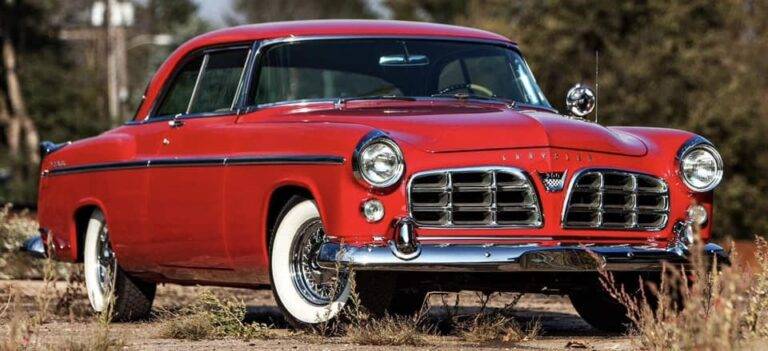
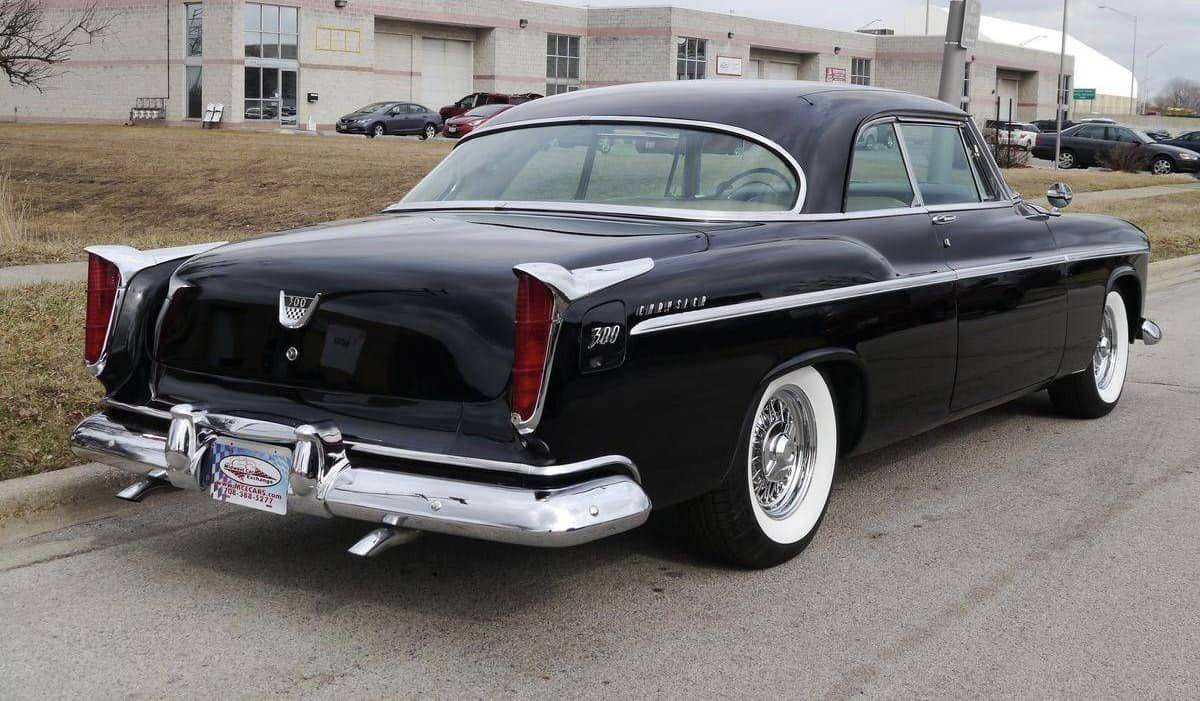
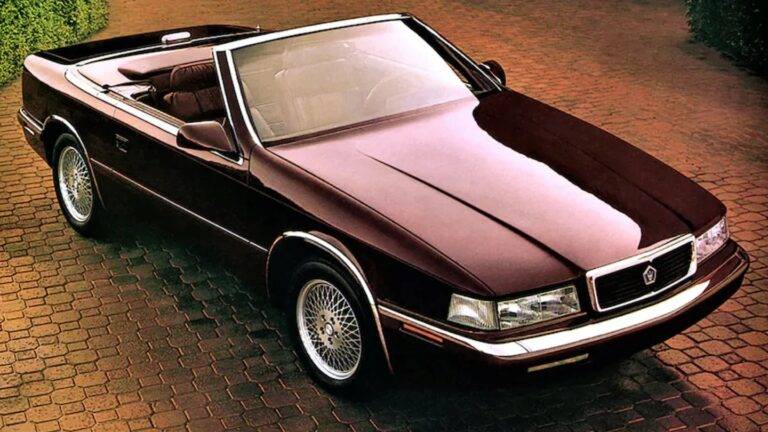
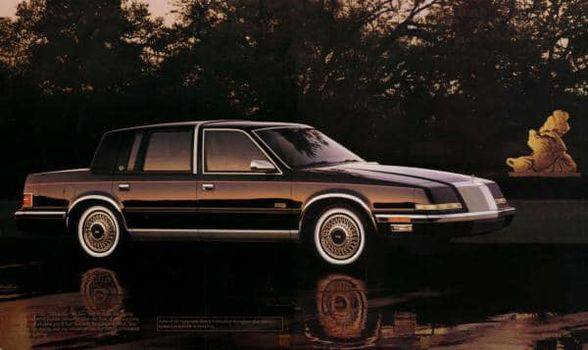
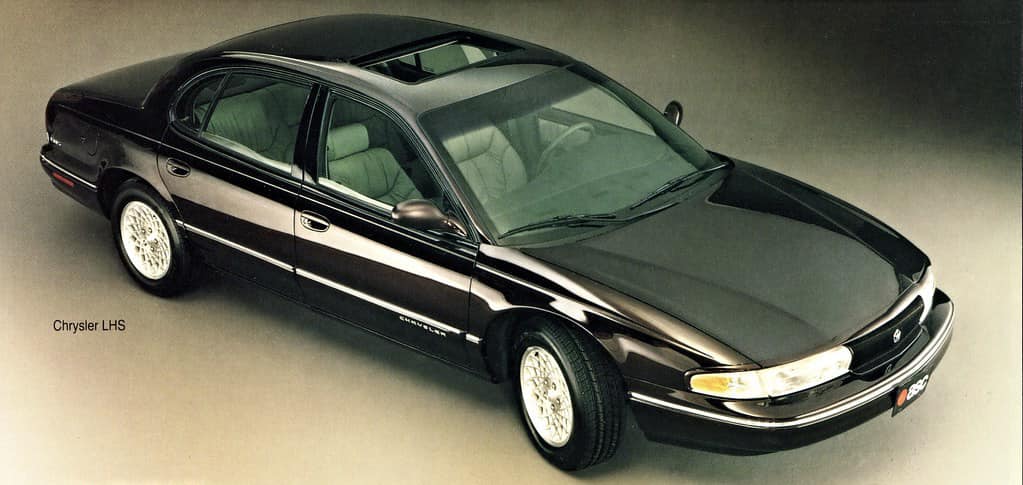
Crew Chief Eric: he’s gonna say the Chrysler TC by Maserati. Yes, yes,

Chris Bright: yes. Didn’t Lee Baron, that was designed in over in Italy or something. Oh, so terrible. Want that car?

Mark Shank: Great. They were so awful.

You had to love them. We scared William off. William just straight up ran away.

Chris Bright: I

Mark Shank: think Don is lost. We gotta bring you, Don stole your pipe.

Chris Bright: Yeah,

Don Weberg: stop my crack pipe. What I wanted to get at, I remember when those cars were new, the ante and the tc, which by the way stood for two costly, if you remember how expensive those things really were.

You know, I grew up around car guys. All my dad’s friends, they were all car guys and some of them liked them, some of them didn’t [00:29:00] like them. But I, I remember one word specifically that always floated around both of ’em, which was. Poser poser because you have this ante, which was confused. Was it an SL competitor or was its own bag of lasagna that’s trying to compete with what?

What? From Italy is similar to the ante. There’s nothing, oh, wait a minute. Wait a minute. Dr. Aya Coka says, hold my chiante. Yeah. He sends this LeBaron over to Maserati and says, fix it up. So they did and they sent it back. Some of them had Maserati heads and a five speed manual transmission, and believe it or not, those little bastards would cook.

They could really, really go. You had to rev the hell out of ’em, but they would really get going. My favorite shoot me now, it was the Mitsubishi V six. That was the best of all of ’em, in my opinion. If you’re looking for a cruiser, it was strong, it was healthy. The only problem with it was it was nose heavy.[00:30:00]

That car, you put it into a curve, it didn’t wanna do anything. But wait a minute, we’re talking ante, we’re talking tc. They’re not sports cars. They didn’t wanna be sports cars. They wanted to be kind like poor man, sls, but they were so confused. But there’s really nothing from Italy that came from them.

Okay. Yes. You know my problem. I like those cars. My question is, you show up to cars and coffees. Are you still branded as, oh my God, I can’t believe he had the guts to bring that thing here. What a poser. Is he

Mark Shank: still a poser today? Not anymore. You’re weird, but you’re not a poser.

Don Weberg: I’m the only one wearing a Maserati

Mark Shank: headband, so I’ll go with eccentric.

You’re eccentric

Chris Bright: sex offender watch list. But other than that, you know, you’re, you’re, you’re well accepted.

Crew Chief Brad: I just love the fact that Don’s pick for an Italian car is an American car with the Japanese motor.

Don Weberg: They’re all base. He’s paid. Let’s look at Don’s

Crew Chief Eric: Volvo. He’s flag on the play. Let’s bring this back a little bit because we’ve [00:31:00] skirted around some cars and even my list is all over the map because as I was trying to remember, cars that were sold in the United States that were purely Italian, the list is pretty short.

It’s actually longer now than it’s ever been. If you look at all the offerings between Ferrari, Lamborghini, alpha Romeo, and so on, back in the day, I’ve mentioned this before, the Fiat eight 50 rear engine kind of beetle like Hillman MP looking thing came in a bunch of different body styles. I think those are fantastic little cars.

Don Weberg: Yeah, and if I can, when you go eight 50, you’ve also got the Moretti. You’ve got a few little coach builders out there who played with the eight 50 and created their own little demon, and they were fantastically styled cars, especially that Moretti coup. That thing was beautiful and it was so tiny, and yet 6 3, 330 pounds.

I fit in those cars very, very well. Those are incredible. I do throw the alignment out, but I fit in the car and

Mark Shank: the passenger, the passenger also gets thrown out.

Don Weberg: Negative Camber. It’s all [00:32:00] good. It’s crazy. You, you have to counter, uh oh. I lost my, I lost my badge. Hold on. Okay. There it is. I just taped him on because I wanted to reflect Italian quality as well, you know, so I use tape.

And I put it right there and I have my Ferrari badge over here and my Mara hat. I’m good to go.

Crew Chief Eric: So did your shirt come with holes in it from the factory? Is that what you’re saying?

Don Weberg: Yes, it is factory air conditioning. The panels

Mark Shank: of the shirt misaligned. So it’s like

Don Weberg: one, one sleeve longer than than the other.

That is a true Italian shirt. Very exotic.

Crew Chief Eric: There are definitely some defacto Italian cars. We’ve seen more Delta HFS on the shore now They’re like these gimme cars like the 3 0 8 and some others, you know. That’s fine. There’s some other ones that I think we forgot came to the shores, or I’ve mentioned one of ’em before was the launch of Beta Montecarlo, right?

With the panda front end kind of looks like a DeLorean, it’s a mid engine two-door sport coop, but you could take that a step further and they [00:33:00] sold less of them. But then you had the scorpion and the scorpion was the Babyo 37. So if you’re into that like group A, group B rally and you’re not interested in a hatchback, you know, pinned by juro like the delta, you could look down those other avenues of launch A and people forgot that those cars were actually sold here.

Another one I mentioned before is the Fiat 1 31. You could very easily do some Boltons and create your own Abarth. You’re not gonna have the jackknife flares that the Abarth came with, but you can build a little hot rod out of a plain Jane

Chris Bright: 1 31. Mm-hmm. Those scorpions are great. I, I just got a ride in one the other day and man, very cool styling.

You know, it’s kind of got that group C, group B kind of look and it’s, it’s like a hot hatch type of styling.

Crew Chief Eric: And if I remember they had a detune dino engine in those, just like in the Stratos.

Chris Bright: Yeah. Yeah. It’s a very cool car and very affordable. It’s easily in this price range of the sub fifties, you know, another launch that I [00:34:00] think gets very overlooked for people in the know.

Love it. The full Via, yeah. Everybody knows the full via from the sixties and seventies. Rally car, front engine, front wheel drive. They look funny when you open up the hood, if you’ve ever gotten in one, the, the engine is rotated off axis and then flipped over by like about 30 degrees. It’s cantilevered.

Yeah, it’s laid over just to get the weight down a little bit. Very cool. You can get those for 30 or less. If you look around, you’re rolling in a cars in coffee, you’ll be the only person in Alancio. Fulvia for sure.

Crew Chief Eric: What about one of our ugly cars from the uncool wall? The Alpha Romeo Sz? What are you talking about?

I love that car. It’s like the Italian rado. Why? What’s not to like about it? It’s amazing. Why? Why would you even call it ugly? You’re the worst. I know. I think it’s cool. A lot of people think it’s heinous, especially that back end because it’s completely slab sided.

Chris Bright: Oh, oh. Don’s got something to say about that back end.

Don Weberg: Oh no, I, I agree. I think it’s kind of an [00:35:00] ugly car, but I think that’s the charm of it.

Mark Shank: It’s come full circle. It was ugly. It was cool for like six months when it was released. Very quickly became ugly. It has been a very interesting, good looking car. I, I think for the last 10 years or so.

Don Weberg: See, and for me, I think it’s ugly.

I do, I think it’s a hideous car, but that doesn’t mean I wouldn’t buy it. I mean, I appreciate a car that goes out on its own and says, Hey. Look at me, I’m ugly. I don’t care. I love that attitude. I love it. It’s kind of like an American car that was built in Italy with a Japanese engine. Oh geez. There’s something about that that just,

Chris Bright: you know, to me it just reminds me of like a Milan fashion house or something.

It’s like, it was ambitious. It was over the top. It was oat couture kind of. Exactly. Car, even in very small quantities. And it’s very cool. You know, it’s, but it’s a

Crew Chief Eric: performer too. It’s got a great engine, good balance. Everybody that ever drives one and reviews, it says you don’t see it from the inside, but it is a driver’s car.

Mark Shank: Right. So you get that [00:36:00] shape in the eighties from the GTV six. Yes. As well. Obviously in more volume than the SC

Chris Bright: GV six is a great one. You, you could, it it’s,

Mark Shank: yeah, it’s a, you know, these were the kind of cars that like, I did not like them when I was a kid in the nineties looking at them, I was like, ah God, that’s so eighties and horrible.

And now I look at ’em and I’m like, ah, it actually looks pretty damn cool. The only thing that’s really slab sided about the SC is the back. Okay. The back is just a big flat.

Crew Chief Eric: You know what’s funny, I’m with you, mark. But on the opposite end of that spectrum that when I saw that car, it went immediately on my wall alongside the Viper and a bunch of other cars.

And I’m like, the SC is amazing. But then a year later when they introduced the RZ. The Cabrio le, or the spider, whatever you wanna call it. Oh my God, that car is aous. Take the roof off of that thing. And suddenly I’m like, no, thank you. Had enough. But an underappreciated car, if you’re looking for something that really nobody wants.

Mark Shank: It’s like an uglier ante in convertible [00:37:00] form.

Crew Chief Eric: We’re gonna keep going back to that,

Mark Shank: never letting the ante go. Today’s episode

Crew Chief Eric: is brought to you by Cadillac.

Don Weberg: The only way to travel is Cadillac style.

Crew Chief Eric: So William, what about it from your experience, what’s a bargain basement Ferrari that isn’t a 3 0 8

Mark Shank: or a 3 48?

Crew Chief Eric: What’s some of these more obscure ones that people aren’t thinking about? Well, the fi Dino, that’s a good looking car.

William Ross: You got the Ferrari engine in it. It’s just got the got badge on it, but it’s fi Dino, that’s a great car. They’re going up in value, that’s for sure. Again, you’re not gonna be killing anybody zero to 60 times that, but it’s a lot of fun.

It’s a great engine. It’s a beautiful looking car. That would be my thought. I

Don Weberg: was gonna say, I, I’ve always been a fiat guy ever since I got my 1 24. I’ve loved fiat even before I got my 1 24, I always wanted the Dino Coop. I always thought that would’ve better looking car than the convertible, which both people disagree with me on, which is fine.

I I’m the guy who brought the ante to town, so, you know, what do you want? Anyway, [00:38:00] where, where I was gonna go with this though was the Dinos are kind of going up pretty nicely. One car I’ve always wanted, and here I go again with the Volvo styling, the Fiat one 30. Do you remember those? It’s kind of, yeah, it, it, it looks a little bit, honestly like the Volvo seven 80 Jennifer nine V six engine, but they were Fiats entree to, we can produce something like Alpha Romeo, but we can still do it on a budget.

They were nice.

Crew Chief Eric: There’s two versions of that. There’s the round headlight early car and the rectangle headlight late car. Yeah. So if you’re into that square body round headlight thing, you could go either way with this thing. They’re pretty cool.

Don Weberg: Yeah, they are. And not a lot of people know about them. They were never imported to the USA.

So any one 30 that you see here with brought over by a private person. But I, I think, like you were saying, now that the statute of limitations is lifted, I don’t think that car would have too many problems being registered in almost any state. I, I really like those cars and I, and I think trying to go back to the focus, [00:39:00] which is what should I buy for my first collector car?

As much as I might like the ante and the TC to look really weird. I don’t want somebody to pull into a cars and coffee and think, oh God, what a poster. I’d like them to pull into a cars and coffee and have guys around and think, whoa, wait, wait, wait. Where’d you get that?

Crew Chief Eric: Yeah. And that’s

Don Weberg: where that alpha comes in and that’s where kind of the fiat comes in and you know, these are little odd balls that people don’t see every day.

These are cars that you, you pull into cars and coffee and a lot of people will wonder, what is that? Oh my god, that’s a fiat the Dino people are pretty familiar with. But I think those one thirties, I’m not gonna say they’re cheap. They’re certainly not commanding Dino money. Yet. Yeah, they are going up.

And I think that has to do with the Dino people who know the one 30, it’s not a dino, it’s not a sports car at all. It’s a big grand touring car. And I think that’s where Eric and I kind of have a lot of fun bouncing off of each other because he seems to be much more the sports car. Get out there and run through the cones and terrify your dog, dog do.

And I’m like, no, no, no, no, no. I wanna go on a nice [00:40:00] leisurely cruise to a restaurant at the beach. And that’s where we kind of have fun. You know, I, I look at these little lancias that you and Chris are talking about. I’m like, oh my God, that car just looks like a headache to me.

Crew Chief Eric: Good. I got another one for you, Don.

How about the 1 28 3 P? That’s basically Fiat’s answer to the mark one Rocco.

Don Weberg: Yes. Yes. They were a great car. Don’t get me wrong. All of them that we’ve talked about I think are terrific cars. I, I know Mark, you’re gonna keep bringing up the alte.

Crew Chief Eric: My mom had one of those. Oh God, I gotta meet your mom. You gonna tell you the coolest thing about my mom going car shopping with my mom is amazing.

She walks in and people are like, excuse me, ma’am, you’re looking for a car? Yes. Well, what are you shopping for? Uh, I need a car with a manual transmission. Uh, what. You need a car with a manual transmission? Yes. I never learned how to drive an automatic. Do you have anything with a manual? If the answer is no, she turns around and walks out the door.

That is it.

William Ross: That’s awesome. I learned how to drive an automatic. That’s awesome.

Crew Chief Eric: That [00:41:00] said, going back to William for a second, what was the Ferrari from Rainman? Was that a four 12 or something like that? A 400, yeah.

William Ross: Yeah. 4 0 400, 4 12. And And know what? I’m a big fan. I love those. I think that’s a great car and a lot of people don’t like it ’cause of the design, but I’m actually a huge fan of that car.

I think it’s fantastic.

Mark Shank: The, the design of that was way ahead of its time when it came out, right? Because they made that car forever. What, 72 to 89? So someone please correct me or what? Yeah, 76. But you imagine that seeing that car in the mid seventies, that was 10, 15 years ahead of its time from a design language perspective.

Mm-hmm. It also made a big movie Reappearance in the Nicholas Cage. Unbearable weight of massive talent. Yeah. He was driving a 400 eye. But the four 12, you get ’em with a manual. Oh geez. I don’t know if it fits under our 50 KI was pulling the sales on bring a trailer, looking at their charts. Unfortunately, the bring a trailer [00:42:00] lumps ’em all together.

You know, from all of the years you kind of have to dig in and, and look at ’em. Certainly in that sub 100 K, 50 to a hundred K type range. A lot of really interesting options.

Chris Bright: I’ve got 41 k for, uh, 400 GT in, uh, sports car market. The, the

Mark Shank: big difference is the four 12 was a fair jump and then there’s whether or not you got the five speed or the three speed

Chris Bright: auto.

Yeah, that’s up to 80 K now when you get

William Ross: up. Yeah. If you get the man, it’s gonna have a nice, it’s gonna have a 20 to 30% markup on it with the five speed in it. You know what, the automatic’s not that big because it kind of goes back. You’re not gonna throw that thing around some autocross event. That’s a nice touring car to go for a nice long distance drive, pop that thing into drive and just go and cruise at 89 miles an hour.

And, and nice luxury comfort.

Don Weberg: Right? Well, and it’s not that I want to go there too far because you start stepping in a Ferrari’s backyard and it gets real expensive real quick. But Ferrari was always brilliant at building for place Coues with a V 12 front engine rear drive. [00:43:00] My God, those cars taught other people how to build a coop.

I mean they, they were fantastic. They would move like bats outta hell. But like you said, William, you’re not gonna throw it around too many curves and corners because that’s not what it was built for. It was built to take you on a nice long journey. It was built to take you over, land it over a hundred miles per hour and you didn’t know you were doing it.

God, they were dream cards. They really, really were to me, and maybe I’m wrong, but I mean I look at the five 50, the 5 75, not that we can bring that into the, our conversation because they’re still really expensive. What fantastic cars, and I’ll tell you the one I would, the one I’ve been looking at most recently, not that I’m gonna pull the trigger on it, is the uh, 4, 5, 6, the 4 56.

Yeah. Which, and I’ll be honest, you know when they were new, I was a 5 50, 5 75 guy. By God, that was the end all be all Ferrari. That was that. This 4 56 can go straight to hell. I started kind of growing up a little bit and I realized, God, you know that 4 56 has a real nice look to it. It was almost like the [00:44:00] 5 55 75 was that really hot girl in school.

You just loved this girl. She was smoking hot, but. You realize she’s a little bit of a pain. All the guys want her, but you know, she’s got a sister. Alright, we, well, let’s stay away from the teenage

Mark Shank: girl metaphors. Who said teen? Who said, I don’t know, I didn’t say

Don Weberg: teen.

Mark Shank: You said school. I’m assuming you didn’t mean graduate school

Don Weberg: who went to the team comment.

But the the point is though, the 4 56 is that quieter, classier sister who you’re just leaning into this, aren’t you? Gets overlooked. Just gets overlooked, but Oh, I agree. Yeah, once you meet her, once you, you know, once you, this is where it gets weird. I know. Never a dull moment with Don. Can you move

Mark Shank: on from the

Don Weberg: metaphor and talk about the car?

So anyway, the ante car, can we put a time out and I think you uh, I [00:45:00] think everybody knows you’re gotta buy an ante. You’re gonna have a Cadillac kind of call. You need right there, everyday usage. It’s quiet, it’s conservative. And that’s why I like the 4 56. It’s quiet, it’s conservative. And for me, I gotta get it in.

I can never pronounce it, but it’s basically champagne gold. But I don’t know, I see those cars as a bargain right now. My, oh, they are odd. It’s a V 12, it’s front engine, it’s fuel injected. It’s for place, it’s everything. The 404 12 I was, and yet because it was ugly. The four 12 just kind of lingered in the value.

Now they’re starting to go up, if I’m not mistaken. Is that right, William? Yeah, they are. So, you know, the guys like me, they’re becoming unobtainium and yes, the 4 56 is still unobtainium, but I look at that and I think, you know what, and correct me if I’m wrong, I think that would be a better car, just simply because it’s more modern.

Just the technology,

Mark Shank: the engineering is there a 4, 5, 6 sold on bringer trailer just this week for 60 K?

Crew Chief Eric: That’s not bad. Was it the automatic or the six [00:46:00] speed

Mark Shank: and it has 25,000 miles. Get ’em under 50

William Ross: If you got the service history, I mean, of course it’s gonna go with probably, you know, any car you wanna get service wise, but even that 4, 5, 6, if it’s got 40, 50, even 60,000 miles on it, but it’s got the service, everything done to it, that’s not a problem.

Right. A again, ’cause it’s not a car that you’re gonna be kind of revving the piss out of it and you know, slamming two gears or anything like that and you know, you don’t have to worry about the automated transmission that it, it’s. A great car to go for a nice touring car.

Mark Shank: I was gonna say the V 12 on that is supposed to be one of the most reliable from that era.

Yeah. Simply because they didn’t lean into it as hard as they did on the five 50. Right. And so to slot it into its product placement, but as a result of that, it, you know, doesn’t break.

Crew Chief Eric: But there’s plenty of these ultra rich Japanese track rats that have taken four, five sixes and put ’em on places like UBA and Fuji and other and put them against other cars like nine 11 turbos and m threes and stuff.

And the 4 56 as curvy as she is [00:47:00] and everything else, she can hold her own against those other cars. And I was shocked at some of those videos. Granted these are six speed V twelves, not the automatics, but I think can scoot and it can handle, I mean it does have some body roll to it. I’m of the personality that if I could tighten it up, I think it’d be a performer.

I think it’s a, it’s one of those wolves and sheep’s clothings.

Don Weberg: Yes. And Eric, was it you that sent me the video? Somebody sent me a video of, and I think they were in Japan and it was a 4 56 on a racetrack. It was full race prep, 4 56. This damn thing is keeping up with an F 40. Yep. The only challenger to that car is an F 40.

Yep. And as long as she keeps that F 40 behind her, she’s fine. But sure enough, the F 40 found a way around her and bam, that was it. But it wasn’t it that 4 56 stayed right on the rear end, dogged them the whole way

Crew Chief Eric: around the track. Yeah, it was awesome.

Don Weberg: Incredible, incredible. And you think of how much weight the, and granted, okay, they prepped it a little bit, so I’m sure it lost a little weight, but it’s still just a heavy, heavy car compared to an F 40, you would think there’s no way this car could [00:48:00] hang onto it, but sure enough, there it is.

No, I I, I’ve really, really started becoming a fan of the, uh, 4 56. I really have automatic five speed. Doesn’t matter.

Mark Shank: I just. I was gonna bring this up later, but do we have any research on manual swaps for 4, 5, 6? Because I think to me, that’s the key to a lot of car value. In some situations where the manual swap is relatively easy, like an F four 30 where you can go in, do it, it’s a known quantity, it’s not a rabbit hole, and then all of a sudden you’re just in a totally different category from a car value perspective.

And yeah, sure the market will figure that out, but it’s, if you can pick up an automatic on the cheap and do a manual swap for 20 grand and then it just becomes like a totally different car, I think that’s really interesting.

Crew Chief Eric: I’m, I’m with you on that. I think at that point it’s worth doing if it’s doable and there’s probably a, a high probability that that transmission is probably shared with something else and more than likely it’s probably a ZF transmission or something, you know, that I don’t know, that maybe Ferrari built those drive trains or maybe they’re fiat transits and then we got other things to think [00:49:00] about.

But

Don Weberg: isn’t the automatic a GM unit with the automatic on the 36 from General Motor. That I’d have to check.

Crew Chief Eric: You’re just trying to bring us back to that freaking Cadillac again, aren’t you?

Don Weberg: Speaking of the

Crew Chief Eric: Cadillac? Oh, you know, here we go. But there is another car that I wanna bring up for us to chew on, and it’s my second Miata.

No, stop. It’s a weird car. It is not Italian. It’s just as a a Spanish sounding name that said, there is another car. It’s my second least favorite car on the planet. And those of you that listen to the show know my number one least favorite car on the planet is the Citron and Ds followed by. I was just having one of those.

What is wrong with you? What are you gonna hate? A ds? God, dude, don’t even get me started. I hate those things. Oh my God.

Don Weberg: You know why he hates the Ds? He hates the Ds because it is French. My friend. He’s Italian. He has no choice but to

Crew Chief Eric: hate us. We are better than him. Truth be told, I have an affinity for French cars.

There’s just something about the Ds that gets under my skin. We’ll put a pin in that for [00:50:00] now. My second least favorite car on the planet, second to the Citro and Ds is the Ferrari. Manal tea. And I know you guys are gonna tell

Chris Bright: me I’m

Crew Chief Eric: wrong, but

Chris Bright: yeah. So wait, by show of thumbs, like Roman Coliseum style.

Come down.

Don Weberg: Yeah. Now you wait a moment here. You wait a moment. I am gonna tell you a story, okay? Oh man. Here we go.

Mark Shank: Story time. Get the editor ready.

Don Weberg: I was a hater of the Mondale too. I used to hate it all the time, but then I went to Concord to Italiano, and I gotta tell you, this is where I was changed.

There it was sitting on the green, on the field all by itself. Dark gray, lightly tinted windows a coop. I gotta tell you, I, I was a changed man. All the rest of ’em, I don’t like, you’re right. I still don’t like the model, but that one painted correctly. Wow. It actually came out pretty nice. So I learned that if you put the right makeup on, an ugly person, that can look pretty good.

A sister you were

Chris Bright: talking [00:51:00]

Don Weberg: for, geez,

Chris Bright: here’s the conundrum with it though. ’cause that’s like a $25,000 car. You know, you can get those pretty cheap nowadays and it’s basically the running gear of a 3 28 or 3 48, right? I think it’s a 3 48 if I’m not mistaken, is when I thought it was

Crew Chief Eric: a 3 0 8.

Don Weberg: 3 0 8, okay. It goes both ways.

Yeah, it goes both ways. You have a 3 0 8 and then the 3 28. Yeah. Depending on the year.

Chris Bright: So it’s got the same suspension, the same engine, the same transmission, the same steering box, the same everything except for they wedged a little bit more space in there. And, and I agree with you. I, I know there are not anything to look at, but if you were to just like set that aside and go bang for the buck, and I’m not talking about maintenance.

If it’s gonna be a maintenance hassle, then you’re in a world of hurt. But if you got a good one that was driven and cared for, you get that for $25,000 and you can rip. You can have a blast in that thing. So that’s my counter [00:52:00] argument. But it’s still too ugly. It’s just ugly. Yeah. I mean, it’s a light

William Ross: car, it’s got 300 horsepower.

It, it’s gonna scoot. You can have fun with it. Beauty’s in the eye of the beholder. I mean, it’s one of those situations as it ages, is it gonna be more attractive to someone? No, I don’t think so.

Don Weberg: You know, I gotta, I gotta side with William on that one and, and Chris too. You’re getting a lot of car for the money. You really, really are. Okay. It’s an eighties Ferrari, early nineties Ferrari. You are getting quite a bit of, of car for the money. And I think the younger generation is gonna embrace those cars.

You gotta think you, you’re going after the rad wood crowd and as the 3 0 8 3 28 continue to just skyrocket in value, people are gonna start looking, well what’s the next step? And then they’ll realize, oh my god. The Mondale is pretty much the same car. It just got four seats. And like I say, I was a chain guy.

I always hated the Mondale. I always thought they were ugly and and horrible. But then I saw the gray one, and I’m not kidding you, I’m not joking around. When I saw that gray one, I thought, you know, that actually looks really [00:53:00] good. And I think that’s it. There are some cars that just have a presence and they, they need to be.

Painted. Seriously, they are you gonna paint a 4 56 bright red? I’ve seen them, they look okay, but in my opinion, they look a lot better when they’re blue or dark gray or that silvery gold color. They have to have a sort of a businessman’s presence to them. And I think the mania was trying to do that, but it just sort of failed because people wondered what is this?

This is like the LeBaron of the Ferrari world. Speaking of which, Chrysler had a car called the tc. Oh my God. No, I’m kidding.

Crew Chief Eric: But, but to that end, since Don has established that all Italian cars are female,

Mark Shank: no, they’re all high school girls. Apparently,

Crew Chief Eric: unlike his painting of the flowing blonde hair, the LT upon the prairie grasses of the car show, where I got impressed upon the Mondi LT was with the movie Weird Science.

And I’m like, oh, that’s cool. It’s a Ferrari. But when it pulls up next to the 9 28, I was like, you can keep that turd like mm-hmm. And the nine 20 eight’s [00:54:00] a weird car, right. By all respects and all means, but when you put them side by side, both iconic cars of the period, you’re just like, nah, there’s other ways I can spend 25 grand than on a Monday lt.

True. But then you’re getting back to guys like me who wanna be a little

Don Weberg: bit different, a little bit out there. Here’s my question for you, and I’m not trying to bring them back into it, mark. I want you to answer this because you seem to be the number one hater.

Mark Shank: Hater. I’m

Don Weberg: a hater of the ante. You seem to feel toward the ante as, oh man, as Eric does toward the, the Citron Ds.

Mark Shank: I never got to see a good Cadillac there. It was post malaise my whole life.

Don Weberg: Which one is more poser? The mondal, the ante or the t? Which one is more poser.

Mark Shank: I’ve never known a person who owned an ante that didn’t love the hell out of that car. There was no posing there. It was just love posing is this kind of disingenuous car ownership.

You don’t love that car. You love the way people look at you when you drive that car. That’s, to me, [00:55:00] disingenuous. And the poser

Crew Chief Eric: is the guy that builds a Lamborghini in his basement out of wood and fiberglass and tries to pass it off as the real thing, you know? Or they just buy a guyardo.

Mark Shank: He, but the point is that, I don’t know.

I don’t think there are any posers in that. This is a trick question. There’s no posers in any of those questions. If you’re driving amond all at this point. Yeah, sure. In the eighties, nineties, whatever. Yeah. You know, someone’s buying that ’cause it was the most depreciated Ferrari fine. Fair enough. At this point, if you’re willing to pay the maintenance bill on keeping that thing running, then you must like the damn car.

No one’s seeing that person driving down the street.

Don Weberg: Alright, let me throw a weird one out there. You know me, I don’t know where they all value wise, I haven’t been paying attention, but I’ve always been a fan of the Lamborghini Halah.

Crew Chief Eric: Oh yeah,

Don Weberg: the jpa. Yeah. Well the, how do you say it? Is it Jpa or Halah?

I’ve heard both. I have no idea.

Crew Chief Eric: Well, Hapa would be Spanish. So an Italian, it’s jpa. Well, that would be

Don Weberg: perfect then. No, no, that wouldn’t be perfect because remember Lamborghini always named their cards after Spanish bulls. Spanish bull fighters. That’s true, that’s true. Et [00:56:00] cetera. So halper would be the way to say it, I guess.

What do y’all think of those? Am I going too far astray for the price wise yet? Have we gotten there?

Crew Chief Eric: That’s the car that people confuse for a Kunta when they don’t know. So it’s sort of like the difference between an M three and a three series when you kind of don’t know. To me that’s where it’s at. But I think there’s value in that, Don, in the sense that people don’t know that the JPA is like a thing and that it can be just as cool as mm-hmm.

Mark Shank: They think it’s a pantera. If you drive down the street in a jpa, they just think they saw a Pantera.

Don Weberg: Especially with the wing on. Yeah. If you put a wing on it, a hundred percent. My point is I, I always like that car. If for no other reason, I love Ferrari 3 0 8, everybody’s gotta love a 3 0 8. Those things are just a perfect car.

But Lamborghini said, hold my beer. We can make a better one. And that was the silhouette, of course was the first one. And then from the silhouette. And the helper and I, I’ve just always loved it for that gumption of this is our take on what a Ferrari 3 0 8 should be. And yet I I, I’ve heard both sides of the coin.

I’ve heard, you know, it was not as good. It was better. I, you know, so I, I don’t know, [00:57:00] but I think my fiat thing fell off the tape again.

Crew Chief Eric: It’s the rust spot underneath. There

Don Weberg: it is. Yeah. Little bit of it comes from the factory that way, you know. But I think to Mark’s point though, it, it’s one of those things, you’re right, it, it is a love thing.

If you’ve got the money to put into this thing and, and you’re, you’re dedicated to it. Yeah, there’s some love going on there. Or to William’s point, you know, what’s your end game? Is it an investment situation? Is it something you wanna buy, hold for a couple of years and then hopefully sell it with a little bit of a profit?

You know, that might be a good way to go too, if you can find one. I just didn’t know where the values were. I haven’t been paying attention to those cars for a while. They

William Ross: had ’em in production for a long time, but they only built like 600 of ’em over like eight, nine or something. It’s a rare car, but the point I’ve made is not a lot of people really know what it is.

They think it’s a panter, they think it’s something else. They think it’s a Kant. They just don’t know. You would think, oh, let’s see. Low production, volume, whatnot. Oh, rarity. You know, think, oh, value up here, but they’re actually not that expensive. Body panels, whatnot. If you’re crash it, you’re gonna be screwed on it motor wise and stuff like that.

You should be able to work on it yourself. In all honestly, if you got some common sense to [00:58:00] yourself, it’s not that difficult of a car. It’s just got very, very unique looks to it. You pull into a car and a coffee with that guarantee you we’re not gonna see another one there,

Chris Bright: and you will absolutely be a opposer.

No,

Mark Shank: no, no, not at all. No way. For me in this episode, this is my favorite car buying advice so far, is the helper. It’s low volume, inexpensive for what it is. It’s a cool car. I think that if you’re looking at a collector car that you can love and, and has some potential, I like it a lot. It is gonna be a pain in the ass to buy like, I think six or seven transactions in the last five years on bringing trailer.

So, you know, that’s tough.

William Ross: It’s not gonna quadruple in value in the next 10 years, but it’s not gonna lose all that much in value either. You’re gonna maintain your value.

Mark Shank: No, not at all.

Don Weberg: Not at no. Right. Yeah. I think the helper would be a fun one to have it. It’s a little offbeat. It’s a little different like you guys are saying.

People are gonna say, what? What is that car? And I think that can be kind of fun when you have a car. You know that not everybody knows you. Look, if you pull into a car in coffee [00:59:00] where you’re surrounded by cars, you’re surrounded by car guys and they’re saying, what kind of car is that? You’ve done something great.

You really have. And you know, correct me if I’m wrong, Chris, William, you might know this better than me. I think they built fewer helpers than they did Kunta. They did. Oh yeah, by far. Oh yeah, that’s what I thought. Yeah. And yet the Kunta would just, I mean, that was just the poster child of eighties excess.

The

Crew Chief Eric: only problem I have with the helper is that it would be in line with like the Lamborghini Gala, which is another one that people don’t really remember. It’s the precursor to the Gudo and the Merc Lago and all those. And so you’re like, do I really want that? And for the same kind of money. I know you look like a poser if you’re in a gado, but is it more value for the money at that point?

You’ve got, I hate to say a commodity Lamborghini at that point, but it’s not hard to go down to the Audi dealer and get parts for your 4.2 liter V eight or, you know, your V 10 or whatever it is. The Halite, yes, it’s going to, or the Japa, it’s gonna be more rare. But I, I don’t know. I, I’m, I’m [01:00:00] torn on that car like.

It is the best choice so far in terms of checking all the boxes. But Chris, I, I think you’ve been sitting on some stuff. What have you got?

Chris Bright: Oh, you know, I think that like I’m a big GT guy, so I really like that idea around the four fifty six, and you may recall from prior appearances, I owned a 9 28 and drove it every single day and put 200,000 miles on it.

Love the car. To your point, if you drive them, they last and they don’t misbehave. And same with my daily driver Alpha. Now there’s one that I was in recently, and this is on the cusp of kind of moving into the, we’ve kind of gotten with the Hapa and I’m gonna go with that pronunciation and then we can have a Sharks and Jets kind of fight later about.

We are the jaas, we are the houses.

Maserati, indie. Ooh, yeah. Maserati Indie is this killer. Unibody gt car. Roomy, backseat, fold down backseat. So you can get stuff in there [01:01:00] just like in 9 28. That’s why I was mentioning that. Great. Sounds great. Manual transmission, you know, it’s a cruiser and it’s, you know, a Ghibli is the same. Car with some changes but not really and it’s a hundred thousand dollars more a good indie you can get like in the 50 to 60 range.

And I just don’t even understand why that car is so cheap, to be honest with you. It’s a great engine. It’s a great drive train. Beautiful styling, beautiful car. You know, to me that’s like a real diamond in the rough. I agree.

Crew Chief Eric: You guys are agreeing for a change. This’s. Super weird. I know we gotta up Chris, you suck.

There we go. We’re back to normal. No, but speaking of diamonds in the rough, I think there’s another car as we kind of come up the rungs of the ladder and we’re talking about pricing, one of the ones that I really like in Williams’ world, especially in the fine art world of Italian automobiles, you know, everybody wants the short base, two 50, you know, the 360 [01:02:00] fives, all those, you know, super rare.

Just like the early air cold Porsches and stuff. There’s the launch of Mina, which is basically the baby sister to the two 50 short wheel base car. It almost looks exactly the same, change the grills and, and the taillights and it gets forgotten all the time. Mm-hmm.

William Ross: Great. Car it the argument about. The poser question is the fact is, you know, a lot of people look down, you know, especially I guess say non-car people, something because they see someone driving a Ferrari.

They look down, we got a Ferrari, you know, they’re not gonna know what the hell it is. Not even a lot of people in the cars that know what that car is. And again, kind of going into a car and coffee, you’re gonna pull into that. That’s gonna be the one where people are gonna be coming. What is that? It’s gonna get that question asked.

Creates a great conversation. It’s something different to set yourself apart than someone else that has the Ferrari, the 2 75, the two 50, or what have you value wise, you know? Yeah. Obviously it’s not where that is.

Crew Chief Eric: What do you think a flamini goes for? I don’t want to [01:03:00] guess. I’m sure it’s probably cl in the six figures.

It has to be.

Chris Bright: Oh, it’s well into the six figures. It’s a, we’re talking like 300 to 400 k. I see. It’s a bar.

Crew Chief Eric: It’s a val, it’s a bargain compared to the Ferrari. That’s like 7 million.

Chris Bright: I know, I know. But, uh, you know, the one that I really like in the launch, a range is the early ones. And I’m a huge launch a fan, by the way.

So the B 20. Oh, yeah, B 20 is in the, just over the a hundred k, like the 120 K range. And I know that sounds like a lot, but I think one of those got second overall in the mil. Amelia, it’s a big sedan. You look at it and it’s like, what is going on here? But that was the first production V six engine in the world that came out of Victoria Yano and a guy named De Virgilio at Launcher.

That was a groundbreaking car. It has a transaxle, it handles crazy, but it, again, it’s a wolf in sheep’s clothing. Like you look at it and you go, what the heck is this thing? But you get one of those tuned up. Well, and it [01:04:00] will hang with anybody in that era.

Crew Chief Eric: Well there was that video, was it like two years ago or or so where that B 20 A where they did the chop top on It was making, it was like a viral video.

Chris Bright: I saw one of like that the guy who does those, he’s done about eight of them.

William Ross: Yeah,

Chris Bright: I was on a tour with one last year and oh my God, it took your breath away. It was like a gorgeous,

William Ross: yeah, that

Chris Bright: so cool.

William Ross: You got a lot of heat for doing that. They were like, whatcha doing in this car? Know? But then to your point, once it was done, they’re like, oh, I get it.

It’s gorgeous. You know? They turned out fantastic. Yeah.

Crew Chief Eric: Yeah, they’re incredible. It’s sort of like the Lincoln Zephyr of the Italian world, right? That B 20, if you think about it. Yeah. No, that,

Chris Bright: that, that’s not far off. But there’s another hidden Lamborghini kind of in that era of like the, I think it’s the.

Uh uh, mark. Is it Jor or Har?

William Ross: I’ll give you a Haram.

Mark Shank: I don’t have a hernia. Trying to figure that out.

Chris Bright: [01:05:00] It’s like an early seventies. It’s almost like the Lamborghini Daytona,

Crew Chief Eric: ADA. Yeah, the Asada. Yeah.

Chris Bright: Yeah. Got into that little angular kind of vibe. So it wasn’t the Curvy Isro, which is a very cool car. The Haram was just kind of after that and had that little extra angularity to it, which some people don’t find appealing and it’s very distinctive to that early seventies.

I mean, but it’s a crazy V 12 screaming engine. It’s, I think what we all love about Lamborghinis, it’s like, I love your Ferrari engines, but we’re all children of the Cannonball Run movie. Hearing that Kunta streaming engine down the, the highways, it still rings in my ears today. It’s the same engine. And man, what a great GT car that is.

And they are not exp expensive. They’re just like, I think they’re just getting over the a hundred K point right now. They are. Yeah. No ante, Don. I mean,

Mark Shank: we just said a hundred K car. Isn. Inexpensive relative.

Chris Bright: It’s relative for [01:06:00] sure.

Crew Chief Eric: Before Don brings us back to the Cadillac ante by way of Ria, GIA, the Stutz Bearcat, and God knows what else he’s got on his list.

I wanted to bring up another weird Italian brand, the Iso Gfa or the Griffin. Those are pretty interesting cars. Often forgotten sort of Homologated Maseratis in a way. Let’s talk about those a little bit.

Don Weberg: You know, the Grifo is a great car. What I love about that, what I love about those ISOs, and don’t forget the, uh, the Volta.

A lot of people argue with me. I got nothing against the Grifo, but I think the Volta is actually just a little prettier of a car. I really do. It’s a little cleaner, a little sharper. It’s got a little more of that Maserati look to it. But what I love about these things, you can go to Pep Boys and get engine parts for these things.

Oh, yep. It’s fantastic. You know, uh, it’s a great, great way to, to go. I wanted to bring up. The Maserati, Mexico a little while ago. I always thought that was one of the most That’s beautiful cars ever made. Great. Yeah. I always thought that was a gorgeous car, Eric, now that you [01:07:00] bring up isso. Absolutely. The Gfo and the uh, the Volta are great ways to go, especially

Chris Bright: if you’re buying your first,

Don Weberg: that

Chris Bright: whole world of the, you know, the American engine designs, you know, so we are kind of leaning into the Panera and deferred till now, but it’s like these are all birds of a feather where you have these Italian designers who don’t have the wherewithal to build their own engines from scratch and just use a powerful hotted up hot cammed Chevy engine or Ford, I think in the Panera.

Don Weberg: Yeah, Panera was Ford.

Chris Bright: It was the Cleveland 3 51. I was hanging out with the Panera last week and it’s like, what a crazy ass.

Don Weberg: You know, the funny thing about the ESO Grifo, if I’m not mistaken, you had a 3 27, 3 50 or a 4 54. Yeah. Yeah. I mean, for God’s sake, you know that, that was just incredible. But you talk about a nose heavy beast, you know, don’t try to put that thing into too many curves or that’s one of those cars you’re driving on the coast to get some ante and that that’s what that is.

You know,

William Ross: again, they start out with that. We [01:08:00] lost,

Don Weberg: we lost them. Williams dead. Now that, that is Italian right there. That’s Italian right there.

William Ross: Got right off his chair. He’s so

Mark Shank: engaged. He died

William Ross: the grid was, I, that’s what I love too because I I, I like the mesh of the Italian design Italian built car with the American motor.

I, I wanna say it takes it out the stress, so to speak, but to your point, you go down to AutoZone and whatnot and gets parts for the motor. Mm-hmm. Get the thing running. It’s not intimidating to an owner to own it and be worried about going out and driving it because it’s got American V eight in the engine bay.

Again, you’re not gonna be tossed this thing around, but you know, it’s a great cruising car and it’s got style for days. Again, it’s kind of one of those ones you come around. So it’s not, a lot of people will know what it is

Mark Shank: because it looks like a body kit on a C3 Corvette. I mean, just to play devil’s advocate,

Crew Chief Eric: thanks Mark.

Thanks for putting a pin in my balloon.

Don Weberg: You know, mark, it, it’s funny you bring up putting a body kit on a C3 because back in the eighties Chrysler put a body kit on the Le Baron and I called it tc. [01:09:00] It’s a wonderful car. It’s a great way to

Crew Chief Eric: go. Love it. I swear to God he’s gonna utter the words by a bricklin by the end of this episode.

Mark Shank: I should have got some weed for this. Well, since you bring it up,

William Ross: we were playing a drinking game and every time you mention we’re doing a shot, we’d all be really drunk.

Crew Chief Eric: So I think the 900 pound gorilla that William has brought up is, do we have a reliability problem we need to overcome, or is it just the expertise is missing on this side of the pond?

What’s the issue? Like, what’s the apprehension with these Italian cars?

Don Weberg: You know, I remember reading an article, I think it was Car and Driver Magazine a thousand years ago, and they were talking about how to own a Ferrari 3 0 8 on a working man budget. And I read that article five or six times to make sure I got it all, and basically it, it, it said the bottom line was just budget.

Just budget your money. The other thing that was a little undertone. And I think a lot of people, especially with [01:10:00] Italian cars, don’t do enough. They don’t drive ’em. You gotta get out there and drive ’em. Yeah. ’cause that’s when you’re gonna work out those bugs. People always say, oh God, Italian cars, they’re horrible, they’re terrible, blah, blah, blah, blah, blah.

I always wanted the 84 quattroporte. People always thought that was just an ugly car. It was either a love it or hate it kind of car. And I, I knew one guy, he had five of ’em. He always said, you’ve gotta drive him, you’ve gotta drive him. He had a very low mile one, it was an 82 and if I remember right, that car had something like 3000 miles on the clock.

It was like brand new, but it didn’t run. It was just a paperweight. His other car and 80, I wanna say that was the 84. He had close to 250,000 miles on that car. And he said that car ran like a chimp. No trouble, no problem. It was always going. But he did admit. It took a lot of money, a lot of patience and a lot of time to get it to that level.

But once he got it there, there it was, he was brilliant.

William Ross: You gotta drive it with a little gusto too. You can’t just putz around. You gotta really kind of work that foot, right,

Don Weberg: right. Yeah, you do. You’ve gotta let it breathe. Yeah, you really do. To and I, [01:11:00] I think most Italian cars are that way. I really do.

William Ross: Well, I mean, the one thing is if you can find the person that can work on ’em, that’s gonna be your friend for life, or as long as you own that car, you’re gonna have a great relationship with them, period. They’re gonna love you.

Crew Chief Eric: Do you have to be like a soothsayer or a mystic or some sort of profit to work on an Italian car?

I mean, an engine’s an engine. Chris was saying it’s a twin cam. How different is it than any Coze or a Toyota four a GE or anything else that’s a twin cam four banger. I get the intricacies of a V 12, but if you’re a Jag guy, how different is the Ferrari V 12 than the Jaguar V 12, right? At the end of the day.

So why are we so afraid of these cars?

William Ross: Well, that’s the problem. You’re afraid if you have some sense about you and some mechanical ability, you can work on it yourself. YouTube is awesome in regards to learning stuff. I mean, you gotta trust the guy that’s putting the video out there, but you know, you watch a few ever.

It’s not too crazy to work on these things yourself. Avoid that 150, $200 an hour labor charge and try and do it [01:12:00] yourself. It’s not too out of the realm of trying to accomplish that. You gotta have the confidence in yourself. You know, once you take it apart, put it back together, that you go and turn the key, it starts and then you can drive away.

I think just a lot of people are intimidated by it. That’s their biggest issue.

Don Weberg: I think there is a service problem or there was years ago, and I think that that is a stigma. It has stuck with the Italian car community. I really do. You know, when I got my fiat, everybody warned me. Oh my God, you’re gonna be in the shop all the time with that car.

Just get rid of it. Problem, problem, problem. Everything. And admittedly, yeah, we had to work through some bugs. But I’ll tell you something. That car, when I was in college, that was my daily driver. That was the only, well, it wasn’t the only car I had, but it was the daily driver. It was the one that got me to school to work and work was the worst.

I don’t know how well you guys know California, but I lived in Glendale, went to school in Pasadena, worked in Hollywood, but the work would often send me out to Beverly Hills, Malibu, sometimes Ventura, over into the San Fernando Valley. [01:13:00] And yeah, guess what? That was the fiat doing that run. But yes, I did have to work out some bugs.

I did have to pay the mechanic because these don’t like to work on cars. But I think it goes back to, it’s an old stigma. I really, really do. I, I, I think they’re quirky, maybe the way they’re designed, they’re engineered, whatever. But you do have to drive ’em. You’ve gotta work those bugs out. And William, you’re right.

Thanks to the day and age of YouTube, you, you can find almost anything out there about how to fix or how to tune or how to dial it in. And thanks to the internet, there’s a whole community out there who can help you out with this as well. You gotta question. You don’t understand the, the YouTube video. Go on Facebook.

You’re gonna find a community out there who’s gonna be able to help you dial in whatever it is you’re trying to dial in. Eric, you brought it up. Why are we so afraid of these? Why are the ISOs so attractive? ’cause they’ve got a Chevy engine under the hood. I think that just goes to economics. It just makes it easier if you are gonna work on it.

It’s easier to go to Chief Auto Parts or AutoZone or whatever and buy a water pump for a Chevy engine than it is a [01:14:00] Maserati, Lamborghini, Ferrari, whatever. So that just boils down to economics and parts availability. I, I don’t think anybody should really be afraid of an Italian car. I, I don’t, I think you should go in it with a little bit of caution, a little bit of education.

Have some guys around you who really, really know these cars like William does, like Chris does, like some other people out there. Go on Facebook and start to learn these cars before you dive in. See which one might be right for you. I think that’s really the best way to go.

William Ross: And it just enhances your ownership experience too.

I mean, when you work on that car yourself, as we all know, and you get your hands dirty and greasy and stuff like that, the ownership of that car, it just takes it to a different level because of you’re just becoming that much more connected with it. It creates that relationship. It just, it makes it that much better owning that car when you are working on yourself because you, you know it, then you starting to really know the intricacies of that car.

Mm-hmm. And learning what it’s about. Mm-hmm. And especially with Italian cars back, the older ones that they, almost everyone was kind of a little different than the next [01:15:00] one that came down the line because, you know, as the day went on, you know, they were drinking their wine on the assembly line, you know, hey, you know, some corners get cut or whatnot, but you know, each car’s gonna have its own little quirks and stuff like that.

And you learn about it. And that’s what’s great about owning those cars. ’cause it becomes your car.

Chris Bright: I’m gonna disagree. I was gonna disagree first. Oh shit. Mark. Sorry. So I’m a Ferrari 3 48 owner. Service position engine out. Exactly. You have to be careful and, and I don’t disagree. Working on your cars is good, but it’s kind of soured me a little bit on Ferrari.

It’s a lot of low volume unobtainium and they put in planned obsolesces in there, so they, the engine out belt change needs to be done every three years. Well, guess what? You’re always in the window of having to do that. Either you just had it done and you spent 12 grand to have it done and it’s really hard to do on your own.

There’s special tools and dropping your engine out. It’s not like changing some filters or anything. Dropping an engine out is a, you have to know what the hell you’re doing. It’s [01:16:00] one of those things, yes, if you’re mechanically inclined and you have the equipment to do it, but you’ve gotta have the tool sets to do it, and that is by design, by Ferrari because they wanted to keep enough action going through the maintenance bays in their local dealerships that make ’em make sense.

If it’s a low volume car, you’re not gonna get enough work to keep the mechanics around and keep ’em fed and happy. So I think that’s one of the dirty little secret of the car world and especially the Ferrari world, is that they’ve really kind of built that maintenance cycle in to be a little bit beyond the normal maintenance cycle of any other cars that are out there.

You know, I think that’s a little disappointing now that isn’t true necessarily of earlier and the later ones now, they’re so electronic and digital that. You know, it’s like you have to be more of a computer guy than a mechanical guy to deal with them. But the parts are low volume and they’re often made of exotic materials.

Like here, I, I have a recent example. Something wasn’t feeling right in my transmission. I take into the shop in the 3 48, [01:17:00] they used what’s called a dual mass flywheel. So in the flywheel, in the clutch, they have grease packed in there to be a shock absorber. Well, I don’t know if you know about grease and if grease and how a clutch works, it’s a frictional device.

Right? If any of that grease leaks out, guess what? You gotta tear the whole thing down. The good thing is it’s very accessible on that car. It’s just like, okay, that’s unnecessarily complicated for that car, right? They wanted to bring their F1 technology in. It’s a great car. Like I, I will say with a 3 48, it always gets called the baby test aosa because of the stripes on the side.

But it’s actually closer to a baby F 40. It’s got the longitudinal engine, it’s got the cooling ducts behind the driver. A lot of the steering is very similar. It’s a great car. It’s a ripper. It’s fun. It’s not gonna be the world’s fastest car. It’s kind of gotten beyond that. It’s got go-kart. One of the best steering, I think.

Crew Chief Eric: Oh

Chris Bright: yeah.

Crew Chief Eric: It’s one of the last true manual Ferraris like the end of the day. Yeah, absolutely. That,

William Ross: well, that’s the thing is [01:18:00] the 3 48 to 3 55, your major services, it’s all engine out. Everything coming out. And when, uh, I’m gonna hack his last thing up, but when Luca di. He’s started to recognize these problems and they said, oh, ’cause when he came on, the fear, they 3 55 was already basically coming out and doing it.

So it was all right. So the 360 came because it 360 belt service, they got the panel door, whatnot. So you’re gonna have to take the engine out, you can get to it. You can go your local guy that knows how to do it. Three, four grand, still not cheap, but to be with things when they went to the four 30, everything went to chains, everything like that.

Hey, you know, kind of solve some of those issues there. But it’s unfortunate in regards to some of those things. ’cause yeah, I mean, you have to know what you’re doing and it kind of goes to the ownership to your point. Either you just had it done or you’re planning to have it done. You have to put in your budget, alright?

You gotta balance it out that you gotta roughly have five, six grand a year. You gotta basically kind of put aside in your mind that you’re gonna have for maintenance. Now one year you might only have to do two, three grand, but the follow year might be seven or eight. So it’s, it’s kind of one things. You also have to think, it’s just, it’s part of the [01:19:00] ownership.

A lot of people get intimidated by that and that’s why they kind of steer clear. ’cause they’re like, oh, I don’t wanna spend the money. But it’s like, well any older car you’re gonna have, you’re gonna have to spend the money. It just, depending on what model is it, what it’s gonna take, it’s just part of the ownership of it.

Would I tackle doing an engine out thing? No. You know, I know my limitations. Very cautious in regards to what I’m gonna do myself. You know, I know what I can and can’t do. I’m more than happy to have my guy down the street know take cars and just have at it. Here’s my credit card, charge me.

Crew Chief Eric: There’s a lot to be said there.

I mean, I’m still trying to put two and two together with Chris’s spaghetti sauce powered, dual mask flywheel, because the Germans, it’s all metal plates and springs and things. So I’m trying to figure out how this viscous setup actually works, but we’ll, we’ll put a pin in that as well. But the Ferraris, I think give the rest of the brands a bad wrap, whether it be the Fiats or the Maseratis or Lamborghinis and so on.

They all have their complexity. The Minnetti, Marelli, electronics, they’re right up there with Lucas, unfortunately. To Williams’ point, if you know how to turn a wrench, some of those more, let’s call them [01:20:00] basic engines, even the twin cam alphas and stuff like that, the V six is the buso engines. Those you shouldn’t be afraid of, because honestly, I’d recommend those power plants over a flat six Porsche any day.

I know Mark can sympathize with me on this. ’cause timing, a flat six is a pain in the neck. If you do it wrong, you blow up half the motor. You know, there’s a lot of intricacies in the German engines, high tolerances, all this kind of stuff. The Italian motors, non Ferrari engines, they’re pretty stout. I mean, they’re designed to rev to like 10 billion RPM all day long.

Where do you think Honda got the idea from? I, I don’t know. I, I just don’t want. To sour people’s impression of Italian cars by basing it solely on Ferrari. I think there’s still some gems out there.

Mark Shank: Your point, so one I might add, we haven’t addressed either of the other two price categories. We’ve spent the last hour and a half sub 50.

Crew Chief Eric: Oh, we’re, we’re getting there. We’re climbing up. So take us there. I

Mark Shank: I, I would say if you’re going with one of our sub 50 K relatively exotic recommendations, they’re very low volume and that’s a real fucking problem, [01:21:00] right? You are shipping stuff from Italian junkyards at that point to get back to you when some just 30-year-old piece of metal fails as it is want to do.

I haven’t heard in the sub 50 K any obvious future classic, the two most obvious ones to me being the Quadri Folio of Julia and the Alpha four C, the four cheese that was on my list. I mean, obviously the four C isn’t as good as it Cayman objectively, but subjectively you can make a strong argument for it.

Transmission notwithstanding, it’s a really cool little car under 50 K. You’ve got the Quadra Folio and you’ve got the four C, and those things are much more modern. They skip all of these kind of problems, carbon tub notwithstanding, and you’re in a situation to deal with them in a much more, uh, reasonable, contemporary kind of fashion.

Crew Chief Eric: I’m with you, mark. If I had to start all over again and to satisfy that itch, check that box. It says, thou shalt own an Italian car to be a proper petrolhead. I think a four C is the [01:22:00] answer to your point. It’s not as good as a Cayman, but it’s better than an Elise. If you think about it from that perspective, it’s better than a lot of other cars.

Maybe not as good as some, but the power plant in the four cheese comes right out of the Juliet. It’s a two liter turbo. It’s a commodity engine. Right. They’ve been running that two liter turbo in a bunch of stuff overseas, so it’s not an exotic engine, but it’s hopped up. Right. 250 horsepower or whatever they make, the way that car is built, that whole mono cock design they came up with, if you, there’s a whole thing on History Channel about that car specifically.

’cause it’s extremely unique the way they do it. It’s F1 technology

Mark Shank: and yet somehow managed to be heavier than a bonded aluminum chassis in its competitor.

Crew Chief Eric: I I know we’re not gonna go there. We’re not gonna go there. But you could pick one up for 35 grand.

Mark Shank: Yeah. No, a hundred percent. No, a hundred percent. I, I totally, I totally recommend it.

Crew Chief Eric: You forego a manual transmission. That’s the only thing that would keep me from a four C. It is at the top of my list.

Mark Shank: It’s a dry dual clutch. Yeah. That they bought from Dodge. That’s [01:23:00] the really unfortunate part.

Crew Chief Eric: Stellantis I had, man, if you’re suffering from Stellantis for more than four hours, see a doctor.

All right. I had to get the

Mark Shank: appointment for that shit. I have Stellantis and I have an appointment in the morning.

Crew Chief Brad: I was gonna ask, you know, so for a bigger car, what about the quattroporte? It’s been around a longer, you can find him for within probably 25 to 45, depending on the year. And the, I guess the, the mileage and everything.

It’s ly. Hmm. It looks like a fish. How dare you? It’s that bad. It looks like a fish. How dare you. How dare you, sir? I think the quattroporte is a good looking car.

Mark Shank: It’s like a very dangerous fish. It’s like an exotic and dangerous fish.

Crew Chief Brad: It’s an exotic catfish.

Crew Chief Eric: It has those Buick air inlets along the, like, the fenders along the hood.

It’s ridiculous. It’s like a Roadmaster like, I can’t it. It’s got that big gaping mouth, like a [01:24:00] carp. Like I don’t get it. I

Crew Chief Brad: thought we were friends. So I want, I, I want to hear from the real Italian petrolhead, like Chris and, and William, what their thoughts are. Eric, Eric is the only at, he, he’s a, an Italian redneck Quatro, but

Crew Chief Eric: not a fan.

Crew Chief Brad: And I’m talking about the, the mid to late two thousands. Not the, you said two votes

Crew Chief Eric: Fugly, two votes. F let’s Roman style voting Quattroporte.

Chris Bright: It’s an executive car. One of those. It’s an

Crew Chief Brad: executive car that I can fit in.

Chris Bright: See? Yeah, there’s a whole,

Crew Chief Brad: it’s an Italian car that I. Squeeze my frame into,

Chris Bright: and I don’t know, William, maybe have a, has a different opinion.

I mean, good running gear I guess, but it’s also kind of expensive. We were talking about Maseratis earlier, kind of being problematic, the SCS and that kind of stuff. And it’s like, I think we can all agree it’s no ante, no,

Mark Shank: no one’s recommended to buy Turbo. Where’s, yeah, I was gonna go

Crew Chief Eric: there because no one recommends to buy Turbo because you have to buy it with [01:25:00] 200,000 miles turbo.

Chris Bright: B Turbo. B Turbo. The JPA crowd is, says it buy Turbo. Turbo.

Crew Chief Eric: So I’m gonna start calling the Audi S four B Turbo next too. All right. So it’s all good. You know, nobody recommends those cars because they’re like Jags, if it has low mileage run away from it. The buy turbo is notoriously just terrible. It’s a nightmare car.

I’ve met some people that own them and they’re like, it’s fantastic for the five seconds that it runs, but if you don’t find one of the high mileage, it means it was not a runner. And that’s, that’s a scary reality with those cars.

Mark Shank: I’ve heard. You gotta rewire them soup to nuts. Just

Crew Chief Eric: again, do you want to go through that nightmare?

Mark Shank: No, but yeah man,

Crew Chief Eric: Marelli for the win.

Chris Bright: I think we’re turning into the Jerry Lewis telethon of of podcasts.

Jerry said, Hey, ed, I hear the Tiffany, [01:26:00] Debbie Davis and I are sitting over here. We’re gonna have Carol Channing come out and sing with us. Hey, mark, that’s low. He’s going right for you.

Mark Shank: I’m just hanging my head in shame.

Chris Bright: I think we ought to like spend some time in the fantasy world. I think so too. The amao cars, the ones that we all dream of.

And, and I’m gonna ask a controversial question. Oh, Kosh, would you own one thumbs? Oh wow. Four votes down. Two boats up. I’m imagining Don getting into a, a Kosh right now. Nope. Which, which half of him,

Don Weberg: I’m gonna tell you a little secret with a little bit of Vaseline and a, a shoehorn and a guy pushing. I can get into a osh,

Crew Chief Eric: ask him how he knows.

Don Weberg: No, don’t ask. No. Otherwise, I’ll bring up an elante.

Crew Chief Brad: I’d rather own a [01:27:00] Diablo to be clear. Yes, take your osh. Thank you. Thank you. Diablo’s, where it’s at.

Chris Bright: And the Kunta was on our walls. And then I don’t come from car stock, you know, my parents didn’t care about cars or anything, but I did Cannonball Run. I saw there was a car show and they were gonna have a Kunta show up.

So I went to this car show and I was like, utterly disappointed. I have to say. It was like there was this era where the front wheels were like just a little too small, a little too weird looking. I think it’s true with the Testa Rosa, you know, kind of that general era, like when you look at ’em, they’re just not scaled exactly right now, the next generation, they got it right and all that sort of stuff.

I’ve never owned one, so I can’t talk about the ownership issue. And maybe one of y’all can, or William might play in that world, but a Diablo, a Merc Lago, something like that. I’m there all day and if I could have a dream car, it might be the Mura. I just think that’s a beautiful, beautiful, amazing car.

Mark Shank: Everyone’s [01:28:00] dream car is a Mura.

Crew Chief Eric: Yeah,

Mark Shank: the Mercy E gear is uninteresting to me personally.

Crew Chief Eric: Yeah, the, I mean, the mirror set the stage for what we define as exotics, right? Let’s, let’s be serious, but

Mark Shank: yeah, no, a hundred percent.

Crew Chief Eric: When you bring up Diablo, you have to be very careful with that, because I think there’s gen one and Gen two, even though that’s not an official thing, because I’m a pop-up headlights Diablo guy, early Diablos, because the later closed over kind of look with the svs and the S VJs where they kind of bloated ’em, they changed the wheels, to your point, came in those funky, uh, plump, crazy and all those weird colors that, you know, they were getting from Dodge, that they were painting ’em in.

I just, eh, it doesn’t do it for me.

Don Weberg: Remember one thing though, when we’re talking about Lamborghini and go back to the Miura. The Miura is the car that put the super exotic on the map. That was the car that said, this is what we’re going for. That was the car that made Ferrari say, oh shit, what do we get ourselves into when we piss that farmer off?[01:29:00]

So he builds the Miura. The Miura had a major Achilles heel, which was transverse

Crew Chief Eric: engine

Mark Shank: fuel tank in the front end weight.

Don Weberg: Yep. Front end weight. The way the engine was mounted, it created a lot of handling problems. The Kunta came along and its job was to not only solve that, but again, put the fear into the heart of Ferrari.

And at this point it started splitting the crowd. Now, Eric, to your color thing, one of the separating dynamics that made Mire so popular was the color palette that was available. Ferrari was all red. It was just red. Everything was gonna be red with Ferrari. But we were in the sixties, the psychedelic movement was coming out.

Younger people had some money, and so Lamborghini cashed in on that by offering the psychedelic colors, and that really, really worked for them. So when the Kunta Shira came along, they were kind of getting away from that. They wanted to go into something totally different, get away from the meda, get away from what we used to do in the sixties, is over.

Let’s move forward. The Kunta takes us into 1989 [01:30:00] from what, 1974. And you had a car that stepped up to the ball plate and you talk about the most unapologetic, the most dynamic, ridiculous looking car. You know, Chris, you brought it up. The wheels didn’t look quite right on the first, on the earliest series.

They, they really didn’t. In fact, if you look at the early series, Kosh. They didn’t really look right at all. They looked a little weird. It wasn’t until they started refining it and made it what it was. I stay away from the anniversary editions. I think those are an abomination. I think they’re horrible. I hate to say that, but there’s too much Tupperware going on.

My only problem with Diablo, and this is where I still side with Kunta, is the Diablo was essentially a Chrysler design. Which is really interesting that when you go later down the line and Eric, you hit the nail on the head. They started coming up with all these dodge colors. Well, that was the way a lot of people saw it.

They said, oh my God, they’re stealing colors from Chrysler Corporation. No, they were trying to go back to the mere days because they were the ones who [01:31:00] brought it up first. Chrysler copied them back in the sixties and seventies. The psychedelic movement, that’s where it came from. When Chrysler invested so heavily, they saw what they thought was a really ugly car, and that really ugly car became, and forgive me, Eric, I know I’m messing this up badly with your accent, but I think I’m saying it right, that she’s Atta Marra, the

Crew Chief Eric: Chis Atta.

Yeah. I was gonna bring that car up. The V 16

Don Weberg: Zeta. Yes. And that car was supposed to be the original Diablo, correct. Chrysler said, no, no, no, no, no, no, no. That car looks way too ugly. It doesn’t look good enough. We’re taking the design back to Detroit and we’re gonna smooth it over. We’re gonna make it more like maybe a Chrysler TC or le.

Oh geez. And that became the Diablo. Now, I have nothing against Diablo except to me, when you have the Miura stepping up to the plate and telling everybody, by the way, I am Lamborghini. And people took a breath and said, oh my God. [01:32:00] And then that car wore out and they said, ah, we’re gonna knock your socks off again.

They said, by the way, I am Kage. Holy cow. And what does that translate to Kage? So you have these unforgiving looking cars coming out of Tata, and then there was Diablo.

Mark Shank: It’s easy to make one of these cars when you make it unlivable. You know the Diablo. Only by Lamborghini standards could you call it more practical for Christ’s sake.

It’s a Diablo. It’s still trying to murder you, and it’s still wholly impractical.

Crew Chief Eric: And that’s where we go back to the jpa

Mark Shank: jalapeno,

Crew Chief Eric: the Lamborghini jalapeno. Jalapeno. Yeah, exactly. Because that was to the point that was made earlier, more of a competitor to the 3 0 8. It was more of a driver’s car, the Kunta, every review I’ve ever seen about it, whether it was filmed yesterday or 30 years ago, people are like, you can’t see out of it.

It’s noisy, it’s hot, it’s undrivable, it steers like a truck. It’s all [01:33:00] sizzle and just no stake at the end of the day. Right. So it’s very flashy. And I’ve always wondered, because you don’t hear people talking about Diablos. You don’t see them in shootouts like that Japanese videos that we were talking about.

You don’t, you just never see Diablos. Maybe because they made three of them.

Mark Shank: Yeah, they’re low volume. Because the Kosh was so revolutionary that they made a ton of them. It stuck around forever.

Crew Chief Eric: But I think that Undriv ability is still there in the Diablo. You can’t see out of it. It still steers like a bus.

You know, all those kinds of things that didn’t get corrected until you got to the gala prototype, the Mercy Lago, the the Guo, and all those R eight platform based Lamborghinis, when they’re finally straightened out, even the Kunta is an engineering miracle. If you look at how that motor is mounted on top of the transmission and the shifter is directly into the tail.

I mean, it, it’s bonkers. The

Chris Bright: prop shaft goes through the engine.

Crew Chief Eric: Oh, it’s, it’s absolutely insane. It’s like what mental patient came up with this thing? And then, you know, again, we get into the reliability question and [01:34:00] maintenance and all that. Kuta is just so over the top extreme. I love them, don’t get me wrong.

And I do like the JC Whitney body kit ones, you know, the later ones, non-US bumpers and all that kind of stuff. You mean the Tupperware edition? A hundred percent only came in white. The Tupperware edition. Yeah. David Hasselhoff drives them. You know, those kind of cars, uh, Lamborghini, I mean, they are the poster on the wall, but then you have tester on the other side saying, look, I’m here too.

Chris Bright: That was less interesting. I mean, the Kunta was everything you wanted to be in your fantasies. It’s just in reality, like I was describing earlier, when you saw it in real life, it didn’t quite live up to the eye candy that it was on the poster. Even when you see it on tv, one of those things like, oh, okay.

It’s like when you meet a famous actress and it’s like, you’re not exactly what I remember.

Mark Shank: Never

Chris Bright: meet

Mark Shank: your heroes. No, I mean, I think it’s fair to appreciate the longevity of the Kunta. Right? Like I was gonna say, the Kosh is like, a, was a little bit like the [01:35:00] GTR, but it’s probably more appropriate to say the GTR was more like a Kosh and that it was revolutionary when it landed and, and that gave it.

The longevity that it had, and by the time you’re really complaining about it, it’s very long in the tooth. From a car design, uh, perspective.

William Ross: They didn’t have a choice though, is because they’re going through bankruptcy so many times they, they couldn’t. Yeah. I mean, they couldn’t make money,

Mark Shank: you know

William Ross: Exactly

Mark Shank: that.

Not withstanding, you know, reasons not withstanding

Crew Chief Eric: to your analogy, mark. I think the Kunta is closer to the GT 40 than anything else. ’cause if you look at how it evolved and even now, the modern Kunta, when we stack that on top of the pile, it really follows more of the Ford lineage than it does anything else.

And it’s evolution.

Mark Shank: That’s fair. I’m not gonna argue on that one. It was a big deal and that’s why it was able to, to maintain the sales volume relative for its time, low volume for today. It, it was sticky.

Crew Chief Eric: Now we can flip that over. If you wanna buy a drivable Diablo to go into Don’s world, just buy a [01:36:00] Viper and get it over with the Dodge product with a Lamborghini engine in it.

Mark Shank: Uh, buy one of the early first gen rear world drive ones and call it an A.

Chris Bright: All right, I’m gonna throw one out here. Could be the one car I would buy.

Mark Shank: Oh, oh, we’re talking about what we’d actually do. That’s a different conversation.

Chris Bright: Ferrari 2

Crew Chief Eric: 88 GTO. Oh my god. An F 40 with a street body on it.

Mark Shank: Wouldn’t, you’d actually buy what for like half a million dollars or?

Crew Chief Eric: Yeah, we’re in fantasy land man. We’re up in the real world.

Mark Shank: Yeah. If I win the Mega millions, sure.

Crew Chief Eric: The problem with the 2 88 GTO is that Yes, it’s awesome. It’s like the five 12 bb, right? You’re like, that is super cool until you realize for slightly more money you just buy a 40, you call it a day, actually less money because the 2 88 GT O, its DNA is in the F 40 I, I’d rather have the F 40

William Ross: a F 40 is cheaper than a 2 88.

Tell that right now. 2 88 are about 3 million plus your year F 40 are two to two five, depending on what mileage and whatnot going on it. So if I have my druthers, I’d take the [01:37:00] F 40 over to 2 88. I love the 2 88. You know, that’s one of my favorite code. It’s kind of right there. Have that F 40 and 2 88 are like right there.

But if I had to pick one, I’d take the F 40. It’s just such a raw, analog car. Nothing in it that’s just motor pedals seat and go, you know, it’s just a great car.

Crew Chief Eric: It’s Roman vote time, F 40 or 2 88. PU F 40 down is 2 88.

Don Weberg: Ah. I think the F 40 wins again.

Mark Shank: There’s no abstention. There’s no, there’s no, you know, you can’t abstain.

Crew Chief Brad: Fist is F 50.

Mark Shank: Fist is your disconnected fist. Is the F 50? F

Chris Bright: 50? No, honestly, the F 50 is probably the least. It’s one of the most underrated cars. Even though it’s like well-respected. It’s Ferrari’s.

Diablo. It’s terrible. No, no, no. V 12.

Don Weberg: Oh it, it’s not even Ferrari Diablo. It, it’s more like Ferrari tc. That’s how bad that car is. Ferrari love it. I

Crew Chief Eric: mean, I don’t like the Enzo either or the, I don’t really like the [01:38:00] FXX. I mean, it’s cool. It’s like the Batmobile, but all those, after the F 40, it’s like they couldn’t figure out what to do because the F 40 was so perfect and so timeless,

Don Weberg: you know?

You know, it’s funny, Eric, sorry Chris to drag this back, but going back to the Lamborghini, the Diablo was that moment for Lamborghini where they sort of said, God, what do we do after Kunta? And I think that was where the F 50 fell. After you did that F 40. What do you do? Throw air conditioning in it and a stereo call it a day.

Well,

Mark Shank: it also had hood scoops. That’s right. Yeah. I mean the hood scoops in the air conditioning. Totally different. Yeah. Yeah. Totally

Don Weberg: different car. Totally different car. Ferrari has kinda lost its way in the last 20 years to build an SUV

Crew Chief Eric: for Christ’s sake.

Don Weberg: Yeah, but they sell. And you gotta think that’s what they need now is that money.

Even, even Lamborghini is building an SUV, the uterus or uterus, however you wanna say it. I think that’s actually a pretty damn cool car. I really, really do. It has that little bit of that unforgiving, edgy look.

Crew Chief Eric: As one of our previous guests. [01:39:00] Put it, Don, it’s the prettiest Pontiac. Aztec. It’s, it really Is

Don Weberg: it really?

But it’ll go 200 miles an hour. Is that such a big deal these days? I’m not sure that it’s, and you have the cache of saying, I’ve got a Lamborghini. And let’s face it, the last time Lamborghini builds an SUV, it was called the LM oh oh two. It was the precursor to the Hummer, the Stallone Mobile. That thing was something else, but it was built for the, uh, the, was it the Saudi Arabian army?

Saudi Arabian, yeah. Army. They wanted this car and then they said, no, we don’t want it. And Lamborghini said, I bet we can sell this thing. They made like 50 of those. Wow. Yeah. They actually put it out there.

Crew Chief Eric: Wasn’t it? Code named the cheetah or something like that?

Don Weberg: Yeah, cheetah. Yeah. Very good. Yeah, that was the cheetah.

Yeah. So you gotta admit, going from the LM oh oh two to the Uras, boy, that’s a hell of a leap. You know that. That really is. And again, the LM oh oh two, the Ferrari SUV, which was the company that put high performance SUVs on the map. Oh, was it [01:40:00] Porsche?

Mark Shank: Porsche, yeah.

Don Weberg: Who made all the nine 11 guy? Oh my God.

They’re building an SUV. Oh Jesus. And it was horrible for them. But you know what? Ooh, damn. If those Porsche don’t bring in the

Crew Chief Eric: cash

Don Weberg: tore, they totally bring the cash

Crew Chief Eric: tore. Just wanna point that out. The Cayenne is a tore.

Mark Shank: It is. You can’t compare the LM oh two to the Euros. Theor is just an Audi.

Crew Chief Eric: Yeah, it’s a Q seven or whatever.

Yeah, exactly. Yeah. But, but that actually brings up a really good point that I wanted to touch on earlier. We’re gonna go back to the fantasy cars. Stellantis has the opportunity to mimic the GM model of the tier system. And I really truly believe, to answer Brad’s question from before about the Maserati Quattroporte, does he fit in it and this and that, I think Maserati should actually stop building cars and be the SUV brand for Stellantis because they’re, they’re, again, they’re gonna start competing with themselves.

Alpha has the Stelvio Ferrari’s come out with their thing. Then there’s the ana, which is gonna be dubbed [01:41:00] here as the Hornet. It’s like, no, no, no. Split it up. Ferrari makes the sports cars like Porsche. VW makes the econo boxes. Audi makes the luxury cars. Stellantis needs to do the same thing with Piat, Maserati, Ferrari, and all the brands that are under their umbrella right now, they,

Mark Shank: they’ve gone in the other direction with releasing their latest exotic Maserati, right.

Crew Chief Eric: A hundred percent. But the Maserati SUV actually looks good. I like that fish. Look it, it works for that thing. It doesn’t work as a sedan, in my opinion. But let’s put that aside. Let’s get back to fantasy land, William, and I’m not, I’m not trying to downplay where you’re coming from. Throw us some bargain cars.

Two 15 and above. Bargain. Bargain two 15 and above. Uh, Bugatti. EB one 10. That’s French. Oh,

Mark Shank: the original. The original EV one 10

William Ross: French. Sorry. You want, you wanna throw it out there? It’s just, I, I just, you know, to me, I just think that’s a great card. I, I just, if you wanna go above, we gotta keep it Italian.

There’s a lot of cards on top of my head trying to go constant. Even Italian. What about the [01:42:00] Daytona,

Crew Chief Eric: the 360 fives? Where are they clocking it at? Oh,

William Ross: you wanna

Crew Chief Eric: go old or wherever? Wherever you want to go, man. Take us on a journey here.

Mark Shank: Take me on a trip.

Crew Chief Eric: Miami Vice. We are 1984. Let’s

William Ross: go. You can’t be a 2 75 GTP four camp.

Those things drive phenomenal. That’s a car you could drive. I don’t wanna say on a daily basis, but that’s a car you could drive around continuously. It’s not gonna beat you up. The motor’s fantastic. You don’t have to worry about keeping up in the revs. Great, great engine in that car. You wanna get really crazy.

Start getting into like a, a two 50 California drop top Paris fueler. That’s just a dream card, you know. You really wanna get obnoxious, you go to the two 50 GTO, you know, you start getting into those type of cars, but you get that say the two 50 to seven 50 range. Here’s my thought on pricing on these cars to be some of these cars.

I don’t understand how they’re priced where they’re at because I just don’t see it. But, you know, the market’s gonna dictate what something’s worth.

Crew Chief Eric: So let me ask you this. What’s the card that you get requested the most to search for? At least in the [01:43:00] Italian side?

William Ross: F 40. The 2 8 8 ETL. Wow, okay. Those are the two I probably get the most train trying to find.

When you get to those cars, the next question is, okay, alright. How many owners mileage, original paint, you know, service, history, they really wanna start wheeling down and then you start getting cost wise, okay? Okay. I got one that’s got six owners that’s got, you know, 20,000 miles and this, that, okay, you’re at 2.9.

But then if you get a A two owner car, original paint, classy, certified red books, the whole nine yards. Okay? You’re at 3.7, 3.8 million. It’s gonna run the gamut on what someone wants to pay and what they wanna do with the car. And again, it’s like not a lot of these people that buy this car really go out and they go, Hey, I’m gonna drive this thing and put miles on it, whatnot.

No, they’re buying it more as an investment than anything. They’re gonna use it. They’re gonna take it to shows. They want it to show their buddies and say, Hey look, I bought one. I finally got one. I’m part of the club. One of those situations, which is unfortunate because you should get out and drive the cars.

What we said earlier in our conversation, you know, you need to go out and drive those cars. They’re meant to be driven. It’s a car, go out and enjoy it. But those are the ones that are really kind of get the [01:44:00] most requests for, again, the person that’s buying those now is the person that had those cars and those posters on the wall.

People that are in fall, that age group between, you know, your late thirties, early forties, into your mid, late fifties, early sixties. They’re gonna go after those eighties supercars. Hypercar that they grew up and they loved. The guy that’s looking for the 2 75 is looking for the sixties front engine V twelves.

That guy’s looking to complete a collection. You know, he’s got 20, 30 cars and that’s one he needs to finish off. What he is looking, there’s something special about it that he wants it, it’s a different bar when he start getting into those level of cars, you know, it’s not someone that’s, that’s the only one I’m ever gonna own.

Yeah. I mean, you’re gonna have your outlier here and there with someone. They’re gonna put all the money into one car ’cause that’s your dream car. It’s a different type of buyer that’s going in that market and buying those cars at that price point.

Mark Shank: If I’m looking in this exotic price point, the first thing that comes to mind for me, I don’t know how they pronounce it.

Is it MAT? Is it mat The Stratos remake.

Don Weberg: Oh yeah. That they

Mark Shank: do on top of the F four 30 chassis. [01:45:00] So basically you give them a donor F four 30 and they give you back a Stratos ish. 130% version type car. I think eight inches out of the chassis on the F four 30 shorten the wheel base, you know? Yeah. It’s stupid expensive Reviews I’ve read around it are like 500 K British pounds on top of the donor car to get where they are.

But for me, if I’m looking at stuff, I’d like to have it. It seems like a really, really well done version of that kind of car.

Chris Bright: Rather have that than just a Stratos proper. I mean, Arao is like 500 K. I’d rather have that wizzy V six right behind my head. Legit total rally heritage that DNA in there. I think that’s a cool car.

I like that car, but it’s like I’d rather have for the same money you can have the real deal.

Mark Shank: That’s fair. I think, I’m not sure how many public options they’ve really had for Estrada since the [01:46:00] values of everything has gone up through the roof. Mm-hmm. Was it 500 K four years ago? Certainly it was. I’m not sure it would be 500 k today.

I have a hard time finding public examples of that, that notwithstanding, they’re two different cars, right? It’s like owning the GT 40 from the early nineties versus the original one. They made a modern car that looked like the shape of the original GT 40 didn’t have all those compromises. You’re looking at a lot of compromises to get into some mid seventies.

Original Stratos versus F four 30 that they put body panels on to, to turn into

Chris Bright: a Stratos. You know, it, it, and it kind of brings up the whole idea of these like newer versions of things we were talking about that outlaw launch a, you know, an alcoholics GTA kind of thing where they go through and they take a, from the ground up, a brand new GTV bodied Alpha Romeo that’s got carbon fiber, all the bits and bobs, and [01:47:00] it’s like, it’s cool, but it’s kind of like it’s starting to fall into that rest od world where it’s like, yeah, a

Mark Shank: hundred percent.

I mean, the people are looking at what singer did with Porsche, right? And saying, can I do that? In these other market niches. Right. And in the Alpha Rome mayo and saying like, you know what, I’m gonna just redo all these body panels and carbon fiber. Right? I’ll have Cosworth build this out and we’re just gonna Yeah.

I mean at that point it, you’re getting them to absurdity land. It’s an amazing place to be if you can afford to be there. Yeah. Don, you’ve been very quiet.

Crew Chief Eric: Yeah. He hasn’t found another American car pinned by an an Italian yet.

Don Weberg: I was just looking on eBay. Of course, some antes for sale. I’m gonna be going out to Palm Springs, have a steak in a few martinis, and I want a nice new ante to take out there.

And I’m debating 4.9 liter or North Star and that. That’s my big problem today.

Crew Chief Eric: Oh my God. I think I threw up in my mouth a little bit.

Don Weberg: I’ll pay you a [01:48:00] car that we haven’t brought up. I think I’m in the right price range here. I think it’s called Maserati Mc 12. Remember those cars? Yeah. They’re reintroducing a new one.

Yeah, they, they built like 25 of ’em, if I remember correctly, and then they built another 25 later on. I always thought those were kind of a neat car because it, it was, you know, it’s almost goes back to that category of what kind of car is that, you know, you pull into a car and coffee and a lot of people might wonder, is that a Ferrari?

That a Lamborghini? What is that thing? And then he saw a Maserati. Oh, a Maserati. You know, they’d never seen it before. And that’s kind of fun. I don’t know, I just wondered what you guys thought about that. I, I think they’re hugely overpriced, but you know, I’m an ante guy.

William Ross: It’s a bloated end zone.

Don Weberg: Yeah. Yeah, it is.

William Ross: It’s bigger, it’s wider. I mean, it’s just, it’s a bloated end zone.

Chris Bright: The new one seems better, has a better spec, I think. But I haven’t paid too close of attention to it.

Crew Chief Brad: I believe the mc 12 put down a better lap time around the top gear test track than the Enzo did.

William Ross: Yes, it did. Yeah. Well, they were able to obviously take the Enzo, they were able [01:49:00] to, I would say, tweak it, make the adjustments to it.

To make it a better handling car, and that was one that they actually took basically to go racing, whereas the Enzo wasn’t. So that’s what they wanted to do is make that thing better. So because they wanted to take that thing racing and it was actually extremely successful. I think it was like three straight championships or something.

I mean, it was really successful in their series of racing. Then

Mark Shank: how much of that is just tires? This is an honest question. If you put Michelin Sport Cup to r. Tires on that original Ferrari in the mid nineties or whatever the hell was, what, what would be its lap time then?

William Ross: No, that’s a good point.

Especially this day and age. I mean, ’cause you got so many different compounds and everything you can put on a car. That would be really interesting to see. Just, you know, put it down to tires. I would say a, a good percentage of it could come down to tires. What you have on it.

Chris Bright: Remember a couple of years back when Chris Harris went to Port Mau and took the McLaren, the Ferrari and the Porsche hypercar and like tested ’em and then they had to mandate, it’s like no one could [01:50:00] bring their own rubber.

They had to like, use

Don Weberg: Yeah,

Chris Bright: those guys were not happy about it, but, well, you got a

William Ross: lot of cars today that they’re built around the tires basically. Start with those that go to what that car’s gonna be specked with and go from there to what that thing can do. You know, you get cup twos on there. I mean, those things aren’t gonna last.

What? Maybe 2,500 miles?

Mark Shank: 1500 miles? I’ve got 9,000 on a pair of cup twos right now.

Crew Chief Eric: Oh, you do?

Mark Shank: I do.

Crew Chief Eric: He didn’t tell you that they were corded, but you know, whatever.

Mark Shank: No, I, I just had service. They told me they were doing great. I asked him if I needed a new set and hoping they would say no.

Crew Chief Eric: Kind of going back to these Italian collector cars.

I don’t know that there is one right answer. I really do think it goes back to what William was saying early on. It’s what you wanna do. Don’s racing to say it ’cause the answer’s Cadillac.

Don Weberg: No, it is not a Cadillac. This time. Eric, you challenged me and you said Don has run out of America. No, I’d [01:51:00] like to contend, I’d like to offer up for your consideration.

All right.

Crew Chief Eric: Let me guess. The Oldsmobile Thor or the Chevrolet Testo or any of these concept cars that never made it to reality?

Don Weberg: There is the Oldsmobile tro. Oh geez. Which has an Italian name, but that’s an American car. I’m not gonna bring that up. No, you said penned. Okay, so I wanna bring up the Ford Granada gia.

Oh God. The Mustang two Gia. Uh, okay. These are all classy cars that you can run around in for 5,000 bucks. Mint condition. These are wonderful cars.

Crew Chief Eric: If my Italian was worse, I would say that Gia was synonymous with trash, but you know, hey, whatever. There’s certain design houses that I favor over others.

Let’s just put it that way. And there are a ton of Italian designers out there, and I think that’s. Also the beauty in some of this, right? We’ve talked about on other episodes where you know, there’s collaborations between Porsche and Mercedes and BM BMW and Toyota and all sorts of stuff. But in the old days it’s kind of like when [01:52:00] you realize that the Bee Gees wrote half of the music for everybody in the seventies and they never really took credit for it.

There’s a lot of Italian designers that did the same thing for auto manufacturers all over the world, whether it was Volkswagen or Subaru or Fiat, so on down the lines. And it’s kind of neat when you dig into that side of it. So I think we’ve been exposed to Italian cars, at least Italian design cars for a lot longer than we realize.

But it goes back to what William was saying earlier, it kind of depends on what you wanna do with this thing. Mm-hmm. It seems like money is no object when it comes to an Italian car. I mean, pick your poison gray market cars, there’s a million of them. It really depends on what you’re interested in. I mean, me personally, you know, we were talking about the Alpha Sz.

I wouldn’t import one as much as I wanna drive one. I mean, please, somebody hand me the keys. I wanna drive my hero. But if I had to choose, I’d buy a later Alpha Romera because it’s the evolution of the sz. It’s a little bit more easy on the eyes. It has all the right stuff, and none of the weird quirks of the nineties, you know, that kind of thing.

There’s some [01:53:00] understated cars like the Lama as an example, right? It’s a watered down Alpha Romeo sedan that can be hot rotted out. It has the same motor as the Alpha, the 1 64, stuff like that. There’s so many neat cars, but I think people need to take the time to look into them and see what excites them and what they can get into.

And I think services like what Chris provides, where if you’re interested in the older cars, he’s breathing a second, if not a third life into a lot of these vehicles. By making the parts more accessible in a global way for people that were like, I could never afford to work on that as easy as a a Fiat eight 50 or 1 24.

You know? I don’t know where to get the parts for that. These places exist, you’re looking for. Exotic. You call William up and say, Hey man, I want a 2 88 GTO. You know, he’s got all the answers. It’s a lot more challenging because we put up these artificial roadblocks, unlike we do for A BMW or a Porsche or a Mercedes, where they have reached an established supercar status long time ago than nine [01:54:00] 11 is no longer the every man Porsche.

I mean, the 9 44 was, but it’s supercar status. Now the Corvette has transcended, right? If you look at its price tag, $150,000 for a Corvette. You know, things like that. So I wanna wrap this up in some way, but I think it’s, it’s hard because we seem to wax poetic about all these cars, but we haven’t come to any sort of conclusion.

Don Weberg: I think you hit it right there. We wax poetic. You know, if there’s one thing that I think we can all agree on, and I think we’ve all been around the block a few times with a few different cars, a few different nations who build cars. Nothing drives like an Italian car. Nothing.

Crew Chief Eric: Absolutely.

Don Weberg: They have a feel, they have an intuitiveness, they have a certain earthiness, if you will, to them.

And I don’t care if you’re talking about my little fiat or that mc 12, that there’s gonna be that. Certain something that lets you know you’re driving an Italian car and it’s wonderful. I mean, they, to me, they drive better than any other car on the planet. I mean, there’s a reason I’ve had my car for 28 years, you know, and, and it’s the [01:55:00] lowly little fiat.

I can only imagine what some of the other cars are like. You know, Eric, you correct me if I’m wrong, but the Italians are also a very emotional mm-hmm. They’re very passionate about what they do. And when they build a car, you know, we were making jokes about them early. This is what I’m gonna do today, and, uh, that’s it.

I build three, I’m done. Well, they’re onto the next thing because they’re done up here. They’re done, they’ve done it, they’ve built it. Let’s go onto the next thing and good, bad, or indifferent. As car people. You’ve gotta love them for that because that’s just how they do it. The French are very much the same way, but we’re not talking about them.

We’re talking about the Italian and

Crew Chief Eric: the Germans just keep refining bad ideas forever. You know, like the nine 11,

Don Weberg: come on,

Mark Shank: I’m not gonna go there. But, uh, you know, okay. Germans make bad ideas. Good. Eventually, eventually. Is that what

Crew Chief Eric: far Figan translates to?

Mark Shank: Yeah.

Don Weberg: But you know, I, I think that’s what it boils down to.

And to William’s point, what’s your goal? Okay. We can bring up the Diablos and the Mc twelves and the GTOs and all this other stuff to Kingdom come. I think at the end [01:56:00] of the day, if we’re talking to somebody who’s gonna be buying their first collector Italian car, yeah, it depends on the bank role. And yes, William, it depends on their goal, but I think what we need to think about is what’s gonna make ’em come back for more, what’s the car that we can put them in, that they’re gonna say, wow, this is the coolest thing in the world.

I wonder what it’d be like, you know, having the fiat, everyone always said, well, why don’t you get an Alpha Romeo? That seems to be the next step up. I don’t know. I just never did. It’s not that I don’t like them, I, I just sort of got married to the Fiat and that’s. Where I’ve been.

Crew Chief Eric: I think you hit the nail on the head, and we can do another gladiator vote here in a minute.

But I think the answer to all of this actually lies in the halls of Alpha Rome, because like BMW, as we said earlier as a joke, it’s the Italian BMW. There’s, it’s something for everybody there between station wagons, compacts, hatchbacks, full sedans, luxury. They’ve got it [01:57:00] all. You have to decide which one you want.

And they all exude that Italian passion and that flare for design. They’re not ugly cars. Their sporty cars just like BMWs, right? They’ve gone through their phases. They had their Bengal period too. The answer always sort of goes back to Alpha Romeo at the end of the day, and. I guess we lost Chris. Mark.

What did you

Don Weberg: do,

Mark Shank: mark?

Don Weberg: Bring

Mark Shank: Chris back. I was texting him. I think I sufficiently offended him that he just left,

Crew Chief Eric: but I, I think that’s where people need to divert their attention is look at Alpha Rome male. Look at what they’re putting out. They just released spy photos of the new Duetto. There’s a lot of progress still being made under that brand.

It’s been around a long time. It’s over a hundred years old. It’s one of the older car manufacturers, so don’t take that for granted. There’s a lot of racing pedigree there. There’s a lot of refinement. Some of the best engines, some of the best sounding engines on the planet come out of that manufacturer.

Don Weberg: Well, and you know, you brought up age Italian car manufacturing. [01:58:00] Fiat is 1899. Yeah, alpha Romeo is right there with them. Maserati is not far off. Ferrari, what is that, 49? I think they were established 48 or the new kid on the block. Yeah. And you know, you wanna talk new kid, God, Lamborghini 63. You know, they’re brand new compared to everything else.

But yeah, Italian car manufacturing has been there for a long time. There’s a reason when you drive an Italian car, it feels like an Italian car. You know, you made the joke about the by Turbo for the five minutes that it runs. It’s fantastic. That Fantastic does transcend, you know, it really, really does.

And I, I think Alpha’s a great place for any, anybody looking for that first Italian car. I think Alpha would be a great place. ’cause there is such a variety. And not to be the biased guy, but I think you’re foolish to discount Fiat because again, you’ve got a whole bunch of different personalities, a whole bunch of different cars, whole bunch of different price ranges, et cetera.

You know, William, you brought it up, you, you’ve got the Fiat Dino as well, and I brought it up. We have the Fiat one 30, so we have some different ones, but Eric is right. The sound, the performance, the [01:59:00] refinement that you’re gonna find in Alpha Romeo. You know, you’re going out of the Volkswagen realm into the BM BMW realm and that’s where you are.

So yeah, I, I think we can definitely agree. Anybody looking for that first time collective car? Italian? Yeah. I, I think if you tell ’em, you know, look to the Alpha Romeo School, I think you’d be good because you’ve got that age, you’ve got the engineering. Do you want a GT car? Do you want a family car, a, a touring car, or do you want an all out sports car?

They’ve got something for you.

William Ross: Yeah. And then that product support’s out there too. You got so many, uh, out there that, you know, aftermarket suppliers and manufacture parts and to do whatever you want to ’em, it’s out there also. So it’s not that you’re gonna be left high and dry. So that’s what’s fantastic too about it.

I agree. And Alpha is a great route to go. And

Crew Chief Eric: Alpha, they’re still racing. Look at the fan base in Formula One. I mean, they’re still alive and well.

Chris Bright: People who are in Ferrari don’t realize that Inza Ferrari started working as the race director for Alpha Mayo. Right? You know, it’s like basically Vitor Yano went and got launch and started that V six.

It started that whole program, which then [02:00:00] turned in to the Ferrari Formula One team in 1956 with D 50 that then became the V six vein of the Ferrari. It’s like not all paths lead to Alpha Mayo, but. A lot of the Italian heritage and, and I think the, the charisma and also that drivability that Don, you were really getting at, it’s like that ethos is in there.

It’s really comes out of that house. And in fact, Enzo Ferrari was more of the mind of we’ll build a more powerful engine and that’ll make us win races. And you know, alpha was more, we’re gonna build a car that. People can drive that our drivers can take around a track and is balanced and has that right ergonomics to make them be successful.

And that has been their gift to the whole Italian car industry in that era.

Don Weberg: Building on that Chris Alpha too, if you buy one of their sedans, be it the, I don’t know, the Julia, be it, the Milano be at the The 1 64. The 1 64 is always one of my favorite cars. You’re gonna have a wonderful driving experience.

You can still [02:01:00] take the family out to dinner or you can still, you know, enjoy a car and coffee. You can go all over the map with that car. You’re not stuck in a run of the mill cookie cutter kind of car. You’ve got something very special. And they do move and they do handle, and they do have that passion and, and that it’s just an irreplaceable bit of Italy.

I

Crew Chief Eric: can honestly say I imprinted on Alpha at an early age. You know, I was driving age, I guess you could say, but I drove my grandfather’s Alpha 33 up in the mountains of Italy, and it’s one of those unforgettable drives. It wasn’t the most fantastic alpha male on the planet, but it was unlike anything else I had ever driven.

And at that point I had driven a ton of cars because I started running cars at an early age. To me, I was like, this is really cool. It was a driver’s car, even as a basic sedan, but you could rip through the mountains and that again, a high strung twin cam, four cylinder. It was a joy to drive. I walked away from it and it just, I still remember it to this day.

And that was nearly shoot 20 years ago, right. Or more now. Mm-hmm. That I haven’t driven that car. And it’s just like, it still just leaves that [02:02:00] impression on you.

Chris Bright: I imagine you even when you’re 16 with a full thick beard. Oh dude,

Crew Chief Eric: this came, this came in at like eighth grade. Man, come on now.

Chris Bright: You know, I, I’ll just say I live out in Oregon and Sports Car Market magazine had a SCM 1000 and we had an amazing array of cars from John. Shirley’s like $30 million cow spider. You know, it’s like one of the world’s most important cars down to little alpha Mayo spiders and stuff, and I was driving a 1965 Julius Spider Veloce.

Just a charming, beautiful car with 1.6 liter engine and a perfectly tuned gear box that just engaged in the steering was tight. It’s one of the greatest driving experiences you’ll ever have. Just full stop.

Mark Shank: Get your REOs listeners. So there’s something we haven’t talked about, which is if you are a first time buyer, are you looking at financing and and how does that work?

There’s this weird gap [02:03:00] in financing that I experienced when I was in my twenties and trying to buy cars that maybe weren’t the best, you know, financial decision that I was making at the time, but I did it anyway. You know, you can go through a major bank kind of up to like seven years old and then after that they don’t wanna finance it.

And classic car financing kind of starts at like the 25 year range and one financing can make these things a lot more affordable. It’s one thing to say you’ve saved $30,000 in cash and you’re willing to put all of that into a car. And it’s another thing entirely to say that, yeah, you know, I’ll make my $600 a month car payment on, you know, this car versus that car.

Getting back to what we were talking about with Alphas, you know, as we talk about kind of, you know, the more obtainable under 50 K range you get the quadr folio, the foresee that falls into your more traditional financing realm. I personally think the nineties have the most upside. William said it earlier in regards to, you know, the age groups of the people that are buying this stuff.

The people that are coming into the money, they’re coming into the strongest buying position [02:04:00] of their career. The cars they were looking at that they wanted were nineties cars, right? You’ve got nineties gtv. Very cool V sixes, gorgeous headers and great sound. Things that you can look at from that perspective that are actually falling into classic car financing range.

I bought an 85,009 11 in 2009 or whatever using classic car financing and it was the youngest car they were willing to finance. I had to actually like talk to them, be like, explain to them, no, this was the date it was built and therefore it meets your 25 year age requirement and you can finance me for it.

And after that they were totally cool and I got a loan and five years later I’d paid it off. That enabled me to get into that 85 9 11 that I wouldn’t have been able to get into otherwise. I didn’t have 25 grand in cash that I was gonna spend on that without it.

Crew Chief Eric: So, William, do you want to chime in on that from the financing perspective?

’cause I mean, you deal with this stuff all the time. Not really. He’s all cash transactions. Oh, under millions in

Mark Shank: [02:05:00] cash. They just show up with a dumb truck full of cash at the other guy’s house and leaving their driveway.

William Ross: I mean No, it’s a good point. Fact is, you know, I mean obviously to get into it though, you’re gonna have to find that route.

I mean especially it’s rates you get. I mean now lately this day and age, they’ve kind of got up ’cause what’s going on. But money’s still relatively cheap and you know, if you can finance it out and sit on your money a little bit to keep it for it, I would recommend going that route. But there are so many classic car financing out there.

Pick up Sports Car Marketplace. You pick up any of the magazines out there, you’re gonna find the advertisements for these companies. Just you call around. Shop around like you would anything, if you’re getting a mortgage or whatnot, find who’s gonna best rate. Some people are gonna be a little more flexible on how old the car is, what they’re gonna be able to do.

So it’s get the best terms you can and some of it’s gonna support you too, but not financing it but ensuring it. Also, it’s gonna be the other big thing you wanna kind of look at.

Mark Shank: Will they give you the value of what’s their total value on the insurance is a big one. Yeah. If it gets totaled, what’s it worth?

And then the other part of exotic car financing that almost doesn’t get talked about nearly [02:06:00] enough is the idea that when you make a claim, they also owe you for the depreciated value of the car as a result of you making the claim. I don’t know how, I’d never really heard about this until I got into the community a bit.

It’s a huge thing that isn’t talked about enough and they will certainly not tell you about it. And your friends who own Honda Accords are never gonna tell you about it. ’cause obviously they don’t experience

William Ross: it. Depending on your car, it could be a large percentage that that car’s gonna appreciate after the fact.

Especially if it was a car that had never been an accident, nothing all of a sudden, you know, it’s got this, depending on the extent, but a lot of people won’t touch a car. It’s been in an accident gauging what your depreciation was just because it was in an accident too, plays a key role because it’s, if you get an accident with your insurance, you wanna be sure that you’re gonna get that value also back because it could be a nice amount of money.

Well gentlemen,

Crew Chief Eric: I think it’s time to do a quick lightning round. As we close this thing out, I’m gonna give you two options. Your number one alpha male pick for this newbie collector or soon to be adding an Alpha [02:07:00] male to their collection. And then the second car is that Pinnacle just over the top. You had to buy one Italian car and money was no object.

What would that be? Crisp, bright.

Chris Bright: You know, there’s so many great entry points with Alpha. Most of them are still in a pretty reasonable range. If I were to recommend one, I would probably go with like a 1968 to 72 GTV 1750 engine right around the 30 K range can go up. If there’s one that’s really super sorted and fresh, great car, you’ll have fun.

It looks gorgeous and it’s just a great entry point and I think Alpha is a really good and supportive. Mark. You know, I’m the president of the Alpha Club for Oregon where I live. If you’re interested in getting one call the club first ’cause they’re turning over and people will look out for you and they’ll also recommend the right mechanics and things like that.

In terms of like the, the [02:08:00] car. Oh, there’s, there’s a few.

Crew Chief Eric: You get three max if you’re gonna go there. Oh three. I thought you just number one.

Chris Bright: Alright, I’ll go pre-war. I’ll go with an pre-war, the, oh man, Napoleon. We’re going

Mark Shank: pre Napoleon.

Chris Bright: Nope. Pre-war. I’ll go Alpha Romeo. P three fifties. I’ll go with a Maserati 300 s and more modern.

I don’t know if I’ll even go modern. I love the 2 88, but if I could get an Al Alpha Romeo 33 Rad. I think that could be the most beautiful car.

Mark Shank: It’s hard to bust his balls when he makes such nice choices.

Crew Chief Eric: I know, right? So Mark, you’re on the other end of the, you’re the yin to his yang, so what you got?

Yeah, sure.

Mark Shank: No, totally. So first time collector, I go back to the recommendation I just made previously in in nineties GTV. I think that’s a super cool car. You’re, especially in the US you know you’re not gonna run into many of those in a cars and coffee type range and it [02:09:00] still has, it had its values jacked up.

If I could pick something and I would go so far as to say, dare I say something that isn’t totally ridiculous, I would buy an F four 30 scud and do a manual swap.

Crew Chief Eric: That’s a solid choice.

Mark Shank: I buy the scud, it’s a hundred fifty, a hundred seventy five K. I’d spend the 25 grand on the manual spot and you’d have one nasty ass, 500 horsepower mid engine V eight, naturally aspirated.

Just angry, angry car. That would be fun as hell to drive. Sweet.

Crew Chief Eric: Alright, Mr. Weiberg, what is in your Mani Morelli three car garage. And what’s your Alpha Romeo recommendation?

Don Weberg: That sounds a little bit weird. You know, this is the car that I ran into when we were photographing garages. It’s a little weird to work with me here.

The Alpha Romeo is Julia. GTC, it’s essentially the coop. They cut off the roof and now you’ve got this little fore place. Oh, Chris, you know, go get something to drink. Okay? Yeah, go find your pipe. Chris,

Mark Shank: where’s

Don Weberg: your pipe? I’m in,

Chris Bright: I’m in the sunlight [02:10:00] out here on the West coast. I haven’t even eaten my dinner yet.

Don Weberg: Chris, I’m gonna send my elante for you. I’m gonna take you for a steak dinner. We’re gonna take you to a nice dinner. It’s gonna be great. But the only

Crew Chief Eric: problem is that Don ante is Mary Kay Pink. So I just, aren’t they all? I thought that was just like, and they were all pink.

Don Weberg: They made another color. It’s Mary Kay Pink.

It’s pearl petal Rose. Oh geez.

Crew Chief Eric: Champagne, gold, metallic. Yeah. Whatever.

Don Weberg: So, anyway, that I, I think that’s the alpha that I would recommend to somebody. And I, I think I would do that because it is limited. Uh, it has a very workable, uh, drive, train. Parts are available. It’s going to have that driving experience.

Again, you’re not gonna see too many of them at cars and coffee, but it is gonna be a conversation starter as to, is that a factory thing? Is that, you know, how’d they get the top off? I think that’s gonna be interesting. Yeah. There’s so many pie in the skies Italians to go with. The one that’s been recently catching my attention a lot is the Lamborghini Ventor.

William Ross: That is a solid choice. I like that. Great

Crew Chief Eric: car.

William Ross: William, you’re [02:11:00] up. I’ll have to piggyback on Chris. I agree with that on the alpha. I think that’s perfect for, you know, someone’s gonna jump in. I think it’s perfect. Not only are we just with what the car is, the enjoyment you got of it, but the clubs, you know, and just to camaraderie you’re gonna have with with have that car.

I think that’s perfect car to get. You know, you’re gonna start out. If I’m gonna go my three car garage, it’s gonna be the F 42 88 and the 2 75 4 cam.

Chris Bright: Oh man,

William Ross: I hope you

Chris Bright: got good insurance

Mark Shank: system. Did you win the Mega Millions? You better win the Mega millions. I might actually buy that scud one day.

William Ross: No, what your choice in that scud?

That, I mean, that’s, that’s, but now, you know, and 10 years ago people would frown on that immensely. But now it’s so getting so common. No one cares. Everyone’s going for it. That’s a fantastic thing to do. I mean, those, those scuds are just fabulous cars. It’d been nice. They would’ve made ’em six beats from the factory.

But you know, those are, I think you’re gonna see a lot more of those. A lot of that happening. A lot more.

Mark Shank: Brad,

Crew Chief Brad: you’ve been quiet tonight buddy. You doing okay? Because I, I don’t know much [02:12:00] about Italian cars, you know, except for, you know, what I’ve seen from the nineties and on, I’ve actually been shopping while you all have been talking for a newer 2018 Julia Quadra Folio.

So that’s where I’m going with the alpha, because like you all were saying, it’s in the 50 range. It’s not terrible. And it’s a future classic pie in the sky. I’m doing a 5 75 m. I’m doing an F 50. I don’t know. I’m gonna do a Diablo vt.

Crew Chief Eric: Oh, all right. So I’m gonna give you Jerry’s final thought here. You know, mine are always uber complicated and involved for Alpha Romeos.

To Don’s point, I’m always on the sporty side. I want a car I can jump in and kind of thrash and ho around in and things like that. I fell in love with the GTV six a long time ago, but I wouldn’t recommend that, right? It’s a problem child. It has its issues. I can get better performance out of an E 30 BMW if I’m gonna, if I’m gonna go down that route, right?

So I’m gonna park that one. I fell in love with the Alpha Romeo sz. That’s the car for me. That’s [02:13:00] Alpha Romeo’s Carrado. But. It’s also in that category of, okay, even though I got it here, now what do I do with it? If I’m going to import an alpha from overseas, I said it earlier, the RA is the way to go. It’s the modern version of both of those cars.

It’s got everything you want. Modern electronics, all the suspension dialed in, that kind of thing. A close cousin to that would be the 1 47 GTA hatchback. So they’re very kind of similar in that respect. Both those kinda shooting brake designs. I like that style of cars. So that would be my choice. If you’re into hot hatches, you know, the Rera or the 1 47 is really gonna be up your alley if you’re tired of the same old, you know, Subaru Impreza and and golf GTI and that kind of stuff in my three car garage.

It’s really. An interesting bunch of cars in there. I mean, obviously the F 40 is always gonna be at the top of my list. I don’t know that I would buy one because if I’m spending ungodly amounts of money, I want a 1 55 B six ti, you know, [02:14:00] 12,000 RPM touring car from the DTM era. I would love to have a Ferrari 4, 5, 8 GT three, just like our friend Andy Pilgrim runs in SRO.

You know, cars like that really excite me. I think they’re great at the end of it. There’s just something that we forgot on this list and there’s a lot of cars. We mentioned many of them were actually penned by Giro and I, you know, you guys know I’m a big fan of his, from the Bora to the Morro, to the Dino coop to, you know, the Panda and, and a bunch of other vehicles that we talked about.

Were all penned by the same guy and he often gets again forgotten. It’s kind of lost in the weeds. There’s another car that he penned and Donald appreciate this ’cause it has some funky doors and it’s not a DeLorean. The ante. Yeah, the ante. It is the Deto, Mazo Mangusta. Ah, good car. Yeah. I absolutely adore those cars.

I saw one again in person at the Peterson. It’s just so funky. So cool. You could take that to any car [02:15:00] show from cars and coffee to Amelia, to Pebble and back and everybody’s gonna go, wow, what the heck is that? Because it’s just so unique and it’s just got the juro flare all over it. So that would be my like top of the list.

Just funky. Just gotta have it sort of car. So we’ll leave on a high note. I’m glad for once we came to a consensus on a, what should I buy episode

Mark Shank: and only here is the mangusta.

Crew Chief Eric: We’re talking Italian cards. All right?

Mark Shank: Oh, yeah,

Crew Chief Eric: yeah. No, but I, I’m really happy that for once we’ve come to a consensus, we come to an agreement on something and Alfa Romeo seems to be the way to go. So listeners, if you’re thinking about an Italian, you’re thinking about getting into this world. Alfa Romeo is the place you gotta go.

So if you started off this episode. Always dreaming about buying an Italian car. You’ve been too afraid to cross that line. Maybe because of bad word of mouth horror stories, misconceptions or parts availability. We hope that the advice that you were given [02:16:00] tonight proved that wrong, muted some of those fears, and you begin to turn your attention and investment dollars towards an Italian collective card.

Crew Chief Brad: We want to thank William Ross from the Ferrari and Porsche Marketplace. Also sales director for ACH Porsche. You can reach out to him directly atWilliam@ferrarimarketplace.com.

Crew Chief Eric: Also, we’d like to thank Chris Bright for coming on the show from Collector Part Exchange. You can find all the really cool Italian goodies on www.collectorpartexchange.com, or at collector part exchange on social media.

Crew Chief Brad: If you want to continue this conversation, be sure to jump over to Garage Riot, where Donovan Laura has created the social media platform for car enthusiasts. www.garageriot.com, also available as a mobile app for your iOS or Android device.

Crew Chief Eric: That’s right, and he owns one of those gallardos that uh, mark doesn’t like, even though he wasn’t able to join.

We want to thank John Kasi from Project Motoring for sending in some [02:17:00] recommendations that we mentioned tonight. You can check out P PMM x@projectmotoring.com, your source for custom and bespoke safety gear at Project Motoring on Social

Crew Chief Brad: Don Weiberg from Garage Style Magazine and their new and improved website at www.garagestylemagazine.com.

And Act Garage Style magazine on social.

Crew Chief Eric: That’s right. And finally, our petrolhead extraordinaire, mark Shank, who has been on several great break Fix episodes and more to come in the future for sure. So tune into the show to get caught up with Mark. So gentlemen, I cannot thank you all enough for coming on yet.

Another abusive episode of What Should I Buy? No, I’m just kidding. Another episode of what Should I Buy Here on Break Fix. So it’s always a pleasure to get together and who knows what we’ll talk about next. Maybe French cars, race cars, who knows?

Don Weberg: Antes forever. Yeah, antes forever. We can do a whole episode on Antes.

Can we just have it on a show on Absolutely. A whole episode. They have three different motors.

Chris Bright: Okay. Wait, wait, wait. I have an [02:18:00] idea. Yeah, we do an episode on Ess and I will send you some edibles out from Oregon. We’ll all take them at the same time. Or maybe that’s better for French cars. I don’t know. That could be nice.

Under finder’s Keepers rules. I own a crack pipe now. Anybody, any of you fools. Can, can, can do that. Huh?

Crew Chief Eric: Only in an alpha. Catch you later. Thanks guys. Be in touch.

Chris Bright: Ciao. I meet.

Crew Chief Brad: If you like what you’ve heard and want to learn more about gtm, be sure to check us out on www.gt motorsports.org. You can also find us on Instagram at Grand Tour Motorsports. Also, if you want to get involved or have suggestions for future shows, you can call or text us at (202) 630-1770 or send us an email at Crew chief@gtmotorsports.org.

We’d love to hear from you.

Crew Chief Eric: Hey everybody, crew, [02:19:00] chief Eric here. We really hope you enjoyed this episode of Break Fix, and we wanted to remind you that GTM remains a no annual fees organization, and our goal is to continue to bring you quality episodes like this one at no charge. As a loyal listener, please consider subscribing to our Patreon for bonus and behind the scenes content, extra goodies and GTM swag.

For as little as $2 and 50 cents a month, you can keep our developers, writers, editors, casters, and other volunteers fed on their strict diet of fig Newton’s, gummy bears, and monster. Consider signing up for Patreon today at www.patreon.com/gt motorsports. And remember, without fans, supporters, and members like you, none of this would be [02:20:00] possible.

Bonus Content

There's more to this story!

Be sure to check out the behind the scenes for this episode, filled with extras, bloopers, and other great moments not found in the final version. Become a Break/Fix VIP today by joining our Patreon.

All of our BEHIND THE SCENES (BTS) Break/Fix episodes are raw and unedited, and expressly shared with the permission and consent of our guests.

Tania goes to the Dallara Academy

Check out Matteo’s visit to the Ferrari Museum

Learn More

What else should you buy? Check out other What Should I Buy? Podcast episodes for more car buying “advice” 😉 And remember: the debate never ends – it just shifts gears.

This episode’s challenge: find Italian cars across three price buckets –

  • Under $50K
  • $50K–$150K
  • $150K and beyond

Bonus points for coachbuilt oddballs from Pininfarina, Bertone, Ghia, and others. And yes, size matters—especially if you’re a “girthy boy” trying to wedge into carbon fiber seats.

  • Ferrari 208/308
  • Ferrari 456 GT
  • Maserati Merak SS
  • Lamborghini Diablo SV
  • Lamborghini Diablo
  • Alfa Romeo Giulia
  • Fiat 131 (Abarth)
  • Alfa Romeo SZ
  • Maserati MC12
  • Alfa Romeo Brera
  • Lamborghini Countach
  • Lancia Delta HF Integrale
  • Cizeta/Moroder V16
  • Fiat 500
  • Alfa Romeo GTV Cabriolet
  • Fiat 124 Spyder (The Fiata)
  • Fiat 124 Spider
  • Fiat X1/9
  • Alfa Romeo Giulia
  • Alfa Romeo GTV-6
  • Alfa Romeo 164
  • Alfa Romeo Giulias!

Under $50K: Affordable Italian Charm

Forget Ferraris for now. The sub-$50K range is where you find quirky, lovable drivers:

  • Fiat X1/9: The Italian MR2. Slow, yes. But fun? Absolutely.
  • Fiat 500 (Cinquecento): Tiny, charming, and surprisingly affordable.
  • Alfa Romeo Spider: A classic roadster with a double overhead cam engine that ran for decades.
  • Alfa Giulia Super: Chris’s stolen-and-recovered sedan. Four doors, loads of character, and a surprisingly easy DIY platform.
  • Volvo 780 Coupe: Designed and built by Pininfarina. Boxy, yes. But rare and undeniably Italian-adjacent.

Don Weberg also throws in the Volvo 262C Bertone – a chopped-top oddity that’s rarer than hen’s teeth and perfect for the collector who wants to be the only one at the show.


Between $50K–$150K: The Sweet Spot

This is where things get spicy:

  • Maserati Coupe or GrandSport: Ferrari V8 power, paddle shifters, and a price tag that’s tempting. Just beware the maintenance.
  • De Tomaso Pantera: American muscle meets Italian design. A mid-engine V8 beast that’s grown up in value.
  • Alfa GTV: A Baroni-bodied beauty that’s still accessible and endlessly rewarding to drive.

$150K and Beyond: The Collector’s Playground

While the episode doesn’t dive deep into this bracket, it’s clear that once you cross the $150K threshold, you’re entering the realm of true exotics – Ferrari 308s, Maserati Boras, Lamborghini Jalpas, and more. But even here, the panel urges caution: the cheapest exotic is often the most expensive to own.

Before you buy, ask yourself: what’s the goal? Weekend cruiser? Cars & Coffee conversation starter? Track toy? Family hauler? Your answer will shape your Italian adventure.

As William Ross wisely notes, “You can fall under that $50K easy, but then you’ll be over $100K on some of these.” So choose wisely. And maybe check your glove box for unexpected party favors.


Thanks to our panel of Petrol-heads!

Guest Co-Host: Don Weberg

In case you missed it... be sure to check out the Break/Fix episode with our co-host.
Listen on Apple
Listen on YouTube
Listen on Spotify

Don Weberg from Garage Style Magazine and their new and improved website at www.garagestylemagazine.com and @garagestylemagazine on social! 

Guest Co-Host: Chris Bright

In case you missed it... be sure to check out the Break/Fix episode with our co-host.
Listen on Apple
Listen on YouTube
Listen on Spotify

Chris Bright from Collector Part Exchange, you can find them at www.collectorpartexchange.com or @collectpartexchange on social.

Guest Co-Host: William Ross

In case you missed it... be sure to check out the Break/Fix episode with our co-host.
Listen on Apple
Listen on YouTube
Listen on Spotify

We want to thank William Ross from the Ferrari (and Porsche) Marketplace, also Sales Director for Fuererbach Porsche; you can reach out to him directly at william@ferrarimarketplace.com

Tune in everywhere you stream, download or listen!

Listen on Apple
Listen on YouTube
Listen on Spotify

If you want to continue this conversation, be sure to jump over to GarageRiot – where Donovan Lara has created thee social media platform for car enthusiasts, www.garageriot.com also available as mobile app for your IOS and Android device

Tune in everywhere you stream, download or listen!

Listen on Apple
Listen on YouTube
Listen on Spotify

Even though he wasn’t able to join, we want to thank John Caffese from PMX for sending in some recommendations, you can check out PMX at www.projectmotoring.com your source for customer and bespoke safety gear @projectmotoring on social

Tune in everywhere you stream, download or listen!

Listen on Apple
Listen on YouTube
Listen on Spotify

And finally Mark Shank, who’s been on several great episodes, and more to come on Break/Fix so tune into the show to learn more about Mark! 

Keep the debate going – join our Discord!


This content has been brought to you in-part by sponsorship through...

Motoring Podcast Network

Heart-Shaped Sunglasses and Horsepower: The Rise of Elizabeth Blackstock

What do heart-shaped sunglasses, a Trans Am crop top, and a deep love for open-wheel racing have in common? They’re all part of the signature style of Elizabeth Blackstock –writer, editor, podcaster, and co-author of one of motorsport’s most entertaining exposés. In this episode of Break/Fix, we dive into Elizabeth’s journey from Michigan basements filled with Mustang rims to the paddocks of IndyCar and Formula One.

Elizabeth’s origin story begins in Michigan, where her family’s ties to GM and her father’s passion for muscle cars laid the foundation for a lifelong love of racing. Sundays were for NASCAR, and the basement was a shrine to eighties Mustangs and hand-drawn Corvette art. But like many teens, she drifted away from her parents’ interests—until Rush reignited her racing flame.

Tune in everywhere you stream, download or listen!

Listen on Apple
Listen on YouTube
Listen on Spotify

Cars and writing were always twin passions, but it wasn’t until college that Elizabeth realized she could combine them. A blog post about being a woman at the racetrack caught the attention of Jalopnik, and soon she was freelancing for Red Bull America and writing weekend pieces for one of the internet’s most irreverent automotive outlets. Her voice—equal parts sharp, funny, and insightful—quickly found a home in motorsports media.

Elizabeth Blockstock on Break/Fix Podcast
Photo courtesy Elizabeth Blockstock

From the rust-free classics of Texas to the rally stages of Pennsylvania, Elizabeth’s moves across the U.S. exposed her to a kaleidoscope of car cultures. Muscle cars still tug at her heartstrings, but she’s equally fascinated by rebadged border-crossers like the Ford Lobo and the visceral thrill of open-wheel racing. Her favorite? IndyCar, hands down.

Spotlight

Synopsis

In this episode of the Break/Fix we interview Elizabeth Blackstock, a writer, editor, journalist, podcaster, and novelist. Blackstock shares her journey from growing up in a car-enthusiast family in Michigan, to becoming an automotive journalist and writing a book about the Rich Energy Formula One saga. She discusses her love for racing, the visceral experience of motorsport, and her various writing projects. Blackstock also talks about her future projects, including novels and a potential ARCA test, as well as her thoughts on women in the racing industry and the evolution towards electric vehicles.

  • Did you come from a racing family? Were you into cars at an early age? What got you interested/involved?
  • For anyone, especially a writer, discovering that you can link your passion for motorsports and your passion for words together and turn them into a successful career is amazing, but many people are probably wondering “How do I do that?” Walk us through your journey as a motorsports and automotive writer
  • We read one of your blog posts about the difficulties you had as a freelancer, talk to us about that side of the business. Any advice for those looking to take a similar plunge?
  • You’re the Co-biographer of Rich Energy‘s Formula One saga (with Alanis King) – Let’s talk more about writing a book as compared to journalism. Many people say “I’d love to write a book” but it all becomes very real when you sit down at the screen and start a journey of 85,000 words. 
  • Have you had the experience or the desire to get behind the wheel of one of the racecars you report about? Which is your favorite (dream car/dream drive)? 
  • We’ve been very fortunate to have several Glorious Ladies of Racing on this show, and we noted that one of your sweet spots is “History’s forgotten female racing drivers” – Are there any dead/alive that you’d like to meet or interview?

Transcript

Crew Chief Brad: [00:00:00] BreakFix podcast is all about capturing the living history of people from all over the autosphere, from wrench turners and racers to artists, authors, designers, and everything in between. Our goal is to inspire a new generation of petrolheads that wonder How did they get that job or become that person?

The road to success is paved by all of us because everyone has a story.

We all have passions, desires, and interests that keep us moving and help us get through the monotony of a day to day life. If you’re lucky, you may be able to combine your passions and turn them into a successful career. Our guest has taken her lifelong passion for racing and found a way to combine it with her love for the written word.

Crew Chief Eric: You’ve probably seen our guests roaming around a paddock near you wearing her signature heart shaped sunglasses and emotional support, Trans Am crop top. Joining us tonight is writer, editor, journalist, podcaster, [00:01:00] and novelist, Elizabeth Blackstock. So welcome to break fix. Transcribed

Elizabeth Blackstock: Hi guys. It’s so good to be here.

Thank you for having me. I’m excited. It’s going to be good.

Crew Chief Eric: Absolutely. So like all good break fix stories, there’s always a superhero origin. So tell us the who, what, where, when, and why of your petrolhead story.

Elizabeth Blackstock: Oh, so I grew up in Michigan. My dad was a mechanical engineer. My whole family, they worked for GM.

So I was in with the auto industry pretty young. My dad had a lot of and an eighties Mustangs. I grew up sitting in rims that were in the basement and just hanging out. We also watched NASCAR on Sundays. So with all of that kind of combined, it was destiny. I think I was just born and raised into it. I did get out of the whole car thing and racing for a little while.

While I was a teenager, cause it wasn’t cool to like what your parents liked. So I pushed myself away from that, got really into music and then. I saw Rush and I was like, okay. Yeah. This racing thing is really cool. I’m gonna get more into that.

Crew Chief Brad: Your family all worked at gm? [00:02:00] Yeah. You had a Barracuda and a Mustang.

How does that add up? So,

Elizabeth Blackstock: my dad, , my dad was not for gm. My dad was the one in the cars and my mom’s side of the family, it was GM workers. So there was always a big rivalry of like, which was the best, which, Mm-Hmm. .

Crew Chief Eric: Mm-Hmm. . Yeah.

Elizabeth Blackstock: So I grew, I grew up with that whole situation going on.

Crew Chief Eric: So were there Corvettes on your wall as a kid?

I mean, what was the poster up there?

Elizabeth Blackstock: My dad actually, he used to hand draw his own pictures and stuff. So we had a ton of his art and I still remember he had like a 68 Corvette. That was like his dream car, dark blue with a white racing stripe. That was his jam. So that was kind of what we had. Otherwise we didn’t really hang anything else up on the walls.

It was just like what my dad made.

Crew Chief Eric: Did he ever see that dream realized?

Elizabeth Blackstock: He did not. No, unfortunately, like it was. It was just a gorgeous car and that’s a lot of money to restore it. So

Crew Chief Eric: you

Elizabeth Blackstock: did not have those kinds of funds.

Crew Chief Eric: So would you say that’s the sexiest car of all time?

Elizabeth Blackstock: Yeah, I don’t think that’s a stretch.

Crew Chief Eric: Motivated by a [00:03:00] car family, you found yourself in the car world, interested in racing at an early age. There’s even pictures on your website of you in a Ford racing suit and things like that. So. You definitely come by it honestly, but you know, there’s a progression there. How do you go from the kid in the stands watching these races to becoming an automotive journalist?

So take us on that part of your journey as well.

Elizabeth Blackstock: When I was growing up, cars were like one part of my personality and writing was the other part. I used to like bring my parents to school. And I would force them to read until they could not physically speak anymore. At which point they were like, we should probably teach you how to do this yourself.

So I learned to read when I was pretty young and I learned to write at the same time and I was always making stories up and it didn’t actually come until well into my adulthood that I realized. I could write about cars and racing. I had no clue. I grew up reading road and track and car and driver, but I just didn’t make that connection in my head that that was something that was possible for me.

It just kind of happened. Um, I was at the university of Texas for my undergrad degree [00:04:00] in English literature and creative writing. And I was just inspired to write about what it was like to be a woman at the racetrack, as opposed to a man. And I posted that on my own blog and it kind of got traction. A lot of people picked it up and it was actually grabbed by Jalopnik way back in the day before I even worked there, like, Hey, can we repost this and give you all the credit?

So it went really well. There were a lot of people who were like, this is interesting. And I was like, maybe. This is the thing I could do for my career. Like maybe I could actually do this out of that story that I wrote. I wrote a couple more Red Bull America’s found. A lot of women was like, Hey, we want you to freelance for us.

I had no idea what I was doing at the time. I was just kind of getting my feet wet. And then Jalopnik reached out and asked if I wanted to be a weekend writer. So I started out just Saturdays only. It just kind of progressed. I really like what I do. So I do it a lot. People seem to appreciate that.

Crew Chief Eric: You grew up in the upper Midwest, right?

With that Motown vibe, there’s a certain car culture in that area of the world. Then you find yourself in Austin, [00:05:00] which is a completely different car culture. You’re in the deep South at that point or the Republic of Texas, really. And then you’re postgraduate work was at Arcadia, which is outside of Philadelphia.

And now you’re in the Sunoco VP racing fuels area. So three different distinct car cultures there. So where did you find yourself aligning? And did you then get exposed to different disciplines of motorsport at the same time?

Elizabeth Blackstock: Yes. All of that was big. Yes. I mean, I still find myself drawn to muscle cars from what I grew up with.

That was like my family’s thing. And when I still like look at a car, that’s kind of like the look I’m going for and the feel I’m going for. I love the electric future. I think that’s great. Also, I want a car that makes a lot of noise and I want to be able to feel it in my teeth when I started, that was kind of where I stuck with, but as I got older, obviously traveling, living, existing in various places around the country, it was starting to realize like this looks so different everywhere else.

Like you come down to Texas and I [00:06:00] still. Like there’s no rust on the cars, which completely changes how people respond to the auto industry. And like the classic car industry, cause you’ve got a lot of pretty perfect vehicles. Like my husband and I bought a 1996 Suburban, no rust on it at all. And that’s because it started out in the North and then made its way down South for the rest of his life.

The paint is not great, but that’s a different story. In Texas, there’s a lot of the low riders is, you know, you get a lot of stuff coming across the border, which is always fun, especially now that I live down in the South part of South of San Antonio can kind of see like the rebadged cars, like the Ford F 150, that’s the Ford Lobo.

Those are always my favorite to spot. And then when I was up in Pennsylvania, I was so close to so much. Racing. So I went to my first short track races. My first dirt track races went out to different rally events. Like I just wanted to kind of see what existed out there. I feel like it’s kind of helped.

I still love open wheel racing and I still have my muscle cars. Those are my passions. But having seen where [00:07:00] everyone else is coming from, like I get it. You know, I appreciate it a little bit more than I probably would have if I had never had experience with those things.

Crew Chief Eric: Open wheel. Are we talking IndyCar or Formula One?

Elizabeth Blackstock: IndyCar. IndyCar. IndyCar is my number one. Formula One is number two, but IndyCar is always where it’s going to be for me.

Crew Chief Brad: Talk us through, like, all the other things you’re working on. I mean, Managing Editor at A Girl’s Guide to Cars, Contributor at Capital One Autos. I mean, the list on your website goes on and on and on.

You’re a very busy woman.

Crew Chief Eric: Yes. Where do you find the

Elizabeth Blackstock: time? Oh, I don’t. That’s the problem.

Crew Chief Brad: Not Tuesday evenings.

Elizabeth Blackstock: Yeah, no, not Tuesday night. I started out at Jalopnik. That was kind of where I got my feet. I went from weekends to full time. And then in 2020, I was just not happy with how that was going because it was also in grad school full time and I was getting two degrees, so I was writing.

Two graduate theses while also working full time, trying to have a life and exist as a human being. So I stepped back, went to freelance [00:08:00] exclusively for most of 2020. It’s kind of a mistake. No one knew the pandemic was happening when I stepped back from my full time role. So a lot of the sites that I was planning on working for cut down on their freelance budgets and everything.

That was where Girls Guide to Cars came in. And I reached out to them and I was like, I just want to write about cars. I don’t care how much you pay. I don’t really like whatever I want to do it. I was working with front stretch doing IndyCar coverage. And so girls guide to cars kind of turned into, I would write for them a lot.

And I was regular, you know, that whole site is basically just freelancers. There’s like two. full time employees. And then I was the third after a little while when I became the managing editor, just cause I was like constantly doing things. It was a really good experience of learning how to talk to a lot of people and get to learn different writing styles.

Every freelancer was different. Some people were more difficult to chase down than others, but it was a really great learning experience. Moved into Capital One, they reached out about their auto navigator program. So just kind of some basic stuff about [00:09:00] Buying cars, new cars, electric cars, the basis of information.

Thankfully, I went back to Jalopnik full time October of last year. It’s almost been a year.

Crew Chief Eric: I want to touch back on a girl’s guide to cars because we’ve had Anika Carter on here is also a writer for a girl’s guide to cars. She’s one of the newest ones over there, but we also had a fellow managing editor on recently, Sarah Lacey.

Elizabeth Blackstock: Yeah, there’s great. I love Sarah.

Crew Chief Eric: So she filled in for Brad for one of our drive thru episodes. And then we did a showcase around her and the history of a girl’s guide to cars. Obviously, we named dropped you and a few of your compatriots on there as well. But I wanted to ask you, one of their big things is women think differently about cars and it’s part of their mantra.

And so I wanted to get your take on that and what that really means, especially bringing the motor sports side to the larger equation. You know, you go there, you see a lot of SUVs and, you know, stuff like that, but. What’s your take on a girl’s guide to cars?

Elizabeth Blackstock: So that was the thing that I really actually liked about that.

When I was working there was it, I constantly had to be reminded like you have a level of knowledge about this that our readers probably [00:10:00] don’t. Actually in the industry, these people kind of want to see cars more as a utilitarian tool. It was a nice mind shift because not everyone really cares about cars.

Like if I looked at my sister and I was like, Hey, name that car out there. She would probably have no idea. You know, I went to visit some friends a little while ago and they had no idea how to like, Check their tire pressure. So it was just kind of basic things where there were these reminders happening that, you know, some, most people don’t relate to their cars with a passion, like people relate to their cars as a tool that gets them from point A to point B that does the things they need it to do.

It’s an

Crew Chief Eric: appliance, like they’re toasted, right? Yeah,

Elizabeth Blackstock: exactly. It’s a, it’s an appliance. You appreciate the fact that you have a stove, but you don’t really have to be passionate about what that stove specs are in order to use it. It was an interesting mind shift, but there was also the opportunity for me to take my perspectives on motor sport and on like a Dodge Challenger that I drove to take these and like, here’s why this is empowering for women.

[00:11:00] Here’s a different perspective on it. You know, you don’t have to be passionate about it, but you can appreciate the feeling that you get when you’re driving something that’s a lot faster. Then, you know, what you take the kids to school in to just bring it down to a different level of this is the visceral feel you’re going to have from this vehicle.

Here’s a different way you can look at what cars are, you know, see it as something enjoyable instead of just like, this is another part of my life.

Crew Chief Eric: All right, so I got to ask this pit stop question. Coupe, sedan, convertible, hatchback, station wagon, or minivan?

Elizabeth Blackstock: The answer is going to be hatchback. Like I’m a real sucker for hatchbacks.

I have a little Mazda too, and it’s the love of my life.

Crew Chief Eric: B specs for the win. Yes,

Elizabeth Blackstock: that was the first car I bought when I got to college and I’ve had it ever since taking care of it. It’s my little go kart. It’ll be hatchback.

Crew Chief Brad: We’re hatchback fans here as well.

Crew Chief Eric: There’s a constant debate about what a hatchback really is versus a lift back.

There’s some subtle nuances there, but it’s okay.

Crew Chief Brad: We like all things [00:12:00] with the bags open.

How did you turn your writing career into being a contributor on the donut racing podcast? It’s

Elizabeth Blackstock: a long story. I constantly think of myself. Like I didn’t start out as a writer. I started out as a shit poster on the internet. I just like made jokes, gained some following solely based on that, like that was how I knew people from Jalopnik who read the story that I wrote was because I just made memes about Formula One, and there were like 10 other people who actually cared about what I was doing.

That was kind of how that started, you know, obviously it turned into a book. I was working full time at Jalopnik, but Jalopnik has like questionable credentials depending on who you ask, there are a lot of polarizing opinions about the website, which is fine, but when I started the book with Alanis King on Rich Energy and Formula One and the Haas Saga of 2019, that kind of gave it a legitimacy of like, okay, well, she’s not just a jokester and she probably knows what she’s talking about.

A little bit difficult to get that credibility when you’re a lady [00:13:00] sometimes. I think the donut folks reached out because they recognized that I had like a similar sense of humor about stuff. Like it wasn’t taking formula one so desperately seriously. And when you like, look at a lot of the podcasts about F1, it’s just a lot of boring British dudes talking deep specs and news and technical regulations.

And like, that was not something I cared about. Um, and that was not the direction they wanted to go. Can’t even remember who it was who reached out. There’ve been like a bunch of changes since we first talked about. The doughnut racing show, which started out in 2020, like that was when the idea was pitched and it finally kind of came to fruition.

Nolan Sykes, like we had followed each other on the internet. Alanis was an obvious next choice. She and I vibe really good. You have to, when you write a book with someone. So it kind of just spiraled into this. Let’s do something that’s fun, gossipy, but also brings in the race experience of like, here’s something for the hardcore fan, but here’s the off track drama that you might care about or that you might find interesting.

It’s been a good blend.

Crew Chief Eric: We know that Nolan is [00:14:00] the calmer, more mild mannered of the two, right? So does James Humphrey actually scream as much in person as he does on video? Yes.

Elizabeth Blackstock: He’s a very animated person to have a conversation with. Keeps it fun. Gotta have that energy flowing. Bring you up to speed! Yes.

Crew Chief Brad: Yes,

Elizabeth Blackstock: exactly.

Crew Chief Brad: We definitely want to dive into the book writing. You mentioned you co wrote it with Alanis King. How did that, the writing experience of writing the book, compare with The, you know, the journalism in the writing of the articles and stuff like that.

I know a lot of people, you know, say, Oh, I’d love to write a book, but when it comes down to sit there and write 85, 000 words about one topic, it kind of scares people away. So how, how was that experience?

Elizabeth Blackstock: So I wasn’t ever really scared of like the longer format. My introduction to writing has always kind of been the longer ones.

Like when I was in high school, every November I would do national novel writing month. So you write 50, 000 words in the month of November, usually for just one project. That was something I did every year. So. That [00:15:00] was what I wanted to do. Like when I got to college, it was really hard to transition to my creative writing classes that were like, you have to have this a thousand words or less, and I’m like, I want to give you a book, I have too many ideas.

I kind of offered that perspective to Alanis, her response. So the day I left Jalopnik, full time as a staff writer, a literary agent reached out to myself because I had posted my email address. In my goodbye blog to say like, Hey, here’s how you can find me. And he was like, I just watched drive to survive.

I just saw the episode with rich energy. I Googled it to learn more. And the blog that you and Atlantis King popped up, there’s so much here. Do you want to write a book about it? So it just kind of turned into like. Yeah, why not? We were like, if we added up all the blogs that we wrote about Rich Energy and the whole saga on Jalopnik, it was pretty close to a book.

So we could probably flesh it out a little bit more. Obviously, it’s a little bit more challenging than that. There was a lot of research that had to be involved. That was the most challenging part, actually reaching out to people, asking them for [00:16:00] information, trying to track down leads, especially with something like formula one, there are so many NDAs and so many people who are like, I can’t say anything about anything because I don’t want my entire career to collapse.

Crew Chief Brad: So

Elizabeth Blackstock: that was kind of. Challenging, digging through financial documents and court records, all of this in different countries. So like trying to translate Czechoslovakian and understand the context of what these trademark companies were writing about. I think that was the hardest part. When it came to putting things together, Alanis and I had a pretty good trajectory of what we thought we wanted to do.

And when you write a non fiction book, you have to, uh, create a proposal. So it’s like this a hundred page document that talks about who you are, why you’re the person to write this book, you have to give a writing sample. So we just gave our first chapter where you are going to get your research from and you have to do a layout of all the chapters.

So we had our chapters like summarized and named well, before we actually sat down to write the book. And then once [00:17:00] that happened, it was pretty simple. Alanis and I are both. Very verbose people. We like to talk. We like to say words. Having the split between the two of us also really helped. So there were some things that I took and some things that she took.

I did all of the historical research for former questionable sponsors, like Moneytron or T Minus. And then Alanis was like on the court record side of it because she. Knew how to track those documents down in England. So it worked out really well. It was like, we each wrote half a book and then rewrote each other’s sections and edited them down into something cohesive proofread like nine times and fact checked like nine times until it is the thing that I have memorized and could probably recite.

Crew Chief Brad: Did you get access to the president of rich energy?

Elizabeth Blackstock: We did not. And that was the most difficult. So he follows both of us on Twitter. So we reached out to him cause we had to reach out with our questions that we had for him as your journalistic diligence. So we reached out via email, but we had no idea what his email was anymore because he’s moved.

[00:18:00] companies and change names so many times. So we sent it to him on Twitter. So we know he’s seen them. I can’t verify how many he’s seen because we sent him like 2, 000 questions. So he definitely like opened the thing and there’s a little, you know, red receipt was on. So he saw them. not choose to respond, which was really disappointing.

We were like 50 50 on whether or not he would want to control the narrative that we were writing or if he would say nothing at all. He had worked with us before at Jalopnik. So I think he, he knew that we don’t care. Like we’re not taking his word for it. We’re doing the other research. He was not interested, which was disappointing, but a lot of other interesting people were.

Crew Chief Eric: See Brad, as our listeners know, this is why I refuse to watch Drive to Survive. Why do I have to do that when I can read Elizabeth’s book?

Elizabeth Blackstock: Exactly. It’s all you need from 2019, like right there distilled. And some history too.

Crew Chief Brad: Well, that’s not true. You also need a case of rich

Crew Chief Eric: energy.

Elizabeth Blackstock: Oh my God, the whole case.

Look at that.

Crew Chief Eric: [00:19:00] That’s one of like two or three that he bought. We just remember when we got together at Watkins Glen for his bachelor party, we destroyed a case of that stuff while we were there.

Elizabeth Blackstock: Yeah, no, that’s right. I didn’t know you Still had some ah mm-Hmm. . The only time I’ve drank that is at a racetrack and it’s usually been because I’ve been drinking too much

Crew Chief Brad: Yeah. I’m, I’m expecting it to be worth tens of dollars someday.

Crew Chief Eric: Yeah. More than the dogecoin they gave you for your cyber truck. That’s all I’m gonna say. Okay.

Crew Chief Brad: That, that’s true. My cyber struck pre-order is still for sale.

Crew Chief Eric: So that said, Elizabeth, I got to ask this puzzling question about rich energy because every time I look at Formula One, all I see are derivatives of Red Bull, right?

We got Red Bull, we got Toro Rosso, we got Alpha Tauri, rich energy. How many more sports energy drink companies are going to sponsor Formula cars?

Elizabeth Blackstock: A lot, that’s the problem. I mean, you even go back all the way to T minus and that was like an energy drink company, but also an everything else company.

There’s so many weird ones. I think you can just get away [00:20:00] with energy drinks because they’re probably not that difficult to make. You can commission certain manufacturing facilities to just make you a drink, put it in a can and distribute it for you. So like you can feasibly do this pretty easily. Like you go to the grocery store nowadays and I’m like, I don’t even recognize.

Yeah. What these energy drink brands are. They’re not even motorsport, but they just exist and they’re weird.

Crew Chief Eric: Do you remember that show? It’s something Todd Margaret with the guy who played Tobias Fumke from Arrested Development, where it’s all about the energy drink that’s built in a warehouse and it gives people all sorts of weird, like reactions.

That’s what I think of when we start talking about this.

Elizabeth Blackstock: Like this is pretty much what it was. It was just weird. Like a guy called a facility in Austria and was like, make me a beverage. And then just like, didn’t distribute it.

Crew Chief Brad: Eric, I feel like this is our next big strategic plan. What is GTMs energy drink going to be?

Crew Chief Eric: It’s called decks. Cool.

Crew Chief Brad: I like it.

Crew Chief Eric: So that said, Elizabeth, that anybody [00:21:00] follows you online and follows your writing, you are anywhere and everywhere on the planet following these racing stories from here in the States to overseas and everything in between. So I wonder, with all this experience you’ve had over the years, have you ever had the desire to get behind the wheel of one of these race cars?

Or have you turned laps on track before? And if so, or maybe not yet, what is your dream car or dream drive or dream track?

Elizabeth Blackstock: My husband just gave me the finger guns because I have an ARCA test coming up at some point in the near future, probably in January. So That’s going to be the first time I officially like turn laps in a race car.

I’ve done like driving schools. So like the Corvette performance driving school in Las Vegas kind of, sort of counts, not really, it’s not a race car, but I had to wear a helmet. So like maybe, yeah, I’ve always wanted to, like, I walked up to Robbie Gordon in the paddock at Coda when IndyCar was at Coda. And I was like, how much would it cost for me to drive one of these things?

And [00:22:00] he was like, if you give me 10, 000, you can race it. And I was like, awesome. I’ll come back.

It’s on my list. Like, I’d love to,

Crew Chief Eric: you know, whose story, this sounds an awful lot like Brad. Who’s that? It sounds a lot like Lynn St. James’s story, right? Cause she used to cover cars and journalists as well. And every time she was at a race, she kept saying, guys, What’s it going to take to get me into one of these cars?

And one day they did put her in one of those cars. So that was pretty cool.

Elizabeth Blackstock: Exactly. That’s how you got to do it. You just be around and make yourself annoying enough that people will just give you what you want. So you be quiet.

Crew Chief Brad: Eric has that in spades.

Crew Chief Eric: I try. What can I say? So since you reviewed not only all these races, but a lot of vehicles, especially for Outlets like a girl’s guide to cars, the drive and others.

Let’s throw some Pitstop questions at you. What are some of your favorite or least favorite cars and maybe some of the sexiest or ugliest cars in your opinion?

Elizabeth Blackstock: Oh, so I’ve driven a [00:23:00] Corvette, the C8, the new ones. I almost didn’t buy a house. Like I almost bought a Corvette. I think, yeah, they’re beautiful. I think those are probably like out of everything I’ve recently driven.

Out of everything, like you can look at, it just looks good. It’s affordable. Like it’s not like 200, 000 for the base model.

Crew Chief Eric: Yeah.

Elizabeth Blackstock: Yeah. It’s gotta be my favorite. Like, it’s just, it’s ridiculous, but I love it.

Crew Chief Eric: So you don’t see it as the American NSX or weird copycat Ferrari or anything like that?

Elizabeth Blackstock: I mean, it’s all of those things and it’s none of those things because it’s trying to be cool in every possible way and not really knowing how to bring it together.

Exactly. But it somehow works.

Crew Chief Eric: That’s printed on the entryway at GM, right? Trying to be cool, but we don’t know how.

Elizabeth Blackstock: Yeah,

Crew Chief Eric: exactly.

Elizabeth Blackstock: Out of everything I’ve recently driven, that was my favorite. I’ve also driven some less than stellar vehicles. Like I drove the Hyundai Kona, just base model, did not enjoy it.

Crew Chief Eric: Like I always [00:24:00] say, no one aspires to own a rental car. It’s just,

Elizabeth Blackstock: no, no, exactly. Some inspiring vehicles and some very uninspiring vehicles.

Crew Chief Eric: So I got to ask, what’s the ugliest car of all time?

Elizabeth Blackstock: Ugliest car of all time. Oh, is this because we wrote about the ugliest car of all time on Jalopnik today and everyone got upset?

No, we ask

Crew Chief Eric: this all the time.

Elizabeth Blackstock: Oh, that’s funny. Okay. So my coworker today wrote a story of like, what’s the ugliest looking car of all time? And he used the Ford RS 200 as the cover photo. I

Crew Chief Brad: saw that. Yes.

Elizabeth Blackstock: Yeah. People got upset. Oh God, ugliest car of all time. When we had that, like, state of just generic minivans in the late 90s and 2000s, all of those, every single one of those, my friend, her family would get a different minivan.

All the time, I could never tell the difference aside from like, when you get in and it’s like, Oh, this one has screens in the back of the headrests. But like, they were just also sad to look at. It’s not a very good answer, [00:25:00] but it’s my answer.

Crew Chief Brad: It’s a good enough answer. So, but it’s not the Pontiac Aztec is what you’re saying.

Elizabeth Blackstock: No, I, so I find that the Pontiac Aztec has some charm to it. It’s ugly, but it appreciates what it is. I can respect its self respect.

Crew Chief Eric: Adam must listen to our show because this article like speaks to something we’ve been talking about for weeks now.

Crew Chief Brad: Is there a bucket list event or vehicle or combination of the two that you’d like to write about that you haven’t written about already?

Elizabeth Blackstock: The Bathurst

Crew Chief Brad: 1000, top

Elizabeth Blackstock: of my list. I’ve wanted to go for years. I watch it every year. I just want to experience it so badly. And it’s like one of those ones that’s very difficult to get to.

I feel confident I could probably talk my way into most racing paddocks at this point, but not Australian supercars. That’s like, I just don’t have anyone there because it’s in Australia. And the 24 hours of Lamar is another one. Like, I don’t even want to like cover that as a journalist. I [00:26:00] want to go as a fan and like camp for the whole weeks and like live the life.

Just pretend that I’m French for a little minute. I think those are my two biggest ones.

Crew Chief Eric: Yes. Are you going next year for the hundred?

Elizabeth Blackstock: Okay. So I am trying to get something lined up with NASCAR for the garage 64 project that they’ve got going on. I want to go so bad. I’m trying to pitch it in a very interesting way of like, let’s do a feature series of the development of the car.

The selection of the drivers, then ultimately like getting there, I want to do that so bad.

Crew Chief Eric: But the hundredth only comes once, unless you wait nine more years and then there’s a second hundredth. It’s

Elizabeth Blackstock: like the Indy 500, it’s like hundredth anniversary and hundredth running. You can get one or the other.

It’ll be fine.

Crew Chief Eric: I’m going for the anniversary. I think it’s going to be epic. And only because you see all the cars that are slated to come out, Next year is going to be the grudge match of matches between marks that we haven’t seen on the big stage in a long time, like Cadillac, like BMW, [00:27:00] like Peugeot and Ferrari and Porsche and everybody in what used to be LMP one now in GTP.

I think it’s just going to be an epic, epic week of racing. So

Elizabeth Blackstock: it’s going to be a lot of fun. Like I like sports car racing, but it’s not my favorite discipline, but with everything that’s going on and the new car developments and, you know, the hypercar regulations. between series. Like I’m actually pretty stoked about it.

Like it’s nice to see a family coming together.

Crew Chief Eric: Yeah, it is. And it’s coming together on multiple levels, not just between IMSA and WEC, but also between IMSA’s, let’s call it sister organization, SRO world challenge. They’re getting more tightly coupled as well. You know, seeing things like the new S650 GT3 Mustang running in both series next year, which is pretty cool as well.

We’re always excited about multi class racing, sports car racing. It’s just, Probably some of the best stuff to watch live, not just on TV as well. I mean, that’s my opinion. Take it for what it is. Right. You know, we’ve been very fortunate on this show to have what we call several glorious ladies of racing.

And we’ve noticed that one of your sweet [00:28:00] spots is history’s forgotten female racing drivers. So I want to know in your research and part of your passion projects there, are there any, you know, Female racers dead or alive that you’d like to meet or interview?

Elizabeth Blackstock: Like all of them. I feel like that’s a problem I have when I start to kind of do these deep dives is that at the time, especially the older beyond like the eighties and back people weren’t asking them the right questions.

Like no one was reaching out to these female drivers to be like, Hey, what is this? Like, you know, you get some like Janet Guthrie who will publish their autobiography as well afterward. So you can kind of see how it was. From her perspective, but you just don’t get that. Like if you just read the newspaper reports of her racing career, you don’t get any of that.

So that’s the problem that you kind of run into with a lot of the older drivers. No one was writing that stuff. I would love to meet Janet Guthrie. Her autobiography completely changed. I think the way that I looked at writing about cars and racing, [00:29:00] and that was a book that I read a lot. So in my grad degree, I had to write a novel and that was one of my thesis projects that I had to do.

So I wrote about female driver in the 1970s competing in endurance racing in Europe, but like the way that Janet Guthrie kind of described her experiences, the way that she described being in a car was just so beautiful and evocative that I appreciated it on the level of like, Here’s someone who did something incredible and made history in motorsport, but also someone who like knows how to write about it, which can be so rare.

So there was kind of a double level there in terms of like the dead female drivers, Cheryl glass. I just want to, like, I want to know there’s so many unanswered questions about her life. The circumstances in which she died were very mysterious. Her family believes that she was killed by the police and the police say that she killed herself by jumping off a bridge.

She was harassed when she moved back to Seattle after she kind of retired from her career because she was black. There’s so much [00:30:00] that just like, we just don’t know. And it’d be so interesting to hear from her because women are rare in racing, but black women are almost non existent. And to have someone doing that in, you know, the 1990s, it was a different time.

Like, I just want to know, I want to know so much about her. It feels like we’ve done kind of a disservice by not remembering her more.

Crew Chief Eric: Absolutely. Absolutely. And, you know, there’s been so many women that have been trailblazers and, you know, over the years, and one of them especially is still on my list to talk to is sit down with Michelle Mouton.

You look at her career and what she did for women in motor sports. Again, like you’re talking about at that critical time in the late 70s, early 80s, where they were just throwing up stats and who won the race and things like that and not getting to her personal story. Now, going back, uh, To talk to her about what it was like to compete as the only female with the only female navigator, like almost forever until the more modern times, you know, the only person that has a female navigator in rally today is Seb, right.

And so it’s [00:31:00] still very rare to see. And so, you know, she’s on my list of people to talk to that, you know, I’d love to just sit down and pick her brain and I’m driving one of those iconic cars in rally every two, right. So to boot, but I have to ask, you know, outside of your own writing, Do you have any recommended reads or any authors that inspire you?

Elizabeth Blackstock: Oh God, there’s, there’s so many. I did my second graduate thesis on Virginia Woolf. I think she is probably my favorite author. Just the way that she presented women and relationships and trauma. Very interesting the way she like represented the world. Gave me a different way of thinking about things. I cannot recommend Janet Guthrie’s book enough.

Get it on her website so she makes money. It’s such a good story. A. J. Bimes Go Like Hell. It’s another one that, like, I have every passage in that book highlighted because I go back to it and, like, just look over it and get the good vibes of what it was like to drive cars.

Crew Chief Eric: That’s the story of the Shelby Omni, right?

Elizabeth Blackstock: Yeah, exactly.

Crew Chief Eric: That’s what GLH stands for. [00:32:00] Goes Like Hell. Ha ha

Elizabeth Blackstock: ha! Yeah, I haven’t done as much fiction reading right now as I usually do. I had a very nice gentleman reach out. He read a story I wrote about Francois Sever, my like personal weird relationship that I have where I want to learn more about who he is, and said that his dad was also a very big fan of Francois Sever, so he said that his father passed away.

This racing stuff didn’t mean anything to him and he wanted to send me a bunch of it. So he sent me a ton of books and I’ve been like picking my way through first editions of books that were published in like the 1940s about racing. That’s just kind of been my jam lately.

Crew Chief Brad: So if a young girl walked up to you today and asked why racing, what would you say?

Elizabeth Blackstock: That’s such a good question. I’ve had people ask me this before, and I feel like I never give. A good answer to it. There’s just something visceral about racing that we don’t get as normal humans and that you don’t get from other sports, motorsport requires both a mental, physical and emotional level of skill, but also a [00:33:00] technical level of skill between driver and car.

And between everyone on that team fast, like it’s thrilling. There’s something about when you go to a race and engines start, And you can just like feel it and there’s nothing else in the world and it’s just that. Something about that sensation has always just stuck out to me. It was the same at being at concerts when I was in college.

Like just the feeling of you are surrounded by this noise and this single experience and you’re watching people doing something that they’re really, really good at. It’s so special. Like I can understand why people aren’t into racing. But I can also understand why people are and like why you might have a different passion for a different sport.

It’s all kind of down to those same levels of. You want to watch something exciting, some sort of competition. You want to watch people do something that you could never do or that you could only want to do and like, just make a career out of it. It’s just, it’s, and cars are cool. [00:34:00]

Crew Chief Brad: I love the connection you made to going to a concert because I get the same vibe from going to concerts as well.

Elizabeth Blackstock: You’re in a little bubble because the noises like trapped you in with people who care about the same thing you do. There’s just no other experience like it.

Crew Chief Eric: Let’s take what we call the evolution into account. And what do you do when we take the noise away?

Elizabeth Blackstock: Okay, so here’s the thing. I actually like I’m a big fan of Formula E and I went to Greenland to watch Extreme E.

The lack of noise of an EV doesn’t bother me because there are other noises that you can listen to, and they’re not picked up well on TV, which is the problem. The powertrains make an interesting noise. Like, yeah, I can understand why people don’t like it. It kind of sounds like a vacuum. It kind of sounds like a spaceship.

But if you stand next to the track, you can hear the tires squeal. Squealing, you can hear the body work rumbling against each other. You can hear every noise and rock and pebble and curve that the drivers hit. There needs to be a way to translate that to [00:35:00] the viewer who’s just watching at home, because you don’t get it.

Like it’s a different experience. It’s not the earth shattering noise of like watching a stock car race, but there are other, Nuances to it that if you are into racing because you like kind of the car aspect and the technical aspect of it, you get so much more of those other noises that the engine noise has hidden.

We just don’t translate it to television

Crew Chief Eric: and in our daily lives. Do you think it is here to stay? Do you think it disrupts the car hobby? If you look at it from that perspective, I mean, you’re a muscle car gal.

Elizabeth Blackstock: Yeah.

Crew Chief Eric: What if somebody wanted to transplant a Tesla into that 68 Corvette? Yeah.

Elizabeth Blackstock: See, that’s the thing is like, I have a lot of conflicting emotions about it because part of the reason I like muscle cars is because of the visceral raw experience of it, like the danger of thousands of explosions, making this thing go really fast.

It’s really hard to change that. But I think I also have started to look at EVs from a way of like, what else can we appreciate from them? What [00:36:00] is going to make these interesting? So like the instant torque that an EV provides. Makes racing interesting in that respect. It makes driving every day.

Interesting. I have never had as much fun as I had driving the Toyota BZ 4X. Just like taking off from a stop sign because it felt like you could get the power down immediately in a way that like you just don’t get in a combustion engine. There’s gotta be a total like mind shift about what it is we appreciate about cars.

We’re going to have to look at the other things, not just the engines. You have to be an emphasis on powertrains and suspension on tires and these other things that I think they’re very important, but like, they’re not the thing that draws you in. I think it’s a good thing. I also, like, don’t want it to overtake everything.

Like, I want it to be the future, but like, Half and half, if that makes sense.

Crew Chief Eric: I had somebody related to me recently in a very interesting way. And it had to do with telephones and I’m not talking like the Zach Morris phone versus the iPhone. It was as [00:37:00] simple as even in the era of the smartphones, it feels like the ice cars are like the BlackBerrys with the keyboards that everybody loved.

I could text so fast. I could do so many things. It was so great. Tactile feedback of the BlackBerry. But we all have iPhones now that don’t even have a button on them anymore. Right? So I think it’s that sort of transition. It took time to wean people off of that. And now we’re fully accepting of how do I turn it on again?

Elizabeth Blackstock: Yeah, that’s a really, really good metaphor. I’ve never thought of it that way, but that’s kind of exactly what it is. When you have some like. Late changers, like my husband just got rid of his BlackBerry with the keyboard. Not that long ago, because he was like, absolutely not, not doing the smartphone thing.

And now that he has one, he’s like, I can’t believe I ever had the little ticky tack keyboard. I think that’s going to be the way a lot of people turn to. I mean, even when you think about the amount of people who just like specifically purchase those keyboards that make noise because they make that satisfying noise.

There are still folks out there who care about stuff like that. Then there’s other people who like, whatever [00:38:00] you give me, I’ll just take.

Crew Chief Eric: And that’s the one thing that people need to remember is that there’s still going to be plenty of old cars to go around. There’s people with massive collections. And we’re seeing this now in partnership with some other groups that we work with cars that are going up for auctions.

Guys are getting older. They’re like, what am I going to do with 50 cars? I don’t even drive. Two of them, you know, out of the ones are there. So there’s going to be plenty of cars coming into circulation. So if you’re still interested in, you know, petrol powered cars, I think there’s going to be something for everyone.

The question is, does the market correct itself? And, you know, do we go all crazy? Like we’ve seen, we’ll save that for another day. We’ll put a pin in it. We’ll look for that article on Jalopnik and a girl’s guide to cars.

Elizabeth Blackstock: Now you got me

Crew Chief Eric: thinking about it. What’s next for Elizabeth Blackstock? What’s on your horizon?

Elizabeth Blackstock: So in the background here, I have my calendar that I just bought that I have finally started filling out with things I need to do.

Crew Chief Eric: Is that a doomsday countdown

Elizabeth Blackstock: calendar? What is that? Pretty much, honestly. For the rest of the year, I’m actually getting my next [00:39:00] project or projects in line. I have my graduate thesis novel that I wrote that is like done.

I just need to edit it and then I want to have that published. I have a different novel that I wrote while I was in the middle of the pandemic that was based on a different thesis that I wrote for my undergrad degree. Also about race cars in the 70s. So I want to like get those done and like submit them out to places while People are interested in race car, like Formula One has had such a resurgence.

I think this is a good time to kind of capitalize on that. I have some other nonfiction book ideas that I’m putting together for Formula One in America and the socioeconomic changes that have dictated the way that women have competed in motorsport. A broader look at why women have competed in certain eras more than others.

Those are what’s on my, my agenda along with everything else I do on a daily basis, such as Jalopnik and the donut racing show and all the various and sundry things I, I have lined up.

Crew Chief Brad: Do you have any shout outs or [00:40:00] promotions? Obviously the book, anything else you want to share that we haven’t already covered?

Elizabeth Blackstock: Yeah. My book racing with rich energy is coming out soon. You can order that on McFarland publishers or Amazon, preferably McFarland publishers. I get more money that way. My Twitter account is at. Eliz underscore Blackstock, and you can also find Donut Racing Show on Twitter at Donut Racing Show, all one word.

I will see you folks online.

Crew Chief Brad: To learn more about Elizabeth, be sure to check out her website at www. elizabeth blackstock. com. Follow her on social media at Eliza Blackstock on Instagram and Eliz underscore Blackstock on Twitter. Or check out her work on Jalopnik, A Girl’s Guide to Cars, Donut Media Podcast, and many other automotive outlets.

Crew Chief Eric: That said, Elizabeth, I can’t thank you enough for coming on the show. It’s always fun to get together with you at the track. And, you know, as I look back over your story and as we’re introducing you to many other folks out there in the automotive world, I have to say, if you don’t recognize [00:41:00] it now, I think you’re on track to be our generation, Sylvia Wilkinson, and if the folks out there don’t know who that is, she wrote the stainless steel carrot and dirt tracks to glory and other things like, if you listen to your story.

And follow her story as a contributing writer of auto week, you know, encyclopedia for auto racing, things like that. I mean, your stories are very parallel and I see you up there with Sylvia in that sort of author’s hall of fame in the future. So we do wish you the best of luck and many more novels to come.

Elizabeth Blackstock: Thank you. That’s the nicest thing anyone’s ever said to me. High praise. Oh, thank you to you guys for having me. It was great to catch up with you guys and like actually have a conversation that’s not on the, on the telephone.

Crew Chief Brad: Next time we run into you at a race, I’d like to get the book signed. I’ve already pre ordered it

Crew Chief Eric: on Amazon.

Look at him, McFarland.

Crew Chief Brad: I did it through the link on her website. Thank you very much.

Crew Chief Eric: Yeah. I’m going to order a copy myself too. I got to get that going. So on that note, I know you’re a busy lady, so we’ll [00:42:00] let you get back to it. But again, thank you for coming on the show. It’s been an absolute pleasure to see you again.

Crew Chief Brad: Thanks for coming.

Elizabeth Blackstock: Thank you guys. Bye

Crew Chief Brad: bye. Bye.

If you like what you’ve heard and want to learn more about GTM, be sure to check us out on www. gtmotorsports. org. You can also find us on Instagram at GrandTouringMotorsports. Also, if you want to get involved or have suggestions for future shows, You can call or text us at 202 630 1770, or send us an email gtmotorsports.

org. We’d love to hear from you.

Crew Chief Eric: Hey everybody, Crew Chief Eric here. We really hope you enjoyed this episode of Break Fix. And we wanted to remind you that GTM remains a no annual fees organization. And our goal is to continue to bring you quality episodes like this one at no charge. As a loyal listener, please consider subscribing to our Patreon for bonus and behind the scenes content, extra goodies, and [00:43:00] GTM swag.

For as little as 2. 50 a month, you can keep our developers, writers, editors, casters, and other volunteers fed on their strict diet of Fig Newtons, Gummy Bears, and Monster. Consider signing up for Patreon today at www. patreon. com. patreon. com forward slash GT Motorsports and remember without fans, supporters, and members like you, none of this would be possible.

Highlights

Skip ahead if you must… Here’s the highlights from this episode you might be most interested in and their corresponding time stamps.

  • 00:00 Introduction to Break/Fix Podcast
  • 00:40 Meet Elizabeth Blackstock
  • 01:17 Elizabeth’s Early Life and Automotive Roots
  • 03:18 Journey to Becoming an Automotive Journalist
  • 04:51 Experiencing Different Car Cultures
  • 07:15 Balancing Multiple Roles and Projects
  • 12:09 Writing for Donut Racing Show and Rich Energy Book
  • 20:44 Brainstorming the Next Big Strategic Plan
  • 20:57 Elizabeth’s Racing Aspirations
  • 22:40 Favorite and Least Favorite Cars
  • 25:25 Bucket List Events and Dream Races
  • 27:51 Forgotten Female Racing Drivers
  • 34:13 The Future of Racing: EVs and Muscle Cars
  • 38:42 What’s Next for Elizabeth Blackstock?
  • 42:11 Closing Remarks and Farewell

Bonus Content

There's more to this story!

Be sure to check out the behind the scenes for this episode, filled with extras, bloopers, and other great moments not found in the final version. Become a Break/Fix VIP today by joining our Patreon.
All of our BEHIND THE SCENES (BTS) Break/Fix episodes are raw and unedited, and expressly shared with the permission and consent of our guests.

Elizabeth’s resume reads like a motorsports media dream: Managing Editor at A Girl’s Guide to Cars, contributor to Capital One Autos, and full-time writer at Jalopnik. She’s also a co-host of the Donut Racing Show, where she brings humor and gossip to the often-too-serious world of Formula One. Her writing style bridges the gap between hardcore fans and casual readers, making racing accessible and fun.


The Rich Energy Saga

Elizabeth’s book, co-authored with Alanis King, dives deep into the bizarre tale of Rich Energy’s sponsorship of the Haas F1 team. What started as a blog post turned into a full-blown investigation involving court records, trademark disputes, and unanswered emails to the elusive CEO. The result? A hilarious, well-researched account of one of Formula One’s strangest chapters.

Written by Elizabeth Blackstock alongside former Jalopnik co-worker Alanis King this novel is based on their initial research into the brand’s mysterious background, the book is available on Amazon as well as MacFarlane Publishing. Order yours today!


Dream Drives and Bucket List Tracks

Elizabeth’s love for hatchbacks (shoutout to her beloved Mazda2) is matched only by her desire to feel horsepower in her teeth. She’s gearing up for an ARCA test in January and dreams of racing a Stadium Super Truck. Her bucket list includes the Bathurst 1000 and the 24 Hours of Le Mans – not just as a journalist, but as a fan camping trackside and soaking in the atmosphere.

  • Favorite car driven: C8 Corvette (“I almost didn’t buy a house because of it.”)
  • Least favorite: Base model Hyundai Kona (“No one aspires to own a rental car.”)
  • Ugliest car of all time: Generic late-90s minivans (“Sad to look at.”)
  • Sexiest car ever: 1968 Corvette with a white racing stripe – her dad’s dream car.

Elizabeth Blackstock’s story is a testament to persistence, passion, and the power of showing up – whether online with a meme or in person with a press pass. She’s not just documenting motorsports history; she’s living it, one race, one article, and one hilarious podcast episode at a time.

Meeting Elizabeth for the first time at Watkins Glen in 2019 (below) during Crew Chief Brad’s bachelor party – LOL! #goodtimes #sendit #caseofrichenergy

Want more stories like this? Subscribe to Break/Fix and follow Elizabeth’s work across Jalopnik, A Girl’s Guide to Cars, and the Donut Racing Show.


Other Recommended Reads

Reading List

Don't miss out on great book like this one, or other titles we've read and covered as part of the GTM Bookclub on Break/Fix Podcast.
My Travels On Racer Road: Can-Am and Formula 1 in their golden age
DeLorean: The Rise, Fall and Second Acts of the DeLorean Motor Company
A French Kiss with Death
Driving to the Future: Living life following Formula One racing
Tales From the Garage
Geared for Life: Making the Shift Into Your Full Potential
Ultimate Garages
Fenders, Fins & Friends: Confessions of a Car Guy
Racing While Black: How an African-American Stock Car Team Made Its Mark on NASCAR
The Last Lap: The Mysterious Demise of Pete Kreis at The Indianapolis 500
James Dean: On The Road To Salinas
Performance Thinking: Mental Skills for the Competitive World...and for Life!
The Other Side of the Fence: Six Decades of Motorsport Photography
Racing with Rich Energy
Little Anton: A Historical Novel Complete Series
Lone Rider: The First British Woman to Motorcycle Around the World
Iacocca: An Autobiography
Colin Chapman: The Man and His Cars: The Authorized Biography by Gerard Crombac
Paved Paradise: How Parking Explains the World
Shipwrecked and Rescued: Cars and Crew: The


Gran Touring Motorsports's favorite books »

Goodreads

Gran Touring's book recommendations, liked quotes, book clubs, book lists (read shelf)

This content has been brought to you in-part by sponsorship through...

Motoring Podcast Network

John Davis on 42 Years of MotorWeek, Automotive Media, and the Joy of Driving

For over four decades, John Davis has been the voice behind MotorWeek, the longest-running automotive television show in the United States. But before he became a household name among gearheads, Davis was a Southern kid with gasoline in his veins, driving his grandfather’s 1953 DeSoto up and down the driveway at age 12. In this episode of the Break/Fix podcast, Davis shares his origin story, the evolution of MotorWeek, and the cars that left a lasting impression.

Photo courtesy John Davis, MotorWeek

Davis originally pursued aerospace engineering at NC State, with dreams of becoming a pilot. But the cost of flight training nudged him toward a different path. After earning an MBA, he briefly worked on Wall Street, but his side gigs in radio and television opened new doors. Eventually, he joined Maryland Public Television as the producer of the pioneering financial show Wall Street Week with Louis Rukeyser.

In 1978, Davis pitched a pilot for an automotive magazine-style show. That pilot sat on the shelf until 1981, when the threat of a competing program prompted MPT to greenlight MotorWeek. “We thought it would be fun to do for about five years,” Davis recalls. “Here we are, 42 years later.”

Tune in everywhere you stream, download or listen!

Listen on Apple
Listen on YouTube
Listen on Spotify

MotorWeek’s format has remained remarkably consistent: short, modular segments that can be swapped out for commercials or updated content. This structure allows the show to run on both public television and cable networks like MAVTV. Davis credits the format’s flexibility and the team’s commitment to testing cars – not just talking about them – as key to the show’s longevity.

“We’re at the track every week,” Davis says. “We run through our regimented tests, just like we have for four decades. When you hear what we’re doing, you know it’s firsthand experience – and we’ve got the miles to prove it.”

Synopsis

This Break/Fix episode features John Davis, host of the long-running automotive series, MotorWeek. The discussion captures Davis’s extensive background in mechanical and aerospace engineering, his transition to automotive journalism, and the origins of MotorWeek. Davis shares anecdotes about his early affinity for cars, his career path which included public television and radio, and creating successful TV pilots, including MotorWeek. The conversation delves into the structure and longevity of MotorWeek, its influence on automotive journalism, and Davis’s interactions with various vehicles over the years. Key topics include the state of electric vehicles, memorable episodes, and Davis’s personal car preferences. Davis concludes by expressing his gratitude to his team and the ongoing support from their audience.

  • Let’s talk about the origins of John Davis the petrol-head. Were any of your family members into cars? What attracted you to them? Was there a certain/specific make/model that got you excited about the automotive world? 
  • You went to school to become a mechanical / aerospace engineer. What was your plan there? How did you end up in the automotive world? And more importantly transition to Broadcasting?
  • Many people are familiar with the show, for some of us, it’s always “existed” there’s never been a time without MotorWeek – How/Why was MotorWeek born?
  • For those that might be learning about MotorWeek for the first time, what is the shows format, segments, how are reviews conducted (the criteria).
  • We all get things wrong, have there been any reviews that just didn’t go quite right? What are some of the memorable outtakes from MotorWeek? What are some of the “best of” memories from MotorWeek?
  • You’ve worked in recent years with the U.S. Department of Energy (DOE) to promote public awareness of alternative fuels. What are your thoughts on the EVolution as we call it here on the show?
  • You’ve owned a variety of high performance cars, including several vintage Ford Mustangs, Chevrolet Corvettes and a DeTomaso Pantera. What’s in your garage these days? What does John Davis daily drive? Is there a bucket list vehicle (new or old) you’d still like to review for MotorWeek?

Editors Note

This weeks episode has been a long time coming, and its pretty special for me, and any of us that live in DMV. I don’t remember a time when there wasn’t MotorWeek – its always existed. That said, I was very fortunate to meet John Davis when I was about 10 years old at a PCA Potomac Region monthly meeting in Tysons Corner, VA. He was the guest speaker that evening, with a Q&A session riddled with questions and spoilers about new models coming to market like the 968 and 993. Somehow, I was seated right next to him before he went to speak, he was so kind and encouraging, even signed an autograph (which I still have) that says “keep up the good work” – since I was there doing homework while he waited. It took nearly 30 years to reunite with John, and it came in the weirdest way… My neighbor stopped to talk to me one summer day and I remembered he used to work for MPT and we chatted about the passing of Pat Goss (also on MotorWeek); and I told him about meeting John, etc. He told me that he might be able to make something happen. Months went by and I thought nothing of it, until I got a text that read “Hey Eric, this is John Davis from MotorWeek, Fred says you’d like to interview me for your show” – I stared at that text for a loooooong while, not sure what to think or respond. Fast forward to today, and you get to experience what came next. I’m honored and flattered that John came on the show, he’s always been a hero to me, and if I can emulate even a fraction of what he’s done for our community in the last 42 years, I’m ok with that! Someone did leave us a review that I am very proud of and it said “you guys are great, a mix of NPR and MotorWeek” – and you know what, I’ll hang my hat on that! Thanks for being a constant inspiration John! ~ Crew Chief Eric. 

Transcript

Crew Chief Brad: [00:00:00] BreakFix podcast is all about capturing the living history of people from all over the autosphere, from wrench turners and racers to artists, authors, designers, and everything in between. Our goal is to inspire a new generation of petrolheads that wonder How did they get that job or become that person?

The road to success is paved by all of us because everyone has a story.

Crew Chief Eric: Our guest tonight is a mechanical and aerospace engineering graduate, as well as an MBA from NC state and the university of North Carolina. He’s been on commercial radio and television programs nationwide for over four decades. He is a sought after speaker and frequently addresses automotive executives, consumer groups, automotive enthusiasts, and students interested in the field.

His weekly program offers him that rare chance to bring the enjoyment of a hobby to his professional life and to use his broadcasting, engineering, and analytical expertise [00:01:00] to supply information and insight to those who enjoy cars. Tonight, we are proud and honored to let our guest’s distinct voice introduce himself to our audience and share his story.

So without further delay.

John Davis: Hi, I’m John Davis, and this is the break fix podcast.

Crew Chief Eric: Welcome John. So like all good break pick stories, there’s always a who, what, where, why, and when some sort of superhero origin story. So tell us about your petrol head origin story. Were you from a family that was into cars? How are you attracted to them?

Were there certain makes and models that it got you excited about the automotive world as a kid? Transcribed

John Davis: Well, you’re talking a long time ago, uh, Eric, and basically, you know, a Southern boy that grew up in the 50s and 60s, basically, you grew up with gasoline in your vein and, and it had been pretty prevalent through my family, my father, his brothers.

They were all car aficionados. I will say it was pretty much almost entirely a Ford family, which [00:02:00] wasn’t unusual. We were there sort of the birth of NASCAR and we followed the people like Fred Lorenzen in the sixties during his NASCAR peak days. So yeah, it was kind of a natural, but I really went into school at NC state to become a.

An aerospace engineer, although about halfway through when I realized how expensive it was going to be to get a pilot’s license. Cause I really wanted one very badly. I even gravitated even more towards automobiles. I mean, I was driving my grandfather’s 1953 DeSoto with a, you know, three on the tree up and down his driveway.

Gosh, from the time, probably I was 12 or 13 years old, just going forward and back and forward and back. So it wasn’t an unusual thing that cars became a fascination, but I did not expect to make my career in it. And I didn’t for a long time. I mean, after [00:03:00] engineering school into the Vietnam war, there weren’t as many jobs for aerospace engineers.

Those that were there, they wanted you to go get a business degree. So I went ahead and got my MBA before, by that time I had set my sights on going to wall street, which I did move to New York for about a year, but I had worked my way through college and radio and television, just as a way to make some extra spending money.

Weekend disc jockey and then, uh, with a couple of the local TV stations, just, you know, weekend fill ins for the news desk and the sports desk and so forth. I, uh, ended up having an opportunity to go to, uh, Maryland and Maryland Public Television to work on the pioneering financial series, Wall Street Week with Louis Rukeyser, which really started financial television as we know it today.

And I was the chief. producer of that from 73 until its demise about 30 years on. But during that process, when I had become executive producer, I [00:04:00] was charged by my boss at the time to basically do a couple of pilots to see whether or not I was a one trick pony or had some other talents. One of the pilots I did was Motor Week because being an automotive enthusiast, and by that time I had owned a DeTomaso Pantera and a number of Mustangs and a Corvette.

I mean, I basically was putting my money where my enthusiasm was. We did the show in 78, a pilot. It sat on the shelf for three years. And then in 81, when we got a hint that another big public TV station was going to do an automotive series. And the idea for the series was it would be a national series from the get go.

When we got that idea that they were going to do something, uh, we jumped into action and finally got it on the air. So it went on in the fall of 81 in October. Thought it would be fun to do for about five years. And here we are, uh, 42 years later.

Crew Chief Eric: So for many of our guests, they’re obviously familiar with the show.

It’s been on for 42 years. And if you’re not,

John Davis: if you’re not, you should be ashamed of yourself. If you call yourself a gear [00:05:00] head and you haven’t stumbled across us on YouTube or something, shame on you.

Crew Chief Eric: Absolutely. And what’s beautiful is you guys have said. started to also bring back some of the old motor week tests, which are fantastic to watch online.

John Davis: We do a lot of that. That’s our retro reviews and that’s all done by an ex staff member who is not my son, even though he was often accused of it. Ben Davis. He, uh, basically does that after he’s moved away and couldn’t work for us full time anymore. He works for us part time and he puts together one of the retro reviews for our, uh, Motor Week listing on YouTube.

com slash Motor Week. He tries to do one a week and then every time there’s a holiday, he’ll do a whole weekend marathon where you can call in. And sometimes I’m there, sometimes some of the old staff like Lisa Barrow show up. So, he’s turned the retro reviews into a real thing. Thank you, Ben.

Crew Chief Eric: And you know, what’s fun is you guys really set the bar, not just here in the United States.

Once those retro reviews came out, I started to see that in [00:06:00] publications, even overseas where they’re like, well, motor week started doing that. We’ll start doing that too. And some Italian magazines were doing it, bringing back old trials and nineties. And I thought that was really, really neat.

John Davis: It’s interesting.

I didn’t know that. Well, nobody has got our library. I mean, it’s just that simple. There really isn’t any other depository except maybe some commercials of video going back in our offices. We’ve actually got old tapes, cassettes, and we have, we still have some machines that will play them, of manufacturers B rolls that go back about 30 years.

And I’m sure those manufacturers don’t even have that stuff in their archives anymore.

Crew Chief Eric: We actually recently had Dennis Gage on who has the second longest running automotive program in the United States. My classic car. And when he was here, we actually asked him about how he constructs his episodes and his are a little bit more free form and things like that.

But I wonder after 42 years of doing motor week, how do you guys figure out? [00:07:00] What you’re going to talk about next and what cars you’re going to review next. How do you put all that together?

John Davis: If you’ve watched the show for any number of years, you know, the format has basically remained unchanged and indeed It’s really similar to what we did with the first episode 42 years ago The idea was it is a magazine it is designed with short segments that can be taken out Others put in their place, or you take them out to run commercials because our show is not only its first run on public television station around the country, but we also basically run the show as a second run on cable systems.

Right now, our partner is Mav TV. The auto sports racing network. We have to be able to leave them time to make their money with a magazine style. So you can pull out segments, leave time and not basically destroy the entire program, which is harder to do when it’s not formatted. So we’re very highly formatted.

Our show came along about the [00:08:00] same time as two other magazine style. And that’s really is the concept for motor week is an automotive magazine for TV. But you had a series on commercial tv for many years called evening magazine It was done by the westinghouse stations. It sort of pioneered the magazine style segment after segment for Television and also back in those days Entertainment tonight was fairly new very new and that was the format they used so it has a lot of great Possibilities now the downside is you got to know what you’re going to put in there You And you’ve got to do it to time.

Time is what we live by. As far as what we cover, it’s really simpler than you would think. There are always new cards coming out, and you’re basically trying to keep up with the newest stuff that’s there. Our idea was, from the beginning, we want to be as timely as the major print magazines, back when they were king.[00:09:00]

So if they would have something in their magazine on a certain month, Whatever the cover month was. Well, during that month, we would try to have it on the air. And the idea was they couldn’t show as many pictures. So you got a lot of the technical data from them, and you got more of the pictures from us.

Now, today, of course, it’s much different. Everything’s up on the internet almost instantaneously. So now what we spend most of our time with is more in depth. But we do think the one thing that sets us apart from so much of the video that’s out there today is we actually do test cars. We don’t just write about them.

We just don’t just talk about them. We don’t just look at the press kit and kind of regurgitate it. We’re at the track every week with whatever we’ve got in. And we run through our regimented tests, just like we have for four decades. So when you hear what we’re doing, you know, it’s firsthand experience and we’ve got the miles to prove it.

We are public televisions. We are lucky [00:10:00] enough to have that shine on us because they hold us to a very high standard and we’re very happy. That they do, and we think that makes us still very unique.

Crew Chief Eric: It’s got to be challenging, especially getting cars in to do the tests and things like that.

John Davis: Right now it is.

Ordinarily, we have two cars in a week for two weeks that we test, and that’s a long time. Most car makers don’t want to give you a car for two weeks. When you figure how much videotaping we have to do, and we have to deal with weather, that’s That’s what it works out to be right now, though, because of the shortage that everybody hears about the supply change.

There’s no cars on dealerships. Sometimes the cars show up for far less than that. We just have to work faster when a car comes in. If you watch the show, I’m usually standing up next to the vehicle to do my little introduction. That’s usually a dealer car. Dealers don’t have cars. So right now, the moment that car comes in, I have to do whatever I need to do with the car while we’re testing it because that car will likely will not be able to get one back for a [00:11:00] second taping.

So the pandemic and the supply chain shortage has had a big impact on us as well.

Crew Chief Eric: So what would you say was probably one of the hardest cars to attain and bring in for a review?

John Davis: Oh, it’s always one of the exotics. Right now, some of the newer manufacturers, you know, it’s tough to get a Tesla. It’s tough to get a Lucid.

We managed to do it. What we’ve always done with a lot of the exotics and now we do it with some of the new brands is if the manufacturers don’t have a car in our area and they’re small and they try as best they can, but it doesn’t always work out. We’ll get an owner’s car. We have lots of owners that come to us and say, You know, I noticed you haven’t done one or you haven’t done one in a while.

I’ve got one. Would you like to do it a little more careful with their vehicle? Shall we say a lot more careful, actually, to be honest, but we’ll still, if they’ll let us take it to the track and do our evaluations, but the newer brands, exotics, we’re very fortunate that Porsche works with us very, very well.

Lamborghini does as well. Some of the other exotics. [00:12:00] a little harder to get to and but if we can’t get it from a manufacturer, we’ll get it from an owner and that’s kind of standard throughout the automotive media business many times in the over the decades when you would see a car being tested an exotic by one of the big buff books.

They’d often tell you it was an owner’s car. So that really hasn’t changed

Crew Chief Eric: over the course of reviewing thousands of cars. There’s probably episodes that just didn’t go right. I personally remember as a kid, the Zuzu trooper slalom exercise and how that all went down. And, you know, the reviews that came from that later, it’s true.

It happened. What are some of those memorable outtakes for motor week? And what are some of those Best of memories for you after the last four decades.

John Davis: Of course, you always remember the stuff that doesn’t quite work out. Right. I am thankful to say knock on wood. We’ve had very few accidents over the years and no one has ever gotten seriously hurt.

And I hope that continues a hope way beyond my tenure. You have to be careful. Cars are [00:13:00] lethal, if you will pardon that. I hate to use that word, but they’re big machines and they move fast and they weigh a lot and you can get into trouble if you’re not what you’re doing. Safety is something that we live by day after day.

We did have one car, and I’m not going to mention the name, but let me just say it was a large European made, top of the line sedan. And we were at our testing facility doing low speed slalom, which we only do at 35 miles per hour. And the bottom of the engine let go, coated the track with engine oil and the car ended up on a truth.

Crew Chief Eric: Oh no.

John Davis: You think, you know, you can roll a car at 35 miles an hour. Yes, you can. You can actually roll a card about. 15 miles an hour. And it turned out that we discovered that the engine had a fault. So after the automaker finished getting very upset with us, about two weeks later, they let us know that we had done them a favor.

I had another situation where we had another European [00:14:00] sedan. We were driving it to a Roebling road in Savannah, Georgia, which is our winter testing ground. And we had almost gotten to Fayetteville, North Carolina. It was a cold day. Had stopped for gas, cranked it back up. The pulley on the front of the engine on the crankshaft exploded and left us stranded.

And then once again, carmaker of course was very upset. Car had to sit there for like two weeks because they had a freak snowstorm right after that. But we had discovered a manufacturing fault. Every five years when we do an anniversary, we show some outtakes. We used this one for a while, but we sort of stopped.

But it was where we caught a vehicle. It was a compact SUV. Again, I’m not going to say which brand. And we rolled it at our test track. We discovered that the suspension had a harmonic. That if you got it going back and forth just properly, the car would literally jump off the ground. And turn itself on its head.

These are all old stories. I mean, these go back [00:15:00] 25 years to 30 years. I’m happy to say the cars today are much, much better and quality is so much better. We really don’t have these instances. Now it tends to be something like the screen doesn’t work on the infotainment system or something electronic. We don’t tend to have mechanical issues because cars today are designed so well.

But over the years, you know, we’ve had our share of mishaps. There are few and far between, and I want to keep it that way.

Crew Chief Eric: Probably plenty of great memories to combat all of those. So that’s awesome.

John Davis: Oh, yeah. I mean, you know, every day you’re driving somebody else’s pride and joy. Some engineer has spent, you know, the better part of the last three or four years on it.

I feel bad for them in one aspect, because you love it, you love it. But suppose you don’t like Cars are not all designed by one person, suppose. You get in a vehicle, I can remember back in the oh, nineties, when in dash stereo systems were starting to get really, really complicated, [00:16:00] lots of small buttons, and we really would take some of the manufacturers to task because the buttons are so small.

You a regular hand. You couldn’t hit. The button you were ended up two and three buttons, and I used to think after we had scolded some brand on that poor engineer that was designing that he probably was told to put all those controls on there probably knew better, but that’s what you get. And we are enthusiast when we point out something that we don’t like on a car, which people know is fairly rare.

We’re pretty positive most of the time. We wanted the car to get better. That’s the whole bottom line. We’re trying to give them feedback that maybe they’ll take to heart. Over the years, though, there have been so many wonderful situations, so many accolades, so many anniversaries, so many great cars we’ve driven.

Crew Chief Eric: So, John, along with that line of thinking, what is one of the most memorable cars that you’ve reviewed in all these years on Motor Week?

John Davis: The answer is, and it’s an exotic, is the Enzo Ferrari. Oh. And the reason is, [00:17:00] it was the first exotic car that I felt, number one, was designed for a six foot tall American, versus Italian anyway.

It was super comfortable. It was the easiest car I had ever driven, insanely fast in, and felt comfortable. And there was something about the way they designed from start to finish. They wanted the most refined Ferrari they had ever developed in memory of Enzo. Yet they wanted it to uphold all of his performance standards.

And they did it. And they did an incredible job. And that combination of all the parts working together perfectly and ending up with a vehicle that is just a joy to drive both at 30 miles an hour and 130 miles an hour is very, very rare. And the only other vehicle that comes to mind that we [00:18:00] walked away from feeling about the same.

The bullet, not the first bullet. I believe it was bullet number three, Mustang bullet number three. That was Just a perfect combination of parts engineering and build and was just an amazing car. And those vehicles just don’t come along very often.

Crew Chief Eric: So I have to ask one of our famous pit stop questions, because I think a lot of our guests are going to be interested to know.

And like you said, you have a pretty sorted past when it comes to your own personal cars, but you’ve reviewed Thousands of cars over the last 42 years. If you had to pick from all those cars and all the ones, you know, about what’s the most beautiful car of all time.

John Davis: That’s an easy one for anybody. My age, there is only really one answer and that’s the Jaguar XK8.

There is no more beautiful automobile that has been designed in my lifetime than the XK8. So that’s easy. That’s the easy one.

Crew Chief Eric: Well, the hard one is then, [00:19:00] what about the ugliest car of all time? Or the worst car of all time?

John Davis: That’s not

Crew Chief Eric: hard either. That’s not hard. That’s not hard at all. It’s the Yugo. Oh, really?

You know, you’re the second person to say that now. That’s awesome.

John Davis: Absolutely. Oh, I mean, we tested one. We drove one. We picked it up by its bumper and carried it across the parking lot. And one of our ex writers, Martin Peters, he actually owned one. No, he didn’t own that. He owned a Trabant. Sorry. Just as bad.

He owned a Trabant. Well, we knew quite a few people actually that owned a Ugo’s at the time, which really isn’t very fair. I mean, it was a little fiat that basically it was just And I have to say, it’s probably not the absolute ugliest. I could throw in a couple of, Oh, I mean, a lot of people like to pick on the poor Aztec from Pontiac, but I think it’s In my book, the Aztec, I guess, would be right up there with the, the Yugo.

There were a couple of during [00:20:00] the 80s and 90s that deserved all the scorn that you could reap upon them. But I’m sure I’ve now upset at least one or two of your listeners, because if you know anybody that owns an Aztec, they love them. That’s very true.

Crew Chief Eric: That’s a very true statement. You said the E type of all time.

Are there any future classics, any that you see coming on the horizon that really gets your interest?

John Davis: Well, we just finished testing the Audi E tron GT, which is based on the Taycan from Porsche. It’s one of the most beautiful automobiles I’ve ever seen. It is stunning. It is so gorgeous. With so many SUVs on the market, Finding a real beauty is getting harder and harder.

The Taycan, which is one of my personal favorites, and then seeing what Audi has done to the basic shape. I would say if I had to pick today, the prettiest car, certainly that’s come through our lot in the last two years, it would probably be that e tron GT. It’s a gorgeous car.

Crew Chief Eric: So [00:21:00] I have another question about the construction of Motor Week, and it’s pretty important for those people that, again, I’m questioning where they’ve never heard of Motor Week before, but I often when I say, Oh, did you catch Motor Week?

And they go, Auto Week? No, Motor Week, you know, the show. You mean Auto Week, the Peterson? No, no, no, no. It’s like the old, old, old Top Gear. And they go, Oh, so where did the name come from? And how did you kind of decouple the confusion between AutoWeek, which has been around forever as a publication and the show itself?

John Davis: We never really get confused with AutoWeek. The obvious confusion comes with MotorTrend, which for several years, we were actually on the MotorTrend cable network. Basically what happened was back in 1978, When we were doing the pilot, I did a name search. And in those days you had to basically go down to Washington, start looking around, talk to lawyers that had access to all of the copyrighted names.

Well, you couldn’t copyright a name, but you could copyright a logo. We [00:22:00] came up with MotorWeek. Oddly enough, We came up with it at the same time somebody else did. So when we went on the air in October of 81, in January of 81, I got a call from some folks at Turner television in Atlanta and they were launching a show called motor week.

And they want to know who we were. By that time, we had already done whatever preliminary registration of the name you needed. They had done the search the same time we did. They added the name illustrated, so they were MotorWeek Illustrated. Their logo was very different, and that’s all you can really copyright at that stage is the look of the logo.

So we coexisted for a long time, but they were on the air, then they were off. And then they were a production company for quite a while. I think I had gone in with a long list of names and it was the best one that came out that it was available. So it wasn’t magic at all. Motor pretty obviously. I will say the week was.

Because I had been producing Wall Street [00:23:00] week for so many years, and I wanted the show to be a weekly. I didn’t want it to be a limited run series. I wanted it to be on week after week after week year round because I wanted stations to leave us in a time spot. And if you’re on for 13 episodes or 26 back in those days, and you finish running new shows or going to reruns, stations would tend to move you to a less great time spot.

I wanted us to be new every week and basically hold on to our time spots and that has worked.

Crew Chief Eric: Growing up in the DMV, it’s always just been one of these things. When you watch Motorweek, especially as a kid, you realize the testing was always done at 75 which has been closed now for many, many years. It reopened, it closed again.

John Davis: Well, officially that’s true. The track did close as far as to be open. This is a Dragstrip that, for those that don’t know, they’re Mount Airy, Maryland, in a little community called Monrovia. [00:24:00] And it was owned for, um, many years by Bill Wilcom. Bill was, uh, a dear, is a dear friend, I should say. I believe his son didn’t want to take the track over.

So, as Bill got older, he first farmed out the operation to someone else. It was briefly closed to the public, then it opened again. During all of this time, though, we continued to use it as a test track. So legally, it was not closed. It did not close for absolute good until two years ago. And even then, the new owners, because it was finally sold, have shown interest in reopening it.

They haven’t managed to do it yet. But at that point, we were fortunate enough, Bill had introduced us to the folks behind Mason Dixon Dragway in Boonesboro, Maryland. It’s a very nice track, a beautiful setting. It’s up in the foothills of the Appalachian Mountains. So it’s a good another 45 minutes for us, but it’s a beautiful track.

And we’ve been very [00:25:00] fortunate to go from 7580 up to Mason Dixon. But yeah, for 7580, we started using them in the 80s and stopped, what, two years ago. So.

Crew Chief Eric: But more importantly, for many of us here, we pilgrimage every weekend, after weekend, after weekend to summit point motor sports park where motor week also tests.

So that’s always an exciting thing to see. Oh, there’s, you know, that’s term 10 at summit. It’s always super exciting when you guys are there.

John Davis: Yeah. Again, personal relationship, the longtime owner of summit was a dear friend. We had a little bit to do when they built the Jefferson circuit. Which really is used, I think, a lot by motorcycles, but we tend to use it a lot because it’s a short, fast, and it’s easy to shoot, but we’ve been able to continue to use Summit, and we also use Dominion Raceway down in Fredericksburg.

That’s been relatively new. We don’t tend to go back to Pocono much anymore. We used to do that quite frequently as well. We’re lucky enough [00:26:00] that summit is, you know, within the easy drive as is Mason Dixon and Dominion. So we’re very, very fortunate. They’re not right next door, but they’re not that far away.

Very nice people. I mean, the owners of these tracks are just really great people. That’s all I can say.

Crew Chief Eric: So switching gears a little bit, many people may not know that you’ve worked alongside the department of energy to promote. Public awareness of alternative fuels. So I wanted to ask you another one of our Pitstop questions, which is, what are your thoughts on the current, what we call evolution and the birth of these EVs and the change from internal combustion to these electric vehicles?

What are your thoughts? And are there some that stand out at you right now as some up and comers?

John Davis: I’ve got gasoline in my veins and I wouldn’t say I’m a contrarian. I’m a realist. I think that The governments are pushing a little too hard for EVs in everybody’s garage too quickly, but that is what governments and politicians tend to do.

We’ve been lucky enough to be [00:27:00] intimately involved in the entire alternative fuel. A world actually, since the show began, but for the last 20 years, working with the U. S. Department of energy, looking at alternative fuels and not just electric, but natural gas and propane and biodiesel and you name it. We probably done something about it because we found it really goes back to 2001.

I was at a conference with the Department of energy folks, and they had asked me to come give a little. chat about what we do. And I realized that it would be great to find some kind of soapbox, purpose, something we could focus a lot of the energy on the show on that wasn’t already mundane. I mean, everybody and their brother talked about safety and even fuel economy was just everywhere.

So it struck me after listening to a number of these speakers. All of these amazing fuels. And we had done shows on coal powered car. The GM came up with back in the eighties. I mean, [00:28:00] we’d done electric conversions. We’d done all sorts of stuff, turbine cars. We’d done it all, but we hadn’t really looked beyond the surface, beyond the vehicle, after talking to these folks that ate, slept and drank alternative fuels, we realized there was a great story there and a lot of success stories that our audience would like to know about.

And so I’m very thrilled that we’ve been able to work with them so closely over two decades. They’re great folks. They have lots of wonderful ideas. Most people don’t realize that an awful lot of the technology that’s going into battery electric vehicles and just the It’s about everything you can think of the lightweight materials that all comes from laboratories that are run by the department of energy.

So in other words, it’s your tax dollars at work and just like NASA and it’s forerunners create things to make air travel better and then airframe manufacturers and airlines get to basically use it for free. It’s the same really with [00:29:00] the DOE labs. So when you get into that battery electric car, There’s probably some of your hard earned tax dollars help get it to where it is today.

Getting back to what you ask. I think the push towards going all electric, even by some of the brand manufacturers like General Motors by 2035. I think it’s a little fast. I think it’s going to happen. Everybody knows the major problems for public acceptance are range and infrastructure, charging infrastructure.

The range is continuing to climb. I mean, we’re very fickle in our business. First, it was, well, when they get to 200 miles of range. We’ll think that’s maybe enough and then it was 300 now I think most of us are holding out for 500 and it’s coming I mean the new silver auto is probably going to have 500 mile range or 400 anyway to start the lucid It’s got 500 of course, it’s pricey But my point is when you get to the point where these vehicles can be used On fairly long trips where [00:30:00] people can view them as if not their only car, a car, they don’t have to worry about getting where they want to go.

If they have an emergency without stopping for 30 or 40 or 50 minutes, then we’re there. Where are we now today? We’re at the level where many of these vehicles are terrific for the second car or commuter car. We’re seeing the prices come down. GM’s Chevrolet’s new Equinox CV, 30, 000 with a 250 mile range should be very, very successful and not only looks great, it’s going to do what people need to run it to work.

Charge it once a week, either at work or at their home with a relatively slow charger, a 240, you know, like a dryer circuit charger, but to take it on the road, you know, you’re going to need more fast chargers. Either if you’ve got a Tesla, you’re ahead of the game because they’ve got their chargers in more places right now, but brings me home and why this is not ready for prime time is two weeks [00:31:00] ago.

On my way to Vermont, we always stop in Rutland, Vermont and gas up. And we pulled into a station and here’s a row of Tesla chargers and I’m there and gone in about seven minutes. And the three or four Teslas that were there, they were there when I got there. People reading magazines and newspapers and there were tablets and they were there a long time after I left.

And I don’t think most Americans. are willing to take two hours out of their day if they’re making a long trip for this. The other thing is, while the Tesla’s, their charging system is well done, they plug in, it knows the car, it charges it, you’re gone. The commercial systems out there right now, they’re not quite plug and play yet.

It can take you 15 minutes to get them to work. If you’re unlucky, you may have to call their 800 number. It can be enormously frustrating. When they work, they work great. When they don’t work, they’re frustrating. And you roll up and there’s [00:32:00] four of them, and three of them are occupied, and one’s vacant, but that one doesn’t work.

There has to be some maturity along with just not only more infrastructure, but it has to work better. It’s coming. It is the future. I hope it doesn’t displace all internal combustion engine vehicles anytime soon 2050. I think that’s a very realistic time frame to where they could become total. Shall we say 2035 is pushing it.

In my opinion, I’m being honest with you. I really don’t like politicians telling people what they can and cannot buy when it comes to automobiles. It’s never worked. Back in the 70s and 80s, when they tried to make everybody buy small cars, what did everybody do? They discovered the loophole, and they went into SUVs and pickup trucks.

And so I sort of feel like I’ve lived through this kind of forcing you to do things against your will. And I don’t think it’s going to work this time any better than it worked last time. Who knows? California certainly is at the forefront, as [00:33:00] are the other states, including the state of Maryland, who are likely to follow.

But even there, there’s a loophole. They’re still going to allow some plug in hybrids, which have an internal combustion engine. So, I think plug in hybrids have been largely overlooked because to me, that’s the best of both worlds. The Chevrolet Volt, V O L T, that was a fabulous vehicle. 65 miles of battery and enough gas.

To get you anywhere you needed to go in an emergency and keep going. That’s a great solution. My ideal electric vehicle is a plug in hybrid with a about a hundred mile range on the battery and a small engine that will either charge the battery or give me direct power and let me do my 500 mile trip.

Right now, the Europeans seem to be a little more interested in that than the American manufacturers, but I actually think that’s the perfect solution. The other perfect solution is if Lawmakers would sit back and just look at facts. If you want to demand something, [00:34:00] demand manufacturers make all their vehicles just regular hybrids.

Small battery, doesn’t have to be a big electric motor, gives you help when you start out, when you use the most gas. That would cut the carbon footprint of automobiles in half almost overnight. And a couple of manufacturers, notably Toyota, they’re working towards that. Almost everything new they bring out.

The standard vehicle is either hybrid or it’s just barely one up from the bottom. So standard hybrid today is possible and would really alleviate the carbon footprint more than some pie in the sky that’s going to inconvenience people. Because most people with hybrids don’t even know what they’re driving, except for the fact that they get great gas mileage.

Crew Chief Eric: In the DMV especially, we talk all the time about how speeds are up, driving seems to be extremely erratic, especially after COVID. And I came to find out that you’re actually the spokesperson for the Smooth Operator Program, which a lot of us see on the digital billboards, [00:35:00] like on 695 and places like that.

John Davis: That was a long time ago. That was years ago. They were nice enough to ask me to contribute to that campaign, but so that’s, that, that is in my, I mean, I haven’t done anything with them for years, so I’m delighted that somebody still sees it.

Crew Chief Eric: They still pop up. I see them as I’m going down the road.

John Davis: Funny.

Crew Chief Eric: I’m putting these two together, but do you think it’s changed? Do you think it’s still the same? What are your thoughts on the way people are driving in the big cities now?

John Davis: I think people are driving like crazy people. COVID has done more damage to highway safety Then speed, I think, ever did, because unfortunately, when people weren’t going to work and are still not going to work, the people that were out on the roads, they just felt like, hey, there’s no traffic.

I can go as fast as I want. A lot of the law enforcement were staying home because of Covid. What little decorum there used to be on the roads around, you know, the Maryland, Washington, Delaware area, I think it’s pretty much gone out the window. I mean, [00:36:00] you have to drive defensively much more now than you did, I think, even three years ago.

I’m not trying to pretend that, you know, I don’t take liberties with the speed limits too, but what I see on the roads these days is a total disregard. for safety and for your fellow man. And I find it’s really sad. COVID has done that in a number of ways, but one of them that’s most recognizable is, um, driving.

Crew Chief Eric: We often bring that back to a conversation around motor sports too, because people will poo poo on the racers quite often. So you guys don’t know what you’re talking about. You know, you’re addicted to speed and this and that. And if you talk to most racers, they’re like, well, We’re some of the calmest people on the road.

We have very high situational awareness, but I think the track kind of gets it out of your system. And oftentimes I recommend to people, you should go take an advanced driver course and see what it’s like, because I hate to say anybody can go. Fast in a straight line, but it’s really different when you’re taking a turn at 80 miles an hour on a [00:37:00] racetrack, like you guys do when you’re testing cars versus what you do on the street.

So I can’t recommend it enough for people, you know, spend a couple of hundred bucks for that advanced training and you will learn so much and your driving will change.

John Davis: To be honest, they don’t even have basic training. I don’t think you ought to start with advanced training. You know, if I had children, I don’t.

The first thing I would do when they became legal so they could drive would stake them to get Barbara has it. There’s a summit point does it all the time. They’re basically skid break and skid schools.

Crew Chief Eric: Yeah, tire rack street survival,

John Davis: street survival, learn how to break and steer, learn how to steer.

Bertle Roos, who, um, is gone now, there’s still a school up in Pocono with his name. Bertle taught, and he was the most important instructor that I ever learned from. He called it ocular driving, and what he had done is he had brought over from Europe the concept that you basically had to use your eyes, look as [00:38:00] far into a corner as you could look, look as far down the road as you could look, trying to anticipate What was going to happen?

And I have stuck to that to this day that when I ever I’m driving either on a racetrack or just on an interstate to try and look as far as my eyes can see, anticipating either within that vehicle is going to do, or if there’s a crossroads, what am I going to do if somebody is coming out of it? And the other part of ocular driving that he taught, and it may sound stupid, but it’s, it’s not intuitive.

Look where you want to go in an emergency. Chances are you will get there. If you look where you don’t want to go, you’re going to get there too. So you have to train yourself that if somebody’s coming at you, find the escape route and do everything you can to get to that and stay focused on that. And chances are very good that will get you out of the fix.

Thanks. We do drive very fast on a track, and yes, we do get that [00:39:00] probably out of our systems, but safety is not just paramount. It’s the only thing we are concerned about. We preach to our drivers, never drive over your head. Never do something you feel unsafe. If the car is not responding to you properly, and you don’t feel that it can be pushed any harder, don’t push.

Because if you push the car beyond your limits, you’re in trouble. And unfortunately, when I see, oh, an older sedan and flying around the Baltimore beltway at 80, 85, 90 miles an hour, I’m wondering what kind of tires does he have on it. Or he or she, uh, has it been maintained properly? It wouldn’t take very much for that car to end up on a truth or worse.

And that’s what we see a lot of people driving like video games. That’s the thing that gets me. And I actually think video games maybe have done more damage to driving habits than any kind [00:40:00] of racing or competition. But yeah, if you’ve ever driven with a professional driver and I’ve driven with a lot of them, they’re the coolest people on the planet.

You may be frightened to death. But they’re as cool as a cucumber.

Crew Chief Eric: They do it every day. It’s their job. Take a step back for a moment. So when I first met you, you and I were both much younger. And I remember the day, like it was yesterday.

John Davis: I’m flattered. Thanks.

Crew Chief Eric: It was a Porsche club event. You were giving you were giving a talk and all this kind of thing and I’ll never forget because it was one of the most exciting and also traumatic experiences for me because you were taking questions from the crowd and this is at a PCA event where all they want to talk about is the latest 911 that’s coming out and the 968 and all these kinds of things.

And here I go. I raise my hand and I go, you know, Mr Davis. Can you tell me something about the Dodge Stealth and maybe this new Acura that’s coming out and you just heard the air gets sucked completely out of the room as all the heads turned and looked at me and you’re like, I must have blasphemed in church or something, [00:41:00] right?

To come back from that, I want to ask you about two cars that are hot right now. from the same manufacturer and get your opinions on those. And they are not the Dodge Stealth and not Acura Vigor. They are both from Toyota, the new GR Supra and the GR Corolla that is hitting our shores here in October. I want to get your thoughts on those cars as you’ve probably seen, tested and reviewed both of them.

John Davis: Well, we love the Supra. The only reason it didn’t get more awards when it came out is it had some real competition, but it’s a fabulous car. The rebirth of the Supra was far and away more than the original car ever could deliver. The GR Corolla, I think I applaud them because here you’ve got a company that on one hand is doing everything they can to promote a fuel economy, making hybrid standard almost across the board.

That’s their aim. And at the same time, they haven’t forgotten that Some people really want to enjoy driving even down to their most mundane product line. I think Toyota is a fascinating company. [00:42:00] A lot of it comes from, of course, their roots, but a lot of it is their U. S. management team, which most people don’t realize when Toyota was pretty young in this country, most of their management team were ex folks from Detroit automakers.

And they’ve over the years shepherd dual paths of performance, but also common sense when it comes to using fuel and how it impacts the environment. So I think they’re both very exciting vehicles. Toyota is unusual. They’ve got a lot of money so they can afford to kind of cover all the bases. But super is one of our absolute favorite cars of all time.

The new super Gazoo racing, however you want to pronounce it. Gazoo. They’ve got some very talented engineers. It reminds me not too many years ago when you used to see that kind of skunk works inside some of the Detroit automakers as well.

Crew Chief Eric: Even coming from brands like Volkswagen and others, where they were always throwing something out there to get the enthusiast based excited.

So it’s good to see that.

John Davis: That’s a great case in point. [00:43:00] VW, VW. How many times over the years have we said on motor testing some lowly golf product or Jetta or whatever, how they’ve instilled all the essence of some of the finest and most expensive European sports sedans in a vehicle that everybody can buy after all VW was the everyman’s car and they continue to do it.

I mean, Volkswagen’s one brand, man. That no matter what vehicle you buy, you’re going to buy a vehicle that it has above average performance, i. e. handling, braking, and reasonable acceleration. It’s part of their DNA. I’m not sure there’s any other automaker that I could say that about that makes affordable cars.

I mean, their good solid street performance is their DNA, no matter what they do.

Crew Chief Eric: So there’s one more car I want to ask you about because I talked about it a lot. I was super excited about it and everybody’s going to cringe and go, he’s going to ask about the new DeLorean Alpha five. No, no, no, no, no.

John Davis: I wanted a [00:44:00] DeLorean really badly until I drove one.

I have to tell you an acquaintance of mine who had been a writer was their PR person. And I followed John DeLorean, followed him at General Motors, I followed him in this new project. And when the DMC came out, we really wanted to get our hands on it. I wanted to buy one. They wouldn’t send them to the press.

And finally got one. And when we got one, we realized why they didn’t send them to the press. They were probably one of the worst handling automobiles ever built. It came with super wide rear tires, which told you something. It was never meant for that Peugeot Renault V6 that was in it. The engine was too heavy.

It was a worse pendulum car than the early 911s, as far as if you got in an off camber corner, you basically started to go into a slide. I cried. It was so terrible. Taking a corner at 30 miles an hour that was an off camber turn was scary. So the new car looks very promising. We followed a lot, the company behind it.

[00:45:00] We follow those folks and the folks that kept DMC alive for many, many years. We went down to Texas and did some stuff when they were custom building from parts left over. I wish him well, it’s a very exciting looking vehicle. Now it’s yours again. Ask me the question. I’m so sorry. I interrupted you.

Crew Chief Eric: The Nissan Z the new 400.

What do you think? I

John Davis: haven’t driven it yet.

Crew Chief Eric: Has anybody driven it yet?

John Davis: Uh, not to my know of, but we’ve been to two events, at least two events. One of our folks have been there, maybe three. You know, it’s one of those cars that it seems like it’s never going to finally get here, but it’s very exciting. I think it’s going to give the super run for its money.

I think that Nissan’s very serious about it being a new halo car for them. We may be looking at one of the last new sports cars period that’s not run with battery electric. So I’m very excited about it. I love Zs and always have.

Crew Chief Eric: Well, that’s a great segue because you have owned a [00:46:00] variety of high performance cars over the years, and you mentioned a few Mustangs, Corvettes, De Tomaso Pantera.

John Davis: A couple.

Crew Chief Eric: What’s in your garage these days? What do you daily drive?

John Davis: Nothing exciting. Nothing exciting. There’s only two cars that I’ve ever hated that I fell in love with when I drove them. One was the Mustang Mach E. Really? I hated the concept. I thought it was heresy what Ford was doing with the Mustang name.

Until we drove it. When we drove it, I thought Ford had done an amazing job. Cause I’m an old Mustang guy. I’ve owned more Mustangs than anything else. Old ones. I thought Ford had done a remarkable job of instilling Mustang DNA in it. Almost bought one, but wasn’t quite happy with the range for the kind of driving I wanted it for, but it was very close.

The other car though, I did buy back in 2001. We knew it had been coming the BMW rebirth of the mini Cooper. I spent a lot of time in England and in Europe riding around in the original [00:47:00] minis. I thought this new car was a terrible idea. It was too big. It was too modern, just not original until Ray Cuata, my videographer and I went to San Francisco for the introduction of the mini.

We got in the car, we spent all day driving in around the wine country on a lot of some very great roads. Fell in love with it. I said, this is not a commuter car. This is a two box sports car. That model 50 was the best handling front wheel drive vehicle that we had ever driven, with the exception of maybe a couple of early Saabs.

I came home. I called up the PR guy the next morning. I put in my order. I’ve still got that car today. Wow. It has all of 31, 000 miles on it and my wife drives it as her daily driver. Six months a year during the winter it stays in a nice warm heated garage. I have a very eclectic Not particularly interesting fleet.

We have an old Ford Ranger [00:48:00] pickup truck, you know, one that was the real Ranger, not the new truck. We’ve got the 2012 Subaru Outback, got a 2014 Mercedes SLK because we missed our Miata and wanted a little roadster back again. And we’ve got a 2020 Hyundai Palisade. I drive so many interesting cars at work.

That I really don’t need a garage full of really high performance or even classics, nor do I have the wherewithal to do it. I mean, we’re our public television, by the way, is that we were not commercial TV, no big bucks there, but that’s my garage. It’s not very interesting. I’m afraid the mini is this car that just today I put some charge on the battery and it was just so much fun just to go out and drive it for about an hour.

And just to remember what a great little handling car it is.

Crew Chief Eric: I’m sure people want to, what color is it?

John Davis: Blue and white, of course.

Crew Chief Eric: So did you defer your thoughts against the Mini to the Beetle and the Fiat 500 instead?

John Davis: I love the Fiat 500. I, you know, especially the Abarth. That was more [00:49:00] fun than a barrel of monkeys, too.

Great little car.

Crew Chief Eric: The Beetle, not so much.

John Davis: The Beetle, well, I spent a long time crunched up in the back. Seat of a beetle, uh, going up and down the East coast. When I was in college, I have nothing but admiration for the beetle. The only thing about the beetle I never liked was back in the seventies when they tried to put a, an automatic transmission in it, that didn’t work very well.

And I had a friend that had one that was nothing but trouble, but you know, the beetle, that basic chassis is, uh, has got a lot of performance in it, but I don’t have a problem with the beetle. I think the, the bill served its purpose for a long time. And it’ll be back. I’m sure somewhere in VW they’ve got an all electric Beetle.

If they brought the bus back, they’re going to bring the Beetle back.

Crew Chief Eric: Amen. And hopefully the Karmann Ghia too, so we’ll just leave it at that.

John Davis: That, there would be a treat. There would be a treat.

Crew Chief Eric: So is there still a bucket list vehicle, new or old, that you’d like to review for MotorWeek?

John Davis: Oh, I’d love to have my old Pantera back.

Crew Chief Eric: Do a retro review.

John Davis: I recently did a podcast [00:50:00] for one of the Pantera groups, and they asked me if I still had the VIN number, they could find the car for me, but I don’t have the VIN number anymore, which is too bad, but I laid under it every weekend to work on it to keep it running, but I did love the car.

It’s a very good question. Do I have a bucket list of cars right now? It’s odd. I like what’s new. I’m not a classic car guy. I don’t know a lot about classic cars. I know what I like. If I have a bucket list, it’s going to be for something new. I definitely want an EV. And I’m probably going to buy an EV as a commuter car.

I’m looking at the second generation, no surprise, Mini Cooper SE, when it comes out next year. It’s rumored to have, well, the current one’s a little over 100 mile range. It’s going to have 200, 250, so the rumors go. You know, that would be a great commuter car because right side, I’m sure it’ll still have all the things that Mini is noted for as far as its handling capabilities and use of space.

I think that’s an [00:51:00] interesting vehicle. I mentioned the Taycan. I think that’s just one of the most fabulous automobiles that’s ever been devised by any group of engineers and Audi with the e tron GT just made it better. It’s a pretty amazing car. You know, when you start looking at the stratosphere, you know, like the new Ferrari SUV and stuff with a V12, you know, I don’t know.

I do think that if I was going to go out today and buy something today, I probably at least try and buy something with a V8 because it’s not going to be around much many of those much longer and I think anybody that’s got one of the last V8s is probably going to have something that’s at least semi collectible even if it’s a pickup truck.

Crew Chief Eric: There’s that new Mustang dark horse coming, you know, that might have John Davis written all over it.

John Davis: Uh, you never know, you know, if this is indeed going to be the seventh generation, which they just showed in Detroit, the 14th of September, they unveiled the new, um, seventh generation Mustang, interesting looking car.

I’m not saying I’m not sure I’m absolutely in love with it. [00:52:00] But it is clearly a Mustang. And you know, it’s still going to have a V8 for a while. Could very well be end up one of those parked in my garage, right next to the Mach E, who knows.

Crew Chief Eric: John, as we wrap up here, any shout outs, promotions, or anything else you’d like to share that we didn’t cover anything about the future of MotorWeek that you’d like to share?

John Davis: Time marches on time is important to us on the show, and it’s important to everybody. And hopefully, even though television has changed a great deal, and a lot of people now don’t think they watch TV, but that’s what you’re watching on your tablets, whether you want to acknowledge it or not. 20 years ago, we were worried that there weren’t going to be enough automotive enthusiasts to keep automotive journalism alive.

Fortunately, we were wrong. All you have to do is go to YouTube and see that just about anybody with a camera has opinions on vehicles. I cringe when I hear some of them actually get some kind of remuneration for it, but there’s also a lot of great people out there giving very good, honest advice. The idea [00:53:00] of unbiased reviews for the second biggest purchase in most people’s lives is alive and well.

I like to think that being the first non conventional media, being television that covered cars, we had something to do with that heritage. I think it’s going to continue and grow stronger. So I’m very hopeful for the future. You know, more opinions is good. Fewer opinions is bad. I’ll give the same advice I’ve always given.

If you’re going out and buying a vehicle, Look at everything you can about that vehicle. Don’t trust one, two or even a half dozen reviews. Keep going until you think you’ve really gotten every side of it and then go judge yourself. And that will tell you who’s giving you the straight. Poop and who isn’t, but I think that we’re lucky that we live in an age where so much information is available so easily, including everything from motorway for all you folks out there that still haven’t watched us youtube.

com slash motor week or your public television [00:54:00] station or Mav TV. There’s no excuse. I do want to say one more thing before I wrap up my part, Eric. And that is, I want to thank the tireless team at MotorWeek, who really works seven days a week, 24 hours a day to bring this 52 week a year series into everybody’s home.

And I also want to thank all the folks that go back all the way to almost the beginning of Maryland Public Television, because they’ve allowed us to produce MotorWeek. It’s been the love of my life, easily. So thanks everybody for making all of this possible

Crew Chief Eric: as motor weeks host for the show now celebrating its 42nd season John davis has the opportunity to put all of the new car models through extensive road tests and to judge their practicality for buyers He also acts as final editor on all the new car road test segments and writes many of the test opinions as well As other portions of the program motor week is the staple in the automotive journalism world and countless of us You We’ll continue to enjoy the program [00:55:00] for many years to come as Emmy award winning producer, host, and creator of motor week television’s original and longest running automotive series.

John Davis can be seen and heard throughout the United States on PBS broadcasts and Mav TV cable networks. To learn more about John Davis, log on to www. motorweek. org or follow them on social at Motor Week. And don’t forget about those Motor Week Retro Reviews on YouTube. And with that, John, I cannot thank you enough for coming on Break Fix.

Sharing your story with us. And for me personally, you are an inspiration. Like I said, there has not been a time where MotorWeek has not existed for many of us. I hate to say imitation is the most sincere form of flattery.

John Davis: And

Crew Chief Eric: we try week after week to emulate some of the things you’ve done with MotorWeek, whether you realize it or not, you’re one of the heroes of the automotive world.

John Davis: That’s high praise, Eric. Well, you’re welcome. I hope it was a lot of string of consciousness in the air.

Crew Chief Eric: Absolutely. It’s good seeing you again, John. And let me know when you get [00:56:00] that Z400. We want to come see it.

John Davis: Thanks, Eric. It was a pleasure. Anytime. Just give us a call.

Crew Chief Eric: All right. Bye now.

John Davis: Bye bye.

Crew Chief Brad: If you like what you’ve heard and want to learn more about GTM, be sure to check us out on www. gtmotorsports. org. You can also find us on Instagram at GrandTouringMotorsports. Also, if you want to get involved or have suggestions for future shows, You can call or text us at 202 630 1770. Or send us an email at crewchief at gtmotorsports.

org. We’d love to hear from you.

Crew Chief Eric: Hey everybody, Crew Chief Eric here. We really hope you enjoyed this episode of Break Fix, and we wanted to remind you that GTM remains a no annual fees organization, and our goal is [00:57:00] to continue to bring you quality episodes like this one at no charge. As a loyal listener, please consider subscribing to our Patreon for bonus and behind the scenes content, extra goodies, and GTM swag.

For as little as 2 and 50 cents a month, you can keep our developers, writers, editors, casters, and other volunteers fed on their strict diet of fig newtons, gummy bears, and monster. Consider signing up for Patreon today at www. patreon. com forward slash gtmotorsports. And remember, without fans, supporters, and members like you, None of this would be possible.

Highlights

Skip ahead if you must… Here’s the highlights from this episode you might be most interested in and their corresponding time stamps.

  • 00:00 Meet John Davis: A Journey in Automotive Media
  • 01:26 John’s Early Life and Automotive Passion
  • 03:33 The Birth of MotorWeek
  • 04:50 MotorWeek’s Legacy and Impact
  • 10:09 Challenges and Triumphs in Car Reviews
  • 16:47 Memorable Cars and Reviews
  • 20:59 MotorWeek’s Name and Testing Locations
  • 26:14 Thoughts on Alternative Fuels and EVs
  • 29:11 The Push Towards Electric Vehicles
  • 30:48 Challenges with Charging Infrastructure
  • 33:10 The Future of Hybrid Vehicles
  • 34:42 Driving Behavior Post-COVID
  • 36:46 The Importance of Advanced Driver Training
  • 41:18 Toyota’s Performance and Efficiency Balance
  • 43:01 Volkswagen’s Consistent Performance
  • 43:57 The DeLorean Experience
  • 45:16 Excitement for the New Nissan Z
  • 45:57 John Davis’ Personal Car Collection
  • 52:09 The Future of MotorWeek and Automotive Journalism
  • 56:23 Closing Remarks and Call to Action

Learn More

As Emmy® Award-winning producer, host and creator of MotorWeek, television’s original and longest running automotive series, John Davis can be seen and heard throughout the U.S. on PBS broadcasts and the MAVTV cable networks. To learn more about John Davis be sure to logon to www.motorweek.org or follow them on social @motorweek – and don’t forget about those Motorweek Retro-reviews on YouTube! 

Over the years, MotorWeek has tested thousands of vehicles, from everyday sedans to exotic supercars. Davis recounts a few memorable mishaps, including a luxury European sedan that rolled during a low-speed slalom due to an engine failure. Another car’s crankshaft pulley exploded en route to a test track. In both cases, MotorWeek’s tests revealed manufacturing defects that the automakers later acknowledged.

Despite the occasional drama, Davis emphasizes safety and respect for the machines. “Every day, you’re driving somebody else’s pride and joy,” he says. “Some engineer spent years on that car. We want it to get better.”

When asked about the most memorable car he’s ever driven, Davis doesn’t hesitate: the Enzo Ferrari. “It was the first exotic car designed for a six-foot-tall American,” he says. “Insanely fast, super comfortable, and refined in every way.”

He also praises the third-generation Mustang Bullitt for its perfect blend of engineering and build quality. As for the most beautiful car of all time? “Jaguar XK8,” Davis declares. “There is no more beautiful automobile designed in my lifetime.” And the ugliest? “The Yugo,” he laughs. “We picked it up by its bumper and carried it across the parking lot.”


EVs, Alternative Fuels, and the Road Ahead

MotorWeek has long been associated with Maryland’s 75-80 Dragway, which closed two years ago. The team now tests at Mason Dixon Dragway, Summit Point Motorsports Park, and Dominion Raceway. Davis credits personal relationships with track owners for keeping the show’s testing tradition alive.

Davis has worked closely with the Department of Energy for over 20 years, promoting public awareness of alternative fuels. While he acknowledges the promise of EVs, he’s cautious about the pace of adoption. “Governments are pushing a little too hard, too fast,” he says. “Range and infrastructure are still the big hurdles.”

Still, Davis is optimistic. He cites the Audi e-tron GT and Porsche Taycan as stunning examples of EV design. “Finding a real beauty is getting harder with so many SUVs,” he notes. “But the e-tron GT is one of the most gorgeous cars we’ve seen in years.”\

Photo courtesy John Davis, MotorWeek

MotorWeek’s success lies in its blend of technical rigor, editorial integrity, and genuine enthusiasm. Davis and his team don’t just review cars – they test them, challenge them, and celebrate them. And after 42 years, Davis remains as passionate as ever. “We’re public television,”  he says. “They hold us to a high standard, and we’re happy they do. It makes us unique.”


Remembering Pat Goss (from CCG)

We were saddened to hear of Motorweek’s mechanic maestro, who passed away on March 19.  Many enthusiasts like myself tuned in every week to the show to watch Pat’s segment for his expert advice, perspective and interesting product introductions.  Not only is Motorweek the original automotive television show, but was created in the PBS studio in nearby Owings Mills, MD.  A father figure of the modern automobile industry for over 40 years, Pat convinced viewers across the country to take his recommendations to heart to keep their vehicles in the best condition to stretch their time on the road.

I was personally honored to watch the Motorweek set in person and meet Pat and show founder John Davis on the Goss’ Garage segment back in 1985, which inspired me as a young auto enthusiast.  I always followed Pat’s advice when working on my cars (or directed shops working on my cars to do so).  He owned (and family still owns) two shops in Anne Arundel Co., MD. Our condolences to John Davis, the PBS show staff and Pat’s family.  No one will be able to replace him! Review this article for more information. – courtesy of Rob Parr – collectorcarguide.net


This content has been brought to you in-part by sponsorship through...
Motoring Podcast Network

Behind the Scenes of Gymkhana: How Skate Films, Subaru, & Ken Block Changed Car Culture Forever

0

Every once in a while, a motorsports story transcends the track and becomes legend. In this special pit stop minisode of Break/Fix, we go off-script with filmmaker Matt Martelli to explore the raw origins of the Gymkhana video series – those viral, tire-shredding spectacles that redefined automotive media and made Ken Block a household name.

Matt and his brother didn’t set out to revolutionize motorsports filmmaking. They were just rally enthusiasts with a background in skate videos – films that live close to the action, where sound and grit matter as much as the tricks. That visceral style, born from DIY skate culture, became the blueprint for Gymkhana’s cinematic DNA. “We were making a skate film with a car,” Matt recalls. “That was really the beginning of it.”

Tune in everywhere you stream, download or listen!

Listen on Apple
Listen on YouTube
Listen on Spotify

Ken Block wasn’t just a driver – he was a visionary. After selling his company, he dove headfirst into rally racing, bringing Travis Pastrana along for the ride. But Ken didn’t just race; he documented. He funded the early Gymkhana projects out of pocket, defying rumors of corporate backing. The team scouted El Toro for their first shoot, dodging sketchy runway lips and safety concerns, all while pushing the limits of what a Subaru could do. “We thought it was going to be really good,” Matt says. “We had no idea.”

Spotlight

Ken Block 1967-2023

Pro rally driver, co-founder of DC shoes and Hoonigan Ken Block was killed in a snowmobile accident on Monday January 2nd, 2023. Hoonigan and local authorities confirmed.

Block, a prolific figure in the car community, was 55 years old. He moved into the world of rally and quickly made a name for himself, developing the Hoonigan brand and creating the much-loved Gymkhana video series.

Synopsis

In this special Pitstop minisode of the Break/Fix podcast, Matt Martelli discusses his journey and experiences working closely with Ken Block, particularly focusing on their groundbreaking Gymkhana films. Growing up together as rally enthusiasts, Matt shares insights on how their background in making skateboard films influenced their unique approach to capturing rally racing on video. He elaborates on the innovative filming techniques they used, the challenges faced during production, and how they financed and executed these iconic videos. The conversation also touches on their impact on automotive videography, their inspirations from films like ‘Climb Dance’ and ‘Rendezvous,’ and the importance of sound and visceral experiences in motorsport content. Matt also reflects on Ken Block’s recent partnership with Audi and shares his perspective on the future of rally and motorsport videography. The episode concludes with Matt revealing his fondness for ‘ugly cars’ and discussing the evolution and challenges of shooting high-impact automotive videos.

This is a Patreon Special re-release if you’d like to get access to more content like this without having to wait, be sure to like, subscribe and support us on Patreon.

Transcript

Crew Chief Brad: [00:00:00] We always have a blast chatting with our guests about all sorts of different topics, but sometimes we go off the rails and dig deeper into their automotive and motorsports pasts. As a bonus, let’s go behind the scenes with this pit stop mini sode for some extra content that didn’t quite fit in the main episode.

Sit back, Enjoy, and remember to like, subscribe, and support BreakFix on Patreon.

Crew Chief Eric: So Matt, let’s get back into it. You’ve name dropped something huge earlier. We mentioned Ken Block and then Jim Kahnna, and you said you were part of that. So let’s unpack that a little bit. Tell us about what that was like and how you were involved in the making of those films that a lot of us just salivate over.

You know, we can watch them over and over and over again on YouTube.

Matt Martelli: Yeah, no, absolutely. I grew up with Ken and both of us were Um, rally enthusiasts and, um, you know, we were doing some work in rally. He had sold his company and wanted to start rally racing. And, and he did, and he brought Travis Pastrana along.

And one of the things [00:01:00] that’s cool about Ken is he always has a plan, you know, like there’s, you’re like, Oh, you’re done. You’re retired. You sold your company and, you know, you’re, you’re, I think he was in his thirties still. Right. At that point, he’s like, well, I’m going to go look at this and do some things and stay on as a, you know, as an advisory person or whatever we went rally racing that was going well.

And what we started doing is documenting that. And we had a unique perspective because we grew up making skateboard films, which skateboard films by nature, you. You’re very close to the subject matter. You’re really focused on passing through the visceral experience of skateboard, you know, skateboard action.

And everything from the sound to feels like you’re there. If you watch skateboard films, it feels like you’re hanging out with the skateboarders, right? And it’s raw. And so we wanted to, or actually we didn’t even want to, we inadvertently did that when we were documenting rally. And so we started putting out video content and this is.

Right at the beginning of [00:02:00] YouTube. So we were putting out video content at the time on like Flash Player and Windows Media and Real Player . Yeah, real player. Like every time you had to do a post, you’re like, no, we have to put it up in these five formats. And it was a pain in the ass to say the least. And YouTube came along and, and at the time everybody was just suspect of it.

They’re like, what’s the scam? The game changer. Yeah. What’s the scam though? Like we’re all looking at it going like, we know how expensive video hosting is like, what’s the scam. So we were just trying to figure out how to bring attention to really to rally racing and the, the incredible vehicles and the incredible performances of the drivers.

Ken had kind of looked at Gymkhana and come up with this base concept of, you know, what if we build a four wheel drive Gymkhana car? I’m like, yeah, it sounds sick, but it sounds expensive and you know, all these different hurdles and he did it. He took his own money and you know, everybody has these theories about like how Subaru funded it or.

Somebody else, it wasn’t, it was in [00:03:00] the beginning and Ken was taking his own personal money and funding the racing and funding really everything from that point, we collectively concepted, Hey, we want to try and capture all these special moments within one video. We knew that we couldn’t do that out on a rally course.

We had to do it in an environment that was a little bit more attainable. We knew that people were doing different events in El Toro. We went up and looked at it. And to be honest, like it was really sketchy. You know, one of the things that I remember clearly about gym kind of one was, you know, we had this opening drift idea where Ken was going to go down about a hundred miles an hour and throw the car sideways and, and drift the car and do a four wheel drift.

And it was going to be rad. Right. Well, I’m out there first time looking at the car and it didn’t, wasn’t fully caged. It was a car that was prepared by one of the guys here locally, who’s a really well known Subaru car builder, Cor Crawford. And, you know, he put like one of the sissy bars in the back. I remember looking at that going.

[00:04:00] I thought this car was caged, right? You know, that was the first thing. And then the second thing was I was looking at the lips on the runway and there were, there were lips that were like four and six inches tall. So in my head, I’m imagining Ken throwing it sideways, hitting a lip and doing a pirouette and landing on the roof and die.

And I’m sitting there going like, yeah, that would be really bad. If I killed Ken at this point in his life, you know, you know, look, we went out there and we did it. And I think we completed in two or three days. It was a team of myself and my brother and a couple guys that worked for us at the time and you know, we put together the shots and the stunts, but really it was feeling like a skate film.

Like in our heads, we’re like, we’re making a skate film with a car. That was really the beginning of it. And I thought it was going to be really good. I had no idea. No, nobody did really, you know, and again, like Ken finance part of it, we finance part of it, you know, sweat equity and equipment and all that type of stuff in the beginning.

And we just thought like, Hey, this is good for everybody. And let’s see what we can do. Right. [00:05:00] And obviously it took off, but it was funny because. When we first posted it, we did the same thing where it’s like Windows Media Player, QuickTime, Flash, all on a web host and people started watching it, a lot of people, and then the web host company calls us and they’re like, Hey, you, you’re going to owe us a lot of money.

And so then we quickly then put it on YouTube and it exploded. It was really interesting for us because my biggest takeaway wasn’t that we were some geniuses or we did something that. Nobody else could have done what our takeaway is, is that people were, they were dying for good content. They were starving for it.

And, you know, there was all this bullshit that was constantly put out in the automotive space. And I don’t think since, you know, the films like climb dance was a huge influence on us. Rendezvous, some of the other early films that were shot, you know, on film about Lamar and those things that McQueen shot and Garner was involved in and people that were racers and they were [00:06:00] like, look, we don’t care.

Put the camera on the front of the car. This is how we get the shot. Right? And so that was kind of our, our mindset. And that was really due to our, our history and making films with skateboarding, because you kind of had this cavalier style of filmmaking.

Crew Chief Eric: So I have to pause you because I mean, this is fascinating.

And you should see Drew’s face. He’s just like in awe here. You named drop something that I don’t think a lot of people, except for folks that maybe grew up in the group B generation, like I did. Know the term Climb dance, that’s Ari Vains run to the top of Pikes Peak in the peo. I mean, that is an incredible film.

I actually have a copy of it. I have it privately stored on YouTube, so I wouldn’t lose it. Something like that to provide you that inspiration. I mean, hats off mad props. That’s a reach right there. I mean, outside of Rendezvous, which was one of the original. Car film shot in Paris, all in one, all in one go.

We talked about that actually on a previous episode with one of our guests, Paul Wilmosky, who’s from Hollywood and how that film [00:07:00] influenced him and whatnot. There’s a lot of mystery and allure behind Rendezvous as well. But I mean, again, we’re all petrol heads of a certain age, so it’s really cool that you bring that up.

David Andrews: Yeah. So I got to say that’s that what you just said, Eric, but that inspiration you got Matt springboarded. You guys to create what you guys created. And I want to say it was like the mid 2000s when I was introduced to that video. And I’m imagining everyone else who’s probably listening to this was you heard it from somebody who heard it from somebody.

And then when you saw it, the way you guys. Film that video was in a way that no one had ever done it before. And it was very light watching Rob Dyrdek or whoever skateboarder when they’re on the street and you’re getting like those cross shots in the action video of the vehicle going through that four wheel drift.

And I got to tell you, dang, it’s coming up on 20 years ago when that was done. I know. Right. I had [00:08:00] never seen anything like that, like, and then the drift that Ken did, nobody had ever filmed anything like that before. And I feel like what you guys did, bring boarded other creators to film like that, those crazy low, close action shots.

Crew Chief Eric: Well, not only that, I was going to say, I think you guys set the stage to be our generation’s climb dance and rendezvous and whatever, like those Gymkhana videos, when you talk, you’re like. Jim Connor and everybody goes, yeah, I know. Oh my God. It’s epic. Right. And the 27 versions of it later, but still they have set the bar really damn high at the end of the day.

So congratulations.

Matt Martelli: No, I appreciate that. And it’s, I love being a part of the timeline of, of motorsports culture like that, because there are a lot of things that influence. My brother and I as kids and one of them were the couple films I just mentioned. The other one was just growing up in the era of wide world of sports.

Crew Chief Eric: Yeah. You know,

Matt Martelli: it was a magical era of like watching TV and they’re [00:09:00] like, Oh, we’re at Isle of Man today. And we’re, they took you all over the world to all these different things. And it was spectacular and very well shot, especially for that era, because they had some very crazy limitations with film. You know, like when you.

understand rendezvous. There was no GoPros when they shot that. No, I

Crew Chief Eric: mean, look at Lamont’s. If you look at the behind the scenes of McQueen’s movie, he’s got these massive cameras mounted in the 917 and he could barely drive the damn thing. And the cameras are so big. That

David Andrews: or a helicopter.

Crew Chief Eric: Yeah. Right.

Matt Martelli: Yeah.

And, and like to the other part of it. To me, that was so impressive is in particular with climb dances. The sound is like how violent and visceral it was. And that’s one thing that we carry forward in a lot of the work that we do. You know, even now it’s like jumping forward to why, why we, you know, are involved with the mint 400.

It was because we got tired of being filmmakers and the creative sitting on the sideline, telling these old men who, you know, [00:10:00] own the. The sport, Hey, you need to do this and you need to allow us in there to shoot. And we need to have controlled environments. We need to do all these things. And they’re like, who are these kids shut up, you know?

And so it was our way of taking control and having the creatives run everything rather than the administrators, the bureaucrats, right. It was a great experience and I’m really stoked to put our stamp down, you know, on that first film and then follow up with the second and the third, we had a lot of fun and you know, I can’t speak higher of Ken too, because you know, the guy is, he’s a very unique person.

People constantly come to me and they’re like, Oh, he’s not the greatest driver. He’s definitely not the greatest driver. He never said he was, he just was trying to show people really to put light on. The vehicles and the drivers so that that people would recognize them and go, okay, drifters are badasses and rally.

Not only

Crew Chief Eric: that, after like the big names left group B or group B was disbanded in 1987, 88, and you were left with the, with the group A cars and [00:11:00] whatnot, people were like rally, forget it, Audi’s not there. And Blanche is not there. We’re not going to watch anymore. So there was like this dead zone. And I think Ken, I attribute him to revitalizing rally.

I mean, yes, Colin McRae and Carlos signs and all those names for sure. Even Yari Mati Latvala, who is now a team owner that came up through that. 90s and 2000s era of rally, but it’s just not the same. It didn’t have the same allure to your point. It wasn’t nearly as visceral as the group B cars like Ari Vatanen and Michel Mouton and Walter Wuerl and all those guys.

It was a different time. It was a different place. They could get away with more, but I think Ken. Brought it back. The thing that was most impactful and still brings the biggest question in mind is I don’t remember what Jim Conant is, but where they closed down San Francisco and we’re like,

Matt Martelli: yeah.

Crew Chief Eric: I’m like, how the heck did they do that?

Because how do you get the whole city to basically shut down and not have some random person walking their dog or they need to get. Go jogging or go to Starbucks or whatever. I mean, how do you guys manage that? [00:12:00]

Matt Martelli: Well, to be clear, we didn’t do that one, but you pay, you pay the city, you pay permits, it’s expensive.

You know, and that, that I think is one of the things too, that, that people don’t understand is, you know, it becomes a, uh, a race war, right? Like you do one and everybody’s like, Oh, wow. And then number two, we’re like, Hey, let’s go to Porta Long Beach and tap the dock and, you know, do some camera effects and.

You know, bring Robin and do some different things kind of, you know, make it have a wider appeal. Then when we got into Jim Connor three, we’re like, how do we wall ride the car?

Crew Chief Eric: That was at the autodrome, right? Yeah. That was

Matt Martelli: at the auto show who basically pissed off France, you know, entirely. But, you know, again, it was.

You know, it was a lot of fun and it was, there are a lot of challenges and it was awesome. We had a, we had a great time doing it.

Crew Chief Eric: So let me ask you this. So, you know, when you watch the videos, they’re so fluid, the editing is so seamless. Like you can’t really tell, you know, where one stops and the other one begins.

Obviously it took multiple days, [00:13:00] as you said, to put it all together. I remember watching the roof yellow bird videos. If you remember those of the guy in the loafers famously driving, you know, the twin turbo 911 around the Nurburgring. And you could tell where there was oops moments. They cut that video and put it back together.

And you’re like, oh yeah, here he comes around that corner again. And you’re like, that, that isn’t right. So, you know, what were the technical challenges with doing Jibkana? Like how many takes did it take? Did you destroy any of the cars?

Matt Martelli: We were wrecking the shit out of stuff. Like, it’s like, that’s the thing is like, it’s funny.

It’s, you know, after Gymkhana, we went on and we did a series of films for Polaris called XP1K. By the time we got to that, we’re like, look, we need three cars. You know, we need four cars because. We’re going to wreck a car and we can’t stop production. We just need to, we need to drag that car out, have the mechanics start working on it and put the guy in the next car and a lot of the stunts you’re trying stuff that you’re like, theoretically, we think we can do this.

Right. And we’re literally going, okay, [00:14:00] well. You know, Ken, I think you need to go 40 miles an hour into this and then hard break and rotate the car. And he’s like looking at me going based on what, you know, I’m like, that’s the starting point. Like, let’s do it, you know, but to your point about editing, I mean, that that’s my brother, you know, that’s one thing that it’s very special about us as a team is that he came from a music background.

So he was trained as a, as a music engineer. And so he sees things. As a music edit, as a song, right? And a song has to have beats, right? And it has to work together. And if you’re offbeat at all, people, they know what’s wrong. And so he approached editing the same way. So the level of detail that goes into the editing was really all my brother.

And it’s funny because it’s. often something that’s not talked about, but you can see it now in other films that get made that are, they’re not as fluid and they’re not thinking about, they’re not thinking about their shots. They’re not thinking about, you know, all the different variables. [00:15:00] I can tell you, like, I mean, we painstakingly.

Poured over all the details, time of day, angle of the sun, composition, color of the car, like just on and on and tried to make it better. And then lens choices and camera techniques. And now it’s funny because I feel like I ruined the world with slow mo. Because we were some of the first people to really utilize it.

And now it’s completely overused. And it’s like

Crew Chief Eric: bullet time in the matrix. Right. Figured it out. Everybody does it now. Yeah.

Matt Martelli: And then the other thing too, is like being a petrol head and going like, okay, look, this part of what the car is doing. That’s remarkable. And that’s when you slow it down, this other shit, you’re just coming in and you’re exiting, but this point, that’s the magic.

And if you don’t understand that, you’re not going to get the shot and you’re not going to nail that in the edit. And you know, that’s, that’s why even with the stuff that we do with the mint 400, it’s like, you know, after we’re done here, I got to work on script notes for our live stream, you know? So, because I want it to be right.

David Andrews: Can I say [00:16:00] something and you probably don’t give a shit, but there’s one thing that I noticed. That was different. I noticed that you guys do a lot more over the head shot versus the dead on shots. And so the earlier videos was very dead on and kind of off camber topper like shots. So when we started getting like the over the head shot to see what the vehicle dynamic was doing, that’s when I realized, aha, there is somebody behind the curtain, because that then let me know that in the earlier videos, I felt like.

Can’t like this guy is doing all this stuff first take, but then when you pay attention to the shots, you see the different tire marks on the ground and say, Oh, there was about three runs right there in that scene.

Crew Chief Eric: You have to pay really close attention.

David Andrews: And that’s what fooled me in the earlier videos because it was a lot, I feel like it was a lot more dead on, so we couldn’t see all that

Matt Martelli: that’s just camera technique and, and like us getting to the point where Jim kind of one, we had no budget.

[00:17:00] Like, so we were, we were like, Hey, we, we, we shot it entirely on Panasonic HVX cameras, which at the time we’re like cutting edge. We were some of the first people on the West coast to get our hands on them. They were the first digital cameras to have, you know, slow mo at 60 frames per second. Right. Which was pretty remarkable for the cost of the camera.

You know, when you go back and you even look at the rally stuff that we did, it was like, we would go out onto a stage. We’d find the outside of a gravel corner. I would dig a hole. I would stand in the hole with the camera and then put PVC over the front of the camera, knowing that I was going to get hammered just so we could get the gravel moving in slow mo.

And we weren’t, you know, we weren’t making any money at that point. It was fun stuff

Crew Chief Eric: that people don’t appreciate about what goes into doing that kind of stuff is you had to dig your own hole to stand in to, you know, this whole apparatus to get one shot of some gravel flying in slow motion. I mean, that’s a lot of dedication for what a [00:18:00] second or two of a shot.

Yeah.

Matt Martelli: It’s, it’s interesting. It’s like one of my favorite, as you can tell, I’m a, I’m a big food guy. Right. I’m definitely not a skinny man. You know, there’s a series that came out called chef’s table on Netflix. I don’t know if you’ve seen it, but I love it. And I really hope that somebody produces a series like that on cinematography, because I know a lot of different cinematographers who are much the same way.

And for us. You know, being car guys, like I can tell you, we, we drive around. I go spend weekends looking at locations like, Hey, I think we can do stuff here. I want to go look at it. I’m a middle of wherever the desert different countries took a vacation to Japan to look at some stuff there. Pissed my wife off, but you know, it’s part of the deal.

If you really are passionate about something, then dedicate yourself to it. You know, go all the way don’t half ass it. And there’s always going to be compromise that you’re. Forced to do, whether it’s budget sponsors or people paying for stuff that you’re doing and they don’t understand it, but what [00:19:00] we try and do as much as possible, set up a situation where, whether it’s us or people that are working for us, where they can really thrive and be creative and take those risks and try things.

And you know what, not everything works, you know, but if you’re not trying stuff, then it’s all going to be the same. And unfortunately I see a lot of that out there. I see a lot of like. Hey, I have a red camera. I’m just going to shoot everything slow mo. And then I look at it and it’s like crappy, like crappy composition.

Like, it’s like, meh, you know, that’s not good content. I always use music analogies. It’s like, I feel like, you know, the first three Jim Connors were like the first three Metallica albums. Right. And. And then consequently, after that, it was a lot of copying, a lot of the same stuff. Totally fine. Right. But it’s not those first three.

I’m really proud of the work that we did back then, you know, in those films. But I think it’s interesting because I’m glad that it influenced the whole generation of filmmakers to go out and make different films and different [00:20:00] disciplines that. Was part of the point and that’s what we had in skateboarding.

We had a war, you know, it was like every skateboard company would drop their skate film and you were always at war with each other trying to one up each other. Even to this day, you know, like I said, we, we did the XP1K series for Polaris, which is very successful. We did some really wild stuff with RJ Anderson and Polaris Razor.

You know, we continue to look for those opportunities. I mean. Our goal and kind of our mandate when it comes to that type of content is to go find the best drivers, the best vehicles and the best locations in the world and show people. It’s a question like, why did you guys fall in love with rally? I could tell you the moment I fell in love with rally and I’m sure you have similar moments, but it’s because I saw something incredible and went, wow, that is an incredible moment that happened.

And so for us, how do we capture that and share that with other people? So then they can fall in love with it and whether that’s. You know, rally or drifting or off roading. That’s what we’re interested in doing.

Crew Chief Eric: All I have to say to that is [00:21:00] amen. Amen. So Matt, you know, normally on a pit stop, we ask all sorts of fun questions like, you know, if you had a million bucks, what kind of car would you buy?

60s car of all time, this, that, and the other. But, you know, we’re going to spare you that because I have a really important question to ask you that goes right in line with everything we were talking about, which has to do with your friend, Ken Block. You know, there’s names. In the, let’s say the motorsport world that are synonymous with certain cars.

You hear Hurley Haywood, you think Brumos Porsche. You hear Colin McRae, you think Subaru. You hear Ken Block and you think Ford Fiesta.

Matt Martelli: Sure.

Crew Chief Eric: What do you think about him signing with Audi?

Matt Martelli: I think it’s cool. Like, I think. You’ve got to take those opportunities. It’s really weird to be giving somebody the gift of what I feel like we gave Subaru and then, you know, later on we gave Ford and yeah, they paid for it.

But I would always argue the fact that what they paid and what they got were completely off balance, right? I’ll give you a little analogy, an [00:22:00] average television commercial for a car is north of a million dollars. There’s very few of them that you remember. So when you look at that level of money, that’s being spent on selling a car, knowing what we achieved with Jim Connor, with Subaru, and then with Ford Fiesta.

I mean, as far as America goes, Ford Fiesta was pile of junk. And then all of a sudden a whole generation of kids wanted a Ford Fiesta. Same thing with the Subaru STI. Like what was interesting about that was that that car was dope. You know, and, and you had a generation of kids who were car builders with the whole Honda movement and they weren’t quite mature.

They, they hadn’t graduated to a BMW because of money and, you know, different things. So there was a gap,

Crew Chief Eric: but there were also a Volkswagen defectors in there. The dubbers went to Subaru as well.

Matt Martelli: Yeah. And so we recognize that and we’re like, look, this is a dope car. Then nobody knows about it. Even Subaru, they didn’t understand what they have.

And I’m like, this is a car of a generation [00:23:00] potentially. And what we did with that vehicle, it lives on forever. You know, it doesn’t go away. It’s not like a television commercial that like you stop paying for and it goes away. We stamp that into the cultural timeline of automotive forever. And I think

Crew Chief Eric: people are still trying to recreate that magic with the new cars.

And it’s not quite the same.

Matt Martelli: You know, again, it’s like, you have to get down to the basics, right? I’ll use the Metallica album again. It’s like, I’m a big Metallica fan, but like. They’re new albums. Like that’s not Metallica, right? So at some point you got to put all the fancy stuff down and get back to the dirt and get down to the nucleus of why it’s special.

And a lot of people don’t want to do that, man. They don’t want to do the work. They don’t want to put themselves in that position. It’s hard. We’ve done some really crazy shoots that I can go into details and you’re like, why would you ever do that? And it’s because, you know, we are trying to do something better, different, more visceral, and create the impact that we.

Felt when we were kids and watching wide world sports and

Crew Chief Eric: ESPN eight, the [00:24:00] Ocho, right?

Matt Martelli: And like you, you kept mentioning group B I’ll back this up into one of your questions of like, you had a million bucks or a limited budget. What car would you buy and drive? I’d buy a group B car. A hundred percent.

Thank God

Crew Chief Eric: somebody agrees with me.

Matt Martelli: It would be so fun to just offend everybody violently driving around town. And it’s just visceral rock.

Crew Chief Eric: All right. All right. All right. So since you brought it up. Best group B car, in your opinion, the one you would buy, if you could buy one.

Matt Martelli: You know, that’s a hard decision because I like ugly cars, right?

Crew Chief Eric: Oh, man. He’s going for like an MG Metro or something terrible.

Matt Martelli: No, I don’t know. Like that, honestly, that’d be a really hard decision because like, you know, the funkier, the better, the more like. You know, in your face, the better. So honestly, it’d be hard to decide, but I mean, even the Audi’s were dope. So, you know, it just, it just depends.

Right.

Crew Chief Eric: Personal note, I’ve owned a UR Quattro, never drive your heroes. I’m going to say that I’ve driven an [00:25:00] R5 turbo to never drive your heroes. Just going to repeat that again. I’ve driven a bunch of the homologated cars or owned a few, but I’m trying to look

David Andrews: at, I remember that car.

Crew Chief Eric: So I’m right there with you.

I think because I grew up in a VAG family, I’d have to buy an Audi S1 or even a long, a long wheelbase Audi, just because there’s nothing like the sound of a five cylinder I’m all the boxer engine fans. I’m sorry. The five cylinder is a dragon with its tail on fire. Why don’t

Matt Martelli: you do that? That’s it’s funny because that’s part of it.

It’s like really this hit home with me. We did an event in Germany years back called power days, and we actually. We took Ken Block and we took BJ Baldwin. The idea was that we were going to go show Europe what we were doing and connect rally with off road. And so we took trophy trucks over there and, you know, we did this big event and, you know, it was really cool.

But one of the things I learned is that the power of sound, we started the trophy trucks up and started [00:26:00] backing them out of these secrets, thousands of people just surrounded us. They’re like, Oh, that sound that’s incredible. I’m like. Yeah, it’s cool. This isn’t even a big block. Like this is just a, you know, small block V8, like it’s straight pipes.

So it’s a little bit more violent than normal, but they couldn’t understand the sound. I realized at that point, unless you grew up in North America, you’ve never heard that. Yeah. And it made me understand like how valuable sound is to your experience. Right. And whether it’s. on film or whether it’s you there in person and you feel it in your chest, right?

So that, that I think was one of the things that was magical about the group beer. It was like, you’d hear these vehicles and you’re like, it’s going to explode. It sounded like it was going to blow to pieces and it got louder and more violent as it got near you or near to the camera position, you know, and, and they were just, Spectacular horsepower, spectacular drivers, spectacular crashes.

It was totally punk rock. And I think that that’s a very important thematic to hold on to in [00:27:00] racing. It’s like, look, I’m a race promoter. I understand all the problems that we have with insurance and all these different things, but cannot lose that punk rock ethos of like, look, at the end of the day. What we’re doing here is we’re having a polite fist fight and when we forget that and we make it too poofy, then there’s no point.

Crew Chief Eric: Well, and we say that all the time in the road racing world that if you want to go to a professional event and you want to get close and you want to get in the pit and you want to see engineers and you want to see drivers and take your selfie with anybody that’s there. Yann Magnussen is an example, right?

I mean, we did that. IMSA is the way to go. WEC, any of the prototype or GTL MM cars. I mean, you can get in there with those guys. They’ll talk to you. They’re super friendly. You go to an F1 event, no offense. They’re great to watch. They’re a lot of fun, but it’s always, everything’s at arm’s length and it just doesn’t have the same draw.

But because IMSA like rally started in Trans Am and SCCA, and it came up through that world, it still has that grassroots appeal, [00:28:00] much like you guys are bringing to the table with the mid 400 is it’s such a prestigious event where you can still get in there. You can still be hands on and be in the action in part of the event, be part of history.

You know, Matt, as we wrap this Pitstop up, amazing again, mind blowing information here, I do want to ask one question because you brought it up and it is a Pitstop question that we usually ask, but since you’re a fan of ugly cars, what’s your favorite ugly car and what’s the ugliest ugly car in your opinion?

Wow,

Matt Martelli: man. So VW bugs, man, I love them. They’re funky. And it’s funny because part of it’s childhood, I guess. Part of it is regional where we live. Yeah. VW bugs. Continue to be made in Mexico for years after they were discontinued in the U S up to 2003. Yeah. And so we’re right on the border. We have a lot of Mexican friends.

We spent a lot of time in Baja and they like, they go crazy over class 11 VW bug racing, and it’s very serious. Right. And so I just love that. I love that somebody just [00:29:00] picked a completely out of date and practical vehicle, and it was like, this is what we’re going to fall in love with.

Crew Chief Eric: Yeah, that’s rad.

Matt Martelli: Man, ugliest cars.

Crew Chief Eric: Ugly of the ugly, the fugliest one you can think of.

Matt Martelli: The Toyota 86, the Hachiroku that started drifting really, like, that thing’s funky, man. You know,

Crew Chief Eric: like, you think the AE86 is ugly? I mean, I always looked at that as Toyota’s bad copy of the Scirocco.

Matt Martelli: Which I think the Scirocco’s ugly, too.

Oh, all

Crew Chief Eric: right, then. All right, then. All right, then.

Matt Martelli: At least, at least you can look at a VW and go like, yeah, man, that’s like a poor guy’s Porsche, you know what I mean? It’s like saying, yeah, I’m broke. It’s okay. You know, like, well,

Crew Chief Eric: very cool. Thank you again. This has been a lot of fun.

Matt Martelli: Likewise. I appreciate it guys.

Thanks for having me.

Crew Chief Eric: We hope you enjoyed another awesome episode of break fix podcasts brought to you by grand Torrey motorsports. If you’d like to be a guest on the show [00:30:00] or get involved, be sure to follow us on all social media platforms at GrandTouringMotorsports. And if you’d like to learn more about the content of this episode, be sure to check out the follow on article at GTMotorsports.

org. We remain a commercial free and no annual fees organization through our sponsors, but also through the generous support of our fans, families, and friends through Patreon. For as little as 2. 50 a month, you can get access to more behind the scenes action, additional Pit Stop minisodes, and other VIP goodies, as well as keeping our team of creators Fed on their strict diet of Fig Newtons, Gumby Bears, and Monster.

So consider signing up for Patreon today at www. patreon. com forward slash GT Motorsports. And remember, without you, none of this would be [00:31:00] possible.

Highlights

Skip ahead if you must… Here’s the highlights from this episode you might be most interested in and their corresponding time stamps.

00:00 Introduction and Overview
00:26 Ken Block and the Birth of Gymkhana
03:26 Challenges and Breakthroughs in Filmmaking
05:03 Impact and Legacy of Gymkhana
06:20 Influences and Inspirations
12:48 Technical Challenges and Innovations
21:32 Ken Block’s Partnership with Audi
25:36 The Power of Sound in Motorsports
28:10 Favorite Ugly Cars
29:51 Conclusion and Farewell

Before YouTube became the default platform, the team struggled with hosting formats like Flash and RealPlayer. But once Gymkhana hit YouTube, it exploded. The takeaway? Audiences were starving for authentic, high-octane content. “There was all this bullshit in the automotive space,” Matt explains. “People were dying for good content.”

Matt’s inspirations run deep. Films like “Climb Dance” and “Rendezvous” shaped his cinematic sensibilities, as did the gritty coverage of motorsports on Wide World of Sports. These weren’t polished commercials – they were punk rock tributes to speed, danger, and sound. “The sound is what made it visceral,” Matt says. “It felt like the car was going to explode.”


Technical Madness: Wrecks, Edits, and the Punk Rock ethos of Motorsports

Gymkhana wasn’t shot in one take. Cars were wrecked. Stunts were theorized and trialed. Matt’s brother, trained as a music engineer, edited the footage like a song – each beat, each drift, each tire squeal meticulously timed. “We painstakingly poured over all the details,” Matt says. “Time of day, angle of the sun, lens choices… everything.”

Ken Block’s partnership with Subaru and later Ford Fiesta transformed those cars into icons. Matt argues that the cultural impact far outweighed the marketing spend. Now, with Ken’s move to Audi, the legacy continues. “We stamped that into the cultural timeline of automotive forever,” Matt says.

If Matt had a million bucks? He’d buy a Group B car. Not for nostalgia, but for the sheer joy of offending everyone with its raw, unfiltered power. “Group B was totally punk rock,” he says. “Spectacular horsepower, spectacular crashes. That’s the magic we chase.”

Whether it’s rally, drifting, or off-road, Matt believes motorsports must retain its rebellious spirit. That’s why he and his team took over the Mint 400 – to let creatives, not bureaucrats, shape the narrative. “At the end of the day, what we’re doing here is having a polite fist fight,” Matt says. “And when we forget that, there’s no point.”


Guest Co-Host: David Andrews

In case you missed it... be sure to check out the Break/Fix episode with our co-host.
Listen on Apple
Listen on YouTube
Listen on Spotify

This content has been brought to you in-part by sponsorship through...

Motoring Podcast Network

Bill Warner: From Cannonball Runs to Concours Royalty

Few figures in the automotive world wear as many hats – or helmets – as Bill Warner. Racer, photographer, author, collector, and founder of the Amelia Island Concours d’Elegance, Warner’s journey is a masterclass in living the motorsports life to its fullest. On this episode of the Break/Fix podcast, he shares stories that span decades, disciplines, and continents, all fueled by castor bean oil and curiosity.

Photo courtesy Bill Warner

Warner’s first taste of motorsports came as a teenage gopher for Al Sager Volkswagen’s racing team. Armed with a camera gifted by his sister and a nose for castor oil, he schlepped tires and snapped photos, eventually trading parade duty at The Citadel for yearbook photography. That pivot led to freelance gigs with Sports Car Graphic and Road & Track, where his proximity to Daytona made him a budget-friendly asset.

Photo courtesy Bill Warner

Warner’s first race car? A Brabham BT8 sports racer he discovered in a South Carolina junkyard while hunting for a birdcage Maserati. The car had pedigree – Denny Hulme had driven it to victory – and Warner snagged it for $2,900. That find launched his vintage racing career, which later expanded into IMSA’s Firestone Firehawk series and showroom stock racing with Camaros.

Tune in everywhere you stream, download or listen!

Listen on Apple
Listen on YouTube
Listen on Spotify

In 1975, Warner joined the infamous Cannonball Run, driving a Porsche 911 (below) with a 31-gallon fuel tank and a CB handle of “Captain Marvel.” He and co-driver Tom Neal took the southern route to avoid police, a decision that cost them two hours. “We thought we were too smart for that,” Warner laughs. Their 41-hour time wasn’t record-breaking, but the stories – like being tricked by a rival van into speeding – are priceless.

Photo courtesy Bill Warner

When Cannonball’s legal risks grew, Brock Yates pivoted to the One Lap of America. Warner and team rented a Lincoln Town Car from Hertz, added a fuel bladder, and drove 10,160 miles in nine days. “We ruined the unlimited mileage program for the world,” Warner jokes. The car was returned with heavy-duty springs and shocks courtesy of Ford’s Walter Hayes – no holes drilled, just memories made.

Synopsis

This Break/Fix episode features an inspiring interview with Bill Warner, a lifelong car enthusiast, acclaimed author, photographer, racer, and founder of the Amelia Island Concours d’Elegance. Warner shares his journey from a 16-year-old car parts driver immersed in the world of Volkswagen and Porsche racing teams to becoming a legendary figure in the automotive world. The podcast covers his various roles, from competing in the Cannonball Run and restoring rare vintage cars, to his contributions to automotive journalism. Warner also talks about his foundation’s charitable work, the sale of the Amelia Island Concours, and his thoughts on modern and classic cars. Throughout the episode, Warner emphasizes the importance of following one’s passion and staying true to one’s interests.

  • Let’s talk about Bill, the petrol-head, like many of us… you got your start in Volkswagens?
  • Talk to us briefly about your book, The Other Side of the Fence. Were you a racer or a documentarian first?
  • 1975 – the original Cannonball Run – what made you decide to take on that challenge? What was the experience like? What were some high/low points of that cross-country journey?
  • In 1984 he entered the International Motorsports Association Firehawk Series – we interviewed Andy Pilgrim a while back, and if our chronologies align correctly you would have competed against him in the Firestone/Firehawk series, right?
  • In the intro we talked about how you have a collection of “interesting cars” – let’s explore what’s in your stable? 

Editors Note

A personal note from the Author (Don Weberg): I met Bill Warner over an email discussing Garage Style Magazine covering his Amelia Island Concours d’Elegance in 2012. I was a little apprehensive meeting him, as he was a big shot Concours boss, and I was a tiny publisher of a tiny magazine. I had nothing to fear, right?

Bill got right to business connecting me with his media pro who arranged everything and then called me. The big shot Concours boss was calling on little ol’ me. With a soft, understated tone and a thick southern accent, Bill complimented Garage Style, me and my crew who brought it together. We talked about cars and racing, and Concours and publishing, and that’s when I learned how extremely multifaceted Bill was in the car world.

He was more than a Concours boss, he was a great car guy. He spent a lot of his prior years working for magazines, something that impressed me more than running the Concours. There was no ego, no falsities, he was just “car-guy Bill” putting on a show to benefit Hospice of North Florida among other beneficiaries.

When my friend, Tony, and I went to the Amelia Island Concours that year, Chevrolet hooked us up with a new, bright red Corvette Grand Sport. We were in a slice of heaven – a Vette, north Florida in early spring, the Concours, and spending time with Bill who, after the Concours, took us to many of his friend’s garages – I really wanted to photograph them all, but stupidly was so overwhelmed by his generosity and that of his friends, I couldn’t think straight.

We got to see the back room at Brumos! Unreal. Bill drove a C-Class Mercedes-Benz diesel at the time, a car that amounts to basically a German rest-of-world taxicab, and I’ll tell ya, he’s a race driver. I’m okay behind the wheel, but Bill in his taxi made effortless escapes from us through traffic as he simply left Tony, me and the mighty Corvette in the dust. Amazing driver.

Since then, I’ve considered him a very good friend. He’s one of the best humans on earth. And an awesome car guy. Enjoy his story!

Transcript

Crew Chief Brad: [00:00:00] BreakFix podcast is all about capturing the living history of people from all over the autosphere, from wrench turners and racers to artists, authors, designers, and everything in between. Our goal is to inspire a new generation of petrolheads that wonder, how did they get that job or become that person?

The road to success is paved by all of us because everyone has a story.

Crew Chief Eric: The following episode is brought to us in part by Garage Style Magazine. Since 2007, Garage Style Magazine has been the definitive source for car collectors, continually delivering information about automobilia, Petroliana, events, and more.

To learn more about the annual publication and its new website, be sure to follow them on social media at Garage Style Magazine, or log on to www. garagestylemagazine. com. Because after all. What doesn’t belong in your garage?

Tonight’s guest has been around [00:01:00] automobiles his entire life. On weekends, he worked as a gopher for the dealership racing team and became enthralled with motor racing. His photographs and writing have appeared in Road Track, Car Driver, AutoWeek, The Atlantic Monthly, Automobile, Automotor und Sport, Classic and Sports Car, Porsche Panorama, and Forza, to name a few.

He has competed in the cannonball Baker Sea to Shining Sea Memorial Trophy Dash, known to many of us as just the cannonball run. as well as the Firestone Firehawk series, winning the IMSA Media Challenge for Racing Journalists in 1984 through 86. And if that wasn’t enough, he also restores and collects interesting cars.

So who exactly are we talking about? Acclaimed author, photographer, racer, car collector, and all around petrolhead, none other than Bill Warner. who in 1996 also founded the Amelia Island Concours d’Elegance near his home of Jacksonville, [00:02:00] Florida. And we welcome him to BreakFix to share some amazing stories with all of you.

So welcome to BreakFix, Bill. Thank you. I don’t know how amazing they’ll be, but we’ll, we’ll make up some stories. That’s the first thing we learn is racers, right? Making up excuses and making up

Bill Warner: stories. The older I get, the faster I was.

Crew Chief Eric: So let’s talk about that. Let’s talk about how you got your start. I hear rumor that you actually got your start in Volkswagen’s.

Bill Warner: Well, I worked for Al Sager Volkswagen when I was 16 years old driving the parts truck and the courtesy truck, which was a Volkswagen Combi. And he had a racing team and they had two Porsche powered specials, both with, uh, one had a cobbled up Devon body and one with a stock Devon body. And I used to go to them to the race.

And when I was 16, 17, that’s before there were restrictions on getting into the paddock at 18. And I’d schlep tires and get coffee and do whatever they needed to get done and smell that castor bean oil and heard the noise and that was hooked for life. Did you start your career in [00:03:00] motorsport first or in journalism first?

It was motorsports working for Mr. Sager. I graduated from the Citadel in Charleston, which is a very strict military college. And I found out that if you were a photographer on the yearbook staff, you didn’t have to march and parade on Friday. I became a photographer. My sister was a professional photographer, and my parents gave me a camera when I was 16, and I would take it to the races.

And then I couldn’t afford to go racing when I was first married at 23. So I started working for sports car graphic magazine, shooting races at Daytona. Magazine being historically cheaper to hire me to come from Jacksonville to Daytona than it was to fly someone from Los Angeles. I think the first paid job I did was the SCCA runoffs.

I think in 67, I think at Daytona. It just kind of took off from there. Then in 1971, Sports Car Graphic was eliminated from the Peterson Group. Road and Track was looking for somebody down here. So I went on with Road and Track. I couldn’t make a living working for those guys. I had a business on the side, not a side business, a primary [00:04:00] business selling filtration equipment.

Crew Chief Eric: So when did you get into racing cars and what did you race first?

Bill Warner: My first race car was a Brabham BT eight, and I ran the very first or second vintage race at Sebring, Florida at 78. And I found the car in the South Carolina junkyard. When I was on the road selling filters, I’d go to junkyard and repair shops looking for cars.

Strangely enough, I was looking for a birdcage Maserati and I ran into a friend of mine in a newsstand in Columbia. And we were talking about birdcages. I said, I was looking for one. He said, Oh, there’s one in a junkyard here. So, you know, I asked him how long it would take to get there and he said 10 minutes and said, let’s go.

So we went out there and it was a 450s and it was gone. But the guy says, I got a Brabham. I said, well, I’m not interested in the formula car. And he says, no, this is a sports racer. And I went out and Brabham made two sports racers, a BT5. They made two of those and a BT8. They made 12 of those. And this was the BT8 that Denny Holm won the tourist trophy in and was undefeated in under two liter racing.

And it was just sitting there in the South Carolina junkyard. I

Crew Chief Eric: bought it for 2900 bucks. If we’re watching our years correctly [00:05:00] here, you would have started your motorsports career three years after the inaugural cannonball run, which was in 1975. How did you get involved in the cannonball run? And what made you decide to take on that challenge?

But what car did you run during the race? I knew Brock Yates through my

Bill Warner: connections at Road and Track. He was a car and driver. He and, uh, John Graves were in town one time. John won the Daytona 24 hour and the Curious Cargo Porsche. And we’d rent a go kart track and go racing at night. And then we’d go drinking at night.

So between drinking and racing, Brock said he was going to run another cannonball. And I’d never been to California at that time. I was, what, 32 years old. It just seemed like a good idea to go. So I had a Porsche 911 I bought in 71. So it was four years old and we put a 31 gallon gas tank in it from George Drolson’s Carrera and a radar detector.

And Tom Neal, who owned the GMC truck dealership, who I later raced Camaros with, he and I decided to do the cannonball just for grins. We didn’t have any particular aspirations of [00:06:00] winning. In fact, we made some bad decisions on the route. It was just a LARP. We never thought it would be a cult thing years later, but we just did it for a LARP.

How long did it take you guys? 41 hours. We were terrible. We went the southern route. One of the deals that you had to agree with with Brock that you wouldn’t discuss when it was going to happen and some clown from Ohio bragged about it to a newspaper which published it. And the Ohio and Indiana Highway Patrol were going to be out looking for us, so we decided to go down through Knoxville, Tennessee and across Arkansas to Oklahoma City.

All the routes came together and that was a bad decision. That cost us two hours. We would’ve been in about 39 hours had we gone the, the route everybody else ran, but we thought we were too smart for that.

Crew Chief Eric: How far could you go on 31 gallons. How often did you have to switch drivers? About 600 miles, farther than our bladders would go.

So how long were your stents behind the wheel? Obviously with two men in in the car, you could switch off. That’s a funny story. I

Bill Warner: started in New York and it was about seven o’clock in the evening and along about two in the morning. We were down in [00:07:00] Virginia and I turned it over to Tom. I noticed his head was bobbing like he was going to sleep.

And I said, what’s wrong? He said, never could drive at night. I said, well, this is a heck of a time to tell me that we still got 2, 400 miles to go. So I drove from New York City to Knoxville, Tennessee, and then he drove to I think Little Rock. And then I drove from somewhere west of Little Rock to Needles, California.

And he woke up. And then he drove from Needles into Portofino Inn at Redondo Beach. I got where I was pretty wasted by the end of that trip.

Crew Chief Eric: The 9 11 was reliable the whole way through? No issues? Oh, 9 11’s are bulletproof. What were some high or low points during that cross country journey? Well, all the routes came

Bill Warner: together in Oklahoma City.

And we had a list of all participants with their CB handles. And my license plate, Florida license plate, is Shazam. My CB handle is Captain Marvel. That’s pretty cool. And I had just signed off with a trucker going eastbound, and I said, uh, the Captain Marvel were gone. And I hear this, how about you Captain Marvel?

I [00:08:00] said, who we got there? He says, the Sundance. I looked down my list and I couldn’t find a Sundance. I said, uh, I don’t know any Sundance. He came back, he says, does a Portofino Inn mean anything to you? And I said, oh yeah. So I knew it was one of the other cannonballers, and it turned out to be a Ford van sponsored by Heiser Cycle Shop in Towson, Maryland.

They had a bed in the back and they were running this Econoline van or whatever, it was coast to coast, and he says, what’s your 20? What’s your location? I said, we’re at the 62 mile marker. We’re at 64. I said, ah, geez. I said, we’re behind the van. We made a bad decision going to Southern Route. So I picked it up to about a hundred miles an hour.

We were just west of Oklahoma City, and I said, we’re at 64. We’re at the 66. I said, ah, he can’t be that fast. Looks run up to about one 15. So we got up one 15. I said, where’s 68? I said, holy Toledo, that band must be flying. So I went as fast as a 9 11 would go, which is right at about 130. I told him we were at 68, he was at 70.

It turns out he’d been two miles behind us, telling us he was two miles in front, hoping that we’d get caught by the police [00:09:00] and killed. So that was kind of a funny thing to happen along the way. There are some guys who are really willing to run a lot faster than we were back then the national speed limit was 55 and we were running mostly in the 85 to 90 range thinking that we could almost talk our way out of that without having to go to jail.

You get up to triple digits, you’re going to end up locked up. We just chose the wrong route and didn’t go fast enough. You know, Jack May and Rick Klein won at the Ferrari Dino, and even with some time with the sheriff in Ohio, they got in at, I think, 37 hours, something like that. Ah, they were flying. You got to remember, we didn’t have GPS.

We worked on something called a road map, where you folded it out, you know, and you saw what route you were going to take. The only thing we had was a CB radio and what they called a fuzz buster back then, which was

Crew Chief Eric: a rudimentary radar detector. You get out to California, spend some time hanging out, and then you go home.

I’m sure you didn’t do it as quickly as going out there. I’m sure you were in charge of stuff. No,

Bill Warner: my wife flew out and met me, and Tom flew [00:10:00] back. So we’re driving back, and I get nailed by a California airplane trooper in Banning, and a local judge had given me a badge for my license plate that said Fourth Judicial Circuit State Attorney’s Office, hoping that if I got stopped, the officer would look at that and see that I’m a state attorney and let me go.

So we got stopped in Banning. Officer looked at my license plate and says, Oh, an attorney, huh? Wrote me a ticket right on the spot.

Crew Chief Eric: It wasn’t your last cannonball run either. According to Don Wieberg over at Garage Style, he says you also ran the cannonball in a Lincoln Town Car.

Bill Warner: Oh,

Crew Chief Eric: the one lap of America, uh,

Bill Warner: Yates was catching heat from the editors of car and driver that if anybody got an accident, car and driver may be sued for being complicit.

So he devised this thing where we do one lap of America, starting out at Darien, Connecticut, going to Boston, Detroit, Seattle, Los Angeles, San Diego, El Paso, Houston, New Orleans, Miami, Jacksonville, Richmond, and back to Darien with [00:11:00] one stop. We had one evening to sleep in Los Angeles. Otherwise it was nonstop around the United States.

So we went to Audi and asked them for a car because George Drolson, who drove with me, was a, uh, a Porsche Audi dealer. And they, they said, no. So we went to Mercedes to see if they’d loan us a car. And they said, no. So we rented a Hertz unlimited mileage Lincoln from Kennedy airport. Walter Hayes, who at that time was president of Ford, was good friends with Ennis Ireland, who was driving with me, Ennis used to race for Ford and Lotus.

And so they sent us heavy duty springs and shocks and told everybody don’t return them and don’t tell them where you got it. We picked it up at Bill Mitchell’s race shop in Connecticut. We pulled the bumper guards off and mounted CBA headlamps on the car and put a fuel bladder in the trunk. And the rule was we weren’t going to drill any holes in Mr.

Hertz’s car. So when it was all said and done, we, I think we had it nine days, eight days, nine days, something like that. We turned it in. It was 500 miles out, 10, 160 in at 39 a day, unlimited mileage. We ruined the unlimited mileage [00:12:00] program for the world. When we picked up the car, they said, are you going to return it where you picked it up?

We said, yeah, we didn’t tell them we were going to go to the four corners of the world. with it. It was kind of boring, but it was, you know, it was one of those larks you do just to do something different. I did the meal Amelia twice. I took Frank Cappinelli with me because he could speak Italian and we did it in a 56 Studebaker Golden Hawk.

We had a ball, great guy to do it with. And then the last time I did the meal Amelia, I did it with Paul Gould in his, uh, 29 Alfa Romeo 1750, and neither one of us spoke Italian, but we got through it. All right. Driving a thousand miles of Italy, the Mille Miglia, you can’t really enjoy it too much. You know, we went through the Dolomites and I really enjoyed it, but, uh, I would have liked to have done it a more leisurely.

Crew Chief Eric: I mean, that’s a heck of an adventure if you ask me, but I also hear that you still have your Porsche from that original cannonball run.

Bill Warner: Bought it new in September, 1971 and still have it. Yep. I bumped it up to a two seven with Webber’s and put some deep dish wheels [00:13:00] off Peter Gregg’s Trans Am car and added a spoiler from George Drolsen’s car.

His career and added a front boiler, took the bumper guards off, cleaned it up a little bit. It it’s nice looking purists would stick their nose up at it. I don’t care. It’s my car.

Crew Chief Eric: Absolutely. It is. You do what you like with it. That’s right. Moving on a little bit. Tell us about your book entitled the other side of the fence.

Bill Warner: Well, actually my first book was a book called Cuba’s car culture that I did with Tom Cotter in 2000, we were going to honor Sterling Moss. on the 50th anniversary of his victory in Havana. I did a little search on the internet and found the head of the Cuban museum, the Deposito de Automobile, which is a very rudimentary museum in Havana.

Congressman John Campbell from California is a good friend and a car guy. I went through the Treasury Department. To get permission to go to Cuba on a study of the Cuban Grand Prix and automobile racing. So I got approval by the, uh, I think it’s called the Bureau of [00:14:00] Offshore Asset Control. Went down to Havana and sued.

I had five more trips to Havana after that. Meeting the people of the, of the car culture down there and, and finding some rare cars and finding out as much as I could about the Cuban Grand Prix’s which were running 57, 58, 60. Now they didn’t have one in 59 because of the revolution. It always infatuated me that they did this world class racing in Cuba.

It didn’t count towards the world’s championship, but they got the best cars. They had Sterling Moss, Mastin Gregory, Jack Brabham, Dave Portago, Carol Shelby, the best drivers you could think of. All of them went to Havana to race. Years ago, a friend of mine named Claude Haycraft, who was a photographer, I used to shoot alongside, passed away and his widow.

Call me and said, Claude always wanted you to have his negatives. So I bought the negatives from him and in it were the Cuban races. So I had the images to illustrate the book, Tom Cotter, Dick Messer from the Peterson museum, Scott George from the Res Institute, Neil Rashbaugh, photographer here in town.

We all went to Cuba. [00:15:00] The first trip was kind of a water hole. We didn’t find what we wanted, but the last night we found a gentleman there who used to work at the races. And the next time I went down, we went to his shop. He had a really righty 300 SL. Roadster, a Chrysler Ghia concept car, Fiat Double Bubble, and an American Sprint car.

All of them jumped. Not worth restoring other than for their VIN numbers. We thought, well, a good book to this. People always, they always say to me, boy, when Cuba opens up, there’s going to be some great cars, aren’t there? And I go, no, you get a better car in Valdosta, Georgia. These cars have Russian diesels in them.

They’re just terrible. Cuba was a very, very wealthy country. before the revolution. And it was the largest purchaser of Cadillacs outside the United States because there’s a lot of money down there. So there were cars that were left there and that’s what we were trying to ferret out what was left, particularly any of them that ran the Grand Prix.

So that was my first book. Second book I did, I had a lot of people on me said, well, you’ve been around racing. I really shot my first race as a teenager in 59 at Dunellan, [00:16:00] Florida. I saved all the negatives, so I decided to do a book called The Other Side of the Fence, and where that came from was my late sister.

I lost her to cancer when she was 50. She was a photographer, and she talked my parents into buying me a camera for Christmas. It was a Yashica D. It cost 46 bucks. And she said to me, you know what, this camera is going to get you. And I said, no, what she said on the other side of the fence, meaning you had a press pass.

So that’s where the title of the book came from.

Crew Chief Eric: That’s pretty awesome. And that’s a great tribute to your sister as well. That’s that’s fantastic.

Bill Warner: Yeah, she was very influential in my life. She was the one that went to my mom and dad when I started racing. Said you only live once. Let him do what he wants to do.

Because mom and dad did not like the racing.

Crew Chief Eric: We jump back into the timeline. Here we find ourselves in the early eighties, 1984 to be exact. And you entered the International Motorsports Association, better known to many of us is IMSA. The Firestone Firehawk series. And as it would turn out, we actually interviewed Andy Pilgrim as well, who talked about his experiences in the Firehawk [00:17:00] Firestone series.

And if everything aligns correctly, according to my math, it means you guys would have competed at right about the same time

Bill Warner: you did. I remember well, he very good driver, went on to much bigger and better things than I ever did. I actually started racing not only in the Bravo BT eight, I decided I wanted to do some semi-serious racing.

So I bought an ex Bob Sharp Dotson went racing in that, in, I guess I started in 82. I was doing pretty good in that. I got to the runoffs in 82. My goal was to get to the national championship finish fifth after starting and last when the starter motor puke. And then the next season, I started 83 at Sebring and got into a terrible accident, completely destroyed the car, put me in intensive care for eight days and home for three months.

And then I quit racing. And my wife of 56 years came to me and she said, you really miss racing, don’t you? I said, yeah. She says, well, let’s go back, just buy a bigger car and buy your life insurance. So that’s when we went back to the Firehawk. Firehawk just started, so we ran, Tom Neal and I bought a Camaro and had [00:18:00] Bill Mitchell prep it, and we went to Sebring, and I guess I did about seven or eight years after that with Charlie McCarthy and his cars, Bill Mitchell and his cars, and the one Tom Neal and I owned.

I guess I must have driven four different Camaros. And I’ve got the one that Jack Baldwin and I ran at Watkins Glen. I bought that back. So it’s out in the warehouse.

Crew Chief Eric: You mentioned the Bob sharp Dotson’s. So does that mean that you also rubbed elbows with Paul Newman, who also ran a Dotson slash Nissan?

Bill Warner: Well, not then, but later I was running a firehawk race at Watkins Glen and Tommy Ciccone was Paul Newman’s partner was on a team with me of two Camaros. And we were sitting on the wall. He says, you like old cars. I said, yeah. He says, I got Newman’s old TR six. I need to sell it. You want it? I said, sure. It was something like 12 grand.

The car wasn’t running, but it had three engines, three gearboxes, three rear ends, a set of body panels. So I bought the car and it turns out, and I had forgotten that Newman had bought the car from Bob Tullius at Group 44. So it was a two [00:19:00] time national champion, one with Paul Newman and one with John McComb at Group 44.

So I raced that car for 28 years, and it was a fabulous car. It was acid dipped, tricked out. It was really, really, really quick. In fact, my proudest moment was lapping Lime Rock in a one minute flat, which was just four tenths of a second off of Tulius’s best time there. I sold it for one reason. I ran at a race at Amelia Island on Fernandina at the airport.

And Ray Everham was there with me with Tommy Riggins. He used to run in Kelly’s and they said, uh, we don’t want to see you driving this car anymore. I said, why? He says, it’s got 1971 roll bar, 1971 seat, 1971 safety equipment. If you get into any bad situation, you could very well be killed. So in the meantime, I’d bought the group 44 TR8, the Trans Am GTO car, and it has a nice roll cage and everything else.

So I sold the TR6 to Adam Carolla because he collects Paul Newman cars. I miss that car though, because it was so good. Everything that group 44 did was just perfect.

Crew Chief Eric: [00:20:00] They also did the Jaguars and they were involved with the Audis as well.

Bill Warner: That’s correct. In fact, Hurley Haywood, who lives here near me, drove the Audis group 44, administered the Audi program here in the United States.

And I believe, correct me if I’m wrong, they won the Trans Am with it. Until they got banned. Yeah, well, the all wheel drive, they were praying for rain about every race they went to. They

Crew Chief Eric: could waltz around anybody in the rain. Absolutely, and we actually interviewed Lynn St. James as well, and we asked her about the experience of competing against the Audis, and it just got her all hot under the collar immediately just reliving the memories of the quote unquote unfair advantage.

Bill Warner: Yeah, all wheel drive. You know, they were four door sedans. They didn’t look the piece like Lynn St. James and the, and the Mustang. These looked like mom and dad’s car and they smoked everybody. But well, they had Hans Stuck too. And he’s a master of the rain. My golly. I mean, that guy is amazing. And he, and uh, who else was in that car?

Crew Chief Eric: He had Walter Rural as well. Walter Rural,

Bill Warner: probably the most successful rally driver of [00:21:00] our time. They had a really good team, but yes, that was a group

Crew Chief Eric: 44 administered effort. So you ran that TR six for 28 years, you said, so that puts you behind the wheels still well into the two thousands. Are you still racing today?

Did you ever stop? Yeah.

Bill Warner: It was kind of

Crew Chief Eric: funny.

Bill Warner: I wanted something to run at Daytona two years ago in the Daytona 24 hour heritage. I bought a Pontiac, a sedan Firebird off, bring a trailer for 15 grand. My friend in Orlando, Bill Brian gave me a dark motor fork, which we had Savannah race engineering, freshen and dino.

And we’d go to Daytona with this old Pontiac Trans Am car. I mean, it was Look the piece, look the part of a 30 or 40 year old car, a 30 year old car, we qualified 20 out of 23rd and come Sunday morning we were six overall first in class with this, what you might call a junkyard dog which was a lot of fun because it started raining in the last hour and a lot of guys didn’t want to go out in the rain, hasn’t it?

Rain doesn’t bother me, so let’s just That was fun. A Jim Downing [00:22:00] from Atlanta, who I’ve known for years, a great race driver. Came up to me and says, you know, there’s people with fancier cars than you got. There’s people here going faster than you, but you’re having more fun than anybody. I said, well,

Crew Chief Eric: what have I got to lose?

You’ve worked with and raced with a lot of famous people. Have you ever owned or operated your own race team? Well, I own my own

Bill Warner: cars and we operate, but I wouldn’t call it a team. I use Steve Boyle. He used to build engines for Ruggles in Atlanta for the Buick Indy engines. He lives here and he’s the guy that makes the car go.

Mark Helmick here in Jacksonville built my motors. Tommy Riggins set up the car, but they were all independent shops. So Steve and I would just. Getting the GMC and haul the car to the track. So it wasn’t a real team. I guess the closest we got to it was when we were doing the firehawk race. Tom Neal and I own the Camaro, but Bill Mitchell prepared them.

Bill Mitchell out of Connecticut. You can say we were a team then,

Crew Chief Eric: but I never owned my own. Of all the racetracks that you’ve been on, which is your favorite? And the other side of that, what’s your least favorite?

Bill Warner: Well, I like Lime Rock because it’s short and [00:23:00] it’s really fast. It rewards lesser powered cars.

I like Road America. I like the old Road Atlanta with the dip rather than the chicane in the bottom. I’m not wild about Sebring, but it could have been, I nearly killed myself there. So that would kind of plant your opinion. Leaves a mark, right? Yeah, it left a mark. Daytona is kind of uninteresting.

Everybody wants to run the banking and kind of not, not much to it. But I’d say Lime Rock is my favorite. Watkins Glen and Road America. Those three. You asked which track I didn’t like. I didn’t like Mossport, Canada. That was not a favorite of mine. I raced there once. At age 70, I decided I needed to build a motor, right?

You can’t be a car we need without building a motor. So Steve came over and he walked me through building a motor and we went to Road Atlanta and it was okay, but it wasn’t crisp. It just felt a little soggy. So the next race was Mossport. I go up there and of course coming from Florida, then I’m the fastest gun in the West.

Everybody’s shooting for me. And those Canadians knew the track. I’d never seen it before I get there. I’m just a slob all over the place [00:24:00] trying to figure out what turn came up next. Fortunately, I qualified on the pole. Race started, made one lap, came down the hill at turn two, and the engine exploded like you pulled a pin on a grenade.

And I went 180 degrees in my oil, and then the Emeca system flooded the engine compartment with oil, thinking, well, there’s no oil pressure. I better give it some. When it did, it burst into flames. So I’m going down the straightaway backwards, probably at about 90 miles an hour with flames flying out of the car.

And I’m thinking, boy, I’m a crowd pleaser here, boy. The only thing going through my mind, because you’re strapped in and you can’t look behind you is the. How far was that wall? Well, I don’t know. That’s why I don’t like most sports. I’ve driven Coda, although I don’t like it because it’s built for a formula one car, it doesn’t favor an underpowered car,

Crew Chief Eric: but wild about that.

So is there still a track on your bucket list? One that you want to drive? I’ve driven on about every track that

Bill Warner: I’d want to drive on, I think. I like mid Ohio. That was fun. [00:25:00] Won a race there, probably, but the only race I ever

Crew Chief Eric: won. Yeah, I guess that’s about it. So earlier you name dropped some of the cars that are in your collection, right?

Your Porsche, your Triumph, and the Pontiac, and a few others. Let’s talk about your collection of interesting cars, and let’s explore what’s in your stables. So do you want to kind of enlighten us? A couple years

Bill Warner: ago, I bought one of the original IROC Camaros built by Banjo Matthews for Roger Pinsky’s IROC, and this car is the most significant of the IROCs.

It was one Al Unser drove twice, won the championship with, driven by Mario Andretti, Al Unser, Jody Schechter, Jackie Eakes. Neil Bon, so it’s got a great, great history and it won several IROC races. Got that. I got the IROC showroom stock car that Jack Baldwin and I drove at Watkins Glen. I got a 57 Cadillac El Dorado Barrett convertible 58 El Dorado Broome.

It was a stainless roof, a 32 Ford High Boy built in Fresno in 19. In 1950. It’s Flathead mercury dog dish, hubcaps dress ring, white [00:26:00] walls, fabulous car. A 63 Buick Riviera that’s just coming out of the paint shop. A 71 boat, tail Riviera, all black. We call it Darth Buick because it looks like something Darth Vader would drive.

Uh, 2005 four gt my Porsche nine 11. A Ferrari Daytona, the latest new car I got and I love it.

A

Bill Warner: Corvette C eight. It is fabulous. People say that’s the best car for the money. I said, no, it’s the best car. Money or not. If anybody’s thinking about buying a sports car, the new Corvette C8 is,

Crew Chief Eric: I highly recommend.

I’m surprised you say that. Cause there’s a lot of people that are still very hesitant about the C8 because they’re so used to the classic front Mount rear drive layout of all the previous Corvettes breaking with tradition and going mid engine. And, you know, you hear the naysayers. Well, it looks like an NSX.

It kind of looks like a cheap Ferrari, you know, this and that, what attracted you to, Take on a Corvette that’s such a bold move away from what we all know. My comment to those folks is get

Bill Warner: a life and think about the [00:27:00] engineering on it. From the forged suspension pieces to the way they thought out the packaging.

It’s usable. It’s got a front and a trunk. It’s got a great entertainment center. It’s got an adjustable suspension. It’s got an adjustable exhaust. It’s got so many different things. Zero to 60, 2. 9 seconds, top speed 195 miles an hour. No one’s ever going to use that. I mean, the car is just about as perfect a sports car as you want.

I’ve had people pull up and ask me if it’s a McLaren or the Nancex. I don’t care what they think.

Crew Chief Eric: I like driving it. Let me ask you this, and this will help us transition to the next part of the conversation. In your opinion, what’s the most beautiful car of all time? 1938 Alfa Romeo 2900C. And the opposite side of that, what would you say is not as attractive, the ugliest car?

Bill Warner: Well, that’s kind of funny. I thought my TR8 was pretty ugly when it came out. I saw it in 1979, 1980, but I describe it as a, it’s like a, a woman you marry who’s not very attractive, but can cook good. You’re the most unattractive car. There’s so [00:28:00] many. Yeah, Pontiac Aztec. I asked Wayne Cherry, who is head of design at GM at that time, when I asked him one time, I said, Wayne, what were y’all thinking when you came out with the Aztec?

And the answer was, well, it played well in the clinics. But you know, that was back when General Motors had what they call vehicle line engineers, VLEs, and they had the last word statement on manufacturing. So the designers would come up with a great design, but the VLE would say, well, you know, if we use the sunroof from the previous car, we can save 2 a car, so it makes the roof look goofy.

And then they decided they needed more air coming in the front, so they made the front end look like some sort of a carved pumpkin. And then they decided to save money on the wheel size. So they put these little dinky wheels on it. And when the VLEs were finished with it, it didn’t look a bit like what the designers had come

Crew Chief Eric: up with.

But I’ve also heard that Tom Peters was the head of design for the Aztec, who happens to be the gentleman that designed the C7 Corvette. I was just with him. I’m curious how we [00:29:00] get from A to B, but maybe that’s a whole nother episode unto itself. I think it

Bill Warner: determines what, what we’re Marketing and the division says they want in a package and then they got to design a package for it.

But that, that was a pretty good failure, I thought. And I think the market proved that too. That and the Buick Rendezvous, which is built on the same, uh, platform where General Motors high watermarks. And the guy who really turned that around was Bob Lutz. And it started with the Camaro. He looked at it, you know, they used to have a, For tire chains for winter driving, you put chains on your tires.

Well, they don’t do that nowadays. They haven’t done it in years, but General Motors had a spec that said you had to have certain amount of clearance on each wheel and tire. So the cars always looked under tired, put big wheels and tires on it, changed the whole, uh, perspective of the car. And Lutz came in and changed that.

And if you remember at that time, Audi was coming out with cars where they pushed the wheels out, they flushed them up the fenders, they filled up the window well. And it gave the car a great stance. That’s what General Motors was lacking until Bob

Crew Chief Eric: Lutz got there and turned it around. You know, and he had a hand at a [00:30:00] lot of different companies.

I mean, they say he coined the term the ultimate driving machine when he was at BMW. He was under Lee Iacocca’s tutelage at Chrysler. Been at a lot of different places over the years. And so, good on him, right?

Bill Warner: Yeah, you could say he’s the ultimate car guy. I know that my friend, Steve Pastiner, who was in the Buick studio, So they’d go to staff meetings and Lutz would be sketching cars and passing them down.

They’re just, how’s this look? He was a pretty good artist. So he knew what he wanted and he knew what proportions should be and what the car should look like. And I think under Lutz, General Motors turned some pretty dramatic corners

Crew Chief Eric: in their design. Well, since you’ve written for so many different magazines and reviewed vehicles and dovetailing off of what we were talking about, you know, beautiful versus unattractive.

What’s the most interesting vehicle that you ever reviewed over the years writing for the magazines? Well, most of the stuff

Bill Warner: that I did was on classic or what you’d call historic cars. Brian Redmond and I did a story on the Porsche 908 Longtail. Henry Manning and I did a story on Jerry Sutterfield’s Veritas.

[00:31:00] Jerry said that if I did a story on road and track, it immediately made the car unsaleable. I did a nice story with Dennis Semenaitis on Bill Devin and the Devin sports cars. I’ve had the opportunity to shoot a bunch of salons for Road Track that were all interesting and all enjoyable and meeting the people involved with it too, you know, that was as important as the cars.

Crew Chief Eric: Were there any that were, let’s say, underwhelming where you were psyched up to see it and you got there and it was just kind of like, eh, not so much.

Bill Warner: No, one of the interesting stories I did for auto week was there was a guy who made a car called the Gimbala Avalanche. It was a tricked up Porsche with mother of pearl painting and flared fenders and sloped nose.

And we went down to Palm Beach to shoot the story. The guy was trying to sell cars. So Andy Gibb lived in Miami and he brought Andy out to buy the car. Andy told me, so I don’t have the money to buy the car. I don’t know why they have me out here. This is the Andy Gibb of the Bee Gees, right? Yeah, yeah, yeah.

They got Andy a driver’s suit with his name on it. I mean, they were [00:32:00] really jazzed up selling the car and Andy drive the cars. So we got in the, in the, in the turbo cab, so I get in the little seat in the back of the Porsche with a 24 millimeter Nikon going along and I noticed he’s on the wrong side of the road and we’re going down the straightaway coming up on a left hand turn.

He is doing about a hundred miles an hour. In fact, in my book you can see the speedometer right at a hundred, and I’m thinking there, well, I’m sitting in the backseat, no seatbelt, with a guy who’s never done this before. This isn’t the smartest thing I’ve ever done. I tapped him on his shoulder and he slowed down.

I said, you ever done this before? He says, no. I said, well, let me show you the line before both of us get killed in this thing. It was kind of sad ’cause he’d had a rough time. And they, they thought he had wherewithal to buy these cars. It would just wasn’t a pleasant afternoon. It was pleasant to meet him and he was a nice guy, but the situation wasn’t real great.

So

Crew Chief Eric: switching gears, how do you go from motorsports to concourse?

Bill Warner: I wasn’t really a concourse guy. I don’t pick grass out of the tires. I got a call from the Ritz Carlton asking me if I’d [00:33:00] do a concourse. I go, I’ve never done one, but I felt. I used this line a lot. I said, I was confident I could do it. And confidence is a feeling you don’t truly understand the situation.

I decided that we had two fairways and I liked racing. So we were going to honor our racing heroes like Brian Redmond, Hurley Haywood, Carroll Shelby, Sterling Moss. Just name it. We had 26 of the greatest drivers in the world. Jim Hall, Bobby Unser, Al Unser. Jochen Moss, Hans Stuck, Johnny Rutherford. I mean, we, we had them all.

My goal was to honor them, bring the cars that they drove, because there’s a lot of cars that are historic race cars that people won’t take out on a racetrack now, but they want them to be seen. So we decided to do, uh, a Concours d’Elegance. It was a little off the wall. It was going to be 50 percent about racing and 50 percent about classic cars.

I think we were successful in bringing that off. It differentiated ourselves from other shows. And the focus was around. our heroes. I wanted it to be so that if someone came to Amelia Island, they could walk up and shake hands and get a picture with Johnny Rutherford, Richard Petty, or Bobby [00:34:00] Allison.

They’d have the opportunity to meet their heroes. And that’s where I think we had success.

Crew Chief Eric: So would you say in the early days of Amelia Island that it was a lot like the Goodwood Festival of Speed, at least on our shores?

Bill Warner: Well, we didn’t have a speed component. We had the cars, but no track to run them on.

I’ve been to both Goodwoods, the Festival of Speed and the Revival. I love the Revival. I like it the best. It’s part theater. You have to dress the part to go there. You have to dress prior to 1963, I think it is. I was in the air force reserve for 30 years. So I wore my uniform to get in and some lady came up and says, Oh, no, no costume.

I said, lady, this isn’t a costume. I wore this 35 years ago. So you’re part of theater. You’re you’re part of the event and that’s what makes it fun running up the hills. All right. But the event of the revival is the best in the world.

Crew Chief Eric: And the revivals where they actually do the track event where they get on the circuit.

Why Amelia island? Why that location?

Bill Warner: I live here. I mean, I live [00:35:00] 30 miles away. A lot of people ask me that question. Why didn’t you go to Boca Raton? Why didn’t you go to bigger centers? I said, you know, Jacksonville’s market is about a million and 600, 000. So we’re a good sized city. We’re equidistant between Atlanta, Birmingham, Charlotte, Miami, and Tampa.

So we were drawing from about a 16 million market. That made sense, but we weren’t thinking globally. Later on, we found out that a lot of the competition we had wasn’t locally. It was like the Geneva auto show. If we were getting a new car and they were going to say General Motors, when they did the C seven, the first showing was at Geneva.

The week before our show, well, one car went to Geneva and one prototype came to us, it got where we had to think about, well, We never thought about Geneva, but they were kind of a competitor to us in getting new car rollouts. And we always want to do new car reveals. That was one of our goals. So the cars could be seen at our place first.

Uh, Jacksonville is a wonderful car town. It’s the best car town in Florida. You’ll find more neat cars here. The Brumos collection, some private collections and some terrific [00:36:00] cars more so than I think that in Tampa, there’s some great collections in the Orlando area. I look on Miami’s. Kind of the gold chain Gucci crowd, the chartreuse Lamborghinis with the gold wheels, but we’re more of the traditional cars up here.

Crew Chief Eric: So Amelia Island Concours is often touted as the motoring event of the year. So how do you compare and contrast Amelia to some of your competitors as you mentioned them? And what are some of the unique things about the Amelia Island Concours that have come up over the years?

Bill Warner: Of course, I’m out of it now.

It’ll change according to the new owners, which are Hagerty. What I always did was each year I’d do what I call a goofy class. It would be a class for people who are drug out to a car show who didn’t want to go to a car show, but wanted to be entertained. So one year we did the cars of big daddy Roth, the hot rods, the Orbitron beat Nick bandit, those kinds of weird cars from the fifties.

That was very entertaining. Because we’re on the beach, we did beach cars, Fiat Jollies, Renault Jollies, you know, unusual cars built for the beach. Then one year we did [00:37:00] great hunting cars, and I worked 10 years on that to get the King Ranch Buick, which had never been seen. A 1950 four door Buick convertible with carbines in the fenders, a bar in the back seat, radio, telephone, you know, never been seen.

I worked through, uh, my friend Richard Atwell and Bobby Smith in Gainesville, Texas, to get the King Ranch people to agree to let us have that car, because they’ve never been up to King Ranch since 1951. The thing I always tried to do is, one, a goofy class that would entertain people, cars of the cowboys, with the silver dollars and the horns and all that, you know, the Roy Rogers car, the Gene Autry car, the Hank Williams car.

One goofy class, one significant race car class, Porsche 962, cars and art. We tried to do themes that were entertaining, even to people who don’t like cars.

Crew Chief Eric: A lot of concourses have beneficiaries. Was there a beneficiary for the Amelia Island? Oh,

Bill Warner: yes. Oh, yeah. We were always a charitable foundation. We were never a corporation.

We were a charitable corporation. It started out with community hospice and palliative care for terminally ill. And then [00:38:00] our granddaughter was born spina bifida, which is a very crippling birth defect. So we expanded the spina bifida. And this year I’m closing out the foundation and we’re going to be writing checks totaling nearly a half a million dollars.

Uh, they’re going to go to the paralyzed American veterans. Mayo Clinic, Community Hospice, Spina Bifida, and the uh, Schultzbacher Home for the Homeless. But we always wanted to support what we call soft charities, not brick and stone charities, but charities that did something for people. Whether it was in their dying years, or whether they had been born with a birth defect, or whether life had thrown them some bad curves, they just needed help.

That’s where we wanted them to go.

Crew Chief Eric: A lot of us understand how you can buy and sell a car. We do that all the time, but you mentioned earlier, you’re out of it now. How exactly do you sell a Concor? Well, you can’t sell a

Bill Warner: foundation. So we rolled the foundation, the Amelia Island Concord Deleon’s foundation into the Hagerty Foundation.

And then my wife and I with advice of our attorney [00:39:00] 25 years ago, we registered and owned the brand. So what we did was we sold the brand, which was Amelia Island logo brand and intellectual property. What made you decide to get out after 26 years? Almost 80 years old next

Crew Chief Eric: year.

Bill Warner: You want to work all year long.

Work worrying about COVID. weather sponsors that pull it the last minute. No, man, I would check myself into the hospital a couple of years, 60 days out just over the stress of what was happening with the show. Because I was rolling the dice every year on 3 million on the weather. In two years, we had to move the show from sunday to saturday to beat the weather.

And one year we had three days of bad weather in 2003, which we barely survived and friends passed the hat and kept us alive. I just didn’t need that stress anymore. Sandra Caspi said to me one time, I don’t want to die on the 18th fairway. I said,

Crew Chief Eric: I understand that. You said it yourself. You’re still out there racing.

You’ve closed the chapter on the Amelia Island concourse. So what is the next part of the Bill Warner story look like? [00:40:00]

Bill Warner: I’m writing for Wayne Carini’s magazine, The Chase. I enjoy doing that. I drove with Charlie McCarthy. He used to do offshore boat racing and we talked about starting to work on a book about racing in the 80s and the drug trafficking, kind of a fictitious book based on fact.

I’m working on a third book. I’m staying busy. I’m working to sell the building I’m in and buy a building that’s a little bit bigger for my cars and a little bit smaller for offices. So I’m staying busy. I get up every morning. I’m here at the office at eight o’clock by myself. That’s kind of different. I used to have nine employees here and it’s pretty quiet around here now.

Crew Chief Eric: You know, what a trip down memory lane, but what an awesome, awesome career and just complete immersion into the automotive world that you’ve had, you know, starting from 16 years old, you know, out of a dealership. I mean, absolutely incredible. So I want to give you the opportunity now to give any shout outs, promotions, or tell us any other stories that we didn’t cover thus far.

Well, I’ll tell you what. When I was

Bill Warner: in high school, I was, I could have been [00:41:00] thought of as a butt of jokes because I didn’t play stick and ball games. I was a klutz and I was small for my age. So cars were my, kind of my escape, but they were escape I really loved. I peddled my bike to the car dealerships and collect the literature and take a camera and try to get pictures of the cars when it came out.

So I was totally immersed in automobiles from the time I could remember, you know, from the tricycle days. My message to young people is if you have a passion for For something, whether it’s tennis, golf, cars, airplanes, follow that passion. You’ll be successful. Whatever you do, don’t give up on what makes you happy and, uh, what you enjoy doing and don’t let what other people say affect you, do your thing.

You may not see the, the route you’re going to take in life early on, but it’ll become apparent as you travel it. And you go, Oh, that’s the reason. For example, I started shooting for road and track and sports car, graphic magazine doing so. I met a lot of my heroes like Brian Redmond, Hurley [00:42:00] Haywood, Carol Shelby, Roger Penske, who’s my hero.

I mean, there’s a man who has done everything and he is probably the best businessman around. If you could make him president, it’d be great. That time period, allow me to do a Concord, but I didn’t see it at the time. I was building relationships with people I could call on when the Concord came. For example, when we did it the first year, I said, we got to get someone here that’s recognizable.

So we got Sterling Moss first year. Sterling was, was my racing hero. And then we closed the show out with Lynn St. James and the year before that, Roger Pinsky. I feel so blessed to know these people and to have worked with these people and be on a first name basis with these people. But this started back when I was 10 or 12 years

Crew Chief Eric: old.

So follow that passion. A lifetime devoted to motorsports and the vehicle enthusiast world. Bill Warner has been around automobiles his whole life. If you want to learn more about Bill, pick up one of his books, shop for them on Amazon or at your local brick and mortar bookstore, if they still exist, or flip through [00:43:00] copies of your favorite car magazines, as he’s still writing for various different automotive magazines that are out there.

And I can’t thank you Bill enough for coming on the show and sharing stories with our audience and getting to know you a little bit one of our heroes in the automotive and motorsports world.

Bill Warner: Well, you’re very kind. I never thought of it in those terms. But for those who, if they want to buy the book, the other side of the fence, all proceeds go to Spina Bifida of Jacksonville.

All revenue that is generated from that book goes to that. I want to continue raising funds for Spina Bifida and the various charities. I think that’s important to give back in life. Thank you for doing this and thank Don Wiebert for putting this together. My pleasure. Thanks. Thanks. Bye now.

Crew Chief Eric: The following episode is brought to us in part by Garage Style Magazine. Since 2007, Garage Style Magazine has been the definitive source for car collectors, continually delivering information about automobilia, [00:44:00] petroleana, petroleana. events and more to learn more about the annual publication and its new website.

Be sure to follow them on social media at garage style magazine, or log on to www. garagestylemagazine. com. Because after all, what doesn’t belong in your garage?

Crew Chief Brad: If you like what you’ve heard and want to learn more about GTM, be sure to check us out on www. gtmotorsports. org. You can also find us on Instagram Also, if you want to get involved or have suggestions for future shows, You can call or text us at 202 630 1770, or send us an email gtmotorsports.

org. We’d love to hear from you.

Crew Chief Eric: Hey everybody, Crew Chief Eric here. We really hope you enjoyed this episode of Break Fix, and we wanted to remind you that GTM remains a no annual fees organization. And our goal is to continue to bring you quality episodes like this one at no charge. As a loyal listener, [00:45:00] please consider subscribing to our Patreon for bonus and behind the scenes content, extra goodies, and GTM swag.

For as little as 2. 50 a month, you can keep our developers, writers, editors, casters, and other volunteers fed on their strict diet of Fig Newtons, gummy bears, and Monster. Consider signing up for Patreon today at www. patreon. com forward slash GT Motorsports. And remember, without fans, supporters, and members like you, none of this would be possible.

Highlights

Skip ahead if you must… Here’s the highlights from this episode you might be most interested in and their corresponding time stamps.

  • 00:00 Introduction to Break/Fix Podcast
  • 00:58 Guest Introduction: Bill Warner
  • 02:20 Early Career and Motorsports Beginnings
  • 04:05 First Race Car and Cannonball Run
  • 04:57 Cannonball Run Adventures
  • 16:44 Racing in the Firestone Firehawk Series
  • 18:22 Owning and Racing Iconic Cars
  • 22:51 Favorite and Least Favorite Racetracks
  • 23:35 Building a Motor and Racing at Mossport
  • 25:03 Exploring the Car Collection
  • 27:30 The Beauty and the Beast of Cars
  • 32:46 From Motorsports to Concours
  • 34:55 The Amelia Island Concours Journey
  • 39:52 Life After Amelia Island
  • 40:34 Final Thoughts and Reflections

Learn More

Biography of William (Bill) C. Warner

Born: 1943 | Education: BS Electrical Engineer, The Citadel, 1966 | Hometown; Jacksonville, Florida | Occupation: CEO, H.C. Warner, Inc. | Major (retired), Florida Air National Guard | Contributing Editor, Road & Track Magazine | Founder and Chairman, The Amelia Island Concours d’Elegance

Bill Warner has been around automobiles his whole life. As a teenager he worked at the local Volkswagen and imported car dealership in the parts department and driving the delivery truck. On weekends, he worked as a “gopher” for the dealership racing team and became enthralled with motor racing. Upon earning his degree in Electrical Engineering, he entered the family filter business and started work on the side for Sports Car Graphic Magazine. In 1971, he began his relationship with Road & Track Magazine which continues today. His photographs and writing have appeared in Road & Track, Car and Driver, Autoweek, The Atlantic Monthly, Automobile, Automotor und Sport, Classic & Sportscar, Porsche Panorama, and Forza to mention a few. His photography has won awards from The Los Angeles Art Directors, the Creative Arts Yearbook, and the Sports Car Club of America (Photographer of the Year 1970). His photos have been featured in the Petersen Museum in Los Angeles as part of the 50th Anniversary of Ferrari and at the Meadow Brook Concours d’Elegance, in Auburn Hills, Michigan.

In 1975, he teamed with Tom Nehl in a Porsche 911 to finish 14th in the third running of the Cannonball Baker Sea-to-Shining-Sea Memorial Trophy Dash (AKA The Cannonball run) and with English racing great, Innes Ireland; Can Am racer, George Drolsom; and sedan racer, Dick Starita, to finish 26th in the inaugural running of the Cannonball One Lap of America.

The One Lap was run in a Hertz-Unlimited Mileage Lincoln Town Car. Warner started racing in 1978 in a Brabham BT-8 and later in the SCCA in an ex-Bob Sharp Racing Datsun B210. He finished 5 th in the American Road Racing Amateur Championships at Road Atlanta in 1982 in Class GT-3 (having started in 22nd place). His drive earned him a nomination for the Mark Donohue Award.

Photo courtesy Bill Warner

In 1984 he entered the International Motorsports Association Firehawk Series in a Camaro and had top ten finishes at St. Louis and Sebring, top five finishes at Watkins Glen (twice), a 3rd at Road America, a 3rd at Lime Rock, Ct., and a win in the Escort Series at Mid-Ohio, all in Camaros. Warner won the IMSA Media Challenge (for racing journalists) in 1984, 1985, and 1986. He also drove in two “Longest Day of Nelson” in Ohio with Innes Ireland (1984) and Bob Akin (1983) in Jack Roush’ Fords. He participated as a driver in the SAAB World Speed Record Run at Talladega, Alabama in 1986. Warner has driven factory sponsored racer cars for Chevrolet, Oldsmobile, Mercury, and Ford. He currently races the ex-Bob Tullius, Group 44 TR-8 Trans Am/IMSA car in vintage racing. He has been awarded the Skip Barber Cup (Lime Rock) and the John Kelly Trophy (Mid Ohio) for driving.

In addition to racing, he restores and collects interesting cars. Currently in his collection are a 1957 Cadillac El Dorado Biarritz, a 1958 Cadillac El Dorado Brougham, a 1972 Ferrari 365GTB/4 “Daytona”, a 1971 Porsche 911T (owned since new), a 1979 Mercedes Benz 450SL (Jane’s car), a 1928 Simplex Piston Ring Special, 1985 IROC Firehawk Camaro (one he drove to a 5th overall in the 24 Hours of Watkins Glen), a 1990 Pontiac 1LE Firebird (ex-Firehawk/Players car),1978 Bill Mitchell Special Vehicles Development Oldsmobile Omega, a 2005 Ford GT, and the previously mentioned Triumph race car. The centerpiece of his collection was Edsel Ford’s 1934 Ford Model 40 Special Speedster which he sold in 2008. Over the years he has restored a Brabham BT-8 (ex-Denny Hulme, Tourist Trophy winner), an Elva Mk 5, a Lotus 11 LeMans (ex-Innes Ireland), the Lang Cooper (nee Shelby King Cobra), a 1953 Oldsmobile Fiesta (now in the General Motors Heritage Collection), a 1970 Maserati Ghibli Spyder, a 1954 Corvette, a 1955 Corvette, and a BMW M-1.

In 1996, he founded The Amelia Island Concours d’Elegance near his home of Jacksonville, Florida. In the twenty-five year history of the show, it has raised over $ 3.7 million dollars for Community Hospice of Northeast Florida, Spina Bifida of Jacksonville, The Navy-Marine Corps Relief Society, and the Shop with Cops Program of Fernandina Beach and Nassau County (FL). For his charitable work, he was recognized by The Rotary Club of South Jacksonville Frank Sherman Award; WTLV Channel 12 Philanthropic Award , Twelve Who Care Award; National Volunteer of the Year (1998)and the American Institute for Public Service, Thomas Jefferson Award.

  • In 2002, he was recognized by a panel of automotive writers and journalists with the Meguiar’s Automobile Hobby Person of the Year. The ceremony was held at the Beverly Hills Hotel, Beverly Hills, California, and was nationally televised. Other recipients of the Meguiar’s Award have been Jay Leno, the late Chip Miller of Carlisle Productions, and Steve Earle of the Monterey Historic Races.
  • In 2003, he was inducted into the Road Racing Driver’s Club by British Racing Champion, Brian Redman and Indianapolis 500 winner, Bobby Rahal.
  • In September of 2005, Warner was named to the Steering Committee of the LeMay Automotive Museum, Tacoma, Washington. 
  • In February 2006, The Federacion de Automovilismo de Puerto Rico recognized Bill and Jane for their contribution to the preservation of antique and classic cars.
  • In July of 2008, Bill was named one of the “Top 50 Players in the Classic Car World” by Octane Magazine (UK) joining such automotive luminaries at Sir Stirling Moss, Dan Gurney, Jay Leno, American Formula 1 World Champion, Phil Hill and The Duke of Richmond.
  • In October of 2008, Bill was awarded the Lee Iococca Award given as recognition for “Dedication to Excellence in Perpetuating an American Automotive Tradition”.
  • In August of 2009, Bill was appointed to the Selection Committee of the Monterey Historic Races, Monterey, California.
  • In 2011 he was asked to serve on the advisory board of the Friends of Harry Miller.
  • In November of 2013, The Amelia Island Concours d’Elegance was awarded “Motoring Event of the Year” by Octane Magazine in ceremonies held at the Saint Pancras Hotel in London. This award represented worldwide recognition of the Amelia Island Concours d’Elegance as “Best of the Best”.
  • In June of 2014, Hospice of North East Florida named their new care facility The Jane and Bill Warner Center for Caring, in Fernandina Beach, FL.
  • In August of 2014, Bill was presented the President’s Cup for the Car of Most Historical Significance to Laguna Seca at the 2014 Rolex Monterey Historic Races.
  • In November 2014, The Amelia Island Concours d’Elegance was once again nominated for the “Motoring Event of the Year” by Octane Magazine in London.
  • On January 21, 2015, Bill was awarded the “Bob Akin Memorial Motorsports Award” from the Road Racing Driver’s Club. The award is presented by the late Bob Akin’s son, Bobby, to the individual who best mirrors the character of his father, including passion for motorsports and automobiles, a high level of sportsmanship and fair play, and who has contributed to the sport of motor racing.
  • In May of 2015, Bill teamed with Frank Campanale of Detroit to compete in the 2015 Mille Miglia (in a Studebaker Golden Hawk). He has raced continuously in SCCA, IMSA, and various vintage events from coast-to-coast for 43 years.

He co-authored with Tom Cotter the book, Cuba’s Car Culture, that was released on September 15, 2016. The book was awarded a silver medal by the International Automotive Media Competition and is in its third printing. He is currently working on his second book, The Other Side of the Fence, 50 years of Motorsport Photography.

  • In 2016, “The Amelia” became the only motoring event to win the coveted Octane Magazine award for “Motoring Event of the Year”. This award is for all motoring events worldwide.
  • In 2016 he was awarded the Veterans of Influence Award by the Jacksonville Business Journal. The award recognizes veterans who have contributed to the Jacksonville community. The Antique Automobile Club of America awarded Bill the Winters Racing Award in ceremonies in Philadelphia.
  • In 2017, he teamed with Paul Gould of New York City in Paul’s 1933 Alfa Romeo 1750 to compete once gain in the Mille Miglia (1000 miles of Italy).
  • On September 8, 2018, he received the Nicola Bulgari Award for contributions to automotive history. The ceremony was held at America’s Car Museum, Tacoma, Washington.
  • On September 27-30, he served as Honorary Co-Chairman of Porsche’s Rennsport Reunion along with Dr. Wolfgang Porsche at the WeatherTech Laguna Seca Raceway, Monterey, California.
  • In July of 2019, he received the Automobile Enthusiast of the Year Award at the Concours of America at St. Johns in Plymouth, Michigan.
  • In 2020, Bill was named to the Board of Directors of the Motorsports Hall of Fame, Daytona Beach, Florida.
  • In 2021, The Amelia Island Concours d’Elegance was awarded an Emmy for the made for television, NBCSN, special, “Winning Amelia”.
  • In 2021, he published his second book, “The Other Side of the Fence” which is up for the 2021 nomination for the Motorsports Book of the Year in the UK.
  • In August of 2021, Bill attempted (unsuccessfully) a 200 MPH + run at the Bonneville Salt Flats in the Thacker and Shine Special.
  • In August 2021, The Amelia Island Concours d’Elegance made for television special won its second Emmy award.
  • In November of 2021, he was honored at the Historic Motoring Awards ceremony in London sponsored by Octane Magazine with a Lifetime Achievement Award. It was the first time this award had been given.
  • In March of 2022, he was named Chief Steward of the Rolex Historic Races, Monterey, California.
Photo courtesy Bill Warner

He has served as the Honorary Chief Judge at the Thousand Oaks Concours d’Elegance, Thousand Oaks, California, and Honorary Chairman of the EyesOn Design, Detroit, Michigan (2010), Honorary Chairman, The Elegance of Hershey (2017), Hershey, Pennsylvania, and Honorary Chairman , The Greenwich Concours, Greenwich, Connecticut (2017). He has served on judging teams at the Glenmoor Gathering (Ohio); The Meadowbrook Concours d’Elegance; the Concours of America at St. Johns; The Hilton Head Concours d’Elegance; the Radnor Hunt Concours d’Elegance (Philadelphia); The Hilton Head Concours; The Louis Vuitton Concours, New York City; Salon Privé (Blenheim Palace, UK) and the Keels and Wheels Concours d’Elegance (Seabrook, Texas).

Bill is recipient of the Air Force Commendation Medal and the Florida Service ribbon and served 30 years in the Florida Air National Guard, retiring at the rank of Major.

His wife of fifty-five years, Jane, has patiently put up with his automotive mania with an understanding beyond reasonable expectations, as have his three children, son, Clay, and twin daughters, Demery Webber and Dana Shewmaker, and granddaughters, Lindsey Jane Webber, Mildred Huxley Warner, and Ruby Meeks Warner. This biographical information was provided by Bill Warner. 

Warner’s adventures include two Mille Miglia runs – once in a Studebaker Golden Hawk, once in a 1929 Alfa Romeo. He also co-authored “Cuba’s Car Culture,” a deep dive into Havana’s forgotten Grand Prix history. With rare photos and firsthand accounts, Warner uncovered the legacy of drivers like Stirling Moss and Carroll Shelby who raced in Cuba before the revolution.

Photo courtesy Bill Warner

The Other Side of the Fence

Warner’s second book, “The Other Side of the Fence,” is a tribute to his sister, who predicted his camera would grant him access to the press side of racing. It’s a visual memoir of decades spent trackside, capturing the soul of motorsports from behind the lens.

IMSA, Firehawk, and the TR6 That Wouldn’t Quit

Warner’s Firehawk years included a national championship run and a brutal crash at Sebring that sidelined him for months. But with his wife’s blessing—and a bigger car—he returned. He later acquired Paul Newman’s TR6, raced it for 28 years, and eventually sold it to Adam Carolla. “Everything Group 44 did was perfect,” Warner says of the car’s pedigree.

Photo courtesy Bill Warner

Even in recent years, Warner remains active. He bought a Pontiac Firebird off Bring a Trailer, added a Dart motor, and raced it at Daytona. “We were sixth overall, first in class,” he beams. Rain or shine, Warner’s joy behind the wheel is infectious.

The Collection: From IROC to Darth Buick

Warner’s garage is a museum of motorsports history:

  • Original IROC Camaro driven by Al Unser and Mario Andretti
  • Jack Baldwin’s showroom stock Camaro
  • ’57 Cadillac Eldorado Biarritz convertible
  • ’32 Ford Highboy hot rod
  • ’71 “Darth Buick” Riviera
  • Ferrari Daytona
  • Porsche 911 from the Cannonball Run
  • Corvette C8 (“The best car—money or not”)

Favorite Tracks and Final Thoughts

Warner’s favorite circuits include Lime Rock, Road America, and Watkins Glen. Least favorite? Mosport, where an engine explosion and fire left a lasting impression. “I was going backwards at 90 mph with flames flying out of the car,” he recalls. “I’m a crowd pleaser.”

At 70, Warner built his own race engine. At 80+, he’s still racing, still restoring, and still storytelling. His legacy isn’t just in the cars he’s driven or the events he’s founded – it’s in the way he connects history, humor, and horsepower.

A lifetime devoted to Motorsports and the Automotive Enthusiast world. Bill Warner has been around automobiles his whole life. If you want to learn more about Bill – pick up one of his books, or flip through copies of your favorite car magazines.


The following content has been brought to you by Garage Style Magazine. Because after all, what doesn't belong in your garage?

From Fangirls to Formula: How Two Girls, One Formula Are Rewriting the Motorsport Narrative

What happens when two brunch-loving besties turn their F1 obsession into a global community? You get Two Girls, One Formula – a podcast, Instagram hub, and motorsport movement that’s as heartfelt as it is hilarious. In this special crossover episode of the Break/Fix podcast, Nicole and Kate join Tania, Brad, and Eric to unpack their journey from casual fans to cultural curators in the world of Formula One.

Photo courtesy Kate & Nicole, Two Girls 1 Formula

Nicole’s F1 journey began in 2015, thanks to a boyfriend whose weekends revolved around qualifying sessions and race day rituals. Initially skeptical (“racing cars is dumb”), she found herself drawn to Daniel Ricciardo’s charisma and humor. Montreal 2016 sealed the deal – live engines, global fans, and a sense of belonging.

Kate’s entry came via proximity: she and her fiancé lived next door to Nicole and her then-boyfriend. Sunday brunches turned into race watch parties, complete with cocktails at 8 a.m. and themed menus. Austin 2018 was her turning point – Kimmy Räikkönen’s win and zero emotion? Instant fan.

Photo courtesy Kate & Nicole, Two Girls 1 Formula

Nicole’s story took a dramatic turn at the 2019 Monza Grand Prix. Expecting a proposal, she instead got a breakup – on the eve of the race. Still, she attended, witnessed Charles Leclerc’s win, and later reclaimed her F1 fandom with Kate during the pandemic. Their brunches evolved into themed cultural experiences, and soon, an Instagram account was born.

Tune in everywhere you stream, download or listen!

Listen on Apple
Listen on YouTube
Listen on Spotify

The name? A cheeky nod to internet infamy: “Two Girls, One Formula.” It was impulsive, unforgettable, and perfectly aligned with their mission – to be the viral moment in motorsport that no one forgets.

Synopsis

Break/Fix podcast hosts Nicole and Kate from the Two Girls, One Formula podcast for a special crossover episode. They discuss their mission to connect Formula 1 to pop culture and provide a welcoming space for fans, especially women. The conversation includes their journeys into Formula 1 fandom, memorable F1 moments, favorite drivers, and opinions on modern motorsport trends. The episode also touches on broader topics such as the visibility of women in motorsport, their vision for the inclusion and engagement of female fans, and the importance of visibility for women already in the industry. The hosts celebrate inspirational female figures in motorsport and discuss the community they’ve built through their podcast and social media platforms while brainstorming how motorsport can become more inclusive.

  • Let’s address the 900# cup in the room – Tell us how you became F1 Fans?
  • Why start an F1 podcast if you weren’t into racing? Was Drive to Survive an influence?  DTS – convince Eric!
  • Who is the GOAT (OR GOATIFI)?
  • Has F1 changed your appreciation for the car hobby?
  • As we’re closing out the 2022 season – thoughts on the year at large? Best moments / Worst moments
  • Outside of DTS what can Motorsport do to make it more inviting for Women?
  • Now that the “W-series” has been suspended, what are your thoughts on that? When are we going to see a female F1 driver? And who’s your #1 candidate?

Transcript

Crew Chief Brad: [00:00:00] BreakFix podcast is all about capturing the living history of people from all over the autosphere, from wrench turners and racers to artists, authors, designers, and everything in between. Our goal is to inspire a new generation of petrolheads that wonder. How did they get that job or become that person?

The road to success is paved by all of us because everyone has a story.

Executive Producer Tania: They started a safe space for F1 fans who felt marginalized in male dominate spaces to connect, make friends and discuss races, drivers, team drama, future goals and aspirations, and everything in between. Their specialty is connecting formula one. To pop culture and exploring the lighter, more fun side to the world’s most elite motorsport.

Crew Chief Eric: That’s right, Tanya. Kate and Nicole of Two Girls, One Formula podcast fly their fangirl flag loud and proud and are never ashamed to get the label. They understand that you can respect the technical side of [00:01:00] the sport and think the drivers are cute too. And they’re joining us tonight for a special BrakeFix crossover episode.

Brad, Tanya, and I want to welcome you both to BrakeFix. So how are you doing there, Nicole and Kate?

Nicole (TG1F): Hi, thank you so much for having us. We’re super excited to be here.

Crew Chief Eric: Yeah, it’s always fun to do a crossover with another show, especially if it’s motorsport related. Absolutely. Absolutely. So as our listeners know, Tanya and Brad are our resident Formula 1 subject matter experts because they talk about it on every drive thru episode since.

The very first one,

Executive Producer Tania: there’s that expert word again,

Nicole (TG1F): I was going to say, I can see Tanya rolling her eyes a little bit about that strong

Crew Chief Brad: word. Yeah. Eric, you’re setting us up to be shamed on our own show.

Crew Chief Eric: Even if you watch five minutes of F1, you’re still more expert than I am. It’s five years more

Crew Chief Brad: than you’ve seen in the last 10 years.

Nicole (TG1F): It’s all relative. What I’m hearing here is we’re all going to gang up on Eric in this episode.

Crew Chief Brad: So actually the whole [00:02:00] premise of the episode is to convince him why he should watch F1. And I have to tell you using the F1 drivers is cute. Might get your foot in the door. It might be a good opening for him.

Crew Chief Eric: I love that drive to survive definitely will not be the way in. I will tell you that right now.

It is a known fact on this show that I refuse, even though Brad has tried and multiple attempts unsuccessfully to get me to watch drive to survive. It’s not going to happen.

Nicole (TG1F): What’s the reasoning behind that? Are we going to get into that later? Hardheaded stubbornness, but we can talk more about it. All right, we won’t jump the gun on it.

Well, we’re going to unpack that though. Yeah, yes, we have to unpack that.

Executive Producer Tania: He just doesn’t watch F1 anymore because let’s Not try to talk about, like, F1 20 years ago, because you’ll put us all to shame.

Nicole (TG1F): Got it. Absolutely. Got it. Yes. Yes. Setting the scene. I’m got, my wheels are turning. I’m, I’m building the case.

I’m ready for this.

Crew Chief Brad: Great. Great.

Nicole (TG1F): Great.

Crew Chief Brad: We’ll stop picking on Eric for now. We’re going to go back to that. But let’s address the 900 pound cup in the room. [00:03:00] Tell us how you all became F1 fans.

Nicole (TG1F): Yeah. So a little bit of a long story, a little bit of a backstory is that I was dating someone in 2015 and he was a huge Formula One fan.

I had never heard of the sport before, and I thought that racing cars was pretty dumb. I was like, this is what you choose to spend your time on. Okay, great. Eventually our relationship got pretty serious. We moved in together and my weekends were just. dictated by qualifying and when the race was on. So I was like, okay, well, if this is going to be my life now, then I might as well pick a favorite driver and just really get into it because I’m going to have to watch this sport every single weekend.

And my ex boyfriend was like one of those people who consumed every single interview. He like watched all of the race highlights, every piece of content. And so I started picking up on the fact that Daniel Ricardo was like one of the more enjoyable humans to [00:04:00] watch on the screen. And so I was like, he has the best personality.

That’s my guy. I’m going to start cheering for him.

Crew Chief Eric: I have heard it said before by other female fans of Formula One. It’s the smile that launched a million fans.

Nicole (TG1F): I believe it. I believe that. You know, I was just, I would watch the press conferences and, you know, Lewis is very serious and you’ve got Seb and, and they take their job seriously, but Danny’s up there cracking jokes.

And I was like, all right, well, he makes this enjoyable for me. So I’m going to watch for him. I ended up going to my first race, which was Montreal, 2017, 2016. That was kind of when it clicked for me and I was like, I get it being there, hearing the cars in person, like seeing all of the people who came from all around the world, the sense of community was incredible.

That was just a really fun environment. And so that kind of clicked for me and I was like, all right, I’m in it. So Montreal was my first race. Then I got to go to Silverstone and then. Kate and I lived next door to each other. So her and her boyfriend at the time now fiance live next door to my boyfriend and I in South [00:05:00] Boston.

And we were basically just like, come over, watch the race with us. We like to spend time together anyway, and we want more people involved. So like come over and hang out. And so Kate will take over the story now.

Kate (TG1F): Yeah, so Nick and I started getting into it just because we would hang out with Nicole and Alex.

And at first I was like, this is really just an excuse for me to hang out with my friends. And like, I don’t really care what’s happening on the TV. Like if you’re going to feed me and also make me cocktails at 8am, I will be there. And I don’t care about anything else. I mean, we were just there and Alex and Nicole were so into it that it was hard not to be on our end.

And my fiance is huge into sports. So this was just like another sport for him to love.

Crew Chief Eric: So did you have, like, a cool name for it? Like, Brunching with Botas?

Kate (TG1F): I wish. No, it was just Sunday Brunch, I guess. Yeah, it was just, it was just Well, it was like our Sunday couple friends day. Yeah. We had, like, yeah, so we would just, like, would watch the races in the morning and then hang out the rest of the day and, like, go get food and do whatever.

We got really [00:06:00] into it. And then, I think this was, what, 2018, Nicole?

Nicole (TG1F): Yeah,

Kate (TG1F): was like when we first were getting into it because I remember one of the first races I ever watched Kimmy one. Yeah, it was Austin 2018. Yeah, and he won and I was just obsessed with him. I was like, this dude doesn’t care. He doesn’t care that he just won.

No emotion was just like. Awesome. And I was like, I love his vibe. I love this man’s vibe. I love him now. He’s my favorite after that is when drive to survive came out. And so we got a chance to like dive a little deeper into it and get to know the players a little bit better and team principals and the drivers and kind of everyone involved, which sealed the deal for us.

And then I’ll pass back to Nicole for the remaining part of the story.

Crew Chief Brad: Before we pass it to Nicole, did you stick with Kimmy into his NASCAR era, I guess, a couple months ago?

Kate (TG1F): We really wanted to go to Watkins Glen. I don’t remember why we couldn’t, Nicole. I think you had a Batswrap party. Ugh, you’re right.

I had like, I had seven weddings this year and I was in a few of them and had bachelorette parties and [00:07:00] every single weekend for the past, like five months has been taken up. So we did want to go see Kimmy mostly because I like wanted to see him, but I also really wanted to see his family because Minto and the little ice cubes, they’re just the best.

And so I was like, if they’re going to be there, I have to be there. So unfortunately it was not there, but I wish I was.

Crew Chief Eric: So I just want to clarify for the audience. Nicole, you were actually sort of physically involved with Formula One before Drive to Survive.

Nicole (TG1F): Yes.

Crew Chief Eric: And then Kate came about it sort of through you guys, the fandom, and Drive to Survive, and then went to your first kind of in person race after that.

So it’s a bit of a… You know, one side or the other. Okay, cool.

Nicole (TG1F): Right. Yeah. And so then my boyfriend at the time and I went to Monza and I was thoroughly convinced we were getting engaged. I know Kate was also convinced we were getting engaged. Plot twist, we break up. He has been cheating on me and we break up the night before the Grand Prix.

So I’m like, well, [00:08:00] I’m still going to go to the Grand Prix because tickets are expensive and we’re here now. And so obviously I didn’t really enjoy my time in Monza. I did see Charles Leclerc’s last win at the time. Obviously he went through a dry streak. So I felt we were kind of cursed together. So after that I came back and rightfully so I couldn’t really watch Formula One My heart was broken.

And so I kind of distanced myself from it a little bit. And then come 2020 season, obviously we have the COVID situation, everything shut down. Kate basically came to me and she was like, Hey, I miss watching Formula One with you. Can we reclaim this and like, make it our thing instead? Like, let’s go back to doing brunches.

I think it’d be really fun if we did themed brunches around this. And I was like, absolutely. I’m ready to get back on the horse. That summer when in 2021, they were like, all right, we finally have gotten it together. We’re going to start racing again. Kate and I were like, all right, well, we send each other so much [00:09:00] formula one content back and forth together.

We might as well just start an Instagram page for it so that we can separate our main feed and not bother all of our friends with this formula one content. Let’s just find like minded individuals through our dedicated Instagram, which is kind of where two girls, one formula came into play. It started basically because we were just working together out of my kitchen and Kate turns to me and she goes, how funny would it be if we had a blog called two girls, one formula?

And I said, I’m buying the domain right now. And that was the end of that conversation. We literally didn’t think about it at all.

Kate (TG1F): Yeah, we may or may not have shot ourselves in the foot with the naming decision that day, but it’s stuck. And that’s what we’re here with now.

Crew Chief Brad: It’s definitely unforgettable.

And

Nicole (TG1F): so, you know, our thought process around that is obviously that was a cultural moment, however you view it. Everyone knows. It’s the reference, especially if you’re in a certain age group. And so we aim to be [00:10:00] that viral moment within Formula One and just make sure that no one can forget who we are.

Crew Chief Eric: We’re going to pause here for a second for our first Pit Stop question. And this one’s coming out of left field because if you do follow the two girls, one formula Instagram, there’s something very apparent outside of all the memes and the shirtless guys and everything else is the discrepancy in your guy’s height.

Which makes you guys very similar to me and Brad. So, Nicole, how tall are you?

Nicole (TG1F): I am 5’9

Crew Chief Eric: Ah, so Kate, then how short are you?

Kate (TG1F): Uh, I am 5’1 and a quarter. There it is.

Crew Chief Eric: It’s

Kate (TG1F): a quarter and a quarter.

Executive Producer Tania: Not how short she is, it’s how less tall she is.

Crew Chief Eric: Yes, because Brad tends to tower over everybody in our organization.

So I feel you there, you know, scrolling through your guy’s Instagram, it’s full of all sorts of interesting stuff. So very cool.

Nicole (TG1F): Thank you. Thank you. You know, the whole point of two girls was also a [00:11:00] little bit of spite for my ex boyfriend was that I wanted to be so ingrained in this. Ford that he really wouldn’t be able to escape my success.

So it started as a little bit of a revenge plot, but it has grown into something so much more beautiful and really impactful for the Formula One and motorsport community. I have to thank him for. Breaking my heart, because without it, we would not have Two Girls, One Formula today.

Executive Producer Tania: You know, for people who want more on that backstory, catch, you know, their first episode, essentially.

And there’s even more to hear about this somewhat traumatic Monza event. There’s a little Italian lady with an umbrella. There’s a whole thing going on with that. That was a beautiful moment. I like That it was

Nicole (TG1F): really, it really was. And for context for anyone who’s listening, there was a moment. It was very theatrical American in Paris.

Yeah, exactly. I’m sitting at the bus stop waiting for my now ex boyfriend to go figure out how [00:12:00] we’re getting from the train station to the track. It’s pouring rain. My jacket is not waterproof. It’s just water resistant. I’m soaked through. I don’t have an umbrella. I’m waiting at the local bus stop.

You’re crying. I’m crying. This woman just comes up to me and she just, like, doesn’t speak a lick of English. She just stands next to me and holds her umbrella over me. And I was just like, this is one of those, like, humanity is really good moments. And so I think about her often.

Executive Producer Tania: Any plans to return to get your vindication, as you said?

Nicole (TG1F): Yes. We definitely need to reclaim Monza. We’re Thinking we’re hoping to do next year, the Monza Grand Prix, just to reclaim it.

Executive Producer Tania: Are you going to stop by that bus stop? I mean, it’s

Nicole (TG1F): right. It’s right outside the train station in Monza where you take it if you’re coming from Milan. And so it’s hard to miss.

So I will definitely be passing by and saying a little prayer. [00:13:00]

Crew Chief Brad: You should take your own umbrella in case it’s raining and then you should pay it forward to the

Nicole (TG1F): Yeah, you have to hold it over someone else. You’re so right. I’ll just leave it there for the next person. With a

Crew Chief Brad: little note saying thank you.

Nicole (TG1F): Yeah, exactly. That’s it. Yeah.

Crew Chief Eric: Since you guys are in the podcast biz as well. Take us through the difference between episode one, as we’ve sort of been highlighting here, to your 50th episode. Congratulations, by the way.

Kate (TG1F): Thank you. And

Crew Chief Eric: here’s to 50 more. So what did you learn 50 episodes later?

Kate (TG1F): A lot, but also not that much.

You know, it’s funny. I haven’t really listened to our first episodes in a long time because they just kind of make me cringe. Because we literally had no idea what we were doing. We had no scripts, no agenda, no like… Anything we just would get, I mean, the first. 3 episodes that we recorded. We recorded them all within a week at Nicole’s apartment in Brooklyn.

I went there. Some of them we were [00:14:00] just like laying in her bed

Nicole (TG1F): right here in this in this room. Yeah, in that room.

Kate (TG1F): We’re just laying there recording. I don’t even know what we’re talking. We had like grand plans. Like the 1st episode is going to be about. Us. And the second one is going to be all about F1.

And the third one is going to be all about the people you need to know. And it was just chaos. And they’re really funny. I need to go back and listen to them. To

Nicole (TG1F): be fair, we literally were like, who knows how many of these episodes we’re going to do? A couple of people had asked us to start a podcast and we said, all right, fuck it.

We’ll do a podcast. And so we like bought mics. We weren’t sure what equipment we needed. 15

Kate (TG1F): off Amazon. And we’re like, we’re just using our computers. These Crappy mics, we’ll see what happens. And I mean, I like to think that in the past 50 episodes, we have kind of found our voice and our niche and exactly kind of what people care about, the ways to talk about things that are interesting, but still educational enough that people know what’s going on.

We still don’t totally do agendas. We’re working on [00:15:00] it. We’re really trying. We do have like a shared notes app that we will like pop things in and we try to organize it, but it doesn’t totally work, but I think we’re trying to learn how to do like segments and like segment our thoughts. I mean, the thing that I think people like about the podcast for us is that it’s very much just a real conversation between the two of us.

The conversations that are on our podcast are literally conversations that we have just like every single day on the phone. Like, I will just like in the middle of the day, FaceTime Nicole, just cause like I am bored and we’ll just like talk and afterwards we’ll just be like, that should have been a podcast episode.

Like that was funny. So it’s just like, that’s just kind of how it feels. So in some ways I’m like, I don’t think we’ve learned too, too much because we haven’t really tried to be anything that we weren’t when we started the podcast. But I do think hopefully we’re. A little better. I think we’re a little better at editing.

I think Nicole has really honed her skills in editing the podcast, um, because we used to only get comments like, your sound quality is so bad. [00:16:00]

Crew Chief Eric: Well, I think there was one of the episodes where you guys were like, you should really listen to this in like 2x and I’m like, what? I’m like, okay, like, all right, but I will say that it’s kind of funny how, when we all get started, we sort of have a similar story.

I bought the cheapest thing I could find at Walmart or on Amazon, and we just threw it up against the wall and saw what stuck. And the same thing, Brad used to always say, you know, it’s kind of BSing in the basement, and I think we all apologized for our first season, right? We’re kind of like, yeah, it wasn’t great, but you know, it got me to where I am today.

I will say Tanya pointed out as we were all reviewing and following your show that there has been a big transition. You can see it. The show has matured quickly in 50 episodes. So you guys are definitely on the right track and we’re really curious to see, you know, how that perpetuates. Thank

Kate (TG1F): you.

Crew Chief Brad: One of my favorite episodes was the road trip, one of the most recent ones, the road trip from Dallas to Towson.

The sound quality was great on that one. I’m sorry the mic didn’t stick to the steering wheel for you though. [00:17:00] Oh my,

Kate (TG1F): that was probably the funniest thing that’s ever happened. We are so proud, we’re like, this is… Perfect. Like I had it in the steering wheel, like perfectly hooked up and then immediately had to back up and like back out of my parking spot.

So I had to like turn the wheel. So the microphone is like spinning and the cord is pulling and the laptop’s moving and we’re like, this is a

Nicole (TG1F): disaster. I think the road trip episode is a perfect, like encapsulation of our brand a little bit, where it was just kind of like. We’re getting the authentic us and, uh, you know, people were commenting, like, replying to us and they were like, this has been my favorite episode yet because it’s just so chaotic.

Executive Producer Tania: Did you guys have like a camera hooked up watching you guys? It would have been funny to see Nick in the backseat. No, we should have. We had

Nicole (TG1F): grand plans to like… GoPro and like do all of this and then we just never got our shit together in time to like do it. Yeah. I mean, we were listening to this like murder podcast the whole time and just like singing musicals.

Like that’s, that was the [00:18:00] vibe.

Kate (TG1F): Like I wish we had a camera because That’s what you guys are doing. I’m, I was just like driving one hand, holding a microphone. Like anyone that drove by us was definitely like, what’s happening in that car. It was, Nick was just laying across the back seat. It was

Crew Chief Eric: two girls, one car.

I mean, come on. It

Nicole (TG1F): really was. It was fun. And I think, you know, we’ve learned a lot. We’ve had the opportunity to have a handful of guests on the podcast. And so I think we’ve also learned how to be better interviewers and like how to pick. Guests who are going to be like enticing and interesting for our audience members.

We’re continuing to grow and learn in this space. Just like you guys probably are as well.

Executive Producer Tania: Now you guys live apart. You guys used to be, you know, next door neighbors, right? So you could get together, do your brunches, your lunches, your late afternoon, maybe even middle of the morning, 2 AM, depending where the race was being held.

What are, uh, some food tips for people if they want to hold a little F1 brunch? Did you guys have like [00:19:00] actual themes per race or was it like Brazil? So we’ve got something Brazilian. It’s Italy. We’re getting pizza.

Kate (TG1F): Yeah, it started out pretty simple where we would just, we would say, okay, race is in Russia, so like, let’s look up what.

People in Russia usually have her brunch and we’re going to make it.

Crew Chief Eric: And then you ordered something else, right?

Kate (TG1F): No, we made them. We did.

Nicole (TG1F): We had white Russians on 7 a.

Kate (TG1F): m. Rod’s listening now.

Crew Chief Brad: You have my attention. That is the drink of choice. Yes.

Kate (TG1F): Because this all happened like when the pandemic first. Kicked off and so I was living actually here on the Cape.

My parents live here and I live on their property now. But we were here living with my parents for a while. And Nicole basically came and lived with us too. Much to the chagrin of my parents. We would be up at like the crack of dawn, just making the most. Random foods that everyone’s like, what is this?

One of them, I forget what [00:20:00] it was from. I think it was like Azerbaijan. It was the, the sweet vermicelli noodles. Yeah. You, you knew exactly what it was going. It was like noodles that were like coated in cinnamon sugar with an omelet on top. Yeah. Delicious, but so strange. And we’d be like, surprise everyone.

We made brunch. This is your breakfast. And everyone’s like, what? Are you serving us? So that was really fun. You know, over time we kind of formalized it and figured out a better way to do it. So now on our Instagram page, every Tuesday before a race weekend, we will post a menu with some like traditional foods, but accessible foods.

So nothing that’s going to be like, you can only make this if you’re in. Brazil country, just like things that like you can pretty easily adapt. And hopefully you have most of the things in your pantry. If not, like most grocery stores will have them around the world. So we’ll do like some snacks and appetizers, some main courses, and at least one drink that’s like kind [00:21:00] of traditional to that country.

And then we’ll also share some facts about the track and the race itself. And then the country that they’re racing in, just. So people can kind of eat the food, but also appreciate the culture and hopefully learn something. So yeah, if anyone’s looking to do a brunch, watch long party and cook something, we have got you covered with menus for every single race.

Nicole (TG1F): Yeah. And we’re lucky enough to have an audience from around the world. And so we’ll ask for advice from people who live in those countries. What is something traditional that you think we should include in the menu? And so we oftentimes get a lot of really good responses from that. And so that kind of helps us build our menu as well.

Executive Producer Tania: So have you guys figured out what the actual drivers are eating?

Nicole (TG1F): Quinoa and, uh, lettuce, protein bars,

Kate (TG1F): and that’s it. They got to stay lean. Yeah, they’re not eating anything. Basically. Uh, we’re good at having all the fun

Executive Producer Tania: and that’s a lot of quinoa to get the calories in.

Crew Chief Eric: I wouldn’t want to eat a whole bunch of flaming hot nachos before going out on track.

Either. So

Crew Chief Brad: you do it anyway. [00:22:00]

Crew Chief Eric: Red bull, right? Or no, I’m sorry. A

Crew Chief Brad: rich, rich energy gummy bears. Got

Crew Chief Eric: to

Nicole (TG1F): have a rich energy. We’re a rich energy family over here.

Crew Chief Eric: Our diet is very simple here. It’s monster fig Newtons and Haribo gummy bears. I mean, the three major

Nicole (TG1F): food groups. That’s all you

Crew Chief Brad: got to add the acre when the track goes cold.

Crew Chief Eric: Yes. After the checkered flag, you add the Yeager a hundred percent.

Nicole (TG1F): I love that. Yeah. So brunches, you know, kind of whatever. And Kate and I used to do it together. Now, sometimes we trade off like Kate has mentioned, she’s been very, very busy in a lot of weddings. So I also have a deep passion for cooking.

So more often than not, I’m the one who’s cooking. She’s way better. She’s way better. So, you know, I’ll just, I’ll take the opportunity to do that. And since Kate and her fiance live on the Cape, they don’t. have as many people around. So sometimes I’ll make a really big spread and invite a bunch of people over to enjoy the spread and to also convince them that they need to start watching Formula One as [00:23:00] well.

So it’s a little bit of a trap. You’re an evangelist. Exactly. So if I can get you up and Adam by 9am for food at my home, then you’re trapped here and you have to watch the race.

Executive Producer Tania: All right. So second pit stop question. Do you guys have a bucket list? Of any car, any track you want to see or be at.

Crew Chief Eric: Your ultimate F1 race, what is it?

Nicole (TG1F): A, I’m not super knowledgeable on a variety of cars. I know names and that’s basically it. And I’m also not very good at historical, like, versions of the F1 cars. I can’t say that I have, like, a dream car. But. I would love if the Nuremberg Ring came back because that is one that I am dying to go to, so maybe if there is another series going on there, I’ll make my way over there to go see it just because I think it’s a beautiful, beautiful track.

Kate (TG1F): I would love to go to Suzuka and Singapore. I think those are the two that I would just like [00:24:00] love to go to. I think they’re so fun. Like I would love to see Singapore like at night and I think it’s just such a cool city and I love the vibe that F1 brings to cities and I think that at Singapore would be crazy and I just think Suzuka is so fun and those are the two.

I think that are. The most bucket list, because I think they’ll probably be the hardest ones for me to get myself to. I’ve got a photo of somewhere of

Executive Producer Tania: a

Kate (TG1F): part

Executive Producer Tania: of

Kate (TG1F): the

Executive Producer Tania: Singapore track from my hotel room when I was there a number of years ago, you could just see like, Oh, the bumpers and like, it disappeared under whatever, like bleachers to the soccer stadium or something.

It was pretty cool to see that.

Nicole (TG1F): You’ll have to find it and shoot us an email with it.

Executive Producer Tania: I’ll have to dig deep for it.

Crew Chief Eric: Brad and I want to do a dueling GTIs at Yasmarina. So it’s a whole different experience. Okay. Yeah. As I mentioned at the top of the conversation, I have yet to watch a single moment of Drive to Survive, but you guys are both fans and you’ve been to races in real life, [00:25:00] so let’s do a little bit of this versus that.

Drive to Survive versus IRL or in real life. What do you guys think?

Nicole (TG1F): Okay. So here’s the thing. I know Drive to Survive gets. a bad rep. People who have watched it before get angry that there’s so many Drive to Survive fans. However, as someone who didn’t have anyone in their life who watched it before, I just had my boyfriend and I, and I was desperate for my friends to be a part of this.

I am grateful that Drive to Survive came around because it welcomed so many new people into a sport that is historically kind of tricky to get into. There’s a lot of terminology that you can’t Pick up right away, especially if you’re not in tune with car culture at all. It’s very technical. You’re kind of thinking, especially as an American fan, what do we have?

We have NASCAR, we have IndyCar and barely anyone knows about IndyCar. Well, now they do, but I feel like prior to that, it was like just NASCAR. So you’re like, okay, they’re going around in circles, whatever, you know, to have this show [00:26:00] be an accessible way for so many of my friends and loved ones to be like.

Okay, like I understand the appeal of this. I’ll wake up with you at 7am to watch this sport. So for us, we’re like, great. I love that this is a tool in my toolkit to convince people to want to be fans of this sport. Do I think that you should also get your ass to a real race? Absolutely. Because like I said earlier, that was kind of the moment for me where it clicked.

Hearing the cars, feeling the environment, seeing the drivers in real life is just like taken from your screen and you really get to experience that. Now, not everyone has the ability to go to a race, they’re getting more and more expensive. And, you know, some of them are in the far reaches of the globe.

And so I think drive to survive is a great way for people to connect with the sport.

Kate (TG1F): In America, we love stories and we love TV and we love rooting for an underdog. We like to get to know people’s stories. Like, I mean, that’s why [00:27:00] reality TV is so huge. Like we like to know everything. about people and about things that we care about.

And so I think Drive to Survive kind of hit the nail on the head in order to get American fans involved and invested, because you can watch races and you can watch press conferences and you can be like, Oh, like, so and so does this a lot. And like, I know this person, but To have Drive2Survive kind of going behind the curtains, even if it is a bit contrived, it’s obviously not fully real conversations, but I don’t think they’re fake.

Like, I think the situations are real and maybe it’s just like, Oh, we’re going to film you guys talking about this. So you’re not going to have like a totally natural conversation. To be able to have that, to be able to get to know different people involved in the sport is huge for people to get invested and choose someone to care about because you can see their personality a little bit more.

Like Nicole said, a great educational tool for people that have no preconceptions about what this is. I personally have been trying to get more into other motorsports since, you know, loving F1 [00:28:00] and I really want to get into MotoGP. Like I want to be like a huge fan of MotoGP so badly. For those

Crew Chief Eric: that don’t know what that is.

That’s the Formula One of motorcycle racing motorcycles.

Kate (TG1F): Yes. I want to be a big fan of MotoGP really bad. I think the athletes there are so cool and so fun and like, are a little bit more like personality and spirited than F1 drivers, like they just feel like they have such huge personalities.

Executive Producer Tania: Cause they’ve got much huger balls.

Yeah, they’re

Kate (TG1F): like, Oh, I just broke the entire right side of my body, but like, I’ll be back in three weeks. And I’m like, that’s. Crazy to me.

Crew Chief Eric: So does this play into the whole, you know, Hemsworth when he was playing James Hunt and the quote from Rush where he’s like, women are attracted to race car drivers because they’re so close to death.

So do the motorcycle guys like take it to the next level that they’re even hotter?

Kate (TG1F): Because I’m like, yeah, and let me tell you, they work out to be able to have that core strength. But for me, I was like, I’m watching the races and I tried to just like [00:29:00] dive in and be and like follow people on Instagram and watch the races.

And I was like, I have no idea what’s going on. And things are happening so fast. The announcers are talking so fast. I don’t really know what’s going on. Amazon Prime did a series on MotoGP that was very similar to Drive to Survive. It was awesome for me to be able to watch that and like get to know who the different riders are and who the different teams are and kind of the dynamics between them and how things work and like what is big drama there and like what is something to watch out for and like if that happens like that’s not normal or like if someone falls off a bike.

That’s pretty normal in a race where like in F1, I feel like if there’s a really big crash that doesn’t happen every single race, but in MotoGP, it’s like, it’s pretty common. I feel like

Crew Chief Eric: we just like canceling Haas altogether. I mean, when we get to that later, there’s literally a wreck. Every race

Crew Chief Brad: they wreck before the race though,

Crew Chief Eric: semantics.

Now I see what we’re doing, but at the

Kate (TG1F): same time [00:30:00] in F1, if there’s a big crash, it like. Halts the race.

Crew Chief Eric: Yeah.

Kate (TG1F): Yeah. I mean, there’s safety cars with MotoGP. They’re just sliding off the track and they’re just kind of, you’re good because it’s not like a huge car with like things. They’re just like on their butt sliding across.

I think that drive to survive has its value in the way the MotoGP series had for me that I was able to like get more into it and like understand the ins and outs a little bit better as someone had. No knowledge about it before,

Crew Chief Eric: so it’s funny you say that because I’ve also heard the counter argument that there are other sanctioning bodies of motorsport that are trying to replicate the drive to survive success formula.

1 of those being NASCAR. And unfortunately, it has failed miserably. Does it have more to do with the personalities?

Executive Producer Tania: Because NASCAR doesn’t need a reality TV show, it already is a reality TV show. I

Nicole (TG1F): mean, I’m sorry, what do you mean? They had Ricky Bobby. They had that movie years [00:31:00] ago. That was the

Executive Producer Tania: documentary.

Exactly. It was a

Nicole (TG1F): documentary. Days of Thunder. Yeah, exactly. So I think NASCAR has a certain. Brand that is very different to what Formula One brand is, right? Like Formula One is elite motorsport. It’s for super rich people. It’s an aspiration to be able to go to these races that you see the celebrities.

Obviously in America, we have an obsession with celebrity culture. Whereas I don’t think that that reflects the same as it does in NASCAR, where it’s like you’re drinking Bush light in your cutoff shorts. And your sunburn and it’s trashy and that’s fine. And I think it’s great. I’d love to go to a NASCAR race and experience that.

And that’s his charm, but it’s very different. And I think people think about when F1 kind of blew up and they’re thinking about the Austin Grand Prix. And we think about last year and all of the like crazy, stupid American stuff that F1 drivers do. And the rest of the world was like, look at. The Americans and like, [00:32:00] look at how dumb they look with our elite motorsport.

I think a lot of people just considered F1 to be similar to NASCAR. And that’s kind of why they didn’t consider it a fun sport, but now they see that it’s different. But I think F1 is the gateway drug into other motorsports. And we’ve seen that with our community and that so many people come in through drive to survive through F1, but then are like, okay, I’m interested in IndyCar.

I’m interested in the feeder series. I’m interested in. MotoGP. And so like our discord has channels for basically all types of motorsport because they’re eager to learn because they’re interested in formula one. So

Crew Chief Eric: I’m definitely picking up on that. And I can honestly admit that I’ve converted a lot of people to multiclass endurance racing because these were like diehard formula one people.

And they watched their first sail in six hours or 12 hours of Sebring or the Rolex 24, even Le Mans. I’m like, how did you live this long and not watch one of these endurance races? But when they watch it, they’re like, Oh my God, the [00:33:00] action and the passing and the strategy. And there’s all this stuff going on and it’s just super chaos.

And it’s not 90 minutes of a conga line because that’s what a lot of diehard F1 fans are faced with. They’re like, wherever you qualify is where you finish this part. Don’t

Executive Producer Tania: talk about Alonzo like that.

Crew Chief Eric: My thing is. I can’t watch spec racing anymore. Right. I gave up on formula one really after the V10 era.

So in the old days, you had a mix of stuff. You could do VH, could be six turbos. You could have six wheel tierals. They were at the cutting edge of technology. Now it’s like, well, there’s three chassis builders and three motors and we debate this all the time. So for me, I see it as, I hate to say kind of boring versus multi class.

Endurance racing, you’ve got Porsche and Ferrari and Corvette and Lotus and whoever and all these people. It’s kind of cool to see them going at each other and you can distinctively tell the difference between them. The other thing I kind of take issue with with drive to survive, since we’re speaking candidly about this and I don’t bring it up too often on the show,

Executive Producer Tania: he’s never watched.[00:34:00]

Crew Chief Eric: It’s because maybe I’m a little bit of a purist because I feel that drive to survive ripped off. Truth in 24, because if you look at what Audi, Netflix and Jason Statham did many years before drive to survive came out, it’s a condensed version of drive to survive. And so it’s nothing new, but I’ve also felt like Formula 1 didn’t need this.

It’s sort of like when we talk about celebrities. Partnering with certain brands. And we’re like, we didn’t need you to tell us that this car manufacturer was cool. It was already cool.

Nicole (TG1F): Well, here’s the thing I will counter with saying that F1 didn’t need that because they did need that because F1 was a failing brand with Bernie and Liberty media bought it and their stakeholders were like, you gotta make money.

And they said, we got to expand the American markets and how can we do that? And they said, Netflix and Netflix brought in all of the money for them. And they turned that frown upside down. And now F1 is [00:35:00] booming company for them.

Executive Producer Tania: I hope Netflix got a good cut. Cause F1 owes them something. Exactly. So

Nicole (TG1F): I think the sport was stale and I think before Liberty came in, social media was not a thing that drivers were really allowed to participate in.

They kind of were just. formula one drivers and you didn’t know them outside of that. And now this whole new version of formula one has kind of come to the surface. And so I agree with you. I do think that sometimes it’s a little bit boring, but I think that it’s only going to continue to evolve whether or not people agree with this, you Eric, with the purist situation.

And that I think a lot of decision making is going to go into it to make it. And we’ve even seen with. Abu Dhabi last year with the Lewis and Max finish that things are going to start to happen for dramatics and to make it more of an exciting sport to watch at maybe the detriment to the driving itself, we are used to now having this very, you know, I think of the bachelor season, the most dramatic season yet, [00:36:00] which is how I think formula one is like starting to feel that way.

Executive Producer Tania: It’s a dangerous line that they need to not cross becomes NASCAR.

Nicole (TG1F): Right.

Executive Producer Tania: Drama,

Crew Chief Brad: they almost crossed it last year at the final race. Yeah. I had mixed feelings about

Nicole (TG1F): that. So, you know, but if you think, okay, if that had finished under a yellow flag, that that would have been so anticlimactic to a pretty exciting season.

Obviously the way that it finished. Was shitty. And so I think there’s still a lot of things that need to be kind of ironed out, but it’s interesting.

Executive Producer Tania: And to your point, there’s no way. I don’t think this many Americans would be on the F1 bandwagon without that show. Because right now I think there’s rumor that the Las Vegas race next year could possibly be bigger, more expensive than Monaco.

Kate (TG1F): Oh, I believe it. I believe that a hundred percent.

Executive Producer Tania: And that’s drive to survive. Yeah.

Crew Chief Eric: Yeah,

Executive Producer Tania: 100%.

Crew Chief Eric: Here’s my problem. We’ve gone to some F1 races in person. I still watch them occasionally. Again, I don’t subscribe or watch Drive to [00:37:00] Survive. But what I take away from that is there’s all that hype and the drama, and it keeps the excitement going throughout the season.

But if you take that away, Formula One is still boring. The racing to me is not as exciting. Some of the other disciplines like MotoGP, like WEC or IMSA, or some of the other ones where there are these real battles and you’re rooting for a manufacturer that you can identify. Because if you can tell me the difference between the Alpha Tari, the Red Bull and the Toro Rosso.

God bless you. Because to me, it’s like watching Spec Miata racing. They’re all the same.

Nicole (TG1F): Well, I’ll say this is kind of where we come in. We care deeply about the individuals as well, which makes the sport not so boring for us because we’re like, we want to know what Pierre’s doing the whole weekend. We want to see what outfits Lewis is wearing to the track because like we care about not just the action on the track.

Like we care about everyone involved in the sport as well, which. Gives us a lot of content to talk about, right? Like we talk about [00:38:00] the wives and the girlfriends and we talk about things like peripheral people in the sport, like their trainers. And like, if we were just watching for the racing, yeah, I’d probably be pretty bored, but the fact that we have kind of an emotional investment into the people behind the sport.

Gives more value to the sport as a whole.

Kate (TG1F): I think it’s like priorities and true interests and like what you care about the most. And like, I think that if you’re someone that really cares about cars and auto manufacturers and evolution in that space, then yeah, Formula One probably right now is super boring because they have cost caps.

They have only a certain number of manufacturers. They have all these things that’s like, there’s not a ton of innovation happening, really. So I can see why you might be bored by that, but I think that if you’re kind of in it for the lighter side and for the people, then it’s not super boring. So I think it’s just kind of which way you’re looking at the sport from for that.

Executive Producer Tania: So here’s what you have to do, Eric. You only need to watch like the [00:39:00] first 10 laps. It’s super exciting. You’re like, damn it. Ferrari’s got this. They’re going to do it. And then some shit happens and then you’re done watching. You can just walk away. Exactly.

Kate (TG1F): Yeah. And then maybe the last lap, just in case, just in case.

Crew Chief Eric: And I can watch that dude on YouTube and that’s all I need. He does the funny impressions. Exactly.

Kate (TG1F): He’s so funny.

Crew Chief Eric: I’m a little jaded because I grew up in a certain era, the groupie rally era, the. Group C prototype era and Formula One at the height of Senna and Prost. There didn’t need to be drive sur survive back then.

You knew that every event Prost and Senna were literally like good and evil. They were trying to take each other out all the time and you could see it in their driving and you could see it in the post session interviews and this stuff. There was just this anger. There was this angst and there was this emotion that was captured without the need of all the drama.

But then again, that was the eighties and the nineties. And it was a totally different time. Right. So I get it. I get it, but [00:40:00] it does kind of lend us into talking about the past.

Crew Chief Brad: Yeah. So has your increased interest in formula one in the modern era, have you thought about going back in time and seeing where its origins are from, you know, some vintage F1 and not even just the racing itself, which I know is what Eric would you be interested in.

But like, there’s a lot of drama back then as well. I mean, with the louder and hunt and, you know, and prost and Senna, I mean, have you gone back and looked at any of that?

Nicole (TG1F): Yeah. I don’t know if you can see, I have this photo of James hunt on my thing here, but we have a friend, Elizabeth Blackstack. I don’t know if you are familiar with her.

Crew Chief Brad: We had a conversation with her.

Nicole (TG1F): So she is a huge vintage F1 fan. She says. Really solidified for her was Rush seeing Chris Hemsworth play James Hunt was it for her. And so we had her on, we used to stream on Twitch over the summer and she came on and did a whole presentation for us on all of her vintage F1 fits.

And we [00:41:00] looked at all of the drivers and all of the best outfits from all of the eras. That was really fun for us. And I think we’re starting to explore the more historical side of F1 because obviously we’re in it all the time, but as we continue to grow and learn with our community, we’re like, okay, well, let’s take a step back and like, see how we got to where we are today.

Leaning into that and learning more about the different eras of the cars is something I think we’re looking forward to exploring more during the off season.

Executive Producer Tania: So if you guys. Caught up on any of the documentaries that are out there on some of the older stuff. Like, okay, you could loosely say Rush Hunt vs.

Lada. Definitely a good film to watch. Like, Netflix has got a couple. They’ve got the Senna documentary that goes over that. I don’t know if you guys have seen that.

Kate (TG1F): Yep. Yeah.

Executive Producer Tania: Then there’s even the older one, I think it’s still out there, the one Manuel Fangio documentary. I haven’t seen that one. So that’s even, that’s like origin story.

Way back, yeah. Essentially. So that’d be another good one if you’re looking to.

Crew Chief Eric: And you know what’s really great about the Fangio documentary, which I wrote an article about a [00:42:00] couple years ago when it came out, it debuted right at the beginning of COVID. And one of the things they did in that episode is one of our new favorite Pit Stop questions, which is goat or goatee fee.

And so they ask a lot of the drivers who is the greatest of all time. So I want to pose that question to you guys as well.

Executive Producer Tania: Whatever you think that definition is. And the answer is not goateefy. Everybody

Crew Chief Brad: has an opinion about who,

Executive Producer Tania: or it could be goateefy.

Crew Chief Brad: I saw that you all think the goateefy is quite attractive and you’re, you’re,

Kate (TG1F): let me tell you, we saw him in person

Nicole (TG1F): and yeah, we saw, we saw him and we’re like, so

Executive Producer Tania: he’s, he’s one of those people that’s better looking in person.

Yes. Yeah. Okay.

Kate (TG1F): Yes.

Crew Chief Brad: Well, I have to say from the images that you all sourced for your Instagram posts, they were quite. Favorable to him, I would say.

Kate (TG1F): Streamer Nikki really has got it going on.

Crew Chief Eric: I’m like, what is it, DJ

Nicole (TG1F): Lando? DJ Little Landy, as we call him. Okay, to answer the question about who the greatest of all time is, I think, honestly, I’m torn between [00:43:00] Schumacher and Senna, just because I think…

That they had such a cultural impact on the sport, you know, you bring up Michael Schumacher to almost anyone and they know that name doesn’t matter if they even know that he was a Formula One driver, like they most certainly like know who that person is. And even just looking at his record of being the most winningest F1 driver tied with Lewis is really, I think, it for me.

And Senna obviously was, it’s a shame that he had to leave us so early because I can only imagine what he would have been able to accomplish.

Kate (TG1F): And I would also be between two people. Neither of the two that Nicole just said, I totally agree with what she just said. And I think that like Michael Schumacher is a very obvious, like, that’s probably who’s the greatest of all time in the sport.

But for me, okay, well I kind of have three, so I’m really not paying my name right. Number one, from a long time ago, I would say Nicky Lauda. Like I love his story. I think that he was an incredible driver, but I [00:44:00] also just think he was an incredible mind for Formula One. And I think that he was. So talented on the track, but equally, if not more talented off the track and the way that he was able to work on the cars and figure things out and be like, you’re doing this wrong.

And I can make this go faster. Just let me do it. And then to be able to come back and like, have such a long career. Staying in Formula One, being an advisor, just working with these different teams. And I think it just goes to show like the fact that he was still working with Mercedes when he died is just like a testament to how valuable he was to the sport.

My second choice is Kimi Raikkonen. Not just because he was my favorite, but I just think he’s the GOAT. Like he came in first season was just like, what if I just won? Everything incredible. And then he was like, all right, I’m going to fuck off for a couple of years and like, try something else just for fun.

Comes back almost completely bankrupt Lotus because he’s so [00:45:00] fast. They were like, we don’t really know what to do because we don’t have enough money to pay you everything that we promised we would based on how many points you would get. Then he’s just like, I don’t know. Maybe I don’t want to do this anymore.

Goes on, just like continues winning, continues being amazing. And then just like decides to leave when, when he decided to leave and was just like, you’ll never see me again. And we basically have it. And I think he’s been like one race, but he was like, I’m done. I’m out of here. And he, he was a funny person.

He was a funny like character in the paddock, kept to himself, always kept it interesting, but also didn’t like subscribe to. The evolution of F1 and was just like, I don’t do media. Actually, I don’t want to do that. And I won’t be on social media. You can try, but I’m not giving you anything. And I think he just stuck true to who he was.

And so I think he just personality wise, greatest of all time. And then my. Final person that I would put on this list that I think years from now we will say greatest of all time is Lewis Hamilton. And I think that he’s had to do things in this sport that no one before him has ever, ever, [00:46:00] ever had to do.

He’s had to overcome so much and he’s also been the biggest star in the time frame of F1 where F1 is Global on social media. It’s 24 7. You’re not just being looked at through the eyes of a newspaper or a camera crew on the weekends. And, you know, people that are there, but you’re being looked at by everyone all the time, no matter what you’re doing.

And I think he’s handled it really well and has had incredible results and has kind of always. done things with grace. And so I think that in 20 years from now, when we look back and ask people this question, he’ll be one of the top names that people say.

Crew Chief Eric: I mean, I don’t disagree.

Kate (TG1F): It sounds like you might.

Crew Chief Eric: I mean, just a, just a touch. I mean, Hamilton has had an interesting evolution because if you go back to the early days. Especially when he was a young pup and they had him on top gear, you know, a star at a reasonably priced car and things like that when he was first starting out, he was very different than he [00:47:00] is now.

Right. And they say money changes people and fame and celebrity as well. And then there was that kind of dark period in the middle of his career where he was like, I don’t want to talk to anybody. He’s very standoffish. And he was trying to be like Senna because Senna was very closed. He was very reserved.

Senna didn’t talk a big game. He would show up and just kick ass. And that’s The, his style, but Senna is still, and I think always will be regarded as like a God and not a goat. Like he was super human. Oh, you’re

Kate (TG1F): adding a new category. Okay.

Crew Chief Eric: 100%. And even somebody like Tanner Faust, who just recently drove Senna’s McLaren MP4 on a test day.

He got out of the car. He goes, I don’t know how this guy did it. Yeah. He was super human. The thing about Schumacher to Nicole’s point is that he was. Always in Senna’s shadow, he was studying Senna and he became good. He had a lot of time in the trenches, but what offset Schumacher as not a God or even a goat, he’s like a national [00:48:00] treasure.

He was adopted by the Italian people, right? And so he’s this like point of national pride. And there’s just, he’s an idol. It’s totally different. So he has the merit and the resume to be a goat. Again, I think he’s in a different category. Just like Fangio’s in a different category, like Lauda and Hunt.

They got the records and the personality and the panache, but they’re not, it’s not quite there. Right. And there’s other names that go there, even Andretti, Fittipaldi and others that are Formula One champions, but it’s just like, there’s these, these other levels. I think Hamilton’s almost there. What hurt him?

Is the 10 years that he’s been doing this and how much he hasn’t stayed the same. Senna stayed the same. Schumacher stayed the same. Fangio was always Fangio to your point about Kimmy, where Kimmy’s Kimmy and he always will be Kimmy.

Kate (TG1F): Yeah.

Crew Chief Eric: So that’s where I, I kind of diverge on that, but you’re, you’re making very valid points across the board.

Crew Chief Brad: But Hamilton. Has had to [00:49:00] change because of the way the world has changed over the last and the

Kate (TG1F): way he’s gone

Crew Chief Brad: from just like an F1 champion and superstar to like a social justice hero for the people that don’t have a voice. And he’s using his voice for that. And I, you know, so he’s using the platform and, you know, Ecclestone’s gone.

So the collar’s off and now people can do what they want. And he’s using his platform. To try and do good in the world. So that’s, he probably would have been doing those things before if he was able to,

Nicole (TG1F): I’m going to be honest. I didn’t love Lewis that much when he was Nico’s teammate. I just thought this guy is insufferable.

I didn’t particularly enjoy his personality. And then he did. I watched that show. Is it Larry David? I’m trying to think. And my next guest is who is that? David Letterman. David Letterman. I would love to see Larry David. Sorry. I was like a late night host. I could not remember. David Letterman. And my next guest is, and Lewis was on it and I [00:50:00] watched it and it was kind of a different side to him.

And I think that was kind of a turning point for him where they were kind of like, we’re changing your PR and we’re like. Diving deep into like this softer, more personal side of you. And ever since then, I feel like he has been a different person who has been more outspoken about his struggles and other people’s struggles to your point, Brad, about like being a voice for people who don’t necessarily have access to the platform that he does.

Speaking

Executive Producer Tania: of insufferable people, uh, Russell, his teammate, that’s personal opinion, but yes, and he might be the answer to this question, but I doubt it. Sexiest F1 driver of all time.

Nicole (TG1F): Let me tell you, I saw Jensen Button in person in the paddock in Austin, and I was like, Yeah, that man is handsome as fuck.

He’s tall, too. And I was just like, yeah, he’s top of the list for me right now. But Mark Webber also is really up there, too. [00:51:00] Yeah,

Kate (TG1F): yeah, yeah, yeah. A young Jackie X. will always do it for me.

Crew Chief Eric: I’m too busy like choking down my laughter over here because I can guess for Tanya who it is and it’s not Ayrton Senna.

It’s Nigel Mansell. She loves that Tom Selleck mustache, broom mustache.

Nicole (TG1F): Well, Kate and I were literally talking earlier today about we need the return of the short shorts.

Crew Chief Eric: Yes. David Coulthard.

Crew Chief Brad: No. Yes. The chin. It’s the chin.

Executive Producer Tania: It is quite impressive. I did walk by him one time. But, no.

Nicole (TG1F): I can’t say David Coulthard is the sexiest epilogue I know.

I can’t say that. No. In full confidence.

Kate (TG1F): But I also will say, young Jackie Ickx, I love him, but also, and I’m gonna bring him up again, Kimi Raikkonen, he went through a phase when he was younger, he had longer blonde hair that it was sometimes spiked, sometimes not, sometimes just a little bit long. There is one photo of him wearing a White wife [00:52:00] beater, tight pants, and a fur coat.

I don’t know if you can say that, Kate. I don’t know if we call them that anymore. I don’t know what else we call them. Dang dog? It’s a wife beater, sorry. Um, I’m not saying character wise, but that’s what they’re called. And it’s like the best photo I’ve ever seen. And he went through a big fashion phase.

So he’s my favorite. And I think he’s so sexy. Kimmy was, you

Crew Chief Eric: guys got to go back in time. Take a look at Eddie Irvine and Alex Zanardi and Damon Hill. And some of those guys,

Kate (TG1F): Damon Hill is here’s the thing. Here’s the thing you asked for the sexiest. And I’m answering,

Crew Chief Brad: I’m surprised you didn’t say Leclerc.

Kate (TG1F): He’s

Crew Chief Brad: beautiful. Okay. I

Kate (TG1F): think he’s like, yeah, he’s like, he’s not sexy though.

Executive Producer Tania: He needs a couple more years to mature into himself.

Kate (TG1F): Yeah. I’m like, I think he’s like too young for me to say that he’s like the sexiest.

Crew Chief Brad: His personality ruins it. For me though, I don’t like the clerk as a person.

Nicole (TG1F): All right.

Crew Chief Eric: So [00:53:00]

Nicole (TG1F): before a fight starts, has

Crew Chief Eric: F1 changed your appreciation of the car hobby?

Nicole, you said at the beginning, you weren’t really interested in cars when this all first came about. So has your opinion changed

Nicole (TG1F): a little bit? My ex used to play this game where he would just see a sports car on the street and he would be like, do you think I would be hotter if I drove Car and I would always be like, no, because I don’t care about sports cars that much.

I still don’t particularly care that much. I don’t think anytime soon I’m going to get into like rebuilding my own car, but I think that I have learned a lot more. about the car hobby. There’s so much going on that I simply don’t have time to dive too deep into all of this because I will literally not have a life if I do that.

Crew Chief Eric: You’ve just defined our entire show. Yeah.

Nicole (TG1F): I still have to do other things and so that’s the extent of my [00:54:00] car hobby. situation. What about you Kate?

Kate (TG1F): Pretty much the same. I’ve never been super, super into cars. I think I have an appreciation for like nice vintage cars now. Like I think like looking at them, I’m like, I can recognize more cars on the street and be like, Oh, that’s this.

That’s cool. Or like, Oh, that looks like an old version of like this kind of car. And like, I know that that’s cool, but like, I can’t totally tell you why. Nothing crazy. Like I’m like, I can tell that something is like a Corvette and like, that’s pretty easy. But I did buy my first car, owned a car before, but I bought a car by myself.

For the first time ever this summer. And I did get the sport version. Um, so I feel like I probably wouldn’t have done that if I wasn’t into F1.

Crew Chief Eric: I’m not going to ask you what it was. I don’t want to embarrass you.

Kate (TG1F): Oh, no, it’s a cool car. I love it. Tell you it’s a Hyundai Tucson 2022, the end line, which is their sport version.

It has nice red piping around it for [00:55:00] Ferrari for me. And it has sports mode that if I want to go, I can click a little button and I’m in sports mode.

Crew Chief Brad: Yeah. That’s what

Kate (TG1F): DRS is enabled. Exactly.

Crew Chief Eric: It’s your encyclopedia of car design is. to the hobby. Normally, we would ask people, you know, sexiest car of all time to kind of go in line with our sexiest F1 drivers that we were talking about.

I think it might be easier to ask you this other fan favorite. What’s the ugliest car?

Kate (TG1F): Kia Soul. Damn, that was fast! I was first. You guys, I’m sorry. Was that your first car? No, I just think they’re so, so hideous. Like, you’re never, ever, ever, ever, ever Ever going to see a normal colored Kia Soul. It is always going to be that pukey lime green.

Yeah. Or

Crew Chief Brad: shit brown.

Kate (TG1F): Yeah. It’s just always the ugliest color. And I’m just like, who’s buying these? Like, how did they get you to buy this car? It’s so hideous. All I can think about is that when I was looking to buy a car this summer, I [00:56:00] test drove one. It was this horrible red. It was like bright, bright, bright red, but it was, it was, Oh my God.

It had this weird shimmer to it. I hated it so much. And they were like, this is the only one of these we have, like this car that’s like here because there’s like no cars anymore because there’s import craziness happening, I don’t know. And I was like, okay, I love it, but I. hate this color. And the guy was like, well, when you’re driving it, you won’t even know that it’s red.

Nicole (TG1F): You’re like, that’s not the point. And I was like,

Kate (TG1F): that’s a horrible, horrible, horrible sales tactic to say to me. I’m not, I’m relying on principle now because you just said that to me, but that’s how I feel like they get people to buy Kia Souls. They’re like, you can basically have this for free. You just have to know that it’s puke green with shit brown interior.

I’ll pay

Executive Producer Tania: you to take this Kia.

Kate (TG1F): Literally,

Nicole (TG1F): they’re like, please take this from us. I think that’s a pretty good one. I don’t know if I feel as passionately about any, I feel more passionately towards colors of cars. And I really hate when people [00:57:00] have like burnt orange, because I’m like, why would you choose that color out of all of the colors that you could have possibly gotten for a car?

It’s like the

Crew Chief Eric: number one color that the Honda Element was sold in.

Nicole (TG1F): So ugly. So, I, I think Kia Soul, yeah, I’d probably, cause I just think of the hamster commercial.

Kate (TG1F): I’m

Executive Producer Tania: like, which isn’t even a good commercial. Like, how does that help sales?

Kate (TG1F): I’m like, you’re getting weird hip hop hamster rats. Like, why are we, what’s

Crew Chief Eric: the, what are you trying the rapper

Crew Chief Brad: on the playstation.

Yeah. Who is the market for that commercial?

Nicole (TG1F): Yeah, exactly. Clearly at work, people are still buying Kia Souls today. So everybody that

Crew Chief Brad: surrounds Kate is buying Kia Souls.

Crew Chief Eric: It’s because they’ve been sitting on the last. For so long. There’s nothing else to buy.

Kate (TG1F): There’s nothing else. I know. I’m like, I’m on Cape Cod.

So I’m in like retirement country too. I’m like, this is old people, bamboo. They’re, they’re just getting swindled into these Kia Solas. It’s like a bait and switch. They were guaranteed one car and then they got delivered a Kia. They don’t know what to do about it, so they just keep it. I’d know it. There’s no one out there that’s willingly buying a [00:58:00] Kia Soul, and if you’re one of those people, please contact me.

I have to talk to you.

Crew Chief Eric: It’s our next crossover episode, we’re doing

Nicole (TG1F): that one

Kate (TG1F): together. It’s an intervention for anyone who’s bought a Kia Soul. You need to like, talk to the president of the Kia Soul fan club or something.

Crew Chief Brad: I guarantee you there is one.

Nicole (TG1F): There is one,

Kate (TG1F): for sure. There has to be one

Crew Chief Brad: out

Kate (TG1F): there.

I’m going to bring them to therapy with me and be like, I need to get to the bottom of your brain.

Crew Chief Brad: So back on topic, as we’re closing out the 2022 season, what are some of the best moments? Worst moments in your opinion?

Nicole (TG1F): Great question. Best outfits,

Crew Chief Brad: worst outfits.

Nicole (TG1F): It’s so funny. Cause we actually just ran this poll on our Instagram where we were like over the 2020 season, what were the best moments for everyone?

Obviously, I think one of the ones that comes to mind is Danny arriving in Austin on the horse. You know, I’m going to really miss his theatrics in the paddock when he’s gone. Thinking about, you know, one of the most impactful moments for me personally. Was [00:59:00] Joe’s crash where he flipped over and then basically like slid into the barricades.

That’s right. He ended up over the barricade. And

Kate (TG1F): then George got out of his car and like ran over and was like trying to call for help and was like, didn’t leave until someone had gotten there. That was. That moment was crazy.

Nicole (TG1F): Huge moment about like the safety features that had been implemented in the sport and just proving that these are necessary and like how life saving they actually are because he would have been so dead if the halos had not been implemented.

And so for me, that was very cool to see. Even though the drivers rallied against the Halo for so long, I think they’re finally like, okay, this has saved people’s lives a handful of times. Yeah. I think we can get over it. So that was a really, really memorable moment from this season.

Kate (TG1F): For me, I loved when Charles was leading the championship for a little bit.

You know, there was a, there was like a month or so that he was doing that. And that was huge for [01:00:00] me. And also I loved the return of Kevin Magnuson. Like, I mean, best part of the season was when they said, Nikita Mazepin, isn’t coming back. Number one, like no questions about it. Them saying he’s been terminated really did it for me.

But then them bringing Kevin Magnuson back, I was like, Oh, Hey, Megan Gunther back together, getting the gang, the band back together. It was like really great for me.

Executive Producer Tania: And then the second best announcement was Latifi leaving.

Nicole (TG1F): I mean. We were all waiting for it. It’s time for him to go. It’s time for him to go

Executive Producer Tania: it.

It’s pretty sad when your backup driver, you know, comes in for your teammate who’s out in appendicitis and scores points. Yeah.

Kate (TG1F): Yeah. It’s so tough on his

Executive Producer Tania: maiden F1 race. Exactly. Yeah. Lat, you know what?

Kate (TG1F): I’m glad that Latifee was in F1 for the Solf fact that he kept Williams of float for a while. Mm-Hmm.

And they really needed that . Yeah. So thank you to Latia for that, but time to go. Time for you

Executive Producer Tania: to move on. .

Kate (TG1F): Yeah.

Crew Chief Eric: And that brings us to it’s amazing. They still exist. [01:01:00] So let’s talk about the Toad, Haas, and Christian Horner. Let’s talk about it. Brad’s three favorite things.

Crew Chief Brad: No, I talked about rich energy all the time.

Nicole (TG1F): What’s the difference? Same.

Crew Chief Brad: We’re new to MoneyGram. We talked about MoneyGram.

Nicole (TG1F): Yeah, that’s their new, their new sponsor.

Crew Chief Eric: Probably nobody has kind words to say about any of those three.

Nicole (TG1F): No, here’s the thing. I’m actually an advocate for Haas. We love Haas. Here’s why, and you’ll learn this in Drive to Survive if you watch it, Eric.

Gunther is a girl boss, okay? Oh,

Crew Chief Brad: Gunther’s awesome.

Nicole (TG1F): Gunther said, I’m gonna be a team principal if it’s the last thing that I do. And he put his ass into gear and he convinced Gene Haas. To buy a team and make him the team principal.

Executive Producer Tania: He seems like the most unlikely team principal person too.

Kate (TG1F): With no prior experience, no qualifications, he was just like, I want this.

He was like an engineer, so he

Nicole (TG1F): kind of has a little bit of experience, but he basically was like, you know what? I’m going to fast track [01:02:00] this and I’m just going to get someone else to buy a team for me. He’s basically like the Lance Stroll of team principals, where he went to Gene Haas, got him to buy the team and install him as the team principal.

And so I appreciate that about Gunther and I appreciate that about Haas. I think Gunther continuously gets the shit beat out of him by how horrible his team is. Still, he rises in the words of Lewis. And I just appreciate that about him.

Kate (TG1F): I also think Haas has no pretenses. They’re not trying to be better than they are.

They know that they suck. They’re not gonna ever say they’re better than anyone. Or like, any of them. The bestest

Nicole (TG1F): season when Gunther was like, Oh, they’re talking about me? That just means that they’re jealous. When Haas was like, doing well for a little bit. He’s like, If there’s rumors starting about me, that means that I’m doing well.

So keep talking.

Kate (TG1F): He was like, no presses, bad press, baby. And then they’re like, what if we took sponsorship money from these like tiny boats in like weird houses and we just like take pictures in front of them? They’re like, we’re not too good to That was for the Aldi catalog. Yeah. They’re like, we’re not too good to take some [01:03:00] photos for Aldi.

Like, Haas is never going to say that they’re too good for something. And I appreciate them for being self aware and just being like, we’re the shitty team and we’re going to do what it takes.

Crew Chief Eric: But on the other side of that coin is Williams, who needs to fess up and quit being in denial about how they suck too, but they have a ton of pedigree behind them and actually Haas does as well, because if you go back in time and look at when it used to be Newman Haas racing, especially stateside and things like that, there is a lot of background to that brand and to that family name.

But to your point, I mean, we’re talking at the. The bottom of the bottom. So what do you think about them potentially becoming someone else? You know, there’s all these rumors about Audi and Porsche and all this, all these musical chairs going on.

Nicole (TG1F): I think that there’ll be Haas for at least another couple of seasons until Jean is.

Like, I have absolutely no more money to give to this team. I have nothing left to give. Andretti

Executive Producer Tania: can come buy it.

Nicole (TG1F): Yeah. And then everyone’s going to say, no, Andretti, you cannot join F1. It doesn’t

Crew Chief Eric: matter, right? Because they got a [01:04:00] team and then they don’t have to worry about the money because they don’t have drivers.

So they can hire. Mario Andretti, we already saw that at Laguna Seca. Might as well put him in the seat and start the Andretti franchise that way. Haas is like so dysfunctional, right? I mean, to go beyond what Kate was saying. Let’s go there. You know, we already talked about he might spin or excuse me, Maza spin.

Mick Schumacher is on the unemployment line right next to Danny Rick.

Nicole (TG1F): I know. Kate and I just talked about that earlier today. We recorded our weekly episode and we were just saying not looking good for Mick.

Executive Producer Tania: So in the beginning of the season, yeah, there was a lot of crashing, but he’s actually been doing really well.

He hasn’t

Nicole (TG1F): done that bad. And Gunther basically gave him the ultimatum is that he had to win a race to stay at Haas. And you’re like, that’s not even possible. Like you’re asking him to do the impossible here. But

Crew Chief Eric: is it though? Because we speculated about this on several drive thru episodes where we said.

What if you put Lewis or put Max in the Haas car to [01:05:00] prove whether it’s the drivers or the chassis?

Nicole (TG1F): Okay, well look at how Lewis has been doing in his current car. I do not think that he would do well in the Haas at all. There’s

Executive Producer Tania: no way. There’s no way. The Red Bull is like… Cheater program they’ve got in it.

Like, yeah, I think Max is.

Nicole (TG1F): And so this is why I think Kate and I have talked about this. Why George is 15 points ahead of Lewis is that George came from a shitty car. He’s here to go from shitty to good, then good to shitty. Yeah. And so he knows he’s like, this is an increase. Like, this is 10 times better than what I’ve been working with, so I can work magic on this.

Meanwhile, Louis is so used to being ahead and winning, he doesn’t know how to be in the middle of the pack in a kind of shitty car.

Crew Chief Eric: Okay, so we’ll flip it the other way. You put Mick On the test track in a Mercedes and all you need to do is look at his lap times. If he can’t qualify at the same level as the current drivers of those cars, then is it the driver or the car?

I mean, the proof goes either way. Well, to your point, it’s harder to put Max in the Haas because the Haas is [01:06:00] basically handicapped compared to the rest of the cars in the fleet. But again, if we flip it the other way on a private testing day. And he can’t put the numbers down, then he’s not qualified to be there.

Nicole (TG1F): I agree with that. And I think that that would be a fantastic way to judge people. Everyone gets the same car.

Crew Chief Eric: It’s how it used to be done. Just throw it out there.

Nicole (TG1F): Bring it back. Bring it back.

Crew Chief Eric: We’ll start the petition. There’s a lot of upheaval. I mean, that’s my outlook on the 2022 season with a lot of names disappearing.

Who’s going to be filling those seats? Again, you got Audi and Porsche can’t figure out. Yeah.

Executive Producer Tania: Well, no, I mean, well, Porsche. Played a game that they lost at and now they they’re crying and they want back at the table. Audi is committed. I was going to say, isn’t Audi

Nicole (TG1F): coming in with a Red Bull? Did it? Sauber.

Sauber.

Executive Producer Tania: Sauber. So in 2026, they’ll be here and I can’t wait because now I have to root for Audi. And

Nicole (TG1F): Ferrari and be busy. Well, you’ll just have to root for whichever one is doing better.

Executive Producer Tania: Exactly. Whoever’s in the lead [01:07:00]

Crew Chief Brad: I’m rooting for.

Nicole (TG1F): Until they blow

Crew Chief Eric: up.

Crew Chief Brad: Twice the chances to root for a number two.

Crew Chief Eric: Again, but it’s chicanery all over the place. Cause even there, some of those petitions have been, well, we’re going to put stickers on the blah, blah, blah chassis with the Honda power plant. We’re like, well, is that really? Horseshoe? Like, what is that, right? So, I think there’s a lot of, I’m gonna, I’m gonna use a football phrase.

It’s a rebuilding year. So, hopefully, 23 is a better year for motorsport in general, especially Formula 1. I’m really curious to see how it turns out. Now, granted, I have my sights on the big stage right now, because… Next year is the hundredth anniversary of Lamont’s. So I think that’s going to eclipse a lot of things.

Everybody’s talking about the new cars, the new cars, new cars. Formula one came out with their new cars this past season. We’ll see where that goes.

Crew Chief Brad: So in listening to your most recent episodes, you were doing the, uh, I guess the press conference, the drivers, and you all caught Pierre taking a picture of you guys.

Did you happen to get [01:08:00] a copy of that picture? And do we know what he was taking a picture of?

Nicole (TG1F): Yes, we did get confirmation. He was taking his be real. And now I don’t know if you guys know what be real is. It’s an app that basically at some time during the day, you get a notification. You have two minutes to take a photo.

The story goes, you know, as you heard in the podcast, Kate and I were sitting in the room, I look up. Pierre is taking a photo. We have a bit on our podcast that Pierre is TG1F’s number one fan. He’s liked a handful of our Instagram photos, and this was before the heyday of liked by Pierre Gasly. We were actually also in his Miami GP photo dump as well.

And so we’re like, Pierre loves us. We were joking that he obviously saw us in the press conference room and had to take a photo of us.

Crew Chief Brad: Of course. You’re celebrities to him. Yeah, exactly.

Kate (TG1F): And he did post his Austin Grand Prix photo dump. Lo and behold, there was the be real photo. And there we were.

Nicole (TG1F): So we’re, we’re two for two [01:09:00] on USGP photo dumps for Pierre on Instagram.

I think he is your number one thing. I mean, what else is there to say? Like he’s not. Beating the allegations.

Crew Chief Brad: Yeah. He’s not taking pictures of other podcasts. No, no.

Nicole (TG1F): And if he is, he’s not putting them in his public photo dump. So you guys will be in the next roundup promise.

Executive Producer Tania: So I guess shifting gears a little bit,

Nicole (TG1F): pun intended, pun intended, totally

Executive Producer Tania: not the formula.

One cars have a traditional shifter anymore.

Crew Chief Eric: It did in my day. I walked uphill in both directions at school. Shut up, Boomer. Old

Nicole (TG1F): man screaming at the clouds. Freaking Boomer.

Executive Producer Tania: I will say, I do wish they still had to use the, uh, left foot.

Kate (TG1F): Yeah.

Executive Producer Tania: For clutch, because it would make the races more interesting when someone misses a shift.

Kate (TG1F): Yeah.

Executive Producer Tania: Instead of calling on the radio and whining, my shifter box, can you change the program? No .

Crew Chief Brad: Y’all are talking about Be reals. Eric doesn’t know what MySpace is. [01:10:00]

Nicole (TG1F): be real right now. You don’t know what MySpace is, ? No, he does. Okay. I was like, he jokes. He jokes. I was like, we need to have a serious conversation.

I, this, I just,

Crew Chief Eric: I

Executive Producer Tania: just ,

Crew Chief Eric: I refuse to do TikTok just like Dr. To survive.

Kate (TG1F): I don’t go down that, that rabbit hole. I don’t do Tik Tok either.

Crew Chief Brad: Eric’s is old fashioned is the rally that he watches. Rally

Nicole (TG1F): is still a thing.

Crew Chief Brad: Is it? Not in the U. S. When was the last time there was a U. S. rally?

Nicole (TG1F): That’s one of the motorsport series that I want to get into.

I want to get into rally racing. It

Crew Chief Brad: needs it. It needs a drive to survive.

Nicole (TG1F): Any

Crew Chief Brad: motorsport needs a drive to survive. I

Crew Chief Eric: will give you the shortcuts. Very simple. Download the Red Bull app. They condense everything for you. If you want to watch the long format, you want to get in the car with the drivers, which is super cool to watch them and the navigators doing their thing.

Red Bull TV, everything’s shot in 8k. Now it’s like super crystal clear. It is fantastic. And I will give you [01:11:00] one thing. If you want to find a new fan, even though he retired last year and now he’s a team principal, go back and watch the in car footage of Yari Matilapala. He is known as the madman of WRC for a very good reason.

I don’t want to spoil it for you.

Nicole (TG1F): Okay. I’ll get into it. It’s awesome.

Executive Producer Tania: Did you get the sense of excitement?

Nicole (TG1F): I did. And he’s sold me on it. So I’m going to go do that. And then I’m going to follow up later.

Executive Producer Tania: You guys did not sell him on Drive to Survive though. I’m going to point that out. No offense.

Nicole (TG1F): You know what?

We did our best and maybe one day we’ll wear him down. Can’t teach an old dog, new tricks,

Executive Producer Tania: you know, So speaking of old dogs and new tricks, besides drive to survive and all that kind of thing, you know, from your perspective, women in motorsport, what can be done, it’s been traditionally kind of a boys club, right?

The old dogs. How can it be more inviting in your guys opinions? You guys are making it more inviting with your podcast. Well done. Kudos. But I guess [01:12:00] outside of that, the greater motorsports industries, what do you think they could do?

Kate (TG1F): I mean, I think the first thing is just visibility. And I think there’s like There are a lot of people that are out there that are like, we need more women in F1.

We need more women in F1. And I think that that is fair and we probably do. But I think even more than that, we need just visibility into the women that are already in F1 that are already doing the work that are already have made it there. And we need to kind of uplift those platforms and those women. I mean, the whole thing is visibility.

If you can’t see it, you can’t be it. And like people need to see representation in order to. Think that they have a chance and you know, not everyone needs that. Some people can just like kind of take the bull by its horns and do it. But there are so many women that are already in F1 and various leadership positions in, in various team positions that I think it’s just recognizing them more and seeing them more from.

The teams, Red Bull has done a good job this year of highlighting Hannah Schmitz. And I think that’s been great and huge for people to actually see like recognition for [01:13:00] someone in her position, but even press officers, even like heads of communication, Susie Wolf is doing a great job, just kind of like being more vocal and being more kind of as a figurehead.

But I think it’s these teams responsibility to showcase the different people that they have on their teams. Um, and give them more visibility to people so we can see kind of who’s already in there. So then once we can lift those people up and show their value and their worth and show people what’s already going on, then that just kind of opens the door for other people to think, I could do this and I’m going to pursue a career in this and, and try to get in there and have all of the same skills, same qualifications, and go in there and say, I’m going to do this as my career too, and not really think about it, not give it a second thought.

To

Nicole (TG1F): that point too, around visibility is like getting new fans in, right? Traditionally, like you said, it’s been a boys club because I think cars are traditionally billed as a boys thing from, you know, a young age, whereas women may get into it later. And sometimes it’s [01:14:00] a little hard to approach because.

You’re later in life and all of these men have already been doing it and they know all this terminology and you try to ask questions and they make you feel dumb. With our spaces, like, there are no dumb questions. Doesn’t matter what your level is as long as you are willing to answer other people’s questions.

Like, Phenomenal. We have people in our community who have interests that range from how the financials work to how the engines work and everything in between. And like, they’re willing to answer any single question that anyone has, even if it’s just like Why does F1 cost so much money to from like the bare bones type of questions and having these spaces where it’s easy to ease in to the conversation coming from the female perspective is just very crucial.

And I think, you know, F1 continuously putting out new resources about how to get into the sport and find. People to connect with is crucial.

Crew Chief Eric: So do you think the same thing exists [01:15:00] as you begin to investigate other motorsports, Kate mentioned MotoGP, you know, we were joking about world rally. We talked a little bit about sports car racing.

There’s so many different disciplines to motorsport, whether it’s the off road community, drag racing, et cetera. So do you see it in the same way as formula one or have other disciplines made more strides?

Nicole (TG1F): Honestly, I think that F1 is probably doing the best with women in the sport. And as fans, I don’t think that we’re seeing as much growth in the other areas, other than I would say IndyCar is a close second, because I think a lot of.

Women feel that IndyCar is also very accessible and it’s kind of close to Formula One. That’s generally the next path for them. But I would say that all motorsport are facing the same problem is that they’re not doing enough to support the female fans and not doing enough to showcase. women in leadership or higher roles within the [01:16:00] organizations.

Crew Chief Eric: All very valid points. I do think there’s a discipline of motorsport that might actually be doing this better than IndyCar and Formula 1, and it’s less recognized, although On the big stage. And that’s actually sports car racing, because if you look at it, the barrier to entry for female drivers, you’re

Nicole (TG1F): right.

Yes.

Crew Chief Eric: Is a lot lower. We’ll just look at last year’s Lamonts with the iron dames and all the other females that are running on various teams at different levels from the production based cars to the prototypes and everything in between. So I think sports car is embracing women without making it apparent.

They’re just doing it without bringing attention to it. And here’s my biggest. Problem with the open wheel community, it’s formula W right. And as a father of girls, I look at it and go, why can’t motorsport be co ed? Why does a formula W have to exist? Why aren’t these women running alongside of LeClerc and Latifi?

I’m sure they’re all better than [01:17:00] Latifi, you know, and so on down the line, I don’t like that segregation where it’s like, it’s like the WNBA. Why can’t they just play with the men? And I hear the excuses on, I call them excuses, the justifications and rationalizations on both sides. But to me in motor sport, motor sports always been about run what you brung.

It doesn’t matter who’s behind the steering wheel. And I think formula one in contrast to what you were saying is actually behind the curve because formula W exists.

Nicole (TG1F): No, I would agree with that. And Kate and I have this conversation all the time that like, I can kind of see the justification for the WNBA and the NBA because they’re playing on a more physical kind of level.

Whereas you’re driving the car, the car is not gendered. You do not have to be a certain gender to drive a car. People always ask us about W series and like, if we like it or not. And we’re like, well, we appreciate that there is something. For women, but we don’t appreciate that it is seemingly lower than F3 and it is that [01:18:00] there’s no direct, no direct pipeline.

Kate (TG1F): Yeah,

Nicole (TG1F): it’s seemingly no one wants to support these female drivers. No one wants to give them an opportunity. And so, yes, I a hundred percent agree with you on the fact that that is. Behind

Executive Producer Tania: it’s a check the box to say we’re being diverse and inclusive. Like,

Nicole (TG1F): okay. I mean, that’s across the board with basically all their initiatives.

Crew Chief Eric: And to speak to the sports car world in terms of the path and the growth forward, there is actually a path again, they’re not doing a good job of. Advertising it and putting in people’s faces, but as a female driver, you’re listening to this going, well, how do I get out of club racing with STCA and NASA into the world of sports car racing?

If that’s what you like, go to world challenge. You start touring car, and then you work your way up to GT cars and then so on the line. And then world challenge is a gateway to IMSA and WEC and so on down the line. And so there is a progression path there, but again, they’re not. In my opinion, not doing the greatest job of bringing it out there and saying, Hey, look, what we’ve got comes

Nicole (TG1F): back to visibility.

Right. And [01:19:00] like showing people what the options are and showcasing that this is a path forward for men, women, whatever you are. Honestly, that’s kind of our hope with the growth of two girls. One formula is that we’re expanding outside of just formula one and. Showcasing all of the different avenues that are possible for women in the motor sport world.

But obviously we cannot do everything all at once. And so it’s definitely something we’re looking towards the future and helping gain some visibility for our mostly female audience to be like, here are all of the options. It’s not just formula one. If you’re interested in cars, like here’s how you can get involved.

And here’s a career. Path for you.

Crew Chief Eric: And one of the things that sort of rubs me the wrong way is when people say, well, when are we going to see the first female formula one driver? And we even talked about this not too long ago. Tanya brought it up and she’s like, that already happened. Right. That happened in the seventies.

Yeah. Like, what are you talking about?

Kate (TG1F): That’s I think where I get frustrated [01:20:00] is like, I think there’s a lot of people out there. We see a lot of like content creation around, like, we need more women and we need a woman to be driving a car. And like, we need to see the first female F1 driver and like, we need all these things.

And it’s like, we’ve been there and we’ve had these things, so let’s celebrate them. Let’s talk about them. Let’s bring that back into conversation so that more people know that that has happened. And then because we’re talking about it, there’s seen to be a demand for it. And that’s only going to show people that are in power, that there’s a demand for it, there’s a need for it, and that people are looking for that to happen again.

And I think honestly, it’s just kind of disrespectful to the women that have already been there and have already done the work and have like. Done these incredible things to say like, yeah, yeah, yeah, you did that, but we need another one right now. And like, we need to be in there and like, we need more of this when it’s like, don’t discount what’s already happened.

Like, don’t discount progress that’s been made. And, and even if you’re, hasn’t been as good and like, maybe it hasn’t been like prolonged [01:21:00] and the sport hasn’t taken hold of it. Like, don’t take that away from the people that have already. had those accomplishments and been the first Formula One female driver or been these people that have done these things because to discount those and say that that’s not enough is saying that those people are not enough.

And I think that is like the problem that I have with a lot of the discourse around this topic.

Crew Chief Eric: And I think that’s where organizations like Women in Motorsports North America or WMNA who You know, it’s headed up by Lynn St. James and other veteran female racers is setting itself apart from a lot of these other organizations.

Like you’re talking about, there may be a little bit more superficial. Look at us, look at us. You know, we’re, we’re starting the trend. It’s like, no, the trend was started a long time ago with people like Michelle Mouton and Janet Guthrie and Lynn herself and other people. And they’re like. This is how we need to do this ladies.

This is how we get the job done. And so I look to those organizations as inspiration, hopefully for the future and, and that we get the word out there that it exists and that women can go there as a useful [01:22:00] resource to building their career in the motor sports industry.

Nicole (TG1F): Absolutely. Yeah.

Crew Chief Brad: And to, I guess, continue this conversation, we’ve got another Pitstop question for you.

So of all the successful women that have raced over the years, and we call them the glorious ladies of racing. Are there any on your bucket list that you’d like to meet and talk to interview with, maybe have as guests on your podcast, you know, things like that.

Nicole (TG1F): Well, first of all, we’d obviously love to have Jamie Chadwick on the podcast because she has just been the number one champion the past three years in a row for the W series, and she’s absolutely crushing it.

You know, we used to joke that we were gonna get into crypto and started Dow to buy Haas. With

Crew Chief Eric: Dogecoin. Brad’s got some. Yeah, exactly. From his Cybertruck, uh, allotment. Perfect.

Nicole (TG1F): We’re gonna kick Nikita Mazpin out and instill Jamie Chadwick. This was before he got fired. You would not believe the backlash we received on the internet for this joke.

We posted a reel from our podcast where we were talking about this bit, [01:23:00] and we just got, like, decimated. By death threats

Kate (TG1F): of people being like, you are the stupidest people in the world. You’re so like, I can’t believe that you’re such idiots. Like you don’t even know anything. You don’t know all the steps you would have to take.

You can’t just buy a team and put someone in there. We were like, have you literally ever heard of a joke?

Crew Chief Eric: Have you ever looked at the history? of any of these Formula One drivers. I was like, oh

Kate (TG1F): my god! Yeah, like, I’m like, I’m sorry, Lance Stoll’s dad bought him a team and put him in there, so like, I think I could probably do that for Jamie, alright?

I’ll be her dad!

Nicole (TG1F): So, we were, it was just like, we had to delete the video because they were just like, spreading our, they were like, we hope they get cancer, we hope they die, like, it was like, so, so bad. That was a real day to be a woman on the internet talking about motorsport, but she is one of the leading ladies of the females in motorsport right now.

And so I think that she would definitely be someone that we would love to [01:24:00] talk to because we’re eager to help support these women in their journey to become Formula One drivers or, you know, more professional drivers in whatever series they’re looking to do. And obviously, you know, we had Danica Patrick, who’s.

You know, been pretty successful in her career. How can we spread the good word and, and help Jamie get to where she needs to be?

Crew Chief Eric: I really thought Danica was going to be the next female in formula one, not to say the first, but the next, the next,

Nicole (TG1F): yeah. I mean, it looked pretty good for her for a while there.

Crew Chief Eric: And then she took that left turn and then she made another left turn. I had another left turn, all of the left turns. That was it.

Kate (TG1F): She went left, left, left, left, left. Yeah. I love Tonya Bradinger. I think she’s really cool and like, is bringing a whole new vibe to women in motorsports. She’s a race car driver, but she also like, has all of these like, beauty brand partnerships and has like, worked with like, fashion houses and like, is just kind of bringing like, a new Spin to motor sports and saying like, I’m a woman that [01:25:00] drives the car, but that doesn’t mean that like, I don’t care about my hair and my makeup.

Like I can be both and I multi dimensional and I care a lot about what I look like and do all these things. But like my job is that I drive race cars and I think she’s really cool and it’s kind of starting a new conversation around that. Hopefully I think more women that do that will show brands that like they can sponsor women in different ways.

And it doesn’t just have to be like monster energies. Sponsoring this girl, you can be kind of multifaceted as a woman. And I’m really excited to start seeing hopefully a diverse set of brands getting into the space of motorsport, which is exciting. And then obviously we’d love to talk to Susie Wolf.

Like I have to talk to her someday. Like I have to have her on the podcast and I don’t even want to talk about Toto. I don’t. I kind of do, but I don’t. I want to talk about, like, her career and, like, the steps that she’s, like, carved her own path, and she’s driven F1 cars. Like, she’s one of the women that have done that, and, like, I think she has done a great job of keeping visibility on women, [01:26:00] so I’m trying to talk to her.

Executive Producer Tania: When you were mining your Bitcoin, and you were going to buy your team, you were going to put Jamie in the seat. Who else would you put in the seat? You got your team. You got to have two drivers. You got two cars. Well, it was still

Nicole (TG1F): going to be Mick at this point. So we were just going to kick out Mazipan and keep Mick.

Executive Producer Tania: Well, you’re going to do an all female team. So you got to kick Mick out.

Nicole (TG1F): Well, so then it was going to be Tony, Jamie and Tony. Yeah. Yeah, but why not?

Crew Chief Eric: So would you guys go totally cliche and you’d go back to the old force India livery where they’re like all pink or do something different?

Nicole (TG1F): We did discuss that our car was going to be, we’re going to bring back the bubble gum pink and it was going to be an all pink car.

And we were really just going to lean into the girly vibes and we were going to get sponsors. Like I got

Crew Chief Eric: one for you. I got one for you.

Nicole (TG1F): Okay. Tell us.

Crew Chief Eric: Splayed across the side. Kotex, the best.

Nicole (TG1F): Okay. Ricky. It’s Tampax, we’re really lean into it. Well, it was just going to be the two girls, one formula team.

We’re going to hypothetically have enough money that we wouldn’t need [01:27:00] any other sponsors in this fantasy world that we had created.

Kate (TG1F): Yeah.

Crew Chief Eric: That’s the same thing we do when we have our three car garage fantasy. So yeah,

Nicole (TG1F): exactly. So it’s just going to be team TG1F. No other sponsors.

Crew Chief Eric: So ladies, we’ve come to that point in the episode where I like to ask if you have any shout outs, promotions, or anything else you’d like to share that we haven’t covered thus far.

Nicole (TG1F): Give us a follow at two girls, one formula on Instagram and tick tock. Unfortunately, it’s we’re not at two girls, one formula on Twitter because. You can’t have that many letters in your username. Give us a follow, check out our podcasts. If you’re at all interested in pop culture side of things. And another plug is that we do have a website to gross one formula.

com where we do sell some pretty fun merch. If you’re looking for some, not. Team branded Formula One merch.

Kate (TG1F): We always have new collections. And also just as a quick aside, two girls, one formula is spelled [01:28:00] T W O and then the one is a numerical one. There is someone else that has numerical two girls, numerical one formula, and that’s not us, but you’ll know because they haven’t posted in over a year.

Three years,

Crew Chief Brad: the two girls, one formula community is inclusive, welcoming, and accepting of all types of fans. It doesn’t matter if you started watching yesterday or 20 years ago, they’re here for you to find people to connect with in a meaningful way. So learn more about Nicole and Kate and keep up with all things formula one with their unique perspective on this great discipline of motor sports.

Be sure to tune into their show, two girls, one formula on all your favorite podcatchers and music apps. You can also find them on social that. Two girls, one formula that’s Alpha two girls numeric one formula on Instagram TikTok and visit their website www.twogirlsoneformula.com. Go for the F1 and stay for the friendships.

Crew Chief Eric: That’s right Brad and Kate and Nicole, I can’t thank you enough for coming on Break fix. This has been a lot of fun. We [01:29:00] enjoy doing crossovers. I also want to say that. We’ve been very fortunate to have a lot of women on this show and you guys are joining an elite cast of folks and what you’re doing for the community at large is absolutely amazing.

I know it’s going to have a positive impact for years to come. And I, again, I want to celebrate your guys, 50 episodes and here’s to 50 more. So thank you. And congratulations.

Nicole (TG1F): Thank you guys. Thank you for having us and all of the kind words. This has been really, really fun. And thank you for being kind to us for not knowing as much about cars as you all do.

So thank you for going easy on us. We’re still early in our car journeys. So we’ll have to come back on in two years and revisit all of these harder car questions. See if Kate gets a Kia Soul or not. Yeah, exactly. We want to know

Crew Chief Eric: about Monza. That’s what we want to know. We’ll circle

Nicole (TG1F): back after I reclaim Monza and see where we’re at then.

Crew Chief Brad: If you like what you’ve heard and want to [01:30:00] learn more about GTM, be sure to check us out on www. gtmotorsports. org. You can also find us on Motorsports. Also, if you want to get involved or have suggestions for future shows, You can call or text us at 202 630 1770 or send us an email at crewchief at gtmotorsports.

org. We’d love to hear from you.

Crew Chief Eric: Hey everybody, Crew Chief Eric here. We really hope you enjoyed this episode of Break Fix and we wanted to remind you that GTM remains a no annual fees organization. And our goal is to continue to bring you quality episodes like this one at no charge. As a loyal listener, please consider subscribing to our Patreon for bonus and behind the scenes content, extra goodies, and GTM swag.

For as little as 2. 50 a month, you can keep our developers, writers, editors, casters, and other volunteers fed on their strict diet of fig newtons, gummy bears, and monster. Consider signing [01:31:00] up for Patreon today at www. patreon. com forward slash GT Motorsports. And remember, without fans, supporters, and members like you, none of this would be possible.

Highlights

Skip ahead if you must… Here’s the highlights from this episode you might be most interested in and their corresponding time stamps.

  • 00:00 Meet Kate and Nicole from Two Girls, One Formula
  • 03:00 Nicole’s Journey into F1
  • 05:12 Kate’s Introduction to F1
  • 08:33 The Birth of Two Girls, One Formula
  • 13:15 Podcasting Adventures and Lessons Learned
  • 18:53 F1 Brunches and Themed Menus
  • 24:49 Drive to Survive vs. Real Life F1
  • 27:53 Exploring Other Motorsports
  • 37:35 The Evolution of F1 and Its Personalities
  • 47:17 Senna: The God of Racing
  • 47:42 Schumacher: The National Treasure
  • 48:56 Hamilton: The Social Justice Hero
  • 50:38 Sexiest F1 Drivers Debate
  • 52:58 F1 and the Car Hobby
  • 58:24 Best and Worst Moments of the 2022 Season
  • 01:00:56 Haas and the Future of F1 Teams
  • 01:11:33 Women in Motorsport: Visibility and Representation
  • 01:27:14 Closing Thoughts and Shoutouts

Bonus Content

There's more to this story!

Be sure to check out the behind the scenes for this episode, filled with extras, bloopers, and other great moments not found in the final version. Become a Break/Fix VIP today by joining our Patreon.

All of our BEHIND THE SCENES (BTS) Break/Fix episodes are raw and unedited, and expressly shared with the permission and consent of our guests.

Learn More

To learn more about Nicole & Kate and keep up with all things Formula 1 with their unique perspective on this great discipline of Motorsports, be sure to tune into their show TWO GIRLS 1 FORMULA, on all your favorite podcatchers and music apps. You can also find them on social @twogirls1formula on IG and tiktok or visit their website www.twogirls1formula.comgo for the F1 and stay for the friendship!

From recording in bed with $15 mics to celebrating 50 episodes, TG1F’s podcast has matured while staying true to its roots: real conversations, chaotic energy, and genuine curiosity. Whether it’s a road trip episode with a rogue steering wheel mic or a brunch breakdown of Azerbaijan’s cinnamon noodles, Nicole and Kate bring authenticity to every turn.

Their growth includes better editing, segment planning (sort of), and guest interviews that reflect their audience’s evolving interests. And yes, they still FaceTime daily just to chat – many of those calls could be episodes themselves.

Photo courtesy Kate & Nicole, Two Girls 1 Formula

TG1F’s race-day brunches are part culinary adventure, part recruitment strategy. From white Russians at dawn to sweet vermicelli omelets, they’ve embraced global cuisine with a side of motorsport evangelism. Their Instagram menus now include accessible recipes, cultural facts, and track trivia – plus input from fans around the world.

Their goal? Trap you with food, convert you with F1.


Drive to Survive vs. IRL: The Gateway Drug Debate

While Eric remains a Drive to Survive holdout, Nicole and Kate defend its value. For American fans especially, DTS offers storylines, personalities, and drama that make F1 accessible. It’s not perfect, but it’s a powerful tool for onboarding new fans – especially those drawn to the human side of the sport.

They also praise MotoGP’s Amazon series for similar reasons and dream of a rally racing revival with its own behind-the-scenes docuseries.


GOATs, Gods, and Girl Bosses

When asked about the greatest F1 driver of all time, Nicole leans toward Schumacher and Senna. Kate adds Niki Lauda for his technical brilliance, Kimi Räikkönen for his unapologetic vibe, and Lewis Hamilton for his grace under global scrutiny.

Sexiest driver? Jensen Button and Mark Webber top the list, but Kimi’s fur coat era gets honorable mention.

Despite their motorsport passion, Nicole and Kate admit they’re not gearheads. They appreciate vintage cars and sport trims (Kate’s Hyundai Tucson N-Line is her Ferrari homage), but they’re not rebuilding engines anytime soon. Ugliest car? The Kia Soul. No hesitation.

Photo courtesy Kate & Nicole, Two Girls 1 Formula

Women in Motorsport: Visibility, Not Just Inclusion

TG1F champions visibility over tokenism. They want to spotlight women already in motorsport – engineers, press officers, strategists – and create spaces where fans of all backgrounds feel welcome. Their community thrives on curiosity, kindness, and shared learning.

They also dream of interviewing Jamie Chadwick, Tonya Bradinger, and Susie Wolff, and they’re not afraid to joke about buying Haas with crypto to make it happen.

From Danny Ric’s horse entrance in Austin to Zhou Guanyu’s terrifying crash and miraculous survival, TG1F reflects on a season of highs, lows, and Haas. They’re excited for Audi’s entry, skeptical of Porsche’s drama, and hopeful for more chaos, more brunches, and maybe a Monza redemption arc.


This content has been brought to you in-part by sponsorship through...

Motoring Podcast Network

From Circus to Spectacle: The Evolution of Formula One in the Age of Media

0

In a packed room at the International Motor Racing Research Center, Dr. James Miller – Professor Emeritus of Communications at Hampshire College – took the stage with a provocative thesis: Formula One has transformed from a gritty, dangerous, and intimate “circus” into a global “media spectacle.” And that transformation, he argued, may have already reached its peak.

Miller began by evoking the romanticized past of Formula One – the 1960s through the 1980s – when the sport was raw, unpredictable, and deeply human. He recalled chatting with Niki Lauda at the 1977 U.S. Grand Prix, a time when drivers were accessible, teams were scrappy, and danger was ever-present. This was the era of the “F1 Circus,” a term that conjures images of itinerant performers, sideshows, and a sense of lawless wonder.

Tune in everywhere you stream, download or listen!

Listen on Apple
Listen on YouTube
Listen on Spotify

Watkins Glen, Miller suggested, could serve as a case study for this era. With its grassroots energy, bonfires, and even the occasional sacrificed Greyhound bus, it embodied the spirit of a motorsport culture that was more about camaraderie and chaos than corporate polish.


Enter the Spectacle: Liberty Media and the Netflix Effect

The circus, Miller declared, left town in 2017 when Liberty Media acquired Formula One. What followed was a deliberate and strategic transformation. With deep ties to the entertainment industry, Liberty ushered in a new era of global branding, digital integration, and celebrity-driven storytelling.

The result? A sport that now resembles a hybrid of the World Cup and Disneyland. Think Miami. Think “Drive to Survive.” Think Max Verstappen feuding with Netflix and Toto Wolff profiled in The New Yorker. Formula One has become a reality TV franchise, complete with fame cycles, curated drama, and a media net so broad it captures everything from gridwalk celebrity cameos to in-depth lifestyle features.

Spotlight

James Miller’s engagement with Formula 1 includes chatting about race strategy with Nikki Lauda at the 1977 US Grand Prix, where Lauda won his second world championship. Now it involves at-home viewing of real-time, in-car camera images on a flat screen TV.

Dr. Miller is professor emeritus of communications at Hampshire College. He has studied new media as a Fulbright researcher in Paris and a visiting professor at MIT’s Media Lab.

Synopsis

This episode of The Logbook discusses the transformation of Formula One from its gritty, dangerous past into a global media spectacle. Featuring insights from Dr. Jim Miller, Professor Emeritus of Communications at Hampshire College, the discussion explores various aspects that have led to this shift, including increased media involvement, changes in race strategies, and the influence of big players like Liberty Media. The episode delves into the cultural and economic impacts of these changes, debates the future of motorsports, and considers how technological advancements and generational interests might reshape the industry. The conversation also touches on related topics like the role of Haggerty in promoting car culture, the significance of digital media, and the challenges posed by an evolving marketplace.

Follow along using the video version of the Slide Deck from this Presentation

Transcript

Break/Fix Hosts: [00:00:00] Hello and welcome to the Grand Touring Motor Sports Podcast Break Fix, where we’re always fixing the break into something motor sports related. The following episode is brought to you in part by the International Motor Racing Research Center, as well as the Society of Automotive Historians, the Watkins Glen Area Chamber of Commerce and the Arts Inger.

James Miller’s engagement with Formula One includes chatting about race strategy with Nicki Lauda at the 1977 US Grand Prix, where Lauda won his second world championship. Now it involves at-home viewing of real-time in-car camera images on a flat screen. TV has Formula One left behind. Its gritty, dangerous, and somewhat isoteric pass to become a cross between the World Cup and Disneyland.

Think Miami. How much of its new global popularity can be summed up as perhaps merely media spectacle? Dr. Miller is Professor Emeritus of Communications at Hampshire College. He has studied new media [00:01:00] as a Fulbright researcher in Paris and a visiting professor at MIT’s Media Lab. All right, ladies and gentlemen, we get to the presentations and the first one is Formula One.

Bob Barr, President SAH: From Circus to Media Spectacle. Jim Miller will be our presenter. And let me get his program up. All right, Jim Miller, folks.

James Miller: Well, I’m a little more nervous than I expected to be after Don said that an academic and hope for eight or 10 people have taken interest . So I’d like to start by expressing my pleasure in noting that there’ll be two or three other presentations today and tomorrow concerning media and motor sports.

So let’s add that to, uh, Don’s list of future. Discussion topics. I may be discussing something that’s obvious to most of us in in this room, but I’d like to take a first stab at describing it systematically and then offer some preliminary analysis. It’s really a [00:02:00] first draft of a, what I am discovering to be a really rich subject that I hope to develop further, so please.

in his remark, brawn is writing in the introduction of the authorized 70th anniversary Formula one book written by Morris Hamilton. So we should take his comments as the official word. GAO was speaking informally in an interview, but I think the common takeaway from both remarks is that intentional fundamental change is underway in F1 with very specific objectives.

At the same time, there’s a perceived. Of alienating already contented Formula One fans, but I want to argue here that there’s something bigger and maybe unexpected, in fact, with greater consequences at play. So let’s begin by looking at a casual variety of indications that F1 is becoming a media [00:03:00] spectacle.

Now, I can’t help but make an aside. The presentation of drivers I think is a critical element. Of the F1 media spectacle, you know, max versus Netflix, and now it’s Max versus who is it? O Sky. And then Ricardo’s Traves. What’s developing with drivers and apparently appealing to many new audience members is pretty close to reality television, which, as you know, mixes factual programming with sub-genres like game shows, travel logs, talent, competi.

Fly on the wall documentaries, creating what’s called a fame cycle for the individuals involved. This oversharing regarding drivers includes the mob of fans in the paddock that you saw at the Mexican Grand Prix recently, and it seems that half of Martin Bruns grid walk interviews are with celebrity friends of drivers.

There’s also a [00:04:00] category that might be even larger still that the bbc, for example, calls factual entertainment. . And then I think the media net has gotten so broad that there’s an in-depth profile of Total Wolf in the current issue of what magazine, the New Yorker. So, uh, let’s begin though by establishing a baseline for change.

A past that people affectionately call the F1 Circus. What might they mean? Actual circuses were itinerant examples of live art. According to a British historian, they. Sideshows on the way to the main event in the famous three rings. Think about track design critically. He, uh, Helen Stoddard says that this is a really pungent quote.

The circus promotes itself as a public fantasy, a space of exceptionalism, escape, and danger, where the rules [00:05:00] that seem to govern the world outside have no currency. F1 was informal, even a bit amateurish with gentleman team owners, uh, do-it-yourself atmosphere, uh, shoestring operations that included very limited driver’s salaries.

So Phil Hill reports that Ferrari never gave him a salary. He only took a share of the, uh, start and finished money. And of course, all of that was against the genuinely mortal danger of every race. For my purposes, the circus was the sixties through the eighties. . On our last gathering here, I mentioned to Duke that I had come to several GP races here.

When was that? In the seventies. Ah, the golden days. He said he’s not the only one who might think that way. This is an image from the uh, center’s own website. This is 1972 or three. But beyond that, people looking back in time have characterized Watkins. [00:06:00] As something special, and I think very much like the circus that I’m trying to describe, which to me, hints at the possibility of making Watkins Glen a kind of in-depth case study, a baseline for a comparison.

There were lots of things that went, oh, how did that get in there? Actually, I think the year before they, uh, sacrificed a Greyhound bus. That’s why the famous Bogue came to. But that was part of the circus atmosphere, for sure. Now, another way more formally of identifying the nature of the circus was a much smaller scale with respect to race numbers and a relative lack of media attention.

So here you can see how few the races were compared to today. An early look at New York Times coverage shows, very few articles about Formula One in their sports. , the television story is a bit more complicated and it goes farther back in time than I realized. But we must remember that [00:07:00] early on, American cable television didn’t have near the penetration rate that it has now.

And some of these channels were premium, meaning you had to pay extra to get them. And then of course, many of us remember the NBC coverage as being three talking heads in a studio saying obvious things about the global television feed. Maybe this is a, a record. Slowly increasing coverage in the realm of television, but mostly I think it’s, it’s pretty limited.

Obviously, the circus left town in uh, January of 2017 when Liberty bought Formula One and immediately began a cascade of significant changes, and here were just a few of them. Media related changes are very significant and involve big players in that industry, which I think underscores the seriousness of.

And the very substantial capacity to invest in those changes. So here’s a sketch of the principle media organizations involved with [00:08:00] respect to television in the United States, and you can see that Liberty Media is strangely the smallest fish in this pond. So, okay, imagine you’re accepting this contrast that I’m trying to draw between the circus and the spectacle.

What, after all, is a media spect. Well, I would say that it’s a hallmark of our time and it has these broad conceptual categories, which we could talk about at length, but we don’t have time for that. So I’ll just say that global CIR scale is really important. It means world circulation, although it’s American inflected.

The media spectacle has been adopted to local conditions in a way that I think has created a nearly universal multimedia form. These things take place because they’re driven by a search for profit, by and large producers, distributors, advertisers. They’re all engaged in a quintessential example of late capitalism commodification, market oligopolies [00:09:00] stratification, but that’s complicated.

Media spectacles, undeniable spectacles like Queen Elizabeth’s recent death and funeral that was not about profit making, and that conceptually needs to be clarified or reconciled in some way. So I just comment on the side about that. Then finally, it’s very clear that digital media or the Scenic Quan, there’s even the idea of media logic in which increasingly events are designed to conform to the demands of media tech.

Well, okay, so what, what are the consequences of such a change happening? Well, I would say there are two basic interpretations. One says this is just another step down a glorious road. And there’s more to come. And there’s another which I’m going to embrace, which is more skeptical, and it sees this as a kind of acme or peak moment in the development of Formula [00:10:00] One.

And we all know if we walk across the terrain, Locally that when you hit the peak, the other side is dissent. So what could that mean? Why would I believe that such interesting developments have this, let’s call it negative consequence? Well, I think there are strong headwinds blowing. Here are a couple, when you have a four-time world champion making such critical remarks, that gets people’s attention.

And of course, as with the, um, the coming world. Charges of greenwashing often respond to attempts to address climate change by race and other organizers, and there’s cost. The andretti seem to be frozen out, whereas the two German manufacturers have been welcomed in. What’s that about? There’s the larger cultural issue of younger people being less interested in automobiles and more in mobility itself.

Uh, what could that. . And then I think [00:11:00] really interestingly, there’s the conflicting interests at root among these very complex relationships among stakeholders. These are all things that I think that could put a break on what’s developing and turn it into something else. Okay, what happens next? Then, if in fact my call it a prediction comes true.

Well, here’s my current thought. They’ll be racing, but no race. . And to make sense of that, let’s look at John Bore’s scheme of three levels of reality. So we have primary experience, which, which is what’s going on in this room. We’re all present. We smell the coffee, we’re sitting next to other human beings.

There’s the representation that’s now streaming to the globe and, uh, amounts to a kind of peep. Observation of what’s actually happening here. And lastly is this new development that riar called hyper reality in which new digital media allow the [00:12:00] construction of a, call it an event that never occurred, right?

Think about an 3D animated films, for example, as a, as an instance. With that in mind, I might suggest that like Facebook, which has now become. Formula One might move into a realm where racing, which can be highly individualized, tailored to me. I might be involved in a race, and remember earlier we saw how Formula One itself is promoting simulations and video game kinds of engagements.

I might have be having my own Formula one in which I’m the team manager and you’re doing something else entirely, and we’re both in very different physical places, right? A possib. Doesn’t mean that there’ll be no primary sight where we can smell the unhealthy fumes and hear are the wonderful engine sounds that damage our hearing.

Yes. Why not? And here are some examples of things that are already happening that have [00:13:00] that quality of reenactment even period clothing in very carefully defined spatial places, right? Vintage auto racing, and of course, They’re about nostalgia. They have no practical utility. They’re pleasure filled.

Another example would be, and I think this is very important, the various kinds of automobile clubs, and I mentioned PCA because I’m familiar with it. People come together physically, you’re bombarded with, um, material publications and stuff online. You go to events that are close to other people. Creates a community you meet, you meet people directly and become friends.

Why not have this kind of event happening to the side of the Hyperreal racing environment? But frankly, I think the best example of how that might take place with respect to Formula One is horses. At the turn of the century, there were a million and a half horse-drawn carriages built in the [00:14:00] United States, and there were something like 20 million.

And we know how that turned on a dime. It transformed very quickly. And yet today, how many horses are there in America? Seven and a half million. The horse industry claims it’s worth 120 billion a year. So maybe the future of F1 portends a kind of highly specialized reenactment. Along the lines of dressage where skills are exhibited that yesterday were just everyday activities.

We could resurrect the seventies right here at the Glen. Now final words and, uh, I’m grateful for these. Just the other day, the, uh, CEO of Disney described the principle corporate strategy as combining the physical environment of things like cruises and theme parks with this immaterial realm of movies and animations and characters and so forth.

Somehow bringing them together as a combined experience for their customers. And lastly, a [00:15:00] driver at the turn of the century. Who observed something special about the United States as a, as a market, if you will, for Formula One racing, and it makes you think that maybe the seeds for the Formula One media spectacle were germinating all those 20 some years ago at the very same time when digital media were emerging.

And with that, I’ll stop. Thank you.

So do we have time for q and a? We do. Okay. Please. And again, I request your critical comments to help me develop this Exactly. I’m less interested in, in the the eSports realm as a all lure for potential drivers than I am as Corian kind of an alter alternative world that might replace the Formula One media spectacle, which replaced the circus.

Because of some of the headwinds that I was trying to describe. So yes, I [00:16:00] think the expansion of the new audiences globally have been all about younger generations who knew nothing. But again, I would say maybe overstating it a bit in the terms of a kind of reality television. I mean, think of how drivers use social media, which I’m sure they’re required to do by their contracts, drive to survive type of programs.

Will that be just to Formula One? I think we have an answer. The road to the championship and what they’re doing is very similar to what Netflix is doing with Formula One. They’re going behind the scenes at the shops at the races, and they’re making NASCAR seem very real. So you’re with the drivers. At home during the week when they’re taking their kids to school, and then you’re with the crew at the track on Sunday as they’re working on the cars.

I don’t think it’s getting, pardon the pun, the traction that the Netflix program has with Formula One. Maybe it has to [00:17:00] do just with the culture of Formula One being so much, I guess, more exotic than the culture of nascar. The program was being streamed on YouTube. With each weekly episode, the ratings have dropped so much that YouTube has dropped.

It kind of gives you a sense the Netflix program is flourishing and the NASCAR program is floundering. That’s really interesting to know, uh, that cultural comparison might be, might be very important. Plus the global aspect of Formula One. I, I do know that other sports are planning to do these kind, you know, like tennis to do these kinds of, You know how long that kind of proliferation of a particular way of constructing a sport can continue and be popular and so forth.

Someone else, someone give me a hard time. Why is this a stupid idea? I won’t forget who you are, by the way. Okay. Joe just raised his hand. I guess my biggest question right now is you mentioned various other kinds of motorsport and [00:18:00] presentations of motorsport as being for the potential future, but really we face at the same time an extraordinary, shall we say, movement against what Motorsport generally represents.

And I’m wondering, How you feel about the ability of motorsport to survive, the influx of, um, electric automobiles and where kids don’t want to get in their car anymore cause they want, because they want to be on the cell phone. Talking about the challenges to automobile racing, other than the one type you mentioned vintage racing, which is very popular.

Can motor racing really survive with those kinds of headwinds? So my glib answer, Joe, would be that that’s part of the transition to racing without races. We talk about the transition to autonomous vehicles and uh, all electric vehicles and so on. Well, that transition is so complex for all of these things.

How long will it take? [00:19:00] I mean, you would have to rework much of the established mobility system in order to have autonomous vehicles on any scale. Will that be in our lifetimes or? . I think that motorsports in general are in trouble again, for some of the reasons I tried to suggest. And I think that maybe having, you know, a kind of virtual experience replacing it based on, as we’ve seen a kind of global stimulation of interest in international settings, is not an unreasonable thought.

And frankly I should add to that. If somebody like me is having this odd, but I think potentially, Perception. You can bet that these big media firms are thinking along the same lines and preparing grounds for it. So they would be part of the engine of that transition away from actual racing, possibly someone else.

I would be eager to hear from someone who challenges some aspect of this doesn’t, some of what [00:20:00] you’re, you’re driving at depend on just the, the age of the, of the people and my generation. Uh uh. So I say race fans. Concentrate a lot on the cars, but the people who watch the cars in the thirties, forties, and fifties are dying off.

The younger generation doesn’t seem to be interested in seeing the old timers run very much. It’s only the old timers that wanna see that run. So this is perhaps a natural progression of the age of the people. Yes. Yeah, and I would add to that. Donna and I were talking yesterday about Haggerty. They’ve transformed their business model, let’s call it, in just the last three or four years with the stated goal of engendering car culture.

So it doesn’t die off with those of us who are not no longer young. Again, another place to look for understanding what might be a transition from actual racing to virtual racing. Uh, John James, just. A word [00:21:00] on on Haggerty there. I met Ma Haggerty in 2012 when the Revs program first came to Stanford. The changes that Haggerty have put in place were discussed, and Haggerty’s change has not just come along.

In the last couple of years, Haggerty have felt for some time that the hobby was changing and because of the way the people involved in changing the hobby, I guess I’m trying to say the, the Haggerty, you know, I saw Makiel Haggerty speak a couple of years ago at a conference and, and at that time he talked about how he wanted to.

6% of the population to be a member of Haggerty’s Driving Foundation and talking with people afterwards. Apparently that 6% number, that’s the number of members the NRA have percentage of the, the population and the feeling is. Amongst people at Haggerty. Maybe I’m speaking out of turn here, but reading between the lines.

I think Haggerty feel, wow, if we can get enough [00:22:00] people to sign up, we might be able to have the same political power that the NRA have and that really orgs quite well for the future of of our hobby. And with Haggerty, what I would would say is look at how they are buying up every single. Conference, every single motor racing event, they seem to want to own the old car space.

And for a time it seemed like a really good thing. And only in the last year or so have I begun to think, wow, do we want McDonald’s on every street corner or did we quite like the mom and pop diner? That is what Carl shows are at the moment. Do we really want it to be commoditized and packaged in the way that you’ve said?

So I think, I think the Haggerty point is a really interesting one you’ve raised there, James. Yeah, I agree. And their message is very overt and it’s across media and various ways of expressing it. One that there really is a. Uh, sleepy interest among younger [00:23:00] people, they just don’t know it. And two, that bodes very well for the future.

And we’re, we’re going to, you know, fan the flames. It’s a big bet. I was at the same conference. This was in Allentown, I think. Mm-hmm. . And, uh, I happened to sit next to him at lunch and he had pronounced several times already at that meeting how young people really cared about automobiles and everything I knew said the reverse, so I pushed him a bit.

Well, what’s your, He either didn’t have any, or it was so proprietary he wasn’t going to tell me. But I did wonder, you know, and then they began making all these huge investments going public on the stock market and so forth. So yeah, Haggerty’s a very cool, maybe the Haggerty’s shadow will throw itself over our gathering and will come back to it in various ways today and tomorrow.

Anyone else? One thing I’ve noticed, especially in the younger generation, Teenagers to the mid twenties, a lot of them seem to be [00:24:00] more interested in playing the video games and social media and that kind of thing. But I noticed that, uh, at least in my family, those that do that and their friends are bordering on obesity, I think what’s, what’s gonna happen when you’re 40?

Do you think that has anything to do with, you know, they just wanna sit around and play games. They don’t want to move, maybe walk the dog and that’s it. I’m not an expert on, on obesity, but I’ve observed, uh, anecdotally some of what you’ve said. I mean, my interest would be if they’re playing games all all the time, does that lead them to do a similar activity in so-called real life?

Or is real life not so interesting and they’ll just stay with the virtual experience? , are you going to speak for the younger generations? ? You know that I am. Because I look around and I’m thinking I’m one of the younger people here. Yes. How mu how many of us are gonna keep showing up if every time we do, we get told, get off your phones.

Okay. The phones are a way we communicate with [00:25:00] people we went to school with. There are ways I communicate with other alumni, and it was actually one of the main ways when I was working in Hollywood, I got. Was, uh, a secret Facebook group for people who went to my film school, uh, sharing jobs and that sort of thing.

So I don’t think the online marketplace, I don’t think it’s actually gonna replace in-person stuff. I think it is, in addition to you wanted a hard time, so I’m gonna say it. The fear of, oh my goodness, they’re gonna get rid of actual racing because there’s digital stuff now. Sounds a lot like an older generation having basically fears that will be unfounded in the long term.

Yes. Well, that’s well taken, but I disagree with you. Yeah, yeah. Um, I certainly agree with you the first part of your claim that being digitally engaged doesn’t mean you have no life. People talk about telepresence. We all live remotely in some, some way. Now it’s inescapable, and I don’t mean to make a moral judgment about any.

But I do think for some of the reasons I tried to sketch, and we’ve heard some, I think [00:26:00] supporting comments that racing in particular might be at risk. And that one way of solving the problem is to move almost entirely into the virtual realm with these more limited ways of doing des dressage when you can’t ride a horse to your job.

You know? So I think those are two different observations and, and I agree with you, there’s a real, there’s generational ignorance because many of us old people, Are not hip to new technology. We don’t use it in our everyday lives and that that leads to fear and other things. I I agree. That’s a problem.

And just one follow up on that, I do Sure. Just wanna distinguish, we’re talking about the hobby of racing and I think sometimes when we talk about young people in cars, what your earlier point well taken that sometimes we’re talking about automobility versus actual interest in cars as a hobby. Yes. And I do agree that my generation is not interested in commuting with.

We’re interested in building a world in which we can commute in other ways, either digitally or through mass public transit. But I think the interesting cars as a hobby [00:27:00] is there. I’ll just say that. Well, that’s another discussion. What, you know if, if I like to go to races, is that a hobby in the same way as if I’m building, I don’t know, model railroad track things?

You know, I think it’s different. I just published something recently about trying to conceptualize what it means to be an auto enthusi. And hobbyists are one kind of model where you might think about that. So I think you’re on the path to something interesting. I don’t have a race car, but I do drive a sports car.

I dunno. Is that a hobby? Um, well not to belabor this, but again, point well taken. Thank you. So being part of the younger generation, I think I kind of speak for a lot of us that. Involved in racing and have race cars and love this hobby. We would much rather have our hands in an engine bay and working on something in person and actually driving a car compared to sitting inside all day.

SIM racing, you don’t get the same adrenaline [00:28:00] and the same experience of actually driving in person and getting to keep the sport alive. So, but you could have both. I mean, you could do this sort of vintage car racing on the side, small scale, nothing like Formula One, that that could still exist and then you could do sim racing at the same time.

Again, they’re not mutually exclusive. This is such. Divisive topic, and we talk about it a lot on our show, and I’m on the younger side of the generation just crossing into my forties. And the point that’s missed here and something that we address is how to get the younger crowd into the hobby. There’s two sides of the hobby.

There’s the collector and classic car side as well as the motorsport side, and there is an intersection. Of the two right vintage race cars, et cetera. But the point that’s often overlooked when we kind of turn down and look at the younger crowd is the economic side of this. Those of us that are in our forties are at our peak earning potential.

We have the discretionary income to start investing in. Classic and collector [00:29:00] vehicles. However, when you look at the larger market, the older vehicles, let’s say the cars from the fifties, I’m not gonna go back to the pre-war cars, they’re extremely expensive. We have been priced out of that market, so it’s difficult for us to get into the hobby.

So what are we looking at as a 40 year old? I’m looking at cars from the nineties. These are cars that were often. Passed over. From a design perspective, there are marshmallows on wheels, right? They’re very round, they’re just very plain, mundane, et cetera. So you have to kind of consider what our generation is looking at.

If you look further down the scale, what are these guys over here looking at? They’re looking at cars from the mid to late two thousands. They’re not looking at the fifties cars. Most of us, even in my generation, are Barracuda, Mustang and Camaro out. Those cars are a hundred thousand dollars a piece now.

So what am I gonna buy? The V6 Camaro that was available five years ago. That’ll be my next race car. I look to my daughter’s generation, you know, much younger but not even [00:30:00] 10 years old. What is she gonna be driving at 18? The cars that are coming out right now, because you put the drivers behind the wheel of vehicles that are about eight to 10 years old.

So you need to look at these generational gaps alongside of the economic buying potential of the. So racing, you then quintuple that because it’s even more expensive. So that’s the thing that I think is missing from the larger conversation. I think car collection has two functions. One is an investment and the other is, well for fun.

And you know, you drive a car occasionally as you, which I think is what you’re describing. So if you buy that, there are these two functions. I would say that neither of those is hostile to the argument that I’m. Those would be examples of these little corners of material. Primary experience when professional scale racing can no longer be sustained.

Thank you.[00:31:00]

That took us down a few alleys that we weren’t expecting, didn’t it? ,

Break/Fix Hosts: this episode is brought to you in part by the International Motor Racing Research Center. Its charter is to collect, share, and preserve the history of motorsports spanning continents, eras, and race series. The Center’s collection embodies the speed, drama and comradery of amateur and professional motor racing throughout the.

The Center welcome series researchers and casual fans alike to share stories of race, drivers race series, and race cars captured on their shelves and walls, and brought to life through a regular calendar of public lectures and special events. To learn more about the center, visit www.racing archives.org.

This episode is also brought to you by the Society of Automotive Historians. They encourage research into any aspect of automotive history. The s a h actively supports the compilation and preservation of papers. Organizational records, print ephemera and images to safeguard, as [00:32:00] well as to broaden and deepen the understanding of motorized wheeled land transportation through the modern age and into the future.

For more information about the s A h, visit www.auto history.org.

If you like what you’ve heard and want to learn more about gtm, be sure to check us out on www.gt motorsports.org. You can also find us on Instagram at Grand Tour Motorsports. Also, if you want to get involved or have suggestions for future shows, you can call our text at (202) 630-1770 or send us an email at crew chief gt motorsports.org.

We’d love to hear. Hey everybody, crew Chief Eric here. We really hope you enjoyed this episode of Break Fix, and we wanted to remind you that G T M remains a no annual fees organization, and our goal is to continue to bring you quality episodes like this one at no charge. As a loyal listener, please consider subscribing to [00:33:00] our Patreon for bonus and behind the scenes content, extra goodies and GTM swag.

For as little as $2 and 50 cents a month, you can keep our developers, writers, editors, casters, and other volunteers fed on their strict diet of fig Newton’s, gummy bears, and monster. Consider signing up for Patreon today at www.patreon.com/gt motorsports. And remember, without fans, supporters, and members like you, none of this would be possib.

Highlights

Skip ahead if you must… Here’s the highlights from this episode you might be most interested in and their corresponding time stamps.

  • 00:00 James Miller’s Formula One Journey
  • 01:05 From Circus to Media Spectacle
  • 02:09 The Evolution of Formula One
  • 03:04 Drivers and Media Spectacle
  • 04:22 The F1 Circus: A Nostalgic Look Back
  • 07:27 Liberty Media’s Impact on F1
  • 08:13 The Concept of Media Spectacle
  • 11:14 Future of Racing: Virtual vs. Real
  • 15:32 Q&A Session
  • 31:09 Closing Remarks and Sponsors

Livestream

Learn More

If you enjoyed this History of Motorsports Series episode, please go to Apple Podcasts and leave us a review. That would help us beat the algorithms and help spread the enthusiasm to others. Subscribe to Break/Fix using your favorite Podcast App:
Listen on Apple
Listen on YouTube
Listen on Spotify

Consider becoming a Patreon VIP and get behind the scenes content and schwag from the Motoring Podcast Network

Do you like what you've seen, heard and read? - Don't forget, GTM is fueled by volunteers and remains a no-annual-fee organization, but we still need help to pay to keep the lights on... For as little as $2.50/month you can help us keep the momentum going so we can continue to record, write, edit and broadcast your favorite content. Support GTM today! or make a One Time Donation.

Miller’s critique wasn’t just nostalgic – it was structural. He outlined how the media spectacle operates: global in scale, profit-driven, digitally native, and increasingly detached from the physical realities of racing. He warned that this model, while wildly successful in the short term, may be unsustainable.

He cited headwinds: Sebastian Vettel’s outspoken criticism of F1’s environmental impact, the exclusion of Andretti from the grid despite public support, and a generational shift away from car culture toward mobility and digital engagement. These, he argued, could signal a peak moment—after which the only way forward is down.


Racing Without Races: A Virtual Future?

What comes after the spectacle? Miller floated a radical possibility: a future where Formula One exists primarily in virtual space. Drawing on media theorist Jean Baudrillard’s concept of “hyperreality,” he imagined a world where fans participate in personalized, gamified versions of F1 – managing teams, racing simulations, and engaging in digital fandom – without ever attending a race.

In this future, real-world racing becomes a niche reenactment, akin to dressage or vintage car rallies. The visceral, communal experience of motorsport is preserved in pockets – Porsche Club events, historic races at the Glen – but the mainstream moves online.


The Haggerty Question: Can Car Culture Be Saved?

The Q&A session sparked a lively debate. Some attendees pointed to Haggerty’s aggressive expansion into events and media as a hopeful sign. Others worried that commoditizing car culture could strip it of its soul. One speaker likened Haggerty’s dominance to McDonald’s replacing mom-and-pop diners.

Generational divides surfaced. Younger participants defended digital engagement as additive, not subtractive. Others emphasized the economic barriers to entry – how rising costs have pushed younger enthusiasts toward 1990s and 2000s cars, leaving pre-war classics and muscle cars out of reach.

Miller welcomed the pushback. He acknowledged that digital and physical experiences can coexist – but maintained that the forces reshaping Formula One are powerful, profit-driven, and potentially irreversible. If racing becomes unsustainable at scale, he argued, the spectacle may give way to simulation, with only fragments of the circus remaining.

The session ended not with consensus, but with a challenge: to think critically about what we value in motorsport, and how we might preserve its essence in a rapidly changing world.

This episode is sponsored in part by: The International Motor Racing Research Center (IMRRC), The Society of Automotive Historians (SAH), The Watkins Glen Area Chamber of Commerce, and the Argetsinger Family – and was recorded in front of a live studio audience.


Other episodes you might enjoy

Michael R. Argetsinger Symposium on International Motor Racing History

The International Motor Racing Research Center (IMRRC), partnering with the Society of Automotive Historians (SAH), presents the annual Michael R. Argetsinger Symposium on International Motor Racing History. The Symposium established itself as a unique and respected scholarly forum and has gained a growing audience of students and enthusiasts. It provides an opportunity for scholars, researchers and writers to present their work related to the history of automotive competition and the cultural impact of motor racing. Papers are presented by faculty members, graduate students and independent researchers.The history of international automotive competition falls within several realms, all of which are welcomed as topics for presentations, including, but not limited to: sports history, cultural studies, public history, political history, the history of technology, sports geography and gender studies, as well as archival studies.

The symposium is named in honor of Michael R. Argetsinger (1944-2015), an award-winning motorsports author and longtime member of the Center's Governing Council. Michael's work on motorsports includes:
  • Walt Hansgen: His Life and the History of Post-war American Road Racing (2006)
  • Mark Donohue: Technical Excellence at Speed (2009)
  • Formula One at Watkins Glen: 20 Years of the United States Grand Prix, 1961-1980 (2011)
  • An American Racer: Bobby Marshman and the Indianapolis 500 (2019)

This content has been brought to you in-part by support through...

Motoring Podcast Network

B/F: The Drive Thru #29

0

This special episode of ‘The Drive Thru News’ provides a comprehensive wrap-up of the 2022 Formula One season with discussions on races, team strategies, and driver performances. Highlights include notable events from races like COTA, Brazil, and Suzuka, the pole position by Haas’s Kevin Magnussen, and significant driver changes such as Daniel Ricciardo’s exit and Fernando Alonso’s team switch. The hosts also discuss upcoming changes for the 2023 season, including Audi’s entry and new sponsorships for Haas. Additionally, they touch on the off-track drama, including teams’ finances and other potential new entrants like Logan Sargeant. The episode concludes with reflections on team performances, predictions for the next season, and the impact of Drive to Survive on F1 viewership.

Tune in everywhere you stream, download or listen!

Listen on Apple
Listen on YouTube
Listen on Spotify

Showcase: Drive Thru to Survive! 

Frank Williams, Williams F1 team founder, dies at 79

 ... [READ MORE]

Michael Andretti Officially Submits American Formula One Team Plans: Report

The rumors are true. The Andretti family looks set to enter F1 in a big way. ... [READ MORE]

F1 pays $240m to acquire city site for Las Vegas paddock

 ... [READ MORE]

Vettel announces retirement from F1 after 2022 season

Sebastian Vettel has announced his plan to retire from Formula 1 at the end of the 2022 season. ... [READ MORE]

FIA finalises 2026 Formula 1 engine regulations

The FIA has finally approved the wording of the 2026 Formula 1 power unit regulations, which in turn paves the way for Porsche to enter in partnership with Red Bull. ... [READ MORE]

Herta's F1 switch off as Red Bull abandons efforts

Colton Herta's hopes of moving to Formula 1 next year have been dashed, with Red Bull abandoning its efforts to secure him an AlphaTauri seat. ... [READ MORE]

Audi F1 Team Predicts Formula 1 Race Wins Within Three Years of 2026 Launch

Audi expected to take over current Alfa Romeo team and begin racing under sport's new 2026 regulations. ... [READ MORE]

**All photos and articles are dynamically aggregated from the source; click on the image or link to be taken to the original article. GTM makes no claims to this material and is not responsible for any claims made by the original authors, publishers or their sponsoring organizations. All rights to original content remain with authors/publishers.


Other Formula One News!

For a list of all the articles and events referenced on this episode check out the show notes below.

AlphaTauri

Pierre Gasly's Car catches fire in FP2: Singapore Grand Prix 2022

How F1 drivers' outrage forced a review into Japanese GP's near-tragedy

Aston Martin

Drivers

HAAS

McLaren

Mercedes

News

Red Bull

VAG & Porsche

TRANSCRIPT

[00:00:00] Hello and welcome to the Gran Touring Motor Sports Podcast Break Fix, where we’re always fixing the break into something motorsports related. The Drive-Throughs GTMs monthly news episode, and is sponsored in part by organizations like H P D E junkie.com, hooked on driving American muscle.com, collector car guide.net, project Motoring Garage style magazine, and many others.

If you are interested in becoming a sponsor of the drive-through, look no further than www.gt motorsports.org. Click about and then advertising. Thank you again to everyone that supports Gran Touring Motorsports, our podcast Break Fix and all the other services we provide. Formula One is the ultimate competition, competitiveness, high stakes and politics.

It’s described as a traveling circus with thousands of employees that all share the same desire to win. The drivers are the best in the world, and they all [00:01:00] think they’re the one. They all want to be the best and they’re never less than full send. Welcome to our annual best of retrospective on automotive motorsports and random car adjacent news.

We’re focusing on the entirety of the 2022 season of Formula One in our special through to survive

what’s going on. The racing season ends for us here locally, usually around the late October, early November timeframe. But in other parts of the world where there’s lots of sand and no ocean, you know, they’re still running Formula One races and you know, Decar and all this other kinds of stuff. And so there’s always little tidbits of news here and there.

But as we lead into the opening. Of the next racing season, which Rolex is right around the corner, January 29th and 30th weekend here in Florida, yet again. So maybe some interesting Florida stories. [00:02:00] The news from the NASCAR world is Jacques Villa, former Formula One Champ and IndyCar 500 Champ is gonna make a run at the Daytona 500, which is coming up after Rolex.

So curious to see how that turns out. I mean, it’s basically kind of coming outta retirement to go run in nascar. I mean, yay. Cool. So let’s talk a little bit about Open Wheel News. What’s hot and what’s not in IndyCar? Formula One, what’s not hot is that Williams died. Frank Williams, the uh, I guess the team founder for the Williams F1 team.

He passed away at age 79. His daughter was, I think it was his daughter or granddaughter. His was running the team and owned the team and I think the Williams team sold last year to an investment firm, Dolton Capital. So, and they’re still gonna be the back markers, backmarker team of all Formula One, right?

Well, they’re gonna have some competition with Haas. I was gonna say , they’re doing, they’ve been [00:03:00] doing pretty well. They’re not that far. They’re also, they’re losing George Russell, cuz George Russell is going to be Lewis Hamilton’s teammate for the coming season. So they’ve got the new i I think they’re the ones with the new Chinese driver from Formula two.

That’s that’s moving up. So who knows? They’ll be battling for worst five. But there’s other sad news in Formula One. The king has been dethroned. Yeah, yeah, yeah, yeah. Lewis Hamilton lost. He is no longer the reigning champion. That title has gone to Max for Steppen. Due to some late lap final race heroics on his part.

It was a complete farce. And I mean, whoever camp you’re in, you’re not completely happy, I guess, unless you’re a master staffing fan. But whatever d Ricardo wanna wanna let race this year, so I’m happy. Any podium, that’s all that matters. Yeah, and I mean, there’s lots of memes and lots of stuff. I mean, people are even posting about, Hey, don’t forget about science.

You know, he had a great year [00:04:00] despite all the drama that’s going on. So I don’t know, maybe I’ll pay attention next year. , you’ll have to convince me if you’re looking to pay attention this year coming up, you would like to know that come February the teams start unveiling their new cars for the 20 20, 22 season.

So the schedule goes Aston Martin’s first on February 10th, then McLaren on February 11th, Ferrari is the 17th. And then Alpha Romeo is to be announced along with everybody else, alpha, Alpine, Alpine, Haas, Mercedes, red Bull, they’re all, you know, after those dates. So once I see the first one, I’m good. Right.

Basically, yeah. All the cars are, because of the new regulations and everything, all the cars are, should be very close to each other. Yeah. Yeah. And I’m sure there’s silliness and chicanery about all of them that, you know, ridiculous wings and, and all that kind of stuff. If, if, if you watch, ask the. The Aston Martin, then it’s gonna be the exact same car as the Mercedes, cuz that’s what they got in trouble for

Yeah. Right. Flash year. I just wish Formula One would go back to the old days where they could build their [00:05:00] own chassis and their own bodies and do their own engines and, and be all over the map. I mean, I just feel like, you know, it’s like iroc, they’re all in little go-karts and they’re all the same and you know, change the paint color from red to Pepto to green and you call ’em a different team.

I, I don’t know, it’s basically the NASCAR of the open wheel world that IndyCar, oh wait, yeah, nevermind. Cuz some people were saying for a while there, you know, IndyCar was the hottest thing on tv. It was the, it was the racing to watch and still have a hard time believing that. I still think IMSA is, is the way to go.

It’s some of the best racing, I mean, outside of a race like the Mint 400, you know, and some of those big off-road races where you can get really close to the trucks and the drivers IMSA’s the same way. There’s just this 10 foot pole between us, the fans and the racing itself. And it feels too marketing heavy and just, it’s too much of a circus.

And I don’t know, it’s, it’s kind of turned me off. I mean, granted in the WRC world, you can’t get close anymore, you know, because of the deaths and the safety and all that. And it’s still. Bonkers WRC is [00:06:00] absolutely nuts. I gotta tune in cuz Finland and on all those big races and Sweden and what are happening now here in the middle of winter.

So I’m, I’m looking forward to WRC season kicking off, you know, tuning into Red Bulls coverage. They do an excellent job for those that are probably gonna work and I watch a rally race. I’ve said it time and time again. Red Bull TV for free in 4K check. So there was some rumors that Brad Pitt was going to be making some sort of Formula one movie, and that, you know, oh, maybe Louis Hamilton was gonna be in it or, or somehow consult on it or something like that.

You know, it was all very fresh at the time. But as the weeks go by, we’re getting a little bit more information, and now we’re learning that Apple. So I guess this will end up on Apple tv. Apple and Brad Pitt are working together on this formula. Kind of inspired drama. When this was first announced, I actually made the comment, what is this just gonna be driven with Formula One Cars, which was, that’s Ster Stallone hot trash movie [00:07:00] where they were driving indie cars around whatever the hell city it was, which allegedly, I think that movie was originally supposed to be Formula One car.

So we’re finally making the movie we intended to make back then, but with Brad Pitt starring in it. So we know it’s just gonna be better, right? So I’m always down for a car movie, good, bad, or whatever. I mean, we’ve started an entire sub show of Break fix where we review bad car movies. So I’m gonna add this to our list when it comes out.

It’ll be interesting to see as this progresses and we learn more, what exactly it’s going to develop into. It’s not looking perfect. I feel like it should be Tom Cruise. Wait, we already did that movie too. I feel like this is gonna be Troy with helmets. That’s what this is gonna be. . Can Eric Bannon play the bad guy?

At least he’s a car guy.

But speaking of other dramas on television, what about Formula One? What’s going on over there, Brad? What’s the big news? All [00:08:00] the manufacturers are, or all the teams are releasing their new 2022 cars. I think Haas’s the first team to do it. And yeah, I mean, all the cars pretty much look the same. They’re all cool.

I, I believe the wheels are bigger. I mean, the tires are bigger than they have been previously, so that should help. So I’m just gonna have to wait and see how they perform on, in some way, make the racing more exciting. We’re gonna go ahead and see, we always say that every year I, I hear that phrase, we’re gonna make the racing more exciting.

Has that ever proven to be true since Bernie Eccles Ecclestone or Eccleston, whatever his name is, is no longer in charge and that other guy, sports or whatever, took it over? They have made some improvements and actually this year is the first year where they implemented a lot of different changes, especially to the cars and stuff.

So I think it could be good. Last year they were in, they were playing around, hit a lot of the races with the sprint race as a qualifying race. I think that was really cool. inadvertently or with, without their even trying. Some of the races ended up almost in like a reverse grid [00:09:00] because of red flags and stuff like that on the restart, which was super exciting.

But that wasn’t anything that they actually did. It was just kind of a coincidence thing. They are trying to make changes. Some of them make it more exciting, but it depends on what you’re looking for in racing. Some of our F1 fans hate the idea of the sprint race cuz it takes away from the qual, the actual qualifying and, and it adds nothing really.

It discourages someone from actually trying to qualify, you know, and have the fastest lap. I’m gonna watch anyway by like F1 racing, think it’s much more exciting than that. Been IndyCar. I thought the new formula cars were indie cars. They really look similar. They, I mean, I’ve looked at, they look identical, but they’re, I mean the McLarens, the Astons.

I was like, man, that’s a cool delivery on that indie car. You guys got there. I’m like, whatever. But to your point about making the racing more exciting and, and the changes. My hot take on this is if you want the racing to be more exciting, get rid of all this balance of power nonsense. What the people want, what the fans want is not everybody to be the same.

This isn’t go-kart racing. This isn’t [00:10:00] even NASCAR for that respect. And, and NASCAR I think should change too. Let people build their cars. We’re gonna talk about here with Rolex, and actually we should probably maybe transition to Rolex at the same time. You know, when they did the balance of power on the Corvette’s.

If you can’t build a car that competes, build a better car, stop penalizing everybody. If you’re hitting, if you’re following the marks of the rules. Build a better car. The only caveat to that is I would say institute some sort of budget to keep some of that. I mean, there’s a huge disparity in the amount of money that some of these race teams have.

Like obviously the factory teams like Mercedes are going to have a significant budget compared to a team like Haass. Why don’t we split F1 down the middle and do like they in WRC, where it’s WRC one and WRC two, so there’s F1 A and F1 B. It’s essentially what it is. There’s the, the best and then the best of the rest.

But that’s an unofficial thing. It’s not official. Yeah. But yeah, I would, I would agree with that. That’s, but, but, but look at it this way. If it was cheaper for Williams to develop like they did in [00:11:00] the seventies, like a six wheeled formula car and have it be a v12, let ’em. Who cares, like this whole cookie cutter, everybody’s got the same car with different skin on it.

It doesn’t do anything for me. This is why I stopped being interested in Formula One was right after the V 10 era where all the cars were basically the same and, and during the V 10 era it was di it was still different enough. Ferrari still had their motors. B W had their motors, Reno had their motors and they were all different enough and they performed differently.

Some were better than others. To your point, Ferrari has deep pockets, you know, things like that. But once they decided to make all the F1 cars cookie cutter, I’m done. I checked out, I don’t care, Lee. I see that in a lot of other racing and it, and it hurts me because I think it takes away. From the technological progression, it takes away from the ingenuity, it takes away from the originality.

And when you’re looking at the cars, you’re like, well, what’s the difference between the astin and the Honda? There should be a clear delineation between what they are and what they’re capable of. Not the same thing, [00:12:00] but here it is, it’s there is a teen spending cats down to 140 million from 1 75 in 2020.

Oh, damn. Is that all to, to help level the playing field for smaller teams like HOAs, as they go up against outfits with relatively unlimited resources like Ferrari, Mercedes, and Red Bull, which used to spend upwards of 400 million annually. So yes, they’re instituting that as well as all these other changes to kind of more, here’s the underdog story, right?

Ferrari spends 400 million and they get their butts handed to them by Williams, who can only spend 1 75. So who cares? Let them spend a billion dollars if they want to, but build a better mouse trap. Figure out a way to do it and, and you know where it comes from. The bitter engineers are the ones that do more with less.

That’s been proven time and time again. The cars that succeed are the ones that were built with less and they got more out of them than the folks that had deep pockets. That’s the Porsche story. That’s the early Italian sports car stories where they didn’t have anything and they built from nothing. So I think we’ve, we’ve gone away [00:13:00] from that and it, and it, it takes away from the racing, in my opinion, because it’s like watching a video game.

Right. And we’ll talk about that in a minute too.

And here we are at the tail end of March and you know, a lot of the racing season has begun, but it’s still pretty much in its infancy. There’s never an unending amount of drama over in the formula one side of motorsports. I’ll start off with more serious news before I pass the baton off to Brad to catch us up on all the things that have happened in the world of Formula One.

Michael Andretti has officially submitted his American Formula One Team Plans. Yay. Oh, that was the somber news. Yeah, that was pretty much it. , he didn’t say, he said serious. More serious news. Oh. Which I’m all for Andre team in Formula One. I guess maybe he’ll take over the Haas team or something. I don’t know.

I think that would make, that would make sense. Yeah. Cause especially with everything that’s going on. I don’t see them adding another team with two more drivers to make the field. 22 cars. I [00:14:00] don’t see that happening, so he’s gotta take over for somebody else. Cool. Good on him. I hope he’s got enough money to do it for more than one year.

Well, since you brought up aas, that’s a great way to talk about what’s been going on. Yeah, so F1 raced last week. Bahrain past, you know, I’m sure everybody knows what’s going on in the Ukraine. Uh, and because of sanctions and this, that and the other and social influence, global social influence around the world, people are basically cutting ties with anything that has to do with Russia, including the Haass race team.

They had a Russian driver, Nikita Mazak, his father was the main team sponsor. His company basically Euro Kalay or something? Yeah, Euro Kalay. They were an agricultural company. Basically. Haass cut ties with them, ripped up their contract and then fired his son. Uh, and then in doing so, they brought on Kevin Magnuson, who used to race for Hoss prior to last year.

It was a good turnout. Kevin Magnuson got fifth place in the race. That’s awesome. He qualified [00:15:00] in seventh, I believe, finished in fifth. It helped that both Red Bulls and one of the, uh, Al Alpha to cars, DN fd, that freed up a couple spots ahead of him. But it was an excellent showing from Haas, who, if we all remember last.

Finished dead last and second to dead last the entire season. Well, because they made a strategic plan, instead of investing a ton of money into building a competitive car for one season when all the regulations were changing for the next year, they elected to say F that they took all their resources, put it into the new car, and just said, we’re gonna run last year’s car and we’re just gonna give these rookie drivers some experience.

That’s what we’re gonna do. I mean, even Schumacher came in at 11 now. He missed the points. It’s clear that the new Haas car is competitive. Well, I can’t wait to see how they spin this on Drive to survive. Oh wait, I can wait because I haven’t watched a single episode yet, and it’s [00:16:00] probably for good reason because now Formula One is chasing Netflix saying there is undue drama in that series.

So I don’t know who to believe anymore. Right. Maybe I just gotta go back to watching the racist. I still think you should watch Drive to Survive. It’s very interesting. But yes, there is a lot of made up controversy and confrontation and soap opera ness to the whole thing. Okay. Although, so is it, is it Bravo level of like reality television, like Real Housewives, orange County?

Or is it, I don’t think it’s Bravo level, but one thing I will say strikes me as genuine is the hatred between Toto Wolf and Christian Horner that I think is 100% dead on. I think those two hate each other’s guts and it, it comes through in the, in the show. But I don’t think Lando and Danny Rick have an issue with each other.

I don’t think Orlando hates Carlos signs. You know, they tried to play up those aspects because I guess otherwise go are the days of [00:17:00] the big rivalries, like, like Santa Cross? Yeah. Or Hunt. Hunt, Lata. I think those days are over with. So they’re trying to make it, they’re trying to make something out of nothing.

But another thing about the F1 race, this, this past weekend, Ferrari came in, won too, for the first time since 2000, 2018. I think it was 2018 at the same track. It wasn’t even further back than that. They only did it once in 2018. . Yeah. So it was good to see Ferrari at the front of the pack, one of the fastest cars out there.

What’s the deal with the Red Bulls and the fuel pump? Wouldn’t we all like to know, including Red Bull? I think , but uh, they haven’t really disclosed too much information. But the cars failed because the engines were starved for fuel. We all hear all the time that lean is mean, but apparently two lean is not that mean and Mercedes is having issues.

Is that what I also heard? There was some speculation and talk during the testing that Mercedes cars weren’t up to their usual standards. They did. Okay. I mean, they came in third and fourth, so they’re not [00:18:00] terrible. Obviously if the Red Bulls were there, though, they would’ve been a little further back.

They’re not running away with it like they have in previous years. The gap has been closed between the front and the back, which is good. It’s, it’s good for racing,

but you know what doesn’t exist and has been teased for many, many years. Is the coming, the shadowing, the grand pedigree of racing. Audi and Porsche are in talks and cuming and debuting. They’re Formula One team. I dunno if it’s so much a team or they wanna provide engines. Well, Volkswagen was supposed to provide the motors, so who is it now?

But it probably gives more prestige to come from Audi PORs. It’s the same BS they did with the 180 Turbo when they, when, when VW created the 180 T. Then Audi suddenly said, well, we invented it. Like, get outta here. It’s all the same motor, it’s all the same stuff. That Block has been around for 40 years.

Get outta here. You know, Porsche wasn’t Formula One back in the day, you know, they were in indie car as well. I wanna see them [00:19:00] come back because I’m tired of Mercedes and Ferrari. I want to see some, some mixes in there. I wanna see them come back and do actually launch a factory team. Correct. I agree. I want them to sell their crap to somebody else.

Correct. And I can see them actually use it, because then this ends up like Formula Atlantic or Formula Mazdas. It’s like, cool, all p you know, or like the indie cars all powered by this motor and everybody’s got a different chassis. I don’t know. I, I don’t like that. But yes, to your point, I’d love to see a factory Porsche team back in Formula One, you know, kicking ass and taking names, but, you know, whatever, who knows?

Stop teasing me. It’s been 30 years of teasing me and I’m, I’m done with it. , what’s hot this month in the world of Motorsport there? Brad F1. S started not too long ago, and Mercedes is middle of the pack. Ferrari is leading. Woo. It’s about time. Yep. Yep. Red Bull had yet another car failure. Yep. Yep. Red Bull is proving to be as reliable.

What radio station? What radio station were they tuned to? 94 9 npr. Sweaty Balls. [00:20:00] I believe there’s a race this weekend, but I think there’s a race every weekend. It’s uh, Emilio. Yeah, they’re in, uh, they’re in Italy. Are they in Moo? No. AutoD. Dromo. Enzo. Dino Ferrario. SpaghettiO . Is that Emil man? They’re, they’re in elo, whatever’s former home of the San Marino Grand pre.

Anyway, there’s do pickles. Uh, there’s a f F1 race this weekend we got Bill Pickle, Dick Trickle, and Col Cricket.

You guys are big into Formula One, and I hear some exciting news coming from our friends at vw, Porsche, Audi. Yeah. Some of our favorite brands. They’ve announced that they are coming to Formula One in looks, what? 2026? It looks like. Not soon enough. 2026. We gotta wait that long. I mean, is that when they’re bringing out the next generation of car that they just brought out?

The new generation. Now we’re [00:21:00] waiting for that. It seems like a three to five year time table in Formula One. Will they be running 20 inch wheels then? Are they waiting for Trump to become president again and, and reduce the cafe, uh, requirements? Vw, the parent company of Audi and Porsche, et cetera, they’re making a push to put Porsche and Audi in Formula One, not just in engines, but actually have their colors being run on a car.

I don’t know. I don’t think that has been said at all. It looks like Audi is, has an agreement with McLaren, I guess for power plants. Both of these agreements are for power plants. Porsche will be powering the, the Red Bulls. I don’t even think there’s an agreement. I think there’s. We on this side wanna do this Audi, Porsche, and then McLaren’s, like middle finger.

We don’t want you. And I’m sure there’ll be negotiation at least that was my understanding. So maybe it’s all for nothing. Maybe they’re gonna power the Andretti car. But the question is with that is are they gonna let another team in and have 22 drivers, or is [00:22:00] Andrei gonna have to buy out somebody? Haas?

You know, I personally, I think Gene Haass is looking to get out of Formula One because it’s a loss leader for him. I mean, this year the team’s been doing a lot better than they have previously. But still, I think he’s been looking for an excuse to get out of Formula One for a little while. What do you do?

Driver shuffle? Or you just kick Schumacher to the curb? Well you keep Schumacher cuz you got rid of the Russian. No you can’t because Andretti wants to have American drivers on an American team in Formula One. He can put Schumacher on the B squad and keep him as a test driver for the team and not break his contract.

Yeah. But once you get a taste of that sweet, sweet Formula one drive, you don’t want to be a test driver anymore. I mean, I’m sure there might be some other team. I’m sure there’s like, you know, some other team that wants to kick somebody out. Maybe they could swoop, swoop up, Schumacher. Magnuson at this point.

I’m sure that Mercedes wants to get rid of Hamilton since he hasn’t done Jack shit this year. How quickly [00:23:00] They’re dis tired. I mean, I can say that because I already know he’s a much better driver than anybody else in the world. . So I don’t, I don’t care. Yes, Louis, you’re better than me. But you’re still gonna get kicked off the team.

It’s either you or Toto. Toto ain’t going nowhere. Nah. Yeah. So Audi and Porsche want again, formula One. They just need to find a team that they can give our plans to. I think they should go ahead and extend the field. Why not? I do too. I don’t think it would hurt. It’s not like there’d be that much more traffic do.

Yeah. They just gotta get around the back markers of Williams. There’s another team, right? For the taking, Williams is already under new own new, uh, ownership. Didn’t they do a documentary, like basically showcasing that they were dead? I mean, what, what’s going, what’s going on? , you know, there’s this show on Netflix called Drive where they talk about all of this stuff.

No, it’s been on for Four Seasons now. No, no. Three seasons. Four Seasons. Tanya, correct me if I’m wrong, three season, four Seasons. Yeah, there’s a lot of information out there, Eric Uhhuh, . There’s a lot of information on ancient aliens too, so I’ll just continue watching that. , you go ahead and watch [00:24:00] W R C with your 10 foil hat and us normal humans are gonna stick with f1.

Just an update. The DeLorean reveal is in four days, two hours, eight minutes, and 27 seconds. 26, 25, 24, 23, 22, 21. And we’re gonna talk about two disciplines simultaneously. And generally these two disciplines don’t go together. And that’s NASCAR and Formula One. They should go together. Aren’t there plenty of Formula One drivers that have made the transition in nascar?

Juan Pablo Montoya comes to mind. Well, I mean there is the guy from um, Ricky Bobby and then, uh, Cole Trickle. Cole Trickle, exactly. . But what are we really on about Kimmy Reichen making his return to the Motor Sports Toyota Iceman? Yes. And he’s gonna be driving what, Brad? A NASCAR 9 91 Chevrolet Camaro at the Watkins Glen International Raceway up in Watkins Glen, New York.

So he is gonna run on a road course in a nascar, so [00:25:00] that’ll be interesting. Well, it’s a limited road course. It’s not the full, he’s not gonna do the tow and then all that jazz. But this seems to be a new concept that Track house racing is pushing to put more overseas drivers Formula One drivers and IndyCar drivers alike in NASCAR Cup series stock cars.

I wanna know if he’s gonna be using a three spoke steering wheel. They have that pad in the middle. You seen those? You know, that would be new for him though. Right. It’s true. Did they even have spokes on their steering wheels? They’re like rectangles with handles on them. Yeah. With about 500 buttons. Yeah.

Right. Nobody knows what they do. Buttons and switches. I mean good for Kimmy is NASCAR that desperate? That’s my question. His retirement. He must have got it really bored really quickly. You see it all the time. I mean, Mika Hawken went to WRC and Olivier Panis went to touring car and I mean there’s, I mean they go wherever they go, right?

Valentino Rossi is left motorcycle racing to go racing cars. He’s [00:26:00] s Rro. Okay. Yeah. So Kimmy Reichen is going to be driving NASCAR and Watkins Glen. Uh, I mean I guess I would watch that NASCAR race just cuz it’s something different. When is that race? It’s in the article. Has NASCAR season started? That’s how much I pay attention to nascar.

Ha. I know the answers yes. I thought NASCAR started in February. Wrong answer. NASCAR season never ends then. How do you know when it begins? Nascar, it’s a never ending story. Well, since we’ve brought up Formula One, you two are the resident experts, and I’m just gonna bring up a couple of things that I noticed this past month.

And we gotta start with the Miami Grand Prix. You mean Monaco Light with the fake marina and all that other stuff going on there? The thing about that that I thought was ironic, the Miami Grand Prix boss, he admits to being shocked by the financial loss that they took on the race. And I’m like, yeah, you went out of your way to build this ridiculous track with all this fake stuff like Disney World, but you oversold the [00:27:00] ticket sales.

And yet you still lost money. I mean, a race in its first year, especially in a new place, isn’t gonna make money. It’s gonna make money in its third year because then you’re still paying down the investment. But I mean, what did he expect? You know, I gotta say the Miami Grand Prix, the spectacle, the fake marina and all that jazz, the helmets.

That’s exactly what you would expect from a South Florida rendition of the French Riviera Grand Prix , which Monica was coming up this weekend, by the way. And I thought that the, uh, the helmets were the coolest part. You know, Lando with his basketball, Danny Rick with his Ace Ventura thing, you know, all that stuff, you know, really lending itself to Florida and whatnot.

I, I didn’t watch the race. I know you guys did. I don’t even remember it. The track was that good. Mm-hmm. underwhelming, because I didn’t hear much from our members as well. I mean, normally there’s a big aloo about every race and this track. I think the one thing I heard was this track is trash. Lots of things that I heard were, [00:28:00] it was basically the fire festival of the F1 season.

Yeah. But at least it happened, right? Because Fyre Festival has yet to go off. Oh, it’s okay. He’s outta jail. So the Fyre Festival actually happened. They got a whole bunch of rich people together on an, an island in a foreign country. There was no music, but they had a festival. Fred Minute there. I thought you were gonna talk about Ibiza off the coast of Spain, but you know, Hey, whatever.

It’s, no, no, they were down to South America somewhere. Uh, let me just call up my buddy Ja Rule and see if I can get the details. . I’m trying to think. I, I, I think it was a pretty boring race. Like nothing really. I say boring race and there was like five DNFs, but , that’s terrible. Oh, is that, that’s, no, that’s not the race where Schumacher and like metal crashed each other out.

No, that was this past weekend. No, was Spanish Cro Parade? No. Nove and yeah, I think Vve and Schumacher was this. Okay. And it didn’t, I’m looking at a picture right here of, uh, so Vel took himself, well, Vel got taken out, but Schumacher kept going. I think probably, yeah. That’s also the race where Vel claims that he got robbed [00:29:00] while he was there at the Spanish Crore and laughingly.

I heard from somebody going, did he also claim that they stole his talent? Succinct. . . I was like, that’s a good one. That’s really good. That’s clever. So that race was a good race. The But Miami. Miami not so. I don’t, I can barely remember it. I do remember thinking it was boring. Everyone’s spread out and like that.

But how is it gonna be portrayed in seasons five and six of Tribe to Survive? Because all the drama llamas are gonna be so excited to see the behind the scenes of the Miami Grand Prix. Well, they’ll be basketball helmets and butt slaps and all that stuff. . Well, it is confirmed that there is gonna be a fifth and sixth season of Drive to Survive, which I’m not gonna watch on Netflix cuz I’m not.

Which will be interesting to see if, if they’ve taken any of the uh, feedback from F1 to tone down their dramatizations. I’ll put it this way, and I don’t watch the show, but I was thinking about that because we talked about it last month or the month before. [00:30:00] If you took the drama away from Drive to Survive, all you’d have left is a boring F1 race.

So just watch the F1 race. Well, if you took the drama out of it, you’d have season one and most of season two I would say. And then like I haven’t watched the fourth one yet, but they definitely increase it in the later seasons. So the Bick question is, with all this drama, is Ferrari cheating? What’s all this nonsense about the tires considering?

Unfortunately, the car died in the Spanish gp. No, I don’t think they’re cheating . At least they weren’t in that race. Uh, let me guess. Christian Horner started poking his nose and what Ferrari’s doing, saying the Ferrari was cheating. I guess because Mercedes and Toto Wolf are out of the way right now. I mean, although Mercedes did a lot better in this phrase.

George Russell did get a podium. He did, had an unfortunate incident not happened with Hamilton. At the very beginning, I would question whether or not he would’ve been on the podium. Uh, well you mean [00:31:00] before he ran into Schumacher? No, before K Mag took him out on like oh, oh k K Mag. Yes. Point five of the lap.

I don’t think it was KM Mag that did it though. It was Hamilton drove into him. No, guys, none of that matters because La Cleric wrecked loud ass seventies F1 card, the Monaco Grand Prix too, right? That was not his fault. The brake exploded upon breaking and he had no brakes. You think you would check those things before sending a vintage car out onto the track?

Well blame whoever the heck is the steward of loudest car. Apparently they don’t have enough checklists. Apparently not. There’s a still shot of it and you can see the brake pads or the road or whatever. I mean, it was just like you just saw like this explosion. You could see the parts like out of the car and it was like, and then he hits the wall.

How much is that gonna cost to fix? I mean, it’s been wrecked before. So , well, the last bit of Formula One news that came across our desk, the F I A clears Aston over Red Bulls F1 similarities after an investigation. [00:32:00] What? Aren’t these cars all the same? No. Well, I mean, Aston was in trouble last year as well for allegedly copying the Mercedes design.

Basically, they’re like the Hyundais of the F1 sport because they see what everybody else is doing that’s successful and then they copy it on their own. I think allegedly last year they said that Aston bought the previous year’s design for the Mercedes car and that’s why they were doing so well. This reminds me of Queen versus vanilla Ice.

Yes. Dun, dun, dun, dun dun. Not dun, dun, dun dun. Yeah. Yep. Yeah, exactly. Yeah. Okay, got it.

good for the Indy 500. I unfortunately didn’t watch it, just like drive to survive. Not watching that either. So you guys watched the Formula one races. So what is going on? What is this purposing thing? What did they suddenly turn into? Sea mammals. What the hell is going [00:33:00] on the cars? They is a bouncy as they go down as the track.

They bouncy. Bouncy. What do you mean they’re bouncy? They have like more down force than if another car was sitting on top of them. Yeah. No, no, no. Bouncy. Bouncy . Are we talking kangaroos? Like what are we talking about here? We’re talking like basically it’s like a P. So they’re jumping, they’re jumping out of the water.

No, they’re vibrating. They’re bouncing down the straits. Okay. There’s nothing more exciting than watching a driver’s head. They’re oscillating vertically. You know, the vertical oscillation, we all experience it. So it’s, it’s like the stance bros. When they hit a bridge choice and they, they bounce for like five minutes until the bar settles down.

That’s exactly what it is. So I think my opinion on what’s going on is all the cars were redesigned for this year and they’re finding that now the tracks all need to be repaved, , . Well, yeah. I mean, it’s something to do with the underside. They haven’t got it quite right, but apparently, like Red Bull has so far because they’re not suffering, they haven’t [00:34:00] suffer.

As bad as everybody else, but their design is slightly different. They’ve got, I don’t wanna say bent the design rules, but maybe there’s like some caveat loophole that they’ve, they’ve got like these wings at the front underneath that are I think redistributing the air probably in a better way. And I don’t think anyone else is running quite that same design.

So I don’t know what channeling is happening underneath. And basically they’re just sitting there and they’re doing this bouncing and they’re compressing everyone’s spines in the seat and their heads are like floppy rag dolls in the cars at 200 miles an hour bouncing off the halo. It can’t be pleasant.

The last race or whatever. No, it was Azerbaijan when Hamilton got out and he was like basically holding his back, which everyone likes to complain that he’s just a crybaby loser, but I can only imagine that is not pleasant for your back. So I’m sure he was in legitimate pain and there were other think drivers complaining about it too.

So can I ask a stupid question? ? No. What if we put the 15 inch wheels back on and the [00:35:00] tires absorb some of the, yes, we talked about this a little bit, but in thinking about it, maybe it’s not a tire issue. Well, the tires are part of the suspension on Formula Cars, right? That’s side sidewall. Deflection makes a huge difference.

But they all have the same tires, right? So why is Red Bull not having an issue? Or other teams aren’t complaining as badly, but it could also be the air going over the tires. It could be a lot of things. Cause granted, maybe the overall diameter is the same, but it’s not deflecting the air the same way.

The sidewalls are stiffer. There’s a lot in that tire technology, and it’s a little bit, I hate to say unproven, going from a 15 inch wheel to an 18, cut the side in half. There’s a lot of stuff going on there that I would love to see them just throw a set of fifteens on and see if it makes a difference.

Like, let’s start with the simple things first, right? Because all those designs they come up with, with the funky air and all the, the tunneling stuff that they do, they’re pretty, I hate to say, pitch Perfect. At the end of the day, what’s the biggest change to the car is these ridiculous wheels that they put on to make ’em look like, you know, [00:36:00] matchbox cars.

Yeah. And the FIA has said, you know, I mean, they’ve issued a press release saying that they’re going to step in and look at everything and come up with a solution. Oh, they are. They’re just gonna wave a magic wand and not worry about the engineers. They’re just gonna tell ’em what to do. Yeah. Yep. Oh, okay.

Cool. Good job guys. You’ll learn about it and drive to survive. No, I won’t. . So, Tanya mentioned Azure, Baja. I heard a little rumor that Ferrari had four DNFs in that race. Yep. What the heck happened? Signs was a gearbox issue. I think his motor was running failure. Okay. Hi. Le Cleric. Blew the motor cuz all of a sudden it started smoking.

Mm-hmm. , I think one of the other, one of the Haas also had a similar fate. It wasn’t smoking as badly or it was the alpha one or the other. I don’t remember which was the issues. But basically, yeah, four of the power plants poo-pooed and to make matters worse, Schumacher still having issues. Was that the race he crashed in?

I mean, which one hasn’t he crashed in? That’s what I’m saying. [00:37:00] Schumacher’s, the new Masen. Well, I wouldn’t say he’s as bad as that guy, but he was doing really well in Canada except the car died. . Well, have you seen the Canadian track? I mean, I’d love to be there, but it’s like driving around a potato . It’s not like as complicated maybe as some of the other tracks on.

No, but he qualified, he and Magnuson qualified like five and six. I mean they were at the top of the field. I don’t, they were the only team with two drivers in the top six. . Yeah, so I mean they were in a good position and then unfortunately Magnuson suffered a front wing damage that meatball him, and then he lost his shit ton of time in the pits and could never recover.

And then Schumacher’s car, he pulled it off the track basically cuz it died. So that was it for team House. And I was very worried during that race because Alonzo started on the front line, which apparently was the first time in forever. And he was, so, he started number two and I was just thinking it’s the Alonzo train for 70 [00:38:00] laps now , which is annoying as hell and amazing to watch all at the same time.

No, it’s not. It’s so frustrating to watch. It’s, it’s frustrating to be behind him. But al my, he gets his elbows out so far for, he reaches from wall to wall. You cannot get around him even in the grass. He’s just, That guy knows how to defend. I was very grateful when he had to pit and let everybody go by.

That race was a good race. That was a good race. That was a very exciting race. It’s unfortunate. McClair ended up starting all the way in the back, fighting his way through d r s trains to get finally, what did he come in fifth? Mm-hmm. climbed his way back up from basically dead last to fifth probably if he wasn’t stuck in d r s, trains could’ve done so much better.

He did some awesome non D r s passes, which you often don’t see non d r s passes anymore. So it was pretty cool. And then the battle between science and verin at the very end was like someone needed to make a mistake. I [00:39:00] mean, science was breathing down his neck and he was making mistakes, unfortunately, and just couldn’t get around him.

And unfortunately, the Ferrari don’t have the straight line speed. So there was no way he was gonna make the past, but he was glued to him basically for the last couple laps, trying to get back into first place. So there was also a video going around, and I’m sure you saw it, Brad, but they were basically critiquing Danny Rick and talking about how his driving style is part of the reason why he’s not competitive, because he’s too old school now.

I mean, yeah, I can see that being a problem. He’s your heartthrob. I mean, aren’t you a little disappointed by that? Of course, Danny, Rick, I meets your boy, he’s always been in like the middle of the pack. He’s like this guy that I feel like everyone had all these high expectations and then he had one or two podiums and blah, blah, blah.

And then, but for the most part, the majority is middle pack and then it’s just gotten worse. Like he keeps jumping ship. Like he didn’t stay long enough with anybody. He had a lot of promise at Red Bull, but Max Ver Sapin had more promise. And I mean, I think you [00:40:00] and I theorized this or you theorized it, that he was kind of maybe a little scared of having to compete with Vers Sapin and he didn’t want to be the number two driver on his own team.

Yeah, there’s ego there, right? So he, he made the jump. The jump to Reno was just not good because the car just wasn’t really competitive with McLaren. It’s just a completely different car and he just, he can’t seem to get it together. Well and the McLarens themselves aren’t competitive cuz everyone, you know, not this year.

No. They were, makes Lando seem like last year, you know, Lando is supposed to be the next first step in himself and he can’t do anything out there either. So Yeah, this year McLaren, they kind of like the way Mercedes, they just, they can’t get it together. But last year the McLarens were pretty competitive.

Danny won a, a race, you know, last year a race Adam, how many races? 30 because everyone else dnf. No, I’m just kidding. . Oh, well he, he has actually won some races and he’s podium a few times, so he’s doing better than a lot of the drivers in the field right now. A lot of the drivers in the field right now have not as much experience as him.

That is true. They don’t have as [00:41:00] many races under their belt. I mean, he’s like 27 and they’re 19. I mean, I get it. He’s got some years on him, right? ? I think he’s in his thirties, but Wow. He’s, he’s a geezer, he’s a bronze. Yeah, right. He’s bronze class. Yeah, he’s 32. I mean, for F1 standard. No, he’s ancient, but Schumacher was still out there running until he was like almost 40.

Right. Or something like that. I mean, a lot of those was also in the fascist cars. True. But I mean, back in the day, the F1 drivers were a lot older than they are now. Now they’re like, you can drive a cart at like five years old and then by eight you’re in a formula car. You’re like, good to go. You know, it’s, it’s not.

So here’s what I want to know. Do we get a Christian bail movie version of this kind of like the Big short, or is that just still called Drive to Survive? I don’t get the joke. . I, I, I, Tanya, I think you and I have to shut Eric down now. If he hasn’t watched Drive To Survive, he cannot make Drive to survive Jokes.

he tried, he tried really hard this month to get me to watch it. He’s like, [00:42:00] we’re gonna do it. I’m putting it on the tv. I’m like, no, I can’t. I can. Did you put it on? No. Apparently Golden Girls got put on, but not drive to survive. You know? I clicked on Drive to Survive Season one and Golden Girls showed up.

I don’t know what happened. Those saucy old ladies are amazing. That was the, that was the original drive to survive. Yes. Saint Ola edition. They were surviving. Not much drive there though. Well, they had a drive to survive. Yeah. Not that they had to. Not that they had to drive to survive, but they had the drive to survive.

The drive to survive. And Blanche was a slut. Rose said, so we know this, it’s Rose said. So

what is the one show that Eric refuses to watch? Game of Thrones. No, I think he watched Game of Thrones. RuPaul’s Drag Race. . I think that’s on his top 10 list. It is a car related show. [00:43:00] Jay Leno’s Garage. , RuPaul’s Drag Racing has drag racing. What are you talking about? . Oh, do you not like Motory? He hates John Davis with a fan.

This comes up literally every month. I refuse every episode. Is it American top here? His American top here is always working. It has garnered more US viewership because of this show on Netflix, which is the opposite of World Rally championship . I know you watched Russ Valley before, so I know it’s not that.

It’s good. Show that guy’s nuts. Every Bad American version of Top year. Yeah, top. Yeah. Thank you. . . Oh my god, they’re so bad. But no, not that is the Junkyard War. Are you anti junkyard wars? I am anti drive to survive. I refuse to watch it. Oh, and Brad almost pinned me down at b i r and he’s like, we’re put, I’m putting it on and I’m like, Nope, I’m leaving the house.

We’re not. So instead, bonus, what did we watch at V I r? ? I [00:44:00] know Forza. They can afraid. But she was an answer to a previous question, although she was the wrong answer of whose stepmother she was. It’s true. And I mistakenly listened to this on the drive home from v i r cuz it started playing over my Bluetooth.

See they are both pals and confidants. Thank you for being a friend. The problem with Drive to Survive is season spoiled before it starts. Mike, you ruined them. Nobody. Nobody got that. Yeah, it’s Golden Girls. Golden Girls, thank you. I made Brad watch The Golden Girls instead of watching Drive to Survive.

Golden Girls were amazing. Here’s, here’s a little secret he didn’t have to make me. Hey, I watched that going on. It’s great show , he liked it. He really did. Those four saucy broads. There is a new series coming to Hulu about F1 racing and stuff. You know something else Eric will never watch a hundred percent.

[00:45:00] Daniel Ricardo has been pegged as one of the executive producers. Hopefully he makes it not cheesy or overly dramatic or fake. I have an issue with how they talk about his racing prowess. He’s not Aton Senna or Louis Hamilton or Michael Schumacher. He’s only won eight races in F1 people. He’s not like a champion or anything like that, so whatever.

It’s the same thing as like if Kevin Magnuson was, was doing this, whatever. But yeah, there’s an F1 show coming out. Eric won’t watch it. We’ll have to tell you how it is. But you know what? I honed in on Brad? No. Where it says, Danny, Rick and Hulu teaming up for scripted F1 TV show and immediately I said, well, Netflix already has drive five.

What the hell is this? Right? It doesn’t make any sense at all. You know it’s gonna be a, A comedy like that show that was on Netflix about the NASCAR season that they canceled after one season. The one with Kevin James in it. I can’t remember what it was called, but it was actually pretty good. Oh yeah, yeah, yeah.

That wast a bad, that wast a bad show. No, it was [00:46:00] pretty good show. They just dropped it. But there’s also another docu-series Eric might watch. This one is being led, I guess, development by Keanu Reeves, greatest person of all time, wants to develop a docu-series around Ross’s Brawn and Bran gp, who apparently they were two time champions.

GP, formula One again. I mean, you lost me at Ke Reeves because he’s gonna be like, oh no, Kung fu I, I mean, I get it. He’s like into bikes and all this other kind of stuff. I, I’m happy there’s another Hollywood celebrity that is into cars. If you tell me, yeah, okay, we’re doing another Peter Brock film or we’re gonna do something about Hurley Haywood or whatever.

Fine, but this, whatever, okay, I’ll watch it. It’s kind of sorta of up there with my attention span of like the lady in the Dale and some of the other stuff. I’ll get around to it when I get around to it. It’s actually pretty interesting. So Honda pulled out F1 back in 2008, but there was a team that they had that they just decided we’re not gonna fund.

So the [00:47:00] principal of the team bought it from Honda for one pound. We renamed it Bronze GP was Ross Braun, and then they had Jensen Button and Rubens Bar driving and they won the 2009 season in 2010. Oh, so this is the rich energy car now I’m interested. I got it. Got it, got it. But I wanna know any drama in the F1 world.

Did mix Schumacher blow up another car again, or you know, the Ferrari actually finishing a race? What’s going on? So yeah, Carlos signed, his car broke, so he did not finish the race. The last race that they had, which was. That was the Red Bull ring, I think. Austria. Austria, yeah. Charles Le Cleric won, but he was having pedal issues, so he was literally pulling the, the accelerator pedal back up with his foot to get it to set and then putting it down and pulling it up.

I It was still staying engaged. Like 30% or something? Oh yeah. Yeah. It wouldn’t come back. So he would push it down and it wouldn’t come back. So he had to manually force it to come. Uh, so he did that. The last few relapses of the race still managed to beat for [00:48:00] stop him. And then Lewis Hamilton got a podium.

He came in third again. Yep. He’s making his comeback people. Uh, yeah. Huh? Uhhuh. . Uhhuh . Right there with Danny Rick.

Well, switching gears, let’s talk about GM and Motorsports a little bit. There has been a push recently through, what is it, project 91 and Track House Motorsports to get famous drivers from different disciplines to come run in America’s premier racing series. Known to us as nascar. Yeah, they already have.

He already did. It was this past weekend. That’s right. Our latest victim was Kimmy Reichen. And how did he do? Yeah, how did he do not well, he got crashed out in the bus stop. I heard . I’ve read his report. He’s the iceman as he always will be. He didn’t say a whole lot. It sounded like he crashed with his own teammate and excuses about how everybody went left and he didn’t.

And I, I don’t know. It was just like, okay. There was all this seesawing about where he. In [00:49:00] terms of the pack. One minute he was eighth and then he was 28th and then he was 18th and I didn’t really understand what was going on. So what I think happened is he was taking the airline into the bus stop, staying far right.

Everybody else was taking the NASCAR line, staying far left. And then when he started turning or not turning, basically because you, your far right, you just kind of jerked the wheel a little bit. Everybody else kind of turned in on him and pushed him into the bus stop. More than likely, I hope to see Kimmy out there running some more events.

Maybe he’s only gonna do the road courses. Yeah, he was doing testing at b I r. Why? I don’t know, because the v i R and Watkins win are not close to being the same track. Curious to see if he continues. I’d like to see him do some more. I’d like to see some other people, I mean we saw this with Juan Pablo Montoya and a lot of other folks that transitioned over from other motor sports.

I, I don’t want it to come off like, well, I’m retired from the big stage, so let me go run nascar. It’s a difficult thing that they do. Those cars are very, [00:50:00] I, I don’t want to use the word primitive and have it come off sounding negative or derogatory cuz it’s not. Those cars are a handful and we’re gonna learn about that more in an episode later on in the season where we talk to some folks about late models and what they’re like to drive and how they’re set up.

They take some bravery, they take some strength to drive. It’s a lot different than the super computerized jet fighters of like a Formula One car. So there is an adjustment there. But I like to see people move around. Some folks retire and choose other disciplines and it doesn’t work out. Kimmy’s still got a lot of life ahead of him as a driver, so who knows?

Maybe he’ll end up in the uh, S R O or Imso pad one day, you know, we’ll get to see him out in a touring car or GT car. And just outta curiosity, what is the connection to General Motors? He drives a Camaro. Okay. That isn’t a Camaro, but it’s got a Chevy engine. Does it have a Chevy engine or a Gibson engine?

Well that’s still a Chevy at the end of the day, right? Maybe sort of in spirit. Yes. Kind of. Sort of . Meanwhile, Porsche [00:51:00] has revealed its first details about its buy-in of the Red Bull Formula One team, since you two are there, our resident Formula One experts, how do you feel about. Sorry. Go ahead Brad.

Great. Yeah, good job. Go teen. The yawn explains everything. My biggest question is, like we’ve been saying for a while, is it gonna be a Porsche? There was all that back and forth about Volkswagen supplying the mgus, the new power plants and, and this and that. Now we’re not hearing that, but it’s gonna be an Audi.

Okay, well we’ve seen how that plays out. It’s a Volkswagen product that they put a different badge on and we will go that way and make everybody believe that that’s the truth. The question is, is the first Porsche F1 car in 2026 really gonna be a Porsche? Isn’t it all badge engineering at this point?

It’s all just advertising. Porsche’s paying to put their name on somebody else’s Formula one car, sort of like the LMD H cars too, right? Where the chassis are being built by Delara and they’re being built by Orca and Weber and then people are slapping their badges on ’em and maybe supplying the [00:52:00] power plant.

So maybe that’s the way of the future. Although for Porsche, it just seems out of character for them not to build a car from the ground up and I don’t know like that. I’d rather see them be car, motor, chassis, everything them than I’m like, okay, I bought into 50% Red Bulls slapped some poor sticker on side Ronna Honda to motor.

Exactly. They’re doing the same thing that Aston Martin did. I think with the now Aston Martin team, formerly Force India, it’s all cost cutting. The, the bean counters and accountants have gotten in the ear of the executives and saying, yes, this is great. This will be wonderful for us, except we don’t wanna spend any money to do it, so make it.

But without further ado, I need to turn to my subject matter experts in the worlds of open car racing, especially Formula One. Let’s talk about what happened in August. Nothing cuz it had basically been a holiday. . Well, there’s one thing we could talk about. What’s that? Daniel Ricardo is losing his racing seat for next year.

Oh, are you sad? I, I’m a little [00:53:00] sad. He hasn’t really done much. He’s fell pretty hard from Grace after leaving Red Bull and he’s had a string of really bad and unlucky years. I don’t know what is next for him, but apparently McLaren is buying out the rest of his contract and it’s a sad day for you. Is it Danny Rick fan?

Yep. So we will see if he ends up racing, maybe we’ll see him over in SRO somewhere. Well, he may go wherever ves going. Ves retiring, he’s going biking and all the stuff that VE does. Buying old formula cars like Nigel Mantles, right? Yeah. So that’s two drivers out. Ves out. Danny Rick’s out. Well there’s drama around.

Fernando just out of the blue announced that he was leaving his race seat and jumping. Who did he jump over to? Aston Martin joked there being that, you know, Stroll’s daddy bought him his seat and then metal retires. He thinks he’s gonna be the number one driver and all of a sudden Fernando in his seat, a lot of shuffling going around.

There was a lot of drama around this Piri guy. And Alpine made an [00:54:00] announcement that he was gonna take the seat and then two seconds later he’s like, I never said that and blah, blah blah. So who. Yeah, but do Pietri is actually going to McLaren that I stop following after the initial drama. Nevermind.

McLaren hopes to replace Ricardo with reigning Formula two champion Pietri. Pire has been in the middle of a tug of war between AL p and McLaren, and his future will be decided by the FIA’s Contract Recognition board next week, because I guess he maybe had a verbal commitment to Aine. Nothing was really set in stone, and then he really wants to go to McLaren instead of Alpine.

I don’t know. Yeah, it’s all fodder for drive to survive. So what isn’t fodder is what we alluded to earlier about all the Porsche stuff. We’re not sure if it’s gonna be a Honda powered Porsche, whatnot. But the F I A has approved the wording for the new regs when the new cars come out in 2026. Basically the bluff, the bottom line up front is that the M G U H, the power plant that Volkswagen was gonna supply has been dropped and the F I A is [00:55:00] pushing for, what they’re saying is quote, fully sustainable fuels.

The M G U H was supposed to be Volkswagen, Porsche, Audi’s way into Formula One. Obviously they’re still coming. As we noted earlier, what I think is happening is, you know, these quote unquote, fully sustainable fuels might be a nod to Porsche’s synthetic fuel that they’ve been been developing. And so maybe there’s something going on there that’s complete speculation.

That’s just my opinion, why we would do such a drastic shift from replacing the. To going back to let’s find a different fuel source and keep the ice motors in Formula One. I thought that was interesting, but we’re not gonna see what that turns into for a couple more years. Apparently the next Call of Duty update is gonna have one of the zones be the Singapore Grand pre track as a battlefield.

And so you’ll be fighting across the streets while Formula One cars are driving around. Uh, why? I don’t know why actually, and didn’t look into it cause I didn’t care. But I, my question is, can you shoot the Formula One cars? So [00:56:00] does that secure a win for Haass if you blow up everybody else? Ah, . Speaking of Haass Holes, there was a video that is going around that has led me to the conclusion that I don’t need to watch Drive to survive.

I just need to watch more of these mid-season recaps by this YouTuber. This is the funniest stuff I have ever seen. It’s like a one man video, but he plays the role of all the different drivers and their afex and their accents and some of the team owners like Christian Horner and, and all those guys. I mean, it was unbelievably funny.

I busted out laughing when he is making fun of the Ferrari and he is like, my car is on fire. My car is on fire. Like all this stuff and the whole Gene Haas thing. No, he’s hilarious. I think he usually puts out a video after every race. Yeah. Unbelievable. This is the first time I’ve seen this and it was. I was in tears.

It was so good. We’re gonna post that in the show notes for anybody who doesn’t know what the heck I’m talking about, I don’t wanna spoil it. You definitely gotta check it out [00:57:00] and you can search for him on YouTube, Connor Moore, and I believe he does more impressions than just F1 racers too. So he’s got some other different kind of videos out there.

Meanwhile in the Czech Republic. But wait, what? At first I was like, this is so dumb. And then I watched the video and I was like, this is sort of badass . I think it’s super awesome. We don’t talk about the Czech Republic. Can you find it on a map? What’s the best selling car in the Czech Republic? An F two car.

Oh, what, what? Apparently a G two Former Delara Formula one . So, okay, what happened? Apparently he has one and apparently he takes it onto the highway and cruises at a, at the speed limit, not doing anything crazy. And somebody was doing him, he did do a pull, well he did a pole when, when the C H R got out of his way, but the person videoing him was keeping up.

So what were they driving? Another GP two Formula car. Apparently the car. [00:58:00] Sounds amazing. It does. He looks amazing. Oh my God, this guy’s living his best life. And I, I went to be him. Sort of like the cart Vader videos that came out a while back. If anybody remembers, I think they’re on Ebos World where that French guy goes out in the middle of the night with his shifter cart and starts driving through Paris and, you know, blasting people down the highway at a hundred miles an hour.

We always say that cars are meant to be driven. Thumbs up to this guy, right? Granted, Take it to the racetrack. Nah dude. Take it to the, the Walmart . It sounded like this is not necessarily the first time he is done this either or at least there’s somebody else who has done this as well. Yeah. I wanna know why there are so many of these decommissioned formula CARSs.

How do we get them in the wild? Yes. How do, how do we get them? I like the last line of the article though. It may be the only time you ever see an open wheel race car and a second generation new Beatle in the same place. . And then I had to go back and look at the photo. I was like, damn, you right son.

There is a Beatle there . That’s [00:59:00] awesome.

Yeah, so, uh, you were just talking about Porsche before Lamborghini. So speaking of them, you know, there was a whole big hoorah thing about Porsche and F1 and Audi and F1 and, and Porsche suddenly was in talks with Red Bull. Yeah. Took their label on the side of the car, I guess. Put your left foot in and hit your right foot.

Right foot out. You know, we’re doing the hokey pokey. Yeah, that’s where we left it. . That’s exactly where we are. The music stopped. Porsche fell out of the seat. Duck, duck goose didn’t work. Got the duck reference again. Good. There it is. There’s no hope for a Porsche. F1 teams, is that what you’re saying?

They wanted to do, I think like 50 50 and now was 49. Too much I think for Red Bull,

whatever it was. It was like it was too much. Horner was not willing to give up that, so they kicked them to the curb essentially. So no deal. T B [01:00:00] D What happens? Do they go after somebody else now? I don’t know. I haven’t heard, I haven’t looked. I know we’ll talk about it later, but I hear Al Alpha tars up for sale, so who knows?

Maybe those slap Porsche stickers on that card will be confused just as where we’re gonna be before Honda powered Formula One car by Porsche, whatever, , but more on that later. So what’s going on in the open wheel Formula One community? Tanya. I know without Brad here, this is all you. Oh man. Whole bunch of stuff like you know, Ferrari being Ferrari

So they blew up and caught on fire. ? No, but you know, looking great and qualifying, getting pulled positions and then just going home on race day . It’s disappointing but it’s becoming quite comical. The memes are getting good, so yeah, not much goodness to report on Ferrari, but a lot of just turnover and driver changes.

And the most interesting thing of the last race, which is also quite comical, was album very last minute ended up out of the race with a [01:01:00] appendicitis so he wasn’t feeling great and then ended up having to go get surgery last minute. And then it was like a whole thing. Like he, he like reacted badly coming outta the anesthesia too and like, but he’s okay.

He’s o, he’s good. But they put the reserve driver in Mr. Nick DeVry, I think his name is, and like he got like a top 10. Finish his teammate. Yeah. He’s so much better than like, I don’t see Latifee having a seat because this guy just got the first points . Like how bad is it that you’re like 21 outta 20 drivers and points.

Cause your reserve driver came in . He had a resume. He did a job interview and he passed that job interview. Like if he doesn’t get probably a seat, Having shown that based on his performance. I, I mean that’s, I don’t know who’s in charge. So is that why Herda lost his seat? Because now they gotta put this guy out there.

I don’t know the hor Well the whole Herda thing is all the drama around the, the super license and he doesn’t have enough points cuz he hasn’t done enough races and indie and this, that and the other. And you know, the [01:02:00] whole scary thing. If they make an exception for him, then it opens the floodgates to all these other people.

But then I think I saw an article that was like, well then like Kimmy and even Verin should never have gotten their license or something. And I didn’t follow into that. So I don’t know the whole story behind it for what is right now. Her does not moving in yet cuz they’re sticking to their license rules.

But there are other movements with Ricardo getting kicked out. Yikes. And then they finally, that whole will he. He do, they don’t they with Pietri and that he was with Alpine and then he’s not, apparently he’s being signed now to McLaren officially. So there’s a bunch of vehicle driver changes.

Unfortunately, Schumacher is no longer, I guess, on the Ferrari team anymore. So I guess they’re not pleased with his house performance, unfortunately, so he won’t no longer, longer be part of the Ferrari driving team. Well, they can’t afford to replace cars after every race. Well, you know what, the last several races, he hasn’t really had any incidents.

He hasn’t put ’em in the wall or anything [01:03:00] like that. So he is, he’s been finishing, so, you know, that’s good. He’s got big shoes to fill and that’s unfortunate carrying that last name and the heritage and thinking that he’s gonna jump into the Ferrari and suddenly he’s gonna be his dad. I mean, I hate to say it that way, but there’s only one Michael Schumacher.

Uh, it’s tough. Who knows? He needs more seat time like we all do. Right? And that’s, that’s the recipe for success is more seat time. The question is, where does he get his seat time? Does he walk away from Formula One for a while and go to m s A or go to w e c go run prototypes or, or indie cars, come to the states, get some more experience.

I know that F1 is the top of the totem pole, but a lot of these guys. Have experienced from other places, and then they had ventured out afterwards. Look at Juan Papa Montoya, look at Alonzo, you know, trying to go for the Triple crown and, and all that kind of stuff. There’s other opportunities. There’s been plenty of people that left f1, take Olivier Penns, he ran for pros.

He was a basically a back marker way back in the day. [01:04:00] He went to touring car and he kicked butt. Like he found his discipline. Right. And maybe, uh, Schumacher needs to do the same thing. I don’t know. I was wondering, BES retired, they’re friends. Maybe he could become more of a coach or a mentor for time World champion himself, Sebastian Bes.

So maybe there’s something he, I, I think he’s already probably to some extent been working with Schumacher, but maybe there’s something more there he could do if, if there is a path or, or anything for him to be as a sliver, as great as his. Right. So that’s very true and I think the last bit of hokey pokey that’s been going on in the open wheel world has to do with Alex plu, right?

There was a whole thing about he was leaving Indy car to go to McLaren. Same kind of thing as like Colin Hurda, and now we’re talking about it. He’s sticking with chicken assi after all of that stuff. So, okay, fine, whatever. It’s always like this, this time of the year, right? What does the next season look like?

You know, if it isn’t the new cars that are coming out, we all get excited about that. It’s the drama of the drivers changing teams. The bigger question is, and [01:05:00] maybe for Sarah’s, how’s it all gonna play out and drive to survive? I don’t know. I’m dying to watch this next season to see the other perspective of what I’m watching right now.

It’s crazy. I don’t know. I, when we were talking about Schumacher, I didn’t realize that he’d been let go, so I’m kind of processing that information as we speak. There’s gonna be a lot to catch up on. It’s gonna be all off track. Drama. Yeah. It’s not gonna be on track drama for this coming season. So much movement.

So much movement. All the on track drama will be making fun of Ferrari, unfortunately. , right? I think so. I think so. Sorry guys. Sorry. And since we’re bringing that up and, and to talk a little bit about what we talked about on your episode, you became a Formula One fan as a result of Drive to Survive. No, you’re absolutely right and I will admit it freely all day long.

I love it. It’s been kind of a gateway for me to start watching and learning about other races [01:06:00] too. So one of the women I work with, our associate editor, Shannon McBride, or Shannon Scott, sorry, she just got married. Shannon Scott, she’s a big indie car person. And so we published an article about watching an indie car race for your first time, and she provided her perspective along with one of our newbie writers.

And so, you know, we’re all kind of getting excited about that even though it’s the tail end of the season. But in any case, it’s like figuring out, okay, what am I gonna do? Am I gonna be maybe go see some races this coming year? Because it would be really fun to put all those pieces together in person.

I’m really excited about that. And speaking of that, there was an article that gives you no information that the Las Vegas Grand Prix is planning affordable zone of tickets. Whatever that means. Whatever that, what does that mean? affordable for who? So if you’re interested in Formula One at Las Vegas, keep your eyes out for these affordable price seats.

I [01:07:00] wonder that myself, and I also wonder which high-rise casino is really the one to get a room at and just watch it from there with the TV on to get full coverage and then looking out over your balcony to see the race and hearing the race live. I think that’s really the strategy. Forego buying the F1 tickets and sitting in the grandstand.

Get yourself a room at the Bellagio or at the vi The luck, you know the, it’s the Las Vegas version of the yacht and the Monaco Harbor. Correct. Exactly. Yeah, I like that. Which you needed to reserve your ho your hotel room then three years ago. It’s okay. Lamont’s is way cooler.

But what else is wrapping up is the open wheel and formula one season. So why don’t we jump into that as our showcase for the first time in 27 episodes? Let’s kick it off with Formula One. There’s only four races [01:08:00] left. One coming up this weekend that will have happened before the drive through airs. We do not know the recap on that as of yet.

Who will take first place? It’s Lewis Max for staff and wins . Favorite track, but he did not win there last year for the first time in forever. I heard that Mercedes was doing some changes to their front wing. Sounded like to help with turn in, so maybe he’ll stand a chance. Likely not. So can we just make predictions for this race that has already happened?

When this airs, I’m going to say that Verin wins followed by La Cleric, followed by Vern’s teammate Sergio. Sergio, yeah. Checo followed by signs, followed by Hamilton Signs is gonna crash out and end up in like last. But isn’t Coda just like Monaco? You end where you qualify unless you screw up? No, there’s plenty of passing opportunities at Coda for the back markers.

Mercedes has been so far ahead of the pack, but this [01:09:00] is a different year. Maybe Hamilton didn’t do so well at Coda last year because just like this year he has to explain his latest jewelry investigation. Jewelry investigation. Tell us more. I think it has something to do with his nose stud and he had to leave it in place cause he was having an infection of some sort.

Hadn’t they already got on his case about wearing jewelry during the races, like earrings. He already, you know, the nose ring and everything like that. Like they’re very much against it. I’m like, because it’s safety, we’ll use that excuse fine, whatever. I mean as long as it fits in your helmet, it doesn’t obscure your vision or whatever, it isn’t ripping into the flame retardant material, the helmet.

Why do you care? But I mean, if he’s having. Take the damn thing out. I don’t know what to say. Is this like the women that go to an office environment and they’ve got a nose ring? So they got a, a piece of, uh, band-aid over it because they can’t take it out? Well, apparently he had it like soldered in, so it was like permanent stud, so he couldn’t take it out.

And so they gave him an exception and then he took it out because of the rules and then he got an infection, so he had to put it back in. And I guess that’s where [01:10:00] like the newest debacle is. Well, he soldered it in, so he had to use a dremel to get it out. So of course he had an infection, , he had to have somebody on the team dremel it out because he couldn’t do it himself.

Can you imagine ? I don’t know like how you do that. Anyway, I, I gotta say these jewelry rules are stupid and they’re all over the place in sports. The Yankees. That has nothing to do with Formula One, obviously. But they have all kinds of weird dress code rules as well. I don’t know if they changed them recently cause I haven’t been keeping up, but they used to have one where nobody on the team could have a beard or any facial hair whatsoever.

I think they allowed mustaches at some point. But yeah, and, and no jewelry, I mean, very few people were allowed to wear jewelry and stuff. It’s, I think those rules are stupid. That mustache rule is hilarious. Cause all the baseball players look like seventies porn stars and it’s, they’re terrible. Yeah. O okay.

My Piazza , I could, I can understand those rules in a sport that could have potential contact between people. [01:11:00] Yeah. Yeah. Because that could be a source of injury. Like Yes, baseball is not a contact sport. However, players sliding into bases, there’s potential to contact somebody else. You could have an injury that way, a tear off of jewelry or scratch.

So I could get that rule the nose stud in your nose inside your helmet. If the crash is so bad that your helmet is compromised to such an extent that the nose ring becomes a problem, it doesn’t matter anymore. You’re dead. It’s a very high profit, I think. Am I missing something? Can your family recover the nose stud and sell it for millions?

You know, I could understand like a rule that’s like, don’t wear rings because why would you honestly, because your hands can swell or do whatever when you’re doing physical boards like that, or a situation of, you know, I don’t know, something happening and, and your finger getting smashed in the ring, cutting off your finger or something like that.

Or same thing with a, a necklace chain, even though that should be tucked into your suit. Not a big deal, but [01:12:00] heaven forbid it got snagged somehow on something and I don’t know, chokes you but your nose stud, I don’t know, earrings. If you had an earring, like again, if your helmet’s that far compromised, you’re not giving a an F1 about your nose ring in this picture.

He’s got his AirPods in. Does he wear them when he is racing too? Is he out there listening to like Jay-Z and Oz or wear whatever the hell lu listen to? Well, they all have an earpiece, right? Well, he’s definitely not listening to the team. The, the joke is that he’s listening to music or something and not paying attention to them.

But you know, who never had to worry about any of this in his 60 plus years of racing? Mario Formula One Champion 1978, Mario Andretti and he made some news in Formula One this month. He got back in. To the seat of a Formula one car, a modern formula one car, modernish. It was a pre four cylinder turbo McLaren thing.

It was, it sounded amazing. It sounded good. Yeah. What was it? A 2013? Yeah. Yeah, the 2013 McLaren. And he got to drive it around Laguna [01:13:00] Osaka. I don’t know how many laps he got from the video I watched. It’s only about five minutes. He did at least three and his first lap. Yeah, that’s what I, I was like, oh man, he’s driving like he’s going to K-Mart or something.

And then he was, he was actually doing the right thing. He was hitting all his apexes. Mm-hmm. . He let it warm up. And by that third lap, I was like, for an 82 year old, he is booking. I mean, you heard him going into the turns down shifting, get right back on it. I was like, dude, he’s still got it. Yeah. And you watched his lines and they were super clean and I was like, man, you go, that’s awesome.

We need another 80 year old driver out there competing against him. That’s called V R G. You need like the League of Legends or something. International Race of Champions. Yeah, I, Iraq . Yeah. Whoever’s still around their own series. , the G series. Geriatric, I mean, NASCAR’s got most of the senior citizen sponsors on their cars.

Anyway. Seattle, Viagra, A A R P. I mean, what’s the difference, right? The Silver [01:14:00] Fox series. Uh, you know, we talked about this last month. You guys brought up the whole thing about Colton Herda and his super license and all that. And you know what, somebody followed up on exactly what you guys were talking about, that there were other drivers that would have been rejected under these F1 super license rules and they brought up eight of them.

The new super license rule, which this rule came into effect with Max for staffs move into super license in 2015. So he was the reason why they even instituted this rule, basically himself or a lot of people before him, not have qualified for their super licenses into F1 and the eight drivers in reverse order.

Oh, it’s a Letterman list. Let’s go number eight, Alonzo real, number seven, Damon Hill. Whoa, number six, Alan Jones. Who the hell is he? Jensen button at number five. Number four, Nigel Mansel. Wow, that’s impressive. Can you [01:15:00] imagine us missing the great Nigel Mansel number three. The Iceman Jimmy Reichen, really, because apparently he had like three days of racing or something ridiculous.

It wasn’t three, but he didn’t have very many races under his belt. Number two, this one surprises the hell outta me, Nikki. Louder really? Because essentially he bought his way through , F two, and into f1 the good old days. And then number one, Mr. Max for step and himself who brought this rule. That’s an interesting list of folks.

The history books would be a lot different if this rule was in place. So that’s what I’m getting at. Why does this have to be so complicated? If you wanna buy your way in, you can afford to run on a Formula One team. No. Cause Maan is the reason. They don’t want that , he might spin. Isn’t that what his, isn’t that how you pronounce it?

Mez Meza spin. I feel like this is just another barrier of entry [01:16:00] Exactly. For people that don’t look like the rest of the people that are already on the F1 grid. Yeah. It’s just another barrier of entry in, in a long list of other barriers of entry to, to prevent people like women, people of color and things like that from getting access and be having an opportunity.

Americans in general. Yeah. Having an opportunity to race on, you know, open wheels. Biggest stage. It’s kind of sad. They talk about, you know, Mario, the American F1 winner and all that, and I’m not discrediting any of his wins because they’re all legitimate, his championship and everything, but he was a naturalized American dual citizenship or whatever.

He, since what Scott Speed was the last one that really tried and that didn’t go anywhere Michael tried that didn’t go anywhere. There was always like something in the way to get an American F one driver out there and it’s like this Colton Herda thing is just, again, they’re playing these games. To your point, we don’t want the Americans here and I don’t understand why do we not have the talent?

It’s like [01:17:00] they’re redlining. Just to circle back to give credit to Mr. Allen Jones in case anyone is wondering who he is. He was a one-time world champion from 1980. Australian drivers is why I don’t know him. . Okay. He’s like that guy who played one bond film, laser bean. He was awesome. And he was also from Australia.

It’s an Australia. He was a Williams driver in case anyone else wanted more fun facts. I don’t believe that a Williams car won . There used to be something back in the day. Yeah, they definitely were. Ways, oh, there still still something. . I hear that in imitation is the most sincere form of flattery. So Ferari is.

Trying to be Ferrari now, whatever. Their car had a little flame incident in pit lane during, I think it was Singapore Grand pre next. At least they were in pit lane. I had, everyone was right there and as were about to roll him, back outta pit lane and then whoops, anti-climatic. And [01:18:00] the Singapore race was actually quite interesting.

Not really. Yes, no, it’s a city cor, it’s a city track, right? Mm-hmm. . So it’s a street course, very tight. Essentially it’s follow the leader. So the position you started in was basically the position you ended in. So Sergio took the early lead right off the line and that’s where the race ended with Sergio Teco Perez coming in first, followed by two three, Ferrari finish.

There was some interesting, whoops and almost misses throughout that race. Uncharacteristic lockup by Louis, which totally shunted his chance at pressuring into third place. Verin had terrible grid position. I forget, I don’t know what penalties he got that he ended up like eighth when he started, and then obviously didn’t break back into the top three.

Cuz it’s a really hard track to pass people on and you know, that was that race. . And then we had Suzuka, which was a cluster. I watched the first couple laps and then it stopped for two hours. . [01:19:00] Yeah, exactly. It was, oh, wait, wait, wait, wait, wait. What? I had to go. I had, I had other things to do. I had grocery shopping and kid detail.

Yes. It was like a nine hour race and eight and a half of those hours was not doing anything. That’s an exaggeration. So it started, it was raining and under the glorious judgment of, I don’t know who, everyone started on inters, on intermediate tires. I was very confused by this. When I saw the lineup of the names and everyone had the inter tires next to their name, it is actively raining.

Why are you not going out on wets? And it’s not even like the radar was like, oh, well in the next five minutes it’s gonna stop raining. So you know, I don’t wanna be on wets. No, no, no. It was like actively raining and going to be actively raining for like the next several hours and everybody went out on inters.

What happened partway through lock one Carlos rear end broke loose and he crashed. Then somebody else had like a, a failure and ended up red flagging the race basically on lap two. And then they sat there for like two hours, not doing anything, waiting for the rain to subside. And then [01:20:00] when they finally decided to go back out, everybody put wets on.

It wasn’t raining. So then what happens two, three laps later, they’re all freaking coming in and switching back to enters because the whats are terrible cuz it’s not actively raining. , how many pit incidents were there? There were, there were a few, or people were like leaving the pit lane side by side and all this crazy stuff and somebody touched somebody else in the pit too.

I mean, it was, it was complete pandemonium. That’s butt slaps, right? I mean there’s, yeah, I mean there was a whole thing and, and like galey, it was whole kind of funny. See he was so pissed because when Carlos re, they red flagged, but they moved the recovery crane out onto the track. There was so much road spray, you could not see a single thing.

So people got very upset because the same thing happened on Suzuka a number of years ago. Jules Bianchi ended up dying because it was wet rain conditions. There was a crane out attending to another car. He ended up losing control right near the crane and he went at like however many million miles an hour into the [01:21:00] crane and he ended up coma, blah, blah.

Months later he’s. Come to those injuries and died. They did the exact same thing. Zero visibility. There was a crane out on the track. These drivers didn’t even know. Gly was like super pissed when he came in cuz he drove right by it. However, later got like a huge penalty cuz he was speeding under red flag.

But there’s like a whole thing that like it hadn’t come through yet on like our little steering wheel that there was a red flag. So like he didn’t slow down. The whole race was a cluster for staff in one. LeClair came in second, Sergio came in third. La Clare ends up in third because he bombed through the last corners, cutting them biking line and ended up getting a five second penalty.

Brilliant. Vern was declared two, two-time world champion at this. . Yeah. So the, the rest of the season is kind of moved. It’s the rest of the season is now who’s gonna get second place? . So who is gonna get second place? Do we have any psychic? They’re still trying to figure out the constructor Championship as well.

Right. Comes down to Ferrari powered or not Ferrari powered. [01:22:00] Right. I mean that’s how Formula One is right now. No, cuz Red Bull’s pretty much gonna win. Who are their engines by Honda? It wasn’t, is it still Honda? Yeah. They don’t have their engines yet, right? They claim to have their, or they their own powertrain.

I can’t keep track of those people. It’s not a Ferrari or Mercedes powertrain. No, but they were No. Right. That’s where I’m all lost. No, they, they were Reno and then they switched to Honda and then I think Honda pulled out. Yeah, it’s still, it’s still Honda. Oh it is still Honda. There’s still Honda until the Motor Power Unit swap in 2026.

Oh. Which is when Audi is coming into the playing field. Because unlike the whole Porsche thing, they’ve committed to build power units starting 2026 committed in so far as they’re like we’re gonna start RA winning races within three years. They’re already throwing down the gauntlet. Something about how they’re working with the current Alpha male team.

So this goes back to the same question. Is it Audi’s chassis Alpha slash Ferrari power plant with [01:23:00] some stickers, like what are we doing here? But you’re saying they’re gonna build their own motor so then it’s not the alpha male team, they’re just taking over. The Alpha Romeo, engineering and management and all that stuff.

They’re replacing the Alpha team. They have a 75% buyout deal with Saber, who owns Alpha. They’re supposed to be building power units now. The car that they unveiled in August already, which is ver and nice looking, very nice, is Audi. Audi rings all over it. Audi colors. It reminds me of the Decar tron thing that they made.

Yes. It’s like the same style. It’s got those same Grays branding. Yeah, exactly. Branding smart. I mean, the Porsche one didn’t look like a Porsche, that’s for sure. It looked like something else with stickers on it. This, to your point, looks like what we expect from an Audi race car. Now I still harken back to the A L M S days of the R eight with the silver and the little color on their nose and all that kind of thing.

But this is their new thing for, you know, the 2020s is this, this [01:24:00] multicolor grays and blacks and red and it definitely sticks out. It’s definitely pretty cool, but we gotta wait a couple more years. Right before they even hit the stage. They’re not gonna have cars until 24, is that right? They can’t do anything until 2026 because for now what they’ve been saying is they’re gonna supply the power unit and in.

Thought there was something to the effect that they’ve got a unit that will be ready even later this year or next year for testing. So they’re definitely doing something with power units. I don’t think they can do anything earlier than 26 cuz they’re gonna have to be adhering to whatever the new rules are.

And then it’s T B D in the future if they’re forced to share power units. So maybe there could be Williams running Audi power plants. Dunno. So the bigger question is, what does this mean for Porsche? Because you know what happens wherever VW and Audi go, Porsche soon follows. So they’re gonna come and swoop in and say, that’s great, thanks for designing that car.

And then they’re gonna slap their stickers on it and claim that they made the engine and all this stuff. Uh, the way I see it is it’s a four cylinder power plan or whatever it is now. So they’re gonna go grab [01:25:00] a two liter turbo out of an A four, modify the hell out of it, and uh, we’re gonna go to f1. Well, the whole thing was they were gonna do their separate things, right?

They wanted to have both teams out there and then the whole Porsche Red Bull thing fizzled out. So now Porsche’s basically screwed sort of, but they’re still like, I wanna play at the party, let me in. So they’re still dancing around in the background. . And the question now is, do they still buy into another team partner with the Williams Andrei?

Something happened there and they go with Andrei. I just don’t understand how Volkswagen can afford to run two full teams. It doesn’t make sense. Like why wouldn’t they just do Porsche and V and Audi together, maybe run two cars on the same team instead of two Audis, just a Porsche and an Audi under the same management.

I mean, the cars aren’t gonna be that different at the end of the day. Cuz let’s face it, who’s building the chassis? Is it Audi’s chassis? Is it Delara, somebody else? Right? You get into that game, which we talked about before, even when Porsche came [01:26:00] to the table, it was whoever’s chassis with a Honda motor, with a Porsche badge on it.

And, and so it’s not, they’re not building these cars from scratch. So it’s sort of like, why field two teams of two cars? . They’re doubling down. More advertising for them I guess, but they’re competing against themselves. It’s, it’s silly. That’s what they always do. But it, I mean it’s, it’s supposed to be a team team though.

It’s shake and bake. It’s not just shake and shake . That’s not how it works. . It’s not twice bake. Shake it and then you bake it. No, it’s not. It’s not. Not bacon baked twice baked. No it’s not. Bacon baked, triple baked. You know who’s sitting around going Team team. There’s no I in team, Danny, Rick, cuz he’s not on anybody’s team.

W Wall. W what A fall from, not even Grace. I don’t know what his, he had a huge misstep when he left Red Bull Rub Bull basically. Yeah. I mean he’s your boy. Come on, it’s Danny Rick. Yeah, something’s going on. He’s just not the [01:27:00] same driver he used to be. That kind of answers the question. Was it the car or was it him?

It’s obviously the car that cowboy hat that he’s been sporting over the last week. What is going on? Is he a rodeo dude now? Like what is he doing? That’s his shtick to be funny and lighthearted and humorous wherever he goes. And I think he just loves Texas so he now got a well that cowboy handle on.

He’s very much like Richard Hammond. He is a closet American guy’s. A Mustang goes to cars and coffee, runs over a bunch of people and yeah, that’s why he doesn’t drive enough one anymore. I thought you would be more heartbroken about this, Brad. I know there are people out there that. Devastated that Danny Rick isn’t gonna be on the last I I, I am.

I am disappointed because I think there are other drivers that deserve to go versus him. But for instance, I think Lance Stroll doesn’t deserve a place on the grid. I think Danny Rick does, but Danny Rick doesn’t have the deep pockets that Stroll does. Yeah. And his daddy doesn’t own the team. He is actually in a great spot right now that he won’t be tethered [01:28:00] to Formula One if he turns his eyes the right way next year with G T P and LeMans and w e c do like Alonzo did, get yourself into an L M P car, get your crown somewhere else.

Right. And maybe he’s better suited to sports car and prototype racing. We should really feel bad for Danny Rec if he’s doing the right things. He’s looking for another seat in another discipline. He’s got a shit ton of money. I don’t feel bad for him. Yeah. I would totally go to Daytona and watch him race in the 24 hour at the Rolex.

A hundred percent. Yeah. Yes, I would do that. Or he could go to WRC and nobody else would ever see him race again. the League of Legends. The other big news, the other person who’s leaving wishes gonna break many hearts and crush many souls. Is the one the only. Gofi Who? Gofi the goat. Hamilton’s out. No.

Latifi? No. Oh, . Gofi. Latifi. They kicked his ass out. He made a [01:29:00] funny, oh, oh. This is what I get for not watching Drive to Survive. Yeah. He doesn’t pay attention to f1, so he doesn’t know that Latifi is called gif. He as a joke that he’s the goat at sucking

So finally Williams made a smart move and they’re kicking him to the curb. And I believe Nick DeVry, who had the most awesome job interview a couple races ago when he sat in for Alex Almond, was appendicitis emergency procedure and actually scored points for like first time in a while for Williams. Um, I think he got the seat.

Yeah. Good job. . Good job. And he was the test driver, right? Is what you told me. Something like that. And then he was reserved, so they put him in the seat and uh, he did very well for first time actually out there competing. So he will be on a full-time seat. Awesome. Good friend. Congratulations. Meanwhile, I think there’s news from.

They have a new sponsor. What is it? Rich Energy again? Bang Energy is [01:30:00] going

No, they’ve signed on with MoneyGram. They’re still around? Yeah. Oh, wow. I thought they went out of business like a decade ago. Like who? MoneyGram. Really’s a lot bigger in other countries. Like Rich Energy was, oh, because we gotta wire the money to the Nigerian prints. So you still need MoneyGram. I understand, because the banks won’t let you wire funds to people on the OAC list.

But MoneyGram May or Formula One teams, that’s how we’re there paying for. No, no. You’re thinking of Force India. good for Haas. Good for Haas because since he might spin’s, dad pulled all his money out. They gotta get sponsorship from somewhere. Ma pin’s dad is involved in MoneyGram, and maybe it’s his backdoor.

We’re, we’re funneling money around somehow. You know, again, MoneyGram is still a thing. Seriously. MoneyGram is headquartered in Dallas, Texas. What? That’s [01:31:00] unbelievable. But in a world of Venmo and PayPal and Insta Funds and Cash app and people still use MoneyGram, I mean, I’m, I’m hung up on this. I’m gonna be thinking about this the whole episode.

Wait, this So MoneyGram, okay, so this makes sense Now, MoneyGram does the, uh, money orders, no. The post office does the money orders? No, no, no. You can go into 7-Eleven and buy like a MoneyGram money order. I believe my mind is melted. There are a lot of people out there that don’t have checking accounts or can’t have checking accounts, so they do everything through money order.

And who do you get your money orders from? Money. Congratulations, TOAs. They have us, but I I’ve got one more question though. When does the MoneyGram book come out? . So everybody’s picking up the the Rich Energy book. So when are we gonna get a MoneyGram book? I gotta email Elizabeth and find out. They got like a a three book deal, right?

The next three Hot sponsors. . Yeah. It’s gonna be Rich Energy, MoneyGram and aol. . There’s a trilogy. I still have an AOL [01:32:00] CD on my desk. I’d use it as a coaster. My girls asked me the other day, what is that thing with the little yellow man on it? I’m like, it was a weird conversation. Let me tell you. These used to come in the mail, all the CD

So do the money grams come in the mail. There’s other news coming outta. And I love this quote. I guess they decided to cut Mick Schumacher finally because he cost them a fortune and he has wrecked a lot of cars that have cost us a lot of money. It was very profound. I mean, that’s a Yogi bearer quality quote right there.

Mick costs a fortune. He wrecked a lot of cars that have cost us a lot of money. When you come to a fork in the road, take it . That’s exactly what makes Schumachers been doing. He comes to a fork in the road and he takes it and he wrecks the car, and now he costs Gene Haass a ton of money. I think the problem is he doesn’t take the fork in the road.

He’s taken straight down the middle of the fork where there’s no road straight, straight down the fork. That’s why Haass is using MoneyGram, because Gene Haass is [01:33:00] paying his people with money orders. , , the check is in the mail. Literally it feels like the pot calling the kettle black. They have to blame somebody.

Now the Mabin has gone, felt like he was wrecking a car, not only in free practice, free practice, two qualifying, and in the race it was like every time he set foot in the car, it was either blowing up or wrecking or whatever. So it’s like really? I mean, fine. Again, you wanna find a way to cut him loose, but the question is now, Make Schumacher’s future.

And like I said last month, just like Danny, Rick, I think he should go somewhere else and come back to Formula One. So at what point do we not blame the driver and start looking at the car? Mazak, he bought his way in whatever, but Schumacher, he actually did really well in F two. Didn’t he win the championship and F two before moving up to f1?

But the F two cars are totally different. They’re like Skippy cars, right? They’re all the same. They’re underpowered. I, I don’t think it’s, cuz he lacks skill though. I mean he probably drives better than most of [01:34:00] us, but, well that’s not hard. . I mean they’re all super talented, right? And they wouldn’t be there to some extent except for the guy that got beat by the test driver.

I mean, come on. Seriously. Yeah, there’s always an exception to every rule, but for the most part like should be exceptional drivers because F1 is the pinnacle of racing, right? So it’s like you hired everybody who was number one in their school, in their class, and then you put them all against each other.

Well someone’s not gonna be number one anymore. . So it’s weird cuz it’s like these are all top drivers, but then clearly there’s somebody who’s coming in for a second, third and someone who’s coming in 18, 19, 20, right? Or not at all. again, I argue that there should be just like there is in wrc, F1 A and F1 B, and there’s a champion and the lower half and whatever.

Because if you divide the top 10 from the bottom 10, it’s two totally different races. Okay, put Max for staffing in the host car. Can he still be number one? because clearly he’s driving wise. Amazing. Right? Or the Red [01:35:00] Bull is just so far out of the league. But if you put him in the hos car, if he can’t finish better than whatever position, then it’s like, okay, then it’s a car problem.

Right? And they don’t have the money to put into their car cuz they really didn’t this year. Like everyone else has exceeded their budget caps or just at their budget cap and like they haven’t hit it yet. So it’s like they’re intentionally not spending money. So they’re not making any improvements. And so if you ever got a shitty car, didn’t we already prove that with Hamilton?

Once they changed the Mercedes? He is, it’s like 10th place all the time. He doesn’t, can’t get outta his own way. So was it him or was it the car? So he went from goat to Gofi in one season, right? Because Russell, up until the last few races was always top five finishing in a Mercedes. So how did they tune the cars different from each other?

The same team, same Mercedes cars, but one is doing worse than the other. That was a criticism that. Masin had, and his father had of the Haas team last year was that Mick was getting the better car. That’s like saying you’re getting the better go-kart at the go-kart track. I get that , [01:36:00] I don’t know, but I feel like Formula One has always been this way since the days of Lotus where it’s like.

Cheat as much as you can until you get caught and then just kind of pull back. And so that’s why you see these huge discrepancies, right? And they changes, but the cars are all the same by regulation. Yeah, I think that’s bs. They can’t be, you can see that they’re not, because the Red Bulls pull away and they pull away sometimes at staggering gaps to everyone else.

And it’s like, how, how is that possible? And I mean, one could say that that was the case for the Mercedes for years and years and years. Cuz it was like, you know, Hamilton’s in the lead and nobody can touch the Mercedes and now suddenly nobody can touch the Red Bulls. I mean it’s unfortunate for Mick, you hate to see it cuz of his father.

Not only is he out of the seat for ho but he is, he no longer has that Ferrari seat either. Haass has a new sponsor, but do they have any drivers for next year? So another thing that they’ve said is Gunther. It is either Gunther or Jean. I don’t know which one it was. But someone from Haass has basically, they said they’re done with [01:37:00] rookies.

They do not want to seat drivers anymore that are rookies. They want somebody with experience in their seats. They’re, they don’t wanna train them. I believe Gunther said, we’re fucking done with these fucking rookies, . That sounds about right. That’s, that’s sounds, that sounds about right. Gunther quote.

That’ll be on drive to survive next season. It’s true. So it’ll be interesting to see who they. There, Danny, Rick. Hey, Danny. Rick. . . Can I just say I’m tired of F1 and F1 fan, boys and girls saying F1 is the pinnacle of Motorsport. It’s the self-proclaimed pinnacle of motorsport. I don’t think it’s actually the pinnacle of motors sport.

It’s, it’s not the greatest motors sport in the history of the world. I’m tired of people saying that. I keep saying it. Multi-class endurance racing is the pinnacle of motorsport. And to your point about they should have F1 A and F1 B, so the F1 grid is essentially multi-class racing. . That’s my point.

They’re gold, silver, bronze level, right? Just like it is in sports, car racing. Silver fox level. Just bring [01:38:00] Mario Andretti back. They’ll be much better off for it. He can run for Haas. No problems sir. Go run for the Andretti team. For those of you that actually pay attention to formula. It is reportedly ditching their fan boost option for the next season.

There’s Formula e . Are they replacing fan boost with checkpoints from like fours of Horizon? No. Do it like Man, Nintendo. What was it? Rad racer. So like, yes, if you were missing the checkpoint, your car started slowing down, but you could like still coast through that checkpoint and then like boom, the power’s back on

Do it like that. Yes. Have Elon Musk get the button Turning people’s power off in one. You know the other thing that’s going away, like I mentioned this month, is Formula W, the women’s version of Formula One is no longer gonna happen. Going back to what we were talking about, multi-class formula racing, I was always against the idea of having something separate.

Why, to your point, Brad, from earlier about all these gates and the super licensing and everything we talked about, when are we gonna see the first [01:39:00] female Formula One driver? I didn’t think the series was ending. I thought the series was just ending early this year. Cause they ran outta money, but that’s it.

They ran outta money. It’s over for the season, but it’s not necessarily that they’re not gonna get money yet for next season, right? W Series is ending their 2022 season early to focus on fundraising for the 2023 season. So they’re trying to raise funds for next year. You know how they do that? MoneyGram?

When are we gonna start seeing Rich Energy at W Series cars? When are we gonna get our first Formula? One female driver. Apparently we’ve had one. Wait, we did. She’s from Italy years ago. Really? Lela Lombardi, no woman, has raced in a world championship F1 race since Lela Lombardi’s 12th place. Finish in the 1976 Austrian Grand Prix, which ended her brief.

17 Grand Pix spell across 1974 and 76. Still, by far the longest racing career in F1 for any female driver. You learn something new every day. Look at that. She did Better than any host driver . Maybe they should look into her. Maybe ha should [01:40:00] go the W Series route.

All right, Brad and Tanya here. We are faced with the end of the formula in season. So how did it finish up? And who came in second? Who came in second? It was La Cleric. It was came down to the last race, but La Cleric finally pulled it out against Perez. That is true. Since the last time we talked. How many races there been?

About three. Starting with Austin, four Austin, Mexico, Brazil, and Yas Marina. Good night. It’s like at the end of the firework show where they just throw everything together and give you the big finale. So I thought it was pretty funny. If we go back and look at Austin, apparently the c e o of Apple technically waved a checkered flag at the U S G P, and nobody seemed to care.

Nobody seemed to know who he was either. I [01:41:00] watched the race and I swear the cameraman that kept showing Tim Cook had no idea that he was Tim Cook. There was one point where they showed Ed. And they were like, ed Sheeran, musical artist or something like that. You recording artists. If they even said Tim Cook on the screen, they didn’t say who he was underneath, so he didn’t, yeah.

So, so yeah, so the, I think that second time they showed him, they actually found out who he was. Cuz someone was like, Hey, you know that that’s in Cook. And the guy, and then, then the, the Gen Z guy was like, yeah, yeah, whatever. Okay, I’ll put it up there. But when he was standing next to Ed Sheeran, ed Sheeran’s like a god to gen ears.

So Ed Sheeran recording artist, just sitting in a room doing nothing. Tim Cookman while waving a flag really poorly, no offense. What? Yeah, I was gonna say, was it waving? Was the flag waving him or was he waving the flag? Well, I think the flag was waving itself. , I’m not gonna lie, I, I sort of forgot Tim Cook was in charge of Apple.

So I sort of feel for these people, like, who is this random dude? Yeah. I think Apple [01:42:00] fans forget that Tim cook’s in, in charge of Apple too. Or they wish that he wasn’t just like, we all wish Elon Musk was in charge of nothing. Mm-hmm. . Well, speaking of being in charge of things, I heard Haass was also protesting Red Bulls and the Alpines.

What was that all about? Oh, you know what it was, it was the incident where someone had their front wing was dangling. and they didn’t have to come in. Whereas Magnuson like had to do that twice the whole season. It sounds like a wine and cheese party to me. I mean, if Haas successfully protested, does it make their finishing position any better?

Yes. Instead of 10th, they become 10th. , they finished eighth. Yeah, because Williams is like permanent 10th spot. So one could argue that maybe had he not had those penalties and then ended up last place, maybe he could have gotten more points than they could have beaten Aston Martin and, and then there’s a lot of money on the line between the different constructor places too.

I mean, there’s millions of dollars on the line there. Right. And for a team like Haass, I [01:43:00] mean, they need all the money they can get. I mean, I don’t know if it would’ve made a difference in the end. Like I’m not gonna go back and calculate theoretical points, but that sounds like something Eric would. If he watched f1, not gonna happen.

Not gonna do it. Speaking, which you mentioned magnuson. He apparently got the pole. That’s cause nobody else was doing laps. Oh, okay. And not the stripper pole folks actually pole at the race. It’s the festive, his pole pole for the sprint race. Yes. And then afterwards they had the, the feats of strength and he lost during the sprint race.

But the qualifying for the sprint race was like rain conditions. He went out first. So he had the driest lapse, I think before the rain started coming down further than everybody else came out. So the conditions weren’t great. So, I mean, yeah. Does that actually count as pole too? I mean, I, I haven’t paid attention to what the statistics from the sprint race and the qualifying leading up to the sprint race actually mean.

But does that mean he got poll? [01:44:00] I mean, he had the fastest lap, so he was on pole . Yeah, I, I guess that’ll go down in the record books. Haas had a pole as soon as this race actually started though, it was like tick, tick, tick, tick, tick. He goes down the order. Cause of course he’s gonna get passed by everybody.

I mean, he did his best, but the car is slower than everybody else. But then during the actual race, because he still started in a good position because of the sprint race. But then Danny, Rick wiped him out, wiped them both out. I mean, what’s he got to lose at this point? Well, he took a stupid late attempt in a turn.

Ended up I think wheel to wheel Magnuson spun in the middle of track would have been okay. Had the traction, not pulled the car off the track backwards. And so as he’s getting sucked without any control backwards, Danny Rick was in the grass trying to go around him and then he just backed straight into him and sent him into the [01:45:00] wall magazine, had his car destroyed.

Mick is there swerving to avoid, not T bonning him. People are going everywhere. And it was like lap, like 1, 2, 3. I don’t know. It was really early. They, so that was unfortunate when the press got a hold of this. They were all like the first American team to get F1 Pson shadow in 76. And I literally said W t F in both ways.

Worst of first and what, uh, I had no, I, I had forgotten about Shadow. That’s that like dark period, the middle ages of Formula One, like 76. Like who’s paying attention? Nobody from our generation. Right? We all knew he wasn’t gonna stay in like big deal Ma. It was. Questionable circumstances to get the pole.

And there’s no way they were gonna stay in the top 10 at all. And the real news out of that race was a Mercedes one, two finish, boom. The real news out of that race was debuting their new special U S G driving suits. Come on now. No, no, no, no, no. That race with Magson on pole was Brazil two [01:46:00] races later. Ah,

Now we stopped talking about Austin already. I’ve lost track. Just we moved on. I always do. Haas on poll was not Austin, it was Brazil. Oh my bad. What about these rumors about Audi and Mick Schumacher? They could talk to whoever they want. It’s also three, four years away. That’s true. But that means that there’s hope for Mick Schumacher, but he’s still on the unemployment line.

He’ll end up somewhere for somebody’s development squad or test driver or something like that. A and I think that’s exactly what we’ve been talking about, is he needs more time maybe in the testing group and instead of on the main stage, right? He’s just gotta get more seat time. He’s just gotta get more comfortable.

And like some people have said before, Come back to this with more experience and if you get used to driving a not so great car and you get into a good team, then suddenly you’re like a superhero. There’s hope for Mick yet, not Danny Rick though. Oh, there’s hope for Danny Rick. He might be going to Red Bull.

Yeah, he’s on the Red Bull [01:47:00] Reserve team. When did that happen? I don’t know. Like a day ago? Like Yeah, like one or two days ago. Ah, third Were you been, bro? Oh, that’s right. You don’t watch. No, I don’t. No, I don’t. But more importantly, apparently there’s a midnights album for Formula One. What is the, what is this?

I don’t get any of this stuff now. I feel totally like a dinosaur. It’s not anything to do with Formula One. It was Formula One being cheeky, I guess, and hip, because Taylor Swift’s 10th album Midnights debuted on October 21st, two days before the Austin u s g. And so Mercedes had fun playing with the album Cover Art by replacing her bass with Hamilton and Russell, and then Ferrari, seeing them do it followed suit as well.

All right, so the first place, max first stop, and that was pretty much locked in like eight races ago. Second place went to La Cleric. Since the last time we talked, did they really affect anybody else [01:48:00] in the Points race or was it sort of just the race to the end? Literally everybody other than Max, was it that close between.

Well because for constructors titles and things like that, it was a big deal. How did it finish out? Red Bull, Ferrari, Mercedes, Alpine, McLaren, Alfa Romeo, Aston Haas, Ferari Williams. Wait, wait. Haass beat somebody. Hoss beat two people. That’s insane. Williams doesn’t count . Now that we’re at the end of a very long season, you know, there seems to be more races every year and and next year, you know they’re adding Vegas and all this other stuff to the schedule.

In your guys’ opinion, looking back over the season, what are your thoughts? What are the highs? What are the lows? What are you thinking going into next year? I’m thinking Mercedes is going to be more competitive next year, certainly than they were this year. And I think Ferrari has a very long winter ahead of them because they had a lot of really dumb mistakes.

I [01:49:00] can’t think of a better term to use than they made a lot of dumb mistakes with their pit strategy, with their, just the team strategy period. The cars had issues. It was handed to them. Yes, they had to compete with Red Bull and Red Wolves, you know, the creme la creme right now. But they had a chance and they kind of squandered it a little bit.

They did end up in second for constructors, but still, I feel like they had a rough year rougher than it should have actually been. They had a lot of promise. and then they lost their, uh, their team principal. Their team principal bonito is gone. Is that a bad thing? . . So are you guys hearing any other rumors?

You thinking any other driver changes? Do you think the rest of the field will be locked up for the next season outside of Danny? Rick not having a seat. Make shoe markers out, obviously. Cause they’re gonna fill those, either they’ve already filled those seats. Yeah. Niel Holberg is taking the Haas seat, which is funny because he’s gonna be driving next to Magnuson, who they’ve had some words in the past.

Yes. They have . Well they buried that. They buried that hatchet. They’ve said. Yeah. Allegedly. Of, of course they [01:50:00] did. They, because they had to . Yes. When they saw the numbers on their contract, they buried the hatchet. Same as when Senna and Prost were on the same team. We saw how that worked out. . We have, I believe it’s Logan Sergeant u s a driver.

He’s going to replace Gofi from Williams, right? Yes. And Nick Dev Rise is going to Ferari al Alpha tar, or because, uh, Al Alonzo’s moving out of Alpine to Aston Martin to retirement. So he’s, he’s taking battles, seats. Why is Alonzo still driving? Like wasn’t he done? He actually did pretty good this year.

Alpine came in fourth. Yeah, he’s still competitive in the constructor series. Thanks to him. . I mean, he came in ninth in points, but he’s like the elder statesman right now, isn’t he? He is now. Well now the battle’s gone. He had some unfortunate retirements or else he probably would’ve had more points. Well, the sandwich bag, I remember that.

That took him out, didn’t it? Wasn’t that like 10 [01:51:00] years ago? That was this year. It was like the beginning of the year. No, it was like last year. Dude. Multiple people have had things in their break ducks this year, which have been unfortunate. Uh, we’re lucky that he wasn’t murdered in Austin by his teammate, or not his, his soon to be teammate, excuse me.

Lance Stroll in as Martin who drove him off the track and he went airborne. Ooh. Landed almost directly head on into the barrier, but, uh, came down. Sideways onto it. Was that Austin or Brazil? No, that was Austin. And he kept going. He kept going. The car like literally airborne, slammed into the burial. The skirt was knocked out and then, and yeah, he c Yeah, I remember now.

Yeah, he was wrecked like yeah, his car was trashed. He was done somehow Heroically. Alonzo kept going, but then Stroll did it again in Mexico. I think that’s the one I remember. He drove Vel his teammate off the track and Vel had to [01:52:00] drive through the grass. And because he is good, he like maintained control or that could have been ugly too.

I love the way that when he, when Stroll does that, the other people they put their radio on and their likes like okay, this is how it’s going to be. Okay. fours, the rules . So unfortunately he’s still around for another year. Stroll’s gonna be around until his daddy runs outta money. Yeah, exactly. People stop buying his, his father’s jeans.

So who are you guys rooting for next year? What’s your crystal ball say? I mean, as an American citizen, I feel like I have to root for Logan Sergeant. Just for fun. I mean, I’ll wish him well, but he’s not gonna do anything good. So I will continue to root for Ferrari. . , I mean I feel like as Italians you guys have to root for Ferrari.

It’s like a national pride. If Red Bull keeps the trajectory of their car and Mercedes can’t improve their car, then it’s Red Bull again because we all know Friar’s gonna disappoint us even though they’re gonna come screaming outta the gates looking [01:53:00] amazing, qualify amazingly, and then just crumble on the race day.

I’m not a fan of Christian Horner. I think he’s a little weasel, but you can’t deny his ability to run a race team. I don’t like Max, so I’m not a Red Bull fan, but I really do like Sergio Perez. Yeah, and it’s unfortunate cuz there’s the controversy now about how Max handled the last couple races and not following team direction.

I think it was Brazil. Perez was, they were asking if to get Perez some points right to help him in the standings cuz they finished six seven Red Bull. So they had some issues that race and so it was like, well we could let Perez go ahead and it would help him clinch a second place finish. Overall in the season, max was ahead of him.

The way they showed it when you were viewing, they gave him the order. They said If you can’t pass Alonzo by turn 12, let Perez buy turn. If I’m not mistaken is [01:54:00] the last corner of the track before the start finished like two feet later. So, well like he was gonna come to a stop to let Perez, who was like two turns behind because the gap was pretty large at that point between the two of them.

Why you even give that order and why it even mattered for him to try to beat Alonzo. You’re already coming in sixth or fifth, who cares? But on the other side of the coin, I could see the, the point of, well if you were up my butt in showing that you were faster, then I’d give it to you, but you’re not anywhere near.

Which was the same kind of thing that happened in the last race where they almost talked about, well cuz Max ran away again and he was in first out there by himself and it was like, well, you know, do you slow down and start blocking the cleric? So Perez has time to catch up and then like, cause a train so Perez and get around and the, and the announcers were hilarious cuz they’re like, uh, yeah, let’s not do that.

That sounds a lot like race fixing cuz you have like a [01:55:00] dude with like 22nd lead and you’re gonna tell him to slow down. So did you block the second place person so your teammate can like make it through? Cuz he was really trying to come back through the field to get up into eventually what third place that he finished, but there wasn’t enough time for him to pull back forward.

So stupid things like that. Like I don’t blame Max for being like, I’m not gonna slow down. Like you don’t have the pace to be around to keep up with me. What am I slowing down? Yeah, I was like, if you, if you want the points, earn ’em. Right. So do you think Max would ever leave Red Bull and go somewhere else?

And if he didn’t, where do you think he’d end up? No. Why he Bruno and then McLaren and then back at Red Bull as a test driver, why would he uh, leave a winning team that’s made him a two-time world champion with, for all intents and purposes a car that looks like it would probably do the same thing again next year.

He’s not leaving. He’s gonna do the, he’s gonna do the vet. Keep going till there’s a problem at Red Bull. That’s only if everybody figures out how they’re cheating and then cheats. Just like Red Bull’s cheating and then [01:56:00] he’s getting his butt handed to him. So, you know, there’s that aspect. Well good then I’d like to see a little more competition then.

Like the Red Bull being 30 seconds ahead of the next person. . Exactly my point. Weren’t we having these same conversations about Mercedes Not two years ago? Yes, probably because they were cheating. Everybody’s cheating. They’re all cheaters. It’s like buzz light year everywhere you look cheaters. Yeah. You say Mercedes was cheating and yet wasn’t it Ashton Martin or what were they forced India at the time they got in trouble.

Who was really cheating? for who? Who basically bought Mercedes design from some like black market site and then built the car to Mercedes specs and then all of a sudden forced. India is really good. They were racing point at the time cuz the guy from forced India got in trouble with all that financial scandal and all that crap.

Yeah, rich energy. So they basically built the year before his Mercedes and they were kicking butt and they were keeping up and it was like, where the hell did they come from? Oh. , it’s a Mercedes, basically. . If you can’t beat ’em, join ’em. Right. A hundred percent. It just goes to show. Right, exactly. [01:57:00] Well, I am not too excited yet about the 2023 season.

I will say I am excited about the Vegas race, except they’re already saying it’s going to be the most expensive race it’s sold out to go to. Yeah, and it, the track’s not even ready yet, so it’s pretty much insane. Curious to see it if nothing else on tv just for a new race. Although for those of you listening to this, we actually have a special episode coming out later this year where we talk about the history of the Caesars Palace Grand Prix.

And this is not the first time Formula One or IndyCar have run in Vegas, so a lot of history there, especially back in the seventies and the eighties, even during the time where the current Caesars Palace was being built and the Bellagio, uh, and stuff like that. So really cool kind of historical episode coming there as we look down the straightaway to next year.

Well, Brad and Tanya, I thank you both for covering all this Formula One news for our fans and hopefully they enjoyed our season long retrospective here, and we look forward to seeing what happens next [01:58:00] year. I never watched practice, but I used to watch both qualifying the sprint race when they occurred and the race.

I’d only watch the race. I don’t watch qualifying or practice, no, they got time for that. But next year I’m back, back on the saddle. I can’t wait to see drive to survive. No . You’re not Horner’s little helper. Ah hum.[01:59:00]

If you like what you’ve heard and want to learn more about gtm, be sure to check us out on www.gt motorsports.org. You can also find us on Instagram at Grand Tour Motorsports. Also, if you want to get involved or have suggestions for future shows, you can call our Texas at (202) 630-1770 or send us an email at crew chief gt motorsports.org.

We’d love to hear from, Hey everybody, crew Chief Eric here. We really hope you enjoyed this episode of Break Fix, and we wanted to remind you that GTM remains a no annual fees organization, and our goal is to continue to bring you quality episodes like this one at no charge. As a loyal listener, please consider subscribing to our Patreon for bonus and behind the scenes content, extra goodies and GTM swag.

For as little as $2 and 50 cents a month, you can keep our developers, writers, editors, casters, and other volunteers fed [02:00:00] on their strict diet of fig Newton’s, gummy bears, and monster. Consider signing up for Patreon today at www.patreon.com/gt motorsports. And remember, without fans, supporters, and members like you, none of this would be possible.

Would you like fries with that?


Other episodes that aired this month…


This content has been brought to you in-part by sponsorship through...

Motoring Podcast Network

Paddock Pastor: How Tim Stewart Found His Calling in Motorsports Ministry

For many racers, Sunday mornings at the track feel like church. The holy trinity of duct tape, zip ties, and petrol might be our sign of the cross, but for Pastor Tim Stewart, motorsports ministry is more than metaphor – it’s his mission.

In this episode of Break/Fix, we sat down with Pastor Tim to explore how a lifelong love of racing and a deep commitment to faith converged into a unique vocation: serving as a chaplain in the paddock for Motorsports Ministries.

Tim’s story begins in Bristol, Virginia, where his father took him to the newly built Bristol Motor Speedway in 1960. That day, Tim became a lifelong fan of Richard Petty, while his dad rooted for Junior Johnson. Stock cars and drag racing were his early obsessions, with sports car racing a distant flicker on grainy 1960s television.

Tune in everywhere you stream, download or listen!

Listen on Apple
Listen on YouTube
Listen on Spotify

Fast forward to 1994: Tim and his wife Karen attended the Firecracker 400 in Daytona. While cooling off in the garage area, Tim recognized Max Helton, founding chaplain of Motor Racing Outreach. Never one to shy away from a conversation, Tim introduced himself – and was invited to chapel the next day. On the drive home, he asked Karen, “How does someone get a gig like that?” It would take 25 years, but God had a plan.

Synopsis

This episode of the Break/Fix, features an interview with Pastor Tim Stewart of Motorsports Ministries. Pastor Tim shares his journey from becoming a fan of motorsports in his youth to merging his passion for racing with his calling as a minister. Tim discusses the responsibilities of a motorsports chaplain, which include conducting chapel services, providing emotional support at the track, and being a presence in the paddock. The episode also includes a live recording of one of Pastor Tim’s Sunday morning worship services, offering listeners insight into the spiritual side of racing events. Listeners are invited to stay for an optional worship service recording, emphasizing the ministry’s mission to cater to the spiritual needs of the motorsports community.

  • For those of you tuning into this episode, we want to first thank you for your continued support, and let you know that in the second half of this episode, will have a live in-service recording from one of Pastor Tim’s Motorsports Ministries Sunday Morning meetings for worship. Understanding that our listeners come from different faith communities and backgrounds, you have the option to stop listening now as you’ve already reviewed the majority of the content for this episode,, but also invite you to stick around and sample what a service is like track side. 

Transcript

Crew Chief Brad: [00:00:00] BreakFix podcast is all about capturing the living history of people from all over the autosphere, from wrench turners and racers to artists, authors, designers, and everything in between. Our goal is to inspire a new generation of petrolheads that wonder what’s How did they get that job or become that person?

The road to success is paved by all of us because everyone has a story.

Crew Chief Eric: The following episode is brought to you by SRO Motorsports America and their partners at AWS, CrowdStrike, Fanatec, Pirelli, and the Skip Barber Racing School. Be sure to follow all the racing action by visiting www.sromotorsports.comortakeashortcuttogtamerica.us And be sure to follow them on social at GT America, on Twitter and Instagram at SRO GT America on Facebook and catch live coverage of the races on their YouTube channel.

At GT World. [00:01:00] Invariably, on Sunday mornings, many of us joke that being at the track is like being at church. The holy trinity of duct tape, zip ties, and petrol is how we do the sign of the cross. In reality, many of us forget that there are many motorsports complexes that have churches on site, and many others have chaplains in presence.

And with us this weekend as part of SRO GT America, we’re delighted to be talking with Pastor Tim Stewart for Motorsports Ministries about what he does here as part of the larger motorsports community. So Tim, we want to welcome you to Break Fix to tell us a little bit about what Motorsports Ministries is and how you got involved in all this.

Oh, wow.

Pastor Tim Stewart: Yeah, that’s a good story. I’m no redneck stock car guy. I mean that in a wonderful sort of way. I’m from Bristol, 220 miles due west of where we’re sitting in southwest Virginia. Bristol Motor Speedway was, uh, built in, like, 1960. And my dad came home from work one night and he called me Bud. Said, Bud, you want to go to that race out [00:02:00] at the speedway this coming Sunday?

I said, well, yeah. And so we went. and I got hooked. We left that racetrack that day in 1960. And I had, I was a fan forever of a fellow named Richard Petty. And my daddy was a fan forever of a fellow named Junior Johnson. Y’all remember Junior Johnson? And so it was stock cars with a smattering of drag racing because five years later, they built Bristol Dragway, which is where they’re having the NHRA Nationals this very weekend.

And then I would watch some sports car racing on TV. But again, this is back in the sixties and TV coverage of things was not what it is today. Fast forward a bunch of years to 1994 and my wife and I are at the summertime race in Daytona. It’s gone through different iterations of names. I still remember it as the firecracker 400.

We were there. NASCAR is called pit passes. We had scored pit passes somehow or the other or garage passes as opposed to here where it’s paddock. We went. And it was hot. It was hotter than it was as hot as it was here. Two days ago, we were [00:03:00] walking around in the garage area. We got some water sat down under this tent, and I was a fan of all things NASCAR.

And I recognized a man who was sitting at that table. Think he’s still with us. I’m not sure. Max Helton and Max Helton was the founding chaplain. I’m the chaplain of MRO, Motor Racing Outreach, which does the chaplain, uh, chapel stuff in, in NASCAR. And so I’m not a shy person, so I introduced myself and we chatted, and he invited us to chapel the next day.

Well, anybody could go to chapel, but he said, just come and see what we do. And so race weekend is over, my wife and I are driving back home. We live in Florida, so it was only a four hour drive. We’re driving back home, and I said, how in the world does one get a gig like that? To marry two things. I love being a minister of the gospel and being able to do ministry with people and motor sports.

1994. Fast forward to 20 19, 25 years later, I was at Sebring. That’s kinda my home track. It’s only an hour and 20 minutes away. And so I was at Sebring for the 12 hour and I went down to the Motorsport Ministry’s tent where they have a silent auction that [00:04:00] that’s a big fundraiser for us every year, every non covid year.

And so I went down there to see Terry Borella. Backup just a little bit to 2001. There was a man in our church. I was the pastor of a, believe it or not, burnt store, Presbyterian church in Punta Gorda, Florida. And two of our members were Charlie and Anne Earwood. People listening to this podcast will be familiar with the Earwood name.

Charlie and Ann, they had two sons. One son is named Terry Earwood, who is name is ubiquitous throughout the motorsports world, not just sports car racing. And then Steve Earwood, Terry’s brother, Steve owns the Rockingham, North Carolina drag strip. And so Charlie invited me to Sebring in 2001. He said, come over as my guest.

And I had, you know, stuff to wear around my neck and could go anywhere. It was brand new to me. I mean, I was a virgin and I was just looking at stuff and I saw the baddest looking race car I’d ever seen in my life. The number 26 Saleen S7R, driven by Franz Conrad and Oliver Gavin and Terry Borcheller.

And so when I went back [00:05:00] up to Charlie to see him throughout the day, I told him about that car. And he said, one of the drivers is a fellow named Terry Borcheller and he’s a very devout Christian. And I said, well, this is cool. I have a favorite car and a favorite driver. And so I was a fan of that car and of that driver.

Fast forward to 2004. I went over for Thursday night practice. I enjoyed doing that. I’d drive over and drive back. Like I said, it wasn’t a long drive, and it was kind of rainy, and I had an umbrella, and I saw the number 63 Simcoe Saleen that Terry was driving, and they were aiming the headlights or something like that, and Terry was walking around, and I walked up to him, and maybe he stopped and chatted with me because I had an umbrella, and it was raining, and he didn’t have an umbrella, but not really.

He’s a nice man. And I introduced myself and we met each other then 2004 in 2007, he preached at a Saturday night worship service at the church. I served in Punta Gorda and our fandom became an acquaintance, which became a friendship. And of course we were all along brothers in Christ without even knowing [00:06:00] each other because that’s the way the Christian family works.

And so I would see and chat with Terry from time to time about stuff back to 2019 Sebring. I walked down to the tent to see Terry, gave him a hug. How are you doing? He asked me, what are you retiring? I said, well, I’m not exactly sure, but it’s coming up pretty quickly. Why? And he said, I want you to come and be a chaplain with Motorsports Ministries.

And I said, can we talk about that? And what do we do next? And so we’ve carved out some time. What do we do next is why don’t you go with me to a race and then you’ll do a race by yourself and see if it works out. In other words, see if you like it and see if we like you. That’s life. And so we went to Watkins Glen in 2019.

That’s where I met Tom Dyer. And there was a hurricane. Well, I can’t remember the name of that hurricane. Doreen, I believe it was. Something like that. Yeah, it was bearing down on Florida. Terry’s flight on Sunday was canceled, so he had to fly out on Saturday. Well, we were going to do Chapel on Sunday.

Terry said, I’ve got to go home. You’ve got to [00:07:00] take me to the airport because I’ve got to get home. And it’s your baby now. And I appreciated the trust. That meant a heck of a lot to me. I was going to do Chapel anyway, just because that was going to be my maiden voyage, and he would be there, et cetera, et cetera.

And then the second race I did by myself, and that was at the Road America. And then of course, uh, then 2020, Daytona was wonderful. And then I went to St. Petersburg for our SRO race and the GT4 cars were on track and about 20 minutes into their session, the world stopped, the race was canceled, track went silent and everybody go home.

That’s not exactly the way they put it. We kept racing that year. So I did the COVID year and I did 2021 and here I am now. And so anyway, was God married those, you know, I told my sweet wife, Karen, how does a person get a gig like that? I guess just pray and be patient. And it took God a while, you know, 25 years, but God made it happen.

And here I am getting to do something that I love to do ministry and [00:08:00] motorsports. That’s my story. And I’m sticking to it.

Crew Chief Eric: So listeners, if you’ve been to many races, you’re probably familiar with the fact that at the opening ceremonies of many of the events, Especially the larger events. There’s always some sort of dedication by a pastor.

You look at things like petite Lamont or the Indy 500 or the Daytona 500. There’s always some sort of short little service or blessing to the entire crowd, to the drivers, et cetera. I’m assuming that’s just one of your responsibilities here at SRO. So what do they have you doing throughout the weekend while you’re here?

Pastor Tim Stewart: Let me say two things. One, we don’t have. invocation, a prayer at the beginning of our SRO races out on the racetrack. We don’t do that. And two, Motorsports Ministries is not a part of SRO. SRO is a gracious, gracious host for us. And they support us. And they welcome us. I’m not in a position, and neither is Motorsports Ministries, to say we’re going to have an invocation before the start of each race.

Who are we to say something like that? And so we don’t. Interestingly, there’s another sports car [00:09:00] racing series in our great nation that does have an invocation before that. And I’ll go to another venue this summer as I did last year, and I will pray there will be the presentation of the colors and the Star Spangled Banner performed somehow or the other, either by instrumentally or someone will sing it, and then there will be an invocation and a prayer, and I was invited to do that in another venue in another.

in our great nation. It’s a wonderful observation and a great question to which I don’t have an answer with respect to our SRO series because we don’t do that yet every single race.

Crew Chief Eric: So let’s speak in generalities. What does a motorsports chap do? Yeah. Let’s say, you know, across all the different disciplines of motorsports, I’m sure you’re busy every weekend with different organizations at different tracks.

So What are your responsibilities?

Pastor Tim Stewart: Yeah, well, there’s some time at home doing stuff, and that’s preparing a chapel service, deciding what I want to do. Then there are logistical things that need to be done. Where and when is chapel going to be? We were fortunate this weekend, as I [00:10:00] mentioned, I got to pray at the beginning of the driver’s meetings, and that’s where we talk, yeah.

I got to mention the when and the where and tell everybody about them, which was fantastic. And then to advertise. I, you know, a lot of people resist using that word with respect to things, uh, ecclesiastical things to do with the church, but it is advertising. If I know ahead of time, when and where I can make these wonderful four color posters and put them out.

And I only had one poster this time and it’s between the men’s room and the women’s room over there. Well, but that’s a good spot because everybody’s going to, so many of the fans are going to see it. Now that’s for the fan to reach out to them and let them know. Yeah. Cool. for the people on the inside. I mean, the drivers and the crews and all that stuff.

I have mentioned it, like I said, three times at driver’s meetings, but also we have this wonderful app. Do you have the SRO MA GT America app on your phone? And it’s wonderful because, and it’s free at the Apple store. So I don’t think I’m giving away a, you know, a trade secret or anything. And you get all the notifications.

You know, you see who’s in trouble, and you get a picture of the penalty, you know, Tim [00:11:00] Stewart got a penalty for causing a red flag or something. And so, I’d use it very judiciously, but I’d take a, a JPEG of the poster that I’m going to put out, make it the right size so it’ll fit into the window on that app, and then send it out.

So everybody who receives all that other information receives a color poster of when and where our chapel’s going to be. So that’s how I get the word out. At the racetrack, when I get to the racetrack. If I have posters to distribute, I’ll do that like on a Thursday night or early Friday morning and just walk around and meet people and talk to people.

A lot of the ministry is personal, relational ministry to see with people. It’s neat. It’s gratifying to be asked out in the paddock when I’m walking around to a pastor coming or Tim, I like Tim. Tim, it’s worked for 69 years, so I prefer Tim. Tim, come and pray with us, and I love to do that. I’ll walk on the grid, you know, and I’ll just look at drivers and give them a thumbs up and say hi.

You know, I don’t want to be in anybody’s way. I get it. They’re in their office, they’re working, and so I want to treat that in the right way. I pay attention at the [00:12:00] race, and when the track goes silent, we either have a yellow flag or, worse, a red flag. And so at that point, I begin to focus my attention on the medical center.

Sidebar, I’m going to try to see if my old Bearcat scanner that I took to NASCAR races, bring it here and let the fellas at the Racing Electronics trailer see if I can listen to the race control. And that way I’ll know if there’s someone being transported to the medical center. But pretty much now, you know, you can see the lights, you know, it’s easy.

And so I go to the medical center and see if, uh, I’m wanted or needed. I was there three times yesterday because we had people who were take the obligatory ride over to the medical center. So I do that. And again, it’s just a ministry of presence and being with people and making myself and what I do available.

Crew Chief Brad: You mentioned The advertising, you advertise, you put it in the app, which means the general audience can see it if they have access to the app, as well as the drivers, because you’re also in the drivers meeting. Is there a separate [00:13:00] service for the audience? Absolutely not. No,

Pastor Tim Stewart: no, it’s one service for, and in fact, on the bottom of the bill.

poster. It says everyone is invited. It says it’s a non denominational. I have a denominational affiliation. I prefer interdenominational service, but everybody knows what we mean by non denominational. And so, yeah, that everybody’s invited. Everybody’s invited.

Crew Chief Eric: Going back to the medical center scenario that you painted there.

Pastor Tim Stewart: Yeah.

Crew Chief Eric: For those that are unfamiliar with the Christian faith, that’s to be there in case you need to do last rites or laying on of hands or anything like that.

Pastor Tim Stewart: Protestants don’t do that, but we affirm two sacraments. In the Protestant Church, to only be real specific, in our Presbyterian Church. And it’s, uh, the sacrament of baptism, whether it’s an infant or an adult, and the sacrament of Eucharist, Holy Communion, the Lord’s Supper, whatever language people want to use.

That’s it. So we don’t have the unction at the end of life. We don’t do that. You know, I’m not burning on that. I’m just saying, no, I just go to see [00:14:00] if someone wants a prayer. My boss, Terry Borcheller, told me, I’ve used this line a hundred times, and it’s absolutely true. He said, Tim, if you go to the medical center, and the drivers, or the driver, are, or is, okay, all you’re going to find is an angry driver.

And you know, he’s about right. There’s someone I saw yesterday, and I pulled out that story, and the driver, and I said, So, I called the driver by the driver’s first name, and said, Are you angry? And the driver said, Well, yeah. But I’m angry at what happened. I’m angry at whatever this driver meant by that.

But then there are some times that I see someone who, you know, I said, would you like to have a prayer? And so, yeah, absolutely. And so it’s that driver and I praying that before family has come in and the medical people. It’s very gratifying to see them fall silent. Sometimes they will bow their heads and close their eyes, not necessary, but they’ll do that.

But in other words, there is still some respect, even in this day and age of clergy difficulties and clergy getting sideways with the [00:15:00] law and with the law of God. You know, there’s still a wonderful respect that I see for. The church, not me, not Motorsports Ministry, not the Presbyterian Church, but the Church of Jesus Christ, and that’s a good thing.

Crew Chief Eric: So Motorsports Ministries itself is comprised of a collection of different clergy from different backgrounds as well?

Pastor Tim Stewart: Yes and no. We have several different chaplains. Some are clergy and some are not. I’m one of the few. Motorsports Ministries was the brainchild of the late Richard Anderson. Richard died a few years ago.

Terry Borcheller was a chaplain with Motorsports Ministries. And of course on the weekends he wore, to be cliche, he wore a cap and a helmet. You know, he was a chaplain and he was also out there, you know, battling it out on the racetrack. And when Richard died, we have a board of directors. The decision was to ask Terry, if Terry would consider if Terry would be the president of motorsports ministries.

And he said, yes, of course, that’s a lot more obligation, but Terry wasn’t racing as much as he was [00:16:00] in prior years. That’s the Genesis and the current situation with motorsports ministries. And it’s motorsports ministries address. Is Terry’s house and then in Vero beach.

Crew Chief Eric: So if there are other members of the clergy, priests, pastors, et cetera, that would be interested in doing what you did, you know, combining their passions, maybe they do have a background in motor sport or they’re retired.

They’re looking for something new to do. Are there opportunities to join up with motor sports ministry? Eric,

Pastor Tim Stewart: that’s above my pay level. I don’t know the answer to that. Certainly a call to or a communication with Terry Borcheller.

Crew Chief Brad: So if people wanted to find out more about Motorsports Ministries, do you all have like a social media or a website or anything like that where someone could go to find more information?

Pastor Tim Stewart: No, our website has been in the oven for many months now and again, I don’t want to veer outside my lane, but no, but no, we have a Facebook presence and we don’t do any other social media. Terry’s racing this [00:17:00] weekend. My boss. Yeah. Terry’s driving the number 21, uh, super in GT four and his co driver is Nick Shanny.

Yeah. Terry’s out there. Not right this minute, but he’s out there on the racetrack.

Crew Chief Brad: So you talk about your love for motor sports, always downs to stock car and drag racing. Have you ever had any aspirations of being a driver or is it just for the love of cars in general?

Pastor Tim Stewart: That’s a good question. I had the privilege of doing skip barber racing school twice.

I did the elementary school, what the beginning school. And I did the advanced school. I did both of them on the high banks of the Daytona International Speedway. Our first school, we were able to use the full 24 hour course. When I went back for the second school, we were doing it at the same time that NASCAR was testing.

And so I can legitimately say, That, yeah, I was driving a race car on track the same time Jeff Gordon was. But of course, we’re in the infield, just in the infield course, and I’d be driving in the infield, looking up on the high bank, and there goes number 24, the rainbow car. And so, uh, I like to tell people that [00:18:00] when my Skid Barber experience was all said and done, my instructors told me not to quit my day job.

No, I have no aspirations because I don’t have the chops to do that. I don’t have the gifts. I have the love, but I don’t have the gifts. But I have to admit that after finishing the Skip Barber school and I live in Florida, so we don’t have a lot of twisty roads, but today coming from the hotel to the racetrack in the past three days, doing that, I kind of look for apexes.

But the thing is, you can’t, you know, it’s talking about staying in your lane. You kind of got to do that because there might be somebody coming the other way. But no, no aspirations, and I’m not a gearhead. I have a neat little Audi TT that has some aftermarket stuff under the hood. My wife bought that car for me and gave that car to me.

It’s an old Audi. It has been tweaked by a company called APR. You know APR? Okay, it’s got some APR. It’s got a stage 3 kit and, uh, I can say those things. Mine makes 396 horsepower. She is a demon. And it’s wonderful. I’m an old man and someone said, have you taken it to the racetrack for one of those track days?

No, because my car is 18 years old. It’s a 2004 [00:19:00] car and that means everything’s 18 years old. To go to Sebring and to drive and to go down the Alderman Strait and no one’s gonna be driving that without the accelerator matted and go down from 16 to 17 and the race car drivers I’ve talked to say no one has ever gotten turn 17 right.

Ever! Ever. I don’t know if that’s true or not, but imagine going into turn 17, it’s a right hander and the front suspension give way on that old car. Who knows what could happen? You know, the car has no roll cage, no protective stuff. So no, no, that would not be wise on my part to do something like that. So long answer to a short question, but I tend to do that.

Crew Chief Eric: So you mentioned before your boss, Terry is here. He’s running as part of the SRA motor sports weekend. So he doesn’t have you turning wrenches in the paddock, huh?

Pastor Tim Stewart: Oh my word. No.

Crew Chief Eric: No. Since you brought it up many times before, what’s the connection to Audi? What gets you excited about that? How did you get into that?

I know how I got into Audis growing up in a VW Porsche Audi family and watching Group B [00:20:00] rally and things like that as a kid. So where’s your connection? You know,

Pastor Tim Stewart: that’s a, that’s a good question. When Audis were ruling the roost, Alan McNish, and Dindo Capello, and Mr. Lamont, Tom Christensen. Yeah, back in those days, I was kind of thinking, man, this car wins everything.

You know, kind of like the Green Bay Packers won everything, and the Jeff Gordon wins everything. You know, there’s sometimes a kind of animus that can be built up against that. But then, I don’t know exactly what the deal was, except that we bought an Audi. We used to have just two door cars. And so we bought an adult car, and it was an Acura, and we sold that to our child, and bought an Audi, an A6, and it was a 2014, we didn’t buy it new, but anyway, so I became an Audi owner, so that probably was it, and then there’s this place in Port Charlotte, Florida, called Avenue Garage, they’re the best in the world, and that’s where we have had our cars serviced for 15 years, maybe 20 years, and the owner, Kurt, amazing black Audi TT coupe, not a [00:21:00] convertible.

I’m not a convertible guy. And every time I’d go, I’d say, is that all broke down Audi for sale yet? And he would always say no. But this one time I went to get my car service. I asked him that he said, well, yeah. And so we talked about it. Long story short, he said, make an offer. I did. I didn’t hear from him.

So I figured he had decided not to do it because he had added all that APR stuff. It was kind of his baby. I didn’t know that my wife had involved herself in the conversation. And so on Christmas day, 2012, we had guests at, you know, two or three o’clock or something. And so I helped clean up. I was doing dishes.

And my wife went outside, and she came back in and she said, Tim, can you come show me how to turn the Christmas lights on outside? I remember saying, OK, sweetheart, I’ll be right there. She remembers me saying something like, Can’t you see I’m washing the dishes? She was probably right. Anyway, I went outside and in our driveway was that Audi with a big red bow, you know, like [00:22:00] 18 inch bow on the windshield.

She bought that car and gave it to me. You know, it’s just, it just went from there. And then so I’ve watched races. I’m an Audi owner. So guess what? I’m an Audi and now Audi’s, you know, is exiting. The sports car world, I understand. I’m not talking about the LMDH stuff and all that kind of thing. Supercars and whatever.

I’m talking about GT cars. And of course, we don’t have any. We have a few. There’s Tom, you know, the car number 930. Big Audi found. I don’t know why. We’re members of this little Audi club in our part of the world. And go to Audi dealerships and get a swag bag and some information about new cars that are coming out.

Okay,

Crew Chief Brad: so if you could be a chaplain at any track, what would For the weekend, spend the weekend at any, any of these amazing tracks that we’ve got around the world. Where would you do service?

Pastor Tim Stewart: You know, that’s a wonderful question. I’m the most boring person in the world. Just ask my wife, we’ll do something.

She said, well, you’re no fun. I said, sweetheart, I told you that 30 years ago. My needs are so easily met, but the bucket list, [00:23:00] the real answer should be something like spa or Lamont or the Nürburgring,

Crew Chief Brad: boy, that’s it.

Pastor Tim Stewart: I’m way too open with people. I have a fear of flying. There’s not a chance in this world.

I’d get on an airplane and fly across the ocean. And that’s a horrible thing for a person of faith to admit shame on me. But flying, you know, my wife will say, you know, when it’s coming up on a race weekend and I’m packing, she’ll say, you excited about going, I’ll say, no, I’m not excited about going or coming, but I’m excited as heck about being there.

So, my need is, my bucket list need is met. You know what my bucket list would be? I’ll tell you what it would be. It would be to have this room full of people for a chapel service. That’s it right there. Irrespective of the venue, to have a room full of people for a chapel service. That would be the coolest thing.

It’s not about numbers, I don’t mean to imply that, but it would be cool.

Crew Chief Eric: Well, on that note, Pastor Tim, it has been an absolute pleasure to get This side of motor sports sometimes [00:24:00] overlooked, but it’s part of the larger ecosystem here. Sometimes, you know, the big Rue Goldberg machine that makes these weekends successful, right?

There’s so many different pieces and facets to the motor sport weekend, and you’re one of those. And that’s why I wanted to talk to you about your corner of the motor sports world, what you’re doing with motor sports ministries. And we can’t thank you enough for coming on the show. It’s been a

Pastor Tim Stewart: pleasure.

An absolute pleasure. Thank you guys. This was fun.

Crew Chief Eric: Thank you.

For those of you still tuned into this episode, we want to first thank you for your continued support and let you know that in the second half of this episode, we have a live in service recording from one of Pastor Tim’s Motorsports Ministries Sunday morning meetings for worship. Understanding that our listeners come from different faith communities and backgrounds, you have the option to stop listening now as you’ve already reviewed the majority of the content for this episode.

But we also invite you to stick around and sample what a Sunday service is like trackside. Please note that the service [00:25:00] will commence momentarily. Good

Pastor Tim Stewart: morning. Good morning. Clock is not ticking yet. And so what I normally do, well, of course, it doesn’t matter. Got a mic on. I sit out here with the folks, you know, if we had a room full of people. Morning. Remember the old churches that had that wooden rail across the, before the, the front pew? Remember that?

That’s called a privacy rail. And so people kind of liked it. Yeah. I thought it was a kneeling rail. Oh, no, no, no. It’s, it’s just, it’s like a fence, like a wall, like a wall, yeah. And then behind that is a kneeling rail, of course, at every pew, at every row. You know, when we ordain and install people in our church as officers, if they’ve never been ordained before, they kneel and we lay on hands and pray over them.

And I tell them, you know, if your doctor says you have no business kneeling, don’t [00:26:00] do it. But if you do want to kneel, we’ve got some people right here to help you get you back up. Non linear digital audio editing, right? Is that what it’s called? So you can put it all, yeah. Remember the days before that when you had to actually, no, you guys are too young.

People had to cut tape and, and, er, yeah. Yes it is. This may be us, but that’s okay. Let’s have a prayer. Gracious Lord. Thank you for this gorgeous day. Holy smokes. What happened overnight? It’s uh, not chilly, but comparatively speaking it is but we thank you for that. What a breath of fresh air So be with the folks today.

Oh God as we enjoy ourselves. We have people here who are spectators coming for fun And we have people whose business this is and everything in between. So I pray that you would protect anyone, oh God, who is here for whatever reason. May we have a good time, a good fellowship. May, uh, people meet other people whom they’ve not met before and begin at least an acquaintance.

Who knows? Maybe even things like that will blossom into a friendship and that’s a good thing. Oh, thank you for the opportunity to set apart a few minutes and have a Christian chapel [00:27:00] service. Thank you, oh God. Thank you for the fellows, oh God, who are here to help promote GT racing and even this particular flavor of GT racing that we’re doing this weekend.

Bless us and keep us, oh Lord. Cause your face to smile on us. In Christ’s name we pray. Amen. Are you guys going to stay for a communion? If you have time. So the answer is yes, if you have time. All right, then let’s get her going. I wanted to do just a devotion that had relativity with respect to communion.

There’s a great story. Think back to Easter day, Jesus has been raised from the dead and people are excited and some people have actually seen him on all that sort of thing. Sometimes. We read scripture and just let the scripture speak to us without having to say a whole lot about it. I may say a thing or two, but listen to this wonderful story from the gospel of Luke.

It’s the story of the pilgrims on the road to Emmaus. And so here, listen to the word of the Lord. On the first day of the week, very early in the morning, the women took the spices they had prepared and went to the tomb. They found the stone rolled away from the tomb, but when they entered, they didn’t find the [00:28:00] body of the Lord Jesus.

While they were wondering about this, suddenly two men in clothes that gleamed like lightning stood beside them. In their fright, the women bowed down with their faces to the ground, but the men said to them, Why do you look for the living among the dead? He is not here. He is risen. Remember how he told you while he was still with you in Galilee?

The Son of Man must be delivered over to the hands of sinners, be crucified, and on the third day be raised again. Ah, then they remembered his words. When they came back from the tomb, they told all these things to the eleven disciples. Eleven? I thought there were twelve. Yeah, Judas is dead. That’s exactly right.

Judas is dead. It was Mary Magdalene, Joanna, Mary, the mother of James, and the others with him who told this to the apostles. But they, the apostles, didn’t believe the women. Imagine that. Because their words seemed to them like nonsense. Imagine that. Peter, however, got up and ran to the tomb. Bending over, he saw the strips of linen lying by themselves, and he went away wondering to himself, what in the world has happened?

Now, on that same day, this is still Easter day, uh, [00:29:00] two of them, now we’re not talking about two of Jesus eleven disciples, we’re just talking about two other followers. Two were going to a village called Emmaus, which is about seven miles from Jerusalem. They’re walking, seven miles, they’ve been in Jerusalem and they’re walking home, okay?

They were talking with each other about everything that had happened. As they talked and discussed these things with each other, Jesus himself came up and walked along with them. But they were kept from recognizing him. If Jesus were a Southern boy like him, he’d say, Hey, y’all wait up a minute. And so Jesus caught up with him and walked, but they didn’t know who he was.

Interestingly, the scripture says they were kept. From recognizing him, some will say that it was the Lord God who was keeping them from recognizing him until the right time. Some say just in their grief that sort of clouded their understanding and they were just so burdened with grief that they were kept from recognizing him because of that.

I go with the former, frankly. Jesus asked them, what are you discussing as you walk along? And they [00:30:00] stopped dead in their tracks, their faces downcast. One of them named Cleopas asked him, Are you the only one visiting Jerusalem who does not know the things that have happened in these last days? What things Jesus asked?

Jesus is just, you know, setting the hook. What things Jesus asked? About Jesus of Nazareth, they replied. He was a prophet, powerful in word and deed before God and all the people. The chief priests and our rulers handed him over to be sentenced to death. And they crucified him. But we had hoped that he was the one who was going to redeem Israel.

And what is more, it’s the third day since all of this took place. What’s important about that? But Jesus had said, you know, destroy this temple and three days later. And so they knew something about three days, but it’s been three days. It’s Sunday, it’s Easter Sunday. To their knowledge, nothing has happened because they weren’t, you know, a part of the people in Jerusalem who were able to witness the Lord.

They continue. In addition, some of our women amazed us. They went to the tomb early this morning, but didn’t find his body. They came and told us that they had seen a vision [00:31:00] of angels who said that he was alive. Then some of our companions went to the tomb, and found it just as the women had said, but they did not find Jesus.

The companions were, of course, Peter and John. And John talks about, in his gospel, about running toward the tomb. Peter set out first, and John followed, and John got to the tomb. Remember what he did? He bent down and he looked in. But Peter, the impetuous one, when he, finally got to the tomb, he went right inside.

Right inside and looked around, you know, that’s a, that’s just a great story. Finally, after hearing all of this, Jesus said to them, how foolish you are and how slow to believe all that the prophets have spoken. Did not the Messiah have to suffer these things and then enter his glory? And beginning with Moses and all the prophets, in other words, all the way back through the Old Testament, Jesus explained to these two what was said in all the scriptures concerning himself.

The seven miles are about up, and as they approached the village to which they were going, [00:32:00] Jesus continued on as though he were going further. And so they said, Wait, stay with us, for it’s nearly evening. The day is almost over. So Jesus went into their house to be with them. You know, these two men on the road to Emmaus, or two people on the road to Emmaus, we know one of them has a name, and it’s Cleopas, and that’s a male name.

The other person’s not named. A lot of people think these are two fellas. I don’t. I think it’s a husband and wife. Because they go into the house where they live. That’s not to say that, you know, people of the same sex can’t, you know, share a house. But I think they’re husband and wife. Plus, they don’t mention the other person’s name.

And of course, in this day and age, a woman was not the same status as a male. And so that for my money, Cleopas and his wife are the ones who were joined up by Jesus. And they said, come on inside. And Jesus went in with them. When he was at the table with them. So they did what you did in that part of the world and that you fed someone a meal.

Yeah. Now listen to this. What’s this [00:33:00] sound like? When he was at table with them, they’re just eating. He’s at two new acquaintances house and they’re just eating. He took bread. He gave thanks. He broke it and he began to give it to them. What’s that sound like? Communion! Sounds exactly like the words that you hear, that we all hear, or some of us get to speak in a worship service, and we’ll hear it in a few minutes.

Then their eyes were opened, and they recognized him. And then he disappeared from their sight. Interesting choice of words. It doesn’t say that he got up and excused himself and said, See y’all later, I gotta split. He disappeared from their sight now remember this is the risen Lord, and it was an interesting existence There are books about all of this that won’t try to bore you with anything, but Jesus has his heavenly body after the resurrection But of course he hung around because the ascension wasn’t for 40 days and so for 40 days Jesus was walking around in this interesting brand new body that The scriptures [00:34:00] say we will receive one of these days.

Anyway, he disappeared. And they asked each other, Were not our hearts burning within us? You know, burning in the Bible sometimes is not a good thing. But sometimes it is a good thing. Like a passion. A good sort of passion. This is a good one. Were not our hearts burning within us? While he talked with us on the road and did what?

And opened the scriptures to us. Weren’t our hearts burning when we heard the voice of the Lord and when he opened the scriptures to us? They got up and returned at once to Jerusalem. How far is that? Seven miles they walked seven miles home. They had this amazing experience, which I would imagine was a fairly Energizing experience and they said we got to go we got to go back and and and be a part of all of this And share our story and hear the other people’s stories there.

They found the 11 And those with them assembled together and saying, it’s true. The Lord Jesus has risen and he has appeared to Peter. Then the two told what had happened [00:35:00] on the way to Emmaus and how Jesus was recognized by them when he broke bread with them. You know, that’s a great story. Doesn’t need a lot of attention and a lot of, you know, it doesn’t need me to explain it at all.

That’s for darn sure. But there are some things that we can take out of that. It certainly sounds like when Jesus took bread and he blessed it and he broke it and he gave it to them. Certainly sounds like communion. It wasn’t. It wasn’t, it was just a meal, but maybe Luke, when he wrote that, you know, fashioned it in a way who, you know, remember Luke wasn’t, wasn’t, it was his gospel.

He was writing this up, but he wasn’t standing there watching it. So he had to hear about it from someone. And so maybe he heard about it from Cleopas and his wife, who knows. And then I think the salient part is when they said how our hearts burned within us, when we heard his words. And you know, right now today, and I’m not going to talk about other people’s experiences, but I’ve never experienced the Lord speaking to me in an audible voice, like you’re hearing my voice right now.

But [00:36:00] people have said that and they claim that and I affirm that God is God and God can do whatever God wants to do with respect to, you know, communicating with God’s people. You know, typically when I say to someone, well, the Lord spoke to me, I’m talking about a feeling that I feel in my bosom. that I really feel the power and presence of God’s spirit.

The power and presence of the spirit of Christ are prodding me. I believe that with all my heart, but I’ve yet to hear a voice in my head. Like you said, when we first walked, yeah, Pookie walked in the door and she called my name or something, and she said she Was afraid that I might think that was a voice in my head.

No, it wasn’t. No, it wasn’t. No, it wasn’t. You know, this is one of the passages of scripture that people use to talk about a service of Christian worship. I come from the Presbyterian tradition, which is a little more liturgical than some other traditions. That’s not a boast. It’s not a lament. It’s just the truth.

And our worship service does have, dare I say it. Structure. In the Presbyterian Church, there’s a structure to the worship service. And the [00:37:00] structure is the gathering. When people gather in the name of the Lord, and you have things like a call to worship, and an opening hymn, and an opening prayer, and a confession of sin, and an assurance of pardon, that’s the gathering.

And then following the gathering is the proclamation of the word. When scripture is read and proclaimed, preached about. And then there’s a response. And sometimes the response involves the celebration of the sacrament of Holy Communion, the celebration of the Eucharist, whatever word someone is familiar with.

That’s what we’re talking about. If in a church tradition like in mine, we don’t do communion every Sunday. And some traditions, if you’re a Roman Catholic or Episcopalian or Luther’s communion is every Sunday, and I’d love to have it every Sunday, but You know, you get some blowback because guess what? It takes a few minutes longer, et cetera, et cetera.

After the proclaiming of the word, there’s a response to the word. Sometimes it’s communion. All the time, it’s usually that’s when we, uh, hear from people about what the mission work of our church is. You know, like a moment for mission. Sometimes you’ll see that in the printed [00:38:00] bulletin. And of course, the offering is received during that time as well.

A response to God’s word. And then we have a prayer and then we sing. And then the last part, some people call it the dismissal. I prefer the sending. Dismissal says we’re done, y’all go home now. Sending says go and do. Go and put into practice, out there in the world, what you feel you should do as a result of our fellowship together and our time spent listening to the voice of Jesus, metaphorically or maybe literally, or certainly listening to God’s word.

And then we go home. So that’s what I wanted to share this morning. Just a devotion that kind of has relates to the sacrament to communion. And I want us to focus on, do our hearts burn within us when we hear the voice of the Lord and when scripture is opened? to us. When I say open to us, I don’t mean it has to be interpreted by some clergy person.

I mean, when we read scripture on our own and do our own devotion, when we read God’s word, does it speak to us? You know, that’s what Jesus was [00:39:00] talking about. And that’s what those two pilgrims were talking about. Didn’t our hearts burn within us when he spoke to us and when he opened the scriptures to us, that’s the thought I want you to carry with you today, it would have been better to.

Put this day before yesterday because it was so blasted hot outside. But anyway, if you get cold today, think about your heart burning within you because of the words of the Lord. Alrighty, let’s have it now. Is everyone going to stay for communion? You’re cordially invited. As I said. At the driver’s meeting, in my tradition, anyone who is a believer is invited to the table of the Lord.

And so, I know that different faith communities understand communion differently, and I certainly don’t want this to be off putting to anyone, but it is a Protestant communion service, and anyone who is a believer is invited. And some of these words may be familiar to you. I don’t know. I want you to know that, oh, let me show you something.

Half a dozen years ago, church supply places came out with something new. And we clergy [00:40:00] thought it was the silliest thing we had ever seen in our lives. And it’s a kit. You ever seen one of these? It’s a communion kit, and at the very top is a clear plastic thingy that you peel back and expose the wafer.

And then when it’s time for the cup, you peel this little purple tab back. Be careful because, you know, you can spill it. And that’s the cup! We thought, who in the heck would ever use something like that? And don’t you wish you had bought stock in that? But then along comes COVID 19 and churches bought them by the truckload because they really work nicely and they’re sanitary.

And I want you to know also that in my tradition and this morning, the beverage that’s in there is in fact grape juice. And that’s important because if someone came expecting grape juice and it was wine and he or she was in a situation in life where that’s not a cool thing, that would not be a cool thing at all.

Alright, and we’re going to do a very short Eucharistic prayer. I don’t know if you know the responses or not, but in a church when, when the person up front says, the Lord be with you and also thank you. Okay. How about do we go a little [00:41:00] further and lift up your hearts? Oh, you are so good. Let us give thanks to the Lord, our God.

So let’s pray. Blessed are you, O Lord, our God. You come with power to save us, destroying the works of the wicked. So we praise you, joining the song of the Universal Church and the Heavenly Choir, when we say together, Holy, Holy, Holy Lord, God of power and might, heaven and earth are full of your glory.

Hosanna in the highest. Blessed is Jesus Christ, our Savior. Jesus fed the hungry, cast out demons, healed the sick, liberated the oppressed, and extended your grace to all people. Remembering your goodness and grace, we offer ourselves to you with gratitude as we share this joyful feast. For great is the mystery of faith, that Christ has died, Christ is risen.

Christ will come again. So pour out your Holy Spirit upon us and upon this bread and cup. Make us one in the body and blood of Jesus Christ, our Lord. Teach us truly to love our neighbors, honor every person, and tend to the needs of all. Through the [00:42:00] Lord Jesus Christ, the unity of the Spirit, we bless you, God of glory, now and forever.

So as our Savior has taught us, hear us as together we pray that familiar prayer. Our Father, who art in heaven, hallowed be thy name. Amen. Thy kingdom come, thy will be done on earth as it is in heaven. Give us this day our daily bread and forgive us our debts as we forgive our debtors. Lead us not into temptation, but deliver us from evil.

For thine is the kingdom, the power and the glory forever. Amen. You’ve heard the words a hundred times a year on the night that Jesus was arrested and betrayed in scripture. We read that he took bread and after giving thanks to the father for it, he broke it and he distributed it to his disciples. And he said, this is my body given for you.

This is my body broken for you. Take. And then we read that during that meal that they shared together, Jesus poured a brand new cup and gave it a brand new name. And he [00:43:00] said, this is the cup of the new covenant sealed in my blood for the forgiveness of sins. All of you. Jesus said all of you drink of it for as long as you eat this bread and drink this cup You proclaim the Lord’s death until he returns sisters and brothers the gifts of God for the people of God You may go ahead and take the bread in the cup when you’re served We don’t have to wait till everyone is served Be careful the little clear one on top you peel back and expose the wafer Like I mentioned the purple one you peel back and expose the cup Jesus said, I’m the bread of life.

Whoever comes to me will never be hungry. Whoever trusts in me will never be thirsty. The bread of life. Amen. Jesus said, I’m the vine and you are the branches. But if you cut yourself off from me, then you can do nothing. The blood of Christ, the cup of salvation, and let’s pray. God of glory in this meal that you have made for us, you have made us one with Christ.

And with that great multitude of the faithful, those [00:44:00] who hunger and thirst no more and worship night and day in your temple, we are also one with them. Lead us in the paths of righteousness and guide us to the springs of the water of life until we join the choir of the redeemed saying salvation belongs to our God who was seated on the throne and to the lamb, Jesus Christ, our Lord.

Amen. We forgot to pray for Dominic Darkweather. Had a crash yesterday in the, in the GT4 race, yeah. Went into the tire wall and tore, in the Supra, that’s right, that’s right. And I saw him in the medical center yesterday. And then, uh, I saw, I said the three, Samantha Tan and Sada? Is that his name, the Ferrari guy?

And I can’t remember who was driving the 93, I don’t know if it was her or him. Okay. Okay. Yeah. And they were in and out of the care center. So, uh, y’all be careful out there. Don’t let anyone hit you and don’t hit anybody else. Yeah. Yeah. Yeah. Yeah. Yeah. If we were in church, you would hear the person say, like they did in the New Testament times before they left that upper room, they did [00:45:00] what together?

They sang a hymn. We’re not going to do that, okay? But go in peace, serve the Lord, enjoy your day, go fast, and stay safe. Again, I’m an outtie guy, I’m an outtie guy, so I should be non partial, you know, but go outtie. And you all stay safe out there, and God has blessed you with a cooler day, that’s wonderful.

It’s only going to be 140 in the car today. No problem. God bless you all. And I’m Tim Stewart and I represent that which I believe. I am privileged to do it through Motorsports Ministry. Thank you all. Thank you for coming this morning. Thank you. This is wonderful. Yeah. And what time is it? 8 24. Yes. Yeah.

Take care, man. All right. Go Audi.

Crew Chief Eric: The following episode is brought to you by SRO Motorsports America and their [00:46:00] partners at AWS, CrowdStrike, Fanatec, Pirelli, and the Skip Barber Racing School. Be sure to follow all the racing action by visiting www. sro motorsports. com Or take a shortcut to GT America dot U S and be sure to follow them on social at GT underscore America on Twitter and Instagram at SRO GT America on Facebook and catch live coverage of the races on their YouTube channel at GT world.

Crew Chief Brad: If you like what you’ve heard and want to learn more about GTM, be sure to check us out on www. gtmotorsports. org. You can also find us on Motorsports. Also, if you want to get involved or have suggestions for future shows, you can call or text us at 202 630 1770 or send us an email at crewchief at gtmotorsports.

org. We’d love to hear from you.

Crew Chief Eric: Hey everybody, Crew Chief Eric here. We really hope you enjoyed this episode of [00:47:00] BreakFix, and we wanted to remind you that GTM remains a no annual fees organization, and our goal is to continue to bring you quality episodes like this one at no charge. As a loyal listener, please consider subscribing to our Patreon for bonus and behind the scenes content, extra goodies, and GTM swag.

For as little as 2 and 50 cents a month, you can keep our developers, writers, editors, casters, and other volunteers fed on their strict diet of fig Newtons, gummy bears, and monster. Consider signing up for Patreon today at www. patreon. com forward slash GT motorsports, and remember without fans, supporters, and members like you.

None of this would be possible.

Highlights

Skip ahead if you must… Here’s the highlights from this episode you might be most interested in and their corresponding time stamps.

  • 00:00 Introduction to Break/Fix Podcast
  • 01:21 Meet Pastor Tim Stewart
  • 01:41 Tim’s Early Motorsports Memories
  • 02:35 Journey to Becoming a Motorsports Chaplain
  • 08:02 Role and Responsibilities of a Motorsports Chaplain
  • 17:10 Personal Reflections and Audi Passion
  • 24:26 Transition to Live Service
  • 25:01 Sunday Morning Worship Begins
  • 26:20 Prayer and Fellowship
  • 27:21 The Road to Emmaus
  • 39:25 Communion Service
  • 44:19 Closing Remarks and Blessings
  • 45:44 Episode Sponsors and Final Notes

Learn More

To learn more about Motorsports Ministries be sure to check out their Facebook page 

Tim’s journey to motorsports ministry officially began in 2019 at Sebring, his home track. There, he reconnected with Terry Borcheller – a driver he’d admired since spotting him behind the wheel of the Saleen S7R in 2001. Their friendship grew from fan to fellow believer, and eventually, Terry invited Tim to join Motorsports Ministries.

Tim’s first race as chaplain was Watkins Glen, where Hurricane Dorian forced Terry to leave early, handing Tim the reins. “It’s your baby now,” Terry said. From that moment, Tim was all in – serving at Road America, Daytona, and through the challenges of the COVID year.

Photo courtesy Motorsports Ministries

What Does a Motorsports Chaplain Do?

Tim’s role is part spiritual guide, part paddock presence. He prepares chapel services, coordinates logistics, and – yes – advertises. Posters go up near restrooms (prime real estate), and announcements are made at drivers’ meetings. He even uses the SRO GT America app to share chapel times with fans and teams alike.

But the heart of his ministry is relational. Tim walks the grid, offers prayers, and visits the medical center when incidents occur. “If the driver’s okay,” he jokes, “you’ll find an angry driver.” Still, many welcome a prayer, and even medical staff often pause respectfully during these moments.

Motorsports Ministries offers a single, inclusive chapel service for everyone – fans, drivers, crew, and staff. Though Tim is Presbyterian, the services are non-denominational and open to all. “We’re all brothers in Christ,” he says, “even before we know each other.”

The ministry itself was founded by the late Richard Anderson and is now led by Terry Borcheller. Some chaplains are clergy, others are not, but all share a passion for serving the motorsports community.


Audi Enthusiast, Not a Gearhead

Though Tim completed both beginner and advanced Skip Barber Racing School courses at Daytona, he’s quick to admit he’s no racer. “My instructors told me not to quit my day job,” he laughs. Still, he’s a proud Audi owner – thanks to a surprise Christmas gift from Karen in 2012. His APR-tuned TT makes 396 horsepower, but he’s cautious about taking it to the track. “She’s 18 years old,” he says. “No roll cage, no protective stuff. That wouldn’t be wise.”

When asked about dream venues, Tim doesn’t name Spa or Nürburgring. He confesses a fear of flying and says simply, “My bucket list would be to have this room full of people for a chapel service.” For him, it’s not about numbers – it’s about connection.

The episode closes with a live recording from one of Tim’s Sunday morning services. It’s a gentle reminder that motorsports isn’t just about speed and spectacle – it’s about community, care, and the quiet moments that happen between the roar of engines.


The following content has been brought to you by SRO Motorsports America and their partners at AWS, Crowdstrike, Fanatec, Pirelli, and the Skip Barber Racing School.

Pontiac Aztek: From Punchline to Cult Classic

Once dubbed “the ugliest car of all time,” the Pontiac Aztek has become something of a legend – not for its beauty, but for its boldness. In this episode of the Break/Fix podcast, we dive deep into the story of the Aztek with Jon Peterson and Paul Gunn from the Aztek Owners Club, exploring how a misunderstood crossover became a cult icon.

Photo courtesy Paul Gunn

The Aztek’s design was polarizing from the start. Critics, including Pulitzer Prize-winning journalist Dan Neil, lambasted it for violating the cardinal rule of car design: “We like cars that look like us.” With its multiple “nostrils” and angular lines, the Aztek looked more like a gargoyle than a grocery-getter. But beneath that controversial exterior was a surprisingly capable and versatile vehicle.

GM’s goal? Build a bold, in-your-face crossover that wasn’t for everyone. Mission accomplished. Designed by Tom Peters – who would later pen the Corvette C7 – the Aztek was a radical departure from Pontiac’s traditional lineup. It was a ground-up creation, not based on any existing platform, and it showed.

Tune in everywhere you stream, download or listen!

Listen on Apple
Listen on YouTube
Listen on Spotify

Launched in 2000, the Aztek was supposed to be part of Pontiac’s renaissance. But timing was not on its side. Post-9/11 economic uncertainty made consumers more conservative, and the Aztek’s futuristic styling didn’t resonate. GM projected 75,000 units sold per year; they never cracked 30,000. In its final year, only 69 units were sold in the U.S.

So how did it make it to production? According to our panel, it was a Frankenstein of focus group feedback – each feature plucked from a different demographic’s wishlist. The result? A design that tried to please everyone and ended up pleasing almost no one.

Synopsis

This episode of the Break/Fix podcast features an in-depth discussion about the Pontiac Aztek. Originally started as a social group of car enthusiasts, the group now encompasses various motorsports disciplines and shares its rich knowledge through the podcast. The episode examines the Aztek’s controversial design and market performance, its unique features, and its cultural impact, especially from its appearance in the TV show ‘Breaking Bad’. The episode includes interviews with Jon Peterson and Paul Gunn from the Aztek Owners Club who share personal stories, notable features, mechanical insights, and the car’s perceived value within the enthusiast community. The conversation also touches on the potential future for the Aztek if it were reintroduced as an electric vehicle and emphasizes the importance of engaging younger generations in car culture.

  • What was going on at this time in Pontiac’s History (2000-2005)
  • Where did the idea of Aztek come from?
  • What were the sales specs like on the Aztek?
  • What kinds of unique features did the vehicle have? What is the best thing about the Aztek?
  • When the Aztek was phased out, did it morph into another vehicle? Does it live on as something else?
  • Are there any famous/celebrity Aztek owners? Who’s got the biggest collection? What are some of the craziest mods you have done (or have seen others do) to an Aztek? 

Transcript

Crew Chief Brad: [00:00:00] Grand Touring Motorsports started as a social group of car enthusiasts, but we’ve expanded into all sorts of motorsports disciplines, and we want to share our stories with you. Years of racing, wrenching, and motorsports experience brings together a top notch collection of knowledge and information through our podcast, Brake Fix.

The ugliest car of all time.

One of our friends who works here has this project that he’s working on, and it, it’s a, it’s a spectacle. You’re the

Bill Warner: most unattractive car. There’s so many.

Adam Jabaay: Oh, whatever the thing was that was the cousin to the Buick Rendezvous.

What is that, uh, Pontiac car that

Adam Jabaay: They said it was the best car of all time, and I just, I don’t know, man, they’re just really ugly.

I don’t know if people were buying those sight unseen or what happened.

Matthew Yip: I’ve seen the, uh, car that, uh, Heisenberg drove. Was it the Aztek? The Aztek? The Aztek looks like he got beat by the ugly stick.

Mike Crutchfield: What was that, Aztek? An Aztek. Aztek. [00:01:00] Was that the Aztek? Yeah.

Bill Warner: Yeah, Pontiac Aztek. I’m gonna speak in its defense for a minute.

The Aztek did have some

Crew Chief Eric: cool options. Did you just use cool and Aztek in the same sentence? Sadly, yes. It was But did it have

Crew Chief Brad: to be shaped like a juice box?

Crew Chief Eric: Please tell me it’s an Aztek. We really want to interview somebody with an Aztek Pulitzer Prize winning automotive journalist Dan Neal named tonight’s featured vehicle one of the 50 worst cars of all time, saying it violated one of the principal rules of car design.

We like cars that look like us. With its multiple eyes and supernumerary nostrils, the Aztek looks deformed and scary, something that dogs bark at and cathedrals employ to ring bells. The shame is, under all that ugliness, there was actually a useful, competent crossover.

Mountain Man Dan: The Aztek has always been noted for its controversial styling, but thanks in part to Hollywood and passions of folks like our panel tonight, the [00:02:00] Aztek has gained more than just a cult following, and we want to explore that.

So without further ado, we want to welcome John

Crew Chief Eric: Peterson and Paul Gunn from the Aztek Owners Club to Break Fix to unpack this legendary Pontiac Aztek story. So welcome to Break Fix, gentlemen.

Paul Gunn: Yeah, thank you. Glad to be here.

Crew Chief Eric: We got to talk not about Pontiac’s history about its origin. We have to fast forward the clock in the 85 year span of Pontiac to the year 2000 and talk about what was going on when a lot of critics were saying this was supposed to be the renaissance.

for Pontiac.

Paul Gunn: Just a lot of bad things happened around that time. So the Aztek had been around for a year. Then 9 11 happens and the whole nation’s focus goes toward the Middle East and fun kind of goes away for a while. People become rather conservative. on their spending because people are uncertain about the future and all that sort of thing.

Crew Chief Eric: So at that time we had the Grand Am, the Bonneville, the [00:03:00] Montana, and the reintroduction of the GTO, which was a Holden, the Monaro, we came to find out later, an Australian product. And then suddenly comes The Aztek. All these other cars are carryovers from the 1990s, but again, here comes the Aztek. Where did it come from?

Where did this idea for this crossover SUV suddenly emerge?

Mountain Man Dan: Other than that, I didn’t really have much following of Pontiac. During that time, I think that’s around the same time that came out with the solstice, which was to compete with the small little two door coupe type cars and things like that, other than the little bit of knowledge I do have with the Aztek, I don’t know it’s baseline of where it came from the thoughts of building it or anything like that.

And luckily we’ve got the guys here tonight to give us those details.

Paul Gunn: Pontiac was experimenting with it and they created their prototype, which got all these great reviews. You know, you hear that these cars that are anomalies. Many times have these great reviews at car shows back through history. You’ve got the Edsel, the Nash Metropolitan, some of these cars that are [00:04:00] just some car show in New York and the public reaction is so strong that the manufacturer just thinks we’ve got a winner right here.

They got Tom Peters involved in designing this crossover. I’m not even sure if they’d used the word crossover at that time, but you know, it’s real angular there, all these angles and which, oh, by the way, Peter’s said that we wanted to build a bold in your face vehicle. That was not for everybody. So, I mean, he did that.

And so while many people consider the car failure, except for fans of the car, of course, Tom Peters ended up designing the Corvette C7. You know, you see all those angles that come out now on this wildly popular sports car. When the Aztek came out, it was an odd vehicle at the time. You know, the Montana was just another nerd minivan.

And so now all of a sudden you’ve got this car that’s got all these unusual features. And I remember the first time I saw an Aztek, it was a yellow one. I just couldn’t quit staring. I thought, you know, what planet did this come from? And then I saw that it was a [00:05:00] Pontiac, and I thought, This just doesn’t line up with Pontiacs as we know Pontiacs.

You know, this is not my dad’s Pontiac. GM estimated that they would sell 75, 000 Azteks per year. You know, you think Jim’s been around for a long time. So that type of market study, they missed it, but why do they miss it? And they needed to produce 30, 000 per year to break even. But in none of the production years, did they reach 30, 000?

GM lost money all the way around. Let’s see, you’ve got. The last year, only 5, 020 sold, plus 90 to Mexico, and then in 2006, there were still 2, 005 lingering, and there were 247 sold in 2006, and then there were still 2, 005 lingering in 2007, and 69 of them sold. So you, you know, you had 69 that were Had been on the lot for two years.

Crew Chief Eric: Brad would love this. It’s like Lost in Town where you can buy a new 2016 Dodge Dart still [00:06:00] today on Chrysler Lots.

Paul Gunn: Their best selling year was one of the earlier ones. They only made like, they only sold like 27, 000, so.

Matthew Yip: Then how

Paul Gunn: did, then

Matthew Yip: how did the Aztek make it into production? The same reason the Ford LTD made it into production.

Say what you will about the Ford LTD, but it was, Just another big American car.

Mike Crutchfield: They went to all the focus groups and picked one thing out of each focus groups that they said they wanted. Did they, everything else out?

Crew Chief Eric: There was some redneck in the background. Go. I like them nostrils on the firebird. I need that on my SUV.

Crew Chief Brad: I, for the Aztek. I think the writers and directors from Breaking Bad, long before the story was written, went to General Motors and said, we’ve got a story we want to write and broadcast. We need a vehicle that says, I’m a midlife crisis. I need a car for that. They already made that.

Mike Crutchfield: It’s

Crew Chief Brad: called the GeoMetro.

Matthew Yip: You know who bought the Aztek? If you look at the packages Nobody. Nobody

Crew Chief Brad: bought the Aztek. Well I’ve [00:07:00] seen exactly zero on the road.

Matthew Yip: You can lease a General Motors product if you work for General Motors, you know, for practically nothing. This is when I was working in Detroit. Apparently, quite a few of those middle managers had Azteks because there was nothing else on the roster.

In other words, you want to lease a, uh, Pontiac 6000 STE, you have to have an Aztek. You want to get a Firebird, you have to have an Aztek. You want a Cadillac, you You have to have an Aztek because he couldn’t sell them. Was the same reason why four corporate guys were driving two door Explorer Sports forever.

Couldn’t sell them.

Paul Gunn: So it’s just one of those cars that slipped through the cracks of design and promotion. It picked up a niche market.

Crew Chief Eric: The Grand Am and the Bonneville both had history going on many, many, many years. Oh yeah. The Montana evolved from the Silhouette. The dust buster of the 80s, right?

Paul Gunn: Yeah. Well, that was a weird car too, but you know, that’s another, [00:08:00] that’s another podcast.

Mountain Man Dan: Well, for that generation, for the, uh, the Grand Ams, I do know they did have, I think it was a 3. 8 liter supercharged V6 in some of them.

Crew Chief Eric: The GTP. Yeah.

Mountain Man Dan: My mom, she had the regular Grand Am GT and she actually still has that car. And it was just the natural aspirated engine. I’ve actually looked around at junkyard to see if I can find the ECU and supercharge off one to put on hers.

Engine and bottom end was the same.

Crew Chief Eric: Yes. That was the hot, hot thing at the time at Pontiac that everything was just kind of, it was just there.

Paul Gunn: Yeah. It’s kind of boring.

Crew Chief Eric: Exactly. But the part that perplexes most people is where did the Aztek come from? Just from somebody’s imagination, because it’s not based on anything.

It’s not like some of the Japanese entries where it’s like, well, we took a Toyota Camry and we built a minivan on top of it. So we already had a chassis. It was a ground up, just start from scratch. Wow. The world. And the intention that I heard was that it needed to feature this extreme futuristic [00:09:00] styling and it promised all this versatility for people of Dan and my generation, the Gen Xers, right?

And we’re like, is this what we wanted? You know, is this what we were looking for?

Bill Warner: Wayne Cherry, who was head of design at GM at that time, when I asked him one time, I said, Wayne, what were y’all thinking when you came out with the Aztek? And the answer was, well, it played well in the clinics. But you know, that was back when General Motors had what they call vehicle line engineers, VLEs, and they had the last word statement on manufacturing.

So the designers would come up with a great design, but the VLE would say, well, you know, if we use the sunroof from the previous car, car. We can save 2 a car. So it makes the roof look goofy. And then they decided they needed more air coming in the front. So they made the front end look like some sort of a car pumpkin.

And then they decided to save money on the wheel size. So they put these little dinky wheels on it. And when the VLEs were finished with it, it didn’t look a bit like what the designers had come up with.

Crew Chief Eric: So that’s when the bean counters are in charge of what’s going on. But I’ve also [00:10:00] heard that Tom Peters was the head of design for the Aztek who happens to be the gentleman that designed the C7 Corvette.

I was just with him. Yeah. I’m curious how we get from A to B, but maybe that’s a whole other episode

Bill Warner: into itself. I think it determines what marketing and the division says they want in a package. And then they got to design a package for it. But that, that was a, that was a pretty good failure, I thought.

And I think the market proved that too. That and the Buick Rendezvous built on the same platform where General Motors watermarks. And the guy who really turned that around was Bob Lutz.

Paul Gunn: The distant cousin, well the close cousin, no Aztek owner wants to admit it, but the cousin is the Buick Rendezvous, basically the same vehicle, although every Aztek owner is going to disagree with me on that.

Same engine, same unibody, different metal, and a third seat. So you did have that luxury. rendezvous version. And I’m not sure which came first out of those two is [00:11:00] probably a simultaneous, you know, in case that the Aztek didn’t make it or in case the rendezvous didn’t make it, they would still have all these parts that could go into the other car.

You know, no doubt it was an unusual car for its day.

Crew Chief Eric: The rendezvous, especially later became part of the GM 360 chassis, which shared with the trailblazer, that last of the body on frame SUVs that GM was building in the later two thousands, they rebadged that, you know, you had the envoy and a bunch of others.

So it was kind of a drastic shift from that Aztek platform to the trailblazer platform. But that also begs the question, where did the name come from? I’ve heard some different rumors about where the name Aztek came from, because it’s really a. Step away from Grand Dam and Bonneville and Lamont’s and all these other names that Pontiacs are synonymous with.

Paul Gunn: Honestly, I’m not sure where the name Aztek came from. It’s

Jon Peterson: the one thing online that like you dig and dig and dig and you can’t find it. You know, I’ve looked for that answer everywhere. Maybe we should ask Tom Peters. The one

Crew Chief Eric: thing I [00:12:00] found that lends me to sort of in a halfway understanding why it’s called the Aztek was apparently they were built in Mexico.

So it was to pay homage to the Mexican culture coming from the Aztek, something like that. And I went, that’s a bunch of malarkey. I don’t know, but to John’s point. That’s the closest thing I’ve been able to find in my research as to why they named it what they did. A lot

Paul Gunn: of cars have been made in Mexico, so I don’t know.

That’s kind of a stretch.

Mountain Man Dan: Maybe like the Aztek and the Mayan buildings, they were all very square, you know, not very circular. Maybe it took some of its, you know, square design from that as where they got some of their ideas from.

Crew Chief Eric: Is that what explains those fender wheels?

Paul Gunn: I read an article about how a lot of the Aztek was designed by a computer.

It’s one of the first cars that was solely computerized before it was actually manufactured. I don’t know exactly what that means, but you’ve got like the, the rear window on the side is a little lower than the [00:13:00] driver’s window and the passenger’s window, which is. Kind of odd. Apparently that’s part of the computer program that helped design the car.

Crew Chief Eric: But wasn’t that also the issue, like with, was it the pacer, where one door was longer than the other? Did they do that on purpose? Yeah, the

Paul Gunn: pacer. Yeah.

Crew Chief Eric: Accidentally on purpose?

Paul Gunn: Yeah, you know, I think the Aztek was probably really an AMC. That just slipped into the Pontiac world. You know, it really is. It’s kind of like an AMC, right?

It fits in there with all those oddball, the Gremlin, the all the Pacer, Hornet, or whatever that car was called.

Jon Peterson: I’ve been in a lot of sticky situations being, you know, from Pennsylvania and my Aztek, those, uh, big fender wells have actually, you know, protected my car from getting quite a lot of damages.

Just from everything from deer to potholes in the Pennsylvania roads, I like them more than I did when I first got the car.

Crew Chief Eric: So let’s talk about each of yours Azteks. And we’ll start with John. When did you get yours? But even before that, what was your first impression of the vehicle and what drew you

Jon Peterson: [00:14:00] to it?

When I first saw one, it was probably about in 2006. And to be honest, I was just entering middle school. I had a friend whose parents bought him one and I just thought it was the coolest car I ever saw. He had the complete 10 package and everything. And I go camping all the time. And I just thought that was rad, but 27, 000 sticker price.

I was a pretty poor kid from the outer Erie area. So there was no way like I was ever going to be able to afford one. So I bided my time and I drove a 2003 Ford Taurus. Until about five years ago, I found one pretty close to Pittsburgh for a few grand and it ended up being rusted out. I ended up saving more money and then finding the queen in Florida and I hauled it back up and I’ve undercoded it like every year since.

I absolutely love it. There’s nothing I found that I really can’t haul. And

Crew Chief Eric: that’s a very important point about the Aztek. One of its features, which we’ll talk more about the special features of the vehicle in a little bit here, is that it’s one of the few [00:15:00] vehicles that can hold inside of its entire cargo space a 4×8 sheet of plywood without any sort of interruption.

There’s a lot of pickup trucks that struggle to do that because of fender arches and things like that. Like the Dodge Caravan, the early ones. The Aztek can swallow a piece of sheet rock or a piece of plywood, which is pretty

Mountain Man Dan: quite incredible because a lot of people give the Aztek a lot of flack and everything, but like John was mentioning, he camped a lot and everything.

And that was for me being an outdoors type person, I thought the Aztek was phenomenal for a lot of the options it had for the aspect of camping related type stuff. Because Subaru was catering to, with the Outback and things like that, catering to all the people that like to go outdoors and hiking and stuff like that.

And I think that was the market Pontiac was intending to go for, but I don’t know if it really worked out for them the way they possibly thinking. And the way I saw it,

Paul Gunn: there was

Mountain Man Dan: an

Paul Gunn: article that talked about how the Pontiac Aztek concept car was supposed to have this extreme futuristic styling to reach this intended generation X buyer demographic.

Well, I’m Gen X. [00:16:00] I’m, I’m like the oldest of the Gen X. You know, no one’s really been able to market anything to us. So you, do you remember the, uh, Suzuki X10? Yeah. You know, the little squatty thing, you know, that was supposed to be a Gen X car, but you know, it bombed. And so they came out with this and, uh, tried to reach the Gen X buyer demographic.

But I, I think on resale it’s happening. I don’t think it really happened at the beginning because Gen X’ers Couldn’t afford like he was talking about the price

Crew Chief Eric: or maybe Subaru capitalized on where Pontiac failed because that marketing campaign didn’t come till later and then they were able to pick up where the Azteks sort of left off.

So we got to kind of look at it chronologically and say, you know, it’s not a chicken and egg. It’s where Pontiac tried and didn’t succeed. Others took that ball and ran with it. I want to talk to Paul about his impressions. The first time he saw an Aztek and what led him to buy one and what has. You know, first one was like, and things like that.

Paul Gunn: I had a friend who had one and I, I just kept asking, every time I saw her, I said, how do you like this card? And she just said, we love it. And then I’d [00:17:00] see her a few months later and said, how, how do you like this? How do you like it? We love it. I just, I couldn’t really quit looking at it, but I didn’t know if I liked it or not.

But here’s what happened. My son came home from college just a few years ago. He said, dad, uh. There’s this tv show called Breaking Bad. Something got me thinking that maybe I could get one of these and it would build community between my sons and me. I started looking on Craigslist, Facebook Marketplace and this and I found one.

Price was right. I bought it from the woman and did not tell my sons that I bought it. So they came home from college for Christmas. It was in the driveway. My sons just. Freaked out

Mountain Man Dan: yellow, just the, in your face, yellow Paulson. And she mentioned breaking bad. Did you go out and buy yourself one of the pork pie hats, like Heisenberg war to where, no,

Paul Gunn: no,

Mountain Man Dan: not yet.

Crew Chief Eric: Sounds like a stocking stuffer to me, Dan.

Paul Gunn: Yeah. Stocking stuffer. I bought it kind of as a joke, but not really a joke because I wanted my [00:18:00] sons to have reliable transportation in college. They took it to their university, a big university in a small town. It was the only Aztek they think in the whole County.

My son said all day long, they would get videos from their friends of them driving the Aztek going down the road. And then my daughter saw it and she got jealous. She said, you know, I’d really like to have one of these. So I ended up getting a copper colored one. She drove it through part of college and I ended up giving it to her.

And she loves, she teaches at an inner city school and the children, when she drove in, one of the kids said, wow, Ms. Gunn, it looks like you’ve got something that came from outer space. And they, they had never seen one before. Now here, my kids had them and I wanted one. I

Crew Chief Eric: know,

Paul Gunn: I know we have a fleet of them, you know, so.

I was able to get a gray silver one that is probably the best got the highest miles of the ones that I have was a one owner car price was like cheap, like 1400, you know, a bit of work done to it. It’s just been great [00:19:00] for us. And fortunately, I have a son who’s gone overseas with the military. So he brought the Aztek home and I told him to prepare to buy his own car.

I want this one for me.

Crew Chief Eric: It sounds like with the yellow and the copper, are these the all body colored Azteks, the later ones or these early Azteks? Yes.

Paul Gunn: I do not have a 2001 it they are the all body color, same plastic on the, whatever they call it, some kind of protection guard or something. But

Jon Peterson: I, but I think it was just a

Paul Gunn: 2001.

You guys correct me if I’m wrong, but I think it was just a 2001 that had the, the black at the bottom.

Crew Chief Eric: Yep. So John, how about you? What year is your Aztek?

Jon Peterson: I have a 2002 Arctic White. And a 2003 Arctic white. And my mom has a 2002 steel blue.

Paul Gunn: The fleet,

Crew Chief Eric: it’s like Lay’s potato chips. You can’t just have one, right?

Paul Gunn: Yeah, you can’t have one. And, uh, the fleet kind of worked good for the kids in college, you know, because I could go to pull apart, you know, just pick all kinds of parts.

Crew Chief Eric: Now, the ones that you guys have, are they all front wheel drive or are you [00:20:00] guys fortunate enough to have picked up an all

Jon Peterson: wheel drive Versa track?

Mine are all front wheel drive. Unfortunately, that’s like one of the bad things that I hear about it is that the Versatrack is unpredictable. Yeah. And hard to manage. So did they

Crew Chief Eric: borrow that system from like the, the safari vans or something like that, or was it its own? I think it was its own thing, because it had

Jon Peterson: its own fluid.

Crew Chief Eric: Dan would probably know. He knows all that technical stuff. Our resident GM bow tie expert.

Mountain Man Dan: The VersaTrack that was in them, I did a quick look up on that and it showed that other than the Aztek, it was also offered in the Montanas, the Silhouettes, and the Rendezvous.

Crew Chief Eric: Oh, wow. So it was like a Haldex system, like they use later in the, um, probably in the SRXs and some of the, you know, the Cadillacs and things like that.

Mountain Man Dan: So they did have it in quite a few. And that’s a common thing with most manufacturers, in GM in particular, they use stuff across the board throughout multiple Whole different vehicles, and that’s in my opinion, following

Bill Warner: GM parts.

Mountain Man Dan: Yeah, in my opinion, GM is one of the most versatile with being able to have parts off of one vehicle can fit on 10 other [00:21:00] vehicles.

And that’s big reason I’m a GM guy.

Jon Peterson: As soon as I got my Aztek, I knew nothing about cars before then. I just drove them until they crap. I love to the cars so much. I, I had to start learning about it in order to start fixing it. So I’m learning slowly but surely. So you talked about the price.

Crew Chief Eric: John mentioned about 27, 28, 000 when they were new.

I happened to see the Aztek at the New York auto show when they debuted in 2000, saw them again in DC, 2002 with a friend of mine, we would go on a pilgrimage to DC auto show every year. And it was always one of these things where there was a huge crowd around the car. And yes, you would see the sticker in the window and go, my God, really?

30, 000 after destination charges and taxes. Can you really stomach that? So now here we are 22 years later. What’s the market look like? Especially this crazy used car market for an Aztek. Have they held any value or are they pretty reasonable?

Paul Gunn: Yeah, they’re pretty reasonable. Yeah, the other guys may have some [00:22:00] opinions there, but you know, I’ll see them anywhere from running 2, 500 to one with really low mileage of like 45, 000 miles.

I think one was on our page there and our group page sold for maybe 7, It’s like in, you know, garage condition. They’re pretty inexpensive on the used market. At least that’s my experience here in the South.

Jon Peterson: I can say that some dealers are starting to get wise. It’s growing popularity. I have seen some people try to ask four or 5, 000 for one with over 200, 000 miles.

I’ve seen those Facebook ads, but generally you can find pretty reasonable prices for them. I have too, if that tells you anything.

Crew Chief Eric: Yeah. And to that point, you know, before we sat down for this episode, I was texting back and forth with you guys. There are some Azteks showing up even in museums, obviously from the popularity of Breaking Bad, but you spot them.

I mean, they stand out and you’re like, look, there’s an Aztek in the museum. There are quite a few out there. So to your point, Paul, I think it’s a good starter vehicle, especially if you’re [00:23:00] looking for something a little bit older. You know, you guys talked about higher mileage Azteks. What motor is in the Aztek?

The center of reliability is that engine. Is this a borrowed GM power plant from something else or did they develop a new engine just for the Aztek?

Jon Peterson: I don’t know. I’ve actually bought some Montana, like engine covers, they fit right on. They both are 3. 4 V6. So that would have been a

Crew Chief Eric: carryover from like the Beretta that also had a 3, 400.

What else had a 3, 400 in it, Dan? The Montana had it in it.

Mountain Man Dan: Grindavu showing a handful of different vehicles that had that engine in it. And I know even the Grand Am, I think at one point had 3.

Crew Chief Eric: Yeah, it was an odd size. It didn’t come in a lot of cars. So it’s kind of interesting that they decided to put that motor in the Aztek.

Something to be said about that GM V6, right? They run forever as long as you take care of them. And that actually leads into a great conversation about cost of ownership. You guys are both turning wrenches on your Azteks. You’re maintaining them now, 22 year old cars, right? 20 year old [00:24:00] cars in some cases.

What’s it like to own, operate, and maintain one of these? Like, what are some of the known, let’s say, fail issues or things that you guys have had to deal with? You know, do a lot of things go wrong with them, especially now being as old as they are?

Jon Peterson: I’d say the main thing is the cooling system. It’s the one thing that can make or break your engine.

You see a lot of these things in scrap yards for cooling failures. Blown head

Matthew Yip: gaskets.

Jon Peterson: My experience is you check that coolant level and you check that oil level and you keep checking them. And if you start getting a leak, you fix it. Now, my first one, I did let it go when they overheat, they are done.

Mountain Man Dan: So keep it cool.

If I recall correctly, those were aluminum engines and the aluminum they were using during that generation did not like. I

Jon Peterson: discovered the fans come on at an unreasonable temperature. It’s higher than it should be. I was talking with my mechanic and he said something about it being like 40 or 50 degrees higher than when the fans kick on in other vehicles.[00:25:00]

It’s outrageous. And it’s why I tell people in our group, when I see mine going. Even a little bit past that halfway mark on the heat meter, I kicked the heat on and bring it right back down just to be safe. I haven’t had any problems with mine.

Mountain Man Dan: With the heat being an issue on those, GM having so much, like, interchangeability, I wonder if the sensor for when it kicks the fans on for the relay, if it could be changed out with another vehicle to where it would bring it down.

Because I know A lot of the GM’s normal operating temperature for thermostats is normally around 190 degrees. And when you’re going down the road, it’ll sit a little bit above that 190 because the thermostat opens at 190. I know with the older V8s and stuff, I always run a 160 degree thermostat to keep them running cooler.

I wonder if they offer a lower running temperature one for the Azteks that could help with that cooling issue.

Jon Peterson: We’ve also discussed like a switch. Just the cooling. Override the fans and kick them on. And I’ve got like the seat warmers and stuff. There’s one button I have in the middle of the center console there.

It doesn’t do anything. So I thought of having him wire switched directly to them.

Crew Chief Eric: And you know, John, that little trick [00:26:00] that you’re using is something we actually use on the track. You use the heater core as an auxiliary radiator to dissipate heat when you’re, it’s on a really, really hot day. So that’s actually very insightful for you to do that.

Another trick some people do is. Kick on the air conditioning without actually kicking it over to cold. So because that’ll force both fans to turn on as well for extra cooling, but the trick that you’re using, though, it stinks on a super hot day is to kick on that heater and dissipate some of that heat.

Jon Peterson: Well, when you’re in Pennsylvania and it’s only summer, you know, for It’s not too bad. You roll the windows down, you get used to it.

Crew Chief Eric: Paul, what other known issues with the Aztek have you faced, you know, with having so many in your fleet as well, or things that you guys have learned from the forums?

Paul Gunn: Cooling problem is a problem when you read about it on our website.

group page. And when you look at the ads, but I haven’t had that problem, but I’ve done my best to use really good radiator fluid. Cardinal rule with my sons was you’ve got to check your radiator fluid [00:27:00] level and you’ve got to pay attention to this hot and cold thermostat in there. The other problems that we’ve had the dashboard warps, it shrinks the pad over the top of the hard plastic shrinks.

Now, I think in the latest models, They were probably okay, but in the earlier models, it just shrinks. But I think it did that on other Pontiacs too. The glue broke down and then the actual pad shrank. It’s ugly. It’s just part of it. You know, I’d like to see an aftermarket pad that would fit over that.

That’s a cosmetic problem.

Crew Chief Eric: Was the Aztek plagued with the same issues that a lot of cars during that time period had, which was the whole soft touch where they made a lot of the hard plastics feel almost leathery? Where they would spray on whatever that chemical was. I know like the German cars, man, they were drenched in that stuff.

And it’d be, Oh yeah,

Paul Gunn: no, no, this was

Crew Chief Eric: gross. Yeah.

Paul Gunn: Yeah, no, this is different. It’s, it’s just an actual typical soft pad, but I saw, I think it was a Bonneville from the same era and it was the same deal on the dash. [00:28:00] So it’s just something about the GM glue they were using. I think the

Mountain Man Dan: materials GM was using at that time too were just subpar material.

Yeah. Yeah. I agree. A lot of plastics would crack and it was just horrible.

Paul Gunn: Yeah. Unfortunately, pulling one from a junkyard and trying to repair all that is just almost impossible. We had some people who had some clever repairs that they’ve done that look okay. I can tell you the one that’s the death of my yellow Aztek, unfortunately, and I’m about to post it.

As a giveaway, if somebody wants it, John, you may have seen this too on the driver’s side rear fender. Well, there was a sticker. Yeah. And this sticker was something in the manufacturing process. And the stickers about the size of a cigarette pack picture, a car going down the assembly line and the wheel is not on yet.

And there’s some kind of sticker that just went on that fender. Then they put the weather coating. Over that, you know, what happens here, the weight of the weather coating over [00:29:00] time, pulled that sticker away. And then that’s become a classic rust spot in the driver’s side, rear fender well. And so salt water, especially in our Northern States, the one I got was from Illinois.

It just creeped into the suspension in the unibody one day, just, you know, the, the spot welds in there just broke loose. Here’s my son driving this thing that’s just going all over the road. And I said, what in the world are you doing? And I drove and I said, the car is finished. No way we can fix it.

Somebody is looking at an Aztek. They need to look that over really well, and they need to get under it. And you can see visually if there’s damage that’s been caused by that flaw. Trying to think through some repairs on how to fix that. John, if you have any idea there, but I think I’m just going to get some type of roofing material with mesh.

Just cover it. I’m not sure what to do, but that is a, it’s a major problem. And then transmissions are also can be problems. I’ve had two rebuilds overall. When I look at getting three kids [00:30:00] through college, you don’t want to put a lot of money into your kid’s college car. It’s been well worth the money, even including the, uh, transmission rebuilds.

I feel like we’ve got our money’s worth. Now the best running Aztek I have has probably 330, 000 miles. Wow. Get in it and ride. It’s just as smooth as a brand new car.

Jon Peterson: Yep.

Mountain Man Dan: What kind of unique features did the Aztek have?

Jon Peterson: So many. I mean, it’s got the tent package, of course. There’s a sliding rollout cargo tray, which I love.

Never have I ever not spilled more groceries in my life. Then when I’ve had this car, like it’s amazing. I drive carelessly with bags full of glass jars in that cargo tray. And I don’t worry about it ever. There was a DVD player. It had on star many different leather and cloth seat packages. They had cargo nets.

They had these little bags that. sat in the doors. They were like leather pouches, lots and lots of stuff.

Crew Chief Eric: I distinctly remember the vents. I don’t want to say they’re 360, but they’re just gyro, right? I mean, they can [00:31:00] move almost in any direction. Is that, is that

Jon Peterson: right? They’re kind of bug eyed. That’s how I’ve heard a lot of people describe them.

Really bug eyed ever since I heard that. Now I can’t think of anything else to describe it, but yeah, yeah, they are interesting vents. They do blow very hard. They’re huge too, right? So that kind of helps.

Paul Gunn: There’s two that right on the back of the console that blow toward the back too. So that’s kind of a neat feature in a vehicle like that.

Crew Chief Eric: Reminds me of the ball chiller they had in the Fords, right Dan? That being said, what’s one of the best things about the Aztek? I mean, John has told us about this camping package, I guess what they used to call a camper special, you know, back in the old days, is that the best thing about the Aztek or is there something else that is just like one of these creature comforts that you’re like, I don’t find this in any other car.

Jon Peterson: I just think it’s more comfortable than any other car I’ve driven. I’ve never been more at one with a vehicle than I have with this car. It’s just so smooth. I

Paul Gunn: would agree. Very smooth car, despite the miles, despite the age, the seating [00:32:00] position, back support, the seats are very well made. Maybe they didn’t spend money on the dash, but they did on the seats.

One of the real clever features is that the back seats can come out easily. And so you have this large flat space. Now John’s got this cargo tray that can hold up to like 400 pounds of cargo. But if you take that tray out, you just got a flat bed there. There’s an inflatable mattress that fits for the tent.

You can put a four by eight. piece of plywood or drywall in the back of this car. It fits great. You’ve got a hatchback and a tailgate, the same vehicle, just the versatility of it, the cooler between the seats there. That’s cool, but, uh, I don’t really use it that much, but it’s a hot item that gets stolen.

I hear from Azteks. The overall versatility of the vehicle is what makes it so unique and the comfort of the driving.

Crew Chief Eric: So you mentioned it’s a third row SUV, right? Yeah.

Paul Gunn: No, that was the rendezvous.

Crew Chief Eric: Okay. So they added a row to that. So when you fold down the seats to get that plywood in there, are they like [00:33:00] a tuck and fall into the floor like a caravan?

Or do you have to pull the seats out? Or did they fold down like a Volkswagen Golf? Like, how does that work from an interior composition perspective?

Paul Gunn: You would just fold down the back of the seat, which would go flat over the chair of the seat. And then there’s just a clip on the bottom, similar to, uh, how I remember a Suburban that I had one time, it just pulls right off of the fasteners on the floor and you just pull it out.

You know, it’s a little heavy, but you can take them out in no time. They’re compact, put them in the corner of your garage, your house, and then you’ve got all the space.

Crew Chief Eric: More room than a pickup truck in some

Paul Gunn: respects, right?

Jon Peterson: Yeah. Another cool feature that I liked was on the tailgate. They have kind of imprinted in the plastic, two seats with cup holders.

Matthew Yip: Yeah.

Jon Peterson: And also in the back, some models had controls for the radio. And I use that all the time. We have a drive in out here and it’s amazing. Like I don’t even have to go up front, mess with the radio. I can mess with the radio while I’m sitting back there looking at the movie. Volume, [00:34:00] everything. That’s one of my favorite features.

Paul Gunn: They came with pioneer speakers that model with the, uh, the rear controls. Powerful pioneer speakers that tailgate that was a great thing with my sons when they went places, you know, they’ve got the seats, the tailgate goes down as he seats and these inserts for your cups. You know, those were great features.

Mountain Man Dan: Well, you mentioned the controls in the back and one of the key things that stuck out to me was affected. I don’t recall. Many or any vehicles prior to that, that had a power port in the back that you could plug into to power accessories and things like that. Now it’s a common thing across the board with so many manufacturers.

And I think the Aztek was one of the first cars that I recall ever seeing have that.

Crew Chief Eric: Yeah. Also had an air pump. My SS Trailblazer had an air compressor in the back. It also doubled to work the air suspension as well. So it was kind of interesting.

Jon Peterson: Aztek too.

Crew Chief Eric: The Aztek has air ride as well.

Jon Peterson: Yep. I have air ride shocks.

Crew Chief Eric: So it’s self leveling in the rear. I mean, who knew, obviously you guys, [00:35:00] that’s pretty cool.

Paul Gunn: Not all Azteks, but some.

Crew Chief Eric: So are there different trim levels then when you’re shopping for an Aztek? Like what’s the name of the base model versus the mid versus the top of the line, like, you know, Pontiac’s famous for the GT model sort of being the top, but is there an Aztek GT?

Jon Peterson: There is an Aztek GT and it’s identifiable by A’s on the rear doors. There’s little plastic A’s that they put near the window. To be honest, I’ve went and checked out ones for sale, base models for sales that have way more options than some GT models I’ve seen. Dealers ordered these on a custom basis to what some people wanted.

Because I found a few very weird base models out there. Yeah, like mine I got from Florida is loaded, is absolutely loaded. But my 2002 that I got from Pennsylvania that’s rusted out is a GT and it has nothing. So I actually took the A’s off of the 2002 and I put them on the 2003. Because I mean it’s just, the car’s loaded.

Paul Gunn: John probably knows more information on this than I do, but you [00:36:00] have the Aztek rally, which was like the sport model of the Aztek and I think the suspension was the vehicle road one inch lower than the other ones. So my copper one is rally. You do feel like you’ve gripped the road. A lot better, even though it’s just one inch lower.

You can tell that the rally by these, uh, aggressive looking chrome wheels. There was all kinds of different wheel options with the Aztek, but John, you may know a little more about the rally than I do.

Jon Peterson: And the only other thing is that the grill inserts for the rally are the same color as the car. Yeah.

Mountain Man Dan: So, and

Jon Peterson: they have rally under the, yeah.

Mountain Man Dan: So now you mentioned the Raleigh sits an inch lower compared to the conventional Aztek it’s that inch higher and you said it rides a little better. The center of gravity is it high on that vehicle to where going around turns you kind of have a lot of body roll.

Jon Peterson: It has potential to roll. Personally went 360 on not very snowed roads.

I mean maybe about half an inch of snow on the road. My back end slipped out from under me and I. Did 360 probably four or five [00:37:00] times. Wow. Yeah. Yeah. I don’t know how well the Versatrack performs in the snow because I don’t have it, but I actually bought a 1988 Buick Riata. So I don’t have to drive that in the snow anymore.

I mean,

Crew Chief Eric: talk about another, another odd ball too, right? It’s

Jon Peterson: an odd

Crew Chief Eric: ball.

Jon Peterson: Yeah. I like odd, odd cars.

Mountain Man Dan: With features, what do you guys consider to be the worst feature of the Aztek?

Jon Peterson: I’d probably say the dashboard and the, uh, instrument panel, the lights, the gas gauges, they always go out. My lights are going out now.

It sucks at night. I’ve not found many people who are willing to fix it yet.

Mountain Man Dan: So you mentioned the, uh, dash is, uh, the Aztek of vehicle. Cause I know a handful of late nineties, early two thousands model GM, even Dodge cars, their gauge clusters were horrible for like the lousy electronics in them to where they would eventually go bad.

Is that a common thing for that to happen in the Azteks?

Jon Peterson: The radio display, they always go out. It’s rare to find one, I think, that’s [00:38:00] working perfectly. Mine worked a little bit. I mean, I could actually see it when I bought it, but now it’s completely black. Thankfully, I have the heads up display, so I can see where I’m tuning the radio to and stuff.

If I didn’t, I wouldn’t be able to tell.

Crew Chief Eric: Wait, so this has the heads up display that Cadillac five years ago and some of the other GM brands were touting that was super awesome, and they just invented it? You’re saying it already existed? On the Aztek

Jon Peterson: 2001.

Crew Chief Eric: Again, who knew you guys

Mountain Man Dan: knew? I think the first car I ever saw that had that was back in the 90s.

It was, I think a Plymouth Acclaim. And I’m like, why does this car have that as an option? I was like, that option didn’t seem to go with the car. Cause the car was like, why would you put that effort into a car like this? But they did.

Jon Peterson: You know, it’s so convenient though. To not have to look down to see your speed.

Yeah, I do a little bit of speeding on my way to work and stuff. I know where the cops sit. I don’t even have to not pay attention to the road and I work third ship. So it’s really, really nice.

Crew Chief Eric: There’s always good, bad, and indifferent with [00:39:00] every car, right? Whether you’re a Pontiac fan, a Volkswagen fan, Honda, Porsche, you know, you name it.

They’ve all got their issues, right? And they all have their ups and their downs. As we know, the Aztek only live For five years, did it really? And I started digging into this a little bit and I’m going to ask you guys as the experts, did the Aztek morph into another vehicle? Does it live on as something else?

If so, what is that? Something else?

Paul Gunn: I think maybe that’s still being defined in our Facebook group. We’ve got people who want to own one. They can’t afford to go get the free one. That’s only, you know, an hour from them. And then we’ve got these guys who are really like John, who just really baby in their card.

Keeping it up as much as possible. So I don’t know that it’s morphed into anything else. Are you talking about a modern vehicle that echoes the Aztek or has the Aztek become like its own brand?

Crew Chief Eric: Well, maybe a little bit of both, but here’s what I’m thinking. So the Aztek went away in 2005 and then suddenly in 2006, there [00:40:00] was a slightly less aggressive looking, similar styling cues.

The torrent. Oh, right. The torrent. And that lasted through almost 2010. Right. So the question is, is the torrent really the Aztek generation too? And if so, did they water it down too much and take away the personality of the Aztek? Not just in its aesthetics and its styling, but overall, and do people look for the torrent over the Aztek?

Jon Peterson: I think that’s a fair assumption. Anywhere you go and dig about the Aztek, you’ll read that they were trying to be aggressive for aggressiveness sake. They were trying to be so out there. Obviously, when it fails, the company doesn’t want to eat that. It has to be fixed. So, I think that’s fair. They trimmed it down, made this car.

They’re going back to being safe.

Mountain Man Dan: Yeah, that’s it. If you look at the body lines and the way they changed the torrent, In my opinion, it was a predecessor to the vehicles like the Acadia and things like that, because it looks very similar to an older version of [00:41:00] the

Crew Chief Eric: equinox space cars. Yeah, I could see that too.

I mean, granted the first equinox was based on the trailblazer that GM built. 360 chassis that only lasted during that time period. And then they replaced it with the new chassis, which now everything seems to be based on that. So I see where you’re going, but there’s certain design cues in the torrent, especially that back window and the snout and some of you’re like, man, that is still an Aztek rose by any other name.

Still a rose, right? So to John’s point, I think they watered it down. They took the safe approach to keep the Aztek line going now, changing the engine, changing some other things. The 3. 4 liter was out by that point. So yeah, it’s a modern version. So something to consider if you’re not a big fan of the look of the Aztek, but you still want some of those cool features and some of the other stuff, the torrent might be a place to look.

That also brings me to something really interesting that I think would make you guys really happy. And I’m sure you’ll post about it on the club page. We interviewed team Cadillac captain, team Corvette, Mr. Andy Pilgrim, you know, who was a factory [00:42:00] GM driver for years. And I asked him during his session, what is the coolest car of all time?

And he said, point blank

outside of all the race cars. Is there a sexiest car of all time? Something that really gets you excited.

Andy Pilgrim: I’m not going to say what I normally say, which would be a Kia Soul. Um, because. I kind of like boxy cars, and I’m a big fan of the Pontiac Aztek. So, the fact that most people have just turned off the broadcast I do like funny, weird looking cars, but

Crew Chief Eric: He’s the first person on the show to say that.

So you guys can take that to the bank. And we haven’t recorded that any program says he loves the Pontiac Aztek. That’s pretty cool.

Paul Gunn: That’s cool. So

Crew Chief Eric: that brings me to my next question, which is, are there any famous or celebrity folks out there that are Aztek [00:43:00] owners?

Jon Peterson: Not that I know of. I tell everyone Breaking Bad is a five season commercial for that car.

Yeah. When people think about the Aztek, they think Bryan Cranston, they think Breaking Bad.

Crew Chief Eric: So in the club, there’s always that one guy, right? Or there’s multiple guys that strive for the biggest collection. Who’s got the biggest collection of Azteks out there? Where are they? And how many are there?

Jon Peterson: I mean, there’s quite a few collectors.

We have a guy who done his Aztek up, just like the Breaking Bad Aztek. It looks phenomenal. You wouldn’t be able to tell that it wasn’t that car that’s in the show. We’ve got people that own like four or five of them. People like me, I own some of the dealer items, you know, like the jackets and stuff that they would have that has Aztek printed on them.

I have a videotape, a VHS tape. It’s kind of like they’d pop it in before they’d try to give you the sales pitch. And it would go over all the features of the car and everything. So that way they’d walk out knowing like everything about the car. It’s like 20 minutes long. It’s something that only existed in a [00:44:00] dealership just to train the employees.

I found somebody and I bought it for them. Shirts. I have ultra rare seating for the car interiors, bunch of stuff. I have almost every accessory except for the DVD player. I don’t have five aspects though.

Bill Warner: So you mentioned the Jack John, did Pontiac have a lot of promotional things like that when they were pushing it?

Jon Peterson: I have, uh, like booklets, magnets. They used to have like these whole set of little magnets that stick on the cars, um, in the dealerships. And it was like just pictures of the Aztek, pictures of like road signs, camping, trying to like appeal to those people. We want to find the guy that’s got like 50 of them.

Crew Chief Eric: You know, there’s somebody out there that’s collecting these things.

Jon Peterson: One in

Crew Chief Eric: every color, one in every year and every color, you know, there’s somebody out there that’s nerding out on these things. That said, how big is the club? It seems like you guys have a good presence on Facebook. You keep it under lock and key because obviously you don’t people coming in trolling you and things like that.

It’s got to be a growing population, especially I’m sure there was a huge surge [00:45:00] after and during breaking bad, but what’s the community like for Aztek owners as you guys are part of that.

Jon Peterson: We just try to help each other. Fix our cars, keep them running, keep them on the road. Generally, everybody’s pretty helpful.

Passions run high, especially when car theory gets involved. When there’s problems, generally, everybody’s really nice and respectful. We do keep it under lock and key. We have been trolled before. Like I said, I don’t know a whole bunch about cars. I actually do like comic books and I’m a collector and I come from like the meme world and like the people who are trying to come in and troll us.

So I review the people that come into the group, make sure that we’re not getting trolled.

Crew Chief Eric: Well, since you brought that up, John, I got, I got to ask because, you know, there’s a lot of memes out there and some of them, they’re good. Like, you got to say, like, they make you chuckle. I mean, there’s ones for Volkswagen owners.

There’s ones for Honda guys, you know, there’s ones for Subaru peoples and all that kind of stuff. What are some of your favorite Pontiac memes? Or you go, you know, you do crack a smile and go, all right, all right, you got me. That was fun.

Jon Peterson: The best one that I ever [00:46:00] saw, there was a meme that went around where it was like the astronauts and he’s like looking at the planet and the astronaut behind the astronaut looking at the planet has a gun to his head, where the earth is it has like all the GMU bodies, the guys like wait, It was all the same.

You’ve already, and he’s like, always was,

I mean, I’ve always considered the Montana to be the mother of the rendezvous and the Aztek because of that new body. It was the same chassis.

Mountain Man Dan: You mentioned in your group that you guys just help each other out with knowledge on how to fix them and stuff. Is there any particular parts with the Aztek that are one off to the Aztek?

It is hard to find. Or that key part that everybody’s looking for.

Jon Peterson: Usually coolers, tent packages. I find in like my repairs, it’s not hard to get the parts just a little pricey. Sometimes wheel bearings are up to 124. The Aztek is unusually heavy. And so I think it chews through wheel bearings a little bit faster.

I [00:47:00] definitely chew through them on these Pennsylvania mountains pretty quick. And it gets expensive, but I don’t have trouble finding like maintenance parts. Some really, really rare brush guards, tail light guards, and step bars. Those are incredibly hard to find. They were made by a brand called Manic

Mountain Man Dan: very rare.

So they were aftermarket, not factory parts,

Jon Peterson: right? They’re not factory parts.

Mountain Man Dan: So speaking of aftermarket parts, is there a decent size aftermarket out there for the Aztek? Is there a variety for that or is it not between companies?

Paul Gunn: There’s nobody out there rebuilding the Aztek like the DeLorean is being, what’s the company in Texas?

It just, that’s all they do. So the Aztek is a long way from something like that, but it might come someday.

Crew Chief Eric: We can all hold out hope. Yes.

Mountain Man Dan: If there was one area of aftermarket, you guys would like to see more for that. What sort of products would you like to see from the aftermarket community that would be beneficial to the Aztek?

Paul Gunn: For me, it would be, uh, some type of simple dash [00:48:00] repair system, whether it’s a replacement cover, something that could fix that whole dash situation. The gauges, you know, some type of pop in, pop out gauge replacements that would be helpful. Some fragile plastic here and there. A good one that we need out there are the headlight.

We need good replacement headlights. John might know the source for that. You know, those do tend to go dull and need to be buffed out quite often. And then at some point you’ll just. you’re going to run out of plastic to buff out. So I’m not aware of any aftermarket lenses that we can buy. Occasionally there are problems with the hatch, the spoiler in the back.

There’s a piece when you raise the hatch, there’s a trim piece inside that that’s just kind of where the It’s kind of hard to explain, but it’s just a trim piece that’s inside the hatchback on the back of the spoiler. Once it goes, it goes, I don’t know how you could fix that. Yeah, there’s probably a small market out there for some aftermarket things that would be helpful to people.

Crew Chief Eric: For a lot of us, the aftermarket is rock auto, right? It’s greatest [00:49:00] place to get parts in the world. You never know what you’re going to find in their inventory. But that kind of brings up the question. What are some of the craziest mods you’ve seen other people in the club do? Are there any people racing Azteks?

Are there any people like slamming them, putting on bags? Like, do you guys do car shows for the Azteks? Do you have get togethers within the club?

Paul Gunn: There have been some Aztek get togethers. I haven’t been able to go to one. I don’t really see a lot of racing mods or anything like that.

Crew Chief Eric: And the reason I brought up racing Azteks, by the way, is I can’t believe somebody hasn’t run one in the 24 hours of lemons yet, but I’m going to dig into that a little bit further and see if, you know, somebody has, you know, campaign and Aztek in racing.

Jon Peterson: I believe I saw somebody who ran one in some race or something. thing, but they had the tent attached. Oh yeah. Like they were forced. I saw that.

Paul Gunn: I saw that the tent was attached in the race. Yeah, that was crazy. Well, you know, you take a whimsical design like that. You know, if you had somebody that was really great at custom work, they could do one of those crazy, uh, dual axles [00:50:00] in the back, you And sink an engine in that big empty section in the back.

Yeah, I could see that. Probably somebody will turn a rally into one of those and just Or a

Crew Chief Eric: dragster, right? Put the body on top of a drag car and then go for it. They’ve done that with school buses and stuff. It’d be pretty cool, you know?

Paul Gunn: Yeah, it’s going to happen. Fastest Aztek

Jon Peterson: on the planet, you know?

Didn’t one of the head guys at GM have like a super customized Aztek? The thing looked tough. I’ve seen some renderings where

Crew Chief Eric: they added additional nostrils and wide body kits. There’s all sorts of people that are like put out these, you know, highly photoshopped. What they think the Aztek could have been had they kept going with it.

And I think they’re pretty cool. They’re pretty mean. I mean, obviously they’re lowered big wheels, you know, all that kind of stuff. And I can see the potential there, right? If you dress it up a little bit and you add some of the modern things that we’re accustomed to on, like you were saying with the C7 Corvette, some of those, you know, more sporty touches, I could see.

The Aztek being appealing to a [00:51:00] modern crowd outside of the current generation of style and cues that are out there. You know,

Paul Gunn: the culture of the group, I would call it a lot of people, like this is their first collector car that are in this Facebook group. They’re trying to, uh, accumulate parts. So if I go to the junkyard.

I’ll put some photos on there of what I have. And then we just work out some kind of financial transaction and I’ll mail the parts or what everybody’s, everybody’s real helpful to each other. One of the things that kind of reaches out to me, that’s kind of inspirational every now and then, I’m sure John has seen it, some kid from another country whose English is just challenged will practice for a long time, probably to put out this sentence.

And he lives in wherever on the planet. And it’s just his dream to own an Aztek, proud to be a member of the club. And these are real sincere guys who want to be a part of something unusual like this.

Crew Chief Eric: There’s a car club for everybody, right?

Mountain Man Dan: Were the Azteks sold overseas?

Paul Gunn: Actually, I do have [00:52:00] some stats right here for that.

Only in 2005, the Aztek was sold in Mexico. Now, they were made in Mexico, but 90 were sold in Mexico in 2005. I wonder what they called them. Yeah, that’s a good question. I don’t know. Other than that, it looks like they were all sold in the US. I got to say though, this is kind of a philosophical side of it all.

I don’t think it’s just that ugly of a car. If you Google worst cars ever made, the Aztek is always in that list, but I really don’t know why, you know, I had a Ford Tempo and let me tell you, that was the worst car ever made.

Crew Chief Brad: Well, you had the limpo. I had the

John Davis: limpo. That’s pretty awesome. It’s really hard to, you know, top that, so.

Crew Chief Eric: I mean, so it’s funny, as we talked about the tempo on another episode, I’m just waiting for the day that somebody comes on this show and was like, yeah, and I owned an Aztek. So what do you, what do you want to say about that?

Crew Chief Brad: So that leads us into the next question. What do you think is the ugliest car of all time, vehicle, ugliest vehicle of all time?

The Aztek [00:53:00] is pretty damn clever. to have one. Um,

Crew Chief Eric: he’s a b that’s why he’s not telli drive one off

Crew Chief Brad: a cliff.

Paul Gunn: And ugliest car ever made. You You know, I look at some of these cars today, like the Nissan Juke, what, that is an ugly car that takes the place of any ugly car on those lists. And, you know, there’s other cars out there that are just ugly, but you know, in every generation of cars, there’s all this finger pointing that happens from car enthusiasts and people who write articles kind of just tag onto it.

If there’s something that’s just a little non traditional out there, they just go after it. And then it’s a snowball effect. And then every car writer everywhere has to have his article about that. I think that’s really what happened to the Aztek as much as anything.

Crew Chief Eric: Now, it’s

Paul Gunn: funny you mentioned that

Crew Chief Eric: because, you know, we put together something called the uncool wall.

We’ve done a couple of what should I buy episodes of [00:54:00] revolving around, you know, ugly cars and uncool cars and things like that. And there’s some real diamonds in the rough there, right? Things that were not cool when they were introduced are cool now. Let’s take the Aztek into consideration. It’s funny you say that because we ask people a lot on this show as part of our pit stop.

What’s the ugliest car of all time? And I kid you not. I mean, the Aztek comes up more often than any other car, much like on the other side of the equation. What’s the most beautiful car? You hear the E type Jag, you know, things like that all the time. In your guy’s opinion, I’m going to ask you both this.

Let’s put the Aztek away. What’s the ugliest car of all time?

Jon Peterson: PT

Paul Gunn: Cruiser.

I’m going to have to agree with John. A unanimous vote right there.

Crew Chief Eric: I laugh and I expected it 100 percent and I’m glad you guys said that because I think that is right next in line. Europe, it’s the Fiat Multipla and then you kind of go down from there. There’s some awful looking cars out there. But I want to ask you guys, let’s take the Aztek off the table, keeping things neutral.

What [00:55:00] is the sexiest car of all time? Oh, wow.

Paul Gunn: I’ve had two BMWs. I absolutely loved them. 1994 318 base model. Probably my favorite car of all time. Got told some lady running out of control, hit me and told that I just got rid of a 2005 three series. I loved it, but it just wore out. It does have a similarity to the Aztek.

That’s the only similarity between the BMW three series and the Aztek is that the tolerances are real low on the cooling system, you know, that’s, that’s it. For me, for, uh, I guess, everyday drivers, it would probably be the BMW.

Jon Peterson: I always wanted to have a 71 Plymouth Superbird.

Paul Gunn: Oh yeah, sure.

Jon Peterson: Sure. That’s a really good answer.

I like that.

Paul Gunn: It is a good answer.

Crew Chief Brad: We can’t agree on what cars you should buy, but I think we can all agree on what car you should not

Crew Chief Eric: know. What car didn’t make this list?

Crew Chief Brad: Pontiac. That’s

Crew Chief Eric: a hundred percent. I’m going to get one just to be cool.

Crew Chief Brad: Yeah. It’s going to be a [00:56:00] collector breaking the ad. I think change the profile of that car.

I don’t know.

Crew Chief Eric: Let’s kind of switch gears a little bit and talk about some of the future things, right? If we could go back in time, you know, if we could do things over again,

Mountain Man Dan: are you all saddened by, or how do you feel about GM’s decision to sunset Pontiac as a brand?

Jon Peterson: It was bad. You know, we all just wish it came back or that one of the cars becomes so popular that they’re forced to bring it back with GM.

I don’t think it’ll ever happen.

Paul Gunn: I never had owned a Pontiac before. So, um, I don’t know. I think it ran its course, was no longer profitable for whatever reason. You know, that whole downhill spiral that started around what? 2008, 2009, when you know the economy tanked and the bailouts. I don’t think Ford got the bailout, but everybody else did and Saturn went down.

I don’t know. I think it had lived its life, just time to let it go. Unless you have all these pontiacs on the lots that aren’t selling and two years later, you know, they’re just trying to get rid of them. So. In [00:57:00] my opinion, it was probably best just to go ahead and kill it off. Would be great if they could bring it back because of demand, but I don’t know.

I think it’s probably gone.

Crew Chief Eric: So, John, with you being passionate about Pontiacs, if you could bring back one Pontiac or even a Holden, right, from Australia, which would it be? Would it be the Firebird, the Tempest, the GTO, the G8, the Aztek, or maybe

Jon Peterson: something else? You probably know I’m going to say the Aztek taking that off the table.

I really liked the Pontiac Grand Prix and the G sixes where I live. We’ve got two really, really nice G sixes around the corner. And every day I walk my dog and I look at those cars, wish there was a for sale sign on them. They got that hard body convertible one.

Mountain Man Dan: Definitely the 98 to two WS six trans am when they brought it back out as It’s an awesome looking car and one of my favorite versions of the Trans Am other than the earlier generations.

Yeah. That’s a nice car. It

Crew Chief Eric: looks slick, slick car. So what about you, Paul? If you could bring back a Pontiac or a Holden, what would it be?

Paul Gunn: It’d probably be the [00:58:00] GTO. You know, I was a little kid during the muscle car days, you know, I’ve never owned one of those muscle cars. Boy, I really liked them. I just remember the large motors, the street racing that went on in my neighborhood.

And there was just something about the GTO that was just kind of invincible, you know, the beast shows up kind of that’s America, you know, America in a

Mountain Man Dan: car to me is the GTO. So when you mentioned like when the GTO judge came out, like the Hurst shifter and things like that, those were key things

Paul Gunn: that.

Mountain Man Dan: Were solely with Pontiac. They weren’t across the board with the rest of the GMs.

Crew Chief Eric: If we look at GM and Pontiac specifically, obviously there’s some famous names associated with it. People like Bunky Knudsen or John Z. DeLorean. You mentioned DeLorean earlier. He’s famous for birthing the GTO from the Tempest.

DeLorean was still alive when the Aztek was produced. He died in 2005 at the tail end of the Aztek line. You guys, as Aztek experts, did DeLorean ever make a sound? [00:59:00] about his thoughts on GM at that time period, especially about Pontiac, you know, part of his namesake of where things were going. You know, he had his opinions in the seventies when he co wrote on a clear day, you can see GM, which was all about his exit from GM and things like that to go start DeLorean.

But what were his thoughts? If there were any, was he quoted as saying anything during that time?

Jon Peterson: You know, I am not too sure about that. Something to put on the message boards,

Crew Chief Eric: right? Something to dig into. If we could bring back a Pontiac product today, and it was the Aztek, if the Aztek came back as an EV, even leaving it in its original state and just making the Aztek an EV, knowing what we know today, more people are into camping and outdoors and all the work that Subaru has done to kind of change the latitude there in the automotive market.

Do you think people would be more accepting of the Aztek? If it was an EV and presented today, rather than 20 years ago,

Jon Peterson: I think so. And I’ll tell you why, because if you look at any modern SUV [01:00:00] now, man, they look awfully similar. Funny story about that. I work third shift and sometimes I stay up longer than I should.

And one night I was driving, I was falling asleep at the wheel and I rolled over onto this median, heard a big bump, woke me up. So I pulled over into a McDonald’s, checked out my wheels, everything looked good, went on my merry way. Two days later, cop shows up at my house. He says that my car went into the McDonald’s parking lot, rammed into a sign that hit a lady’s car, and then the car rammed up the sign.

And he’s looking at my car and there’s like no damage on it. Forces me to call this other cop, and this eventually admits to mistaking my car for a Honda CRV. Interesting. Yeah, just because I pulled over like 10 minutes before this happened and looked at my wheel, he thought that I had done this. He had to apologize to me and everything said, Oh man, this, you wouldn’t believe it.

This SRV, it looks just like your car. It’s got the back slanted window and everything. You know, in my mind, I thought you’re ridiculous. You get to [01:01:00] looking at them and you get to seeing the features. Like I think that GMC XUV, they have a tent now. Somebody just posted that on our group. Something that wasn’t popular back then, but you’re definitely seeing a lot more, I think, inspiration from the Aztek now.

Paul Gunn: You know, as far as design goes, cars, they go through these cycles. You’ve got boxy, round, angular, or whimsical. You know, those are the four classifications of car designs that I’ve noticed through the years. The angular parts of the design of the Aztek just came out of time when there were not a lot of angular cars.

However, now there are more angles in car designs, but I think if it were an EV, I’ll grit my teeth here, but promoted as a green vehicle, it’s going to be good for the environment and that type of thing. And if they included this outdoors concept, the tent, the versatility of it. Marketed a little stronger with some of those features like the tailgate, the rear controls.

I don’t really remember a lot of that being marketed, but yeah, I could see, I could see it [01:02:00] as an EV making a hit and because it is different than other EVs.

Crew Chief Eric: And I think you hit on something really, really important. about that angular design. There are some cars that I look at now and it’s like, why did you put the door handle there?

What’s up with this teeny little pennant window in the back that when the Aztek was introduced, we all gasped, went, Oh, what have they done? And now it’s become super acceptable to have all these strange things that in my mind. don’t make sense to even produce. It’s like, how much does it cost to make that tiny triangular eight by eight piece of glass that you could have just made metal and kind of change the shape of the door or whatever.

Some of these things just don’t make sense. You know, maybe just, maybe like we said at the beginning, the Aztek was actually ahead of its time. And like one of you guys was saying. It was the car of the future, but the future wasn’t then it’s now.

Paul Gunn: Yeah. But based on how we’ve enjoyed these, if I were doing it again, I would not have waited until my son said, Hey, have [01:03:00] you seen the TV show breaking bad?

You know, about this Pontiac Aztek. I probably would have gotten one a long time ago.

Mountain Man Dan: Eric was mentioning earlier how one of the things we’ve had episodes say, you know, what would I buy? So if an individual is looking for a track car, we get a panel together of people throw out suggestions of vehicles.

I’m going to twist that question a little bit. Why should I buy an Aztek?

Jon Peterson: I guess it just depends on what you need out of it. Me, I used to be a very small car person. I like to be close to the road. I actually used to drive a 2013 Hyundai Elantra. Man, I loved how tiny that thing was. I just bought a house.

It’s a fixer upper, so I’ve been needing to haul tools, drywall, all this sort of stuff. And no way I could ever do it in a sedan. No way. As I said before, camping has never been better. With the Aztek and when you’re camping in it, you don’t wake up with that dew all over you, or all over your blankets. I love it.

It’s great for drive ins, it’s great for festivals, it’s great for the beach. I love it. It’s a Swiss [01:04:00] Army knife if you think about it, right? Yeah, yeah, really it is. The most versatile vehicle on the planet.

Paul Gunn: Well, why should I buy one? Good question. John said, depends on what you need or what you’re looking for.

I think it’s been great with kids. Been great for trips that we’ve taken now. Most of mine have been driven by my kids. So I’m looking forward to reclaiming the one that I bought for myself. You know, you could buy it as a conversation piece because wherever you go, people are going to ask you about it.

I’ll go down the road and kids will point, parents will look over at the car. Sometimes there’s a thumbs up. Sometimes there’s laughter, you know, that type of thing. So if you’re looking for a vehicle that just blends in, this is not the car for you, probably one of the top reasons to buy one would be to own an intriguing piece of history that is still maintainable with plenty of parts out there.

New old stock aftermarket parts, as well as plenty of junkyard parts. For the family thing with my sons, it’s been really good. We’ve enjoyed it and the repairs we’ve done, which haven’t been [01:05:00] many, we’ve done them together, features that we fixed on the inside. We’ve done those things together. So maybe just family togetherness with your kids would be my reason.

Crew Chief Eric: Paul, to your point, I bet if you’re the only Aztek out of cars and coffee. You’re going to be a really popular guy,

Matthew Yip: something

Crew Chief Eric: to consider as well. I mean, people show up with their fancy Porsches and their Ferraris. You show up with an Aztek. I guarantee you’re going to have a crowd. I need to do that.

Paul Gunn: That’s a great idea.

Jon Peterson: We’ve had some people in our group actually win awards at car shows just because they’ve had the tent package and stuff

Crew Chief Eric: for being so unique. Yeah, absolutely. Gentlemen, any shout outs, promotions, or anything else you’d like to share, maybe about the Aztek club before we close out here?

Jon Peterson: We’re the um, Pontiac Aztek Band Club, and we’re on Facebook, and if you want an Aztek or need help with your Aztek, join us. You just gotta answer a couple quick questions, and then you’re in.

Paul Gunn: I would agree with John. It’s a nice group of people. Everybody’s very helpful. People are very encouraging to each other.

We’ve got a lot of [01:06:00] young people on the site, and for any car enthusiasts that are listening to this, I really want to encourage you to get young people excited about our hobby, because it can fade away quickly. Hobbies like this are not cheap, and young people need that entry level car, vehicle, truck, whatever.

That’s affordable for them and they need older people that have experience to encourage them or the hobby is going to go away. I read an article in Hemmings magazine that said it was an appeal to car enthusiasts, these older guys that just said, guys, we’ve got to start embracing some of the older Japanese cars.

You know, we haven’t done that, but this is what the younger people like and they can afford to fix up. So I just want to throw that out as an encouragement to all of our car enthusiasts to encourage young people to get involved. On some entry level vehicle that is easy to work on and easy to get aftermarket parts for and affordable.

Mountain Man Dan: A big thing that’s become more common is like cars and coffee. Sure, you’re not racing or anything, but it’s just something you go out and hang out and look at other cars. If we can get the youth [01:07:00] involved in that, it’ll allow the whole car enthusiasm to survive because with EVs coming and stuff like that, it’s difficult.

I hate to say it, but it feels like it’s a dying thing out there.

Paul Gunn: I read one time an article that said that the mindset that used to be caught up in engine rebuilds and hot rods, that’s the same minds that has transferred over to computers today. And I’d like to pull some of those video game guys and those computer games guys out, you know, have one of those times where you go to a car show and you see what’s going on.

And you look at the art and the skill and the enthusiasm that’s behind, you know, these great museum pieces that are still drivable and that people have taken the time to restore. I want to say this one last thing, too. We got to remember Tom Peters. I mean, this guy, he designed this car. Which was considered by many to be a failure and to be an ugly car.

And, and then he designed the Corvette C7 and I don’t know how that happened. I mean, did Corvette say, Hey, let’s take the ugliest car of all time. Let’s take the [01:08:00] designer of the worst car of all time. And then let’s have him design the new Corvette. I don’t know how that conversation happened, but clearly when he designed the Corvette and his team worked on the C7.

They hit the market at the right time. You know, there’s the old saying, if at first you don’t succeed, try, try again. So everybody out there aspiring car designers, if your car design, just not getting a lot of thumbs up with your peers, keep working on it because you might hit gold one day.

Crew Chief Eric: That is absolutely true.

And you know what guys with your help, maybe we could get Tom Peters on here and ask him a, what the heck was he thinking, how he made that journey from the Aztek to the C7 Corvette. Stay tuned for that. Right?

Paul Gunn: Yeah.

Crew Chief Eric: I definitely invite

Jon Peterson: us for that.

Crew Chief Eric: And to your point from before, Paul, Don Wieberg, who we work with over at Garage Style Magazine mentioned on his episode, resonating exactly with what you were saying is a lot of the older car enthusiasts need to embrace some of these odd [01:09:00] cars, some of these entry level cars, and stop telling the younger enthusiasts, you don’t want to deal with that piece of junk.

What you need to go buy is a 911, you know, or whatever, or Camaro, or something. No, embrace these folks because as we talk about on this show and why we exist is to spread that enthusiasm to remind people that the car world is really, really big. And that if we bring more people into the fold and we embrace the oddities like the Aztek that car culture will continue to thrive, even as it’s changing around us every day.

Well, to quote Paul, who quoted very eloquently Tom Peters, the chief designer of the Aztek during its 1999 concept debut, he said, We wanted to do a bold in your face vehicle that wasn’t for everybody. And to that I say, Touche, Tom. Touche. He

Paul Gunn: accomplished it. Yeah.

Crew Chief Eric: So to learn more about the Pontiac Aztek, searching Google yields plenty of Pontiac and Aztek related clubs, forums, and technical [01:10:00] specs and memes to boot, but for the best community experience.

Please be sure to reach out to the folks like John and Paul and the team at the Pontiac Aztek owners club on Facebook to get yourself involved in that growing community. So I can’t thank you both enough for coming on the show and sharing your corner of the automotive world with us and with our listeners.

As many of the folks know, you know, jokes aside, this episode has been a long time coming and we really do appreciate you guys spending your evening with us and talking to us about the vehicles that you are most passionate about. No problem. Thanks for having us.

Thanks, Eric. Thanks, Dan. Enjoyed talking to you, John.

It was great to see you guys finally. Gosh, we’re petrol heads, right? Yeah, just least favorite in general.

Adam Jabaay: One of my roommates in college had an Aztek, or his girlfriend did, his now wife, and I think they still have it. It’s got like 400, 000 miles, the tent still works. Well, if you

Matthew Yip: don’t look at it, it was wonderful, but so’s the Porsche 928.

Adam Jabaay: Or, uh, [01:11:00] that Lamborghini SUV, you know?

Matthew Yip: The Urus. The

Crew Chief Brad: Urus,

Adam Jabaay: interesting. The Urus is like the best looking Aztek. Like, they’re really, they’re not bad at some angles.

Mike Crutchfield: Unfortunately, it doesn’t look as good as an Aztek. It is

better looking than the Botox looking, lipid injected Tesla front end. Oh yeah, because I’m not classically trained, I don’t have to pretend to be poetic about every single thing that’s made.

I don’t have to come up with these lies about, oh, whose key lines are from?

Crew Chief Eric: Because it’s Heisenberg, it’s Heisenberg’s part, so.

John Davis: Oh, I mean a lot of people like to pick on the poor Aztek from Pontiac, but I think If you know anybody that owns an Aztek, they love them. That’s very true. That’s a very true statement.[01:12:00]

Crew Chief Brad: If you like what you’ve heard and want to learn more about GTM, be sure to check us out on www. gtmotorsports. org. You can also find us on Motorsports. Also, if you want to get involved or have suggestions for future shows, you can call or text us at 202 630 1770, or send us an email at crewchief at gtmotorsports.

org. We’d love to hear from you.

Crew Chief Eric: Hey everybody, Crew Chief Eric here. We really hope you enjoyed this episode of BreakFix, and we wanted to remind you that GTM remains a no annual fees organization, and our goal is to continue to bring you quality episodes like this one at no charge. As a loyal listener, please consider subscribing to our Patreon for bonus and behind the scenes content, extra goodies, and GTM swag.

For as little as 2. 50 a month, you can keep our developers, writers, editors, casters, and other volunteers Fed on their [01:13:00] strict diet of fig Newtons, gummy bears, and monster. Consider signing up for Patreon today at www. patreon. com forward slash GT motor sports, and remember without fans, supporters, and members like you, none of this would be possible.

Highlights

Skip ahead if you must… Here’s the highlights from this episode you might be most interested in and their corresponding time stamps.

  • 00:00 The Ugliest Car of All Time: Pontiac Aztek
  • 01:03 Pontiac Aztek: A Controversial Design
  • 05:06 The Aztek’s Market Performance
  • 13:50 Personal Stories: Owning an Aztek
  • 30:17 Unique Features of the Aztek
  • 36:15 Rally Edition and Driving Experience
  • 37:18 Dashboard and Instrument Panel Issues
  • 38:13 Heads-Up Display and Unique Features
  • 39:08 Aztek’s Evolution and Successor
  • 41:47 Celebrity Endorsements and Pop Culture
  • 43:23 Collector’s Items and Community
  • 46:33 Aftermarket Parts and Modifications
  • 56:12 Future of Pontiac and Aztek
  • 01:03:18 Why Buy an Aztek?
  • 01:05:35 Encouraging Young Car Enthusiasts

Bonus Content

“There’s the meme I was talking about.” – Jon Peterson

Learn More

Buyers Guide & Features

To learn more about the Pontiac Aztek – searching google yields plenty of Pontiac and Aztek related clubs, forums and technical specs and meme’s, but for the best community experience – be sure to reach out to folks like Jon, Paul and the team for access to the Pontiac Aztek Club on Facebook

Then came Breaking Bad. Walter White’s mustard-yellow Aztek became a symbol of midlife crisis and suburban anonymity. Suddenly, the car that nobody wanted was on everyone’s radar. For John and Paul, that cultural moment sparked a deeper appreciation.

John, a self-proclaimed Aztek enthusiast, recalls seeing one in middle school and being captivated by its camping-ready features. Years later, he found his “queen” in Florida and now owns multiple Azteks. Paul bought his first Aztek as a surprise for his sons, inspired by the show. That one car turned into a fleet.

  • Paul's Aztek seen here with the factory camping (tent) option.
  • After nearly 20 years, the dashboards of many Azteks tends to pull apart
  • Known issue with the Aztek is this spot in the rear section of the vehicle; where a hole starts to form in the wheel well
  • High tech! MP3 Player

Despite its looks, the Aztek was ahead of its time in functionality. It could swallow a 4×8 sheet of plywood flat—something many pickups can’t do. It offered a tent package, a built-in air compressor, and a cooler in the center console. It was a Gen X dream machine… if only Gen X had the money to buy it back then.

Mechanically, the Aztek shared its 3.4L V6 with other GM vehicles like the Montana and Grand Am. While reliable, it had a known Achilles’ heel: the cooling system. Overheating could be fatal, so owners learned to monitor coolant levels religiously and even use the heater core as an auxiliary radiator on hot days.

The Infamous: Aztek SS

“Here’s what I was talking about earlier (above). I believe it’s been said that someone high up in GM had this made and it belongs to them. Not sure who that person was. But it shows up at rallies and shows every once in a while” – Jon Peterson

Today, Azteks are surprisingly affordable. You can find decent examples for under $3,000, though pristine, low-mileage models can fetch up to $7,000. They’re showing up in museums, on social media, and in the driveways of enthusiasts who appreciate their quirks.

Inside the Aztek Owners Club, members share tips, swap parts, and celebrate the car’s oddball charm. Whether it’s the rare Versatrak all-wheel-drive system or the infamous dashboard warping, they’ve seen it all – and they love it anyway.


Wait… What Should I Buy? 

The Pontiac Aztek may have started as a punchline, but it’s become a symbol of individuality and resilience. It dared to be different, and in doing so, it found its tribe. As Paul put it best: “I bought it kind of as a joke, but not really a joke.” And maybe that’s the Aztek in a nutshell – part joke, part genius, all heart.

To quote Tom Peters, the Chief Designer of the Aztek during it’s 1999 concept debut, he said “we wanted to do a bold, in-your-face vehicle that wasn’t for everybody.” Touche, Tom.

This content has been brought to you in-part by sponsorship through...

Motoring Podcast Network