

spot_img
Home Blog Page 37

From Moped to Motorsport Legend: The Andy Pilgrim Story

What do the 12 Hours of Sebring, Petit Le Mans, the Rolex 24, the 24 Hours of Le Mans, GT races on five continents, Pikes Peak, and NASCAR all have in common? One British-born driver who’s raced – and often won – across them all: Andy Pilgrim.

In this episode of the Break/Fix podcast, we dive into the remarkable journey of a man who went from a car-obsessed toddler in the UK to a motorsports icon in America. His story is one of grit, humor, and relentless passion for anything with an engine.

Andy’s first words weren’t “mommy” or “daddy”—they were “Mike Hawthorne,” shouted in excitement while listening to a race on the radio. His parents, who had zero interest in cars, were baffled. But for Andy, the obsession was instant and irreversible. He’d jump into visitors’ cars like a loyal dog, fascinated by the sounds and smells of machinery.

Tune in everywhere you stream, download or listen!

Listen on Apple
Listen on YouTube
Listen on Spotify

With no family ties to racing, Andy’s first taste of speed came via a £3 moped he rebuilt himself. Later, as a young computer programmer, he used his earnings to enter local motorcycle races. Riding to the track, racing, and then riding home – if he didn’t crash – was the norm. Sometimes, a friend with a bread delivery van would haul his bike, giving Andy the best-smelling ride in the paddock.

Spotlight

Synopsis

In this episode of Break/Fix, Andy Pilgrim, a renowned British-born racing driver, shares his inspirational story. Andy discusses his early fascination with cars and motorcycles, his unexpected start in racing during his late 20s, and his rise through the ranks to become a celebrated driver in series like the IMSA and SRO Motorsports. He also shares insights on his driving experiences and techniques, the differences between front-engine and mid-engine Corvettes, and the importance of data in modern racing. Andy also talks about his work with the Traffic Safety Education Foundation, aiming to improve driving safety through education. The episode underscores Andy’s dedication to racing, his continuous learning approach, and his commitment to giving back to the community.

  • Let’s talk about a little lad named Andy, back in the UK… were you always interested in cars? What kinds of cars or drivers inspired you to get into racing?
  • You came to the states in the 1980s as a computer programmer, becoming a US citizen in 1998; how did you get started in the world of Motorsports? 
  • How did you go from grassroots racing to the larger endurance stage? What was that like? Who did you study under?
  • Let’s talk more about your racing experience, Team Cadillac and Corvette Racing. Winner of the 12 hrs of Sebring, 2 wins at the Petit LeMans Road Atlanta, 3 wins at the 24 hrs of Rolex, 1 overall, 2 GT class; 5 podiums at the 24 hrs of LeMans. 
  • You’ve been involved for many years with the National Corvette Museum Motorsports Park. Talk to us about the track, and how a Test Track differs from a Race Track?
  • C7 vs C8 Corvette – your thoughts?
  • You also give back to the community at large through your Traffic Safety Education Foundation – what this is all about?
  • Where is Andy now?  Your involvement in GT3/GT4 racing, Ferrari & Porsche and in racing in the SRO GT America, International GT and GT Celebration series this year. 

Transcript

Crew Chief Brad: [00:00:00] BreakFix podcast is all about capturing the living history of people from all over the autosphere, from wrench turners and racers to artists, authors, designers, and everything in between. Our goal is to inspire a new generation of petrolheads that wonder, how did they get that job or become that person?

The road to success is paved by all of us because everyone has a story.

Crew Chief Eric: The following episode is brought to you by S r o Motorsports America and their partners at a W s CrowdStrike, Fantech Pelli, and the Skip Barber Racing School. Be sure to follow all the racing action by visiting www.sromotorsports.com or take a shortcut to GT America us and be sure to follow them on social at GT America, on Twitter and Instagram at SRO GT America on Facebook.

and catch live coverage of the races on their YouTube channel at GT World.[00:01:00]

The 12 Hours of Sebring, Petit Le Mans, the Rolex 24, the 24 Hours of Le Mans, GT races on five continents, the Pikes Peak Hill Climb, and NASCAR. What do all these have in common? Well, they have a British born racing driver who has competed in all of them, won many, some more than once. Some of you might know him best from his days with Team Cadillac and Corvette Racing.

That’s right. Our guest on Brake Fix tonight is the legendary Andy Pilgrim. So welcome to the show, Andy.

Andy Pilgrim: Thanks, Eric. Wow, what an introduction. Thank you.

Crew Chief Eric: So like every good Brake Fix story, we always love to start with an origin. So let’s talk about a little lad named Andy back in the UK. Were you always interested in cars?

Andy Pilgrim: Yes, absolutely. I was always interested in cars. It was quite befuddling to my parents who had absolutely no interest in it whatsoever. [00:02:00] According to my mother, she was ironing and I was in my crib, supposedly. I hadn’t said anything, mommy, daddy, nothing. Listening to the radio, apparently there was a race on the radio, probably Formula 1 or something back in, this would be the 19, late 50s.

Mike Hawthorne was a racer back then. According to my mom, she said suddenly from nowhere I was sort of standing in the curb. I started like jumping up and down. My first words, I said my Hawthorne, my Hawthorne, my hor, my Hawthorne. Over and over and over again. Now I kind of worried my father because he was a little concerned, you know, about this.

You know, she assured him that she didn’t know my callthorne and that apparently was my first words. So it’s pretty much been downhill since then, mate.

Crew Chief Eric: So, were there any cars that inspired you as well outside of the formula One.

Andy Pilgrim: Well, it was a radio, you know, radio, we didn’t, we didn’t actually have a TV, honestly, back then, and the noises, I started making car noises, and it was just fascinating to me, as a child, I just liked the cars, and I was fascinated with cars, I [00:03:00] would follow cars, I would look at cars, I would jump in people’s cars, if they came to visit, I would, like a dog, you know, the dog goes out, it jumps in a car, I was the kid, I ran out, I went, jumped in the car, when they were leaving, And it’s like, you know, let’s go for a ride type of thing.

You know, if someone had a car, we had a car. I don’t know where it really came from. There was no racing or anything in the family. The local racetrack had motorcycle road races. My dad liked motorcycle. He never was interested in cars at all. He did take me to watch motorcycle road races when I was very young.

You know, that’s probably the only connection with racing that I have.

Crew Chief Eric: So is that where you got interested in motorcycles? Because that’s another passion of yours is the two wheeled variety of vehicles.

Andy Pilgrim: Yeah, definitely that became an interest just in the sense of listening to the bikes, uh, having friends when I was old enough to think about getting a moped or something very, very inexpensive.

Secondhand transportation, the moped was the way to go 50 cc’s, zero to 25 miles an hour down a cliff in a week. It was [00:04:00] pretty ridiculous. The mopeds were. Very, very, very slow, but it was anything with an engine fascinated certain young lads. I was one of those young lads. And if somebody had a something with an engine, you just stand around and look at it, you know, and see, when’s it going to start?

Can I have a ride? And it was usually at that point, of course, early days mopeds.

Crew Chief Eric: So we’ve talked to other guests on the show that came from the UK and they said turning wrenches wasn’t a passion. It was part of the lifestyle, right? Cause a lot of the cars were, let’s say unreliable and things like that.

So did you find yourself turning wrenches at an early age, maybe working on your family car?

Andy Pilgrim: No, my dad didn’t like cars. He was sort of a chemist. His brain was sort of more a chemical brain. He had no interest in the car aspect. He was engineering based. He would build furniture or he would do some scrap metal sculptures for fun and stuff in his garage, but not the car stuff.

I only got involved in cars once I had a paper round and then I had a bicycle. And then I sold, eventually I sold a bicycle to buy a very cheap moped. [00:05:00] Literally it was 3 to buy this thing. And it had to be rebuilt. So I had to try and learn how to rebuild the engine to make it run. And that’s essentially where it started.

But turning wrenches was something I had to do. Once I did try to start racing something that then I had to work on it myself. Of course. Yes.

Crew Chief Eric: So at what age did you find yourself beginning to race? Was that in your teenage years or?

Andy Pilgrim: No, not at all. I ended up out of college. I went into computer programming, but I had no wheels to speak of at that time, except a secondhand motorcycle.

And I ended up taking that bike with the money that I started earning as a programmer, stuck some numbers on it and found myself at a local racetrack and ended up entering some races. This was mortifying to my parents. I mean, they were like, what on earth are you thinking? This is crazy. It’s dangerous and all this stuff.

But I was on the street riding a guy that I knew who was the manager of the Kawasaki dealership. He saw [00:06:00] me riding like a moron on the street and when he saw me at the dealership, he basically, you know, stuck me up against the wall. And if I see you riding like an idiot, you’re going to kill yourself. If you think you’re fast, get yourself on the racetrack.

I don’t ride like a moron. That’s sort of stuck with me because I was scared of him and I ended up trying to get my bike on the racetrack. It wasn’t particularly reliable. It wasn’t new. It was a seven, eight year old thing. I ended up wobbling through some races and early, fairly early on, I ended up winning the class.

It was a lower class bike, but I ended up scrapping with guys. And I was quick, quick enough to win, you know, win races from very, very, very early, just because I was probably nuts. I mean, because 55 percent of the races are in the wet. So it was an interesting beginning, but that’s how it started was when I had enough money, had a job, earned money, spent the money on the motorcycle to try and race.

I didn’t have a truck trailer, nothing. I either wrote it to the [00:07:00] races. Which was nuts because then you were just standing around in the wet and cold. Then you’d race it and then ride it home if you didn’t crash it. If I was lucky, a friend with a van who had a bread round at three o’clock in the morning, he was done with his bread round.

He’d come to the house, pick up the bike. I’d pay him gas money and drop me off at the racetrack. I had the best smelling motorcycle in the paddock. It smelled like bread. Everyone come by like, who’s baking bread? It’s like, you know, so it was pretty funny actually.

Crew Chief Eric: So this is the, let’s say late seventies at this point, right?

Andy Pilgrim: Late seventies into 1980, into 1980. I ended up getting sponsored after a year, year and a half. I was in the British production bike championship in the second year. I basically bought this. Newer bike, and was in the British 500cc production championship, ended up finishing second in the British championship, very competitive, and that was sort of into 1981, and then I got a job offer to come to the US as a computer programmer.

That’s where the switch happened over here. So. After less than two and a half years racing stuff and working full time in England, and then I [00:08:00] suddenly found myself in the U. S. I’d always wanted to come here. Always wanted to come to the U. S. Offered the job, you come over here and you start with a one year contract.

And I had an older friend of the family who was probably 10 years older than me. He was like an older brother, if you like. He went to California, had stories of the sunshine and warmth. And I hated cold weather. I still can’t stand cold weather. I’d always had this, probably from eight years old, I’d had this dream watching American shows on television in England when we had, you know, when we got TV and stuff.

Um, it was just, uh, it was just, I’d always wanted to come here. And little did I know at the time when I got into computer programming, that was a, almost a direct ticket to the U. S. because there weren’t enough. Programmers coming out of the U. S. education system that still aren’t. So I was one of those very lucky early ones to come in with the, uh, trade, if you like, to be a programmer.

And that’s how I got to the U. S.

Crew Chief Eric: So you hit the shores and you quickly realized America is huge and you need a car. So what was the first car you bought when you got here?

Andy Pilgrim: I was at Pontiac in Michigan as a computer [00:09:00] programmer, GM Pontiac, which was kind of strange. And I ended up back there as a racer years later and stuff.

One of the people in the office, her husband was selling their car, a 1972 Chevy Malibu Classic, and it had done a lot of miles, but it had done long runs. I guess it was an hour trip to work and back or something. And they said the car was pretty good. And I paid a thousand, I think, no, 500. I paid 500 for the car.

And it lasted me 45, 000 miles. It was amazing. That car was great. All I kept to do is put tires on it and brakes occasionally. But, uh, yeah, second hand tires. Couldn’t afford the new ones, but it was, uh, I was on first name basis with the local scrap yard and I go to look for tires for the car. Yeah. And I went from Michigan to El Paso after a year, Michigan winter just about killed me.

So I ended up going down to El Paso for my next contract. There was no racing or anything at this point.

Crew Chief Eric: So it’s kind of funny if our listeners were paying attention, your history with GM goes way back and we’re going to dive into that a little bit

Andy Pilgrim: more. If you think about it, yes. Sure.

Crew Chief Eric: The part of your story that really [00:10:00] engaged me that I found endearing and it speaks to me on a level growing VW Porsche Audi family is that when we first met many years ago, you told me the story about how you did get into racing in the United States and you started in two things.

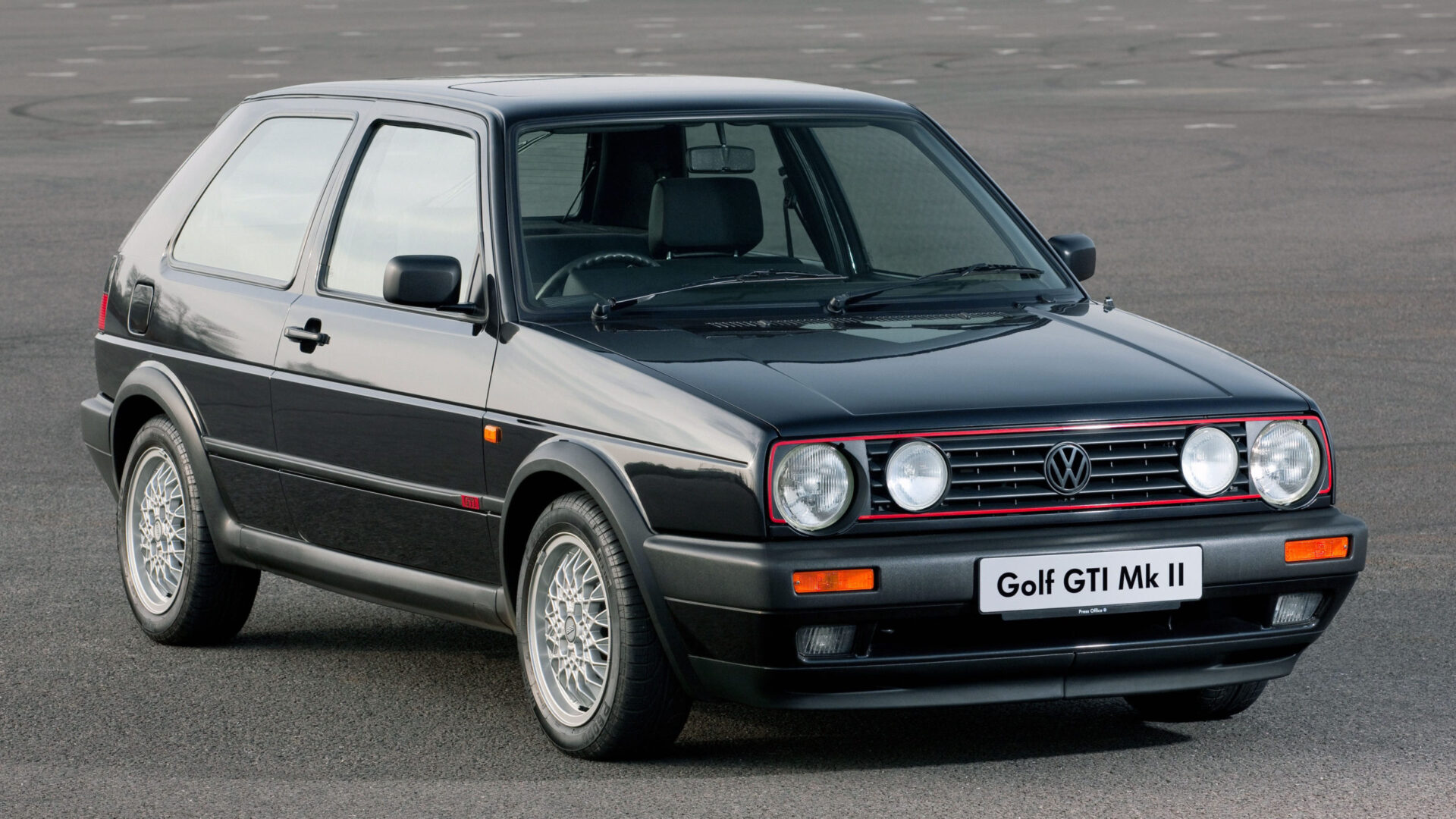
A autocross and B with a Volkswagen GTI.

Andy Pilgrim: Yeah. The first go around in the Volkswagen GTI. So I was in El Paso. Everything was, uh, looking interesting and the Chevy Malibu classic was getting a little long in the tooth. And so eventually I thought, you know, a Volkswagen GTI was like, it was a Lamborghini as far as anything from a kid from the UK could even dream about.

And even though the US GTR wasn’t as light and it wasn’t as powerful as the European version, it was just wow to me. This 1983 car that I bought probably at the end of 1982 in El Paso, and it was a brand new car. And I was like, Oh, I couldn’t believe it. So I run around on that thing for a while. And [00:11:00] one day going down I 10, I saw a C 3 Corvette flying across a parking lot at Silla Vista Mall in El Paso.

And I thought, what the heck? And I looked, and I saw cones, and I saw this car. Parking lot was pretty much empty. I just went, what is that? So I got off the freeway, went around and, and looked. Sure, sure enough, it was an S C C A autocross going on, literally that by luck going by. And I didn’t know what A C C A was.

I didn’t know what autocross was. I had no idea that this was the local chapter of S E C A and their, their autocross was going on at Cali. I joined S E C A and the next time they had an autocross, I showed up with my Volkswagen Rabbit, and that’s how Autocross started. And that was 1983. Yep. And that was so much fun.

Great people. I still remember those, those people from there. They were wonderful.

Crew Chief Eric: So you got all your car control under wraps. You learned how to go fast in a front wheel drive. How do you move from, let’s say the grassroots world of autocross to the larger stage, not jumping all the way forward to endurance and that, but how did you make that [00:12:00] progression from autocross to becoming a professional driver?

Andy Pilgrim: The autocross availability for space in El Paso is limited. So you go further afield. Roswell, New Mexico was one of the places, you know, alien central UFOs and all that stuff. And I didn’t know about that connection when we went to Roswell, but it was a couple of hours drive out of El Paso to Roswell. 10 people would make these treks out to Roswell and Clovis Air Force Base, which was further away.

So we went to Roswell Pettengill. Jim Pattengill wrote for Grassroots Motorsports, the magazine, great magazine. He saw me at Roswell. Now the thing with Roswell was it was a triangle of a disused old airfield from Second World War training base probably or something like that. They had about seven cones.

And they have this triangle, like half a mile, literally speaking, it was a hundred mile an hour slalom and another 80 mile an hour slalom and 120 degree corners at each, each point, it was just stupid. [00:13:00] So I’m in this 90 horsepower rabbit screaming along going through the autocross on three wheels and all this stuff.

Jim Pattengill came up to me and said, you know, you’re pretty quick. You should try racing. And I said, well, you’ve got any money. I’ll be happy to do that because I don’t have any money. We had a nice, really nice conversation. And he said, well, you know, just keep doing what you do. It’s great. You know, you’re coming back.

And I did come back three months later to another event. They, we’ve got, they had another event three months later and we trucked back up. I didn’t think really, I didn’t think about Jim Pattengill in the meantime, he came up during that event and showed me a thing in grassroots motorsports where. A guy was selling a Renault cup and he took the time to explain this is an IMSA series, Renault Cup, Renault Alliances on the west coast and Renault Encores on the east coast.

Renault supports it and these cars are street legal and this car is second hand for 6, 500 bucks. Because I told him I said I don’t want to race for trophies. Got to race for [00:14:00] money. If there’s any chance to do anything with racing, you know, we had to chat and I said, I didn’t, I wouldn’t want to race for trophies and things.

I need to, if I’m any good, I want to learn as fast as possible. If I’m any good and not waste my whole life or money doing it. So he gave me the ad. I called the guy, I was in Nevada. Long story short, I borrowed some money off a bank manager in El Paso. I only had 3, 500 in savings, I remember. This guy lent me 3, 000 for furniture for my apartment.

It was the other half of the car, essentially, and gave me a bit of spare money for the first race. And so I figured if he ever came to the house and checked the car, I’d take the seats out of the race car and put them in the living room and say, furniture. So that’s what happened. And I got this Renault Cup car, drove it to the races, and that’s how it started.

Essentially, the first race was Riverside, California, in 1984, was the first round of the West Coast Series. 51 cars entered. It was actually on ESPN. Believe it or not, that race was on TV. Crazy. I [00:15:00] ended up qualifying 18th out of 51, and I finished 9th, and I won 500. I mean, I was sleeping in the car or we’d have like 12 of us in one hotel room or something.

Cause you know, there was a bunch of guys that were just, we didn’t have the, you know, a lot of money and where we could save money. We would, I mean that 500, I thought I won the Indy 500. Honestly, it was like 146 for a set of four tires for that car. I still have a receipt. So 500 was tremendous and I didn’t crash the car.

Otherwise it’d be taking a bus home. And that would have been it. But I managed to make it through that year with the car, got a couple of podiums in that year, one rookie of the year with that car. That was the end of 1984. 85, I did a couple more Renault Cup races, but sold the car for 3, 000. And that money, having sold the car was the money that I put into buying two weekends in a Firestone Firehawk car in 1986.

And that sort of was that transition because the rental [00:16:00] car series died and I was like, Oh, well, that might be it for racing did a bit of NCCA racing with a Mustang, a dealer out of Texas, sort of had a car and he said you can drive my car. That was 85. Met somebody who prepared that Mustang, who was also preparing Pontiacs in the Firestone Fire series.

I knew nothing about that. At the end of the season, he said, you know, blah, blah, what are you going to do? You’ve really done quite well in that Mustang. And I said, well, I’ve got 3, 000. And he called me and said, that’ll buy you two races at the beginning of 1986. Season in a fire some fire if you want to do it.

And that was all savings. I had nothing outside. Nothing else. That was all my savings. That’s how I got into that series. I’ll stop there instead of just dribbling along the whole way.

Crew Chief Eric: Well, it brings up a very good segue, which is did you practice your craft on your own back then? There was no data. So you’re obviously driving by feel or did you have coaches?

Did you have people helping you along or was it all 1 race at a time? School of hard knocks.

Andy Pilgrim: I [00:17:00] mean, there was no coach motorcycles. And I had an idea about apexing, but I didn’t even call it an apex because I was, you know, you go from outside to inside to outside and you’ve, some corners are different to others.

And no, I didn’t know anybody to do anything like, you know, I think most people guys back then they did, they just learned, they just were quick and. They got quicker and they learned and it became more structured over the years. It became way more structured, as you say, with data and coaches and things like that.

Crew Chief Eric: So did you find yourself following anyone using them as like a lead follow as an example?

Andy Pilgrim: Oh, 150%. If someone caught me up, instead of trying to block them, I’d let them by and try and learn where they were quicker. And that’s exactly what I did. And that wasn’t like I was the fastest guy out there.

Immediately. I had to learn how to handle the car fast corners in those cars, kind of like a Mazda Miata. You just kind of, I want to say, throw it in, but you drifted in. You want that very slight drift angle all the way through these fast corners. That takes a little bit of understanding because you can over over rotate the car and crash it and I’m done [00:18:00] eventually by following figured it out.

Guys that I knew were quick. And I would ask people who’s, you know, you’d look at the timesheet and you’d, you’d slowly progress up the timesheet, figure out how to get there. If you could.

Crew Chief Eric: So at this point, you’re deeper into the racing world. Did you have any heroes or idols or even anybody you looked up to as a kid that you were still looking up to in the larger kind of circus that is the motor sports world?

Andy Pilgrim: It’s funny. I didn’t relay anything sort of. I don’t know why it was a separate, there’s maybe a separation. Yeah, Mike Halewood was a motorcycle rider. Giacomo Agostini was a motorcycle rider that I would see at the racetrack where my dad taught me when I was young. So obviously they were people well known to me.

I know a ton of names because I was young in the 1960s, not so much from the 70s and 80s and onwards, except, you know, Valentino Rossi and some of the guys now. It wasn’t that I had heroes, but looking now, later, When I was in 90s, out in Senna, of [00:19:00] course. Senna, absolutely staggering talent, uh, but that was probably the driver who his focus, determination, competitiveness, that was probably the more modern person that I, I sort of thought, you know, there’s a lot.

There that you can learn from a person like that.

Crew Chief Eric: So let’s step back into the timeline. Here we are in the late 80s. You’re in a Ford. So what happens next?

Andy Pilgrim: Well, the Ford was SCCA 1 year deal with the dealer out of Plano, Texas, which I have now moved from El Paso to Plano, Texas. I’ve moved into the quote unquote management world.

The dealer there wanted to run this Mustang and I was. Lucky enough that he said, Hey, you can run this Mustang. I was kind of growing around, seeing if anyone wanted a young race car driver to race anything, just like you do at that time. After that, like I said, I still had the Renault Cup car, but the Renault Cup series ended.

I sold the Renault in 86. A guy called Jeff Beitzel, the late [00:20:00] Jeff Beitzel, actually he passed away a few years ago. Jeff was the guy who said, you know, you’ve got 3, 000, I will buy you two weekends in this team that we’re putting together. It was sort of related to Pontiac because one of the guys on the team worked at GM Pontiac and that didn’t hurt.

Those two races, I bought those two races, co driver was Bill Bailey. We didn’t win, but Firehawk back then was so competitive. You’d have a hundred car fields. You’d have 50 cars in the grand sport class, massively competitive. And we ended up with like top five finishing fairly quickly. Bill wasn’t a bad driver, gentleman driver.

And I was managing to help lift us into that top 10, uh, and he wasn’t doing bad himself, but between us. Uh, we got some reasonable finishes and I enjoyed working with the team. He was a nice guy after those two races. It was, I was done. I said, it’s been a pleasure. Thank you very much. And all the rest of it.

And I, and Bill said, well, we’ll see you next week. I said, no, that was it. I’ve only got the 3000. Jeff was kind enough to bring me in and he said, okay, all right. Well, Andy, it’s been [00:21:00] great. Thanks very much. And off I went the next week. He called on the phone and said, look, you can’t afford to keep going at the rate what you pay.

I understand that. He said, Can you get yourself to the races? And I said, Yeah, sure. I think I can do that. Yeah. He said, Okay, well, I’d like you to drive mid me for the rest of the season. And that was, that was huge, because otherwise my career, you know, would have been. Well, it would have been over until I saved enough money to try again or something like that.

Yeah, but that’s what literally got me to Firestone High. We finished probably third in the championship. We won two races in 86. We won Sonoma and we won Portland. It got me noticed on a bigger stage because there were a lot of Trans Am drivers, even IndyCar drivers that would race in that series for fun.

And we loved it. I mean, when somebody like the answers showed up or the Andretti showed up, whether it was the world challenge series, the old playboy series, we loved it because our showroom stock based cars, [00:22:00] they weren’t really faster than the quick guys, but it was so cool. You know, Scott Pruitt, other people would be in there and you’re running against guys that, you know, really famous guys.

And it was, it was, it was great fun.

Crew Chief Eric: So is this then the precipice of your journey with GM, or is there something that leads up to you becoming part of that? Because I know our listeners are dying to learn more about your experience with Team Cadillac and Corvette Racing, and we’ll get there. You know, I want to kind of go through the chronology here a little bit.

Andy Pilgrim: The Firestone Firehort series, at the time, there was the Bridgestone Supercar series, there was the Firestone Firehort series. There was the World Challenge slash, you know, series as well in the early 90s, late 80s, early 90s. I was running in all three of those series, but I didn’t have a full time ride all the time after 1990, 91.

But people will call me and say, Hey, we need you for these races, or we need you for those races. And I got to do all three and they were running on showroom tires, shaved street tires, whether they were the Bridgestones, whether they were the [00:23:00] Firestones, whether they were the Goodyears, Goodyear actually had a sticky tire that they ran in, in the world challenge series.

And that was more like a race tire, but it was still, they still weren’t slicks. Early nineties. I got into Sebring and the Daytona 24 hours with Morrison Motorsports. With a car with slicks, and that was a big deal to run a Corvette with slicks. Wasn’t the very first time I was on slicks. I had a bit of sponsorship in 1988 or nine, and I did four barbershop races in a, in a formula car.

This guy came and said, you know, Hey, would you race? You know, I got four races in that. So that was my first time on slicks. But then I ran that Corvette from that Corvette and the Lotus 1994 five, I got my first opportunity when somebody who used to run Larry Schumacher who used to run the Firestone Fireholt series.

He said, Hey, would you like to run in a Porsche with me? He was running now in the IMSA series, the one that does the Daytona 12 hours of Sebring. [00:24:00] And my first time in a Porsche was with Larry Schumacher at the 12 hours of Sebring. And I think that was 1995. That was a huge thing. I mean, wow, to get in a Porsche now, it was like the other cars were showroom stock based, but the Porsche was a proper right now based on 911, of course.

But it was still a proper race car and it was, wow, it was like a huge move. I was, I remember it well, you know, that was great. And I was getting paid during this time. You actually earned money, a thousand dollars for the weekend or 1, 500 for the weekend. You could actually make money. Basic business wise, I was still had a full time job.

In 1989, I had to make a decision because I was getting rides in three different series, not consistently, but gosh, it was like 30 races a year, 30 weekends a year. The people I was working for were really good, but it was difficult. So I took my 20, 000 in savings and said, okay, I’m quitting this job for [00:25:00] 90 grand a year.

And I was earning maybe 45, 000 racing. And of course, you quit the job where you’re earning twice as much, right? With possibilities and everything. I said, okay, I’ve got 20 grand in savings. I started a little IT consulting company because that was the business I was in. Because then I could concentrate on trying to grow this racing career if there was a chance.

Luckily for me, I won’t bore you with going through all of that, but I hired four key people in the first three or four years of that company. They ran the company for me, which allowed me to try to race. I had to still sign paychecks and do all the rest of it was still all on me. They gave me the opportunity while keeping the business going and growing to a degree.

If I’d have spent more time in the business, it might’ve been a really bigger business, but the bottom line is they knew what my goal was when I hired them and they were quite happy to do that. So in 95, getting into Porsche’s 95 also was my first pro championship win. I’d been [00:26:00] second or third in other championships, but I never won a pro championship and they Speed vision cup series with Pontiac, still with Jeff Weitzel.

That was my first opportunity running with Joe Vardy. Vardy’s still around, brilliant driver, great teammate. And I managed to win that championship running with Vardy. We got split up during the year, which is why I won the championship and he didn’t. But that 95 was a big year. Getting to run in Porsche and some of the endurance races.

And also running with Vardy in that when I’m winning an actual pro championship and then 96, 7, 8, I won championships every year for those 4 years

Crew Chief Eric: and the winds kept coming. I’m going to put this in perspective for people. You’re a winner of the 12 hours of Sebring, 2 wins in the Petit Le Mans, 3 wins at the 24 hours of Rolex.

One overall and two GT class for Rolex. Yeah. And five podiums at the 24 hours of LeMans. I mean, yeah. Holy smokes. Yeah. So let’s talk very fortunate. Let’s talk about all [00:27:00] these races, especially LeMans. How about some of the more memorable moments throughout all those huge races?

Andy Pilgrim: Yeah, and again, you get an opportunity to go to Lamar.

Of course, it was a dream 1996. I was sort of on the notice board as far as Porsche at the time, I wasn’t a factory driver, but I was driving with teams that were sort of associated with the Porsche team. And I was given this opportunity to drive with the new hardware guys out of New Zealand. And they had me come in there.

So you’re at Le Mans and you’re in this GT car. The cars run about 188 miles an hour down the straightaway. Porsche has always had really good aero, slippery car. And they were, you know, not high downforce cars. They were GT cars, but they’d run well. You’d have the prototypes that you had to watch out for, of course.

So during those times, learning the Lamont track, which of course, you know, there’s no videos to look at or anything else, really. [00:28:00] You go there and you walk around a bit and it’s like, well, you’re going to go walk the track. We’ll be back next Thursday, because it’s, you know, 8. 2 miles. So you run a car on the public road portion, but there’s nothing like actually being out there with everybody and then trying to figure it out.

Where can you actually break on the straightaway? Where, you know, how quick can you actually go through the Porsche curves? And it was just. Baptism by fire. And then I’m in my first night stint in 96 and it’s pitch black going down the back straight away. You’re overdriving the lights by 80, a hundred miles an hour.

The lights are, you know, that you have lights, but they really don’t. And it was pitch black and there was an orange glow before you come up the hump to turn right into Molson corner. And I came over there as I was coming up the hill, there was a corner work in the middle on the white line with a flat.

Well, my lights were garbage and I was kind of like coming on left side of the road because I could see [00:29:00] this orange glow, but the orange glow was like. It was making the guy and the flag disappear. I couldn’t see it. I finally saw it at the last split second, moved right, went flying over the top, started to hit the brakes, of course, and there was a Porsche GT1 on the left side, completely engulfed in flames.

And it was like, good grief. I almost hit the guy. I mean, I can still see it. The corner workers are nuts. I mean, they’ll get on the track with the flags. It was just one of those things. And I’m like, this is crazy. Later on, like at three o’clock in the morning, I’m going down towards Indianapolis, long straight away with a curve and it’s a fast curve.

And then you just arc into Indy towards Indianapolis corner before the break zone. And I saw some grass in the air. I didn’t see lights ahead of me, but I saw some grass in the air and I thought, well, something must’ve happened. And there was a freaking prototype right online. Sideways really bent. I mean, [00:30:00] really bits all over and the worst corner workers, but around the corner and again, they weren’t in the road.

Thank goodness. But I had hex on job, just getting the car under control, pulling it back to the right and just missing the whole thing. And it’s like your heart is in your mouth. It’s like, what am I nuts? This is crazy. But it’s like, it was amazing. It’s amazing doing that race. I’m so glad I got the opportunities to do it, you know, six times.

Uh, but the first year was something else. It was something else. You know, those early moments stay with you, you know, crazy, crazy.

Crew Chief Eric: So you have a reputation of being probably one of the nicest people in racing, and I’m not trying to over inflate your ego, but it’s true. But during this time period, there was always this concept of rivalries.

I mean, they go back right hunt versus louder center versus promise. So did you have any rivals in racing.

Andy Pilgrim: Well, yes, of course, everybody that’s ahead of [00:31:00] you in a championship or a race is a rival per se, but there were no, there were no specific people that I got to beat that guy or anything like that. No, not really.

Friends became, many became friends. Randy Popes. And I would run against each other many times. Of course, Johnno, you know, and I, gosh, there’s loads of them. You know, the loads of guys I completely respect. And then absolutely get into the European stuff or the international stuff, or the big races you end up with guys that were in Formula One, I mean, you know, Bob Wallach, Terry Boots, and Ish, uh, max Papas, max Angeli.

These guys are Oliver Gavin. They’ve done things in Formula One, and you’re like, This guy’s Formula One driver. You compare your data to a guy who’s been in Formula One. And I mean, I was in awe. I was old when I started. I was 27 when I got into a factory team in factory Corvette. I was 40 years old when I got that opportunity to get into Corvette racing.

I think because I started so late and because it wasn’t easy to get in. I think I still have almost like a [00:32:00] childish view of this in the sense of like, these guys are working on this car. It’s not my car and I’m getting this opportunity. It doesn’t matter if it’s a Mazda Miata, somebody wants you to test around a racetrack or something.

When I get in the car, I respect the fact that guys have spent money on it. It may not be, they may not have all the money and they want me to test or set up the car or help them set up the car. And it’s a genuine privilege. It’s gratitude and it’s excitement. I love getting in different cars that I’ve never raced before.

And I think, you know, the rivalries for me, maybe ended up with friendships. Some of the guys, yeah, some of the guys don’t want to be friends with the people they race against. I respect that too. That’s fine. I don’t try and go out of my way if you don’t want to be friends. It’s fine. Our friend Lee, that’s fine.

I get it. That’s a psychological thing for some of the guys. I’ve just been always so grateful for being there. I’m generally happy most of the time when I’m in the paddock, you know?

Crew Chief Eric: I would be remiss if I didn’t ask a series of Pit Stop questions before we transition on to the [00:33:00] later part of the story.

So of all the cars you’ve raced and driven over the years, is there a favorite? Or is there a least favorite? I know it’s like picking amongst children, right? Is there really a favorite? And in that same vein, are there favorite and least favorite tracks?

Andy Pilgrim: Definitely tracks. Definitely tracks. I got an opportunity in 2017 to drive with Charlie Partman and Charles Espenlav and Joe Foster.

in some races, international races, and they ended up taking me to Bathurst and the Nürburgring. That was such a privilege to do that and go to those tracks. And also some of the other tracks in Europe, I’d been to some of the other tracks in Europe. Monza in Italy was another one that I got a chance to go to in 1999.

Those tracks and those opportunities were wonderful. But in the US, Elkhart Lake, all day long Elkhart Lake. I think every pro driver has it in their top three. If it’s not the number one for me, it’s number one for sure. But there are some great tracks in the US. Road [00:34:00] Atlanta. I love Sears Point. Laguna Seca.

Polder’s actually a great track to drive. Mid Ohio’s fun. I wish there were more overtaking points in it, but it’s still a very technical, challenging racetrack. There’s so many great tracks in the U. S., for sure.

Crew Chief Eric: So no, no favorite car? Cars. Yeah, cars.

Andy Pilgrim: No, there’s no favorite, but so many good ones. I mean, the Corvette C5R, the Corvette C6R, I drove a little bit with Ron Fellows in a C6R, which was a lot of fun.

The BMWs, the PTG cars with Bill Oberlin and Boris Sedd, having a chance to drive that car with those GT2 and the GT3 cars, versions of those was a lot of fun. Gosh, there’s so many, so many great cars. Even the old Pontiac Firestone Firehawk car was, was actually fun.

Crew Chief Eric: Outside of all the race cars, is there a sexiest car of all time?

Something that really gets you excited?

Andy Pilgrim: Mmm, I’m not going to say what I normally say, which would be a Kia Soul. Because I kind of like boxy cars and I’m a big fan of the Pontiac [00:35:00] Aztec. So the fact that most people have just turned off the broadcast. I do like funny, weird looking cars, but in all seriousness, probably the Aston Martins, the style of the Aston Martins and the style of the Ferraris is probably, they’re just beautifully designed cars, beautifully designed cars.

And I’m like, I’d love to look at those cars. I have some weird taste in street cars.

Crew Chief Eric: Not to stereotype, but I would have put money down if you, to guess, to say that you would have said the E Type Jag, but you know, whatever.

Andy Pilgrim: E Type, yeah, well, that’s well, iconic design to say the least, but I was put off somewhat that car.

I never had an opportunity to drive one, but I was told by a friend of mine who used to race historic racing. He said, they’ll basically wander all over the place at a hundred miles an hour plus because of the terrible aerodynamics from the design of the front that causes the lift. Yeah. And so it was a car that I was not at that point because everything when you’re younger, you get in it, you want to go flat out, but he, [00:36:00] uh, he basically said, do you ever get a chance to drive an e type, whether it’s a historic race or just on the streets, it’d be careful.

He said, you might be testing the top end of the car, but they’re not the most stable cars, but yeah, beautiful cars to look at.

Crew Chief Eric: Another question I’m sure people want to know, what does Andy Pilgrim daily drive?

Andy Pilgrim: Well, at the moment I’m driving a new Toyota Supra. Actually, the uh, carbon fiber edition. Yeah, I managed to get one.

I go through cars fairly quickly these days. I liked the Supra when I tested it for Automobile Motor Trend 2020 and I thought this is a great little car. When the CF came out, They were asking crazy money for it and I managed to find one in South Carolina for just a shade under M Ss r P. And I thought, oh, I’m gonna go with that one.

So that’s what I’m actually driving at the moment. And I have a Honda Ground. Yeah, Honda Grand Motorcycle, which is just so much fun on the Kentucky Back Road series. So, well, a horsepower is all I should try to handle these days. ,

Crew Chief Eric: any desire around the Nissan Z? The new one?

Andy Pilgrim: Yeah, I’ve saw a video and I, I saw, saw a drag race [00:37:00] video of the card, you know, like a.

quarter mile run. Seems like it’s certainly got some 400 horsepower, nice car, and apparently rivaling the Supra. So I’ll look forward to testing, hopefully test one at the Motorsports racetrack here in Bowling Green at some point.

Crew Chief Eric: All right, one final pit stop question. Andy, is there something still on the bucket list, a race that you haven’t been able to get to yet, or a track that you still want to drive, or even a car, a race car that you want to get behind the wheel of?

Andy Pilgrim: Having been to so many great tracks, Suzuka, Fuji, I have never raced anything in Japan, so there’s Bucket List there, and also Spa, but the team I’m with right now, I’m helping young Anthony Bartone this year, and Anthony had a wish to go to Spa to do the Fun Cup, so I would say that that in July is going to be another, hopefully another thing off the Bucket List if it all comes to pass, so I will race at Spa because that was the other track, the only other track really that I haven’t.

Race that, that I really wanted to race, you know, Monza, like I said, Bathurst, [00:38:00] you know, having gone to Bathurst, having gone to the Nürburgring race there, just being at those places that they were definite bucket list and Spa was a little bit lower down, but they’re going to get a chance. It looks like so.

Yeah.

Crew Chief Eric: Alright, so let’s get back to it. So as part of your time with GM, you’ve been involved for many years with the National Corvette Museum Motorsports Park and known to many of us as just NCM. GTM has been there several times and I actually learned the track in a funny way. I showed up and Pat Sullivan grabs me by the shoulder and he goes, you’re getting in that car and your instructors waiting for you.

For you and I jump in, not paying any attention to look over and it was you. So you were in Pat’s borrowed ZR1 and about 20 minutes later, I’m like, okay, I got this and you had no fear in just showing me the race line and saying, here it is, have a nice day, you know, go about your business. We had a lot of fun over those weekends, but one of the things I get asked a lot by people that haven’t been to NCM, and it’s [00:39:00] one of the things that you told me is NCM is not a racetrack.

It’s a test track. So do you care to explain the difference and why that’s important to people that might be wanting to go there for the first time?

Andy Pilgrim: Yeah, I mean, it is a race track, but when I say the testing track, meaning that it’s a track to learn, it’s one of the best learning tracks I’ve ever seen.

Because it’s got every type of corner and the way that they have it usually is NCM Motorsports Park. So we kind of call it the MSP, the Motorsports Park. Because NCM is actually the National Corvette Museum. With that being said, the track at the MSP, 3. 2 mile 23 turn track, is magnificent learning track.

It’s great. They don’t have official racing there, but they do have some NASA races there, some SCCA type races there. It’s a brilliant track to learn. I mean, if you are within 500 miles of this place, it is great. And I consult here. I’ve been sort of consulting here for about four years now, very much enjoying.

So I decided to move from South Florida completely. [00:40:00] I sold my IT business in 2018. And so I’m very much enjoying my time here in Bowling Green. And so, yeah, it’s a great place. And we’ve taken like, well, the guy I’m with Anthony right now, he’s. He came 11 months ago, he’d never been on a racetrack, never been on ATV, never done go karts, never done anything.

And we just did our first SRO GT4 race last weekend. And he did very well in the sense that he kept a nose clean. He was right in the middle of the AMS and did a super job, but he learned all of the basic skills at the NCM Motorsports Park. Yeah, it’s a great, great learning journey.

Crew Chief Eric: Now, one of the things I distinctly remember about NCM that you had told me, and I will never forget, and I try to pass this on to everybody that goes there, at least for the first time, or that I’ve instructed now many times after these many years that I’ve been going there, is that you actually have to learn the track in three pieces.

And I remember you were like, and this turn is like this track, and this is like the Glen, and this is like here. And for me, I was [00:41:00] able to put that puzzle together, but you had specifically said. You need to learn this in three pieces and then stitch it together. Otherwise it doesn’t really work because the rhythm is different than a track that has natural terrain, like summit point or Watkins Glen, where it was built in to the earth versus something that was specifically designed to test the Corvettes and the Corvette race cars.

Andy Pilgrim: Yes. It’s a very challenging technical track and it’s a very long layout. And they, they managed to get 3. 2 miles out of it. And, you know, certainly the Corvette race team came at the very beginning to test there and, you know, they wanted to incorporate corners where race teams, like the Nissan team came there before they went to Lamar because they have a.

Turn one, AB, is just the same shape as the first chicane at Le Mans. And so, and the, the cars were reaching within two miles an hour on the long straightaway there, the long layout straightaway, not the regular straightaway. They got within two miles an hour of the top speed at Le Mans there. So you can test aerodynamics and things like that.

[00:42:00] So. It has been used for testing by teams that end up going to Le Mans. But yes, it’s like Elkhart Lake. Elkhart Lake is a long track and I learned that just generally because I split it. Turn one through to five, then five through to Canada Corner and then Canada Corner back. It was just the way that I learned it when I first went there in the 1980s, late 80s.

It just seems to help because you learn little bits and just put them together and it becomes more natural.

Crew Chief Eric: So having driven many different types of Corvettes at NCM MSP, what do you think about the classic front engine rear drive Corvettes versus the new mid engine C8?

Andy Pilgrim: This is a great, great question, really, because we have C7s there that kind of tow the C8s around.

The obvious thing is the Tremec transmission in the new C8. So the launch, you know, you’ve got a sub three seconds, zero to 60, which is no way can you match that with a automatic or stick shift. C7 when you’ve got such a little weight on the back wheel, you’re going to get the [00:43:00] wheel spin, uh, which is fairly typical.

The cars are fairly similar on straight away performance because the power of the C7 is a little bit less like 20 or 30 horsepower less, but the, uh, C8 weighs about a couple of hundred pounds more than the C7. But the actual driving, of course, the greenhouse in the C8 is kind of like, you know, a lot of mid engine cars.

You can see so well out the front, you get a great view of the track. And I think that’s what most people that come and try the car doing touring laps and things there. They come in their C7s or C5s or 6s and then they get in the C8. It’s like I felt like I was sitting in the road. There’s nothing in front of me and it takes them a while to get used to it and then they really, really like it.

And it’s an exotic, it’s more of an exotic shape of course. There’s a lot to be said for that design in the sense of how far you can take it. So the guys that are now modifying the C8s on the tracks, and they’re going really quick, putting sticky tires on, doing a little bit of [00:44:00] suspension work, changing the brakes, and they don’t have to do too much, but the chassis, what I’m hearing from those guys is that the chassis stays with you, and that chassis, it’ll handle more power, which we know is probably going to happen down the road, and it’ll handle the braking, it handles the stickier tires, very, very well.

And so I think you’ve got a car that’s, uh, the potential of that chassis is very, very, very good. And it drives so nicely, but they do drive different. They do drive different as you drive a front engine and mid engine race car slightly different. You have to watch your hands, speed.

Crew Chief Eric: So do you think that the C8 will benefit from a hybrid system like an NSX?

Andy Pilgrim: Yeah, I think any of the hybrids, and I’ve driven a lot of hybrids because I’ve been working with CNET cars and also with automobile for a long time. So I’ve done quite a bit of work with electric Porsche. Taycan came over there. I’ve had some opportunities to deal with a Draco 1200 horsepower for electric [00:45:00] motor.

Vehicle. I do some test driving for them. And so I’m quite familiar with the way some of the electric stuff works. Now it’s very heavy. I’ve also taken the NSX around the motor sports park as well. The weight comes with the hybrid setup, but then you’ve got that all wheel drive and there’s once they have the brain, the CPU sorted out that makes the seamless transition with the motor.

And a hybrid power. Once that gets sorted out, you can use those motors to help turn the car help really balance out the difficulties when you have a high powered two wheel drive car. And that’s what I’ve noticed. with working on traction control systems and stability control systems with the electric vehicles.

The ability to tune the computer to really help drive out of corners, help to allow more [00:46:00] aggressive. Turn ins to the corner and how it can actually help stabilize the car in various aspects. I think over the next five years, once they become more popular and common in basic higher end performance sports cars, I think it’s going to be unbelievable how quick the cars are going to be able to go around racetracks.

You’ve always going to have the extra weight, but I think the potential is going to outreach what we have now, whether that’s good or bad. I’m a technology person. I don’t mind all electric vehicles. I’m totally happy using a PDK over a manual transmission. I’m not one of these journalists that like, Oh, you got to have a stick shift or that, you know, it’s like, okay, fine.

I don’t care. It’s not just because it’s faster, but I’m fine if I don’t have them. The cars are so good, there’s so much grip in some of the street cars now, actually trying to manipulate the gear lever like going down turn four to five at Road Atlanta in a car that’s got a ton of [00:47:00] stick and downforce like a, you know, imagine an RS, a GT3 RS or the ZL1 Corvette, and you’re trying to manage, you’re not, you’re in a street seat.

You don’t have a six point harness on, you’re rattling around like a bowling ball in a jar. It’s very difficult to make quick, precise shifts. Why not have a transmission that actually makes it very much easier to manage the car or even let the car do it themselves? I like technology, I like history, I like stick shift vehicles, but I don’t get stuck.

Whatever I’ve got is good.

Crew Chief Eric: Then I guess your feelings on the alleged E Ray are quite positive then, which of the all electric Corvette.

Andy Pilgrim: Well, yeah, supposing there is such an animal. I think having driven the Draco, which is all electric with four motors, and the way that I’ve worked with an engineer to help their drive controls.

I think people are just going to be stunned if you haven’t driven a Tesla Plaid. And the zero to 60 and two flat or two one or whatever it is in [00:48:00] actuality, it’s actually uncomfortable for most people, you can get whiplash, you can cause a passenger, you don’t like the passenger, you can, you know, you can basically upset them and very easily.

I think the the performance is going to outstrip people’s ability very quickly with these electric vehicles. So much performance that race cars can’t even match in a straight line drag cause. I mean, these cars are being sold on the street and you’d have to have a full harness system parachutes. If you were going to the local drag strip for a car that does 150 miles an hour in a quarter mile and a low nine.

I don’t have a problem with it being there, but you wonder sometimes whether these cars should come with a, a bit of training rather than just sales training to know how to use the wifi. You may need to actually have someone trained in some of this stuff, because you can get to 100 miles an hour in five seconds, then you are in something extraordinarily fast.

And I don’t think the average driver [00:49:00] is going to be expecting this. Or they’ll just never use it. Any electric vehicle, any electric sports car, once they get a handle on how to use the motors and how to do the TC, any sports car, that’s all electric is going to be devastatingly fast.

Crew Chief Eric: You touched on a couple of important things here, and it’s a great segue into maybe passing on some knowledge to aspiring drivers.

And one of the things you mentioned early on is that you drove by feel and by instinct. And obviously data came later because you grew up through the digital era, through the data era of race car driving. So now do you find yourself still driving by feel? Do you use data? Is it a combination? I know people get really religious about this particular question.

You know, it’s all data or nothing. And some people are like, yeah, whatever. What are your thoughts on that?

Andy Pilgrim: I’ve been on race teams where the data was king. And the engineers would not necessarily listen to a driver in the sense that I see what I see on the [00:50:00] data, and even though you’re telling them something that might contradict that, there’s a tendency to just like, yeah, okay, but the data is telling me this.

I definitely think that as far as the data is concerned now, I utilize everything I can because one, I’m old. I mean, shoot, I’m in my mid sixties now. I’m basically running in a series, you know, GT four is a series where you’ve got some absolutely stunningly quick young guys helping Anthony. We go over data religiously and then Danton is learning from me.

So I have to be able to translate that data and sometimes I will learn like Johnny O’Connor, Johnny O’Connor, O’Connor and I drove together for five years, Johnny and I drive differently. He likes a car that is off the front. I like a car that. Is loose on the way in. If I have a car, that’s an understeering car, I don’t particularly like it.

And I don’t trust it, especially on a street course. If you’re having to drive it into a corner with an understeer to get it to go quick, [00:51:00] I don’t like that. I will prefer to let me feel the rear and I’ll steer it through the corner, you know, on the rear of the car. That’s something that you need an engineer to listen to you and give you what you want, whatever the data is.

Something like that. So data is absolutely useful for sure. When you’re trying to train someone. And I learned from Johnny, I learned from Alan McNish on data that was in the late nineties, 99, 98. And my God, how can I not learn in a prototype slash GT one Porsche from Alan McNish? I learned a tremendous amount.

One that. Alan was able to drive the GT1 Evo like he was driving a rental Cadillac, you know, going into turn 10 at Sears Point, he would lose the car twice before the apex. He would like throw it in. Oh, it wasn’t quite right. I throw it in again, all while just going to the apex now. And I thought to myself, well, I’m not going to try that this session, but I worked my way up to trusting [00:52:00] to me.

That was like, it was more than anything I’d ever driven. I hadn’t ever driven any, but you know, a GT three car at that time. And this Evo thing with 800 horsepower. Because we were running against full prototypes, so they uncorked the engine, you know, no ABS, no traction control. Learning from Alan in that car taught me that at that time, that was the most sophisticated data.

And since then, I have a tremendous, now I’m a computer programmer, right? So that’s data, I respect data anyway. But learning, I learned to learn from the data. Ron Fellows or Oliver Gavin or Max Angioletti, you know, Alan would have different ways into a corner. And I might be quicker. You’d look at the pluses and the minus on the way in, but we drove differently from what my own experience, not many pro drivers like to have a car that’s more loose.

Most of them want to drive off the front tires. I don’t know whether that why necessarily, but that’s just been my experience. You can learn from that. And sometimes you blend what’s your natural style, some corners you might. No, if you drive [00:53:00] off the front, you’re going to be quicker. And then you still in the other corners where you can just lose the back end, like faster corners.

If you can just control the back, you can maintain more speed through and you don’t have to adjust the steering because if you’re going too quick to a fast corner, you’re running off the front, you just have to wait a little bit because if you get a sustained understeer, you can’t get back. But if you can rotate it.

Another two or three degrees on the way in, you can fly out, get NOLA last weekend. I was pretty quick through the faster back section corners. And I love those types of corners, you know? Yeah. So it

Crew Chief Eric: brings you back to your days of your GTI. That’s all.

Andy Pilgrim: Yeah.

Crew Chief Eric: Yeah. Right.

Andy Pilgrim: You know, three wheels, of course, always be open, never be closed minded.

Always think you can learn something from a teammate, you can learn something from following some folks, try their line, never be closed minded about anything. I think I’ve always been open minded and tried to change and learn as I go. And I’m still learning. I’m still learning.

Crew Chief Eric: So one of the other questions that comes up is how do [00:54:00] you prep for race?

Is it just, you know, spending time at the track? You’ve been to so many tracks. It’s just experience. Is there any sort of, let’s say regimen you go through workouts, do you use simulators or anything like that? I mean, that’s like the hotness right now, right? Is everybody’s on iRacing now?

Andy Pilgrim: Yeah. My teammate Anthony is on sim.

He’s never been to most of these tracks. He’s never seen any of them. So he’s doing sim work and he gets there and it’s got him to a point when he gets there that he’s already. Got an idea where he is going. It’s not like when I first went to tracks. Nothing else. I don’t use a simulator. I do work out. I continue to do that because you have to, some of the races I do with the Ferrari, it’s a, Jen wants G T three car.

Some of those races are not, are 75 minutes. Just long enough stint that, and it doesn’t have a, it just has sort of a fan in the car. It gets very hot in there. So yes, I have to continue to work out and be prepared in that sense. Don’t do simulator work. I did before I went to the Nürburgring, I basically bought a PlayStation essentially, and learned as much as I could from [00:55:00] the Nürburgring, because out of respect for that place, I had to.

And also I learned before I went to Bathurst as well, for the same reason, just to get more of an idea. And it did help. Unless you have a 5 million simulator, the topography is not there. So that’s the biggest difference. But I think simulators are useful. Data is useful. Working out, absolutely, you should stay as fit as you possibly can.

And I still try to do that. Absolutely. I want to be as good as I can be for the whole time I’m in the car.

Crew Chief Eric: Before we move on to the last part of this episode, I want to ask you one more question. You know, we talked about how you… Looked up to drivers when you were younger, and now you find yourself in that position yourself.

There’s plenty of people out there listening to this now that are looking up to Andy Pilgrim going, he’s one of my heroes, what advice, what golden nugget would you pass on to these folks? Maybe some sort of inspiration to say, you can do it too.

Andy Pilgrim: In the sense of the money aspects, I do get a lot of people either emailing me, messaging through social media, or just talking [00:56:00] to me at the racetrack.

And they tell them just a little bit like, look, I didn’t have money. I’d started at 27. That’s the one that gets them because it’s like you got into factory cars when you’re in your forties. And it’s like, yeah, I had a factory GM contract up to 2018 when I was 61 years old. The point being that you have to have a plan.

You have to have focus. There are things in life that come up, don’t add to the trauma that will come in life anyway, do your best to stay focused, have a plan, if it’s racing related, if you don’t have a lot of money, try and pick a series, try and save some money to at least get yourself into a series where you might get good experience, any spec series, I tell people any spec series, that is going to be a good way to learn, You can’t necessarily afford to get into a pro series like the Mazda pro series now is pretty expensive.

You may get a year or two of club racing under your belt with a something like a Miata, get some results. [00:57:00] And if you feel that you are doing reasonably well, you don’t have to set the world on fire. Try and buy some races. Out of track, you know, with some teams, there’s some great teams out there. I know Shea Holbrook runs a team.

I think she’s got five or six cars and people rent cars from her. You can rent the cars in certain series or a reasonable amount of money. Give it a shot. Try at that pro level. And it lets you know if this is the way to go. And of course, if you can try and get sponsorship, there’s guys that are really good about raising money.

I never did that. And I got lucky, if you want to call it that, or, and when I got an opportunity, I didn’t make a mistake. And I ended up at this age now with this long career. Don’t let anyone say you can’t do it. Stay focused. And when you do get an opportunity in maybe a car that somebody says, yes, you’re a test.

Don’t overdrive the car. You don’t have to set the world on fire. If [00:58:00] I can tell you one thing, I know there were 10 guys in the 80s that were super quick and into the 90s and they would get. Opportunities maybe to drive a GT car or another level up from a known factory operational factory linked operation, and they would overdrive the car and they would crash the car.

And this happened over many years. I know at least 10 guys that have these opportunities. They messed them up. Don’t overdrive. If you get an opportunity, be smart, do the best you can, but don’t overdrive it. And, you know, you’ll probably get there. Enjoy it. Enjoy every time you get on a racetrack. It doesn’t matter where the, what kind of racing you do, if you love it, you’ll do it anyway.

And you’ll spend the money you can on it and you’ll do club racing forever. And that’s great. Or what’s across whatever, and that’s fine. I wanted to try and do it. I didn’t want to do that. I wanted to see if I was any good. And I tried to get into a pro series lowest possible cheapest level. I could, I would advise to do the [00:59:00] same thing and work on your fitness.

work on understanding setup. I still have a beaten up moth eaten book called how to make your car handle by Fred Poon. If somebody gave me an old secondhand copy of that, and I digested that because I made myself understand car setup, whether it’s aero, whether it’s mechanical, on the cars. And learn to drive it.

And if you work on it yourself, you know, you can make a great difference to a car in lap times by understanding setups, just really work at your craft, really work at your craft, just keep a good attitude and learn from anyone that you see out there who might be better than you. And there’s plenty of friendly guys.

Anyone is welcome to come and talk to me. You know, I’m pretty much an open book. I always have been. And so if I know anything or see anything, just come by. And there’s plenty of great guys out there that would do the same thing.

Crew Chief Eric: Sage advice from one of the last great grassroots drivers. I’m going to leave it there as we move on to our final segment here.

A lot of [01:00:00] folks also don’t know that you give back to the community at large through something known as the Traffic Safety Education Foundation. We want to give you an opportunity to explain what that is to our listeners and what it’s all about and where it’s going.

Andy Pilgrim: It’s simply put in the, in the… Late eighties started the business and the bit 89 and the business took off like a single engine Cessna with a misfire dragon and alpha.

And for the first two years, it was hand to mouth, very difficult. I was literally living off the racing and not taking anything out of the business, trying to grow the business. After a couple of years, it finally cleared the trees at the end of the runway. And it wasn’t making loads of money, but at least it was paying for itself after two years, probably five years in six years.

And it was actually, we had some contracts. We had some people on billing and it was making a little profit, but it was at least stable, never a big business. Sometimes we’d have about 50, 75 people on billing. You know, you’d make a little bit of money at the end of the year. So at that point, like 1995, I lived in Fort Lauderdale area.

I actually [01:01:00] saw four kids in the car driving very, very quickly, no signal, flew off a freeway, went down to a traffic light and just kind of blew a red light on a right turn, didn’t even come to a full stop. And I just happened to be watching this thing and I thought, man, maybe traffic safety is something.

I was looking for a give back project. My mother and my godmother were very charity minded. You know, as a young kid, my mom would, we lived in a smaller town, my mom would… Go and do laundry for older people. We knew that we’re in the house. I get dragged along 8, 9, 10, 11 years old one day a weekend. I could play soccer with my friends and then the other day I didn’t like it at the time, but it stuck.

My godmother was the same way. Very charity minded business was going. Okay enough and racing was going well. It’s time to give back. So I went to the local high school and lo and behold, unbelievably. The lady at the front said, well, we, anyone to do with traffic safety, this gentleman in the auto shop down Sorrentino and I walked in the auto shop and he said, hi.

And he said, oh my God, you’re Andy Pilgrim. Unbelievable. Mid [01:02:00] 90s. The guy was a Sebring Daytona Endurance. Says, what are you doing in my shop? He gave me the opportunity to talk to his students and other teachers at the school, big school, 3, 500 students. It was literally half a mile from my house. And that’s where it started.

Traffic safety, understanding. I talked about distracted driving. I have notes from the mid nineties, actually with the term distracted driving on it. Started with talking to the high schools. Then I started talking to driver education teachers. By sort of 2010, 11, I was talking at conferences, I made a video actually with Dale Jr.

I asked Dale Jr. to help me and we made this little video was actually aimed at parents. And it was kind of early for that distracted driving early for that to 2005. And it didn’t particularly take off very well. But lo and behold at a conference, two or three of the teachers there said we use your video in our classrooms.

Thank you. And I was like, you do said, Oh yeah, it’s [01:03:00] great. That three, two, one go and focusing and grabbing the keys and all that stuff and getting your mind on driving. Oh yeah, we use it. It’s great. It’s great. I was like, Oh, cool. About 2011, 12, I made a proper video for driver education teachers. Cause I said, look, you’ve got curriculums this thick, you get six or eight hours to teach in the classroom.

So what do you do? Well, we basically, it takes about an hour to be quite honest, to teach them how to pass the test. And then we try to add things that are going to help them survive out there. I said, so if I make a video with survival stuff in it, you can add it to your classroom. You can do it. Yes.

That’s where the driving zone 2 came from. Cause the first one in 2005 was driving zone. Driving zone 2 came from that 35, 000 of those videos were requested DVDs. Requested by driver education teachers and just believe it or not, driver education teachers, 80 percent of them still want a DVD because when you’re in the classroom, the firewalls at the schools, you can’t [01:04:00] stream, even though everything on my website is streamable, they want DVD because they can’t stream it live.

It’s very difficult, the connections and everything else. So that sort of started, I’ve made five full length videos to do with traffic safety and five PSAs. They’re all on this website, I can tell you it’s www. tsef. org. Everything’s free, even shipping and handling the DVDs. It’s a, just a give back project and it’s just, I get so much wonderful feedback.

It’s great. I’ve got stuff for parents. I’ve even got stuff for parents of newborns because people with younger children, they don’t realize once you turn that child’s safety seat around a face front, that’s when your child starts picking up your driving habits and behaviors. And if you just start thinking about this when they’re 14 or 15 before they get a permit, you’re about 12 years, 13 years too late.

Everything they’ve seen you do is now cement in their head. And they are going to do the same thing. And it’s not enough to say, now, don’t drive distracted. Now don’t take some drivers. Like I’ve been watching you do it for the last 13 years. Uh, so hands free [01:05:00] phone use. Absolute. No, no. Manufacturers will tell you hands free is better safer.

No, it’s not. Absolutely not. The mind concentrating on a phone call hands free or not. It’s a major, major distraction. And so talk at conferences, I’ve spoken at Quantico, spoken at Air Force bases, Army bases, groups of younger people that want the message. And it’s, you know, machinist union, annual safety conference, 750 union safety officer from all airlines were there and of course, schools.

And to parent groups, things like that. It’s great fun.

Crew Chief Eric: And most recently, I believe you were featured on a Motor Week special as well.

Andy Pilgrim: Yes, that’s true actually. Motor Week TV came to the M S P and, uh, shot it there. And, uh, very grateful to them. And it just, it aired actually a couple of weeks ago. Yeah, we got some great feedback from that.

Lots of video requests from people and everything Streamable on the. For regular folks and students, they go onto the website and they stream things, but driver ed teachers still request DVDs. So it’s [01:06:00] like, okay, no problem. We’ll make another 10, 000 then.

Crew Chief Eric: So now we’re going to play. Where are they now? So where is Andy now?

Let’s talk about your involvement with SRO in GT3 and GT4 racing, what kind of cars you’re driving, your international campaigns, anything else that’s going on right now that people would be able to follow you on the racetrack still today.

Andy Pilgrim: Just outside of the racing environment, I’m working with CNET Cars now.

Automobile sadly went kind of out of print a couple of years ago. I’m still very good friends with Matt Morrison, who’s the editor of Motor Trend. I told the Mac that, you know, I’ve got this opportunity at CNET Cars as it is now, it used to be CNET Roadshow. And we are still testing cars at the motor sports park on track with a hot lap.

And that’s a lot of fun. So I enjoy doing that. As far as the racing goes, I got a call from Anthony’s dad 11 months ago and saying that, you know, Anthony’s interested in learning to drive on track. Lo and behold, that ended up with Anthony and I having a, you know, we’ve got used GT4 [01:07:00] MRs, good cars, not the new ones.

And so he’s been doing some different type of racing, like SCCA slash I international GT, and I’ve been doing those races with him in a separate car. Again, pulling him around the racetrack. And now, you know, now he’s chasing me sometimes at some of the tracks where he, where he knows. And so this whole year we’ll be helping him in GT four.

And now we just did our first SRO race. We hope to do another two of the SRO races before the end of the year in GT four. Uh, we may do GT for America at Nashville to give him a taste of the street course. So that’ll be fun for both of us to do that. Also the ski auto sport guys, which I’ve been running their first generation Ferrari GT3.

For the last couple of years, they are doing some SRO GT America races too. They’re again, limited schedule. They’ll do two or three SRO races. Johnny O’Connell’s also running with them, you know, which is fun. Johnny’s doing some stuff with them. So they’re basically giving old age pensioner race car drivers like us a chance to get out in the racetrack again.

So we’ll [01:08:00] do some SRO races. I think we do VIR in the Ferrari, Galecourt Lake in the Ferrari. That’s about it. I think with SRO this year with the Ferrari and we’ll do Sebring with the GT4 car and we’ll do Nashville and we’ve got quite a few other races. The whole point of this year is to give Anthony a look at a lot of different racetracks in the US as many as we can.

So we’re doing different series to get him to see the tracks. So it’s essentially a really busy year this year.

Crew Chief Eric: So I think I know the answer to this next question, which is racing is still in your future until you can’t anymore, right?

Andy Pilgrim: Yeah. And again, like I said to Tony, Anthony’s dad, I said, look, I can pull Anthony around.

And I saw he has talent, even the very first time he went on track. You know, he’s not chasing me around at that point, but I could see that he has some natural car skills and he’s very smart and he sees the way around the track. Not always perfect yet, of course, you know, I can help him. But I said to Tony, I said, [01:09:00] look, Tony, I love to race bits and pieces where I can now, and it’s fun, but this is serious.

But when Anthony gets to that point. That he’s running well enough, I will try to point him in the right direction. Then I can, you know, I can just look from the side and cheer him on and that’ll be perfectly fine. I, this is such a great cause I’ve really never been in this position to, to sort of coach someone like this.

And I don’t think many drivers do get in this position where they still give you a car to race as well. And so I feel very grateful to that. And it’s a. Pleasure to see this lad grow into this and work with him. Plus he’s a really, he’s a nice kid to be around as well.

Crew Chief Eric: We’ll be looking out for him and we’ll be rooting for him as well.

And we’ll probably be cross crossing paths at many SRO events to come in the future. So I’m looking forward to it. Yeah.

Andy Pilgrim: I look forward to seeing you, mate. Absolutely.

Crew Chief Eric: So Andy, as we wrap up any shout outs, promotions, or anything else you’d like to mention before we close out.

Andy Pilgrim: No, I just want to thank you so much for your time.

Honestly, it’s been an absolute pleasure going down sort of memory lanes.

Crew Chief Eric: Andy Pilgrim, [01:10:00] racer, educator, journalist. Andy is currently based in Bowling Green, Kentucky, along with his traffic safety education foundation. He continues his work in traffic safety, professional racing in series like SRO motorsports and consults to the national Corvette museum and NCM motorsports park.

He also writes vehicle test articles and creates video content for CNET cars. If you want to catch up with him, be sure to check out www. andypilgrim. com for all the details or follow him on social at Andy Pilgrim on Facebook and YouTube or at Andy Pilgrim the number eight. So that’s Andy Pilgrim eight on Instagram and Twitter.

And remember. Kids emulate us, so be sure to check out his Traffic Safety Education Foundation and learn how you can create the next generation of better drivers at www. tsef. org. And I have to say, Andy, I cannot thank you enough for coming on Brake Fix. What an incredible resume, what an incredible story, [01:11:00] and what an incredible all around great guy.

So thank you. Thank you very much.

Andy Pilgrim: Thank you. Thanks, mate. Thank you very much.

Crew Chief Eric: The following episode is brought to you by SRO Motorsports America and their partners at AWS, CrowdStrike, Fanatec, Pirelli, and the Skip Barber Racing School. Be sure to follow all the racing action by visiting www. sro motorsports. com Or take a shortcut to GT America dot U S and be sure to follow them on social at GT underscore America on Twitter and Instagram at SRO GT America on Facebook and catch live coverage of the races on their YouTube channel at GT world.

Crew Chief Brad: If you like what you’ve heard and want to learn more about GTM, be sure to check us out on www. gtmotorsports. org. You can also find us on Motorsports. Also, if you want to get involved or have suggestions for [01:12:00] future shows, you can call or text us at 202 333 4000. 630 1770 or send us an email at crewchief at gtmotorsports.

org. We’d love to hear from you.

Crew Chief Eric: Hey everybody, Crew Chief Eric here. We really hope you enjoyed this episode of Break Fix, and we wanted to remind you that GTM remains a no annual fees organization. And our goal is to continue to bring you quality episodes like this one at no charge. As a loyal listener, please consider subscribing to our Patreon for bonus and behind the scenes content, extra goodies, and GTM swag.

For as little as 2. 50 a month, you can keep our developers, writers, editors, casters, and other volunteers fed on their strict diet of Fig Newtons, Gummy Bears, and Monster. Consider signing up for Patreon today at www. patreon. com. dot Patreon. com forward slash GT Motorsports. And remember without fans, supporters, and members like you, none of [01:13:00] this would be possible.

Highlights

Skip ahead if you must… Here’s the highlights from this episode you might be most interested in and their corresponding time stamps.

  • 00:00 Meet Andy Pilgrim: A Legendary Racing Driver
  • 01:40 Early Life and Passion for Cars
  • 02:43 First Steps into Racing
  • 03:40 From Mopeds to Motorcycles
  • 05:19 Transition to Car Racing
  • 07:55 Racing in the US: The Early Years
  • 09:58 Autocross Adventures
  • 14:47 Entering Professional Racing
  • 19:24 Racing Highlights and Championships
  • 27:02 Memorable Moments at Le Mans
  • 30:57 Rivalries and Friendships in Racing
  • 33:01 Favorite Cars and Tracks
  • 34:27 Memorable Race Cars and Personal Favorites
  • 36:11 Daily Driver and Car Preferences
  • 37:16 Bucket List Tracks and Racing Aspirations
  • 38:14 Involvement with National Corvette Museum Motorsports Park
  • 42:27 Comparing Corvette Generations
  • 44:35 Future of Hybrid and Electric Sports Cars
  • 49:23 Driving by Feel vs. Data
  • 55:32 Advice for Aspiring Drivers
  • 59:59 Traffic Safety Education Foundation
  • 01:06:06 Current Racing and Future Plans
  • 01:09:47 Conclusion and Final Thoughts

Bonus Content

There's more to this story!

Be sure to check out the behind the scenes for this episode, filled with extras, bloopers, and other great moments not found in the final version. Become a Break/Fix VIP today by joining our Patreon.

All of our BEHIND THE SCENES (BTS) Break/Fix episodes are raw and unedited, and expressly shared with the permission and consent of our guests.

Learn More

The Traffic Safety Education Foundation

The TSEF mission is to educate, improve driving behaviors and raise awareness of the deadly epidemic of distracted driving. We provide training programs for corporations, parents, educators and civic groups. Featuring on-demand educational videos and seminars, teenagers, parents, educators, professionals and drivers of ALL ages can benefit from learning decision-making skills essential for safe driving.

And remember, kids emulate us, so be sure to check out his Traffic Safety Education Foundation and learn how you can create the next generation of better drivers at www.tsef.org

He also writes vehicle test articles and creates video content for CNET Cars. If you want to catch up with him, be sure to check out www.andypilgrim.com for all the details or follow him on social @Andy Pilgrim on facebook and youtube, or @andypilgrim8 on instagram and twitter. 

In 1981, Andy moved to the U.S. for a programming job with GM Pontiac. His first car? A $500 Chevy Malibu Classic that lasted 45,000 miles. But it was in El Paso, Texas, where fate intervened. Spotting a Corvette autocrossing in a mall parking lot, Andy discovered SCCA and joined with his beloved Volkswagen GTI. That moment launched his American racing career.

Andy’s transition from autocross to professional racing was fueled by luck, hustle, and a well-timed encounter with Jim Pettengill of Grassroots Motorsports. Pettengill spotted Andy’s talent and pointed him toward the Renault Cup – a series where Andy could race for prize money. With a bank loan meant for furniture, Andy bought a used Renault Alliance and began racing. He won Rookie of the Year in 1984 and sold the car to fund two Firestone Firehawk races in 1986.

Those two races turned into a full season thanks to Jeff Beitzel, who saw Andy’s potential. Wins at Sonoma and Portland followed, and Andy’s reputation grew. He raced against legends like the Andrettis and Unsers in showroom stock cars, holding his own and earning respect.


Going Pro: Porsche, Pontiacs, and Podiums

In the early days, there were no coaches or telemetry. Andy learned by feel, by following faster drivers, and by asking questions. His approach was simple: let the quick guys pass, then study their lines. It was the school of hard knocks, and Andy graduated with honors.

By the mid-90s, Andy was racing Porsches at Sebring and Le Mans, winning championships in the SpeedVision Cup with Pontiac, and building a consulting business to support his racing dreams. Between 1995 and 1998, he won multiple pro championships and began racking up endurance racing wins. Let’s put it in perspective:

  • 🏆 Winner of the 12 Hours of Sebring
  • 🏁 Two-time winner of Petit Le Mans
  • 🥇 Three wins at the Rolex 24 (one overall, two GT class)
  • 🥈 Five podiums at the 24 Hours of Le Mans
Photo courtesy Richard Prince, richard@rprincephoto.com, +631-427-0460, www.rprincephoto.com. All rights reserved.

Though he didn’t idolize racers growing up, Andy later admired Ayrton Senna for his focus and determination. His own journey was shaped more by opportunity and perseverance than by emulation.

Andy Pilgrim’s story is a masterclass in chasing your passion with relentless drive. From mopeds to Le Mans, he’s lived the dream many only imagine – and he did it with humor, humility, and a whole lot of heart. Stay tuned for Part 2, where we dive into Andy’s time with Team Cadillac and Corvette Racing, and explore the legacy he’s built across decades of motorsport.

Photo courtesy Richard Prince, richard@rprincephoto.com, +631-427-0460, www.rprincephoto.com. All rights reserved.

The following content has been brought to you by SRO Motorsports America and their partners at AWS, Crowdstrike, Fanatec, Pirelli, and the Skip Barber Racing School.

Car Masters Season 4 – Respect the Artist!

0

When my wife and I saw the announcement for the return of one of our favorite Rustoration shows in mid-July, we couldn’t wait to buckle down and binge.

Check out our other Car Masters Reviews...
Season 1Season 2Season 3Season 4Season 5Season 6
VOTE FOR YOUR FAVORITE CAR MASTERS BUILDS!

Tune in everywhere you stream, download or listen!

Listen on Apple
Listen on YouTube
Listen on Spotify

This season opens with Mark Towle rummaging through dumpsters at a local junkyard, something I am all too familiar with. Going to the yard is – as Forrest Gump would say – “like a box of chocolates, you never know what you’re going to get.” As my wife pointed out, the opening “was cute and fun” but turns to its scripted-formula quickly, picking-up almost immediately after the epic-fail of the online auction for Gotham Garage’s supercar and motorcycle “concept pair” from Season-3.

From this moment on the number of times “250-grand” is said in the first 4 episodes could easily be turned into a drinking game, we get it… you want to get paid for your creation. Selling a one-off concept car in a post-covid, economically downturned, near recession climate has to be tough. As outsiders looking in, we understand why someone would want to invest their money in more common or better known classic and collector cars. It makes good financial sense.

But hang on… because in typical Car Masters style Shawn will wheel’n’deal until we get there, because after all… there’s an ass for every seat. And let’s face it, what would a Car Masters season be without some: Upgrade & Trade until the 6-figure pay day, right?

Gotham Garage is known for it’s gothic-inspired over-the-top near cartoonish builds and this season is no exception. The team comes out of the gate trying to make up for lost time with a 1928 Essex Rat-Rod build (as seen in the clip below), hoping to turn a $30k profit on what’s being touted as a $0 build.


I must drive flat-out! 

Out of seemingly nowhere, Mark and Shawn get a call from a local avid Porschephile, who wants to take his VW Beetle based “Elite Laser” 917 Kit Car and make it track ready. OK! – you have my attention. Mark and Shawn visit the customers garage to inspect the car, and find that it’s a barely together rolling chassis, with an early 911 2.2-litre flat-6 waiting to be installed. The owner claims $40k upfront for the build and a bonus $10k if the car is capable of a sub-2-minute lap time at the “Streets of Willow” configuration at Willow Springs Raceway about an hour north of Los Angeles (below).

It goes without saying that the Gotham Team are out of their element with most European cars. Do you remember the Smart Car off-roader? (Season-1). Granted, this Classic Beetle-based vehicle isn’t the most sophisticated, but they immediately run into issues with the Porsche engine and its ignition system. Having worked on early 911 engines with my father, I can sympathize.

In the end, they were able to get the car “track ready” with some subtle Gotham touches. No spider webs from what we could tell, but mostly a replica of Steve McQueen’s Gulf-liveried 917 from the movie LeMans. I will admit that outside of the engine being oriented the wrong way for a 917, and the goofy exhaust, the car looked much better than when they started the build. Performance is what stands between the team and the extra $10k.

Despite the awkward seating position and terrible hurst-like shifter (above) that the driver had to contend with, the Elise Laser 917 was able to complete a hot-lap of Streets of Willow in a 1:52.29, shattering the driver’s previous benchmark time of 2:03. #imustdriveflatout


Did he say Rocket Car?

The ho-hum; woah-is-me vibe continues through Episode-3 where we add a couple more projects to the mix. We can’t even explain the T-bucket+Ranchero mash-up (above) during the first part of the episode, so we’re not going to… but, crampt is the first adjective we’d like to use, but you’ll just have to check it out for yourself.

“Now that’s a cool car!” exclaimed my wife as the team takes on a ’57 Chevy 2-door Wagon build on the second half of the episode leading into Episode-4. This was a well done and “subtle” #restomod with a brilliant red & alpine white paint scheme, beautiful interior, and build quality that we came to expect from earlier seasons of the show.

The car, in our opinion, was almost too good for the deal that Shawn presented “in-trade” whereby the new owner of the wagon would allow the team to select from any number of “classics” in their salvage yard. At first glance it seemed like there wasn’t going to be any fruit to pick from his yard, as Mark says “there’s nothing here but late models” – but we all know the good stuff is always kept in the back.

After some expected bartering the proposed trade is for a ’69 Camaro Coupe, ’62 Cadillac Coupe and a 1996 Lakester Bonneville Salt-Flats racer in return for the ’57 Chevy. The Camaro is quickly taken off the table with a story about #roundtoits. The Caddy gets chopped into a more desirable convertible, and flipped, while the Lakester gets turned into a “Rocket Car.”

And if by rocket car you mean, attaching a couple of MAP-gas propane tanks with mini flamethrowers pushing out of some dryer vent… then YES!, we have achieved rocket car status. This build was disappointing for the team, as well as for the viewers. It was such a womp-womp moment followed by a $15k loss on the sale. Personally, this car should have just been sold as-is, to a collector or museum since it had racing pedigree and a legitimate Oldsmobile Aurora IndyCar powerplant.


What where they thinking?

Episode-4 somehow turned into PIMP MY RIDE, taking a pristine near-museum quality US Military Ambulance and turning it into a gaudy gold wrapped disco party bus. A tidy $17k profit was made from the build, along with an additional $13.5k profit from a MK5-based 5-cylinder VW Beetle Cabriolet morphed into a modern “Baja Bug” for an up and coming female off-road racer.

Unlike the Smart Car debacle, Mark and Caveman were able dismantle the Bug and not cut any wires keeping it 100% functional. Next, the team turned a brand new Polaris Slingshot into a ’69 Camaro big wheel for Caveman’s best-friend.


Redemption

Before imageAfter image

FINALLY… the wait is over. We can all breathe a sigh of relief. No more lamenting about these concept vehicles and the debt surrounding them. Beauty is definitely in the eye of the beholder, and Nick Smith (below) who you might recognize from ClassicAvenue.com and appearances on other Motortrend shows as an “Automotive Appraiser” represents an undisclosed client that was willing to pay $285k negotiating down from $315k with that suspense driven minimum of “over $250k or nothing” which we’d been hearing about for nearly half the season.

We’re glad the shop got their 6-figure pay day on these cars, and that they could move on to other projects, and in doing so the audience could also move on. Godspeed. 


Jumping the Shark

Then comes the Oppenheimer commissioned “build me a muscle-car for $100k” project, which included one of the most forced/awkward negotiations on the show to date. Mark chooses a C3 Corvette as the base for this build. My feelings on the C3 Corvette continue to ebb and flow – some days I love it, others not so much. The overall plans inspiration comes from the Mako-II Corvette concept car, and that’s great idea, we like this idea a lot! The Mako-II was sleek and sexy, and we were hoping that the team was going to follow the precedent they laid out during the Lincoln Futura build from Season 1 and create a near replica of that one-off concept car.

What we ended up with was more “hotwheels” – and Mark admits at one point he’s known for “cartoonish cars”OK!We need to constantly reminds ourselves of that this season. But here’s my personal take on this build, granted I’m not a designer or even an artist, but… why not start with a motorsports-inspired Bondurant-style wide-body Trans-Am GTO kit then graft that Shelby Daytona (Mako-Shark) rear end to it? Talk about a unique, menacing and aggressive car.

The carbon fiber front-end (above) was interesting to see come together, the technical prowess of the team is always top notch, but it just didn’t seem to fit the rest of the lines. The rear fenders are cut short because of the double side exit exhausts. Mark has a real talent in the paint booth. The paint scheme is undeniably fresh, you don’t see too many gradient paint jobs anymore.  It goes from a dark blue on-top and changes to silver at the bottom, just like the body of a shark. Gorgeous. 

Before imageAfter image

We did take issue with the design, and as Jason Oppenheimer put it “it’s not subtle.” As long as he’s happy, everyone is happy, right? Once the car was revealed, my mind wandered back to the C3 from the movie ‘Corvette Summer’ (above) that we reviewed with EILFM.  I’m not sure which I would choose in a contest, especially with a $100k price tag. In the end, the sale of this vehicle left the team with a solid $55k profit.


Upgrade & Trade, then Sell! 

Finally, around Episode-6 we got back into the rhythm of Season-1, and the recipe goes as follows… take a base Chevy Silverado K5 Blazer in late ’70s brown, and turn it into a rolling version of Darth Vader’s helmet. Super black with hand painted red ghost flames, add a dually rear-end and matching flares and you have “one badass truck.”  The Blazer was traded for a 1957 Kenworth Big-Rig that becomes a personal passion project for Mark in-honor of his relationship with his father. The Kenworth is slated to be sold for a “6-figure pay day” hoping to fetch a tidy $100k.

Progress on the ’57 Kenworth was halted due to a timeline shift for the Lincoln-Zephyr Service Van build that started around Episode-5. Speedway Motors (the named sponsor for that build) asked if production could be sped up by 2 weeks before the annual Southwest “Good Guys” Car Show/Meet in Arizona. The team was faced with a tough decision: Put the Kenworth on hold and find another buyer? -or- Miss the opportunity to have the Zephyr (below) featured on the latest Speedway Motors catalog cover?


The Red Coats are Coming!

After the success of the photo shoot and the reveal of the Zephyr at the Good Guys show, the team was relived to get back to the shop and focus on their remaining projects. If we jump back to the $285k sale of the “Concept Pair” for just a second … remember Nick Smith, from Episode-5?

He steps back into the picture and proposes a new kind of deal, in-short, merging his shop/efforts with Gotham Garage. This means adding a few new faces (below) and pairs of hands to help ELEVATE the results and move things along.

We’re not a 100% sure what the loaded term “elevate” means just yet, but inquiring minds want to know! #keepitclassytemecula

We close with the teams from the two shops meeting each other and throwing some shop talk (shade) around, a hearty laugh and a handshake, and it becomes a “Stay Tuned… To be Continued” ending with the ’57 Kenworth incomplete. As my wife pointed out, Episode-8 (the season finale) wrapped up rather quickly, leaving Season-4 feeling half baked, “where is the rest of it?” she asked.

Final thoughts…

I want to wrap up this season of Car Masters first by saying, we love this show! The people, the work, the creativity are all top-notch. Some of this review might have come off a bit cynical and jaded, but after 3+ years of faithfully sticking with these builders… they set the bar really high in Season-1 and first impressions are lasting impressions. We hope that you take this review with a grain of salt. And if you’re new to the show, understand that Season-1 was so amazingly good, we’re always comparing any future builds to it.

Even though it didn’t continue through the entirety of the season, the show did add something new: more “office-like” 2:1 moments where team members like Constance and Caveman are seated with a blurred background, breaking the 4th wall, giving us more behind the scenes and emotional input between stages of each build. We hope to see more of that as it gives the audience a break from following all the work.

At the end of the day, Car Masters: Rust to Riches is still a great show that my wife and I completely and thoroughly enjoy watching together, and we wish the team the best of successes, and can’t wait for Season-5! 

#rustoration

Confessions of a DeLorean Owner: Don Weberg’s Stainless Steel Obsession

When you hear the name John Z. DeLorean, chances are your mind jumps to the DMC-12 and its cinematic stardom in Back to the Future. But for Don Weberg – founder and publisher of Garage Style Magazinethe DeLorean is more than a pop culture icon. It’s a misunderstood masterpiece, a conversation starter, and a gateway to deeper car culture.

In a recent episode of the Break/Fix podcast, Don peeled back the stainless steel curtain to share his personal journey as a DeLorean owner. What unfolded was a heartfelt, humorous, and deeply nostalgic exploration of automotive oddities, family legacies, and the joy of driving slow.

Don’s DeLorean parked in front of Doc Brown’s house in LA; photo courtesy Garage Style Magazine

Don’s DeLorean isn’t just a garage queen. It’s a magnet for curiosity. Whether parked outside a Texas church or filling up at a lonely gas station, the car draws smiles, questions, and camera clicks. “Smiles per mile,” as Don’s fellow DeLorean owner puts it, is the real metric of success.

Tune in everywhere you stream, download or listen!

Listen on Apple
Listen on YouTube
Listen on Spotify

But owning a DeLorean isn’t always glamorous. Don recounts the deferred maintenance, the rubber parts that crumbled from disuse, and the exhaust leak that made the car sound like a diesel. Yet, after some TLC, the car transformed – becoming more aggressive, more responsive, and more fun.

Spotlight

Synopsis

This episode of Break/Fix, features a detailed conversation with Don Weberg, founder, and publisher of Garage Style Magazine, who shares his experiences and insights as a DeLorean owner. The discussion delves into John DeLorean’s significant impact on the automotive industry, his dream of creating the DeLorean Motor Company, and the iconic DMC-12. Don recounts his personal journey of acquiring and maintaining a DeLorean, offering a unique perspective on the car’s handling, quirks, and the strong community of DeLorean enthusiasts. The episode also touches upon comparative anecdotes involving other classic cars, highlighting the practical challenges and emotional highs of classic car ownership. Additionally, there’s a discussion of the evolution and future outlook of the DeLorean brand, including the anticipated introduction of an electric vehicle model.

  • Never Drive Your Heroes… Why buy a DeLorean?
  • 88 mph… is the struggle real?
  • The involvement of the British Government and Lotus Cars in the development of DeLorean.
  • JZD didn’t design his own car, the connection with Giugiaro.
  • What’s it like owning a DeLorean? Where do you find parts?
  • We hear the DeLorean is quite strong, is that true? How has this changed now that Steve Wynn has purchased DeLorean and moved it to Humble, TX?
  • What’s the future of DeLorean? Thoughts on the DeLorean EV.

Transcript

[00:00:00] Hello and welcome to the Gran Touring Motorsports podcast, break Fix, where we’re always fixing the break into something motorsports related. The following episode is brought to us in part by Garage Style Magazine. Since 2007, garage Style Magazine has been the definitive source for car collectors continually delivering information about Automobilia Petroliana events and more.

To learn more about the annual publication and its new website, be sure to follow them on social media at Garage Style Magazine or log onto www.garagestylemagazine.com because after all, what doesn’t belong in your garage. When people hear the name John z DeLorean, whether they’re a car enthusiast or not, they will tend to associate it with the DMC 12 made famous by the Back to the Future franchise.

Most people don’t realize how much of an influence John DeLorean had on the automotive industry as a whole. His level of vision and talent exceeded many [00:01:00] quoted as the Godfather of the Muscle Car era. When he introduced the legendary Pontiac g t o, he was always toying with the idea of his biggest venture, the DeLorean Motor Company, which in 1975, he began to realize with full control, John was able to work on any concepts without restrictions.

His first and only creation would be the DMC 12. And with us tonight is returning guest Don Weiberg, founder and publisher of Garage Style Magazine to share with us his true confessions as a DeLorean owner. So Don, I wanna unpack more of this DeLorean story because I’ve never personally sat down and talked to a DeLorean owner.

So, ok, I, I’ll real, real quick, I’ll tell you something, that DeLorean is a secret nobody knows about the DeLorean. So this will be really wild when your podcast comes out if people hear this. But Wait, wait, wait, wait, wait, wait, wait, wait, wait, wait. Got a DeLorean, where’d that come from? Wait, wait, wait, wait, wait.

You know, so it’s fine. Do what you gotta do. I brought it up, I opened the door, as they say in court. So, [00:02:00] alright, so then I’ll make sure all my paid subscribers are sick that day. That’s all. You have struck a nerve with this DeLorean thing, which is really, really important. And, and it’ll, it’ll be good, it’ll be beneficial.

People ask me all the time, why do you have that car? Don’t ask me that cuz that depresses me. You know, cause that makes me think, well, maybe I shouldn’t have this car. Maybe it’s a stupid car. Maybe it’s not a good car to have. Okay, here I go, getting off track. But it comes right back to it. My daughter went to a youth function last night at the church and all these young people running around and, uh, she asked me to pick her up and it’s, uh, it’s very attention getting.

And that’s one reason, you know, I, I’ve loved the Laure since I came out. I, I just, that car, I was what, five or six years old when it came out and it just blew my mind. It just, that car, the stainless steel, the gold wing door, the look of it, I, God, that car just has an unforgiving look to it. It just looks like it’s gonna burn lasers through you or something.

I love the look of that car. One of giros masterpieces, right? It really [00:03:00] was. And yet, you know what’s funny is, is you’ll meet people who don’t know what it is. It’s familiar to them, you know? And I see about DeLorean, you’ve seen one who’ve seen most of them. Well, except for the black one or the copper one, or the the yellow one that somebody’s repainted.

You know what I mean? What kind of car is that? Oh, say it’s a Volkswagen Rocco. Oh, it’s an A zuzu impulse. Well, they’re designed by the same, same guy. Same The same guy. Yeah. And they look kind of similar, you know, it’s really funny you say that. Oh, okay. That’s nice. You know, my running joke as an aside is, you know, we’ve been a VW Audi Porsche family forever.

You are Cuatros what? I drove in college. Wow. You know, flare fenders, like I was the odd kid. I had strange cars. Right. So we’ve had all sorts of stuff. I grew up in the back of Rocco’s and whatnot, so I always tell people, they’re like, oh, you know Audi cou? They’re like, what is that? I was like, oh, it’s a fat Rocco.

Right. But then when you get to the DeLorean and they’re like, what is that? And I’m like, well, that’s an overweight truck. Yeah.

Uncle was a Bosch distributorship. And. Porsche, Audi [00:04:00] dealership owner always drove Audis. And my big joke was, uh, I grew up, I knew what Audis were before they were popular, you know? Mm-hmm. I’d go to here, here’s kind of a funny story. So, you know, they existed, you know, they existed before 1984. Yeah. Good.

Good job. Right? Exactly, exactly. Yeah. Way back when. In fact, kind of a funny story, not a funny story. My, my uncle was a World War II vet, and that’s where he grew. His appreciation for German engineering was, he was stationed in Germany during World War ii. One of the cars he fell in love with had those four circles on it, and he just, he always said it was one of the most graceful, beautiful cars, and it was an Audi.

And he learned all about Audi when he was over there. Came back here and started the box distributorship, and that led to working with Volkswagen, Porsche and then Audi. And there they were, the cars with the circles, and he was so excited to see those. He always had Audi, but kind of a funny story. Junior high school, he had the Coop gt, which is the [00:05:00] emasculated version of the Quatro gt.

You have? I have two. I’ve I’ve had two. My sister still owns one. She had one restored. You know, it’s, it’s funny, it’s only the goofballs like us who were like, oh, who? Look at that. You know? Yeah, right. Everybody else like, yeah, okay, Don here have a coke. You know? Yeah, right. No, I love those cars. In fact, that was his last car was a Mars red Coop gt.

Oh yeah, yeah. Mar Mars Orange. Yeah, yeah, yeah, yeah, yeah, yeah. Tornado, tornado pink and Mars orange. They were never red at any point. Yeah, exactly. No, that, that was his car though. But that, that was when I fell in love with, but here’s the funny story. Not a friend, but just a guy I knew in junior high saw me getting dropped off in that car and he said, what kind of car is that?

That looks really, really cool. Well, you know, bright red, you got a 14 year old guy there, whatever. So we’re all impressed by it. And I told him that’s an Audi. So what’s an Audi? Um, it’s a glorified Volkswagen. Oh, cool. 40 years later, I accidentally run into that guy and he is driving Audis. Nice. Yeah. [00:06:00] I, I just thought that was just so funny.

I’m like, do you remember my uncle’s red Audi? No. Really? You gotta be kidding me. The irony of this, eh, whatever, I, I know where we were and it, it is a little bit something No, go ahead. Uh, the church, the church last night, picking her up in the car, a lot of the boys came out. They were fawning over the car, taking pictures of the car.

The older boys finally left leaving three of the younger boys, and so I just walked over and I said, if you want, you know, make sure there’s nothing in back pockets, but go ahead and take a seat, take some pictures. Oh, cool. They were so excited by it. One of the kids in particular really knew his cars. You could tell just by the questions he was asking, by the statements he was making, he was, he really, really knew his card.

I, I think it’s important to, you know, embrace people like that. Let them sit in the car, let them, the parents are good with it. Take ’em for a ride in the car. You know, do whatever you can to introduce them to the car and, and let them experience it. And even if they don’t know what it is, they’ll, hey, whoa, whoa, whoa.

That’s the spark. They don’t know what it is. Well, what is that? That’s such a [00:07:00] weird little car. What is that thing? And they want to know. And the next thing you know, oh, it’s an Audi. Wait, wait, wait. My dad has an Audi. It doesn’t look anything like this Uhhuh, because this is an old Audi, you know, and then the conversation goes from there.

And it doesn’t just have to be an Audi, it could be a weird car, like at the Lian, or it could be an even weirder car, like a Brooklyn or, you know, what is it that turned somebody on? You know, when I was at Motor Trend, I had a little cubicle and I, I took pictures on my cubicle. One of them was a 66 Lincoln Continental with the suicide doors.

I had that car. The other one was a DeLorean. And uh, the other one was a Kunta, one of the other dream cars. It was pointed out to me by one of the editors walking by. He sees the pictures, he stops to look at, you know, what cars are they? And he looks at me and he says, you like weird doors. And I never thought about it before, but he’s right.

I have a thing for weird doors. I, I just never thought about it before. That’s my little hook. I like cars that. Have some sort of oddity to them. You know, I, I, I’ve got nothing against you. Go to an Italian car [00:08:00] show. There’s a billion fiats. Hello? I have one. There’s a billion Magnum pi, Ferrari 3 0 8.

There’s nothing wrong with either one of those cars, and I hate to sound like this. I don’t mean it to sound negative or mean or anything. To have one. You’re kind of just a run of the mill Fiat guy or run of the mill Ferrari guy. You know, you, you’ve got the one car that everybody kind of starts out with or everybody has, and there’s absolutely nothing wrong with that.

I love three oh eights. I really do. I’d still love to have a 3 0 8. I don’t care what kind of stigma they come with, what I don’t. I like man. Okay. Does that tell you how psychotically stupid I am when it comes to you? You’re the only person I’ve ever met that says that. Yeah. Yeah. I like Mondi. You know, back in the day when I was growing up, when they were new, I thought they were ugly.

I really thought that cab forward that I just thought they were hideous. But one day I was at Concorso Italiano years ago, and we’re walking through, and I gotta tell you this one, it hit me like a brick. It was a coop, not a [00:09:00] convertible, and it was sort of a medium metallic silvery gray. It had lightly tinted windows.

The wheels were not chrome, but they were just polished enough to have a little bit of a glint to the, oh my God. That was the car that turned me. That was the car that made me realize the mon deal can be a really, really nice car. You’ve just gotta know how to dress her up. That’s the thing. So, yeah, no, I, I look at 3 0 8 s and I think, man, those things are something else.

They really are. But there’s some of us out there who, we don’t want the run of the mill. You know? We want something a little different. We want something off the beaten path. And it’s not that we’re trying to be better than anybody. It’s not that we’re trying to be the weirdo of the group. No. We are the weirdo of the group.

That’s why we like the mom deal. That’s why we like that Audi gt. That’s why we like these cars that people say, well, what is that car? And I think a lot of younger people, I’m, I’m, I’m listening to a lot of ’em. A lot of ’em like those cars too. I know one guy who will admit to wanting a [00:10:00] pacer, and he’s just a little older than I am, but he really wants a pacer.

Okay, fine. That’s your hangup. That’s your hangup. I don’t know anybody else in this age bracket who wants a pacer. Not voluntarily, but I’ve met several younger guys. Oh, they want a pacer. They want a Pinto. They want a maverick. They want the Vega. Now the sad thing is I like all those cars too. I think they’re goofy and I love them.

Will I go outta my way to buy one? No, probably not. I want to spend my money elsewhere, you know? But these younger guys, no, no, no, no, no. They’re actively seeking them. They’re looking for these cars. I’m blown away. And these guys are in their twenties, so I was the pacer kid back in the day. I wanted the car nobody else wanted.

I wanted that bastard child car that nobody else wanted. Why? Why do you want that car? You know, that’s not a great car. I, I know, you know, I love nine 20 eights. And again, back then, that was a tiny little community who was like, yeah, nine [00:11:00] 20 eights, 9 28. That’s the way to go. You know, there was, there was like seven of us.

That’s it. And six of us have died. So I’m the only one that’s left. But what’s interesting is that’s not true. What’s interesting is what I’m seeing, the guys that are my age, your age, they love 9 28. We are the kids who grew up looking at those cars on the street saying, wow, what a knockout kind of car.

Look at the headlights, the way they pop up. Look at that rear end, that thing. Uh oh. Did you also notice the 9 28 looks a lot like a pacer. Okay, I don’t want to go there, but there is a similarity there. There is a familiar look. Okay. The 3 0 8 was in the same ballpark. I had a mechanic for my Fiat and he had, oh, did he have a 3 0 8?

It was gorgeous. It was an 85, the very last of the 3 0 8 before the 3 28 came out. 85. Oh, Ferrari red. It was Magnum PI all over the place. Magnum pi. He comes to me one day. I had a Toyota four by four pickup, gorgeous truck, bright red, the whole [00:12:00] nine yards. He says, Don, how do you feel about trading my Ferrari for your Toyota?

Oh, you gotta be kidding me. But in the day that 3 0 8 was $30,000 car, my Toyota was a $27,000 Toyota. So price to price, they’re in the same ballpark. I really wanted to do it, but the Toyota was my daily driver. It was the one that graduated the fiat into becoming the fun car. You know? So I really, if I got the Ferrari, I’d be back in the fiat for the daily driver, and that kind of ruined my goal.

Boy, do I kick myself today for not having traded that car and, you know, whatever. But ba ba. But again, a lot of the older guys were always telling me, don’t do that. Don’t do that. That 3 0 8, eh, it’s not worth anything. Never gonna be worth anything. They built too many of ’em. They were underpowered, they’re not comfortable.

Blah, blah, blah, blah, blah. Well, what kind of Farage should I get? Oh, you know, a 67, 3 30. Seriously. Come on. Well, what fantasy island do you live on? [00:13:00] Because I don’t live there, you know? And then they would say, well get a tester. Oh yeah, lemme just go get a tester. No problem. You know? So Don, we can probably wax poetic about all sorts of cars that we love from the eighties, but I think we need to get back to talking about your DeLorean.

What’s it like? Is it as cool as they say it is? You know, we’ve written some articles about how awesome they are and there’s obviously the mystique behind John Delore and all this kind of thing. So are they as cool as they seem to be? Or are they really kind of as, as slow as everybody makes ’em out to be?

Let’s talk about this DeLorean. Let’s unpack it a little bit. Well, you, you’re talking to a guy who has a fiat, so. And I don’t care about going slow. It doesn’t bother me. That car taught me the art of driving slow. It, it really did. It, it, it made me realize you don’t have to go rocket speeds and you can still have a really good time and look cool doing it.

Is it true that it is a struggle to get to 88 miles an hour just like it was in back in the future? Honestly, no. It, it’s really not. [00:14:00] They, I, I’m not gonna say they’re quick. No, I’m not gonna lie to you like that for the day. I think they were slow quick, if that makes sense. Today they’re just flat out slow.

I mean, you’re not gonna outrun much of anything. It that car, it is not a quick car. It is a fast car. You know, there’s a difference between cars in that regard. There, there are quick cars that are not fast. And there are fast cars that are not quick. This is definitely a fast car that is not quick. It, it’ll do 130, no problem, I’m sure, and that doesn’t sound like a lot to today’s market, but when you go back to 1981 and you say you’ve got 130 mile an hour car, that’s pretty damn fast.

You know? And it is funny too, they always say, oh, it’s a piddly little v6, 2.8 liter from Reno. It had 130 horsepower. It was piddly. Again, I’m not a math guy, so this might be a little wonky, but when you do the math, the 5.7 liter Corvette with its 180, 190 horsepower, the [00:15:00] 2.8 liter reno at one 30, the Renault is making more power per liter, per cubic in ch Wanna do it?

The Reno is making more power. Than the Corvette. The Corvette was quicker. It was Torquer probably lighter too, right? No, Corvets are heavier. The, the DeLorean only weighed 2,800 pounds fully loaded, full fuel, full oil, twenty eight hundred and sixty five pounds, something like that. It wa was not a very heavy car at all.

It was heavier than DeLorean wanted it to be. It was heavier than a Lotus, but Lotus helped engineer DeLorean and Lotus. Wanted DeLorean heavier because Lotus couldn’t have a car better than Lotus. You see what I’m saying? Conflict of interest right there. No, they will move. You just gotta know how to drive it and you gotta keep it tuned up.

And so many of these cars, I mean, when I got mine, it was in the same boat. It hadn’t, I got my car from the guy who, who got it in 97. The car had 17,000 miles on it. When he bought it in 97. I got it from him. In [00:16:00] 2018, it had 20,000 miles. So from 97 to 2018, 3000 miles, that’s all the car rolled. So it was riddled with, uh, deferred maintenance.

It was riddled with rubber that just wanted to break. So we’ve gone through, we’ve dumped a lot of money into it. We’ve dumped a lot of time into fixing those little things that. Broke because they were never used. And I gotta tell you, the last thing was just fixed. Actually this past week. I had a bad exhaust leak.

Yeah, this car was the textbook of it. Struggled to move. Once it got going, you were fine, but getting off the line, whew. Good luck it. It just didn’t want to go. Fortunately I fell back on my Fiat upbringing and realized I don’t need to go quick. I just need to go. And that’s what kind of got me through it here in Texas, they do state inspections and the mechanic who is helping me get the cars to the state inspector, he said, you know, it’ll probably pass, but I worry about that [00:17:00] exhaust leak cuz it, it just click, click, click, click, click, click, click, click, click.

It sounds like a diesel. And I don’t know. He said, if you don’t mind, I’d rather fix it. And I said, uh, all right, go ahead and fix it. You know? So he fixed it night and day. The personality of that car is night and day. It is so much more powerful. It is so much quicker. It is, it is. The best word I can use to describe it is aggressive.

It’s not quick. It it, it’s quicker than it was, but it’s still not real quick. But boy does it get too fast. A lot quicker than it used to, if that makes sense. Yeah. So yeah, no, they’re not, you know, the burnout you see in back to the future, that’s bullshit there. There’s no way it boring. Could do a, a burnout like that.

It’s just not gonna happen. 2,800 pounds, all stainless steel, right? So you don’t have to worry about rust other than the frame and things like that. How does it handle, because for that day, 2,800 pounds is pretty heavy. When you consider, like a Rocco was weighing in 1981, Rocco was weighing in at sub 2000 [00:18:00] pounds.

Fiat X 19, sub 2000 pounds nine 14, barely above 2000 pounds. Nine elevens were what, 2200 pounds? Something like that. I mean, it’s a heavy car for 1981. So how does it handle, how does it feel to today’s standards? You know, 40 years later, my wife had a 2015 Honda Accord with a v6. And you give it just a quarter of a chance, it’ll rip a Mustang G through throat out.

I mean, it’s incredible how quick it is. It doesn’t handle very well. You’ve gotta do a lot of driving. When you take it through the curves and the corners up through the canyons, the Honda, it’s very nose heavy. It really, you know, it plows into things, but it’s quick. It’s really, really quick. The DeLorean guy, you feel its weight.

You know when you get it in the curves and the corners, you’ve got some weight under you. But you gotta remember, DeLorean’s original thought was somewhere right around 2000 pounds. That’s where he wanted that car weight. It was right around 2000 pounds. He wanted a mid engine that wasn’t gonna work, [00:19:00] and it was just way too exotic, way too much money for what he wanted to do.

And then the conversation came up too. Mercedes are classically heavy, but there is a reason for that heft. You feel the quality, you feel the heft, and you know, boy, you’ve got a tank. Ford used to call it road hugging weight, right? Road hugging weight. That’s right. That, and I’ll tell you, growing up in a Ford family, I’ve had a number of Lincoln Mark fours, especially those cars, do not discount the mark.

Four. If you know what you’re doing in a mark four, I’ll hold onto your Rocco any day of the week through the canyons. I guarantee it. People always wonder, well wait. Whoa, whoa, whoa. You got a 5,000 pound boat? How are you keeping up with me? I know how to drive it. This is what I was raised. You put me in your Rocco fish outta water.

I, I have no idea how to make that car go. It, it’s just, it’s too small. It’s, it’s not my wheelhouse. The DeLorean is kind of that nice in between car. It’s got a hef to it. It’s got a size to it. When you’re in it, [00:20:00] you feel very low. You feel very isolated in that car. But yeah, if, if you know how to run the gear, don’t buy the automatic.

Uh, that’s just my opinion. A lot of guys like the automatic, they are really, really slow. They are really, really slow off the line. Are they fast? Yeah, probably. They’ll probably get going, but it’s gonna take ’em forever to get there. So if you’re gonna get one, get a manual transmission. That’s just my thought.

No. Compared to today’s cars though. Yeah, I think they still, I think they’re still valid. I do. Is they’re gonna keep up with your Rocco through the canyons? No, it’s not. But it couldn’t even way back when they were both brand new, it couldn’t do it. It’s not gonna do it now. Well, it keep up with the Lotus.

Maybe if you’ve got the right driver, maybe it’ll hold onto an old Espree, not a new one. But an old one. They are fun. They really are. Back in California, we had a lot more mountains back there than we do here in Texas. I took my daughter on a little drive up through one of the mountains and that was the first time I ever really got to get it into the curves.

And I [00:21:00] realized, geez, this car is 10 times the handler of anything I’ve ever had. You gotta remember, I grew up mostly in a muscle car family. We had a lot of big, heavy cars. My dad wasn’t into little cars. He was into the big heavy stuff, which is why I’m more comfortable canyon taming with a Lincoln Mark four than I would be a raco.

Most guys call me crazy. Well, that’s what I like. I I like those cars. I know how to make a move. I think you’ll understand what I’m saying, but you might not get what I’m saying. The Lincoln just to go crazy. Mulholland Drive. I don’t know if they’re still doing it or not, but back in the day, you had the timers club.

And the timer’s club. It was an illegal club. You met at one two o’clock in the morning and you went from point A to point B through Mulholland and you timed yourself and that was it. Well, the Mark four did it three times. I hate to admit that because I realized how stupid it was now, but back then it was a lot of fun and I was the only one there.

I had the air conditioner on. I had power brakes, I had the [00:22:00] radio. I mean, I was as comfortable as could be, but the car is leaning like the Queen Mary. But if you know how to make that lean work for you, oh brother, you are really gonna be having some fun because when you come through that curve, you got more torque.

Then you know what to do with, to get out of it and you’re gone. You know, so it was fun, but you gotta know how to do it. You gotta know how to take a long, wide car into that curve and make it come out without going over the edge. The DeLorean, the first few curves I almost found over the edge because I was oversteering, I was over trying to correct that car.

Short wheel, base narrow. It’s actually not that narrow of a car, but it is more narrow than what I’m used to. It. It was too touchy. It was really, really something. What was interesting to me was the three oh eights I’ve driven. That’s what it felt like. It felt like a 3 0 8 with a lot less power coming out of the curve.

Yeah. That’s 3 0 8. Interesting. You blip. Yeah. You blip the throttle of a 3 0 8. You’re gone. DeLorean’s not [00:23:00] like that. It takes a little while for it to get going if you’re not, and I’ve, I’ve driven a 3 28 QV and I’m assu, you know, not too different. So I’m assuming that DeLorean is also, it’s a transverse v6 so the layout’s the same.

All it, so it’s, it’s designed, modeled very much after that similar style of, of car of that time. So it should handle relatively the same. It probably does. I think it does. But don’t let the DeLorean Go ahead. You There is a lot of weight behind the rear axle. It’s more like a nine 11. That might actually be a little bit more because it’s not, you know, the DeLorean’s motor is not mounted transversely, like the 3 0 8.

3 28. They are longitudinally. Oh, okay. Yeah. So you got all that engine sticking out past the rear axle. It is a little more nine 11 maybe because nine elevens are longitudinal instead of, uh, transverse. I, I learned something new. There we go. Yeah, they’re, they’re lengthwise and just like a nine 11. You know this growing up in the family You [00:24:00] did, you blip that throttle on nine 11.

You better know what you’re doing because they will just spin. Trailer drive over steer. It’s the name of the game. There’s too much weight, there’s too much weight back there. The polar moment on that is it, it, you know, the pendulum effect, right? It, it’s like a front wheel drive going backwards. So you’re gonna have that washout where it’s basically under steering as you’re going through the corner.

But it’s, it’s harder to control when it’s behind you than when it’s in front of you. It is. And you gotta know how to run that throttle. Mm-hmm. You know, so many people, when they, when they, when it start to slide, they want to back off that throttle with a nine 11. That’s how you spin it. Mm-hmm. You know, you really gotta dig into the throttle more.

And that’s when the card digs its way out of the slide. It’s, you really gotta think backward. Uh, it’s just like a front wheel. Drive open the wheel and hammer it and it’s gonna pull itself out. Exactly. It’s gonna go wherever you point it. Exactly. Now the DeLorean, fortunately it doesn’t really have enough power to get, to get out of its own way.

Yeah. Yeah. So when you come around a curve, you’re already going fast [00:25:00] into the curve. If you start to slide. You’re not gonna power slide into it. Yeah. You, you’re gonna, you’re already going too fast. The gravity, the inertia is gonna start pulling that rear end out, and then you’ve gotta know how to correct it, because again, you don’t have the power of the Porsche.

You’re not gonna be able to nail that thing, and it’s just gonna dig its way out. DeLorean probably won’t do it. Yeah. I mean, it just won’t, it is funny. You get one of these cars and yeah, they look like they go a million miles an hour and they don’t, but you start to realize, you know, if you’re going a million miles an hour, nobody can see the car.

Nobody can appreciate it. Nobody, you know. Well, like I said, I had it to the church for my daughter last night when she was in the church doing her youth thing. That car was outta gas, so I ran it over to get gas and wash the windows and do all that stuff right there at the gas station there. There’s one guy who said, do you mind if I take pictures?

No, go ahead and take pictures. You know, knock yourself out. And then there must have been it. Yeah. It’s eight o’clock at night in the middle of nowhere, Texas. I’m filling [00:26:00] this thing up. There must have been seven or eight people who only one talked to me, but, well, no, two, two talked to me. But they drove by and they saw the window go down and the camera clicked, and then they drove off.

You know, so they’re taking pictures of the car. A buddy of mine who also has a DeLorean, he says, I, I, I rate my car by, by smiles per mile. And I say, well, what do you mean by that? He goes, you know, I’ll drive down the middle of the freeway cuz I want everybody to be able to circle that car and take a look and take pictures and smile and give, gimme thumbs up and all that.

He loves that, you know, and the people love that. You know, and, and yeah, there’s a lot of negativity around DeLorean. Oh, they’re not fast. Okay, well, yeah, they’re not fast, but you know, to today’s standard, a Ferrari 3 0 8 is not very quick either. 9 44, 9 28. I mean, you could list off a hundred cars that aren’t that fast by today’s standards, right?

And yet the 9 44 s oh, you talk about a brilliant underrated machine. Bring up 9 44 in a Porsche circle. You’re gonna be ostracized, you’re out, you’re done. They [00:27:00] don’t want to hear anything about you. But they’re a brilliant car. I love 9 28 to the end of the earth, but they’re heavy. They’re really heavy.

So you’ve gotta know what you’re doing with that car. 9 44 is a brilliant machine. It’s the same layout, front engine, rear trans, but that four cylinder is tucked back. Oh, the balance is wonderful. The balance is wonderful. On those cars, all the things of slowness aside, there’s obviously something that attracted you to the car and it probably wasn’t Hollywood or whatever.

No. Why buy a DeLorean? No. Okay. You ready for another Dom story? You, you’re poor bastard. You keep opening the door for these things. You know? 1981, my dad is getting a Buick Regal Company. Car, car, family. We all go to the dealership to get the car. We don’t care that it’s a cheap little regal. We’re gonna go, you know, I’m little, you know, I’m, I’m five, six years old, something like that.

I don’t know. I must have been being rambunctious because my mom took me for a [00:28:00] walk on the lot. So we’re walking the lot, we’re we’re walking every row of every car. In retrospect, I think she must have been trying to wear me out, you know, just kind of burn off some of that little boy energy, you know? And I’ll never forget, we’re, we’re walking along, there’s a row of cars on our.

Right row cars on our left, but there’s a row car on the, on the right and there’s a gap between the parked cars. And I figured, oh, that, that must be where dad’s car was that that must be the parking space where they pulled his car out from Well, as we get closer, no, there was a DeLorean in the space. It was so far forward.

The long Buicks just buried it. You didn’t see it from until you were right on top of it. And the Buicks were so tall that DeLorean’s only 44 inches tall. A six year old boy sees a gleaming steel car. The car of the future. Right. It looks like nothing else at that time. Yeah. And it’s so short. I can look right in the side glass.

I don’t have to go on my tippy toes to look in, you know, the Buicks, I’ve gotta be up here, you know, looking [00:29:00] for the, for the glass. The DeLorean was right here with eye level with me, and then my mom opens the door. And it goes up, oh my God, hugely impressionable age five years old. Hugely impressionable that that car stuck with me for the rest of my life.

That was the car that was the one to get. I think that same year Canal Run came out and I went to see that film with my family and the beginning of the film. What the heck is that thing? What is making that glorious noise running across the middle of the desert going so fast? Oh, it’s a Lamborghini Kunta.

And look at those doors, Don. They opened this way again, same year. 1981, the little boy and one are my two top dream cards. DeLorean and Kunta let you into my white trash side. I really want Trans Ams. I love Trans Ams. I just love them. Start, you know, with where you can. So I started [00:30:00] with the DeLorean.

We’ve only had it for a few years. We have been broke since we started the magazine. This car kind of fell into our lap and it was a friend of a friend who owned it. We had a good deal on it. It was 20,000 mile car. Uh, it had had two owners. It had, I mean, it, it really, really is actually a pretty stunning car, even if I say so myself.

It is. People look at it and they’re like, holy cow, this is nice. It was one of those moments where my wife agreed, you know what, let’s bite the bullet and live on some ramen for a while and just. Go get that stupid car. If you can get a loan for it, go get it. We did. We took a year to get the loan, but we finally got the loan, we bought the car, and it was one of those moments where now we gotta pay the car off.

I have no money to fix it. I didn’t want to tell family. I didn’t want to tell friends, oh, I’ve got this DeLorean because wait a minute, wait a minute. You’re dead broke. You borrowed money from me, you bastard, and you run out and you buy this stupid car. That’s why I never wanted to tell anybody. That’s the true [00:31:00] car guy right there.

It’s the true car guy. Oh, no, totally. We were hiding it in the garages. We were hiding it down the street, you know? Oh, so-and-so’s coming over. Get the DeLorean outta here. Oh, okay. You know, so literally you’re, you’re limping it down the block cuz it doesn’t wanna run it. It was amazing. It really was. You know, you’re, you’re paying this picture, you got the car now.

All this kind of things. And then obviously he needs repair. I wanna put a number out there for folks and we do have some follow on articles on our website about DeLoreans that were written by Mount Mandan. He has a fascination of those cars too. And he dug into the history. We’ve watched a lot of the documentaries, like, you know, some of the fun ones like framing John DeLorean and some of the other new ones that have come out and, and things like that.

And it’s always good to dive back into that 9,000. That’s the number. 9,000 DeLoreans were built in one year and a lot of people have 9,000 cars. That’s nothing. That’s a lot for a boutique manufacturer to have cranked out in one year. I don’t know. Cuz you know 27% of all statistics are made up, right?

That how many are still on the road? I don’t have those facts and figures, but I hear that the DeLorean [00:32:00] community is very strong. And so I’m wondering, does that help keep these cars alive, help keep the parts out available out there? How difficult is it to, let’s say, keep a DeLorean on the road, if that’s your dream car as well and you’re listening to goes, man, I wanna be like Don, I wanna own a DeLorean.

So what’s it like being a DeLorean owner on a day-to-day basis? It’s a lot of noise. You know, it’s funny being a publisher, being a writer. Most of us are attention whores. We just want the attention. We need the attention. I’m not that guy. I’m really, really not that guy. I don’t need the attention. I don’t want the attention.

I, I love flying under the radar. That’s why, believe it or not, I keep mentioning it, my wife’s Honda, the Honda Accord, that car is probably my favorite car in the driveway right now because you hop in it, you are totally anonymous. Nobody knows who you are. Nobody paid attention to you. You blasted through that red light.

Nobody saw you. Nobody saw you. You get in the DeLorean, everybody in Alaska sees you driving it here in [00:33:00] Texas, you know that they, you just, you get seen everywhere. It, it, it is a different experience. If you don’t mind the attention, you know you’re okay with it. You’re gonna be fine with it. I think the only thing that bothers me about it, which is really ironic, the only thing that I, I’m not gonna say I don’t like about it, but I don’t like about it, is the back of the future stuff.

The irony is that’s the reason that car is so popular. That’s the whole reason. I mean, you’re gonna tell me a Bricklin has the following of a DeLorean. They’re the same basic car, but they’re not. They’re very, very different. But they’re the same basic car. They’re a little two-door gull wing made of a funky kind of material.

One’s fiberglass. The other one’s stainless steel one’s Canadian one’s, Irish, you know, whatever. Potato, potato, potato. Yeah. There, there. Yeah, exactly. But nobody even knows what a bricklin is. I do. There’s so many people out there. I know you do. Yeah. But there’s so many people out there who don’t, you know, they have no idea.

They don’t, they’ve never even heard of a bricklin. I would love to have a bricklin. I think they look [00:34:00] horrible. I really do. There’s something about something, it’s like a C3 Corvette and a DeLorean had a a baby. That’s what the bricklin is, you know? Yeah, yeah. But there’s something wrong with that baby. I mean, there’s just, you know, there’s just something wrong with that baby.

But, you know, I would, I would love to have a bricklin. I really would. Yeah. What is it like to own one? You get a lot of attention. Uh, you really do. Some of it’s good. Some of it’s not so good, depending on your opinion. You know, I hate. Pulling into a gas station, and the first thing outta the mouth is, uh, Hey, where’s the flux capacitor?

You know, are you using a plutonium or a 91 octane? You know, well, what are you using? Okay, yeah, whatever. But again, that’s one of those things you just have to grin and bear it. I mean, how many Ferrari guys do you know with a bread 3 0 8? Hey, there’s Magnum. I mean, how many TransAm guys do you know?

They’re saying, oh, there’s the Bandit, or there’s night rider. It’s one or the other. You know, you’re gonna get that. So you’ve gotta be okay. You know, taking that with it. You really, really do. The DeLorean [00:35:00] community is hugely strong, and they’re very supportive. They’re very opinionated. If you’re okay with that, you’ll be fine.

You know, for me, I learned to bite my tongue because there’s a lot of misinformation out there, and I’m not saying I know everything. You know, 85, 83 was always the number for production. 85, 83, that’s what you might call the John DeLoreans. My understanding, the 85 80. That was when the company shut down because DeLorean was arrested, receivership, took possession, blah, blah, blah.

Consolidated industry stepped up a guy we call the Russian, and he finished the cars that were on the line. That’s where you get 9,100 or 91 83, whatever it is. It, it, there was, it was like 500 cars were completed by Consolidated industry, and that’s where you get that funky number of 90, 91 83 or something like that.

So it, it depends on who you’re talking to. Are you, some guys really just think 85, 83, that’s the number. Some guys just round it and [00:36:00] say 9,000 and I’m fine with that. But then you, you got a lot of experts out there who want to. Correct. Everyone who actually knows stuff and you know, those are your younger guys, those are your guys who, and God bless them, they love the car, they’ve got the spirit.

That’s why the community’s strong. I mean, we live four hours from Houston and that’s where the mothership is and that’s where, you know, you need a part. You go to Houston, they’ve got pretty much everything you need, almost everything you need. So is it hard to get parts for it? No, it’s really not. Uh, believe it or not, during the, I don’t know what you want to call it, it wasn’t a restoration, but during the maintenance period of getting my car back on the road, believe it or not, the majority of them came from an online auto parts store.

And, uh, my mechanic Chris, he blew me away. He would just say, yeah, just go on this online thing and, you know, order me this part, order me this part or okay. You know, so he’d gimme the part numbers and I’d go search ’em out and there they were and buy ’em and he’d install ’em. Car runs like a champ. No problem.

You’ve gotta know how to do a lot of cross pollination with these [00:37:00] cars. Know the, the engine is called the P R V six. It was EO Reno Volvo, and it’s a v6. So those three companies jointly got together and said, let’s develop one engine that we can all share and use. You can take the Volvo’s engine and put it in the DeLorean, but those who know what they’re looking for, they look different.

They have a very different look to them just looking down on top. The internals are all pretty much the same, but looking at them, if you know you’re DeLorean, you’ll look at that and say, that’s not a Reno. And you know, this is one argument I’ve had with, uh, not even an argument cuz I don’t really engage.

But one guy was online and he was trying to tell me that these are all Volvo engines. And he’s an owner. He’s actually got a DeLorean, but he is all of 24 years old. I, I don’t know where he got the Volvo thing from, but John DeLorean signed the contract to buy these engines from Reno in 1980. So these are all Reno vvc?

No they’re not. No they’re not. They’re, they’re, they’re Volvo engine. [00:38:00] Oh boy. Here we go. So that’s when I just back off. Cause I figure either a, the community’s gonna dog pile this guy and say, no, no, no. Don’s right. They’re all renos. But at the end of the day, does it matter? It really doesn’t because here’s the thing, I can go to an auto parts store and say, Hey, I need something for a Volvo 2.8 liter.

It’s probably gonna fit the Reno V six, probably not a hundred percent, but probably the trick I think of owning the DeLorean. And I, I really haven’t had mine all that long. Like I say, I got on 2018, so I haven’t had it all that long, but just from what I’m hearing from the other owners, the body panels are almost impossible.

So if you get a dent, you need to find yourself a good metal worker who can straighten out that panel. If it gets bent beyond recognition, you’re gonna be paying a really, really pretty penny to replace those panels. Uh, the windshield alone can cost as much as $4,000 and everybody says, oh, it’s a Lotus Espree windshield.

No, it is not a Lotus Espree windshield. I was one of those [00:39:00] guys who thought it was an espree windshield for a long time. Haha, because I read it in the magazine article. And you know how it is. We read it in a magazine, the newspaper, we hear it on the tv, we read it on the internet. Oh, it’s gospel. It must be what it is, and nobody wants to be wrong.

You know, above everything else in the world, a person wants to be right. They want to be correct. So what they’ve read, well, I read it, so therefore it is, you know, no, it’s not a lotus espree windshield. That’s what makes them so expensive is you gotta find one of these things. As far as I know, it was a one-off windshield.

Good luck. There were a lot of differences. Between early DeLoreans and late DeLoreans. Most people don’t even know that, but that’s kind of one of the fun things of owning the car in the community. You’ll notice a lot of guys will say, uh, hello, you know, from this number, you know, 2,500. Well, that’s the guy who VIN number.

And by knowing a ballpark, Of your VIN numbers, you know that this guy is probably a gray [00:40:00] interior automatic with a gas flap. So he is a little bit of an earlier car. Guy comes along and says he is 10,414. Okay. He’s a way later car. He’s gonna be an 82 or even an 83 registration, even though it was built.

Earlier back, he’ll have a flat hood, he’ll have the antenna in the back. He’ll, you know, there’s all these little nuances that make the car unique. So many people look at them and they, and I said it earlier, if you’ve seen one DeLorean, you’ve seen most of them. Well, yeah, to a generalist, it’s true. But they, they do have their differences and that’s fun.

You know, to me that’s kind of fun figuring out. Which car has what? So two things as we talk about the future of DeLorean, I did a little segment a while back on one of our drive-through episodes, and I’m sure you picked one of these up cuz I did. I had to have one and the, it’s the marketing slogan got me Charlie Foxtrot watches out of the UK under official license from the Dolorean Motor Company put out.

Time machine watch. Right. Their slogan was Now it your Oh yeah. Now is your chance to own a [00:41:00] time machine. Right. So I bought one, I got, can remember the style? It’s the black louver, like the rear car. Yeah, the louvers car. Yeah. Yeah. It’s, it’s, it’s a beautiful watch. I bring it out and people like, what is that?

And I’m like, you know, I just handed it to them and they’re like, wait, what? So I’m wondering what did, what did you think about that as the, basically the precipice for Steve Wynn buying out DeLorean, moving it to Humboldt, Texas. And you’ve been teasing us now for years about the resurgence of the brand.

So let’s start there. I, I thought it was great. I really did. It’s like we were talking earlier, encourage the young people. Steve Wynn liked the car. I mean, bottom line, he just had a thing for the car and he took it to the mega extreme by doing what he’s done. If it wasn’t for that, we wouldn’t have a centralized community, per se, to buy parts from, you know, it would be very shattered.

It’d be very bricklin. You would have a community. But there’s no one go-to guy. There’s no center point. There’s no focus of effort, and that’s what Steve Wynn has done. If he’s given [00:42:00] us that center of effort, that’s where you can go to get the part. Or if you’ve got the money for it and you want Steve to just give you a perfect turnkey, reliable, he’s worked out all the bugs, DeLorean, he’ll do it for you.

You just gotta be able to write that check. But I think that’s great. You know, I, I really do. And yeah, things like the watches and the bag accessories and, you know, all the little fun things that they put to it. Absolutely. I, I think that’s necessary. I don’t necessarily have one, but yeah, so it, you know, I, I think it’s fun because like, you, you don’t have the car, so you’ve got that little bit of spirit going with it.

It’s in the back of your mind. What would it be like to have a DeLorean, I might like to have a DeLorean one day. They’re almost as weird as an Audi, you know? Um, I, I mean, I’d like to drive your DeLorean, it’s like somebody else’s kids, right? I’ll play with you for a while, but then you can take ’em back home, you know?

Yeah. They’re not that bad. But, but again, you’re talking to a fiat guy. I fear nothing. I mean, really, I fear nothing. You know, you know, the, the Fiat, I don’t know if you know this or not, but, but Fiats [00:43:00] have three turn signals. Did you know that? I did not know that. Yeah. Oh, I can guess what the third one is, but go ahead.

Left, right, and flicker. It just kind of sits there and flickers and you know, the other ones doing this and this one kind of, you know, the, and the, the driver behind you are like, which way is he going? And you’re like, nah, I’m just going straight. You know, it’s the, the wonderful world of Min Yeti Morelli electronics.

Right. Just exactly second, second only to Lucas. Right? Yep. Which is why the English drink warm beer. Right. They make all the, all the refrigerators back there, so, you know. Yeah, yeah. No, it, it’s fun though. I mean, there are deficiencies to the car. You know, DeLorean, getting back to that, there are a lot of deficiencies that came with the car off the assembly line.

But today, thanks to guys like Steve Wynn, thanks to dedicated people who wanted their car to work, they figured out how to make ’em work. Yeah. And they figured out, oh, if we do this, it gets better. Are most DeLorean owners [00:44:00] proper purists, or do you still have the hot rodders out there? They’re like, scratch that, Rene, let’s drop an LS in the back of this thing and have a lot of fun.

Yeah. No, they run the gamut. They really do. They, you’ve got the purists like me. I call myself a preservative, and uh, I like it. As close as it left the factory as possible. But there’s a guy right now on Facebook, he’s building a fascinating car. He’s taken the um, I want to say it’s the Echo Tech, 2.2 liter for cylinder turbo.

He has totally restored his DeLorean. He is totally. Rebuilt this 2.2. It is spectacular. They’re putting it in there. It’s a little four cylinder, but it’s like we were saying before, it’s a modern four cylinder. This isn’t the Vega four cylinder. No, no, no. This is the new four cylinder. That thing will really, really cook.

We got another guy with a, um, a Honda Civic motor he’s put in there. Somebody out there has a North Star Cadillac engine, which that thing must be a beast. And the same with your LS swaps. There’s a lot of guys who are doing these LS [00:45:00] swaps now. Subaru was a popular one. There’s a lot of guys who do this.

They just want the power. They want it to go, they want it to move. I, I think that’s fine. You know, go ahead and do that. Enjoy the car. I’m like, your dad. I don’t like it cutting and welding and doing all that stuff. I, that’s just me. Some guys are fine with it. Now that I have mine, I really don’t care what y’all do to your car.

You know, I’ve got mine and I know what I’m gonna do with it. You know? So there you go. You know, there’s a lot of guys out there who get, they get really bent outta shape that they get modified. Uh, the, the time machines. You talk about a modification. The, the guys who do these time machines, Hey, you want a time machine?

Go do a time machine. I, I don’t care. I’ve got my car. I’m good. I can die now a happy man, you know. But these time machines are also bringing a hundred thousand dollars. That’s where the motivation is. You’ve got these guys who see these and there’s guys out there who are really good at building these time machines.

They’ll slap ’em together, a hundred grand, slap ’em together, a hundred grand. I mean, they’re just, you know, they’re just going through ’em. And a lot of guys are getting nervous about [00:46:00] that because, dude, you’re decimating the community. With all these time machines, we’re gonna have no original ones left.

It’s the same argument about Singer and the Nine Elevens, right? Using nine 90 threes and nine 60 fours, and now I hear they’re moving on to the Carreras and stuff to build these beautiful, they’re gorgeous bespoke nine elevens that are bringing in, you know, hundreds of thousands dollars a piece. But it’s a double effect, right?

You’re causing the what’s left of the market. The prices are surging like crazy. Good luck trying to buy a 9 64 right now, or a 9 93. They’re harvesting rather than building their own chassis like Roof did, and a lot of the other manufacturers in the Porsche world. It’s like, I, I agree. I see it from both sides.

I mean, granted, I would love to drive your DeLorean. I would also love to drive an LS swap, DeLorean, you know what I mean? It’s like, it goes, it goes both ways. I do, I wanna own one. I don’t know, I gotta thin the herd a little bit first. Right? Talking about owning a DeLorean, I have said it more than once on this show.

I am waiting for DeLorean to put [00:47:00] out an ev. Uh, and I said it’s the most appropriate just combination of the two worlds. Give me an ev, DeLorean. And you know, they teased it more often than not. And I think now it’s starting to become a reality. And there’s some more recent spy photos showing what’s coming out of Texas.

Mm-hmm. And what they’re planning. And it looks really cool. I mean, we’re talking throwback of all throwbacks. I mean, the challengers are retro, the minis are retro. But this is a true throwback. As an ev, my only concern is what’s it gonna cost to get this new DeLorean? Right? Yeah. Yeah. It’s gonna cost a few bucks.

I mean, you gotta think the original DeLorean, they stickered for over $26,000. And when you do that inflation calculator, $26,000 in 1981 feels like $75,000 today. They were right there with the Porsches, really? And he didn’t want to be there. If you remember, he wanted to be pricier than a Corvette, but less than a nine 11.

There was a nice little sweet spot in the market that nobody was serving, and that [00:48:00] was where the DMC 12, the name supposedly came from that 12, $12,000. That’s what he wanted it to cost. It didn’t work out that way, you know? And even at $12,000 that was gonna undercut the Corvette. By that time, but you’ll remember this all started in the seventies.

$12,000 was more money than a Corvette. But as time went on and the company was struggling to get going, the Corvette suddenly surpassed $12,000. So now the name didn’t make sense. So we all knew the car was gonna be more, 16, 17,000, maybe it would kiss $20,000 when it hit 26. It really wasn’t DeLorean’s fault, it was the economy.

The economy, the trade debt, everything went crazy and all of a sudden, all of his parts, all of his labor, everything was more money. So that car shot through the roof. So too did Corvette. So too did nine 11. They all became more expensive, but especially painful for the DeLorean because it [00:49:00] was just getting started.

It needed to have, you know, a lower price point, but everybody wanted it. You, you gotta think 1981. I mean, isn’t that kind of the, the peak of the malaise era? There was nothing great coming out of anywhere except for the UR cuatro. And it sold for $35,000 because it was the only production all-wheel drive car available at the time.

So that was the hotness, you know, it was, it was also slow as dirt. It made 165 horsepower. I mean, come on. It was, it was pathetic. Yeah. Hundred 65 horsepower and you gotta drive all four wheels. Yeah, it was, it was, yeah, it was a dog. I mean, I’ll be honest, I owned one, I, I know all about the $10 turbo, but it’s got that mystique because it’s a rally car.

And what people didn’t realize was the homologation rules were garbage. And the street car that we got was nothing like the race car that was out on, on the rally circuits. But that’s, that’s a story for another day. But still at that time, you’re right, it was the probably second or third most expensive sports car available that [00:50:00] wasn’t super boutique like Ferrari or whatever.

Yeah. There wasn’t a whole heck of a lot else going on in in the eighties. No, you still had the 3 0 8. That was the only Ferrari available. Porsche had the nine 11 and the 9 24. You’re like, okay. You know? Right. And the 9 28 and the 9 28. Yeah, yeah, yeah. Get into a lot of trouble with this conversation, but.

I really think looking at that era in 1981 specifically, I think the most exciting car out there was the two 80 Z turbo. Oh, I thought you were gonna say the Chevette, which is no sports. We’re talking sports cars. Yeah. Which, which is an opal cadet where most people don’t realize, but that’s a whole nother thing, right?

Yeah. So, uh, the two 80, pretty turbo, but it was so bloated compared to a, let’s, I call it a proper Z The ZX cars were just, oh, they were so heavy and. They were marshmallowy, they were, but look what they did for the brand. You know, again, just like Mustang sales were slipping, [00:51:00] sales were stagnant for Z. So Dotson thought, let’s make it a GP car.

Let’s make it more on par with Corvette. Let’s make it more on par with Porsche, but let’s make it affordable and reliable and inexpensive to operate. Unbelievable sales shot through the roof. It was what people wanted. I, I, I think it’s funny you bring that up and not to diverge too far, but you’re right.

I think that 80 to 83. Was this weird period of in car history where it was like the gray zone or the dead zone because there really wasn’t a lot to write home about. It was maintain the status quo. Whatever you got is whatever you got. Mm-hmm. And then in 84, when the C4 Corvette came out and you had the new carreras coming out, all the new cars seemed to come out in 85.

And actually coincides with another theory we have is that the music world influenced the car world. Yes. And music had a drastic change in 1985 as well. And so the cars changed along with them. And so Chrysler was under [00:52:00] the gun, you know, ia Coca at the helm for the first time in the early eighties.

There was a lot of duress at that period, economically, but also in the automotive world. So DeLorean, I think, you know, with my crystal ball, if he had waited a couple of years, yeah, maybe stockpiled some money instead of embezzling it or whatever he was doing. You know, if he had waited till 84, 85 to introduce the DeLorean, it would’ve been a hit.

Without the movie, it would’ve come at the right time. Cuz if you look at that car, to your point, what we’ve kind of been skirting around here, pun intended, is that it was ahead of its time. It was. It really was. Yeah. And I think you’re right. If they had waited a little longer, that car might have had a better shot.

The electronics would’ve been better. Everything would’ve been better. Yeah. Yeah. There was a lot of forces that work against DeLorean. You know, it is just true. You look at, I mean, here we go again. Even the politics back then, when they started the company, It was a much more progressive government in Great Britain, and they were the ones who backed DeLorean.[00:53:00]

By the time the car came around, you had a very conservative fact government. Yeah. And they were not, they were not very interested in supporting a venture that may or may not make it. You know, that was a big part of, you know, what happened there. But yeah, I think you’re right. If the card come out a little later, it would’ve maybe avoided some of those politics.

It would’ve sidestepped the economy, which took a dump around 1981. 1982. It would’ve sidestepped all those electronic garbage. It may have even had time to get a better, that sounds bad, but a better drive train, a better v6, a better, you know, maybe even just put a turbo on it. Something you think back though, to 1981, you saw that car come around the corner.

Your mind was blown. I mean, 1981, what? What are you seeing coming around the corner? What blew your mind in 1981? The Corvette? I like them, but a lot of people don’t. Because they’re not the quickest. They’re not the fastest. They got the big gigantic fenders, that ridiculous wing back there. They, they looked like [00:54:00] a, a plastic filled stripper walking down the street.

They really did. And, and then there’s the nine 11, which let’s face it, looked the same for, for 20 years. Yeah, yeah. 30 years. Yeah. It was in a dark era. It wasn’t doing very well. DeLorean shows up and yeah, it’s not very quick, but you know what? It’s almost as quick as the rest of those big boys almost. The car and driver did a great article.

It was called DeLorean versus the World. You can look it up. It’s the Corvette versus the 3 0 8 versus the nine 11 versus the two 80 Z X Turbo versus the DeLorean. And it is the darnedest comparison because if you wanna learn real quick, How crappy that era was for performance. That test does it. The Ferrari was the quickest, the Porsche was second to that.

The Z was third, and it was right on top of that Porsche. Then it was the Corvette and the DeLorean. Then there was the top speed showdown. Boy was that an eyeopener. The Ferrari was the [00:55:00] fastest, of course, the Z and the Porsche, if I remember correctly, they were tied A, you got a what? 25, 20 $6,000 Porsche and a $17,000 dots in, and then neck and neck.

When you go top speed. That’s absolutely mind blowing. And then of course, you know the COR Corvette was one 30 and the DeLorean was right there at 1 25, 1 30. Whoa. Wait a minute. They were just as fast as each other. Yes, they were just as fast as each other. Nobody wants to admit that. For years and years and years and years and years.

Look, you know how many old guys I met who told, oh, don’t get a DeLorean. Oh, you don’t want a DeLorean. Those are junk. You don’t want a DeLorean. Okay. Well, these are guys who had their hearts broken by John DeLorean because he made the company and then the British pulled out and then he was supposedly embezzling.

We still don’t know. I’ll tell you, DeLorean was doing fine until Colin Chapman got involved. The minute Colin Chaptman got involved, everything started sliding sideways and you talk about a man who knows how to rob Peter to pay Paul. The man ran a racing team [00:56:00] and a car company. You can’t do that without robbing Juan to save the other.

Ferrari, I think is the only one who did it, right. He sold off the road car division to Fiat and then he was able to keep the racing division to himself and going, but they’re separate entities. Fiat controlled one, Ferrari controlled the other. Somewhere in the middle they made music and it worked, but they kept it separate.

They were very good at that. At least that’s the reputation. Lotus was not so good at that. Lotus was always right on the brink of bankruptcy or receivership as they like to say. So for the British government to turn to John DeLorean and say, oh, by the way, we think you should hire Lotus Cars to be your consultant and we think you should hire Colin Chapman to be a partner in engineering.

John DeLorean said it. He, he said it a hundred times. That was when I knew things were gonna not go well. I had no choice. Because the British are financing this whole operation. They’re really the ones who get to pull the [00:57:00] strings and they have just said, you’re gonna work with this guy. He’s our guy. He’s the one who’s gonna make this work for you.

What’s he gonna do? Well, he’s gonna make it work. Well, how’s he gonna make it work? Sigaro has already made it work. Bill Collins was DeLorean’s engineer between him and Sigaro and DeLorean himself. They were getting the car dialed in, but not fast enough for the British. The British wanted to see return on their investment and hey, fair enough.

They put up 250 million pounds in 19 76, 77, 75, somewhere in there. They put up all that money. You know, we just did it for the DeLorean. What does 250 million pounds feel like today? I mean, how much money must that have been back then? That was exorbitant. That was a huge amount of money. You know, when Colin came on board, he said, I knew then we were gonna start having trouble because the last thing Lotus needs is another damn sports car in the market.

They’ve got the esprit. Theri is doing great. It’s in James Bond films. Everybody loves it. And here comes this [00:58:00] damn DeLorean with its stainless steel skin and it’s going doors and it has space behind the seats. We can’t have that. No. The problem started right when Colin Chapman stepped on board and, okay, let me just throw him to the wolves.

Maybe he played off of John DeLorean’s, greed and ego. You know, John, this is making good money. We could open up a research and development center and that’s a great way to funnel money to you. That’s how I get money to my racing team. Research and development. Oh, it’s just like having a marketing department.

People operate a marketing department the same way. So did he do it? Yeah. I hate to, you know, de my hero, but. He probably did, but why did he do it? Because what Colin Chapman says goes, because there’s the queen over there, and she just said, if you want my money, you’re gonna do what I say. Ooh. Yeah. So, sorry, I can get a little bit Oh, oh, no, no.

Because you saved me from telling this part of the story, which I think is [00:59:00] fantastic. And, and as we all know, the lotus past is sorted. And you can read, you know, the different biographies that are out there. Obviously one of the, one of the most accurate ones is by Cromb back, you know, Colin Chapman, the man in his machines.

I’ve written about it. I’ve reviewed it a million times. It’s, it’s a great story. There’s pieces that are missing and then, you know, when everything goes south, suddenly Colin dies quickly soon after all the, let’s say, the shit hits the fan, right? So, mm-hmm. We’ll, never, we’ll never. We’ll never know the truth.

Right. And obviously Mabel just died recently as well and I was hoping maybe they would expose the story behind why it’s called Lotus, cuz that apparently went to the grave as well. There’s a lot of mystery and, and subterfuge I guess you could say there. And it makes it, it makes for a good story right at this point, looking over the 60, 70 years of the company.

And for those that are Lotus fans, I can’t recommend enough going to Barber Motorsports Park to check out one of the largest lotus collections in the United States. I’ve been there. I’ve seen like the original Lotus, you know, all these kinds of things. It’s very cool. It’s a very neat place to go. I mean, the cars [01:00:00] are exquisite.

I mean, there’s nothing to say about that. But the one thing that has always puzzled me about this story, as we kind of wrap up this thought here about the DeLorean, this has been an excellent conversation. Historians have always hung their hat on the fact that John DeLorean is a noted car designer. Like he’s this boy genius.

And there’s been other people like this. I mean, ia Coca is credited for being the, you know, the father of the Mustang, although he never pinned a single line on that thing. But DeLorean was this hot shot. Car designer, but he had Giro design his car for him. And I thought that was always really weird and I never understood how that came to be.

And unfortunately, knowing that, knowing that the pedigree and, and the cars that Giro has penned, I’ll name a few, right? The Rocco, the golf. Mm-hmm. The launch of Delta, the Fiat Panda, you know, as something as basic and utilitarian as that, the, the BMW that became the M one, the nacas. There’s, I mean, if, if you look at his portfolio, it goes on and on and on.

And he [01:01:00] continues to design cars today, and he is involved with things even, even as we speak. But the DeLorean screams Juro, it just is, right. It’s a combination of other designs that he already had in the portfolio between BMW and Volkswagen. And by the way, the Mark two Rocco was a rejected BM W design.

I, I have pictures of the original, uh, I don’t know if you knew that. I didn’t know that. Yeah, the original one, like on the, on the back of the C pillars, there’s BMW envelope, round bells and stuff. It’s pretty cool. Anyway, I think he had a hand in Penny. You are Quatro as well, but I’ll, I’ll leave that where it is.

So anyway, I never understood how DeLorean and Juro married up and how they got together. Do you happen to have some insight on that? Not really, no. I mean, I, I know, yeah, the, the only thing I do know about is, uh, I know that DeLorean’s package idea, which was of course was a mid engine, et cetera, it just wasn’t working out.

And that was part of why Colin Chapman was brought in, was to clean up the mess that DeLorean was trying to [01:02:00] drag through. DeLorean constantly wanted more time, more time, more time to develop the best car he could. Perfect car, yeah. Yeah. And the British were just thinking, you know, how much more can we finance here?

We’ve already given you all this money and all these packages. We need to get a car on the road. We need to start recouping money. And that was where the research and development came from. You know, let’s just put a car out there real quick. Let’s get it done. So we start making money back. We’ll open a research and development and you know, we can start making a better car.

That was, that was the theory as it was told to me. The Juga connection, I can only imagine had something to do with, wrap this up, make a car that we can put together, we can get on a container ship. And yet I think about shipping. People don’t think about this. Cars have to be a certain length. And a certain width to be on the truck.

To be on the ship, et cetera. You know you’re gonna get more DeLoreans on a ship than you are Lincolns because the Lincolns are longer. You’re only gonna get six to seven Lincolns. You can probably get [01:03:00] nine or 10 DeLoreans cuz they’re shorter, they’re smaller cars. That was a big part of it too. How do we package this car so that it, and I’m sure Jaro had something to do with that.

You know, going back to the garage style conversation, you asked me the most amazing garage I saw, and I told you it was a. Building above a lot. He was a designer. I told you that he got a call around 1979 from John Delore in 1980 saying, uh, Shiro is pinning his car and he doesn’t like any of the wheels that the Italians are coming up with.

Would you mind designing some wheel concepts for me? He said, no, no problem. So he designed all these different concepts, sent them to DeLorean. DeLorean sent them to Sigaro. DeLorean said, I like this one. The turbine style that the car actually wears. And so that was, uh, that’s where that came from, was that man who has that garage that I’m in love with back in California.

The thing I’m really, really hoping to get my hands on, he still has the original sketches. Ooh, that’s cool. I’m [01:04:00] really, really hoping, you know, to get ahold of those. I don’t care if I have to pay for ’em or if I have to kill ’em, whatever, you know, I just really wanna get ahold of those sketches that just blows my mind.

Anything delo and I try to buy it, you know? But yeah, how Jaga really got involved. I, I don’t know. I, I could only imagine it had something to do with the packaging or that he was super popular at the time. Right. He was an up and comer. He had designed a ton of cars that were, were winners maybe, you know?

Yeah. And it, and it did give him cachet, you know, it did give that car cachet, you know, the bricklin was designed by. Somebody in Canada, I guess. I don’t know. Just Bill Canada too. Yeah. Yeah. Nobody cares. You bring up the Lori and if people know that, oh, that’s a Jaro design, you know, and then like you and I were joking, it looks like a Rocco.

It looks like an impulse. There’s your packaging. Jaro already had an idea of how we can put this car together. The two things John was adamant about were the gulling doors and the stainless steel. As far as I know, pretty much everything else he was negotiable on. He was willing to [01:05:00] listen to why we should do something different.

And when the British started squeezing him saying, look, we gotta get a car out and we, we gotta do this. And isn’t that ironic? Fast forward to now Humboldt, Texas, they’ve been teasing us with a new car For how long? I mean, forever. They seemed like they’ve been teasing us with a new car. That was kind of the road John DeLorean was heading down was he would just make it better.

Make it better. Make it better. Well, John, we’re not building a Mercedes here. We’re not building a Rolls Royce. We’re, we’re building a little sports car. So people are gonna have fun. People are gonna have something different. You know, we, we need to keep that in mind. At back of, uh, DeLorean’s mind was always quality, quality, quality, quality.

Well, then I’ll start as sight sideways. I love Lotus. I do. I’m an Spreet kid all the way. Everything started sliding sideways when tall Enc Chapman and Lotus Motors got involved. And so let me ask you this, and I’ve never asked this on a pit stop before, and this is my last question, I promise. Does the statement hold true for the DeLorean now that you’re an [01:06:00] owner?

Never drive your heroes. I, I can understand it. I mean, I have a rule. Never meet your heroes. You know, and I, I established that rule because I met some heroes from Hollywood. I met some heroes in the industry. I met some, you know, it left me cold, you know, so I just thought, well, anybody I admire in one of those industries, I’ll stay away from, no, I, I like driving the car.

I do, I, I’m not gonna say it’s a fun car. It does have a little bit of a ishness to it, because you got those huge A pillars. You know, you got that real low roof line. I’m, I’m six two, so I sit up pretty hard in that car. But DeLorean was six four and you know, he fit in the car, okay? It’s psychological, but you’ve got that little male slot window, that horizontal line right there for the window.

When you see it peripherally again, it ties in with those big A pillars and it ties in with that. And you look in the rear view mirror, you don’t see much. You know, there’s not much. So you really do feel cocooned in there. I mean, I’ve said it a hundred times. I’ll say it again. I [01:07:00] enjoy driving my fiat more than I draw.

Enjoy driving the DeLorean. It’s a much more fun car. It’s nowhere near as quick. It doesn’t handle as well. It does, but it rides nicer. It really does. The fiat rides beautifully. It drives nicely. It’s a humble car. People look at it, they smile, they give a thumbs up, they wonder, what is that car? And at some people are even, you know, they, they look, oh, this is the new Fiat.

What is a, this is a, this is a 79, 79. Fiat’s been around that long. Dude, Fiat came around in 1899. What? Yeah, they don’t know. But here we are with a young person who’s showing interest. So you don’t wanna insult them. You don’t wanna smash ate them. Yeah. Right. So bring them around, you know, if they’ve got the fiat bug, you know, let ’em, let ’em, let ’em, uh, let ’em have it.

So, no, I, I think that DeLorean is fun, but it’s its own brand. If look, this will be loaded because it’s an opinion is a nine 11 fun. Depends on who you ask. Yeah. It depends on who you ask, you know, and I like nine elevens. I do, [01:08:00] but. The few that I’ve driven have just kinda okay. Honestly, I, I just, I, I really don’t understand it anymore.

And you know what? Maybe that’s my bias because I had so many people back in the day, leave me wrong and tell me, don’t buy that 77. You know, I, I don’t know. Maybe I’ve got something wrong with me up here, but I think that DeLorean’s a lot of fun. I think it gets a lot of bad rap, and I think there’s a lot of misunderstanding floating around out there.

Again, it boils down to it. If you’re interested in it, go get one. You know, go, go try one out. Go, go get involved with the community. You know, I, I’ve always been a car guy. It, it doesn’t matter what kind of car it is, I’m probably going to like it, but I’m a little bit biased that way when it comes to cars.

My wife hates the cars. I mean, she does, she just, you know, get rid of all of’em and let’s just have the Honda and I just, okay. In an alternate universe, far, far away, that’s, you know, Rob Sterling, his president in, maybe it’ll work. I don’t know that that’s the same as when somebody tells you to get rid of all the appliances in your kitchen and just have an air fryer.[01:09:00]

You’re like, or Insta Pot. You’re like, oh yeah, I guess it can do everything. Sure. But it’s not the same. It’s not the same. Yeah, exactly. No, exactly. It, it’s a very different, I was worried about getting the car, like you say, I, I was because I thought, what if I hate it? You know, what if I hate it? You know?

That was a thought that ran into my head. And then how do I tell my wife, oh, I hate it. You know, I, I’m kind of stuck with it cuz she backed it up. I don’t hate it. I really don’t. Especially now that that exhaust leak gets fixed, it really woke that car up. It’s a lot quicker. It’s a lot more aggressive.

It’s a lot more fun. The more reliable we make it, the more fun it becomes. Yes know, I don’t Exactly. That’s true of any old car. Absolutely. A hundred percent. Yeah. Yeah. And you’ve gotta be able to, you know, you can’t stub your toe. DeLorean, there’s so much stuff swirling around about it and a lot of it is wrong.

A lot of it is correct and I learned that from my car. I, holy cow, they weren’t kidding about this. My car was literally all original when I got it right down to the fuses. Everything was original in that car and everybody would’ve blown away. [01:10:00] They thought, holy cow, this thing is original. Well, if I want a paperweight, that’s great.

But if I wanna be able to drive it, well, we’ve gotta upgrade the fuse box. We’ve gotta upgrade the fuses. We’ve gotta, and that’s where my mechanic, Chris came in and he started and he knew my budget. He knew it was very sensitive, very shallow. So we had to go piece by piece by piece and just slowly correct this car.

Yeah. When I first got it, I was terrified of him. My God, is this thing gonna leave me stranded somewhere? Is this thing, you know what? What am I getting myself into today? It’s a different ballgame and you can hop in it and enjoy it and have fun. And that, I think is what makes it fun. But people have to give it that chance.

You can’t get a DeLorean and it breaks down on, you can’t get any car and it breaks down on you. But DeLorean, especially because there is such misinformation about that car, about how piece of junk they are, you can’t stub your toe on that first problem and say, oh my God, here it is. The DeLorean Thunder Cloud is over me.

No, it’s not. It’s just, you know, this is a deficiency that came with the [01:11:00] car from the factory. You just have to correct it. You know, and there are a lot of deficiencies. There really are my best advice for anybody who’s even thinking about one, buy the best you can. It’s gonna cost you money any way you look at it.

You’re either gonna pay money to get the best one you can, or you’re gonna pay money piece by piece by piece to a mechanic. Or if you can do it yourself, that’s great, but you’re still gonna be buying those parts. My advice is, unless you don’t mind doing the piece by piece, just go get the best one. You can just find the best one you can, the one that’s sorted before this one came along, I almost bought a red one.

Of all things. And I never dreamed of a red DeLorean. I wanted the silver one, but this one popped up. It was out in Palm Springs. My wife and I were out there for a weekend. It was cheap. Apartment had 8,000 miles on it, you know, and I’m feeling like, boy, that’s a lot of miles for a DeLorean. So I called my DeLorean guy and I, I, it was before Chris and he said, if I were you, I’d play that car.

And I said, why? He said, the red, if you don’t want the red, we can take the red off and you’ll be right back to stainless steel. The fact that it’s got 80,000 miles [01:12:00] down, everything’s been done to it. That car is a runner. That car is solid. He said, let me ask you this. What kind of exhaust system does it have?

And I said, well, yeah, that was the other thing. It’s got the, uh, the humble Texas exhaust system. He said, see, that’s a good thing because it’s been upgraded. He said, if I were you, I’d buy that car. The price is right. It’s a runner. The only thing you’ve gotta do is take the paint off it cuz you don’t like the paint.

At the end of the day, I was, it was terrifying to me to buy a DeLorean with that many miles. I saw it the wrong way. Now that I have this really low, mild DeLorean. I see what he was saying. I’m having to go through all these little repairs. That that car never had the chance to get done. But the red one, man, that car was driven all over the place.

As it turned out, that was an Orange County car. That was a Newport Beach car. And my doctor at the time lived in Newport Beach. So I, I asked him, I said like, I got a weird question for you. He says, what’s that? And I said, you know, DeLorean, you know these cars? He says, yeah, you ever see a red one running around Newport?

Oh yeah, that belonged to Bob Paulson. That was Bob’s car. You know this guy? Oh yeah. [01:13:00] He ran that car all over the place. Was it a good car? Must have been. He ran it all over the place. He was always driving that car around. So where’s Bob now? Oh, he is dead. Okay. You know, but it gives you a hint right there.

Driving around a little old town that I live in here in Texas, believe me, that car gets a lot of attention and I’ve heard it two or three times. This has to be the only one in the county. Might be true. I don’t know. I never thought about it. But it might be true that red one was definitely the only one in Newport Beach Red.

There were a lot of DeLoreans in Newport Beach, but that was the only red one stood out. People knew that car and yeah, I dunno, I guess I’m rambling here now, but No, it goes back to the joke that you never buy a jag with low mileage cuz you know that it didn’t run right. It’s the same thing when you’re looking at those really boutique cars.

Maserati buy turbos are the same way. You buy one with high mileage because you know that it was a runner. Right. So sometimes it’s the opposite thinking and you just have to get over it. No, I appreciate that though. So I was gonna say, Don, this has been an absolute pleasure having [01:14:00] you on the show. I mean, we went well over time.

That’s great. We actually got, basically got two episodes out of this, which is awesome. But I want to, I truly, honestly believe in what we’re all doing in this community. We do need to help each other out and I look forward to seeing where GSM goes here in the near future. Yeah, me too. No, this is fun. You, you, you’ve overwhelmed me with this, but yeah, thank you.

I’m looking forward to, yeah, I’d love to collaborate on various things. I think there’s a lot to, to do and like you say, It, it is a very interconnected community anymore. And it’s not just the car community, it’s, it’s communications, which is what we’re, our business is. That’s what you do here with this.

That’s what I do with the magazine. We’re all in communication. You know, we’ve gone from the nuclear age to the, uh, to the communications age. Right. It’s very interesting, you know, when you think about that. Since 2007, garage Style Magazine has been the definitive source for car collectors continually delivering information about Automobilia Petroliana events and more.

The quarterly publication is distributed [01:15:00] through subscription newsstand and events and is now moving to full digital. And you can learn more about the publication at www.garagestylemagazine.com or follow them on Social Garage style magazine. Alright, well thank you very much. I’ve had a ball. I really, really have, and I’m sorry if I dominate the conversation.

I do tend to chat quite a bit. Like I say, I think it’s the, uh, the Irish me, I nearly married an Italian girl years ago, and the trouble would’ve been who gets to talk next? You know, we were both, we were both constantly talking and talking and talking and uh, and then she would, you know, she would inevitably start talking with her hands and all that.

I’m like, eh, this isn’t gonna work. And so, all right. Thanks Dawn. Have a good one. Thank you, you too. Bye. Bye now.

The following episode is brought to us in part by Garage Style Magazine. Since 2007, garage Style Magazine has been the definitive source for car collectors [01:16:00] continually delivering information about Automobilia Petroliana events and more. To learn more about the annual publication and its new website, be sure to follow them on social media at Garage Style Magazine or log onto www.garagestylemagazine.com because after all, what doesn’t belong in your garage.

If you like what you’ve heard and want to learn more about gtm, be sure to check us out on www.gt motorsports.org. You can also find us on Instagram at Grand Tour Motorsports. Also, if you want to get involved or have suggestions for future shows, you can call or text us at (202) 630-1770 or send us an email at Crew chief@gtmotorsports.org.

We’d love to hear from you. Hey everybody, crew Chief Eric here. We really hope you enjoyed this episode of Break Fix, and we wanted to remind you that G T M remains a no annual fees organization, and our goal is to continue to bring you quality episodes like this [01:17:00] one at no charge. As a loyal listener, please consider subscribing to our Patreon for bonus and behind the scenes content, extra goodies and GTM swag.

For as little as $2 and 50 cents a month, you can keep our developers, writers, editors, casters, and other volunteers fed on their strict diet of fig Newton’s, gummy bears, and Monster. Consider signing up for Patreon today at www.patreon.com/gt motorsports. And remember, without fans, supporters, and members like you, none of this would be possible.

Bonus Content

Learn More

The DMC-12 vs The Bricklin

DeLoreans are uncommon, but they’re nowhere near as rare as a Bricklin SV-1. Like the DeLorean, the Bricklin takes its name from a larger-than-life person, Malcolm Bricklin. He was also responsible for introducing fledgling Subaru to North America, bringing in the Subaru 360 and FF-1 to America in the ’70s. When this wedge-shaped chunk of 1970s Canadian fiberglass hit a financial wall, there was no movie role to rescue its reputation. With a 175-hp V-8 married to a three-speed automatic, it’s also not much of a performer. Both cars are odd, one more iconic than the other… but both have a distinct cult following, and some DMC-12 owners also have SV-1s … because (gullwing’d) birds of a feather 😉


Want to learn more about the DMC-12?

Turn up the way back machine and check out this in-depth article from our archive by Mountain Man Dan where he covers the DeLorean story, including JZD.

Since 2007, Garage Style Magazine has been the definitive source for car collectors, continually delivering information about Automobilia, Petroliana, Events, and more. The quarterly publication is distributed through subscription, newsstand and events and you can learn more about the publication at www.garagestylemagazine.com or follow them on social @garagestylemagazine

Don’s philosophy? Speed isn’t everything. “My Fiat taught me the art of driving slow,” he says. The DeLorean, with its 130-horsepower Renault V6, isn’t quick by today’s standards. But it’s fast enough to feel thrilling, especially when you understand the difference between quickness and top-end speed.

Handling? It’s a mixed bag. The DeLorean’s weight – 2,865 pounds fully loaded – is hefty for its era, but manageable. Compared to modern cars, it’s surprisingly nimble, especially with a manual transmission. “Don’t buy the automatic,” Don warns. “They’re really, really slow off the line.”


A Taste for the Eccentric

Don’s love for the DeLorean is part of a broader affection for automotive oddballs. From Audi Coupes to Lincoln Mark IVs, from Fiat X1/9s to Ferrari Mondials, he gravitates toward cars with quirks – especially those with “weird doors.” His cubicle at Motor Trend once featured posters of a ’66 Lincoln Continental, a DeLorean, and a Lamborghini Countach. “You like weird doors,” a colleague remarked. Guilty as charged.

He’s also nostalgic for the cars that shaped his youth. His uncle, a WWII vet and Bosch distributor, introduced him to Audis before they were cool. Don still remembers being dropped off at school in a Mars Red Coupe GT and telling classmates it was a “glorified Volkswagen.”


Inspiring the Next Generation

Don’s passion isn’t just personal – it’s contagious. He recounts letting kids sit in the DeLorean, answering their questions, and watching their eyes light up. “Even if they don’t know what it is, that’s the spark,” he says. “They want to know. And the next thing you know, they’re hooked.”

Whether it’s a DeLorean, a Pacer, or a 928, Don believes in embracing the cars that speak to you—even if they’re not mainstream. “We don’t want the run-of-the-mill,” he says. “We want something off the beaten path.”

For Don, the DeLorean isn’t about Hollywood or horsepower. It’s about connection – between generations, between enthusiasts, and between driver and machine. It’s about the joy of being different, the thrill of nostalgia, and the satisfaction of preserving a misunderstood icon.

So, why buy a DeLorean? Because it makes people smile. Because it starts conversations. Because it’s weird, wonderful, and wholly unforgettable.


Guest Co-Host: Don Weberg

In case you missed it... be sure to check out the Break/Fix episode with our co-host.
Listen on Apple
Listen on YouTube
Listen on Spotify

The following content has been brought to you by Garage Style Magazine. Because after all, what doesn't belong in your garage?

B/F: The Drive Thru #24

0

In this special 24th episode of the Gran Touring Motorsports Podcast ‘The Drive Thru News’, we celebrate the second anniversary of Break/Fix podcast and the eighth anniversary of Gran Touring Motorsports. Hosted by members of GTM, this episode deviates from standard industry news to feature a trivia game highlighting various moments from past seasons, showcasing notable guests and events. The episode is filled with humorous and nostalgic recollections, featuring trivia questions about former guests, episode details, and personal anecdotes. Additionally, the podcast includes discussions on various automotive topics such as EVs, motorsports news, and upcoming events. This episode is sponsored by several organizations including HPDEjunkie.com, GarageRiot, AmericanMuscle.com, and Hooked on Driving, and emphasizes the importance of their continued support.

Tune in everywhere you stream, download or listen!

Listen on Apple
Listen on YouTube
Listen on Spotify

BREAK/FIX 2nd Anniversary Trivia Night!

We’re celebrating the 2nd anniversary of GTM’s Break/Fix podcast with a special Drive Thru, live studio Trivia Night!

If you can’t make it to the recording, that’s ok, you can play along at home and still have a chance to win some great prizesScore above 85% on the quiz below and we’ll be in contact about you’re loyalty gift. Also consider supporting us on Patreon, and receive exclusive behind the scenes and bonus content. Without all of YOU, none of this would be possible. — Let the games, begin!

CLICK TO PLAY THE ONLINE TRIVIA GAME

In other news…

Lightyear Zero Is a (Partially) Solar EV

Solar panels on electric cars seem like a good idea, but how much range can they really add? ... [READ MORE]

More Chips? - PSYCH! #becausechips

The Electric Car Industry Doesn't Have a Demand Problem; It has a supply problem. Automakers are getting flooded with orders for electric cars and trucks they can't build.  ... [READ MORE]

2023 Mitsubishi Lancer Evo XI shapes up!

New Subaru WRX STI rival imagined - but is a different electric Evolution on the way instead? ... [READ MORE]

You Can Buy a ‘New’ Square Body Chevy Truck With 650 HP and Period-Correct 4×4 Style

Forget touchscreens and try not to sling yourself across the bench seat. ... [READ MORE]

Journalists Tow Camper Behind Electric Truck, End in Stunning Failure When They Only Make it 85 Miles

 ... [READ MORE]

Kanye West Is Designing a Foam Concept Car

Not much is known about the strange vehicle other than it will be built in the United States. ... [READ MORE]

**All photos and articles are dynamically aggregated from the source; click on the image or link to be taken to the original article. GTM makes no claims to this material and is not responsible for any claims made by the original authors, publishers or their sponsoring organizations. All rights to original content remain with authors/publishers.


Automotive, EV & Car-Adjacent News

For a list of all the articles and events referenced on this episode check out the show notes below.

EVs & Concepts

Formula One

Rich People Thangs!

TRANSCRIPT

[00:00:00] Hello and welcome to the Gran Touring Motor Sports Podcast Break Fix, where we’re always fixing the break into something motorsports related. The drive-through is GT M’s Monthly News episode, and is sponsored in part by organizations like H P D E junkie.com, garage riot, american muscle.com, hooked on driving and many others.

If you’re interested in becoming a sponsor of the drive-through, look no further than www.gt motorsports.org under about and then advertising and sponsorship. Thank you again to everyone that supports Grantor Motorsports, our podcast Break Fix and all the other services we provide. Welcome to drive through episode number 24.

This is our monthly recap where we’ve put together a menu of automotive motorsport and random car adjacent news. Now let’s pull up the window, number one for some automotive news. Is it really automotive news this month, Brad? I mean, it’s auto, automotive adjacent car adjacent. I think we got something special going on, don’t you?[00:01:00]

Sure. We are actually celebrating the second anniversary of the Break Fix Podcast here in the month of July, and also the eighth anniversary of Gran Touring Motorsport. So this is a great time for us to maybe put aside some of our standard industry news and do some trivia. What do you think, guys? I think it’s great.

I mean, who would believe it? We’d be up here two years later. You said yourself. Does anybody really care what we have to say? Apparently some people do. There’s a podcast. Yeah, it’s, it’s advertised on the website. We have a website. Oh, don’t even get me started. Don’t even get me started. We have it in studio audience that continues to grow with us this month and we’re happy to have all of them here.

So why don’t we play a little trivia while more people log on to the episode. So, who wants to get us started? What’s the first question we wanna ask our in-studio audience? Okay, so, so just for clarification, we’re asking the audience these questions, right? Because I don’t know the answers to ’em. I mean, if you don’t know, [00:02:00] then you could answer as well.

Uh, well, we’ll see. Who was our first female guest and the not Tanya. Sarah Jessica Parker.

Izzy just scored 10,000 points. Linda Vaughn. So this, I’ll give a little hint. This goes back to season one. The second hint is hooked on driving, and Mike Crutchfield should know the answer to this. That’s the third hint say, wasn’t me? No, no, no, no, no. Oh, I’m driving. If you’re saying Id, would it be Mona? Uh, so let me rephrase the question first.

Female featured guest, because we have had, like Chrissy and Tanya have been on That’s correct. As guest hosts in, in panels and stuff. This, uh, woman had her own feature, uh, episode. She has a certain profession. She does. She works with her hands. All right. Time’s up. The answer is Doctor Laura Millman. Oh hey.

[00:03:00] Everybody’s like, really? Okay. You should listen to more episodes, folks. We’re on question number one. I can’t hear the podcast. It’s fine. Big me Brain. The drive-through has gone through multiple revisions thanks to Tanya’s, constant betterment of this particular story. Arc on Break Fix. So what was the original name for We would be Remiss Hot Trash.

Nope. The answer is Would you like fries with that? You get it. Drive through fries with that. Bonus question. What was the original name for Lowered expectations? Lowered expectations. And it was only for like one episode. So we changed it right away. It was called A Side of Golden Nuggets. Terrible, terrible things.

I, I think, I think we made a wise choice by changing it. What is Brad’s favorite vehicle? Hhr. [00:04:00] That’s a, that’s a good pull. That’s a really good pull. I wanna say his Z 28 Camaro, because that’s his handle. So it’s not something I’ve owned. Oh, it’s obviously a Ford Sport car. It’s not the cyber truck either.

Is it a car that you keep trying to find on Used car Lots. Brand New Years after. I was gonna, I was gonna say, is it the charger? Because he’s been looking for them for a while. Have I? You’re always looking for, he’s looking for 2016 Dodge Darts. That’s what he’s looking for. Dark. Dark. Yeah. The dark. Brand new untitled.

Do you wanna know what Brad’s favorite car is? It’s also touted as the best handling car of 1984. Does anybody wanna take another guess? I do. I do. Isn’t Bronco too? I didn’t think the Bronco two was the best handling car of 1984. That’s very, a very low, hard year. Ok. That’s the lowest expectations. Gold nugget [00:05:00] Porsche 9 24.

On the 9 44, the answer is the Pontiac Firo. Oh, but with the full Ferrari body kit. Right. Real quick, isn’t the fear sense space and Fast and Furious Mind? That is correct. Okay. I just wanted to be sure. Full on Firo you, if you’re gonna go Fiero, you always go full Fiero. Never go full Fiero. But you know, it’s funny, we do get attached to certain cars on this show.

We had a period where we talked about HHR constantly. Then it was Aztecs and it was the Cross Caple Nissan Murano or whatever. That’s convertible ever. The Dodge Dart, I mean, it’s just been just, oh, just dumpster fires when our biggest guy in a little car. How tall was the tallest panelist? Oh, do I know this one?

You could guess cuz I think Steve is about the same height. Cause I was gonna say I might be married too. I might be sleeping with him. Is it six eight? [00:06:00] That is the correct answer. Yes. Our tallest driver was six eight on the big man in a little car episode. But it’s not Steve. It wasn’t Steve, but he is six eight.

Okay. Yeah. But speaking of Steve’s in the Latin lads episode, what was Steve’s mini Cooper attacked by Lucas Water? He actually had a flood. Flooded all the plagues. Yeah, it had all the plagues because he had some bug in Fest Station as well. Caught fire. Caught fire. Not on the day exploded Locus prongs.

So the answer is a bear. It tried to rip open the back of his mini Cooper when he was out at some cabin in the woods. When bears attack, I still picture floating in the paddock at some. That was amazing with those flashers going as it’s the back end is way up from the air. Fun fact, if there is a no feeding the Bears [00:07:00] law going on and a bear breaks into your car to get food, you will get a feeding the bear ticket.

I did not know that. Even more, you know you’re not willingly feeding them. That’s kind of weird. You’re the idiot that left the food in your car. Exactly. From the movie mixed bag. What celebrity writer co-wrote. No man’s land starring Charlie Sheen and DB Sweeney. Oh, this is the movie with the nine 11 and the Charlie Sheen was a and no figure skating was in Sweeney, but it’s not the Charlie Sheen Whoop be Goldberg nine 11 movie where Charlie Sheen stuck in an elevator and whoop be Goldberg has a bobblehead of herself.

No idea. This is a Steve question. A hundred percent a Steve question. Anybody else wanna venture or guess who the writer was? The answer is Dick Wolf of Law and Order. Yeah. Dun, dun.

What did s r o driver Rob Holland do before he got into racing? He was a competitive cyclist. That is absolutely correct. I would’ve guessed [00:08:00] male stripper, but I guess I’m wrong. He just doesn’t talk about that. It’s true. That’s how he pays for the racing. Yeah, no, that’s how he bought the titanium, uh, bicycle parts.

How do you pronounce the name of the first racetrack? We interviewed, walk out in the, at the asphalt, you know, whisper to it or something. How do you interview a racetrack? I mean, it was the first, we’ve interviewed several racetracks, but the racetrack organizers and the owners and whatnot. So the very first one we interviewed, they made it a point to correct us on how to pronounce the name of the racetrack, and we continued to pronounce it incorrectly, just for fun on purpose.

Tour of lemons. Is it? No, I know, but I can’t think of what it is right now. I’ll give you a hint. It’s in Michigan. Yeah, it It’s run by Chichen Chung. Nelson. Legends. No, Waterford. The answer is ginger man. Raceway. Oh, gingerman. See, we all do it. Yeah. [00:09:00] See, I thought the question, when you said pronunciation, I thought you were gonna ask, how many times does it take Brad to get the gummy bear pronunciation correct.

That’s another tribute question. It’s Ginger man, because it’s named after a book. The Ginger Man. Oh, when they get mad, when people call it Gingerman. Well, if you talk to locals, it’s not water first. La rat, ginger Man makes it sound like it’s a horror character. S prequel to S

is for. Who did Mary Hakey call when she got a flat tire in desert? Allegedly well above speed Limit who she calls. Don’t say the Ghostbusters. Damn it. They would be close, actually, don’t worry, Charlie Sheen. No, I don’t know that Charlie Sheen played this type of person in any of his movies either. We’re of a Tom Cruise type of[00:10:00]

Will Smith. So the answer is she called her friend at the cia the look of utter disappointment on everybody’s face. Nope. She did not call aaa. She called the C I A. Did they send out a drone to assess where she was at first they sent a reaper for the first part of this question. We asked a hundred people and they, what was John W?

One of the fourth’s first car. From the little Anton crossover episode. Anybody remember? No. His very first car was a Deto Mazo Panera. Wow. Now the bonus question, who was his stepmother? Tanya is raising her hand to answer. She’s a famous, legendary actress. This is true. Diamonds are her best friend, Betty White Taylor, Elizabeth Taylor.

That is a hundred percent correct. His stepmother was Elizabeth Taylor’s best friend, Elizabeth Taylor, [00:11:00] and he ran an IMSA and a bunch of other series as well back in the day. So, uh, that other series, Eric, that other series, oh, I’m sorry. Yes, that other series for all of the super fans out there. What was our very first crossover episode?

I just pinged him on Instagram today as a matter of, he has a very deep voice. I don’t have instant, so it often gets forgotten because we did a whole month of crossovers. Our very first crossover episode was with Blackstone Joe from Slicks Talk. That’s friend Hope on that episode. You should know, Hmm.

What did Carolyn take Slight offense to being called on the techs episode. I feel like no one on here’s listened to the podcast ever. Is that what it’s, is that what’s going on? She’s in it. So she doesn’t like to call her sugar tips.

Not [00:12:00] sure if I would go that far. She would probably take offense to that too though. So I mean, I may have let a paddock term slip and I called her meat behind the steering wheel. Whoa. The fleshy meat bag. Behind the steering wheel. She was none too happy about that. Good job. Way to insult our guests.

That’s how we get Repeat. What car club did Jason Kennedy from Auto Interest belong to before starting his H B D E organization? I’ll give you a hint. It’s not the Aztec Club or the Pento Club. The Yugo Club. Very close, but no mid crisis club. It’s a blue oval club. I will say that Subaru. Oh, is this technically a blue opal?

This is a club that Dean probably would’ve joined. Had you known it actually existed, because none of us realized it until this episode. It’s not s r o, it’s at Theo. Oh, not s v Close, very close tourist club. The s h o Taurus Club. [00:13:00] Oh, yeah, yeah. The Yamaha engine. Yeah. See, I’m just holding out for the, uh, Fort Transit Band Club.

I’m just picturing a bunch of soccer bombs with like the Ford Taurus, like station wagons pulling up and doing track days. That’s the thing that blew our mind. They’re going to like road Atlanta and like all these places with four tourists. The bonus question, I believe, I, I have the right answer for this, but the first track, the track that they call home is, Ginger moan, man.

Mom, ginger, mom. If we’re talking vintage Ford, how about this one? What Ford production product was the fastest on the Dearborn proving grounds in the 1990s? Ooh, I know this cause I know who drove it on the handling course. So it’s not just top speed, it’s handling. Oh, it’s on the hand. Oh, I know the answer to this cuz you told me the story, but yeah, I think I told you the story.

But the Ford probe, obviously, well, the Talladega probe did 230 miles an hour with Lynn St. James behind the wheel. Yeah, but that’s not what Dean’s referring to. I [00:14:00] know what the answer is. Is it a Ford Fiesta? No, I get to be a fiesta. The obvious guess from that era would be a Mustang GT now with 215 horsepower.

But the real answer is the police interceptor. Crown Vic was a police package. Yay. Those are fun. Yeah, especially when you’re steering from the passenger seat. All right. Well, since Dean chimed in, I have a question for him. What does Greg Gill, president of SRO GT America have in his garage? I should know this, but I don’t.

He’s probably, well, I don’t know. They’re the dead bodies. A former, uh, executive though. I don’t know. I know one of them makes mountain man band very happy. Ooh, ooh, ooh, ooh, ooh. Poor Taurus Wagon square body cnx. At the time of the interview, he had two cars in his garage. He had a Lamborghini UUs and a Chevy C 10 square body, and he said the C 10 is more fun to drive the Lamborghini, but you know, we’ll just leave [00:15:00] it there.

That year is, I saw one of those in person. That thing is a sin crime against nature. Yes, but what does it smell like? Refers to what? Geo Prism. This was actually the headline of like drive through episode like 13, I think it was with Donovan from Garage in the middle of the episode. He literally goes, yes, but what does it smell like?

Synthetic fuel. I don’t. Crayons purple. Only if it was an old Volkswagen. That’s the right, yeah. Well, no. Any 1990s German product, all the adhesives would smell like crayons after a bunch of years. Infinity J 30, which did Japanese leather tanning process, which had a fishy smell. So I’m gonna give you guys the points for the smell of an interior.

Specifically. It was the smell of a new Volvo that was using like renewable materials and all this crazy stuff that was unheard of at, at least until now. Oh, the vegan interior. That’s right, exactly. Awesome. [00:16:00] Yes. But what does it smell like? Yeah. One of my personal favorite episodes, which we re-released for St.

Patty’s Day, which was the Airwolf episode. What was John Wade hunting with his Apache helicopter squirrel. A bear? No, that was the Red Bull, wasn’t it? That is a hundred percent correct. He mistook them for terrorists in Southern California, but they were actually Red Bull Minis headed to a car show. Yeah, they thought they were rocking launcher for some shit.

Oh, all the cia. His stories are when we unbelievably amazing stayed his place. He started talking about the eight tens flying over top of the Apaches. Yeah, that was, that was a fun time. What is the name of Annika Carter’s Mik. I’ll give you four multiple choice answers. Is it Jeff? Bob, Dave or Steve? Oh, I gotta go with Steve.

A hundred percent the answer is Steve. Yeah. Thousand points to Izzy. I was gonna go with, [00:17:00] I come backwards. This one got hinted too earlier, so I’m gonna ask it. What words did Brad and Tanya struggle with during a few drive-through episode recordings? What words didn’t we struggle with? I’ve never struggled with a word Haribo.

Haribo is Brad’s word. What is Tanya’s word? Anthrop.

Anthrop. They’re horrified. We did like eight takes to get that word out. I think we just spliced in somebody else saying it. What car would Tonya own? Above all others? The Panda. That’s right. Yeah. A thousand points to Daniel because the points don’t matter, but the prizes are good. I’ll eventually get her to like in a square body.

Nope. I gonna, is as close to a square body as I’m willing to get. What does the X in Pmx stand for? [00:18:00] Extreme extremes. No exhumed. Exhumed. I will exhume your money from you. Any other guesses what the accent pmx might stand for? Does anyone know what the P or the M stands for? Project motoring extractions.

That’s true. John CFII admits the EX stands for nothing. Yes, it’s It’s cause you got hooked on the PX in the military. I have to admit, I do mess a good piat.

What is the one show that Eric refuses to watch? Game of Thrones? No, I think he watched Game of Thrones, RuPaul’s Drag Race. I think that’s on his top 10 list. It is a car related show. Kate’s Garage, RuPaul’s Drag Race has drag racing. What are you talking about? Oh, do you not like Motory? He hates John Davis with the [00:19:00] fact this comes up literally every month.

I receive every episode. Is it American top here? American top here is always worth, it has garnered more US viewership because of this show on Netflix, which is the opposite of World Rally Championship. I know you watched Russ Valley before, so I know it’s not that. It’s good. Show. That guy’s nuts. Every Bad American version of top year.

Yeah, top year. Yeah. Thank you. Oh my God, they’re so bad. But no, not that is the Junkyard War. Are you anti junkyard Wars? I am anti drive to survive. I refuse to watch it. Oh, and Brad almost pinned me down at v i r and he’s like, we’re putting, I’m putting it on and I’m like, Nope, I’m leaving the house. We not doing So instead, bonus, what did we watch at V I R?

I know Za they, she was an answer to a previous question, although she was the wrong answer Of whose stepmother she was. It’s true. And I [00:20:00] mistakenly listened to this on the drive home from v i r cause it started playing over my Bluetooth. See, they’re both pals and confidants. Thank you for being a friend.

The problem with Drive to Survive is season spoiled before it starts. Mike, you ruined it. Nobody got that. Yeah, it’s Golden Girls. Golden Girls. Thank you Kaine. I made Brad watch the Golden Girls instead of watching Drive to Survive. Cause the Golden Girls were amazing. Here’s, here’s a little secret he didn’t have to make me.

Hey, I watched that growing up. Great show. He liked it. He really didn’t. Those four saucy broads, you know, they are the basis for our Florida man stories. That’s all I’m gonna say. We’re gonna get to those in a little bit. Well, it’s, it’s between them and Seinfeld and George’s parents living in dub Boco Vista.

That being said, here’s another s r O question for you. What did Jim Jordan say happened to Lynn St. James’ Ford Pinto. It exploded. That is a very good [00:21:00] answer. I know Dean knows the answer. I think they did not. I’m trying to remember that story because Jim and Lynn are friends and Jim raised a Pinto. Did he buy Lynn’s ex Pento?

She drove it into a lake. Oh. Cause it was already on fire. It was actually during her first race, her like debut race. She went off and like turned two or three, I think she said a palm beach and ended up in what she thought was just gonna be a puddle or a small pond and it ended up being a lake. That’s disturbing.

That’s like the guy at Wine Walk ending up underneath the wall a hundred percent. But you know, she went on to do great things. So, uh, you know, whatever, that’s, everybody’s got a origin story, right? As we say, small sacrifices, really it was, it was, had exploded and it’s pinto, so it definitely was a small sacrifice up.

Dad jokes on that one. I gonna say Lynn St. James, I believe is being inducted in the Automotive Hall of Fame tomorrow. Quite an honor. [00:22:00] An amazing woman. What is the, I’m assuming GTM crew. Team Diet Bigg Newton’s Rigo. How you guys Gummy Bearers and Monster. That is hundred percent right. A thousand Points.

Mountain Manan. Listen to the end. Every episode, all 33 of them that are currently, hang on, there’s one more item. Goldfish, where did that come? But only if Richter’s there. That’s well, alright. I, I would, I would’ve accepted Yanker as an option. But goldfish is, that’s kind of out there, Mike. If Richter’s there like a, a gallon of goldfish is gone.

All right. I have a multiple choice question for you guys before we move on from our trivia. Brad is willing to sell his spot in line for his Tesla cyber truck reservation. The question is multiple choice. What would he sell it for? A hundred dollars. A bucket of chicken. All the change you can find under the seat of your Chevy Cavalier D.

No low balls. I know what I have or [00:23:00] all of the above because it really doesn’t matter. He knows what he has. It’s true. Chicken. Fucking chicken. I love ball. I’ve lost my hundred dollars. That’s what I have. Much Doge you get for that. Hundred dollars. Brad. None. I’m not gonna lie, I’ll put it in a reservation from Id buzz, even if I’m not gonna buy just, just until I get the full specs.

So I guess it’s time that we move on. Like I said, we’re gonna be skipping industry news this month, but we’re gonna jump right into Brad’s favorite section, lost and Found, where he calls local dealerships to see if he can buy yet another 2016 Dodge Dirt. But I think I found something better before we get into what’s available new on dealership lots.

Would you be interested in buying. A vehicle known as the Bradley, I would if it wasn’t this vehicle, it wasn’t an abomination. If it wasn’t what appears to be a C3 Corvette [00:24:00] grafted to an Audi A eight front end. I don’t know how to explain any of this. You know the DeLorean windows. I know exactly what this car is.

This is the front end of a 1989 Lincoln Town car seared onto the back of a 1982 Honda crx. That was an episode of American Honda, wasn’t it? I can live with a lot of what’s going on in this picture except Mountain Man. Since you’re here with us, is that your cousin? Like what is going on in this picture?

Can you explain this to me as a bow time man? Exactly. What’s going on here? Yeah, that’s the country version. Uh, I’m sure you guys have seen the videos. Would you look at that? Would you look at that? What would you look at that? That’s the guy. That’s the country version of, that’s the hype man guys. Hold on.

So this car has got going doors and T tops. Yes. Explain this. Engineering marvel to me. Oh my God. I mean, I’m completely befuddled by this vehicle. I’m sure it’s [00:25:00] amazing. For 180 horsepower of six and a half liters of v8, it’s, this is a credible stuff. The thing I read said it was based on an Audi 100, but I can see that from the body panels, but I don’t see it from the wheel base or the rest of the body line itself.

It’s a little bit too brickland for me. Overall, I’m impressed that they actually got it together, that backend. It looks somewhere between a c3, Corvette and a Dotson Z. There’s some weird lines going on in the back of this. Fenders are, are very c3. Your window. It doesn’t look like a c3. My stepdad had one.

It doesn’t quite look right. I don’t know that we need to explain it, Mike, but what we need to find out is what’s new on dealer lots. If you’ll remember back to last month episode. That 1988 Pristine Cadillac Deville base model is still for sale. What are they asking for that again? 17,988. 17 grand for an eighties Cadillac.

I don’t know. Is that a good deal? No.[00:26:00]

If it, it’s never been registered. It still has the factory warranty. $1,700 is not a good deal for an eighties Cadillac, what are you talking about? You know it’s gonna break right away and you guys eliminate it’s a good deal if you’re Robert Janeiro and Casino. Yes. Or Boss Hog in the Dukes and Hazard. I mean, what?

What are we talking about here? You can also buy the brand new 2005 four GT base model, which is still for sale for $450,000. Did that come down? Cause I thought that was 700,000 the last time we checked. No, no, it’s four. It’s been four 50. Oh, nice. That’s a steal then. I mean, look at that inflation. It’s not really impacting the Ford gt.

Nope. Nope. I’m looking for a Dodge Dart, but they may all be gone. You can get a Chrysler 200. Did you call Chuck? No, I forgot to call Chuck LED duck. This is a real person, people, I mean, we’ve brought him up month after month after month. He’s who I bought my Grand Cherokee from. Chuck LED Duck. Anything else for sale or are we remiss?

[00:27:00] We would be remiss if we didn’t talk about this next thing that Tanya wants to talk about. There doesn’t actually, I don’t actually have any Tesla news. How is this possible with everything that is going on in the world of Dogecoin and Solar City and SpaceX? Because we decided today just spur of the moment that anything that did not have to deal with Tesla but still dealt with Elon Musk went under Florida, man, because he’s a clown.

I also heard he pulled out of Twitter too, so that’s forgot. That’s the whole bill Shoot, won’t he does. He doesn’t He thing going on right now as that whole thing was a manipulating the market kind of thing. It it’s complete bs. He’s gonna get hit hard because the judge they drew for the lawsuit has forced sale before.

Is a judge. Judy, he’s a judge. Sound confus doesn’t, he doesn’t suffer fools. He doesn’t fucking around. He doesn’t suffer fools. But what’s happening here, and I’ve said this before, is that we’re at this point in the automotive landscape where there’s [00:28:00] as many bespoke manufacturers as there was at the birth of the automobile before all these company merged and whatnot.

So now we’re hearing names like Lightyear and Aptera XP and a few others. So Tanya, let’s talk about some of these Tesla alternatives that are out there. Well, we had Bollinger before and can you and all those other ones. There’s an alpha, which hopefully they would make that pickup truck that looks like the one from back in the future.

I remember I saw it in person at the Peterson when I was in la. It is real and it is very cool. I am seeing Lucid on the road. Really? Yeah. Look, I’ll buy a new car when I can get a Okay. So a small tidbit of information. I recently learned Chevy Cova, GM actually made an electric version of that. There was a lot of one offs like that.

There wasn’t a production one, but there was an electric Miata back in the early nineties. We built one. There’s a lot of oddball ones. If you look in history, I don’t doubt there’s electric covet. There were probably electric Corvette too. The [00:29:00] G M R and D electrified a lot of things. The same with Ford.

Apparently the core variant, the reason it didn’t make it was apparently the batteries were some sort of like silver something battery, and after like 40 charges, they had to be thrown in the ocean or something. In the ocean. That’s a good place to, I was like thousand percent. Yeah. Yes. The, the only way to dispose is toss it in the ocean.

You have to club a baby seal with it first. It’s the only way to deactivate it. Then you throw it in the ocean. I mean, it was the, it was the sixties people, there was a lot of drugs. Right. That’s all I’m gonna say, but this section of the drive-through is really important and I’m glad that Dean is here because one of the trivia questions, if you’re playing the online version, is what was Dean’s specialty when he was back in the automotive world as an engineer and Dean, you were in too.

Electric vehicles. I, I worked at Ford EV program in the nineties and then Nissans in the late nineties, early 2008. My daily driver from 1998 to 2006 was a Nissan Ultra ev. Never heard of one of those. Well, [00:30:00] well here’s, can anybody name all of the electric vehicles that were out in 1998 because the largest automakers, uh, there was a ZEV mandate from 1990 proposing that 2% of all cars sold in California 1998 be zero emission.

They backed off cause the battery technology just wasn’t there. And they carb admitted that, you know, in 1998 there was no suitable battery technology. The seven largest automakers build demonstration fleet, the EV one’s, the only one that anyone remembers. Can you name any of the other electric vehicles that came out in 1998?

I remember first seeing it in one of the museums that I visited. The Toyota had there. They had like a RAV4 or something? That was ev? Yep. Rav4. Rav4 ev. Very good, very good. Didn’t they have a Ford Ranger that was an EV also? Yep, I worked on that one. This is a good trivia question on that. What was the rear suspension set up?

That’s super specific clue. A, the Deion rear axle with the Watts linkage to support all the weight. Cause the batteries were [00:31:00] so heavy, right. It was the packaging of how the motor fit in. Cause everything was driven by the battery packaging. So we got, basically, it’s just one thing led to another and we got forced into using a de Deion rear axle.

We were using composite leaf springs to save weight, which have no lateral stiffness, so we had to add a watts linkage to add that in. It became a complicated mess at the time. I think we were trying to sell them at $30,000 each and the, the range was only 50 miles. That was a hard sell. Talk about rage anxiety.

Yeah. Yeah, yeah. Speaking of complicated messes, these next three cars are significant as Tesla competitors. Why Tanya? Well, I don’t know if someone would go so far as to say significant competitor because I think solar EVs still have probably a long way to go. And we’ve touched on this one I think already over a year ago, this Dutch company with their light year zero, all solar vehicle, had new industry news quoted some range [00:32:00] numbers that apparently they can get 350 miles out of their full solar charge.

And then they claim, I guess if all conditions, the sun is shining brightly that day, that within a day they can get 40, 43 ish miles of solar region To add to your, to top off your mileage that day. I mean it’s all good and well at this point, cause this is. Everything. Stars, moon, sun, brightly shining, everything aligned with the planets.

Everything, like the whole car is made out of carbon fiber, so surprisingly it only weighs like 3,500 pounds, 770 pounds of battery in it. I, I’m actually surprised how light that is cuz there’s a lot of just ice cars out today that are well above that and not even as SUVs. So that’s pretty impressive.

But if the whole thing is made out of carbon fiber, I mean of course it’s pretty light. What else is it when it’s all made outta carbon fiber? It’s also pretty expensive. Yes. [00:33:00] Well, what was the price? Yeah. This is not for the faint apart. This cannot compete against the love because it costs anyone have a guess.

Can I get a, can I get a one? I get a 180. 180. Do I get two 40 cents? Do I get a two 50? Anyone? We’re still going 310 grand. Oh, you’ve overshot, you’ve overshot Too high. Too high Bob 1, 260 $5,000. Oof. I mean, that DeLorean’s looking really good right now. Look, it’s all fun games until you gotta make that, uh, that stretch between Windover and Salt Lake City.

You hit those headwinds. It’s all fun games. So tractor trailer throws a rock and crash the is 1 75 for theirs. Their big selling point is they have 500 miles range in the top model. But yeah, 1 75 hurts too. [00:34:00] But then you’ve got the appera that’s claiming a thousand miles. But this looks like something from Blade Runner.

Is that the right movie? Yeah, it’s that weird airfoil shape that just has a tripod of, it looks like it needs a propeller on top. Similar to that Mercedes we’ve been talking about where they’re going in exorbitant amount of distance, right? It’s all very aerodynamic but not very practical. So what happens when those are on the road with like 2007 grand Denali?

They die. You ever seen a bug hit a windshield? Like this is just, this is my thought. Like I would be very happy to drive something like small and compact like me and Steven some cats. We don’t need a huge back seater with ever. But then I remember I live in redneck country and everybody drives one ton dually.

I need something that has a bumper. The funny part is the app terror advertises themselves as room for two people and one pet because it is a true seater that is just like this weird sled cargo area in the back. Two [00:35:00] people, one pet, but that pet has to be a hamster. The part that gets me about this is the never charge solar.

And I’m like, that’s impossible. Unless it’s some sort of perpetual motion machine where it’s generating power as it’s going. There’s no amount of sun even in the middle of death Valley that they can absorb to keep this thing going. To never have to plug it in anywhere. It just doesn’t make, it’s just not feasible to me.

We drive insane distances and a lot of people drive insane distances, but their argument is you can get like 40 miles a day of range. So if you live close to work and the sun is in the right spot of the sky, it’s never cloudy and you live in the right part of the country, you can get up to 40 miles of range a day.

You never have to charge and you get thousand miles. So number, I mean, I used to have a 12 mile commute, so for me, that would’ve parked.

That would’ve been less perfect, but so the one thing about the Aptera that I do like, they’ve got it to where they’re all about people that buy their products to work on their own vehicles. [00:36:00] So if something breaks, you contact them, they’ll send you the replacement part to replace it yourself, which is something I do like about their business model.

This is much more affordable, although I don’t think I would want to spend as much on this. Are we still in the six figures? No, five figures. 99 grand. Way lower really isn’t it? Into like the mid thirties, 7,000. No lower. So they say it will range from 25 9 to 46,000 plus. The challenge on all of these is there’s what they call the valley of death between Handbuilt.

You can build supercars at 500,000 and find suckers to buy them, and you can mass produce cars 40 an hour off an assembly line. But anything in between. Is really, really difficult to make money at. You don’t have the economy of scale of a production. You can’t build a car for $25,000 having craftsmen build it.

So that’s the challenge for all of these. Well, it comes in a box, you put it together, it’s a kit [00:37:00] car. Oh, that’s why some assembly required insert tabban to slot B. But that’s also why they’re probably big on people repairing their own cars because now, oh, we don’t have service centers. It’s not our problem.

Because everyone complains about Tesla where you have to wait for them to drive out to you or you have to happen to find some Tesla service center near you because they don’t have a dealership network like you know, the big manufacturers do. So they can use that as a selling point, but at the same time it gets them out of headaches.

No, but the best way to work on your Tesla is to drive down the Home Depot. We know that only if you need corner molding to hold the battery in place. You were saying for the Appera Mike, uh, regarding the cargo space, the video I was watching, the guy actually climbed in. The guy close to my size actually climbed in there and was able to fit in the cargo area.

I don’t know if they would’ve been able to close the hatch with him in there, but it was a decent amount of space. They have a, a kit available in theory, you know, once the car’s in production you can open the rear hatch and turn the back into a [00:38:00] tent cause it bridges from the, where the hatch is open to where the cargo area is stealing from Aztec technology is what you’re saying?

Yeah. Unfortunately it doesn’t look as good as Aztec. I think you’ve got the two extremes. You’ve got the Apero, which is all about hyper efficiency and minimalist. Colin Chapman ad lightness. Then you’ve got the Hummer Ev. How many people is the Hummer Ev gonna kill? 9,000 pounds of them. Yeah. That thing, I can’t imagine the end of civilization.

Those things just scare the crap out of me. I’m interested in seeing the Humer EV’s off-road technology for like the crab walk and things like that because I think that’d be very useful for like the off-road people. Yeah. But I just don’t know if the batter’s gonna hold up for some of the places you go offroad, cuz you get out.

We’re gonna talk about that exact point you bring up cuz you brought it to our attention about range here in a little bit. So let’s put a pin in that for a second. Let’s talk about the Xang P seven. So this one [00:39:00] is a Tesla competitor. It’s a Tesla facsimile is what it is. It is better looking than the Botox looking lip injected.

Tesla front end. Ask me how it alright, alright, alright. I, I’m with you there. So the backend looks like a Polaris, the front end, they stole a bunch of stuff from the Lucid Air. Yes. There’s a lot of things going on with this car that I don’t understand. Especially the article. It’s a lot of hype. Porsche co-developed and I’m like, where did you get all this garbage?

I mean, whatever. The interior is probably one of the best modern interiors I’ve ever seen. I like the heads of display. I like the way it looks. It doesn’t look like it’s made from an IKEA showroom collection. Like a lot of these other EVs, it’s kind of well put together. They claim this car has been around now for 12 years or whatever it is.

They developed two years after Tesla came out with the Model S. And I just look at it, I just keep kind of scratching my head, like even the logo looks like a Polaris, right? I I, I don’t know what to think. They also alleged 329 miles of range in a [00:40:00] price stack of $53,000. Here’s the other part that’s confusing.

You scroll halfway down this ridiculous article, you know, again, co-developed by Porsche and whatnot, and it goes miles per gallon. 1824 horsepower, D 10 engine, 3.8 liter b6. And I’m like, hold on a second. This is a website dedicated to EVs. This is supposed to be an ev and why am I getting Edmund specs about a v6?

So is this an April fool joke? Like, what the heck is this? It’s China so you can’t believe any of it. Wait, may 96, the court give better gas mileage than this thing according to this article, yes. And I, and I’m very, very confused being a Chinese company though, it’s, it was a joke we used to use in the military.

We, we were working on one aircraft and didn’t have the proper tech data with us and we needed to figure out you how something went. We go look at one of the aircraft and we always call it Chinese tech data cuz the Chinese always like copied. Stuff from other countries and put their own spin on it. So maybe they looked at a portion, that’s how they, they [00:41:00] consider them collaborating with it.

That’s why Volkswagen only ever sold lockdown cars in China for the longest time because if you manufacture in China, you have to partner with the Chinese company and basically license all your tech to that company and they can do whatever you want with it. So Volkswagen would build complete cars, take it apart, ship it in parts to China and put it back together.

Well, that’s why that second row of headlights is like straight off of a McLaren seven 20. I mean, this is such a parts bin car. It reminds me of like you’re walking in downtown LA or New York and you run by that cell phone store, and it’s like all these off-brand cell phones that sort of look like Samsung and Apple, but they’re not quite the same.

And when you fire it up, it’s just not the same experience. That’s sort of where I’m going with this car is that I would drive one to, you know, do the journalist thing and say, yeah, I drove it, but I don’t think I could willingly buy this thing. Even at the low price tag of 53 grand. I get it. It’s known it’s own thing.

You don’t want a Samsung or an [00:42:00] Aral. An Aral, yeah. Yeah. Two vehicles you haven’t mentioned on EVs. What’s anyone’s take on Vin Ft? What about what Hyundai’s doing? Hyundai’s going pretty strong. The ionic looks pretty stout. Certainly a competitor to the Tesla Model three. We have talked about the Ionic five a couple of times now.

You know, all the commercials doing with Jason Bateman, all stuff. We’ve done some spotting on the road. I think they’re pretty neat. I like where they’re taking that design. And next month we’re gonna talk about the N R E 22 E as well as the N 74 concept vision, or whatever they call it. Those two cars are kind of carrying some of the technology over.

They’re doing hydrogen. There’s some really neat stuff going on at Hyundai and we’re gonna talk about more about that next month. Now the other one, the VIN FST that you mentioned, Tanya, did we cover that at all? I don’t think so. Vin FST is getting 1.2 billion of incentive money from the state of North Carolina.

To build their plant. That’s right. So pretty serious investment there. [00:43:00] Something to check out. Maybe we’ll have to do some research and VIN FAST is a lot of X M BMW people running it could be serious. So the EV market obviously has a lot of demand. As you know, sales have been growing over the last couple years, but now they’ve got a supply issue.

Much like the ICE engines. Their supply is not because of chips though. It’s Cause what? Lithium ion batteries. Oh, nope. Not because chips. Oh darn. I thought it was because chips again. Nope, nope, nope. Because of batteries we can’t produce them fast enough or we’re running out of the rare earth metals to make them.

Yes. The answer is just yes. The big answer right now is, you know, we, we can’t produce them fast enough but obviously cuz we don’t have enough plans. But there’s all kinds of plans to build more plants to be able to do this. But then it brings up the next point of the rare earth metals and everything to build the battery.

Well some of it is just the standpoint philosophically. You want to have a super large S U V with 3000 pounds of batteries, or do you want some hyper-efficient little two seaters? For a commuter cars [00:44:00] probably have five or six small cars with the same amount of batteries as one large S U V. The customer gets what the customer wants in large SUVs, but it’s kinda silly for someone to be driving an eight passenger SUV V to haul one four year old daycare.

I’m not gonna lie, I would’ve killed the ID three in the US rather than the ID four. Yeah, the ID three used to be called the e egolf. Is that right? No, they’re very, yeah. The E egolf was a mistake. Nothing but a car grabbed that was let’s shove some battery. It was like the range was too short. This is where I’ve said before on this show.

EVs are a good idea. A hundred percent. Battery is still a panacea to Brad’s point. Rare earth metals are a problem. This is probably why we’re not talking about Tesla, because SpaceX is up harvesting stuff for Mars to bring back, for us to build more batteries, right? They can’t be building more cars if we don’t have batteries.

I still think hybrid is the answer. I’ve been saying that for a while now. What you choose the power of the [00:45:00] hybrid with is the bigger question. Is it synthetic fuel from Porsche? Is it diesel? Is it gas? What is it? But I think that sea combination. Yeah. Seaweed, whatever. Algae. I don’t know what type of hybrid.

If you get a plug-in hybrid, you have the potential that you mentioned, the 12 mile commute. If you had a plug-in hybrid, you could be pure electric at least five days a week and only kick on the gas once in a while as needed. If you’re a one car family, I would never recommend anyone buying an electric vehicle if they’re a one car family.

Plug-in hybrid could make perfect sense. If you’re a two car family, what are the odds of both people needing to go more than a hundred miles on the same day in different directions? I mean, I’ve got a first generation Nissan lease that’s only an 80 mile car, but I bought it for under $15,000. I think I told you my little stunt.

I did 14 months without spending a dime on electricity. I did all free public charging and charging a couple of my clients where they have EV charging, so it can be done really cheap. If you have [00:46:00] that mindset, if you’re trying to get a car, that will be a direct replacement for every gas thing. Costs go up cuz your batteries just keep getting bigger and bigger and everything.

Weight is the enemy. We’ve owned a 94 now since last March and we have a long commute, has more enough range to get to and from work, but we’ve also done three round trips to Florida. Yeah, you add time with charging and to an extent works well when you have a small child who wants to get outta the car a few hours anyway or it needs a diaper change or something.

It’s doable, but it’s not, I mean, I’ll admit it’s not for, you have to be willing to, to make those stops and and charge and you know, last year gas prices were still kind of down. Now the gas prices have spiked. We’re really reaping the benefits in terms of what our electric bill went up versus what we’ve been paying in gas.

Saw an article recently where the individual had an EV that the batteries took a crap on it and it was gonna about 14 grand for them to replace the batteries for the average citizen. That’s a big chunk of money. That article was about a 2016 irv. It’s like it’s already out of warranty. [00:47:00] That’s not that old.

A six year old ice car to spend 15 grand in repairs, you’d have to blow up the engine and then some to spend that kinda money the engine three times for that. Yeah. The Subaru what as more cars get out there, there’s gonna be aftermarket solutions. Cause I was talking to a friend of mine who worked for a battery company.

He’s telling me that I should be able to get a replacement battery for my leaf. And I haven’t verified this, but he says I should be able to buy a replacement battery for my leaf. For under five grand. That will get me over 200 miles. Guess what’s coming back? And there’s enough lease out there that you can do that.

I mean, no one’s probably gonna be doing that for some of these other Nier vehicles, but as these vehicles age out and if there’s a large enough pool of them, someone will figure out, yeah, I can sell battery packs for better and less expensive than the only replacement. Oh, I said we need Radio Shack back.

I just saw something Radio. Radio Shack is actually back in business. I found out. There’s [00:48:00] 400 stores in the us they reorganized and they’re causing quite the stir on Twitter, so, so a lot of modern EVs, cause of, I think California’s rules are on EV warranty. You’re gonna get an eight year hundred thousand mile warranty on that battery that at least retains 80% of its lifes range.

Yeah. There’s gonna be batteries that. Expire because people do bad charging cycles or just they just break. But how much would my Titan of cost for New Motor had that five liter V8 Cummins that they only sold in Titan for three years blew up and I needed a new motor after you had the flip side of that.

Since the government wants to push for the EV so badly, I think you were saying it’d probably be able to get a battery for like five grand or whatever, but if they were to standardize the batteries across the board, that itself would drop price a lot cuz each manufacturer’s doing batteries their own way.

And when you do that, it just makes it so much more expensive. So if they can find a way to have the decent battery technology standardize that across the board, cuz look at how much of a game changer it was for O B D [00:49:00] stuff back in the, was it 96 when OD two became the standard across the board? Mm-hmm.

When you used to go out and spend all these different prices for so many different o d connectors, depending on what manufacturer it was, you were spending so much money on the diagnostic equipment and then you went from that to being able to have one connector. It made a huge game changer for the maintenance side of it.

You have so many licensing issues with that because you have Tesla’s going down one branch working with Panasonic and they’re patents for doing like de large packs of tiny round cells. And then you have Volkswagen who’s also working with LG on the European delivery ID four, ID three s, and now they’re building a partnership with a different manufacturer in Georgia who’s gonna be building the man battery packs in Georgia for the westbound ID four s.

So you have so many licensing issues at most. You can’t standardize the full package size because you’re gonna kind fit the same pack in an ID four or Hummer that you’re gonna fit in, you know, smart EB for example, from size perspective. Most, you might be [00:50:00] able to standardize modules, but even then you’re limiting your packaging capabilities because models matter to different things based off of cooling requirements, which is honestly what bit.

The leaf unfortunately gave EVs a bad name because their batteries were dying so quickly because Nissan didn’t do active cooling on those. We try to standardize on something as complex as an EV battery. There’s just so many variables. It’s hard to get. I think it’s gonna happen. It’s just we’re too early in the game.

You’re absolutely right that there needs to be a standardization, but we’re too early. I mean, it’s like how many different stupid plugs can we get for our phones? We need standardization on a lot of things in life. The egos such of companies. Tesla doesn’t wanna cooperate with everyone. That’s why they have a different, they didn’t adopt the same S A E standards, everyone else, but some of it, I think we’re just too early on the batteries.

There’s still a lot of new stuff that may or may not work. We haven’t hit the Model T yet of batteries. Someone’s gonna hit it. We just don’t know when. Now Tesla is gonna adapt CCS only to get that, only to get that federal subsidy money. [00:51:00] None of Elon Musk’s businesses would exist without government money.

Even Twitter. But yeah, so there’s a lot to consider there because you know, you guys are talking about standardization. I picked up on something Dean said about, you know, being able to switch out the batteries on the EVs. The only thing that I have, I take issue with on that is if you’ve ever replaced the battery on your cell phone with one that wasn’t directly from the manufacturer, it never seems to be right, ever again.

It doesn’t charge the same way. Does it hold a charge the same period of time, end up buying 12 more? It’s really not worth it at that point. You’re like, get rid of it, get something else. And unfortunately, that’s the model I think that the auto industry is starting to develop. And Brad calls it all the time, the Apple model, right?

We’re software development companies. Now. The car is just an object. It’s something you trade in, Wendy. Empty up. EV 11 comes out and then the 12 comes out and everybody stands in line to get the 12 and turn in their 11. You know, that kind of thing. But to your point about standardization, what’s been standard forever is fuel delivery, a liquid delivery system.

Because here’s the problem, even with EVs in the [00:52:00] future, if we come up with a generalized battery, my 90 year old grandmother’s not gonna be able to go to her local sheets or rofo and do the quick exchange of her battery because they’re gonna still weigh a ton. It’s not like Ryobi where I could just slam it into a a hundred different objects and it’s the same battery.

I just never see it getting to that point. Or it becomes like some of those Black Mirror episodes where you pull up to the gas station and there’s a car that looks just like yours waiting for you, that you just hop in and drive away. So now nobody ever really owns a car. They become these just communal objects to get you from, you know, one location to the other.

So there’s a lot of negatives against the EVs still, even outside of range anxiety. Some of those are conspiracy theories and whatever, but the autonomy of a liquid driven, ice powered vehicle, it always will give you that freedom to go wherever you want, whenever you want. So I’m still banking on somebody coming to the table with a fuel that doesn’t [00:53:00] pollute.

And gives our piston powered vehicles a second life. With that, Eric, basically no ownership anymore. Just constantly leasing in a sense to where you have for a couple years and get a newer model. The subscription model. Subscription model. Yeah, so that’s actually starting to happen a lot in agriculture already with diesel tractors because the prices are getting so outrageous.

The amount of technology on a, it’s where a lot of manufacturers of the tractors don’t want the farmers working on them anymore. So like John Deere’s got a thing to where the farmers are not allowed to touch it if they own it. It has to be John Deere servicing it. I think I mentioned to you previously about the individuals that are farming some land at my cousin’s place.

The tractors they’re using, they keep for four or five years and they upgrade to a new model. Volvo actually came out with this in that not only are you leasing a car, there’s a subscription model for the car. It’s also a subscription model for the insurance too. You just pay one price to Volvo and the dealerships hate it cuz they don’t get as much of the income.

But you pay one price and you can go in and swap your cars and you can even go to different classes and change your monthly rate [00:54:00] and so on and so forth. That model exists out there for the swapping batteries. There’s other countries that are already doing it where. You pull in, they put your car up on a lift, a bunch of screws get pulled out, the thing gets pulled out before you put back in.

Like Tesla did, one for tech demonstration to get federal money and then they abandoned the idea. But that’s feasible. Even the ID four, you know, the ID three that, that whole platform, the battery’s just taken out with a lift from the bottom of the vehicle if they to service the battery. Biggest risk you have when you’re trying to do battery swaps is you’re now dealing with 400 volt, 900 volt systems that you’re disconnecting potentially live connectors.

Even like, you know, Ford has to pull a battery from. Their procedure is the whole area is roped off. There must be two mechanics, one standing by in case the other one gets self electrocuted to make sure he gets away from the the battery. Okay. But I mean, part of that is just because, you know, we might need to mature the, the way the connections happen and stuff like that too.

But battery swapping is happening in some places. It is feasible. I just imagine [00:55:00] when that happens and you pull up to a normal gas station now that’s got, you know, a small little lot that it sits on. When that happens, you’re basically pulling to a big warehouse where they’re gonna have racks and racks of batteries on like a charger that they’re cycling through as people come through, especially in cities and stuff where there’s a lot of people coming in to change batteries out on a regular basis.

So you got 300 people coming in there a day, that’s a lot of battery packs to swap out and they’re gonna need a lot sitting there stored charging in the process. Well, they gotta do something now that they’re not doing Jiffy Loop $19 hail, oil changes. So batteries changes I think. I think most of the batteries swapping is limited.

The fleets. But you know, actually I can tell you one that combines battery swapping. Right to repair and tractors. Monarch tractors, which is a spinoff from Motiva, has an electric tractor with autonomous capability and they have a swap of battery pack so that a farmer can basically run it continuously.

You’re not gonna have level three charging out in the field, but you can roll back and you can potentially swap out a [00:56:00] battery pack. But you know, there is no one size fits all solution on any of these. That rapid battery exchange has potential for fleets and things, but if you look at the most expensive thing on your car, the battery, buying a second battery doesn’t help you on the economics.

It can work in some fleet applications. Things even like forklifts and things. Forklifts don’t need really advanced batteries. They can use old-fashioned dumble acid cuz they need the ballast. There’s gonna be a whole bunch of different solutions come out of this world of electrification where it’s not just pure EVs, but.

Plugin hybrids, small battery packs that are swappable. There’s a lot of opportunities out there for solutions in different companies. So Saturn, back when that company existed, actually had what I thought was a brilliant plan. They were going to make a sister vehicle to the Chevy Volt, but they were gonna make it even closer to a diesel electric train.

They were going to use a diesel generator as the generation source that they could run a peak efficiency at all times to recharge the battery and and drive the vehicle. [00:57:00] There is value in that, but as far as battery swaps, personally, I don’t think I’d ever wanna do that because I know what the health of my battery is based off of what I get when I recharge it.

I swap out a battery, I make it one that now has 80% of range or less. It’s a crapshoot with battery you’re gonna get put back in car. So I’d much rather spend the time at a charging station getting my battery up to the condition that I know I get up to this amount and I know I’m be able to drive this far as long as I’m, you know, not driving like a total ticket.

Which you know, for me is kind of hard to do. Kinda Dean’s point, it probably will work great for fleets for individual users. You’re taking a big risk there unless you’re on a subscription plan where you just don’t care what battery you get and you know, don’t have to worry about what batteries in there when you turn in your lease.

Well I mean for most people a car is an appliance. They really don’t care Exactly until they can’t get to the next stop. Some of those people shouldn’t be driving EVs. I did training for all the fleet owners of the Ultra EV back in 1998 and I would tell them, you are not driving a car. You are operating an airplane that operates on the [00:58:00] ground.

When you fly outta LAX to go to Chicago, you’re assuming the pilot check the fuel gauge before they take off. You don’t get up to 30,000 feet and say, oh shit, will we bear land in Phoenix? We don’t have enough fuel to get to Chicago. You have to do the same thing with an electric vehicle. You also have to take into account elevation change.

Driving Redondo Beach to Big Bear is a lot different drive than Big Bear to Redondo Beach, even though it’s the same mileage and not just elevation. When a gas vehicle you, you ignore this, but temperature and weather effect range and winds here. Yeah. Oh absolutely. Yeah. The extra drag just from water being on the rain from the rain.

Well, and also if you wanna actually run the heater, I mean that was, yes, on the early EVs of the late nineties heat and AC was a huge killer on rain. Volkswagen in the US did not fit a heat pump on the ID four, so it is entirely resistive heat. So yeah, in the winter I can feel the pain. In addition to having to heat the battery.

AC is actually a lot better than it used to be. The range hit for AC is not that bad anymore, but yeah, heat heat’s a big one. [00:59:00] You don’t get that free heat anymore from all those explosions under the hood, right? Yeah. If you guys are talking about range, range anxiety, different driving conditions, weather, et cetera, Dan brought to our attention a story about some journalists that compared a brand new Chevy Silverado with its six and a half liter V8 against the new Ford Lightning EV truck while towing a camper.

I think some of your facts there are wrong. Oh, are they? It was a GMC with the 6.2 liter. Oh, my bad. Yes, whatever. It’s an Ls something or other against the new Ford Lightning Towing, the exact same A t C camper that weighed in about 6,000 pounds. And the results were shocking. They sat down and did all this math basically north of Denver, but working their way south.

Moved about a thousand feet in elevation. And you know, they said We’re gonna go 150 miles on this charge, even though the Ford Lightning can go 300 on its projected [01:00:00] battery range and all this kind of thing. And Dan, what did they end up going? 40 V made it half of the distance to what they had planned to travel.

They had to recharge it to get it back to the drop off point for the camper. They, they want about 85. 85 miles or 85 or 89 miles, they did not go far. Correct. And the Silverado made it to where they were and back, and then filled up again. Still had gas left over. And so when you’re doing all that complicated mental gymnastics about is it worth it or not, one of the points they made was, we knew that the lightning wasn’t gonna be as good as that G M C, but.

We needed to do a real world test because they said themselves, we could have put a, you know, a water tank behind here on a flat trailer that’ve been way more aerodynamic. But that’s not what people are towing around with their trucks. That’s not where they’re going to the hardware store to get. As we know, Tanya goes to get mulch.

That’s what everybody’s in line for with their pickup truck. So your pallet of mulch on the back of your pickup truck is going to severely decrease the overall range of the [01:01:00] vehicle. So I thought this test was very telling and very truthful. Instead of all this marketing fluff, because we’ve said it before, am I ready to run out and replace my tow rig tomorrow with a rivian or with a lightning?

Heck no, because I won’t make it to Watkins Glen or even Summit Point on a single charge. I mean, summit Point is about, let’s say 80 miles from my house. I won’t make it there. Right. I will literally be running on, I don’t know what the equivalent of fumes is in electrons, but I won’t get there. Didn’t Sam say that there’s somebody who shows up at maybe at Summit Point going his mito Caribbean, but he didn’t say how many times that guy had to stop on the way or how far he is traveling?

How many electric stations are there on the way to some point? A lot, actually. It depends on where he is coming from. Not that many. Probably for that particular one, I think it’s about a 40 mile, one way trip to that guy, if I understand correctly. They have charging stations at Summer Point. Yeah, but I just wanna make two observations about this video.

Cause it was a YouTube video that [01:02:00] we watched. Point number one, the guy brought up, one of my main concerns about all these charging stations are pulling only. Yeah. And you have to back out and you, you’ve got a trailer behind you. The only way to do it and not block an entire row of traffic is to completely decouple the trailer, then pull up charge, go back, recouple the trailer, and then be on your way for another 80 miles.

It’s a hassle. It’s completely absurd. That’ll double the length of your trip if you gotta do this over and over and over again. Well, not only that, if they change the positioning of the charging stations where you could pull in up against them, you know where they’re parallel to you, you’d still be blocking 12 other charging stations that are in the same direction because now you’re 40 feet long.

And so they’re not taking into account, they’re not future proofing these charging stations where, what people might be using them for to that point. I mean, we block the gas pumps. It’s so awkward, but it, I mean, we only do it for five minutes and then we’re gone. How long does the charging take From like [01:03:00] 9% to get to a hundred?

Yeah, that guy took like an hour charging only got it up to, what was it like 75? 75%. The guy in the Silverado or whatever. He made it all the way back to their original gas station while the other dude had just set off from where he was charging and he wasn’t fully charged. Yeah, I mean, that’s the problem.

That’s what we keep talking about. In a passenger vehicle like Mike and Chrissy’s in the ID four, it’s a lot easier. You’re not carrying around all this other stuff like we’re accustomed to like the motorsports and vehicle enthusiasts that are maybe moving their show car or taking their track car somewhere or going camping.

That’s always the big thing. Like, I want to go camping. There’s no charging station on the mountain. You know, that kind of deal. And it makes it just a challenge for everybody. Right. And my second observation about the video is more just. It irked me this 22 minute video. I don’t know how these people have a million subscribers.

This 22 minute video could have been done in five minutes. If we cut out 15 minutes of, let’s hear from our sponsor here. We’re advertising, blah, blah, blah, blah, [01:04:00] blah. This is this and this is that. Oh my God. I’m sure these, these guys are perfectly nice guys. The one guy in the trailing vehicle, oh my God, he was about as mountain manana as you can get.

But the rest of the video, it could have been done in five minutes. I don’t know why I needed a 22 minute video. You’re such a millennial. Your attentions pan is all of nothing anymore. I did not need to hear about their sponsor at the gas station and then their sponsor at this, and their sponsor. That’s how they make some of the money that they have though, to do.

This is where we’re failing. But anyway. Well, we need 22 minute long videos. I was gonna say this whole, this whole comparison exercise was completely pointless. They did not do. A tug of war between the F-150 and the GMC C. That’s the only test that ever matters with the electric pickup trucks. No, they should have run them around the Nurburg ring tok.

That’s the only thing that matters. That’s true. What laptop do you have at the rink? Yeah, your F150 Lightning. That’s tok. But I’ve actually, I have [01:05:00] a quick question. Maybe it’s not that quick. But since we have so many EV experts on, I’m pro ev, like once we can set up the infrastructure, so I don’t want this to come off like I, I’m anti ev like vehicles, but what happens to those burnt out batteries?

What happens to an electric vehicle when it’s no longer a viable vehicle? Volkswagen actually put this in their plan. No, no, no. She already answered her own question Earlier. You club the baby seal and dump it in the ocean. Thank you. Thank you. Well cause so like my Jeep or Steve’s Jeep and my Honda are both metal bodies.

The Jeep does have a fiberglass top, but like if those two vehicles are totaled tomorrow, heaven forbid, I can sell ’em for scrap metal. People are gonna want parts off of ’em. They can be completely ved out. Like even the seats can be like Ved up and turned into more seats. What happens when somebody totals their Prius?

That’s all plastic and uranium. So the battery packs, [01:06:00] Volkswagen is building factories to recycle 90 to 95% of the content of the battery pack itself. So they can take a battery pack, recycle it, reclaim 95, 90 to 95% of the material. Impressive. You have the ability to reclaim most of those precious metals that are going into that.

For some reason, Volkswagen decide to make every body panel on that damn thing. Steel. So, so much different from generic for the carbon fiber or plastic. How long ago was Saturn making cars entirely outta plastic? I mean, that’s not a new problem. That’s sort of my question is with like more and more of, you know, all the fiberglass in that lake, I, I’m an idiot.

What happens if somebody totals their 2007 Prius right now? I don’t know what Toyota has in terms of what their infrastructure is for recycling batteries. It goes back to standardization, right? We don’t have an answer to this yet. It’s developing. There are multiple places that are looking, people are gonna figure out how to make money recycling batteries because of the raw materials.

You leave a lead battery out, someone will [01:07:00] steal it because there’s recycling value in it. A good reason to have an EV car versus an SUV is it’s harder for someone to get under and steal your battery, like to do with catalytic converters. Right. Well, unfortunately, I’m gonna say this cause I know firsthand the lead battery value has dropped in half in the past couple years, so it’s not as good as it used to be.

Yeah. That’s true. I wanna go back to the truck thing real quick because we have an ev. We’ve owned it for a year. We drive it daily. I bought a new truck. I bought a gas truck. I will say the 0.7 miles per kilowatt hour, they got on that lightning and that test is abysmal, not totally outta the wrong possible.

In the winter, I get two, four. In the summer I get three, two. But you’re not pulling a thousand pounds. Well, yeah, no, I’m not pulling, I’m not pulling a trailer. The EV stations right now, no. They’re meant for people who are buying vehicles that are commuting and, and DC fast charges is meant for people who are trying to get far distances.

It’s not meant for everyday use. So, and that regard is not suited for trucks. There are people that are trying to make EV stations that are a bit more like gas stations where everything will be pull [01:08:00] through Electrify America just releases design for what their new stations are gonna look like, where they actually look like gas stations and they have this inside lounge for you going and sitting in and relax while the car is charging as opposed to being in a a Walmart parking lot.

Or our favorite ones actually as on the sheets in Mont. Cause you know, we all love sheets. That one you back up to. Yeah. You have no choice but to back up and it’s only four spots. But yeah, so towing with is not reasonable right now. The Ford Lightning, honestly, in my opinion, is for the. I need to drive a truck, but I wanna drive an EV crowd and I need to buy five bags of mulch once a decade.

Crew. I think it’s a really cool truck in terms of, you know what it is. But I don’t think, you know, these F-150 Lightnings and these GMC Hummers serve anything more than to make their numbers look good. As a manufacturer, we need more things that are people-centric and smaller for the earlier EVs. Couple things that I had mentioned when I sent the video over is I think a better comparison just because I think this is a kind of an [01:09:00] apples to oranges type thing.

Cause they used the Chevy truck and the Ford ev. I think it would’ve been cool to see the gas Ford version of the F-150 compared to the EV version of it. Cuz that would’ve been same truck, just different powertrains in it. And then one of the things the guy brought up in it is like if they go to the lake, there’s no charging place at the lake.

So for people to like all parkings, such as myself, like say, say we were to go to a trip to the Cove again as a group and somebody two out there with an ev. Who’s bringing the generator? Charge it up for the weekend while we’re there to get back home. It self generates. Remember, you just plug itself into its generator and it keeps going.

Yeah, that was a hilarious video. We talked about that last month. But you know, who’s throwing caution to the wind and saying, we’re not worried about EVs right now. A name that you probably haven’t thought of in a while, and they’re gonna come back really strong and make a big splash with a car known as.

The evolution to play off of that. Number 11 comes in from Mitubishi saying they’re gonna come back with an EVO 11. They’ve been talking about this since [01:10:00] 2019 though. It’s gonna be an version. Isn’t the LAN an SUV now? No, the The Eclipse an suv I, yes, that is true. I’m gonna ask one simple question. When was the last time you saw Mitsubishi dealership that didn’t sell HVAC equipment there?

There’s one by my house, believe it or not, opened up in Redondo Beach. I’d have checked if there’s still the one in Fred or not. Now, I know in this article it’s just an artist rendering of what the EVO 11 would look like. I hate to say I’m shamefully unimpressed by it because it looks like a bunch of LEDs strapped to an Evo 10 and they kind of squish the headlights off of a G T I.

I’m not a big fan of it, and I don’t think anybody really cares, and not because I’m not a fan of it. We’ve forgotten about Mitsubishi. I, again, I beg the question, do they even really make cars anymore? Yeah, I understand that they make air conditioners and, and utility trucks. But in the United States, I know we covered this before, there just isn’t a network anymore.

I don’t even know why they’re trying even electric DeLorean. Well, we are getting an electric DeLorean, and that was a whole nother [01:11:00] episode into itself. Famous steel baby. So here’s where Eric’s question is flawed. What do we think of Mitsubishi? And the answer is we don’t. We don’t. A hundred percent. The Evo level will come out right after the next Rotary, ma Mazda, oh Lord, don’t even get me started on that.

Well, now that I’ve thoroughly lowered your expectations, Lower expectation. Let’s talk about the ability to buy a brand new Chevy Square body today. Dan, would you like to, would you care to enlighten us on this article that you brought to our attention? It’s mixed feelings on this article, but it’s not a brand new car though.

You have to supply them with a, they they’re, they’re doing the a singer thing for the additional money. They will source one out. Yeah, but they take the GM square body and they basically do a retro mod where they put newer chassis underneath of it, newer drive train. So it’s not necessarily new, but they do go through and basically redo the body completely.

And if it’s a [01:12:00] rusted out one, they fix all the messed up panels and everything. But I can’t wrap my head around the prices they’re charging cuz it’s in the six figures to do this one, one where you, you supply it. I mean, I love rest of my stuff with any of the old classic vehicles putting a newer, more modern drive chain that it’s much more efficient in it, but, I just, I, I love seeing my square bodies on the road, but I can’t, it just hurts to see the price there.

Ask. And what is the price? What is that price Dan in? In the six figures? Over six figures? I think the one they were saying it could be like 120 grand for you to do it. It ranges between one 50 and two 50. Yes. But I did a little bit of research and it looks like 30 grand of that is between the motor and trans itself.

We need to put them in touch with Chaz cuz they’ll be able to get the engines shit lot cheaper. Chaz cannot get you an LT four supercharged motor for less than 16 grand. You need to work out a sponsorship deal with them where you supply them with 50 of your square bottles you have on the mountain and they build you too.

No, no, I can’t, can’t do that. Brad hit right on the point that I was gonna make, which is [01:13:00] realistically mountain man. What do you think you could build one of these four if you were doing it. I wanna know the number. Like what do you think? New sourced parts. I’m not talking about going to Chaz’s and picking up, uh, steering column out of a Ford Mercury sable wagon to put in your square body because this one of the square bodies all rested out.

I’m talking about new LT four motor, new eight speed transmission. Legit, like what they’re doing. You couldn’t do it for less than 150 grand before he answers. Is he also calculating in his time, value of money hours spent on this build? They’re buying all crate supplied stuff. Well, Daniel’s gonna take 20 years to build it and we can’t go by Eric’s numbers cuz nobody can afford those.

My numbers are realistic. You mean actual numbers from suppliers? Yeah. Tho nobody can afford No, I’m talking as in time, his, his time for money. I mean, you have to set a value for your labor. Let’s say it’s a hundred bucks an hour. This thing’s gonna cost you a hundred grand to build, dude, no. Doesn’t matter how you [01:14:00] cut this pie.

How, how’d that, uh, $2 basket repair work out for you? Let’s not talk about that. Alright? Cause I’m gonna throw you under the bus with that. It’s not, it’s not the same, Daniel. I mean, we’re, we’re bringing up an interesting question. A hundred dollars an hour in labor, new sourced parts. How much could you build one of these for using a truck you already have?

And it’s gotta be the same quality that they’re putting out, which means you gotta deal with all the cancer that your trucks have and everything else. I’m not saying these are concore square bodies, but these are nice trucks. I, I’m not saying they’re not. I’m gonna take my square body to the concore, they, any guns.

I haven’t sat down and thought about what it would be, but I know for the Duramax swap I’m doing on my one. As of right now, parts wise, I’m into it. I’ve gots power training and everything. I’m into it for probably about six grand for parts and then body work. When that truck’s said and done, I’m probably gonna be maybe another two grand into it.

Body work wise, what? What are you talking about? [01:15:00] I can’t get a paint job on a 20 year old Volkswagen for two grand. What are you talking about? That’s, that’s too random. Bondo. Yeah, I was gonna say, what are you talking about? No, cause see, that’s the thing. All I have is I think one floor pan I need to weld in on the truck that I’m going for that, cause the rest of that truck isn’t rusted out.

So that one’s good to go on that. Oh, he says, he says with such confidence. And when was the where, where did that motor come from? Chaz, no, that’s not a new motor that’s not purchased from Ja. That’s not a crate motor from, yeah. Summit racing or whatever. Yeah. No, but, okay, so for Crate motor, for the l i, ma’am, you can get a crate motor for those for, I’ve seen ’em as cheap as about 12 grand.

Okay. 12 grand is a lot of money. We’re already five figures. We’re five figures in, we’re starting there. Yeah. I mean, breathe in with the good out with the bad. Right. But I mean, I agree the, the price is too high for a square body, but I can see how they got there. A hundred percent. If you look at all of these resto mods, whether it’s the singers, the Ferrari, the Astons [01:16:00] that are being converted to EVs, when they throw these six figure price tags out there, 150 grand.

I’m not saying it’s a number to sneeze at, but it’s a realistic number because there’s thousands of man hours involved in taking a vehicle that old and bringing it to this level with all new parts. And you also factor in a lot of these companies that are doing Speak on just like the Resto shows that you watch, the prices they threw out there are high.

But they have a lot of overhead and everything for the cost of business as well. It’s incorporated into that perks. Dude, they already got you beat. They can do a full car in like a 45 minute episode. What the hell are you? What have you been doing this whole time? Daniel doesn’t have any overhead though.

A hundred percent. He’s got zero overhead. Yep. I don’t, I don’t have that high uh, speed laps cameras yet. You gonna get them and record me? I don’t know that people wanna see that. No, nobody wants to see that. But there’s another car that people do wanna see, and I think Tanya wants to talk about this.

Who’s designing their own car to add to the bespoke pile of cars now? Let’s skip it. Let’s skip it. This is the will. I am bs. That happened like 10 years ago. Just, just throw this article [01:17:00] away. Don’t even talk about it. Let’s move on. What’s the next article we’re talking about? You don’t wanna talk about Kanye?

No, no, no. I’m, I’m gonna let you finish, but Beyonce deserve that award. Kanye West is designing a foam. Yes. I said foam concept car. We’ll just leave it at that and move on cuz there’s no other details other than this is being made by people who know how to make Nike shoes. It’s a Yeezy. He’s making a Yeezy car.

It looks like a Playschool playmobile. But when I read foam car, I immediately went. Oh, demolition man. Murder. Death, kill murder. Death. Kill the race car, kid bed is what I see. I thought it was one of those things you put in a cup of water and then it expands. Oh, I remember those. Yeah, you guys, it’s called Summers.

It’s sponsored by Nickelodeon. It’s gonna come on neon, orange and green and shoots G at you G. [01:18:00] The foam model of a car. And he thought it was dumb and that’s why I started marketing. You know what it really is? You know what it really is? It’s a cry for help. I’m a musical genius. Yes, I can make a car too.

Is it the safety car? It’s rich people doing rich people fangs just like this. Be Lamborghini that sold for. An amount that I don’t understand. It reads seven and a half million or 73 billion. Again, like that other article we read about the Xang, the information is wildly all over the place and exaggerated.

But all I know is that it’s a gold pleated Lamborghini reminiscent of the gold DeLorean from back in the day. I don’t know who bought it or who wanted it or who commissioned it, but the best celebrity design car, hands down was when Homer Simpson designed his dream car. Yes, yes, yes. That truly was a landmark achievement in automobile product planning.

Whoever bought the Lamborghini was definitely Saudi, cuz they’re the ones with money. [01:19:00] I agree with that now, talking about rich people, doing rich people things. There’s another car that came across my desk that I was suddenly intrigued about and I mentioned the brand when we were doing the trivia section.

John Warner the fourth, owned a Deto Mazo Panera. We haven’t heard about Deto Mazo in quite a long time, right? The last one that came out, it got transferred to Qva and they had the manuta came back and all this kind of thing, and then they, the name just sort of disappeared, but it lingers and then suddenly they introduced something known as the P 72.

And I look at this. And immediately I think the Glick Andhas LMP two car or LMP one car, depending on, you know, how you look at things. I’m baffled and I’m intrigued and I salivate, and then I just go, why? I can’t not look at this thing. I am completely captivated by this car. It is so retro and yet so modern all at the same time.

I think it’s absolutely amazing except for those doors. I love it. Sign me up. I mean, why not? I mean, do you [01:20:00] think there’s a place for Deto Mazo in this world? It’s a brand that’s been gone for so long. I. Like DeLorean because like three people are gonna buy it. So 90% of the time the doors are gonna be shut.

So what are you worried about Eric? I got a thing about weird doors. These doors are better than the DeLorean doors. The Alpha 20. Well say, here’s the real question. Would you be excited if Kanye West said he designed it? I think I’d be scared. Scared I’d be aur. Well, it’s time to move on to Tanya’s favorite section.

We need to migrate south to talk about our favorite Lord. We’re actually going around the world to all the different Florida men across the globe. You can take the man out of Florida, but you can’t take the Florida out of the man. That is very true. I think this first one has, uh, you wanted to talk about as we start our journey in Europe.

Yes. In Spain, there was an Irish bloke driving his Porsche nine 11, [01:21:00] you know, cruising, you know, nice low Sunday drive. He happened to be going 177 miles an hour. Is that all? Yeah. In a 75 mile an hour zone. Basically the Spanish people put him in jail. Yeah, I mean they’re, they’re very strict over there. I mean, how did they catch ’em?

They’re all driving Sayat, Leons that are like 1.6 liter diesels. It’s amazing. It was Steve Wade and his Apache helicopter called. Oh really? Matsu was actually like monitoring this from the video. Did you not watch the video? Oh, it’s amazing. How they catch him is amazing. So they’ve got him like on helicopter, they’re chasing him, and then you see him, he slows down, he starts passing some cars at what seemed maybe a more normal speed.

Then they came back out and there’s just like this sea of like concrete and you’re like, where is he driving? So he rolls up to like 20 gates of a toll plaza. And he’s like the only car there. And then a police car [01:22:00] comes like this little say up and just like blocks him in the toll booth.

So that is how he is caught. And Spanish laws very severe. Anything 80 kilometers an hour over the posted speed limit can come with a large fine revocation of your license for up to four years. Uh, and even jail time is very much like Southern Virginia when it comes to their speeding laws. Southern Virginia, you mean?

Just Virginia. Well, Northern Virginia, there’s a lot of idiots driving fast. You coming outta DC and everything and the cops are a little more lenient. But if you’re in down South Virginia, you’re going to jail with Buford. I have a correction to that. Brad. In Northern Virginia, there’s a lot of people driving 10 miles under speed limit in the passing lane.

And then you’ve got people in the right lane going 150 miles an hour. So it balances out usually in a bmw, but you know, we’ll leave that where it’s Or an Audi. Yeah, yeah, exactly. So you brought up the guy in Spain during hundred 70, whatever, but you left out the idiot on Maryland’s [01:23:00] own auto bond Route 10.

The police recently did a speeding enforcement activity involving an air unit, and they caught a Ford Mustang doing 169 on Route 10. It was after cars and coffee, so we all expected, that’s not really news anymore. Is it there Mike? It was a Monday. Oh, again. Well, again, you know, who knows? It was Holiday Monday.

Cars and coffee. Just say well, took them till Monday to get the car started. The, the news is he didn’t do a burnouts taken off out of there and hit people a thousand percent. That is, that is good news. Breaking news. Breaking news. So now we’ll go cross the pond and we’ll go down to the S swamp. So, it’s been a while since we’ve had the Florida man on a lawnmower story,

but yet again, we have Florida man tries to flee deputies on their riding lawnmower. Oh, this is high quality. Have these people not figured out that the top speed of a riding lawnmower is like 27? Why? [01:24:00] But this is a zero turn. He’s got the maneuverability that is an autocross capable piece of lawn equipment right there.

Yes. So he could’ve had them because they were pursuing on foot. Have you guys not seen the racing lawn mowers? Oh my god. I’ve seen them at, I’ve seen a mid 75, 80. I’ve definitely, oh my God. They did finally get him by use of taser, so they didn’t use a Pete maneuver on foot. How, wait, hold on. Wait, wait, wait, wait.

How do you, Pete maneuver a riding lawnmower when you’re on foot? Are you kicking the back tires, like with your shoe? Like how does that work? It’s a football tackle. Oh. Oh, okay. I got you. Ah, you’ll have to check out the, uh, Steve Jessop. He’s got, uh, skit one where he’s on a ride mower and gets tased for riding down the road while drinking.

I’m glad you added the wild drinking cuz that makes it make more sense. Say the full body tackle maneuver, we call the Johnny Utah. Johnny Utah. [01:25:00] The people who have seen point break get it. Oh yeah, yeah, I get it. We’re picking up what you’re putting down. We’re gonna jump back over the pond again. This time go to England where I’m not really sure I understand this article.

British drivers are apparently furious over this nonsense air con rule that can land them 5,000 pound fines. So air con air conditioner. So apparently they can be, I don’t know how, but they can be fined if their car is not properly ventilated in warm weather. What I’m lost as to whether they’re getting fined for running the air condition or not running the air condition in their car.

My guess is running the air conditioner. Doubt anyone would ever be taken to court for not running the air con under this ventilation law as somewhere in the chain. There must be someone who understands this well, someone will pay this fine, they’re, they’re gonna fine for not using their condition. I’m only speaking from when I lived there close to 20 years ago.

But air conditioning in a car was a rare thing in England [01:26:00] because the temperatures don’t get that high during the summer. So hundred and four right now. Maybe it doesn’t apply to me. It’s a very confusing, I loved one person comment, a rule thought up by Imus idiot. But you know what? I have an I Ignor ninth grade solution to this, which is to cover my car in stickers that say Lucas.

And that way I get a free pass in saying that it’s busted. Anyway, I can’t use it. So who is the Florida man in this article? It’s not the British drivers. I think it’s the British government. I It’s whoever created that rules. Yes, that I ignor

all. So now we’re. Oh more PT Cruiser Terrace. Well, I don’t know what his car is anymore. Dodge Strattice jumping over a bridge. This is very close. It might be that same person, ladies and gentlemen. Oh, okay. So you need to click the, at Ms P West [01:27:00] MI Twitter to watch the full video from the dash cam of the officer that was merging onto the highway as this person, I don’t know what vehicle apparently flew by him at what is alleged to be 90 miles an hour in a 60 mile an hour work zone, and he lost control and shot off the road up in Dukes.

A fricking hazard like you see him shoot in the air and then like go down into like some ditch lose control of my ass. Dude wasn’t paying attention. Watch the video. He just drives straight off. There was no confusion that the lanes in the construction zone like disappeared. No effort. Didn’t turn his steering wheel.

My guess is it was Tesla autopilot. I think it was like that guy who wrecked that GT 40, who was only doing 20 miles an hour in first gear. You remember him down in Florida and on the golf course. Yeah. I think this story and that story are also very similar. It did boo, and you just see the 10 lights is good.

It’s good. Hopefully he wasn’t hurt. [01:28:00] Hopefully he wasn’t hurt, but you know, we haven’t had a Wisconsin man before Wisconsin. I heard the cheese is really good there. It’s the cheesiest. It’s pretty hot too. Gas prices are high, times are tough. He was in his own garage. I don’t know. He was tightening gas. How do y’all siphon gas?

I mean, this article tells you to just go to your local AutoZone and buy the gas siphoning apparatus for cheap. But if you can’t do that, don’t do what this guy did. Use your wet drive back and blow up your garage. So what are you uh, I mean I thought you were gonna say he drank like a liter of gasoline cuz he is really an alcoholic, you know, by doing it the old fashioned way.

Nope. I don’t know which wet drive back it was. But it ended with burning down his garage and part of his home maybe can a wet dry that crate that much compression in chamber to ignite the fuel. The spark, yeah. The spark for the fumes as it’s going in. Yeah. Electricity and everything. Yeah. [01:29:00] Don’t do it kids.

Tanya, did you see the most interesting bit at the end of this article? Which was that do tell w Wisconsin suffers 1.3 more fire deaths per thousand than the national average asterisk as a result of fond dew pots melting cheese. I mean, I mean, when you’re blowing up your garage, I kind of wanna see this in action.

Like I need a Bill Nye the science guy or MythBusters on can you blow up your house with a wet drive back sucking up gasoline? Because I’m sure there’s somebody out there who has spilled gas in their garage and went, I got an idea. I’m gonna vacuum it up. So Eric, you did that. You did it, didn’t you? My Dyson didn’t explode.

That’s all I’m saying. It is a good vacuum cleaner. Dyson guarantees it will never lose suction. That’s all I’m saying. Someone did say, didn’t make a YouTube video shop back and spill gas. Will it explode? Kids at [01:30:00] home, don’t try this. It’s TikTok trend. There will be a TikTok of this. It’s gonna look like Atos Fred.

You throw it in a Diet Coke, end of story mushroom. It’ll be that person’s last. TikTok, we will round out Florida man with a number best Lord a man, and like this is another one we haven’t seen in a while. Naked Florida man climbs on big rigs throwing highway into chaos. And there’s like a close up shot of naked man.

She didn’t need to see. It’s a lot of naked man, but apparently like the highway was moving at the time, it wasn’t like stop traffic. So somehow he, he was able to get onto a big rig. Dunno the details, but is this the same guy that reenacted the Indiana Jones thing? Remember? And he was also naked hanging from the front of a Peterbilt.

This was like in season one of the drive-through. Like, this is not the first time I’ve [01:31:00] heard you tell this story about Florida naked people and big rigs going down the highway. He trying to get on a Mad Max Road style. Like he’s just swinging on a little uh, pole or something. Oh.

Did he board said moving vehicle clothed and disrobe while on it? Or was he in the buff while boarding? Because that’s brave. I think he was in the buff and it’s one of those tractor trailers that like it’s got the low, it’s not like has the box on it. So just had the bed that was like super low flatbed, probably carrying like a bulldozer or something, like one of those kinds so he could probably theoretically have ran and like jumped on it.

It’s also raining in the photo, so no, there weren’t clothes. So shrinkage ra. Wait, wait. Whoa, whoa, whoa, whoa. Ran. What are these people in Florida like? The flash. We have the police chasing lawnmowers on foot and like drop kicking ’em. And now we got guys running alongside of big rigs naked. [01:32:00] And what the hell is going on down there?

Look, people jog. Okay. It’s hot down there. It’s, you know, maybe the clothing would’ve made him run slower. God bless Florida. God bless Florida. Oh, he’s not fully naked though. He still sock sock. He’s got his socks on

so he doesn’t burn his feet. Oh God. Florida man never changed. Never changed. The unidentified nudist executed his dash and Mount Amid driving rain and moving cars. I wish they wouldn’t use the word mount.

It was moist. No, it was very moist. Does he get a citation for not using air condition? Has he mounted big rig? It’s time we go behind the pit wall and quickly talk about Motorsports News. So what’s hot in the Formula One Open Wheel world there, Brad and Tanya. Well, you skipped over the [01:33:00] NASCAR news and just to touch on that for a hot second, apparently NASCAR’s gonna be running a street track in downtown Chicago.

Boom. Next o. Okay, I’m gonna tune in. There is a new series coming to Hulu about F1 racing and stuff. You know, something else, Eric, we’ll never watch a hundred percent. Daniel Ricciardo has been pegged as one of the executive producers. Hopefully he makes it not cheesy or overly dramatic or fake. I have an issue with how they talk about his racing prowess.

He’s not Eton Senna or Louis Hamilton or Michael Schumacher. He’s only won eight races in F1 people. He’s not like a champion or anything like that, so whatever. It’s the same thing as like if Kevin Magnuson was, was doing this, whatever, but yeah, there’s an F1 show coming out. Eric won’t watch it. We’ll have to tell you how it is, but you know what?

I honed in on Brad? No. Where it says, Danny, Rick and Hulu teaming up for scripted F1 TV show and immediately I [01:34:00] said, well, Netflix already has drive five. What the hell is this? Right? It doesn’t make any sense at all. You know what’s gonna be, uh, a comedy like that show that was on Netflix about the NASCAR season that they canceled after one season?

The one with Kevin James in it. I can’t remember what it was called, but it was actually pretty good. Oh yeah, yeah, yeah. That was in a bad, that wasn’t a bad film. No, it was a pretty good show. They just dropped it. But there’s also another docuseries, air Night Watch. This one is being led, I guess, development by Keanu Reeves, greatest person of all time, wants to develop a docuseries around Ross’s Bran and Bran gp, who apparently they were two time champions Bran GP four one again, who.

I mean, you lost me at Ke Reeves because he’s gonna be like, oh no, Kung fu I, I mean, I get it. He’s like into bikes and all this other kind of stuff. I, I’m happy there’s another Hollywood celebrity that is into cars. If you tell me, yeah, okay, we’re doing another Peter Brock [01:35:00] film or we’re gonna do something about Hurley Haywood or whatever.

Fine, but this, whatever, okay, I’ll watch it. It’s kind of sorta of up there with my attention span of like the lady in the Dale and some of the other stuff. I’ll get around to it when I get around to it. It’s actually pretty interesting. So Honda pulled out F1 back in 2008, but there was a team that they had that they just decided we’re not gonna fund.

So the principal of the team bought it from Honda for one pound. He renamed it Bra GP was Ross Braun, and then they had Jensen Button and Rubens Bar driving and they won the 2009 season in 2010. Oh, so this is the rich energy car now I’m interested. I got it. Got it, got it. There’s also going to be an Enzo Ferrari TV series coming to Apple Plus after Ford versus Ferrari.

I think we’re due for an Enzo Ferrari movie or, or something. I know that’s been talked about for quite some time. I’m wondering who they’re gonna cast to play Enzo. I, I know there’s been some things we’ve been floating around, I think we mentioned on some previous episodes, so I’m curious to see where that ends up.

But I wanna know any [01:36:00] drama in the F1 world? Did Mick Schumacher blow up another car again, or, you know, the Ferrari’s actually finishing a race? What’s going on? So, yeah, Carlos, I, his car broke, so he did not finish the race. The last race that they had, which was. That was the Red Bull ring, I think. Austria.

Austria, yeah. Charles Le Cleric won, but he was having pedal issues. So he was literally pulling the, the accelerator pedal back up with his foot to get it to set and then putting it down and pulling it up. I It was still staying engaged. Like 30% or something? Oh yeah. Yeah. It wouldn’t come back. So he would push it down and it wouldn’t come back.

So he had to manually force it to come. Uh, so he did that as the last few relapses of the race still managed to beat for stop him. And then Lewis Hamilton got a podium. He came in third again. Yep. He’s making his comeback people. Uh, yeah. Uhhuh Uhhuh right there with Danny Rick. As we move on to sports, car racing and prototype racing Ferrari, the new L M D H prototype for the [01:37:00] LeMans 2023 race, the spy photos have been leaked, and I tell you what.

It kind of looks like every other Ferrari right now, but this triple rear wing and the front airfoil and everything, I mean, and I know it’s hard to discern from the, the camouflage that they’re using, but I’m excited that this car actually exists. I mean, we heard Ferrari made their bid for 2023, but nobody’s heard or seen anything until now.

We’ve seen the Cadillac, we’ve seen the Porsche, we’ve seen a, a bunch of other cars like the Pojo and nine x eight and things like that. But now Ferrari said here it is, although we can’t discern what it is, we know what color it will eventually be. But I’m excited about this. I’m excited to see Ferrari back on the big stage with everybody else for next season.

It looks like a pre-historic catfish. There is something very ProMag about the new Ferrari, that is for sure. But again, I’m excited. I’m glad there’s more manufacturers. Coming to the table for next year. I’m, I’m really, really looking forward to that. [01:38:00] And why is that, Eric? Because I’m gonna be in France mm-hmm.

With my friends, and I’m gonna be there live to watch it. So if anybody’s gonna be there, give us a shout out, let us know. But, uh, I’m really, really excited to be there for the hundredth anniversary of Lamonts. And you know what, 10 years from now, there’ll be the hundredth running of lemons as well. So there’ll be another hundredth to celebrate.

Oh, snap. Congratulations. Thank you. Thank you. All right, onto some quick local news. As we wrap up the show here, I just wanna remind all of our listeners, if you’ve been under a rock and you’re a G T M member, we introduce something new. This month we’ve been working really, really hard on something we call the clubhouse.

All sorts of updated functionality that you already loved. Some of our features like where you at lap time, leaderboards discounts and more. They are all now designed to work on your mobile device, your phone, or your tablet. A hundred percent something that the main GTM site was really, really lacking as it kind of stands as a digital magazine, right?

So the new [01:39:00] clubhouse designed for GTM members with a lots of new stuff coming in the next couple of months. So be on the lookout for that. And if you haven’t logged on, check out club.gt motorsports.org. And before we get into upcoming events, which Brad likes to tell us about for next month, I wanna talk about an event that happened this month.

Snakes on the Mountain, where I went up and met with Mike Ccha from Havoc Performance along with Andrew Bank. I got to drive Andrew’s Viper, as did Brad, and I wanted to get his take on what the Viper was like. Not only did I get to drive his Viper, I also got to drive his c8. So it was, it was a win-win day for me that day.

But there are a couple things. I was uncomfortable. The one word I can use to describe it was uncomfortable. One, it was too tiny, like too tight inside, both the C eight and the Viper. And I was uncomfortable because it wasn’t my car. I was uncomfortable because I didn’t know the roads we were on. There were a lot of things that were going on that just made me uncomfortable.

But [01:40:00] one thing that came to mind after driving both cars is. Danny Glover and Lethal Weapon two constantly saying, I’m too old for this shit. I’m walking away from those two cars. And the Viper was amazingly fast. It was brutal. It was, it shook you. It vibrated the whole time and you burn your leg when you get out of it.

It’s an animal. And then the, the C eight was like driving a a Camry. Of course, Andrew tells me it’s because I was driving it like a Camry. When I say I’m too old for this shit, I think I’ve reached the peak and I’m starting to come down from my desire to one Ultrafast cars. I think I’m just. I’m not interested anymore in going any faster than the car that I have can go.

Now I’m ju I, I don’t want to do it on the street. I’m not interested in doing it on a racetrack really, cuz I’m just, I just don’t have that drive or desire anymore. And part of it could be because I have, you know, a kid now, part of it could be cuz I’m just getting older and I can see my own mortality.

[01:41:00] My mind is shifting from super fast cars to more luxurious, comfortable cruisers. Uh, in, in a sense. Aw, Brad’s all grown up. Now he’s ready for a Buick. No. But I am ready for like a Alexis SC 500 or something like that. I haven’t driven the C eight yet. I still wanna coach in a CA eight. I think that’s what’s gonna sell me on it as, as everybody says, how good it is.

I know we talked about the C eight on this show for almost an entire year about all his defects and its issues, and does Brad fit? That’s always the big question. I’m really surprised you fit in the Viper because if you are uncomfortable, I don’t know how uncomfortable you were because I was uncomfortable in the Viper and I, I’m not nearly as as tall as you are to get inside that thing.

That cockpit is tiny. I will say the driving experience, there is one word to describe it. I’ve coached in Vipers driving is very different. It’s visceral. Right. It is just so raw, but also it’s the laziest, fastest engine you’ve ever had [01:42:00] propelled you down the road. You look at this speedometer, you’re doing 90 miles an hour and it’s doing like 1200 rpm.

Like it could care less that you’re doing that kind of speed and it’s the snap of a finger and you’re doing a buck 40. It still doesn’t care at all. The sound is, I love it. You know, people say, oh, it just moans like a dying cow and stuff like that. But there’s just something about the Viper, and that’s not my favorite generation either, but I spent about three and a half hours behind the wheel of Andrew’s Viper, so I got a lot of time with it in traffic on roads, you know, different conditions and stuff like that.

Would I throw it out of bed for making crumbs? Absolutely not. Like if somebody gave me one, I would drive it wholeheartedly. To your point, I’m not gonna seek one out the same way I would maybe some other cars. I’m still holding out for a gen one because I still kind of want that, but it’s not at the top of my list anymore.

After spending time with it. That being said, my favorite sort of offshoot, Viper, the Defender from the N B NBC TV series Viper. I got some new news [01:43:00] on that. Somebody actually reached out to us through our media channels and said, Hey guys, you got something wrong in your article. I’m actually friends with one of the designers and some people at Chrysler and sent us a bunch of pictures and a small editorial, and I posted that up on our website.

So if you wanna check out some really behind the scenes pictures of the Viper Defender being designed and built at Chrysler and not in Hollywood, we have those up on the website right now. So I thought that was really cool and I wanted to share that with everybody. So I found it coincidental that we both got to experience Vipers this month and then suddenly this article pops out at the same time, which was pretty cool.

And you know, the most important part of that whole thing you just said there was you were wrong. You’re welcome. Ding, ding, ding. You were wrong. Say, say it with me. Everybody say it with me. Eric was wrong. Eric was wrong. Eric was wrong. Ah, yeah, yeah, yeah, yeah. Let that sink in for a minute. Something something.

Never drive your heroes. [01:44:00] Yeah, exactly. Something. Something. Never drive your heroes. And you know what, Brad? You get one pass every couple of years. And since it’s our anniversary episode, I’ll let you have it. How about, oh, it’s our anniversary and I don’t have flat, but what we do have is upcoming local events.

That’s true. And these are brought to us by collector car guide.net, the ultimate reference for car enthusiasts. So let’s see what’s coming up for August. We’ve got the B BMW Car Club of America, autocross Tess, and tune number two on August 6th at Summit Point. The Polish Mountain Hill climb is also on August 6th and seventh in Flintstone, Maryland.

P C a Potomac Region is hosting the Dead President’s Drive and Dine Tour on August 12th through the 14th, the Pasadera Concourse honors Ferrari’s 75th anniversary and kicks off Car Week in Monterey on August 11th. Vag Fair, 2022 will be held on August 13th, 14th at the York County Fairgrounds in pa. Our friends at the I M R R C are hosting their awards [01:45:00] dinner for 2022 on August 19th in Watkins Glen.

P c a Potomac Region is hosting Jets and Lighthouses 2022 on August 27th, which looks to be an interesting cruise through the Pax River area in Maryland. Also, a little side notes as we will be at Watkins Glen watching the GT America series and S R O. It’s a wonderful touring car series. All kinds of fun racing going on.

Anybody that’s gonna be in the area, please go check it out. Tons more events like this and all their details are available over@collectorcarguide.net. Now it’s time for the h hpd junkie.com Trackside report. So what’s coming up? I wanna give a shout out to the folks over at Project Motoring, both John Kasi and Dave Gilbert for supporting the July Em a event at NJ m p.

And thanks to all the GTM instructors who came out to help. We definitely need more help from instructors out there. Uh, we have three remaining events for Emera on the Schedule Summit Point at Shenandoah on August [01:46:00] 20th and 21st. They’ve switched out New York Safety Track in September for Pocono North.

On September 17th. In addition to that, there’s the season finale at Limerock on October 15th. So if you have extra time to help us come out and instruct, please contact me at Crew chief@gtmotorsports.org for more information on how you can help. I also wanna give a shout out to Sam Harrington and Mike Pep tone for their efforts at this S C A runoffs at NJ m p this month as well.

Congratulations to them. You know, they’re always duking it out in those formula classes. It always looks like a lot of fun, and we’re very fortunate that they post a lot of their videos up on our YouTube channel, so you can always check those out on the Grand Tour Motorsports YouTube page. Our friends at Auto Interest had to unfortunately cancel their four day Summit Point summer camp.

We’re not sure if they’re going to be adding another event to their schedule to make up or replace for it, or what the future of the summer camp looks like for 2023. But there are events with EM A and [01:47:00] H O D and other organizations. Throughout August at Summit Point if you’re looking to make up for that date.

Not only that, our friend and G tmr, Steve Ferman has migrated south and taken over the southeast and Florida region of hooked on driving and he has three events coming up in August at Robling Road, Carolina Motorsports Park and Seabring. And then he’s also added events at B I R and Atlanta Motorsports Park later in the fall.

If you’re down in that area and you wanna hook up with hooked on driving, you know Steve’s in charge. And Aaron there, he is a great guy. He is also gonna be looking for instructors and as much help as he can get. And we wish Steve the best of luck with his new retirement gig. So if you’re looking for a new track day, be sure to check out Hooked on driving.com for all the information down in the southeast of Florida.

Speaking of hooked on driving their fall finale is always at Watkins Glen. It’s a three day event in October. Sadly, some of us are going to be missing that because that’s the same weekend as the Emera Limerock time trial. But we are looking forward to meeting up and [01:48:00] working with a future break fix guest to and gross from the Just Hands Racing Foundation while we’re up at Lime Rock.

So stay tuned for more details on that in the coming weeks. And for those of you not joining us on site at Watkins Glen with s r o as Brad mentioned, be sure to keep in mind that you can catch all of the Gran Touring and touring car racing via at GT World on YouTube. And there are four s r o events left on the schedule after Watkins Glen, that’s Memphis Road, America Seabring, and Indianapolis.

So you can learn more about that on Gtam america.us. And in case you missed out, check out the other podcast episodes that aired this month since 2007, Don Weiberg has been bringing you the best in garages and collections. Are you hearing about Garage Style Magazine for the first time? Then it’s time to learn all about the Garage lifestyle collectibles, automobile insights into other people’s garages and tips on how to layout out and design your own space all available through [01:49:00] GSM because after all, what doesn’t belong in your garage.

And congrats to GSM on the launch of their new website, garage dial magazine.com. We had a bonus episode this month, which was also our introduction into the world of Concor when Rick Barnett from the Concord of Pasero visited us to educate us on the latest and hottest new show that kicks off Monterey Car Week for the fourth year in a row.

If you’re wondering what’s the difference between a car show and a concor tune into this episode to find out. What exactly is a touring car and how can you get involved in one of the best and affordable classes of professional racing? Jim Jordan from S R O answers those questions and more. We get an exclusive tour of the Volo Auto Museum with Jim Wila, a living and constantly changing museum, tucked away 40 minutes outside of Chicago.

Be sure to check out our Patreon for an exclusive behind the scenes video tour of the Volo Museum. Scott Harmon, founder of Track Shakers devoted to helping drivers experience new and exhilarating adventures with their cars through grassroots [01:50:00] motorsports. Learn how track Shaker can help you get on track.

Thank you to all the guests that came on the show this month, and to our in-studio audience for being here with us on this special anniversary episode. As you can tell from the trivia questions, there’s lots of great golden nuggets to every episode, so be sure to tune in to the over 130 episodes we have available and get caught up on break fix.

All right. No new Patreons for July. So big wa wa moment there. So if you wanna see us get through years three, four, and five, be sure to sign up today on patreon.com/gt Motorsports. Every dollar counts to help keep the lights on and keep us fed with, what is it, fig Newton’s Gummy bears and Monster and occasionally goldfish according to Mike.

And we’ve got some other shoutouts. We’ve got anniversaries. Kwin Webb and Michael Bower are celebrating six years with G T M and Latin. Lad Steve Wade from several Break Pick [01:51:00] episodes is celebrating five years. Remember, for everything that we talked about on this episode and more, be sure to check out the follow on article and show notes available@gtmotorsports.org.

We’d like to give a special thanks to not our guest host this month, but our in-house audience that partaked in the discussions and everything that we had, they were in studio quote unquote with us. Thank you all for hanging out during this live ish recording. We look forward to more guest hosts in the later episodes, and if you would like to be a part of the conversation, hit us up and of course, we’d like to give thanks to our co-host, executive producer, and overall B A M F Tanya.

You are welcome. We also want to thank all the sponsors of Break Fix, our friends at Garage w Rio hpd junkie.com collector car guide, garage style magazine, hooked on driving project motoring american muscle.com, and all of our loyal Patreon [01:52:00] subscribers. As well as all the members, the families, and the friends who support G T M.

As Brad would say, because without you, none of this would be possible. So thank you all for the last two years and we look forward to many, many more. Happy anniversary. Yay. Happy anniversary. You know the best part. This took just as long as it normally does. Yeah. I still can’t get over the fact that pmx, VX stands for nothing.

I just, I just think of the commercials leave off the X for nothing.

I totally forgot you guys. Did you guys know that you guys have an anniversary stone? Wait, what? I just learned about this literally yesterday, because I work now with a jewelry maker, one of the amazing artists I get to work with at my new job, there is a new gemstone on the market called Ford. Also known as [01:53:00] motor gardens.

It is dried automotive paint that they scrape off the floor at the manufacturing facilities, polish up and sell his jewelry. Nice. My dad joked there was gonna be, is it blue topaz as in the mercury top? Nevermind, I, I thought the second year anniversary was diamonds. I don’t see any diamonds on my finger.

It’s uh, road diamonds or whatever. It’s just a broken windshield. Perfect. Yeah. Detroit Diamond. I have one of those diamonds. That’s it. Thanks guys.

Happy, happy, happy, happy.

Well, here we are in the drive through line, me and her. Cars in front of us, cars in back of us all. Just waiting to order. There’s a idiot in a Volvo with this bright son behind me. Hi Lena. The window and scream. Hey, watch you trying to do blind me. The [01:54:00] wife says maybe we should park.

If you like what you’ve heard and want to learn more about gtm, be sure to check us out on www.gt motorsports.org. You can also find us on Instagram at Grand Tour Motorsports. Also, if you want to get involved or have suggestions for future shows, you can call our Texas at (202) 630-1770 or send us an email at crew chief gt motorsports.org.

We’d love to hear from you. Hey everybody, crew Chief Eric here. We really hope you enjoyed this episode of Break Fix, and we wanted to remind you that G T M remains a no annual fees organization, and our goal is to continue to bring you quality episodes like this one at no charge. As a loyal listener, please consider subscribing to our Patreon for bonus and behind the scenes content, extra goodies and GTM swag.

For as little as $2 and 50 cents a month, you can keep our developers, writers, [01:55:00] editors, casters, and other volunteers fed on their strict diet of Fig Newton’s, gummy bears and Monster. Consider signing up for Patreon today at www.patreon.com/gt motorsports. And remember, without fans, supporters, and members like you, none of this would be possible.
Would you like fries with that?


Other episodes that aired this month…


This content has been brought to you in-part by sponsorship through...

Behind the Velvet Ropes: A Virtual Tour of the Volo Museum

What do you get when you mix Hollywood glitz, antique Americana, and a rotating cast of over 400 collector cars? You get the Volo Museum – a sprawling, 35-acre wonderland tucked away in the tiny town of Volo, Illinois. And thanks to a serendipitous episode of American Pickers, we found ourselves virtually walking the halls of this eclectic institution with Jim Wojdyla, the museum’s marketing director, and our co-host Mountain Man Dan.

Volo Auto Museum Virtual Tour on Break/Fix Podcast
Photo courtesy Jim Wojdyla; Volo Museum

The Volo Museum began humbly in 1960 when the Grams family bought a farm and started flipping antiques. Their sons, Jay and Brian, added a twist—restoring and selling Model Ts. What started as a side hustle for college cash grew into a full-blown operation. By the time they were charging $1 admission to see the cars, the Volo Auto Museum was born.

Jay took the reins of the auto sales side, while Brian leaned into the Hollywood magic, acquiring screen-used cars from Miami Vice, Dukes of Hazzard, and beyond. That pivot opened the doors to a broader audience—movie lovers, families, and curious tourists alike.

Tune in everywhere you stream, download or listen!

Listen on Apple
Listen on YouTube
Listen on Spotify

Today, about 60% of the museum’s movie cars are “hero cars”—the actual vehicles used on screen. The rest are studio replicas, often used for premieres or promotional events. From Vin Diesel’s flame-spitting Ice Charger in Fast & Furious to the Ferrari from Ford v Ferrari, the museum’s collection is a cinephile’s dream.

And it’s not just the blockbusters. Even quirky cult classics like Son of the Mask and Cat in the Hat are represented with jaw-dropping builds. The Catmobile alone cost $1.4 million to make and features a rear-facing stunt driver seat, rotating wheels, and a camera-based navigation system.

Spotlight

Synopsis

In this episode of Break/ Fix, the hosts offer a virtual tour of the Volo Museum in Volo, Illinois. Established in 1960 by the Grams family, the museum spans 45 exhibits, housing over 15,000 historical items and more than 400 classic and collector cars. Marketing Director Jim Wojdyla joins to discuss the museum’s history, highlighting its variety of exhibits including Hollywood movie cars, boats, planes, train exhibits, military vehicles, and more. The tour showcases unique attractions like the 1928 Allan Herschell carousel and a variety of interactive exhibits. The episode also outlines the museum’s commitment to continual updates and improvements, making it a dynamic and ever-evolving destination. The hosts suggest that interested listeners visit the museum in person or check out additional resources online for a more immersive experience.

  • The history/backstory/founding of the Museum
  • Different sections of the museum to include sales and Jurassic gardens. What are some of your favorite exhibits?
  • Duesenbergs – let’s talk about classics
  • TV & Movie cars (Batmobile, Herbie, etc) – how does one go about acquiring a former “movie star”
  • Costs/Details, etc about visiting the museum. What are your plans for expansion? 
  • Buying/Selling cars – Are all the cars in the museum for sale? What types of cars do you sell? 

Transcript

[00:00:00] Hello and welcome to the Gran Touring Motor Sports Podcast Break Fix, where we’re always fixing the break into something motor sports related.

The following episode is brought to us in cooperation with the Volo Museum. This episode is a virtual tour of the museum. Its facilities, all the different features that it has to offer. If you’d like to get the behind the scenes video version of this virtual tour, be sure to log on to www.patreon.comslashgtmotorsportsorcheckoutvolocars.com today and reserve your tickets to visit the museum in person.

Do you ever find yourself flipping through the channels and stumble across something that keeps you glued to a show that you’ve never considered watching before? That’s exactly what happened to me. I landed on an episode of American Pickers on History Channel, and much to my surprise, they were visiting something known as the Volo Museum.

And for those that don’t know, the Volo [00:01:00] Museum was established in 1960 by the Grams family in the Chicago suburb of Volo, Illinois. It houses 45 exhibits, over 15,000 historical items, and over 400 rotating classic and collector cars, ranging from the 1920s to modern mossel. And joining us to talk about the museum is Jim Wojdyla, marketing director for the Volo Museum.

That’s right folks, and with me co-hosting tonight is Mountain Man Ban and so wanna welcome him as well. So Jim, thank you for taking the time to take us on this virtual tour and discuss the origin and the evolution of the Volvo Museum. So welcome to Break Fix. I appreciate that. Thank you for having me guys.

I’m excited for this. So let’s kick it off like we always do with break fix and talk about the origin of the Volo Museum. So walk us through how it all got started back in the sixties and why. Volo Illinois has, I think one stoplight. It’s super tiny. It’s right on the border of Illinois in Wisconsin, and it’s just kind of a farmland.

So this family bought this farm, kind of turned it into an antique thing, so they were flipping antiques. The sons of this couple helped with the antique [00:02:00] farm, then started tinkering with cars, mostly like Model Ts. They were kind of junky, but. They’d fix ’em up, flip ’em and make a thousand bucks on ’em or 500 bucks on ’em and realize that there could be some money.

This, especially for, you know, a college kid. So they just kept doing it and doing it and flipping them and flipping ’em. And eventually they started really getting into some really cool stuff. The more and more that they were seeing this and more and more, their reputation started to expand. A lot of people wanted to come by and just check out the cars and not even buying ’em, cuz they were just getting such cool stuff in.

So then they started to charge $1 for admission to come in, and it was a Volo Auto Museum. So basically they were fixing cars up and flipping ’em, and at the same time selling ’em. They were having people come in and kind of check out the cars. So that just kept growing and growing. So for the next 30 years, it just expanded into this machine and then.

Their sons took over. So the one son, Jay Grahams took over the auto sale side and then Brian Grahams took over the museum side. He was a car guy, but he was in the Hollywood and the show and the cool stuff. And he, he was just, that’s really where he found his passion. So he started to add bats and cars from Miami Vice and Duke’s a hazard and just really started to find these Hollywood [00:03:00] cars.

And then that drew a whole different audience that they didn’t have. Cause if you weren’t a car person, you weren’t interested in coming here. Well now, even if you’re not a car person, most people like movies. So now it’s drawing in this new realm of people. And then eventually they. Got into boats and planes and trains and then carousels and dinosaurs and campers, and it just started morphing into this a d d Paradise.

So there’s literally something for everyone here. Now, so you’re mentioned like TV and movie cars, like Batmobile and everything. So how did they go about acquiring a former movie star car to bring on to the premise and show, and is it loaned out to them or how does that go and what’s, what’s your favorite one of all the ones that have been there?

I’d say about half to 60% of the cars are what they call hero cars. So that’s the car that they actually, the actors use in the movie. Sometimes some of the movies have four or five versions of the car. So we have both Fast and Furious and Ford versus Ferrari exhibits that we’re building right now. So you can see behind, so this is the ice charger that Vin Diesel used.

It shoots flames out of the pipes here. So you can see this pipe here. And then there’s one over on this side. I’ll walk over really quick as I’m [00:04:00] talking about this and then I’ll explain a little bit more. So these are the actual hero cars. That are used. So this is the Ferrari that was used in Port versus Ferrari when they did the, the Moning with Matt Damon and Christian Bale.

So basically he would find ’em on eBay motors or whatever and he would just find a couple of these cars. And as they started to become established, they always purchased ’em. They never borrowed ’em or leased them. So once they started getting a reputation, Eventually Warner Brothers Universal and these other studios when they were getting rid of cars, started to build a relationship.

So Brian Grahams purchases all the stuff over the last 20, 30 years. He’s now basically just a go-to. There’s a short list of people in the country that he’s got right of first refusal. Basically, Peterson is like the biggest. Car museum and that’s in la and then there’s a handful of other ones. What’s crazy in this little tiny town where one of like the short list of people that these studios, you know, will give us kind of the first dibs on some of these cars.

So we get some amazing deals on some of these cars and some really cool ones like the Son of Mask and Cat in the Hat. When I walk over there I’ll show you, it’s like the kind of crappy movies. But these cars are like some of the coolest cars that were actually used in the movie. And so they’re really fun to see.

So even if you’re not a car person, [00:05:00] we kind of have that. So we have about 60% are the hero cars. And then the other 40 are replicas. So a lot of these replicas still used for the studio, maybe just for like movie premieres and purchases in the theater. So there’s still some sort of a significance to ’em, but they’re not the actual movie hero movie cars.

So as you pace around this room now, where are you in the museum? Are you in the main entrance? So this was our main dusenberg room. So if you don’t know about Dusenberg, they’re basically these incredible cartoon looking machines. They’re originally built right around the Great Depression. Basically, you had a choice.

You could either buy a hundred Fords, 20 houses, or one dusenberg. Um, they were just insanely ridiculous, and they came out right during the Great Depression, so they kind of collapsed. These are called Dusenberg twos. They were. Kind of replicas that were built in the seventies, but there’s still like 500 grand a piece or whatever.

So this was the Dusenberg room, but we turned this into an ice cream parlor. So just about a month ago, we added locally sourced ice cream and gourmet coffees and homemade treats and stuff like that. So we wanted to make it more of an adventure. This is a full day now. To walk through this. So we wanted to add [00:06:00] more pit stops in areas where people can actually hang out and make a day of it.

Right now we have the Ford versus Ferrari, cause that’s our exhibit that’s coming up. In a couple months, we’re gonna have a Newberg room, which is coming up in a couple months. We’re gonna have a Titanic display. So this is a 1912 Gral. This was the car that went down. And the Titanic. It’s not the actual one because it couldn’t fit a car on a lifeboat.

That’s actually very similar to the vehicle that they used on Do Abbey. Except that one was, yeah, dark blue, I believe it was. Yeah. Yeah. And this is one of like one or two, maybe two in the world. This is extremely, extremely rare, and it’s the exact two a t. If you look at the interior. It’s so cool. That’s all the original, you know, 1912 pieces.

So this is kind of like the preview where I’m at right now. I’ll show you the carousel room with these street orchestras or these 1913 to maybe 1930s. And they’re all fully operational, 40 piece street orchestras, which are just killer and they all work. So you can put in token and listen to ’em. All right, so where do we go?

Where do we go from here? We’re kind of gonna do a circle. I mean the property is, is two city blocks of just buildings. There’s 20 plus buildings that have all the stuff. We’re gonna walk to the carousel room, but [00:07:00] these are, it’s called BOLO Station. This is gonna be our new exhibit. We just crane these trains in.

These are all Hollywood trains. This red one here that you see is from Westworld, from hbo Wild, wild West with Will Smith. So inside they have the bar that flips and has guns and all kinds of stuff on it. So we’re restoring these. So these probably won’t be done for a while still. And then this train right here is pretty cool.

This is from Inception with Leonardo DiCaprio. The cool thing about this one is it’s all bs. It’s just a truck. With an extended bed, with an extended chassis, basically. So that’s all plywood here, and then fiberglass. It’s just all, pretend this is all fiberglass pieces and if you stand and look up in there, it’s basically like a, a truck I could show you.

But there’s, there’s a ton of seats. Plane right here. This is a Harriet Jumper jet. Is that from lies? So this is from True Lies. And it was also used in Avengers. This side is painted like true lies. And then if you flip on the other side, this is the one where Hulk was thrown into the shield plane. So the other side is painted like shield.

And I’m gonna walk up this the carousel room. So this is actually debuting this weekend. We’ve had it on display. It took about three years to refurbish, but [00:08:00] this big building was literally built just for this carousel. It’s a 1928. Alan Herschel carousels back in the twenties, it was like a huge boom.

There was like 6,000 carousel spinning, and Alan Herschel was one of the biggest companies. So we finally got it able for people to ride. So this weekend is like our debut to ride it. It’s gonna be a little bit louder, but this room is so dope. This is the carousel here. 20,000 lights. It’s the 1928. It’s all hand painted hand.

Carved all the original pieces. The only thing that we had to mod was in the center. So back in the twenties, people, they were a little smaller than they were a hundred years later. There was just two tires that would kind of turn and rub against each other, and the friction would turn the carousel. Well, now as big fat Americans are jumping on it and it totally rubbed out, it just smelled like burnt rubber.

So we had to come up with a new gear system to keep it going consistently, and then not stink the whole time, like burnt rubber. As I’m walking around, you’ll see all of these are hand carved. Street organs. So most of these are 19, 20, 1930s. They’re all fully functional and they’re just, they’re so cool. We have like the [00:09:00] Coney Island Penny arcades in here and most of these games you’re able to play ’em.

I think the punching game, again, people from the twenties punching versus today it’s a little bit different, so they. Hold that off. But all self playing pianos, just amazing stuff came from California, but it’s been kind of pieced together from all over the country. So that’s kind of what our carousel room is.

So you go from something like this and then if you’re like me, your a d d, and you get bored pretty quick, I’m gonna walk over to the next room. So this has, it’s just so much stuff. It’s ridiculous and every single day, what I love about this museum is that. It’s a breathing almost on a weekly basis.

There’s a new exhibit. We’re tearing something out, we’re adding something. We bought a monster truck. We’re building this snowcat. And you can see this thing is, oh, that’s cool. A two story shopping cart I’ll show you. It’s a hot rod, so it’s just this giant two story shopping cart. You sit way up on this perch drive stick shift, and it’s got pipes and it’s a full-blown hot rod with these fat tires.

It’s awesome. So this right here is the uh, captain Phillips lifeboat. The one that Tom Hanks used in the movie. You got the steam engine here. And then I’ll tell you this stuff. This stuff is cool in [00:10:00] here. So how big is the entire campus that the bowl museum sits on? How many acres is that? I mean, we sit on 35 acres, like train tours.

That’ll go around the whole property. The buildings itself is probably about two city blocks, I wanna say. This is a desert storm hum. We just got in, we raked this up to kind of spin, but it’s all the original pieces. Most of the equipment, weapons, whatever was in it. So is that military issue or is that from a movie?

Yeah, that’s military issue. This was a desert used in Desert Storm. Then you turn around, there’s a 1924 Model T. It’s almost like an Inspector Gadget camper, like everything folded out. So this whole thing collapsed into the compartment, but then it could be a camper. So this is like one of the first actual campers that were created?

No, we have stuff for kids down here. Wait, wait, wait, wait, wait, wait. Which Herbie was that over there? This is the Lindsay Lohan. Herby. So, ah, the one in 2005, I want to say. Say this is the one that was in the junkyard. This was actually used in the movie. It’s triggered here. You can see the controls. So they used it in the movie and then they would take it on display.

So when kids walked by, it would talk, or they would do different things where the eyes would blink and the bumper would move. It’s on a timer now, [00:11:00] so just randomly goes on and off now. Cause obviously, If you don’t have someone just sitting here and what’s been fascinating, I’ve only been here about six months.

My biggest question was, I’m like, we have all of these movies and Disney displays. How do we not get copyright infringement for advertising this stuff? And they said basically, if we claim we have Disney displays and just leave it at that, they’re good with it. Cause you’re kind of promoting it. But if we say we have Lightning McQueen, they’re like, uh, nope.

You have to change that. They’re good with us having a. Full Disney parade. We have Disney displays, Disney, everything. But this is Thunder McQueen. So that was like the one thing that they called out, but they watch us pretty closely, which is kind of funny. Again, we’re in bolo, so you, you don’t think that they would care.

But this is everyone from Oprah, princess Diana, Britney Spears. It’s kind of like the SAR car we just sold Michael Jordan’s Bentley, and when he first brought it in, he left his cell phone in the glove compartment or like in the. Center column, and he left his phone in there with all of his contacts. So there had mechanics like, oh, you left your phone here he is like, ah, it’s just a Bentley phone.

It syncs up. And that’s just my Bentley phone. I have my other phone so you can just get rid of it. How am I [00:12:00] get rid of? But then I look at every single contact that Michael Jordan has. So we have star cars here. Then all of these are Disney displays. So these were displayed all across the world, Australia, all over countries.

So when Disney stores were at their height before the internet really hit, they had all of these displays. They were told to dis demolish them once the stores were closed, and somehow a few of these got out. Each one of these displays is probably, depending on the size, 50 to a hundred thousand dollars for collectors to try and get some of these Disney displays.

This is a Donald Trump prototype Cadillac. They only made two of ’em. So they had gold plate, they had the Trump logo here. They had a. Thing for his facts and they actually put a bump for his hair in the back of the limousine. I dunno if you can see it. Um, that his hair was fit and that’s, that was actually a custom thing that they had.

So you go from that. And then we have, Jay Berg is a car designer, so these are hot rods are just awesome. So this is a full roller skate. Hot rods. So you climb up the back here, the steering wheel right up here. You sit up in between the laces. Yeah, we take these out all the time. You know, more iconic ones like the Red Baron, the Rat [00:13:00] Fink stuff.

All of the Ed Roth, big Daddy Ross. Nice. A lot of nice hot rod. Literally had a Disney parade on our property. They had like 4,000 people. So these are all the cars that were actually used in Disney World. So like the goofy car will have, you know, wobble in the thing. So the whole thing wobble while it’s going.

And there’s speakers built into the boxes, ands a full parade car. So they’re pretty cool. Now we have this guy, I have big, oh, that’s the T, that’s the Tumblr for Batman. They made six for the movie. So this wasn’t a hero car they had. Stunt car is another one. They’re all fully operational. The cool thing about this one, this is the only one on display that’s not under licensed under Warner Brothers, and the loophole was, so they have the main ones for the movie that they used for him to drive for the closeups.

Then they had ones that would crash the walls. They had a couple jumpers that were kind of built a little bit heavier on suspension to jump. They would use those for the movies? Well, this one was one of the stunt ones that crashed and just got completely totaled. So they ditched it and they just threw it away.

But one of the crew members took it. So this one is about 80% movie screen used parts. Another 20% used to like actually rebuild it and create it. But this is pretty much all movie parts. [00:14:00] But the cool thing about this one is that he mo it so that the top would slide over. Before it would just kind of flip it.

You’d have to crawl in this one. Actually like the eighties Batmobile. This actually slides forward and you can use it. It’s so wide that we had just to get it in the building, we had to take it apart. Cause the garage doors, I mean with back tires, it’s just massive. Then some more hot rods, like this is a fully operational piano, so you can play the piano.

It’s the uh, Liberace mobile there. Yeah, exactly. Well, I didn’t grow up a car guy, but I guess this is a super iconic one too. It’s a dual engine. They have a couple of these dual engine cars, but I guess there was a ton of toys. In like sixties, early seventies of this car that you could get. Kinda like the red bear.

This is uh, the outlaw 2000 horsepower. Just a beast. Look at these tire. Absolutely. So I think I’ve actually seen that polar in person years ago, if I recall correctly, like ladies early nineties. That was a big pull on the scene and I remember going to a couple pools and I really, if I recall correctly, I think that’s one of ’em I saw in person.

Yeah, most of these, we’ll take ’em out once in a while. They all still run. We have a team of two mechanics, basically. There’s a electronics mechanic and a [00:15:00] head mechanic. But these two guys and one’s like in the seventies and encounter chars like Jimmy Stewart, who’s a very, Gary, walks around and just fixes.

So this is the cat hat. I wanted to show this one. That is Wild, wild Mike costume, but they spent 1.4 million making this vehicle. Everything works, every gear works when you drive it. The front spins. All of this is fully functional pieces. It’s a beautiful piece of just art in general, but what’s kind of cool is, so when you go in here, I was kind of looking at how you drive it and how you’d see this rear view mirror is actually a front facing camera, and the stunt driver sits back here, so he drives and looks at the camera while Mike Myers.

Sits here, it’s got a 360 rotating tire back here, and then these two are forward facing. So you can drive this, you can literally do 360 s in this car. And we’ve taken it out. It’s totally operational and drivable and they’ve spent like 1.4 million on this car. And then they use it for less than a minute in the movie, which is just crazy.

It’s a nice Hollywood budget. Right. I, I think we need a Hollywood. Car, like shootout, drag race, like you know, nobody’s done that yet. I mean totally. They’ve done a [00:16:00] couple in the past racing replica Acto one, and then we had the one from the newer movie and we raced those. The new one blew it away, but I was like, that doesn’t matter cuz that one sucks.

It’s the old ACTO one, that’s the cool one. So we have a jet powered Harley Davidson. So this is a legit, fully built, tested out. I wanted to get a video, so we’re gonna probably take it out this spring. And show it again. The only thing cooler is a jet power snowmobile. It’s a 3000 horsepower rocket engine.

It burns about three gallons of 90% hydrogen peroxide in about 45 seconds. For about 45 seconds of fun, it costs about $450 to Wow. To run this thing. It just moves. And we have a vintage snowmobile collection too, with some really cool stuff. This is technically the first motorcycle that was created. This one was first, but it’s steam.

So they said that doesn’t technically count as a motorcycle because it’s. Steam powered. So then 15 years later this came out and it’s actually fully motorized. So this is technically the first motorcycle. So I see there it says Daimler, which means that Mercedes pioneered the first car as well as the [00:17:00] first motorcycle.

How about that, the forefront about that technology? That’s a good point. Now you mentioned a little earlier that you guys will take a certain amount of time, like refurbing or building stuff. Do you guys have a dedicated team other than the two mechanics you mentioned that do a lot of the restoration?

Refurbished stuff? Not really. They kind of do ’em as side project. It kind of comes in waves. Like anything. Sometimes there’s 20 things that are broken. Other times it’ll be downtime. So we have a monster truck right now that we’re gonna be giving monster truck rides. I wanna do during Halloween now and do monster truck, uh, zombie hunts for like we dress.

You know, kind of like a haunted hayride, but you get to shoot nerve guns at zombies in a monster truck. I just think that would be awesome. We have a lot of those projects that we’re kind of building on the side for Most of the stuff is restored. We have the 2012 version of total recall with Colin Ferrell.

They built this car and they actually legit built this car that has a driver sitting this way with a steering wheel and then a driver sitting the opposite way with the steering wheel so it can drive. Back and forth. Then they have a fiberglass top that sits on top that can pivot, so the actors can sit up there and pivot.

The guys took it out. I’ll [00:18:00] have to send it after a video of the, of these guys driving it back and forth and driving it around. But you can drive it back and forth while the top spins and alternates. So it’s just it, some of the stuff is amazing. So they’ve got the car working again, but the fiberglass connections they’re working on, so that’s another project that they have in the warehouse.

So they’re constantly working on stuff, but it’s amazing for such a small team what they’re able to do. So this is the showroom. We have four showrooms. Three of them are cars that are 1985 and earlier, and then one showroom that’s 1985 and newer. So all the modern muscle. We sell about 50 to 70 cars per month.

They’re constantly going to auctions and getting new, especially every month, but at least every week there’s 10, 15 new cars in here. So there’ll be waves from like cool old Broncos. We just got a bunch of 1950s cars, 56, 57 Chevys. There’s everything. The three most popular are probably the 69 Camaro. 70.

71 Chevelle, and the 57 Chevy. So we get a lot of those, but you just get some really cool rare things. Yeah, I’m seeing lots of Corvette’s. Camaros of bearing ages, Mustangs, Lincoln’s, I mean, wow. Just what an assortment of [00:19:00] cars. Yeah. As I go to the next showroom most, oh, wait, wait, wait. There’s a square body Chevy there.

Dan. Dan just got excited. Turn around. Yeah. Square the blue square body Chevy pick up. He wants to know how much it costs. So it’s 30,000. We have a couple in the front room too. What was nice is some of these cars are 20, 30,000, but then you’ll get some of these like true Hemi Cudas that are like $370,000 cars.

So what’s along the back wall there? I see the uh, Futura based Batmobile from the sixties. Batman, I think I see one of the vehicles from Greece. So what we have and all three showrooms we have, the cars in the middle are all for sale. So these four rows and these are constantly rotating. Then on the walls of both sides, we have the Hollywood cars.

Jay Berg that made the piano hot rod and the rollers skate. Hot Rod made this Johnny Cash tribute. That’s super cool. So it’s a full-blown hot rod. All six of these wheels steer everything is fully operational that thinks amazing. About 28 foot long guitar dragster basically. And then you got the Ferrari Daytona from Miami Vice.

This is the, uh, actual hero card. This is the one they used in the movie. This is the actual [00:20:00] Corvette from Animal House. They lended out for like 400 bucks, and once they used it, it just sat in the barn for like 40 years. The owner would sell it, but only for cash if no auctions wanted to take it. So eventually we got it and we just started it up for the first time two weeks ago.

So this is all the original. Stuff. This is the 66 Batmobile. So George Baris designed these cars. There’s a slew of these that he designed. This isn’t the actual one from the show, but this is the one you can see. George Barris and Adam West signed this one. So this is one that actually came from his shop.

So they’ve used these for promotional tours and things like that. So there’s one of these in the vault at the Peterson. Is that one used on the show or is it also another replica? That was a replica as well? These are one of the most popular. Replicated cars. If you YouTube this thing, they have a company that cranks out like 30 a year.

This was built on a Lincoln, it was like a prototype car. It wasn’t actually a, it was called the Lincoln Future. Yeah, that’s right. And it was like a concept car. They didn’t actually release a lot of ’em and he got it super cheap. So he had like two or four weeks or something crazy like that to come up with this car.

There’s a couple different cars that they use the bodies for [00:21:00] when they build these replicas, but there’s like a huge nation that like builds these. It’s really funny if you look at ’em. Mm-hmm. I think George Baris designed this one as well. This is a replica that came out that’s certified from George Baris, but Glee, the TV show, glee used this in their episode, so they reach out to us a lot and re-rent these for different things.

So this was used in the show, Christine, that you see back there. Stephen King reached out to us to use that for, it’s a movie with James Franco, the JFK movie, 11 22 63, I think it’s called. Yeah. So they used that car. So he reached out to us personally and asked to use this car, which is kind of cool. And the other cool part is they got it back.

And as a thank you, he came back here, he autographed the dashboard of this car and when he was done, the ink started to run down the dashboard. It’s like never happened before. And he’s like, oh, she remembers me. Like that messed up. Steven King. These are the The monsters? Yeah, the Dracula and the family coach.

These are George Bar designs as well. And on the other side, I thought I saw a glimpse of like, of Kit and some other things. So on the other side here, we [00:22:00] have a converted Cadillac that Elvis had. This was actually another barn. Fine. This was actually Elvis’s car. We have his deed and everything. So going to the airport back and forth, you need something to have his luggage.

So Cadillac didn’t make wagons like this, but they bumped up the top and extended it so that they could carry his luggage. But this is Elvis’s actual deed to the car. It’s pretty cool. That’s awesome. This one is the son of Mascar, which is still like one of my favorites of all the cool cars here. This thing is just the detail again for this crappy bee movie.

Like how much money in detail? It’s fully operational, fully run. What is that based on a Camaro or something? What is it underneath? I don’t know. That’s a good question. I mean, the whole thing is just, is moted out, so I can’t even tell. I’ll have to find that out. That’s a good question. I’m not sure what it is.

It’ll be some. Great trivia questions like, do you know what this is built on top of? Totally. Yeah. Kit George Baris, this is from his studio as well. This wasn’t the one that was used in the TV show, but this was used for all the promotional stuff that they did for the show. So it was tied in. So it’s got the full TV screen over there.[00:23:00]

That’s awesome. Bumped out a little bit. It’s pretty sweet. And the same with the, uh, DeLorean. Is that the family Truckster back there? Yep. That it is. So you know what’s missing from this equation, Dan? You know what? I don’t see unless Jim’s hiding it somewhere. I don’t see the Viper known as the defender from the N B NBC show.

Viper. Where? Where’s that hiding? Ooh, that’s a good one. That’s a good one. It’s one of my favorite Hollywood cars of all time. Totally. That’s funny that you said that cause I just did an interview and the two people that were interviewing, one of ’em said their favorite was a mystery machine and the other one that you said was the one that you just said.

I was like, that’s random. That another person just mentioned that they gotta look into that. The irony that is probably walk past the mystery machine a little while ago and I was gonna have you stop. I was like, well, it’s not as famous of a car, so I’ll let you walk by. But I, I was a Voodoo fan myself, so.

These were both screen used. This was from Alien, the original alien. This was from the 2008 Indiana Jones. That’s like the Wisconsin duck, like the amphibious things that go in water that, that’s the Indiana Jones [00:24:00] movie we don’t talk about. It’s all good. Yeah. Right. But you know, I gotta, I gotta say, while you’re walking through here, the detail in each one of the booths, in each one of the sections for the cars is.

Absolutely just incredible. Just like those Disney displays. There’s just so much to look at. And it’s not just a car and a parking spot like any other museum, right. That you would see. So this is, I mean, the detail is just amazing. You guys should really proud of what you’ve done. Really. Even this Barbie car, we fabricated like a whole box, so it looks like it’s sitting in a toy box.

It’s absolutely gorgeous. It’s amazing what they put into, how it started and just for how small of a town this is and how big of an attraction that now. It’s like pretty much any movie, car. You Google, our Volo will come up in it. It’s just How many people do you think you get through the museum on average in a year?

I would say in the slow months, probably around 20,000 a month. And then the busy season probably tripled that, quadruple that. So we have a crime and punishment area, so this was not Bonnie and Clyde’s car, but in the thirties they made this car, they did an exact replica, and then this tour, the country in the thirties and forties [00:25:00] as their actual car, and they charged admission.

Well, eventually the police caught up to ’em and busted ’em and like half of America was pissed off that they got. Ripped off by these guys, but then it became almost as famous as the original one. So then Warner Brothers bought this car and used it in the Bonnie and Clyde movie with Warren Beatty. So this was the car that was actually used.

And then once they did it, they moved around a couple museums. They went out of business and we acquired it. Johnny Depp, this is his car from public enemies. And then we have a whole crime and punishment area that’s like medieval torture. So this is all authentic stuff. So this was a 1911 electric chair.

This reminds me of that episode of Black Mirror, where there’s that museum in the middle of the desert with all the torture equipment in it. This is fun stuff. So I’m, I like taking, especially if you’ve never been here before, it’s fun to just kind of show you all the cool stuff that we’re doing. I really like the fact that you say that you’re basically a living museum where it’s constantly changing.

You could go there and you know, and a couple months later go back and it’d beat different stuff on display, which I find, I mean, if you’re a classic, we have a couple hundred classic cars that are always rotating. So even if you come every week, [00:26:00] You’re gonna see cool stuff if you have a membership and you come here, I mean, these exhibits are changing.

We have seven new ones debuting this year. So if that tells you anything, and it’s everything from movie cars like Fast and Furious to a Titanic display where it immerses you in the experience of the Titanic and then, you know, ice cream parlors and dinosaurs. There’s just, we’re trying to do more and more to have.

The whole family come and actually not be miserable. You know what I mean? So I got, these are fiberglass, both from the fifties. They were only around for a couple years. They’re super small, but they were modeled after cars from this era. So you can see like the backs of cattle. Yeah. I think this one over here has a Corvette windshield.

Like a lot of these. Headlights Taillights. Windshields are all actual car parts. They’re really pretty. I, I do like the pink one, the, the Cadillac version one. That one’s really detailed. That’s really cool. Press yourself. Well, it’s that outboard with all the chrome on it too, and the big fins. It just looks appropriate for the water, you know?

Yeah. The Cadillac fins just go well with water. A hundred percent. That’s really neat. I’ve never seen anything like that before. I mean, these are super rare. Most of these only, there’s only a handful of them that are around because in the fifties they were [00:27:00] fiberglass. They were small, so they got beat up in smaller lakes or whatever.

You’re taking ’em out. Both just eventually beat up and most of ’em just trashed ’em cuz they were fiberglass. So they’re really rare now. So we’ll go through. This is showroom two. So again, this is kind of the same idea. It’s just a bunch of classic cars, muscle cars. They have this process, so they’ll go through, there’s a shop they just finished building that’s over on the other side.

They has all the detailing and mechanics there. So if they give a shipment of cars, they’ll go over there, they’ll clean ’em up, fix ’em, make sure they’re safe and everything is good. Then they bring ’em over here. Once they’re here, they sit until they’re ready to photograph. As soon as they photograph, they go in this turntable area where they have different fluorescent lights.

They do a full YouTube video. So on some of the older cars, like this one over here, older, I mean, been here for a couple weeks. Then most of the customers that we have are nationwide. Only about 10, 20% buy in this area. So they do these QR codes that you can scan, and it’s a full 13 minute YouTube video talking about everything about this car.

Oh, there’s a. A little bubble here or whatever, and they took it up, the air conditioning’s broken or whatever, and then they show you all the good parts and they take about 80 pictures. So any of [00:28:00] these cars that you’re interested in, they’re fully updated online and you can go on and check ’em out. They have a thing called auto locator.

So you type in the exact car, I want a 71 Chevelle green. You know, automatic. I don’t want a stick. I don’t, I can’t drive stick or whatever. You put in all your specifications. And then it goes out to like this nationwide network. So anytime one comes up, you get an email notification. So that’s where I put in the Viper Defender.

Right, exactly. So that said, is there an archive of vehicles that have been at the Volo before that you can just go back and, you know, enjoy looking at them even though they’re not there anymore? Yeah, absolutely. And even on YouTube. So Volo Museum has our own YouTube page, and then BOLO Cars, Volo Auto Sales has their YouTube page and all of the cars that they have, and they get some really, really cool stuff.

All of those videos. Up there so you can go back to the archives and just, you know, they have everything listed so you can search by certain years or you can just flip through and they’ll have some Cadillacs that are just unbelievable. And some of these sports cars that are just are muscle cars that are $400,000 that are just super rare.

They’re in here for like two days and then they’re gone. And we’re like, ah, I like that one. Ec turtle, van, blues brothers, Dukes hazard. This is the. [00:29:00] Pretty much almost the Holy Grail of General East about as much as the 66 Batmobile. There’s replicas of this everywhere, but this is one of the first generation they’re from, I think they’re built in Georgia, like the early Georgia production they’re called.

And this is like one of the only ones left for the Georgia production. So this is a super, uh, a replica. That’s not even close to this. Just sold for like $200,000 or something like that. Yeah, and I’ve seen pictures of car haulers from back when they were shooting the show that would be packed full of General Lees because they would just destroy them Car after car after car, yeah.

Shooting the show. Yeah. It was hundreds of ’em that they destroyed during the filming of that show. I mean, it was good for Mopar, right? I mean, they were making money hand over fist solid chargers. That’s the C2 Corvette from Fast and the Furious. They, they drove off a cliff or whatever. Yep. So the ice charger that you saw in front, so these are the other three.

This is the Poey Grail of those cars too. This is from the first original one. This was Vin Diesel’s car. So this is the hero car from the original Fast, the Furious. This one here, you called it from Fast five, and they [00:30:00] ran off the cliff. So they made about. 12 of these, most of them, kinda like the Batmobile were used for jumps or stunts.

This was the only one that was used for green screen. So of all those 12 Corvette’s, this is really the only surviving one, but this is the one that Vin Diesel and Paul Walker used for the closeups. So it’s in, I’m gonna guess like a lot of other replicas, it’s probably a C4 Corvette underneath. It’s not really a c2.

Right, exactly. Yeah, that’s something that like Mark Talley’s famous for, like, he built the Mach five and a bunch of other cars and he loved using c4, Corvette’s cuz there were so many of ’em. And, and nobody really wanted ’em. They didn’t have a great resale value. So it’s still a Corvette, but not the one we’re looking at.

Right. This is the last car Paul Walker drove. This is from Furious seven, and this was one of the ones that were actually parachuted out of a plane. None of that was cgi. You can see the hooks on here. And this was almost a barn fine. We bought it with a bunch of other stuff and this just happened to be sitting there.

Yeah, but where’s J? Where’s Jesse’s? You know, mark Three Jetta. I mean, come on now. This is. The 1977 land speeder from Star Wars, the original Star Wars. [00:31:00] Oh wow. It’s basically like a golf cart chassis, and they kind of pulled the wheels in, almost made it like a three wheeler because they didn’t have the cgi.

So when you see it driving on the sand, it kind of bounces a little bit while it’s hovering or whatever. But this is the actual run from the movie. The Mark five, the original one used in the movie is at the Peterson in the vault right now. I saw a couple weeks ago. Yep. It’s, I think that one’s probably larger from the looks of it, because I was shocked how small, really.

Um, yeah. Mark Talley’s, mark five is because again, it’s a c4, so it’s not a super huge car, but it’s, it’s very, very tiny. You have Eleanor, is that the Eleanor? No, it’s, this one’s a replica. I think the original one just sold for like 3 million or something crazy. Oh, the Mad Max Falcon xv g t. Even with the dinky D dog food in it.

See? So he has some foreign cars in there. That’s Australian. What was that formula car there to the right? Uh, this was actually used by Michael Andretti. This was a formula car we kind of carved in so that kids considering [00:32:00] it. Yeah. We have this one here. This is from Terminator three. This was the movie used one.

What’s cool about this is that they kind of show you how they rigged up these holes. So they put explosives in each one of these and then painted over it. And then during the movie they had a A program, so these things would pop off one at a time. They have some of the blueprints and stuff from Hollywood on how they plan the sequence of shots, so they’re all numbered.

1, 2, 3, 4, 5, 6, 7, 8, 9. Pretty cool. Unbelievable. The amount of detail that you have to put into a movie car is just incredible. Totally. Well, I noticed you got the dog, the Lord Express. Which they only made those for a long minute period of time. For trucks. That’s not a very common one to find, and that one looks in pristine condition.

It’s for sale, Dan. It could be yours. So the low, low price of Don’t ask Be not a Mopar guy, though. I can appreciate ’em, but I’m not a Mopar guy. It’s just a 300 easy payments. So as you walk throughout the campus, are you actually walking in and out of the museum as well as the Volvo auto sales and they kind of just bleed together?

Or is that They kind of bleed together. Okay. Yeah, so like this is the original room. When we first started that I almost hit my head on everything. So this is [00:33:00] just straight auto sales. Cause this was the first showroom. So then as they built on, that’s where they added the Hollywood. But it’s all kind of mixed together.

So even they have. You gotta check this out. This is, uh, looks like a normal ordinary port potty, but it’s actually jet powered. Looks like something off the top gear. It’s just, I dunno if you can see, I can kinda pop in here, but you can see all of the, the gears and everything. So it’s fully jet powered.

The guy that drove it initially. It went so fast that it tipped over and all the jet fuel oh leaked out on him. So he had to put like an escape hatch on the top cause he would’ve basically exploded a couple here. But there seems to be a lot of American cars here, a lot of domestics muscles, you know, old classics and things like that.

What do you have in terms of, you know, foreign cars coming through? Anything that really stands out for classic cars? Not a ton for modern muscle stuff. Newer than 85. We have a bunch that. Go over on the other side, man, this place is huge. Look, another square body, Dan. Yep. Another square body. Yeah, we got two.

We got sisters here. Is that a 21 window, t2, or, yep. [00:34:00] 23 window van, I think. Yeah. Yeah, man, those are gorgeous. That’s so cool. See you got some foreign cars. Look at that. And that looks like an MGA right there to your right. So you got a British car, so you’re good. Yeah. So there we go. See where he is. Exotic.

Good. Zar. So while you’re walking to the next building, let’s talk about what it costs to check out all these different exhibits. Is there one cost for the entire campus? Do you pay something for the Jurassic side versus the cars? Like how does the ticketing and things like that work if somebody wanted?

So it’s what’s crazy is that. It’s 1995 for the whole thing. The dinosaur park just debuted last year, so that’s a separate $12 fee. But you can do combo passes where you save four bucks on both tickets, and then you come back the next day for free. So it’s still extremely reasonably priced for how, and that’s per person per visit, right?

Yeah, per person. It sounded like you have an annual membership as well. Yeah, there’s annual membership. It’s like 50 bucks or 60 bucks. Is that an all you can eat when you do the annual food is separate? No, no. I meant terms of metaphorically speaking. Yes. Metaphorically [00:35:00] speaking. Yes. Like you can come as much as you’d like during the course of the season.

Exactly. Every single day. Yeah, every single day. There’s special events and special things we’ll do for members too that are also included, so it’s. If you come here more than once, I mean, it’s totally worth it because we’re changing stuff all the time. I’ll show you. This is the photo studio. I think we’re shooting some right now, but I’m gonna whisper so I can show you the photo studio.

But they’re shooting a video right now. Just a second. That’s the first Gen Firebird sitting in there. Good. You guys are good. Yeah. That’s like a full rotating turntable and they have l e D lights that’ll change different colors for whatever, but that’s when they make those YouTube videos. That’s all here.

So he goes through and just talks about every angle of the car. They have videos underneath basically everything. It was like 80 photos of each car that they take. So Jim, if you were flying in for the weekend, how far outside of Chicago is the Volvo Museum? Ah, great question. Uh, it’s about 40 miles. It’s about 40 miles from Milwaukee, from Chicago, and then even from Rockford, which is out, but more west.

So we’re kind of right in the central hub. I mean up here there’s also, there’s hotels and we have a Six Flags. Great America. You have a lot of other ton of lakes and boating and campgrounds and all kinds of stuff. So outside of hotels, you can also go through a [00:36:00] full weekend trip as well. All right, so this is the military old wills.

Now, these are all military issue vehicles. You guys have picked up? Yeah. Everything here is authentic. It’s all military issued. We have a helicopter as well that’s out on the front of the property. That was gifted to us by the government. Actually every, all these weapons here are, but all this is all authentic outside of the mannequin mannequins obviously, but everything else is authentic.

This was used in Banda Brothers absolutely incredible stuff. Most of someone we gotta came with the, like the desert storm hum that you saw earlier. You know what’s fun about this? I mean, here in the dmv, you know, we have the Smithsonians all in our backyard and they’re highly manicured and you know, very purposefully put together.

But I hate to say they’re not nearly as fun. Totally. Like this is just totally. Fantastic. The way this is laid out. Yeah, and it, and it flows really well. You move from one exhibit to the next and to your point, it’s good for us as adults, but it’s great for the kids too, and they can learn something along the way.

You know, trying to capture the attention span now of adults too. But even of kids, I’m, I’m adding a lot more interactive and in informational stuff through here because there’s just stories on, on [00:37:00] each one of these things that are just amazing. This is from Indiana Jones. Last said, I wanna say, I think when him and Sean Connery were driving and that’s a bmw.

So yet another form and yet another one. So Ha. So I have to ask, are any of the tanks and stuff for sale? I mean, everything’s for sale, you know what I mean? Most of the stuff is for sale. We keep it here, but we’re rotating exhibits and right now, We don’t really have room for this stuff just because we’ve moved and added a couple buildings and now these guys are kind of just sitting in the corner over here.

So yeah, most of the stuff is for sale because we’re bringing new stuff in all the time. So going back to the intro, when we were talking, you know, I saw some of this when it was on American Pickers, and obviously they’re always looking for stuff, especially with respect to petroleum and collectibles and things of certain time periods, et cetera.

So, you know, you say everything’s got a price, everything’s. For sale. I, I’m sure maybe some of the memorabilia is too, but do you guys also take donations from people that say, Hey, I’ve got this Disney piece that you’re missing, or I’ve got this other thing that would look good in the display case, or is it both ways with respect to Yeah, absolutely.[00:38:00]

We accept a ton of donations and it’s pretty cool because especially military, a lot of the people that come through the military that either their siblings died or they’re alone, or whatever it may be, they have all this amazing. Stuff. We just had someone that was a P O W in Vietnam, but they had all the currency that they used and it was a special currency that they used just for the time that they were POWs and she had like all this different currency and all this stuff and she’s like, I loved your museum, loved what you had, and just gave it all to us.

So it’s really cool. Some of the, uh, the impact that we had, I didn’t show you as we were going through the Disney stuff. There’s a hot Rod Cinderella stage coach that was made from a old school, 1800 stage coach, and so we have a picture of. The original stage coach that it was modified after, I think it was George Bar or j o Boberg, one of those guys.

So he mod the whole thing out. So this lady just happens to walk through one day and looks at the picture and she’s like, that’s me. I’m the little kid in the backseat. She’s from like Minnesota or something. And this was her family car that was changed into a Cinderella hot rod, which is so neat. And, uh, working on getting a liquor license.

We’re village approved state’s almost there. So hopefully you’ll be able to grab a couple beers and, [00:39:00] and walk through here as well. Kinda enhance. Its first one more showroom I’ll show you, which is modern cars, right? Yeah. So the 85 and newer, this area right here is set it up. It’s a massive dinosaur playground, kind of what why we call the Jurassic Gardens.

Kind of set it up here so you can have a picnic out here and just kind of hang out. Eventually I’d love to have like Beer Fest and other cool events in this area too. So you mentioned the room you’re, uh, leading us to now is 85 and newer. What brought the decision of 85 being the key year for the distinction?

It’s a fourth generation family, and I think the younger guys just like, yeah, it’s cool. It’s a six day Camaro, but modern muscle is awesome, you know, and they just, there was a market for it. So yeah. Caleb Grahams just kind of runs this side, so he’s kind of off on the other end. So let me ask you this, as you’re moving us to the next.

Showroom here. Jim, did you grow up in this area? Did you grow up around the Volo Museum? Is that what brought you here eventually? No, I, I’ve never been here until I started working here. I grew up in the area within like an hour radius. I sing in a band. We’ve been around like 20 years, so I’ve, I’ve known them really well just through different events.

It was more or less by association, social Media [00:40:00] Association, and that’s just kind of how it came about. It was just kind of a, was that a Cadillac XLR to your left? Is that what you saw? We Oh, right here? Yeah. No, no, no. That’s a Mercedes to, to your, to your right. I guess that caddy in the corner looked like an xlr, but I could be wrong.

It is. How do you do that? I’m a nerd. What can I say? Let’s see. Galo. Kuta. You have a C6 vet. A C7 vet. This one only has 980 miles on it. Wow. So this window normally shut when you shut the door to pay for this option. And it only goes down this far. So even for a half window, it only goes down halfway. And it was like a $12,000 upgrade to basically get like a cheeseburger slip through.

Is that a, that’s a Stda Baker. Avanti. Yeah. I haven’t seen one of those in forever. Yeah. Way more modern. I mean, you have C eight Corvette’s in there. All sorts of students. Yeah, a lot of That’s a CORs, a Shelby, that’s the Shelby, um, the one I think you called it, right? Yeah. Series one. Good eye. You don’t see too many of those.

Viper GTS Coop, gen two mostly Mustangs and vets are probably the most in [00:41:00] demand cars that we go through. So you mentioned, uh, cars that are in demand. Do you guys have a list of buyers that buy from you regularly that are like, Hey, I’m looking for this and you guys go try to find sub vehicle? Yeah. You got some guys that are just have stupid money that’ll buy like 10 cars in a month.

And it’s not the cheap ones either. So there are certain ones that they develop relationships over the years. You got a Gen one viper target there for sale. What, what? What’s the going rate on that? I need to know with the hard top option 57. That’s reasonable. That’s good. So these, you know, rotate at about the same rate as the classic cars do.

So if you come back here next week, there’s probably 10 new cars in here that they’re going through. Are there any that will just never sell or is everything have a price tag? Honestly, everything has. Price tag and most of it sells, even some of the bigger cars. We had this purple Hemi Cuda that was just gorgeous and that was around 380,000 and that sat for two months and that was probably the longest I’ve seen a car sit.

And then so is there another building that’s just the personal collection of the Graham’s family that is not for sale or is just [00:42:00] So his house is on the property, so he lives on the property. He built a house in the basement. They used to kind of store stuff. But he doesn’t have, I thought he’d be like this, you know, after hours he like puts on a robe and pipe and he’s like, come with me.

I wanna show you my collection. You know, for all the cool stuff that he has. And he is just turn and burn and all of the profits every year go back into the museum. So all the money they make, if they make an extra million or $50 million, they just reinvested and just buy more cool stuffs. They were very smart businessmen didn’t get attached to any of the belongings, unlike some of us.

It’s a curse. It’s a curse. I wanted to show you the shop really quick cause that’s new. That’s kind of cool to look at, especially if you guys are nerds, you’ll nerd out on that kinda stuff. Well, I’ll say for only being there six months, I’m impressed with how much of like the layout, grasp of stuff that’s there.

The knowledge you’ve had thus far in your tour you’ve given us is amazing cuz I would’ve expect you’ve been there much longer than six months. Thank you. WGN is a big TV station that’s up here and my second day here, they were doing a live broadcast, like on their morning news. [00:43:00] And so I literally just signed like the w2, like that’s all I had.

So I walked out, the crew came in, it’s like five in the morning. She’s like, okay. Well, Jim, where, where do you wanna start? And, uh, tell us what, you know. I was like looking at the signs. I’m like, I went to loaner. I’m like, what do I know about these cars? So he basically like gave me the rundown enough to like fake it.

But it was live TV too, so it was terrifying. So now after a couple of those experiences, I got pretty good, pretty quick, just cause it’s fun. I mean, every day there’s just something new that you find. And not even just the cool stuff, but the story on how they got it, the story on, you know, what it went through, even like the Bonnie and Clyde thing, like it was fake, but it’s almost a cooler story than the actual car.

So, so are you yourself a petrolhead? No. So for the fact you’re not a petrolhead, how do you feel in the environment where it’s all automotive based? Love it. Transportation based, right? Yeah. Yeah. I love it. It’s, I’m learning stuff every day and we’re nationally known. We’ve been around 60 years, so we get YouTubers and influencers all the time that want to come here just cause the collection is so ridiculous.

They [00:44:00] can get a lot of content done in one time. So I’ll be on their show almost like a hand puppet, but whatever. We go through these cars and he breaks down, he’s like, oh, this 4 27 when this is here, and here’s what this means and why this is here. And like I really get like the inside scoop. And now like it’s fun.

Like when new cars come in, I can start to tell the difference between the ears and the. Kinds and what’s rare and what’s not. This is the mechanic side. So this is when they first come in and they’re checking everything. So they have everything from cheaps to absolutely beautifuls. This the first one on, right?

Look like a early seventies. Monte Carlo, that challenger’s Ainger. That’s a Dodge Dart Stinger. Yeah, those are pretty rare too. They got a sting. I think that’s a sting right back there. This purple one here is really, really interesting. Kind of reminds me of, oh, it says Gatsby, so whatever. The movie car.

Yeah, I was gonna say it’s a doozy. Yeah. Funny. Is that ostrich interior? Yeah. You’re freaking me out with how good you are at this. I guess that’s why you have a show. Thank the other dusenberg still in here. Here. It’s bow tail. Those are beautiful cars. I’ve seen one of those in person. Only one though.

This is the one we lent out to [00:45:00] Brad Pitt. You used this in a new movie that comes out, I wanna say this summer. It’s a one title movie. I forgot the name of it. But we just got this back from the studio. So it’s a doozy boat tail then, not an auburn. Okay. Yeah, it’s a doozy. Nice. I’ve seen an Auburn boat tail in person.

They’re humongous. I mean, they’re just gorgeous. That was, that was like a trend for like a year or two, whereas like, oh, we’re gonna make ’em look like your yacht or whatever that you have, or whatever your sailboat is, you know, kind of thing. And then they just, they became passe almost quickly as they became a fad.

So, but they’re neat. Yeah. Really cool. So this is usually where, if they’re sold to come in here to get cleaned out and then transported out or. If they just get ’em in. So most of the time, whatever’s in here, no one’s even seen yet. How many of these cars would we end up seeing? Maybe crossing the field at something where like Bear Jackson or something like that.

I’m just curious, like what types of auctions these cars end up either coming from or going too. Right. They go, he flies around the country. So Mecu auctions, which is big, is actually like. 20 minutes down the street from here where they started. I actually went to high school with them. They are from this area now.

They’re nationally and they’re huge. So their prices have gone up. The owner of Mecu and the owner of this [00:46:00] place are still friends. He flies around the country because they have to buy in such large amount. I mean, a lot of people know about us here, so they’ll bring either selling consignment or bring ’em here, but we still go through a ton of cars.

So he flies out to auctions and they’re kind of all over the country. That’s a separate thing I could probably set up and have you talk about how he acquires ’em because that, that’s a whole different episode of just, it’s amazing. The operation on, it’s basically like five guys that just turn these cars.

There’s two salesmen and like five guys and they sell like 50 to 70 cars a month and just turn ’em over all over the country. That’s amazing. Looking at the future of the Volo Museum, do you see them getting more into maybe the Motorsport side or race cars or anything like that? Or is it always gonna stick with um, you know, the hot rods and, and the movie cars?

I wanna say they would stick to hot Rods movie cars cuz that’s what they’ve done. But I won’t say no because they’ll get a bug up his ass and all of a sudden we have a a 1928 carousel building. You know, I guess we’ve had a lot of people ask that cuz there’s obviously huge industries in all those, the fans are just, And there’s not a lot, at least that I know of that are around the country that [00:47:00] have that kind of stuff.

So obviously Peterson and some of the bigger places have rotating exhibits of that, but I’d love to see it. I think that stuff’s awesome. Pretty much it. I got one more thing to show you over here. Sure. The shopping cart, actually two things. So one thing I might even stump you on, this is something that I learned before I stump you.

I’m just gonna show you a couple more cool things. All right. So we have just a radio flyer. That you can drive down the street. I read about that car that somebody was driving right around for a car show or something and we were, we were laughing about it. Like, seriously what? Ridiculous. We go down the highway here, get some looks, and this guy too.

That’s awesome. But this is the, uh, the shopping cart. I love the stadium seating in the shopping cart. It’s fantastic. So I like the driver doesn’t even sit down here, he says way up at the top. The shifter is like right above it, you can see. But it’s got a Mopar thing. Yeah. Yeah. I can see it on the valve cover.

So this is a fun, we take them out. We have the trails that that go all along the property and we’ll take some of the stuff out. The mechanic is freaking nuts, so I’ll just be like, Jim, hop in. I’m like, what is this? Is this [00:48:00] okay? Like, is this safe? There’s no floor. You could just fall right through and land right on top of one of the pipes.

But it’s fun. So are you guys ever looking for volunteers to come drive any of the equipment to keep it running because. Eric and I will gladly come volunteer for that. Oh man, you guys gotta come out and see the stuff. I mean, the crews here just are really cool and as long as it’s not for sale or whatever, we donate a lot to different car shows and fundraisers and stuff like that.

So we’ll bring some of these cool cars out for people. Not necessarily to drive around. Like if it’s in our parking lot we will, but for insurance purposes, obviously. So do you know the year of the very first Lamborghini. I have to refer Eric on that one. Uh, it’s gonna be a tractor, not a car, so, oh, well done.

It’s gonna be post-war, so I’m gonna say 1948 or 49, early fifties. Good job. I’m impressed. This is the 1958. This is probably, this tractor’s probably worth more than all of the other ones here, but this, so we have this one and we have a Porsche tractor, actually, [00:49:00] is that a Porsche next to it? Yeah, this one, this is just one of the orchard.

Oh, that’s a case. Okay. A tractor. Yeah. The Porsche is being fixed. That’s one of the projects with the monster truck in the silver recall car is the Porsche tractor and the, the same guy fixes all ’em, which is crazy. But we did a promotional video where we’re like, we’re debuting our new Lamborghini. And you see like it’s all closeups.

They’ll put on like the leather glove and it goes around the steering wheel, you know, and you see like the gas. That stuff. Then it pans out and he’s just like chugging along on a little tractor. We interviewed the gentleman that runs the Porsche Diesel America company and he, he deals a lot with the Porsche diesel tractors.

Not only that, he owns the only unsold Porsche tractor in the United States. It’s brand new. It’s pretty cool. That’s amazing. So these trains I have on our YouTube channel, we crane these trains in and I put together like a three minute video of each one. Pretty cool. These cranes run on like eight tires.

That all steer independently. So this thing can crab walk and like move into super tight corner and then lift these massive [00:50:00] train cars over the museum. It’s awesome. But that’s pretty much nutshell. So Jim, let me ask you this as we close out our segment here, any shoutouts promotions or specials, anything else you’d like to add that our listeners would need to know about if they’re interested in visiting BOLO for the first time?

You know, the combo passes are really our best value because you can see the dinosaur park and everything here, so it’s like 30 bucks, it’s a full day thing, and then you can come back the next day for free. So if you come out here on the weekends, it’s a full weekend can really get your money’s worth.

Other than that, yeah, we have Titanic and Ice Cream Parlor Ford versus Ferrari. The new dudes and Rogue room, the Fast and Furious collection, all of these are gonna be a lot more interactive. There’s a documentary on Disney Plus called Imagineering, and a retired Imagineer lives like 20 minutes away and actually reached out to us.

Worked on a lot of the attractions and rollercoaster stuff, and he is like, I’m bored. Can I help you guys? And we’re like, not really. And all these new exhibits came up. So now he’s starting to help us design the Titanic display and some of this other stuff to really kind of take the displays to the next level and really draw people in and, uh, and interact with them.

We don’t want you to just, like, like you said, a lot of these Smithsonians [00:51:00] and these beautiful museums, they have awesome stuff, but. It’s just, you’re so disconnected with this. We really want people to touch and feel and experience it if they can. So that’s kind of how our competitive advantage, I guess you can say.

It’s weird cuz it’s just a bunch of buildings don’t even match. So it’s kind of, it’s like a redneck Smithsonian I guess I could say. I don’t even know, but exactly. We put a lot of passion into it and like I said, they invest everything. Every year, all the profits go right back to just make it better every year.

So that’s hopefully what people will see. It’s not just an auto museum, it’s, it’s an auto museum, but there’s just so much more that’s nobody else in the world really has, especially together the collection. So I’ll say this, Dan, I don’t know about you, but now in this post covid world as the. Museum is back in full swing.

I think we’re gonna have to make it a point to take a field trip and see this in person. What do you think guys have to I’m definitely down for that and so I’m, before you mention this there, I’m already thinking in my head what tracks are nearby, where we go out and track, you know, and then hit the museum up while we’re out there.

I think it’s time to hit Road America and get that off our bucket list there, Dan. It sounds like a plan. I don’t think [00:52:00] Elkhart Lake is. Too far from where you guys are at, but Or some of the other ones, even Gingerman and some of the other tracks. But you know, it will sweeten the deal if Jim can get us the defender from Viper.

That’s all I’m saying. And they’re gonna make it worth my visit. There’s other Viper for you to see. No, no. It’s gotta be the defender. I’m telling you. Not the cheesy one, that it turns into a boat. It’s gotta be the original defender, you know that. No that nonsense. Alright folks, if you’re looking for something else to do this weekend, how about a road trip to the Volo Museum to check out some iconic cars?

And if you can’t make it out to Illinois, be sure to check out the TV series. Volo House of Cars originally aired on the History Channel. Now available on Amazon Prime. And to learn more about the Volo Auto Museum, be sure to visit www.volocars.com or follow them on all the social media majors at Volo Museum.

So Jim, I can’t thank you enough for coming on Break Fix and giving us this virtual [00:53:00] tour of the museum and sharing all these wonderful things that we didn’t know were hidden. Basically in the middle of nowhere, Illinois. So good on you guys. This is absolutely amazing and we look forward to seeing you in the near future.

Likewise. Thank you for having me. Thank you for helping me get my steps in too. I appreciate that.

The following episode is brought to us in cooperation with the Volo Museum. This episode is a virtual tour of the museum. Its facilities, all the different features that it has to offer. If you’d like to get the behind the scenes video version of this virtual tour, be sure to log onto www.patreon.com/.

Gt Motorsports or check out volo cars.com today and reserve your tickets to visit the museum in person. If you like what you’ve heard and want to learn more about gtm, be sure to check us out on www.gt motorsports.org. You can also find us on [00:54:00] Instagram at Grand Tour Motorsports. Also, if you want to get involved or have suggestions for future shows, you can call our text at (202) 630-1770 or send us an email at crew chief gt motorsports.org.

We’d love to hear from you. Hey everybody, crew Chief Eric here. We really hope you enjoyed this episode of Break Fix, and we wanted to remind you that GTM remains a no annual fees organization, and our goal is to continue to bring you quality episodes like this one at no charge. As a loyal listener, please consider subscribing to our Patreon for bonus and behind the scenes content, extra goodies and GTM swag.

For as little as $2 and 50 cents a month, you can keep our developers, writers, editors, casters, and other volunteers fed on their strict diet of Fig Newton’s, gummy bears, and monster. Consider signing up for Patreon today at www.patreon.com/gt motorsports. And [00:55:00] remember, without fans, supporters, and members like you, none of this would be possible.

Bonus Content

There's more to this story!

Be sure to check out the behind the scenes for this episode, filled with extras, bloopers, and other great moments not found in the final version. Become a Break/Fix VIP today by joining our Patreon.

All of our BEHIND THE SCENES (BTS) Break/Fix episodes are raw and unedited, and expressly shared with the permission and consent of our guests.

Learn More

Check out our virtual guided tour via Patreon!

Volo Auto Museum
Photo courtesy Jim Wojdyla; Volo Museum

The Volo Museum is in a state of constant rotation. Each week you will see something new and exciting. All the vehicles in the many showrooms are fully prepared, restored and made available for sale.

Photo courtesy Jim Wojdyla; Volo Museum

The Volo museum is broken up into various sections or “rooms,” inside of many of the larger show rooms. One of those you’ll encounter as soon as you enter the facility is “The Duesenberg Room”

Photo courtesy Jim Wojdyla; Volo Museum

The Volo Museum houses the largest TV & Movie vehicle collection in the United States. But it goes beyond just cars parked in a show room, there are full scale and sometimes interactive diorama’s that accompany each vehicle.

Photo courtesy Jim Wojdyla; Volo Museum

Would you like to ride with Batman? One of a few original/authentic “Tumblers” that remain from the Batman Franchise starring Christian Bale. **More on this vehicle in the Audio Tour – below!

Photo courtesy Jim Wojdyla; Volo Museum

The Volo Museum houses some of the largest, and the largest, collection of original “Hot Rods” like those created by George Barris and Ed “Big Daddy” Roth (Rat Fink) and others. **More on that in the Audio Tour below!

Photo courtesy Jim Wojdyla; Volo Museum

Need a break from all the walking? Try out their full scale indoor carrousel or take in a completely animatronic Pirate concert!

Photo courtesy Jim Wojdyla; Volo Museum

The Volo Museum also contains a section entirely devoted to the Armed Forces, with authentic memorabilia donated by soldiers and veterans, it also includes real (not replica) Military Issue vehicles on display like this Desert Storm HUM-V and even a Helicopter or two.

Photo courtesy Jim Wojdyla; Volo Museum

Are you or a loved one a fan of Jurassic Park or more importantly Dinosaurs? Volo also houses one of the largest interactive and animatronic Dinosaur exhibits in one of its many out buildings.

Photo courtesy Jim Wojdyla; Volo Museum

Ever wanted to feel like Mario Andretti, Emerson Fittipaldi or Dan Gurney? Well, why not sit in an authentic CART series Indy Car and try it on for yourself?

Photo courtesy Jim Wojdyla; Volo Museum

One of the newest displays at Volo includes the Ford GT-40 and Ferrari 330 P3 from the Movie “Ford v Ferrari” starring Christian Bale and Matt Damon – what’s not to love? #becauseracecar


Volo Museum Admission Info

If you’re looking for something else to do this weekend, how about a road-trip to the Volo Museum to check out some iconic cars. And if you can’t make it out to Illinois be sure to check out the TV series “Volo House of Cars” originally aired on History Channel, now available on Amazon Prime.  To learn more about the Volo Auto Museum be sure to visit www.volocars.com or follow them on all the social-media majors @volomuseum 

Adults – $19.95
Children 5 to 12 – $12.95
Seniors (65 and over) – $17.95
Veterans and Military with ID card – $16.95
Military in Uniform and Children Under 5 – FREE

More information on volocars.com – plan your visit today!

The museum is a sensory overload in the best way. There’s a 1928 Alan Herschell carousel with 20,000 lights, fully restored and rideable. A room filled with self-playing pianos and 1930s street organs. Penny arcades. A two-story hot rod shopping cart. Even a jet-powered Harley and snowmobile.

Outside, Hollywood trains from Westworld and Inception sit alongside a Harrier jet from True Lies and Avengers. There’s a Desert Storm Humvee, a Titanic-era car, and a steam-powered motorcycle that predates the internal combustion engine.

  • VW Beetle Herbie at Volo Auto Museum
  • 1966 Batmobile George Barris at Volo Auto Museum
  • Eleanor Shelby Mustang at Volo Auto Museum
  • Ferrari Daytona Miami Vice at Volo Auto Museum
  • Batman Tumbler at Volo Auto Museum
  • DeLorean Time Machine at Volo Auto Museum
  • General Lee at Volo Auto Museum
  • Ghostbusters Echo-1 at the Volo Museum

Beyond the museum, Volo is a serious player in the collector car market. With four showrooms and over 50 cars sold monthly, the inventory ranges from $20K square-body Chevys to $370K Hemi Cudas. The museum’s walls are lined with Hollywood legends—Animal House’s Corvette, Miami Vice’s Ferrari Daytona, Knight Rider’s KITT, and the Back to the Future DeLorean.

George Barris-designed replicas of the 1966 Batmobile and the Munster Koach sit alongside Elvis Presley’s custom Cadillac wagon and Johnny Cash’s guitar-shaped hot rod. Even Stephen King’s haunted Plymouth from Christine makes an appearance—complete with his autograph and a mysteriously dripping ink signature.


Always Evolving

Jim Wojdyla describes the museum as a “breathing” entity. Exhibits rotate weekly. New acquisitions arrive constantly. Upcoming features include a Titanic display, a monster truck zombie hunt, and a Ford vs. Ferrari showcase. With just two mechanics and a small restoration team, the museum’s output is nothing short of miraculous.

Whether you’re a die-hard gearhead, a movie buff, or just someone looking for a day of wonder, the Volo Museum offers a rare blend of nostalgia, innovation, and pure entertainment. And if you want the full behind-the-scenes experience, check out the video tour on Patreon or plan your visit at volocars.com..


Guest Co-Host: Daniel Stauffer

In case you missed it... be sure to check out the Break/Fix episode with our co-host.
Listen on Apple
Listen on YouTube
Listen on Spotify

This content has been brought to you in-part by sponsorship through...

Track Shaker: One Man’s Mission to Demystify the Track Day Experience

For many car enthusiasts, the leap from street driving to track days feels daunting. The jargon, the gear, the prep – it’s enough to make even seasoned drivers hesitate. But Scott Hartman, founder of Track Shaker, is on a mission to change that. Through a blend of videography, motorsports consulting, and grassroots passion, he’s built a one-stop resource to help drivers confidently take their first steps onto the racetrack.

Photo courtesy Scott Hartman, Track Shaker

Scott’s journey began with a childhood crush: a 1971 Dodge Challenger in Plum Crazy purple with a shaker hood. Years later, a hit-and-run incident totaled his daily driver, and he seized the moment to buy a 2016 Dodge Challenger RT Shaker – the modern embodiment of that childhood dream. That car became his gateway into drag racing, track days, and autocross, eventually leading to a red 2015 Challenger SRT with a procharger and six-piston Brembos. After a dramatic engine failure at Charlotte Motor Speedway, Scott transitioned to a 2000 C5 Corvette FRC, a Swiss Army knife of performance platforms and a top pick for beginner track cars.

Tune in everywhere you stream, download or listen!

Listen on Apple
Listen on YouTube
Listen on Spotify

As Scott’s motorsports experience grew, so did his reputation as the “track guy” in his local Dodge Challenger group. Fielding countless questions – from insurance to helmets to tech inspections – he realized the information was out there, but scattered across dozens of organizations. Worse, the lack of centralized guidance was actively discouraging newcomers. One friend even backed out of her first track day due to confusion and anxiety.

Get on track with Track Shaker!
Photo courtesy Scott Hartman, Track Shaker

Scott saw an opportunity: create a comprehensive, easy-to-use resource that demystifies track days and empowers drivers. Thus, Track Shaker was born.

Spotlight

Synopsis

This episode of Break/Fix features an in-depth conversation with Scott Hartman, the founder of Track Shaker. Scott discusses his journey from a car enthusiast to an expert in grassroots motorsports, detailing his experiences with various cars and track events. He also talks extensively about Track Shaker, a resource aimed at helping beginners enter the world of motorsports by offering comprehensive guides, how-to videos, track locators, and an event finder. Scott explains the genesis of Track Shaker, the need for such a resource, and its distinctive approach to making track days more accessible. Additionally, they touch upon Hartman Autosports and Racetrack Retreats, two other ventures Scott is involved in, focusing on unique racetrack projects and hosting exclusive private track events, respectively. The episode highlights the importance of driver safety, preparation, and community support in the motorsports world.

  • What inspired Track Shaker? And where did the name come from, what does it mean? 
  • What does Track Shaker do or provide?
  • How does Track Shaker collect, update and provide their information? Is the Track Shaker schedule nation-wide? Or regional? 
  • How often is the website updated? Are there links to the registration pages of each organization, ie: HOD, SCCA, CHIN, or Club Registration or MotorsportsReg?
  • Does Track Shaker have a “home track” – if so, where are you based? 
  • We also noted that you own/operate Hartman AutoSports – what is that, and what services do you provide there?
  • Diversifying your portfolio even more we stumbled across… “RaceTrack Retreats” touted as Ultra-Exclusive Private Track Events On America’s Iconic Road Course Racetracks – What are some of the tracks? Events Options? Costs? What’s included? 
  • Anything else that’s in the works, or we should know about? What’s coming for the next couple of seasons? 

Transcript

[00:00:00] Hello and welcome to the Gran Touring Motorsports podcast, break Fix, where we’re always fixing the break into something motorsports related.

Jumping into a new hobby, especially motorsports, can be super difficult. It’s a seemingly impossible new world that’s been inhabited by others who already enjoy different disciplines. We know it can be intimidating, and that’s what stops many from migrating from the street to the track. Thankfully, there are communities out there that are always welcoming and willing to help out those who are looking to try something new.

As the founder of Track Shaker, Scott Hartman is devoted to helping drivers experience new and exhilarating adventures with their cars through Grassroots Motorsports. Using his experience in videography, event hosting and Motorsports consulting, he has spent thousands of hours creating and curating helpful resources found on track shaker.com.

Scott has definitely developed a unique set of skills in the automotive world, and we want to welcome him to Break Fix, to share his [00:01:00] story. Thank you very much. I really appreciate the invitation. So before we get going on all your various projects, let’s set the stage and talk about Scott, the petrol head, your cars, your motorsports experience and things like that.

Sure. Well, I started as a car guy, like most of us as a kid. First time I saw a 1971 Dodge Challenger with a shaker in plum. Crazy. I just thought it was the coolest thing ever. And ultimately that led to my first track car in 2017. A hit and run driver total, my Honda Accord. So I needed a car and I thought if ever there was a time to get a car, I wanted, now is it, so I got, I would say, the modern equivalent of that car I saw as a kid, which was a 2016 Dodge Challenger RT Shaker.

Right after I bought it, I started doing some drag racing with it, and then just a couple months later started doing track days and then later, further down the road, some autocross as well. So that’s what got me into the hobby with that car. My first track day was with track club U s A at v i r. Really great organization.

That was an awesome [00:02:00] first event to have as my first track day. Like all of us, I was hooked from the get go. So looking back, you, you’re talking about Mopar, I’m a, I’m a closet Mopar man myself. Would you say those are the sexiest cars of all time or is there something else that was on your wall as a poster?

As a kid, I. I don’t know if I would say they’re the sexiest cars of all time. They’re definitely very beastly. I am a big classic car guy. I’ve always loved classic cars. I’ve been to a lot of concor events and I just, I have a big love of certain genres of classic cars. If you’re talking about the sexiest cars, In my opinion, you know, you gotta think about Italian cars in the sixties.

A car I actually just chased down the road here in Charlotte last week is a uh, 1967 isso Grifo. Not a car. A lot, a lot of people know about. Got a body designed by Bertoni who designed a lot of the first Lamborghinis and it’s got a Chevrolet power plant. Just a gorgeous car. Things like Damaso, Paneras, you know, when I think of a sexy car, it tends to be seventies and sixties.

Italian supercars, but mopars are [00:03:00] great. They’ve got good aggression. I like the muscular stance of them for sure. In terms of my current cars, I started with that 2016 Challenger RT Shaker. And then after that I did a bunch of track stuff with that for a good three years. Then I went on to a red 2015 Dodge Challenger, S R T, and I focus on the S R T because I.

It didn’t have the supercharger like the Hellcat, but it had the Hellcat brakes and they were unbelievably good. Six piston Brembo brakes and that car, I bought it in Texas. I actually drove 1400 miles to pick up that car and it had a pro charger on it. Nasty, 600 horsepower. It was a fast car. But it had a lot of mechanical issues.

I ultimately owned that car for a year before I blew up the motor on Charlotte Motor Speedway and then watching the Camaros and the Mustangs continue to do lap after lap. Yeah, pretty much. I was kind of done with that car at that point. And now I have moved on to a 2000 Chevrolet C5 Corvette. Nice fixed roof coop.

I’m [00:04:00] hoping to make my track debut with it at Carolina Motorsports Park. It’s been in the shop a lot. It’s an older car. It needed a lot more than I expected, but I wanna get it right for the track. And we’ve done a lot of track modifications and stuff, so very much looking forward to the track debut with the C five.

Yeah, and that’s good that you went in that direction cuz that’s actually on our top 10 list of starter track cars. No, no offense for having a c5, but it’s a great platform to start with. Not as much complexity as the C6 S or C7 S and the added cost. Right. It’s sort of the. Miata of the muscle cars. If you think about the C5 can do everything.

It’s a great autocrosser, it’s a great track car. You can use it for drag racing. It pretty much is a Swiss Army knife, like a lot of other vehicles like bmw, E 46 s and and Miatas and B Rzs and stuff like that, where they’re just great vehicles for pretty much doing everything. Let’s talk a little bit more about.

Track Shaker. So you’ve been to the track a bunch doing all these different events, things like that. What inspired you to break off and create track shaker? Where did the name come from and what does it really mean? I kind of developed a reputation [00:05:00] as the track guy in my group in Charlotte. I was an administrator for a Dodge Challenger group that had 400 people in it.

People would come to me asking questions every single facet of track days, how does insurance work, what kind of helmet do I need? Any number of things. And it was really people from across the country on social media and stuff, and I absolutely didn’t mind typing out multiple paragraph long messages, answering their questions.

But having done that many times back then, it showed me that people are legitimately confused. And then I looked into it myself and found that. The information is out there. It was just spread across multiple resources. So like S C C A had some things, NASA had some things hooked on, driving, had some things, but in terms of the litany of information, and it really is a lot in terms of participating in your first track day, all being in one easy to use place that was not out there.

So that was part of the genesis for Track Shaker. And then there were a couple instances, instances that solidified there [00:06:00] really is a need for this. One is that a friend of mine, she was registered to do her first track day and I was so happy for her. I was really looking forward to doing the event with her.

She ultimately didn’t do the event cuz she was so flustered by all the stuff that she couldn’t find an answer to. She was confused. What happens if it rains? I’m still not really sure how insurance works. Will I have an instructor? I don’t know what kind of helmet to get. Not at all mechanically savvy. I can’t prep my car.

And she got so flustered that she just withdrew from the event. You know, I felt really bad because I love these events and she was a friend and I wanted her to be able to participate in something that I enjoy so much. And then another thing was an instance in a track day that I participated in.

They’re great in terms of their very affordable, but you tend to get what you pay for. This particular track day had a lot of cars on track. They did very, I would say, rudimentary driver’s meetings. This is when I was still a novice driver, but about to move into intermediate and I had a pretty close incident on Charlotte Motor Speedway going off the front, [00:07:00] straight into turn one.

When you turn into the infield road course, you’re going from 110 or so. This is without the bus stop. Chicane going down to about 40 miles per hour. It’s the heaviest braking zone of the whole course. Start finish line was the end of the passing zone, but in the driver’s meetings, they pretty much skimmed over what point buys are, where the passing zones are.

They kind of just breezed through that and what had up happening is a driver was basically mirror to mirror with me going into that turn. Now, fortunately I saw him there and I made room for him, but I mean it was a pretty egregious incident that if had I not been cognizant of him being there, we both easily could have gone into the wall.

Fortunately, before that event, I had seen great track organizations like Track Club, U S A Run great events. So I saw how a good meeting was really run. But participating in events like the one I just talked about showed that these track organizations are great, but let’s not put it all necessarily on the track [00:08:00] organization.

These drivers can certainly, to their own benefit, be a little more prepared for this. So how can we help drivers be more prepared for these events no matter what event they go to? And ultimately the goal of Track Shaker is to expand the track day hobby. And perhaps most importantly, we want people that utilize our resources to participate in track events and to feel comfortable and confident when they’re at their track events.

These two events kind of coincided to solidify that there is an a need for this and it could satisfy a growth within the hobby and really just help the hobby in multiple ways. Improving safety, obviously improving notoriety about what track days are and getting more people into it. So in 2019, I started compiling tons of information from dozens and dozens of different track day organizations to create the script for what would ultimately be our how to get on track video.

And then I can get into it here in a bit. We rented Carolina Motorsports Park and hosted a private [00:09:00] track day where we recorded that, how to get on track video. A couple months later we actually launched the website. So that’s kind of the genesis for why Track Shaker exists. In terms of the name, as I mentioned, my first track car was a Dodge Challenger RT Shaker with a shaker hood.

And when I was thinking of unique Track Day organization names, let’s be honest, there are over 200 different track day organization names. There are a lot of names already taken. So in thinking of one that would be unique and that I could trademark, you know, I searched the trademark database, uh, where there wouldn’t be conflicts.

The name Track Shaker came to mind and it worked out in terms of being a trade marketable name as well. And it’s not just an organization, you know, I, I’d love it to kind of be thought of something like Hogan, where it’s both a company. Back in the day it was the car. And also kind of a mindset. Track day drivers can be track shakers.

So that’s where the name came from. By the way, I want to do this like grandiose, almost like we’re at a monster truck show. Be like [00:10:00] track shaker, like it needs to be like super epic. I love it. So track shaker. Now as I mentioned, it started off with that track day at Carolina Motorsports Park where I rented the racetrack and we did a private track day for friends of mine on Veteran’s Day in 2019.

And the whole purpose for that event, yes, it was a full track day where everybody got hours of track time, but more significantly that was where we recorded our how to get on track video. And in my opinion, where there was a very significant need in terms of allowing drivers be more prepared for events was a completely comprehensive how to get on track video.

Because people learn by seeing right? That track day, it was a long day. It was 13 hours. We shot 93 shots. We had three video teams. We had people on track at the same time that we had other people in the clubhouse recording voiceover. It was just a whirlwind day, but fortunately we were able to get all the shots that we wanted to, and I wrote a voiceover script for this, [00:11:00] doing a ton of studying from multiple track organizations just to cover absolutely everything.

And then we had. Driving coaches, corner marshal experts advise on the script. So that what went into the video, the information that’s actually presented is both holistic and accurate. So in terms of what’s in that video, it’s 39 minutes long. In my opinion. It’s the best, most comprehensive video guide to track days, and it covers everything from.

What is the track day? How you find and register for track days, how track insurance works, how you do tech prep for your car before the event, what to bring to a track day, what to do when you arrive at the track, how to prep your car in the morning of correct driver’s seating position. All the flags are demonstrated.

We also have a very extensive segment on how passing works on track. We demonstrated point buys from multiple camera angles, including bringing in a drone videographer and in my opinion where other or how to get on track videos really [00:12:00] didn’t be thorough enough was point buys. Where the greatest need was is explaining how point buy work and making it crystal clear how the pro process works when you’re giving them, when you’re receiving them, when you wave them off.

I’m very proud of our segment that we did with point buys. I think it’s very holistic in demonstrating that. We also covered in that video getting on and off track, including if you have an off, what to do between sessions. And at the end of the event, the goal was to answer virtually. All questions that first time drivers tend to have for a track day, 39 minutes long.

But I am confident in saying that if someone watches the track shaker how to get on track video and they’re a first time track driver, they will be absolutely prepared for their first event. And perhaps more important in terms of getting back to that goal of ours and making people comfortable and confident.

They’ll know what to expect. Essentially, our how to get on track video is very similar to the first driver’s meeting and novice meeting that these guys will go through. People that watch our video will already be ahead of the game in terms [00:13:00] of they’ve heard a lot of the stuff that’s reinforced in the meetings and everything, and that allows them to just be more comfortable at their first track day.

So that is a pinnacle of our website and all of the information on Track Shaker. To make it super easy, we’ve laid it out on our Get On Track page in an easy to use step-by-step guide. So if someone clicks the Big Yellow Get On Track button on the homepage or track shaker.com, they first see that video where we encourage them to watch the video cuz then it explains everything that’s below that video.

So we have a step-by-step list of links to all of our resources below the video. Once someone has watched that, we have our track locator, which has all 100 US Road course racetracks in the country, and you can find those near you by Zip Code City or just typing in the name of the track. You’ll get a filtered list of results.

Within, say, 200 miles of you and be beneath each racetrack. It also has links to all the track day and H P D E events happening at that track. Filtered for that track, a track map for that track and the track website. We [00:14:00] also have beneath that on the get on track page, if someone wants to go straight to just events, we have a track events page.

We’ve had that from the beginning. It is the goal to be a completely comprehensive listing of all 1500 H P D E and track day, track night events happening in the country. Hosted by every organization. I completely redesigned our event finder last year to be a little bit more user-friendly. Now it has the ability where you can filter by racetrack, obviously, but you can also filter by track organization.

So if you have a particular track day organization, you wanna filter events for. You can do that. Beneath that, in the next steps, we have track maps, and fortunately last year we became the largest resource for free driver focused track maps for us road course racetracks. And what I mean by driver focused is that if you go to any of the track maps on our website, there’s room to draw the racing line.

There’s tons of room all around the track to write notes. It is what you want when you wanna prepare for a [00:15:00] track. And draw notes and draw the racing line, breaking zones, things like that. Ross Bentley of Speed Secrets, anybody that’s in the track day world, we know that name. Mm-hmm. Incredible driver coach.

He was generous enough to allow us to share his 50 speed secrets maps on the track Shaker page. So what we did is we shared his 50 driver focus maps and then we created 60 of our own for the remaining racetracks. So with a combination of the speed secrets maps and track shaker maps, all of which are on the track shaker maps page, we have 110 maps for a hundred racetracks in the country.

And these are all free to print, have tons of room for notes. They’re really great. So we appreciate Ross for letting us share those to make it more of a one-stop shop. As you keep going down the get on track page, we have links for track insurance providers, every H P D E track insurance provider. We have printable PDFs that are like, for example, a sample tech inspection form.

And this is a homologation. [00:16:00] Of a bunch of different track organizations, tech form, and it basically gives you an example of what you can expect from a tech form, from a track day organization. We also have a printable safety flag explanation page as well. Then on from there, to achieve the goal of being completely holistic, of giving drivers a truly one-stop resource that they don’t have to go anywhere else for anything they need for their track day.

We also sell the basic tools and helmets. We sell exclusively essay rated, full face helmets, as well as basic track tools like a torque wrench, tire inflator, tire pressure gauge, and we have a what to bring checklist, giving people information on what they should bring to their track day. Then we have other links as well, such as how to connect with us and buy apparel as people have requested information from us and reached out to us.

We’ve added things such as an H P D E log book, links to racing schools, links to driving numbers and track paint, protection film, and then also links to charitable organizations like racing For a l s, the [00:17:00] track shaker Get on track page is the only place on the internet that you can access for free that has literally everything you need to know.

To be able to find and participate in your first track day event and one easy to use guide for more seasoned drivers, which I imagine most of your listeners are. All those resources are accessible at the top of the website. If you wanna just go straight to track events or track maps and things like that.

The website is for sure geared mainly towards the beginner driver, but things like our track maps are also beneficial to the experience driver as well. That is a huge undertaking, keeping all that stuff up to date. So I would assume that going through Track Shaker as a portal, then that takes you to links directly to, let’s say, register for Hooked on Driving events or Chin Events or S C A through their different mechanisms, be it Andy L’s, track Rabbit or Motorsport Reg, which is now owned by Ady.

You know, things like that. So how are you correlating and harvesting all this information and keeping it up to date? Honestly, it’s [00:18:00] a lot of extensive web searching from the get go in 2020, and we launched in January of 20, 25 weeks before the pandemic. Great timing. I had a list of 160 track organizations that I would look at their schedule and apply that to the track Shaker calendar.

And now in our third year of having the website up, that list has expanded to over 200 organizations. So basically starting every December and really running through a. Early March is when the last organizations tend to post their events. It’s an active process for about those four or so months where I go through my list of 200 organizations and I periodically check them to see, hey, have they uploaded their schedule?

And then I manually enter them. So we have all 1500 Track Day and HPD events in the country. At least that’s the goal. If you are on our website and you see one that you know of that’s not there, please let us know and we will absolutely add it. So yeah, it’s just a process of going through every track day organization, uploading their schedule.

We do link directly to the event registration [00:19:00] page for each individual event. So it’s not like we’re just taking people to the homepage. It’s you want to do turn one at Carolina Motor Sports Park, April 29th. You go to the event page on our website. It takes you right to the registration page. And also on our events portal, it gives you the option, again, like I talked about, to filter by event organization, but also it gives you the ability to share on Facebook or Twitter and one click.

And then we also link to the event organization’s homepage. Within each event listing as well. So you can go both, go directly to the event and also the event host. So are you also covering, let’s say, motorcycle, H P D E events or is it just strictly cars? Are you capturing things like time trials, rallycross, anything else that might be happening at those tracks?

Because some of these are campuses where multiple disciplines can participate sometimes in the same weekend. We do not include any motorcycle events. We are focused exclusively on non-competitive track day and H P D E events in the United States. So we don’t have any events in Canada, at least currently.

Our whole goal of making [00:20:00] it easier to get in this hobby, I didn’t really want to confuse people as much as possible. So in terms of having things like time trials and multiple things, let’s say autocross or whatever, or car control clinics, I didn’t wanna muddy the waters too much by having, let’s say, 2,800 events and then the first time driver doesn’t know whether to select if they wanna do time trials or H P D E, they may not even know what H P D E means.

To answer your question, we focus exclusively on non-competitive track day, track night and H P D E events for the organizers out there, is there by chance, a self-service portal where they could submit events to you to try to take some of the burden off of you having to hand jam all this stuff? I appreciate that, but I really don’t mind entering all the events manually.

If an event organization sees that they’re not listed on our website or wants to give us their schedule in advance, by all means reach out to us. I really don’t mind all the manual entry. I’m used to it by this point, basically by me doing it, it just gets it in the right format so that it’s, it’s really sleek.

And if you go to our website, I like to think that our [00:21:00] event finder is pretty easy to use. You know, it shows you a picture of the track day organization’s. Logo. You’ll see like Jay Zilla stick out and you’re like, oh, let me see what they’re doing. It’s pretty aesthetically pleasing in addition to having a lot of functionality.

So no self-service portal at this point. I don’t really necessarily want to add that, and I’m more than happy to add things as people submit them. Are there any other services that Track Shaker provides that we haven’t talked about in this kind of one stop, get the newbie in the driver’s seat and on track that you’ve mentioned so far?

Absolutely. Our goal is to educate. And make people excited about track days. We have delved a lot into video content that expands just even a little bit beyond just the basic how to get started in track days and what track days are. So for example, we have three video series. One is called Track Shaker Track Tips, where we’ve covered things like tire management, how to make your track video overlays a lot better.

We also have a track shaker legends [00:22:00] video series, which explores people that have a really unique or impactful story in the world of track days. And we do a pretty deep dive in into their story. One of them is on Racing for als, who I’d love to shout out, uh, an amazing nonprofit track organization. And we, we tell the story of Scott and David Lloyd and how they created racing for als and it’s.

Over 30 minutes long. And another one is about m a driver, Gino Manley, who has a really great grassroots motorsport story of going from doing tons and tons of track days to ultimately participating in s a as a professional driver. So track Shaker Legends, tells interesting stories in the track day world.

And then we have track Shaker Trackside, which are short episodes, less than 10 minutes long, filmed by our various team members at Racetracks where we just get a quick interview with someone with a cool car or a cool story or something like that. Those video series have winded down a little bit, but there’s some interesting videos that both provide some [00:23:00] education in terms of track shaker to track tips and some entertainment in terms of the other two video series that hopefully get people more interested in participating in these events.

Well, since we’re doing some shout outs, shout outs to one of our previous guests, Annika Carter, and she mentioned you guys on her episode and we wanted to expand upon her involvement with Track Shaker. So notable names like Annika, how does that play into the track Shaker universe? Absolutely, and I really appreciate Annika shouting out and, uh, you guys giving me this opportunity.

So it worked out great basically from the get go. As I mentioned, like for example in writing the script for out how to get on track video, I wanted to make sure that we had multiple experts advising on everything that we do. So it’s accurate and truly comprehensive. So we have a team of multiple, very seasoned driving, I’ll call ’em, experts that have advised on things like the creation of that video.

Our various resources and then ongoing things like videos that we still do. And then we get questions all the time [00:24:00] submitted to the website. So we have people like Annika Carter. I met her because I was doing a max speed track day at Ling Road Raceway. That’s when I was in Intermediate. And they were introducing the driving coaches and they introduced Annika as one of the coaches.

And at the time I think she was like 22, and I’m like, wow, she’s a coach at 22. I gotta hear her story. So that’s how we connected. And then we have people like Tracy Gado. Who is a multiple NASA time trial regional champion, and now she’s doing hill climbs and things like that. She has got just dozens and dozens of race wins under her belt.

And then Craig Keys, who’s also an S E C A racing license holder, and he has a lot of impact in terms of track Facebook groups and connecting with people that way. So we’ve got a variety of very seasoned drivers and people from other areas of track days that help advise on our content and help me as well, make our resources be as thorough as they can.

You know, I’m not currently a driving instructor. I’ve run in [00:25:00] advanced and intermediate, you know, depending on the event. So I wanted to make sure that. I stay in my lane and rely on people. Way more experienced both drivers, but more importantly, driving instructors to make sure things that I write and things that we put out there are not only accurate, but the most easy to understand.

So basically we have a, a team of, of several, mostly very experienced drivers. Some people are more focused on the community side of like Facebook groups and things. We work together to make sure that everything we do is really accurate. So that’s where Annika and Tracy and Craig come into play for the track shaker information.

And to go back to our website, it’s really interesting the questions that we get submitted on the contact form link of track shaker.com. We get everything from people asking really specific questions like what kind of pad compound do I want for my Hellcat? There was an interesting back and forth we had with a gentleman that wanted to become a professional motorsports mechanic.

We get a [00:26:00] big variety of questions and ultimately between the five or six of us, One of us can answer that question. So when we get questions submitted to us, we have a variety of experiences and our goal is to always answer that as best as possible. By the way, big shout out to Phil and Brendan over at Max Speed Track Days.

They were on our show during season one, so you know, we always wanna remind our guests if you, if you’re hearing that name for the first time, be sure to check out that episode as well. So thanks for bringing them up. It’s pretty obvious, at least to me. I don’t know. To the audience that Track Shaker seems to have a home track, sounds like either Carolina Motorsports Park or the RL down there as, as well as Charlotte.

So is that where you guys are physically based out of, or is there something else that you call home? So me personally, I would say that Carolina Motorsports Park is the track shaker home track, so our team members are spread across the country. One of our driving experts is an instructor at Pit Race.

You know, Annika is in Georgia, Tracy’s in Tennessee. So in terms of the team, we’re kind of spread out, but in terms of all of us getting together, that [00:27:00] happens most of the time at Carolina Motorsports Park. That’s certainly the track where I’ve done the most number of track days of the tracks that I’ve done.

Carolina Motorsports Park was one of our original founding sponsors they sponsor that get on track page, so we’re really appreciative of that relationship with them. They’ve been hugely supportive of Track Shaker and we have an ongoing relationship. I love Carolina Motorsport Park. If people haven’t been, it’s a 2.27 mile 14 turn road course.

It was repaved in July of 2020 and I actually documented that repaving process that was really cool to learn about when it goes into repaving a race track, and now with the repave surface. It is such a great course. One great thing about Carolina Motorsports Park is it has a ton of runoff. It is a great track for any driver, especially the beginning driver.

Not a lot of hard walls to hit. It’s a very safe track, but it’s also a lot of fun. I love Carolina Motorsports Park. We went last year with another group and we had an absolute blast. You know, it’s always fun trying out new [00:28:00] tracks, especially stuff that’s been on our bucket list for a while. So C M P is definitely on our to be returned to list for sure.

But that kind of brings me to another question. Since you get to see all the tracks around the country and you get to input all this information, are there some that are on your bucket list still and out of the ones you’ve driven so far, do you have a favorite or maybe even a least favorite? Absolutely.

So in terms of bucket list tracks, road America comes to mind. For me personally, I’d love to do Road America, obviously circa to the Americas. An interesting one that I think. Probably doesn’t fall on hardly anybody’s list is Spring Mountain Motor Resort. Spring Mountain Motor Resort. They have three courses, and when combined, it’s only combined a few times a year.

It creates the longest road course racetrack in the United States at 6.1 miles long. It’s not like the Norberg ring in terms of having a lot of natural elevation change and things like that, but I just think having a six mile long course would be just a really cool challenge. So those are some that come to mind.

In terms of ones I want to do outside of the Southeast, obviously I tend to [00:29:00] focus on ones in the Southeast. I would probably say my favorite track is cmp, because I’ve been there so much. I’m so comfortable with it. And you know, I’ve had a few offs there. I never had a big problem. I just like that cushion of, I know CMP is a place where I can push my car and it’s probably gonna be okay.

Uh, one that scares me is the Rowl Charlotte Motor Speedway. There’s just so many walls. A lot of us in the track day. Hobby, I’ve driven on NASCAR tracks. They are an exhilarating challenge, and I love that Jay Zilla event that I drove in on the Roil last summer. Besides blowing up my motor, of course it’s a great challenge, but I’ve seen so many crashes on the RO v, including a BMW that went into the wall right in front of me, an Acura NSX that also went into the wall.

It’s a little bit hairy. I mean that goes with having concrete walls everywhere. I lo, I like that track a lot, but I probably wouldn’t recommend it as a place for the first time track driver to go, you know, get a more traditional road course and then go to a NASCAR track eventually down the line. It’s still [00:30:00] fun.

I’m not gonna say that there’s a track that I don’t like cuz I haven’t had one. They’re just ones that are frankly more enjoyable. Find ones like v i r to be really, really enjoyable. Part of that is, is just having that cushion that if things go wrong, it’s probably not gonna be too horrible versus having all walls around.

And to your point about the NASCAR tracks that we do des on, it’s the same for us up here that have experienced Pocono, right? Where you’re just surrounded by concrete and embankments. And even doing the mega course, which is all four and a half miles or so, you know, at a two minute and 20 lap time, it’s, it’s just a bit much, it’s a bit daunting even for the seasoned driver when you’ve got a Corvette blowing by you at 175 miles an hour and you’re like, is he gonna make it through turn one?

You know, that sort of deal. But the same is true of tracks like Road Atlanta, where it’s also intimidating. It has a reputation of being a car crusher because there are no bushes. The runoff is short and it’s mostly Jersey walls, you know, things like that. But that’s also part of the excitement, it’s the risk management that we employ every time we go to one of these events.[00:31:00]

Which is actually another great question. How does track Shaker get its arms around the whole concept of safety, right? Because that’s always a big concern when it comes to any of these events. So what are you guys doing to promote safety outside of the gear and things like that? What do you guys talk about or what.

Ideas are expressed on the website around driver safety. I think that ultimately goes back to how we achieve our goal of letting the first time track driver be comfortable and confident and prepared. So in that how to Get On Track video, we can go over a lot of little tips and tricks that people don’t tend to mention or don’t tend to learn unless they have a driving instructor at their track event.

There are hundreds of track days out there that do not offer any instruction. S c A Track Night in America, great organization that makes. Getting into track day is super approachable because it’s the most affordable track days in the country, but they don’t offer any in-car instruction. So little things like how to prepare your car, correct.

Driver’s seating position, things like how to properly [00:32:00] clean out your car. Also, not necessarily a safety thing, but just a car maintenance thing, not setting your parking brake after a hot session. We cover a lot of these little tidbits in the how to get on track video that virtually no other how to get on track.

Videos cover because it’s important and ultimately we have to realize that some of the people that utilize our resources are going to their first event where they will not have a driving coach. Obviously, if someone asks me for their opinion on what the best events are to get started, I always say go to one with a driving coach, and if you have to pay the extra 75 bucks for a coach, it’s worth its weight and gold.

But we try to provide those little tidbits on car preparation, proper engagement with the car, and also little things about how to safely get on and off a track, especially if you have an off. That, I don’t know if any other how to get on track. Videos, cover that, and then combining the visual demonstration of all the flags, point bias, things like that, and solidifying them with printable resources like a safety flag, explanation guide, tech inspection form.

It [00:33:00] reinforces what they see in the video and they have something that they can bring with them to the track to remind themselves of what they learned from the video. As you can tell, we tend to focus on providing things for the beginner driver, have certainly multiple resources that are of interest to more experienced drivers.

What we don’t necessarily delve into is like a super deep dive on, let’s say, driving skill, things like Ross Bentley does with speed secrets and stuff like that. And frankly, I think there are a ton of great driving coaches like Speed Secrets and Ross that do an incredible job of putting out that kind of educational content, focusing more on specific driving skills, more and more about what do you expect at your event, how do you do this event?

And then the driving instruction, they’ll get that at their event and from their driving coaches more than they necessarily would track Shaker. We’ve also noticed that you own and operate Hartman Auto Sports, so let’s dive into some of the other things that you’re involved in. So what is Hartman Autosport?

What services do you provide there? What’s that all about? Yeah, so Hartman Autosport was definitely an [00:34:00] impromptu thing that I kind of created after I started getting called for some unique projects. I got called for a really unique thing. I can’t talk too much about it because it’s ongoing. Basically, a very large commercial real estate company called me and asked if I might be comfortable advising them at a client that they’re representing on the purchase of a US racetrack.

A very unique challenge for sure. Obviously, not many people necessarily are hugely experienced with that, cuz it’s a very unique thing. But fortunately, by knowing about every single track day that goes in the country by spending hundreds of hours doing things like compiling information from track organizations, from racetracks, from creating track maps for over half of the racetracks in the country.

I learn information about every single racetrack as I get involved with all these various resources that I’ve created. And then also documenting the repaving processes at Carolina Motor Sports Park was also very informative. [00:35:00] I accepted that challenge. I knew that there would be a ton that I had to learn, and I certainly did, and it was a great learning process, and it’s been a really cool collaboration.

Where I’ve gotten to learn a ton about racetracks and part of my services to them is I’ve provided many reports on potential racetracks that might be of interest to them, and I also created a database. Of racetracks that fit the bill that they were looking for with 35 data points that would be of interest to them.

Going really granular and spending over a hundred hours researching these certain types of racetracks for this client has been a really informative learning process that I’ve been very appreciative of. And because the client is a huge organization, I kind of needed some bonna fetus, you know, so I created the Hartman Auto Sports website with more information on me specifically, and things I’ve done to help provide some more information on me and some of the unique aspects that, uh, I’ve been fortunate enough to be thrust into and then learn [00:36:00] about as I’m doing.

That has also turned into other things. Carolina Motorsports Park actually hired me to create their corner martial training video. It’s not a replacement for their in-person training, but it’s a supplement to it. As you may know, a lot of racetracks are in desperate need of more corner marshals. I developed a lot of unique experience and a great learning process from creating our track shaker how to get on track video.

I like to think that something I’m good at and track Shaker is very good at. Is making a lot of information, easily processable, synthesizing that information into an easy to digest, let’s say video resource for example. So that’s kind of what we did with the Carolina Motorsports Park Corner Marshal training video.

I went to their corner martial training, and then we filmed 119 shots over two days and created a very comprehensive corner Marshall training video for them. So that’s another big project that I was hired for. So you see, it’s quite a gamut of things that I’m called to do. I always appreciate a challenge, especially things like the [00:37:00] Corner Marshall training video.

I researched hundreds of pages of S E C A manuals and I had two expert corner marshals. Each with over 50 years of experience under their belt, advise on the script. So it’s great to learn from really seasoned veteran corner marshals and stuff like that. I really appreciate these unique opportunities that pop up and, uh, the chance to learn a new facet of motorsports.

So there’s a couple things to unpack there, and I wanna kind of remind our audience that flagging to your point, there are desperate need of new flaggers, but it’s also a great gateway into motorsports, especially, uh, de and club racing and time trials and things like that because there are programs and incentives, especially within groups like S E C A and I believe NASA as well and some others where if you corner work.

For the weekend, you earn basically dollars towards track time. So if you see track time as a financial burden, well this is one way to lessen that is by getting out there, being active, being part of it, fulfilling [00:38:00] a need by being a flagger, learning a new skill, but also earning your way towards free track time.

And that’s, that’s pretty awesome. So you can learn more about that on SCCA dot com’s website, all about their flagging program, et cetera. And we’ve written some articles that are on our website, things I wish I knew about flagging, stuff like that that you can look into for more detail. You alluded to how that can be an entryway into motorsport.

I actually have a family history with Corner marshaling my uncle who advised on our track figure how to get on track video script and was at that track day. He’s in the video. He was a corner marshal at Rhode Atlanta for decades. He actually flagged during the Epic Can-am era of the seventies. And then his son, my cousin, followed in his footsteps and was also a corner worker and ultimately ended up.

Working at a 24 hours of lamont. So if you become an S C C A certified Corner Marshal and you get enough experience, it is literally your entry to the literal world of motor sports. We all [00:39:00] know that spectator tickets at these events like Formula One and World Endurance Challenge and stuff like that are becoming hugely expensive.

Well, guess what? If you’re a corner worker, you can get invited to the 24 hours of lamont and you’re paid, and you’re right up close and personal with these cars. There’s a big need for corner work orders, and we all really should appreciate what they do because they make what our hobby is possible. They really are the unsung heroes of track days and there’s a need for ’em.

You know, you can reach out to any website. In the country via our track locator page or track shake.com, shoot him an email and say, Hey, I’m interested getting in into being a a corner worker for you guys. And in terms of being able to participate in International Motorsports events, that is definitely the most affordable way.

And plus it puts you in the thick of incredible racing. That’s a great point, Scott. And you know, it reminds me that a lot of the folks from our local W D C R region of S E C A oftentimes are the corner marshals down at the Rolex, 24 hours at Daytona. And I’m always envious of [00:40:00] that. I’m like, I’m like, yeah, I’m, I’m either there watching the race at Daytona, or I’m watching in a home on tv, but I’m not nearly as close as they are.

That’s for sure. When they’re in that corner station, you know, flagging, they’re up close with the cars. I mean, what an awesome experience. So something to definitely check out, something to pursue if, if you want to get into the sport. But there was also something else that you mentioned in talking about working with that big real estate conglomerate in that it always shocks me when new tracks are being born in the United States, and I mean, per capita, we have more tracks than probably anywhere in the world except for England.

If you look at it in economies of scale, it seems like there’s a track around every corner in the uk. We’re close cousins, so it’s not too different here. But in the recent, let’s say last couple of years, you’ve had the birth and sudden death of Oak Ridge out in Tennessee. We were all excited to see that happen.

There’s talk recently of Bader Airfield and New Jersey being turned into a racetrack in the last couple of years, and this has been a five to seven year project, from what I understand, [00:41:00] Ozarks International Raceway has come online and it seems like everybody and their brother is scrambling to get there.

So I wanted to get your opinion on maybe some new tracks that you’re seeing in the works or things you’re thinking about, maybe ones that should be revisited. I see a bit of a trend right now, and when we’re talking about new racetracks, obviously it is not a common occurrence. So if we’re talking about trends, I’m talking about, this is like four tracks we’re talking about, but what’s happening right now is there are some automotive country club tracks that are coming down the pike and kind of what I see as shift as currently is there are less, let’s call them public tracks, aka tracks that are what you think of when you do a track day.

Where most of the tracks coming down the pike right now are these automotive country clubs. The members only ones like the thermal club in California. Uh, we’ve got G2 Motorsports Park, which is another member’s only thing coming down in Texas. That is the trend right now where there are several of those in the works that I’m aware of right now.

An interesting thing that not a lot of people may have heard of, especially relevant to [00:42:00] us here in Charlotte, is Charlotte Motor Speedway is building another road course outside of the NA NASCAR oval. I don’t know if any of this is proprietary, so maybe I shouldn’t be saying this. But the road course that they’ll have outside of the oval is part of the reason it’s being built.

It’s for the Ford Performance Racing School. But I have heard from well-informed people that there will be track days there, so it’s good to see that there are a few public tracks like Ozarks, that are in the works or recently opened. It’s always really sad to me to see public ones close, like. Palm Beach International Raceway, I believe today was their last track day event.

And that’s really sad. In the last few weeks it’s come to light that WildHorse Pass Motorsports Park in Arizona. They ran a risk of potentially being closed because of a highway construction thing, but it looks like the drag strip there is going away, but the road course is staying, so that’s good. So basically a trend I see right now of most of the tracks that are gonna open in the next few years are these members only automotive country clubs, which isn’t [00:43:00] necessarily a bad thing, but we’re track day guys.

You know, we want tracks that we can drive on. Ozarks was hugely exciting to see. Uh, I actually created the very first track map for that course and it’s been cool to see that become really popular. See courses like that and then the soon to begin construction, not soon to open road course here in Charlotte, come to fruition as well.

So as we’re talking about that, it’s actually a great way to segue into another. Portion of the track shaker universe that you’re working on or, or have been working on for quite a while, and we stumbled across something known as Race Track retreats touted as ultra exclusive private track events on America’s Iconic Road course racetracks.

So let’s expand upon that. Is that similar to the idea of these private racetracks that we were just talking about, these country clubs? Or is it, is it more than that? So, to put it simply, racetrack retreats is essentially a track event hosting service in terms of the exclusivity factor. Basically what we’re getting at is we’re aiming for very small [00:44:00] run group.

We’re aiming for maximum track time, small run groups, will never put more than 20 cars in a run group on track for racetrack retreats events. It’s interesting as we’ve launched this in the last couple of months, what it’s manifesting itself as. A lot of the demand is actually from organized groups like car clubs.

I actually was on a phone call with a car club before this call, basically where we will host a track date for a car club and things like that. The actual genesis for this was another part of Hartman Auto Sports where I was brought in to a private track day event at Carolina Motorsports Park, where a gentleman with a Ferrari 5 99 G T B, basically through what I consider to be most epic birthday ever for himself at a racetrack.

He rented Carolina Motorsports Park. To himself for the whole day and he and nine of his friends just drove around in his Ferrari for the whole day. I mean, that’s a, a really incredible way to celebrate a birthday if you have the means to do it. People that may not know hosting a track day is very multifaceted.

Fortunately, as I hosted our [00:45:00] track Shaker track day at Carolina Motorsports Park, I learned what goes into hosting a track day and having a successful event. I’ve also hosted concerts and things like that that have been a good learning process. So this gentleman with the Ferrari was quite perplexed by things such as the track insurance policy, which you have to have just to be able to rent the track and all the minutia that goes into regulations and things like that.

So it showed me that there are people that are looking for a more exclusive. Kind of track experience that don’t want to deal with the dozens or hundreds of hours that go into hosting a successful track event. So what racetrack retreats is both for individual groups, like let’s say a group of friends say they wanna have a bachelor or bachelorette party at the racetrack or card clubs, and we also have corporate interest.

Basically, we craft their ideal track day with what they want to have in mind, and it’s completely full service. We host every single aspect of their track day. Everything from running the event day of, but we also do other things like mechanically preparing the cars before the event. We have one of our [00:46:00] mechanical partners take care of doing the brake fluid swap, doing the very thorough tech inspection, things like that before the event, and we have them on hand at the event to maintain the cars during the event.

If the client wants it, we can offer a completely all inclusive experience where all they have to do is show up. Their driving instructor is with them a hundred percent of the time they’re in the car. Even in the advanced run group, we have an instructor with every single driver on track. They get a massive amount of track time.

It’s a private event with their and their, them and their friends, you know, whoever they want to invite closed course where it’s just their group. We’re trying to do the max of everything. We’re trying to provide the best driving instruction. All the driving coaches are MSF level two certified, uh, Motorsport Safety Foundation in-car instruction a hundred percent of the time.

Lead follow where it’s warranted, the ability to ride along with driving instructors in the instructor’s car. That’s something that at that Ferrari event I consulted on was actually a lot of those guys’. Favorite part was riding in the Ferrari 5 99 G T B with the Carolina [00:47:00] Motorsports Park chief driving instructor driving them and really finding out what the car is capable of.

So basically what I’m getting at is, These events are uniquely crafted for what the client wants and for like individual groups, that tends to be manifested in kind of a boutique experience where again, we take care of everything, but when they get to the track, it’s kind of a lifestyle experience as well.

Obviously the best driving instruction, the safest environment, small room groups, things like that. But also things like boutique catering. There’s a track that doesn’t have any spectating facilities. We will actually, if the client wants. Set up a spectator lounge area, bring the comfort to the racetrack if it’s not there, and create a really enjoyable experience.

That’s low pressure because the drivers aren’t having to do things like adjusting tire pressures and stuff between sessions. We take care of every little facet for them, so they’re having a ton of fun on track with a ton of track time, and then between sessions, they get to just relax and enjoy the day with their friends.

Man, that’s the whole white [00:48:00] glove approach to the track weekend. The less I have to work, the better it is. This is tantalizing, you know, this is exciting. Something to think about. The tracks you’re hosting at, I’m assuming you’re starting with Carolina Motorsports Park. Anywhere else where you can reserve a racetrack retreat.

So we can host a racetrack retreat at any of the US Road course racetracks in the country. With the only exception of the seven automotive country clubs, with some exceptions, it’s pretty hard to rent somewhere like the Thermal Club or M one Concourse not necessarily can do those, but the other 93 courses, we can absolutely host a racetrack retreat at any of the other 93 US Road course racetracks across the country.

And we have a different team. There’s a lot of spillover from the Track Shaker team to the racetrack retreats team. But we have people that have experience with every region of the country. We have people in the Midwest, we have someone in Colorado, obviously a lot of us in the Southeast. So between those of us on the Racetrack Retreats team, we have some experience with a lot of the racetracks in the country and absolutely we are happy [00:49:00] to go out to California hosting an event wherever there’s a lot going on over a track shaker.

So is there anything else in the works? Anything else that we should know about what’s coming up for the next couple of seasons? What, what kind of ideas are you cooking over there? We always want to expand the track day hobby. The Track Shaker website is great and we get a ton of hits with that, but honestly, part of the difficulty of getting people into this hobby is just getting the notoriety of what a track day is out there.

Fortunately, you know, with my video experience, I’ve tried to figure out ways to make people enticed by getting into track days and understanding that it really is more approachable than they think to be able to drive their car on a racetrack. It’s not a pie in the sky thing. They can do it this weekend.

We’re always constantly expanding on the video content that we do, social media content and some educational content to try to engage with people and get them interested in track driving, which ultimately hopefully drives them to track Shaker or really any H P D E organization. The ultimate goal of of letting them experience this [00:50:00] hobby that we all love.

So in terms of things for track shaker down the pike, we might expand into other disciplines. So you kind of mentioned something like time trials, things like that. Don’t want to say too much about it, but we might expand into other grassroots motorsports discipline, just with the aim of helping people get started in those various things.

Do you see track shaker evolving or maybe turning into a hyper fast or a grid life type of situation? As we talked about with racetrack retreats, you know, that’s kind of a unique thing and right from the get go, if we’re talking about getting into event hosting, I didn’t really want to be a competitor to the 200 organizations that are already out there doing it.

It’s a crowded space and I think almost all those 200 organizations are doing a re really great job. So in terms of hosting a traditional track day, I wanted to delve a little bit away from that. So that’s kind of why you race Tracker Treats is what it is. In terms of hosting combination events. I don’t wanna say too much because it’s things that [00:51:00] may or may not happen, but I, I can see an instance in which we have a multiple discipline event that’s hosted by Track Shaker.

So, uh, I’ll just say it. So the events that I know are track days, autocross and drag racing. Ooh. So I think it’d be very cool to have a, let’s say a two or three day event where people can do drag racing, autocross and road course stuff all in one event, or, you know, have all that stuff going on at the same time.

And maybe there’s only somebody there for drag racing, but they see how cool the action is going on at the road course. Obviously there aren’t many places you can do that, but Charlotte Motor Speedway is one with Zm Max Dragway. I, if that’s gonna happen, that’s years down the road. But I love grassroots Motorsports.

I don’t do much drag racing anymore, but, uh, I, I do. Autocross and still really appreciate that. So if Track Shaker was to expand, I think it would be into one or more of those disciplines. And you know, pie in the sky, I think it’d be pretty epic to have an event that synthesized all three somehow. And you know, that reminds me of something and now I’m [00:52:00] dating myself and maybe some of our audience will appreciate this, especially being from a certain area.

You know, here in the Mid-Atlantic there used to be something in the VW community known as the Bug Out. And the bug out was comprised of an CROs, a drag race, and a circuit race, all in the same, you know, couple of days weekend. And I remember my dad way back when competing in the water cooled classes, you know, with his Mark one Rocco and GTIs and things like that.

And so it just, for whatever reason, that combination conjured up those memories. And so that’s pretty cool. So for those of you that out there that remember the bug out, you know, good, good times. Very cool. I’ll have to look into that. That sounds like a really epic event. I’d love to learn more about it.

For racetrack retreats, that’s where really, really where we have the most growth and where we’ll put a lot of focus. We’re having difficulty with track availability right now. You’ve interviewed a lot of track day organizations, you know, it’s super competitive, get to get track booking, so I think 2023 is really where racetrack retreats is probably gonna take off in terms of getting notoriety [00:53:00] for just track driving in general.

One thing that we’ve done recently is we created a video series called The Track Dedicated Lifestyle, and basically, I’m trying to think what is very viral content that the average car enthusiasts is interested in watching and how can we link that to track driving? So obviously supercar videos like Supercar, Blondie, and Shmi one 50 and Stratman.

Are the most viral content on the internet. They just get millions and millions of views. People are really interested in these cars. How can we connect that to the track world? Well, the track dedicated lifestyle focuses exclusively on track only production supercars. We’ve done episodes on things like the Ferrari F S xk, McLaren f1, GT R, long Tail Pagans, onto R BMW n one Pro Car.

Uh, we just did the McLaren Center, g t R, and basically giving four minute long episodes. They give a very preliminary rundown of what these cars are, various racing series or non-competitive areas that they’re used, where the goal of showing people that, hey, these cars are super [00:54:00] cool. These guys are obviously only driving them on racetracks.

By the way. You could do the same thing with your car. Here’s track Shaker. And fortunately that video series has done extremely well. It’s been only going for three months and we already have over 1.1 million views. So people are really interested in that series and it’s another way that we try to explore that initial hurdle of getting people interested in track driving.

And then ultimately, if they take that leap to go to track sugar.com, they’re ready to go. For anybody that has one of these track only supercars, we would love to film your car. Fortunately, we’re starting to delve more into actually seeing these cars in person and getting footage of them. For example, we have an upcoming kind of documentary coming about where one of our followers commented on one of our videos about a Ferrari five 12 B L M that they used to run with at a Ferrari Club event.

I ended up finding out that the gentleman he was talking about lives here in North Carolina, so we’re doing a documentary on his one of a kind Ferrari, which is a Ferrari built by the North American racing team of Luigi Ginetti, and it was raced at [00:55:00] Lamont twice. I had a ton of fun filming that car, and we’ll have a documentary coming out on that soon.

We’re delving more into actually finding these cars out there in the United States. If you have a track only supercar and you’d be willing to let us film it. We would absolutely love to come out and film your car so you can let us know if you have a lead on one of these track only supercars that we might be able to film on the racetrack retreats tab of track shake.com.

There’s a link at the bottom where you can reach out directly to the Racetrack retreats team and we appreciate any information on finding some of these track only supercars in the wild that we can document and get more interest on. So Scott, as we wrap up our thoughts here, are there any additional shout outs, promotions, specials, upcoming events, anything else you’d like to share that we didn’t cover?

Absolutely. So, uh, I’d love to shout out some of the track shaker team members, you know, I know that your listeners are all season drivers, so in terms of the very active racing competitors that we have on the Track Shaker team that they can follow on social media, you’ve got Annika Carter who will be in the episode that you did recently, and she [00:56:00] is on Instagram at Annika Carter underscore Tracy Gado.

She is an unbelievably talented driver and is just a great story of grassroots motorsports. She won the Max the Attack Trailer Competition, which was a hugely competitive competition. She is on Instagram at team Tracy Motorsport. Craig Keys is C Key s v t, and then we’re at Track Shaker on all social media.

Feel free to follow us there and also. Any track drivers out there, we would love to feature your awesome track photos as we feature different cars of different manufacturers from JDM to Porsche to Mopar. Uh, it engages with different groups, so if you have some track photos that you want to tag, hashtag track shaker, our tag, our account at Track Shaker, we would love to share that on our page.

I would love to shout out our sponsors, so our original track shaker sponsors from the get go. Were Carolina Motorsports Park that’s in Kershaw, South Carolina. Incredible over two mile long, 14 [00:57:00] turn Road course. Ton of fun. I highly recommend it. They’re at carolina motorsports park.com, mass Acceleration Motorsports.

They’re at mx a motorsports.com. They are one of the country’s best. Tuning and car building shops. They do everything from calibrating Ferrari two 50 tester Rosas, to building 3000 horsepower drag cars to tuning rally cars. It’s really amazing the gamut of cars that they get through there because they are among the best in the country at tuning cars.

So if you want a car build, Or the best tuning by all means, mass Acceleration Motorsports in Denver, North Carolina is worth sending your car to. K O W Performance is an awesome parts company that focuses on providing parts for Mopar and Jeeps, but they provide parts for any platform. You reach out to them, they have over a million parts available.

If you don’t see it on their website, reach out to them. They can provide it virtually everything on my track shaker, both challengers that I had and I’m also my current Corvette. The parts came from kow performance.com. I [00:58:00] get my. Hawk D T C, brake pads, cashflow, SRF racing brake fluid, my D B A, brake rotors, everything you can think of from K O W performance and their customer service is literally second to none.

He treats it like religion. It’s a really amazing how he engages with every single customer. Provides incredible free shipping and just the best customer service ever. And then Open Track Drive. H B D E Insurance provider is one of our more recent sponsors. They’re at open track.com, a great track insurance organization.

And you know, track insurance is optional, but I’ve personally had it for every event that I’ve ever driven with. And Open Track makes it super easy. They also provide some unique features that other track insurance providers don’t do in terms of providing driving instruction materials from driver coaches like Andy Lee.

They’re also the only H P D E insurance organization that insures cars worth over $150,000. So if you have a high value car, Open track is your place to go. And I also ensure my Corvette, which is [00:59:00] well under $150,000. So a big shout out to our four sponsors, open Track, mass Acceleration Motorsports, Carolina Motorsports Park, and K O W Performance.

Always appreciate their help. They help us do what we can to expand this hobby. And help drivers just have a great time when they’re on track. Well, listeners, if you are interested in getting into the hobby or the motorsport of high performance driver’s education before deciding you wanna get into club racing, rally, cross time trials, anything else that’s out there, make sure you visit track shaker.com.

It’s a one stop shop for everything you need to know before you cross that threshold and begin your journey in the motorsports world. So if you want to learn more, be sure to check out the website, track shaker.com. And as Scott said, they are available on all the social platforms, Insta, Facebook, and Twitter at Track Shaker.

And don’t forget to check out their YouTube channel, all those awesome videos that are out there. So you can get caught up very quickly. Get up to speed and get on track this season with Track [01:00:00] Shaker and any other provider that’s local to you, depending on where you are in the country. So for more details on everything that we talked about in this episode, please don’t forget to check out the follow-on article that goes along with this episode on gt motorsports.org.

So Scott, with that, I can’t thank you enough for coming on the show and explaining to everybody what Track Shaker is all about and we look forward to seeing what happens this year. We wish you guys the best of luck as you continue to expand your portfolio of services. I really appreciate it. Thank you for the opportunity and I look forward to seeing you at the track.

If you like what you’ve heard and want to learn more about gtm, be sure to check us out on www.gt motorsports.org. You can also find us on Instagram at Grand Tour Motorsports. Also, if you want to get involved or have suggestions for future shows, you can call or text us at (202) 630-1770 or send us an email at crew chief gt motorsports.org.

We’d love to hear from you. [01:01:00] Hey everybody, crew Chief Eric here. We really hope you enjoyed this episode of Break Fix, and we wanted to remind you that G T M remains a no annual fees organization, and our goal is to continue to bring you quality episodes like this one at no charge. As a loyal listener, please consider subscribing to our Patreon for bonus and behind the scenes content, extra goodies and GTM swag.

For as little as $2 and 50 cents a month, you can keep our developers, writers, editors, casters, and other volunteers fed on their strict diet of fig Newton’s, gummy bears, and Monster. Consider signing up for Patreon today at www.patreon.com/gt motorsports. And remember, without fans, supporters, and members like you, none of this would be possible.[01:02:00]

Bonus Content

Learn More

How To Get On Track – The ULTIMATE GUIDE To Track Days

So if you are interested or want to learn more, be sure to check out their website at www.trackshaker.com and on social @trackshaker on instagram, facebook and twitter, and don’t forget to check out their YT channel

Track Shaker isn’t just a website – it’s a movement. Scott envisioned it as a brand, a mindset, and a community. The name itself nods to his first track car’s shaker hood, and the site’s flagship offering is a 39-minute “How to Get on Track” video, filmed during a private track day at Carolina Motorsports Park. With 93 shots, three video teams, and expert-reviewed scripts, the video covers everything from registration and insurance to flags, point-bys, and post-session routines.

Track Shaker’s “Get On Track” page is a treasure trove for beginners:

  • 🏁 Step-by-step guide with embedded video
  • 🗺️ Track locator for all 100 U.S. road courses
  • 📅 Event finder with 1,500+ HPDE listings
  • 🧭 Free driver-focused track maps (110 maps for 100 tracks)
  • 🛠️ Printable tech forms, flag guides, and checklists
  • 🧢 Helmets and basic tools for sale
  • 🧾 Links to insurance providers, racing schools, and charitable organizations

Everything is curated manually by Scott, who combs through 200+ organizations each winter to keep the calendar current. There’s no self-service portal—just one man’s dedication to clarity and quality.


Beyond the Basics: Video Series and Community

Track Shaker also produces three video series:

  • Track Tips: Practical advice on tire management, video overlays, and more
  • Legends: Deep dives into inspiring stories like Racing for ALS and grassroots hero Gino Manley
  • Trackside: Quick interviews with drivers and cool cars at events

Scott’s team includes seasoned instructors and racers like Annika Carter, Tracy Gado, and Craig Keys, who help ensure every resource is accurate and beginner-friendly.

While Track Shaker’s team is spread across the country, Carolina Motorsports Park serves as its spiritual home. The track was a founding sponsor and remains a hub for Track Shaker events and content creation.

Scott’s vision is clear: make track days accessible, safe, and exciting for everyone. Whether you’re a curious newcomer or a seasoned driver, Track Shaker is your gateway to the world of grassroots motorsports.


This content has been brought to you in-part by sponsorship through...
Letter to the Editor: Viper Defender

Richard writes: “I read an article you guys published, and there is something incorrect. It states “The exterior design of the Defender was created by Mike Sciortino (and the team at Unique Movie Cars, Hollywood, CA), though fans at the time believed that the Chrysler company built the Defender concept”
This is false. Chrysler did in fact design the Defender from the ground up. Steve Ferrerio was the exterior designer and one of people at Chrysler who built the rear working beauty cars for the show is Greg White. There is numerous reports about the car being designed by Chrysler.
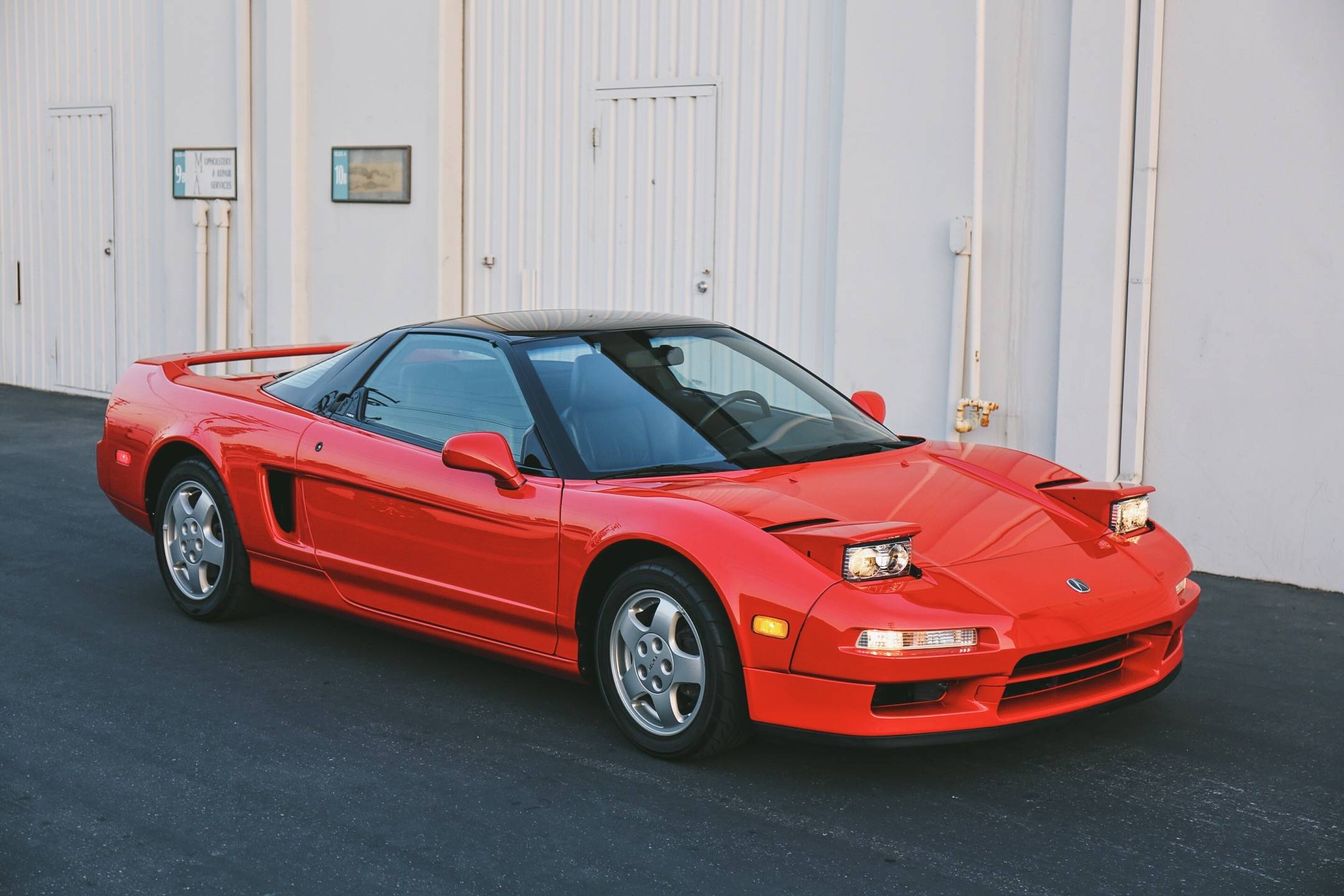
“I would hate to be a Chrysler designer and have spent many hours involved with making this vehicle and have someone else taking credit. All those photos [below] are from Chryslers Headquarters. Robert Benjamin was behind the vehicles.” (Photos provided by Richard through his connections at Chrysler).
“Here is a photo of the DEFENDER at Chryslers headquarters with the VIPER GTS concept….”

Touring Car Tactics: Jim Jordan’s Road to SRO Leadership

What do a clapped-out MGB, a Ford Pinto, and a podium at Le Mans have in common? They’re all chapters in the remarkable motorsports journey of Jim Jordan, Director of Touring Car Racing at SRO Motorsports America. In this episode of the Break/Fix, Jim shares how a childhood fascination with racing evolved into a career spanning grassroots grit, corporate strategy, and global endurance racing.

Jim’s motorsports origin story begins in New Jersey, where his father – a Trans-Am fan and Mustang owner – introduced him to racing at the now-defunct Trenton Speedway. Watching legends like Mario Andretti and Mark Donohue ignited a lifelong passion. “There are Halloween photos of me dressed as a race driver,” Jim recalls, “complete with Goodyear stripes.”

Tune in everywhere you stream, download or listen!

Listen on Apple
Listen on YouTube
Listen on Spotify

Jim’s first real race? A three-hour IMSA RS event in a Ford Pinto. “It was a good handling car – like a Miata, no horsepower, all cornering speed,” he says. Racing on a shoestring budget, Jim pumped gas at Alan Marsh’s station to fund his efforts. He crossed paths with grassroots icons like Lyn St. James, eventually co-driving a 25-hour Thunderhill race with her – albeit hours apart in their stints.

Spotlight

Synopsis

This Break/Fix episode features an interview with Jim Jordan, the SRO Motorsports GT America Touring Car Series Director. Jim shares his extensive journey in motorsports, from attending his first race at Trenton Speedway to racing Ford Pintos and ultimately working with major automotive brands like Mazda. The episode covers his involvement in grassroots racing, technical training with Mazda, the creation of the Mazda Road to Indy, and collaborating with Patrick Dempsey. Jim explains the concept and execution of Balance of Performance (BOP) in touring car racing and his role in promoting and expanding the TC America series. Additionally, the episode discusses new ventures like the upcoming Toyota GR Cup aimed at fostering young talent in motorsports. The podcast provides an insightful look into the business and strategic aspects of professional racing.

  • Early Cars you’ve had/raced; We heard that you raced in a Pinto? Let’s unpack that.
  • We interviewed Dean Case a while back, and he spoke about his time on the design team at Mazda, we came to find out that you were also involved with Mazda for many years as well?
  • One of the things we haven’t explored yet on this show, is the BUSINESS side of Motorsports, many people often forget that there is more to this than just cars going around in a circle. Tell us about your experiences, as a driver and a team owner, and the business of motorsports.
  • The motorsports world can often feel small, and it’s not uncommon to rub elbows with celebrities – let’s talk about the time you’ve spent with Patrick Dempsey & at LeMans.
  • We should probably get back to talking about your involvement with SRO, you’re in charge of the TC (Touring Car) portion of the program.
  • Can you explain what TC is (or isn’t), the regulations, we asked Greg Gill “what is a TC car?” What are the differences between classes like TCX > TCR > TC and TCA?
  • Lets talk about BOP
  • We often joke on our Drive Thru about “small cars” like the Chevy Spark (which is finally on its way out) and have asked some other drivers during our Pit Stop questions “would you drive one?” and the answer is generally a flat “NO” followed by an awkward pause then “but if it was a B-SPEC, I would” – you had some involvement in B-SPEC racing – would you care to expand on that, and talk about what you’d hoped for that series?

Transcript

Crew Chief Brad: [00:00:00] Break Fix Podcast is all about capturing the living history of people from all over the autos sphere, from wrench, turners, and racers to artists, authors, designers, and everything in between. Our goal is to inspire a new generation of Petrolhead that wonder how did they get that job or become that person.

The road to success is paved by all of us because everyone has a story.

Crew Chief Eric: The following episode is brought to you by SRO Motorsports America and their partners at AWS CrowdStrike, Fantech Pelli, and the Skip Barber Racing School. Be sure to follow all the racing action by visiting www.sromotorsports.com or take a shortcut to GT America us and be sure to follow them on social at GT America, on Twitter and Instagram at SRO GT America on Facebook, and catch live coverage of the races on their YouTube channel.

At GT World[00:01:00]

Crew Chief Brad: with a career in motorsports that spans everything from working for a major auto manufacturer to time behind the wheel of a race car. To finally team ownership, Jim Jordan brings a wealth of experience to his role as the SRO Motorsports GT America Touring Car Series Director.

Crew Chief Eric: In this week’s episode of Break Fix, Jim explains his role and how his previous experiences have shaped his outlook as he helps to guide SRO into the latest golden age of sports car racing.

So please join us in welcoming Jim Jordan to break fix. Thank you very much. It’s, uh, great to be here. So like every break fix episode, we love to get into the details around people’s origin stories because let’s face it, everyone has a story. So let’s talk about Jim, the Petrolhead. How did you get into cars, into motor sports?

Do you come from a racing family?

Jim Jordan: I don’t come from a family that raced, although I will say, uh, [00:02:00] first race I ever went to is the Trenton Speedway in Trenton, New Jersey, which was the old New Jersey fairground. So I’m showing my advanced age now where I saw Mario Andretti in the Dean Van Line special win, the Trenton one 50.

My dad liked racing, so my dad was a racing fan, so he took my brother and I to Trenton Speedway, took my eldest sister to Trenton Speedway while it still existed. He was a fan of the TransAm series during its huge heyday. He owned a 65 Mustang JT convertible and that was his, you know, the car he loved.

And, uh, so I went to First Road Race as Watkins Clan. And it was a combination SCCA National TransAm race and saw Mark Donahue win in a Penske Camaro. So, you know, just a great time TransAm racing and just kind of became a huge fan. And you know, as a kid there’s pictures of [00:03:00] me in a Halloween costume that my mom made as a race driver with the traditional Goodyear stripes on the side.

So been a fan for a long time and been very fortunate to have turned into a career that kept me and my family going for a very long time. So

Crew Chief Eric: I hear rumor that in your early days of racing and getting into motor sports, some of the grassroots racing that you did, that you raced a pinto.

Jim Jordan: Yeah, that’s exactly right.

My first real race, I had done some SCCA driver schools and I had a clapped out MGBE production card that I was trying to get my license with and met a guy named Rich Gano. So Rich Gano, if you’re still around. Hey buddy. Thanks, you put me on a nice path. And Rich bano had a Ford Pinto that was built for the IMSA RS series, which again, most people now have no idea what the heck it was, but it was a, a racing series ancestry, very close to what I’m doing now, where you had small [00:04:00] compact sedans racing around.

So I raced a Ford Pinto in a three hour, I think it was BF Goodrich Radio challenge at that point, but IMSA Race, and that was the first race he ever did. And yes, it was Ford Pinto Race. Ford Pinto for several years. Again, met people such as Alan Marsh, who, uh, the huge guy early in my career. ’cause he gave me a job at his gas station, let me pump gas at at night, work on my cars a little bit, paid my, my early racing career.

Again, my family didn’t put money to my racing. Whatever I did, I had to do it myself. So, working at a gas station, Ford Pento was about all I could afford. I completely

Crew Chief Eric: sympathize with racing on a budget. The budget is yours. It’s very, very challenging. So I wonder, while you were racing the Pinto, were you racing against Lynn St.

James in her Pinto?

Jim Jordan: Actually, no, because she was running a showroom stock Pinto, and I’m good friends with Lynn. So we did share a few weekends at the same track, but [00:05:00] never in the same class. And it wasn’t until just a few years ago. It’s a program that, uh, John Dunan, who’s now head of IMSA Dean Case who works with us at the SRO and myself put together, uh, we put together a deal at the 25 hour long whatever NASA calls their 25 hour race at Thunder Hill.

We thought it’d be fun to have 25 drivers. So every driver drove one hour. And Lynn St. James and I both drove our hour. I tease her just a couple weeks ago when I had dinner with her that we actually co drove a race, Lynn. Uh, we were hours apart in our stints, but it’s been some great people came outta racing Pintos.

’cause a Pinto was a, uh, it was a very competitive car in that type of series back in the day. It’s sadly become a joke now. But Pinot is just a good handling car, you know, in some ways, like a Miata, no horsepowers, you had to keep cornering speed. So it’s, it was a good car to learn on.

Crew Chief Brad: Like the American GTI?

Jim Jordan: Yeah. Well,

Crew Chief Brad: [00:06:00] no, GTR

Jim Jordan: is far better than a pin, but yes, when it comes to momentum and not a whole lot of power, but that’s honestly in my opinion, how you learn how to drive. And that’s one of the reasons, and that so many good drivers come out of classes like. You know, currently like spec Miata because you have to maintain mins.

It’s all about men’s speed. As long as you go as fast as possible to the corners, the straits take care of themselves. It’s just that, you know, the highest possible minimum speed of any corner is that. That’s why driver like Pat Long is so good because his men’s speed’s higher than virtually anybody else.

Crew Chief Brad: We’re gonna transition a little bit and we interviewed Dean Case a while back and he spoke about his time on the design team at Mazda, and we came to find out that you were also involved with Mazda for many years. Do you wanna go ahead and expand on that?

Jim Jordan: It was Mazda North America, although I had a couple different names when I was there.

As Mazda went through, uh, three organizations and the rest, but really fortunate to work for Mazda for 26 [00:07:00] years. Had some really good bosses during that timeframe that. It taught me a heck of a lot about the car business. And while that whole time was going on, I was still involved with racing, at least at one level or another.

Generally club level stuff, but occasionally helping other people on some pro stuff. But start out with Monson technical training. I responded to a classified ad. Want to add? In the uh, LA Times and it was for Mazda corporate that they wanted someone who had teaching experience and understood the rotary engine.

A couple years previously I’d been a special ed teacher. That’s kind of what I did right out of college. My dream of being a professional race car driver took over and I had my own shop for a while and we specialize on Mazda Rotary stuff like, uh, lots of young enthusiast people that shop couldn’t pay the bills.

I met a woman I wanted to marry. So all of a sudden, well, I better get a real job. And, and, and so just applied for a job at Mazda, my [00:08:00] resume. I typed it up and just mailed it with a really good cover letter. I’m a decent writer, so a great cover letter. The funny thing about that was I looked at everything after I sent it and realized that I forgot to put my phone number on my resume because I wasn’t really planning on, you know, sending a resume.

But here’s this job that describes me. So I said, ah, there’s no way I’m ever gonna get it. Two days later, there’s a letter from Mazda saying, oh, Mr. Jordan, we’re quite interested in you. We forgot to give your phone number. And I’m thinking, well, you know, this had to be fate because in most people’s world, that would’ve been instant disqualification.

I will say though, that I got the grammar right and I must have spelled everything correctly. So I worked there, technical training, I went out to the field. ’cause in general at that era, I dunno what it’s like now, but if you’re gonna go in any kind of executive position, they want you to have some field experience.

And when we say field experience, they’re talking about going out to dealers and, and interfacing with the customers directly. Two types of customers. One a dealer, of course the other customer is, uh, [00:09:00] the end user, the person that buys the car. So. I had that role as a district service manager, which meant that I would be yelled at by customers who weren’t satisfied.

And that’s a skillset I take to this day of not getting too upset when people yell at me. ’cause if you’re in a position of responsibility in any sort of job, people are gonna yell at you. So I used that quite effectively just a few weeks ago at an SRO race. But also just how to, uh, motivate people, uh, how to fight for shelf space and honestly that fighting for shelf space.

At that time, Mazda was a smaller brand, still not a big brand, but a smaller brand where we shared dealerships with other brands. So you’re constantly fighting for the attention of the dealer and then the attention of the customer. So, worked my way through all the field jobs. Possible. Did parts, parts service, then ended up in sales.

I was a district sales manager in both, uh, Northern California and Southern California. Then moved into the corporate environment. But for about the last eight or 10 years, [00:10:00] motor sports marketing was my responsibility. So I worked in the corporate marketing department. I basically had sponsorships, special events, placements in movies, some real fun stuff there.

But Motorsports was my passion and so was in just a wonderful position with some really good people too. And we just accomplished really great stuff and Dean was absolutely part of that by that time. Uh, he came back in after we were a little bit on a roll, but we had so few people. We had engaged top management, our CEO and a senior vice president named Robert Davis.

They believed in what we did. They supported what we did. As long as we can make an argument and show how it would help the company, they let us do just amazing things. And I still look back on that. The one story I’ll tell and, and it’s one of my favorite stories, it was 24 hours of Daytona, I think it was 2008 or 2009, Savon tro and a uh, uh, three rotor RX eight won the race.

[00:11:00] So we ended up with the trophy and it was, uh, John Dunan again, uh, head of him, uh, myself, head of TC America over at the SRO Dean case who works for us in the SRO and a guy named Steve Sanders, who’s now retired. That was Mazda Motor Sports. There were basically just four of us, and we’re driving out of the paddock at Daytona.

And we see all these Porsche trucks. It’s just like trailer after trailer after trailer, which was Porsche Parts, Porsche engineering. We looked at the entry list. Every good Porsche driver in Germany had been cleared out and was over at Daytona to run. And we just started laughing hysterically with how crazy was it that we were driving out with the trope.

And again, it’s fun for me to just see, uh, the success that John Dunan had. It’s so much fun to be working with Dean Case. Again, Steve Sanders, I don’t talk to enough, but talk to him a little bit now. And then Robert Davis, who I just mentioned, he’s now also working for the SRO. He’s now one of our race steward.

Just amazing quality [00:12:00] people. Timing was right that we got a lot of, a lot of the right people at the right place at the right time. Again, you look at all the things we accomplished with the Maza Road to Indy winning Championships in Grand Am, which is now sort of what IMS has become. Winning races, the Amex five cup, the Mazda Motor Sports Ladder, all that stuff that, just a small group of really motivated people sharing a vision and some just amazing executives.

Jim o Sullivan, I miss you man. Robert Davis too. They just help us, uh, make some very special that I’m very proud of.

Crew Chief Eric: So there’s a question I asked Dean that I’m gonna ask you, because I’m going to find the answer one of these days. We’re talking about your time at Mazda. Are you responsible for Zoom? Zoom?

Jim Jordan: No. No. I do know the story though. Would you like the story? Absolutely. We’d love

Crew Chief Brad: it. Please.

Jim Jordan: Yeah, so I was in the marketing department, so I do have some insight there. Mazda was going for a pitch. You know, we want a new ad [00:13:00] agency. So whenever you do that, you bring in several different agencies to do a pitch to do their best work.

A smaller agency outta Detroit that didn’t have a car account that I know of at at that moment, but they did have some Ford Regional work, so they were very automotive focused, but the donor people were actually the ones who came up with Zoom Zoom and was part of the initial ad pitch for the company.

And it’s one of these things. They did this video that was just so emotionally moving and it really captured the spirit of Mazda right then. But Zoom, zoom was originally an ad pitch. It wasn’t even, you know, that’s how Donor got the business, honestly was the whole Zoom, zoom thing. And, and at that point I was out at the region doing marketing and I still remember just seeing the video just going, oh my God, this, you know, makes me cry.

It was just extremely well done. That was a really fun time to be part of Mazda because, you know, we had a new agency and we were really working to define who we were and where [00:14:00] we were going. We had some challenges and I think we did a great job of turning things around and, you know, Mazda tends to be successful today, but I think part of that’s left over from Zoom.

Zoom Donor Agency eventually got replaced with agency that’s now Garage Team. Mazda obviously a great agency, but uh, zoom, zoom has basically gone away. But that you even bring it up, it just shows how powerful that messaging was. At the time how appropriate it was for Mazda. It was just really special.

Crew Chief Brad: That was one heck of a pitch, I must say.

Jim Jordan: Oh, I know, absolutely. It’s like

Crew Chief Eric: reminiscent of mad men, right, where it’s just like the one scene. That’s the only thing I could, right, exactly. Exactly.

Crew Chief Brad: Since we’re talking about Mazda and the business side, one of the things we haven’t really explored yet on the show is the business side of motorsports.

Many people often forget that there is more to this than just cars going around in a circle or around a road course. Can you tell us about your experiences as a driver and a team owner [00:15:00] from the business perspective, not necessarily the racing perspective in motor sports

Jim Jordan: and, and I think there’s a good story for Mazda within that too.

If you look back, the history of Mazda, and again, I’ve been. Racing Mazdas, I guess since, uh, 1981 was the first time I raced a Mazda, Mazda Rx three, but Mazda was always very supportive of grassroots racing. Even back then, the guy who was head of Mazda Motor Sports, when I’d be at a race, come over, shake my hand, thank me for racing a Mazda.

Uh, Damon Barnett was a gentleman’s name. When Mazda would get big and have big factory programs, they’d end up getting too excited, spend too much money and then cut everything off. But they always kept the grassroots program alive and to this day, they have an outstanding grassroots program. We had a small committee within Mazda, and this is pre John Dunan.

And we would, we would have meetings and it was people that were enthusiastic about motor sports, but we had these meetings that we’d always put a fake name. It was sort of like fight club. First rule of [00:16:00] these Mazda Motor Sports meeting is, there is no Mazda Motor sports meeting because the grassroots program was doing well.

And they were staying alive and we, you know, you almost kept your head down because they were doing fine. They were a profit center, so you don’t want to touch them. But how do we get Mazda back involved with racing again? And so that eventually built into the various programs that I talked about before, from pro level racing and the old Grand Am and then into IMSA and, and all that sort of thing.

And early world challenge. So the Mazda proteges and Mazda Sixes and World Challenge. But again, they were all based out of a very quiet, small group of people within Mazda. As we had a little bit of success, we could talk about a little bit more and more. And I will say though, that one of the reasons we were allowed to do what we did, especially early on, was the, uh, competition parts sales were quite profitable.

So Mazda set up an early program that allowed Mazda racers and you have to produce results and things like that, but Mazda [00:17:00] racers to get discounts on parts. So you basically get parts at it, roughly. Dealer cost, maybe a little bit over. Depending on your deal, and you also get technical support. There’s guys and, uh, uh, not any women yet, but hopefully there will be soon on the, on the telephone that will help you build your race car, give you advice, that sort of thing.

And because of that strong grassroots support program, it made money, the executives allowed us to take the profits out of that and put ’em into racing. And, and you look at, you know, the, uh, the direct connection program was parts program for Dodge and Plymouth, and that program’s actually back, and I think they’re building some turnkey race cars now.

So there are other brands that had similar things. I will say career wise, one of the moments I’m proudest of, at least from the Motorsport side, was when I got a phone call from Honda and HPD and Honda basically said, look, when we. Wanna do better at something, we benchmark a company and see if [00:18:00] they’ll share with us some of their learnings.

You know, Honda called MA and said, your grassroots program’s better than we are. Will you help us? Will you teach us? And again, another name I’ve already mentioned went to Robert Davis, who by that point was a senior vice president, said, Hey, Honda called and they wanna know what we know and, you know, can we do it?

Because again, the whole Japanese philosophy of a rising tide lifting all boats is very strong. And he said, yes, give them 98% of what, you know, the really tough 2% they’re gonna have to learn on their own. We, uh, uh, had a really good relationship with Honda. I think they still do, but again, I’ve, I left Mazda almost exactly 10 years ago, July 1st, 2012 when I left Mazda.

You know, I, I, I talked to those people, but my relationship’s not nearly as close. And Robert Davis isn’t there anymore, and John Dunan isn’t there anymore. Seeing cases in there anymore. They have a lot of good people there that I communicate with now, but I don’t have that type of relationship. But again, to have a company like Honda reach out and [00:19:00] say, Hey Mazda, you’re doing a better job.

I feel like I’m one of the lucky and few and fortunate people at Mazda have ever had that happen.

Crew Chief Eric: So listeners, if you’ve been filling your backpack with all the names that Jim has been dropping, it’s getting full really, really quick to the, to that end, the motorsports world can often feel very, very small.

But it’s not uncommon for many of us to rub elbows with celebrities. Why don’t we just take a moment here to diverge for a second and talk about some of the time you spent with McDreamy, I mean Patrick Dempsey and others at famous places like the 24 hours of

Jim Jordan: Lamonts. I tell people all the time, and I’ll say this publicly on on this podcast, that most of the great things that I have in my life are directly attributed to Mazda and my time at Mazda.

And the Dempsey thing is that way too racer, who I actually helped him start his career. He lied, but is check cleared. So back when I was a [00:20:00] team owner, he started driving our race cars and he’s gone on to a great career, but a guy named Charles Espen Love, who, if you’re a racer, you know him. Not exactly a household name, but just really good driver, really great guy.

So Charles Espen Love was working at the old Panos School. Patrick Dempsey had been to the Panos School. Charles Mond Love and Joe Foster, another great driver. Those two, uh, kind of said, Hey, Patrick wants to go racing. Let’s see if we can figure something out. First off, is Patrick okay? You don’t wanna embarrass him and you don’t wanna embarrass us.

So is Dempsey a good driver? Yeah. Yeah, he’s good. And he is getting better. Okay. So I put together a deal because again, I was now in the corporate marketing department, put together a deal where Patrick Dempsey did voiceover work for Mazda, and by that we paid him with race cars, race car parks and money, a combination.

And it was the craziest contract I’ve ever done in my life. But it worked and it was great. And [00:21:00] Charles, because he had driven for my team, understood that I was pretty good at race car strategy, especially in endurance racing. What was good for them was they couldn’t pay me ’cause it would’ve been a conflict of interest.

Can’t favor one race team over another. But I love race car strategy. So again, my conflict of interest statement that I’d put together for Mazda every year was several pages. And one of ’em was explaining my relationship within Motorsports. ’cause everything, like you said, it’s a small family. I’m gonna add Incestuous family to that.

So I would call strategy for Dempsey’s team. I spent several years on the radio with Patrick. One of the stories I love to tell is 20 Fairers of Daytona again. Fantastic race by that point. Running an RX eight. And Patrick’s gotten pretty good. He’s now very, very competitive, very quick. But he also didn’t have a ton of experience, especially at the front.

We’re out there and I’m calling the race and all of a sudden he goes into the league. Someone else [00:22:00] has a problem, all of a sudden he’s leading. But I’m not gonna tell him he is leading ’cause I know he’ll get very excited with leading and it may or may not be what we wanna happen. So basically he was in the lead for about an hour and you know, all the TV reporters are coming up, how’s it going?

You know? Yeah, yeah. Everything’s good. I call him and I go, okay Patrick, it’s gonna be a full service pit stop. We’re gonna do fuel tire and driver change. And he goes, well wait a second, wait a second. Do I need to wait for the wave by? And the wave by is a procedure where the lower class cars get waved by.

So you know, so you stay on the lead lap. They try to keep everybody on the same lap. And I said, Patrick. You are not getting a wave by. ’cause they don’t give a wave by to the leader of the class. So you’re good. You just sit there, you just, you’ve been doing great. And I, the rea he was like screaming over the radio and it was, uh, it was just very fun.

It’s a race. We almost won. We ended up third, we had a technical issue and lost a few laps, but came back and finished third. And so that was [00:23:00] Patrick’s, uh, first podium in imsa, or, well, it was Grand M at the time. Grand M msa. We’ll use them a little interchangeably. We had a strong enough relationship when they decided to do a documentary, which is on Amazon since Amazon Web Services is a great partner of the SRO.

Made sure to rush over to Amazon and look for Patrick Dempsey Racing Lamont. And we did a great documentary, and that was Patrick’s journey to Lamont, and that’s where I ended up in the box. They’d switched to Porsche for the whole World Endurance Championship. So they had a German engineer, Patrick Dempsey couldn’t understand him, his accent was strong and Patrick couldn’t understand him, so they decided to bring me in.

So I spent two years in the box at Lamont, just basically taking, uh, German engineers and translating it in a way that. Patrick could understand and do, and that whole experience of Lama, it’s in the documentary. Again, just a wonderful time. I will say it was better when we finally got on the podium [00:24:00] several years later.

But the documentary, what I admire is how honest it is. There were certainly moments of it where we all looked bad. Patrick just allowed that to happen. He wanted it to be an honest portrayal of what it’s like in racing and trying to get sponsors. You’re trying to put together deals you end up with, uh, interesting characters.

Uh, I, I heard one interesting character was edited out of it, but that story for another day. So Patrick and I are still friends today. I had lunch with him last week. He is. Starting to think about getting back into racing again. So we’ll see. We’re trying to make it happen.

Crew Chief Brad: So there was a lot there. But I, we love Patrick Dempsey around here.

I think he’s a great guy. You know, I’ve been following his, he’s a great guy, you know, following his, uh, career a little bit, you know, watching the Lamont race is always rooting for him and his teams and everything.

Crew Chief Eric: What he meant to say was watching Grey’s Anatomy. That’s what he Yeah, exactly.

Crew Chief Brad: I have a story

Jim Jordan: there too.

Crew Chief Brad: Uh, uh, I’d love to, I would like to invoke my Fifth Amendment rights, but diving [00:25:00] into that a little bit, I think you mentioned calling race strategy. Can you talk a little bit more about what that is, what that means? You know, the role that you played in calling race strategy for the Patrick Dempsey and the, the various races that you were involved in.

Jim Jordan: With race strategy, you obviously wanna have the fastest driver in at the correct time and, and honestly, you’re just trying to stagger drivers, stagger pit stops in such a way to give the team the best opportunity to win. What I say when you’re calling race strategy, you’re just running thousands of what if scenarios in your head?

Like, what if the trek goes yellow? Now what do we do? You’re paying attention to how much fuel the car’s using, what lap times are because you’re trying to. Check for tired degradation. Really as race strategist, you’re just running what if strategy after what if strategy. So that’s on the more engineering side.

The other thing you’re doing is you’re being a psychologist because you’re talking to the driver, you’re his communication piece. And so [00:26:00] depending on the driver, some of them want lots of information, some of them don’t wanna be talked to whatsoever. But it’s my job to make sure when something’s important to give them that information.

You’re part engineer, part psychologist. You just try to give the team the best chance of winning.

Crew Chief Brad: I hear a lot of like talking about internally being a psychologist and giving information to your driver. How much of what you do in calling race strategy is predicated on what your opponents are doing?

Like how much are you looking at what the other guys are doing and how much are you thinking psychologically? Okay, like a chess match. If I move my pawn, are they gonna move their rook? Are they, you know, stuff like that.

Jim Jordan: Yeah, that’s very true. And the analogy of a chess game’s just dead on. You’re playing chess and obviously you’re trying to do everything possible to, uh, put yourself in the best position and when possible, put people in a bad position.

I will say that great 24 that we led for so long that we are just [00:27:00] talking about. What I liked was, you know, Patrick’s an extremely likable guy. The whole team, I think we were pretty likable. It came down to us and another car just battling for the lead. While there’s certainly no villains in the paddock, let’s just say we were a much more liked team than team.

We were battling, and I still remember, it’s probably 2:00 AM and we’re slow. I, we had a car that was three quarters of a second per lap, slower than the Porsche we were battling with. But by strategy, by timing, pit stops by just doing. A little bit out of the ordinary stuff sometimes. I managed to keep the Porsche LA down basically all night long.

We’re not as fast as a Porsche strategy, and some luck got us into the lead. But I still remember Will Turner, who’s just a great BMW team owner coming to the pits at 2:00 AM and just saying, you just keep doing what you’re doing. You keep that guy a lap down. Because again, just our, the personality of our [00:28:00] team, Patrick and everybody else was, you know, they, they were all cheering for us and they were probably almost as heartbroken as we were when we had the technical issues.

And, but again, we fought back and finished on the podium. So very proud of that. But, but you’re right, it, you hear it once in a while in some of the NASCAR races, if you’re not fast enough, you can’t do what everybody else does ’cause you’re gonna lose. You’re just looking, uh, to be opportunistic and whether that means not stopping when everyone else does.

If you’re the last car on the lead lap and you get a full course yellow, you always stop for fuel. ’cause that’s gonna give you a much longer window. You know, you fight for track position. You, the other thing about race strategy is you basically, you’re calling the race backwards. Uh, and what that means is, you know when the race is gonna end, it’s all timing and you have a rough idea of laughs.

But yellow flag, the stuff I did was all timing. And so you’re racing to that final. Stop and you’re trying to time the final stop such a way that you get an advantage, but you run the race [00:29:00] backward. Everything at the start of the race is aimed to get yourself hopefully into the lead for that final stop.

And when you make that final stop, you’re putting pressure, like you said, on everybody else. If they’re watching what you’re doing and you’ve done some stuff. So you’re in a position where you only have to make one stop and they have to make two. It’s fun to watch their horror, uh, when you realize that.

Crew Chief Brad: How many times during your experience in races and everything have you had to call an audible, or you’ve had a game book, you’ve got your plan, and you just take it and you toss it right out the window because something has happened either to another team or to you, and tell us some experience that you had like that.

Jim Jordan: Every race, there’s not a single race that goes to plan. So again, that’s why the what if strategy, you know? You know, in essence, Carl got sego 55 minutes on a load of fuel. When we were running the Michelins and Michelins, you could generally double stint them. So that was great. You know, you’re watching the weather report, you’re watching the temperature, you [00:30:00] have a plan, not a super detailed plan, but a basic plan of how it’s gonna go.

Every race within three laps that goes out the window, so, so then you’re just adapting, you know, you get hit on the start, get a tire puncture, your main competitor blows a motor, and that just changes your strategy. I worked for other teams also, and CJ Wilson, who was a baseball player, owns a Porsche dealership up in Fresno.

Great guy. He had a young team and he’s trying to make a name for himself. And so I would always ask the team owner, what are you trying to accomplish? Because at the end of the day, they’re the ones paying the bills, so they may have a different agenda, you know, and he said, I want TV time. Okay, I’m gonna do everything in this strategy to get you as much TV time as possible.

So we’re like 10 minutes ago in the race, it was full of yellow flags. At one point we led, overall we were in a smaller class. ’cause you know, I was gonna keep the car in front of the class as long as I could. But there [00:31:00] was so much yellow flags. I basically could have gone the whole race without stopping for fuel, which is of course against the rules.

So with about 10 minutes to go in the race, I just have a couple of IMSA officials just standing there giving me the evil eye, like, when the hell are you gonna pit? And I knew as soon as we pitted, we threw the race away. But again, CJ told me he wanted TV time. And you watch the race on tv, they kept talking about this car and kept showing the car.

I got him so much TV time. Another example that was early in Patrick’s career. Joe Foster was a great coach for Patrick, did a really good job of bringing Patrick along. And so again, what’s our objective, Joe? And he says. Let’s get Patrick out in front and let’s let him have pressure of leading a race for the first time.

And so we’re in New Jersey Motor Sports Park again with yellow flags and how you pit, not pit you can make things happen. First thing, a yellow flags, it was far enough in the race that most people pitted. And [00:32:00] I left Patrick out. So all of a sudden Patrick’s leading the race and he was under intense pressure from a bunch of drivers, but he, he held firm and it took, you know, it was, uh, I can’t remember the driver, but someone you’ve heard of spent like four laps just trying to get by him into the lead.

And we’re sort of thinking, well, I hope he gets by him because he’s gonna lose patience really quick. That gave Patrick the experience he needed to, uh, be successful at Lamas. So. So, I hate to say in my career as a strategist hasn’t been always about winning the race. Been a lot of strategies, trying to accomplish something different, whether it’s a driver development long term, you know, or team development.

Long term. If you want publicity, I can get you publicity and I’ll still remember a guy named Jay Schafer. Now we’re back to my own team. We were lucky enough to be sponsored by the late Great Circuit City. They sponsored our car and World challenge and we had a mod protege we were running, and Jay Schaeffer’s advice before the start of a race is, well, if you can’t win crash.

So at least I’d get [00:33:00] lots of coverage. And so we didn’t crash on purpose, but let’s just say if we weren’t having a good day, we’d try to do something exciting that we knew we’d get a little bit of time for Circuit City at a NASCAR level. Of course, it’s all about just winning, but at the level I was, uh, I was racing at, it’s a little bit of, uh, trying to accomplish other goals.

Crew Chief Brad: I’m, I’m assuming you, you’re familiar with F1 and you watch F1 racing and whatever. Yeah. So this question is really simple. Christian Horner or Toto Wolf. Oh,

Jim Jordan: I would probably do Christian Horner only because he has a lot more experience of not being the fastest car early in Patrick’s career. Before he got fast, I, I had a lot of experience in getting laps back.

You know, I used to joke, that was my specialty was how are we gonna get laps back? By the time Patrick got fast, that was never an issue, but early in everyone’s career against that level, that just happened. So Horner, you know, the Red Bull team’s obviously very good, but it normally doesn’t have quite the pace in the Mercedes, [00:34:00] and he had to just enjoy so much earlier this year when they lack Lewis Hamilton.

That just, yeah, you know, again, so I’m gonna just see Horn because of that.

Crew Chief Brad: I know Eric’s rolling his eyes ’cause he’s a huge F1 fan.

Crew Chief Eric: My time has passed for F1. That’s all I’m gonna say. I think I’d probably be embarrassed to share my racing strategy with Jim, although listening to his upbringing in Motorsports world, he might approve of it. It’s very simple. Step one, check for loose nuts behind the wheel and on the car. Step two is pray.

And step three is if all else fails, drive flat out.

Jim Jordan: Yeah, exactly that. That’s good. And to be honest, you in a few words basically said what took me half an hour now to talk about. Um, but yeah, your philosophy’s dead on. Dead on. Well, with

Crew Chief Eric: that said, we should probably. Get back to talking about your involvement with SRO, talking about the, the present and the future.[00:35:00]

So you’re now in charge of the touring car portion of the program. Yes. So when I had Greg Gill on, I asked him to please define what exactly a touring car is in 2022. Would you care to share with our audience Sure. What exactly that means?

Jim Jordan: Sure. And I’m just gonna say up front there is a little asterisk, but fortunately right this very second, there is no asterisk.

Basically how I define touring car is a sedan or coop comes from the factory with a back seat that, you know, we go out and we do sprint racing with. In the SRO world, we obviously came out of the world of exotic cars. So you know, the, the top GT three class cars are Ferraris and Lamborghinis and those sort of things.

And then the GT four class, which is a fantastic class in the SRO world, it’s kind of in between. ’cause you’ve got some McLaren’s and you’ve got some Porsches. Audi, RH and Mercedes-Benz, but you also theoretically have Mustangs and cama. So [00:36:00] it’s kind of a nice tweener class. And then the touring cars, again, the cars have back seats for the most part, no asterisk needed.

Right now. The cars come with a backseat, sometimes four doors, sometimes two doors, sometimes three doors. They’re basically every person’s car. So you look at the brands that are racing in TC America, BMW and Honda are the two biggest ones in terms of numbers. But we have many very successful, A Mazda will show up now and then and and is showing some really good potential.

Hyundai is a great supporter of the class. For the most part, come from factory built. Brian Herder Racing will build you a Hyundai Elantra N four R series. They send out tech support and it’s a turnkey race car. So same thing. Honda HPD will happily sell you either a, uh. TC level civic type R or TCA level.

They have their new Honda four-door Civic, which just came out. And so these are the cars that everybody drives On the street. You fell [00:37:00] asleep when you were younger with pictures of Lamborghinis and Ferraris, uh, on the wall, but mom or dad took you in the carpool and a Honda or Toyota or a or a Mazda.

And so those are the cars that race in touring, car racing.

Crew Chief Eric: Now, touring car in Europe is slightly different, BTCC, the STCC, and even the touring car stuff that happens in Italy and France, you see a lot more. The TCR stuff, you see a lot more hot hatches, right? With names like Ciro and in Renat and Volkswagen and Skoda and Sayat and things like that.

So same, same but different. There’s more cars available in Europe than there is here in those types of classes.

Jim Jordan: British turn card is a really cool series. I will say though, it’s a spec series. I mean, they’re all now basically using the same engine. There might be a few little variations, but it’s a spec series.

You know, the BOP is very easy because if you’re all running basically the same power train, it makes it easy. Uh, TCR is a very cool series. We actually tried it. The [00:38:00] problem with TCR is the cars are relatively expensive to run and for us. You start looking at what A TCR costs versus a GT four car. And since, uh, the SRO owns GT four worldwide, we create the class and we own it.

And TCR we have to pay licensing fees on. It just became apparent that as soon as the price point of TCR gets on top of GT four and it almost is, it just didn’t make any sense for us. So we let our license from. TCR laps. And again, I love TCR cars. They are badass, really cool cars. But we saw that our place in the world is entry level.

So I call our TCA class the gateway drug. If you’re someone that wants to go pro racing, you can go to mini, you can go to Honda, you can go to Hyundai, you can, uh, get a, one of the new Subaru B Zs. You can get one of those cars. You buy the car, it’s fully ready to go, ready, race, ready, and you go racing and you have all the, the car’s [00:39:00] well engineered and you have the tech support you need and you go racing.

Again, it’s a relatively affordable way to go. Most parts you’ll ever need, or at the racetrack with the, the brands doing it, you know, Hyundai and Honda both have engineering people on staff that come to all the races and do it, and everything’s relative. So TCA is, it’s a relatively cheap way to go. And then we had people that worked their way up through TCA to TC and TCX.

And you know, I look at the GT four field and now in the GT three field you have someone like Samantha Tan, an outstanding young woman racer. When I started at my job with the SRO, she was racing a Kia in TCA and then she moved her way up to GT four in A BMW. And now this year she’s running a GT three BMW, and she’s running that both with us plus some of the international series.

That’s not uncommon to see someone when they’re starting their career run R TC and we teach them what it’s like to be a professional racer [00:40:00] because we’re FIA sanctioned the license that we have and the races that we do allow them to build a resume with the FIA so they can race anywhere in the world.

It’s a good place to be in and, and one thing I’m proud of, you talked about all the cars in Europe. So what’s happened in the SRO world again? Stefan Ell, who’s the SR of the SRO, saw what we were doing in the US with TC America. A couple people worked for them, said, Hey, let’s bring that concept to Europe, to France.

Last year, for the first year, there was TC France. And so TC France is very similar, although I will say that their advantage and disadvantages in Europe, there’s so many manufacturers that have had one make series. Like every manufacturer has a one make series. And so then what happens is those make series, they decide to do away with them.

So all of a sudden these people have cars and no place to run. So what TC Francis has done is they’ve taken those cars, they BPD ’em to basically a TCA level and a [00:41:00] TC level. They’ve done BOP. So all those cars, those were no twins or you know, sea Os and whatever those cars are, we’ve given them a place to run.

And so first year they average a little bit over 20 cards a race, and it’s great racing. And it was at the front. I think it was a real fast Reno kind of semi TCR type car versus A-B-M-W-M two, similar to what we did, and it was just great racing. So that’s just kind of something I’m proud of, is they’ve taken TC America to the world and so we’re in France now.

There are some inquiries about other things. Our level of tcs, just a lot less expensive. TCR.

Crew Chief Eric: So Jim, it’s actually really great that you brought up all the other SRO series that are available, especially in Europe. And I’d like to remind our audience that if you’re interested in learning more about those, obviously check out the SRO motorsports.com website.

There’s also of great YouTube feeds and things like that, but I happen to catch most of those races on motorsport.tv and [00:42:00] so that’s how I stay plugged in with TC France and all those races, and they’re awesome. You can watch, you know, Reno Cleo’s running around Zol and Belgium, it’s fantastic. You’re not gonna get that on s ESPN eight, the OCHO or whatever, you know, whatever the latest, you know, subscription is that we need to have.

But Motorsport tv, if you wanna learn more about touring car and see how it’s done around the globe, because there’s even Asia series and things like that, you can check it out there. I feel like TCA, that lower class in touring car might be the stepping stone for somebody that’s coming out of, let’s say Spec Miata or spec E 36 or something like that and want to move on to something else, would that be a great avenue into the SRO program for somebody that’s used to running A-B-M-W-A boxer, a Miata, something like that?

Jim Jordan: Yes, definitely. If you could run upfront in something like a spec Miata, a little bit to the boxer, but I’m just gonna use Spec Miata because there’s so many of ’em. If you could run upfront and spec Miata, you could [00:43:00] climb into one of our TCA cars, you’ll be in the top five pretty quickly just because all the skill sets that you learn in the lower club racing classes are all applicable to what you see on the pro level.

I will say though, if you think you’re gonna come in and and be on the podium, the first race, no, it’s much tougher than people think it is. A level of competition is much tougher. When I owned my own race team back in the day, we would jokingly call these people the, uh, local heroes, local champions. They won every race at the track in a similar car, so they just think that they’re gonna get.

You know, just kill everybody. And you know, they don’t know me from Adam and you know, I’m not a MR of the epitome of health or anything. So, you know, even at that point I probably was carrying 20 pounds too many. And without fail, we’d smoke ’em just because, you know, you rise to the level of your competition.

In the TC [00:44:00] America class, we have some of the best turn car racers out there, but even some, like Kevin BM who’s leading the TC class right now. Kevin was a multi-time SCCA national champion, and he came in and it took him half a season to get to the pointy end of our series. And again, these are people that aren’t household names to anybody except other competitors in that field, but you certainly learn great Racecraft.

Someone whose career I really enjoyed watching is Sally McNulty. Sally McNulty came in from the time attack world and she was very fast in time attack, uh, had, you know, one of these 600 horsepower Subarus and go out there and just run really fast. She came in and her first race, I remember watching her at Circuit the Americas and going, oh my God.

Oh my God. Because she was, she went from a 600 horsepower car to a 200 horsepower car. Takes a lot more finesse. And I’m not gonna say skill, but it, it carry momentum through turns. It’s a different [00:45:00] skillset. So, but now I look at Sally. She’s gonna be on the podium this year. She’s gonna be fighting for wins, thinks she’ll be fighting for the championship all year, but it’s taken her three years.

This is her third kind of full-time season with us. And so again, it, it’s a great place to start again, there’s lots of people that have moved up and great place to start. So many of the GT four top teams came out of TC America.

Crew Chief Eric: I gotta add my little jab in here. I think the great equalizer is all these folks that have to come over and suddenly relearn how to drive, because now they’re in front wheel drive cars.

Not that there aren’t real wheel drive cars in touring car, but it is an entirely different animal when you get behind the wheel of a front wheel drive and that are asked to go fast. I, I just gotta say it. But that does lead us into kind of a sideways segue into a topic that I talked to Greg about on his episode, which was balance of power.

How do you level the playing field, these folks coming out of different [00:46:00] other branches of local motor sport into touring car, and suddenly our behind the wheel of a Hyundai, a Honda, a Volkswagen, or something else, and go, uh, how is this fair? How does this work? I wanna get your take on BOP, on the balance of power, balance of performance, blame other people.

I’ve heard a million different ways to just dissect this acronym. Get your feeling on that and what it means in the touring car arena.

Jim Jordan: Yeah. So balance performance, as I call it, is very much misunderstood. What it really does is it gives every car an opportunity at one race or another to win. And the whole point of BOP is, as I say, the last race of the last lap.

We want the best teams with the best drivers to be fighting for the win no matter what car they’re in. Whether you have a Honda, whether you have a Hyundai, whether you have a mini, whether you have a Subaru and TCA, whether you have a Honda, a Hyundai, a Mazda, and TC [00:47:00] BMW and tc, they’re gonna change the weight of the car.

They change ride height. They change horsepower level. ’cause you know, I used to hate turbo cars as someone who competed against turbo cars. I used to hate them. Now I love turbo cars because with the turbo car. We can give them whatever horsepower we want it. It’s like Honda HPD, they’ve done a great job.

We have five different horsepower settings and we could say, okay, for this track you need to use setting number two. And that’s because we know where the Honda’s fast, we know where it’s not fast, we know where its strengths are. It’s the same thing with the Hyundais. It’s the same thing with many, it’s a balance of how much horsepower we give them versus weight versus ride height, so that the potential lifetime potential per car ends up being very, very close.

It’s all data driven. I would like to say that Mr. Wizard goes in and finds the right settings, but it’s data driven. We know how each car [00:48:00] accelerates. I talked about min speed earlier, so we know, uh, what the cornering speed is, depending on the type of corner for every car we play with, factors that affect all those horsepower.

Ride height and weight are the three biggest things. We just vary those to make sure that no car has too much of an advantage or too much of a disadvantage at, at every race. Talked about front wheel drive. The challenge that we had previously was we always had to make front wheel drive cars a little faster than the rear-wheel drive cars because as the race went on, the front wheel drive cars would use up the tires, and so then it became.

If we don’t have any yellow flags, you know, last five laps, they’ll be perfect. ’cause the real world drive car will be a little faster, but it’s gotta get around the front wheel drive car. What’s happened though? P Ellis developed such a great tire now that that’s sort of gone out the window. Uh, the degradation that we see is much less than it used to be.

So now it’s actually made Joe Ligan who’s, [00:49:00] uh, the guy that does BOP for us here in, uh, TC America. It’s made his job a little bit easier ’cause he doesn’t have to try to extrapolate how many yellow flags we’re gonna have and that sort of thing. To add another crazy element to BOP people and racers always think that I’m gonna get the best car and that, I mean, I did the same thing when I was a younger racer.

I will say for the most part, that doesn’t exist anymore. The best car is who’s got the best support in the paddock, who has the best contingency program because our job as an organization is to make sure every car, uh, has an opportunity to win.

Crew Chief Eric: So isn’t that where we see the convergence of the business side of this equation, kind of overriding the technological engineering side of it?

You talked earlier about Formula One and the heyday, and I look at the heyday of Formula One as the pre V 10 era where they all became basically the same car at that point. And I mentioned this to Greg when we spoke, you know, you had the six wheel rolls and the chaparrals of the fans underneath and all this crazy stuff where folks like Lotus were [00:50:00] pushing the boundaries of engineering because they were breaking rules that didn’t exist.

And then suddenly rules were written to, to stop them from doing things. That’s the charm, that’s the allure. That’s the mystique behind racing is what new crazy thing are we gonna come up with next. And that trickles down to our road cars. So when I look at balance of power, it makes for great television, but it doesn’t make for great racing.

Or does it?

Jim Jordan: I think it makes for great racing because you have a variety of cars going, you know, nose to nose. And I also think it highlights the driver. Everything you’re talking about highlights the engineer. So if you’re someone who likes absolute cutting edge engineering, then the current Formula one is where it’s at.

And, and you know, I would say the craziest that I was experienced was a WEC in about 2015, uh, when as Porsche versus Audi Toyota was just starting to come in. And those cars were insane with the technology. [00:51:00] But what happens is, you know, technology costs a lot of money and our whole. Focus for us is customer racing.

So we want it to be attainable, affordable, reliable, and we’ll give up some engineering in order to make it more accessible and easier to drive. That’s one of the challenges, uh, that we’re working our way through with GT three. But a GT three car is very technological. Uh, so for a lot of drivers, if you didn’t grow up with a ground effects car, car with a lot of arrow.

It becomes hard to drive because the faster you go, the higher the cornering speed because you have more downforce. You can go around, pull more Gs in the corners. That doesn’t apply to TC America because we do have some aerodynamics, but it’s much, much less, our cars become much more accessible to drive where GT three car, the pros love it because it’s easy, it’s taken a while for the, uh, the Pro-Am drivers who have jobs outside of motorsports to [00:52:00] figure it out.

And, and they do. The best ones do, but I think that’s why GT four is also so popular because the GT four cars are much less arrow dependent. So I don’t think I’m going to give you an answer that’s gonna satisfy you because, uh, again, I, I love the technology that I saw, the Porsche prototype card. 2015 was just one of the most amazing cars I’ve ever seen.

But it got too expensive, and again, it was unsustainable. And we’re all about sustainable racing. We’re all about putting a race show together where as many people as possible can participate, and it’s just enjoyable for everybody.

Crew Chief Brad: And there’s a reason Porsche and Audi are no longer running in WEC right now.

Probably ’cause it was getting too expensive, especially to be at the front.

Jim Jordan: Yeah. And even the, the new cars that are coming out, because we’re gonna start seeing some of the, um, the hybrid systems back. But even the, the hybrid system is a one size fits all system. So whether it’s [00:53:00] Porsche or whether it’s, uh, peo, it’s the same hybrid system.

So it’s not like in those crazy days when Audi was, uh, racing so hard against Porsche where they had completely different systems and different fuels. You had Audi diesels running against Porsche with tiny gasoline motors, boosted the heck out of ’em with crazy hybrid systems. That’s all really fun until the bills all come due and then all of a sudden, you know, someone in uh, Germany had to justify how much money they were spending.

It’s just not sustainable. Our whole business model is based upon sustainability. It means close competitive racing. It means the manufacturers understanding that they’re gonna have a fair fight, that we’re gonna make sure that they have an opportunity to win. And the manufacturers compete on customer support and customer service as much as they compete on everything on the racetrack.

It’s a completely different business model than I grew up on. It’s a much different business model than when I was at Mazda. I will say though, [00:54:00] that everything I learned about customer racing at Mazda is applicable. Today it’s just, it’s at a higher level than it was then. Although I will say our, our RX eight program is pretty prototypical to what we’re now doing in the SRO world where you had customer cars all racing out there, all helping each other.

So it’s a good business model, but it’s not quite as sexy as six wheel materials, unfortunately.

Crew Chief Brad: I don’t think there’s anything sexy about a six wheel tear.

Crew Chief Eric: We can agree on that, that’s for sure. We may never agree on balance or performance, but we can agree on that.

Crew Chief Brad: To bring the conversation back to, you know, the, the TC class and the, the small cars, we often joke on our drive through about small cars, like for example, the Chevy Spark, which, you know, a spoiler alert is finally on its way out.

I mean, we hear a break fixer fans of small cars, especially front wheel drive, but we’ve asked many of our guests and, uh, other drivers during our pit stop, uh, portion of the, the episodes, would you [00:55:00] drive one? And the answer is generally of. Flat out resounding no. Followed by an awkward pause. And then, but if it was B spec, I would, and you had some involvement in B spec racing.

Would you care to expand on that and talk about what you hoped the series would be? Yeah,

Jim Jordan: yeah, absolutely. So back in the day, Mazda was contacted by Honda about our grassroots program between the two companies. We were looking for a program that we can kind of do together. So at that point, the Mazda two was coming out.

The Honda Fit had just come out in the automotive world. That’s the B segment. So the guys from HPD and the guys from Mazda sat down, Hey, why don’t we try to put together a kit for these B segment cars and let’s go race them and let’s invite anybody who’s got a B segment car to come and join us, and we’ll all see if we put the series together.

So that’s what we did and we, uh, Mazda and Honda debuted [00:56:00] it at the NASA 25 hour. These, uh, Mazda two versus Honda Fit, no BOP had been done at that point, but we just wanted to do it. I still remember Simon Pau sneaking into the Honda Fit and just embarrassing everybody because you think you’re really good till someone like Simon Pau gets into a, a Honda Fit.

And he was so much faster than anybody else. Always loved Pau because of just that he’s willing to get to a B spec car. But we ended up getting a bunch of manufacturers on interested. We did a BOP test at GRAT and outside of Grand Rapids, Michigan. And the manufacturers were all totally transparent and we all just said, okay, this is it, blah, blah, blah.

And we created B Spec. We were just so excited about the class and ran a little bit of pro racing. World Challenge had it when I started TCB, we just loved the concept, cheap entry level, that whole thing, but it just kind of sat there. It wasn’t really widely accepted up until maybe four [00:57:00] years ago, and all of a sudden people rediscovered, plus the cars had got cheap by this point.

You buy a, uh, you know, now a seven or 8-year-old Mazda two or Honda Fit, and all of a sudden the cars are cheap. Or you know, it was a Ford focus and uh, the Minis came in and so you could buy the cars pretty cheap. And they were so fun to race because at that point they were. Factory engineered chassis.

You know, the, the suspension was all done by real engineers. We get back, and they’re not quite 6-year-old te olds, but they were real engineers, uh, made sure that these cars had the ultimate performance for what they had, and they are just an absolute blast to drive. So the B Spec class, honestly, was created by the guys at HPD and the guys at Mazda Motorsports looking for a way to work together for the better of motorsports.

And, uh, we created B Specs. So at the runoffs, I think they have like 60 something SECA runoffs. Last year they had so many, and again, uh, John Doonan and I are texting each [00:58:00] other. Well, it took a little while, but it was a good idea after all because it’s like any good idea. Sometimes you question and, and a lot of my good ideas, it turned out to be not good ideas, but that one, it took a little while, but it, it turned into quite a success and it’s really fun to watch those guys and.

I was actually looking at some SCCA data a few days ago, and I think B spec right the second, the fourth or fifth biggest class in SCA. So it just shows that a fun, affordable car always will find a market eventually.

Crew Chief Eric: Amen to that. Yeah.

Jim Jordan: So Jim, let’s

Crew Chief Eric: talk a little bit about the future of touring car racing within SRO.

What are some of your thoughts and your plans going forward? Right

Jim Jordan: this very second? TC and TCA are both healthy classes. Brands are introducing second or third generation cars built to the SRO rule set. So the challenge I have right now is building a new class, and that’s the TCX class, the the BMWM two.

Any BMWM, anything is the ultimate sedan if it’s in that classic [00:59:00] car. So we built TCX to be a place where. Brands that compete against the BMWM two in the showroom, give them an opportunity to compete versus, uh, BM BMW M two on the race track. So TCX we’re trying to build the ultimate Tour car championship, and so far BMW’s just had the race all to themselves.

We have a big 9, 10, 11, 12 car, looks like a spec class. Although I will say because I come from the retail automotive world, being a district sales manager, I look at cross sale reports like crazy to determine who my customers are looking at and how to compete against that brand, that car. So to me, the BMWM two is a benchmark for every single sports sedan.

So let’s get, uh, the best from. Acura, Lexus, Mercedes, Cadillac, any of those cars should be competing versus EM two. In TCX. I think I have one brand that’s extremely close. [01:00:00] Hopefully both on this airs, there’ll be a second brand. That’s my challenge, is to make it the ultimate turning car class where the best sports sedans sports in motor sports are the same best sports sedans competing in the showroom.

’cause that just gives better justification for manufacturers to build great cars for our customers to race.

Crew Chief Eric: So Jim, any other shout outs, promotions, or things that you’d like to tell our audience that we didn’t cover in this

Jim Jordan: episode so far? Really excited for a new program, uh, that Toyota just announced.

As part of SRO Toyota has announced that they’re gonna run in 2023, the GR cup. And what the GR Cup initially is, and I’m not, I’m saying initially I can’t give you what it may even look like down the road. That’ll be up to Toyota to talk about. But the GR Cup, it’s a single make series. It’s gonna run on SRO weekends, it’s all gonna be for the first period of time, GR 80 sixes.[01:01:00]

They’re developed and built by TRD. So TRD builds the cars, services the car sells the cars, and they’re gonna be doing sprint racing within the SRO race weekends next year. So 2023, really excited. And for me personally, I spent a good part of my life, I haven’t talked about it much, but the M Road to Indy, the Mazda Motor Sports Ladders were programs put together that I was a big part of where we gave opportunities to young racers.

And so when. Toyota contacted us a year ago about what they wanted to do. I was so wanting it. I wanted the program so badly. Obviously, there’s other groups that wanted the program too, but from my perspective, it’s a program that lets me take everything I’ve learned in my career and put it into a great series.

The whole focus is giving young drivers a place to race. Toyota’s putting good prize money in every [01:02:00] aspect of tds involved in this. So the, the, the people that are involved in recruiting and finding the next talent, Jack Irving, this is their baby, and that they’ve trusted us at the SRO to help them manage this.

Just a huge program for us and just really excited to be a part of it. And again, I feel like, uh, my whole life has led up to, uh, creating another series. I did create the Mazda MX five cutback in the day. That was my project. Helped Mazda take over the Atlantic Series back in the day where we took it over from Toyota.

Again, Dean and John Dunan and I were all working really hard together on both the Motorsports Ladder. So, so now a new chapter with Toyota. I’m just so excited for the new program. You know, the information’s coming out in little spurt, so, uh, either come to the SRO website or go to TRD website. We’ll have a ton of information on buying the cars.

If this is the first time you heard of it, I would be contacting Mike at TRD [01:03:00] immediately because, uh, the biggest problems, I think there’s gonna be a bigger demand for these cars, uh, than availability. So, uh, if this interests you, then reach out to the guys at TRD immediately. Go to the TRD website, get your deposit in on one of ’em.

It’s gonna be a great series. It’s been fun working with Toyota and the TRD people because they figured out who the SRO is their involvement with SEN nascar. They understood those programs really, really well, but they really didn’t really know about the SRO when they super came out and was successful in GT four and they sold a bunch of cars over in the SRO.

They all of a sudden got excited about it and that’s led us to the position now where we were selected to help them with their, uh, GR program. This is who, uh, the SRO is. These are the opportunities, but you know. IMSA is a fantastic place to race For many people, IMSA is better than we are, just [01:04:00] depending on what your objectives are.

We’ve carved out a really nice spot for us in the Motorsport world, a growing

Crew Chief Eric: spot. The same can be said about WEC in IMSA too, even though there’s a weird marriage going on there too. If you’re an imsa, people go, well, WCS better than NI imsa, so, but they’re all stepping stones. Yeah. It depends on, yeah, where you want to go as a driver, right, at the end of the day.

So I think, I think some of that stuff is irrelevant. If you’re a fan of GT and prototype racing, all three of the series combined makes sense because that’s where all the action is, right? There’s nothing else like multi-class racing. I, I’m disillusioned with Formula One. I’m still a diehard WRC fan, but I’m like the only person, right?

I think in the DMV that’s a rally fan, so whatever, I’ll leave it where it is, at least in our organization. I know I’m the only one, but when it comes down to it, I’ve personally converted a lot of people that were either NASCAR fans, indie car fans, or Formula One fans. I’m like, you need to come check out GT Racing.

And they see their first Rolex [01:05:00] or whatever it is, and they’re like, I didn’t know this was a thing. And I’m like, you didn’t know this was a thing. It’s been around for like 60 years. Where have you been?

Jim Jordan: Well, it, I it’s enthusiasm from you and people like you and these podcasts that will educate the fans.

Absolutely. I, I think all of Motorsports right now is really seeing surprising growth. Uh, I mean, I look at. The, uh, number of spectators and emphasis has been getting a number of spectators in our events so far this year has been significantly higher. You know, you always wish you had the magic button for why it’s gotten so much better.

Crew Chief Eric: Yeah. You know what I attribute to, it’s two things. It’s, one is accessibility, which you cannot get anywhere else anymore unless you’re going to like World of Outlaws or something like that. You can’t get in the paddock, you can’t meet drivers, you can’t get close to the cars and anything else but GT or prototype racing.

It’s just,

Jim Jordan: it is what it is. One of my favorite stories since I took over this job, it was in our paddock at Road America. [01:06:00] There was just a family wa looking at the TC cars as they were lining up ready to go, and a mom is saying to her daughter, look, they’re racing our car. You know, they drove to the track in a Honda Civic and there was a Honda Civic ready to go on the racetrack.

And just to see probably a 5-year-old young girl’s eyes just wide open. That’s mommy’s car that’s racing. Yeah. Yeah, exactly. And so it’s accessibility at both levels. It’s it’s accessibility. The paddocks are wide open that you could talk to drivers, talk to teams, talk to mechanics, but it’s also the accessibility, especially in TC America, of course, that we’re racing the cars that everybody drives.

So I say in our paddock, you have the dream cars that everyone always dreamed of driving the Lamborghinis, Ferrari, Porsches, but you also have the cars that everyone drives. The Hyundai, the Mazda, the Honda.

Crew Chief Eric: And I think the second part of it, well, let’s put cost and all that kind of stuff aside. You said it best, it’s the circus part.

It’s that spectacle of [01:07:00] racing that you go to an F1 race and there’s like this Olympic village that they create, right? And you’re like, eh, but everything’s super pricey and out of reach and you know, you’re like, okay, well I’ll buy the. It’s bougie. Yeah, I guess I’ll buy the new cleric polo, but it’s like $900.

You’re like, you don’t wanna do that. It’s harder to be a fan of a driver in GT racing. ’cause you’re not sure, is it Rob Holland? Is it Andy Pilgrim? Is it this is it that? Who is it? But you go Ferrari Mini BMW, Porsche, you can associate with that, right? Again, that accessibility. But there’s still that spectacle.

You’ve been to Petite LeMans, you’ve been to Salan. There’s always that village. There’s the games, there’s that whole family feel to it. That doesn’t exist at an F1 race or a NASCAR race anymore. When you look at who did it right, I think everybody’s still trying to emulate IMSA because they’ve got the formula down.

They’re able to repeat it everywhere they go. And I thought it was really telling Matt Marelli, he runs the Mint 400, which was originally the oldest off-road race in the [01:08:00] us, older than Baja, all that kind of stuff. So they took that over and when I met with him, he greets me and he is like, so what do you think?

I’m like, wow, this is the only other race I’ve been to that feels super familiar. And he, and he is like, and, and I’m like, I feel like I’m at an IMSA race. And he goes, we did that on purpose. What? And he goes, yeah, we copied a lot of what they do because we see that the type of pull they have and the audience that they built.

And so when you go to the mid 400, these off-road races, you’re like, this is eerily familiar. Right? And I think you guys are working towards that. But as that builds out, I think SRO will become more of a household name.

Jim Jordan: And I will say the crazy thing as an organization right now is, uh, Valentino Rossi’s running our, our World Challenge in Europe.

And that’s taken a whole new level of engagement. And I know s so wanted him bad. So, and again, Dunan ISS a good friend, but that Rossi’s running with us and that we’re running the GR series, I’m very. You know, I’m [01:09:00] competitive too, so Nice. Love you, John. But, but I’m very happy that we have Rossi in the GR series, so we’re, we’re happy you have

Crew Chief Brad: Rossi too.

This season, we’ll see more than a hundred races run under the SRO Motorsports group banner. And you can follow all the racing action by visiting www.sromotorsports.com or taking a shortcut to GT America us. Be sure to follow them on social media at GT America, on Twitter and Instagram at SRO GT America on Facebook and at GT World on YouTube.

If you have questions about touring car, what it’s about, how to get involved or drive in the series, be sure to reach out to Jim at jim.Jordan@sromotorsports.com. And remember, all of this information will be posted alongside this episode in our follow on article on gt motorsports.org.

Crew Chief Eric: Well, Jim, I cannot thank you enough for coming on the show and telling us about your corner of the motor sports world, and [01:10:00] we wish you the best of luck as you continue to grow out the TC America Program under the SRO Motor Sports Banner.

Also, we will be seeing you on site this year at several of the SRO races. So for our audience out there, look for more from us and from Jim Jordan as we visit with him at these SRO events. And if you wanna come and check them out as well, be sure to check out the calendar on SRO Motorsports. Thank you.

Had a absolute pleasure. Great time. Thanks. Thanks, Jim.

The following episode is brought to you by SRO Motorsports America and their partners at aws CrowdStrike, Fantech Pelli, and the Skip Barber Racing School. Be sure to follow all the racing action by visiting www.sromotorsports.comortakeashortcuttogtamerica.us and be sure to follow them on social at GT America, on Twitter and Instagram at [01:11:00] SRO gt America on Facebook and catch live coverage of the races on their YouTube channel at GT World.

Crew Chief Brad: If you like what you’ve heard and want to learn more about GTM, be sure to check us out on www.gt motorsports.org. You can also find us on Instagram at Grand Tour Motorsports. Also, if you want to get involved or have suggestions for future shows. You can call or text us at (202) 630-1770 or send us an email at crew chief@gtmotorsports.org.

We’d love to hear from you.

Crew Chief Eric: Hey everybody, crew Chief Eric here. We really hope you enjoyed this episode of Break Fix, and we wanted to remind you that GTM remains a no annual fees organization, and our goal is to continue to bring you quality episodes like this one at no charge. As a loyal listener, please consider subscribing to our Patreon for bonus and behind the scenes content, extra goodies and GTM swag.

For as little as $2 and 50 cents a month, you can keep our [01:12:00] developers, writers, editors, casters, and other volunteers fed on their strict diet of fig Newton’s, gummy bears, and Monster. Consider signing up for Patreon today at www.patreon.com/gt motorsports. And remember, without fans, supporters, and members like you, none of this would be possible.

Highlights

Skip ahead if you must… Here’s the highlights from this episode you might be most interested in and their corresponding time stamps.

  • 00:00:00 Meet Jim Jordan: From Motorsports to SRO Director
  • 00:03:15 Jim’s Early Racing Days: From Pinto to Pro
  • 00:06:35 Mazda Years: From Classified Ad to Corporate Success
  • 00:14:40 The Business Side of Motorsports
  • 00:19:22 Racing with Celebrities: Patrick Dempsey and More
  • 00:25:03 Race Strategy Insights and Anecdotes
  • 00:34:54 Introduction to Touring Car Racing
  • 00:35:23 Touring Car Classes and Manufacturers
  • 00:37:13 Touring Car Racing in Europe vs. America
  • 00:37:55 Challenges and Costs of TCR
  • 00:38:38 Entry-Level Racing: TCA Class
  • 00:39:27 Success Stories in Touring Car Racing
  • 00:46:09 Balance of Performance (BOP) in Racing
  • 00:58:30 The Future of Touring Car Racing
  • 01:00:28 Toyota’s GR Cup Announcement
  • 01:09:09 Closing Remarks and Contact Information

Bonus Content

[“tabby title=”Learn More”]

Learn about the new TC America Civic Si!

Your favorite road-going cars, transformed into aggressive track-only racing machines. From the compact Fit to the track-focused Civic Type R, touring racing brings out the full potential of Honda vehicles. We get an inside look into the new SRO Motorsports TC America homologated 2022 Honda Civic Si with Honda Performance Development (HPD) Project Lead James Nazarian Jr., at SRO America Rounds 5 & 6 on-site at Virginia International Raceway (VIR).

Tune in everywhere you stream, download or listen!

Listen on Apple
Listen on YouTube
Listen on Spotify
  • James Nazarian

This season will see more than 100 races run under the SRO Motorsports Group banner and you can follow all the racing action by visiting www.sro-motorsports.com or taking a shortcut to gtamerica.us be sure to follow them on social media @gt_america on twitter and IG – @srogtamerica on FB – @gtworld on YT – If you have questions about Touring Car, what it’s about, how to get involved, or drive in the series, be sure to reach out to Jim at jim.jordan@sro-motorsports.com 

Jim’s 26-year career at Mazda began with a classified ad seeking someone who understood rotary engines and had teaching experience. “I forgot to include my phone number on the resume,” he laughs, “but they still reached out.” From technical training to field service and eventually motorsports marketing, Jim helped shape Mazda’s identity during its Zoom-Zoom era.

He credits executives like Robert Davis and Jim O’Sullivan for empowering a small, passionate team to punch above its weight. “We were just four guys driving out of Daytona with the trophy, laughing at the sea of Porsche trucks,” he says of their 2008 RX-8 win.

  • TC America Honda Civic Touring Car
  • Sally McNulty TC America Driver Honda Civic
  • TC America Touring Car racing at VIR
  • TC America BMW M2 Touring Car TCX

Strategy, Sponsorships, and the Business of Racing

Jim’s insights into motorsports go far beyond the driver’s seat. He explains how Mazda’s grassroots parts program funded pro racing efforts, and how strategic thinking – both on and off the track – can make or break a team. “Calling race strategy is part engineering, part psychology,” he says. “You’re running thousands of ‘what ifs’ in your head.”

One of Jim’s most memorable chapters involves actor-turned-racer Patrick Dempsey. “He lied, but his check cleared,” Jim jokes about Dempsey’s early days. As a strategist and translator (literally – between German engineers and Dempsey), Jim helped guide the team to a podium at Le Mans. Their journey was chronicled in the Amazon documentary “Patrick Dempsey: Racing Le Mans,” which Jim praises for its honesty and emotional depth.


The Road Ahead

Jim’s story is a testament to perseverance, passion, and the power of community. From grassroots racing to global endurance events, he’s helped shape the modern motorsports landscape. “Most of the great things in my life are directly attributed to Mazda,” he says. And with SRO Motorsports America entering a new golden age, Jim’s journey is far from over.


The following content has been brought to you by SRO Motorsports America and their partners at AWS, Crowdstrike, Fanatec, Pirelli, and the Skip Barber Racing School.

Launching Car Week with Style: The Story Behind the Concours at Pasadera

Every great car story starts with a spark – sometimes it’s a roaring engine, sometimes it’s a quiet moment of inspiration. For Rick Barnett, chairman of the Concours at Pasadera, it began with a first date at Pebble Beach in 1979. That date turned into a marriage, and that car show ignited a lifelong passion that now fuels one of Monterey Car Week’s most distinctive events.

Photo courtesy Garage Style Magazine

While many car enthusiasts are familiar with cars and coffee meetups or local shows, a Concours d’Elegance is a different breed. It’s a juried, competitive showcase of automotive excellence, rooted in early 20th-century European traditions. The first official Concours was held at Villa d’Este in 1929, and Pebble Beach carried the torch starting in 1950. These events celebrate not just the cars, but the craftsmanship, history, and design lineage behind them.

Tune in everywhere you stream, download or listen!

Listen on Apple
Listen on YouTube
Listen on Spotify

The Concours at Pasadera began in 2019 as a club-level gathering of car enthusiasts. What started as a modest idea quickly grew into a full-fledged kickoff to Monterey Car Week, drawing hundreds of guests and vehicles from across the western U.S. Today, it’s a curated celebration of automotive artistry, community, and charitable giving—supporting organizations like CASA of Monterey County, the Bridge Addiction Recovery Program, and the Laguna Seca Raceway Foundation.

Spotlight

Notes

This episode of Break/Fix features Rick Barnett, chairman of the Concours at Pasadera. The Concours is an annual event showcasing modern, classic, and vintage automobiles, focusing on the history and artistry of car design, including this year’s spotlight on Ferrari’s 75th anniversary. The event supports local charities like the CASA of Monterey County, the Bridge Addiction Recovery Program, and the Laguna Seca Raceway Foundation. Barnett discusses the event’s origin, its unique approach to car judging, and the significance of the event posters. Listeners are also treated to a poignant story about a fully restored vintage Ferrari Lusso. For those interested in attending or entering their vehicles, Barnett encourages registration on the event’s website. The podcast concludes with a call to action for listeners to participate and support this extraordinary automotive celebration.

  • Let’s first start off by explaining to our listeners, what is a Concours d’Elegance? Some people might be thinking… is this just another car show?
    • Concours are a competitive event – What does it take to enter? What level of vehicle prep is involved for a Concours?
    • How does one compete? How are vehicles judged? What is the judging criteria? Are there different classes? What types of vehicles are permitted to enter in a Concours?
  • History / Origin of the Concours at Pasadera – now celebrating its 4th year.
    • What was the kickoff, what inspired the “Hey, let’s start a Concours” moment?
    • What are some of the more notable moments in Pasadera Concours history? Special guests, special judges, special vehicles…?
    • Tell us about the event poster, a lot goes into that, who is the artist, how is the art layed out?
    • Tell us about the beneficiaries of the Concours.
    • What can guests expect at the Pasadera Concours? Food, music, vendors? Can anyone attend/buy a ticket/enter a car?
    • Tell us about what makes Pasadera a little different from other Concours events. Discuss the size of the event and why that more intimate scale might be appealing to some.
    • What’s in the future for the Pasadera Concours?

Transcript

Crew Chief Brad: [00:00:00] Break Fix Podcast is all about capturing the living history of people from all over the autos sphere, from wrench, turners, and racers to artists, authors, designers, and everything in between. Our goal is to inspire a new generation of Petrolhead that wonder how did they get that job or become that person.

The Road to Success is paved by all of us because everyone has a story.

Crew Chief Eric: The following episode is brought to us in part by Garage Style Magazine. Since 2007, garage Style Magazine has been the definitive source for car collectors continually delivering information about Automobilia PETA events and more.

To learn more about the annual publication and its new website, be sure to follow them on social media at Garage Style Magazine or log onto www.garagestylemagazine.com because after all, what doesn’t belong in your garage.

A juried collection of modern, [00:01:00] classic and vintage automobiles gathered from club members and enthusiasts showcased in a luxurious, comfortable setting with awards by Tiffany and company. Guests enjoy an exceptional culinary experience while supporting the countrywide charitable causes of Casa of Monterey County, the Bridge Addiction Recovery Program, and the Laguna Seka Raceway Foundation.

The concourses at Pasadera launches Car Week on the Monterey Peninsula. And with us tonight is Rick Barnett, chairman of the Concourses at Pasadera, to explain the history and future of this beautiful event. So welcome to Break Fix Rick.

Rick Barnett: Glad to be here.

Crew Chief Eric: Like all good break fix stories. There’s always an origin behind the guest that we have on the show, and in this case, I think there’s a double origin here.

There’s your history as a petrol head, as a concourses participant, but also the founder of one of the newest concourses during Car Week in Monterey. Let’s start off first by explaining to our listeners what is a [00:02:00] concourse de gonz. Some people might be thinking, is that just another car show?

Rick Barnett: Concord to Elegance is really a cue for the Pebble Beach event that has been going on now for so many years.

And actually in using that term, it brings me back to my first car show experience. We decided to take a first time date. To a car show, August 23rd, 1979 at Pebble Beach. It was great. It was a great experience. It was a great date. I thought, I’m gonna take this young girl, Lori Smith, to a car show. We’ll have a good time.

I’ll drop her off that night, Sunday evening, and then that would be it. Little did I know that on Monday we would talk for a couple of hours on the phone, and Tuesday I asked her to marry me. Here we are 43 years later, looking back at the first car show that, uh, that I ever attended, which was at Pebble Beach and the Concord Elegance, Concord Pasadera, the concept of it started about four and a half, five years ago with club members at [00:03:00] Pasadera who were car enthusiasts that said, why don’t we put together a car show that would represent some of the car collections that exist by Pasadera members, invite their guests.

Club members and homeowners of the community of Pasadera to a car show. It started out with that concept, and it grew before the first event, which happened in 2019. Suddenly we had about 400 people that showed up a lot more than what was originally anticipated. Some great cars, cars from all over the west, and it became an event that not only was.

The kickoff to Car Week, but also something that benefited local charities as well. Today, four years later, going into the fourth anniversary of the Concord at Pasadera, Pasadera continues to launch Car Week this year. August 11th will be the press party at the club. August 12th. Friday will be the show.

And then Saturday and Sunday, uh, [00:04:00] Laguna Seka is our active. Track days for the race course and then Monday Car Week starts to kick off and gets very busy for that following week, and then Pebble Beach closes at that following Sunday. So when I attended with my Now wife, our first car show together. Car Week was three days.

It was Friday, Saturday, and Sunday. Today it’s a nine day event. Pasero kicks off car week on Friday, the week before Pebble Beach closes car week. That following Sunday. For the listeners that think, gosh, what is Car Week in Monterey? Last year there were 23 car shows that happened during that nine day period of time.

23 car shows the most active car collector week, if you want to call it that nine day period of time in the entire world.

Crew Chief Eric: And that’s also followed up by the Monterey Historics as well at Laguna Seker where they actually run some of these vehicles on the track.

Rick Barnett: That’s correct. Some of the cars that are at our event.

We’ll leave [00:05:00] on Friday night after the club 100 dinner and the following day we will turn right around and become active all during the week at various shows and historic races, et cetera.

Crew Chief Eric: Rick, correct me if I’m wrong, if we touch on the origins of concourses and I have participated in some years prior, you know, helping out, especially with the, the Deutsche Mark Concourses here on the east coast of Porsche parades, things like that.

I noticed there was a big difference between a concourses and what people are doing now. You know, the cars and coffee and the local car shows and things like that. Concourses. Is competitive. It’s a judged event. It’s very stressful. I never realized what it was really all about and it stems all the way back to the early days of the automobile in France, where even in some respects that concur’s elegance of, of elegance there was to show off the latest in greatest bespoke models coming out of all these different manufacturers.

Does Concourse today still follow in that same [00:06:00] model? Is it still competitive? What is it like now, let’s say a hundred years later?

Rick Barnett: Well, it’s interesting when you say a hundred years, you’re almost right on the first Concor de Elegance was held at Villa Deste back in 1929 at Lake Como, Italy. The tradition of the Concord Elegance continued on at Pebble Beach.

Starting in 1950 and then continued there to the Hillsborough in 1956. So we’ve seen almost a hundred years of car collector concor events that have been happening all throughout the world. The Concord Elegance is a, an event that itself has gone through a series of evolutionary identifications. And what I mean by that is there was a period of time early on.

Where the Concord de Elegance moniker, if you will, was really focused more on the elegant cars that had been chosen by or jury or by the event [00:07:00] itself. But as time went on, we see that at Pebble Beach as an example, but truly throughout the world, cars that are honored in various classes are shown and exhibited at the Concord Elegance.

Events globally. As an example, Ling Moss arrived at one of the events with a Mercedes 300 SL race car. Well, you know, that certainly was not an Elegance car, but it was a race car and it had historic significance. And so these are the kinds of, you might say, evolutionary progress that has happened with the Concor events.

The Concor at Pasadera is unique in that it has each year, much like some of the others, a theme that we focus on. However, we reach out into the spirit of that theme that might evolve into other marks or other styles of cars. As an example, and this year would be a perfect example for [00:08:00] 2022, the Concor at Pasadera is celebrating.

The designers and the coach builders of Ferrari, we’re not talking about just Ferrari vehicles, we’re talking about designers who had an influence on the coach designs of Ferrari or the coach builders themselves. Of course, many people didn’t realize or don’t realize the fact that Ferrari for many years reached out into various coach builders, uh, GIA Zagato.

PanIN Farina. Of course, everyone would recognize that, but there were so many coach builders that contributed to the design and the style of Ferrari. It was just not PanIN Farina, which of course I think in most cases is the most notable. There were so many different designers, dozens of them that had contributions into the look and feel of Ferrari designers.

Coach builders, and so this year for 2022, the Concor at Pasadera [00:09:00] celebrates those designers and coach builders of Ferrari, and so we will see cars dating back into the fifties all the way up to 2022. The most recent Ferraris that are just coming off the line, our guests will be able to see the evolutionary styles of both the inspiration of the car itself.

The brand, the Ferrari, A dream that few people will ever realize, as well as the stylistic changes of, as an example of Bertoni, which is very angular would almost say focused in its design as compared to a PanIN Farina that was much more the or emotional, I would say, from a wavy standpoint. And so the guests are going to see in center court this year, 40 different cars.

Will range in style from something as simple perhaps as a a 73 Volvo 1800 Es, [00:10:00] which of course you wouldn’t expect that to have a Ferrari lineage, but it does. The designer of the Volvo 1800 Es, the inspiration of that car came from a very influential designer that had. His roots in working at the Ferrari company and so we will see cars of that style all the way up to GTO Ferraris that are worth in the millions of dollars.

In fact, there are gonna be two cars on exhibit, each one of them, historic Ferrari that will be worth over $50 million each. Anything from something as simple, if you want to call it that, is a Volvo Sport wagon all the way up to. A $50 million Ferrari, any of the influences and style designs that could have had an impact on Ferrari or its designers over a number of decades, those are the cars that the people will be able to enjoy and gain a little historic nature of.

However. That won’t be the only thing. [00:11:00] There is a section of the show that is called the Corvette Corral. 20 Corvettes will be chosen dating back to the C one era, 19 53, 54, all the way up to the current c eights that we’re seeing in the dealer showrooms. Each one of them unique. There’s a story behind each one of them, but they’ll be able to see 20 of those cars in the Corvette corral, the alumni collection, which will be 20 cars.

Chosen from past Concor events that the jury members have chosen as significant contributors to the overall inspiration of this year’s concor event. 20 cars that have been exhibited at past events that will now come back and resurface to show design styles or storyboards of cars that were significant.

Carry over into some influence of this year’s concor event. And then we even have a section called Fairway One, which is sort of an [00:12:00] inspirational area as people park their cars to come into the event. There’ll be 20 vehicles that are chosen that are all over the map, everything from maybe a Porsche GT three to a totally restored frame off.

72 Blazer, K five that has been lifted and very unique. They’ll see 20 cars that seemingly have no rhyme or influence, but technically they have an influence to the overall event. So never more than a hundred cars at the Concor Pasadera. But an exciting event for car enthusiasts of all types.

Crew Chief Eric: This year also marks the 75th birthday for Ferrari, so that’s quite the milestone there as well, to be celebrating that at Pasadera.

I like the fact that comparing this Concord to other ones, you know, maybe single mark, even something like Pebble or Amelia or things like that where they do follow the A A CA or. Or triple ca rules.

Rick Barnett: Yeah.

Crew Chief Eric: That say the car must only be of this, kind of this [00:13:00] bespoke ness of these years and things like that.

You’ve opened it up and that allows you to bring in people with modern classics or modern collector cars and mix it in with the vintage or more rare vehicles that are out there. So I I, I really do appreciate that.

Rick Barnett: I think it’s important that we recognize, and I wanna be clear on this, I think if we understand the future of the appreciation of the automobile.

We have to take a regard, if you will. We have to accept what’s happening at the Peterson. The Peterson has decided that as a museum, they were going to connect with Art Center, and so the Peterson and Art Center down in Southern California are. Interconnected. And what the Peterson has decided along with the art center, is that the future of the appreciation of automobiles and the art influences of automobiles need to be attractive to a younger crowd, not just the 60, 65-year-old [00:14:00] who, uh, is now decided that as a hobby, they’re going to start collecting cars or they’ll turn the hands of time back and now.

Jump in their nine 14 and remember the days when they wished they had one and they came out, what were they, $3,500 I think, or the two 40 Z In 1970, which I think was 36 95, people were jumping out of the showroom floor and running ’em up to Elkhart Lake winning races in the two 40 z. I think it’s important that we recognized the fact the people of the Peterson and Art Center have decided that the future of the appreciation of automobiles needs to have a focus.

For the young as well as for the more mature collector. It’s very important for us at the Concord Pasadera to be able to design our events each year to attract all ages. So you’ll see boys and girls that will be between the ages of 8, 10, 12 years old that are at the event. Enjoying it. In fact, last year we [00:15:00] had the first ever Hot Wheels concord during Car Week, Monterey, and we had everything from full size Hot Wheels cars that drove in to $175,000.

Hot Wheels die cast miniature. That Bruce Pascal brought in from Washington DC and everything in between. The newest 94 cent Hot Wheels car from Walmart all the way up to $175,000 Beach Bomber car from Bruce Pascal and everything be in between. Hot Wheels Cars were featured last year. We had a lot of kids that were enjoying.

That part of the show. So it’s important for us, I think, in the car collector community to recognize that in order for us to be responsible for the future of that culture, that we need to attract all ages, all styles. All types of vehicles.

Crew Chief Eric: So since you guys have relaxed the types of cars that can enter the concor, [00:16:00] has the judging also changed over the years?

Have you taken some things that you’ve learned participating in other ones and modernized them for your event?

Rick Barnett: I don’t want to contradict. I don’t know that that we’ve relaxed as far as the intent of the event. The event has a definite intent. Each year, however, as far as, you know, using the word relaxed, yes.

I, I mean, the judging is not such that the judges stick a mirror shelf underneath the car to take a look at the exhaust design and so forth to make sure that it fits within the originality of the car, et cetera, et cetera. That’s not what we’re looking for. We’re looking for interior that has been either restored, either to original or modified, and we can identify it as such.

The exterior that has been either original paint with original patina, or if it’s been modified to some degree. In some cases, there are some cars that will be shown that actually [00:17:00] don’t have the original. Color of that particular car. We’ll have a concept car as an example. This year we may have a very unique one-off Ferrari concept car that you really couldn’t judge against because there is no portfolio.

To review on this particular concept car, it’s a one-off from the standpoint that we have relaxed the judging. I think the judges are interested in the mechanical bay, they’re interested in the interior, they’re interested in the exterior. And if in fact, the car runs suitably and those are the things that they’re after, they’re not going to check whether or not the turn signals go left or right.

They’re not going to get into that detail, what they’re looking for. Is the overall assurance of the intent of the car, and that really is very much the judge’s profile for the event once again this year.

Crew Chief Eric: So that would also imply if you’re in a competition, it’s not just one [00:18:00] class. Everybody’s competing in, there’s multiple classes that these cars fall under.

How does that break out in a con, a Concord like yours?

Rick Barnett: Last year, the classes that existed that the awards winners participated in were domestic, beginning with 1940 and all the way up to contemporary times, dating up to 1989. So I think it was 1942 to 1989. So in domestic and international. Vintage pre-war, so 1941.

Earlier that was a particular class competition. Cars, obviously cars that had been used in races and what the providence was of those races. We wanted to know how they were raced, where they were raced. Commercial we had vans probably would come as no surprise to car collectors. The A 1961 panel van. Won last year’s commercial, but this panel van was valued at over $250,000.

So definitely a pristine 1961 Volkswagen panel [00:19:00] van. Of course, I still remember the days when those could have been bought off of a car lot for $1,200. Modern, classic. Those were cars from 1990 all the way through to current times. We even had motorcycles last year, which was interesting. We had 10 motorcycles that began in 1939, all the way up to current times, and then we had Hot Wheels.

So those were the different classes that existed for 2021. Now, today we see that things are different. And what I mean by that is to, in the 2022 event, because we’ve identified this group of cars that have had a design influence, either by a coach builder or a designer that had an influence in Ferrari, we’ve decided to identify the group of cars by decade, the fifties, the sixties, the seventies, the eighties, the nineties 2000, and then from 2010 to current.

So these are now the groups of cars that the judges will sift through the grouping of [00:20:00] cars in the fifties, the grouping of cars in the sixties, and they’ll pick a car that they feel best represents the design, the feel, the emotion of the sixties of the seventies, and that will be the car that wins that particular.

Class ultimately moving on to being into consideration for the best of show and the Pasadera Cup, and that’s how that will be rated this year. Pasadera Cup is a beautiful cup that was designed by Tiffany, absolutely gorgeous, and each year that cup is awarded to the best of show car.

Crew Chief Eric: Is there a multi-year champion yet?

Rick Barnett: Well, once a car has won the Pasadera cup, it cannot be reentered. It’s a one-off.

Crew Chief Eric: Do you yourself compete in the concor?

Rick Barnett: Well, I always have a car in there. I mean, I’d feel like it’d be, uh, sacrilege to be the chairman of the event and not have a car in, but my cars are not up for the kinds of competition that some of these cars that come in legitimately are just abso well, [00:21:00] as an example.

Just to give you a perspective, one of the cars that we’ll have coming in this year will be flown over from Paris into the United States and will be exhibited here at the Shoal. These are car collectors that are very serious about getting their cars in this year’s event. I’ve got cars in my collection that quite frankly.

As a young person, I always looked at, uh, even up to my current age, uh, now in my sixties, and they have always aspired to, I’ve got a 9 14 2 liter, I’ve got a Bentley Arage, I’ve got a variety of cars, M-G-B-G-T, those were all cars that were important to me as I was 16 years old and thinking someday I’m gonna end up with a cool car.

From that point forward, I started collecting the cars that I really like to drive. So, uh, those are the cars that I have in my collection.

Crew Chief Eric: So that’s good that you have your own cars in the show. So let me ask you this. From a concourse perspective, we ask this question a lot on the show, you know, what’s the sexiest car of all time you having been going to shows [00:22:00] like Pebble Beach since you know, the early days?

What is one of the most gorgeous cars in your opinion?

Rick Barnett: There are a lot of beautiful contemporary cars. If somebody was listening and they have a car that of a particular style or design, and they’re gonna hear me say what I’m gonna say, they go, oh, that guy doesn’t know what he’s talking about. But I think we really have to go back.

To the thirties and the forties, and look at the D haze as an example, or the heno, those cars, which were a style of their own. Uh, first of all, imagine who the builder was and imagine the shops that they had, and remember that all the bodies were. Individually hammered out, you know, they didn’t come out of a machine or a press, they were individually hammered out.

And then you, you met with the client, and the client would talk about perhaps the style of the fender that they wanted in the back and. Maybe the type of light that they wanted, whether the, some of the metal inside was gold plated or chrome, some of the thirties and forties era de [00:23:00] haze, and then some of the fifties, uh, and, and early sixties, one-off Ferraris and Maseratis, those groupings of cars.

Boy, you know, it’d be tough to pick one car, but certainly those two eras for me at least, they were amazing. They’re absolutely amazing. The whole car experience for the buyer was absolutely significant. Just rolling works of art. Of course, we see that today. In fact, earlier today I was talking with, uh, someone from Ohio.

I had a personal experience with this person. Uh, a few years ago we were in San Diego at an event. He said, gosh, I really wanna buy a Corvette. Never had a Corvette before. I really wanna buy a Corvette, and I want you to tell me what I should buy. And I said, well, here’s what’s gonna happen. I said, the zoa, which I, you know, we didn’t know what the name was gonna be at the time.

2017, I believe it was 17 or 18, said the Zuora’s gonna come out and most likely by design. It will not [00:24:00] have a manual transmission. And so my recommendation is that you get a very cool C seven with a seven speed, and if I were going to pick one, I would pick a collector’s edition C seven. Here’s the color and here’s the style that I would pick, which was a gun metal metallic that was just absolutely cool on that particular car.

And it had a two-tone, blue and black. Leather interior, just magnificent and a seven speed. So I said that if I were gonna design. A Corvette to keep. That would be the car that I would get. The Zuora’s gonna come out, it’s not gonna have a manual transmission, I don’t believe, based on the design. And so I would grab that.

Well, lo and behold, he said, well, let’s go buy one. I said, well, you’re not gonna buy one. You know you’re not. Where are we gonna get, go to Chicago? You know, we’re in San Diego. It was a Saturday afternoon. I said, well, you know, I’ll call around and talk to a Chevy dealer and find out if they can locate one.

Lo and behold, I called my hometown. They [00:25:00] said, you won’t believe it. Your car is in Carlsbad, California. Well, we were in San Diego, Carlsbad’s like, what is it? 30 minute Drive? I don’t know. So we jumped in an Uber and drove up to Carlsbad. We walk into the showroom and that car is sitting in there. Bottom line is the car was bought and shipped to Ohio, and here we are.

I, I was talking to him earlier today. He’s got this seven speed collector’s edition C seven. I don’t think there’ll ever be another manual transmission Corvette. And he’s got one that is truly unique. There again, you know, you say to yourself, well, it’s a C seven. What’s so special about it? Well, you know what?

I know I’m getting off on a tangent here, but I gotta tell you, the wonderful thing about car collecting is that a person can have a 66 Barracuda and another person can have a Willy’s, and another person can have a 3 0 8 GTS Ferrari, and another person can have a 76 El Dorado convertible, and you bring all those people together.

At a car show and you start [00:26:00] them talking about cars, and they’re all on the same level playing field. They love cars, they love the stories behind them. It doesn’t matter that one car’s worth 80,000 and another car’s worth 20,000. They’re all on a level playing field and they’re part of a collector community.

It is just special.

Crew Chief Eric: You bring up a very good point, and I wanted to ask you, what are some of the more notable moments at Pasadera? What are some of the cars that really stuck out that you were like, wow, this showed up? I mean, obviously you’re behind the scenes, you know they’re coming just like you were talking about the car coming in from Paris.

Yeah. But what are some of those? Awe inspiring moments like this car has been at our event.

Rick Barnett: I’ll give you one story that I think everybody will marvel at. I won’t give you the the individual’s name, but let’s we’ll call him Jim. And Jim. A number of years ago was at a Ferrari dealership and he walks into the Ferrari dealership.

On the floor is a early sixties, [00:27:00] GTO and a luso, they’re both on the floor and the GTO was priced at $8,000 more than the Luso. And he decided, gosh, I just can’t justify that additional $8,000. So he bought the luso instead of the GTO. And of course, you know, we know today the GTO is worth of fortune and the luso is worth a fair amount of money, but.

We’re talking about a car that’s in the three to $5 million range if it’s perfect, versus a car that’s in the 50 to $80 million range. At the time, there was only an $8,000 difference. Now let’s move on. Jim drives the car every day, loves the car. It’s a daily driver for him, and absolutely loves the car.

And one day he’s driving down the freeway. There’s a truck on the left side, and I think all of us have seen at one time or another, trucks that have lug nuts that stick way out. We’ve seen these chrome wheels on these beautiful semis that, I [00:28:00] mean, you can tell the big driver is a car collector himself on his semi.

You know, they’re beautiful colors and beautiful chrome wheels and lug nuts that are sticking out almost like a gladiator. Boer spikes. Exactly. Yeah. So these lug nuts are sticking out. He’s passing the truck on the right side. In this luso, the truck veers over and the lug nuts grab a hold of the luso from the rear of the car, absolutely trash the car from the rear of the car all the way to the front fender, like a gladiator kind of a thing where it just rips the car apart.

Now the car flips ends up. In a ditch, flattens the roof. The guy’s in the car breaks a clavicle, breaks his ribs. I think his hip as well. The car is totally trashed. It’s in the ditch. I mean, a total, you know, the ambulance comes and they bring him to the hospital and the car gets hauled away and uh, you know, is it a junker or whatever?

He won’t see that it gets [00:29:00] thrown away and whatever parted out. He gets out of the hospital. I mean, this is now a couple of years later where he is still in rehab and the car is now sitting in its destroyed condition, but the man cannot give up his car. He can’t give it up. And so ultimately, as he survives and he becomes financially able, he brings the car into a restoration shop.

And over nearly a decade, the car goes through a total. Frame up, ground up restoration from its very core and every part and every nut and bolt is restored on this car, and this was last year. Ultimately, the car ends up in Monterey for some final work by a craftsman, and that’s the only way I can call ’em months into the project.

The car is working its way through, hoping that it will be ready in time for. To be able to be [00:30:00] displayed somewhere during car week, understand how long it’s taken the car to bring it to this point, so I get in contact with a project manager of the car. The project manager tells me that maybe, maybe, maybe the car could be shown at our event, and millions of dollars have been spent to restore this car to its original condition.

Friday morning, one 30 at night, the project manager completes the car and goes through road testing and everything at about one o’clock in the afternoon on Friday, that day of our event. At one o’clock, the car arrives at our event. For exhibit and no one has seen this car, not even the owner who is in Southern California and has not physically been able to come up to the show.

Not even the owner has seen the car through its restoration process and now in its final form. But the project manager brings the car in with his [00:31:00] son and the car arrives at Center Court. At one o’clock in the afternoon in time for the show to open at two and for the guest to be able to see this car that has essentially been mothballed for almost a decade and gone through restoration.

And I’m on the phone with the owner, and the owner is choking up in emotion as I described to him what the car looks like and where the car is and how many people are looking at the car, and how enjoyable it is to have the car at the event. Now that is quite a story.

Crew Chief Eric: What a special car, what a special journey that went through.

Yeah. I mean the tragedy and rebirth. Yeah. So that also begs the question, do you guys have special guests or special judges that have shown up at Pasadera?

Rick Barnett: Sure. Yeah. If you go onto pasadera.com, you’ll see two of the judges. There’s one who’s asked to be anonymous. But if you go on to pasadera.com. You’ll see the listing of judges and also the jury members [00:32:00] that will be part of the overall vetting of the cars, and ultimately in the judges column, those judges that will be responsible for the overall awards.

Crew Chief Eric: So is this the year Jay Leno shows up unannounced?

Rick Barnett: You know, we’d love to have Jay here. I met him at an event, told him that I’d love to have him arrived. Obviously his schedule’s busy and so we’d love to have him show up, but he’s not on the. Special unannounced guest list. So that’s Seinfeld.

Crew Chief Eric: Seinfeld does that right now.

Rick Barnett: We’ll just have to hope.

Crew Chief Eric: So there’s something else very special about the Pasadera event, and that’s the event posters themselves. I hear that there’s a ton of work that goes into that. Who’s the artist? How is the art laid out? I mean, I’ve the one over your shoulder. For the listeners that aren’t seeing this in the behind the scenes, it exemplifies the Ford versus Ferrari 66 67 era of Lamont’s.

Tell us where the poster came from and the significance of it for the events.

Rick Barnett: Well, the poster inspiration came from my appearing [00:33:00] with my now wife in 1979, and I have a copy of the 1979 Concor poster over my desk. I’m looking at it right now. When we decided that I would be involved with a concor here at Pasadera as a Christmas gift, she got me a copy of the poster, which I did not get.

You know, I remember. At Pebble, when Lori and I arrived there for our first date, I parked about three blocks from the entrance to the lodge, and I think our entry fee was $35, and I think the poster was either 25 or $35 for the poster. Obviously, times have changed. It’s difficult to park your car, park your car miles away, and then bus into the Concord these days.

The poster back then, I didn’t buy. My wife decided a few years ago as a Christmas gift, she would get me the 1979 poster, which at the time was either 25 or $35. I think she paid $375 for the poster. It’s

Crew Chief Eric: inflation. That’s what all it’s, yeah. Which

Rick Barnett: I was thrilled to get. [00:34:00] So, you know, we decided that the poster would be an important part of the event.

Ken Ebert, who’s a friend of mine that has done many posters for the Concord. Has really been an inspiration to me artistically throughout the years. Me coming from now the Art exhibition community, which was my vocation in 2019. The first poster was created by, uh, Michael Henderson, and it was really the entree to what would become a very important part of the show.

2020 Simon Bull, the celebrated English artist, did the first poster for the Concor at Pasadera, and it was Ford versus Ferrari. That was the first poster and it became an instant collectible piece. There are still a few that are available, but they got gobbled up quick limited edition, both in the artist proof edition where the artist signed the pieces, as well as in the open edition, there were only 500 that were created in an open edition, 100 artist proofs.

So the Ford versus Ferrari. You can see the, the battle that’s [00:35:00] going on between the two cars, the Gulf, and then uh, five 12 in the background in each. Situation. The poster shows the center Court of Pasadera. As if it was a racetrack, and so it obviously been very well received. Then if we go to 2021, it became interesting in that we wanted to celebrate the back-to-back victory of Porsche at Lamont in 70 71, once again by Simon Bowl, who was chosen to be the artist that year.

Was entitled Decade of Champions. And if you see that poster, and again, it’s on pasadera.com, you see the, the Dunlop Tire in the backdrop with the Pasadera Tower underneath the Dunlop Tire. And then of course, the Lamont track, where we see the nine seventeens, the five 12 of four gt. And then in the background, the fifth car, we see the number.

49, 14 6. That is battling the other four credible [00:36:00] behemoths in the front. This poster, which has had a tremendous amount of collectability by the art collectors, uh, was just a super poster that was last year’s poster. Now, this year we called on James Caldwell, the son of Celebrated architect, James Caldwell.

This is James Caldwell ii. James has been the artist of the Concorso Italiano each year for a number of years. We asked James to commemorate the 65th anniversary of Laguna Seka, moving from the forest race out of Pebble Beach over to its first race at Laguna Seka. In 1957, and of course the Ferrari winning, the race being battled by the 300 SL in the background.

So if you look at that particular poster, once again, you see the courtyard of Pasadera and you see the two Ferraris that are in the center courtyard and in the backdrop. We see the corkscrew of, uh, the track and the battle that’s going on back in 1957. [00:37:00] So this is a great poster. The originals have been pre-sold.

They’re very expensive, and the collectors that have bought these originals have something that has become very significant in the tens of thousands of dollars, say exactly how much, but a lot of money that the originals have sold for. So we intend to continue that tradition each year, next year with the 70th anniversary of Corvette.

Crew Chief Eric: So what I appreciate about these, you don’t see it often though, especially with being associated with a concord. Normally you’ll see, like you said, pictures of a DHE or a Packard, or a Albo or something. Just very extravagant, very elegant. So far, all of your posters are grounded in motor sports, classic motor sports, iconic moments in time.

That really speaks to me as a motor sports enthusiast, and obviously as a vehicle enthusiast as well. So I wonder, is that going to continue? Is that going to be. The tradition, or is it always gonna be those moments in racing history, or will it maybe eventually migrate into something else?

Rick Barnett: Well, you know, who knows?

I [00:38:00] can only say, well, I mean, honestly, I don’t know. This will be my last year as the point person for the event. Next year there’ll be a new guard that will take on the overall operation of the event as it continues to grow and flourish. I can only say that there has been. A tremendous amount of appeal of capturing a moment in time, giving significance to it as the challenge of racing excellence.

That’s what Pasadera has really been about. You’re right. I think that when we look at Pebble and we are going to see, uh, in most cases a stationary car that is not focused on a, a moment in time of racing competition, but in each of the Pasero posters, we’re seeing a war. That’s really what it is. We’re seeing a war going on between automobiles, drivers and manufacturers, and we’ve captured that in each of the three posters that have had a lot of significance.

Will we see that in the future? Probably. But I don’t wanna [00:39:00] put a a, a definite on that.

Crew Chief Eric: So there’s one more important factor about the concor, which is the beneficiaries of the concor. We highlighted a few of those at the beginning in the intro, but would you like to expand upon that and tell us what they are, why they’re important, how things are distributed?

Rick Barnett: If we take a look at who the beneficiaries are, they’ve been chosen each year by someone or something that we have believed. Have been significant to the contribution and culture of the Peninsula. You know, if we look at both our sponsors, who the sponsors are, and who the beneficiaries are of the event this year, once again, we’ve chosen the Bridge Restoration Ministry, which is an addiction recovery program for men and women.

Celebrating its 15th year. Very successful program here on the Central Coast that actually has reached out to over 15 states across the United States. Hundreds of graduates that have come through the program and have had their lives changed [00:40:00] free of addiction, have drugs and alcohol. So a great program.

Casa. Which is uh, the Court appointed special advocate program that works very closely with children in need. CASA is just a wonderful program. And then finally, the Laguna SE Raceway Foundation, which is really designed to find ways of improving not only the style and design of the race course and its original intention, but also the safety of the course for its participants and its guests.

And then of course, we look at the sponsors. We have local sponsors, attorneys, JRG. Monterey Touring vehicles and Adobe Winery and Veloce Valuations. Porsche Group that is active with us every single year, there are under premier sponsors. These are the people that contribute to the event. People like RPM as an example that put money into the event.

So the event can happen without them, the event would not exist. It is the confluence of intent from the sponsors [00:41:00] as well as the beneficiaries that create such a cultural impact on the peninsula, and people from all over the world are now attending the Concor PA era. And seeing what a difference a little car show can make to many people throughout the world.

Crew Chief Eric: I think a lot of us are getting excited about this little car show you keep talking about. Yeah. For people that are interested in coming to Pasadera as a visitor for the first time. Yeah. What are some of the expectations? Food, music vendors. Can anyone attend? How do they buy a ticket? Obviously, you’ve already pre-registered for people that wanna enter their cars.

Yeah. But what about if there’s somebody that wants to enter a car for next season?

Rick Barnett: Well, next season’s registration time will be announced after this year’s event. I would just say go to pasadera concord.com and you’ll be able to see continuing updates on that. As far as what to expect at the event, the entry fee is very reasonable.

$195. What a person gets to experience is. Absolute amazing wines by [00:42:00] Adobe that they will get to experience a welcome glass of champagne when they walk through the front gate. And then of course, food that is absolutely second to none. Created by award-winning chefs that will not disappoint anyone who attends the event.

The food is excellent. The comradery is exceptional. Automobiles of many makes and models and styles can be enjoyed by every level of collector, and even if you’re not a car enthusiast, you can come to an event like this and appreciate just the overall experience of the kickoff of Car Week on the Monterey Peninsula, which has been going on since 1950.

I would say that young and old are going to attend this event. And walk away with a memorable experience.

Crew Chief Eric: How does someone get into concourses for the first time? How does somebody get into Pasadera? How do they become a concourses enthusiast like you did so many years ago, and then compete with their cars and things like that?

Would you care to give some [00:43:00] advice to somebody that’s listening to this going, you know, I’m really tired of going to cars and coffee, or, I’m tired of going to my local events. I wanna step it up. I wanna take home a nice award from Tiffany. How do they cross that threshold?

Rick Barnett: Well, if they’re an exhibitor. I would tell ’em not to be bashful.

If they are someone who enjoys automobiles and they have something special, I would encourage them not to be bashful. Get on passera concord.com. Take a look at the different opportunities to register and get your car on there. What’s the worst that can happen? The worst that can happen is that the jury says no, but you’ve had an opportunity to actually submit a registration.

To the event and be considered. So I would encourage everyone who’s uh, listening to this podcast, don’t be bashful, get online, go to pass eric.com, go to tickets and registration and register your car. Let’s see what the jury thinks. Who would’ve thought that the jury would have picked a Volvo 1800 Es to be in center court this year?

And yet, when you take a look at. The [00:44:00] design history of that car and who the designer was and the influence that they had in conjunction with their time at Ferrari. It became an obvious pick. There’s an example of, you know, a wolf in sheep’s clothing from a standpoint of an exhibitor this year. As far as a guest and attending, you know, there’s only so many tickets that are accepted into the show.

I would encourage you as a guest to go to passera concord.com, get on ticket and register. If you’re accepted, then you get to attend an event that many people, and I don’t want to sound egotistical on this, but many people have said that have attended the pass at Eric Concord. It will be. The event that they enjoy most during Car Week because there is a casual elegance about the event because it happens as a launch to Car week.

The busyness and the frenzy of car week doesn’t exist on that Friday. When you attend the Pasadera Concor, it is a relaxed, [00:45:00] enjoyable experience, not rushed. You get to see the purpose, the reason for the event. With the cultural influence, the contributions to the community, the appreciation of the different styles and car, uh, models of cars, there is a relaxed, enjoyable atmosphere of the event.

And again, people walk away from the concor at Pasadera can go online and look at the comments that come from the people they look forward to next year. And so the tickets are selling very briskly. And I would say that if you can get a ticket and be part of the event, either as a guest or an exhibitor.

Don’t be bashful. Get online and register.

Crew Chief Eric: Car care goes hand in hand with concourses and car shows. What’s in your bucket when you go to take care of your vehicles or prep them? Maybe some advice, some tips and tricks you’ve learned over the years for getting your car concor ready.

Rick Barnett: Last year, Don from Garage Style Magazine introduced zeal to the event.

It was interesting because there was. [00:46:00] Some leftover and I ended up using it on my own cars. And I’ve gotta say that the other products that I’ve had in my bucket have stayed in my bucket and I’ve used up the product that Don provided us and I’ve bought more of it. That really has become my staple in my garage.

I mean, I have eight cars and I can tell you that every one of them has had that product on their paint job or on their Chrome, or on their interior Xmal product has really been excellent.

Crew Chief Eric: I appreciate you bringing that up because we actually had the founder of Zy Imal on our show, Chuck Bennett a while back, and he explained the history of the product, its evolution, where it’s going in the future.

So if you missed that episode and you’re hearing about Zy Imal now for the first time, or you’re reading about it on Garage Tile Magazine, be sure to hop over. To our previous episode, you can learn all about Zy Imal that way. Let’s talk about the future just a little bit. You mentioned earlier that you’re on your way out as the president of the Pasadera concourses, but knowing what you know outside of [00:47:00] Corvette, what does the next couple of years look like for the Concor?

Anything on the horizon that we should be aware of?

Rick Barnett: I can tell you that the event has continued to grow, and I say grow, I mean in a very responsible manner. Tiffany continues to be involved. The quality of wines, beverages, food continues to grow in quality and experience. I will tell you there is one thing that will change next year, and it’s a spinoff from this year to kick off Car season.

Monterey Motor Sports authored the first tour, the Costa Copper Blossom Trail tour that took off from the lodge at Pebble Beach and worked its way around the old race course at Pebble around Laguna Seka on up the Central Valley through the Almond Blossom Groves. To the little town of Hilmar where we had lunch and then moved on to the town of Copper Olis, about an hour outside of Yosemite where the group gathered in preparation for a concor for this year at 2022.

It was an [00:48:00] exceptional event. Exceptional event. And so next year, while I won’t be chairing the Concor at Pasadera, next year, we will be hosting the second annual coast to Copper Blossom Trail tour in March. It’s limited to 60 cars and we had a focus on Ferrari. This year, next year, the focus will be on Corvette and it will coincide with the theme of the Concord PA era.

You can go on to monterey motorsports.com and find out what’s happening for. Next year’s tour event, and that will be something that will essentially usher in car season each year as a precursor to the Concord Pass era. You know, beyond that, I can only tell you that the enthusiasm for the event is at an all time high.

We’re excited about how Concord Pass era will continue to evolve and attract exhibitors and guests to its event.

Crew Chief Eric: That said, Rick, as we close out any shout outs, promotions, or anything else you’d like to share that we didn’t cover thus far?

Rick Barnett: [00:49:00] I will tell you this, that, you know, I mentioned the sponsors that have been a big part of this year’s event.

I’d like to provide special recognition to both the Pacific region and the Monterey Ferrari clubs that have been involved in this year’s event. They have had a broad reach. In reaching out to special cars that will be featured at this year’s event. Also veloce valuations and more imports that will be bringing to the event both PanIN Farina and Zagato cars that will be on exhibit and on display.

They are the purveyor. Some exceptional fine quality automobiles, and of course our Porsche dealer, who is the classic partner dealer for Porsche, has an influence to the car collector community that’s been very substantial. So we’re excited about all of our sponsors and what they bring to the event. The posters.

I would tell all of your listeners if they are still available [00:50:00] dating back to 2020, I would grab a hold of them because for just a few dollars you can collect. A piece of art that is absolutely significant in the car collector world.

Crew Chief Eric: The fourth annual concourses at Pasadera Honors Ferrari’s 75th anniversary and presents the coach builders of Ferrari like PanIN, Farina, GIA Bertone, SK Zagato, and others designers of Al Alpha, Romeo Lancia, and Aston Martin to name a few.

These masterpieces will be exhibited by decade starting from the 1950s, the August 11th press party honors Ferrari’s wins and class victories at LeMans since 1949 and its Formula One championships through 2022. To learn more about the concourses at Pasadera, be sure to visit www.pasaderaconcourses.com and you can follow them on social at concourses pasadera on Facebook, and at pasadera concourses on Instagram.

So Rick, I can’t thank you enough for coming on the show and [00:51:00] sharing your part of the vehicle enthusiast world with our audience teaching us about the world of concourses and the newest, hottest concourses on the block, the concourses at Pasadera. So thank you for everything you’ve done, and we look forward to the coming seasons and continuation of this great event.

Rick Barnett: It’s been a real joy to be on this program with you, and I really appreciate the time we’ve spent.

Crew Chief Eric: The following episode is brought to us in part by Garage Style Magazine. Since 2007, garage Style Magazine has been the definitive source for car collectors continually delivering information about Automobilia PETA events and more. To learn more about the annual publication and its new website, be sure to follow them on social media at Garage Style Magazine or log onto www.garagestylemagazine.com because after all, what doesn’t belong in your garage.

Crew Chief Brad: If you like what you’ve heard and want to learn more about GTM, be sure to check us [00:52:00] out on www.gt motorsports.org. You can also find us on Instagram at Grand Tour Motorsports. Also, if you want to get involved or have suggestions for future shows, you can call or text us at (202) 630-1770 or send us an email at Crew chief@gtmotorsports.org.

We’d love to hear from you.

Crew Chief Eric: Hey everybody, crew Chief Eric here. We really hope you enjoyed this episode of Break Fix, and we wanted to remind you that GTM remains a no annual fees organization, and our goal is to continue to bring you quality episodes like this one at no charge. As a loyal listener, please consider subscribing to our Patreon for bonus and behind the scenes content, extra goodies and GTM swag.

For as little as $2 and 50 cents a month, you can keep our developers, writers, editors, casters, and other volunteers fed on their strict diet of fig Newton’s, gummy bears, and monster. Consider signing up for Patreon today at [00:53:00] www.patreon.com/gt motorsports. And remember, without fans, supporters, and members like you, none of this would be possible.

Highlights

Skip ahead if you must… Here’s the highlights from this episode you might be most interested in and their corresponding time stamps.

00:00 Concourses at Pasadera Overview
01:26 Interview with Rick Barnett; Rick’s First Car Show Experience
02:43 Founding of Concourses at Pasadera
04:12 Car Week in Monterey
05:38 Evolution of Concours d’Elegance
07:36 Themes and Highlights of Concours at Pasadera
15:54 Judging Criteria and Classes
20:46 Rick’s Personal Car Collection
26:20 Notable Moments at Pasadera
31:38 Special Guests and Judges at Pasadera
32:32 The Significance of Event Posters
39:01 Beneficiaries and Sponsors of the Event
41:15 Attending and Participating in Pasadera
45:36 Car Care Tips for Enthusiasts
46:50 Future of the Pasadera Concours
48:53 Final Thoughts and Acknowledgements

Bonus Content

There’s more to this story…

We geek out with Rick Barnett from the Concours at Pasadera about the how the Porsche 914-6 GT took on the infamous Porsche 917 during the 1970 LeMans 24 hours.

Some stories are just too good for the main episode… Check out this Behind the Scenes Pit Stop Minisode! Available exclusively on our Patreon.

Learn More

Details on the 4th Annual Pasadera Concours

If you’re planning on attending the festivities at Monterey this year leading up to Pebble
Beach Sunday, we hope you’ll partake in the exquisitely intimate Pasadera Concours
d’Elegance. Held in the courtyard of the Pasadera golf course community in Monterey,
the Concours benefits a number of charities while celebrating a lovely grouping of cars
ranging from exotics to classics to modern and more. Learn more here The Concours at
Pasadera – The Concours at Pasadera (pasaderaconcours.com) about the first event of Monterey Car Week.

On Friday, August 12th in Monterey, California, the Pasadera Concours will commence honoring Ferrari’s 75th Anniversary, the 65th Anniversary of Laguna Seca, and the Coachbuilders of Ferrari. With awards designed by Tiffany and Co., the event will be awash with vehicles designed by Pininfarina, Zagato, Ghia, Bertone, and so on as well as the Corvette Corral. Exceptional food, music, and intimate surroundings make the Pasadera Concours a truly spectacular event, well worth attending. Learn more here.

To learn more about the Concours at Pasadera be sure to visit www.pasaderaconcours.com and you can follow them on @concourspasadera on Facebook and @pasaderaconcours on Instagram. 

Each year, the Concours at Pasadera selects a theme that guides its curation. For 2022, the spotlight was on Ferrari’s coachbuilders and designers—celebrating the 75th anniversary of the iconic marque. From the angular precision of Bertone to the emotional curves of Pininfarina, the event highlighted the diverse influences that shaped Ferrari’s legacy. Visitors could explore everything from a humble Volvo 1800ES (with Ferrari design roots) to multimillion-dollar GTOs flown in from overseas.

4th Annual Concours at Pasadera honors Ferrari’s 75th Anniversary and presents the Coachbuilders of Ferrari.

Pininfarina, Ghia, Bertone, Scaglietti, Zagato and others, designers of Alfa Romeo, Lancia, and Aston Martin to name a few. These masterpieces will be exhibited by decade since the 1950’s. The August 11th Press Party honors Ferrari’s Wins and Class Victories at Le Mans since 1949 and its Formula One 2022 Championships.

Pasadera’s Concours isn’t limited to one brand or era. It features:

  • The Corvette Corral: 20 handpicked Corvettes spanning from the C1 era to modern C8s.
  • The Alumni Collection: 20 standout vehicles from past events, chosen for their lasting impact.
  • Fairway One: A rotating mix of 20 eclectic vehicles—from lifted Blazers to Porsche GT3s—that reflect the spirit of the show.

No more than 100 cars are displayed, ensuring an intimate and immersive experience.

Unlike traditional Concours events that scrutinize every bolt and badge, Pasadera’s judging emphasizes intent, story, and spirit. Cars are grouped by decade, and judges look for vehicles that best represent the emotion and design of their era. The coveted Pasadera Cup, designed by Tiffany & Co., is awarded to the best of show – but once a car wins, it’s retired from future competition.

Photo courtesy Garage Style Magazine

A Community of Collectors

Rick Barnett’s own collection includes a Porsche 914 2.0, a Bentley Arnage, and an MGB GT- cars chosen not for prestige, but for personal meaning. That philosophy permeates the event. Whether you own a $50 million Ferrari or a $12,000 Barracuda, Pasadera welcomes you. It’s about connection, not competition.

One standout story involves a Ferrari Lusso that was nearly destroyed in a freeway accident. After years of painstaking restoration – including a final push that ended at 1:30 AM the day of the show- the car arrived at Pasadera just in time. The owner, still recovering from injuries, couldn’t attend – but received emotional updates as his beloved car was admired by hundreds.


Looking Ahead at Future Car Weeks

Pasadera continues to evolve, embracing younger audiences and diverse styles. Last year’s Hot Wheels Concours featured everything from full-size replicas to rare die-cast collectibles, drawing kids and collectors alike. It’s a reminder that car culture is for everyone – and its future depends on inclusivity and imagination.

Whether you’re a seasoned collector or a curious newcomer, the Concours at Pasadera offers a gateway into the soul of car culture. It’s not just about horsepower or polish – it’s about stories, legacy, and the joy of sharing the road.

Pasadera Concours 2022 Logo


The following content has been brought to you by Garage Style Magazine. Because after all, what doesn't belong in your garage?

Garage Style: How Don Weberg Turned a Sanctuary into a Movement

What started as a freelance writer’s curiosity became a full-blown cultural phenomenon. Don Weberg, founder, editor, and publisher of Garage Style Magazine, didn’t set out to revolutionize how we think about garages—but that’s exactly what he did.

Photo courtesy Garage Style Magazine

Don’s journey began in Southern California, chasing stories for over 30 automotive publications. But it wasn’t just the cars that caught his eye – it was the garages. Neon signs, vintage tools, pristine floors, and personal touches turned these spaces into sanctuaries. Some were humble two-car setups; others were sprawling warehouses. But each told a story.

One collector, while restoring a 427 Corvette, asked Don why there wasn’t a magazine devoted to garages. That question sparked a realization: Don knew the publishing world well enough to make it happen. And so, in May 2008, Garage Style Magazine was born.

Tune in everywhere you stream, download or listen!

Listen on Apple
Listen on YouTube
Listen on Spotify

Don’s love for writing emerged early – he was editing his teachers by third grade. Though he initially pursued law, the joy of dissecting Shakespeare in English lit classes won him over. A pivotal internship at MotorTrend led to freelance gigs with Hot Rod, Car Craft, and other Peterson titles. His insider access to LA’s car scene made him a go-to contributor.

Spotlight

Synopsis

The episode explores the fascinating journey of Don Weberg, founder, editor, and publisher of Garage Style Magazine. From his beginnings as a freelance writer to establishing a niche publication dedicated to the ‘garage lifestyle’, Don discusses the motivations behind the magazine and its focus on showcasing unique garages and automotive collectibles. He highlights the magazine’s transition to digital formats due to rising costs and the challenges faced in print distribution. Don also shares his insights on the future of car culture, the evolving automotive market, and the potential of new technologies in the automotive world. The discussion covers memorable garages, stories from his career, and advice on engaging and supporting younger enthusiasts in the car community.

  • Discuss the founding of GSM – Let’s also explore Don Weberg “the petrol-head” – Car Family, Automotive Journalism, time at Motortrend
  • What led to publishing your own magazine? Why Garage Style Magazine? What kinds of articles/topics would a new reader to GSM find between the pages?
  • Tell me about the GSM (Monterey) Garage Tours? What are some of the most famous or fabulous garages that have been reviewed in GSM?
  • GSM has featured a lot of live car auctions. What’s your thought on the sudden wave of online auctions?
  • How has the publication changed over its 15+ year run? 
  • What are some upcoming changes to GSM? What do the next 5-10 years look like? Is the magazine going full digital?
  • How does someone subscribe to GSM? Or Pickup a Copy? (Free or a subscription fee?)
  • What does the garage of the future look like? What are your thoughts on the EV-olution?

Transcript

Crew Chief Brad: [00:00:00] Break Fix podcast is all about capturing the living history of people from all over the autos sphere, from wrench, turners, and racers to artists, authors, designers, and everything in between. Our goal is to inspire a new generation of Petrolhead that wonder. How did they get that job or become that person?

The Road to Success is paved by all of us because everyone has a story,

Crew Chief Eric: a publication devoted entirely to garages and collections, covering collectibles such as Automobilia, Petroliana, neon, and more, bringing you innovative ideas that make a garage work, such as tools, cabinets, storage solutions, car covers, and lifts as they work in a few lifestyle bits as well, like electronics and other entertainment must haves plus some luxury products like watches, briefcases, handbags, and personal items because after all, what doesn’t belong in your garage.

For over 15 years, the team at Garage Style Magazine has been devoted to bringing car enthusiasts, what’s been missing [00:01:00] from their garages and embracing the garage lifestyle. And joining us tonight on Break Fix is Don Weiberg, founder, editor, and publisher of Garage Style Magazine to explain why you need to add some style to your garage.

Welcome to Break Fix, Don. Thanks. Thanks very much, Eric. Thanks for having me today. Like every good story, there’s an origin. So let’s discuss the founding of Garage Style Magazine. The who? The what, the where, how did it all get started?

Don Weberg: I was a, uh, freelance writer for various magazines. I think I was doing 30 or 40 different publications.

You know how that works. They would send you out to different collectors and say, we want a, an article on this guy’s such and such car. We want an article on that guy’s such and such car. So I’d be going all over Southern California getting different cars and every single one of these guys had an interesting garage.

It was one of those things where you kind of start bubbling in your head. You think there’s something here, there’s something to this, you’re just not quite sure what it is. And one of the guys that I interviewed, very smart guy back in the [00:02:00] valley where I come from back in Los Angeles, were doing his 4 27 Corvette.

He starts asking me all these questions about putting together a magazine and publishing and distributing and editing and on and on it goes. And I realized I’m answering his questions without lying to him, which makes me think, wow, I actually really do know some of this stuff. And he says, you know what I think they should do?

And I said, what’s that? He said, I, I think they ought to do a, a publication about Raja. And I thought. There it is. That’s exactly what I was thinking. I just wasn’t able to say it like he was, because another thing I noticed about a lot of guys in particular, for the most part, they’re kind of shy about things, and their garage is their sanctuary.

They made it, it’s for them. So you have one of two types of guys that run around here. One of ’em is, oh, no, no, it’s, it’s, it’s, it’s just my garage. Don’t worry about it. Yeah. And the guy opens it up and it’s a 40,000 square foot warehouse with all the neon you could dream of. And you’re like, dude, this, this is more than a garage.

Well, you know, it’s just my little place. Okay. Then you got the other guy. More like the Jay Leno. [00:03:00] Very outgoing, very happy to share, wants you to see it, wants you to come in here and, and look at it. Do you remember being a little boy and your friend comes over for the first time? What’s the first thing outta your mouth?

You wanna see my room? Do you wanna see my room? Because that’s your little slice of the world, you know, that’s what you made. That’s what your mom and dad gave you, and that’s what you got right there. So you wanna show it off Garage guys go both ways. They’re either very private about it or they’re that little boy he wants to see my garage, wants see my garage, and yeah, I want to see your garage.

That, that’s why we started the magazine. Let’s go see the garage. And then there’s a third guy and, and they’re usually the the worst ones because they’re like you or me, they’re normal guys. They don’t have 40,000 square foot warehouses. They have a two car garage or a three car garage and that’s it. And they’ve decked it out as well as they can.

Those are actually the guys that are hardest to get because, and I’ve heard this a thousand times. I can’t compete with the Jay Lenos of the world, and I’ve gotta remind them this is not a competition. This is a brotherhood. A guy like Jay Leno, or Jay Leno himself, anybody on that [00:04:00] level should be able to walk into your two car or three car garage that you’ve done for yourself.

Appreciate it and I think they do. We do a garage tour up in Monterey during Car Week every year. We haven’t done it for the last couple of years, could of the COVID situation, but it is really, really amazing to watch these subscribers come together and go with us from garage to garage to garage along the Monterey Peninsula during Car Week.

It, it is fabulous because literally some of those subscribers are some of the wealthiest guys you’ll meet on the planet and some of them are not. They’re just regular guys with regular jobs. They happen to love their X, y, Z car and they bring it and we tour all over, but they have a ball. I mean, it is absolutely phenomenal to watch the guy who just graduated college who has an S 2000 Honda really striking up a great conversation with the LA Ferrari guy.

And the La Ferrari guy. Yeah, he just closed a deal buying some country somewhere. I don’t know. [00:05:00] But it, it, it’s really fun to watch that comradery come together. I belong said it’s a one place where a Lamborghini guy and a Ferrari guy, a Camaro guy and a Mustang guy can all get along and put down their competition swords and they just enjoy the garage.

You see that magic? You really do You see the Ferrari guy talking to the Lamborghini guy? Civilly, you know, they’re having a nice conversation. In fact, they might even ask questions of, Hey, I’ve always been curious, why does the Lamborghini do blah, blah, blah? You see it with the Camaro Mustang guys, why does the Mustang do blah, blah, blah?

And you have these nice con conversations going on. You’ll talk to musicians and they’ll tell you about the brotherhood through music. And, and that’s there too. Very, very much so. I see it through cars. You know, I’m a car guy. I’ve been a car guy since day one. And I mean, literally my mother, my father, both of them were car people.

They were drag racers. They built hot rods. They raced up at the salt flats, they raced in the El Mirage, on and on. And I came along and it was sort of like, God, help us. Because my second word in life was supposedly Camaro. [00:06:00] And yet, and yet disappointing to my father. I can’t turn a wrench to save my life.

You want me to change a tire? I’m gonna call aaa. I, I don’t know how to do it. That’s kind of the reader’s digest of how it all came to be, and we put together our first issue. It came out in May of 2008, but yeah, it started out, I just knew a lot of guys with a lot of garages and they knew a lot of other guys with garages and.

I came along with this crazy thought of, let’s put it in a magazine and show everybody else.

Crew Chief Eric: You started talking about your history as a petrolhead, so it starts at a very early age, but let’s also explore how did you get into automotive journalism, and if you wanna name drop some of the magazines you work for.

I think our audience is probably dying to know how do we go from Don in diapers to don the journalist?

Don Weberg: You know, I can’t do math. That was learned early on. Literally four plus four is 16. I, I just, I have no idea how to do math, but I was editing my teachers in the third grade. We all knew then, okay, this, this guy loves to write.

He loves the engineering of language, if you will. [00:07:00] I really do love doing that. So we kind of knew early on I was gonna do something with writing something with language. I wanted to be a lawyer. That was what I was really stepping out to become, was a lawyer and I was in community college studying some pre-law stuff on the other side of the campus.

I was studying writing. I realized, not real quickly, but I realized over time the law professors are all very miserable. They’re very serious. They just don’t seem to be having a good day any day. And then you go over to the other side of campus and there’s all these professors with creative writing, with journalism, with English, with whatever, and they do seem to be having a good time and they are having a good day, especially in some of the English lit classes.

When you start to dissect, let’s just say Shakespeare, ’cause everybody knows Shakespeare. When you start to dissect his work and try to find the interpretation of, what did he mean when he said such and such? It was always interesting to me that you could literally round table your desks with the teacher, toss ideas back and forth as to what [00:08:00] you perceive that meaning to be.

Usually we all had a consensus, but every now and then you’d have something that was way off the wall and you think, whoa, I never saw that, that, that’s really interesting. Now take that to back to the other side of campus to law. What is law? How did you interpret what you read? Oh, wait a minute. We need to re-engineer that language so that you interpret it the way I want you to interpret it.

You see what I’m saying? But the lawyers don’t wanna hear about that. They really don’t. The law professors, they want to hear that I wrote this, and by golly, that’s what I meant. And you are dumb for not interpreting it the way I wrote. So you know who needs that, you know really who needs that? I was doing more and more and more with the journalism side and less and less and less with the law side.

And the next thing you know, I was a full communications major. I took an internship class TV show back in the day called Hard Copy. And that was a lot of fun. That got me into the Hollywood side of things. And then I took another internship that I had to go get myself by literally writing a letter or sending samples to the [00:09:00] editor.

And that was to MotorTrend. C Van Toon was, uh, the editor’s name back then called him. Van called him. We had an interview on a Friday, which if you’ve ever been around a magazine on a Friday, it’s a ghost town. There’s nobody there. So it was literally just him, me and the cleaning lady on the eighth floor went in, had a great interview with him and he put me on his freelance payroll.

I was just here for a free internship and now he’s putting me on the payroll. So that was really kind of the kickoff. And then he and a couple of the other guys at MotorTrend, Matt Stone was one of ’em. Mark William got, Mead was one of ’em. There were a whole bunch of guys who were. Really kind of looking out for me.

They were introducing me all over that building, so I was working for Hot Rod, I was working for a car craft. I was working for, you know, the whole Peterson family, so to say. Yeah. The next thing you know, I mean, before I was even out of that semester, I was already working for something like 15 titles doing different freelance work, and then it just kept going from there.

Being a car guy, I knew where a lot of cars were to Los Angeles, so [00:10:00] there are a lot of cars out there to write about, so I would just start pitching them to editors and the next thing you know, yeah, we want that car. No, we don’t want that car, but can you find us this kind of car? Yeah, no problem. That was kind of how it happened,

Crew Chief Eric: being in the magazine business.

Mm-hmm. Do you find yourself picking up other magazine, enjoying them? If so, what are your favorite magazines?

Don Weberg: Yes, I still really enjoy magazines. I love them. Admittedly, I do get a little bit jealous when I see them having better luck with advertisers than I do. But there’s a flip side, which is you’re actually glad to see it because that means there’s still business for print.

A very good friend of mine who actually helps produce the magazine from time to time, his name is Rick Rader. Rick once had a great one, which is when Mac World stops going into print, I’ll hang up my typewriter. I thought, yeah, that makes sense because Mac World is all about computers. Why is it in print?

The irony of a magazine all about digital and computers. There’s a huge irony in there. It’s actually a little mind blowing when you [00:11:00] look at it and yeah, he had a point when they quit, will quit. Because they know something that we don’t know and we better just follow that leader because we do know technology is gonna take over.

But you know, some of my favorite titles back in the day, MotorTrend was always a great one. Car and Driver I fell in love with. I’ve been reading Car and Driver since day one. Road and Track is a really good one. Rob Report has always captured my heart. In fact, Rob Report in Architectural Digest, believe it or not, or just off the cuff.

I’d say those are probably my two very favorite magazines. And if you look at Garage Style, you’ll notice a lot of design similarities between the two of them, especially older Architectural Digest. Today’s Architectural Digest is really in your face and very design heavy. And I, yeah, I just don’t like it.

It’s just not me. Those are some of the ones that were inspirational. And then you go back in the day, you’ve got Sunset, which is a California magazine. There’s a whole bunch of ’em. And uh, you know, we just moved from California to Texas. In doing so, we found a whole lot of magazines in boxes that I had been hoarding.[00:12:00]

Because I liked them. You know, we had to send ’em the recycler. We couldn’t take them with us. But it was amazing going through there thinking, oh my gosh, I remember this exact issue and this is why I kept it because on page 47 they did a, a review on, you know, it was crazy to me what I remembered about each one of those magazines.

It was really kind of scary. So I guess those would be the inspirers, if you can call it that.

Crew Chief Eric: As part of your career as an automotive journalist, you got to go see different cars and go to different places and, and locations and whatnot. Normally we would ask people, you know, what’s the sexiest car of all time?

In this case, I think, which vehicle that you wrote about is the most memorable or left the biggest impression, or was the biggest wow factor for you having seen so many different vehicles over the years?

Don Weberg: I mean, the first car I ever rode about professionally, if you will, still sticks in my mind. It was a car built by the Messian brothers, hard name, but it’s Messian Brothers.

They’re outta Los Angeles. Huge collectors. They, they’ve got a great body shop. They had a 66 Mustang [00:13:00] Fastback. I have always been a Mustang guy. Fastbacks especially. Theirs was Viper Red with white Limon stripes, very mildly built 3 0 2 under the hood. It was nowhere near what Dearborn had in mind. That car still sticks in my head, is that is still pretty cool right next to it.

Probably the second car I rode about, it was a two 40 Z that had a ZZ four crate engine under the hood. The chassis was completely done. The suspension was completely done. It really was just a vicious, vicious little car. It was spectacular. It was raspberry color. Black interior had these beautiful HR wheels on it.

That car still sticks to my head. I worked with a collector named Bruce Meyer back in the day. He had a spectacular 1956 Mercedes 300 FC that was owned by Clark Gable. That car really, really was something. It was tobacco Brown with a cognac, interior, cognac top stunning, stunning car. That one sticks to my head quite a bit.

I I, I mean the, off the cuff, I, I’d say those are the ones that. Kind of got [00:14:00] me

Crew Chief Eric: for somebody picking up Garage Style Magazine for the first time. What kinds of articles and topics would a new reader find between the pages?

Don Weberg: It really is an Architectural Digest spin because when you open that magazine, you’re gonna see.

A bunch of articles about different garages, different collections, what other people have done to their garage, to their collection. You’re gonna see some great columnists in there. We have guys, like I mentioned before, we have Rick Rader, we do have Matt Stone, who kind of a twist of things, you know, he was my boss back at MotorTrend and then he retired outta MotorTrend, went freelance.

And I called him and said, Hey, you know, would you mind writing for us? I’d love to have your name as part of the publication. And he was happy to do so. We have Phil Berg, who I’ve always considered the, uh, godfather of the Garage movement because he wrote, uh, ultimate Garages. Ultimate Garages, two Ultimate garages.

Three, we’ve got him on board, and then a host of of other great people, Lance Lambert of the Vintage Vehicle Show. Rodney Kemmerer, just great columnists who have different [00:15:00] stories to tell, a lot of variety. It’s not gonna be a lot of tricky reading. I can’t stand tricky journalist who use these big long word, you know, I guess that’s the lawyer in me, in front of a jury.

You never use a $10 word when a $1 word will suffice. And I, I think writing should be very much the same way. It’s not that people are stupid, it’s just why make them keep running back and forth to the dictionary. But I think the meat and potatoes are always going to be the garages. Everyone I’ve ever talked to who’s a subscriber and believe me in the last year, I’ve talked to a lot of them because they wonder where is the magazine.

It always comes down to, you know, one of the warmest things I’ve ever heard is because of your magazine, it made it okay. A lot of people made fun of me because I had this crazy collection of cars, or this crazy collection of signs, or this beautiful garage that’s much better than my house itself. Your magazine proved to me that it was okay, that there are other guys out there who are doing the same thing and then some to their spaces and, and it’s okay to be all about, you know, making your space look like this.

[00:16:00] And I think that’s the big inspire for me to keep going is I hear from these people all the time and they’re always telling me their stories. We have that I know of, there’s probably 10 people that keep in touch with me and they’ve been building their garage over the last five years. I keep telling ’em, let’s photograph it, let’s put it in the magazine.

Let’s do this. And they don’t want to. It’s not done yet. They don’t want to. It’s not done yet. And I’m like, it’s never gonna be done. It is like restoring a car, man. You get done with that restoration. Ah, there’s no such thing as done with the restoration because that car is gonna keep needing something or you’re gonna see something you wanna do to it and you know it’s never gonna be done.

You just have to jump in the pool and do it. So what are they gonna see? They’re gonna see a lot of great garages. They’re gonna see a lot of inspiration. They’re gonna get a lot of inspiration from those columnists I mentioned. Our advertisers are fabulous because they have products that maybe don’t really fit into car and driver, or they don’t fit into classic motorsport or they don’t fit into any of these A-list magazines that [00:17:00] we all love.

But if it’s in garage style, and it’s not that we’re not an Alister. We’re not because we’re not popular thanks to Carrie, our designer. We have the design. She has laid this thing out, incredibly beautiful, beautiful publication. The way she’s laid it out, the paper is fantastic. When we had paper, now we’re going digital, so we’re gonna have to do an annual yearbook thing, but we’ve hit the nail on the head by just bringing you a lot of different garages.

You know, when we first started, it was funny. We all kind of wondered, are we gonna run outta garages? Seriously? Are we gonna run outta garage? No. I, I, I gotta tell you, no, it was crazy because. We had our little sphere of people that we knew with garages. Well, the one guy, he knows five more guys and this guy knows five more guys.

So there’s 10 guys right there. It’s like that old perk commercial, you know? It just keeps going and going and going. We ended up having way too many garages to photograph. We still have them. We still have a lot of garages that we haven’t published because we hang out a room and it, and it’s [00:18:00] all inspiring.

People see things differently and I think they see what appeals to them. You know, we had one gentleman, he actually got the cover this years ago. He sold that property, but Fantastic garage. What was funny was. He always knew he wanted to build a garage. He just wasn’t sure where to start, how to do it, da da da da da.

Reading garage style. He was a subscriber for three years and in reading all those three years of, which is only six issues, but in reading those six issues, he figured out what he wanted in his garage. He figured out the look he wanted in the garage. And boy, you talk about meticulous, he brought stuff to my attention that I had never even thought of before.

The design of the garage, for example, looking at the outside, you have your garage doors. I think there were five of them, and then there’s a second floor with the eaves that come out on the windows. You know, it looks like a house. Well, there’s three of those. So you have three and five. Okay. I didn’t think anything about it.

Until he pointed out to me, [00:19:00] if you do four or six, it’s gonna be out of balance. And I said, well, how’s it out of balance when you have two on one side or three on one side? He says, well, you outta balance because there’s no center. If you have five, you have the center, you have this one in the middle, and you still have the two on the other side, you’ve got two and then one.

And if you look at nature, look at a tree branch. It usually has three or five or seven little branches coming off of it, not eight or six or four. I never thought about that. So then he starts pointing out in previous magazines, yeah, I saw this guy here and he did it in, you know, threes. And then this guy here, he did it in fours and I didn’t like and I thought, oh my gosh.

So people see what they want to see. I just hope it really inspires them. ’cause that was kind of the whole point.

Crew Chief Eric: So let’s take this in the other direction. You mentioned as we began the conversation about the Monterey Garage tours, and you kind of think about that and maybe go, is this Lifestyles of the Rich and Famous, you know, as presented in their [00:20:00] garages.

Right. So let’s talk about those tours. What are some of the most famous or maybe fabulous garages that you’ve reviewed as a result of that? I mean, the, the Garage

Don Weberg: Tour started out as you know, that was just one of those things where, again, I have an idea, let’s try this. And it worked. You know, it would, I, I don’t know if you like the movie Wayne’s World or um, where the Line actually came from, but if you build it, they will come.

We started putting together this garage tour. We had all the connections up in Monterey. We had the restaurant, we had the people, we had the garages, and we thought, you know what? Come, you know, I’ll put it together if you guys will come. Holy cow. Our first tour, I think we had, it was a little over a hundred people that showed up for our first tour.

Second tour was pretty much the same. Third tour dropped off to about 70 people and, and you talk about herding cats, I mean, you’re literally telling people, okay, we’re gonna meet at this restaurant. We’re gonna have a little breakfast, you’re gonna get a map, and you’re gonna use your own car to go run around the Monterey Peninsula.

And most of these guys have never been to Monterey, [00:21:00] or they’ve never seen Monterey outside of downtown. They’ve never gone exploring. So most of us don’t know where we are, which turned out to be really fun. You know, here I am fretting, being nervous about, oh my God, they’re gonna get lost. What are we gonna do?

No, no, no, no, no. It was a good thing that some of them did get lost because they came out with their own stories. We found the coolest road over there, and there’s an old barn and there’s a dog and that, you know, they, they were just having a ball. There’s a lot of garages that I’ve seen that are magnificent.

A lot of ’em up in Monterey, a ton of them down in Los Angeles. There’s a lot right here in Texas. One that comes to mind as mind blowing. I mean, absolutely over the top. Yeah. Jay Leno. His garage is unbelievable. There’s one here in Texas. You can look it up online, you can Google it. It’s called the Hemi Hideout.

It’s insanity. It is absolute insanity. The man built this garage. I forget how big it is, but it, it’s got a cap, you know, that rises all the way up to the top. It has a pure [00:22:00] barbecue, not just a barbecue pit, but I mean, literally you’ve gotta hire barbecue pit masters to come run this thing. That’s how big it is.

I, I don’t know how many Hemi Cudas they built, but this guy’s gotta have a third of them. I mean, it’s just in, yeah, and then it goes on from there. He’s got Hemi Corts and Hemi Chargers and Hemi, I mean, anything from the Mopar family back in that late sixties, early seventies kind of genre. He’s all over it.

And the neon, oh my God. They literally had to start building posts that don’t hold any weight. They’re not structural posts. They were strictly because we needed something to bolt the neon to. I mean that that’s how much neon these guys are buying it. It, it’s just absolutely incredible what this man has built.

That’s probably the one that stands out the most is the Hemi Hideout.

Crew Chief Eric: Normally we would ask a pit stop question, like, if you had a three car garage, what three cars would you put in it? If money was no object, things like that. Let’s flip it around a little bit and say, you know, not of the big celebrity [00:23:00] ones, but maybe of more the regular guy kind of garages.

What’s your favorite three car garage that you’ve come across?

Don Weberg: Ooh, that’s a loaded question. There’s a lot of great three car garages out there. You know, people don’t realize what they can do to a three car garage. They see the Jay Leno garages, they see the Bruce Meyer garages, they see the Hemi Hideouts of the world, and they get a three car, and they think, well, there’s not much I can do here, but it’s not true.

Let’s just take Jay Leno for example, if you’ve ever seen his garage, he has these posters. What are they? Eight, 12 feet tall? They’re huge. Okay, that’s not gonna work in my garage. But if you look at his posters, they are original art, usually advertising art. He has blown up and sometimes he’s had the custom painted, so the car, the color matches what his car is.

So that’s pretty cool. We can’t do that. Regular guys can’t do that. We don’t have that kind of garage. I’ve got a few out 1 24 that’s been, I mean, that’s like a marriage. 28 years that’s been with me. I have [00:24:00] whole many original advertisements from magazines. You know, they’re eight and a half by 11, but I can frame that and hang it on the wall.

I can plaster my wall with 60 or 70 of those little ads, or I can blow ’em up, make ’em a little bit bigger, and then I can have three or four. Kind of like Jay Leno does. They’re bigger, they’re

Crew Chief Eric: more

Don Weberg: impressive.

Crew Chief Eric: Of all the garages you came across, which held the best secret, it was totally unassuming from the outside and you opened it up and you were like, holy smokes.

Don Weberg: I hate to say this to all the people who’ve been in the magazine. My apologies. This garage has never been in the magazine. It is owned by a 93-year-old man. He is fantastic. He’s a former designer for Ford. He worked on the Thunderbird project. He worked on the Lincoln Mark two project. He worked on the Mustang briefly.

It’s incredible the stories this guy will tell, and when you look at him, you really don’t think much about him. He just looks like a little old man with an old mobile todo. His garage is in South Pasadena, and it is by far my favorite garage. [00:25:00] It is sixties James Bond style. He’s very sixties oriented, so he is very into that modern architecture.

The colder James Bond style. What he is got is an office building that’s like a shoebox. It’s just a long rectangle, but it’s suspended and below it, that’s where you park. So back when it was an office building back in the sixties, you know it’s California real estate’s really expensive. So you gotta be creative as to how you’re gonna do this building.

So what they do is just lift the building up, make everybody park underneath it and you’re fine. Well, he, I don’t know how else to say it except for here’s the length of the building. He cut it at about the three quarter mark. So that three quarters is his home. Below it is his garage. This one quarter, he rents out his office space, and below that is their parking space suspended.

So you have free flow air going through. Well, you can’t have that when you got collector cars. So he put glass walls up and then he planted a whole lot of ivy and Shuggy, and he put some nice [00:26:00] landscape lighting in there. So when you’re in the garage and that landscape lighting is lit, you don’t see the glass.

All you see are the plants, the foliage and the lights, and then of course the cars. And of course the lighting he’s got on the ceiling, which is the floor to his house. ’cause you’re under it now. It’s all very sixties style. It’s all very spot. It’s all very, you know, you, it’s all concrete. Everything in there is concrete.

There’s nothing, you know, there’s nothing warm and fuzzy about that garage. It’s very cold. It’s very calculated. It is spectacular. And every time I talk to him, you know, when are we gonna do your garage? When are we gonna do your garage? Well, you know, I need to move this car or I gotta move that car, right?

And I’m like, what do you need? You need guys to help. I can get guys, trust me, good guys who won’t talk, they’ll do their job and you know, that’s it. Well, we can do it that way. It’s incredible working with this guy because you talk about smarts. It, it’s incredible where he’s been. But, but yeah, he would, he would probably be the one I I like the most [00:27:00] now his house.

Oddly enough, we featured his house, not his garage, but the house. Yeah, it’s incredible. The house. He must have two, 3000 die cast toy cars in his house. All in displays. They’re absolutely meticulous, you know, above his mantle, above his fireplace, where most people have a nice, beautiful work of art or something.

No, no. He has a big Mercedes grill. That’s what he’s got yet. He’s got an EAMS chair, he’s got the, the boomerang table. He, I mean, it is spectacular, if you like modern furniture. My wife, she’s not a big fan of modern furniture, so she sees this place and she thinks, eh, throw it to the junky yard. And I’m like,

Crew Chief Eric: outside of all the magazine and the tours and all this.

Bra Style Magazine has also featured live car auctions, so I wanted to talk about that a little bit and also get your thought on all the sudden wave of online auctions and the craziness that’s been going on over at Bring A Trailer.

Don Weberg: Let’s start with the classics. We’ll start with what Kom, Eric Jackson start with.

You know the guy who’ve been there, done that [00:28:00] for years and years and years. I don’t think they’re going anywhere. When COVID started, that was big trouble for auctions. Huge trouble because all of a sudden we can’t have an auction. And I’ll tell you, there was one company out there, it was rm I think it that.

I remember they had an auction coming up and it was something like the government shut everything down and four days later. RM had this auction starting. So you talk about, oh my dad, how do you hit the brakes on this and turn everything around? RM was brilliant. They simply turned to digital. They turned the entire auction digital in four days.

Incredible. But I think in doing that, they showed everybody else in the auction community, we don’t have to stop. We just have to change how we’re doing business. And I think the ones who moved faster, they were able to follow that flow and they got smarter from it. You know, you look at Mecu for example, they’ve always had the online and the phone bidding as well as the in-person bidding.

This just made them focus more heavily on their digital side. You know, they’ve got a beautiful [00:29:00] magazine too. They took it all digital. They got rid of all their print to save money, because now they’re not making the kind of money they used to. Well, then over the hill, they realize we’re actually making more money because we don’t have the overhead anymore.

We’re not traveling anymore. We’re not going here, we’re not going there. We’re not renting these spaces, renting these tents, hiring all these people, flying the people. No, no, no. It’s all online. And then they started realizing we’re making money by saving money. And I think that made them much, much smarter in the long run.

Bring a trailer was just incredible. You know, here you got a couple of guys who were messing around online. My understanding is they were passing you look at this car for sale and look at this car for sale. They’re just passing cars back and forth. They made a platform where they could do that with each other, and the next thing you know, they’re spinning it off into a world famous bring a trailer.

You know, it’s incredible what those guys built and it inspired other companies to pop up. As you know, even the big gorilla in the printing room, Hemmings. [00:30:00] When Hemmings started their auction, it was, it was an obvious sign of, okay, there’s plenty of work for everybody. There’s plenty of cars and you’re gonna go to the platform you like.

You know, it seems like the younger guys seem to appreciate bring a trailer. I think that’s ’cause just a younger hipper group that runs that crowd. Now you got the older guys too who are looking at Hemmings saying, well thank God Hemmings came along. ’cause there’s somebody I can talk to. You know, and, and they can, they can go enjoy that.

I don’t think they’re going anywhere either. There’s another platform out there called Shift Gate. Have you heard of that one? They’re coming out of the woodwork and I don’t think they’re gonna go anywhere. I think this is the new wave, whether or not the wave will kind of plateau. Plateau, yeah. I don’t know.

I, I think it will just like any business, it’s just a question of who are the survivors gonna be? Who’s gonna merge with who? I know the big guys have it. I know Bear Jackson does it. I know Mecu does it. Uh, you know, rm, a lot of these guys do the Automobilia auctions and yeah, we’re all about cars, and cars are what bring us together, but the automobilia, that’s the [00:31:00] jewelry on the beautiful person you’re looking at.

That’s the little eccentricities that we need to have in our garage. I wish we could come up with a dedicated platform for Automobilia Auctions, and they do have them. I mean, there’s automobilia.com, which is three or four auctions a year as pure Automobilia. Nobody knows about it. I mean literally, I, I’ve been in rooms with guys who do nothing but collect automobilia.

They have no idea who automobilia.com is. No clue. Nothing, none. You’ve got guys like Rockabilly auction. I think they do a once a year situation and it, it’s fabulous. The stuff that they bring to market, there’s a lot of ’em out there that are a little bit under the radar, and I wish they weren’t. They are really the automobilia people.

And if you look at it, automobilia just keeps going up. Don’t tell my wife. But I have signs that I bought when I was in high school, just getting on my car, going down to the Pomona swap meet. I see a sign that catches my eye and I tell, yeah, how much is that sign? The guy said, oh, 40 bucks, it’s your, and I said, holy [00:32:00] cow.

40 bucks for a high school said that. That said, that’s too much money. You know? So you go and you, you run the whole gamut and you come back and that sign is still there six hours later. So you go to the old man, you say, here’s what I got. I got $27 and 50 cents. It’s all yours. I just want that sign. What do you say?

Ah, yeah, sure kid. Get it outta here. I don’t wanna haul it home Anyway. Perfect. Okay, great. So I got my $27 sign today. That sign is now worth about 10 grand. Where did that come from? The damn thing is just hanging on my wall doing nothing but collecting dust and making me happy. ’cause I get to look at it and I remember the little story of the old man who sold it to me, you know, et cetera, et cetera.

Crew Chief Eric: So I attribute some of that to the popularity of shows like American Pickers. And a lot of people may not realize that, you know, they go, oh, it’s History Channel. Uh, I don’t wanna watch. That’s for old people. But what they may not realize is both the Wolf Brothers, they are very much petrolhead. That show actually caters to our community and they go after petroleum and automobilia and even cars sometimes.

And I find that show fascinating. [00:33:00] But I also, to your point, I look at the prices that they throw out there and you know, it’s always kind of funny when they show you the markup too, and you’re like, really? Okay? But I get it. You know, some of those signs that he finds. And he, and he’s got it all in his head, cataloged.

I don’t know how he keeps track of all this stuff, but he is like, this is a $10,000 sign. Granted it needs $4,000 worth of restoration or, or whatever have you. Mm-hmm. By proxy, they have exposed a larger audience of folks to that world. And maybe that’s why they go, Hey, well if he has that sign, I gotta Sinclair sign too, so mm-hmm.

So maybe it is worth 10 grand and suddenly all the prices go up.

Don Weberg: Yeah. I, I think the shows have a lot to do with it. And, you know, it ricochets too. It, it’s not just in the sign and petroleum. It’s not just in the gas and oil. Look at the cars. Quick little story. I promise I’m in my favorite place in the world.

The gas station gassing up my car and I hear, you know, an older V eight pulling in. So I, I gotta look, you know. Well, what is that? Well, it’s one of my favorite cars and you’re gonna laugh ’cause I don’t think too many people like these cars. But it was, it was a 70 [00:34:00] Chevy Nova, a little coop, just perfect jet Black, black interior, white wall tires, 3 54 barrel automatic console.

I mean, just mind boggling. This car. It was so well done. I thought it had been restored and they put the console in and they put, you know, they made it look like this. The guy driving the car was about my age. The car was his father’s car, still his father’s car. His father bought a brand new right there in Fullerton where we lived.

The father couldn’t drive anymore. So the son comes over and he exercises the cars and, you know, takes them out. Original paint, original upholstery, original console. Everything in that car was stock, original. I said, holy cow, you got, does he want sell? I mean, it doesn’t seem like he wants to sell. He said, well, I, I don’t think so, but gimme your phone number and I’ll, you know, I’ll take it to him.

Okay, great. So I give him my card, I’ll my info on it. Not a week goes by and I get a call. It’s the son and he says, you know, we think we do want to sell. And I’m thinking, oh my God, he actually wants to sell that thing. You know, how much do you want for it? And I’m, I’m cheap, [00:35:00] I admit it, but I’m thinking in the back of my head, you know.

Five to 8,000 bucks. That’s what I’m thinking, you know? Wow. He says, we want 75,007 70 what? 75,000? He says, well, we just got through watching the, uh, Barrett Jackson auction, and we saw Black Nova go through and, and it went for 200,000. So we’re thinking, I said, yeah, let me guess that Black Nova had a stripe down the side, and on the back it said, Yanko.

Yes, yes. You know that car? I said, yes, I know that car. Believe me, you don’t have a yanko. And I’m not trying to downplay your car. I want that car. Trust me, it’s no yanko. Yanko is something very, very different in the Chevy world, in any world, you know? Well, that’s what we want. We want 75,000. So good luck with that.

You know, as far as I know, they still have the car. So ricochets, you know, they watch these auctions, they watch these TV shows, like American Pickers. They watch whatever. And you know, they come up with these crazy numbers and, and I don’t know where they’re getting ’em from. I really don’t. But it’s funny. I look at my sign and I think, would I sell it?

Well, [00:36:00] I don’t know. If somebody came up with the money, yeah, I’d probably let it go. I think I’d be foolish not to. But what am I gonna get? Let’s say I do get 10 grand for that sign. The investment potential is fantastic. I had to wait 30 years for it to hit that number. So I don’t know how investors would see that.

For me to just get 10,000 bucks for something that’s just hanging on the wall. That’s pretty good. What do I do now? Where am I gonna find another sign? What am I gonna do? Am I, you know, you see what I’m saying there? There’s, there’s a moment where it just all stops.

Crew Chief Eric: I think the underlying point here is that because our cultural dynamic has changed, thanks to the proliferation of social media and internet access and all this kind of stuff, the audiences have become larger and to your point, it becomes tit for tat.

I mean, that’s why I refer to the craziness that over at Bring a Trailer where you see cars going for astronomical amounts. It’s like, where did you come up with this number? It’s insane. Also, in the 15 years that Garage Style Magazine [00:37:00] has been around, you’ve also seen a big change. And so how have you seen the market shift and how do you see it continue to change garages and the magazine itself as we kind of look

Don Weberg: forward?

It definitely has changed. You know, like I say, back in the day when we first started, and that was 2000. When our first magazine came out, so not that long ago, but long enough to have seen the market go a little crazy. I, I don’t think the prices are gonna come down on Automobilia. I, I really don’t. I, I don’t see how it’s gonna happen.

I think it’s gonna keep evolving. You know, there was a time when we all ran out there and we bought little hood ornaments or radiator mascots, and, you know, that was what we collected. Well, the next thing you know, those are suddenly becoming very, very expensive. So you think, okay, well what do I collect now?

Oh, I’m gonna go collect steering wheels. Okay, so you go start buying all these steering wheels. The next thing you know, every other guy on the planet also started collecting steering wheels. We we’re very predictable people. We all kind of follow those same patterns. Yeah. [00:38:00] Somehow the signs started going crazy.

They just started going nuts.

Crew Chief Eric: There is a question I wanna ask you, Don, the Petrolhead, which goes right in line with things evolving, which is what does the garage of the future look like and what are your thoughts on the evolution?

Don Weberg: Ah, the evolution. I like that. Yeah. All car on the table here. I have evolved.

I used to hate the the Prius. I used to hate all these hybrids and whatever. Now I love ’em. I really do. I’ve driven enough of ’em to realize, wow. I mean, yeah, okay, you’re getting 50, 60 miles at the gallon. Now granted, you can argue back. Yeah, but my 85 Civic did that too. Yes. It did and, and it did it just fine.

Would you rather be in a modern Honda Civic hybrid when you get hit by A GMC Denali or your 85 Civic? I’d rather be in the modern one ’cause it knows how to handle a hit much better than that 85 Civic ever did. The only reason the 85 Civic does so well is it weighs nothing. That was the magic. And of course [00:39:00] the aerodynamic.

And I’m not, I’m not trying to pick on Honda or anything. I’m just saying I, I like ’em, you know, I’m a Mustang guy. I told you that early on. I do like the Mach e get used to it ’cause that’s where it’s going.

Crew Chief Eric: I like the fact that you didn’t call it by its full name. And I, I hope that’s for the same reasons the rest of us don’t call it that way.

The Mustang Mach. Yeah.

Don Weberg: Yeah. A lot of people. Yeah. You know, it’s funny, I get that all the time. It’s not a Mustang, it’s not a Mustang. I, I think it is. I, I really do. It doesn’t look like a Mustang, but it’s what’s gonna save the brand. If you look at the, not that I want to take this down that road, but if you look at what sales have been doing with Mustangs, slowly, very slowly, they have been going down.

They still have a great young demographic buying those cars, and that’s what you need. But for the most part, you’re still looking at a $45,000 car. Not many young guys can afford a 45, or young people can afford a $45,000 car. And when they look at 45,000, they think, would I want a Mustang or do I just wanna slip over to the BMW dealer [00:40:00] and see what they’ve got?

You know, there’s a lot of really nice cars in that market. I, I think with Ford doing what they’re doing is very smart. They’ve given the car five doors, they’ve made it very versatile. It is actually a pretty quick car. It does handle very nicely. It is a smart little car. I, I think it’s where we need to go.

I really do. Uh, I like Tesla. I didn’t like them when they first came out. I, I thought, oh, you gotta be kidding. It’s a vacuum cleaner with a leather seat. You know, today it’s a different story. I’ve written in enough of them. I’ve driven a couple of ’em, and I think, ho ho, wait, wait, what have I been missing here?

You know, you can always say, okay, zero to 60, and what does the plaid do? I think it’s like 2.2 seconds or something. It’s psychotic. How quick that stupid car is, when’s it gonna be to a point to where you’re at, your destination before you left? I mean, there’s a physics thing going on here. Scotty’s gotta figure that out

Crew Chief Eric: still, you know, he’s working on it.

Don Weberg: It’s not gonna work. But, you know, I like ’em. I, I really do. I, I and I, and I think, I’m not sure, but I think these are the kind of cars that are going to keep your dusenberg and your classic [00:41:00] Mustangs and your classic whatever’s kind of on the road. But I do think it’s gonna make gas 12 $15 a gallon because there’s just not as many people needing that fuel.

As there used to be. So the prices are gonna go up, you know, we gotta be prepared for that as car people. Uh, but you know, my thought is if you’re a car guy, you’re a car guy, and this car just happens to be battery operated or it uses both the engine and the battery, you know, but when you’ve got Ferrari and Corvette and Lamborghini looking, you straight down the eye saying, we’re gonna do a hybrid, you know, mind blowing.

And Mustang is right up there in the front doing it already. It, it’s where we’re going. And I, I think it’s a way to engage with younger people, not that they’re any cheaper. These, these hybrids, these Mustang Tesla, forget about, those are very expensive cars. The automobile, when it first started was a very expensive car.

It took years to figure out how to make it cheaper. And uh, you know, a couple of guys like Henry Ford who figured out, you know, if I use the crates that the engines came in, I can use the [00:42:00] floorboard. You know, he was ingenious. That way. He would use different pieces to make the car cheaper, cheaper, cheaper.

Next thing you know, we’re all on the road. We’re all enjoying it, but. Way back then, that technology was very, very expensive. It was reserved for the wealthy few, and that’s what we’re watching right now. We’re watching the Teslas and we’re watching, here goes Ford again. They’re making it less expensive.

You got a $50,000 car that can do almost everything a regular Tesla will do, not a plaid. It’s where we’re going and I think we need to not resist it. I think we need to embrace it. You know, look at me. I, I was resisting going digital with the magazine until I was literally run off the road by the price.

I couldn’t afford it anymore. Now look at me now I’m embracing the digital ’cause I have to, and I’m starting to really enjoy it. I’m starting to love. You see what I’m saying? So there is that evolution. There is something going on there. The garage of the future. A lot of people talk about that. You know, that a lot of people wonder, are we gonna have chargers in our garage?

Or what’s the future? Behold, we don’t know. You know, we really, really [00:43:00] don’t know. Our gas stations still gonna be around, where are we going? I think the most innovative thing I I’ve seen came from Rolls Royce, and it was a long time ago. It was, uh, a plate. It was very interesting. I don’t know how many they built.

I know they built one and they showed it to a lot of their different customers around the world. So they flew this car all over the world to show people, I believe it was a full electric Rolls Royce. Now, the technology, the future Rolls Royce really knocked it outta the park. They had a plate. It’s literally a flat plate.

It lays on your garage floor. You pull the rolls right over the top of it. You turn it off, you walk away. Bam. That plate is now charging the card battery. When I first heard about this, I thought, this is crazy. How are they doing it? Well, do you have a little pad that you can put your cell phone on and it charges it?

It’s the same exact technology. It’s just a lot more powerful. It’s plugged right into the hard wire of the house. It’s right there. So all the Rolls-Royce customers, nobody wanted it. [00:44:00] Nobody was interested in it. So Rolls-Royce shelved it. They said, nah, we’re not gonna do this in the background. You watch all the high luxe makers, that’s what they’re working on.

They’re working on technology that is very similar to that Royce technology. You don’t have to think about, oh, I gotta plug in my car. No, you pull your car in, you walk away, you’re done. Your car is charging. That’s it. It doesn’t have to stay in the garage. What’s the big problem right now? You know, a lot of the car guys I talk to, I tell them I want a Tesla.

Well, you can’t even drive to Vegas from la. Well, no you can’t. But there’s Chargers along the way and superchargers. Yeah, but it takes so long to charge it. Yeah, it does. But you know, you have yourself a Coke and get some Cheetos and talk to some people and you’ll be fine. You know, I don’t really worry about, yeah, it takes me five minutes to fill up my car with gas versus.

An hour to charge up the Tesla. I don’t think about that because it’s gonna get faster. I mean, let me ask you this. In the golden days, how long did it take to fill up a car? Where were all the gas stations? Oh, you didn’t [00:45:00] have many of them. You had to go place to place to place. In fact, I remember a story.

One of the garage owners, his father was a young man in 1934 ish, somewhere in there, and he was a car guy, loved his cars, and a guy in the neighborhood, well a guy in the town bought a V 16 Cadillac and oh, he was just blown away by this thing. That engine was, you know, a football field long, and it was just incredible.

The engineering behind that car. The gentleman hired him to just take care of the car, you know, keep it clean, keep it polished, whatever. He was thrilled to be taking care of a big V 16 Cadillac. You know, the hilarity of that car was because there was no gas station in town, you had to drive 30 miles to the next gas station.

Hello. It’s a V 16 Cadillac. It’s not gonna get there and back on one tank and be able to go anywhere else. So the funny thing was they had a little model T pickup that they had barrels and they’d go 30 miles out and they’d fill these barrels up with gas for the Cadillac [00:46:00] to feed the ca. I mean, but you see what I’m getting at?

We have Teslas that can’t make it to Vegas yet. What about the technology, the cell technology? Can you charge a car from space? Can you use satellite technology? Are they working on that? We don’t know. I haven’t read anything about it. I mean, that was, that

Crew Chief Eric: was the original Nicola Tesla idea was to send electricity without wires, right?

Yeah. So we may, and he proved that it did work. There was a town in out in the southwest or something that he had set up, or Colorado or something like that. And it does work, but it’s never been replicated ever since. For reasons unknown, probably because we all glow in the dark or something afterwards, or who knows.

Don Weberg: But yeah, who knows? But why couldn’t you put that on municipalities? I’m gonna park my car right here on this street. I gotta pop into that store right over there. Okay? Now your quarter’s no longer a quarter. You gotta pay a dollar, but under your car is one of those plates and it’s charging your car. So that’s what you’re paying for.

You’re not paying for the space that right now we’re paying for what? What? Why do we [00:47:00] pay parking meters? I don’t wanna get into it, but now I see a value to it. You know, if I’ve got an electric car that needs a buzz, okay, I’ll pull over to the, you know, the local coffee shop and I’ll grab a cup of coffee while my car gets a little buzzed.

You know, no big deal. Why couldn’t we do that? That could be all over the place. I think the fear factor that I’ve got when it comes to the electric cars, and I don’t wanna make this all political, but we have a lot of government push telling us, Hey, by 2030 we’re all electric. Whoa, whoa, whoa, whoa, whoa.

The governor back in California, I think it was Governor Brown, said, we’re not gonna build any more power grids. We’re done. We’re not building power grids. And we, and, and, and you know, back then California’s population was still on an upswing. Now it’s on a downswing here nor there. If you’re gonna force everybody to have an electric car, you gotta back up the infrastructure.

Otherwise, we’re gonna be living in the dark ages. It doesn’t matter. I have an electric car. I can’t go anywhere because I can’t charge it. I can’t even watch who’s the boss on my TV because I have no electricity, because we’re in a full blackout state. That’s [00:48:00] my fear factor. It it’s the government thing, you know?

Let it take its course. We’re getting there. The manufacturers are getting there. I don’t think the governments need to push the button any harder than they already are. Yeah. I, I really don’t. Uh, and I get it, everybody worried about greenhouse gases and global warming, et cetera, and that’s fine. We do need to be concerned with that to a degree, but I don’t think we need to be forcing it down people’s throats.

Everybody go electric. Everybody, if it’s trendy, it’s gonna bite you in the butt. But if it’s doing it gradually over time, that’s when you’re gonna have success in the market. And because everything has a chance to come together and support all the different inner workings of it, you have a chance to put the plates in the ground.

But before you put the plates in the ground, let’s build a couple more grids, you know, to make sure there’s plenty of power being generated. And let’s not get into how those grids operate. You know? ’cause that’ll just confuse the issue. But, so the future of garages, I think it’s gonna come unless there’s something.

Out there that will make money and prevent us from doing it. I [00:49:00] think we’re going to have technology like that plate. I think we’re gonna be able to come home, charge a car right there. You know, Disney, ge, way back in the fifties and sixties, they had the House of the Future and basically it was an electric stove.

Yeah, I mean that was what it boiled down to. The house was fully electrified and the, if you’ve been to the CES show, the Consumer Electronics Show, oh my God. Now they call them smart houses. I gotta tell you, this thing has a PhD from Harvard. It’s so smart, you know, it knows when to turn on the lights, turn off the lights.

I, I don’t remember who it was, but they had this beautiful display of a house at Las Vegas in the CES show. This thing knew when the grid was getting weak, so it would reduce itself and it would move over to solar or wind. It would find the power source it needed. To keep going. Okay. Why can’t a car find the source?

It needs to keep going. If we’ve got these plates in the ground, why do I have to park? I’m [00:50:00] driving along over the ground, those plates could be there, puling my car, just keeping me going. It becomes like

Crew Chief Eric: a slot car at that point. Right,

Don Weberg: exactly. It’s just constantly puling your car and you’ve got it in the future.

You know, will we have these plates in our garages? Yeah. I think it’s very possible that we, that we will Honestly, though, I, I think the garage is one of the most classically protected situations you can have. What can you do to it? What’s it for? Parking your car in there. Let’s say we get into a situation that a lot of people have been talking about.

Nah, we don’t need cars. We’re gonna have automated driving. You know, we’re gonna have cars that come and get you when you need a car. Think of Uber without the driver. They called it Johnny Cab in total recall. Exactly, exactly right. Thank you for writing Johnny Cab. That’s exactly right. You’ve got a Johnny Cab situation, a society running on Johnny Cab.

Do we need the garage anymore? I mean, I guess Johnny Cab needs to be serviced too. That’s up to the company to have their little garage and service all the Johnny Cabs, [00:51:00] not you and me. We won’t need it anymore because we have the village bicycle to get around. So, yeah. What is the future? I I, I think it’s classically protected for a while.

You know, the signage, et cetera. I don’t think that’s gonna go away. I don’t think it’s gonna slip, but I think the dynamics are gonna shift. Have you ever seen a guy’s garage with a Tesla sign? I haven’t, but I want one. Why? It’s a car sign. Why wouldn’t I want it? We have Shell Oil, we have Chevron, we have the mobile Pegasus hanging on our wall.

Now, who are gonna be providing the electricities for those cars later on? Are we gonna have their signs on our wall? Are they gonna be sharing space with Chevron shell, et cetera? I’m surprised all the big oil companies are still okay. They haven’t done anything. You know, here we are forcing electrified cars down people’s throats.

The gas companies are okay with it. I haven’t seen one retort from a gas company. I don’t know why. It’s kind of shocking to me because you gotta think these are the same people who, oh wait, no, they didn’t do it. I can’t say that, but you [00:52:00] know, we had the red line in Los Angeles way back in the day. One day there, everybody’s got transportation.

One day gone. They were just gone. Why was it? Well, everybody ran out and blamed the oil companies, which, yeah, okay. Maybe that was part of it. The real scuttlebutt though, was not the oil companies, it was the rubber companies, because you’re not burning up your tires the way you should. We gotta sell tires.

And if you’re running around on that red line, you’re not gonna burn up your tires as, as fast as we need you to burn up those tires. So we’re just gonna make sure that goes away. And there it goes. Yeah, you gotta plate in your garage. How long is that gonna last? Because we don’t want you to cause a brown out.

You know, I, I don’t know whether the future’s gonna go and I’m, I’m sorry if I’m taking this to kind of a negative. It is very Johnny Cab. It is very total recall. It is very, we don’t know what the future actually holds. So Hollywood makes movies about it to, Ooh, look at that. I guess we have to just wait and see, right?

I think so. Yeah. I, I mean, I’m sorry to sound so vague about it, but. You know the, like I say, the most sophisticated thing I’ve [00:53:00] seen so far is that plate from Rolls Royce. I, I think that was absolutely fantastic what they did.

Crew Chief Eric: Let’s put a positive spin on this though, Don. What can people do now to affect car culture and keep it alive and vibrant?

Don Weberg: That’s a really

Crew Chief Eric: broad

Don Weberg: question. You know, there’s a lot of things that you can do and I think we’re doing it, we just don’t even know we’re doing it. You know, the car culture, like we were talking way early in the conversation about the garage tour. We’ve got the Lamborghini guys talking with the Honda guys who are talking with the Mustang guys, who are, you know, they’re all interacting, you know, money has no object.

We don’t, you know, yeah, we’re all impressed by the big Ferrari sitting outside, but the guy with the Ferrari is equally impressed with the Honda. For whatever reason, and right there, okay, that’s economics. But you’ve got a guy with a Honda who maybe feels a little bit better, not that he should feel bad, but maybe feels a little better about himself, his car, et cetera, because a big Ferrari guy just said, wow, that’s [00:54:00] a really impressive car.

You see what I’m saying? It happens with the younger people too. I mean, I, I won’t drop any names here, but when I first got started buying cars gravitated to a certain brand and I, I really, I still like those cars. Can’t stand the people behind them. I just can’t stand them. I don’t want anything to do with those people.

I have a car right now in my driveway that most of the people I’ve met, they’re dogs, can’t stand ’em. Flip side, I’ve met a lot of gems. In both those communities too. That’s what keeps me going of those gems. My point is, I think had I not been a died in the wool car guy, that first experience with those first cars would’ve burned me out real quick.

I would’ve went running for the hills and started collecting stamps or something. Wow, car guys suck. You know, I, who wants to be around that all the time? Bring the young people in and I, and I’m not saying that older people are excluding them, but sometimes. Especially when you’re younger, you get into a situation where you wanna ask a question, but you don’t even know [00:55:00] what to ask.

So the best thing to do, I think, is start engaging. Just start talking, just start babbling about the car and they’ll start to pick up on things. And they’ll ask you about that. They’ll wonder about that. They’ll wanna know something. And I think that’s really, really important because, you know why? Why do I love Audi so much?

Oh, ’cause my uncle introduced me to them. You know, so I, I really have a thing for Audi, you know, when it comes to how do we keep it going, let the young people engage and try to help them. I have a little fear factor of, you know, we talked about the prices going up on this end and the other, are they gonna be able to keep it going?

You know, are they gonna be able to afford these things? Are is the price, you know, is there gonna be a market correction where everything suddenly becomes a lot more affordable? Honestly, I’m okay with that. I think most normal people would be, I think it’s the guys who are buying to invest that are gonna be, you know, a little bit not happy about that idea.

But I think if you want to keep it going, you do have to have a market correction.

Crew Chief Eric: So Don, we talked about the future of garages and the future of Petrolhead [00:56:00] in general, but what about the future of Garage Style Magazine? What do you envision for the next five, 10 years out?

Don Weberg: We are pretty traditional around here, which is why we kind of slid sideways back a year ago.

But yeah, we are gonna be going digital. A lot of magazines have gone that way because unless you’ve got a lot of money behind you, print is really, really very difficult to keep on the road. If that’s not enough, the distribution system is really, really difficult. How has it changed it? Honestly, not much.

I mean, if you just look at the mechanics of it, Hey, we’re gonna put together a magazine. Okay, no problem. You. Lay it out, find the stories, write the stories, print it, distribute it. The classic way of doing it still works. It’s still there. You’ve just gotta have the money to back it up. That’s where it’s starting to slide sideways, essentially.

It’s getting to a point to where anyone who can lay anything out can have their own magazine. It really takes something special to create something, because you don’t need paper, you don’t need a distributor, you don’t need a bookstore. You [00:57:00] just need to know how to operate in the realm of the digital plex and you’ll be fine.

It’s created a good and a bad, in my opinion. You’ve got people like me who have been magazine people since day one. We know how to put a magazine together. The people around me know how to put a magazine together. I hate calling myself a professional. That is what we are. We can do this. We know which side of the magazine should have the even number.

Which one should have the odd number. I mean, that’s one way you can always tell who really put the magazine together. Was it a pro or was it just a hobbyist trying to put his word out there? Not that there’s anything wrong with that. There will be a difference. Where we’re making our bread and butter now, believe it or not, is putting together other people’s magazines.

When we suspended our print operations, we started leaning very, very heavily on our digital newsletter, which honestly, when we first started it, I thought it was a joke. I really did. I, I thought this is flash in the pants. We have a magazine. We have a beautiful magazine that goes to concourses all over the world.

We, [00:58:00] we don’t need this digital thing. The digital thing came about because an advertiser twisted my arm. He said, get a digital thing going, or, I’m not gonna advertise with you anymore. Okay, so we’ll get a digital thing going. And he funded it. So it worked. Once it got going, I realized something very interesting.

It was a lot of fun to put together. It was a lot more fun than putting together the magazine. It was a lot more lenient. It was a lot more dynamic. Yeah, dynamic. And it was fast. My God, you put that thing out there and boom, within two seconds you’ve got people writing it back, asking about whatever article or whatever ad, or complaining about their subscription, or complaining about, you know, whatever.

But at least now you have a face-to-face with that subscriber and that’s something the magazine can’t do. It can’t. You got your letter to the editor, but not many people want to sit down and, you know, write a letter to the editor, but to hit reply. Ooh, now it’s on. Now we can talk and we have, and it’s been great.

Even, even guys who’ve come at me with, you [00:59:00] know, legitimate anger issues of their subscription. Okay, we get through that. Then I want to ask them the murderously, perfect question, what’s in your garage? And then they realize, oh, oh, you know, the next thing you know, this guy’s my best friend. Again, there’s that comradery that you and I were talking about so long ago.

Yeah. This guy came at me gangbusters. He was really mad about something. Okay, we got through that. Now let’s talk about happy stuff. That’s what we started doing. That is one way where I have learned, okay, this, this is why print is, I hate to say taking a back seat. But it is definitely taking a back seat.

Not necessarily a bad thing, because when we started telling people we were going to go digital, there was a lot of disappointment. I was disappointed. But if we were in 1985, we’d be dead. We would be dead. We would have no options at all. We would be done. There would be no garage style magazine. But because we are in 2022, 2021, 2020, [01:00:00] whatever.

Oh no, no, no. We had the digital option much cheaper, much faster, as you say, much more dynamic. It, it was just, there’s a way to do this. So the magazine becomes the luxury. And that’s what we’re doing now. We’re gonna put out a digital magazine plus our newsletter, and at the end of the year, we’re gonna be offering what’s called the yearbook.

And in the yearbook it will be printed and in the yearbook we’ll have every article, every feature, every column from the magazine, and it will also have all of the newsletters that we produce for one year. Everyone that I’ve spoken to has been so excited about this new format. That is the goal right now is just put together the digital format, start working our way, not back to print, but to be able to offer that print component.

To compliment the new way we’re doing business On top of that, you mentioned it earlier in the show and yeah, we are kinda living that way. Robin Leach on Lifestyles of the Rich and Famous, and everyone loves to [01:01:00] hear about the garages. I grew up with that guy. Yeah, that guy. He is in my head all the time.

I feel like a crazy man because of that guy. I always wanted that show. And then of course, later on, MTV had cribs doing the same thing basically, except for they were just showing the house of some popular personality. The end game for Garage style has always been a television show. It had always been a television component.

Like I said earlier on, I had that hard copy internship back when I was in high school. I worked at Universal Studios up on the park side. You know, they have the theme park up there. I worked there when my shift was over. I would just accidentally meander down to the studio and find anybody in a studio working on something that I could work with.

You know, how can I help you? Happy to do what I wanna learn in this industry? I, I always loved television, always, always loved television, always loved magazines. So now, because of the dynamic of. The internet, the dynamic of technology, digital, et cetera. We can do this, we can take the little cell [01:02:00] phone here, we can make a TV show.

We can even edit it right there on the cell phone. I gotta learn how, but we can make it right there on the cell phone. You know, it’s fascinating. So this new magazine that we’re doing is gonna shift because yes, it will still be the classically styled garage style magazine, but we are hoping to bring in some video production, some interviews with owners, A little bit of video of, you know, hey, let’s take a look at Bob’s garage over here.

And you know, here he is with his dusenberg. Bob, tell us about the dusenberg and then I get to wear your shoes for a while and interview. Live. Very cool.

Crew Chief Eric: So that also opens you up to a couple other interesting things. Number one, for those of us that are learning about garage style for the first time, going to the new website, to the digital version of the magazine, hopefully there’s an archive where we can go back and revisit some more the classic articles, maybe some of the more famous garages that you guys have reviewed over the years.

So that’ll be cool to have that retrospective approach. But I think it also opens you up to [01:03:00] a plethora of new writers and people that might be interested in joining the team because there’s like yourself, they, there’s plenty of people out there that are freelance bloggers that might be reviewing stuff that can contribute to this.

And so if you wanted to get engaged with Garage style at that level, what are those opportunities like?

Don Weberg: Let’s just hit the nail right on the head and remind everybody We have no money. So if you, I mean, I’m sorry, I hate to say it like that, but you know, you’ve got a day job, I’ve got a day job, and. Like I said before, now what’s supporting garage style are our clients who were producing magazines for, et cetera, but I love to have the help, the passion.

Not a lot of those guys come and go. Some of ’em have stayed and it’s worked out really, really well. So now. Honestly, I know I need help learning how to do the editing and do the shooting, and do this, that, and the other. I’ve got a gentleman here in Texas that I knew him years, years ago. He was on the cover of the magazine.

As it turns out, he is selling his, uh, I couldn’t believe it. I finally get to Texas. [01:04:00] I’m looking forward to meeting this guy. I’ve never met him in person before. I wanted to see who got a big Corvette collection. I wanted to see the Corvette collection calls me. And asked me if we could do a, a story on this great Corvette collection in Texas that’s coming to, to the Glendale Arizona sale next month.

I thought, you’ve gotta be kidding me. He’s selling it. He said, yeah, you know the guy? Oh yeah, I know the guy. I mean, he was on the cover of a magazine instantly on the email with this guy. I gotta see this place before Mecu breaks it up. But my point is, and I always have long stories, I’m sorry about that.

It’s gotta be the Irish DNA, you know, I’ll be seeing him tomorrow and he is a television personality out here. I’m hoping maybe he can, even if he doesn’t help hands on, maybe he can just give me some pointers from afar of, you know, do this, do this, do this, and start filming. You know, that’s been the lesson that I’ve really been getting from a lot of people who have been doing this vlogging, et cetera, is don, just do it.

Just jump in the pool and swim. [01:05:00] If you start to drown, you’re not gonna die. You’re just gonna learn a different way of what not to do. How to tread

Crew Chief Eric: water. That’s what you’re gonna learn how to do. Yeah. Yeah.

Don Weberg: We wanna do some of what you’re doing, this kind of stuff where we’re interviewing people and don’t worry, I don’t wanna be competition.

Every once in a while we’d love to get somebody on the show who brings something different to it. And again, we couldn’t really do that if we were strictly in print. I mean, we could, we have, we used to do interviews all the time, but there’s, and you’ll know this better than anybody right now, there’s something different when you have somebody in front of you on a camera and or just talking over the phone into some microphone.

I don’t know how it’s done, but, so yes, there are opportunities for people. I just need them to understand, look, we suspended print operation because there was no money. And it just got to a point to where I was throwing my hands up and I was like, you know what? I get it. People want more and more for less and less.

Frankly, the distribution model is so screwed up that trying to put a magazine out there, [01:06:00] good luck. I mean, it’s just, you’re losing money left, right, and center. It got to a point I just wanted to stop and like I said earlier, the newsletters what kept me going. I realized we don’t need all that paper. We don’t need the headaches of distribution.

We don’t need the headaches of the big brick and mortar bookstore telling us, Hey, by the way, you’re gonna send us 5,000 copies of your magazine. Oh, and you’re gonna spend a dollar each so that we put ’em on the shelves and they don’t end up in the garbage. What? Literally that, that, that is not just one conversation.

I’ve had that conversation a couple of times with different distributors and you just think, this is the mafia. No offense to the mafia, you know, we all have our job to do. That’s what we’re dealing with and I’m not equipped to deal with that, so, eh, next. So anyway, enough of negativity, but, you know,

Crew Chief Eric: but that actually leads into a great question, which is the subscription model.

And I understand that the print subscription model is, is no longer a thing, but what does the subscription model for Garage Style magazine look like if somebody is interested in [01:07:00] signing up?

Don Weberg: Okay, we have a, a little, what’s it called? Email address and it’s nl, which is Newsletter nl. Garage style magazine.com.

If you go to the website right now, it looks like, oh, they’re out of business. Which, eh, we’re, we’re not out of business yet. We’re, we’re not dead yet. We’re not dead yet. You know, we’re just limping along. That’s all. It’s just a flesh wound, just a flesh wound. No big deal, you know? No big deal. But no, we’re, we’re not dead yet.

We’re still plugging along, but the website has a certain darkness to it. But if you just use that email, literally all we need is. You to write to us and say, hi, I want a subscription to the newsletter and the magazine. Use this email address and we’ll sign you up. There’s no fee. There’s no nothing. Once again, the miracles of digital.

We can drop our advertising rate to a much more palatable fee for our advertisers, and yet we will be able to support everything that we’re doing. Heaven forbid we make money at this thing, you know, but we might actually start doing it [01:08:00] because everything is so much cheaper. You know, I’ve always said, you’re gonna sell more Fords than Ferraris, and I’ve always tried to do that, but with the cost of paper, cost of distribution, cost, I mean cost, cost, cost, cost, cost.

I was never actually able to deliver. Anything but a Ferrari, even though I wanted to give people a Ford price, it just wasn’t gonna happen. Lower your paper quality. Yeah, that’s not gonna go over very well because we’ve already set that bar. You know, if you come out as Mercedes-Benz and you say, eh, we’re gonna start building Pintos, that’s not gonna work with your client base, but you might extend your sales.

There is a reason they have the C class and the E-Class. They’re cheaper. You can have a broader market than the S class and the CLS and all that stuff. There is some psychology to it, but if we’re going digital, just give people a chance to have their free magazine. Just give it to ’em. And then like I say, at the end of the year, we’re gonna be printing these yearbooks and that’s not gonna be free.

That’s obviously gonna cost money ’cause we gotta print. But those won’t be distributed. Those will [01:09:00] literally, I, I think I’m working with a new printer on this now. I think she’s doing print on demand, so it will be a situation where. If I understood her correctly, she wants us to open the door and say, okay, you have from this date to this date to get your orders in and your payments, we’re closing the door here and whatever we’ve got, that’s what we’re printing.

And that’ll be the end of it. And I think that’s how she wants to run it. But, uh, there you go.

Crew Chief Eric: So Don, I think this is actually really exciting. I know that changes can be scary and a little daunting, but like you said, once the wall is pushed over and you just, as we say in our world, send it, there’s no looking back.

And, and it’s true of all, of all things in life. So I think we’re really excited to see where the next five and 10 years for garage style magazine go, especially in the digital world. I think there’s a lot of things you can do with this and you can probably get even more creative and more dynamic than you were with the magazine ’cause you’re not held to the same deadlines and you’re not held to the same schedule.

So I think that’s awesome. So Don, [01:10:00] as we wrap things up here, any shout outs, promotions, any, any thank yous, anything else you’d like to share?

Don Weberg: Thanks to all the subscribers and all the people who have supported Garage Style Magazine this whole time. And then I thank you for having me on the show. I think the Automobilia, I think the car culture is alive and well and thriving.

I really do, uh, because of my daughter, I, you know, get exposed to a lot of younger people because of the magazine. I get exposed to a lot of younger people, and I gotta tell you, the, the, uh, the pulse is there. The people still love cars. I don’t know what that tells you if anything, but the younger generation is there.

We just have to stop telling them, oh, you don’t want that car. Look, in high school, junior high school, I had a friend. Her mom had a beautiful, beautiful, beautiful, 77 Porsche nine 11 s. Not the most desirable car. In 1991, it was a 77 9 11 s. It was rust brown. It had a beautiful camel colored interior. I was in love with this car.

I thought it was incredible. So I [01:11:00] started talking to guys I knew who knew Porsche. Oh, you don’t want that car. You don’t want that car. It’s a 77 that, that’s like one of the worst genres you can get. No, no, no. You wanna get like a 70 to a 72, somewhere in there, maybe a 73 or just step up and get yourself an 83, you know, nine 11 SC or get an 85 Carrera.

Okay, guys, I can’t afford any of those cars. At the 77 because nobody wants them. I can afford that car. I was young. These guys were older. They knew more than me. So I didn’t buy my friend’s mother’s nine 11. I didn’t buy it, even though I could have, let’s fast forward to today. Have you priced a 77 9 11 s?

Good luck buddy. I’m not gonna be able to buy one of those cars. There’s no way. There’s just no way. So I, I think what I’m spewing about here is to us old farts to perpetuate the community. Don’t poo poo the car that the young guy comes to you and says, I’m thinking about buying the x, y, Z car. Bite your tongue if you know you don’t like that car.

’cause that guy in front of you likes that car [01:12:00] and he’s looking for your approval. ’cause you’re the old fart who’s been around. So you need to encourage him as to why. Yeah. That that’s a good car to get. So when I meet these kids who I want a, A Vega. Yeah. I know a lot about Vega. I really do. I know a lot of their pitfalls.

They’re actually really good cars. They just have problems that need to be corrected. Once they’re corrected, you are fine if you wanna put the money into correcting them. There’s just not a big community supporting Vega. Not yet. Not yet. But maybe these are the guys who are gonna bring it around. And I’m not just picking on Vega, I’m saying it could be anything, you know, perpetuating the community.

We need to support the younger guys who are looking at the oddball cars that maybe we don’t understand why they like them, but they do. Look, you go on Facebook and I belong to a lot of automotive communities on Facebook. I’m blown away. You know these guys in their twenties and 85, Buick Electra, Buick LeSabre, whatever that car was to you and me, it was dad’s car to get back and forth to work.

It was the most boring thing on four wheels. But you gotta admit, when you find [01:13:00] one today in mint condition, whoa, that’s pretty cool. It’s an 85 Buick. Who cares? But there it is, mint condition in all its goy and there’s nothing on the road like it. Nothing. That’s what makes it stand out, you know, to you and me.

We grew up with those cars. These younger guys didn’t, so to them they’re the classic cars, but there’s tons of younger guys on Facebook who like cars. Like, I can’t tell you how many Tauruses I’ve seen pop up. Dude, I found this Taurus. It’s only got 30,000 miles on it. I’m thinking the first time. That’s really cool.

Where did you find a Taurus with 30,000 miles on the second off. Is it the V six? Which V six is it? You know, on and on the question. Go. The kid bought this car, 5,000 bucks, 3000 bucks, whatever it was, and I’m thinking to myself. You could have really gotten a fun car for that kind of money, but you bought a Taurus.

What’s your story? Tell me why. What? What was it about the Taurus? You like, oh dude, these cars are timeless. You look at it, it looks like, remember the [01:14:00] Audis back in the day, this car looked like a poor man’s Audi. And I thought, yes, they did. They really did. And they saved Ford and they’ll always have my respect for that.

So you look like Ferris Bueller’s dad on a budget. You know What else about this car? Dude, you never see these things. I never see these cars. And when I do, they’re all beat up. They’re, what did he say? Toasted? They’re toasted. And I thought, okay, yeah, that, that, that makes sense. They’re all beat up. That makes sense.

You know what I have in my driveway? I have a 79 Caprice Classic Mint condition. Why I am that kid? It’s just the car is different. I grew up with that Caprice. He grew up as a boy. With that Taurus, it’s the same thing. It’s just a different set of wheels, and I think with the younger people, we need to encourage ’em to go out there and buy that Taurus.

Go out there and buy whatever it is that turns you on and go experience it. Have fun.

Crew Chief Eric: So on that note, since 2007, garage Style Magazine has been the definitive source for car collectors continually [01:15:00] delivering information about Automobilia Petroliana events and more. The quarterly publication is distributed through subscription newsstand and events and is now moving to full digital.

And you can learn more about the publication at www.garagestylemagazine.com or follow them on social at Garage Style Magazine. And with that, Don, I can’t thank you enough for coming on the show and letting us explore your corner of the vehicle enthusiast world with us and you know, getting to know Garage Tile Magazine.

We’re really looking forward to what the future holds for you guys and wish you the best of luck.

Don Weberg: Thank you. No, I’m glad to be on the show. It was a lot of fun. Thanks for having me.

Crew Chief Brad: If you like what you’ve heard and want to learn more about GTM, be sure to check us out on www.gt motorsports.org. You can also find us on Instagram at Grand Tour Motorsports. Also, if you want to get involved or have suggestions for future shows, you can call [01:16:00] our text us at (202) 630-1770 or send us an email at Crew chief@gtmotorsports.org.

We’d love to hear from you.

Crew Chief Eric: Hey everybody, crew Chief Eric here. We really hope you enjoyed this episode of Break Fix, and we wanted to remind you that GTM remains a no annual fees organization, and our goal is to continue to bring you quality episodes like this one at no charge. As a loyal listener, please consider subscribing to our Patreon for bonus and behind the scenes content, extra goodies and GTM swag.

For as little as $2 and 50 cents a month, you can keep our developers, writers, editors, casters, and other volunteers fed on their strict diet of fig Newton’s, gummy bears, and Monster. Consider signing up for Patreon today at www.patreon.com/gt motorsports. And remember, without fans, supporters, and members like you, none of this would be [01:17:00] possible.

Highlights

Skip ahead if you must… Here’s the highlights from this episode you might be most interested in and their corresponding time stamps.

  • 00:00:00 Meet Don Weberg: Founder of Garage Style Magazine
  • 00:01:16 The Origin of Garage Style Magazine
  • 00:02:27 Exploring Different Types of Garages
  • 00:03:56 The Brotherhood of Car Enthusiasts
  • 00:06:26 Don’s Journey into Automotive Journalism
  • 00:12:43 Memorable Cars and Writing Experiences
  • 00:14:04 Inside Garage Style Magazine and The Impact of Garage Style Magazine
  • 00:19:48 Monterey Garage Tours
  • 00:21:25 Fabulous Garages and Hidden Gems
  • 00:27:40 The Rise of Online Car Auctions
  • 00:36:56 The Future of Garages and Automobilia
  • 00:39:00 Future of Electric Vehicles, Charging Technology, and What that means for your Garage
  • 00:55:54 Garage Style Magazine’s Digital Transition
  • 01:10:33 Engaging the Younger Generation in Car Culture
  • 01:14:51 Conclusion and Future Prospects

Bonus Content

Learn More

Since 2007, Garage Style Magazine has been the definitive source for car collectors, continually delivering information about Automobilia, Petroliana, Events, and more.

To learn more about the annual publication and its new website, be sure to follow them on social @garagestylemagazine or logon to www.garagestylemagazine.com – because after all, what doesn’t belong in your garage?

Don sees garages as deeply personal spaces—like childhood bedrooms, they reflect who we are. Some owners are shy, downplaying their setups. Others beam with pride, eager to show off every detail. But the real magic happens when enthusiasts connect, regardless of budget or brand loyalty.

During Car Week in Monterey, Don hosts garage tours that bring together Ferrari owners and Honda S2000 drivers, recent grads and moguls. “It’s not a competition,” Don says. “It’s a brotherhood.” The garage becomes a place where rivalries fade and camaraderie thrives.

Photo courtesy Garage Style Magazine

What’s Inside Garage Style Magazine?

Think Architectural Digest for car lovers. Readers will find:

  • Profiles of unique garages and collections
  • Columns by legends like Matt Stone, Phil Berg, and Lance Lambert
  • Features on Automobilia, Petroliana, neon, tools, and luxury lifestyle items
  • Inspiration for transforming your own space

Garage Style isn’t about status – it’s about passion. Don recalls subscribers who felt validated by the magazine: “People made fun of me for loving my garage more than my house. Your magazine made it okay.”

Despite the digital shift, Don remains a print loyalist. He admires titles like Car and Driver, Road & Track, Robb Report, and Architectural Digest. Garage Style borrows design cues from these classics, offering readers a visually rich experience. “When Macworld stops printing,” Don jokes, “I’ll hang up my typewriter.”

Design, Details, and the Never-Done Garage

One subscriber spent years designing his dream garage, inspired by six issues of Garage Style. He obsessed over symmetry, choosing five garage doors to match three second-story windows—because odd numbers feel balanced, like branches on a tree. Don’s takeaway? “People see what they want to see. I just hope it inspires them.”

Among the most jaw-dropping garages Don has visited is the Hemi Hideout in Texas—a cathedral of Mopar muscle, neon, and barbecue. But his favorite? A secret James Bond-style garage in South Pasadena, owned by a 93-year-old former Ford designer. Suspended beneath a mid-century office building, it’s a concrete temple of foliage, glass, and elegance.

Garage Style Magazine isn’t just about cars – it’s about identity, creativity, and connection. Whether you’re a collector, a dreamer, or someone who just loves their space, Don Weberg’s vision reminds us: your garage tells your story. And it’s worth sharing.


The following content has been brought to you by Garage Style Magazine. Because after all, what doesn't belong in your garage?