

spot_img
Home Blog Page 44

Under the Microscope: What Oil Analysis Reveals About Your Engine’s Health

When it comes to motorsports, performance is everything – and that includes what’s happening beneath the surface. In this special crossover episode of Break/Fix from Gran Touring Motorsports, we team up with “Blackstone Joe” Adams from Slick Talk Podcast to demystify the science of oil analysis and why it’s one of the most powerful diagnostic tools in your garage.

Tune in everywhere you stream, download or listen!

Listen on Apple
Listen on YouTube
Listen on Spotify

Blackstone Labs has been decoding engine health since 1985, starting with heavy-duty diesel engines and expanding into everything from aircraft to race cars. Their secret? A personalized approach. Every oil sample gets a human analyst – not a computer-generated report – who interprets the data and offers tailored insights.

Joe, who began as a data analyst and now runs Blackstone’s social media and podcast, explains that oil analysis is like reading your engine’s diary. It reveals wear patterns, contamination, and even the presence of additives or foreign substances. Think of it as preventive medicine for your motor.

Spotlight

Notes

  • Blackstone Labs (BSL) origin Story
  • Explain the oil testing process: How does a new customer engage with BSL; What does the service cost? Explain expectations and how to interpret results for a first timer?
  • How does BSL pin-point issues with engines?
  • Oil change intervals? 3K / 5K / 10K, more?
  • Are additives all they are marketed to be?
  • From the data you see what would you say are the Top-5 performing brands?

and much, much more!

Transcript

Crew Chief Brad: [00:00:00] Grand Touring Motorsport started as a social group of car enthusiasts, but we’ve expanded into all sorts of motor sports disciplines and we want to share our stories with you. Years of racing wrenching and motorsports experience brings together a topnotch collection of knowledge and information through our podcast.

Break Fix.

Blackstone Joe Adams: Hello and welcome back to the show. This is Blackstone Joe, and you’re listening to the Slick Talk Break Fix crossover episode with our friends at Grand Touring Motorsports.

Crew Chief Eric: And as a follow-up to the episode we did a couple weeks back, you’ll remember that we spoke to one of the major oil providers in the Motorsports world and Blackstone Labs was mentioned on that episode.

And we thought, what a great way to introduce people to the idea of oil analysis. So with Joe’s help, we’re gonna unpack all of that and with us tonight, as a bonus filling in for Brad as our co-host from the drive-through, you’ll recognize her as [00:01:00] Tanya.

Executive Producer Tania: Hi, thanks for having me, and welcome to Break Fix, Joe, we’re excited to have you on the show tonight.

So without further ado, let’s just get rolling. So first up, the origin story. Tell us about Blackstone Labs.

Blackstone Joe Adams: So it begins in 1985 and that year is very easy for me to remember ’cause that’s the last time the Bears won the Super Bowl. So it starts off in 1985, Fort Wayne, Indiana, founder by the name of Jim Stark Oil Analysis.

You know, if it seems like a niche thing now, uh, you go back in the eighties, you know, even more so Jim’s approach, you know, the customers that were out there largely were just talking about big diesel engine owners, factory machinery, aircraft. In the years since then, and we’ve really grown into pretty much any area where oil is needed to do its job.

We’re there Blackstone laps. Through the years, we’ve just tried to maintain a personalized approach to every customer having a comment specific. To each customer, [00:02:00] their sample written by an analyst, no computer generated nonsense. It’s a personalized approach that’s really been ingrained into our success.

Crew Chief Eric: So, Joe, why don’t you explain for our audience what your role is at Blackstone?

Blackstone Joe Adams: So recently I was kind of grappling with answering this just in daily conversation ’cause it’s not as simple as it used to be. So I, I came on board. As a data analyst strictly. So I was one of the people who would look at the results and I would summarize what looked like a problem, what looked great.

But in the years since I joined the company, I’ve started to wear quite a few hats. So now I run social media. I started the podcast Slick Talk for Blackstone, so I’m really basically communicating the good news of oil analysis in pretty much any way I can. So it’s grown from writing to social media, to podcasting, and who knows where we’ll go next.

Crew Chief Eric: In listening to some slick talk episodes, you go into great detail on individual subjects that we’re kind of covering at a higher level [00:03:00] to, you know, kind of get everybody a broad brush approach to the whole idea of oil analysis. And one of the things that you bring up on multiple episodes is pinpointing issues with particular types of vehicles or engines and and oils, et cetera.

How do you guys make that determination? How do you figure out that a certain engine is doing a certain thing or this is a bad thing versus isn’t all twin cam four cylinders basically the same? If they were designed out of the same, you know, let’s say Cosworth mold, let’s take the four A GE Toyota versus the 20 valve Volkswagen.

How do you know the difference?

Blackstone Joe Adams: So what we see in general, you can see a typical wear profile where you have a balance, you have a shape of metals as I like to refer to it. And when you see metals that get out that typical shape, we know say let’s just take a a particular B-M-W-I-I always. I wanna go back to the S 65.

For some reason, we know that it will have about the same amount of, for the engines with leaded bearings, it’ll have about the same amount [00:04:00] of lead and iron in a sample. And then you’ll see copper behind that, and then you’ll see aluminum behind that and then crumb. So we can see what’s typically dominant and what’s not.

So one key giveaway for me is seeing an unusual balance. We see maybe a, a, a, an odd amount of chrome. From piston rings, for example, let’s say it’s way outta line relative to piston wear and, and iron from steel parts like cylinder liners. That can be a, a, a giveaway that something is obviously wrong.

Mechanically, it’s generating more metal in certain areas that normally does outweighing other metals. That’s a concern. There are certain levels that no matter how you slice them, they just are problematic. When you talk about, when you get metals up towards like the thousands of parts per million, say if we’re looking at like any gasoline or diesel engine, there simply is not a healthy wear profile that would involve that amount of metal.

But then when you, when you go between these areas, you do [00:05:00] have a little bit of gray where you have metals that are typically when they’re about twice average. That’s when we wanna start paying attention to them. But again. We can start earlier if you have a very unusual balance, regardless of the levels, but typically when they start reading about twice average, that’s when we wanna keep an eye on them and over trends.

If we see a steady increase. That often is a key indicator of a problem. An increase where you’re sampling 3000 mile oil change interval after 3000 mile change interval, and you just see the steady climb. That’s another way to tell there’s something not right mechanically. And then obviously there are very, I would say, concrete results where no matter what something is wrong, the presence of antifreeze, the presence of fuel that is so significant, it’s thinning the viscosity, it’s diluting oil additives.

There’s no good way for that to be going on. Running into excess dirt where you see a silicon level that’s coinciding with so much excess [00:06:00] wear. You do have to play a waiting game sometimes where you have levels that don’t match up perfectly with average, but maybe that’s due to hard use mods, et cetera.

We’ll wanna see how trends build. And then obviously you have those times where there’s no reason for, you know, once you start getting north of like a thousand parts per million and then you start getting to the point where that also involves. Visible metal coinciding with high level, there’s a delicate way of handling trends, and then there are the screaming stop signs.

Something is wrong.

Executive Producer Tania: And I guess in terms of, you know, really pinpointing down, I guess another example, could you provide guidance or give a recommendation to someone? Can you tell for them that they’re running the wrong. Motor oil for their engine. Perhaps they’ve got something that’s too thin, they’ve got an older engine with high mileage, they should be running something thicker because they do already have wear.

Is that something that too specific?

Blackstone Joe Adams: Well, what it often comes down to is folks will stray if, if they do stray [00:07:00] from the manufacturer guidance. Usually it’s just not the case that someone can outthink the manufacturer that often comes into play. So if someone is running like a 10 60 an engine that’s designed to run a zero 16, it obviously is not what’s supposed to be in there.

And it doesn’t take us to, to know that. Usually I think folks will try and doctor it in such a way where they think, well, okay, yeah, exactly. Your, your example of a high mileage motor. They’ll try and outthink whatever the manufacturer says because of mileage, because of other parameters. And we find that.

What the manufacturer’s telling you to run is the right choice. Managing a problem though, you can’t put a bandaid on it with, okay, run a different oil, put this additive in a problem is a problem. The nice thing is you can view the manufacturer guidance as a safe bet, and when we find a problem, you can’t really fix it with the oil, with an additive, so it doesn’t [00:08:00] become an area of recommendation for us.

Crew Chief Eric: So that actually brings up a really good point. We’re gonna talk about additives a little bit more here in a minute, but can you actually detect in the analysis whether somebody has bought, you know, let’s say off the shelf, I’m gonna name names, just because people are familiar, you know, a bottle of Lucas or a bottle of sea foam or whatever it might be, or maybe a can of Coke, and they poured it down into the system.

Can you detect what someone has done if they didn’t report it to you on the slip?

Blackstone Joe Adams: Some of them do have dead giveaways, not all of them. What can get tricky is a lot of oil additives. Oil treatments will contain elements that are already present in engine oil to begin with. So some of those can hide, but a few of them, a lot of the popular ones stick out like a sore thumbs.

Think turbo max, arch Oil, RevX, um, restore. These are additives that stand out because they use elements that generally are not present already. Turbo max, arch Oil, RevX, I group them together [00:09:00] because they all three will contribute a lot of potassium to the oil. Um, they’ll also influence the boron level, which boron is present in oils to begin with.

A lot of them, but arch oil and RevX have a level far, far higher than what you will ordinarily start out with. So those stand out. Um, as does restore, restore for different reasons. It has a very high concentration of copper and lead. So if you’re interested in how your engine’s wearing at brass bronze parts.

Probably don’t use Restore before you send in a sample. And if you’re worried about a coolant leak in your engine, please don’t put Arch Oil and RevX in there before. I mean, we can suss out what looks typical for the additive and what doesn’t, but it can’t help your cause if you’re worried about that particular problem.

Lucas. We know what to expect. It’s gonna raise that viscosity, so it’s gonna raise it above spec generally, depending on how much you use. So if we see a slightly high viscosity and nothing else is out of line, that [00:10:00] generally is just a result of using Lucas, a harmless one at that. Not all of them stand out like C foam.

That will generally burn up as the engine reaches operating temp. It’s not gonna leave unusual, uh, elements behind. Yeah, we definitely know a few just by looking at the numbers

Crew Chief Eric: to include Coca-Cola. Yeah, I get it. So it sounds like you guys have come up with a way of, you know, putting this jigsaw puzzle together and pinpointing certain parts.

I mean, I listened to those other episodes and it’s like, hey, we can pinpoint exactly when it seems like the oil pump is gonna die on that S 65, you know, certain parts because of their composition. So are you guys taking apart these engines in order to figure out how they’re constructed? Are you getting the information from the manufacturers?

And I bring that up because a lot of older motors, and this doesn’t have to be like, you know, the Packard era of cars like the 1930s and forties, we’re going back to even the early Porsches where they used unique and precious metals. Like how do you catalog all that stuff and half your splits where the case was magnesium at one [00:11:00] point and then they switched to aluminum.

You know, so how are you getting all of that information or discerning it?

Blackstone Joe Adams: So we do get hands on in in certain instances, especially when we want to learn more about what’s causing particular problems. Like we had a, a Nissan CBT transmission, um, in the garage at one point. We see so many of those because that is one where if you’re using the wrong oil, that thing will fail and fail fast.

And so we wanted to learn more about like what the oil passages look like in this thing. Let’s take some swabs and find out metallurgy during training, taking apart 22 liter ecotech. Um, but yeah, not all of them are going to come our way. So we’re going to have to rely on the samples that come in, in a lot of cases to learn what to expect.

So it all comes down to getting that used oil and seeing what elements are present, what’s typical. So there are cases where it might be our first go at a particular engine, a a vintage motor like you’ve mentioned before, and we’re just going to [00:12:00] have to feel as we go. But I’ve never run into a situation where there wasn’t a similar model that we did have decent beta for.

So even if it’s our first go at motor, I can feel pretty confident that I can dive into our history and find at least something adjacent. It is going to be close in terms of design metallurgy, the time it was manufactured. Not a guarantee, but I feel very good about finding a reliable comparison somehow.

Some way.

Crew Chief Eric: We’ve spent a lot of time focusing on engines, but you know, you also mentioned that you can do transmission and differential analysis or oil analysis as well. What are the things that you guys discover or are able to discover when you’re looking at those types of components?

Blackstone Joe Adams: So when we’re looking at transmissions, obviously transmissions or differentials.

There’s not as much going on in terms of what parts are generating what metal. They’re, they’re very simple relative to engines. Like a differential, it’s going to be iron and a lot of iron because it’s pretty much [00:13:00] steel gears. There’s just, there’s not very much happening. And likewise with transmissions, parts that are major contributors.

I mean, if you’re looking at like an automatic, the oil pump manuals are just very simplistic in terms of their metallurgy. Again, it comes down to looking at what parts are generating what metal, how much are we seeing relative to a healthy version of that particular model. And just going off from there, if, if, if it’s a, if it’s a transmission designed to run a very particular kind of oil, we can obviously let you know if the additives of the viscosity appear to be correct, because that’s.

I would say when it comes down to transmissions, that’s the most common thing. People are inquiring about A CVT or a similar transmission where they’re like, Hey, I took it for an oil change. Now it’s not shifting. Right? Can you see if this appears to be Toyota Ws? Does this look like Nissan and S two and S3 and so on?

So we can help folks [00:14:00] out and let them know if this appears to be the wrong oil or not. But yeah, similar to engines, we’re going to tell you what parts appear to be wearing excessively, how things generally stack up compared to what we see on average.

Crew Chief Eric: But no luck for those guys hoping for, you know, the great car neck, ESP to say your second gear synchro is about to explode.

Blackstone Joe Adams: Right, exactly. We, we can’t go too far into the ether, but we will do our very best.

Crew Chief Eric: There’s other things you guys can pick up in the analysis you, you mentioned insoluble traces of lead, you know, other things like that. So do you wanna just elaborate on what that might mean for folks that are unfamiliar?

Blackstone Joe Adams: As far as insoluble and what they mean.

Crew Chief Eric: Yeah. And where lead traces come from. ’cause people are like lead, you know, lead is, lead is poison. Right. We don’t, we don’t do things with lead anymore.

Blackstone Joe Adams: So That’s a good point. So engines that do not have lead bearings, which I don’t know if there’s a model that will come out today or in the past 10 years, is gonna have lead bearings from the factory.

So there are other sources though. Lead can come from octane boosters. It can, [00:15:00] you know, if you’re using any non pump gas, even race fuels that will say unleaded will tend to have some present and that will manifest in the spectral exam, will see a lead level. And a good way to tell that’s not a problem is if the engines.

Normally make zero, none. And, and we see a, a high level it, it generally means that’s blow by of some form. It, it’s something related to fuel. It’s something related to an additive that you put in the fuel. If we see manganese present and a high lead level, that’s a good clue. I’m looking at octane booster.

So yeah, just be aware of stuff like that. If you’re using it, it’s not going to be problematic, but is a good way to explain an unusually high lead level. And as far as in solubles, we rely on those to tell us about oil filtration because if you have excess, and solubles usually means the oil filter was used up and that solid material was no longer being filtered out, so it was floating around in the crank case.

[00:16:00] Now these can also come by way of not poor oil filtration or the oil filter being used up. They can also form. Very quickly if the oil’s exposed to excess heat and it just starts to oxidize rapidly, so insoluble come from the oil itself. That’s one thing that people generally, they’ll say, what? What are these insoluble coming from?

It’s the oil oxidizing and becoming solid in solubles. We wanna see a low level, just to give some perspective, a high level is anything over 0.6% of the sample. So if you have a level above that, even it can start to turn the oil abrasive, and then you’ll wind up with excess wear as a result.

Crew Chief Eric: Not all oil filters are created equal, but then there’s some wives tails around, you know, don’t buy the white brand, don’t buy the orange brand.

I’ll only buy the black ones. You know? And is, is that really true? Because, I mean, if you bust open an oil filter. Aren’t they just a cartridge inside? It’s a paper filter. Like anything else, are there different, you know, micron levels there that, uh, a [00:17:00] filtration? Is there one that’s really better than the other?

Blackstone Joe Adams: Here’s the issue with that and it, and it comes down to what info we have. Folks very rarely will tell us what filter they’re using or, or describe even, you know, maybe we’ll get a brand name, but we won’t get anything beyond that. Maybe we’ll see Wix may, maybe we’ll see Motorcraft, but often they won’t.

So what we’ll have to do is we’ll just have to see where in Solubles land and then build trends for them and then see, okay, you use this Wix filter, you’re in Solubles, we’re about this level. Then you switch to a different kind. It’s hard to deliver recommendations without folks telling us exactly what they used.

If you are mentioning what you’re running and, and you mention that you want to compare your filters and how they performed, we’ll absolutely take that approach in the comment, we’ll let you know how it looks on our end, but tricky to develop a database just due to folks not thinking it matters and they won’t wanna describe it to us.

I would also [00:18:00] say that your inclination about filters just being very simple, is also true. There’s not much going on, but yeah, in general, folks don’t want to tell us that, but if they do, we’ll be happy to go into detail about how we think it’s working relative to what they’ve ran before.

Crew Chief Eric: Yeah, so don’t be embarrassed that you bought your oil filters at Walmart, right?

They’re just as good as the ones from the dealers. They’re.

Executive Producer Tania: Around oil filters. The historical standard kind of guidance that we’ve all had is every time you do an oil change, change, oil filter, right now with oil change intervals getting longer, and these quote lifetime oil fills, how long can your oil filter go?

Should you still be going in there and changing it? You know, every 3000 miles, or if you’re on a 5,000 interval, that’s fine. Or if you’re on a lifetime, is it, where is your interval?

Blackstone Joe Adams: Yeah, so it’s a common misconception. Well, not so much, you know, I don’t wanna make folks ever feel bad for changing the filter every time, but you don’t have to.

3000 mile intervals have gone by the [00:19:00] wayside for engine oil, pretty much with filters similar to that. You don’t have to change it every time. Now, if you want to have confidence in how it performed, the only way to know is taking a sample and seeing how much solids are present. But I will say that it’s a rare day where I see a sample.

Folks have not even tried to surpass like the, the manufacturer recommended interval for the oil. It’s a pretty rare day that I see in soluble so high that I’m like, oh goodness. It’s, it’s, thank goodness you changed that filter as well. Generally, folks can go longer than they currently are, but when it comes down to throwing out a specific number, that’s all relative to what your engine, how your engine’s doing.

So if you take a sample after 5,000 miles, I see a low in solubles level, then it’s within reason for you to go another five on that filter. I would also say that when we talk about building trends, it’s not that folks have to sample every single time. Once we get a good trend established, you can get a little bit more liberal with how [00:20:00] often you sample.

So it’s not as if I’m saying. Give us all your money, develop a trend, see how things are consistently, and then you can spread things out. But yeah, in general, and I think more manufacturers are saying this, I just came across Honda, um, the other day advising that you could do it every other oil change.

And for most of their engines, we’re talking about seven to 10,000 mile recommended intervals. They’re saying you can do it every other. Generally that’s what I’m seeing as well. And folks can if not go longer, especially if they have like a bypass setup.

Crew Chief Eric: That actually brings up a really good question in terms of when you’re doing the testing, ’cause there’s so many variables in all of this.

What things do you recommend that people keep consistent? Is it keep using the same oil filter for a while and then do your oil testing? You know, is the Castrol better than the mobile, better than the Valvoline or the Havelin or whatever it is you’re trying and leave all the other variables the same.

Obviously your driving is gonna be different. Maybe you’re towing, maybe you’re racing, maybe you’re just Dr. In [00:21:00] bumper to bumper traffic. What things would you recommend? Just keep them the same or the opposite. Leave the oil the same and change the filters. Right? Don’t make too many changes.

Blackstone Joe Adams: Not making too many changes.

Also, my biggest guideline is don’t overreact to one bad sample or don’t overreact to one less than ideal result. Folks will have a high wear level, or they’ll have less than ideal, you know, shift in wear, and then they wanna change everything. They wanna change the oil, the filter choice. They wanna start running the engine differently.

They’ll change the oil change in the hole, and then we’ll see pretty dramatic shifts maybe. And then they’ll say, ah, I knew Rotella T six was crap. And it’s like, no. I mean, what happened was you had a sample from a car that you just bought. You didn’t know anything about it. You didn’t know what the last toor was doing, how long the oil was in.

We found some excess metal. Then you switch to red line and then you have like better results. That doesn’t say that the last oil was bad. This is so superior. Make sure we know [00:22:00] what’s going on. As far as how long was the oil in use, what was. You know, what were the driving habits? So I would say the key thing is never overreact, throw the baby out with the bath water, so to speak.

You want to, I would say make slight adjustments, go slow with it, and then we can account for the variables one by one. But yeah, if you have a less than ideal result, unless we say, Hey, this is obviously you need to go look into this. As far as repairs, anything invasive. If it’s not that sort of scenario, I think it’s best to let the trend play out with what you’re already doing.

Keep the oil change interval, go ahead, run the same oil, same filter. Let’s just see if this changes over time, for better or for worse.

Crew Chief Eric: So with these oil change intervals, you know, in the old days people used to say, put a magnetic drain plug in. Look at what comes off on the drain plug. Does that skew the oil analysis?

Is that something you would still recommend doing just to help kind of maybe boost or augment what the oil filter isn’t capable of catching?

Blackstone Joe Adams: So fortunately that [00:23:00] doesn’t skew our results because metals on the level that we test for are too small to be impacted by a magnetic drain plug. So when you’re talking about levels and parts per million versus the visible pieces that will get captured, you can still count on a problem manifesting on a microscopic level with or without a magnetic plug.

So you can use that feel free. It’s not going to prevent us from looking at a problem. It will catch the visible stuff That is good to check for though, because if you’re seeing visible metal and you have that magnetic plug and place, you know what you typically see after you change the oil, then you see, oh, well wait.

This is clearly an increase. I have more metal on the plug, and then we see a sample with high levels on a microscopic basis. Those are two valuable data points to have together, so feel free to use one. It’s not gonna throw us off, and you can get a feel for what’s typical for you. On a visible basis,

Crew Chief Eric: still staying with this whole, the analysis and the oil changes.

I [00:24:00] mean, it’s all really related. One thing we haven’t talked about yet, you know, we, I think we’ve been primarily focused on gas motors, is going back to the origin of Blackstone, which is diesels. And I’m bringing this up because diesels have more and more now to be more, and let’s say clean. Thanks Volkswagen, but uh, ain’t that fine?

Yeah, yeah, yeah. Right. But they’re doing a lot of recirculation, right. Putting particulates. Back into the system, especially through the intake, right? It’s getting either burned. Sometimes if there’s enough blow by, it’s getting sucked into the oil. There’s all sorts of things going on there. You’re adding soot, other, you know, carbon deposits, et cetera, and creating some sludge.

Now you’re starting to see gas motors try to adopt some of that technology as well to help with the emissions and keep the carbon footprint down and all that. How does that then change, you know, what you guys are seeing and how you’re analyzing it?

Blackstone Joe Adams: I would say with, with with diesel engine oil, the main thing that we come across is folks will just be concerned at the very appearance of soot.

It’s like they don’t [00:25:00] understand sometimes that they normally generate soot, so due to the blackened color, they’ll assume the oil’s not working properly or going off from that. They’ll think if it’s their first diesel, they’ll struggle to, to see what’s typical because they’ve been used to gasoline engines all their lives.

But really with the advances in diesel engine oil. Technology as far as the engines themselves, I mean, we’re still treating them the same way as far as looking for problems, doesn’t cause any sort of different analytical approach. But I will say that it’s, it’s not uncommon to see diesel engine oil samples now, where, you know, when we look at the insoluble tube that will contain soot, you know, the visible appearance of soot.

It’s not unusual to see pretty clean tubes where it’ll be a a, a large diesel that’s been running the oil 30,000 miles and the tube may not even be all that dark. So it’s not unusual to see them cleaner to see diesel engine oils that don’t even have a significant appearance of soot. I would say that might be a credit to the advancements they’re making.[00:26:00]

Um, but except for

Crew Chief Eric: it’s coming out the tailpipe, right?

Blackstone Joe Adams: Yeah. Yes. But, uh, yeah, in general, it, it’s interesting watching folks react to it. The darker the oil, they, the more concern is generated about it, not doing its job about the engine having a problem. That’s the main difference is taking that soot factor into account.

Crew Chief Eric: You know, there’s a lot of folks that subscribe to the, as you mentioned, the Rotella philosophy, right? I’m gonna do my best Mountain Manan impression, now I’m gonna head on down to tractor Supply by myself, five gallons of Rotella, and I’m putting it in everything, whether it’s gas, diesel, hybrid, it doesn’t matter.

When you’re doing your analysis, can you see if there’s side effects between using a diesel oil, which is generally very high in zinc in a gas motor, and maybe it’s causing some sorts of problems? You were talking about pinpointing issues. Is that something that shows up? Is that prevalent? Is that something you know, people should stray away from?

This actually leads me into a conversation about spec oils as well, so let’s kind of gear up on that.

Blackstone Joe Adams: Well, when you’re running these oils, literally the wrong [00:27:00] oil, you’re putting a diesel engine oil and a gasoline engine. Obviously you can have adverse effects on the wear profile. That’s very possible to occur, but there’s also other issues that aren’t necessarily going to register and testing, like clogging up a catalytic converter.

It’s something that can absolutely have an impact on where. It can be hard at times to suss out. Okay. What’s related to you using diesel engine oil and gasoline motor. And what else could have been a preexisting problem? What could have been, you know, unique to the engine’s wear profile anyway. So there absolutely can be adverse effects, can have other issues that won’t show up in testing.

By and large, I, I think folks really just can run the wrong direction by trying to outsmart whatever’s in the manual.

Crew Chief Eric: Yeah.

Blackstone Joe Adams: And, and, and buying. And buying the opposite. But,

Crew Chief Eric: and the same could be true for using, let’s say, gasoline engine oils in a diesel as well, right? Because they’re gonna have different chemical compositions that maybe are, may or may not be beneficial for that particular motor.[00:28:00]

Blackstone Joe Adams: Yeah. Diesel engine oils. Are fairly easy to spot compared to their gasoline counterparts because yeah, the added levels are much higher. You’re going to see more calcium, you’re going to see more phosphorus, more zinc, you know, levels that are more so approaching the thousands and above, whereas. Gasoline engine oil, you might have to buy like AMS oil to get a, a calcium level close to like 3000 or you know, levels that are higher.

There are specialized racing oils that pack more additive in there. It’s different formulations. A lot goes into that design. Yeah. So I, I think folks sometimes forget that.

Crew Chief Eric: I don’t subscribe to that. I only did it once because my engine builder had told me, Hey, when we’re breaking in this new race engine, I need you to start out on break-in for X amount of time, dump it, then go get yourself some synthetic diesel oil ’cause it’s high in zinc.

I wanna seat these rings, run this for 300 miles and trash it. Right. And then because you have to build a motor up to tolerance as well. And so I wanna talk about that in a minute too, about the different [00:29:00] types of oils and spec oil and et cetera. But I mentioned this on, on another episode as well, that you know, you really need to look into these different types of oils.

They do provide some benefit, but the longer term effects won’t show themselves until you do some sort of oil analysis.

Blackstone Joe Adams: Yeah. You’re going to want to see. How things have progressed from that break-in period. And obviously some folks will go about different ways. There’s, there’s more than one way to skin a cat.

If you want to boost that zinc, that phosphorus level, people will just buy ZDDP additive and they won’t even worry about going about another way. They’ll get that zinc and phosphorus from an additive in addition to the additive that’s present in the engine oil. So folks are gonna go about it to get that number higher.

Fortunately, we don’t see that cause a problem putting more additive in there. It’s something where people will have a number in mind and generally it’s okay when you’re talking about shifts in these additives. We’re gonna keep an eye on the wear levels and see what trends are showing as far as [00:30:00] healthy break in, or if we see what looks to be, you know, a ring that hasn’t seened properly, so on, so forth.

Crew Chief Eric: So Joe, there’s a lot of confusion when people walk into a big box store and they’re looking at a shelf of oils in front of them, right? So we mentioned some brands, not to call out any specifically, but there’s also different types of oil, right? You’ve got conventional, you’ve got Mineral, you’ve got Synthetic, you’ve got Mineral, synthetic, you’ve got Esther, you’ve got Diesel.

There’s so many different kinds, but what does that all mean? How do you know what to choose?

Blackstone Joe Adams: So folks can generally follow their manual. As far as seeking out a couple key things here, viscosity and finding an API certified product. If you have the appropriate viscosity and you have an API certified product, then what you’re mainly getting into between the various brands and blends are differences in manufacturing process, but they’re achieving the same goal.

Folks will get lost in worrying about ruining their engine by switching from like say, one [00:31:00] brand to another, one blend to another. And we don’t see the adverse effects and wear levels that come as a result of, oh I, I went from Semisynthetic to a full synthetic. Did I ruin the engine? That’s just not a scenario that we see play out.

It’s simpler than a lot of folks think in that you can rely on a product that meets certification that has the appropriate viscosity, guiding them the right way. In general, when you wanna switch from, you have an engine that’s been running conventional dyno oil, its whole life, and then they’ll worry that semisynthetic went in there.

It’s simply not going to cause the engine to suddenly forget it’s an engine.

Crew Chief Eric: It takes a couple oil changes to flush out the old oil completely. Or is that a wives tale as well?

Blackstone Joe Adams: So no, there, there’s definite truth to that and a good rule of thumb is about 20% generally carries over from one fill to the next.

So we’re always going to have carry over we and we, and we expect [00:32:00] that especially in instances where folks are sampling and oil that hasn’t had very much use on it. Most, if not all of the metal in those instances is just going to be whatever was in there before. You can count on that being a factor.

And we certainly do, especially in low mileage, low use samples, where most of it’s just residual. You haven’t, the motor hasn’t had time to generate much new wear, so what we have is what was in there before. So yeah, it’s gonna take a couple of oil changes to get a previous product out completely. And sometimes it’s hard to tell when it’s gone, depending on the add of package.

But if you have very distinctive products, you have like a royal purple that starts off with a very high sodium level and then you switch to a product like Castrol that doesn’t use any significant sodium. You can use elements like that to track and see, okay, here’s a fill that had carry over from that royal purple.

Now I have, okay, this is a very typical ad of lineup for Castro.

Crew Chief Eric: Refer [00:33:00] to the owner’s manual, all that stuff for the viscosity and the amount of oil and the service intervals and all that kind of thing. But in a lot of European cars especially, and we’re starting to see this more on Asian cars and American cars, some of the high end sub corvettes, et cetera, there’s the idea of spec oils, right?

Volkswagen is famous for this, right? You have to have the 5 0 5 0 1 for the diesels, and then they came out with the 5 0 5 0 2 and all this other stuff and it, you know, thou shalt not use any other oil, but this one, and there’s some people that say, well, I got a bucket of Rotella. I’m just gonna use that.

And I don’t feel like paying three times as much for this particular spec oil. In your experience, does using or switching away or back and forth from a spec oil to something else show any sorts of damage? Is that, is it something people should just stick with their spec oil or can you take a little bit of risk and say, Hey, I’m going to use this other thing that I, I know very well and I’m comfortable with.

Blackstone Joe Adams: It’s, it’s not a death sentence. Switching away from the spec. I mean, there, there are obvious formulations going into that spec. [00:34:00] There’s manufacturer reasons for that spec existing. But yeah, it’s a situation where folks will call in and they’ll say, well, I know they released a new spec by having oil that is, if not the exact same viscosity, very close.

And I’ve looked at the additives look like the same stuff in testing. It looks to be, you know, they’ve sent in say, a virgin sample for comparison and they’ve done a, a, a compare and contrast in those cases. I don’t expect to see anything. Catastrophic or even really adverse. Yeah. If you have a similar enough product, generally I don’t have a reason to tell folks Absolutely don’t do that.

Obviously you never have to lose sleep at night going by the book, but hey, if you need to complete the oil change and you had a court of Rotella and it’s similar in every physical way that we know how to measure, I don’t have a good way to tell you that you’re gonna ruin anything. Yeah.

Crew Chief Eric: Well, and I bring that up because I, I went through this, I have a [00:35:00] Jeep Grand Cherokee diesel right, that I used for towing.

And so there was a technical service bolt that came out and Chrysler actually changed their mind on the oil that was supposed to be used in that particular engine. They made it extremely difficult to find the new weight spec oil that was for the TSB. And I said, you know what? To heck with this. So I tried a French oil that was very similar to the original weight and whatever.

And you know, without doing the empirical evidence thing of going through a Blackstone test, I was like, it comes out clean. It doesn’t smell burnt, you know, I’m seeing the same oil temperatures. ’cause for me that’s a big indicator as to whether the, the health of the motor is where I want it to be. And then I discovered another brand that happens to be based out of, let’s say Texas.

And I switched that and I saw a 20 degree decrease in oil temperatures. And I was like, that’s what I’m sticking to. That’s the new weight. It might not be speck. So, you know, I, maybe I’m a candidate for a Blackstone Labs test. But you know, there’s certain things like that to me that resonate with how the engine is doing, how the oil is [00:36:00] doing.

But I think that leads us into a question that Tanya has about race cars.

Executive Producer Tania: All of your customers, are you seeing longevity differences? If, if you, if you’re out there pounding the asphalt in your race car every weekend, got a whatever, Corvette, straight outta the showroom or whatever, you know, an everyday car that someone might drive to work at groceries in maybe, and then you track it, the manufacturer would say, your oil change interval is however many miles.

Should the enthusiast weekend warrior be changing that oil on a more frequent basis because they’re running harder or the manufacturer has kind of taken into account their high performance engine and, and you can still follow the everyday guidance.

Blackstone Joe Adams: So you wanna rely on how much metal is being generated and how that oil bill is holding up.

Because sometimes we’ll come across, you know, it could be a Corvette. I, I believe it might have been just the other day I was looking at a sample where they had, I wanna say four track days on it. About 3000 miles total. A good mix of daily [00:37:00] driving and track use. It was a sample with excellent low wear, uh, an oil that had its viscosity in check.

It had no issue with, you know, excess solids, anything. They wanna run longer, and I had no reason not to suggest a longer interval. So it’s gonna come down to how much metal’s being generated. If metals are accumulating at a quick enough rate that looks like it’s probably good for you, good for the car to change it out, then I’ll tailor my recommendations based on how quickly that metal seems to be accumulating, how the oil’s holding up.

But really it’s is a case by case basis because one person’s track day is different from someone else’s, is different from the mods they put on their car. They’re demanding more power, resulting in more metal. It’s a case where you can build your own trend, you can tailor your own oil change interval because I might see a WRX that is busting out more power than God ever intended, and it’s making so much metal [00:38:00] as a result.

That they’re going need to change the oil more often than someone who is asking less.

Crew Chief Eric: And the motor I here. Yeah. Can you determine the expiration date of that boxer or what?

Blackstone Joe Adams: Well, when we see a situation where the metals are only going one direction, we can’t look into a crystal ball and give you a date.

But we can tell you there’s been a number of times where I’ve looked at a sample and I, I’m surprised the engine’s running. So I’ll just say that.

Crew Chief Eric: Do you have a big, do you have a big red ru rubber stamped that says, please stop driving? Now

Blackstone Joe Adams: my version of a rubber stamp is, I’ll say a couple times. I’ve said, if this engine hasn’t failed yet, it will soon.

Crew Chief Eric: So. Well, and that leads, that leads into a really great segue with respect to the Motorsport community because I think oftentimes. As Tanya said, people get excited, you know, they bought this sports car, they wanna go to the track. And what they don’t realize across the board, whether it’s the motor, whether it’s the tires, whether it’s the brake pads, [00:39:00] you know, we talk about this all the time.

Heat is the enemy. And so when we’re talking about oils, heat is definitely enemy oil coolers may not always be the solution because not every car is equipped to do that. But would you say that, you know, keeping the heat down, especially with respect to oil increases its longevity, keeps it from breaking down, having these insoluble, all this extra metal, these things we’re talking about, how important is oil temperature at the end of the day?

Blackstone Joe Adams: If it’s excessive and it’s excessive consistently, then yeah, it’s, it’s going to take a widespread effect. Boy, if you, you know, take it away from the ground and you go to the air and you talk about aircraft, I mean, even more so, temps are key. Just because if heat’s excessive consistently, the oil’s going to generally lose viscosity, solidify quicker.

Metals will be higher. You’ll have, you know, abrasive material causing excess square. It just touches everything. So it is worth putting a very high priority [00:40:00] on making sure that, you know, excess heat is not a reoccurring issue because Yeah, I mean, you’re right, it’s, it’s going to impact so much. It’s hard to see an area that won’t be impacted.

Crew Chief Eric: Now, another thing that people may not realize, and not every new car is equipped with gauges. I mean, the inside of my car looks like an airplane. You know, I’ve added everything I can think of. Oil pressure as well is indicative of changes within the engine. Do you wanna describe maybe some of the use cases or scenarios where fluctuations and oil pressure would be indicative of something that’s going on?

The main thing, whenever

Blackstone Joe Adams: I hear oil pressure, especially mainly folks will tell us when it’s low and that’s going to generally coincide if it’s wear related. It’s generally bearings and a bearing problem. Also can have other symptoms as as well, you know, oil pressure when low. Often that’s related to a bearing issue.

But what I always want folks to do, if we don’t see a high wear level, if we don’t see anything that looks to be excessive on that standpoint. Rule out other things like a problem [00:41:00] with the sending unit or, or any possible way for that reading to be off. It’s tricky for folks who don’t have that gauge handy right there, but if they do, and if oil pressure’s low, obviously that can coincide with a bearing problem.

But there’s other less nefarious reasons for that. So rule out things first, especially if you do end up sending a sample, we don’t see excess square to go along with it.

Crew Chief Eric: So I heard that oil thickens as it heats up. Is that true?

Blackstone Joe Adams: It it, it will definitely not. Thin it, he can raise the viscosity. The only time I see an oil that will thin is if you’re talking about like a TF, because yeah, difference in formulation in physical properties.

But yeah, motor oil is not going to thin as a result of,

Executive Producer Tania: yeah, they’re designed, the viscosity, the viscosity. Is kind of that gauge. And basically you create a flat profile for the oil. So you want the widest temperature range where essentially the [00:42:00] viscosity stays the same because you don’t want, you know, you started your morning at one temperature and then as the engine heats up, you don’t want the oil to change lubricity it, it’s viscosity.

So they’re designed to actually have a, a rather even viscosity range across a very wide temperature. But as, as Joe said, you get too hot, you literally break the oil down, you start thermal cracking it, you break it down into to non lubricant quality molecules, which is bad. You can get evaporation losses that way too.

Crew Chief Eric: So that makes it really confusing because we all go to the store, like I mentioned, and we stare at that wall of oil and you see 10 W 40 and you’re like. Five W 30 zero W 20. What the hell am I looking at? What does that mean? So if oil technically thickens as it gets hot. So this all concept of viscosity, people think as, you know, like if you think about it in, in a pan in the kitchen, you pour olive oil in a pan, it thins out as a heat, as a heats up.

It’s very different. So your oil pressure gauge, this all, I’m coming all full circle here guys. Your [00:43:00] oil pressure gauge, your pressure goes down as the oil heats up. So it’s like this inverse effect. So how does somebody that’s like. Not comfortable or familiar with this really makes sense of what’s going on.

Executive Producer Tania: The, the oil has to be designed in such that when, when it’s very cold, think you’re, you know, in the middle of winter you, you know, God forbidden Northern Canada, where you know it’s just you and a moose and you’re gonna start up your car one morning when it’s like negative degrees. If the oil is like molasses.

It’s really difficult to push through all the engine components, right? It’s gonna have a very hard time and nothing’s gonna wanna spin. So the oil’s designed to be a certain thinness, if you will, for simplicity’s sake at that very cold temperature. But at the same time, you don’t want when the motor heats up and.

You know, suddenly it’s 60 degrees outside or or hotter. You don’t want the oil to be like water because now you’re gonna have nothing to prevent metal on metal. There’s no barrier there for the friction. That’s [00:44:00] dangerous. So that’s why the oil then is designed in such a way that it’s thin enough for cold weather and still thick enough when the motor is up to temperature, so it’s not too thin.

Crew Chief Eric: Going back, you know, we’ve been kind of circling around this, what’s the danger in running a weight? We’ll just call it that. That is not necessarily within the parameters or the specifications, right? So let’s say your car’s designed for five W 30 and you say, you know what? I picked up 1550 ’cause that’s all they had.

And I was three quarts low and I had to put something in it. Is there, is there a danger there? Are you gonna see that on the oil analysis too with the improper oil weight in there? Is that gonna have a SI adverse side effect?

Blackstone Joe Adams: Well, if you’re, if you say that you’re running a 1550 and it measures like a 1550, then that won’t be out of line.

But as for what’s going on within the motor. Obviously, you know, you, you have a difference in how that would circulate at various temperatures, how that would lubricate at certain temperatures as the oil, as the engine’s getting warmer. So if you say you’re running a 1515 and measures like [00:45:00] one, we aren’t going to say out of line, but we do know what typically goes in there.

So if we see a weight that’s just unusually low, we’ll be sure to point that out. If I see a BMW that’s almost always running at 10 60 and you’ve got zero 20, and I’m gonna say this is interesting, we aren’t in a position to, uh, slap folks on the wrist as it were, and say people will believe how the engine runs, how it feels on their end.

That will be their gospel nine times out of 10. So we’re in a awkward position of saying, well, we know what’s what’s called for and surely you do too if you bought this car. So going from there and, and, and saying, the only time where I catch myself directly telling people not to do it because it’s kind of a matter of life and death is with aircraft.

If they’re running the wrong oil, a non aslu dispersant oil, I will directly tell ’em that this looks like you’re running the wrong [00:46:00] oil, because that can lead to detonation and you have an aircraft engine and detonation falling out in the

Crew Chief Eric: sky. You know, stuff like that. Yeah, nothing really important.

Blackstone Joe Adams: But yeah.

With motors, folks often have their truth. It’s, it’s awfully hard to tell them what to do, but with aircraft, I will.

Crew Chief Eric: You mentioned something really interesting and I picked up on it, which you said if it measures out of what it says on the bottle. So do you see a large variance in those weights, in those viscosity numbers?

Is there a certain margin or should you believe what’s on the label? Is it close to or,

Blackstone Joe Adams: yeah, there, there, there’s a range. We won’t see a, just due to variation. When the oil is tested, when it’s in the ter, you’re going to have some variation. As far as you know, it’s not going to be a certain set of stoke every time out of the bottle as it heats up, there’s a range for each particular weight.

So we’re going to see if we’re measuring an SUS. You know, a a a [00:47:00] 2050 or, or 10 60 say, just ’cause I have that one end off the top of my head, a 10 60 is typically gonna be between 80 and a hundred SUS. So we’ll see some variation in there, but a reading in that range would agree with it, meeting a 10 60 spec.

Gotcha. So you’re gonna have some variation as it reaches operating temperature.

Crew Chief Eric: So before we switch to the next geek out session, there’s one more engine related question I have to ask, and it’s for, for one of our members in particular. Is there anything that you can discern or that’s different or unique about a rotary versus a regular internal combustion or pitchin based engine?

Blackstone Joe Adams: Uh, metallurgy is definitely different than what you typically see Chrome from the rotor housing, for example, Chrome in almost any other engine we’re looking at exclusively as ring wear. So you have to be mindful when you’re looking at a rotary engine that that’s not the same metallurgy at all. So we expect a difference in wear [00:48:00] profile.

We expect a difference in shape of metal, but much like any other engine, we can detect a wear related problem. We can go into other areas with contamination, how the oil’s holding up, but we do keep in mind the design, the fact that metallurgy is different and that you’re going to see. Different sources, but yeah, Chrome is definitely a focal point, a difference from most engines out there.

As far as what’s coming from,

Crew Chief Eric: are apex seals considered an insoluble? No,

no. That’s right. They go out the exhaust valve. My, my bad. But we could, you know, we could nerd out about, you know, Atkinson cranks and all these different types of engines and whatnot. But I think we’ve covered the bases and this is really cool. So,

Executive Producer Tania: so, yeah. So moving on to the next topic. And we were kind of already, you know, going there with the conversation we were having right before the Rotary Fund around engine oil weight and, and the temperature effect.

So, circling back to that, you know, real quick, it’s not [00:49:00] inaccurate. Your thought that as the temperature goes up, I’m cooking on the stove, my oil bins. Pure oil, that’s what happens. But additives are what help make the oil quote unquote be thick at higher temperature. Basically, it’s preventing the oil from thinning.

So let’s talk about additives. Do I even, when do I, which do I, these are some of the key questions here, and you, Joe alluded a little bit in the beginning of the, the conversation here that, you know, the, the major oil brands or even all the oil brands, really the final formulation of the engine oils already includes additive packages.

I mean, that’s what really differentiates the Rotella from a cash flow from a mobile one, et cetera. And those include the viscosity modifiers, which are keeping your oil at the right viscosity at high temperature versus is low temperature, corrosion inhibitors, stabilizers, detergents, the list goes on and on.

How does everyday Joe and Jane. Know which, or even [00:50:00] if they should be adding any more additives than what their, their oil already has in them.

Blackstone Joe Adams: So here’s a good thing to keep in mind. There are very many secrets in this industry, uh, when it comes to oils and, and what goes into them, what additives, et cetera.

When you talk about stuff in addition to what’s in the oil already, if there was this just magnificent aftermarket additive. It saves motors. It prevents terrible things. It, it, it stops contamination from worrying anything the oil companies would know and, and they would put it in their oil. There just isn’t going to be a product out there that shell hasn’t found exists.

And you did. So you can rest easy with the additives that come with the oil. That’s because I think folks sometimes don’t keep in mind is what all is in. I mean, you have detergent, dispersing additives, you have anti-friction, you have anti-wear. I mean, there’s a lot going into these products. So when you get beyond what’s in that [00:51:00] bottle, sure there’s going to be different ingredients, you know, Lucas and Restore and are, all these additives have things that make them unique, but they are all the same elements, physical properties that I think the oil that’s in the bottle already is gonna cover your bases.

Crew Chief Eric: So that brings up an interesting question, kind of going back to the other episode we did about oil where I think it kind of works like a system though to kind of dovetail off of what you’re saying. So you mentioned AM Oil as an example, also Liqui Molly. Right? They have a whole line of additives. I would view it as.

I don’t know how I feel about taking Sero Tech, let’s say from Liqui Moley and combining it with Mobil One, was it really designed to work together? And to your point, the additives in Mobil one may contrast with or magnify the additive you’re putting in. So obviously if Liqui moly designed their additive, it should be designed to work with their oil, whatever their formulation is, and then it’s the missing link, right?

It’s that piece that you’re adding to the oil to make it that much better. You know, the [00:52:00] magical mystery there that we’re trying to solve. I guess the only way to solve this, and I’m kind of not really giving you a question, but making a statement is to then send the sample to you and say, Hey. Is this benefiting me?

Am I just throwing money away by pouring in this additive?

Blackstone Joe Adams: Exactly. And, and here’s the thing too, I, I’d like to add on, you’re not going to hurt anything by experimenting with these oil treatments. I, if you want to see. Go, you know? Absolutely. I mean, we look at hundreds of samples a day that might have ssec in them.

That’s, that’s very, very common. Feel free to run them. See for yourself how the wear levels shake out, because while we hold that, the oil has what you need. At the same time, we don’t see that these additives are going to bring harm. Feel free to run them. Obviously an oil company will probably tell you that an additive might mess with what their oil is doing.

But the thing is, is that these additives we’re talking about in general, they contain elements that. [00:53:00] Often are present in that oil to begin with, so it’s not gonna harm anything. Feel free to experiment. It’s just generally we don’t see that key difference in wear pattern that is a direct result of the additive.

But folks, you know, I mentioned on, on, on my podcast, they will list benefits that they’re noticing something in terms of may, maybe it’s temperature related, maybe it’s, uh, maybe it’s, it’s quieter. Maybe the engine runs quieter, so on and so forth. Stuff that I might not be able to pinpoint, um, in analysis.

So if that’s a benefit, you’re seeing all the better.

Crew Chief Eric: But at the same token, like you said, if you have stuff coming across your desk in particular, you go, Hey man, your zinc levels and your phosphorus are off the chart. You just created Rotella. By adding this additive, you would you recommend and say, Hey, you should really consider removing this additive.

You’re making it worse

Blackstone Joe Adams: if we see a change. And the only thing we can account for it is what you’re running then that’s certainly something, I mean, we have to work as detectives every day as far as looking at, [00:54:00] alright, what might have caused this spike? Or what might have brought about, you know, you had healthy wear levels and then all of a sudden.

Things really took a turn. We want to know the answer, so we’ll, we’ll go back and look at your file and see, okay, you were running this for each oil change and then metal spiked and we don’t see that you did any work, any modifications, you didn’t race, you didn’t do anything. Okay, so let’s go the next step.

So we will absolutely, you know, we will want to comb through the file and see what might be responsible and, and if it does appear to be that, and that’s our only answer. Then there you have,

Executive Producer Tania: I think you kind of answered the, the second question, when do I, it sounds like if the curiosity cat starts scratching at your door, you know, go for it.

Add the additive cocktail and see what happens. But then obviously, you know, the right answer might be. If you’re concerned that you should be adding these additives, perhaps the first step should be send a sample to you guys, see what it’s saying, and then determine, you know, well, you know, my, [00:55:00] my car does have, you know, 250,000 miles and it’s from 19, you know, 85, so, so maybe I should be using X, Y, Z additive over here.

’cause we’re seeing this in the results. But at the same time, if you just decide, well I’ve got 250,000 on the clock, I think I should throw in this additive, it’s probably not gonna hurt anything.

Blackstone Joe Adams: Exactly. And the thing is too, I wouldn’t say frustrating is the right word, but I’m left wondering why often when I see.

An engine that’s been doing perfectly fine and then they’ll say, well, I have to start doing something right. I I, I surely I, I need to start doctoring it somehow. And I, and I, I always wanna bring folks back to the idea that we will be sure to mention like, if, if I see a, any sign of trouble, I, I will let you know, and I will also let you know before we even start throwing words around like excessive or problem.

And that’s the whole point of oil analysis is you get a look before that point. Folks will have excellent results through and through and then, and then they’ll think they have [00:56:00] to do something to improve on that. And that just usually isn’t the case.

Crew Chief Eric: So can you tell if an additive is breaking down or has been basically depleted between those oil intervals that we were talking about earlier?

Blackstone Joe Adams: So active additives, absolutely. The ones that are meant to keep. From accumulating in the crank case that’s directly tied into our TBN test, the total base number. So when we measure the TBN, this is a separate test. It’s $10 on top of the, uh, standard analysis. So folks will request that usually if they’re interested in going longer between oil changes and they already are, or maybe they just plain wanna see how that oil’s holding up.

They wanna add that nuance. A TBN will let you know if those active additives are still doing their job or if they are used up. So that’s something valuable. I would say, not necessity for everybody, especially if you’ve had great report after great report and you really aren’t the type to change something that isn’t broken.

[00:57:00] But it is valuable, especially when you wanna extend those intervals or you’re asking a lot of the engine and you wanna make sure that those active A are still strong, still present in that way. You don’t have to worry about assets going unchecked.

Executive Producer Tania: So for the last question, which do I, you know, which additive do I choose as I’m walking down the AutoZone aisle and I see, you know, 30 of them staring at me in the face.

Presumably you follow what you know, the manufacturer of that additive says in terms of quantity that you add at whatever interval and, and no harm is being done. But have you seen anything where there’s too much of a good thing?

Blackstone Joe Adams: I saw a sample one day where a customer ran an entire sump of Marvel Mystery Oil.

It was all they had in there, and they ran the engine for about five minutes, and then they dumped out the Marvel Mystery Oil and sent it to us.

Crew Chief Eric: How’d

Blackstone Joe Adams: that turn out? So that was a situation where I, in a roundabout way, said, what are you doing? [00:58:00] So, yeah, I mean it’s, it just plain doesn’t make sense. I’ll mention that.

I’m like, Hey. Motor oil comes with things that are there to help you, you know, so, so, so absolutely run a sump of primarily engine oil. But yeah, I mean, people will adjust their concentrations, but at the same time, if I see a heavier dose of arch oil or RevX than what they’re using previously, generally it’s all just gravy.

And, and it’s, and it’s not going to. Result in any discernible change in wear pattern or how the oil’s holding up. So it’s an expensive way to go about it when you keep adding it in there. It just generally doesn’t manifest as a material benefit or net negative.

Crew Chief Eric: So, you know, as track rats, we don’t normally count calories during the weekend.

You know, you look at the nutrition label in the back of the gummy bears and the monster cans and stuff. But when you’re in the big box store and you’re looking at these additives. There isn’t the equivalent nutrition label there, [00:59:00] read all the ingredients, but are there certain keywords on that label that a consumer should be aware of and say maybe stay away from?

Is there anything, in your opinion to note there?

Blackstone Joe Adams: Not in terms of the additive elements, what’s coming in that bottle specifically? Like there’s not gonna be a scenario where you went from running an oil that happens to start with say, 90 parts per million of molybdenum and, and then you bought another one off the shelf that comes with 150.

It’s not going to result in any sort of worrisome change. You mainly wanna rely on that starburst symbol that indicates the API certification. And then from there, with the correct viscosity, you can live with these changes in additives. You can live with a, a balance of boron to molybdenum to calcium that is different between the various brands and blends.

It all comes out in the wash usually when you’re talking about these differences. So yeah, fortunately. It’s easy for the consumer in that they don’t have to worry about. Going too in depth as [01:00:00] far as the label.

Crew Chief Eric: Crack it open, pour it in.

Blackstone Joe Adams: Couldn’t say it there myself.

Crew Chief Eric: It’s like a beer right down the hatch.

Blackstone Joe Adams: We’re, we’re gonna get a little more of a debate if we’re going down that, that one.

Executive Producer Tania: So we have a number of folks in our club that actually use Blackstone Labs on a routine basis. And it’s actually gotten me recently thinking, well, maybe I should, uh, set a few samples in myself just outta curiosity sake.

I’ve got a high mileage car, I’ve got a diesel car. If I was interested in, you know, finally taking that leap. How do I engage with Blackstone Labs? What’s that process look like?

Blackstone Joe Adams: So my favorite way to go about it, honestly, is the most direct way possible, which is calling our office. The, the thing is, sure, you can go to our website, blackstone labs.com, you can order a free test kit.

You can do everything online if you need to. You can also email us and go the indirect way as well. But phone call. Here’s the thing, anyone in the building is able to help set you [01:01:00] up with an account. I might field the call if I’m not writing a report. It might be someone in shipping and receiving. It might be, uh, someone who helps log in our samples.

Everyone’s equipped to describe what we do to create an account for you. Get samples sent your way. And the best thing too is if you have any questions about, okay, uh, here’s who I own. Do you have averages for this engine type? Here’s the oil I’m curious about. Then you can go from the account setup to speaking with an analyst.

Just like that. So my favorite way, if I were in the shoes of a customer, I would just give us, give our offices a call, connect with us, and you can get every question you have answered. You can get your account going, get kits coming your way, but of course, going right to the website works too, if that’s more.

Your style.

Crew Chief Eric: So these kits, this is akin to not like, you know, some science fair kit where you’re gonna go home with litmus paper and test it yourself. This is more like the ancestry.com, you know, spit in the tube and send it off to the lab to be tested, right? And people

Blackstone Joe Adams: have sent stranger things [01:02:00] to us than that.

So

it gets pretty crazy, uh, what people see the word laboratory and, uh, it can extend pretty far. But yeah, what you’re going to get as a kit and it’s, it’s very simple, but still people can be a little thrown off because it’s, it’s outta element. What’s going to arrive to you is a black mailing container with prepaid postage on the side and obviously instructions provided.

So, and again, that’s something where if you have any questions, don’t hesitate to reach out. But yeah, then you’re going to have the bottle, the oil goes into, you’re going to have the slip that you fill out. The slip is very important. Please do not send us a kit without any information because. A, we might not be able to get ahold of you.

B. It’s just going to be a runaround process of finding out, okay, well what engine did you sample? That way we can tell you more about it. Very simple, easy to use kit

Crew Chief Eric: and catching the oil as it’s coming out of the oil pan. You don’t wanna be digging it back out of your dirty, reused a million times oil drum.

Right?

Blackstone Joe Adams: Not [01:03:00] optimal. Not optimal, but there’s a lot of ways you can go about it, you know, in, in a valid manner. You can either do it straight from the drain, you can retrieve it from the dipstick if that’s possible for you. And if it’s a situation where you had to scoop it out a dirty pan, okay? We will have to factor in that.

Some elements can be skewed by what was in there already. Nevertheless, if it’s a situation where, you know, there’s a very specific thing you’re looking for, like antifreeze or, or some other contaminant. You can still send it in. We just will have to take the results with a grain of salt. Gotcha.

Crew Chief Eric: So you’re not talking a ton of oil here.

You’re not talking ounces of it. You’re talking maybe a small vial. If you said get it off the dipstick, that’s not very much that you need in order to perform the test. Well,

Blackstone Joe Adams: you can get out of the dipstick tube, but you’re still looking for three and a half ounces. And again, it’s a situation where I’ve had folks send in like literal, like sludge off the dipstick that has happened.

You know, you can’t do too much with it. But yeah, so you can go [01:04:00] through the dipstick tube using a hand pump and draw up a three and a half ounce sample. Obviously you can fudge that amount a little bit, but at the end of the day, you want that amount to ensure that we can do every test that you’re interested in.

Crew Chief Eric: You said that Blackstone started out with diesels specifically doing oil analysis for that, and obviously it’s grown into other things. There’s. All walks of the automotive world from the motorsports guys distill the diesel trucks and everything in between that are interested in getting their oil analyzed.

The big question on a lot of people’s minds is how many samples does Blackstone process in a year? So

Blackstone Joe Adams: that’s a tough one to answer. I don’t have a great answer for you because it has changed every year. I’ve been there in the right direction. It has grown exponentially. So like I can’t even give a good firm answer.

But let’s just take it to me and, and, and what I look at in a day, I’m going to look at at least 50. Myself, myself, and I’m one person in the building. So it, it’s [01:05:00] grown every year. It’s hard to put a number on it, but it’s been great to see the outreach just steadily grow and grow. So, um, I would say another way to think about it, we’re packed to the gills, um, with samples.

So we, we have hardly any room in the building. Hardly so too many to count. Just off the top of my head.

Executive Producer Tania: How much does the service cost? You know, how much does it cost to get a, a sample analyzed?

Blackstone Joe Adams: So you’re looking at $30 right now for a standard analysis, and people hear the word standard. They kind of think that means it’s limited, it’s not, uh, standard.

It covers all your bases as far as wear levels, contaminants, viscosity, you know, the physical properties as a whole nine, that’s $30. And then if you want to add on different tests, then you’re typically looking at about $10 a pop, specialized tests that folks might be interested in if they want extended oil use intervals.

They wanna know acidity, particle count, but for the lion’s share of folks, [01:06:00] you’re looking at $30. And then we might add on a special test here or there if you’re interested.

Executive Producer Tania: While you were talking, I was, uh, on the website real quick and right on the homepage, get a free test kit. And so I, so I clicked it.

So I’m just scrolling down. And as you were talking, you know, it does list there on the side and cost per analysis. And then there’s an interesting note here, just for clarification. It says, once you send your first sample, we automatically send two kits with your info printed on them. I ordered my first kit, I filled it with three and a half ounces of dirty oil.

I send it back and then you guys send me another two fresh kits. Take samples.

Blackstone Joe Adams: That’s right. And that way you have the kits right there to follow up. And the thing is, is you can hang onto these however long you need to. Prepaid postage, but feel free to hang onto them if you’re not doing an oil change for a while.

But having two on hand is nice because that way if you wanna check the transmission, you wanna check a diff, you wanna check something else in that vehicle. You have that other kit on hand.

Crew Chief Eric: When samples are sent in, are they [01:07:00] being tested against the baseline metrics that you have? You, like you mentioned, engine and oil type and things like that.

Or are they being based on me and my profile and my car? And then obviously you need those subsequent tests afterwards and, and my second part of that question, even though that’s like part A and part B of part one is. How do you go about interpreting these results as a first time customer to Blackstone?

Blackstone Joe Adams: So, first time customer, we wanna start with the baseline that is universal averages. Don’t let universal make you think it’s too generic. And as long as we know what you sample, the universal average will be tailored to the specific make and model of what you sent in. So we’re going to dial it into the exact engine type.

And also we’ll even tailor it to vintage as well, if that applies. Like for example, BMWs, if you have an S 65 that’s made from 2011 on, that’s gonna have a different bearing metallurgy. Then S 60 fives [01:08:00] made prior to that. So we will get you the most direct comparison possible as your baseline comparing to other engines of that type that we’ve seen.

But going forward, we will track your samples and keep your data in what’s called the unit location column. So that way whenever you have a report, you can look at your history in that column and see, okay, well my engine generally makes a bit more copper than most 5.0 liter coyotes. So. I know that based on my own averages, even if it’s a little higher than Blackstone’s Universal, I know that’s not terribly concerning.

That’s the baseline, is our universal, which is based on every other engine of that type that we’ve seen. But going forward, we definitely want to look at your data and get more of a wear pattern that’s individual to you.

Crew Chief Eric: So almost like bracket racing, as you guys get more and more data points in there, it actually shifts, right?

So those metrics continue to move as the sample [01:09:00] set for that particular engine, uh, increases.

Blackstone Joe Adams: Exactly. Exactly. I mean, and that’s what we want to do, is get a feel for what’s unique to you. You know, if you’re racing and if you have mods and if you, okay, I have this tune, I have all these different aftermarket parts, what have you.

We wanna take that into account. We don’t wanna look at your results. To say, well, this is different from our universal. You are so screwed, you know, know what’s typical for you. So that’s important to us.

Executive Producer Tania: That’s wonderful. We’re looking at how is my engine performing against itself, measuring the wear, et cetera.

What about the oil itself that I’m using? Is there any baseline that I’m using, you know. Just to throw out a name, Castrol, whatever weight am I in line with, what Castrol would say certain properties of the oil should be over time? Are you guys looking at that as well?

Blackstone Joe Adams: So yes. Physical properties. Now this is gonna be different than any sort of average.

These are parameters that you either meet or you [01:10:00] don’t. So we’re going to look at a viscosity in the expected range. Often this will begin with whatever’s in the MSDS from the given uh, manufacturer. And then we will see if you meet those specs. Do you have a viscosity in the 10 w? 60 range. Do you have a flashpoint that is at the desired temperature?

Obviously there are some things that should never be present like water coolants. We’re also going to look at solid material, which is quantified in the insoluble test. And then we’re gonna see what percent of your sample is insoluble material. Lets you know how oil filtration’s working. So those values are all, you either fit the bill or you don’t averages your wear levels, your oil additives.

That’s more so tailored to whatever becomes typical for you.

Executive Producer Tania: Oh, I mean, I don’t know if you’re able to comment based on the data you’ve seen, do you have any trends on, you know, what you would call the top five performing brands?

Crew Chief Eric: What are those top [01:11:00] performing brands?

Blackstone Joe Adams: So at one point, you know, after all these times of saying, you know, we don’t see a difference.

We don’t see a difference. We had to put our money where our mouth was and we had to actually do. A study where we compared, I believe we had AMS oil, we had, um, Royal Purple Super Tech in the mix. We had, I, I know for a fact there was some Castro products in there. We, we cast a wide net and then we went ahead and compared these oils and various engine types and we dialed in the oil change intervals.

We tried to rule out things like mods, you know, anything that might alter the wear profile. This is all in a newsletter, by the way, on our website. So anyone can go ahead and access this data breakdown and look at the differences in wear levels and all that. So we made sure to actually give that detailed breakdown.

From there. We saw so little change in the wear levels, which that’s what [01:12:00] matters to us. So I guess here’s why. I would say, when we talk about not having a favorite brand or blend, if it’s not manifesting and how that engine is wearing, how it’s actually producing metal, if it doesn’t appear to be wearing at a quicker rate, we’re hard pressed to rank them otherwise.

So until we see that, we struggle to see the benefit of such a ranking. So folks will wanna base that on color, on appearance when they change it. On, you know, these sensory benefits, but really we had to go ahead and, and do the actual data mining and after all that, we just didn’t see the difference to provide that sort of ranking.

Folks will still try and do that with, with, with other means, but boy, if it’s not resulting in that engine wearing better than it was, I’m hard pressed to, to play favorites.

Executive Producer Tania: Have you seen a difference in your trend analysis between say, a major, like a mobile one versus Walmart brand or something lesser [01:13:00] known?

Right.

Blackstone Joe Adams: It surprises people, but. Super tech oils are accessing the same ingredient lineup that you’re going to get with the bigger oils, and that also kind of comes down to who’s making cereal and it’s all in the same factory. You know, like they’re accessing the same ingredient list, they’re accessing the same.

Physical parameters. So really a super tech product. Like you can get a Super Tech product that looks in testing indiscernible from say, like a mobile one as far as the, the element breakdown, the levels, it’s not like, uh, you’ll see a situation where it’s mobile one, and then because it’s super tech, it will have like 500 fewer parts per million of calcium strictly because it’s, it’s the Walmart brand.

Often if you want, you can dial in a comparison where you can be really hard pressed to tell the two apart as far as the elements that we will find in the [01:14:00] spectral exam. It’s not that rare for them to be hard to tell apart on that level.

Executive Producer Tania: All right. Well this was a very good conversation. Thank you Joe.

And for all our listeners, if you wanna learn more about Blackstone Labs, be sure to visit their website@ww.blackstonelabs.com or you can follow them on Facebook and Instagram at Blackstone Labor. And be sure to check out Joe’s podcast, slick Talk on all the majors where he gets more in depth on all sorts of oil and vehicle related questions.

Blackstone Joe Adams: Yeah, so Anne, if anyone wants to check out Slick Talk, you can access it on every major podcast platform. If there’s one I don’t know that we’re on, I mean I’m pretty sure we’re everywhere. Please don’t hate me if you happen to find the one platform that we’re not on. But you can find Slick Talk powered by Blackstone Laboratories on every major platform.

You can also find it on YouTube if that’s your route. And if you have any sort of questions about this talk we did today, anything you’d like us to follow up on. We’d be happy to take any topic [01:15:00] suggestions on our social media channels.

Crew Chief Eric: Very cool. Well, thank you again, Joe, for coming on the show. It’s been an absolute blast and we look forward to catching up on your show and all the episodes you’re doing and we’ll get together again soon.

Blackstone Joe Adams: Yeah, absolutely. And that, and that goes too for you guys. If, um, if anyone had a particular point they want us to go. More in depth on, on a, uh, different episode. That’d be cool if I had someone reach, reach out and said they wanted to just contribute all of their cars data to us to study and then, and then feature on the show.

So I don’t know if they’ll go that far, but if anyone reaches out and wants to follow up on, on our talk, that’d be cool with me.

Crew Chief Eric: I got a couple blown up VW Motors you can take apart. So

Blackstone Joe Adams: hey, send, send them. Thank you so much for having me guys.

Crew Chief Eric: That’s right. Listeners, if you enjoyed this episode, be sure to check out our Patreon for a follow on pit stop mini. So check that out on [01:16:00] www.patreon.com/gt motorsports and get access to all sorts of behind the scenes content from this episode and more.

Crew Chief Brad: If you like what you’ve heard and want to learn more about GTM, be sure to check us out on www.gt motorsports.org.

You can also find us on Instagram at Grand Tour Motorsports. Also, if you want to get involved or have suggestions for future shows, you can call or text us at (202) 630-1770 or send us an email at Crew chief@gtmotorsports.org. We’d love to hear from you.

Crew Chief Eric: Hey everybody, crew Chief Eric here. We really hope you enjoyed this episode of Break Fix, and we wanted to remind you that GTM remains a no annual FEES organization, and our goal is to continue to bring you quality episodes like this one at no charge.

As a loyal listener, please consider subscribing to our Patreon for bonus and behind the scenes content, extra goodies and GTM swag. For as little as $2 and [01:17:00] 50 cents a month, you can keep our developers, writers, editors, casters, and other volunteers fed on their strict diet of Fig Newton’s, gummy bears and monster.

Consider signing up for Patreon today at www.patreon.com/gt motorsports. And remember, without fans, supporters, and members like you, none of this would be possible.

Highlights

Skip ahead if you must… Here’s the highlights from this episode you might be most interested in and their corresponding time stamps.

  • 00:00:00 Welcome to the Slick Talk + Break/Fix Crossover
  • 00:01:09 The Origin Story of Blackstone Labs
  • 00:02:08 Understanding Oil Analysis
  • 00:03:05 Pinpointing Engine Issues Through Oil Analysis
  • 00:08:04 Detecting Additives in Oil Samples
  • 00:12:28 Transmission and Differential Oil Analysis
  • 00:16:40 Oil Filters and Their Impact on Oil Analysis
  • 00:24:01 Diesel Engines and Oil Analysis
  • 00:30:06 Choosing the Right Oil for Your Engine
  • 00:39:33 Aircraft and Heat Management
  • 00:40:18 Understanding Oil Pressure
  • 00:41:24 Oil Viscosity and Temperature
  • 00:44:08 Choosing the Right Oil Weight
  • 00:49:18 Additives in Motor Oil
  • 01:00:13 Blackstone Labs: How It Works
  • 01:14:04 Conclusion and Contact Information

Learn More

To learn more about Blackstone Labs be sure to visit https://www.blackstone-labs.com/ or follow them on FB/IG @blackstonelaboratories and be sure to check out Joe’s podcast “Slick Talk” on all the majors where he gets more in-depth on all sorts of Oil and Vehicle related questions.

Each engine has a “typical wear profile” – a balance of metals like iron, copper, aluminum, and chromium. When those ratios shift, it’s a red flag. For example, if iron from cylinder liners spikes while aluminum stays low, it could indicate abnormal piston ring wear. Joe shares that even subtle changes, like a steady increase in metal content over multiple oil changes, can signal trouble long before it becomes catastrophic.

And yes, there are “screaming stop signs” too – like thousands of parts per million of metal or the presence of antifreeze or fuel dilution. These are clear indicators that something’s gone seriously wrong.

  • Can You Use Oil Analysis to Pick the Right Oil?: While some enthusiasts try to outsmart manufacturer recommendations – opting for thicker oils in high-mileage engines or adding aftermarket treatments – Joe cautions against it. “You can’t fix a mechanical problem with a different oil,” he says. Blackstone’s data consistently shows that sticking with factory specs is the safest bet.
  • Additives: Helpful or Harmful?: Blackstone can often detect popular additives like Turbo Max, Arch Oil, RevX, and Restore because they contain unusual elements like potassium, boron, copper, or lead. While some are harmless, others can mask serious issues or interfere with accurate diagnostics. Joe’s advice? If you’re worried about a coolant leak or bearing wear, skip the additives before sending in your sample.
  • How Do They Know What’s Normal?: Blackstone doesn’t tear down every engine – they rely on thousands of samples to build a database of expected wear patterns. Even with rare or vintage engines, they can usually find a close match to compare against. And when they do get hands-on, like with a Nissan CVT or Ecotec teardown, it’s to deepen their understanding of specific failure modes.
  • Beyond Engines: Transmissions and Differentials: Oil analysis isn’t just for engines. Transmissions and differentials have simpler metallurgy, but Blackstone can still detect excessive wear or incorrect fluids. This is especially useful when a vehicle starts shifting poorly after a fluid change – Blackstone can confirm whether the right spec oil was used.
  • What About Oil Filters and Solids?: Insolubles – tiny solid particles formed when oil oxidizes – can indicate poor filtration or excessive heat. While most filters perform adequately, Joe notes that few customers report which brand they use, making it hard to compare. Still, Blackstone can help you track how your filter performs over time, especially if you’re experimenting with different brands or intervals.
  • How Often Should You Sample?: Joe recommends building a trend before making big changes. Don’t switch oils, filters, and driving habits all at once based on a single bad sample. Instead, keep variables consistent and let the data tell the story. Once you’ve established a baseline, you can sample less frequently and still catch problems early.
  • Do Magnetic Drain Plugs Help?: Yes – and no. Magnetic plugs catch visible metal, but oil analysis detects microscopic particles that magnets miss. Used together, they offer a fuller picture of engine health.
  • Diesel vs. Gasoline Engines: Diesel engines naturally produce soot, which can darken oil and alarm first-time diesel owners. But modern diesel oils are cleaner than ever, and Blackstone’s tests can distinguish between normal soot and problematic contamination. They also spot issues when diesel oils are mistakenly used in gasoline engines (or vice versa), which can lead to wear or emissions problems.

Oil analysis is more than a lab test – it’s a window into your engine’s soul. Whether you’re racing, towing, or commuting, understanding what’s happening inside your motor can save you time, money, and heartache. And thanks to Blackstone Labs, you don’t need to be an engineer to get the insights. So next time you change your oil, consider sending in a sample. Your engine might be trying to tell you something – and Blackstone Joe is ready to listen.


There’s more to this story…

Some stories are just too good for the main episode… Check out this Behind the Scenes Pit Stop Minisode! Available exclusively on our Patreon.


This content has been brought to you in-part by sponsorship through...

From Watkins Glen to the Moon: How Motorsports Fueled a Lunar Dream

What do a bi-turbo V12 Mercedes SL, a veteran’s outreach program, and a lunar racecar have in common? If you’re Mary Hagy, the answer is everything.

Mary Hagy from Moon Mark on Break/Fix Podcast
photo courtesy Mary Hagy

In a recent episode of the Gran Touring Motorsports podcast Break/Fix, host Eric and guest co-host Tania sat down with Mary Hagy – Army veteran, businesswoman, and founder of Moon Mark – to unpack a story that’s equal parts motorsports adrenaline and STEM-fueled ambition. Alongside Moon Mark’s project administrator Marianne Barrea, the conversation traced a path from Watkins Glen to the lunar surface, with plenty of turbocharged detours along the way.

Tune in everywhere you stream, download or listen!

Listen on Apple
Listen on YouTube
Listen on Spotify

Mary’s love affair with driving began at 15 with a stick shift and quickly escalated to Jeep antics in South Korea during her military service. Years later, her passion for speed and precision led her to HPDE events with Hooked on Driving, where she piloted her SL400 with such ferocity that Eric – her right-seat coach – had to rein her in from target fixating on Mustangs.

Mary Hagy from Moon Mark on Break/Fix Podcast
photo courtesy Mary Hagy

But Mary’s story isn’t just about horsepower. It’s about purpose. After noticing how media narratives often painted veterans as broken or dangerous, she launched Our Vet Success and the Triumph Games to spotlight veterans thriving in civilian life. Motorsports became a key component of that mission, offering camaraderie, challenge, and a platform for transformation.

Mary Hagy Triumph Games Logo

Spotlight

Notes

  • Let’s talk about Moon Mark – How did you decide to be the first to race on the Moon? Why bother?
  • How can high school students build space-worthy racers?
  • Why high schoolers? Why didn’t you choose more advanced racers?
  • You’re not a space person. How can you pull this off?
  • Racing is expensive. Space is lots more expensive. How are you managing the financials around this?

and much, much more!

Transcript

Crew Chief Brad: [00:00:00] Break Fix podcast is all about capturing the living history of people from all over the autos sphere, from wrench, turners, and racers to artists, authors, designers, and everything in between. Our goal is to inspire a new generation of Petrolhead that wonder. How did they get that job or become that person?

The Road to Success is paved by all of us because everyone has a story.

Crew Chief Eric: The Motorsports community is full of interesting people, and the more time I spend in it, the more stories I uncover. And tonight’s guest is no exception. I had the great honor of working with our guest throughout several HPDE seasons in conjunction with Hooked On Driving.

At that time, she was operating a veterans outreach organization known as our vet success, and I even rode right seat in her buy Turbo V 12 Mercedes SL at Watkins Glen. And let me tell you, that thing was an absolute rocket [00:01:00] ship.

Executive Producer Tania: So ladies and gentle drivers, our guest tonight is Mary Hague, a former US Army soldier.

Thank you for your service. She is a renowned Philadelphia businesswoman and currently the CEO and founder of Moon Mark, an organization that captures the adventures of high school students from around the world who are going to compete to design, build, land, and race two vehicles on the moon. Joining Mary with us on the show is also Moon Mark, project administrator Maryanne Bea,

Crew Chief Eric: and as you’ve guessed it, my special guest host tonight is from our drive through series.

You know her as Tanya, who’s filling in for Brad while he’s on vacation. With all that, I’m sure our listeners can’t wait for us to unpack all of this. So how about we head to the moon and back? Welcome to Break Fix. Maryanne. Maryanne.

Executive Producer Tania: Thank you.

Crew Chief Eric: So,

Executive Producer Tania: hey,

Crew Chief Eric: let’s go. Alright, Mary, let’s reminisce in the past a little bit.

Let’s talk about motor sports, your involvement in that world, your passion with cars, [00:02:00] and let’s go back to, you know, where we met, you know, circa, let’s call it the 2016 era. Okay, well you’re a little late

Executive Producer Tania: in the game there, Eric. Because I had a passion for driving since I can remember, and I first learned how to drive with a stick shift.

And in recent times, the paddles are like, okay, okay. But I love that stick. When I was 15 years old, I started driving and by the time I was 18 years old and, and thank you Tanya for introducing me as a military veteran. I really appreciate it. I was in South Korea serving there, and I had, I don’t know who gave me the questionable judgment of the possession of a Jeep, but I I, I drove that thing on about two wheels most of the time, so, oh, yeah.

[00:03:00] Yeah. So, you know, this has been in my blood for a long, long time. You and I, Eric met at Watkins Glen, like you said, and it was through, uh, a series of really, really meaningful things that kind of brought me from being a kid who couldn’t drive other than as I needed to drive to a place where it was really a much more important and meaningful experience, meaning understanding the physics and the engineering and the safety.

And oh by the way, everything to do with the camaraderie of Motorsport. And so that’s where you and I met like some years ago after you know that Jeep, right?

Crew Chief Eric: Yeah, I would say a long time after that Jeep problem. Hey, hey, hey, hey. I’m kidding. I’m kidding. I’m kidding. [00:04:00] So it sounds like you came about motorsport and racing and the passion for cars.

Honestly,

Executive Producer Tania: I am really glad to tell you that over my lifetime I have. Thoroughly enjoyed driving and driving safe and fast and stuff like that. But you and I encountered each other with the, our Vet Success program.

Crew Chief Eric: That’s correct.

Executive Producer Tania: And as an Army veteran. Um, just a little bit of backstory. After 2010 I, in 2011, you know, coming out of the Great Recession, uh, I started to feel like and understand that the media was portraying military veterans in a victimized way.

That they were homeless, that they were homicidal, that they were suicidal, that they were unemployable. And, and I started to, you know, just be consumed with these messages. I said to [00:05:00] myself, I must do something. To affect this narrative because it’s not right. Military veterans have come out of the military and every human carries around a bag of rocks.

Okay? But 80% of the post nine 11 veterans coming back, they were doing their best to transition, but they were, you know, surrounded by this narrative, right? This media narrative,

Mary & Marianne: right?

Executive Producer Tania: And so that is why I started our vet success, and that’s why I created the Triumph Games. So, long story short, Solomon Rosenthal, does that name ring a bell?

Crew Chief Eric: It does.

Executive Producer Tania: Okay. Solomon Rosenthal and I were sitting around in Philadelphia a few years ago, and I’m talking to him about this, and I’m saying, I’m gonna do this television program because I need to tell stories about [00:06:00] veterans who are successful, right? And he says, well, you gotta have motor sports.

Crew Chief Eric: Absolutely.

Executive Producer Tania: And, and I said, what? So we created the television program and a part of the competition that we created was motor sports. And that first year the production for CBS sports was at Willg Racing Manor in the Hudson Valley. And, uh, Alan Wilson was so wonderful to welcome us up and Jack Roush Jr.

Provided a wonderful Roush Mustang for our competitors to drive on Alan’s court.

Crew Chief Eric: Here’s the interesting crossover between the story you are telling and a guest we had on not, but a couple weeks ago. So another name you might be familiar with, who was also friends with Solomon Rosenthals, Paul Willams.

And he told the story from his perspective. Oh, because he was invited. Oh,

Executive Producer Tania: Paul was there. Oh yeah. Oh yeah. [00:07:00] Good old

Crew Chief Eric: Pauly. Right. So he tells the story from his perspective as a coach and, and working with Brock Hs Jr. And all these other folks that were at that same event. So on his episode, he talks about this story as well.

So it’s a small, small world, uh, you know, when we’re talking about motorsport.

Executive Producer Tania: Yes, it really is. And it’s a wonderful world. It is a wonderful world. Paul is a super guy and I also wanna call out Papa Joe Ella. It’s his birthday today. Right? And he’s the head of NASA Northeast. Mm-hmm. So NASA Northeast came to Wilson Manor and trained the athletes so that they could perform and.

You know, compete, uh, effectively and safely, you know, so NASA and HOG booked on driving both of those. So what you’re hearing me say is that the motor sports community is not only small, but it’s really, [00:08:00] really a wonderful experience to be together and make things happen. That’s what we did. And, and then the next year, the next series, Solomon and Brian Humphreys, his cohort in crime, we created a, a racetrack on the sea slope of West Point Military Academy.

Whoa. Uhhuh? Yeah. On the other side of that, I got the bug.

Crew Chief Eric: You don’t say,

Executive Producer Tania: oh, yeah. Oh yeah. I got it. I got it. I got it. That’s why I ended up spending as many hours. On the track with people I care about and who are having a great time as I possibly can. And this actually influences the story of Moon Mark.

Interesting. ’cause if it were not for the time that I have spent in motor sports, whether it be at an [00:09:00] HPDE event or it be in, you know, volunteering, uh, or being a part of the pit crew in NASCAR and IndyCar and ISAI, I mean, I just had to be there. And it has influenced how we are ending up racing on the moon.

Crew Chief Eric: I, a woman of action. I, I absolutely love it. And I have to add a little color to this. So when we got together in the 2016 timeframe as you were there, frequenting Watkins Glen, just like I do, I’ll never forget, I of, if it was Micah Rigo and Chris Lou and, and a couple others, they came up to me and they said, Hey.

We need to put you in the car with the TV lady, right? And I’m like, what are you, what are you talking about? Just, just go out there, don’t, you don’t have to worry about it. Don’t, don’t just, you’ll be okay. Just get in the right seat. And I’m a coach, a veteran coach, and I’m like, come on. Okay, what, whatever.

And I’m like, are you guys sure? Oh yeah, we’ll stick her out in advance, she’ll be fine. I’m like, what are you guys talking about? I get in the car with you and I had met you casually because you guys were filming and doing everything you were doing. And I glommed onto the whole [00:10:00] idea of what you guys were doing.

’cause I was already invested with, you know, wounded warriors and helmets off to heroes and things like that. So for me, what you guys were doing really resonated. And I’m like, okay, they’re gonna stick me in the car with this lady. I’m like, whatever. And then I see your car and I’m like, oh boy, all black Mercedes SL convertible.

And I’m like, wow. So we get out and I didn’t know what to expect. I’m be totally honest with you. About turn two, you lit up those turbos and it was like, oh, we are in for a treat and I gotta, I gotta tell the audience, Mary can drive. Okay. I was blown away. Now we did work on a couple of little pointers here and there, but the one thing I remember and it, it’s one of the few students, and I’m gonna, I’m gonna put the label student on you that I’ve had where I’ve actually had to kind of pull the reins back and be like, stop target fixating.

’cause you are hunting people on track. ’cause that Mercedes is wicked fast. My biggest fear was that we were gonna run out of brakes ’cause it’s a big, heavy car and there was [00:11:00] no problem going where we needed to be. It was just making sure that we could slow down. But that was an absolute epic ride.

Executive Producer Tania: Oh, well thank you Eric.

It was such a pleasure, uh, to, to, uh, do that with you. And, and my memory of that particular round with you that you’re talking about is I was chasing a Mustang.

And I was like, come on baby, come here, come to mama.

Crew Chief Eric: The red mist was ever apparent, that’s for sure. But no, I, I was like, no,

Executive Producer Tania: no, no, no, no, no, no. I, I, I didn’t have a lot of red mist. Um. Just laser focus, all that track.

Crew Chief Eric: Oh yeah, like a missile.

Speaking about the successes you had with our vet success, I was wondering if you might have crossed paths with one of our previous guests on break fix, which is Peter Klein from Vet Motorsports. So if there was any overlap with that. And then my [00:12:00] second question is, what happened to the Mercedes and what are you driving now?

So I know they’re totally unrelated questions, but I gotta throw ’em out there.

Executive Producer Tania: I have not had the privilege of communicating or connecting with Peter, although I am aware of his work. And you know, one of the things that happens in the course of creating things, which is what I do, is that you go in and with a particular intent to impact and then you see the impact and then you figure out is this still the right place or are others coming in, and things like that.

So there are some amazing people and organizations that are helping veterans in the Motorsport world right now.

Mary & Marianne: Absolutely. And

Executive Producer Tania: you know, when I looked around and I, and I recognized that, I said, okay. This is good. This is really good. So I have not met leader, but I would, I would love an introduction [00:13:00] to him and always glad to talk with folks that are supporting veterans and, and so are we.

Crew Chief Eric: Absolutely. And I, I’d like to think that Vet Motorsports is definitely leading the charge. They’re at the pointy end of that stick when it comes to veterans outreach and the con, you know, and that intersection with Motorsport and all that. And for our listeners who might not be aware of what we’re talking about, go back and review the Vet Motorsports episode that we did with Peter Klein and he explains their entire, you know, process and the program and everything like that.

Awesome amounts of detail. So let’s get back to, let’s get back to the car stuff though. So that Mercedes, that big black Mercedes, what happened to that thing? Is it still around? And if not, what are you driving? Now? Now

Executive Producer Tania: I wanna do tell you, ’cause this is really important. My SL was a 400 and I took a four 50 on the tractor and I didn’t like it at all.

I had to have that 400 because I just melded into it. She was such a [00:14:00] beautiful,

Crew Chief Eric: is that from the torque? Is that from the torque pushing you into the seat from all the acceleration?

Executive Producer Tania: Uh, yeah. Yeah, that was it. Totally. Okay. Now I’ll tell you what happened to that car. So I now live in Northern Nevada in the beautiful, beautiful foothills of the Sierras overlooking Reno.

Uh, I drove across country in that car, and I have to tell you. I didn’t spare the horses. That was a fast cross country was a cannonball. It was not a cannonball. But thank you Tanya. Thank you Tanya. Sounds like she didnt

Crew Chief Eric: spare the cowboys either. Good lord.

Executive Producer Tania: So you gonna love this, this story because Maryanne and I recently just traversed the same road. It’s called the Loneliest Road in [00:15:00] America. Okay? It’s Route 50. You come outta Utah and you come across to Nevada, but you come around to pass and shit. Howdy. That’s a nice ribbon. A road right there.

And I said, I said at the time now, now this is before Maryanne was with me. I didn’t do this with Maryanne. I only hit the one oh oh like a couple of times before she said Mary. Mary.

Crew Chief Eric: But while you were asleep,

Executive Producer Tania: honestly, I couldn’t, I couldn’t even fall asleep. Tell her what, what I drove while she was asleep.

Mary & Marianne: I slept with my hand gripped to the side of the car. Just, you know, just waiting for it.

Crew Chief Eric: A white knuckle sleep. Can you believe that’s, that’s like me on, that was like me on track in the right seat. It must be a right seat thing.

Executive Producer Tania: So, so I’m driving, uh, and, and I got my little [00:16:00] dog. I like, I get little, my, my little brown dog and I’m saying, oh man, you know what? I need to see if there’s a regulator on this thing.

Crew Chief Eric: Oh wow. Of

Executive Producer Tania: course you do. Oh yeah, Roger. Oh yeah, I did. And, and there’s nothing. I mean, I mean, it’s the great basin. It is gorgeous.

It is absolutely beautiful.

Crew Chief Eric: So what, what does it look like at 178 miles an hour?

Executive Producer Tania: I don’t even want it. Allegedly nothing. Allegedly. I’m so not confessing to that. I’m only gonna tell you that the regulator didn’t tip. Ah, so did you have like spare fuel cans? Any trunk or something?

Crew Chief Eric: See, only Mercedes going down Route 50 with Jerry cans on it.

Like mad Max,

Executive Producer Tania: but, but, but the tire shred.

Crew Chief Eric: Oh.

Executive Producer Tania: Just driven across country. You know that car that you know, [00:17:00] Eric, there’s no spare tire.

Crew Chief Eric: Yes. Probably run flats. Yeah.

Executive Producer Tania: Oh yeah, those run flats. Oh, mm-hmm. Mm-hmm. They work really well until

Crew Chief Eric: you.

Executive Producer Tania: Speed. Limit. Limit. You’re supposed to drive miles 50 miles an hour, just like she was verifying whether there was a regulator or not.

She was verifying the max speed rating on the,

Mary & Marianne: she found out.

Crew Chief Eric: Yeah, 1 55 is not so, yeah,

Executive Producer Tania: so I end up 80 miles east of the closest town, which is Fallon, Nevada. So even if I decide to run out the run flats, I am going there. Right? This is a two lane road. There’s no place to pull off. I finally found some utility thing, right? Utility something or other [00:18:00] and, and I pulled off there and I called a friend of mine who’s with the CIA for 29 years, and I said, Carl, I don’t know if you might.

Somehow hear that. I’m not gonna be out of this, but my bones are here. See, I was gonna say, you call aaa, but who needs AA when you got CIA? No. Oh no. Oh no. Somebody queue up the secret agent man soundtrack. I called the people and I said, Hey, your run flat tires are shit. Okay. Um, and can you please come pick me up seven hours?

Oh, there’s this weird noise engine. I se it’s, it really is. It’s that long. Okay. It was seven hours later and it was, I, I got no complaints ’cause it’s a beautiful day. Um, and I was off the road. I got my little brown dog. So the way that I arrived into Nevada for the first time was on a tow [00:19:00] truck with my car on the tow truck and sitting in the front seat with the driver who was very nice.

With an escort, you mean you arrived, escorted into Nevada

Mary & Marianne: CIA,

Executive Producer Tania: was an all black tinted tow truck, but

Crew Chief Eric: nonetheless undercover Crown Victoria in front of the tow truck too.

Executive Producer Tania: So Eric, that’s a long-winded way of saying by the time I got here with that beautiful car, which is the most wonderful car that I’ve ever loved, I also have a very steep driveway. It doesn’t do well in snow at all.

So you don’t

Crew Chief Eric: say

Executive Producer Tania: So I had to, um, I had to get a new one and I still do have a Mercedes.

Crew Chief Eric: A G wagon, please tell me it’s a gwa.

Mary & Marianne: If she did, I’d steal it. [00:20:00]

Crew Chief Eric: You and every soccer mom in LA, right? Yeah,

Executive Producer Tania: yeah. No, it’s not a G wagon, but it is an all wheel drive. Very cool. And she’s got some pep in her step.

Mary & Marianne: She’s faster than my car, I’ll tell you that.

Oh, you

Executive Producer Tania: should know you drove it.

Mary & Marianne: And listen, I may not be a speed demon, but I think I got her up almost. I think I hit a hundred a couple times, which is like pretty fast for me.

Crew Chief Eric: So I’m gonna ask, before we transition to talking about Moon Mark, I do wanna ask one question. So. Has it always been Mercedes? Was that the big draw? Was, is the goal always been Mercedes or is that what you feel is like the sexiest brand out there or the sexiest car? Or is there something else that is maybe above that that you’re still kind of aspiring and reaching for?

Executive Producer Tania: Hmm mm-hmm. What a question.

Crew Chief Eric: Um, normally I just ask point blank, what’s the sexiest car of all time, in your opinion? I figured I’d make it a little bit more interesting.

Executive Producer Tania: Well, I I’ll answer that. I’ll answer that [00:21:00] question, but the other question you answered or you’re asked, so it hasn’t always been Mercedes.

I love

Crew Chief Eric: Audis. Oh, okay. So,

Executive Producer Tania: oh yeah. You and your tt.

Crew Chief Eric: You and your tt. That’s right. You remember?

Executive Producer Tania: I do. I absolutely do. I love Audis and I thoroughly enjoyed them. The SL 400 that you and I had the privilege of sharing was my second one, and I had also driven a four 50 and a five. They’re just really, like you said, they’re really heavy cars, but the 400 was just exactly right for me.

Nice. So we’ll have to, I, I’m, I’m holding off on my sexiest car answer though.

Crew Chief Eric: Oh, that’s good. We’ll hold it, we’ll hold it for later. That’s okay. And you’re a good company. ’cause Tanya’s a big Mercedes fan too. She’s usually at the top of her list.

Executive Producer Tania: Oh, I’m.

And the sl hundred is a beautiful car, always. [00:22:00] It so is I. Um, yeah. You know, we had, we had a really nice time together. Right. So let’s start going back. Moon Mark, we talked about in the intro, you know, high school kids and designing some sort of vehicle that was gonna race on the moon. And, and people are probably wondering, what the heck, what is this episode about?

And, and really stepping back, it’s, it’s very, for people that are familiar with STEM, science, technology, engineering, mathematics, this sounds, and you will correct me, but it’s highly STEM focused, it’s outreach to high school students. I’m a engineer by degree as well. So in, in university I was involved in a couple different outreach programs with one of my professors and we didn’t do things nearly as epic as moon mark.

I mean, we were, you know. You always did the classic drop an egg and, you know, don’t let it break. Or, you know, we did filtration experiments and [00:23:00] probably the most sophisticated one we did was, uh, you know, having the kids, when we had high schoolers come in and basically do a hemodialysis machine and, and we had stimulated blood and they were filtering out, you know, stuff, whatever.

We, I don’t even remember what we put in it. That’s, that’s so,

Crew Chief Eric: that’s so pedestrian. You know, Mary’s full send, she can’t just do that kind of stuff.

Executive Producer Tania: No, I mean, we’re sending vehicles to the moon and racing ’em. It doesn’t get better than this. Tell us how the heck did this come about? I welcome that question because Eric, I think you may appreciate this and it’s related to Watson’s Glen.

So, while I was still living in Philadelphia, I went to a robotics competition on a Saturday afternoon. I didn’t have anything else to do, so

Crew Chief Eric: I went to see things people say all the time.

Executive Producer Tania: I went to see these high school students compete in a robotics competition. You know, I [00:24:00] had some wonderful people that, that welcomed me there.

And they introduced me to, um, some young people and one of the, the students said, Mary. Would you like to see our pit? And I went, oh, I’m done.

Oh heck yes, let’s go. All of the teams had their robots in pits and they were working on them to compete much as we see, you know, in motor sports. So I came out of there and I said, I really wanna work with young people. And then somebody along the line told me that somebody was going to the moon. And, and I went, moon, I thought we were done with the moon.

I thought we were gonna Marx, right? But if, if somebody’s going to the moon, we’re going to get kids work on that lander and it’s gonna land on the moon [00:25:00] and it’s gonna be a way for that generation. To have a defining moment that means something to them. And so there’s, you know, a bunch of backstory behind that.

It took me about almost two years talking and talking and talking about it with different people and stakeholders and opportunities and things like that. And I just was not at all making any headway. And I, I was, you know, it was kind of like perplexing because I said, why don’t people get that space?

Commercialization is here now and this generation needs to have skilled workforce to do it and stuff like that. And I just said, hush up Mary. You need to listen to what people are telling you. And what they were telling me was that they could not. Contemplate high school kids being on the moon or having their [00:26:00] work on the moon.

The repeated message that I kept getting was, Mary, you silly foe. You need to understand that it’s gonna take hundreds of millions of dollars and decades to do what you’re saying. And I knew differently because. I’m an entrepreneur and I, I looked at the market. I knew what we could do for what we could do it, but the messaging was not right.

I could not get the support behind it.

Crew Chief Eric: I just like the fact that in Mary’s style and flair and what I like to call bravado, she has basically told all the naysayers, okay, boomer, we’re going to the moon. Right? And I love it and I applaud you for it.

Executive Producer Tania: And so this is what I mean, Eric, by reckoning back to another time when I was at Watkins Glen and I’m there in the paddock and I’m just looking around, you know, it dawned on me that so much of my [00:27:00] really, really rich experience.

In motor sports, not meaning, you know, just going out and having fun and racing around and stuff like that. The meaning of it, the physics behind it, the engineering behind it, the problem solving the technology, and I love, love, love that you do. Build, break, fix, repeat. That’s what you do. Mm-hmm. And that’s what we’ve done with Moon Mark.

And I’m looking around and I’m saying, okay, there’s so much analogous work here between aerospace and rockets and things like that, which I know nothing about. And these really cool people that are on the racetrack, right?

Mary & Marianne: Yeah. Uh,

Executive Producer Tania: and I said, alright, we’re gonna race on the moon. That’s how we got to be a race on the moon.

Because anything that you do in either one of these industries. Is not only useful to young [00:28:00] people who wanna find their paths, whether it’s in space. And on the track, uh, in medicine, whatever it is. But if you give ’em something that’s compelling and you wrap around an experience, then you can really make a difference.

And that’s how Moon Mark came about. I mean, that’s really very incredible. I, I can’t even imagine thinking back in high school and, and, and this being a project to work on. I mean, it’s just. Literally out of this world

Crew Chief Eric: to think about. Absolutely. And you know, I’m gonna nerd out here for a minute because Mary, I think you touched on something really important, which is what we oftentimes reference on this show as car adjacent, right?

A lot of things that we talk about aren’t necessarily completely tied to vehicles or even motorsport in that way, but it’s interesting how, if you play the Kevin Bacon game, how they’re all really related. And what you touched on and alluded to was the intersection between motorsport and aerospace. And a lot of people don’t realize that there is a blending there, especially when you look at Formula [00:29:00] One level technology.

There’s a lot of aerospace influence in that. And little known fact when I was a lot younger and you know, earlier in my career I worked for British Aerospace and one of my goals was to go work on the McLaren team, and I also signed up to do engine management on helicopters. That’s a whole nother story.

We can talk about that another day. But you know, let’s say I’m not doing that today, unfortunately. SOB story there. But what, what I’m getting at is, if you look at the history of cars and airplanes and what is now aerospace, they’re very tightly coupled, right? The Wright brothers first flight was in 1903.

The first car was invented in 1897. Thank you, Mercedes. But if you look at famous car manufacturers and builders, they got their influence from airplanes and from aeronautics and from aerospace. Let’s take Porsche as an example. They were building airplane engines. Before they were building cars Lotus.

Right. Colin Chapman also developed his first Lotus based on [00:30:00] airplane technology that he learned in the RAF, you know, stuff like that. So there’s multiple manufacturers that started that way. So there’s an interesting blend.

Executive Producer Tania: You don’t mention SOB in this

Crew Chief Eric: Born from Jets. Yes, I know. Uh, I’m glad somebody remembered Saab and for the one listener that has one out there, uh, I congratulate you on still having it moving on.

Uh, but no, I, I, it’s interesting, right? And one feeds the other in some ways. And so maybe your mission is to go to Mars, but you gotta start somewhere. And I heard many of people that, you know, when I was coming up, you know, in a different era, I was like, I went to work as an intern for Ford Aerospace. And then you scratch your head for a second and say, wait, what?

Ford Aerospace, how does that work? Right? So there’s a lot of interesting things out there, so you gotta open your mind to it. So I’m, I’m really behind this. I think this is a super cool idea. The other thing I looked at is there’s some pretty big names backing this. If you look at the Moon Mark website, especially folks from the racing community, names that [00:31:00] our audience might be familiar with.

Folks like Scott Elkins, who is, you know, famous from FIA, but also the Motorsport Safety Foundation. You have Ross Bentley on that list, you have a bunch of other folks from the Motorsport world. So I thought that was kind of cool. So how did you tie all these people together? How did you convince them that, you know, this is viable?

Executive Producer Tania: There’s a, uh, you know, a pretty cool story. I don’t know why everything leads back to Watkins Glen. All

Crew Chief Eric: roads lead to the Glen

Executive Producer Tania: All wa Roads lead to Watkins Glen. So when I was, uh, at Watkins Glen for one of the events, I met Ross Bentley and we had a really great conversation and it’s, you know, a panic kind of conversation and I learned a lot from him and we parted ways.

So when I moved to, uh, Northern Nevada, the thing that I immediately went looking for is, where’s the nearest track and what am I gonna do? Right? So [00:32:00] the SCCA was having an event at Thunder Hill, and so I said, well, I’m gonna stop out there and see them. So I drove over there, and

Crew Chief Eric: Mary, you said you went from your new place to Thunder Hill, so for you, that’s a hop, skip, and a jump.

But for anybody else who looks it up on Google Maps, that’s a 219 mile drive. So it’s not like it was in your backyard, but that’s, uh, knowing the stories you’ve already told, it didn’t take you very long. But so,

Executive Producer Tania: and I go in and I’ve not been to the track before. When I go in, I immediately see all of these cars parked in front of the building and I said, well, this must be where we are.

So I went in there and lo and behold, the, the place was filled. And Ross was talking, he was having a session, and I’m like, I didn’t know Ross was here this weekend. And I said, well, I’m gonna sit down and learn something. So David Gray, [00:33:00] God bless him, who owns, uh, hooked on driving and it was their event. I, I wandered into the wrong event.

That’s, that’s a, that’s a great story. So I wandered into the wrong event and I, uh, learned a lot in the session. Uh, and then I approached Ross afterwards, and David, you know, welcomed me. I, I, I told him, I said, I know this is gonna sound, I know this is gonna sound a little bit out there, okay, but we’re gonna race on the moon and I would love to have you work with us on that.

And Ross’s first reaction was. You had me at Moon, but you know, that’s the kind of person he is and he’s just a really, really super supporter for us as well as obviously, you know, has deep technical expertise. So he introduced me to Scott Elkins. [00:34:00] And so Scott is actually gonna design the track on the moon.

Crew Chief Eric: Wow.

Executive Producer Tania: Mm-hmm. It’s pretty cool. Now, the person that you didn’t mention, who I’m surprised about, is Frank Stephenson. He’s designed Clarence Ferraris menus. He just is a freaking amazing, not only human being, but an amalgam of art and science in auto sports. And also because, you know, he, he now has a, a really great portfolio in automated aviation.

Crew Chief Eric: This is a great way to segue over to Maryanne when you’re talking about Frank Steffenson and the design of the cars and things like that. So, let’s talk a little bit about the parameters of this particular event and the logistics and what the students are gonna do and what they’re designing towards and, and things like that.

So, can you unpack that for us and kind of give us an idea of what the competition is like?

Mary & Marianne: Absolutely. Before we talk about the [00:35:00] competition itself, which is gonna be coming in 2022, what we did was we created a challenge for students to kind of get a feel of what they were capable of essentially. And also, you know, wanted to see if what we were designing was of interest to them too.

And you know, we had a lot of people, like Mary said earlier, every time we told somebody that what we were doing, they’re like, no way, that’s not gonna happen. Or they would say, wow, I wish I could, I had that opportunity when I was in high school. So it was a good way for us to kind of like test the waters.

So we came up with a lunar race car design challenge, and Mary and I really just sat down together and hammered out everything and it became. Just a really awesome initiative that we did. So we put it out there. We had 35 teams, essentially from 11 different countries, which we then whittled down to six teams who went forward with the competition.

So we like to say, you know, when we’re talking about building race cars for the moon, we do this with parental guidance essentially, because we really wanna make sure that these cars work. Um, but we [00:36:00] also wanna give these kids, you know, freedom to create and, and do what they’re best at. And so we gave them specification, we gave them guidelines as to how to create it, what they were going to need, and, and what it was gonna be able to withstand, you know, on the moon and the different environments and things like that.

When we created it, I kept thinking to myself when I was talking to Mary about it, we used the term steam instead of stem, which includes the A with for arts, you know, and I am, I’m an A, didn’t get super into science or because I didn’t have initiatives like this when I was in school. So. When I was talking to her, I was like, I don’t know how these kids are gonna do it.

And I was a little doubtful myself. I was like, there’s no way these kids are gonna be able, these high school students are gonna be able to cars that could actually run on the moon. I was looking at the specification and Mary was like, Marianne, you had to give him a chance. You’d be surprised what these people like.

You know what these kids can do. So I was like, all right. So we put it out there and the results were incredible. We had the six teams that competed, so over the course of four weeks, they would submit videos that were answering key questions throughout the [00:37:00] challenge of how their design was going. And so we weren’t asking them to actually build it, it was just to design, you know, what it would look like and you know, all the specifications between like what parts and things like that.

So we ended up with four winning teams, and we had different categories that each team won in, and those four winners actually got a thousand dollars to donate to their charity. So that was like a really cool initiative that they. Kind of like inspired them to do it. Like, Hey, if we do this, we can, we can help our community.

So I saw that as, you know, a really cool way for them to, to motivate them through the challenge. But by the end of it, we came out with two lunar viable racers essentially, that were cleared by our, uh, engineering teams, in our aerospace engineers that were from opposite side. You know, we had one team from Argentina, one team from China.

So watching the kids go through this process and, and seeing exactly what they’re capable and the fact that they actually did design two, you know, very feasible. Options for us really helped us kind [00:38:00] of realize that we were on the right track. Like this is definitely possible. These kids definitely have the motivation, they have the skills.

So it was really just figuring out how we wanna frame it. So that was a really great test pilot to know what we’re gonna be doing in, in 2022.

Executive Producer Tania: I think I have a question in terms of the, the kids that are participating in this. So the race is supposed to happen, so next year, 2022, sort of TVD. So are, are these kids, are any of these kids gonna be graduated from high school and, and if so, will they still be able to continue obviously in the program?

Absolutely. That’s, that’s pretty exciting. I do wanna caveat that as we’ve gone along here, COVID has really kicked us in the sheds. Like everybody. So the fact of what we’re doing with Moon Mark is global. It’s not us kids.

Crew Chief Eric: It’s galactic.

Executive Producer Tania: Nobody owns the moon. Everybody, every human from birth has had an experience with the moon.

Our goal is, we say in the prime [00:39:00] directive, right Marianne, the prime directive is to reach and engage as many people on earth and in space as possible. COVID has prevented us, for example, this summer. We’re fortunately coming through what we hope will be the worst of it, but we can’t bring in a lot of kids from around the world, right?

It’s just not feasible. So, um, we’re doing a lot of other things that will give rich experiences beyond that. While we can

Crew Chief Eric: start with the basics. How big are these things?

Mary & Marianne: The design that we put out there for the kids, I think they were about 11 pounds, was the requirement for us. So they were pretty, they’re pretty small.

Crew Chief Eric: So like an RC car, basically a remote control car.

Mary & Marianne: Yes.

Crew Chief Eric: Thereabouts. Okay.

Executive Producer Tania: So to put that part in context, the market cost to launch on a rocket and then on a lander, and then land on the moon is $1.2 [00:40:00] million a kilo

Crew Chief Eric: per kilo. Wow. Okay.

Executive Producer Tania: Yep. Per kilo. So

Crew Chief Eric: 2.2 and change kilos per pound. Right.

Executive Producer Tania: Talking you so funny. It’s like, uh, after, after a while, it’s like, uh, what? You know,

Crew Chief Eric: it’s all monopoly money. It’s okay.

Executive Producer Tania: Um, you know, it’s not monopoly money, but what it is is a change. It’s a pivot in space commercialization. Right? And this is something that we’ve been able to see over the last couple of years.

It’s the same thing with racing and spacing. So with racing, it’s very expensive,

Mary & Marianne: right?

Executive Producer Tania: It’s always been very expensive. You’ve got the name, you’ve got the money, you’ve got a ride. You don’t got those. You don’t gotta ride. And that’s one of the things that really has impacted me over the past few years, that along with being in the pits and looking at [00:41:00] the stands and seeing lots of empty seats.

Right. That’s really, really bothered me because that means that the sport is not doing, and this is before COVID, the sport is not drawing people as it should, and so we need to get more young people into the sport. That doesn’t change the reality of you gotta name, you got money, you got a ride. Exactly.

So I think that there’s also a potential for pivoting for the sport as well as looking at how, for example, SpaceX has, because of commercialization, brought down the cost of getting anything into space. So I kept hearing again and again and again. Mary, you can’t do this because it’s gonna be hundreds of millions of dollars.

It’s gonna take decades. And I’m looking at the people that are saying this to me and [00:42:00] their frame of reference and their filter is, is nasa, right? Right. This is what, you know, 50 years ago and, and 50 years, hence this is what it’s taken to get into space, but not now. And that’s what, uh, I’m looking at is the juxtaposition.

For motor sports is, maybe this time is not now for kids who wanna come and young people that wanna come into the sport and how can we find opportunities for them to do that, right? If that’s what they wanna do and not be confined by the constraints that we know have existed for a long time. I mean, I’d be remiss not to.

Uh, if you listen to our drive through series, I’d be remiss somehow not to bring up Tesla or Tesla adjacent. You mentioned SpaceX, right? So I mean, that’s an Elon Musk company. Whatever you feel towards [00:43:00] Elon or, or Tesla or SpaceX, I mean, it takes him and those kind of companies or someone like him to be a disruptor.

The status quo because until it becomes, and mainstream’s a strong word, but until more and more people are trying to do these things, like go into space, the cost can’t come down. You know, something as simple as solar panels, the first time someone came up with a solar panel to power homes, they were astronomically priced and everyone said, this will never be mainstream because the cost is prohibitive.

But now we’ve already seen over the last decade, the price has really come down and it’s only gonna further come down as, as more manufacturers come online, as technology improves. This is pretty incredible experience for these young kids around the world to take part in this and, and get to. Who knows what comes out of this.

Maybe some new, something is invented that cuts costs or, or does something better that, you know, NASA or even SpaceX or you know Virgin Galactic are [00:44:00] able to use in the future. And its technology that. Become something that the world is using and these kids can, you know, say one day hopefully that they were a part of it.

I mean, it’s really incredible.

Crew Chief Eric: But I do wanna circle back because you know, my imagination is still pretty good. So I’m trying to figure out how this is all really gonna work. So I’m putting the money aside, like suspension of disbelief, right? Which you have to do with a lot of science fiction I envision.

Face X rocket. They’re like, yeah, we’re not going to the moon, we’re going to Mars, but we’re gonna drop off your package like the UPS guy, kicking it down the hallway in an apartment building, and your RC car is then gonna land on the moon via parachute, and then the race starts. So am I totally off base here, Marianne.

How is this gonna work?

Mary & Marianne: SpaceX does take us to space. We still have to have vessel that will land us on the moon. So there are multiple companies that are doing lunar landers, so putting our racers on a lunar lander that will land us on the moon, that will then, you know, by robotic arm, drop us on the surface.

And [00:45:00] within those landers, and obviously on our cars too, there’s going to be footage from a lot of different angles. You know, all the different machinery has cameras on them. So not exactly dropping it off, but kind of with the robotic arm and kind of like, you know, setting it down. So pretty much. And then, uh, once they’re on the ground, they will take off and they’ll, they’ll start racing.

So there’s gonna be a little like time to get, you know, everything accu acclimated once they’re on the ground. I think there’s a few people who wanna race ’em. So

Executive Producer Tania: looking at your, your site a little bit, I mean, it seems like that part is still under development, like logistically the actual race piece.

’cause that’s where my question is, is like. Which robot is going out and putting cones down or something. Marking the track.

Crew Chief Eric: Alright. Alright, so that dovetails, that dovetails into my question, which was, which Motorsport discipline does this most closely relate to? Are we talking about off-roading? Are we talking about drag racing, auto crossing rally?

Is it gonna be a circuit track? What? What kind of race is this?

Executive Producer Tania: Oh hell [00:46:00] yes.

Mary & Marianne: I knew she was gonna wanna say that.

Executive Producer Tania: It’s gotta compete five different segments. First is the drag race followed by the off road payload test.

Crew Chief Eric: It’s

Executive Producer Tania: gonna end up like a episode of road kill. But anyway, it’s gonna pick up some Blue Rocks at the end and bring them back to pit lane.

I, I really appreciate your question Tanya. And as an engineer, you know, you wanna know how this can happen. Thank heaven. Mary’s not figuring that out. Okay, that would be really scary. But we’re surrounded by an incredible group of people both on the race side and the space side that are philosophically aligned with us.

Meaning we are all intending for this to be a generation defining moment for young people. And so we need to give them as much opportunity and flexibility as possible. But also, as [00:47:00] Maryanne was saying, to have adult supervision so that when what we have up there actually races actually goes.

Crew Chief Eric: I need adult supervision at the track too.

So

Executive Producer Tania: it’s that’s, that’s so true, Eric. It’s so true. And it’s one of the things that I saw as one of the, like you say, adjacent things between auto, sports and aerospace. When we get there, the lunar day is 14 days long, then it’s done. That means that our electronics are gonna fry and stuff like that. So we’re gonna get there, and then we’ll have a couple of days of the lander, you know, adjusting and making sure that all of the, the payloads are doing what they’re supposed to do.

And then we drop down, uh, on the surface as we get closer to the launch date, you know, where we’re planning to land is [00:48:00] at the South Pole of the moon. And so the landing site will come into Sharper Relief and we have people on our team that are gonna enable us to examine. We’re gonna be able to understand like within a hundred meters.

Of where the land is gonna land, we’ll be able to figure out and we’ll do this well ahead of time, how to geo map that whole area and figure out different tracks. And so yeah, we’ll do a drag race. Yeah, we’ll do an off-road race. Uh, we’ll do a bunch of stuff at the end of that. It’s really important to know the racers that we put up there are not just gonna sit there as space jump.

They are going to have a scientific purpose. Right now our plan is for 30 years. Oh wow. After we [00:49:00] are finished racing, we’ve got those things in place.

Crew Chief Eric: You know, we could probably spend a lot of time really nerding out on the requirements of the vehicles and getting into specifics, but every little facet of the car, of this lunar racer is going to be intricate down from the suspension to the tires, to the propulsion system and, and all these different kinds of things.

There’s tons to read about on the website, but I think the one thing, the killer thing is gonna be despite all that, and, and to get you the most followers and the most likes, is you’re gonna have to do some sick. Lunar burnouts with whatever these racers are. So you gotta add that to the list of requirements.

Must be able to achieve a burnout on the moon. You awesome.

Mary & Marianne: Burnout on the moon might cause some, you know, disruption to our cameras just because regular lingers, you know, the, the material on the moon once it, how

Crew Chief Eric: awesome would look though. Come on now.

Mary & Marianne: It would be pretty cool.

Executive Producer Tania: Moon dust for us lay people is gonna cover the camera lens.

That’s right, that’s right. Going back to [00:50:00] your question or your comment, Tanya, about what, what about technology in this. So what we are finding is as we are creating and making this happen, we are accelerating technology. You know, we’re thinking, oh, we’re just go up there and build the race. Yeah, no, that’s not, that’s not happened.

We have to figure out a lot of way. Uh, if, if, if you wanna get an Apollo kind of video from the moon, that can happen. But what we need is something much more than that. What we are challenging our partners to do is really to come up with solutions that accelerate technology in ways that will also enable future moon exploration or Mars exploration or whatever.

So it’s, it’s a pretty interesting process. I mean, logistically, there’s just so [00:51:00] much to, to do, let, let alone just, oh, the design of the track, but just. Everything. I mean, my head is just reeling through how are you doing all the camera recording and making sure you have all the right angles. How are you controlling these things?

Or is somebody sitting here on earth like they’re playing a video game, watching it through a screen? Is it somehow you guys map out the track and then you prerecord instructions into these, you know, vehicles and, and they go for it at 1.1 million a kilo, 1.2, 1.2, excuse me. That, that, that 0.1 adds up after a while.

So it’s, it’s kinda like an inspiration from the Motorsports community for me has been we figure out how to do this. It’s not that we don’t think about the money, we think about how to make it happen. No, no. Yeah. And in my comment there was more at, at 1.2 million a kilo. You, you definitely want adult [00:52:00] supervision on this.

And, and the adults here are the, you know, astrophysicists that you have on the team and the, the lunar geologists and, and other, you know, scientists and extremely intelligent people. ’cause you don’t want the payload drops off the vehicles and then suddenly they’re long dead on arrival. Yeah. If the moon has long, you know, their, their lawn ornaments there for the next 30 years, we want them to be long ornaments after they’ve competed.

So, you know, what is great about this project, how it relates to what I believe and really appreciate about motor sports. There are a lot of what I call gulp. Moments. You know, you do your best to manage the risk around those moments. That’s all you can do. And then I’ve been asked again and again, what if it crashes Mary?

It’s like, okay, what’s it gonna,

Crew Chief Eric: what’s it gonna hit? That’s what I wanna know. Did you put up a tire

Executive Producer Tania: barrier that we didn’t know about? Hey, the last two [00:53:00] landers, one from Israel and one from India, they both crashed.

Crew Chief Eric: Oh well, yeah. The surface of the moon. Yeah.

Executive Producer Tania: Uhhuh. So it’s, it’s not a matter of, you know, are you, you know, you trying to get around the boot at the Glen.

It really is. There’s a lot of golf moments. The point of what we’re trying to do, and we are doing is that we want to bring young people into the sport and we wanna bring young people into thinking big, figuring out and knowing that they can achieve their dreams. That’s what this is about, and bringing them into steam.

I like that. I like the addition of the, a very often engineers stereotypically are not known for being very creative people, but at the same time, I’ve met a lot of engineers that have that creative side to them. And, and you often unfortunately, get it beat out of you depending on the industries you work in, which is unfortunate because the creativity is very important for innovation and [00:54:00] advancement.

So, I mean, I think this is, again, I’ve said it like 18 times, I think this is great. It’s very exciting. You wanna know some big news? I’m only telling you guys

Crew Chief Eric: all ears. Sorry. We’re all ears. I mean, I don’t know what’s bigger than the moon at this point, but Good. Go, go ahead. Shock me please. Mary’s going too.

She’s, she’s dropping the green flag. She’s the, she’s the only corner worker on the moon. I’ll do

Executive Producer Tania: that and then I’ll go to sleep. While we are, we’re going through the march to launch, we are doing lots of things with young people to bring them into both Moon Mark and Motorsport. So one of the things that we’ve just recently developed, and I’m extremely excited about.

Is a partnership with

Mary & Marianne: NHRA National Hot Rod Association,

Crew Chief Eric: the drag racers, we’re gonna shoot these

Executive Producer Tania: [00:55:00] things

Mary & Marianne: straight off

Executive Producer Tania: the moon, neath the space

Crew Chief Eric: top fuel lunar landers. It’s gonna be amazing. Four second quarter mile on the moon.

Executive Producer Tania: I’m not a drag racer, but I, I really like this, uh, organization, which is the largest sanctioning body racing body in the country, and we’re incredibly blessed to be partnering with them.

In addition to that, we are partnering with. Los Angeles County program called Delete the Divide. And, okay, delete the Divide is a way to reach young people who do not have internet access. They don’t have computers or laptops or phones or any of that. And there are currently about 500,000 of them. And so we’re doing two events with both of the groups, and one of them is on July 30th, [00:56:00] uh, at pom, and the other one is their national Championship on November 12th.

What we are gonna do with Delete the Divide and Moon Mark is there to bring space and race together and give kids the experience of understanding the interdisciplinary offering of both of these industries in both of these beautiful, beautiful ecosystems. So we’re really excited about that.

Mary & Marianne: And, and to touch on what you said Tanya, about, you know, adding the a and and engineers, you know, some kids may not have it in them to be engineers, and I think it’s really important what we’ve discussed with our partnership with the NHRA and and delete the divide is that these different industries have people that all have teams around them, of other people.

And they may not all be scientists, they may not all be engineers, but each person plays a very key role. You know, it’s not one person that sends a rocket to space. It’s not one person that drives a car. You know, they have these entire teams around them that each play their [00:57:00] role. And so inspiring kids to understand that they could fit into any aspect of these things if they really want to.

Uh, is something that, you know, we’ve talked about over and over again. And, and it’s, it’s something that we hold close to us.

Crew Chief Eric: And it goes back to what we talked about earlier, not just the intersection between aerospace and automobiles. It’s all the different branches of science that are involved just in building a vehicle.

People look at a vehicle and they go, oh, it’s a bucket of nuts and bolts and some sheet metal, but it’s chemistry, it’s physics, math, it’s thermodynamics, it’s electronics, it’s mathematics, it’s aerodynamics. It’s all sorts of things. There’s, it’s not just a toaster. You know, I, I hate it when people think cars are just appliances because they’re not, they’re beautiful pieces of engineering.

Sometimes, you know, handcrafted, you know, they came out of someone’s dream or maybe they were designed by a computer, like the most recent McLaren that we’ve seen, the optimal design or whatever it might be. But there’s a lot of thought, a lot of patients, and a lot of. To Mary’s point, trial and error [00:58:00] that goes into that, but a ton of science.

Sure. And a ton of dedication. No car, no vehicle, whether it be these lunar landers or these lunar racers rather, or, or the cars that you drive on the street. You know, even that base model rental car, there’s teams of people involved. It’s not designed in a vacuum and it’s just incredible what goes into what we take for granted every day.

What I also see from this is kind of, you know, fantasizing a little bit again about what the future looks like. I mean, we’ve been spoonfed science fiction since the sixties, right? Since Mary mentioned Star Trek and you had Star Wars and the ideas of what the future would look like. And even in, in some video games where it’s like they can take liberties with what science is gonna be like.

As an example, and this is gonna be really current mass effect, super popular title. Probably one of the best stories of all time in the video game world has a whole section in it about landing on planet, but what the rover is like six by six. You know, all these different kinds of things and what the physics are like to drive that thing on a, on a alien planet.

Kind of [00:59:00] interesting. It, it all come together and if you think about it, you know. 30 years ago, 40 years ago, 50 years ago, when somebody said, Hey, do you think we’re gonna have a watch that we can talk to, like on Dick Tracy? People are like, what are you talking about? That’s, that’s nonsense. I mean now even the pads on Star Trek, they called ’em, right?

Which are the little tablets that they would go around. We already have that. Those are iPads, right? All that technology, it’s just foreshadowing. And I think to Tanya’s point to everything that we’ve been talking about, this is the beginning of something big. And I like the fact that you guys are doing this with vehicles because I think even though it’s miniature, because of the cost, it’s eventually going to scale up.

And that’s where I was going with my example about, you know, like mass effect and some of these other things, because maybe one day it’ll be shuttle craft, just like in Star Trek, right? You never know.

Mary & Marianne: And I think too, it’s gonna grow with the kids, right? We get ’em in while they’re young and they have this small remote controled car.

We know we’re building a future workforce with those kids. So those ideas are just gonna get bigger. Those cars are gonna get bigger places are gonna be farther away.

Executive Producer Tania: Yeah. [01:00:00] Not to get on the soapbox. I mean, our society, our country as a whole, we need to push them or steam at younger and younger ages and particularly, you know, historically women, were the minority kind of in that grouping.

And we need to push even, you know, more women to that field and to realize that you too can be an engineer. And so it’s really critical if we, if we start ’em young and they, and they’re learning those skills or how to think differently and especially when they start out young, they’re not jaded. Yeah. And, and the creativity and imagination is so much different when you’re young versus when you’ve gone through college or whatever and you’re working a job.

Uh, life can tamp that out of you a bit. So harnessing that energy and that force. Is critical to all this innovation and advancement, so it’s great. Well, we had a lot of spirited discussion about whether to focus our attention on high school kids. Or [01:01:00] college kids.

Crew Chief Eric: I was wondering about that.

Executive Producer Tania: It was a, a very meaningful, not only discussion, but decision process.

And like you are saying, Tanya, we concluded that the, the creativity spark. An ability to reach the demographic that we wanted in order for them to be inspired, motivated, and achieved at that moment in their life is really in the high school versus college age. By the time you get to college, there’s a lot of other things going on, and high school was challenging enough, but we’ve proven out with our lunar race car design challenge.

Clearly, if teams of high school kids can design lunar worthy racers within four weeks and they estimated the cost would 30,000 bucks, that’s kind of indicative. And, and [01:02:00] Maryanne as and I as as bright as we are, we’re not the ones that determine that. Okay. Our space partners determined that, that, that they were viable.

So if you have that kind of backing of information and data and experience, that starts to really inform what you do going forward

Mary & Marianne: with this opportunity. Being for high school, you see a lot of kids when they’re going into college, right? Kind of like a demoralization if they don’t get into the college that they want or if they can’t excel in the, you know, in the subject that they are passionate about.

And so what this opportunity does, you know, getting them to the moon, giving it to high school students, it kind of propels them through that. And it’s like, all right, well, I mean, maybe I didn’t get this, you know, specific college scholarship, but I already sent something to the moon, so like, I’m not gonna let this hold me back from like pursuing something beyond that.

Plus

Executive Producer Tania: you probably would’ve lost a bunch of people in the sense that once you get into [01:03:00] college at a certain point. Everyone is compartmentalized in their major or whatnot, right? So you’ve got all the engineers over here and astrophysicists and this, that, and the other, and suddenly all the people that are gonna register for this program are gonna be, you know, PhD graduate students that are gonna spend two years and it’s gonna cost not 30,000, 300,000.

I’m sure it’s probably gonna work, but it would’ve been way more than needed in when the kids are still in high school. They’re not thinking about all that. No, no one is, oh, you’re the engineer, you’re the physicist, you’re the, everyone is just kind of the same. And so you probably have more people willing to put themselves out there.

Mary & Marianne: And that’s what we also found with the Lunar Race Car Design challenge. You know, we didn’t tell them who needed to be on their team. You know, we gave them the specifications. We said, this is what you need. It’d be good to have. And they were the ones that came in. They were like, okay, you’re good at science.

You can help us. You’re good at math, you can help us. Like you’re good at art. You can make videos, you can make designs, you can help us. Like, that was their doing and it [01:04:00] really worked amazing. You know, they had teams that really came together and created something incredible.

Executive Producer Tania: I do wanna mention our uh, lunar race provider partner, which is Lunar Outpost.

And they have done an amazing job of putting together our prototypes. And we’re all working with Frank Stinson on the design side for the bodies. And so by the time we get to the moon, number one, we’re gonna know that the young people are gonna be able to race these things. And number two, they’re gonna look pretty freaking awesome.

They’re gonna look like race cars. That’s awesome. Got some stickers on them, some stickers that don’t melt or freeze on the

Crew Chief Eric: moon. I’m gonna, I’m gonna leave the audience with some food for thought. So on the moon, is there a design that cheats the wind? And I’ll let, I’ll let Stefon [01:05:00] answer that question on his own time, right?

So you gotta think about that for a minute.

Executive Producer Tania: Thank you, listeners for staying tuned in with us. I hope you enjoyed it as much as we did. You wanna learn more about Mary? You can always find her on LinkedIn, but if you’re interested in racing on the moon with Mary. Be sure to check out www moon space or follow their progress via Instagram at moon mark space and be sure to reach out to Maryanne for her updates and additional details on the program.

So thank you both again.

Crew Chief Eric: Absolutely. This has been pretty epic. I, I don’t think we’ve had any discussion like this of any kind before. I think this is gonna be a pretty eye-opening experience for a lot of people. And I, and I love the crossover here between the education side of this, the motor sports side, the competitive side, aerospace engineering, all the things we talked about.

I cannot applaud you guys enough for the initiative that you’ve taken on. This is above and beyond to infinity and beyond, I suppose, to, I salute you both and I wish you all the best of luck and I cannot thank you [01:06:00] guys enough, Maryanne, Maryanne, for coming on break Fix and talking with us and telling your story.

Executive Producer Tania: Tanya and Eric, thank you so much. Really appreciate your time this evening, Maryanne. Thank you as always. Um, no, appreciate your time, both of yours. Let’s, uh, that was fun. Let’s go get on track.

Crew Chief Eric: Yeah, absolutely. Watkins Glen, October. I’ll see you there.

Mary & Marianne: Okay,

Crew Chief Eric: that’s right. Listeners. If you enjoyed this episode, be sure to check out our Patreon for a follow on pit stop mini episode. So check that out on www.patreon.com/gt motorsports and get access to all sorts of behind the scenes content from this episode and more.

Crew Chief Brad: If you like what you’ve heard and want to learn more about GTM, be sure to check us out on www.gt motorsports.org.

You can also find us on Instagram at Grand Tour Motorsports. Also, if you want to [01:07:00] get involved or have suggestions for future shows, you can call or text us at (202) 630-1770 or send us an email at Crew chief@gtmotorsports.org. We’d love to hear from you.

Crew Chief Eric: Hey everybody, crew Chief Eric here. We really hope you enjoyed this episode of Break Fix, and we wanted to remind you that GTM remains a no annual fees organization, and our goal is to continue to bring you quality episodes like this one at no charge.

As a loyal listener, please consider subscribing to our Patreon for bonus and behind the scenes content, extra goodies and GTM swag. For as little as $2 and 50 cents a month, you can keep our developers, writers, editors, casters, and other volunteers fed on their strict diet of fig Newton’s, gummy bears, and Monster.

Consider signing up for Patreon today at www.patreon.com/gt motorsports. And remember, without fans, supporters, and members like [01:08:00] you, none of this would be possible.

Highlights

Skip ahead if you must… Here’s the highlights from this episode you might be most interested in and their corresponding time stamps.

00:00:00 Meet Mary Hag7: From Army Soldier to CEO
00:01:50 Mary’s Motorsport Journey
00:04:17 Our Vet Success and Triumph Games
00:06:42 Racing Stories and Memorable Moments
00:14:13 The Epic Cross-Country Drive
00:20:29 Moon Mark: Racing to the Moon
00:28:31 The Intersection of Motorsport and Aerospace
00:31:17 A Serendipitous Encounter at Thunder Hill
00:33:21 Racing on the Moon: The Vision
00:34:44 Lunar Race Car Design Challenge
00:38:16 Challenges and Logistics of Moon Racing
00:41:03 The Future of Space and Motorsports
00:53:16 Inspiring the Next Generation
00:54:29 Exciting Partnerships and Initiatives
01:05:03 Final Thoughts and Farewell

Learn More

To learn more about Mary you can always find her on LinkedIn, but if you’re interested in racing on the moon with Mary, be sure to check out www.moonmark.space or follow their progress via IG @moonmark.space; and be sure to reach out to Marianne for for updates and additional details on the program.

🌕 Moon Mark: Racing Beyond Earth

Moon Mark began with a simple question: “What if high school students could race on the moon?” Inspired by a robotics competition and her own motorsports experience, Mary envisioned a STEM initiative that would empower teens to design, build, and race lunar vehicles.

photo courtesy Moon Mark

Despite skepticism from industry insiders – who claimed it would take hundreds of millions and decades – Mary persisted. With support from motorsports legends like Ross Bentley and Scott Elkins (who’s designing the lunar track), and design input from Frank Stephenson (McLaren, Ferrari, Mini), Moon Mark took shape.

photo courtesy Moon Mark

The program launched a global Lunar Race Car Design Challenge, attracting 35 teams from 11 countries. Six finalists emerged, and two designs – one from Argentina, one from China- were deemed lunar viable by aerospace engineers. The winning teams earned donations for their chosen charities and a place in Moon Mark’s history.

🧠 STEAM Over STEM

Moon Mark isn’t just about science and engineering – it’s about creativity. By embracing STEAM (adding “Arts” to STEM), the program invites students of all backgrounds to contribute. Whether designing bodywork, crafting videos, or solving technical challenges, participants learn that innovation thrives at the intersection of disciplines.

As Marianne put it, “It’s not one person that sends a rocket to space. It’s not one person that drives a car. They have entire teams around them.” Moon Mark reflects that ethos, building a future workforce that’s collaborative, imaginative, and bold.

🌍 Earthly Partnerships, Galactic Goals

Moon Mark’s reach extends beyond the moon. Partnerships with NHRA and LA County’s Delete the Divide initiative aim to bring space and race to underserved communities. By offering hands-on experiences and mentorship, Moon Mark is helping close the digital divide and inspire the next generation of explorers.

Mary’s journey – from Jeep antics in Korea to racing on the moon – is a testament to what happens when passion meets purpose. Motorsports gave her the tools, the community, and the confidence to dream big. Now, she’s giving that gift to students around the world. As Eric said, “This is above and beyond – to infinity and beyond, I suppose.” And with Moon Mark, that’s not just a catchphrase. It’s a trajectory.


There’s more to this story…

We go behind the scenes with Mary & Marianne from Moon Mark, talk about their favorite cars and what they would love to turn into space junk!

Some stories are just too good for the main episode… Check out this Behind the Scenes Pit Stop Minisode! Available exclusively on our Patreon.


This content has been brought to you in-part by sponsorship through...

The Lifeblood of Performance: Understanding Motor Oils with Liqui Moly

At Gran Touring Motorsports, we’re always chasing that elusive tenth of a second, that extra degree of engine longevity, and the secrets behind what makes a car truly perform. But when it comes to oils and lubricants – the literal lifeblood of our engines – most of us still rely on hearsay or habit. “Use this brand,” someone says. “Stick to this weight,” another insists. But what do those numbers mean? And how do we know we’re choosing the right product?

photo courtesy Nathan Brown, FCPeuro

To help us unpack the science and strategy behind motor oils, we sat down with Rob Longo, regional sales manager for Liqui Moly, a German company with over 4,000 automotive chemical products and a reputation for precision and performance.

Tune in everywhere you stream, download or listen!

Listen on Apple
Listen on YouTube
Listen on Spotify

Rob’s journey into the world of lubricants wasn’t born from a lifelong dream – it was a career evolution. Starting in heating oil and diesel sales, he gradually transitioned into lubricants, eventually landing at Liqui Moly. “I wasn’t a huge car enthusiast,” Rob admits, “but I’ve seen every Ferrari and Lamborghini over the years, and I’ve learned a ton about what makes engines tick.”

Spotlight

Notes

  • Difference between Conventional, Mineral and Synthetic oils?
  • Can you explain how oil weights work? 5w30, 0w40, etc. 
  • “Spec oils” – German manufacturers often have very strict requirements on what oil you should choose. How do you know? 
  • Gas engines vs Diesel engines – and their oils
  • which is right for what application (street, vs track). 
  • How often does Liqui-Moly recommend changing oil in a vehicle? 5k, 10k, more? 
  • How would you compare Liqui-Moly offerings to those of Mobil-1, Motul, etc?
  • Where can you find Liqui-Moly products?

and much, much more!

Transcript

Crew Chief Brad: [00:00:00] Grand Touring Motorsports started as a social group of car enthusiasts, but we’ve expanded into all sorts of motorsports disciplines, and we want to share our stories with you. Years of racing, wrenching, and motorsports experience brings together a top notch collection of knowledge and information through our podcast, Brake Fix.

For many of us, oils and lubricants are just a bottle of brown liquid you put in your vehicle because that’s what someone said you should do. Like your body, your vehicle, and especially your engine needs to be in good health. Which means understanding and choosing the right products as

Crew Chief Eric: it’s lifeblood.

Founded in 1957, LiquiMoly has developed and produced oils and additives exclusively in Germany. With over 4, 000 products, they offer a wide range of automotive chemicals that are unique in terms of motor oils and additives, vehicle care. And service sprays, greases and pace, as well as adhesives and sealants.

And with us [00:01:00] to discuss the importance of these types of products is Rob Longo, regional sales manager for Liqui Moly covering Pennsylvania, New Jersey, and Delaware. So we want to welcome Rob to the show. Thanks for coming.

Crew Chief Brad: Yeah, welcome.

Rob Longo: Hey guys, thanks a lot. I appreciate you having me on today.

Crew Chief Brad: My first question for you would be, you know, how did you get into selling oils?

Is that a lifelong dream? You wanted to sell oils and lubricants or? Uh, absolutely not.

Crew Chief Eric: They’re lubes and specialty products. Thank you very much.

Crew Chief Brad: What was, was it your car? Are you a car enthusiast? First of all, you could just be a, an oil.

Rob Longo: Believe it or not, I am not a huge car enthusiast. I mean, I love seeing the cars I’ve seen over the last.

Five years because I pretty much seen every Ferrari and Lamborghini and every cool thing in between traveling across the country. So I got into the business. I was in the heating oil and which was just selling one product. He

Crew Chief Eric: was selling diesel

Rob Longo: and then I [00:02:00] started, uh, you know, moved to a new company.

They sold lubricants also. So I started to learn a little bit about lubricants and sold heating oil still most of the time. And then in 2010, I went to go work just strictly for a lubricants company. Uh, in Pennsylvania here.

Crew Chief Eric: Pennsylvania, the Germany of the United States. Yeah, I get it.

Rob Longo: More Volkswagens here than anywhere.

Crew Chief Eric: I, it is, it is true. You crossed the border and hit there everywhere.

Rob Longo: Was there for five and a half years, learned a lot about not only automotive, but on and off highway applications, industrial stuff. So just something that was a kind of cool niche kind of fit for me. And then, um, I was just, So fortunate to see that local Molly was hiring.

And I, uh, didn’t even know anything about them. So I actually saw their products at one of my customers. And I said, what is that stuff? He goes, this is the best oil I ever used. And I was selling another product and he would never touch it. And he said, [00:03:00] He goes, I swear to God, this is the best stuff I’ve ever used.

I, have no issues with this stuff. So I went on their website and I looked into it and then here I am five years later, so everything he said was true. That’s where I, when I hear on everywhere, I guess.

Crew Chief Eric: So Rob, the impetus behind this conversation is that, you know, most of us here at GTM are track rats and we are always in search of, you know, that.

Next best thing, the thing that’s going to make, you know, shave a 10th of a second off, that’s going to give us that extra longevity on the engine. You know, we’re always in search of cooler temperatures, especially when it comes to oils. So one of the things we were thinking was, you know, much to Brad’s point at the beginning of the intro, it’s because somebody told you to, and there’s a lot of fundamentals that are left on the table.

So I think we need to start from square one and talk about how. Not all oils are actually created equal. So let’s discuss maybe some of the differences between conventional, mineral, synthetic, etc.

Rob Longo: Motor oils consist of base oils and [00:04:00] there’s five groups of base oils that make up motor oils. Group 1, 2, and 3 are what we would call conventional base oils.

Those are the crude oils that are found from the ground. Group four is a synthetic base oil group. Four oils are PAO based. So those are the true synthetics. Those are basically crude products that are kind of torn apart, put back together again. And form a much better, more concise base oil and then group five is really a grouping of all other ones that can’t be classified through one through four.

So esters, glycols, so on and so the difference between these is then you have the refining of the conventional crude oils. Depending on how well they’re refined, that gives you a different quality between group one, group two, and group three being the best of the three. So I’m just going to break it [00:05:00] down to the basic between conventional and synthetic oils.

I’ll kind of simplify it a little bit more just to kind of keep it flowing and not get too overly technical. So mineral and conventional are one and the same. The main difference between conventional oil and synthetic oils is

Crew Chief Brad: that

Rob Longo: The base oils that are used in conventional oils are from crude oil.

Whereas the synthetic oils are manmade and manufactured to create a better, more stable environment for the additives that are going to be used with those base oils.

Crew Chief Eric: So Rob, you touched on a couple of things there. You’re talking about additives and the different base components of the oils themselves.

What are the additives for? I’ve heard things like, you know, you hear the commercials all the time, makes your engine run cleaner and all these kinds of things. Are they detergents? Are they ways of changing the viscosity of the oil? Do they affect the temperature range of the oil? What are they all about?

Rob Longo: Yeah, so the additives that are used to create motor oils. Do a number of [00:06:00] different things. There’s detergents, there’s dispersants, there’s viscosity improvers, there’s pour point additives. So these different additives are going to either let the oil flow at a colder temperature, remain more stable at a high temperature.

They’re going to help remove sludge, lacquer, varnish. They’re going to prevent foaming. And there’s tons of additives that do, um, you know, a lot of different jobs within the motor oil. So that is a very important piece when you’re looking at which motor oils you do choose to use.

Crew Chief Eric: So is more additives better or not necessarily?

Rob Longo: No, typically with most motor oil products, the base oil is about 80 percent of the oil and then 20 percent of the additives. So with all the different manufacturers, the additive packages really vary based on the manufacturers, the types of engines that you’re [00:07:00] putting the oil into, of course, what kind of conditions, you know, racing compared to street compared to daily driving.

So there’s a lot of factors that come into. How a manufacturer goes to create an oil and what audience they’re really trying to target as well. But most of the time, like I said, it’s probably like an 80, 20, 75, 25 percent split between base oil.

Crew Chief Eric: The obvious base oils for certain manufacturers, let’s just say mobile one, they’re going to get it from Exxon and Rotella is going to get it from shell.

Right. And I’m sure BP has a, has a line of oils as well. Where is Liqui Moly getting its base oil from before it starts? Or is that kind of super secret information?

Rob Longo: We do not drill. We, we do no exploration if you will. So we buy the base oil and additives that are on the market. We choose to buy the best available of both so that we could make a better product as far as not [00:08:00] necessarily against the competition.

We make every product ourselves in Germany. We do not contract any of our products out to other blenders throughout the world. We make everything in Germany. So that product that you’re going to get in Philadelphia is going to be the same one in Stuttgart. In Moscow and Alaska and South Africa, wherever you are, that Lysol off five W 40 or that Molly gen five W 30, whatever product it is.

It all comes over from Germany to wherever it’s going to finally land. So we take a lot of pride in making our own motor oils because it’s quality assurance. You know, we know exactly what that product is going to be everywhere. You know, that’s, that’s really just an important piece of our, of our company that we’re really proud of.

proud of, but for us, as far as something that is going to hold up and give you the peace of mind and the results that you’re basically looking for in an engine [00:09:00] oil. So we’re going to create a product that offers the most protection and fits your vehicle the best that we can. Now, the thought of putting more additives into anything doesn’t make it a better product.

It has to adhere to all the different specifications of the manufacturer. So, they may not want that much detergent in that particular oil, or they may not want this or that. their oil is where another manufacturer would say, yo, we really want that. That’s why you see so many different oils out there to begin with, because there’s really a lot of different moving pieces, if you will, with all the manufacturers and what their demands are.

We base our products on what the manufacturer.

Crew Chief Eric: So it’s a great segue into my next question, spec oils, right? So for those of us with European cars, more specifically German cars in the last 15 years, if not longer, there’s been a lot of mandates to use [00:10:00] specific or spec oils for certain engines for certain cars.

And so they have very strict requirements on what you should choose and what you should use. So how do you know? Yeah, I bought a used Porsche or a Volkswagen or a Mercedes. How do I know? Where do I find this information? And what does that spec actually mean? And is there any cross compatibility and how do I find out if the Liqui Moly products are compatible or the right oil for those applications?

So do you want to kind of unpack that for us a little bit?

Rob Longo: Yeah, sure. So, so first of all, Liqui Moly offers a online Pretty much every vehicle is covered that, that we have access to as far as all the information, which will break down not only the engine oils, but your gear oils, your transmission fluids and power, steel and fluid, for instance, and some other when you’re buying a car.

And the first thing that probably only going to have is the manual more or less. And it’s going to tell you, okay, let’s use Volkswagen for an example. And it’s going [00:11:00] to, you have a 2005. Jetta gasoline and is, let’s just say it’s requiring a VW 502 specification. So we have products that will list all the approvals that we have by each of the manufacturers.

Some products are more specific to one or two applications. Some are multiple applications, um, that not only cover one manufacturer, but several manufacturers. So the first thing that you would do is you would just enter your car information and then a list of oils would come up that would be the appropriate oils for your vehicle.

Secondly, you really need to be aware of what the specifications are for your vehicle because There’s been plenty of times I’ve spoken, uh, you know, I’ve met you guys at BAG Fair. I do shows all over, you know, the Northeast every year. You know, the first thing they said is, oh, I just use a 5W30. [00:12:00] And they don’t know which kind.

Most of the times it’s the wrong kind when they do tell me what brand they’re using. So it’s very important because they’re not equal, that there’s not one fits all for any of these categories. So

Crew Chief Eric: when you’re talking about the right application for the vehicle, I’m going to assume that most Liqui Moly products are probably synthetics, not a conventional oil, like a Pennzoil or Valvoline or what a Quaker state, that kind of thing.

So what if your vehicle was originally equipped with the conventional oil? Is there a conversion there to the Liqui Moly? Is there a Is there a reason people should be apprehensive to switch?

Rob Longo: The rule of thumb with converting from a conventional to a synthetic is really based on the age of the vehicle.

Probably when you’re talking about, you know, 70 or 1970s, 1980s, up to the late 80s, You should use a conventional product because of the seals and the gaskets that were used at that time. If there’s any compatibility issues, [00:13:00] then, you know, you’re going to have issues with your vehicle, of course. So we basically like to say that you’re probably looking at mid to late nineties, as far as using synthetics.

Um, Where we feel comfortable enough that we would say that’s appropriate. Uh, and once again, the best thing to use is our oil guide, because it will tell you yes or no, we do make other products other than full synthetics. Now we only offer a couple in the United States and, but they are geared towards older vehicles.

So we make a 20 W 50, for instance, and a 15 W 40 and a 10 W 40. And those products are either. conventional mineral oils or a semi synthetic in the 1040 case. So, so that’s really where you want to start. It’s not something that you’re automatically going to say, okay, now I, you know, everything’s synthetic.

I want to put it in my 85 Prada or something to that effect. So, you know, it’s, you have to be really careful with that. And those oils there do offer [00:14:00] the mineral oils and those applications are to be for those

Crew Chief Brad: cars for sure. And I also heard Just to, to throw something else out there right now, uh, that if you do make the switch, say your car is able to run, run and, uh, use, uh, the synthetic.

I’ve always been told it could be an old wives tale that you can’t ever go back to conventional once you make the switch to synthetic.

Rob Longo: No, that’s not true. Basically, all you have to do is flush your engine and you could, could go back and forth. There’s typically no reason to do so, but you know, you should really stick to one or the other.

And if it allows for synthetic synthetic’s usually gonna be deep. The best product for the

Crew Chief Eric: vehicle and to Brad’s point, so for the racers that are listening, you know, there’s a lot of rules to with building new motors, fresh engine. So, you know, if you’re having it done professionally, you know, listen to your builder.

They’re going to tell you what to use. I went through this myself with a, with a professionally built engine where, you know, I had to start with break in for a very short period of time, then go to conventional. Then I had to use diesel. Then I had [00:15:00] to go, like you had to build up to like a fully ester based synthetic.

You could not go from day one all the way to that cycle oil. So there’s something to be said about those transitions and building those steps. A lot of it has to do with seeding the rings and like, to your point, new seals and all that kind of stuff. So, you know, talk to different people about that. And obviously, you know, Liqui Moly is going to have different products along the way.

You might not start with a Liqui Moly product, you know, you’re breaking oil Or whatever it might be, but eventually you will build up to those higher end oils that are going to be better for your engine, you know, in the long run, especially in a track type of application. But I think you hit on something really important though, and it’s kind of innate.

In the language of oils, we’re always shouting out these 10 W and five W and zero and this and that, all these numbers. And I think confusion is always wrapped around that. What does that actually mean? And why have the oil numbers and ratings? change so much in the last five years?

Rob Longo: [00:16:00] Yeah, it’s a great question, and we’ll start with basically what those numbers mean.

So we’ll use a five W 30 for an example. So the first number five W that’s what they used to call the winter weight. So that’s the viscosity of the oil when it’s cold. So you want a thinner oil when it’s cold, when you start the engine. So it reaches the furthest lubrication point as quickly as possible.

The second number, the 30 is when the temperature, when the engine is at operating temperatures. And you want the oil to be thick enough. So it goes from low to high. So think five as being water and maybe 30 as being honey. It will start to thicken. And then when it’s thicker at operating temperatures, it’s going to create what we call boundary lubrication.

That’s going to keep those parts from sliding against each other. It provides a wedge between all the moving parts. Throughout the engine.

Crew Chief Eric: And it’s [00:17:00] interesting you bring that up because that’s chemically the opposite for any of the foodies out there that are listening of what you would experience in your kitchen.

Crew Chief Brad: I was just about to say, that’s the exact opposite of what I thought it was doing.

Crew Chief Eric: Right. Because you know, when you’re in the kitchen and you, you get a bottle of olive oil or canola or Wesson or whatever, you know, corn oil, they all have different viscosities because as you heat them up, they get thinner.

So it’s kind of interesting that as you heat up motor oil, it actually thickens up.

Rob Longo: Yeah, right, right. So, right, you know, it’s, um, you know, the most important thing is just to get that oil moving as quickly as possible. And then at the operating temperatures to protect the engine as best as

Crew Chief Eric: possible. And you know what else adds a layer of confusion for anybody that’s listening to this.

I’m sure now they’re going, wait, the oil thickens as heatens, but my oil pressure gauge is high when it’s cold and it’s low. When it’s hot. So it’s all kind of down.

Rob Longo: Yeah, exactly. So, you know, that’s really basically how [00:18:00] the, uh, that number system works to your, um, question about seeing the numbers getting smaller and smaller.

Zero W 20 way is really the main oil of these days. And it’s really come around to the European models now as well. So that is just based on they’re building Smaller engines that are putting out more power, more heat, the oil needs to flow. The tolerances are much tighter now. I know everyone that I talked to thinks, Oh my God, it’s crazy.

What’s it going to be next? Water, you know, it’s getting so thin going back to our, you know, our first conversation about, you know, base oils and additives that they are so well made these days that they can really hold up to pretty much anything that you throw

Crew Chief Brad: at. Um, well, I’ve got two questions off of this conversation.

First one is what viscosity would you say is like the most common? Like I, when I look around and seeing people change their oil, everybody’s buying [00:19:00] 5w30. It seems like that’s like the most common viscosity. And then my next question is if you’re in a pinch, you’re stranded, you need oil somewhere, If they say they don’t have what your, what your manufacturer recommends, which way do you go one way or the other?

If they have something like, how would you base what your emergency oil is? If you don’t have what the actual manufacturer spec is.

Rob Longo: So over the last few years, I would say 5W 30 and 0W 20 are probably the top two viscosities that we see out in the market. If you’re talking European, there’s still quite a bit of 5W 40 that’s there and is, and is approved for, for use right now.

So the question that you ask Brad is, is not a yes or no or simple answer. Because let’s use an example. Let’s use a, a more modern car a a 2015 VW Jet. Okay? Engine doesn’t matter. It’s calling for a 5 0 2 oil spec [00:20:00] in the world of Volkswagen, zero W 30, a five W, 30 A zero W 40, and a five W 40. Can all carry that same approval.

I know that’s not going to help the layman out there much if they’re trying to decide what they’re looking for, but that’s why it’s really important to know what oil is for your vehicle, because you obviously don’t want to cause damage.

Crew Chief Brad: Yeah, I

Rob Longo: don’t want to say in a pinch do whatever you need to do,

Crew Chief Brad: obviously, instead of a specific.

Oh, well, if you’ve got a 5w30 and they don’t have it go to a 520 or something, would the recommendation be to go like a thinner oil or a thicker?

Crew Chief Eric: So to go with what Brad’s saying, uh, not to steal, you know, Rob’s thunder here, but I’ve always heard that you based it on the second number. So if you can find something else, that’s a 30.

It doesn’t matter if it’s a zero or a five, you’re still looking at the card operating temperature more than at cold temperature in most cases. So go with a 30, go with something that matches the second number as much as possible. And if you’re going to go [00:21:00] and correct me if I’m wrong, Rob, if you can’t find, you go up, you go thicker instead of thinner.

Rob Longo: Correct. Don’t go lower. Yeah, you never go on. You’re not getting proper lubrication. Yeah, because then you could really, you could get some, you could really do some damage to your engine. Thicker is going to be fine. And if it’s something like you can’t find a European oil for that, then, then you can use a 5W 30 in a pinch that’s designed for Asian and American.

Crew Chief Eric: So just to, just to clarify, because we, I think we’ve touched on this, but just for our audience. The smaller the number, basically the thinner the oil. Let’s just put it that way to keep it simple, correct? So some of the older numbers are starting five, you know, 15 W 50, and like all the, you’re starting to be harder and harder to find those numbers.

So in those cases, to your point, go back, talk to your builder, look at the motor, see what the seals can tolerate, go to thinner oils, but again, we can mix and match and things like that. You’re right. You’re seeing a lot of zeros out there. I happen to use zero W 50. 40 myself [00:22:00] seems to be the best range for some of the older Volkswagens, especially the VR sixes.

But the question is with all these oils and all these weights, you know, we understand there’s different additives. We understand there’s different flow rates and things like that. Does it change the heat tolerance of the oil? That was the other wives tales about the weight is a thicker oil can withstand more heat, you know, things like that.

Is that true? Or is that just a myth?

Rob Longo: So to my knowledge, it’s always been a myth. It goes into the design of the products themselves. So if that particular oil has an additive package, there’s technical information as far as what kind of temperature ranges oils have and things like that. But typically it’s just going to be the way that the products are made now, that those additives in the base oil, it doesn’t matter as far as that goes.

It’s really more of a myth.

Crew Chief Eric: And then there’s, then there’s the other one, right? You guys out there, you know who you are when I’m about to say what I’m about to say, there’s those guys that are like, I put Rotella and everything doesn’t matter [00:23:00] what it is, what year it is. I just buy 5 gallons of Rotella from tractor supply.

And that’s what I put in the car. And I cringe every time I hear that. Whatever. I’m a little bit more specific, you know, in my applications, but that’s a lot of times people don’t realize either. You know, there’s the blue Rotel on the white Rotel and that’s gas versus diesel. And a lot of people will throw diesel oil in a gas motor and you hear people fight back and forth about that.

The advantages of diesel oil over over gas oil, you know, all these kinds of things. And so let’s kind of dispel some of those. Myths as well, but also talk about, you know, the good, the bad, the indifferent of just using, okay, I just buy five gallons of the same oil and I use the same thing all over the place.

Rob Longo: Yeah. And you know, it’s a common question when I’m at a shop or I’m at an event, the main differences between a gas engine oil and a diesel engine oil is something called the SAPS level. It’s sulfated ash phosphorus and sulfur and [00:24:00] gasoline engines. Like more saps than diesel engines, particularly now the clean burning diesel engines with the DPF filters.

So that’s why it’s extremely important to know which product you’re using. I don’t recommend a domestic diesel. Oil in a European car, because it does not have any approvals. It’s not recommended for those applications. And you could have issues, you know, if we’re talking about racing and there’s no catalytic converter, or, you know, we understand that.

And we had that conversation quite a bit, but I I’m speaking to the daily driver, as much as I am speaking to someone that’s on the track. And the bottom line is that when those additive packages are incorrect for your car, that’s when you’re going to have issues with. More sludge, more lacquer, more varnish, loss of performance.

And then, like I said, it’s, it’s going to hit you in the, in the exhaust as well, because that is something that is not supposed to be in there. And that car was not made to take that [00:25:00] product, you know, that particular type of oil. So extremely important, you know, years and years ago, it was much more lenient as far as, okay, you could throw something in everything.

And that was. really the way it was, but over the last 20 years, particularly, you need to be exact with what your car requires because you can prematurely damage your engine at night. So try to save you some money and, you know, try to look out for it because that’s something that it’s a huge expense and, and, you know, oil in the grand scheme of things.

It’s not that expensive, no matter which brand you’re loyal to or which one you buy. I mean, we know we love you to buy ours. We know it’s a little bit expensive, but the point of it is that we’re making products because we know that they are approved by the manufacturers for those

Crew Chief Eric: applications.

Absolutely. And I think a lot of people don’t realize that there’s spec oil for diesels as well, especially Europeans. I mean, I happen to have been through a bunch myself. I’ve got a Jeep. That’s [00:26:00] got a VM Motori diesel in it. So that the diesel grand Cherokee, that’s not a Benz motor, but the Benz CRDs are out there.

Volkswagen’s have specific diesel oils, the Audi’s all that kind of stuff. The Porsche’s, you know, anybody that’s running a European diesel, you got to make sure you pay attention to that spec other things I’ve learned about these oils along the way is they’re very high in zinc. Right. And so, like I mentioned before in a race motor, I used a European spec diesel oil in my race motor because it was a benefit to the rings to seat them on a brand new engine.

But you only kept it in there for like 500 miles. You’re doing like 10 oil changes in a thousand miles, you know, type of deal, but it makes all the difference in the world. So, but the other thing too was I had to run the car hard. And I also noticed something that is true even in my Jeep is that Diesel oils have a very wide and varying heat range and they do not hold up well on the track.

So if you’re a track rat and you’re buying five gallons of Rotella, be careful with that because it’s very easy to hit 300 [00:27:00] degrees because that diesel oil does not do well with high heat. The same is true. I experimented with oils that fit my VM Motori V6 turbo diesel. And I found one that dropped me almost 20 degrees under load, you know, towing up a hill, going to Watkins Glen.

And I was like, this is the one, this is the one that’s going to work. Because again, I’m trying to save the engine, you know, from all that extra stress and everything I’m doing. So I think it’s, to your point, it’s super important to look into that stuff. Some of it might be trial and error, you know, maybe Liqui Moly checks the boxes.

Maybe it doesn’t, you know, but you gotta have, you know, Data to support what you’re doing, not just kind of blindly saying, Oh, I’m just going to put in whatever and it’ll work. Right.

Rob Longo: Right. Correct. And to your point on that also is a 15 W 40 is a mineral oil. Most of the time to this day, they’re going to break down faster than a synthetic one.

They’re not made for heat. Like you said, you know, so they’re, they’re, they’re going to break down. They’re going to oxidize. And then you’re going to have those issues, which you’re talking about. [00:28:00] And now in a track environment, you know, you’re warming up your car. You’re not just leaving the driveway to go right onto the track.

So, but in normal life, those oils will break down sooner because they’re not very well made to take the cold. And they’re not very well made to take the heat. It’s very important and you should definitely look into products that have a long history. You know, our products have been around since 1957. So we’ve had a lot of R& D.

They’ve been on the track. Our products are the same products that we use for the daily driver as the track. And that’s really important to us. You know, we don’t make a racing oil because our regular oil is our racing oil. It’s that good and it’s holed up and we do dinos and we do a lot of testing with it.

So invest in your oil. I think that’s the most important message here. Don’t. Don’t just go with whatever anyone said to you. It’s okay to break some trends down.

Crew Chief Eric: I think you brought up two, two kind of fun questions [00:29:00] based on that. Would you pull the drain plug on your motor and run your liquid, you know, your engine on just whatever’s left of liquid Molly in it. Is that advisable in any case? I would not advise anyone to do that,

Rob Longo: but if I was going to do it, I would probably add our MOS2 additive first with the oil, because that will give you a little bit extra protection.

You know, it’s a funny thing. When I first started, we actually had, we still have a campaign call. I, I use it and that could be for a consumer, a shop doesn’t matter. We had a, we had a gentleman out in California that did an oil change on a Honda Civic and. He went something to, I want to say about five or 600 miles and realized he’d never put any oil in the car.

He only put the MOS to add it and he had no issues whatsoever, which was just that’s amazing. And, um, I mean, we do not recommend that do not do that at home.

Crew Chief Eric: And that was, that was really a jab at those commercials from like the early 2000s, if you remember what I’m [00:30:00] talking about. But the other thing is, you know, in that same kind of, you know, comedic vein, I’ve seen a lot on Instagram and I don’t remember if it’s Liquimal and you can correct me.

Are you guys the ones showing a green oil or is that just photoshopped?

Rob Longo: No, that’s Molly Jen. Yeah, that’s our Molly Jen line of oils. And that contains a fluorescent dye, which is great for leak detection, believe it or not. So when you first put it in the vehicle, you know, you use a black light and you could detect it.

physical leaks from the vehicle. It doesn’t last very, very long. So, you know, you need to do it right when you, when you put the oil in. The Molygen oil is, is a very good product. It contains an additive already in it, an anti friction additive. We’ve had a lot of success with that, you know, on the performance side.

People really like it. Uh, and we make viscosities from zero 20 up to five W 50. And that’s a very good product. Yeah, for sure. For me, that would

Crew Chief Eric: be super confusing if my power steering pump was leaking because power steering fluid I use is dark green. So I’m [00:31:00] like, wait a minute.

Rob Longo: Well, even, even to your point there, even some of the, you know, some of the manufacturers themselves, the automotive manufacturers.

Audi Volkswagen, for instance, one of their oils has to have a green dye. It’s something that we are starting to see a little bit more of the, I guess, the OEMs, if you want to say, the manufacturers themselves using some coloring. And it makes sense too, I guess.

Crew Chief Eric: Which brings up a really great point. Are there any cars from the factory coming with Liqui Moly on board?

Rob Longo: No, we do, we do not, um, we don’t have a, uh, a factory fill program. If you will, our products can be used for factory fill. If need be most of the times, most of the manufacturers have several oil companies that they’ll use depending on where they are. So we don’t write it anywhere on the cap or anything like that.

We’re, we’re not a, an official global partner. We do have the approval. So that’s something that, you know, we like just to focus more on. Building a better product and making sure that we [00:32:00] have the best approved product that we could come out with. And I think that’s really, you know, over the last five years, I’ve been with the company.

You know, the feedback I get is the reason I love my job. I could tell you everything until I’m blue in the face, but it’s, it’s the people I meet at bag fair or impact up at Pocono Raceway. Waterfest shops. I go into going to pick up my dry cleaning. I had a guy like I love your products, you know, and I said, thank you.

You know, I mean, that’s that is the, um,

Crew Chief Eric: as we wrap up this segment. I have 1 more question before we go into the next 1. you know, we talked about additives earlier on and you mentioned street and track. So are there specific additives, you know, since you said you have kind of based one base oil for everything, you know, there isn’t a race oil versus the street oil, it is the one stop shop.

Are there certain additives you would recommend for street use over track use or vice versa?

Rob Longo: So we’ll talk about engine oil additives. Of course. I mean, like we, we make 4, 000 products as you has mentioned in the [00:33:00] opener. So for our engine oil additives, we have the MOS two anti friction. Engine oil treatment, and we have serotech.

The MOS2 is the moly and lipo moly. It’s what started the company. It originally started as an ad. Any of you chemists, it’s molybdenum disulfide. It’s very similar to graphite, if you will. So if you’ve ever felt graphite, it’s very slick and slippery, but it stays in place for a very long

Crew Chief Brad: time.

Rob Longo: That product could be used in any engine, from basically any timeframe.

It could be a gas, it could be diesel. To get to your point as far as what’s better for daily driving or track or whatever the case is, it really depends on what you’re doing and the age of the vehicle. So for track purposes, if you’re doing drag racing, we typically recommend MOS2 because you’re going to be changing the oil out more frequently.

If you’re using it for a couple of days and you’re going to drain it out, it’s just, all you have to do is just, you know, replenish it the next time you change your oil. Cause it will all fall out when you do your oil change. Now, Ceratec is a little bit [00:34:00] different technology. It’s a ceramic based technology.

So that will actually adhere to all the, it will plate itself to all the metal throughout the engine. It takes heat and pressure for that to set up properly, which will take a few hundred miles. For you to use that in a drag racing scenario, for instance, it’s not going to do you any good because it’s just.

Not going to have time to set up.

Crew Chief Eric: But it’s like three sessions in road racing. So you’re good to go there.

Rob Longo: You’re good to all day. Yeah. Right. So the beauty of that product is that that plating onto the metal will last up to 30, 000 miles. Now I know we don’t keep files, but 30, 000 or every fourth oil changes our rule of thumb as far as using Sarah tech, and that does a great job.

And now I’m going to kind of go back to what you’re trying, what you’re asking a little bit. Because the additives really do help in keeping your engine temperatures lower, gaining a slight bit of horsepower. When you keep things from sliding against each other, you’re creating less heat, lower [00:35:00] operating temperatures.

So you’re going to get some noticeable differences when you use some of the additives with our oils. A lot of times the oils do a great job on their own, but. The additives with the oil is making it just a credible product.

Crew Chief Eric: So let’s unpack that just for a second. So you would not make sero tech and M. O.

S. two, right? It’s one. You would not.

Rob Longo: Okay. The reason why you wouldn’t because they’re competing for the same amount of space within the engine. So if you already had MOS2 in there, the Ceratec would have nothing to cling on to, and you would have spent a good amount of money for nothing, you know, and you don’t want to, you don’t want to combine them.

Crew Chief Eric: If you haven’t made the switch to Liqui Moly yet, can you still use MOS2 or Ceratec with a competing oil? Well, it’s still working.

Rob Longo: Yeah. Uh, those products are completely safe with any conventional or synthetic oils that are on the market. So you’re absolutely can use the additives alone and not have to use [00:36:00] the engine oils.

We obviously think it’s the ultimate package if you use our stuff altogether, but there’s no reason why you should not be able to use, uh, you know, you’re, you’re more than able to use our additives in any.

Crew Chief Eric: Now in the advent of more and more engines, like you said, smaller engines making more horsepower, that’s basically because of more and more turbochargers being introduced since the early 2000s, especially on street cars, which is the preferred additive, or is there yet another additive specifically for forced induction vehicles that help with some of the heat that we end up with with a turbocharger?

Rob Longo: Well, the MOS two and the, uh, Sarah tech are going to do a really good job of getting with throughout all of the oil lines and throughout the entire system. So that’s going to be your, pretty much your first step as far as really trying to help as far as protecting it as best as you can from the heat that you’re dealing with.

And I

Crew Chief Eric: bring that up. I bring that up because a lot of people do not realize. You know, they bought a car with the turbo and they’re like, [00:37:00] wow, instant power and all these kinds of things. They are more often than not oil cooled and sometimes hybrid oil and water cooled, depending on the manufacturer, the turbo and whatnot.

So again, this all leads in that conversation is, you know, learning a little bit more about your, your engine bay and what’s going on in there, but oil is vital. It is literally the lifeblood of your motor. So it’s important to have the right products in there and protecting that. Again, kind of going back, would you prefer one over the other for a turbo motor?

Would it be the Sarotech over?

Rob Longo: The modern vehicles, we really like using Sarotech and your everyday application, or like I had said, your more endurance track racing, things like that, because it’s really going to have the time to set up properly. You’re not. ever going to be wrong with using the MOS2 additive as well.

It somewhat comes down to, you know, how often you change your oil and some of these other things that, you know, that are individual. So if you’re changing your oil every 3000 miles, even though you don’t need to do that for a daily driver, you know, oil drain intervals were [00:38:00] 10, 000 miles or whatever they are.

They’ve been tested on turbos over and over. So we have. That’s on all of our product information sheets, that’s perfectly safe for those applications. And they’re both going to do an excellent job. You just Saratec with that plating and in the other areas of the engine really does provide that extra protection where the MOS2 does a nice, well, general, you know, coverage as far as comparing the two with each other.

Crew Chief Brad: So how often does Liqui Moly recommend changing oil on a vehicle 5, 000, 10, 000 more? I think the old adage was. You know, with conventional oils back in the day, it was every 3, 000 miles. You had to change your oil. Obviously times are different now with technology and everything.

Rob Longo: So our oils are designed to meet the manufacturer’s recommended oil trade.

So we have an approved product for a particular Mercedes model, and it says that the 10, 000 mile oil change that oil is designed [00:39:00] to go 10, 000 miles. Now oil changes, you know, to an individual, you know, if you do a more or less, that’s up to you. You also have to take in consideration what kind of driving you’re doing now, you know, there’s severe There’s moderate and there’s light driving.

Highway miles is light driving. It’s not a lot of wear on the engine. Stop and go in New York City is severe. Your manual will tell you, okay, 10, 000 for light, 70, all right, these are examples of course, so about 10, 75, 800, and then maybe 5, 000 for severe. Pretty much standard across most of the manufacturer’s information that I’ve come across.

So what you could do if you want to. Test your boundaries is oil analysis, oil test. We have oil testing, but it has to go all the way back to Germany. So I think the best way is our friends at Blackstone that everyone uses. I mean, there are neutral companies, so you just send your, you send your stuff there and you get a great [00:40:00] result back.

Or, I mean, my company car is a 2015 Honda CRV. the 10, 000 mile oil change interval. I have 172, 000 miles on it. I sent my oil for analysis at 10, 000 and they said I could go to 12, 000 with a Liqui Moly product. It’s our AA020 for Asian and American vehicles. But

Crew Chief Eric: for those that haven’t done an oil test before, what’s the expectation?

What are they going to get back from Blackstone as a result? What’s it going to tell them?

Rob Longo: You know, first of all, they put a nice paragraph on top and they kind of explain, you know, what’s going on, you know, so they’ll say, okay, everything looks good. You know, there might be a little bit of a fuel dilution or there might be some little minor things here and there, but otherwise everything looks good.

They’re going to break down what the measurements below that paragraph will say. And that’s going to tell you. Basically what your additive package still is within the engine oil, it’s going to tell you that. And then it’s also going to see if there’s wear metals that are being produced. [00:41:00] Okay. So if there’s a lot of iron, they’re going to say, okay, you have an issue here.

They might tell you to shorten your oil change interval, or, you know, maybe recommend using another product or whatever the case is, but they have the basic data of, of the products already. Right. So they’re just measuring it against what the basis and what the normal ranges should be for those products.

So they’re going to say, okay, well this, your calcium levels fall within play. They’re just going to break down presence of different chemicals and metals and tell you if something is really detrimental or they’re going to tell you, you know, everything looks pretty good. Keep going. And if you want to try to push it, that’s fine.

Or, or you’re right there. Don’t do it. I did this stay at 10, 000, whatever the case is.

Crew Chief Eric: I’ve also heard there’s early indicators for potential blown head gasket. They’ll tell you if there’s water in the oil, you know, stuff like that. Other things. Yeah, right.

Rob Longo: Glycol, you know, other things, you know, coolant shows up and everything else, right?

Those are the things that you’re going to say, okay, well. [00:42:00] That should not be especially the metals, you know, cause then you’re having where if you’re have high iron levels or aluminum or something to that effect, they’re going to say, okay, well, this is probably coming from this area of the engine and you should take a look at it, you know, just keep that in mind.

Crew Chief Brad: So we’ve been talking about engine oil, but what about like gear oils and transmission oil and transmission fluids and stuff like that? There are a lot of cars that are being shipped with no drain plugs. We had a member in the club asking questions about this just recently. How can he install a drain plug in his transmission because there isn’t one and he wants to change the fluid.

Is there really such a thing as a lifetime fluid? It’s a great question.

Rob Longo: The manufacturers have deemed that that way. I think it’s critically important to change those fluids when they’re supposed to be changed out. So I, if there’s access in some way, if you could siphon it from the, from somewhere, then that would be, you know, my, [00:43:00] my recommendation is changing it out.

So, uh, a good mechanic will find a way what I’ve heard, but yeah, I think

Crew Chief Brad: we, I think we came to the solution of using a, a reverse pump or what was the transfer transfer

Rob Longo: transfer pump, right? Yeah. So, you know, you know, those are things that, you know, they need to be changed out just like any other fluid needs to be changed out in the vehicle.

They collect debris and they are. They have a function. They have a, they have a similar function to motor oils in a lot of ways. They’re really there to protect the mechanisms that are working. You know, those are additive packages and gear oils and transmission fluids also. And if those, those are depleted, then they’re not doing their job.

So by all means, you know, there should be a schedule for that.

Crew Chief Eric: So one other question to go along with this. I’ve also heard as Important as the oil is in the testing that we talked about are the oil filters themselves because they too are not all created equal. So first question, does Liqui Moly sell their own brand of oil [00:44:00] filters?

And if not, is there a recommended partner, you know, oil filter that would go well with the oil that you guys supply?

Rob Longo: We do not. Make filters. I would only recommend those really quality filters that you’re already aware of without mentioning names. So there you go.

Crew Chief Eric: So hot take their spend more get better products or nothing.

Crew Chief Brad: Nothing that starts with an F and is orange. Is that what you’re saying? Can I confirm or

Crew Chief Eric: deny? No, no, but I buy those 50 cent clearance oil filters. What are you talking about?

Rob Longo: Right next to the gum,

Crew Chief Eric: right?

Rob Longo: Yeah,

Crew Chief Brad: they’re basically just solo cups.

Rob Longo: Yeah, but you know, in all seriousness, if you’re using a filter that.

I think they’ve dialed back some of the old drain intervals, you know, BMW is doing 15, 000 miles. I want, you know, you have to have a good quality filter. You can’t buy the cheapest thing. You get what you pay [00:45:00] for. That’s what it comes down to a lot of the time. So absolutely anything with oil, you don’t want to cheap out on.

Crew Chief Eric: With service intervals getting longer and longer, it makes sense to buy better quality products that will last 10, 12, 15, 20, 000 miles per service change, you know, so it’s kind of interesting.

Crew Chief Brad: Yeah. Your, your, your filter, your oil and your filter are much cheaper than a brand new motor. A

Crew Chief Eric: hundred percent.

Crew Chief Brad: That’s my argument every time.

Crew Chief Eric: And you also have to go back to the old. Miles or months too, because I learned this on my wife’s hybrid where the electric does a lot of the work. The motor is kind of sitting, you know, it’s turning the oil pump circulating because the motor is turning with the hybrid or whatever, but the motor is not actually running.

It’ll come up and say, it’s been a matter of time, whether you’ve done the miles or not. It’s time to get the oil out. Right. So it’s something to keep an eye on. And if your car sits for a long time, you should also consider a time interval. The longer the car sits because water will get [00:46:00] absorbed from, you know, barometric pressure changes and humidity changes and weather and all that kind of stuff.

You know, other things will change. The oil will sludge up just sitting there, heat and cold, you know, without the motor running. So something else to consider when you’re doing your service intervals, but, you know, let’s get off of that. Let’s switch gears yet again. We’ll put it in third this time. And let’s talk about how Liqui Moly products and offerings differ and compete against some of the well known brands that we probably use today.

And maybe, you know, give us your pitch. Why should we switch to Liqui Moly?

Rob Longo: I can’t name names. So I’ll just say. To be fair, that goes back to the base oils and the additives. As far as what packages you buy, I used to use like ketchup as an example, but that’s subjective because you might like the taste of hunts better than Heinz or something like that.

So I like to, even though most people would say Heinz, but there will be always the one guy that would, especially at a, would say, oh, I, you know, I buy the store brand. I don’t care. But, but, but [00:47:00] my point on that is really that, um, the way I like to really compare products would be diamonds because diamonds are What they are, you know, I don’t know if you have like the jewelry exchange out there or you’ve seen those commercials and you can get a two carat diamond for 9.

99.

Crew Chief Brad: Yeah. And

Rob Longo: you know, a two carat diamond is probably 20, 000. So the point of that being is that the differences in diamonds are always the clarity, the cut, you know, we’re not going to throw the carrots in there, but it’s always. how clear it is, no blemishes, those kinds of things. And I, that’s really how we try to, that’s how I really wanted to say how we make our oil.

We, we try to just use the best. And that’s how I try to compare it as far as having something of a high quality compared to like There’s oil all over the place. There is differences between all the brands. Once again, the quality is of the utmost importance [00:48:00] and we make every product ourselves and we do buy the best base oil and additive packages that are available on the market.

To ensure that you’re getting the best protection for your vehicle. It’s important to really take care of it. We’ve done a lot of research and development as far as to see how the oil holds up in various applications, whether it’s on the track, whether it’s a dyno, whether it’s a daily driver, doesn’t matter.

It’s something that we take a tremendous amount of pride in making, trying to make the best product that’s out there. So it’s something that. We have gotten tremendous feedback, whether it’s a shop, whether it’s a do it yourself person, you know, a DIY, you know, they feel the difference that that’s the thing I hear the most.

They really feel the difference between using our products and a competitor. They feel it running smoother. They’re hearing less [00:49:00] noises. You know, they’re the valve train is quieter timing belts, not making as much noise as it used to. So The benefits of using better products is that it does actually help to improve some of those situations that do come up.

And, and then like I said, it’s really something that you have to, you have to try yourself. It’s too big of an investment not to bend a little bit more to ensure that you’re going to have your car running the way it wants to be. I mean, that’s, that’s how I like to see it.

Crew Chief Eric: We know as petrol heads is that we become very brand loyal, right?

And when you, when you marry yourself to a brand, you kind of go all in.

Crew Chief Brad: That’s why I’ve had five Volkswagens.

Crew Chief Eric: But, but to, to that point, I mean, you know, you start buying oil, then you want the filters, then you want the brake fluid, then you want the transmission fluid and you want the grease and, you know, and you start wearing the polos and the t shirts and the hats and the stickers and it’s all downhill from there.

It’s turtles all the way down. So. That kind of begs [00:50:00] the question of the 4, 000 products that Liqui Moly offers. Do they offer stuff for motorcycles, boats, small engines, lawnmowers, two strokes, maybe the occasional Mazda rotary. I mean, does it, is it really a one stop shop?

Rob Longo: It’s a one stop shop. We have in the United States, we’ve launched our marine segment, our power sports segment.

We have, we have American and Asian diesel gasoline. We have every, every segment pretty much covered in the States here. And of those 4, 000 products, we don’t have that many of those. I mean, that’s, that’s what’s in Germany, but just based on what we have here, I mean, We have the majority of the European market covered.

Of course, you’re going to the track and you’re dragging your car in a, with a power stroke or a Cummins diesel. We have an oil for, or if you’re going to use your, uh, ATV, we have oils for all these things. So

Crew Chief Brad: do you have oils for the dreaded [00:51:00] rotaries?

Crew Chief Eric: That’s two stroke oil. What are you talking about?

Crew Chief Brad: It needs to be something special to keep those seals from blowing out.

So our 10 W 40 all day, I’ve been told. So,

Crew Chief Eric: so it brings up a, Rob, you bring up a really great point, right? You’re going to the track or maybe you’re going on autocross or the drag strip, or even if you’re, you’re going to work, right. And you run Liqui Moly. Something goes pear shaped. You realize you’re a quart low for some reason.

Maybe your motor eats oil. It’s not Liqui Moly’s fault, but you know, you’re at the track. Something happens. You can’t just run out to the local parts store oftentimes and get Liqui Moly products. I’ve seen competing products. I mean, obviously you can pick up, you know, the Havilands, the Valvolines, the mobile ones, the even Pentason sometimes that, you know, Pep Boys, if you, if you find one nearby and sometimes Napol carry that kind of stuff, right.

You know, this is just past experience, but I don’t come across Liqui Moly very often. If we want, if somebody wants to make the switch, how do you go about finding the products are all 4, 000 products available? Can we look at a [00:52:00] catalog? Is there an online store? You know, is there a dealership network we have to go through?

I mean, obviously we have a relationship with FCP euro and we know that they’ve got liquid plastered all over their cars and everything up there. And that’s great. So how do we go about, you know, getting the products if we want to make the switch?

Rob Longo: Yeah, absolutely. So the, the, the best way to do that is to go onto our website.

We have a oil locator. Put your zip code in and you choose how many miles you are, you know, you want radius as far as what you’re looking for. And we have it by shop and by retail. So it’ll bring up a list of retailers in the area. It’ll also bring up any shops that are omo shops that they use our products.

So if you’re not handy with a wrench like myself. But you want to find, you want to find someone that is using a, you want to find a good shop that’s using lithium moly products, then that’s the easiest thing to do, you know, of course the internet’s a big world, FCP [00:53:00] of course is, uh, you know, we have many e commerce companies that are selling our products.

And if there’s anyone, any shops that are listening to this today, there’s also wholesalers that sell them. The great thing over the last five years. Since I’ve been with Wickle Molly is that the products have become much easier to find. Sometimes you just have to ask, you may not see it on the shelf, but that doesn’t mean they don’t have it in the back.

And that’s a lot of times how you’ll find it. But yeah, but your first step, definitely go onto our site and put your zip code in and then a whole list of shops and retailers.

Crew Chief Brad: What are the requirements to become a retailer of Liqui Moly?

Rob Longo: You can always give us a call. We’ll be happy to talk to anyone that’s interested in distributing Liqui Moly products.

You know, that’s the best way to start. We’ll put together something that might work for you and go from there.

Crew Chief Brad: I mean, I’m, I’m ready to start. Chopping for some Liqui Moly. I know

Crew Chief Eric: I was thinking the same thing. I was like, I got to get some [00:54:00] Saratex stuff. Cause I’m still at that stage with the new motor where I haven’t switched to my final oil yet.

I’m actually, between you and me, I’m running 0W40 mobile one, because that’s the last stage before I can go to Esther oil. I had to run that for like basically a season. And last season sucked and the car stayed parked and I ran the other one instead. So, but yeah, so, and that’s where I come to an impasse, right?

Because I was a mold tool, you know, 300 V for the longest time, but a high horsepower turbo motor, it’s the one that gave me the lowest oil temperatures. And I was like, ah, that’s what I’m going to use. It’s expensive as all get out. It’s like. I don’t know, 40 a liter or something insane, which is still cheaper than the brake fluid I use, but you know, Hey, whatever.

So Rob, you know, like we said at the top of this conversation, we’re always looking for that extra 10th of a second. We’re always looking for those extra couple degrees, you know, something give us that competitive edge when we’re out there, whether it be at the drag strip, whether it be road racing, time trials, or even really on the street to give us those extra couple of years.

out of a [00:55:00] car that we wouldn’t normally expect. So, you know, I think this has been a really great conversation. I think our listeners have probably learned a lot along the way about the different types of oils and what they should be looking out for. And I think we’ve dispelled some myths along with all that.

So, you know, everybody, if you’re interested in learning more about LiquiMoly, maybe this is the first time you’re hearing about the brand, be sure to check out their website, www. liquid. com. So that’s L I Q U I dash Molly M O L Y. com. So liquid dash molly. com and check them out on Facebook or Instagram at liquid molly.

usa. canada, or check out our follow on article for a bunch of information about the brand, about the products and how to get in contact with Rob, if you have more questions,

Rob Longo: like you guys were saying, follow us on Instagram and Facebook and. We post everywhere that we’re going to be. There’s 30 of us out in the country.

And we’re usually at some event on a weekend when it’s nice [00:56:00] out. Stop by and say hello to all of us. We love talking to, you know, our fans. And, uh.

Crew Chief Eric: So Rob, can’t thank you enough for coming on the show. This has been fantastic. Very informative and an absolute pleasure.

Rob Longo: Guys, thanks so much for having me. It was a truly amazing experience.

I hope to see everyone at some events and by the tracks, uh, trackside this year. So. Let’s get out there.

Crew Chief Eric: Absolutely. And we’d love to have you at one of our events. Maybe come out and talk to people about Liqui Moly right there at the track. So any

Rob Longo: day you just tell me I’ll be there. Thanks.

Crew Chief Brad: If you like what you’ve heard and want to learn more about GTM, be sure to check us out on www. gtmotorsports. org. You can also find us on Instagram at Grand Touring Motorsports. Also, if you want to get involved or have suggestions for future shows, You can call or text us at 202 630 1770, or send us an email gtmotorsports.

org. We’d love to hear from you. [00:57:00]

Crew Chief Eric: Hey everybody, Crew Chief Eric here. We really hope you enjoyed this episode of Break Fix, and we wanted to remind you that GTM remains a no annual fees organization. And our goal is to continue to bring you quality episodes like this one at no charge. As a loyal listener, please consider subscribing to our Patreon for bonus and behind the scenes content, extra goodies, and GTM swag.

For as little as 2. 50 a month, you can keep our developers, writers, editors, casters, and other volunteers fed on their strict diet of Fig Newtons, Gummy Bears, and Monster. Consider signing up for Patreon today at www. patreon. com forward slash GT Motorsports. And remember, without fans, supporters, and members like you, none of this would be [00:58:00] possible.

Highlights

Skip ahead if you must… Here’s the highlights from this episode you might be most interested in and their corresponding time stamps.

  • 00:00 Introduction to Grand Touring Motorsports
  • 00:59 Meet Rob Longo from Liqui Moly
  • 01:14 Rob’s Journey into the Oil Industry
  • 03:15 Understanding Motor Oils: Conventional vs Synthetic
  • 05:34 The Role of Additives in Motor Oils
  • 09:44 Choosing the Right Oil for Your Vehicle
  • 12:14 Switching from Conventional to Synthetic Oils
  • 15:59 Oil Viscosity Explained
  • 23:43 Gasoline vs Diesel Engine Oils
  • 30:35 Exploring Molygen Oil Benefits
  • 31:24 Understanding Oil Additives
  • 32:53 Engine Oil Additives for Different Uses
  • 38:25 Oil Change Intervals and Analysis
  • 42:15 Transmission and Gear Oils
  • 43:46 Choosing the Right Oil Filters
  • 46:13 Finding and Buying Liqui Moly Products
  • 54:41 Conclusion and Final Thoughts

Learn More

Founded in 1957, Liqui-Moly has developed and produced oils and additives exclusively in Germany. With over 4000 products they offer a wide range of automotive chemicals that are unique in terms of Motor oils and additives, vehicle care and service sprays, greases and pastes as well as adhesives and sealants. 

Motor oils are made from base oils and additives. Rob breaks it down:

  • Groups 1–3: Conventional oils derived from crude oil.
  • Group 4: True synthetics (PAO-based), chemically engineered for stability.
  • Group 5: Miscellaneous synthetics like esters and glycols.

The refining process determines the quality within each group. Group 3 is the best among conventional oils, while Group 4 synthetics offer superior performance and stability.

Decoding the Numbers: What Does 5W30 Actually Mean?

The first number (5W) indicates cold-start viscosity—how easily the oil flows when the engine is cold. The second number (30) reflects viscosity at operating temperature. Think of it as water vs. honey: thinner when cold, thicker when hot to maintain a protective film between moving parts.

Modern engines often use thinner oils like 0W20 due to tighter tolerances and higher efficiency demands. But Rob emphasizes: “Thinner doesn’t mean weaker. Today’s synthetics are engineered to handle extreme conditions.”

If you’re stranded and need oil, aim to match the second number (operating temp viscosity). If your car calls for 5W30 and it’s unavailable, a 0W30 or 10W30 may suffice. Avoid going thinner than recommended – thicker is safer in emergencies.

What Do Additives Actually Do?

Additives aren’t just marketing fluff – they’re functional components that:

  • Improve cold flow and high-temp stability
  • Prevent sludge, varnish, and foaming
  • Enhance viscosity and lubrication

But more additives don’t always mean better oil. Most blends are 80% base oil and 20% additives, tailored to specific engine types and driving conditions.

Modern engines – especially European ones – often require oils that meet strict manufacturer specifications. Liqui Moly’s online oil guide helps users find the exact match for their vehicle, factoring in engine type, climate, and driving style.

“Not all 5W30s are the same,” Rob warns. “You need to know the spec—VW 502, BMW LL-01, etc.—because using the wrong oil can lead to performance loss or even damage.”

But… If your car was originally designed for conventional oil, can you switch to synthetic? Rob says yes – with caveats. Older engines (pre-1990s) may have seal compatibility issues. Liqui Moly offers mineral and semi-synthetic options for vintage vehicles, but their full synthetics are ideal for most modern engines. And no, switching to synthetic doesn’t mean you can’t go back – just flush the engine properly.

Diesel Oils in Gas Engines? Proceed with Caution

Some enthusiasts swear by diesel oils like Rotella for all applications. Rob cautions against this: diesel oils have different SAPS levels (sulfated ash, phosphorus, sulfur) and may not be compatible with gasoline engines, especially those with catalytic converters. “Using the wrong oil can lead to sludge, varnish, and exhaust issues,” Rob says. “It’s not worth the risk.”


Invest in Your Oil

Oil is one of the cheapest forms of insurance for your engine. Whether you’re building a race motor, towing to the track, or just commuting, choosing the right oil matters. Use manufacturer-approved products, understand your engine’s needs, and don’t fall for myths.

GTM is proud to be an official FCP Euro reseller one of many great places to shop for Liqui-Moly products. We look forward to their successes this season in their new GT-class Liqui-Moly Mercedes! Photos courtesy of FCP Euro – Nate Brown

Liqui Moly doesn’t make a separate racing oil – because their standard oils are already engineered for high performance. Whether you’re commuting or hitting the track, the same product delivers protection, stability, and peace of mind. As Rob puts it: “It’s okay to break some trends. Don’t just go with what someone told you – do the research, and invest in your oil.”


There’s more to this story…

Photos courtesy of FCP Euro – Nate Brown

Some stories are just too good for the main episode… Check out this Behind the Scenes Pit Stop Minisode! Available exclusively on our Patreon.


This content has been brought to you in-part by sponsorship through...

B/F: The Drive Thru #11

0

In episode 11 of The Drive Thru, GTM’s monthly automotive news series, the hosts cover an eclectic mix of updates in the world of motorsports and automotive culture. The episode thanks its numerous sponsors and introduces Donovan Lara, CEO of GarageRiot, as the special guest co-host. They start with the news of Ford being penalized $1.3 billion for importing Transit Connect vans with incorrect tariffs. Moving on, they discuss the upcoming 7.3L twin-turbo EcoBoost V8 from Ford, the Tesla Model 3’s struggles in Norway, and the halted production of the Chevrolet Camaro and Corvette due to chip shortages. The team also covers the rise of performance EVs like the Mustang Mach-E and the weight concerns of the Ford F-150 Lightning and the Hummer EV. They highlight the return of Alfa Romeo’s GTV and Duetto sports cars, the revival of Lamborghini’s hybridization plans, and Volkswagen’s new GTX versions of the ID.3 and ID.4. Bizarre topics like Richard Hammond’s new rustoration show and Motor Mythbusters are also mentioned. The podcast delves into motorsports with updates from NASCAR at COTA, the Indy 500, WRC, IMSA WEC, and Formula 1. Notably, they celebrate the historic women-led racing team at the Indy 500. The episode also includes fun segments on lost and found classic cars and other quirky automotive news.

Tune in everywhere you stream, download or listen!

Listen on Apple
Listen on YouTube
Listen on Spotify

Showcase: FORD

Ford is reportedly working on a twin-turbo 7.3-liter 'Godzilla' V8

Don't expect it to appear outside of a Super Duty truck... yet ... [READ MORE]

Ford's Mustang Mach-E Trounced Tesla in Norway Last Month

Ford Motor Company's (NYSE:F) Mustang Mach-E was the best-selling vehicle of any kind in Norway in May, the first full month of sales for the electric Ford in the country that buys more electric vehicles (EVs) per capita than any other. ... [READ MORE]

Ford Production of Electric Mustang Exceeds Gas-Powered Models

Ford Motor Co. surpassed a significant milestone in its conversion to electric vehicles, producing more battery-powered Mustangs so far this year than gasoline-fueled versions of its iconic pony car. ... [READ MORE]

Ford’s new F-150 could be a milestone for electric vehicles. There’s just one problem.

THE WEIGHT!  ... [READ MORE]

Mustang Enthusiast Buys Mint-Condition 2003 Ford Mustang Cobra 'Terminator' With Only 534 Miles

Nick Carl, the man who owns the perfect manual transmission Ford Super Duty pickup, now owns the perfect 2003 Ford Mustang Cobra.  ... [READ MORE]

Ford Bronco Sport Rolls Down Hill Onto Roof, Drives Away After Rescue

'Built Ford Tough' isn't just marketing hype apparently.  ... [READ MORE]

**All photos and articles are dynamically aggregated from the source; click on the image or link to be taken to the original article. GTM makes no claims to this material and is not responsible for any claims made by the original authors, publishers or their sponsoring organizations. All rights to original content remain with authors/publishers.
Guest Co-Host: Donovan Lara

In case you missed it... be sure to check out the Break/Fix episode with our co-host.
Listen on Apple
Listen on YouTube
Listen on Spotify

Automotive, EV & Car-Adjacent News

For a list of all the articles and events referenced on this episode check out the show notes below.

Domestics
EVs & Concepts
Japanese & JDM

Lost & Found

Lower Saxony

Lowered Expectations

Motorsports

Stellantis

Tesla

VAG & Porsche

TRANSCRIPT

Executive Producer Tania: [00:00:00] The Drive Thru is GTM’s monthly news episode and is sponsored in part by organizations like HPTEjunkie. com, Hooked on Driving, AmericanMuscle. com, CollectorCarGuide. net, Project Motoring, Garage Style Magazine, and many others. If you are interested in becoming a sponsor of the Drive Thru, look no further than www.

gtmotorsports. org. Click about and then advertising. Thank you again to everyone that supports Grand Touring Motorsports, our podcast Break Fix and all the other services we provide.

Donovan Lara: Welcome to the drive through episode 11. This is our monthly recap. We put together a menu of automotive motorsport and random car adjacent news. Now let’s pull up to the window for some automotive goodness.

Crew Chief Eric: That’s right, and tonight our. special guest host filling in for Brad is none other than Donovan Lara, CEO of Garage Ride.

He’s a huge fan of our drive thru series and we’re delighted to have him on the show tonight as a co host for our [00:01:00] monthly news series. Let’s kick it off. Tanya in studio. I think we’re going to start off with Show

Executive Producer Tania: me the money. At least that’s what the government is saying. That’s not what Ford wants to do.

Apparently they’ve been hit with a 1. 3 billion dollar penalty for importing Transit Connect vans. Aren’t those the vans that they make? They were previously built in Turkey, imported into the United States at a very low import tax. Then apparently they were stripped of their interiors and then reconfigured to be the transportation vans that they’re known to be here.

The U. S. Customs Control, they stepped in and said, um, Actually, you guys were paying the wrong tariff that whole time. Ooh,

Crew Chief Eric: back taxes, interest, and penalties. So now it’s

Executive Producer Tania: time to pay us back at the 25 percent rate, not the 2. 5 percent rate. They [00:02:00] lost their first Supreme Court fight. The Supreme Court declined to hear their case, so they ended up having to pay.

Some losses, but they’re still trying to fight some additional penalties and things like that, arguing that at the time, the rules that were put in place, they were abiding by them, which I guess they’re playing the, well, y’all had it wrong. That’s not our fault. I

Crew Chief Eric: mean, I’ve done that before. I mean, who hasn’t done that?

That’s not, I’m not paying that bill. That’s your fault. That’s not my fault. I mean, I can’t

Executive Producer Tania: blame them if that’s how it went down.

Donovan Lara: This is the old chicken tax thing where it’s 25%. So first of all, why is that even still a tax? And second of all, is a light van, a transit van, really a light truck? That’s kind of the rule, right?

It’s pickup trucks or any kind of trucks that come into us. That’s really gray area to me. And I didn’t understand in the article too, where they talk about, they bring the transit connects over and take the windows out. What does that have to do with the

Executive Producer Tania: seats in the windows? Maybe that’s, was their angle that in that configuration of how they were built in Turkey, somehow it doesn’t qualify as a truck.

Well, they’re [00:03:00] not

Crew Chief Eric: fully assembled at that point. So if you think about it that way, it’s coming over as partially assembled.

Donovan Lara: They filled them with chickens and brought them over. They’d probably be okay.

Crew Chief Eric: Let’s face it, Transit Connect is built on what, a Ford Focus chassis or something? It’s not even a truck, it’s really a car at the end of the day.

I can see the bigger Transit, like the one we’re used to seeing in Britain, I think that’s equivalent to like a Ranger or an F 150 or something like that, but if we’re talking about the little guys, that’s just a car. But Ford won’t be outdone. We talk about Chrysler a lot on this show and how the, you know, this is the, the age of the big muscle engines, right?

The 800, 900, 000 horsepowers, all them HRSPRs. And it’s your time to get one before the EV revolution takes over and Skynet is in control of everything. But Ford said, you know what? We’re going to play too Chrysler. 7. 3 liter twin turbo EcoBoost V8. Mark, that’s right. But it’s not going to come in the Raptor and it’s not going to come in the [00:04:00] Mustang.

It’s going to come in the Super Duty pickups. So this is the EcoBoost V8 that everybody’s been waiting for. If you’re a landscaper,

Donovan Lara: so I’m wondering, so we know that Evie revolution is coming in 2030. I’m wondering if this is kind of their last dying attempt to keep good old boys on with the gas engines, because it’s not going to be a seamless transition.

I can’t imagine. Everybody’s going to go. Yep. I want to be an Evie. But it also seems like this was probably in the works before they announced where they’re going to move to Evie, you know, and I know we’re going to talk about Evie’s and things later. It’s really kind of that twist of let’s make a faster truck.

But now we have an Evie coming that weighs a lot more and is a lot faster too. At what point does it end? I mean, how much do you need a twin turbo 7. 3? Of course you do. Do you really, maybe this will end up in something else. Well, here’s

Crew Chief Eric: the disappointing part. If Chrysler had built this truck, 1500 horsepower and 9, 000, right.

Built on a Mesozoic era Mercedes. I’m sure, you know, AMG power [00:05:00] plant, but this, the thing that gets me about these big motors, and we had a debate about this not long ago about that 9. 9 liter Lingenfelter Suburban, and I won’t get into that drama, but, but what gets me about this motor 7. 3 liters twin turbo.

430 horsepower and 475 torques. I need double those numbers to justify this motor. And I think to your point, Donovan, when the EV comes out, the EV is going to feel faster in the same truck because the torque distribution, the way it just puts the power down immediately. You don’t have to build up to those 475.

It’s just boom right away. Maybe it’s a little bit of both. Keep the guys engaged, but also be like, look how much cooler the EV is. You can get all those Torquems right away.

Donovan Lara: Well, it’s interesting you say that because, you know, typically diesel, right? Is, well, I shouldn’t say always twice the horsepower, but it’s usually up there with these numbers, 430 and 475, that seems uncharacteristic.

It should be 430 and 700, 800 foot pounds. So I wonder what the long game is here. Maybe this is, they’re going to put this in something to make it faster. [00:06:00] It’s confusing to me. It seems like a weird time and it seems like a weird number. So maybe there’s something we don’t know that’s going on.

Crew Chief Eric: I wouldn’t mind it in the Mustang and then turn it up to 11.

I mean, 1100, I think it would be pretty cool to have that twin turbo V8 in there with a factory warranty to boot. But moving on, we got to talk about EVs a little bit.

Executive Producer Tania: The recent sales numbers for May in our, you know, friendly country of Norway, tell us that the Mustang Mach E, sorry, just Mach E, we shall not say Mustang, even though that’s what it is.

Crew Chief Eric: The Ford Escape.

Executive Producer Tania: Let’s not digress on the poor name choice, but the Mach E, apparently. Was the highest selling electric vehicle in Norway, selling out Tesla.

Crew Chief Eric: So what you’re telling me is the Will Ferrell commercials from the Superbowl didn’t really do it. Uh,

Donovan Lara: I think this is a clear indication that Norway and the rest of the world doesn’t understand how cool Elon Musk is.

That’s gotta be what it is, right? They’re still fanboys of everything American. So Ford’s got [00:07:00] one. It’s really cool, but maybe they just don’t get, you know, the whole Tesla.

Executive Producer Tania: So, so you say that, and then it says. That the model three ranked six on the sales list. So I’m thinking Norway must be fan boys of a lot more than just Ford, because Toyota and Skoda were higher on the list than the model three.

So,

Donovan Lara: although the RAV4 is up there better than the model three, I don’t know what that says about Norway. Is that really a RAV4 or is that the Hilux? It says RAV4 hybrid. And what is the Enyaq from Volkswagen?

Executive Producer Tania: The Skoda.

Donovan Lara: Is that how you say that?

Executive Producer Tania: Yeah. The

Donovan Lara: brand is Skoda. Can you imagine? Hey, sweetheart.

Tonight we’re taking the Enyaq. I don’t think that works. And we’re sleeping in a yurt.

Executive Producer Tania: So there’s also a headline about the Mach E outproduced the gas powered Mustang. You gotta take it with a little bit of a discerning eye because part of the, I think there were only a thousand cars more than the gas powered [00:08:00] Mustang because of the semiconductor shortage.

They prioritized building the electric. Cars versus the gas powered cars. So there could be a little bit of funniness in those numbers, a little bit of artificial inflation there that the Mach E actually had higher production. Yes, because they forced higher production in a way. I think we need a little more time.

We need the world to balance itself back out and not have all these production shortages and supply chain issues. And then see how these numbers. Line out. I mean, inevitably I would imagine that yes, the Mach E will probably eventually outpace its gasoline brother.

Donovan Lara: I don’t know the numbers on this car, but is the price of a Mach E compared to what?

The V6 Mustang? The GT Mustang?

Crew Chief Eric: The V6 that they don’t make anymore?

Donovan Lara: Right. It’s got to be faster, right? And it’s the new kind of cool kid on the block. I’ll admit when I first heard about the Mach E, I thought it was super lame. I saw one actually at Amelia Island. They had the race trim [00:09:00] version. They had this, and you know, we all saw the hype videos, right?

The drifting and the sliding videos. I think there’s just a cool factor in here that is present with this because it’s new, it’s shiny that, you know, the Mustang is kind of aged a little bit, even though they keep updating every couple of years, but I don’t know if I hate to say that, but I think it’s cool.

I mean, I’m looking at the picture now, the red one. Would I buy one? Probably not, but I kind of see the appeal a little bit. You know, I think it’d be cool. I’d love to get hold of one and burn the tires off it for sure.

Crew Chief Eric: When I saw it for the first time in the DC auto show in the, before four times, you know, pre COVID in the right color, the mock E is a stunner in the wrong color, like that baby vomit beige.

That they’re offering it in. It’s absolutely terrible. It just, it just looks awful. So I think color has a lot to do with it. The red is really nice that they chose kind of similar to the Mazda red that’s out there and what’s available in the Mustangs really gets your attention. At the end of the day, what I have trouble with, despite the kind of like shooting break design, it kind of reminiscent, I’ve said it before of like a Scirocco or, or Corrado, if you look at it with like a half [00:10:00] drunk, one eye open type of deal.

Is that it’s still a Ford Escape with electric power plant. And so for me, that’s a pill to swallow. It’s like, there’s such an upcharge and it’s like, is it worth it? But it’s cool. And compared to some of the other EVs, yes, but no. And it’s so there’s a lot of consternation there. And so I think I want to wait a little bit longer and maybe there’ll be a.

Mach e gt and, you know, big tires and flares and spoilers and stuff. Reminiscent of the 1400, right? Or something like that, that’s a little bit more appealing to the boy racer in me, you know? And, and we’ll see if that that ever happens.

Donovan Lara: It looks like they start at 42 8 is what I’m seeing, so, whew. Yeah, I don’t know.

I’d like to see the performance numbers between that and the

Crew Chief Eric: Mustang. Speaking of chip shortages, it’s probably no surprise, and we reported it more than once, that the chip shortages are across the board. Ford is not alone, Toyota’s not alone, Volkswagen, and of course Chevy. And we recently heard that, you know, the excuse is that because of chip shortages, they’re going to stop producing the Camaro.

We talked about that, I believe, on the last episode of the drive thru or the [00:11:00] one before, but now they have halted production of the Corvette. And I’m going to say maybe that’s not a bad idea because they can fix some of the outstanding recalls with the C8 Corvette. So if you’re in line to get a C8, you’re going to have to wait a little bit longer.

And if you were fortunate to get a 2020 C8, the value on those is now going up.

Donovan Lara: Can I say thank you for stopping production on the Camaro? I don’t know if last time you’re out, start counting V6 Camaros. No offense to anybody that’s got a Camaro out there, but they are. All over the place. Yeah, I think the C8s are really cool.

It’s amazing to me though. You know, even in 2021 with the premium they were getting, you know, from people in the aftermarket, you see them on the, you know, the used car lots right now. There’s a mini dealer not far from here. They have three. So if they’re that hot, you know what I mean? How are they ended up in, in some of these scenarios, but yeah, I’m with you.

I think, you know, it’s going to be one of those where hopefully they do have a chance to correct some of those things. It makes me think of the air conditioning and the, the radiators are in the front. You know, hit a [00:12:00] lot of pebbles and bruise, all those veins, you know, was that too soon to come to market?

Crew Chief Eric: The real problem is that your typical Corvette driver, not to offend any Corvette drivers. And I love the Corvette club and I work with them on many occasions is that that target demographic, I would say some of those guys are ready for the mid engine car, but I think having. Moved away from the traditional platform, you begin to realize that the cockpit is small.

It’s laid out very different. It’s not the most comfortable car in the world. If you’ve driven other mid engine Elise’s or Porsche’s and whatnot, they’re kind of awkward and they’re not easy to get in and out of because of the door shape and things like that. And so maybe there’s a turnoff there. For me, the big turnoff with the C8 is the back, like whoever designed the back of that thing.

Cut off the rear end of a Camaro and slapped it on an Acura NSX. And this is how we got the C8. Style isn’t everything, I get it. I think there’s some shortcomings with the Corvette that weren’t foreseen. I would still argue that we need to keep the classic front engine rear drive Vette along with this mid engine under a different name and offer [00:13:00] both.

Because the C7, it was like, man, finally got it right. But then we discontinued it.

Donovan Lara: Yeah. Race proven.

Crew Chief Eric: Absolutely. Absolutely. We’re still talking about Fords. I know it sounds like we’re talking about bow ties, but in reality, we’re still talking about Ford. They are our showcase this month.

Executive Producer Tania: The other exciting EV that they’ve got going on, aside from, you know, the Mach E, however you feel about it, is the F 150.

Lightning, which I think we had talked about last month. They finally gave it a name instead of calling it the F 150E. They’re bringing back that Lightning name, which is very suiting to an electric. They debuted just over a month ago. And as of about two weeks ago, it would already hit a hundred thousand reservations.

Wow. Pretty good. So there is definitely a lot of interest. in this truck. But the real thing to talk about here is the weight of this vehicle. You know, I saw this, this article, I was like, let me click it. Cause you know, Oh, they’ve got a, you know, big weight problem or something. I’m like, [00:14:00] okay, what are they talking about?

I never thought about it before. Cause I’m not a really a truck person. I don’t have a truck. So I don’t think in terms of truck tonnage, but I was blown away for a moment when I read how much this sucker is going away. 6, 500 pounds. Which is 35 percent increase over its gas cousin, which is because of the huge battery.

The weight of the battery is 1, 800 pounds alone. The weight of the battery is practically the weight of my car.

Crew Chief Eric: I thought lithium ions were supposed to be light. 1, 800 pounds. What are they making it out of? Lead? I don’t

Executive Producer Tania: know. And then apparently the Model 3, because they wanted to give you a little perspective here.

The Tesla Model 3 actually weighs a thousand pounds more than a Honda Civic. I’m assuming the newer Honda Civic.

Crew Chief Eric: Oh, you mean the Accord?

Executive Producer Tania: But, I mean, wow! These things are heavy. And so when I saw 6, 500 pounds, the immediate thing that came to my mind is Living down [00:15:00] here in the South, rolling around in a lowered hatchback.

So many trucks roll up next to me that their side mirrors are sometimes over the roofline of my car. They don’t weigh 6, 500 pounds, but if one of them ever T boned me through an intersection, y’all, it was a good run. I can’t even imagine one of these bad

Crew Chief Eric: boys. It’s like getting hit by a train with 35 percent more weight.

That’s insane. The E 150, I mean the lightning. Isn’t the only one to suffer concerns about weight.

Executive Producer Tania: It’s not the heaviest one out there. No, because we’ve all heard about the Hummer EV, right? And how the Hummer was already a mastodon. But you thought 6, 500 pounds was bad. Imagine this blowing through an intersection and you’re in your Miata.

9, 046 pounds. Guess what the U S license restriction before you have to get a different license, the vehicle must weigh under 10, [00:16:00] 000 pounds. That

Donovan Lara: is two Tesla model S’s by the way, they weigh between 4, 500 and 4, 900 pounds. That’s two of those.

Executive Producer Tania: That is too much.

Donovan Lara: That’s where this whole thing gets kind of crazy for me.

So, you know, years ago when Porsche came out with a turbo Cayenne, you know, we talked about how fast you need to go in an SUV, right? Sports cars. I get it. But, you know, do you need to go 200 miles an hour in an SUV? So now with all of this EV, pretty much all that we’re going to have to change the standard by the way that we measure performance, right?

They’re all going to be zero to 16, three point seconds or less. How fast do you need to go in an EV, especially one that weighs twice? Or maybe even in that case, sometimes three times the size of a regular car. I think it’s crazy. I, you know, there’s gotta be some kind of limitation there because that’s almost a weapon.

That’s 9, 000 pounds coming at you. And I would assume they probably taught that thing off at 150 miles an hour. Don’t know why it should go that fast, but there’s gotta be something there.

Executive Producer Tania: And [00:17:00] I’m assuming that’s 9,000 pounds minus the six friends you put in them each weighing, I don’t know, 150 to 200 pounds each

Crew Chief Eric: But you still need a CDL to drive the thing. But you know, Donovan, you brought up a really good point and it, and it begs a couple questions. If the cops are still running Crown Victoria’s in Chargers, does this fee that you can now outrun Motorola if you are that fast, because a 200 mile an hour take hand.

I mean, that’s pretty good.

Donovan Lara: Take a battery, runs out. And then

Executive Producer Tania: here’s the problem though, cop cars are reinforced and all that other stuff to also be able to ram you as a tactic for stopping chases or things like that. The crown Victoria against 9, 000 pounds.

Donovan Lara: That’s a good point. The cops

Executive Producer Tania: are going to need to upgrade to like tractor trailer.

Donovan Lara: It makes me think of, there was an article in garage ride about a month or two ago of the guy that keeps getting his, is it a model three impounded? Because he puts it on autopilot and jumps in the back seat because he wants to be chauffeured around and they just impound his car. And his whole [00:18:00] thing is, well, screw you.

I’ll just buy another one. So he’s on like his seventh or eighth model three, because he just wants to jump in the back seat and drive. I

Executive Producer Tania: thought that wasn’t. It’s supposed to be possible because that accident that happened in Texas where they found the occupants in the backseat, which it’s unclear whether the guy ended up in the backseat because he was trying to escape or not, or was really in the backseat.

But allegedly, you know, Musk said that’s impossible. You have to be sitting in the driver’s seat.

Donovan Lara: Now, but every time you talk to somebody that owns a Tesla. Edson on graduate. Paul is one of them. He’ll tell you, Oh, they didn’t do this part or they weren’t really autonomously driving. They were, you know, so there’s always that excuse, but my favorite.

And then I’ll stop talking about EVs is the guy that he went out to the salt flats and it wasn’t even, it was pre EV and he put his, I think, suburban on cruise control, jumped in the back seat and had a sandwich and tried to see, I think he was doing a hundred miles an hour. Maybe it was faster than that.

And that was his whole thing. So it’s not autonomous or not. Idiots everywhere. So

Executive Producer Tania: the other factor of this is kind of what [00:19:00] happened. I hope the same thing doesn’t happen, but it’s probably inevitable because it’s what happened to some extent when SUVs, the Ford Explorer, all those originally started coming to be is, well, I’m safer in my Ford Explorer if I’m in an accident.

Well, yeah, because you weigh. Twice the weight of, you know, a Miata. So when you, you drive in your Ford Explorer, run over top of a Miata, of course you fare better than the guy in the Miata. So now we’re at the same thing again, where you’re being surrounded by vehicles that weigh two to three times as much as you.

So now what? All the cars are just going to get even heavier.

Donovan Lara: Yeah, that is a selling point. I’m glad you brought that up. Now I’m going to trade in the Explorer for something big and heavy to protect everybody. I kid. No, I kid. Yeah, you’re, you’re totally right. There should be something in there that totally, uh, evens the playing

Crew Chief Eric: field.

And you know what totally evens that playing field is a teaser for Brad’s lost and found series. So let’s switch gears a little bit here because you never guess what we found. Still talking about Fords. A young man recently purchased [00:20:00] A Terminator Mustang. And for those of you that don’t know what that is, it’s an SN 95 Mustang, 2004 era as they came from the factory with a supercharger.

This was convertible and it has a whopping 534 miles. And as the story goes. This car was purchased in Alabama and sat in a garage for 15 years. It still has the factory stickers on it, the wrappings, the plastic over the seats, and the carpet. The car basically had never really been driven. It then was sold to another gentleman in New Hampshire who had it for four years.

And then this young gentleman bought the car, looked into all its history to make sure that it was legit and the odometer hadn’t been messed with and all that. And he bought it. He’s now the proud owner of this Terminator Mustang and has subsequently driven it, modded it, and the value has plummeted through the floor.

So congratulations on owning a new to you, a 15 plus year old Mustang Cobra.

Executive Producer Tania: Yeah, I was trying to, for a minute there, I was trying to remember. It’s like, there wasn’t. Mustang and the Terminator movies. [00:21:00]

Crew Chief Eric: No, the Terminator was a package for the Mustang. And that’s what gave you the supercharger and the body kit and some different wheels and some other stuff.

I knew a couple of guys that had them. I rode in one. They were wicked fast for the day. I mean, we’re talking 2004 era in those days, if you were making 400 plus horsepower, like, you know, the LS twos and this thing, that was something to write home about now. 400 horsepower. I mean, your regular old minivan has 400 horsepower.

I think there’s one last Ford story that we want to cover,

Executive Producer Tania: you know, again, or exciting things happening right now. And the Bronco has recently debuted. And honestly, I have seen a lot of these recently,

Crew Chief Eric: the full size one or the little guy, the sport, I’ve seen

Executive Producer Tania: both.

Crew Chief Eric: Really?

Executive Producer Tania: Apparently they’re a fan favorite down here.

I’ve seen them in all sorts of different colors, sizes. Yeah. I was surprised to see so many in such a short period of time. So they are out and about and I don’t, you know, they don’t look terrible. That’s saying a lot. I don’t. I don’t mind. I like seeing them [00:22:00] on the road, but this person, of course, the Bronco got to be off roading all that good stuff built for tough for a reason.

These folks, they were in Rio Ranch in Mexico, off roading on some trails and somehow managed to roll the Bronco down this steep Hill into this gully or ravine ish type, you know, area landed upside down, some things on its roof. Barrel roll down the hill

Crew Chief Eric: on turtle

Executive Producer Tania: spinning the tires. It can’t right side itself, the driver, passenger, whoever they were fine.

Kudos to the integrity of the passenger cabin can withstand a roll down. You know, the folks were out. You know, in the middle of nowhere, wherever this was, they started pinging, I think, local off road communities and whatnot. And of course, as you’ve heard, if you’ve listened to some of the other podcasts about that off roading community, they’re brothers and sisters in arms, and they will come to the aid of a fellow off roader.

A bunch of people mobilized [00:23:00] immediately, started working strategies and plans to get the Bronco right side up and back up this steep ditch that it was in. The incredible thing, they got it right side up after a lot of, you know, maneuvering and MacGyvering or whatever. It still ran and drove on

Crew Chief Eric: its own power.

I got two questions. Maybe Donovan can answer these first question. How many Jeeps did it take to fix this problem? And the second question is which of Brian Cranston’s nine goat modes allows you to roll the Bronco over down the hill?

Donovan Lara: You know, I’m really impressed with that community. How about that? I mean, the guy said, Hey, I left it in this gully.

Can somebody come help me? And they all came in swarms, but you know, it was a hold my beer moment, right? Let me see if I can get it out of there. I don’t quite know why somebody took it off roading. I mean, you know, it’s not really an off road car, right? I had an X, a BMW X5 for a while and tried to get into my neighborhood when it was snowing lightly and slid all the way down the hill and about landed in the lake.

So, you [00:24:00] know, I think you would know better unless you’re in big knobbies or something, but that community to me is amazing. And you see that sometimes where people say, Hey, you know, listen, I’m stranded on the side of the road. Can you come get me? And for the most part, it goes, you know, unchecked. But, uh, I think that’s definitely the coolest part of the story for sure.

Crew Chief Eric: But, but, but goat modes, it has goat modes.

Executive Producer Tania: And maybe that’s a problem where people think it’s more capable than maybe it actually is. Just like people get in their not fully autonomous self driving car.

Crew Chief Eric: Don’t believe what you see on

Donovan Lara: TV. I’ve been saying that forever. I think it was a rental. I think some guys got together and said, Hey, let’s take this thing out in the, in the woods.

Crew Chief Eric: Got a little happy, but good for Ford, right? I mean, kind of wrapping up that segment. There is our showcase of news articles on Ford this month. I have a lot of things going on. I see a lot of things on the up. The Maki is doing well. The lightning is pre sold out. The Broncos are now kind of everywhere.

They’re kicking ass and taking names now. Granted, they’re not building 1000 horsepower muscle cars like [00:25:00] Chrysler, and I put them in a close second. second place and Chevy, I don’t know. They’re still out to lunch, whatever. But there is some news coming from Stellantis this month.

Executive Producer Tania: So when I saw the headline, Alfa Romeo CEO, keen on bringing back GTV and Duetto sports cars, I obviously clicked it.

Crew Chief Eric: This is Pavlovian. I have started to salivate as you were reading that. Cause I’m like

Executive Producer Tania: GTV. Yes, please. Yeah, you had me at that. And to quote him, I’m very interested in the GTV. There is no statement or announcement at this stage, but I’m just giving you a personal feeling that I’m very interested in the GTV.

I also love the duetto. Allow me to bring Alfa Romeo to a certain level of economic performance, and then we speak. Yes,

Crew Chief Eric: please. This is so Italian. And then we speak. I love it because you know what, as passionate and as interested as the CEO of alpha is, I’m right behind him in line because when his interest peaks, mine will too, because I will be in line to put a deposit [00:26:00] on this car because I need an alpha male in my life and it needs to be a GTV.

And let me tell you something about this car. Cause as I was looking at this article, you know, it gets me because You know, the parent company of Chrysler and Alfa Romeo and Fiat Ferrari and all these other brands that they now own, there is this Italian passion amongst all the lines and it is not to be just contained within the Hellcat and the Challenger.

Oh, no, because the GTV is going to boast 600 horsepower with eBoost all wheel drive. Including torque vectoring differentials, 50 to 50 perfect weight distribution. And you can carry four passengers, your dog and a load of groceries. Sell me this car, take my freaking money, make it so captain. And I have a feeling

Executive Producer Tania: it’s not 7.

3 liters.

Crew Chief Eric: No, it’s probably a two liter turbo. That’s the worst part.

Donovan Lara: But how about that duetto though? Right? That’s the car that everybody, I think, associates with [00:27:00] alpha. When you think about non car people, that’s the car they should bring and maybe should have brought first, and maybe they don’t launch it with JLo.

Like Fiat did the 500, but that is the money making cart. That’s their Boxster. They’ve got to do that.

Crew Chief Eric: And I don’t understand why they haven’t done it yet because of the Fiat one 24. Take that Miata platform and just reskin it again and put the duetto or what be, you know, the spider, which it became later, right?

It had a very long run in that platform in that body style. So it would only make sense, but maybe they’re not doing it because people just go, it’s just a rebadged 124. But I’m still okay with it.

Donovan Lara: I’m wondering what that’ll do to the collector market too. You know, you bring those cars back. You bring back some of these GTVs.

What’s that going to do to the GTV6 that are still reasonable? I’ve priced some of them recently in the teens and the 20s, and those are

Crew Chief Eric: beautiful

Donovan Lara: cars.

Crew Chief Eric: If you can get one that isn’t a out because most of them you were looking at him o are completely pristine l top gear or the grand tou ago where [00:28:00] he spent a fort some money into it.

But w I mean, all penned by Ju that penned the launch of and a lot of other famous right there with it. And bring it back. That’s the need. But there is a revi Amongst the Alfa Romeo community, you were talking about the older cars where we’ve seen on Instagram and even on garage ride and a lot of other places where people are posting retrofitting EV power trains into these older Alfa Romeos.

And I tell you what, it really lends itself well. The body shapes are still gorgeous. And you’re like, Hey, a reliable power plant that makes a ton of power in a really cool car. So I think it’s going to benefit the community on both ends. If they do start to bring some of these brands back,

Donovan Lara: that’s actually a great idea.

So I had actually looked at, um, you know, the, we’ve talked about it before that 73, nine 11 that I’m restoring, maybe doing an EV swap in it. But one of the things that scared me away from the GTV six is that very thing, that reliability, but an EV, and that might not be a bad idea. [00:29:00] You might’ve turned me onto something there.

There you go.

Executive Producer Tania: So hot off the presses, check this link because Alfa Romeo plans, electrified brand revival, starting with electric GTV retro. Yes, please. Yes, please. You can have my money. Robbed me blind on this one.

Crew Chief Eric: I’m slobbering right now. This thing is gorgeous.

Executive Producer Tania: Rob Mable. I don’t care if it only gets 75 MPGE.

Like, that’s

Crew Chief Eric: an old school. That’s an original. That’s a Giulietta GTV. That’s the precursor to even the GTV6s that we got here in the U. S. in the 80s. This is just iconic Alfa Romeo right here. Gorgeous car. Gorgeous. I mean, I tell you what guys, I am still holding out hope for the GTA, the hatchback, the rear wheel drive that they promised us.

You know, that they’ve been racing in TCR and I have yet to see it. So I, I don’t wanna get super excited even about the GTV. I mean, I love the Julia. Everything that Alpha’s brought so far has been awesome. The Stelvio is a gorgeous car. All of that, it’s [00:30:00] just. Just don’t tease me. Just don’t, just don’t tease me.

Just, you know, don’t break my heart. All right. So we got to switch to the ever functional and let’s call them clinical in some ways. Germans. We got to talk about the Volkswagen Audi group for a little bit. We reported. In previous episodes that the Audi GT has returned and it’s coming in the form of an e tron package.

Gorgeous car. It has that low slung roof, you know, everything that, you know, the A5 has become now as well, where it’s actually a four door, but it looks like a coupe, all that super high price tag. Awesome specs. There’s some, there’s an article that we came across. from electric. co where they’ve gotten a chance to finally drive one of these.

So they give their whole review on that. I highly recommend checking it out. I don’t know when exactly we’re going to get them here. Stateside, probably 22 from what I’m seeing, but there’s more interesting news going on at VAG right now. And it surrounds Lamborghini. Many of you may or may not. Have [00:31:00] heard.

And I saw this come across my desk first while I was surfing on garage riot, that Volkswagen was offered 9. 2 billion. That’s what the B to sell Lamborghini Volkswagen did the wizard of Oz and said, not no way, not know how there isn’t enough money yet for them to sell off their aging R8 platform to another conglomerate to pick up and run with.

And the reason is. that Volkswagen has plans for Lamborghini, and they’ve announced that they’re going all electric with the Lambo’s by 2025. This is coming in three stages. Lamborghini’s future in the next couple of years is actually going to follow suit with everything that’s going on, you know, with the E E tron and Porsche, they’re going to go in that direction where it’s going to be a combination of petrol and hybrid.

So they’re going to go that way, but you’re still going to be able to get your V12 and V10 Lamborghinis, you know, all that craziness. And then you’re going to have like the curves, you know, the boost button and go, go for it. They say that the cyan. Is going to be [00:32:00] the first Lamborghini to have hybridization, and that’s gonna come out in 20 23, 20 24, which is actually kind of cool just in time for lemons.

So maybe we’ll see something going on there as well. We’re gonna talk more about SSA and WEC later in the episode, but they’re gonna go full electric in stage three in 2025 through 2029, where all models will cease to have petrol engines at that point. So it sounds to me like. Volkswagen’s got a six to eight year plan for Lambo, and they’re not really ready to give up on it quite yet.

Donovan Lara: First of all, back to the offer. It feels like some drunk billionaires got together and said, Hey, I think I want to buy Lamborghini. I’m gonna offer some money. I would totally do the same thing. Yeah, you know, it’s, it’s kind of disappointing. I mean, that’s the way everything’s going. But you know, you think about Uh, particularly the Italian supercars and things.

You want to hear that you want to hear that engine rumble. And I mean, I know that Porsche said recently that the nine 11 would be the last car for them to convert to electric, but we know it’s going [00:33:00] to happen. I guess we’re going to be old school in 10 years or 15 years and want that rumble. But again, I go back to the collector market.

To me, this is good news for all current gas powered Lambos, right? Buy them now while you can. Guy rotors, whatever you can get. Cause I just think, you know, the difference is going to be important. Talked about early in the. Show at what point is fast, not the metric to measure anymore. I mean, we’ve already got the Tesla roadster that that’ll do zero to 60 and sub one second with the, with the rocket boosters hanging out the back.

Right. They’ve already exceeded the limits of traction and they’re overcoming that by these boosters. So at some point, you know, you’ve got a C8 that e tron Audi is zero to 60 in three seconds. Everything is zero to 16, three seconds. So why are you buying a Lamborghini at that point? Is it the styling?

It’s not the sound anymore, not the performance anymore. So I know they’re kind of in a, there’s not really much we can do about it, but I feel like they’re on borrowed time as far as what that means.

Crew Chief Eric: And I think you’re right. Even about the styling. I’m not a huge fan of these Lambo concepts I’m seeing for the next six years.

I [00:34:00] think they’re all going the way of the Veneno and the Senna, and they’re just. Too perfect because they’re designed in CAD to be perfect. But they’ve lost the flair of like a Kuntosh or Diablo or a Tesserosa. It’s not just the name that gets you excited. Because when I say those names, petroheads get excited.

Kuntosh, you’re

like,

Crew Chief Eric: Oh, you know, you immediately think David Hasselhoff. But what, what ends up happening though, is they were trendsetters. They were breaking the mold. They were bucking the system and saying, this is what we think is awesome. Either you love it or you hate it. The Kutosh is one of those cars, but most people do love it, but they’re outlandish.

They’re crazy. They’re not functional. They’re complete form over function. Unlike the Germans who are traditionally very clinical, you know, very, you know, pristine about things. Everything’s very, very functional. And then style kind of comes later. I don’t know the new Lambos. It’s a hard pill to swallow.

And I’m, and you’re right. I don’t want to see Lamborghinis go the way of the Condor and become completely extinct, but it’s just, [00:35:00] maybe there’s a time and a place for everything. You know, there’s a reason Packards aren’t still around. Let’s, let’s just say that.

Donovan Lara: Well, and it was cool, right? You know, you, you think about back in the eighties or the sixties or whenever the reason you bought those cars was for their performance.

You bought a Lamborghini because it was faster than anything else. And you guys remember when the 911 turbo hit. You know, sub three and a half seconds. It was, Oh my God, we can’t get any faster than that. And now the Ford lightning will probably do zero to 63. I know the new Tesla truck will, so you’re not buying Lamborghini for that anymore.

And who knows? It’s going to be one of those shifts where we’re not going to see it coming, but maybe styling is, you know, the way the future, maybe it’s coach building again, because you don’t really have to, and the engineering people listening to this will argue with me, but zero to 60, you don’t have to be super aerodynamic.

I mean, not anymore because you’ve got the power. Chrysler

Crew Chief Eric: says all every day. Okay. All I need is a thousand horsepower.

Donovan Lara: So we’ll have bricks that’ll do zero to 60 in three point seconds and they’ll be gorgeous.

Executive Producer Tania: So, you know, the ID Ford finally has made its debut over the last couple of weeks or months.

And I [00:36:00] have seen a couple of them, not as many as Broncos that I’ve seen, but one or two, I have seen out on the road. They also aren’t horrible to look at.

Crew Chief Eric: I like the way she put that. My

Executive Producer Tania: expectations for all these, these days are the bar is low. And I’m not a fan of trucks and SUVs and all these compact crossovers, which to me are just hatchbacks on stilts essentially.

And so why not just have a hatchback, uh, that’s lower to the ground, but whatever. So, you know, the ID four came out first and kind of as their dedicated ev right. They also, you know, at the time it was kind of like a back and forth, I think between the ID four or the ID three, which one’s it gonna be? And the ID three is the hatchback.

If you will, it is a golf, essentially a smaller, yeah. And you know, there was a little bit of hemming and hawing. Do we, do we bring the ID three, but give it more, you know, more GTI in this, but they ended up going with the ID four. And with regards to GTI in this, there are [00:37:00] plans for that for both the ID four and the ID three and the ID four.

Again, we’ll get the package first and it’s. going to carry over I think to all the electric brands and it’ll no longer be GTI, but it will be GTX. So there will be a GTX version of the ID. 4 and there will be a GTX version of the ID. 3 coming out, which makes it sportier and drift mode and all this stuff.

Donovan Lara: Can we just continue to have nice things? Why do they have to change everything? Exactly. Why does every new car need a drift mode? How many people do you know that can drift? I don’t know any. I’m sure there are people, but the BMWs and the Volkswagens and everything else with this drift mode is driving me crazy.

Executive Producer Tania: Well, it’s not really practical if you’re someone whose hobby is to go do drift competitions, you’re going to have an actual car that has been designed and set up

Crew Chief Eric: and has the proper steering articulation to drift. And it’s probably a Nissan

Donovan Lara: Silvia

Executive Producer Tania: when you’re going to the grocery store, three blocks away, you know, you don’t need drift mode, [00:38:00]

Crew Chief Eric: except if you’re Andrew bank.

And if you’re listening, yes.

Donovan Lara: That would make grocery shopping a lot more fun, though.

Crew Chief Eric: But going back to this ID3, the thing that kills me, like, and, you know, Hazmat will tell us all the time, badge engineering has been a thing for 40 years now, you know, let’s slap a badge on it, it suddenly makes it special.

The GTX thing, it kind of eats me a little bit because The old moniker, at least in the Volkswagen world was the GLX, right? They’ve always had that, you know, the Passat GLXs and the, the Jetta GLX and stuff like that. We could have easily brought that back. The GT scram touring. I get it just like us GTM.

Right. But I don’t know, GTE, I guess that’s an Opel thing. That would make sense. Right. And it would make more sense than GTX has always been reserved for four wheel drive in a lot of cases, like the X drive and the BMWs and GTX, my mind, when you said that immediately went to the Mazda three, two, three from the eighties, the GTX, right?

Because it was the all wheel drive Mazda three, two, three. So for me, I [00:39:00] guess, because I grew up in that era, it’s, it’s just word association, but, uh, I don’t know. It just becomes alphabet soup. ID3GTX. Blah, blah, blah, blah. It’s whatever. I looked at it. I, um, to your point, Tanya, it’s the evolution. I think it’s where the Polo and the GTI are going to intersect.

And that’s what we’re going to be left with after they decide that we’re done with the FARP cans and the two liter turbo and everything else that comes with the GTI and the Golf R.

Executive Producer Tania: So in another round of infinite wisdom, we’ll see how this plays out. They’re doing some sort of tests. in Greece trying to, I guess, foster green mobility and all this stuff.

They’re sending all these what look like IV4s to Greece. To do what? I don’t know. This one is, is livery as if it’s a police car, which is pretty cool. It does look neat. I will give you that. I have an ID for a police car, but I mean, you’re going to put your eggs in my back.

Donovan Lara: I actually like this idea a lot.

And the reason I say this is to me, you know, you imagine that you’re on a Greek island somewhere, you’ve got to get fuel to the island. You know, the more self supported you could be the [00:40:00] better. And I think, you know, if islands are able to convert to solar power and some other things, I don’t think this is a bad idea.

And the last time I was on a Greek island, I was on an ATV and a lot of people were too, so, you know, transportation isn’t really. As much of a thing there. So I don’t know. I don’t mind this one too much. I think it’s kind of

Crew Chief Eric: a cool idea. I got two words for you. Jurassic park. They use quote unquote, self driving autonomous, electric Ford Explorers.

Remember how that turned out? This is, this is the sequel.

Donovan Lara: All right. So you’re saying now this Greek island is going to attract dinosaurs and it’s going to swallow up everything. I see. I see. Okay.

Executive Producer Tania: Not to be outdone. We have a theme to continue here. It’s twofold. There’s large horsepower number, a small displacement.

Crew Chief Eric: Or is it the last of the dinosaurs?

Executive Producer Tania: And take my money now, please. Because on principle, you can take my money on this. Yes, I’ve been perfectly fine with another five cylinder [00:41:00] Audi in my life. What? Yes. I was shocked because the five cylinder had gone the way of the dinosaurs already a number of years ago, unfortunately, or fortunately, some people might say, but the five cylinder motor, good motor from Audi, got one that’s 36 years strong, and it sounds nice.

Crew Chief Eric: Like a pterodactyl with its tail on fire. That’s what it sounds

Executive Producer Tania: like. I love the rasp of a five cylinder. So the 2022 Audi RS three is going to be a turbo five cylinder, making 401 horsepowers from 2.5 liters.

Crew Chief Eric: That’s good numbers. That’s better than that Ford 7. 3 liter that we talked about earlier. Think about that.

Can it tow? No, it can’t tow. Next. But I have to say the five cylinder did make a resurgence with the TTRS and with the Mark V Volkswagen’s right back in the late 2000s. And it’s been around off and on. The previous RS3 had a five cylinder [00:42:00] turbo borrowed from the TTRS, but it hasn’t been their mainstay.

Motor used to be the thing you bought an Audi. You got a five cylinder I’m with you. It is kind of the last of the dodo birds, but on the same token, it’s one of those weird motors that I’ve always compared to like a diesel, it makes more torque than it makes horsepower. It’s got the acceleration of a four with the kind of power output of a six.

It doesn’t, it’s got an identity crisis. It doesn’t know what it wants to be, but at the same time, it’s, it’s freaking awesome. And if you turn the boost up to 11. Not pounds, but like spinal tap up to 11, they’re wicked. I mean, incredible amounts of horsepower. And if you look at the legacy of the five cylinder, especially the rally cars, and I don’t want to nerd out because, you know, I’m a rally fan, but a single turbo 2.

1 liter in the S1 was making 750 horsepower back in the eighties. There is so much potential and power in that motor. It’s incredible. It puts a lot of other engines to shame.

Donovan Lara: It’s nice to me that somebody doubt he’s paying attention, right? You know, that, [00:43:00] that five cylinder is classic and, you know, it makes you look at other companies, you know, we talked about earlier, you know, Volkswagen kind of going off mark a little bit and, you know, of course, BMW with their crazy nomenclature, right?

Is it a four door three series? Is it a two doors, you know, all that kind of thing. And this to me is somebody, while most people won’t know or care that it’s a five cylinder. A lot of people will. And I think that’s really says something about protecting that heritage and really keeping that alive. I think it’s really cool, but I will say it’s also interesting.

This car is going to make 400 horsepower in is roughly 3. 4 seconds, zero to 60. That’s pretty stout, especially when you compare it with a lot of the EVs that we were talking about earlier, you know, you look at the current Corvette and you know, I haven’t raced them, but I would assume, you know, a Corvette and this car next to each other, you know, four tenths of a second off is probably not that big a deal.

And it’s pretty cool that they’re still making that kind of speed in it.

Crew Chief Eric: So as we transition away from automotive news, we want to touch on Brad’s favorite new section, which is lost and found. And, you know, it’s really awesome and actually quite special that we have Donovan on this particular episode to talk about lost [00:44:00] and found because some of his expertise is in the car show world, in the auction world, in the, you know, exotic car and high ends types of stuff.

So he’s got a lot of background in this. So we selected some articles to discuss with him back and forth. And the first one that came up, which I actually happened to snag off of garage ride, and I don’t remember. Who posted this, but it has to do with Nicholas Cage’s car collection and all jokes aside about his current career and method acting and all the divorces he has to pay for.

He’s actually got a pretty cool collection of cars. Now it’s not going to rival Tim Allen or Jay Leno, but I want to rattle off some of the cars in his collection and Donovan, maybe get your opinion about some of the stuff he’s got in his stable. He’s got a Diablo VT. He’s got a Miura SPJ. He’s got a Lamborghini 350 GT starting to see a theme here.

He’s got an Enzo, a 599 GTB, along with a bunch of other cars.

Donovan Lara: I think it’s incredible. I mean, you know, you look at he’s got a Jag D type, he’s got Bugatti type 57 C. To me, it’s [00:45:00] Primo. He doesn’t have the random, although this Eleanor and I get it right. Of all the people that should have an Eleanor Mustang, it should be him.

But I, I. Can’t stay in those cars just because of the cheesiness of it. But yeah, I mean, you know, if, if you were to have a Lambo collection, I mean, the Mura and the three 50 GT and the Diablos are the ones to have. So he seems to have the ones, you know, in each of the genres, he’s got an Enzo. I mean, he’s got a California spider.

So I actually, I’ve always liked Nicholas Cage, but, uh, I have a little bit more respect for him after seeing this list for sure.

Crew Chief Eric: Yeah. And like we talked about on the episode with Paula Wymoski, there’s a lot of folks in Hollywood that are petrol heads, and we can now add Nicolas Cage to the list right up there with Paul Walker and Jay Leno and a lot of other folks in Hollywood that have kind of hidden collections of cars.

So it was really cool to see this when it came across my desk.

Executive Producer Tania: I think it’s incredible also because I thought it was bankrupt. So the fact that he even has these cars. Pretty impressive.

Crew Chief Eric: Well, there’s that too. We got to pay for those divorces somehow. That’s all I’m saying. So what else do we have on Lost and Found this [00:46:00] month, Donovan?

Donovan Lara: So do I have to do my best Brad voice to, to give you this one? So a very, very special Corvette was found, you know, one of the legendary race cars, one of the originals. Strangely enough, it was found on an ad listed as a Zagato of some sort. So the, the owner finds this car that had raced at Lamar and Sebring and had, uh, even done top is a potential driver at Lamar.

And, uh, after the car was bought, they checked the VIN number and came to find out it was one of three very special race cars. So, you know, somebody won the lottery that day for sure. And pretty interesting. And as far as I know, the other two cars are around in a museum somewhere. And I think that’s what this one’s destined for after restoration.

Crew Chief Eric: So they ran a car fax. I mean, I gotta start checking. I gotta start checking more cars because, you know, I’d see something like that, especially when you see the pictures of it, it’s old, it’s beat up, it’s got the patina and everything. And you’re just like, I don’t even want to bother with that, you know, but some gracious soul out there was like, man, I’m going to hop on this Corvette because it is a C1.

So there’s that attraction. If you’re into those old fifties Corvettes and [00:47:00] whatnot, but man, to stumble upon, you know, that extra little bonus Easter egg there of being a historic car. I But what did it sell for?

Donovan Lara: 758, 000 at Amelia Island, actually a few weeks ago.

Crew Chief Eric: And everybody probably laughed when they pulled that thing.

Go look at that rat rod that they just brought into the show. Right.

Donovan Lara: It’s in terrible condition. Yeah. And you know, to me, it’s, you know, you look at people talk about, well, don’t restore it, keep it original. But, uh, you know, the, the guy that acquired the car after it did its racing, you know, kind of did a number on it and put his own.

Take on it. We’ll say, so it needs to call those mods. We call it, well, you know, the fact that it, uh, it was listed as a Pontiac Zagato when it was listed in the classified, but you know, I’m more curious about the guy that bought it. What would you think if somebody listed a Pontiac Zagato, that would be a no for me, but yeah,

Crew Chief Eric: right.

I would have mistaken it for an Aztec and just kept on scrolling, but you know, whatever. So speaking of piles of junk,

Donovan Lara: yeah, so recently, uh, Jaguar, uh, XK one 50 sold in a tree [00:48:00] mangled condition for 127, 000. I didn’t quite understand this when I read a little bit more about it. The article was a little misleading.

It’s actually a XK one 50 S and there were only a handful of those, I think 50 of them made. So even with the front end crushed in, it was still, I guess, a a steal. But it’s, it’s going to take a lot of work.

Crew Chief Eric: That’s for sure.

Donovan Lara: These cars in, in regular condition, I think are upwards of, you know, in the seven figures.

So maybe somebody got a deal. I don’t know, but you know, it’d be interesting to the next owner to see what the history of this car was. That would, would be hard to explain. It had some mechanical damage and some cosmetic work. It is mangled for sure.

Crew Chief Eric: So since you’re in this arena and you’re looking at cars all the time and buying and keep an eye on, you know, bring a trailer.

And I know we bat this out. Back and forth on the regular about how crazy bring a trailers become. And I’m sure you have your opinions about that, but if you are in the market and you’re looking for a collector card, like what’s on your top five list right now? Like what are you eyeballing? What do you think is a good deal right now?

If people were [00:49:00] interested in picking something up.

Donovan Lara: I’m always in the market. I actually trying to figure out what my next purchase is going to be to the point that I had to whiteboard it out and reorg some things. So, you know, for me, there’s different levels. There’s the collectability of it, there’s the fun factor, and then there’s the kind of combo.

So, you know, to me, I think there’s varying degrees. I’ve moved them into price points really. And, uh, you know, we talked about this on GarageRite sometimes, you know, I think in the 50, 000 market, probably a Skyline R32 GTR or R33. Now those are 50 to 75, depending. I think that’s good value. Closer to a hundred.

The launch of Delta Evo twos are great, and you know, I’ve watched those for about a year now. Last year you could find some in the high forties, fifties, now they’re a hundred. Depending on the special editions, they may go to a buck and a quarter. Oddly enough, and this would be no surprise to you, I’ve been watching the 2002 Turbos, the BMWs in the past two years.

I’ve seen ’em sell from one 15 to 1 72, I think was the most recent. They’re all over the place and, and that might be where I pull the trigger. The problem with them [00:50:00] is they’re hard to find. There’s one for sale in Belgium right now and actually looked into financing and you can’t, uh, finance cross country.

Unfortunately, I have a lead on one coming in from Japan, which is pretty crazy. I think that’s where it’s at. And then, uh, you know, as you move up into the, the two hundreds, the Ferrari five, 12 BB, I think is amazing. The F 12 was one of my favorites, but I think they’re on their way down, hopefully making their way up.

But, uh, they’re all over the place. And, and, you know, I’m a fan of the Gallardo still not collectible by any means, but a lot of fun. And, you know, if you find the right one, you can get them for, for

Crew Chief Eric: around a hundred. So are you considering them as an investment, you know, longer term, or you, is it more of like the collector and the boy racer, I want to have that car, like.

What’s the recommendation when you’re looking at these types of gray market cars and we’re used to like, Oh, I can just go get a nine 11 turbo and spend a hundred thousand dollars, right. Or, or, or Supra or something like that. What’s the appeal. Why go into that market? Exactly.

Donovan Lara: It’s almost this FOMO of, I want to buy it before it goes up.

And you can see a lot of them, you know, the [00:51:00] mark one GTI. Those cars were five grand for years. There’s one, I don’t know if it’s still for sale. I saw it a couple of weeks ago. It has, uh, I think 70, 000 miles and they want 35, 000 for it. It’s immaculate. It’s gorgeous. That sounds unreasonable now, but in a year, that’s probably going to be a deal.

You know, you look at the E30 M3 and it took me years to finally buy one. And when I did. I bought the first one the year before they went crazy. And then after they went crazy, I’d sold that one and bought another one. So really I think it’s watching the market. And to me, it’s buying a car that I know is going to make money that GTI.

If you can find one in the teams, you know, you know, maybe you’ll gain five grand on it. You know, you buy a GTR for 65 right now, your margin will be a little better, but that, and I just want to own every car in the world. If I had a bigger garage, I sure would. And I I’m down a few cars. Now I sold one, uh, one of my cars last week, but it’s really just a space issue.

But, you know, I think it’s the real life version of hot wheels, right? We all had all the hot wheels that we thought really cool. And if we could have each of those, we would too. So that’s really kind of what it is for me.

Crew Chief Eric: There’s a [00:52:00] bunch of cars for auction right now in Kansas that you could scoop up pretty quick, but I’m not sure that you’d be too interested in.

Did you hear about this? I did the trans ams, right? That’s a barn full of basically smoking the banded trans ams, you know, seventies era trans ams. Now, are they really that desirable compared to the stuff you, you know, you’re looking at maybe in a different genre or market?

Donovan Lara: Man, that’s a good question.

I’ve never been really into that. You know, I think trans ams are really cool. I actually liked the early fireworks, you know, the, the first, first ones I think are super cool, but, you know, it was amazing to me that. The high value version out of that group is the 74 super duty, the 455 V8. And a terrible name for that car.

It sounds like a truck, right? Super duty. Those are super cool. I mean, I think when you look at it, you got to say, okay, well, if there was one to have, that’s probably it. But, you know, I worry about the, you know, the market on muscle cars, you know, the, the bubble is burst. So it’s kind of a drop. Yeah, exactly.

Proceed with caution.

Crew Chief Eric: It’s all the euros in the Japanese cars that we never got, which are being brought in now that they’re 20 plus years old through the gray market. You’re seeing 959s and [00:53:00] F40s on U. S. roads, which were never D. O. T. approved because they’re so old now. And so the prices of them have gone through the roof.

And we talked about this before. Before, but to circle back on those trans amps, I think the only person that would get super excited about that and also happens to be in Kansas. And if you don’t watch a show on YouTube is who V of who V’s garage. I mean, he’s going to be all over these things. I’m sure he’ll do a lemons race with a couple of them, you know, tearing them apart, giving away to his friends.

But if you’ve watched his show, it’s, it’s pretty hilarious. He’s always buying and selling cars, kind of like you as well. He’s got a, you know, a huge collection of stuff. I just, one last thing before we move on. What do you think about bring a trailer? You know, for some of us, it was like, like racing junk where you went there and you kind of salivated and went, man, I could get a good deal on this car.

It’s kind of evolved over the last couple of years. Do you think it’s out of control or is it still a good high water, you know, litmus test for these collectible cars?

Donovan Lara: Yeah, I think it’s changed. You know, I’ve been on bring a trailer for years and actually bought a 67 dots and 1600 off it years ago from California and got a deal.

[00:54:00] And I think in the early days, you know, the guy that started it, he would go to all these random websites and then find all the cool cars and post them on bring a trailer, you know, to let people know, Hey, this one’s for sale. This is really cool. And then it evolved as it got more popular. And then when they sold it.

I think they sold it to road and track. Didn’t they last year? You know, now it’s flipped. It’s no longer the place to get a deal. It’s the place to go get top dollar for your car. So I think it serves its purpose that way. They do have a four week lead time. I found out recently. So if you want to sell something, it’s going to take you a while, but you know, good for them.

They just passed their 5, 000th auction or something crazy like that. So they’re, they’re really rocking there. I remember when it

Crew Chief Eric: was just classifieds, bring a trailer, let’s transition a little bit. I think we have a couple oddballs here as we wrap. up this entire segment on automotive and industry news.

And there’s a car I want to get your opinion on. And there’s a term that invokes a reaction. And the term is boat tail. For those of us that are in the classic car community, boat tail was usually associated with a Auburn’s but Rolls [00:55:00] Royce has recently debuted their boat tail for 2022 23 timeframe. What do you think about that car?

Donovan Lara: I think it’s pretty cool. You know, we talked earlier about what are, what are manufacturers going to do anymore? They have to kind of zigzag a little bit. I think this is, this is one of those, right? And, you know, they, they claim they’re building three of them. The first one they built here, I think it’s a little bit of a stretch to call it a boat tail, you know, particularly when you think about the way the Auburn boat tail kind of came to a point in the end, this looks more like they put some teak wood on the back and called it a day, but I think it’s cool.

And I think they’ve got to do something different. You know, if you ask somebody today, the difference on all the Rolls Royce models or all the BMW models, they all look the same. Hopefully we’re starting to see that kind of coach builder aspect of it. Come back and certainly for the well heeled, right.

You can go to rolls and if you had enough money, you could have them build you whatever you wanted to. But I think it’s exciting. It’s different. And it’s, it’s really cool to see some new things that we’re not seeing before. And maybe it’ll inspire the industry and we’ll start getting back to some of those older designs.

Crew Chief Eric: Absolutely.

Donovan Lara: Because

Crew Chief Eric: like you said, we [00:56:00] don’t really need. A design that cheats the wind on everything. So we could go back to big swooping fenders and round headlights and more like a Packard or early Cadillac design, or even the old Rolls Royces and Bentleys from the old days, because why not? Right. Zero to 63 seconds in those things.

And they probably weigh less than that number that we talked about earlier. Now, I will say when I saw the Rolls Royce, the color gets you right away. That blue is super cool. I’m with you in it, not being a boat tail. I kind of wanted to call it the picnic basket and maybe rename it the Yogi. The Rolls Royce Yogi bear, right?

Cause it’s, it’s more picnic basket with that, that kind of clamshell goldwing type opening that it’s got back there versus, you know, what the Auburn had, which was just that fixed rear end of basically a wooden boat and a kind of cool. But again, let’s, let’s push the boundary. Let’s do the Lamborghini thing and come up with something different, you know, and really push it out there.

And speaking of different,

Executive Producer Tania: we don’t talk about motorcycles very much, but there is a French company that is unveiling that they’re going to build a [00:57:00] prototype. For what is being called a super capacitor or ultra capacitor hybrid electric motorcycle. So not quite the same as the battery pack, like all the EVs right now, but instead of using basically capacitor technology, which is slightly different and there’s no chemical reactions taking place that everything is electrostatically contained.

So there’s very quick discharges and also recharges. So that’s kind of a benefit against batteries. You’d be able to recharge them faster. They’re also alleged to cycle better, meaning you can go through many cycles of discharge, recharge, et cetera, more so than conventional batteries, which get battery degradation after a while.

So, you know, there’s some pros to it. There’s some obvious cons to it as well. It’s not going to be something that. Can handle long trips, things of that nature. You’re not going to go cruising on the highway with big headwinds and things like that. This is really geared towards specifically [00:58:00] urban motorcycling.

Stop and go. You’re just running here to there.

Crew Chief Eric: And it’s very futuristic looking. The way you describe that in some ways, people may be skeptical of this particular motorcycle, but if you look at the history of Honda. This is how the Cub started. It was a go to here to there to the grocery store right around town.

It mobilized an entire workforce in Japan post war and all that kind of stuff. So maybe they’re onto something, right? We got to start small, just like Honda did and build up to something bigger. Now I’m really surprised Honda hasn’t gone in this direction with their history in motorcycles.

Executive Producer Tania: But again, if you’re off the beaten path and you live in smaller places, this makes more sense.

Just like electric cars might make sense in Greece. And

Crew Chief Eric: this looks like it might be competition for the Volcon Grunt that we talked about last year, right? There’s some other innovative ideas out there. Not all of them are good. And I want to share with the audience, remember to check in on our show notes and the follow on article [00:59:00] that goes with this particular episode on a human powered vehicle.

Vehicle, right? We don’t need batteries. We don’t need gasoline or diesel. We got human power right now. You might be thinking maybe the footmobile from the Flintstones. Oh, no, no. This is more akin to snidely whiplash on the railroad. So if you watch this video, I think it’s absolutely hilarious. This guy basically built a kit car, kind of looks like a weird late nineties Camaro, and he’s pumping away at it.

Basically he builds like the kinetic energy in the system and then he drives along the highway and he’s on open roads, which scares the crap out of me. No helmets, no nothing. I still don’t understand how the suspension or the steering works, but I just wanted to share this with you guys. Cause I think it’s an absolute riot.

Executive Producer Tania: A hundred percent. It’s a railroad hand car, hand trolley, pump trolley, whatever you want to call it. It’s the classic. Back in the day, two guys that were pumping [01:00:00] up and down on the, on the lever back and forth, and they were rolling down the train tracks. That’s what this is. Okay. It’s a bicycle that you don’t use your legs with.

You pump the pedals with your hands.

Donovan Lara: I think it’s super, super cool and you know, the guy is clearly smoking something by coming up with the invention, but the fact that it’s 38, 000 pounds to buy is incredible, right? But it is super, super cool. I mean, it, you know, it almost makes you wonder why we didn’t just go this route.

Right. It’d be a kindler, friendlier, friendlier, you know, way to mode of transportation. Cause leg day, bro. I

Crew Chief Eric: mean, who

Donovan Lara: wants arms like the rock to go to work? That is true. Well, you know, what cracks me up about this is somebody would eventually find a way to automate that rowing process. And then it would be just, you know, another gas, somebody hook up their gasoline powered lawnmower to it.

So it cranks that thing. And then we’re back at hybrid again.

Crew Chief Eric: Oh, you mean a car?

Executive Producer Tania: We’d be remiss [01:01:00] if we didn’t move into our next section, which is the Tesla news.

Oh God. Here we go.

Executive Producer Tania: Outline on all things Tesla, not all things Tesla. We do cover some other, uh, interesting topics here, but we always start off with Tesla. So without further ado, the, uh, Plaid edition of the model S. Is finally slated to arrive.

It is happening, and it is going to be the quote, fastest production car ever, according to Mr. Musk,

Donovan Lara: until the Roadster hits the street,

Executive Producer Tania: until something else. Yeah, I don’t know. Until the lucid air, uh, the labor. I don’t say in,

Crew Chief Eric: I mean, come on,

Executive Producer Tania: this is, well, this is the one that. The thousand horsepower, blah, blah, blah, which I think the lucid air alleges 1100.

So the lucid air is supposed to debut, I think this year. So if it does come out, maybe. That will be the fastest production car ever. Now there was a plaid plus edition, [01:02:00] which was the one I think that got you that extra a hundred horsepower, but that has apparently been canceled because the regular plaid is just so awesome as it is, there is apparently no need for the plus edition, according to Musk, so they’ve canned that.

Crew Chief Eric: Okay. Maybe somebody can answer this. If you’re listening, you know, comment, write us, call us, text us, whatever. When I hear the word plaid. Two things come to mind, Braveheart and boring, right? And not because Braveheart is boring, but plaid is boring to look at. So what is the deal with this plaid name? Like, what is the significance of this?

Maybe, maybe Edson can tell

Donovan Lara: us. He has told me, and my understanding is, I think. I think it’s a space balls reference. Like they go beyond light speed and they go plaid. I think something along those lines. So it’s some kind of in the know, which is why

Crew Chief Eric: there’s ludicrous mode and all that other stuff.

Donovan Lara: I might be wrong.

It’s something like that though. But I can tell you the, so we do mountain runs, uh, Edson has a model three, and then we have another [01:03:00] friend that has a model S, uh, the performance and serve Perfer Monte or whatever they call it. And that car is no joke. I mean, that one is it’s a couple of years old now, but it’s zero to 60 and two, two, and it is just crazy.

But I feel like they probably discontinued the plaid plus because of what we were talking about earlier with the roadster. That’s going to do zero to 60 and sub 1. 1. Although I know they wouldn’t get a full second out of it. You know, at some point you start eating into your own market share there. I think there’s the roadster that does it sub 1.

1 with the cannons. And then otherwise it’s like 1. 8 or something. So.

Executive Producer Tania: I mean, you know, Tesla is lovely. They’ve done a lot to disrupt the car culture and technology and all that. And that’s wonderful. And that’s great. But for 114, 000, I still want something else. I don’t care if it has a thousand horsepower and does 2.

2 seconds, zero to 60, like, I want to, you know, it has a thousand horsepower. It costs,

Crew Chief Eric: you know, it has a thousand horsepower. It costs half as much. Challenge your Hellcat. Just going to put it out there. [01:04:00]

Donovan Lara: Well, that’s a good argument though. I mean, and the argument both ways is, well, you know, and I’ll keep using the Roadster as an example.

The Roadster is going to be two 50 and it’s going to smoke any car. There is Bugatti. All of those buying these. Here’s my problem with it though. All of these cars are not particularly attractive. I think they’re pretty vanilla. So you pull up in a road, sort of LA and they park you in the back because they don’t know any better.

Right? So you pull up in your, your hurricane or your guy or your, even, you know, older stuff and they’re going to go, Oh, wow. That’s special. You know, even a three 60 Ferrari, which you can get for a quarter of this for half this price, you’re going to be up front. That plaid is going to be in the back somewhere collecting dust.

Executive Producer Tania: I mean, honestly, they’re vanilla on the outside, the vanilla on the inside and they’re vanilla. On my butt in the seat, because I’ve driven a model three before, and I felt like I was driving a Nissan Ultima that I got out of the Hertz rental lot. I mean, other than the fact that if you stop on it, yeah, you get thrown back in the seat because there’s so much torque.

Yeah. The acceleration is ridiculous in [01:05:00] an EV, but I don’t know. Maybe I need to drive a different one, but I say, you’re just cruising around town. It was no different than anything else. It felt like a rental car. I wasn’t blown away. I didn’t feel like I was in this luxury for

Crew Chief Eric: spending tens of thousands of dollars.

And I’m with Tanya where the Tesla doesn’t give me anything back. It hasn’t convinced me yet that I can get rid of a GTI and have more fun. It’s the fun factor for, at least for me.

Donovan Lara: There’s that straight line performance, but there’s not that overall performance that I think, you know, like you said, it was visceral, you know, Tanya.

And it’s, to me, that’s what I keep going back to is, yeah, it’s fast in a straight line and yeah, it’s faster than my car, but, uh, you know, I want to hear it, I want to hear that. I think I’d rather be in a, that Trans Am we talked about earlier, right? You feel like, well, I’m supposed to be going fast. It sounds like I’m going fast.

I’m probably doing zero to 16, eight seconds, but man, it sounds good, you know, and it’s smoking and I can smell it when eight

Crew Chief Eric: seconds was fast. Like, wow, it does it in eight seconds. It’s incredible. We can take the plaid to the next level with the, uh, Pikes Peak [01:06:00] racer. Cause as we mentioned last year in the attempt at Pikes Peak, you know, we kind of joked about this.

There were several episodes where we captured this and reported on it. Randy Pope’s hooked up with unplugged performance, made several Pikes Peaks attempt. One time it went airborne. They did complete the run up to the sky and all that. They are returning. With a modified Tesla plaid edition and are going to attempt the race to the sky yet again, taking to the plaid to the entire next level, probably into the stratosphere because it’s going to completely launch into orbit.

Good on them.

Donovan Lara: That’s awesome. Curious to see how it turns out. I was gonna say, I’m pretty sure Randy is doing it again. I saw a video that he posted a day ago, so that’d be interesting to check out. And there’s a really great show on Motor Trend about, uh, last year about them running and wrecking and things.

So it’s pretty cool.

Executive Producer Tania: Boring company. I take that as you will. That’s a real thing, right? That’s, that’s called the boring company. She sounds

Donovan Lara: excited.

Executive Producer Tania: But it’s like boring through something. This is the boring company that’s making the underground hyperloop. If you remember [01:07:00] tunnels in Las Vegas, where the Teslas were going to ride on skates at high speed, fully autonomous and zip you through, you know, these underground tubes.

So you could move out Las Vegas without. Walking around in a hundred million degree heat and all the traffic and congestion and all that. So they finally, uh, completed a 1. 5 mile loop and it’s not quite as promised. So yes, as most things, yes, there are these tunnels underground. Yes, a Tesla vehicle drives through them, but no, they’re not on whatever these alleged skates were going to be.

No, they’re not self driving. And no, they cannot go at high speed. So they are driven and they cannot exceed 35 miles an hour. And it’s basically a car that drives through an

Crew Chief Eric: underground tunnel. So what you’re telling me is Tesla has an Uber service in Vegas right now, and it was replaced by the existing monorail.

That already does [01:08:00] everything you describe taking people from, you know, one place to the other doing a loop and they don’t have to walk or be in, you know, the sun, you know, the way I read it and the way I looked at it. It’s like the scariest small world ride. You could have ever presented to me being trapped in a Tesla with a Johnny cab going around in Las Vegas.

So I’m kind of glad it’s just an Uber.

Executive Producer Tania: I mean, it’s not done yet. There’s plans for the next segments to be added on. I don’t know.

Crew Chief Eric: And all of that is super boring.

Executive Producer Tania: If you’re claustrophobic, I can’t imagine this is fun, but

Donovan Lara: here’s my issue with it, right? So it’s a mile and a half and it takes you from one side of traffic to the other.

To the other. So it’s not like it’s avoiding all of the traffic. So basically you’re just the asshole that cuts line and a mile and a half to get up in the front, just like the guys that ride down the emergency lane in traffic. I don’t understand the logic here, right? It’s great. You can speed through the tunnel, but you’re still going to stop at the end, which means you’re just going to back up model threes all the way back through that tunnel.

So,

Crew Chief Eric: because we [01:09:00] all know that Vegas is really Disney world for adults. I mean, so it’s just another attraction, ride, amusement to add to the amusement park, right? I mean, it’s just whatever. It’s, it’s, it’s a novelty. I

Executive Producer Tania: mean, why not, if you have the technology to allegedly make the tunnel boring way more cost effective than doing something above ground.

See, and this is where the frustrating thing of all this is. It’s like, if you have this technology, why don’t you just Frickin build a subway. Why don’t you build a train that can hold people on a rail that would be an autonomous because a lot of the Metro rail systems actually drive themselves. Yes.

There’s a conductor in there to monitor, but for the most part, it’s like a plane. They put them on autopilot and they go and use that technology to bring the cost down and actually move people. Not like this gimmick of throwing a roadster in space to be space junk. This gimmick to like, Oh, the Tesla drives in the tunnel.

Like who gives a crap? How many people do you fit in [01:10:00] a Tesla? You know what you just described?

Crew Chief Eric: You know what you just described?

The monorail. It’s

Crew Chief Eric: autonomous. And guess what? It’s an EV. It’s already there because we’re, we like recreating the wheel. Okay. That’s what it is. That’s where we’re at right now.

Executive Producer Tania: Well, and the thing is, if they’ve uncovered technology that makes it more cost effective to do it underground safely, and you don’t have to do it above ground and be in the way of putting cranes, blocking traffic, disrupting everything, it’s kind of out of sight. Okay, well, let’s do it in a way that makes sense, not in a way that’s a gimmick.

Donovan Lara: I’m getting the feeling through this entire episode that Tanya is not sold on Tesla. I could be wrong. Oh, I mean, the entire series of

Crew Chief Eric: the drive thru, I

Donovan Lara: think at this

Crew Chief Eric: point. I’m

Executive Producer Tania: making enemies. I’m making enemies. I mean,

Crew Chief Eric: since we’re talking about things that are incredibly boring. Donovan, what

Donovan Lara: did you discover?

Okay. So I came across these videos. There’s a repair shop somewhere in England and they’re probably very prestigious, but they walk you through [01:11:00] basically the owner’s manual of these very unobtainium cars, right? So they go through a 911 GT1, they go through a Mercedes CLK GTR. And while I did originally think they were boring, I can’t stop watching them.

It’s incredible, right? So you watch it.

Crew Chief Eric: I mean, you turned me on to these and I was like, what, what, okay, what is this? And about 30 seconds in, I’m like, wait, what, what are they doing? And then he started showing me a little bit more. It was like a strip tease almost. And I’m like, I’m like, come on, baby. Just come on a little bit more.

Give me something else. And then he fires up that GTR and I’m like, Oh my God. It’s over.

Donovan Lara: It’s so great. Right. You know, like in the, in the nine 11 GT one, there’s a special tool that you have to use to unlatch the back hatch and things, things you would never think of that were designed, especially for that car, which is just incredible.

It’s, it’s, it’s really car porn. And, uh, you know, I love on the McLaren. F one where they’ve got the special luggage and he tells you, you have to put it in, in this order. It won’t fit. You know, I love all those kinds of things are the best one [01:12:00] is, Hey, just in case when you’re in here, you have to pull the door handle this way.

Like anybody watching that video is going to ever be in a McLaren F1 in that situation. But yeah, they are amazing, amazing videos. I highly recommend

Crew Chief Eric: they are pretty cool. And we’re going to link to them in the show notes. So if you haven’t seen them, definitely check them out. And Donovan, thank you for just.

Putting me in another time suck of the internet by introducing me to these videos, boring cars, it’s a thing, right? Then there’s certain cars, you know, we talked about auctions earlier. We talked about collectibles, but I think we found one that just is undesirable.

Donovan Lara: I don’t understand this one. There’s no way anybody can explain this one to me, Tanya.

You can try if you want to. So apparently there was a company that converted a two CV into a roadster. In recent time. So I don’t know why anybody would do that, first of all. So it’s a 1986 Citroen two CV that was basically coached built by this company called Burton overseas, a Dutch coach builder, they put what I can only [01:13:00] describe is, uh, somebody that saw maybe a cord and got drunk and spun around three times and tried to sketch it out on a piece of paper.

It’s hideous and not that a two CV is attractive, but I just don’t understand. Right. Start with a better platform. This car sold. At an auction in Palm beach for 9, 000, which that’s probably okay at it sold for 90, 000. I think I would just turn off the internet and call it a day, but I just, I don’t understand.

I don’t understand that

Crew Chief Eric: at the end of the day, this person, whoever it is, stayed nine grand for a dash of all. I mean, it didn’t get any better to your point. It got uglier and the color does not help. It is like cord cream. I know it’s going to sound weird. It’s like creamed corn because cords came in that beige color.

And it’s just, it’s terrible. It’s unattractive. And I’m just like, why? It probably cost more to build that car. The two of them that they made, then it’s worth today. I mean, it’s just, ugh. Well, what

Donovan Lara: I love about that is it’s body work by [01:14:00] Dutch customizer. Burton car company. So there’s an entire company that thought it was a good idea to make this car to me, it’s promising for the rest of us, right?

We just go to a junkyard and find a bunch of random parts and throw it on some civic or something and call it a day and maybe we can get nine grand for it. Who knows?

Crew Chief Eric: You know, we’re, we’re talking a lot about bored and boring and boring cars and ugly cars, but you know. This next one really takes the cake.

Executive Producer Tania: How about a boring job? You get a job as an intern with Nissan. That sounds pretty good. Doesn’t sound too bad, right? Oh, I like cars and Nissan. Sure. Why not? You show up your first day at work, sit down to boss. I handed you your assignment. Well, there, you know, we’re going to have you go out and rush our traffic and sit there for months, every day for the next three months of your internship.

And we want you to record the activities of our adaptive cruise control system.

Donovan Lara: Oh my God. So I think this is just spin. I think what [01:15:00] happened is somebody at Nissan had an a hole intern and they said, you know what, you’re going to go sit in traffic and the news news got wind of it. You know, how can Nissan treat this guy this way?

And they say, no, no, no. It was for research. We had him sit in traffic in LA on purpose. Oh, and Detroit and the other cities had an on purpose because we’re doing some research here on traffic.

Executive Producer Tania: I like that. That sounds plausible.

Donovan Lara: I

Executive Producer Tania: mean, my question is, how much was this paying internship?

Crew Chief Eric: He had to be drinking, I’m sure.

I wouldn’t wish that job on my enemy. I mean, can you imagine the road rage? Or do you become desensitized to it after a while?

Executive Producer Tania: But see, it’s your job, so now you don’t care. So it’s like,

Crew Chief Eric: oh. How do you slack off at a job when you sit in traffic all day long? How

Donovan Lara: does that work? Hey, yo boss, I’m gonna be late.

Well, the scary part is he’s researching adaptive cruise control. So he’s already not really controlling the car. So, you know, he’s probably got Taco Bell in there. He’s probably playing candy crush. Maybe he had his girlfriend in the car. So it could just be a big party. You never know. There’s [01:16:00] some really bad

Crew Chief Eric: jobs and then there’s this, that’s all I’m going to say.

Wrapping up. We have one final story.

Executive Producer Tania: Strange things were afoot at the Circle K in North Carolina.

Crew Chief Eric: At least it’s not a Florida man story.

Executive Producer Tania: No, this is the Carolina man story. And the added maraschino cherry on top is that it involves an HHR. Did it

Crew Chief Eric: sell for 90, 000 to bring a trailer?

Executive Producer Tania: A fan favorite here. Now, you know, this is not terribly funny actually, unless this was all a stunt, which who knows could be, but apparently allegedly some sort of kerfuffle happened that a circle K that somehow resulted in a man.

Hanging off the hood of an HHR as the driver of the HHR goes onto a highway and speeds away with this man dangling for dear life.

Donovan Lara: I think that’s hilarious. And the reason I think it’s hilarious is To me, it’s just the spite of the whole thing, right? [01:17:00] It says the guy wouldn’t move out of the way. So I can only imagine the HHR kind of nudged him and nudged him.

And the guy jumped on the hood and he said, well, I’ll show you, I’ll get on the interstate and we’ll do 80 miles an hour and see how long you hang on. Now, lucky for the guy driving that this guy didn’t fall off and kill himself, which probably would have been vehicular manslaughter, but you know, it’s like, okay, well, maybe that guy will think twice next time about staying in front of a.

Crew Chief Eric: HHR, but you know what else it’s the only time somebody uttered the words I held onto the HHR for dear life,

Donovan Lara: but you got to love the fact that nobody called the police. That’s like the underlying theme in this article is nobody called that. They just put their video of it on Instagram, which is hilarious,

Executive Producer Tania: that whole psychological, uh, whatever it’s called, where you think somebody else’s.

It’s going to do it for you. A hundred percent took place during that event. Unfortunately,

Donovan Lara: no good Samaritan comes to the aid of an HHR. That’s all I’m going to say. So I will ask you though, is that a better way to spend your time in traffic than the Nissan guy, the intern? I mean, it’s definitely more exciting.

I’ll give you that. It’s a toss

Crew Chief Eric: up, right? [01:18:00]

Executive Producer Tania: Are you the driver or the guy hanging on?

Crew Chief Eric: The guy hanging on. Well, now folks, it is time for us to go behind the pit wall and bring you all of the latest Hunter Sports News. So first up. Let’s talk about Coda and NASCARs.

Executive Producer Tania: I forgot about that race and I would have been interested in like seeing a couple laps of it because it’s NASCARs on Coda.

What could possibly go right? I didn’t see any of it. I heard about it. Apparently there was a huge downpour and track visibility from some of the still shots I saw was pretty bad. pretty darn poor. And of course, you know, immediately all the people that aren’t NASCAR fans. NASCAR people don’t know how to drive.

They can’t drive in the rain. Every other sports body drives in the rain. They’re just crying. It’s too bad. Like when you look at the still shots, it’s like I can’t tell that there’s a car in front of them, but there is. I can’t imagine that that’s easy to be driving a NASCAR, which In a torrential downpour.

On a road course in a torrential downpour on a track you’ve never [01:19:00] been to before. It probably had like five practice laps on or something. I mean, let’s not be so harsh. Apparently the poor visibility caused a number of rear ending incidents and crashes for several drivers. So it was an exciting race.

Crew Chief Eric: Yeah. And I heard that Harvick was left pretty pissed off about the whole situation. Probably should have called the race earlier. I mean, when visibility, I mean, the flaggers should know better. If you can’t see the cars and they can’t see you, it might, you’re too late at that point, right? They should have called the race earlier, probably prevented the massive loss in the budget that they’re going to have to replace these cars.

I mean, I know they got like 16 backup cars, but still some of this stuff could be avoided. I don’t agree. You know, all racers racing the rain at some point, there just comes a time where you got to call it, right? If the visibility is that bad, it’s bad for everybody. So it’s not safe, right? Going back to if you ever watch rush, right?

That was the big thing with, with Niki Lauda and those guys, it’s unsafe. Conditions right now, just call it and be done. It’s not worth the risk.

Donovan Lara: So I got to admit, you know, I was initially, when I [01:20:00] saw this article, one of those guys of, Oh, too bad NASCAR, you don’t race the rain, you know, cry babies. But, you know, when you think about it, they’re not prepared, right?

F1 has special rules, even for, you know, the tire choice and things to rain. And I know NASCAR is not equipped with that, but it makes me wonder, you know, how desperate is NASCAR to get our attention these days, you know, was, was the call, Hey, this will make good TV. Right. You know, I have to kind of believe it is, you know, let’s do something different.

That’s exciting. You know, they’ve already gone to a dirt track this year, so they’re trying new things. Maybe it was, Hey, let’s let them out there and see what happens. It’s kind of unfortunate. I think

Crew Chief Eric: it could be part of it too. Exactly. I mean, I always err on the side of safety. That’s always my number one concern.

So for me, you know, the television ratings. Well, hopefully next time at Coda, it’ll be dry and we’ll get to see an actual race. I’m with Tanya. I’m kind of excited that if I remembered that it was on the schedule and I had free time to check it out, or even on a replay, it would have been cool to see that race because I think watching NASCAR’s at Coda would be pretty interesting, but moving on to the Indy 500.

The big one, there’s some exciting news

Executive Producer Tania: there as well with [01:21:00] women making history in racing and in the Indy 500 specifically for the first time ever, the Piretta Autosport Chevrolet team, the number 16 is whose driver is Simona Di Silvestro. Her crew is pretty much over 50 percent women. So she’s got four for seven over the wall, pit crew being women, two women, spotters, two women, engineers, um, data acquisition, et cetera.

So that’s pretty exciting to see a team of so many women supporting motor sports driver and racing team. Bravo. That’s pretty

Donovan Lara: awesome. Yeah,

Executive Producer Tania: for

Donovan Lara: sure.

Crew Chief Eric: Now, we know that the Indy 500 came and went, but there was a big kerfuffle at the Indy 500 about the brakes. There were a bunch of accidents in the pit, coming off the pit, pulling in, you know, crashes, speeding violations, all sorts of stuff.

People were left asking, what’s the deal? Why can’t these cars stop? What’s going on, right? These weren’t on track incidents. They were all happening in low speed environments where the cars We’re seemingly not [01:22:00] stopping in my research. What I discovered was because at a big race, like the 500, oftentimes they don’t use the brakes at all for long periods of time, unless they’re coming into the pit.

And so what they have is these brake pad retractors that keep the pads away from the rotor so that there’s no sort of drag. And when they’re on track, they just lift off the throttle or use aerodynamic drag to slow down the vehicles that they need to. So it takes an incredible amount of force. To get the cars to stop.

And oftentimes the brake pads are quite cold. And if you’ve ever used racing brake pads before, they don’t grip unless they’re hot. So in this case, there were tons of crashes due to folks not being able to basically depress the brakes quick enough or hard enough to get the vehicles to stop in these different situations.

So that’s what was up with the brakes and all these. Seemingly odd crashes at the Indy 500.

Donovan Lara: Shouldn’t they know by now though? You would think

Crew Chief Eric: you can’t account for all of it. There’s another [01:23:00] great video that I came across that I want to share with you guys on several drive through episodes. Brad and Tanya have brought to my attention, how much I really need to watch drive to survive on Netflix.

You know, it’s like the hot to do, you know, drama of formula one. I still haven’t watched yet, but I will say this. I did watch. The video that we posted along with the show notes about how drive to survive will portray Mick Schumacher hitting Vettel in the knee. And it is absolutely hilarious. And if it’s anything like the show, you’ve got my attention.

I just got to set aside the time to check it out.

Donovan Lara: I think it’s pretty awesome, but you know, realistically, he’s got to worry more about Mazipin than he does, uh, Vettel out there with his, you see, recently they were talking about how he doesn’t trust Mazipin as his own teammate, almost running him off the track.

But I think that’s cool. You know, honestly, for me and Drive to Survive is an amazing show. I miss Vettel being in the headlines. You know, I started watching, I tried to watch F1 for the longest time and just couldn’t get into it. [01:24:00] And, uh, you know, I think 2017, I started watching and, you know, Vettel was still, he was still spicy.

You know, that’s, he’s running into Hamilton and doing break checks and things, and, you know, now he just seems so kind of mellow and almost in retirement phase. can I say

Crew Chief Eric: that his career went the way of his hairline?

Donovan Lara: Hey, He’s talking about my hair too, you know, anything that brings him back. I mean, I don’t know.

I mean, I don’t know if he’s, maybe he’s just lost his fire, but you know, I think that’ll be interesting. And you know, it’d be cool to see those two as teammates too. I think Schumacher has a lot to learn from him. I mean, obviously, you know, his dad was amazing, but you know, maybe there’ll be teammates one day.

That’d be really

Crew Chief Eric: cool. And since we’re talking about formula one, my wife asked the other day, and I’m going to ask on her behalf, does anybody know, or has heard anything different about Michael Schumacher?

Donovan Lara: No,

Crew Chief Eric: no, I haven’t. I haven’t heard anything in a

Donovan Lara: long time.

Executive Producer Tania: I check periodically, and basically it’s always the same news.

The family is very closed mouthed about anything. I think the only person that really gets to go into the inner [01:25:00] circle and probably also knows what’s going on besides doctors or other immediate family members is Felipe Massa, because apparently they were pretty close friends. So there are reports that, you know, he gets to go visit and things like that.

But for the most part, the reports still basically say the same thing. He is alive, but it almost sounds like he’s dead. I mean, he is out of the coma, but I don’t know the scale of a wake.

Crew Chief Eric: What

Executive Producer Tania: that means just because your eyes are open, who knows? Maybe one day all of a sudden he’s going to come out walking out the front door because they’ve kept it quiet, but that would be awesome.

That would be

Crew Chief Eric: awesome. I mean, it, it hurts me to even think about it. I mean, Schumacher is definitely a hero right up there with Senna and others, but yeah, I, you know, I, like you guys, I want to touch back periodically, but it was funny because she brought it up the other day and I was like, you know, I really don’t know the answer and you know what, I’m going to find out.

So there we go. But you know, let’s move to some happier things. Let’s talk about my favorite discipline, WRC.

Executive Producer Tania: When you think of [01:26:00] WRC, does a Prius normally come to mind? Hell no! I’m thinking Yari Mati Lakpala and the Yaris. Uh. Well, maybe you need to start rethinking that and start thinking, what is a Toyota Rally Prius?

Look like

Crew Chief Eric: I can tell you what it sounds like.

Executive Producer Tania: Nothing that is, that is correct. It does not sound like anything. However, it does look pretty cool. I mean, it looks like a Prius, but with some nice livery on it, whatever. They didn’t just create some monster and put a badge on the front that says Toyota and yeah, there’s a battery in it.

Like. No, this is actually a Prius that they gutted. They stripped the interior down as much as possible. They put a roll cage in, they put racing seats, they got rid of the glass, put plexiglass in, apparently they even, it would be because the front of your suspension borrow parts off the TRD RAV4. SUV, which I’m assuming is all wheel drive.

So what they talk about in terms of like spec, [01:27:00] so they did change a bunch of parts. So apparently the front springs are from a Camry. The rear springs are from an Avalon TRD. I didn’t even know there was an Avalon TRD. That

Crew Chief Eric: just blown my mind right there.

Executive Producer Tania: Oh, Toyota. And then, you know, they put rally tires on it, et cetera, et cetera.

Apparently the powertrain is the powertrain of a Prius. So they’re out there rallying a rally prep Prius.

Donovan Lara: Is it safe to say that’s probably the only cool Prius in the world? I mean, it is still Prius powered though, which kind of takes back from it, but

Crew Chief Eric: well, there was a Prius touring car. A couple years ago, which is pretty cool.

Yeah. I give it that. I had like big team dynamics on it. They actually had at the DC auto show. I have pictures of it. And, uh, so I don’t know that they did that well with it, but they’ve been like kind of supplanting the Prius in different disciplines to just get attention, but I also wonder if they’re using it.

As a test mule, right. In some respects, like maybe that’s the future of the Yaris, right. We’ll put it in the Prius and nobody will pay attention to it. And everybody kind of laughs. [01:28:00] Meanwhile, they’re testing out like whatever the next gen platform is for the GR Yaris or whatever it is they’re going to use in WRC.

So I don’t see this competing in WRC one against, you know, Tiri Nuville and Oitanic and those guys is probably down way in the. The bowels of WRC three, but good on Toyota. If it’s, especially if this is a factory car sponsored by them, knowing the history of Toyota, maybe not as strong as I do some of the other brands, I wouldn’t put it past them that this is an experiment, you know, that they’re trying something out.

Donovan Lara: I have two thoughts on that one is, well, if that is the case, they’re kind of cutting edge, right? Because that’s the way it’s going. And then the sad thought is, Oh my God, is that the way rally car is going? Can you imagine rally and 2025 and all you hear is rock noise? You know, you don’t hear those engines screaming.

That that’s sad.

Crew Chief Eric: Well, you know, and that goes back to a point from earlier that I wanted to kind of get to, you know, you were talking about the Lambos and all these cars getting silent, maybe in the future. To take a page from BMW’s playbook, instead of [01:29:00] pumping the sound into the car of like a V8 when you really have a four cylinder turbo is we’ll just have like exhaust by Bose and exhaust by, you know, beats or whatever.

And it’ll just blast the sound of an old Lamborghini and you’re in your EV and it’ll be cool. What kind of sub you got as an exhaust, right? And I think about it that way.

Donovan Lara: So if I had a Tesla and I was playing with the buttons the other day in a model three, and I know you can make the radio play outside, I would have it do something like, Hey, as I’m driving.

So you’re

Crew Chief Eric: everybody would, it would be Jetsons and fart noises. It’d be ridiculous. But see, instead I would be like. Give me the Pikes Peak Audi, you know, screaming dragon five cylinder sound on every car. It doesn’t matter what it is. I’d be, I’d be happy with that, but you know, switching gears from rally into my second favorite discipline, IMSA WEC, Donovan, most people might not know that you’re a BMW guy unless they listened to our episode together from last year.

So there’s BMW [01:30:00] and LeMans.

Donovan Lara: Yeah, thank goodness. They’re coming back to prototypes in 2023. So to me, that’s what makes prototype racing interesting. And, you know, it’s, it’s one of those years it looks like where Porsche will be back Audi, BMW, Ferrari, Acura will be there and it’ll be fun to watch. Currently, you know, it’s not so fun to watch because there’s usually one manufacturer that takes the crown, but.

Yeah. But yeah, I’m really excited that BMW is coming back, you know, while unfortunately I didn’t get to see the V12 LMR race, you know, it’d be exciting to see these come back. So I know Eric, you can relate to this. I’m excited about the swag that will be available at these races that are BMW swag.

Crew Chief Eric: So it’s going to be amazing.

It’s right in line. With the announcements, everybody else has made. I’m waiting for Mercedes to come back. Like I need an LMDH version of the Sauber C11. I mean, something just earth shaking monstrosity from, from Mercedes, right. To come on board. And I’m sure that’ll be next. Cause if the rest of the big players are coming, they got to come to be cool to see [01:31:00] Bentley come back.

But 2023. That’s the hundredth anniversary of Le Mans. That’s a big deal. And with all these manufacturers returning Le Mans, I think that’s a good indication of where the future is for IMSA and WEC and, and prototype and grand touring racing and all that kind of stuff. And I’m really looking forward to that.

We’re making a. A large effort to go as a group to the 2023 Le Mans. So I’m with you. I’m bringing an extra suitcase so I can bring home a ton of swag. It’s going to

Donovan Lara: be awesome. Well, we’ll have to make that Daytona trip too. That’s their inaugural race. I didn’t go this year, but I pretty much, I go regularly.

So maybe that’s a, that’s a combo event.

Crew Chief Eric: So since I got a little historical on you, I got to add a couple more bullet points to this. For those that don’t know, there was a call. earlier last year for a spin off of Mythbusters to debut on Motor Trend and they’re going to call it Motor Mythbusters. It’s going to have the host from some other shows like All Girls Garage and some of the other programs that Motor Trend sponsors.

And the idea is to pick up where Mythbusters [01:32:00] left off, but it’s all related to cars and trucks and kind of dispelling all of those myths.

Donovan Lara: I’m excited to see that. I’m a little concerned that they’re either going to be very patronizing with. Car guys, or they’re going to get deep. So to me, you know, I’m, I’m con my concern, right?

Is it’s going to be, this is how an engine works. What I’d really like to see them do is let’s get into some of the myths about cars, right? The nine, nine, six rear main seal, the IMS issue. Is that really an issue? Things like on the FAD. BMW, you know, there’s the crank hub issue. That would be fantastic. I think if it’s just, uh, this is, you know, you know, this is how many miles you can really get out of an engine.

I think it’s really going to be

Crew Chief Eric: how much boost can you put through a motor before you blow a piston or whatever? Yeah.

Donovan Lara: Yeah. Yeah.

Crew Chief Eric: So maybe a little bit of both. I mean, but I guess on August 4th, we’ll find out, right? So I’m kind of looking forward to that science fair project. I did enjoy Mythbusters. I thought it got a little long in the tooth though, but you know, putting a petrol head spin on it is pretty exciting, but talking about putting a petrol head spin on things, our favorite hamster, Richard [01:33:00] Hammond from Top Gear and the Grand Tour is also slated for his own Rustoration show.

On discovery plus and it’s supposed to come out sometime this year, maybe next year. There’s not a definitive date yet. I’ve kind of searched around on this and I’ve got some wishy washy answers, but it’s set you not far from his house and he’s going to be going through and basically restoring cars. So I’m really curious to see where that goes.

I really enjoy Hammond. I mean, I’ve enjoyed the whole cast, but I think it will be cool because I think he has an interesting car collection. And if these cars are his, and he’s not just taking a playbook out of, I’m going to buy a car and flip it like every other show that’s on motor trend and, and discovery plus that are like that.

I think it’ll be a cool spin and it should be a lot of fun.

Donovan Lara: I agree. And as far as the, uh, Richard Hammond show goes, have you watched Clarkson does the farming? Not yet. It’s so good. It’s typical Clarkson stuff, but it’s really good.

Crew Chief Eric: They did a special for charity years ago where all three of them, Clarkson, Hammond and [01:34:00] may we’re doing some landscaping, farming and tractor type stuff, and it just ended in chaos and calamity as always.

So, I mean, knowing that Clarkson’s doing a show, I mean, and it might be similar to that, I might actually tune in. So I got to check it out.

Donovan Lara: It’s really good. It’s believable too. I know some of it’s scripted, but for the most part, it’s pretty good.

Crew Chief Eric: On the other side of that, you know, and a little bit of sad news.

Some of you may or may not be intimate with the long history of FIA and Formula One and whatever, but Max Mosley, the former president of the FIA, passed away this year. At 81 years old, he was the president of the FIA from 1993 to 2009. He carved out a successful career before going to FIA as a, as a lawyer, a barrister.

He was an amateur racing driver and he was also the founder and co owner of March Engineering. So long, deep history in the motor sports world. We’re sad to see him go, but yeah, Max Mosley passed this year. In other sad news.

Executive Producer Tania: Not the saddest [01:35:00] news we have to report, but I am a fan of the GR Yaris. I don’t know why I’ve never driven one.

Donovan Lara: Is that the garage ride edition?

Executive Producer Tania: I would love to drive one. I mean, I like small cars. It’s a small car, so it had me at small in a track day event in Estonia, poor little Toyota GR Yaris succumbed, I think to its injuries and there’s one less in the world today. So the driver trying to push the car to its limit, I guess, you know, from the video footage of what seems to be like a still camera on the side of the track that was pointing at these two particular corners.

It’s coming around, make this left hand corner and it kind of comes through drifting and you see him coming through. He obviously tries to correct the cargo sideways, but then it snaps back and he shoots off the track to the right. Fortunately, or unfortunately in this case, unfortunately there was a sand trap.

So when it went off track, hit into [01:36:00] the sand trap, it barrel rolled, hit the roof four times, I counted, finally coming to a rest. Turtle side down. So on its four wheels, boom, there it rested. There were some not still shots, but just 360 video footage of it sitting out in that sand trap. And surprisingly, and I don’t know how fast it was going, coming into this turn, but for a car that barrel rolled hitting its roof four times.

It doesn’t look that damaged.

Donovan Lara: It was so collectible too. Just in that turn. He just

Executive Producer Tania: overcompensated. Basically, he snapped it back the other way and shot off the track. But I’m impressed by the engineering. But I guess that’s also cars these days are much

Crew Chief Eric: I mean, just think, if he holds onto it for like 50 years, he can sell it for 122, 000 like that Jaguar that we talked about earlier.

I mean,

Executive Producer Tania: we’re not having a roll cage inside and the roof didn’t collapse in the passenger. That’s

Crew Chief Eric: really, really good. Actually. I mean, it looks like the

Executive Producer Tania: headline, it looked like the headliner fell out, but it didn’t look [01:37:00] like the roof had caved in. So the passenger was probably fine. And even the body panels weren’t all that banged up, not all the way around the car.

So I’m really impressed actually with the structural rigidity of the overall

Crew Chief Eric: still better looking than that Burton Docheveaux that we talked about a little as well. So it’s winning. It’s winning in a lot of categories. I’d give him 50 bucks for it.

Executive Producer Tania: Now, the other cautionary tale here is if you find yourself in Estonia on a track day, please be wary because apparently there aren’t flaggers out here because everyone just keeps going around the track.

I mean,

Crew Chief Eric: if it’s anything like the crazy track days in Germany, the bigger question is Was he wearing a helmet? Was he wearing a helmet? Exactly.

Executive Producer Tania: That was my first thought when I saw where this was located, because the cars just keep going around, I would have thought immediately red flag, everybody should be stopped, let the ambulance get out there to make sure this dude is alive.

One guy did pull over and like drove off the track and started to get out of the car and then the video shuts off. I was like, dang,

Crew Chief Eric: do yourself exactly. All right. And one final one, Tanya, I [01:38:00] know that you follow the MotoGP discipline. What’s going on?

Executive Producer Tania: Yeah. So that is truly the saddest news out of all these reportings is a Swiss rider in Moto3, Jason DuPasquier.

He had an accident at the Grand Prix in Mugello and unfortunately lost his life in that incident.

Crew Chief Eric: At 19 years old, that’s absolutely crazy. And, uh, it said he crashed at the turn that’s called Arabiata. It’s a, that’s the double right hander at turn nine at the end of qualifying. And it was on his flying lap.

Executive Producer Tania: And that translation means angry.

Crew Chief Eric: Yes, it does. Yes, it does. So it’s very sad to see that, uh, an aspiring motorcycle rider. Would have been really cool to see what he could have done, but, you know, unfortunately, sometimes the risk we take, even with the best safety gear that’s out there and, and motorcycles and all sorts of racing are dangerous.

So always use your better judgment, whether you’re in a GR yards, a motorcycle or anything else. So always be on the side of safety, but now we’ll switch into [01:39:00] some quick local news. As we wrap up, I want to remind everybody about some upcoming events. Unfortunately, our tale of the dragon event. Has been canceled because as you know, Brad is not on this episode.

He’s not feeling too great. So we had to bag that, but we are on for our double header with auto interest at Nelson ledges and pit race over the next two weekends. So unfortunately we can’t tell you all the awesome things about Nelson ledges until next month, it’s going to be a first for a lot of us, although I have heard it is no longer like racing on the surface of the moon, it’s a newly reopened in the last couple of years.

Unfortunately, Kind of, you know, redebuted in the middle of COVID, but it’s been freshly paved. I’ve been watching a lot of videos of it. It has touted to always have had the fastest average lap speed of any track East of the Mississippi. So I’m really excited to try out Nelson ledges and I’m always happy to go to pit race.

We are at pit race celebrating the 4th of July this year, and we are also hosting a carding showdown. So if there’s anybody out there from AI or even from [01:40:00] GTM that has nothing to do over the 4th of July, we can. Please come join us for the pit race carding showdown on July 3rd. You can register for that on our store site, schwag S C H W A G dot GT motorsports.

org. So we still have open spots available for that. In addition, summer bash. is returning to summit point this year. It’s bigger, badder and better than ever. Four days at summit point over three tracks. We are also hosting our 2021 fundraising campaign in conjunction with the American Cancer Society.

Details for that are on our website. We are looking to raise 7, 000 for ACS. We are about 2, 500 in right now, if you’re listening to this and we’re looking for your support. You know, no obligation, but we do thank everyone that can help contribute. All proceeds go to the ACS. It’s going to be a track walk and run, which is a first for summit point.

So if you can join us on July 31st at summit point, [01:41:00] that’s going to be awesome. All the details are on our website. We also have our cannonball run where we expect to see Donovan on track with us from garage riot, along with Some other folks at Carolina Motorsports Park in conjunction with our friends at Just Track It.

That’s going to be over the August 7, 8, 9 weekend. So if you want more details about that particular event, visit JustTrackIt. net. I will say it’s a really great affordable weekend and an awesome facility there. We got a bunch of folks that live down in that area that are familiar with that track where I also heard rumor that Dave Peters from HPDE Junkie is going to come out and join us for that.

So if you want to meet some of the crew from GTM. HPD junkie. Come on out to Carolina Motorsport Park in August. So I’ll save you the report from HPD junkie this month, because you should come out and meet Dave and talk to him. And I’ll tell you all about it while we’re there at CMP. There are still tons of events on the calendar.

I mean, Hundreds day in and day out weekdays, there’s events coming up. You know, I just heard [01:42:00] from hooked on driving. They’re doing event in August for advanced drivers and coaches at Watkins gun. I believe that’s August like 11th and 12th, a bunch of other stuff just going on here in the motor sports world, especially in circuit racing.

But that’s to include drag racing, dirt track. I mean, the tracks are open again. So get out there. There’s monster trucks coming to the DMV soon. And then JMP and places like that. And we’re really looking forward to getting out there and being part of those events.

Executive Producer Tania: And in case you missed out, check out the other podcast episodes that aired earlier this month.

We had an action packed June where we went trackside with Zachary Schnitta and the team from Ginger Man Raceway to celebrate their 25th anniversary. We took a trip down Mulholland Drive and caught up with Paul Wilamowski and learned all about West Coast car culture and his shift from New York City life.

We also had a special Patreon re release of Donovan’s Pit Stop episode where he discusses his barn find C2 Corvette. And we created a sequel that’s not a sequel by revisiting our 50th episode with our friends from take two podcast [01:43:00] in our first ever crossover episode. And finally, we can’t wait to get back on track with Nabil and the team at Just Track It for our cannonball to Carolina motor sports park later this summer.

So learn all about their program in the Just Track It episode. Thank you to everyone that came on the show and please look forward to more great episodes in season two.

Crew Chief Eric: Now I got a wot wot moment here. All right. We’ve been tracking hard over the last year of this show, collecting, you know, Patreon supporters along the way.

And I can’t say thank you enough to all those folks, our devoted listeners, our supporters, our families, all of them. We got no Patreon signups this month. So what’s going on June? We’re going to look forward to July. You can check it all out at patreon. com forward slash GT motor sports, tons of behind the scenes content, just like the recording of this episode with Donovan and other special exclusive content on their early access to episodes, other types of swag, all available on Patrion, think about porting GTM and everything we do, you know, all the money goes to.

[01:44:00] Keeping the lights on around here, you know, feeding our writers, our developers, our casters, all of that. So every little bit helps. And we appreciate all the contributions on Patreon. So Donovan, do you want to do a little shout out?

Donovan Lara: Yeah, I’ll shout out to myself. No, no. I want to shout out to Brad. Thanks for letting me sit in.

I hope you feel better. Uh, I left your dressing room intact. Blow up dolls are still where they were. Thanks to you guys for having me on. And, uh, you know, if, if you guys, uh, want to venture over to garage, right. com and check us out, we’d love to have you.

Crew Chief Eric: Absolutely. And do you have any upcoming events that you want to share or any ones that you’ve covered in this season that people might not know about?

Donovan Lara: We were at Amelia Island. We talked about earlier, there’s some photos of that event. They’re trying to get around to some of the local events. We had a Y2K event recently with 80s, 90s and 2K cars, which was pretty cool. And then throughout the summer, we’re, uh, participants, uh, or sponsors of various, uh, events throughout the Southeast.

So come say hello if you’re out there and see us and, uh, otherwise we’ll see

Crew Chief Eric: Absolutely. And just as a reminder for folks [01:45:00] That may be hearing about garage riot for the first time and haven’t listened to the episode that we did with you last year. Is there a cost? How do they sign up? You know, those quick things that they may want to know.

Donovan Lara: Yeah, totally free. Uh, you know, we, we put together an environment for, you know, car people to get together and talk without. Politics and the grumpy old man, uh, telling you, you know, this, that, and the other, you know, car, just car, just car people. That’s all we are. So you cut through the BS and, uh, you know, no matter what, uh, walk of life you are or whether you’re interested in European or domestic or JDM or something else, Ladas, maybe, yeah.

Get online and talk to us. We’ll have you on there.

Crew Chief Eric: Absolutely. And, you know, now being on the platform with you guys over a year and interacting with the Garage Riot crew and getting to meet some of the people and having them come over to our VRL and things like that. It’s been an awesome experience. I love it.

It’s very inviting. You know, it’s very petrol head focus, which is awesome. And to your point cuts out the BS and it’s continuing to evolve, right? You guys are awesome and taking, you know, criticism and fixing the platform and adding new features. And there’s been some great feedback. Good things that have [01:46:00] come out over the year.

And I’m looking forward to seeing what next year looks like right on the top of that. So thank you again for supporting us and working with us and being a partner. And it’s been fantastic having you on the show.

Donovan Lara: Yeah, vice versa. It’s great to have you guys involved. And we look forward to seeing you guys here at CMP soon.

Crew Chief Eric: Absolutely. And you know, We would be remiss if we didn’t thank our executive producer, Tanya, our co host, who’s that? That’s you. That’s who it

is. You

Crew Chief Eric: know, she puts in a lot of time, a lot of effort, hours into organizing this stuff, going through, you know, fact checks and some things, keeping the rest of us honest.

Honest and putting together, you know, the drive through it. She really owns this part of our larger podcast series. And for those that may be listening to this episode for the first time, next month is actually quite special. It is the first anniversary of our first drive through. So look for some special stuff next month as we put that together.

And I hope all of you enjoyed the episode and we’ll look to Catch up with [01:47:00] you

soon. If you like what

Crew Chief Brad: you’ve heard and want to learn more about GTM, be sure to check us out on www. gtmotorsports. org. You can also find us on Instagram at grandtouringmotorsports. Also, if you want to get involved or have suggestions for future shows, You can call or text us at 202 630 1770 or send us an email at crewchief at gtmotorsports.

org. We’d love to hear from you.

Crew Chief Eric: Hey everybody, Crew Chief Eric here. We really hope you enjoyed this episode of Break Fix, and we wanted to remind you that GTM [01:48:00] remains a no annual fees organization. And our goal is to continue to bring you quality episodes like this one at no charge. As a loyal listener, please consider subscribing to our Patreon for bonus and behind the scenes content, extra goodies, and GTM swag.

For as little as 2. 50 a month, you can keep our developers, writers, editors, casters, and other volunteers fed on their strict diet of Fig Newtons, gummy bears, and Monster. Consider signing up for Patreon today at www. patreon. com forward slash GT Motorsports. And remember, without fans, supporters, and members like you, none of this would be possible.

Highlights

Skip ahead if you must… Here’s the highlights from this episode you might be most interested in and their corresponding time stamps.

  • 00:00 Introduction and Sponsors
  • 01:09 Ford’s $1.3 Billion Penalty
  • 03:29 Ford’s New EcoBoost V8
  • 06:15 EV Revolution and the Mach-E
  • 10:41 Chip Shortages Impacting Production
  • 21:29 Ford Bronco’s Off-Road Adventure
  • 25:05 Alfa Romeo’s Exciting Future
  • 30:55 Lamborghini’s Electric Plans
  • 35:47 The Rise of the ID.4 and ID.3
  • 37:06 GTX: The New GTI?
  • 37:30 Drift Mode: Necessary or Nuisance?
  • 39:29 Green Mobility Experiments in Greece
  • 40:56 The Return of the Five-Cylinder Audi
  • 44:16 Nicolas Cage’s Impressive Car Collection
  • 46:04 Lost and Found: Rare Car Discoveries
  • 48:38 Collector Car Market Trends
  • 01:01:14 The Controversial Tesla Plaid Edition
  • 01:06:54 The Boring Company’s Vegas Tunnel
  • 01:11:19 Unexpected Car Videos
  • 01:12:18 The Bizarre Citroen 2CV Roadster
  • 01:14:23 The Worst Internship Ever
  • 01:16:04 Strange Incident at Circle K
  • 01:18:04 NASCAR at COTA: A Rainy Disaster
  • 01:20:55 Women Making History at Indy 500
  • 01:24:36 The Mystery of Michael Schumacher
  • 01:25:55 Toyota’s Rally Prius Experiment
  • 01:29:57 BMW’s Return to Le Mans
  • 01:31:40 Motor Mythbusters and Richard Hammond’s New Show
  • 01:34:21 Sad News in Motorsport
  • 01:38:56 Upcoming Events and Final Thoughts

Local News

  • Upcoming/Recap GTM Events: Tail of the Dragon (6/25-27 – CANCELLED), Summer Bash 7 (7/31-8/2), Cannonball Run to CMP (8/6-8), Nelson Ledges (6/25-27), Paddock Party at PITTRace (7/2-4) – Check the Club Schedule for all the details
  • HPDEJunkie.com report – What’s coming in July/August in the DMV?
  • In case you missed out- check out the other Podcast episodes that aired this month along with the Drive Thru… We had an action packed June where we went trackside with Zachary Schnitta and the team from Gingerman Raceway to celebrate their 25th anniversary; We took a trip down Mulholland Drive and caught up with Paul Wilamoski and learned all about west coast car-culture and his shift from NYC life. We also had a special Patreon re-release of Donovan’s PITSTOP episode where he discusses his “barn find” C2 Corvette; and we created a sequel that’s not a sequel by revisiting our 50th episode with our friends from Take Too Podcast in our first ever crossover, and finally we can’t wait to get on track with Nabil and the team at Just Track It for our cannonball to Carolina Motorsports Park later this summer so learn all about their program in the Just Track it episode. Thank you to everyone that came on the show, and please look forward to more great episodes in Season 2!

Would you like fries with that?


There's more to this story!

Be sure to check out the behind the scenes for this episode, filled with extras, bloopers, and other great moments not found in the final version. Become a Break/Fix VIP today by joining our Patreon.

All of our BEHIND THE SCENES (BTS) Break/Fix episodes are raw and unedited, and expressly shared with the permission and consent of our guests.


Other episodes that aired this month…


This content has been brought to you in-part by sponsorship through...

Just Track It: Making Track Days Accessible, Affordable, and Addictive

Since 2013, Just Track It (JTI) has been quietly transforming the Southeastern U.S. track day scene. What began as a grassroots effort among friends has grown into one of the region’s most respected HPDE (High Performance Driver Education) organizations. In this episode of the Break/Fix Podcast, we sat down with Nabil Abusharr, JTI’s president and co-founder, to explore how it all started, what makes their program unique, and why they’re so passionate about getting people on track.

Nabil’s journey began in 2004 with a Mazda RX-8 and a group of like-minded enthusiasts from the RX-8 Club forum. They started renting out Little Talladega (Talladega Gran Prix) for private track days, pooling funds and sharing the thrill. By 2013, Nabil and his friend Brian decided to take it to the next level – booking larger tracks and forming an LLC. Thus, Just Track It was born, with its first official event held at the then-new Atlanta Motorsports Park (AMP).

Tune in everywhere you stream, download or listen!

Listen on Apple
Listen on YouTube
Listen on Spotify

The name “Just Track It” wasn’t Nabil’s idea – it was Brian’s. But it stuck. “It’s like ‘Just send it,’” Nabil laughs. “It captures the spirit of what we’re about.” And while the name might be playful, the mission is serious: make track time accessible, safe, and fun for everyone.

Spotlight

Notes

This Break/Fix podcast episode features Nabil Abusharr, president of ‘Just Track It,’ an organization offering affordable track days for car enthusiasts in the Southeastern US. Founded in 2013 by Nabil and his friend Brian, Just Track It aims to provide extensive track time for drivers of all skill levels, from novices to seasoned racers. The organization emphasizes safety, quality instruction, and a family-friendly, inclusive environment. Nabil discusses their history, track day operations, coaching programs, and experiences with various tracks. The episode provides insights on the benefits of track insurance, the inclusion of electric vehicles, and advice for newcomers to high-performance driving events.

  • Who/When/Where is Just Track It!?

  • How do you learn more, and register for JTI events?

  • What is the Just Track It HPDE program like? What expectations should a new student have coming into the classroom for the first time? 

  • How do you become a coach for JTI?

  • Track-Day Prep, Advice for 1st timers and more!

  • Get on the JTI mailing list!

Transcript

Crew Chief Brad: [00:00:00] Break Fix podcast is all about capturing the living history of people from all over the autos sphere, from wrench, turners, and racers to artists, authors, designers, and everything in between. Our goal is to inspire a new generation of Petrolhead that wonder, a. How did they get that job or become that person?

The Road to Success is paved by all of us because everyone has a story.

Just Track. It was founded in 2013 to bring affordable track days to car enthusiasts around the Southeastern us. Their mission is to get you on track in your car for the lowest possible price, allowing you to safely enjoy your car at its performance limits. That’s

Crew Chief Eric: right and just track its open track.

Events feature, extensive track time for all drivers of varying types of levels. From first timers to season racers. They provide instruction to novice drivers in the form of in-car coaching and classroom chalk talk sessions. And with us tonight is Nabi Buchar, [00:01:00] president of Just Track It to explain how their program works.

Crew Chief Brad: And as always, I’m your host Brad. And I’m Eric. So let’s roll.

Nabil Abusharr: Welcome

Crew Chief Eric: to Break Fix, Nabeel.

Nabil Abusharr: Oh, thank you very much. Appreciate you having me.

Crew Chief Eric: I love the name. Just track it. It kind of lines up with some of the things we say around the paddock. Just send it. Just send it. So it’s like, just track it. I love that.

So where did that come from? You know, tell us all about it.

Nabil Abusharr: Well, I, I wish I could claim the marketing genius of coming up with that name, but my good friend Brian, who started just track it with me. He’s the one who came up with the name and, you know, the thing is, is. There’s so many good names for H P D organizations and they’re all taken, so trying to find something that’s available that you can actually get a website domain kind of difficult.

Crew Chief Eric: Yeah,

Nabil Abusharr: no doubt. They said just track it, and we said That’s

Crew Chief Eric: it. 2013, you guys got started. What made you get started in the H P D E world?

Nabil Abusharr: [00:02:00] Actually it started before that, I’d been doing track events since 2004, a few years into it. 2006 I was, I had a Mazda R X a and that was my first car that actually was, I felt suitable for a track event and I couldn’t wait to get it out on track.

Hooked up with a group of people on the RX eight club internet forum. There were a bunch of people in the Southeast that also were very similar to me, kind of in the same age group, also just bought one of those cars. I said, you know what? Let us get together and take our cars out to the track. And so we signed up and did an event at Road Atlanta.

At the time, it was. Panels racing school. That was, oh wow. Like the onsite school, that road Atlanta. And they did open track days. So I started doing that, of course, got hopelessly addicted, started doing as many events as I could. And then this group of friends, we started renting out a little [00:03:00] racetrack, about an hour and a half outside of Atlanta, called Little Talladega.

Or Talladega Grand Prix, we’d do that. We’d, uh, get a group of 12 or 13 of us and you know, everybody would throw in 150 bucks or so, and we’d have this racetrack for the day. We continued doing that for a while. I met my friend who became my business partner, Brian, and he would bring his friends over to the track day.

I’d bring my friends over, and we just did that like three or four times a year. Leading up to 2013, he said, you know what? Why don’t we try to go to a bigger track? Let’s go and get one of the big tracks and do this with our friends there. Nice.

Crew Chief Eric: So Nabeel, you talked about starting out with an RX eight.

What are you driving now

Nabil Abusharr: still in the Mazda family? I have an NC MX five.

Crew Chief Eric: Oh man. Is that a downgrade from an RX eight or did you move up in the world?

Nabil Abusharr: You know, it’s, NC is basically an RX eight [00:04:00] suspension. With, uh, a non rotary motor and a little bit smaller, uh, vehicle, I mean mean an apple.

Crew Chief Eric: An apple is basically a pear, but you know,

Nabil Abusharr: you’re right, they’re both fruit.

Crew Chief Eric: Yeah. Right.

Nabil Abusharr: Um, I don’t think it was a downgrade. My RX eight was just a full street car and I was crazy. I mean, I used to do NASA time trials in that. And I’ll just put it on the ragged engine, then drive it to work on the next day with the leather seats and the bow sound system and the air conditioning and everything.

My car now is a former Skip Barber school car. Oh, so. It’s gutted enc caged. It’s been crashed heavily also, but fixed, whereas the RX eight had never been crashed. Uh, so yeah, my, my NC Miata is an, is an upgrade from the RX eight. In terms of a track cards, it’s pretty awesome. It’s got Penske shops and full cage [00:05:00] and good seats.

Crew Chief Eric: I, I’d like you to show me one Miata that hasn’t been crashed yet, but you know, hey, that’s a story for another day.

Crew Chief Brad: I wanna know if he was the reason it was crashed or if it was someone else.

Nabil Abusharr: Oh yeah. Well that’s a good question. So the car started out as its life as a Skip Barber school car, and a lot of those Skip crashed.

Skip Barber filed bankruptcy. They had a big school at Road Atlanta. They had a boneyard full of these crashed cars, and this was one of the last ones that was sold by the liquidation company. And my friend bought it ’cause he was going to fix it up for his son. Well, his son saw that, said, I’m not interested in that.

And he said, Nabil, you wanted, it’s got $2,000 worth of shocks on it. The cage is fine. The worst thing you do is make money just taking out the cages and selling the shocks. But I bought it from him at the price he paid. Friend of mine who runs a a Miata repair shop, he [00:06:00] fixed it up. We took it to a body shop, straightened it out parts from various cars, and it became my track car.

And then I let one of my champ car racing friends drive it and he put it into the tires and turned three.

You know, little Talladega is kind of a small place. You kind of felt really safe there, where we weren’t really afraid of any liabilities or anything like that. But going to a big track, it was a different story. We decided, well, the best way to do this is to start up an L L C, continue to do kind of the same field, the same flavor of events, and so in 2013, We started just track it.

We did our very first event as just track it at a brand new track at the time, Atlanta Motorsports Park. Okay. A M P A M P in Dawsonville, Georgia. So that’s how we started, basically me and a friend and our groups of, [00:07:00] in our group of friends that, uh, we took through the racetrack and grew it from there.

Crew Chief Eric: So would you say that a m p is your home track or is there something else that you guys call home nowadays, so many years later?

Nabil Abusharr: That’s a tough question. We’re Atlanta based. Actually, Brian moved on his day job, took him to Salt Lake City, so he couldn’t continue on. So it’s just me now. I live in the Atlanta area, so we like to consider the Atlanta tracks, our home tracks road. Atlanta was the first track I ever drove. I think it’s the most exciting.

Track in the area. So I absolutely love it. And I think we have five events there this year. Pretty much a primary track for us. A M P was our first track, and we do several weekends a year there as well. So that’s a home track. And then not too far away is Barbara Motorsports Bar. We do four weekends a year there now.

I’ve called that [00:08:00] a home track as well, and definitely love the people at all these tracks and you know, have really good connections there. So I would say our home tracks are a M P Road Atlanta and Barber Motorsports Park High class problem.

Crew Chief Eric: So, Nabeel, you mentioned a lot of tracks that you would consider home tracks.

Mm-hmm. But what’s your personal favorite track? Of all the ones you’ve been to over the years, it’s gotta be Road Atlanta. And what’s a bucket list track for you? Wains Lane. Well, yeah, you’re from the south for us. It’s like in our backyard, so we don’t think about it.

Nabil Abusharr: Yeah. Road America’s another. That’s on my list as well.

Yeah.

Crew Chief Eric: So being situated in the Southeast, do you find yourself also going into the Carolinas as well as Florida?

Nabil Abusharr: So we’ve been down to Florida, actually. We just got back, we were at the firm. Which is the Florida International Rally in Motorsports Park in Stark, Florida, not far from Gainesville and Jacksonville area.

We’ve done events at [00:09:00] Daytona. Daytona’s, not on our calendar right now, but our winter home would be February in Florida at the firm. We’ve done events at Carolina Motorsports Park, and we are returning to C M P this summer. So, We do Georgia, Alabama, South Carolina,

Crew Chief Eric: Florida, because you’re in the warmer area of the United States, I guess your schedule is a lot bigger than a lot of other organizations that we’re used to.

So are you running February to November? Are you running January to December? And what’s the schedule look like? I’m happy to say January through December. Very cool. That’s a, that’s a terrible thing to have as a problem. We’re,

Nabil Abusharr: we’re lucky. I mean, yes, it gets cold here, even though it’s the south, it does get cold, but there are some really nice days in January, believe it or not.

So, except if you live in Texas, but

Crew Chief Eric: you know, hey,

Nabil Abusharr: whatever.

Crew Chief Brad: So would you say Carolina Motorsports Park and like the Carolinas is as far north as you go?

Nabil Abusharr: [00:10:00] No, we’ve gone up to the National Corvette Museum Track N C M, but we haven’t in a couple of years. We’ve done a couple of events there in the past.

Really, our footprint, I would say is roughly Atlanta as the center go four hours in any direction, give or take. That is our footprint. The firm is about five and a half hours away, so a little bit out of that circle, but well worth the drive in February to get out of the cold and into the sun. In Florida,

Crew Chief Eric: there’s a different set of competitors down in the Southeast and we’re used to, and there’s some names that overlap, obviously.

What’s the big key differentiators that makes just track it that much better or cut a cut above

Nabil Abusharr: everybody else? Well, of course we’d like to think we’re the best. And I mean, I, I kind of can say that with a lot of confidence. And the reason for that is, like I mentioned, I started doing H P D events [00:11:00] in 2004.

I. I have driven with practically every organization that puts on events in the southeast. I, I don’t think I’m that smart a person, but you know, to be fully original and come up with everything myself. So what we have at just track it, we put together what I felt was the very best of every organization that I’ve driven with and tried to come up with the formula that matches what.

I think of as the ideal ultimate track day, and I think because I shamelessly take ideas from other people and put them into our formula, we end up with a pretty winning combination.

Crew Chief Eric: So that’s a great segue into talking about what your DE program is like. So let’s talk about all of these pieces. What are some of the expectations?

Someone new to just track it would have coming to an event for the first time,

Nabil Abusharr: new to just track it versus new to. [00:12:00] Actually doing HPDs

Crew Chief Eric: both. We’ll talk about your teaching program

Nabil Abusharr: as well. But first of all, I think we try to keep it simple. We’ve always said we have rules that make sense, not rules for the sake of having rules, and that goes through practically every aspect of joining and participating in an event.

Take for example, getting your car teched prior to an event. There are organizations out there that make you line your car up and you go through tech and they really don’t check anything. Honestly, if you brought your car into a tech line and said, Hey, Nabeel, is my car fit for being on track? I couldn’t stay for sure.

I mean, I’d have to put it up on lift nut and bolt it, check all the fluids, check everything. I can’t do that. So starting off with tech, we allow self tech, but we encourage people to take their car to a shop they trust, and [00:13:00] they’re responsible for their car being on track. All aspects of it. So you come into driver, check-in with your completed tech form.

We go through that tech form with you. We look at everything. Make sure that you checked everything. We’ve got all the contact information. I. That we need, and you’re checked in for your event. We have four run groups, typically based on driver experience rather than how fast your car is from novice through advanced.

And we have some guidelines in terms of where would you slot in while we allow you, when you register. To pick the appropriate group that you think is, uh, right for you. We do ask you to list all your prior experience, and I review all that prior to accepting a registration. So I get people that sign up for advanced and they’ve done, you know, 10 track [00:14:00] night in Americas.

Not naming names, but I mean that’s a pretty common intro to H P D E. Just because you were in advanced in, that does not make you advanced with us. We’re looking for 25 plus weekends, not, you know, I. Single half day events. You know, we have our guidelines and we review every registration so that we classify the driver appropriately, and then throughout the event we kind of monitor the run groups and see how things are going.

And if somebody needs to be bumped down or bumped up, we’re happy to do that. I am much more comfortable bumping somebody up. Than having to have the conversation of moving them down or on groups. I think it’s an easy conversation to have with somebody brand new to us to say, Hey, look, let’s start you in the Intermediate one Run group.

I know you’ve done 15. Events, let’s see how it works, and then maybe [00:15:00] do a check ride and up to the next run group. At the events, we have classroom training for novices. We have in-car instruction for novices. I know in the c o age there are some clubs that have gone to lead follow. Instruction. Right. I don’t fault anybody for that.

I just don’t think it’s very effective. So we don’t do that. And I also understand somebody may not be comfortable. I I understand that as well. So for those people that do not want to have an in-car instructor because. A fear of covid. Sometimes we can work around that and do a lead follow type scenario.

It it’s on a case by case basis, but for the most part, no. The instruction is in car. It’s in classroom. For covid, we require masks and social distancing and all the smart things to be socially responsible ourselves.

Crew Chief Eric: So it sounds like your owner operator and CI [00:16:00] there a little bit. Let’s get a little deeper into the DE program.

What’s the classroom curricula like? What are you guys teaching? What are you going over? What should a first time student expect when they go to a just tracking event?

Nabil Abusharr: I’m really pleased to say that I no longer have to wear the hat of chief driving instructor. I’ve got an awesome person to do that right now.

The classroom curriculum was developed by me, again, borrowing on stuff that I have seen going through various organizations over the years. When we don’t do classroom for advanced drivers, it’s just. The novice, it’s gonna start off with high level introduction to H P D E from, Hey, when you get in your car, here’s how you position your seat.

Here’s where you wanna be in relation to your steering wheel. It’s in relation to your pedals, what you should be able to see when you glance left and right in the mirror to what are the various flags, what do they [00:17:00] mean? Then through basic. D technique, terminology, turn in apex. Where your vision is, what an early apex is, late apex, where you break, where you downshift, where you accelerate, where you’re looking as you’re setting up for the next corner.

Some of the things that we would expect or ways that we would want you to approach a track, for example, before you can really worry about corner exit speed, first thing you have to do is. Learn the line and be able to know where you wanna place your car. And when you’re able to do that, then you start working on getting on the gas a little sooner and coming out of a corner better and lengthening the straight.

And then once you’re able to do that, then you start working on, well, you can maybe break a little bit deeper and you know, carry more speed into and through a corner. So we break the progression down that [00:18:00] way. Unfortunately that only happens in the novice run group and somebody who stays in novice for maybe five or six events, and then they’re on their own.

So no instructor, no classroom, and people plateau and you can’t figure out, Hey, you know, I, I got a lot better. But all of a sudden I’m stuck. And so this year we started to offer just a limited number of advanced coaching slots. So somebody that’s an intermediate level driver, they want a experienced senior instructor to jump in the car with them and help them find that elusive.

One, two or three seconds, or just figure out why do I seem to be going backwards right in my progression rather than forwards? And it’s easy. I mean, I, it happens to me and I’ve got a lot of experience, but sometimes you need somebody to jump in with you and say, Hey, Nabil. Stop turning in from the middle of the [00:19:00] track, use the full width.

I didn’t realize I was doing that. Excited that we’re able to do that now with our in-house team of instructors.

Crew Chief Brad: Yeah. That, that guy for me is

Nabil Abusharr: Eric.

Crew Chief Brad: He’s my, he’s my barometer. If I, if I’m doing something well, and usually if I need to. Improve a skill or, or, or whatever. I ask him for his brutally honest, constructive criticism.

Crew Chief Eric: And if I’m in the right seat, I’m usually telling him, send it. Just Just send it.

Nabil Abusharr: Yeah.

Crew Chief Brad: He’s the one who fixes the car anyway, so

Nabil Abusharr: a good friend of mine would ask me to jump in the car. With him to recalibrate his shitter. The

Crew Chief Eric: good old, we call it

Crew Chief Brad: the butt Dino.

Crew Chief Eric: Yeah. Yeah, the sphincter. That’s another, yeah.

Crew Chief Brad: People move up from beginner to intermediate. And then you see we’re saying they kind of stuck in limbo. So with this new feature that you are offering, is this gonna be a way to not only help them advance their skills, but also you’re gonna use it as like [00:20:00] checkout rides to move them up into advance and then.

Are you also using this as a funnel for finding the future instructors, uh, for your group?

Nabil Abusharr: Yeah. It’s not necessarily our method of progression. It’s really that advanced coaching is simply to help those people that you know, wanna do more than just have fun or they have fun by actually getting better and fine tuning their skills.

Not everybody seeks it out for those that want it. We’re able to offer it and not everybody wants it, and that’s fine. We do check rides to move somebody up and sometimes, you know, it’s a regular driver that may have been driving with us for several years and I see that they’re registered always.

Intermediate one and I, I think that they’re ready to move up to the next run group. You know, I might encourage them to say, Hey, let’s jump in the car with you and see if we can move you up, or let’s move you up at the end of the event [00:21:00] and see how you feel in that higher run group. We have four run groups, so we go novice, intermediate one, intermediate two.

Advanced intermediate. One is for somebody from six to 12 to 15 prior events or weekends, intermediate, two 15 to 25 ish. Weekends and advanced more than that, and everybody has a different learning speed. You know, some people will take a little bit longer and others seem to just take to it very naturally and are quick, you know, right off the bat.

Crew Chief Eric: Absolutely. So that makes me wonder then, are the coaches running in advance or are they allowed to run wherever they like? How does that work?

Nabil Abusharr: So our instructors, they get a special wristband, an instructor wristband, an instructor sticker on their car. They are allowed to go out in any run group at any time they want.

So

Crew Chief Eric: how many students on track and what is the student to instructor ratio [00:22:00] generally

Nabil Abusharr: one to one, instructor to student, every instructor. Gets one student

Crew Chief Eric: and the number of students on track, let’s say in beginner, is it a limited size, like maybe capped at like 10 or 15 or ba? Is it based on a ratio of cars per mile on the track?

Nabil Abusharr: It’s a little bit of a ratio that I stole from somebody else, but it’s adjusted based on the track itself. The number is 17 cars per mile. Okay as a basis, but in the novice run group where there isn’t as much passing or there are fewer passing zones and depending on the track as to how many passing zones there are, we’re going to adjust that number downwards.

So for example, a track like Road Atlanta, we might have 28 people in that novice run group while attract like barber. Where there are five [00:23:00] separate passing zones, the track is very wide everywhere. It’s really easy to get people by. The passing zones are relatively long as well as plentiful. You know, we can up that up to, you know, 36 people and it doesn’t feel crowded.

So, It varies by track.

Crew Chief Eric: So since we touched on coaching a little bit, and Brad and I are both coaches, so we’re always interested in this side of the equation too. Let’s talk about, just track its coaching system and, and the model and, and let’s talk about the expectations there as a coach coming to A J T I event for the first time,

Nabil Abusharr: if you’ve never coached with us, the first thing that we’re looking for is a certification.

That certification can be B M W C C A has a good program. The Porsche b C A clubs have a good program. NASA has a decent program as well, so we’ll accept a coaching certification from other organizations that we know are committed. To [00:24:00] H P D E and the instruction have that focus as as part of their mantra as well.

Crew Chief Eric: So

Nabil Abusharr: does

Crew Chief Eric: that include M S F?

Nabil Abusharr: Yeah, so it does include M Ss F level two. Level one is a nice to have, but by itself it doesn’t really mean much. Level two is definitely, you know, a, a certification that holds water aside from a certification because we are starting to see in the past year a trend where some organizations are pretty quick to certify people as instructors, and this is because it’s tough to find good quality instructors.

We’re seeing people that are getting certified that really are not ready. They don’t have the seat time, they don’t have the experience. I’ve added another qualifier in there besides the certification. We’d like to see an appropriate level of experience as an advanced driver,

Crew Chief Eric: whether that be autocross, [00:25:00] whether that be club racing time, trials de whatever.

And then it’s It’s your full resume, right? Or does that have to be specifically tracked?

Nabil Abusharr: Not so much autocross just because, I mean, it’s, it’s a different set of skills.

Crew Chief Eric: Yes, absolutely.

Nabil Abusharr: Um, but club racing, track days, et cetera, we just wanna see that you have enough seat time where you are attuned to what the car is doing under you are able to feel it, anticipate it, and keep your student out of danger if you don’t have the seat time.

A, you don’t have awareness of what’s going on around you, corner stations, other cars, traffic management, as well as what’s gonna happen the next time we go through this corner. If we do this again, if you’re an experienced coach, you kind of see things before they happen. You know that we got away with that one, or if we continue doing this and taking it to the next level, we’re going off and it could be bad.

So you need seat time for [00:26:00] that. So that’s an important qualifier. Absolutely. Also, what we’re looking for in a coach is somebody who’s enthusiastic and positive and can represent this hobby to somebody who’s brand new. People are afraid to take their car to the track, so you need somebody that’s not all crotchety yelling it.

People, but it’s encouraging and supportive and friendly and can communicate, uh, with their students.

Crew Chief Eric: Nabeel, you talked about MSF two and, and you alluded to the fact that there’s an instructor training program within just track it. So do you wanna expand upon that a little bit?

Nabil Abusharr: Oh yeah. I’d love to. Like a lot of other organizations, initially we struggled finding quality instructors.

There just weren’t very many and those that existed, well, they could choose pretty much any organization they wanted to and instruct with them. So if you’re the new guy coming up, they don’t know you. It’s hard to get good quality instructors. I never [00:27:00] wanted to compromise. So while I saw other groups taking experienced drivers, Putting them as instructors in novice cars.

I never wanted to do that. I wanted to make sure there was a certified trained person. When we couldn’t find enough, I said, well, we’ll grow our own. And so put together an instructor training program that was. A two day program to take somebody that was sufficiently experienced and put them through the program and show them how to communicate with a student and help them progress through being a novice safely.

Last year or year before MSF started becoming a little bit more well-known, and they started off with the MSF one. Certification, which is pretty easy to get. You really don’t have to be an experienced driver to pass that certification in any way. But then MSF two came along and it just so happened my chief driving instructor was in [00:28:00] touch with the folks at the Motorsports Safety Foundation, and he submitted our curriculum to them for review.

They loved it. So we went through several iterations of back and forth of them asking questions, and we got. Approved to be a MSF two certification center back in January. We did a class at Barbara. It was, I think our third MSF two class. The first two we did last year. We went through our. Core instructor team and offered them the opportunity to get that MSF two certification.

Tried to cover our charity, starting at home type, uh, approach and try to cover our people and give them priority. And then in January we opened it up. We actually had people come from other regions to attend our class and we also had representatives Eric Mayer from. Motorsports Safety Foundation came actually [00:29:00] a sat in on the program and participated it and actually brought some of his instructors to be certified by us, which is pretty awesome.

We really are proud that we have MSF two certification. We plan on doing two more certifications this year. One will be at Road Atlanta in July, and then the third one, I forget when we’re setting it, it might be, uh, Roebling Road in November. Yeah, we’ve got a fantastic instructor program. It’s been rated and, uh, we’ve had some really excellent reviews by, uh, Eric Mayer and Motorsports Safety Foundation folks, as well as people that have gone through other certification programs in the past and wanted to get their M S F two and said it’s the best program they’ve ever been in.

So I’m proud of my chief driving instructor, Levi Barnes. For getting us there.

Crew Chief Brad: How does someone register for a J T I event? Where do we find you, you know, where do [00:30:00] we figure out where you’re going and, and, uh, how to sign up?

Nabil Abusharr: There are several places. First is, of course, just track it.net, our website and our, our calendar page there, we use club registration.net as our.

Platform for managing registration, you’d find us there. And then of course, if there’s a particular track that you’re interested in, whether it’s Barber or Road Atlanta, you can always go to their website and see what events are coming up.

Crew Chief Brad: Uh, so you talked about you’ve got four run groups. Uh, so how does that break down to.

Amount of track time, you’re getting session length and stuff like that. I think the standard we’ve seen is usually 20 to 25 minutes, depending on the amount of run groups. Uh, why don’t you talk a little bit about the, what you’re getting for your dollar with just track it

Nabil Abusharr: in general. You can count on about two hours worth of seat time per day.

And that works out to be 5 25 minute sessions. That’s our typical schedule for every run group. So that’s [00:31:00] a pretty good amount of time. When we first started out, we didn’t have as many participants and so we used to have three run groups. What I used to see is that people would pack up at two o’clock and leave ’cause they, that was about all they had.

Brake sport tires for mental energy for, and it felt like such a waste. I’d be going around the paddock saying, guys, it’s your run group. Get out on track. What’s wrong with you? So having four run groups really does a couple of things for us. One, I would say most important because of my experience as an instructor, it gives you the ability to set up your run groups so that you have novice.

Break instructor, break novice again so that you have time to get into your student’s car. Brief them before the session. End the session, debrief, discuss, not rush, be able to go and get into your car and do your session. In the meantime, the other [00:32:00] intermediate run groups are on either side of the novice and, uh, advanced instructors run in advanced.

It gives a lot more time and it’s a lot more relaxed. It also is nice when you actually have. You know, an hours breather in between your next session.

Crew Chief Eric: And how

Nabil Abusharr: many classroom sessions do the beginners have? Typically four classroom sessions over the course of the weekend, so two on Saturday, two on Sunday.

Sometimes it might just end up being one on Sunday. I.

Crew Chief Eric: And that’s all included in the price. And obviously we all kind of understand at this point that the tracks really dictate the cost to go play. But what’s the average weekend cost look like for a just track event?

Nabil Abusharr: Uh, it depends on the track. So least expensive weekend is 2 99, most expensive is five 50.

That’s actually really good. Yeah. I mean, you know. We want to be a high value. We want to be competitively [00:33:00] priced and by competitively, I mean I want to be no more than anybody else, but less than most. I. Without sacrificing amount of runtime, the quality of the event, the quality of the staff, you know, our standards are gonna be maintained at the same high level.

Crew Chief Eric: Yeah,

Nabil Abusharr: we started doing this for fund. We didn’t do this to pay a mortgage. We have a very lean organization, so I don’t have a lot of staff. Keep it simple. We do the things that we are good at and avoid the things we’re not good at.

Crew Chief Eric: So we talked about a lot of things in the last, you know, 30 minutes or so.

We’ve talked about, you know, tech, we’ve talked about the classroom, we’ve talked about the run sessions, the price, things like that. But you know, the number one thing, At the back of everybody’s mind, and you actually hit on it earlier, is safety. So let’s kind of touch on that a little bit. Maybe some of the things that you guys do to ensure safety, but also let’s delve into the [00:34:00] conversation around track insurance, kind of your feelings on that.

Do you recommend it? Do you have a recommended partner? Is it part of your registration process to supply track insurance? Things like that.

Nabil Abusharr: So safety, I mean, it’s all funny games until someone loses an eye, isn’t it? It’s the old saying,

Crew Chief Eric: right?

Nabil Abusharr: Yeah. Safety. I, I like to start off a driver’s meeting. Say, look, you know, we have two main goals.

One, have fun and two, be safe. That’s why we’re here. With regards to safety. We do not skimp on the number of corner workers, so we make sure every corner is staffed. We just emphasize it all over the place. The quality of our instructors, the classification of drivers into the right run groups, those are all factors of safety.

What vehicles are allowed and not allowed. Those lead to safety as well in terms of convertible rules and so on. You know, we’re, we’re doing all the things [00:35:00] that make sense in terms of trying to provide as safe and environment as possible when it comes to track insurance. While that doesn’t really do much to enhance the safety of anything, it does help in the unfortunate case where you have an off track excursion that ends in impact with a tire barrier or.

Concrete or armco? It depends. I don’t tell people that they need to do it or that they should do it. I think everybody needs to just take stock of what vehicle are they bringing to the track? Is it something that you can walk away from and not feel too devastated financially because you crashed your car?

And if that’s not the case, then by all means buy track insurance. The first. People that we talked to about getting listed was Lockton. So, you know, Lockton is, uh, somebody that I always refer [00:36:00] people to is if you want to buy track insurance, they’re a serious player in that market. Haggerty has started to do that, and there are a few other sources.

In fact when you register for an event with club registration, they have a insurance company that they, you have to be careful with insurance ’cause you can’t rebate or anything like that. But they have like some banner ads for a provider of track to insurance that you know, does a good job as well. So, I encourage people to shop around at call and get a quote, and if you are interested in doing a lot of events, the best value is to buy a multi-event policy because it’s like going to the grocery store and getting the family pack of ground beef instead of, you know.

One pound at a time. Exactly. So

Crew Chief Eric: definitely go large. Do you see a lot of newbies at just track events with [00:37:00] electric cars yet? And what do you think of the electric car revolution that’s coming?

Nabil Abusharr: Not a lot. I don’t see a lot of electric cars. We’ve seen a few Teslas. That’s about it. The only thing that they’re missing is the sound.

You know, I want to hear the car, but I guess we’ll get used to that. I mean, the performance of an electric car can be astounding. You know, it’s coming, we’ll see it, but what I’m afraid of is missing the auditory excitement that we get from an uncorked. Four cylinder Mazda Miata.

Crew Chief Eric: Do you think some of the hesitance of, of these, uh, electric cars showing up more and more at the track is because there’s no charging infrastructure there yet for those types of vehicles?

Nabil Abusharr: Yeah, well, there are some tracks that we go to that there’s charging nearby, like Robing Road in Savannah. The Savannah airport is 10 50 minutes from the track and they have Tesla supercharger there. I think one of the things right now from what I’ve seen is that [00:38:00] the electric cars will not run a full session in full power mode.

So, you know, they go out there, they run two laps, and then it’s like a time attack car that’s got. Not enough cooling and too much performance and therefore can stay out there and, uh, finish out a session. So we’re seeing that. And then of course, the range aspect. There isn’t a quick charger near Road Atlanta or Barber, for example.

So,

Crew Chief Eric: so let me ask you this, you know, looking back over your 20 plus years in the de world, what’s some advice you would give to a first timer or somebody that’s just still thinking about coming out to an event?

Nabil Abusharr: First thing, if you’ve never been to one, Come out and check it out. You don’t have to register.

Just come out and stop by the registration table. Introduce yourself. Maybe get a ride on track to check it out. Talk to us in person if you can make it out to an event. Hey, here’s my number. Call me and, uh, you know, I’ll answer your questions. We’ll [00:39:00] help you get the answers that you’re looking for about this hobby.

The second thing I would say is, You don’t need a special car, don’t need to have a nine 11 g T three, or, um, you know, a sports car, if you will. You can bring almost anything out, I would say. I don’t want to see SUVs and pickup trucks. The track just because, you know, most of them are so heavy that while they can go fast, stopping is a problem after a couple of laps or maybe even after a couple of corners.

And I don’t like to see big, heavy vehicles on track with lightweight, smaller vehicles like, you know, MX fives and and so on. So you don’t need a special car, but it needs to be in good mechanical condition. No leaks, no freight belts, no worn tires. New brakes, new brake fluids, you know, track quality brake pads, all the safety stuff, uh, should be working properly as well.

And then [00:40:00] finally, the only other thing you need is in current SA rated helmet. And if you don’t have one, we have ’em available for rent at every event too. So if you’re just trying it out, maybe you don’t wanna buy a helmet, just rent one. And then you say, okay, I see myself doing this. Lemme go ahead and invest and get a good helmet.

Crew Chief Eric: So earlier we talked about the NC Miata that you have and things like that, and I, it made me wonder, What was your biggest learning moment on the track? Something you could, again, bestow to a newcomer to the de world. You know, maybe that biggest oops moment where you really, it was a turning point for you, having a hard

Nabil Abusharr: time thinking of what one singular thing would’ve been.

Crew Chief Eric: There’s that many, is that what you’re saying?

Nabil Abusharr: Well,

Crew Chief Eric: yes,

Nabil Abusharr: I have found the edge. I’ve gone over the edge and I’m still here. So I’ve come back from beyond the edge, but every time I go over the edge I learn something new and I’ve been over that edge so many times that it, [00:41:00] it doesn’t really happen too much anymore.

I think it’s important to just to remember, you know, we’re doing this for fun. Stay within the limits. There’s really nothing to prove. The biggest notoriety you’re going to get is by spectacularly wiping out. That’s not the notoriety you want. Absolutely. Nobody cares how good you are or how fast you are.

We’re not gonna get any kind of driving contract, so just have fun and be careful and do it again next week, next month, or however often you’re able to.

Crew Chief Eric: That’s right. Listeners. H B D E is not as cool as autocross because we don’t get $5 trophies at the end. So, you know, keep that in mind. Right,

Nabil Abusharr: exactly. No trophies.

Crew Chief Eric: What other things about just track it, do we not know about that are maybe special to you guys that you wanna share?

Nabil Abusharr: You know, one of the things that I’m really proud of is that we are friendly, we’re welcoming, [00:42:00] we’re inclusive. You see a lot of. Husband, wife, father, son, whole families that come out and whether they’re all driving.

We’re just hanging out with each other at the track. It’s a very inclusive family type atmosphere, and my team is super friendly and welcoming, and we’ve just had some fantastic relationships with the people that drive with us on a regular basis and those that are new to us that we just wanna welcome them in and introduce them to this hobby and make them feel like they’re a part of this family.

It’s not standoffish, it’s not clickish, it’s not, well, you don’t have X, Y, Z card. Therefore, I’m not interested in talking to you and I will not give you a point buy on the track. I think that flavor is something that I’m really happy about and I love to see. Last weekend, one of our regular [00:43:00] drivers, he’s been coming with his son for the past couple of years while his 16 year old daughter.

Did her first track event in her mom’s B M W X one. Nice. At the firm, and it was so cool to see her gain speed through the weekend, coming through the turn 10 and turn one complex at the firm. And it was just like, that is so awesome. You know, she’s gonna go and. Talk to her friends at school about what an incredible weekend she had and her dad today signed her up for three more events that are upcoming.

Well, there you go. It’s just, it’s awesome.

Crew Chief Eric: Well, since we’re giving shout outs and telling stories, is there anybody that you wanna thank or any sponsors or anybody you wanna mention? I.

Nabil Abusharr: Oh yeah, absolutely. We have phenomenal sponsors at Just Track It. A lot of them. In fact, our three primary sponsors are Course Accrue.

Course Accrue is based out of Birmingham, and they show up at all of our track events. [00:44:00] And what’s cool about them is if it’s track site service, your brakes start fading. You need your brakes, blood, or your patch changed, or your tires rotated or anything like that, they’re there. So your weekend does not end.

They also have a couple of arrive and drive cars, like some Cayman GTSs and a Mini Cooper. They can save your weekend and they’re on site for other groups as well, but they’re a sponsor of just track it. Another sponsor is gas Trailers. Or Gilreath Auto Sales. They’re out of Tennessee area and they’re a trailer dealer.

So if you want a Hallmark trailer or you know, other name brand, not the, the cheap South Georgia trailers. I don’t know if you guys are familiar with South Georgia trailer companies. They’re notorious where, you know, you take a look underneath and where something should have gone through a cross member.

Uh, the, the bolt is just into the air. So they, they deal with [00:45:00] quality trailers and their deal is 10% off of dealer cost. You can customize a trailer and they, they’re one of our sponsors. And then the third sponsor, E three storage. It’s like a car storage place slash d i y. Club, you can store your car there, your trailer there.

They have some lifts that you can work on your car. There it is the home of just track it and the just track it trailer. They have locations in Alpharetta, Georgia, Marietta, Georgia, Tucker, Georgia, Charlotte, North Carolina, coming soon to potentially Hilton Head area, South Carolina and other cities as they continue to grow.

So those are our main sponsors. Our photography company, Motorsport Media, run by a really, really talented photographer that covers a lot of the SSA teams, photograph all sorts of professional motorsports. And then finally, track Day Tire, uh, is a [00:46:00] source for Hoosier and uh, Toyo Race tires. Through their program and you can find the discount code on just track it.net.

Under track day Tire. You can get discounts. I think it’s like 10% off of uh, Hoosier Tires. And if you know Hoosier, they’re not discounted anywhere. So it’s the absolute best price you’re gonna find on a Hoosier Tire, like a a seven or R seven race compound or Toyo rr. And you can save money plus flat rate chipping.

The best place to get that, uh, you know, the top tires for, for your track car.

Crew Chief Eric: The purple crack as the S C C A guys car. Purple crack.

Nabil Abusharr: Yeah. Yeah. I didn’t wanna say that.

Crew Chief Eric: It’s all good. They’re addictive. So, Nabeel, I can’t thank you enough for coming on the show. This has actually been really informative.

It’s good to get to know an organization outside of our normal area here in the D M V. So learning more about the Southeast and our neighbors in the warmer climate has been fantastic. So, [00:47:00] For those of you listening, if you want more details on the, just track it and their program, as Nabeel said, visit, just track it.net or follow them on Facebook and Instagram at Just track it, llc.

Or use their online Contact US forum to get in touch with Nabeel directly. So again, thank you so much for coming on the show. This has been awesome.

Nabil Abusharr: Thank you. It’s been fun.

Crew Chief Eric: That’s right, listeners, if you enjoyed this episode, be sure to check out our Patreon for a follow on pitstop Mini. So check that out on www.patreon.com/gt motorsports and get access to all sorts of behind the scenes content from this episode and more.

Crew Chief Brad: If you like what you’ve heard and want to learn more about G T M, be sure to check us out on www.gt motorsports.org.

You can also find us on Instagram at Grand Tour Motorsports. Also, if you want to get involved or have suggestions for future [00:48:00] shows, you can call or text us at (202) 630-1770 or send us an email at Crew chief@gtmotorsports.org. We’d love to hear from you.

Crew Chief Eric: Hey everybody, crew Chief Eric here. We really hope you enjoyed this episode of Break Fix, and we wanted to remind you that G T M remains a no annual fees organization, and our goal is to continue to bring you quality episodes like this one at no charge.

As a loyal listener, please consider subscribing to our Patreon for bonus and behind the scenes content, extra goodies and G T M swag. For as little as $2 and 50 cents a month, you can keep our developers, writers, editors, casters, and other volunteers fed on their strict diet of fig Newton’s, gummy bears, and monster.

Consider signing up for Patreon today at www.patreon.com/gt motorsports. And remember, without fans, supporters, and members like you, none of this would be [00:49:00] possible.

Highlights

Skip ahead if you must… Here’s the highlights from this episode you might be most interested in and their corresponding time stamps.

  • 00:00 Founding of Just Track It
  • 01:07 Nabil Abusharr’s Journey
  • 01:54 The Evolution of Just Track It
  • 03:43 Nabil’s Current Track Car
  • 06:31 Expansion and Home Tracks
  • 10:39 Just Track It’s Unique Approach
  • 11:44 Driver Education Program
  • 18:29 Advanced Coaching and Progression
  • 21:37 Instructor and Student Dynamics
  • 23:44 Instructor Certification Programs
  • 24:49 Experience and Qualities of a Good Coach
  • 26:26 Just Track It Instructor Training Program
  • 27:37 MSF Certification and Expansion
  • 29:54 Event Registration and Track Time
  • 33:45 Safety Measures and Track Insurance
  • 36:56 Electric Cars on the Track
  • 38:26 Advice for First-Timers
  • 41:54 Community and Inclusivity at Just Track It
  • 43:45 Sponsors and Support
  • 46:45 Conclusion and Contact Information

Bonus Content

There’s more to this story…

Nabil’s first real track car was his RX-8, which he drove hard in NASA time trials – then to work the next day. These days, he’s behind the wheel of a former Skip Barber NC Miata, fully caged and track-prepped. “It’s an upgrade,” he says, despite its crash history. “It’s got Penske shocks, a full cage, and it’s just a blast.”

Some stories are just too good for the main episode… Check out this Behind the Scenes Pit Stop Minisode! Available exclusively on our Patreon.

Learn More

Year-Round Track Time: 2021 Just Track It! Schedule

Thanks to the Southeast’s mild winters, JTI runs events from January through December. Their footprint spans Georgia, Alabama, South Carolina, and Florida, with occasional forays into Kentucky and beyond. “We’re lucky,” Nabil says. “Even in January, you can get some beautiful track days.”

January 16-17 – Barber Motorsports Park

February 20-21 – The Firm

March 5 – Road Atlanta

March 27-28 – Roebling Road Raceway

April 24-25 – Atlanta Motorsports Park

June 5-6 – Barber Motorsports Park

June 11 – Road Atlanta

July 9-11 – Road Atlanta

August 7-8 – Carolina Motorsports Park

August 21-22 – Barber Motorsports Park

Sept 10 – Road Atlanta

October 2-3 – Atlanta Motorsports Park

November 6-7 – Roebling Road Raceway

November 20-21 – Barber Motorsports Park

December 3 – Road Atlanta

While JTI operates across the Southeast, their home base is firmly rooted in Georgia. They run frequent events at Road Atlanta, AMP, and Barber Motorsports Park. Road Atlanta holds a special place in Nabil’s heart – it was his first track and remains his favorite. Bucket list tracks? Watkins Glen and Road America top the list.

What Sets Just Track It Apart?

Nabil credits JTI’s success to a simple philosophy: take the best ideas from every HPDE organization and combine them into one seamless experience. “I’ve driven with almost every group in the Southeast,” he says. “We’ve built our program around what works.” That includes:

  • Transparent, experience-based run group placement
  • Self-tech with personal responsibility
  • Four run groups (Novice, Intermediate 1, Intermediate 2, Advanced)
  • In-car instruction and classroom sessions for novices
  • Optional advanced coaching for intermediate drivers
  • A relaxed, supportive paddock culture

Instruction That Evolves With You

JTI’s classroom curriculum starts with the basics – seating position, mirror setup, flag meanings – and builds toward advanced driving concepts like vision, braking zones, and corner exit strategy. But Nabil knows that learning doesn’t stop after novice. That’s why JTI now offers advanced coaching for intermediate drivers who want to break through plateaus and find those elusive extra seconds.

JTI doesn’t just run events – they train the next generation of instructors. Their in-house program is now certified by the Motorsports Safety Foundation (MSF) for Level 2 instruction. “We couldn’t find enough good instructors, so we decided to grow our own,” Nabil explains. Their program has earned praise from MSF and instructors across the country.


How to Join the Fun at Just Track It!

Interested in getting on track? Here’s what you need to know:

  • Visit www.justtrackit.net for the full schedule
  • Registration is handled via clubregistration.net
  • Events typically include five 25-minute sessions per day (about two hours of track time)
  • Pricing ranges from $299 to $550 depending on the venue
  • Novices receive classroom and in-car instruction at no extra cost

Whether you’re a first-timer or a seasoned track rat, Just Track It offers a welcoming, well-run environment to push your limits and enjoy your car the way it was meant to be driven.


This content has been brought to you in-part by sponsorship through...

From Trackside to Tinseltown: The Road to Petrolhead Enlightenment with Paul Wilamoski

On this special profile episode of the Break/Fix Podcast, we catch up with longtime motorsports enthusiast, amateur photographer, and all-around petrol head Paul Wilamoski – known to many from his coaching days at Hooked on Driving events in the Northeast. Now soaking up the sun in Southern California, Paul shares his journey from muffler shops and movie sets to apexes and canyon roads.

Paul’s automotive roots run deep. Growing up around his father’s Meineke franchises, he learned the basics early – oil changes, spark plugs, and the rhythm of shop life. But it wasn’t until college, with encouragement from friend and automotive journalist Mike Musto, that Paul’s passion shifted into high gear. A Triumph Speed Triple led to a second bike, and eventually to his first track car: a BMW 135i with DCT. Despite his love for manuals, this was his gateway to high-performance driving.

Tune in everywhere you stream, download or listen!

Listen on Apple
Listen on YouTube
Listen on Spotify

His first DE event at Lime Rock was humbling. “I had no idea what an apex was,” he admits. But by day’s end, he was hooked – and the addiction only grew. While most drivers might do a handful of events per season, Paul dove into 30, spanning Watkins Glen, Monticello, NJMP, and beyond.

Paul’s next move was bold: a 2013 Shelby GT500 (seen below) with 662 horsepower and a Ford Racing exhaust. “Fast and stupid,” he laughs. But on track, the Shelby proved unwieldy. “It only wanted to go left,” he jokes, recalling struggles through the bus stop at Watkins Glen. A borrowed Cayman S revealed the truth – lighter, more balanced, and instantly quicker. The Porsche bug had bitten.

Photo courtesy Paul Wilamoski

He transitioned to a 981 Cayman S, outfitted with track essentials like a third radiator, stainless lines, and SRF fluid. Under the mentorship of coach Andrew, Paul pushed harder, eventually adding harnesses – but stopped short of full race prep. “It became an awesome track car, but not a street car,” he reflects.

Photo courtesy Paul Wilamoski

Spotlight

Highlights

Skip ahead if you must… Here’s the highlights from this episode you might be most interested in and their corresponding time stamps.

  • 00:00:00 Special Guest: Paul Wilamoski
  • 00:01:08 Life in Sunny California
  • 00:03:27 Paul’s Car Enthusiast Journey
  • 00:07:23 Transition to Porsche
  • 00:19:53 Coaching and Mentorship
  • 00:35:05 Car Culture: East Coast vs. West Coast; Exploring Southern California’s Car Scene
  • 00:40:57 Meeting Car Legends and Enthusiasts
  • 00:42:42 Hollywood Highlights: Working on Iconic Films
  • 00:55:02 International Films and Hidden Gems
  • 00:58:57 Secret Petrolheads of Hollywood
  • 01:15:13 Navigating LA: Traffic, EVs, and Car Shows
  • 01:21:32 Conclusion and Farewell

Transcript

Crew Chief Brad: [00:00:00] Break Fix Podcast is all about capturing the living history of people from all over the autos sphere, from wrench, turners, and racers to artists, authors, designers, and everything in between. Our goal is to inspire a new generation of Petrolhead that wonder how did they get that job or become that person.

The Road to Success is paved by all of us because everyone has a story,

the sand, the surf, the beaches. Tonight on a special profile episode of Break Fix. We talk cars, movies, and more with special guests, Paul Wilky.

Crew Chief Eric: We’re very excited to have Paul on the show. Some of you might remember him from his days coaching at Hooked on driving events in the Northeast before he moved to Sunny California, but did you know that he’s an avid motor sports enthusiast, amateur photographer, and all around Petrolhead.

Crew Chief Brad: And as always, I’m your host Brad. And I’m Eric. So let’s roll.

Crew Chief Eric: Pauly. Paulie. Paulie. What’s going [00:01:00] on? How you doing? It’s been

Paul Wilamoski: a minute, man. How are you? Good dude. Doing well. I’ve only been here for, what, two and a half years or whatever it, it is the rainy season in la It’s weird. It gets pretty chilly for la.

It gets, uh, like highs in like the fifties, low fifties, and at night it gets into the, it could get into the forties, low forties.

Crew Chief Eric: Do you have the may gray just like they have in San Diego?

Paul Wilamoski: No, we don’t. Uh, it’s like December gray. Yeah, it can get kinda shitty. And, uh, LA drivers are horrible to begin with.

Like the worst. Honestly the worst drivers I’ve ever seen. I’ve driven all over the world and I, I put ’em, I put ’em up with like India, you know, where it’s like a, it’s a fucking free for all, you know what I mean? Exactly. Um, and then when it rains, it’s like New Yorkers trying to drive in the snow ’cause they don’t know how to deal with it, you know?

So they don’t know how to deal with [00:02:00] rain here ’cause it rains four times a year.

Crew Chief Eric: Yeah. So

Paul Wilamoski: I’m doing nine, you know, 80, 90 on in the left lane. People are doing like 40 in a 70 and stuff like that. And like, it’s a shit show.

Crew Chief Eric: But you haven’t worn a stitch of actual long winter clothing since you’ve left, I’m assuming.

It’s funny that you say

Paul Wilamoski: that. A week ago I wore my only winter jacket for an evening, and it was, I was like, holy shit. I actually brought a winter jacket here and I wore it.

Crew Chief Eric: First question to that though is, was it either Tweed or Hounds Tooth. And did you wear that freaking cravat that you used to bring to the track?

No, it was a, it a, it was a

Paul Wilamoski: barber, you know, barber, that British company? Oh yeah, yeah, yeah. Barber jacket. And, uh, you can’t get away with that shit in la, you know, all that people wear here. Honestly, it’s weird, man. Like, people either dress to the nines if you’re in, um, you know, Beverly Hills or something like, yeah.

Yeah. Everyone else is like [00:03:00] shorts and a t-shirt or a sweatshirt. It’s so laid back and, uh, so, so

Crew Chief Eric: what you’re saying is the Ralph Furley look is totally out for you? It doesn’t work. Totally

Paul Wilamoski: out, dude. I wear like, I’m wearing like a zip up cardigan and, and a t-shirt and I probably look like an idiot, but, uh, and I live alone.

I’ve got two cats, so, uh, no one was complaining.

Crew Chief Eric: So you’re playing the part of De Niro as the crazy cat lady. I get it. Pretty much. So let’s talk a little bit about your car enthusiast past, like all the different kind of cars you’ve had. You and I have a similar background that people just happen to hand us keys a lot and we get to drive some really interesting cars.

I noticed the other day on Instagram you were behind the wheel of a, uh, RS 4.0. And so, you know, we can go anywhere with this. So let’s talk about your background.

Paul Wilamoski: Okay. Well growing up my dad owned my de Muffler franchises. So I was always around shops and my dad thought he was a good driver [00:04:00] and uh, he taught me a lot of stuff about how to do oil changes, spark plugs, blah, blah, blah.

When I was in college, I had a good friend, Mike Musto, who is a, is at Hemmings right now and he’s a big online uh, uh, journalist. He bought a Ducati and I wanted a bike. So after college we lived near each other in Astoria, Queens and I bought a triumph speed triple started riding. Then I bought a second speed triple, and then he really got into cars and he’s like, dude, you’re a big car guy.

You should get a car and go to the track. I said, okay, and I had a BMW 1 35 I with DCT, and I’m a manual guy. Every car I’ve had has been manual, but for some dumb reason, I got the DCT. So I go to a hooked on driving event at Limerock. You know, coach gets in the right seat, shows me [00:05:00] that I have no idea what I’m doing.

I have no idea what an apex is. I have no idea about anything. Obviously the first session, that was horrible. Second session, that was horrible. Third session, things started to click a little bit at Limerock, and by the end of the day, I mean I was so much faster and hooked. That was towards the end of the season.

So over the winter, I was talking to Musto and a couple other people and I was like, look, I don’t like this. BMW, what do I get? I want something really fast and stupid. So the 2013 Shelby GT 500 came out. Yeah.

Crew Chief Brad: That’s about as fast and stupid as you can get.

Paul Wilamoski: I know, man. And I put a Ford cap back racing exhaust on it and 662 horsepower, 631 pounds of torque.

It was a beast, but it’s not a track toy. I went with hooked on driving to New Jersey Motorsport. It was Thunderbolt and Lightning. [00:06:00] I can’t remember the setups, but most people, when they go to do de events, they do what, four or five events a season? I did 30. You’re drinking from the fire hose. Dude, I was so hooked and I had great coaches and all that, and I was so hooked.

The second year I started doing about, it was about 15 events in. Now this is not just hooked on driving. This is like PCA, Audi BMW and all that, and it was all over the northeast, so it was Watkins Glen, Poconos, Monticello, Jersey, and Lime Rock. So I was at Watkins Glen and I can’t remember who it was, but it was someone who’s the Joe?

It was Joe. Uh, do you, you know Joe from Joe. Joe with

Crew Chief Eric: the nine 11

Paul Wilamoski: or with, I think it was Joe with the nine 11. He and, and Scott Scott’s the cop.

Crew Chief Eric: Yeah.

Paul Wilamoski: Nine 11. So those guys are like, we’re watching you on the track, [00:07:00] dude, with the Shelby, you’re fast as hell going up the S’S on the back street going into the bus stop.

You’re like driving Miss Daisy and the car just doesn’t want to go. Right. I’m like, it’s so hard to handle this car. No, that’s

Crew Chief Eric: that’s right. It only wanted to go left. You’re right about that.

Paul Wilamoski: Just left. And I was really struggling with the car. Someone said, have you ever driven a Porsche? And I said, no, not really.

Like when I was a kid, I drove a 9 44 for about an hour. That as an extra On 16 candles or, or what? Yeah. Right. With uh, what, what was the guy’s name on that? The dreamy guy that owned it? Jake,

I always think about Molly Ringwald. Yeah, yeah, yeah, yeah. So. Someone lent me a, uh, 9, 8, 7 Cayman S at Watkins. They got in the right seat and after a couple laps, I’m starting to get used to the car instantly. [00:08:00] It’s so easy to drive without even trying because I was only, you know, driving five tenths or six tenths.

’cause it’s not my car. I was one and a half or two seconds faster than the Shelby. So this is a, a car that’s a thousand pounds less if not more, and half the horsepower that started to click. So I sold the Shelby bought a 9, 8, 1 came an s only things I really did to it was add a third radiator pads. What else did I do?

Stainless lines, you know, SRF, fluid and all that. Yeah. And boom. And I went out and I was having a blast. And then I hired, what’s his name? Uh, Andrew. Andrew, so Andrew became my mentor. I was getting quicker and quicker with the car, and he said, the only way you’re really gonna get faster in this car is if you put in a five point.

That was where I got to that gray area. Do I wanna turn the car into a ra, you know, into a race car and it’s gonna be really annoying on the, on the street, or do I want to not go that way? [00:09:00] So I put the harnesses in. I just didn’t like it. I started doing like co I was gonna do coil overs and all that kind of stuff.

It, it just turned it into a complete awesome track car. But not a street car. So I capped it at that point.

Crew Chief Eric: Let’s pause there before you transition out of the Cayman, because I think that’s right around the time that you and I met. Were you already instructing at that point when you were in the Cayman or was that just before?

Paul Wilamoski: Yeah, I was instructing.

Crew Chief Eric: Yeah. So then we were in the instructor court together, but then we started hanging out at that first event at Palmer when I had the BMW and we were paddocked all there, all miserable together at Palmer. And then, you know, things continued from there because then we continued to work together as group leads.

And then I was the interim CI for a while and all that back and forth kind of stuff right there. So you transitioned out of that, came in and unexpectedly went into a mini.

Paul Wilamoski: It’s a fun wheel drive. So, so here we go. So Palmer was interesting because. [00:10:00] I went to it, I’ve never been on the track before. Have no idea about that track and that that track is no joke.

Crew Chief Eric: Yeah. And

Paul Wilamoski: you really gotta pay attention at, at Palmer. So they’re like, okay, you’re gonna instruct. And I’m like, I don’t even know where the apexes are. I have no idea. So Jay takes me out and I do a lead follow for like, I don’t know, 20 minutes. He’s like, you got it. I’m like, yeah, I, I think I got it.

Crew Chief Eric: Yeah.

’cause I remember you were coming up to me going, what are you doing in turn? Whatever. And I’m like, I dunno. It’s my, it’s my

Paul Wilamoski: first time here. How the hell do I know What the hell doing? Thank God that the, the student I had was completely like, such a beginner. Yeah. That, you know, I looked like a pro and I had no idea what I was doing.

Crew Chief Eric: See listeners fake it till you make it as a coach. That’s, that’s the mantra.

Paul Wilamoski: And Jay Teper actually qualified. Mike Musto to be an instructor back in the day. And coincidentally, he was the, uh, Jay qualified me to be an instructor with hooked on Driving and stuff. So, you know, he, he, [00:11:00] it was fine. I mean, that’s a great track.

I really love the elevation changes and, and the, and all that. So anyway, what happened was, I worked for 12, almost 12 years, I worked for Harvey Weinstein. Ooh. Ooh. I mean, I was doing, you know, behind the scenes movie stuff. And when that started to go downhill, this was all before the whole Me Too movement.

The company was sinking. We had no idea what was really going on. I got laid off.

Crew Chief Eric: Oh,

Paul Wilamoski: wow. And, um, so it was re it’s really hard in the film industry. To get a position at my level in New York, because we were the big boys, the bad boys on the block in New York after that went tits up. The, all the little companies just weren’t paying what I, what I’m used to getting paid.

That’s the whole reason why I moved out here. So when I had the Mini Cooper and I was doing all that stuff with hooked on driving, that was the, [00:12:00] what’s the word I’m looking for? Uh, I was in purgatory. Um, like I didn’t, I I, I couldn’t afford the Porsche. I, you know, I had no money coming in, but I had, my daily driver was this Mini Cooper, it was like a 2015 Cooper s and I was not a big fan of it.

The fifteens, like the newer ones are bloated. They’re completely numb and front wheel drive. So, um, you also

Crew Chief Eric: had an Acura in there too, didn’t you?

Paul Wilamoski: That’s my daily driver, dude. It’s a, a 2005 Acura, TSX, uh, six speed. I put Conies on it, Coney yellows on it, pads, and it’s a hoot. I drove that in 42 hours from New York to LA Wow.

With a, with a friend. Not, but you had

Crew Chief Eric: it on track as well, right? Or was there another Integra in the mix there? As from what I remember, wow. I

Paul Wilamoski: think I took the TSX, I never had an Integra. I think I took the TSX once or twice on the track, but the car has [00:13:00] 150,000 miles on it. I wasn’t gonna push it. I got to drive a lot of other people’s cars, you know, and uh, that was a lot of fun.

But as you know, there’s something to be said that driving someone else’s car is a nerve wracking Yes. Experience. So I’m very, very safe on the track. I’ve seen some crazy shit. I have a video actually, I should send you. I was in a, what was the last gen vet, the zero seven. The, the C seven. C seven, uh, I was in a c The good looking.

Crew Chief Eric: The good looking one. Yeah, the

Paul Wilamoski: good looking one. Yeah. The new one is, so I’m not a fan of it. Uh, so we were going down the front, the front street at, uh, Watkins Glen. There’s a guy in a Mustang in front of us, and he’s putting along at like a hundred.

Crew Chief Eric: And so were you ha were you immediately having flashbacks going?

He’s not gonna make it through the bus stop. I already know this.

Paul Wilamoski: I already know this, but, but like, so, and he’s got, you know, he’s got the chrome [00:14:00] rims and all that stuff, so I’m like, oh boy. So in front of him is an S 2000 trying to pass him on the, on the inside, on the right. So, oh, I remember this incident.

Yeah. So he gives him the point by the guy goes and he raises him to turn one and they hit, I think the Mustang did a 180. So did the, uh, the S 2000 and I’m watching the whole thing happen and you know, as you know, you get that spidey sense when something bad’s gonna happen 15 seconds out, I’m like, something bad’s gonna happen dude.

And sure enough, it was, uh, that was the only contact I’ve ever seen with all the years of being on the track. It only takes one stupid thing to ruin everyone’s day. Thank God the David wasn’t too bad on the cars.

Crew Chief Brad: Eric, was that the same event where two Miatas not to be named, were involved in some, uh, [00:15:00] Miata on Miata concept negative?

Crew Chief Eric: And Mike Crushfield knows exactly this situation. This was the weekend of the MSF level two training.

Crew Chief Brad: Oh, that, that, okay, now I get it. So you

Crew Chief Eric: and I and the rest, half of GTMs coaches were in, were in with Ross Bentley getting trained and we heard about it ’cause it had happened while everybody else was on track.

Paul, let’s go back to your, your history, your car history a little bit here.

Crew Chief Brad: Yeah. So when you were a kid, I mean your dad owned a shop, what were some of the posters you had on your wall? What were some of your dream cars?

Paul Wilamoski: I

Crew Chief Eric: had the

Paul Wilamoski: Kosh,

Crew Chief Eric: you know, I had my man, my man. See, see? Petrolhead of a certain age all had kunts on their wall.

I’m

Paul Wilamoski: telling you. Had the Kosh, you know, I think it was a white one too. I think I had tester on there.

Crew Chief Brad: I mean, everybody had a test. My, I didn’t have the Kosh, I had the tester.

Paul Wilamoski: Yeah, I had that. And then I only had like one. Other poster, and I can’t remember what it was. Was

Crew Chief Eric: it a Fiero by

Crew Chief Brad: chance you took my, I knew it.

I knew that was coming up

Paul Wilamoski: with the speakers in the rear, in the, in [00:16:00] the headrest.

Crew Chief Brad: Was it a, was it a Fiero with a big breasted blonde on the hood?

Paul Wilamoski: No, but I, or on the front or Heather? It was Heather Thomas. No, it was Heather Locklear, whoever was on the fall. Uh, my, oh,

Crew Chief Eric: that was Heather Locklear? Yeah. Oh,

Paul Wilamoski: Heather Locklear.

It was like her on like a, like a, like a, a TransAm, yeah. Oh yeah. TransAm or whatever. Musto has, uh, the exact smoke in the Bandit TransAm. He got rid of that and just got like a funky blue TransAm, a light blue, almost like a baby type, baby blue type thing. And those things are great. They’re, I mean, back in the day when we were kids, we thought they were so fast.

I think the car has like 180 horsepower or something like that. Yeah,

Crew Chief Eric: I Out of seven liters. Right. It’s like ridiculous

Paul Wilamoski: though. So you get those burnouts for the movie.

Crew Chief Eric: I got to drive one of those, A buddy of mine bought one for literally 50 bucks in high school. He bought a, it was a Navy blue TransAm with the screaming chicken on the hood and the whole nine yards.

And he rebuilt the motor. He went to auto diesel college and then [00:17:00] some places down in North Carolina to learn all that stuff. And I remember helping him put it in. And after we got it built, we drove it and I was. First it was a really difficult car to drive, but that was the first time I learned that valuable lesson of never drive your heroes because you will be disappointed.

Right. You’ll be disappointed.

Paul Wilamoski: Yeah. Even before I moved to LA I’ve been fortunate enough to go to, um, Monterey for the Pebble Beach.

Crew Chief Eric: Oh, nice.

Paul Wilamoski: The whole week, you know, I would stay at a friend’s house and stuff like that. So saying that I used to drive so many of these cars around Monterey, so I drove. Do you know who Alex Roy is?

He’s another guy who did like a Cannonball record. He’s done, he did a cannonball, I think in a Morgan. So he does like crazy shit. Anyway, he had like a Citron, Citron Citron, an old one with the airbags, like the seventies one, and he was like, so

Crew Chief Eric: like a, a devo. I,

Paul Wilamoski: I guess it’s like a, or

Crew Chief Eric: Ds, the one that looks like a water bug or pill bug.

Crew Chief Brad: Is it in your Instagram feed? ’cause I think it was a Ds. [00:18:00]

Paul Wilamoski: Um, I hate that car. God, I hated it. But what was really weird about it was either the clutch pe no, it was the brake pedal, or the gas pedal wasn’t a typical pedal, it was just a button. You just hit the button. So now self

Crew Chief Eric: French,

Paul Wilamoski: dude, I’m driving this car.

It’s got a gated shifter and I’m driving it through Carmel. Okay? So now I have like three F Forty’s behind me. I have Mike Musto and a Daytona in front of me. Millions of dollars of cars all around me. And I’m on a hill like this and I’m like, dude, I’m gonna hit that F 40. And everyone’s sitting there laughing their ass off knowing that I’m sweating.

You know, my balls off. Yeah, I was, I was fortunate enough to drive a lot of these cars and stuff, but again, going back to. Driving someone else’s car. It’s not fun for me.

Crew Chief Eric: No, I feel you. And, and you know, I don’t know what it is. Maybe, maybe it’s your, your rugged New York charm that people just hand you their keys and that maybe you’re just trustworthy.

[00:19:00] That’s what it’s, right. Yeah.

Paul Wilamoski: I, I think it has a lot to do with, I’m, I’m, I’m not the fastest driver on the track and all that, but I am extremely safe. My situational awareness is very good. I learned from the best and I’m still learning every day. I was absolutely. Oh, absolutely. I was at Button Willow, uh, yesterday, uh, which is a, a racetrack, uh, about an hour and a half north of here.

And I was with, uh, Billy Johnson, pro Driver was hired by Ford Hired, he set up the GT 500, the new GT 500 Oh, wow. Before it went on sale. He helped develop it. And the Ford GT. And did Laman four times in the gt. Wow. This guy is no joke. He’s like probably one of the best drivers I’ve ever seen spending 10 minutes with him.

He showed me how to correctly heel toe. Nice. He’s like, you’re doing it all wrong. You’re doing it all wrong, dude. He’s like, you suck at it. This is why. And um, I soak it in and I was fortunate enough to be around Jay Tepper, you know, [00:20:00] Mike Arrigo, Brock Hs, Jr. Solomon Rosenthal, Billy Johnson and all that.

And all. And Mike Musto. And I, throughout the years, had amazing coaches.

Crew Chief Eric: That’s really the secret sauce, right, that most people forget, is that when you go to these de events and you spend a lot of time, you are the culmination of all your instructors. You pick something up from all of them, you pull a thread, you’re not gonna take away everything.

You’re gonna find the stuff that works for you, and then that becomes your driving style. And then as you become a coach, you try to instill some of the core values and things to other people, so then they inherit some of your racing genes or whatever you want, call it, it. It’s an interesting ecosystem, the way it works.

And we’re all a byproduct of all the people that we’ve had experienced with.

Paul Wilamoski: Absolutely. And I love paying it forward. You know this, when you’re in the car, you, when your student has that aha moment, that moment of clarity where it clicks and they do it correctly and they’re [00:21:00] happy and you know they’re happy and they’re, and they get it.

It’s great feeling. I never thought that I would be a coach. It’s, I never thought my personality, ’cause I’m a New Yorker, I, I don’t have the patience for a lot of stuff. Listen here, wise guy,

Crew Chief Eric: you’re

Paul Wilamoski: doing it wrong. You know this what you gotta do. But I was able to do it and just mellow out. Honestly, with all the students I’ve had, I’d say there’s only about.

Two or three that I couldn’t get to. Like, they were just not having it and they didn’t, we didn’t click. But everyone else, I love it and I love it when, and this happens off often when I’ll get like a random text from someone, and this actually happened a couple months ago. Like, Hey man, how are you? And I’m like, who, who are you?

And they’re like, you instructed me at, you know, Pocono like for the whole weekend. [00:22:00] And, and I did this and I did that. And I’m like, that’s amazing. I can’t remember who you are, but I’m glad that you reached out. ’cause he wanted to buy a Cayman and, uh, so he had questions on what to buy and blah, blah, blah.

And I just bought, I’m back in the game, baby. I just bought a Cayman.

Crew Chief Eric: Oh, nice. Yeah. Which, which, which generation of Cayman. ’cause there’s several now

Paul Wilamoski: a 9, 8, 7, which is first gen. It’s, it’s a 2007. I found it with 33,000 miles on it. Wow. Yeah. So it’s a great car. I actually prefer it driving wise over the 9 8 1.

It’s a more analog feeling car. It’s great. I just put a cap back exhaust on it, a short shifter, and I’m flying through the canyons now. So

Crew Chief Brad: Why, why the Caymans over the nine 11?

Paul Wilamoski: The nine elevens that I’ve driven are. My favorite are the 9 9 7 generation. 9 9 7 9 9 7 2. Mm-hmm. Uh uh. You know an [00:23:00] S right? My favorite, what I really want is a GTS.

Are you familiar what the differences are? Yeah. The two inches in the back, you know, so I love that big ass in the back. It’s the hips are amazing.

Crew Chief Brad: Gotta love a big ass.

Paul Wilamoski: Yeah. It’s a

Crew Chief Eric: 70, I mean, that’s what it says on his license plate. Just like Kramer. Right

Crew Chief Brad: ass man. Enthusia ass man

Paul Wilamoski: ass man. It’s a $75,000 car.

Yeah. With thousand miles on it. So what I like about the Cayman, I think reflects off my personality where I like to be safe. And the Cayman is such a point and shoot car. There’s no drama to it. It’s very hard to get the back end to come out when you’re pushing it. When it does come out, you really gotta know what you’re doing to get it back in.

But it’s so hard to really mess up in that car. And it’s small, which I love, and it’s quick. It’s got, with the exhaust and all that 310 horsepower at [00:24:00] 2,900 pounds, it’s a blast.

Crew Chief Eric: Yeah. You know,

Paul Wilamoski: it’s not a fast car, it’s a quick car. It’s a little scalpel. Now, why not the nine 11? The ones that I want are a lot of money.

I will only get an SI will only get. A 9, 9 7 or maybe a 9, 9 3, which is kind of archaic if, if you guys know that kind of car. It’s archaic. Yeah, it looks beautiful. But inside looks like it’s from the sixties. The nine nine ones I, I believe are the next gen after 9, 9, 7 are big. They’re

Crew Chief Brad: grand tours now, not sports cars.

Paul Wilamoski: Yeah, they’re GT and, and I mean they’re not as big as like the BMWs, you know the m threes? No, no.

Crew Chief Eric: Nothing’s as big as the M eight. Let’s be real that thing’s like a school bus.

Paul Wilamoski: Oh man. So I really like the nine nine sevens and I probably will get one, you know, uh, that gts, that’s my unicorn right now. I’ll get it over time, but.

For now, the, the 9 8 7 s, it’s a $30,000 car. And [00:25:00] if you look at it, you know, people who don’t know Porsches think it’s a 50 or $60,000 car. And the car’s in immaculate condition. And I love it. I, every time I get in it, it always puts a smile on my face, especially after a cold start, you know, it’s a great car man for 30 grand.

Now, saying that the roads here in, in Southern California are the best I’ve ever driven on the, the canyon roads. Well, coming from

Crew Chief Brad: New York,

Paul Wilamoski: well, yeah, well, in New York I would go up to like Bear Mountain and stuff like that. And there’s like, you know, it’s like a three mile ride up and down and that was it.

You know, we had some nice back roads in Connecticut and stuff, but they were all, for the most part, uh, residential. So it was, you know how it is, you really gotta take it easy on those roads. Blind driveways, what have. Here, the canyon roads, like Angela’s Crest, the Santa Monica Mountains by Malibu and all that.

These roads are [00:26:00] legendary and they’re so fast. If you screw up, you’ll die. You’ll fly off a cliff again, being safe, I have fun, but I’m not pushing it. Like some of these people that I’ve watched, these roads are hundreds of miles long.

Crew Chief Eric: Even the PCH is gorgeous and it’s a lot of fun. I mean, not nearly as fast or technical, but if you’re out that way and you wanna go for a drive, just jump on the PCH.

Absolutely.

Paul Wilamoski: So when I’m going to Malibu to the mountains, I’ll take PCH up. For about 15 or 20 miles, and it’s a beautiful scenic, sweeping, you know, sweepers. It’s 50, 60 miles an hour because there’s a lot of cops there. As soon as you turn right and go up the hills, it turns into, uh, like Tour de France.

It’s just like this for, you’ll see signs, you know, like the, like squiggly Yeah. Next 30 miles or something like that. Yeah. You’re just like, so it’s so is is

Crew Chief Brad: Mulholland Drive included on that?

Paul Wilamoski: [00:27:00] Mulholland is great. There, there,

Crew Chief Brad: there, there’s some houses on Mulholland though, aren’t there?

Paul Wilamoski: Yeah, Mulholland is, it’s a beautiful road, but it’s extremely narrow and there’s a lot of blind curves on it.

And And is

Crew Chief Eric: it as creepy as they make it out to be in the movies?

Paul Wilamoski: Oh yeah. The Lynch film. Yeah. It’s creepier at night. Especially, that’s another thing in LA everything is pitch dark. Like there’s like one lamp post, light post every like half a mile. Mulholland is fun. It’s better on a bike because you have a lot more maneuverability.

Mulholland Highway is a bit more open and uh, that’s fun. There’s tons of stuff. There’s one curve, it’s called like the dragon something. It’s a famous curve that goes uphill and people are always hanging out there watching motorcyclists crash.

Crew Chief Brad: Yeah, I’ve seen that. I think I’ve seen the videos. I saw a BW flip over or something there

Paul Wilamoski: once.

Yeah, it happens like daily and it’s all because of the riders not looking ahead.

Crew Chief Eric: Yeah.

Paul Wilamoski: And that’s all it is. Which is

Crew Chief Eric: [00:28:00] something that we, we basically repeat constantly. Get your eyes up, be situationally aware. Yeah, right. Look ahead.

Paul Wilamoski: Yeah. So it’s been like a few years since I’ve actually been on the track.

So those daily rituals, you know, when you’re on the track, look up, look ahead. They haven’t faded completely, but when I’m driving on the roads, I have to keep reminding myself, now look up, look up, look far as far as ahead. Look

Crew Chief Eric: through the apex, look through the turn,

Paul Wilamoski: look through apex, look at that car that just, you know, a half a mile up and stuff like that.

And it’s great because it’s embedded in my brain. It’s, it’s it’s muscle memory.

Crew Chief Eric: Exactly. But I

Paul Wilamoski: still to this day have to remind myself to look up because you get lazy. You know, you, you just look at the car in front of you and react with them, and that’s the worst thing you can do.

Crew Chief Eric: We touched on your current dream car being the 9, 9 7, but what was the dream car when you were a kid?

Paul Wilamoski: It was definitely the Kosh and the, because of Miami Vice. [00:29:00] It was the, uh, the, actually I perf, I really liked the day, the Daytona that he drove before. Yeah, he got the tester. But yeah, it was the white tester until I found out that there were fake.

Crew Chief Eric: Yeah, they were, all of ’em were, yeah,

Paul Wilamoski: all, they’re all like, like Corvette engines or something like that on and, and all that.

And that kind of turned me off. But it was definitely Ferrari. Porsche was, uh, I love the nine 17 and uh, that was just a beautiful looking car, but I would have to say the Kosh, it was definitely because of the doors. And uh, so do you

Crew Chief Eric: think that was the sexiest car of all time? Or do you have something that’s even further out?

It’s still

Paul Wilamoski: hold up, dude. It, like Matt Farrah has one, he’s got like a red one with gold wheels on it. And I like was hanging out, looking at it and I’m like, this car is amazing. And then the reality kicks in because it’s pretty funny. You can’t see behind you.

Crew Chief Eric: No at all.

Paul Wilamoski: So when he had to reverse the car at Rad Wood, do you know what Rad Wood is?

Yes. So there was Rad [00:30:00] Wood at the Peterson, which is a big famous car museum here.

Crew Chief Eric: Yep. In

Paul Wilamoski: la He was backing it in and he had the door open, his ass out of the car, goes backwards to go through. And I’m like, that really sucks, dude.

Crew Chief Eric: Yeah. ’cause the, the side mirrors are useless too. So it’s the only way to see.

Paul Wilamoski: Well, how

Crew Chief Brad: does Mad Farah fit in one of those? Isn’t he like 6 3, 6 4?

Paul Wilamoski: He’s about six three, I would say about 280 pounds. 70 pounds. So he,

Crew Chief Brad: he’s a little smaller than I am. I don’t understand how he fits in a car like that. I

Paul Wilamoski: don’t know. He just bought a 3 0 8 I think.

Crew Chief Brad: Yeah.

Paul Wilamoski: Now there’s

Crew Chief Eric: a car that, oh man.

Paul Wilamoski: The Magnum PI was a 3 28 though.

Crew Chief Eric: No, a 3 0 8 GTS. And then, then the later ones he had a 3 0 8 GTS qv. But the four valve head,

Paul Wilamoski: so, and I heard you like destroy the clutches. Dude,

Crew Chief Eric: those were his car. Those were Tom Sellecks cars.

Paul Wilamoski: Oh, I did not know that.

Crew Chief Eric: Yeah. And that, so what’s really funny is, and I’ve talked about this before in another episode, there’s a crossover he did with Carol Burnett where there’s a [00:31:00] green one and that was the loaner car because of what you just said, where the clutch was out on the red one.

So they gave him this green one and it’s like one episode. But yeah, they were all his cars and apparently he bought one for Rick and TC and like everybody and Salt, they were like multiple cars on set and they would use ’em and then, uh, they did a crossover also. This is where I’m nerd now. They did a crossover with, um, Richard Dean Anderson on MacGyver, and he borrowed Tom Sell’s car and used it for an episode on the show for whatever stupid reason.

You know, those cars are great. I’ve driven a 3 28. It’s much bigger, no more head height than the 3 0 8 does. Mm-hmm. It took a minute to get used to the gated shifter, but I tell you what, man, there is nothing like those high strung Ferrari v eights where it’s like, yeah. Where is Red Line? ’cause the gauge goes to 12,000 and you’re just like, I don’t know, somewhere around nine you shift and it doesn’t care and they sound glorious.

Oh, amazing. And then you, then you realize it’s in there sideways and you scratch your head and you’re like, wait, it’s transverse. You’re like, what? [00:32:00] So who thought, who thought this was a good idea? Tom

Paul Wilamoski: Sellick is tall as well. I think he’s like 6 3, 6 4. He can’t drive that thing with the roof on. That’s why they, they could never shoot with the rain or whatever.

I think I just put two and two together. I forgot. The reason why I love the Kosh so much and everything comes full circle here is because of Cannonball Run.

Crew Chief Eric: Yes, yes.

Paul Wilamoski: So the intro to Cannonball Run, which we all know is the TransAm cop chasing the, uh, the, the Lambo with the two girls in it. And it’s.

Amazing. And then years later I got to meet Brock h Jr. You know, and, and all that. And telling him that I’ve watched a Cannonball run 150 times. I know it verbatim. And that was pretty cool.

Crew Chief Eric: Was that the first one or the second one? Where did the color change on the car? Where they like hosted. That was the second one where they went to the drive through and Yeah.

Yeah. They hosed it down and it came out black or went in black, it came out white or whatever. Yeah.

Paul Wilamoski: That [00:33:00] was the second. Well, the second one I wasn’t a really big fan of. I’ll watch it because you know, it’s Burt Reynolds and Doug. Oh yeah, of course. Funny story about Brock h Jr. There’s a, a famous guy, he’s super rich, has his own racetrack at his house in upstate New York.

It’s a pretty cool racetrack, and it’s, it’s a, it’s a like crazy that he built a racetrack there. So, Solomon Rosenthal, uh, who’s associated with one lap of America, he was doing an event there for veterans. They were doing a TV show for wounded veterans, doing kind of like a marathon with race cars and doing this and doing that.

And the segment was them driving. Roush Mustangs. So we had Jack Roush Jr there, Brock h Jr. And a bunch of other people. Solomon called me up and said, listen, would you, could you help out? Uh, we need someone to that knows, you know, working in a hot pit and there’s gonna be a lot of people there that have no idea what they’re doing, [00:34:00] so I need you to supervise it.

Said, absolutely. So I did that and then at the end of the day they’re like, Hey, if you guys want to take your cars out on the track, go right ahead. So I had my Cayman and I’m going around the track and Brock Yates Jr. Is behind me and a piece of crap. Subaru Outback. Okay. Young in his car and all that.

And dude, I am trying to drive quickly and he is right up my butt the whole time. And we get out and he’s like, dude, you suck.

Busting my chops. And I looked down and he has no shoes on. He’s driving barefoot. Did you just, you did that barefoot? He’s like, yeah, like I like to drive barefoot. And I’m like, and you were up my butt in a Subaru Outback. That’s amazing. He’s not the fastest driver in the world now ’cause he’s getting up there in age.

But he is. One of the smoothest, one of the most [00:35:00] consistent drivers I’ve ever been around.

Crew Chief Eric: Lots to unpack here. Tons of stories, but let’s, let’s switch gears for a minute. So coming from the East coast and going west. Yeah. And I’m assuming you’ve been out to the west coast before traveling, but now you’ve, you’ve changed residency and all that.

The car culture on the East Coast is very different than the West Coast. Like, you know, we have our stance bros. There’s a lot of autocross out here. There’s a lot of tracks, a lot of famous tracks on the East coast, like you mentioned, lime Rock, Watkins Glen, VIR, road, Atlanta, Sebring, the list goes on and on and on.

The track culture in California is very different, but also the car culture’s extremely different. So what have you experienced now being there, especially in Southern California and being in the midst of, you know, some of these great fabricators and, and cars and car shows and things like that. What’s it like

Paul Wilamoski: from my limited experience here, because I’ve only been here for about, what, two and a half years.

One of ’em has been stuck in my house like everyone else. [00:36:00] So what I’ve noticed is I think car culture was created here, you know, in like the fifties and sixties and all that. With hot rods and all that. You have that element. Okay? You have cars and coffee and car meets. There’s 50 of them a day. Okay? It’s insane because the weather here is always, for the most part, great.

You can always go to some sort of car show, some club, doing some drive. All that and it’s amazing. It’s very different than what I’m used to in the Northeast, which was kind of the car shows for the most part were high-end car shows at like Greenwich and the Greenwich Concourse and, and the big event at Lime Rock where they had like everyone’s car around the whole track.

That’s like, what, a mile and a half long. Here it’s more just kind of like impromptu, A lot of them are, and. There’s a lot of money here. A lot of [00:37:00] money. So you’ll go to a car show and you’ll see $10 million Ferraris and Bugattis and you know, uh, NDAs or whatever, like all this crazy stuff. Mike Musto told me this when I moved here.

He said, listen, you’re gonna come across a lot of people that you’re just not gonna wanna hang. And you know, they have more money and all they do is show off their cars, which is cool. But I like hanging out with people that go to the track. Wanna drive. And, and have that kind of personality. It’s been difficult to find those people.

Honestly. I just started finding those kind of people that I like going out on the canyons with and driving and knowing that they’re not gonna do anything stupid and try to, you know, have huge egos and stuff like that. And that’s what I gravitate towards. So it’s great when, just like you guys, it’ll be a Sunday morning.

It’ll be, I’ll meet [00:38:00] someone in Venice Beach at seven o’clock in the morning. We’ll go up PCH, we’ll go in the mountains for a good hour and a half, two hours, and then go to this tiny little. Restaurant that’s outdoors that Steve McQueen used to hang out at all the time. You know, it’s called the Old Place, have breakfast and then you’re home by like 11 and that’s it.

And that’s great for me. The track culture here is pretty cool. People go to the track here all the time. The thing is, is that there’s only really like two or three tracks around la I think it’s Button Willow, which I was at, which was about an hour and a half away.

Crew Chief Eric: There’s Adams Motor Sports Park, which I’ve run at.

Adams is out in Riverside, so if you ever in Riverside wanna try Riverside. Yeah, if you wanna try something different.

Paul Wilamoski: I’ve never had, there’s Willow Springs, which is super famous and maybe like, and there’s like the Porsche Experience Center, which is not really the same. Yeah, there’s one other one, but that’s about it.

So, everywhere else, like, you know, if you really [00:39:00] want to go to serious racetracks besides Bun Willow, you have to go north to like Laguna, Sega, uh, Sonoma and all that. And that’s cool because Musto, my good friend for 30 years lives in San Francisco. So now that I have the Cayman, I’m like getting the itch again, you know what I mean?

And I’m like, let’s go to Laguna and stuff. And that’s inevitable. I’ll be doing that soon enough.

Crew Chief Eric: I’ll be living vicariously through you, Paul. So

Paul Wilamoski: just like, dude. No,

Crew Chief Brad: we’re gonna, we’re gonna be visiting is what you, what you meant to say.

Paul Wilamoski: Absolutely. Dude, I’ve got an extra bedroom. You guys can crash here. No problem.

Yeah, the car culture here is. Amazing. So you’ll be driving down the street and you, you’ll stop and a, I don’t know, some crazy cougar or, or, or barracuda

Crew Chief Eric: or, I’m glad we’re still talking about cars. I just wanted to make sure. Yeah, I

Crew Chief Brad: was, I was thinking that, I was wondering. That’s

Paul Wilamoski: a whole other conversation, uh, altogether here.

It’s insane. A

Crew Chief Brad: cougar in a barracuda.

Paul Wilamoski: A cougar in a, [00:40:00] isn’t that that song by heart, right? I mean, so, so yeah, there’s. Every kind of car, you’ll see everything around here.

Crew Chief Eric: A lot of ’em are more bespoke than like what we’re used to on the east coast, which all the stance bros. Where everybody’s putting ’em on bags and doing whatever they’re doing and they’re very flashy and very well put together.

But I, out west I see, I feel, still feel that there’s a lot of custom fabrication going on to make everybody’s experience in car very unique.

Paul Wilamoski: Absolutely. So a good friend of mine, uh, her name is Katherine Sutton. When I was at Weinstein, I was her client for like 10 years. She worked at Technicolor, which is a big vendor for the film industry.

We hit it off really well. She’s super sweet. She’s got a 3 56 and a Cayman just like mine. So when I moved here, I lived like five minutes from her and she’s on the board of the Peterson Museum. You know, the doors swung wide open [00:41:00] and I got to tour Outlaws the Outlaws, you know, rod Emery? I was at his facility.

Peterson had an event there. So yeah, I got to watch the fabrications there. I’ve seen a lot of, uh, the singers, Porsches, which are gorgeous. They’re out here.

Crew Chief Brad: Have you been by Magnus Walker? His, his shop?

Paul Wilamoski: I haven’t, but I see him at least once every other week. At some cart thing? Yeah, all the time. All the time.

So that road that I was telling you about, Angela’s Crest, there’s a really famous restaurant called Newcombs Ranch. You’re going up these mountains for 30 miles and there’s nothing there except mountains. And then all of a sudden there’s this tiny little restaurant in the middle of nowhere, and that’s the meeting point for cars and coffees, guys riding bikes, what have you.

It’s closed because of COVID, but it’s got a huge parking lot. And I was just there two Fridays ago. I drove up at seven in the [00:42:00] morning to get my Yaya’s out and who’s there is Magnus and he’s hanging out, he hangs out all at all these events. So you see him all the time. I like what he does with his nine elevens and he’s kind of like

Crew Chief Brad: a singer light.

I, I would, would say.

Paul Wilamoski: Yeah. Yeah. I, I, I, I actually was contemplating talking to him saying, what could you do with a Cayman? You know, and I just like, I’m curious to see what he would say on it. He actually just bought a 9 9 1 Turbo that had like 150,000 miles on it or something like that, but he got like 50 or 60 grand.

So, uh, that’s, that’s a deal and a half. And I think that’s like, its first modern nine 11.

Crew Chief Eric: So do you just see it as different, better? Do you miss the east coast ways or is it just the whole new chapter?

Paul Wilamoski: Yeah, I miss certain things about New York and the Northeast. Uh, obviously the, the main thing is my family and my friends.

I, I miss that tremendously. You know, I’m trying to [00:43:00] make new friends out here. Being stuck in my house for a year doesn’t really help. The Cayman does help. That’s a nice little gateway to, to the Porsche community.

Crew Chief Eric: Well, I think it also brings you back to your East coast roots. ’cause you had one when you were over here.

So you kind of get back in that mindset.

Paul Wilamoski: There’s a bit more culture in the Northeast than la. There is culture in la, don’t get me wrong. LA is a gigantic city. It’s huge. I still get lost. I use Waze every day. But you have to search for some really cool stuff while New York, maybe I’m just being biased.

’cause in

Crew Chief Eric: every it’s ’cause in New York, everybody’s got a guy. They got a guy that knows a guy and they know the

Paul Wilamoski: place to go. People, people have guys here. They’re, they’re funny. Someone just said, I got a guy the other day and I started cracking up. I’m like, wow, that’s so New York. Yeah, the people are nice here.

Everyone is throttled back here for the most part. Being a New Yorker, I was coming full tilt boogie. [00:44:00] People were scared. So they’re like, you, you gotta chill, dude. Like smoke a joint. It’s legal here and, and, uh, relax. People are nice. The food is great. It’s much more health orientated here due to the weather.

I’m not hibernating like I did in New York since I moved here. I lost like 35 pounds. And, uh, the tacos here are frigging great. That’s what

Crew Chief Eric: everybody says, right?

Paul Wilamoski: The best tacos.

Crew Chief Brad: I can’t imagine why

Crew Chief Eric: I’ll say. So let’s shift into third and let’s talk a little bit about Hollywood, right? So you don’t have to go into all the gory details.

I think some of the listeners would love to know if you worked on anything that maybe they’ve seen that was popular. Anything related to cars.

Paul Wilamoski: All right, well, we’ll start with like movies that I worked on that involved cars. I would say, if you guys remember the Quentin Tarantino Robert Rodriguez double feature called Grindhouse?

Crew Chief Brad: Yes.

Paul Wilamoski: Uh, the one with Kurt Russell driving the Nova. With the big duck on the, uh, so I worked on that film. That was like one of the first [00:45:00] films I worked on when I started at Weinstein. The Tarantino film is called Death Proof. Yes. That was amazing. And we posters and one of the cool posters on it is it’s very retro, sixties, seventies, and it’s just the hood of the Nova.

And so I worked on that film trying to think of other car stuff, uh, or even

Crew Chief Eric: notable films that, that people were like, oh man, you worked on that. I, I

Crew Chief Brad: just saw on your Instagram you worked on, uh, sound of Metal, which I, I haven’t watched. It’s on my list to watch like really soon.

Paul Wilamoski: Yeah, that’s a really cool movie.

So the company that I work for now has a Canadian, a sister, Canadian company, and we had the rights to sound of metal for Canada. So I was dealing with the producers every day and Amazon and all that. I got all the materials to successfully market. And release the film in Canada. That movie was a pain in the butt to deal with because the movie is about a drummer losing [00:46:00] his hearing and what they decided to do, you know, closed caption files where you could turn it on or turn it off.

Crew Chief Eric: Yeah.

Paul Wilamoski: They wanted it burned in, so it’s their 24 7 because it’s, you know about people losing their hearing. They have to use the closed caption, so they’re trying to get the point across Awareness. Yeah. Everything was up the 25th hour to get this done. That’s not an easy task to do. I’m trying to think of other films.

Silver Linings, playbook, the reader, the artist,

Crew Chief Eric: do they all start with the.

Paul Wilamoski: Oh yeah, the King speech. That was a good one. I saw that one. Yeah, that was a good flick And glorious bastards. I saw that too. That’s

Crew Chief Brad: the second Tarantino flick.

Paul Wilamoski: It was Inglorious Django and the Hateful eight

Crew Chief Brad: Oh oh wow.

Paul Wilamoski: Which is Western.

And then, um, yeah, and then death proof and Grindhouse and uh, nice Grindhouse thing was a. [00:47:00] Huge issue. So the movie was about three and a half hours long. It was a double feature, right? Had fake trailers at the beginning of it, fake trailers between the two movies. And when it was released in the United States, people didn’t understand that.

So most people left after death proof after the first movie, not knowing that it was a double feature.

Crew Chief Brad: Funny though, when I saw it, ’cause I saw both of ’em, I saw the double feature in the theaters. Death proof was the second one when I saw it. Is that right? The Rodriguez film was the first one

Paul Wilamoski: then. Uh, you know, I might, I it’s been so long, it might have been people left after Planet Terror, which was the, uh, the Rodriguez one.

Crew Chief Eric: Yeah. So

Paul Wilamoski: saying that I dealt with international, so I deal with the whole world releasing our films. No one wanted to release this film now because it’s three and a half hours long and no one’s gonna stay in the movie theater for three and a half hours. So we had to split the movies up and release ’em as two separate films.

Now think [00:48:00] about it, if you’ve marketed and did all your post-production and everything for one film, now you have to completely redo everything and release it for international, and we did that. And those films became like the director’s cuts that were like 10 minutes longer and all that. So that was a nightmare.

So, uh, you know,

Crew Chief Eric: which other movie had fake previews at the beginning? Tropic Thunder. I’m just gonna throw it out there. Oh yeah.

Paul Wilamoski: Booty Sweat. So I love Tropic Thunder.

Crew Chief Eric: Make ’em like that anymore, but they don’t,

Paul Wilamoski: they don’t. It was great.

Crew Chief Eric: Before we get into the secret Petrol heads of Hollywood, let’s actually talk about your thoughts on some of the more recent car related films that have come out of Hollywood.

So kind of your hot take on maybe the Fast and the Furious or Rush or Racing in the Rain or some of those movies. I love Rush. I

Paul Wilamoski: think that’s a well made film. I’ve always been a fan of Nikki Lauda and, and James Hunt and the, and the rivalry there and all that. [00:49:00] And, you know, they were at Watkins Glen and all that, even though they didn’t shoot it on location.

A lot of it was all CGI and stuff like that. I really enjoyed that film, and I’m a big fan of Ron Howard, the director, the fast and Furious films, I’m not a big fan of, I mean, they’re just completely stupid, you know, they, they defy the laws of gravity and all that stuff, but I watch ’em, I’m, I have to see ’em, you know, it’s, it’s just, it, it’s pop, it’s entertaining.

Yeah. I mean, so don’t get me wrong, I mean, I love Fast Five, the one that’s in like Rio and stuff. Like that’s that one, that’s the best one. Yeah. I love Tokyo Drift. And, uh,

Crew Chief Eric: what about Ford versus Ferrari? I liked it. Very much so. You didn’t get all up in arms about when he, you know, he is doing 200 and suddenly he shifts and then the pedal goes six feet

Paul Wilamoski: further.

It’s funny that you say that ’cause there’s a couple times I’m like, how many times is he shifting gears? Every card Fast and Furious is a 14 speed. Like a tractor

Crew Chief Eric: trailer. Right. [00:50:00] So

Paul Wilamoski: besides those inaccuracies, I did enjoy the movie. Nine Outta 10 people are not gonna know that there’s, you know, the engines are inaccurate, the sounds are inaccurate and all that.

I really enjoyed it. I thought I’m a big fan of the director. It’s a very inviting film.

Crew Chief Eric: Yeah. It’s

Paul Wilamoski: kinda like you can watch it over and over. It’s got a very warm feeling to it. It was shot with a lot of available light. So it’s a beautiful looking film. I love that. The CGI is really, really down to a minimum in that film, if at all.

That is probably my favorite car film in the past few years.

Crew Chief Eric: Did they film at Willow Springs?

Paul Wilamoski: I think they did. I don’t know, but just watching the film, you can tell that it, it was at Willow Springs.

Crew Chief Eric: Yeah, it looked legit

Paul Wilamoski: at Lamont. They didn’t, that was fake. Uh, I think they shot that in Georgia. There’s probably some establishing shots and stuff like that.

Yeah. In the town that’s legit. But the actual track stuff, no, I think that’s fake.

Crew Chief Brad: So I’ve got a question for you. You, you mentioned like the original Cannonball Run, uh, you really liked that [00:51:00] film. What about the original Gone in 60 Seconds? Because we reviewed that film Yeah. Did on our podcast we did.

Paul Wilamoski: I haven’t seen that film in years.

I, I, I, I think the last time I saw it, I did a, like, a double feature with that in, uh, vanishing

Crew Chief Eric: Point.

Paul Wilamoski: So yeah, I mean, I love those films. But I’m gonna say the best driving films I’ve ever seen is Ronan

Crew Chief Brad: Ronan’s. Fantastic.

Paul Wilamoski: All right, so here’s a little backstory on Ronan. You know who’s driving in those in the cars, right?

It’s all F1 drivers.

Crew Chief Eric: Really? I didn’t know that.

Paul Wilamoski: Yeah, so it’s all F1 drivers and just Google like the behind the scenes on that film and you’ll learn all about it. That’s how I did. I love the driving in that film ’cause it’s all real. They’re booking through niece and and stuff like that and I know niece and can I know those areas?

’cause I go there for work every year. Fantastic. And John Frankenheimer is uh, who was an amazing director. So that film Vanishing Point, gone in 60 seconds. I [00:52:00] liked, I have a soft spot for the remake. Don’t. Don’t be mad, but, oh, the

Crew Chief Brad: Nick Cage. I like the Nick Cage one. I thought the first one was trash. I liked the Nick Cage

Paul Wilamoski: one.

They digging them Cannibal run still holds up.

Crew Chief Eric: But you, you know, you know what the common thread with all those older movies? I mean, you could even lump lemons in there. You could lump bullet in there. The seven ups, stuff like that. They had these epic car chases. Yeah. And they were, they were legitimate car chase scenes.

Not like the stuff that we’re used to today where it’s stuff’s exploding and it’s mostly CGI and whatever

Paul Wilamoski: is, uh, fast edits nowadays. Like, you know, like the average shot in a Fast and Furious movie is about a half a second to a second. You know what I mean? It’s like the older movies are long takes like one take camera in the car, you know, French connection, you know, like that to live and die in la Have you seen that movie that I haven’t seen?

Check out. Watch it. It’s the same director as the French connection. It’s William Friedkin. Okay. [00:53:00] Okay. He did the ex as well. To live and die in LA has amazing car chases in it. So, uh, I highly recommend it.

Crew Chief Eric: I mean, there’s some terrible car Chase scene movies too. We reviewed some of those as well. And much like you talked about Miami Vice, all of them used the nine 11 as the soundtrack for all the cars, regardless if it was a V eight or a four cylinder, I never understood that, but whatever, it was always

Paul Wilamoski: a nine 11.

Yeah, I, I just found out recently I was watching, uh, rendezvous. Okay. I just found out that it was a Mercedes. With a, uh, camera on the hood with like a gimbal or something like that in the seventies. But the sound is a Ferrari.

Crew Chief Eric: Correct. And so everybody thinks it’s like a Ferrari two 50 or whatever. And it So it’s a Mercedes.

Huh?

Paul Wilamoski: It’s a Mercedes. And the guy who filmed it, it was his Mercedes and his Ferrari, so he, oh, he was doing it. So it was a Mercedes. That was an impressive film, dude.

Crew Chief Eric: It was shot in one go in the middle of the morning and [00:54:00] all this crazy. There’s a lot of myth around that movie, and, and so. You never know what’s the truth and what is it.

I’ve watched it so many times and it, it, it just, it holds up after, what has it been? 60 years if not more.

Paul Wilamoski: Something like that. I mean, it’s like, what, a 10 minute film? 8, 8, 10 minute film, all one take. It’s, I think it was shot at like five o’clock in the morning on a Sunday in Paris, and I’ve heard that there was only about three or four spotters in the entire thing.

I think they were using radios or walkie talkies and stuff like that. And there was like one hairy moment in the whole Yeah, where the

Crew Chief Eric: truck is backing up and the ladies walking

Paul Wilamoski: out

Crew Chief Eric: and you’re like,

Paul Wilamoski: whoa, this isn’t gonna work. So that was amazing. I, I watched that over and over and they just remastered it too.

So it really, yeah, it looks and sounds great, man. Too bad

Crew Chief Eric: there isn’t footage from the outside. It would’ve been really cool to see how it was made, but again, that’s part of the myth. Of that movie is not knowing what’s really going on.

Paul Wilamoski: Yeah. And then people have tried to like copy it over the years as an homage and it just doesn’t have that [00:55:00] same, yeah, exactly.

Well, speaking of

Crew Chief Eric: French films, we also, if you go back and listen to some of the other podcast episodes we’ve done, we reviewed a new film that came out of France last year during COVID. It’s called The Lost Bullet. And apparently there’s gonna be a sequel to it or a trilogy, something like that. And actually we tweeted about it and the director responded back to us, which we thought was super awesome.

But that was surprisingly good film. And some just like low budget cars and stuff. Good chasing scenes. Good action. And we were like, excuse me. What?

Paul Wilamoski: Yeah. So I was dating a French woman here. For about a year. One of the main reasons I was dating her and how we clicked is ’cause she had a a 9 9 7 2 C four s cab, PDKI, I won’t hold it against her, but anyway, she’s, you know, a, a big film fan as I am and she turned me onto that film and I’m like, really?

And I started watching. I’m like, this is kind of goofy, but the chase scenes are awesome. Exactly. You know, I was like, this is [00:56:00] actually pretty good. It’s like a cheap, uh, Lu besant, so I love Lu Besant films. So yeah, the French do make some great,

Crew Chief Eric: great stuff. There’s some really, and, and actually, and I don’t know if it’s part of your world, you’re talking about international.

We’re starting to see a lot more international programs and films come over. Things like Money Heist, Lu Pen. There’s a lot of really cool stuff like on Netflix and whatnot, and it, and they’re being dubbed in English, which is good for, you know, American audiences. You can watch it in the native language or native tongue if you want.

Right. I like the fact that we’re cross-pollinating now. But, you know, talking about Lost Bullet. I’m with you. I mean, that opening scene where he puts like the Lambo motor, the back of his cle and he, he’s trying to like run through the bank and stuff and I’m like. What the heck is this? And then after that it just, it kind of opened up and I was like, hello?

Paul Wilamoski: I’m like, Hey, I got sucked in. Yeah, exactly. In, and I was exactly like, you looking at my girlfriend, like, what, what is this shit? And, and then, and she’s like, just stick with it. And I stuck with it and I was like, oh, this [00:57:00] is great. I agree with you that I’m really enjoying the fact that films and, and television shows from around the world are becoming more mainstream now.

When I was growing up, when I was in film school, we were watching John Wu films and, and Hong Kong stuff free and stuff like Old Boy and all that stuff. That was really a niche market, you know, only certain film cinephiles would dig and now it’s all mainstream. Yeah. So every show that you’ve just mentioned, Lupin and, and have you guys seen the Bureau?

Crew Chief Eric: No, I haven’t watched it yet. No. Watch it. Yeah. It’s

Paul Wilamoski: a French show. It’s a espionage type thing. Oh, nice. Slow burn. Fantastic. One of the best shows I’ve seen in 10 years.

Crew Chief Eric: I’m a big fan of Money Heist Man. That is, that’s,

Paul Wilamoski: you know, there’s a lot of stuff around the world and I’m glad that Netflix, you know, they have the money to make

Crew Chief Eric: the card shuffling that’s going on right now, you know, with the, the Paramount Pluses and the Discovery Pluses and the Hulus and the Disney, and they’re all [00:58:00] plus now, right?

Plus this and plus that. I think it, it helped Netflix actually diversify the portfolio because I’ve been with Netflix for such a long time. I mean, in the early days, you know, going back to the DVD era, and then it was like, oh, we have the streaming service. Do you want to try it? It was like in the A OL CD in the mail, you know what I mean?

The stuff that was on Netflix back then, it was like, oh, it’s, it’s Muskrat manner with like, what’s his face, you know, Sam Wise Gaji from the Lord of the Rings is the narrator. What’s his, I can’t remember his real name right now, but you know exactly what I’m talking about.

Crew Chief Brad: John Austin.

Crew Chief Eric: Sean Austin, exactly.

So I’m like, that’s like the beginning days and there was a lot of like, really indie stuff on there and it became so mainstream ’cause it was like one stop shopping. That was the well that everybody drank from. And now I’m kind of glad that we’re back to some of the more diversified portfolio. And, and I’m, I mean, I’m a big Ang amplifi.

I love British tv, so I like tapping into that kind of stuff. And, you know, getting exposure to what’s going on over the pond. Let’s talk about who are the secret [00:59:00] petrolhead that we don’t know about. You know, we know Tom Cruise, we know Paul Walker, we know Steve McQueen and, and, and, you know, all those guys.

Were all petrolheads, but there’s gotta be some other ones that maybe we’re, we’re not familiar with. So let’s, let’s go with that. Was

Crew Chief Brad: Weinstein a Petrolhead?

No,

Paul Wilamoski: I don’t think he ever drove. He always had a driver. I don’t know about Secret. I mean, I’ve seen and met. Keanu Reeves with his ARC motorcycles. Mm.

I’ve seen him.

Crew Chief Eric: He’s got a Chevelle too, right?

Paul Wilamoski: Yeah. Brad Pitt I heard is a, uh, a big Petrolhead. The wrestler Goldberg.

Crew Chief Brad: Oh, Goldberg, yes. Yeah, he’s a, he, he was on a show, I thought it was on History Channel. They did a lot of, uh, the car stuff.

Paul Wilamoski: He did a show way back in the day called The Bull Run, which is now like a rally, I think.

Oh, okay. And Mike Musto was a contestant on that show with this. Oh, okay. 68 Charger. I’m trying to think who else. I mean, so let me,

Crew Chief Eric: I’ll rephrase the question. Celebrities you have run into at some of these car shows that you didn’t expect to see there.

Paul Wilamoski: Jay [01:00:00] Leno, you see all the time. I have a funny story about Jay Leno.

Really quick. I was on that road, Angela’s Crest, and I was in my Catherine’s Haman and I’m flying up a hill. I’m probably doing about 90. In a, in a 40. Uh, but you know, it was a straightaway easy. I’m flying and coming down the hill is a yellow McLaren and it’s flashing its lights at me, letting me know that there’s a cop, and the closer it got.

I was looking like who’s driving it? And I see this big head. You mean big chin, right? He’s got a huge no in it’s like smoking. Yeah. And you could see it’s Jay Leto. And I’m like, cool. And then it was like a month or so later I bumped into him at another car van and I said, dude, you saved me from getting a ticket.

He’s like, what are you talking about? And I told him and he is like, oh yeah. He is like, no problem. Uh, I was doing that for everyone. I’m like, well that, that was a cool little story. Nice. Um, there’s a really big Porsche event every year in la. I can never [01:01:00] pronounce it. It’s like loof loin G in. There’s something like that.

It’s huge, but it’s put together by Patrick Long, I think Patrick Dempsey and another famous actor, I forgot who it was. And they do this huge air cooled nine 11 event every year. And the last time they did it was in 2019 and they did it at the Universal Pictures Lot.

Crew Chief Eric: Oh wow.

Paul Wilamoski: You get to go into the lot, which is huge.

You walk around and there’s all these air cooled nine elevens everywhere, like a thousand of them, and it was amazing. So I’m walking around and I’m like, wow, that’s a really cool nine 11. But why am I getting this deja vu here? And I look around and sure enough, I’m standing right in the middle of the town center where back to the future was filmed, the clock tower.

Crew Chief Eric: Oh wow.

Paul Wilamoski: So everyone’s freaking out about nine elevens and stuff. I’m freaking out because I’m standing next to the clock tower [01:02:00] and that was pretty,

Crew Chief Eric: I heard there’s a DeLorean still rotting on the property there. Not too far from that set.

Crew Chief Brad: Really?

Crew Chief Eric: Yeah. It’s one of the last of the, of the film cars that didn’t get, is it still in

Crew Chief Brad: the bush?

Crew Chief Eric: Uh, yeah, I think so. It’s, it’s like one of the last film cars that didn’t get either dismantled sold off or destroyed, and it’s like still there on the property.

Paul Wilamoski: I’ve seen on the street, I’ve seen, uh, DeLorean that are replicas of the one from the film, you know, with all the stuff complete with, um, Mr.

Fusion. Yeah. Mr. Fusion. The, uh, the, the, there was, um, fog shooting out of the exhaust ports and all that. I’ve seen the Ghostbusters Ecto one, the Cadillac seen that. I’ve seen the Batmobile, the original Batmobile. Lot of cool stuff.

Crew Chief Eric: Well, since you brought it up and you’re talking about, you know, famous movie cars, there’s been a lot of movie cars kind of destroyed over the years and there’s, you know, rumors and wives tales about like, these big just parking lots full of Dodge chargers that are out there that are just kind of rotting in the sun.

I mean, is that, is that, you know, from [01:03:00] Dukes of Hazard or whatever, I mean, is that true or are there movie cars that you can get your hands on out there and do something with?

Paul Wilamoski: I know if there is, I have no idea about it, but now you pique my interest, so I’m gonna probably have to do some, uh. Some research that would be great.

Photography,

Crew Chief Eric: uh,

Paul Wilamoski: for me, I know there’s like airplane graveyards and stuff like that. Out in the middle of nowhere,

Crew Chief Eric: you know, photography’s big. I mean, I guess out there with all these, you know, hot looking cars, it, it’s not hard to take a bad picture. Right. So any tips and tricks for aspiring photographers?

I mean, what are you using as your camera, stuff like that?

Paul Wilamoski: I use Canon a, Canon five D Mark four. I use primarily two lenses, a 70 to 200 and, uh, 24 to 70. They’re amazing cameras, but you’d be surprised what you can shoot with your iPhone nowadays. I’ve been hanging around some really, really good photographers, so I’ve been learning from them as well.

The thing is, when you’re taking a photo of a car, the difference between a [01:04:00] photograph and a snapshot is positioning of the, of the, the photo. So just taking a shot of a car at a car show is super boring, so you want to try to do what’s called the rule of thirds. If you know what that is to position the car cool.

Blurred background or something like that, or one distinct really cool feature on the car. Uh, that’s what I like to do, rather than just a regular car shot. It’s hard to take shots of a car in motion to make it look like it’s in motion with your cell phone, but it’s easy to do on those cameras. That’s kind of cool as well.

And I’m really getting into black and white again. Trying to shoot in black and white is pretty cool.

Crew Chief Eric: Nice. Not on film though. Still digital,

Paul Wilamoski: all digital.

Crew Chief Eric: Nice.

Paul Wilamoski: Yeah, I, I, everything is digital nowadays, so very cool. But yeah. Uh, I’m not as well steeped in LA knowledge yet.

Crew Chief Eric: That’s right. So, while you’re searching, just keep an eye out for the defender from [01:05:00] the Viper TV series on NBC.

’cause I, man, I, I would love to get my hands on something like that.

Paul Wilamoski: My

Crew Chief Eric: second unicorn

Paul Wilamoski: is a falcon, you know, the Mad Max? Yeah. Uh, with the big, uh, supercharger or whatever on the top of it. I’ve seen a couple of those around town.

Crew Chief Eric: A Falcon XBGT. So, speaking of which

Paul Wilamoski: mm-hmm.

Crew Chief Eric: Most people don’t realize. Eric Ana’s a major petrolhead.

Have you seen his movie? Love the Beast.

Paul Wilamoski: Absolutely. So, uh, I love that film. Uh, Eric, Ben is supposed to be, I’ve never met him, but I’ve heard he is a real down to earth cool guy.

Crew Chief Eric: Yeah. And I think that, that movie, I mean, it’s a biopic, right? I mean, in real, in reality. But I think it speaks a lot to his true personality, who he is, his humble beginnings and all that.

And if for anybody that hasn’t seen it, it’s totally worth watching. It’s a fantastic film and I make it a point to watch it every year.

Paul Wilamoski: Yeah, I pretty much watch it almost every year. I think it’s one of my favorite car films as well, especially

Crew Chief Eric: that opening sequence where he’s driving, I forget which track it is in his 9 9 3 cup car, and he is just talking.

He’s got [01:06:00] that monologue and he’s setting the stage and everything he says is true. I think of everybody that’s spent time either as a coach or on track or has done some high performance driving it, it really does resonate. And I think he encapsulates that whole feeling and that monologue at the beginning.

It’s absolutely incredible.

Paul Wilamoski: Yeah. There’s something to be said and, and I know you can, can pick this up pretty quickly too, where, uh. You’ll be with someone you’ll know right off the bat that they can drive, you know, e everyone that talks blah, blah, blah, blah, blah. My car does this, my car does that. I’m like, okay, cool.

But like, there’s certain people that have that mystique and Brock Yates Jr. Was one of those guys. What I’ve noticed over the years is that being at all these track events, the guys that look the grungiest and have like, you know, just don’t give a crap. The best drivers.

Crew Chief Eric: Well, welcome to GTN

Paul Wilamoski: all my, all my coaches, all my instructors who look like Uncle Jesse from Duke dad, uh, could out drive [01:07:00] everyone, you know, and I, and I thought that was awesome. So, yeah,

Crew Chief Eric: so, so Mountain man, Dan, if you’re listening, I, I’m sure you’re smiling right now, so we’re all good. Yeah,

Paul Wilamoski: I, I love that. And it, it was great.

And those are the people that I love being around because they just been there, done that have been doing it. They’ll take their, you know, RV with a, a tow on it and they’ll, they’re retired and all they do is go from racetrack to racetrack, and that’s all they do. Those are the people that if you really wanna learn how to drive, at least from my experience, are the people that you wanna be around.

Absolutely.

Crew Chief Brad: So I’ve got, I’ve got a question for you. You, you go to a lot of car shows and everything. You see a lot of people, there’s a lot of money out in la. Is there one particular brand or manufacturer you would say. Is like the manufacturer of choice. And the reason I’m asking is when we went to Texas for the F1 race, it seemed like you could throw a stone in any direction and hit a McLaren.

Paul Wilamoski: Yeah, McLaren seems to be the, uh, the the hot new thing. So you’ll, you’ll see a ton of them [01:08:00] all the time.

Crew Chief Eric: Yeah.

Paul Wilamoski: PCH I’ll pull over to get gas. There’ll be 10 of ’em flying by before I, I fill up completely. And, uh, so I would say McLaren, Porsche, a lot of people are big fans of that. A lot of old muscle cars, which is really cool.

But you’re not gonna see, obviously, you’re not gonna see a ton of them on the canyons and stuff like that, right. They’re just cruising along, you know, loping.

Crew Chief Brad: Are they coops or convertibles?

Paul Wilamoski: Most of the time. Coops. You do see really? Every once in a while. Oh, there’s a really cool place in Burbank called Bob’s Big Boy.

And every Friday it’s like an old school. Think of American graffiti. Okay. Uh, if you guys remember that, are you from the east

Crew Chief Eric: coast?

Crew Chief Brad: Grew up eating at Bob’s Big four. I

Crew Chief Eric: mean, yeah. Don’t have that. So they’re in the Midwest. They’re called like F Fishes or something like that. I mean, they’ve been around forever.

Yeah. Went, I

Crew Chief Brad: went to one in Ohio just like a two couple years ago.

Paul Wilamoski: Yeah, they don’t, we don’t have that shit in New York. Do we have like White Castle? [01:09:00] You got, you got pizza, you got the pies,

Crew Chief Eric: got pizza. That’s it. But

Crew Chief Brad: they got the best bagels though.

Crew Chief Eric: The bagels. Can I get a schmear? I need a schmear on my bagel.

Locks on my bagels.

Paul Wilamoski: So the Bob’s big boy in Burbank is really well known and it’s one of those places where they used to have like girls on roller skates. Yeah. The food and all that. So every Friday night there’s a car show there every Friday night and it’s always the same guys. Like, I’ve been there, you know, it’s the garage queens and stuff, you know, but they have beautiful cars, so I, I really can’t make fun of ’em.

But favorite thing

Crew Chief Eric: on the secret menu At In-N-Out Burger. Go

Paul Wilamoski: two by two or three by three animal style.

Crew Chief Eric: That’s, and a rooter flute. It’s the longest menu that doesn’t exist. But anyway, keep going. There’s, uh,

Paul Wilamoski: if you guys know Mel Steiner, not from Happy Days, right? No, not from Happy Days. Uh, it’s from, uh, the American Graffiti was shot.

Yeah,

Crew Chief Eric: there.

Paul Wilamoski: So there’s two of ’em here. One of them is in Hollywood, [01:10:00] or I think West Hollywood or Hollywood. And then the second one. Is right down the street from me, right here in Sherman Oaks, uh, where I live. And uh, that’s kind of cool. Nice. So retro and all that. And you’ll see some cool cars.

Crew Chief Brad: You haven’t mentioned anything about Lowriders and Lowriders have so like, started in Southern California and I haven’t heard you say anything about ’em is, I mean, is that culture still big?

The Lowrider culture out there?

Paul Wilamoski: Yeah, it, it definitely is, but it, I could be completely wrong, but I think that culture is in a certain area of la I definitely have seen car shows where it’s, you know, all the cars going like this and all that crazy stuff, but I don’t see them at the events that I go to, uh, in Malibu and the Canyons and all that kind of stuff.

I’m,

Crew Chief Brad: I’m fascinated by those cars. They, they, they amazing. Oh, I

Paul Wilamoski: know nothing about ’em with the spinners and all that kind of stuff. They’re a beautiful looking works of art. I just don’t know where to go. I mean, if [01:11:00] I really wanted to, I can just go on Google and, and find out where there’s a car show for that.

Crew Chief Eric: Yeah. Yeah. But

Paul Wilamoski: again, LA is so big just to go from here to like, let’s say like Inglewood or something like that, or Compton or Long Beach is an hour. Yeah. And away and you’re still in la. Crazy. So I’ve been trying to find all these little pockets of where to go and, and, and hang out. And it just so happens that I’m closer to Malibu and Venice and uh, all those areas for car shows.

Crew Chief Eric: So, since you brought it up, before I get into my next question, have you been down to the Grand Prix at Long?

Paul Wilamoski: No, I haven’t. I I was just talking to a horse experienced instructor who lives in Long Beach and he was telling me, you should definitely come down because you could see the track and all that kind of stuff.

Crew Chief Eric: So I’ve driven the streets when it wasn’t a track. ’cause I had gone down there just to do that. ’cause you could do it, it’s all in the streets. But how cool would it be if you could, let’s say on the Thursday they do an open [01:12:00] de or something like that. That would be slick. Right? That’d

Paul Wilamoski: be awesome. Or like, even if they don’t wanna go that crazy and to just have like go-karts or something like that, that would be amazing.

Crew Chief Eric: I’ll do the celebrity Celica from back in the day. Like, let’s go for it, man.

Crew Chief Brad: I, I’m still trying to convince Eric to go out there with me to watch the trophy trucks at Long Beach.

Crew Chief Eric: Dude, that’s cool. Watching that on TV is fantastic.

Paul Wilamoski: What I’ve noticed in LA is because it’s so big, if you live in certain areas of la like let’s say you live in Santa Monica, you’re gonna, for the most part, stay in Santa Monica.

In that area because it’s such a pain to get out of it, to go anywhere. So people just like stay in that area. And I don’t have that mentality yet because, uh, I’m still learning about LA and I don’t mind driving everywhere. I don’t mind saying, okay, I’ll meet you at your house and you, you’re 40 minutes away.

No problem. I’ll, I’ll, I’ll be there. Plus I love to drive, you know, so, uh, I, it doesn’t bother me, but people here are, are like, if they live [01:13:00] in Venice and I live in Sherman Oaks, uh, they’re like, no, I’m, I’m not coming to visit you. You know, like, we’ll meet halfway. I’m like, all right, whatever.

Crew Chief Eric: And I’ll never forget the first time I went out to LA and there’s that one section where all the highways come together.

It’s like the five and the 10 and the whatever. It’s like, and I think I counted nine lanes on my side of the highway, and I was like, I need to get off over there. Right. I’m not, I’m not used to that. Like, you know, our widest highways here, what, four lanes wide? I mean, it’s, it’s, it’s bumpers. Yeah.

Paul Wilamoski: Yeah. It’s pretty crazy.

So the, I think one of the biggest congestion points is. Taking the 1 0 1 to the 4 0 5. Okay. So what happens is, is that the 1 0 1 is like five or six lanes, and then to get to the 4 0 5, it’s one lane. One lane, dude. So I lived, my first apartment was in North Hollywood and my office is in Santa Monica.

Take me an hour and like 30 minutes to go. 12, like 14 miles. Oh my god. Insane. So I [01:14:00] bought a Ducati and I would take the back roads and just, you know, lane splitting is legal here. So I would just creep up, you know, to the lights and I would make it in 30 minutes.

Crew Chief Brad: What Ducati did you get?

Paul Wilamoski: Monster? 8 21.

Crew Chief Brad: Nice.

Nice bike and, uh,

Paul Wilamoski: cool bike. I put Terminis on it and, and all that. Going back to what I said when we first started talking, they’re the worst drivers and I pretty much almost die on the bike. And I actually got into a, it’s a whole other story, but I got into a really bad situation. With a guy, road rage and uh, attacked me, screwed up my, uh, leg.

I had four surgeries. Wow. God, that’s a whole other story. So that was like, okay, I think I’m not gonna ride a bike in LA anymore. If I do get a bike, I’m only going to use it on a Sunday morning at five in the morning and go to the crest or something. Yeah. LA was living in North Hollywood. It was horrible.

So I moved. To Sherman Oaks, just to bypass [01:15:00] that 4 0 5 1 0 1 connection. So I’m right on the 4 0 5. Now it takes me 30 minutes or four.

Crew Chief Eric: Wow.

Paul Wilamoski: And it’s a three mile difference. This like North Hollywood is three or four miles away from me. It’s horrible.

Crew Chief Eric: We’ve been talking a lot about the car culture, the differences, you know, all this kind of thing.

But I also find, you know, as you said, LA is huge. It’s dense, it’s one of the, you know, one of the largest cities in the United States. But I also find it, you know, as we’re continue to talk about car culture to be a bit bipolar, right? And so I wanna touch on the fact that you’re, you’ve been talking a lot about sports cars.

You got guys with the McLaren’s and the Ferrari’s and the Porsches, and then you have the other contingent, right? And I’m not, I’m not here to throw shade, but I’m talking about the EV revolution folks, right? So yeah, look, you got this weird seesaw going on where you have a huge car culture, people that are invested in the petrol world, and then you’ve got the other side where it’s all about the Teslas and the Priuses and the, the Nissan Leafs and all that stuff, right?

So, oh,

Paul Wilamoski: I’m glad to talk about those guys. I mean, out here, the biggest thing is the Prius in the left lane. [01:16:00] It’s weird here that in New York, at least, if I’m in the left lane and I’m doing 80 and you’re doing 70 a lot of the time. They’ll get out of the way. Maybe every once in a while I’ll flash my lights really quick and they’ll get outta the way.

That does not exist in la It doesn’t. I go faster on the 4 0 5 in the right lane than in the left lane. I pass everyone, I don’t get it there. I don’t know if it’s a sense of entitlement, just lack of situational awareness or they just don’t give an F. So that’s the Prius problem with Teslas. They’re all over the place, dude.

All over the place. But I

Crew Chief Eric: mean, are you seeing a shift or is there more of a blend? Like the guy that’s got the McLaren, he DA is a Tesla or something like that? I mean,

Paul Wilamoski: yeah, I think the guy that’s got the McLaren is probably, uh, daily a, a tie can. You know, and so, I mean, look, the Teslas are fast as hell and they actually handle pretty good because of the lo, you know, the center [01:17:00] of gravity thing.

I do love them. I would love getting a model three as a, as a daily. They’re just so bland. There’s only like, what, three colors? You know, four colors so that you see ’em all the time. Every once in a while you’ll see someone that like put a matte wrap on it or something like that, and that’s pretty cool.

I’m seeing a lot of them on the road now. A lot. I think it, it is definitely the wave of the future. You know, every car is gonna, it didn’t be who just said that they’re not doing combustion engines in it. Audi.

Crew Chief Eric: Audi did, but that’s, I mean, VW said that a couple years ago and they’re the parent company, so it was only a matter of time.

Look, I, I, I think it’s smart

Paul Wilamoski: and I think it’s the way to go, but you know, these cars that we drive are always gonna be around. I’m glad that you have the option now to, to do both. Hopefully not every car in the future is gonna be electric. They’re still gonna do internal combustion, naturally aspirated, you know, engines and stuff, but who knows.

Crew Chief Eric: So what’s the infrastructure like in, in LA [01:18:00] for all these EVs? Or is it just everybody’s got a garage? I mean, there’s, I’m sure there’s plenty of street parking, just like in New York. So how are these folks managing,

Paul Wilamoski: you know, LA being so big, there’s a lot more space here than New York. Okay. So get, finding parking is extremely easy.

And it freaked me out because I was like, I gotta leave 20 minutes earlier ’cause I’m never gonna find Park. And it’s like, whoop, you’re like the only car on the street. You know what I mean? Plus there’s like garages everywhere and it’s like a, like the public parking and it’s like a dollar, you know, maybe $2.

And in L in New York, it’s like $50 for an hour. So that freaked me out too. So I was like, uh, wow, this is amazing. The infrastructure here is different. There’s like power stations or whatever they’re called everywhere. And because there’s so much space, people have garages all the time. And, uh, the more modern buildings in townhouses or apartment buildings have designated bots for EV cars, [01:19:00] which is very cool.

The last apartment I lived in had like one complete floor just for EV charging.

Crew Chief Eric: Wow. That’s pretty cool. At least some forward thinking. I mean, I think the challenge we have here on the East coast is we’re always kind of concerned with the mileage game, the range game, right? But because I think the problem is the infrastructure is so much older because, you know, the east coast was settled first.

There’s a lot of old, you know, look at Boston, look at dc look at Philadelphia, right? Retrofit all that infrastructure is, is a very big challenge. And people are like, well, why can’t you just do it because you can’t, you know what I mean? It, it, it doesn’t happen overnight. So it’s very interesting to see the difference West versus east out here.

Again, because of

Paul Wilamoski: space. They are very forward thinking out here and, uh, it, it, it’s pretty cool. There’s the, the care for the environment is extremely, uh, big topic here. There’s a lot of liberals and you know, and there’s a lot of people, there’s a lot of [01:20:00] hippies and all that kind of stuff. It’s, it’s la you know, it’s California.

I like it. I love it. I just want them to get the hell out of the way in the, in the left lane. That’s my main concern.

Crew Chief Eric: Well, I mean, it’s 72 mile an hour. That Prius is pretty much floored, so you can only go so fast.

Paul Wilamoski: So the speed limit here, for the most part is 65. When you start going out of the city, it gets to about 70.

I have to say though, people fly on these roads except for the Prius. I’ll be doing 80 and I’ll get passed by a Celica doing 90 or, and it’s common. They just book and you know, I have the common courtesy. If I’m in the left lane and I see a guy approaching, I get out of the way going back to really quick to, uh, to driving on the track and whatnot.

This comes back to me driving on the street. Jay Tepper gave me some really good advice on how to keep my skills sharp while driving on the highway. And what he said was, do not stay in the left lane. He’s like, [01:21:00] because you become content in the left lane and all you do is just like this, go through the traffic.

You’re always looking around you that’ll keep your, you know, keep you sharp. And it’s so true. And when I was driving up the button, Willow, I was doing the exact same thing. I was in the left lane. I’m like, oh man, I wanna have some fun with this. 9, 8, 7. So I was going, but gingerly, you know, not being an asshole.

Crew Chief Eric: Yeah. I mean it’s, it’s like being door to door with you and 500 of your closest friends. Yeah. Not too different than the track. So Paul, it has been a blast reconnecting and, and getting to hear about what the West Coast is like and doing the compare and contrast and all that kind of stuff. And I, and like I said, you are sorely missed around the paddock.

I mean, we always had a lot of fun at the track events and it, it’s just not the same, but you know. I guess the more things go forward, the more we have to change. We have to adapt and, and come on to new things. So it’s good to hear all these new stories and and all that. So for all of you that are listening out there and you wanna check out some of Paul’s work and what he’s [01:22:00] into, be sure to follow him on Instagram at Paul W 1138.

You can see some of the fantastic pictures, some of the stuff he’s working on, and you can also check out some of the stuff he’s working on over at Myriad Pictures. So thanks for coming on the show, Paul. This has been fantastic.

Paul Wilamoski: My pleasure. Thanks for inviting me guys.

Crew Chief Eric: That’s right. Listeners, if you enjoyed this episode, be sure to check out our Patreon for a follow on pit stop mini. So check that out on www.patreon.com/gt motorsports and get access to all sorts of behind the scenes content from this episode and more.

Crew Chief Brad: If you like what you’ve heard and want to learn more about GTM, be sure to check us out on www.gt motorsports.org.

You can also find us on Instagram at Grand Tour Motorsports. Also, if you want to get involved or have suggestions for future shows, you can call or text us at (202) [01:23:00] 630-1770 or send us an email at Crew chief@gtmotorsports.org. We’d love to hear from you.

Crew Chief Eric: Hey everybody, crew Chief Eric here. We really hope you enjoyed this episode of Break Fix, and we wanted to remind you that GTM remains a no annual fees organization, and our goal is to continue to bring you quality episodes like this one at no charge.

As a loyal listener, please consider subscribing to our Patreon for bonus and behind the scenes content, extra goodies and GTM swag. For as little as $2 and 50 cents a month, you can keep our developers, writers, editors, casters, and other volunteers fed on their strict diet of fig Newton’s, gummy bears, and Monster.

Consider signing up for Patreon today at www.patreon.com/gt motorsports. And remember, without fans, supporters, and members like you, none of this would be [01:24:00] possible.

Amid career turbulence – Paul spent over a decade working behind the scenes in film, including a stint with Harvey Weinstein – he found himself in purgatory: driving a bloated, numb Mini Cooper S while figuring out his next move. A trusty 2005 Acura TSX became his daily driver and occasional track toy, even making the cross-country trek to LA in 42 hours.

  • Photography by Paul Wilamoski, Porsche 911
  • Photography by Paul Wilamoski, Porsche 550 Spyder
  • Photography by Paul Wilamoski, Jaguar E-type

Despite financial constraints, Paul stayed active in the community, instructing at Palmer and other tracks, often faking it till he made it. “Thank God my student was a beginner,” he jokes. His reputation for safety and situational awareness earned him the trust of many, and the keys to some incredible cars.


Driving Dreams and Hollywood Headaches

Paul’s film career brought him close to automotive royalty. At Monterey Car Week, he drove everything from Ferraris to Citroëns, including Alex Roy’s DS through Carmel – surrounded by F40s and Daytonas. “I was sweating my balls off,” he laughs. But driving other people’s cars? “Not fun for me,” he admits. “I’m extremely safe, but it’s nerve-wracking.”

Now settled in LA, Paul’s back behind the wheel of a 987 Cayman S – his preferred generation for its analog feel and nimble handling. “It’s a quick car, not a fast car,” he says. With a short shifter and cat-back exhaust, it’s perfect for canyon carving. And in Southern California, the roads are sublime: Angeles Crest, Mulholland Highway, and the legendary Santa Monica Mountains. “Some of these roads, if you screw up, you’ll die,” he says bluntly. But his track-honed instincts keep him safe. “Look ahead. Situational awareness. It’s embedded in my brain.”

There’s more to this story…

Didn’t get enough of Paul’s hilarious episode? That’s ok! – We’ve got some bonus content in the form of a Pit Stop minisode available for you.

Some stories are just too good for the main episode… Check out this Behind the Scenes Pit Stop Minisode! Available exclusively on our Patreon.


Legacy, Learning, and Looking Ahead

Paul’s dream car? A 997 GTS. “I love that big ass in the back,” he quips. But for now, the Cayman scratches the itch. He’s still learning – recently getting heel-toe tips from pro driver Billy Johnson – and still coaching, passing on the wisdom of his mentors. “I never thought I’d be a coach,” he says. “But when a student has that aha moment, it’s a great feeling.” Whether it’s a random text from a former student or a spirited drive through Malibu, Paul Wilamoski’s stories are a testament to the transformative power of motorsports.


This content has been brought to you in-part by sponsorship through...

From Tavern to Tarmac: The Story of Gingerman Raceway

Nestled just east of South Haven, Michigan, Gingerman Raceway has become a beloved destination for motorsports enthusiasts across the Midwest. With its 2.14-mile, 11-turn layout and reputation for safety and community, the track has grown from a bold dream into a family-run institution. As Gingerman celebrates its 25th anniversary, we sat down with General Manager Zachary Schnitta, Customer Service Manager Mary Beth Jordan, and Track Operations Director JR Marchand to explore the track’s origins, evolution, and enduring legacy.

The story of Gingerman Raceway begins not with asphalt, but with literature. Dan Schnider, an SCCA racer and Chicago bar owner, named his tavern “The Ginger Man” after the controversial 1950s novel by J.P. Donleavy. That same name – and the revenue from the bar—would eventually fund the construction of the raceway in 1995.

Dan’s passion for racing ran deep. Before Gingerman, he built a 0.6-mile track in his backyard in Sister Lakes, Michigan, where a young Zachary raced go-karts. But Dan had bigger dreams. After years of searching for land with no zoning restrictions, he found an old apple orchard in South Haven. It was there that Gingerman Raceway took root.

Tune in everywhere you stream, download or listen!

Listen on Apple
Listen on YouTube
Listen on Spotify

From the beginning, Gingerman has been a family business. Zachary now manages the track, his sister and mother are involved in operations, and JR – Zach’s brother-in-law – oversees maintenance. Mary Beth, who started as kitchen manager over a decade ago, is affectionately known as the “track mom” by regulars. “We care a lot about what we do,” Zach says. “We want people to feel like this is a warm, friendly place—not a corporate machine.”

Spotlight

Notes

  • Gingerman is celebrating its 25th anniversary this year; why don’t we talk about how it all got started? Where did the name come from?
  • Let’s talk about the track design: Were any of the corners mirrored after another track? What was the inspiration for the layout? 
  • Gingerman is noted for being “dedicated to the safety of the driver” – talk to us about how Gingerman is considered one of the safest tracks in your area.
  • For the first timers: What types of amenities are available at Gingerman? What are some other expectations of the venue? 
  • We noticed that there was a repave in 2015; how has the track changed because of that? Are you seeing a difference in lap times? Were safety changes made at the same time? 
  • Does Gingerman have its own “club” for member-days, etc? 
  • What does the next 25 years look like? Are there any other upcoming changes or new features that drivers and organizers should expect from Gingerman in the next few seasons? When should we expect to see Gingerman available in iRacing? 

and much, much more!

Transcript

Crew Chief Brad: [00:00:00] Grand Touring Motorsport started as a social group of car enthusiasts, but we’ve expanded into all sorts of motor sports disciplines, and we want to share our stories with you. Years of racing wrenching and motorsports experience brings together a topnotch collection of knowledge and information through our podcast.

Break Fix

2.14 miles, 11 corners, 36 feet wide, 350 acres. If you haven’t guessed yet, we’re talking about a racetrack founded in 1995. Gingerman Raceway is a road course located east of South Haven, Michigan. Where many sports, car and motorcycle enthusiasts call home

Crew Chief Eric: during the weekend, and we’re very excited to have the friendly folks from Gingerman Raceway on the show with us.

So please join me in welcoming Zachary Sch, general manager of Gingerman Raceway, along with Mary Beth Jordan, customer service manager, and JR Marchand Track Operations and maintenance director to talk with us about the [00:01:00] history of the track, its evolution, and its future. Welcome to Break Fix, Zach Marybeth and jr.

Zachary Schnitta: Hello.

Crew Chief Eric: Hey, thanks for having me. Absolutely. So, hey guys, we realized Gingerman is celebrating its 25th anniversary this year. Why don’t we talk about how it all got started back in 1995? Let’s talk about the who, the what, the, when, the, where, and the founding of Gingerman.

A lot of people, you know, they, they pronounce it Gingerman Raceway, but it’s actually Gingerman.

It’s not a big deal, you know, but it, it’s Gingerman. ’cause the track was built by my father, Dan Sch, who had a bar called the Gingerman Tavern, and the money from that, he used to build the track in 95. And he got that name from a book by JP Dunlevy called The Gingerman. And he named his bar and his racetrack after this book,

Crew Chief Eric: but not his red hair.

The book.

Yeah, just the book. Yeah. It was his favorite book growing up as a young man, and it meant a lot to him. The book

Mary Beth Jordan: was actually banned in the [00:02:00] United States when it was written initially.

In the fifties? Yeah, in the fifties, yeah. Risque. Risque, yeah. Yes, kind was. Yeah. And uh, so it’s actually Ginger man, but a lot of people say gingerman, but you know, that’s fine.

So how does one go

Crew Chief Eric: from bar owner proprietor to racetrack, owner and operator? How does that work?

JR Marchand: I have an answer for that. He was an SCCA racer since like the early seventies, plus his last residence before building on Gingerman had an actual 12 foot wide, maybe 14 foot wide racetrack in the backyard.

Zach will tell you about that. So he was always getting closer and closer to. Know, maybe someday owning his own one dream after the next. I think he realized it with the last one, but he had a little racetrack at some point in his [00:03:00] backyard too, so it’s kind of funny that he

still does. Yeah, it’s still

Mary Beth Jordan: in the backyard.

Dan’s original track was in Sister Lakes. It was near AAU Claire. It was, uh, 0.6 miles, 12 feet wide. I used to race go-karts on it when I was really small, but yeah, I guess so that was really the first Gingerman Raceway really. It was just this little small track he had. Yeah, in his backyard.

Mary Beth Jordan: Then the movie, the Color of Money, part of that was filmed in the Gingerman Tavern in Chicago, and then Zach actually like met some of the people from the movie, you know, Tom Cruise and all those people.

Paul Newman and Paul Newman and Dan got to be friends. But the added revenue from people coming into the bar, you know, I wanna go where they film the color of money. The money he made during that afforded him to be able to buy the property that and build the track.

Yeah. Paul Newman eventually came out to the track years later.

Crew Chief Eric: So if the bar was originally in Chicago, then how did you end up in Michigan?

Dan, when he lived in Chicago, liked to visit Michigan, [00:04:00] union Pier, new Buffalo, and eventually he bought a house here and he had a family here and I was raised in Michigan. And he kind of split his time between Michigan and Chicago.

And then it was just a point of trying to find the land, to build a track and to find someplace that had no zoning. You know, someplace where there were no regulations as to like having a racetrack. So that that took him a number of years. And so what you’re saying is a place with no civilization? Yeah.

Basically, yeah, it used to be Orchard. There’s no, yeah, there’s no ordinances. And he found this in South Haven, there was no zoning, so he was able to build this track, but it took him a while to find that land. And that’s really

Crew Chief Eric: rare in the nineties to still be able to find a patch of land like that that wasn’t, you know, zoned differently or slated for housing and whatnot.

It’s, it’s not like if you were trying to build a track in the sixties where it would’ve been, you know, much more open and you could have probably put it just about anywhere.

Mary Beth Jordan: Yeah. This was actually an orchard, apple orchard. Yeah.

Crew Chief Eric: So very similar to Summit Point in some [00:05:00] respects. ’cause it is also nestled in a large portion of apple orchard as well.

So very, uh, common story there. I guess more we see how many more tracks are built that way.

Mary Beth Jordan: There’s actually a few trees still from the orchard up the driveway to the far west side. There’s some trees from that orchard still there. And then some back in the back edge of the property.

We should give, uh, a big shout out to, to Dan Schnitt.

I mean, yeah. My father who built it, he always says, and I believe him, you know, he says when he, when he built this, everyone, a lot of people thought he was crazy nuts. And they’re like, why are you doing this? You know, you’re gonna lose money this risky venture financially on a number of levels. You know, they, they thought he was kind of quixotic or.

I, I don’t know what you know, but as, as it turns out, he is, he was very prophetic and he, he had this prophecy and, you know, it came true. I mean, it, it’s turned out to be this really cool thing that a lot of people really like. And it, and it, and that’s really, it’s great when [00:06:00] people come up to me and they’re like, this place means a lot to me.

And, and, and it does make money. You know, it, it, it is, it’s been a good financial adventure and, um, but I, I gotta give credit to Dan just for seeing this vision and being bold, kinda have the balls, I guess, to, to do this

Mary Beth Jordan: sole proprietorship that, you know, Dan owns it, it’s been in since the beginning and he’s still there and is now Zach and, and JR.

And Jill. Are in it and running it.

I’ve only been manager about, this is my fourth season. I mean, I’ve been around a long time.

Mary Beth Jordan: You know that that’s huge. That it’s still in the family, that it’s still growing.

Yeah. You know, it’s kind of, it’s become a family business. ’cause my sister works here, jar, uh, as my brother-in-law, my mother works in the kitchen and you know, we care a lot about what we do.

And while we grow and expand, that’s great. But I don’t wanna lose the sense of, of it being a family business or a sense of it being kind of, uh, soulful. People have called us very soulful. I mean, ’cause we’re not a big corporation. We don’t have tons of money. But given what we [00:07:00] have, we’re, we’re, we’re trying to expand and, you know, we are slowly but surely, and I, I always want people to feel this is a warm, kind of friendly place.

I don’t want it to ever feel corporate or, you know, there’s a great familiarity. Right. Mary Marybeth, you can attest to this.

Mary Beth Jordan: Yeah, definitely.

A lot of people come in and they talk to Marybeth, you know, it’s like part of their ritual. They chitchat and

Mary Beth Jordan: I mean, I mean, you know, they feel like they’re at

home.

It’s, it’s not

Mary Beth Jordan: right. Yeah, you feel comfortable here. I mean, a lot of the, um, regulars that come in, I call ’em my boys. They’re my track boys and they call me their track mom. And this’ll be my 13th season this year with Gingerman, and I started out as the kitchen manager and went from there. And yeah, I mean, it is a family.

I’m not a schnitter, but you know, I caught myself lucky to be considered part of the family as well.

Crew Chief Eric: So Zach, your dad had this dream to build a racetrack. He’s an amateur racer, you know, A SCC, A racer, et cetera. So he finally gets to the point where he is like, I can do this. I’m gonna build this track.

Where did the design come from? Did he come up with that [00:08:00] on a, on a napkin in the bar or did he work with some other people to do it? How was the track built?

Yeah, I, I asked him about this because I, I said I was going on this podcast and for one, he, he built it with Alan Wilson, who I think went on to help design the Auto Bunch Chicago.

Zachary Schnitta: Yeah.

And I asked him if he was inspired by any tracks in particular, and he said no. He said there wasn’t one track in particular. He said it was kind of based on the topography and it was based on how can you design something where you don’t have to worry about flooding, you know, he wanted the water to drain away.

So he looked, he found all the high points. He said he wanted something that was different. He said a lot of tracks before then, you know, you have a few little turns or crazy corners, but then you have a lot of like straight sections or straightaways, and it was kind of boring to him. He wanted something where there was continuously turns.

A snake-like motion increasing radiuses he mentioned from corner one to corner 11, where it kind of like increasingly challenged the driver. He, he wanted the driver to be surprised. He wasn’t worried so [00:09:00] much about speed or having a fast track. It was more about a challenge. So according to him, he, yeah, he said a lot of it was just a trek He wished he could drive at things that he wasn’t seeing in other tracks,

Mary Beth Jordan: and he wanted it to be safe and safe.

Yeah. Safety was a huge, uh,

Mary Beth Jordan: it’s always been a huge deal with Dan for it to be safe. Yeah. There’s no cement pylons to run into or nothing over the track. You know, like a walkway, you know, that people can run into no trees. You know, there’s safety berms all the way around the track.

Lot of

Crew Chief Eric: runoff

area. The

Mary Beth Jordan: biggest thing is we’re known as the safest track in the, in the Midwest.

Crew Chief Eric: So I wonder now, looking back over 25 years, if people compare tracks that they’ve been to to Gingerman or if they go Man, that corner, you know, turn six to Gingerman is just like X, Y, Z at, you know, at VIR or New Jersey or something like that. Are there any parallels like that now as you look back over and having spent so much time with the courses designer?

Or is it truly unique to the venue itself? Um, I, we’re

Mary Beth Jordan: a customer service, so I get a lot [00:10:00] of daily interaction with the customers and you know, I hear ’em talking about the track and this and that, and I don’t think I’ve ever heard them compare Gingerman as far as, you know, this corner is like this somewhere else.

You know, I’ve never really heard them say that. All I hear them say I agree is very, it’s safe, it’s fun, and it’s safe and it’s a good place to learn to drive on a track.

Crew Chief Eric: The design that you see today of Gingerman, is that the same as when it started or has the track changed over the years?

JR Marchand: So you were talking about designing stuff on a handkerchief or a piece of paper or whatnot.

So that’s how the extension to the original tracks started in like 2007 was a lot of scribbling around ideas between Dan and I, we went on this probably for three years and it was mostly me chasing him around going like, we really have to do this. This is what I have in mind. What do you [00:11:00] think? We pretty much collaborated on this for like three years before ground break, you know?

Before we, yeah, because I actually run this over by a whole bunch of people just, I mean, we’re not engineers, we were not track designers per se, but I mean he’s an SCCA racer. I’m an SCCA racer too, so it was kind of like. I also lived at the track at the time. I had been living at the track for close to a decade.

I guess. I was like really in tune with making the changes to it, and he was also on board with the whole idea and, uh, we just took our time. It made sense. It didn’t really change the flow of things as far as speed or there was no real heavy braking added to the extension of the track. If anything, it added about a [00:12:00] quarter mile or so of extra straightaway.

Plus some really cool areas of high speed and whatnot. So it was kind of like, are we gonna do this? And it really happened. We, he, uh, hired some local companies and we got it all done. And I think it might have taken like three or four months to get the whole thing done. But the idea itself, I really had to push him to do it ’cause he was really happy with the way things were.

But I was traveling, racing a lot, and I, and I knew that the track had something had left out and it was just the actual straightaway it was too short and it had become too much of that technical track that didn’t give the driver a little break or maybe let the car open up a little bit more. It was too much of a maybe go-kart track, and it can still be like that.

A lot of people [00:13:00] think of it that way, like maybe it’s still too boring because it’s too safe, but I think it’s still what you make out of it because there’s not a lot of stuff to hit. But you can get in a lot of trouble and you can destroy your car and no time. Oh yeah. I’m sure there’s plenty of proof.

Oh yeah, we don’t eat that. You don’t have like a corner six blah, blah, blah that eats up cars or the kink, but our drivers don’t spend time in the hospital.

Zachary Schnitta: Usually,

JR Marchand: usually, yeah. The cars are gone forever, but the drivers, we don’t have any, any,

Zachary Schnitta: they walk away.

JR Marchand: Yeah. So it’s, it’s all good on that respect. So the track’s still very safe and Yeah, it is kind of a amateur club track and it serves its purpose for the beginners and for the manufacturers to do a lot of testing.

And, uh, you can get really good at driving here if you come here and if you, if you keep the tires on the track, because a lot of people don’t, [00:14:00] a lot of people don’t. A lot of people go like, well, there’s no walls. I’m just gonna throw it out there and. The whole terminology, send your cars. So yeah, we see a lot of that at Jin Giant

Crew Chief Eric: Jr.

You mentioned that you were also racing around, so I’m wondering, you know, when Dan designed the track, what kind of car was he running at the time and did that influence the design of the track? And when you extended the track, what kind of car were you driving or are you still driving? Did that have an effect on the design as well?

JR Marchand: Okay. We were both really heavy on Formula Mazdas. Yeah. Which are open wheel formula cars, spec cars, which back then they were the thing that a lot of people were getting into, and I think it still may be a class in some capacity, but we were just doing open wheel cars and, and now I don’t do so much of that now.

I am more like the spec Miata guy. Which is okay ’cause I feel good [00:15:00] driving a spec me out like I did back then. But it did influence some of it. It was really a continuation of the rest of the track, just wide open corners that, you know, with a lot of runoff there’s some elevation changes that were added to it.

Like when you’re getting on the straightaway, kind of, you’re looking up at the sky for a minute and it’s kind of cool. Yeah, it’s really cool. So I like that. Yeah, and and in the beginning people didn’t know what to make of it. Like they really thought that it was a straightaway and then there’s a dog leg and then they end up putting wheels off there.

Yeah. It’s not where you wanna check your lap times when you’re on the, it’s kind of a cool track and yeah, I’ve been to all the other tracks like Sebring and, and Watkins Glen and yeah. And I’ve been to also Summit Point. I’ve been to all these places, but I always felt like gingerman, it was designed, I guess they just had the extra, uh, [00:16:00] land to build the track.

’cause in other tracks, you just run outta land and you don’t know what to do and you’re screwed forever. And gingerman, there’s some places that we actually had to move the guardrail in some areas and, and that took a while also to get it through the owner’s head to get some changes done, because that’s what we ended up with.

The, or the track ended up with the designer. So to make changes, it takes a while. Right now we’re actually installing our first catch fence. The whole tracks never had a fence. The whole perimeter of the track never had a piece of fence. Wow. So we’re actually

Zachary Schnitta: installing

JR Marchand: 450 lineal feet of catch fence with the suicide posts.

It’s like 16 overall foot of fence. It’s gonna look really cool. So what’s the

Crew Chief Eric: reasoning behind adding the fence now 25 years later? Is that part of the safety package that you guys have created?

JR Marchand: [00:17:00] As you would think, 48 inches of guardrail is not gonna stop much of anything. So we’ve had instances where debris actually made it over the

Yeah.

Turn 11. Right.

JR Marchand: Uh, we’ve had tires, I guess body work and fender similar things. Fender, yeah. So it was just time to close it up. Uh, I guess my worst nightmare spending 18 years at the track here. It would be that we have a car going over at speed and landing on people and that’s it. I would never be able to come back not having tried to really seal up that area of the track.

’cause now it’s done so now I can sleep a lot better.

Crew Chief Eric: So. So that actually brings up a really great question in that or there are a lot of spectator areas at Gingerman because some of the smaller tracks don’t usually have a ton of grandstands. Like you mentioned, you’ve been to Summit Point, you’ve been to some other locations and there’s not a lot to to pick from, unlike a Watkins Glen or some of the bigger [00:18:00] like IMSA tracks where they have to have tons and tons of grandstands because of multipurpose NASCAR going there.

Things of that nature. Is that part of the concern is ’cause there is a lot of spectator area gingerman.

JR Marchand: We do have a lot of spectator areas, but turn 11 it’s specific. It’s not really so much that spectator, but that on the other side of turn 11. A lot of people are there to paddock. They’re not really looking at the cars, they’re working on their cars, so they’re not watching for things going over.

So we wanted to make sure that people are safe there and they don’t need to be really looking at the track at all times to make sure that they’re safe. Because I gotta tell you, with that fence in place, it just feels safer and I know a lot of people are gonna appreciate it.

Crew Chief Eric: Yeah, you’re less

JR Marchand: peace of mind,

Crew Chief Eric: you’re less exposed, I guess, is the way I it.

Yeah, it’s

JR Marchand: feels great. Just even now, it’s not finished. It’s like, oh my god, people are [00:19:00] really gonna appreciate just like the blanket of safety. And I was really crazy about this whole thing. I’ve been like kind of naughty about it. But yeah, I lived there and I’m kind of tied into the whole family and everything, so I.

It’s kind of crazy about the whole fence thing

Crew Chief Eric: with the design of the track. You guys mentioned it was really important to deal with water runoff and things like that, and we’ve noticed with some of the newer tracks that the surfaces are oftentimes crowned, which is very similar to the road surfaces, which are designed to allow water to push off from both sides of the track versus some of the older tracks where the water is graded to run where you wanted it to go.

So I’m wondering, with Gingerman, what’s the design of the track surface, like the

JR Marchand: straightaways? Most road engineers, they build in the crowns, so you don’t get puddles in the middle being 36 to 50 ish feet wide in some areas, maybe even 60 feet wide, where the [00:20:00] extension starts. That area there, we didn’t want to have puddles because going from the old configuration into the extension, that’s like the widest point of the whole track.

We wanted to make sure that you’re not hanging in there 90 mile an hour quick left-hander, and if it’s holding water, it would just really be a problem pushing people into the grass really easy. And so that was one of the key things. And all through the track, you can see how it was designed like, you know, regular crown, but then you have to deal with the same thing on the corners.

And at least these corners we did, it was pretty easy to manage the water like 10 B, most of the water’s going to the inside, which is like really crazy because if you think about it, that whole straightaway, the beginning of it now. It’s a downhill, so you’re pushing a lot of water down into that little carousel at the beginning of 10 B, but it seems to do very well.

And yeah, we get a lot of [00:21:00] wash, like the ground gets washed off. And we got a lot of sand on track because we got a lot of water crossing over with sand and But that’s just dealing with nature just like everything else.

Mary Beth Jordan: Yeah. Between five and six

JR Marchand: and we alleviate that over time.

Mary Beth Jordan: Oh yeah.

JR Marchand: Taking stabs at it.

But water management, that was one of the things. Dan, the owner always talked about super elevation and where do you want the water to go?

Mary Beth Jordan: Most of it drains into the pond.

JR Marchand: Yeah. There’s a pond that I think the pond was not there originally, even for the orchard. It was not there. It was actually built for the truck.

Zachary Schnitta: Yeah.

JR Marchand: The local fire department uses it to like flush their fire engines and stuff like that, which is pretty cool to watch ’em do that when they’re flushing their hydrants and whatnot. Or their fire engines pretty cool.

Mary Beth Jordan: If there’s a local fire, they can come into the track and. Pull water out of our pond [00:22:00] and put it into their tanker truck and rush it over to where the fire is.

If it’s close by,

Crew Chief Eric: it’s a good way to get back to the community, right. All that runoff from and whatnot might have a little bit of antifreeze oil in it, but you know, hey, whatever. It’s okay. Yeah. Let me ask you this. A lot of tracks have recently been going through Repres because, you know, after decades of people just kind of punishing the asphalt, it’s always time to go through a repave.

So has Gingerman gone through a repave, and if so, how has the track changed because of it? The last one was in 2015, right?

Jr.

Mary Beth Jordan: Yeah.

JR Marchand: Yeah. We did like partial repa.

Mary Beth Jordan: We did from what, turn nine all the way through to 11 backwards.

JR Marchand: Yeah. It was nine through 11 and then they had to come back out and, and do

Zachary Schnitta: some

JR Marchand: finessing, but nothing too bad from that.

The, it’s been holding up pretty good. It’s always been a pretty abrasive track because of the content. There’s quite a bit of limestone and the slag. Yeah, the [00:23:00] slag over time has exposed itself, which gives you quite a bit of grip, but it tears up tires if you’re very aggressive or it depends, many things.

But it is known for being a, uh, abrasive track because the slag and the limestone are very, very well exposed.

Mary Beth Jordan: They don’t complain that tires get used up as much since it got repaved. They’ll go karts. They didn’t like coming because the old track was really bumpy. Yeah, in some spots. But after the repave it, you know, it was flattened down and, and they loved it.

And motorcycles too, because before, when it was initially paved, it was three separate things of asphalt that were laid down. And we had a lot of, of that tar in between ’em to seal it. The motorcycles didn’t like that either. ’cause the, that tar made it really slippery for them. But after we repaved, they were super happy that we didn’t have so much tar.

And then on top of that, we did have a few complaints about people saying, well, my reference points aren’t there anymore. I don’t know where to look. I don’t know, I, I can’t find my [00:24:00] reference point. It’s gone. So, because they look at specific spots on the track itself and they were gone.

JR Marchand: I was gonna say that, that repay Mary Beth was talking about, they were doing the, uh, the no seams and it’s just like a one pass.

And it was quite a bit different machinery than what had been used previously for the original. Which, uh, you don’t have these two guys doing tandem passes, uh, which gives you no seam and makes it look a lot cleaner, and obviously you don’t get that crack in between the lanes, if you will. Mm-hmm. That was quite cool.

Watching them do that whole strategy was different for them too, but they really nailed it just. How they ran the machines differently and they were actually illustrated in some magazine for asphalt companies nationwide. So it was like quite a thing they accomplished. I don’t think we use them so much anymore ’cause we, we haven’t had that [00:25:00] many issues.

But the track surface, it’s been pretty consistent now going into, what, six years? So,

Crew Chief Eric: yeah. So the biggest thing on everybody’s mind after repave is did the lap times get better? So Oh yeah,

Mary Beth Jordan: they did, right? They did. They

Crew Chief Eric: did.

Mary Beth Jordan: There’s a group out there track Midwest and the big deal is getting a sub one 40 at Gingerman now and they actually have decals and stuff out there of, they’ll send them to people if they get a sub one 40 and yeah.

That’s very cool.

Mary Beth Jordan: Yeah. Yeah, it’s kind of neat.

We also repaid the paddock, that was it two years? Yeah, that was in 2019. So that was kind of a big project as well. Uh, anytime you pay costs a lot of money and Yeah. It’s kind of a,

Crew Chief Eric: yeah. Which actually brings up a really good question because VIR did that a couple years ago as well, and it became a sticking point for a lot of people because then they started having the security guards patrolling the paddock, making sure that people, you know, put stuff under the jack pads and you couldn’t, you know, that was us too.

Okay. I just wanted to, wanted to see, we had

boards we’d [00:26:00] give out for people Yeah. And signs and Yeah. It was, it was a whole big thing. It was, yeah. ‘

Mary Beth Jordan: cause we got ours done in July. Oh yeah.

It, it took, it took a while for it to, uh, solidify and, yeah. No, that, that was definitely an issue. It,

Mary Beth Jordan: it wasn’t security guards, it was me and Zach and Jr.

Running around or having the maintenance guys running around. Here’s these boards, here’s these boards. So

Crew Chief Eric: I’d rather be handed a board than a fine. So I, I very much appreciate that. Exactly. Exactly. One big project to the next, expanding the track, adding more safety, et cetera.

Crew Chief Brad: So, yeah, talking about safety and everything, and you guys are known as the, one of the safest tracks in the area, if not the safest track in the area.

You’re adding a new fence and everything. What about some other, uh, non-structural safety things? Like do you, what’s your safety crew like? How quickly do they deploy? Do you have onsite ambulance? Do you have an onsite med bay or like

Mary Beth Jordan: Yeah, we have a crew of two M-F-R-E-M-T medic people during most events.

Sometimes we hire out, depending on the [00:27:00] event and what the event coordinators want, we’ll hire out a full service EMT full stock ambulance that can transport. Our guys are basic life support. They don’t transport, but it takes South Haven Emergency Services maybe five to seven minutes to get to us. When we do have to call them, we have a group called The Rescue Guys that come to most of the sanctioned events, uh, the Lemons Race, SECA, nasa, and they will go out and do tows and pick ups.

They’re really good at what they do. Yeah.

Mary Beth Jordan: Yeah. We’ll hire Harbor Towing, which is local here to South Haven, and they come out and do hot toes during sanctioned events. We also have our crew of race marshals and our lead control person that during like a test and tune or an open track weekend that we host, we’ll, um, shut the track down if there’s, you know, an accident that needs to go get picked up or something, and we’ll pull ’em in.

But if it’s a sanctioned event, we, um, go above and beyond for ’em and get, get [00:28:00] the people here to make sure that they get their events happening and going.

Crew Chief Eric: Are you guys providing the flackers or are those being provided by the organizers?

Mary Beth Jordan: Well, it depends on the event. If it’s like an SECA sanctioned event, they have their own corner workers.

They’re volunteers that they bring in. Our corner marshals are there for all the other events. We do the lemons races. We do motorcycle races, we do motorcycle test and tunes and track weekends. We do the carting event. That happens every September. We have a flag crew, depending on what the customer wants.

We’ll have those flaggers out there. We’ll, we’ll have our lead control person and our race marshals out there, and we have a young crew, but we constantly get comments on how professional they are and how, how good they are at their job.

Crew Chief Eric: Is every corner manned or are only certain corners?

Mary Beth Jordan: It, it depends on the amount of vehicles on the track itself.

Like for our Fast Guy club, which is our group, normally for like our open tracks, we usually have 1, 3, [00:29:00] 5, 7, 10, and 11 manned. But if it’s a sanctioned race, there’s one or two corner workers or per station. You know, it just, it just depends. It, it’s all about what the customer wants and we wanna make sure we’re out there for everybody.

Well, Jerry probably talk about the lights you’ve set up. I mean, oh

Mary Beth Jordan: yeah. That’s nice. That’s a great point.

JR Marchand: Yeah, so like, again, another thing that you can always do so much, you know, so it was just trying to catch up with other tracks, I guess. And we needed lights. We needed caution lights ’cause they really get your attention.

It’s, it’s a very consistent stimulus. It’s just proven, it’s been proven for a hundred years out on the roads, flashing light, a red light, green light, whatever. We didn’t wanna like spend 60 grand on some system or 40 grand on some system that probably has been implemented at some other racetrack.

There’s plenty of those. We’ve, I mean, I’ve done [00:30:00] consultations. We did it a little kind of go on the cheap, if you will. Uh, installed some really high intensity strobe LED bars on the corner stations with solar panels to charge 12 volt batteries to enable the corner marshal to switch on and off to use, along with their flags.

It worked out really good because you could see these things from, you know, a mile away, like literally, you can probably see them from a mile away. But the thing is that from the closer distances on the track, it just makes a huge difference compared to a flag. That’s why FIA, by like year 2022 or something like that, next year, most grade A and grade B tracks or something are gonna be required to have lights.

The jobs for the, the marshals are still gonna be there, but the [00:31:00] flags themselves. Are probably gonna be diminishing over time because flags, if they’re close to the track, they’re putting corner workers at a great stake for sure. So you move these people away from the track and you put the lights closer to the track and now you can save some or marshals, uh, lives or what have you.

But that’s one of the things that with the lights, we still have people on the corner and the corner stations, but we’ve changed maybe the stimulus of the condition for a caution because flags with human error? Yeah. Or was it flat? Was it waving hard enough, the intensity of the flag or whatnot? I just, I think it worked out really well that actually we got a

Mary Beth Jordan: lot of compliments from drivers and from event coordinators that really liked the lights.

They appreciate it.

Crew Chief Eric: At first, I thought you were gonna tell me that you guys are running night events.

Mary Beth Jordan: We have run night events with Grid, grid. Grid life.

Crew Chief Eric: [00:32:00] Yeah.

Grid Life has done night events here.

Mary Beth Jordan: Oh, very cool. Yeah, they bring in light towers and stuff and place them on the infield, in the outfield and actually run at night.

Our neighbors don’t like it too much, but,

Crew Chief Eric: but it actually really brought up a, a great question because JR mentioned something about the solar panels and you know, we’re all petrolhead here. We’re still burning dinosaur blood as long as we can help it. But it brings up a question about the green initiatives, the EV revolution and things like that with respect to the race tracks themselves, not just the cars.

So what kind of initiatives has Gingerman taken to embrace green technology or other things around the racetrack itself?

Mary Beth Jordan: We have installed two Tesla chargers. At the track.

Crew Chief Eric: Sounds like solar panels is another one. Probably more of that stuff in the

future. Yeah, I’m kind of excited about the future of that because I’ve read articles about these cars.

Uh, Teslas are when they’re, when they drive on their own, you know, these smart cars or whatever, they’re gonna need places to test them. You know, we provide a great place to test all this technology and there’s still a lot [00:33:00] of work that they have to do to perfect all this stuff. And, you know, we have a great safe place where they can do that.

JR Marchand: Oh, I’m sure. We’re open for that. We have the infrastructure. Just, I’m trying to think about

green stuff, I guess that were, um,

JR Marchand: oh, yeah. I don’t know. I guess I did mention that using solar panels saved us, uh, a lot because we didn’t have to dig and bury cable and then use the nuclear power that just south of here provides us with.

And, uh, so

that’s more of an issue for the, the drivers. And I mean, we provide the facility and the course seems like that’s more of a thing for the actual cars and the teams and yeah. Organizations that come here. Uh, I mean, at some point we’ve thought about having a, a fleet of cars or, well, we do have some cars you could rent out, but I mean, at some point we could have cars that are electric, you know?

Mm-hmm. I suppose. Or if we ever developed this idea of having cars to rent out for people. Definitely. I think some of ’em could be electric. That could be something that’d be an idea

Mary Beth Jordan: That’s funny about renting cars. Someone asked if they could rent [00:34:00] Dan’s Acura to take on the track for the weekend.

Crew Chief Eric: I’m assuming that’s an NSX.

He

Mary Beth Jordan: just got it. Yeah. Very nice.

Crew Chief Eric: So, you guys mentioned that Gingerman itself holds different events, be it motorcycles, go-karts, your own, you know, des uh, high performance drivers, education events, things like that. You know, for somebody coming to Gingerman for the first time, you know, they’re kind of, they’re psyched up through the organization.

They’re coming with, you know, they want to come to the track. What kind of amenities are available, you know, what kind of expectations should the first timer have when they, they cross the gates at Gingerman, what should they expect to see

Mary Beth Jordan: any given event? You pull up, you park at the gatehouse, you get out, come sign waivers, our track waiver and the groups waiver.

And then you get your bands. You pay for camping and electric, and then you proceed inside and find yourself. If you got electric, then you go to your electric spot that we have 29 electric, 30 amp spots that you can rent for 20 bucks for 24 hours. So, if. If you [00:35:00] come in on Thursday, it’s 80 bucks for electric.

Camping is $10 per person per night. Kids 12 and under are free. We have two shower houses, our north bathrooms, there’s four rooms. And then our south bathrooms, we have showers in both the men’s side and the lady side.

Crew Chief Eric: Do you guys have a go-kart track?

Mary Beth Jordan: Go-karts come in September. They have their, so they

Crew Chief Eric: run, they run on the track.

There’s not a separate go-karting

facility. Correct. So we thought about doing that. We def That’s an idea we’ve had.

Mary Beth Jordan: Yeah, we have a kitchen that’s open from seven to three every day during the event serves. Wonderful breakfast.

My mo my mother runs healthy. I always liked my mom’s food and yeah, it’s good.

Yeah, I, I really, I I love it.

Crew Chief Eric: Yeah.

It’s a

Crew Chief Eric: home. Cook it on top of it all. Look at that. Oh yeah, definitely.

Mary Beth Jordan: Definitely. Carol’s an amazing cook and some of the stuff that she brings in chicken fajitas and. And chili and just Mexican

BLTs. Every year I’d like to have something new on the menu. Last year was Mexican BLTs, and this year I was kind of thinking of like a Indian [00:36:00] food panini chicken vindaloo.

Oh, that’d be cool. I don’t know. We’re thinking about it. I mean, it’s, it’s kind of, it’s in the works. It might be too tough for a racetrack.

Mary Beth Jordan: And then we have a gift shop where we sell what you forgot to pack type stuff. We also sell lubricants for vehicles, all different kinds of stuff. We have the

gas 93, a hundred, 107.

Mary Beth Jordan: We sell helmets. We sell anything, any sweatpants, sweatshirts, t-shirts, kids clothes, hats. We pretty much keep you covered for the whole weekend. You know, whatever you need. Oh yeah. We have a, a huge communal fire pit in front of our La Dolce Vita building, which is like the lunch room or meeting room people call it.

And then we have the pond that you can fish in. There’s fish in there.

I used, I used to swim in there when I was a kid, but we don’t really encourage swimming anymore.

Mary Beth Jordan: Dogs that go in and play,

we have a sign. Yeah, we don’t have lifeguards. People don’t really swim in there anymore. But you could theoretically, but you stock it with fish.

What kind of fish are in there? Is it just,

Mary Beth Jordan: I don’t know. The [00:37:00] SECA, they stocked it. Last time, part of their summer festival of speed was a fishing contest for kids and so they stocked it with fish and, I don’t know, blue gill, some trout. I don’t know.

Jared, you, you fished?

JR Marchand: Yeah, I’ve, I’ve actually cut large mouth purge on flies or uh, blue gills on flies.

And I’ve actually cut. A huge catfish. A huge catfish. Did you eat it? Did you, no, somebody put it in there. So I just, you know, caught it. I caught that thing. I was sick. Huge. I put it back so pretty nasty. I don’t, there’s,

Mary Beth Jordan: there’s like little otters, like sea little otters that muskrats I guess, that live in there.

And we have blue herons and turtles and a

lot of wildlife in general.

Mary Beth Jordan: Lots of snakes. We have geese that fly up and land on top of our three story tower. The tower,

Crew Chief Eric: tower, every state. Are we talking about a race track or Dr. Doolittle? I mean

Mary Beth Jordan: Yeah, exactly. Well, I mean, it’s, it’s three 15 acres out in the [00:38:00] country.

It, it’s a really pretty track. We don’t wanna talk about the landscape, but like, you know, it’s out in the, it’s pastoral, there’s rolling hills and farmlands. It’s pretty, we’re out. It’s scenic. You know what I mean? I know it’s time to go fishing. What are you talking about? Yeah. And there’s fishing. Heck yeah.

You have little woods you can hike through, you know, and yeah, it’s, it’s, it’s pretty,

Mary Beth Jordan: I mean, sometimes we have to put yellow flags up for deer on the track.

Well, we’ve never had an issue. We’ve never had an incident though with deer on the track. I, that’s more in the off, in the off season. That’s when you see maybe some more like, well, especially the do, well spring

Mary Beth Jordan: and fall.

Spring and fall, the corner workers will call in, you know, we’ve got deer out by turn eight. You know, just keep an eye on ’em, let us know where they’re at. And then, you know, if they get a too close, they’ll, they’ll throw yellow flag out. We’ve had squished animals like, you know, um, chipmunks and that kind of thing.

Squirrels. Out on the track a few times. What was really cool is during the first or second major grid life festival, they had somebody put a sign up that said duck nesting, be quiet by the fence. [00:39:00] And there was a, a mama duck with a bunch of baby eggs. And that Monday or Tuesday after Grid life, the eggs hatched and the mama walked him across the track across turn two and all the way to the pond.

Crew Chief Eric: Wow.

Mary Beth Jordan: Like is a mama duck with like five little babies. It was the cutest thing ever. I have pictures of them.

Crew Chief Eric: So going back to the first timer, you know, oftentimes, you know, somebody coming to the track for the first time spends a good portion of their day in the classroom. Right. So are the classrooms, you know, heated and cooled, you know, what kind of things should folks expect there as well?

Mary Beth Jordan: Yeah, we do have heat. We don’t have air conditioning in the, in La Dolce Vita, but we do have air conditioning in the tower. It depends on where the group wants to hold their class. We do not, per se, hold classes during our particular events. But auto interest and CGI motor sports and that kind of stuff, they hold classes mostly in the pavilion.

The adult VTA building, they hold their classes, but that building can be opened up doors on both sides. So it’s a nice breeze [00:40:00] walkthrough. You check in there, you go to your class, and then you don’t spend all day in class, you know, because while advanced and intermediate are on track, the novices are in the classroom and then it’s time for them to go out.

So, you know, they spend. Time in the classroom and out on the track.

One of the services we offer are, we have our own coaches, and I mean, JR is one of the coaches and we have a couple other guys through me or, you know, on the website, we can schedule them and our, our rule is you need at least three track days experience at our track or one like ours to get on the track.

But if you don’t, you can go, we have driving schools like c, GI, but, uh, we could also, yeah, hire a coach who can work with you on an open track day, or you can even run, run out the track, you know, if you have some money. It’s like with, with basketball, you know, how do you play basketball? It’s easy. You find a ball, then you go to a court or whatever.

But racing, it’s always, it’s more difficult. It’s a more complex and so I try to simplify and streamline that process as much as possible on our website. There’s a big section that says, I am new. What do I do? Because I get that question so many [00:41:00] times over the years, like, how do I get involved in racing?

Or, I, I’m very aware of that and I’ve tried pretty hard to, to make it as easy as possible for people.

JR Marchand: That’s such a great point. Zach, I, I wanna go back to probably 1996. When the track Ginger just had been built, there were very little options of finding, obviously a website or help on how to get on the track.

So this has come such a long ways and we don’t realize that ’cause everything’s given to us these day and age. But back then, even through the mid two thousands, getting into an actual track date, you would almost have to be friends with the organizer or lie about your experience or lie about who worked on your car to make it to the track.

Now it’s really easy, and I don’t know if you guys agree, but Zach’s just, it’s making it easy for the newcomer that has no idea. Otherwise, we wouldn’t be [00:42:00] here because of them. The track has come a long way. It’s because we’ve really opened the door for the newcomers. That’s our main people. It’s like the advance, the intermediates and the novices.

We’re not like a pro track by any means, so it’s a really cool thing.

Mary Beth Jordan: And the only way to grow the sport is to get the novices in,

JR Marchand: right? That too.

Mary Beth Jordan: Or else you know, you can only advance so far.

And CCGI. They’re a really good partner. They’ve been with us for years and they’re here once a month and they offer really great driving school classroom and one-on-one instruction and it’s a whole day and it’s affordable and it’s really nice that they’re here too because they’ve been coming here probably since 99,

Crew Chief Eric: since we’re still talking about first timers.

And you guys are definitely veterans of Gingerman. You know all the secrets, right? So how about hot Takes on some of the corners of the track, like you know, things you maybe should do and you things you really shouldn’t do. So you wanna share some of that knowledge. Pay attention

Mary Beth Jordan: to your break [00:43:00] markers, your turn in apex turnout cones.

Don’t think you know it all when you get there because you have no idea as a novice when you come in. Don’t think because you can go fast on the highway. That you can go fast on the racetrack and don’t be an idiot once you leave the racetrack and think, well, I can go fast on the racetrack, so I’m gonna go fast on the roads, because that just makes it bad for everybody.

Pay attention to what your coaches say.

The police don’t

Mary Beth Jordan: appreciate it. Pay attention. Prep your car the right way before you come. Put the high end break fluid in your car. You know, don’t boil your brakes. There’s a lot going on there that we get phone calls all the time. You know, I’m so excited. I just got this car and I wanna bring it out on your track.

What do I have to do? And it’s like, well, have you run been on a road course before? No, but I’ve done, um, autocross or I’ve done drag strip. Well, that’s that avenue, but road course racing is completely different. And you gotta go to a, a driving school or attend an event that has coaches Before we made, made this three track day rule before you [00:44:00] could sign up as an office.

This one particular kid came out, he had a brand new GTR. His friend took him for like eight laps and then he got out in the car and forgot to break. Going into turn three, he did over $10,000 damage to his car and it cost him 600 bucks to tow his car home. And he stood there with his mouth open and couldn’t even speak when he came into eight and a half where I work and was like, what do I do?

You know, he could, he couldn’t even speak. He couldn’t form words. I mean, to get that car out of where it was took time away from everybody else that wanted to have track time. You know, to save everybody the track time and save people from hurting their car and possibly themselves, which hasn’t happened.

Thank God. That’s why we mandated that three time rule. And we also say, you know, if you sign up and. You lied about your experience, we can pull you off the track because we don’t want you jeopardizing somebody else. Or their track time. That’s fair. That’s completely fair.

Crew Chief Brad: Yeah. That brings up a good question.

With that example of the person doing that much damage to their car, uh, I’m assuming that there was some damage [00:45:00] to either the track or the, the wall, uh, or the tire wall or something like that. Are those costs passed on to the participant? How does Gingerman handle situations like that where there’s actual monetary costs and damage to Gingerman property?

Crew Chief Eric: I’m gonna, and I’m gonna tack onto that. How much does a bag of kitty litter actually cost?

Mary Beth Jordan: We’re not telling.

That’s a big question and it’s kind of a complex question you bring up. Some of it depends on insurance, depends on what kind of insurance you get. If you’re going on our policy or you pay more money and get your own policy and you pay more money, so.

It covers bodily injury and damage to track property, but a lot of groups don’t do that. So then, yeah, it’s in the contract. I mean any, any damage to the facility, it’s on you.

Mary Beth Jordan: And then whether the group passes that, that cost onto the driver. That’s up to the group.

Yeah. Well, there, yeah, sometimes they’ll, the individual will be responsible.

There’s certain circumstances. I’m trying to remember, like [00:46:00]

Mary Beth Jordan: I’m gonna talk about the kitty litter for a second. Zach, why you think, okay. Well,

no, but yeah, essentially, no, I’m not

Mary Beth Jordan: gonna say how much it cost or anything, but Oh, okay. Gone away from the clay kitty litter to this other stuff that absorbs twice as much and you can reuse it.

And it’s still biodegradable. Fire departments and police departments in our area started using it. And we still get it from the hardware or the automotive store, but it’s a lot lighter and it’s more absorbent and you can just, you know, you put it down, you spread it out and you can shovel it back in and use it again.

But it still is biodegradable, so it’s not gonna hurt the, the property or anything.

Crew Chief Eric: So I’m renting the kitty litter now. I’m not, I’m not actually buying it. I got it. I got it. But the

price hasn’t changed. It’s still the same price you’re

Mary Beth Jordan: paying for

Zachary Schnitta: it.

That’s funny. But I think we’re pretty reasonable with certain things.

I mean, there was one incident where someone, uh, ran into a corner station by 10 B. We didn’t charge them. I think it was NASA because it was in a bad spot. People had hit that before. And we were gonna [00:47:00] rebuild it, so we didn’t really feel like it was fair to give them the bill, you know what I mean? So

Crew Chief Eric: they, they aided you a demolition, so Yeah.

You gave ’em a break.

Yeah. In, in general, yeah. You’re, you’re responsible for damage. You cause, and most groups are really good about that. You know, the biggest thing is guardrail. Like it costs a lot more than you would think it does to fix and repair. I warn people, I’m like, it doesn’t look like, you know, a hu a lot of damage, but we gotta fix this.

And yeah, it’s gonna cost more than you think, you

Crew Chief Eric: know, especially at the Glen ’cause it’s blue and because it’s painted, it’s more expensive. So just gonna find it out there.

Crew Chief Brad: And, and I, I don’t bring this up to, to put you guys on the spot or anything because what you’re saying is not something that’s any different than we’ve heard from other tracks or experienced with people gonna other tracks or anything like that.

But it’s something that I want our listeners to know, you know, from a responsibility standpoint, that if you’re gonna do this, if you’re gonna go to a track and everything, it can be a lot more expensive than just your car. You gotta be careful with, with what happens. You’re liable for everything that [00:48:00] happens.

Well,

exactly. I’d say if you’re a group, if it was me, I would get that extra insurance. I’d get my own insurance that would cover property damage. A lot of tracks don’t and some of ’em do. Some of ’em have that insurance that covers property damage? It kind of depends on the group. And like Mary Beth was saying, they just say, well, we’ll have the individual cover it, you know, and if they don’t wanna cover it, well then we’ll kick ’em out.

You know, or whatever.

Mary Beth Jordan: Like, well, and it’s not all property damage on, on the track itself. You know, you get some silly individual that after the track day’s over has ingested too much alcohol and decides, wants to punch a hole in the bathroom wall. You know,

they take a golf cart and run over or menu.

Mary Beth Jordan: Oh yeah.

That time that guy just destroyed her.

Mary Beth Jordan: Yeah. Our a-frame menu board. So it’s not just during the track day.

Yeah, there’s always yeah. Kind of things. Someone at Lemon accidentally set a garbage can on fire, which was the first,

Mary Beth Jordan: and that burnt through to the, the new asphalt.

Yeah. I didn’t like, I, I didn’t care so much was a garbage can, but it sucked that it.

Kinda messed up the asphalt a little bit.

Mary Beth Jordan: We, we actually, we [00:49:00] actually had to have at one time, between Thursday and Friday, when 24 hour lemons comes, we lock the gate at 11 o’clock on Thursday night. You know, we close the gate and then Friday morning we, we reopen at seven for the test and tune for the day, for their practice day.

Well, some lemons boys decided to take our gate apart, just leave it there. I mean,

Crew Chief Eric: have tools will travel so,

Mary Beth Jordan: and left it there so they could get in and get a paddock spot and, you know, blah, blah, blah, blah, blah. We wouldn’t start the practice day until they put the gate back on there.

Crew Chief Eric: So JR Hot takes on the track.

Do’s and don’ts certain corners,

JR Marchand: you know, you get used to your references or lack of, once you get used to it, it’s definitely a late breaking and late turn style of a track. Uh, most tracks you’re not gonna gain anything but this one because there really isn’t anything to [00:50:00] hit by maybe locking up or testing the limits of the track.

That’s what it’s meant for really. So breaking late and waiting to turn, wait for it, because you’re probably doing it too early and it’s just one of those tracks that rewards you and that matter. But like individual do’s and don’ts, I guess. I don’t have a whole bunch of ’em say Off the grass, please. It, it takes a lot of, yeah, we don’t have walls and things like that, but if you’re putting two wheels off on the same corner on every lap and you’re digging out dirt and you’re, you know, you’re making it out like six feet wide.

Your car gets six feet wide every lap onto the grass. It’s crazy. We see it happen. We see the whole entertainment happen every lap after lab, during NASA or Lamons, but it’s just terrible. It’s like. It turns into rally sometimes. So I don’t know if you’re doing it, you’re not gaining [00:51:00] any time.

Crew Chief Eric: It, it kind of begs the question on both sides.

If the drivers are doing that, they must be doing it to gain some sort of advantage or at least their telemetry is telling them. So, and I’ve seen that at certain tracks. Mid Ohio is an example. The racing line is off of the pavement. Summit point turn one, you see all the Miata guys kick their car out to the outside and basically chop off part of the grass to make turn one.

It kind of begs the question going as, as the track, you know, providers, as the designers and maintainers to say, well, why don’t we add three extra feet of asphalt? Is that because you’re worried that people are gonna go take that three feet and then another three feet more on top of that? Or you know, is there a compromise that can be made between the drivers chewing up the grass and just adding a little bit more asphalt?

And I know I make it sound like just adding asphalt is a cheap thing, but over time it’s like, well, maybe there’s a reason they keep taking these turns this way.

JR Marchand: So that’s like right on point. I was talking to this guy from Grid Life and I was telling him how we’re gonna [00:52:00] putting a whole bunch of grass seed and it’s like late October and I’m hoping that all these bare spots are looking decent by our 25th anniversary year.

’cause it looked like hell, dude. I mean it was really rough and there a lot of dirt had to be put back onto the verges to protect the track next year or this year. So a lot went into that. I’m thinking it only takes like a weekend of, it could be lemon, so it could be grid life or a couple sessions of drifting gone wrong and there goes a lot of sod or dirt and it’s just, the track deteriorates really quick.

The edges of the track can go to hell, uh, over a weekend of drifting. You know, it’s just, it’s good entertainment but. From the health of the track, you have to like somehow find a happy medium between, like you said, the drivers and the track. We haven’t done anything drastic, if anything, I think the track, [00:53:00] when it was originally built, because the track didn’t have walls, they built these crazy curbs.

They were like half dome on the exits of the turns, and they were there to keep people from like going too wide or whatnot. But the Indy Lights teams from back then, from the nineties, late nineties, they refused to test the Jim German had because of the curbing. So they had to shave those curves. Those bumps completely.

Gone and so we’re not gonna do anything drastic to try to keep people in bounds. We may paint some of the curbing to make it more slippery, so yet they’re still gonna use the curbing. It’s gonna be more slippery, but maybe they won’t go on the dirt because there’s not gonna be any grip on the big old s slaps of curbing we have.

I may have to try some paint really quick here as soon as it warms up.

Crew Chief Eric: So, for Trialers, [00:54:00] like myself, I’m assuming that timing is built into the track surface and then we can just use our My laps or other telemetry systems, or is there a different mechanism that you guys employ? Let’s put it this way,

JR Marchand: we are not gonna sanction a timed event if we don’t have to.

The insurance for a timed event. It’s much more now. We do have the MyLabs receiver and all of its capacity available if you want, if it needs to be set up for, if you don’t have your own equipment per se. Yeah, we can rent our own MyLabs and set it up for you guys. But for like an or open test and tune, we don’t actually have it on for those.

So you’re probably gonna just rely on your GPS timers or your friend with a watch or whatnot. It’s not always live. You follow me?

Crew Chief Eric: I understand. So a lot of tracks now have instituted this concept of a club, its own personal, like driving organization. I think you guys alluded to that. Does Gingerman have its own club [00:55:00] for quote unquote member days or anything like that?

And, and if people wanna get involved in that, what’s the subscription like or what’s the, you know, what are the fees, like things like that. What should people expect if they wanna join that particular service?

Mary Beth Jordan: We have the Fast Guy Club, which is our exclusive club. It’s $2,500 for the year. They get 10 exclusive track days that are just fast guy members.

And they’re guests. They get five guest passes.

Guest driver passes.

Mary Beth Jordan: Yes. Guest driver passes. Yeah. Spectators are free that day. They also get entry into our open season weekend and end of the season. Weekend. That’s included. And test and tunes are included.

Meeting, test and tunes.

Mary Beth Jordan: Yeah, because we have five evening test and tombs over the season.

And then they also get half price food in the kitchen. So special

garage rate is it? Fast guy? Club garage.

Mary Beth Jordan: You get free storage for their tires, right?

Mm-hmm.

Mary Beth Jordan: Some of the fast guys are in lemons, 24 hour lemons, so they get. Preferential paddock spots. You know, they say, Hey, can I have my spot? You [00:56:00] know, and, and I’ll go outta the way to make sure they get their spot, you know, that kind of thing.

So just little perks here and there that they get. It’s open to open wheel and closed wheel cars. If a open wheel car driver comes and brings us open wheel car, then we run 40 minutes of the hour for closed wheel cars, and then we run a 20 minute run group for the open wheel cars. We do that every hour.

We switch off. And then some days we have five drivers all day, and some days we have 35. You know, it all depends. If they use up their five special corporate passes, they can bring a guest and the guest has to pay $200. Core group of guys that have been there since the beginning that are amazing, um, really good guys.

They help out other drivers that are new, they talk to ’em. It, it’s really comradery and friendship and fun. And the Porsche guys stick together and the Mustang guys hang out together and everybody will hang out and have a beer after five o’clock when they’re done for the day. And, you know, it, it’s a, it’s a really good time, a really fun group.

Come to an [00:57:00] event, sign up or send us a $2,500 check and say, I wanna be in fast guys. What else do I have to do? You know?

Crew Chief Eric: So in this post COVID world that we’re living in, are there any special rules or regulations for coming to Ginger Man that people should be aware of now that, you know, we’re, we’re dealing with all these new personal, you know, protection and all this other kind of stuff.

Mary Beth Jordan: We have sanitizing stations all throughout the track. We’ve hired a custodian that goes back and forth between the two, bathhouses the bathrooms and cleans, and cleans the tower and you know, does deep cleaning in different areas of the track every week.

Quick shout out to, uh, Karina, our custodian. She does a really great job.

Mary Beth Jordan: Yeah, she’s amazing. And she’s coming back this year. But we have sanitizing stations at the gatehouse in La Dolce Vita at eight and a half at the tower. At both of the bathrooms. There’s hand sanitizer everywhere. We’ve hired in more porta-potties. I know we have a mask mandate in Michigan.

People do driver’s meetings outside.

We do. We have stickers put off and we just like any, anywhere else, I, I guess we’re all hoping, you know, [00:58:00] hopefully this year things will kind of go back to normal. We’ll see. To a new normal. Yeah. We didn’t wanna run out track helmets. I know. ’cause the virus. Yeah, that was too complicated. And we

Mary Beth Jordan: sold a lot of helmets last year though, because of that 24 hour lemons.

They usually did all their stuff in the pavilion. Well, this year they did it down at the gatehouse and they, um, they changed the way they did things. Grid life changed the way they did things. We limited the amount of people that could come in eight and a half at a time because it’s a small building. We kept La Dolce Vita closed for the most part over the season.

Very seldom was it ever used because, you know, we didn’t want people congregating inside of it.

Well, and it’s also, it was really up to the group. Certain groups cared more about it, took more precautions than others. And, you know, it was really what, what the customer wanted.

Mary Beth Jordan: Certain events you had to have your mask on if you left your paddock spot.

Third life had spots that were mask mandated. You had to have masks on in this area or, you know, that area. And like Grid Life didn’t have their concerts like they, they did [00:59:00] last year because of it. Because of COVID. So

yeah, it wasn’t the 6,000 person event. It was like 2000 people and yeah, there was no live music.

There’s no concerts.

Crew Chief Eric: Still a lot of people though. So that, that answers another question. Were there, are there limits at the facility? But sounds like those are really probably mandated by the county that you guys reside in, so you’re just really filing state and county regulations at that point, and how many people can congregate in one spot.

I think most people don’t realize though, that. In the world of motor sport, especially circuit racing, it’s probably a lesser likelihood of exposure, especially, you know, out outside of coaching where you’ve got your paddock space, you know, and you’re doing your thing and everybody spreads out anyway, and you’re outdoors.

There’s tons of oxygen, and when you’re in the car, even with the coach, you got helmets on and the windows down. And I’m not saying that there isn’t the possibility or probability of, of anything happening, but I think it’s, it’s very, very low compared to, you know, some other sports that are out there or other, you know, [01:00:00] activities that you could be participating.

Definitely.

I, I agree. Yeah, definitely. And, and yeah, we have 350 acres. We have a lot of space. It’s, it’s easy to isolate yourself. Most events aren’t 2000 people or 6,000 people, you know. Two, 300 or whatever. And yeah, we have plenty of space to spread out.

Crew Chief Eric: Zach, you mentioned you have been at the helm now of Gingerman Raceway for about four seasons.

So meaning you took over from your dad, you’re in charge of the racetrack and all of that. So it kind of makes me wonder what are some of the new features, the upcoming changes, what you have in mind to evolve Gingerman for the next 25 years? What does that look like?

Well, yeah, there, there was a manager before me, not my father, but yeah, this, this will be my fourth season and I think, yeah, going into the future, well, every year, I mean, we’re gonna add things, new projects.

I mean, looking at a list right now, you know, everything from like a kid’s playground to uh, a skid pad. I’ve had people tell me we should build a skid pad. Like, that’d be a great place for people to learn. Great place for [01:01:00] drifting, you know, testing go-kart track. We’d like to buy more land. We’re always looking to expand.

We have a lot of acreage, but could use more land. I mean, there’s like a million things, but I guess because, because you’re talking about the, the future now, right? Like what are the big future projects? Uh, I mean, one of ’em is endless summer where we want to sell lots to, to racers where they can have their own land and then build their own garage and maybe have like their own condo.

We have about a hundred acres in the southwest part of the facility where you can do that. Especially my father right now. He’s trying to develop that to make a little community of racers, you know, where they can have their own house here, kinda like auton. Have you been to Autobahn or seen Yeah,

Crew Chief Eric: Monticello has that.

There’s a bunch of other Yeah, exactly. New Jersey started doing that as well. And, and in some, some fashion have one

Autobahn, their, the houses overlook the track or you know, these huge Taj Mahal garages, you know, and driving around the track seems like Super Mario Cart or something. And it’s cool ’cause each Taj Mahal garage is [01:02:00] different, you know, architecturally and I thought it was pretty cool.

Yeah, I mean we’re, we’re, we’re getting faster internet service, but we’re gonna have much faster internet service and have free wifi for all of our customers. Just like you go to a hotel, like anywhere in the facility, you can get free wifi, fast wifi. I’d really love to have cameras at all the corners and that, and that’s part, part of the thing we didn’t really mention or talk about with, with the safety issue.

But I would love to have our chief, you know, race marshal be at one or wherever he is. And it could have an iPad and for smaller events where we don’t have a lot of race marshals. And it’s just him and maybe someone else. He can quickly pull up and look at all the corners, you know, on his iPad or something.

And, and I mean, there’s, there’s tons of uses and a lot of groups would appreciate, you know, you go to the tower and well, which a lot of big tracks have, you go to a room and then you have monitor, you could see each corner right in this big room and all the different monitors. And

JR Marchand: we wanna develop this control room.

’cause our tower really all, it’s, it’s like a timing tower. And [01:03:00] organizations go in there and they can set up their laptops. Pretty much just get your times and that’s about it. And so we wanna integrate cameras from most of the corners to cover pretty much the whole track, every corner and straightaways, and turn that tower into something that would increase the safety, where you can actually not only view the corners or view the whole track from the tower, but to be able to control the lights too from the tower as you’re watching that, that sort of system, you know, that we could probably integrate that into our grassroots style racetrack.

That’s definitely something we’d like to develop. And I, you know, and I guess as I mentioned, maybe a fleet of cars or, or this idea of coming here and you could rent a car, like they have an auto bond and I, I think that’s something we could definitely do. Or even like a, a clubhouse. We, we thought about possibly having a, like a bar, you know, a place where you could buy [01:04:00] beer someday.

I think it’d be cool. Yeah. You go to our place, we have a little bar club, you know, nice mahogany, uh, tables and nice cushy couches and yeah, I mean, there’s, there’s a lot of room to grow. There’s a lot, you know, a lot of things.

Crew Chief Eric: You wanna make the racetrack a destination, right? You want it to a place where people frequent, potentially haunt and, and whatnot.

So it sounds like you guys are headed in the right direction. Obviously Rome wasn’t built in a day and Gingerman is, is here to stay so. I guess the big question on a lot of people’s minds though is still is when are we gonna see gingerman and I racing? Right? People wanna try it that haven’t been there yet or maybe can’t get there.

So I say that jokingly, but there’s a lot of seriousness in that question as well. We should do that.

JR Marchand: Yeah, I was gonna say, I was actually approached, now I wanna say like twice. Just recently some pretty genuine and sounds like people are actually working on this. So that being said, the ball is definitely rolling in that [01:05:00] regard.

I don’t know to what capacity, but it’s coming and it’s just a matter of like checking in and saying, Hey, with that conversation you were asking me about the whole getting the track mapped, where did that go? Or what do we have to do to like hold hands into that venture? But definitely would be, that would be great.

Uh, I think maybe they could make it more exciting for some people. I don’t know.

Crew Chief Eric: I mean, I’m looking forward to it ’cause it would give me an opportunity to practice the track before I get there. You know what I mean? You’re talking about those three days and all that kind of thing. I mean it, it’s been proven time and dime again, that simulation is a great way to familiarize yourself with the track.

I mean, there’s no substitute for the real thing, but that would be really cool to see if you’re gonna add that to your list of things to do in the next, you know, let’s call it 10 years, not maybe 25. Zach, big shout out to your dad. Obviously, you know, a round of applause for him for doing this and somebody to have the gusto against all odds to just do something like this and see their dream to its end.

So this is awesome. So do you want to give [01:06:00] any shout outs to anybody else as we wrap up?

Well, yeah, well there’s a lot of big shout outs.

Mary Beth Jordan: We have a lot of partners that we do, you know,

tire, tire rack, lane automotive.

Mary Beth Jordan: Motor State

SCCA. This is our 25th anniversary and I’m developing our poster and brochure and it’s also gonna be a T-shirt, but we’re gonna have an homage to all these organizations that have been with us since the beginning, or been with us a long time.

SCCA, NASA Grid Life, lemons,

Mary Beth Jordan: Honda Meat,

but yeah, so yeah. S-C-C-A-A big shout out to, also to Grid Life. We’re their home track. They started here and they’ve grown to this huge thing. We’ve gotten so much exposure. So many people know about us because of Grid Life. Yeah. Younger people. And you know, we have concerts here.

We had Waka. Flaka like it, it’s. They brought all that here. You know this, it’s back in the day when I was a kid here, I never thought we’d have like a big rapper or any big musical. It took it to a different level with Grid Life. It showed that this place, there’s a lot of potential here and like, so yeah.

And, and, and saying a shout out to Grid Life, also to Chris Stewart. Big shout out. He’s, he’s been our best customer and he is [01:07:00] really cool guy and, and very loyal and he runs Grid Life in West Michigan, Honda meet.

Crew Chief Eric: But I’m, I’m really, I’m really impressed with the progress you guys have made. I think it’s rarer and rarer these days that new tracks are being built.

In the United States. I mean, there’s a glut of them to begin with. I think if I last count, there’s like 88 or, or maybe more closer to a hundred different tracks. But to see tracks being built in the last 25 years, I think I can count those on the fingers of one hand, especially, you know, really recognizable tracks.

The most recent being Coda obviously, and that’s, you know, now used for F1. But on the smaller scale and the tracks that, you know, that we frequent the most, I mean Ginger Min’s right up there on the list of tracks that I can think of that have been built in this last quarter century. And, and again, they’re not popping up overnight.

So I applaud you guys for everything you’ve been doing and, and keep up the good work.

Mary Beth Jordan: Thank you.

Crew Chief Eric: Thanks. And I tip my hat to you guys at Gingerman and for those that are listening out there, if you haven’t been out to visit, and even if you’re from the DMV [01:08:00] like we are, it’s still within that, you know, 12 hour drive to get there.

And I think it’s well worth going to check it out and see what it’s all about and become re-inspired and reinvigorated by a grassroots motor sports organization. Like Gingerman. So I, I highly recommend it. And if you wanna learn more about Gingerman Raceway, I tell you guys to check out gingerman raceway.com or follow them on Facebook and Instagram at Gingerman Raceway, or use their online contact us form to get in touch with Marybeth directly.

Mary Beth Jordan: Yeah,

Crew Chief Eric: so I can’t thank you guys enough for coming on the show. Zach, Marybeth and Jr, this has been an absolute pleasure and I hope that our listeners have learned something new and come out to check out Gingerman in the near future, especially this season when people are look, look to do something different.

Well, thank you. Yeah, thanks for having us on. I really thank you very much. It was fun.

Crew Chief Brad: If you like what you’ve heard and want to learn [01:09:00] more about GTM, be sure to check us out on www.gt motorsports.org. You can also find us on Instagram at Grand Tour Motorsports. Also, if you want to get involved or have suggestions for future shows. You can call or text us at (202) 630-1770 or send us an email at crew chief@gtmotorsports.org.

We’d love to hear from you.

Crew Chief Eric: Hey everybody, crew, chief Eric here. We really hope you enjoyed this episode of Break Fix and we wanted to remind you that GTM remains a no annual FEES organization, and our goal is to continue to bring you quality episodes like this one at no charge. As a loyal listener, please consider subscribing to our Patreon for bonus and behind the scenes content, extra goodies and GTM swag.

For as little as $2 and 50 cents a month, you can keep our developers, writers, editors, casters, and other volunteers fed on their strict diet of Fig Newton’s, gummy bears and monster. Consider signing up [01:10:00] for Patreon today at www.patreon.com/gt motorsports. And remember, without fans, supporters, and members like you, none of this would be possible.

Highlights

Skip ahead if you must… Here’s the highlights from this episode you might be most interested in and their corresponding time stamps.

  • 00:00 Welcome to Gingerman Raceway
  • 00:46 Meet the Gingerman Raceway Team
  • 01:14 The Origin of Gingerman Raceway
  • 02:12 From Bar Owner to Racetrack Owner
  • 07:57 Designing the Track
  • 13:38 Track Safety and Improvements
  • 32:08 Gingerman’s Green Initiatives
  • 34:07 Amenities and Visitor Experience
  • 39:19 Classroom and Coaching for First Timers
  • 42:48 Track Rules and Safety Measures
  • 44:54 Handling Damages and Insurance
  • 55:12 Fast Guy Club Membership
  • 57:05 COVID-19 Safety Protocols
  • 01:00:22 Future Plans for Gingerman Raceway
  • 01:06:02 Shoutouts and Final Thoughts

Learn More

Dan collaborated with track designer Alan Wilson (also known for Autobahn Country Club) to create a layout that prioritized safety and driver engagement. Rather than long, boring straights, Gingerman features a flowing, snake-like rhythm with increasing-radius corners that challenge drivers without punishing them (seen below). “There’s nothing to hit,” JR explains. “No concrete walls, no over-track walkways, no trees. Just runoffs and safety berms. That’s why we’re known as one of the safest tracks in the country.”

In 2007, JR and Dan began sketching ideas for a track extension—literally on napkins. After years of planning, they added a quarter-mile of high-speed sweepers and elevation changes that preserved the original flow while giving drivers a chance to open up their cars. “It was a continuation of the original vision,” JR says. “We didn’t want to change the character – just enhance it.”

Safety First, Always

Gingerman’s commitment to safety goes beyond layout. In recent years, they’ve added a 450-foot catch fence at Turn 11 to protect paddock areas from debris. The track also features solar-powered LED caution lights at corner stations, a local EMT crew, and partnerships with professional rescue teams for major events. “We’ve never had a driver seriously injured here,” Mary Beth notes. “That’s something we’re really proud of.”

In 2015, Gingerman underwent a partial repave using a seamless, single-pass technique that improved grip and smoothed out bumps. The result? Happier motorcyclists, faster lap times, and a new benchmark: the sub-1:40 club, celebrated by local group Track Midwest with custom decals.

The paddock was repaved in 2019, and while there were growing pains – like enforcing jack pad rules – the improvements have been well received.

Looking Ahead: The Next 25 Years

As Gingerman continues to grow, its team remains focused on preserving the soul of the track: a place where racers feel at home, where safety and community come first, and where a dream that started in a Chicago tavern lives on in every lap. “We’re not a big corporation,” Zach says. “But we’ve got heart. And that’s what keeps people coming back.”


This content has been brought to you in-part by sponsorship through...

B/F: The Drive Thru #10

In the 10th episode of ‘The Drive Thru’ news segment by Gran Touring Motorsports (GTM), sponsored by notable automotive platforms like HPDEjunkie.com and AmericanMuscle.com, the hosts provide a roundup of automotive, motorsport, and car-adjacent news. Highlights include the unveiling of the 2022 Subaru BRZ and Toyota GR 86, a record-breaking auction for a Subaru Impreza 22B STI, production delays in the automotive industry due to the chip shortage, and electric vehicle announcements from major brands like Ford and Mercedes. The episode also features segments on unique car rescues, odd news stories involving luxury cars, and emerging trends in motorsports. Upcoming GTM events such as off-road adventures, track days, and charity fundraisers are previewed, with a call to action for listeners to support the community through Patreon.

Tune in everywhere you stream, download or listen!

Listen on Apple
Listen on YouTube
Listen on Spotify

Showcase

2022 Toyota GR 86 and Subaru BRZ: What Are the Differences?

Comparing both halves of the affordable sports car segment's joint effort. ... [READ MORE]

Official: Ford Has Been Forced To Stop Mustang Production

It won't be the only model suffering a setback. ... [READ MORE]

563-HP 2022 Ford F-150 Lightning Turns America’s Top Seller Electric

Ford's new electric pickup claims up to 300 miles of range and a 10,000-pound towing capacity. ... [READ MORE]

It's Official: Volkswagen Under SEC Investigation Over Renaming Stunt

VW’s Voltswagen debacle was no laughing matter to authorities. ... [READ MORE]

This is the Opel Manta GSe: a rear-drive EV with a manual 'box

Welcome to the latest thing we never knew we always wanted ... [READ MORE]

Lamborghini finally breaks and announces an upcoming all-electric car

Lamborghini has been reticent about going into all-electric vehicles, but it’s now finally breaking from its stance and has announced an upcoming all-electric car. ... [READ MORE]

NHRA Adds EV Class to Grassroots Sportsman Series, Starting In 2022

NHRA-sanctioned Summit Series to be come to all-electric racing class. ... [READ MORE]

Alf Sciacca: Fans Love Or Hate One-Of-A-Kind Lamborghini

The supercharged Lamborghini of Alf Sciacca (Bligh Park/McGraths Hill, NSW) is a polarising vehicle. ... [READ MORE]

**All photos and articles are dynamically aggregated from the source; click on the image or link to be taken to the original article. GTM makes no claims to this material and is not responsible for any claims made by the original authors, publishers or their sponsoring organizations. All rights to original content remain with authors/publishers.


Automotive, EV & Car-Adjacent News

For a list of all the articles and events referenced on this episode check out the show notes below.

Domestics

EVs & Concepts

Formula One

Japanese & JDM

Lost & Found

Lower Saxony

Lowered Expectations

Mountain View

Stellantis

Tesla

TRANSCRIPT

Executive Producer Tania: [00:00:00] The Drive Thru is GTM’s monthly news episode and is sponsored in part by organizations like HPTEjunkie. com, Hooked on Driving, AmericanMuscle. com, CollectorCarGuide. net, Project Motoring, Garage Style Magazine, and many others. If you are interested in becoming a sponsor of the Drive Thru, look no further than www.

gtmotorsports. org. Click about and then advertising. Thank you again to everyone that supports Grand Touring Motorsports, our podcast, Brake Fix, and all the other services we provide.

Crew Chief Brad: Welcome to the drive through episode number 10. This is our monthly recap where we put together a menu of automotive, motorsport, and random car adjacent news.

Now let’s pull up to the window number one for some automotive news. And we’re going to start off.

Crew Chief Eric: Wait, wait, wait, wait, wait, wait, wait, wait, wait, wait. I love how it’s the window number one, like the Facebooks. I swear I thought the was it. [00:01:00] Every month you do the same thing. It’s the window number one. And I’m like,

Executive Producer Tania: Really?

Is there a, the window number two? I’m glad it’s all Brad, Brad, Brad at the beginning.

Crew Chief Brad: So late last year, Subaru unveiled the, the new 2022 BRZ. I don’t know if anybody looked at it. I personally don’t care. But for those that do care, Toyota answered with their new GR 86 just unveiled recently. Both cars actually look quite different compared to the last model or the last generation.

The Toyota actually looks different than the Subaru, which I’m surprised by because I thought the last ones, the last ones looked identical to me, except for the badge. These, the styling’s a little bit different.

Executive Producer Tania: I’m trying to scroll through the 61 photos. And differentiate what’s really different aesthetically.

I mean, it’s subtle.

Crew Chief Brad: The tails, the tails are different. It looks like the, the lights on the Subaru are a little edgier. They stick out a little further. The hips are wider on the, on the Toyota.

Crew Chief Eric: It could be an optical [00:02:00] illusion too. Cause the colors will throw you, especially since they’re all red versus blue.

Crew Chief Brad: It also could be the angle. Cause I think the toy, the picture from the Toyota is a little bit higher up.

Crew Chief Eric: Yeah,

Crew Chief Brad: you’re right. Maybe they’re exactly the same. And I don’t know, the noses are a little different though.

Executive Producer Tania: The grilling is different. The Toyota has a honeycomb grill versus, and the, the ducks on the side are different,

Crew Chief Brad: but let’s talk about what’s important.

Executive Producer Tania: I’m sorry. This is not important because it’s not the Toyota GRR. So

Crew Chief Eric: a hundred percent, we’re still talking about the birds and the furs. Right. Yeah.

Crew Chief Brad: Let me tell you about the birds and the furs, the two liter motor is being bumped up to 2. 4 liters. Oh, and it’s getting a whopping 228 horsepower. Wow!

Crew Chief Eric: Horsepower specs from 2003. That’s amazing. I know.

Crew Chief Brad: The Toyota numbers are not unveiled yet, but it’s probably going to be the same because they’re the same car. And torque numbers are up by 28 foot pounds to 184.

Crew Chief Eric: [00:03:00] What? Are you kidding me?

Crew Chief Brad: Up to 184.

Crew Chief Eric: Again! We’re talking There were Volkswagens making these numbers in the early 2000s.

We’re proud of this. Oh, I think a

Crew Chief Brad: 2016 Dodge Dart makes these numbers.

Executive Producer Tania: If that was

Crew Chief Brad: back in 2016.

Executive Producer Tania: Hey now, I’ll stop picking on the Dart. That’s

Crew Chief Brad: true. I shall not. The Dart is now my target.

Executive Producer Tania: I saw one in the grocery store parking lot today, actually. It was a white one. That neon is so cute.

Crew Chief Brad: Did it have a racing stripe on it?

Executive Producer Tania: It did.

Crew Chief Brad: You can tell we really don’t care about these two cars. I mean, as enthusiasts, we should, they come with a six speed manual. You can also get a six speed automatic transmission as an option. Give us more power,

Crew Chief Eric: you know, exactly. You know, what would make me care? Throw a freaking turbocharger on this thing already.

I mean, we’ve been complaining about the burrs and the furs for a while. It’s the Japanese nine 44 it’s gutless, just like a nine 44 was. Throw a turbo on it already. And let’s get 300 horse out of these things and [00:04:00] have some fun, but no, you know, whatever. All right, fine. Moving on. So

Crew Chief Brad: I don’t know if you all looked at the article, at least looked at the pictures or anything, but I’m just going to throw this out there.

Do you go with the blue Subaru or the red Toyota? Which one would you prefer?

Crew Chief Eric: I mean, if we’re going blue versus red, I’m going to go to Yoda just because maybe there might be a GR package for this thing eventually, but I’m holding out hope, right? It does have

Crew Chief Brad: GR badges.

Crew Chief Eric: And GR is in the name. It’s GR86, so.

Crew Chief Brad: GR86.

Crew Chief Eric: You know what is worth it? If you’re looking for a two door coupe like this, just get a 400Z. Call it a day.

Crew Chief Brad: Yeah, but you’re gonna pay double what you can get one of these for.

Crew Chief Eric: But it’s gonna be double awesome, and it’s gonna make double the horsepower. And it’s French. Well, I’m sorry. Uh, it’s Nissan.

Crew Chief Brad: So it’s French.

Crew Chief Eric: Exactly.

Crew Chief Brad: Yeah. But you’re also going to need to buy like three or four transmissions to go along with it. I

Crew Chief Eric: don’t know. They could be better than the three 50 Zs and the earlier ones, you know, are they better

Crew Chief Brad: than the Titans?

Crew Chief Eric: Oh, snap. So in keeping with Subaru, [00:05:00] Brad, there’s some other news floating around the interwebz.

Crew Chief Brad: If you can’t find that coveted 2016 Dodge Dart that you want to buy so badly, you could have gotten a Subaru Impreza 22B STI from 1998. It had 40, 000 kilometers on it. It’s around 25, 000 miles and it’s sold just recently for 380, 000. And 25. Wait, wait, wait, no, no, no. I read that wrong. Hold on. Holy shit.

325, 000. What the, who is this lunatic that paid 325, 000 for this piece of shit?

Crew Chief Eric: Let me guess. Let me guess. Yet again, another car on bring a trailer. Wait,

Crew Chief Brad: wait, wait. Did Sam, did Sam buy this car? Have you been to his house lately? Does he have

Crew Chief Eric: a new season? What is going on at bring a trailer? Have they lost their minds since they went to auction?

I think it’s gone just nuts. It’s no longer, you know, privateer selling cars that were in really good shape with all the documentation, the pictures and stuff. I mean, the stuff that’s been coming across [00:06:00] bring a trailer for the last year is just insane. In my opinion is outrageous. It’s insane. I mean, you’re, you’re seeing E 30 M threes going for quarter million dollars cars, you know, upwards of a million bucks and just for stuff, and you’re like, for that crap, can, I

Executive Producer Tania: will say that you could eat off this car, whoever detailed it.

Yes, it’s super clean, clean, super prize

Crew Chief Eric: and, and the 22 B is a great Impreza. It was a great car. You know, it goes back to those Colin McRay days of the heyday of Subaru in the WRC and all that kinda stuff. But 325 grand? No, no thank you.

Crew Chief Brad: I’m just waiting for when I can list my 2008 Volkswagen R32 with 125, 000 miles and get 125, 000 for it.

That’s what I’m waiting for.

Crew Chief Eric: 125, 000 pesos. Oh, excuse

Crew Chief Brad: me. 125, 000 yen.

Crew Chief Eric: So let’s move on to Maybe something more relevant. Let’s talk about

Crew Chief Brad: Ford.

Executive Producer Tania: I mean, there’s lots of things going on with Ford. I mean, the biggest thing that’s hitting everybody and it’s not Ford exclusive is [00:07:00] production issues because of the chip shortage that is still ongoing.

So they’ve halted Mustang production among other cars for now. We’ll see how long the shortage remains.

Crew Chief Brad: Yeah. And anyone that was traveling along I 71 this past weekend, was it this weekend or last weekend for the, for the Derby probably noticed thousands, I think 22, 000 Ford super duty pickup trucks sitting and waiting for parts because of the shortage.

They just can’t get them. Ford, as Tanya pointed out, Ford is not the only manufacturer affected by this. All the manufacturers are having this issue. So pretty soon 2025, you’ll be able to get a brand new 2021 Ford super duty

Crew Chief Eric: going right along with this chip shortage. They’re talking about a potential tire shortage as well.

So now you’re going to have cars sitting on rims with no chips. It’ll be even better. Right? It’s amazing what. COVID has done to the industry and to manufacturing, you know, on a global scale and the long

Crew Chief Brad: lasting effects too. I mean, this, the [00:08:00] pandemic is winding down if you listen to what the government tells us, but the long lasting effects of all, like you’re saying, the manufacturing shutdown and all that it’s going to continue on for years.

Crew Chief Eric: So on the flip side, there’s some Californians that have decided to go back to internal combustion engines. Studies shows that upwards of 20 percent of California residents have switched from EVs back to ICE. Too bad that information was about 10 years old and completely irrelevant. And back to your regularly scheduled EV news.

Crew Chief Brad: Thank you. But if we want to stick with the EVs, Ford has unveiled that they’re going to release an F 150 Lightning. They’re bringing back the Lightning nameplate from the late 90s, early 90s, and the early 2000s.

Executive Producer Tania: So it’s their long talked about all electric F 150 that we’ve been hearing about for some time that they’re finally gave a name to.

You’re

Crew Chief Eric: correct. So this was the one we were calling the F 150. E 150 for a while, right? Not to get confused with the Econoline. [00:09:00] I,

Crew Chief Brad: I don’t, I think this is going to be separate from the E 150 though. Cause this is like, I think a special performance based, it’s going to be a dual motor, all wheel drive, 560, 000 horsepower, original lightenings were special edition or limited production.

Or Tonya’s shaking your head. I must be. No,

Executive Producer Tania: I, this is the electric F 150. They’ve always been talking about, but they’ve decided to name it lightning. I mean, that makes sense. I

Crew Chief Eric: like that. I think it works.

Crew Chief Brad: I mean, the lightning is, it does have something to do with electricity. It makes sense. A lot more than Mustang.

Crew Chief Eric: Oh, God. What is a Mach E? I mean, I know airplanes can go Mach 2 or Mach 5 or whatever. What’s

Crew Chief Brad: an E Ray? I guess an electric Eel Ray E E Ray, E E Wrong.

Crew Chief Eric: I mean, whatever a take can is or Tycan or Toucan or whatever the hell it is. I love

Crew Chief Brad: the turbo electric car.

Crew Chief Eric: Le Car. We’ll just go with that. It’s Le Car. Is

it Le Car?

That’s enough about that.

Crew Chief Eric: [00:10:00] Yeah, it’s enough about Ford, you know, but we can’t go a drive through episode without talking about Stellantis because there’s always something going on over in Chrysler world. So what’s up this month, Tanya?

Executive Producer Tania: So apparently they, Stellantis is being indicted now for emission fraud charges.

This is related to all that debacle several years ago with the software features that disabled the emissions control systems to provoke higher fuel economy.

Crew Chief Brad: Eric, correct me if I’m wrong, but you drive a Stellantis vehicle, don’t you?

Executive Producer Tania: I do.

Crew Chief Brad: And I And your vehicle has a diesel in it, doesn’t it? It does. And that diesel was caught up in the cheating scandal, wasn’t it?

It is. Just checking.

Crew Chief Eric: Yep. Nothing’s changed. And you know what? I will be honest with you. I’ve gone through. Four recalls. I still have one to go and every software patch they’ve put on it has been worse and worse and worse. And then some of the software packages have actually made those Jeeps [00:11:00] undriveable for some people.

I had my PCM go up on it. Another guy, his oil cooler exploded that I know I’ve had, you know, but apparently that’s kind of. Common in some respects, although they’re blaming it on some of the recalls, people are getting terrible gas mileage, horrible shifting now because they changed the shift patterns of the transmission.

I mean, all sorts of crazy stuff. I’m like, guys. Just fix it. Just do it right. Stop putting out these patches and calling everybody back to the dealership. Now, the latest one, which I still need to do is the EGR cooler replacement. Luckily, every time it goes in, they keep extending the warranty. So I’m like, you know what, fine, we’ll keep going down this path.

But with these two Stellantis managers being indicted for, you know, something that happened now, what, seven years ago at this point, I don’t know how much longer this is going to carry on, but I’m curious to see where the journey takes us. So. And that’s not a Dodge Journey, by the way, which is probably still available at my local Chrysler dealership.

Crew Chief Brad: You know, funny you mentioned that when we get into Lost and Found, I’ll go ahead and tell you about that. But I love the fact that you jumped from one [00:12:00] scandal right into another scandal.

Crew Chief Eric: That’s when you jump from the pot to the frying pan, right? Yeah, it’s

Crew Chief Brad: exactly what you did. Yeah, we

Executive Producer Tania: talked and we talked about this one already last month because the rumor was already there that their Volkswagen was going to be under investigation.

Sorry, the Volkswagen Audi group was going to be under investigation for their Volkswagen name change announcement. So yes, I mean, that rumor is true. They’re being investigated for, uh, I feel

Crew Chief Eric: like I’m watching an episode of billions. All right. It’s like, Paul Giamatti is on a rampage taking all these guys down.

It’s like Stellantis and we’re going after Volkswagen and it’s like, it’s nuts. Every, the thing is

Crew Chief Brad: nobody made any money last year as far as like consumers. So they’re not getting any income tax dollars. They need to generate revenue somewhere. That’s true. That’s true.

Crew Chief Eric: And then, you know, they, they levy these heavy penalties against these companies and the sec and all this stuff.

And then it begs the [00:13:00] question. Not to be answered. It’s rhetorical. Where does it all end up going? Millions upon billions of dollars in fines and whatever. That’s, that’s for another podcast. So if you’re interested in

Crew Chief Brad: that. It goes to pay our interest payments on

Executive Producer Tania: China. Is that what it is? Paves our roads to that smooth, smooth billiard

Crew Chief Eric: table finish.

Yeah. If a billiard table was like the surface of the moon, absolutely. But you know, hey.

Crew Chief Brad: So the last couple of episodes, we’ve kind of created this little segment called lost and found where we’ve been given articles about new vehicles that were sold that were actually four or five years old. So I thought, why don’t I scour cars.

com and see what I can find. So this month’s brand new old vehicle. 2005 . Oh man. Chevrolet Express 1500 cargo van. Brand new with 383 miles.

Crew Chief Eric: Whoa.

Crew Chief Brad: Yeah.

Crew Chief Eric: At CarMax or at cargo? No,

Crew Chief Brad: [00:14:00] no. Brand new vehicle. It is at SVG Chevrolet.

Crew Chief Eric: Really? What are they asking for?

Crew Chief Brad: 29,000, well, 29 9 through $30,000.

Crew Chief Eric: Whoa. What can you buy a new express van for instead of it?

I don’t

Crew Chief Brad: think you can buy a new express van. You can get a brand new 2016 Dodge Dart, but you can’t get a brand new express van, except for this.

Executive Producer Tania: The 2021 Chevrolet express cargo van.

Crew Chief Brad: Oh, they do have it.

Executive Producer Tania: MSRP is for 33, 000. Wow.

Crew Chief Eric: That’s pretty good. From a depreciation standpoint, it’s

Crew Chief Brad: not depreciated. It’s brand new.

There’s no warranty or anything, but it’s a brand new van. But this is a conversion, man. It’s the ultimate it’s got captain’s chairs. This is what Jordan Furman, who we’re going to talk about later, should buy, you know, as his, you know, tow vehicle for his

Crew Chief Eric: lifestyle. Yeah, absolutely.

Crew Chief Brad: According to cars. com, you can also get a brand new 2008 Jeep Wrangler.

You can get a brand new 2015 Jeep renegade. You can get a brand new [00:15:00] 2016 Chevrolet express 2, 500 work van and a brand new 2016 Ford escape. I’m noticing a theme here. They’re all American, but that’s not true. There is a brand new 2016 Mazda CX3 Grand Touring with an automatic transmission.

Crew Chief Eric: Talk about a car that nobody gives two shits about.

Speaking of which, if you’re talking about lost and found, Mazda recently unearthed the MX 81. You know, last month we talked about the MX and what it meant. Which is the original Mazda prototype. I don’t know what happened to number zero through 80. Like you said, Brad, but again, file this car under cars.

People just don’t give a shit about it is terrible looking. It is way too futuristic. And I’m glad Mazda took. All of their plans in a completely different direction.

Crew Chief Brad: So I think that is enough to close out Lost and Found for this month. But what I would like to do is check this next month and see if any of these vehicles are still [00:16:00] available.

Crew Chief Eric: Oh, that’d be cool.

Crew Chief Brad: So we’ll have to put a pin in this. But yeah, so For anybody looking for a 2005 Chevrolet Express 1500 cargo van in black with alloy wheels.

Executive Producer Tania: Wow, that’s rare. That’s why it’s commanding such a price.

Crew Chief Eric: My goodness. So let’s talk about cool cars instead of all this mess we’ve been dealing with up until now.

I thought

Crew Chief Brad: we were.

Crew Chief Eric: Now this is just us. Picking up the tragedy that is April and May, uh, at this point. So next up a cute car for Tanya, let’s talk about the Honda go.

Executive Producer Tania: I feel like we’ve talked about this one before, or at least I’ve seen this one before I’m aware of this car. I feel like we’ve covered this one at some point in the past.

But yes, it’s a little teeny mini two door hatchback style, Honda, all electric squarish with round headlights. So I’m already a fan.

Crew Chief Eric: She said with a grimace and some sarcasm.

Crew Chief Brad: Cause it’s no gazoo racing Yaris.

Crew Chief Eric: And we’re never going to see it. Now, the thing I [00:17:00] read was that had the potential of being electric and, or fuel cell.

So they might go both ways, hydrogen or electric with the Honda in about

Crew Chief Brad: 20 years,

Crew Chief Eric: 2040 is the number I read, but, uh, you know, it was kind of cool idea. I mean, I still go back to a previous drive thru episode where we talked about the Fiat one 26 concept. I’d rather see that. I mean, maybe Stellantis Fiat, we’ll put that out to go into competition with Honda over this, but you know, Honda, you know, Still leading the charge on these hydrogen cars.

I did read this month that there is a hydrogen hypercar being developed in Britain, it came through from top gear and not a whole heck of a lot to say about it, but I think that’s kind of cool that people are still researching that type of technology going forward. But I think EV is really leading the charge and we’re starting to see that more and more.

Executive Producer Tania: Yeah, I don’t think hydrogen is dead yet, nor should it probably be to have a diversified portfolio of energy sources. Obviously, there’s still a lot of stuff to be ironed out. So there should be research still being done [00:18:00] around hydrogen as an alternative because it’s much more abundant and lithium becomes scarce and creating these batteries become scarce.

It’s going to be unrealistic that billions of people are all going to be on an electrified platform if there isn’t the raw material to do it, right?

Crew Chief Eric: What’s the probability of a electric hydrogen hybrid? And I bring that up because that would be the only thing I step back off my pedestal from, where I keep going with diesel electric hybrids like trains.

Is that a possibility?

Executive Producer Tania: Can you imagine? You wreck your EV. And it causes a fire, and then the hydrogen lights off. BOOM It’d be like the

Crew Chief Eric: best gender reveal party ever. Just make sure the car has like, color, you know, powder in it. I mean, there’d be no

Executive Producer Tania: point in the firefighters, I mean the firefighters would just be there to like, keep the Fire from spreading to the surrounding environment because the frickin thing would just be a pile of ash.

It would be nothing left. I mean, [00:19:00] would it, would it be

Crew Chief Eric: wrong of me? If that was a thing to get a vanity plate that reads C H R N B L E, Chernobyl.

Executive Producer Tania: You mean Hindenburg is what your license plate needs to say. Same

Crew Chief Eric: difference. I

Executive Producer Tania: mean, not, not to say that like, oh, a hydrogen car can’t wreck and a spark get created and light off that way or any of the source.

I mean, what’s

Crew Chief Brad: worse, the Teslas and electric cars. Spontaneously combust in a parking garage. So

Executive Producer Tania: allegedly,

Crew Chief Brad: no, no, there’s no alleging. I’ve seen the videos and I’ve seen the footage.

Executive Producer Tania: The counter arguments always going to be that there’s far more gasoline cars that catch on fire. It’s not reported. As mainstream in the news and media, as we hear about electric.

So, but I

Crew Chief Brad: think that all goes down to volume too. The volume is so much higher in gasoline cars. I wonder if the percentage based on volume works out to be about the same.

Executive Producer Tania: Yeah, I don’t know. I haven’t looked at any numbers. I haven’t seen them. You got to pro rate up the number of EV cars versus gasoline and see how that’s comparable.

It’s a [00:20:00] valid point. I

Crew Chief Eric: just like the hybrid idea. I’m still not okay with being tethered to the grid. I’d rather have something super efficient. Generating electricity for me, whether it be hydrogen as an example, or, or diesel as an example, maybe propane is the answer. Some sort of little propane generator that, you know, you got a 20 pound bomb in the back.

Did you pick up blue Rhino at home Depot or something? I don’t know. If it could be self contained, then I would be okay with it. Look at this marketing

Executive Producer Tania: strategy. You drive to the campground, then unhitch your propane tank and fire up the grill. Ready to barbecue. Come on now.

Crew Chief Brad: Well, I will say I am all for being off the grid because as we’ve seen on the East Coast over the last week or so, when there’s the hint of a fuel shortage or something, the entire East Coast or country or whatever goes completely nuts and they buy it all up.

Crew Chief Eric: I got 22 gallon black trash bags full of gas. Do not lowball me. I know what I got. All right. [00:21:00] That’s all I’m going to say. Hey, yo, yo, yo. Is

Crew Chief Brad: that that premium?

Executive Producer Tania: Is that that premium joint? You better make sure it’s them like heavy duty, ultra grade contractor bags. I bought them at the dollar

Crew Chief Eric: store because I’m trying to maximize my profit.

All right.

Executive Producer Tania: Well, you could be like that guy. The guy that loaded up the back of the van with like back in some maybe it was a Chevrolet Express cargo van with like and apparently he didn’t secure it in such a way so he he bought I think 2, 000. Was it 2, 000? It was something ridiculous. It was a lot. 2, 000 worth of fuel.

He didn’t pack it correctly, if you will, store it correctly. And so he drives away and he’s pouring fuel out the back through like the back of the van down the road. That was money well spent.

Crew Chief Brad: Can I ask you a question though? And since you seem to be an expert, what is the proper way to safely secure fuel in a garbage bag?

Because you’re saying he didn’t do [00:22:00] it correctly. So that must mean that there is a correct way to store your fuel in a garbage bag.

Executive Producer Tania: I do not know if he was storing it in a garbage bag or just like open Rubbermaid totes.

Crew Chief Eric: Is this

Executive Producer Tania: the same

Crew Chief Eric: fool that lit a cigarette or was that another guy?

Crew Chief Brad: That was a guy on a Humvee.

Executive Producer Tania: Needless to say. Neither of those are proper ways to store or transport playable language. When I heard about all that nonsense,

Crew Chief Eric: I got phone calls from friends like, you gotta go kick ass. You gotta go kick ass now. And I’m like, what are you talking about? So the first thing I did was I stayed my ass home.

And you know what? A couple days later, there was no issues. But more importantly, I revisited that episode of sunny in Philadelphia, where they try to sell gas door to door. That’s all you needed to see in order to learn your lesson on this one. So if you haven’t seen that, I highly recommend it.

Crew Chief Brad: Can we go back to the gas crisis for a second?

Crew Chief Eric: Sure. Why not?

Crew Chief Brad: Because to your point, where the fuck were all these idiots going? Nobody’s going to work, we’re all [00:23:00] working from home.

Executive Producer Tania: That’s what I said, I’m like, we just lived through a year where you work from home. You’re telling me those people on the east coast couldn’t have spent an extra day working from home again?

Or whatever. Okay, fine. Maybe bring kids to school. I don’t know. I mean, what are you gonna do? Call your boss. Be like, My tank’s on zero. The gas station’s empty. What do you want me to do? Push it? Uh,

Crew Chief Eric: hello, Zoom?

Executive Producer Tania: You could not go to the mall, I guess. I don’t know where you’re going. Do

Crew Chief Eric: people

Crew Chief Brad: go to the mall?

Executive Producer Tania: I don’t know where they’re going, but you go to that club there for a day?

Crew Chief Brad: They used all that gas to get to the gas station to buy more gas.

Executive Producer Tania: It’s like a Russian doll thing. It’s like inception.

Crew Chief Brad: Yeah. They, they, they were low on gas. So they drove to the gas station to get gas and then you need to get more gas. So they drove to the other gas station to get gas. And they used all that gas they were getting at the gas station to get gas.

Crew Chief Eric: Okay. I want to know, I just want to, okay. Picture it. The east coast. Sicily, 19th. Yeah. The east coast, 2021. How are you [00:24:00] getting the gas out of the hefty bag back into the gas tank?

Executive Producer Tania: I don’t know. That was my question. Like, what were these people thinking when they got home with their rubber made Tupperware and their plastic bags?

They realized

Crew Chief Eric: that gas dissolves plastic, right?

Executive Producer Tania: I mean, eventually. They did

Crew Chief Brad: after they bought it.

Executive Producer Tania: I mean, that must’ve smelt real good in the car too. Like I hope they were running with their windows closed. Jeez. So, so all sorts of wrong, but as evidenced by the guy that tried to light a cigarette with the fuel in the car, this was a bad idea.

Bad.

Crew Chief Eric: I don’t know. There’s so many conspiracy theories too with all of this that it was a, you know, a thing to drive people to go buy EVs suddenly because what happens if you run out of gas? You know, all this bull crap. I’m like, but you can’t buy

Crew Chief Brad: cars right now because all the semiconductors are missing.

Executive Producer Tania: I think finally somebody got that email at work that said, you’ve won. Or your package is waiting and they click the link and it was fricking ransomware and they got a virus. I’m a Nigerian

Crew Chief Brad: prince and I [00:25:00] have 15 million dollars I need you to convert.

Executive Producer Tania: Because people are unfortunately careless or, you know, honestly, a lot of the phishing attacks are very sophisticated in the sense that sometimes they do a very good job of mimicking and if you’re not paying full attention.

Crew Chief Eric: Okay. I’m going to say, I’m going to say this. All right. I click

Executive Producer Tania: on nothing. Just like I don’t answer the phone. If I go,

Crew Chief Eric: I go to the next level, I go strong, bad, late nineties, deleted, deleted. I mean,

Executive Producer Tania: come on guys. It’s very simple. That little key

Crew Chief Eric: that says D L done. It

Executive Producer Tania: is. It is. I mean, there’s no excuse, but unfortunately it’s a reality.

So

Crew Chief Eric: it is. It is very unfortunate, but, uh, I mean,

Executive Producer Tania: the shocker is that that hasn’t happened sooner.

Crew Chief Eric: Well, the bigger shocker is that somebody’s work computer was actually connected to the SCADA systems that they use that control those types of environments that that should never happen. They’re supposed to be isolated completely.

And it just, I don’t know, there’s a lot going on there. I’m not going to nerd out on the it side of this, but it’s just, whatever.

Crew Chief Brad: But as a consumer goes, Only puts your fuel in a [00:26:00] certified container. Certified container to to hold it. Uh, and also don’t go buy all the fucking fuel.

Crew Chief Eric: Yeah, because that’s the other thing I was thinking too.

Leave some fuel for the EMS and the fire trucks and the police officers in case something happens. The species are shut down. I mean, come on.

Executive Producer Tania: Or how about people that were first responders or medical professionals that still have to go to work because they’re saving your life? They need to be able to have fuel in their car.

You don’t to go to the restaurant or McDonald’s drive thru

Crew Chief Brad: or pick up some mulch.

Crew Chief Eric: I’m sure we’re going to piss people off by saying this, but it’s just, you know, it’s, it’s that stay

Crew Chief Brad: home.

Crew Chief Eric: Yeah. I mean, cheese Louise after a year, come on. I mean, I see the same

Crew Chief Brad: thing after a snowstorm when the government shuts down for rain, they don’t shut down so you can go shopping.

They shut down so you can get home before the storm starts.

Crew Chief Eric: Exactly. It’s safety first. Right. And just, yeah. Again, whatever. But back to EVs. You know who else is getting their foot in the game?

Executive Producer Tania: Who is getting their foot in the game?

Crew Chief Eric: Oh, you know, they used to [00:27:00] make tractors way back in the day. And then they got John Deere.

No, they worked for Enzo Ferrari and they got pissed off. And now they’re owned by Germans. Lamborghini’s getting into EV game.

Executive Producer Tania: I mean, they’re part of the VAG family, right?

Crew Chief Eric: That’s right.

Executive Producer Tania: So it shouldn’t be that hard for them.

Crew Chief Eric: It really isn’t. It’s not a stretch. No,

Executive Producer Tania: it

Crew Chief Eric: is a Lamborghini, like hyper car. And when you look at it straight out of Mattel, right?

This looks like a shark. Yeah, it looks like something off the Hot Wheels, made it up in the laboratory design. Going back to the roots of Lamborghini, slapping people in the face with designs that they’ve never seen before. I’ve never seen a car that looks quite like this.

Crew Chief Brad: I have in every Hot Wheels collection that I’ve ever gotten.

I bet you they contracted the design with Hot Wheels.

Crew Chief Eric: I kind of like it, but I kind of don’t at the same time. I think I’d [00:28:00] like to see something that isn’t a rendering. It’s a little Forza esque, the pictures that are out there, but I think they’ve run out of bull names too. So I don’t know what they’re going to call this one either, but to Tanya’s point, it’s the Porsche and Audi PPE platform underneath.

So again, it’s nothing. They’re not really reinventing the wheel. Curious to see where they take it, but I’m excited that Lamborghini is getting in the fight too. Why not?

Crew Chief Brad: It looks like it’s ready to go off one of those giant orange jumps and do the hoop.

Crew Chief Eric: Yep. A hundred percent. What’s really cool though is the Brits, man.

I got to tip my hat to them because if you look at them in the history of automotive design and innovation, The Brits have really been at the forefront of things. Now, they haven’t always gone to plan. A lot of things have gone pear shaped. And as we learned on our British owners episode, they kind of continue to trudge down the road regardless of whether the idea was good, bad, or indifferent.

But I got to hand it to a recent set of entrepreneurs. They’re [00:29:00] taking old cars and retrofitting EV power plants into old British roadsters. Now this isn’t a new concept, but what’s new and different is a number one. They’re not using Tesla power plants. They’re using a EV system from a company called electrogenic.

Other thing they’re doing is they’re adapting these electrogenic power plants to the existing drive train of the vehicles, retaining original layout, original suspension, and manual transmissions. So they’ve completed conversions on two cars, neither of which are really. Anything to write home about one is a triumph stag, which is like, it’s interesting if you’re a Brit and you know, if you like those cars, it’s not my cup of tea or Earl Gray, I guess in this case, but the one that is interesting is the Morgan plus four that they converted to Evie power.

And I think that’s really, really cool. But in addition to that, Gotta love the Brits. And GM of UK is not [00:30:00] necessarily dead yet. Neither is the European, you know, arm of it in Germany. And so, you know, we talked about the lightning being an appropriate name for the E 150. Opal’s badge has always been a lightning bolt, you know, going back to way back when.

And, you know, Mike Crutchfield has hinted more than once that they were going to bring back Opal as an ev. Well, we got a first glimpse of it thanks to top gear, and they are teasing the Opal, manta, GSE, with an EV power plant, rear wheel drive, and a manual gearbox. And the people rejoice. This car looks.

Sick. I like the original Opel Manta. My grandparents had one. If I could get this car over here, I would definitely be in line to go test drive one. I think this is really, really cool. And I like this idea of these restomods. I’ve seen this with Alfa Romeos. Now we’re seeing it with the British cars and whatnot.

I think this is the way to go. So tip my hat to these guys out in Britain for doing this and we’ll see what comes next. We’ll be talking about more [00:31:00] retro cars. With EV swaps in the future. So pretty cool.

Crew Chief Brad: I love everything about this car, the color, the style. It’s amazing. I want one so bad.

Executive Producer Tania: You’re even keeping the black hood.

Crew Chief Eric: Yeah. That’s a signature Opel Manta thing. The flat black hood.

Crew Chief Brad: It reminds me of an old skyline.

Crew Chief Eric: Absolutely. At that time period, they all kind of look the same. You know, we saw that even in the 80s where they’re all copying each other and whatnot, but there’s a last hurrah for Britain as well. Let’s talk about one of Brad’s favorite brands.

Let’s go to

Crew Chief Brad: Lotus.

Executive Producer Tania: What about the Lotus, Brad?

Crew Chief Brad: So Lotus is coming out with a successor to the Elise and the Exige called Lotus. The Amira. I think all their names start with an E.

Crew Chief Eric: That is correct. Once they switched away from the type and number, which was the naming system they used in the early days, they went to all cars named with the letter E.

Crew Chief Brad: And the Amira is going to be the last internal combustion car that Lotus makes.

Crew Chief Eric: Oh wow. And

Crew Chief Brad: arrives on July 6th.

Crew Chief Eric: That’s sad. Not that far away, as a matter of fact.

Crew Chief Brad: [00:32:00] No, it’s about a month or so away. Month and a half away.

Crew Chief Eric: I think it looks pretty neat, all honesty. It looks like a shrunken Ferrari almost from certain angles, especially the nose, reminiscent of the LaFerrari in a way.

It looks

Crew Chief Brad: just like that Ferrari Stradale or whatever that came out. Not too long ago, like one off car or whatever, or the bike or something or other, especially

Crew Chief Eric: in the red color that they’re showing it in. It very much looks like a Ferrari. I think it’s a cool evolution of the Elise and the Exige platform as a final hurrah for Lotus.

I think that’s neat. I’d be curious to see what it looks like in person and what it drives. I’m sure it won’t be too far off of the current Elise platform anyway. Let’s see what happens. Are they going to jam an EV in it later? I’m curious. You know, maybe it’s the beginning of things to come.

Crew Chief Brad: We’ll get to find out both because I guarantee you, Andrew Bank has already put in his order for one.

Crew Chief Eric: Ain’t that the truth. So if anybody’s interested, there is a, uh, 72D, at least for sale. Just contact Andrew Bank. But in [00:33:00] keeping up with the times, we would be remiss.

Executive Producer Tania: Didn’t transition and have some terrible news. I mean, not generally very exciting. We’ve mentioned this before. Tesla profitability is all very confusing,

Crew Chief Eric: isn’t it though?

Executive Producer Tania: Cause they’re quote unquote, we sell so many cars, blah, blah, blah. Ooh, our profits are so great, but without personally going through their financial sheet about the first time, you know, allegedly, you know, most of their profits come from the carbon credit selling that they do and not from the actual car sales.

And so they. been selling credits, carbon credits to some of the major manufacturers, such as

Stellantis.

So, and you know, and others, and not surprisingly as Stellantis or, you know, Ford or GM or Volkswagen, all these people start generating their own EVs. They’re going to be getting their own credits and no longer need to buy off of [00:34:00] Tesla.

And Solantis has already said that they’re going to save themselves some do re mi and pull out of whatever purchasing agreements they have, which will cost, I think, somewhere near to the tune of 240 million to Tesla that they will lose. So considering apparently first quarter 2021 was something like 533 million pre tax income.

Now they’re going to lose 240. That’s pretty significant chunk of profit sheet. Now, if

Crew Chief Eric: you’ve been continuing to follow our sub thread of Unsolved mysteries with respect to Stellantis, which Brad usually prefaces by saying, how the hell can they still maintain 700 horsepower V8s on 400 year old Mercedes chassis?

No, no, no,

Crew Chief Brad: no, no. My, I usually say, thank God they can still produce 700 horsepower V8 monster motors, but

Crew Chief Eric: this is the reason why they can remember we said they walk in the door and they go, I don’t give a shit about anything. They’re buying these credits from Tesla so they can continue to produce things [00:35:00] like the Hellcat.

I mean, it all makes sense now. So if what Tanya is saying is true and Chrysler is going back on that, or Stellantis rather, that means that might be the death knell for cars. Like the track Hawk, the Hellcats, the, you know, the demon, all that kind of stuff, whatever’s got that engine, that Hemi in it.

Crew Chief Brad: Why couldn’t they use those credits for their diesels?

Crew Chief Eric: That’s just a sore, sore subject.

But as we said, months and months ago, as the majors were waiting. To see what happened and begin to tool up and develop their EVs. They’re going to take their pot shots at Tesla. So what’s coming next on you?

Executive Producer Tania: This question was asked last month because it was like, Hey, what is Mercedes doing? I haven’t heard anything yet.

Well, funny that was asked [00:36:00] because they’re coming out in 2022 with their Mercedes Benz EQS. Which is going to be their all electric entry into this realm. Brad, you look puzzled.

Crew Chief Brad: Do you mean the Mercedes Volt? Because that’s exactly what it looks like. Mercedes Chevrolet Volt.

Crew Chief Eric: I’ll give you that. It does look like a Volt.

It is being labeled a Tesla fighter. I don’t know. I will

Executive Producer Tania: say when I was like, Oh yes, Mercedes. Oh. And then when I saw it, I was like, Oh

Crew Chief Brad: no, Mercedes, what have you done?

Executive Producer Tania: Um, no, couldn’t you all really maybe it’ll look better.

Crew Chief Brad: No, no, it won’t. It looks like, you know what it looks like. If you’ve ever been to a sporting event and they’ve got those, uh, the inflatable flying around drone vehicles, That’s exactly what it looks like.

I expect to see this floating around a capitals game at the arena someday.

Crew Chief Eric: No, I just want them to get rid of the EQS or whatever they’re [00:37:00] calling it and put a BLA so we can just go, what do you drive? I drive a blog.

Executive Producer Tania: Unfortunately from its profile, it has some very Tesla reminiscent lines to it and it’s like, come on Mercedes.

Yeah, no.

And then

from the back, I don’t know if in the back, if the, if the Mercedes emblem wasn’t on there, I think it was Buick. But not even like the Buick of today, which is actually like, that’s a Buick.

Crew Chief Eric: That’s your grandfather’s grandfather’s Buick. But

Executive Producer Tania: this is like 10 years ago, Buick.

Crew Chief Eric: Don’t forget, we still got like the Lucid Air and like all these other cars that are back there that are that are chomping at Tesla’s bit, you know, trying to get in there.

And so I don’t know, Mercedes, come on. We just talked about the Brits. Just take a GLA. Or a C class and dump an EV in it and go boom. And everybody goes, ah, it’s amazing. It’s kind of like the e tron idea, right? It’s like revolutionized on the design you already have. And then retrofit the EV power plant into it.

Everybody expects a certain level of design, quality and style [00:38:00] from Mercedes. But this thing I’m with you, Brad, it looks like something from GM 15 years ago. I saw

Crew Chief Brad: basically when it comes to Tesla competition. I say Audi and Porsche winning. They’ve got the best looking Tesla fighters. Especially the

Crew Chief Eric: Tay.

I gotta, I gotta tip my hat to the Taycan. It’s way better than the Panamera. From every angle, it’s not bad. You’re kind of like, Hey, we got the four door 911 finally right after 35 years of trying it. It doesn’t look bad. It’s got good numbers and Porsche. It’s going to take them a minute. Maybe they’re not necessarily concerned with 600 miles of range or whatever, but they’re going to build.

A fighter jet.

Executive Producer Tania: So I stopped listening

to you for half a second because you said GLA, then something else. And if they’re going to go retro, could we like a 300 SL going or even in like an AMG going all electric? Like, please, please. That sounds like a

Crew Chief Brad: prime candidate for the electrogenic motor swap.

Crew Chief Eric: I give you that too.

It’ll be unaffordable, but I would love to [00:39:00] see it.

Crew Chief Brad: Absolutely.

Crew Chief Eric: I’d like to see that in more cars, that’s for sure. But since we’re, you know, kind of ragging on GM a little bit, one of our favorite cars to talk about, not the HHR Geometric Convertible? That’s right! You got it! And GM is bringing something very similar to the table.

It’s She took a big breath out on that one. I mean, it’s

Executive Producer Tania: some sort of joint venture with, with the Chinese company. I don’t know. I’m sure this thing is called mini Evie. It has

Crew Chief Eric: no

Executive Producer Tania: name. Like I literally think it’s named as mini Evie. It’s very small. If you’ve seen the Honda go. It looks like a Honda go, but worse.

Crew Chief Eric: Yes.

Executive Producer Tania: The Honda goes much better looking this size stature of a car. It’s not even, I think it’s got like a top speed in the 60 miles an hour. I mean, it’s something great. If you’re living in a congested town where you’re not going to be. Oh, the range numbers are

Crew Chief Eric: terrible. It’s like 75 miles of range and a 13.

[00:40:00] 9 battery.

Executive Producer Tania: Densely populated areas where you’re just going from A to B or small rural country. This is not for getting on the highway and crossing cities or anything like that. I’m sure it’ll find a home.

Crew Chief Eric: No, but it’s the first K car. In the modern time. So when I looked at it, I was like, it’s a geometric convertible for 2021.

It’s, it is exactly what it’s trying to be. And to your point in a small congested, you know, a city area like Japan or China, it’s perfect. It’s, you know, the size of a shopping cart and it’ll get you to and from your house. And that’s pretty much it.

Executive Producer Tania: This is really difficult to say, but the Geo Metro convertible might be.

Better

Crew Chief Eric: looking, especially with John Cena driving it.

Executive Producer Tania: I mean, this thing is very similar to the Honda go, but the Honda go is a thousand times better looking. Like, I mean, anyway, at any rate, there’s another one. We’re not seeing it. So we don’t have to worry about that.

Crew Chief Brad: Yeah. It doesn’t matter. Cause I don’t want to see it anyway.

Crew Chief Eric: But you know, [00:41:00] what was cool though about that article. And if you’re looking at the show notes and you scroll down, there’s a video on there that says Honda brings past the future with urban EV concept. That’s not the Honda go that we’re looking at, that we’ve been talking about. But whatever that is, it looks like an old CCBC civic.

I really like whatever that is in the video. I think it looks super cool. It’s got old flares, like a GTI. I’m in love with those, like. 93 spoke wheels that it has, you know, they look like fans. I mean, fantastic looking car, whatever that is. I want to know more about that, but I think that was from, you know, 20 years ago or something, but still, I think it’s super cool looking, you know, I’ll post that in the show notes as well.

So ignore the, uh, the GM and go straight for that Honda video.

Crew Chief Brad: You mean like people do in the car park?

Crew Chief Eric: Exactly. You know, we would be remiss if we didn’t just find random car adjacent things to talk about in this particular segment. And one of them that got me [00:42:00] really scratching my head the other day was when I was searching on newegg.

com and realize they now sell car parts? Did anybody realize that? Is this like the end of Newegg? But then I also came to find out that they quietly went IPO this past week. And so I’m like, Huh, that’s kind of weird. Yeah, I’m not sure. So maybe Newegg will be the new advanced auto or something online and we can order car parts and stuff.

I mean, I looked at the catalog. There’s an interesting array of things, accessories and stuff to wash your car. And I’m not going to probably buy oil filters from there, but just, you know, if you want to save a buck or two, maybe check out newegg. com and see if they’ve got something that you could use.

Can’t actually buy on Amazon?

Crew Chief Brad: I will say that they are accepting multiple different currencies, especially Dogecoin. So anybody who’s got some Dogecoin lying around Is that like Doge? Is that Dogecoin? Yeah, whatever. Dogecoin. I say Doge because it’s a dog. What the fuck is a Doge? Doge. [00:43:00]

Crew Chief Eric: That’s

Crew Chief Brad: awesome.

Crew Chief Eric: One of the things we got to talk about in this section is, you know, we just recently concluded our second annual off roading event here.

It was hot. It was the hotness. And if you missed out, you got to check out our YouTube channel and go visit all the videos that we posted. I went through and actually edited down a bunch of. Very interesting moments that we had over the course of, you know, two and a half days that we were there, interestingly enough, maybe it’s big brother watching or the, you know, the ad machine, you know, sending me all the targeted, you know, nonsense that it constantly does, but I came across this video from a Utah Canyon of a rescue team pulling up a Jeep using a square body.

So I had to click on it and I had to watch it 12 and a half minutes later, condensed. It’s down from 90 minutes of them rescuing this Rubicon from the bottom of this canyon. It was interesting to see how they did the rescue. They had a 383 cubic inch square body tow truck hooked [00:44:00] up to it. Yeah. It looked like Mater basically, but a square body, you know, hooked up to this Rubicon, which apparently had broken its rear axle.

E brake was stuck, like all this crazy stuff. In order to get it up this really steep hill of 30 plus degrees of incline, they hooked an XJ to it, which I thought was. The XJ had kind of no problem just, you know, working its way up the mountain, but it was there to act as front ballast to keep the square body down.

And then at one point they had a second XJ to pull the other XJ. So it was like this, you know, donkey train going up the hill. You know, I watched this whole video and I got to the top, I got to the end of it. And there was one thing that really stood out to me. You know, I was really proud of these guys.

They rescued this dude from the bottom of the canyon. And there was one thing that I noticed. And Brad, would you like to guess what it was?

Crew Chief Brad: That the square body did not catch fire. Boom!

Crew Chief Eric: There were no fire extinguishers used in this off road adventure. And if you want to find out more about that story, again, check out our YouTube page and find out how we off road square bodies.

Crew Chief Brad: Disclaimer, no square bodies were injured in the making of this [00:45:00] video.

Crew Chief Eric: Sick burn. Shout out to Shane Hopkins for being the only person smart enough to bring a fire extinguisher. I brought the hot dogs. I mean, we could have grilled them right there.

Crew Chief Brad: Oh, I know.

Executive Producer Tania: So speaking of tragedies, um, it was a

Crew Chief Brad: comedy.

Executive Producer Tania: Speaking of tragedies and possible insurance claims, there was a story that is actually a little, a little bit old. We missed reporting on it last month. So in Italy, somebody’s. Ferrari 812 GTS needed a little bit of cleaning. Needed a bath. Owner didn’t want to, want to wash it by hand. So letting it roll into a lake was a better alternative.

So this actually happened to Lago di Garda, which is Lake Garda, which I’ve been to and had a big article. where he talks about where it went off. I’m like, I’ve been there. I have a picture of this now forming in my head. Apparently, I don’t know, [00:46:00] he had it parked and it rolled away into the water. This sounds very

probably.

Possibly. Yeah.

400, 000 Ferrari you just accidentally somehow leave it out of gear and it rolls into a lake. I don’t know the details but that’s really unfortunate for the car because I’m sure it was totaled.

Crew Chief Eric: It’s bad when you feel worse for the car than for the owner, you know. I don’t care about the

Crew Chief Brad: jabroni that owned it.

It’s probably the same dude that took that Veyron for a swim a few years ago. Oh, man. Looking for that insurance payout.

Crew Chief Eric: Well, speaking of cars that ended up being wrecked, remember the Tuatara, the record setting Tuatara?

Crew Chief Brad: I’m glad you said it correctly this time.

Crew Chief Eric: Yeah, I’ve, I’ve been studying for months now to get it correct.

But anyway, the record holding alleged 300 and 37 billion mile an hour to a Tara touted as the fastest production car in the world. [00:47:00] You would imagine that the owner of the vehicle probably wrecked the car. And that wasn’t the case. A strong wind blew it off of the transport that it was on. No, it

Executive Producer Tania: didn’t blow it.

It toppled the transporter over so high, wherever it was. High profile vehicles were advised that they should not be traveling down this highway. That’s right. We’re so strong.

Crew Chief Brad: I thought this thing was more aerodynamic than that.

Executive Producer Tania: Not when it’s inside an enclosed trailer.

Crew Chief Eric: That’s, that’s a shame. I don’t know how many more of these that they’ve sold, but this was. VIN number one for this particular Tuatara. Uh, It was

Executive Producer Tania: headed to none other than Florida.

Crew Chief Eric: Do

Executive Producer Tania: another, uh, I think to do some more high speed tests. Well

Crew Chief Eric: then, then it was destined to end up in a swamp. So nevermind.

Executive Producer Tania: It’s unfortunate to see.

Crew Chief Brad: That is terrible.

Crew Chief Eric: Meanwhile, Bugatti’s building crazy cars that we can’t even talk about right now. They have no names and they look. Like they’re from [00:48:00] Star Trek. So they’re

Crew Chief Brad: all grand the test, the test, grand the test. We

Crew Chief Eric: will talk about them on a future drive thru episode. As we learn more about these crazy Bugattis that are going to take down the Tuatara and it’s top speed record because Bugatti will not be outdone.

And I applaud every minute of that back to Florida, since we’re talking about Florida.

Executive Producer Tania: We were sort of adjacent all roads adjacent to Florida , all roads lead, all roads lead to Florida. This one isn’t very funny and, and it’s not the first time it’s happened either. This woman had a projectile come through her windshield as she was driving and like it practically killed her.

I mean, this is very serious, only to realize that it was a. turtle that got kicked up from another vehicle and was sent, you know, the shell, the projectile, and it went through the windshield of her car. This is the first time this has happened in some other states down the east coast as well. It just became funny in my mind

because I have,

Crew Chief Eric: I have a [00:49:00] question I have to ask.

Was the turtle shell red? Green or blue

Executive Producer Tania: or orange. No, wait, red, green or blue. It was red or

red, orange, purple or blue. Either way, a Super Mario Kart. That’s all I’m saying.

Oh, Super Mario.

Crew Chief Brad: Tanya totally went to the comics.

Executive Producer Tania: I went to Eric

Crew Chief Brad: went to Nintendo.

Crew Chief Eric: I just had this vision of it getting hit by a turtle and

Crew Chief Brad: off it goes

Crew Chief Eric: to the side of the road.

Crew Chief Brad: Did her car spin around and she stopped and was like, I know it’s not funny, it’s not funny, but

Executive Producer Tania: luckily that’s where they

Crew Chief Brad: got the idea. Is her name princess toadstool?

Executive Producer Tania: I don’t think they named her.

Crew Chief Brad: Well, we’re naming her princess toadstool. That’s at princess toadstool on Instagram.

Executive Producer Tania: She was an elderly woman, apparently 71 years old.

She was her, however, the turtle apparently. Survive

Crew Chief Brad: because he was in a shell.

Executive Producer Tania: Hopefully he retracted his body parts. Yeah, [00:50:00]

Crew Chief Brad: he was protected.

Executive Producer Tania: That’s scary though. Can I, I mean, turtle shells are really hard. So if that came through your windshield, I mean, it could. I want to know

Crew Chief Eric: what kind of vehicle grabbed it and just shot it up as like a cannonball.

You know, that’d be interesting. It was

Crew Chief Brad: a falling over Tuatara.

Crew Chief Eric: Oh, is that what it was? I mean, we’ll call a guy from Mythbusters and see how it’s doable. Right?

Executive Producer Tania: Maybe it was this guy in Florida who was driving over a hundred miles an hour and a 45 mile an hour zone.

Crew Chief Eric: Oh, was that a police officer?

Executive Producer Tania: No, it was a guy that claims he was just trying to get back to Cuba.

Crew Chief Eric: What?

Executive Producer Tania: What was he going to do when he hit the end of the beach?

Crew Chief Brad: He was going to go so fast that he just treaded water all the Oh, it’s like Fast

Executive Producer Tania: and the Furious. Was it the fourth one where they shot out of the mountain and they were flying? Exactly. Now you got it. Oh.

Crew Chief Brad: Well, they got to get over the wall somehow.

Crew Chief Eric: How

Executive Producer Tania: many bags

Crew Chief Eric: of gas did he

Executive Producer Tania: have in the trunk? How far, how far is Cuba by car? [00:51:00] Maybe it’s an amphibious vehicle.

Maybe it was, you know, they didn’t say that. I don’t think it said what the vehicle was. Maybe it was the toy

Crew Chief Eric: boater.

Executive Producer Tania: Maybe it was an old beetle.

Crew Chief Eric: I mean, how fast do those duck boats in DC go? You know, the ones that drive into town and then go out on the Potomac.

Crew Chief Brad: They don’t go a hundred miles an hour

Crew Chief Eric: with a big enough blower. They sure do.

Executive Producer Tania: But speaking of speeders, there was also a gentleman in Kentucky was driving his brand new Ford Mustang. How fast do we think he was going in his GT Ford Mustang?

Crew Chief Eric: Oh, it’s a five Oh coyote. So 15. 15

Executive Producer Tania: over? They leave cars and coffee faster than that.

15

Crew Chief Eric: miles an hour. I’m gonna say a buck and a quarter.

Executive Producer Tania: If you add the 15 to it, we’re getting close.

Crew Chief Eric: Really?

Executive Producer Tania: So he was apparently clocked doing [00:52:00] 143 miles an hour in 16 minutes. 70 mile an hour zone.

Crew Chief Eric: Okay. Double the speed

Executive Producer Tania: limit.

Crew Chief Brad: That sounds illegal.

Executive Producer Tania: The cops were in a pursuit of him. Apparently a lengthy pursuit.

Not sure how long this pursuit lasted. However, it ended. How do we think it ended?

I’m going to say

Crew Chief Brad: jail time. Fiery crash.

Executive Producer Tania: I’m pretty sure the jail time is probably correct, but no, he ran out of gas. He did not

Crew Chief Brad: have enough bags with him. So please have more bags.

Executive Producer Tania: How sad is that? You’re doing 143 and it’s like cluck cluck cluck cluck cluck cluck cluck and you’re like NOOOOO and you just

coast on down MONICA!

Crew Chief Eric: If only I had some hefty bags

Crew Chief Brad: Hefty, hefty

Crew Chief Eric: I just like the lengthy chase part of this because What’s the top speed of a panther? I mean, or of a crown. No, a panther, a panther.

Crew Chief Brad: Oh, I see. It wasn’t a panther. It was a charger.

Crew Chief Eric: Oh, well, all right. Well, that’s yeah. Well, it [00:53:00] had cylinder deactivation, so it could only run in four cylinder mode.

That explains that. Well, you know, speaking of fun times, I came across an oldie, but a goodie. And if you haven’t seen this video, it is the most. Excellent red mist video you have ever seen. And if you don’t know what red mist is, this is this condition you get at the track where you get target fixated behind another vehicle and you drive really, really hard to catch that vehicle.

You got to check this out because This dude in a Porsche is chasing a Mustang and it’s that typical, the Porsche is all over him in the turns and the Mustang has got him on the straights and it’s this accordion back and forth. But the stuff that’s coming out of this guy’s mouth is absolutely hilarious, but I will just end it with my nemesis.

I will have you.

Executive Producer Tania: Oh my God. He’s so good. It is

Crew Chief Eric: so good.

Crew Chief Brad: Isn’t it his, the guy’s brother, like he’s racing with his brother.

Crew Chief Eric: I think it is, but it’s an [00:54:00] absolutely hilarious video and it just gets better and better and better. And then finally, and not to spoil it, you know what? I’m not going to spoil it. You got to watch it because the ending is fantastic.

It’s absolutely fantastic.

Executive Producer Tania: It was remiss of me to forget to mention this one. Guess what it’s about? Tesla. Oh, And not to pick on them,

but

to pick on them

in I like how she always says that, not to pick on Tesla, but we’re gonna, we’re gonna poke the bear again. But they

make themselves pick on able because Is that even proper English?

I know, don’t you like it? They make themselves pick on able because they’re the only ones I feel like that are really touting their self driving, full time, level 897 awesomeness. Driving capability drives itself.

Crew Chief Eric: Okay, listeners. She’s on the soapbox. Be prepared. No.

Executive Producer Tania: No. Because, yes, I went in the soapbox with It’s not full self driving.

And it proved, [00:55:00] once again, how it’s not. When it crashed into a parked police car. Smashed up the front of this Ford Exploder. Because it couldn’t see it. There is something

Crew Chief Eric: with the cherries and berries. It freaks out the Tesla computers. I’m telling you, this is like the third story of this already.

Executive Producer Tania: So here’s the thing.

The police officer pulled over because there was some other vehicle that had crashed to a pole on the side of the road. Maybe it was a Mustang. I don’t know. He was pulled over, but he also positioned himself in such a way that he was partially sort of in the lane of traffic to cause people to slow down.

Like, we’ve all kind of seen this. It’s dangerous, but if it’s a small road, small highway, okay, big deal. Your eyes should be looking, but it was on the side of the road. Light splashing was partially in the road. So the guy was in self driving mode and figured the car was going to slow down or move. Guess what?

It didn’t. The dude got ticketed, which he should because he should have fucking moved himself. Oh man.

Crew Chief Eric: They’re the same ones that throughout this miniature gas [00:56:00] crisis we had, I’ve been standing there like the, uh, the aristocracy going, look at you all with your hefty bags of gasoline. We run on unicorn farts.

Oh, just horrendous. So I guess it’s time to move on and go behind the wall and talk about some motor sports news. I

Crew Chief Brad: mean, if we want to talk about F1, there were some races, Lewis Hamilton won. Yet again, 100

Crew Chief Eric: polls or 100 finishes. Now some, he broke some other record that Is it going to be unobtainable by anybody else?

Crew Chief Brad: Go to F1. com if you want to find out. We don’t really care. I mean,

Crew Chief Eric: here’s the bigger problem I have, right? I mean, yeah, Shumi won, what, seven times in a row? And you had so many people win so many times in a row. But the problem is, with Hamilton winning so much, yes, he’s breaking all the records, but it’s going to be impossible For anybody to break his record until he retires.

So we’re going to be like in this drama forever. It’s just like, Oh yeah, here’s Hamilton yet again. Go do something else. [00:57:00] Matter.

Crew Chief Brad: If somebody breaks his records in the same car, again, a Mercedes. Cause I mean,

Crew Chief Eric: I want to see Hamilton drive somebody else’s car, go drive the. The Haas car, go drive the Force India car, go drive something else, not the McLaren.

Like if you’re that good, here’s a Geo Metro convertible. Let’s go. You know what I mean? It’s like, I don’t know. It’s the best, best team. It’s like the Forza guys, right? Good on you for picking the fastest car in the game with the leaderboard tune.

Crew Chief Brad: I still think Andy Pilgrim is a better driver than Hamilton, because he comes out to the track in a Kia.

Crew Chief Eric: And I have proof of that.

Crew Chief Brad: And he schools people in that Kia.

Crew Chief Eric: That’s true. But at any rate. Well, he was in star at a reasonably priced car on Top Gear. Remember the, uh, whatever that piece of crap was that they had way back when. In the rain, he set the fastest lap time way back when. Never to be outdone.

Crew Chief Brad: Lewis Hamilton did?

Crew Chief Eric: Yes. But we’re all like, who cares? It doesn’t matter.

Crew Chief Brad: Snoozefest. Who cares? Yeah,

Crew Chief Eric: 100%. [00:58:00] There’s some changes this year in the schedule, just like last year at Formula One.

Crew Chief Brad: GTM members, start booking your flights to Miami now, because in 2022 Welcome to Miami.

Executive Producer Tania: Bienvenido a Miami.

Crew Chief Eric: The reason Miami is interesting is because they’re touting it as a replacement for Koda.

Executive Producer Tania: What?! It’s not supposed to be a replacement for COJA. The problem is it might inevitably become one because the contract with Austin, or the contract with Texas, I guess, because Texas tax dollars goes to the F1 race every year, and the contract is up this year. Hence, the new contract with Miami starting, I think, next year.

The part of the stipulation was Austin could be the only US F1 race. So what you gonna do, Texas, if now Miami’s gonna have an F1 race? That’s more than one.

Crew Chief Brad: All that does is screw the fans.

Executive Producer Tania: Having a

Crew Chief Brad: stipulation like that, it’s [00:59:00] stupid.

Executive Producer Tania: Shouldn’t we want more? I mean, Italy’s got 15

Crew Chief Brad: F1 races in one year.

Crew Chief Eric: Yeah, man, it’s like one per county.

Every time you turn around in Italy

Crew Chief Brad: at a new track.

Crew Chief Eric: Yeah, it’s like one per province. It’s perfect. But speaking of screwing over the fans, the Formula One Grand Prix of Canada has been cancelled again. So that means no spectators, no poutine, and no Formula One in Canada this year. It has to do with the Canadian travel restrictions, the COVID vaccination rules, all that kind of stuff.

And the fact that basically Montreal’s track is on an island and it’s very difficult to get in and out of. So if you wanted to create a cesspool for COVID transmission, the Formula One Grand Prix of Canada is where it’s at. So I don’t know. Begrudge them for the decision that they’ve made. I think it’s actually pretty smart erring on the side of safety until Canada and Montreal, the province of Quebec can kind of get everything under control, then we will see formula one return to Montreal.

It’s a fun race from the people I’ve talked to that have gone there in person. It’s a fantastic sport. We were actually [01:00:00] looking forward to going to the F1 Grand Prix of Canada last year, but then, you know, COVID shut it all down and ticket sales for that race sell out super quick. And I assume that when it does reopen, you’re going to be hard pressed to get tickets to the Canadian Grand Prix.

So looking forward to that. In addition, there was a video that came out on YouTube. It was kind of, you know, just going around. Uh, it’s the evolution of F1. Check it out. Kind of fun. We’ll link to it in the show notes. It just shows the progression through the years and all different cars and drivers and whatnot.

That kind of wraps up our Formula One news and leads us into the nothingness of anything interesting with respect to WRC IMSA. Or anything else, but we do have some other disciplines we want to talk about. So over the bread,

Crew Chief Brad: we had a drag racing episode not too long ago, where we got to talk with, I would call him professional drag racer, Bobby parks and black nasty.

He does more of the, uh, the small tire, uh, no prep, uh, drag racing now, but he was, uh, he does hold an NHRA license. I believe he [01:01:00] talked to us about the EV revolution and how the NHRA could possibly open up a class. And a lot of, uh, future drag racing could be done by EVs. Well, it has been determined that the NHRA is adding the EV class to the Grassroots Sportsman Series starting next year, 2022.

Personally, I think, I mean, this is inevitable. I mean, with the gas crisis on the East Coast and the EV revolution. More and more things like this are going to happen as in more and more internal combustion classes and things like that are going to start getting phased out probably over the next 15, 20 years, there may not be internal combustion anything.

Crew Chief Eric: Meanwhile, in Australia, where it’s still like 1986.

Crew Chief Brad: V8 supercars are still a thing.

Crew Chief Eric: Oh, heck yeah! We’re burnin that dick! Dinosaur blood in Australia. This came across my desk by way of Garage Riot and a couple other sites where these guys in Australia are creating quite the stir by drag racing a Lamborghini Countach.

Executive Producer Tania: Wow. That’s

Crew Chief Eric: [01:02:00] yeah, it’s got a hell of a roots blower on it. That’s not where the motor belongs. As far as I remember how the Countach was built.

Crew Chief Brad: That’s a Fiero.

Crew Chief Eric: In reality, it’s a two frame car with a fiberglass body on top of it made to resemble Lamborghini Countach and it has upset a lot of people, but the owners and the team that run this car have decided they’re going to continue to run with it because it’s getting them publicity. I think it’s pretty cool.

And I watched the passes that they did and whatever motors in that thing is nasty. And I will say this, it’s doing sixes at 200 plus mile an hour. It is a quick car. And you know what? That wedge shape, good choice. It’s aerodynamic. And the way they have it raked, it works. And it’s the right color too, black.

I’m all about it. Good on you guys. But there’s another form of racing that I know Tanya absolutely adores. We got to talk about it yet again.

Executive Producer Tania: There’s more downhill Power Wheels racing?

Crew Chief Eric: Better believe it! As a throwback [01:03:00] Thursday, we went back to Hyperfest 2019 and watched not a downhill, you know, as we’ve seen it in the past where we’re going down a ski slope or down a mud or whatever.

This was actually downhill on a racetrack. And the action was pretty intent. No, hold on, hold on,

Crew Chief Brad: hold on. I recognize these curves. Is this VIR?

Crew Chief Eric: I believe it is. Yes.

Crew Chief Brad: There you go.

Crew Chief Eric: But can you imagine coming down roller coaster in a Power Wheels?

Executive Producer Tania: No.

Crew Chief Brad: I love the steering wheel quick release.

Executive Producer Tania: I love the guy that flips over at like, I don’t know.

I think after a minute seven or something. That’s awesome. That’s all I’m saying.

Crew Chief Eric: That is awesome. We should do that. Actually, we should try to organize that for one of our next events. So, Brad, what do you think? Should we campaign a power wheels car once my, my kids are done with them?

Crew Chief Brad: I mean, dude, I’ve been saying we should campaign a Pikes Peak hill climb car forever.

So, yes, this will be. How long

Crew Chief Eric: would it take us to go up in a power wheels?

Crew Chief Brad: Pike’s Peak, 15 days.

Executive Producer Tania: This is like a Flintstone style so you can get extra oomph with your feet.

Crew Chief Brad: We’re going to have to pick [01:04:00] the car up and carry it up Pike’s Peak because it’s not going to make it on its own.

Crew Chief Eric: It’ll have a little diesel generator.

So we’re going to link to that video in the show notes as well. So check it out. Those Power Wheels races are an absolute riot. I think it leads us into Our final segment, which is kind of wrapping up with some GTM news and talking about some events. You know, we go to VIR every year. I don’t know when we’re going this year.

I usually kind of spur the moment there. We alluded to the off road adventure. So Brad, you know, how was it? What did you think?

Crew Chief Brad: I thought it was awesome. I love camping and I love the camaraderie hanging out with my friends and everything. And I mean, who doesn’t like going out wheeling and rock climbing and crawling through mud and all that stuff.

And, you know, you get a little square body barbecue on the side.

Crew Chief Eric: But on top of that, we also got to get together with a previous guest of the show. We had Dan Ralph from the silver monster episode, who was also on truck night in America. He brought out not the silver monster, but his other 4BT Cummins powered Land Rover known as the [01:05:00] beast.

And we have a video of that as well. That thing is. Amazingly good. We did have an interesting end to our weekend with the beast and we caught that on film as well. So you go ahead and check that out. But on top of that, I really got to say that can am that our new member, Shane from the mountain region brought out, you wrote in it, uh, Matt wrote in it.

I wrote in it. That thing is phenomenal when you show up. To the campsite with a can. Am that’s like showing up to the track with a Porsche GT three. Absolutely. And for the listeners,

Crew Chief Brad: I believe it was a Can Am Maverick

Crew Chief Eric: X three. Yes. Correct.

Crew Chief Brad: It’s a, AKA the Batmobile tumbler. Cause that’s exactly what it looks like.

Insane. That thing was, it went through everything.

Crew Chief Eric: And, you know, and he didn’t have the opportunity all the time to really rip into it, but when you can open the tap on that thing and really let it drink, let’s say sub, you know, thousand CC with a turbocharger, it does zero to 90 in like the blink of an eye.

I mean, if that thing was track legal, [01:06:00] it’d be really interesting to see what it could do.

Crew Chief Brad: Interesting to find out if it actually is track legal. And to, to another point, just another little tidbit about the off road thing. You mentioned how great the K& M was, but also Shane is quite the skilled off road driver.

I will quote from Dan Rauh, who is our resident professional off roader. Wow. That guy can drive.

Crew Chief Eric: Yeah, he absolutely can. He has a natural ability. I was really shocked. I’ve ridden with him before. The K& M is a different beast than his Honda Pioneer that I rode with him the last time. But behind the wheel of the K& M, you would have thought he’d been rally driving for years.

I mean, he’ll purposely throw that thing sideways and just Catch it and hang on. It’s amazing. I mean, a lot of really great talent, a lot of stuff for me to learn there. So I’m really looking forward to, you know, wheeling with him again and getting back out there on the roads, less traveled, we’ll put it that way.

Not in a square body though. That, that is not happening again, but other events that are coming up, Brad, you got something planned for here in midsummer.

Crew Chief Brad: [01:07:00] Yeah, so I’ll be going to Tale of the Dragon, uh, with a good buddy of mine. So the weekend of the 25th through the 27th, we may meet up with, uh, some of our newest members from Garage Riot, our partners in Garage Riot, to kind of hang out down there and see the sites.

I’ve never been to the Tale. Got another street car again. So I’m looking really forward to driving down there and checking it out. And it just can be a good time. If anybody’s around the tail of the dragon on June 25th through the 27th, hit me up.

Crew Chief Eric: That’s right. And it’s a busy time because that’s the same time that the Salem six hours race at Watkins Glen is going on.

And that there’s a bunch of us that are making a trek out to Ohio to Nelson ledges for the first time. So if you haven’t been out to the track and didn’t realize that you’re Well, A, it existed or B, that they had been reopened and repaved, you know, hit us up because there’s a bunch of us going out to Nelson Ledges that same weekend to go check out the track and kind of scratch it off of our bucket list.

In addition to that, we’ve got our cannonball run to Carolina [01:08:00] Motorsports Park. Not too long from now, we’re going to go down there with Just Track It at the beginning of August. They’ve invited us to come down and there’s a bunch of us making the trip. To join some of our Southern States region members that frequent CMP to come check it out for the first time.

And, you know, we’re going to make it a grand old time. We’ve also been setting up for our paddock party at pit race. I got to get that one out and not say it three times fast. We’re going to be doing a carting showdown this year. Yet again, we’ll be hosting that for whoever’s there and present. If you’re interested, you can reach out to us to pre register and get your spot.

And if the boys from Race Factory are listening, we definitely want one of your carts on site. Got to have that unfair advantage. In addition to that, Tanya, do you want to talk about Summer Bash and some of the plans we have going on?

Executive Producer Tania: Summer Bash is the last weekend of July with Auto Interest Group. And it’s technically, I think a four day event because they’re going to be on Jefferson on Friday, Shenandoah, Saturday and Sunday, and then Summit Main on Monday.

[01:09:00] We’ll be having our annual Summer Bash party Saturday night in the paddock and the special event there. Uh, our unofficial sponsor of that event will be Kitty Fire Extinguishers. So in seriousness, um, the special event we’re adding on this year is partnering with Relay for Life and the American Cancer Society to do a charity walk on the track.

So that will kick off 5 p. m. at the track. Come early to register in or also to see what it’s like to be on a track day. Um, if you’ve never done it, you can observe, you know, the run groups that are going out there, maybe even catch a ride with an instructor. But join us if you’re interested in, in the walk, as we’ll be raising money for you.

for the American Cancer Society.

Crew Chief Eric: That’s right, Tanya. And, you know, we do something philanthropic every year. You know, we just got done with lupus at the end of 2020, uh, raising money for them. We raised 2, 000 for lupus by, uh, as part of our virtual racing series that, you know, Tom, Wendy, and the whole VRL committee puts on, who was on our show two months ago now, I guess it was.[01:10:00]

And then this time we partner with ACS and summit point and auto interest groups and on all that. And our goal this time, it’s a bit ambitious. We’re looking to raise 5, 000 for the American Cancer Society. So details on that will be included in the show notes. So you can sign up today and register. We’re still trying to get all of the swag together.

So the designs aren’t finalized yet. Tanya is diligently working on that, especially the folks that that love to collect our anniversary tea because we are going to be celebrating GTN’s seventh birthday at the Summer Bash event this year, July 31 through August 2. So if you can join us, you know, please come on out.

And if you’re a GTN member listening to this, don’t forget to register. early because it’s cheaper if you register sooner than later. So don’t wait till the last minute. Now, I love reading HPD junkie. com because I get super excited about all the events that I can’t go to. And that’s the way I like to put it.

There’s still so many. So many track events going on right [01:11:00] now, because people are trying to reconcile from last year. There’s literally events throughout the week. I mean, there were weekday events before Monday, Tuesdays here and there, Tuesday, Thursdays here and there. When I lay out the HPD calendar in my, you know, in my Google calendar, kind of overlay them.

Holy cow. You could go to the track every day of every week from now until the end of the year. It’s really difficult for us to pick all the good ones, but I’ll tell you this, you know, be on the lookout for events with PCA, with chin hooked on driving auto interest, max speed, just track it. All these groups are listing their events on HPD junkie.

com. It’s a lot easier to navigate in some ways than motorsports reg. And not only that, a lot of the Southern States. Providers aren’t using MSR they’re listing on club registration or on a different platform or even on a proprietary platform. Right? So HPD junkie is a great way to get all of that information in one spot.

Search all of North America now, not [01:12:00] just the U S so that’s us and Canada minus the F1 Grand Prix available on there. And we actually just recently shout out to Dave Peters. We were on garage riot and a gentleman posted about some motorcycle events. Going on to the New York safety track. And Dave was able to add them into HPD junkie within a matter of, you know, a couple hours and now they’re posting their events on there as well.

So if you’re interested in posting your events on HPD junkie, don’t hesitate to reach out to us or go to HPD junkie. com and reach out to Dave Peters directly. So good stuff there and keep up the good work, Dave.

Executive Producer Tania: And in case you missed it, check out the other podcast episodes that have aired this month.

Get up to maximum speed with Phil and Brendan from max speed track days. Enjoy a full length episode and a bonus pit stop available on Patreon. Tribute was paid to longtime GTM’er Matt Yip for his 55th birthday, with some great stories and memories he shared with us. And finally, geek out with Andrew Rains from Apex Pro and discover how much more potential can be gotten from lap times.[01:13:00]

Crew Chief Eric: That’s right. And new patrons for this month, big shout out to longtime supporters of GTM, Mike and Mona Arrigo. You may know them from Hooked on Driving Northeast. You know, we want to thank them for all of their support over the years. And they happen to be loyal listeners of the Break Fix podcast. So thank you to Mike and Mona for signing up for Patreon.

Crew Chief Brad: And hopefully they will be future guests on the show.

Crew Chief Eric: Absolutely. Absolutely.

Crew Chief Brad: And we would also like to give a huge congratulations to our very own GTM member, uh, Martin Scorsese, Jordan Furman for graduating from RIT with a film was a film degree. I can’t remember exactly what it is, but graduated summa cum laude.

Huge congratulations to Jordan. We look forward to fantastic things from you in the future. Uh, and when we do the GTM movie, we hope that he directs it.

Crew Chief Eric: And your dad didn’t put us up to this. Nope. Not at all.

Crew Chief Brad: No, no, not pay us either. [01:14:00]

Crew Chief Eric: Sign up for Patriot, Steve. What are you doing? Speaking of which, it is folks like the Furman’s, it’s folks like the Arrigo’s, it’s folks like, you know, John Caffeci last month, John Richter, you know, Judd, all these other folks that have supported us over the years that are also Patreon members.

And so they’re helping keep the lights on around here. They’re helping keep the lights on. This show in its 60 some odd episode now with more on the can. I mean, we’ve got so many really cool episodes coming out, folks that you would never guess that they would come on this show that have yet to be aired.

You know, things like that. Some really, really neat stuff coming. You know, we’re still writing articles, although they’re not as prevalent as they used to be, although I got some on my back burner, there’s other things we’re working on, some cool new events, obviously last year was a bummer for everybody.

Like always, we’re always going for bigger, badder, better, and we always want to send it. But, you know, we’re. We do need help as well. So if you’re feeling generous and you want to help out, remember patreon. com forward slash GT motor sports. You can sign up for different tiers to get different access to behind the scenes, content [01:15:00] and all sorts of other stuff, but also we just enabled an annual.

Subscription to Patreon with a 12 percent discount. So if you sign up for an entire year, you get some money back. We use that to keep the lights on and keep Brad fed with a Haribo gummy bears and fig Newtons and uh,

so

Crew Chief Eric: we appreciate the help. You know, it’s always tough to ask for that kind of thing, but, you know, It does go a long way.

And without folks like you, the listener that’s listening to me prattle on right now, none of this could be possible. So thank you all.

Crew Chief Brad: Well, we forgot to thank our special guest host this month. Who’s the 2016 Dodge Dart. for

all

Crew Chief Brad: the stories and the levity you provide to us. Day in and day out here at GTM.

We appreciate it.

Crew Chief Eric: That’s true. This episode. Here’s to

Crew Chief Brad: you.

Crew Chief Eric: This episode brought to you by the letter Q and the number 7.

Crew Chief Brad: And our new sponsor, Kitty Fire Extinguishers. [01:16:00]

Crew Chief Eric: And Tanya. Don’t forget Tanya.

Crew Chief Brad: How could we forget Tanya? This is her show.

Crew Chief Eric: Keeping us honest.

Crew Chief Brad: She doesn’t think it’s her show, but it’s her show.

Crew Chief Eric: You really don’t think it’s my show? Bye everyone. Goodbye. We

Crew Chief Brad: did

Crew Chief Eric: it. We did it. We did it in record time. Can you believe it?

Bus cars in back of us all. Just waiting to order. There’s a idiot in a Volvo with his brights on behind me. Hi. Lean out the window and scream. Hey, watch you trying to do

blind me. My wife says maybe we should call.

Crew Chief Brad: If you like what you’ve heard and want to learn more about GTM, be sure to check us out on www. gtmotorsports. org. You can also find us on Instagram at GrandTouring Motorsports. Also, if you want to get involved or have suggestions for future shows, you can call or text us at [01:17:00] 202 630 1770, or send us an email at crewchief at gtmotorsports.

org. We’d love to hear from you.

Crew Chief Eric: Hey everybody, Crew Chief Eric here. We really hope you enjoyed this episode of Break Fix, and we wanted to remind you that GTM remains a no annual fees organization. Our goal is to continue to bring you quality episodes like this one at no charge. As a loyal listener, please consider subscribing to our Patreon for bonus and behind the scenes content, extra goodies, and GTM swag.

For as little as 2. 50 a month, you can keep our developers, writers, editors, casters, and other volunteers fed on their strict diet of fig newtons, gummy bears, and monster. Consider signing up for Patreon today at www. patreon. com forward slash GT Motorsports. And remember, without fans, supporters, and members like you, none of this would be [01:18:00] possible.

Highlights

Skip ahead if you must… Here’s the highlights from this episode you might be most interested in and their corresponding time stamps.

  • 00:00 Introduction and Sponsors
  • 01:10 Automotive News: Subaru and Toyota
  • 04:58 Subaru Impreza Auction Shock
  • 06:54 Ford’s Production Woes and EV Plans
  • 10:10 Stellantis Emission Fraud Scandal
  • 13:24 Lost and Found: New Old Vehicles
  • 16:27 Honda’s Electric Future
  • 17:28 Hydrogen vs. Electric Debate
  • 20:36 Fuel Shortage Madness
  • 27:10 Lamborghini’s EV Entry
  • 28:30 British EV Restomods
  • 31:33 Lotus Emira: The Last ICE Car
  • 33:11 Tesla’s Financial Puzzle
  • 35:57 Mercedes EQS: A Tesla Fighter?
  • 37:44 Retrofit Revolution: EVs in Classic Cars
  • 38:06 Tesla’s Competition: Audi and Porsche
  • 39:05 GM’s Mini EV: A Modern K Car
  • 41:58 Newegg Sells Car Parts?
  • 43:03 Off-Road Adventures and Jeep Rescues
  • 45:21 Ferrari in the Lake: A Costly Mistake
  • 46:37 Tuatara Transport Tragedy
  • 48:20 Florida’s Flying Turtle Incident
  • 50:21 Speeding Stories: Mustang and More
  • 53:05 Red Mist: Porsche vs. Mustang
  • 54:16 Tesla’s Self-Driving Failures
  • 56:18 Formula One Updates and Cancellations
  • 01:01:08 NHRA Adds EV Class
  • 01:01:46 Australian Drag Racing: Lamborghini Countach
  • 01:02:56 Downhill Power Wheels Racing
  • 01:04:12 GTM Events and Announcements

Local News

  • Upcoming/Recap GTM Events: Off-road Adventure (5/15), Tail of the Dragon (6/25-27), Summer Bash 7 (7/31-8/2), Cannonball Run to CMP (8/6-8), Nelson Ledges (6/25-27), Paddock Party at PITTRace (7/2-4) – Check the Club Schedule for all the details
  • HPDEJunkie.com report – What’s coming in June/July in the DMV?
  • New Sponsors: (UNOFFICIAL) Kidde Fire Extinguishers
  • In case you missed out- check out the other Podcast episodes that aired this month: Get up to Maximum Speed with Phil and Brendon from MAXSPEED TrackDays enjoy a full length episode and a bonus PITSTOP available on Patreon. Tribute was paid to long-time GTM’er Matt Yip for his 55th birthday with some great stories and memories he’s shared with us. And finally geek out with Andrew Rains from Apex Pro and discover how much more potential can be gotten from lap times.
  • New Patreons for May: Mike/Mona Arrigo from HookedOnDriving. Thanks for all the support of GTM over the years, and for being loyal listeners of the show!
  • Shoutout, Steve F would like us to give a little shout out to our own Martin Scorsese, Jordan F for graduating RIT summa cum laude in the field of cinematography!

Would you like fries with that?


There's more to this story!

Be sure to check out the behind the scenes for this episode, filled with extras, bloopers, and other great moments not found in the final version. Become a Break/Fix VIP today by joining our Patreon.
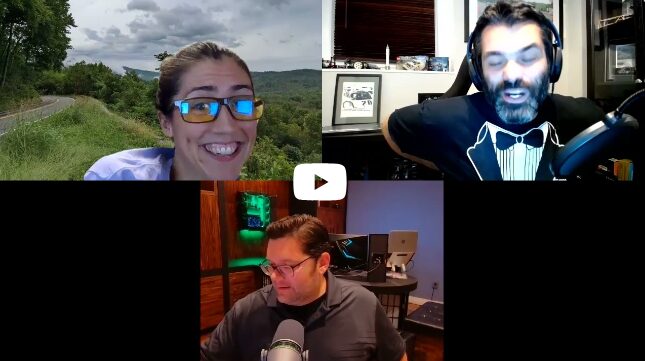
All of our BEHIND THE SCENES (BTS) Break/Fix episodes are raw and unedited, and expressly shared with the permission and consent of our guests.
Other episodes that aired this month…


This content has been brought to you in-part by sponsorship through...

Driving by Data: How Apex Pro Is Revolutionizing Track Performance

In motorsports, the mantra is simple: the best mod for any driver is seat time. But what happens when seat time alone isn’t enough? When coaching plateaus and progress stalls, where does a driver turn next?

Enter Apex Pro – a digital driving coach born from a desire to simplify data and empower drivers. In a recent episode of the Break/Fix podcast, special guest Phil Ingalls of MaxSpeed Track Days sat down with Andrew Rains, business lead for Apex Pro, to unpack the origin, evolution, and impact of this groundbreaking tool.

Like many tech startups, Apex Pro began as a passion project between two motorsports enthusiasts: Andrew Rains, a business student and club racer, and Austin Gurley, a technical wizard with a vision. Their goal? To make data accessible, actionable, and intuitive for drivers at every level.

Tune in everywhere you stream, download or listen!

Listen on Apple
Listen on YouTube
Listen on Spotify

The journey started in 2010 with prototype sensors and weekend testing. By 2016, Apex Pro hit the market, leveraging the power of smartphones and affordable sensors to deliver real-time feedback and post-session analysis – all designed to help drivers improve.

Spotlight

Notes

  • What is the APEX PRO origin story?
  • What are some of the key differentiators between APEX as other solutions on the market (Harry’s Lap Timer, AIM Solo, Garmin, etc)
  • How does the system work? Is it AI or ML?
  • Geeking out about: How many GPS points does APEX use? Does Apex talk to your phone? How? (Bluetooth? Closed-circuit WIFI, Is there any latency?) Does the unit store data that can be downloaded afterwards? Is the phone doing the post-processing? (and video recording?) Is there software for your laptop? What are the mobile device requirements? 
  • How does this work for motorsports like AutoCross, or Point-to-Point Rally type events? Doesn’t it need a start/finish? Does it work for Karts or Motorcycles?
  • Learn about the Apex Pro Gen-2 and promo/trade-in program.

and much, much more!

Transcript

Crew Chief Brad: [00:00:00] Break fix podcast is all about capturing the living history of people from all over the auto sphere, from wrench turners and racers to artists, authors, designers, and everything in between. Our goal is to inspire a new generation of petrol heads that wonder. How did they get that job or become that person?

The road to success is paved by all of us because everyone has a story.

Phil Ingalls: Everyone always says that the number one mod for any driver is seat time. Do you reach a point where seat time alone isn’t enough? Coaches can only get you so far. So what is an aspiring driver supposed to do?

Crew Chief Eric: That’s where software, machine learning, and data driven intelligence in the form of digital driving coaches come into play.

Apex Pro was born out of the desire to simplify and improve the way data is displayed and communicated to the driver, helping folks improve and achieve better lap times. And with me tonight on Break Fix is special guest host Phil Ingalls [00:01:00] from MaxSpeed Track Days, along with Andrew Rains, business lead for Apex Pro, to explain how this all works.

So welcome to the show, Andrew.

Andrew Rains: Hey, thanks for having me. It’s a flattering intro. I appreciate it.

Crew Chief Eric: So let’s talk about the origin of Apex. Where did this idea come from? How did it all come about? What inspired you to develop this digital driving coach?

Andrew Rains: You hit the nail on the head with your intro, really.

And it’s born out of the whole obsession with trying to simplify and solve a problem in a simpler way. So when, when I got involved in motor sports, Data was kind of like an intimidating subject, and I’m sure it is for some as well, you know, if you’re listening to this. You might be that person. And until I really was exposed to somebody that could really walk me through how to properly use a professional grade data system, I didn’t really appreciate how powerful it was.

On a really simple level. I want to share that experience with people and. Provide them with a simpler way to gain insight into their performance and to provide them with a tool that they can really [00:02:00] take and grow with and mature with as they go through the sport. And then also obviously incorporate elements of technology that helps solve the problem in a simplified way, which doesn’t mean less powerful.

It just means more user friendly. That’s kind of the inspiration. This is my personal driving and racing experience with data systems and trying to become a better driver. And then meeting my business partner, who’s our, our technical lead, Austin Gurley. He developed the, the concept of Apex Pro, the machine learning that operates the lights on the display that calculate all sorts of interesting things.

And he kind of approached me with this concept. It’s like broad idea. I think we can do something that’s simpler and different. Ever since then, it’s just been the constant pursuit of trying to do that better every day.

Crew Chief Eric: So how long have you guys been working on the product and evolving it?

Andrew Rains: The, uh, the first time I touched a prototype of the product would have been in 2010, but we didn’t bring it to market until 2016.

So there was kind of a, like a gestation period of figuring out what this thing is and where it fits into the market. [00:03:00] And, and really just figuring out the technical backend, you know, me sticking some sensors in the race car. Sending it back to Austin after the weekend, about three years of that. And then we finally kind of put the pieces together and ended up developing an app to control the hardware that we designed.

And then we kind of happened into a really fortuitous place where we realized that smartphones are now capable enough to operate. As a very key element of your data system. They don’t have good enough sensors to record the data themselves, but they can display it really well. Those two things kind of coming together, like affordable, really good sensors and powerful supercomputers in your pocket are what made our business possible.

Crew Chief Eric: So like any good IT. Company, it’s two guys in their basement or in their garage, no budget and a desire to change the world. So that sounds like the Apex pro story. Yeah, absolutely.

Phil Ingalls: Did some of this come out of you when you were at Auburn university and he was part of their, uh, drift team, correct?

Andrew Rains: Formula SAE team.

Yeah.

Phil Ingalls: That’s kind of where you started your seeking your data so that you could be better at that.

Andrew Rains: Yeah. You can actually see [00:04:00] the picture, uh, audio only listeners. I apologize. There’s a picture of a race car behind me. It’s a Formula SAE car. So I went to like Fillside Auburn university, which listeners in the South will be familiar with anybody that watches college football might recognize it, but they have a huge engineering school and I was a business student, but I happened upon this race car one day at an autocross that had Auburn logos on it.

And I’m like, hold on a second. I’m about to go to Auburn. Like I need to look into this. And so I realized that there was this. University funded organization that builds a race car. Like Phil said, I was actually club racing at the time. My dad and I had bought a vintage race car and I was kind of stringing that together, doing one or two events a year, maybe.

And then I got into Formula SAE and that really lit the flame, kind of fueled the passion behind it because now every day I’m with him. 10 or 20 like minded people that are just trying to figure out how to design and build a race car. And even though I didn’t go to school for the technical aspects of it, I learned a ton about building a car from a blank sheet and a big part of that is data and we ended up probably [00:05:00] spending 20, 000 on ECUs and MoTeC sensors and damper pots and wheel speed sensors.

And, you know, we had everything on the car, you know, it’s sensors for everything, and we knew all about the health of the motor and everything, but. We weren’t using it for driving. We were just using it to make sure the car wasn’t falling apart. Nothing against MoTak. I use MoTak sometimes when I coach.

It’s, it’s a great product for some, but it requires a lot of technical experience and it’s not really designed to deliver inflammation to the driver that’s actionable. It’s more of a tool that you use to expose deeper things to solve a lot of problems. That’s a big part of it. Yeah, you’re definitely right.

Crew Chief Eric: So you actually hit on something that’s really important here is most people in let’s call it road racing. So we’re going to qualify that as. HPDE, club racing, time trials, anything that falls into, you know, circuit racing that we’re all accustomed to, they have their loyalties to competitors out in the market.

Some of the more prominent ones in HPDE world, because it’s cheap, Harry’s Lap Timer. For those of us that are trialers, we’re used to using AIMS and AIM Solos and AIM [00:06:00] dashboards, et cetera. And then we have some newcomers in the market, right? Last year, Garmin announced So they came out with their own driving tool.

So how does Apex Pro stack up against some of these names that we’ve become familiar with over the years?

Andrew Rains: That’s a great question. It’s kind of a marriage between what you look at from the entry level app type products, the Harry’s or the track addicts, but kind of more on the hardware side. It’s more similar to aim where the sensors are obviously much higher end.

They’re very sensitive to how you Mount them. It has to be calibrated properly. Not that that should intimidate you, it’s all easy to do, but there’s a, you get the device with the sensors in it, right? Which is a huge difference between that and the app world in the app space. You can buy GPS dongles to pair with apps and stuff like that.

But what’s really unique about us is that we make an app and we make a piece of hardware and those were designed from the beginning to work together. So they’re very simple and easy to use together. If you’re on a budget and you’re trying to string together 10 Hertz GPS and run it with an app and pay a dollar a month for the app and buy a hundred dollar [00:07:00] GPS, you’re going to end up with a compatibility issue.

You’re going to end up with a lack of support. There’s a lot of ways that that can kind of sour your experience with data. So we’re kind of trying to be the easy button for the person that wants to go there and kind of step out of that into something that’s a more purposeful hardware device. So we kind of want to be the bridge.

Our product is primarily app based. There’s a lot of power in the app. Truthfully, it’s works for 95 percent of drivers. There’s probably a small population of people that need more information than we provide. There’s other ways to do that. When you mentioned the Garmin, it’s very, very different than the Garmin.

It’s a different tool. I can definitely compare and contrast them. The biggest difference is the price point. They’re twice our price, but if you’re an audio, like learning style, if you’re an audible learner, then the Garmin’s probably got some really compelling features. If you’re a visual learner, or if you are compelled to, You know, learn how to leverage data.

Then Apex pros is probably what you want. If you’re looking for the easy button, I think that’s probably a simple quick fix.

Crew Chief Eric: I noticed that you didn’t mention the [00:08:00] abundant frustration that most of us have with race studio and all the, the programs that go along with the aim. So I’m hoping to hear some positives to maybe convince people that, you know, this would be a good thing.

A huge change for them, at least in how they interpret their data. Cause most of us spend our time trying to get it to work more than anything else. Right?

Andrew Rains: Yeah. Yeah. We can definitely touch on it. I try not to focus too much on what I don’t like about our competitors. Cause they do a lot of really good things, but I’ll definitely put out there the differences between if that’s the software you’re using versus what you experience using ours.

Phil Ingalls: If I can interject something here, because first off, I started off with Apex as an end user. I kind of reached out to Andrew because I had ideas when we were forming MaxSpeed to provide data to everyone. And he kind of explained to me that logistics of that in a track day style format was pretty rough, but I ended up becoming a dealer of Apex units and a very basic end user at the beginning, so I got my first Apex unit.

And really all I used [00:09:00] it for was lap times, but then my buddy and business partner, Brendan, you met him last time we had a podcast, he got one and neither one of us really knowing a whole lot about the data, but we would just sit down and look at, okay, how fast are you going through this corner? How many red lights are you showing or whatever?

Super simple stuff. And if I was a couple of miles an hour faster, Brandon would be like, well. Okay, then I I know that I could I could go faster through the corner if you can stick it because our cars are identical than I can stick it and it was just we would sit down on a couch after sessions and just look at each other’s line and data and how much apex score we were using and it was super simple and we got faster.

I shaved four seconds off my lap times that wrote Atlanta over the course of a weekend using an apex pro and I knew nothing about data. It was just the lights and looking at the path going around the track. So for a new introduction person to data, the Apex app and device is mind blowing. And then of course, Andrew has taught me a lot about data since, and now I can really drill down into it and learn how to get [00:10:00] better.

For a first time user, it’s super intuitive and simple to use.

Andrew Rains: Yeah. I think what’s important if you’re like in this space and you’re looking at different product offerings, I can’t speak to the other company’s mantra or customer service or how they deal with things. Our goal as a business and all we focus on is we want to make you become an apex pro essentially.

Like we want you to be able to get into any car and drive the wheels off of it. Data is a big component, you know, quantifying your performance of learning, but it’s not everything. There’s a mentorship and a coaching role and connection community that really drives the learning process. You know, finding people that you can connect with, finding a good coach, finding the right, right seat instructor, finding tools and resources to leverage the data that you have, no matter how simple the data gets to see, there’s a process that your brain has to go through where you have to understand it.

Right. And it can become too simple. We want to respect that people can learn how to use data. We just have to present it to them in the right format. And so that’s, our goal is to help you learn to drive the wheels off of anything through this vehicle of data. [00:11:00] So what Phil’s talking about is like there’s subjective elements where I communicate a lot directly with customers.

And we talk about track nuances that might not be present in data or. We might talk about a track nuance and I say, Hey, guess how you can see that if you’re a laptop or plus subscriber, you can see grade and elevation change, you know, as a graph or colored on the track map and you can go see why I am telling you you can roll more speed through a certain turn because there’s compression or there’s something that’s

Phil Ingalls: turn six roto

Crew Chief Eric: line.

Yeah, turn

Andrew Rains: six.

Crew Chief Eric: So it almost seems with the light. It’s to be a little bit Pavlovian in a way where there is some psychology in there too. Because are you anticipating those colors to be there? Because the way I’ve understood the product is there’s a double edged sword to this, right? Where the visual side of it on the phone, you don’t have time to look at while you’re driving.

You use that after the fact to analyze your data versus the onboard, you know, device that sensor you were showing, you know, has those lights. It gives you an immediate gratification and immediate feedback while you’re driving, you know, red, yellow, green, et cetera. You guys have mixed in some [00:12:00] psychology in there as well, right?

Andrew Rains: Yeah, honestly, I think that’s the goal because, and you can probably speak to this, Eric, as a coach or a right seat instructor, there’s, there’s very, very small amounts of information you can communicate when a driver’s in the headspace of driving, they’re focused, they’re trying to get into the flow state, there’s very, very minimal amounts of information.

So what we find is that people that drive with Apex Pro drive with it for months, years, and eventually the lights start to become very significant to them. Because they start to understand having looked at the data and having, having seen them what they represent and they start to believe that it helps them all the matters for us as drivers is that we believe what we’re being told that we have confidence in the car, you know?

So like the days of thunder, right? When Harry hides on the radio and he’s like, you can run the high line and turn forward. You can make it stick. That’s what, yeah, that’s exactly, that’s what he says. Followed by, you

Crew Chief Eric: can come on down here and get yourself some ice cream. That’s

Andrew Rains: right. We’re having ice cream.

The psychology of driving a car is everything. Our [00:13:00] mental state is everything. So if we can. Find a way to blend the data with the human brain. And the only way that I currently really know how to do that is by getting hands on and helping people bringing the technology along so that it brings people to those conversations at a more educated level, we want to educate people in a way that they can understand why they need to drive a certain way, not just be told to do a certain thing.

And coaches and right seat instructors are great at providing the instruction for where we turn in, where we break some of these other things. But when we start to really explore how we. Get the most out of a car, how we keep the apex pro lights green all the way around the track, which means you’re using all the tires ability.

There’s not really a black and white answer. Should I break later? Should I break softer? Should I come off the brake later? Should I come off the brake, you know, sooner, whatever it is, you have to have the tools in your toolbox to apply it when it’s appropriate and there’s an art form to the formant of those skills.

So anyway, we can kind of promote proper driving techniques and give people Solid things to look at in their data to track that performance and then [00:14:00] open up this whole world of allowing them to learn these things. You know, you don’t know what you don’t know. So would

Crew Chief Eric: you say then that it helps facilitate the ability to learn how to drive by feel?

Andrew Rains: Yeah, I think using data properly does because what you hear previously, you know, in the industry before data was commonplace and it still isn’t enough. Most people still aren’t leveraging it. A lot of people say, well, that feels faster. Usually feeling faster means it’s a little scarier. It’s a little more intense or the car’s loaded more laterally a lot of times.

And there’s lots of things that you’re like, Oh, that feels faster. But when you look at the data, you know, you may have carried more speed into the corner, but you didn’t get a good exit, whatever it is, what we’re trying to do with the data is calibrate. Our feel to what actually the data says is fast, then we’re really, really powerful.

Then we’d look at data totally differently. We can kind of anticipate what it’s going to tell us. And I can speak to my own driving. I have a sense for when I attack the entry too much and I compromise my exit. I know on a scale of did that hurt me or not? And was that an entry speed corner or an exit speed corner?

[00:15:00] I can quantify those things more easily now and kind of have a sense for that more naturally than before I really was a student of. The data and understanding what that meant.

Crew Chief Eric: Let’s talk about how the system works under the hood. You know, a lot of our listeners, it’s kind of an interesting dichotomy where you have it nerds and car people.

They happen to be the same persona a lot of the time. And when you start talking about machine learning, you get all, you know, the hairs on the back of the information science guys next standing on end because they’re like, well, is it really ML or is it AI? Without giving away any, any secret sauce here, but just to talk about how the system works in general, and then maybe compare and contrast it to some of the other leading systems that we’re used to working with.

Andrew Rains: Yeah, sure. So I’ve spent a lot of time explaining this and talking about the backend. So I’ll start by kind of prefacing what Apex Pro is and what it displays to you and how powerful that information is. And then I’ll kind of talk about fundamentally why it works, because that’s not a technical thing, but it’s a truth that we all know.

And that’s the [00:16:00] reason why it fundamentally just works. And, and you need to know that before you know anything about it. So on the apex display, while you’re driving, you see red and green lights. And the red lights indicate the limit of the car’s potential or the limit of the car driver combination, its potential.

It’s not ultimately what that car can do with Michael Schumacher behind the wheel. It’s what that car can do today with you driving it and the green lights represent your performance. So the, the raw sensor reading. So it’s all based on kind of a. A friction circle, right? Like we’re taught early on with the string theory.

And if we are graph, you know, lateral and longitudinal G you end up with a shape as you drive around the track, that looks kind of like an ellipse, kind of like a pear shaped thing that represents lateral and longitudinal load. So what Apex Pro is doing is it’s taking that, but it’s measuring accelerations in nine axes with a nine axis IMU.

For the more technically inclined, that’s a nine axis IMU is like three axis accelerometers. Um, one of them’s a gyro. You’ve got a lot of different sensor [00:17:00] readings that you’re taking in on accelerations, uh, and then there’s also a 10 Hertz GPS and the device that is used for speed and position. And that’s obviously very important as well for the traditional data output that you’re going to get in the app.

You’re going to use the GPS. And then we also do some other cool stuff with the GPS, like crew view and streaming your position and some other cool stuff that we’re working on. That’s what you see when you drive. So basically if there’s red lights from the braking zone to the track out, there’s more potential, meaning the tires, not at the edge of the friction circle.

Crew Chief Eric: So red is not necessarily bad. It’s just

Andrew Rains: unused potential.

Crew Chief Eric: Okay.

Andrew Rains: Yeah. It’s opportunity is the way I like to think about it. Yeah.

Phil Ingalls: If you see red, I don’t focus on it anymore. It’s just in my peripheral vision. Right above my steering wheel and I’m looking down, but I can see if I go through a corner that there’s one red block there and I don’t focus on it, but I know next lap, I can make that all green.

Maybe I need more entry speed, or maybe I need to set up my corner entry better to pull more speed through the apex, but I know that there’s more there. I know that I’m [00:18:00] safe to push that little bit more because it’s showing me the red.

Andrew Rains: It’s kind of indicating like the car can take more input.

Phil Ingalls: Yep.

Andrew Rains: And that input could be steering, pedals, something that’s going to get the car closer to the edge of the friction circle speed.

Just, it just depends. That’s part of the learning process. Yeah. We touched on that. With the 9 axis IMU, you can measure, obviously, accelerations and lateral longitudinal. So you’re kind of traditional. Axes, you obviously have a gyro for your slip or jaw axis. Uh, and then you can also measure all these other axes of acceleration, right?

So apex actually can model camera corners. The data filtering that’s happening from the IMU when it’s intaking sensor readings, it’s actually saying like, are we flat? Like how we calibrated? You know, when we press the calibrate button, or is the car tilted? Uh, or is it going uphill? Have we been traveling and accelerating?

You know, uphill or whatever, or downhill it’s measuring all those things. So it’s filtering out to where it knows the grade or the camber. [00:19:00] And that’s, that’s very important because that affects the limit of grip, right? You have slightly more grip when you’re going uphill, depending on the steepness of the grade.

You have slightly less grip than a flat surface when you’re driving downhill. Same with on camera and off camera, right? The reason NASCAR tracks are banked are because gravity is now pushing the car into the ground, right? You have kind of more contact patch. You have more static mechanical grip. That’s important to know.

But the fundamental thing that I think everybody that’s either speculative about Apex Pro or not convinced that it can do what it does, all you really have to know is that some corners are not driven optimally, like some drivers just. All of us actually, I’m sorry, some is the wrong word. We all drive one corner better than another.

We all go faster someplace on the track. We’re all more confident in a certain corner than another. And it could be the fast wide open corner where we can see all the way through the exit and our first lap out, we’re already tearing through there. Or it might be the slow speed corner. Cause we come from autocross and we can just trail the brake off into that corner.

The car rotates, we get some oversteer on the exit and it’s not a [00:20:00] big deal. That fundamental truth is how Apex quote unquote learns the limit. That’s what it uses as your baseline performance. It’s taking that performance that it sees there. You’re pulling a certain number of G’s. At a certain speed with a certain banking in the track, a certain grade of the surface.

And then it knows all those things. It knows the grade, the bank, all that. So the next time you go through a corner that has a different grade or banking or radius or speed, it can say, well, back here, we were doing this many G’s at this speed with all these other variables here. This is slightly different, but these things are the same.

So we can logically say, if you’re pulling, let’s say negative 0. 9 longitudinal G. Going up a hill and on a flat surface and a flat breaking zone, you were pulling negative 1, then it can say, okay, there’s reasonably more potential for the tire to grip here.

Crew Chief Eric: Yeah. So with that being said, there’s some other variables there that maybe people are kind of.

Thinking about right now, as we’re talking about this, scratching their heads going, well, what about the different tire [00:21:00] compounds? What if I start the morning on a low grade R comp? And by the end of the day, I switched to slicks or my tires have to come up to temperature before they’re sticky or they’ve superheated.

And now they’re no longer grippy. Like we see that all their time. There’s so many variables when it comes to tires. How do you consistently pivot off of that as your data point?

Andrew Rains: I mean, that’s, that’s really it. There’s so many variables when it comes to tires and the theoretical potential of, of a tire to grip a surface.

The surface changes throughout the day, right? With cloud cover temperatures are going to affect, we all know good weather is cloud cover, relatively cool temperatures, right? That’s when you’re going to go the fastest. So Apex doesn’t know any of that stuff. That’s not even a consideration. All it’s looking at is the accelerations.

The raw data from the sensor. So it’s really showing you in real time, like, did you have more potential right then carry more speed through that corner to accelerate harder in that particular instance. So it doesn’t know if your tires are up to temperature or not. All it knows is that you’re accelerating it this much in this corner.

And in this corner over [00:22:00] here, you’re not doing that, not necessarily the same exact performance, but a modified version of that same performance that it thinks is reasonable in those conditions. So the, basically the answer is it doesn’t take any of that into consideration. And that’s, that’s part of how it works as well.

How a part of how it represents something that’s accurate in all of those conditions. And the only time that it’s something that I would recommend that people change is when you go from a dry track to a wet track very quickly, because it learns your peak grip, peak traction, your peak, uh, edge of the friction.

Phil Ingalls: Right.

Andrew Rains: The, the display won’t be as helpful like unlearning all of that. Like, okay, you were. Decelerating a negative one G and now you’re decelerating negative 0. 6, right? Cause it’s wet, but the other way around works exceptionally well. And this is, I hear this a lot from drivers and I’ve had this like epiphany myself, but on a wet to drying track, it’s kind of unfair because you’ll be feeding into the power and you’re at slower speed cause it’s wet.

It’s a little easier to be able to get the visual feedback and you can just tell so easily, and it’s like a truth meter, [00:23:00] right? You’re like going to the power and you’re like, I don’t know if I can go to the next floor. And you’ll see all these red lights started to populate and you just feed the power to the floor.

I’ve had that experience so many times where it’s just like giving me more confidence sooner in drying conditions to start pushing the car’s limits. If you’re a skeptic of the product, that’s a hard situation to like to replicate. But if you can get on a wet track or a drying track with one, it’ll open your eyes.

Crew Chief Eric: And I don’t know that it’s skepticism so much as like to use your word, a recalibration of what we’re used to. AIM does it a certain way. Harry’s does it a very linear way, et cetera. So this is a different way of thinking. So it takes a minute to kind of wrap your head around how it works. I think some of the other questions that may come into people’s minds as, as they’re thinking this through right now, as you’re explaining, it might be.

I guess it really doesn’t take into account the line either. So you could be a habitual early apexer and it doesn’t matter because the machine learning is learning how you drive and then [00:24:00] setting those optimal limits based on what you’re doing. So I guess there’s a negative to this in that if you don’t drive a great line, whatever that means, because that’s a truly ambiguous term, honestly,

Andrew Rains: it’s

Crew Chief Eric: really only scoring you.

But what happens say, you know, you get that classic situation and then my buddy got in my car and he beat my lap time by three seconds in my own car. Then

Phil Ingalls: Andrew will tell you about the easy button when you’re speaking to people, data, let Andrew drive your car.

Andrew Rains: Yeah, well, that, that, that’s a really powerful tool because the, when you turn the apex pro off, it, it.

erases that calibration. It doesn’t store the memory of that performance, right? And there’s a lot of reasons for that. Mostly conditions changing and the grip potential always being different, different times of day. But if you leave it on. So if I go, you know, drive a super fast lap and then Phil hops in, those red lights are gonna be more prevalent and they’re gonna more Easily expose those types of things.

And, and you can get a sense for things that are [00:25:00] line related. So like, if I were to strictly look at the apex lights, I could kind of tell if you’re an early apex or a late apex, or if that’s kind of habitual, it’s kind of helping you, if you’re running a consistent line, it’s going to be most helpful. And that’s kind of where us as like early, you know, early stage instructors.

That’s what we’re trying to get our students to do is drive consistently in the same place on the track. Obviously learn how to do. Things in other places on the track, break offline, overtake in different situations, have different site pictures. It’s going to be most helpful for you on with some basic understanding of the principles of the line.

And I’m not a believer in teaching people the line and saying, this is the line, because I think the line is a function of utilizing the, the, Tires grip the entire way around the track. And if you do, even the,

Crew Chief Eric: even that the car’s natural tendencies as well, some cars, we joke all the time that we call it fun wheel drive, right?

For the front wheel drive guys that are out there, there’s a concept that we throw around known as anticipated understeer, which translates to track out. So if you can get a front wheel drive in the corner correctly and rotate on its [00:26:00] hind legs for a moment, it’s. It will basically push its way out to track out.

That is not a natural thing for a rear wheel drive car, but if you master those kind of, we’ll call them techniques, you can make a front wheel drive very fast. Right. But it’s unorthodox. So those are the kinds of things I’d be curious to see, like how a system like this would pick up on those, those nuances of the different types of cars.

You know, there’s a certain way to drive a Miata fast, but it’s not necessarily the way you drive a Corvette fast. So I often argue like you that the line is this mythical thing. It’s the baseline at which we all learn how to get around the track safely, but to go fast is an entirely different thing.

Andrew Rains: Yeah. I could, I couldn’t agree with that more. It’s. You drive the car, not the track. You take advantage of the track. You take advantage of what the track gives you. Your goal is to drive the car at its limit. And by consequence of that, drive the tire at its limit, which is dictated by physics and for contact patches or for contact patches, right?

There’s ways that you have to manipulate. And I’ve got, I’ve got a lot of front wheel drive racing experience. Uh, so, you

Crew Chief Eric: know what I’m talking about? I love

Andrew Rains: front wheel drive [00:27:00] cars. Yeah. I have a lot of conversations with guys that are diehard rear wheel drive cars about, you You know, that can’t wrap their head around.

Why would I ever want to drive a front wheel drive car? And it’s a totally different approach, but it feels very different, right? It feels so different driving a front wheel drive car to a Miata, to a Corvette. But what the tire is experiencing to drive an optimal lap is very similar. Trying to get it into a similar place, right?

You’re trying to. Rotate like the rear tires are maybe sliding slightly more than the front entering a corner so that the car rotates more naturally without steering input and less scrub so that you can, you know, direct a car, the car to the exit and go to power sooner. And that’s exacerbated in a front wheel drive car because you have these natural tendencies towards understeer from the time you get on the power.

Right. But those types of things are why that kind of that fundamental, like we’re trying to, we’re using physics, tell people this all the time. And I think maybe Ross Bentley said it. Or Peter Krause or somebody that’s my senior in this coaching, you know, industry and business. And the only laws that apply to driving are the laws of physics.

There, there are no [00:28:00] rules. There, there are suggestions. There are best practices. There are things that we do to safely get the car on the track. But when it comes to laws, it’s the laws of physics. And that’s why Apex Pro can work. The same way in a downforce dependent car as it can in a front wheel drive shit box.

Yeah. .

Crew Chief Eric: Yeah. Yeah, exactly.

Andrew Rains: Which, and that’s a, that’s an endearing term

Crew Chief Eric: in a, in a . No, it, it’s, it’s, it’s plastered on the side of all of our front wheel drive cars. It’s okay. Yeah. Shit. Box edition. It’s all good . But uh, that being said, you know, again, going back to this kind of re-imagining of the data, a lot of people are hyper-focused on, I think two big things, the lap time.

And the data that’s coming from the car and you see it all the time. I mean, there’s countless YouTube videos, man, look at my awesome lap at road Atlanta. And it’s like in car video and OBD2 data. And you’re like, is that lap really that good? What are you showing me here? Right. And in the days of Harry’s being like the more prevalent one, you always saw the, like the little G meter that looked like it came out of grand Turismo or Forza.

And you’re like, it’s so [00:29:00] gimmicky. Right. So I guess the bigger question for. Folks that may be interested in this or looking to transition is they want to get that experience at the day, because they want to show their friends, they can’t show their friends, blinky lights. So is there the equivalent to, you know, that smarty cam or that overlay or that OBDU data in the Apex pro system?

Andrew Rains: Yeah, we have a, we have a. Video rendering and data syncing feature, uh, that’s part of our advanced feature set within the app. You can basically, with a touch of a button, you can render your, your iPhone video with your, your data. So you can actually see the lights overlaid on the data. So you can go back and see your relative, you know, position, trajectory.

Where are you on the track? And did I have any red lights or not? Right. Is that a place I need to go work on? Uh, and then also speed and some other things. And we’re constantly adding capabilities to add different things to renderings. But it’s very important to be able to have that hero lap. Cause we all go to the track for fun and we all want to show our friends what we did.

And, uh, some people learn a lot from video, but that’s definitely something you can [00:30:00] do. There, there are certainly limitations, um, when you start talking about. Technology to phone cameras, to OBD, to information, what you can actually get from the car without going down a rabbit hole. Uh, and that’s funny that you bring that up.

Cause I spend a lot of time talking with drivers who come to me asking advice, thinking they need information from the car when really they’re trying to learn their braking tendencies or something that’s more about them as a driver, which is all, in my opinion, again, we talked about this 95 percent of drivers are going to get enough out of a driver.

A GPS based standalone system to learn about their driving. If you need vehicle health measures, you need to make sure that you have that taken care of. But if you’re just looking to like, learn about your driving, you don’t need brake pressure and steering angle, even though it sounds, even though those are, those are things that they’re like, well, I turn that and I press that.

Right. I need those. Well, you can learn almost exactly what you’re doing with those inputs from longitudinal and lateral g force inputs, right? It’s not exactly the same, but it’s even more powerful because it’s the [00:31:00] end result of your inputs. And you can, you can learn enough about it that for way less money.

You can get to the same exact place. And I spend a lot of time talking with drivers about that. Like if you want to break pressure trace, turn your long G trace upside down.

Crew Chief Eric: There are two data points that are missing from this equation that I actually think are relevant from the OBD2 data. And that’s throttle position and RPM.

Those cannot be derived, but those to me would be the only two data points that are valuable in that whole, you know, compilation of information. You’re getting to your point, break pressure. You can, you can calculate that. You can figure that out steering angle. Who cares? But those other two points, they’re so very finite.

You know, you can get the exit speed of a corner. But at what RPM, what gear, you know, how much throttle was I at when I achieved that perfect exit speed? Was I at full throttle or did I back off a little bit and I was at half throttle? Or the other thing that it won’t pick up is lift throttle over steer.

If you drive with your pedal, you cannot sense that on [00:32:00] any sort of GPS or gyro or anything, because you’re feathering, you’re working, you’re making the car do things, and I think that you almost would get a false positive in that way.

Andrew Rains: Yeah, there’s, you know, the reason I mentioned brake pressure and steering is because no car communicates those over OBD2.

It’s on the CAN bus of modern cars. If you have a relatively new car, you can get that information by buying a device that can access the CAN bus. And it gets really confusing because. The OBD2 port can access CAN bus, but OBD2 and CAN are not the same thing. OBD2 is a standard that all automotive manufacturers agree to.

And they, they’re required to put some information that may be required, maybe coming from the CAN on a newer car or from something else on an older car. But you can access, and I’m glad you mentioned that you can access throttle position and RPM because those are required OBD2 standards, which means it’s going to be less expensive regardless of if you’re using the Apex Pro, OBD2.

Device or if you’re using someone else’s OBD2 device, you can get throttle position and RPM. So I spend and a TPS [00:33:00] trace throttle position sensor trace is very, very important to understand at a certain point in your driving and can teach you a lot, even, even really early on as well. Um, and then also with OBD2, you get something called pedal position.

Which usually TPS is measuring the throttle position sensor. So the throttle body in most cars, um, which will be like, if you have a modern car with stability control or traction control, the TPS trace will be influenced by those if the throttle body is used for traction control on most cars, it is pedal position is the measurement of the throttle pedal.

So you can actually more linearly see what your foot is doing. So on Apex pro, you can use our OBD2 device. That’s a Bluetooth OBD2 that tethers in to the app, just like our standalone GPS and accelerometer hardware unit. And you can get all that information. Cause the question that you mentioned, Eric, what gear am I in?

Is a, is a really important one. And that’s not always super easy information to access. Cause it’s kind of hard to remember that, especially when you’re learning a new track, or maybe you’re in a car that’s new to you. Or you’ve changed gear ratios. [00:34:00] That’s a vital information to know and to compare. I can’t tell you how often I remember doing this.

Even before I was involved with Apex pro, I was traveling and doing some crew work for some pro teams. And then I got into professional racing myself. And I remember how often I saw the drivers when I was on the crew. And then myself with my team and engineers and stuff asking like, is this faster in third or fourth?

I don’t know. And it’s not super easy to know. You can see in a speed trace where you up shift, right? So you can get a sense that I go to 4th there, but you can’t always see that. Right? Or if you’re in a PDK Porsche or a DSG BMW, you’re not going to see those shifts in the speed trace. So being able to tell your position is pretty important when you’re looking at that type, particularly a corner that’s got like a 70 mile per hour minimum speed.

In most cars, that’s third or fourth gear. Yeah. So you make some really good points there. And TPS is really cool too. Once you get into it, cause you can see part of our learning curve. We over slow the entry of the corner pretty substantially. And we all have the tendency to go back to throttle before we can actually be at wide open throttle.

To drive the car out of the [00:35:00] corner. So we have to lift off the throttle again. You can see that in long G, you can see that in the speed trace, but you’ll see it obviously in the TPS, right? It’ll go flat line to the top. And

Crew Chief Eric: the other thing is, if you really want to geek out, you can calculate the latency between the throttle position sensor at the pedal and the throttle position sensor at the throttle body.

To figure out if you’re lifting is actually doing anything. Cause some cars have a baked in delay there where lifting your foot actually isn’t doing anything. And the motor is still at whatever position it was at exactly. So

Andrew Rains: not

Crew Chief Eric: to nerd out on that, but let’s nerd out on something else again, which you brought up kind of alluded to, you know, going back to that, you know, ML versus AI, you said the system resets itself every time you go back out so you recalibrate.

So one of the guiding principles of ML is that it has been feeded and seeded data and that it continues to evolve over time. So if it doesn’t retain the data, now it’s this goldfish kind of circling the castle. So is it really starting a new every [00:36:00] time or is it an AI that is now recalculating on the fly?

Bye bye. What you’re doing based on that particular session.

Andrew Rains: Yeah. But by that definition, it’s, it’s AI because you, it is, it starts from a baseline of like the software that’s embedded in the circuit board basically has kind of a baseline fundamental understanding of like what we talked about, physics,

Crew Chief Eric: Yeah.

Andrew Rains: And that was calculated. That was the original testing that we did to kind of get the logic was in my Pirelli World Challenge, Honda Accord and Robbie Foley ran one in an MX5 and the MX5 Cup. And then we had a couple of downforce cars, um, that we used. We got kind of a wide range, a couple of high horsepower cars.

I drove an LS swapped early 944. For a while, uh, that it was a friend of mine’s car that if you went to full throttle too soon out of the corner, just shoot the axle out the side of the car. The most ridiculous early nine 44 is don’t hold up super well to V8 swaps. So get a turbo. You’re going to do it.

Uh, yeah, 525 horsepower and a 27, 2, 700 pound nine [00:37:00] 44 is really nuts, but yeah. So, so that’s kind of like where the, so it’s, it doesn’t start from nothing. It starts from an understanding of the basic physics and driving dynamics. But yeah, by the definition, if you turn it off, right, then it’s an AI software algorithm.

Crew Chief Eric: So let’s talk a little bit more about the Apex pro. And this is, you know, obviously where we’ll probably start to differentiate it from some of the other systems that are out there. So, you know, I’m very intimate with, you know, the aim I’ve been using it for years, probably like a lot of our listeners that are tuning into this episode right now.

A lot of us have gone through the, you know, the training and certification classes and stuff like that. One of their big things is they push. How many satellites are being used to get this exacting information to this, you know, minutiae of how many blades of grass you just blew over as you went through a corner and they, they, they emphasize how important that is, you know, where you are on the track at any given point, you know, were you an inch off of the apex, like they can give you that level of fidelity in the data.

So, you know, their minimum is like eight satellites in order to triangulate on you when, you know, your [00:38:00] typical in car. Satellite only uses three, you know, stuff like that. So I guess the question is because you are using a GPS receiver, let’s start with that, how many GPS points is the apex using in order to create that level of granularity?

Andrew Rains: Yeah, we, you need more than five to really even get to a use usable, you know, track position and in our. Opinion seven or eight, the baseline number of GPS satellites. I’ve learned a lot about GPS going through all this, but some of the natural limitations or GPS is it’s controlled by depending on where you are, it’s controlled by the department of defense in the U S maybe Phil can tell us more about that, but they only, they only allow you to get so accurate.

for national security reasons. So

Phil Ingalls: three meters, that’s one.

Andrew Rains: Yeah. One meter, which is in racing terms, as far as like how far am I off the apex one meter might as well be a

Crew Chief Eric: barn. Yeah. Yeah.

Andrew Rains: You can drive a Miata through there, right? Like that’s, that’s too much, but I mean, that, that is very important. And that’s a big differentiator between.

Us and who we view as the [00:39:00] primary, not necessarily competition, but where we’re looking to bring customers into the Apex pro world as folks who are using their phone as a data logging device, that’s where you’re going to see the biggest difference between using like a phone with an app and then buying something like an Apex pro or a 10 Hertz GPS unit to get a better position.

You’re going to see a much more accurate position on the track. Now there are, you know, instances where, and you’ll see this with any GPS system where you’re going to have GPS satellite shift, or let’s say we have seven satellites we’re connected to, and one falls below the horizon. Now you have to reconnect to another satellite.

Sometimes that’s going to end up, you know, moving where you are. Sometimes that can affect the systems that we use to talk to the GPSs and all that sort of thing. You know, most of the GPS systems are using the U. S. GPS system. The Glonass system, which is the Russian system. And then there’s a Chinese satellite network as well.

So you’re, you’re able to tether to all these different satellites. So that’s not a huge problem. But what is interesting about satellites is they’re most accurate when they’re low in the horizon. So like a GPS that’s right above [00:40:00] you is not good. Finding your position because it’s not triangulated, right?

You want like GPS is coming in from very far extreme kind of horizontal positions to position you accurately. So a good GPS program is going to be finding satellites that are low in the horizon. They’re more likely to shift off the horizon and have to move in that direction. By that definition, we actually have, I’m working on an Apex pro online course that has some detailed information about GPS that I think is really fascinating.

And for anybody that’s more than just trivially interested in GPS, I think it’s, it’s important if you’re using these systems, anything that’s a GPS powered system to kind of understand the limitations, the capabilities. The natural tendencies of the technology. I don’t know if I actually answer your original question.

Crew Chief Eric: No, actually, you’re, you’re right on the money. I wanted you to go down this path so that people understand that it’s not as simple as it looks and there’s more to it, right? And your phone alone can’t do it. And that’s why, that’s why. Specialty, you know, systems like this exist and that they [00:41:00] exercise more points for more granularity and more fidelity and an easier ability to track where you are not only laterally, but, you know, even your elevation, right?

All of that is factored in when you’re talking about GPS. So we could nerd out on that. Probably all day long, but you know, there’s some other things to that. And you know, when you look at it from a convenience perspective, people also leverage and go, well, my GPS thinks I’m at X track. So is that being done at least through the phone to geo locate, you know, off the cell towers and say, Hey, you’re at summit point, or you’re at VIR Carolina motor sports park.

And then, so that is part of. The display package, but the apex pro itself doesn’t really care what track you’re at. Is that, would that be a true, true or fair statement?

Andrew Rains: Yeah, yeah, that, that is, that’s true. So when you open up your app and you had to connect your apex pro. And you’ve just driven from somewhere out of state to Road Atlanta or Thompson or Watkins Glen.

It’s going to use the phone GPS to say, Hey, are you at this, this track? Right. And provide different configurations if [00:42:00] the track has them. And then you select them so that, you know, you have the proper track selected. Now you’re good to go. Obviously it’s when you hit start, the next time you cross start finish, it’ll start tripping laps automatically.

Right. It’s nice and, and succinct.

Crew Chief Eric: So the communication between the apex pro unit and the phone, I’m guessing is Bluetooth, right?

Andrew Rains: It is. Yeah. It’s Bluetooth low energy. And it, I believe the transmission rate between the two is 10 Hertz. So it’s sending, it’s sending data 10 times a second, not to be confused with the sample rate of like the actual algorithm and the sensors in the apex pro hardware.

That’s at a much, much, much higher sampling rate because at an extremely high rate. A good GPS system or necessary for motorsports is 10 Hertz in my opinion, and not really any more than that is necessary unless you’re at a really high average lap speed, but some systems use higher frequency GPS is because they derive accelerometer measurements more from the GPS than the actual accelerometers.

We use accelerometers for the accelerometer measurements.

Crew Chief Eric: So does that mean that the apex then is caching data and then. Basically [00:43:00] forklifting it over to the phone, or is it a near real time stream from the device to the phone? And the phone is a bit of a flight recorder. And then post processing occurs after you’ve completed your session.

Andrew Rains: Yeah. So it’s, it’s actually sending that data over kind of in batches. Like when you trip a lap is when it’s sending the bulk of the, of the communication of like the recorded information.

Crew Chief Eric: So unlike like a Harry’s where. I would be seeing it basically processed there in near real time. This is done after the fact.

Andrew Rains: Yeah, it’s a little more post. It’s a little more post than like a live stream, right? Back and forth, but BLE like Bluetooth low energy is a really powerful tool for being able to transmit this kind of information. It’s actually pretty impressive what it’s capable of doing now. And you can also have multiple Bluetooth signals with it.

You can do. All sorts of different things,

Crew Chief Eric: which is why you can use the OBD2 Bluetooth connector along with the Apex Pro on the same unit. That’s probably going to raise another question for a lot of people. What’s the minimum spec for the particular phone that they’re going to have [00:44:00] to run to do all this kind of processing as it’s happening?

Andrew Rains: Yeah, well, certainly the newer, the better in most cases. So we’re, we’re an iOS centric product, so we’re focused on the Apple devices. That’s a, that’s a big conversation. There’s a lot of reasons. For that, but fundamentally just to get it out of the way, we don’t support Android actively currently, because when we started this business, my business partner, I had an Android developer, business partner, and another business partner decided to learn how to program for iOS and learn the Swift coding language.

We ended up buying out our Android partner for like a hundred bucks or whatever, you know, it was like early days. My other partner, Mike, what’s that

Phil Ingalls: I said, beer money.

Andrew Rains: Probably. I, you know, this was like six years ago, right? It’s like hard to even remember. And in 20

Crew Chief Eric: years, we’ll do the, where are they now?

And that guy will be like, I regret getting out when I

Andrew Rains: can’t believe

Phil Ingalls: case of Pabst blue ribbon.

Andrew Rains: Oh, man, that’s good. But, uh, so we ended up with iOS competency [00:45:00] just because we had the analysis development. So we’ve pursued a lot of different options for Android and we decided, you know what, we have a really good.

Really, really reliable, strong connection with the iOS devices. We’re getting better and better and better. We’re doing some other work outside of Apex pro for other customers in that space. So we’re just going to stay in our lane. And now this is not like a leak or anything, but we’re finding a way to get back into Android without having an out of house we’ve tried to grapple with.

How do we avoid paying somebody? Several hundred thousand dollars to get a, an Android product that needs constant maintenance. That needs a lot of, that’s not going to be exactly what we want, which is what you’ll get with a, with an out of house. Plus there’s too many

Crew Chief Eric: flavors of Android, depending on the provider versus Apple as Apple is Apple at the end of the day, right?

Andrew Rains: Yeah, there’s, there’s, there’s a lot of simplicity there when you’re looking at like, uh, options. You know, if you’re actually, and this might be relevant, if you’re listening to this and you’re thinking, I have an idea for an app or a product. Android, you kind of have to make the tough decision of like, which versions of Android do you want to support and which hardware devices do you want to focus on, and you have to kind of auto select people out of your [00:46:00] range.

Cause you can’t do them all. Cause they’re, they’re very different. Um, whereas with iOS, it’s a much simpler structure for different hardware. So to answer your original question, any iOS device that runs iOS 14 will run the latest version of our app. Uh, and conceivably has enough power to do most everything.

The data files are pretty small, like megabytes. You know, it’s like a, like less than a picture of storage space that’s going to take up on your device. So you don’t need a ton of storage. Certainly RAM is helpful. So a newer phone with a newer processor, more RAM, you know, more storage is going to, is going to help.

Uh, everything, if you’re considering using your phone primarily for video, the iPhone 12 is one of the best, um, that I’ve seen with like stabilization or the iPhone six S is actually incredibly good with video state.

Crew Chief Eric: That makes me wonder though, you know, you’re talking about Apple devices and you know, this is where we’re really geeking out here and hopefully the IT listeners are appreciating this, but you know, we all know that Apple devices run pretty hot.

So there’s always cooling concerns, especially when you’re at the track on a hot day, you got that thing mounted up on your dashboard. [00:47:00] And now it looks like something out of the Borg collective, right? We got wires coming in cause we got to

Crew Chief Brad: keep

Crew Chief Eric: power going to it all day long. We got our apex pro, we got our OBD two sensor.

We got all this other stuff going on. Maybe I want to live stream on Twitch all at the same time. I don’t know. Right. So that means you, you inevitably are greeted with Apple’s version of the blue screen of death, which is like the core meltdown screen. What are some recommendations to get this thing to run cooler?

Or have you guys optimized the code in such a way that it doesn’t really overpower the device in these types of extreme conditions?

Andrew Rains: Yeah. So the camera, uh, and filming or like being on a phone call or something, that’s always going to take the most RAM. That’s going to heat up the processor the most that’s going to cause the most work from the phone.

Um, the app itself is very low energy, so it is very well optimized for not being a huge draw from a heat generation standpoint, but you know, some, and I saw this in the show notes. I was like, you know, they’re, they’re the first person who’s like actively addressed that as like a common issue. Like we need to talk about it because.

Yeah. It is a problem. [00:48:00] And you’re going to run into that with any of your battery powered electronic devices in your car, particularly something like your smartphone.

Phil Ingalls: I will throw in that our very first event was in August at Roebling Road in Georgia and 95 degrees plus. And I’ve run my Apex with the phone in the window on a, on a windshield mount.

Every event we’ve had in August at Roebling, I’ve never had an issue with it, like causing the phone to shut down. And that’s running video because I’m a Laptime Plus subscriber. So it’s, it’s running the video for the laps and everything, and it’s always just run fine. So, yeah,

Andrew Rains: well, that, that’s a, that’s a good point.

And that’s where I was going to go with the tips for keeping it is that if you can keep your phone from like being contacting flat against a surface and that surface is really hot, that’s a really good way to keep it cool. So keeping air around it. So a phone holder or, uh, um, something that’s containing your phone that.

Allows your phone to be exposed to, to air and the majority for the majority of the actual device. Or if you can put it somewhere shaded, like in a, in a glove box or in your pocket, uh, [00:49:00] I, I very rarely see, um, and I, I do this a lot when I wear my driving suit, I’ll go drive somebody’s car, coaching client’s car, or I’ll be at an event where I’m hopping in people’s cars to set data labs, or I’m riding right seat and I just keep my phone in my pocket.

I put my Apex pro on the dash phone in the pocket. If you’re in a situation where that’s a viable solution for you, that’s Phone’s never going to, never going to overheat in that situation. Anytime you can keep it shaded, the times where you really run into the heat problems are when it’s on or near metal that gets really hot, or when it’s sitting flush, like flat on a dashboard or on a contact surface that has a lot of heat.

Obviously you’re going to get a lot of heat transfer, um, into the phone. So those are my best tips. Buy a good phone mount and that’ll help you a lot.

Crew Chief Eric: Does the Apex Pro have a dependency on the phone or are they mutually exclusive from each other? Meaning it will give you the feedback you’re looking for.

Whether your phone is present, you forgot it in the paddock, it’s turned off, the battery died, et cetera. Are you still going to get the same experience or does the phone have to be there?

Andrew Rains: The phone does not have to be there for the, for the real time [00:50:00] information on the device. You can actually just turn the device on and never, never tether it with your phone.

It’s going to go through the same exact learning process, kind of adaptive play process.

Crew Chief Eric: And how many laps does it take before it activates and does, and starts to show you information is about one lap, two laps.

Andrew Rains: Yeah. And in a normal session on a two mile track, uh, if, unless you’re like tire warming or there’s a big train, right.

It’s, it’s about a lap before you’re going to see relevant information. I was testing some new stuff on the, just driving around on the office test track, like around the road today. And, uh, you know, I went into somewhere where I kind of do a little bit harder braking, a little more aggressive turn all well under the speed limit, probably 30 miles an hour.

The second or third turn that I went through, I’m now seeing a A bunch of red lights that turn in showing me I’m not, you know, I don’t have enough combined load in the corner. I knew I, at that steering angle, at that speed, I could probably go 20 miles an hour faster. Right.

Crew Chief Eric: So can it determine start finish?

Or is that relative to information on the phone?

Andrew Rains: That’s relative to information on the phone. [00:51:00] It’s not going to, it’s not going to determine the start finish without looking at the phone

Crew Chief Eric: because I’m sure people are curious, how does it know when you’ve reached the exact same corner again, so that it can compare the data from the previous time to tell you those red and green lights?

Andrew Rains: So it knows when you cross start finish, right? And it knows your distance from start finish. But it’s not actually using like the specific position on the track. It’s kind of building a more holistic model.

Crew Chief Eric: Okay.

Andrew Rains: Um.

Crew Chief Eric: But if the phone isn’t present, then what happens?

Andrew Rains: If the phone isn’t present, then it doesn’t, all it doesn’t have is like the, the data to trip that.

But it’s not, it’s, it’s not dependent on like, Oh, you went through turn one. Last time doing this. It’s it’s just seeing the similar conditions and comparing it to other places,

Phil Ingalls: right? It’s where you cross reference points

Crew Chief Eric: or where it sees a repetition. Yeah, I gotcha. Okay, cool. No, because that could be a little confusing, you know, when you’re talking about decoupling the phone and the unit and things like that.

So I just wanted to clarify that.

Andrew Rains: No, that’s a good question.

Crew Chief Eric: Which was going to lead into my next question, which [00:52:00] is all of the software is on the phone. There’s nothing for me on my PC or my laptop or anything like that to be able to download the data and then work with it there. It’s all driven either by tablet or phone,

Andrew Rains: right?

Yeah. It’s all iOS based. So. iPad, iPhone, and you’re, you’re touching on like my, my wishlist because I spend a lot of time on my, on my computer and I would love to be able to use my mouse for more dexterity with data. But there are some third party options currently like the track attack software that’s fairly commonly used.

And that’s, it’s kind of a data bridge. So you can take data from different systems and put it into track attack. And it does a pretty good job of combining it and letting it be comparable. Um, there’s always going to be some differences because they’re all using different systems. Sensors and they were mounted differently and there’s not a lot of uniformity there, but that’s a really good software.

And you can take a CSV export from the Apex pro. So every Apex pro session can be sent or shared as a Apex session, which is like our, our iOS file that’s proprietary to the [00:53:00] Apex, the way that we save the data, uh, or you can send it as a CSV file, which you can do a number of things. Whatever you can do with a spreadsheet or a CSV file, you can do with that.

So you can use it in. Like race render for your video overlays, um, so you can get more accurate, like GeForce and, and speed data, or you can use it in, in track attack, which is pretty popular, but that’s certainly on the long term horizon. But what’s interesting for those of you who may not know about Apple’s like development, they are trying to marry to some extent.

And Eric, you might know more about this than I do, but basically iPad OS is kind of migrating to be more interchangeable with Mac OS so that you could take an iPad app and put it on a Mac. And have the functionality between the different ways that you computer use a mouse and you click and on an iPad, you’re using your finger.

That’s kind of where they seem to be going. And so that’s

Crew Chief Eric: a, that’s a hashtag because Google and Chromebooks, but we’ll, we’ll leave it there. Right?

Andrew Rains: Yeah,

Crew Chief Eric: absolutely.

Andrew Rains: So maybe we’ll be able to benefit from that before too long.

Crew Chief Eric: So, since we’re talking about wishlist and to kind of round out our nerd out session here on, you know, [00:54:00] how it works and the technology and what’s involved and all that.

I’m wondering any ideas on maybe putting an SD card on the unit and letting it do the recording locally and then be able to pull it down later. And then the second question, and I know this goes straight to some of the guys that listen to our show. Is there an API for Apex pro?

Andrew Rains: So the SD card question, uh, I guess that’s, that’s been a common one from the beginning.

Um, unfortunately the, the way the logistics, mostly the situation make it difficult because we’re app based. So like a micro SD would be the easiest thing to package into the unit. But to get a micro SD into something into like a SD card reader, or just something that you can actually get into your phone, like your lightning plug on an iPhone to get the data into the app is a little bit of a challenge, right?

Well, couldn’t

Crew Chief Eric: you then Bluetooth the device and then download from it or create a local wifi, almost like a GoPro? I mean, what I was thinking was with the SD card on there. Then the ML can go back and reference data points that it has from previous times. Now, granted, you’d have to [00:55:00] give it some reference information that this data is summit point versus VIR, you know, let’s not go down that rabbit hole, but I think it would be really cool if it did have onboard memory, could do a lot more with it, you know, from that respect, but it’s kind of switching to the API, right?

I know a lot of guys would like to. To dive into this and how do I access? What can I do? You know, is that an available option?

Andrew Rains: We really don’t have an open API and there’s, that’s just kind of how we’ve decided to approach this. We keep everything more or less focused on simplicity to the user. And some of that inherently comes with.

A little bit more of the it’s not open framework. It’s not open structure. Now you can take the CSV data and do a lot of stuff with it. That’s the limitations there, but we have strongly looked at the SD card or the internal storage is what we would call it internally. Pun intended to those Develop and utilize some of the things you’re talking about, like iterating the, the, the ML through the various sessions, right.

Or to you could technically like, yeah, like [00:56:00] create a local wifi network, or you could even pull some of it via Bluetooth, but you run into some pretty big, again, logistical constraints. If we look at how our users are mostly interacting with the app, you really end up where I want to see my data. Right now after the session and know how fast I went.

And that’s a, that’s a barrier. Cause you would have to kind of commit to the internal storage. We’ve been down that rabbit hole, I guess, is a good way to put it. It’s an interesting, it’s an interesting question, but there’s the cool thing about those types of questions though, or that we really make one product right now.

Uh, we make one hardware device and our ultimate goal is to be a long term player in the motor sports data world. And that’s a world where there’s a lot of niches within our motorsports niche that we need to cater to. And there’s elements of it that might require an open API or might require the internal storage element where I don’t have to have my phone in the car.

And that’s all stuff that we want to address. Eventually we just have to figure out who’s our customer. What’s our core business. How do we grow this customer base so that we’re as healthy as possible as a business. And then [00:57:00] we can go and address some of the other fine kind of areas that we’ve, that we’ve seen.

Cause that, that has been a pretty common question.

Crew Chief Eric: No, and, and not all of our listeners are computer scientists either. So we should probably get back to talking about cars and going fast and lap times and that kind of stuff. So I think the next question is, you know, as we’re talking to different folks that have experience with different tools.

Be it, like we talked about, you know, the, the Harry’s lab timers, the aims, the new Garmin, you know, all those tools that are out there, there’s always a learning curve and sometimes that’s a barrier to entry, right? Some people just want it, want the easy button as Phil pointed out earlier or something else.

So does Apex offer classes? What’s the curricula like, you know, what’s the expectation there? How long does it take?

Andrew Rains: Yeah, absolutely. So we’re actually working. And for those of you who are familiar with Apex pro already, you’re probably going, yeah, I’ve done your webinars. So we, we already do address that in a lot of different ways, but we are working on an online course that you can take.

That’s probably less than an hour time commitment all in, end to end. And it’s kind of [00:58:00] everything you need to know to be a successful Apex pro user. What every single icon in the app does, uh, how we present the workflow and how it’s kind of meant to meant to work, um, which obviously it’s as user friendly as possible, but there’s still all of us use software every day for work.

And the only reason that we use it well is because we use it every day. And the unfortunate reality with motorsport software, the various data system software or any other things that the teams are using and stuff like that, unless you’re using it constantly, you don’t get those. You’re not getting that seat time to have that recall and that muscle memory and that familiarity.

So we’re trying to combat that with. More education, better UI, better overall UX for how user user interface, user experience for how people interact with the product to make it simpler to get to the important stuff. But currently our course format, if you kind of look at like from the funnel, from the top down, we have a Facebook live kind of session that I do sometimes weekly, sometimes monthly.

I try to be consistent where we have guests. We kind of talk about Apex pro to cursory level. We mostly highlight different areas of motorsport, whether it be [00:59:00] safety or in some of the ways, maybe some of the topics you’re addressing here, just different format, much shorter. And then we kind of moved down from there.

We use that to promote our webinars, which some are free. We have an intro to Apex pro webinar that we do once a quarter that goes out to everybody who’s purchased an Apex pro in the last couple of months. And they get invited to take a free webinar. And that’s an hour long, me presenting for about 40 minutes and then people asking questions.

And we see a ton of excellent feedback from that because of that. Hey, I have my specific question. I want to ask it this way. And so that’s been really successful. And then from there, we go a little deeper and we do paid webinars, which range from like 29 for lifetime or plus subscribers. Up to 59. If we have a guest and we’ll cover topics as simple as the speed trace.

And I say simple, if you don’t know what that is, it’s, it’s a very foundational thing in data. And it’s only simple if you know what it is or know, know of it, or how to use Apex pro the Apex pro lights to assess your corner entry speed, right? That was a whole webinar just on corner entry phase, Apex pro lights, correlating the [01:00:00] two all the way down to a race craft or more specific driving techniques.

I might not even be. Data related, but we see a demand for that or people talking about it within our, you know, online communities and stuff. So, yeah, that’s the process we have. We have a couple of different ways to interact with our education. And before too long, you’ll start seeing a more formalized like online course that will kind of give you a certification for learning it and quiz you on different aspects.

So you kind of retain it. And there’s some stuff in the app as well that can teach you. And there’s a little question mark, but if you tap it, it walks you through everything that’s happening in the app.

Crew Chief Eric: Phil, you mentioned on the other episode, you did something called data and donuts. Do you want to talk about that a little bit?
Phil Ingalls: That was actually, it was a spinoff of what Andrew had done. At their location in Birmingham, I sat down with him and then we had another instructor, Clifford Robertson, who is one of our Apex pro reps. When he can come and rep the product at our events, he’ll come and demo it for people, put it in people’s cars, help them interpret their data.
And so we got with Andrew because we wanted to [01:01:00] host. Uh, data and donuts at our garage club and sat down, I guess we spent what, an hour and a half on webinar, you and I and Clifford, and honestly, as a dealer and as a, as an end user, I learned so much about it in, like he said, you could really dive in deep and become an expert in this device.

In an hour, an hour and a half, it doesn’t take weeks of learning different points to be able to understand it. And then you can pass that information on. We did that. We helped people learn, like he said, the speed trace. And then also as a provider for HPDs and, and a dealer, I can take this device and put it in somebody’s car, hook them up on their phone, let them run one session, come back in, spend 10 minutes with them sitting down, and then And showing them a couple things and they disappear and play with it for half a day and they buy it because it’s that user Friendly and then if they’ve got a buddy that has it the social aspect of the apex pros You can share your session data between other people that have the [01:02:00] device and have the have the app to compare data so you can overlay your buddy’s lap over yours or vice versa.

I can send data to Andrew and he can look at it and say, Hey, you know, you suck right here. So, which is pretty much what he’d say everywhere. I think, for me anyway, I’m still learning, but, uh, it’s such a, to me, it’s such a, a, a simple. Intuitive system for people to put in their car and, and learn how to drive faster that until they, until they put their hands on it and use it, they don’t realize, wow, this is, this is great.

And so, like I said, if we put one in a person’s car, 90 percent of the time, they’re going to buy it. And it’s just. They kind of sell themselves because once they played with it, they’re like, man, this is awesome. And, and I have got real world stories of people showing up, putting an apex pro and they’re familiar with the track.

You put an apex pro in their car in the morning by lunchtime, they’re two seconds faster just from. watching the lights or looking at a little bit of session data afterwards and realizing, [01:03:00] Oh, I’m leaving, I’m leaving speed on the table in this corner. And it’s that easy to use and to help yourself improve.

So it’s a great, it’s a great system.

Andrew Rains: I was really honored when you, when you did the data and donuts of them, we had, we had these, uh, winter, uh, you know, gatherings that we started doing in the off season last year. Before COVID hit, obviously, and had a bunch of people in the office. I bought coffee and donuts for everybody.

And we just talked about, you know, kind of did a focused on our local tracks, you know, our home tracks in our area and had 15, 20 people. And they all shared their data and we talked about it, what it meant. And I, I started to learn the power of the community aspect of data where you hear somebody else.

Say what they see and then someone else sees it and they go, well, I see this, right. And you all start talking about, and then you end up in this kind of subjective conversation. That’s more kind of big picture. And then you kind of go back to the data and you’re like, but that says that that’s not necessarily right.

The way we’ve all been doing it. And so I had a bunch of people who drive Barbara motorsports park a lot in here. That I know drive it a certain way. They [01:04:00] turn in too late in a lot of places, right? Way too late because they’ve been taught the traditional HPD safer late turn in to the point where they’re adding more steering angle and it’s probably not safer, but we debunked a lot of those myths, not by me saying, Hey, you’re turning into late and you’re slow.

But by saying, tell me what you see, uh, and here’s a faster driver and here’s a slower driver. And so that, that became really powerful. And so a lot of the tools that we have in the app, uh, you know, you can airdrop data to people. And that has really been very popular. And then our crew view features where you can see other users on track.

So you can hop on there and see like a map view and see if someone else is driving today. Uh, and then you can also submit your records to compete against other Apex Pro users to see where your lap times, uh, stack up with other people. And that all is, is we’ve been working on that in the off season to, to improve it.

Um, but I just want to say quickly, Eric, as well to, to folks who are using another system, that’s more detailed, a little more like a Excel spreadsheet kind of vibe, just so you know who I’m addressing, there’s a lot [01:05:00] of power there. There’s an enormous amount of power there. And if you love making math channels.

And you get a lot of benefit out of that. That’s value to you. That’s very high value. If you’re tiptoeing through that software and every time you get into it, you’re like, Oh man, I forgot how to navigate this stuff, or like, this is such a pain that I can’t get laps displayed. Apex pro is an extremely good alternative for you.

You’re going to get to that point and get to where the data is in front of you in an immense, smaller amount of time. And then you’re really going to be starting to think about. The actual driving aspect. So I kind of gauge my success as like a salesman for the product and a marketer is like, how many conversations do I have that are about driving versus tech support?

And it usually skews more towards driving, right? It was, it was more tech support early and we’re still developing stuff. And as the UI gets better, that gets smaller, but the amount of driving conversations, the amount of emails I get with just like a screenshot or a data session that says, what do you think about this or how did this go?

I post on our, our Facebook group. What about this? I think that’s a good [01:06:00] indicator of that’s where we want to get with data. Cause like, like we said at the beginning, we’re trying to break the barrier down to being kind of a scary thing and just, yeah, there’s some complexity and there’s some detail there, but anybody can do it.

Anybody can learn it. If you can drive your car on track, that’s a lot harder than learning data. Uh, and that’s, that’s what we’re trying to promote.

Crew Chief Eric: Now that we’ve talked about education, there’s still one more big question on the table, but we’re going to save that until after this next one, which is many of the telemetry systems are often touted as multi discipline and plenty of us use our cars at the track, maybe at autocross.

Maybe there’s some of us that do rally cross, whatever, and your product and competing products claim that they can work in a multitude of different, you know, motorsports, uh, arenas, disciplines, et cetera. How does this work? Right. I get it from a track perspective, rally, cross, you know, anything that circuit base makes sense, but for a point to point, like an auto cross or, or a time distance rally or anything like that, how does that work?

And [01:07:00] more importantly, for our other listeners, does Apex pro work on a motorcycle or with go karts?

Andrew Rains: Yeah. Good questions. The, uh, certainly the, the, the feedback element works the best on the circuit. As far as giving it the most information to be the most useful for you. But if you’re looking for, uh, high quality lap times, high resolution data.

You know, better stuff that you can, much, much better information than you can capture from your smartphone in a point to point environment, autocross, hill climb, rally cross, something like that. It does work great. Custom track feature that we have. Um, in my opinion, it’s really easy to use. You basically set your start finish points that you actually take the device with you.

It uses the GPS, so it gets a more granular position from the actual device. And you carry it with you on your first walk. And you go stand by the start gate and the finish gate. Uh, you don’t have to walk the whole course. Uh, same for any other point to point course or a custom circuit course. Um, you can also do it just like driving in your car.

You can set the start gate, just like drive up to the start, finish, and tap. You know, set start point. [01:08:00] The data is a little, you know, I don’t want to say different in autocross, what you value from the data is slightly different than what you value from when you value on a road course. Distance is really important in autocross.

Like how much distance did I travel? And so there’s all those tools to access in the app. If you want to see things based on like how much distance did I travel on this lap versus this lap? Because that a lot of times indicates autocross. And usually towards the end of the run as well, you’re going to get some utility out of the lights.
Particularly if you do multiple runs without turning. So the, the model itself, I should say that only when you power off the unit with the button on the side of the unit is what resets the model. If you hit start and stop on your session, as long as you keep the power on, on the unit, that display model, the underlying Apex pro algorithm is going to keep building on itself, keep adapting.

So that’s, that’s going to be helpful. And carts and motorcycles, the GPS based data works great on a motorcycle. You’re not going to get the same real time grip related feedback on a motorcycle. Cause the dynamics are so different, you know, you’ve got two contact patches instead of four, that’s a [01:09:00] slightly different problem to solve.

Uh, and then on carts, in my experience, yeah, it works great on a cart. It’s just a little more violent of an environment, harder to fit your phone with you. So there are products that are more specifically designed for those areas. But if you already have an Apex pro. You’re primarily like an autocrosser or a track day or club racer, then yes, you can absolutely use them in those other environments.
Crew Chief Eric: Yeah. And it’s not advised to mount the Apex Pro to the steering wheel on a go kart. Like we do everything on a go kart. So not, not a good idea. You’re going to get false data. It’s not

Andrew Rains: going to help you. Yeah. It’s going to look, the data is going to look kind of jumbly.

Crew Chief Eric: You know, the 900 pound gorilla, that final question about the Apex Pro, right?

The thing that’s now on everybody’s mind, they’re excited about this. They’re really psyched up. They want to try it out. What’s it cost?

Andrew Rains: Apex Pro is 549. So 549 bucks. The app, the majority of the features are free. So what I suggest that people do, if you’re in the market for this type of product, you can shop around and find some stuff that’s within 100 either way.

But I would definitely recommend downloading the Apex pro app for free. There’s sample data [01:10:00] in there. You can get your friends to send you data. There’s no restriction on how much data you can have from your friends on your phone. Hop on the Apex pro users group requests, you know, that people send you some data, reach out to us.

I have data from like every track in North America that I’d be happy to share with you. Apex at apex track coach. com. And watch our webinars. That’s the best way to shop for an Apex pro is to get involved with the community and see how people interact with the product. Take on one of our webinars before you invest in the product itself.

Um, and then the units 549. And then if you want to unlock more features in the app. We have like a yearly membership. It’s a hundred dollars a year that unlocks all this additional functionality. And there’s all, it’s constantly evolving. So we’ve got a whole slate of stuff coming for this track season for that.

And there’s also a monthly option for that as well. Um, that’s nine, nine, nine, nine.

Phil Ingalls: That’s the lap timer plus, correct?

Andrew Rains: Lap timer plus.

Phil Ingalls: And that’s what also allows you to render the video overlay from your phone video. from the unit overlaid on your video, [01:11:00] literally while you’re sitting right there at the track, and then you can edit that and send a portion to somebody and say, Hey, how did I go through this corner?

How did it look? And they can see your data and your video all at one time. And I mean, it’s, it happens within minutes, which is one of the things that I love is you don’t have to go home and plug into track attack or something else. And, and, you know, do all this combining of data and video and information.

It’s just, it’s right there. So that’s one of the features. That’s why I’m a Laptime Plus subscriber.

Andrew Rains: And it unlocks additional functionality too. You know, you get predictive lap timing on the phone screen, a whole bunch of new data channels, try to release like a custom channel every couple of months, um, you get some extra functionality with the OBD2 device, the gear position calculator.

Um, you can do sector times and see theoretical best lap times. You can do all sorts of different stuff. GPS grade is one of my favorite.

Phil Ingalls: The theoretical best lap time by the sectors is actually very helpful because you can look at, you know, it takes all your best sectors [01:12:00] over the course of your day or your session and plugs them in together and says, okay, so if Bill ran a one 26.

Whatever it Roebling his best time now instead of one 26, 70 is one 26 Oh three or something. So I know pretty quickly that, okay, I’m leaving half a second on the table. So just another great feature.

Andrew Rains: Yeah. And that’s a, that’s something that if you’re using data now, you’re probably familiar with, or if you’re coming from iRacing, you’re probably familiar with, and that’s, you can really get granular with sectors.

So Laptimer plus is designed for people that want easy video rendering overlay. Predictive lap time displayed on their phone, or they want more advanced data features. So that’s who that’s for, but you can get a lot of utility out of the app without subscribing. So the, the, what I advise people to do is once you do your research, buy the hardware, use that, get to know the app, decide eventually, if you want to upgrade to like an OBD2 device, we sell a phone mount to display your phone.

And then. What features does lifetime or plus hold that I think that I can leverage and use that, that I want and try it out for a month and then, and then buy the annual to [01:13:00] get the discount, right? Cause it’s, it’s 20, 30 bucks less to buy the annual.

Crew Chief Eric: So as Phil, you know, very eloquently pointed out at the top of our conversation, the number one mod.

is always seat time for any driver. It’s all about experience. It’s all about being on track. To your point earlier, Andrew, it’s about that muscle memory, you know, and using the software over and over again and getting acclimated to it. So you don’t forget things. But at the end of the day, all of these telemetry systems don’t do the work for you as a driver, right?

They’re a guide and we don’t want to falsely get anyone’s hopes up. So what kind of Results should people expect to see from a tool like apex pro, will they go slower at first because they have to build faith in the system or are the results really immediate so long as they follow the given recommendations of the system?

Andrew Rains: You know, I don’t want to say that if you buy this product, you will go faster because I don’t think that’s the case for everybody. I think it’s, I think it strongly increases the likelihood that you will. Whether that be just from an in [01:14:00] car reminder or something that you notice on the display or from you learning in the data, what it does do and what we try to focus on as a company, kind of like we talked about at the top, we’re trying to make everyone an Apex pro.

And what that means is not that you can set the fastest lap time because lap time is kind of a roving metric. It’s not really a good indicator of proper driving performance. We want you to have proper driving technique and exhibit. Good driving technique across the board. And that’s really what we want to do.

So I think if you get plugged into the Apex pro community and you buy an Apex pro and you start to learn how to use the data, you can expect your driving technique to improve if you are willing to put in the work, the consequence of that is always better lap times, driving technique, and sometimes you’re right.

You make it, you make a point, Eric, sometimes. And I do this when I’m coaching people personally say, Hey, can you do this my way right for now, like, just, just do it the way that I’m asking you to, and that might be slower, but we’re building a foundation and data is kind of going to do the same thing. It might cause you to take some pause to [01:15:00] learn, but it’s going to open up a world of improvement that you didn’t know it was there.

So I would say it’s pretty common to hear. Testimonies from customers like Phil saying, Hey, I looked at the data. I heard you say something about this corner on this track. I started to recognize that I’m over slowing in this corner because now I’m using the data and I can see that and I’ve tracked my improvement and now I’m going a second faster just like that.

I’ve certainly had people call me and say, I’m 10 seconds faster because I’m using your stuff now, right? That’s like the embellished. Yeah,

Crew Chief Eric: your mileage

Phil Ingalls: may vary, right? Yeah,

Andrew Rains: exactly.

Phil Ingalls: Your mileage will definitely vary, but I know just from personal experience, and I really haven’t done a whole lot of modifications to my car other than adding a hardtop.

From the first time I put an Apex Pro in it, and this is just road Atlanta, to the last time I rode or drove road Atlanta, was from a minute 57 to a minute 48. And that’s 9 seconds in a 112 horsepower car. That’s a lot of improvement. It’s and it is seat time too. It’s just learning. I mean, I’ve [01:16:00] picked his brain about red Atlanta countless times because he’s a great asset to have, and as a dealer, I have extra extra access, but it’s mainly sitting there and going through the data in the device and using that as a tool to teach me, okay, I’m leaving time on the table here, here, and here.

That’s what it tells me. So, so then I trust the app. And when you actually turn in earlier at six and you stay in the throttle and, Oh, Hey, look, it sticks because the data has been telling you that it will. And then you go a second faster. It’s a, it’s a, it’s a very powerful tool in my opinion, at least for an entry level data device.

For new drivers or even experienced drivers. So it’s just a great product.

Andrew Rains: Yeah, I would say that’s, that’s a common experience. And if you certainly begin to peel back the layers of what data can offer you, you can expect there to be a lot of benefit, both in your understanding and in your speed. And that’s what we try.

That’s the. That’s the book that we try to be to people, the resource that we try to be.

Crew Chief Eric: All right. So Andrew, you [01:17:00] know, with every good software or hardware application, you can’t just stay on version one forever. So what does the future of Apex pro look like? Is there a version two coming? And if so, what’s involved?

Andrew Rains: Yeah, excellent question. Uh, so, so there is, like you said, especially in the technology space, you’re constantly trying to improve the product because every, it seems like every day You learn about something new that comes out, some new sensor or, you know, hardware component or programming style or something that can be, you know, used to your benefit that can improve the product.

And so you can do some firmware updates and some software updates. Obviously in our world, we have. Hardware and an app. So we can kind of augment, you know, the user experience with it, with software updates, and when it comes down to it, we released the first generation Apex pro device in 2017, and it’s now 2021 and technology has come a long way.

So we can now get similarly priced sensors like I’m using GPS’s. With more capability from what we were using four years ago. So yeah, Apex Pro Gen 2 is on the [01:18:00] docket for spring 2021. So in May of 2021, you’ll probably see us announcing the release of this new device, which is really exciting.

Crew Chief Eric: So what are some of the expectations for somebody that’s going to be picking up a Gen 2 versus a Gen 1?

Other than the IMU and GPS changes, is there anything that’s coming? Yeah,

Andrew Rains: it’s, uh, it’s fundamentally different, uh, and, and better. I should say it’s very much the same ethos. And as far as how the product functions, the user. We’ll have a very similar experience as far as connecting to it with Bluetooth, using their phone as kind of the remote control and the data review tool, but the actual Apex Pro hardware is going to be totally different.

It’s a brand new circuit board, totally redesigned, but we’re using a different battery using the new GPS and a bigger GPS antenna using a newer version of the same, uh, nine axis IMU. But the big thing is that we, um, at Apex Pro, and not a lot of people know this, but outside of motorsports, when we first designed Apex Pro, we How to do this connected technology thing where we’re using Bluetooth to communicate with hardware.

And since then, we’ve kind of [01:19:00] expanded on that capability and we have. Another business under our roof that’s been developing products for other industries, for other customers, for other niches. So we’ve done industrial products. We’ve done a yacht IOT product, which is super, super cool. Like retrofitting older boats with ballast sensors and GPS and streaming it all through a wifi hub to your phone.

So you can see a bunch of information, indoor positioning systems for like. Big overhead cranes and manufacturing facilities, done some athletic stuff with sensors on golf clubs and human athletes and stuff like that. So long story short, we’ve developed a lot of products since we originally launched Apex Pro.

So just kind of the natural evolution into the second gen Apex Pro device. We’re coming at it with a lot more competency and a lot more refinement. So now I feel really confident that this device is just going to come out of the gate and be perfect. Better in every way, more reliable, better battery life, better sensors, better quality data to the end user.

Ultimately, uh, we actually, we ended up improving the Apex pro coaching model, which is what displays on the LEDs. So previously, if you’re an [01:20:00] Apex pro user, you’re familiar, the green lights. are good. Red lights mean there’s more potential or there’s more performance available. And, um, that’s true from the braking zone to the trackout point.

But on the straightaways, essentially the device is expecting you to accelerate at your hardest acceleration longitudinally. And that’s what the red lights are showing you. So you go down a straightaway at all these red lights start to appear even when you’re at wide open throttle. But we’ve basically through collection of data.

Um, and then through just some seat time in the race car, testing it and validating some changes to the model. Now, if you get your optimal exit out of the corner, you’re at wide open throttle. Soon, you’re going to see the same thing down the straightaways that you see in the corner. Right. Even though I’m not accelerating at my peak acceleration, I’m doing the best that I can right now, given my gear ratios and my horsepower and.

That’s really exciting for me because I think it’s a more intuitive product for our customers.

Crew Chief Eric: And what does that mean for existing customers? Is the software still going to be backwards compatible? When does the Gen 1 product go, you know, EOL or end of life? You know, is there going [01:21:00] to be an Apex Pro 1 versus Apex Pro 2 app where they’ll be fundamentally different?

Or is there, you know, You know, how is that all going to work?

Andrew Rains: Yeah. Great question. So the, the app will be compatible with Apex Pro Gen 1 and Gen 2 devices. There’ll be no changes there. There will be a big app update coming at the same time Gen 2 comes out to take advantage of a lot of the new features from Gen 2, but as a Gen 1 customer, if you, if you’re not upgrading, or maybe you bought one more recently, you’re still going to reap the benefits of us now selling a new hardware device.

So you’re going to get. Um, a reimagined interface. You know, we’ve just had a lot of experience watching people use the app and improving the UI UX element of our, uh, our business, uh, and really becoming better internally at understanding how to develop a UI that, that works. And then there’s a lot of new features baked into that software, obviously, because.

Now we have more capability coming from the Gen 2 unit. So really no changes for Gen 1 users other than you’re going to have a new interface to adjust to. But our social platform, which we call CrewView is getting enhanced dramatically. [01:22:00] So as a new user, now you’ll have to, you’ll notice, even if you already have an account with us on our app, you’re going to create a new account because we actually changed our whole.

Backend, our whole server situation. We were using Apple’s kind of embedded server, the iCloud tools that they provide you. And now we have our own server and our own network that we’re managing all that on, which to the end user, why is that important? It’s important because it’s going to let us do more for you with the data that we get from your submitted sessions.

It’s going to allow us to, um, just offer you more pointed information to be a lot better, essentially as a business. So you’re going to create a new account when you log in and now you’re going to be able to submit your data. And compete with people just like we have now, you can see the top 10 fastest drivers at every track, but now it’s going to be separated by tire.

So we’re going to have a category for slicks, a category for your R compound track tires, uh, and then category for street tires. Now you’re kind of in a little more of a level playing field, right? You could still have a Miata and a GT3 on slicks and not be that close. We’re at least kind of narrowing it down because we’ve noticed [01:23:00] that’s a huge part of what our.

Customers want is they want to see how fast my friends are. Am I beating my friends? How fast did my buddies go this weekend? Are my friends on track this weekend? And we’re trying to help people answer those types of questions.

Crew Chief Eric: Absolutely. So, you know, for all of us, technophiles out there, we always want the latest and greatest thing.

So I’m going to assume in the future, there’ll probably be some app changes where it’ll say, you know, gen two only or something like that. Features will be grayed out, but you know, we always want the newest and shiniest objects. So is there some sort of buyback trade in or promotional program going on for gen one customers that want to have the newest toy and the hottest thing on the market right now?

Andrew Rains: Yeah, there is. So when we roll out the product and you, you might’ve already heard this, but if you subscribe to our in app purchase, which we, uh, our in app subscription is called Laptimer Plus, which we talked about, you know, already, we are offering a 120 discount. Basically gives you a free year of the subscription plus an extra 20 off.

Um, because the subscription is [01:24:00] 99 a year. So you have to reach out to us. There’s a form on our website. You can go and fill out and that’s going to, uh, submit that information to us. We’ll reach back out to you and we’ll hook you up with the new gen two apex pro. So yeah, yeah. Great question.

Crew Chief Eric: Very cool.

Well, thank you for that update. And I’m sure a lot of folks are going to be chomping at the bit to get that gen two product and see what it’s all about. There’ll probably be, you know, 57 different YouTube unboxing videos as soon as it hits somebody’s doorstep. So looking forward to that and, you know, keep up the good work.

Andrew Rains: Awesome. I really appreciate it. The last thing I’ll include is we’ve had a lot of customers ask for live streaming of data. Uh, and because we require having the cell phone in the car. We can do that via cellular. So look for more information with gen two only about telemetry streamed from the device.

Crew Chief Eric: So as we wrap things up here, Andrew, are there any shout outs, anybody you want to call out to while you still have the airwaves at your attention?

Andrew Rains: Well, thanks for Phil for, uh, for having me, uh, for inviting me on the show. And, and thanks, uh, uh, Eric,

Phil Ingalls: that was Eric that came up with it after we did our max speed podcast. [01:25:00] So.

Andrew Rains: Well, no, I, I mean, I, obviously I’m not the only person at Apex pro. I’m the only person that people are going to see on social media, but, uh, I have a team here, uh, multiple business partners, one who’s a lot smarter than I am with.

Accounting and numbers and math and was a worked on wall street for a while. And another, who’s a mechanical engineering PhD. Uh, we now have a full time electrical engineer who works on Apex and other projects. We have one of our engineers is really Bluetooth specialist. He knows everything about, about BLE.

We’re working on some other industry products to help them solve Bluetooth related issues. We’ve got a really cool, uh, network of people that operate out of our building and, uh, I couldn’t, I couldn’t do it without them. So you might see my face publicly, but there’s a lot that happens behind the scenes to make it all happen.

Crew Chief Eric: Well, again, congratulations on everything you guys have been doing. I mean, the progress looks awesome. I mean, I’ve heard nothing but good things about the product itself. So I’m looking forward to seeing where things go from here. So, you know, keep us apprised of what comes next. [01:26:00] But I want to tell all of our listeners out there, if you’ve enjoyed this episode and you want to learn more about Apex pro, remember to visit apextrackcoach.

com or look for Andrew smiling face on Facebook and Instagram at official apex pro. And also be sure to check out their computer base or CBT training at Apex track coach. com forward slash education. That way you can get up to speed on Apex pro as quickly as possible. The one thing I do want to do before we close out here, gentlemen, is remind everybody that’s in the room.

listening to this particular episode that there is a give and take with any of these digital systems and that they do not understand you or your vehicle. There are physical limits that need to be reviewed when you’re using a system like this, this one, or one like this. So always use your better judgment.

When attempting to push for better performance, better lap times, whatever it is that you’re reaching for, make sure that your vehicle is [01:27:00] mechanically capable and that your awareness is at its optimal, right? It’s about you and the car at the end of the day, if you’re looking to push and improve. So don’t take unnecessary risks.

Especially at driver’s education events like max speed events where timing is frowned upon. Remember that folks check track schedules for open days or test and tune events so that you can maximize your training experience. with a tool like Apex Pro. And the last thing I’ll leave everybody with is to never stop learning.

This is a great tool to be able to expand your driver knowledge, your ability, your techniques, all of that. So I can’t thank you guys enough, Andrew, for coming on the show, Phil, for being my guest host this week. You guys, thank you so much for coming on the show. This has been awesome.

Andrew Rains: Thanks, Eric. Very well put.

I appreciate it. Thank you, Eric.

Crew Chief Brad: If you like what you’ve heard and want to learn more about GTM, be sure to check us out on [01:28:00] www. gtmotorsports. org. You can also find us on Instagram Also, if you want to get involved or have suggestions for future shows, you can call or text us at 202 630 1770 or send us an email at crewchief at gtmotorsports.

org. We’d love to hear from you.

Crew Chief Eric: Hey everybody, Crew Chief Eric here. We really hope you enjoyed this episode of Break Fix and we wanted to remind you that GTM remains a no annual fees organization. And our goal is to continue to bring you quality episodes like this one at no charge. As a loyal listener, please consider subscribing to our Patreon for bonus and behind the scenes content, extra goodies, and GTM swag.

For as little as 2. 50 a month, you can keep our developers, writers, editors, casters, and other volunteers fed on their strict diet of fig newtons, gummy bears, and monster. Consider signing up for Patreon today at www. patreon. com. [01:29:00] patreon. com forward slash GT Motorsports and remember without fans, supporters, and members like you, none of this would be possible.

Highlights

Skip ahead if you must… Here’s the highlights from this episode you might be most interested in and their corresponding time stamps.

  • 00:00 The Birth of Apex Pro
  • 02:40 Developing Apex Pro: From Concept to Market
  • 05:33 Apex Pro vs. Competitors
  • 08:35 User Experience and Benefits
  • 15:09 Understanding Apex Pro’s Technology
  • 37:17 GPS and Data Accuracy in Motorsports
  • 43:42 Bluetooth Connectivity and OBD2 Integration
  • 43:55 Minimum Phone Specifications for Apex Pro
  • 44:06 Why Apex Pro Focuses on iOS
  • 45:15 Challenges with Android Development
  • 46:43 Cooling Concerns for Apple Devices
  • 49:39 Apex Pro’s Real-Time Feedback Without a Phone
  • 51:57 Data Analysis and Software Options
  • 57:15 Educational Resources and Webinars
  • 01:00:31 Community Engagement and Data Sharing
  • 01:06:17 Multi-Discipline Use and Compatibility
  • 01:09:41 Pricing and Subscription Options
  • 01:13:23 Expected Results and Driving Improvement
  • 01:16:58 Future of Apex Pro: Gen 2
  • 01:24:42 Final Thoughts and Shout Outs

Learn More

Apex Pro stands out by combining purpose-built hardware with a powerful app. Unlike GPS dongles or standalone apps like Harry’s Lap Timer, Apex Pro’s integrated system was designed from the ground up to work together. It’s the “easy button” for drivers who want meaningful data without the complexity of traditional systems like AIM or MoTeC.

Phil Ingalls shared his own experience: “I shaved four seconds off my lap time at Road Atlanta in one weekend using Apex Pro – and I knew nothing about data. It was just the lights and the track map.”


Lights, Learning, and Lap Time Psychology

At the heart of Apex Pro is a simple but powerful concept: red and green lights. Red indicates unused potential – opportunity. Green means you’re maximizing the car’s grip. Over time, drivers begin to associate these lights with feel, building a Pavlovian response that reinforces good habits.

Andrew explained, “We want to help you become an Apex Pro – someone who can drive the wheels off anything. Data is a big part of that, but so is mentorship, coaching, and community.”


Machine Learning Meets Motorsports

Under the hood, Apex Pro uses a 9-axis IMU and 10Hz GPS to measure accelerations, grade, camber, and more. It doesn’t rely on tire compound, temperature, or surface conditions—it simply learns from your driving. If you drive one corner better than another, Apex Pro uses that performance as a baseline to identify opportunities elsewhere.

And yes, it’s real machine learning. “It’s not AI in the buzzword sense,” Andrew clarified. “It’s a system that adapts to your driving and helps you calibrate your feel to what the data says is fast.”

Ultimately, Apex Pro isn’t just about numbers – it’s about confidence. By blending data with psychology, it helps drivers trust their instincts, refine their technique, and push their limits safely.

Whether you’re a seasoned racer or a weekend warrior, Apex Pro offers a new way to learn, grow, and connect with your car. As Andrew put it, “We want to educate people in a way that helps them understand why they need to drive a certain way – not just be told what to do.”


Guest Co-Host: Phil Ingalls

In case you missed it... be sure to check out the Break/Fix episode with our co-host.
Listen on Apple
Listen on YouTube
Listen on Spotify

Interested in purchasing an Apex Pro or getting more info?
Reach out to Phil Ingalls an authorized Apex Pro Dealer (of MaxSpeed Track Days) to learn more!


This content has been brought to you in-part by sponsorship through...

Y’all be Yippin!

We celebrated the life of Matthew G. Yip on 4/2/2022 – 30 plus year SCCA member, iconic figure in DMV, National SCCA Board member, PDX founder, long time instructor, competed in the notorious General LI VW GTI, crew member for a GRANDAM team – now Weathertech Sports car series. Off track: Accomplished violinist, cat rescuer, Gran Touring Motorsports Fellowship Award for selfless commitment to community. Mentor and friend to all…

In his own words…

The following Break/Fix episode is dedicated to long-time GTM member Matthew Yip. Matthew had been struggling and striving through his battle with Kidney failure for many years. On 11/15/2021, we were informed that he was found at home, on the couch, in a state of eternal rest. We are all very shocked and saddened by this sudden news. This full-length Pit Stop was remastered from segments along with never before heard extras from the following episodes: What Should I Buy? Ugly Cars Parts 1 & 2, The British Owners Club, WSIB: Wagons Edition, The Silver Monster, Regrets & The Desert Island and many other episodes where Matt was a guest host. He was a legend in our community, and an important role-model and helped get GTM started back in 2014. Everyone has a story… and Matt’s live on here on Break/Fix

Tune in everywhere you stream, download or listen!

Listen on Apple
Listen on YouTube
Listen on Spotify

Time Capsule

The MGY Memorial Time Capsule has been moved to the GTM Clubhouse.
Click here to be taken to that location.