
spot_img
Home Blog Page 46

Rust Valley – Returns!

0

According to the great and powerful Instagram, our favorite band of Canadian RUSToration experts returns for a 4th Season, starting Feb 18th, 2021 on Stack TV and Amazon Prime. The show is still produced by History Channel Canada, but moved it’s distribution contract from Netflix to Amazon. And in case you missed out on the previous 3 seasons, here’s a quick Bingers-Notes Recap! 


Season 1

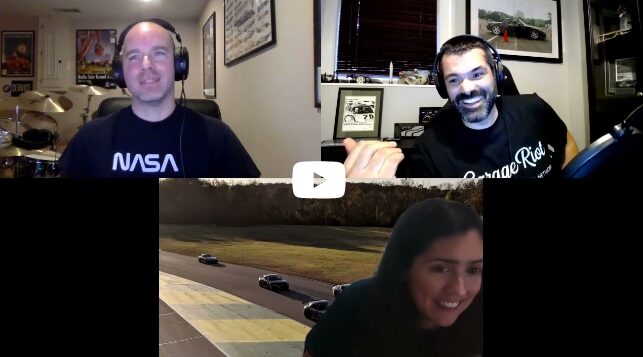
Rust Valley Restorers (RVR) Season 1 sets the stage by following Rust Bros owner Mike Hall’s attempt to restore and sell the over 400 cars he’s amassed over his lifetime. The show takes place on-site at Mike’s property along the Trans-Canada highway in what’s known as “rust valley” nestled in the Rocky Mountains region of central British Columbia. At 62 years old, Mike (above:center) with the help of his son Connor (above:right) and best friend Avery (above:left) has decided he needs to thin the herd of his “metallic hallucinations” – a task that is nearly at a point of costing him more than its worth. This show is a diamond in the rough to say the least, but that’s part of it’s charm. >> Check out the full review


Season 2

On May 8th 2020, Netflix in partnership with History Channel Canada released Season-2 for our enjoyment! Season-2 pickups up right where we left off last year, but with a slight change. The mantra of “saving the business at all costs” isn’t as ever-present as it was in Season-1. It is now replaced with the idea of “restoring cars that the average person can afford” and the 42-minute documentary/reality TV format starts to take on a “personal build”  (for a customer) along with a “shop build” (which will be flipped to pay the bills) rhythm. One other change comes in the re-organization of the business, Avery has been brought on full-time and promoted to shop manager (over Connor); in charge of projects, parts and purchasing. >> Check out the full review!


Season 3 

If you have been following along with our previous seasons of Rust Valley Restorers you’ll remember that we were left somewhat… unfulfilled, earlier this year. And what I mean by that is Season 2 was only 6 episodes long and ends on a twist. Leaving Avery Shoaf, Mike’s best friend and shop manager, throwing down his gauntlet proclaiming his independence from RUST BROS. WHOA!  You could call it a cliff-hanger… but does a RUSToration show really need that? It’s been about 6 months and we were legitimately surprised to see Netflix release another 6 episodes on 8/21/2020 labeled “Season 3”  for us to enjoy and maybe-just-maybe get some closure. >> Check out the full review!


Season 4

We don’t know much… but we know we love youuuuu! And we’re super excited for the return of RVR with it’s 4th Season. Even with the content distribution change, we’re still going to cherish every minute of the show and be sure to bring you a binge-worthy review! Stay tuned for more updates. And look forward to RVR on it’s new home on Stack TV and Amazon Prime starting Feb 18th, 2021.

The Seven Deadly Sounds: What Your Car Is Trying to Tell You

At Gran Touring Motorsports, we believe every car has a story – and sometimes, it’s told through sound. Whether you’re carving corners on track days or commuting in your daily driver, your vehicle is constantly communicating. In this episode of Break/Fix podcast, hosts Brad and Eric decode the “seven deadly sounds” that signal trouble under the hood, behind the wheels, and everywhere in between.

Tune in everywhere you stream, download or listen!

Listen on Apple
Listen on YouTube
Listen on Spotify

1. 🪙 Coins in the Dryer

If your car sounds like a pocketful of change tumbling in a dryer, check your wheels – specifically the lug nuts. This metallic rattle often means they’re loose or improperly torqued. Pull over immediately, reduce speed, and inspect. Never tighten lugs while hot, as it risks stripping the studs.

2. 🛞 Tire Moans, Groans, and Cupping

Tire noise is more than an annoyance – it’s a diagnostic clue. Diagonally siped tires tend to hum more than block-pattern ones. Uneven wear, especially cupping, can cause rhythmic “whoa whoa” sounds. Regular rotation helps, but once cupping sets in, it’s hard to reverse. Also, don’t rely solely on TPMS alerts – check pressures manually, especially during seasonal temperature swings.

3. 🔊 Thumping and Flat Spots

A rhythmic thump after your car’s been sitting? You might have flat-spotted tires. This can happen from long-term parking or aggressive braking. If the tire’s internal belts are damaged, replacement is the only fix. Ignoring this can lead to unsafe driving and poor handling.

4. 🛑 Squealing, Grinding, and Growling Brakes

Brake sounds range from high-pitched squeals to deep growls. Squealing often means your pads are nearing the end of their life. Grinding? You’re likely down to metal-on-metal contact. On track, pad compound, rotor buildup, and heat cycles all play a role. If you hear a loud “pang” or “clang,” your rotor may have cracked – stop driving immediately.

5. 🔁 Popping and Clicking While Turning

That finger-snapping sound during tight turns? It’s likely a failing CV joint, especially in front-wheel or all-wheel drive cars. If it snaps completely, you’ll lose drive power. Replace axles in pairs – they age together. Rear-wheel drive cars have different failure modes, often felt more than heard.

6. 🔩 Rhythmic Squeaks from the Drivetrain

A meat-grinder-like squeak from underneath could be worn universal joints or center bearings, especially in trucks and rear-wheel drive vehicles. These parts transfer power from the engine to the wheels. Left unchecked, they can fail catastrophically, leaving you stranded.

7. 🎶 Howling, Whining, and Singing Bearings

If your cabin sounds like an airplane, your wheel bearings may be shot. The noise persists and worsens with speed. CV joint failure can also take out bearings due to shared load paths. Rear differential issues can mimic this sound – inspect for leaks and avoid driving if the noise escalates.

Highlights

Skip ahead if you must… Here’s the highlights from this episode you might be most interested in and their corresponding time stamps.

  • 00:00 Understanding the Language of Your Car
  • 00:56 The Seven Deadly Sounds
  • 01:30 Coins in the Dryer: Wheel and Tire Issues
  • 02:21 Tire Noise and Maintenance
  • 08:20 Brake Sounds: Squealing, Grinding, and Growling
  • 11:32 CV Joints and Axle Sounds
  • 15:48 Exhaust System and Drivetrain Noises
  • 17:42 Transmission and Bearing Sounds
  • 22:54 Suspension Knocking and Street Car Differences
  • 23:19 Under Hood Squealing: Belts and Bearings
  • 25:16 Fuel Pump and Alternator Sounds
  • 27:55 Power Steering and Other Engine Noises
  • 28:34 Rod Knock and Engine Misfires
  • 33:29 Diesel Engine Sounds
  • 35:32 Electric and Interior Car Noises
  • 37:07 Exhaust Issues and Carbon Monoxide Risks
  • 40:29 Brake Safety and Roadside Assistance
  • 43:19 Conclusion and Additional Resources

Transcript

Crew Chief Brad: [00:00:00] Grand Touring Motorsports started as a social group of car enthusiasts, but we’ve expanded into all sorts of motorsports disciplines, and we want to share our stories with you. Years of racing, wrenching, and motorsports experience brings together a top notch collection of knowledge and information through our podcast, Brake Fix.

What’s going on everybody? It’s me, back again, your host, Brad, the triple six. With me, as always, is my co host Eric. Hello! For today’s episode, we’re going to talk about the language of your car. High performance driving requires intense concentration and focus. Often leading to ignoring important signals your vehicle may be sharing with you.

Your car is always talking to you.

Crew Chief Eric: There’s a lot of sounds going on in a car. I mean, most people, you know, go down the road not worrying about it.

Crew Chief Brad: You better listen to the sounds that it makes. We say high performance driving, but also this applies to just street driving as well. But there are Seven deadly sounds much like the seven deadly [00:01:00] sins that you should listen out for from your car because they tell you something they tell you about the health of your vehicle and what’s going on.

So, without further ado, we’re going to get into a quick guide about the 7 deadly sound.

Crew Chief Eric: So we’re going to dive into the technical again. This does apply to both your street car and your track car. And remember, we use the term track loosely. It applies to all sorts of different things. Disciplines. And again, this is going to be a quick guide to get you familiar with that.

We’re going to play audio clips of the sounds themselves. That way you can become more familiar with them and then give you a, an explanation of what they mean. So we’re going to start off with coins in the dryer.

So if you can identify a sound that’s reminiscent of coins in the dryer, they’re usually coming from your wheels. And it’s a strong possibility that your lug nuts or bolts might be improperly torqued. So what we recommend is you pull off as soon as possible, reduce your speed, stay offline or stay on the shoulder, turn on your flashers [00:02:00] and limp to safety.

If you feel that a wheel is beginning to wobble, you should reduce your speed immediately and pull off as there is a chance you might have lost the lug or the wheel is now completely loose. Remember, never tighten your lugs while they’re hot. You may run the risk of stripping or breaking a lug bolt or a stud.

There’s one other sound that most people don’t diagnose very well. Tire noise. That’s an annoyance. I used to drive my dad nuts. Like, he would buy a tire and if it made noise on his drive home, he’d return them. Cause he’s like, I can’t, these are just going to get worse as they get older. Yes,

Crew Chief Brad: I’ve got friends that do that too.

Crew Chief Eric: And some of it has to do with the tire design. You know, those diagonally siped tires. Tires tend to have a different harmonic than a block tire. Block tire is a lot quieter than some of those high performance tires. So they tend to moan and they tend to get worse the older they get. Now, this isn’t true of race tires because they’re so soft, tend to not make really any noise at all, unless you’re going through a corner too fast and they start squealing at you.

But that’s a whole nother conversation for another day. Let’s say you’re on an all season [00:03:00] tire. A lot of people probably drive SUVs. It’s just kind of like a really low whisper, almost like wind noise, which some cars also depends on how they’re put together. There’s just that road noise and there’s an acceptable amount of road noise in every car.

So if that’s something that’s just often overlooked, I’m actually not a fan of cars that are completely quiet. That’s why the first time I got into a Tesla, I was really freaked out because electric cars. Make no noise. So it starts making a noise. It’s indicative of a problem, right? There’s something going on.

There’s something wrong

Crew Chief Brad: going back to tires. If you’ve got a truck and you, or you’ve got the either mud terrains or some of the knobby or all terrains, or even some off road tires. Yeah, they make that. Whoa, whoa, It’s you, your tires aren’t rotated properly. They’re not wearing evenly. It’s a cupping of the tire tread.

So be mindful of your tire rotations, uh, that it can help prevent that. I don’t know if there’s a way to actually. Fix it once you’ve you’ve got it I think if you rotate the tires more often there may be a way to get it to [00:04:00] to finally wear evenly again But that’s where that comes from.

Crew Chief Eric: How do you know if you have enough air?

How do you know if you have too much, you know things like

Crew Chief Brad: that? So the manufacturer posts their recommendations for stock equipment inside the door Does that also hold true if you have different aftermarket wheels and tires? Is the tire pressures still the same or where do you get the information on that?

Crew Chief Eric: The tried and true method is the autocross method of chalking, chalking

Crew Chief Brad: your tires

Crew Chief Eric: under pressure, under pressure, meaning under driving pressure to figure out how they’re reacting to the air you have in them and all that kind of stuff. But outside of that, there used to be this late eighties, early nineties was like 10 pounds of air per.

Thousand pounds of car. And I’m like, yeah, that doesn’t really compute anymore. I have a 2000 pound car, so I’m going to run 20 pounds of air. I mean, yeah, I guess. But every tire compound is different. Every sidewall construction is different. We have tires with reinforced sidewalls, even for the street that, and I’m not talking just about run flats.

There are some [00:05:00] high performance summer tires that you wouldn’t be able to tell that they have five pounds of air in them when they’re sitting on the ground. So you really have to check them. And I was going to mention your TPMSs, which is your tire pressure monitor system, especially on modern cars, just.

Because your TPMS is not going off, doesn’t mean you don’t have the right amount of air for your vehicle because there’s a threshold before they kick on and start alarming you that, Hey, it’s time to go put air in these tires. So again, you have to judge that you have to look at the specs. You have to look at the tire you’re getting.

I have now load rated tires on the Jeep for towing and they tend to shake. Because the sidewall is so much stiffer and I’ve been playing with air pressure and you know, a couple of pounds here, a couple of pounds there. I’ve, I’ve kind of found a sweet spot where they don’t cup anymore and I get a better ride out of them.

And I’m, you know, I’m not shaking at 60 miles an hour, you know, when I’m not towing the vehicle. So again, a lot of that is trial and error. A lot of it is playing a lot of is talking to other people. We do the same thing for high performance tires where, Hey, what’s the recommended. Pressure for a Hoosier [00:06:00] 36.

If you weigh X amount, plus your Brett and you weigh 9, 000 pounds and drive.

Crew Chief Brad: Well, he runs Pirelli’s anyway.

Crew Chief Eric: Yeah. Yeah. So it totally doesn’t work for him. Again, there’s some tried and true methods. The other thing is every time the weather changes, especially in the spring and the fall, where you get the, you know, what they call the Indian summer, where in September it’s 80 degrees and then it’s.

30 at night, and then it’ll be 70 the next day. And it’s very back and forth. You need to check your tire pressures. If you’re not running nitrogen to check those tire pressures, because they fluctuate a lot because the ground heats up, the tire heats up with it. And then at night, when everything cools off and that heat dissipates and radiates off, your tires are cooling down too.

Which means that the air molecules inside of there are expanding, attracting, and your tire pressures will fluctuate because tires don’t. Exactly. Seal as well as people think they do. And if you drive your car hard and we’ve tested this, a wheel will rotate on a tire without breaking the bead and you can lose some [00:07:00] air while that’s happening.

Crew Chief Brad: Uh, correction. A tire will rotate on a wheel.

Crew Chief Eric: Yes. Well,

Crew Chief Brad: we don’t, we don’t want to get called out in the comment section.

So if you’re in your car and you hear, boom, boom, boom, boom, boom, boom, boom, boom, boom. But you’re listening to strong, bad, welcome to 2001.

Crew Chief Eric: I will say, since we are talking about tires, if you hear a thumping and the car has been sitting for a long time, there’s a good chance of those tires are flat spotted and a flat spot can come two ways.

One from sitting too long and not having enough air and the tire literally becomes flat and kind of square. And so it has to round itself back out. So you’ll get this kind of thumping until the tires round themselves out. Now, in the case of. Putting a flat spot in a tire where you’ve ground away rubber, you can’t add it back.

So they become very square and they tend to have the same [00:08:00] thumping rhythmic thumping sound. And the only way to fix that is to get rid of the tires. Now, if you’ve had a, if you’ve had a car that sat for a long time and say it broke one of the belts in the tire, there’s a good chance of that tire is trash.

So you’re never going to get rid of the thumping. And it’s not necessarily a good thing to have a broken belt inside of a tire because that tire will collapse. Next up, squealing, grinding, or growling noises coming from your car. Squealing So what you have there is both a high pitched and low pitched version of the grinding sound or the squealing sound.

And this is usually coming from the brakes, but more specifically the brake pads. In everyday conditions, squealing brakes are usually an indicator that your pads are getting close to the end of their effective use. And the recommendation is to replace them very soon. On the track, brakes squeal for a plethora of different reasons.

It could be the pad compound, it could be buildup on the rotor, it could be the difference in heat between the rotor and the pad. If you have a race pad, they tend to heat up and cool down very quickly. But that’s not the end. [00:09:00] In both cases, If you hear a heavy grinding or growling, a more

low pitch instead of high pitch sound that’s coming from your brakes, this is an indication that you’ve exceeded the usefulness of those brake pads and you could be running on bare metal or even just the backing planes. If you have a thudding, thumping, or vibration in the steering only while you’re braking, it’s usually a good sign of brake material deposit, also known as pad material transfer or buildup, and some people mislabel this as warping, which will eventually lead to a possible rotor crack.

So you need to pull off as soon as you can, let the vehicle cool down, Before you start inspecting the brake system, brakes run at a very high operating temperature. Even when you’re just driving on the street, you’d be amazed how hot those rotors get. Look at the edge of the pad to see if there’s any sort of bubbling, because that’s an indicator that the pads are actually overheating and beginning to break down.

Look [00:10:00] for fissures. Micro fissures are pretty common on a rotor because as they age, the metals start to break down and they start to separate. But if you’re seeing something that you can dig your fingernail into, into that rotor, there’s a very good chance that that thing’s going to crack. And you’ll hear it by a loud kind of pang or clang sound as that rotor snaps.

The effectiveness of the, of the brakes is then is basically zero. And it’s advisable that you do not operate the vehicle with a cracked rotor. Again, a Creek bang or a Creek pop coming from the brakes during a cool down period is a sign that the rotor might have just cracked.

Crew Chief Brad: And with, uh, with our track cars, I mean, I’m.

I think I change my rotors every year, whether they’re, they need to be changed or not. I keep one of the used ones just as a spare backup, just in case.

Crew Chief Eric: They’re one of our members and some of our listeners will recall this. We were at Watkins Glen and he put the piston through the back of the backing plate and it went right into the rotor.

I mean, it damaged everything. Had to get a new brake caliper. Like all sorts of stuff and so you don’t want to get to that point with your brakes I mean granted it was stopping because [00:11:00] it was still metal on metal But it’s all the wrong compounds talking to each other and the sound was was absolutely horrendous.

Crew Chief Brad: Was that a honda?

Crew Chief Eric: It was

Crew Chief Brad: it was a honda.

Crew Chief Eric: It was one of those big block hondas, too

Crew Chief Brad: Ah, right. I know exactly who we’re talking about

Crew Chief Eric: next up We’re going to talk about a finger snapping popping or clicking sound you might hear from the car

Now this sound is really more common in a front wheel drive or all wheel drive vehicle, especially during turning. Usually the sound will disappear when the wheels are straight, and the sound is indicative that a front CV, also known as a constant velocity joint, is beginning to fail. Prolonged use of the vehicle going down the highway, you know, trying to get it home or to the repair shop probably won’t leave you stranded, but generally a turn into a parking spot because the steering is under full lock and the [00:12:00] CV is completely extended will usually cause the CV to finally give up and snap with a kind of very distinguishable.

Pop or snap sound. And then all of a sudden the car will just accelerate and go nowhere.

Crew Chief Brad: I know a loud pop cruising at 70 miles an hour under a wide open throttle means that you’re just broke an axle because you go from 70 to 30 or

Crew Chief Eric: you’ve just burned the clutch out and it’s revving for no reason because the clutch isn’t engaging.

So that’s a whole nother one.

Crew Chief Brad: That’s true. That’s true. That’s true.

Crew Chief Eric: The solution to that problem is generally an axle replacement. Our recommendation is if you feel that your CV joints are suspect, both the inners or outers, generally it’s the outers that cause this noise. It’s, it’s important that you replace both axles so that you know that they’re aging together because there’s a very good chance if one of the axles in the vehicle is going bad, the one on the opposite side is equally as old and probably ready to give up as well.

[00:13:00] So replace them as a pair. They’re generally not that expensive, especially if you’re using, you know, Cheaper aftermarket parts instead of OEM. We’re used to paying, you know, anywhere from 60 to less than a hundred dollars per axle and on the street, they’ll go for years and years and years at the track, they could go one or two events.

It all really depends. Obviously, if you’re stressing the car out at the track, it’s a good idea to look into some higher quality parts, maybe some drag axles or things designed specifically for racing, but for the street. It doesn’t really matter the type of axle you get

Crew Chief Brad: before we move on to the next one eric I want to go ahead and jump in here now for The cv joints and the axles and the sounds that that makes you mentioned front wheel drive or all wheel drive Now, can you explain to the layman?

Why? These types of sounds are prone to those cars. And also is there a rear wheel drive equivalent sound that people should listen for?

Crew Chief Eric: Yeah. The reason on a front wheel drive, it’s more prevalent is because as we’ve mentioned on a previous episode, front wheel [00:14:00] drive vehicles. Are doing a lot more work.

It’s doing accelerating, braking and turning all on those front two wheels. The rear wheels are really along for the ride. We’ll talk about wheel bearings here in a minute. The rear wheels are just on, on a spindle on, on a wheel bearing. And they’re just, they’re just there to keep the car from. dragging metal on the ground in a rear wheel drive car.

It’s basically the opposite. The front wheels are held on by a spindle with a wheel bearing and they’re just rolling around and you’re only using those front two wheels for steering. So there is no CV joint there. You have a spindle with ball joints that are turning and those will tend to go and begin to wobble, but they don’t make a lot of sound.

It’s very difficult to diagnose. A ball joint problem or a control arm problem because they don’t really make a lot of sound But you’ll feel it in the steering There’ll be a wobbling sensation or shimmy in the steering that will indicate maybe you need to look into that Also with the rear wheel drive car It’s very difficult to diagnose a cv problem in the rear because again the rear wheels are now being driven By the differential which has axles [00:15:00] associated with it, which will have inner and outer cv joints They’re under different load than a front wheel drive because they’re just Used to propel the car.

Obviously there’s G forces against the suspension that will change the camber, but it’s not a constant velocity joint. Like like on a front wheel drive car where they’re constantly moving in every which direction. They’re really only moving the car forward and spinning in that forward forward in reverse motion too.

So it’s a lot more difficult to diagnose it. So really you have to get under the car periodically and check the axle for play. See if it starts making noise or is knocking around there. You may hear them knock into the differential or hear some grinding noise or something like that, but it’s going to be very extreme cases that you’re going to hear that.

So much more difficult to diagnose. You’re probably not going to hear it from the outside of the car, like you do in a front wheel drive. A sound that you may hear that’s similar to this when the car is sitting still after you’ve driven it for a long period of time, or maybe you’ve just come off track, you’ll hear the same kind of popping, pinging, or clanking [00:16:00] sound coming from underneath the car.

This is generally the sound associated with the exhaust system cooling down. And that’s because exhaust systems are usually made of dissimilar metals, especially the catalytic converters, which are full of all sorts of precious metals that heat and expand and contract at different rates. And so the sounds of them cooling down, you’ll hear them popping and clanging and banging from underneath the car.

It really isn’t anything to be concerned about. It’s just kind of the normal behavior of those metals as they react to temperature change. Other parts of the drive train to be concerned with, you’ll hear this kind of rhythmic squeaking.

So it almost sounds like a meat grinder. It’s like a real just rhythmic squeaking, like creak, creak, creak, creak, creak. That’s generally going to be found on rear wheel drive vehicles, a lot of trucks where they use universal joints. center bearings for the differential on the long shaft that connects the front or transmission or transfer case to the back.

These components send power front to [00:17:00] the back of the vehicle. You’ll also maybe hear sounds like this on an all wheel drive vehicle that’ll have multiple differentials and all sorts of, you know, different bearings along the drive train. You can generally continue to drive the vehicle and just kind of put up with the noise.

For a while, however, prolonged abuse will result in a bearing failure, which will lead to more serious issues. It could also lead to universal joint completely collapsing and the drive shaft will just separate. And then you’re left stranded because now you can no longer deliver power from, you know, the engine.

To the driving wheels of the vehicle. So it’s something you want to get look into. It’s a little bit more difficult task because there’s more components that need to be removed than there is in the case of, you know, changing an axle or changing a wheel bearing or something like that. But one of the other things that we didn’t really mention is transmission sounds.

It’s not a deadly sound. So transmissions will make noises. They’ll shift funky. They’re actually very deceptive. Because they don’t tend to make a lot of noise. They’re all, everything inside the transmission is encased in [00:18:00] fluid. And so it’s difficult to identify sounds. And when transmissions do make sounds, yeah, they’re pretty much toast.

Now in a race car, it really depends on the kinds of gears you have, because I had a trans that had cut gears. And I mean, it’s screams like an airplane, but that’s pretty normal because they’re just noisy. Right. But it’s, it’s really nothing to worry about. The transmission is going to, especially in a manual is going to give you different feedback from the synchros being bad, but you know, you’re going to get that grinding force feedback from the shifter where it doesn’t want to go in gear.

And when a gear grinds, it’s kind of like a, you know, but you feel it in your hand. There’s a vibration there. Right. In the shifter, you’re not going to get that in an automatic and automatic. You’re just going to kind of feel it shifting hard. And then the motor will rev weird. And when the clutch is going bad or the clutch is burned out, the car will accelerate and all of a sudden it’ll just rev up and not go anywhere, which is similar to what happens when an axle breaks, except that when the clutch is burnt out, you still have forward motion.

And when the [00:19:00] axle breaks, unless you have a really good differential, the car isn’t going anywhere. So next up on the list, we’re actually going to talk about howling whining or singing coming from your vehicle

Most of the time it’s bearings and the reason you know, it’s a wheel bearing Especially is because inside the cabin just like you heard in the audio clip It will sound like you’re inside of an airplane and the sound is pretty constant. As long as the car is rolling, it actually tends to get worse. The faster you go.

So you’re not going to defeat the sound. You’re not going to find a speed where the sound is going to go away. Once that wheel bearing is shot, it’s just going to drive you crazy. Bearings are metal components designed to help connected parts, usually parts that are pressed together, rotate more smoothly.

There’s different types of wheel bearings, ball bearings, sleeve bearing, et cetera. And on most front wheel drive and all wheel drive vehicles, when a CV joint fails, a It [00:20:00] tends to have a cascading effect and take the wheel bearing with it because a lot of wheel bearings are what they call also a split bearing.

So it’s a multi piece bearing. And when the, when the CVs start to go, everything starts to loosen, it starts to pull the bearing apart. And then the bearing will, will fail at the same time. CV joint noise can also be confused with wheel bearing noise. Because the noise conditions are similar, they’re coming from the same space, but the sounds change while you’re turning.

And that’s the key differentiator between a CV joint that’s going bad and a wheel bearing. A wheel bearing makes noise all the time. You can continue to drive with worn bearings, but be prepared to replace the hubs and spindles very soon. If you have a rear wheel drive vehicle and the sound seems to come from the rear of the vehicle while accelerating, and you hear this similar sound, there’s a good chance it’s a problem with the differential and not necessarily the wheel bearing.

Pull everything apart, inspect the differential for signs of leaking. If the sound is getting progressively worse, Do not continue to operate the vehicle. There is always a chance that the bearing [00:21:00] wheel sees, and it will lock up a wheel. Know your wheel is not going to fall off your car. There’s, there’s big bolts in there kind of keeping everything together.

It’s just not advised to go for long periods of time on bad bearings because it does lead to progressively worse issues. And again, it’s a cascading effect. The sage advice here is if the sound results in a vibration of some sort. It’s indicative of another component failing. Remember I mentioned it’s very difficult to pinpoint like a ball joint that’s failing or a control arm.

Even with spherical hind joint, tubular control arms, even those hind joints fail and they knock and it sounds like somebody’s knocking on your front door. Knock, knock, knock, knock, knock, knock. Every time you hit a bump, you’re like, knock, knock, knock. What the hell is that? You know, the control arms hopping up and down inside there.

The same is true of a standard controller, not even a race one. When the bushing goes, you’ll feel this weird kind of hopping in the suspension, but you also hear a knocking sound coming from that. There’s other clangs and pangs that race cars will make because coilovers. [00:22:00] Tend to just kind of sit there until they have pressure on them.

Unlike a normal, you know, McPherson progressive spring setup, where there’s always tension, some coilovers are loose and so you’ll hear them rattle and clang, especially when you’re turning and it almost sounds like an old box spring where it’d be like, and you’re like, well, what the heck was that? And it’s usually when you’re tight, turn like out of the paddock or whatever.

And then as you straighten it back out, you hear this. And it goes back the other way and you’re like, Oh, it’s just the helper springs doing their thing. You don’t really worry about it.

Crew Chief Brad: I can’t say I’ve ever actually heard that on track, but driving around the paddock, I definitely have heard.

Crew Chief Eric: Yeah.

Crew Chief Brad: It’s low speeds.

Yeah.

Crew Chief Eric: Exactly. Because once the car has pressure, be it aerodynamic pressure, load from driving, etc. The coils are, let’s call them activated at that point. And so there’s, there’s the adequate amount of pressure to keep everything together, but for whatever reason, at low speed, when the car settles, everything just tends to sag a little bit.

And those they’re just free floating, but just a little bit. And this is also true if you have camber plates. Because [00:23:00] they tend to just kind of knock a little bit until they settle back into place. And then you go about your business. None of this is true on a street car, because for instance, if you have a strut bearing go, it’s going to be a similar knocking to if you had a control arm go bad.

So again, anything that’s knocking from the front. Is usually suspension related. So next up is what we call under hood squealing. And there’s a couple of different things to listen to there.

So you’ve probably heard that sound before it’s indicative of a belt. You hear it during startup and then maybe it goes away after the engine warms up, or you hear it under acceleration, especially in the rain, or maybe you just turned on the air conditioner and you just get this squealing sound. You really need to look at the pulleys.

You need to look at any accessory belts if you’re in a multi belt system, and you need to check on the serpentine belt and its tensioners. Sometimes, It’s a [00:24:00] bearing like let’s say in the power steering pump or one of the other pulleys and a quick shot of you know White lightning or some lube or wd 40 will make it go away, but that’s not the end solution There’s a there’s a lubrication problem with those bearings there But if it’s a belt problem where a belt is slipping on a pulley again that same sound you’re going to hear that As the system is operating.

And in some cases when it does warm up, maybe the belt gets a little bit more flexible. It tends to lose the rigidity when it has, when it’s cold. And that’s also indicative that your belt is getting too old and it might be time to replace it. You know, new belts are going to be a lot softer. They’re not going to have these types of squealing issues.

Now, if you did just put a brand new belt on and it does start to squeal, there’s a good chance you’ve over tightened the belt tensioner. So maybe relieve a little bit of pressure on there. Check the specifications by your manufacturer of how tight that belt should be. There are some easy tests about, you know, twisting the belt and squeezing the belt to see what kind of give it has it, you know, if there’s not a lot [00:25:00] of resistance coming from the belt, it’s too loose.

If there’s a ton of resistance and it doesn’t want to budge, it’s too tight. You have to find that sweet spot where a, it doesn’t squeal and B it’s being effective and you’re not prematurely wearing out that belt. If you don’t think it’s the belt is the culprit. There’s another sound you may want to listen for, and it’s going to be more of a hum.

And alternators are prone to do this.

And it kind of sounds like you have a pump under the hood that’s running. I mean, you get that, that real. Low kind of a buzzing sound that could be it’s the fuel pump when the car first starts up. I mean, if you don’t hear the fuel pump priming, that’s a good sign that maybe the car won’t start or it could already be primed.

Maybe you just turned the car off, turn it back on, whatever. But that same kind of sound. Is the windshield washer pump when it’s running, let’s say you’re cleaning your glass here that you’re like, okay, cool. In the race cars, I listen to my fuel pump all the time. You can actually hear it when it’s [00:26:00] running.

It’s just kind of just that low and you know, it’s working. A lot of EFI systems will run the fuel pump for anywhere from five to eight seconds when you unlock the door. So you’re still walking up to the car. It’s already primed the fuel injection system. So you may not hear it, but it’s working. But there’s maybe that one time you’re like, you walked up the car and you open the door and you’re like, what is that sound buzzing from underneath?

It’s just the fuel pump. Now, if the sound of the fuel pump changes, it gets higher pitch. It means it’s stressing out and it’s, there’s a blockage and it’s trying to deliver fuel. You’re also going to notice that because the motor’s not going to run right. If it starts to sound like it’s slowing down. The fuel pump is actually aged out and it’s pretty much ready to die at that point.

In the case of an alternator, you just get this electric whirring, and usually that’s indicative of a bigger problem with that particular pulley driven device. In this case, we’re talking about our alternator. Air conditioning compressors will also make noise. The water pumps tend to make noise. They also tend to squeak a lot of older German cars, [00:27:00] BMW E36s, Porsche 944s, even the VW Corrados when they started up and they were cold, the water pumps would make a ton of noise.

And once they warmed up and fluids got up to temperature, the noise would go away. In those days, you kind of knew it was running right when it made those noises. And when it, when you didn’t hear it. You almost knew it was time to do a water pump at that point. So again, it’s hard to pinpoint some of these issues.

There’s some tricks to doing that. There’s some guys that almost use like stethoscopes or, you know, a screwdriver as a set stethoscope to be able to pinpoint, you know, which one of the devices is making that, that vibration, you know, is making that squeal, et cetera, to try to. pinpoint where the problem is.

Again, you can squirt some WD 40 in there or some other sort of liquid grease to try to dissipate the sound. But again, you’re just really putting a band aid on the problem and you need to investigate and make sure that it isn’t a bigger issue with that particular peripheral. Because let’s say it is alternator and the alternator fails, now your battery is not charging and you might be stranded on the side of the road.

The other thing to check Is there might be a possibility that this sound is also [00:28:00] coming from the power steering. And so you may want to get a friend to help you check a couple of things. For instance, if you get in the car and turn the wheels lock to lock left to right, and you hear a moaning sound, it’s kind of like, Ooh, and I’ve heard that on a lot of cars where people are, you know, kind of turning into the, you know, Target parking spaces and whatnot.

It is a sign that there’s an issue with the power steering, either with the rack itself, the pump, or maybe it’s just low on fluid. First check to make sure that you do have fluid and that it is topped off. Please follow your manufacturer recommendations that are in your. owner’s manual or in your handbook, etc.

Next up is clunking, banging, rhythmic tapping, pinging, anything that doesn’t sound normal coming from underneath the hood of your car. And one of the most common things we joke about is rod knock. And so here’s what that sounds like.

So realistically, your car shouldn’t sound like a [00:29:00] tractor, shouldn’t sound like a lawnmower. I mean, unless it’s powered by a Briggs and Stratton or a Kubota diesel of some sort. Sounds like that are metal on metal sounds, you know, piston hitting a valve, bearings are loose and the rods hitting inside the crankcase, you know, things like that.

Things are hopping around the way they’re not supposed to. Engines are supposed to be relatively smooth, especially at idle. And in that sound clip, you heard the car start up and idle and you hear this. Almost hammering sound. And that was a rod knock and we’ve heard plenty of cars have that. That’s really indicative of that engine being on its last leg.

Unfortunately, sounds like that mean there’s a serious problem with the motor. Look for any mill lights or check engine lights that are on your dashboard and pull off immediately. If you hear sounds like that, especially while you’re driving very good chance, you turn that motor off. It’s not going to start back up.

And that thing is toast. I mean, there’s, there’s really no go great to put that, but that’s, that’s. Again, it could be a multitude of things. It could be valve train, it could be connecting rods, it could be pistons. It’s not a problem that’s often [00:30:00] diagnosed easily, but again, do not continue to operate the vehicle unless you’re driving directly to your mechanic.

And that’s the last time it’s going to drive you there, but there’s a good chance that that motor is going to have to be replaced, or you may have to make some other considerations with respect to the vehicle itself. Most people think when a motor dies, you know, that we played that rod knock sound and cock, cock, cock, cock, cock, cock, cock, you know, that’s I mean, there was that Chevy S 10 at some point that he must’ve driven that thing for 15 years, if not longer with a rod knock and it just can’t run him.

It’s like, whatever, Testament to that thing. But I’ve blown up a couple of motors and I will tell you, it is completely. Anticlimactic when a motor goes, it just basically shuts off. Like you think you ran out of gas and those sounds that they play, like in a movie, like an old, you know, Buick. And it’s like the guy like turned off the motor and it’s still running.

That’s not what happens when a motor dies. It just basically shuts down and it locks up. So, you know, you’re driving along and You’re like, uh, excuse me. [00:31:00] And I’ve blown up a diesel and a blown up a gas motor and they sound identical. So there’s no difference there whatsoever.

Crew Chief Brad: So what about the people that claim that they shot a rod out of the side of the block, this stuff like that actually happened and what can cause something like this?

Crew Chief Eric: So I actually had that experience with the student. We talked about it in a, in a episode two, as a matter of fact, where we talked about the TT that RS that caught on fire and he blew a hole in his. And, and blew a rod and the oil that shot out of the motor caught on fire. The same thing we’re, we’re humming along and he goes from third to fourth gear, just like any, you know, and then it just died.

And that was it. And you get out and the car’s on fire. And I mean, I completely anti climactic. It’s not like, uh, you know, it’s not like the, the expendables movie where stuff’s blowing up. You’re like, Oh my God, it’s going to be amazing. No, it’s not. It’s It’s actually really sad. I would say one that we didn’t cover that we probably should have mentioned is what a [00:32:00] misfire sounds like.

So let’s say a coil pack or a spark plug goes bad or a coil wire or part of your ignition system. So basically let’s just say, and I’m going to try to do my best impression here. Let’s just say your motor tends to hum. It’s just like, right. If you have a miss, it’s going to be like, and you’re like, Why all of a sudden is it idling like a lawnmower?

And the reason, and I use that analogy a lot. The reason is one or more of the spark plugs is no longer firing. So you don’t get that nice purr anymore. You’re getting these odd firing patterns where you’re just dumping raw fuel out the exhaust. And that’s one indicator also that the ignition system isn’t working.

Cause all of a sudden you’re going to smell raw fuel. Coming out of the exhaust or the vehicle may start to backfire. And I know we used to get that a lot in the old carbureted days. It’s still a thing, even with programmable fuel injection, just because you lost spark, the computer doesn’t shut off the injector and say, well, you got an eight cylinder and now it’s only going to run on six.

Cause you’re, you know, you don’t [00:33:00] want to go buy spark plugs for it. You’re going to notice the misfire and on more advanced computers, it’s going to tell you right away, misfire on cylinder X, and you just need to replace that spark plug or that coil.

Crew Chief Brad: Now, if you have a Harley, those sounds just mean that it’s operating, you know, properly.

Crew Chief Eric: It’s completely intentional. The piston slap, the loping sound, etc.

Crew Chief Brad: So, I’ve got a question I want to throw out at you. All of our track cars are gasoline, but some of the tow vehicles are diesel. Are there any particular sounds that would be specific to a diesel? Because I know they’re engineered a little differently.

There are some things inside the motor that are completely different than a gasser. Is there anything specific to them?

Crew Chief Eric: Yeah, so the diesel’s not to get in the goddamn dirty rabbit hole there. Clean, clean diesel, right? But blue energy, blue energy, pure energy. I hear Leonard Nimoy’s voice in my head now.

So with a diesel, a lot of times it doesn’t have an ignition system, right? Everything’s [00:34:00] completely based on compression in the old days. You know, if you ever heard an old Mercedes diesel from like the late seventies, eighties, it sounds like a marble crunching factory. Like it’s just there. It’s just a rhythmic and that’s the sound that they make.

If your gas motor sounds like a diesel, you got big problems. And obviously, you know, we’re talking about that in the Rodnock section there.

Crew Chief Brad: But again, if your Harley sounds like that, it’s operating properly.

Crew Chief Eric: A hundred percent. So if you have a turbo diesel and you don’t hear turbo whistling or blow off, it’s indicative of the, maybe the turbos failed and all of a sudden you feel like it’s under power and it’s not really moving.

And that turbo whistling is that, you know, that. And then, you know, that you get, I mean, I’m, I’m, I’m doing my best. I can hear,

Crew Chief Brad: I hear lots of Subaru’s do

Crew Chief Eric: that duck calls too, but, uh, if you don’t hear that turbo failure, that’s true on a gas motor as well, the diesel. The other thing is if it starts to rev up.

And sound more like a gas motor, you’ve got some bad fuel in there. And I’ve, I’ve messed around with some [00:35:00] of the VW diesels where you’re trying to clear out the intake and stuff. And if you’ve ever shot any gum out in a diesel intake, all of a sudden completely change your sound because the combustion is so much faster because diesel has a different burn than gasoline, all this kind of thing, not to get into all those details.

So the sound of the motor will completely change. It’s almost the opposite. Of when you have a misfire and a gas motor, diesel starts to smooth out. All of a sudden you’re like, wait, that’s not right. And a gas motor starts to sound like a diesel. So I know that doesn’t sound right, but the best description I can come up with.

Crew Chief Brad: So changing gears just a little bit.

Crew Chief Eric: Oh,

Crew Chief Brad: you see what I did there? Well, electric can make some noises.

Crew Chief Eric: Yeah. Fizzing popping, you know, I don’t know. I mean, if you hear a sizzle pop. Or smell smoke that just

Crew Chief Brad: means your steak is done.

Crew Chief Eric: Bing fries are done, but But yeah, that’s gonna be fuses I’ve heard stuff go off in my fuse panel before where I’ve had cascading fuses go off and it sounds like fourth of july.

They just start popping and freaking out It’s, you know, across the wire or two, somewhere along the line, it’s more common on [00:36:00] British cars, but, but they,

Crew Chief Brad: wait, wait, wait, they have fuse boxes,

Crew Chief Eric: two fuses around the whole car. And I think the Prince of darkness

Crew Chief Brad: stuff there, left side, right side.

Crew Chief Eric: Pretty much.

Yeah. If you hear anything that sounds like popcorn, it’s usually electric. And it’s from the interior of the car. Another sound that people may hear coming from the interior of the car sounds like what they would say, carts, you know, baseball cart in a, in a bicycle spoke, or like you’re fanning out a deck of cards.

That’s usually the, uh, the blower motor for the HVAC system. Because they will make a clicking, like there’s a card in a wheel, that little hamster wheel that’s constantly turning because nobody opens their windows anymore, running AC, you know, automatic AC and heat, the bearings in that start to go bad.

They just start to click. It’s, it’s pretty, pretty normal.

Crew Chief Brad: But talking about the seven deadly sounds, is there anything else that the listeners need to know about opening the floor to discussion at this point?

Crew Chief Eric: I mean, I’ve had some people tell me that they couldn’t identify that they’re windshield wipers.

And if you’ve ever heard nails [00:37:00] on chalkboard, your windshield wipers are toast. I mean, if you hear that it’s raining, they’re done. They’re there’s metal scraping on the glass at that point. So I think one of the other things, you know, we talked about exhaust. If your exhaust suddenly breaks, you’ll hear a huge sound difference coming from the engine where the car gets.

It’s astronomically louder. Some of us actually prefer the way it sounds after the exhaust is broken or the muffler fell off, you know, by softball or magic. I mean,

Crew Chief Brad: unless you’re running at Lime Rock,

Crew Chief Eric: I’ve heard plenty of cars with broken exhaust out there. And one of the reasons I bring it up is that it’s not good for you and it’s not good for everybody else.

A, the decibel levels are way too high for all of us. Your car’s muffled for a reason unless you’re in a race car. And even there, we’re actually limited on the amount of decibels. We can’t go over like 110 at the, at the most, on some tracks, and I think it’s 1 0 3 is like really the minimum at, at most places.

The other thing is carbon monoxide poisoning. It is the deadliest of, of all the things that you could get from a car. And [00:38:00] so with a broken catalytic where it’s like right under your feet. And you’re breathing that in. You have to remember your floor pan and a lot of the stuff in the car is not airtight.

If you’re driving in the summer, maybe with, or in the spring with the windows down, you all of a sudden you’re breathing this in, you get a headache. You’re like, I don’t understand why I get so tired behind the wheel. Maybe it’s carbon monoxide. I actually run a carbon monoxide detector. In my time attack car, because I’m always worried with the turbo having so many different exhaust components that there’s a leak.

And so I don’t want to get carbon monoxide poisoning. I’ve actually gotten it before. It makes you really, really sick.

Crew Chief Brad: So I’ve got a question for you regarding carbon monoxide poisoning. It’s just a little scenario I’m going to throw out there. Say I’m in a racetrack and I don’t have proper tools, but I’ve got an exhaust leak, can a Budweiser can repair that exhaust leak?

Crew Chief Eric: Oh, you remember BIR 2014. No, it cannot, you know, visit your local parts store and try to find some sort of metal to sleeve things together, some clamps and whatnot. We did fix it the next day, but [00:39:00] yes, in a pinch, a couple of Budweiser cans do not work, but you know, Hey, we got to try, right?

Crew Chief Brad: Does the exhaust tape work?

Crew Chief Eric: It does in conjunction with the appropriate components. So again, if you could find. A piece of metal sleeve over the broken section. And then a couple of clamps, the tape helps seal the gases so that they continue to flow rather than have an opening where they can gap out, even though let’s your muffler fell off.

And it’s further behind you. It’s not an excuse to say, Oh, well, I’m not getting carbon monoxide. Because what most people don’t realize is there’s a, I want to call it a Venturi effect underneath the vehicle. And that’s probably the improper aerodynamic term for it. But basically there’s There’s cavitation that occurs underneath the vehicle where there’s a good chance that that air, because it needs to exhaust out the back of the car, if it doesn’t make the entire length of travel that it needs to, it will, it will swell from underneath the vehicle and you’re still breathing in that carbon monoxide.

So having a broken exhaust [00:40:00] is bad on multiple levels for your ears and for your respiratory health as well.

Crew Chief Brad: Are there any of the sounds that we’ve talked about or haven’t talked about yet that are more dangerous than others as far as driver safety? I guess obviously the ones in the, in the drive train where a wheel can be affected because that can affect your steering and stuff like that.

Obviously the motor stuff, it can affect your wallet, but as far as like driver safety, unless something catches fire, you tend to be okay.

Crew Chief Eric: I would say the biggest one is the brakes. If the brakes are growling and you’re, you’re, and if you’re in a newer car and it has brake sensors and the brake lights been on for a while, you really need to not ignore that because what they’ve done is they actually add a metal hook in there that grinds along the rotor.

And it’s telling you the pad is gone. You have nothing left. And so the dangerous part there is you got to go stop, make an emergency stop on the beltway or in traffic or something. And now you’re brushing your teeth in the rear view mirror, the guy in front of [00:41:00] you. I mean, that’s, that’s the worst. The rest of the stuff’s pretty much going to leave you stranded on the side of the road, minor repair, a couple hundred bucks in parts, you know, stuff like that.

Again, I encourage people to do both sides for aging purposes, not just the left. And then all three months later, I had to do the right. Just, you’re already in there. They’re already doing the labor. Just, just get it done. So let’s talk about getting help.

Crew Chief Brad: Do you mean roadside assistance? Because I’ve used that a few times.

So admittedly, not everybody is a mechanic or has a fantastic mechanic. And it’s really hard to tell what, what some of these sounds are and what they mean. And it can be very tricky or deceiving, but if you’re ever in doubt, just pull over, either pull off the road on the shoulder, a safe distance from, from traffic, or if you’re on the track, pull off of the track, if you can, and ask around for help, a little trackside tip for you.

There are plenty of folks in the paddock with past experience and willingness to lend a hand. Some folks might urge you to run it until it breaks. Then, you know, what’s broken. I [00:42:00] know I’ve heard this several times, even from my, my cohort over there on the, in the other mic on the other microphone, uh, and that’s totally within your right.

Personally, I don’t like to subscribe to that dogma, but you know, you do you buddy, it’s your money, it’s your wallet, but without getting into track etiquette or an ethics discussion here, remember to do what makes sense, but don’t go back out. If you feel it may cause problems for other drivers, remember safety is your number one concern.

Secondary to that is to not. Impede anybody else’s good time. Uh, and lastly if you’re ever stranded on the side of the road Having a good emergency roadside assistance can help you get to home or back track or to safety in general very quickly Check with your auto insurance company A lot of them have little disclosures or options that allow you to do this AAA is probably one of the biggest ones out there.

I know I have it, uh, my wife has it. Our parents have it, our parents parents had it, our parents parents parents I mean, AAA’s been around since, I think, the car was invented, so they’ve [00:43:00] got you covered.

Crew Chief Eric: I think you could get AAA for the Conestoga wagons, you know, back when they were going west, so yeah.

Crew Chief Brad: Plans often cost pennies a day. I think AAA is like a hundred and Or not even that. I think it was like 70, 70 to a hundred dollars a year. I mean, that’s nothing you pay more for that and cell phone service. So yeah, make sure you do that. And as always, I’m your host, Brad,

Crew Chief Eric: and I’m Eric. Don’t hesitate to reach out.

If you have a question, good luck and remember to keep your ears tuned for all of these sounds while you’re driving. And I think we covered just about everything at this point.

Crew Chief Brad: Yeah, I think so. Be safe out there.

Crew Chief Eric: Hey, listeners, did you enjoy this particular episode? Did you know you can learn more about what we just talked about by visiting the GTM website? If you want to learn more or just review the materials from this episode, be sure to log on to www.gt motorsports.org today and search for this particular episode from all of us at GTM.[00:44:00]

Never stop learning.

Crew Chief Brad: If you like what you’ve heard and want to learn more about GTM, be sure to check us out on www. gtmotorsports. org. You can also find us on Instagram at Grand Touring Motorsports. Also, if you want to get involved or have suggestions for future shows, you can call or text us at 202 630 1770 or send us an email at crewchief at gtmotorsports.

org. We’d love to hear from you.

Crew Chief Eric: Hey listeners, Crew Chief Eric here. Do you like what you’ve seen, heard, and read from GTM? Great. So do we, and we have a lot of fun doing it, but please remember, we’re fueled by volunteers and remain a no annual fee organization, but we still need help to keep the momentum going so that we can continue to record and Write, edit, and broadcast all of your favorite content.

So be sure to visit www. patreon. com forward slash gtmotorsports, or visit our website and click in the top right corner on the support and donate to learn how you can [00:45:00] help.

Bonus: Under-Hood Squeals and Hums

Startup squeals often point to worn belts or misaligned pulleys. A humming sound could be your fuel pump, alternator, or even the windshield washer motor. If the pitch changes or gets louder, it’s a sign of stress or blockage.

Remember: Your car speaks in clicks, clunks, squeals, and hums. Learning its language can save you time, money, and maybe even your life. Whether you’re wrenching in the garage or pushing limits on the track, stay tuned in to the sounds that matter.

Want to hear the actual audio clips and dive deeper into each sound? Catch the full episode of Brake/Fix above!

Good luck, and remember to keep your ears tuned for these sounds while you’re driving.


This content has been brought to you in-part by sponsorship through...

From Scalpel to Steering Wheel: Dr. Lora Melman’s Journey from OR to HPDE

What do high-performance driving and robotic surgery have in common? Precision, preparation, and a relentless pursuit of excellence. In this episode of the Break/Fix Podcast, we sit down with Dr. Lora Melman – fellowship-trained, board-certified surgeon and motorsports enthusiast – to explore the fascinating overlap between surgical science and trackside skill.

Tune in everywhere you stream, download or listen!

Listen on Apple
Listen on YouTube
Listen on Spotify

Dr. Melman’s Instagram moniker, @FastTrackSurgeon, isn’t just a nod to her love of motorsports. It’s a reference to a cutting-edge medical protocol known as “fast track surgery” or ERAS (Enhanced Recovery After Surgery). This approach emphasizes prehabilitation, efficient surgical technique, and proactive recovery – all designed to minimize complications and get patients back on their feet faster.

She treats obesity, hernia disease, and reflux – conditions that affect millions. And she’s on a mission to dispel myths, especially around obesity. “Obesity is a disease,” she explains, “not a moral failing.” Surgical options aren’t shortcuts; they’re tools to help patients regain control of their health.

Spotlight

Notes

  • The relationship between Surgery and High Performance Driving
  • “Details are important, but even moreso it is the decisions about what to do with those details that constitutes excellence”
  • “You’re either on the brakes or modulating the throttle, not coasting. Coasting leads to an unstable platform”
  • Smooth is Fast: “The most efficient path is the one with the least amount of “noise” – Smooth transitions facilitate precision and minimize wasted movement”
  • “The ability to perform well under challenging conditions is not acquired accidentally, nor is it a natural “gift” but rather the result of years of dedicated study and perfection of technique. It takes 10k hours of deliberate practice to attain mastery”
  • “‘Driving’ the camera requires a trained eye, experience, and steady hands that can also be quick.”
  • What it’s like being a female surgeon as well as a woman in Motorsports
  • What’s her biggest OOPS moment?
  • Advice for folks starting out in HPDE … along with some fun questions and more!

and much, much more!

Transcript

Crew Chief Brad: [00:00:00] Break fix podcast is all about capturing the living history of people from all over the auto sphere, from wrench turners and racers to artists, authors, designers, and everything in between. Our goal is to inspire a new generation of petrol heads that wonder. How did they get that job or become that person?

The road to success is paved by all of us because everyone has a story.

Some of you may know her as Dr. Laura Melman, a fellowship trained board certified and DaVinci robot specialist offering patients the latest in cutting edge surgical techniques. But we know her as, at Fast Track Surgeon, one of our heroes under the helmet.

Crew Chief Eric: If you’ve followed her online, you know she’s got a flair for bringing surgical lessons from the racetrack.

A series of musings on the intersection of safety, precision, and skill, explained as a crossover between the art of surgery and the science of high performance driving. And with us tonight to explain how that [00:01:00] all works is Dr. Melman.

Crew Chief Brad: And as always, I’m your host Brad. And I’m Eric. So let’s roll.

Crew Chief Eric: Welcome to the show.

Crew Chief Brad: Thanks for having me.

Crew Chief Eric: Great to be here. So, Dr. Melman, before we jump right into motor sports, it’s important for people to understand what you do as a doctor and how it relates to motor sports. So let’s spend a moment describing your specialty.

Dr. Lora Melman: Yeah, thanks. I think it’s really important to take a little bit of time here to describe the things that I do because what I do as a surgeon affects many people.

I treat obesity, I treat hernia disease, and I treat reflux disease. Chances are you know somebody that has one or all three of these things. So, being that these are very common, I want to dispel some myths about obesity in general, so let’s start off with that. Obesity is a disease, and it’s actually the disease of the body’s inability to regulate the body weight.

So, basically what we have is everybody’s body weight is set up at a certain set point. Just like your body temperature remains at a [00:02:00] relatively stable set point, that’s your normal body temperature. That’s a parameter that’s regulated by your body. Your body weight is also regulated by your body as well, by various factors that are so numerous and complex that we don’t have a simple way of understanding.

The people that suffer from obesity have an inability to maintain a normal body weight. So they’re actually stuck at the weight that they’re at because of this disease. And there’s a lot of stigma attached to obesity and shaming and blaming. And I think we really need to start to move beyond that and see this as the disease that it really is.

We don’t blame people for having hypertension or diabetes or cancer or anything like that. So we really need to start seeing obesity as a treatable disease. Obesity happens to be a surgical disease, which means that there are surgical options to help people rein in that body weight regulation factor so that they can regulate a more normal body weight.

The surgeries that we offer are just [00:03:00] tools to help people be successful with their weight loss. There is no operation or any magic surgery or anything like that that just makes weight loss happen. Obesity is also a lifestyle modification disease similar to other diseases like vascular disease and hypertension and diabetes.

Eating right and exercising are important to be successful in treating those other diseases as well as obesity, but it’s not the only factors. And when we help patients by GI tract, It helps them to achieve their success with weight loss. So it’s important for people to understand that these operations are not cheating.

They’re not the easy way out. It’s not a crutch. It’s none of those things. They are treatment options. to help people be successful.

Crew Chief Eric: So Dr. Melman, we’ve come to find out that your Instagram handle is a bit of a play on words where fast track is actually related to the type of surgery you perform. So how about we unpack that a little bit?

Dr. Lora Melman: You know, actually, if you don’t [00:04:00] mind, I’d like to describe Reflux surgery and hernia surgery, because these are very important areas of surgery and they’re very common. I think there are also maybe some misconceptions about those, those with surgery. People come in with sort of preconceived notions.

There’s always the sort of, you know, don’t confuse your Google search with my medical degree. That’s kind of a meme between, you know, surgeons and doctors and such. But people often come in with sort of a preconceived notion of what they want or what they don’t want based on what they’ve read on Google, which is not always a good source of information.

So with that, reflux surgery. is a very effective way to help treat reflux disease. Reflux is very common. A lot of people have it and a lot of people are on acid blockers. But if you think about it, the stomach is supposed to have hydrochloric acid in there. It’s part of your immune system. You think about if you eat like a piece of dirt or something like that, it gets into your system and it gets sterilized in this bath of acid in the stomach and helps protect you against pathogens and such that are out there in the [00:05:00] environment.

If you’re on acid blocking medications, there’s potential that you could become sick by things that get into your system that aren’t adequately killed off by the stomach acid. So antacid medications aren’t always the answer and they’re not always the long term answer in terms of what’s best for patients.

Oftentimes reflux disease is a structural problem. So the anti reflux barrier or what keeps acid in the stomach where it belongs and out of the esophagus where it doesn’t belong is so called lower esophageal sphincter and the diaphragm. So the diaphragm has two pillars of muscles that are on the outside, sort of between where the stomach and the esophagus connect.

And when those are not lined up properly, you have a disruption of the antireflux barrier and you get acid reflux, which means acid is going up into the esophagus. It’s burning the esophagus, and you get the so called heartburn. It also causes cellular changes to happen over long periods of [00:06:00] time, where the lining of the esophagus, if overexposed to acid, can become cancerous.

So that’s the origin of esophageal cancer, is many, many years of exposure to acid, where it’s not supposed to be. So treating this disease. is a surgical correction in many cases. It’s not just a chemical correction with medications, but they need that sphincter restored to its natural anatomic position.

The gap in the diaphragm has become a little too large, allowing the sphincter to go up too high. And that’s called a parasophageal or a hiatal hernia. So to restore that anatomy and repair the hernia and ensure that the valve stays in its proper place is a surgical fix. And a lot of people don’t understand.

That aspect of treating reflux disease. So I think that’s very important to understand that. Similarly with hernias, hernias are very common. They can happen in various parts of the body through the belly button. In the groins, they can happen at the diaphragm. That’s the hidal hernia that we just talked about.

But in terms of fixing hernias, [00:07:00] people often think that, oh, it’s just a hernia. It’s just something simple, and sometimes it is. but sometimes it’s not. So we get a range of patients that come to our practice with very simple, straightforward, first time occurrence hernias. that can be fixed in a simple manner, but we also get people that have had multiple failed repairs.

So that goes back to the pre optimization and success with surgery, especially with hernia surgery. Optimizing that patient for their particular hernia surgery will prevent them, or hopefully prevent them to the least amount possible from having a recurrence or reoccurrence of the hernia in the future.

Anytime a hernia occurs or recurs again, it’s more complicated to fix. So we want to get the best chance at a best repair the first time around. Patients that have undergone different types of repairs with various materials that are mismatched with the abdominal wall or not enough overlap or different material, you know, could have been chosen that would have matched them better, that would have gotten them a better result.[00:08:00]

We see the results of these over time where hernias have occurred or reoccurred or perhaps the patient didn’t know that they needed to stop their nicotine use and they have failed the hernia repair and the hernia has come back again just from the matter of fact that they’re a smoker. Um, so these are all things that need to be made aware of and the patient needs to be aware of and they need to optimize, you know, on the preoperative side of things in order to help them get the best repair possible.

There’s a lot of, I would say, bad press out there now about hernia meshes. And this goes back to the crossover between technology and materials, just like cars have been developed over time and they’re safer now than they were 25 years ago because of all these safety devices and better technology that we have in current models.

hernia meshes have gone through a similar evolution. So modern hernia materials, the meshes that we have are much better than we had 15, 20 years ago. So sort of the older generation materials, some of have undergone [00:09:00] recalls and various problems because of various construction issues been pulled off the market.

Those are sort of pervasive in the general public’s sort of opinion of what mesh is or what mesh should be. So, it’s a little bit outdated, and that’s another sort of misconception about hernia surgery and how to best achieve a hernia repair. Oftentimes, it does require a mesh to be placed. The best success with hernia repair is choosing the correct material.

putting in, in the correct plane in the anatomy and then matching it with that area of the anatomy so that the physio mechanical properties of that area of the anatomy match with the device that, or the material that’s put in. So that is sort of the art and science of of hernia repair.

Crew Chief Eric: Now you have me thinking that if I ever needed surgery like that, that I would at least like my mesh to be made out of carbon fiber.

Dr. Lora Melman: Fast track surgery is actually a concept in modern medicine. It’s actually one of the latest innovations in surgical care. It started with [00:10:00] the colorectal realm. And what we found is that when we got people back to eating normally and up and walking around as soon as possible, back to all their baseline functions as soon as possible.

They actually recovered from surgery faster and there were less complications. This has now been translated to all areas of surgery. It is still pretty cutting edge in that not every surgeon group or practice does this routinely, but in order to best help our patients to get better after surgery and return to work with minimal downtime, less pain, less complications, and minimize all the things that nobody wants.

Basically, we’ve developed a specific protocol to help people get better after surgery. One of the terms for it is actually fast track surgery. The other term for it is enhanced recovery after surgery, or so called ERAS or ERAS. So the two are basically the same thing, but it revolves around sort of three phases of surgical care.

The first is the pre operative phase, and this is called pre optimization or [00:11:00] pre habilitation. Everyone’s heard of rehabilitation, that happens after the fact. This is pre habilitation, so it gets you ready for surgery. For the event, which is surgery, things that we do to prehabilitate patients, we help them get into an exercise routine, fitness routine to get themselves strong and ready for surgery, nutritionally optimize them.

That’s a large part of the bariatric surgery program. Stop smoking, smoking impairs the ability to heal after surgery. One cigarette will decrease the oxygen delivery to the tissues by about 40 percent by just one cigarette. So in helping people to attain and maintain nicotine cessation, we are therefore increasing their success with surgery and decreasing their risk of complications with wound healing failure.

Weight loss is also part of some surgeries prehabilitation. This is where the bariatric surgery program and the hernia surgery program sort of cross over, in that in patients that have hernias and certain complex hernias, it’s an imperative to [00:12:00] help them get their body weight down in order to then undergo a successful hernia surgery.

Obesity and overweight is one of the greatest risk factors for a hernia repair to fail. So that’s also part of the prehabilitation for the hernia surgery program. There are other things like controlling other diseases, like making sure that blood sugar and diabetics is relatively well controlled.

That’s another thing that impairs the body’s ability to heal after surgery and puts somebody at risk for infections after surgery. So all of these things in terms of getting people ready for surgery are very important. Then we have the day of the surgery, and that’s sort of thought of as the perioperative period.

So they come in for their surgery, they get prepped, they get ready for their surgery, they undergo the surgery, they’re under various types of anesthesia, medications are administered. So optimizing that part of the process is also very important, and optimizing the efficiency which that operation gets done is also very important in helping that patient recovery.

Minimizing time under anesthesia is also important in [00:13:00] helping somebody recover. from the surgery. So if you can do a very smooth, efficient operation, it’s going to be much better than unneeded time under anesthesia. Postoperatively, we get people up and walking right away. We start them on a normal diet or as close to normal diet as possible.

There are variations with that, of course, with bariatric surgery and changing the GI tract that require different changes to the diet postoperatively, but getting people back to their baseline function, normal activities, walking around. Going up and down stairs right away, the day of surgery is very important in helping people recover from the surgery.

I tell my patients all the time, recovery is a proactive process. It’s not a passive process. And in fact, if you are recovering from surgery and just laying around on the couch all day or just sleeping all day, you’re actually going to take a lot longer. To recover from that operation. Whereas if you get yourself ready for the operation, you choose a practice that does a very efficient, streamlined, um, operation for you.

And then you get up and walk [00:14:00] around right away, get yourself rehydrated orally, get yourself back on nutrition and everything that you’re used to right away. Your recovery will be shortened. Most patients in our practice take extra strength Tylenol, they do some ice packs, and that’s it. So the other benefit of fast track surgery is narcotic reduction.

And there’s been a recent epidemic of narcotic addiction and all the downsides that come with that, including early death. So reducing the number of people that are exposed to narcotics and therefore then can become addicted to narcotics is also very important in general, in terms of global health. For more information visit www.

FEMA. gov We’ve managed to decrease our narcotic use for patients to the point where they hardly get any narcotics in the hospital at all. And they really don’t take any narcotics to recover after surgery. There are also bad side effects of narcotics, including constipation and rashes, vomiting, and that sort of thing.

Not something you want to be dealing with right after you’ve had an abdominal surgery. So these are all [00:15:00] benefits of fast track surgery. And we’ve managed to incorporate that into all the surgeries that we do. for weight loss surgery, for reflux surgery, and for hernia surgery.

Crew Chief Eric: You keep mentioning pre operative, and I wonder if that translates to, let’s call it pre track day or pre weekend.

Is there some sort of steps that you go through to get ready for a track weekend?

Dr. Lora Melman: That’s a really good question. Yeah. And in matter of fact, I have my little maps and my notes that I’ve made from prior track days at the same time. You know, location. So I review that. I make sure that the car obviously is ready and the tires and the brake pads are okay.

And the brake fluid is currently flushed and, um, you know, ready for a track day. And then I go through my mental visualization. If you, if you call it that of, you know, what do I remember from the last time I was there? And what was I thinking about at each part of the track? Like I’m thinking I’m doing this here and then I’m going to do that there.

And then I set my goals. What am I going to try to do this time? Am I going to try to [00:16:00] carry more, you know, mid corner speed here? Am I going to try to, you know, break harder and then accelerate harder here? You know, so what am I trying to, Achieve that’s kind of where my thoughts for the series come out of in terms of, you know, things like the little things that I learned, you know, at the track days, but I do go through a process of sort of getting sort of like the physical ready, like the car and myself and packing my hydration and packing my snacks and sort of prioritizing, you know, what I’m wearing that day and making sure I have everything appropriately handled before I even leave the house to go to the racetrack.

Crew Chief Eric: But I do want to lead us down more into your path and into your background of motorsports. I think this was really good, super informative. But let’s talk a little bit more about how you got started in motorsports.

Dr. Lora Melman: Okay. So I got into motorsports basically through autocross. And this goes back to when I was in my surgical residency, where I trained at Wash U in St.

Louis. Typically, the residents will do one or two clinical years. And then you go into the lab and you [00:17:00] do some research here, it’s like two or three years of publishing papers and doing, you know, lots of important research work. And during the quote unquote lab years residents typically have a little more time to do some things.

So I was at lunch, right, so surgical residents never eat lunch, for one thing. So as a lab resident, we were out to lunch, I was out to lunch with one of my co lab residents. He had a book on autocross, and I said, what’s autocross? So that’s how I got started. We went out. I had a 1997 Nissan Sentra at the time that I took to the autocross and we just had a blast.

My husband was there and this is, you know, a car like weighed a ton and it had like 110 horsepower or whatever it had. And I was like flat out going 40 miles an hour trying to navigate these turns. I had no idea what I was doing and we just had the best time. And so did a little bit more and that car actually broke down in the middle of the street on my way to one of my rotations where I had to be there at like 530 in the morning.

And here I am without a car. And so I just kind of let it roll back into a [00:18:00] parking lot that was near my house, ran home, woke up my husband, I said, honey, you got, you got to take me to work. I have to get to work. My car just broke down. So I need a new car. My husband at the time had a Mini Cooper S Clubman, thick shift, manual, right?

So he said, okay, well, you know, why don’t we think about getting you a Mini? And he convinced me to get a standard transmission car. That was my first manual car. And I remember going out just a few, you know, lessons in the parking lot, okay, here’s the clutch and here’s the, you know, how you shift. And I thought, okay, I’m, I’m good.

I think I can figure this out. I tried to drive my new Mini Cooper S hardtop. Home from the dealership. And I got onto this hill that I’d driven up in my other Nissan Sentra millions of times. It’s about maybe 20 degree incline. It’s, it’s, it’s a little bit of a hill and I got stuck. I did not have the skillset to overcome this hill.

To be honest with you, the first several months that I had that car. I was terrified. Every time I got in the car, I’d stall out in the middle of the intersection at stoplights. It just was [00:19:00] horrible. And every time I drove that car to work, it was like a cardiac stress test. By the time I got to work, I was, I was so stressed just by driving the car that I thought I got to do something.

I have to, I have to get better. I have to learn. Some way of just being a better driver in general. And it wasn’t until I finished residency and got into fellowship that I found a book called Fast Girl. And I was looking up ways to help my, you know, residents that I was teaching as a fellow get better, faster, smoother, more efficient with laparoscopically.

And I came across this book by Ingrid Stephenson, and she had a red and white mini Cooper and learned to drive high performance driving on the racetrack. And it’s, it’s a fascinating book. I recommend it to everyone, but it really kind of details her journey through going into and participating and being part of HPDE and the things that she learned and sort of the lessons she took away from the racetrack.

And I thought, okay, well, I have a car that just looks [00:20:00] exactly like that. I think I’m going to try this. And so we bought helmets and we went out to Hallett. Racing circuit in Oklahoma. I was doing my fellowship in Kansas city, Missouri, and we just had the best time ever shared the car, you know, alternated different sessions, et cetera.

And we thought, okay, this is it. This is our new thing. Um, and so, as you know, I drove that car on the racetrack for, for many years. That was the car that I came up in. And so that was sort of my foray into motor sports. And that’s how I got started.

Crew Chief Eric: So it’s funny you mentioned autocross it’s touted as one of the more precise disciplines, but also one of the most Because you only have three or four attempts to get it right, much like surgery, right?

Well, you really got only one attempt to get it right. You can see the draw there. It makes a lot of sense, especially when you dive into the technical side of autocross. I mean, doing laps at the track. You blow a lap, you got another lap to figure it out, right? You’re really running against time at that point.

So, okay. [00:21:00] So we kind of understand what got you, what drew you into it. We heard some of the challenges, especially starting out with your first manual transmission car, but have you run up against any other challenges coming up through motorsport, even maybe with the education system? I mean, did it, did it work for you?

Dr. Lora Melman: Um, it worked pretty well for me. I found that, you know, for the most part, everyone was there to learn and to improve and to get better. So I liked that aspect of it. That was very refreshing, you know, honestly, you know, as a surgeon, I have so much information, you know, coming at me all the time. That the stress or whatever you want to call it, it being on track was actually pretty relaxing.

I’m used to a lot of information, a lot of input and, you know, sort of sorting out and prioritizing bits of information, but that was just a completely different thing away from the OR away from anything. Medical surgical, you know, that I had to deal with. Um, and you can sort of get into this mindset or zone if you want to call it where that’s all you’re thinking about, that’s all you’re doing.

And [00:22:00] so that was sort of my release.

Crew Chief Eric: So do you find yourself as a doctor, maybe overanalyzing the track a little bit? Does it seem to get in your way and take away from where sometimes it’s not an exact science, or do you kind of give and take, and it’s a bit of compromise When you put your helmet on, you’re just having fun, and you let it all let loose, as you kind of alluded to.

Dr. Lora Melman: I think it’s a little bit of both. You know, sometimes I get too much into, you know, did I do that turn as best as I could, or, you know, should I have had a little bit more steering angle, or should I have carried more speed, or should I have You know, done a harder breaking on this point, or, I mean, you, you can get sort of crazy with overanalyzing, you know, your laps or your session, but then you have to kind of remember, what are you there for?

Are you really there to make yourself nuts? Are you there to have a good time? But then are you also there just to have a good time and not learn anything? It’s not that either. Um, so I think there’s sort of a good mix and I try not to get too over analytical or, you know, too down on myself and [00:23:00] try to remember to have a good time.

But you know, this, I think there’s sort of a mix of both.

Crew Chief Eric: So do you rely on data to help either confirm what you know about the lap or to maybe calm your nerves a little bit? Cause I find running data, I try not to over focus on it when I’m driving, but it’s like, Oh, that felt like a good lap. And you look over and you’re like.

Yeah, it was a good lap and you keep going or you download and you look at it afterwards. I mean, telemetry is really important because saying to yourself, did I, did I mess up that corner? Could I have done that corner better without any sort of data there to back it up? How do you make that decision?

Dr. Lora Melman: That’s a really good question. I actually have not worked with data. I have not worked with telemetry on the racetrack. So everything that I’ve learned, which is sort of like how I remember that felt. So I would like to work with data that would, that would really help me, I think maybe have somebody. that knows more than me in that area to help me look at the data.

Surgery is a very data driven field. And medicine is as well. And we always look at the data, you know, what does the data show about doing this, this way, or, you know, [00:24:00] why should we do it this way versus that way, or what mesh should we use in this hernia and why, you know, what, what is the, what is the support, what is the data for that?

So I feel like that is something that I would like to get into, and I think I would learn a lot from it.

Crew Chief Eric: Let’s talk about how fast track surgery is linked to motorsport and how you came up with the surgical lessons from the racetrack series, what inspired you? And why?

Dr. Lora Melman: Well, I’ve been doing high performance driving for five, going on six years now.

And every time I would go out and do a track day, I’d be out there, you know, doing the session and afterwards I would kind of reflect on, you know, what happened? What did I do? What could I do better? You know, what were the conditions on this lap that, you know, made me feel good or, or not so good and how could I improve?

And I started to see that there were so many overlaps between what I do and what As a hobby and what I do as a profession. And when I started back in the OR and doing cases, I thought, you know, this is sort of like, you know, seeing the line in the, on the [00:25:00] racetrack or seeing the wet line or seeing the dry line.

And this is kind of related to how we’re doing this surgery. And so there are similar things that came up in both disciplines that were so similar that I had to write about it. And so I started to, you know, capture images in the OR and on the racetrack Start to come up with little summary statements and try to match all of those images up with the thoughts that I have.

And that’s how the series was formed.

Crew Chief Eric: So I picked up on a couple of things during your description of, of your practice and, and getting to this point in the conversation. There was a couple of key words that I picked up on smooth recovery, efficient, deliberate hydration, nutrition. These are all things that we use repetitively in the motor sport world and are different.

Circumstances in a different context, those words are right there. They’re prevalent. They’re right up front. And I think we’re going to unpack some of that and we’ve chosen some of, let’s call it the top SLFTR quotes from your Instagram, as we went back through, cause this goes over several seasons [00:26:00] and let’s unpack why some of these are your favorites as well as some of the ones that we chose.

So one of the ones first up is The details are important, but even more so, it is the decisions about what you do with those details that constitutes excellence.

Dr. Lora Melman: Yeah. So I think of this as the difference between being a trivia genius versus being an expert in something. Details are everywhere, right?

Information is everywhere and you can get. You know, overloaded with information. So in order to help yourself in whatever discipline that you are trying to do or learning to do, you have to filter that information and with each piece, figure out what is the priority? Is this important? Is it not important?

Am I going to use it to help myself get better at something? So as you go along and as you get better at things, you start to pick up on little details, and then you start to chunk those details together in larger pieces. sleeve surgery, for example. It’s one of the most common surgeries that [00:27:00] we do. There are a bunch of details going on.

There’s a bunch of things going on in the room, but with each load of the stapler that you’re loading and firing, I personally pay attention to exactly how the tissue is responding to the stapler, to the load, to the dissection, and to how I’m retracting on the tissue. In order to get the best result possible.

So bunch of little details that have gone into that result, just like a bunch of little details. If you’re on a circuit, certain circuit or certain track that day, you have to kind of know what you’re doing and where you’re going, but then also you’re taking in a bunch of new details and a bunch of new markers or reference points on the racetrack or things that you’re learning on that day or on that specific session that you’re using to help.

yourself get better.

Crew Chief Eric: So another one from the list, quote, you’re either on the brakes or modulating the throttle, not coasting, coasting leads to an unstable platform

Crew Chief Brad: because they, before she jumps in, [00:28:00] I believe this is also part of the Sir Jackie Stewart quote as well. It’s either you’re on the brakes or the throttle.

There’s no in between.

Dr. Lora Melman: Right. I thought this one was kind of interesting because I was always taught, and you probably, uh, hopefully agree with this, that you’re never just lifting totally off the power, because actually, physically, that’s pretty unstable in terms of your goal as somebody driving on the racetrack is to keep the platform of the car as stable as possible with your inputs.

So if you’re just, It’s totally not underpowered, not under braking, just kind of floating there. If you think about the physical forces at play there, so, you know, you don’t have to be flat out all the time. Obviously you can’t do that. You don’t have to be under, you know, threshold braking all the time either, but just a little bit of in between.

And that’s where that sort of gray area, and that’s where the fun is right of driving. But also with regards to building a practice and being, you know, an expert in certain areas, especially in surgery. Surgery is a very, very competitive field in general, especially in this [00:29:00] area of the country. If you’re not getting better and showing that you’re better and your patients aren’t happy with their results and, you know, talking to their friends about it, somebody else will take over and take your business.

So it’s worth it to us to really look at how we’re doing every piece of every surgery every day and how we can continually get better. So I liken that to be sort of just on the sort of like maintenance throttle all the time. And sometimes you’ve got to speed up and really kind of push ahead and push through.

And sometimes you have to, You know, really slow down and take a look at things and what you’re doing, or just take a break altogether. But there is that sort of range of power versus breaking that you have to do in everyday life. And if you just start to just coast, completely take your foot off the power, then forces outside of yourself are going to start to take over.

Crew Chief Eric: So one of my favorite words in motorsport is the word smooth. And. There’s different schools of thought when it comes to smooth, but we’re going to go with your quote [00:30:00] and smooth is fast. The most efficient path is the one with the least amount of noise. Smooth transitions facilitate precision and minimize wasted movement.

Dr. Lora Melman: Right. So this is my favorite movie line of all time. It’s from the movie shooter. I don’t know if you saw that movie. The main character is trying to teach someone, I believe in the scene how to load a gun and how to do so smoothly and efficiently. And he says, Slow is smooth. Smooth is fast. You can’t just be fast, right?

So nobody is just fast out of the box. It’s a process by which you build that speed. And how do you build speed? You take away the excess noise. Nobody can be fast going in multiple different directions at any one time. So you have to figure out what is the smoothest path to where you’re going and how do you take away all the excess noise?

Unnecessary movements. I call it noise. Um, so that you can attain that smoothest trajectory, but this translates to surgery as well. If you’re doing a [00:31:00] lot of perky jerky movements, you’re, you’re actually just wasting time and that’s keeping your patient under anesthesia for longer than they need to be.

And therefore they’re going to have a longer recovery after surgery. So it behooves you as a surgeon to be very smooth and deliberate and have no transitions that are not beneficial to the patient. This translates directly, you know, to the surgical world. All my teachers have told me, just, Practice it slow, because you can’t practice something fast and expect to be smooth.

If you practice something slow to begin with, it then becomes fast, and that actually goes back to the biologic basis of learning. I don’t know if you guys have read The Talent Code by Daniel Coyle. This is a fascinating book, and it actually goes through how expertise is created. It’s not just born into existence, it actually is facilitated along the way.

What happens when somebody learns a new task, a new technique, a new sport, plug in your word there, is that [00:32:00] there are pathways between the brain and the muscles that are becoming myelinated. So nerves have myelin, some nerves do, and nerves that control motor movements have various degrees of myelination.

As somebody is learning a new technique, Or a new skill, there’s a circuit that’s built in the brain and in the skeletal muscle. And as that person becomes better at that skill over time, those pathways in the brain and in the nerves of the muscles become better myelinated. That myelination process takes about six to eight weeks.

So you can’t just have that to begin with. You can’t just make that happen instantly. It has to build and you have to build it over time. Some might say that bad habits are hard to break. Well, bad habits or any habit is actually impossible to break. You just have to build a new habit. You can’t actually break a circuit that’s already built in your brain.

You have to just kind of pave over that with the new circuit. To that end, if you’re trying to learn something new, [00:33:00] actually the best, most efficient way to learn that is by going as slow as possible at first, then as those pathways become more myelinated. You will be able to do that task more efficiently and more smoothly because you’ve myelinated that connection.

Crew Chief Eric: So that’s a really interesting parallel and I want to stay on this topic for a moment. And the reason I brought up smooth is a bit of a trigger word, at least in motorsports, mostly for coaches, because I think there’s a couple different schools of thought in how you approach smooth. I came up with an understanding that realistically all motor sports students pretty much start at the same point, you know, zero, zero on the X, Y axis.

And we all ramp up and we all have a learning curve, but there comes a point where that arc, and I’m sorry, we don’t have any graphs where, you know, this is audio only that it diverges. What I’m trying to explain here is that we all start kind of rough and tumble, and we have to learn these new habits and replacing maybe former ways of driving.

And so a lot of coaches will stress. that they want to [00:34:00] feel this concept of smooth and it really revolves around the vehicle and the vehicle dynamics and how smooth the vehicle is going around a corner. But you hit a point though where you can only go so fast by being smooth. And so what I’ve found though is As you mature as a driver, it’s a transition from you making erratic motions behind the wheel to getting the car to be complacent and to be neutral, but to go fast, the car actually becomes extremely erratic.

And then you are in this position of like full Zen, and you are completely calm when the car is. out of sorts, sideways, what would seem by the outsider, completely out of control. And so that’s where I say that the arc, the learning curve diverges from what is being said to what happens in reality. And so I wonder if that plays in to surgery and to medicine as well.

Dr. Lora Melman: That’s really fascinating. So I think it all has to do with skill sets [00:35:00] and learning skills and your performance of doing those skills actually requires you to have a higher set of skill beyond that in order to cope with something that can happen sort of suddenly and suddenly you’re out of control. So definitely translates to surgery.

We train in all kinds of situations, traumas. And during my residency, I dealt with somebody that was shot with a bullet through the aorta. And that’s a serious injury. And, you know, you have to know how to deal with that people that come in with these, you know, horrific injuries, you have to know how to gain control when things are completely out of control without being out of control yourself.

Exactly. That’s the skill set. Is it, can you maintain your calm? And can you maintain in control while everything else is out of control? And so that requires a skillset beyond just the basics. And that may be where the divergence happens is that are some people able to achieve that next set of higher skills so that they can [00:36:00] not freak out if they suddenly are sideways.

They already have that programming or they’ve developed that programming somehow to then regain control.

Crew Chief Eric: Exactly. And that’s where I’ve always stressed that there’s two forms of smooth and motorsport. There’s the vehicle being smooth and the driver being smooth. And I think we all need to get to the stage where we as a driver are smooth and we can make that car do anything we want.

And that does lead us into a conversation about driving by feel and things like that, which is completely out of the realm of. What we’re really driving towards here, pun intended, but I just wanted to bring that up as, as a notion there that a lot of people don’t kind of split the two, you know, smooth is smooth, but in the context of motorsport, there’s, it’s really multifaceted, but you did allude to the next quote that we pulled out, which is the ability to perform well under challenging conditions is not acquired accidentally, nor is it a natural gift, but rather the result of years of dedicated study.

And perfection of technique. It takes 10, 000 [00:37:00] hours of deliberate practice to attain mastery.

Dr. Lora Melman: Right. So this comes out of that book, the talent code also studying experts around the world. Musicians. Professional athletes, et cetera, in terms of how do they learn and how do they become the best in their field?

It does take about 10, 000 hours. That’s what it’s been studied to be in terms of dedicated practice, which means that somebody is deliberately practicing the sort of micro skills that are required to then have that skill set. So multiple different skills and a certain, you know, discipline, obviously there are just, you know, infinite number of, of things we could talk about here.

But how does someone become concert violinists? You know, how, how does that happen? It happens over a long period of time. There are circuits that become myelinated over time and they have to be practiced in the right way in order to then. allow that person to have the next level of skill, and then they can attain the [00:38:00] next level of skill.

So similarly in surgery, we start out as trainees, just sort of observing and watching the surgery, seeing how everything is sort of coordinated within the room, and then maybe doing a very small part of the surgery under supervision of our attending surgeons. And once we perform adequately on that level, Then we’re allowed to do more and more of the case.

And as you graduate and you become a fully trained practicing surgeon, then you are the one doing the whole surgery and then training other surgeons. So that’s how it comes 360. Of course, there are skills labs and training and such that everyone does that everyone should do. Even surgeons after, you know, they’re done with their formal training because surgery and medicine in general are such a rapidly changing fields.

There’s new technologies, there’s new devices, there’s new materials coming out all the time. We have to be able to incorporate that in the best way possible in the safest way possible for our patients in order to help them the best way we know how. [00:39:00] So that ongoing skills acquisition never stops, which is why it’s kind of fun, but it does take a long time to develop that basic skill set.

The 10, 000 hours is deemed to be your achievement of expertise. It does take a long time. It’s not something that really anyone is Born with, or it can just do instantly, it’s a process that’s built over time.

Crew Chief Eric: I often joke, I have that amount of time on a Shenandoah circuit. So it feels like 10, 000 hours, but what a lot of people don’t realize about motorsport, especially the discipline of high performance driver’s education is that it is a structured system.

There is always room for improvement. There’s obviously room to practice, but it’s a continuing education program. When you jump in, you’re not going to be Michael Schumacher or Ayrton Senna. You start as a beginner and you work your way up through the system. And every rank that you move up gets more difficult and more challenging, more techniques get brought on.

And a lot of people think that the coaches. Just know it all because they wear the title [00:40:00] of coach. And I hate to tell you guys, we’re not infallible and we do continuing education too. There’s plenty of coaching summits out there. There’s plenty of documents and books and, you know, webinars by like Ross Bentley, his speed secret series.

There’s safety programs that we’re involved in. We’re always researching the latest nannies. We have to stay up to date on the latest cars that are coming out because you never know if you’re going to be in the right seat of them. C9 Corvette, which hasn’t come out yet, but as an exaggeration, you get the point.

We need to know what we’re stepping into. And I had one of those moments recently with a Tesla on track, which is a very rare vehicle to have on track. I wrote an article about it. You guys can check it out on our website, gtmotorsports. org. But again, it was a learning moment and there’s tons of those in motorsport where you can continue to grow.

You shouldn’t feel like you’ve hit a plateau. And I think this is a really important point that mastery and motorsports. Is difficult to attain because there’s so many different disciplines to motorsport. We talk a lot on this show about how they carry over in certain techniques, like learning [00:41:00] a track very quickly.

And to negate corners that comes from autocross racecraft comes from carting, the ability to handle very odd situations could be carried over from maybe rally corners. So trying different disciplines, exposing yourself to different parts of motorsport will eventually get you to that true master petrol head level that I think people would like to get to, but there’s nothing wrong with mastering your particular discipline.

If what you like is just club racing or, or rally or whatever it might be. So all good, but I do like this next one, which is driving. The camera requires a trained eye experience and steady hands that can also be quick.

Dr. Lora Melman: That goes to laparoscopy. So when we’re doing a laparoscopic case, we’re using small incisions and through one of the small incisions is a scope camera.

And at the end of that is a beveled angle so that we can sort of look around corners. So we call it driving the camera. Typically, the surgeon will be operating with two [00:42:00] hands and then the assistant will be Assisting with one hand, providing retraction, and then driving the camera with the other hand.

And so the right angle or the certain angle that you need to actually see what you need to see is provided by your, your wing person, your wingman, so to speak. As a surgeon, you’re actually not providing the view, it’s actually your assistant. In order to have the best, most efficient surgery, the assistant needs to understand what the surgeon needs to see.

So that’s called driving the camera. So you have to know what the surgeon is looking for, what exact angle they need to be looking at the tissue at, and what they’re trying to accomplish. And ideally, the assistant is going to drive the camera in a way that is completely transparent. They don’t even have to think about it.

They don’t even have to tell you, you know, move in, move out, you know, go to this angle, go to that angle. The assistant should be able to achieve a seamless interaction with the surgeon so that they’re showing them exactly what they need [00:43:00] to see, exactly at the time that they need to see it, so that that surgeon can complete the surgery in the most efficient manner.

There’s a little bit of trained vision that you need to have in order to drive a laparoscopic camera. Also experience on both sides of the table, so to speak. So you have to be able to drive the camera, but you also have to have some experience doing the surgery in order to sort of know the other side of the coin.

There, it’s just sort of a, it’s a learned skill. And like, I go back to the, the idea that first you learn sort of the basic skills and then you learn a little bit more advanced skills and then you sort of chunk those all together and then you have your skill set and I started learning to drive the camera.

I actually couldn’t see. The different directions that the lens was pointing. It took me a long time for my brain to incorporate that and see that the angle was actually different. It’s actually pretty subtle if you ever look at a laparoscopic angled camera. It’s not really that obvious, but once you get used to it.

You can anticipate which angle the lens needs to be at to [00:44:00] provide the most perfect view for the surgeon. It’s not something that’s actually that intuitive. You have to kind of learn it. I sort of just was thrown into it and I just kind of learned along the way, but there’s a lot of things because we’re working with straight stick instruments in laparoscopy.

If the angle of the eye of the camera is looking down parallel to the shaft of the instrument, it’s actually very hard to see what you need to see. So it has to be sort of at a. angle that’s a little bit more away from sort of looking at what the instruments are operating on, not looking down the length of the instrument.

Crew Chief Eric: It sounds a lot like the relationship between a coach and their student. So do you turn to your assistant and say early and late when they apex the camera the wrong way?

Dr. Lora Melman: Not really. It’s, it’s not, it’s not like that kind of.

Crew Chief Brad: Uh, well, there’s one that I want to touch on this one. One of my personal favorites that I’d like to hear you talk about.

It’s don’t blame the mirror if you don’t like what you see.

Dr. Lora Melman: Okay, good. Yeah, that’s a good one that I was just sort of more thinking of more like a personal reflection [00:45:00] mirror doesn’t lie. And so if you’re looking in the mirror and it’s you and you don’t like it. It’s not the mirror, but it also goes to, you know, paying attention to your mirrors and kind of knowing what’s going on all around you having that 360 degree awareness.

And if you have put yourself in a spot in the group that you don’t like, and you should have pitted instead and just let everybody go by or give yourself more room and whose, whose fault is that sort of in a way. So multiple things can be sort of taken away from that. My first thought with making that little episode was if you’re just upset with everything going on in the world.

Some of that is actually you.

Crew Chief Eric: So motorsport, we’ve said many times on this show, is unfortunately a male dominated sport. And I’m not saying that it’s totally devoid of women, because it’s not, but they are fewer and far between when you walk around the paddock and you look at all the other drivers that are there at an event.

So I wonder, how did you find yourself? at these HPD events as a woman? Was it inviting? Did you [00:46:00] find it to be a good experience? Were there some challenges there? Do you mind unpacking that for our listeners?

Dr. Lora Melman: Good question. It’s really not that different from surgery. If you take a look at how many surgeons are women versus men, that basically goes back to implicit bias within the training system that did not allow women to have the opportunity to train to be surgeons.

So that’s the reason why there aren’t many women surgeons. But can women be excellent surgeons? Of course they can. There’s a study in the British Journal of Surgery showing that all other factors combined, women are actually better surgeons and their patients do better than, than male surgeons. So there’s that, but you know, going into the motorsports world and going to the paddock and being like the only girl in the group or like the only, you know, one or two girls in the, in the whole entire event that day, you know, I have to admit, it didn’t really bother me because I’m kind of used to it already being, you know, from Surgical background.

I also have done Aikido, which is a martial art, mainly dominated by men. Um, not very many women in Aikido as a martial art in [00:47:00] general. So I’m kind of used to it. So it didn’t really bother me. Did I perceive that people underestimated me or didn’t want me to be there? I don’t know. I don’t really care. You know, I just try to do my best.

And if I’m, you know, somebody that’s slowing down the whole group or something like that, then I don’t belong there. I need to be in a different group and I’m, I’m fine with that. I don’t have an ego with regards to showing that I’m better than anyone else. I’m just trying to be the best person and best driver and develop my driving skills as best as I can.

I’m not competing with anyone or under the pretense that I’m, you know, racing people into corners or anything like that. And so I think that the HPDE community. Since that’s not what it’s about, what’s a good place for me to grow. And so I found a good place there. And I found some groups that are very welcoming to female drivers and very encouraging.

All my coaches have always been very, very encouraging and very helpful to me. You know, the breakout sessions in terms of just [00:48:00] drivers talking to each other. I always find that very helpful. I think that the role of mentorship and teachers. is very important in general. In surgery, we wouldn’t be surgeons without our mentors and teachers that taught us how to do surgery.

So in the driving world, you wouldn’t be where you are if you didn’t have your teachers before you, and if they didn’t have their teachers before them. So there’s a tradition passing on that, that skill set and passing on the information, even in little bits, you learn something new and something valuable from every teacher that you have.

Crew Chief Eric: Yeah. And one of our senior members always says that you are the byproduct of all of your coaches because the driving skills that you have today, you took something the best, or maybe even you learned from the worst of all those different coaches. And now that has become your driving style. So it’s interesting.

You bring that up, but I also wanted to ask if maybe let’s just say you were a queen for the day and you could change some things about HPDE to make it more inviting, maybe break down some barriers and bring in more women. What. Changes would [00:49:00] you make to kind of revolutionize the sport?

Dr. Lora Melman: That’s a really good question.

I think that just sort of raising awareness of the sport would be a place to start And representing it in a way that this is a sport that men and women do and men and women are good at So to have that representation, I think it would start with that a lot of times Maybe the images that we’re seeing, um, in advertisements and such are, um, you know, buy this for your, you know, boyfriend, buy this for your husband, buy a track day or so that just sort of potentially very male oriented advertising.

So maybe to sort of open that up. And be, you know, a Mother’s Day gift or something like that, just to kind of broaden the interest of various people that might get into the sport.

Crew Chief Eric: With every learning experience, there are trials, there are errors, there are achievements, and there are failures. So what would you say is your biggest oops moment?

In motorsport. We won’t talk about surgery.[00:50:00]

Dr. Lora Melman: Biggest oops moment. That would go back to when I had my first BRZ. I run my cars pretty much completely stock. So I had the original tires on there. And, um, I was at the North course of Pocono. So if you know the North course, turn one kind of turns off of the infield and then goes back onto the Tri Oval.

And it was getting dark and getting a little cool, track temperatures dropping a bit. And I just didn’t think about things, obviously, before they happened too fast for me to control. Going in turn one, got a little into the marbles, got a little bit off, couldn’t control the car, could not turn in. Boom, hit the wall about 60 miles an hour.

Pulled the car and airbags went off and stuff. I was a little bruised. I was okay. I didn’t lose consciousness or anything like that. But that by far was my biggest oops moment. I think it’s important to take away from that when you have a moment like that, or even just little [00:51:00] other, you know, non damaging, you know, to your car moments.

Is it, what do you learn from that? My thing in life is that we make mistakes, everybody makes mistakes, but you should always try to make new mistakes. If you make the same mistakes over and over again, you’re actually not getting better, you’re not learning. So, there’s something to be learned there. So, mistakes are going to happen if they happen and when they happen.

Figure out why it happened and what you can do next time to avoid that. What I learned from that experience is to prioritize areas of the track where I was going to push myself and where I was going to not. And that is an area of the track where you don’t push yourself, or at least I know, because that can happen.

After that happened, and I came back to the paddock and, you know, the car was, you know, put on a flatbed and taken off the track and everything. A lot of people came up to me and said, yeah, I’ve seen that happen before at that turn. You know, obviously it happens or has happened at that point on the track before.

And so on certain circuits, there are [00:52:00] places where there is no room for error. And you have to be aware of that before you get in too deep. Just like in certain parts of a surgery, there are certain areas where there’s no room for error. You don’t want to be slightly off or too close to one vessel or the other, or because you can just wreak havoc.

So you have to be aware of that. So that’s what I learned is to. Think about the racetrack beforehand and where is it okay if I go off and not a big deal and where is it not okay and where I really want to just hone it down and really make sure I’m totally in control and if I get a little out of control, can I save it on those areas?

Crew Chief Eric: So what would you say is probably the best tool when learning a new track for you?

Dr. Lora Melman: I’ve sort of gone back and forth with making little notes on a sort of like a hand drawn map or pre printed map versus the role of simulation. I don’t have a Sim racing, you know, set up or anything like that. I’ve looked into that and I’m still thinking of getting one, but I [00:53:00] think there probably is a good role for simulation, helping you learn the visual cues, learn what the racetrack looks like from on the racetrack.

Cause it obviously is different if you look at a video of somebody else’s in car video versus if you’re the one sort of controlling, you know, sort of the inputs and the outputs. So I think that there’s a great benefit to be had and you can shorten your learning curve. By sort of practicing a track in a completely safe environment of simulated computer environment, I think you can start to learn some basics.

Of course, you don’t have the physical feedback, you know, the seat feel, so to speak, if you have on a real racetrack. But I think that is a valuable tool that people can take advantage of. And I think it actually can help you be safer on the racetrack.

Crew Chief Eric: So do you have a favorite racetrack of all the ones you’ve been to?

Dr. Lora Melman: That’s a really good question. Um, I do like Lime Rock. That’s kind of my first, you know, home track, because I used to live in Connecticut, and I had a Mini Cooper, and it was very good on [00:54:00] Lime Rock, and so I like Lime Rock a lot. I like the, uh, the Pocono infield tracks, different configurations, etc. I like, uh, Lightning.

Crew Chief Eric: All the short ones, huh?

Dr. Lora Melman: I tend to have lower powered cars, so I went from a Mini Cooper to a BRZ. And then I have an M2, which is, you know, relatively speaking to other cars, like the Ferraris and McLarens that are out there now on the racetracks, pretty low powered car still. So I tend to gravitate towards the faster tracks.

Crew Chief Eric: So is there a bucket list track?

Dr. Lora Melman: VIR.

Crew Chief Eric: It’s a good one to pick. It’s a, that’s an IMSA track. It’s a big one. It’s a lot of fun. We were just there not too long ago, wrapping up our season. So I highly recommend it if you haven’t done it. I know you’ve been to the Glen and a lot of other places, but what advice would you give someone starting out in high performance driving?

Dr. Lora Melman: Starting out, I think that it’s important to understand hydration. This is something I address to my patients all the time because after bariatric surgery, it’s actually very hard to stay hydrated. But as a performance athlete, your [00:55:00] performance is going to decrease if your hydration is not as best as it can be.

A lot of people don’t understand what early dehydration feels like. You start to lose focus, you might get a little bit of a headache, feel tired. Those are all symptoms of dehydration. And so, what do you hydrate with is the other thing. Plain water is okay. I would say the sports drinks are a little bit overloaded with sugar.

So if you dilute them a little bit, it’ll actually be absorbed better into your system. Recently, there are some products that have come out that are hydration supplements, either in powder form and you reconstitute them in water. The classic example is actually Pedialyte. Pedialyte is marketed for babies because babies have a very narrow window where if they get dehydrated, you can still save them with oral hydration.

Okay. And so it’s marketed for the, for the small humans. Um, it actually works for, for any human being. If you are dehydrated, one of the best things to do, go to the pharmacy, grab a bottle of Pedialyte, open it up and drink it. It’s actually proven that a [00:56:00] little bit of natural sugar and electrolytes in the right amount in water.

It’s going to absorb and be absorbed by your system about three times more than plain water. So that’s the way to best get yourself rehydrated. This knowledge and technology and development came out of the cholera epidemic when people were infected with the cholera bacteria and had diarrheal illness and were getting dehydrated and were dying from dehydration.

What happened then, an invention was invented, and this was called oral rehydration solution. It’s a powder packet of glucose, and sodium, potassium, magnesium, calcium, some of the electrolytes, that when reconstituted in water, absorbs more readily through the gut epithelium, and helps people rehydrate better.

They couldn’t go around and put IV fluids into these millions of people, but millions of people were saved by oral rehydration solution. So it’s a, it’s a real thing. Sports drinks are a little bit overloaded on sugar because athletes need that extra sugar so they don’t deplete their glycogen stores during a game.

So that’s why there’s more [00:57:00] sugar in those sports drinks. Zero calorie sweeteners do not do the same function as real sugar. So all of the zero, you know, this, you know, non sugar, that, that is not actually hydration solution. That’s marketing. Understanding hydration and how to best help yourself with hydration will in turn help you perform your best.

So that’s really important because you’re learning, putting yourself sort of maybe a little bit outside your comfort zone. You’re trying to, you know, learn new things, new, new sets of, of things, trying to put things together. If you’re dehydrated, you’re just not going to be able to do that as well.

Crew Chief Eric: That’s sage advice.

And we do talk about nutrition and hydration at the track often. And there’s a phenomenon we call the track hangover. And it’s directly as a result of being dehydrated. And two of our members, one is a personal trainer as well as a nutritionist. And the other gentleman is also a weightlifter and former military.

And so they bring different aspects. But to the same conclusion that you brought us to, [00:58:00] which is make sure you drink, drink, drink when you’re at the track, probably more important than eating when you’re at the track is to stay hydrated or any motor sport, really. Because let’s face it, there isn’t a whole lot of shade unless you’ve rented a garage.

That’s also another mitigating factor. There isn’t the fact that you’re out in the sun being beat on all day long. So staying hydrated is super important. Let’s look at some lighter hearted questions. We have some fun ones that we usually ask our guests as we kind of wrap up our segment. We ask questions like a million dollar lady in this case, or, you know, what’s in your free car garage and things like that.

So let’s start with what are your top three favorite cars of all time? And these don’t have to be ones you own. These are just ever been built from, you know, the model T to today.

Dr. Lora Melman: I’m going to say my top three favorites. These are the Ferrari 458 Italia, the naturally aspirated engine, because I think it just sounds beautiful.

I don’t think anything sounds as good as that. That’s just my favorite engine of all time. And I happened to drive [00:59:00] one, uh, maybe a year ago now, um, my husband bought me a birthday gift and it was a driving experience. So I got to drive the 458 Italia, they were all convertibles, the Alfa Romeo 4C, the Bentley Continental.

That was also great. And that’s actually one of my other favorites because I thought it was going to be sort of a stodgy stuffy. Car. And it was like a spaceship. It was awesome. So that’d be my second one. Third favorite car of all time. I’m going to say is the Mazda Miata. I think dollar per pound. That is the funnest car I’ve ever driven.

Like it just does whatever it’s happy to go. It’s got enough power for the street and it’s totally fun. It can be going 20 miles an hour. And having a blast

Crew Chief Eric: switching to the million dollar lady question. If you could spend any amount of money, right. On a car and let’s say that’s the car you would have forevermore.

What would it be?

Dr. Lora Melman: Wow. That’s a really good question. Probably the 458 Italia.

Crew Chief Eric: If you had to buy a new car, a [01:00:00] 2021 model, is there anything that gets your attention that’s coming out this year, next year?

Dr. Lora Melman: Yeah, not really. I’d probably buy another Miata. A

Crew Chief Eric: 2021 Miata?

Dr. Lora Melman: Okay, I can do that.

Crew Chief Brad: I’ve got a question for you.

You keep going. I just popped in my head that how, how do you feel about the electric revolution? And if you had to buy an electric car right now, what would it be?

Dr. Lora Melman: Question. I think it’s very interesting in terms of the technology and battery technology. So I only think that’s going to get better with time.

Um, I had the fortunate experience to drive the take on. So that was really cool. It was a little understeery. It’s just that immediate power. That was awesome. So, uh, if I had to buy an electric vehicle, it’d probably be the Taycan.

Crew Chief Eric: In your opinion, the most attractive car ever penned?

Dr. Lora Melman: Mm hmm. Most

Crew Chief Eric: attractive.

Usually we say sexiest car of all time, but I wanted it [01:01:00] to sound more professional than that. You could have said beautiful. Yeah, that’s true.

Dr. Lora Melman: I think the most beautiful car ever built. Is the F12 Berlinetta by Ferrari. The lines I just think are perfect. The proportions. The way that the air goes sort of through and around the car and helps with the downforce.

I just think that’s just, it’s a work of art.

Crew Chief Eric: So if we turn that on its head, the ugliest car of all time,

Dr. Lora Melman: ugliest car of all time, the Nissan Juke.

Crew Chief Brad: You are not alone.

Crew Chief Eric: You could sit down and have a glass of, Oh, I don’t know, wine or whiskey or maybe a beer. With Clarkson, Hammond, or May, who would it be?

Dr. Lora Melman: Richard Hammond.

Crew Chief Eric: Really? Why?

Dr. Lora Melman: I just like his sort of quirky personality. He’s a little twitchy. I think that’s fun and entertaining and funny. He’d be a hoot to have a beer with.

Crew Chief Eric: I was planning on asking you what your favorite car color was, but we followed you on Instagram long enough. The answer is obviously white.

Dr. Lora Melman: That’s a little bit of an inside [01:02:00] joke, actually, the white paint thing. So when I got the M2, I got it in 2017. So I got it new. It’s a 2018 model year. And I was planning to get the white cause it’s basic white and I was going to wrap it in yellow. And so when I got it. I thought, man, it’s actually kind of nice.

You know, I don’t mind the white. And then I learned about self healing, pain protection film. Right. And as a surgeon, I just thought that was so cool that the, you can get these little nicks and scratches and they heal. So I had to get that. And then I decided, okay, I don’t want to wrap it and put the paint.

So I’m just going to do the paint though. So I just ended up with a white car. Then my husband wanted to get a different car. And so we looked at an Audi TT. He was doing long road trips at the time and, you know, sleet and snow, and he wanted the Quattro all wheel drive. And the place that we go to is a specialist dealer in S and RS cars.

And they had a white TT. So we ended up with two white cars. So that was kind of funny to us. And then after that, he wanted to sort of upgrade and get the [01:03:00] TT RS. So we’re looking around and looking at that same dealer and they had a white TTRS. So he got a white TTRS. So then after that, we decided to get a Mazda Miata and we said, okay, what color are we going to get?

So we just, we stayed with the white. And then it’s just kind of funny between me and my husband and everything that we have. And if we trade paint with the cars, it doesn’t matter cause it’s all white. So that’s just our little joke.

Crew Chief Eric: So room, desk or car, which do you clean first?

That’s awesome.

Dr. Lora Melman: I haven’t cleaned my desk for like eight months and it’s messy. I have just enough room to do my work and that’s fine. I don’t care. But if my car is messy or if there’s like dirt on the floor mat or dust somewhere that I can see on my, my smear on the windshield, I can’t stand it. I have to clean it.

Crew Chief Eric: Well, Dr. Mellman, I cannot thank you enough for coming on the show. This has been a really interesting juxtaposition between surgery, the world of medicine, and motorsport.

Crew Chief Brad: I love [01:04:00] hearing about, uh, just all the, the surgical lessons and everything like that. Uh, I’ve been following you on Instagram for a long time.

So yeah, it’s, it’s, it’s good to, to, you know, to, to put a voice in everything to the stories and get a little more detail and background.

Crew Chief Eric: As we look back over the plethora of quotes from SLFTR, I wonder, I guess you don’t have a plan for where it’s going to go. They’re all reflections upon all your weekends at the track and things like that.

So we don’t know what to expect for next season, but I am looking forward to what you’re going to say next. I think you’ve really helped to clarify. The overlap between the precision and the surgery, the precision and motorsport, really tying things together in such a way that I don’t think many of our listeners really took a moment to think about before we had this conversation.

And I just find it fascinating. And I hope that most of our listeners did too. So with that being said, if you want to learn more about Dr. Melman and her practice.

Dr. Lora Melman: So anybody that wants to learn more can go to our website. If you type in bariatric surgery, New [01:05:00] Jersey as all full words, altogether. com, that’s our website.

We are advanced surgical and bariatrics of New Jersey. We’re a six surgeon practice, very high volume with regards to bariatric surgery, reflux surgery. and hernia surgery. And we’re one of the expertise centers in the area,

Crew Chief Eric: but also be sure to follow her on Instagram at fast track surgeon, as she continues to update her surgical lessons from the racetrack.

So again, Dr. Melman, thank you so much for coming on the show. We’ve really, really appreciate it.

Dr. Lora Melman: Thank you so

Crew Chief Brad: much. If you like what you’ve heard and want to learn more about GTM, be sure to check us out on www. gtmotorsports. org. You can also find us on Instagram at grandtorymotorsports. Also, if you want to get involved or have suggestions for future shows, You can call or text us at 202 630 1770, or send us an email [01:06:00] gtmotorsports.

org. We’d love to hear from you.

Crew Chief Eric: Hey listeners, Crew Chief Eric here. Do you like what you’ve seen, heard, and read from GTM? Great! So do we, and we have a lot of fun doing it. But please remember, we’re fueled by volunteers and remain a no annual fee organization. But we still need help to keep the momentum going.

So that we can continue to record, write, edit, and broadcast all of your favorite content. So be sure to visit www. patreon. com forward slash gtmotorsports or visit our website and click in the top right corner on the support and donate to learn how you can help.

Highlights

Skip ahead if you must… Here’s the highlights from this episode you might be most interested in and their corresponding time stamps.

  • 00:00 Meet Dr. Lora Melman: The Fast Track Surgeon
  • 01:20 Understanding Obesity and Its Surgical Treatments
  • 03:58 Reflux and Hernia Surgeries Explained
  • 09:51 The Concept of Fast Track Surgery
  • 10:55 Preoperative Preparation and Recovery
  • 16:32 Dr. Melman’s Motorsport Journey Begins
  • 21:02 Challenges and Learning in Motorsports
  • 24:11 Connecting Surgery and Motorsports
  • 36:12 The Importance of Smooth Driving
  • 36:58 Mastery Through Deliberate Practice
  • 38:01 Surgical Training and Continuous Learning
  • 39:25 The Structured System of Motorsport Education
  • 41:33 Driving the Camera in Laparoscopic Surgery
  • 45:35 Women in Motorsport and Overcoming Bias
  • 49:56 Learning from Mistakes in Motorsport
  • 54:46 Hydration and Performance in Motorsport
  • 58:35 Favorite Cars and Dream Vehicles
  • 01:03:53 Conclusion and Final Thoughts

Learn More

Dr. Melman’s motorsports journey began during her surgical residency at Wash U in St. Louis. A lunchtime conversation about autocross led her to her first event in a humble Nissan Sentra. From there, she graduated to a manual Mini Cooper S – a car that initially terrified her but ultimately became her gateway to high-performance driving.

Her track prep mirrors her surgical prep: reviewing notes, visualizing performance, setting goals. “Recovery is a proactive process,” she says, whether it’s healing from surgery or improving lap times. She packs hydration, nutrition, and mental focus – just like she advises her patients.

Precision, Planning, and Performance

Whether in the OR or on the track, Dr. Melman emphasizes the importance of preparation. In surgery, that means optimizing patients beforehand – controlling diabetes, quitting smoking, losing weight – to ensure the best outcomes. On track, it’s about knowing your car, your lines, and your limits.

She draws parallels between surgical decision-making and motorsports analysis. “Details are everywhere,” she says, “but it’s what you do with those details that defines excellence.” It’s not just about collecting trivia – it’s about applying knowledge with purpose.

Interestingly, while surgery is deeply data-driven, Dr. Melman hasn’t yet incorporated telemetry into her track days. But she’s intrigued. “I’d love to work with data,” she admits. “It would help me learn and improve.” Her surgical practice relies on evidence-based decisions — from mesh selection in hernia repair to minimizing narcotic use post-op – and she sees potential in applying that same rigor to driving.

  • If you're wondering if I wear the exact same pair of shoes in the OR that I wear at the racetrack, those are actually totally separate pairs of shoes. I do wear Puma Ferrari driving shoes for my robotic cases, though, because the robot has multiple different pedals and you actually drive it with both feet - Dr. Melman
  • Shout-out to Mike Woeller who has captured the images of me on track over the years and has even done some personal photo shoots for me in the past.
  • I started in Motorsports... AutoCrossing a 1997 Nissan Sentra

Stitching Together Two Worlds

Her Instagram series, “Surgical Lessons from the Racetrack,” captures the philosophical and practical overlaps between her two passions. She pairs images from the OR and the track with insights about safety, efficiency, and skill. It’s a celebration of the human body and machine – and the mindset required to master both. Dr. Melman’s story is one of resilience, curiosity, and the drive to connect disciplines in meaningful ways.


This content has been brought to you in-part by sponsorship through...

Getting into Cars

It took a big life change to get me going on cars; I certainly wasn’t expecting to find myself, one day, trying to drive around some silly looking SUV – just to get a better look at an early 80’s Mercedes. But change is good, cars are great, and now I want a 1973 BMW 2002tii Touring.

My dad has a Jeep Wrangler, in the early to mid 2000’s he decided to rebuild the engine. My brother has a Willy’s, him and my dad built it together.

red jeep yellow willys

I had no awesome car, never worked on a car, never showed much interest in it, never got a thrill out of driving (but I do like driving stick). So imagine me, getting excited about a long road trip just for a car show. Well I did, eventually.

My boyfriend, at the time of only 2 months, wanted to take me on a road trip to a car show. It was kinda crazy at the time, being so new in our relationship, to make plans well into the new year for a long trip to another state. But plans were made and we kept telling each other how crazy we were.

Because The Vintage is about vintage BMW’s, we would be driving the e30 convertible down. Gorgeous weather, sunshine, and amazing views the whole way. We started planning our route and realized it would be quite a bit of driving. It might be a good idea if I practiced driving the e30, on the off chance he needed a break for an hour or two. Plus, it had been a long time since I had driven a stick.

Apparently, no one, I mean no one, except my boyfriend had ever gotten to drive his e30. I did not find this out until after we came back from my practice drive. The e30 is his baby, his precious delicate snowflake. You can imagine he was quite tense as I rolled out of the driveway onto the road. He talked me through the specifics of shifting in the BMW, how sensitive it all was, don’t force the gear change, easy on the clutch. I learned a lot in five minutes, even more in the next ten. I learned how much I missed driving stick, how much I loved driving, how much I enjoyed the feel of a German car, and how much fun I had figuring out the technique to make it purr. I was really looking forward to our trip.

Now, the bf (now husband) had been eyeballing a Strömung exhaust upgrade on the e30, so when a group buy came up on a BMW forum he jumped on it. The exhaust arrived and of course it MUST be installed before the trip to The Vintage. This became my first car project.

e30 in field of poppies

That was such a fun project. I’m trying to remember the most fun thing about installing the new exhaust and honestly, it was shimmying under the car and dry fitting the exhaust. That does not sound exciting – but it was, at least for me. While I was under the BMW holding the exhaust in place, the bf was aligning and marking and checking measurements. I enjoyed it. The exhaust was installed about two weeks before our trip. When it came time for the trip, we hit the road, top down and enjoying the gorgeous weather. I made my first rookie convertible mistake and lost my hat; never lean to the side in a convertible. A stop to Walmart later hooked me up with a new one.

We took half of Skyline drive down. I noticed him rev matching while he shifted through turns and asked about it. I had no idea that was a thing. It made sense. Not only was I loving the breeze and views but learning about engine mechanics and more about shifting. We talked about the engine, the clutch, shifting, engine braking, and other things. It felt good.

e30 on skyline overlook

Riding alongside him talking about cars up in the mountains with views for miles is a great memory for me. I’m sure he has the better one though; driving a great car, talking about cars with a girl who is listening and actually interested (not just in him but in cars too), with the sun shining down and a fantastic view. While I envy him driving, I don’t think he was quite ready to hand over the wheel. Besides, he was enjoying himself, can’t really blame him.

We made our way into Hot Springs late at night after about 10 hours on and off the road. The Vintage started the next day and I couldn’t wait. Seeing rows and rows of beautiful cars, lovingly restored, modified, and maintained was riveting. The paint jobs, the engines, the stories, the people. I saw my favorite. Why is it women always like hard to get things? 1973 BMW 2002tii Touring. Never sold in the US, if you see them in the states it was shipped over. Drool.

I got to paint on the Isetta – an art car to commemorate the Vintage. If you see an Isetta with a red fox on the side of it, that’s mine. I spent a lot of time painting it. But it was fun. And it looks good. I met the guys from Garage Riot and downloaded the app! Tried to convince them to offload their giveaways to me, didn’t work. 🙂

fox painting

Eventually The Vintage came to an end and we began our journey back north. For our return trip, since it was drizzly and dreary, we decided to take the upper half of Skyline drive back home. He pulled over before we entered and asked if I wanted to drive. Hell yeah! Even if only for a bit, I really wanted to.

driving stick again

Let me tell you about that drive. It got dark real fast, the weather was still dreary, and a thick dense fog rolled in. Deer were out and about. Probably one of the scariest drives I’ve ever done. Super high elevation and nearly no visibility 5 feet in front of the e30. Deer popping out like whack-a-moles. At one point I had to stop and calm down, my nerves were too high, I couldn’t see anything, and I was driving my bf’s baby. No way was I going to wreck or ruin his car. Stopping helped a lot. I reset and journeyed on. The weather began to clear and what was that ahead? A tunnel.

fog bank

Anybody that has an amazing exhaust knows the joy of a tunnel, and if you don’t, I suggest you go get learned. We drove through that tunnel and relished the purr. So much so we turned around drove through it again, recorded it, and drove back for a third time, recording that too. The video doesn’t do the sound justice. I got to drive the e30, with the new exhaust, in a tunnel! Was it amazing? Heck yeah it was!

So that is how it started. Installing the exhaust, hearing the fruit of your labor in a tunnel and getting a rush of excitement from it. Who knew I’d become a car girl?


The following content has been brought to you by GarageRiot. The Social Media Network for Vehicle Enthusiasts.

B/F: The Drive Thru #6 – Would You like fries with that?

The script is a comedic and detailed discussion from GTM’s monthly news episode, ‘The Drive Thru,’ hosted by Brad, Eric, and Tania. The episode features a series of bizarre and amusing car-related stories and public service announcements, mostly involving eccentric behaviors and accidents, primarily starring ‘Florida Man’ and a few other interesting individuals from different states. Topics range from a man setting his car on fire with a scented candle, another attempting to recycle a metal power pole using his Toyota Camry, to drivers sleeping behind the wheel of semi-autonomous vehicles. The hosts delve into amusing anecdotes, including the misuse of government funds for luxury cars during the pandemic, a man flipping a combine harvester while drunk, and a woman setting her boyfriend’s Jeep on fire. The episode is filled with humorous commentary, safety warnings, and light-hearted banter on the absurdity of these car-related stories.

Tune in everywhere you stream, download or listen!

Listen on Apple
Listen on YouTube
Listen on Spotify

Showcase: Florida Man & Lowered Expectations!

Florida Man!

TRANSCRIPT

Executive Producer Tania: [00:00:00] The Drive Thru is GTM’s monthly news episode and is sponsored in part by organizations like HPTEjunkie. com, Hooked on Driving, AmericanMuscle. com, CollectorCarGuide. net, Project Motoring, Garage Style Magazine, and many others. If you are interested in becoming a sponsor of the Drive Thru, look no further than www.

gtmotorsports. org. Click about, and then advertising. Thank you again to everyone that supports Grand Touring Motorsports, our podcast, Brake Fix, and all the other services we provide.

Crew Chief Brad: Hello, and welcome to another installment of the drive thru. This is Brad, your host. With me as always is Eric. Hello! And we’ve got Tanya as well.

Executive Producer Tania: Hi!

Crew Chief Brad: As you may know, the drive thru is our monthly recap where we’ve put together a menu of local, racing, and random car jason news.

Crew Chief Eric: So now, I think it’s time to switch to our fan favorite section of the drive thru. A section we call…

Executive Producer Tania: Would you like some [00:01:00] fries with that?

Crew Chief Eric: Well, we’ve scoured the world looking for the best in car adjacent news.

So what’s first? Probably

Executive Producer Tania: the best, but it’s always interesting.

Crew Chief Brad: I think it should be called Florida Man. That’s what we originally called it. I think it should stay, the next section is Florida Man.

Crew Chief Eric: Well, there’s a quote that goes with it. That’s what the next line is. So I’m going to use Tanya’s thing and then go ahead.

Executive Producer Tania: Because every, every good story seems to start with a Florida Man.

So I’m going to start with a Florida Man. Sets his car on fire, driving with a candle. I really like this story. Now, before I break it down, I wanted to say nobody was hurt, thankfully. Um, I think the only injury was obviously to this man’s vehicle, and his pride and ego, and whatever else goes along with that, but.

Crew Chief Eric: Can I ask you a question before you dive into this? It’s a Chevy [00:02:00] Malibu,

Crew Chief Brad: so who really cares? It’s not much of a loss.

Crew Chief Eric: No, no, no. I wonder, because he’s driving with a candle. And you guys are going to hear about this on a later episode. Was he trying to recreate the ambiance of the night scene in Gone in 60 Seconds?

Executive Producer Tania: I think he,

Crew Chief Brad: I think he was on a date.

Executive Producer Tania: Well, let’s break it down here and let’s see what we think when we get to the end of this. Okay. Who

Crew Chief Brad: is this Florida man?

Executive Producer Tania: I don’t, I don’t remember. I’m going to leave the nameless nameless. Okay. See if I can get this with a straight face. So a man was driving with a scented candle in his car.

At this point, okay, I’m more interested in why it’s a scented candle than just a candle.

Crew Chief Brad: What is the scent? What’s the flavor? What flavor candle is that? Black ice, like you get at Track Auto.

Executive Producer Tania: See, I wanna know how bad does this guy’s car smell that a pine cone air [00:03:00] freshener from the corner gas station wasn’t enough, okay?

He needed a scented candle, okay? Candle tips over, ignites some paperwork.

Crew Chief Brad: Probably divorce papers.

Executive Producer Tania: Who manufactured this candle that it tipped over, didn’t snuff itself out, and then ignited paperwork?

Crew Chief Brad: Yankee Candle.

Executive Producer Tania: Probably, it makes some good candles. Also, where was this candle that you didn’t see it fall over?

Subsequently, ignite paperwork that you couldn’t put the fire out very quickly.

Crew Chief Brad: It was in the back seat for safety.

Executive Producer Tania: Also, was there accelerant on this paper? Because, I don’t know how it lit this quickly. We read Fahrenheit 451, the temperature at which a book burns. Now, the man pulls over, grabs a trash can, goes in search of water.

At the risk of minor burns, [00:04:00] why would you not grab the paperwork? Chuck it out the car, or I don’t know, grab the floor mat, start beating the flames to put it out? Like, at what point? Do you decide that? There’s a trash can, now let me go find water.

Crew Chief Eric: Well, that’s what you need the candle for, because you keep putting trash water in your car.

Executive Producer Tania: So, he presumably returns, I don’t know with water or not, in this trash can, but the car is engulfed in flames. He

Crew Chief Brad: returned with marshmallows.

Executive Producer Tania: Maybe. Again, the car isn’t, I want to know. Where was this candle? But more importantly, who made this extraordinary candle that lit this car on fire? That’s basically the article.

But even further, I’m left with, what do you say when you call up the insurance company? I’ll just leave it there.

Crew Chief Eric: I mean, the candle excuse has been used for every meth lab [00:05:00] explosion on the East Coast that I know of. So, maybe this was like the scene from Breaking Bad. It’s, you know, it’s an RV and, I don’t know.

Executive Producer Tania: I mean, from the picture, the candle was in the front.

Crew Chief Eric: Okay.

Executive Producer Tania: It looked like it was in the front passenger seat. So, I don’t, I just can’t even imagine. Only in Florida.

Crew Chief Eric: I mean, yeah, only in Florida. And, and scientists have, uh, I, I, no, I have to say it this way. Statistics have shown that people flatulate up to 14 times a day, so maybe this guy spent a lot of time in his car and therefore the candle was a necessary evil in order to survive.

Crew Chief Brad: I don’t think he has to say anything to the insurance company. I think when they look up his record and see Florida man, I don’t think, I think they’re just going to write it off. I think they’ve got a whole special department for Florida residents. 100%.

Executive Producer Tania: The public service announcement, listeners, please, you know, do not drive with candles lit.

Crew Chief Eric: Buy, buy that black ice. I imagine seeing that on the digital board going [00:06:00] down, uh, 695

Executive Producer Tania: next week. All right. So, and you know, bless this man’s heart because he had the best intentions. It just weren’t really advisable, safe, legal, I don’t know. But a Florida man. Steals, and that’s a strong word, maybe, but steals a downed power pole, puts it on his, like, 1990s vintage Camry, somehow straps a downed power pole to the top of his Camry, and tries to go to a recycling center to recycle it.

But they got, but got turned away, and then Excuse me? Yeah, so that’s why I said he had the best of intentions here. Wait,

Crew Chief Eric: wait, wait, wait. Before we get to the recycling center, is this like that meme that’s been on the internet since, since Al Gore created it, or sorry, since the internet was created where it’s the Jetta at Home Depot and it’s weighed down by like six feet of plywood?

Is [00:07:00] this the scene I am picturing in my head with this Camry and a telephone poles dropped to it?

Executive Producer Tania: He was driving around town, so clearly it wasn’t too heavy for the Camry. It definitely you can see that Camry’s slightly weighted down nowhere near as bad as, as that Home Depot Jetta.

Crew Chief Brad: So do, do telephone poles bring in a lot of money at the recycling center?

Executive Producer Tania: I mean, maybe it was a metal recycling center. They weigh by the pound.

Crew Chief Eric: Well, wait, wait, it’s a metal.

Executive Producer Tania: telephone pole?

Crew Chief Eric: It’s not a wooden one?

Executive Producer Tania: Oh, it’s metal.

Crew Chief Eric: Because my next question was going to be, how are we recycling wood?

Executive Producer Tania: No, it’s a metal one, which apparently it’s a light pole. Yes, it’s like a light pole. Oh,

Crew Chief Eric: okay.

Okay.

Executive Producer Tania: A tall fricking light pole, which is, I don’t know how he got it. onto the Camry.

Crew Chief Brad: He hit it and it fell on.

Executive Producer Tania: Maybe that’s what happened. And then he just got some straps and just, yeah.

Crew Chief Eric: So he was already laying on the car, gets in the trunk and pulls out a ratchet strap and tries to [00:08:00] recycle

Executive Producer Tania: center. Not even ratchet straps.

I don’t even know. This is like wire.

Crew Chief Brad: String. It’s gotta be that, that like Ikea

Crew Chief Eric: twine.

Crew Chief Brad: Crafting string from Michael.

Executive Producer Tania: Bless the 71 year old man’s heart. Wait, what? I mean, the story, there’s so many layers to this onion.

Crew Chief Eric: Oh, please continue.

Executive Producer Tania: We’re gonna deep fry this

Crew Chief Eric: bloomin onion in a minute.

Executive Producer Tania: I mean, there’s so many questions.

How did a seven year old man get the pole on top of his head? Is he

Crew Chief Eric: Hercules?

Crew Chief Brad: He’s like that guy from Seinfeld. The one guy’s dad who kept getting in a competition, a lifting competition.

Crew Chief Eric: Which flea market… What’s this at

Crew Chief Brad: Daytona Beach?

Executive Producer Tania: I don’t know. Okay, look, just after 11 a. m. whenever this was early, broad daylight, broad daylight, 11 a.

m. on a Monday, the authority spotted the 1997 Toyota Camry.

Crew Chief Brad: I’m glad they got the year right.

Executive Producer Tania: And the state troopers [00:09:00] arrested seven year one year old man, and they recovered the utility pole. It was a light pole, whatever. I don’t know. He tried to do the right thing. He tried to

Crew Chief Brad: recycle it. I think he hid it on his way to the NASCAR race and he instead of, instead of just leaving it on the side of the road, he tried to return it to the only public facility he knew of, the recycling center.

Executive Producer Tania: I don’t know. There’s a lot going on here. I just, I just have a grand theft. So it’s like,

Crew Chief Brad: wait, is there a lot of copper wire in those poles?

Crew Chief Eric: I just have this vision of a Camry going down the highway with a, now a metal. telephone pole, not a, not a wooden one on the roof. And as he’s making the off ramp, it hits the guardrail and it’s scraping the whole way down the ramp, right?

Cause I mean, a light pole is really tall, right? I’m

Executive Producer Tania: like, how does this work?

Crew Chief Brad: And then he goes back to get the guardrail.

Executive Producer Tania: There’s a link. You can see a still shot of the light pole on [00:10:00] the Camry. It was a tow truck right in front because I don’t know how it would fit. Like they’re gonna like tow this guy away.

Like I don’t know how that’s all fitting together on this tow truck. But hey, I mean it’s sticking out like probably probably 20 feet off the back of the Camry.

Crew Chief Eric: This is ridiculous. I mean, too much eggnog. All right. That’s all I know. That’s all I know is the

Executive Producer Tania: season.

Crew Chief Brad: So Tonya, tell us about the next Florida man.

Executive Producer Tania: Oh, so he had another Florida man and this is very annoying. Okay. Gets 4 million in COVID PPP and buys a Lambo. Now I, this whole time have misunderstood what the paycheck protection program was for, because it’s apparently for buying a Lamborghini Huracan and not for paying your employees during the time of COVID.

Like this jackass. Just gonna say it. I mean it’s utterly disgraceful in a time like now where [00:11:00] people are under real crisis, they’re without jobs, small business owners are struggling to make ends meet to pay their employees. You’ve got this guy defrauding the Paycheck Protection Program for four million dollars and he was shooting for way higher than that four million, okay, to support his alleged four businesses.

And I’m wondering, again, if the missing link, what we don’t know, is that one of his businesses was to drive around the Lamborghini Huracan. Maybe.

Crew Chief Brad: But that still only falls under marketing expense, in that, I don’t, the way the 75%.

On your payroll costs, which included health insurance and taxes and stuff like that

Crew Chief Eric: leaves you with a million bucks if it’s 75 percent right? That’s good enough to buy a Lamborghini or

Crew Chief Brad: correct. Correct. But that means he doesn’t get to write all or you can’t get that million dollars forgiven for that hurricane.

Executive Producer Tania: I mean, apparently it was a 318, [00:12:00] 000 Huracan, so I don’t know what they actually go for, but…

Crew Chief Eric: Slap some vinyls on the side of that thing. It’s marketing, baby!

Crew Chief Brad: And I will say that it was dirt simple to get approved for the PPP loans. I’m an accountant, and I’ve had to do this for a couple clients. And they don’t ask for…

I mean, they ask for some information, but you basically fill it out yourself. You go through your bank, and if you’ve got a good relationship with your bank, they don’t look. They don’t ask questions. They just say, oh, you’re approved. Here you go.

Executive Producer Tania: That’s unfortunate. I mean, it wasn’t just a Lamborghini either.

I mean, he was buying lots of other, like, high end luxury items. He had a million

Crew Chief Eric: bucks to spend, of course. But what I want to know is… What type of candle did he buy for his name? What scent do you think it came in?

Crew Chief Brad: See that’s gonna be the that’s gonna be the next article. Florida man burns Lamborghini to get rid of evidence.

Crew Chief Eric: Like donkey. Yeah, I was gonna say does it come in shit bag?

Crew Chief Brad: It smells like jackass.

Executive Producer Tania: I mean, he was caught. [00:13:00] He’s facing serious criminal charges as you should think. Bank fraud, falsifying, you know, statements to a lending institution, engaging in transactions with unlawful proceeds. It’s, it’s, it’s serious.

It’s a million dollar fine and 30 years in prison. So, I mean, hope that was worth it.

Crew Chief Brad: This reminds me of that story a few years ago where another Florida man bought that Bugatti Veyron and tried to sink it in the, I guess in the intercoastal because he didn’t have the money to cover the loan or whatever.

So he tried to do insurance fraud.

Executive Producer Tania: So we’re back, back to Florida and not, you know, there’s a lot of nice fine people in Florida. We’re not trying to, you know, poke fun at Floridians. Um, there’s, there’s crazy people in every state and every part of the world that do some very crazy things. And, you know, this just happens that, again, it’s another Florida man.

And, you know, he wanted a Porsche. He wanted a 911 Turbo. And, you [00:14:00] know, perhaps he didn’t have the 140, 000 for it, but he had the 75 for a home printer. So, you know, what do you do? I mean, you just. Print a cashier’s check for 140 grand and you walk into the dealer and you buy yourself a 9 11 jervo. Makes total sense.

And then you try to buy three Rolexes with more printed checks. And then of course, because you bought a 75 printer. And I don’t know if you bought a 75 printer. Um, you get caught. Then you get arrested. And you very likely go to jail for fraudulent activities. check forging and all sorts of good stuff. So needless to say he was caught short lived.

I hope he enjoyed the two days he had to 9 11.

Crew Chief Eric: I mean, there is all sorts of wrong with this equation, from not just the printing of the check, but the people that accepted it, [00:15:00] the dealership, and everything else. I mean, it’s just mind boggling. And again, not trying to single out Florida, because… But the stuff that goes on down there, you can’t, you can’t make this up.

I

Executive Producer Tania: mean, it was a really good printer, I don’t know. I mean, usually the cashier’s checks and things like that, I mean, checks in general, I mean, have certain marks, watermarks.

Crew Chief Brad: They, they use, they use a special magnetic ink.

Crew Chief Eric: So you, so again, it all comes full circle. You take apart the Etch A Sketch to use the parts to repair your Cybertruck, use the magnet aluminum magnetic powder inside the Etch A Sketch to make your Your check that you bought the printer from Best Buy so you can go buy your Sony Vision S.

You see it all, it’s all full circle. It’s turtles all the way down from here.

Executive Producer Tania: And then with your Best Buy rewards points you can turn around on the PlayStation 5 put in your Sony Vision S.

Crew Chief Eric: There you go. We have connected all the dots now. So, what else is [00:16:00] going on in Florida? Anything?

Executive Producer Tania: So, this one is quite good and it’s worth a look at the image.

So, it’s a very short article and our southern friends at Wink News, Southwest Florida’s leading news, posted this article about a Florida man seen on video. riding on the hood of a truck down a busy highway and I would like to point out that it’s not just a truck like ain’t no ford f 150 or chevy this is a freaking semi truck okay he and according to the picture he’s only wearing underwear

Crew Chief Eric: he’s sunbathing I noticed that too I was like wow

Executive Producer Tania: at least I hope it’s underwear and not blurred out but at any rate It’s probably, it’s hopefully gray underwear.

So, a Florida man went, and I’m going to read this article, Florida man went for a nine mile busy highway, [00:17:00] but in a highly unusual fashion, on the hood of a tractor trailer. The South Florida Sun Sentinel reported that the unidentified man climbed onto the hood Saturday after stopping his vehicle along Florida’s Turnpike and walking out onto the highway.

The Florida Highway Patrol says the tractor trailer driver continued on down the road as the man clung to the hood and began pounding on the windshield with his fists and his forehead. Eventually, a trooper stopped the tractor trailer and took the man into custody. He was committed for a 72 hour mental health evaluation under the state’s Baker Act.

No serious injuries were reported. Maybe he would like to say… If he has a mental health issue, that’s nothing to make fun of, and I hope he gets the help that he needs, because that’s very serious. That aside, what the hell was the tractor trailer driver doing? Like, why did you keep going for nine miles?

Crew Chief Brad: That guy, that guy was standing [00:18:00] his ground. Maybe. Gordon’s got that stand your ground law. I bet that’s what he was doing.

Crew Chief Eric: Maybe they were reenacting the scene from Indiana Jones. Where he crawls up from underneath of the Nazi, you know, military truck and then ends up on the windshield. Maybe it’s the sequel to Lost Bullet 2.

Or maybe it’s a rebirth of Gone in 60 Seconds. I, and I know the listeners haven’t heard these episodes yet, but they are coming. And believe me, they’re amazing. So, who knows?

Executive Producer Tania: There’s crazy people all over the world. And this next one brings us across the pond to a London woman who fell out of a car onto a busy highway while filming a Snapchat video.

I agree with the police. It truly is lucky that she wasn’t seriously injured or killed, or let alone somebody else be traumatized by hitting her on the highway.

Crew Chief Brad: But think of [00:19:00] the views.

Executive Producer Tania: But the best, the best part of the article. Quote, and I assume this is in response to a Twitter post from the London police.

Asked by a user if officers explain the dangers of the attempts to the woman, the police replied. Every chance they worked it out before, we spoke to them about it. This wasn’t the first time this woman dangled out of a car on the highway trying to do Snapchat videos. Dumb AF. Was it the first

Crew Chief Brad: time she fell out?

Crew Chief Eric: Those are all on TikTok instead. So, you know,

Crew Chief Brad: she was doing some stupid, you know, happy hands dance. Like, she’s doing the

Crew Chief Eric: floss, like out the window of the car.

Crew Chief Brad: Kiki, do you love me? Are you [00:20:00] riding? Let me fall out on the freeway.

Crew Chief Eric: Oh, that’s good. That’s rich. Wow. I mean, we know no bounds when it comes to this sort of stuff.

Executive Producer Tania: Whew. Thank you to the world for, for, for giving us this.

Crew Chief Eric: Man, what’s the equivalent of the Darwin Awards in the automotive world? That’s what we got going on here. How did this Florida woman make it to the UK?

I mean, uh, maybe she could have taken a ride on the front of a tractor trailer like the guy from last month. I mean, you know, it all comes full circle. There’s so many ways that this dramatic dramatization could end. God, I, I can’t explain this one at all.

Executive Producer Tania: I will say there was some other crazy stuff that happened in Florida this past month and involved inebriation.

Golf carts [00:21:00] and riding lawnmowers in the riding lawnmower was going down the highway.

So public service announcement. Please do not operate any sort of motorized vehicle under the influence of drugs or alcohol.

Crew Chief Eric: Full stop. But with that being said, I can’t explain our next story, which is. A square body hauls 32, 000 pounds of logs. What’s a square body? Shimmy! Yeah! And I tell you what, I started watching this video and I got about 30 seconds in and my brain started to melt.

Right? And then I realized, man, Mountain Man Dan is going to be so proud of this. So I got to watch this video because it involves square bodies. And I’m like, all right, I’m in it. And then I realized it’s 20 minutes long. [00:22:00] And I’m like, I’m like, holy cow, where are we going? So the moral to the story is, if you want to understand the phrase more money than brains, this video pretty much summarizes that sentiment.

Crew Chief Brad: He can’t have that much money. He’s got a square body.

Crew Chief Eric: All right, hold up. He bought a retired fire truck, bright red, all the decals on the side, paid 15 grand. For a square body and it’s mint lifted. I mean, they showed pictures of it underneath. All the parts have been replaced, manual transmission, rebuilt 350, all this stuff.

I mean, this truck was ready to go.

Yeah,

Crew Chief Eric: ain’t nothing to look at. It’s a square body. I mean, if you’re a fan of them, if you’re a fan of a brick with wheels, fine. It is what it is. But I’m looking at this thing for, for what it is, being as, as old as this, it’s a great truck. 15 grand, maybe a little bit much to spend on it.

And then this guy, younger gentleman, he [00:23:00] decides. Well, we did a test on another episode where we wanted to see how much a Ford F 150 diesel or whatever it was could tow to its absolute limit. And apparently this gentleman is not a fan of the square body. And he tells you that pretty much within the first minute of the video.

And he says, I want to prove or disprove whether or not these trucks are really all that they’re cracked up to be. Because square body owners are religious. As we know, Mount Mandan is. Those trucks can do anything. They can go anywhere. There will be one in space next to the Tesla Roadster, you know, in, in several years, I’m sure it’ll be, it’ll be flying rust though, but you know, hey, whatever.

Executive Producer Tania: So another, um, interesting little piece of news for three people that probably care. Tesla Roadster that’s out there in orbit somewhere, uh, is close to Mars. And moving on. No, just kidding. Uh, I don’t know who really cares about this. I guess it’s a fun fact. [00:24:00] Um, to throw some fun facts, it’s traveled 1. 3 billion miles since it was launched.

And it’s approximately 37 million miles away from the planet earth. So it’s going to be a very long time before it’s ever back. Sort of, sort of close to earth. And even then you won’t be able to see it. Um, with, you know, high power telescope or anything like that. So at least not one, not, not a personal one, at least.

Crew Chief Brad: And it did this on a single charge.

Executive Producer Tania: Just because you can, doesn’t mean you should. I still don’t understand the point of the whole thing, but Hey, it’s out there being space junk. So moving on

Crew Chief Brad: and speaking of just because you can’t fall off

Crew Chief Eric: when it collects moisture in space. Is there moisture in space?

So with that being said, he [00:25:00] decides, okay, I’m going to make sides for the bed and I’m going to fill it with firewood. Cool. I was like, well, to me, that doesn’t seem like, that does not seem like 16 tons of wood. Nope. That was to level the bed with the roof so that he could then proceed to put logs, telephone poles, and all sorts of trees on top of the truck, and then strap it down with chains to the body and see how far he could drive.

Once they realized they had forward motion in the truck, then it was time to destroy the truck. And do all sorts of crazy things. So I’m not going to spoiler alert, but you need to watch the video and watch it through the end because there’s even stuff in the outtakes of the video, uh, that are just mind bogglingly stupid.

But I will say it has left me with a new impression of the square body. Those trucks are amazing. [00:26:00] I would say they’re right up there with the Toyota Hilux. Cannot kill one, uh, as hard as these guys try, uh, but you will lose brain cells by the end of that 20 minute period. It is absolutely bonkers. But it did, it did, it did lead me into another question though, because I, as I was thinking about it.

I wanted to know, Squarebody, you know, was famous, was made famous by Lee Majors, the Fall guy, right? Two tone, Squarebody flying through the air every episode, right? Because he was like the Magnum PI with the pickup truck. And it got me thinking, because we were talking about it the other day, Mr. T and trailer and vans and this and that, you know, you had the A Team van.

John Voight drove a LeBaron, and there’s other celebrities that drive all sorts of weird cars. And it got me thinking, what does Mr. T drive as a street car? So in a quick round of what should I buy, what do you guys think? What does Mr. T drive as his daily driver? Buick [00:27:00] Roadmaster.

Executive Producer Tania: So I just found a picture of him in ZR1, if it’s true. So there you go. Maybe he has a Corvette.

Crew Chief Brad: Boom. Is it a C4 ZR1?

Executive Producer Tania: Him in the door.

Crew Chief Eric: There you go. That is true. Mr. T drives a Corvette. So how do you like that? Right? I am. I want to know what body style as well because he’s a big dude. So, maybe you can put a big man in a little car, right Brad?

Crew Chief Brad: You can wedge anybody into anything. Apparently Matt keeps telling me you can fit me into a Miata. I don’t believe it, but, Stranger things have happened.

Crew Chief Eric: Do we want to talk about Sturgis, or do we want to just leave it where it sits?

Executive Producer Tania: I mean, uh, I don’t know. All I was, so, I mean, We might be remiss without a little bit of COVID car adjacent news, I suppose.

I think we’re all aware, because it was in the news, uh, quite a bit leading up to the event, during the event, [00:28:00] after the event, the Sturgis, uh, the yearly Sturgis Motorcycle Rally, um, a lot of people were very concerned prior to this event taking place that it was going to be bringing, you know, Thousands of people that weren’t going to be socially distant and using masks, et cetera, et cetera.

Lo and behold, that’s exactly what happened at the event. Um, and then, you know, the bigger headlines were 250, 000 cases of, you know, the coronavirus because of the surges rally. And, you know, that, that got people excited. And then there was. some, you know, back checking, well, you know, really probably wasn’t 250, 000.

That was really a number that was just kind of generated from predictions of what, you know, the worst case could be. At the end of the day, I, none of us really know what the true numbers are and I haven’t been following it that closely. I, I think it’s, It’s probably accurate to say that, you know, COVID was [00:29:00] probably brought to this small town of South Dakota if it wasn’t already there as a result of this, um, event.

Um, I’m sure that, you know, it wasn’t zero cases, probably wasn’t 250, 000. Who knows, but nonetheless, you know, we’re still in this thing, whether you want to believe it exists or not, we all got to do our part, um, so we can get through it, so just, just be mindful of that. All right. All right, so, I’ve got a question.

So we’re still in an age of remakes, sequels, and all that, right? Yeah, of course. We’re still living in this age. So who thinks it’s time for a Ben Hur redo? What? Brought into modern times. Fast and the Furious Ben Hur edition?

Crew Chief Brad: I think you mean Ben Harley.

Executive Producer Tania: Oh, I like it. So I know this sounds ludicrous, and what am I talking about?

And nobody wants to see horse chariot racing, because if no one’s familiar with Ben Hur, [00:30:00] that was the, what the movie was about. Roman times and chariot races and all that. But what if in this modern remake of Ben Hur, it was motorcycle chariot racing?

Crew Chief Brad: So they’re riding motorcycles being pulled by horses?

I don’t get it.

Executive Producer Tania: No, they’re riding a chariot wagon thing being pulled by motorcycles.

Crew Chief Eric: Wait a minute, how does that work?

Executive Producer Tania: I don’t know, honestly, how this could possibly work. Is this

Crew Chief Eric: legit?

Executive Producer Tania: This is legit. Apparently, this was a popular form of motorsport in the 1920s and 30s, kind of around the world, and… This is the first I’ve heard of it, so you can look this up, there’s an article, there’s lots of vintage pictures in there of these people, literally in, in the, in the chariot wagon, and, and they’ve got straps attached to the throttles on these [00:31:00] motorcycles.

And apparently that’s how they’re controlling, I guess that’s how they’re in steering, I imagine, because I, I don’t think they were just going in a straight line. And, you know, they talked about, you know, the really adventurous guys would have more than one motorcycle. And I’m like, there was a picture of like a dude with like three motorcycles in front of his little chariot wagon.

In. I mean, on a scale of what to dumb as fuck, I mean, this is pretty far on the dumb AF side. I

Crew Chief Brad: think you’re, I think you’re wrong. This is clearly from The Onion. This can’t be real. I mean,

Crew Chief Eric: this just reinforces that motorcycle riders are on a completely different planet than the rest of us.

Executive Producer Tania: I, you know, I didn’t do, you know, in fairness, I didn’t do a lot of fact checking around this, but, you know.

It

Crew Chief Brad: originated in Florida. Oh, geez.

Executive Producer Tania: It might have. I mean, these look like legit photos. Unbelievable [00:32:00] facts. com has this article on motorcycle chariot racing was a real sport in the 1920s and 1930s. Not well known. And then they have, I think at the end of the article, they’ve got some more modern age. Uh, photos.

People, people still doing this apparently. They got, these guys got a West Coast Chopper style motorcycle pulling their little chariot wagon thing.

Crew Chief Brad: Oh.

Executive Producer Tania: I mean. Uh, whatever. Let’s move on from that, because as if that Wait,

Crew Chief Brad: there’s a video.

Executive Producer Tania: There is, you know, I didn’t watch the video.

Crew Chief Brad: I’m watching it now, there’s a video, and it works.

Executive Producer Tania: I will watch the video after this, I did not, I was too To beside myself to own this by watching this is priceless. Based on Brad’s face, this is going to be the greatest thing you watch all month.

Crew Chief Eric: I’m going to snap that out. That’s the cover photo of this month’s episode. She’s Bradley. [00:33:00]

Executive Producer Tania: So it’s a

Crew Chief Brad: 30 second video.

Wow.

Executive Producer Tania: All we need. We think that’s crazy. Well, we can go to a crazier town. Cause. There is, what could possibly go wrong speeding around well in excess of 100 miles an hour on public highways in an 1100 horsepower DIY Audi RS3? What could go wrong? Nothing.

Crew Chief Eric: That’s legit.

Executive Producer Tania: I think absolutely nothing could possibly go on.

Go wrong. Street racing on a highway with your 1100 horsepower.

Crew Chief Eric: It’s all bolt ons. They’re under warranty.

Crew Chief Brad: It says home built.

Crew Chief Eric: Well, we got to do something now that Garrett’s declared bankruptcy, right? You build your own turbo.

Executive Producer Tania: So I’m gonna cut right to the chase on this one. A brake line breaks on this car that’s doing almost 150 miles an hour. Brake [00:34:00] fluid obviously spews out onto the hot brakes, which then ignite. Okay. Um, and essentially by the time they get the car stopped, because they didn’t have any brakes, the whole frickin thing goes up in flames because a fuel line melted and then the frickin everything catches on fire basically at this point.

I, I, I, I, I mean, I, I, like, there’s a video because these guys were GoPro ing this whole thing, and they were, they were street racing, they, there was other people in um, McLaren, and, and, and the GTR, this, that, and the other, and they were doing hot pulls on the highway, and all those shenanigans that you shouldn’t be doing, um.

And so there’s footage of the in car and the dialogue between the driver and the passenger and then there’s some later GoPro footage of the other people that saw the car sparks and smoke coming out of it. But I do imagine that it must have been pretty terrifying to be [00:35:00] going that fast, have smoke start coming into the car, and then realize that you don’t have any brakes.

But these people were

buffoons. Oh, man. Okay. And also, I want to know, did something else happen besides the brake failure? Because at one point, the passenger asks, can you turn the motor on and downshift? Presumably, you know, engine, slow down the car, engine brake, right? To which the driver answers, no, it’s dead. So if initially the brake line broke, the super hot brakes because you keep doing these hot pulls and you’re slowing down from 150 and you ignite your brakes, why the hell can’t the car start?

Like why is the car stall? The ECU. Got it.

Crew Chief Brad: It burned a ground wire somewhere.

Executive Producer Tania: Who knows? I mean, or something else happened. I don’t know. What was claimed was that the brake line was the [00:36:00] initiating factor. So, they have that conversation about turning the car on. They can’t turn the car on. Shortly after, in the GoPro in car footage, you see the passenger door has opened.

And they’re still going. They’re going quick. Okay. And you hear this scraping noise in the video. Yes, we’re trying to Fred Flintstone this thing. And at least the response was accurate. My foot, not gonna do shit. You’re damn right it’s not at like 60 miles an hour or how fast you still were going at this point.

You’re gonna break your foot. My goodness.

Crew Chief Brad: He needs a Mike Crutchfield 14 triple E or whatever to stop that car.

Executive Producer Tania: Alright, then the next thing we hear. I don’t want to put you into the wall. To which I’m assuming it’s the driver talking to his car. And not concerned about, like, you know, the passenger side, the [00:37:00] passenger going into the wall.

Um, but honestly, I think at this point, that’s probably what I would have done in this situation. Well, I would have been in this situation to begin with, but. If I found myself in a situation where I couldn’t stop my car, and this is nighttime, there’s not a lot of people around, I mean, pull up gently next to the jersey wall and scrub some paint, and then fucking jump out of the car.

At any rate. Or, I would have been doing some slalom down the road too to try to scrub speed off with, with a turning motion. From the video, they just kept going perfectly in the lane as if… You know, whatever. So I don’t, you know, does that

Crew Chief Brad: car, does that car have a handle e brake or is it a, like a push button e brake?

It’s

Executive Producer Tania: electric. They talked about the e brake and he said it wasn’t working. They also apparently had a parachute that they couldn’t deploy for some reason or another. Oh,

Crew Chief Eric: you buy all this stuff on eBay. I mean, what do you expect?

Executive Producer Tania: I don’t, I don’t know. I mean, I imagine there’s, there’s a, there’s a lot of panic that was probably going on.

So I’m [00:38:00] sure they’re not thinking clearly about all their options. I mean, there was a lot of, Oh my God, we got to get out. We got to get out. How do we get out going on? Nonetheless, eventually, they, they creeped the car to a stop and then some of the other street racers, they were there, they, you know, they came rushing up, they had these little baby fire extinguishers and they were trying to, you know, extinguish the flames that were now coming out of the hood.

Crew Chief Brad: Oh, they were in V. I. R.

Executive Producer Tania: I will say at least a very intelligent thing happened at this point when someone said, don’t open the hood. I mean, despite the fact that you probably couldn’t touch the hood for how hot it was with, you know, flame shooting out from under it, but, you know, it would have been catastrophic to, to lift the hood and introduce all that oxygen and feed that fire.

So thank goodness they didn’t do that. Um, the second intelligent thing was One of the guys saying, well, I’m not going to go back and get my GoPro. He damn right. You shouldn’t go back. The fricking car is on fire and golden flames at this point.

Crew Chief Brad: [00:39:00] But the footage, that’s some pretty awesome footage.

Executive Producer Tania: I mean, he did later, like you see him, he’s holding the GoPro.

So I guess it didn’t. So kudos to a GoPro. It didn’t melt. It did look like it had a little bit of. damage, but it didn’t, it didn’t melt. So, and they had all this footage. So clearly the GoPro survived. So kudos to GoPro. But I mean, the video goes on for a while. You see what maybe was they’re saying, Oh, the tire just exploded.

Like, and you see these big pops and stuff, which is probably possible with all the heat and flames coming out right there against the rubber, but total loss.

Crew Chief Eric: I mean, I got one thing to say about that. Good luck on that insurance claim, bro.

Executive Producer Tania: I mean, the, it was always the, the passenger talking the, I think the driver was shying away from incriminating himself on any of the video footage.

Crew Chief Brad: It doesn’t matter that that car is, it’s, uh, what it’s gone viral now. It’s in the public domain.

Executive Producer Tania: Oh,

Crew Chief Brad: it’s on the interwebs. Someone put it into the Microsoft.

Executive Producer Tania: I’m sure the police had something to say when they showed up. At any rate, you know, there was a [00:40:00] good message. Well, I, I don’t, you know, perhaps the lesson here is not the street race.

You’re damn right it is. Take your 1100 horsepower to your local track folks and do it safely.

Crew Chief Brad: And don’t overnight parts from Indonesia. So moving on, just be sticking with the theme just because you can doesn’t mean you should. We’ve got a public service announcement for you and anyone that goes to a car festival or a car show or a hot rod weekend at the beach, you know, like H2O and Ocean City.

Don’t be like this Dumfries, Virginia driver and shut down the Bay Bridge so you can do burnouts and donuts and all kinds of illegal activity in the middle of the day, you know, for for the gram. Don’t do that crap because you will get caught. You will get in trouble and you could get seriously hurt if you do it.

Um, so please don’t be like this fool and do burnouts or anything illegal on the road. It’s just not worth it.

Crew Chief Eric: So you remember last month when we talked about the DIY turbo kit on the Audi RS3? [00:41:00] Do we remember how that ended? I especially remember the, my feet ain’t gonna do shit quote.

Executive Producer Tania: I think Johnny Cash wrote a song about it, right?

Yeah. Burning blaze of fire.

Crew Chief Eric: Exactly. So speaking of burning blazes of fire in car shows, we had a yet another entry come across our desk where you get to watch a twin turbo diesel pickup truck explode on the dino as it’s making 3000 horsepower. It is epic. And it’s one of those things that is It’s extremely interesting because diesel, I don’t know, I don’t want to go there.

I’m going to leave that alone. It is something to behold again, another DIY and example of another perfect DIY scenario that ends in a huge flaming dumpster fire.

Executive Producer Tania: I mean, it’s been a while since I watched that video, but I mean, that was Could have been catastrophic. I [00:42:00] mean, parts were flying. If I recall, like people could have lied.

I mean, that was insane.

Crew Chief Eric: It is epic. So if you are a diesel owner, always remember to watch your EGTs, uh, especially when you’re making that kind of horsepower.

Executive Producer Tania: Another person in Florida and a person in California who thinks it’s a good idea to steal a police car and drive away in it.

Crew Chief Brad: Somebody’s played too much Grand Theft Auto.

Executive Producer Tania: The guy in California sure did. He was, he impersonated himself as a police officer and went into like a stop at a gas station, something crazy. And then tried to, um, actually I don’t think he stole a police car. He just is impersonating a police officer, went into like a gas station, rest stop, tried to like search somebody or something, but they wouldn’t let him.

And then there happened to be other cops there that showed up and were like, what’s going on? Show us your badge and all this stuff. Obviously didn’t have one. So he jumps in his Ford Edge and goes on like a. Blazes down the road and he’s in a hot pursuit, or the [00:43:00] cops are in a hot pursuit of him. Is he chasing

Crew Chief Brad: himself because he’s impersonating him?

Executive Producer Tania: Right, exactly. Except he, he, he, like, he almost gets away. So they lose him, and then the only reason… Wait, wait, wait,

Crew Chief Eric: wait, wait, wait, wait, wait, wait, wait, wait, wait, we gotta stop for a second here because… Again, my imagination is still pretty good. So I’m envisioning certain things here. First of all, you said it’s white,

Crew Chief Brad: it’s a white Ford edge, right?

Crew Chief Eric: Because that is, it was a great one either way. That is like the uniform security guards car of choice. Right? So he already kind of had the look going for him. So it probably says like Eagle eyes security on the side of the thing or whatever. And then you tell me, okay, he’s in a Ford Edge. We’re talking maybe, maybe the 2.

3 liter, maybe the 2. 5 liter normally aspirated four cylinder, or smaller, could be the two liter out of the focus, right? And you, you want to tell me he almost lost? The Mighty Crown Vix?

Executive Producer Tania: Well, I don’t know if they were Crown Vix or they [00:44:00] were… Explorers? It’s this stock photo of one of those Dodge Charger type.

Oh, okay.

Crew Chief Eric: Even

Executive Producer Tania: better. What

Crew Chief Eric: the heck?

Executive Producer Tania: So, so, you know, he… So it’s

Crew Chief Brad: Bullet all over again.

Executive Producer Tania: So he drives away, and like, they throw out the spikes to get him. They didn’t get him and he gets away. And so then the only Was he got

Crew Chief Brad: go go gadget like wheels or something? run flats.

Executive Producer Tania: I don’t know because the only reason they caught back up to him was because somebody called in a gray Ford Edge that was going 80 or 90 miles an hour past a high school.

And so then the cops began the pursuit again. They tried the spikes a second time, still got away from the spikes. Okay.

Crew Chief Eric: If only he had turned on the yellow lights on the roof, they wouldn’t have stopped him, right? Mall security. It’s like, what’s it, Paul Blart?

Executive Producer Tania: So then they deploy the spikes a third time. What is this, Need [00:45:00] for Speed?

Crew Chief Brad: Yeah, we graduated from Grand Theft Auto, Need for Speed.

Executive Producer Tania: Either he got slowed down by the third set of spikes, or I don’t know, because he was able to continue driving, and then finally, they like, rammed him, and then like, flipped him over.

He wasn’t hurt, neither were the police officers.

Crew Chief Brad: Oh, well that’s important.

Crew Chief Eric: That is epic. Like, I am so confused. Like, all of this makes no sense. They always say, like, you can’t outrun Motorola. Except if you’re in a Ford Edge.

Crew Chief Brad: No, but he didn’t outrun him because the Karen caught him.

Executive Producer Tania: The Karen and the school pickup line.

Crew Chief Brad: Yeah. Oh my God!

Crew Chief Eric: Wait, I’m so confused. Isn’t everybody home from school right now? Why were they in the school parking lot? Again, this is a mystery wrapped in an [00:46:00] enigma inside of a puzzle. It’s like Westworld. Okay,

Executive Producer Tania: testing. I don’t know who was near the high school to see him drive by the high school.

Crew Chief Brad: We maybe, I mean, the high school is probably in a neighborhood,

Executive Producer Tania: so

Crew Chief Brad: it was the Karen next door.

Executive Producer Tania: A lot of there’s, that’s how it is down here. Actually, you drive through neighborhoods. Suddenly there’s a school there, so it’s plausible. Someone was out walking their dog and this Ford Edge goes by. You’re like, Whoa, what was that?

Crew Chief Brad: It’s 30 miles an hour. I

Executive Producer Tania: was going to say more like

Crew Chief Brad: 40. What was that gray blob?

Crew Chief Eric: And it’s terrible.

Executive Producer Tania: That’s what’s going on in California this month. So, you know, I’m going to read this headline because, and I thank my local radio for giving me these nuggets periodically when I wake up in the morning. Combine crash. Man arrested for DUI after flipping farm equipment. So for anybody who doesn’t know what a combine is, it’s a [00:47:00] gigantic harvester, essentially, okay?

It’s a gigantic piece of farm equipment. And this is a North Dakota man. Okay, and I don’t know much about farm equipment, but based on the picture of the flipped over combine, I could tell that it is John Deere, and I could see the model number, so I looked it up. So it’s an S670 John Deere combine, because I was curious, like, how do you flip farm equipment, because I imagine they’re pretty heavy.

And so I want, I looked it up, so I want to know how much one weighs. So any guesses on how much you think? A farm harvester? I’m

Crew Chief Brad: gonna go

Crew Chief Eric: 50

Crew Chief Brad: tons. I’m gonna say 50

Crew Chief Eric: and a half.

And a half. One dollar, Bob. One dollar.

Executive Producer Tania: So, so that’s high. That’s very high. Okay.

Crew Chief Brad: Was it like 27?

Executive Producer Tania: You’re getting closer. So my research indicates that with attachment, [00:48:00] um, so with the actual harvesting attachment on, on the, on the cab or the tractor piece, I guess it weighs 41, 178 pounds. So 20 tons. And I believe, um, Sorry, that is with the attachment.

So it’s 20 tons with the attachment. If you take the attachment off, which based on the photo either was never on to begin with or it came off in the flipping, um, you drop two tons. So, this person managed to flip 18 to 20 tons of metal. In a field.

Crew Chief Brad: In a field.

Executive Producer Tania: I mean, presumably. I wish I could tell where exactly he was.

Crew Chief Eric: I got one, I got one answer for this. How? I got one answer. One answer. Aliens.

Executive Producer Tania: I would love, I wish there was a GoPro with this one.

Crew Chief Brad: See he, he hit the nitrous button and he didn’t have the, uh, the anti, uh, pull up bars. He didn’t have wheelie

Crew Chief Eric: bars on [00:49:00] his tractor, yeah, yeah.

Executive Producer Tania: I mean, this reminded me of, of cars where they go tractor tipping.

You know, .

Crew Chief Brad: I love the fact that he was driving the combine because they revoked his driver’s license from an earlier DUI,

Crew Chief Eric: I mean,

Executive Producer Tania: don’t drink and drive people.

Crew Chief Eric: I mean, maybe, maybe he ran over, they attach him in part with the tractor and then he flipped it over. I mean, that’s still, I mean, you’re in the middle of a field.

What the hell else sat there? So he, so he was pulling

Crew Chief Brad: a grave digger.

Crew Chief Eric: Or, or he discovered a landmine left over from World War

Executive Producer Tania: II. The tractor looked pretty, or the combine looked pretty intact.

Crew Chief Eric: I’m giving you possibilities for an unexplainable scenario here, okay?

Executive Producer Tania: Your alien scenario sounds the best so far.

I can

Crew Chief Brad: see Giorgio Tsoukalos

Crew Chief Eric: now.

Executive Producer Tania: It’s aliens. So,

Crew Chief Brad: we’re Mulder and Scully there.[00:50:00]

Was he making crop circles?

Executive Producer Tania: They couldn’t tell us if they were there, so we’ll just go with it. How

Crew Chief Eric: many G’s does one of those things can sustain at Volter?

Executive Producer Tania: How many G’s?

Crew Chief Brad: Probably more than an 84 Camaro.

Executive Producer Tania: How many G’s? How many G’s does this sustain flipping over? Oh my god. Goodness gracious. Did it

Crew Chief Brad: win the 84 handling contest?

Ha ha ha

Crew Chief Eric: ha. Solid

Crew Chief Brad: axle.

Executive Producer Tania: Let’s go a little further north. And kind of show that it’s not just our friends in Florida or North Dakota or Michigan. That do crazy things, but. You know, I’m disappointed by this next one because I, I, I tend to hold our northern neighbors in pretty high regard. There’s some, there’s some top notch folk that I’ve met coming out of Canada, but such is life.

There’s always one that ruins it for the rest of us. And in this case… They’re giving self driving cars a really bad rap. So a Canadian driver of a Tesla was found to [00:51:00] sleep at the wheel doing 150 kilometers an hour. So for us south of the border, that’s more or less 90 miles an hour. They were on a Canadian highway where most speed limits are 110 kilometers an hour or 70 miles an hour.

So obviously This is incredibly reckless, and not at all how Tesla Autopilot is intended to be used. So, soapbox time. Wake up, fools of the world. Alright, this stuff isn’t fully autonomous, okay? You cannot go to sleep and not expect to rear end a slow moving tractor trailer and die, okay? Stop it.

Crew Chief Eric: Ooh, brutal.

Executive Producer Tania: Stop. Alright, off the soapbox. So, the best part… The driver had the seat fully reclined. And not just the driver, but there was a passenger as well. So there are two fools in this story. Were the tray tables down also?

Crew Chief Eric: You need to be in your upright and locked position at all times.

Crew Chief Brad: I want to know what Candle scent he was using a [00:52:00] hundred percent.

It’s called Moose

Crew Chief Eric: tracks.

Crew Chief Brad: And I have to say, I’ve got an argument or I’ve got an issue with the self-driving car part. There’s no such thing as a self-driving car. There are cars with self-driving capabilities, but there’s no such thing as a self-driving car.

Executive Producer Tania: No. And it’s, and it’s, and it, and it Erics me ’cause it’s really not even, it shouldn’t even be called self-driving.

We should be calling it driver assistance because until these things become fully autonomous. Then they will be self driving.

Crew Chief Brad: Well, for this one, this one is called Sleep Aids.

Executive Producer Tania: Now, there’s a confusing part to the article, and I want to see what you guys think, so I’m going to read it verbatim, okay? The car appeared to be self driving, traveling over 140 kilometers an hour, with both front seats completely reclined, and both occupants appearing to be asleep.

After the police flashed their lights, The Tesla electric vehicle reportedly sped up to exactly 150 kilometers an hour, according to the [00:53:00] Royal Canadian Mounted Police. I’m really confused about what the, why did it accelerate? I don’t understand.

Crew Chief Brad: So it turned into a getaway car?

Executive Producer Tania: But it…

Crew Chief Brad: Is 90 miles an hour a high speed chase in Alberta?

Executive Producer Tania: I have no idea. Like I literally had to read that several times. I don’t understand. I don’t know why they even mention it, but at any rate, apparently, maybe it is a self driving Tesla. He wanted to get away.

Crew Chief Brad: It’s fully autonomous. I’m going to go with

Crew Chief Eric: aliens, Alex, for the win.

Executive Producer Tania: So did the

Crew Chief Brad: combine flip over trying to avoid a driverless car coming down the highway?

Executive Producer Tania: Maybe he got scared. Seeing nobody in the car, in the car going down the road.

Crew Chief Brad: Was it a self driving combine?

Executive Producer Tania: Oh, hmm. So, nonetheless, this driver was charged for speeding, given a 24 hour license [00:54:00] suspension, um, for driving while fatigued, and further was slapped with dangerous driving charges for which they have to appear in court.

So all, uh, deserved. Fail at life.

Crew Chief Brad: I’m sorry, honey, I can’t drive tonight, I’m too fatigued.

Crew Chief Eric: When are, so, real quick, when are we breaking this up for the bike trail one? I saw Brad’s name next to it.

Executive Producer Tania: Sorry. Yeah, go ahead. You’ll, you’ll, you can put it back in whatever order.

Crew Chief Eric: Oh, I, I just didn’t know because it looked like you skipped over it, so I just, I didn’t know if you wanted to break up the conversation.

Executive Producer Tania: Sorry. Yeah, go ahead. I, I moved it there, but then I was looking at my other notes where I didn’t have it in there.

Crew Chief Brad: So we talked earlier about off roaders. We talked about the Bronco. We talked about the Jeeps. We talked a little bit about the new Range Rover Defender that’s coming out that I don’t know anything about, but let’s talk about off roading in general and something that you’re not supposed to do when you go off roading.

And one thing you’re not supposed to do is drive down a hiking or bike trail. And in California, one driver figured that out the hard way. There’s an article on The Drive about a California man, not a [00:55:00] Florida man, or a Michigan man, or a South Dakota or Alberta man, that took his Jeep Wrangler, that looks fairly stock, you know, looking at it, looks like he’s got big tires, and that’s, you know, pretty much it, not too much else going on here.

And he drove up a bike trail, uh, near Loma Linda on the, it looks like the West Ridge Trail. And there’s a part of the trail where it gets super narrow and on either side of this what looks to be like it may be three or four foot trail, maybe five foot trail. It’s just drop on either side. And this guy or girl, you know, there’s off roading women as well.

Got this car stuck. Freaked the F out and just rolled. Now there’s a Jeep just parked on top of this bike trail on top of a mountain. Uh, and it’s just there. Uh, so there’s talk. How are we going to get it out? People have suggested use a helicopter. You know, and go in and lift it out. That’s really the only way they could get a couple other G people to drive illegally to get to it and then try and haul it out.

[00:56:00] Anything like that is probably going to upset the balance and it’s probably going to end up falling down. And if any winches attached, it’s probably going to end up taking the recovery vehicle with it. So. If you’re looking for a jeep and you’re up for a challenge, please go to Loma Linda to the West Ridge bike trail and hiking trail and see if you can get one.

As far as we know, it’s still there.

Crew Chief Eric: I can’t wait when that guy gets the bill from the police having to helicopter that car out of there. That’s going to be bonkers.

Crew Chief Brad: I can’t wait to see all the. Like stomping boot prints and everything from all the hikers that are mad that it’s in their way because he’s blocking the box.

Executive Producer Tania: What are you talking about? The selfie potential here?

Crew Chief Brad: True, true. I mean, who wants to take a trip with me to California?

Moving on to a follow up update from the story we had last month about the stranded Jeep in California. Ford, you know, someone really [00:57:00] intelligent at Ford decided to reach out to this Jeep owner and ask if he needed some help. Someone at Ford, you know, reached out, sent the guy an email and the guy confirmed that he was contacted by Ford and they were going to rescue the Jeep for him.

He did not take them up on their offer and instead his Jeep was recovered by a huge group of Jeepers and people would pick up trucks and even in helicopter. Came out to get in on the fun. So Ford tried, it was a great publicity stunt. Had they been able to do it, but unfortunately the owner of the Jeep did not take them up on it.

Crew Chief Eric: Well, I heard they, he turned them down because they offered to pull them out with a Bronco and he would have been too embarrassed.

Crew Chief Brad: That allegedly they, they were talking about. Pulling them out with a Bronco, but I’m, I’m sure Ford probably would have sent some big tractor or something to go out there and get them or whatever.

It would have been great for a photo op. It would have been excellent advertising had they been able to do it, but I guess they just, it wasn’t in the cards.

Executive Producer Tania: Regardless, someone give that man or woman at Ford a raise.

Crew Chief Eric: Yes.

Executive Producer Tania: Brilliant.

Crew Chief Eric: Was it good? Hey, but was it going to [00:58:00] be the Sasquatch edition? That’s what I want to know,

Executive Producer Tania: man.

If they were really bold, they would have pulled out their test EB. F 150.

Crew Chief Eric: That’s right.

Executive Producer Tania: Sent it.

Crew Chief Eric: So speaking of cars falling off of things.

Executive Producer Tania: Yes, so a Michigan man.

Crew Chief Eric: Oh God.

Executive Producer Tania: Back to the great state of Michigan, a 26 year old Michigan man pulled what reporters called a Dukes of Hazzard over the 4th Street drawbridge in Detroit.

Reports say the bridge began to rise, the man gunned it in his Dodge sedan, it’s unclear how wide the opening was at this point, but he nonetheless made it to the other side. Despite what one may have seen in the Dukes of Hazzard show. The man did not keep speeding away. He blew out all four tires on landing and then smashed into the safety gate on the other side.

Crew Chief Eric: And his Dodge Stratus.[00:59:00]

Oh God.

Crew Chief Brad: Well, that’s why he blew everything out. He did it with the wrong car. He needed a charger.

Crew Chief Eric: A hundred percent.

Crew Chief Brad: Was it, or was it Stratus Orange?

Executive Producer Tania: I was hoping there was more information on the car, but they just left it at Dodge Sedan.

Crew Chief Eric: AKA Neon.

Crew Chief Brad: Wait, do combines float?

Crew Chief Eric: Oh my god.

Executive Producer Tania: Next month, combine tried to be taken across Detroit drawbridge.

Crew Chief Eric: The combine was used to pull the jeep off of the bike trail. So, I mean, it’s again, it’s all

Executive Producer Tania: clipped. Oh wait, it wasn’t California though. Dang.

Crew Chief Eric: Alien abductions. It’s, it’s always aliens.

Executive Producer Tania: Well, probably very little known.

Nissan 300 ZX turbo commercial that unless you were watching the Super Bowl back in 1990, you probably missed this little gem because that was the first and the last time that [01:00:00] that, uh, commercial was ever shown. And, and it’s not because it was, you know, a terrible commercial. I mean, it’s very bizarre, um, and maybe fit in with 1990.

I don’t know. I mean, it’s, it’s. It’s this guy in his 300 ZX turbo, and he’s dreaming. And for some unknown reason, he’s on some random deserted desert road and he’s being chased by a motorcycle and then some bizarre looking prototype and then a plane. And then, and then the plane is trying to catch him.

But as he says. Just as they’re about to catch me, the twin turbos kick in and he like skyrockets off some ramp or some crap like this, like off the hill in the road. I mean, it’s bizarre. It makes zero sense. It’s very dystopian, Mad Max ish. The reason why it was never, ever [01:01:00] showed again is apparently the insurance Institute.

got very upset, uh, because apparently it was, it was just glorifying speeding. And it’s like, really, have you seen a car movie or any other car commercial?

Crew Chief Eric: No, it just exemplified everything that Ridley Scott put his hands on. So if you’ve watched Aliens, if you’ve watched Um, Oh, why can’t I think of the name of any new

Crew Chief Brad: blade runner

Crew Chief Eric: blade runner?

Yes. If you’ve watched aliens, if you’ve watched blade runner, you, what you described dystopian makes no sense. The whole thing that is you’ve summarized everything he’s ever put his hands on. So to me, when I saw this. I wasn’t shocked, but I was. I was in awe of what I had seen though. So I recommend people definitely check it out.

Crew Chief Brad: What they didn’t show at the end of that video is after the twin turbos kick in, the motor blows up and [01:02:00] at a crawl.

Crew Chief Eric: It did remind me of the gentleman that jumped the bridge in Detroit last month as he came off of that ramp. I think all four tires were blown out and that motor was on the ground. Send it! I wonder how

Executive Producer Tania: many 300ZX were destroyed in the making of that commercial, but anyway.

Crew Chief Brad: Not enough. So last month we

Executive Producer Tania: talked about our crazy northern neighbor who…

Thought it was alright to, you know, recline the seat in your Tesla, stick that sucker in autopilot and just cruise on down the road. Well, there was a, the headline about watching a clip of a Tesla Model 3 failing an automatic emergency brake test that is hilarious. And so it caught my attention, of course, um, from our friends at Jalopnik.

And so I clicked into it and it’s really, I mean, it’s, it’s a little bit of clickbait, if you will, cause The whole self driving automatic braking is not a Tesla unique thing. Um, it’s, [01:03:00] it’s across a lot of different manufacturers are trying to roll out this technology. Tesla really likes to beat their drum on it and claim a little bit falsely about how autonomous their quote self driving is when the, the fact of the matter is nobody has.

100 percent autonomous self driving vehicles right now. The technology is not robust enough yet. And so obviously all these manufacturers have to do tests and whatnot. And, and, um, speaking of robots, they use dummies, um, that kind of. They got rails in the ground and they got a little dummy that like shoots across and there’s a car coming and the car with these automatic brake features is supposed to stop.

Right. But no, I mean, it’s funny, poor dummy, you know, um, I mean, it obliterates the dummy. I mean, it looked

Crew Chief Eric: like 10 pin bowling. I mean, it was like everywhere.

Executive Producer Tania: I mean, and, and not to beat on Tesla because there was another. Clip or, or screenshot of a Honda, um, and it obliterated the dummy as well. So, I mean, it’s not, again, it’s not a [01:04:00] Tesla only problem.

It’s a technology ready problem. I mean, it’s not ready, but the article also interestingly had another video embedded in it. That is from the European new car assessment program, where they were doing a series of automatic break tests with Volkswagen, Mercedes, Volvo and Ford sedans. And they, and it was really, it was really interesting in video.

Um, it makes you think. It makes your heart skip a beat sometimes, um, but they kind of did two tests, um, with each set of the cars. One was they had an adult mannequin, um, with an unobstructed view for the, for the car that crosses out in front of the path of the car and they tested, you know, whether the car stopped or not.

In that scenario, none of the mannequins were struck. All the cars did stop. Um, however, if I had been in the car in that same situation, I would have stopped way earlier than what the automatic braking system did. Because I have eyes and a [01:05:00] brain, or, you know, I don’t know, maybe they’re just programmed with a smaller tolerance.

I personally wouldn’t stop within inches of a human being, especially if I can see them. Like I would have already been slowing down and stop. So, I mean, there were. What I would have considered close calls all the cars basically panic stopped and I don’t think if you know, if you’re paying attention while driving and that’s what you should be doing, you know, there’s no reason to panic stop when you see a pedestrian crossing in front of you.

Okay. Then they did the child. Test so they had a smaller mannequin and they had an obstructed view. So basically they parked a series of cars kind of as if you were going down a street and there were cars parked along along the curbing. And then, and then the child kind of came out from in front of those cars and cross the path of the test vehicle.

Unfortunately, for the child mannequin, um, 1 of the multiple runs, they did with the Mercedes. The Mercedes struck the mannequin a little bit, didn’t obliterate it. The leg just kind of fell off, [01:06:00] which, I mean, in the real world, none of this is okay. Um, we’re just kind of making light of it here, but, um,

Crew Chief Eric: We just

Crew Chief Brad: hit him a

Crew Chief Eric: little bit.

But you know what, but you know what is okay? playing it in slow motion while listening to chariots of fire. And then it becomes extremely entertaining. Um,

Executive Producer Tania: so they didn’t show any other impacts. So presumably the other test runs, um, were fine. The, none of the, the, the Volvo, um, the, the VW, they didn’t hit any of the mannequins.

I will say. From the footage, the VW appeared to stop with the largest gap in front of the mannequins versus the Volvo and the Mercedes. And I don’t know why, for whatever reason, there was a Ford Fusion that was shown on the child obstructed view. Maybe it never stopped. And that’s the reason. Hashtag cars and coffee.

I don’t know.

Crew Chief Brad: So I’ve got a philosophical question for you. What do you think is easier, an easier problem to solve? [01:07:00] Teaching these cars to stop for these obstructions using the LIDAR and the radar and whatever, or teaching these morons not to walk out into the street in front of a moving car. Which one do you think is easier?

Crew Chief Eric: That

Executive Producer Tania: is a very difficult question.

Crew Chief Eric: I mean, it goes back to the whole joke about astronauts in space and writing instruments, right? We spent a gajillion dollars to design a pen that worked in zero gravity. And the Russians took pencils, right? It’s the same simplicity principle. So yeah, I agree. We need to spend more time teaching people a, how to drive better and be to be more aware and get off of their phones and whatever, as they’re walking around and kids are kids, right?

Kids are hard being a parent. They’re, they’re, they’re rambunctious. They are not aware. They, they think they’re alone in their own little world in their own little bubble. So you have to be extra vigilant and extra careful, but as adults. If you don’t know to look both ways, I don’t know, [01:08:00] there’s a lot to be said there, right?

You

Crew Chief Brad: shouldn’t be driving.

Crew Chief Eric: You should be walking, you mean.

Crew Chief Brad: Yeah,

Crew Chief Eric: you shouldn’t

Crew Chief Brad: be driving or walking. You should be home in your bubble.

Crew Chief Eric: But speaking of people that don’t look ahead while they’re driving.

Crew Chief Brad: In Kentucky, Kentucky man or woman, we don’t really know, decides to try and run over a nine foot tall snowman during a recent snowstorm.

And what do you think happened? Who won? Frosty or the driver? I’m going to tell you Frosty won because Frosty had a secret weapon. He had wood. He was built over a tree stump in the middle of this guy’s yard. And I don’t know what happened. No, they never caught the, uh, the person affected by the instant karma.

Um, but apparently this guy did not like this snowman, this nine foot tall snowman, and decided to try to take it out with a pick em up truck. And he lost.

Executive Producer Tania: Dang. So, like, did he leave the truck there, [01:09:00] damage the truck? Do we know? No, the

Crew Chief Brad: owner of the property built the snowman in the morning, I guess, or the night before, and then went back after work, you know, the next night, and there was, the tree trunk was exposed.

Frosty was still standing there, and there were truck marks or tire marks leading up to Frosty.

Crew Chief Eric: Wow.

Crew Chief Brad: Frosty won, though.

Crew Chief Eric: I mean, I think the big question is… What compels a person, you know, but I think we’ll leave that open ended for our listeners to answer for themselves. But you know, if you, if you’ve taken part in, in running over snowmen, I would be really curious to know why.

So right, right in, you know, send me a DM on that one.

Executive Producer Tania: So we would be remiss again, not having a Florida man to comment on.

Crew Chief Eric: Oh boy.

Executive Producer Tania: And of course, a headline like Florida man makes scooter with mop bucket and leaf blower. You[01:10:00]

have to click on that. I mean, it very well might be clickbait, but you have to click on it, right? Um, and so I did.

Crew Chief Brad: Harley, take note.

Crew Chief Eric: And okay, so first of all, I want to say. That leaf blower is forced induction. All right. That is some turbo charged action right there. Is it a

Crew Chief Brad: Ryobi? Is it a Ryobi 18 volt?

Executive Producer Tania: No, no, this, this is, this is horrible.

Like video, there’s a video to watch and I mean, definitely watch the video. Um, but this whole thing is absurd and it’s. Fake. I mean, 100%, what a publicity stunt. Let’s be real. There’s so many things wrong. Why this isn’t going to work. Um, I mean, the still images are freaking ridiculous. If you look at them and again, the video, I definitely recommend it, but let’s walk through it.

First of all, The video starts [01:11:00] the man in it. We’re talking like the yellow janitorial mop bucket, right? We’ve all seen them on castor wheels. Okay. The video starts the man takes his mop bucket and he dumps the water out from it. Then suddenly, though, the mop bucket. The caster wheels are gone. It’s sitting on a skateboard.

Okay. Next,

Crew Chief Brad: the magic of Hollywood,

Executive Producer Tania: magic of Hollywood. This is why this is all fake, but it gets better because next he’s holding the leaf blower, which appears to me.

To be in a plu to be a plug in electric type blower, okay? Okay, wasn’t gas Wasn’t battery, was no Ryobi, okay? No fucking DeWalt. He pull starts it and you have sound effects as if there’s a gas engine running. Okay, n n nothing started when he, whenever he pulled, okay? Now, the umbrella. [01:12:00] He’s holding an umbrella out in front of him.

Unless this is a NASA developed umbrella. Okay, have y’all ever used an umbrella in the wind? It takes approximately 2. 0 seconds for it to flip the other way when there’s, um, a little bit of wind. So how the hell is he, uh, if the leaf blower was even running, how is the umbrella even stable? Okay, I call bullshit.

All right. I

Crew Chief Brad: think we found a new form of racing here.

Executive Producer Tania: And then, and then maybe, but, and then, this just cheap, like, Wal Mart brand looking electric plug in blower that’s operating off magic right now, because it’s not plugged into anything. How the hell do you expect it to, to propel a 200 pound some odd man or something across the road when you can barely sometimes push leaf clippings or grass clippings in your yard with the leaf [01:13:00] blower, but yet he propelled himself with the leaf blower that’s not plugged in with the umbrella.

I mean, Florida, you don’t need to make the stuff up. It already comes naturally. But thank you. Nonetheless, I mean, it was, it’s amusing. I mean, watch it. I mean,

Crew Chief Eric: Every time I look at this, it just gets worse and worse and worse.

Crew Chief Brad: Stop poking holes.

Executive Producer Tania: I mean, the still pictures, you’re like, okay. And then you watch the little, the video and you’re like, yeah, okay.

I mean, great job. Fun video. Oh, I’m sure people were staring at you.

Crew Chief Brad: Florida man does Florida man things.

Executive Producer Tania: Exactly.

Crew Chief Brad: Well, let’s talk about Michigan men. Because they’re a special breed too. I’ve got to say, move over Toyota Hilux because the terrorists of the world have a new preferred vehicle. It is the PT Cruiser.

There’s a video out there posted on Jalopnik on October 19th of a group of terrorists in [01:14:00] Michigan. They’re called the Wolverine Watchmen and they were developing a plan to kidnap the governor of Michigan. I guess they have, you know, differing political views and they thought the best way to handle it was to instead of getting out there and vote, they would get out there and kidnap and their vehicle of choice.

Was a PT cruiser. The video is actually quite interesting. These men are getting out. I guess they’re doing some sort of military drill where they drive up and they stop the BT cruiser. They get out of all four doors and they just start shooting into somewhere. I don’t know where they’re just wasting ammo for the sake of wasting ammo.

But yeah, so Toyota Hilux is no longer the preferred vehicle of terrorists. It’s the PT cruiser.

Crew Chief Eric: Did you get rid of the dude filming himself shooting? Oh, cause that would have gone so well with this.

Executive Producer Tania: I wonder if that Kentucky man had a differing political view with snowmen.

Crew Chief Brad: Maybe. Global warming.[01:15:00]

Crew Chief Eric: Oh my god.

Executive Producer Tania: Alright, back, let’s go back down south to Florida for a hot second. So, Florida man and woman, quote, obviously racing. So it was reported that two people were traveling at high rates of speed in and out of traffic and trying to pass each other. Now I’m going to ask, gentlemen, let’s have some guesses here.

Now we don’t know what the woman was driving or the man was driving, but what two cars do you think were involved in this? Obviously, racing scenario.

Crew Chief Eric: Oh, one of them has to be a 1999 Dodge Caravan.

Crew Chief Brad: I am thinking a Pontiac Sunfire with one headlight and a dent in the passenger door and then A Dodge Intrepid

Crew Chief Eric: with the other headlight out.

It’s gonna be, it’s gonna be a, it’s gonna be a [01:16:00] late 90s, early 2000s Corolla Automatic and a, I’m thinking they’re, they’re obviously racing on the highway and an HHR just because I want it to be an HHR.

Crew Chief Brad: I actually think it’s a Cadillac Cimarron. And a Cadillac Cimarron. Ha ha ha ha! You found the last two in

Crew Chief Eric: existence!

Crew Chief Brad: Beck Racer Cimarron.

Executive Producer Tania: Now, do you think that Cimarron can get over 100 miles an hour?

Doubtful.

Crew Chief Brad: 100 kilometers per hour. Ha ha!

Executive Producer Tania: So, they were traveling in speeds of excess of 100 miles an hour, apparently. I think you will be surprised with the two cars, based on your guesses, that were dead wrong. It was, in fact…

Crew Chief Eric: A Yugo.

Executive Producer Tania: A 1991 Eagle Talon at 108 miles an hour [01:17:00] and a 2013 Subaru Impreza at 117 miles an hour.

Crew Chief Eric: I, I, you know what? You know what? Mad props to the Eagle Talent. That’s all I’m going to say.

Crew Chief Brad: For still running.

Crew Chief Eric: Right? That’s the true gem of this story, was the Eagle Talent. 100%. Because the 117 is not impressive with the Subaru.

That’s actually pretty sad. But that Eagle, that’s good stuff right there. Especially for early 90s.

Crew Chief Brad: Which person was driving which?

Executive Producer Tania: We don’t know. They didn’t say.

Crew Chief Brad: I think the woman was driving the Talon.

Executive Producer Tania: I’m with you on that. I don’t know why, but I am.

Crew Chief Eric: And on that.

Executive Producer Tania: So, um, so we’ll round out the last two with a little bit lighter, um, less, less serious and fun things.

So I learned very recently that apparently Shaq, Mr. Shaquille O’Neal, is going to be executive producer and star [01:18:00] in an animated comedy for kids called Shaq’s Garage. So I really didn’t know that apparently Shaq must be a bit of a car enthusiast, so, so interesting to him. Um, the show follows the secret adventures of the NBA legends collection of animated cars and trucks, all of which have unique abilities from super spying to language to music.

Shaq. The lead vehicle is named Big Diesel and will be voiced by Shaq. Through comedy and adventure, the show will showcase strong and diverse characters as positive role models with purposeful storytelling. This is going to be a special show that touches every button, music, adventure, humor, and positive, prideful messaging for kids.

That’s kind of nice. So hopefully, and from the animation, it actually looks a lot, um, very much like cars, the, the cartoon movie. Um, so I mean, it’s nice to, to see something that it’s, it’s fun and positive messaging in the world, especially for little kids. I hope he’s successful [01:19:00] with that endeavor. Um, and did you want,

Crew Chief Eric: I was going to say, no, go continue your thought.

Executive Producer Tania: No, go ahead.

Crew Chief Eric: So to Shaq’s credit, I actually wrote about him in an article right after, uh, season two of car masters came out the rust to riches, uh, series there, which was Eric, sorry, season two of car masters, which is known as the upgrade and trade season. And they talked about a kit car known as the Vader.

Which is built on a G35 infinity shack happens to own one of those. So, and I actually have a picture of him in his Vader in that article. So I think he is a bit of a car guy. Um, obviously that’s a specialty car. It’s obviously a kit car, but I would be very curious to know what else is in Shaq’s garage.

So kind of cool to know that he is a bit of a petrol head.

Crew Chief Brad: Did they say where this. Show is going to be, I guess, broadcast. I didn’t see it.

Executive Producer Tania: I didn’t, I don’t think I saw a

Crew Chief Eric: car to network [01:20:00] with a K

Executive Producer Tania: cartoon channel, cartoon with a K. So I do not know where that is. What, what service that is, or,

Crew Chief Brad: I mean, I’d check it out.

It sounds fun to me.

Executive Producer Tania: It does,

Crew Chief Eric: but let’s talk about real fun because we are getting. dangerously close to Halloween.

Executive Producer Tania: Yes, we are. We are at time of this recording, fast approaching the witching hour, otherwise known as Halloween, and 2020 has been quite the year so far and unfortunately I think threatens typical Halloween trick or treating and other activities all across the country.

Um, and if you recall a few months ago, we reported on a drive through Halloween experience that was coming to Florida.

Crew Chief Eric: And we have one more piece of random news before we close out the…

Crew Chief Brad: It’s a future Florida Man story.

Executive Producer Tania: Yes, this is. Folks, we are going back to Florida on this one. I could not pass [01:21:00] up this article when I saw the headline. It’s new drive thru Halloween experience coming to Orlando this fall. And I’m just going to go and quote directly the Orlando Weekly.

At a time when most Halloween events are cancelling on 2020 completely, a group of Central Florida creatives is hosting a drive thru experience to scare the crap out of you in the safety of your own car. The, quote, Haunted Road bills itself as Orlando’s first immersive, completely contactless drive thru Halloween experience.

They plan to tell an original theatrical story through twisted creatures and, quote, unexpected scares in every drive thru scene. I love this. And I am extremely worried about the execution of this.

Crew Chief Brad: If there’s one thing that I loved, or that I love, it’s being scared while behind the wheels of an automobile.

I just love that. It’s just amazing. I can’t wait [01:22:00] for the Florida Man stories to come out of this. I mean, how many, what’s the over under on how many people are going to get killed in crowd control?

Crew Chief Eric: It’s going to look like that groupie rally documentary that I watched. And then, some genius, because you’re probably going to do this with your headlights off, is going to have a candle in their car, because they can’t see where the hell they’re going.

So it’s a win across the board.

Crew Chief Brad: Stay tuned, folks, for more, more on this story.

Executive Producer Tania: I can’t even imagine. All I know is that when I, I like Haunted Houses and Haunted Forests and all those things. Sign me up. I won’t watch a scary movie, but I will walk through a Haunted Forest. It makes complete sense. But I will say that I instinctually take off running at the sound of chainsaws.

So I do not know what would happen if I’m in my car and I hear a bunch of chainsaws going. And it’s just. Oh, I

Crew Chief Eric: know what would happen. It would look like, you ever see those Florida flea markets, where the guy, like, drives right in there? I mean, I’m sorry. It’s not funny, [01:23:00] but it is.

Executive Producer Tania: I mean, I, I sincerely hope that it goes off safely and it’s a great production.

It could be a lot of fun.

Crew Chief Eric: I’m waiting for the YouTube videos on this one. I am ecstatic.

Crew Chief Brad: Well, I, I don’t think this is something that I can go to. Being somebody that has been thrown out of a Six Flags. for pushing somebody at one of these Halloween events. Uh, I probably will not be going to this

Executive Producer Tania: Oh, yeah, folks, it is here and it’s still running through November 7th. So if you find yourself in or are from Orlando area, the Orlando area. You know, go check this out. It seems like it’s probably going to be a pretty cool thing. Um, there’s no bad things to report here. Just reporting on this, you know, um, this activity.

So just want to give a shout out to what seems like a really cool idea. Wish I could go on something like this. Um, I [01:24:00] love haunted houses and Halloween and all that. Um, it looks pretty cool. That’s it.

Crew Chief Eric: I will say looking back, we did make fun of it a little bit, but. Putting on our COVID goggles, this drive through trick or treat Halloween experience makes a lot of sense.

Crew Chief Brad: And I will say, tune in to our November drive through for Florida Man Runs Over Vampire and Werewolf.

Executive Producer Tania: I was curious. I did go on their website, thehauntedroad. com, and you can, and they list kind of out all their safety features and this, that, and the other. And so basically, Um, they’ve, I think they’ve thought of that.

So they said that as you’re driving the car through this attraction, um, nobody is going to be interacting with you. So it’s kind of like a point A to B to C to D kind of thing. And then you kind of drive up to the, the scene or the scenario or whatever. And then that’s where the interaction happens in your car to put your car in park and this, that, and the other.

And, and while you’re moving from one, um, checkpoint or [01:25:00] scene to the next, you, you, the speed limit is five miles an hour and all this stuff. And all the performers are, are wearing masks and complying with, you know, um, COVID recommendations and same thing. If you’re in your car and your windows are up.

You’re fine. If you have your windows down, they ask that you do also please wear masks, etc, etc. So apparently there’s also a, like, super scary experience for. Um, like certain age group or whatever that costs like way extra. So I’m not sure what you’re getting out of that, but it’s, it’s,

Crew Chief Eric: it’s called carjacking.

That’s what

I know. It’s like an extra 80 bucks or something to go on like the ultimate experience or something. I’m like, Whoa,

Crew Chief Eric: it’s to pay the tow truck driver. So you can get it at a Hawk later.

Yeah. I don’t know.

Crew Chief Brad: I want to throw out a challenge to any of our listeners who may be in that area who decide to go to this.

Please put a GoPro on the top of your car. We would love to see footage from it.

Crew Chief Eric: A hundred percent. A hundred percent. Well, folks, it’s time to wrap things up.

Executive Producer Tania: Our last Florida man [01:26:00] on here actually isn’t a Florida man, but a Michigan woman who sets her boyfriend’s Jeep on fire.

Crew Chief Brad: I’d say Ex-boyfriend.

Executive Producer Tania: Yes. At this point, uh, I, I do believe that would be accurate.

I also think, um, you know that this one could be retitled. Michigan woman reenacts waiting to exhale an apartment parking lot. I’m gonna go out on a limb here. Angela Bassett fan has the waiting to exhale DVD extended cut. And she’s not too big on science. Uh, you know, thankfully no one was seriously injured.

The boyfriend was not, or the ex boyfriend, was not in the car, was not in the jeep. Um, I mean, the arsonist no doubt bumps and bruises and some burns, um, but nothing that was reported as life threatening.

Crew Chief Eric: Did they use a candle?

Executive Producer Tania: There’s a comments team here. I mean, if you haven’t seen the video, because somebody in, like, the, [01:27:00] uh, another apartment building just videoed the whole thing on their phone, so it’s, it’s, it’s spectacular.

It’s definitely a what did I just watch moment. It’s out there, go look at it. I mean, she doused the interior of the Jeep with gasoline and then she sticks a stick lighter Inside to light it, presumably thinking that it’s just going to gently light, maybe like the candle.

Crew Chief Brad: That’s what the movies show us.

The movies show us the gasoline lights nice and slow and just takes a trail.

Executive Producer Tania: Yeah, no, except in reality what happens is all those, the vapors ignite first. They create a blast that sends you. Rocketing into the parked, uh, car that’s right next to the Jeep as is what happened. She slammed into it like WWE.

I mean, it was incredible. I mean, she quickly picked up all our things and scampered off as the video showed. Um, craziness in Michigan. [01:28:00]

Crew Chief Brad: Florida man, Michigan woman. There you go.

Crew Chief Eric: So speaking of craziness, I think now it’s time for us to order up a side of Golden Nuggets. What do you guys think?

Executive Producer Tania: Anyway, so that was that was fun

Crew Chief Eric: the hits keep on coming

Executive Producer Tania: the hits keep on coming

Crew Chief Eric: Anyway, oh that is just wow so much florida so much florida action there

Crew Chief Brad: The more

Crew Chief Eric: you

Crew Chief Brad: know

Crew Chief Eric: You

There’s some idiot in a Volvo, with his bright sun behind me. I lean out the window and scream, Hey, whatcha tryna do, blind me? My wife says maybe we should

Crew Chief Brad: If you like what you’ve heard and want to learn more about GTM, be sure to check us out on www. [01:29:00] gtmotorsports. org. You can also find us on Motorsports. Also, if you want to get involved or have suggestions for future shows, you can call or text us at 202 630 1770. Or send us an email at crewchief at gtmotorsports.

org. We’d love to hear from you.

Crew Chief Eric: Hey listeners, Crew Chief Eric here. Do you like what you’ve seen, heard, and read from GTM? Great, so do we, and we have a lot of fun doing it. But please remember, we’re fueled by volunteers and remain a no annual fee organization, but we still need help to keep the momentum going.

So that we can continue to record, write, edit, and broadcast all of your favorite content. So be sure to visit www. patreon. com forward slash gtmotorsports or visit our website and click in the top right corner on the support and donate to learn how you can [01:30:00] help.

Highlights

Skip ahead if you must… Here’s the highlights from this episode you might be most interested in and their corresponding time stamps.

  • 00:00 Introduction and Sponsors
  • 00:33 Meet the Hosts
  • 00:50 Would You Like Some Fries With That?
  • 01:19 Florida Man Chronicles
  • 21:25 Square Body Adventures
  • 26:47 Mr. T’s Ride
  • 27:46 Sturgis Motorcycle Rally and COVID
  • 29:34 Ben Hur Reimagined
  • 33:13 DIY Audi RS3 Disaster
  • 40:17 Public Service Announcement: Car Show Etiquette
  • 45:05 High-Speed Chase and School Parking Lot Mystery
  • 46:41 North Dakota Combine Crash
  • 50:28 Canadian Tesla Autopilot Incident
  • 54:32 Jeep Stuck on California Bike Trail
  • 58:12 Michigan Drawbridge Jump
  • 59:43 Nissan 300ZX Turbo Commercial Controversy
  • 01:02:27 Tesla Model 3 Fails Emergency Brake Test
  • 01:08:12 Kentucky Snowman vs. Pickup Truck
  • 01:09:42 Florida Man’s Mop Bucket Scooter
  • 01:13:40 Michigan Terrorists and the PT Cruiser
  • 01:15:04 Florida Man and Woman Racing Incident
  • 01:17:49 Shaq’s Animated Comedy for Kids
  • 01:20:16 Drive-Thru Halloween Experience in Orlando
  • 01:25:58 Michigan Woman Sets Boyfriend’s Jeep on Fire
  • 01:28:03 Closing Remarks and Contact Information


Other episodes that aired this month…


This content has been brought to you in-part by sponsorship through...

The Cars of Downton Abbey

2

It probably goes without saying that many of us have taken our new found extra time to “catch up” on shows and movies we just didn’t have the extra cycles to spend on in the past. And if you’ve been following my previous articles or know me personally, you know I have a soft spot for period or historical pieces.

Tune in everywhere you stream, download or listen!

Listen on Apple
Listen on YouTube
Listen on Spotify

That said, I was convinced to check out – of all things – Downton AbbeyIt was a popular PBS / Masterpiece Theatre drama from 2010-2015 (with a follow-on movie in 2019) about the lives of English aristocrats and their servants taking place from the sinking of the Titanic in 1912, through World War I, all the way into 1925-ish. The show is best known for it’s intricate plot lines, period appropriate costumes and overt “politeness” – but it’s also chock full of running/driving Classic Cars!


What does Lord Grantham drive?

Early in the show, we’re introduced to “Tom the Chauffer” – one of my favorite rabble rousers – who spends most of his time trying to seduce the youngest of Lord Grantham’s (played by Hugh Bonneville) daughters, Sybil (Jessica Brown Findlay) and the rest of his time wrenching or driving the family to/from the village or the train station. This meant many shots of the garage and scenes with Classic Cars on the move; and playing many rounds of “Eye-Spy.” …including some early Fiats, Austins and more! 

  • 1911 Renault Type CB12/16hp Landaulette
  • 1924 Sunbeam 20/60hp
  • 1924 Sunbeeam 20/60hp
  • 1924 Cadillac V63
  • 1924 Cadillac
  • Sunbeam with both Cadillacs

I was immediately taken aback by the presence of a French car (the 1911 Renault) in a British household. And I’d identified it first by the distinct nose which I’d seen before in other early Renaults (like those we saw at the Simeone Foundation) and also the color scheme. Maybe that’s not a big deal, but it just seems off for some reason. Following the Downton time-line, this “brass-era” Renault was in service for about 7 years before the family acquired the 1924 Sunbeam 20/60hp during the early part of 1920*.

I took issue with some inconsistencies with the show, you’d see 1920-1922 Ford Model T’s (like above) being used in town or on the farms, well before their time (including pre-war). And the same is true of the Sunbeam, but it is by far my favorite daily driver. It was low to the ground and had a bit more grunt to it than other cars used in the Grantham fleet. The Sunbeam was the most used car during the course of the show, even though they tried to quietly replace it mid-way through Season 3 with a 1924 Cadillac V63 in a similar color scheme.


The heir apparent

What we do come to find out during some of the behind the scenes vignettes of Downton Abbey is that many of the actors, including Hugh Bonneville (Lord Grantham), Allen Leech (Tom Branson), Matthew Goode (Henry Talbot) actually learned to drive and drove many of these classic cars during the filming of the show. And some of you might recall that Hugh Bonneville was also on Top Gear as a “star in a reasonably priced car” let’s check out this behind the scenes of that recording (below) and see how he did! 

Meanwhile, Matthew Crawley (Dan Stevens) the heir to Downton and his new bride Lady Mary (Michelle Dockery), on their return trip from their honeymoon took delivery of this beautiful light-green 1927 AC Six (below) – *yet another incorrect vehicle for the shows actual time line since it would have been built after the final episode. Nevertheless, this 2-seat roadster made many appearances before the story took a dramatic turn at the end of the Season 3.

Before imageAfter image

btw… this is the same AC brand that would later turn out the famous “Cobra” (above).


Brooklands

As we’ve talked about in previous articles, formal racing started in the early 20th century and by 1925 it wasn’t a new concept – but was purposed on the series as something foreign and exotic, to everyone except for Tom… the *former* Chauffer. The introduction of “yet another suitor” for Lady Mary – does make one’s eyes roll, but by Season 6, Henry Talbot was a candidate I could support. A handsome, stylish, English racing driver – woot!  Apparently not related to the Talbot, Talbot-Sunbeam, or Talbot-Darracq car builder from what we can surmise. Henry is seen sporting around in a flat-black Bentley roadster (below) and repeatedly invites the Crawley family to come see him test the new car and finally race at Brooklands.

And for those that aren’t familiar … the Brooklands Race Track (in 1925 Downton-Time) is a 2.75-mile racing circuit and aerodrome built near Weybridge in Surrey, England. It opened in 1907 and was the world’s first purpose-built motor racing circuit as well as one of Britain’s first airfields, which also became Britain’s largest aircraft manufacturing center by 1918.

Since most of the hour long Season 6, Episode 7 was spent and focused on Brooklands – It meant we spent a lot of time focusing on cars, the track and racing! Hoorah! and when asked “I don’t understand the attraction to racing“… Tom replies “It’s all about THE SPEED!” – I might have blurted out an obligatory – Amen! … (even if was only 60 mph).

Now if you’re a connoisseur of European racing circuits, you will quickly identify from various camera angles that this episode was actually filmed at Goodwood Circuit (home of the Goodwood Festival of Speed) and not Brooklands. Brooklands hosted its last race in 1939, and today part of it forms the Brooklands Museum, a major aviation and motoring museum, as well as a venue for vintage car, motorcycle and other transport-related events. Many parts of Brooklands are in disrepair and other parts don’t exist, however Brooklands was recently featured in a James May special called “Toy Stories” (Season 1, Episode 4) – where he recreated the circuit (on location) using Scalextric slot cars and setting a world record!

But I’ll save you 1000 more words, because this behind the scenes look (below) of the Downton Brooklands episode is a great summary of why the cars from this era are still amazing today!  

#spoileralert – because of the way the show was written, you have a premonition that “something bad”  is inevitably going to happen at Brooklands. Therefore, as Henry Talbot and best-friend Charles Rogers are entered in the race, with most of the Crawley family, Bertie Pelham and Laura Edmunds as spectators, Charlie Rogers is killed in an accident during the race. At this point, my wife turns to me and says “You’re going to write about this, eh?” – YES m’LADY! 


Initially, I figured… meh!  Downton Abbey is going to be some stuffy pre-war British soap/drama, it’ll be just OK, I’ll give it an episode or two. But I found myself rather enamored by all aspects of it. The show has its moments of exaggerated drama and bits of upstairs/downstairs… but each episode is packed and feels like a separate movie and not a serial/episodic story. And much to my surprise – withstanding the urge to spoil the show for anyone that hasn’t seen it yet – it’s more complex than anything I’ve foretold here. The performances by the Dowager Countess (Maggie Smith) and Isobel Crawley (Penelope Wilton) in my opinion are main reasons to watch the show, oh yea… and the cars, don’t forget about the cars!

Editors Note: to Jess… “He’s nice. He likes cars, and he’s mad about you. I rest my case.— Tom Branson to Lady Mary about Henry Talbot. Thank You! #neverstoplearning.


British Cars: Brilliantly Bonkers or Just Bonkers?

What happens when you gather a panel of seasoned petrol heads and ask them to recommend a car that’ll make your friends say, “Where’d you get that?” or “What the hell is wrong with you?” at the next Cars & Coffee… You get a raucous, laugh-out-loud debate that spirals into a love letter to British cars – quirks, leaks, rust, and all.

This particular What Should I Buy? dives headfirst into the peculiar world of British motoring. With panelists Steve Wade, Porsche Al, Matt, Mountain Man Dan, and Steve’s brother John Wade. The conversation quickly veers from shopping advice to a full-blown roast (and celebration) of British automotive eccentricity.

Tune in everywhere you stream, download or listen!

Listen on Apple
Listen on YouTube
Listen on Spotify

We kick things off with a cheeky comparison: German cars are precise but sterile, Japanese cars perfect other people’s ideas, Italians chase drama over durability – and the British? They just send it. Whether built in a shed or a proper factory, British cars are charmingly chaotic. The panel agrees: British convertibles in a perpetually rainy country make no sense. But that’s tradition. If it doesn’t leak, poke a hole in it. If it rusts, it’s just part of the cycle. As Steve puts it, “Every British car I’ve ever owned is soluble.”

Notes

Cars mentioned on this Episode

  • Bentley Brooklands
  • Ford Capri
  • Jaguar MK-10
  • 2018+ MINI Cooper JCW
  • Noble M400
  • 1964-68 Ginetta G4R
  • Ford Sierra Cosworth
  • Morgan 3-Wheeler
  • Jaguar XJ-220
  • Elva Courier
  • Rover SD-1
  • Super Marine Spitfire
  • Bentley Turbo R
  • Triumph TR-6
  • Jaguar E-Type
  • Jaguar F-Type
  • MINI Pickup
  • MINI Van
  • Jaguar XK-140
  • Lotus Elite
  • 1929 Bentley Brooklands
  • Austin Healey "Frog-Eye" Sprite
  • Aston Martin Rapide

**All photos used for demonstration purposes only. GTM makes no claims to this material and is not responsible for any claims made by the original photographers or their sponsoring organizations. All rights to original content remain with authors/publishers/photographers.

and much, much more!

Transcript

Crew Chief Brad: [00:00:00] Our panel of brake fix petrol heads are back for another rousing. What should I buy debate using unique shopping criteria? They are challenged to find our first time collector, the best vehicle that will make their friends go. Where’d you get that? Or what the hell is wrong with you at the next cars and coffee?

Good day chaps. I’m your host, Nigel. And on this episode of fish and chips, we’ll be discussing British motors. Tonight we have with us a panel of lads who have gobs of experience with small quirky, poorly wired cars, where convertibles run rampant and the weather is quite contrary gracing the stage with us tonight.

We’ve got Steve Wade. We’ve got Al Benton, Alcina has Matt mountain man, Dan, and Steve’s brother, John, welcome everybody.

Please mind the gap between the train and the platform. This is a Piccadilly line service.

Crew Chief Eric: Now, before we go on about who built who, I have to say, when you look at German [00:01:00] cars, they are precise, albeit sterile and utilitarian.

The Japanese are perfectionists of other people’s ideas, and the Italians have a flair for the dramatic and prefer form over function. But our British friends, they always seem to embrace the send it ideology. The cars don’t have to be perfect. They don’t have to be good. Heck, they don’t even have to be built in the factory.

Most of them being built in an allotment shed, but they are amazing things, aren’t they? So how about we get into it? Why British cars?

John Wade: Well, I used to live there. It’s kind of no bloody choice. It

Matthew Yip: was always odd to see British cars that were convertibles. Considering it rains so much in the UK.

John Wade: Well, not only that, you reckon, right, in a country where it pisses down to rain three days a week, yeah?

And they’re making a lot of convertibles, and they have been since these things were horseless carriages, that they could make a top [00:02:00] today, in the 21st century, that does not actually leak. Apparently that is not in the British, uh, skill set.

Matthew Yip: Well, no, I think they’re trying to uphold tradition. We’re fairly convinced that they would build the cars, Water test them, and if they didn’t leak, they had to poke holes.

John Wade: The point, of course, is if it’s leaking, you’ve now got an excuse for the bugger rusting underneath you.

Steve Wade: Well, that’s the other point, is every British car I’ve ever owned is soluble. So, you know, it’s a recycle job, that’s what it is. And what happens is, people that own them just stop that recycle thing going on, because we fix them, and we drive them, and we complain about them.

But what’s supposed to happen, is you make it, It’s crap, it leaks, it fills the water, it rusts, you go buy another one. The whole idea of the economy.

Crew Chief Brad: What you’re saying is people buy British cars just for the jokes.

John Wade: Oh yeah. Not if I’m for the wonderful electrics, mate.

Steve Wade: The Prince of Darkness.

John Wade: Yeah, they buy them because of the superb electronic skills of the British, who [00:03:00] invented a connector, which is an amazing piece of technology.

A tiny connector, where two pieces of metal touch, and still do not pass any current. It’s an incredible piece of work.

Matthew Yip: Well, what was it, the Jensen Healey that had the main chassis ground in the trunk at the bottom of the spare tire

Crew Chief Eric: well?

John Wade: It’s a submarine thing, yeah, that’s him.

Crew Chief Eric: Is it because everything’s an afterthought?

Like, they go into it saying, You guys silly? I’m still gonna send it. I’m gonna build a car, but they forgot about half of the things they really need to take care of?

John Wade: No, you see, Eric, you’re assuming that there was thought to begin with.

Mountain Man Dan: Yes, because when I lived there, it was a common thing. As soon as everybody got off work, they went to the pub. So I’m assuming that that’s where most of the design ideas came, and it got jotted down on the map.

Steve Wade: Not so much design, just hobbled together with a lot of alcohol, you know, that kind of stuff.

You know, well, let’s see [00:04:00] if this works. Weld that piece of crap over there to over here. If that works, fine, we’ll make 50 of them. If not, we’ll just break it and make another one.

John Wade: It’s not, Steve, it’s Hey, look, if that works, fine, we’ll make 50 of them. If it doesn’t work, fine, we’ll make 200, 000 of the buggers.

Crew Chief Eric: You guys are onto something and Matt turned me on many years ago to, you know, the, the backstory of a lot of car builders, especially Colin Chapman. And I’ve read his biography and one of the things he was famous for because they considered him a madman is he would jot down designs on a napkin and then go into the shed and tell the boys from Cosworth, go build this.

And that was the end of the story. There wasn’t, there really wasn’t a whole lot of thought in it. And I guess that, that theme is throughout all the different manufacturers. Yeah, what’s your point again? Yes, I don’t have one!

John Wade: I’ve yet to see a problem with this. Other than we completely and utterly cocked it up for two hundred [00:05:00] and twelve years.

Other than that, it’s great!

Steve Wade: If you look at the original sketches of Insignosis of the mini, they are literally on a napkin. I mean, literally, you know, he put a few ideas down, he goes,

Yeah, that

Steve Wade: looks alright. Go out in the factory, bang, bang, a few sheets of metal, weld it together, put an engine in it. Well, eventually.

And away you go. I mean, a lot of the ideas were on the fly, right? But that’s also true of a lot of custom cars, right? So

John Wade: Engine is probably a bit flaky.

Steve Wade: Yeah, yeah, yeah. That’s why I stopped at that bit. Because that’s a bit, you know, engine as opposed to complete waste of aluminum. And, you know, petrol. Yeah, that’s more like it.

John Wade: We, yeah, it’d be a good door stop, but it doesn’t produce enough power to keep the door open, you see.

Steve Wade: The original menu was 35 horsepower, mate. That, that was lethal at that time.

John Wade: And they went to the 1275, the big block, baby!

Steve Wade: Yeah, 65 horsepower.

John Wade: God help us, I’ve got kids and a

Crew Chief Eric: wife! Somebody stop me. Is there [00:06:00] such thing in the vintage era of British cars?

Is there really such thing as a reliable British car? What a stupid bloody question. Of course not. So does the same reign true for the higher end vehicles? Let’s say if we start with the Jags. Higher end, okay. Moving to the Astons, moving to the Bentleys, moving to the old Rolls Royces, when they were still owned.

And built in the UK. Is that still true even back then where they were just kind of cobbled together or was there a level of excellence that they were trying to achieve? There was a cut above, let’s say, it was world

John Wade: class cobblers, that stuff. World class cobblers. Yeah. I mean, we’re not talking second rate.

We are talking upper crust rubbish. If you’re gonna go, go big, go expensive, and we still go cobblers. No, they were just as bad, surprisingly. Uh, our brother, our older brother, owns a Rolls Royce. [00:07:00] Uh, yeah. No, it’s not a good thing. It’s the reason only rich people own them.

Steve Wade: Because they can afford the mechanic.

John Wade: That’s right.

Matthew Yip: You know, maintenance? Oh my god, I hate, you know, I hate to think because the production numbers are so small, and depending on what the part is, It might be a standard off the shelf part for General Motors or something like that because it used a turbo 400 transmission with an iron case. So apparently the transmission was quite a hefty piece.

But the same holds true for German cars that for years and years and years people said, I love my Mercedes, you know, it’ll run forever as long as you spend 1, 000 a year to maintain it. And you know, I can’t imagine Rolls Royce is any different except that they use things like mineral oil brake system.

There was a mineral oil for the suspension. They did a bunch of things that were very British. Because They didn’t follow anybody else’s standard for whatever reason, and [00:08:00] therefore, it made acquiring the part to keep running more difficult.

Crew Chief Eric: I just love the fact that we could use the term British as an adjective.

Steve Wade: You know, instead of words like stupid, or ill conceived, or inoperable, you know, those kinds of words you could use as

Crew Chief Eric: well, just as easy, right? I was gonna say, outside of having been born there like you and Steve, Dan was stationed in the UK, Al is new to the British car world, and we’ll get to that in a minute.

And then there’s Matt, who, as I mentioned earlier, before we started the episode, I tried to think back of all the British cars that Matt has owned over the years, at least since I’ve known him. And, you know, he always told me, I’m not really into British cars. And I think I tallied up somewhere in the neighborhood of 15 of them.

Matthew Yip: No, no, no, not British

Crew Chief Eric: cars. But I mean, if you go back to the MGA and the B and the multiple Land Rovers and the Jag with the 350 and the Lotus, I mean, it adds up pretty quick. There’s a lot [00:09:00] of them in there. So I’m wondering between Matt and Al, how did you guys get into British cars?

Al Alsina: Mine was easy, right?

So, you guys know that I got rid of the Porsche. And I really needed something to drive, right? I had gas in my chest. And part of this came out in a previous podcast. When I started looking at cars, I looked at three or four, right? I looked at the Audi, uh, RS5. I looked at the, um, the new 2020 Corvette. And I was looking at, of course the Jag is where I ended up, but I was also looking at the, uh, the LC500, uh, Lexus.

Matthew Yip: Was it a couple of years ago when the F Type was at the DC Auto Show? And, uh, Jaguar has been very fortunate that their designers seem to come up with some really, really good looking cars. And unlike the stuff that you see in most car parks today, It actually looks different.

Al Alsina: You know? Can, can I, can I say, uh, something about that?

When I first looked at that, uh, [00:10:00] JAG F type, it was reminiscent to me of the 1975 ish Z car. Right? That front end style. When I looked at it, I didn’t look at the rear, I’m just talking about the front end. And from the side view, it was Z car all day. So that was part of the lure for me, right? Because it looked reminiscent to something that I had before.

At the end of it, when I looked at styling, the Corvette just was disappointing. Only because it wasn’t out. I got tired of all the hype looking at stuff on video. I really want to touch, right? I want to get in the car drive it and even though I bought the Jag online I went to the dealership and test drove it.

Now, what is it? So I’ve got a Jaguar f type 2017.

Steve Wade: Oh Okay, you got you a proper one. Okay,

Al Alsina: that’s not one of those old ones. Yeah. No, no, no This thing is and it’s It’s gorgeous, right? It’s sexy. [00:11:00] Yeah,

Steve Wade: it’s Indian too, just so we know, you know. Yeah, we agree.

Al Alsina: Right. How do you like that tata? And I say the car is sexy.

It’s got a, it’s got a rear like a woman with great hips. So when I saw

the

Al Alsina: car and I looked at price, now I’ve always heard all the stories about British cars, right? How they are infamous for dying. You have all kinds of electrical, you know, transmission, all kinds of issues. And to date, I haven’t had any right now.

I would say I’ve only had the car since January, but the car has been perfect. There, there are some wonky things about it, but it runs. It’s a marble. It’s got a eight speed transmission paddles on a [00:12:00] fly. And I tell you that it flies at some point, Eric, I said this. That you can go out and you’re gonna you can do a proper test drive and story on the car I’ll let you take it and do your thing and see what you think of it But the car itself leaving Porsche, I just made a turn and that’s where I ended up.

I’m not unhappy with it I would tell you that from a fit I’m not a big guy, but the car is meant to me. I could be a little bit shorter And fit perfectly, right? I find that it’s a little tight. That’s good for what I use the car for. But again, there’s no extra space. Right. I would say that I don’t know how far I would drive the car from a distance perspective.

You know, maybe I drive nine hours, right? I’d have to really have a lot of coffee and be in a different face. But again, I will say that I love the car.

Mountain Man Dan: So out with The new Corvette’s getting such a [00:13:00] bad rap thus far. Do you think buying the Jag was dodging a bullet?

Al Alsina: You know what, I would probably prefer to do that assessment myself versus allowing somebody else to, right?

Because each car that you have is going to have a different, depending on where it comes in off the line, it may be different for you. What is normal for everyone the vast majority people may have a bad rap, but you may enjoy the hell out of it Right from 0 to 60 And taking the twisties it might be perfect right and for what I’m going to drive the car for look I’m not going to take it to the track I’m just going to cruise around town.

It might be perfect, but you know, there’s some of the things that I, I have not heard all the issues, so that’s a little bit too presumptuous for me to say that it would be okay, but without knowing, again, I would though say that I would take that sort of, Criticism that people have any consideration when buying but I would still prefer to take it out Take it for a test drive [00:14:00] and really kind of kick the tires.

Gotcha.

Steve Wade: Can I tell a story about excess?

Crew Chief Eric: Absolutely.

Steve Wade: Okay Yeah, we never tell stories. So John and I some years ago at the invite of Jaguar actually went to Laguna Seca in California. Can you say that? Can you say

Crew Chief Eric: that again Steve? I just like the way you guys say that

Steve Wade: Jaguar. Yeah. Yeah. Jag. So anyway, so they invited us because they thought we had money to spend with those guys, which turned out not to be true, but that’s neither here nor there.

So we go to Laguna Seca and they let us drive every type of Jag they had there. And they, they were some fabulous car. So our, I had driven the S Series at Laguna Seca and I can tell you, it kicks fricking ass. It is a really cool car. You should take it to the track. Don’t let Eric drive it because, you know, I get that point, but certainly take it around.

It’s great. It handles fantastic. You’ll love what the right pedal does. It’s, it is a really, and it looks really cool. Okay, end of story. [00:15:00]

Max Headroom: This is Ma Ma Max Headroom. And what you’re about to witness is one of the most sinister sounding intros to a trailer to one of the greatest epics ever produced in the history of television.

And there’s more.

John Wade: I’m gonna add to it, though. We drove all three of the F types, by the way. The low power six, the mid power six, and the eight. And the mid power six was by far the best of the three by far. Now I’ve got a claim to fame on that. So I’m probably the only one in this group I would think who has passed Roberto Guerrero on a racetrack.

So Roberto Guerrero was one of the instructors in the Jag school that we were in and, uh, got to monkey back with him a little bit. And, um, as you guys well know, a lot of people who go on a track really don’t want to go fast. They want to go back to some liquid cooler deal and be able to tell their friends that they went on the track.

[00:16:00] Well, that’s not in the nature of the people on this conversation, is it? So, Roberto went out with a, um, with a young lady in one of the Jags, who really didn’t think that a track was an appropriate place to flaunt speed limits. So, she was pooling around at about 60 miles an hour, which I was not, and I’d spoken to Roberto Guerrero several times that day, and he said, And I went roaring past him, and just looked over at him, and this expression of pure, utter horror is on his face.

Like, why am I on a track doing si HELP ME! HELP ME! So our claim to fame is that we were taught On a track, Laguna Seca, in a Jaguar, F Type, Barraboa

Crew Chief Eric: Guerrero. Apparently, it must be Lucas laptops over at the Wade household. That’s a pass, I think, for the day. Isn’t that how it works?

Al Alsina: Yeah, right? What engine’s in your Juano?

[00:17:00] So, I, I, I went with the Balance, so I got the V6 Supercharged. Yeah, that’s the best one I have,

John Wade: mate.

Al Alsina: Definitely.

Steve Wade: That was the fastest. That V8’s too much for that car.

Al Alsina: And so all the reports that I, I heard prior to saying that, yeah, you can have it, but it was like, why, right? You want to have kind of a balance between motor performance and handling.

John Wade: The weight distribution is so much better. So when we drove the eights going onto the straight at Laguna Seca at turn 11, every time, and I couldn’t stop it, I’d come onto that straight sideways. Every single time with the eight cylinder. With the six, it would go round that corner like it was on a rail, and shoot straight down the track.

It was a fantastic car. Agreed. Well done. Good choice. Sorry.

Crew Chief Eric: Interrupted again, didn’t I? So going back, and we’ll circle back to Mount Mandan here in a minute, so what’s Matt’s excuse? Thanks.

Matthew Yip: Well, growing up, I had a good friend who is the father of [00:18:00] one of my high school friends, who had Jags. He had a XJ12L with a small block, and then he bought a 78 XJS with the V12, hated the V12, and put a small block in it.

And his brother had a, uh, Coupe with a small block. And I really liked the cars, I mean they, compared to German cars, you’re right, German cars are very sterile. Japanese cars are bland. They’re very sterile, but they’re very functional. British cars are very, are like a club. You know, you walk inside, it’s got a lot of wood, it’s got a lot of leather.

It just, it’s a very clubby feel. So I ended up with the XJ6L because it had a small block Chevy in it. And, uh, I went to take something out of it. And the number of tiny, tiny screws holding the dashboard together were phenomenal. And it reminded me that whoever built this car was probably a cabinet maker before they were a coach builder.

I had another good friend, Dan.

Crew Chief Eric: Dan Rao, yeah. He was on Truck Night in America.

Matthew Yip: And he’s had Land Rovers for [00:19:00] decades. Found a 72 Series II. And it was cheap enough, I figured I’d bring it to this side of the country, and if it was junk, I’d sell it. As it was, uh, it ran. The idiots who had it couldn’t figure out how to start a car with a carburetor, or points.

And, you know, the beauty to that car, the beauty to the MG, MGs, plural, is the simplicity. The Land Rover showed up, it had a, an adjustable wrench in the tool chest. And I laughed, I said, hey, here’s half the tool kit, because between an adjustable spanner and a screwdriver, you can’t take a Land Rover apart, you should just give up.

Idiot. Well, and the neatest thing about the Land Rovers was, even into the 70s, it had a manual priming fuel pump and a crank to start it. It was one of the best party tricks ever. You know, watch this shit and crank it and start right up.

Crew Chief Eric: That was pretty cool. Now, I will say, it was disconcerting riding in that Landy because you sat on top of the gas tank.

So, you know, [00:20:00] but I understand why they built it that way.

Matthew Yip: Well, but you want to talk about Stupid Simple. Yeah,

Crew Chief Eric: absolutely. Yeah, absolutely.

Matthew Yip: You know, I mean, stupid simple, and, and tough as nails. I mean, you know, you, you see them, you see them on the, on the TV shows, you know, and Born Free and whatnot, and they beat the hell out of them, and they don’t care.

You know, now I’ve got that 2000 Disco, and, you know, there, there are all the horror stories about Land Rovers being unreliable and whatnot. I mean, the, the, the Disco is a very comfortable, very competent off road vehicle. The new ones are as well, but the problem I have with all the new ones is they’ve become so glitzy that You don’t want to take them off road.

Not like, not like the old series, you know, the old series you get it You get it muddy. You just take the roof off and take the garden hose to it I had an original mini for a very short period of time a buddy of mine had it had a new remember He didn’t

Crew Chief Eric: have any british. He doesn’t have hasn’t had that many british cars.

Steve Wade: No, no british cars. No, not at

Matthew Yip: all And a buddy of mine has a modern mini and [00:21:00] we were at an autocross The Mercedes Benz Club at the time used the three foot tall cones, and in a real MINI, they look like a forest, but I don’t think people who own new MINIs realize how small a MINI really is. I think the only

Crew Chief Eric: car smaller than the MINI is the Fiat 500.

Matthew Yip: Well, and as I always used to say, if you cut the roof off of a new MINI and took the guts out, you put the new MINI inside, put the roof back on, never know what was there.

Crew Chief Eric: Oh yeah, put the old MINI inside, yeah, absolutely.

John Wade: There’s two reasons to dry clean a MINI. One is, if you wet wash it, it rots away. And the other is, it can’t shrink anymore.

Mountain Man Dan: That’s awesome. For the classic many, I can still say that I own half of one. And that doesn’t, that doesn’t mean that I’m a co owner. I actually own a physical half of a mini because when, uh, I was over there as a civilian, I got to where I was buying, rebuilding, you know, buying ones that were wrecked and things like that.

And one that I bought that had been rolled [00:22:00] had really good chassis to it. So I took that out of one that the chassis was messed up with and with the military to bring things back, I was able to cut the back half of it because I intended to eventually make it into a trailer to pull behind them when I was planning to ship here.

Because, as you know, there’s not much luggage space on them. So I was gonna make a little pull behind trailer of the back half of a Mini, for behind the other Mini. And unfortunately things I screwed up on one didn’t get shipped, but I did manage to put the back half of the Mini in with my household goods and it got shipped over here, so I still do have that.

That’s

Steve Wade: a good story, I like

John Wade: that. If you ever want the experience of driving a Mini sized car that will out handle and out accelerate a Mini very well, go get a Lotus Elan from the 1960s. Those things are devastating little cars. The car that the Miata is based on. To the point where they were almost scary.

They were unbelievably fast. Very few cars keep up with those.

Matthew Yip: They’re way more complicated than the 7, but at the same [00:23:00] time they’re not. Because there’s nothing to be complicated.

John Wade: They’re actually not very much more complicated

Crew Chief Eric: than the 7 at all. Bigger tubes. Bigger tubes.

Matthew Yip: And my Lotus is the definition of simplistic.

I mean, it’s one of the last factory built 7s. But that’s another car that, you know, an adjustable wrench and a screwdriver, and you can take that thing apart and have it in pieces. And, you know, the real irony is, you’re talking about, uh, what was it, 35 horsepower in the original Mini. My Lotus has the Austin Healey Sprite motor with a Weber, and I don’t know the actual power figure, but in stock trim with the SUs, it was a whopping 43 horsepower.

The car weighs 986 pounds and I had it out on the road the other day for the first time and It’ll go 60 miles an hour, which is, as I said, 43 horsepower, never felt so furious in your life. I mean, they’re interesting cars, you know, they’re weird, you know, if you think about it, so are German cars. [00:24:00] Germans tend to over engineer the hell out of them, and as a result, they over complicate it, where the Brits tended to not over complicate, but they tended to engineer really bad things and then stick with them

Crew Chief Eric: forever.

Maybe the adjective we should use is, Charming, is that a good one to summarize British cars

Steve Wade: and British people? I might add I

just I just

Crew Chief Brad: love the fact that I mean the way to fix a British car and Matt’s You know list of cars there is just put a small black chevy in it and then they’re all good

Crew Chief Eric: There is a website jags that run.

com and that is the solution. It’s ls swap the world, right? So dan, why don’t you tell us about how you fell into british cars and what you had while you were stationed overseas? You

Mountain Man Dan: All right. So my endeavor into British cars happened by, uh, I would say by force because the military decided to ship me over to England, which it was a good time I spent in total about five years over there, three years of it in the military and went back for [00:25:00] close to two as a civilian.

And for many Americans, the classic minis are a cult thing. And, uh, there’s a huge cult following of the cars, and some of my British friends out over there would get offended when I told them that I didn’t see anything special about them. In my eyes, they were the British Volkswagen Bug, because they were so simplistically made.

Made for everybody to use. Blasphemer!

So, that was my initial view of them, and I, like, I’d never owned one or anything. And then, by chance, I bought my first one because a guy had overheated the engine and had fried the rings. I bought it. It already had a lot of nice work done to the body. It had the body kit on it, you know, upgraded interior stuff, had 12 inch wheels on it.

And I got a first feel. I bought it, replaced the engine, upgraded it from 275 in it, and Big blood.

Steve Wade: Let me tell you, Dan, if you had a 12 inch [00:26:00] wheels, you were the man. That was a car. Right? So that, that was, that’s a screamer. That is a good mini. If it, particularly if it’s got a Cooper upgrade to it, yeah, you were, you were seen as the bee’s knees, mate.

Mountain Man Dan: It was funny because one of the guys that, uh, I was stationed with owned one and he was like one of the diehard mini guys and he was telling me, he’s like, Oh, you can’t do over like 80 mile an hour. And I’m like, really? I was like, I’ve had mine up to a hundred and I was vibrating like crazy and the engine was screaming, but I’ve had it up to a hundred and I’m sure the A plus engine will

Steve Wade: go forever.

Yeah. Yeah.

Crew Chief Eric: Yeah. Was that kilometers or miles an hour, Dan? Miles an hour.

Crew Chief Brad: That was downhill off a cliff.

Mountain Man Dan: And you definitely don’t want a big bug to come out in front of you because, uh, it’ll destroy the windshield real quick. After driving it, then I started to understand the allure behind the Mini. And I really loved driving it because it was basically like driving a go kart on the road.

[00:27:00] And I wound up owning like six or seven of them over the years. I really loved them. But then while I was there, I mentioned in a previous conversation, we’d had like the Hillman super amp that a buddy of mine had, I would have loved to have bought, I don’t know why it was not a very attractive car, but something about it, I don’t know why it was a car that not many people liked, but something about it, I really liked.

I just thought it was a really cool car and unfortunately I didn’t buy it, although I probably should have, ’cause I would’ve brought it back to the states with me. But I was around a lot of the other British cars like the Jaguars and I, as has been already mentioned, putting a three 50 in, it’s the best solution to a lot of the problems with the older.

And if I recall correctly, I think when I first met Matt, Eric, you were trying to talk me into buying the Jag off of him that already had the three 50 in it, but I chose not to. So that was my endeavor into British cars. And the Lucas electronics are a nightmare. That’s, that’s one thing [00:28:00] that’s across the board.

Matthew Yip: I remember the pictures of Patty Hopkirk jumping those things. In rallies, you know, those cars were awesome to me

Crew Chief Eric: Yeah, and there’s a really good video that came out not long ago from I think it was last year’s goodwood and i’ll probably post it in the show notes to go with this episode where there’s a Mini, I forget who the driver is But he’s chasing a fully prepared mini and he’s chasing an alpha gta And it’s probably some of the best racing you’ve ever seen.

It’s the best nine minutes You’ll spend in front of the computer. So i’ll make sure to post that along with this episode, but steve You said you had a story And, uh, but continue.

Steve Wade: Yeah. Yeah. It’s just about a minute. Um, because, uh, I don’t know if you listened to the last podcast, but

anyway,

Steve Wade: uh, the first cars I ever owned in England were actually Ford.

So I had a Ford Capri 1. 6 liter 2. 0 liter, which were company lease cars, right? So I didn’t pay for them. So I don’t care. Right. So when I left the company, I didn’t have a car. So the first car I ever bought for myself. I love that car. [00:29:00] That car was just, it was phenomenal, except one day it stopped working.

And for the life of me, I could not figure out what was wrong. I took the carburetors off, put them back on, and eventually for two weeks I was working on this thing. So I go and get this buddy of mine and I said, look, can you come and look at this car? And I said, can you come and see what’s wrong with the car?

So he says, sure, you know, he’d been, he’d worked on cars a bit. So we get it out the garage, put it in, and he looks at it, Phil farts around with it, and he says, Steve’s got no petrol in it.

LAUGHS

Steve Wade: I didn’t know you had to put petrol in, they never run out of petrol. I mean, you know, they just, but anyway, that was what the problem was, had no petrol.

You

Crew Chief Eric: know, it’s funny that Dan mentions the SuperM. I’m a fan of the Fiat 850, the 850 Coupe especially. So they’re all kind of the same to me, I guess, at the end of the day. And they’re all equally quirky because none of the, you know, Magnetti Morelli stuff worked either, just much like the Lucas electronics didn’t work back then either.

[00:30:00] But, you know, Steve, you’re very invested in the British car world, especially with your classic Mini, and you were the head of one of the Mini clubs here at the DMV. What’s that like? What’s that community like that people may not be familiar with?

Steve Wade: Well, first off, every British club I’ve ever been associated with has had a support group.

So we had, you know, like, Psychiatrists on, on call, you know, for those days when you couldn’t fix the friggin things or whatever. And, uh, it’s just like this group. I mean, this is a very typical You love the car, but you hate the car. You know, there’s a masochistic love affair going on with this thing the whole time.

You, you know that it, if it runs, that was, you know, you just made the lottery, right? Because if it doesn’t run, that’s what’s supposed to happen. So, if you get it to start, you can drive it about a bit, you feel proud of it. Because you’re getting this mechanical beef to do whatever you want with it. Um, so there’s just a It is the quirkiness.

It is the charm. We use that it is the participant you [00:31:00] cannot just you know It’s not a max car, right? You’ve got to be vested in the car if you own a british car no matter what it is Either you’ve got a very good mechanic who will take all your money and fix it for you Every now and again, or you, and you know, the car, it’s part of your family.

It’s part of you. It’s part of your character. And everybody that owns British cars has that trait about them. Some a little bit, some to obsession. I would say the one thing that I’ve seen for everybody that has a similar problem to me in British cars.

Mountain Man Dan: So I have to ask Steve, with your classic mini, do you carry a wire brush around in the boot because with mine I did, because like clockwork, every like month and a half, two months, I’d have to pull the ground cable off, wire brush it, and then bolt it back on for it to start, because if not it would act like the starter was going bad.

Steve Wade: Yeah, because the connectors that went on the battery are made of lead. So, lead expands and contracts. So, what happens over time is it expands and contracts and creates corrosion. So, it doesn’t make a connection anymore. [00:32:00] So, you have to take it off and do the wire brushy thing and then put it back on again, hit it with a hammer, curse at it a few times and then it’ll start.

Of course, if you haven’t flattened a bleeding battery, which happens fairly often too. So Yeah, and that Mini Ed does exactly that. I have to keep a charger on the battery, not on the terminals. If I keep the charger on the terminals, it keeps the lights on in the car. It doesn’t charge the battery at all because it’s not connected to the damn battery.

Crew Chief Eric: You have to put it

Steve Wade: on the

Crew Chief Eric: battery terminal. And yet his beer is still warm after all that, you know?

Matthew Yip: Yes, but his driveway will never rust.

Crew Chief Eric: It’s coated in a thin, thin layer of oil all the way down. I mean, you know why

Matthew Yip: the British drink warm

Crew Chief Eric: beer, right?

Matthew Yip: No, yeah.

Crew Chief Eric: Lucas refrigerators, yes.

Matthew Yip: My aunt and uncle came up this weekend to visit for the first time.

She’s in her 80s and he’s in his 90s. My aunt walked into my garage and went, Oh my God, what is that on the floor? I said, [00:33:00] oil, huge patch. I said, I have British cars. Nice.

Steve Wade: Yeah, yeah. I think we told this joke before, Matt, but you know, if a British car isn’t leaking, there’s one reason or one reason only for it.

It’s empty.

Crew Chief Eric: Love that. Well, Matt’s the one that always told me, never buy a Jag with low mileage because it means it never ran. But on that, Steve, I think you touched on something really important with the UK, Britain, Scotland, Ireland, etc. Being island nations, being very small, there is an exorbitant amount of petrolheads.

Like you said, there’s an obsession with cars. There’s an obsession with motor racing. And when you look at the geography of the UK, it’s not very big. And it’s just amazing. Where does that come from?

Steve Wade: The whole country is cheap. That’s what it is. They won’t go and hire a mechanic, right? So why go and give somebody else, you know, a few pounds, a few quid to do their job where you can [00:34:00] spend twice as much on tools and parts and do it yourself?

But to be honest with you, it is a matter of necessity to some degree, right? Because Stan will live in the United Kingdom at least back, you know, some time ago as much as he’s here. So there’s definitely an affordability thing about it. But the other point is that, you know, that the type of cars, because they were small and Matt hit it on the head, they’re simple.

They really are simple. I mean I can take the motor out of that, you know, 1984 Mini I just showed you, in two hours. Easy. Drop it out, put it on the hoist, easy. So they are made to be worked on. They’re not necessarily easy to work on because the other thing is everything’s packed in so tight because it’s so small and it gives you a good self satisfaction, right?

I mean, when you fix the thing and you turn the key and the thing starts and you drive it, you’re really proud of yourself. You know, it’s absolutely great and you get a kick from it. So there’s that element to it. But they are really, particularly the older ones, not so much the newer ones anymore, of course, but the older ones definitely lend themselves to [00:35:00] the owner being a good part of the mechanic.

Right. Once they started putting, you know, more complicated computers in them and you needed more expensive electronic tooling To tune them and yeah, that takes it out of the hands of your average Joe So, you know, that’s not so much anymore, but they are simple to work on. There’s no two ways about it

John Wade: It’s much simpler than that We’re from a little island, surrounded by a border, completely isolated from Europe.

We just didn’t know any better.

Mountain Man Dan: And it doesn’t help that the UK is taxed to death. It doesn’t matter what it is, you get taxed on it to horrendous amounts. And I think a lot of that, especially import stuff, I noticed while I was there, like anything that’s imported, is it abundantly more expensive than something locally?

So I think a lot of those guys building things in their sheds and stuff, a lot of those designs, they’re taking into mind the fact that, okay, I can’t just go down to the shop and get something that, you know, from some other country. So they build the stuff based off what they know they have access to.[00:36:00]

And unfortunately, some of the stuff isn’t the greatest availability to build with. So those hodgepodge designs get built off of what’s available and it’s rather Ingenuitive when you think about it

Matthew Yip: The book that Eric was alluding to is Colin Chapman the man and his machines You know, one of the things they talk about is when Colin Chapman started building cars He built the frames for I can’t was it the seven or I can’t remember what it was He would build the frames and his frame jig was a box spring for a bed and they said they went when he laid out all the tubes, he said he had to be extra careful because as soon as he welded one set of tubes together, It was already stronger than that bed frame.

That’s what he had for a jig. That’s how he made his cars, you know, and literally, I mean, Eric knows the history a little better than I do, but literally it started in a, in, in somebody’s tool shed by the time my Lotus was built, I think they had a warehouse. And immediately thereafter, they moved [00:37:00] into a factory.

Yeah,

Crew Chief Eric: so your 7 was built in kind of that middle period in what they called the chestnut factory, which was several sheds next to each other. Instead of the original. No, no, no, no, no. It’s a town called Chesnut. Oh, is it? Oh, sorry. It’s not Chestnut.

Steve Wade: Chesnut.

Crew Chief Eric: Chesnut. It’s the name of the town. My apologies. I do not wish to offend.

But yes, it’s pretty cool because when you look at Matt’s car, you realize it is one of the Probably last cars to come out of that facility. The nameplate and the VIN is all hand etched. It’s his is actually number 888 off the assembly line, you know, stuff like that. It’s pretty cool to have a piece of history like that.

And then obviously when they moved to the airport, I can’t remember the name of the town right now where the, where Lotus has been forever now, you know, it’s all very different than it was back then when the cars were still hand built.

Matthew Yip: Well, and, you know, and what’s really interesting about them is that [00:38:00] they were hand built, you know, you don’t realize how it’s a go kart.

Mm hmm. I have to explain to people who, you know, I meet people and tell them I have a Lotus, they say, Well, what do you mean? I say, you see this desk? The desk is a little bigger.

Crew Chief Eric: And honestly, and I’ve seen this with some other cars. I’ve seen it with some, some MGs and some other British cars that I’ve gotten close to where you kind of look at it and go, man, what were they thinking?

But also, I mean, the seven, especially you’re like, is this safe? It’s almost a kit car in comparison to a lot of the other British cars that are out there. Oh, it is a kit car. But

yeah,

Matthew Yip: remember what I said about that car. You don’t ever have to worry about being injured in a crash You’re going to simply die.

Crew Chief Eric: Uh, yeah, that is that is a true statement if there ever was one But since we’re talking about motorsport and we’re talking about the british isles Several of you have been over there before have you had the opportunity to go to any of the racetracks?

Steve Wade: I actually went to [00:39:00] the, uh, let me think, 50th anniversary celebration of the many at Silverstar, but I never drove the track.

I just visited and looked at thousands of, uh, Many things like that, but I’ve never driven on track in England myself or in Europe for that matter

Crew Chief Eric: Now you guys had plans to go over there, correct? This year, but I think COVID messed that up

Steve Wade: Yeah, you know, yes, but they didn’t solidify. Maybe next year, maybe the year after.

We’ve got to get over there You know, drive Goodwood perhaps or Silverstone would be cool, you know, you just got to do that before we die. I think that’s gonna be a treat track for us

Crew Chief Eric: Yeah, brad and I have this fantasy about driving a brand’s hatch. It’s got to happen. I got to find a way to make it happen

Matthew Yip: I I just i’d love to attend goodwood.

I love watching it. Absolutely

Mountain Man Dan: So I never made it on track while I was over there But I did actually make it I can’t remember the name of it It was a smaller track a little bit north of base that I used to go to because on the weekends they would have Motorcycle races there so I would go up [00:40:00] there And watch the guys because Races are it’s a lot more chaotic than the car races So I go watch that and then other it was they’d use a small section of the track at other times Where they would actually race RC cars on it.

It’s a small section they would use for RC cars, which was interesting. But the only tracks I made on over there were motocross tracks. Oh,

wow.

Mountain Man Dan: Where were you stationed, Dan? I was at, uh, RAF Mildenhall. Yeah, Snedderton. Snedderton. For two years.

Steve Wade: Yep. Snedderton.

Crew Chief Eric: Even from about 30 miles from there. Very cool.

Small world. Exactly, right? Well, it’s a small island. You

Matthew Yip: know, it’s funny though, because Steve was talking about the Ford Capri’s, which while being somewhat German, and I, uh, I actually had a 76. 2. 8 Ghia.

Crew Chief Eric: My dad had a 75 and shit brown. I mean, there’s no other way to explain it.

Matthew Yip: Mine was a really early one because it was white.

The [00:41:00] headlight and windshield wiper switches were incorporated at the bottom of the dash. Most cars, you know, they have a stalk to operate the wipers and whatnot. Mine were actually buttons on the bottom of the dash. Those were fun little cars. The, uh, the biggest problem with the 2. 8 was they didn’t know how to federalize the darn things.

They had this stupid emissions plate underneath the carburetor. Accelerator cable came out of the firewall, went down the length of the motor, and made a 180 degree turn and pulled the throttle linkage from the front of the car. And as a result, because the cable would bind with age, it was literally like an on off switch.

We figured that out towards the end of my ownership, and I could finally drive it in the parking lot without stalling it or smoking the tires.

Crew Chief Eric: So a couple of funny things about the Capri since you brought it up. And I know Steve did in the last episode that he was on. So my dad used to tell me first, first things first, it was Brown and he did like he always does with everything repainted it black, which is I think kind of cool.

And I think the Capri looks [00:42:00] good in black. The other thing he told me all the time, the reason he got rid of that car was that he spent more time going backwards than forward because they were extremely tail happy cars and it just couldn’t get the weight down, rear wheel drive, all that kind of stuff.

But

Matthew Yip: it was, it was the, the British equivalent to the five liter to a Mustang. I mean, if you look at it, Long nose, very similar, uh, face, then you have a very short, uh, overhang, of course it was a hatch, or, well let me rephrase that. Liftback. The later ones were hatches, the early ones were notchbacks. They were fun little cars.

Crew Chief Eric: So on top of that, I recently reviewed Rust Valley Restorers, which is on Netflix, their third season. The last car they do in their build, so big spoiler alert here. They take a Sunbeam Alpine convertible out of their yard and decide they’re going to, you know, do it up and hot rod it and all this kind of thing.

And the owner, Mike Hall, he decides That the four cylinder engine that’s in the Sunbeam just isn’t enough. And he swaps [00:43:00] in a V6 2. 8 Capri motor that they pulled out of the yard as well. And I thought that was an interesting mashup between two British cars, you know, and, and ones that people don’t even really think of, but I never thought like, Oh, a hot rod motor for an, a Sunbeam would be a Capri engine, right?

So there’s things like that, that, that I think often get overlooked in this, you know, British car world. I’m

Steve Wade: shocked there’s any Sunbeams left. Seriously, I mean, there can’t be many. Talking about a soluble car.

Matthew Yip: Eric and I have a friend who, uh, passed away in the 90s. But he worked for Chrysler for 40 plus years.

His company car was a first gen Tiger. Beautiful car. He used to autocross an Alpine. The green car was a four cylinder. You know, I drove that Tiger, and You know, they say it’s the poor man’s Cobra and it’s, it is. It, it makes all the right noises. It has all the very mechanical feel to it. And, uh, and yeah, I could see those cars going [00:44:00] backwards a lot.

John Wade: Remember though, the Tiger had an American VA. Yeah, so that made it reliable, right? It made it Absolutely dangerous It made it

Steve Wade: spin faster

John Wade: gave it a bit of pendulum effect. I can tell you a little story about how treacherous I can be Sure, so i’ve owned a few of these things One of which was an Austin Healey Frog Eye Sprite.

Oh, God. At 59. So, Steve and I actually drove it a little bit. Well, the car had LucasElectrics, or what passed for an electrical system, which was essentially a bundle of wires wrapped in a bit of flammable cloth with resistors in the middle. Yeah? So what you’ve essentially got is an electric fire that powers your gauges On wheels.

Yeah. So the car routinely would just quit working and then it would start working again. And if it rained, it would stop. [00:45:00] And if it got dry, it would go. So I got a little bit tired of this, you know? And of course, this is a car that has a piece of clothesline for a door handle. You know what I mean? High tech.

So to get the dash out with four screws, it fell in your lap and there were 12 wires. It’s not a big challenge. So I’m going to have a go at this, so I go down the old local radio shack and I buy bundles of wire and little connectors And a little crimp on connectors and a little crimping tool that you buy were infinitely better than the pieces that were on the car from the factory.

And I could take away the flammable coating. So I’m all about this. I’ve got non flammable coated wire. This is going to be an improvement. So I start working on the car and start replacing wires. And so I got a couple of three of them done and it’s time to drive. So make sure everything’s all right. So I lived in Frederick, Maryland at the time, not, not too far from where you guys are now, and we were in an apartment.

So I drive through the apartment [00:46:00] complex. And as I’m driving, it was very cold, and I’ve got the top up. And of course, to get the top off on Austin Healey’s, it’s probably about a two day job for a single man. And you know, somebody told me, he said, I’m never gonna drive a car where you have to get the windows out of the trunk.

Oh! Which is very true, but there wasn’t a trunk either, so they slid down the back of the car, and they were made of metal frames, where they shorted out all the wires that you were working with, yeah? So I’ve got the roof on, windows up, and I’m driving this little bitty car, and I’m like, and there is this smell, you know?

And I’m thinking, oh no! I’ve got a wire going, you know, well within seconds this car completely fills with smoke to the point I can’t see out and it’s this acrid, nasty, acidic smoke and I’m starting to cough and barf and snot and tear and cry and I’m [00:47:00] trying to drive this little car so I’m like I’ve had enough of this So, before I get gassed, I reach over, grab my bit of, uh, clothesline, pull it down in order to open the door, to get the smoke out.

Well, I lean over, and typically, the seatbelts in cars of that vintage are, well, absent, really. And so, I’ve tumbled out of the motor. Alright, so the car’s doing about 30 miles an hour, and I’m on the road. Yeah, the car’s on the road. We’re just not coincident. So, the car is going down the road completely on its own, smoke pouring out the windows, I’m rolling and writhing in the middle of the road, snot ass and camel fur and I’m like, aah!

And I finally get to cough and clear my eyes enough to watch my Austin Healy steadily work its way up the street. And it’s, it’s driving superbly. Probably the best it ever ran, [00:48:00] without me in it. Eventually, the car sort of goes through a hall, and it hits the curb and bounces up on the curb. So I’m like, all right, I got this.

So I get back up on my feet, and by this time, the acrid stench and the tearing has begun to subside. And so I’m like, okay, no problem. So I nonchalantly walk up the street to catch my car up. Meanwhile, there’s two teenage girls coming the other way who are absolutely in freaking tears watching this English guy roll around on the ground, watching his pilotless car drive its way.

That was the last bloody time. And what happened was indeed, I got a short and it set fire to the cloth covering for the wiring bundle. Now, I get to the car, the smoke is dissipated, the car is stopped, it’s stalled on the side of the road. I get in it, pull the [00:49:00] starter, starts right up

Crew Chief Eric: on the drive down.

And there you have it. I have a question before we go into our next segment. Is there a best British brand? The best one is somebody else’s. We’ll forget about the 80s to 90s because that’s just a period of British car history we don’t want to talk about. But let’s say previous to that, you know, in the vintage era, is there a best and a worst?

John Wade: Believe it or not, the worst ones that I’ve experienced certainly were British Fords. The Ford Dagenham, we used to call them, they’re made in Dagenham. Dagenham Dustbins. And they were called, as Steve just said, Dagenham Dustbins. Which you would call a Detroit Trash Can. Some of the worst made, electrically challenged, stylistic,

In fact, if you were here right now, I could show you one. So, Brett, a guy who works on my Focus sometimes, has a 1959 Ford Anglia in the back of his shop at the moment. Whoa,

Matthew Yip: Gregory’s car. [00:50:00]

John Wade: There are people trying to destroy that guy. Uh, it’s just, it’s an abomination, they were terrible. They were, they rusted, they, they had all of the power of a ruptured rabbit.

They were diabolical things.

Mountain Man Dan: So, I would say that for here in the U. S., for most Americans that have never been to the U. K., Rolls Royce is definitely up there, especially if you go back to the commercials of the Great Poupon. You know, and that was like, Rolls Royce has always had that name synonymous with elegance, you know, classic.

I’m not saying it’s the best, but I know for name wise, it’s one of the top for renown. The

Matthew Yip: car I worked for had a Bentley Turbo R, and, you know, from a plush and posh standpoint, you’re damn right, that car was amazing. You know, four people in it, and it still smoked the tires, not that I would know.

Steve Wade: But, I do wanna, I do wanna vote, not necessarily the best brand, but the best car, by far, is a British car, and it’s the best car in the world, is an E Type J.

I think there’s no competition, that car is the [00:51:00] sexiest, most wonderful car, You can get

John Wade: except Matt’s thousand dollars a year becomes $10,000 a month. But the

Matthew Yip: E type even today, that and the Lamborghini Mu have not aged a a second from the day they were penned.

Crew Chief Eric: Absolutely. I agree to

John Wade: that.

Matthew Yip: Yeah.

John Wade: There’s a wonderful example actually.

Of a British car that combines coachwork, it combines upholstery, a super smooth engine, one of the best English gearboxes ever built, with styling and comfort. And that’s a Jaguar Mk10. That’s one of the pinnacles of British car manufacturing right there.

Matthew Yip: And those are big cars too, if I recall, relatively heavy by British standards, yeah.

And I think most people in the U. S. have no idea what those cars are. And

Crew Chief Eric: I

Matthew Yip: will post a picture of one

Crew Chief Eric: with

Matthew Yip: the show notes. But most people don’t. They think Jaguar, they think E Type. And then they take the XJ, you know, the XJ6, whatever that body was, the XJ sedans that were, [00:52:00] they produced basically the same sedan for 20 years.

Yeah.

John Wade: No, the, uh, the Mark II, Mark X, Mark VIII series, you won’t see many Mark VIII’s anymore, but these were the epitome of the British businessman’s car. Yeah. Yeah. I think I would still say the, you know, on the rough end was the Dagenham dustbins, on the good end. As long as you paid attention, Jaguar still is, probably, within affordability ranges, the best of the British cars.

See, Al? That’s a good sign. But you know what the ideal British car is, though, right? What’s that? Okay, not a super version. But the Hillman Imp, and I’ll tell you why. That one will absolutely save your life, right? Now think about it, gentlemen. There’s not a woman in the world who’s gonna be impressed by that thing, so you ain’t got to worry about being accused of a womanizer, have you?

No, your wife’s happy. It will cost you a bloody fortune to maintain it, which means you can’t spend money on wine, women, and song. You’re in there. [00:53:00] And it’s physically impossible, unless you’re in a mall parking lot, to exceed the speed limit. No way are you gonna get a ticket. And if you break down on the side of the road, you’ll have 50 people go alongside you, stop, get out, and go, Oh, can I help you with that cute little car?

You’re in, Mike Flynn, mate. That is

Crew Chief Eric: the best British car ever built. Well, on that note, I think Brad’s gonna kick off our second segment here, so go ahead, Brad.

Crew Chief Brad: Now that we’ve all shared some stories, it’s time to play a few rounds of Break Fix Snooker in the form of What Should I Buy, British Cars Edition.

Now fair warning, if this broadcast stops short, it’s 100 percent the fault of Lucas Electronics. But by all means, keep calm and carry on.

John Wade: Wait, let’s get the language straight. It’s Snooker, Chessington,

Crew Chief Eric: and

John Wade: Jaguar.

Crew Chief Eric: All right,

John Wade: let’s

start. All

Crew Chief Eric: right, folks, the rules are simple. It is a bucket list item for any true petrolhead, [00:54:00] myself included, to have owned a British car.

Therefore, in keeping with our mythical three car garage system, which you might recall from previous episodes, I challenge all of you to fill my garage With a vintage, a modern, being that of the 2000s and newer, and your personal favorite British car. Who wants to go first? Who wants to fill my garage?

Crew Chief Brad: Uh, I’ll go first, if nobody else wants to.

Crew Chief Eric: Alright, set the stage, Brad.

Crew Chief Brad: Alright, so Since I am the British car aficionado of the group here, having never owned one, I’ve still got those boyhood dreams. I don’t get, you know, bogged down by reality of actually owning a British car. So for the vintage one, I’m going to go with the Jensen Interceptor, specifically the one from the most recent Fast and Furious movie, whatever that one was.

Of course,

Crew Chief Eric: because it’s powered by a Chevy V8. So yeah, of course. Yeah,

Crew Chief Brad: it’s powered by a Chevy V8. No, [00:55:00] the McChrysalis. The next one for the 2000s plus, which is also one of my personal favorites. Is the Bentley Brooklins like a 2010. I love a huge giant grand touring coupe and that car is Just amazing. And then for my all time favorite british car the

Crew Chief Eric: 1973 aston martin lagonda.

Crew Chief Brad: No No, no, no the tbr tuscan speed six.

Crew Chief Eric: Uh, very nice choice

Crew Chief Brad: ever since the movie swordfish. That’s been my My favorite British car.

Crew Chief Eric: I thought you said that’d be new than 2000.

Crew Chief Brad: The Brooklyns is 2008.

Crew Chief Eric: Yeah. So your three, your three criteria are vintage, modern being anything new, and then your personal favorite British car, doesn’t matter what year it is.

Alright, we can do that. So those are your three. So who’s up next?

Steve Wade: Alright, so you all know my favorite British car, right? So we can start there regardless of years. Definitely an E type, right? So we start with the E type. We’ll put that out there. Vintage, see I’m a mini guy and there’s lots of really cool [00:56:00] vintage minis, but if I’m going vintage I’d probably go like You know james bond car, right?

It’s got to be the db9 thing just because of the image of it and modern day honestly now I am going to stick with my affinity a souped up jcw 2018 2019 is one hell of a car. So You I’d put that in there too.

Mountain Man Dan: Nice. Alright, so, I’d say for modern, I couldn’t tell because I don’t know particular models of various ones, but a couple of the newer Aston Martins, I really like the body lines to them.

I think they’re really smooth looking cars, so I’d say for the modern car, I’d hook you up with an Aston Martin. As for classic, I’m gonna throw the, the Hellman because I really like it, and I’d like, I think you’d enjoy riding around in it. And then, as for my favorite, I would say one of [00:57:00] the older Mini pickups, because there’s not many around.

Um, And it’ll just be an eye turner as you’re going down the street, whether it be Say it again, Dan, what was it? One of the old mini pickups. Oh, mini pickup!

John Wade: Nice! Yeah! That’s our new one. I got a story.

Steve Wade: I got a story there if you We’ll let everybody finish and then if we’ve got some time, I’ll tell you a story about minivans.

Anyway, go ahead. You guys go ahead.

Crew Chief Eric: It’s like the handy van and the moke. But anyway, moving on. They had anything else, any runners up in there? Well, those are the three that I was throwing out there, so

Crew Chief Brad: I’ve got two runners up. My first runner’s up is the McLaren F1, because, you know, why the hell not? My next one is not a four wheel, but a two wheel, a Triumph Speed Triple.

Crew Chief Eric: Nice choice. I don’t know that that fits in the mini van though, but Steve will let us know if it does Maybe in pieces I’m gonna add in a little cherry

Mountain Man Dan: on top only because you know me out being a motorcycle guy I gotta throw [00:58:00] in a motorcycle as well since brad did i’m gonna throw in one of the old like 70s model triumphs You know set up there are cool bikes to get around on but i’m gonna tell you if it breaks I will not help you work on it.

They’re a nightmare Oh, like a Bonneville or one of those? Yeah, yeah, those are good bikes. But, I will say, that’s a little, uh, carry on top for you to ride around.

John Wade: Now they’ve

Mountain Man Dan: thrown

John Wade: down the gauntlet, right? So, they’re dumb bikes. I’m not a bike man, but I am an airplane man. And a Supermarine Spitfire is the sexiest thing I’ve ever bought.

Crew Chief Eric: Uh, how about Matt? What do you think? What are your three? You’re spending my money, what would you buy? For a classic,

Matthew Yip: you know What is

Crew Chief Brad: seven?

Matthew Yip: I kind of like the, uh, I kind of like the XK 140. That’s good, yeah. The E Type is beautiful, but the XK 140, well the 120 really Is the one that started all that craze and, um, you know, it’s still a hell of an elegant car.

Modern, and I don’t know what year they stopped, but the Brooklins is the one that’s turbocharged or not, I don’t recall. Cause I, I, [00:59:00] I like those cars. I like the, you know, the, the Bentley Turbo R or whatever the most modern version of that was.

Crew Chief Brad: No, the, the Brooklins is a naturally aspirated. It’s like six and three quarter.

Matthew Yip: 6. 75 liter with, uh, Yeah. The horsepower rating was listed as adequate.

Crew Chief Brad: 550?

Matthew Yip: Yeah, yeah. The turbo’s engine was rated as more than adequate.

Crew Chief Eric: Gotta love the advertising. And the

Matthew Yip: pinnacle car for you, Matt? My all time favorite is the Lotus Elite. And I’m not talking about a new one, I’m talking about a 60 or 61, the car that won Le Mans for its class and the fuel efficiency because it got 30 miles to the gallon racing for 24 hours.

And they’re just cool cars that they almost make the seven look big.

Crew Chief Eric: Yeah, we got to see one at the Barber Motorsport Museum last year while we were there. So that was pretty cool to see an Elite in person, along with a lot of other Lotus’s. So for our [01:00:00] listeners that are into British cars, if you happen to be down in Birmingham, Stop by barber to check out a lot of british cars that they have on display there and along with a ton of motorcycles But over to porsche al or should I say z man what she got for me?

Al Alsina: So I think my vintage will be an austin hilley. So when I was younger, my uncle had one. He wasn’t a handy guy He should have never got that car I know you you buy a car with aspirations of Of doing and having all this work done. You’re really not that guy And so my class will be probably be the triumph tr6.

I know someone i’m not going to mention his name on this Just for namesake, but he took that triumph motor out took the front end transmission and dropped it into a juice coupe He put it into a model t Right? Huh. Made a true juice coupe. Got em.

Huh.

Al Alsina: You know, I’m just gonna stick with the Jag F Type. I’m lovin that car.

It reminds me [01:01:00] of

Crew Chief Eric: Baby Aston.

Al Alsina: Yes, it does.

Crew Chief Eric: Absolutely. Well then that’s good because John, that means you’re up. So what cars would you put in my garage? Well, but it’s sold all in your garage, right? Well, you already got too many in yours, so come on.

John Wade: So, if you said, John, here’s a load of dosh, go buy your favorite cars and give them to me.

Which is difficult. So, vintage is, without doubt, a 1929 four and a half liter blown Bentley. That’s one of just end to end the most gorgeous pieces of wheeled machinery ever built. Modern car. I would go, and for a variety of reasons, with an Aston Martin Rapide. of all cars, uh, of which very few were ever built and very few are in America, but the majority of them are here.

It is the only four door Aston Martin, and it looks like a Vantage and goes like a bat out of hell, and you can seat [01:02:00] four people.

Crew Chief Eric: See, see, he’s erased the Luganda from his memory banks, that is

Crew Chief Brad: You mean, the predecessor? The grandfather repeat? That car behind you Repeat that, John? every

John Wade: junkyard in the world.

Is what that thing is. Diabolical. Don’t make fun of my four door DeLorean. Ha ha! It is four door, you’re right. Um, so, favorite car. One that stole my heart many years ago. E Type’s a very close second, however. Is a brand spankin new, with a big BMW engine. Morgan plus eight classic body. I think that is absolutely the archetypical still hand built, still bit built solely in Britain, except for the engine and gearbox British car to beat all British cars.

Crew Chief Brad: But you mean the, the important bits that actually make it a car that aren’t built in Britain?

Matthew Yip: Well, the first thing you do, you know the first [01:03:00] thing you do when you buy a Morgan, right? You take it apart and you shellac the entire frame so that it doesn’t rust and attract termites.

John Wade: Yeah, actually my one is, um, cupronol dipped to stop the termites.

That’s exactly why they did that. So yeah, you’re right. The first thing you do is find a good woodworker. They’re phenomenal cars and amazing things to drive. You rarely see yourself coming the other way down the interstate and there is many, many times that the person who’s got to fight to get to your car the most is you to move all the people out of the way looking at it.

Brilliant, Lola. Still hand built. In fact, on mine, the turn signal lights on top of the fenders are mismatched. One on right and each further back than the one on the left because they were made by two different people. And the offenders were made by guys with hammers on

Matthew Yip: a wooden buck. If you want to talk about a lost art and talk about coach built, nothing on that [01:04:00] car comes out of a press per se.

Crew Chief Eric: Well, I guess it’s time for me to reveal my picks. My list of cars to consider may surprise you, so I’m going to read off a few names here. Some real cherished British gems of the automotive world. Things like the Austin Metro, the Morris Marina, the Rover P6, the Triumph Stag, The Ford Mondeo. Shoes! Shoes!

Stop! Stop! I mean, these are amazing vehicles. And then, so, I had to further my research and say, Well, maybe I could have an Elva Courier. Or I could have a Lotus Eclat. Or something like that. But, yeah, that’s really not my style. So. The only car ever named after a venereal disease. I love it. So I think for vintage, it would not surprise you that you cannot take the boys very far from the racetrack.

And I would have [01:05:00] a 64 to 68 Gennetta G4R.

John Wade: Yeah, nice.

Crew Chief Eric: For modern car, I would have a Noble M400. Now, it’s a draw here for the quintessential British car that I would own, and it’s a hard tie between two diametrically opposed vehicles. One being the Jaguar, or, I can’t even say it. Come on! Come on! Jaguar XJ220 and the other car that would be my most reasonable choice would be a Ford Sierra Cosworth.

Yeah, which you call here a Mercurix R40i. Yeah, terrible name. It’s like bringing over the Accord and calling it a Sterling. But yeah, those would be my choices in my garage. Leave it to Ford to sell a car like that through dealerships

Matthew Yip: where the average age was like 90. Yeah, right. Who the hell, who the hell went to a mercury dealer to buy a sports car?

They went to buy the car for the frickin funeral home.

Crew Chief Brad: [01:06:00] While you guys were talking, I’m sitting here trying to figure out the differences between the X4TI and the Sierra Cosworth.

Crew Chief Eric: Uh, it’s badges, that’s it.

John Wade: There was a turbo Cosy Sierra in the UK.

Crew Chief Eric: Yeah, the ones over there were twin injected, twin spark too.

They had a really interesting setup. They run brilliantly well for about 80 miles. That’s all I need. Now, I will say there was one other car that I’ve always kind of been fascinated with, but I have a feeling it is terrible, and it really is only because I sort of secretly like the Ferrari Daytona. And that’s the Rover SD1.

It has a very similar shape to it, although it is a coupe, but I have a feeling that I would be utterly disappointed with that car. And so it did not make my list in any shape or form. Now Eric,

John Wade: I’ll tell you a car that’s going to be very peculiar that you would not be disappointed with, that you would get out going, I’m glad I’ve driven that, but I’m never doing that again.

And that is a modern Morgan three wheeler with the S& S 115 [01:07:00] horsepower engine in it. That car is completely and utterly ridiculous. It’s only got one wheel and it’s got the contact patch of your thumb and 110 horsepower direct drive. That car, you can turn the steering wheel, put your foot on the gas and it will just spin around its front wheels all day long.

It is a ridiculous car. And the other thing is, while it’s extremely fast and there are a few cars That will keep up with it. It will never miss a bump ’cause it’s got a wheel in every lane. .

Matthew Yip: Well, there was a, there was a fellow who showed up at a car show. They brought a 1929 Morgan and a brand new 2016 Morgan.

And the only way you could tell the difference is if you look closely at the gauges. I mean, it’s the same car

Crew Chief Eric: now. I thought it was interesting. The same guy. So I thought it was interesting that Al brought up Triumph, and you specifically said it’s TR6, which [01:08:00] is a way better car than any of the other Triumphs, probably, of that era.

But you know, we all fell victim to the TR7 here, which is a very weirdly shaped car. We’ll just call it a wedge, to be nice. They winked too, remember, because when you turned one light on, the other one went off. But I will say, I did get a chance, even if it was for a short distance, to drive a car that was built in Blackpool.

I got a chance to drive a TVR Tasman 280i, with the, you know, the Cortina motor and all that fun stuff. I won’t say it was anything to write home about, but it was kind of interesting to see how, as, you know, John always says, it was cobbled together, because, you know, the rear lights were from a Mercedes, and some parts were from a Ford, and it was all this mismatch of things, but at the end of the day, it Eh, at least I checked the box and said I drove a British sports car.

John Wade: Do you know there are three things that killed the British car industry? Because there is only one car solely built in Britain, that’s a Morgan. So, there’s a lot of political answers to this, to this little question. But the three [01:09:00] things, essentially, that killed the British car industry Are the Jaguar XJS, the MG Midget, and the Triumph TR7.

Mountain Man Dan: Oh God.

John Wade: The three biggest buckets of bolts ever built on this planet. Now then, having said that, I earned my way through college as a British car mechanic.

Crew Chief Eric: But Steve, you had a story you wanted to share. We got a couple of minutes left if people want to hang out.

Steve Wade: Yeah, it was, it was remind me of the, uh, mini pickup. So when I, when I first was an apprentice in England, um, going back was learning my trade as a, Electrician and in electronics. We used to, you know, get lunch hours and stuff and a mate of mine used to have a car and he would take me home so I could get something to eat and take me back again.

And it was a minivan. Not a minipickup, but a minivan. A minivan is the same size of a regular mini, except it’s straight back. There’s two windows at the back that look like portholes from the bottom of a A beer bottle and it was [01:10:00] a mini. We call those

Crew Chief Eric: opera windows here.

Steve Wade: We

Crew Chief Eric: don’t even call them opera bowl windows.

Steve Wade: Yeah. Yeah. So, and it leaked. So, you know, as all British cars do and particularly exhaust. So, uh, the story is that one day, you know, I, I go home, so I get somebody to eat and I’m rushing because there’s only an hour. So I get back in the, in this van and he starts the van and the van goes down the road and I get a whiff of the exhaust and throw up.

Straight from one side of this van to the other for about five minutes before he stopped, pulled over, threw me out, drove off. Ah! That was the story, that’s all there was to it. We’re all involved in

John Wade: this story, it’s all fun.

Steve Wade: Oh my god.

John Wade: So, our dad, normal British car story, Yeah, I had something called a Riley Elf.

Yeah. Oh,

John Wade: right. It’s like a Reliant Robin. No, no, no. It’s all four wheel. Yeah, the [01:11:00] Reliant Robin story is completely different. This one had a wheel on every corner. Um, well, sort of. So, this particular, if you’ve ever seen an Austin 1100, which is the large family sedan version of the Mini, Because it’s almost nine feet long.

So that motor dad went out and bought for 25 quid and I remember it well. It’s a little like an Austin 1100 but it’s got a Wolseley front grille, which is kind of kidney shaped. So dad was very proud of it. This was the upscale car. Yeah. So he brought it home, set it outside our house in Warliup. They sit there for a couple of weeks.

He’s gonna go out, tax it, and, you know, get it all registered and everything. Gets in his car, turns the key, puts it in the gear. Now remember what kind of car this is. Front wheel drive, front subframe. Puts it in gear, lets his foot off the clutch, him, the engine, gearbox go that way, and the rest of the car goes Bang!

And sits in the middle of the street. He’s driving up the street, scraping, without a word of a lie, [01:12:00] scraping sparks, holding the steering wheel with an engine, two wheels, and the A pillars. The rest of the car’s sitting on the driveway behind him. So, you know, we now buy stickers, you know, parts falling off this car of the finest British manufacturer, you know, it’s absolutely a terrible thing.

Crew Chief Eric: And on that note, Brad, what do you think? Is it time to end? Yeah. Yeah, I

Crew Chief Brad: think we’re good.

Crew Chief Eric: Cheers! I think it’s time to end. I cannot thank you all enough for coming on. I think this was fun. And so with that, Brad?

Crew Chief Brad: See y’all later. Cheerio.

Crew Chief Eric: Cheers, mates!

Crew Chief Brad: Cheers! Bye! Catch y’all! Alright, governor! Oh, jeez!

Let me tell you all the story of a patron of the arts. His name was Joseph Lucas and he made electric carts. He put them into Jaguars and TRs and golfing carts. But his parts don’t work no more. Glory, [01:13:00] glory, whence the darkness. Glory, glory, whence the light. For those of you who think we’re speaking sacrilegiously, Remember that we’re victims of the Lucas Company.

The title plants of darkness come from piss poor quality, Cause his parts don’t work no more.

Crew Chief Brad: If you like what you’ve heard and want to learn more about GTM, be sure to check us out on www. gtmotorsports. org. You can also find us on Instagram at GrandTouringMotorsports. Also, if you want to get involved or have suggestions for [01:14:00] future shows, You can call or text us at 202 630 1770, or send us an email at crewchief at gtmotorsports.

org. We’d love to hear from you.

Crew Chief Eric: Hey listeners, Crew Chief Eric here. Do you like what you’ve seen, heard, and read from GTM? Great, so do we, and we have a lot of fun doing it. But please remember, we’re fueled by volunteers and remain a no annual fee organization, but we still need help to keep the momentum going.

So that we can continue to record, write, edit, and broadcast all of your favorite content. So be sure to visit www. patreon. com forward slash gtmotorsports or visit our website and click in the top right corner on the support and donate to learn how you can help.

Highlights

Skip ahead if you must… Here’s the highlights from this episode you might be most interested in and their corresponding time stamps.

  • 00:00 Introduction to the Panel and Topic
  • 00:54 The Quirks of British Cars
  • 02:44 Personal Experiences with British Cars
  • 09:01 The Jaguar F-Type Discussion
  • 14:03 The Love-Hate Relationship with British Cars
  • 17:51 The British Car Community
  • 24:44 The Ingenious Simplicity of British Cars
  • 37:38 Hand-Built Lotus and British Car Quirks
  • 38:44 Racing in the British Isles
  • 40:37 Ford Capri Memories
  • 42:33 Sunbeam and Other British Car Stories
  • 49:05 The Best and Worst British Cars
  • 53:28 British Car Garage Picks
  • 01:09:22 Hilarious British Car Stories
  • 01:12:26 Closing Remarks and Farewell

Learn More

What else should you buy? Check out other What Should I Buy? Podcast episodes for more car buying “advice” 😉 And remember: the debate never ends – it just shifts gears.

The Prince of Darkness and Other Electrical Nightmares

Lucas Electronics gets its due as the butt of every joke. From connectors that don’t connect to grounding points in the trunk, British electrical systems are legendary – for all the wrong reasons. “A tiny connector where two pieces of metal touch and still do not pass any current,” quips one panelist. “It’s an incredible piece of work.”

The design philosophy? More pub than precision. Colin Chapman famously sketched ideas on napkins and handed them off to Cosworth. The Mini’s original design? Also a napkin. “If it works, make 50. If it doesn’t, make 200,000,” jokes Steve.

Even Rolls-Royce isn’t spared. “World-class cobblers,” says John. “Upper crust rubbish.” The consensus? They’re just as unreliable – only rich people can afford the mechanics. Mineral oil brake systems, bespoke parts, and tiny production runs make maintenance a nightmare.

  • John W's Morgan +8
  • John W's Morgan +8
  • John W's Ford Racing V8 powered "Wildcat" E-Type Replica
  • Mountain Man Dan's "Super Mini" 1275cc + 12" wheels
  • Mountain Man Dan's Mini + Club Man Nose
  • Mountain Man Dan
  • Mountain Man Dan
  • Steve W's 25th Anniversary Edition MINI Cooper
  • Steve W's 25th Anniversary Edition MINI Cooper
  • GTM recruit, Neil B's recently restored MG Midget
  • Andrew B's Lotus Elise 72D
  • Matt Y's 1960 Lotus 7
  • Matt Y's 1960 Lotus 7
  • HazMatt at an AutoCross with his MINI back in the early 2000s
  • Steve W's "Cursed MINI" Cooper S
  • Mike S's Lotus Elise Cup

Al’s Modern Take: The Jaguar F-Type

Al shares his journey from a Porsche to a 2017 Jaguar F-Type. Drawn by its styling and reminiscent curves of a classic Z car, he praises its balance, performance, and sex appeal. “It’s got a rear like a woman with great hips,” he says. Despite British car horror stories, his experience has been flawless – so far.

Steve and John recount their own F-Type experience at Laguna Seca, where they drove every variant and even passed Roberto Guerrero on track. The mid-power V6? “Best of the bunch,” they agree.


Matt’s Not-So-Secret British Car Addiction

Despite claiming he’s “not into British cars,” Matt’s owned at least 15 – from MGAs and Bs to Land Rovers and a Lotus Seven. He fell for the clubby interiors, wood dashboards, and simplicity. “Between an adjustable spanner and a screwdriver, you can take a Land Rover apart,” he says.

His Lotus Seven, weighing just 986 pounds, delivers 43 horsepower of pure fury. “Never felt so fast going 60 in my life.”


Dan’s Mini Obsession

Stationed in the UK, Dan initially dismissed the Mini as Britain’s VW Bug. Then he drove one. With a 1275cc engine and 12-inch wheels, he hit 100 mph (vibrating all the way). He ended up owning six or seven. “Driving a Mini is like driving a go-kart on the road,” he says. He even shipped half a Mini back to the States, intending to turn it into a trailer.

The Verdict: Charming, Chaotic, and Utterly Irresistible and A series of regrettable decisions

British cars may be unreliable, leaky, and electrically cursed, but they’re also charming, characterful, and deeply loved. Whether it’s a classic Mini, a Lotus Elan, or a modern Jag, they inspire devotion – and a fair bit of therapy.

As Steve sums it up: “Every British club I’ve ever been associated with has had a support group. You love the car, but you hate the car. It’s a masochistic love affair.”

  • Triumph TR7
  • Austin Metro
  • Morris Marina
  • Rover P6
  • Triumph Stag
  • Ford Mondeo
  • Lotus Eclat
  • Austin 1100
  • Hillmap Super Imp
  • TVR Tasmin 280i
  • Aston Martin Lagonda

**All photos used for demonstration purposes only. GTM makes no claims to this material and is not responsible for any claims made by the original photographers or their sponsoring organizations. All rights to original content remain with authors/publishers/photographers.


Thanks to our panel of Petrol-heads!

Guest Co-Host: Daniel Stauffer

In case you missed it... be sure to check out the Break/Fix episode with our co-host.
Listen on Apple
Listen on YouTube
Listen on Spotify

Guest Co-Host: Albenton Alsina

In case you missed it... be sure to check out the Break/Fix episode with our co-host.
Listen on Apple
Listen on YouTube
Listen on Spotify

Guest Co-Host: Steve & John Wade

In case you missed it... be sure to check out the Break/Fix episode with our co-host.
Listen on Apple
Listen on YouTube
Listen on Spotify

Guest Co-Host: Matthew Yip

In case you missed it... be sure to check out the Break/Fix episode with our co-host.
Listen on Apple
Listen on YouTube
Listen on Spotify

Don’t agree, let’s agree to disagree? Come share your opinions and continue the conversation on the Break/Fix Discord Group!


Pit Stop! Airwolf.

Happy St. Patrick’s Day loyal Patreon Subscribers – check out this special Pit Stop mini-sode entitle “Air Wolf” that was part of our British Owners Club episode. Cheers mates! #greenbeer #happystpats

This content has been brought to you in-part by sponsorship through...

The Dark Art of Forza Tuning

1

Not trying to date myself or boast, but I’ve been playing racing games near religiously since Pole Position on the Atari. Todays games aren’t the same bump & run with your friends that they once were. They have very sophisticated physics and AI engines making them “more realistic” with every new title being released. And for those wanting even more realism, there’s always been more sophisticated titles that required you to tinker with the games internals in order to get the most out of the experience.

For me, trying to squeeze the most out of the system started with Papyrus’ Indy Car and the original F1 Grand Prix games (pre-Codemasters) along with games like Sim Bin’s GTR-2 and ISI’s rFactor. In Project Cars 2, using the race engineer was mandatory and in iRacing “sets” seem to be the winning formula. Plenty of titles are turn key and inviting for players of all types. But Forza Motorsports is this double edged sword often classified as a “sim-cade” where “shake & bake” is very much at the forefront but… “I wanna go fast!” requires a bit of suspension of disbelief, placebos and black magic known to many of us simply as: TUNING and it’s essential to getting the most out of your vehicle.


The Tri-force of Power 

Before we jump into what to tweak and why, we need a basic understanding of 3 major components of Forza’s system: Upgrades, Tuning and Telemetry and how they work together.

  • General Vehicle Data, consider this your digital dash!
  • Real time tire and suspension data; showing you temps, camber changes, independent wheel speeds, etc.
  • G-Force Data
  • Tire Data, more specifically information on the Contact Patch and Friction Circle
  • Suspension data; mostly bound/rebound and bump information
  • Tire temperature readouts
  • Damage Information
  • Telemetry: Yes! Believe it or not, Forza has telemetry and few people have probably used it unless they’ve hit the DOWN D-PAD on their controller by accident while racing (above). There are 7 panels providing real-time information about performance, suspension, tires, and more that you can scroll through while driving.
  • Tuning: is a multi-tabbed menu system that allows you to change the parameters of each vehicle. We’ll step into the details later in this post, but for now, know that you can tune everything from the tire pressures to the individual gears, suspension, brakes and more!
  • Upgrades: are the ability for the driver to use in-game currency to purchase upgraded parts for their vehicle. Parts range from aesthetics (wheel and wings packages) to adjustable suspension and drivetrain components, and even engine swaps.

But… tuning is so easy! – said no one, ever. 

“I just buy the stickiest, widest tires and crank the downforce to MAX – the car is perfect!”  The most important thing to understand about how the aforementioned 3 systems function, is that they actually work together. And often times the most important of the three is actually the upgrades you choose; they have a huge impact on the handling (not just the speed) of the car. Let’s say you decide to pursue weight reduction for your vehicle and leave your suspension untouched, we all know Power:Weight makes you faster, right? 

The answer is Maybe! – in Forza-physics terms the changes we just suggested will cause you to go slower – at first – because your suspension is still calibrated for your previous weight. In short, your entire alignment and spring/shock setup don’t match the car anymore; and will cause it to handle worse ergo producing slower lap times. So what does it all really mean? and How do you we fix? 

When building a car to a spec like B-600 (or R-835) its important to work backwards in the upgrades menu. Take the Lotus approach “add lightness, then power” – meaning, work from the right side of the tuning menu to the left. Add stickier/wider tires, then aero, then weight reduction, suspension, etc. When choosing suspension, drivetrain and brake components, purchase anything/everything that’s labeled “adjustable.” Whatever wiggle room is left, use that for power mods that get you closest to your desired PI (Performance Index).

Top Tips for Upgrades

  • Sport vs Race: Many times you can save valuable PI by selecting “Sport” instead of “Race”  like transmissions, clutches, etc; then tune. In the case of transmissions, tune the final-drive instead of all the gears. Race transmissions will actually act like a swap and will automatically convert some cars from 5spd to 6spd, so keep that in mind during your build.
  • Long Blocks: Don’t waste your PI or money on “Race Engine Blocks” or “Race Pistons” and even “Cooling Mods” because in most cases you’re probably not running “Full Sim Damage” and won’t run the risk of blowing up your engine on a 10 lap race. These mods add power, but they also add unneeded weight and come at a significant PI cost.
  • Exhaust and Intake mods are bunk… and neither change the sound of the engine. They offer big PI increases for low HP gains. Focus your attention on the parts that matter: Valve Train, Cams, Ignition. Cylinder-head mods play really well into the Tuning system and see drastic changes to the HP and Torque graphs.
  • Supercharging is your friend! Adding a low-end supercharger from the Aspiration Conversion menu is great for cars with slow revving engines or that have low torque numbers. You get big gains (sometimes +50hp) and not as much of a PI burden as you would with a Turbo or other engine upgrades. Superchargers are also easier to tune and offer more linear power graphs.
  • Drivetrain Conversions: If you read enough blogs about Forza Tuning, a common thread will be the importance of the “AWD conversion” mostly because RWD and the TCS systems really don’t function the way they should; and the AWD algorithms are much better allowing you to turn off those nannies; have better off the line and corner exit speeds even if it means sacrificing some weight savings.

Tuning Guide

Before you run off and start working on your own builds, I’ve put together a video demonstrating our stock E46 M3 and its capabilities, tuning the car by hand, then using a tool like ForzaTune. Enter our test subject… a base BMW E46 M3, boasting a modest PI of B507 which we will tune for B600. Let’s see how it turned out (below).

Top Tip for Tuning: Before you make any adjustments to the car, save your existing numbers as a baseline tune, then if things go royally pear-shaped, you can quickly revert back to a last-known-good-state! And don’t buy 25 Honda S2000s, just have 25 well labeled tunes, mkay?


Reading is Fundamental

In addition to, or in case you didn’t watch the video (above), I want to spend a little bit more of your time talking about the more important parts that were covered. The table and graph (below) are more than just eye candy, they provide essential data as we get further along in our tuning process.

Not all of us are automotive engineers, nor are we software developers and we don’t have to understand Forza at that level. Forza does provide a lot of useable data if you take the time to read and understand the descriptions in each of the tuning menus. For those that TL:DR, remember these blobs (below) also outline the negative ramifications of tuning different components which most people tend to ignore.

  • Tires
  • Gearing
  • Alignment
  • Anti-Sway Bars
  • Springs
  • Damping (aka Shocks)
  • Aerodynamics
  • Brakes
  • Differentials

Let’s step through the 9 panel tuning system and dig deeper into what’s going on. There are lots of tips if you swipe through the carrousel below.

  • TIRES: This is probably one of the less realistic options. In the real world a change of a couple of pounds makes a big difference on track; esp. offsetting front/rear pressures. But in Forza the optimal setting is usually somewhere between 14 and 26 PSI depending on the car. Every car starts with 30/30 and I recommend starting your base tunes at 27.5 F/R and work down from there. Please note that the lower you go, the more likely your temps will climb and grip will be lost. Find a balance that's right for the car, and confirm with the telemetry. Overall, the type of tire doesn't seem to matter much.
  • GEARS: Using the Sport Trans will allow you to change the Final Drive, and a Race Trans will often add an additional gear (5spd becomes 6spd) but affords the ability to tune each gear. The final-drive ratio is an extent by which the rotating speed of the driveshaft (output) from the gearbox reduces before it reaches the driven wheels. ie: 4.10:1 means 4.10 rotations of the output shaft per 1 rotation of the wheels. The smaller the number the taller (longer) the FD and bigger numbers mean shorter gearing. Shorter gears help you accelerate quicker at a loss of top speed. Changing this number effects the length of each gear, and vice-versa. Guess work is not a great option. If you're unsure, stick to just changing the FD. Use real-life numbers, like: 3.83, 3.94, 4.11, 4.24, etc.
  • ALIGNMENT: This your digital alignment machine. These numbers apply only when the vehicle is static. Check your telemetry at apex. Your camber should be as close to 0 without going over as possible. Adjust your camber numbers for 0 while cornering and not for stance, bro! Adding a touch of negative rear toe (-0.2 to -0.4) helps keep high horsepower RWD cars under control at higher speeds; and an added bit of rotation for quicker turn in.
  • ANTI-SWAY BARS: Are designed to put pressure on the opposing wheel during cornering. In Forza the sway bar calculation is based on the diameter of the bar. Each 1mm increase/decrease in size amounts to about 15% change in spring rate. Weight of the car also effects the sway bars effectiveness. Lighten your car, lower your sway bar rates.
  • SPRINGS: At first these settings seem like guess work, but it's actually really simple. Use the damper telemetry overlay, and adjust the front/rear springs to maintain a "level" (50) position mid-corner. This is also a dual-axial setting; which means check your spring pressures under heavy braking as well!
  • DAMPERS (aka SHOCKS): Bump (how fast the shock compresses) and re-Bound (how fast the shock returns) can be very confusing. Use the Dampers telemetry overlay to monitor the reaction time of the shocks/springs and make small adjustments accordingly. While testing drive from the nose/hood of the car to get an idea of the amount of body roll. Changing damper settings effects this visual cue.
  • AERO: One of the other settings that doesn't seem to have a huge effect outside of simulated top speed. There is really 3 settings here, all left (full speed), all right (full cornering) and centered (compromise) - leave this centered if you're unsure of what you're changing. More importantly, adding aero (wings/spoilers) from the upgrade menu DOES change the cars handling versus not having them.
  • BRAKES: This is only available with the racing brake packages. What you're effectively changing is the braking bias front to rear, and the amount of pressure relative to your controller/pedals. This number skews differently if you're using ABS or NOT. General rule of thumb: no vehicle should be 50/50 brake bias, the front should be doing more work than the rear to keep the car stable under braking. Slide this number to 55%, 60%, but no more than 70% forward, based on the weight of the car. You should notice the vehicle "bite" differently under hard braking. If using ABS increase the brake pressure by 20% for better feel, not using ABS lower the pressure until lock-up is removed.
  • DIFFENTIALS: Increasing the acceleration number results in quicker lock up. Want to stop unnecessary tire spin or drifting, lower the acceleration number. Want additional engine braking? Increase the deceleration number, if the car starts to step out or wiggle under hard braking your decel number is too high. You should be work with changes of 2% at a time on both of these scales.

I can’t stress enough how important your camber setting is to the overall handling of the vehicle. As mentioned in the slideshow above, Camber is one of the largest sources of confusion in tuning. The important take away here: confirm your settings using telemetry before making additional changes. Using your telemetry overlay you’ll realize the numbers you set are relative only when the vehicle is static. But someone told me to just run -2.5 camber… ask yourself WHY?!? – the reason becomes clear when you watch the vehicle mid turn – note the picture below – we’re not even at apex and the front right (and rear) tire is starting to go positive, which means grip is diminishing and understeer is next. Use your telemetry data at apex and adjust your camber so that its as close to 0 without going over as possible. Remember: too much camber shreds tires! 

As I mentioned earlier, upgrades make a huge impact on the handling of the car. With respect to suspension, weight changes make the most difference. In real life there’s all sorts of complex calculations to determine the effective torsional spring rate of a sway bar, but in Forza the calculation is based solely on the diameter of the bar itself. So with some fuzzy math, each 1mm increase/decrease in size amounts to about 15% change in added spring rate. Determining what that base torsional rate is – fuhgetaboutit! – that isn’t available which makes it hard to determine if that sway bar is worth 20 or 200 lbs. Just remember that the weight of the car also effects the sway bars effectiveness: Lighten your car, lower your sway bar rates; the same is also true of your spring rates. Be sure to pay attention to the weight distribution numbers as the vehicle changes; moving +/- of 50% will require changing your spring rates to keep the car balanced. Using the Dampers telemetry overlay lets you see how the suspension is reacting to your changes.


Tools of the trade 

For those of us that don’t want to waste time looking at telemetry, doing long division by hand and completing differential equations homework, there are a handful of apps available that can help you through the process of tuning. ForzaTune and QuickTune are the front runners in this category. I personally own a copy of ForzaTune Pro ($3.99), instead of the freemium version because of some of the extended features, including the Gearing Calculator, which is quite helpful. If you want to know more about ForzaTune Pro and how it works check out the Tuning Guide video I posted earlier. For now, swipe through the settings for our E46 test car (below).

  • Enter the basic information about your vehicle here.
  • These values will require you to access the tuning telemetry and upgrade shops dyno information

The proof… is in the lap times. 

One of the most important things about testing your changes is already having established yourself to be a consistent driver. You don’t have to be a gaming savant or a Formula 1 prodigy. You just have to be consistent. And remember… tuning isn’t going to make YOU better, it’s about making the car reach it’s potential.

Selecting the right track for tuning is also crucial. Test/Tune a car on your favorite track… sure!, but that might not be the right choice to build a vehicle that can perform consistently on 80% of the tracks in the game. I recommend tracks like Brands Hatch, Road Atlanta and VIR for testing because of the mix of technical, speed, off camber turns and elevation changes. If you can tune for any (or all) of these 3 tracks; you’ll be set elsewhere.


Tuning isn’t for everyone.

Many people will see it as a waste of time with no gains. After reviewing all the data in this article you’re probably saying to yourself, why bother?  With the E46 in particular, this became a demonstration of different ways to achieve the same goal. Use the homologation option and #sendit, tune the car yourself using best judgement, telemetry and intuition, or fork out for an app like ForzaTunePro. At the end of the day, you’re going to end up in nearly the same spot… a car that’s marginally better than stock!

Keep in mind that if you’re bringing up a lower-class car say from C, D, or E-class to come compete with the B-600 folks, it’s going to be critical to properly tune that vehicle to be competitive. And lets face it, everything you might learn or take away from this article, is still 100% subject to your driving style, but it’s important to really grasp the basics of how Forza is trying to simulate real life vehicle dynamics. Where you should focus your time and how. Does aero and tires matter more than transmission? It depends.

Overall, I would tell you not to stress and fuss over tuning if its not your thing. ALT+F4, close your browser, declare that you’ve completely given up and download some leaderboard tunes. All kidding aside, if you’re not into tuning… the most important of all the top-tips, the thing that’s really going to make you faster – just like in real life, is: SEAT TIME.

#practicemakesperfect. Good luck out there! Don’t hesitate to email me questions about your build or comment below! 

GarageRiot: Building a Home for Car Enthusiasts Online

In a world where social media often feels fragmented and divisive, GarageRiot is carving out a space where car culture thrives without distractions. On this episode of the Break/Fix podcast, hosts Brad and Eric sit down with Donovan Lara, founder and CEO of GarageRiot, to explore how his platform is reshaping the way petrolheads connect, share, and belong.

GarageRiot isn’t just another social network – it’s a purpose-built haven for car lovers. No political rants, no baby pictures, no cat memes. Just pure automotive obsession. Donovan explains that the idea was born from frustration: searching for parts, advice, and community across countless fragmented sites. “Wouldn’t it be great,” he thought, “if there was one place that united all those pieces?”

Tune in everywhere you stream, download or listen!

Listen on Apple
Listen on YouTube
Listen on Spotify

That place became GarageRiot – a social network where wrench turners, tuners, traders, and enthusiasts of all stripes can gather. Whether you drive a Chevy or a BMW, restore classics or race modern machines, GarageRiot is designed to bring everyone together under one digital roof.

Spotlight

Notes

  • The history of GarageRiot: the name, and what inspired it’s creation.
  • What’s in Donovan’s Garage and other Petrol-head Questions.
  • How is GarageRiot structured? What are some of the features of the platform? How can one access the site?
  • How does one become a member of GarageRiot? Are there membership dues? What are the perks of being a member of GarageRiot?
  • GarageRiot events –  what kind and where. 
  • What’s on the Road Map for GarageRiot? New features or capabilities coming soon?

and much, much more!

Transcript

Crew Chief Brad: [00:00:00] BreakFix podcast is all about capturing the living history of people from all over the autosphere, from wrench turners and racers to artists, authors, designers, and everything in between. Our goal is to inspire a new generation of petrolheads that wonder, how did they get that job? Or become that person.

The road to success is paved by all of us. Because everyone has a story.

Everyone is looking for somewhere to belong. One of the main reasons for me that GTM was created was because we wanted to return that social aspect and sense of belonging back to track days. Utilizing social networking online is huge and a great way to stay connected to our groups. However, as much as the internet brings us closer together, it also tends to divide us into factions, and petrolheads and car enthusiasts are not exempt.

We even get as granular as marquee clubs, model specific forums, and branded content on websites no one has ever heard of. But

Crew Chief Eric: what if there was one [00:01:00] corner of the net where there was no place for political rants, baby pictures, or even kitty memes? What if there was a place where obsessions run solely on petrol?

Enter Garage Riot, the car enthusiast social network, where you’ll meet wrench turners, master mechanics, tuners, traders, and enthusiasts of all types. And with us tonight is Donovan Lara, Garage Riot’s CEO and founder, to explain how all this works.

Crew Chief Brad: And as always, I’m your host, Brad and I’m Eric. So let’s roll.

Crew Chief Eric: So welcome to break fixed Donovan.

Crew Chief Brad: Hey, thanks guys.

Crew Chief Eric: Let’s hit up the hardest of hard hitting questions.

Crew Chief Brad: Oh boy.

Crew Chief Eric: What’s in a name? What does garage riot mean? Where did it come from? Where’d you get the idea?

Donovan Lara: You know, it took a while to come up with that name. We tossed around several names that I won’t share with you because they’re embarrassing at this point.

For a while, it was hard, you know, looking at some of the, the original names. I think at one point we were looking at car [00:02:00] registry or some other things. There was an octane reference here or there, you know, it’s hard finding a URL, first of all, that, that isn’t taken, you know, oddly enough, garage right hit me, I was on a beach in Florida.

You know, kind of taking a vacation and just sitting there in a lounge chair, chilling out. And I don’t know, it just, I thought, Hey, garage ride might be kind of cool. So I would love to give you some kind of, you know, amazing, you know, meaning to it, but it really just kind of, it all kind of came together and thought it was cool.

Crew Chief Eric: So that actually begs an interesting question. Are the members called rioters?

Donovan Lara: You know, we’ve been asked that before. They are now. Yeah, we’ve affectionately kind of called them that, but you know, you gotta be careful. You can’t, can’t talk about writing too much these days.

Crew Chief Eric: So the name came after the idea, which is usually the case, right?

So where did the idea for Garage Riot come from? What inspired you?

Donovan Lara: You know, I’m a car guy like, like you guys are, and really at the heart of it, you know, I spent a lot of time searching for parts for a car that was restoring. And, you know, I started to realize after a while I’m going over [00:03:00] here for information.

I’m going over here for parts. I’m going over here for this, that, and the other sort of thinking about, wouldn’t it be great if there was one place that United all of those pieces together and at the time, and even still, there really isn’t one, there isn’t one place where you can go and really do everything that.

You know, you look for an individual websites across the web. Our goal was to be that place. And we’re getting, you know, we’re getting there foundationally. We’ve got some, some things to do and we’re not quite the be all end all for car enthusiasts just yet. But now you really think about when you go to a lot of places on the web, really, they are divided up.

You know, you’ve got your BMW forums and you’ve got your, you know, this, that, and the other, but. There aren’t very many places where you can go and really be among just car enthusiasts themselves, right? I don’t have to own a Chevy to be friends with a BMW guy and vice versa. And that part of it, I think is missing.

And I think we suffer from that, um, as car enthusiasts on the web, you know, there really should be a place to unite us all. And if you want to segment off, that’s great too, but even on Facebook, [00:04:00] you know, there are groups that you join if you’re a BMW owner or a Porsche owner. So, you know, at its core, it’s really.

Getting everybody together in that truest sense. And you know, when you go to a car show, you don’t skip over the 34 Ford or you don’t skip over the 63 Corvette. You appreciate them all. Hopefully if you’re really a car enthusiast and talk to those people. So it really, at its heart, that was a place for us all to be together and, you know, kind of service our needs to beyond just the social interaction piece of it.

Crew Chief Brad: Are there two wheel enthusiasts on garage ride as well?

Donovan Lara: Yeah, that’s the ultimate goal. I mean, ultimately, and we started out that way, but it was hard. I’m not a, I’m not a motorcyclist and I don’t really know anybody in that. I mean, I have people that ride, but. I’m not as connected to that world is car world, but the ultimate goal is that, you know, Hey, if you’ve got a motorcycle and you want to have a motorcycle profile and a car profile, jump on there, man, you know, it’s, it’s all for everybody because I think there’s a lot of common chat, you know, we can talk about, you know, motorsports and everything.

And we talk about, you know, you guys have seen it. We talk about [00:05:00] MotoGP and other things on there. So I think it crosses over. We just haven’t actively gone after that particular market yet.

Crew Chief Eric: So this idea has been percolating for a while. And obviously you guys have been live for a while. So when did this all start?

Donovan Lara: You know, I actually had the idea back in 2006 and at the time, you know, development costs were really, really expensive. I tried, I got some investors together and we just couldn’t pull it off. And, you know, it kept me up night after night for years and years and years until, you know, we got to a point where development costs were better and, you know, some platforms are available for us to really take advantage of that.

So the site itself now has been up, I think this is our fourth year.

Crew Chief Eric: And we heard from Emily and Nate on a previous episode that, you know, especially Emily, she’s a member of Garage Ride for a long time now, has a very low member number. And she said that she met you guys at the vintage. You were there with a booth and trying to get people interested and you’ve grown leaps and bounds since that point.

What’s membership look like these days?

Donovan Lara: We’re in the couple thousand mark. I’d have to pull up the exact number for you. But, uh, yeah, we definitely [00:06:00] grown vintage was one of those places where since, you know, I’m a BMW owner, we, we already had a little bit of a network there. So we thought that’d be a good place to test it out.

And the vintage where I, where I met Emily was actually the first time that we launched to the world. So we launched at vintage first, that was April or may ish, I think. The site had been up since about January and in various stages. So that was kind of our test market. We really wanted to go live to the rest of the world in July.

So we did that and it was pretty good. You know, it’s, it’s one of those things where, you know, people don’t know who you are, so you got to do some explaining, but that was kind of a built in market for us. So that, that was really foundationally, that was key for us.

Crew Chief Eric: So since we’re talking about garages, what’s in your current garage?

Donovan Lara: Oh boy, I’m down a car since we talked last, not crashed. Well, that’s another story, but the daily beaters, we’ve got an Explorer 2013 Mini Cooper S and then in the actual garage, not in the driveway. I’ve got a 88 BMW M3, got an 88 BMW M5. And then nestled over on the other side of that is a 73 Porsche 911 [00:07:00] that I’ve been restoring.

There’s the air quotes, right? For a really long time. And then further down the road in some storage spaces, I’ve got another E28 M5 and a 1980 BMW 320i sport package car. And I just, the one we were talking about a minute ago, I had a E36 M3 that I sold to a 17 year old who wrecked it two weeks later.

Crew Chief Eric: That’s interesting. So obviously you’re a BMW fan and you’re probably a fan of other cars. So what are some of your favorites since we’re talking about cars?

Donovan Lara: Yeah. You know, I’ve always, and I still tell people I’m a Porsche guy, even though I own more BMWs, but you know, even as a kid, I was always just kind of captivated by Porsches and, and I finally traced it back a few years ago and what it was.

And when I was a kid, you remember the, the little slot car tracks, right? And you can pull the trigger. And my dad and my uncles used to take over the kitchen table with one of those tracks and the cars they had, they had a nine 17 K and they had, you know, the, the Ferrari at the time and everything, but those nine 17s, they had three or four of them.

And one of them was the Gulf [00:08:00] livery. They had a green one, which I don’t know where that one came from. And, uh, you know, of course the red Lamar winning car. And I, you know, I realized at that point. That that’s still my favorite race car of all time, just the shape of it. But that’s really what my love of Porsche happened.

And, you know, there, there are tales of me and, you know, 10 years old, taking pictures of neighbor’s car, sitting out in the driveway, there was a bronze brown colored nine 24, that was a couple of houses down. And I used to go over there and take my, you know, camera and take pictures of it and, uh, kind of evolve from there, but I love all cars, obviously I wouldn’t, I wouldn’t have started this site if that wasn’t the case.

And unfortunately, I love way more cars than I can afford to own and have the garage space for. But yeah, you know, I’ve had, I’ve had a 63 split window of that. I had that car for about a year, year and a half. I had a Datsun 1600 low window. I’ve heard short window, they were short windows and somebody corrected me recently, but I think he was wrong.

Uh, 67, you know, and various cars in between. So I’m kind of all over the place.

Crew Chief Eric: And we’ll return to your obsession with cars a little later [00:09:00] in the episode, but let’s get back to talking about GarageRider a little bit. So we’ve recently, you know, engaged with you guys and I’ve, I’ve been on the platform and so has Brad and a bunch of our other members are, have joined us.

Recently joined as well. And I find it very inviting. I find it to be very relaxing environment. It stands true to what it says on the website, right? It is car enthusiast through and through. You’re not out there talking, you know, political nonsense, whatever. And it’s actually not even a repeat of the same content you would see on Instagram or drive tribe or somewhere else.

It’s actually. Some legitimate content that’s coming through. People are like, Hey, what do you think about this? What do you think about that? And there’s some really great conversations and banter going back and forth. So I found it to be really refreshing, even coming from the motor sports world. And we’re all car enthusiasts at the end of the day, but everybody’s bringing something to the table, which is awesome.

So let’s talk about why garage ride. How do you bring more people in? How do you get more car enthusiasts enthusiastic about garage ride?

Donovan Lara: Yeah, I mean, I think you nailed it. Really, it is, you know, you think about the world today and the Facebook feeds, right? And if you’re not covered [00:10:00] up with political conversation or, you know, somebody ranting about something, I would be surprised.

So, even before this latest, you know, kind of rash of political talk and, you know, kids, you know, my kids potty trained today and here’s this new cooking utensil I bought. We wanted to get away from that and really just talk cars. That’s it. You know, and, and political conversation is prohibited on our site.

We haven’t run into it, but you know, if somebody was to get on there, start talking about it, that’s, that’s a no, no. And the reason for that is, you know, it turns people off. That’s not why they’re there. And really when you think about Facebook, that’s not whether they’re either, right. It’s to find their girlfriend from high school kind of thing.

It’s not about, you know, those other kinds of things. So that’s what it is. And it’s an environment that, you know, like you said, you know, we want to kind of nurture those conversations and those relationships and really make it a place where people can come and, and share. And, you know, like you said, I’m, I’m really impressed with the different types of content that’s on there.

You know, it’s sometimes it’s just straight links to articles or videos, but you know, there’s people on there that, that ask questions, which is great. Right. [00:11:00] We all have a wealth. Of knowledge, you know, some more than others, but somebody get on there and ask, Hey, you know, I’m having this problem with, you know, this car and this is what’s going on and finding that again, which is another reason why it’s not specific to a make, you know, somebody gets on there and says, I got a problem with my, I don’t know, 69 Camaro, a guy that may not be in that group, but used to own one can say, Oh yeah, that was an old, you know, you do this, that, and the other.

So. It’s really just that environment. We want people to feel free to share and really talk about what’s important to them in their car.

Crew Chief Eric: Speaking of features that garage ride has. I mean, when you’re, when you first log onto the site, you realize you look at it and you go, Oh, I recognize this. It feels like Facebook, or it feels like Twitter or LinkedIn, or a lot of the other platforms that you’re used to.

But under the hood, there’s a lot more going on than what you just see. The first minute you log onto garage, right? So let’s talk about some of the other features and capabilities that are there for members of the service.

Donovan Lara: Yeah. And that was intentional, right? We want people to be familiar with how to interact on a social network like [00:12:00] that.

So while we didn’t model it specifically after Facebook, the interaction, you know, Instagram, Twitter, it’s very similar. So. You know, we have, uh, obviously the feed, the activity feed where people go on and talk. We discussed that, you know, we also have a pretty robust album section photo section. So, you know, that’s a place for people to post about their own car, but also, you know, events.

I was in an event this past weekend and you can’t help, but take a hundred pictures of all the cars in the parking lot. So it’s a place to put those, you know, places like Facebook have that sort of, but not really in that context. Right. If I’m on a group and somebody’s posted a hundred photos of car show, they went to, I may or may not click through.

I don’t really care if it’s not contextually based on what I’m looking at. So really that’s a way for people to do that. Um, you know, we have an article section on there. And while we’re not trying to be a media outlet, you know, it’s a chance for members and ourselves to write articles that we think people might enjoy.

You know, my 63 split window story is on there. Emily wrote, you know, some articles on [00:13:00] there about what it is to be, you know, A woman in the car world. So it’s great. And any, any member is welcome to contribute an article, you know, we want to, want to share that as well, but we have a lot of other features coming and we have some that we’ve kind of narrowed down a little bit.

So we started originally with a really wide scope of features. I mean, everything you can imagine, we had. All the pages, the groups and things, uh, we had classifieds events and we really tried to narrow that down. You know, it was, you know, imagine events alone, right? All the events in the U S. So really tried to focus that down.

So when you come in, we want you to contribute and, you know, talk to everybody in there. It’s not about necessarily spending all your time in classifieds, which, you know, we’ll get back there, but you know, we’re slowly opening that back up is, as we feel the needs kind of happen. But, you know, like I said, the, the, my garage part is coming soon.

Um, you know, we’re still working through it. And, you know, you know, when you develop something, there’s always something new you think of in process. So it’s continuing to get kicked back a little bit, but you know, that’s something cool that, you know, we think users will be able to come into. And while the concept of my garage isn’t [00:14:00] necessarily new, it does solve a problem.

Right. And you think about how many times have you. You know, wanted to show somebody your car and you flip through 900 pictures on your phone, trying to find pictures. So it it’s core, it’s a place for you to quickly pull up all that information, but show your car, show you what you’ve done to it. So really excited about that.

And I think that’s something that’s going to keep people on the site and coming back.

Crew Chief Eric: Yeah, I can’t. Think of a time where I haven’t been in that particular use case where it’s like, Hey, let me show you my baby pictures that aren’t my kids, right? My cars. And it’s like, you’re sitting there scrolling. You see people just rolling their eyes.

Like, Oh my God, here we go again. But yeah, it’s having that one click away rather than, you know, scrolling for days will be, will be fantastic. GarageRite is available on iPhone and Android. There’s a web version as well. And I happen to use that one on my desk. So available on all three platforms. I find it to be rather smooth.

Conversation is good. And to your point, there’s a lot of really great activity on there. Now I will say to sell it to my motorsports compatriots, I had to kind of frame it. I know you smirk every time [00:15:00] I say this, but I’m like, Hey guys. It’s like the U S based version of drive tribe. Right. And I have to say that because thanks to Brad, who’s sitting here quietly smiling, GTM was one of the first tribes on drive tribe.

So we’re, we’re listed as GTM HPD champions. If you go look us up and we were very fortunate to get on there early. And, you know, obviously that’s sponsored by Clarkson Hammond in may, you know, the, the grand tour and top gear and all that kind of stuff. That’s a kind of similar platform. Do you see them as a competitor?

Is there somebody else out there that, or. Or do you guys stand alone in this particular vertical?

Donovan Lara: I don’t think we have a direct competitor in the market, right? There are people that do some things we do and we do some things other people do, but I don’t think there’s, there’s one you could say, Oh, this is just another version of garage riot drive.

Tribe to me is. Awesome. Right. It’s a great site, but to me, it’s more media outlet led, right? It’s more about the stories and things, the tribes and things are that group aspect of it. But, you know, when you really look at that, that’s not much different than Facebook groups and some other [00:16:00] things. So, you know, I think that’s where we’re different.

And this is going to be a terrible analogy here, but if you imagine drive tribe was more the Facebook of that type of World, we would be more of the Instagram type of that world, right? Well, we’re, we’re more streamlined. Just get on there, show us what you got. Let’s have some conversations. It’s less about all of the news and all the articles that we can share with you.

So, yeah, I mean, and of course I wouldn’t want to compete with those guys, right? They’ve got endless money to compete with us, but you know, beyond that, we’ve, we’ve searched for competitors and really there are people that do slightly similar, slightly different things than us, but you know, and your users will probably Prove me wrong and say, Hey, these guys are like you, but we haven’t seen anybody like that just yet.

Crew Chief Eric: I find it to be very unique. And to your point about drive traveling, no offense to them. It’s almost too much sometimes, right? You’re right. It’s almost too commercialized. I see the same articles again, like I would see on jalopnik or I would see on a bunch of other places. It’s all just reposted there.

Crew Chief Brad: So i’ve noticed on like other Facebook groups and and stuff like that [00:17:00] that there’s a sense of elitism You know, where what I have is better than what you have and stuff like that. And it sounds like garage riot kind of shies away from that. And it’s much more inviting and much more, you know, just general car enthusiasm.

All are welcome. Is that, is that the case? And that’s kind of what you were trying to do with it.

Donovan Lara: Yeah, that’s exactly what we were going for. And we’ve been lucky that people, I don’t know if it’s the vibe that we put out or people, you know, we’re just attracting the right people, but we have a really good community and I know what you’re talking about and I’m still in Facebook groups and things myself.

And, you know, you especially get somebody on there that asks a question, they’re brand new, right. And it happens to be a question that’s been answered over and over and over again, and you always get that. The first, you know, smart Alec answer. And it’s like, come on, man, you couldn’t spend, you know, five seconds typing something nice, or I saw one the other day and I can’t remember exactly what it was, but it was, somebody was asking a question, like what kind of fluid should I put in, you know, this, that, or the other.

And. And the answer that somebody gave them, it seemed serious, but it [00:18:00] was so wrong. If that person took them seriously, it could really have done some damage to their car. And it’s like, everybody else knew, I guess it was a joke if they knew the answer, but you know, why be like that? There’s no point in trying to be cooler than anybody else.

I mean, it’s, it’s really, let’s all just, just hang out and get along. And yeah, we, we try to be as humble as possible. And like I said, I don’t know if that that’s what everybody picks on or we just got the lucky, lucky group of people.

Crew Chief Eric: Yeah, I’ll be honest. I thought that was one of the more surprising things about a large social network like Garage Riot and that coming to the table as a track rat and a longtime car enthusiast, neither Brad or I were both on there.

We’re not coming to the table like as the car show scene, you know, we’re not doing the grid life or anything like that. We’re track rats. We’re coaches, right? We’re in the right seat. We’re in a totally different level. And I can’t say then than everybody that’s there. I’m sure there’s other people that are in the same boat that we’re in, but.

Every time we throw something up, I always find like people like, look at it. They respect it. There’s good feedback. It’s not like, Oh man, you guys again with your, whatever, you know, and we’re, we’re trying not to [00:19:00] flood it either. You know, it’s just, I kind of find interesting the relationship between the people there.

It’s, it’s very inviting at the end of the day. So. Let’s talk then and let’s switch a little bit and let’s get back to Donovan, the car enthusiast for, for a couple of minutes, shall we? So we talked about what’s in your garage, you know, things like that, but being a car enthusiast is multifaceted. So there’s the car show aspect of it.

There’s the racing aspect of it. Then there’s also the voyeuristic side of it, right? There’s always something that draws you and something you’d like to watch or something you want to spectate. And this is going to be motor sports related because we are GTM. Do you have a favorite motor sports discipline?

Donovan Lara: I do it’s changed. So in the early days it was DTM, but you know, when, when I was really probably most interested in that, we couldn’t get it over here now. You can, you can see it fairly often, but so DTM and my family’s from Germany. So you can see a little bit over there and then went on into, of course, you know, Lamar and those types of cars these days it’s F1, however, I think Lewis Hamilton is great, but, uh, and I was listening to your podcast [00:20:00] talking about it.

You know, I mean, come on, man, it’s, it’s, uh, it’s really just, who’s going to come in second and third and fourth. So, like I said, I like the guy, I think he’s amazing. Now he’s seven time world champion and I’ll be excited to see him win his eighth, which he probably will. You know, I’m still in the, the Botas guys and in Vettel, I want to see him come back and some of those.

So, but it’s interesting, you know, I, I tried to watch F1 off and on throughout the years and I could never get into it. And all my car buddies were like, man, you got to watch F1. I think it was 2017. I was watching a race and, uh, it might’ve been in Russia or it was, you know, somewhere over there. And it was the race where you guys probably remember where Hamilton brake checked Vettel and he got up next to him and swerved into him.

And, you know, they were exchanging words from that point on. I was like, okay, now this is, this is good. Right. And you start to see the personalities and really until you get into the personalities, it’s really hard to get engaged in a motor sport. And that’s something I miss from IndyCar. You know, I don’t really know those guys.

Very well. But, you know, in Formula One, you start to see their, their personalities and especially with the Netflix show, I forget what it’s called now, where they go behind the [00:21:00] scenes.

Crew Chief Brad: Arrive to survive.

Donovan Lara: Yeah. And that, that really helps too. And you get their backstory. So that that’s kinda, that’s where I play these days is F1.

Crew Chief Eric: I am still. 1000, right? I am. I cannot find anybody that likes WRC. What’s somebody write me? There’s got to be somebody out there that likes rally. But anyway, it’s because

Crew Chief Brad: nobody knows how to get it. Nobody

Crew Chief Eric: to watch it. You’re the only

Crew Chief Brad: person in the world

Crew Chief Eric: that really simple folks. I’m going to lay it out for you.

Red Bull TV for free all in 4k. You can watch Amazing coverage of WRC and WRC2 from the driver’s perspective. Their recaps are amazing. They summarize the race down. If you don’t want to watch the whole thing, you can watch it live. It’s all up to you, but it is fantastic. It’s one of the best places. And then if you don’t get enough.

WRC that way, go to motorsport. tv and you can get it free there too, with a basic account. So anyway, I’ll leave, I’ll leave it there. That’s my shameless plug.

Donovan Lara: Yeah. So I like WRC. I don’t watch it very often. It’s no [00:22:00] group B, but yeah. A hundred percent. So, you know, I’ve tried in, in, uh, I was in Europe one time and they were running, it’s Cyprus, right?

Where they run one of the races over there. Cause that was one of the, Corsica,

Crew Chief Eric: Cyprus, I mean, all over the place.

Donovan Lara: I was going to try to go over there, but, uh, you know, I’m, I think I’m more interested in, in driving that type of race. Target, Newfoundland. Is that the, the one up where they do the rally through the city up in Northern Canada somewhere?

Correct. I’d love to do that. I probably shouldn’t because I’d be the guy that hit the house. I don’t know if you’ve ever seen that, but, uh, you know, I appreciate that, that kind of, that roasting. So

Crew Chief Eric: since we’re talking about that, have you seen the movie Love the Beast with Eric Bana?

Donovan Lara: Yeah, where he was, you know, a Ford or something that he used to work

Crew Chief Eric: Falcon.

Yes. And then he does target Tasmania in it and I won’t spoil it for anybody that hasn’t seen it. But if you’re a car enthusiast, I highly recommend this movie because it speaks to all of us as petrol heads and the passion. I mean, he wears all his emotions on his sleeve and it’s an amazing documentary.

If you haven’t seen it,

Donovan Lara: it’s great. I mean, that’s one of the few that [00:23:00] I’ve seen that, like you said, it’s really, it’s really passionate and you, it’s really, really great to see. It’s not like the John DeLorean movies that are out. Although some of those are pretty good. Have you seen the Alec Baldwin?

Crew Chief Eric: Yeah, I reviewed it.

There’s actually an article on our website about it.

Donovan Lara: The best part of it though. And I’ll keep the, you know, it’s at the end when, when the son says he should say, He says, and then they actually show it. I giggled out loud for about five minutes after that was hilarious.

Crew Chief Eric: I found it funny when the daughter of John DeLorean was like, do you know what DMC stands for?

It stands for destroyed my childhood, but no great film. But yeah, we reviewed that. We reviewed Shelby American and the Fangio documentary at the same time. And there’s an article on the website about that, but since we’re still geeking out about cars, let’s go with Brad’s favorite question.

Crew Chief Brad: You can only have three cars, sadly, on this desert island with coconuts and fruit and whatever Eric, you know, talks about when he, when he pitches this question, but you’ve got a three car garage.

You can only have three cars for the rest of your life. What would they be other than [00:24:00] three split window Corvettes? Only three.

Donovan Lara: That’s not, that’s not giving me a lot. Uh, you know, it changes all the time. I mean, right now, and I don’t have to think about them, but I can tell you one of them would be an Aston Martin DB five.

No question. Somebody just posted one on the site and it’s white. I haven’t seen a white one. I don’t think ever, I didn’t know they made a white one. I’d still have to go James Bond You know, silver, but you know, for me, when I look at a car, I appreciate all angles of it. And while I love that car, I have a little bit of a hang up in the back end, the way the back end comes together, you know, it’s almost kind of Auburn boat tail meets 50 something Cadillac, but still, you know, love the car.

It’s iconic Ferrari two 50, you know, Lusso is, is definitely up there. That car to me is just gorgeous. It’s incredible. Every aspect of it. And, you know, I like cars that I can just sit and look at. The Datsun that I mentioned earlier that I had, it was a 67, and I’m going to say short window because that’s what I want to say.

And for those that don’t know that, that just meant in 68, they went to the molded in pillar for the window. The 67 and before was just bolted on. So there was no support there. But you know what I loved about [00:25:00] that car? I loved so many angles of it, but the interior had toggle switches and, you know, the way the back end came together.

So that was a car that I would just, Look at, and it wasn’t a whole lot of fun to drive. I actually was pulling in the neighborhood one time with my father in law and his passenger door just managed to fling wide open for some reason. So, you know, they were those kinds of things. A radiator pipe was 90, but for my third, I’ll tell you what I’m feeling.

Although I could probably after this, tell you it’s going to be something different, but I’m thinking a Porsche GT one street, and I forget the German name, something strata, but we’ll, we’ll go there. I think that would be incredible. Now that I see that, maybe a McLaren F1?

Crew Chief Eric: See, now he’s leading into the million dollar man question.

If you had unlimited resources, and that’s to include buying the car and maintaining it, and you could only pick one car, and it could be anything, it could be a race car, it could be a street car, what would it be?

Donovan Lara: Well, I’ll tell you why I buy cars. Maybe I can help that help answer the question. I buy cars that I think are going to appreciate, right.

And cars that aren’t something that everybody has. And, you know, I know E30 M3s aren’t [00:26:00] exactly super limited, but obviously they’re, you know, they’re, they’re appreciating,

Crew Chief Eric: they just sold one on bring a trailer for a quarter million dollars, right.

Donovan Lara: I mean, they’re continuing to go up. They’re not super, super rare, but

Crew Chief Eric: I don’t know how much truth there is in that particular sale, but

Donovan Lara: well, even the M fives that I have, you know, I have two of them, um, I’ve always wanted them there, even though they’re more rare, they’re just not worth as much.

So they will be, I think, but for me, so that, that million dollar question. It would have to be something that I think was going to be just a super investment. So obviously I would say 250 GTO, right? That’s kind of crazy, but bringing it back semi realistic, you know, I think we’re still probably in the McLaren F1 or the Bugatti that kind of thing.

And then with all the one offs that are being created these days, You know, who knows? I mean, I know there’s a bunch of special Bugattis and the Lamborghini Veneno or, you know, that one, those kinds of things. I love those. So it’d have to be something very special like that. That was very, very low numbers.

And some of those are one of one or one of four expensive to start out [00:27:00] with. So, you know, it’s for the limited consumer and that’s something that’s just going to continue to appreciate over, you know, over time.

Crew Chief Eric: All right, Donovan, sexiest car of all time.

Donovan Lara: Uh, are we saying sexy because of curves? Are we saying speed?

Are we saying that

Crew Chief Brad: is up to you? It’s subjective.

Donovan Lara: Sexiest car. While I like the curvy cars, the two 50 Lusos and those things, I really like edgy car, you know, like the, like we talked about the Lambos and stuff to me, I think, uh, and this isn’t an all time, but I think, you know, when you get into the hurricanes and those with those really sharp edges, I just think those are sexy, man.

I think those are the cars that you pull up and everybody goes. Wow. Right. You know, you pull up in a, a nine 30 turbo, maybe one guy in the parking lot would go, okay, cool. Everybody else would be like, Oh, that’s just an old Porsche. I think that really exotic edgy design, I think is really, really sexy.

Crew Chief Eric: Every time somebody says that I just have one thing that comes to mind the F 40.

Donovan Lara: Well, that’s exactly, yeah, that’s exactly what I’m talking about. I mean, think about that car, right? It’s [00:28:00] not super curvy. It’s edgy. It’s there. Isn’t you’re right. That might be the sexiest car ever,

Crew Chief Eric: but it still looks good today.

Donovan Lara: And love. Some, some buddies of mine years ago, and this is pre garage riot. I’ve got some buddies that did well, right? They sold some businesses and we all raced together. Actually, there’s women’s and a champ car and a couple of them are worth worth a pretty penny. And I said, Hey, listen, guys, you know, I, this was right when the market for cars really started going crazy and everybody started buying them up.

You know, at the time I bought a 73, nine 11 for 8, 000, you know, and it needed a little bit of work, but you couldn’t do that now. But so I kind of saw some of that rise in some of these cars. I emailed these guys and said, Hey, look, Here’s five cars I think you need to keep an eye on and they were in varying ranges of price.

You know, some of them, Hey, we want to work a deal and, you know, maybe I’ll babysit them and insure them and keep them for you. You know, that kind of thing. Let’s look at them. So, you know, some of them again, we’re in some older 911s, but a couple of cars on that list two that are most important. One was the Mercedes 190 two, right?

At the time there was one for sale in Paris for [00:29:00] 70, 75, 000, I think. And, you know, there were only 500 of those made. And I said, guys, you got to buy. This car, this very one or one like it, it’ll be worth more. I think now that one didn’t appreciate quite as much. I think I saw one for two 50 sell and bring a trailer a couple of weeks ago, but still, you know, not a bad turn on investment, but the main one on there was the F 40 and at the time the F 40 was selling for three, three 50, which was the price of a new events door at the time, And I said, I don’t know, you know, to me, F fifties were seven 50 and those were still a million and I don’t know why the F 40 took so long, but you know, I was like, guys, one of you needs to snap up an F 40 and they’re all big car guys and they didn’t do it.

And of course now I haven’t checked the price lately. I know they’re over a million bucks. But can you imagine if you went to a Lambo dealer and you have your choice of a brand new Aventador or a Ferrari F 40 same price, I mean, it’s a no brainer. I don’t know. I’d

Crew Chief Brad: buy the F 50. Personally.

Donovan Lara: Oh, I love the F50, but yeah, I mean,

Crew Chief Brad: Eric is not a fan.

Donovan Lara: No,

Crew Chief Brad: no, no, no, no.

Donovan Lara: You never see [00:30:00] them. Do you guys ever see them anywhere? No, because they’re

Crew Chief Brad: ugly. That’s why I’m asking. I’ve seen them on YouTube all the time. That’s it. I don’t know. I’ve never seen any of these cars.

Crew Chief Eric: Unfortunately, the F50 is quintessential nineties, right? Like everything else that became bloated and rounded in the nineties.

The F50 is the same thing. Yes. It’s all mine. Well, it’s roots hark back to the F40, but when you look at the F40, you know, it’s one of the last cars that Enzo put his hands on, or at least was involved with, you know, even at a high level within Ferrari, you look at it and you go. Right. It’s still screams Ferrari.

You look at the F 50 and you’re like, did Alto Bianchi design this? Did the guys at Fiat design is like, what is this? Right. It doesn’t look like all the Ferraris that came before it. It’s just too Mobius and marshmallowy and whatever, in my opinion. And the Enzo is way too angular. It screams to the early two thousands where everything became, you know, wind tunnel ask, and it’s never changed since that point forward.

So the F 40, like the nine 59 retains [00:31:00] those cutting edge designs. But also they’re ageless, right? You look at them and another car that’s in that category or two, rather the Supra, the gen four Supras, they still look good today. They look very modern. And the other one is the Audi R8 another car that you can’t tell me what year it is when you look at an R8, they’re all kind of the same other than the newest ones with the, you know, the goofy Lexus grill that they’ve put on these things, but the early R8s.

They still look good today. Right? So that’s just my stance on things. I always look at when I’m looking at a car like that, I’m looking at a car that can stand the test of time. And one of those happens to be, let’s say, if we’re looking really retro and it comes up a lot on this show is the E type Jag.

It’s a car that you look at and you go, wow, it still looks good today. 65 years later or whatever, you know, you’re like, it’s an amazing vehicle. It’s a piece of moving art, you know, but let’s turn that on its head a bit. What do you think is the ugliest car?

Donovan Lara: There’s too many. I wasn’t thinking our conversation about [00:32:00] Ferraris.

There’s some

Crew Chief Eric: ugly Ferraris too. Don’t even get me started on

Donovan Lara: that. Like, especially like the late sixties ones and the weird, some of the three thirties and the three 65

Crew Chief Eric: and I can’t give you one better. And it’s on a previous episode, the Monday LT.

Donovan Lara: I don’t understand that market at all. I don’t understand.

You know, when they were 15,000, nobody wanted them. And I still don’t want one, but now, you know, they’re 80, some of ’em are 80, $90,000. And I, I don’t get it. I mean, I, I never liked the 3 0 8 either. And I know that’s heresy to a lot of people, but last fever to me it was too, it was too, commercial isn’t the word, but everybody liked it.

So I’m like, let’s zigzag a little bit. Let’s do something a little different. But, you know, to me the, the compliment to that though was the 2 88 GTO. And what I was gonna say a minute ago was you think about the way that. Exclusive line progress, 288 GTO, F40, F50, Enzo, and beyond. They for sure got less attractive as they went on.

And while the 288 GTO, you could argue whether that’s better [00:33:00] looking or not as good looking as the F40, I think they were really close.

Crew Chief Eric: Well, they’re, they’re basically the same car underneath.

Donovan Lara: Right.

Crew Chief Eric: But the 308 coming from the Dino line, but also carrying the lines of the 288. Cause they’re all related during that time period.

The one thing about the 308 though, yes, it is the pop star of the eighties, you know, thanks to Magnum and a lot of other stuff, but it’s right up there with the 944 and the E30 M3. I mean, of that type. Quattro and the RX seven and a lot of other cars that I mean, they’re all in that same boat as kind of the pop star heroes of the European sports car world.

As, as that was changing from the Brits really having cornered the market with all the roadsters and everything they built the Germans and the Italians kind of swept in and said, look at what we have, you know, technology is superior kind of deal, but so I feel, yeah, but you know, and there’s plenty of ugly Ferraris

Donovan Lara: there are a lot, but you know, I think it’s the same too.

When you think about the DeLorean, right. It wasn’t cool to like the DeLorean. Now it’s sort of becoming cool to like it, but it was kind of that way. And I think for me, the three Oh eight, it was the bumpers. When you get one that has Euro bumpers on it, one of the early [00:34:00] cars, and I don’t really like the, the GTBs, right?

I like the, just the hard roof. I think that looks a lot better. And I actually preferred the three 28 over that.

Crew Chief Eric: I drove one.

Donovan Lara: Which one?

Crew Chief Eric: The 328 GTS QV

Donovan Lara: actually drove them onto y’all about a year ago. And through a sprinkler system, it was a guy who was like, Hey, look, you want to drive, man. It drove amazing.

But you know, what’s funny is we have a friend, some, some buddies of mine. We got a mutual friend that we kid. He’s the home of the unloved Ferraris, right? He’s got a three 48, which that’s a great car. I love those. I do too. But now he’s looking for the, the GT four, which I always thought was pretty cool. I like that car better than three Oh eight.

I mean, honestly, but yeah, I think there’s a lot of them. And you know, my fear is always, I looked at buying a three 55 at one point, which I think is a gorgeous car, but you know, you start to hear the don’t do that because all the exhaust manifolds crack and this, that actually on Jalopnik, there was an article, a guy bought one and he was like, here’s why you don’t want to own a three 55 and went through.

I don’t remember now, but he had it for a very short period of time and spent like 15, 000 repairing it or something before he got rid of it. But, but yeah, I think they’re great. I think that the [00:35:00] sixties Ferraris, I kind of lose track of, you said, the three thirties and three 65s, cause I didn’t particularly think they were that good looking.

But as far as ugliest car, I mean, it’d be easy to say, Oh, it’s the Pacer. It’s the Gremlin or one of those, but you know, the Aztec is in there too. I don’t know, man. Honestly, I think the Panamera is hideous. I don’t like that car at all.

Crew Chief Brad: Let

Donovan Lara: me throw a car

Crew Chief Brad: out at

Donovan Lara: you.

Crew Chief Brad: The Chevrolet HHR.

Donovan Lara: My wife wants one of those.

So I can’t totally, I totally agree, but no, no, she wants the SSR, the pickup truck one. The HHR is the, the, uh, the milkman. Yeah. Yeah. Yeah. Those are pretty bad. And what’s worse is it was just a ripoff, right. From the, the other PT. Yeah, PT Cruiser. So

Crew Chief Eric: I’m so glad you can share in this long running joke we have about the HHR.

It goes back a long ways, but this is good. I’m glad you’re, you’re confirming everything.

Donovan Lara: Ugly car, but you know, there’s some European only cars that are pretty hideous too.

Crew Chief Eric: Let’s kind of flip things around a little [00:36:00] bit because car culture is changing, right? And so we reminisce and we get nostalgic and we wax poetic about a lot of these older cars and they’re beautiful, but those days are changing, right?

You’re well versed in the car world, but if you had to buy a new 2021 model, what would it be?

Donovan Lara: Uh, you know, obviously I’m going to skew towards Porsche and BMW, but I’ll, I’ll, I’ll do something different for the sake of this conversation. You know, I, I’ve come close a couple of times to putting a deposit down on a Cybertruck just because they’re so different.

And, you know, to me, that’s the DeLorean of, of our era. I just think it’s cool. And you know, it’s crazy, you know, I don’t know if you guys have, what experiences you had with Teslas, but, uh, those buddies that I had, those things are pretty cool. Ridiculous. You know, I got the buddy that’s got the, what is it?

The zero to 16, 2. 2 seconds. And the technology in those cars are incredible. When we take them over the mountain, you know, they’re able to turn on all of their data so they can tell what the temperature of each of their tires are. And, you know, all their, their G’s and all that. So it’s just really incredible.

But what’s funny about that [00:37:00] too, is I don’t know how much that truck weighs, but I have to imagine it’s probably five or 6, 000 pounds, because that’s about what the cars are. But the triple motor one will, they claim we’ll do zero to 60 and like 2. 2, 2. 3. So. I don’t know why you’d want to go that fast in three or four tons worth of steel.

But, uh, but that one to me would be more for the kids, you know, Hey, it’s cool, you know, dad’s got this truck or whatever, but problem with modern day cars, I think though, is, you know, and it’s going to sound very Jeremy Clarkson of me, but like that 1980 BMW, I have, you know, my first car was a three 20. I worked two jobs over the summer in college to buy it.

And it was, you know, it was a decade old or something or however old at the time. But. I bought this one because it was another one of those cars, but you get in that car. It’s purely mechanical. I mean, it has power steering and things, but it may be, it’s psychological, but I just feel like I’m driving a car.

It’s not fast, but I’m not worried about, you know, the radio. And I’m not worried about, you know, how bright the headlights are and all the other crap in it, Bluetooth. I just want to drive the car and it feels [00:38:00] really good. It’s small, you know, cars these days are big. I don’t know if you guys have seen a Camaro behind a, an SUV, but they’re about as wide as each other, which is really crazy, but you know, in two, I’m disillusioned a little bit.

Like when you look at Porsche, for example, you know, like I said, I love Porsche, but you know, baseline 11 is a hundred thousand dollars now, and that’s just Kudos to them, right. To being able to have that kind of market. And it seems like this has been the story of my life. All the cars that I want to buy are just outside of my reach, you know, financially, whether it’s, you know, you know, whatever it is in the days, in the early days, when I first started working, it was, I was 20, 000 shy of the car that I wanted, or, you know, the one that I really wanted.

And now it seems I’m missing them by a hundred thousand dollars. I mean, it just seems to be this huge jump in cars. And, um, You know, it’s hard. So, you know, I’d love to have a brand new 911 GT3 RS. The 07 RS, uh, green on black is one of my dream cars. That’s, that’s my fourth garage entry there. But you know, you look at the new ones and they’re, you know, quarter million dollars and [00:39:00] there are a lot of them on the road

Crew Chief Brad: and I don’t know how people are doing it.

What do you think of the EV revolution that’s taking over the world?

Donovan Lara: You know, we’re going to have to go

Crew Chief Brad: there, right? I mean, there’s no question. And

Donovan Lara: I’m a fan for somebody else to own one, like my buddies that have them. I’m like, that’s great for you, but I always want that. Petrol, you know, I always want those cars.

I want the smell. I want the sound. And you know, when you’re next to somebody in a Tesla that gives it, you know, full beans and it sounds like a remote control car that just, to me, that takes away half of what it is to be. I don’t want to say a car enthusiast, cause that’s not fair, but it takes away half of the appreciation that we have for the love of the sport.

You know, you go to the races to hear the cars, you know, as much as in smell that, uh, You don’t go, and that’s my problem with formula E. I don’t know if you guys have watched those races or not. I can’t take them seriously. And I appreciate there’s some real drivers and some real technology in there, but no sound, you know, I’m just, I can’t get excited about it, but they’ll eventually go there.

You know, for me, it’ll probably be, you know, daily driver. And when I mentioned the cyber truck, that would probably replace the Explorer, so it wouldn’t be my, you know, [00:40:00] BMW replacement, but it’s fun. I mean, I think the tech is really cool. And if it’s not a car that I’m trying to buy to impress anybody or, you know, Really have the fastest thing on the road, although they’re very fast.

You know, if it’s really just kind of a function of driving, I can see myself going that route.

Crew Chief Brad: And so a follow up question to that is what do you think of the new Hummer? The new all electric Hummer way overpriced.

Donovan Lara: I don’t know how they’re going to do it. I mean, what it’s a hundred and a half, I think.

Crew Chief Brad: Yeah. It’s ridiculous. It’s like one 12 or something like that starting for the day one edition.

Donovan Lara: I think it looks cool, but I think GM is in, I don’t know if we have any GM people listen to this, but they don’t understand their market. I mean, I think they’re assuming right off the bat that they’re going to sell to to all these executives.

But, you know, in a topic that’s going around garage right right now, you know, we talked about Tesla getting rid of their 35, 000 base model, which I didn’t even know happened. But you know, the fact or that they had one, but the fact that it’s obtainable for Everybody, you know, think about Henry Ford, right?

That was his model. That was Volkswagen’s model. I won’t say by who, but we all know, but you [00:41:00] know, the idea that everybody could have an affordable car. And I think, you know, you want to come in high brand like that, but I think if they had done that with Cadillac, maybe they’d have gotten away with it. And to

Crew Chief Eric: your point, I think the Lyric is priced less than the Hummer is.

So right there, it doesn’t, it just doesn’t make sense. Right. But as, as we’ve talked about on the previous, you know, drive thru episodes, I think there’s speculation that the Hummer is a rebranded, what is it? The Rivian?

Crew Chief Brad: It looks very similar to the, the Rivian pickup truck.

Crew Chief Eric: So, and I’ve said this many times before, I think GM’s late to the game.

On a lot of things across the board, they were late to adopt hybrid, which they still really aren’t there. They’re late to adopt the shift in the market. Like you said, I don’t think they know their market. And now I feel like they’re lagging behind. And so, you know, I have some conspiracy theories there myself about, you know, maybe they’re strategizing, maybe they’re waiting to see everybody else make the mistakes so they don’t have to spend the money to make those mistakes, you know, that kind of thing.

And that is tactically very, very smart, but. That’s 10 years [00:42:00] too late at this point.

Donovan Lara: Well, I was gonna say, especially when you look at the technology part of it, and you know, I’ve heard people in various businesses say, we don’t want to be the leader. We want to be a close second. Like you said, let everybody make the mistakes.

But, and I’m not an EV expert by any means, but you know, from what I’ve seen, Tesla is so far ahead of everybody else right now. I mean, even just the cool feature of it, you know, there’s the feature where you can turn on. So it talks to you in certain, you know, or, you know, whatever that stuff is. It’s just, Cool to be in that car, right?

It’s not just an EV. It does a lot of really cool things for you. So eventually there’s going to be EVs all over. I mean, we’re seeing them pop up every day, but you know, I think the problem too with GM, and I think it’s a problem with manufacturers across the board, but if you build crap and it’s ugly.

You’re in trouble, right? If you build crap and it looks good, you got a chance. I mean, look at the turnaround in Ford in the early 2k, right? They didn’t have a lot of great looking cars, but they started working with, you know, Ford Europe and started really making some really nice looking cars, which they pretty much don’t make cars anymore, but look at, he has turned around.

Now they’re not just [00:43:00] this, you know, 6, 000 crap box. They actually have some nice looking cars. And I think people buy with their eyes. And the problem with Hummer is I don’t know that that’s a spectacular looking vehicle. I mean, to me, it looks like a brick thought I saw the last time I saw it. I think the headlights or something, say spell Hummer and the grill or something like that.

That’s a nice touch. It’s not very obvious, but I also think, you know, oddly enough, I think that’s an issue with Tesla. I don’t think Tesla’s cars are particularly good looking. They’re pretty plain. And to give you context, you know, we go on these mountain runs and we’re stopping on the side of the road.

I’ve had people comment about my M3 and people have commented about this car and this car. People don’t even look at the Tesla’s like they don’t even bother. And I think even if people know they don’t care because it’s basically a sedan, you know, a family car. No,

Crew Chief Eric: it’s an, it’s an appliance is what it is.

It’s like every other dishwasher in somebody’s house. You look at it and go, yeah, they got a dishwasher. Big deal.

Donovan Lara: So if the, if the Hummer looked great, I think they could do, they could do a little bit more there, but I don’t think it’s quite.

Crew Chief Eric: And I don’t want to get on a conversation about that. The Wagoneer, but what I do want to ask you [00:44:00] about is the C8 Corvette.

Donovan Lara: I like it in what, what will be the zeo six trim kind of thing, but that’s been my problem with, you know, the C seven and those other cars in the base model trim, I think it looks good, but I think it’s an amazing car and the fact that they’re selling it for 60 grand, I think is incredible. And I thought I read an article that said they’re actually losing money, money on them or breaking even at 60 grand, but 60 grand for a three second car is, is incredible and awesome for them.

I mean, they finally built a world car that people respect now the design. It’s not necessarily just the gold chain where, and, you know. Button down, hairy chest kind of guy, but I think they got some ways to go. I mean, we’re just talking pure design. I don’t think they resolve the way the backend comes together.

It looks like, you know, they backed in really hard into a Camaro or something. So, and you know, you’ve seen how many times they changed the taillights on the Camaro. It’s like every year. And I think they’re still trying to figure that out. But I saw a couple of them at Amelia Island this year. I saw a gumball blue one that was gorgeous.

They had an orange one and they had one of the semi race trim. I don’t know if it was an [00:45:00] actual race car, but they had it made up that way. I think it’s a beautiful car and I wouldn’t be ashamed to own or drive one at all. I think they’re awesome.

Crew Chief Eric: So I think to your point, you’re, you’ve made the same analogy.

I think I’ve paid several times about the Corvette and it’s posterior. They Bob tailed it off and then they said, okay, or the pencil broke. I don’t know which one, what it was, but yeah, it just doesn’t look right. And unfortunately for me, Characteristically. It kind of resembles all the rest of them, McLarens.

I mean, from the front, they all kind of look the same now, which is unfortunate because you know, the saying right now is there’s only one design that cheats the wind, but okay, but I don’t know. I won’t go there. It’s not worth it.

Donovan Lara: But it does go back to, I mean, I was talking about before that, and not all of my cars, I would say, or beauty queens necessarily to everybody, but you know, a car that, You could have in the garage and sit there and just stare at it for half an hour, you know, like you’re watching TV.

I don’t know that that the C8 is there just yet, but you know, big, big spoilers fix a lot of things, right? You know, you think about some of the sexiest Corvettes I’ve ever seen [00:46:00] were, you know, some C7s, you know, Z06 is lowered with the front lip and the spoiler in the back and not crazy, but you know, you lower any car and put nice wheels on it.

It’s going to help out. But. I just think it needs that touch. And even the race car, you know, the one they raced recently, they’re racing this year, I think looks fantastic. Yeah, you’re right. It there’s, there’s a little bit back there and I’m, I’m sure they’ll continue to fix that. You know, it is interesting, the problems they’re having.

There’s one of our social influencers took hers out and it caught on fire this weekend at the track. So, you know, between that and some of the other issues they’re having, they still have some things to work out and I can’t, and for everybody listening, I love GM, you know, come from a GM family and all that.

But, you know, I think that they do have some, some things to fix and a little bit of ways to go on some of that.

Crew Chief Eric: So folks, if you liked this conversation, this is what you can come to expect when you join GarageRiot. So let’s talk a little bit more about what it’s like to become a member.

Donovan Lara: Yeah, it’s pretty straightforward.

You know, you go to the site, garageriot. com and give us your information. So, you know, it’s your login and things, but it’s your social security. No, I’m kidding. But really it’s just, you know, we ask you for a little bit [00:47:00] of information about who you are, right? Just. So we know who our members are and then you tell us what kind of car you’ve got.

And that’s it. I mean, it’s pretty simple for the, for the apps, obviously you have to go to the app store or Google play and download it and go from there, but try to keep it simple, you know, don’t believe in, you know, a lot of the extra information and things. And we know a lot of that information is, so we know, you know, okay, well, where are you at in the country?

That’s good for us. Right. So we can say, well, you know, you’re in Atlanta. We’ve got a lot of people there. We can, we can target some ads to you, but it’s really that simple. So are there any membership dues or fees or anything like that? Nope. Totally free. And, uh, yeah, I, you know, we, we had talked about something like that early on, a subscription model, but we don’t wanna do that.

You know, it’s not really, we’re not trying to make money off of our members. That’s not what it’s about. You know, you mentioned a second ago about, you know, that kind of grassroots approach in that, in the community, my business partner Heath. feels it as much as we do and more, right? He wants to help everybody in our community, almost to a fault in that, you know, he, he would give it all away for free if he could just to help everybody out, which is great because when you think [00:48:00] about we’re trying to get the word out, we’re trying to help people get the word out.

So however we can help somebody and they can help us as kind of how we’ve always moved and you know, the, we had, uh, the local chapter of the American Legion come to us. We were doing a show. They were asking, you know, how did you put this on? And, you know, what do we need to do? We’re going to do our first show.

And we ended up just working with them and helping them put on their show. And, you know, obviously didn’t take any money out of it. That wasn’t why we were there. It was really to help further that car enthusiast market and help people, you know, continue on with, you know, helping other people in the community.

So that’s really what it’s about. And, you know, our car, we had car shows and, you know, we gave away a thousand dollar grand prize. You know, it was unheard of in the area. I don’t think anybody did that. It was trophies and things. But again, to us, it was. Hey, if you spent a decade of your life and you spent a hundred thousand dollars on your car, you should get something back for that.

You know, we’re, we’re here seeing all the work that you’ve done. You’re sharing it with the world. That’s awesome. You’re sharing with us. We want to give something back to you. So it really is that kind of grassroots. Let’s all take care of each other kind of feeling. And we intentionally do that and we don’t [00:49:00] ever want it to be corporate.

Um, You know, it’s, it’s just cold, but you know, we want to be, cause we’re in the trenches too, right? We’re, we’re at the racetracks and we’re at the car meets and we’re, we’re online and chatting with everybody too. So we’re just one, one of everybody else.

Crew Chief Brad: Have you noticed or have you checked the numbers and in the COVID times, you know, everybody’s feeling to get that fix that car show fix that event fix or whatever.

But everybody’s doing it virtually. Have you noticed any of your numbers increasing because of COVID and people not being able to go out and still trying to get that car fix?

Donovan Lara: It’s crazy times. Obviously, it’s been interesting. We’ve seen various spikes, but you know, for us, we look at it two ways, right? We look at winter time data and then we look at summer season data.

Oddly enough, we pick up at the beginning of each season. So about right now, we start to pick up members because people are inside, they can’t drive their cars. So they’re, they’re not as busy. Jonesing for something online, right? I want to talk and just be part of it. But you know, COVID is, is a hole during that period.

We didn’t [00:50:00] necessarily see any peaks and valleys. I think we saw more activity as far as, you know, the users that were sitting at home, but you know, our numbers, I say that not that we didn’t get any activity. I mean, our numbers have continued to increase across that span as well. So honestly, we probably wouldn’t have noticed a spike being more spiky than before because it’s, we’re exponentially growing, thankfully.

So. COVID may have had something to do with it, you know, maybe silver lining, but I don’t know. Maybe it’s just luck.

Crew Chief Eric: So Donovan, are there any perks to being a member of Garage Riot?

Donovan Lara: Other than hanging out with the coolest car people on earth?

Crew Chief Eric: Of course.

Donovan Lara: I mean, yeah, I mean, it is what you make it, right? It’s really about being able to, to get in to the mix with everybody.

I mean, as far as, you know, are you going to get paid? You know, that kind of thing? No, but I think it’s just really about. Opening your eyes to your community. So, you know, going back to what we talked about in the, in the beginning, you know, imagine somebody moves here from, from California and, you know, they’re going to try to find people to blend in with and car clubs to get involved with.

And, you know, more importantly, where [00:51:00] we are, you know, we’re not far from the mountains. So a lot of mountain runs and things. And, you know, again, it’s really important, right? I don’t think people. Think about it at the time, but let’s say that I’m a mini owner. I am a mini owner, but let’s say that I I’m new into town and I, and I joined a group or something, maybe I get the gist of what’s going on.

Maybe I don’t, but there’s a whole other world of, you know, the 98 other percent. that have other brands that are out there doing a lot of things, right? So if they’re posting on garage ride about, Hey, we’ve got a, a meet this weekend, or we’ve got a mountain run this weekend, they may not have heard that in their mini group on Facebook.

So it really, I mean, communication is key in all of this. So I think that’s probably the biggest benefit of it all.

Crew Chief Eric: But what I wanted to clarify on the perks, discounts, anything like that for like becoming a member.

Donovan Lara: Yeah. I mean, so we work with, you know, the, the sponsors that we have. And, you know, if there’s a discount available, we’ll provide that to them.

You know, that’s really based on the relationship that we have with whichever vendor that is. So we have a couple shops in town that do some advertising with us and they give discounts based on the fact, you know, you’re a Garage Riot member. [00:52:00] So it really expands globally. We don’t, Really have a perks program, although that’s something we might look at in the future.

When we were doing pretty big events, you know, we had discounts on, uh, entry fees and those kinds of things. So it’s always there, you know, and we have graduate merchandise it’s on Amazon and, and, you know, we have it on the site. We’re going to bring some of that back too. So there, there will continue to be that, that aspect of perks there as well.

Crew Chief Eric: We noticed that during the signup process, there’s different types of accounts that you choose from during the registration process. So what’s that used for?

Donovan Lara: Yeah, right now. So, you know, I mentioned that we have a lot of things kind of behind the scenes that we have developed and either not launched them just yet, or we’re kind of holding back for the right time.

That’s really about understanding the different types of users that we have. So if you’re just a person, right, you come on there and give a personal account. If you’re, say, a car dealership, You know, we would want you to come on there again, you know, us trying to help everybody out, right. We would want you to come on in, in your profile, be able to display your inventory or at least your website and your phone number, for [00:53:00] example, something simple like that, that your personal profile wouldn’t necessarily have.

So it’s a way for us to identify kind of the different needs of the profile, but also let the community understand that, Oh, this is a dealership, right? This isn’t a person, this is somebody that I can go to and now I continue to go back to their profile and get more information about what they do.

Crew Chief Eric: As an example, if I signed up as a business, does that automatically entitle me to any sort of like advertising or anything like that?

How does that work?

Donovan Lara: No, not necessarily. Not yet. I mean, you know, all of our, our sponsor relationships are different. So, you know, we talk to, you know, depending on what they want to do. So we have some people that want to Part of our marketing and everything that we do. So anytime we send out a physical mail, or if we’re in a car show and giving out things, they want to be part of that.

And then there’s some people that just are happy having their, uh, their banner on our website. So we, at least right now, still try to have a one to one relationship with all of our sponsors and make sure that we’re, we’re doing the best we can for them. There’s not really a one size fits all. And, and, and we don’t want to have that again.

It’s, you know, everybody in their business has different [00:54:00] needs. So, you know, we want to figure out how we can use that and leverage.

Crew Chief Eric: So you mentioned several times events and events is always kind of a trigger word for us because there’s all sorts of different types of, you know, automotive events out there.

So what kinds of events does garage riot put on and where?

Donovan Lara: So early on, yeah, we, we used it as a way to get the word out. So we did car shows and I mentioned the thousand dollar grand prize and you know, that wasn’t by accident, right? It was partly to get people to go, Hey, wait a second. This sounds like a good place to go, but also, like I said, to give back to people.

So, We did that pretty regularly. I think our first year we had one show, it was called summer riot and it went really well. And then the next year we did a summer riot, we did classic riots and, um, we had a couple others and those were really starting to kind of segment the different types, right?

Obviously we had one that was Euro riot that was just for European cars. And then, and you know, it was interesting in doing that, you know, just in the car show world, you have people that show up and you know, member wise, we have people that there’s a couple of people on there that have, you know, million [00:55:00] dollars in cars.

And then we’ve got some people that, you know, it’s their first car, right? You know, they did what they could. It’s probably a three or 4, 000 car. And we noticed that to come into some of these car shows. And we had this really wide variety of people. And, you know, I don’t know if you guys have been, you know, entered your car in a car show, but you know, sometimes you go in and as soon as you pull up, you’re like, I shouldn’t be here, right?

You know, this guy’s got this car that looks like it was done for SEMA. And I, you know, I’m in kind of a, A really clean bone stock car. So we tried to break that apart and start, you know, leveling the playing field. So yeah, you may not get that grand prize, but at least, you know, you’re going to be competitive in whatever space you’re in,

Crew Chief Eric: but so in the, in the track world, you know, the car show in the paddock is very different because if you look and you go, Hey man, you got straight body panels, you’re doing pretty good now, and I’m joking, right.

But there are no beauty queens in the paddock, you know, generally speaking. I mean, there are some very. Prestigious cars that do show up, you know, McLarens and Corvettes and Porsches and that kind of stuff.

Crew Chief Brad: Not in the instructor run groups.

Crew Chief Eric: No, not at all. And not [00:56:00] at the club racing events or the time trials, the guys that are really going after it.

You’re like, well, that’s cool. Your roll bar is three colors. That’s neat. You know? So it’s, it’s, it’s just a whole different ballgame. So I don’t think any of our cars would win any awards. Other than the fact that they made it there and they run, but, but, uh, so what other kinds of events, cause you talked about, you know, mountain drives and things like that.

Is that like a drive and dine? What else, what else you got going on?

Donovan Lara: Yeah, we do that. The, so the mountain runs are a little more grassroots. It’s Hey guys, we’re all going to the mountains this weekend. You want to come? And, uh, you know, we do those, uh, we were also doing, it was every third Saturday, we did just kind of a casual get together at night, you know, people get up in the morning and they go to cars and coffee and, and, uh, you know, You know, I don’t want to get up at four 30 in the morning, just so I get a car, you know, a park in space.

So it was a way just for people to get together and chill out and relax and appreciate each other’s cars. Beyond that, we haven’t done any kind of formal racing or any series like that. I mean, to me at this point, I think that’s best left to the experts, you know, and we’re trying to keep our reach still manageable.

[00:57:00] And that’s what I meant to earlier by, you know, When we launched the site, you could do everything under the sun and it wasn’t manageable. So we kind of narrowed down and, you know, maybe we’ll get there one day, but you know, you guys are the experts for that. So we wouldn’t want to trample on any toes there.

Crew Chief Eric: Well, that’s why we’re here to help. Right. But that’s cool. So with your mountain pass runs, are those orchestrated or is it just kind of a lead follow thing? And I have a reason for asking this question. So.

Donovan Lara: When you say orchestrated as far as Meaning,

Crew Chief Eric: are they, are they like a time distance kind of thing?

Are they planned out? Is there a route? Is it like a Gymkhana? Because this all falls actually under a motorsport discipline known as road rally. So that’s why I was curious to see if they were slightly more orchestrated, or if it’s just a lead follow type of convoy to a destination.

Donovan Lara: No, they’re more, they’re more casual than that.

Yeah. The last one we went on, we had a couple of Teslas and we had some guys with really loud exhausts. And, you know, we, we toured through the mountains and try to find different paths. And honestly, you know, we do about as much stand there and talk about, you know, cars and everything else is, is we can, [00:58:00] so there’s one particular route that we take a lot and we’ll zip over the mountain as quickly as we can.

And then at the end, there’s a pull off and we’ll stop. And we’ll just get out and, you know, just BS for half an hour and watch all the cars that go by and then we’ll get back in and shoot back over the mountain. And, you know, so it’s really a social thing.

Crew Chief Brad: And speaking of, you know, mountain drives and shooting up over back, back and forth over the mountain, how far are you from tail of the dragon?

Donovan Lara: From here somewhere, two and a half, three hours. I was just there with a group three or four weeks ago. So not bad.

Crew Chief Brad: GTM is planning a trip next, probably next fall to Tale of the Dragon. So we’ll definitely, you know, keep it, we should do it as

Crew Chief Eric: a joint thing. I mean, why not? Yeah,

Crew Chief Brad: exactly.

Donovan Lara: Yeah, I was up when we were up there, I took a buddy of mine and some other people and we shot across, we came from the east side and we took some twisty roads to get up there and we started out and I was in my E30 M3 that has a slight exhaust leak slide is being generous.

So, you know, you can smell, is

Crew Chief Eric: [00:59:00] that like the exhaust leak at the track where we cut the mufflers off? And

Donovan Lara: this is, you know, it’s, it’s funny. So when I bought the car and that’s the second E30 M3 I’ve had. And the first one I thought was going to kill me from the smell to the guy had done a lot of, you know, he put an Alcantara headliner in it and I think the glue, you know, it burned my eyes every time I drive that car.

So I got rid of it, but this one, when I bought it, the guy goes, yeah. He said, listen, they have a tendency to kind of back out their exhaust manifold bolts. So you have to have that tightened up. I’ve found nobody else that has ever heard of that. I’ve talked to some of the shops around here. They’re like, you’re crazy.

So this one though, for whatever reason smells like exhaust. So I’d been in at the two, three hours to get up there. We took some curbies. It was awesome. We got up, went over the dragon, you know, went West over the dragon, stopped for a second, came East. But when we came East, we were on, you know, super party twisties.

And I happened to look down and mess with the fan on the AC to turn it down a little bit. And when I looked back up, I was, you know, obviously going into it. To a corner and that was it. I was car sick from that point on. And, you know, it was that instant, you [01:00:00] know, then the exhaust on top of it. So when we got to the other side, we stopped, there’s two little stores there and I stopped in one and I told everybody, I’ve just got to sit.

Just let me sit for a minute, went and got some water and, uh, just had to chill out, but I was not feeling well. And we left and I actually wore my mask in the car, you know, my, my COVID era mask and had the windows half down. And I was still out of it for about another 30, 45 minutes. It was crazy. So. I won’t do that the next time I’ll make sure that I get my exhaust leak fixed and run with the windows down.

Crew Chief Eric: So Donovan, that’s all really cool. And you know, we’ll, we’ll see what, what next year holds. And obviously for all of us, it’s still very much a crapshoot as to what the schedule looks like and how things are going to turn out. So let’s hope for the better for everybody. But since we’re speaking of roadmaps, what’s on the roadmap for garage riot, any new features you want to share outside of the my garage thing, anything else coming that we should be looking forward to on the platform?

Donovan Lara: Going back. So it’s one of those, you know, it took us about a year and a half to get up and running. And then, you know, live we went, it’s kind of a beta launch and, uh, it’s been a constant improvement from there, but, you [01:01:00] know, we waited a little bit, probably a little longer than we should have waiting for it to be finished.

And of course it’s never finished, right? We’ve always got something we’re developing and working on. And even still it’s been, it’s been live for about four years in this iteration. Yeah, I think the, the garage is probably the nearest to completion. Um, you know, we’re constantly doing updates and it’s, it’s a lot of sleepless nights right now, we’re actually going through a server migration that I’m hoping doesn’t take the site down the next few days.

You know, we have developed some other things that’ll bring that on. We’ve got a, my garage feature coming where you can really show off your car and what you’ve done to it and be proud of it and share it with the world. We also have, you know, I mentioned we’re on Amazon, but, uh, we’ve got a YouTube channel.

We’ve been kicking up for the past couple of months. I think we posted our fifth or sixth video today. Uh, so that’s going, those come out about every couple of weeks to check us out there, but, you know, constant improvements. We’re always doing that for, you know, we need more room. We need more storage space and bandwidth.

So the garage. Uh, my garage as it’s called at the moment, I think is the most exciting. And like I said, you know, it’s going to be a chance for you [01:02:00] to tell us about your car, put your specs in, if you’ve modified it, your track times, where you were, what you ran, you know, those kinds of things. So it’s really, it is your chance to shine as a, as a car enthusiast.

And, you know, you can turn it around and go, boom, here you go. Here’s everything about my car and I can share it off. And if I want to see, you know, your fastest lap at road Atlanta, I’ll just check out your profile and it’ll show me

Crew Chief Eric: where do people go to find out more about garage riot? Can they contact you once they’ve signed up?

What’s your handle?

Donovan Lara: Yeah. So obviously the URL is garage riot. com. You know, we’ve got the apps you just search for in the app stores at garage riot, but yes, I am black M five on there if you guys want to ring me up.

Crew Chief Eric: So as we’re kind of closing out the segment on garage ride itself, are there any sponsors or anybody you’d like to thank?

Partnership? You guys, obviously. Hey, thank you guys.

Donovan Lara: Yeah. Beyond that. I mean, we’ve got local shout outs to those guys, so hopefully they’re all listening, but, uh, we’ve got some shops coming online here. Real soon that, uh, by the time this, uh, goes live, hopefully they’ll be on, but, uh, we’ll have to wait and [01:03:00] see on some of them.

Dunkin Donuts. There you go. There’s one

Crew Chief Eric: and rock auto. I’ve noticed as well.

Donovan Lara: Well, actually, you know, let me say something for those guys. Those guys have been great. So, you know, they get on there and post and they’ll post, uh, discounts on there often, and, you know, they’re active members of our community, which is really great.

You don’t expect that from. You know, a business like that. So whoever, and you know, we haven’t talked to anybody on the phone, only email, whoever that person is, or those multiple people are, they stay on top of it and really engage with our website, which is really, really cool to have a vendor of that, that level.

Crew Chief Eric: So Donovan, we are super excited to continue the partnership that we’ve started with Garage Riot. And we have a couple things planned. We don’t want to give away all the spoilers. We’re going to have maybe some additional crossover episodes, some events, things like that. So we can’t thank you enough for coming on the show.

Describing to everybody what it’s all about, why they should get engaged. And GarageRide has been a very grassroots experience, which resonates a lot with GTM and with our community and with our listeners and our audience, and that, [01:04:00] you know, it’s more down to earth and how you guys are continuing to perpetuate enthusiasm in this case.

Enthusiasm around vehicles while GTM is continuing to try to spread motorsports enthusiasm

Donovan Lara: to me It’s really interesting when I have a conversation with somebody about what garage right is and I explain it to them And it’s funny because you can see them at first They’re kind of looking at you and you know when they get it because you can see that light go off, you know And then they start telling you oh, well, I could do this and I could do this and I could put you know this and that’s when you know, they get it and that’s been one of the most inspiring things because You You know, we’ve had people come up to us at shows and go, I love what you guys are doing, you know, keep doing it.

You know, I’m gonna get all my buddies on there. And that’s really, the goal was really to create something that we wanted to use and everybody else wanted to use.

Crew Chief Eric: So thank you again for coming on the show. It’s been really, really awesome.

Donovan Lara: Yeah. Thanks for having us. And you know, this is, this is a good partnership for us and, you know, we welcome any and everybody and, you know, no matter what you drive and based on what we said today or not, you know, you’re all welcome and we want to see you there.

Crew Chief Eric: There you go [01:05:00] guys. So when you get a chance, especially over the winter months here, check out www. garageriot. com reach out to at black and five, if you want to make some new friends.

Crew Chief Brad: If you like what you’ve heard and want to learn more about GTM, be sure to check us out on www. gtmotorsports. org. You can also find us on Instagram at GrandTouringMotorsports. Also, if you want to get involved or have suggestions for future shows, You can call or text us at 202 630 1770, or send us an email at crewchief at gtmotorsports.

org. We’d love to hear from you.

Crew Chief Eric: Hey listeners, Crew Chief Eric here. Do you like what you’ve seen, heard, and read from GTM? Great, so do we, and we have a lot of fun doing it. But please remember, we’re fueled by volunteers and remain a no annual fee organization, but we still need help to keep the momentum going.

So that we can continue to record, write, edit, and broadcast all of your favorite [01:06:00] content. So be sure to visit www. patreon. com forward slash gtmotorsports or visit our website and click in the top right corner on the support and donate to learn how you can help.

Highlights

Skip ahead if you must… Here’s the highlights from this episode you might be most interested in and their corresponding time stamps.

  • 00:00 Introduction to Break/Fix Podcast
  • 00:57 The Birth of Garage Riot
  • 01:21 Meet Donovan Lara, CEO of Garage Riot
  • 02:44 The Concept Behind Garage Riot
  • 05:05 Garage Riot’s Community and Growth
  • 11:30 Features and Future of Garage Riot
  • 19:07 Donovan’s Car Enthusiasm
  • 19:33 Motor Sports Passion
  • 23:45 Dream Cars and Investments
  • 32:43 Ferrari’s Evolution: From 288 GTO to Enzo
  • 33:06 The 308 and Its Pop Culture Impact
  • 34:07 Driving Experiences and Personal Preferences
  • 34:20 The Unloved Ferraris and Maintenance Woes
  • 35:05 Ugliest Cars Debate
  • 35:58 Modern Car Culture and EVs
  • 36:23 The Cybertruck and Tesla’s Innovations
  • 38:10 The High Cost of Modern Cars
  • 39:02 The EV Revolution and Car Enthusiasts
  • 46:38 GarageRiot: Community and Membership
  • 54:03 GarageRiot Events and Activities
  • 01:00:39 Future Plans and Features for GarageRiot
  • 01:02:21 Closing Remarks and Contact Information

Learn More

The name “GarageRiot” came to Donovan while relaxing on a beach in Florida. It stuck. And while the name might sound rebellious, the vibe is anything but. Members – affectionately dubbed “Rioters” – are welcomed into a respectful, inclusive environment where curiosity and camaraderie rule.

The platform officially launched at The Vintage BMW event, where Donovan and his team set up a booth and began spreading the word. Since then, GarageRiot has grown to thousands of members, with a strong foundation in the BMW community and aspirations to expand across all makes, models, and even motorcycles.


What’s Under the Hood?

GarageRiot may feel familiar – its interface echoes the best parts of Facebook, Instagram, and Twitter – but it’s packed with features tailored for gearheads:

  • Activity Feed: Share updates, ask questions, and spark conversations.
  • Photo Albums: Post event galleries, restoration progress, or just drool-worthy shots of your ride.
  • Articles: Read and contribute stories, from personal builds to cultural commentary.
  • My Garage (Coming Soon): A dedicated space to showcase your vehicles, mods, and history—all in one click.

Donovan emphasizes that GarageRiot isn’t trying to be a media outlet. It’s about authentic interaction, not recycled content. “We want people to feel free to share and really talk about what’s important to them in their car,” he says.

Unlike many online car groups, GarageRiot fosters a welcoming atmosphere. There’s no elitism, no trolling, and no gatekeeping. Newcomers are met with helpful advice, not sarcasm. “We try to be as humble as possible,” Donovan shares. “I don’t know if that’s what everybody picks up on, or we just got lucky with the right group of people.”

Even motorsports veterans like Brad and Eric, who come from the track day and coaching world, find the platform refreshingly inclusive. Whether you’re into car shows, racing, or just spectating, GarageRiot offers a place to belong.

GarageRiot is also more than a website – it’s a movement to reclaim the social spirit of car culture. It’s about celebrating diversity, sharing knowledge, and building friendships across marques and disciplines. Whether you’re a seasoned racer or a weekend cruiser, GarageRiot invites you to join the conversation. As Donovan puts it, “Let’s all just hang out and get along.”


More awesome stories from GarageRiot


The following content has been brought to you by GarageRiot. The Social Media Network for Vehicle Enthusiasts.

Racing in the Digital Fast Lane: How Esports Is Reshaping Motorsports

In 2020, COVID-19 brought motorsports to a screeching halt. With tracks closed and events canceled, racers and fans alike turned to the virtual world. From Formula 1 to IMSA and IndyCar, professional drivers took to platforms like iRacing to keep the spirit of competition alive. Even grassroots groups like SCCA and GTM embraced esports, hosting virtual leagues that mirrored real-world racing.

Gaming, it turns out, isn’t just a pastime – it’s a gateway. It’s a training tool. And increasingly, it’s a proving ground.

Joining hosts Brad and Eric is Tucker Boner – better known as Jericho – a Twitch veteran and host of Amazon Prime’s “Chasing the Crown.” (below) With over a decade of experience in gaming and content creation, Tucker brings a unique perspective to the conversation: one that bridges entertainment, esports, and motorsports.

“I’ve always believed esports will eventually rival traditional sports,” Tucker says. “It’s the only truly global platform that crosses every boundary—gender, race, geography. Everyone knows video games.”

Tune in everywhere you stream, download or listen!

Listen on Apple
Listen on YouTube
Listen on Spotify

Tucker’s own journey into racing games began with arcade cabinets and evolved into full-blown simulation experiences. He recalls a 2015 Audi-sponsored event tied to the 24 Hours of Le Mans, where he raced in a full-scale LMP simulator for 24 hours straight – helmet, gear, and all. “It was the sweatiest, most disgusting I’ve ever been playing video games,” he laughs. “But it was also one of the most immersive and memorable experiences I’ve had.”

Spotlight

Notes

  • Console vs PC? – Is this ever going to end?
  • Talk about some of the racing games out there; FM, GT, PC, NFS, etc. 
  • Compromises in gaming: “Those games are so fake!”
  • Ethics/Etiquette in eSports: “Games are for kids”“Nothing but a bunch of nasty 12 years olds out there!”
  • The Yas Marina Line” – (Where it’s paved, you’re saved) exploring the idea of cheating? (in Racing) – why developers have spent a lot of time/energy in developing “penalty systems” 
  • Using gaming as a “teaching tool” – Best games for training hand/eye coordination?
  • Should esports replace “dangerous traditional sports?” 
  • eSports safety
  • CHECK OUT: GTM’s Virtual Racing League
  • FOLLOW TUCKER aka “JERICHO” on TWITCH – https://www.twitch.tv/jericho

and much, much more!

Transcript

Crew Chief Brad: [00:00:00] BreakFix podcast is all about capturing the living history of people from all over the autosphere, from wrench turners and racers to artists, authors, designers, and everything in between. Our goal is to inspire a new generation of petrolheads that wonder, how did they get that job? Or become that person.

The road to success is paved by all of us, because everyone has a story.

Now, you might be asking yourself, what does a motorsports group have to do with gaming? A lot, actually. This year, because of COVID, we saw a huge uptick in virtual racing and esports as an alternative to being at the track. Everyone from IndyCar, IMSA, and even Formula 1 were competing online using iRacing and other platforms.

And even pro am groups like SCCA have moved into this realm, while GTM on a smaller scale has been hosting virtual racing leagues since 2016.

Crew Chief Eric: Gaming in many ways is a gateway into a sport, much like racing, but it can also be [00:01:00] used as a training and conditioning tool. We’re going to be talking a lot about how hand eye coordination, developing speed and reflexes, and esports safety plays into the world of motorsports.

And joining us for this episode of Break Fix is a gaming expert known on Twitch to many as Jericho, and now the host of Amazon Prime’s Chasing the Crown. Join us in welcoming Tucker Boner to the show.

Crew Chief Brad: And as always, I’m your host Brad. And I’m Eric. So let’s roll.

Crew Chief Eric: Welcome Tucker.

Tucker Boner (Jericho): Thank you for having me.

It’s I’m glad that I also get to hear you say my full name. A lot of hosts kind of off for the Tucker or Jericho, and then they just stopped there. But yeah, boner last name. Really good one.

Crew Chief Eric: It’s French. It’s Bonet, right?

Tucker Boner (Jericho): Yeah. Bonet. Oh man. Did Jessica tell you about that? Yeah. I used to. For those listening, I, uh, Eric’s wife was not my college guidance counselor, but somebody that I spent a lot of time hanging out with back in high school.

And I used to joke that my last name was French or German. And, um, [00:02:00] I got detention for that one time. So, you know, I know it’s been a fun ride, but thanks for having me on. I’m excited to talk cars. I rarely get to do this.

Crew Chief Eric: Absolutely. And so we’ve talked on several episodes about, you know, the advent of electric vehicles, EVs, the sun setting of two door coupes, and more importantly, that internal combustion engines are going away.

The cost of supercars and hypercars is climbing and access to the track is becoming harder and harder and harder as we look forward. And as I mentioned in the intro, thanks to COVID, Motorsports took a break for a very long time in 2020. And so to combat that a lot of us turned to the virtual world, but it also started to pose the question, could e sports, and in this case, virtual racing, replace.

Some real sports in the next 20 years. So what do you think about that?

Tucker Boner (Jericho): I guess a bit of background about me. I’ve been playing video games and making content around that for about 11 years now, coming up on 12. And, um, as [00:03:00] somebody who’s looked at gaming as a way to connect with people, as well as spend my free time, just enjoying stuff outside of the real world.

I’ve been pretty bullish on the idea that e sports as a competitive outlet would be something that we would see. Grow and grow and grow to the point where eventually it’s inevitable that e sports as a platform will be equal or greater than any other major sport that we have. It’s simply the only guess I should say, broad term game, football, baseball, cricket, e sports that is global and crosses literally every single line of gender or race or whatever, everybody knows video games and eventually does play them.

So I think that. Specifically for racing, you talked about iRacing and how COVID has kind of pushed everybody into the digital world. You’ve got people like Lando Norris who are sitting here playing games on Twitch, not just [00:04:00] iRacing though, but using Twitch as a platform to connect with viewers and connect with people that ordinarily wouldn’t get to have that one on one conversation.

So jumping into iRacing as a simulation game, as a game that it was built specifically to be as close to real life as possible. It’s pretty apparent that if Lando can do this, and I believe there was somebody who was a, um, amateur, somebody who raced in a, like tier three league, sorry, if I don’t know the correct terminology, but that person was not a professional racer.

They were just an eye racing e sports player. They moved over and they did pretty well for that tier that they’re racing. And so I think the proof is there and it’s only 2020. We’ve only been doing real simulation racing for about 10 years now. Okay. Everybody remembers the arcade games, right? Where you jump in and it’s like NASCAR and you put your quarters in and that was a whole thing.

I mean, we’ve gotten really good at making things as close to real life as possible. And, um, if this is how far we’ve come [00:05:00] in five years, You can’t be telling me that in 10, 15, 20, 40 years, digital racing will not be as competitive as realistic and as widespread given the adaptation of technology as possible.

Crew Chief Brad: Uh, and to your, your point, you were saying earlier about the, the people that started in, in the east, in the e sports and moved over to the real life. I believe a couple of years ago, Gran Turismo as part of their. I guess launch or marketing for the new game. They did a whole tournament and got a couple of drivers.

And I think they actually competed in professional touring car series.

Tucker Boner (Jericho): One of the biggest sponsorship deals I did with was with Audi. And I did this back in 2015. Um, it was centered specifically around the 24 hours of Lamont. And I went to San Francisco and they had a 24 hour live stream where we did six hour shifts and we sat inside of a, and I’ll send you this photo if I can find it, [00:06:00] um, maybe you want to throw that in there.

I sat inside a model F1 race car in full racing gear, a helmet, everything. We sat in there and we. I said F1 and I probably was, is it F1? It’s probably

Crew Chief Eric: LMP if it’s Audi, but yeah. Yeah.

Tucker Boner (Jericho): Yeah. Sorry. So I sat inside a one to one scale model alongside six other people and we all raced for 24 hours. Yeah. And, and I mean, it was, let me tell you the sweatiest, most disgusting I have ever been playing video games.

I am, I love racing games. I do. But on my team, somebody didn’t have their driver’s license. They were from overseas in China. And the sweetest person I know, but damn, she could not drive. She went backwards on the course. It was not a good show. We did come in last, but it was for all good fun. And we just racing alongside Lamont and showcasing that to people on Twitch.

It was a really special experience for me, but it just goes to show you that. This was already in process five years ago. I had to check what year [00:07:00] it was five years ago. And so I can only assume that this is going to continue and grow and grow and grow.

Crew Chief Eric: So it’s interesting you bring that up because I think there’s two ways to look at this as we unpack it.

So there’s the spectator view that a lot of us got during COVID, which Carriers like NBC and ESPN and even IMSA TV, for that matter, were showing the races as if we were watching them on regular broadcast television. To simulate the real world, they brought in the actual announcers that we’re used to hearing.

And then they were overlaid and all that. And, and the photo realism of the games and the quality of, of the graphics now is to the point where it is hard to discern at least from 10 or 12 feet. And, If you’re watching a real race or watching a virtual one now, when you keep bringing up Twitch and probably a lot of our audience is older and they don’t understand what that is.

I want to kind of set the stage there. You’re seeing the racing happening from behind the scenes. You’re looking at the driver, you’re talking to the players, you know, all that. They’re talking to you as they’re doing their [00:08:00] multitasking or they’re multi threaded. I like to call it. So. Why is that appealing?

I just kind of want to go down that path for a minute versus the standard of just, I’m going to watch the race.

Tucker Boner (Jericho): I, and again, excuse me, cause I do most of the podcasts I do come on are generally right down my alley and people do know what Twitch is. So if you’re unfamiliar, just like YouTube is the platform you go to, to watch videos that people make and anyone can do it.

Twitch is the number one platform to go watch people doing it live. And once again, anyone can do it. So you can just sign up and go live from your phone or from your computer. And it’s, it’s that easy. So the reason that I believe Twitch is a incredible platform specifically for sports and anything involving video games and e sports and for this conversation racing is because you get a one to one reaction and interaction with the person that is live.

So think about it like when you are having a conversation with people or [00:09:00] you’ve got your friends on the couch and you are all doing or watching somebody play a game or watching a movie. There is a, an ability for the person broadcasting, whether they’re broadcasting to five people or a thousand people to interact with people who are commenting live on the content as it happens, and that one to one interaction is a very special one.

Because imagine if you could go see David Bowie life. And you were like, Hey, David, that was a wonderful song. And he looked at you, said your name and said, yeah, thank you. I appreciate you, uh, enjoying that. Yeah. David Bowie could do that every single day, eight hours a day. And you could get that special interaction that you could never, ever get anywhere else.

And because it’s just so accessible and easy.

Crew Chief Eric: So in my generation, and I’m not going to date myself, but I did,

Tucker Boner (Jericho): you’re old. We know,

Crew Chief Eric: but I’m not a boomer, but you know, Brad and I, as an example, we grew up in the last analog generation, right? But we were the first early adopters of the [00:10:00] digital generation, which means.

The first video game consoles we had in our hands were Ataris, right? And then Nintendos, and we grew up, and so it’s, it’s a part of our lives. You know, looking back, one of the things that was always said is, there’s nothing more boring than watching your buddy play the game. Right. And so that’s where I find the disconnect with twitch as an older gamer, where it’s like, ah, do I really want to watch Tucker playing battle?

Right.

Tucker Boner (Jericho): Right. No. And that is a fair point. And trust me when I say I’ve had this exact conversation in infinite amount of times, I went on NPR and had this conversation. Specifically because I love it. It is such a good and very basic idea to have. Are you bored watching somebody else do something you could just go into yourself.

And the easiest thing, especially for this podcast to say is, what do you say about every professional sport ever? Why not go play football yourself? That is the most basic argument to have. And truthfully, it makes a lot of sense. If you could watch Lando [00:11:00] race once every single month, that’s cool. But what if you could watch Lando race every single track in the planet every single day?

What if you could get more of your favorite races? Why would anyone say, I just don’t know if I really want to spend time watching the thing I already love. And to another extent, because I am not an e sports professional gamer, I do play games for living. I’m not professional. I’m awful at video games.

Why do people watch me? Why do people watch Conan do anything? Why do people watch Jimmy Fallon do anything? I am not great at video games, but I like to think that I’m good at presenting. The game in an entertaining way that even if you are going to go play it yourself, even if you are going to just watch me play and never buy it, you’re still entertained in some capacity.

Crew Chief Brad: And you just touched on something that I actually like to do. I jumped into the video game hobby of late. You know, I didn’t start playing video games really heavily until the Xbox 360. So I missed all of those excellent [00:12:00] titles. On the Nintendo and the Atari and the TurboGrafx 16 and all the old stuff, even PC gaming.

So I enjoy going back and watching people play all these old games that I was told, Oh, you should totally play this one because I can’t even find them. I mean, you can’t find unless you’ve got an emulator or something. You can’t find these games. Also, do I want to spend a hundred hours playing through final fantasy one when 15 just came out?

You know, I’m, I’m not going to waste my time doing that. I’d rather just watch somebody else go through the motions, you know, and, and, and give their commentary about why they like it. And Eric is not a boomer, but he has boomers

Tucker Boner (Jericho): by definition, anybody over like 30 is a boomer. I’m 27 really close. And by the youth internet standard, I’ve been called a boomer a couple of times.

It hurts. I know.

Crew Chief Eric: Dang. I’m like, I’m like your grandfather. But no, so to going back to that, I just think mentally, it’s like, it’s a hurdle that you have to come over because I don’t think [00:13:00] you’d want to watch me and Brad playing forza because let me, let me paint the picture for you. Okay. First of all, yeah, there’s the glens today, but we’ll get into that later.

Brad doesn’t talk, right? But what he does is he sits in the squatty potty position and he just like he’s dead focus, right? He’s leaning forward, right? Yeah, and meanwhile i’m not saying anything either because i’m literally making what I call a kermit face You know where he scrunches up his mouth and whatever and i’m grinding my teeth and i’m not saying anything either So it’s really not that exciting,

Tucker Boner (Jericho): right?

I, and that’s funny. You mentioned it cause everybody has a gamer face, right? It’s a conscious, it’s a concentration face. And for me, my mouth is a little bit open and I’m just staring at the screen. I don’t lean forward too much, gotten used to that, but just like anyone can make a video, anyone can live stream.

It doesn’t mean that everyone should, right? It like, just because anyone can play a sport, it doesn’t mean that everyone is going to want to watch your rec basketball at like LA fitness. It’s probably ugly and not too engaging to your point [00:14:00] of why would anyone want to watch the general idea of e sports or I guess Twitch in general, it makes a lot of sense when you look at how much access you get.

So, it’s a learned process where when I first started out playing games live 10 years ago, I would be playing games and then when there was a break in the action, I’d look over and I’d read chat and I’d say, hey, you know, let me respond to this. It was hard to divert your attention to one or the other.

Now, I can play Forza no problem and talk to chat like during the middle of the race, right? It just takes a cursory glance over to the right side, see chat, then you’re back into it. Am I going to do it during a hairpin turn? No, probably. I mean, yeah, I will. And I’ll crash and that’s why I’m not a good gamer.

But I mean, Lando is, and I keep bringing him up because he is literally the only professional race car driver I know that streams on Switch. But he does a really good job of showcasing how It is a learned process to juggle both the people that are actively chatting with you, your entertainment, the [00:15:00] game itself, and how you’re presenting all the material in a complete package for somebody sitting at home to get some enjoyment out of, even if they’re not engaging with chat, even if they’re just sitting there eating.

Crew Chief Eric: You’ve touched on something earlier and I want to pull that thread a little bit in that e sports levels, the playing field. Unfortunately, it’s a double edged sword. On one end, it’s open to anyone. Whether they be race, creed, color, age, etc. But I also see a darker side to it. Because if I want to go compete with Lando, I can’t.

I can, but I can’t. Because when you look at those IMSA races, or the sanction races, the replacement races, I could have been ranked number one in the world. But I wasn’t allowed to run with those guys. Right. I think the downside that we’ll see is the access will start to be delineated in such that you need to qualify for these bigger, large scale races.

So I know that’s, I know that’s a lot there, but let’s talk

Tucker Boner (Jericho): about

Crew Chief Eric: both.

Tucker Boner (Jericho): No, this is, I got to split this one [00:16:00] up. So one, Lando right now, even if you want it to, there’s nothing you could do outside of paying him money specifically to come race you. And even then he might just tell you to F off. And, and so to your argument of access, that’s kind of a moot point because in real life, currently, there’s no way that anyone can access anybody they want to race against or play any game with, or play basketball with outside of doing some incredible charity thing.

So that in its own as a, uh, kind of like a red Herring to your point, or I guess your question of how do we see this progressing where you’re going to have to start qualifying? There’s two main factors with e sports. One. There will be the game, whoever is publishing the game, whether it’s iRacing, or for Forza, it would be Microsoft, and for um, Need for Speed, it’s Criterion, distributed by EA, and all these games will be It’s up to the publisher to determine who gets the gold seal of this is the premier event.

Due to the nature of eSports and [00:17:00] gaming in general, for the most part, anyone can throw their own event. Now, it gets a little hairy once a lot of money gets involved, licensing agreements and such, but in practice, anyone can make an event. So when you say, ah, I can’t believe that I have to qualify in order to play in this main event, That doesn’t mean you can’t also compete in one of the arguably thousands of existing community run tournaments against people that are equally as good as you, if not as good as the people that are professionals at it.

And that in its own right, it depends on like what you want from e sports. Do you, are you doing it because you want to play with famous people? Are you doing it because you want to compete? Are you doing it because you want to be the best at the game? Or I guess the best at the sport when we’re talking about it at large.

And I think that it’s a tough sell for me, for anyone to argue, man, a sport as expensive and dangerous as racing will not benefit from the aggressively less expensive [00:18:00] simulation racing platform and the safer version of that. Where’s the downside to that? Because when you look at a tournament. And you say you have to qualify.

Well, yeah, if you don’t qualify, you’re just not as good as the people who did. It’s just like real life. I mean, for the, for the sake of my argument, simulation racing is exactly the same as real life racing without any of the downsides. I mean, that is, but that’s the hill I’ll die on,

Crew Chief Eric: but with all the politics associated with it,

Tucker Boner (Jericho): right?

I mean, you will also, until we get to the point where you have full haptic feedback suits and you, or if you build one of those, like, incredible full dive, you know, machines where it’s actually, you’re getting car body roll and you can physically feel how the car is responding to you. I will concede that point.

There is nothing that will simulate that. For a human at this point in time, outside of very expensive machines. And at that point, drive the car, right? Like just go get a car.

Crew Chief Eric: And I meant politics being, there’s always sponsors and money involved in, you know, professional race car drivers. There’s a lot [00:19:00] behind that particular job.

But if I take the top 10 ranked iRacing drivers in the world that aren’t professional drivers and try to pit them against each other, the two worlds shall never meet. So what I see happening though, as, as we embrace eSports more and more, That there will be this, you know, separation of, well, you’re just an amateur and we’re paying this guy to spot, you know, be sponsored for, you know, whoever, and, you know, Jeff Gordon is driving today.

You will, you thou shalt never drive with Jeff Gordon. Let’s use that as an example. Right. So. So anyway, I, I don’t know that we wanna go too much further on that. I wanna belabor the point, but I just see this, I see this, this schism happening where the real world and the, the world that invites us into video games, all of a sudden a glass ceiling appears and we won’t be able to cross and go compete with, because we don’t wanna make those guys look bad.

I mean, there’s gamers out there that are better than the pros. In a simulation, let’s face it.

Crew Chief Brad: And I think it, I think that’s just it. I mean, you don’t want if you’re Mercedes, for [00:20:00] example, and you’ve got millions of dollars tied up in Lewis Hamilton and you put him up against the number one e sports driver, iRacing driver or whatever, he beats the crap out of Lewis Hamilton.

I mean, there’s no upside. To Mercedes or Lewis Hamilton to do that. There’s, there’s no money to be made off of that. I mean, it’ll hurt Lewis’s, uh, reputation and everything. I think that I just don’t think from a PR standpoint, it could be good for Lewis Hamilton because basketball players, I think sometimes they go back and, and play in the old and one tournaments and stuff like that and do a little bit of street ball, but when they get beat, it is terrible publicity for them

Tucker Boner (Jericho): guys.

I gotta, I gotta be honest. You’re just super far off the mark on this one. Simulation racing, while identical in physics and everything is a completely different skill set to real life racing specific at this current point in time, specifically because there is a disconnect between you using any sort of not [00:21:00] real system and a real one.

And Lando is a wonderful example of this because he gets his ass beat all the time in public matches and yet not a single sponsor is like, man, I can’t believe we’re sponsoring this loser. Every single professional sport has people come in. Trevor Mays, a twins baseball pitcher, or I guess he was formerly with the twins.

He’s a super nice guy. Streams, video games, all the time streaming video games. And the idea that you guys have is a head to head, like who’s better. We’ll never be a, let’s just do it in digital and see what happens thing. Until we get to a perfect, realistic example of physical racing in digital. And we are decades out of there.

And so we can have this argument again. In decades, and I know that we are talking about a long time from now, but in that case, if we are in a perfect one to one, then, and your number one driver gets beaten, then it goes, like, just switch it and then put the digital guy in the physical car and he should still win, right?

If you do these head to [00:22:00] heads and they are truly equal, then the best person will win. And at that point, we’re not having the argument of like, is digital real racing? It’s the same, because that is a truly equal one to one. Everything’s the same. There’s no argument to be had, but we’re not there. And so, if you bring a professional in the digital world and they lose Mercedes doesn’t give a shit.

They don’t care. And I, you know, and this is ghost, like I’m doing a sponsored thing with Cadillac car companies, and especially just want young people to see cool stuff in their vehicle. So if their number one guy loses. Fine. It’ll be fine. I promise. We call this

Crew Chief Brad: boomers.

Crew Chief Eric: We got that boomer

Crew Chief Brad: mentality.

Crew Chief Eric: But I do think there’s there’s two pieces there.

Well, three really. One of them is we’ve been at this game for a long time. Like real life or the game game? Well, the game game, the pun, the pun intended there. We’ve been at this game, especially in motorsports to digitize it for a [00:23:00] very long time. And I will say, I would make the argument that motorsport is probably one of the more difficult things to get right.

No, because the computational power necessary to make the physics engine works, there’s huge amounts of compromise, all this kind of stuff, right? The PC guys. Because you were talking about some of the early games, it goes way back. I mean, granted, we’re not going to talk about pole position on the Atari, but you know, when the PCs, when you started hitting the 486s and the early Pentiums and stuff like that, you were starting to see the first Need for Speed come out, right?

Which is nothing like the Need for Speed of today. It was supposed to be a simulator, you know, it was, it was, Road Track sponsored it, you know, all that kind of stuff. It was supposed to emulate real life. And then you saw the original Formula One games come out, you know, and you saw the early Codemasters stuff come out, which they’ve, they’ve propelled themselves as a leader in the space, but we still haven’t been able to get there.

And I think it begs the question, uh, begs a lot of questions, you know, PC versus console, you know, where do we go from here? Why are we making [00:24:00] all these compromises? You know, we’ve got more power on a wristwatch now than we did in those computers back then. Why can’t we get this right? So maybe not a question for us to answer, but it’s definitely an interesting topic.

Tucker Boner (Jericho): All right. So, I mean, first off Need for Speed, the original one on the PlayStation one was the game that got me into. Racing in general and you’re right need for speed did start off as a simulation game And then by underground you’re like drag racing an escalade with speakers in the back and glow neon light Which you just shook your head, but I loved it That was what got myself and many people of my age truly invested in cars fast and furious like these Iconic, not realistic in any way, shape or form games really propelled my love for vehicles, my love for shitty econo, but like the fact that I still idolize a Mitsubishi Lancer Evolution six, seven and eight is the weirdest thing to me.

Because, you know, like I was driving a C 63 and I was still like, man, but if only I had that untuned [00:25:00] Mitsubishi, like what a weird thing to have to say, and you guys are going to experience it, not just from a racing fan standpoint, but we have to deal with that in every game is this mentality of elitism where the thing that I enjoy about this or music is a great example.

Like this is. actually better made music, and that is why I enjoy it, and I can’t believe you like music that is objectively worse than my music. That kind of gatekeeping and limiting, like, where people can find their fandoms from, and where people can find their enjoyment from, doesn’t really help the progression of anything.

Anything in general and gaming is paramount, like the number one in gatekeeping. It is a huge topic and it always has been and always will be mentioned PC and console. What’s the deal with that? PC elitism is, is all, look, I’m a PC elitist too, but it’s, it’s objectively better, but who am I to say? Like, ah, I [00:26:00] can’t believe you’re making compromises on console, which has less power, all that stuff.

That’s, that’s not for me to decide because if it gets you into gaming in general, what’s the big deal. So you mentioned a little bit about why are we making these compromises? Why are we not getting this true one to one? We have more computing processing in our cell phones than we did 10 years ago in our desktops.

I mean, like it’s, it’s wild. There’s a phrase for it. I can’t remember what law it is where computational power kind of exponentially grows to a certain point. Why are we making these compromises? I mean, you said it best when you started the question. It’s really, really hard to simulate anything realistic, but to simulate something as nuanced as racing.

What if your right tire in your back is one PSI less than all the other tires? How does that affect you going around a corner while breaking, you know, and throttling at half power when the road is wet and there’s three pieces of gravel there, like how in the world are you [00:27:00] supposed to expect that superpower computer level?

And so what we have right now is great. It really is great. It simulates best of the worst environment. So if you’re racing on a wet tarmac, no, it’s not going to have like oil slicks from somebody dropping three drops of oil around turn four, like it just can’t do that. So

Crew Chief Eric: it brings up the question though.

They say a lot of times there are certain games that have pushed the envelope for gaming, right? Like final fantasy was always one of the high watermarks. Like if your system could render it at full specs, you’re not talking about crisis. Well, whatever. I mean, I’m in school, right? But using that as an example, I often think though, what you just described, right?

I’m going to a turn X number of mile an hour, uh, you know, my tires are off, you know, it’s raining. I got three pieces of gravel. My brain is making all those computations when I’m behind the wheel on the racetrack. Because in all honesty, there are different ways to drive and both Brad and I instruct drivers and things like that.

We talked about a lot on the show, but there are [00:28:00] yes, visual cues and this and that. We try to look for those things in gaming. And I’ve heard a lot of people say, hey, I can’t drive with my eyes. Right? So I have to mentally like, simulate. What the physical conditions would be when I’m behind the console or behind the PC.

But what’s funny is my brain is taking in all of that input when I’m behind the wheel. And not to say that the steering wheel is a very fine and sensitive device, but there’s so much feedback coming from everywhere. Like you said, talking about haptic feedback and all that kind that. The computational power to, to simulate even the brain.

I think we’re talking next level computing. I get kind of offended when people poo poo racing games and they’re like, Oh, well, you’re just doing laps and whatever. And it’s like, do you really understand what it takes to even make this work versus a first person shooter where they’ve been using the same.

Same engine for the last 20 years and making it look prettier.

Tucker Boner (Jericho): I’m going to fight you, man. You can’t be coming at my number one like that. I mean, yes. All right. So we’ll just ignore that last [00:29:00] statement, but you’re, but I think to anyone who’s listening and they’re just like, man, I can’t believe this. The youth is coming in here and talking about talking bad about my real life racing, everybody thinks about video games as a thing on a screen, right?

Whether it’s CRT or what we have going on right now. But the true conversation myself and you both are having is not about where racing is currently, I mean, well we are having this conversation, but in the future, if you’ve ever, actually I have to ask this question, have either of you used VR in the last five years?

Not recently,

Crew Chief Eric: no.

Tucker Boner (Jericho): Okay.

Crew Chief Brad: You mean, uh, Virtual Boy?

Tucker Boner (Jericho): Oh my god. Alright, I gotta go, guys. Uh, no. Uh, virtual reality, when it first came out, it took consumers about five and a half years ago. I got one of the first press copies of the HTC Vive, put on the headset, plug it into your aggressively expensive and very powerful computer, and you played in, [00:30:00] like, what looked to be somewhere between, like, 900p.

It was, it was, it was incredible. Even though it was clearly not where it should be. In five years, currently right now, virtual reality is so absurdly good that you even playing a game that looks like Legos will forget that things aren’t real and you will try and lean your hand on a platform just because you’ve been in there for 20 minutes and you’ll fall over.

It happens to everyone. It happened to my dad when I showed him it. It happened to me when I was doing it. It is immersive to the point where it doesn’t really matter To your brain that you know, it’s not real. It’s it’s fucking real virtual reality will pretty much Offset everything that you were mentioning about wow, my brain has to do all these Conversions, right?

It has to think oh i’m actually driving the car instead of staring at the screen Oh, I can’t really see what’s to my left without moving my controller and just That’s not a [00:31:00] natural movement to do, right? You’re used to looking to your left and your right, not using your hands to do it. Putting yourself in a full dive, uh, virtual reality system will inherently make it so it is arguably the same, but you’re still correct in the point that you’re not going to be able to see four pebbles on the road at our current tech.

It’s just not a thing that you could do, but you might be able to feel it in a real car if you start to lose traction.

Crew Chief Brad: Uh, I just wanted to say we’re both of the console master race, not the PC master race, speaking to us, and we clearly haven’t had the experience with VR, talking about what are some avenues we can go through, especially with the new consoles that are coming out this, this, uh, season, where could we go, you know, what could we purchase to experience that on the consoles?

New Xbox.

Oh,

Tucker Boner (Jericho): dude! Do you want this guys? I don’t know. I just, yeah,

Crew Chief Eric: yeah,

Tucker Boner (Jericho): yeah. I got my PlayStation downstairs too. Uh, so you’re right. With any technology you saw with the first cell phones, you know, those giant ones cost like 2, 000 back in 19 [00:32:00] something, I don’t know, 80

Crew Chief Eric: and 19 Zach Morris. Yeah,

Tucker Boner (Jericho): exactly. And the technology that starts off, something will always be prohibitively expensive, whether it’s computational or otherwise TVs, original TVs.

Color TVs, you can go back and look like adjusted for inflation. It’s like a 2, 000, right? 2, 000 to just get some color on your screen instead of black and white. Tech is expensive at the start because it’s expensive to build the machines, to make it, to fine tune how you’re going to produce these products and put it all together.

Like, how are you going to streamline this? So with virtual reality, five years ago, when I, when I first got it, the vibe, I think was like 1, 200. You had to put physical base stations up in the corners of your 10 foot room. So it could track your motion. Your PC had to be probably about 2, 500 worth of components just to run it.

And even then the experience was not great. Now you can get an Oculus Rift. I’m not a fan of Facebook, [00:33:00] but you have to have a Facebook account to use this because Facebook bought Oculus. You can get one. I’m pretty sure it’s wireless. You don’t need any base stations. I think it’s like 400 bucks and it can run on a pretty mid level computer.

I’m talking like 1500 or a thousand dollars. That is, and it is pretty damn good. I’m not going to lie. I worked with them for a sponsor thing and I was like, Jesus, I didn’t have a lot of space in my old place, so I couldn’t do VR. I was like, I didn’t know you could just do it sitting down. And the PlayStation 4 also had a console version of VR, which was also pretty good.

It was a little gimmicky, but it was pretty good. So there are avenues and there were avenues for console players who wanted to experience virtual reality, but didn’t have the funds to just go all out and Block off a room in their house to do this in order for them to enjoy it. And you’ll see, just like every other piece of technology, the more that people get invested in it, the more that the enthusiasts buy it and help.

Fund the future progression of that platform, the [00:34:00] cheaper it’ll be. And just like everything else in tech, where we had cell phones with tiny screens or no screen at all. Now we all have a full computer in our pocket and just 10 years, just like that virtual reality will become openly, um, and very accessible to the mass market.

And I I’m very bullish on the fact that it will replace quite a bit of our learning and teaching environments. It is that useful and good for everyone involved.

Crew Chief Eric: So I’m going to walk back my statement about VR because I think VR in the motorsports world has been presented in a different way. And I think you alluded to it about talking about the event you did with Audi being in a full cockpit car and all this kind of kind of simulated real life.

The issue I’ve taken every time I’ve sat in one of the simulators and I understand the value. And I think we’re going to talk about that as a training tool. The problem I have with is though they are supposed to give you the Feel of being behind the wheel of a car. And I’m okay with force feedback and force feedback has gotten a lot better over the years, you know, [00:35:00] adjustable pedals, all that kind of stuff.

That stuff feels very natural. Even the shift boxes that they use feel very natural. The problem I have is when you’re on a giant gyroscope that is shuffling you around in a million different directions to try to simulate G and you have these really odd sensations because there’s somebody who races and somebody who teaches high performance driving.

That is not how a car feels. That is not how a car articulates. That is not how a car moves, period. Flat out, hands down. And the, the motions of a vehicle, especially if you use braking as an example, are much more subtle than what those, those systems provide. And I’ll give you a prime example, and I’m not, not boasting, but we went to Salem’s in 2019.

We sat down with Mazda Motorsports and they had their big simulation. They were running all weekend. And oddly enough, it was at Watkins Glen where we were, and you’re behind the wheel of a Miata cup car or whatever. So there’s people getting up there and then they’re spitting out. You’re watching the machine move all over the place, doing all this crazy stuff, and they just can’t get the hang of it.

Now, coming from a gaming background and especially a [00:36:00] heavy motor sports gaming background, like I have, and like Brad has, we sit down in the machine. And you kind of just disconnect reality. Like you’re saying, you’re not wearing goggles. You have multiple screens and all that. But the key was the trick was to be as smooth as possible.

And that came from driving on the track and knowing the track, knowing Watkins gun, like the back of my hand, I knew where the breaking zones were, where the turning points were, where I need the apex, where I could get on the throttle. And you’ve noticed that the machine barely moved at all. And it wasn’t these, these extreme herky jerky situations.

Again, not boasting. I did have the lead time for most of the weekend and the guys were like flabbergasted. And I’m like, All you got to do is just drive. That’s all I kept saying is just drive, you know, and, and, and get rid of those erratic movements and these big swings and whatnot. So I, I, unfortunately I feel like VR is awesome in the sense that yeah, first person shooter, I’m throwing a football, I’m playing tennis, you know, that kind of thing.

But when it comes to motorsport, I don’t think it’s there yet. I think it’s 20 years behind.

Crew Chief Brad: I would say [00:37:00] what you just described though wasn’t VR. That was just, it was an advanced sim, but that’s not, that wasn’t VR.

Tucker Boner (Jericho): I mean, we’ve had this exact conversation for the last like 20 minutes here. What you’re arguing is just a, an argument of we’re not there yet.

And it’s not a question of. If, but when it is impossible for you to convince me the tech will not eventually reach a point where it is indescribable how close it is between what is virtual and what is physical. But you’re right, these sims and I’ve also raced in ones just like you said. are not like driving a car.

It is close and it feels cool. But if you’re a professional racer, close but feels cool is not the same as actually racing. And so while this current tech you’re right is not there. And I also agree that racing simulation is probably the hardest to do in virtual because you need the physical feedback, not just the visual feedback or audio feedback.

[00:38:00] It will take a long time, 20 years. Decades is what I think I also said it’ll take decades in order for it to catch up to how Realistic things are but I mean you mentioned first person shooters. Like when I do play that I don’t have recoil All right, like i’m i’m using controllers. I’m not getting the kick of shooting an m16 That’s not I would suck at all video games if I had my scrawny arms trying to shoot an ak It just wouldn’t work.

Right? So It tends to bring everything back to the same question of, are we, are we talking about if you think it’s plausible for it to be indistinguishable between virtual and realistic? Or are you just saying it’s just, we’re taking, we’ve got a long time till we get there?

Crew Chief Eric: I think, I think what I’m trying to do, Tucker, is really dispel the notion that a lot of people come to the table with and they’re like, well those games are so fake!

They just, they just hold their ground. They die on that Hill and they don’t really respect where the technology is going or where it’s come [00:39:00] from either. Right. So I have a, I have a deep respect for virtual motor sports. And I just want to, you know, again, highlight the fact that there’s a lot of compromises going on there.

There’s a lot of things under the hood that people just aren’t familiar with. And so you have to respect it. And I don’t want to get on this either, but there was a recent shift in the market where I don’t know if you’re, if you kept up, but when project cars It also has to do with Codemasters taking over, uh, Slightly Mad Studios and all that kind of stuff.

And they soften the game, right? And one of the things that people complained about the most was how difficult PC2 was. And then PC3, they tried to make it more like Grid and all this kind of thing. And I kind of called that as I saw the merger happening. And I’m like, guys, you can’t have it all. First, you’re complaining it’s too much one way.

Then they try to fix it and you say it’s too much the other way. So again, you gotta take the good with the bad as these systems evolve and probably end up merging into one big Forza, Seto Corsa, Project Cars, iRacing monolith. Because at the end [00:40:00] of the day, if they, if they make them all the same, they’re just the same game.

Tucker Boner (Jericho): There is always going to be a financial incentive to make things one way or the other because of Project Cars was like, ah shit, our game was too hard. And people are just generally not as interested in sweating that much when they’re just trying to race. They’re going to change it in every single type of video game.

There will always be a passionate enthusiast that wants to make the most realistic one to one example of real life. And let me give you an example of what a lot of the early VR games were. I remember jumping in to one that I, there was a gun range. And let me tell you, I’ve been to a gun range once. I shot a bunch of pistols, tons of fun, but no, I’ve never shot, reloaded, held a, an assault rifle or an AR 15 or anything like that because I play video games, I have watched quite a few people reload these and use them.

So I got into there and I saw the weapons and I was like, I know what to do. This is [00:41:00] just like a game. It’s just like real life almost. Right? Had no problem transitioning into that. The person that made that was a gun instructor and a part-time coder, who specifically wanted to make something in a safe environment for people to learn how to shoot weapons without risk of injury, because accidents do happen and.

Nobody wants to get hurt. And so he was like, if I make this as perfectly realistic as I can, then I can mitigate a lot of that risk and we can have people jump in there and learn. And so with project cars three, they decided to take the financial route, but there are people out there. I racing is a great example that see the value in making something as close to realistic as possible.

And if they’re the only ones doing it. Then they’re the ones profiting. So it kind of feeds back into itself and, and it, there’s still a reason for them to spend time making that true to life, realistic, gritty and hardcore game, just like you’d want.

Crew Chief Eric: So I think that segues right into our next topic, which is using [00:42:00] these games.

As training tools, right? There are some, this has been going on for a long time. I think the military really kicked off a lot of it where they were building simulations for soldiers to learn, you know, combat tactics and things like that. If you really go back into the early days of PC gaming and stuff like that, and that has evolved.

And I think there’s. An aspect of that in all of e sports. So how do you see that working and that changing? And, and you talked, touched a little bit on the transition. How do you find yourself going from the virtual world back into the analog world? Does it translate?

Tucker Boner (Jericho): Wow. So good segue. I do think that there was an article written on a website called Kotaku that was criticizing this game as a violent, trust me, it’s not even a game.

It’s a shooting range, right? Criticizing this game is too realistic, confusing, violent, not intuitive. And then somebody on Reddit went and put my video side by side. And it’s the guys like, this is just like, I don’t understand why anybody would want this. And I’m like, I see this as a great learning tool.[00:43:00]

This is a way to mitigate risk, whether it’s virtual driving school, teaching people the rules of the road without any risk to themselves in a real environment where there’s actual consequences for not checking, you know, before you merge into the left lane and you get into an accident, your driver instructor is not dead and is like, Hey, that was not something you should do.

It’s hard for me to, to look at that and say, where’s the negative? I’m, you touched on the military. You know, they use PlayStation and Xbox controllers for drone pilots, right? These controls are the most intuitive and everyone, not everyone, a lot of the people who are in the military did grow up playing with these and using these.

So not to gamify war or, or anything, but that very much is. Something that they do. Pilots use Flight sim, which the newest one just came out. It’s fantastic. It is incredible. I took off of LAX, by the way, not a trained pilot. I know, hard to believe. But I took off of LAX in a, uh, 7 47, or [00:44:00] no, it was a Dreamliner double decker, huge big plane out of, um, one of the side gates.

’cause I was just like, whatever. There’s checklists and things you need to do. You got to talk to a control tower. They have very real comms. You can actually be one of the people in control tower and navigate all the planes in multiplayer that are trying to very realistically simulate the actual flights that are going on.

Is there not a better way to teach somebody how to fly into an airport or fly out of a busy airport or what the protocol is for talking through and walking through this than something like that where there are zero chances for any negative things to happen. There’s no danger at all.

Crew Chief Eric: I’m going to put up the, uh, blowed mind emoji here in a second.

But, uh, so we have a couple of guys in, in GTM that are avid flight simulator folks. And one of them just got the latest one and he had this harebrained idea and we posted some videos of this. He goes, I want to learn tracks. I’ve never been to. So we took flight simulator and he flew out to see the tracks and see the elevation and these things that you can’t get [00:45:00] from a video because we do a lot of video instruction where it’s like watch a lap of the track and then everything looks flat and then you get there and it’s like, well, I’m driving off the side of a building.

You know, that incline is huge. So by using flights in, he was able to go out and look at the terrain, see what it looked like, learn the track. It’s a little from a different perspective. So again, video games coming into the real world and helping facilitate learning in, in, in different ways. Or it’s something I never thought of.

And we posted on social media, people were like, Why didn’t I think of that? And I’m like, well, now you, now you did. So have at it, right?

Tucker Boner (Jericho): Right. Yeah. The topographical maps and data that flight sim uses are scarily close to realistic, and you can go in and do your own research on how they got flight sim to be so realistic.

It’s, it’s incredible. Um, so that is a pretty big brain play. I, I’m surprised that other people hadn’t thought of it.

Crew Chief Eric: Now my favorite is when he was trying to do touch and goes off the front straightaway at pit race. I thought that was, that was pretty cool. But I think one of the things though, that the training tools are giving you, we’re [00:46:00] seeing this more.

We talked about it in one of our episodes, other episodes, we talked about the gentleman driver where he, uh, one of the drivers there, he was using iRacing for his simulation. So when he would go to tracks overseas, he could learn the track, at least know where the corners go, breaking zones, things like that.

We’ve seen people like, um,

Crew Chief Brad: Scott Dixon.

Crew Chief Eric: Yeah. So we’ve seen guys like Scott Dixon. Using those reflex machines to speed up, you know, his reaction time, also using the simulator to do the same thing, to get in there, you know, and, and, and practice the tracks and all that kind of thing. But the problem is in a lot of those cases, you don’t want to do that by yourself.

Sometimes you want that real challenge. You want to be out there with other people, kind of test your limits and simulate being out there with other cars and the AI bots as good and as smart as they are, they’re not as. Unpredictable as a human. Yeah, exactly. Right. So that kind of gets into another conversation outside of the teaching aspect and the training aspect, which is, I don’t want to go online and pay with a bunch of 12 year olds and get my ass [00:47:00] handed to me.

I think we grew up. With the idea of online etiquette and things like that. So how has that changed? How has that evolved? How do we deal with the nuanced part of that and the nuisance part of esports?

Tucker Boner (Jericho): Fair point that you don’t want to go onto a public match like, uh, uh, and, and play against some 12 year olds that are actually going to ram your car off of a turn, right?

Like there’s no repercussions. So there’s the bad side of things is like, if you do jump into an multiplayer game. Who cares if your car gets wrecked, just load it back up and play a different race.

Crew Chief Brad: And Eric gets enough of that playing with me anyway.

Tucker Boner (Jericho): But let me tell you that just like everything in life, whether it’s your love for food or your love.

for books or whatever. There are unlimited amounts of groups and communities that you can find that will do their best to be as true to your beliefs or as your interest is possible. So if you want people that are going to apologize for [00:48:00] tapping your tire one lap and that’s it and it didn’t even affect the outcome.

There are absolutely Facebook or Reddit groups or discord groups that will give you that community. And that’s also kind of the joy of gaming and everything. It’s just easily accessible. You just find the people that are going to behave the way that you want. But yes, you have to go and look for them. No, it’s not going to just show up when you choose multiplayer, right?

If you go play Forza, it’s like going into your rec basketball gym. You might get LeBron there today. But you’re also going to have four geriatric men who don’t play basketball. Like it’s a grab bag because you’re truly going in random. Some games have a rating system, competitive or otherwise. And if you are truly good at that game, read game, not real life.

If you’re truly good at that game, then you will eventually face people that take it as seriously as you. But you got to go through it and you got to be good at the game.

Crew Chief Eric: Yeah. And I mean, we’ve been very fortunate on our end. Like Brad said, in the intro, we’ve been running a virtual [00:49:00] racing lead since 2016, primarily focused on Forza just because it was the least common denominator, right?

It was the system everybody had. It’s the, it’s the one that they accepted. It’s the, it’s the platform or the game that they accepted, et cetera. Now the running joke is that our rule book for the VRL is larger than most club racing rule books. And that probably isn’t far off from the truth, but you’re racing with other real life drivers.

People that know how to drive. And so I will say the caliber of driving is very different. And you’ve seen that embraced by groups like SCCA and NASA and others that put on, you know, the pro am races, uh, virtual races, et cetera. But I find it interesting though, that even in our world, as polite as we are, and we’re calling out passes and we’re trying to simulate all this kind of stuff, there’s still an exorbitant amount of modding and cheating and downloading of tunes and all this kind of stuff still going on.

And it’s like, yeah. You know, I’ve looked at it over the last couple of years and the developers and the publishers have put a lot of time and effort in developing these like [00:50:00] penalty systems. Like you kind of alluded to it. There’s a ranking system, but there’s also now these licensing systems and penalty systems to try to like mitigate these issues that are out there in the, in the wide open, let’s call it the wild west of multiplayer.

And it’s just like, right.

Tucker Boner (Jericho): Can’t we just. You know, play by the rules. And I wish that I could sit here and tell you that I was confident that the cheating aspect of any video game would go away, but just like in every single professional sport, there’s only so much you can do to mitigate the risk of somebody not playing by the rules, whether it’s taping somebody’s practices or getting laps in because I’m not well versed in racing, you can go and check the physical components of the car, but like.

What if the driver took a bunch of Adderall before and now he’s, like, very much tuned in more so than somebody else? How much can you do to completely remove external factors? And for gaming, there’s software, there’s penalties for cheating, but in any multiplayer game, There are people that will pay for [00:51:00] cheats, or there are people that just want to see if they can make cheats.

You will always have somebody who is externally assisted at some level, and it may be more prevalent in games like Counter Strike, trust me, I play a lot. A lot of cheaters in there just goes to show you that there will be a problem in even the highest tiers of competitive gaming, just like Pete Rose got banned for throwing games and baseball and betting on stuff, right?

Like there’s only so much you can do. And at the very least, you’re just happy to see developers trying, and that’s all I can ask for.

Crew Chief Eric: Yeah, and some of those systems, they are not perfect by any stretch of the imagination. All of them are

Tucker Boner (Jericho): not perfect.

Crew Chief Eric: So, I’ll give you a prime example. We had, we have a rule, it’s a clause in our rule book.

It’s known as the Yas Marina Clause. And it has to do with the Formula 1 track overseas in Saudi Arabia, I believe it is, known as Yas Marina. At any rate, you know, they basically leveled a sand parking lot and put a track on it. There is really no curbing. There’s no grass areas. There’s really no, there’s a lot of runoff.[00:52:00]

But basically the joke is where it’s paved, you’re saved. So you can pretty much drive anywhere and completely out of the bounds of the, of the course. Now, Forza, as an example, they took some steps in a later patch of Forza seven to institute a penalty system that if you drove so far out of bounds, that it would like, you know, add, slow you down, whatever.

A PC three slows you down, Forza adds time. But the problem is. Now we’ve crossed the line where you’ve defined the edges of the track and it’s like I need to apex on this curving because that is the race line and now it gets in the way. So there’s like all these give and take and compromise there too.

But we found that it still doesn’t solve the problem. Right? And the best part was it was the human reaction because you’ve got 12, 15, 20 guys. Racing every week. And then they come in and go, Oh, so it’s those cheating again, cut the core, you should see how he takes turn one at the Glen. All right, let’s turn on the penalty system.

And then it’s like, Oh my God, this is horrible. Now I can’t turn to the car. We’ll go where it’s supposed to. And it’s like, well, [00:53:00] again, you can’t have your cake and eat it too, guys. Right. So, I mean, we tried our hardest. I hope that they finally figured this stuff out, but I wish though that the developers, and I’m not saying they need to reach out to us, but they would reach out to the racing community and say, what is acceptable margins?

What is an acceptable penalty? How do you deal with this and make it again, more realistic? Cause there’s so many levels to this at the end of the day. So we’re probably not going to solve the world’s problems. We’re going to start cheating, but it does bring up another question, which is, do you feel that e sports is a replacement for more dangerous traditional sports.

Do you see certain sports just going away and becoming digital altogether?

Tucker Boner (Jericho): That is a good question because I think you would find people in my community who are pretty bullish on the idea that eventually all things will be digital. All things will be virtual. I also feel In a sense that that will be the case that the main focus because it is just at some point due to this, God, I wish I remembered the name of the [00:54:00] law at some point technology is just so accessible that everyone, whether you’re in rural Africa or in the middle of New York will have the same level, or I guess similar comparable levels of access to a digital sport.

Yeah, it would be cool for that to happen in my eyes, but no, it will never replace physical stuff because you will always have purists. I think both of you are purists, right? Where you will always say, sorry, I got off on a tangent here, but like, there are purists for gas engines, right? EVs are coming in and people are like, well, that’s not a car, like, I need to burn diesel.

And it’s like, it’s like, yeah, okay, that’s fine. There are purists in baseball where people are pissed off that people want to replace umpires with a machine that gets it right a hundred percent of the time. Like the human aspect is the part of the reason that I watch sports. Fine. I don’t care. Right. But you will have people replace that.

You will, you will have people replace the umpire with a machine at some point. Maybe the MLB doesn’t do it, but [00:55:00] does Japan’s league do it? Do people ultimately enjoy that better? At the end of the day, it all comes down to who’s making that choice. Are you looking to NASCAR to digitize things? If they do, it’s because that’s where the money is.

It doesn’t matter what you care about. It’s that’s where the money is. All major sports will just follow the revenue source. I do not believe you will have an extinction of any race or any sport because ultimately there will always be people like you or me that like the human element of sports and will always strive to find the truest thing to what we grew up with.

In your case, it’s physical racing on a track.

Crew Chief Brad: And not even just that, but also the danger aspects. I mean, people are interested, uh, like talking about NASCAR, a lot of people watch the races just for the wrecks and the crashes and the, they’re seeing these drivers go through the risk and the, and the danger and everything that makes it more entertaining.

I know. I tried watching some of these e sports by racing matches that happened during, you know, the beginning of [00:56:00] COVID. And I got about three or four laps in and I was like, okay, I’m done. Let’s go do something else.

Tucker Boner (Jericho): Right. That goes to your desire to watch a sport that has stakes, I guess we’ll call it one that there are repercussions for doing something wrong.

And a lot of people that look to this are, are looking at the risk of injury. And I think that that’s something to look at internally and think maybe you are enjoying this because there’s an inherent risk of injury, not that that’s bad or any way, shape or form, but it will Kind of shape your opinion on these replacements for the physical risk of injury.

If I’m racing digitally, I have no financial loss for running into somebody. I have no physical loss. There is ultimately less stress. I believe in doing it digitally, not to say there isn’t stress and competing at the top level or even forza in your underwear. You’re not at risk of potentially maiming yourself for the rest of your life and That will, whether you like it or not, affect how you play.

You may [00:57:00] aggressively take a turn that you’re like, It’s a 50 50, I don’t know. You’re not taking a 50 50 unless you’re insane. You know, like, maybe I crash and die, or maybe I make this turn and I’m incredible. Like, that’s not the same level of mentality that you’re gonna get in a digital fort.

Crew Chief Eric: Absolutely, and you know, I’d rather wear the moniker of purist over boomer, so I’m gonna, I’m gonna take that.

But since we’re having this conversation, the one thing I do see, at least from the motor sports perspective, where virtual could take over certain events. And I’m going to give you a prime example and Tucker, you’re probably not familiar with it, but I know Brad is. So the Goodwood festival of speed. I am

Tucker Boner (Jericho): familiar with it.

Okay.

Crew Chief Eric: So Goodwood is famous for bringing out. Very expensive cars, right? And so they’re cars that aren’t just cars anymore. They’re national treasures. They’re historic pieces. They’re museum pieces. They’re private collection pieces. And there’s always the off chance that that half a million dollar, million dollar, 20 million Ferrari gets wrecked.

And I could see, you know what? It’s cool to see it run. It’s the auditory sensation of it and all that. [00:58:00] But. I would love to go drive that, you know, 57 Ferrari, two 50 GTO at Goodwood digitally, because then to your point, I don’t have to worry about track insurance. I don’t have to worry about the physical part of it, breaking it.

Something as rare as that, having some, some harm brought to it. And I can see that in a lot of other aspects where. Vintage racing. I’m going to categorize it at, be it formula cars, older cars, et cetera, where the parts are so scarce that if something does happen, irreparable damage right at that point. So I could see virtual stepping in and saying, let’s fill the gap here and put on these really cool races.

And I would enjoy seeing that, to be honest with you. Yeah. To Brad’s point, I mean, watching, you know, the, the NTT IndyCar series, Do laughs at Talladega or wherever oval track that they’re going to go to next. It was like, okay, sure. The IMSA races on the other hand, they’re still the most exciting thing on TV, digital or otherwise.

But I think there’s a time and a place for all of it, but we have to be selective in what it is.

Tucker Boner (Jericho): [00:59:00] I’ll sit here to the end of time and say, why do people go to football games and pay hundreds of dollars when you can just watch it for free air quotes on your TV? Like why? Well, because it’s the experience.

Yeah. I mean, why would you go to Goodwood festival? of speed digitally when if you had the exact same opportunity to go in person like you’re not going to sit in your car and watch it on your phone right because you’re there you can go experience you can feel the vibrate like it is a completely different experience but you have to look again internally and think am I Asking right now, is this something that I think we should just switch over new digitally, or am I hoping that digital can fill all the holes that aren’t currently filled in my life?

Because I hate to tell it to you, man, you’re never going to, you’re never going to get to race a Pagani unless something crazy happens. It’s just not going to happen. I’m not going to either, but if you get to a point where it is pretty damn good and it feels good and you get that same sensation, where’s the negative in racing a Pagani, where is it digitally?

And again. It’s not if [01:00:00] it is when it might not happen in your lifetime or it will happen in mine. But, um, I’m sorry. It was so easy there. Can we kick him off now? Can we just, but, but I mean, it will happen where I will, and you, you also probably will experience this crossover where it is indistinguishable and then.

That’s a win for everyone. I too want to race a Shelby or hell, even like a 1928 Ford. What happens if you LZ swap that? Or like, you know, what happens? And it opens up these crazy ideas where you’re not just confined. You’re not just limited by reality at this point. Or your bank account or your insurance.

What do you want? You’re not limited by anything. Fuck it. Just do it. It’s it’s incredible. Yeah. Just send it.

Crew Chief Brad: And I will say that I use Forza horizon as a car shopping tool. Every time I get in my head, Oh my God, I’m interested in buying this car. I will go to horizon, buy it and drive it around. I was [01:01:00] like.

I’m tired of looking at it now. Let’s see what else is out there.

Tucker Boner (Jericho): Uh, yeah. And I did, and you did mention Eric about the idea of Forza in putting penalties and making these choices for you guys and why don’t they talk to the racers, but you took the most commercially successful average video game. Look, I do not go in and change my tire pressure.

I just don’t. I download somebody else’s schematic. And I’m like, I trust this high rated drift schematic, and then I go fucking drift, right? Like, that is the extent of my enjoyment. I like it. But there are the tools for both of you to go in there and make those adjustments. But we can’t look at fours as the bastion of, of real realism, right?

They’re going to make as much money as they can.

Crew Chief Eric: I do have to add though, at six foot four, Brad lives out his fantasy and fitting in many cars through Verizon. So,

Tucker Boner (Jericho): yeah, I mean, Hey, that’s true too. And I’m glad that you get to do that because I’d be lying if I said I also didn’t, you know, live out my fantasies of driving expensive cars or even doing my own vehicle [01:02:00] shopping.

I’m not going to buy a Maserati Gran Turismo. A car sucks, but it sounds really good and I love driving it in Forza, even though it’s not a race car, you know, it’s whatever, like that is my enjoyment and that’s where it will stay. In the recesses of my mind and in a shop somewhere,

Crew Chief Eric: we talked about the safety of the digital world.

You know, there is no physical aspect to it. You know, the harm, you know, crashing cars, not a big deal, but there’s actually a side to e sports that we need to take into consideration, which is actually a health and safety concern. So I wanted to touch on some of those topics there as people, you know, maybe investing more time in e sports because of COVID or maybe starting to get into it, some things that they should be aware of.

As they embark on this journey, you know, we talk a lot about safety in the real motorsports world. And so this is obviously a carryover into digital where again, we’re seeing the blurring of lines. We’re seeing the blending. So I think there’s additional concerns we need to take into consideration when we’re racing.

digital world.

Tucker Boner (Jericho): So [01:03:00] we’ve g and wrist injuries due to So I have, um, God, ther like something gardener t My right hand, which I us tendon for my thumb is ro Let me be clear in saying is a real thing and it wi anyone that is doing this of time. But I have for t years of my life. And this Live. But I mean, for virtually my whole life, I’ve been using and gaming on a computer or on a controller for upwards of a full time job.

I mean, it is my full time job for the last 11 years. I’ve been doing this. For 160 hours a month. And that is as much time as you guys are doing whatever else you’re doing, but I’m doing it keyboard mouse. There are things you can do to mitigate this, right? I think that there’s a million videos on YouTube where you can get gamer specific stretches that help mitigate the risk of carpal tunnel or eventually you know, hindering your range [01:04:00] of motion.

This is an important thing, not just for casual people, but it’s important, especially for professionals. I mean, whether you’re playing counter strike at a professional level or, or racing, if your job is to play video games, then you’re cognizant of the dangers that it may pose to you. So whether you’re looking at the potential long lasting injuries, in basketball with your knees or Tommy John surgery for baseball players.

That is something that is on the forefront of most professional gamers is how do I make sure that I am not going to hinder my ability to do my job and do it at the level that is required. And collapsed lung due to poor posture. That is terrifying. I’ve never heard that. You just put a new fear in my life.

And, you know, I have a lot of ideas on what the best posture is for gaming, but it is typical that most people sit forward, lean forward. And, um, yeah, I mean, when you’re playing on console, whether you like it or not, you have a worse posture. Most people who play console games are sitting on their couch.

The couch is not good for you, right? It is a comfortable place, but it is not a [01:05:00] supportive place. Most of the time you might be leaning forward. You get into that engaged motion. It’s not good for your back. PC elitism here. I’m in a Herman Miller chair, ergonomically made for, you know, the best of office workers, and I sit with as good posture as I possibly can.

It is better in every way, shape, and form on the computer because that’s what it’s made for. And so you can do that in gaming. You can still sit in a nice ergonomic chair, but most people aren’t going to do that when they’re sitting on their couch in their comfy place, playing video games. So collapse lung never heard of anybody who’s had that, but poor posture, back problems, spinal problems, all very real, very dangerous in the longterm.

And even like with your neck too, there’s something we call gamer neck where, you know, you’ve been sitting like this and then eventually over time or office worker neck, eventually over time, your head’s tilted down and it becomes that way. So that more so than anything, your posture, your spine. That’s more important and also very much a real problem.

And um, that’s just, [01:06:00] that’s, I think that’s just nature. Everybody’s office workers have been dealing with that for decades

Crew Chief Eric: and you alluded to earlier jokingly about performance enhancing drugs. And that’s a real thing in e sports.

Tucker Boner (Jericho): I think it’s a real thing in anything. One, you get tested in one of these things in the olympics for alcohol because when you’re shooting, Alcohol is a performance enhancing drug to slow your breathing, slow your heart rate, slow your nerves, less shaking.

Like there will always be some sort of performance enhancing drug in real sports, in digital sports. I mean, office work, there’s performance enhancing drugs. What is coffee if not a performance enhancing drug? So Adderall is obviously the one that everybody brings up. It is. I have never tried Adderall, but the way people explain it sounds like a limitless pill.

Maybe I’ll get on that someday and become better at gaming, but um, not, not at the forefront. There is very limited amounts of regulation for this. Nobody’s getting drug tested for Adderall before they play competitive video games because yes, it is mentally something that [01:07:00] is very much a stimulant and can help you focus.

But I believe that we’re not at a point where Adderall can be equated to taking growth hormones and being truly and measurably physically more potent than your opponents could ever be. And I think that that’s an argument everybody could weigh in on whether it’s um, you believe that mental stimulants are equal to physical stimulants or if stimulants at all are something that are going to change the trajectory enough where it is something worth regulating.

But I don’t think at its current state, e sports has enough. money in it or enough regulations in it to stop people from air quotes abusing Adderall, which is to my knowledge, the only thing anybody could ever take to make them better at video games. But even then, that’s just a focus enhancement and not necessarily one that’s going to help you physically.

So that’s just an argument on whether you think that mental stimulants and performance enhancing drugs are equal to physical ones.

Crew Chief Eric: Yeah, you bring up a good point [01:08:00] because, you know, we’re talking about the mental state, right? And that’s as important as the reflexes are. But once you’ve pushed yourself past a limit there, you start to get into mental fatigue and burnout.

So how do you compensate for that?

Tucker Boner (Jericho): Everybody’s going to go through burnout in my industry. It is a, I don’t want to sit here and tell anyone that, you know, I’m sure a lot of people are like, man, you play video games for eight hours, six hours a day, seven days a week. I mean, I, today I have to take today off specifically because I’m finishing a move in.

This is the first day that I’ve taken off willingly since March. I have streamed, played video games. I’ve been live and entertaining every day for six hours, minimum a day. Since March. I mean, I don’t get weekends off. I like burnout is a thing that will happen in my industry as much as it is a thing that will happen in literally any industry that you spend a normal amount.

I mean, 60 hours a week doing the same thing. It just will happen. And so with gaming, I just need to make it clear that if [01:09:00] you are doing it as a fun enjoyment, as a way to escape from whatever you’re doing, and you’re not doing it as a full time job, I don’t think that burnout’s a real thing for you. I think that you may get tired.

I think that if you’re expending yourself past the normal limit, just like playing basketball, like, after the seventh game, you’re just tired. Doesn’t mean you’re not enjoying it, but you’re not peak performance. So you have to look at why you’re playing then. Are you playing For the seventh hour. Are you racing for the seventh hour because you’re trying to compete in something or are you doing it just because you want to, and if you’re trying to compete, then of course you’ve burnt out of your prime that is burnout.

Crew Chief Eric: I mean, there’s always the, the attempt to do the 24 hours Lamont’s in real time, right? So, you know, but that being said, you know, I think there’s two more pieces that go with that. One of them is, do you recommend. the gaming glasses to help protect your eyes because that’s also part of this equation

Tucker Boner (Jericho): blue light filter glasses so i actually it’s hilarious because when i was uh in high school i was wearing those as a regular thing and i think i i mean i never [01:10:00] wore them to school but jessica was uh very much saw some photos of me and i was like what are you wearing Blue light filter glasses for, and I’m like, well, I stare at the screen a lot.

I don’t wear blue light filter glasses anymore. That’s not to say that they don’t help. I think that there are scientific evidence that shows that blue light that you are getting from your screens is a damaging and in a factor in how well you sleep at night or how well you’re able to transition from at the computer to in the bed mentally.

I don’t think there’s a downside to wearing them, but you also can get them for like 19. And they really aren’t a. essential thing like maybe like a football helmet is, right? Like not wearing them will not kill you. I don’t know. I, we don’t know about that yet. Maybe blue light does kill you, but it’s, it’s not a, an essential thing.

Does it help? Yes. Is it a requirement? Absolutely not. I would put literally everything above it, like getting up and walking, you know, a little bit every hour. It’s way more important.

Crew Chief Eric: And I think that’s a great segue [01:11:00] because nutrition, poor nutrition, lack of exercise is probably the last, but yet the most important part of all of this.

So what is your regimen? Cause you are doing this all the time. How do you break up your day? What advice would you give somebody?

Tucker Boner (Jericho): This is great because I think there is a lot of mental images that come forth. When you talk to somebody about like being a professional gamer, a lot of older people will think of the, overweight, unclean, unshaven dude who’s just South Park.

Yeah, South Park. Exactly right. That guy. And let’s not to say that that doesn’t exist. Every stereotype comes a little bit from a place of truth in some way. It is definitely not the majority here as we see gaming become More mainstream. I think that if you went to Twitch or to YouTube and you look for somebody who was a professional gamer, the vast majority take working out in personal health as equally, if not more important as anything else, because if you’re trying to perform at a competitive level.

All of that plays into [01:12:00] how well you’re able to do it. Your mental strength, your physical ability to be in the moment and perform at the highest level. All of that gets hindered. If you’re not in shape, if you’re eating poorly, if you’re not exercising. So for me, I get up at seven 30 every morning, which I think is pretty early, but for most, I make my own schedule.

if I wanted, but I get up at seven 30 every morning and I, uh, I, I do my work. I have a hour long break for lunch at 11. I stream from one till seven, and then I go for a two and a half mile run. Uh, at seven, I do some, the gym is no longer a thing here in Los Angeles, unfortunately, so I have free weights at home.

I get a nice hour long workout in and I try and eat as healthy as possible.

Crew Chief Eric: That diet is a Fig Newton’s monster and gummy bears, right?

Tucker Boner (Jericho): I am sponsored by monster. So I do, I do drink some monster. I’ve been very cognizant of my health, given how much of my life is spent at a desk and playing games. For a long time, I have a standing desk, so [01:13:00] I’ll answer emails standing.

I eat as healthy as possible. I’ve never been overweight and I am very much in the best shape of my life right now. The only thing I will say is that I drink so much, especially in the last week. It’s been quite a stressful week in the election. So, I mean, I mean, I consumed quite a bit of alcohol and that is the one thing it is.

Difficult to cut out when you’re sitting in caffeine, too. When you’re sitting here playing games with your friends. I mean, it’s a communal experience for all of us. And you guys talk to it because you have this racing link. You look forward to it. Just like somebody would look forward to book club or the rec basketball league.

It’s a communal thing. And man, if there’s one thing gamers do, it’s it’s drink. You love to drink with your friends. You love to hang out with your friends. And and so I think that most gamers, though, are very much involved with their personal health and it is seen as a cool facet of being a nerd here to be also one that defies the traditional stereotype.

It’s almost like a counterculture, a rare counterculture that is beneficial to everyone, you know, who doesn’t want [01:14:00] healthy people out there.

Crew Chief Eric: So as we kind of transition into closing here, I have a couple extra questions. Do you have any tips for becoming a better gamer? Things you could just tell some guys that, you know, kind of really up their, up their game?

I,

Tucker Boner (Jericho): I think that just like everything in life, practice makes perfect and the only way you’re going to improve on anything is practice. I could sit here and tell you like you should go online and do, uh, reaction training, right? They have that on, on your browser where you’re sitting there waiting for it to go green and you click as fast as you can.

And you’re like, ah, I got 0. 2 milliseconds or 0. 2 seconds. I got to get that better. That’s training. That’s fine. That’s so unnecessary. Unless you are actually trying to compete at the highest level, just like. You were a casual football fan. How do you get better at throwing passes? We’ll go out into the yard and throw some passes, right?

You don’t have to be going into a training studio and doing like ball drills, just go throw the ball. So it’s as much as you want to put in, you’re going to get out. If you want to be a better gamer, then you have to put in more time, [01:15:00] uh, and more effort to become more familiar with controls and become more familiar with the track you’re in.

There’s no secret. It. answer to this that you already don’t know.

Crew Chief Eric: And there’s no schools out there either, so you just got to do it, right?

Tucker Boner (Jericho): There are avenues to hire people to train you, and those do exist and are very lucrative businesses for a lot of professionals in games like League of Legends or Counter Strike, because a lot of that knowledge is knowledge that you have to learn.

Like, how do I do this? And where do I learn how to do this? You could go on YouTube and learn too. But Um, I think for racing specifically, yeah, you can take driving instructions all you want, but like, you also just need to get in there and do it yourself. That’s the best way to learn anything.

Crew Chief Eric: All right.

Let’s settle the debate. Gran Turismo or

Tucker Boner (Jericho): Forza. Forza. I like Forza so much more. All right. Listen. It is, it is a, Gran Turismo has always to me been the more realistic and simulator version, but Forza Horizon is right where I love, I mean Need for Speed is where I love my shit, and this is where [01:16:00] video games excel.

I want to feel like the most badass racer on the road. Even if I’m racing against better people, I still want to, I still want to drift and then, and, and feel good about it. And so Forza, allows all walks of life to kind of get in there, whether you’re driving on full assist and breaking and you can see, you know, lines on the road that are optimal.

All of that is fine and you can turn all those assists off and still get a relatively good experience. So I think that it is a little more beginner friendly. and overall a more enjoyable experience at Gran Turismo.

Crew Chief Eric: And it doesn’t take 10 years for a new version to come out.

Tucker Boner (Jericho): That is also true. We get one like every two years.

It’s great.

Crew Chief Eric: So, and on top of that, so we have this thing called the three car garage, but I’m going to modify it for this particular episode and say

Tucker Boner (Jericho): Is it street parking? Because that’s what I have.

Crew Chief Eric: No, we’re, the idea of the three car garage is any three cars in your garage that you have the rest of your life.

So I’m going to change this for this particular episode and say, it’s the bookshelf [01:17:00] and what three video game titles would be on your bookshelf. This is past, present, or future.

Tucker Boner (Jericho): Okay. Let me, I’m going to answer both of these. Cause I do want to tell you my three cars I could have my garage. I think for the game side need for speed underground two was a game that really did a lot for me.

So cartoony. I mean, you literally spent time to mod out and escalate and then you could go in and drift it. Loved it. Need for Speed, Most Wanted was the game that I played the most of and really fell in love with the BMW M3, fell in love with the Mitsubishi Lancer, and ended up, that kind of spurred my love for cars into a new world.

And then Forza, I guess the general series, but I don’t have a specific favorite Forza, they’re all just good in their own. Right. I think I would put whatever the next Forza game up there, just because it does allow me to test drive these cars and get as realistic as, as experienced as I personally want, I don’t care about iRacing.

I just. Make me feel good about myself. Pat me on the back. Give me the [01:18:00] award for like you did good buddy. I don’t care about realism. And then for, for physical cars, I do idolize the original untuned Supra. I think that the, the Supra holds a special place in my heart from fast and furious and a lot of others in the same vein.

I also would love a Mercedes SLS. I think that that car is so gorgeous and I. Asked Mercedes one time on Twitter to send me one and they sent me a model of it. I have it somewhere in my boxes and I was so like, we got you. And I was like, well, surely you don’t send it. And then, um, I guess in the, I guess, man, well, I, I guess I would really enjoy some form of Koenigsegg.

I think that their cars kind of really mold. The, the, the, or kind of cross the line between performance and beauty, beauty and luxury. And I love what they’re doing over there. And also their founders, I would have a beer with him out of all the founders. Like he seems like a cool guy. So those, one of those three.

Crew Chief Eric: So if you had to pick one [01:19:00] video game out of all the ones you’ve known, you’ve experienced. Right. And it doesn’t have to be racing. This could be in any genre. If it was only one and you’re like, man, I’m going to play this game. This is it forever. What is it?

Tucker Boner (Jericho): I’d have to say it would be Counter Strike or RuneScape.

RuneScape is a very dated game, but still exists, and I’ll let anybody who knows about that chime in, because it’s kind of niche, but Counter Strike is arguably the oldest. Um, and most prolific first person shooter, people were playing it on like old Pentiums back in the day, and um, and for me, that’s where I spend most of my time, and most of my content comes from it, so, I just love playing Counter Strike and just getting on, talking to some random person in somewhere, Trying to compete and also it is, it gets pretty crazy.

It’s, it’s funny because communication is key in that game. So everyone has a microphone and they all have something to say. And sometimes it’s good. A lot of times it’s bad, but it’s always entertaining.

Crew Chief Brad: I went into the three non racing. Oh, the

Tucker Boner (Jericho): three non [01:20:00] racing games. Yeah. I’d put call of duty four on there.

It got my career started even though call of duty was the first game I bought on a console. Because my mom, I guess I was like 13 at the time, my mom, very anti violence, was like, no, you can’t go and buy Grand Theft Auto. And I was like, mom, this is a World War II video game. It’s historic. And it said on the back, like, go through the battles of Normandy and all that stuff.

I remember she walked up to the counter at Blockbuster, and she was like, she asked that clerk. She was like, hey, is this a historic game? And that man looked at me and I looked at him and he said, yeah, it’s a historic game. And you know, you go, you fight on Normandy and my mom’s like, all right, historic violence is good.

You’re good to go. Oh, it was so good. So yeah, call of duty, the franchise, but call of duty four, I would put on there, I would put runescape on there because I actually wrote my college paper about it. And I think your wife probably read that paper and gave me some criticism or feedback on it.

Crew Chief Eric: You wouldn’t have gotten away with no criticism on anything.

I know.

Tucker Boner (Jericho): Yes. Even, even, I mean, I just moved to my new place and she was criticizing all of the things. I [01:21:00] was like, I haven’t even stepped foot in here yet, but okay. I mean, that’s

Crew Chief Eric: why she’s our master editor over here at GTN. It’s got to pass muster.

Tucker Boner (Jericho): Yeah. If it passes Jessica, you’re good to go. And then I think my third game would be need for speed.

Most wanted because it did shape. I mean, not just cars in general, but I spent so much time playing and replaying that And it’s a shame how bad that franchise is now. Shame on you, Criterion. You ruined it. I’m so mad.

Crew Chief Eric: Is there anything you want to plug or mention or thank sponsors or anything like that?

Tucker Boner (Jericho): I highly doubt that many of your audience are itching to watch me play whatever I am playing.

I play quite a few games. But I do implore you guys to check out the world of Twitch. I promise you that just like on YouTube, you can find niche channels that you love, whether it’s the, you know, smoking tire or like regular car reviews or whomever. There is an equal amount of interesting content on Twitch.

Go on there and search for whatever game you care about, or just scroll through and I promise you’ll find someone. [01:22:00] Because eventually your kids or whomever will absolutely be on there spending time and it will definitely help transition you from what the hell is this to being a little bit more caught up.

Also it’s free. So like that’s kind of nice too. It’s not, there’s no barrier for entry. Thanks for having me on, man. I appreciate it. And, uh, at some point in time when I’m back in Maryland, I’ll have to go to the track once it’s open again.

Crew Chief Eric: Absolutely. My, my, my, my seats are always open left or right.

There’s

Crew Chief Brad: a crossover I’d like to see. Yeah. No kidding.

Crew Chief Eric: Yeah. So, but Tucker, I can’t thank you enough for coming on the show. This has been super educational. Hopefully our Purist fans. I’m not going to call them.

Tucker Boner (Jericho): Oh, I was going to say, I mean, look, there’s not a single argument that I have not already heard through my decade of playing video games and talking to people.

So I hope that it sparks a lively conversation on both sides and that people. At the very least are more engaged and knowledgeable about my world and ultimately where their world will be going. It is inevitable.

Crew Chief Eric: [01:23:00] Absolutely. All your bases are belong to us, but that being said, I cannot thank you enough for coming on the show.

I think it’s been enlightening. I think it gives a whole different perspective on the world of motor sports and probably a corner of motor sports that a lot of people don’t think about and virtual racing guys. Is not just for kids, right? So something to consider, especially here in the winter months. So if you want to learn more about that, uh, you can reach out to Tucker on Twitch, or you can reach out to us at gtmotorsports.

org and inquire about our latest series in our virtual racing league. So again, Tucker, thank you so much.

Tucker Boner (Jericho): Thank you for having me guys. I appreciate it. All right. Thanks.

Crew Chief Brad: If you like what you’ve heard and want to learn more about GTM, be sure to check us out on www. gtmotorsports. org. You can also find us on Instagram at grandtorymotorsports. Also, if you want to get involved or have suggestions for future shows, You can call or text us at 202 630 1770, or send us an email at crewchief at [01:24:00] gtmotorsports.

org. We’d love to hear from you.

Crew Chief Eric: Hey listeners, Crew Chief Eric here. Do you like what you’ve seen, heard, and read from GTM? Great, so do we, and we have a lot of fun doing it. But please remember, we’re fueled by volunteers and remain a no annual fee organization, but we still need help to keep the momentum going.

So that we can continue to record, write, edit, and broadcast all of your favorite content. So be sure to visit www. patreon. com forward slash gtmotorsports or visit our website and click in the top right corner on the support and donate to learn how you can help.

Highlights

Skip ahead if you must… Here’s the highlights from this episode you might be most interested in and their corresponding time stamps.

  • 00:00 Introduction to Break/Fix Podcast
  • 00:28 The Intersection of Motorsports and Gaming
  • 01:10 Guest Introduction: Tucker Boner aka Jericho
  • 02:08 The Rise of eSports in Motorsports
  • 03:47 The Future of Virtual Racing
  • 07:39 The Appeal of Twitch and Live Streaming
  • 15:10 Challenges and Opportunities in eSports
  • 22:55 The Evolution of Racing Simulations
  • 29:17 Virtual Reality and Its Impact on Gaming
  • 42:00 Using Simulations as Training Tools
  • 45:33 Realism in Flight Simulators
  • 45:56 Training Tools for Drivers
  • 46:50 Online Etiquette and eSports
  • 47:24 Challenges in Multiplayer Gaming
  • 48:55 Virtual Racing Leagues
  • 49:35 Cheating and Penalty Systems
  • 53:25 The Future of eSports and Traditional Sports
  • 01:02:21 Health and Safety in eSports
  • 01:10:57 Balancing Gaming and Health
  • 01:14:06 Tips for Becoming a Better Gamer
  • 01:16:38 Favorite Games and Cars
  • 01:21:29 Closing Remarks and Contact Information

Esports & Gaming Safety

Taken from our new effort NMSAYou might be wondering why eSports is listed on the NMSA website alongside more traditional forms of Motorsports. This is mostly because many of us in the Motorsports community also participate in eSports competitions during the off-season, you might recognize titles like: iRacing, Forza, Gran Tourismo, and more. These events usually take place online with fellow enthusiasts. And with the growing popularity of eSports, it’s important to consider some safety precautions and potential health risks before engaging in these sorts of activities.

Carpal Tunnel Syndrome and wrist injuries due to repetitive motion

This is the most common injury threatening most, if not all eSports athletes, possibly ending their careers. eSports athletes spend countless hours playing and the intense repetitive movement of the fingers and hand causes swelling. Because of this, pressure is applied on the median nerve found in the carpal tunnel, whose primary function is to carry information from the hand to the brain and vice versa. Early symptoms include numbness and tingling but, as time passes use of the hand becomes more and more difficult.

Collapsed lung due to poor posture, inactive lifestyle

Several eSports athletes have suffered from a spontaneous pneumothorax, otherwise known as a collapsed lung, over the last few years. Those suffering from this often feel pain in the chest, shoulders, or back and difficulty breathing. The correlation between eSports and the ailment isn’t 100% clear yet but the incidents could have been caused by poor body posture, an unhealthy diet, an inactive lifestyle, and bad breathing techniques, often observed in these athletes.

Performance-enhancing drugs

There have been some unfortunate reports of eSports players taking drugs like Adderall, a drug used to treat attention-deficit hyperactivity disorder; when used by a normal person, it was said that the drug boosts concentration and focus especially when in the game. Abuse of these drugs could lead to increased heart rate and blood pressure. Over use of the drug can become addictive and regular dosage might be necessary for the user to keep feeling the effects.

Mental fatigue and early burnout

Important as reflexes are, the key to most victories in eSports is credited to sound strategy and a focused mind. Yet most of these athletes, similar to those from other sports, can be burdened by immense pressure and anxiety.

Poor nutrition and lack of exercise

As mentioned previously, the amount of time these athletes commit to practice may not give them much room for other matters – even much-needed physical exercise. Be sure to take breaks, be careful of what you eat and avoid sugary drinks!

For those unfamiliar, Twitch is a live-streaming platform where gamers broadcast their gameplay in real time. But it’s more than just watching someone play—it’s about interaction. Viewers can chat with streamers, ask questions, and get instant feedback.

“Imagine if you could talk to David Bowie during a concert,” Tucker explains. “That’s what Twitch offers—real-time connection with the performer.”

While older generations might balk at the idea of watching someone else play, Tucker draws a parallel to traditional sports: “Why watch football when you could play it yourself? Because the experience, the personalities, and the storytelling matter.”

The Democratization – and Division – of Racing

Esports levels the playing field. Anyone with a console or PC can compete. But as Tucker and the hosts discuss, there’s a looming concern: will virtual racing eventually mirror the exclusivity of real-world motorsports?

“There’s a risk of a glass ceiling forming,” Eric notes. “Where amateurs, no matter how skilled, can’t compete with sponsored pros in high-profile events.” Tucker acknowledges the tension but remains optimistic. “Even if you can’t race against Lando Norris in an official event, there are thousands of community-run tournaments. The access is still there – it’s just a different path.”

Photo courtesy Tucker Boner

Simulation vs. Reality: Are We There Yet?

Despite advances in physics engines and graphics, simulation racing still lacks the visceral feedback of real-world driving. Tire pressure, body roll, road texture – these are hard to replicate digitally. “Your brain is constantly processing inputs when you’re on track,” Eric says. “Gaming tries to emulate that, but it’s not quite the same.”

Tucker agrees but sees progress. “We’re not at a one-to-one yet, but we’re getting closer. And even if it’s not perfect, it’s still an incredible tool for training and engagement.”

From Fast and Furious to Forza

For Tucker, games like Need for Speed and Fast & Furious weren’t just entertainment – they were gateways into car culture. “I still idolize the Mitsubishi Lancer Evo,” he admits. “Even when I was driving a C63 AMG, I dreamed of that untuned Mitsubishi.” It’s a reminder that fandom doesn’t always start with realism. Sometimes, it starts with neon lights and drag racing Escalades.

Esports isn’t replacing motorsports – it’s expanding it. It’s making racing more accessible, more interactive, and more inclusive. And while there are challenges ahead – technical, cultural, and commercial – the trajectory is clear. As Tucker puts it: “Simulation racing is the same as real racing, without the downsides. It’s safer, cheaper, and still competitive. That’s a hill I’ll die on.”


This content has been brought to you in-part by sponsorship through...