spot_img
Home Blog Page 50

The Gentleman Driver

At the highest levels of sports car racing, teams are required to include at least one amateur driver—often successful business leaders—alongside professional racers. These individuals fund teams, purchasing their seats in elite motorsport classes, particularly in endurance racing series like World Endurance Championship (WEC) and IMSA.

But here’s where the film’s depiction of gentleman drivers raised questions. Are they truly contributing to the sport, or does their presence distort the competitive nature of racing?

In this episode, we examined The Gentleman Driver, an 88-minute documentary that explores the world of wealthy entrepreneurs moonlighting as motorsport competitors. Following four self-made tycoons, the film attempts to demystify their motivations, their impact on professional racing, and the surprising business dynamics that shape the sport.

Tune in everywhere you stream, download or listen!

Listen on Apple
Listen on YouTube
Listen on Spotify

The Business of Racing

A central theme in the film is how these entrepreneurs merge motorsport with business. Ricardo Gonzalez, for example, leveraged his racing success to bring WEC to Mexico City, viewing motorsport not just as a passion but as a marketing opportunity.

Meanwhile, Ed Brown’s role as Patron CEO made his involvement a seamless brand extension—his company owned the team. But is sponsorship-driven competition a fair representation of racing merit?

The Technical Gap Between Amateurs and Pros

One of the key concerns raised in this episode was the driving capabilities of gentleman drivers compared to seasoned professionals. Despite their willingness to invest time and resources, their lack of experience is apparent. While they receive coaching and mentorship from their professional teammates, they often struggle with high-speed decision-making and adaptability – critical elements of endurance racing.

So, are they truly an asset to their teams? While they contribute financially, their skill levels sometimes hinder performance. The film briefly touches on this but doesn’t explore the technical nuances of how teams compensate for the disparity between professional and amateur drivers.

Film Overview

Netflix: Incorporating gripping race-track broadcasts, in-car action-cam’ footage and interviews with experts in success, flow & sports psychology, the film utilises access to everything from pit garages, to personal conversations & tours with the four business tycoons at their places of work. Following the men through both their business and racing lives, this unique documentary follows the Gentlemen Drivers through their 2015 and 2016 seasons in the FIA World Endurance Championship and IMSA WeatherTech SportsCar Championship, exploring what makes them unique, how they got to where they are, and how they deal with their “two lives”.

The documentary follows four men:

  • Paul Dalla Lana, a Canadian medical real estate mogul

  • Ricardo Gonzalez, a businessman who helped construct the University of Arkansas campus in Mexico City

  • Ed Brown, the former Patron CEO

  • Michael Gauche, head of Molecule Labs, a vaping chemical company

Each of them represents a different entry point into professional racing, but what they all share is immense wealth. According to the film, competing as a gentleman driver requires a financial commitment of $1 to $5 million per season, yet there is no prize money awarded for their victories. Their return on investment? A trophy, prestige, and the thrill of racing at iconic venues like Le Mans.

Is this sustainable? More importantly, does it alienate grassroots racers who dream of climbing the ranks based on skill alone?

Transcript

Crew Chief Brad: [00:00:00] Grand Touring Motorsports started as a social group of car enthusiasts, but we’ve expanded into all sorts of motorsports disciplines, and we want to share our stories with you. Years of racing, wrenching, and motorsports experience brings together a top notch collection of knowledge and information through our podcast, Brake Fix.

What’s going on everybody. This is Brad, your host with me as always is Eric. In this week’s episode, we discussed the gentleman driver, a documentary that follows four tycoons who moonlight as motorsport competitors and examines what fuels them to succeed both at work and on the track. Now, some of you might be thinking, this isn’t new.

This particular film, it debuted in 2018. That’s true. And even then, the content was from the 2015 16 World Endurance Challenge, Le Mans, and IMSA season. But, it happens to be new to us, as a recommended to watch by Netflix.

Crew Chief Eric: Right, Brad. But before we start, we need to [00:01:00] define what is a Gentleman Driver? The film frames the answer during the opening credits with a subtitle screen that reads, At the highest levels of sports car racing, teams are required to include at least one amateur driver in their lineup.

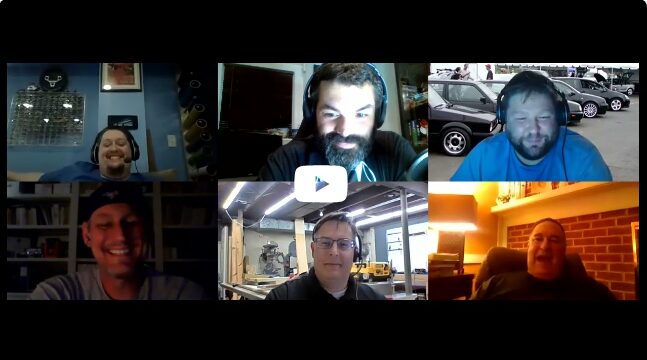
These men are often successful entrepreneurs who can afford to compete in this elite sport. They are known as gentlemen drivers. So with us tonight to discuss the film, outside of just me and Brad, your normal host, is a panel of GTM members from various regions. John, Tanya, Aaron, and Sam. Thank you all for joining us and being on tonight’s episode of Break Fix.

So let’s get into it. As you guys know, this is basically an 88 minute documentary that follows these four tycoons. So we have Paul Dallolana, who is a medical real estate mogul out of Canada. You have Ricardo Gonzalez, who is part of uh, Ricardo Gonzalez Racing now. He used to be part of G Drive and [00:02:00] he is part of the construction and architecture crew that built the University of Arkansas in Mexico City.

Ed Brown, who’s the Patron CEO at the time before it got purchased by Bacardi. And you had Michael Gauche, who is the head of MicroLabs, which is an e cig and vape company that makes the uh, Like what’s the chemicals that go inside of that? So you’ve got basically four millionaires or maybe multi millionaires sitting around at multiple times of the table kind of trading stories at this almost like business dinner as you go out throughout the film.

So I want to get your guys gut reaction on the film as a whole. We’re not going to talk about its cinematography, the style. It’s a documentary. It’s a modern documentary. They’ve interleaved a bunch of different stories together. from everybody. So we’ll start with John. What did you think?

John Richter: For me, it was interesting to see a part of the sport that I hadn’t really like paid attention to before.

Like I knew there were amateur drivers in with the pros in some of the categories, but [00:03:00] never realized it was a Component of what makes it successful and also how much one seat actually costs pretty crazy. Yeah. It’s just fascinating. Just learning, learning more about how that works. And especially with the, um, the one guy that ended up like starting his own team and then ended up winning the first race in Mexico for the WEC, that was cool.

Just to saying like. Them tie their business experience into the, the racing world. Aaron, what did you think?

Erin Kelly: Similar to John thought it was really interesting to learn about this aspect of racing that I hadn’t known too much about before for me, uh, having just finished my business degree. I think the part that most entertained me was seeing all these.

Business people talking about doing this as a side thing and how they had to manage their business life around this aspect of their personal life. And that, as John noted, some of them chose to combine those two things. And I liked how the movie took us into some of their business life, like the Patron guy.

Touring his Patron [00:04:00] farm in Mexico. So yeah, I thought it was a really interesting view into that.

Sam Harrington: Sam, what about you? I thought it was a really good documentary. I I’ve been very familiar with the gentlemen drivers and various racing series for a while now. Ed Brown from the extreme speed motorsport. I’ve followed him for a while because I really liked the team and the drivers.

And I met him a couple times at different IMSA races. Got his autograph on some ESM car posters up in the garage right now. Paul Bellilana, I’ve heard of. I didn’t realize he was a gentleman driver until I watched the documentary. I’ve just heard the name. Other guys, I didn’t really know who they were, but it was a cool look behind.

They’re really limited on time. So they couldn’t really, you know, smoosh in that much stuff with their businesses and racing and their work life balance and all that stuff. But they give you a good quick look in at what it’s like. So I liked it. Tanya.

Executive Producer Tania: Thought it was interesting. I think within the first five minutes, they said something about how it’s.

[00:05:00] Meritocracy. And that implies that your wealth and privilege doesn’t get you a seat at the table, but that’s exactly what it takes to do it, in a sense. So, I thought that was interesting to start it out that way, but, but try to be the contradiction of that, I guess.

Crew Chief Eric: I saw a lot of that later in the film, and we’ll get to that as we go through.

There were definitely some contradictions in terms there. But Brad, what did you think?

Crew Chief Brad: I thought it was good, documentary wise, but I don’t know how I feel. About the concept of a gentleman driver or an amateur driver. Not just a gentleman driver. I mean someone who buys their way into the sport to compete.

I mean, they even said it in the in the film. You look around other sports and other disciplines, especially physically demanding ones like baseball or soccer or football or whatever. You can’t just buy your way onto the team. You can buy a team. But you can’t buy your way onto and be able to compete and be successful.

But in the [00:06:00] driving world, it seems to be par for the course. It’s normal. It’s a way these teams fund themselves with these contributions from these gentlemen drivers. I find it interesting that if I wanted to and I had the funds I could buy myself into a professional racing series, but if I was a professional, I don’t know how I would feel about that.

Crew Chief Eric: And since we’re talking about gut reaction to the film I think within, uh, like Tanya said, within those first five minutes, it really set the tone. And I don’t know that it set the tone in the right way. One of the immediate reactions I had to it was, even though I’ve been a fan of Lamont’s radio for a very long time, and we’ve all heard the voice of John Hindhoff for a long time, I’ve never actually seen his face.

And so, I actually thought I was being punked. Because I thought it was Paco Tos, who played Moscow on Money Heist, which is another Netflix show, and somebody was dubbing John Hindhoff’s voice over top of him. And I was like, this is, this is something I [00:07:00] cannot unsee. Because right now, John is wearing a beard.

And I’m like, this is not right. But then I started to put two and two together. And

Erin Kelly: when you said that the announcer, we had heard him all the time, but had never seen him. And as soon as he came on screen and you said he looked like some guy that I’d never heard of, I think he looks like a dark haired version of Simon Pegg.

And I couldn’t figure out why Simon Pegg was narrating a movie about racing. And, and then He’s very versatile. I recognized the voice from Amazon. I’m like, this is that guy? And John was like, this is that guy?

Sam Harrington: Have you guys not 24? He narrates, well, okay, Jason Statham does it, but he is a big focus in Truth in 24.

It shows him and shows his face.

Erin Kelly: Is that movie better than this one?

Sam Harrington: It’s got Statham in it.

Crew Chief Eric: You haven’t seen it? All

John Richter: over

Crew Chief Eric: it. I’ve seen it. I have a copy of it. Oh my god, it’s amazing. What are they about? So the very first one, it’s about Audi’s triumph during the Le Mans year where they had to replace [00:08:00] the entire rear end of the car.

And so it focuses all about that because that was actually a, a pinnacle turning point in Le Mans, because nobody had ever done anything like that before. Once you were screwed, you were out. You’re, you know, if you screwed up the back of the car, it was over. And they devised a way to basically, the car was like an erector set and they went done and back out on track.

Seven minutes. Yeah. And they figured out that it didn’t break the rules. And so they were able to do it and they kept practicing it and they needed to be able to make sure that if something went wrong, they could fix the car and get it back out. And it was the first time that ever happened. And that was the same year that the Audi cars finished one, two, three.

And so it follows that story. The second one, I didn’t end up watching. I don’t remember what it’s

Sam Harrington: about their battle with Peugeot.

Crew Chief Eric: That’s right.

Sam Harrington: So basically if you like Lamar and you like Audi and you’re like, Jason, say some sexy voice. This is the documentary for you. You’ve checked all the boxes. Hey

John Richter: John,

Erin Kelly: I know what

John Richter: we’re watching tonight.

We’ve actually watched almost every State of the Moon. My brother

Sam Harrington: and I quote it [00:09:00] all the time. All the time, like Tom Christensen. All the

Crew Chief Eric: time from it. Mr. Lamont. Obviously, that, that was all noise. I’ll go back to one of the other subtitle screens, and it reads, By regulation, racing teams must create a driver lineup consisting of one gentleman driver and two professionals.

However, they throw that up on the screen and they don’t clarify it right away. In reality, it only applies to two types of racing. It doesn’t exist in IndyCar. It doesn’t exist in NASCAR. It doesn’t exist in a lot of other sports. It only exists in WEC, which most of us know as Le Mans and then in IMSA.

And then from there, it only applies to two classes, LMP2. And GTAM, which we know consists of amateur racers. So I wanted to get your guys opinion on that whole construct. Why does it still exist? Are we continuing to do this for the sake that we’ve always done it for tradition? [00:10:00] Or is there really a reason to bring these guys in as gentleman drivers?

Sam Harrington: Yeah, the reason we do it, and we’ve already touched on it, is they’re necessary to the sport because of the money that they bring in. Without them There just wouldn’t be enough cars and teams out there. So, that’s why we do it, and, I mean, I think any one of us, if we had the means, we would do the same thing.

John Richter: It’d be tempting not to, wouldn’t it? Like, if you have the money, like, spend it. Live your best life. Like, I think I would, but, if I was a professional driver that worked my way up through the ranks, I’d kind of feel like I got cheated. It’s like somebody, somebody played like Pascoe don’t like collect 200 or whatever from Monopoly.

Crew Chief Eric: I’m with you guys. I think they set the stage in such a way that it really showed racing as this extreme thing that only flamboyant, extremely rich playboys could be a part of. And that’s a, I think a, an ideal that we’ve been trying to do away with for a long time. So let me phrase it this [00:11:00] way. Do you feel that it might turn off the grassroots enthusiast to see racing portrayed in this way?

Sam Harrington: No, straight up no. I think the enthusiasts like it because it’s more cars and more teams on the track. I used to be a hater back in the day, like, oh, these rich guys get to do this. And I’m like, that’s awesome. I would do that too. That’s great. Good for them.

Crew Chief Eric: So let’s talk about these rich guys. So Sam, you mentioned two of them.

I got a little confused partway through. Because I didn’t know if this was a story about them or a story about racing. And I thought the film started to lose focus when we spent a ton of time talking about building the University of Arkansas campus and these kind of things. For me, it drew away from what we were really talking about.

What does that have to do with The Gentleman Driver?

Erin Kelly: Yeah, I, I 100 percent thought that it was a story about Those gentlemen drivers kind of bringing an eye to what a gentleman driver is through the eyes of those four men. [00:12:00] And I still found that interesting, but I agree that it wasn’t necessarily documentary about racing as a whole.

It was about this one. Subtopic within racing from those four viewpoints.

Crew Chief Brad: What I find interesting was that all of them, when you listen to their backstories, they all had, I mean, for the most part, except for, I think Paul Dalla Lana, who actually coincidentally got his start. At a track day like we do.

Erin Kelly: Yeah, I thought that was really cool

Crew Chief Brad: I thought all of them had racing in their past, but it seemed like the general I guess commonality between their origin stories was that none of them were good enough to go pro.

So they found these I guess ways to make money as entrepreneurs, and then they bought their way back into a sport that they weren’t good enough to do on their own talent.

Sam Harrington: I wouldn’t necessarily say they weren’t good enough, but you get a point where if you don’t have the right [00:13:00] funding at that time and those resources, you can’t go any farther.

Erin Kelly: Yeah, that seems to be the theme for. Ricardo, I think I remember him saying that, you know, he stopped at a certain point because he had kids and just wasn’t right in his life. And also like he ran out of funding is what it sounded like to me.

Crew Chief Eric: A gentleman driver will spend anywhere from one to 5 million per race season to compete.

There is no prize money. Now we do have minimum drive time requirements, which I thought were pretty. Pathetic for lack of a better term. These guys only have to drive for an hour and a half. So I’m looking at value for seat time. And we do that a lot. So let’s say five to 10 million, as the subtitle said, part of the way through the film, and you’re getting an hour and a half of driving.

Sam Harrington: That’s fair. But five to 10 million to them. Isn’t the same as it is to us. And they’re also there with some of the best teams and drivers in the world. They’re not those guys. But they’re still out there and they’re still out at those events. I mean, small price to pay to drive at Le Mans with a chance to win.

Crew Chief Brad: And [00:14:00] they’re not also just paying for track time at like a DE event like we are. They’re not paying 5 million for an hour and a half at a DE. I mean, they’re paying to win the race, uh, hopefully for them, which comes with prizes and it comes with marketing for them. I mean, the Ricardo Gonzalez was looking to win Silverstone to help drum up sponsorship and marketing and I guess, interest in hosting the, the WEC race in Mexico.

So it’s, it’s, it’s not just about, Oh, I need an, I’m going to get an hour and a half of track time. It’s not just all about the track. It’s about the things that they can do to take this and merge it into their professional lives as well.

Crew Chief Eric: So Sam, and you have a lot more knowledge about this particular facet of racing.

I don’t know that the argument holds a lot of water when you look at the overall percentage of funding that gentlemen drivers bring to the sport, I would make the argument that the sponsorships from the sports companies, let’s say it’s under armor or Nike or something like that, or even the [00:15:00] tobacco companies, whatever it might be, would bring in more than these gentlemen drivers would now on an individual team level.

On an independent entry level like at LMP2, I could understand that, but on the overall funding of the sport itself, it’s got to be less than 2%.

Sam Harrington: I think it’s probably more than you think. So especially for things like IMSA and WEC that aren’t as big as Formula 1 and IndyCar, they don’t find a lot of big time sponsors and sponsorship deals because there’s just not the return on investment there.

So that’s where they have to rely on the Gentleman Drivers to come in and bring that funding to a team. I mean, there’s even paid drivers in Formula One. Nicholas Latifi for Williams, his dad’s buying him that seat. Lance Stroll, his dad owns the team.

Crew Chief Eric: That was the funny part about Ed Brown. Of the four Gentleman Drivers, He’s the CEO of Patron.

Patron’s running the team, so it only made sense to put the boss in the car. So I kind of felt like he was the odd one out versus [00:16:00] the other three that really did, let’s say, buy their way in. And to Brad’s point, Paul Dallolana, he started lower in the ranks and worked his way up. And obviously he could afford to buy his seat on a GTAM team.

So for me, I really Disconnected from Ed Brown? I know, uh, Sam, you’re a fan of him, but what did you guys think about that scenario?

Erin Kelly: I thought it was interesting how he framed his first involvement as someone like told him to get in the car. Like they brought the car to him and said, Oh, try this out and we think you’ll like it.

And okay, now that, now that you got in the car, we’re going to make you do this for the next few days and really like it. So I thought that was a little, it was much different than the other backstories, I guess, maybe most similar to. Paul Della Lana, who went to, you know, a track event and loved it, which I think, um, at least I got involved in the sport and could very much empathize with and, you know, see that path.

So it was just different.

Crew Chief Eric: So at the end of the day, they’re taking home a trophy. You’re [00:17:00] correct, but they’re not getting money back from this. It seems like a loss leader.

Executive Producer Tania: So what I don’t think the movie ever addressed. Which doesn’t flow with preconceived opinions or biases against when you see these rich multi millionaire billionaire folks that are throwing their money into this is there’s an ego there.

You, you can because you can, because it doesn’t you having all that money. Spending 5 million a race or per race season, what have you, you can still enter a competitive racing series. I mean, Sam’s doing it, right? I mean, there’s lower classes, but it’s an ego thing. You want to suddenly be at the very top because in your daily life, that’s what you are.

That, that’s what you’ve been training yourself for for decades. You, your type A personality, your go, go, go. They portrayed the gentleman in the movie as actually very. grounded and down to earth and [00:18:00] not having an ego, which I felt confused as I was watching, because I went in with an expectation that these guys are just going to be total.

Crew Chief Eric: The gentleman who was the CEO from L’Oreal, I thought he actually took away from the film because he contradicted what the other people were saying. And the biggest takeaway I took from him was. He said back when he was a gentleman driver, it really didn’t matter if we messed up. We were just there for fun and spending our money.

And so I thought that detracted from the overall message compared to these four gentlemen, because they were trying to be active parts of the team. You could actually see that they were struggling. They didn’t want to let the team down, but there is an exception there that I caught. And I don’t know if anybody else did when they were interviewing Ricardo Gonzalez early on.

And he’s telling his backstory on how he got his seat in LMP2. As Aaron highlighted, there was a gap there where he raced, then he gapped, and he came back. He said that when he raced on a lower scale, the [00:19:00] competition was just not there for him. And I, I, I, I actually paused the film there, rewound it, and I’m like, did I just hear you right?

Because there’s, to your point, there’s plenty of series out there, be it Spec Racing, be it Super Trofeo Lamborghinis, or Ferrari Challenge, all those crash fests that we’re all well aware of, that plenty of people buy their way into, and they’re plenty competitive. So, to your point, I actually thought there was ego there, and I felt it from Ricardo more than I did from anybody else.

Sam Harrington: I mean that we all have egos. There’s no question that you know That’s that’s just how they are. That’s Unfortunately, it’s kind of one of the side effects that comes with that level of success and moving up the chain Professionally, you know, it kind of happens and most race car drivers are going to have an ego too.

So successful businessmen, now you get to be a sweet race car driver. It’s going to happen.

Executive Producer Tania: I just don’t understand the point of the gentleman driver because, okay, it’s great that you have all this money and you can go do it. I mean, more power [00:20:00] to you. Like John said, live your best life the best way you know how, but it’s like, okay.

So this clearly started as something maybe decades ago where rich people wanted to go do rich people things. And racing really fast with, you know, the top people in a series was that thing and now it just feels like it’s, you know, a heritage thing that’s carrying on and which is fine, but it doesn’t seem realistic or grounded and clearly not grounded in the everyday persons.

Erin Kelly: I think that’s really interesting and it’s making me connect to something that Eric said earlier about the L’Oreal CEO and how maybe that’s how it started and then these four gentlemen are trying to make it into something more serious than it either actually is or to move the gentleman driver into something that’s more serious moving forward to show that people are taking it seriously and giving it weight.

It has that weird dichotomy there.

Crew Chief Eric: So I think the reason [00:21:00] it feels disconnected, and they very briefly just brushed over it very quickly, they mentioned some other famous gentleman drivers that are probably closer to our age group that we would recognize. People like Steve McQueen, Paul Newman. Patrick Dempsey and our favorite British baker, Paul Hollywood, those are names we can identify with.

And when you put a celebrity in a car, are they really doing it for ego? They’re already a celebrity. Everybody knows who they are. So somebody like Paul Hollywood, who actually talked about it in. His big continental road trip. He says, I wanted to go drive for Aston and he did. And he actually drove the same car, same team that Paul Dallolana was driving.

And I don’t know if they overlapped, but it was basically, if you look at the pictures, it’s the same car. That being said, I look at those guys and go, you know. They’re celebrities and I already look up to them. I want to be like Paul Newman. I want to be like Steve McQueen. But I don’t necessarily know I want to be like these guys, right?

They [00:22:00] didn’t inspire me in that same way.

Crew Chief Brad: Why do you feel you want to be more like Paul Newman or Steve McQueen than these other guys who are just as successful, if not more successful, even though they’re not as famous?

Crew Chief Eric: The image of those celebrities. We know Paul Newman gave back, he did a lot of other things for community and people and whatnot.

Paul Hollywood is supposed to be a really nice guy, despite the way he portrays himself on TV, sometimes Patrick Dempsey, you know, he quit acting to pursue racing and now he owns a team, all that kind of stuff, and even Steve McQueen, he was rough around the edges, but he was also a racer, he was passionate.

They’re, they’re different people, maybe because they’re more grounded in the motorsport for me, that says something to me. And I look up to them and go, man, I wish I could be rich and famous. And go drive race cars, but it’s not the same. I look at these four guys and I single out, let’s say Patron and the vaping thing, and I’m like, well, you’re capitalizing on people’s habits and vices, [00:23:00] and then you get to go play.

Aren’t you special and to me? I don’t know. It was just weird. Anybody else feel like that?

Crew Chief Brad: No

Crew Chief Eric: Thanks, you’re

Crew Chief Brad: on an island eric,

Crew Chief Eric: I guess I I really am I really am

Crew Chief Brad: for me I don’t see any difference between these four gentlemen Or the guy from L’Oreal or the, the four celebrities that you mentioned, they were all successful.

They all had a lot of money and then they all decided to start a hobby of racing.

Sam Harrington: Yeah. That’s all it boils down to, right? You get to a point in life where you have the resources to do this thing that you want to do. And now you can do it. So, that’s awesome. That’s great. I’m happy for them. I can do the same thing myself at a much, much smaller scale.

And it’s great and it’s fun. If I had more resources, I would do that too. I’d be like, alright, I guess I’ll just go get an F3 car and see what that’s like. I’ll just go start a race team. Let’s do it. Yeah, exactly. I mean, why not? If you can afford it, go for it. Send it.

Crew Chief Eric: So when I asked about whether or not they detracted [00:24:00] from the sport.

There was that, there’s always that fear there. They talked about letting the team down. They really painted that picture of, I’m part of the team, but I don’t want to be, you know, a boat anchor. I want us all to be successful. Great. That’s very altruistic. However, I don’t know if you guys noticed or not, and this goes back to Ricardo, and I’m not trying to single him out, but they spent a lot of time with him because he is the centerpiece of the film when you kind of peel back everybody else because of bringing WEC to Mexico City and all that kind of stuff.

I don’t know if you guys noticed or not, but they threw up some other subtitle cards in there where it’s like, Gentleman Driver will travel the world to compete in 8 to 10 races per year, spending up to 70 days out of the office. Like, okay, like that’s supposed to say something to me, right? But they showed that scene where they’re walking the course at Coda.

I kind of sat back, and I’m like, Okay. And there was this whole other thing where they threw up another slide and it said a gentleman driver must learn and be mentored by his younger and more experienced professional teammates. And I’m like, what? I’m like, how [00:25:00] come this guy doesn’t have a coach? How come he’s not getting right seat time?

How come we’re talking about a track walk? And I understand the importance of a track walk, but shouldn’t we talk? About this guy’s training and how he is contributing to the team. He is going out of his way to spend extra cycles to, to be part of the team. Or is it just, look, I can fly in and drive my LMP two car, and then I can fly out and go about my business.

And they showed that with Paul Dalla Lana, where they had to coax him. Into staying after the race was over to get his trophy and I was like,

Executive Producer Tania: ah, you know, I don’t think the movie did a very good job of actually explaining all the details, if you will, around the gentleman driver, like I still, because I honestly hadn’t really.

known about it till seeing this movie. I didn’t know it was a thing. And then I was curious, like, oh, how many gentlemen drivers per team are there? And you know, are there levels and rankings? Like, is this guy competing against himself? How many people is he competing against? Because they just highlighted all the highlights these [00:26:00] guys were having.

Oh, they won or Oh, I guess they showed low lights. So they crashed, but it was, there was nothing about, Oh, but he’s competing him out against this other gentleman driver who is so and so and it works this way and it works that way. And they do get training or they don’t get training. They showed the one guy doing his thing on his simulator.

And I said, okay, good on him. He’s practicing, but I just still don’t have an understanding of how the whole thing works other than you write a really big check and you get to sit in the seat.

Erin Kelly: Yeah, I agree with Tanya. The track walk was really confusing for me because it read exactly as Eric said. I was like, he just flew in his, in his, Never, like, looked at this track before and doesn’t understand how to drive it?

Is that what’s happening here? It was very confusing.

Crew Chief Brad: They obviously don’t spend hours watching YouTube videos of other people on track like we do.

Executive Producer Tania: Clearly. Because I would like to hear how competitive are these guys really versus You know, the, the more pro amateurs, if you will, [00:27:00] the, the people really working through their ranks that have been doing this since, you know, they were go karting at five years old or something like that.

I didn’t get any sense of how this all really works other than you got money. So you go and okay, great.

Sam Harrington: I mean, that’s essentially what it is. It’s. Almost like a straight up arrive and drive and obviously a gentleman driver is going to be nowhere near as quick or competitive as a professional because a professional that’s their job.

It’s what they do and they’re really good at it. Which is why people pay them to do it.

Crew Chief Brad: I,

Sam Harrington: I agree they didn’t do a good job kind of showing the behind the scenes and what kind of training goes in. They just quickly, you know, he shows up to CODA and is like, okay, track walk with Tipo Durrani, professional driver, you know, just showing him lines.

I think that was just kind of, they threw it in there for fluff. There’s, you know, there’s a lot more going on behind that with the engineers and the data sessions, which they glossed over real quick. I mean, there’s more to it than that. They’re not just showing up and getting in and [00:28:00] it could be a track they’ve never been to, which is fine.

Everybody’s going to go to a new track at some point, right? So I just think they didn’t do a good job there. But

Crew Chief Eric: to your, to your point with the setup and the race engineer, they’re not going to listen to these guys. They’re going to listen to Felipe. They’re going to listen to Bruno. They’re going to listen to all these other guys because they’re the professionals at the end of the day.

They’re going to say, Hey, the car’s loose. The car’s doing this and they did touch on that a little bit where the pro would pull them aside like, uh, yeah, where overbeck would pull them aside and say, Hey, the car’s doing this. You’re just going to have to drive through it. You’re just going to have to deal with it.

This is the way we set it up. And so to your point, I don’t even know that it’s in a drive, arrive and drive. It’s a pay to play. So do they really have any input? Are they really helping the team or are they just dragging those teams down? And so that was what left me sitting there going, I don’t know. And this is where I draw the difference between the other gentlemen drivers.

We talked about where Paul Newman is an example. He raced a lot and so did [00:29:00] Steve McQueen. They were racers, although they were celebrities. So it’s a little bit different. They weren’t just, Oh, you know, I’m Bruce Wayne by day. And by night I’m Batman. it, you know, and fly in, do their thing and fly out. They were dedicated to the craft.

They were dedicated to the sport and they knew how to drive and they knew about the mechanics of it. Now, I’m not saying that that’s for everybody, but I just felt that it still painted this in the completely wrong light. And I don’t think they gave enough credit to the teammates. We spent more time with the publicist.

And the marketing guy than we did with Bruno Senna and the other teammate. And I looked up Bruno Senna because I was a little bit confused, you know, knowing the last name, it’s a famous last name, right? Being related to Ayrton. He was born in 83. He’s a professional racing driver. He currently races for rebellion.

He’s the nephew of Ayrton Senna. His mother is Ayrton’s older sister, Vivianne. And he’s also the first driver. To win every WEC class. [00:30:00] So that guy has a lot to say. I don’t think he spoke a single word in the whole movie. And in that respect, I felt like it took away from the, the, the bigness. You know, they, as they set up the film, how, how amazing, you know, WEC is.

And then we never really got to hear anything about it.

Sam Harrington: Oh, gentleman driver, not professional driver. Yeah, Senna,

Crew Chief Brad: Senna’s not a gentleman driver.

Sam Harrington: So do you guys separate? Gentlemen, drivers from drivers who bring sponsorship backing with them who otherwise wouldn’t have a seat, wouldn’t have a ride, but they bring sponsorship to the team that allows them to get that seat.

They’re not being picked because of their skills and their merit on the track. They’re being picked because they’re bringing sponsorship. They’re not writing their own check from their own personal bank account. This Venezuelan oil company or whatever is their backing is writing that check.

Crew Chief Eric: I mean,

Sam Harrington: feel about that because there are a lot of female drivers that do bring their own sponsorship.

And as soon as [00:31:00] that sponsorship runs out, same thing, they’re gone, too. They’re just not writing their own checks. So if they don’t bring their own sponsorship, they’re gone.

Crew Chief Eric: So I think the clarifying question there, Sam, is what is the aspiration of that person? Are they attempting to become a professional driver?

And so therefore they’ve harvested this sponsorship in order to reach that ultimate goal. And maybe they never get there and maybe they do. Or are you saying they’re on the same level as these gentlemen drivers where it’s just, I’ve yielded enough cash that I can come in, buy my seat. Win Le Mans and go home.

Which is it? I would argue that the people that are

Sam Harrington: bringing sponsorship are probably the more talented drivers. They’re usually, technically, professionals because their sponsorship is paying them. Without that sponsorship, it’s not like they’re just getting picked up off the street to get a ride. Like, you gotta bring money to the table, whether you’re writing the check.

Or you’ve got backing to

Crew Chief Eric: do it. So the case in point, right. If you watched uppity, that was [00:32:00] exactly the scenario that Willie T ribs went through, he got backing from Cosby, et cetera, et cetera, et cetera, to, to get his seat and all that stuff, to get a car, to get going. And I understand that, but his goal.

Was to, you know, and he already was a professional racer in Trans Am, et cetera, et cetera. And he wanted to work his way up. He wanted to win the Indy 500. He is someone you can look up to as a mentor, but these guys are not them. I want to fly in. I want to win Le Mans and I want to take my trophy and go home to your point of very earlier on in this podcast where you said professional drivers and gentlemen, drivers are not the same thing.

If we classify these sponsored drivers, as you’re saying into the professional category. Then it pretty much answers itself.

Executive Producer Tania: The Gentleman Drivers, it’s their hobby. They have a lot of money and they want to go do this cool thing. I mean, that’s how I am perceiving it. Until convinced otherwise. Because they’re, they’re already years into their life.

The reality, they’re not going [00:33:00] to suddenly be the next Ayrton Senna or Lewis Hamilton in their particular series. They’re doing this for fun because probably partially they’re bored and it’s something that they’ve always wanted to do and they’ve got some talent. They’re not completely talentless because I mean, there’s a lot of people in the world that they have tremendous talents and they never actually get to pursue them or use them and no one sees them.

It doesn’t mean they’re not talented, but I mean, honestly, you don’t. It’s a hobby for them. I don’t think it’s on the same level as somebody who’s, who’s, who’s end goal, who’s aspiration, as you said, is to actually go be the top in their sport because this is their job. This is what’s bringing them money.

They’re not, it’s not a side thing.

Crew Chief Eric: The point is we lost something in translation here. We lost the difficulty in the driving itself. These guys can’t communicate it. They just show up. They do their thing for an hour and a half and they go home or whatever, you know, their stint is. [00:34:00] So again, does it take away from the sport?

Does it really paint the sport in the right light?

Erin Kelly: Yeah. And based on the conversation about money earlier, I would ask, would the money still come in from rich fans through things like team ownership and sponsorships and, and other ways to be involved? If actually being able to drive the car didn’t exist, I would dare say that yes, that not maybe in the same quantities, but enough to keep the sport going.

Crew Chief Brad: Maybe if the sport was more profitable to the teams, but it’s, it’s a money pit. I mean, you listen to any professional, like any team owner or anybody, the gentleman drivers just joking. They mean, they even said it. How do you make a small fortune at a racing? You start with a large fortune. You start with a billion, you end up with a million.

I don’t, I don’t think this it’s not like the NFL where teams are making money, hand over fist on merchandise and in paraphernalia and all, and all that stuff and fans are rabid for it. Then the motor sports community, I think it’s a [00:35:00] very small niche group of fans. It’s not. It’s not a moneymaker.

Sam Harrington: If I’ve got 10 million dollars sitting around, I’m not just gonna give it to a race team out of the goodness of my heart and be like, here guys, have some sponsorship money.

I’m gonna be like, here guys, make room. I’m hopping in.

Crew Chief Eric: Yeah, but how much did Ed Brown make off of Patron cars running around and sponsoring the, the lounges and the, and the happy hours and all that kind of stuff? So the return on investment was probably pretty good. So I don’t know that the argument really holds water.

I’m feeling what Aaron’s saying here.

Sam Harrington: I don’t know because once Bacardi took over, they pulled the plug on that pretty instantaneously. Their accountants probably went over the books and were like, Hmm, we’re spending how much on racing?

Crew Chief Eric: That drives right to the point. If you weren’t making money, why do it?

So if racing is a loss leader, why does racing continue? And I’m not advocating for racing to go away, but at the end of the day, somewhere along the line, and you can make this argument [00:36:00] about Bernie Ecclestone, somebody’s making money. If not, it wouldn’t happen. So I don’t think WEC is a loss leader or they would have shut it down.

That being said, there’s another big weird part of this movie that I’m sure you all caught on, which was the psychologist. And I see you all smiling.

Erin Kelly: It was from Austin.

Crew Chief Eric: Yes, Dr. Art Markman. And he spent a lot of time talking about The, the risk and the entrepreneurs and how difficult it is for them and the challenges and all.

And he implied a lot of different things. There were two things I was really confused about. The first one has to do with risk. He made it seem like only entrepreneurs, only people that are anointed with that gift are able to take and manage risk in life.

Executive Producer Tania: Well, he said it very, in an interesting way at some point, something to the, I don’t remember how exactly he worded it, but it was.

To the effect of because these guys had learned all that they needed to learn, it’s not that there’s not risk is that they learned [00:37:00] the risk away. And I’m like, wow, that is completely inaccurate. The risk is still inherently there. And these guys have not been doing it as long as the professionals. So they, so the real problem is they don’t know what they don’t know, and they don’t know the risk.

That they don’t know, if you will. So that it goes back to their ego that they’re gods and what they do on a daily basis. And so therefore that’s going to translate into anything that they. I don’t know that I agree with it.

Erin Kelly: I was amused by that, about how they, uh, you know, the psychologist said that they essentially reframe how risky they see something, and do that reframing by learning more about it.

And I think there is some semblance of truth to that. I think situations can seem risky that once you actually You know, document what’s going on with the situation. You can get to a point where it’s like, okay, it’s not as bad as I thought it was going to be. I’m more comfortable approaching [00:38:00] that situation down.

I agree with Tanya that they weren’t learning the risk weights. How much did they learn? They’re not a professional driver. They’re essentially have enough money that the risk doesn’t matter or that they don’t care about it. Because they’re doing it for different reasons that are not monetary

Crew Chief Eric: with that.

I mean, they showed Paul Dalla Lana putting that Aston in the wall, how many times it almost became comical. And then they never talked about the repercussions afterwards. Like, Oh, well, well, we, we bend it. Well, we’ll move on. There was another part of that, that really got under my skin that I didn’t understand.

And to your point, we’re talking about risk mitigation here. And then if you notice, he switched gears. And he went on this tangent about imposter syndrome. And I, again, I had to pause and I’ve only heard one other person in my life bring this up and I’m not going to call them out. And I was like really confused because now they’re trying to say that they have a self esteem or confidence problem where they’re putting on a face.

And if you really knew them, that they aren’t the way they come off as you see them in [00:39:00] real life. And I’m like, Excuse me?

Executive Producer Tania: I felt that they probably weren’t being portrayed how they really are in real life in this film. Because it goes back to what I said in the beginning, as I entered this, and maybe it’s wrong of me to have entered with a bias, of most billionaires, millionaires, are just egotistical tyrants, jerks is the nicest way to put it.

And they, they didn’t quite exude that during the interviews and during their conversations. They felt more like, you know, the everyday guy, you know, walk down and have a beer with or something. And I’m not sure that that’s, that’s entirely accurate. So there was a lot of what seemed like misportrayal and maybe I’m just being unfair.

I thought the

Crew Chief Brad: imposter syndrome was specifically speaking to them as gentlemen drivers coming into a sport with professional drivers and they’re the imposters pretending to be professional [00:40:00] drivers for the weekend or whatever professional drivers think of them as imposters. So they feel like they have to put in more work.

To overcome that imposter designation that that stereotype, because they’re buying their way in and they haven’t earned it.

Executive Producer Tania: The imposter syndrome definition, psychology is exactly the that person, so it would be the gentleman drivers because they’re not truly the person of that sport, right? Fosters in it.

They feel inadequacy because they haven’t been through everything.

Crew Chief Eric: Right, but isn’t that a contradiction to everything we know about these entrepreneurs?

Erin Kelly: Yeah, it feels contradictory to the previous discussion on risk. They essentially bought down their risk because they learned their way out of it and and then are convincing themselves that it’s not risky.

That doesn’t necessarily align with the fact that they feel as an imposter to be able to perform in that realm. So I think yeah, They like presented two [00:41:00] psychological pillars that don’t necessarily, um, align with each other inside. You know, the gentleman driver’s head,

John Richter: I think you get a lot of their true nature that they’re really kind of shows you like pulls back the curtain on everything at that like round table.

They do. They kept going back to because there are times where they started like, you know, talking like, would you have done all of this again? Or would you become like a pro driver or something? Or would you rather have the money you’ve made in your business? And all of them just kind of like chuckled to themselves and like money, like.

I don’t know. I think that was like really revealing on who they were personally. Imposter wise, like I could see like you come to something that’s new and you definitely bought yourself on the team. You definitely feel inadequate, which you could just get rid of by getting more experience.

Crew Chief Eric: But we’re all told to be confident in ourselves.

We’re all champions. We’re all winners. We’re supposed to have, you know, that gusto inside. And these guys have that. Entrepreneurs exemplify. That particular characteristic to show them as vulnerable and whatever, to [00:42:00] me, didn’t make a whole lot of sense. And so with that boost of esteem, with that boost of just boldness that these people are supposed to have as entrepreneurs, wouldn’t it be more appropriate to say, fake it till you make it?

John Richter: Yeah, definitely. I mean, that’s how you do it as an entrepreneur to begin with anyway. I mean, I guess it could be imposter if you think of it in the way I do. It’s like you have the same skills, you feel like you can’t perform at the same level for some actual psychological reason, like it’s just like a block.

I have that professionally every once in a while, and I think it could apply here.

Crew Chief Eric: Yet another contradiction in the film. They’re trying to portray these fragile eggs, and it’s like, you know, you have to. I don’t know, coddle them or baby them. I don’t know what the term is right now, but it just, to me, it just, as, as we progress through the film at first, I was like, Oh, this is going to be really neat.

I’m going to learn something. And then I kind of got further and further disillusioned and disenfranchised with the film. [00:43:00] And then the biggest problem arised as we got to the end and to your point about them sitting around the table. I also noticed how. Like Ed would kind of bite at some of the other ones or he would just cut them off and I’m like, oh, that’s interesting, right?

So there’s a little power play there alphas, you know, four or five alphas in the room together. No big deal I don’t know why it took 88 minutes to dawn on me There’s not a single female in the entire film other than Paul Della Lana’s wife Mic drop.

John Richter: To extend on that, I said at one point, they were talking amongst themselves, I was just like, la la la, four powerful rich white men doing their own thing.

Erin Kelly: Oh, that came to my head at the very beginning. And I was like, it was maybe Ricardo. 88 minutes to see that.

John Richter: Ricardo is, I guess, is the one, the one man out, and he was kind of definitely I felt overpowered by the rest of them in that little round table. He’s like, I’m actually like trying to do things. You guys are just bitching about your eco.

Like, I don’t know.

Sam Harrington: Yeah, I agree on that. But also that’s unfortunately the demographics of racing as [00:44:00] well.

Crew Chief Eric: Is it though? There’s plenty of diversity out there with deep pockets. I’m just going to phrase it that way. There’s plenty of very rich and powerful women out there. Why aren’t they signing up to be gentle lady drivers?

They have

Sam Harrington: those. They,

Crew Chief Eric: they run another

Sam Harrington: series, like Super Trofeo,

Crew Chief Eric: Ferrari Challenge. Why can’t they run WEC?

Sam Harrington: They don’t have enough money,

Crew Chief Eric: maybe. Oprah’s got plenty of money, bro.

Crew Chief Brad: Maybe Super Trofeo and Ferrari Challenge.

Sam Harrington: So you gotta, you gotta have, you gotta tick all the boxes. You gotta like racing. You got to want to race and you got to have a lot of money.

I mean, that eliminates me from being a gentleman driver and

John Richter: be able to deal with culture,

Erin Kelly: right? I think the thing missing from this conversation is that, yes, those might be the demographics of racing more generally, but that inherently might be one of the reasons you don’t see it being the only person in the room that is different in a specific way.

Can be challenging, and can be culturally [00:45:00] shocking. So, I mean, I think John pointed out that that was kind of evident just amongst the, you know, four or five men at that round table. One man stood out, and I noticed early on that he wasn’t talking very often at that table. And that could have been for a variety of reasons, maybe he’s more introverted.

They’re, you know, they were all in this documentary together, they were all, all their stories were being told. Yeah.

Crew Chief Eric: You’re talking about Michael Gauch from Molecule Labs. They kind of wrapped him up at the end like,

Erin Kelly: uh, yeah, here’s this thing. No, I was talking about Ricardo.

Crew Chief Eric: Oh, gotcha.

Erin Kelly: As soon as they told me that guy made vaping liquid, I wrote him off as the killer of numerous innocent children.

Crew Chief Brad: He’s probably broke now too.

Erin Kelly: I was also wondering, I was like, when is this date? Definitely before 2019.

Crew Chief Eric: Yeah, and that’s just it, right? So we’re catching this thing two years later, and even when it came out on Netflix, the material that was provided was already two to three years old. So it’s really out of date.

I understand what they were trying to do, but again, diversity [00:46:00] aside, I thought it was unfair to women.

Erin Kelly: Yeah, and If I could bring up a point of like related to the diversity issue, I mean, it’s called gentleman driver, right? Do they call a woman who’s in that position, a lady driver, or do they call her a gentleman driver?

And I think it also gets at a deeper point of language, right? I go back and forth about, well, do the words we use really matter all that much? Like, why should we care? But if you think about the origin of the word gentlemen and how gentlemen is like thought of in. societal context, the way they’re referring to it is like a rich white person who owns land, right?

And that, that they’re gonna come down and race in this, in this race and, you know, get a seat in this car. And so that has many more connotations than just that they’re a, a man. It has a connotation that they are white, rich, and also a man. And so I think the name itself has many implications. that the movie just hit home again and again and again.

Like every, every part of that movie [00:47:00] confirmed what I thought A Gentleman’s Driver would be in terms of demographics throughout the entire 88 minutes.

Crew Chief Eric: If I’m a casual watcher and I see this, maybe I just got done watching Formula One Drive to Survive, and this comes up on my recommendation list, and I watch this, and I’m not a motorsport head, or it just comes across my recommendations, I watch it.

Does it really paint motorsport in the, in a good light?

Sam Harrington: Uh, I think it shows the realities of motorsport, being that the resources that are required to have the sport exist. I think it brings that to the surface that a lot of people probably don’t realize how expensive this is and what it takes for a team to get funding and run.

I think that’s really what it highlights.

Executive Producer Tania: I mean, I agree with that. It just reconfirms what I think the majority of people already know is that it’s a very expensive. Profession, sport, hobby, whatever you want to label it as, it takes money to go do it, even whether you’re the Lewis [00:48:00] Hamilton level, or you’re a junior level, or you’re even if you’re just going out for a track day on a weekend, it’s expensive.

It’s not it’s not cheap. There’s less expensive sports to go do, you know, basketball doesn’t cost very much and you can get a group of friends and go on a court for free, you know, it’s expensive to go racing. And I think it reconfirmed that in the movie. And I think. You know, in the first five minutes, they pushed me away my interest when they said that it’s, it’s, it’s a complete meritocracy.

Well, no, it’s not. Yes, once you’re inside it and you’re competing against your peers, the better driver with more skill is going to be rewarded. But it takes money to enter that meritocracy. And they made it sound like, oh, no, you, you can be whoever and have the talent and suddenly be number one. I don’t personally feel that that’s how it works.

Sam Harrington: I mean, I agree with you, but I didn’t get the aspect of you can get in and be number one. I saw it more as you can get in and you’re in. That was it. It wasn’t [00:49:00] like, okay, well, I’m in now. Now I’m going to compete and be the best. Gentleman drivers get in and they’re going to do their best. But they’re not going to be the best,

Crew Chief Eric: right?

But he gets to go home with a trophy that says LeMans winner. He won LeMans. Did he? I’m wrong. I guarantee you, Bruno Senna did more work, more laps, and put more effort in than Ricardo did at the end of the day. And Bruno Senna wouldn’t exist without Ricardo’s checkbook. But hey, that’s not necessarily true because Ricardo, because Ricardo’s not racing anymore.

And Senna still is.

Sam Harrington: Yeah, but the other guy could race whenever he wants, too. I mean, true. I’m just saying it’s a symbiotic relationship, right? The professionals need the money for the team to operate. These guys bring the money. I mean, that’s all it is. It’s a completely symbiotic relationship. They need each other.

Executive Producer Tania: It would’ve been nice if the movie maybe explained that more, or kind of Dived into that, which it didn’t do [00:50:00] at all because I still really don’t have an understanding of how this whole thing works. Like, cause clearly they, these, these guys are, are on a team within their, their car class. It’s not just them doing lap after lap and winning it, um, but you didn’t get to hear about how that works and the relationships and who really is contributing.

What are these guys really doing? It was, I was waiting for it and it got glossed over.

Crew Chief Eric: I’m with you. I was waiting for a team manager to step up and say, this is how we run the team. This is why we do it this way. Let me break it down for you. Or something like that. It just was never there.

Sam Harrington: Yeah, they didn’t have the Howden like in Truth in 24, right?

They didn’t have those people. To step in and do this and I mean they were constrained by how long this was and they were trying to follow four different people and four different teams and they just kind of bounced around and glossed over a lot of things that probably would have been really interesting that explained how this worked and it came across kind of [00:51:00] half assed.

Crew Chief Eric: I mean I’ll make the argument that we didn’t need to watch Ed Brown sipping tequila. We could have filled that time with an explanation of what the heck we were watching. I couldn’t care to less.

Sam Harrington: Delicious.

Crew Chief Eric: It is. It is. Granted. But I couldn’t care to less. I don’t want to watch, again, a room full of white guys drinking liquor.

It had no point to the movie whatsoever. To the message that they were trying to convey.

Sam Harrington: Did you scope out the watches they were wearing? Man, pretty sweet.

John Richter: Maybe that was part of the deal of the documentary. They wanted coverage of their products, their companies, their life success.

Crew Chief Brad: Who was the executive producer for the documentary?

Which one of the, the billionaires was the executive producer?

Executive Producer Tania: I didn’t watch that far enough to the credits.

Crew Chief Eric: Guaranteed there, one of them was. I have to go look it up though. Tony Calderon? Wasn’t that the uh, producer guy? The guy sitting in the middle of the table? The

Crew Chief Brad: manager.

Crew Chief Eric: So he’s their manager, so yeah.

So he’s gotta fluff ’em up and all that stuff. So yeah, you’re

Crew Chief Brad: mani manicure. [00:52:00]

Crew Chief Eric: So I guess at the end of the day, we understand it takes money to go racing. It’s considered a rich man sport. It always has been like a lot of other things, like if you wanna be good at golf and you boats and airplanes and, and even shooting, right?

They’re all expensive. All hobbies are expensive at the end of the day. But what I didn’t understand, and what I’m gonna leave you guys with is would you share this? Movie. Movie with someone else to say, this is what racing is like. And the second part of that question is, did it leave you in any way inspired both in the business world and in the racing world, or could you have cared less altogether?

John Richter: I think I cared more about it from a business and leadership perspective than I did about the racing. Side of it. It was more fascinating to me how they ran their businesses and were successful and then also handled racing at the same time Well, I wouldn’t actually recommend it as a view into racing to anyone because like especially at the end It was just it was basically like a crazy dramatic Movie ending so [00:53:00] they’re just going for the effect and not a message which I was kind of like pretty bummed about But also entertained by, so it’s kind of conflicting emotions there, but now I’d say come out to a track day.

We’ll show you how it’s really done.

Executive Producer Tania: I mean, to be very honest, I lost interest in the movie very early and I only kept watching it because of this podcast.

So no, I don’t think I would recommend it to anybody. I don’t think it did a good enough job of explaining anything. You could argue there was potential that had been done differently, but as it stands. I don’t think it really explains much about racing and I wasn’t inspired by it. I mean, it must be nice to have that much money.

Crew Chief Brad: I think it would have been better if it was less about entering the mind of the entrepreneur and more about, this is what it takes to keep WEC and IMSA running. I wouldn’t share this with anybody just because I was bored.

Erin Kelly: Yeah, I, I agree with. Everything that’s been said so far, I think, uh, you know, I wouldn’t recommend it as a view into racing.

I [00:54:00] think it was a view into the lives of these four men with a slight, strange, uh, contradictory commentary on what a gentleman driver actually is. I found tidbits here and there of their discussion on leadership and entrepreneurship interesting. I almost felt like it was forced in some ways, like. The one guy who was talking about, you know, I treat my employees with respect and the people that I work with with respect.

And I’m like, yes, that’s what a true leader actually does. Great. But I kind of feel like you’re just saying that’s, you know, like you can asshole on TV. Yeah. So I thought it had some interesting leadership messages that felt very forced.

Sam Harrington: Yeah, I definitely would not recommend this to somebody who’s new to motorsport and wanted to learn more.

Far better ones out there that they can watch. Uh, some that we’ve already touched on on this podcast, you know, I think they did an okay job, but that’s from my perspective of knowing about gentlemen drivers and, you know, kind of how the sport operates. And what these guys do and come in and write these [00:55:00] checks and, you know, I used to be a hater on that stuff, but now I’m like, you know, if I had the resources, I would do it too.

I would be walking around like the Monopoly guy in the paddock or like Ted DiBiase or dressed like Apollo Creed, just being obnoxious, showing how much money I have and be like, Hey, I’m paying to be here. So what? I’m rich. Then why not? That’s what they’re doing. I

Crew Chief Eric: would do the same thing. So I, I can’t hate on them for it.

I thought there was just so many things wrong with it. By the time I got to the end, I was really excited at the beginning, like, Oh, this is going to be really cool. I really appreciate and enjoy WEC, Le Mans, IMSA, everything that goes with that. I was like, man, this is going to be a great little filler because we didn’t do Le Mans this year.

I’m going to watch the film. See where it goes. And then by the end, I was just like, you know what, if I was not a racer and was not invested in motorsport, I’d say the hell with this. Just make them all go away. And on that note, I think it’s time to end. All right, everybody, I thank you so much for joining us tonight.

It’s been an interesting [00:56:00] conversation. And I look forward to doing this again soon.

Crew Chief Brad: If you like what you heard and want to learn more about GTM, be sure to check us out at www. gtmotorsports. org. You can also find us on Instagram at GrandTouringMotorsports. Also, if you want to get involved or have suggestions for future shows, you can call or text us at 202 630 1770 or send us an email at crewchief at gtmotorsports.

org. We’d love to hear from you.

Crew Chief Eric: Hey listeners, Crew Chief Eric here. Do you like what you’ve seen, heard, and read from GTM? Great, so do we, and we have a lot of fun doing it. But please remember, we’re fueled by volunteers and remain a no annual fee organization. But we still need help to keep the momentum going.

So that we can continue to record, write, edit, and broadcast all of your favorite content. So be sure to visit www. patreon. com forward slash gtmotorsports or visit our website and click in the top right corner on the support and [00:57:00] donate to learn how you can help.

Highlights

Skip ahead if you must… Here’s the highlights from this episode you might be most interested in and their corresponding time stamps.

  • 00:00 Introduction to Gran Touring Motorsports
  • 00:26 Overview of ‘The Gentleman Driver’ Documentary
  • 00:58 Defining the Gentleman Driver
  • 01:24 Panel Discussion: Initial Reactions
  • 01:45 Deep Dive into the Four Tycoons
  • 03:22 Exploring the Business and Racing Balance
  • 04:55 Contradictions and Cinematic Choices
  • 06:22 The Role and Impact of Gentleman Drivers
  • 07:36 Comparisons with Other Racing Documentaries
  • 10:05 Financial Aspects and Sponsorships
  • 20:58 Celebrity Gentleman Drivers
  • 25:09 Training and Competitiveness
  • 29:13 Critique of Driver Representation
  • 30:25 The Role of Sponsorship in Racing
  • 31:32 Professional vs. Gentleman Drivers
  • 36:08 Psychological Insights and Risk
  • 43:17 Diversity and Representation in Racing
  • 52:17 Final Thoughts and Recommendations

Learn More

A Documentary Full of Contradictions

Beyond the racing analysis, the documentary introduces a psychologist who discusses risk-taking in entrepreneurship. The premise? That these individuals approach racing the same way they manage business – by mitigating risk through calculated learning.

Yet another contradiction emerges: imposter syndrome. The film suggests that gentleman drivers feel out of place, doubting their legitimacy among professionals. But how does this align with the aggressive confidence typically associated with self-made entrepreneurs?

The Missing Voices in the Story

Perhaps the most glaring omission was diversity. Aside from a brief mention of past celebrity gentleman drivers like Paul Newman, Patrick Dempsey, and Steve McQueen, the film focused exclusively on four wealthy men, never exploring female or minority drivers in the same space.

This oversight led us to question whether the documentary truly captured the essence of endurance racing, or if it was merely a showcase of privilege in motorsport.

There's more to this story!

Be sure to check out the behind the scenes for this episode, filled with extras, bloopers, and other great moments not found in the final version. Become a Break/Fix VIP today by joining our Patreon.

All of our BEHIND THE SCENES (BTS) Break/Fix episodes are raw and unedited, and expressly shared with the permission and consent of our guests.

Final Verdict

While The Gentleman Driver provides an inside look at the business-driven nature of modern racing, it fails to offer technical depth or a balanced portrayal of motorsport dynamics.

For motorsport purists and grassroots racers, the film might reinforce frustrations over how financial backing often outweighs driving talent. For industry insiders, it highlights the economic realities that sustain endurance racing.

Would we recommend this film to someone interested in learning about motorsport? Probably not. Would it spark debate on how racing should evolve? Absolutely.

[EDITORS NOTE 2024]: Tune in for “The Gentleman Driver, Part 2” as we rejoin this story with the documentary’s producer Toni Calderon for a in-depth look at how the film was made, and his reactions to our critiques.


This content has been brought to you in-part by sponsorship through...

WSIB: Starter Track Cars

Welcome back to another raucous roundtable from the Break/Fix crew, where spirited debates and questionable decisions reign supreme. This time, Eric and I – along with special guest Mike Crutchfield – tackle one of the most enduring questions in the motorsports community: “What should I buy as my first track car?” by revisiting my previous article I wanna go fast, things I wish I knew as a noobthis episode dives deep into the pros, cons, and quirks of some of the most popular starter track platforms.

In this weeks episode of Break/Fix, we revisit “the one that started it all” … the original What Should I Buy? – and we attempt to answer the age old question specifically regarding Starter Cars!

Tune in everywhere you stream, download or listen!

Listen on Apple
Listen on YouTube
Listen on Spotify

For many driving enthusiasts, the hunt for a first track car is filled with excitement, endless debate, and a long checklist of considerations. Should you go rear-wheel drive or front-wheel drive? Build versus buy? What makes a car forgiving yet rewarding? To answer these questions, the experts at GTM sat down for a spirited discussion, evaluating a range of options based on performance, reliability, and affordability.

Why Choosing the Right Track Car Matters

Within the GTM community, the recurring question of “Which car should I buy?” never truly disappears. Whether it’s a first-time collector searching for a conversation-starter at cars and coffee or someone transitioning into serious track days, the choice often depends on personal preferences, budget, and long-term goals. To help simplify the process, GTM’s panel compiled a list of top recommendations.

Criteria for a Great First Track Car

Before diving into the specific cars, GTM members outlined key criteria:

  • Balance & Handling: A car should be predictable yet engaging. It needs to teach, not correct, mistakes.
  • Aftermarket Support: A strong supply of replacement and performance parts is essential.
  • Reliability: While some cars may be cheap to buy, maintenance costs can add up quickly.
  • Affordability: Many first-time buyers need to be mindful of initial costs and ongoing expenses.
  • Drive Configuration: While the debate between rear-wheel drive and front-wheel drive continues, both have their merits.

Top Tips Before You Buy

Before diving into the list, the panel shares some hard-earned wisdom:

  • “Never drive your heroes.”— Matt Y
  • “Look around the paddock and start with what you see.” — Brad
  • “If you’re not okay with me putting a boot in your door, you’ve picked the wrong car.” — Matt Y
  • “Build vs. Buy? Buy.” — Sam

Now, onto the contenders…

GTM’s list of recommended first track cars spans several marques, catering to diverse driving styles and mechanical abilities. Choosing your first track car is part science, part emotion, and part tribal allegiance. Whether you go German, Japanese, or American, the key is to buy smart, learn fast, and enjoy the ride. Here are the panel’s top picks.

🏁 BMW E36: The Gateway Drug

  • Rear-wheel drive, manual transmission, and balanced handling make the E36 a track staple.
  • Affordable entry point, but beware: 30-year-old German engineering means you’ll be wrenching often.
  • Common issues include valve cover leaks, water pump failures, and cooling system quirks.

🏁 BMW E46: The Refined Evolution

  • Bigger, more powerful, and arguably better looking than the E36.
  • The M3 variant is coveted but pricey—consider the 330i for budget builds.
  • Known issues: rear subframe cracks and the infamous M tax.
  • If you’re serious about competition, buy a pre-built race car and save yourself the headache.

🏁 Volkswagen Mk4: The Front-Wheel Drive Underdog

  • Shared chassis across Beetle, Golf, Jetta, and Audi TT—tons of parts and knowledge available.
  • Best bang-for-buck: Jetta with a 1.8T or 24v VR6.
  • Front-wheel drive isn’t a dealbreaker—it’s “fun-wheel drive” if you know how to drive it.
  • Weak points: axles and wheel bearings. Upgrade to USRT drag axles and you’re golden.

🏁 MINI Cooper (R5x): Small, Twitchy, and Surprisingly Capable

  • BMW-owned MINIs offer quirky fun and tight handling.
  • Downsides: short wheelbase makes them twitchy, and engine bay access is a nightmare.
  • Known issues include motor mounts and seals, but once sorted, they’re reliable and cheap to run.
  • Just don’t buy Enkei wheels—they break. Ask us how we know.

🏁 Subaru BRZ / Toyota FRS: The Balanced Twins

  • Rear-wheel drive, manual, and well-balanced—perfect for learning.
  • Low on power, but high on fun. Modified versions (supercharged or turbo) are a blast.
  • Shared Subaru/Toyota engineering means decent reliability, but some fragility under pressure.
  • Newer models may include a turbo—worth watching.

🏁 Porsche 996: The Budget Exotic

  • Often overlooked, the 996 is the cheapest way into a 911.
  • Water-cooled and controversial among purists, but a solid performer.
  • IMS bearing failure is the Achilles heel—fix it or risk a $20K engine replacement.
  • Great support from PCA and aftermarket, but expect to pay the Porsche tax.

🏁 Ford Mustang (2014+): The American Muscle Choice

  • Independent rear suspension and multiple engine options.
  • The Coyote V8 is the star, but even the EcoBoost can be a track weapon with the right mods.
  • Downsides: weight and crowd-control jokes aside, they’re surprisingly nimble.
  • Excellent aftermarket and reliability – especially compared to the problematic Focus RS.

🏁 Mazda Miata – The Answer for Everyone

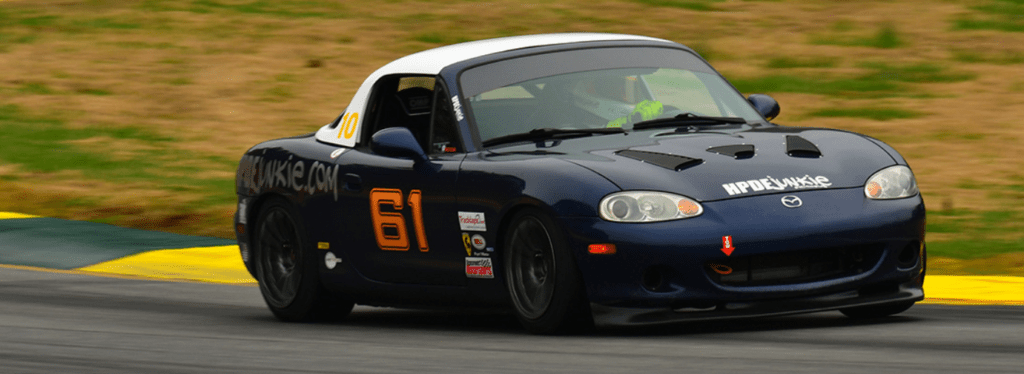
Often said to be the perfect beginner track car, the Mazda Miata combines lightweight design, rear-wheel drive, and affordability into an unbeatable package. With spec racing series ensuring massive aftermarket support, finding setup advice and replacement parts is never an issue. However, GTM experts warn that these cars require finesse—low power means carrying momentum through every corner is crucial.

Tune in everywhere you stream, download or listen!

Listen on Apple
Listen on YouTube
Listen on Spotify

Highlights

Skip ahead if you must… Here’s the highlights from this episode you might be most interested in and their corresponding time stamps.

  • 00:00 Introduction and Host Introductions
  • 00:36 Debate on First Track Car
  • 01:20 Top Tips for Buying a Sports Car
  • 02:03 BMW E36: The Popular Choice
  • 05:43 BMW E46: The Big Brother
  • 08:50 Volkswagen Mark 4: The Budget Option
  • 14:55 MINI Coopers: The Quirky Contender
  • 18:11 BRZ and FRS: The Balanced Twins
  • 21:48 Porsche 996: The Starter Porsche
  • 25:01 Ford Mustang: The American Muscle
  • 30:46 High Belt Line and Visibility Issues
  • 31:37 Front-Wheel Drive Fun: Hondas and Acuras
  • 35:15 Corvette C5: The Driver’s Car
  • 39:10 The Iconic Mazda Miata
  • 43:59 Honorable Mentions: Porsche 944 and Nissan 350Z
  • 51:56 Final Thoughts and Recommendations
  • 56:24 Conclusion and Contact Information

Transcript

Crew Chief Brad: [00:00:00] Our panel of break fix petrolheads are back for another rousing what should I buy debate. Using unique shopping criteria, they are challenged to find our first time collector the best vehicle that will make their friends go. Where’d you get that? Or what the hell is wrong with you? At the next cars and coffee

What’s going on everybody this is brad aka the triple six I know this is the first time you’re hearing that from me But that’s my nickname around the track in the paddock and gtm with me as always is my co host eric. Hey His nickname of course is monty quattro We’re coming at you with another episode here.

This today’s topic is what cars should I buy? Within the GTM community, the debate of which car should I buy never seems to fully end, whether it be what should I buy as my first track car, my backup car, my new daily, or I just want something different. The fury of this debate within our group will quiet from time to time, but during the slower months, someone will bring it up and the arguments resurrect themselves in full glory.[00:01:00]

Crew Chief Eric: You’re right, Brad. And granted, this question can be asked for various types of driving situations. I think we’re not really interested in talking about minivans, SUVs, and anything like that. We really want to focus on spirited driving, autocross, and track days. We’re going to focus on those guys that aren’t looking and shopping for their second and third track car.

They’re really looking for their first one. But before we start, here’s some top tips from various members to keep in mind when you’re shopping for a new quote unquote sports car.

Crew Chief Brad: So remember, Matt Y comes at us and he says, Never drive your heroes.

Crew Chief Eric: And this one from our illustrious leader, Brad. Look around the paddock and start with what you see.

Crew Chief Brad: Again, another gem from Matt Y. If you’re not okay with me putting a boot in the door of your car, Then you’ve selected the wrong car

Crew Chief Eric: and pearls of wisdom from Sam build versus buy, buy. So rather than rehash everything we’ve talked about on Slack for the 11 millionth time, what we’ve done is put together a list of kind of our top 10 [00:02:00] cars from the plethora of options that exist out there.

We’re going to go through them and talk about why they’re great starter track cars in no particular order, but we’re going to go ahead and kick off with a fan favorite, BMW or the E 36. and the M threes. So Brad, what do you think about those?

Crew Chief Brad: You see a lot of them around the paddock. I mean, they’re, they’re very popular.

I think they’re, they’re very cheap to get into. They perform pretty well compared to other cars that are out there, I guess, for the money. I’d say they’re not rare, but their setup is something that’s hard to find these days. It’s hard to find a rear wheel drive car with a manual transmission, which some people will argue is the ideal, you know, setup or attract.

weapon. I think that’s what one of the things that makes them very popular. The aftermarket form is really good. They’re a mainstay at the track. I mean, they’re very well balanced cars. They don’t drive typically like a rear wheel drive car, like say an American car where they’re, they’ve got tons of oversteer or anything like [00:03:00] that.

They’re very balanced. They, they handle really predictably almost like a front wheel drive would think they’re, they’re solid cars. Having never owned one is easy for me to say. Uh, since you have actually owned one before, let’s get your input on it.

Crew Chief Eric: Yeah. So I mentioned this in the, uh, the unaired pilot of our podcast, but you know, for me owning a BMW, it was like owning a boat, you know, the happiest days for me were the day I bought it.

second happiest day was the day I got rid of it. And everything in between was an absolute nightmare. Now, that being said, I bought the car because I was, I was working on something else and it was down at the time. And I was really curious. A lot of my friends have E36s and they love them. And they, they speak very highly of those cars and everything you said.

is 100 percent true. But what I came to realize though, to build a competitive E36, it becomes a very slippery slope. It’s 30 year old German technology, which brings its own issues to light and parts availability, although very strong. You have to replace [00:04:00] everything on those motors. They have valve cover issues, you know, water pump problems.

You got all these specialty parts that you need to throw in there to make the car reliable on the weekend. Now, that being said, they’re not expensive, but it starts to add up very quickly, much like a boat. I recommend them for people that want, like you said, a very well balanced car, something that’s very forgiving.

It’s not a car that’s going to correct your mistakes, but you’re going to learn a lot from, from the E36. It’s a very forgiving platform. So those are those are my notes on that car

Crew Chief Brad: and the best way to fix your bmw e36 is with volkswagen parts

Crew Chief Eric: 100 Yeah, so so that so there you go at prime example You bring that up and there’s a backstory behind this and really it deals with the way The radiators bleed and all this kind of stuff and the way it was engineered One of our members mike can go into Much more detailed than I can on the missteps in engineering there.

But yeah, I ended up fixing my car’s, let’s say, call it air pocket problems in the water cooling system, which those [00:05:00] cars are notorious for by using VW parts, right? Because I didn’t want to spend a jillion dollars on European, you know, S52 parts and all this kind of stuff. Because as we’ve always said, there’s a M tax, especially with the M versions of the BMWs where just because it’s got that badge.

It costs 10 times the amount for, for whatever reason, again, it’s a detractor, but you have to put it relative to a lot of other cars where let’s say the Porsche tax is much higher or the AMG tax is much higher than the M taxes, depending on, you know, the year.

Crew Chief Brad: So going down the line, there’s the E36. And when we’ve just been, uh, waxing idiotic about for the last five minutes, now let’s talk about his big brother.

The newer, more powerful, some say more balanced, uh, E46. Personally, this is my favorite of the BMWs. I just, I think for looks wise, they just look amazing. Uh, and I think they’re, they’re great cars. [00:06:00] Just, uh, to have on the street as well as the track, obviously they’re, they’re newer, uh, newer technology. So it may be a little bit better car creature comforts inside.

Not that you need that for a track car, but some people that want to do a dual purpose, they may care about things like that. They’re bigger. They’re more powerful than the E36. Um, they’ve got fantastic power and handling and the last of the purpose built M cars, the S54, I think is what it was. The motor that came in those, uh, 340 some horsepower.

straight six. Just great cars. And they’ve got huge aftermarket support as well.

Crew Chief Eric: They’ve

Crew Chief Brad: got some known failure points and known issues, especially with the M. Other than that, I think they’re great cars. Another problem with them, though, is they’re very hard to come by. Especially the M3s now they’re because they’re so desirable, especially the manual is very difficult to come by.

Now you can get the SMG transmission, which is, it’s very easy to actually, well, I don’t want to say easy. If you’re, if you’re a DIYer, it may be easy for you, but parts aren’t [00:07:00] that expensive to do the swap because you don’t need to change the trans. You just need to change some of the components with it.

But what are your thoughts on the E46?

Crew Chief Eric: I don’t want to focus too much on the M cars. Although most of my experiences with the E46 M cars, the base E46 is, and I want to, I want to put this in a year perspective. If I remember correctly, and I’m not a BMW expert, the E46 chassis ran from 2000 to 2005, 2006 ish timeframe versus the E36, which ran from 1993 to 1999.

So it’s a much newer car, much more modern technology. It’s larger than the. 36. It’s heavier, but that’s okay because it makes a lot more power, longer rev range, all that kind of stuff. I’ve been very fortunate to drive all sorts of different E46s. Bargain basement, a 330i is the way to go if you don’t want to pay the M tax.

Again, we mentioned that earlier. On the E46 platform. And as you’re saying, the E46 N3s are getting harder and harder to find. They are more expensive to operate, but they do reward you when you’ve done the proper maintenance and the [00:08:00] proper modifications to those cars. Big failure point is the rear subframe.

They tend to crack, especially under load. A lot of guys have either already welded them, even on the street. This is an issue they’ve taken care of it. So there’s going to be some buyer’s guides you’re going to have to look into to make sure that your E46 was properly maintained and a lot of the known issues were already taken care of.

This is where you get into that debate of build versus buy. And on the BMW side, if you’re looking to graduate very quickly into something more competitive, like time trials or road racing or club racing, an organization like SCCA, the Sports Car Club of America, or NASA, which is the National Autosport Association, then buy something already done and all the big dollar items have already been taken care of.

As well as the fact that the price point is really good because a race car is worth more in pieces than it is whole. And if you’re looking to pick up somebody’s last year car or car that you know They’re done with because they’re graduating out of you know, specky 46 or onto another class It’s a good time to pick up a car at [00:09:00] very good value Next up on the list is one of our personal favorites, the Mark 4 Volkswagen.

The Mark 4 Volkswagens spanned from 1998, if you start with the Beetle, all the way through 2006. The more common is 99 to 05. It’s very difficult to find 98s and 06s, but that’s going to be your Beetles, your Golfs, your Jettas, your Mark 1 TTs. They’re all built on the same chassis. fourth generation Volkswagen chassis.

It’s a very unique chassis. It was a ground up redo. Whereas the marks one, two, and three were all evolutions of the mark one chassis. And then oddly enough, after the mark for the five, six, seven and seven and a half and so on are also all the same chassis. So the mark four stands alone. A lot of people don’t like it because what VW tried to do was they got rid of the harshness of the early cars, made them a little bit more.

Autobahn cruiser cars, which meant adding a lot of bushings, adding a lot of other things to smooth those cars out. But you have four engine packages to choose from, but two that are [00:10:00] only really important at the track. That’s the one eight turbo 20 valve and the 2. 8 liter VR six. I recommend the 24 valve VR six for a million different reasons over the 12 valve.

But realistically, if you’re going to get in on a mark for a couple of recommendations. the Jetta because it’s so cheap and it actually handles the best of the bunch because it maintains the c shape between the a and c pillars which is actually what that chassis needs in order to handle correctly because it was designed to be used for the beetle which also has that arch shape to it and the suspension and the way the chassis flexes it doesn’t really work great.

on the golf. That one personally handles the worst of the bunch, even though we all have them. The Jetta is better balanced, but the price point is really low on those cars versus a GTI where you’ll pay three or four times as much for the same car that you can get in a four door sedan, which by the [00:11:00] way, only weighs about 50 pounds difference between the GTI and the Jetta.

So there’s a lot to consider there. You can get into a 1. 8 turbo Jetta. You don’t need to get a GLI or anything special, 20th anniversary editions, and all this kind of stuff. Go buy yourself a thousand dollar Jetta with 150 K on it and run it till it explodes. But do the timing belt first.

Crew Chief Brad: And we know somebody that’s done just that bought a car on Friday and raced it on Saturday.

Crew Chief Eric: A hundred percent. So Brad, what are some of the drawbacks being a mark four owner yourself for that platform?

Crew Chief Brad: Well, let’s see, I’ve owned, um, probably four Mark fours in at this point. And obviously for a track car, people say front wheel drive, not the way to go. I’m of the opinion that front wheel drive is fun wheel drive.

But a lot of the gripes about front wheel drive is it understeers like a pig. You can’t get them to turn. You can’t get them to rotate. Take it from me as someone who constantly is, you know, oversteering and drifting out of Oak tree at. And even, uh, facing the [00:12:00] wrong direction at pit race and turn one, those cars can definitely be made to oversteer and rotate.

There, there’s no problems about that at all. So that’s some of the gripes about, um, parts they’re old cars. Now, some of the distributors like ECS, there, there are still parts available, but sometimes they’re hard to get expeditiously. I don’t know. I, I don’t, I like them. There’s how many of them in the group, 10 in the group or something like that.

Crew Chief Eric: There’s, there’s eight dedicated Mark four track cars right now. So, I mean, that’s not our entire population, but there’s a, you

Crew Chief Brad: know, where

Crew Chief Eric: we’re own little tribe, uh, you know, the Mark four mafia, which we’ll probably have everybody together on a future episode to talk about. Sing kumbaya about how much we love those cars, but there are some drawbacks to them and front wheel drive isn’t for everybody, but I will say this.

Front wheel drive is very forgiving on track but to go fast in a front wheel drive takes a special type of driving style. It is not for the faint of heart. You can have a lot of fun in a rear wheel drive but you can, you can do some really, really interesting things that a rear wheel drive can’t [00:13:00] in a, in a well prepared front wheel drive car.

Crew Chief Brad: Before we move on though, there’s one other failure point IV Volkswagen that we would be remiss if we, we did not. Tell our listeners about, Oh, how many axles have I had to replace owning my car? How many axles have you had to replace? Yeah.

Crew Chief Eric: So that is, that is a huge drawback. And that is a drawback of almost every front wheel drive on track is the axles are the weak point.

Now, if you go to our website and search mark for build, we have a build sheet going from stage one to stage four to kind of help guide you through building those cars, learning from all of our mistakes and wasted money. But axles are a big one. I cannot recommend enough. The axles provided through USRT, which is usually sideways rally team out of New Jersey.

They’re built in part and licensed through the drive shaft shop in North Carolina, and they’re 500 horsepower drag axles. And once you upgrade to something like that, you don’t have any issues with those cars anymore. Reason being most of the cheap Chinese axles that you get from, you know, advanced auto, they’re designed to get you down the road at.[00:14:00]

65 miles an hour, 55, whatever your highway speed limit is. But when you’re racing, there’s a lot of pressure on the suspension, especially front wheel drive, because it’s doing the turning, the accelerating and the braking all on those front two wheels. Another failure point because of that is the wheel bearings, you know, stuff like that.

And so once the CV start to go, the wheel bearings start to go with them. It becomes a whole kind of cascading effect there. The reason those drag axles are so good. Just, you know, we can talk about this in another episode in more detail. Inner CVs are from a Porsche and the outer CVs are from an Audi Quattro.

So they’re really overbuilt for that car, which is fantastic.

Crew Chief Brad: And they can be rebuilt as we’ve, we’ve determined, we tore a boot in my car and I call a drive shaft shop and in, what was it a week, they had a replacement boot out to me so you can call them

and get, you damage something.

Crew Chief Eric: Yeah, exactly. So what’s next up on our list there, Brad?

Crew Chief Brad: Uh, we’ve got the MINI, which, when I was looking for track cars, it was one of the ones on my [00:15:00] short list. Why I say short list, it was actually probably 100 cars deep. Because anything that, you know, had a motor and a steering wheel and was not a truck was on my list at one point.

The MINI Coopers, they’re, they’re like the GTIs. Some people think that they’re, they’re better. They’re, they’re better handling cars. The motors are, even though they’re a little smaller, they’re quite torque ier. They’re quirky little cars. Uh, they’re tons of fun to drive. It’s having the wheels all the way at the corners of the car.

I mean, I think that’s a, that’s a BMW specialty. I mean, even the three series that they, that’s how they just engineer the vehicles and it lends them to be, to give a very good driving experience. And let me specify, we’re talking about the newer BMW owned, uh, mini Coopers, not the old ones, not the rally champs that are impossible to find in the U S.

Um that I would have to wear his shoes because I don’t fit in them now We’re talking about the newer more refined bmw owned mini coopers. What are some of the drawbacks for them though?

Crew Chief Eric: So we have a build sheet for the r5x platform minis I believe i’m not a mini expert, [00:16:00] but we do have some mini experts in the club some of the drawbacks Having instructed them and having driven a few of them on track, mostly the supercharged minis versus the, the later turbocharged ones.

The short wheel base makes them feel really, really twitchy and really unsettled versus a longer wheel base car like a Mark four or something, like a, a Focus St or, or a Fiesta or something like that. The mini’s just so short that you just never feel settled down. And actually that’s a common theme I’ve had with.

Other BMWs, there’s something about that extremity, that the suspension geometry, that they just never feel like they’re planted. Like you would get with, you know, let’s say if you’ve ever driven an Audi Quattro, where it feels like it’s just digging itself into the earth. BMW engineering makes them overly complex.

And they’re also prone to, you know, the seven plagues as we’ve seen through one of our members. I mean, they’ve caught on fire. At the end of the day, there’s not a lot of space. To work under the hood on a mini [00:17:00] and being a front wheel drive. It’s already compact to maximize the people space But working on a mini is just exceptionally challenging and much like the beetles You you just kind of throw your hands up and go service position equal motor out, right?

Because that’s the only way you have any Space, but they are cheap. They do share some components that you can borrow. Let’s say from a Miata, like wheels and tires and things like that.

Crew Chief Brad: Just, just don’t buy the Enkeis cause they break.

Crew Chief Eric: Yeah. So we’ve experienced that as well. Operating a mini, if you, as long as you take care of some of the issues, I’ve heard there’s some seals that need to be taken care of, things like that, that are on the build list that, uh, Steve and Spencer have put together for us.

Like every car, once it’s all set up, you really don’t have to worry about it much. It’s just down to breaks and. Tires and they’ll pretty much last you an entire season and the price point on the mini is actually really good because they’re getting older as well.

Crew Chief Brad: And I have heard that the motor mounts are a failure point on those cars as well.

Crew Chief Eric: I mean, we do those up front on the Volkswagen’s [00:18:00] because we know the stock ones are just garbage again, right back to those very soft bushings to try to make the cars drivable every day versus, you know, track use.

Crew Chief Brad: So coming up next is the. The famous BRZ and FRS, the Burrs and the Furs twins, uh, that Subaru and Toyota got together and put out a few years ago.

I love child. They would be amazing cars if they had about a hundred more horsepower. Not even that, if they had about 50 more horsepower. I think they would be a blast to drive. They’re, they’re supposed to be well balanced. Their rear wheel drive, manual transmission. Uh, they’re very forgiving. I guess that also lends to being a little bit lower horsepower.

They’re very popular. They’re really popular with the kids. They’re not very expensive. Brand new ones are low thirties and high twenties. Um, they’ve got a huge aftermarket again, Toyota and Subaru, uh, kids love them. Now I will say that I’ve heard a rumor, the new one coming out, I don’t know if it’s [00:19:00] 2021 or 2022 is going to have a turbo.

That might be something to keep an eye on. I think they redesigned it. The look also is quite similar to the new Supra. So it’s supposed to be like a baby Supra. They’re great little cars if they’re well sorted as. We’ve seen it, uh, certain race functions with one group, Emra. Uh, they can be made super fast, allegedly in fairly stock trim.

Crew Chief Eric: Yeah, the jury’s still out on that one, but, uh, to your, to your point. Right. So I think some of the downsides, the BRZ, you covered it in base trim. The BRZ’s engine is not going to excite you. If any of our listeners are, are of a, of an older generation and ever, they ever got an opportunity to drive a Porsche 944 in its base trim.

Uh, it’s the same thing. It’s one of those cars that they handle fantastic. They’re quick and nimble. But they just don’t like the world on fire. They don’t make any good sounds. They just, it’s just kind of boring and mundane. I hate to say, but you’re [00:20:00] right. The price point is good, especially for a car that you can just go buy off of the Toyota dealership or the Subaru dealership lot.

today for, you know, let’s say sub 30, 000 and go have fun and do nothing to it. Granted, I don’t live far from IAG and I see plenty of those cars out there being modified. And I’ve gotten an opportunity to instruct in some modified BRZs and stock ones. And I will say the modified ones, especially the supercharged cars are light years better.

And that added, like you said, extra 50 horsepower makes. All the difference in making that car exciting in the same way. The nine 44 turbo really turned it up to 11 compared to the base, you know, nine 24, nine 24 S and nine 40 fours that they were built on. The other thing I will say, I have heard from some BRZ owners that when you really start to push them, they tend to be a little bit fragile.

There’s some parts in there that have to be upgraded, but if you’re just starting out. Very forgiving car, much like the E36, much like a 944. It’s going to reward you. You’re going to have a lot of fun, but you probably [00:21:00] will crave more as you go along.

Crew Chief Brad: And it’s a Subaru motor underneath, uh, in both the, the, the Subaru and the Toyota.

And I believe that boxer motor traditionally have head gasket issues.

Crew Chief Eric: I believe, and I’m not a Subaru expert. I know Sam knows more, and there’s a bunch of other Subaru guys in the club. I believe this is a different motor. Then, uh, somebody online will correct my, my acronym here. I think it’s the EJ that’s in like the WRXs and stuff.

This was actually a new motor from Subaru. It has a Toyota valve train and Toyota ejection system on it. So it is a, a cross platform between the two brands. But yes, at the end of the day, the car, you know, whether you buy it with a Scion badge, you buy it with Toyota badges, a GT86, or you buy a BRZ, they’re all the same.

So up next on the list, it looks like we jump. Off the deep end into a pile of bratwurst and there’s a porsche 996 on this list So we’re like wait a minute. I thought we were talking about starter cars, right? But the [00:22:00] 996 actually makes the list because it is very much that it is like the perfect starter porsche If you don’t want a front engine Porsche, like a nine 44 or nine 68 or something like that, the nine nine six is really great value for the money and it wins out over the aging nine 44.

But there are some concerns with the nine nine six. And I know you’ve looked into this car extensively, Brad. So tell us about it.

Crew Chief Brad: The, uh, IMS bearing the intermediate shaft bearing is a huge fail point. And. I mean, not even just for the 996, for the 911, but also for the, the Boxsters of the same year. If that goes, I mean, you’re putting 20 grand into a new motor.

People can buy these cars, uh, once you do, if it hasn’t been done already, make sure that that failure point is taken care of. I can’t imagine because it’s a Porsche, Porsche parts, aftermarket parts and stuff, even though they are there. They’re going to be quite pricey. Just like with BMW, usually you pay the M tax with Mercedes.

You’re going to pay the AMG tax. If [00:23:00] you’ve got an AMG model Porsches, you’re going to pay the Porsche tax, regardless of what Porsche model you have. If you’ve got a little bit of money to burn, uh, and you’re looking for something There’s tons of aftermarket support. There’s the Porsche Club of America is a club dedicated to Porsches.

Uh, you can get into their specific Porsche races and huge, uh, support system there. Those people know everything there is possibly to know about Porsches. Now they tend to not like the 996 because of the looks. I don’t know why. I think they’re great looking cars. They say they’ve got the, the egg drop headlights.

I don’t see a problem with them. I would, I would own a 996 if I could afford it right now.

Crew Chief Eric: And I think it was, it was also, uh. Old guard versus new school adopting water cooling for the first time, you know, a lot of those, the Porsche club racer guys, you know, they’re dedicated air cooled cars, right? Oh, I gotta have my two seven RS.

I gotta have my nine, you know, my three, six twin spark, you know, all those, those motors that they were classic, especially a lot of those guys are still running vintage, but [00:24:00] now time has, has progressed and you’re seeing nine, nine, six, nine, nine, seven, nine, nine ones, you know, GT twos, GT threes. They’re all water cooled 911s now, but the thing is in the 996 and the reason it’s a good starter car, if you want a different experience, a 911 is a completely different driving experience because it’s, you know, it’s like throwing a hammer.

It’s a front wheel drive with five reverse gears, right? And one forward, but realistically it is bargain basement. There was a period there. You could get. A 996, whether it had the IMS done or not for sub 15 K. I mean, all day long. I’m like cars. com. You’d see, Oh, 996, uh, 13, 000. And I’m like, what? So if that’s your cup of tea, you know, that little bit of roll gray there, or maybe sauerkraut in this case.

The, the, uh, the 996 is definitely the way to go, but again, do your due diligence, as Brad said, talk to some people about those cars first to figure out what’s [00:25:00] going on. So what’s next, Brad?

Crew Chief Brad: Next, we’ve got the Ford Mustang specifically. We’re going to focus on the 2014 and up the redesign, independent rear suspension, you know, all that good stuff they’ve got.

Three motors, four motors, depending on if you go with the, the GT three 50 R or like a GT 500 or something to me, there’s really only one motor. It’s, it’s the coyote V8 or nothing at all. You can take the turbo EcoBoost motor. They’re great little motors. You can get a lot of power out of them. But it sounds like a weed whacker going down the track.

I mean, if you have a Mustang, it shouldn’t sound like that. The V6 is another stout motor. I don’t know if they’re still offering it with the V6, but that was another good motor. I had 300 something horsepower in a base car. It’s pretty, pretty good. But for me, if you’re going to own a Mustang, then you’ve got to have all of the Mustang, which is all eight cylinders.

Crew Chief Eric: All the crowd control. So having had the pleasure of instructing and driving several of these cars, I’m really infatuated with them. They’re [00:26:00] actually really, really good. And it’s, for me, it started almost before this car came out. I got an opportunity to coach in some boss three Oh twos, the 2013s. And the rumor has it though, the car was completely redesigned.

I have my speculations that the German division of Ford was involved because it’s. Unlike anything else, the suspension was derived from the 302 and the 302 at that time when I got in out of it for the first time on track, I was like, this car is fantastic out of the box. I could not believe how good the handling was that carried over to the S five 50, which is that the current generation of Mustangs and the engine choice is really up to you because.

As you’ve alluded to the mods are there and we have proof through several members The four cylinder is fast, especially with that ford power pack, which is you know, it doesn’t void your warranty It’s something they sold to boost the power make it almost 300 at the rear wheels and the four cylinder screams It’s a lot more reliable than something like the focus rs, which has the same motor We’ve seen nothing but problems with those cars and that’s [00:27:00] why obviously they’re not on this list

Crew Chief Brad: And I think it’s because of the packaging too.

I mean, the, the, that short nose, everything’s compact in the Focus RS. Um, there’s, there’s no room for it because the Mustang was designed for the V8 or designed to at least house a V8. There’s so much more room in there. Air probably flows better. These are just my assumptions and conspiracy theories at this point, but that’s why that that’s my personal belief as to why the Mustangs are more reliable.

Crew Chief Eric: And being an American car, like you said, has great aftermarket support wheels, brakes, wings, you know, whatever, bling, whatever you want to put on there. And that’s great. But downside to the Mustang is it is a bit heavy, especially when you’re comparing it to the Corvette, which I don’t know why they try to compare themselves.

Cause It doesn’t belong in that pony war, right? It’s Camaro and Mustang. It’s always been that way, but they try to reach and say, Oh, the Corvette. And it does, it can perform and it can get out there and beat up on some Corvettes, especially with the five Oh and the GT three 50, but it is heavy. Do notice that when you drive it, the hood is kind of long.

So you have to [00:28:00] get used to the perspective of looking out over the front of the battleship. But the thing is. The weight balance is really good. So the car is really predictable. It’s got a lot more intelligence in it. The independent suspension is fantastic. I will say the handling on the four cylinder is better than the Coyote, just because it weighs probably half as much as the V8 does.

Right. And I think the other big negative to having a Mustang track car is that you’re never allowed to go to cars and coffee. Ever.

Crew Chief Brad: Yeah. Sure. You, you lose that right. The second you sign on the dotted line, and we don’t want to just focus on the Mustang here. As you brought up earlier, you alluded to the, the pony war.

There’s also the Camaros and the, the challengers. They’re both in the same vein is the Mustang. I think the Mustang wins on track. Yeah. A hundred percent. If you read any road and track or car and driver article about the comparison between the three and the Mustang is definitely the better choice for the track car.[00:29:00]

The Challenger is a better choice for the street. It’s a nice place to be, especially the redesigned interior and the newer ones. I know the exterior of the car is the same, has been the same for what, 200 years now? It has not changed at all. Uh, I think people used to pull ox carts with them.

Crew Chief Eric: Yeah,

Crew Chief Brad: but the car itself is, it’s, there’s no need to change it.

Why change something that works? Uh, they sell really well. They’re, they’re really comfortable. They’re great. So I would call them great just touring cars.

Crew Chief Eric: And the problem with the Camaro, which we’re kind of avoiding talking about here, the problem with the Camaro is, and I don’t want to offend Brett, who we’ll have on, on a later episode, for sure.

The problem with the Camaro is it’s heavy, just like the Mustang is, but I think it’s heavier even then. And when you compare the package. And the price to get like a one L E or a Z 28 or a ZL one or something like that. You just go, I’m just going to go buy a Corvette, right? Because it’s the same power or like, but the Corvette is a better car.

And then like, you know, why do I want to [00:30:00] drive around in a Corvette that weighs as much as, you know, my wife’s minivan, right?

Crew Chief Brad: So I can tell you why though, because I don’t fit properly on a Corvette. I fit in one of the, some of the most fun I’ve ever had on track. Is riding shotgun in Brett’s Camaro.

Crew Chief Eric: I will give you that.

I will give you that. And that’s actually the down, one of the downsides we forgot to talk about in the BRZ. It is a small cabin. So for you, I don’t think you’d be very comfortable in the BRZ, you know, after a half hour stint,

Crew Chief Brad: not with a helmet on

Crew Chief Eric: for me, the Camaro, just going back to wrap that thought up.

I always downvote that car because I have a hard time seeing out of it. And it’s not because I’m short. It’s just. Because I feel like it’s a chop top and the visibility, especially kind of over your shoulder and the blind spots. And it has those, those big hips and stuff. It just, the

Crew Chief Brad: belt line is a little too high in that car.

And I understand that’s just, this is the way cars are being designed nowadays. But in that car, especially the belt line, it’s just, it’s just too high. There’s not enough window space and you’re right. That’s [00:31:00] one of the criticisms you ask anybody that, that does tests and reviews of them. The first complaint is I can’t see out of it.

Crew Chief Eric: And that translates to the track for those listening at home. Visibility at the track is key. You need to be able to see where you’re going. You need to be able to look across the A pillars and, and, and look at the apex, right? You need to be able to see behind you who’s coming. That’s a big drawback to the Lotus Elise like Andrew just picked up.

You can’t see out of those cars. I mean, I have a hard time in the Audi with, uh, I have a TT and it’s the same thing with that really small back glass. It makes it very difficult to see sometimes. So you have to get really strategic. But we’ll, we’ll park that for now. We can talk about the pony wars at another time.

Crew Chief Brad: Now we’re going back to front wheel drive and we’re going to talk about the Hondas, I mean, Hondas, Acuras. I mean, we can lump in the Nissan Sentros and, and anything really small, economical front wheel drive, small motor. You do not need to make a lot of power to have fun at the track. You need something that’s going to be nimble and it’s going to be reliable [00:32:00] where you’re going to be able to find parts for it.

And the Honda is especially the, the, the nineties and early 2000s SIs, in addition to the Acura Integras and everything are great options. And also you can get the, the prelude. If you want to be a little funky, you want something a little bit different. We’ve got a couple of members that are. Honda fanatics and they’ve got the preludes and stuff like that.

The big bore, the big bore Honda. Yeah, the big bore Honda. They’re, they’re great cars. They’re reliable. I mean that you can run the, the heck out of them. You can probably get four or five hours out of them. Did full tilt, a wide open throttle. And the, you just ask for more, they take a beating and they do not care.

They’re very cheap to operate. If anybody’s ever seen fast and the furious, which we hope our listeners have at least watched the first one, they’ll know that the aftermarket support for that is huge, especially if you want spoon engines.

Crew Chief Eric: Ryan to rob banks, you know,

Crew Chief Brad: but yeah, they’re, they’re [00:33:00] great cars.

They’re, they don’t have the luxurious factor of. The mark fours really thin materials, really thin metal and sheet metal and stuff like that. Um, they don’t have the fit and finish of some of those other cars, but for a track car, who the hell cares?

Crew Chief Eric: Right. And that’s actually part of their beauty. And part of the, the, is the simplicity and the lightness, right?

Uh, the, the, the Lotus mantra, add light, add lightness, but, uh, the Honda’s already start there, but the thing is, and I’ve had the pleasure of, of running many Honda’s and we have dinoed several of them and things like that. The Honda’s an interesting car because as you said, it will take a beating and it really reminds me of the older Italian cars, you know, those spaghetti powered motors that live their lives at 9, 000 RPM and they’re not happy if they’re not there.

The Honda’s are very similar. They don’t, they’re not known for making powerful engines, you know, and let’s take the NSX’s and, and all those things off the table. Let’s just talk about the four cylinders, right? Anywhere from the 1500s to the, to the two liters, you know. [00:34:00] Discounting the bigger motors. You look at the numbers and it’s like 900 horsepower and 43 foot pounds of torque.

And torque is what you feel. And that’s usually the drawback. The negative that people give about a Honda is it just doesn’t feel like it’s moving. But when in reality, you’re looking at your exit speeds and because you can keep it wound up because you can stay in the power band, as long as you’re above VTEC, you can actually go really fast.

And the cars are deceptively quick. I will say, dynoing it, uh, we dynoed Matthew’s Civic Si, he’s got a 99, and off VTEC, until VTEC kicked in, it made the same power, identical to a spec Miata 1. 6 liter, right, so dollar for dollar, the B16, And a one six miata made the same power when vtec kicked in all of a sudden the torque curve just stayed the same And the horsepower nearly doubled and it sounds like a completely different engine.

It’s something to get used to Those are the type of cars. You really have to scruff them. You have to drive them [00:35:00] really hard It all gets kind of obfuscated by those torque numbers and all that kind of stuff But it doesn’t mean you’re not going to have fun But again, if you’re looking for cheap easy big parts, uh aftermarket support the honda is a good choice It’s a good recommendation.

All right, one of your personal favorites, Corvette. But big asterisks is here, right? It’s kind of like the Volkswagen’s. There’s one generation that’s really a great starter car, and that’s the C5. The C5 being the, correct my, correct my years on those cars. It’s in the early 2000s, much like

Crew Chief Brad: 97 to 2004.

There you go.

Crew Chief Eric: Okay. So a lot of these cars, you’re starting to realize they’re overlapping here. The 46 is the Corvettes, the Porsches. We’re talking about even the VWs. They’re all in a similar age range. They’re getting up there. 15 17 almost 20 years old. They’re really affordable. They were good cars. Then cars today are very different.

But the C five specifically again, very [00:36:00] different than the cars that came before it. But also different than the cars that came after the C6 was a complete redesign and everything’s based on that. The C4 carried over from the older generation, like the C3s and stuff like that. So to me, the five felt like a different chassis.

And I I’ve been very fortunate to spend time with the national Corvette museum organization, the Corvette club and have ridden in various different generations of Corvette on track. And I always feel the most comfortable in the C5. The C4 is kind of rides like a truck. The C6 is super twitchy. The C7, you feel like you’re in a jet fighter.

It’s a completely different experience. The C5 is a driver’s car. It’s got big horsepower, you know, for that time period, 400 torques. And you don’t need to do any mods to it because even now they’re talking about spec Corvette racing, which is all based on the C5. So I look at it as big motor, big fun.

Crew Chief Brad: To clarify the Z06 is the one with the [00:37:00] 400 horsepower.

In, in gobs of toric, if you get the, the lower model, uh, I say lower model, but like a base C five, uh, with the target top, they’re around 345 horsepower is what they were advertised with the crank. And then for the Z O six, you want 2002 to 2004 for the 405 horsepower. The first of the 06 2001 had 385 horsepower,

Crew Chief Eric: but you’ve always told me with those American motors, throw a cam in there and an exhaust and all of a sudden you got 100 horsepower.

Crew Chief Brad: Yeah, with the LS motors, they’re very easy to mod. The car is not very heavy. I mean, so it’s, it would not be hard. You don’t even really need all that power. The power that comes with this is great, but they’re I think they’re I think they’re great cars. They’re a little more roomy than the newer vets It’s still 90s chevrolet sitting in one.

So it’s not a great place to be So you’re rocketing down, you know the back street of bir passing volkswagens and hondas and

Crew Chief Eric: yeah, everything else on this list Yeah, exactly,

Crew Chief Brad: but it’s to get to the point of cost of [00:38:00] ownership. They are A bit pricey to maintain the rear tires, the three 45s, um, they’ve got a staggered setup.

So buying wheels for them, unless you get the same all around that you’ve got to keep track of that. So the expenses can start to add up for those cars, just maintenance and everything like that. Exactly.

Crew Chief Eric: And I think you’re going to start to see what the spec Miata spec Miata with this Corvette racing that’s coming out.

You’re going to see a lot of really interestingly, similarly, rather. Prepared Corvettes. And when people get out of the series after a year or two or three, because that’s usually kind of the length of a lot of those series, unless it’s spec Miata racing or spec E36, which now is, is actually kind of sun setting as well.

You’re going to be able to pick up a spec Corvette for not a lot of money. And those are going to be well prepared cars with log books sorted. You want to go out and have fun. Again, going back to what Sam said, when we quoted him, build versus buy, buy.

Crew Chief Brad: Next is the answer for 99. [00:39:00] 9 percent of people out there.

All of this talk that we’ve been talking for, what, 45 minutes now? It’s all, it’s all been for Nod because the answer has been right there in front of us the whole time. Oh man. The Mazda Miata. They have spec series and everything. Uh, they, they, they’re cheap. I mean, you can get them, you can get the NAs for the bag of chips or something like that, they’re very well balanced cars.

They’re very forgiving because they’re low horsepower. They don’t, well, we’ve got a friend that loops it all the time, but that may be his driving style versus. But they’re, they’re great cars, tons of support. Like, because there’s a racing series, uh, they’re, I mean, you can get tires for them for 50 bucks, racing slicks.

Your goal is to go racing. It’s the best car. The best thing about the Miata is being on track with other Miata’s though. When you’re, if you’re out on track in a Miata and you’re at a DE event, for example, where the, everybody’s out there driving, whatever they brought. You’re going to be given a lot of point buys.

I’m not going to lie, but if you’re out there doing spec [00:40:00] racing, you know, in the racing series, uh, then you’re out there with everybody else. You’re all even playing field. They’re a ton of fun. I’ve never been in one of the spec me out of races, but I’ve watched enough of them. And

Crew Chief Eric: why is that Brad? Is there a reason why?

Crew Chief Brad: Uh, uh, no, I don’t know. I just haven’t gotten into it. I can’t, I can’t, I can’t say why.

Crew Chief Eric: All right listeners, he’s six foot four. We’re just gonna leave it there. We’re gonna leave it to your imagination.

Crew Chief Brad: I fit in some of the Miatas. I do not fit in the originals. The NB, I don’t really fit. But, why don’t we talk about some of the other drawbacks other than the size.

Crew Chief Eric: Yeah, so I’ve been really fortunate. I’ve driven all four generations of the Miata. I will say this. It’s the early cars do not impress, right? Especially the one sixes. If you’re looking at a spec car fully prepared with all the goodies and bells and whistles, as long as it’s not a cheater motor, you’re looking at somewhere between a hundred and a hundred and four wheel horsepower.

That is [00:41:00] nothing to write home about. And

Crew Chief Brad: that’s 104 people,

Crew Chief Eric: not 140 104. The other thing is the Miatas are. Are now 30 years old, right? They came out in 1990, probably in Japan, actually a little bit earlier that probably 89, but still they’re getting up there, they’re getting a little long in the tooth. So don’t expect big numbers, but it’s a car actually modeled after the Lotus Elan, if you really go back in time.

And so it has that simplicity. It has that lightness and that 104 horsepower wheel horsepower, you’d be amazed what you can do with that. Because it really forces you to grow as a driver. And so you end up driving that Miata at the absolute limit. I mean, a lot of guys run 9 tenths, 10 tenths. I run it 11.

But in your Miata, all of a sudden you’re cranking up to 13 because you have to overdrive it in some cases to really squeeze out every drip. of blood out of that turnip. That being said, when you graduate from Emiata as something else, you just graduated jet fighter school because you get in any other [00:42:00] car and you’re going to be fast, but you have to have the patience.

You can’t expect it to be fast right away because it isn’t, it’s a momentum car. Now every car has momentum. I can hear people buzzing in my ear. But it’s one of those things where it’s all about carrying speed and maximizing your exit speed on every corner. If I had to pick a Miata for myself, I really like the nc, which is the third generation Miatas.

Those came out in 2005 to 2013. There’s actually an NC one and an NC two. They did a, a split in there. It’s bigger, it’s more comfortable. It also has a two liter 16 valve instead of the, you know, you know the smaller motors from the early days. It’s a much more rewarding car because it makes 140 horsepower ish.

I’m going to add that in there, but the NDs for me, the current ones are too small because they’ve gone back to making them the size of the NANBs, but Of the new generation, I’d have to pick the Fiat 124 just because I can get it with [00:43:00] a turbo and I can chip it and make double the horsepower immediately.

It is a different power plant. It’s not a Mazda power plant. It’s a Fiat Abarth multi air, uh, engine from the 500 Abarth. So that’s nice. I also like the fact that the 124 is bigger, but I still, I call it a Fiata. So it still lives in that Miata category, but you’re going to spend a lot more for a new Miata versus go on racing junk.

com. Type in the word Miata, and there’s probably a hundred of them to choose from right now that you can get into that are fully sorted and fully prepared. That’s another car I would argue, if you’re, if you’re really destined on going racing, just buy one already done, it’s not worth building one from scratch.

But if you’re looking at doing some DEs, driving it on the street, you know, to throw the top down and have a good time, or do some autocross, you know, some, some spirited driving, the Miata is the all around, probably best package on the list. So with that being said, you know, not to wax poetic about the Miata that much more, because the people that know, know, and the people that don’t are going to buy one soon.

[00:44:00] So are there any honorable mentions on this list, Brad?

Crew Chief Brad: There are. I don’t know why there are, because all these cars that I’m looking at here are turds, but there are some honorable mentions out there. I mean, we briefly mentioned the Porsche 944. Okay, sell me, sell me one, sell me why.

Crew Chief Eric: Okay, well, so the 944 was one of these weird cross pollination projects where there’s rumors, you know, some, some Porsche purists have, are now arguing that the 944 was always supposed to be a Porsche.

And if you’re in the VW VAG family, then you go, no, it was designed by VW, much like the 914, and Porsche stole it from us and said, no, we’re going to slap our badge on and go to There’s so many crossover parts between like a Marco and rabbit. And, uh, and an Audi truck and like in the 944, it’s not even funny, right?

Because the, the part numbers, it’s like, Oh, that’s a door handle off a rabbit, you know, stuff like that. It makes it cheap, which is good because if you know how to cross match the parts, you don’t have to pay the Porsche [00:45:00] tax because you can buy the equivalent Volkswagen part, bolt it right up and you’re done.

Crew Chief Brad: Also, if you’re talking about it being cheap. You’re not talking about the turbo one then. Correct. Correct. You’re talking about the NAs.

Crew Chief Eric: Correct. Now we already said we’re comparing it to the BRZ, right? So non turbo, normally aspirated, does motors run forever? They’re relatively bulletproof. There’s a couple of years there, 2.

5, 2. 7. There’s a rumored three liter in there. I. I would lean that towards the 968, don’t, don’t, don’t quote me on any of this stuff. There is a 16 valve version in a normally aspirated car, all that kind of stuff. But the Porsche 944 was one of, at the time, Porsche’s highest selling cars because it was more affordable than the 911.

It was more aerodynamic than the 911, you know, stuff like that. And people could just get into it. It was the every man Porsche, much like the Ferrari 308. Was the every man’s Ferrari. That’s why there’s so many of those cars, despite the popularity from Magnum PI and all that kind of stuff. So tell me why you don’t like it.

What’s in the con column here.

Crew Chief Brad: [00:46:00] I, I personally don’t like the turbos, I guess, because I’ve heard, well, one, they’re expensive. They’re expensive to get into expensive. They’re hard to find. They aren’t very reliable and this is all purely hearsay. I mean, I’ve got zero experience with them personally. I prefer the lines and the look of the nine 24.

Hmm, but it’s either a 9 44 NA or a 9 24. The first thing I would do to it, other than painted it guards red, is to do a motor swap and put a one at in it. .

Crew Chief Eric: or lss, right? Like,

Crew Chief Brad: no, no. I’m, I’m gonna stick with the, the Volkswagen. I’m gonna stick with the one at, or maybe a two liter if I want to get a little saucy with it.

Mm-hmm. or even a VR six. You put any of those motors in it done? Yeah, I, I’m sure it has. I don’t know, I just, I don’t know. I’m just not a fan

Crew Chief Eric: for me. I mean, the 944 is an icon, right? I mean, they came out when I was a kid. It’s it’s a car. You know, you just see him everywhere. I mean, you don’t see him as much anymore, but it’s an icon, but it really hasn’t aged.

Well, right? I think owning and operating a 944. Unless you’re [00:47:00] really willing to work on it yourself. And we have a Porsche master mechanic, uh, in our group, who’s told us horror stories about these cars. They do have head gasket issues. Like you mentioned, because of the way the engine’s constructed and all this kind of stuff.

You need to be able to turn wrenches on those cars because there are still. Uh mechanics out there paying off their mortgages on 944s because they’ve been doing that since the 80s Um, so it’s really important you get, you know, kind of get your knuckles dirty and work on those your yourself I will again.

It’s another car building from a base 944 is an expensive endeavor, right? Getting all those high quality parts, taking care of all the mistakes, taking, you know, doing 30 years of evolution. Let somebody like, let somebody else’s wallet have taken care of that. Again, go to racing junk, find one that’s already built.

Here’s one we often forget. And actually one of our members just picked one of these up. It’s the Nissan 350 Z the first generation, 2003 to whatever year. And,

Crew Chief Brad: and don’t forget it’s brother, the, the, the G a 35 and the [00:48:00] G 37. That is correct.

Crew Chief Eric: I like the Z it is 15 plus years old. Now the prices have come way down on these cars.

The VQ motor, despite being a Renault engine that comes out of a like run of the mill sedan, it’s actually a very strong motor. Renault is pretty well known for building very good high performance engines in formula one and rally and things like that. So I’m not saying that the street cars are as good, but the VQ is proven to be a strong motor, much like the two JZ, much like the one eight turbo, the R six and stuff like that, where you can mod them and they will take a beating.

And just keep going the handling on the 350z because I’ve had the pleasure of, of instructing in a few of these cars. They’re super neutral, very forgiving. And I’ve run in some that are modified and some that are almost bone stock. And they’re just, I couldn’t believe how good they were and how rewarding the driving experience was.

I kind of, I always had this stigma in my head of like, Oh my God, it’s like a 300 ZX from. You know, just [00:49:00] after the early Z cars had gone away. The first time I got in a new Z, I was like, man, this is really cool. But it’s often a car that is just, again, overlooked. It’s forgotten. And I would put it right up there with a proper mods.

It’s just as good as like an E46. So what do you think, Brad?

Crew Chief Brad: Uh, I don’t fit. So it’s not on my list, but that’s why I mentioned the G35 and G37s, because I think they’re, they’re nice places to be, they’re nice cars, they’re bigger, uh, obviously, uh, because it’s got the infinity, that’s more their, their street touring car, uh, and I, it’s pretty much the same car underneath, I’m sure there are some minor differences, but basically they’re the same car, it’s harder to find one in a manual, but they are out there, uh, the 350Z, if I fit better, I, I’d be more But because I don’t, and the same with the 944, I just, I don’t think I fit properly in them.

And it’s just a problem that I have. Uh, we’ll talk about it at a later episode, but it’s just, it’s very hard to find vehicles that are fun to [00:50:00] drive that I actually fit in.

Crew Chief Eric: So I, I think you’ll agree with me though. You can pick a VQ out of all the cars going around track. It has a very distinct sound to it.

It’s not a bad sound. You put an exhaust on a Z, you’re, it’s going to. It’s going to be pleasure to your ears if you’re into slightly louder cars. But I think the drawback for the Z is because there aren’t very many of them as DE cars. There are lots of drift Z cars and Z cars built for other disciplines, drag racing, etc.

You’re going to be a bit of a pioneer when it comes to road racing. So it means the aftermarket scene and the parts, and I’m going through this with Portia Al right now, who we’re going to have on the show at a later date where he’s like, so what am I targeting? What should I be looking for? I’m having, I’m kind of reaching here to find these things that for you guys with BMWs and VWs and minis and all this stuff, you guys can get those parts tomorrow and I’m like, yeah, so he’s going to have to dig and do a little homework, but he’s starting to chip away at it and it’s becoming easier.

So. He’s a bit of a pioneer, [00:51:00] especially for us to say, Hey, this is how you build a Z card. And he’s going to do a write up on that. Well, if you’re looking to buy one, be careful of the, what I call the showy cars or the stance bro cars, because they’ve got all the wrong mods. You’re going to spend a lot of money to undo stuff, bring the camber back, raise the car up, you know, get rid of the 10, you know, all these kinds of things that are completely unnecessary at the track, by the way, airbags.

It’s not a good suspension plan for road racing. I’ve also heard rumors that the Zs are prone to have transmission problems. There is an upgraded transmission for those. And I know Matthew always tells me the joke is that the transes are so bad in the Z cars that Nissan was just giving new ones and telling people to throw the old ones away.

They weren’t even doing core charges. That being said, you know, it’s 15 years later, so they’ve made modifications. There’s some updates to those, those cars to take care of the drivetrain issues. Do your research, you know, dive into that kind of stuff before going whole hog on a 350z. So what’s left?

Crew Chief Brad: Well, we’ve already touched on it a little bit earlier, but the [00:52:00] final recommendation we have is basically anything front wheel drive, a condo box sedan.

Our example would be a neon. I mean, there was an entire racing series dedicated to the neon. Uh, it’s cheap, just like the Volkswagens out there. Yeah, really inexpensive. They got huge aftermarket support, especially because there was a racing series for them. They’ve got decent power. They’re a little torque here than the Hondas.

They’re they’re fun. They’re fun. Little cars. I don’t think there’s racing series for them anymore. Um, but if you go on racing junk, I’m sure you can find a ton of those cars out there. Especially because there’s no racing series. I mean, we’re talking about the original the the first gen, uh, neons There’s also the second gen neons which the srt4.

It’s still a neon even though it’s srt4. It is still a neon But that’s the big downside but those cars are turbo cars turbo four cylinders. They came out of the box with 300 horsepower. I think 200 something on horsepower. Very easily moddable. [00:53:00] You can get big power out of those cars. More power means more responsibility and more things start to break.

Um, so you’re mindful of that. And then the downside is it’s an eon.

Crew Chief Eric: So, and to your point, right, I have time trials. For a couple seasons against, uh, through with SS c c A and every time I went, there was always a neon in the group. And one of the guys I was targeting in the, in the higher classes was actually running a World Challenge neon.

And I was really surprised how much effort it took to chase that car down, especially the, the s r T four. I mean, they’re making, well, I think we were limited to like 320 or 330 wheel horsepower. And getting those kind of numbers out of an s r t Fort Neon was like, Okay. Sure. Let me just, let me just turn the dial and we’re ready to go.

That being said, it’s not a bad handling car. It’s another car you can dial in with, you know, lift throttle oversteer, just like the Volkswagen’s and stuff like that. But yeah, to your point, I mean, there’s a lot of jokes about the neon. And again, it’s why it’s on our [00:54:00] honorable mention list because it’s often overlooked.

It’s a. Cheap car to get into a cheap car to maintain. There is some sharing there with it’s a DSM platform or engine platform. So you’ve got some of that Mitsubishi crossover, especially in the early cars. If you can get a 16 valve sport, that’s a, that’s an Eclipse motor. So it’s a lot better than the run of the mill base Chrysler engine that was, that was put in those cars.

The SRT four actually is overbuilt. The block is the same as a mini. If I remember correctly, somebody told me that, which is actually. This is a Peugeot 206 or something like that. So it’s a European block and then everybody puts their head on it and the turbo of choice and all that kind of stuff. But again, it’s not a car to kind of just turn your nose at if you’re looking for a starter car to get in on track use.

Crew Chief Brad: In order to widen your net. We recommend a bunch of different websites if you want to look for some of the cars that we’ve already talked about, or if you just want to see what else is out there. I mean, there’s tons of people racing cars. Uh, and then when they race them, they get bored with them as you know, [00:55:00] we all do.

Uh, and then they sell them. Uh, so racing junk is a great place to look. Um, there’s also, uh, bring a trailer. Uh, I think bring a trailer has a lot more of the. I guess collector cars. So that’s Queens. Yeah, the prices are going to be all over the map on that site. Um, you can go either way. Um, but based on some of our member experiences, you can often bring unforeseen problems with some of these cars, as you said, these garage Queens that may not be set up properly for for driving.

They’re just weekend warriors, I guess.

Crew Chief Eric: And finally, I think, you know, one of my go tos is always cars. com. I mean, I’m not here to plug or advertise any one of these sites, but these are the tools you have at your disposal to find an entry level, you know, a track car, autocross car, you know, B road bomber.

I’m with you though. I go back and forth, right? I have fantasies. I’m going to build one. I’m going to buy one. It all depends on the mood. But I think these three [00:56:00] websites you recommended are really, really strong in that category. And remember your mileage may vary. So it’s really, it’s really going to be different for everybody.

And I will throw something out there. You know, if you look hard enough on bring a trailer, you might be able to pick up a painless Esperanto full on TT one race car. So for not a lot of money and a parking in your garage, you never work on it, but that’s an episode for another day. So. In full disclosure, I just have to add this as we wrap up, our high level assessment of all the cars on this list is really based on our members and our owner and owner experiences.

We urge you to do your own research and fact check everything before committing to any one of these vehicles. GTM and Brad and I specifically, we’re not responsible for your satisfaction, your happiness, or your overall track performance, you know, winning trophies, all that kind of stuff. That’s that’s up to you with whatever vehicle you choose.

So make sure to visit, you know, vehicle specific online forums and or owners clubs for highly detailed firsthand information on any vehicle you might be [00:57:00] interested. So with that, peace. Peace.

So there you have it. He broke it. I fixed it. Until next time, always remember, if you can take it apart without breaking it, you can surely fix it. From all of us at GTM,

Crew Chief Brad: If you like what you heard and want to learn more about GTM, be sure to check us out at www. gtmotorsports. org. You can also find us on Instagram at GrandTouringMotorsports.

Also, if you want to get involved or have suggestions for future shows, you can call or text us at 202 630 1770 or send us an email at crewchief at gtmotorsports. org. We’d love to hear from you.

Crew Chief Eric: Hey listeners, Crew Chief Eric here. Do you like what you’ve seen, heard, and read? from GTM? Great, so do we, and we have a lot of fun doing it.

But please remember, we’re fueled by volunteers and remain a no annual fee organization, but we still need help to keep the momentum going so that we can [00:58:00] continue to record, write, edit, and broadcast all of your favorite content. So be sure to visit www. patreon. com forward slash GT Motorsports or visit our website and click in the top right corner on the support and donate to learn how you can help.


Learn More

What else should you buy? Check out other What Should I Buy? Podcast episodes for more car buying “advice” 😉 And remember: the debate never ends – it just shifts gears.

  • C5 Corvette
  • Hondas
  • Honorable mention… Porsche 944
  • Honorable mention… The 350 Z
  • Honorable Mention… Dodge Neon

Honorable Mentions & Final Thoughts

GTM’s discussion also touched on other worthy options:

  • C5 Corvette
  • Porsche 944 (NA versions)
  • Nissan 350Z / Infiniti G35
  • Dodge Neon (including SRT4)
  • Honda Civic Si, Acura Integra

GTM’s experts agree—buying a well-prepped track car often saves time and money compared to building one from scratch. Whether it’s a spec Miata or an ex-SCCA racer, purchasing a sorted car eliminates the headache of addressing major failure points upfront.

For those embarking on their track car journey, platforms like RacingJunk, Bring a Trailer, and Cars.com offer a wealth of options, while forums and owners’ groups provide invaluable insights on vehicle maintenance and modification paths.

Ultimately, the best track car is one that aligns with your goals, driving style, and willingness to maintain it. Whether it’s an agile Miata, a balanced BMW, or a rumbling Mustang, GTM’s panel encourages first-time buyers to take their time researching—and, most importantly, to have fun.


Do you have some suggestions?

Let’s agree to disagree and come share your opinions and continue the conversation on the Break/Fix Discord!


This content has been brought to you in-part by sponsorship through...

GTM’s Podcast: Break/Fix

We’re proud to announce that last week, a long time passion project of mine has become a reality and our much anticipated podcast “BREAK/FIX” is now available for streaming on your favorite podcast apps (Apple/iTunes, Overcast, etc). And if you don’t use a podcast app, you can find us on https://gtmotorsports.podbean.com from your PC / browser.

Tune in everywhere you stream, download or listen!

Listen on Apple
Listen on YouTube
Listen on Spotify

Highlights

Skip ahead if you must… Here’s the highlights from this episode you might be most interested in and their corresponding time stamps.

  • 00:00 Introduction to Break/Fix Podcast
  • 00:36 Who is GTM?
  • 01:48 The Origins of GTM
  • 02:30 High School Days and Early Car Enthusiasm
  • 06:53 College Years and First Cars
  • 10:46 The Birth of Grand Touring Audi
  • 15:09 Transition to Road Racing and Engine Swaps
  • 23:00 Reconnecting and Starting GTM
  • 27:56 Reviving the Family Aspect of Car Clubs
  • 28:21 Founding Grand Touring Motorsports
  • 29:07 Early Growth and Expansion
  • 30:32 Creating a Community Beyond the Track
  • 31:17 Current Status and Future Plans
  • 34:54 Regional Growth and Special Events
  • 39:49 Philanthropy and Education Initiatives
  • 44:41 Unique Events and Awards
  • 46:20 Virtual Racing League and Fun Activities
  • 48:14 Looking Ahead: Future Goals and Listener Input
  • 53:36 Final Thoughts and Wrap-Up

Transcript

Crew Chief Brad: [00:00:00] BreakFix podcast is all about capturing the living history of people from all over the autosphere, from wrench turners and racers to artists, authors, designers, and everything in between. Our goal is to inspire a new generation of petrolheads that wonder. How did they get that job or become that person?

The road to success is paved by all of us because everyone has a story.

I’m Brad with me as always is my cohost, Eric. And oftentimes we say it’s not about the destination. It’s all about the journey. So in this episode, our inaugural episode, we’re going to answer the questions, who is GTM, which a GTM is short for grand touring motorsports. Where did we come from and where are we going?

Crew Chief Eric: And Eric, take it away. All right. So let’s start with, let’s start with our mission statement, right? Just kind of summarize who we are right off the bat. Grand Touring Motorsports is a non traditional motorsports club started in [00:01:00] 2014 as a social group of car enthusiasts. We’ve expanded into all sorts of motorsport and want to share our experiences with you.

Our membership consists of a bunch of petrolheads who like to get together and have a great time. But years of racing, wrenching, and motorsports experience brings us brings together a top notch collection of knowledge, stories, and information. As a whole, we serve several areas, what we call the DMV, the Northeast, our Southern States, and our Mountain Region.

Our areas of interest revolve around high performance driver’s education, HPDE, autocross, club racing, cart racing, drag racing, off roading, car shows, or just about anything car related. So I’ll thank, uh, one of our region chiefs, Brett, for carefully repinning our mission statement two years ago. Sounds really good.

But what does all that really mean at the end of the day? So this story goes Back well before 2014. This is one of those golden girls moments, you know, picture it. Sicily 1943 [00:02:00] But in reality it actually kind of goes that far back I come from a long line of car enthusiasts grassroots Uh, mechanics, et cetera.

My dad wanted to be a race car driver when he was a kid, told stories about standing at the fences outside of Maranello, watching Nicky Lauda go around the test track. Right. So it’s been in the blood being Italian racing and soccer and formula one. It’s all, it’s all a passion, right? So it’s, it’s, it’s passed down through the genes, but our story, right.

You and I, Brad, our story starts in 1995.

Crew Chief Brad: Yes. Yes. That is correct

Crew Chief Eric: for the listeners out there, right? The, the, the history of GTM starts. It’s that far back, right? 25 years ago, and we just celebrated our 25th or no, whatever it was. Yeah. 20th, uh, high school reunion or something like that. As it turns out the way they did things way back then, you know, the, besides the nuns were still wrapping us on the knuckles and everything else is they would place us in alphabetical order in class, depending on what classes you were in and what classes you were taking together.

So I forget it was like English [00:03:00] class or something. Brad happens to be the last name directly behind mine and sat behind me in class. And I met him basically my, you know, First day of school. He was, you were the jock, right? You’re the baseball player and all that, and I was the car nerd.

Crew Chief Brad: But, but correction, I wasn’t just the jock, and I actually never made it on any of the teams, the organized teams at school.

I apparently wasn’t good enough for various other reasons that I care not to get into at this time. But, I was a music geek too, so I Four years of a band at DeMatha and all that good stuff, but anyway, yeah, so Simple little correction there. I, I was a little bit of a jock, but not in height, not at the high school level, apparently wasn’t good enough.

Crew Chief Eric: My bad. Hey, there were three big clicks in our school. You were either an academic in the band or in sports, and I was in none of those. So, you know, I was, I was the kid sitting in front of you holding magazines. I’m reading it. Most of them in Italian too, that my grandfather would bring me. I remember we kind of started talking about cars and I think, Oh, I don’t remember if it [00:04:00] was my freshman year or sophomore year and my dad dropped me off.

In our 70 911 wide body and then you were like, so tell me about this car

Crew Chief Brad: That actually it wasn’t just one time either it happened all the time I don’t know if you forgot your homework at home if your your dog ate It was the excuse you were giving the teachers at the time. I I don’t know but 911 that sounded like, you know, a 7.

0 earthquake was hitting the earth and Yes, it was a beautiful car, and I was like, who the heck is that guy? Dropping off his kid’s homework.

Crew Chief Eric: But you could hear that car from two miles away, because it was straight piped. It was like going to Le Mans or something. It’s bonkers, right? But yeah, so it got a lot of attention.

So you and I got to talking about cars, and I was already a gearhead, right? I had been going to pro solos, been going to track events since I was a little, little kid. I mean, there’s pictures of my [00:05:00] mom. with me in a, in a stroller at a pro solo in Harrisburg. I mean, it’s like, you know, it goes that far back.

And like I said, it comes from a racing family, right? My dad was a pro solo, uh, autocrosser. He was an instructor, various clubs, you know, SCCA, the sports car club of America, PCA, the Porsche club of America, Audi club, et cetera. But even my mom was into it, right? She used to autocross my dad’s cars, the Chiracos, 914, stuff like that.

Back when there was ladies class, right? Way back in the 80s and stuff like that. So, like I said, it’s just in the family.

Crew Chief Brad: Yeah, and to touch on the ladies class real quick, just a little tangent, a little joke that we’ve got going on throughout the club. Uh, there’s a W series now also, so there’s still a ladies series, you know, this isn’t a new idea, you know, just a little shout out to some of our club members inside joke there.

Crew Chief Eric: Yeah. Yeah. Welcome back to 1982. Right. But, but with that being said, right, you know, we were primarily a Volkswagen Audi. Porsche family and very [00:06:00] heavily in the VW side of things. We’ve had a VW in the family consistently since the 1960s. And that goes early sixties. And that goes back to my grandparents. I grew up in the back of Mark one and Mark two Chiracos, and we never had anything stock in our house.

It was kind of funny. My mom had, I posted pictures of it on, on Instagram not long ago. She had a. Full zender kit, uh, pewter gray Chiraco, beautiful car. I mean, we had always the late, I want to say kind of the latest and greatest thing. My dad pre ordered a 16 valve. We had a Corrado. I mean, all these other cars, we’ve always been at that sort of thing.

So that again, it trickled down to me, trickled down to my sister as time progressed. We got out of actually, I started, I started autocrossing in high school, but you started just shortly after. And, or I guess we were doing it about then, but you were also into the, the land pirate stuff.

Crew Chief Brad: Uh, that didn’t start until 2000, 2001.

Uh, when I, after high school graduation, I started going to Montgomery college and met a couple of kids [00:07:00] and That’s when I started. I was always in the cars. I don’t know how because nobody else in my family is or was. I think my dad might have been back when he was 16 and he had an old AMC that he took to some guy’s house.

Oh boy. And they completely destroyed it. You know, you know, the apple doesn’t fall too far from the tree in that respect. But anyway, yeah, he, he was in the cars back then, but he grew out of it, got into pickup trucks and fishing. Uh, and all his money went into boats instead of. Instead of cars and everything.

I don’t know where I retained the desire to have cars and become a car enthusiast and all that stuff. But, yeah, in high school I was into cars. I never had any money, so I couldn’t afford anything cool. We never had anything cool when I was growing up except for an 80s box Chevy Caprice. Uh, with the 350 motor, that car was pretty, pretty legit.

And then, I don’t know, I started hanging out with these guys from college, uh, freshman year. They had cool cars. One had a 924S Porsche. Another guy had [00:08:00] a Thunderbird Super Coupe and he’s still in the car club. He’s got a couple other cool cars now, but I, in 2001, I bought my first brand new car. It was a 2001 GTI Volkswagen.

We do like Volkswagens here. That’s not the only cars that are part of the club. I want to make sure that I specify that, but we do like the Volkswagen, the VAG products. So I bought that. I. Don’t know why or how I ended up connecting with you again. Um, but I was looking for something to do with the car and we started hanging out again, started going to the Porsche club, autocrosses up at Fort Meade.

What was the Tifton airfield? Tifton airfield. Yeah,

Crew Chief Eric: that was a great lot, man. It was, oh, good.

Crew Chief Brad: It lasted a couple months until. 9 11 happened. Yeah, that was really, they shut everything down. Yeah. Um, yeah. And so 2001, just after high school was when I started getting into the, the autocross stuff and then we kind of reconnected, kept going from there.

Crew Chief Eric: Yeah. So by that point, if you remember, I also had a, so it’s kind of [00:09:00] backtracking a couple of years, my first car, man, I wanted a 16 valve GTI, some fierce, and to, and to. Credit where credit’s due. We had a lot of two door coupes, you know, throughout our lifetime. My dad was like, no boxes on wheels, right? He just, he hated the golf for some reason.

Like he just despised it. And I was always like, Oh, it must be the rebel in me. It’s like, he’s in love with the Scirocco. I got to have a GTI, right? I got to have the opposite of what he has, regardless of the fact that the same car underneath. But so I ended up after all that, there’s some stories there we can tell, but regardless, I ended up with that five cylinder Audi make a noise from here to God’s creation, like a, like a dragon with a dynamite up its butt.

If you remember, I was going to say, so the noise

Crew Chief Brad: definitely runs in the family. Apparently

Crew Chief Eric: there are no stock cars here. They’re all

Crew Chief Brad: except for your, except for the new Chrysler. That’s the

Crew Chief Eric: only stock the spaceship. Yeah. But, uh, so at any rate, I had that GT coupe and so I don’t know, [00:10:00] I always dive into everything like a thousand and 1%.

And so I got really attached to those cars because as we used to joke in the house, it’s just a fat Scirocco at the end of the day. Right. Uh, and it was penned by the same guy that designed the Scirocco, all that kind of stuff, bigger motor. It was a lot of, and they were a lot of fun. Great. Best handling car of 1986, according to some.

Pull out there. But, but at the time, if you think about it, that car was, you know, only 10 years old. And so it was like, ah, it’s pretty cheap, you know, whatever it can get it reliable five cylinder run forever. So I was on the, on the, on the quest, you know, to make it into something. And as you remember, you had your GTI, I was Otter crossing an Audi, but at the same token, kind of in the, you know, I was in the comp size side of things while you were playing.

saxophone or whatever. And I had gotten into web development, right? And early on, I mean, you’re talking the mid to late nineties. Nah, there weren’t a ton of people doing web development. It was still like a, a blossoming thing. So I had gotten involved in the [00:11:00] local clubs. I was, you know, doing a bunch of, uh, timing and scoring software for autocrosses, you know, for SCCA and PCA and stuff like that.

But I also got into the website. things. And so I started to learn kind of from the inside what it was like to run a car club, at least from the digital side of the house in the early days. So that got me thinking I’m overly obsessed with the, you know, with the GT coupe. And I bought my very first domain, which is grand touring.

org. It was off of some random guy that was cyber squatting with the domain. And I stood up a website called grand touring Audi. The deal with Grand Touring Audi was it was an online community for owners and enthusiasts worldwide. Yeah. It was mostly dudes from the UK on a bulletin board with a web, you know, kind of a wiki like thrown on top of it because I was trying to collect as much information about those cars as possible because they were so unique from year to year to year.

They just kept changing them for whatever reason I’d ran that. At the same time as I was running the Audi club, uh, the local Audi club website for the DC region. And then I was also picking up more, more [00:12:00] work and more work and more work like that along with everything I was doing. Ultimately, I ran that for about five years and then it merged, I merged it into a Potomac Chesapeake region of Audi club.

And some of the content actually still exists on that website today, because it’s just migrated so many times and change hands and, and things like that. And so at that point. I had focused my attention elsewhere. I was now working for Porsche national and doing their website. I dug that for a bunch of years.

And my dad at the same time was getting out of, uh, basically a very long career in it, he was a mainframe programmer and he wanted to go pursue his passion. And he ended up going to work for electromotive and a bunch of other stuff, and he’s, he decided that there was a space in the market to resell bad parts, right?

Volkswagen Audi group parts back then. During that time period ECS really wasn’t what it is today, right? It wasn’t as available. The internet was still doing its thing and e commerce still wasn’t there He wanted to stand up this company to be [00:13:00] able to do this kind of thing He came to me. He’s like I I need a name because I can’t just go out there and say hey, it’s It’s blah, blah, blah.

His company. And it’s like, okay, well, how about we just, you know, despite Rocco versus golf conversations, we had a common, uh, common focus on the Audi coupes, first and second generation cars. And so I said, well, GT grand touring, right? I’ve already, I just gave that up. Why don’t we take that and just put motor sports on the end of it?

So then that way it’s all encompassing, right? Because you are catering to. Pro solo guys, you know, local auto crossers, track rats, you know, the guys that just need parts for their cars.

Crew Chief Brad: And I believe at one point I even ended up buying some brake pads and stuff for this Audi S8 that I had. Yeah. So it’s just, yeah, you, he had the grand touring Audi.

He was able to hook a lot of people up with parts and everything. I don’t know how he was able to get, I guess, distributor rights or whatever he had. I don’t know

Crew Chief Eric: exactly. I don’t remember either, but I, but you know, times are different than, I mean, we’re talking [00:14:00] like 15 plus years ago at this point. So doing the resale side of the business, very different than it is today.

I mean, you know, trying to get, trying to get hooked up with ECS and Euro tuning and those guys today is a little bit more difficult and a little bit more challenging, at least for small guys like us, right. So fast forward a bunch of, a bunch of years and basically what we ended up doing and kind of spawned some of the early kind of the roots of GTM in a way is we used to do these like cart leagues and my dad would like try to organize them with me and we would have like 10, 15 plus guys come out and we would rent out like a facility or we’d go there and get all day passes and just basically take over the place.

Right. And then we would, you know, because I had a timing and scoring background, I’d keep track of all that kind of stuff. And we’d points and this and that, and then the top guys, we’d fly all over the country and go race and do that kind of thing. So we did that for a number of years and it was a lot of fun.

It’s a lot of wear and tear on my back though. As I started to do that, you know, autocross was fading in the DC area because parking [00:15:00] lots got harder and harder to rent. Now everybody kind of does their pilgrimage to FedEx field because it’s the only lot that doesn’t have telephone poles every six feet and islands and curbs and stuff.

And so My dad started to phase away from autocross and get into deeper and deeper into road racing and teaching and all that kind of stuff.

Crew Chief Brad: And I think it’s around that same time when you all stopped doing the autocrosses and things. I started transitioning. I had sold the GTI. I had it for a couple of years and ended up selling it, trading it in for a 99 Z28 Camaro that was to this day, it’s the fastest car I’ve ever owned, which isn’t really saying that much, but it was, it was really quick.

But I did maybe one or two autocrosses with it. And by that time, autocrossing was just hard to get into if you weren’t trying to do it with the SCCA sports car club of America. I was still trying to do it with Porsche club because your dad was still somewhat involved with it. And, but then I just transitioned over to drag racing and got out of autocross like you’re, like you’re [00:16:00] saying, cause it started winding down.

Crew Chief Eric: Exactly. So at the same time, my dad started getting really hyper focused. On crazy engine swaps, right? I mean, we’ve done some weird stuff. Probably one of the first people to do a twin spark three, six in a night 14. We did the Audi UR quattro with a three, six V8. We did an Audi coupe quattro second gen with a four, two S eight motor in it.

Like, and, and I’m in the process of doing, I’ve done some swaps myself, but it was, he always had this focus of building like the ultimate. Track weapon or the ultimate autocross weapon, right? And it was in and he had certain go to’s I mean the 914 was bonkers I mean the the last times I drove that thing With the 36 it was like you looked where you needed to be and you were past that point Ridiculous herculean effort to drive that car, you know, he he got away from that car a little bit I think it’s scared him.

He had a couple sideways moments in it that were very difficult to control. And so he hooked into the whole Audi thing, went deep, went back to his roots, right? That whole [00:17:00] bag thing. Unfortunately, in, oh, my sister would know better than me, but in 06, 07 timeframe. He was diagnosed with, uh, stage four brain cancer.

So during all that, we kind of tried to finish out a lot of the projects we had going. The last one being my UR Quattro, which I actually finished after he had passed away in 2010. Credible built. I don’t, I don’t want to do it again. A really cool car, big bummer, right? Because my dad was the type of guy over the years.

He, he amassed so many connections, so many relationships. I mean, His funeral is incredible. You would, all these guys from different car clubs came out and it’ll look like cars and coffee out in the parking lot. And it was, it was crazy. I mean, you, you would have thought a Senator had passed away or something.

There’s like, you know, 300 plus people. There’s, it was just bonkers. Right. And, uh, so at any rate that, you know, that takes a toll on you. You have to figure out how to grieve, how to go through all that kind of stuff. About a year passed and. I just was like, in a [00:18:00] funk, right? And I’m just like, I don’t know what to do.

It’s like racing doesn’t have the same appeal anymore. You know, autocross is gone. Karting, yeah, whatever. And finally my wife, uh, was like, you know what? You need to go do something. Yeah, because I didn’t have any projects, right? The project was the house or whatever. And basically she kind of kicked me in the butt and said, you know, get out, go do something.

And I’m like, are you really sure about this? In my infinite wisdom, I decided it was a genius idea. To take my highly modified Jetta diesel

To turn it into a to a diesel cup car. Yeah, it didn’t didn’t really go very well But

Crew Chief Brad: but I was gonna say they they do really well when they’ve got, you know factory backed mechanics and support and sponsorship and funds which you had none of those things. Yeah,

Crew Chief Eric: yeah, yeah. And really bad ideas for what the good part should be.

Uh, I did have verified dino sheets, 320 foot [00:19:00] pounds at the front wheels. It was a hell of a motor. Uh, I will say though, it didn’t last, but half a season. Cause I blew it up at VIR at just shy of 140 miles an hour at red line. It wasn’t that good. The devil’s fuel does.

Crew Chief Brad: And the devil’s fuel still powers that car too.

It belongs to a GTM member to this day. I think it’s, it’s on what it’s third, fourth motor, something like that. I

Crew Chief Eric: can only, I can only claim the first one. Matthew will get on my case. One of the members of the group will get on my case from time to time about, uh, a diesel in the family since the mid nineties.

It’s just another weird obsession. I don’t think I can. I can never not have one. That being said, uh, Jess was like, get out of the house, go figure something out. I’m like, all right, all right, if you say so. So we went to the track, blew the car up, came home and I was like, man, this cannot get any worse.

Right? I’m like, well, this, this was a complete failure. Luckily, Matthew, who I mentioned, uh, just a couple of minutes ago, he calls me and he goes, uh, I got a car for you [00:20:00] with a weird pregnant pause. I’m like, Hmm, what exactly are we talking about here? He goes, well, you’re not going to like it. I’m like it.

Well, it’s a TT, and I’m like, ugh. And the reason he said that is because he knows how much my father despised those cars, right? And he had all sorts of terrible names for them, which is also why we call it the Terrible Toad, which is the cleanest of the nicknames he would give those cars. I was like, you know what?

The rebel is back! Dad hated him. I’m getting it. And I ended up picking it up for the mechanics lane. So it had a blown motor and had been sitting in the corner of a shop, single owner. It had been there for like three or four years, not running. Uh, Matthew was gracious enough to tow it all the way up from VIR to my house.

And then I started tearing it apart. We had that car. Track ready and I’ll put air quotes around that in 65 days from when it got towed up here to putting it on its first track day. And I borrowed a lot of the parts in the Jetta [00:21:00] and stuff like that. So that leads us to my first couple events. This was my now foray.

I’ve got a dedicated card stripped down. It’s, it’s this, it’s that. I’m ready to go. And so I’m, I’m starting to meet people. And this is circa. 2011.

Crew Chief Brad: Well, before we get into what happens next, I’ve got to rewind a little bit and talk about my, my progression a little bit too. From when we, we kind of split, I went the drag racing way.

You were still doing things and things that were happening with your father. So I was still in the drag racing, did a little bit of, uh, illegal street racing as well, which I’m not proud of. I do not recommend it to anybody, but it is a part of my past. So it is a part of when you kind of, makes me who I am.

Fast forward from 2000. Three, I think is when I bought the Camaro about two years, 2005 ish. I totaled the car. I was driving on some back roads and a truck pulling a horse trailer made a left turn over a blind hill in front of me. And I [00:22:00] rammed right into the back of the trailer. So if anybody wonders what my screen name that I use across all these different social platforms is, Mr.

Ed killed my Z, Mr. Ed, the horse, cause there was a horse trailer killed my Z 28. It’s very sad. It was one of

Crew Chief Eric: my favorite cars. The origin story within the origin story. You like that?

Crew Chief Brad: There you go. It’s the origin inception story.

Crew Chief Eric: Yeah, well, which level of hell are

Crew Chief Brad: we on now? I think we’re level three now.

But from that point I, I’ve had a 96 Cobra. I’ve bought a 2004 GTI BR6, which I wish I still had. It would have been a great track car. And various other cars and motorcycles. I think I’ve owned like 26 different vehicles in my life. And we’ll talk about that in another episode. That will be another episode.

That, that almost needs its own like series. But anyway, from that point on, I, I did some drag racing. I got into off roading with Jeeps and everything like that. Fast forward to about [00:23:00] 2000. 12 ish, I was working, I was going on a work trip to Omaha, Nebraska, and I didn’t know anything about Omaha, Nebraska, because who the hell goes in Nebraska.

So I put it on Facebook, you know, because everybody posts everything they do in their world on Facebook. Now, now it’s just boomers, which we we act like boomers now. So

Crew Chief Eric: yeah, that’s why we

Crew Chief Brad: still use Facebook. But anyway, so I didn’t know what to do. I was going for an entire week in Omaha, Nebraska, but I needed to find something to do other than go to this training class.

So I put on Facebook, I’m going to Omaha. What is there to do? And then my good buddy, Eric posted, well, I’m going to be there too. So we, um, we met up, uh, I think we were, yeah, it was Omaha. So it’s not too far from council bluff. I think you were staying in council. Correct. That is correct. He said steak, so he had my attention.

Of course, of course. Sidebar, Omaha steaks, if you get them in Omaha, overrated. The steak place wasn’t all that good.

Crew Chief Eric: [00:24:00] That’s very true. We can do better and we’ve done better.

Crew Chief Brad: But anyway, it was then that he was telling me about the car stuff that he was into and all this, you know, all the fun things. I had been really missing a car.

I mean, I had my Jeep, I was doing off roading and stuff, which was fun. But I missed doing something was a manual people. It was a manual. I’ll give you that both of the Wranglers that I had. I had a TJ and a JK and both have more manuals. So they’re fun in their own right. Yeah. I could get it to chirp tires and first and second gear, but I was looking to get back in the cars, like doing something fast, like autocross or whatever.

And so we started talking and we, we ended the dinner. We ended, you know, the trips or whatever. And we kept in touch. We. Ended up setting up a, what car should I buy email thread with a couple other people that Eric knew, which started, if you’re a member of the club or you, you know, anything about us, you know, the, what car should I buy?

Topic. is probably the most popular topic in GTM ever. Everybody’s [00:25:00] asking, what car should I buy? What should I do? Should I get this? Should I do that? The answer is never HHR, by the way. Just gonna say. There is no

Crew Chief Eric: blipshift t shirt that says the answer is

Crew Chief Brad: HHR. I don’t care how fast your little milkman grocery getter…

Can be made. It’s still an HHR, but I digress. So yeah, we set up this email thread and then that was going for about a year or so. Fast forward to 2003. I finally bought it by a car. No, 2013,

excuse me. Back to the future. We’re going back to the future. Yeah, absolutely. Next up he’s buying a DeLorean. 88 miles an hour. I bought this, uh, this Volkswagen and I started building it for track stuff. Thanks to my mechanic is fantastic. You know, Mr. Monasterio over there. And I ended up doing my first event with a bunch of other people that Eric knew from the tracking world.

Uh, it was may 2013. I think it was, it was with Porsche [00:26:00] club on Shenandoah circuit. And Tanya was there. I know she was, she had just bought her beetle, her first dedicated track car as well. Um, so a bunch of newbies coming out and it was just an awesome time. And, you know, I’ll let you take it from there, but that’s kind of, that brings us both up to this timeframe where we’re both tracking.

Crew Chief Eric: Yeah, exactly. So, you know, I was still in that weird, uh, I was still in that weird phase of, is it a track car? Is it a street car? And, you know, Matthew continues to remind me, you cannot have your cake and eat it too. So the big straw that broke the camel’s back was the first pilgrimage to mid Ohio. And Jess, we were, we were, you know, packed the car loaded, couldn’t see out the back, like all this stuff.

And, you know, Bucket fixed back seats on coilover suspension. And we’re trying to drive home, you know, eight hours from mid Ohio. And Jess is like, I don’t know that my tailbone exists anymore. You know what I mean? And at that point I knew it was over. I was, I was dedicated and you know, we were going to go off [00:27:00] the deep end, but that being said, I was still in this mode, right?

Post my dad passing where it’s like, I want to bring back that feeling of going to the track and being with my friends and all that kind of stuff that I grew up with and the clubs back in the day were very different than they are now. Now they’re, they’re very coin operated. You’re very much about, you know, the bottom dollar.

Don’t get me wrong. They provide a very professional and very legitimate service and everybody loves it. And that’s great. good. We’re, we’re very different, right? Our idea is family. Our idea is getting together. It’s prolonging the communication. It’s not about just keeping up the Joneses. You know, we’ll, we’ll talk a lot more about fellowship, uh, in the, in a future episode, but there’s a lot of that.

It’s more fraternal as one of our region chiefs in the Northeast. Harry likes to say all the time. It’s more like a fraternity, fraternity and sorority. We’re co ed here. Uh, I just want to point that out. Uh, and many of our ladies, by the way, they are very fast. They’re very talented. Uh, it pleasure to meet all of them.

If, if any of our listeners get to come out and do so, I [00:28:00] wanted to relive the past because I saw that there was something missing, right? I saw that the family aspect was gone. The get togethers, the communication, those monthly meetings, those board meetings, all those things I was involved in me, even as a kid, just they weren’t available anymore.

And so you and I got to talking about it. And I said, you know, we had the listserv going on, on good, good old Google groups. It was like, why don’t we just. Make a club. I already knew how to run a car club at least from a digital perspective And again, we’re sitting there Oddly enough and we’re fretting over what to call it and you and you just turn to me and go

Crew Chief Brad: Why

Crew Chief Eric: not grand touring motorsports boom done, right?

We’ve already got a name And we had a logo and we had a lot of other stuff stuff that we could leverage from my dad’s company, which had been shut down. There was actually already brand recognition there, at least in the, in the local area. So that was good. And people are like, Oh, that’s, that’s still a thing.

Can I still order oil filters for my, for my Gabrielle or what? Uh, but you know, that being said, that took us to really late, like you [00:29:00] said, it took us to late 2013. So like kind of the OG members, you know, me, you, Matt, Tanya and so on. We’re really all 2013 people, but we really, we say the first date is, you know, January of 2014.

Our first actual member non core group was like February of 14 is the first like application we ever got submitted in our first year. We grew pretty big. I mean, we had what, 15, 17 people, something like that within the first calendar year. And then we just kept growing. We’ll talk about where, where we’re going.

Uh, and where we are here in a minute

Crew Chief Brad: in addition to, you know, starting the club. Yeah, we were, I remember we were sitting in your living room. Uh interior at your house and Jess was there as well And we weren’t just kicking around the idea of a car club. We were kicking around the ideas of you know Maybe we should open a shop You know We talked about getting like an l shaped building Where part of the shop was like a museum to the cars and everything like that part of it is [00:30:00] You know people can come and work on their stuff somehow that morphed into let’s start a car club because as you were As it’ll probably, uh, mention later on here, people don’t like going to the track by themselves.

That was one of the big deterrents to me after my first time going in May, the previous year is I went to, yeah, it was a lot of fun when I went with everybody else. But then I started thinking about. Well, if I’m going to go to these other events, how am I going to coordinate and make sure other people are there that I like?

I don’t want to go and sit there by myself. I did a couple autocrosses by myself. That’s not really fun. That’s when we started talking about really, yes, let’s make this, let’s make this a big group. We can coordinate when everybody’s going to the tracks, what everybody’s doing, what everybody’s doing outside of the track.

Cause as you all, who are members of GTM know. You know, it’s not just, you know, track events. That’s not, that’s not what we’re all about. It’s we go to car shows, we go to swap meets, we go to movies. I mean, we do all kinds of stuff. It’s not just about the track and keeping in touch with these people. Yeah, they’re your track [00:31:00] friends, but they’re also Just friends.

Crew Chief Eric: All right. So now that we’ve kind of completed the birth of GTM, I’m gonna insert here for those of you that have fast forwarded the last, I don’t know, half hour or so you’re listening to GTMs podcast break fix with Brad and Eric. So now that we’ve kind of summarized the past, we’re going to talk about where we are and where we’re going.

Um, we’re going to do this maybe in a little bit of a question answer format and then talk again, talk about where we’re going to go from there.

Crew Chief Brad: So where are we going right now? As Eric said before, when we first started, we were probably three or four members. We’ve jumped in that first year to 15 to 20 over the last Five years from there, because we’re up, we’re up to year six.

Now we’ve got 70 members, 70 members strong. We’ve got a social media presence, um, that has been constantly growing. Thanks to our, uh, our marketing genius over there in the, uh, the other camera and, and we’re, we’re slowly bringing on more and more people. And [00:32:00] that’s 70 members net. I mean, we’ve had more members than that.

We’ve had some people leave on their own volition. We’ve had to. To boot a couple members for various things, um, which we’re not going to get into don’t ever ask us and it’s just yeah We’re we’re trying to grow but we don’t want to get too big. We don’t want to be uh a corner cravers or whatever some of those other clark clubs were that got too big for their britches and Ended up dissolving for for various reasons We we want to very much still keep the same kind of family feel that the friends one of my favorite quotes is Friends are the family you choose Uh, we still want to keep that kind of atmosphere, but we do want to grow.

Um, we want to get a bigger presence, even larger than ours, than we are now, uh, on Instagram and social medias. I mean, that’s why we’re doing the podcast here to, to kind of give everybody some insight, give some, give people a way to connect with us, not just at the track. I mean, this is another. Uh, another way that other [00:33:00] people can, can talk to us and find out more about us.

Uh, and so that’s kind of where I see us going.

Crew Chief Eric: Yeah. So, I mean, I think we’ve done a really good job of over the years. Like we’re, we’re unlike a lot of other organizations that just kind of do the same thing because that’s what they’ve always done. I think we’re always experimenting. We’re always. Trying something new and we either, we either win it or we kill it.

And that’s how it’s kind of, that’s how it goes. Right. But we’re always looking forward. Uh, and as the Italians say, right, sempre avanti, which means always forward. We’re always looking in that direction to try to improve. And sometimes, you know, we stumble, but we gotta, we always walk before we run. And so I think in this case, you know, you’re talking about growth.

We look at the numbers, we look at the trends, we’ve had people move away. That’s another big thing we have. Some members that tried to hang on and they were living as far out as Hawaii, right? And, and that’s tough to do, but they want to stay plugged in. They want to know what’s going on in the community.

And the difference is, you know, for us, it’s, it’s more grassroots, [00:34:00] right? There is, there are certain things like grassroots motor sports out there, but it’s still very publicized. It’s very marketing heavy. We, you know, we try to be advertisement free. We try to do a lot of other things. To keep it, you know, home grown, like the clubs used to be in the old days.

Crew Chief Brad: And by advertisement free, we don’t mean that we’re not like marketing and advertising ourselves. We mean that we’re, we’re not out there trying to get other clubs or businesses or stuff to advertise and kind of flood our membership because we have an asset. Our members are our biggest asset. Not me, not Eric, not the cars.

And it’s, it’s our membership. They’re, they’re the ones that make us who we are. And I mean, many people joke that we have the coaches union. We’ve got the North, the Northeastern, uh, coaches union or instructor union, uh, for the track days. We, we do market ourselves, but we don’t sell advertising space within the club.

That’s

Crew Chief Eric: true. And that being said, so talking about growth, we’re set up for the future. We’re broken into different regions. I mentioned that at the beginning, uh, you and I started in the DMV. The [00:35:00] DMV is home. We have a very large northeast contingent, which is our, you know, Pennsylvania, you know, Philly northwards, all the way up to Boston.

And then we have our mountain region, which actually follows the Appalachian. Trail there. And then we have our Southern states, which is everything from, you know, Richmond to Texas, basically. Um, there is a fifth kind of hidden region in there, which, because we do have members, you know, as far out as Colorado and Michigan and family members, you know, stuff like that.

And so, you know, but everybody’s connected. I never feel like when I’m talking to somebody that’s out in the middle of nowhere, it’s not like I didn’t just With that being said, we’re, we’re positioned to grow. We’re positioned to have the same size in every region, if not larger in some respects, and we, we accredit that to our region chiefs and they’re fantastic people.

They devote a lot of their time to organizing the events that we put on, you know, being the sounding board for some of the crazy ideas that you and I have. But, you know, a lot of them have taken over some of the special events that we have, be it, [00:36:00] you know, mountain region doing summer bash, which is our big annual, uh, family reunion, uh, that we’ve been doing for six years.

Now we’ve got things like the animal house of the Northeast region does as our season finale up at Watkins Glen and other events, just like that. Now, when we talk about events. for GTM. Like what kind of events do we put on? We don’t really put on competitive events, right? That’s the big misnomer. We’re not here to put on a track day or an autocross or whatever, but we are here to support.

If you’re, if you’re one of those organizers out there listening, we are here to support you. And that’s why Brad made that joke about the coaches union. It’s very common for, for me or Brad to get a phone call to say, Hey, I need like 10 guys. Cause we’re short on coaches. Uh, how many do you think you can drum up?

All right, let me make three phone calls and a couple mass messages over slack and we’re good to go. But outside of that, we’ll come and help out. We’ll promote the events. We’ll, we’ll do cross pollination. We’ve done that with, with HOD or hooked on driving. Well, we’ve done that with the Corvette club, various other organizations where we try to [00:37:00] go in.

And support them, be their staff, you know, help them as much as we can bring things, support, sponsor them, dinners, barbecues, you know, whatever it might be, because again, there’s that void. There’s that piece that’s missing where it’s like, we’re putting on, we’re not putting on a big show, but we’re making it super inviting that people want to come party with us.

I mean, that’s why our pit race event is, is a fun one, right? Paddock party at pit race. I got to say it’s really hard to say Um, so say that three times fast, but uh, but that’s a fun one, right? Like this year we did we were going to do the volleyball tournament, you know stuff like that It keeps people around but instead what we ended up doing was a intramural Hod versus uh gtm karting event.

This would be our second one Now our third one actually got postponed. We got to schedule it again, but we do fun Stuff like that. You know, those are our types of events, right? Going to pro races together, like Salins or flying out to go to the Formula One race at Coda or the cannonball runs that the Southern States region organizes for us, right?

We’ve done things like going to road Atlanta together. [00:38:00] We’ve gone to NCM where we were planning on going to Indianapolis, places like that. We’ve done mid Ohio and pit race back to back, you know, that was a long haul. Went to Barber last year. That was really big. I was, that was a bucket list for a lot of us, but, uh, you know, stuff like that.

So it’s all about that group. It’s all about inclusion. It’s all about, you know, uh, doing that. And to that effect, one of our, our mountain region chief, he and I were talking about this yesterday. So this is Dan mountain man, Dan, which many of you have either know, or we’ll get to know very well in upcoming episodes, but he was telling me, you know, as a former vet and we do, it’s kind of funny, we have an interesting demographic in the club.

There are a lot of it guys. And there are a lot of DoD, you know, former military folks or the combination of the two. But one of the things that Dan said is the fellowship within GTM is huge. We’re always looking out for each other. It’s none of this like, you know, pissing contest, keeping up with the Joneses.

You got that part. I got to have that part too. My car’s got to be better. It’s none of that kind of thing. It’s very much more social. It’s very much more family oriented. Like you said, he’s [00:39:00] one of the things he wanted me to. point out, which is very important and, and he’ll talk about it more in a following a follow up episode.

It’s very, for him, it feels very much like the military and don’t get me wrong. It’s not the discipline and the order, and we’re making you do pushups in the parking lot. What it is, is it’s that sense of brotherhood and that sense of fraternity and that sense of family. And so, you know, transitioning out of the military, we have picked up a lot of folks and for them, they’ve said the same thing to us.

You know, this is now kind of my new. My new platoon, my new, you know, my new group. And so that’s, that’s been really important for, for them. And I appreciate that. And we give back every year, we try to do some sort of charity event. We we’ve done helmets off to heroes year after year, you know, that’s, that’s for wounded warriors and those types of things, and those are fantastic events.

And we love doing stuff like that.

Crew Chief Brad: And in talking about the events that we do, some of the services, the philanthropic events that we hold, we’ve done a car care clinic for high schoolers. Um, we have [00:40:00] many of our club members volunteered and came and taught, you know, some high schoolers just general maintenance of their vehicle.

What to look for. I mean, these kids are 16 years old starting to drive for the first time. I’m sure Eric has probably been there. I’ve been there stuck on the side of the road at some point not knowing what to do. Well, Eric probably knew what to do because he’s been, he came, he came out with a, with a 10 millimeter wrench in his hand.

Crew Chief Eric: I lost it though. It’s in the woods at dance house.

Crew Chief Brad: Probably. But yeah, so I, I didn’t know how to do any of that stuff when I was in that age. So the, the idea was to teach these kids. You know how to change their oil where where the oil goes into the motor something as basic as that There are so many people out there in the world driving around in these Machines that they have no idea how to keep them running That was one of the things that we did.

We had a golf tournament. We donated all the funds from that Um, to a charity that’s very special to, uh, to people within our organization. Um, we’re, we’re building a, a driver’s university kind of thing for standardizing, uh, coaching [00:41:00] materials to bring up coaches from within our organization, growing our coaches union.

Crew Chief Eric: Yeah. We’ve been complimented many times. You know, we, we, you know, it’s kind of funny, like I said, took the same approach that my dad did when I started to learn how to drive. He’s like, just because you got your license doesn’t mean you’ve passed my test, you know what I mean? And so we’ve been working on the whole education aspect of GTM since the very beginning.

I mean, we’ll, we’ll probably talk about this on another episode, but some of the guys that we’ve brought through. I mean, we’ve gotten compliments on how awesome they are and they’ll go through a certification school like SCCA and they’ll just blow through it with falling colors because it’s like we’ve thrown so many things at them, you know, over, over the period of a season that they’re like, I’m ready for whatever you can, whatever you can give me.

But you know, that’s just part of it. Right. So education is big for me. It’s a soft spot. spot for me. I’m a student of history. I like doing the research and all that and dive in deep into things. But I also like sharing that knowledge with other people, not just our members. But if you look at the numbers on our website, we have recurring people coming back to read our articles [00:42:00] and we’re reviewing stuff.

That’s not just about, Oh yeah, the latest IndyCar race, this happened and you know, Lando ran into so and so and I racing and it was a big kerfuffle. Somebody is already covering that. Right. So we’re trying to cover other stuff that may not be as in plain sight. I got to give a big shout out to our writing team.

We got eight of our members that write for us consistently and just the stuff they’re putting out. It’s really, really good. And it’s, it’s tough sometimes to come up with new and creative things.

Crew Chief Brad: Yeah. And I was just going to add on to that. Some of the articles that we’ve written, I mean, we’ve got articles about, uh, what to expect at your first track, your first track day.

And, you know, what didn’t I know that I wish I knew then, uh, we’ve got articles about track insurance, you know, a review on some of the track insurance companies out there. We’ve got some, some. Guys that are really heavy into nutrition and they wrote articles. It was a two part series on nutrition at the track and how to keep from getting that tracking over that we’ve all suffered from more times than we’d like to admit.

So yeah, we’ve got different, different experience. From within the club that [00:43:00] lends itself to, to giving the club a different perspective and a different voice.

Crew Chief Eric: And so I want to, you know, and the listeners have been kind of putting up with us now for probably 40 minutes or so. But I got to say this, we use the word track a lot.

Please don’t take it the wrong way. Track is one of these like general words because so is motorsport, right? At least in our community. For us, when we say the track, we’re talking an autocross track, a go kart track, a drag race, uh, track, right? Whatever it might be, motorsport is all encompassing. It has different disciplines in it, be it rally, be it autocross, or you know, road racing, whatever it is, boating, airplanes, anything with a motor and a way to To steer it is motorsport, right?

As far as, as far as we’re concerned. So when we use the word track, full disclaimer, that’s a generalization. So that could apply to you as a drag racer. It could apply to you as a cart racer, autocross or whatever. So just, you know, we set that up in the beginning, but I want to remind everybody again, that that’s important to us, that we are inclusive of all disciplines.

It’s not just, you know, going [00:44:00] around, making a left turn.

Crew Chief Brad: And it doesn’t just mean four wheels either. It could be two wheels. It could be one wheel. Uh, it could be no wheels if you’re in the boats and things like that. Three wheelers. You could have a trike or a three wheeler. Yeah. If it’s got a motor, as he said, it doesn’t matter how many wheels you’ve got.

We all want to hear about it. I mean, we’ve got people in the club that are even into RC racing. That’s got people that race or used to race motorcycles out on the West coast. I mean, it’s endless. You know, the, the things that we are into in this club.

Crew Chief Eric: On the road, off the road, on the water, it doesn’t matter.

It’s all the same. So with that being said, a couple other special things just to talk about just before we get into the future and where we’re going, special things about GTM. We do our annual awards night. Uh, it actually started as a, as a joke because of your birthday, we would do it at BIR in November.

I hate to say while Audi club was doing their awards banquet, we were doing ours. But, and then it’s, it’s become a long standing tradition. Go

Crew Chief Brad: ahead. Yeah, and a little bit of history on Awards Night. It [00:45:00] started out as a joke, as Eric said, like the Dundies from The Office. A hundred percent. If you’ve ever seen the show.

And actually, the very first award ever given is the, uh, the DE Champion of the Year Award, which went to our very own Eric Montgomery Stanley right there. Yours truly, yeah. Yeah, and then the next year It was rigged, people. The voting was rigged. Yes, the voting was rigged. There was one person voting, and he happened to be the one who bought the trophy.

But the next year was just as ridiculous. It was at Hooters and they got, they had me stand up and do the cluck cluck dance with the Hooters girls that I will never forget or live down in the club.

Crew Chief Eric: We picked up a new member that night who happens to be one of our region chiefs. So everything happens for a reason.

But now awards night, like everything we do, it’s full send and it gets more ridiculous every year. I mean, last, if you guys. Uh, go back into the vault, uh, or if you’re, we’ll talk about this at the end of the segment. Uh, if you’re part of Patreon, you can get access to our, uh, behind the scenes award night recordings and stuff [00:46:00] like that.

Last year was just absolutely bonkers. It was a lot of fun. Uh, we did, we did tease some of the things that are coming. for the next couple of years, uh, in that. So, uh, wink, wink, nudge, nudge. But, uh, awards night is a big deal. The other thing, you know, we, we started out doing fantasy football stuff early on.

Family events like picnics and, you know, car shows and whatnot. But one of the other big ones for us was, uh, Virtual Racing League, the VRL. Which we’ll probably talk about in, in another episode. But VRL was really big for us. It was actually a very good recruit. Granted, we’re not doing iRacing. Nobody’s buying 20, 000 rigs.

Don’t get excited. We’re just playing Forza, but we do have a fully automated computerized timing and scoring system. So, you know, whatever it is legit. I’m in it for the points. I don’t know about you. There’s some really good stories there, but we’ve picked up some members over the years through that system and we’ve kept them and they come back.

Uh, we have the Forza survivor or For people getting punished, but you know, it’s it that’s, that’s what it is in a [00:47:00] nutshell, right? It’s a lot of fun. It’s bringing people in showing the other side of what a car code can be It’s not getting together on a saturday night behind the dairy queen and showing off all your chrome

Crew Chief Brad: Yeah, and that’s why we do this at the end of the day.

It’s for fun. All of this is for fun. I mean, all the yes, there’s going to be some some gentle ribbing and you know, talking trash and things like that. But at the end of the day, it’s all about fun. If you’re not having fun, then what’s the point of doing it? And we all in GTM have fun and we all love it.

Love going to the events and doing the, the, the different things that we do in the club. And even just us being the ones that put it on us and the crew chiefs and the different committees and stuff that we have, we do it because it’s fun.

Crew Chief Eric: Exactly. Or it’s the constant source of caffeine and fuel provided by monster, uh, hurry, Haribo, gummy bears, and a fig Newton’s just, just like, no, that’s.

Typical gtm diet

Crew Chief Brad: the and the official drink of gtm used to be the white russian, but now it’s graduated To jaeger and monster. [00:48:00]

Crew Chief Eric: That’s true. The jaeger monster is pretty nice. Thank you. Sam. We I curse you

But no, I mean again all all in good fun all in good spirits and what we’re gonna do You know allow us to talk about the future. So the podcast right we’ve been we have been talking about this for probably two years and we’ve We finally are now talking to you instead of talking to ourselves about it.

We have a lot of good material out there. We have a lot of stuff that really gets left on the cutting room floor when it comes to our articles, where we could really expand, go dive deeper. We’ve got some really passionate members that want to share their stories with you, just like we said in our, our mission statement.

I’ve got some stuff I want to go deep in with, we’ve got some really cool debates like what should I buy and things like that, where we can, it’s going to be chaotic, but it’s going to be a lot of fun. fun and we hope that you’re going to enjoy that too. So that’s the podcast side of things. Obviously we’ve been, we’ve been blowing out Instagram.

We’ve been trying to, you know, trend our own hashtags like GTM spicy Italians and GTM francais and a bunch of other ones that we [00:49:00] have, and those have been really good for us and we’re trying to bring something unique, right? It’s not the same picture of the orange Lamborghini that they had on Jalopnik that was on car and driver that was wherever.

Crew Chief Brad: Yeah, you can only see so many pictures of a silver GTI with 666 all over it or a black TT before you unsubscribe.

Crew Chief Eric: But I can post stuff from like 1957 that nobody’s seen before, like a Renault Dauphine and it’s people, what is that? And we get like You know, 93, 000 likes, but, uh, but that’s the whole idea.

Something new, something different, something interesting, a breath of fresh air. The, when we plan out our years, we usually start in the winter time and we meet quarterly and go through all that kind of stuff. Not to give you all the dirty details there, but some events are very variable. And so summer bash is always bigger and badder and more chaotic, and it keeps getting bigger and more people keep coming out.

We tend to take over the track and it’s, it’s a lot of fun. And we do, we’ve only done one summer bash outside of maybe this year, thanks to COVID that wasn’t at a [00:50:00] track. And the reason we do it at a track is we don’t have a problem with parking. There’s plenty of spectator, you know, space, no admission fees.

You can have a lot of fun. You can ride along with a lot of us that are coaches and go for a thrill ride. They do parade labs, all sorts of, you know, we try to get you excited about motorsport and that’s an easy way for us. do it. And that event is a lot of fun and it is a very family friendly event. The cannonball run, like I said, this year, that the top three were Indianapolis, GP circuit, uh, club motor sport.

And we were going to try to go back to NCM. So we hadn’t really decided yet. And thanks to COVID, we still haven’t made a decision. So the cannonball run is still up for grabs. Uh, the way we figured that out, just so you guys know, uh, we’re, we’re super scientific about it. We, we basically draw a line from the Washington monument, 12 hours out.

And then take a protractor and just kind of go around in a circle and whatever track fits in that radius. We try to go as far as we can. There’s been some talk about going to Road America. There’s been some talk to really starting to stretch our legs because once you’ve done 700 miles, what’s another [00:51:00] 150 at that point?

It really doesn’t matter. And that would really get us more connected, especially with our members of the Michigan and stuff like that, that are really big fans of that track. And it’s a bucket list for me, too. I want to do it. Now, granted, there’s the crazy, we’re going to… Put all the cars on a car trailer and go to Laguna Seca, but, you know, My, my personal dream

Crew Chief Brad: right there.

Laguna Seca and to put all the cars on a boat and drive Rans Hatch.

Crew Chief Eric: Yeah, a hundred

Crew Chief Brad: percent.

Crew Chief Eric: Koda is still being talked about. Uh, it’s doable, but

Crew Chief Brad: I need about 500 more horsepower to do Koda.

Crew Chief Eric: Exactly. That’s, that’s the big problem, but it would be a lot of fun to say, Hey, I drove that track. There are some bucket list motorsports races to go to that we haven’t seen that we’d want to do.

A bunch of us used to do F1 when it was in Indy, been to Global Rallycross. I’m a big Group B fan. We can talk about that for a whole nother episode. Probably one of the few people to WRC in this club. Obviously going to Salins last year was a blast. You got behind the. scenes. We can talk about that another [00:52:00] time.

But one of the big ones, one of the big things that’s coming, the big cannonball 2023. Right. I’m not trying to put this too far out into the universe. We’re going to Le Mans. No, we’re not campaigning our own car. The plan is to go as a group. What

Crew Chief Brad: class would we even be in if we campaigned our own car? It would be Le Mans, LGT turd.

Crew Chief Eric: With a 1. 6 Viotta going around. We’d have the slowest lap on record at Le Mans.

Crew Chief Brad: Lots of bum drafting. A

Crew Chief Eric: hundred percent. I was right on his tail. I can hear him. I was right on his tail. But, uh, that being said, uh, the plan is to go to 23. The reason 23 is special is it’s the hundredth anniversary of Le Mans.

Not necessarily the hundredth running of Le Mans, but the hundredth anniversary. So for that, for, for a bunch of us, that’s special. We’ve always wanted to do it. Every time we ask, where should we go? Somebody stands up and goes, [00:53:00] LeBron’s! I mean, they’ve been saying it for six years, right? So we’re gonna do it.

I don’t know. The future is still unwritten. That’s the best part, right? And we do it all just, it’s like, send it. Let’s go. Let’s just, let’s just go do it. So

Crew Chief Brad: I’m going to throw this out then. What do our listeners want to do? What do they want to see in the future? You know, at the end of this, you’re going to get our contact information.

If you don’t already have it. Um, some of you, if you’re members, you’re in Slack and stuff. Let us know what you want. What do you want? Where do you want the club to go? Give us suggestions. What don’t you like that we’re doing? What do you like that we’re doing? You know, what do you want to see from Grand Touring Motorsports?

Crew Chief Eric: Absolutely. Absolutely. I think we covered quite a bit in our first episode. This is pretty good. Hopefully we didn’t put anybody to sleep. If we did, you know, market that, it’s good stuff.

Crew Chief Brad: Yeah.

Crew Chief Eric: So Brad, any final, any final thoughts

Crew Chief Brad: before we really wrap it up? Uh, no, I, I’m, I’m happy to be doing this. I’m glad I’ve been talking about doing a podcast for a couple years now.

I’m glad I finally, we finally got off our butts and started [00:54:00] doing it. I know it’s, I know it’s all been my fault, but, you know, I’ve had some things going on that… Precluded me from being able to do it, but now here we are. Uh, so like I’m excited and curious to see where it leads.

Crew Chief Eric: Absolutely. All right, my friends.

Well, I think that about wraps up episode number one. So with that, peace, peace.

So there you have it. He broke it. I fixed it until next time. Always remember if you can take it apart without breaking it, you can surely fix it. For all of us at GTM, Merry Motoring.

Crew Chief Brad: If you like what you heard and want to learn more about GTM, be sure to check us out at www. gtmotorsports. org. You can also find us on Instagram at GrandTouringMotorsports.

Also, if you want to get involved or have suggestions for future shows, you can call or text us at 202 630 1770 or send us an email at crewchief at [00:55:00] gtmotorsports. org. We’d love to hear from you.

Crew Chief Eric: Hey listeners, Crew Chief Eric here. Do you like what you’ve seen, heard, and read from GTM? Great, so do we, and we have a lot of fun doing it.

But please remember, we’re fueled by volunteers and remain a no annual fee organization. But we still need help to keep the momentum going. So that we can continue to record, write, edit, and broadcast all of your favorite content. So be sure to visit www. patreon. com forward slash gtmotorsports or visit our website and click in the top right corner on the support and donate to learn how you can help.
Learn more about us on these crossover episodes!

There's more to this story!

Be sure to check out the behind the scenes for this episode, filled with extras, bloopers, and other great moments not found in the final version. Become a Break/Fix VIP today by joining our Patreon.

All of our BEHIND THE SCENES (BTS) Break/Fix episodes are raw and unedited, and expressly shared with the permission and consent of our guests.

Checkout the Unaired Pilot


LEARN HOW YOU CAN BE ON THE SHOW

We hope you enjoy it, like and subscribe. If you’re want us to cover a specific topic or would like to be a guest on the show, please don’t hesitate to reach out to us at crewchief@gtmotorsports.org – And a special thank you to all the members who’ve already recorded with us, and helped get this podcast off the ground.

THANK YOU ALL FOR BEING A PART OF GTM 

Whether you’re a full time member, a friend or just a fan. We appreciate everything you’ve done to make GTM what it is today. Without folks like YOU, none of this would be possible! From all of us at GTM HQ, we hope to see you all very soon. #togetheragainsoon. Please stay in touch, and stay safe out there.

This content has been brought to you in-part by sponsorship through...

Did someone say: Street Racing?

By definition “a street race is a Motorsport racing circuit composed of temporarily closed-off public roads of a city, town or village, used in motor races. Facilities such as the paddock, pit boxes, fences and grandstands are usually placed temporarily and removed soon after the race is over but in modern times the pits, race control and main grandstands are sometimes permanently constructed in the area. Since the track surface is originally planned for normal speeds, race drivers often find street circuits bumpy and lacking grip. Run-off areas may be non-existent, which makes driving mistakes more expensive than in purpose-built circuits with wider run-off areas.”Alrighty… thanks Wikipedia, for that very thorough explanation.

Unlike the “illegal street racing” akin to the Fast and the Furious (above), racing through streets in the early days of Motorsport was very common. Outside of factory test tracks like Ehra-Lessien, Avus in Berlin (which btw, also happens to be composed of public streets) and others; there wasn’t much in the way of “formal race tracks” so it makes sense that the only option for racing was what we consider today: a Time-Distance Rallye … until places like Monza, Indianapolis and Brooklands were built.

Since the heart of early motor racing (as we learned through French Appreciation Week) is centered in Europe, it was up to them to set the stage (rallye pun, intended). Early street racing evolved quickly from racing around towns, to city-to-city endurance races like the Targa Florio (above:left), the Carrera-Panamericana (above:center) and the Mille Miglia (above:right). The next step was to utilize longer stretches of road creating a lap around an area so that fans could gather and see the cars pass by more than just once. This idea gave way to the Monte Carlo Grand Prix, LeMans and the Nurburgring. We still see some use of public roads for point-to-point racing today with events like: Pikes Peak and the Isle of Mann TT. But what we’re really interested in are “the circuits.” 


Monaco

Probably one of the most famous street circuits, the Grand Prix de Monaco is now aligned primarily with Formula One and held annually on the streets of Monaco on the last weekend in May. Run since 1929, it is widely considered to be one of the most important and prestigious automobile races in the world and is one of the races (along with the Indianapolis 500 and the 24 Hours of Le Mans) that form “the Triple Crown of Motorsport.”

As you can see from the video above, on-board with Senna, at the 1990 Monaco GP  the race is held on a narrow course laid out using the streets along the coast, with many elevation changes and tight corners as well as a tunnel, making it one of the most demanding tracks in Formula 1. In spite of the relatively low average speeds, the Monaco circuit is a dangerous place to race. Note: If the video above did not load: click here.


Le Mans

The 24 Heures du Mans is the world’s oldest active endurance race, it has been held annually since 1923 near the town of Le Mans, France. Nicknamed the “Grand Prix of Endurance and Efficiency,”  the circuit on which the 24 Hours of Le Mans is run, is officially known as the Circuit de la Sarthe – but many of us just refer to it as “LeMans.” – Watching the on-board footage from 1956 (below), where Jaguar team driver Mike Hawthorn records a lap of la Sarthe, you’ll see just how “street” LeMans really was compared to the race we know today.

LeMans has been extensively modified over the decades. Originally the circuit entered the town of Le Mans, but the track was cut short in order to better protect spectators. Mostly for safety reasons, la Sarthe clocks in at a healthy 8.47 miles and consists of both permanent track and public roads that are temporarily closed for the race.


Bathurst

The Bathurst 1000 (aka “the 12 hours of Bathurst”) is a 1,000-kilometre (620 mi) touring car race held annually since 1963 on the Mount Panorama Circuit better known to most of us as just “Bathurst” because of its location in Bathurst, New South Wales, Australia. The 12 hrs of Bathurst is widely regarded as the pinnacle of Motorsport in Australia, and is locally known as The Great Race among Motorsport fans and media. As you can see from members Mike C and Chrissy C video below, (from their trip to Australia in 2019), the track may seem like a dedicated facility on TV, but in reality… its just public roads.


The Nürburgring

More affectionately known as “The Ring” in many circles, originally the track featured various configurations: the 17.56 mile long Gesamtstrecke (Whole Course) was cut down to the 14.17 mile Nordschleife (North Loop, the one we all know/love), loosing the 4.81 mile Südschleife (South Loop), 1.42 miles warm-up loop called Zielschleife (Finish Loop) and the Betonschleife (Concrete Loop).

In 1982, the start/finish was remodeled to create the GP-Strecke (Nürburgring GP Circuit) which is used for major and international racing events. You can search the internet for “laps of the Ring” but nothing beats the Sabine Schmitz lap in a Transit van from Top Gear (above).

The Nordschleife is still used for racing (like the 24 hrs of the Ring usually held 1 week after LeMans), but its still considered a one-way public TOLL road, with many people lapping and testing every day. Below: Members Mike C and Chrissy C driving their BMW 1-series through the Karussel at The Ring.


Long Beach

The Grand Prix of Long Beach has been used for IMSA, SCCA TransAm, IndyCar and other series racing since 1975 on the streets of Long Beach in Southern California. The Long Beach Grand Prix is actually the longest running major street race held in North America. Below, Joey Hand in the No. 66 Ford Chip Ganassi Racing Ford GT talks us through a lap around the famous Long Beach street circuit.

Long Beach was even used as a Formula 1 race in 1976!  – It was considered the premier race on the IndyCar (CART/Champ) calendar from 1996 to 2008 and is one of the longest continuously-running events on the IndyCar schedule and is still considered one of the most prestigious events of the season. If you’re ever on a visit to Southern California, make sure you map a trip to Long Beach to check out the circuit and drive the entirety of the track via the public roads, its pretty cool!


Detroit (Belle Isle)

In 1982, the U.S. became the first and only country to host three World Championship Grands Prix in one season. In addition to the United States Grand Prix West (Long Beach) and the Las Vegas races, a new event was held in Detroit, Michigan on a street course encompassing General Motors HQ and Renaissance Center. To get a feel for Belle Isle, lets take a moment and watch (below) a few record breaking laps around the circuit with Graham Rahal!

The original circuit had seventeen corners in 2.49 miles, including two very tricky hairpins and a tunnel that enclosed a gentle right-hand bend next to the river, which proved to be even slower than Monaco. The race soon gained a reputation for being horrendously demanding and grueling, very bumpy, and often breaking up badly under the consistently hot and very humid weather; it was perhaps the single hardest race for a car and driver in the IndyCar series.


Baltimore Grand Prix

For those of us at GTM that live in the DMV (Washington DC, Maryland and Virginia area), the Grand Prix of Baltimore hit very close to home. The Baltimore GP is considered one of the newest “street races” in North America and was held from 2011-2013. The circuit was developed using the streets of downtown Baltimore, Maryland circling the area around Camden Yards (home of the Orioles baseball team), the Baltimore Convention Center in the area better known to us as “the inner harbor.” – Watching the video below taken from Team Corvette, gives you a good idea of how the circuit flowed, including a pit-stop.

The Baltimore GP was used primarily for IndyCar and IMSA racing. The inaugural race was held on September 4, 2011 and ESPN said it was the best inaugural street race in North America in the last 30 years. Unfortunately, the Baltimore GP was short lived and received with mixed feelings every year: sighting issues with residents, street surfaces, course layout, funding, etc – proving that in some cases, street circuits aren’t always “the best idea.”


Honorable Mentions

During our research the list of street circuits was surprisingly long, and Wikipedia keeps a rather detailed list of all of them. But if you want to learn more, here are some others you may have heard of and should peak your interest:


For most of us, traditional “road courses” are the preferred venue for racing. Street racing however, does provide a change in scenery, gets the action close to home, and definitely ups the risk factor #sendit. But we’ll leave you with one final thought … many might think that Street Circuits are a dying breed, but unfortunately, they would be wrong. Had it not been for the worldwide COVID-19 pandemic, April 2020 was supposed to launch the debut of the Formula 1: Grand Prix of Vietnam, set on the streets of Hanoi – check out the video below, to learn more. Note: If the video below did not load: click here.

Have you ever gone to a street race? Which ones? What was your experience? Comment below! #neverstoplearning

Like what you're reading? We rely on your financial support. For as little as $2.50, you can support Gran Touring Motorsports by becoming a Patron today.  Become a Patron!

Rust Valley Restorers – Season 2

1

Rust Valley Restorers (RVR) follows Rust Bros owner Mike Hall’s attempt to restore and sell the over 400 cars he’s amassed over his lifetime. The show takes place on-site at Mike’s property along the Trans-Canada highway in whats known as “rust valley” nestled in the Rocky Mountains region of central British Columbia.

At 63 years old, Mike Hall (cover photo:right) with the help of his son Connor Hall (cover photo:left) and best friend Avery Shoaf (cover photo:center/rear) has decided he needs to thin the herd of classic/muscles cars which he calls his “metallic hallucinations” from his “field of dreams” (above:right) – a task that is nearly at a point of costing him more than its worth. “It’s bad for business, but good for my soul” – Mike says.

As you might recall we spoke briefly about RVR back in our Top RUSToration shows you show watch review last year. Season-1 was unlike any of the other shows on the list, in the sense that it is a diamond in the rough (to say the least)… but that’s all part of it’s charm. #letterkenny #howareyanow? #eh?


The #50yardlooker

We’ve actually been anxiously awaiting RVR’s return… and on May 8th, Netflix in partnership with History Channel Canada released Season-2 for our enjoyment! Season-2 pickups up right where we left off last year, but with a slight change. The mantra of “saving the business at all costs” isn’t as ever-present as it was in Season-1. It is now replaced with the idea of “restoring cars that the average person can afford” and the 42-minute documentary/reality TV format starts to take on a “personal build”  (for a customer) along with a “shop build” (which will be flipped to pay the bills) rhythm. One other change comes in the re-organization of the business, Avery has been brought on full-time and promoted to shop manager (over Connor); in charge of projects, parts and purchasing.

The Projects


It was a one-eyed, one-horned, flyin’ purple Parisienne… 

Before imageAfter image

The 1966 Pontiac Parisienne was a challenging multi-episode build. Clint Wilson – bassist for the band Fusionstein – wanted his Parisienne ready in time for a photo-shoot for the bands newest album Purple Pontiac debut. The Parisienne might look familiar at first glance – it really resembles the Tempest/GTO – but it’s actually a Canadian-only car, built on an Impala chassis. As you can see from the picture (above:left) the Parisienne was in deep trouble. The team estimated 300-400+ man hours and $50k to get the project done within the 60-day deadline. In the end (as seen above:right), the Parisienne turned out better than expected and is a complete “sleeper” with a 6.2-litre LS swap and Tremec T56 6-speed tucked under the hood. And in typical RVR style, Mike traded the final product for $25k and a ready-to-sell ’57 GMC long box pickup.

Before imageAfter image

(above:left) A 1926 Ford Model-T roadster-pickup found in a barn on Avery’s mom’s farm during a field-trip to visit and help her out. She maintains a couple hundred sheep, and the farm, mostly alone at 75 years old. WOAH! Avery and his son – with help and parts from Mike – were able to turn this 94-year-old abandoned mechanical farm hand, into a fully restored roadster (above:right).


Organization seems to be the better part of valor … when it comes to Rust Bros & RVR. You’re never really sure what “piece of junk” Mike will barter for or “feral cat of a project” the team will end up working on next. The show gets detoured several times with work-place issues, rivalries (JF Kustoms), car shows (like Cactus Jalopies, White Post Auto Museum, etc), Hit-to-Pass racing and even tending to farm equipment for a couple of days. But in the end, the unpredictable and down-to-earth nature of the show is what really makes it attractive to watch, and more “real” than other offerings in the RUSToration genre. It even provokes a chuckle or two, from time-to-time. Season-2 feels cut short (with only 6 episodes available when we reviewed it) and has a bit of a twist ending. Our recommendation (if you’re new to RVR), watch Season-1 & 2 as one entire Season and it will feel more complete. #satisfaction #bingewatching

History Channel has done a really excellent job of letting the team “do their thing” all while weaving in useful background and historical information on the vehicles. So, if you’re a little-less citified… can appreciate the outdoors… the beauty of western Canada’s interior… then Rust Valley Restorers is great watch even for folks who aren’t petrol-heads or die-hard restorers. We look forward to a Season-3 – but for now – be sure to check out Rust Valley Restorers, available on Netflix. and Follow RVR on Instagram @rustbrosrestos.

Le Car – French Appreciation Week

5

In the US, we easily forget about what we don’t have constantly on display, which meant it was time to répandre l’amour [spread the love] and share in some French appreciation! Review the Instagram feed: #gtmfrancais.


Introduction au français 101

When we think about the humble beginnings of the automobile, I’m sure many of you think back to the Benz-Motorwagen from 1885. It goes down in history and is rightfully heralded as an early Internal Combustion Engine (ICE) “car.”

But the honor of first automobile actually goes to a a french inventor: Nicolas-Joseph Cugnot who intended to build a machine to help farmers move heavy loads around more easily. What he ended up with was a full-size and working self-propelled vehicle (above) called the “Fardier à vapeur” — a steam powered “car” in 1769. And if you couldn’t tell, it was front-wheel-drive! Credit for the first “car accident” also goes to France, when one of the Cugnot machines crashed into a stone wall in 1771 – LOL.

All that being said, the French have been in the car business for quite a long time. And when you think of brands, nowadays you probably only recognize the icons above; but in reality the French design house portfolio looks more like the ones below.


Patrimoine de course

“Racing Heritage” – You might not see many french brands at the top of the charts when it comes to racing records anymore. And whether you believe it or not, they pioneered (and control) a majority of the Motorsports world since the very beginning. For your consideration: The first closed-circuit road race, the Course de Périgueux, was run in 1898, a distance of 145 km on one lap and was governed by the Automobile Club de France (founded in 1895). Rallye Monte Carlo has been held since 1911 passing through Monaco and France. The 24 Hours of Le Mans is the world’s oldest active endurance race, held annually since 1923 near the town of Le Mans, France. The Grand Prix de Monaco has been held annually since 1929, and is widely considered to be one of the most important and prestigious automobile races in the world. Note: And even though Monaco isn’t “France” it *IS* “French adjacent.”

More importantly the Paris-based Fédération Internationale de l’Automobile (better known as the FIA) founded in 1904, is the governing body for many Motorsports disciplines and its most prominent role is in the licensing and sanctioning of Formula One, World Rally Championship, World Endurance Championship, World Touring Car Cup, World Rallycross Championship, Formula E and various other forms of racing, including Motorcycles (see also: FIM).

Despite all other competitions French manufacturers have entered (as seen in the carousel above), nothing compares to WRC. Peugeot and Renault were at the center of the iconic WRC “Grouppe B” era as arch-rivals but also working to take down Audi. Take a look at this video from the Peugeot vaults titled “Climb Dance” featuring Ari Vatanan‘s record Pikes Peak run, as well as other footage from Grouppe B, Raid, Dakar and more! (below).


Oh mon dieu!

For a country that is roughly the size of Texas, they also have a fair amount of active tracks! Check out the list (below).

Bugatti Circuit (at Le Mans)
Circuit de la Sarthe (Le Mans)
Circuit d’Albi
Circuit Paul Armagnac
Circuit Paul Ricard
Circuit de Croix-en-Ternois
Circuit du Mas du Clos
Circuit de Lédenon
Circuit du Val de Vienne
Circuit des Remparts
Charade
Clermont-Ferrand
Dijon-Prenois
La Châtre
Magny-Cours
Maison Blanche Circuit
Nogaro
Paris-Dakar Rally
Pau Grand Prix
Rally Corsica
Rally Monte Carlo
Reims
Saint-Cloud Racecourse

Enough history lessons … let’s really set the mood with this epic “getaway drive” in a Ferrari 275 GTB from Porte Dauphine to Sacre Coeur de Montmartre at Sunrise – Paris, France shot in 1976.


Très chic!

Is there anything more cozy and romantic, dare I say “more french” than a 2CV? (above)… I think if I polled 10 of my closest petrol-head friends, 9 of them would use the word QUIRKY to describe anything French they’ve ever come across, especially the 2CV. And at first glance, that might be true… but I feel it goes deeper than that. Remember to check out our test drives of the Renault 5 Turbo II and Peugeot 5008.

French design is steeped in history and tradition, its glitzy, glamorous and often nothing short of flamboyant. This confidence trickles down into everything they make, from the Palace at Versailles all the way down to their automobiles. Designs can be considered “eclectic” but I would argue “edge defining” is the more appropriate term. French auto designers have pushed the envelope in many cases where others would never dare. Vous ne pouvez pas faire une omelette sans casser quelques œufs [“You can’t make an omelet without cracking a few eggs”]. 

Meanwhile, an icon of French automotive design, the Citroen DS (aka “the goddess”) celebrates its 65th birthday this year. Many argue its “one of the most stylish cars of all time” and I beg to differ. Admittedly, I have a violent and absolute aversion to this car, for me its the escargot of vehicles. BUT! – I can appreciate some of its technological feats that make it so important to the automotive landscape. The DS was the first production car (1955) with disc brakes and all-around independent ‘air spring’ hydraulic suspension. The DS was also the first car with crumple zones and a collapsible steering wheel and an engine designed to roll under the body for protection in an accident. It can also claim to be the first car with a plastic dashboard and with aluminum and plastic body panels. A DS also saved French President De Gaulle’s life in 1962 when his DS was hit by a hail of bullets. In 1967, during design face-lift, swiveling front headlamps were added that turned in time with the steering wheel to illuminate corners at night. #alwaysbeapexing.

Two of the most iconic “Hot Hatches” are also French. Both the road going versions of the Peugeot 205 (center) and the Renault R5 (right) started life as your run of the mill front-wheel-drive people movers. Checking all the boxes, both vehicles had space for your grocery run, kids, poodle pup and came with roll up windows and a radio. How these two manufacturers bent the rules is still up for debate, but they transformed these unsalted baguettes into fire breathing, mid-engine, rear-wheel-drive missiles. Homologation be damned, when you write the rule book, you can change the rules! 😉


Au revoir! 

If you followed us on Instagram: #gtmfrancais this week, you’ll see that we made a couple of laps around the Arc de Triumph! From designs that take us from crusty breads to boeuf bourguignon and everything in between. We really started to realize that many of the french offerings are truly delicate moving works of art. Brands like Renault, Alpine, Venturi and Bugatti have brought passion and excitement to the car world, in the same way that a macaron is arguably complex and yet the perfect bite-size pastry. We hope you enjoyed the trip! And with that, we bid French Appreciation week adieu! and hope you’ll join us for another upcoming themed car week at GTM. Until then… Au revoir!

#merrymotoring #neverstoplearning

Fahrvergnügen

For those not in the know, or too young to remember: “Fahrvergnügen” was an advertising slogan used by German automobile manufacturer Volkswagen in a 1990 US ad campaign that included a stick figure driving a Volkswagen car (seen below).


Fahrvergnügen means “driving enjoyment” in English (from fahren, “to drive,” and Vergnügen, “enjoyment”). The term itself is not standard German but a neologism (compound noun) created especially for this advertising campaign. One of the tag lines incorporating the word was: “Fahrvergnügen: It’s what makes a car a Volkswagen.” 


More recently, one of our members (Sam H) a fellow former Scirocco owner, came across a video (below) where Jason Cammisa of Road&Track magazine speaks about his long-term relationship with his Mk.2 VW Scirocco 16v. Take a moment to review, and we’ll chat more. #thefeels

Overall, I thought – not knowingly – Jason does a good job of summarizing the concept of “Fahrvergnügen.” A sentiment which for many of us – of a certain generation – feel about not just older VAG offerings, but all sorts of cars from the ’80s, ’90s and early 2000s.

But as you probably realized, there is a dark underbelly to the conversation and it leads to a deeper discussion about “parts scarcity and limited production vehicles.”  Folks in the Classic Car world (vehicles from the 1900s to the late-1940s) deal with this issue all the time. Back then, there were all sorts of boutique and one-off manufacturers, where “3 in the world” was the entire production run. But for classics, there is an established network of specialist fabricators and mechanics keeping those cars “glorious.” But does anyone outside of enthusiasts really care about econo-boxes and culturally popular cars from the ’80s? Sadly, no one expected to see this sort of problem arising for mass produced cars.


It’s an emotional outcry, to say… bring back simple cars, cars people can get enthusiastic about, cars people WANT to drive.


Nowadays, it’s all about refining, miniaturizing, and being more efficient with an already existing design or platform. Different sheet-metal over the same chassis. Matt Y spoke about this in an article last year titled: “Whatever Happened to Automotive Styling?” (be sure to check it out). One could also make a solid argument that to satisfy “Fahrvergnügen” all you have to do is “just get an Impreza, Mustang (or insert other modern car here) – its way better”Sure. But it’s not the same driving experience, and doesn’t illicit the same reaction from onlookers. As an example, the GTI Tania M and I share (as well as my Wagon) is arguably a much better car than anything from the ’80s VW lineup. It make all the right sounds, is nimble, and just quick enough to put a smile on our faces – much like Jason Cammisa’s storybut it’s really not the same thing. #same-same-but-different


Don’t get me wrong, this isn’t supposed to be a persuasive argument convincing you to immediately convert whatever you have to 30+ year old car, but more about “older cars” in general. There is something to be said about stepping back into an older VW, Porsche, BMW E30s/E36s, Toyota’s (like: AE86, ST185, etc), Nissan Z-cars, and countless others. I know Matt Y has shared these sentiments about cars from the ’50s, ’60s and ’70s. Was it better then, NO! – but was it different, YES!  The further you go back and dive into a cars history, you’re transported back to an era where cars still had souls, designs came from passion, engineering was innovative and manufacturers cared about the enthusiast. In the end, this is really an emotional outcry, to say… bring back simple cars, cars people can get excited about, cars people WANT to drive. And that my friends… is Fahrvergnügen. #thosefeels. #nostalgia.


Ignoring the countless items in the “con” column surrounding older cars – which sometimes, is what makes them appealing. It makes us wonder, do newer cars hold up to the idea of Fahrvergnügen? Share your thoughts below!

Playing Dirty

There’s so many different racing disciplines out there… you could be a fan of NASCAR, IndyCar, Formula-1, Outlaws, MotoGP – the list just goes on and on. And I know that I’m one of the few in GTM that is even remotely interested in Rally, and I’m in an even smaller circle of die-hard WRC fans. That being said, I’ve been following World Rally since the ’80s. My dad signed us up for cable for the explicit reason of watching Grouppe-B Rally and Trans-AM races – mostly because of Audi. Later on his interests changed to Formula-1 and MotoGP, but I was always a Rally fan – and it’s still a dream to one day race in a Rally Car. But state-side that’s a lot harder than it sounds, its just not part of our racing culture. So I’ve found that over the years, the way I could escape this bleak reality was to immerse myself in the virtual world. And there is one name in virtual Motorsports that has always been on top when it comes to Rally (Formula-1 and Touring Car), and that’s: CODEMASTERS.


My first Codemasters games were: Micro Machines and Ultimate Stuntman for the NES. And for many of you it might be the “F1” games or TOCA. But my first foray into Rally was in 1998 with the debut of Colin McRae Rally (CMR) for the PC. While everyone else was playing Madden or FIFA, I was tearing up the Finnish country side in a Ford Escort!

Codemasters carried the “Colin McRae” name on its rally series up until his death in 2007. The transition titles were called “Colin McRae: Dirt” until finally dropping to just “DIRT.” For those keeping count: Codemasters has put out 22 versions of Rally games since 1998. I haven’t kept up with all 22 variants, but I’ve had the pleasure of owing/playing the bigger titles like: CMR, CMR 2.0, DIRT 1-4, DIRT Showdown, DIRT Rally, etc. And even though DIRT Rally (2015) and DIRT 4 (2017) have been out for quite a while now they were the two titles most closely released to one another** in the franchise.

My wife knows when another “rousing round of rally” is coming. Usually when times are slow or the weather is bitter cold, I turn to these sorts of games, because they make me happy. And with Soooooo much extra time these days it only makes sense that I head to my comfort zone. Which got me thinking… new games release every week, and much like any other “critic based” industry, reviews are conducted independently and on individual titles. Not a lot of seat time is spent with the games because of writing deadlines and most of them read like book reports. Why not step back and setup a “Rally Special Stage” and compare these two titles side-by-side!


Ready… Steady… GO!

DIRT RALLY

DIRT 4

So what’s it like to play?

I could use 1000 words to try and describe what its like to play each game, but figured it might be easier if I just recorded a session from each for review. As much as each game would allow, I choose the same location, course length, weather conditions, and car type: Sweden, Varmland, about 4 miles, Afternoon – Snowing, Grouppe-B Audi Sport Quattro. I run without any assists, and manual transmission. I also tried to save time by cutting out all of the loads times, which can be upwards of 30+ seconds. Sit back, and experience virtual Rally for yourself (below).

In lane-1: DIRT RALLY

After the release of DIRT Showdown the team at Codemasters emphasized a desire to create a “proper simulation” with Dirt Rally. They started by prototyping a handling model and creating tracks based on previous map data. The game employs a different physics model from previous titles, rebuilt from zero. 

DIRT Rally offers 3 styles of play: Classic point-to-point Rally Stages, RallyCross and Hillclimb. Courses/Maps are based on actual WRC rally stages, but the system does allow for random map generation. Course lengths are long (and narrow) and present a challenge for most players.

DIRT Rally won all sorts of accolades like “Best Rally Sim” – which isn’t hard to achieve when you’re the only one in the market. But what is true of DIRT Rally is that its ultra realistic. Cars break, radiators explode, tires burst, the surface and weather conditions are extremely variable and the “speed” feels real (aka “slower than you expect”).

The downside to all this realism is an unforgiving game. Don’t get me wrong, its visually stunning, the sound quality amazing, the attention to detail is unmatched. But much like other “sims” its probably better played with a Steering Wheel + Pedal combo.

When I first got DIRT Rally, I was disappointed and felt like they ruined DIRT for me. It was virtually unplayable. Once my disappointment (which manifested itself in frustration and anger) subsided, I forced myself to spend more time with the game, and realized its was a lot like Colin McRae Rally 2.0 – it took patience, restraint, and and overall ability to be SMOOOOOTH, to go fast and win.

(Above) original score from IGN; read the review below:
https://www.ign.com/articles/2015/12/22/dirt-rally-review

In lane-2: DIRT 4


So far the standard DIRT titles have all been very good. DIRT 2 and 3 being my favorites overall. They were to rally what Forza is to track days. Jump in, have fun, be fast, win races. What many of you might not know is that Playground Games (the folks behind Forza Horizon) is a joint venture between Turn-10 and Codemasters. And DIRT-4 feels like the folks at Codemasters have spent too much time working on Horizon. 

Visuals are clean, but softer when compared to DIRT Rally. The DIRT-4 soundtrack doesn’t disappoint, but it is starting to feel a bit more euro-trash rave-mix (horizon festival) compared to previous games, but it does help break up the endless amounts of “Press (A) to Continue” you have to navigate through to get to race. 

DIRT-4 has the same play-ability as previous titles, it almost feels like the (EGO) physics engine is just a carry over from DIRT-3. But here’s where things fall apart, what made previous titles fun like: T1 Raid, Point-to-Point landrush races and RallyCross have all been “summarized.” Courses are repetitive and dropped to less than 1 mile,  the career tree is short, and somewhat boring. You have to slog through these races to in order to gain licenses and unlock more cars. I was happy that DIRT-4 dropped the Ken Block inspired Gymkanna races from DIRT-3. 

Having put in enough time to unlock the Grouppe-B cars, it let me test the game in a proper rally format. Rally stages (maps) can be randomized, which is fun, but the lengths are kept on the shorter side compared to DIRT Rally. It really feels like they left “all the good rally stuff” in DIRT Rally and made DIRT-4 an arcade racer.

DIRT-4 introduces a whole “manage the team” concept which seems to be borrowed from the “F1” franchise. If you’re not into that, its OK, but the game doesn’t progress unless you give your team some attention. 

(Above) original score from IGN; read the review below:
https://www.ign.com/articles/2017/06/06/dirt-4-review


okay, take it up to the Marshall…

If you took the time to review the videos above, you can see that the games are same-same but different. Graphically DIRT Rally is crisper and more detailed. You have to be very concentrated to have a “perfect lap” – its stressful, and you can loose control very easily. Resetting the car is annoying unless you have a reset key mapped (but you’ll take a +15 sec penalty). The cars are “twitchier and darty” and walls seem to magnetize the vehicle if you miss your apex.

DIRT-4 on the other hand… is much more playable. #sendit. You can carry more speed, throttle steer more easily and track widths are slightly wider making the run more enjoyable. And more importantly, the cars are somewhat indestructible! The menu system in DIRT-4 doesn’t follow the “2-clicks max” rule, and you spend as much time clicking through screens as you do waiting for the sessions to load.

Both DIRT Rally and DIRT-4 have highs and lows, but if they were somehow merged, you could make ONE awesome game, because where one lacks the other excels. Sadly there is no talk about a DIRT-5 yet, but I am still hopeful! Overall, if you’re looking to try something new, and Rally is of interest… start with DIRT-3 #wink-wink.


**Although DIRT Rally 2.0 released in 2019, I haven’t picked up a copy to see if they’ve corrected some of the challenges the original version presented. More to come. 

#keeptheshinysideUP!

One Offs: Back in Time

Normally my “One Offs” articles have focused on the history and uniqueness of a certain vehicle or brand, but with all this recent talk about documentaries and John Z. Delorean (JZD), it got my spidey-senses tingling. While researching my original One Offs: Delorean article, I happened to stumble across a film called “Back in Time” from 2015, which recounts the creation of the ’80s cult classic movie Back to the Future. Everyone who’s seen it knows why the film was “awesome” but I was hoping to find out more about WHY the movie producers chose the DeLorean, a car with a sorted past, to be a major co-star in the film. A role which would redefine the car, and propel it forever as an “icon.”


“After seeing the film, I wanted to buy a DeLorean…I betcha everybody did!” – Martin Sanchez


The Man

When people hear the name John Zachary DeLorean (JZD) whether they are a car enthusiast or not, they will tend to associate it with the DMC-12 automobile made famous by the Back to the Future franchise. Most people don’t realize how much of an influence JZD had on the automotive industry as a whole. His level of vision and talent exceeded many. John Z. DeLorean was the oldest of four sons to Romanian and Hungarian immigrant factory workers in Detroit. His father worked for Ford and his mother for General Electric. Jumping into the future… 1943 took JZD on a hiatus from education when he was drafted to serve in the Army during World War II. Upon his return, he returned to school and worked part time for Chrysler and a local body shop. He obtained his master’s from the Chrysler Institute and later an M.B.A. in automotive engineering from the University of Michigan.

In 1952, he began working as part of the research and development team for the Packard Motor Company. During his employment with Packard he grew to have a strong sense of attention to engineering and detail in his designs – which carried on with him. JZD left Packard and went to General Motors as an engineer in the Pontiac Division in 1956. When he joined Pontiac they were not considered the “excitement platform” for which GM would later be known. They made cars for older adults and didn’t relate to the youth of the time. Unlike most of John’s fellow engineers, he realized that customers cared about the style of the vehicle and chose not to ignore that.

In 1961 he became the chief engineer for Pontiac and convinced his team to put the 389 cubic-inch engine from the larger Bonneville into the smaller midsize Tempest, re-badging it: the Pontiac Tempest LeMans Gran Touring Omologato (aka “the GTO”). Unfortunately as GM had a strict mandate to not put large engines into smaller cars, it would not be offered until 1964 (as a $295 option package) on the Tempest. The GTO package sold an amazing 32,450 in its first year of production. DeLorean’s creation was the beginning of “the muscle car” and would later become renowned and highly sought after. This success got him promoted ahead of several more senior engineers in 1965 to become Pontiac’s youngest General Manager at the age of 40.

JZD moved to Chevrolet’s division General Manger position in 1969. While with Chevrolet, he was involved in designing the Camaro, Corvette, Nova, and Vega. But after some rocky years with an aging board of directors, JZD was quoted as saying “there’s no forward response at General Motors to what the public wants today… A car should make people’s eyes light up when they step in the showroom. Rebates are merely a way of convincing customers to buy bland cars they’re not interested in.” – That being said, he was promoted again, becoming the youngest Vice President to head up GM’s North American car and truck operations. But this promotion did not sit well with many of the other GM executives and on April 2, 1973 John announced that he would be leaving the company. When leaving GM, JZD is quoted as saying, “Even at $650,000 a year, if the job is not satisfying, you do something else.” That something else led to the birth of DMC.

Around this same time he began toying with his next venture, the “DeLorean Motor Company” (DMC) in 1975. With full control, John was able to work on any concepts without restrictions. His first and only creation would be the DMC-12 … now, best known as “the Time Machine” from the Back to the Future franchise.


“If you’re going to build a time machine into a car, why not do it with some style!”
– Dr. Emmett Brown


The Myth

The DeLorean Motor Company (DMC) was headquartered in Belfast, Ireland and was a short lived venture ending in 1982 after only producing the DMC-12 (known just as “The DeLorean” or “A DeLorean”) with a sales run from 1981-1983. The DMC-12 is defined as a rear engine, rear wheel drive “sports car” that was much different than many other cars available at that time.

The gull-wing doors alone made it stand out from the pack. Not many production cars had them, and those that did were generally out of the average man’s price range (Mercedes 300SL, as an example). The DMC-12 came with a 5 speed manual or optional 3 speed automatic transmission. The DeLorean was originally intended to be powered by a Wankel (rotary engine) but a less costly option of using a Peugeot/Renault/Volvo 2.5L fuel injected V6 was settled on instead. The V6 put out a claimed 130 HP @5500 rpm and 153-ft.lb of torque @2750 rpm. Advertising literature claims it could reach 0-60mph at 8.8 seconds with the manual or 10.5 seconds with the automatic. The top speed for the car was only 109 mph. Luckily Doc Brown and Marty only had to reach 88 mph to travel through time!

For a sports car of this era, these numbers are not the most impressive but it was guaranteed to catch attention as you drove down the road. Suspension was developed by Lotus and included 4-wheel independent suspension, coil springs, and telescopic shocks. The rear was a multi-link setup while the front end used a double wishbone design. The steering rack in these cars had a 14.9:1 ratio requiring only 2.65 turns of the steering wheel from lock to lock. The turning radius of the DMC-12 was an impressive 35 foot circle!

Being a rear engine design, the car had 35/65 front-to-rear weight distribution. Staggered cast alloy wheels on the DMC were 14×6 in the front and 15×8 in the rear. As for standard features, it came with items such as: stainless steel body panels; gull-wing doors with cryogenically treated torsion bars; 4-wheel power assist disc brakes; air conditioning; an AM/FM cassette stereo system, leather seats, power windows, mirrors, and locks; telescopic and tilt steering wheel; tinted glass and electric rear window defogger. There was an additional cost for the automatic transmission and dealer options such as floor mats, sheep skin seat covers, a car cleaning kit, accent stripes, and a luggage or ski rack. Despite being built in the UK, getting a right-hand drive (RHD) DeLorean required an aftermarket team to produce.

In total, roughly 9,000 DMC-12s were built during its short production run. Of those, 6,500 are believed to still exist!


The Legend

It turns out that in the first two drafts of Back to the Future (BTTF), the time machine wasn’t even a vehicle, it wasn’t even mobile, it was a ray that shot out and grabbed the person. Think…Honey I Shrunk the Kids.”  Realizing this wouldn’t appeal to most movie watchers, Robert Zemeckis decided that it made better sense to make the time machine into a vehicle so they could move it around during the scenes more easily. He said in his interview: “We chose the DeLorean, simply because it had Gullwing Doors. And we had this joke … [scene from the movie where: kid hands father a comic ‘tales from space’] in the ’50s when the kid goes into the barn, and thinks a martian has landed, we thought what kind of a car looks like a space ship? A DeLorean, because of the Gullwing doors.”


“It was one of those bucket list things in life… some people want a Rolex watch by a certain age, because it’s a sign of success. You know what, I wanted a DeLorean Time Machine. That’s not too much to ask? And I did it.” – Martin Sanchez


The crew credits the DeLorean Motor Company’s failure to the DMC-12’s success. Had the car not been a One Off  it would have just been “another car” – but its own mystique, controversy, and baggage made it unique. In the end, the movie really helped propel its long lasting success. I found it interesting that after many attempts to make the time machine you see in the film, they had to enlist the help of Michael Scheffe – who was known for developing another famous automotive TV-star: KITT. One of my favorite lines from the documentary, is when BTTF writer Bob Gale describes how the team was approached by Ford (by way of Universal Studios) offering up to $75,000 to switch from using the DeLorean, to which he firmly replied: “Richard… Doc Brown doesn’t drive a (bleeping) Mustang!”

According to the film, 7 DeLoreans were used throughout the trilogy: 3 still exist, 2 of them are owned by Universal, and 1 is in private hands. The middle part of the 94 minute film, talks a lot about “restoring” the original DeLorean Time Machine (known as “Time Machine A”), which unfortunately had been removed from the Universal Studio Tour and left to rot (but not rust) on a back part of the lot. Sadly the car was left mostly unguarded and people were actually taking pieces from the iconic movie-star. With the help of fans and DMC enthusiasts, this lead to a blossoming industry of “time machine replicas” and “new parts and support” for DeLorean collectors. Picking up a “new” DeLorean (replica) will set you back an estimated $100,000 through a Texas based DMC company. Each of the remaining BTTF DeLoreans are valued at nearly $530k and can be seen at the Peterson Automotive Museum in Los Angeles.

  • If you wanted any of the sports car power and speed, you would need to find the one Legend Turbo VIN 530 DMC-12 that was done when DeLorean contracted Legend Industries of Hauppauge, NY. They put twin IHI RHB52 turbos with twin intercoolers reaching full boost at 2500rpm on the engine to bring it to life. The result of this was a top speed of 150mph, a 0-60 in 5.8 seconds and a 1/4 mile time of 14.7 seconds. In 1981 during a test run at Bridgehampton Raceway this DeLorean was quicker than a Ferrari 308 and a Porsche 928. John DeLorean committed to ordering 5,000 of the twin turbo setups but unfortunately DMC declared bankruptcy before they went into production.
  • They even had right hand drive conversions done by Wooler-Hodec Ltd. based in Hampshire, England. Only 16 of the right hand drive DMC-12s were ever produced.
  • Alec Balwin playing JZD in the film "Framing John DeLorean" on HULU.
  • As for the seven chassis' used three are said to still exist. Two of them were abandoned, one was destroyed at the end of Back to the Future Part III, Universal Studios still own two that they still put on display occasionally, and one is part of a private collection.
  • Of all of the remaining DMC's from the Movies can be seen at the Peterson Automotive Museum in California
  • Artists have even created renderings that they think make the car have more appeal.
  • There were even 3 done as a promotion where DMC had them plated in 24k GOLD! One can be see at the Petersen Auto Museum in CA, the second can be seen at the National Automobile Museum in NV, and the third that was built form spare gold plated parts in the event one of the first two got damaged is in the possession of a private owner in La Vale, MD and has been seen online for sale for a meager $250,000 over the years.
  • In 1995 a gentleman from Liverpool named Stephen Wynne acquired the trademark of the stylized DMC logo and remaining parts inventory of the original DMC and created DMC Texas located in Humble, Texas. An announcement in 2007 from DMC Texas stated they would begin to produce roughly 20 DMC-12s a year. Unfortunately this originally was more of a restoration and upgrade of the original cars with NOS and custom ordered parts rather than production of new cars. The price of this refurbish in 2009 was $57,500 with optional extras such as a stage 2 engine or GPS. In 2011 DMC Texas announced a plan to have an all electric version for sale in 2013.
  • DMC TEXAS have since announced that they plan to build replica DMC-12s with production to begin in 2021. The expected price tag is estimated to be at $100,000 for a new replica. Replica or not, the DeLorean DMC-12 will always catch your eye and is possibly the most famous one off there is.
  • There are owner groups/clubs/associations and even events globally surrounding the car. DeLorean Eurofest 2021 registration opens in May 2020 if anyone would be interested in attending.
  • For a list of DMC-12 associated clubs see the link below. https://www.deloreandirectory.com/clubs/ For an interesting exhibit of automobiles you can check out the Peterson Automotive Museum or the National Automobile Museum at the links below. https://www.petersen.org/ https://www.automuseum.org/ Interested in a replica DMC-12? Check out DMC Texas at the link below. https://www.delorean.com/

Roads!, where we’re going… we don’t need roads.

When people speak of One Off vehicles, I’ll always be sure to mention the DeLorean and rightfully so, since it might be one of the most popular one off cars to ever exist – especially if you grew up in the ’80s. This car was undoubtedly made famous by the Back to the Future franchise. Despite its technical specs, the futuristic look, stainless steel body panels and gull-wing doors keeps it securely on the sports car list next to cars like the Ferrari 308, Porsche 930 Turbo, and others. The DeLorean might have a dark past, but it has an even brighter future. #gottawearshades. In many of our hearts, the DMC-12 takes the spotlight! And many more of us still want one, even if it couldn’t actually travel through time. #because.

#neverstoplearning

#TBT – GTM’s Greatest Hits

This #TBT we selected some “greatest hits” from our stash of articles to help you get caught up. (Swipe through the carousel, or click on the image to be taken to the article). #staysafe #stayathomechallenge … ENJOY!

Want to read more GTM articles?

Check out more articles from your favorite bloggers: The Viking Line, HazMatt Racing, The Mountain View, DR!V3R, The Crew Chief or Use the site navigation, article meta tags (found at the bottom of the post), search bar, or subscribe to the site via RSS (using apps like Feedly) to get all your GTM news — Interested in writing for GTM? – Check out this page, for more information.