
spot_img
Home Blog Page 57

In search of lower temps

Vehicles driven hard at HPDEs or AutoCrosses with stock components or even stock oil coolers often see oil temperatures as high as 250 degrees Fahrenheit!  But, don’t rush out just yet and buy a gauge and install it just to prove us wrong…

High Temperatures are Dangerous – If you’re an auto-maintenance-101 expert and have changed your own oil, you know that most motors will carry several quarts of oil for internal lubrication. These days, modern engine oils have a lifespan of somewhere between 7,500 to 10,000 miles before the lubricating molecules and added detergents completely break down. But the reality is: sustained spirited driving wears down those chemicals prematurely.

Reviewing the chart above, you’ll see that different additives in various oils will change their operating and extreme heat ranges. How do you know what oil to choose? – A mineral based synthetic like Shell’s Rotella-T – often used in heavy duty diesels – is rather inexpensive ($60 for 5 gallons at Tractor Supply) and durable, but it’s effective heat range isn’t ideal for our use cases. Whereas a more expensive racing inspired ester synthetic like Motul’s 300v runs much cooler and has a higher tolerances but costs upwards of $50/gallon (Amazon) – WOAH!

Unfortunately, the answer is completely dependent upon how you use your vehicle and environmental factors.  Remember that oil temperature gauge we mentioned earlier? … don’t go install one just yet – but if you need to get a quick base line, you can quickly measure the oil temp post session with an analog dipstick thermometer. To find an answer, we urge you to experiment with different brands (not weights, please keep those to spec) but keep in mind that every engine responds differently to oils, additives, weather, etc. But, if you do have an oil temperature gauge installed – it will give you immediate evidence and make your 7th grade science teacher’s lecture on “the scientific method”  that much more relevant. More importantly, we always recommend changing oil in a heavily used sports car every 3 months or 3,000 miles – whichever comes first. Changing the oil often keeps the lubricating ability boosted without an oil cooler.

So… Why do I need an oil cooler? – The principle behind how an oil cooler works is rather simple: Engine oil coolers are small radiators placed in front of the coolant system on an automobile that lower the temperature of the oil as it passes through the coils. And an oil cooler system can maintain the quality of your favorite oil for longer periods of time by lowering the working temperature of the oil by as much as 30%. Aren’t they a pain to install? – Oil coolers can be quickly installed in most domestic engines (and transmissions) because they are fitted to accept an oil cooler by design. Most imports and smaller, front-wheel drive vehicles, however, will not be “cooler ready” and will require additional work to make them fit.

No fear though, you’re not about to go full MacGyver here, the “additional work” is generally in the form of figuring out how to fit your “universal oil cooler” – from manufacturers like Mishimoto or Mocal – somewhere in the nose of the vehicle where it can get a steady air stream. Luckily, auto manufacturers (mostly) standardized the pipe fittings used for oil filters and therefore a simple “sandwich plate” (seen below) is used to adapt the oil cooler lines to an existing engine with AN fittings.

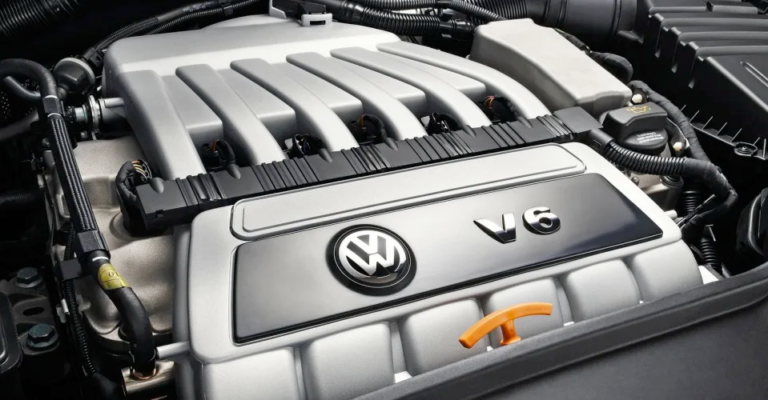
Some modern vehicles claim to already come with an oil cooler mounted to the engine, in most cases, especially on smaller front wheel drive vehicle this is done using a water/oil heat-exchanger (as seen below from a MK4 VW) which is fitted to the oil filter housing.

The idea behind the heat-exchanger is two fold: 1). Quickly heat up the oil using a water jacket in the colder months to help speed up the process of getting an engine to operating temperature. 2). Use the water jacket as a heat-sink to take the excess oil heat to the radiator for cooling. In principle this system should maintain “uniform temperatures” while driving. Unfortunately, with extreme driving this type of system can be easily heat-soaked and overrun.

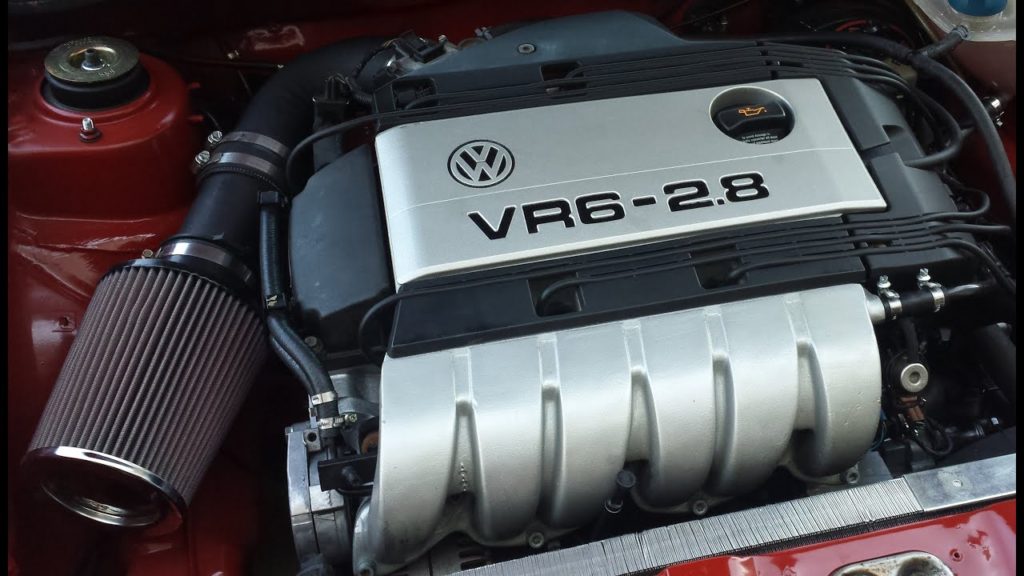
With the sandwich plate and its pipe fitting adapters, you can still add an external cooler to this sort of setup, but often times for our applications it is better to remove these heat-exchanger units completely (above) for optimal coolant and oil efficiency. The sandwich plates are also often designed to accommodate additional sending units (oil temp and/or pressure gauges) or auxiliary oil lines – for that aftermarket turbo you bought for your ’99 Miata. Additionally, if you are confined to a tight engine bay, check to make sure someone hasn’t designed a purpose-built solution for your vehicle (like on our VR6 above). You can also use some space saving sending units (as seen on our 2018 holiday list) as part of your build. – Ok – now you can order that gauge, along with your oil cooler kit (remember to check with: MishimotoMocal, Jegs, Summit Racing, etc for options).

In the end, oil coolers are *always* helpful – Even though there is still a rather heated debate surrounding “oil that is too cool” – and I agree to some extent … if we are only talking about street cars. But in any AutoX, HPDE, Track or Forced Induction (Turbo/Super -charger) vehicle I’m not sure there is ever a condition where “the oil is too cool.” – And, in all seriousness, adding an oil cooler to any motor will extend the life of the oil, thereby extending the life of the engine.

Placement of the oil cooler can be hidden, and it can usually be mounted into even the most cramped engine compartments. The only negative aspect of using an engine oil cooler is the need for more oil, up to two quarts more per oil change, because of the oil required to fill the coils and lines. But at the end of the day, using an oil cooler in your vehicle can only increase the longevity of its engine (or transmission).

And remember, as tempting as those new springs, shocks and big brakes might be… mods that focus on the longevity and endurance of your vehicle will pay dividends if you plan for more spirited driving. We hope to see you out there this season, with your newly installed gauges and oil coolers. #merrymotoring.

Our never-ending debate: What car should I buy?

Within the GTM community, the debate of which car should I buy? never seems to fully end. Whether it be: what should I buy as my first track car? my backup car? my new daily? … or I just want something different. The fury of this debate within our group will quiet from time-to-time, but during the slower months someone will bring it up … yet again … and the arguments resurrect themselves in full glory.

Tune in everywhere you stream, download or listen!

Listen on Apple
Listen on YouTube
Listen on Spotify

Granted, this question can be asked for various types of driving situations, but we’re not interested in talking about Mini-Vans and SUVs, so we’ll focus on Spirited Driving + AutoCross + Track Days. But before we start, here are some top-tips (from various members) to keep in mind when shopping for a new sports car:

  • “Never drive your heroes” – Matt Y
  • “Look around the paddock, and start with what you see.”  – Brad N
  • “If you’re *not OK* with me putting a boot in the door of your car, then you’ve selected the wrong car.” – Matt Y
  • “Build vs Buy … Buy.” – Sam H

So rather than rehash this for the elevendy-millionth time, here’s an attempt to help you navigate the plethora of options that are available:

We’ve put together a list of Top-10 “great starter track cars”

Vehicle

Pros

Cons

E36 Series BMWs

E36s are a mainstay at any track weekend. Well balanced, great handling with a huge following and aftermarket support.Building a really “competitive” E36 can be a slippery slope, its also a German car approaching 30 years old which brings its own issues, but parts availability is currently not one of them.

E46 Series BMWs

The bigger and more powerful successor to the E36. Fantastic power and handling and the last of the purpose built ///M cars. Like the E36, it too has a large aftermarket support.More expensive to
own/operate than the E36.

MK4 (’99-’05) VW

So many variations to pick from: Golf, Jetta, Beetle and Mk1 Audi TT. Many engines: 2.0, 1.8T, 2.8 & 3.2 V6. Huge aftermarket and one of the cheapest German cars to own/operate.Many would argue that FWD is the VWs biggest drawback. In stock trim, the MK4s are very soft, but with proper mods are competitive in their class.

Mini Cooper S

The MINI is a “bang for the buck” sort of car. Torquey, quirky and light, but gobs of fun to drive!Short wheel base can make them feel twitchy if you’re not used to them. BMW engineering makes them a bit overly complex, and not much space to work on anything.

Suburu BRZ / Toyota FRS

Out of left field comes a front-mount RWD combined offering from Subi-yota.

Well balanced, forgiving and easy to drive. Very popular and competitive, with a large aftermarket.

In base trim, the BRZs engine isn’t going to get you overly excited, but what it lacks in power it makes up for in handling.

Porsche 996

Porsche? Wait… I thought we were talking about starter cars? Well, the 996 is very much that, being the best value-for-money Porsche available (winning over the aging 944).Take care of the IMS issues and a couple other small recalls specific to the 996 and you’ve got yourself a cheap track day Porsche.

’14+ Ford Mustang

3 engines to choose from: Turbo 4, V6 and 5.0 V8. The new Mustang is sleek, well built and handles amazing out of the box. The engine choice is really your preference, but starting with the Focus RS shared Turbo 4 is a cheap way into the sport. Great aftermarket support.The Mustang is a bit heavy, but it’s not noticeable when driving. You’re not allowed to visit a Cars & Coffee. Ever.

Hondas

Pretty much any Honda/Acura product (aside special models like the S2000, Prelude) are going to be reliable and cheap to operate. Huge aftermarket support.Honda is not known for having the most powerful engines. High horsepower numbers and V-TEC obfuscate the dismal torque specs – but that doesn’t mean they’re not fun, you just have to push a little harder.

C5 Corvette

Big Motor, Big Fun. Roughly 400 horsepower without mods and a solid chassis.Cheap to get into because of its age, but carries a higher total cost of ownership versus some of the other vehicles on this list.

The answer is always…
* MIATA *

The Miata defines: CHEAP.

Well balanced, forgiving and easy to drive. Tons of parts and support.

If your goal is to go racing, buy an already prepped car and save some serious money.

It’s a Miata, don’t expect it to amaze you with specs. It forces you to grow as a driver since you have to run it at the absolute limits to be fast.

Honorable mention…
Porsche 944

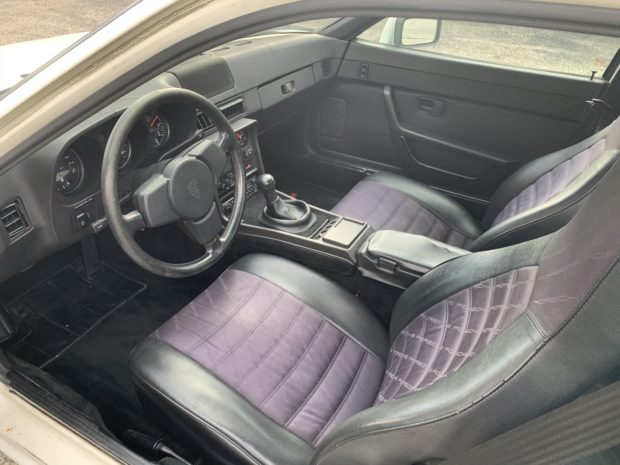
944s are still out there in abundance, it was one of Porsche’s highest selling vehicles by volume, very popular and cheap because they shared many of their parts with older VWs. They are perfectly balanced and easy to drive.The 944 is a icon, but it hasn’t aged well. Owning / operating a 944 unless you’re able to work on it yourself carries a high operating cost. Building from a base street car is expensive and starting with someone else’s prepped vehicle is a smart choice.

Honorable mention…
The 350 Z

Now that the 350Z is 15 years old, the prices have come down significantly. The VQ motor is strong, and the handling is similar to an E46 BMW. The 350Z is a forgiving chassis making it easy to drive on track.Because you don’t see many 350Zs on track, you might be a pioneer of sorts. The aftermarket scene might be more “showy” than track and could be frustrating to find the right parts. And there are rumors about possible transmission issues when stressed – but there’s always a fix for that.

Honorable Mention…
Dodge Neon

It might not look like much, but the affordable FWD econo-Sedan has a large following and plenty of aftermarket and racing support. The Neon is a great competitive option to Hondas, Minis and VWs.It’s a Neon. 😉

In order to widen your net we recommend websites like RacingJunk.com which makes it easy to pick up someone else’s already done, or nearly done Track Rat. Starting with cars from BringaTrailer.com can go either way but based on some members experiences, and can often bring unforeseen problems. #garagequeens. Finally, Cars.com is often a quick and easy way to search for cheap street cars.

Don’t agree, let’s agree to disagree? Come share your opinions and continue the conversation on the Break/Fix Discord!

What else should you buy?


Disclaimer: GTM’s high-level assessment of these cars is based on our member/owner experiences and we urge you to do your own research and fact-checking before committing to any one vehicle. GTM isn’t responsible for your satisfaction, happiness or overall track experience with the vehicle you choose. Make sure to visit some vehicle specific online-forums and/or owners clubs for highly detailed and first-hand information on any vehicle you might be interested in.

Hollywood: Crushing cars at an alarming rate

0

As a gear head, I have been interested in cars since I was a child. Cars that are fast at the track, an old hot rod at the weekly cruise-in during the summer, or even that exotic on a poster hanging on the wall in my bedroom.

As I have gotten older I have been very fortunate to have been able to see many different makes and models throughout my military travels. Even though my tastes have matured and I’ll admit I have my biases, I can respect aspects of an opposing manufacturer’s offerings.

Having recently read member Mike C’s article on Fictional Movies, Real Racecraft – it stirred up some opinions on film making. My appreciation for automobiles makes watching Hollywood “car movies” a chore. It is painful to see filmmakers sacrifice so many vehicles so regularly. Until movies like Transformers, The Avengers and even the Fast and the Furious Series we were fortunate as a minimal amount of vehicular carnage was seen in movies compared to TV.

The Dukes of Hazard is a perfect example of the excessive destruction of cars. During the shows run (1979-1985) an estimated 300 – yes, you read that right: 300 – Dodge Chargers were consumed and only about 17 “General Lee’s” remain. That is roughly a 95% sacrifice rate. Taking so many Chargers off the road undoubtedly increased their value drastically. You could make an argument that this was a form of vehicular poaching. Had the Charger never starred in the show there is a possibility that there would not be as much of a desire for the car. The Charger was used in movies like “Bullet” and others, but the draw was not the same as the Dukes. Shows like “The Fall Guy” starred the My #1 – the GM square body truck. Various years and trims+options were used over the course of the series, but the original “Fall Guy Truck” was a 1980 GMC K25.

The less refined square body connoisseur might not have realized the slight differences in the various trucks. And some heavy modifications for the show, like a mid-mounted engine are things the average owner of these trucks never saw at a dealership.

As a youngster it was awesome watching the carnage without an understanding of the impact of destruction on the automotive community. #ignoranceisbliss. The movie “Cobra” starring Sylvester Stallone was the first time I realized my feelings had changed with respect to sacrificing these cars.

As a pre-teen, I was “allowed to watch” the movie with some accompanying adults, and I remember by the end of the film they were chatting about “how much a shame it was to destroy the notorious 1950 Mercury Monterrey Coupe.” – and I tended to agree. I recall stepping away from the screen in awe of what I had seen and began to understand that even though it looked cool the filmmakers had destroyed a piece of irreplaceable craftsmanship – and more so now, than then, a piece of history.

Honestly, I can still appreciate a good crash scene but nowadays they are bitter-sweet. Hollywood continues to destroy vehicles to draw people in to the theaters, making money off of these sacrifices until they can use high-quality CGI or reuse previously shot footage. In my opinion it’s definitely a blow to automotive enthusiast community and I continue to cringe when I watch the list of vehicles that have been destroyed because of Hollywood continue to grow and grow.

In full disclosure, no vehicles were harmed in the creation of this article!

Roadkill – “Best day of work ever!”

Stumbling down the never ending rabbit hole that is YouTube, I recently found myself watching Roadkill. Produced by Motor Trend it originally released in 2012 and is hosted by David Freiburger who spent years with 4-Wheel & Off-Road Magazine, Car Craft, Rod & Custom, and other publications before moving over to the position of editor in chief of Hot Rod Magazine – and his co-host Mike Finnegan who has written articles for Dragboat, Truckin’ Mag, and Mini Truckin’  as well as others.

Roadkill was formed when the duo decided to start filming their road trips so people could take a behind-the-scenes view of what happens while creating articles for the vehicle magazines they work for. Each episode is its own adventure, some with a goal and others without. A mainstay in the series is finding random vehicles and attempting to drive them back with minimal history or knowledge before their purchase. Many times they are on a budget or they encounter mechanical issues that prevent things from going smoothly. And when things go wrong, because they always do – “Because Roadkill.” #becauseroadkill

Some of the episodes simply deal with going to pick up a vehicle for Hot Rod Magazine for an article, fixing a random car from a junkyard or online shopping, competing in a Motorsports event, obtaining vehicles for their personal collection, or even doing joint episodes with other YouTube channels like Mighty Car Mods from Australia.

In other episodes they pull previous purchases and modify them for various purposes, from off-roading to just pulling wheelies. #ftfoi. They have even brought personally owned vehicles into the show for race events, challenges, and even an engine swap in the Summit Racing parking lot (See Episode 4).

These guys have also done junkyard rescues like a 1969 Mustang Mach 1, 1950 GMC Truck, and a 1967 Plymouth Barracuda to name a few. They have participated in various events such as 24 hours of Lemons, Alaskan Ice Racing, One Lap of America, and many more. An example of their extra-ordinary mods  include (but are in no way limited to) supercharging a 1978 Monza Spyder using leaf blowers.

Rooting for the underdog really adds to the excitement of the show. While some of the innovative solutions will have you impressed, others may leave you scratching your head. But as a “wrench-turner” who does not always follow a belief of using conventional ways to resolve issues, this show in many ways feels like looking in a mirror. Some may look at their methods and think these guys are crazy but having done some very similar repairs myself – I can’t help but reminisce over my personal automotive experiences. The show really documents their self proclaimed, “Bad ideas – Brilliant execution.”

If anyone has some extra time to kill this winter, prepare to be entertained by something different! I would definitely recommend checking out Roadkill. The show can be seen on Motor Trend on demand or YouTube at a slightly delayed release. It has sponsors such as Dodge, Optima, JEG’s, EBC, and more. The show even spawned its own short lived magazine Roadkill: Automotive Chaos Theory.

They also have spin offs like: Roadkill Garage and Finnegan’s Garage on YouTube, so be sure to check those out as well. And who knows, maybe GTM will begin to have video articles for our various events in the future too! The constant chaos makes RoadKill humorous to say the least.

Even when things don’t go as planned the hosts lean on the phrase “Best day of work ever!” – and I – 100% agree and personally love their job! Watching their interactions feels similar to how some of the GTM club members are when we get together. As a contributing author for GTM, I see a fun relationship between this show and some of our articles, especially our weekly recaps during the race season!

Retro Relativity – The MINI

When you hear the word “relativity” your thoughts probably go something like this: “Time > Space > Einstein > EMC2” – but Websters also defines relativity as “the absence of standards of absolute and universal application.” – Which is the perfect jumping off point for my next series of articles titled “Retro Relativity” where I’d like to discuss – or maybe just rant – about how “digitally remastered” versions of automotive cult classics are a disservice to the enthusiasts community.  **call me a purist.

Originally designed by Sir Alec Issigonis of the British Motor Corporation (BMC) the MINI had a production run from 1959-2000 (41 yrs) with minimal changes. When people hear MINI, most don’t know that it could have been a BMC, British Leyland, Rover, Morris, or an Austin. With such an abundance of manufacturers through the years, most people didn’t realize that multiple factories were producing the same car at the same time!

The MINI also came in various different types: like the Cooper (its the performance model – if you can imagine that), Clubman, Estate, Moke, and even the Pick-up.

Engine sizes varied, although the engine itself was essentially the same design with a different displacements. The largest version of the MINI 4-cylinder was 1275-cc (which is less than my motorcycle!). The majority were 4-speed manual cars but it was possible to find an occasional one in an automatic (but who in their right mind would want that?). They were also offered in left hand or right hand drive since they were manufactured in and shipped to multiple countries. Originally these cars came with 10 inch wheels (sporting DUBS? Nah, I got DIMES! ), later years they offered them with 12″ and with slight modifications you could fit the massive 13″  wheels on a MINI! In the US the MINI was offered until ’70s when there wasn’t faith that the MINI could meet the new restrictive California emissions being imposed at that time.


Popularity

The MINI had two key events that made it super famous. First was their successes at the Monte Carlo Rally and secondly it starred alongside Sir Michael Caine in the original Italian Job movie in 1969.

As you can imagine – any movie or TV show can make a vehicle popular. We could list them off for days. But winning races can be a more difficult way to gain notoriety, especially through a discipline like Rally. John Cooper of Cooper Car Company worked with Sir Alec Issigonis to modify the MINI for competition. Their efforts paid off as the MINI won the rally in 1964, ’65, ’66, and ’67. Although the 1966 victory was stripped away after being disqualified over “headlights that were against the rules.” – This ruling caused a lot of upheaval and rule changes for future events. In 1966, the first four positions were British teams and the MINIs would have placed in first, third, and fourth had there not been a protest with the headlights. The Cooper is easily recognized by its racing stripes on the bonnet (that’s “the hood” for us ‘Muricans), and signature Union Jack on the white top. Most people don’t realize Coopers were more often painted in British Racing Green than Red.

Not understanding the fascination with the classic MINI until I bought one, I now tell people driving one is like driving a street legal go kart! The video below is a little display of a MINI’s handling through this Gymkana/Autocross to reinforce my point (below).


The Takeover and Transition of MINI

BMW acquired the rights to build cars using the Mini badge in 2001 starting with the Hatch/Hardtop. With BMW taking control some consider it to be the defamation of an icon. How did BMW defame the MINI?, you ask. By not keeping it true to its heritage. With the designs that BMW has chosen to release since the Hatch, there has been a lot of misplaced Badge Engineering. Some examples of this include: the original MINI Clubman (which is supposed to have a squared front end), the Estate is what Americans would consider a station wagon, and the Countryman was originally a “woody” version of the estate, and what the heck is a Paceman? BMW chose to just use the older naming but not keep true to any of the actual designs of these older MINI variants. Not to mention that the subsequent generations of the MINI have also become bigger and larger. Maybe we should start calling them the MAXI and the MACRO?

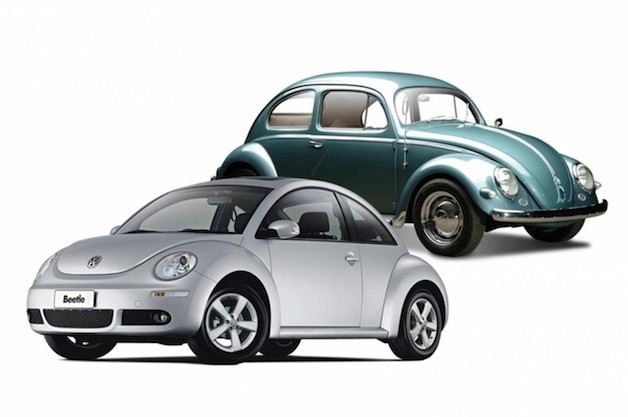
Many know that I have a slight dislike for BMW in general. #fullstop. After owning multiple BMW products I have come to have my reasons why. But I think one of BMWs biggest mistakes is not keeping true to the history of the MINI when they decided to relaunch the vehicle. Other manufacturers are guilty of this as well: VW with the Beetle and Fiat with the new 500, as examples. On the other hand, Chrysler did a stellar job with the Challenger, presenting a car that looks very much like the original.

A lot of people may have little knowledge of the MINIs history, but it is an impressive one. In my personal opinion the MINI was the British VW Bug (Although my British friends strongly disagree!) being a simple and economical people mover. The classic MINI has a huge global following that has inspired clubs, magazines, forums, and even dedicated companies. I like to see old things whether it be movies remade, buildings refurbished, or cars be reborn. But in my opinion I feel it appropriate to keep true to the heritage of what you’re making. The MINI with its long run, deserved more respect and consideration of its history.

Bathurst or Bust

0

Since I am already way down here on the edge of tomorrow, while Chrissy C was visiting for the holidays we hopped across to Sydney, Australia for a few days. Fortunately, Sydney is only about a 3 hour drive from Bathurst – so we obviously had to make that trip to the wonderful Mount Panorama circuit, home of the Bathurst 1000. Of course, that’s only part of the story, so lets fill in some details.

Tune in everywhere you stream, download or listen!

Listen on Apple
Listen on YouTube
Listen on Spotify

I have been in New Zealand since the end of September, and the last time I had driven was on the way to Dulles Airport before I flew out. We are also in the land of right hand drive.  The easiest (but expensive) route was to just rent a car when we landed at Sydney Airport and just hold onto the entire trip.  To at least have some familiarity, I reserved a Mk7 VW Golf through Europcar and once we cleared customs in Sydney and spent about 45 minutes in line at the rental counter, away we went. I was the first to hop behind the wheel … and not much later regretting it.

Crossed that bridge TWICE going to the hotel

The car came equipped with GPS, which was great, but Sydney is a horrible city to drive through and the hotel we were staying at (a Hilton) had an official address on a road that didn’t allow cars.  First we tried to just find the other street it was supposed to be on, but ended up at the wrong street (of the same name) in a different part of Sydney.  Then we found the right one, but the GPS was trying to direct me the wrong way down a one-way street, down a bus-only road, and around and around in circles.  After about an hour of this we found our way to the hotel so we could rest up for our track experience the following morning.

Kangaroo and Wombat Crossing

After a light breakfast, we hopped in the car early to navigate out of Sydney while there wasn’t much traffic (of both the vehicle and pedestrian kind).  Fortunately, it was also a Sunday, so that also helped with the traffic.  The drive out was on the “Great Western Highway” through the Blue Mountains, but don’t let the name fool you.  For most of the trip it was just a two-lane road with lots of Kangaroo and Wombat crossing signs, dangerous curves and steep slopes.

Drivers to Grid

When going to a “race track” we have become accustomed to purpose built facilities on most of our adventures.  Bathurst, on the other hand, is a “tourist road” that has homes, a winery and parks around it that just happens to be a race track a few times a year.  That said, the garages along the front stretch put many US facilities to shame even though they are infrequently used. We were driving along, following the GPS and then we were just suddenly on the “track” which normally operates as a 4 mile two-way public road with a 60 kph speed-limit.

When we first got there I just started driving around the track.  It was very hard to keep my foot from going to the floor on the long straightaways, but with opposing traffic, pedestrians walking the loop of the track and he walls, 60 kph was pushing it in some of the corners. Both “The Cutting” and the esses were sections of the track that always claimed cars in Forza, and having gone through there in person it is even easier to see why.

After our first few loops around the track we pulled in to visit the National Racing Museum next to the track. At this point, I had been driving for about 3 1/2 hours, on the wrong side of the road, from the wrong side of the car so I was mentally exhausted and needed the break.  At first glance the museum doesn’t actually look like that much, but inside is a different story.  Their collection of racing bikes and cars from the history of the Mount Panorama circuit is nothing short of impressive.

Holdens to the left of me, Fords to the right…

The museum covers the entire history of the circuit which was built as a combination tourist road/dirt track and opened back in 1938.  It also includes a history of Holden and how they adapted GM designs to work in the Australian outback terrain and climate. There are even a few motor fragments from failed components and a few complete motors (including a BMW M50 for some reason) out on display.  Once we finished taking in the museum, we headed back out to drive around the track more.

The famous writing on the hill-side

Chrissy hopped behind the wheel of a RHD car for the first time and set off for some laps of her own. Close walls, blind corners, and opposing traffic is the perfect time to learn driving from the other side of the car, right? She made a few trips in race direction, and then out of curiosity, made some clockwise laps as well. We pulled back into the museum lot to swap again so I could make a few more laps before we went off to find lunch and start the long drive back to Sydney.  Unfortunately, I didn’t have any GoPro cameras with me so the best we have is some shaky cam cell-phone footage (below) but that will have to do, sorry.

All said and done, the trip to Mount Panorama was worth it.  Sure we didn’t get to drive it at speed, but we still drove it!  The drive to and from Bathurst was beautiful twisty mountain roads through foreign terrain and unique sites. We both experienced driving from the “wrong” side of the car, saw some amazing views and even had a really good lunch in Bathurst.  Maybe next time I will drive Bathurst on a racing game I will have a bit of an advantage 😉

Childhood dreams turn into Motorsports madness

0

As we sit back and enjoy this holiday season, I took a moment to reflect upon the season and it reminded me that Motorsports isn’t something that most people just wake up one day and are immediately interested in. It is rooted in our childhoods… It starts out with car noises and Tonka trucks. #vroom-vroom-errrr-vroooooom. Unwrapping those basic toddler toy cars, dump truck or tractor – many of which are not the most accurate replica of their real life counter parts – got us excited about cars. Those toys and stocking-stuffers we received were just the fuel we needed to ignite a life-long passion.

The next step into car culture was through hot wheels and matchbox cars! – These scaled down vehicles were so realistic to us, not only did they have real-life cars but they had their own crazy concepts! I remember admiring and day dreaming about designs of my own. It showed us we could think outside of the (match)box and my brother and I had an entire matchbox village as kids!

Some of us were fortunate enough to build “model cars” as a hobby. This was our first chance to customize a vehicle and make it our own. It could be any paint scheme we wanted and a blank canvas for our imagination! Some kits even came with parts to build a stock or souped up version and some kits came with multiple cars, JACKPOT! – early LS-swap-all-the-things! 

For most of us big wheels, scooters, and bicycles were our original Motorsports options!  – There were plenty of races in my neighborhood among the kids. We would ride our bicycles and pretend to be on a motorcycle either making the noises by mouth or adding a baseball card to the spokes. And I have to point out, Big Wheels = Front Wheel Drive.

Those of us brave enough would even try to hit those sweet jumps! 

Taking it to the next level, some of us had a dirt bike, 3 wheeler, ATV, or go kart. If we didn’t have one of our own we would jump on the chance to go to the neighborhood kids house that did have one!

Later we began to have control over cars with remote/radio controlled cars, slot cars, or even video games. Being a kid in the ’80s for me ExciteBike and RC ProAM for the original Nintendo were my go to racing games. It goes without saying, but video games have improved drastically in comparison to what was available back then!

Gran Tourismo was like nothing many of us had ever seen when it was first released.

Realistic damage, tire wear, fuel consumption, and drafting were real-life racing concepts that we had never seen in games before. This was a huge step towards making it more than just “an arcade game.”  Today we can play against multiple individuals from all around the world, a huge change from two player split-screen mode on a 13″ CRT! With “photo-realistic graphics” and 4K the games look absolutely breath-taking!

Even after we got our drivers licenses we would journey out in our snail paced jalopies as if they were a race car on the back roads. The desire to be part of Motorsport was always there no matter what we were behind the wheel of! – Gifts in those days might have included tickets to a major race, monster jam, or sharing an experience with friends and family at car shows or other upcoming car-related gatherings.

Growing older doesn’t mean we can’t make our childhood toys adult sized. I realize we are still able to enjoy all of those childhood things whether it be making car noises with a toddler, collecting matchbox cars, riding a bicycle around a track after the cars are done for the day, hopping in a go-kart, or playing some video games with friends like the GTM Forza league! We can still have that enjoyment we had in our youth… like building a life size hot wheels loop (below) or going to the track.

No matter how old we get that child in us is still there! Hold on tight, and never let go!!! #peterpan

Happy Holidays, from all of us at GTM! #merrymotoring.

Test Drive: 2019 Ford Ranger

… and buying more pickup trucks than any other state is just one more thing to add to that list. One out of every 4 vehicles sold in Texas are pickups. So it makes perfect sense that Ford choose Houston, the 4th largest city in the US, as the place to show off the new (2019) Ford Ranger.

NE Region Chief Harry B tipped us off to this exclusive event, and we were keen to check out it. Being a sports car enthusiast, I don’t generally get excited about new truck lines, but when you frame it in the context of “Could this be a new alternative for a track day toy hauler?” – you have my attention. Being more of a Mopar fan, the reintroduction of the “Comanche is more my style, but I have always appreciated the Ranger, so #sendit.

Ford introduced the Ranger in 1983, and discontinued production in the US/Canada of the 3rd generation (above) Rangers in 2011. Much like the return of the Bronco (slated for 2020), people have been waiting 8 years for the Ranger’s return to America even though the 4th generation Ranger has been available in Europe since 2015.

In some cases it seems like manufacturers have divided their national truck marketing into North, East, West, and Texas. With slogans like “Built Texas Tough”“Built by Texans for Texans” – and various Texas inspired special editions like Ford’s F350 “King Ranch”, Chevy’s “Texas Edition”  Silverado and let us not forget Dodge’s “Lone Star Edition”  2500. But compared to the fully decked out pickups like the F-250, Silverado and Ram 2500 many with Power Stroke, Duramax or Cummins diesel engines dominating the roads in Texas, how does the smaller Ranger compare?


The 2019 Ford Ranger, at a glance…

  • Powered by a 2.3 litre, Eco-boost (turbo), 4-cylinder which is currently shared with the Focus RS and Mustang, mated with an all-new 10-speed Automatic Transmission.
  • Ford has re-tuned the 2.3 Eco-boost with different cams, a forged crankshaft, and purpose-driven engine software for better towing/torque numbers producing 275 bhp and 310 ft.lbs. The engine is peppy but even if they pumped V8 acoustics into the cabin like other car manufacturers have allegedly done, there’s no denying it’s still a 4-cylinder. The transmission is exceptionally smooth, making it hard to know when its shifting and what gear it’s holding.
  • There is no diesel option for the Ranger  like there is in Europe, rumor has it that the 2.7 litre Eco-boost used in the Lincoln MK-X, Ford Edge, and others may be available later.
  • You’ll have to wait even longer for the “Raptor” version of the Ranger, *maybe* after the Bronco debuts.
  • Ford is boasting “best-in-class” towing against the Chevy Colorado and Toyota Tacoma at 7500#. The Ford reps contend that if you compare the other offerings against the Ranger it comes out on top. “To get the same towing capacity you have to get the V6 in the Tacoma and the Diesel in the Colorado.”
  • Speaking with the folks that have been driving these pre-production Rangers across America, the Rangers have been averaging 25 MPG in real-world conditions. “Towing a nearly 7000# enclosed trailer at 70 mph the Ranger is getting about 9.5 MPG” – boasts one of the drivers.
  • The Ranger comes with a Class 4 hitch as well as trailer brake controller and 7 & 4-pin connectors.
  • You are locked in with the spring/braking package that Ford has chosen, there is no “HD” option currently.
  • The FX4 package (as driven) comes with a slightly more off-road appearance package, under cladding, smash bar and skid plate along with 8.9″ of ground clearance over the base ride height of 8.4″ The 4×4 system keeps the Ranger in 2H (2-wheel-drive High) unless you turn the dial to select 4L/4H.
  • The FX4 package also comes with an “automatic hill ascent” (and descent) feature. Part of the Ranger test day was a 22-degree climb that was completely controlled by the off-road system. Leveraging the cruise/braking systems to cross the hump without the need of driver.
  • The 210″ overall length makes the Ranger a couple inches shorter than its competitors. During the “turning radius exercise” part of our test drive, I was impressed to see that the Ranger has an extremely tight turning circle, better than most SUVs and trucks in its class. By comparison, it turns like a small econo-box making it easy to maneuver and park.
  • The Ranger will be offered in crew and extended cab versions. The Crew Cab version comes with a shorter 5 foot bed; while the extended cab version will gain you back ~1.5′ of cargo space.
  • Rear seating in the crew cab (4-door) was just enough to let me sit behind my myself. Had it not been for the beveled seat backs (seen below) my knees would have been against the seat, and more importantly at 5’11”, anyone taller either up front or in back would have been in for a tight fit.
  • There are currently no sunroof options for the Ranger.
  • The interior of the Ranger is very similar to the outgoing Ford Fusion that I recently reviewed.
  • It even shares the Fusion’s same instrument cluster and SYNC-3 system – and No Tach!
  • The Ranger will be offered in XL, XLT (as test driven) and Lariat versions, with a starting price of $32k and a “fully loaded” price tag closer to $45k. Pre-orders are already being filed, and most dealerships will be receiving the more plush versions of the Ranger first, meaning “economy and work-truck” versions will have to be special ordered.
  • More pictures from my Ranger Test Drive are available on Shutterfly.

First Impressions

The Ranger is easy to drive, and doesn’t feel like a Truck. It drives well, visibility is good and it’s rather comfortable. Comparing it to 2nd & 3rd generation Rangers which were parked in the lot close-by, the new Ranger is size-wise on par with older F150s – It’s by no means the “small pickup” we remember. Ride comfort aside, the engine – though peppy – is still a turbo-4 that makes you realize how heavy the Ranger is. But 25 MPG from a Truck this size with a gas engine isn’t anything to sneeze at, but I think it may have been better suited with the 2.7 litre eco-boost right out of the box. The 4-cylinder does make sense, *if* you’re going to use the Ranger as your primary vehicle with occasional trips to the hardware store and camping/fishing trips on the weekend. I would not rush to trade in my SUV for the Ranger as a “family hauler” alternative either.

That being said, if I were in the market for a Truck and knowing my audience and what we do with our rigs… I would much rather have a lower end model F-150, and here’s why: with a 4-door (super cab) and 5.5′ bed, the base F-150 with the 3.3 litre eco-boost clocks in at $34k (using Fords Build & Price app) and carries a 10,000# towing capacity. Despite being physically larger, the F-150 is a much more versatile every day truck. It can be used to pull your track toy/camper, go to work, haul your family and the dog, or be used as a company work vehicle. But what if you don’t want something as large as an F-150? – Knowing owners of and experiencing the Duramax version of the Colorado firsthand, I see that as a better alternative (despite the heavy upfront price tag) to the Ranger, if you’re looking for a smaller “do everything” pickup; and that’s mainly because of the Ranger’s current engine.

I feel that the Ranger is a “great but late” alternative into the smaller pickup vertical when compared to its class members the Colorado and the Tacoma. The best of luck to Ford, because “If you can make it in Texas, you can make it anywhere”  – twisting the phrase originally coined for New Yorkers – because that’s the challenge laid out for the Ranger.

Badge Engineering: What’s in a Name?

Have you ever looked at the back of a car and just wondered about all the alphabet soup that manufactures lather all over it? Or wasted time pondering what “Arteon”  or some other bizarro model name is supposed to convey? Or better still – where did the brand name come from? Well, in this not-so-much an article but a reference guide and we’ve compiled a list for you! — **You can help us update this list by using this form (must be signed in to access).

Test Drive: 2019 Ford Fusion Hybrid

I have never been less excited to test drive a car than I was on my recent trip to San Antonio, TX. I had psyched myself up… gettin’ a Challenger, I want a Challenger, HEMI!, gonna be awesome! #sendit! – With none available on the lot and utterly heartbroken, I was handed the keys to a brand new…

FORD.FUSION.HYBRID.

Grrrrrrreat! – And when I say new – I mean new-new – it had 24 miles on the odometer! Exciting? Inspiring? Something you wanted to spend your spare cycles reading about, right!? Probably not, but hear me out. Normally, I wouldn’t bother everyone reviewing something a mundane as your run-of-the-mill “rental turd”  but by now, you’ve probably heard the news: earlier this year Ford Motor Co. announced that it had decided to discontinue any vehicle in its line up that isn’t a Truck or the Mustang.

I’ve never spent any real time with any of the newer Ford models outside of the Mustang and the Focus RS, let alone Hybrids of any brand. On a theoretical level, there is nothing inherently wrong with these new “green technologies.”  I can appreciate the engineering leaps that were taken from the days of the GM EV-1, Tesla Roadster, and others to get them to where they are today. But “green-tech” is not something I tend to geek out over. Spending an entire week with the Fusion would leave some lasting first impressions and hopefully prove to be an educational experience.

But before everyone clicks away screaming Blasphemer! It’s Voodoo, pure Witch-craft!   I’m not going to waste your precious attention on a campaign of “electric vs petrol”  but rather spend a moment talking about a car that is about to become extinct.


The Geeky Stuff

The Fusion Hybrid comes equipped with a 2.0L iVCT Atkinson-cycle I-4 engine and 88kw electric motor, featuring electronically controlled continuously variable transmission (eCVT).  Whaaa? Whooo? Where? #blindedwithscience. #turboencabulator.  

The Fusion boasts an all-electric top speed of 85 mph and 21-mile range on a full charge. And the MPG figures? – Well… we’ll talk more about fuel economy numbers later in this article. Meanwhile, the Jean-Luc Picard inspired “ENGAGE” menu (below) is the only useful feedback from the vehicle outside of the Speedometer on the dash.

Since there is no tachometer and the motor is utterly silent unless you’re ringing its neck, the “Engage” menu acts as your power monitor and rev-counter. From what I could gather, each tic-mark on the petrol side was about 1000 rpm, which meant a low red-line of around 5k. The electric motor can assist the gas engine up to about 70% (3000 rpm) when you put the hammer down. Again, rough calculations put this engine at a cruise RPM of just under 2k at 75 mph (which is the speed limit on I-10 West in TX) which makes for a pretty decent final drive on this 6-speed automatic.

When EV is 100% engaged, the menu turns blue with a small “EV” in the center and gives you a “real time” MPG metric. The real-time MPG stuff is a bit of a laugh in my opinion, but I will say there is very little latency in the UI (user interface) when the menu is switching between readouts.


Driveability

From a purely performance perspective – the Fusion Hybrid is … “a gutless wonder.”

Someone wiser than me once said: “Horsepower is what you hear, and torque is what you feel” –  none of which applies to this car. When solely propelled by the electric motor (at lower speeds) the vehicle feels like a golf cart. When the gas engine is 100% active the Mazda 2.0L is too weak to get out of its own way. Thankfully, Ford has effectively leveraged the electric motor to assist the gas engine on long hills, lane changes, etc., giving the driver a sensation similar to “turbo torque.”  The system switches between Gas and Electric seamlessly, and the entire engine bay is generally so quiet you can’t tell when the motor is turning on/off or transitioning.

During the long drive from Houston to San Antonio, I took the opportunity to test out another feature of the Fusion: ACC (Adaptive Cruise Control). Generally, with automatics I’ve always felt that unless you had “decent power” standard cruise control was always an exercise in futility. The cruise system waits too long to adapt speed, you end up feverishly tapping buttons to get it to react and there is always a delay in the transmission kick down, it kicks down too far and then the engine starts to scream to maintain speed. In my opinion, it makes for a very obnoxious ride.

ACC is a feature that I have on my daily-driver but have never used. Being “old school” and hearing some horror stories about ACC systems, I’ve never wanted to try it.  Since my vehicle lets me disable ACC and use standard cruise, I’ve opted for that. But since this wasn’t my car … #sendit #rentalinsurance. 

Ford’s ACC gives you 3 “following distance” settings, each measuring approximately 1 car length (plus/minus a couple feet). I choose to use the “1” option to try and keep up with the flow of traffic and make my test more realistic. The ACC works for the average driver but it also has some “unusual side effects”:

  • ACC will come to a complete stop if the car in front of you does as well, and it will take off again when they do… Just don’t forget that when you come to a stop light/sign you might want to turn off the ACC else the car tries to pull out into traffic. OOPS!
  • Situational awareness is key with the ACC. If you’re not paying attention you will follow the car in front… for a long time… at 20 miles under the limit. Grrrr. 
  • If a car cuts in front of you, the accident awareness system kicks in and the system puts on the breaks – hard! One question I still don’t have an answer for: If the car is stopping for you, are your brake lights on? – Always remember to check your mirrors!
  • Lane changes. If you come up on a slower vehicle and you’re within range the ACC will slow the car down, and when you stick your nose out to pass there is a delay before the ACC starts accelerating, which means, there best not be anyone making an approach in the left lane or they will have to slow down to avoid you.

Overall, I found the ACC to be more stressful than standard cruise control. I felt as though I needed to babysit it more and that took focus away from the road. Using standard cruise control, I could just pay attention and override the system with either the gas or the brakes. If this is any indication of what “self-driving” cars will be like, I’ve decided … I just don’t feel like it is something for me. 

And the last bit of tech that influences the driveability is “the Coach” (above). Sadly, the Coach isn’t voiced by Craig T. Nelson, but the system is supposed to help you learn how to drive your Hybrid more efficiently. I have to admit that driving a Hybrid is a very different experience than a petrol car, there is a bit of a disconnect from you and the engine bay. The braking coach was especially entertaining in the beginning, when I learned that very long “limousine stops” would gain you higher percentages (points!) than hard stops. I tested this out and a panic stop from higher speed would net you about 25% energy return even though you were using “more brakes.”  Double braking is also a no-no. At first it was a game: how many times can I get 90+%? Can I get to 100%? – but like anything new, the shiny object becomes dull and you move on. #gimmick. Note: You *must* come to a complete stop for the Coach to register a value!


Creature Comforts

The Fusion interior is pretty well sorted and spacious. Nothing is really out of place where you say to yourself “why the heck did they put *that* >>> there?” It has a familiar quasi-european-econo feel to it, but borrows many of the angular cues and coloring from the Focus line. Some pieces of the interior – though not important to the operation of the car – feel like Ford was trying too hard to make it “different” when they didn’t need to. If you get the chance to look at the upper part of the dash in person, you’ll know exactly what I am talking about. I much prefer smooth lines, and honestly thought the center arm rest was one of the nicest accent pieces in the car (above).

I have never been one to get excited about Stereo systems or MFI (multi-function interfaces) in vehicles but they are now a big part of the design of modern interiors. Coming from a vehicle equipped with uConnect (voted one of the best MFIs available) it was hard to get adjusted to the Ford Sync system. Others might argue otherwise, but a big let down for me was the recent update to the Sync. Ford broke it’s relationship with Microsoft, and in doing so broke their MFI. The stereo is by Sony which sounds great, and is quite on par with other manufacturers who offer Bose or Hardon-Karmon systems in their vehicles. Sadly, the entire interface for the Sync looks and feels like a Sony blue-ray player UI from 2009. The coloring is bland and some of the menu navigation is clunky.

Depending on how you use this car, this next part might be a deal breaker for you. Using the graphic above from Fords website to help illustrate my point, you will notice that the battery system for the Hybrid was retro-fitted to an existing chassis design. This design already accommodates both a FWD and AWD drivetrain which robs the vehicle of valuable cargo space. The addition of the batteries creates a rather tall shelf in the trunk. Placing a medium-sized check-luggage and a backpack in the trunk filled up the entire space. You can place some smaller Amazon boxes on top of the battery shelf if you need to but that’s going to be about it.




Final Thoughts

The Good

  • I am always pleased when a manufacturer decides to just create an “engine swap” chassis instead of making their new tech vehicle look like something out of Minority Report (ie: Prius, Tesla 3, etc) – the Fusion is a typical sedan which is available in other configurations like a 2.5L 4-cylinder and a V6 option instead of the Hybrid – and lets not forget FWD and AWD variants.
  • The Fusion, though not as pretty as the recently departed Chrysler 200, takes it’s VW Passat-CC inspired low roof line and places the front seats low enough that it has good head height for taller folks along with great visibility and not much in the way of blind spots.
  • Although the seats in my rental car were (p)leather with some bolstering giving them a “sporty” look, they proved to be quite comfortable on the long drive.
  • I have never been a fan of CVT transmissions, they always give you a “clutch is slipping” sensation. The CVT in the Fusion is surprisingly smooth.
  • I put about 800 miles on the Fusion after nearly a week with the car, and spent a total of $23 on fuel.
  • Huge incentives from Ford if you can grab one of these vehicles before they are gone.

The Meh…

  • There is a definite disconnect between the “go pedal” and the engine compartment. Considering one pedal is controlling two different types of power supplies, it’s something you definitely have to get used to.
  • Lots of little tech-gimmicks which you can take/leave/trust, that’s entirely up to you.
  • Very small fuel tank, about 12 gallons. 21 miles of range on battery only.
  • On paper the MPG/eMPG numbers make the Fusion look amazing “43 city/41 hwy/42 combined mpg – 104 city/ 91 hwy/ 97 combined MPGe” – The reality is mid-to-high 40s as a cumulative average city/hwy is definitely achievable.
  • Even though the Fusion has two control stalks (one for wipers/cruise and the other for turn signals) there placement seems to be more for someone that drives with their hands at 10 & 2, making them out of place and harder to reach if you drive with your hands lower on the steering wheel.
  • Honestly, the handling isn’t anything to write home about, the car feels heavy and the suspension is soft.
  • The brakes are good, but I think people might be encouraged to overuse them to get the 100% recharge return from the Coach. This equates to wearing out the pads more quickly. You have to find a balance in your driving so you can regen some power without driving like your Grandpa, else you’ll drain the batteries in no time (in EV only mode).
  • Merging is an adventure. If I didn’t know any better, I would say the Fusion Hybrid suffers from “Turbo Lag” – and much of it goes back to “throttle application.”  You can make the Fusion hit a respectable 0-60 in 8.5 seconds if you can get the timing right: EV first, then Fuel then assist from the EV = 8.5.
  • The trunk is oddly shaped because the batteries were retro-fitted into a chassis that wasn’t originally a hybrid vehicle. It looses 4 cubic feet of space over regular Fusion thanks to the batteries.
  • Production of the Fusion stops in 2019. Some people might be concerned about parts suddenly becoming unavailable, more than likely Ford will stock parts for the Fusion for another decade plus.

If you had asked me before this trip, the sheer thought of driving a Hybrid … gaak! – I seem to have the same adverse reaction as people do to the word “Moist” – ugh! 

All kidding aside, being a long time Automotive Enthusiast, cherishing every drop of dinosaur blood I have burned over the years, the idea of driving – let alone owning – a Hybrid was something I wasn’t ever considering. But at the end of my journey, I came to like the Fusion – even with all its quirks – and had to appreciate it for what it is or maybe what it was. It’s a balance between size, comfort, and economy and makes for a great alternative for people just looking for something to commute in. #merrymotoring.