
spot_img
Home Blog Page 8

Ferrari and the Indy 500: A Story of Ambition & Missed Opportunities

Ferrari is synonymous with speed, prestige, and dominance in Formula 1. But did you know that Ferrari once made a serious attempt to compete in the Indianapolis 500? While their involvement was brief, it remains a fascinating chapter in motorsport history. Read on to explore their involvement in the Indy 500, or tune into the Ferrari Marketplace Podcast episode below!

Tune in everywhere you stream, download or listen!

Listen on Apple
Listen on YouTube
Listen on Spotify

The year was 1952, and Ferrari was at the height of its Formula 1 prowess. Many might not be aware, but The Indianapolis 500 was a part of the F1 World Championship at that time, a strange anomaly considering that European teams rarely ventured across the Atlantic to participate. But Ferrari decided to break the trend, sending a fully backed factory entry driven by Alberto Ascari, along with three privately entered Ferrari 375s.

Photo courtesy of the Exotic Car Marketplace

The 1952 Ferrari 375 Indianapolis Prototype

Ferrari’s primary attempt at the Indy 500 came in 1952 with the modified 375 F1. Originally designed for Formula 1, the car had to undergo significant modifications to meet the unique demands of the Indianapolis Motor Speedway, and while Ferrari’s participation was ambitious, the team quickly faced challenges:

  • Chassis Adjustments: To increase stability at sustained high speeds, Ferrari lengthened the chassis. This modification shifted the weight distribution but introduced handling challenges unfamiliar to their European engineers.
  • Wheel Selection: Ferrari opted for Borrani wire wheels instead of American magnesium alternatives.
  • Tire Compatibility Issues: The car had to run Firestone tires instead of its usual European compound, which altered grip dynamics and required adjustments to suspension setups.
  • Aerodynamics & Drag: Indy’s oval layout demanded different aero tuning than road circuits. Ferrari’s limited experience in optimizing for continuous left turns likely contributed to some of their performance shortcomings.
  • Engine Adjustments: Additionally, the Ferrari 375’s high-revving engine, designed for short bursts of acceleration in F1 road circuits, lacked the low-end torque needed for sustained oval performance. The power curve (and gearing) was also likely mismatched for the wide-open throttle demands of the Indy 500.

Despite their best efforts, the Ferrari team had made a crucial mistake: they stuck with their Borrani Wire Wheels instead of switching to more durable magnesium wheels, despite advice from their American counterparts. That decision ultimately led to disaster.

Photo courtesy of the Exotic Car Marketplace

Ascari managed to qualify in 25th place – far from ideal but enough to make the grid. Despite initial struggles, he worked his way up to ninth during the race. However, his effort was cut short on lap 40 when the Borrani wheels failed under sustained load, forcing him to retire.

Despite this blemish on his record, interestingly, the 1952 season turned out to be one of Ascari’s most dominant. Of the eight World Championship races that year, he won six, securing the F1 championship title despite missing the Swiss Grand Prix due to his commitment to the Indy 500.


Ferrari’s later attempts: Engine Experimentation & Technical Exploration

Ferrari didn’t give up after 1952, but their future flirtations with the Indy 500 were half-hearted at best. They attempted collaborations in the late ’50s, experimenting with engines in various chassis but never seeing real success.

  • Mid-1950s Engine Testing: Attempts to pair Ferrari-built engines with Curtis Craft chassis revealed difficulties in integrating Italian power units into existing American designs.
  • 1973 Scouting Efforts: Ferrari discreetly sent engineers to Indy disguised asMario Andretti’s Uncle Franco” to analyze race technologies, but no formal entry emerged.
  • 1986 Ferrari 637 Prototype: Perhaps the most ambitious IndyCar project came in 1986 with the Ferrari 637 (below), a stunning single-seater designed specifically for Indianapolis. Sadly, the car never saw competitive action, and the project was ultimately scrapped because of FIA politics and shifting priorities which led to the project’s cancellation. The 637’s advanced aerodynamic package and bespoke engine technology were transferred to Alfa Romeo racing program.
Photo courtesy of the Exotic Car Marketplace

What Could Have Been?

Ferrari’s limited involvement in the Indianapolis 500 offers an intriguing case study in race engineering and adaptation. While their efforts never materialized into sustained participation, the technical aspects of their approach reveal crucial lessons in aerodynamics, chassis tuning, and strategic miscalculations. Had they persisted with a proper development program… could they have won America’s most famous race? Could an Indy success have cemented Ferrari’s presence in the U.S. earlier?

Photo courtesy of the Exotic Car Marketplace

Ferrari’s brief encounters with the Indianapolis 500 truly emphasize the importance of specialized engineering for oval track competition. Their failure to incorporate race-proven materials (such as magnesium wheels) and fully adjust their aerodynamics and engine characteristics to the track conditions led to their ultimate withdrawal.

Had Ferrari persisted in refining its Indy package – leveraging its renowned powertrain development alongside American chassis expertise – the outcome could have been vastly different. Instead, the lack of sustained investment and adaptation prevented Ferrari from gaining a foothold in America’s most iconic race. And although Ferrari never conquered the Indy 500, their brief involvement remains an intriguing “what if” in motorsports history; an untold story of risk, adaptation, and the pursuit of racing glory!

Tune in everywhere you stream, download or listen!

Listen on Apple
Listen on YouTube
Listen on Spotify

Cobra’s Celebrate 60 Years of Performance at Pebble Beach

One of the most intimidating cars of its era, the Shelby Cobra 427, marks its 60th Anniversary this year. Named for the 427-cubic-inch Ford engine that powered it to dominate SCCA racing and set a performance benchmark that stood for years, the “big block Cobra” earned iconic status from the day it was introduced.

To celebrate this anniversary, a Shelby Cobra class will take to the show field at this year’s Pebble Beach Concours d’Elegance, honoring the model’s legacy of speed, design and evolutionary performance.

“Carroll had a strong personal connection to Pebble Beach, racing and winning here in the 1950s and later sharing his cars at the Concours, so we are honored to feature his Cobras this year,” said Concours Chairman Sandra Button. “The design, performance, and historic wins of these iconic race cars highlight the legendary pairing of Carroll and Shelby American with AC Cars and Ford Motor Company.”

Carroll Shelby, an automotive legend, is popularly known for his groundbreaking work with high-performance sports cars, such as the Le Mans-winning Ford GT40, but he first made his mark as a race driver, winning numerous races, including the last Pebble Beach Road Race, triumphing at Le Mans and competing in Formula 1.

The Shelby Cobra came into being in 1962, pairing an AC Ace chassis with a Ford 260-cubic-inch V8 that was replaced by the larger 289 engine. The ultimate iteration, the Shelby Cobra 427 — with a new chassis, coil suspension, and powerful 427-cubic-inch engine — was introduced in 1965.

“Ford’s ‘Total Performance’ era of the 1960s was epic, equaled only today with the company’s global motorsport program,” stated Edsel B. Ford II. “Carroll Shelby was vital to our dominance in the sixties and his 427 Cobra put an exclamation point on that success! I am delighted that these iconic cars will be celebrated on this anniversary year.”

Four versions of the 427 Cobra were produced and will be showcased  “Comp” (competition), S/C (semi-competition), Street and Narrow Hip  in addition to the first production and last production Cobras.

“The Shelby Cobra remains an automotive icon even 60 years after its introduction,” said Aaron Shelby, grandson of Carroll Shelby and board member of Carroll Shelby International. “Few cars have achieved the fame and staying power of the Shelby Cobra. Not only does it represent performance, this sportscar represents American ingenuity! Simple but effective, it was created with grit and determination.”

The Cobras are coming… The Cobras are coming… to Pebble! 

  • 1962 Shelby Cobra 289 First Production Roadster
     
    This is the first Shelby Cobra Production Roadster to be sold to a customer. It stands as the only Cobra to compete in the Tour de France Automobile. It was initially powered by the 260-cubic-inch engine and later fitted with the more powerful 289 engine.
  • 1966 Shelby Cobra 427 Narrow Hip Roadster 

    Known for its rare design and powerful engine, the 1966 Shelby Cobra 427 Narrow Hip Roadster features a narrower track version of the Shelby Cobra. This Cobra is one of just 32 “Narrow Hip” 427 Cobras produced by Shelby American and is one of only ten that remain in original unmodified configuration. 
  • 1966 Shelby Cobra 427 Competition Roadster 
     
    This 1966 Shelby Cobra 427 Competition Roadster raced in Sports Car Club of America events at famous tracks including Meadowdale, Wilmont Hills, and Road America. It retains all of its original components including drivetrain, body, and chassis.  
  • 1966 Shelby Cobra 427 Roadster 
     
    This road-going 1966 Shelby Cobra is recognized as one of the most authentic 427 street Cobras, complete with original components throughout.  
  • 1967 Shelby Cobra 427 S/C Roadster 
     
    This 1967 Shelby Cobra 427 S/C Roadster is one of just 29 original S/C versions–one of the most revered Cobra models of all time.  
  • 1967 Shelby Cobra 427 Roadster
     
    This 1967 Roadster was the last Shelby Cobra 427 built. It has been restored using all its original components including hardware, wiring, vinyl, leather and more. 

This small yet significant display of Shelby Cobras will celebrate the automotive vision of Carroll Shelby highlighting the key elements behind the legacy of the Shelby Cobra 427 and its transformative impact on the world of motorsports, a legacy that continues to be celebrated.


About Pebble Beach Concours d’Elegance

First conducted in 1950, Pebble Beach Concours d’Elegance® has grown to be the world’s premier celebration of the automobile. Only the most beautiful and historic cars are invited to appear on the famed 18th fairway of Pebble Beach Golf Links®, and connoisseurs of art and style gather to admire these masterpieces. Charitable donations raised by Pebble Beach Concours d’Elegance® now total over $41 million.

Related events include Pebble Beach Tour d’Elegance® presented by Rolex, Pebble Beach RetroAuto™, Pebble Beach Classic Car Forum™ presented by Alliant Private Client, and Pebble Beach® Auctions presented by Gooding Christie’s. Pebble Beach®, Pebble Beach Golf Links®, Pebble Beach Concours d’Elegance®, Pebble Beach Tour d’Elegance®, Pebble Beach RetroAuto™, Pebble Beach Classic Car Forum™, and Pebble Beach® Automotive Week are trademarks, service marks and trade dress of Pebble Beach Company. All rights reserved. For more information, please call 831-622-1700 or visit pebblebeachconcours.net.


Thanks for stopping by!
Don Weberg - Editor-Publisher-Founder, Garage Style Magazine

Adrian Fernandez: From Mexico to Le Mans – A Legend’s Journey

Evening with a Legend is a series dedicated to the icons of the 24 Hours of Le Mans, bringing their stories to life for fans around the world. In this episode, we sit down with Adrian Fernandez, a trailblazer whose path from Mexico to the podiums of Le Mans is as inspiring as it is improbable.

Photo courtesy of Agencia Reforma

Adrian’s racing journey began in 1981 at age 15, sharing a Volkswagen Beetle with his uncles in the 24 Hours of Mexico. That grassroots start ignited a fire that would carry him through karting, Indy Lights, and eventually a decade in IndyCar. But the dream was always bigger. “Every time time I reached a goal, a new dream appeared,” Adrian recalls.

Tune in everywhere you stream, download or listen!

Listen on Apple
Listen on YouTube
Listen on Spotify

Determined to break into Formula One, Adrian moved to Europe in the late ’80s. With no sponsorship and limited resources, he worked as a mechanic and instructor at Brands Hatch, even sleeping in train stations and smuggling himself across borders to stay in the racing game. “I gave everything I had. I lived in a mechanic’s house, worked jobs, and hid in trailers to cross borders. That’s the kind of life I had – and I still made it.”

Photo courtesy Wikipedia; by Nate Grigg – Racing 194

His time in England, racing at Silverstone, Donington, and other legendary circuits, laid the foundation for his technical mastery and eventual team ownership.

Synopsis

This episode of Evening with a Legend features racing driver Adrian Fernandez. The focus is on Adrian’s experiences at the 24 Hours of Le Mans, where he made notable appearances from 2007 to 2012. The discussion begins with Adrian’s early career in Mexico, his progression through IndyCar in the United States, and his eventual transition to endurance racing. Insights include Adrian’s meticulous preparation for Le Mans, his adaptation to different racing categories, and the challenges of night driving in GT cars. The conversation also covers the broader impact of Le Mans on Adrian’s career, his post-racing involvement in motorsports, and advice for aspiring drivers. The script concludes with reflections on the evolution of motorsport safety and Adrian’s current life focused on family and personal enjoyment.

  • You started racing in Mexico in 1981 at the age of 15, then quickly moved up and spent 10 years stateside racing in CART/INDY CAR, building up your skills and reputation. Talk to us about how you got to LeMans in 2007. How was the deal put together? 
  • Let’s talk in more detail about 2007; You’re the first LMP2 driver who’s joined us for EWAL, can you talk to us about those cars? How do they compare to others you’ve driven at Le Mans. Some people view LMP2 as “the Spec Class” – do you feel that way as well? Does that make the racing more fun?
  • 2010 – Back again at Lemans, this time in the LMP1 Aston Martin; how did this attempt compare to 2007? 
  • 2011 – Luck did not favor Adrián in 2011, when his LMP1 Aston Martin AMR-One could barely complete two laps during testing. What happened?
  • And your final attempt in 2012, a bit of vindication for the 2011 false start? But this time you were in a GT (production) class car. What was it like running among the LMP1/2 cars?
  • Any advice for aspiring Latino drivers that want to make a career in professional racing?

Transcript

Crew Chief Brad: [00:00:00] Evening with a Legend is a series of presentations exclusive to Legends of the Famous 24 Hours of Le Mans, giving us an opportunity to bring a piece of Le Mans to you. By sharing stories and highlights of the big event, you get a chance to become part of the legend of Le Mans, with guests from different eras of over 100 years of racing.

Crew Chief Eric: Tonight, we have the opportunity to bring a piece of Lamar to you, sharing in the legend of Lamar with guests from different eras of over 100 years of racing. And as your host, I’m delighted to introduce Adrian Fernandez. In 2007, Adrian made his debut at Le Mans, taking home a second place in a V8 powered LMP2 prototype.

This was the first podium for a Mexican driver at the Circuit de la Sarthe since the 1960s. [00:01:00] Three years later, in 2010, Adrian found himself back at Le Mans, this time behind the wheel of Aston Martin’s LMP1, finishing fifth in class, sixth overall. Returning for the 80th running of Le Mans 2012, Adrian and Aston Martin took home a third place finish in the GTE Pro class, covering 322 laps without failures or problems.

And with Adrian’s help, the team achieved the fastest lap in their class of 3 minutes 54. 928. At that point, Adrian had the distinct honor of driving the Aston Martin to the checkered flag, and on September 12th of 2012, he announced his retirement from racing, thus concluding his relationship with Aston Martin.

But that wasn’t the end of his involvement in the world of motorsports. And with that, I’m your host, Crew Chief Eric from the Motoring Podcast Network, welcoming everyone to this evening with a legend. Adrian, welcome to the show.

Adrian Fernandez: Thank you. How are you, Eric?

Crew Chief Eric: Great. I’m glad you’re here. Let’s go back in time a little bit and talk about your road to Le Mans.

You started racing in Mexico in 1981 around the age of [00:02:00] 15, and you quickly moved up and spent 10 years or so racing stateside in kart and IndyCar, building up your skills and your reputation. So talk us through how that all led you to Le Mans. Was that a goal of yours to race at Le Mans? How was the deal put together?

Adrian Fernandez: I started in the 24 hours of Mexico. You know, that was my first race, 24 hours of Mexico in a Volkswagen Beetle with my uncles sharing the car. So my whole career went through basically every time I managed to get where I wanted to be like certain steps, then, you know, new dreams, new goals. Came to be able to make it.

So first for me was to raise formula one and, uh, at some stage, because I didn’t have the age, I started racing at 19 years old. So it was not the right age when I was there in Europe. So then IndyCar was more like the right fit for that. And so I moved to IndyCars in 93, 92, I did Indy lights. And in IndyCar, I stayed there all the way through until the [00:03:00] separation of Kart and Tony George.

And then I went to IRL, did the 2004 full season. Some of my sponsors, they didn’t really want to continue there. So at that point, really was. I was just searching to see what else I would do. I still had my own team with my partner, Tom Anderson. So we continued to do the IRL. And at a certain point, we decided to go with Honda to do the, uh, Ford Karts.

First with the Grand Am in 2006. And then in 2007, basically we started this program with the, uh, the American Amount Series with the LMP2, we work on the development of the engine and all that stuff. And basically that was my introduction to sport cars, to endurance series and, uh, 12 hours of searing and six hours of the glen, et cetera, et cetera.

So that’s really how I got to sport cars in that respect.

Crew Chief Eric: So you mentioned that you had raced in Europe earlier in your career, especially when you were doing open wheel and looking to get into formula one, where had you turned [00:04:00] laps in Europe?

Adrian Fernandez: As soon as I realized that I did everything I could in Mexico, I realized that I was not going to go anywhere.

If I stay in Mexico, you know, I have achieved everything I wanted to do, and I felt that I was stuck. So really I wanted to go the road to formula one and we had the Grand Prix at the time, but we didn’t have Mexican drivers. So I say, you know, this is the perfect opportunity. But there was no help, no sponsorship.

I mean, as big as it is now in Mexico, in that time, there was nothing. I was actually the first guy after the Rodríguez and a few guys that tried, but didn’t make it to the top and consistently stay there. I was the first guy to actually just dig my way through it, try to make it in racing in Europe. But I couldn’t get the sponsorship where I didn’t, I couldn’t even find 5, 000, 10, 000 in Europe.

I mean, I couldn’t, I was working as a mechanic. I was an instructor in Brown’s Hatch with Jeff Brabham and other good friends from England, when I didn’t find the money to race in formula four, I was already committed with a mechanic to do everything. I gave him all my savings. And [00:05:00] when the sponsorship was going to give me the other part of it, he’d say, well, sorry, I cannot help you.

I said, now I’m stuck. I’m living in the house of the mechanic that is going to work with me. He’s going to do the team for me and everything. And now I have no money. So I asked my dad, what do I do? And also come back home. You know, what are you doing? You’re crazy, you know, blah, blah, blah. So I thought about it and I said, no, I’m not coming home.

So I found a job. I found my job in Poland, but I have no money. I went through France and I didn’t have the visa. So I have to return. I have no money. I had to sleep three nights in the train station. before we crossed this time over through Belgium. And at that time I convinced the driver to keep me in the box, you know, in the trailer.

I hid for four hours and two boxes so I can go through it with no checkups. So I smuggled in two there because I didn’t want That’s the type of life that I had. And I still make it, made it. So that’s what I’m saying. You know, it was just very tough. So at that time in 87, 88 and 89, I really did all the circuits in Europe, especially in [00:06:00] England, you know, Silverstone, Trotstone, Donington.

I mean, you name it, all of them. It was a very good for my career because the experience that I got there, it was just incredible. I mean, it was the best racing. And even though it took me a while to, because I was, I stay in the same series for three years because I have no money and I was working at the beginning as a mechanic and things like that, but it gave me a lot of experience.

experience, which it made the base for me eventually to have the knowledge and things like that to own my own team and do the different things that I did in my racing career. So it was a very, very good decision to go to Europe at the time.

Crew Chief Eric: So a lot of drivers that go overseas and go to Europe, they end up cutting their teeth at some of the most famous tracks in the world.

You talk about spa, you talk about Silverstone, Monza, the list goes on and on, but then there’s always in the back of their minds. Le Mans or Nurburgring, but usually Le Mans because Le Mans is the biggest race in the world. And so for you, when you were there, was that ever a thought that was crossing your mind?

Like one day I want to [00:07:00] drive at Le Mans.

Adrian Fernandez: Yeah, it was. I mean, it was like, I wanted to drive Monaco. I wanted to drive the Indy 500. I wanted to drive the Daytona, you know, the big races and like Le Mans was one of the big ones. And Pedro Rodriguez won there and it was a very special race for us in Mexico.

We have knowledge about the race. And obviously Le Mans was like the jewel of the endurance racing. So yes, through my career, I always thought about it, but I never had the chance or the opportunity until I finished my career in IndyCars and just had this great relation with Honda to really start racing prototypes in America with an American Le Mans Zero, which was very competitive.

I don’t know if you remember, you know, we had the Penske’s, Porsche Penske’s and, you know, Andretti was there and eventually Gilles Deferran was there. And I mean, it was just a very strong and competitive series at the time. So, yeah, I mean, I got in love with it and it’s just so special to race those cars at that level because those cars are super fast.

Crew Chief Eric: So you put together the deal for your first run at Le Mans. In 2007, that was with [00:08:00] teams. I tech in the LMP two car. Yeah. What was it like going to Lamar the first time? What kind of impression did it make on you and coming from open wheel to endurance more so than let’s say ALMS in a much longer format and a track you’ve never seen before.

How different was it to drive that LMP two car at Lamar?

Adrian Fernandez: Lamar is my favorite racetrack and I will say the most challenging because of the high speeds. So I really. took my time to prepare myself very well. Firstly, that race that we did in 2007 was all orchestrated by Honda because Honda was looking into doing their own programming in the future in Le Mans.

So basically they took me as a driver and they made a deal with SciTech at the time for me to race there and for them to get an experience. about what was Le Mans all about it. So at the time we have small simulators, just very basic. We didn’t have, you know, the high tech simulators that you have now, but at least it gave me an idea of where the track was going and then just as I got there, you know, it’s a track that you [00:09:00] cannot just drive around 80 percent of the track is roads that people just go from town to town.

What I did is I took a scooter and I went corner to corner taking pictures because as a race car driver, especially in Le Mans, everything is about references. You know, you have to have a good reference to every turning point and breaking point, especially you’re going so fast, like in the Mulsanne straight, you know, it’s, uh, at night you go so fast.

that stopping into the first chicane, if you miss a little bit, your breaking point, you blow the chicane. So basically I went through with a scooter and I started looking at buildings, you know, there is a bar, there is this and that. And, you know, I took photographs of all of this while the test was happening and all that, with all this information that I got, I really, really got very well prepared.

And I remember that the Japanese driver. Karuaki Kurosawa, he had more experience. He’s already raced in Le Mans. So he did a few laps. And then that’s the other thing. You don’t do many laps before the race because the laps are so long. It’s not like you do 20, 40, 30 laps. No, [00:10:00] no, no. You do maybe seven laps.

And the other guys, 10 laps, you know, just not many laps. So that’s why I did my homework in terms of knowing where every breaking point may be, references and all that. So I didn’t feel like lost because otherwise it takes you forever to learn the track. And I did my labs and I told the guys, I said, don’t put any lab times.

Don’t show me any lab times. The first time that I went there, I said, don’t show me anything. Just let me be. Just going to go out and I know I’ll be fine. I just want to learn it. And I took my time and eventually I was starting better, better, better, better. And, uh, I mean, and then I was. Quite fast to the point that I qualify the car because I was the fastest of the drivers.

And, uh, we put the car on the pole, so that was very satisfying for me. But like I said, I did the homework and I walked the track. I check everything. So I didn’t feel like I was in a man’s land. So that was key.

Crew Chief Eric: So how different was the setup of the Le Mans prepared LMP two car versus the one you were running here in the States?

Adrian Fernandez: I mean, the cars are very. I mean, this [00:11:00] was an open cockpit, the same as I was driving in with a Lola chassis and then eventually the Acura chassis in the American Le Mans series. But the difference between the racetracks in America to Le Mans is that it’s so long. So you’re going super fast. You know, there, there is quarters of eight years, six years.

I mean, the entry of the Porsche corners and all that section is extremely fast to the point that if you make a little mistake, I mean, it’s over. It’s not like there’s nothing like a little mistake. It’s almost like the Indy 500. You’re not a little mistake. You’re on the wall. It’s the same there. So you have to have a lot of respect for the track.

It’s all about the speed. So it feels different in that respect because you’re going so fast. Nothing compares all the race tracks that we race in here. Sebring. Searing is super slow compared to them on wood tracks, but it’s just different setups, techniques, everything. For example, Sebring is super bumpy.

One year we wanted Luis Diaz and myself, just two drivers. I drove six hours and a half of total for the 12 hours. And I was absolutely done. I mean, [00:12:00] just because of the vibration and the bumps and everything in Lamonts is the other way around. It’s extremely super smooth. The track. And the nice thing about Lamonts is that the tire Keeps the grip lap after lap after lap.

So it’s really a pleasure and it’s very enjoyable to drive Le Mans because the tires then they don’t really dip. They stay very consistent and it was just fantastic to drive. So it’s just another technique, but it’s beautiful.

Crew Chief Eric: And I know I keep bringing up LMP2 cars and LMP2 cars because actually you’re the first.

Legend to be on evening with a legend that’s campaigned an LMP2 car. And oftentimes it’s one of those classes that we overlook. It is extremely competitive even to this day, but people view it like a spec class. And it’s like, ah, it’s LMP2. You know, I’m more interested in the LMP1 prototypes or what’s going on in production car.

And even TV coverage doesn’t often give enough light on the LMP2 class. So it’s fun to sort of pull these threads and learn from a driver. What LMP2 is really like I’ve heard from some other drivers. Coming from open wheel to prototypes, not [00:13:00] necessarily LMP2, they’re like apples and oranges, there’s no translation between the two.

And I often wondered, is that really true? How close is the downforce? Are they very similar handling wise, or did you have to relearn as you transition from one to the other?

Adrian Fernandez: First thing you have to relearn because you’re not the only driver in the car. You know, you’re sharing the car with somebody else.

So basically everything is a compromise from the seating position to the setup. So basically you have to really work with your teammates to be able to get the best setup and the best feeling for everybody because it doesn’t matter if I’m very quick and my teammate is not that quick because he doesn’t fit well or he doesn’t like what we make to the car.

It just doesn’t matter. So it’s a compromise. The LMP2 that we drove in those years that I competed in the American Le Mans series with Acura, those cars were extremely fast. I mean, super fast because after that they tuned down the engines, but 2007, eight and nine, the cars were extremely fast. In that respect, the car performance and speed up through the corners [00:14:00] was.

In some ways, very close to IndyCars. So really, the things that you needed to work a lot, like I say, working with your teammates, working in a compromise setup that it works for everybody, learning how to, uh, manage the car, not destroy the car. Obviously, these days, even in my days, you can push. 10, 10, all the time, the car and the car, they survived the other 12 hours, 24 hours is a go.

But at the same time, you know, it’s a long race, so you don’t want to do stupid mistakes. And you just really want to have a little reserve just to make sure you don’t make any mistakes. And you drive through the night. Sometimes you drive through the night in rain and things like that, that you don’t have in IndyCars.

IndyCars, you always have lights. The races are very short compared to Le Mans. I remember one year, 2010, with the LMP1, I was driving with my good friend Stefan Muka and Harald Primat. And Harald Primat had a problem through the night, and he couldn’t drive after one hour. And I just came out of the car. I was just getting ready, you know, you have your motorhome, you take a shower, you have your physiotherapist, you eat, [00:15:00] you do all the things.

And I was starting to get ready to go to sleep. And the team called me that they had an issue with him. And that if I would be able to replace him, he had, uh, an issue with, uh, cramping and things like that. So I jumped in the car. I didn’t rest much three years. Yeah. Three and a half hours after I came out of the car and I drove almost four hours straight.

And I say almost four hours, because it was like three hours and 55 minutes, because you cannot exceed in those days. You couldn’t exceed more than four hours. Otherwise you get a penalty, but I was fine. I was fine. I could drive. I was. Not sweating. I was just, I remember that thing that I did so long, actually the engineers and everybody went to sleep in the, in the trucks.

I was not hearing any, anybody was completely dark. There’s not even lights. The only part that there’s some lights is in the permanent course, but the rest is just absolutely night. So you just see your lights of the dash. The lights of the other cars, but it’s so peaceful and you’re just basically, it’s like diving at night, which is so beautiful.

But I was calling my engineer and nobody was answering like for two, three laps. I was getting [00:16:00] worried, you know, even though I knew exactly more or less when I had to get into the pit, but sometimes it gets a little, uh, scary if you don’t hear back from your team.

Crew Chief Eric: Glad you brought us into 2010 and the LMP1 attempt with Aston Martin.

And so I wanted to focus in on something you just said. said, we’ve heard from other drivers about the changing conditions at Lamar. What are the most stressful times when the sun is starting to come back up or what inevitably starts to rain, but almost four hours in the car, a lot of drivers these days don’t do those long stints like that.

They do two hours at a time. And you know, then they have the maximum amount of drive time and all those kinds of things. How do you stay focused for four hours in the middle of the night when you’re just by yourself? How do you not, let’s just say, get bored or. How do you keep your pace consistent? Lap after lap for four hours.

Adrian Fernandez: Just training. I have always been a very disciplined person, very disciplined athlete. Even in my days of IndyCars, I always worked to the maximum and more. I was very good with everything I did, you know, and the type of training physically that I used to do. It [00:17:00] was also about concentration and focusing and things like that.

For me, it was just natural. I felt I was very good at it. Barely made any mistakes. I’ve never crashed in Le Mans. So I was just very pure concentration. And to the point that, like I said, you know, I can drive for four hours and I didn’t have any problems with getting tired. In IndyCar, one of the challenges that I face when I enter IndyCar is that I have a very small bone frame.

You know, my bones are tiny compared to, for example, people in those days like Mario, Andre, Nigel Ma, Paul, Tracy, ARDI, et cetera. So the indicators in those days were so physical that you needed four or five LAP to do a, a good lap in qualifying, and the four feet lab were the best. And I couldn’t do more than three laps good.

And, uh, so the X track, which was in the fourth or fifth lap, my body was completely done. Physically, I just couldn’t turn the steering wheel. We have no assistance of anything. We have no traction [00:18:00] controls. We have no power steering control. And we have 1000 horsepower. Those cars were really a beast. I mean, you have physically.

I remember Ari lying like a night before the start of the Laguna Seca race. We were instead of talking about the car or whatever it is we were talking about, are we going to make it, you know, physically because it was so physical. So I learned a technique to relax. Obviously I changed the way I work out and everything, you know, less cardio, more, more weights and things like that.

But then I work a lot on relaxing my muscles through the straights. A technique that I learned and I applied very successful work with my engineer because we have this deficit. So how are we going to make it? So one, physically you have to work on this. So I learned how to relax my muscles on the straight and just put the effort on the, you know, so some people are like very tense, you know, even in the straight, no, no.

And in the straight I was just relaxed, just basically putting the minimum amount of effort just to keep the car on the line. And then when you get to the corners and all that, that’s when you put the effort. So that really [00:19:00] takes a lot of effort out of each lab. And that’s how I managed to improve because of the strength that I, that was, I was lacking.

And then because we were not qualifying so good, John Ward and myself, we work on just how are we going to fight with these deficits? So basically we work a lot on how to save fuel. And if you remember my days of IndyCars, we were the first one that we were so good on saving fuel. So I always managed to do one lap or two laps more than the guys when they came into the pits.

And that was how we compensate the lack of strength in those days. Within the cars to be able to win races that transfer it to Lamont. So same with Lamont, some guys who, when they come and you know, the speed and everything, they are very tense and they get tired more and all that. And I was extremely relaxed on the straight.

You have a such a long straight. So I was very relaxed driving the car in that respect, putting minimum effort into my muscles and just. Focusing on the track, but you’re going so fast, you know, [00:20:00] you’re going so fast, but you have to relax. And once you put everything in contest, you know, everything slows down in your mind.

It’s like a machine, you know, lap after lap after lap. And the only thing you have to worry is about somebody went off, there’s gravel, or there’s certain things that normally when there’s a driver change, you have to be ready, like half an hour before you get into your shift to getting back into the car.

And at that time, you put your earplugs, your radio, and you start talking to the driver that is driving the car. And he’s telling you the last three laps or two laps or the last lap, he tells you, you know, be careful in here, be careful in there, there’s a little bit of oil, or the track is okay, don’t worry, because you have to perform.

Once you get out of the pits, even if it’s 3, 4 in the morning, you know, a little chilly and all that. And you’re like sleepy or whatever. I mean, you have to jump on the car and you have to go and you have to be within three, four tens or, or the same lap times that the other guy got was, I mean, you have to be really on it because the competition is so strong, but it helps to listen to the driver that is coming out to see how is the track, how is the car, any [00:21:00] problems, blah, blah, blah.

And that’s the big difference when you were asking about Indy cars and sport cars, you know, the endurance. A competition is just that, that you’re sharing the car with somebody else. So you’re a team in that respect that you normally don’t do that in IndyCar. That’s a lot of fun and it’s very challenging.

Crew Chief Eric: So let’s catch everybody up. 2007, you come home with a second place finish in LMP2, your first time at Le Mans.

Adrian Fernandez: Yeah.

Crew Chief Eric: With all the preparation that you did, it paid off. I’m sure you couldn’t have been more happy with those results. Yes. You come back in 2010 running an LMP one car for a totally different team, totally different car.

And you come in fifth, sixth overall.

Adrian Fernandez: Sixth overall. We finished fifth in class and, uh, it was with Harold Priman and Stefan Munchen. We finished, uh, fifth in class. Yes.

Crew Chief Eric: Another year goes by the 2011 season comes around and I didn’t mention this in the introduction because your luck sort of ran out at Le Mans that year and you had some problems with the LMP1 Aston Martin AMR1.

So what happened?

Adrian Fernandez: David [00:22:00] Richard wanted to do his own engine, his And, uh, the way they designed the car, especially the engine, they run out of time to produce a good engine. Um, basically they were having so many problems, both cars retiring within. We started, we did one lap just as that after the door lock corner, you know, in the Molson straight, just 200 meters into the Molson straight, basically I broke first and then Darren Turner was driving the other one.

He broke a hundred meters ahead of me. And that was it. One lap in a quarter. That’s what we did. That was very hard on Aston Martin, in Debbie Richard. And it was just a tough day for the whole team.

Crew Chief Eric: But that didn’t stop you. No. Another attempt in 2012 at Le Mans. So how did that work? How did you move then into the GT production class?

Again, running for Aston Martin. Why the invite to go into production and not maybe another LMP2 or LMP1?

Adrian Fernandez: So this is what happened at the end of 2009, we see us and myself, we won the LMP2 championship in the American Le Mans series. At the same time was the end [00:23:00] of my team, Fernandez Racing, I closed the doors of Fernandez Racing.

And the reason was we had the crisis of 2008. And we did very good with Fernandez Racing. I wanted to, uh, keep the team, but it was very difficult to keep sponsors and a lot of things. At that point, you know, I’ve done everything in my career. I was, you know, I was very successful in most of the championships and cars that I competed.

So I was in a good position myself. And for me, the most important part of my life at that point was to put a lot of attention on my family. That was like as much attention and dedication I put to my race career. I wanted to put that into my family. I was just burned out. I was living in Miami. I didn’t want to go on and live in Indianapolis or somewhere else.

And I mean, I had different opportunities, but I was done basically. We decided to sell the team and Lowe’s USA helped me to get this deal with Aston Martin. They sponsor us. They paid for my salary and the deal was for three years. So basically I was going to drive whatever David Richard [00:24:00] wanted me to drive there and whoever he would put me to drive with because I was at that time, I was not an owner driver.

I was just a driver. So basically he wanted, first, the LMP one was the first time 2010 with him. Then 2011 was his project. It was our LMP one also, but it was just a total disaster. And actually that year we have to jump back to the other car that we had to the LMP one. You know, the beautiful, I don’t know if you ever heard it, but the, the aftermath, they call it BO nine 60, which was the Lola Chelsea, beautiful Chelsea.

With this B12 Astro Matthew was beautiful, sounding beautiful. So in 2011, we went back. After we saw that the AMR one was not working, we went back to the Lola chassis and we finished the season. So for 2012, David say no more LMP1 or LMP2. Obviously Aston Martin makes a lot of cars, you know, especially, you know, the Vantage GT and all those.

So they had always a program there. So, but basically they wanted to have the top [00:25:00] drivers. Driving in the pro team, basically that was my year that I just did GT, which I never done before in my life. I did a few NASCAR races in Mexico and things like that. And I did, uh, a few reasons on the, all of a sudden when I tried to go to NASCAR in 2005, six, seven, and it was challenging to be honest, driving the GT was the most challenging because I was driving with Darren Turner and Stefan Muecke.

These guys were extremely good drivers in GTs. When you come from cars like the LMP1, LMP2, and driving all your life single seaters, Indy cars, things like that, type of driving is just very precise, very small movements, etc. You know, when you jump in a GT, you know, the car moves a lot more. You have to get used to that movement and trusting the car and things like that.

So I really had to work really, really, really hard on it, but I managed to have a great season with them. I worked really hard on looking at how the car felt and everything. And I was always within two tens of them. So it was a great season [00:26:00] and basically a great finish for my career in terms of racing, because that was my last race.

And we finished third,

Crew Chief Eric: you know, when you follow. The WEC and even the IMSA schedule, not all of the races do the quote unquote, the bigger cars, like the LMP twos and LMP ones run the whole season with the GT cars. It’s a little bit different when you’ve got all the classes running together, like at Rolex or at the Glen and places like that.

So when you got to Lamar running the GT, even though you had been running it in the rest of the season, I’ve heard a lot of other drivers. Say that when they took a step into a production class, they spent a lot more time driving than their mirrors, than they were used to.

Adrian Fernandez: Yeah, that’s the horrible part of it.

I remember very well because, you know, I took my dad there because I, I really thought it would, that was going to be my last race. So he was with me there. So we started driving and in practice, I did race some at night and I was extremely uncomfortable, especially, you know, I was 50 years old. My eyes are not as good as when I was 35 and I was struggling at night.

The most [00:27:00] difficult part of it, first the lights, you know, you get these lights and obviously your marks are not as good and now they have better systems so you don’t get blinded. But you see the lights and you think that he’s there and you want to turn that part of it that you are not secure. If he’s there or he’s not there, it’s very difficult, especially in those years.

Now they have much better system to know if they turn, if the other guy is there or not. So it was just very, very difficult in that respect. So what I told my guys, Stefan Mucha and Darren Turner, and I said, how old are you? Is 20 something, you know, and you 31 or 32. Okay, good. See you in the morning. I’m not driving at night.

I took the right decision of not driving at night. They did all the work. They did a fantastic work. Fantastic drivers. And I drove in the morning and David Richard let me, uh, finish the race, cross the finish line. And, uh, that was very special.

Crew Chief Eric: A lot of drivers that tell their Le Mans story, it’s a turning point for them as a driver.

And for you, it was towards the end of your career, actually at the end of your career, as you decided to retire after the [00:28:00] 2012 season and move on to other things, still involved in motorsports, which we’ll get to, but everybody’s tends to agree that. Lamar changed them as a driver for the good. Sometimes maybe for the bad, but generally for the good.

So how would you say that Lamar changed you or what did you walk away from the experience with? What did Lamar teach you as a driver?

Adrian Fernandez: To be even more disciplined because any small mistakes, you know, like the Indy 500 is a tough race, but it’s just two hours and a half, maybe. Max, but Lamont says 24 hours, you know, you’re driving with different classes, different speeds.

So basically it just teaches you a lot about awareness and respect the other classes, respect the other drivers and be more disciplined within yourself. Every time you make any decision. When you’re driving, and that’s why Le Mans, it makes you a better driving in all aspects.

Crew Chief Eric: As you retired from racing, but you didn’t retire from motorsport.

You got involved with Sergio Perez in formula one and trying to promote the next generation of Mexican drivers coming up through the [00:29:00] system. And so you’ve been involved in motorsport for your entire life. When you look back over your career, working with Sergio, working with a lot of other drivers, do you have any advice for aspiring Latino drivers who want to make a career in professional racing?

Adrian Fernandez: Yes, of course. I mean, the main thing is that if you really want to become a professional race car driver and make an impact, you have to really take it with all your your arms. I mean, you have to be completely involved on it 10 10 all the time because it just takes so much. The competition is so tough.

There’s so many good drivers. So you have to always look at how can I be better than the other guys? And there’s so many good drivers around, you know, that the difference between the good drivers are not so good. It’s very small. It’s just the good drivers, exceptional drivers are the drivers that can stay in that limit for a long time and they don’t make mistakes.

They can adapt to different type of cars. If the car is not good or bad, they can adapt and they can go through adversity and things like that and still be there and make the results. And that’s what it takes. And to do [00:30:00] that, you know, your life has to be balanced, meaning you have to have. Time just to think about racing.

If you have other businesses, other distractions, family, or a lot of family or other distractions, you know, it’s difficult. I mean, look at Max Verstappen. He finished one race and even sometimes in the weekend of the Grand Prix, he’s racing online, you know, with the simulators and after the races. He’s racing on Monday and Tuesday and Thursday with a simulator.

He’s so sharp mentally because he’s on it all the time. And that’s how the level of competition it is. So if you really want to do this, you have to really put everything on it. You have to be very selfish because you have to really dedicate a lot of your time to it. And sometimes, you know, I miss a lot of weddings and special events for my family.

I have to leave Mexico. I have pursued my dreams and that takes a lot of sacrifices. It’s done. Nah. A lot of people don’t do it a hundred percent and they do it 98%, 97% or, or like that. And [00:31:00] sometimes that two 3% makes the difference between the good drivers and the exception of drivers.

Crew Chief Eric: Do you know of any pathways for younger drivers to come up through the system?

Is it easier now? Are there any incentives for Latin Americans and Mexicans to come into the US and European racing programs?

Adrian Fernandez: You know, I, I have not been so attached to racing. I mean, I watched the races. Because I like to race. I watched IndyCar races. I watched Formula One and I watched some NASCAR races because my good friend Daniel Suarez is there.

But for Mexican and for a lot of the Latin drivers, the doors now are open. When I went to Europe, the doors were shut and I had to open them because there were no opportunities to have sponsorship. Nobody believed that you can make it. Now it is proven. So now the work is that you have to go and knock at the doors of the sponsorship and convince them that this is what you want to do.

And they tell you, no, it feels bad, but you have to keep knocking at more doors. And because now it’s easier to really make it in terms of make it to different [00:32:00] categories. Like I tried to do, it’s easier, but I will probably say it’s more difficult to make it to the top in terms of Formula One, because there are so many drivers now.

They all know the techniques and all that, because it’s all out there. In my days, you have to walk the track. There was no simulator. They have no, I mean, you have to find yourself out now. All the information is out there. So that’s what I’m saying. So it’s in the old days, the difference between exceptional drug and a good driver was bigger because of the knowledge that we didn’t have now, because they have everything, they have all the tools now, the small details.

on your commitment to racing. That’s what makes the difference.

Crew Chief Eric: So let’s say non drivers, enthusiasts, you know, somebody walks up to you, Adrian, and says, Hey, I heard you drove at Le Mans. I’ve never watched an endurance race before. Why should I watch such a long race?

Adrian Fernandez: American Le Mans series, endurance racing is not easy to watch.

You just have to be very passionate about it because there’s too many drivers, too many classes. But when I race a sport car, so I mean, all those times the fans were really knowledgeable about [00:33:00] the drivers and the brands, everything. It was like a big family. And same with Le Mans, you have so much history there.

If you like cars and you start reading about all the stories about Le Mans and the Porsches and Ferrari and Ferrari versus Ford, et cetera, et cetera. And then you get there and you see the atmosphere, the place. I mean, it’s just, it’s overwhelming. It’s just beautiful, but obviously you have to like racing.

And these days, you know, uh, the young generations have three kids. The span of attention is very, it’s very short. They want things very quickly. And that’s why like NASCAR, you know, to watch a NASCAR race. Now it’s just more difficult in the old days. Remember, I mean, you have all the red, everybody watching the races stay there.

You know, I raised in those era, I raised against Dillon, her seniors, junior, all those legends. And he was, all the people were there because racing was in their blood. So now we just have to educate the new generations and like what is happening with Formula 1 because of COVID and Netflix and they did this [00:34:00] documentary on the racing, you know, people got cooked because of the personality of the drivers and everything.

And the same with me when my career became a boom in, in, in the nineties. It was because people knew about the drivers, we have very good television coverage and everything, and people really got really hooked into it. It was very special. So now it’s the same. It’s just, you know, we just have to educate the public in terms of endurance racing.

What’s it all about? Make small stories and all that. So, yeah, but I mean, as a driver is for me, it’s just one of the best. And I, I, I put Le Mans as my favorite racetrack in my entire career.

Crew Chief Eric: One of the things you touched on there was seeing a lot of change over the years and over your many years in the motor sports world, in your professional career.

And then afterwards you’ve seen a lot of change. What do you think is one of the best things to have happened to motorsport in your time in its involvement, or one of the best things that’s ever happened to Lamont? You came after the course redesign and the building changes. You didn’t get to see all [00:35:00] the stuff in the eighties, but there’s a lot out there.

So what do you think is one of the best? Things that’s happened.

Adrian Fernandez: Yeah. I say safety, definitely. I mean, I was one of the first drivers to test the Hans device. It felt weird. It felt like, really, we have to use this, but the safety aspect of it is just incredible. And then the halo, but all these things, I had also a terrible accident.

I don’t know if you remember, but in Michigan and one of my wheels came out and went into the public and it was just horrible and after my accident, the fences went up on the track and more in. And they start putting tethers in the uprights to attach the tires to it. So that was a big improvement in terms of safety, the halo and many, many, many other things.

So I I’ll say the aspect of safety, not just on the cars, but the tracks has made it much better. Since I started driving to when I finished driving, I lost 14 friends that they’re actually practicing testing or erasing. So that’s a lot of drivers. You know, my career was span of 32 years, but losing 14 friends, that’s a [00:36:00] lot.

That’s way too many. So, yeah, I say safety is the main thing. Obviously, the track has improved a lot. Le Mans. For example, my last race, you know, with the GT and the following year, I forgot his name from Denmark. I think was his name, got killed in, uh, Petra rush, just little things because it was a real and they had a tree on the back and things like that.

So I’ll say the safety is the main, main, main point. Obviously the cars are becoming also a little less physical, but more degrading in terms of your steering wheel, which in the old days, we didn’t have that many things on the steering wheel. We have them in different areas, so it’s more there. So basically you just have to train your, your mind, your brain to work with this little steering wheel where you have everything in our days, we didn’t have any, I, I actually, I used to, I remember I used to say to my engineers, you know, the less bottoms you have in my steering wheel, the better, you know, I don’t want destruction because it was already physically very, very hard.

And, you know, I just bought, um, a BRM from Pedro Rodriguez. [00:37:00] 1970. And the car is, uh, difficult to drive. It’s very, I drove it in the last year in the Monaco Grand Prix Storix. That’s when you realize how racing was so much more for the driver, more difficult, more challenging, especially physically, because the position wasn’t the right one.

You didn’t have the right steering wheels. The pedal position was not right. The cars were not that strong. They were very dangerous. Et cetera, et cetera. So when people start comparing drivers from different generations, eras, I always say, listen, you cannot compare, you know, you cannot compare, you cannot put me a modern Formula One driver and put it in, in the cars that I, I, we used to drive or other areas.

So they find you errors. Where if you have an off, you probably most likely are going to get killed or get burned because the cars were like that. So when, you know, for example, in a corner, you take flat out in Formula 1 these days, if you don’t make it, you go in, in a off lane, it’s all paved, no worries, offline, you know, off limits, like they call it these days.

Our off limits [00:38:00] was the wall, the trees, you know, the, the grass, the rocks, the fence, whatever. So in that respect, everything has changed a lot that has improved, which is good. In some ways, it’s good. In some other ways, I think they have taken a little bit too far, especially with these four wheels out of the line and all that.

I think that’s so stupid. I think they should put natural limits on tracks. And if you want to go up there, well, there’s no grip or you’re going to go into the wall. It’s still with the safety protocols that they have these days, they can still do that. But obviously always, always there is a compromise.

Well,

Crew Chief Eric: I’m glad you brought up driving historic cars because as we wrap up here, one of the final questions I want to ask you is if you could go back to Lamont today, all things being equal and drive maybe a car from 2023 or the 2024 season, what would it be? Or because this year we have the opportunity that we’re running the Lamont’s classic for the first time in many, many years, would you go back to Lamont and drive one of your previous cars or one of your [00:39:00] competitor’s cars?

Adrian Fernandez: I think I would love to have driven the GT 40, you know, the GT 40 that Pedro Rodriguez drove on typical, you know, the, the engines when they were fighting with, uh, Ferrari and all that, the GT is just a beautiful car. I’m actually trying to get one because I would like to drive it actually in Le Mans, in the Le Mans classics, you know, with the old cars, but that’s the car that I would love.

It’s just a beautiful car. Another car that I like is the 970, you know, from Steve McQueen those days. That’s another car that I love. It’s another beautiful car, but I think I like better the GT40. Just imagine in those days they didn’t have chicanes and they were flat out and if you jump in these cars if you see the 917 in the front it’s just little shoes.

There is nothing in front of your pedal to protect you if you hit the wall. I mean, you’re going to be just as much when the car is going to be like this. It’s just incredible that in those days through Le Mans and all that, what they did and the speeds they were doing in those days in these cars is incredible.

I mean, that’s a [00:40:00] Molson straight took forever. I mean, probably some guys smoke a cigarette those days.

Crew Chief Eric: To paraphrase something I heard Derek Bell once say, driving the 917 was like being strapped to a lawn chair that could do 200 miles an hour.

Adrian Fernandez: Yeah, yeah, yeah, yeah. Yeah, yeah. I mean, I, I know him well and I, we talk about it and you know, I drove a lot of the cars that were very unsafe and sort of like when I started my career, but it’s incredible that in those days you don’t think about it, you know, even the truck that I used to drive, you see some of the pictures of my early days and you see people there, people there, whatever.

That was how racing was. And you, you just didn’t think about it. It was like, okay, well, you hit him and kill him. Well, that’s part of the sport, right? Sublime to think that, you know, now we’re thinking, you know, now is so scrutinize everything, safety drivers, everything, uniforms, fire, this, that. In those days, I mean, even the seatbelts and so many things that were not so safe as they are now.

Crew Chief Eric: What’s next? Is there more to the story? Are you done with motorsport?

Adrian Fernandez: No, [00:41:00] you know what? I have learned to close the circles. I live a beautiful life now. I have three beautiful kids. I have a beautiful wife. I have a 16 year old boy, a 17 year old girl, Valentina Nico, and then I have a four year old, Adrian Junior.

And like I said, I sacrificed so much and I was very selfish where I didn’t have other life but racing. I was so, so into it and so perfectionist in everything I did, that I miss a lot of those things. So now I just love my life because I’m just Adrian Fernandez. I’m not the Rayska Frapper. I go out, I can be myself.

If they don’t recognize me in the better, I can do the things that I didn’t do for so many years. And I absolutely love it because I had a fantastic career. I’m here. I’m still in one piece. I did a lot of good friends. I. I own my own team, I competed in different series. I won in most of them. I made my money doing racing, which not many people do that.

You’re right. Everything I have, I made it from racing. And also my career [00:42:00] teach me a lot of other things. So I’m in another thing investments and I’ve done very well, but it’s my own schedule. I don’t like schedules anymore. I don’t fancy that, you know, they invite me to the Mexican grumpy or to these, I don’t fancy that anymore.

I spent so much time, you know, I was an FIA steward also in formula one, apart from being a manager of Checo Perez. And I mean, those are the worst jobs because you know, you’re not looking after yourself, you’re looking after somebody and they don’t hear you all the time. So it’s, that’s not very nice. I, a lot of people want me to manage them.

I don’t do that anymore. I help them. I give them advice and I, I say, I help you for free. One day, if you become big, just invite me to one of the races. To be with you and we have a nice dinner and that’s it. That’s your thank you. And I’ll be happy, but I don’t have to get involved. I don’t have to go through the headaches.

I already have them, you know, because racing is tough, especially that I, I was the driver. I was the owner. I sold the sponsorship. I never had a managers. So I did everything myself and I did it very well, but I was extremely exhausted. So now this balance of life that I have here, where I am, I have a [00:43:00] beautiful museum here in Miami with some of my race cars, memorabilia, and I work here.

We have. Great partners with other collections of cars. It just cannot get better. Some people, sometimes they don’t let it go, you know, and they want to stay, stay attached. I see it with a lot of people, you know, drivers and they keep driving. You know, you see, I mean, I drove the 32 years. So what else am I going to prove?

You know, it’s a Lamont, you know, like I do Monaco that’s for fun. I don’t care if I win or if I’m bad last, I don’t care. I mean, what am I going to prove? I don’t have to prove anything I’m done. And that circle in my life is closed. It’s just the best part. A lot of people who cannot do that, then they start getting a lot of problems with themselves because they want to be that light.

They want to be in the spotlight. And they want to be there. It’s just, I don’t care if I’m in the spotlight. I don’t care if they look at me. They recognize me. In the 90s, I was big. You know, I was very That’s fine. I enjoy it. But that circle is closed. Now I do other things and I enjoy it a lot.

Crew Chief Eric: Have your kids expressed any interest in going into motorsport?

Or is that just part of [00:44:00] dad’s past?

Adrian Fernandez: No, I, you know, I took Nico, Nico because he’s, uh, two years younger than Sebastian Montoya. Juan Pablo Montoya is a good friend of mine. They used to live here in Miami. We were neighbors. The kids went to the same school. So when Sebastian, Sebas was starting to drive go karts and all that, I took Nico a few times with him and all that, but he was never, he didn’t really, didn’t like it that much.

He enjoyed, but like, if I invite you to a ride in, in, uh, Fairground or something like that, but nothing special. He never asked me again and I didn’t. So he has been playing soccer since then and he’s a fantastic soccer player, which I love it because I also do different things. And sometimes I think about it.

Do I want to spend the rest of my life going to the tracks again and the weekends and all that? It’s just too much. Now I live in other things. I do other things. And it’s just so your life is full. In terms of experiences and everything, when you do everything the same, that’s why I don’t do podcasts or [00:45:00] anything like this, because if I speak the truth, most of the time it’s, it’s going to be in trouble.

And now these days with social media that you have to be politically correct and all that, I mean, it’s all that bullshit. You know, I don’t want to get into that. I don’t need it. I don’t live from that. It’s just a great balance in my life at this moment. And I enjoy a lot of what I did. You know, I had a fantastic 31 years.

It was just a wonderful journey. And, you know, I’m just glad that I’m still here because I lost a lot of good friends that I love and that I like, you know, I’m very blessed to be able to be here with good health and enjoy my family and do the things I love to do.

Crew Chief Eric: As we wrap out here, I’d like to pass the torch to David Lowe, president of the ACO USA for some parting thoughts.

David Lowe: Adrian, on behalf of the ACO and the U. S. members. I just want to thank you for an incredible evening.

Adrian Fernandez: Thank you.

David Lowe: It was about Lamont, but it started to sound like a TED Talk, which is a big compliment. You touched on a lot of points that people don’t touch on in our evenings, and you brought [00:46:00] a different flavor to it, and I really appreciate that.

And I say that on behalf of the members. I personally thought it was an incredible evening. Thank you so much.

Adrian Fernandez: Thank you, Dave. Anytime, and thank you, Eric.

Crew Chief Eric: And on behalf of everyone here and those listening at home, thank you, Adrian, for sharing your stories with us. Since 1981, when Adrian entered his first auto race, the 24 Hours of Mexico, in Mexico City at the age of 15, he made racing a permanent part of his life.

In the 90s, he would enjoy many successes behind the wheel of an Indy car, along with his four attempts at Le Mans from 2007 to 2012, propelling him to even higher heights, becoming the manager for another up and coming Mexican driver, Formula One’s Sergio Perez. With over 30 years of professional racing under his helmet, Adrian is a model for many of us to continue to aspire to.

To learn more or to keep up with Adrian’s latest adventures, be sure to follow him on social at adrianf007 on Twitter and Instagram. We hope you enjoyed this [00:47:00] presentation and look forward to more evening with a legend throughout the season. And with that, Adrian, I can’t thank you enough for coming on the show and sharing your stories with us.

And whether you realize it or not, you continue to be a role model for up and coming drivers from here on out.

Adrian Fernandez: Thank you, my friend. Thank you, Eric. Stay well, my friend. Good luck. Ciao. Ciao.

Crew Chief Eric: This episode has been brought to you by the Automobile Club of the West and the ACO USA. From the awe inspiring speed demons that have graced the track to the courageous drivers who have pushed the limits of endurance, the 24 Hours of Le Mans is an automotive spectacle like no other. For over a century, the 24 Hours of Le Mans has urged manufacturers to innovate for the benefit of future motorists, and it’s a celebration of the relentless pursuit of speed and excellence in the world of motorsports.

To learn more about or to become a member of the ACO USA, look no further [00:48:00] than www. lemans. org, click on English in the upper right corner, and then click on the ACO Members tab for club offers. Once you’ve become a member, you can follow all the action on the Facebook group ACO USA Members Club and become part of the legend with future Evening with the Legend meetups.

Hello. Hello. Hello.

Crew Chief Eric: This episode has been brought to you by Grand Touring Motorsports as part of our Motoring Podcast Network. For more episodes like this, tune in each week for more exciting and educational content from organizations like the Exotic Car Marketplace, The Motoring Historian, Brake Fix, and many others.

If you’d like to support Grand Touring Motorsports and the Motoring Podcast Network, sign up for one of our many sponsorship tiers at www. patreon. com forward slash GT Motorsports. Please note that the content, opinions, and materials presented and expressed in this episode are those of its [00:49:00] creator, and this episode has been published with their consent.

If you have any inquiries about this program, please contact the creators of this episode via email or social media as mentioned in the episode.

Highlights

Skip ahead if you must… Here’s the highlights from this episode you might be most interested in and their corresponding time stamps.

  • 00:00 Adrian Fernandez’s Le Mans Journey
  • 01:56 Early Racing Career and Challenges
  • 03:20 Transition to Endurance Racing
  • 07:54 First Le Mans Experience
  • 10:50 Challenges and Triumphs at Le Mans; The Art of Endurance Racing
  • 21:45 Aston Martin and Later Years
  • 24:49 Transition and Challenges of GT Racing
  • 25:58 Final Race and Reflections
  • 29:03 Advice for Aspiring Drivers
  • 34:37 Changes in Motorsport: Safety Innovations
  • 38:32 Historic Cars and Modern Racing
  • 40:55 Life After Racing
  • 45:35 Closing Thoughts and Farewell

Bonus Content

There's more to this story!

Be sure to check out the behind the scenes for this episode, filled with extras, bloopers, and other great moments not found in the final version. Become a Break/Fix VIP today by joining our Patreon.
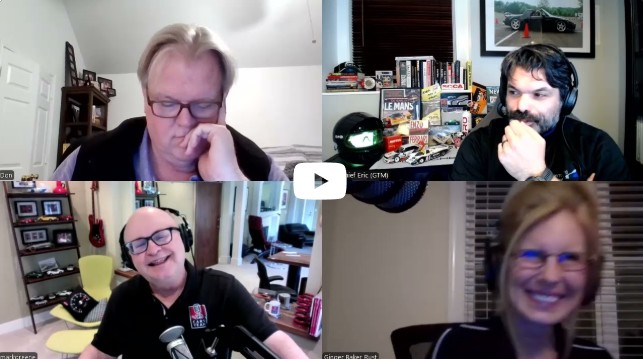
All of our BEHIND THE SCENES (BTS) Break/Fix episodes are raw and unedited, and expressly shared with the permission and consent of our guests.

Learn More

Evening With A Legend (EWAL)

Evening With A Legend is a series of presentations exclusive to Legends of the famous 24 Hours of Le Mans giving us an opportunity to bring a piece of Le Mans to you. By sharing stories and highlights of the big event, you get a chance to become part of the Legend of Le Mans with guests from different eras of over 100 years of racing.

We hope you enjoyed this presentation and look forward to more Evening With A Legend throughout this season. Sign up for the next EWAL TODAY!

After a successful run in IndyCar and a stint in IRL, Adrian transitioned to sports cars in 2006 with Honda, racing in Grand-Am and the American Le Mans Series. In 2007, Honda orchestrated his debut at Le Mans in an LMP2 prototype with Team SciTech. “Le Mans is my favorite Racetrack – Fast, Smooth, and Unforgiving. I prepared by riding a scooter corner to corner, taking pictures of buildings and landmarks to memorize braking points.”

That preparation paid off. Adrian qualified the car on pole and finished second in class – making history as the first Mexican driver to podium at Le Mans since the 1960s.


From LMP2 to LMP1 with Aston Martin

In 2010, Adrian returned to Le Mans in Aston Martin’s LMP1 program, finishing fifth in class and sixth overall. But the race was far from easy. “Harald Primat had to drop out mid-race, and I drove nearly four hours straight through the night. It was peaceful, surreal – like diving a night.”

His discipline and physical conditioning, honed during his IndyCar days, allowed him to push through exhaustion and maintain pace in the dark.

Photo courtesy Wikipedia, By Brian Snelson – originally posted to Flickr.

Adrian’s 2011 Le Mans campaign with Aston Martin’s AMR-One prototype ended in heartbreak. The car failed just one lap into the race due to engine issues. “It was a tough day for the whole team. Both cars retired almost immediately”


A Graceful Farewell in GT

In 2012, Adrian returned for his final Le Mans in the GTE Pro class, driving an Aston Martin Vantage GT. Despite never having raced GTs before, he adapted quickly and finished third in class. “GTs were the most challenging. The car moves more, and you have to trust it. But I worked hard and stayed within two-tenths of my teammates.”

Photo courtesy of Agencia Reforma

That race marked the end of Adrian’s professional driving career. He took the checkered flag and retired on a high note.

Adrian’s insights into endurance racing reveal the mental and physical demands of sharing a car, managing fatigue, and adapting to changing conditions. “You’re not just driving – you’re part of a team. You have to compromise on setup, seating, everything. And you have to be ready to perform, even at 4 a.m. in the rain.”

Photo courtesy Adrian Fernandez

Adrian Fernandez’s story is one of grit, adaptability, and relentless pursuit of excellence. From sleeping in train stations to standing on the podium at Le Mans, his journey embodies the spirit of motorsport. “I’ve never crashed at Le Mans. I always drove with respect, focus, and love for the race.”


ACO USA

To learn more about or to become a member of the ACO USA, look no further than www.lemans.org, Click on English in the upper right corner and then click on the ACO members tab for Club Offers. Once you become a Member you can follow all the action on the Facebook group ACOUSAMembersClub; and become part of the Legend with future Evening With A Legend meet ups.


This content has been brought to you in-part by support through...

Junior Dragster: Abigail Cole

Abigail Cole is a 13-year-old Junior Drag Racer. She has a 5-year-old Rottweiler named Bronco. Her family has a few family businesses, and she is a shareholder in one. She is a homeschooled student currently in 8th grade. Outside of racing, she trains in AKEA. She loves reading. Skateboarding with Dad is tons of fun. When the off-season allows it and Mother Nature plays nice, she enjoys skiing and snowboarding. Rock climbing is a fun challenge. She loves to bake and is a decent cook. She can powder coat, sand blast, weld, work on the lathe, and she is learning to engrave and has taken classes on how to do most of these things, including software and design.

How she got into Drag Racing

Her mom actually thought she was going to have me at the drag boat races. Dad crewed for good friends of theirs and then started racing his own boat when she was almost two. When she was three, her parents took her to Sea Fair in Seattle on Thursday, where she watched the hydroplanes, toured the pits, and climbed around an Army helicopter. The very next day, they went to the NHRA Northwest Nationals at Pacific Raceways.

Photo courtesy Abigail Cole; Social Media @Abigail629Racing

She met The Sarge, sat in his Army car, and made up her mind that drag racing was for her. As they went to sit in the stands and watch what she called “shaky cars,” she saw the display of junior dragsters. She got to sit in one and didn’t want to get out! they went back multiple times, and she just had to have that purple dragster with the fairy on it. For the next two years, all she talked about was that car, so Dad bought her a HalfScale junior that she runs today.

Watch the livestream

In the episode host Lyubov Ozeretskovskaya (@LoveFortySix) interviews 13-year-old junior drag racer Abigail Cole. The discussion covers Abigail’s introduction to drag racing at age three, her experiences, preparation routines, and the support from her family. Abigail shares her journey from her first race to winning a championship at her home track in Washington and becoming part of the JCM Main Family Protein team. They discuss the challenges and learnings she faces, as well as her passion for various hobbies like welding, karate, climbing, and baking. Abigail also emphasizes the importance of maintaining a positive mindset and having fun in racing. The episode highlights her future aspirations to go professional in drag racing and her dedication to inspire more girls to enter the sport. So buckle up – Screen to Speed starts now!

Tune in everywhere you stream, download or listen!

Listen on Apple
Listen on YouTube
Listen on Spotify

Highlights

Skip ahead if you must… Here’s the highlights from this episode you might be most interested in and their corresponding time stamps.

  • 00:00 Meet Abigail Cole: Junior Drag Racer
  • 02:32 Getting Hooked on Drag Racing
  • 05:07 Balancing Racing and Life
  • 06:56 Training and Preparation
  • 08:58 Hobbies Beyond Racing
  • 11:50 The Racing Community and Team Dynamics
  • 17:16 Breathing Exercises and Nervousness
  • 17:44 The Purple Dragster Story
  • 18:50 Fun Questions and Quickfire Round
  • 21:15 Future Plans and Aspirations
  • 22:52 Plans for the Season and Beyond
  • 25:59 Promoting Racing for Girls
  • 28:23 Lessons Learned from Racing
  • 30:31 Social Media and Online Presence
  • 32:48 Inspiring Message for Future Racers
  • 35:00 Conclusion and Farewell

Transcript

Crew Chief Brad: [00:00:00] Welcome to Screen to Speed, powered by Init eSports. In this podcast, we dive into the journeys of remarkable individuals making waves in sim racing and bridging the virtual with the real. From the thrill of digital circuits to the roar of real life racetracks, we explore the passion, dedication, and innovation that drives the world of motor sports.

We’ll hear from athletes, creators, and pioneers sharing their stories, insights, and the powerful ways sim racing is connecting communities and creating pathways into motor sports. So buckle up Screen to speed starts now.

Lyubov Ozeretskovskaya: Hi everyone. Welcome to need talks. Uh, happy to see everybody here on evening. Um. Who’s living in the United States again? Morning today. Um, please [00:01:00] welcome Abigail Cole. She’s a 13 years old, uh, junior drag racer. Um, Abigail, welcome to our Inid Talks.

Abigail Cole: Thank you.

Lyubov Ozeretskovskaya: So let’s start, uh, how you get into this, uh, racing and, uh, also.

Tell us a little bit about your family. I know that you got a dog. Uh, I think we’re going to talk about this as well because I got dog and I really like them. Um, so tell us more about your family, first of all.

Abigail Cole: Yeah, so we are a family of three. It’s me, my mom, um, plus my dog. His name’s Bronco, and he is a five-year-old Rottweiler.

Lyubov Ozeretskovskaya: Mm-hmm. That’s great. Um, do you like to play with, uh, with Bronco and also Bronco, maybe visit some of your races?

Abigail Cole: Yeah, he comes everywhere with us. Um, and of [00:02:00] course I love playing with him.

Lyubov Ozeretskovskaya: That’s really nice. So I got, uh, Shel. She is, uh, two years old. Uh, we doing some agility that’s like, uh, you know, like rally uh, together.

So we doing some, uh, jumps, uh, tunnels and other stuff together, so we’re running. Um, and yeah, really like, uh, my dog, we always, uh, walk. We, I always, uh, like took her with me. That’s really cool. Um. So how you actually get into the drag racing?

Abigail Cole: Yeah. So I got, um. Hooked on it. When I was three, my parents took me to Sea Fair in Seattle on Thursday, and I watched Hydroplanes and I climbed, is that in an Army helicopter?

And then the very next day we went to NHR North Regionals. Mm-hmm. At [00:03:00] Pacific Race. So I was just my home track and I met Tony Schumacher, the Sarge, and I sat in his army car and that was kind of what. Got me hooked on drag racing. Um, I saw the display of juniors and sat in one of those, and of course I kept going back and did not wanna get out.

Mm-hmm. Um, and so for the next two years, that’s pretty much what I talked about. So that’s when we bought my half scale juniors that I rent today. Um, so that’s the car that I’ve had my whole career.

Lyubov Ozeretskovskaya: Mm-hmm. Um. Hows actually there was for you, you know, to choose the drag racing, uh, not ovals or like, uh, dirt ovals, uh, which are really popular in the United States and, uh, maybe some road racing as well.

So what’s, uh, the biggest thing which you really like about drag racing?

Abigail Cole: Um, I don’t know. The comradery is a awesome and drag racing, but [00:04:00] I was also never really introduced to. The other aspects of racing, um, besides boat racing, which my dad races a boat. He started that when I was about two. Mm-hmm. But you can’t race a boat until you are, it’s either 15 or 16.

Um, so that wasn’t exactly an opportunity for me.

Lyubov Ozeretskovskaya: Mm-hmm. That’s awesome. Also, can you tell me what feelings you, you got when you first time race it?

Abigail Cole: You know, um, I was still really young and I got super nervous. Um, but I’ve kind of come over that and it’s a more, I get nervous for the competition wise, but not necessarily driving.

Um, as soon as we started that car when I was little, um, I kind of was just ready to go. Um, but now I’m mixture between nervous and exciting. Mm-hmm. Um. Feelings there. So, yeah.

Lyubov Ozeretskovskaya: Yeah. So you, [00:05:00] uh, get used to the speed and, uh, just, uh, having fun with it. Yeah. Yes. Yeah. That’s nice. Um, so can you tell me, how does it feel for you?

So, being 13 years old, uh, girl and racing around, uh, the country, um, travel and, uh, doing all the stuff and, um, also balance with, with everything.

Abigail Cole: Yeah, so it’s, it can be hard at times. ’cause I mean, last trip we were on the road for two months and, um, it’s a lot to deal with, but it’s doing what I love and, um, I get to race.

So I’m happy with that. Um, and we, we traveled quite a bit. Um, we’ve gone as far as Texas, Oklahoma, Colorado, and we’re here in Washington, so yeah.

Lyubov Ozeretskovskaya: Yeah. Nice. Uh, so you actually enjoy the traveling part and racing, uh, yes. [00:06:00] Together. That’s really nice. I also, yeah. Uh, when I did, uh, so I started from karting, uh, when I was nine.

Um, so we’ve been, uh. On card circuit together with my dad and, uh, you know, all the time, uh, driving the car to this track. It, it was so exciting. Uh, you just, uh, woke up in the morning and like, oh, great, I’m going to, uh, race. I’m going to practice. That’s really nice, uh, feeling and definitely. And, uh, then I travel quite a lot.

Uh, when I did some open dealers, um. So I went to Malaysia. There was like, you know, 10, 10 hours flight. It, it was a horrible, uh, real long flight. Uh, the longest my life, I think. Um, but I like to race, uh, sipan. It’s a great circuit. Definitely. Um, so can you tell me how do you prepare to race, uh, like mentally and physically?

What exercises you doing, uh, what’s your routine looks like? [00:07:00]

Abigail Cole: Well first I do reaction time stuff. So we have a little simulator tree thing. Um. That brings down the tree. Mm-hmm. So I get to work on my reaction times there. And then we have a bunch of different exercises for other ways of reaction time as well.

Um, and then mental side of it, I have dove deeper into that recently. Um, whereas books, audiobooks and that kind of stuff, and I’m actually in a mental strength and mental toughness class right now. Mm-hmm. So I’m getting a lot of exercises from that and working on that a little bit more.

Lyubov Ozeretskovskaya: Mm-hmm. That’s great.

Also, I just, uh, read your bill and, uh, you’ve learned to do so many cool things like welding and powder coating. Uh, so tell me what’s your favorite and what do you like the most of it?

Abigail Cole: Um, that’s [00:08:00] really hard ’cause I like ’em all. Mm-hmm. Something with sandblasting, um, powder coating and working on the LA and all those kind of things all come together.

’cause I started making piston candles. Mm-hmm. So I would take, um. Old pistons, broken pistons, that kinda stuff from my dad’s engine builder, um, who was one of my sponsors and cleaned them up, sandblast ’em, powder coat ’em, and then we made little inserts so that the wax didn’t fall out everywhere. And then, um, on the lathe and then we would make candles in them and sell them.

So that was always really fun. And I’m still doing that. I just have kind of fallen off on that a little bit, being more involved in racing.

Lyubov Ozeretskovskaya: That’s really cool There. You got, uh, you know, some, uh, different activities outside of the racing. Not all the time. You can see the racing driver who’s doing like, uh, the welding and all the stuff.

That’s really awesome. Um, [00:09:00] you also mentioned, uh, then you’re doing some training at a KEA. So can you tell me more about this? And you also doing some climbing and baking. Like you, you, you got a lot of hobbies. That’s great.

Abigail Cole: I do, yes. So AKA, it’s the American Karate Esma Association. Mm-hmm. So we base more towards like self-defense, karate than anything.

And then ESMA is stick work. Um. So that’s always really fun. And then climbing. I love rock climbing. So fun. Um, unfortunately I don’t have a lot of time for all of this, considering how much we’re on the road. Um, and then of course the baking, the cooking when we’re at home. I try to do as much as I can of that during the holiday.

Um, always all the baking, so yeah. Definitely have fun outside of racing.

Lyubov Ozeretskovskaya: That’s nice. Uh, so you develop yourself in, uh, different side, [00:10:00] uh, sites. Uh, it’s really cool, uh, because you’re 14 years old. I think the, the world is really interesting for you. So you’re really curious about, uh, different stuff. Uh, it’s really nice.

Uh, I like when people, you know, jumping into. Different stuff. Uh, like I jump into agility with my dog and get a dog like, uh, one half a year ago. And that, that’s my first dog in the family. And I’m like, okay, let’s, let’s do the new hobby. Let’s jump into it. And I started like to learn from scratch and, uh, it’s really refreshing feeling.

Definitely. Um, okay. Uh, let’s return back a little bit and talk about your car. I know that your car got a name. Can you tell more about this? Uh, what’s the story behind this?

Abigail Cole: Yeah, so my car’s name is Lou. Um, it’s after my grandparents old Scotty dog. Um, I was really attached to her and she passed away. [00:11:00] I believe it was last year or the year before that.

Um. It kind of broke my heart. So I decided my car didn’t have a name at the time. Mm-hmm. And her name was Whitaker Lou Whitaker. Um, and so I decided to name it Lou after her.

Lyubov Ozeretskovskaya: Mm-hmm. Interesting story. And, uh, I think it means a lot for you. Definitely. Uh, yeah. I remember that, uh, when I race in open wheelers, uh, I had a formal masters, uh, which is a formal Bart uh, uh, car and, uh, named Jackson.

So it was, you know, quite aggressive and, uh, sounds good at the same time. So, yeah, also had a car with name. It’s, uh, kind of cute. Um, so what can you tell about, uh. Community in the drag racing in United States, like what it’s like to be 14 years old and girl in, in this, um, racing industry. [00:12:00]

Abigail Cole: Yeah. Um,

really the racing community is really,

the racing community is really. Dang, what’s the word?

Lyubov Ozeretskovskaya: Um, like, you know, friendly or may maybe not really.

Abigail Cole: Yeah. You could say friendly. Yeah. Um, but it really isn’t hard being a girl or mm-hmm. Young in the sport either. Um, because. It’s pretty much 50 50 from the girl boy standpoint as well there. And then I have, in racing, I have more stuff onto that.

Um, we own a parts business for juniors. Um, so I’m doing inventory, getting orders out. Mm-hmm. Um, selling the parts at the track and that kind of stuff as well, [00:13:00] so. That brings another aspect of racing into it as well. Um, so it’s not necessarily just the driving or the tuning.

Lyubov Ozeretskovskaya: Mm-hmm. Interesting. Uh, I was aware that in drag racing, actually more girls than in any other categories.

Uh, definitely. Uh, what’s in your opinion, uh, brings girls into that, like speed or community or everything together?

Abigail Cole: Yeah, I don’t really, I don’t know. Um, I would say same thing for everyone. Um, the community, of course, if you like, the general adrenaline rush, um, the competition. I personally love competition, so that’s, some of that is great about racing for me.

Mm-hmm. Um, but there’s so many different things that you can find in racing. Um, I am homeschooled, so, um. Racing is something that we bring into my schooling. So the [00:14:00] math in it, from measuring oil to doing my data and all of that, um, is a learning opportunity as well.

Lyubov Ozeretskovskaya: Mm-hmm. Uh, tell me more about your team.

How you’re working with your engineers, with kind of settings you maybe apply to the car, uh, and like how the work on the track looks for you.

Abigail Cole: Yeah. So, um, like I said earlier, it’s just the three of us. So my mom, my dad, and me. Mm-hmm. So obviously I’m the driver, um, and I do like the tires, the oil, the fuel, all of that kind of stuff.

And then my mom, she does all the video and picture taking stuff, and then I do data and then anything else. Mm-hmm. That’s more on the card does and kind of fills in the holes of what I don’t do.

Lyubov Ozeretskovskaya: Mm-hmm. Um, so speaking about team, uh, how’s the teamwork, uh, uh, brings, uh, good [00:15:00] positions for you? Like, did you, uh, do you remember any highlights, uh, races in your career?

Abigail Cole: So last year, um, I won the championship in my class at my home track here in um, Washington. And then I have two Wally, so pretty prestigious award there. Um, and then I, this year newly am part of the JCM Main Family Protein. Mm-hmm. So that’s super cool. Um, and then. Yeah. And so that the main JCM team mm-hmm.

Is pretty much, it’s just opportunity for mentoring and, um, pretty much any questions I have that comes to the mental side, the social media side, um, the actual racing. Um, I can go to them with any questions that I have.

Lyubov Ozeretskovskaya: That’s awesome. Congrats to you with the first [00:16:00] position. Uh, that’s great feeling. Thank you.

I think, um, how you handle the pressure, uh, during competition and, um, what’s your team looks like on a day, uh, when, when you got the race.

Abigail Cole: Um, well, I really try to stay outta my head as much as I can, but obviously why I am in the mental, um, classes and have all the books and stuff is because I’m not the best at doing that.

Mm-hmm. So I do get in my head, but I’ve found breathing really helps. Um. Mm-hmm. And I. Tried multiple different breathing exercises and stuff like that. Um, something that I’ve been trying newly is visuals visualization. Um, so just visualizing myself running the past and then going out there and doing it.

Usually before we started the car, I try to think about nothing, just so I don’t have to worry about anything. Mm-hmm. [00:17:00] I’m just. Not thinking. Mm-hmm.

Lyubov Ozeretskovskaya: So you focus on the, on track, on the car and, uh, like all stuff which, which happened with you in, in the moment. Right? Right. Yeah. Nice. Um. So that’s great, uh, that you doing some breathing exercises.

I think they help a lot. Uh, definitely. Um, and I think you have to continue to do this. Of course, we all get nervous when we, on the start of the race, that’s absolutely normal, uh, because, you know, entering the line pumps in your blood and, uh, you’re getting excited and all this thing, uh, things happening.

Um, it’s absolutely okay. Um. Can you tell me about the purple dragster? Uh, the, is it, is it Lou or. Different.

Abigail Cole: No. So that is actually, she’s aged out now. Mm-hmm. Um, but it’s one of my friend’s cars, but that is the first car that I sat in. So when I went [00:18:00] to that NHR race, um, when I was three, that is the car that I in.

And for a while that’s the car that I wanted. I wanted to have the purple dragster that has the ferry on it. Um, but. It. Yeah. Um, it’s really cute. So the person that just aged out of that, she just aged out and her name was Z. Um, but I literally was in love with that car. I had the bit, unfortunately I didn’t exactly get that car, but I love mine.

So, um, yeah.

Lyubov Ozeretskovskaya: That’s a really cute story also, uh, I hope you go on to get in the future top fuel, uh, dragster purple with ferry on it. It’s going to be awesome. Um, okay, uh, let’s do quick, uh, fun questions. Uh, if Luke could talk, what would she, uh, what would, uh, he [00:19:00] say? What do you think?

Abigail Cole: I’m sorry. Can you say that again?

Lyubov Ozeretskovskaya: Uh, if Lou could talk, uh, what would he say?

Abigail Cole: I’ve never been asked that before. That’s, um, I don’t know.

Lyubov Ozeretskovskaya: I know, maybe I’m fast, I’m furious. Something like this,

Abigail Cole: I don’t know. I think that she was just like congrat, well, not congratulate, but like. Wish me luck and like be positive things. Mm-hmm. Like stuff like that.

Lyubov Ozeretskovskaya: Nice. Uh, what’s your favorite snack? Uh, when you’re on the trek?

Abigail Cole: Ooh, that’s so hard. Um. Um, well a lot of times when we’re at home, my grandparents come out and my grandma always [00:20:00] brings like fruit and veggie tray.

Mm-hmm. So that’s always super nice to have. So I’d probably say fruit and veggie tray.

Lyubov Ozeretskovskaya: Alright. Uh, and, uh, tell me about the book you take to the race weekend. ’cause I know that you’re reading, uh, a lot.

Abigail Cole: Yeah, I, I read quite a bit. Um, I like, like fantasy sci-fi type books. Mm-hmm. Um, if I’m not reading the mental stuff mm-hmm.

Um, I have, I like the Harry Potters Hunger Games, um, more magic side of stuff too, so I. A lot of books. I have like two bookshelves full. Mm-hmm. Um, plus I borrow so much from the library that I wish I could fit in my room, but I just don’t have enough space. Um, but yeah. So the fantasy, sci-fi, fractured fairytale type things, um, yeah.

Lyubov Ozeretskovskaya: Mm-hmm.

Abigail Cole: Um, and I ha [00:21:00] I don’t have a favorite book. I, I’ve read too many, so that’s. Something that I could never choose.

Lyubov Ozeretskovskaya: So you actually just enjoy, uh, every book, which you read?

Abigail Cole: Pretty much. Yeah. Okay.

Lyubov Ozeretskovskaya: Um, so for the future, what do you think, what’s your dream, uh, sponsor to like, bring you to the top few, uh, Dr.

Drag, uh, career?

Abigail Cole: Um, I would love to go pro. Whether that’s top fuel. Mm-hmm. Um, funny car. Mm-hmm. Or I would love to do pro stock. Okay. Um, I think pro stock would be super fun, but really whatever I have the chance to do.

Lyubov Ozeretskovskaya: Alright. Um, what advice, uh, can you give to like girls and boys who’s starting, who’s also 14 years old, uh, because you got quite big experience already in this life with all traveling, different hobbies and all this stuff.

Abigail Cole: Yeah. Um, I’d [00:22:00] probably say just take it slow. I mean, don’t go too crazy. Don’t think that you’re gonna be perfect. Um, ’cause I mean, mistakes happen and, um, definitely breathe through everything and keep a good mindset. Mindset is very, very important, so stay positive.

Lyubov Ozeretskovskaya: That’s true. That mindset is so important, uh, because how you think that that’s how you actually see things and um, yeah.

If you see them from bedside, from negative side, you like things going to be bad for you. But if you see a little spark in, in bad stuff, it’s a really, uh, nice skill, uh, to have in this life. Absolutely agree with you, uh, in this and. Tell me about, uh, plans for this year, uh, which you got for this season, uh, and for [00:23:00] the future, maybe for the next, uh, three years or five.

Abigail Cole: So this season, I know I’ve got a big race coming up in Texas, the JDRL, Western Conference Finals. Um, and that in, I believe, an eight day race. Um, so a lot of races packed into those eight days. Um, but that’s usually about the biggest event that I have every year, so I’m super excited for that. That’s in, I wanna say like.

A month or so. Um, so coming up fast already, and then, I mean year, two year plans. Um, I don’t really have anything planned yet. Mm-hmm. Um, just ’cause I don’t know where I wanna go at this point. I, of course, like I said, I’d love to go pro. Um, I think I’ll, I’ll keep working on the junior step. Um, keep.

[00:24:00] Keep working on my mindset, keep working on all of that stuff, and, um, hopefully win some more races, win some more championships, um, some more wies, all the fun stuff. Uh, yeah, coming up we’ve got Western Conference finals and then of course the division seven, um, bracket finals, which I think is probably the second biggest race that I have every year.

So, yeah.

Lyubov Ozeretskovskaya: That’s nice. Uh, also, can you tell me, uh, if, uh, you know, outside of the being the racing driver, uh, what’s your dream, uh, job which you would like to have in the future? Like maybe, uh, working as an engineer or like doing some welding or some other stuff.

Abigail Cole: I’ve really never thought of that before.

Mm-hmm. Um, just ’cause I’ve always, um, thought about racing and hoping to go pro there, but [00:25:00] I don’t really know at this point. Um, I mean, I love all the shop work stuff, so. Mm-hmm. Maybe something in that direction. Mm-hmm. Or, um, I don’t know. If we could bring some sort of something with books into it ’cause mm-hmm.

I am a bookworm and would love to do something that entails books. Mm-hmm. Um, but shop work definitely. And then if I can do something on the side that’s books, that’d be so awesome. Um, but mainly drag racing.

Lyubov Ozeretskovskaya: Nice. So maybe you can, uh, write a book about, uh, your career in drag racing. Uh, we’ll see in the future.

I’m so excited, uh, because with all your experience, I think, uh, you got a really bright future and, uh, with all the positive mindset and uh, uh, mental, uh, stuff, which you are reading. It’s really cool. So, um. Can you tell [00:26:00] me, so you girl in the racing? Yes. And uh, me too. And what do you think how we can, um, develop the racing to get more girls into this, like in United States and in the rest of the world?

World as well?

Abigail Cole: You know, I really think that you just gotta spread the word. You have to kind of put it out there as something fun. Um, something that’s competitive, not just serious, because I feel like a lot of people see racing as super serious, which it can be at times, but, um. I think it’s important to have fun, um, because if you’re not having fun, there’s no reason to do it because it is just a sport.

I mean, until you get up at higher ranks mm-hmm. You don’t have to like, be totally serious. I mean, um, [00:27:00] but definitely put the word out there, whether it’s through word of mouth, so social media or anything like that. Mm-hmm. Um. But I really do hope that we can grow the sport more for everyone because, um, I think it’d be awesome to have more kids in it and, um, grow the sport.

Lyubov Ozeretskovskaya: Mm-hmm. That’s great. Uh, as you said. You know, always have fun. This is, uh, what I say to, to people on my streams and when, you know, people doing some racing and they get to series, uh, sometimes, uh, and yeah, so just, uh, the main thing is to have fun and, uh, yeah, for sure some things happen, uh, on the racing track or like in some racing as well, uh, which can upset you.

But, uh, I think you’re right with this. Um.

And[00:28:00]

I wanted to say something, but then I, I just forget because, uh, it, it’s so exciting that first time I, I got person, uh, who’s, uh, 13 years old and it’s really cool that you, uh, you know, doing a lot of stuff also.

All right. Um. What, what’s actually, uh, the best lesson, which, which you learned during this years in, uh, racing and, uh, in other activities?

Abigail Cole: Um, I’ve probably, Hmm. I’ve learned so many whether I’ve realized it or not. Um, and I’ve learned from my mistakes. So many, I made so many mistakes. Um, but. Lesson that I have learned.

Um,

you know, [00:29:00] probably that, like I said earlier, you can’t be super serious. You have to relax. Mm-hmm. And you have to breathe through it and you can’t get too mad, you can’t get too emotional about whether you win or lose. Um, obviously losing. Just not feel the best sometimes. Mm-hmm. But, um, you gotta learn to get through that and learn from what happened.

Let’s say maybe you were still on the light, maybe you were not paying attention, or I mean, some tracks you, there’s tons of planes flying over and this is something I’ve done. Mm-hmm. Maybe you were watching the planes and had a horrible time, but you just gotta learn to focus. You gotta. Breathe through it, like I said.

Um mm-hmm. And so I think that’s probably the biggest lesson I’ve learned, but I’m sure there’s so many that I didn’t realize I learned. Mm-hmm. It just kind of grew through it without. [00:30:00] Realizing that it was even the thing.

Lyubov Ozeretskovskaya: Mm-hmm. Yeah. I noticed that you kind of go in with the flow in this life and, uh, it’s really nice, uh, because sometimes, you know, uh, like that happened to me.

Unfortunately, my team who supported me in the open wheelers, they completely shut down the program. Uh, but then some racing happened, then streaming happened and all the stuff. So you just go in with a. Flow and, uh, actually enjoying your life and having fun. It’s, uh, the main thing I wanted to ask you about.

You mentioned, uh, that it’s really important to, uh, go with, uh, social medias. Do you enjoy to, um, like, uh, doing something for your Instagram and also please tell people where they can find you. Um, maybe you got some kind of blog or something else.

Abigail Cole: So we’re on Facebook and Instagram as Abigail Cole racing, along with our family race team, which is 6 2 9 racing, [00:31:00] and then on YouTube is 6 2 9 racing.

Um, that’s all we are there. Um, wait.

Lyubov Ozeretskovskaya: Mm-hmm. That’s nice. Do you actually enjoy to do posting? Do you, uh, like. Photos and other stuff of social medias, uh, like do you want to do maybe some reels, uh, YouTube channel in the future about the drag racing or about your life overall?

Abigail Cole: It really depends on my mood, on whether or not I wanna do photos.

Mm-hmm. Or wanna do a video as a race, a recap, whether I just wanna write something. Um, like I said earlier, mom does all of the videography and the photography. Um, and then she does most social media. I write a lot of stuff, but, um. I’m not on there a lot. Um, so she’s doing most of the posting. I’ll go on and respond to comments and stuff, [00:32:00] but she handles most of that.

Mm-hmm. Um, and I just come in a little bit, um, but. As of taking photos and stuff, like I said, it really depends on my mood sometimes. Mm-hmm. I’m like super happy about it and like, okay, let’s do this. And sometimes I’m just like sitting there with a frown on my face and I have to be told to smile. To smile.

Mm-hmm. Um, so, um. That’s always fun times.

Lyubov Ozeretskovskaya: I got you. Yeah. So sometimes you got a mood that you’re like, oh yeah, I don’t want to make any photos. Like, leave me alone. I feel that we all got, uh, that moment. Uh, definitely. Um, so last thoughts. Um. Maybe, uh, you can tell sentence, uh, which going to inspire girls in, uh, to jump into drag racing and, uh, we’re going to see a lot of, uh, girls in it [00:33:00] in the future.

Abigail Cole: Yes. Yes.

Lyubov Ozeretskovskaya: I really hope for that. Mm-hmm. So what the would, would be the like inspiring, uh, message from you to girls. Hmm.

Abigail Cole: Um,

I would say, um,

I mean a lot of different sports have the competition, but I think that if you are really loving the competitive side is, is definitely probably the number one sport I would say for. Competitive stuff because mm-hmm. Um, of how competitive it can get. Um, but definitely if you enjoy speed, this is the sport for you.

Um, is so fun to go [00:34:00] so fast. I mean, at six years old I was going like 30 miles an hour and then I slowly moved up 50, um, 70, 80, um, and going. Like 82 miles an hour at 13 is absolutely insane. Mm-hmm. Um, especially with the size of the car. So it’s really fun for that side of things as well. So, um, I mean, and like I said earlier, if you’re getting into this stay focused, like don’t.

Freak out too much, like don’t overthink it. Mm-hmm. Which that’s something I really struggle with. I overthink everything. Um, so don’t overthink and just, just stay having fun with it. Mm-hmm. If you’re not having fun, I don’t see why you should be doing this.

Lyubov Ozeretskovskaya: Yeah. I think we all thinking sometimes it’s, uh, it’s fine.

Yeah. All [00:35:00] right. That, that was really nice, uh, to meet you. That was, uh. Cool to talk with you. Uh, wish you good luck for your racing career and uh, for other hobbies which you got, and, uh, be with this, uh, spark in your life for the future. Thank you so much guys. Thank you for watching. Uh, there was Abigail Cole with us, uh, young drag racer and absolutely amazing person.

Thank you Abigail, to being with us. Thank you for having me. Yeah. Bye guys. Thank you.

Crew Chief Brad: Innate eSports focuses on SIM racing events in digital tournaments. They bring eSports content to fans and sponsorship opportunities to brands while maximizing audience reach across multiple sports industries and platforms. eSports is a woman-led company [00:36:00] where diversity, equity, inclusion, and accessibility is in their DNA and their platform aims to combat bullying and cheating to help make the eSports world as safe and fair as possible.

To learn more, be sure to log onto www.initesports.gg or follow them on social media at init eSports. Join their discord, check out their YouTube channel, or follow their live content via switch.

Crew Chief Eric: This episode has been brought to you by Grand Touring Motorsports as part of our Motoring Podcast network.

For more episodes like this, tune in each week for more exciting and educational content from organizations like The Exotic Car Marketplace, the Motoring Historian, break Fixx, and many others. If you’d like to support Grand Touring Motor Sports and the Motoring Podcast Network, sign up for one of our many sponsorship tiers at www.patreon.com/gt Motorsports.

Please note that the content, opinions and materials presented and expressed in this episode are those of its creator, and this episode has been published with their consent. If you have any inquiries about this [00:37:00] program, please contact the creators of this episode via email or social media as mentioned in the episode.

Abigail’s car is a HalfScale Outlaw Junior Dragster. Powered by Nic Woods. Which is named Lou. Her home track is Pacific Raceways, commonly known across the nation as Seattle International Raceway. She races on weekends at home and on the road as much as possible.

In recent years, Abigail and her parents have worked really hard to build relationships and bring on sponsors, allowing them to travel and race starting in February and ending in October. In 2024, she raced in Washington, Arizona, Texas, and Nevada at 7 racetracks. They also own 629 Racing Parts and Support, so she can often be found slinging parts, doing inventory and getting orders out.

Copyright INIT eSports. This podcast is now produced as part of the Motoring Podcast Network and can be found everywhere you stream, download or listen! 


More Screen to Speed…

Dive into the journeys of remarkable individuals making waves in sim racing and bridging the virtual with the real. From the thrill of digital circuits to the roar of real-life racetracks, they explore the passion, dedication, and innovation that drives the world of motorsports. They hear from athletes, creators, and pioneers sharing their stories, insights, and the powerful ways sim racing is connecting communities and creating pathways into motorsports.

INIT eSports focuses on sim racing events and digital tournaments. They bring eSports content to fans and sponsorship opportunities to brands, while maximizing audience reach across multiple sports, industries, and platforms. INIT eSports is a woman-led company where Diversity, Equity, Inclusion and Accessibility is in their DNA, and their platform aims to combat bullying and cheating to help make the eSports world as safe and fair as possible. To learn more, be sure to logon to www.initesports.gg today or follow them on social media @initesports, join their discord, check out their YouTube Channel, or follow their live content via Twitch.

At INIT eSports, founder and CEO Stefy Bau doesn’t just settle for the ordinary. She creates extraordinary experiences by producing thrilling online competitions and real-life events that transcend the boundaries of the eSports universe. And she’s here with us on Break/Fix to share her story, and help you understand why you need to get more involved in the world of eSports. 

Tune in everywhere you stream, download or listen!

Listen on Apple
Listen on YouTube
Listen on Spotify

Studebaker at the Brickyard: A Forgotten Chapter of Indy 500 History

When you think of Indianapolis 500 legends, names like Duesenberg, Miller, or Offenhauser might come to mind. But tucked away in the annals of racing history is a surprising contender: Studebaker. Known more for its solid middle-market cars than for motorsports glory, Studebaker made a brief but fascinating foray into the Indy 500 during the early 1930s – an era defined by innovation, grit, and a touch of corporate bravado.

Photo courtesy of Andrew Beckman, Studebaker National Museum

Studebaker’s founders were no strangers to speed. In 1881, the Studebaker brothers famously raced horses down Lafayette Street in South Bend, Indiana – earning a fine and a place in local lore. That spirit of competition lingered as the company transitioned from wagons to automobiles, dabbling in early racing with EMF and Flanders models before stepping back to focus on reliability and reputation.

Tune in everywhere you stream, download or listen!

Listen on Apple
Listen on YouTube
Listen on Spotify

But by the late 1920s, Studebaker was ready to re-enter the fray. The introduction of the President 8 engine in 1928 – a robust inline eight-cylinder powerplant – marked a turning point. Studebaker began endurance testing at Amatol Speedway, logging 30,000 miles in under 19 days and proudly proclaiming, “Nothing on Earth has gone so far, so fast.”

Photo courtesy of Andrew Beckman, Studebaker National Museum

The 1930 rule changes at Indianapolis opened the door for production-based entries. Studebaker engineers seized the opportunity, fielding the Rompthie Special and the Russell 8 – both powered by modified President engines. Though not factory-backed initially, these cars showed promise, with Snowberger’s Russell 8 finishing 8th in 1930.

By 1931, Studebaker was all in. The Hunt Special, a stealth factory project, joined the grid alongside returning entries. Snowberger stunned the field by taking pole position, proving Studebaker’s engineering chops could rival the best.

Spotlight

Andrew Beckman has been with the Studebaker National Museum since 1999 and currently serves as Archivist. He previously worked at the Sheboygan County Historical Society in Sheboygan, Wisconsin, and the Wade House State Historic Site in Greenbush, Wisconsin. Mr. Beckman hails from Manitowoc, Wisconsin, and holds a BA in History from the University of Wisconsin- Green Bay. In 2004, he completed the Modern Archives Institute at the National Archives and Records Administration in Washington, D.C. In 2009, he earned his mid-level certificate in Collections Preservation from the Campbell Center for Historic Preservation Studies in Mount Carroll, Illinois. Mr. Beckman is the author of The Studebaker National Museum: Over a Century on Wheels, and Studebaker’s Last Dance: The Avanti, and is a columnist for the Studebaker Drivers Club magazine, Turning Wheels.
In addition to his duties at the Studebaker National Museum, Mr. Beckman is a member and Past President of the Society of Automotive Historians. He also serves as a commentator for The Henry Ford Museum’s Motor Muster and Old Car Fest.

Synopsis

This episode of The Logbook, our History of Motorsports series, explores the history of Studebaker’s involvement in the Indianapolis 500 car racing events during the early 1930s. The presentation recounts Studebaker’s brief but significant presence in motorsports. Andrew Beckman from the Studebaker National Museum delivers detailed accounts of the development and performance of Studebaker-powered race cars, focused on the company’s efforts in the 1932 and 1933 races, as well as the ongoing impact and legacy left by these vehicles. Beckman also discusses the technical development of the cars, the challenges faced by Studebaker due to economic constraints, and the eventual disposition of the race cars. The presentation is heavily informed by Studebaker’s corporate archives, museum collections, and contemporary race accounts.

Follow along using the video version of the Slide Deck from this Presentation

Transcript

[00:00:00] Brake Fix’s History of Motorsports series is brought to you in part by the International Motor Racing Research Center, as well as the Society of Automotive Historians, the Watkins Glen Area Chamber of Commerce, and the Argettsinger family.

Studebaker at Indianapolis. While Studebaker is rarely the first name one thinks of when discussing motorsports, the company had a strong yet brief presence at the Indianapolis 500 in the early 1930s. Studebaker laid the groundwork with the introduction of the President’s inline 8 cylinder engine in early 1928.

The advent of the Indianapolis 500’s 1930 rule changes opened the door for production based entries, and the president’s rugged eight powered a pair of private entries. These Studebaker engine specials showed promise and led to the development of Studebaker’s corporate team. This presentation will detail the origins and evolution of Studebaker powered race cars beginning in 1930, with a special emphasis on the company’s factory backed [00:01:00] campaigns in 1932 and 1933.

Additional focus will be placed on the technical development of Studebaker race cars, as well as the post Studebaker disposition of the team cars and their present day status. Sources include Studebaker’s corporate archives and image collection at the Studebaker National Museum, plus period publications and race accounts.

Additional data is drawn from secondary sources profiling the Studebaker team, plus owner research compiled during their stewardship of the cars. Andrew Beckman has been with the Studebaker National Museum since 1999 and currently serves as archivist. He previously worked at the Sheboygan County Historical Society in Sheboygan, Wisconsin and the Wade House State Historic Site in Greenbush, Wisconsin.

Mr. Beckman hails from Manitowoc, Wisconsin and holds a BA in History from the University of Wisconsin Green Bay. In 2004, he completed the Modern Archives Institute at the National Archives and Records Administration in Washington, D. C. In 2009, he earned his mid level certificate in Collections and Preservation from the Campbell Center for [00:02:00] Historic Preservation Studies in Mount Carolina, Illinois.

Andrew Beckman is the author of the Studebaker National Museum, Over a Century on Wheels, and Studebaker’s Last Dance, the Avanti, and is a columnist for the Studebaker Drivers Club Magazine, Turning Wheels. In addition to his duties at the Studebaker National Museum, Mr. Beckman is a member of and past president of the Society of Automotive Historians, and he serves as a commentator for the Henry Ford Museum’s Motor, Muster, and Old Car Fest.

So we will begin our final afternoon session with Andrew, who’s going to be discussing Studebaker at the Speedway, so please welcome. Andrew Beckman. Thank you for having me today. It’s my first time out here at the conference in general and also my first time to this part of New York. It’s absolutely beautiful to answer Kip’s question.

He asked me beforehand. Yes, Studebaker did race at the Indianapolis 500. So you’re gonna have to stay for the whole thing now. I’m sorry. We’re merely conducting an exacting test of our cars stated a Studebaker executive on a fine spring day in 1933. The executive was Studebaker’s [00:03:00] chief engineer, Barney Roos.

He was standing at the Indianapolis Motor Speedway in front of the team of Studebaker race cars. His full quote was, as was our policy last year, Studebaker is not trying to win the Indianapolis race. We are merely conducting an exacting test of our cars. He went on to say he had a bridge to sell you in Brooklyn and he also had some land in Florida you might be interested as well.

For if anyone believes that anyone entering a race is not trying to win, well, certainly wouldn’t lend them any money. Now, Studebaker is, I realize, not the first name that comes to mind when you speak of motorsports. In fact, it’s not even the first name that comes to mind if you speak of motorsports from South Bend, Indiana.

Thank you, Ryan Newman, for that. But Studebaker, for its 114 years of vehicle manufacturing, had a very limited but very intense period of motorsports competition. Now this is somewhat of a surprise. You would think maybe the Studebaker brothers, the company’s founders, had something against motorsports. No, this was not the case.

In fact, Henry and Clemens Studebaker were avid horsemen. J. M., all the brothers, loved a fast race or so the day. In fact, in [00:04:00] 1881, J. M. had just acquired a new mount, and he felt that his horse was faster than his brother Clem’s. His brothers are wont to do. They took exception to this thesis, and they decided the only logical thing to do was to settle this on Lafayette Street in front of the Studebaker administration building in South Bend, Indiana.

Unfortunately, they passed by a local town marshal who immediately cited them for speeding and forced them to appear before the chief magistrate, who was also the mayor of South Bend. Despite a full throated defense of their actions, they were fined 2 in course costs and furthermore agreed never to do it again.

Again, if you believe that, well, I wouldn’t put too much stock in that. As Studebaker transitioned to the automobile age, the early Studebaker automobile history is not one of just building automobiles out of the Studebaker factory. They were essentially marketing cars produced by other upstart companies.

After all, Studebaker had the name recognition. They’d been around since the 1850s. They were the worldwide leader of horse drawn equipment. The new EMF models for Everett Metzger Flanders. That was the larger of the two models in the Flanders 20, given for its horsepower. Those as well as some Garford models and even one of their electrics [00:05:00] competed regularly in local contests throughout the early part of the 20th century.

The EMF in Flanders down all competing cars in the first sanctioned race meet of the season on Montgomery, Alabama’s track. And of course pointing you to where you could go out and buy one of these new race proven Flanders 20 and EMF 30 automobiles. Yet despite this early flurry of activity, Studebaker really stepped back from encouraging their cars in competition.

Studebaker was really more playing off their name, again, their reputation. You could go to your Studebaker dealer, you were going to get a solidly built car, you would pay a little more for it, they certainly weren’t competing with Henry Ford in the low price field, but you could count on getting a solid, middle priced car from Studebaker.

And indeed, their reputation spoke for itself. We have a 1919 Big Six in the collection that logged 475, 000 miles. Not as a company test vehicle, but as a privately owned automobile. And Studebaker felt this was noteworthy, hence they bought it back for inclusion in their collection. The first appearance of Studebaker at the Speedway was in 1924.

This deserves a bit of an asterisk here. The Studebaker Special No. 8, driven by Earl Cooper, actually placed second [00:06:00] that year. And I will point out the Studebaker components on this car right now. That would be the decal on the side here, and also the radiator badge. This is a Miller engine, Miller chassis body.

If you’re familiar at all with, uh, Indianapolis race cars, the rules formula for that time, these were all very specialized, high performance vehicles. And let’s face it, Studebaker’s 40 horsepower, light six engine was probably not going to cut it on the field that day. And Studebaker at this period too was in a bit of a crossroads.

They had, at one time, the top engineering team in the industry with Owen Skelton, Carl Breer, and Fred Zeder. They worked for Studebaker in the late teens. They developed Studebaker’s popular Big Six model. But they had a falling out with company executive Albert Erskine. He was actually the president at the time.

And they packed their bags and headed off to Chrysler. And did very well for Mr. Chrysler and his new corporation, which debuted in 1924. Studebaker also had a problem in the early 20s of, really, one of marketing. There was a survey done of the industry at some point and it figured out Studebaker had one of the narrowest price margins in the industry.

That is, from their least expensive automobile to their most expensive automobile. Erskine realized this, [00:07:00] but he also realized Studebaker needed more capacity. They needed larger factories. So starting in the late teens up to the mid twenties, he was trying to overhaul Studebaker’s plant complex. And when that was in place, he thought about reinvigorating the model lineup.

I had mentioned the Light 6 previously and the Big 6. Their middle priced model was called the Special 6. Let’s face it, from a marketing standpoint, these are not very stimulating names. Their marketing partner got it in gear in 1927. The Big 6 became the commander and certain models became the president.

The Special 6 became the dictator. It seemed like a good idea at the time. That’s a talk for another time. The Commander, however, and particularly the Commander Roadster with the three musketeers designed Big Six engine, it was noted for being an incredibly reliable engine. In terms of its engineering style, robust would be your words.

Someone had said that Studebaker’s engineering philosophy was there’s no substitute for cast iron, and if you can’t cast a glance at one of these engines, you’d be hard pressed to dispel that. Developed a massive amount of torque. It could churn along all day, Studebaker. Actually gave it full pressure lubrication in 1924.

And with that, they saw, well, we have this [00:08:00] very rugged automobile. Let’s go out and do some testing with it. We’ll do some racing. Again, these were more private events, not necessarily sanctioned by Studebaker, but certainly not exactly discouraged by the company heads either. This is at the Amatol Speedway in Atlantic City, New Jersey.

And we see a couple of commanders right there. And of course, I wouldn’t be showing you this picture if they did not win the race. And again, the cars held together very well. You got a very rugged, a very solid automobile with the Commander Big Six. They sent three more commanders back to Atlantic City in 1928.

And the orders were to complete 25, 000 miles as quickly as possible. The commander you see right there in front, the roadster, completed that task in 23, 000 minutes. Now, 23, 000 minutes is a bit of a tricky concept to wrap your head around. Anyone good at math in here? How long is 23, 000 minutes? Put it in days.

Anyone? Anyone? I see Luke furrowing his brow. I gotta tell you, the grade schoolers I give tours to figure this out a whole lot faster than you guys do here, but, uh, it comes out to 16 days. So for 16 days, day and night, these commanders lapped, Rain or shine, through mid [00:09:00] and darkness, and it was not running time.

The clock started when they started the first mile, and it stopped when they completed the 25, 000s. It was a new record, and in fact, Studebaker proudly proclaimed, Nothing on Earth has gone so far, so fast. Now as part of Albert Erskine’s grand plans for the company, marketing the product as one end, he had to do something about expanding Studebaker’s price reach.

So with that, he acquired the Pierce Arrow Corporation in the late 1920s, I believe it was early 1928, to give Studebaker a luxury brand. He wanted to introduce a low priced model called the Erskine. Modestly named, one might say, but the Erskine VI, it had an incredibly handsome car designed by Ray Dietrich.

Unfortunately, it had that fatal flaw in the automobile industry of being both overpriced and underpowered. And the Erskine was not a success in the market, especially when this new product from Chrysler and Plymouth and Ford’s Model A came on the scene later. The Erskine really never had a chance, and unfortunately, it disappeared from the landscape just a few years later.

On the other end of the line, however, was Studer’s President 8. The President, as I mentioned, initially started as a upscale model of the Big 6 when they renamed that line. But for [00:10:00] 1928, the all new model F A President came out, and with it came a fresh engine design. 313 cubic inch inline eight cylinder engine, fresh off the drawing boards from new chief engineer Delmer G.

Barney Roos. Mr. Roos had previously done stints Marmon. He had a good engineering mind, and he was The chief engineer that Studebaker was looking for at the right time. The President 8 was really a hot performer for the day, and kind of very out of character for Studebaker’s steady yet solid reputation.

And they immediately realized they had a pretty hot car on their hands. Back they went to the Amatol Speedway with a quartet of presidents. This time the goal was 30, 000 miles, in which the roads through up front there completed in 26, 000 minutes. So that’s about 19 days. Again, Studebaker was doing things that no other automaker was equal to able.

I believe Hudson went out and did a similar test, but they counted driving time instead of actually continuous running clock last time. And you got to think Studebaker was really on to something here. Erskine, in his mind, I think he was looking at going kind of the General Motors route, a [00:11:00] car for every person purpose, really expanding into the luxury market, and expanded Studebaker’s reach and awareness, trying to really rebrand Studebaker from that old horse drawn air manufacturer to someone who’s really bringing you some exciting automobiles.

Now the Studebaker President 8 might have sounded like an ideal power plant for the Indianapolis 500, and fortunately the rules at the time were such that that engine simply did not qualify. They had a maximum displacement of 91 cubic inches. And again, we hear the names Miller and Duesenberg bandied about a lot during talk of the 500 at that time.

Thankfully, there were no restrictions on displacement for the pace cars, and Studebaker was selected to serve as the pace car for the 1929 race, and also supplied a trio of official cars as well. And here we see the Pace car, you know, festooned as one would be, so there’s no mistaking, this is most definitely the Pace car.

Anyone identify this? I know an Indianapolis figure, a name that will sound familiar, and you’ll probably go, Oh, yeah. Anyone? Well, that would be Harry Hartz. And sitting behind the wheel is, if you get this one, I’ll give you 5 right now. Miss Anita Page, a star [00:12:00] of the screen, an actress, and she was actually appeared in an Academy Award winning movie, The Broadway Melody, available on Netflix, check it out tonight back at the hotel.

Now, back when I was in high school, some guy tooled around town in his Chevy Monte Carlo pace car replica, and apparently, I’m not sure if it came with the jacket and the hat and, you know, everything else, or if he stopped at the pro shop on his way out, but, I mean, there was no mistake in that car driving around Manitowoc, Wisconsin, and of course, I’m sure a lot of you remember the pace car replicas from the later 60s, early 70s, uh, at our Concord and South Bend, we had one of the I think it was early 70s Oldsmobile pace car replicas.

This is not a new concept. I came to learn when I was putting this talk together. Studebaker commissioned 30 replicas of the 1929 Indianapolis 500 President Roadster powered by the 115 horsepower Studebaker President 8 motor. This car possesses the speed and endurance so strikingly demonstrated by its record breaking performance of 30, 000 miles in 26, 326 minutes.

They weren’t wasting a beat on promoting that achievement. One of these cars still survives today, believe it or not. It was found, it had been repainted [00:13:00] several times, and the seller had actually promoted, Oh, you know, this is one of the Pace cars, replicas, and the guy who bought it was like, Yeah, sure, right, you know, you’re trying to boost the price a little bit.

Then as he’s stripping the paint, he found the unique paint scheme that was only supplied. On those 30 cars, so it’s good to know one of those is still with us. Well, ahead of the 1929 race, there was an announcement for rules changes for 1930. In particular, displacement was up to 366 cubic inches. Minimum weight was established, I believe it was 1, 750 pounds.

The riding mechanic came back and a few other choices to really open the door for stock engined vehicles at the Indianapolis 500. And as you might imagine, some people were looking at Studebaker’s new President 8. They said, this might be a pretty good idea to look into this as well. Now, this period at the 500, the early, the so called junk formula period, this was very much like open mic night at the Indianapolis 500 for a couple years with all the different manufacturers.

In 1930, you had Buick, Stutz, Oakland, Chrysler, this along with a couple of Maseratis, Mercedes Benz chassis car. Literally, [00:14:00] the quote unquote junk formula where, you know, run what you brung. Looking through the pictures before putting this together, and there’s the picture of the Stutz. And it literally looks like a guy went and got a Stutz Roadster, took the fenders, the splash aprons, running boards off, and painted a number on the side, and he was able to qualify and race.

The Studebaker entries for that year, a quintet of Studebaker engineers got together, said, hey, we can build an Indianapolis 500 race car. They called it the Rompthie Special. That may sound like an odd name. Well, it was the first initial of the last names of the engineers, and they added an E on the end to make it at least pronounceable.

But we see J. C. McDonald, that’s the M in Rompthy, as the driver. And William Richards, the R in the Rompthy, as the riding mechanic. And another name, a privateer, if you will, that was Russell Snowberger in the Russell 8. And he also competed with his, Paul Rice’s riding mechanic, and they qualified for the 1930 Indianapolis 500, one of the many stock blockers there.

And here we see a Russell 8 motor. Studebaker’s present engine was given the usual massaging. You see the magneto down there, four carburetor intake, raised [00:15:00] compression ratio. The standard hot rodding features to get a little more output out of the engine. So how did they do? Well, the Rompton qualified 13th.

It finished 13th. And the Russell 8 qualified 7th and finished 8th, the top finish of the stock block entries. Billy Arnold was actually the winner that year, having the lead from start to finish. But to give you an idea of how the race was going, the first year of the junk formula, In 1929, your slowest, fastest qualifying speed was about 18 miles an hour.

18 miles an hour spread on there. But you’ll see the stock blockers are trying to figure things out as the years go on. So fast forward to 1941, we’ve got the Russell 8 coming back, the Rompsey Special has been renamed the Richards Special because William Richards bought out his partners and set out to campaign again.

And there’s a new entrant, the Hunt Special. This was really a Studebaker, if I could say Skunk Works Project, an off books project. Studebaker was kind of eyeing up the 500, but they weren’t 100 percent sure they wanted to go in and have a grand failure. Looking ahead at what Ford V8s and the Miller component there a few years later, trying to get those cars to work well.

Studebaker wanted to hedge their bets, so they [00:16:00] commissioned George Hunt, their director of testing, to create a Studebaker powered car for the 500. Instead of a home built special, they contracted Herman Ringling from Indianapolis to supply the body and chassis, and then they used the Studebaker President engine.

Which, conveniently, was up to nine main bearings for the 1931 model year. Wouldn’t they have loved to have nine main bearings in 1930? Well, they added that for 1931, and continued to raid the rest of the Studebaker parts bins for the remaining parts. The brakes came from the Studebaker Dictator and Studebaker 6 models.

The rear axle came from a 29 President. And other odds and ends, gauges and whatnot, were sourced from other parts bins. The big news? Russell 8 took the pole in 1931. Now, the Duesenberg and Miller guys didn’t just stay home that year and say, you know, we’re not going to sit there. No, they were there.

Russell 8, with his home built Studebaker President 8 engine, took the pole, finished 5th. Richards, 12th, had some problems. I believe they had a ruptured fuel tank that year and finished 20th. And the Hunt special, steady yet unspectacular, managed to finish 18th. Now Studebaker was satisfied. They were convinced that they could really make a go [00:17:00] of this.

What a go they did for 1932, the company commissioned four additional Studebaker specials. They went back to wriggling and said, we need four more what you built for us in 1931. And again, they were outfitted in the Studebaker shops. This is actually the Studebaker engineering building in South Bend, Indiana.

See, Tony GoTo will hear a little more from him. In a minute right there, as the Studebaker specials took shape. Studebaker advertised these cars as 85 percent stock. This is also Depression Era II. They were trying to say, you know, we’re being sensible with our expenditures, but this is, as Mr. Roos would say, the next year, just an engineering test of our car, for cars that we’re never going to produce for the public anyway, but you get the point, went on Sunday, sell on Monday.

Certainly that was playing into their thinking as well. Here we see the Studebaker team at the 1932 Indianapolis 500. And for drivers, they had quite an impressive roster. Of course, we mentioned Tony Gulotta. We see him right there in the 25 car. Other drivers included Luther Johnson, another Studebaker test driver.

Cliff Berger, who was a Hollywood stuntman and also was an available free [00:18:00] agent. Peter Kreese was a building contractor by trade who also, as I said, he took a month off each year so he could go racing at Indianapolis. As one does, apparently. Most of my friends who are building contractors, they go out on their boat on the lake in northern Wisconsin.

Routing out the quintet was Zeke Meyer, who had experience as an airline mechanic and had been dabbling in racing, I believe he started racing in Indianapolis in 1926. Just from a visual standpoint, you know, you’re from Indiana, home of Studebaker, you buy your ticket to go sit down at the Grandstand, the 500, and you see Studebaker Special, Studebaker Special, Studebaker Special, Studebaker Special, who’s that?

Oh, Duesenberg, and someone else. Number 18 car sitting in the pits here and one of my coworkers was looking at this picture and they said, What’s that? And I said, Well, that looks to be the men’s room. My coworker, Joe McCoy, our assistant director said, Where’s the ladies room? I did not have a good answer for that because I could not find it anywhere.

So at the start of the race, Studebaker drivers were really stressed. It’s important to finish the race. Again, they’re not gonna just pull over and do leisurely drives around the track. There’s definitely competition going on. But they were instructed, try and finish the race. There’s [00:19:00] much more value in that.

So, with a very moderate, aggressive standpoint, and they knew that the Studebakers would hold together, whereas let the other cars break themselves. Ultimately, this strategy proved to be successful. Studebaker did not win the Indianapolis 500 in any of the years they competed, I’m sorry to say. However, they did finish 3rd in 1932, which year started 10th, 3rd, and the other teams shook out.

1315, solid showings and all, and also a rather lucrative year for Studebaker. 1932, they netted 11, 435 in prize money. So for not spending a lot on their specials, was it a profitable event? Is any race unprofitable for the company? But still, I thought that was a fairly impressive return. They could have gotten very little, had things gone poorly for them.

So what do you have in store for 1933? Well, if you aren’t changing something, if someone else will and they’re going to catch you, and Studebaker definitely had it on their minds that they needed to up their game for 1933. What that brought was new streamlined bodies. They used scale models just like these, actually with the aid of the University of Michigan’s wind tunnel, to determine what could be a more aerodynamic shape.

And this is [00:20:00] where you can tell the competitorship is starting to show a little bit with the Studebaker engineers. Even though they said their cars were 85 percent stock and, oh, everything’s the same as last year, they just upped it, no. No, they didn’t. Because we have in Studebaker’s part number list here, 92 in Studebaker language means the 1933 Speedway President.

Notice the name they applied to their grandmother, the Speedway President. In 1931, they had a Speedway package for the President Roadster with a little higher output. Certainly making the most they could on this campaign. These entries, 92 race, these are the race only parts for the 1933 model year. And you come down here, cylinder, part number 180607.

Those were the race only blocks for the 1933 race. They had a few modifications. They also had special heads, special camshafts. And these were only used in the 1933 model year. Indianapolis race cars. This did not cross over to any production model. If anyone sees a Studebaker straight 8 block that has a casting number, please call me day or night.

Feel free to stop by the house. I’ll give you the address. The dog will bark a little bit. Don’t worry about that. He’s friendly. But there are only two of [00:21:00] these blocks known to exist. And we see the new streamlined bodies here on the Studebaker mounts. You notice only four or five cars got the new body.

Studebaker had chosen to sell one of the cars, the 47 car, and it was actually technically owned by Ab Jenkins. Another noted racing driver who had actually done many campaigns for Studebaker, particularly for endurance racing. And he was actually slated to be one of the drivers for the 1932 Indianapolis 500.

Unfortunately, he found closed course driving was not really to his strengths. He much preferred endurance driving, so eventually he relented the driver’s seat to someone else. But as such, because Studebaker did not own the car, they weren’t paying for a free body for Mr. Jenkins, so only the four cars here got the new coachwork.

So how effective was this? Well, the Studebaker bodies and the extra engine components bought them an extra three to five miles an hour of qualifying speed, which was fairly significant. As I mentioned before, the rest of the field was upping their game. Spread from 1931, 16 miles an hour from fastest to slowest.

For 1932, it was six miles an hour. For 1933, it was nine miles an hour. Now, compare this to the last year of [00:22:00] the very exclusive 91 cubic inch formula. That was about a, uh, 18 mile an hour top to bottom speed. So you were seeing a lot more competitive racing from the junk formula, really achieving what they had hoped for.

And this shot, of course, in front of Indy’s iconic Gota. And representation of the Pierce Aero connection here, too. We see in the back one of the Pierce Aero silver Aero show cars. Piercero built these for the 1933 Auto Show Circuit. They only built five. These were actually built in Studebaker’s Experimental Body Shop in South Bend, and, uh, one made it down to the Speedway for publicity purchases at that time.

So, the start of the race again. Studebaker was going through a cautious race, but there were also some additional entrants at the Studebaker Contingent that year. A number of privateers joined the fray. We’ll talk about them in a minute. Pictures you see, I’ve seen many of these, and I always assume the numbers on the grill were just airbrushed in by the photographers after the fact for identification purposes.

It’s like, oh no, they put those on the day of, and he had, here, look at this picture, and it was a picture of the number 34 car, and yeah, it must have been placed on hastily with tape or paint or something like that. They literally painted the number on the front of the car. So here we go for [00:23:00] 1933. This is the Studebaker roster right here.

We see the wriggling chassis cars. You get the Studebaker Special, the factory teams. Russell Snowberger was back with a new chassis, Russell 8. And you had some other, uh, interesting cars in here as well. The Art Rose Special, driven by Dave Evans. That was a front wheel drive automobile. And it was actually powered by Studebaker’s smaller straight eight engine, the 250 cubic inch unit that was used in the 1929 Commander and up through the 1942 President line.

I gotta call out this one here. Yes, this was a Duesenberg chassised race car with a Studebaker engine, which is not something I ever thought I’d say in my life, and I’m gonna say it again. The chassis was Duesenberg, the engine was Studebaker. Doc McKenzie piloted that to an 18th place finish after 192 laps.

And we had three guys who were unable to qualify, Brady and Nardi, Allegheny Metal, and the Snell brothers. And I felt bad for Mr. Speed Gardner, because he has an awesome racing nickname, and he failed to qualify two years in the Studebaker cars. So, I don’t know if he went back to his given name after that or not.

The team best finisher for the Studebaker team was the [00:24:00] number 34 Studebaker Special. It came in 7th. We saw one of the privateers actually came in 6th. And you look at the finish here, we had 6, 7, 8, 9, 10, 11, 12 were all Studebaker powered. From the starting standpoint, just over 20 percent of the Studebaker powered from the factory teams and the privateers.

The bodies were great. There was a minor flaw, however. The streamlining was so good, the cockpits were like Dutch ovens. And the drivers were coming in saying, I can’t go on anymore, it’s too hot. And supposedly, one story circulated that they used a fire axe to actually chop holes into the car to get some ventilation into the cockpit.

That was not the case. As you can see here, I don’t see any evidence of axe trauma anywhere on the car. And this was rebunked later by some of the other engineers saying, I No, no, we use more conventional methods to keep the drivers cool. Studebaker, of course, wasted no problems advertising their success.

From the Speedway comes the stamina. From the Skyway comes their style. They created this wonderful logo of the circling car on the racetrack and an airplane flying. Seven of the first twelve winners at Indianapolis were Studebakers. How [00:25:00] did you have seven winners at a race? No, you won third place. You won seventh place.

You won twelfth place. It’s all in the copywriting, really. Studebaker promoted that far and wide that their cars had been so successful that Indianapolis and U2 could buy a Studebaker with that racing predigreed engine. Unfortunately, Studebaker had entered receivership in March of 1933. The company was broke, plain and simple.

The only reason they continued at the Indianapolis race was they were able to convince the creditors this is essentially bought and paid for. Whatever our plans were, this will be good publicity that we’re still trying to go on. But when Studebaker entered receivership, that meant the end of the factory backed racing program.

The cars were sold off. Company memo, this was issued on August 28th of 1933. Serial numbers 50 were sold off at 1, 000 a piece. And verified with, these is actually from the 34 car, the engine number and the serial number that correspond with memo. But Sudebaker was still not done racing. They were happy to enter the power plant business.

The smaller Commander 8, used in the Art Rose Special, they were willing to supply those to racers at the mere [00:26:00] cost of 750 a piece. And with that, you got A fully dressed race engine ready to go. See, when I say fully dressed, you’ve got the carburetors. Four carburetor intake, the magnetos. By the way, these are the same magnetos that some Bugatti race cars use.

Which, amazingly, the interchangeability has not brought down their price at all, on the current market. Since we’re back in 34, and it was all privateers from here on out. As I mentioned, the Art Rose Special with his front wheel drive, that’s the Schrader Special for 1934. The Russell 8, again, Russell Snowberger really had the secret sauce for getting performance.

He actually finished far better than any of the Studebaker team drivers. Luke and I were talking about this before. We never figured out why he didn’t hook on a team. Well, maybe he was just making more money being by himself than he was actually under the employ of the Studebaker Corporation.

Studebaker power continued in 1935 and 1936. But by 1935, a new name was starting to appear in the Indianapolis 500 leaderboard, and that was Offenhauser. And you can wonder, what would have happened had Studebaker not entered receivership? Well, I think the, how the racing was going, I don’t know how much longer they could have been a player.

I mean, even without [00:27:00] factory support, they continued to go as long as, we’ll see, 1939. I’m in here, but this is 1937. This is actually the original 22 car from 1933 that had been sold off. It was a Sobonite plastic special in 1937, and the last of the Studebaker cars to campaign at the 500. Another privateer, Joel Thorne Special.

This was Schrader Special we just saw previously. Unfortunately was out of the mix after an accident during qualifying. This car still survives today. Unfortunately still with the damage to the front wheel drive componentry which we found out does not interchange with an L29 cord. So he’s figuring out how to repair that.

The Greenfield Service Special. In 1937, this started life as the American Twist Drill Special. And this was a Perseverance Award. He tried to qualify three, four years in a row, did not make it. Finally was able to punch through and has the distinction of being the last Studebaker powered entry to run at the 500 in 1939, finished 24th.

But not the last attempt at Indianapolis to qualify. The Kiel Osborne Special of 1947. This was put together by two Studebaker engineers. The body was designed [00:28:00] by Virgil Exner, who at that time was in Studebaker styling. And again, went back to the 250 cubic inch President, now the Studebaker President, engine to power the car.

Unfortunately, the car did not qualify, despite two years of attempts. They just did not have enough development time and resources to proceed and make it successful. As for the Sobonite Plastic Special, we just saw Virgil Exner. Bought this car from Studebaker, turned it into a sports car. Virgil Exner Jr.

is still with us and lives in South Bend, Indiana. He remembers going out to meets all across East Side. We were driving an absurd amount of speed on the new Pennsylvania Turnpike with this car. People were amazed that we got from one side of the Turnpike to the other as fast as we could. The SCCA guys did not want to let them in because they said that’s a race car, that’s not a sports car.

Eventually they relented, probably pointing out they’d driven all the way from South Bend, Indiana. Studebaker bought this car back on at least two or three occasions because it appeared at the 1952 Indianapolis 500 when Studebaker paced the event, and we’ll have more on the disposition of that car in a moment.

And here we see Studebaker in 1962, they bought the [00:29:00] 22 car back, as I mentioned, for the second or third time with orders to restore it and also have it functional at its Racing capable speeds from 1932, so they could show off that at the Indianapolis 500. Joining him was the freshly restored 34 Special from the Brooks Stevens Collection.

As Studebaker was showing off their brand new sports model. They did have some difficulty getting the 22 car back together because as strange as this may sound, when they went to rebuild the engine, no one had any bearings for the big President 8. This was the Studebaker factory. They took to sending telegrams to dealers all over the United States.

Does anyone have a set of bearings for a 33 President engine? They eventually found that because the Pierce Arrow Straight 8 was also designed by Barney Roos and is identical in many formats with critical measurements of Studebaker, that engine was used in fire trucks until, I think, right around World War II.

They actually found they were able to adapt some Pierce engine bearings and be able to get the car going again. The Hunt Special, 37 car. And here we get into the nebulous part of what constitutes a car. The running joke with the Studebaker Specials is, of the five were built, eight remain. We’ll get to that in a minute here.

The Hunt Special, [00:30:00] 37 car. This is currently out at the Price Museum of Speed in Salt Lake City, Utah. Number 34, Studebaker special. It, too, suffered the indignity of a roadster body applied to it. The original body sat outside a garage in Chicago for many years. It was actually advertised, I believe it was in Car Classics magazine.

And the 34 car was acquired by Brooks Stevens in the late 1950s. It was sitting on a used car lot in Sheboygan, Wisconsin. Brooks knew what they had, so he got it and commissioned a restoration. He actually had the back section of the body rebuilt from scratch, just from photographs. And they were nearly done, and someone calls and says, Hey, we have the original body.

Do you want it? How much? I heard that I think it was 25. Nope. Don’t want it. Don’t need it. That body is actually out in California as part of another Studebaker Tribute Racer. Or is it not a Tribute Racer because it has part of the original body? That’s a debate for another time. The 22 car is down at the Indianapolis Motor Speedway Museum, currently on loan to us at Studebaker National Museum.

Now here’s where it gets a little foggy. The 18 car, still with us, you see it right here, this is actually out from the [00:31:00] vintage races in California. The body, grill, and some aftermarket frame rails were found in a garage in Chicago. The story is, it was the most crowded garage you ever saw, but there was the Studebaker body.

Collector Mike Cleary from California acquired the body with aid of a Studebaker President Parts car and a lot of fabrication skills. Mike is a very skilled engineer. They were able to create the new No. 18 car. As for the original chassis of No. 18, that car went down to South Africa. And it was actually raced up into the 1950s, at which point it was disassembled, broken down, and used for spares.

The story I heard was the engine was actually used to power a Studebaker President Hearst from the early 1920s after that. And we have boots on the ground in South Africa. They’re still trying to track down any remnants of this car, but I’m afraid that one is lost to the mists of time. And lastly, the Kill Osborne Special, it was sat in a garage in South Bend, Indiana for a number of years until the guys who had it said, you know, this isn’t really practical as a race car.

We’re going to make a home built roadster out of it using 1950 ish Studebaker parts. The car still survives [00:32:00] today. No one really knows where it is. We suspect it might be in the South Bend area, but we’ll save that for talk some other time. And with that, I will be happy to field any questions. That logo that was from the Skyway comes the style?

From the Speedway comes their stamina, from the Skyway comes their style. Is that a Chicago Skyway bridge reference? No, it was referring to aviation, just the byways and skyways of America. Oh, so it’s an aviation reference. Yeah, because they actually had the little, uh, airplane going up. And that was really, Studebaker was hung up on the whole Skyway moniker.

In fact, they introduced a trim level in 1941, the Skyway series of cars. They really, uh, Really? We’re pushing that hard. Oh, very good. Thank you. The mantra for a long time, since the thirties actually was went on Sunday, sell on Monday, did Studebaker get in to racing in order to help sell production cars and if so, and, and obviously they were in it for a fair length of time, but they went into receivership.

So. It didn’t really seem to help, but it was a very ambitious effort. I’m just wondering if it correlated to trying to sell production cars. I feel bad that I didn’t include [00:33:00] graphs in here, because it would actually be very depressing. Did the success in 1932 with the third place finish help the president model for 1933?

Nope. 33 was the worst sales year and the depression had a lot to do with that, trying to sell their luxury model. Did it help them buy time with the receivership to show their viability? You can’t really measure that, but the fact that there was interest, there was helpability. The sales were one part of it.

Studebaker President Albert Erskine also, his business practices had a lot to do with receivership. You know what happens to your capital reserves when you pay out a dividend and yours you don’t show profit? They go away very quickly. In 1932 or 33, he paid out 506 percent of net profits in dividends.

And that’s what happens when you pay out dividends when you show a loss. He was convinced prosperity was just around the corner. It’s not. And Studebaker suffered the consequences. And it’s really, Studebaker could have folded up the tent in 1933. That could have happened very easily, but they managed to convince the bankruptcy judge that their best course of action to satisfying their creditors was And they hung on for another 20, 30 years.

Do you know what the [00:34:00] last race car to be powered by a Studebaker was? We’ll have to define your terms a little bit here, but go ahead. Okay, in 1965, the Canadian Grand Prix, for the most part, David Hobbs drove a Lola T70 powered by a Studebaker. He qualified second. It was entered by, uh, Harold Young Racing, I believe, the Canadian team.

I did not know that. Mr. Hobbs was just down at the Chattanooga Concours. I wish I could have discussed that with you. No, no. So you went through years rapidly there. Which year did they take the pole? 1931. Alright, 31. Then was it the following year they had multiple cars, but nothing more than 7th or 8th position?

In 31, Russell Snowberger took the pole. He was a privateer. He did not work for Studebaker, but it was the Russell 8 with the present engine. The team in 32, they had their best finish 3rd, the number 22 car, I believe. Cliff Ger was behind the wheel of that car and in 33 they were moving a little back in the qualifying, but they also, they hung in 33 was one of the most traumatic races the Speedway ever saw, just with the carnage.

And I wanna say there was [00:35:00] only 14 or 16 cars running at the end of the race, but all the Studebaker team was able to finish race. They never really had any terrible mechanical difficulties. But yeah, when that’s, when they say seven places, actually six through 12 in 1933 were all Studebaker power. So why the drop off?

Because of the carnage of the race? I mean, they Well, I mean, racing If I remember the qualifying speeds or whatever, they seem to suddenly drop down. The qualifying, they actually picked up a couple miles an hour qualifying from 30 to 33 with the new bodies and the new engines. But relative to the competition?

Relative to the competition, yeah. You started to see some of the more specialized You know, the Miller Duesenberg engine cars of that ilk were starting to spread the gap. And, like I said, when the Offenhauser came online in 35, you could really see the handwriting on the wall for the stock locks. That was fascinating.

Thanks, Hender. Appreciate it. Yes, they did race at Indy, Kip. Yes, they did, I guess. This episode is brought to you in part by the International Motor Racing Research Center. Its charter is to collect, share, and [00:36:00] preserve the history of motorsports, spanning continents, eras, and race series. The center’s collection embodies the speed, drama, and camaraderie of amateur and professional motor racing throughout the world.

The Center welcomes serious researchers and casual fans alike to share stories of race drivers, race series, and race cars captured on their shelves and walls and brought to life through a regular calendar of public lectures and special events. To learn more about the Center, visit www. racingarchives.

org. This episode is also brought to you by the Society of Automotive Historians. They encourage research into any aspect of automotive history. The SAH actively supports the compilation and preservation of papers. Organizational records, print ephemera and images to safeguard as well as to broaden and deepen the understanding of motorized wheeled land transportation through the modern age and into the future.

For more information about the SAH, visit www. autohistory. org.[00:37:00]

We hope you enjoyed another awesome episode of Brake Fix Podcast brought to you by Grand Touring Motorsports. If you’d like to be a guest on the show or get involved, be sure to follow us on all social media platforms at GrandTouringMotorsports. And if you’d like to learn more about the content of this episode, be sure to check out the follow on article at GTMotorsports.

org. We remain a commercial free and no annual fees organization through our sponsors, but also through the generous support of our fans, families, and friends through Patreon. For as little as 2. 50 a month, you can get access to more behind the scenes action, additional Pit Stop minisodes, and other VIP goodies, as well as keeping our team of creators Fed on their strict diet of Fig Newtons, Gumby Bears, and Monster.

So consider signing up for Patreon today at www. patreon. com forward slash GT Motorsports. And remember, without you, none of this would be [00:38:00] possible.

Highlights

Skip ahead if you must… Here’s the highlights from this episode you might be most interested in and their corresponding time stamps.

  • 00:00 Studebaker’s Early Motorsports Involvement
  • 01:27 Andrew Beckman’s Background
  • 02:51 Studebaker’s Racing Philosophy
  • 04:32 Studebaker’s Early Racing History
  • 09:50 The President 8 and Racing Innovations
  • 13:19 Studebaker at the Indianapolis 500
  • 17:00 The 1932 and 1933 Racing Campaigns
  • 20:50 The Elusive Studebaker Straight 8 Block
  • 21:01 Studebaker’s Racing Legacy
  • 22:29 The 1933 Indianapolis 500
  • 23:14 Privateers and Unique Entries
  • 25:14 Studebaker’s Financial Struggles
  • 25:30 The End of Factory-Backed Racing
  • 26:16 Studebaker’s Continued Influence
  • 27:03 The Last of the Studebaker Racers
  • 28:55 Restoration and Legacy
  • 32:05 Q&A Session
  • 35:54 Sponsors and Closing Remarks

Livestream

Bonus Content

If you enjoyed this History of Motorsports Series episode, please go to Apple Podcasts and leave us a review. That would help us beat the algorithms and help spread the enthusiasm to others. Subscribe to Break/Fix using your favorite Podcast App:
Listen on Apple
Listen on YouTube
Listen on Spotify

Consider becoming a Patreon VIP and get behind the scenes content and schwag from the Motoring Podcast Network

Do you like what you've seen, heard and read? - Don't forget, GTM is fueled by volunteers and remains a no-annual-fee organization, but we still need help to pay to keep the lights on... For as little as $2.50/month you can help us keep the momentum going so we can continue to record, write, edit and broadcast your favorite content. Support GTM today! or make a One Time Donation.

Learn More

Visiting the Studebaker National Museum

The Studebaker National Museum is devoted to sharing the story of the automotive and industrial history of South Bend and the greater region through the display and interpretation of Studebaker vehicles along with related industrial artifacts. The Collection also includes seven objects designated as “National Treasures” including the carriage Abraham Lincoln rode to Ford’s Theatre the night of his assassination, and a carriage used by the Marquis de Lafayette during his farewell tour of United States in 1824.
Photo courtesy Andrew Beckman, Studebaker National Museum

The Studebaker National Museum is housed in a state-of-the-art, 55,000-square-foot facility that opened in October 2005. The building has three levels and features fully climate-controlled galleries and storage facilities to ensure the best possible care for the Collection. The Studebaker National Museum was designed by South Bend’s own James Childs Architects and features several design elements from Studebaker’s factory buildings.

Studebaker’s official team debuted in 1932 with four factory-backed specials, built in collaboration with Indianapolis chassis maker Herman Ringling. Drivers included Tony Gulotta, Zeke Meyer, and Cliff Berger – a Hollywood stuntman moonlighting as a racer. The team’s cautious strategy paid off: Studebaker finished 3rd, 13th, and 15th, earning over $11,000 in prize money during the depths of the Great Depression.

In 1933, Studebaker upped the ante with wind tunnel-tested streamlined bodies and race-only engine blocks. These “Speedway Presidents” gained 3–5 mph in qualifying speed, a significant edge in a tightening field. Though they didn’t win, Studebaker-powered cars filled positions 6 through 12 – an impressive showing for a company that claimed it wasn’t trying to win.

Photo courtesy Andrew Beckman, Studebaker National Museum

Studebaker’s Indy adventure ended as quickly as it began, but its impact lingers. From pace car replicas to race-only engine blocks (only two known to exist), the company’s brief flirtation with motorsports left behind a trail of engineering innovation and marketing savvy.

As Andrew Beckman, archivist at the Studebaker National Museum, quipped during his presentation: “If anyone believes that anyone entering a race is not trying to win… well, I wouldn’t lend them any money.”

Studebaker may not have claimed the Borg-Warner Trophy, but for a few thrilling years, they proved that even a company known for cast iron and caution could chase glory at the Speedway.

This episode is sponsored in part by: The International Motor Racing Research Center (IMRRC), The Society of Automotive Historians (SAH), The Watkins Glen Area Chamber of Commerce, and the Argetsinger Family – and was recorded in front of a live studio audience.


Other episodes you might enjoy

Michael R. Argetsinger Symposium on International Motor Racing History

The International Motor Racing Research Center (IMRRC), partnering with the Society of Automotive Historians (SAH), presents the annual Michael R. Argetsinger Symposium on International Motor Racing History. The Symposium established itself as a unique and respected scholarly forum and has gained a growing audience of students and enthusiasts. It provides an opportunity for scholars, researchers and writers to present their work related to the history of automotive competition and the cultural impact of motor racing. Papers are presented by faculty members, graduate students and independent researchers.The history of international automotive competition falls within several realms, all of which are welcomed as topics for presentations, including, but not limited to: sports history, cultural studies, public history, political history, the history of technology, sports geography and gender studies, as well as archival studies.

The symposium is named in honor of Michael R. Argetsinger (1944-2015), an award-winning motorsports author and longtime member of the Center's Governing Council. Michael's work on motorsports includes:
  • Walt Hansgen: His Life and the History of Post-war American Road Racing (2006)
  • Mark Donohue: Technical Excellence at Speed (2009)
  • Formula One at Watkins Glen: 20 Years of the United States Grand Prix, 1961-1980 (2011)
  • An American Racer: Bobby Marshman and the Indianapolis 500 (2019)

This content has been brought to you in-part by support through...

Motoring Podcast Network

B/F: The Drive Thru #56

0

This episode of the ‘Drive-Thru’ features a discussion on tariffs and their impact, including personal anecdotes and implications for automotive markets. The team also explores bizarre vehicular incidents involving crazy drivers and police chases. In motorsport news, various teams’ plans and achievements in Formula One, WEC, IMSA, and SRO are reviewed, including Hyundai and McLaren’s return to Le Mans. Finally, there is a deep dive into Lewis Hamilton’s performance in recent races and a look at upcoming events, recalls, and car models.

Tune in everywhere you stream, download or listen!

Listen on Apple
Listen on YouTube
Listen on Spotify

Showcase: The Trouble with Tariffs

The Only Plant In The World Still Building Chryslers Is Going To Shut Down For A While Read More: https://www.jalopnik.com/1825916/trump-tariffs-stellantis-chrysler-factory-closing/

 ... [READ MORE]

Hyundai Won't Raise Prices Over Tariffs, But Kills Free Maintenance

Hyundai CEO José Muñoz said the US is a "very important market" where it needs to "offer a competitive product." ... [READ MORE]

Buyers Are Taking Out Scarier Loans to Afford New Cars

New Edmunds data reveals that Americans are making extraordinary financial sacrifices for new cars. ... [READ MORE]

What Foreign Cars Will Still Be Worth It After The Tariff Price Hikes? Read More: https://www.jalopnik.com/1826845/foreign-car-still-worth-it-tariffs-reader-question/

 ... [READ MORE]

Classic Cars Exempt From 25% Import Tariff, But There’s A Catch

If a vehicle is at least 25 years old, it’s exempt from the new tariffs when imported to the US ... [READ MORE]

24 Heures du Simeone - The Heroes of Le Mans!

Experience the thrill, legacy, and legends of Le Mans—an epic tribute to Le Mans greatest heroes.  ... [READ MORE]

**All photos and articles are dynamically aggregated from the source; click on the image or link to be taken to the original article. GTM makes no claims to this material and is not responsible for any claims made by the original authors, publishers or their sponsoring organizations. All rights to original content remain with authors/publishers.


Shownotes & Supporting Stories

For a list of all the articles and events referenced on this episode check out the show notes below.

Domestics

EVs & Concepts

Formula One

Japanese & JDM

Lost & Found

Lower Saxony

Motorsports

News

Stellantis

Tesla

VAG & Porsche

TRANSCRIPT

Executive Producer Tania: [00:00:00] The drive-through is our monthly news episode and is sponsored in part by organizations like Collector Car guide.net Project, motoring Garage Style Magazine, the Exotic Car Marketplace, and many others. If you’re interested in becoming a sponsor of the Drive-thru, look no further than www.motoringpodcast.net.

Click about, and then advertising. Thank you again to everyone that supports the Motoring Podcast Network, grand Touring Motor Sports, our podcast Break Fix, and all the other services we provide.

Crew Chief Eric: Hi, oh, he’s got his deep voice on today.

Crew Chief Brad: Hello.

Crew Chief Eric: All right, Brad, kick us off and

Crew Chief Brad: welcome to Drive-through episode number 56. This is our monthly recap where we put together a menu of automotive motorsport and entertaining car adjacent news. Now let’s pull up to window number one for some automotive news.

Crew Chief Eric: I don’t know if this is gonna be entertaining or not.

We have such a somber topic to talk about, but it is at the top of [00:01:00] everybody’s mind. Is it top of mind?

Crew Chief Brad: Somebody’s entertained by this.

Crew Chief Eric: What could it be? I don’t know anybody that isn’t affected by this,

Crew Chief Brad: so, so what Now

Crew Chief Eric: we’re gonna talk about tariffs.

Crew Chief Brad: Tariff play.

Crew Chief Eric: More specifically, the trouble with tariffs.

The trouble they’re causing us. Isn’t there a song The Trouble Gets Me Down or something? I thought it was Bridge Over Troubled Waters.

Executive Producer Tania: No, there’s that, but there’s another one.

Crew Chief Brad: The wheels on the bus go round and round, round

Crew Chief Eric: and round and round and round. I mean, if you listen to Clarkson, what is that song?

The Thrill is Gone. Right? He keeps saying he’s so done with cars and he is done with cars and he’s done with cars.

Crew Chief Brad: He’s been saying that for how many seasons now.

Crew Chief Eric: I know, but there is a resurgence coming, right? I hear the. Hammond and May are getting back together to do some stuff. Oh yeah. It already premiered.

Oh, excellent. Well, we’ll talk about that next month because this time we’re gonna talk about other buffoons and clowns.

Crew Chief Brad: I’ve been directly affected by the tariffs and duties [00:02:00] basically on Canada. I bought a pair of sweatpants from a company in Canada. I didn’t realize they were in Canada, and they shipped them to me and they arrived.

But UPS would not give them to me unless I paid $70 in duty tax.

Executive Producer Tania: Holy crap.

Crew Chief Brad: So I said, you can go pound sand and you can leave and go and take them and send them back to Canada. ’cause I, I don’t fucking want ’em. I’m not paying more than I paid for the pants in duties. Uh, and then I immediately got on the chat with the company because they don’t have a, a telephone.

They said, oh no, no, no. You’re not supposed to pay those. You know, I’m glad you didn’t. You know they’re gonna send the pants back to us if you still want them. We’ll send ’em back out, whatever they receive the pants. They allegedly paid the duties. They sent them back to me. I proceed to get a bill from UPS for $70 after I received the pants and it was you mother farmers.

I got back on the horn with the company and I said, Hey, what’s going on here? [00:03:00] They said, oh, send us the bill, we’ll pay it. And then they did. They honored it. You know, they, they told me they were gonna pay it and they paid it. You

Crew Chief Eric: were the last person they honored it for though.

Crew Chief Brad: Probably. And I will not buy anything from them for the next four years because until all this crap is fixed.

Crew Chief Eric: Let me ask you, was that a direct purchase with a Canadian company or did you go through like Amazon or one of the other online?

Crew Chief Brad: Oh no, it was direct through their website.

Crew Chief Eric: Okay. ’cause I was getting a little skid, you know, how I would order stuff from Amazon and don’t think about it. We don’t really know where it’s coming from.

Crew Chief Brad: Yeah,

Crew Chief Eric: man. With the amount of brown boxes that show up on people’s porches, can you imagine the bills? Woo.

Crew Chief Brad: Yeah. You know, this came directly. I, I purchased it directly through their website. It was not Amazon or anything.

Executive Producer Tania: Everything you order on Amazon comes from China. So what are people’s bills looking

Crew Chief Eric: like with 145?

Well, I did notice some things on Amazon where it was like, I’ve ordered this before and now it’s $200. Like, what happened? How is that even possible? Right. And I, and I go, oh yeah, tariff. I thought you were gonna tell me ’cause it was coming from [00:04:00] Canada. What they were doing was shipping your sweatpants inside of a Chrysler Pacifica.

Like that was the box. And then now you were stuck having to pay for a $45,000 van.

Crew Chief Brad: No, no, no. What they did is they shipped the material. So they just shipped the yarn and a needle and thread. And I had to, I had to create my own sweatpants, but they gave me just enough material to make them to what I had ordered.

So that’s

Crew Chief Eric: unreal. So I thought we could get away from it. I thought we could avoid talking about it, but this is all the news has been since April the third is tariffs. Tariffs, tariffs, tariffs. And obviously the automotive market is gonna be at the middle of that because are there any cars actually built in the United States anymore or are there parts built in the United States anymore?

Right. And so this causes a huge, huge problems for those that are not up to speed. Let’s do everything and get you up to speed. On tariffs. That’s a six letter word.

Crew Chief Brad: They must be driving Dodge Darts.

Crew Chief Eric: No, there’s plenty of old Dodge Darts left to go around ‘

Crew Chief Brad: cause they’re not up to speed. [00:05:00] Uh uh uh uh.

Crew Chief Eric: So if you missed Liberation Day, our president unveiled a sweeping 25% tariff on any car or part that isn’t made in the United States regardless of its origin.

So obviously this sense ripples through our community and many of the other communities as well. And so the first knee-jerk response to this was a bunch of letters to the government, please. Please don’t do this to us, right,

Lisa?

Crew Chief Eric: I don’t want some more. Do people actually read these letters that companies send?

I mean, it’s wonderful if you get a letter from Stellantis on Stellantis letterhead.

Crew Chief Brad: That’s something that, uh, that an intern wrote.

Crew Chief Eric: Yeah. With chat, GPT, another intern read it and then filed it into circular repository. I mean, come on.

Crew Chief Brad: Sounds like this is just kind of payback for the automotive bailout that happened years ago.

Crew Chief Eric: I hadn’t thought about that. But this is across the board. Remember, the tariffs are on everything, not just cars. So we’re being very hypersensitive here. But with good [00:06:00] reason.

Executive Producer Tania: And you know, they should get very exact with words because words matter. And words matter only if you read them, legally speaking words matter very strongly.

And to say anything is made in America in terms of cars is wildly inaccurate because there’s no car that’s made in America. ’cause made in would presume that a hundred percent of the item is made in that country in which that is false. Nothing is made in the USA in terms of the cars. A hundred percent.

Not even the Grand Tesla who claims that he is, that’s not even a hundred percent made in America. They are assembled in America. Right. And therefore there are parts from other countries, which means. Your car price. Even an American car is going to go up because it’s made of components that are going to be tariffed.

Crew Chief Eric: But if you proclaim eminent domain on our north and southern neighbors, then it’s America, right? Because Chryslers are being built in Canada and Fords are being built in Mexico. So it’s just an annexation of all of the continent that way. It’s made in America. You see it’s made in [00:07:00] North America.

Executive Producer Tania: Well, there you go.

There could be a legal loophole there.

Crew Chief Brad: Does it have to be made in the United States? Because even South America is an America. It’s not America, but it’s an America.

Crew Chief Eric: You gotta have the right, the proper inflection on that. America,

Crew Chief Brad: you, you gotta get the Bama in there, the America,

Crew Chief Eric: all that to say there are. Plant closures, there are layoffs. There are cars sitting at rail stations, at border crossings, at shipping depots.

Everything’s frozen. There are countless car manufacturers that have said, all right, America, let’s see how this plays out. Audi’s not bringing cars. Volkswagen stopped. Jaguar, you name it, no cars are moving. But

Executive Producer Tania: then at the same time. You hear the reports of people like sales are climbing ’cause everyone’s scrambling.

’cause they did delay the tariffs on automotive. Everyone’s like scrambling to buy a new car [00:08:00] before it costs more.

Crew Chief Brad: I feel like that’s a marketing tactic too.

Executive Producer Tania: Exactly.

Crew Chief Brad: Stores closing soon. This is the last

Executive Producer Tania: one. This is the last one we have. There’s a guys about to buy it, you know he is right in the back room.

Crew Chief Eric: I just got a call 20 minutes ago. They’re on their way to see it. Right. Gimme a break.

Crew Chief Brad: We’ll never have another 2016 Dodge Dart.

Crew Chief Eric: Yeah, that’s right. And that’s like the furniture store here in town that’s been closing for the last five years. It’s constantly a liquidation sale. I’m like. Just go outta business already.

Nobody wants your furniture.

Crew Chief Brad: It’s like KISS has been on their, oh my God. Farewell tour for the last 25 years. 25 years. I thought it was like 45 years at this point. Yeah, yeah. They started on their farewell tour and it’s just, it’s perpetually going.

Crew Chief Eric: And right along with this, I heard a good one the other day.

We had a meeting and one of the guys was saying that he was shopping for a new car. And I’m thinking to myself, man, this has gotta be the worst time to be buying a new car. And it’s the typical new dad, new kid, gotta buy the big vehicle. Gotta be safe. You know, the whole excuses that we make for buying like a suburban or an expedition or whatever, [00:09:00] the biggest land yacht we can find.

And I was like, okay, fine. I’m just going along with this story. I’m like, yeah, yeah, yeah. Get to the point. Much like everybody’s saying right now, you won’t believe this. And he goes, I used to sell cars when I was younger, you know, he was getting, you know, into a sales position. And he goes, I know all the tricks to Tanya’s point.

You know, I got a guy outta the line and they’re coming later and blah, blah, blah, this bullshit. And he goes, what I wasn’t ready for was. What the dealer was doing to the destination fees and the markups. They were marking up cars that are sitting on the lot. Hell, hell yeah. As tariff vehicles. Hell yeah.

He told the guy straight up, this car is here. It was built a year ago. Hell yeah. How can you hit me with tariffs? It’s like, makes no sense. So the dealerships have already started this. Gaming of the system and gouging of the consumer. And I’m like, unless you need a car right now,

Crew Chief Brad: don’t buy one. I don’t believe that the dealerships are such standup guys.

I am throwing a red flag [00:10:00] on the play that I can’t, I don’t believe it

Executive Producer Tania: inconceivable.

Crew Chief Brad: I’ve never met a dealer that was not just a, a standup citizen. I bet you Chuck La Duck’s not doing that.

Crew Chief Eric: Oh, really? Well, let me read you this headline for the Wall Street Journal, Volkswagen to introduce. Import fees on tariff hit cars?

Executive Producer Tania: No, actually I think they are being standup in that case. ’cause they’re literally calling out the line item. That’s the tariff portion of the cost of their car and they’re going import fee. Boom. Here’s what it is, people black and white. This is why the car costs more this line.

Crew Chief Brad: It’s not the $1,500 destination charge.

If you’re buying a car that was built in Detroit and you know you’re in Detroit, it’s, it’s not the $1,500 destination you’re

Executive Producer Tania: assembled in Detroit. Yeah, yeah.

Crew Chief Brad: Imported from Detroit. Isn’t that what Chrysler was marketing, you know, years ago.

Crew Chief Eric: I really love the tagline here from Volkswagen of America. We want to be very transparent about navigating through this time of uncertainty.

We wanna be very transparent that we’re gouging you every time you buy a car. So we’re gonna add more fees on top of the [00:11:00] tariffs, on top of our already bogus fees. To Brad’s point that we put on these cars,

Executive Producer Tania: the way I interpreted the article is that the import fee is the tariff. So import fee on tariff hit cars.

’cause Volkswagen does have a plant in the United States. So they can sell you a car that was assembled in the United States that shouldn’t be subject to that tariff.

Crew Chief Eric: Which car is that? Because they stopped making the rental Passat two years ago. So what are they building here in the United States? The plant’s still open in Tennessee.

Yeah, the door’s open and closed. But what’s coming out of them?

Executive Producer Tania: I wheels couldn’t tell you ’cause I haven’t looked. I don’t know, honestly, I can’t tell you what any plant. I didn’t know that the Chrysler Pacifica wasn’t made in the United States. It was made in Canada.

Crew Chief Brad: Well, I think the Silverados are made in Canada.

I don’t think the Silverados and like the Yeah, I read that too. The Sierras are made here, so I mean that’s gonna drive their prices up. And like Eric was saying, what is the, the F-150 Maiden

Crew Chief Eric: Mexico. Mexico. A lot of this Mexico stuff comes from Mexico. Mexico, yeah. Mexico in In

Crew Chief Brad: Mexico.

Crew Chief Eric: Yeah.

Crew Chief Brad: Hey, if it’s Baja California, does it count?

Crew Chief Eric: That’s still [00:12:00] America

Executive Producer Tania: according to the interwebs. All knowing this, the Atlas Atlas cross sport in the ID four. Supposed to be made there, assembled there.

Crew Chief Eric: Okay. Sure.

Crew Chief Brad: And, and in Chattahoochee

Crew Chief Eric: Chattahoochee. So speaking of Volkswagen, we’ll continue this Winkleman. The CEO of Lamborghini is gonna solve all the problems.

He has a plan. They’re working on different scenarios. They’re gonna figure out a way to continue to cater to their best market, the United States, selling Lamborghinis, because that’s what people are doing right now. We’re on the brink of a recession, quasi depression. We’re gonna all run out, buy Lamborghinis.

That’s what’s important.

Crew Chief Brad: Well, when we all start our OnlyFans and YouTube careers, we’re gonna have, we’re gonna be flush with cash and we’re gonna go out and we’re gonna buy all these, whatever the SUV is, the Uranus, the Uras, sorry, the, the Uras. ’cause that’s all those kids buy is that stupid thing.

Crew Chief Eric: They’re talking about sticker price increases of three grand to 12 grand, depending on the model. But when you’re paying a quarter million dollars for a [00:13:00] car, if you’re in that tax bracket, who cares? What do you care about? Three grand. You don’t, and since we’re still talking about Volkswagen and Porsche stuff, I was talking to Tanya earlier.

Do you know what the cost of the base model nine 11 is right now? Brad, have you ever looked this up?

Crew Chief Brad: Like 125? 130 grand, isn’t it? Yeah, it’s in

Crew Chief Eric: insane. Insane.

Crew Chief Brad: When we were growing up, like in the nineties with the 9, 9 6, it was like 65 grand.

Crew Chief Eric: Yeah. And we were like, oh my God, that’s so expensive.

Crew Chief Brad: Yeah. I used to play on their website all day long and build all these custom builds and everything.

It was like 65 70 grand for a brand new nine 11, and now it’s almost double that

Crew Chief Eric: for a base model. The turbos and the GT threes, they’re all 200 to two 50. It’s just absolutely insane. So again, if you’re in that tax bracket, you can afford those kinds of cars, the Bentleys and all that other stuff. Then with all the financing and everything in play, does it really matter Where it hurts?

Is the average consumer. Right now, as we’ve been saying, what do you buy for $50,000? You know, I [00:14:00] jumped over to Honda’s website just to see if their prices had gone up and you know, you can still buy a Civic for 24 grand. That’s the base model. And the touring is in the thirties, so it’s like, okay, nothing’s changed there yet.

I’m just looking at their website, which they don’t have to update that anytime soon. So when you go to the dealership, there might be a little sticker shock there.

Crew Chief Brad: Hyundai’s next.

Crew Chief Eric: Oh yeah. We’re solving the world’s problems here. Right? So Hyundai has said they’re not gonna raise their prices. They’re just gonna take away everything else.

If you bought a Hyundai because of its stellar maintenance package and you know, free this and free that, and all those wonderful things, they still have a really good warranty. Although I fear that that’s gonna be subject to change. The CEO Jose Munoz has said they’re taking away the free maintenance and all the other stuff that you get as a perk for owning a Hyundai or a Kia or a Genesis or any of those cars that are in that family.

So they’re not gonna raise the prices, but now your oil change is $900.

Crew Chief Brad: Well, ’cause they have to import the oil,

Crew Chief Eric: you [00:15:00] know, and that brings up a really good point. What is oil and gas gonna cost? Because that’s not made in the United States either.

Crew Chief Brad: That’s too complicated. If anybody would know, it would be Tanya.

I would love a lesson on this that someone who worked for previously, a petroleum company, big oil, she worked in big oil

Crew Chief Eric: sounds, so Texas. Big

Crew Chief Brad: Earl. She was t, she was a Texas girl.

Crew Chief Eric: Big daddy runs big oil. Big earl,

Crew Chief Brad: big Earl’s, big oil.

Crew Chief Eric: She’s like, Nope, I ain’t giving you that satisfaction.

Crew Chief Brad: She’s, I am not taking that bait.

My soapbox has been put away.

Crew Chief Eric: I gotta get to bed tonight. Alright, so. There’s still EV mandates out there, which are in the middle of all this, and where the EV batteries and all that wonderful unicorn fart power that we’re getting coming from. We’re not strip mining. Well, we are, but we’re not strip mining the United States for all the precious metals.

We’re gonna go plunder other countries for [00:16:00] that kind of stuff. In the midst of all this, remember even hybrids were supposed to be banned in like the next five years because the evil ice motors. So now they’re like, whoa, wait, wait, wait, wait, wait, wait a second. Wait a second. Can we get away with smaller batteries and like spread the love and maybe do some hybridization of vehicles now?

So they’ve said 2035, which I think this is gonna continue to walk backwards as we’ve talked about in the past where hybrid really was the answer. And we’re gonna talk as we go along here a little bit more about manufacturers that have said, yeah, we’re just gonna go back to what we were building before.

Have a nice day guys. Let us know when you’re done playing the hokey pokey

Crew Chief Brad: and make sure you say that this is in the uk. I mean, this wasn’t I, I don’t think eliminating hybrids by whatever time period was something in the us was it?

Crew Chief Eric: Well, it wasn’t until we stopped participating in whatever it was, the Paris Accord and all that other stuff.

Weren’t we subject to the same rules as everybody else?

Crew Chief Brad: Yeah, I don’t think so.

Crew Chief Eric: I don’t remember hybrids being on the chopping block.

Crew Chief Brad: Not in this country.

Crew Chief Eric: Well, diesel certainly [00:17:00] were. To add more pain and misery to the conversation. Do you know what the average car cost is right now? It has jumped dramatically, and I mean, we’ve talked about in previous episodes the under 50 K millennial gray car.

That’s not even doable right now. The average cost of a car is $48,000, starting price with 20% a PR on top of that.

Crew Chief Brad: Yeah.

Crew Chief Eric: Would you take out an 84 month loan at 20%?

Crew Chief Brad: No,

Crew Chief Eric: no. Let’s do the rough math. $48,000 car plus, let’s use Volkswagen’s terms import fees, and then 20% a PR for seven years. How much is that?

You know, let’s say Ford Mach E gonna cost at the end of a hundred grand, right?

Crew Chief Brad: A lot of money,

Crew Chief Eric: right?

Crew Chief Brad: Yes. Yes. That’s

Crew Chief Eric: what I, I keep saying, if you don’t have to buy a new car right now, if you absolutely don’t have to. Don’t do

Executive Producer Tania: it. The only reason you’d have to buy a new car is your car is totaled because, just because it [00:18:00] needs some routine maintenance.

Oh, the shocks, the bang, the bank fix it. ’cause it’s going to be cheaper even if you can’t do the work yourself to pay a couple grand at the mechanic to fix it versus going out and spending $80,000 on something else. Yeah,

Crew Chief Brad: but you don’t even need a new car. Like

Executive Producer Tania: Yeah, but the used car market, it’s gonna become like the Covid.

I know what I got 75,000 for this 200,000 mile rust clunker.

Crew Chief Brad: That’s true. But it’s still, it’s still not gonna be a brand new, I mean, it’s still not a, a new car, I guess it’s who do you want to give your money to? Cecil b Beauford or, you know, uncle Sam,

Crew Chief Eric: they’re gonna get it one way or the other. That’s the problem.

It doesn’t matter which way you turn around.

Crew Chief Brad: No. You know who’s gonna get it. We’re all gonna get it as we’re bent over the, the steering wheel of our brand new car.

Crew Chief Eric: Oh God. Things are out of control. On every tangent of this conversation, there is no good solution. Jalopnik wrote an [00:19:00] article that was titled What? Foreign Cars will Still Be Worth It after the Tariff Price Hikes. A lot of them. Well, that’s if you’re okay with today’s design language aesthetic, the fact that there’s no buttons in any cars anymore, all that kind of stuff.

Here’s the

Executive Producer Tania: thing. Board website, I don’t want anything on your website. The only thing that would be attractive is the Mustang.

Crew Chief Eric: So you bring up a very, very valid point because I’ve been thinking about this quite a bit,

Executive Producer Tania: and I’m sorry. Before you get to that Thought Chevy’s website, I’ll be god damned. I’m buying a Malibu.

I’m gonna buy that tariff European car.

Crew Chief Eric: Oh, here we go again. Oh, those cars are terrible. So I did, I gave it a lot of thought. If I was forced to buy something and I’m not talking about for the family or whatever, if, if it was just me going to work and I have to buy a car new and I have no other option, I don’t have the money to buy used, I can finance it.

Get away with it. I actually kept landing on the Mustang. It just made sense. It was like, get it with a manual if you [00:20:00] want. Yeah, the V eight or the four cylinder, you got some options there. The warranty, the dealership network, blah, blah, blah. Technically made in us.

Executive Producer Tania: I’ve got everyone’s page open at the moment.

Chevy Garbage. The Malibu, I’m sorry. No, the Equinox, the Blazer, the Silverado. None of this Buick. No. I mean there was never anything interesting there, so no. Well,

Crew Chief Eric: Buick’s gonna be in trouble here because we export a lot of Buick to China. So how’s that gonna work?

Executive Producer Tania: They’re gonna say BYD. Bye.

Crew Chief Eric: Yeah, that’s very true.

Executive Producer Tania: So it would come down to probably Cadillac getting something like a, do they even still make a Black Hawk ct? Whatever

Crew Chief Brad: they make the CT vibe. Black wing, black Wing. They are. Phenomenal cars.

Executive Producer Tania: So it would probably come down to a Cadillac or a Mustang, and then I’d probably have to choose if I was forced to buy a American car, probably end up with a Mustang.

I mean the Corvette, I don’t know. [00:21:00] I’ve never been enamored by them.

Crew Chief Eric: Wait, wait, wait. You wouldn’t buy the new two door Dodge Charger that supposedly has been on sale and is an EV now.

Oh,

Crew Chief Eric: I forgot about Dodge. See, I forgot about Dodge. Everybody forgot about Dodge because when they closed up their doors and said, no more hemis, oh, the party’s over kids.

Time to go home. We all said, bye Dodge. Bye-bye. See ya. Nobody’s building muscle cars anymore. Who’s paying attention to Dodge? Right? What else do they have? The

Pacific Up. I think I the Mustang? Well, I’d have to test drive it. As an ev. You’d want it as an ev. Is that the only thing, the only way to make, that’s the only option

Executive Producer Tania: you have?

Oh, well then, no, then I’m getting a Mustang. I mean, the only other thing would be a Jeep Renegade. Maybe just ’cause I like it. ’cause it’s like a, the panda, if they still make that. They stopped selling it, right? Yep. So there you go. So that’s out. So I’m back to a Mustang.

Crew Chief Eric: I do have an option for you though.

This is right on the heels of an upcoming, what should I buy? Episode that we did. Did you know [00:22:00] that classic cars are exempt from the import tariff?

Executive Producer Tania: Wait a second. It’s a whole new way.

Crew Chief Eric: That’s right. There’s a catch though, which we addressed in our, what should I buy Episode And that is. It must be 25 years old, so you have to be happy.

That’s fine. Importing an old car,

Executive Producer Tania: I’m okay with that.

Crew Chief Eric: I’m okay with that too.

Crew Chief Brad: Which is going to drive up the gray market car prices

Executive Producer Tania: because a 25-year-old car is a

Crew Chief Eric: 2000 car. Ding, ding, ding, ding, ding, ding, ding. You got it. And that’s what we talked about on the, what should I buy episode, when you jump back into it is what can you buy from like 98, 99, 2000 in that range?

What would you import? Now we went a little crazy because you know Ah, we’ll get a TVR. We’ll get this, we’ll get that

Crew Chief Brad: Ford Mano.

Crew Chief Eric: Yeah, Ford mano. But there’s actually some solid choices in there, and this actually stems from a previous drive through episode that we did where James Humphrey. From speed or whatever it’s called now was talking about those 25-year-old cars.

So it’s still an option. And they are only subject to a 2.5% duty like they’ve always been. [00:23:00] So it’s actually a pretty good deal. You could import just about anything.

Executive Producer Tania: Well,

Crew Chief Eric: they’re exempt for now. I mean, how do you tax something from the eighties though? Like you wanna bring in an old Toyota Truo or something like you gonna tax it 25%.

Why? They can do whatever they want. It’s a known entity. It’s like buying rust.

Crew Chief Brad: Doesn’t matter.

Crew Chief Eric: Don’t matter.

Crew Chief Brad: Tanya’s. Right. If they want to tax the air that we breathe, they will do it.

Crew Chief Eric: They’ll figure out a way.

Crew Chief Brad: Yeah. Maryland taxes, your rainwater.

Crew Chief Eric: They used to,

Crew Chief Brad: yeah,

Crew Chief Eric: they did away with that. Thank goodness. But that being said, there’s lots and lots of options in that year 2000 that we can start to look at and investigate if you’re really desperate for a car, or at least you wanna continue collecting cars, right?

If that’s still your hobby and your thing.

Crew Chief Brad: But, but the, the car. Is not subject to the tariffs, but the replacement parts that you need to import when you

mm-hmm. When you

Crew Chief Brad: buy the car, you’re not gonna be able to put an AC Delco starter from Advanced Auto [00:24:00] on your newly imported Toyota. I sure will.

Crew Chief Eric: You know why?

’cause I’m a LS swap it with an American made V eight mo.

Crew Chief Brad: Now you’re speaking my language.

Crew Chief Eric: Now all the parts come from Advanced Auto. Yes. Love it. So that I guess sort of wraps up our tariff discussion. Tariffs are terrible. I hope they go away quickly. I think there’s been some backpedaling as of late the last couple weeks.

So this is a constant state of flux. I can only hope that this goes back to normal, not just for the automotive industry, but for everybody in general because. It’s gonna get nuts for computers and electronics and appliances and shoes. Clothing sweatpants. Well sweatpants. Yeah, absolutely. I can’t believe they charge you 70 bucks.

Crew Chief Brad: Yeah, I was dumbfounded. I told the UPS guy, just get off my property.

Crew Chief Eric: Get off my lawn. Switching gears. As we wrap out our showcase on tariffs here, we returned to Lower Saxony. I know we said we weren’t gonna do this because we pretty much covered everything that there was to cover in boring [00:25:00] Mercedes and BMW News, but I found something that I just couldn’t pass up.

Headline reads, Mercedes to launch by wire. I’m gonna say that again. Buy wire steering and yoke wheel for 2026. Why are we doing yoke wheels again? ’cause a, a Yoel thought it was a good idea on another vehicle

Crew Chief Brad: because people want to feel like they’re a pilot. Well, and and when they introduce the self-driving, you’re not even gonna be touching it anyway, so it doesn’t really matter.

It’s less material. It’s smaller. It’s less to make and they can charge more for it.

Crew Chief Eric: Yeah. And it looks so futuristic.

Crew Chief Brad: Yeah, it looks like hot garbage.

Crew Chief Eric: That looks uncomfortable. It looks. Dumb. How do you rest your wrist on it and like gangster road. Oh, they’ll find a way. They’ll find a way.

Crew Chief Brad: You just grab the turn signal stock.

Crew Chief Eric: It doesn’t have them.

Crew Chief Brad: Well, this is a Mercedes. It does. The BMWs don’t.

Crew Chief Eric: No, that’s the shifter up there.

Crew Chief Brad: That’s the shifter. I don’t think so. Yeah, yeah,

Crew Chief Eric: yeah. Zoom in. It has numbers on it. It says D one something. [00:26:00]

Crew Chief Brad: It is not D one.

Crew Chief Eric: Ugh. This is terrible. I hope that new cars will not pick up this trend. Much like I’m very tired of the slab sided, no flares.

Everything looks like it was cut with, you know, a joint compound putty knife. I’m so done with all this stuff. Can we just have cars that are normal again?

Crew Chief Brad: No.

Crew Chief Eric: Speaking of not normal. Let’s talk about domestics. Have you seen the concept of the C nine Corvette?

Crew Chief Brad: Oh, no. No. I have not seen the concept. What do we think?

I need some context. Who is the source? The

Crew Chief Eric: source is car

Crew Chief Brad: scoops. No, no, no. Well, where did, where does their source?

Crew Chief Eric: This is a concept. What am I supposed to, so imagine this. Picture it 2020 something, the year 2057 uhhuh. Right, right, right. This is the replacement for the current C eight. This is the next generation Corvette.

Executive Producer Tania: I don’t really like the current generation that much. I’ve gotten used to seeing them. They don’t feel as Corvette [00:27:00] as other Corvettes do. This is even less Corvette. This reminds me of the peo uh, the Axia, the l and p car or

Crew Chief Eric: whatever. It’s Oh, yeah, yeah. Who would drive this every day? Who is this designed for?

It looks like a fighter jet, which is in some respects Cool. I mean, if it was all

Executive Producer Tania: black, I guess it could

Crew Chief Eric: be a

Executive Producer Tania: Batmobile.

Crew Chief Brad: Yeah. So it it, it reminds me of the Aston Martin Valery.

Crew Chief Eric: Yeah, yeah, yeah. A

Crew Chief Brad: little bit. Which is practically an LMP two car

Crew Chief Eric: Goldings is a bad idea.

Crew Chief Brad: Yeah. Well, I don’t, I don’t know. I uh, obviously this is not what it’s gonna look like, but I can guarantee some of the styling cues from this are gonna be used in

Crew Chief Eric: the next one.

That’s usually what they do. They’ll do something crazy like this and then they come up with the next design as a result of it. Maybe some foreshadowing of what the C nine could look like, but okay, let’s say they went full court press and this is what they built. Then this now takes you into that stratosphere of like Lamborghini and Bugatti, where Corvette is [00:28:00] no longer for the everyday sports car enthusiast.

This is now a hyper car. In that new class that’s supposed to be coming to endurance racing, right? Is that what they’re building this for? Again, to your point, Brad, what’s the source? What’s the audience? What’s the point? I don’t get it and I don’t know that I dislike it.

Executive Producer Tania: This is not a car you’re gonna drive to work and then stop at the grocery store in,

Crew Chief Eric: and you do that with

Executive Producer Tania: a

Crew Chief Eric: C

Executive Producer Tania: eight.

Well, the guy today was, I guess

Crew Chief Brad: we should ask someone that we know that owned a C eight in Mr. Bank.

Executive Producer Tania: Oh yeah. Yeah. But

Crew Chief Brad: he takes his viper to the grocery store. So

Executive Producer Tania: I mean, the reality is this will never be made. Whatever the next Corvette is, won’t look like this.

Crew Chief Eric: The one thing I gotta hand this design is at least it doesn’t look like a Camaro was involved in a rear end collision.

At least they figured out how to make the back end of it look halfway decent. These seats don’t look comfortable. None of it looks comfortable.

Crew Chief Brad: None of it is that steering, whatever it is,

Crew Chief Eric: yolk. It’s a yolk. Don’t call it a steering wheel. It’s a yolk. It is circularish [00:29:00] if you curve a rectangle. Sure. Yes.

Crew Chief Brad: That’s basically what it is. It’s a curved rectangle

Crew Chief Eric: switch to Asian domestic news. Honda’s got a recall out and the headline reads, Honda in Acura are accused of start, stop engine failures affecting up to 2.2 million vehicles.

Executive Producer Tania: And

Crew Chief Eric: I mean, this ends in a class action lawsuit. That’s the and

Executive Producer Tania: and,

Crew Chief Eric: but basically it sounds like Honda’s going through motors, like people go through chewing gum, which is sad because Honda’s always known for its.

Quote unquote reliability and you know, engines that run forever and never need their oil changed and never need any maintenance and all that kind of stuff. But this is not good. I’ve always said that start, stop technology as much as people claim that it saves. This is, again, the argument of it was a cool experiment.

Just put a hybrid in it and call it a day instead of all this start, stop nonsense that isn’t really doing any good for anybody.

Crew Chief Brad: Has Honda thought about just replacing the starter motor

Crew Chief Eric: with what?

Crew Chief Brad: With a new starter motor? Is that why it’s, I mean, and start stop technology? I would think that [00:30:00] that’s probably getting overworked and it’s probably prematurely failing.

Yeah, so that’s probably what these cars need is just a new starter.

Crew Chief Eric: Something like a Tilton racing quality, high output starter instead of, you know, whatever they’ve been using on the Civic since 1976. I don’t

Crew Chief Brad: know.

Crew Chief Eric: Changing gears and talking about one of the marketing geniuses of the Asian domestic world.

Didn’t we talk about this already? We talked about it on Discord. Oh, is that why? ’cause I’m like, I remember having this conversation. Yeah. Yeah. And that conversation revolves around the Nissan Z selling five times more than the Toyota Supra in the first quarter of 2025.

Crew Chief Brad: It’s also newer.

Crew Chief Eric: The SRAs on its way out.

Crew Chief Brad: Yes.

Crew Chief Eric: The Zs have been sitting on lots. Not moving. It’s sort of stupid. Toyota’s ramping down production of the Supra. So like, what is this comparison?

Executive Producer Tania: They still have a model year for this year, so

Crew Chief Eric: yeah, but production is ramping down, you know what I mean? I

Executive Producer Tania: don’t think it’s ever been a high

Crew Chief Eric: volume car.

Anyway, they also changed the front end of the Z. Did you notice [00:31:00] now it has two grills in the front instead of the one big blocky one that nobody liked?

Crew Chief Brad: I did not.

Crew Chief Eric: Yeah.

Crew Chief Brad: I don’t even remember what it looked like.

Crew Chief Eric: It had this big square single grill. It was like open mouth fish. Like a carp? Yeah,

Executive Producer Tania: a magic hop, cob

cob.

Crew Chief Eric: Pretty much. So now they did this split grill in the front. I think it looks better. Not a hundred percent. I’m not sold on it yet.

Crew Chief Brad: Oh, I see. Now what it, what it used to look like. Okay.

Crew Chief Eric: Yeah. If you look at the next picture,

Crew Chief Brad: yeah.

Crew Chief Eric: Then you see exactly what it looked like. So part of this could also be, because as I said before, first of all, the Nissan was a good deal when they introduced it and people just didn’t buy them.

And then they started fire sailing them, and they said that the current bonuses and incentives on the Z make it as cheap as a Miata. So if you had to choose between a Miata and a Z, what are you gonna buy? I don’t even know how much Miata

costs too much. I mean,

Crew Chief Brad: buying the Z.

Yeah, buying the one with more power.

To put in perspective, the price is 44,000. Well, hold on. They’re [00:32:00] saying 44,000 is less than the price of a Miata.

Crew Chief Eric: That’s before the incentives. That’s the starting price is 44 grand. So if you knock off. And you’re down to 40, which there’s as much as a $4,000 rebate on the Z. That’s what they’re saying that the Miata costs.

We can verify that. Let’s fact check that quick. I

Executive Producer Tania: am fact checking it. And the MX 5 20 25 MX five starts at 29,530.

Crew Chief Eric: Do you get wheels? Do you get a motor? Do you get anything? Does it have electronics? You get

Crew Chief Brad: a yolk

Executive Producer Tania: as shown whatever one they’ve got. Pictured here is 33.

Crew Chief Eric: You know, I don’t trust articles that come from the drive.

We’ve pointed this out before.

Executive Producer Tania: Oh,

Crew Chief Eric: I

Executive Producer Tania: thought

Crew Chief Eric: you were gonna say, I don’t trust, like I’m on Mazda’s website, so I think I can trust it. Sometimes the sources of stuff that we get, I’m like, what?

Oh,

Crew Chief Eric: I was gonna try and build

Executive Producer Tania: one and it gave

Crew Chief Eric: me an, oh, here we go. It says here, according to their facts. They’re true facts that they have here.

The Mazda Miata MX five grand Touring with an automatic is 36,935, and the gap widens when you pick the special edition Miata, which is [00:33:00] 37. And then the RF Club, which is that fixed roof thing that they have, brings it up to 42. So with incentives, this is where they’re playing the game with incentives than the Z is cheaper than the top model.

Miata not the base model yet, so you can never compare.

Crew Chief Brad: Yeah, the base, it’s cheaper than. A version of the Miata.

Crew Chief Eric: It’s cheaper than the track prepped ready Miata. Do you know what? They’re both cheaper than than the nine 11 GT three Rs Whoopy. Do. Like, who cares? The the bigger point is that the Z has been a good deal since day one.

If you want a grand tour with 400 horsepower that isn’t a V eight and is something different that you can take to your local cars and coffee, ’cause you’re not gonna see another one, the Z is a goodbye. And if you can afford going to the track anymore, which those prices have gotten, maybe there’s tariffs on track days.

Now. I, I don’t know.

Crew Chief Brad: The asphalt is imported.

Crew Chief Eric: Oh, is that what it is? Yeah. There we go. So if you can afford to do that as well, you’ve got this sort of every person, every event type of [00:34:00] car. And to me that’s the second car in the lineup. After the Mustang,

Executive Producer Tania: you have to buy American, so it’s not in your lineup,

Crew Chief Eric: but the Z is the next one in line.

If we remove the shroud of everything else we talked about, it would be a hard toss up between the Mustang and the Z at the end of the day.

Crew Chief Brad: As someone who is without a fun car for a little while. I can look here and let’s see. The Z, they sold 20. Okay, so when did it come out? I’m trying to think of how many are gonna be available in the used car market in about four or five years.

Came met a couple of years ago. There’ll probably be a decent amount of them.

Crew Chief Eric: Well, the ones they’re selling now are like Dodge Darts. They’re gonna keep selling the 2020s through 2030 because they haven’t. Fantastic. I’ll be

Crew Chief Brad: able to get a brand new one. There

Crew Chief Eric: you go. It’ll be 170,000

Crew Chief Brad: for 25% auto loan for 15 years.

Crew Chief Eric: Don’t forget, there’ll be a tariffs on that.

Crew Chief Brad: Yeah, it’s true. I’ll, I’ll take it on

Crew Chief Eric: 15 year mortgage. Well, we’ve talked about this before, Tanya. This is a de doe moment for you. Right.

Executive Producer Tania: God. Thank God manufacturers specifically. Hyundai is gonna go [00:35:00] back to buttons in the car versus touchscreen. ’cause it’s safer.

No shit.

Crew Chief Brad: But the buttons aren’t gonna be free. You’re gonna have to pay for them.

Executive Producer Tania: Yeah, but it’s gonna be a lot cheaper than that. Imported computer board, electronic screen, blah, blah, blah, blah, blah chips.

Crew Chief Eric: I just wanna know who thought it was a good idea to put all that crap in the cars.

Executive Producer Tania: Somebody who is trying to capitalize on the world we live in, that everything is, is freaking computers.

Crew Chief Eric: Can we start our own campaign? Can we do make cars great again? Can we

Executive Producer Tania: do that? Can we start that

Crew Chief Eric: Macca?

Executive Producer Tania: No, it’s Mick. There’s not enough vowels in there.

Crew Chief Brad: Maybe we, we, we just add a vowel, make all cars again. Well, there’s no d so me.

Crew Chief Eric: If you take a D out of dodge, you get Doge, right? You don’t want to get dodged in this situation. No. You never

Crew Chief Brad: take the D outta dodge. You leave the D [00:36:00] in.

Crew Chief Eric: My point is, I’m not saying, let’s go back to Fins and Friends of the 1950s. Now there’s a shirt, right? Those cars are wonderful. There’s a ton of nostalgia around the cars of the fifties and sixties, and they’re terrible to drive,

Executive Producer Tania: but there’s beauty and simplicity and, and a freaking knob.

Works and a button works unless you’re a total ass hat and you break the thing off the buttons and the buttons and the knobs and my 40-year-old car still work 40 years later. You know what doesn’t work? The touchscreen in that Cadillac,

Crew Chief Eric: that’s the reason we got rid of our Cadillac.

Crew Chief Brad: Mercedes will spend how much time developing?

It was two years or redeveloping a knob

Crew Chief Eric: for your 1980s sl. See, but that’s quality engineering. Now, that button went from being $3 to $300. Thanks to everything that’s happening right now. We’re gonna have to pull back some of those stories. Be like, uh, correction. We need to redact our statement about how cheap this was.

Executive Producer Tania: Ep be, be, be, be, be. It’s okay though. Here’s the thing people [00:37:00] gotta think about. With the buttons and the knobs and everybody having 3D printers. You could break it. You could just 3D print yourself another one. That’s

Crew Chief Eric: what I kept thinking. But the price of the 3D printing filament’s gonna go up too, right?

If you don’t already have one. So it’s a lose lose loser situation. Well, since we opened the door to talk about Hyundai again, Tanya, you brought us one in EVs and concepts. What is this? Apparently,

Executive Producer Tania: Genesis Oh, is unveiling their 2026 GV 60 magma. Come on. You gotta give it that magma.

Crew Chief Brad: It reminds me of S Magma.

Crew Chief Eric: Next up from Hyundai, the Merkin.

Oh my God.

Crew Chief Brad: The Hyundai fpa.

Executive Producer Tania: Well, as we compose [00:38:00] ourselves, get used to the magma name because apparently it’s the Mark’s new performance sub-brand Magma

Crew Chief Brad: EV 60 s Magma.

S

Crew Chief Eric: Magma. Here we go again.

Did it on purpose. They had to have done it on purpose.

Crew Chief Brad: They’re trolling us. They are trolling us.

Crew Chief Eric: Okay. Genesis Kia Hyundai, same company. Let’s just get that out on the table for people that don’t know. So the magma. Is the end line. This is the Veloster.

Executive Producer Tania: And see, they call it an SUV, but I’m like, it’s, it’s the red hot electric SUV.

This thing looks like a velociter. A velociter. Isn’t that, wait, veloc. Isn’t that what that thing’s called? What is it? Veloc? There’s

Crew Chief Brad: no, I, oh,

Executive Producer Tania: is it?

There you go. Veloster. Is it? Yes. The Velociraptor like, yes, the ve.

Crew Chief Brad: The Velociter s Magma.[00:39:00]

Executive Producer Tania: Velociter would’ve been a better name. Veloster, all that bluster.

And anyway, it looks like a veloster.

Crew Chief Brad: They should rename it. The Vesuvius.

Ooh, the magma comes from the

Crew Chief Eric: Vesuvius Vesuvius’s. Terrible. So if it’s quote unquote an SUV as the article alleges, then it’s the Ioni five.

Executive Producer Tania: It looks like an updated veloster.

It

Crew Chief Eric: really does. It’s the back door and the flare fender in the back that really screams Veloster to me, which is okay. ’cause I was sad to see the Veloster go. The last generation was really, really good and I was like scratching my head why they would pull themselves out of that market considering GTI and Civic and all those cars still exist.

Executive Producer Tania: But you are correct in that it actually shares the platform of the Iion EQ five N.

Crew Chief Eric: Does it have the stereo that makes the car sounds when they drive around?

Executive Producer Tania: I don’t know, but apparently this thing’s gonna have 600 horsepower or more.

Crew Chief Brad: 641 [00:40:00] what?

Executive Producer Tania: Depending on the motor configuration you have and apparently the magma brand, you’re also gonna be seeing Genesis magma racing in Weck and imsa, and they’re gonna try to get into Labon in Daytona.

Crew Chief Eric: Not with this. That’s No, they’re gonna have, that’s literally gonna be an SUV on track.

Executive Producer Tania: No, of course not. No, no, no. They’re gonna create their own hypercar. I think.

Crew Chief Eric: I like it from the back. I like it a lot. It’s very corrado from the rear with that little wang that it has there. I don’t hate it. I don’t hate it either,

Executive Producer Tania: honestly.

Like the front could massage a little bit, they could tweak it, improve that. I don’t know that I’m a fan of those double headlights

Crew Chief Eric: and I don’t normally go for orange, but I kind of like this. Yeah. Okay. All jokes aside in the name

Executive Producer Tania: Jokes aside, it’s gonna be 75,000 before tariff. Nevermind.

I’m out Dugger.

Executive Producer Tania: So boom. A cool a hundred grand right off the bat

Crew Chief Eric: for a hundred grand. They better bring me that N 74 vision thing. Yeah, well that’s

Crew Chief Brad: gonna be 200 something.

Crew Chief Eric: Forget that noise. And it’s a hydrogen bomb [00:41:00] on wheels too, so, alright. I didn’t bring this up during Lower Saxony because I know Brad starts to get the Ajita if we talk too much about BMW now, but Mini is one of the brands.

That says we’re changing course. We are not gonna abandon gas engines. Internal combustion is quote, still very much a thing.

Crew Chief Brad: Shocker degree.

Crew Chief Eric: Where’s like the captain obvious sticker for this?

Crew Chief Brad: That don’t have to be the thumbnail.

Crew Chief Eric: What I wanted to comment on is the mini is no longer the mini anymore. The mini became the maxi a while ago.

This thing is big and this thing is ugly. Especially that green one is starting to look like a Subaru Outback. Like, what is that awful?

Executive Producer Tania: Yeah, the lines on the green one, that’s the Aman, so that’s different. That is larger than the white one. I think the white one is more normally sized because it’s supposed to just be like a mini Cooper.

So it’s not a countryman. It’s not the Paceman, it’s not so whatever. The other one they have is [00:42:00] normal size relative to the

Crew Chief Eric: current mini, which is twice the size. Well, yes.

Executive Producer Tania: I mean, when you speak mini now you can’t be like, oh, it’s red, the one from 40 years ago. Of course it’s bigger. It’s like the new GTI.

It’s 9,000 times the size of the original one. And

Crew Chief Eric: God, I saw one the other day. I was with my wife, we’re driving down the road VW badge on the back. She asked me, what car is that? Like? You couldn’t really discern it from everything else on the road, the

Executive Producer Tania: earlier point. Everything’s just this blob shape now, and everybody copied each other on headlights and taillights, so it’s like you can’t play that game anymore.

And I feel like you could play when we were kids where it’s like at nighttime and you see headlights coming. It’s like, Ooh, name that car. And you could actually tell the car from the headlights. Now it’s like, is that an Audi? Oh shit, look, that was a Corolla. My bad.

Crew Chief Eric: See, that was an important skill to have when you wanted to know if the five oh was rolling up on you, or if it was a Mustang because they had similar front end headlights in the Crown Vix and stuff.

Now I have no idea. No clue. Roof racks. It’s all about roof racks now. Alright, meanwhile, so mini [00:43:00] sin. Ice is okay, we’re gonna stick with ice. But on the other hand, Subaru, in a stroke of absolute genius Subaru’s, STI plans are to ditch gas altogether and the next STI Subarus will be electric.

Crew Chief Brad: How are they gonna blow head gaskets then?

Crew Chief Eric: Well, how are they gonna make that noise?

Hey, I’m okay with this actually,

Executive Producer Tania: so I don’t have to hear that noise.

Crew Chief Eric: What I took away from this is. The following, the old school, the OG doubles all defected after the Mark IVs basically, and left Volkswagen and went to Subaru because Subaru was exciting. It was the next tinkerers cars was sort of, you know, the bargain basement enthusiast vehicle like the GTIs used to be.

And they, you know, all wheel drive and Rally and Colin McRay and add all the excitement in there. Right. But they’ve become old and bloated like everybody else. And so they are following exactly in Volkswagen’s footsteps, just like we talked about with the golf. What does Volkswagen have that gets anybody excited anymore?

I [00:44:00] can’t tell a Jetta GLI apart from enter your favorite Japanese domestic American car in that versus the GTI and Subaru’s going the same way. The cars over the last couple of years have just gotten more and more, I’m not saying it’s a bad thing, they’re family cars now for the aging, you know, dad Bo and you buy your next Subaru, right?

As you’ve matured out of the fanboy racer, just like we did with our Volkswagen,

Executive Producer Tania: right, Brad?

Crew Chief Eric: Mm-hmm.

Executive Producer Tania: I mean, they only offer two cars and none of ’em are WRX or STI. It’s just. Impreza or Legacy,

Crew Chief Eric: gross and grosser.

Executive Producer Tania: They already said they got rid of the wx, I thought, right? Yeah. So you can’t even get that. So now you just have base sport and RS trim, whatever that is.

So it’s like, what is exciting about these?

Crew Chief Eric: Nothing.

Executive Producer Tania: The Impreza is still the more hatchback looking one, and then the legacy is the sedan.

Crew Chief Eric: You really do have every dealership website of, we have an uncool wall nominee. It’s been a while. We got a new one. What is this trash? Is this a new forester? No. Is this a new Outback?[00:45:00]

Yes. What

Executive Producer Tania: a turd.

Crew Chief Eric: This is the ugliest car on the market right now.

Executive Producer Tania: What are these two piece plastic fender things? Lego

Crew Chief Eric: cars have more shape than this does. Is this an ev? Is this gasoline? It’s a truck is what it is. Look how big it is.

Crew Chief Brad: It’s gotta be an ev. There’s no radiator grill or anything. There’s like little teeny holes in the front.

This has to be an ev.

Crew Chief Eric: This is the family youngster. That’s what this is. This is terrible.

Crew Chief Brad: This is the family ter.

Crew Chief Eric: This is what Subaru is building now. Available Turbocharged

Executive Producer Tania: Subaru Boxer engine. The six cylinder or the four doesn’t say get vehicle updates. Oh, I gotta sign up

Crew Chief Eric: to hear about it. Do it because it’s not out yet.

This thing looks like it weighs 6,500 pounds,

Executive Producer Tania: 8.7 inches of ground clearance. Ugh. And available turbocharged in their registered trademarked Subaru boxer engine. Yeah. Okay. Wherever you’re going, the 2026 Outback is ready when you are. Yeah. Okay. This has not been paid for [00:46:00] in part by Subaru.

Crew Chief Eric: Yeah. Okay.

Either way, fans of the show now have the opportunity to vote on the family Youngster, AKA, the 2026 Subaru Outback, along with 60 other cars on our uncool wall. So jump over to gt motorsports.org, click on podcast, and then uncool Wall. And you can vote on a ton of different cars that we have talked about over the years on this show and on other segments on the Motor and Podcast Network.

Well, since you have dealership websites open, it’s time to talk about Brad’s favorite segment of the Drive Through Lost and Found, where we scoured the internet for the most ridiculous cars that we can buy. Had you been keeping track of Project 9 64 from PCA? Nope.

No.

Crew Chief Eric: So this has been going on for quite a while, that they did this restoration on this Carrera for 9 64.

They sold it on Bring a Trailer. I’m sure you guys have already figured out how much it costs, so we won’t play the guessing game, but our audience doesn’t know. They sold it for a cool $133,000.

Executive Producer Tania: Was that a better deal than just buying [00:47:00] 120 something thousand dollars? Brand new nine 11

Crew Chief Eric: if you’re a purist.

Like I am. Yes, I want an air. Cool. 3.6 liter 9 64 could care less about the all wheel drive. That syncro system was junk in those cars back then. That being said, if you’re a technophile and you want the latest and greatest nine 11, that will run circles around this 9 64, then yeah, you’re saving money by spending 127 grand on a base model nine 11 because it’s, oh, I don’t know, 30 years newer, 30.

They put out that little teaser, like, Ooh, wow. They sold it on bringer trailer for 130 grand. Okay, cool. And then they followed it up with an article about how they sold it. So I was like, well, that’s interesting too. So a little just kind of deeper dive into the world of consigning cars and bring a trailer and what that was all about.

Glad to see that project. 9 64 went onto a new home. It is a beautiful car. I tend to like the nine 60 fours in other colors, but there’s nothing wrong with a guards red nine 11 at the end of the day.

Crew Chief Brad: I like the guards red nine 11, but I don’t like the 9 64 [00:48:00] in guards red.

Crew Chief Eric: Right. There’s something about its shape that it does not lend itself well to red.

Crew Chief Brad: No, it does not look good. It looks good in green. I’ve seen some green ones. It

Crew Chief Eric: looks good in yellow. Like the turbos, it looks good in silver, white. Mm-hmm. Just anything but red. It, it’s just red. Never floated Well in those cars.

Crew Chief Brad: I don’t like these hrre with this color either. I don’t like the combination,

Crew Chief Eric: just something about it.

Crew Chief Brad: But I’m not dropping 130 grand on it, so it doesn’t really matter what I think.

Crew Chief Eric: All right. Tanya, are we gonna do it? Are we gonna break our New Year’s resolution? I think we’ve, we’ve done it once before already.

Executive Producer Tania: We don’t have to.

Crew Chief Eric: We don’t have to. Okay.

Executive Producer Tania: It’s lies anyway. That’s not gonna happen. So, oh,

Crew Chief Eric: oh, oh, oh.

Are you ta are you referring to Tesla?

Executive Producer Tania: If past performance is indicative of future performance, then it ain’t happening, so we’re

Crew Chief Eric: fine. Oh, there’s no news just to fill in the curious audience. What are we talking about?

Executive Producer Tania: So they allege that.

Crew Chief Eric: I like how you have to start with that disclaimer. Alleged you

Executive Producer Tania: have to.[00:49:00]

They allege that their basic entry level, lower cost model is going to be available in June of this year based off of, I think the model Y. The real question is how much more basic can you get? Like what’s below Home Depot?

Crew Chief Brad: Ingers.

Executive Producer Tania: Ollie’s good and cheap, and that’s all you have it. That’s it. It’s not happening.

June’s gonna be here tomorrow. This isn’t gonna be there. Just like, you know, everything else. I

Crew Chief Eric: wanna know, have they stated how much? Actually,

Executive Producer Tania: they’ve always said it was supposed to be 30.

Crew Chief Eric: Yeah. Okay.

Executive Producer Tania: Yeah, so I think they’re still trying to say it’s gonna be 30 or less and they’re gonna do that. We need to be built on existing assembly lines.

Yeah, of course

Crew Chief Brad: it’s still, it still says 30,

Executive Producer Tania: but you’re gonna still base it off something you already have. So how much more cheaply are you going to make it? You’re not gonna put seats in it. Like are those optional?

Crew Chief Eric: Why don’t they just say that they’re facelift the model Y and then be done with it. Now I will say.

Credit where credit is due. The cyber truck front end [00:50:00] actually works for this.

Executive Producer Tania: The only thing cyber truck is the thin lights that they have going across. That’s what I’m

Crew Chief Eric: saying.

Executive Producer Tania: It sort

Crew Chief Eric: of

Executive Producer Tania: works for this, you know, from the picture. It doesn’t look like has a windwood wiper. It

Crew Chief Eric: doesn’t. That’s why this is not happening.

That’s why this is fake. This is a rendering. It’s never gonna happen. This was dreamt up by stable diffusion or something.

Executive Producer Tania: This is just typical. Bullshit publicity they gotta do to generate the media buzz and try to get their trajectory back up. And then there’s probably, if you go on their website, which I’m not gonna do, probably if you go there, you probably put your a hundred dollars deposit down.

That way they can start collecting a bunch of money to go pay for something else and then delay this, you know, six months and another six months and another six months. Well enough of that nonsense. Speaking of nonsense,

Crew Chief Eric: we need to switch to lowered expectations.

Crew Chief Brad: Lowered expectations.

Crew Chief Eric: Antonia, we have just recently celebrated all the high Holy Holidays of the spring and it is time for our final installment of the Passion of [00:51:00] the Senna. Did you listen to our review?

Executive Producer Tania: That’s funny. May he rest in peace. Yes, I listened to the podcast

Crew Chief Eric: was good. So were William, John and I. Wrong.

Executive Producer Tania: It was interesting in that John hadn’t watched it, so he was digesting from your and William’s perspectives, watching through your words essentially.

I was with it the whole way till a certain point. I know which point it is too. And then I was like, flip the table, I’m done. Turn it off. I’m not listening anymore. Spoiler alert, if you haven’t listened to the podcast, go ahead and fast forward a minute. The point that turned me off when we were discussing, obviously, his death, and that there was a hypothesis, oh, my conspiracy theory.

Conspiracy theory, that it could have been intentional, that it could have been suicide.

Crew Chief Eric: You don’t know.

Executive Producer Tania: I was like, no, you gotta be kidding me. [00:52:00]

Crew Chief Brad: That’s a bold take.

Executive Producer Tania: I mean that’s, that’s one theory. That’s one theory

Crew Chief Eric: because I wanted to see how John was gonna react. He did

Executive Producer Tania: not appreciate that theory either.

Crew Chief Eric: Ah. I mean, otherwise we’re all doing the same thing. Ah,

Executive Producer Tania: no, I think there was general consensus. I mean, you got the real sense of it from the movie and of course his family was involved in the production and and all that. So obviously it was gonna slant and tilt a certain way, and I think everyone agreed that that was the tone of the TV series.

If you’re at all interested in Formula One, if you’re all interested in. Ton and that whole history, it’s a must see. Just like,

yeah,

Executive Producer Tania: watching the original Netflix docu movie that came out called Sena, which has more clips of him and the real footage and all that in the interviews and stuff like that.

That’s definitely a must see as well. At the end of the day, recommend it. It’s obviously a ization. Some things that don’t make sense or at least [00:53:00] seem odd with what the history would’ve said as people lived through it, some of the relationships he had with some of the other key folks in the rivalries.

Which I think we touched on last time,

Crew Chief Eric: like Darth Prost.

Executive Producer Tania: Yeah. It was very interesting how they were suddenly BF. That seemed completely not what the situation was, but I guess, who are

Crew Chief Eric: we

Executive Producer Tania: to

Crew Chief Eric: know? Well, we did have fun reviewing it. If you haven’t listened to the podcast episode that goes along with the review of Sena Conspiracy theories aside, I think we did a good job of buttoning that whole thing up so you don’t have to watch it.

TLDR it. Listen to the podcast episode. It’s in our catalog from last May. Now it’s almost a year ago. We celebrated the 30th anniversary of Senna’s Death at Timor. Now we gotta switch gears and pick up, are you faster than an interceptor? And Brad Japan heard you and they said, hold my Sapporo, North Carolina.

We’re gonna see your Mustang and raise you. Acura NSX. Ooh. This is their police interceptor.

I mean,

Crew Chief Eric: it looks like the [00:54:00] Fujiyama Fujiwara.

Yeah.

Crew Chief Eric: Tofu shop delivery 80, 86. But still, Italy’s got Lamborghinis. I thought they stopped making the NSX.

Crew Chief Brad: They’ve all become police cars now.

Crew Chief Eric: Yeah. The ones that they didn’t sell are all cop cars now.

Crew Chief Brad: Yeah.

Crew Chief Eric: Retail’s for 25 million yen, which is $175,000 a us.

Mm.

Crew Chief Eric: I don’t wanna be chased by one, but I would love to stage like a top gear cop car challenge with this and the Mustang and some of the other cars. I think that’d be a lot of fun. Do some cherries and berries for charity racing. That’d be good.

Well, since we are talking about Florida man. Mm-hmm.

Florida man.

Executive Producer Tania: Mm-hmm. I was trying to understand this one, but apparently it’s all the rage. No, this was in Texas because I recognized the beige Lexus driver going full road rage on cyber truck. Sounded like he was just [00:55:00] annoyed that the fact that there was cyber truck in his line of vision and then the guy went so far as possibly brandishing a firearm while they look like they’re on the 45 highway.

I don’t know where in Texas they are, but they’re on a highway.

Crew Chief Brad: Well, that doesn’t matter. The cyber truck is bulletproof.

Crew Chief Eric: That’s true.

Executive Producer Tania: Maybe that’s what he wanted to test out. He’s like, look at you. I wanna see if you are riot proof.

Crew Chief Eric: Is that a gun or a taser?

Executive Producer Tania: What is that? Well, and that’s what they say.

They’re like, we’re not sure if it’s a taser. We’re not sure if it’s a gun in its holster, but I’m like, that’s a really square holster. But I don’t know

Crew Chief Eric: really big

Executive Producer Tania: thought. At first I was like holding this wallet.

Crew Chief Eric: Unreal. There is a video,

Executive Producer Tania: there’s a theme here in the Florida, man. I’ll let you know. This is starting a theme of unhinged people.

We’ll get to

Crew Chief Eric: more

Executive Producer Tania: of

Crew Chief Eric: them. Yeah. First of all, I thought the cyber truck was supposed to be really fast. He can’t outrun the five liter in that Lexus. I’ve been in one of those Lexus. They’re quick, but he should be able to just. Put on all his tri motors and unicorn farts and outrun ’em. Oh, what?

Crew Chief Brad: He looks like.

He’s just not trying. And it looks like the guy’s holding a box now. It looks like a taser. [00:56:00] It’s not a gun. Geez. He

Crew Chief Eric: almost wrecks himself.

Crew Chief Brad: Yeah, he almost killed himself. If he didn’t have traction control, he’d have been in the Jersey wall.

Crew Chief Eric: Is it really his fault that this guy bought a cyber truck? Like, I don’t fault people.

If that’s how you wanna waste your money, like go for it. I don’t say that about other Teslas. I get it. You know, it’s the car you chose, but the cyber truck, you know, that’s a conscious decision you have to make. But I will say this, a friend of mine, I was chatting with him about this ’cause I know his wife owns a Tesla and he said that they bought a sticker to put on the car that says, I bought this before Elon went crazy.

Oh, there’s, I’ve seen lots of things talking about that. Yeah, I’ve

Crew Chief Brad: seen those before. People changing

Crew Chief Eric: the badges on the car, because to your point, Tanya, all the cars look sort of the same. So from the back, if you put an Audi badge on a Tesla, it kinda looks like an A four, A five, maybe you’ll get left alone.

I guess what we don’t know

Executive Producer Tania: is if something precipitated that guy’s anger. If it was, it might have been. Something. Yeah. How unhinged are you to really get that? Just ’cause you see one and then, and I do believe there are unhinged people like that, but we don’t know that something else didn’t happen two miles down the road.

Not that this was the [00:57:00] appropriate reaction regardless.

Crew Chief Eric: No, but it also proves the point that the Teslas plural are always recording because that was picked up on what the fender cam or the mirror cam off of the cyber truck. I guess, again, I don’t want to go into the process of how they extracted the video, but the fact of the matter is those cars are always recording

Executive Producer Tania: and they only extracted the part you wanted to see because you don’t know if two miles before the camera would’ve seen something not favorable for the Tesla, but Yeah, exactly.

People be cray.

Crew Chief Brad: There’s gonna be a new campaign out. That’s a Tesla Lives matter. Oh

Crew Chief Eric: geez. Oh my God. Well, speaking of a world full of cameras, did you know that there are now highway patrols? That are using AI cameras in an attempt to catch distracted drivers. So

Executive Producer Tania: how do they know you’re distracted?

Crew Chief Eric: I had to venture into the city yet again, and I’m not gonna get on my soapbox and rant about it.

It’s pretty obvious when somebody is talking into their phone. Well, that in a car with Bluetooth and it’s.

Executive Producer Tania: Well, I, I guess I’m wondering that what is the sensitivity level

Crew Chief Eric: from this picture? It’s pretty obvious. Well,

Executive Producer Tania: [00:58:00] that’s like really blatant. Yeah, but I’m wondering, so I guess they’re just randomly taking photos all the time and then they have, it’s like the capture thing and they’ve got the AI that’s sitting there looking for the bicycle in eight of the picture frames.

Yes.

Crew Chief Eric: And by the way, at the same time that they took a snapshot of you driving down the road, they’ve also taken a snapshot of your license plate. Oh, of course. And put two and two together and they’re gonna send you not just a $70 thing from UPS in the mail to pay for it. They’re gonna send you a fine, they’re gonna send you a citation.

That’s what this is all boiling down to. Well,

Executive Producer Tania: hold on. ’cause this is where it gets interesting. So if this is the picture that they shot, now obviously they probably blurred this guy’s face or lady’s face. I can’t tell for their privacy here. Speed cameras function in that they sent you a ticket, but there’s no repercussion to the points on your license because they can’t actually know who was behind the wheel.

Right. If they’ve now coupled the technology to take a picture, you’re face in there. It’s pretty solid evidence of who was driving the [00:59:00] car.

Crew Chief Eric: You’re done.

Executive Producer Tania: So is are you now not only gonna have the ticket, but also, Hey, guess what? That’s two points off your license. ’cause I can clearly see that it’s you.

Whoop

Crew Chief Eric: whoop, you’re done. This is the police state. Skynet big brother is watching 1984 world that we will be living in. Oh my

Executive Producer Tania: God. We’re gonna have people riding around in like Friday. Masks screen, hundred percent masks. They’ll be like, I don’t want my face captured on your AI photo.

Crew Chief Eric: Just like they put the smoke plastic covers over their license plate to try to avoid the toys.

The cameras, exactly. There’s gonna be a

Executive Producer Tania: bunch of plastic Richard Nixon heads driving around.

Crew Chief Eric: I’m gonna get the one from Money Heist. I’m gonna do the Dali Masks. It’ll be perfect.

Executive Producer Tania: Some guy Fox Maxes.

Crew Chief Eric: Yeah, a hundred percent. This next one. This is right up your alley, isn’t it, Tanya?

Executive Producer Tania: I mean, if you’re, if you’re so stupid to do a crime and post it on social media, like I don’t feel sorry for you.

That’s the modern age Darwinism happening right there. Like my God, man, charged after bragging in a selfie. Selfie of tire theft.

Crew Chief Eric: We all [01:00:00] know that social media is a pit and we’re never sure if anybody’s actually watching, but how brazen do you have to be to be like, yo, look at me, dude. And all the tires and wheels that I stole from the dealership, 22-year-old Connecticut man said on Instagram,

Executive Producer Tania: brazen.

How stupid are you mentally challenged, no offense like. Are you just

Crew Chief Eric: incapable of of reasoning? What makes me sad is he got more likes on those posts than we will ever get cumulatively on all of our social media posts. And that’s the real pit of despair. That is social media. That’s the pit of despair, that’s humanity.

Yeah.

Crew Chief Eric: So remember to like subscribe to at Motoring Podcast Network on social media. Thank you.

Executive Producer Tania: All right. I couldn’t decide how to round it out, but I think I’m gonna save, not gonna put Florida man as the last one, but this is, there’s a video here as well. And for whatever reason about halfway through just repeats, it shows the same thing.

It’s not a whole thing to watch, but this Florida man casually offers a [01:01:00] vodka spritzer to the police officer during a police chase. This Floridian was just driving in circles around some. Parking lot. And then the cops showed up and they tried to pull him over on foot or whatever. And as he is driving by him, he’s holding the vodka spritzer out the window and basically it’s like, you guys want one or something.

Nonetheless, he then speeds away, tries to evade the cops. They do some spike strips. What does this need for speed to the spike strips? Deploy the

helicopter.

Crew Chief Brad: But you said he was in a parking lot,

so he left the parking lot.

Crew Chief Brad: Oh, go, go.

Yeah. I was like, hang on.

Crew Chief Eric: They deployed spike strips in the parking lot.

Executive Producer Tania: No, no, no, no, no, no.

He was in the parking. He left the parking lot. I think they went like a couple miles down the road. Not only did. The spike strip. Then you see like later when they finally have him stopped, I think another SUV rammed into him. So these Canadian pacificas put good tires on there.

Crew Chief Eric: They’re Korean from the factory, by the way.

I know that, but So

Executive Producer Tania: you should watch the video. They got him. They said, get outta the car, put your [01:02:00] hands up, get down on the ground, or whatever. He doesn’t comply

Crew Chief Eric: because he was

Executive Producer Tania: offering them a

Crew Chief Eric: white claw,

Executive Producer Tania: so they had to respond. Oh boy. Dude goes down like a feld tree. Did they tase him?

Crew Chief Brad: He’s barefoot too.

It’s funny.

Executive Producer Tania: He’s becomes outta that van barefoot if they tase his ass and he just lump. And then when they finally like cut the video back to when they woken him up, he goes, you guys had fun though, right?

How many vodka

Crew Chief Eric: spritzers did he have? And his head looks like he hit more than just a pavement.

Crew Chief Brad: Well, I think he’s got face tattoos and stuff too.

Crew Chief Eric: He’s all bloodied up

and everything.

Crew Chief Brad: I swear this is,

it’s like a jackass video. He also wasn’t a head on collision. So

Crew Chief Brad: if Daniel was a Florida man, this

my cousin, and it would be a square body.

Executive Producer Tania: Oh my god.

Crew Chief Brad: A square body might have survived and it would be a bottle of jack, not a spritzer.

Executive Producer Tania: All right, so this last one is so far I. Taking the [01:03:00] top prize of insanity, and this is the theme of people that are just nuts, like the Lexus guy. So you really gotta like, watch the, this woman.

So apparently the, the driver of this Nissan like honked at her because she cut out in front of her and the Nissan lady had to slam on her brakes not to hit her. So she honked the horn. This woman gets out of her car, gets on the hood of this woman’s car, starts yelling, she’s gonna kill her. Rips the windshield wipers off, starts beating on the glass.

I was filled with my own rage watching this. ’cause I was like, if I was in that car and this woman was on my car beating it, I don’t know what I would’ve done.

Crew Chief Brad: I would, I would’ve hit the gas and I would put it in reverse. I would hit reverse and knocked

Crew Chief Eric: her ass off the car. Person in the car isn’t even reacting.

Are we sure this wasn’t like a stunt?

Executive Producer Tania: Well, they arrested that lady. No. So they interviewed the woman in the car. I don’t know. To her credit, she remained perfectly calm and let that woman rage out. I guess she, I don’t know if she called 9 1 1 or other people apparently stopped, took the keys outta the other [01:04:00] woman’s car while she was busy banging on this woman.

Some dude like went and took the keys outta her car and then she stopped, tried to get in her car, couldn’t start it. And then she started like going at the dude who took her keys. She also seemed like she might have been strung out on something. So I’m wondering if she had an overreaction to this situation.

How many people

Crew Chief Eric: were filming this? Because there’s like four

Executive Producer Tania: camera angles goes back to our social media humanity crisis. Instead of helping, instead of like four people going and grabbing this woman, which actually they probably shouldn’t because then they end up getting sued. ’cause that’s the humanity we also live in.

Yeah. They just sit there and film instead.

Crew Chief Eric: That is amazing stuff. Springtime is the best time for the crazies to come out. They’re outta hibernation now. They’re getting those D vitamins from the sun and all that. They’re just like, they are ready to rock and roll. Woo Damn Florida. Except this was in Brad’s backyard.

Crew Chief Brad: Yeah, I just, I just realized that this is in Virginia. This is on the way to VIR.

Crew Chief Eric: Well folks, we’ve reached that point of the episode. The most important part. [01:05:00] So this really should be a showcase. We’re gonna go behind the pit wall, talk about motor sports news, and before we talk about. The really, really important stuff.

I wanna highlight a couple of things for you guys. WRC, I know I said I wasn’t gonna talk about WRC and I’m not wasting my time on WRC. This was this season. You guys have convinced me to devote my life to Formula One. Oh my God, for the year 2025. Violin. Oh, it’s a big violin. We’re gonna get to it here in a second.

WRC, I gotta hand it to ’em. They’re gonna be the first one in the FIA to bring back swearing. So watch out Formula One. Watch out Max. For staffing. You can curse all you want because Rally is leading the charge. Yeah, I don’t think so. Just wait. Just wait.

Executive Producer Tania: They people own WRC.

Crew Chief Eric: It’s all the FIA. All right. All right.

Meanwhile, in WEC, IMSA and SRO News, we talked earlier about Hyundai coming to LAMA and going into endurance racing. Well, they’re not the only ones that [01:06:00] have announced that they’re going in back into the greatest race in the world. Ford had announced Aston Martin is made a comeback. You saw them racing their new car at Sebring earlier.

This. Season, but also McLaren is throwing their name and they haven’t run a car since the McLaren F1 back in the nineties. So they’re coming back to WEC in 2027. So if everybody sticks around, let’s just say Cadillac and EO and Porsche and Ferrari, everybody’s there in two years, it is going to be one of the most spectacular LAMA we’ve ever seen because that front end GTP class is going to be jam packed.

They’re not even gonna let LMP two cars run. That’s how many manufacturers there’s gonna be and it’s gonna be freaking awesome. It’s gonna be like the old days when you just saw prototype after prototype after prototype. And I am super stoked to see more and more brands pony and up to run at lama. So speaking of lama, I just wanna drop this in there as well.

The A-C-O-U-S-A who we proudly partner with as part of our evening with the Legend series is sponsoring not [01:07:00] one LAMA viewing party this year, but. Two ding,

ding, ding.

Crew Chief Eric: That’s two. One will be held at the A RCF. That’s the Automobile Racing Club of Florida at Sebring International Raceway. And that’ll be start to dark at Sebring.

And the second one, some of us from the Motoring Podcast Network will be attending and helping to be part of Simione Foundation Museums. 24 hour viewing and camp out as they like to call it event at their museum in Philadelphia. So there’s a full schedule of not only events that are happening at the Sione Museum, but also the round the clock demos that they’ll be running of famous cars like the Paisley nine 17 Ferraris, Aston Martin, DBR one Jaguars, and things like that, that they’ll be running all throughout the day and the night there in the parking lot of the museum.

So if you wanna come and meet Legends of Lama, if you wanna meet some of the folks from the NPN, we will be at the Ion Foundation over LAMA weekend and you can buy tickets for as cheap as [01:08:00] $24 because of the 24 hours of Lama, I’ve delayed enough. I’ve procrastinated. We have to talk about formula. Uh.

Again, I’ve devoted 2025 to watching every race to the Formula one. See you guys. I didn’t know you called me out. You said, what do I know? I’m not a fan. I don’t watch blah, blah, blah, yada yada. Hamilton’s gonna be the best. You’re gonna see Ferrari, blah, blah,

blah. The Mercedes is inferior. I don’t think we went that far.

Blah, blah, blah, blah, blah, blah, blah. I think we’ve just said we couldn’t count him out yet.

Crew Chief Brad: Yeah. We said he’s not gonna be a back marker. Like Eric said he was going to be.

Crew Chief Eric: Oh, really? Oh really? And I told you, and I’ll put money on this, that by the third race I. He would cement exactly how he was gonna do for the rest of the season.

And we’re at what race? Five now? Yes. We’ve had

Executive Producer Tania: five races I would [01:09:00] say. I don’t know yet. He, he’s not gonna win a championship this year, that’s for sure. Not gonna win one next year either. He’s so far been in the top 10 for the five races. Ninth is in the top 10. Yeah, you’re right. No, he’s currently sixth in points.

He’s not ninth. His best finish was fifth. Technically his best finish was first in the sprint race.

Crew Chief Eric: It doesn’t count.

Executive Producer Tania: But nonetheless, ball rain in the middle of that race. Both he and Le Claire, there was like a light switch moment where they were like flying around the track. I don’t know what turbo mushroom they got when they went into pit, when they came back out.

I mean there was like night and day and they were like flying around the track. They were gaining time and then it’s like, I think they went back for like another pit stop and suddenly like the mushroom wore off or something. So that was disappointing.

Crew Chief Eric: It’s like, remember Mario Kart 64 where you got the gold mushroom?

And you kept hitting the button as fast as you could. Yes. Because you wanted to go, you know, the super boost and then when it ran out you were like, oh no, that was the middle of

Executive Producer Tania: that race. It was like, holy shit. Like the Ferrari suddenly like work software upgrade. Yeah. [01:10:00]

Crew Chief Brad: They didn’t pay their subscription fees.

Executive Producer Tania: Yeah, it was what it was. They only did a temporary subscription. It was. First 30 minutes free,

Crew Chief Brad: wasn’t it? That there wasn’t there a yellow and they had put mediums on and everybody else put sauce or something like that. Their pit strategy is garbage.

Executive Producer Tania: Yes. It was something with the tires, like they were doing really well on the tires they had and then they switched off of them and then suddenly it was like garbage.

And it was like, why did you switch to these? ’cause you already knew from another team that these were garbage and yet you chose them. Winning strategy. Great job. Well, Ferrari’s gonna Ferrari. Yeah. And they do. It’s so dumb. Unfortunately, if you’d watch the last like three, four seasons, they literally make the most bonehead.

Decisions, whether it’s timing of pitting their people, the order of pitting them, team orders in general, the value of their pit stops, the value of their tire choices. They usually make the most astine choices, and then they suffer and they lose position. So yes, Ferrari’s gonna, Ferrari has become a thing because of the way they’ve managed themselves over the last several seasons.

Crew Chief Eric: As a Tizi, [01:11:00] I’m gonna die of a very old age, like I’m gonna live to be 200 waiting for Ferrari to win a championship again. Like this is unreal. The Keystone cop garbage that I’ve been watching, like this is why I stopped watching Formula One. And every race is painful because it’s like, what are you clowns doing?

And then last year, if you go back even to the Formula One special and all that kind of stuff I talked about, you wanna tell me that Mercedes can’t build a car? You guys are, oh, what’s inferior? And Adrian Newey. Over a Red Bull. It was. It was Period. And it’s all bullshit. It’s all bullshit. No. Adrian Newey goes to Aston Martin and nothing changes.

He’s

Executive Producer Tania: not doing anything yet, that’s why. Well, yeah,

Crew Chief Eric: because apparently they’re making cars with scribes and ads and stuff from the Egyptian period.

Executive Producer Tania: I don’t know what the deal is with this magician, Adrian Newey. Okay. That apparently anytime he’s been on the team that they’ve won the Constructors for like the last 30 years or something like that.

I don’t have any idea. I really couldn’t give a shit. But if you watch the other races, the straight line speed and the out of cornering speed of the Red [01:12:00] Bull was incomparable with anybody else.

Crew Chief Eric: They were cheating.

Executive Producer Tania: It passed the Mercedes and shit like it was parked in the paddock.

Crew Chief Eric: But the Mercedes this year,

Executive Producer Tania: because they do upgrades every year at the end of the season, the car is different and they change something.

Does

Crew Chief Eric: Ferrari do downgrades every year? Yes.

Executive Producer Tania: Yes they do. Downgrades? Yes, a hundred percent. Just like Mercedes did a big downgrade last year ’cause their car was garbage compared to the year before.

Crew Chief Eric: Apparently they can’t get their electronics right as we saw with Russell. Which race was it? Bahrain?

Executive Producer Tania: I don’t remember.

But yeah, his timing system basically shut the whole everything down on the track

Crew Chief Eric: and he still survived without it. It was amazing. Well, he

Executive Producer Tania: barely made it because on like the last lap, it was like his whole car. Remember I joked, it was like, I was like, dude is like gonna have total electrical failure and he is gonna not make it to the end of the race.

It was like the last lap. He’s like, uh, guys, uh, my steering wheel’s not working anymore. Like something wasn’t working and it was like the car was shutting down.

Crew Chief Eric: Yeah.

Executive Producer Tania: I don’t think he had any more lap in it.

Crew Chief Eric: Outside of all that. I mean, [01:13:00] Mercedes is doing great. Red Bull’s doing Red Bull, Ferraris, whatever.

China was, meh. Suzuka was a complete snooze fest. So boring for such a legacy track with so much character and so much history. And you watch the old races of, you know, Sena at Suzuka, the track hasn’t changed other than the repaid. The

Executive Producer Tania: cars have changed. The cars are twice as long as Senna’s days. Yeah, I mean it’s an exaggeration, but they’re so much bigger.

The rules are different. The parody is different. So

Crew Chief Eric: boring.

Executive Producer Tania: Basically watching it to finally one day be there to see something happen. Because honestly, after the first couple opening laps where you’re checking to see if they don’t wreck and turn one or wreck anywhere in the first lap, it basically becomes

Crew Chief Eric: an HPD where

Executive Producer Tania: they’re

Crew Chief Eric: just going around awful.

And then Bahrain was the most exciting race so far. Hands down. That was really good. And then Saudi is like a go-kart track. There is no space. There’s zero space for error, as we saw with Sonota in the second turn of the first lap. What the heck are you [01:14:00] guys doing? And then. You know, max cutting off, turn two because there was no room and that whole debate and debacle.

But that track was boring. Like once they set their pace, it wasn’t any better than Monaco where there’s, there’s no room to pass because the cars are too big. So the whole excitement of Formula One in the old days was then cutting it up and dicing it up. And why can’t we go back to the smaller wheel based card?

’cause then they’d be slower and then they can’t be slower. Do they really have to do 200 miles an hour? I mean, that’s what the endurance cars do, right? Or more than 200 to do like two 30, but they’ve got the space to do it.

Executive Producer Tania: I think they should go back to manual gear boxes also to make it more interesting.

Yeah.

Crew Chief Eric: The whole tire thing is dumb and the pit stop strategies are weird and well,

Executive Producer Tania: and there’s no more refueling. So you took that variable out of it. Like you didn’t have the guy running outta fuel in the last lap, you know, had the minimum fuel load. So it was lightweight and going faster and miscalculated.

Crew Chief Eric: I noticed this year they got rid of the whole energy thing where they have the virtual refueling that’s gone. Right. I haven’t seen that again. They

Executive Producer Tania: don’t

Crew Chief Eric: really highlight it too much.

Crew Chief Brad: That was an F1. That was in M ssa. [01:15:00] That was uh Lama.

Executive Producer Tania: Oh, maybe you’re right. There is a thing where they gotta do something but they don’t usually publicize.

Well anyway,

Crew Chief Eric: Hamilton is not doing so great.

Executive Producer Tania: He’s not impressing. There’s lots of excuses, if you will. That’s the right word for it. I know if you wanna say excuses, but explanations that he gives. I like the latest one he was talking about was how different the brakes on the Ferrari are from what he is used to.

And he said, we made a point of saying that he is never engine braked. Like ever. And that’s something that you do in the Ferraris. And so he is not used to it. Which if that’s true, I mean, you could lose a lot of time if your break points aren’t correct.

Crew Chief Eric: But if they’re using engine braking, then that means they can go deeper into the corners and use the engine to help slow the car down.

It’s not like the braking zones became longer as a result of it. ’cause Le Claire isn’t complaining about those problems. Yeah.

Executive Producer Tania: But Le Claire’s been driving the car for like five seasons or something, so he’s gotten used to it.

Crew Chief Eric: Million time world champion. Louis Hamilton doesn’t know how to drive a Formula one car.

Is that what you’re telling me?

Executive Producer Tania: I’ve never driven a Formula One car. I don’t know how easy it is to go from one to the [01:16:00] other.

Crew Chief Eric: It’s like spec me. They’re all the same, right? I mean,

Executive Producer Tania: come on. I mean, in theory the, it’s all the same, but how do you eek out your 12 tenths. Yeah, you eek

Crew Chief Eric: it out when you’re 18 years old and not 40 or 65 like Alonzo.

Executive Producer Tania: And that might be true, although Alonzo had like, I forget how many, like a hundred points last season. Like he actually podiums once, no, in the first like 10 races. I think he was on the podium every time. And then the car like totally would became like an ass. I don’t know what they did.

Crew Chief Eric: They upgraded it.

Executive Producer Tania: They downgraded it.

Crew Chief Brad: Eric, you’re just an ageist.

Executive Producer Tania: No,

Crew Chief Eric: I, okay. Look at the rest of the field. The median age of the drivers. I mean, come on. They’re all in their early twenties.

Executive Producer Tania: It’s funny how he like rooting against, ’cause in fact, like I’d love to see somebody who’s 40 years old go out and kick the ass of all the 18-year-old new rookie drivers.

Yeah,

Crew Chief Brad: I, I think he’s just being contrarian because people like Lewis probably like, oh fuck, Lewis Hamilton,

Executive Producer Tania: he never liked Lewis. So that’s part of it too.

Crew Chief Eric: This is just like when Lada spent one too many seasons behind the [01:17:00] wheel and he should have retired earlier than he did.

Executive Producer Tania: I mean, that’s probably true, but they’ve all done it.

Schumacher. Should have stopped

Crew Chief Eric: those two seasons with Mercedes were crap. He should have never done that. Like a hundred percent. I don’t disagree with that. And he was in his forties as well. And no, I’m not saying that, you know, somebody in their forties or 65 like Alonzo couldn’t win a race or win a championship.

But the point is. He’s not showing any enthusiasm, like even the background shots of Hamilton, like he’s disconnected. They keep saying he doesn’t get along with his race engineer. There’s all these excuses, blah, blah, blah. Then why did you leave Mercedes? Because obviously the Mercedes suddenly got better overnight or did it get better because you weren’t there sucking in the driver’s seat?

So which is it? I am throwing shade, but I’m not trying to be any sort of way to be like, look, if you can’t do it, then hang it up. There’s a lot of young drivers in F two that wanna move up and other people that want an opportunity, and both him and Alonzo are sucking up a seat as the second chair collecting a paycheck.

Go do something else. Go race at Lamont. Go do [01:18:00] touring car. I don’t care what you do. But in Formula One, I think he’s done. I don’t think even if Hamilton runs another couple of years. And say he goes to 43 or 44 like Alonzo is, that’s his real age folks. That’s another four years. I don’t think he’s got a championship in the next four years.

I just don’t see it. I don’t see it with Ferrari. So who does he go to? Is he gonna go Red Bull? Is he gonna pull a Sena and go to like he did with going to Williams in his last year? And then Well that, we know how that ended. But the point is. All that shuffling around. I think the younger guys, they just have the advantage and I’ve been impressed ’cause we make fun.

Haas with Toyota has been doing really great this season and Williams has been shockingly good. Bottom of the barrel teams, unfortunately Salberg just there.

Executive Producer Tania: Williams was middle pack last year also. So where they are right now is really no different than they’re not suddenly a magic that they’ve never been before.

Alban was doing pretty decently last year and then they’ve got the benefit of Carlos in the other car, which he [01:19:00] was a higher. Position person when he was in Ferrari. So there’s obviously a difference between two cars ’cause he’s not in the top five at any point.

Crew Chief Eric: Again, they’re putting the cars together with chisels and spoons or something.

I don’t know. But they’re

Executive Producer Tania: all the same. It’s, it’s mi aup. Right? I that’s what I’m saying. He should be able to take poll and be first again.

Crew Chief Eric: Aston Martin should have come out the gate with Adrian Newey on the payroll and won the championship. Fernando Alonzo Champion 2025.

Executive Producer Tania: He’s not, and you even read the article that said that Newey has gone in there and said you all are sitting here with the most antiquated bullshit.

Yes. 20-year-old stuff. What is he gonna work with? It’s gonna take him, God knows how many races and months before he gets things, probably how he wants it.

Crew Chief Brad: And then he is gonna go somewhere else. Pretty

Executive Producer Tania: much. Yeah. Not as long as Daddy stroll’s. Pain.

Crew Chief Brad: Daddy wore once a dollar.

Crew Chief Eric: The Sonota Liam Lawson thing

is

Crew Chief Eric: hilarious.

It’s not

Executive Producer Tania: surprising at all to anyone who’s, who knows how the Red Bull people operate. This was a zero shock and should have been seen coming

Crew Chief Eric: a mile away. It’s amazing how they could just switch, [01:20:00] but then. It’s not amazing because it’s all the same team. They have four cars. One’s a junior team and one’s a senior team, and they can move drivers around all day long.

It’s not like they fired him.

Executive Producer Tania: They would’ve fired his ass anyway. ’cause they did that with the junior team last year. They got rid of a driver completely.

Crew Chief Eric: Yeah.

Executive Producer Tania: If they didn’t like suno enough to move him up, they probably would’ve gotten somebody from anywhere else and brought him in. They don’t give a shit.

Crew Chief Eric: Do you think he’s gonna make it to the end of the year?

Executive Producer Tania: I don’t know. Because if they’re gonna, I don’t know. When he didn’t crash out, he was okay. He was better than Liam at least. So they probably gonna give him a little bit more of a chance. But if he starts wrecking every race or finishing in the bottom, I don’t know if there’s like a driver swap limit in a season,

Crew Chief Eric: they’ll bring BOTAs in.

That’s what they’ll do. Oh no. It is a Mercedes as a backup driver. Nevermind.

Crew Chief Brad: They’ll bring back Checko

Crew Chief Eric: a check. Checko or Daniel Ricardo. They’re like, yeah, we’ll settle for Ricardo. It’s fine. We’ll just bring him back. It’ll be okay. It’s gotta be better than this. So there’s other controversy going on, allegedly, supposedly, maybe.

This is again, hokey pokey, and [01:21:00] I read this on the Audi Club news that V tens could be returning, but Audi’s not happy about that because that goes against their whole EV thing. So they’re taking a stand and they might pull out, but they might stay in. But I don’t know what’s going on, but I’m excited. V tens returning to Formula One.

Hallelujah. That’s awesome.

Executive Producer Tania: The latest says they’re not gonna do the V tens, but.

Crew Chief Eric: Who knows again, the hokey pokey. But in some Formula one Florida man, you mentioned Carlos, you had me cracking up about this the other day. Phyllis in

Executive Producer Tania: feel bad for the guy ’cause he got a 10,000 euro fine that he had to pay for being five seconds late to the Japanese anthem as it was playing at the very beginning of the festivities.

So with tariffs, that’s like $50,000

Crew Chief Brad: if you do the math. I mean, he’s set to make $10 million this year.

Executive Producer Tania: Oh, it’s nothing.

Crew Chief Brad: It’s the, yeah, it’s the equip. It’s 10 basis points. It’s it’s point. It’s not that he can’t afford it, it’s nothing. Yeah, it’s the point. It’s

Executive Producer Tania: like really? It’s like I was late ’cause I was having a bathroom emergency.

Crew Chief Brad: He’s making a big stink about it.

Executive Producer Tania: He literally [01:22:00] flushed money down the toilet.

Crew Chief Brad: Yeah, yeah.

Executive Producer Tania: And they have very strict protocols and rules in F1 about being where you need to be and all that stuff. And he actually received a 50% penalty ’cause they took pity on him. And the reason he was late was because he literally had to go to the bathroom.

Number two. He even has a medical doctor saying that he was having stomach issues and that like legitimately, yeah. Like he had to go to the bathroom and they, they were like, no, we’re still gonna give you a 10,000 Euro penalty. So basically stand there and crap, your pants is the better answer than being a human and having like a gastro issue.

He should get

Crew Chief Eric: sponsored by Pepto. That’s what he should do.

All right. Our Motor Sports News is brought to us in partnership with the International Motor Racing Research Center, and [01:23:00] they closed out their Corvette sweepstakes, but that’s okay. There’s another one coming in right behind it. You get your chance to enter to win a 2025 Porsche nine 11 T. That’s valued at $137,000.

If you haven’t been to Porsche’s website lately, and that’s a manual transmission car, or you can take a $75,000 cash option. So if you think about that, you know for 20 bucks, couple of entries or double down and add one of their promo codes for like 20% more tickets, you could have $137,000 nine 11 sitting in your driveway.

Details available@racingarchives.org and then click on sweepstakes in the upper right corner. Brad, take us home.

Crew Chief Brad: As a reminder, you can find tons of upcoming local shows and events at the ultimate reference for car enthusiast, collector car guy.net.

Crew Chief Eric: And now for the G TM Trackside report. Couple of quick pieces of news.

NJMP now has a try before you buy Members Club option, and we got a listing not only of those events but their new bike track days. Courtesy of NJ MP’s [01:24:00] partnership with revzilla, they’ll be bringing 12 motorcycle track days to NJMP in 2025 and carrying those over into 2026. So check out our calendar and theirs for those details.

And speaking of NJMP, if you are an HPDE instructor, NJMP is leading the charge with stricter rules. They’ve had all sorts of paddock enforcement with the state police and all these things that they gotta do, and we’re used to at NJMP. Now you have to be, and I’ll repeat, you have to be MSF. That’s Motorsport Safety Foundation level two certified to instruct on any of the courses at the NJMP campus.

We learned about this through an email sent to us by hooked on Driving, and they are having an upcoming MSF Level two class scheduled for May the second at Pocono Raceways North Circuit, followed by an event on the May 3rd weekend. So that’ll be on the mega circuit. There’s other opportunities to get your MSF level two training, so this is a great way to renew or get up.

Graded to level two. [01:25:00] Also, please note that organizers and sanctioning bodies can check your MSF level two rating very quickly ’cause it’s verifiable online via Motorsport Reg, it is unclear to us at this time though, that other tracks are gonna be enforcing this sort of mandatory certification. So just keep that in mind.

But there are tracks that do follow the precedent that NJMP sets out, so you know they may require that proper training and those credentials in the future.

Crew Chief Brad: Don’t forget, if you’re looking for that extra special automobilia to complete your garage office dinner, man cave, be sure to check out garage style magazine.com for a list of upcoming auctions and events along with a curated list of items going up for sale all over the country.

After all, what doesn’t belong in your garage,

Executive Producer Tania: be sure to jump back into our podcast catalog and check out other programs we offer, like screen to speed, the Ferrari marketplace, the motoring historian evening with a legend, the logbook break fix, and of course the drive-through.

Crew Chief Brad: And we’ve also got lots of great extras and [01:26:00] bonuses to explore on our expanded Patreon page.

So if you’d like to learn more about our bonus and behind the scenes content and get early access to upcoming episodes, consider becoming a Break Fix VIP by clicking the blue join for free button in the middle of the page when you visit patreon.com/gt motorsports.

Executive Producer Tania: And remember, for everything we talked about on this episode and more, be sure to check out the follow on article and show notes available@gtmotorsports.org.

Crew Chief Brad: And before I do the closing comment here, I just wanna say happy belated birthday to both Eric and Tanya.

Crew Chief Eric: Thank you.

Crew Chief Brad: They both turned 400 years old, as you can tell by, you know, Eric’s homogenous. Happy birthday to you. Happy birthday to you. You can’t sing the whole thing.

Crew Chief Eric: We’ll get sued. You know that’s the joke on Teen Titans Go.

They have a whole episode about the Happy Birthday song and how you can’t sing it.

Crew Chief Brad: Yeah.

Crew Chief Eric: Little old lady will come after you and like sue you for copyright infringement.

Crew Chief Brad: Well, I’m glad I didn’t finish it. Just sing it in Spanish. It’s perfect. Ah,[01:27:00]

fel

and a thank you to our co-host and executive producer Tanya and all the fans, friends and family who support Grand Touring Motorsports and the Motoring Podcast network. Without you, none of this would be possible.

Crew Chief Eric: Well, at least we finished this episode. We did. I dunno if we did it in a record time. ’cause we started so late.

Speaking of Mario, you’d be like, here we go.

Crew Chief Brad: Here we go.

Crew Chief Eric: Here we go. It’s

Crew Chief Brad: on

Crew Chief Eric: me.

Crew Chief Brad: I don’t see this still recording thing. Did you turn it off already? No, it’s recording. Oh, there it is. Nevermind. Okay.

Well here we are in the drive through line. Me and her cars in front of us, cars in back of us all just waiting to order. There’s some idiot in a Volvo with as bright on behind me. I lean out the window and scream, Hey, what you trying to do blind me? My wife says, maybe we.[01:28:00]

Crew Chief Eric: We hope you enjoyed another awesome episode of Break Fix Podcasts, brought to you by Grand Tour Motorsports. If you’d like to be a guest on the show or get involved, be sure to follow us on all social media platforms at Grand Touring Motorsports. And if you’d like to learn more about the content of this episode, be sure to check out the follow on article@gtmotorsports.org.

We remain a commercial free and no annual fees organization through our sponsors, but also through the generous support of our fans, families, and friends through Patreon. For as little as $2 and 50 cents a month, you can get access to more behind the scenes action, additional pit Stop, mini sos and other VIP goodies, as well as keeping our team of creators fed on their strict diet of Fig Newton’s, Gumby bears, and Monster.

So consider signing up for Patreon today at www.patreon.com/gt motorsports. And remember, without you, none of [01:29:00] this would be possible.

Highlights

Skip ahead if you must… Here’s the highlights from this episode you might be most interested in and their corresponding time stamps.

  • 00:00:00 Kickoff and Episode Overview
  • 00:00:56 Tariffs and Their Impact
  • 00:01:56 Personal Tariff Stories
  • 00:04:33 Automotive Market Reactions
  • 00:21:59 Classic Cars and Tariffs
  • 00:24:54 Mercedes’ New Innovations
  • 00:29:07 Honda’s Start-Stop Issues
  • 00:30:26 Nissan Z vs. Toyota Supra
  • 00:37:15 Hyundai’s New Performance Brand
  • 00:41:02 Mini’s Commitment to Gas Engines
  • 00:43:02 Subaru’s Electric Future
  • 00:44:48 The Uncool Wall Nominee: 2026 Subaru Outback
  • 00:46:26 Lost and Found: Project 964: A Porsche Restoration
  • 00:48:36 Tesla’s New Model: Skepticism and Speculation
  • 00:54:30 Florida Man and Cybertruck Road Rage
  • 00:57:32 AI Cameras and Distracted Driving
  • 01:05:01 Motorsports News and Events
  • 01:08:05 Formula One: Controversies and Predictions
  • 01:24:11 HPDE Instructor Certification
  • 01:25:42 Closing Remarks and Announcements

Track Side Report

  • NJMP now has a “try before you buy” Members Club option – and we just got a listing of BIKE track days, courtesy of NJMP’s partnership with Revzilla. They’ll be bringing 12 motorcycle track days to NJMP in 2025 and 2026!  
  • Speaking of NJMP, they’re leading the charge with stricter rules, this time enforcement of instructors needing to be MSF Level-2 certified to instruct on any of the courses at NJMP. Your MSF-L2 rating is quickly verifiable online via Motorsport Reg.  It’s unclear, but we have a feeling that other tracks *might* follow suit in the future and will require proper training and credentials.
  • ACO USA is sponsoring not one but TWO viewing parties over Le Mans weekend. The First one will be hosted in conjunction with the ARCF at Sebring International raceway, and that’s a Start-to-Dark event like last years viewing party at M1 concourse. 
  • The 2nd ACO USA viewing party is held in conjunction with our friends at the Simeone Foundation Museum in Philadelphia; and that’s a full 24 hour event, with round the clock demo’s of Le Mans vehicles and more. 

MORE DETAILS ON OUR MOTORSPORT CALENDAR

Would you like fries with that?


There's more to this story!

Be sure to check out the behind the scenes for this episode, filled with extras, bloopers, and other great moments not found in the final version. Become a Break/Fix VIP today by joining our Patreon.

All of our BEHIND THE SCENES (BTS) Break/Fix episodes are raw and unedited, and expressly shared with the permission and consent of our guests.


UnCOOL-wall! 

Uncool Wall Nominee: The 2026 Subaru Outback

Taking a step away from “the norm” for auto manufacturers when their design language has become a bit dated isn’t uncommon. But, has one of the most popular JDM brands (Subaru) decided to steal a page from the Cybertruck’s playbook for the US Market?

Love it or Hate it, this IS the next generation Outback coming to Market stateside. Cast your vote for this vehicle and 60+ more on our uncool wall!

Now is your chance to rate some of the best of the worst from our Drive Thru NewsParking Lot Gold and What Should I Buy? series. Vote early and often!


Support our Creators!

We hope you enjoyed another awesome episode of the Drive Thru! We remain a commercial free and no annual fees organization through our sponsors, but also through the generous support of our fans, families, and friends through Patreon.

For as little as $2.50 cents a month, you can get access to more behind the scenes action, additional Pit Stop mini-sodes and other VIP goodies, as well as keeping our team of creators fed on their strict diet of Fig Newton’s, Gummy Bears, and Monster. Consider signing up for Patreon today. And remember, without *YOU*, none of this would be possible!


This content has been brought to you in-part by sponsorship through...

Motoring Podcast Network

Screen to Speed: Caitlin Wood

In this episode of Screen to Speed, powered by Init eSports, host Lyubov Ozeretskovskaya (@LoveFortySix) interviews Australian professional racing driver Caitlin Wood. Caitlin shares her journey into racing, which began at age seven with family support.

Photo courtesy of Caitlin Wood, Social Media

She discusses her progression from go-karting to Formula Ford, and eventually moving to Europe to pursue higher levels of racing such as GT4 and GT3. Caitlin highlights key moments in her career, including winning a class at the Nürburgring (Nordschliffe) and competing in the W Series. She emphasizes the importance of endurance racing, the challenges of raising funds, and the significance of female representation in motorsport. Caitlin also offers advice for young women aspiring to enter the racing world. So buckle up – Screen to Speed starts now!

Watch the livestream

Tune in everywhere you stream, download or listen!

Listen on Apple
Listen on YouTube
Listen on Spotify

Highlights

Skip ahead if you must… Here’s the highlights from this episode you might be most interested in and their corresponding time stamps.

  • 00:00 Meet Caitlin Wood: Professional Racing Driver
  • 01:03 Caitlin’s Early Racing Journey
  • 02:26 Transition to Formula Racing
  • 07:10 Racing in Europe and Endurance Challenges
  • 13:51 Achievements and Future Goals
  • 19:23 Women in Motorsport: Progress and Challenges
  • 25:04 Lightning Round Questions with Caitlin
  • 27:21 Closing Remarks and Contact Information

Transcript

Crew Chief Brad: [00:00:00] Welcome to Screen to Speed, powered by Init eSports. In this podcast, we dive into the journeys of remarkable individuals making waves in sim racing and bridging the virtual with the real. From the thrill of digital circuits to the roar of real life racetracks, we explore the passion, dedication, and innovation that drives the world of motor sports.

We’ll hear from athletes, creators, and pioneers sharing their stories, insights, and the powerful ways sim racing is connecting communities and creating pathways into motor sports. So buckle up Screen to speed starts now.

Lyubov Ozeretskovskaya: Hello. Welcome everyone to new talks. Uh, today we got Kaitlyn Woods. Uh, she’s a professional racing driver. Welcome Kaitlyn.

Caitlin Wood: Hi. Thank you for having me.

Lyubov Ozeretskovskaya: [00:01:00] Yeah. Thank you so much for joining our in Talks today. Uh, let’s start with, uh, how you get into racing, how all this, uh, passion started for you.

Caitlin Wood: Yeah. Okay.

Um, I started racing when I was young, when I was seven. Um, but I think I kind of caught the bug a few years before that. There’s quite an age gap between myself and my brother. So he’s 12 years older than me. Um, so by the time I was born, he was already go-karting and I was lucky enough to grow up around it in that environment.

So by the time I was seven, I wanted to. My first go-kart and yeah, on my seventh birthday, my dad and my brother took me out to our local cart track back home in Australia, Newcastle Cart Club, and I guess that’s where, that’s where it all started. I didn’t make it past the first corner and I was straight off into the gravel trap.

So, um. My, uh, my poor dad had lots of running round to do after me, but, you know, uh, I loved it. And I guess ever since then, um, [00:02:00] at seven, I’ve never not been involved in Motorsport. Obviously started in go-karts and then progressed through the junior ranks of, of Motorsport. Yeah.

Lyubov Ozeretskovskaya: This is great. Uh, I also started in the same way in cars, so I remember that, uh, first time I went to the, uh, tree or something.

It was really fun.

Caitlin Wood: Yeah, yeah, exactly. So we all start somewhere, right?

Lyubov Ozeretskovskaya: Yeah, that’s true. Uh, can you tell me more, uh, where you move after go-karts and how your career started to develop?

Caitlin Wood: Yeah, so I guess. You know, carting was always a family hobby, um, you know, for me and my dad and my brother. And it was something we did on weekends, as I’m sure you can relate to.

And I guess the older I got, you know, when I started to come into my teenage years, 12, 13, 14 was when I realized, you know, I really am enjoying this and I wanna do more. So, you know, I spoke to dad and was like, I wanna try [00:03:00] and be better and, and. I’m passionate about Motors sport and I wanna see where that takes me.

So he did his best and we did our best to try and compete in national carding championships and compete against the best. My dad’s kind of motive was if you wanna be the best, you gotta compete against the best. So, um, yeah, we tried to do that as much as we could. And when I turned, uh, 1516, I guess kind of similar kind of.

Uh, story is my brother had made the step up into Formula Ford into race cars, obviously quite a few years before me. And the formula Ford car was back home in our shed, kind of in a million pieces. Um, so it had kind of been in, in, in the shed for, for quite a few years. And I remember, you know, 15-year-old Caitlin in the, in the shed after school with dad.

And I was just like, so when’s it my turn her when, you know, when can I, when can I drive the formula? Ford and Dad was really shocked. I don’t think he, he knew what [00:04:00] to say. Um, so he kind of gave me an ultimatum and he was like, well, if you can put the race car back together, then you can drive it. Um. Yeah.

15-year-old Caitlyn thought, yeah, that can’t be that hard. I can do that. And uh, you know, turns out it is pretty difficult. But, um, yeah, so I then spent those summer holidays in Oz, which was over Christmas and New Year’s with dad kind of rebuilding the formula forward. In the following year, we, we took it racing and I had my first test day, and that’s ultimately how I made that progression into, into race cars.

So again, I was fortunate to have that opportunity to be there and obviously my dad pushed me to make sure I was ready and it was something that I wanted to do. And thankfully, on our first test day, all four wheels stayed on. So I did an okay job. Um, but yeah, we, um, we enjoyed it and it’s a really special way for me to have got started, especially doing that with dad and, [00:05:00] and having that, and that was our own, I guess, little race team.

We did it together. So my dad would kind of be my mechanic and my brother would be my engineer, and we’d. Travel up and down Australia competing in different formula Ford championships, and obviously being 15, I’d never driven on the road before, so I was getting used to driving a manual and understanding the characteristics of driving a car and not a, not a go-kart anymore.

And so I was a really. Fundamental tool to, for me to develop as a driver and, and compete in formula forward. And after that, we then started to look into race teams, et cetera. Um, but yeah, it was a, a very, very fun way to get started.

Lyubov Ozeretskovskaya: That’s great. Uh, so formal Ford is a great car. I race it and I racing, uh.

A lot of times. Yeah. And, uh, it’s really fun indeed. And, uh, of course, uh, when you jump from go-karting to, uh, foremost, it’s completely a different thing, uh, [00:06:00] with a view with, uh, how you race and how you balance the car for the corners and everything. Uh, can you tell me more, uh, about what is your favorite, uh, Australian tar uh, trek?

Which you race.

Caitlin Wood: Oh, that’s easy. That’s easy. What do you think it is?

Lyubov Ozeretskovskaya: No. Yeah. Yeah.

Caitlin Wood: I feel like it’s every Aussie, uh, favorite track. Um, yeah. Either Bathurst Man, Panorama or Philip Island. They’re definitely my two. Mm-hmm. My two favorites back home.

Lyubov Ozeretskovskaya: Yeah. Philip Island is great. One also I think a little bit underrated in I racing, so I’m all the time. A little bit set. Yeah. When people not racing it, I think it’s, uh, really fun and uh, you know, going with a flow track.

I really like it also.

Crew Chief Brad: Yeah.

Lyubov Ozeretskovskaya: All right. And, uh, uh, then after some time you like, uh, [00:07:00] jumped different formulas after formal Ford or there was, uh, like, uh, GT cars. Uh, so how you move Yeah. Forward with career.

Caitlin Wood: Yeah. I think just like ev everybody in Motorsport, it’s very difficult financially to. To take those next steps.

Um, you know, we, we all know what that’s like. And so yeah, I did a few years, uh, a formula forward. We stepped into a race team and I did one and a half seasons with the race team, uh, synergy Motorsport, because unfortunately we did, we kind of ran out of budget. We ran out sponsors to continue that program.

Uh, afterwards I got a scholarship drive to do a few rounds in Australian Formula four. So, again, obviously sounds similar but separate. We obviously have slick tires and wings and a little bit of downforce and um, yeah, that was two or three races at the end of 2015. And then the following year in 2016, that was kind of my, yeah, fresh 18.[00:08:00]

It was a little bit, I think of, I don’t know what kind of year we call it, but it was my, um, you know, I took a, I took a chance. I took a leap, that’s for sure. And, uh, a German team had been in touch with me called Rider Engineering, for anybody that I’ve heard of them and asked if I would like to be a part of their junior program called the Writer Young Stars.

And that was a part of the European GT four Championship. So it was a big step for, you know, a young Australian living, uh, going to move to the other side of the world. And, um, so I remember kind of my dad sitting me down at the dinner table being like, you know, this is, this is as far as we can take you.

Uh, Caitlin, you know, it was a, it was like a sponsored drive, but obviously my parents had to. You know, give up a lot for me to be able to move to Germany on my own and things like that. So, um, yeah, he said not many Australians get to go and race in Europe, let alone Monza and spa and all these amazing circuits, let alone, you know.

There’s, uh, not many female, [00:09:00] um, Australian drivers before me that have done that either. So he is like, go and enjoy yourself and do the best you can, and you know, if you win, you then got a fully funded drive the following season in GT three. With writer in the Bloon GT series, now known as GT World Challenge.

So for me, I could see the progression and I could see how I could progress my career in GTS and, and continue that progress. So I really wanted to take that step and yeah, and then dad was like, but you know, if you don’t win, that’s absolutely fine. You can come back home to Australia and go to university and.

Continue another route, so to speak. Um, so yeah, that was enough motivation and I think for me to, uh, for me to win. And so, yeah, I won that, that Young Stars program in European GT four, and I won that scholarship. So then that snowballed me into GT three in Blanc Point, in a Lamborghini, in the Lamborghini Gado, REX.

So the previous generation before the hurricane. And [00:10:00] yeah, that was crazy, uh, to compete, you know, in my opinion, against some of the best drivers in the world. And it was an endurance championship. So I had a few teammates that year and we finished on the podium in our first race at Mazano, which was really cool in our class, in the Silver Cup class.

Um, yeah. And then, and then from there, it was a little bit of an unfortunate year with a few incidences and we didn’t, um, finish many races. Just ’cause that’s kind of racing. Um, and yeah, uh, at kind of fresh 18, I’d moved to Germany by myself and committed to, to trying to, to make it work. So it was very daunting.

Daunting, sorry. And obviously, well not obviously, but I didn’t know German. Um, so I struggled with the language barrier. Quite a lot, but I, you know, I tried my best and I grew up a lot in that phase of my life and I’m very grateful for that opportunity to have worked with that race team and progressed myself and continue that journey.

So yeah, I did two years [00:11:00] over there and then after that I then moved to the UK ’cause I thought that would be a good stepping stone to continue that GT journey. And yeah, I’ve kind of been in the UK for a few years now. I did a, the following year, I did a few rounds with. A driver in the Lamborghini Super TR series.

Mm-hmm. Two or three rounds. And then the W series came about in 2019. So I became obviously the Australian representative in the W series, which I was a part of from 2019 to 2021. So yeah, obviously covid happened in those times, which made life very difficult for everybody. Um, yeah. And then, uh, in 2021, I became a part of the Humor W Series team.

Which was very cool to represent a brand like Puma and be a part of their team. Um, and I just competed in selected rounds, so I did Spa Hungary and Coda. Mm-hmm. And yeah, we had a [00:12:00] really good, really good round at SPA and obviously very, was very grateful for that opportunity to. He and the W Series be a part of the championship and get back into single seater racing.

I don’t think without, without that, I would’ve been able to progress into Formula three, you know, into the formula regional cars. So yeah, it was very, very, very cool to be a part of.

Lyubov Ozeretskovskaya: Yeah, I remember we’ve been into one team on W series, uh, selection event. Uh, yeah. Yeah, that was really fun to see all these, uh, girls and, uh, just they bring every, everybody together.

It was a great event. Really.

Caitlin Wood: Yeah. Yeah, it was, uh, the first of its kind obviously, and they, you know, as you know, got women from all around the world. And that was really for me, exciting and empowering to see so many girls and women drivers from all around the world be able to meet. [00:13:00] And, um, like, ’cause I think, you know, up until that point you.

Sometimes you think you’re the only one, don’t you? If you, you know, ’cause you are a minority. So to be put in a room with, you know, 70 other female drivers was pretty cool.

Lyubov Ozeretskovskaya: Yeah. And that’s really sad. That’s, uh, W series, unfortunately you stopped there. Um, I. Races and their championships. Yeah, really set. Um, but, uh, I really, I think that, uh, they involved a lot of, uh, girls into this and, uh, probably a lot of, uh, girls also into racing community, uh, because, uh, we had a great, uh, like introduction, uh, to the world that uh, hey girls can, can drive fast and that yeah, that can be the whole series.

With, uh, with girls only. It was really cool. Um, so I know that you won the race at Berg Ring. Uh, can you tell me more about this event and how was it [00:14:00] to win on the Berg ring for you?

Caitlin Wood: Yeah. Yeah. Um, so the following year in 2022, I decided to take a step back into endurance racing. My ultimate goal has always been to compete at Lamont.

I love endurance racing. Um, and I’ve competed in a few 24 hour races. So we thought it’d be a good step to go out to the nor life and get my permit and kind of work my way up the, the ranks out there. And so I did a few VNS when it was VLN, which is now known as NLS, did a few NLS rounds in a BMW three series.

And yeah, we were competitive as a team. ’cause as an endurance racing, you have other drivers in the car with you. So I had two other drivers with me. And yeah, in 2023 I did, I became the first Australian woman to kind of win a race, win a class at the, at the Nords life, which was very, very cool. And. In the moment, we didn’t actually know that.

I [00:15:00] was, I guess the first one. It wasn’t until we sat down afterwards and I’m like, oh, I really, I wonder who did this before me. And we couldn’t find any Aussie woman that had done so. Yeah, it was very cool to, I guess, put that in the, in the books somewhere, um, for people to. To see and to kind of show Aussie girls back home that you can compete in Europe and you can compete on the world stage and that there is, um, it is accessible.

So yeah, it was, um, racing out at the nor life is crazy. There’s, I, as you know, it’s such a long circuit. Mm-hmm. There’s so many cars on track. The traffic is insane. You’re dealing with faster cars, slower cars. So I was competing in the production car class in a BMW three series. Mm-hmm. So we’re kind of, I guess, in the middle of the pack.

We’re not the fastest car on track, but we’re not the slowest either. So you’re, you’re looking for traffic in front of you and behind you. So yeah, it definitely makes you very aware and teaches you so much as a [00:16:00] driver about how to. I guess be fast in traffic as well, not just fast as an overall lap time and you know, know when to go for a move, when to hold back and just be, drive a little bit smarter realistically.

And. The nor life isn’t afraid to, to throw out some wild weather as well. So, um, I remember in one of my stints, in one of the races there, I was out on slicks and it started to rain. Mm-hmm. So it was literally all about ringing, bringing the car home. But you still have, I don’t know, six, seven kilometers left of the, so yeah, it’s a.

It’s a, uh, it’s a crazy, it’s a crazy circuit out there, but it was very cool to be able to get some results out there and, um, yeah,

Lyubov Ozeretskovskaya: and compete. Yeah, that, that’s awesome. Uh, nurse life will definitely difficult track and endurances, I race a lot of endurances in, uh, racing and, uh, all the time you have to [00:17:00] manage the, the traffic.

If you like LMP two and you got Gs and GD freeze, so you have to watch out for them. And yeah, as you said, sometimes you just, um. It’s taken easy and uh, then you just, uh, pushing, uh, in, in some corners, uh, to, um, like to be more predictable for people on track. Uh, it’s a different world. Yeah. Yeah. And I think endurance is, uh, such a great, uh, because you working with a team, you, you also managing traffic and you’re saving fuel and you’re doing a lot of, uh, stuff.

So I really like Endurances as well. Um, yeah, so how, how do you see, uh, your road to lemon? Because that’s your dream. Uh.

Caitlin Wood: Yeah. Yeah, absolutely. Um, you know, there, well for me personally, there hasn’t been an Australian woman compete at Lamont since 1935, and there’s only been one, and her name was [00:18:00] Joan Richmond.

So it’s been 90 years. Um, so I’m, yeah, I’m definitely passionate and ready to kind of break that. Mm-hmm. Break that drought and get on the grid somehow. And yeah, the road to Lamont. Ultimately the next step is to try and get on the Michelin Lemmont Cup grid or ELMS grid and get some experience. And the road to Le Mon, um, race with Michelin Lemmont Cup is obviously, uh, very important because you race at Lamont, albeit in, you know, a small, uh, in a shorter distance race, two one hour races, but it gets you on that platform and you’re able to progress.

So. Yeah, I guess the next step in my career is to try and raise the, the sponsorship and the budget and the funding to be able to, to do that and take a, take a step into the prototype. I would love to mm-hmm. Raise l and p three. I would love to do that. Um, but I also have experience in gts, so I’m very open-minded and I’m very happy to drive anything and everything.[00:19:00]

So yeah, I’ll continue kind of pushing for that route full of mon, but. I would never say no to an opportunity at the same time.

Lyubov Ozeretskovskaya: We wish you good luck, uh, for that. Uh, hopefully we’re going to see you thank you and LT free and, uh, 24 hours of lemon. Uh, yeah, that’s a absolutely amazing event and a great track to drive on.

Definitely. Um, how do you see, um, the representative of women into the racing right now? Like, do you see that something changing and uh, actually like community more friendly to everybody?

Caitlin Wood: Yeah, absolutely. I think, I don’t think it’s just motor sport. I think it’s sport as a whole, and I think it’s society as a whole.

We’re definitely making steps in the right direction to make Indus, you know, male dominant industries or industries more accessible to everybody that previously weren’t. And you know, specifically motor sport is. Becoming more [00:20:00] aware of where it needs to help, um, help drivers and try and progress them, and especially women as well, and, and open those doors.

And like we said before, I think the W series was really important to be that representation for the, you know, a next generation of drivers and engineers and mechanics and journalists. And for people just to see women involved in motorsport in all different avenues, which is really important. And I think.

The one thing that everybody struggles with, whether you’re male or female in motors sport, is always the budget in raising that. Mm-hmm. To be able to go racing. So having, um, scholarship programs and initiatives like the Iron Dames and obviously now F1 Academy is great to see, to be able to put these talented women up, um, and for the world to see ultimately to see them perform and perform well, which is important.

Um, I’d say. Society is, is more accepting. Don’t get me wrong, I think there’s [00:21:00] always been a little bit of a stigma about female drivers and it’s just ultimately, you know, at the end of the day, we know our own capabilities where as individuals, as drivers, and you just go out on the track and you just perform.

And it doesn’t matter who you are or where you come from or anything like that. And that’s, that’s I guess, the most important thing. But, um. In terms of opportunity, I think representation is very powerful and it’s a very powerful tool and we’re, we’re kind of seeing that with Netflix and drive to survive, not only with women, but with opening a new audience into Formula One and all of these avenues.

But what I’m really passionate about as well is obviously we want to influence and inspire the next generation, but then what, what do we do with these women and these girls to. Once they are inspired, where are the opportunities? Where are the stepping stones? And you know, not just as a driver, but as an engineer and as a mechanic, and are we enabling, [00:22:00] are we still having.

It be accessible, it’s all well and good sparking all this inspiration. Mm-hmm. And getting people interested. But I think the next step is to really try and increase the opportunities and the scholarship programs and, um, university opportunities and work, work placement and all of these different avenues to actually get women on the ground and, and in the field.

And not just women, but you know, everybody from all different areas. So yeah, I think that’s also really important.

Lyubov Ozeretskovskaya: I think I agree with you that, uh, we have to have like workplaces and, uh, like for women or like, uh, whatever would, would like to be involved into racing. It’s really important. Um, what advice can you give to young women, uh, who, uh, trying to go for the same path as you?

Caitlin Wood: Yeah. Um, motor sport is tough. It is tough. [00:23:00] Um, it’s like any sport in the world or any, anything that you wanna achieve, it’s not gonna come easy. And that’s okay. And that’s part of the journey. Um, and that’s what makes you a better driver, a better person, a better athlete. So enjoy the journey. Um, believe in yourself and.

Try not to take no for an answer. If someone tells you, no, you can’t do that. You know, turn around and tell them and ask them why you can’t. Um, you know, always try and keep, keep striving to be the best version of yourself that you can be. Um, but at the end of the day, the most important thing is that you enjoy it.

I think throughout my career there’s definitely been ups and downs, just like anybody’s career or any sports person. Sports person, sorry. And I think. You can kind of fall in and out of love with the sport when it does, when it does hurt you. Um, so, you know, bring yourself back to the point of what you enjoy most about the sport and [00:24:00] what, what, what gives you the most joy and, you know, um, that ultimately will be where you’ll perform best as well.

Lyubov Ozeretskovskaya: Yeah, you’re absolutely right with this, uh, I think and, um. Can you tell me where people can follow you and, uh, just, uh, you know, to see you and, uh yeah. Follow your career?

Caitlin Wood: Yeah, that would be great. Um. Obviously, uh, my name is Caitlyn Wood and I on all of my socials, I’m Caitlyn Wood Racing. So yeah, Instagram, Facebook, uh, LinkedIn, all those good things.

Um, always feel free to reach out. I think I’m probably most social on my Instagram, but I need to get better at. Being better on social media and I do have a sim at home and I do jump on I racing. Mm-hmm. So I need to, um, I need to join, join in on some races with you guys. Definitely.

Lyubov Ozeretskovskaya: Yeah. True. I think you have to join some of the screen to speed events if [00:25:00] you’ll have time.

For sure. We’ll be happy to see you on the track. Absolutely. Yeah. Uh, alright, uh, so the last one, uh, will be fun, quick questions. Uh, uh, what’s your favorite track snack?

Caitlin Wood: Snack? Snack? Oh, that’s such a good question. Um, um, probably I’m probably boring. You know, I’m probably just gonna say like a protein bar, something easy.

Mm-hmm. But like a chocolate protein bar, when I want something sweet, but I know I can’t have anything too naughty, so it just kind of eases the cravings.

Lyubov Ozeretskovskaya: All right. Uh, next one will be the hard one. Uh, GT or single sitter for the rest of your life.

Caitlin Wood: Ah, that’s hard. That’s so hard. Um, well, oh, that’s so hard.

Well, endurance racing has to be gt, but overall lap time or overall qualifying lap has to be single seater. So, [00:26:00] am I going racing or am I just doing poly lapse, is the question?

Lyubov Ozeretskovskaya: Uh, I think your answer was, was good enough. I think I’m.

Okay. And uh, the last one, uh, race you’d redo in a heartbeat.

Crew Chief Brad: Oh, good one. Um, probably,

Caitlin Wood: probably Spa with W series in 2021. Mm-hmm. Um, and it was wet and. It was that parental race weekend where the F1 didn’t end up racing, but uh, yeah, we did on the Saturday and. Yeah, I would probably relive that because I finished fifth and I was so close to the podium.

Mm-hmm. So I, I was given another crack. I remember battling Marta, who was my teammate at the time, and we were PMA teammates. And, um, I made a, [00:27:00] a really good move around the outside of her, around Poon. ’cause obviously I, I had the wet line. Um, and yeah, we had a really good battle. So I’d probably say, I’d probably say that race because I’d like to get it back.

Lyubov Ozeretskovskaya: Yeah. Far more free. Uh, I bet it’s, it’s great on the spa and, uh, especially in the rain.

Caitlin Wood: Yeah. Yeah, it was cool.

Lyubov Ozeretskovskaya: Okay, so guys, thank you so much, uh, for watching. Caitlyn, thank you so much for taking your time, uh, to be with us today. And, uh, don’t forget to follow her on her socials so you can find her in Instagram.

Uh, and we probably going to see her in one of the screen to speed events. Thank you so much guys.

Caitlin Wood: Absolutely. Thank you so much for having me. It was lovely to chat with you. Thank you.

Crew Chief Brad: Innate eSports focuses on SIM racing events in digital tournaments. They bring eSports content to [00:28:00] fans and sponsorship opportunities to brands while maximizing audience reach across multiple sports industries and platforms. eSports is a woman-led company where diversity, equity, inclusion, and accessibility is in their DNA and their platform aims to combat bullying and cheating to help make the eSports world as safe and fair as possible.

To learn more, be sure to log onto www.initesports.gg or follow them on social media at init eSports. Join their discord, check out their YouTube channel, or follow their live content via switch.

Crew Chief Eric: This episode has been brought to you by Grand Touring Motorsports as part of our Motoring Podcast network.

For more episodes like this, tune in each week for more exciting and educational content from organizations like The Exotic Car Marketplace, the Motoring Historian, break Fixx, and many others. If you’d like to support Grand Touring Motor Sports and the Motoring Podcast Network, sign up for one of our many sponsorship tiers at www.patreon.com/gt Motorsports.[00:29:00]

Please note that the content, opinions and materials presented and expressed in this episode are those of its creator, and this episode has been published with their consent. If you have any inquiries about this program, please contact the creators of this episode via email or social media as mentioned in the episode.

Now based in the UK, Caitlin is continuing to work towards her ultimate goal of representing women and Australia at the legendary 24 Hours of Le Mans. Alongside her racing career, she is an advocate for women in sports and STEM, working to inspire the next generation of engineers, drivers and industry leaders.

Photo courtesy of Caitlin Wood, Social Media

Copyright INIT eSports. This podcast is now produced as part of the Motoring Podcast Network and can be found everywhere you stream, download or listen! 


More Screen to Speed…

Dive into the journeys of remarkable individuals making waves in sim racing and bridging the virtual with the real. From the thrill of digital circuits to the roar of real-life racetracks, they explore the passion, dedication, and innovation that drives the world of motorsports. They hear from athletes, creators, and pioneers sharing their stories, insights, and the powerful ways sim racing is connecting communities and creating pathways into motorsports.

INIT eSports focuses on sim racing events and digital tournaments. They bring eSports content to fans and sponsorship opportunities to brands, while maximizing audience reach across multiple sports, industries, and platforms. INIT eSports is a woman-led company where Diversity, Equity, Inclusion and Accessibility is in their DNA, and their platform aims to combat bullying and cheating to help make the eSports world as safe and fair as possible. To learn more, be sure to logon to www.initesports.gg today or follow them on social media @initesports, join their discord, check out their YouTube Channel, or follow their live content via Twitch.

At INIT eSports, founder and CEO Stefy Bau doesn’t just settle for the ordinary. She creates extraordinary experiences by producing thrilling online competitions and real-life events that transcend the boundaries of the eSports universe. And she’s here with us on Break/Fix to share her story, and help you understand why you need to get more involved in the world of eSports. 

Tune in everywhere you stream, download or listen!

Listen on Apple
Listen on YouTube
Listen on Spotify

The Simeone Foundation Automotive Museum and ACO Partner for a Historic Celebration of Le Mans

On June 14–15, the Simeone Foundation Automotive Museum will become the epicenter of endurance racing in North America with its annual 24-hour tribute to the 24 Hours of Le Mans. In proud partnership with the Automobile Club de l’Ouest (ACO)—the official organizer of Le Mans—the 2025 edition of “24 Heures du Simeone” will mark a transformative moment in motorsport storytelling.

Photo courtesy of the Simeone Foundation Museum.

For the first time, this immersive event will feature live, direct coverage of the race from Le Mans, made possible through a unique collaboration with the ACO USA. This exclusive access offers attendees an insider’s perspective, with content and coverage not available to the general public.

Photo courtesy of the Simeone Foundation Museum.

This year’s theme, “The Heroes of Le Mans,” explores the human dimension of endurance—the drivers, engineers, and visionaries who, through courage and persistence, forged the legacy of the world’s most demanding race.

Event Highlights Include

  • Historic vehicle demonstrations on the museum’s 3-acre tarmac, featuring over 30 automobiles from the Simeone Collection including icons like the Aston Martin DBR1, Ford GT MK IV, and Porsche 917 LH
  • Official ACO USA broadcast of the 24 Hours of Le Mans, available exclusively at the Simeone Museum
  • Special appearances by veteran Le Mans drivers (pending confirmation)
    The unveiling of a major new addition to the museum collection
  • A nighttime light and sound show capturing the mood of midnight at Circuit de la Sarthe
    An exclusive preview of “DriverVision,” the museum’s upcoming immersive experience
  • Exclusive ACO swag, memorabilia, and discounted memberships available for attendees
    Live Le Mans storytelling sessions, expanding on the museum’s signature Demo Day format with a rich lineup of narrative segments that bring racing history to life throughout the weekend
  • Screenings of exclusive video interviews with legendary Le Mans drivers, conducted by author and historian Harry Hurst
  • Photo courtesy of the Simeone Foundation Museum.
  • Photo courtesy of the Simeone Foundation Museum.
  • Photo courtesy of the Simeone Foundation Museum.
  • Photo courtesy of the Simeone Foundation Museum.
  • Photo courtesy of the Simeone Foundation Museum.
  • Photo courtesy of the Simeone Foundation Museum.
  • Photo courtesy of the Simeone Foundation Museum.

“This partnership represents more than a shared love of endurance racing—it’s a shared responsibility to honor its legacy,” said Kevin Kelly, Executive Director of the Simeone Museum. “We’re not just watching the race—we’re telling its story, with the people and the partners who make that story matter.”

Event Timing

Begins: Saturday, June 14 at 10:00 AM
Ends: Sunday, June 15 at 12:00 PM

Tickets and full schedule available at:
https://simeonemuseum.org/the-heroes-of-le-mans/

Photo courtesy of the Simeone Foundation Museum.

From Cadet Karting to SpeedU: The Rise of Christian Blevins Jr.

Gran Touring Motorsports’ Break/Fix podcast recently welcomed a trio of guests whose story embodies the grit, sacrifice, and evolution of grassroots motorsports. Rising karting star Christian Blevins Jr., his father Christian Sr., and MIE Racing’s David Middleton joined the show to unpack the journey from casual karting to full-time racing education – and everything in between.

Photo courtesy of Christian Blevins, Sr.

Christian Jr. isn’t your average student. Instead of lockers and lunch bells, his daily routine revolves around apexes and tire pressures. After discovering a passion for racing at an Andretti indoor karting camp, Christian’s trajectory shifted dramatically. What started as a summer activity quickly became a lifestyle, leading to his first kart by Christmas and a steady climb through the ranks—from Cadet L206 to X30 Senior.

  • Take a look back over Christian's progress so far! 
  • What a journey! and still *MORE* to come...

But racing at a national level comes with a price: time. As Christian’s schedule filled with travel and track days, traditional schooling became a logistical hurdle. That’s when the Blevins family discovered SpeedU, an online racing-focused academic program offered through Skip Stone Academy. The program allowed Christian to maintain academic rigor while pursuing his motorsports ambitions, with weekly Zoom check-ins, motorsports-themed field trips, and a curriculum tailored to the unique demands of racing life.

Tune in everywhere you stream, download or listen!

Listen on Apple
Listen on YouTube
Listen on Spotify

Christian Sr., a lifelong motorsports enthusiast and former SCCA racer, initially handled all the kart prep himself. But as Christian Jr.’s skills sharpened and his desire to win intensified, the family transitioned to working with a professional team. That shift brought new challenges—especially learning to give precise feedback to seasoned mechanics. Christian Jr. adapted quickly, learning to articulate handling nuances and setup preferences, a skill that’s critical for any driver aiming to climb the motorsports ladder.

Spotlight

Synopsis

This episode features Christian Blevins Jr., a young racing talent, and his journey from karting to aspiring professional motorsport. Christian Jr. transitions from traditional schooling to SpeedU, an elite racing-focused educational program, balancing rigorous training and academics. The conversation includes insights from Christian Sr., who shares their early days in karting, the decision to go full-time, and managing education with SpeedU. They recount challenges, such as balancing schoolwork and travel, while illustrating the importance of maintaining passion and fun in racing. The episode also touches on the financial aspects, the significance of sponsorships, and their future in motorsport, including possible transitions to Legends cars or Radicals. The session concludes with advice for aspiring young racers and parents on navigating the complexities of motorsport.

  • What do you race currently? How long have you been racing and how did you get into it? Who has been your biggest influence in getting you into racing?
  • What first sparked your passion for racing, and when did you know you wanted to make it your career?
  • Who are your biggest professional inspirations in the racing world, and how have they influenced your approach to the sport?
  • Having a child who does motorsports takes a toll on the family. How were you able to balance your son’s karting career and his education?
  • What are some of the biggest challenges you’ve faced by choosing racing over a traditional school experience?
  • Can you walk us through a typical day in your life balancing racing, training, and school?
  • How do you handle the mental and physical demands of being a young racer competing at such a high level?
  • How does the school utilize sim and education? What have you learned from SIM?
  • As a parent have you been able to navigate the business side of racing – Sponsorships?
  • What do you think young athletes need to succeed when pursuing non-traditional paths like yours?

Transcript

Crew Chief Brad: [00:00:00] Grand Touring Motorsports started as a social group of car enthusiasts, but we’ve expanded into all sorts of motorsports disciplines, and we want to share our stories with you. Years of racing, wrenching, and motorsports experience brings together a top notch collection of knowledge and information through our podcast, Brake Fix.

Crew Chief Eric: We’re diving into the high octane world of racing with a young driver who’s redefining what it means to chase a dream. Meet Christian Blevins Jr., a rising star in the racing world who’s been leaving traditional classrooms in the dust to focus on one thing, becoming the best behind the wheel. Instead of textbooks and lockers, Christian’s education happens at SpeedU, an elite racing focused program that’s built for athletes like him, drivers who live life in the fast lane both on and off the track.

David L. Middleton: On this episode, we’ll follow Christian’s journey from training sessions to race day. The challenges of balancing school and sport and what it really [00:01:00] takes to be a champion in the making, whether you’re a racing fan, an aspiring athlete, or just someone who loves a good underdog story strap in because this ride is just getting started.

Crew Chief Eric: And joining me tonight is returning guest David Middleton, our partner from MIE racing, who you might remember from several break fix episodes. So welcome back, David. And along with him, we have Christian Blevins Sr. adding the parental perspective to this conversation as well. So with that, let’s welcome Christian Sr. and Jr. to Break Fix.

Christian Blevins, Sr.: Hey guys, thanks for having us on. I appreciate the opportunity to talk with you this evening.

Crew Chief Eric: In Break Fix tradition, I usually always start off by saying, you know, there’s always a superhero origin story. But tonight we’re literally at the origin of the origin story. So what I want to do is I want to pass the baton to Dave for a moment to sort of set the stage for us.

Why are we talking to the Blevinses? Do you have a relationship with them? So tell us how you guys met and how we’re getting started here.

David L. Middleton: I go up to Atlanta Motorsports Park, which is [00:02:00] out in Dawsonville. And actually I’d been going out there almost since that place opened. So now it’s been 12, 15 years.

It’s been a, it’s been a while anyway. I’d been going back and forth when, when I was living in Europe, I’d come back to visit my in laws and go to the track. But once we finally moved out here, and I’m, I’m within an, an hour from my house, I, I go out there regularly. And one day I popped out there, I was actually looking for a helmet, and I go into the shop and I meet Christian Sr.

and Christian Jr. And we kind of just struck up a small conversation because I hadn’t been on the track in a while, and you guys were actually about to do a session.

Christian Blevins, Sr.: Yeah, that’s right. And Christian Jr. was much younger at the time than he is today.

David L. Middleton: We struck up a conversation. I told him I just moved back from California and I’d been in Europe and he was like, what do you do?

And I was like, well, I was kind of in industry. And then we used to keep running into each other because I would do so much carding. And at the time, his son was still very, very new to carding. And I remember he was getting a little frustrated. And I remember telling Christian Jr. I was like, don’t worry. I said, in a few [00:03:00] years, you’re going to be much taller than me.

And you’re going to be much faster than me. And that’s exactly what I told him. And yeah, now it’s true. Unfortunately,

Christian Blevins, Sr.: on both ends, and he’s taller than me now, too. So don’t feel bad. Yep.

David L. Middleton: Yeah. So when I met him, he was just starting out. So explain where you guys were at the time we met. Cause he wasn’t even in junior cars yet, or had he just started?

I think he might’ve been running L206, right?

Christian Blevins, Sr.: Yeah, he was still in Cadet, L 206. That was maybe even start of our second season. You know, somewhere thereabouts, when we first ran into you up at AMP.

David L. Middleton: To Junior, what are you racing currently? How did you make the decision to actually get into karting?

Christian Blevins, Jr.: Currently, I’m racing X30 Senior. I got into karting partly from my dad, but I went to an indoor karting summer camp at a place called Andretti’s. After that, my dad asked me if I wanted to do this more, and I was like, yeah. Eventually, we went to Atlanta Motorsports Park, and I did the karting class up there.[00:04:00]

A little while after that, for Christmas, I got my first kart.

David L. Middleton: The Andretti camp, was it every single day for many hours, or how did that work?

Christian Blevins, Sr.: One of those. About a week? Yeah, it was a week long, a Monday through Friday day camp. Drop your kid off in the morning, 8 a. m. or something like that, and then come back and pick them up at the end of the day at four or five o’clock.

I forget what the exact time was. We actually kind of stumbled on it by accident. I think I had gone there one day to do a couple sessions of indoor karting. And saw their advertisement for it up on the wall and thought, Oh, hey, this sounds kind of cool. I wonder if our kid would be interested in this.

And so when I got home that day or the next, I asked him summer break was coming up for school. And I said, Hey, what would you be interested in doing? This is. part of your time over summer break and he said yes and so we signed him up for it and little did we think that would start a long journey to where we are [00:05:00] now

Crew Chief Eric: for frame of reference you’re in elementary middle school at this point like how old were you

Christian Blevins, Sr.: oh yeah he would have been in elementary school or yeah that sounds about right in the

David L. Middleton: fourth grade so like nine ten years old Which, unfortunately, nowadays, like, that’s old for someone who gets into karting.

Christian Blevins, Sr.: Right? Yeah.

David L. Middleton: So, Junior, was your dad the biggest influence in getting you into racing? Did you like racing previously? Or was this program the springboard into something that you didn’t really know about?

Christian Blevins, Jr.: I kind of always liked cars. Got that from my dad. I really enjoyed Lightning McQueen when I was a kid, much younger.

That’s kind of how I got into racing because after that I was like, yeah, I really want to do this more.

Crew Chief Eric: All right, dad. So if you’re the influencer in this, what’s your backstory in motorsport? Did you race when you were younger? Like, what’s your affiliation?

Christian Blevins, Sr.: I grew up going to the racetrack. My dad was a motorsports Fan from early on [00:06:00] as a kid, I can remember going to road Atlanta in the mid to late 70s to watch anything and everything that we could get up there to watch from, you know, a local SCCA event all the way up to back in the days of the IMSA GPT cars.

would watch them and everything in between. You know, that’s kind of a lot of my earliest memories going to the track and watching cars and hanging out at the racetrack. And of course, when you’re six, seven, eight year old boy, I can’t think of anything cooler that I would have wanted to do than to go watch fast loud cars go by.

So yeah, that was. Kind of my intro into it. And then eventually my dad got into amateur racing and SCCA. I think I was probably around 14 or 15 at the time when he got into that. Eventually I got into racing as well, again, and [00:07:00] SCCA. Once I kind of hung up my bicycle racing days, myself and another friend of mine that I raced bicycles with, we were, ironically enough, at Road Atlanta watching Petit Le Mans.

He struck up a conversation with my dad who was up there watching with us about getting into SCCA and getting into racing and the Spec Miata class had just really sort of gotten off the ground and my dad was doing that at the time. So we pretty much decided at that race, that was something we should do.

The very next February, we’re at SCCA driver’s school at Roebling road. That started my time behind the wheel in racing.

Crew Chief Eric: So we’ve got some intergenerational club racers and motor sports enthusiasts here. So we’ve got three generations of Blevins is happening in this span that we’re talking about here.

As we’re talking about Christian jr’s story, what’s interesting about this is you hear about. Kids that, you know, I [00:08:00] started in a card at 5 years old and I worked my way up and then dirt track racing and sprint card. I want to go to Xfinity and, you know, they’re working their way up through the Carolina system, you know, and all those kinds of things.

And, and the folks that they want to race in Formula 1, and it’s a very long and arduous road to get there. But you guys are on this path right now. You started in carting in the Georgia area and you’re building up But you had to make a decision at some point, we’re going to focus on it full time. And so to Christian senior, what was that moment that you said, all right, we’re going to pull them out of school and we’re going to go after this full bore.

Christian Blevins, Sr.: That moment really happened towards the end of the school year. really sort of preceded by, at some point in that racing season, Junior made the decision himself. I guess just internally, I don’t think we’ve ever really talked about this. At some point, the switch went from just about having fun to, I want to win.

And so we went from doing everything on our own and [00:09:00] dad turning the wrenches and the cart set up and all of that sort of stuff to starting to work with a team, letting a pro mechanic and a coach and teammates and all that sort of stuff fell into place. We got towards the end of that racing season, realized that, number one, because of that and the amount that we were starting to travel to races and try to be on the national racing calendar in karting, that we were missing school already.

As we got to the end of the school year, realized that we had missed enough days of school at that point that Junior was going to have to take, I think it was one or two of his classes, he was going to have to take the finals. For those classes versus being able to exempt out of them because of how many days he had missed and I couldn’t miss anymore.

And we still had end of the year race at track house to go. And so, yeah, once we realized all that and realized if this is [00:10:00] the direction that we really. want to go, then we’ve got to find a different avenue where we’re not going to have to be concerned about, did I miss too many days of school? Am I going to get in some sort of trouble or possibly get held back a grade or, you know, whatever the end result might’ve been.

So at that point, we really just kind of by accident stumbled up on a Facebook post that came across my wife’s feed that somebody had posted in the carting group up at Atlanta Motorsports Park. Hey, the school down in Griffin called Skip Stone Academy was starting this online school for kids who raced.

So we knew Skip Stone Academy already, at least by name, private Christian school. Their football team played the football team at our former school, also a private Christian school. So we, hey, we know this school already seems. It’s like, you know, a good reputable school. If they’re putting their resources into doing this, then high likelihood it’s going to be a quality product.

[00:11:00] My wife and I talked about it and talked with junior about it and decided, Hey, let’s sign up for it. So we did that part, then we had to go meet the people at the school, you know, do a little interview with the administrators at the school, talk with them about what the program entailed and whatnot, and kind of make sure this was going to be a good fit for everybody.

We concluded all of that and walked away from it with, yeah, okay, this, this is a really good fit. Let’s move forward with it. That’s interesting.

Crew Chief Eric: It is. And so let’s unpack that for just a second. So to Junior, Your dad mentioned, you guys didn’t really discuss that moment. He says you made the decision that you wanted to take on this full time.

What was it for you that just snapped, that changed, that light switch that went off? What was that moment that you said, Okay, dad, I want to do this for real. Like, let’s figure out a way to get this done.

Christian Blevins, Jr.: There wasn’t really any particular moment that I can point out that, uh, It was like, I want to do this even more and I want to win.

It was always, I really like this. And then [00:12:00] gradually it was, I want to start doing this more. And then one day it was just, I want to try and win all of this stuff.

Crew Chief Eric: Were you seeing things even on social media or, or like professional races, something like that, that was drawing you in further into this world?

Like, Hey, I want to be like, so and so. Is there somebody that you’re looking up to in the professional motor sports world that maybe you’re modeling yourself after?

David L. Middleton: Or someone you competed against in karting.

Christian Blevins, Jr.: One of the things in the car world was, uh, Wayne Taylor Racing. I’ve always really liked the cars that they run, and I’ve always wanted to drive one of their entries to whatever racing series that they’ll be competing in.

That’s probably the main one for my inspirations.

Crew Chief Eric: All right, so we got our eyes set on IMSA, so we’re gonna unpack this as we go along. That’s

David L. Middleton: right. How was the transition of having your dad work with you and prepare the cards and everything to going into a team? How was that first year? How did you deal with giving feedback?

Because a lot of the younger generation giving feedback to the engineers is always [00:13:00] an interesting thing. Kids of course are different across the board, but we find that there’s a certain generation that just, they want the car prepared. They don’t really want to give feedback to the engineer. And then when things aren’t working, they don’t always know how to be eloquent and articulate what’s going on.

You transitioning from dad doing everything and you doing everything with dad and having grease to you just kind of basically sitting back and being the pro. You’re paying for the service. How did you deal with that? How did you deal with feedback when you weren’t happy when the cart was maybe not set up in the right way or was pushing in a certain corner?

Like how did you transition from giving feedback to dad to giving feedback to somebody who’s running a team?

Christian Blevins, Jr.: With dad it was always like, hey dad, cart isn’t turning or something like that. When we moved over for that first, like, initial while, I never really had much to complain about because the mechanic who we have has been doing it for a really, really long time.

Like, he mechaniced for Logan Sargent when he was still in Karts. So he knew what he was doing and [00:14:00] I, at the time, I never really had much of a complaint to say, but after a while I’ve been able to give feedback. Like I want more front grip or the front has too much grip. Let’s give it a little less, really just small stuff.

David L. Middleton: Of course, the more you’re in the cart, the more experience you have. Did it become a challenge of like, man, these guys know so much. This guy was a mechanic for a guy who went into formula one and did formula two. Were you able to assert yourself or did you feel like, man, if I say something, maybe I’m saying something wrong and the guy’s going to be like, Hey, that’s ridiculous.

The cart’s not doing that.

Christian Blevins, Jr.: It was really just, I never had much to say, because if I’m being honest, the car felt better than it ever had been.

David L. Middleton: That’s pointing more fingers at dad.

Christian Blevins, Sr.: Dad mechanic and pro, and I would say too, one thing that I’ve noticed. Over, especially this past year, to your point, comes with experience in seat time, as he’s developed as a driver, and he’s pushing the car harder, he’s giving more [00:15:00] feedback now than I think he did in the first two years that we were with this whole team combined this year, I think he’s given more feedback, and I think he’s developed enough as a driver to know what the cart’s doing and then come back in after a session on track and be able to communicate that to the mechanic to say, hey, when I do this, the cart’s doing this.

And then, you know, either that’s good or that’s bad, or can we change it to have more or less of whatever he’s looking for at that particular time.

Crew Chief Eric: Just to clarify for those listening at home. This is still sprint racing, right? We’re talking 20, 30 minute sessions. We’re not talking endurance karting, right?

David L. Middleton: Correct.

Crew Chief Eric: Okay.

David L. Middleton: Well, getting back to the education side and drawing that line, you know, one thing about motor sports is you do reach a point where if your kid is good enough, school becomes an issue, right? It’s not like. He’s playing travel baseball or travel basketball where you’re doing it after school on the weekends.

Like, yeah, we’re gone on the weekends. [00:16:00] We’re gone. Maybe sometimes like Thursday, Friday, Saturday, Sunday, because we got to travel or even Monday. That begins to take, I think, a toll on the family. And how did having a child who does motorsports, how did you guys balance that as a family? If you could just talk also more about how SpeedU and Skipstone was able to give you guys a sense of community and education, because I’m sure that was important to you and your wife.

Right. You didn’t want him just to be 100 percent driver. And then down the line, like got nothing out of his education.

Christian Blevins, Sr.: Absolutely. So yes, education is obviously very important. And, you know, we place a big emphasis on that A’s and B’s keep you in the seat of the cart. C’s, we got to have a little conversation, which we’ve never had to have, and we’ve never even approached, you know, what happens if you have a D.

So we’ve been extremely as parents, we’ve been extremely fortunate in that regard that he’s always done well in school number one. And then I think, secondly, you know, as parents, we did have some concern with going [00:17:00] to speed you in this online education environment where the onus is on junior. To make sure that he is completing the required amount of work per class per week, as well as if there’s something that he doesn’t understand or is struggling with to speak up and say, Hey, I need to get some additional help on this or something like that.

So those were definitely some concerns going in coming from a traditional school type setting with. kids in a classroom in a physical building and a teacher that’s right there in the room with you and you know all of those things that we don’t have now so far it’s worked out extremely well he’s also this school year started dual enrollment so he’s taking his college english class you know while he’s in school it is definitely a balancing act for sure with The travel involved now with what we’re doing going in the second year that we’re doing this amount of [00:18:00] travel.

Now, I like to think that we have it a little smoother than we did the first year, but I don’t really know that that’s the case. That’s maybe just an illusion. I’m telling myself because, you know, there are definitely some challenges with it to your point, but these national level races. Oftentimes, we’re leaving on a Wednesday, and then we’re not back home until sometime late Sunday night.

For Junior, with his schoolwork, one of the great things about the SpeedU program is that he can either know that, Hey, I’ve got this event coming up, so I need to work ahead, so that when I’m out for a few days doing this, I don’t have a whole bunch of makeup work to do on my return. Or, all right, hey, I’ve still got these X amount of things I need to get done once we’re back from the event, knowing that, all right, these next couple of days I’ve got to put in some extra time to get caught back up in these, you know, whatever classes, where, you know, maybe he didn’t get all the work completed before we left.

And then you wrap all of that up with mom and dad still have full [00:19:00] time jobs, trying to balance that out. With travel and taking time off of work and trying to juggle that my wife and I both travel for work. My wife travels extensively for her work. There’s a lot of times where she’s not able to make it to these big national level events.

You know, she’s. somewhere else in the country or somewhere else in the world sometimes and just can’t get back in time to, you know, when we leave, you know, it just doesn’t make sense. You know, she’s maybe not back until sometime Friday night before she could even consider coming to the race. So it’s definitely a struggle in that aspect.

David L. Middleton: Has that been the biggest challenge that you have faced having your son? pursuing this?

Christian Blevins, Sr.: Probably so, now that you say that. The school piece now through SpeedU is, actually, that’s kind of easy. But, you know, it’s not so easy for myself or my wife to just go, oh, well, you know, we’ll just work ahead because we’ve got to be out of the office these next few days, right?

We, as adults, we all know it, you know, doesn’t necessarily [00:20:00] work that way. So, I think that’s probably the biggest challenge that we face with all of the traveling is. It’s sort of, okay, who’s going to this event? Can we both go to this event? What happens at home while one or both of us are gone to whatever the event may be?

And you know, trying to figure all of that out, I would say last year, which was the first year that we really hit the national schedule hard. That was probably one of the biggest pieces to kind of try to figure out how do we manage all of that. If I’m being honest, I’m not sure that we still have that completely figured out.

Crew Chief Eric: How many other kids that junior is racing with or against are in similar programs? There are a large amount of the folks on the national stage and national carding that are doing the same sort of thing. Are you guys part of the norm? Are you still part of the exception?

Christian Blevins, Sr.: My sense is, from the few parents that I’ve spoken to, especially ones that know what we’re [00:21:00] doing, but they’re not doing it, I think we are a little bit of the exception.

Of course, you know, the primary one is their kid is still in traditional school. And they’re missing school and taking time off and all of that stuff. The next group of kids are kids that are in some sort of homeschool type program, whatever that looks like. They’re still dealing with, if my kid needs help in a particular Subject that they’re not doing good in or something like that.

They’re trying to figure all that out on their own as a homeschool parent or, you know, where do they go to get whatever resource they need or whatever homeschool curriculum that they’re following is, is it going to meet all the accreditation standards and whatnot so that when their kid goes to apply to college?

that they can get in. We had this unfortunately happen to a friend of ours that we know very well that they did the homeschool thing, got to the end of it, and realized that one of the subjects that we [00:22:00] took, I don’t remember all the details on, but they either didn’t do enough hours in that subject or, you know, there was something there that was lacking that they were going to have to go back and redo some work in that one subject area where we don’t have to worry about that with this program.

So it takes a lot of worry off the plate when we first looked into doing this program was one of our big concerns like, okay, this all sounds well and good, but, you know, at the end of the day, does this get us what we need, what junior needs to go from high school student to college world at the end of it, or, you know, are we going to get to the end of this and find out, oh, we don’t have this, this or this, or, you know, this was just a colossal waste of time and money.

So, so, yeah, I think that’s been a big advantage for us in that aspect of we don’t have to try to figure all this out. Somebody has already done that.

Crew Chief Eric: I’m sure there’s a lot of parents listening right now, trying to run the numbers and figure things out. So let’s unpack this a little bit [00:23:00] more. You mentioned the curriculum and it’s part of an existing private school.

The speed you sort of is a, let’s say subset of that.

Christian Blevins, Sr.: Mm

Crew Chief Eric: hmm. Is it completely self taught? There’s no instructor led anything, or is it more like the COVID times where you’re working remote, there’s a teacher that checks in every so many days, and then you’ve got assignments, you gotta, like, how does it work exactly?

So they

Christian Blevins, Sr.: do have a, what they call a, what do they call it? Your weekly check in? Yeah,

Christian Blevins, Jr.: it’s a weekly check

Christian Blevins, Sr.: in. So they do a weekly check in, I think it’s on Tuesdays. Where the whole class gets together all the grade levels of the kids that are in this program, they get together with one of the administrators from the school all on a zoom call that usually last somewhere around 30 minutes.

They kind of talk about what’s going on. What have you been doing? You know, what’s going on in your world? What’s coming up? What do you have on your radar? And then they’ll intersperse that a lot with having a guest speaker will [00:24:00] come on and talk about some topic to the kids, making sure everybody’s sort of corralled and staying on task for the week and the month and whatnot.

The actual classes themselves, Junior sits down in front of a laptop. How would you describe it? Like a video you watch?

Christian Blevins, Jr.: Yeah, a video, and then there’s some questions based on the topics that were in that video, and you answer those, and then you move on to the next lesson, which is another video, and then questions.

Crew Chief Eric: So computer based training, I’ve got this scenario in my head of this virtual one room schoolhouse, right? You mentioned all the kids from all the grades get together for these check ins.

Christian Blevins, Jr.: It’s all grade levels, which is from elementary to high school.

Crew Chief Eric: Oh, wow. Are they all from the same geographical area, or are there kids from all over the United States in the SpeedU program?

Christian Blevins, Jr.: Pretty much all over the U. S.

Crew Chief Eric: Okay.

Christian Blevins, Jr.: There’s some people in Florida. Georgia, [00:25:00] I think it might still be California. So kind of all over.

Crew Chief Eric: Okay. Thinking about tuition, are you paying the normal rate to the school? Are you paying a, you know, a lower rate? Is it a rider on top of the standard? Like, how does it work from a dollars and cents perspective?

Christian Blevins, Sr.: Their fee is to do this particular program. So it’s not like you’re paying the fee to the traditional school and then paying some sort of additional fee on top of it to be in this program. You’re just paying for just this program. Nothing additional. Personally, we found the cost to be actually a good bit less than what we were paying at our previous private brick and mortar school.

So that was a nice surprise to find out that, you know, this was going to hit the pocket, but less.

Crew Chief Eric: I mean, that buys some tires and gas at the end of the year, right? It does. Yes, absolutely.

Christian Blevins, Sr.: So yeah, that helped out a lot. I’m sure a question for the parents out there that they’re thinking about. When I talk with other people whose [00:26:00] kids aren’t even in motor sports, and I tell them, you know, what my kid does and where he goes to school, I think they kind of automatically assume the curriculum is somehow different.

Junior is taking the same high school classes. That any other kid in high school would take as far as, you know, the English, the science, the math. All of that’s the same. You could walk into any school and find the same subjects being taught where things differ a little bit, especially like with the weekly check ins that they do.

Those will oftentimes have a very tilted slant towards the motor sports. World and the guest speakers that they have are typically somebody from the motor sports world. And then our field trips with the school are very different than traditional school field trips. So, all of our field trips revolve around motor sports for the most part.

Case in point, our first year with the program, was it October, I think it was, when we went to North Carolina? The school put together a [00:27:00] field trip, and it just happened to work out perfectly with a national level race that was at Track House in Mooresville. The school did a field trip up to the Mooresville and surrounding area that, you know, home of NASCAR and whatnot.

We went up the week before. To do some practice at the track to stayed up there that whole next week because the field trip encompassed like three days of that week, we went around, saw various race teams and spoke with team owners and program directors and engineers and all that sort of aspect of the motor sports world that a lot of people probably don’t even realize exists.

And then at the end of that week, we were back at the track again, getting ready for this national level event. In between all of that, Junior was able to sit in our hotel room on his laptop and get his schoolwork done. That worked out really well. And the field trips are super cool. Who did we get to meet?

Hold on, I know this. I don’t

Christian Blevins, Jr.: know why I can’t remember the name. Sunglasses, big hat. Richard Petty! There you go! The

Crew Chief Eric: [00:28:00] king!

Christian Blevins, Jr.: The king. The king! I don’t know why I couldn’t remember that there.

Crew Chief Eric: Guys, they’re lucky I haven’t even got to interview him yet. Man, alright. One more piece of this, just from the parental side, right?

Cause you’re at that age, dad, you mentioned before, you got to start thinking about college. Has the academy, the brick and mortar school, assigned a college counselor to you guys yet? Have you been talking about what the next steps are? Have you identified programs that will accept the Speed U and all that kind of stuff?

Are you thinking very local in the sense of like, maybe something like Belmont Abbey? Which has a motor sports program, you know, stuff like that. What’s the next step? And what are those conversations like now that you’re in this program in its second year?

Christian Blevins, Sr.: Honestly, I think we’re probably a little behind getting some of those conversations going with the school coupled with junior.

I don’t think has really decided which direction he wants to go after high school as well. So we’re still feeling that out, looking at options, if it was up to me. If it was up to dad, you mentioned Belmont [00:29:00] Abbey, which I didn’t realize had a great program. I might need to talk with you some more offline.

Of course, I know Clemson has a great program, you know, knowing my kid’s passion and love for the motorsports world. I’m trying to push him to look that direction at some of these programs. One of the things that is a big sort of saying at SpeedU with the people that run that program is it’s great that you want to pursue this route and try to make it in this world of motorsports as a driver.

But what’s your plan B? And so you got to have a plan B. And as you and David well know from your experience, there’s so many avenues and so many roads in the world of motorsports, so many different things you can do and still be involved in this arena, even if you’re not the guy behind the wheel.

Crew Chief Eric: We call that the autosphere.

Christian Blevins, Sr.: The autosphere. I like it.

Crew Chief Eric: There’s one more piece of this before we transition into some other topics that Dave wants to talk about it’s really for junior You’re not in a traditional school your high school experience when you [00:30:00] look back on it You’re gonna be telling people man I did this thing and I was on the road with my dad and we’re racing but I didn’t have The same emotional connection.

You don’t have the same kind of classmates. And as you said, there’s varying in age, maybe some of them you race with. Some of them you only get to see at the races. And again, in this day and age, we’re all connected through social media and discord and this and that. So I’m sure you’ve got friends that you’re connecting with, but emotionally, how is this affecting you?

Like not being in a brick and mortar school, have you given it any thought?

Christian Blevins, Jr.: At first it was pretty difficult because I had a lot of friends and the school that I used to go to. Because I’ve been there since first grade, all the way up until, uh, ninth grade. I got the idea of what high school is like since I had one year in it.

I was able to get used to not being able to see my friends in person nearly as much. But, like, we still talk every now and then, and I see a lot of my, uh, friends from racing nearly every weekend.

Crew Chief Eric: So do you [00:31:00] think, in a way, it adds a level of clarity and focus to what you’re doing? Because you don’t have all the distractions, whether it’s the pubescent ones, the dramatic ones, you know, the girlfriends, all the other stuff that sort of comes along with high school.

With all that distraction out of the way, do you think it’s going to make you a better driver?

Christian Blevins, Jr.: I feel like it never really had an impact. I was just able to kind of just put it aside when I was racing.

Christian Blevins, Sr.: Yeah, and I would say that was one thing I was going to say too, that social aspect for the parents that are out there, because that was a concern of, you know, my wife and I’s.

Going into this program and sort of losing that connection with the kids that he knew and, you know, that aspect of high school and that socialization and peer group and all that sort of stuff that we, and a lot of aspects don’t have, in fact, we just got an email not long ago from the actual brick and mortar school that runs this program.

They have prom coming up. [00:32:00] Uh, right. And so we really hadn’t even thought about, at least I hadn’t, until that email hit my inbox. Oh, prom is coming up pretty soon. What do we do? We don’t know anybody at the school. The kids that are in this program are really sort of apart from the whole rest of the school.

I don’t know that if we walked on campus. Somebody at that school would go, Oh, that’s Christian jr. He’s in the speed. You program. He does. I don’t think anybody there would know who we were, why we were there.

Crew Chief Eric: Well, the fact that he’s in his racing suit, because that’s the only suit he has that,

Christian Blevins, Sr.: that might, yeah, that might, yeah, that might give it away.

Yeah, you know, that was a concern of ours going into this, but like you said. People, especially kids nowadays, are so connected with each other through this social media universe. I have my own thoughts on that, for better or worse, but you know, we [00:33:00] were at Track House last year. I keep seeing this kid coming over to where Junior’s at on Grid before he’s going out for his sessions on track.

And I didn’t think much about it at first. Until I keep seeing this kid over and over again, and then I’m like, Wait a minute, I don’t know that kid. Who is this? Finally I asked him, I was like, Hey, who’s this kid that keeps hanging around? Do you know him? Like, I had no idea. And he’s like, Oh yeah, that’s my friend.

And I’m like, Well, how did you meet him? Oh, we met on Discord. Discord? What’s that? Right? And then I’m like, Well, where is he from? Wisconsin. What? I need somebody from Wisconsin on this thing called Discord. That’s what kids do these days. Yeah,

David L. Middleton: right.

Crew Chief Eric: So, Dad, to kind of close out this thought on the parental side of things.

If you could go back in time and this program was available when you were juniors [00:34:00] age, do you think you would have done it? Knowing what you know now?

Christian Blevins, Sr.: Oh yeah, absolutely. I’m that personality type that when I’m going at something, I’m all in. It wouldn’t have mattered to me, that social aspect. Like, oh, I don’t have any friends other than the people I see when I’m at the racetrack.

Okay, that’s fine because I’m doing this thing right here that I’m really passionate about and I’m chasing after it. That’s all that matters. Like, that’s my sort of mentality for better or worse. If this program had been available when I was growing up as a kid and if we’d had the financial means, my parents to do for me what we’re able to do, my wife and I, for our son.

Yeah. Sign me up.

David L. Middleton: Well, Christian, I got news for you. All four of us sitting in this room are exactly the same.

Christian Blevins, Sr.: Right.

David L. Middleton: You know, we wouldn’t be in this room if we were different. That’s the way all four of us are, where you’re going to basically put everything aside to chase your dreams and to chase what you’re passionate about.

I know for sure, Eric and I talk about this all the time. [00:35:00] And there’s just a certain set of people that we are this way. We don’t care about everything else. It’s like, this is a goal I set. And this is what I want to do and I don’t know how much time you’ve been on track recently, Christian, but you know, Eric spends a lot of time on track and I still try to get out there.

I’d like to get more, but my mom joked and she said, every time I see you on track, you seem at peace. And I say, yeah, I find peace at the racetrack. That is where I’m most at peace. I’m not thinking about my kids. I’m not thinking about parents, job, anything. I’m really focused on myself and how I could be faster and what I got to do to be faster than the next person.

Right. So there’s this piece that you get out there and not everybody’s built that way. Yeah. You’re in a good group, but to you, junior, I’ve got a question about speed. You. So you’re at a, you’re at a place called speed. You, what do they do from an educational standpoint for your race craft? Do they use any tools to make you faster?

Do they talk about physical training to prepare for being a driver or. What kind of things like that are you getting out of this program? Or is it strictly educational and are they teaching any kind of engineering stuff?

Christian Blevins, Jr.: It’s mainly, uh, educational [00:36:00] speed. You is like its own thing. And then there’s another thing that is affiliated with the school

Christian Blevins, Sr.: of the synergy, synergy

Christian Blevins, Jr.: speed lab is like their actual racing shop and team, which they do like legends car racing, band of arrows, late models, and things like that.

Like whenever I go to one of the events, like PRI, they’ll be there and they’ll have like some of their sims there. We’ll be there representing the actual education part of it. Do they use sim

David L. Middleton: training in your curriculum? How does that work? We did see the sim, but how do they utilize that? Or do you have to go down to Skipstone and use the sim?

Do they have certain days where, like, all of you can come down and do training in that way, whether on the sim or off the sim, or anything, working on your racecraft or the mental side of driving?

Christian Blevins, Jr.: They don’t, but from what I know, you can pretty much just go down there since you’re with the school. They’ll most likely let you do some laps on the sim.

Okay. I haven’t really gotten a chance to [00:37:00] do that though.

Christian Blevins, Sr.: They do have the sims, which you guys saw at PRI. You know, they take certain ones around to different events that they’re going to, to provoke the school program itself. You know, if we wanted to drive down to the Griffin, Georgia area where they’re located at to go in their shop and hop on a sim, we, we certainly could.

But, you know, for us where we live on the west side of Atlanta, just kind of logistically doesn’t really make a lot of sense to make that trip down there. Plus, finding the time to do it as well. It’s something we could take more advantage of than we do, but at the same time. Logistically, I don’t really know that does it make a lot of sense to try to fight through all that traffic to get there, spend whatever amount of time where they’re doing that, and then fight our way through traffic to get back home.

Crew Chief Eric: So then as an alternative to that, are you doing SIM at home on your own?

Christian Blevins, Sr.: Yeah.

Crew Chief Eric: Are you strictly iRacing? Are you mixing it up? What are you using to practice, and what are you practicing [00:38:00] with?

Christian Blevins, Jr.: iRacing is the main one, but I also use Assetto Corsa for when I just want to drive.

David L. Middleton: iRacing is the gold standard for most professional drivers.

I don’t think there’s ever going to be a Well, I don’t think in the next few years there’s going to be a major shift. But a lot of professional drivers are also using Assetto, which is used in industry. And yeah, LMU is getting a lot of positive feedback right now, now that they’re tweaking the game and getting it up to par.

Christian Blevins, Jr.: Yeah, I’ve been wanting to try that random R factor.

David L. Middleton: And if I think back when we first met years ago, I told you guys I was in the middle of developing a sim program because my program was still fairly new. How has sim helped your driving? And what are you learning from it going forward? Because one thing I talked to your dad about, and I told him, there’s so much you can do in the sim with, and this is why it’s such a great teaching utility, whether you’re going to be a driver or engineer or things like that.

So how are you using the sim different from maybe when you started years ago to what you’re doing now that you’re more of an experienced driver?

Christian Blevins, Jr.: Mainly it’s, to me, it’s still about just keeping the [00:39:00] reflexes sharp, kind of a substitute for being in the seat, although it really isn’t a full substitute. It just complements to it, if anything, but that’s mainly what I’ve gotten out of it so far.

David L. Middleton: Do you use setup shops or are you tweaking setups at all? Have you started messing around with that?

Christian Blevins, Jr.: I prefer to do

David L. Middleton: fixed setup.

Christian Blevins, Jr.: Okay. The only thing that I even somewhat bother with for setup is another software called Kart Racing Pro. It isn’t compatible with the PC that we use for The Sim. I use it on my gaming PC, and I can still connect it to The Sim.

I just don’t really feel like picking up my PC and going into a different room. Connecting all that up, and then when I’m done, unconnecting it, moving it back, and all of that. That makes sense.

David L. Middleton: When you guys get your new hardware, I’ll get you hooked into some software where you can basically start tweaking, go faster, and just play around with it.

Because I think that’s very vital going forward. It’s not exactly one to one, but there’s so much you can do [00:40:00] that will help to teach you. More vehicle dynamics and carry it forward as you step into the next stage of your career.

Christian Blevins, Sr.: And I think, you know, that’s going to be something I’m kind of interested to see as we start to transition out of the cart and into the car utilizing the sim, because, you know, let’s face it, the carting world, especially our proximity to AMP, even though we’re not super close, we get up in the morning, we drive up there, we do what we do and drive back home and we’re home in time for dinner.

Right. That’s real easy to do in the kart. Not so easy to do in the race kart. I do see the day coming where the sim is going to start becoming a more vital aspect of what we’re doing to hone those skills and keep the reflexes and practice techniques and all of those things because we simply, we won’t have the ability like we do now with the kart to go, Oh, it’s Saturday.

Let’s go spend two hours driving around the kart track. Unless mom and dad win the lottery, that ability is going to go away. [00:41:00] So yeah, I’m very eager to see how the Sim is going to fill that gap.

Crew Chief Eric: Christian Sr., you brought up a really good point, the next steps. And Junior, you’re right at almost legal driving age.

So the question becomes, what is the next step when you step away from karting? Are you gonna go do some autocross? Are you gonna go straight into club racing and dust off the patina off a dad’s Miata? Like, what is that next step there?

Christian Blevins, Jr.: Do you want to start that out or should I start that out? I guess I’ll start it.

Okay. I don’t really know what we would do for cars. But I’m pretty sure they’d probably be going to club racing. I don’t know if it’d be oval and like legends cars, road course and legends cars, or like radicals for road course. It’s kind of whatever we end up feeling gives the best option.

David L. Middleton: You guys are going for a test though, right?

Aren’t you going? We’re a radical test.

Christian Blevins, Sr.: Yeah. Yes, we are. So yeah, junior mentioned the legends car. So we did a test in a legends car back last November with the [00:42:00] help of some folks at speed. You that do some people in the legends car world. We were able to set that up. So we spent a day in the legends car.

I think you had a blast. You liked it. Yeah. Yeah. And, uh, you know, now we’re set up to do a test day in a radical up at amp. Yeah. You know, and I think from there, we’ll kind of look at between the two and sort of look to make some sort of a decision between which path do we go down, you know, one of those two roads, which are very different from each other.

But there’s going to be a lot that goes into that decision. What are we comfortable with? Also, a big part of that decision is what opportunities present themselves with which one of these roads that we might pick to go down. The Legends car is, of course, in that ladder up into the NASCAR world. And one of the great things about SpeedU is that really all of the kids that are in this program That’s the direction all of them want to go.

They’re all in either [00:43:00] Bandoleros or Legends cars. We’re really, I think the only people in the Speed U program that are in karting and in the road course world full time, you know, we kind of see where the Legends car road sort of goes and we know. people in that sort of world already versus the radical.

We don’t really know anybody in that world, but it also looks like there are some exciting things happening in that world, especially up at AMP with the primal school that’s up there in the, in the program that they’re running and some of the things they’re doing with a race series. That’s. kind of merging some of that gamer sim world and bringing that over into the car world.

And so, you know, if that’s the route that we go, he may get out of the radical at the end of the day and say, dad, I hate this thing. I kind of doubt it. You won’t, you won’t. I’ve been in a radical. Nope. Nope. You

David L. Middleton: definitely won’t.

Christian Blevins, Sr.: But yeah, so that’s kind of what at the moment, what the world sort of looks like for us as [00:44:00] we.

Transition out of the carting and into the car world. Speck Miata was also a discussion of maybe that’s a path as well. Junior wasn’t super excited about that. I don’t want to rely only on draft. Of course I’d love Speck Miata. It’s what I did. It’s a great class for a lot of different reasons, but the last few races that I did in Speck Miata, I looked around and started to realize unless something changes.

These are all cars that were at best 15 years old or older. It’s a spec class. And so if you need a new wiring harness for your injectors, where do you get that from? The junkyard. What’s going to happen there in another five years? And so that gave me a little pause about going down that particular pathway for as good as it is.

I think there are going to be some things that need to change with that category because Those cars aren’t getting any younger. Parts are becoming [00:45:00] increasingly harder to find for these cars if they’re not gonna make some provision for, okay, we realize some of these parts that fail on these cars because they came from a street car and now we’re asking them to live in a race car environment but there aren’t any new parts of these parts.

Something’s gonna have to give at some point. I really do worry about what’s gonna happen with that class. Ultimately, so yeah, we talked about spec Miata, maybe that’s something we still dabble in at some point, but I don’t really know

Crew Chief Eric: you alluded to something earlier as you move up, things get more expensive.

That’s the punch line of motor sport,

Christian Blevins, Sr.: right?

Crew Chief Eric: Pay to play. So that said, depending on the path you choose, every one of them has some sort of financial burden and it takes us into a conversation about what we talk a lot about with pro drivers, which is the business side of racing. And it seems to be the consensus among drivers.

One of the things they. Is begging for money from sponsors and then the sponsorship commitments and, you know, got to go here and public [00:46:00] speaking and show the car, you know, all these obligations. Suddenly they become part of this media machine and there’s less focus on them winning so much as being a commodity to the businesses that they’re representing.

And so, as a parent. How are you setting the stage for sponsorships? Have you started to reach out? How are you building a business plan for your son as he is now starting to choose where he’s going to go once he’s graduated away, not only from speed you, but from carting itself.

Christian Blevins, Sr.: Yeah. So a project that he has.

That is not completed yet. I will point out Jr. It was too, I wanted him to work on my initial thought was just kind of a simple one page flyer that he could go around to businesses with or hand out to people kind of, this is who I am. This is what I’m doing in exchange for these different levels of sponsorship.

Here’s what you’re going to get back out of this, which I think is. Super important. Drivers hate going and [00:47:00] looking for sponsors, but I think maybe the next thing they hate probably the most or hate even more is then the obligations that come after that and standing in front of a room of people to talk about what it’s like to be a race car driver or show up somewhere with your car, whatever that looks like.

But I think in this day and age where there’s so many different things that are vying for. Businesses, attention, and dollars, at least in the world of motorsports, it’s no longer about what happens on Sunday between the green flag and the checker flag. Yes, that still ultimately does play a part, but I think the bigger thing now is what happens from after the checker flag on Sunday until the next.

Green flag on Friday or Saturday because if you can’t show yourself as a individual and a driver to be somebody to that business owner that you’re asking to hand over money, if you can’t [00:48:00] show them that you’ve got a good head on your shoulders. You’re not going to go out and do some boneheaded thing that’s going to ultimately reflect back on that business owner’s business.

They’re quickly not going to care about what you did on Sunday, and they’re going to go find somebody else. And that’s a big topic of discussion in the program at SpeedU, that they really harp on with all the students there is, Yes, we want you to be whatever level you can be as a driver and hope you succeed in this world and in all of those things, but we want you to be a quality, upstanding person.

That’s number one. You see this at the track, even in the karting world. For better or worse, I can look at how somebody’s kid acts. At the kart track, I can be pretty assured, I can tell you what their upbringing’s like. The parent’s reflection comes out in that environment, maybe unlike any other. There’s all this emotion at the race.

Your adrenaline’s [00:49:00] pumping, and you’re going after it, and somebody sends you off in a corner. Watch what that kid does after that. And that will tell you a whole lot about that kid’s parents and how they’re raising that kid.

Crew Chief Eric: I thought you were going to tell me there’s the equivalent to dance moms and carting.

There’s like cart dads.

Christian Blevins, Sr.: There’s cart parents. There are cart parents. I think dance moms are probably worse, but.

Crew Chief Eric: You know, you guys are really taking a non traditional path in the world of sports, whether it’s motorsport or sports in general, right? Like, this is a really interesting paradigm that you guys have going on here.

The speed bumps in the road aren’t clearly visible yet, and there’s challenges to be overcome. If I pull any lesson back from the pros, sponsorship is it. Coming up with the funding to race. As your job, because remember, you’re going to become a professional driver. That is your career. What you do for a living is drive cars.

So again, to the point of earlier, what’s your [00:50:00] plan B, you know, if it doesn’t work out and I don’t want to pass any shadows or clouds on things, but it’s a really serious discussion that I think a lot of people get excited about the wins and the trophies we’re moving forward. forward and then you get to this point where you’re like, money don’t grow on trees.

There’s a lot of sacrifice, a lot of compromise in there. And so my best advice in this case is finish that project. Your dad set out for you there, junior, and come up with a business plan, come up with an executive summary, come up with a way to sell yourself. Self as an asset to these businesses, whatever they are.

And the one thing I’ve heard from a lot of folks is they were afraid to knock on the door of that company because they were like, well, why would they be interested in racing? Why? Why would they be interested in sponsoring me? And if the lesson there was the worst they can say is no, but if you don’t ask, you’ll never know.

So that’s also important is. Just try different things and see who can rally behind you because you don’t know where it’s going to take you next. There’s a lot of things to think about there and we could probably talk on sponsorship for a whole nother episode. But I do want to move on a little bit here [00:51:00] as we sort of wrap out this episode.

Dad, if you could give a piece of advice. To other parents, knowing what you know now and going back to my point about not knowing all the speed bumps that are yet to come, what would you say to another parent that was in your shoes a couple years back looking at this going? Is this the right thing for my son or daughter?

David L. Middleton: I’m just going to throw this into. Eric and I have girls who really love motorsports and they’re really young. And we’re always like, Hmm, I really want my daughters to get into motorsports. And they, they know what we both do, but there’s also the hesitation of like, we know what’s going to happen if they start going down this path.

I know enough people in industry. I can make phone calls. I could say, Hey, if my girls get good enough, I can make phone calls. I can do this. But at the end of the day, sometimes there’s this hesitation because I’m like, man. That is a sacrifice. You know, it’s such a sacrifice to get your kid to that next level.

So, you know, you’re not just talking to the main audience. You’re kind of talking to us too, who have kids who aren’t that age, who like motorsport.

Christian Blevins, Sr.: Yeah. Yeah. I forgot about that. The main things I would say, [00:52:00] looking back from where we started to where we are now. Take small steps in the beginning, because you ultimately don’t know until you get to a certain point, kind of where we’re at, is this something they’re really going to stick with?

You know, right, we’ve all seen, you could pick the sport even, it’s not just motorsports, but you could pick the sport where you see the parent with the kid that has all the latest, greatest equipment, everything’s top dollar, and it’s their first time doing this. So you could go down that road. I would say don’t.

Start out small, take baby steps, make sure this is really going somewhere, whatever that looks like. Enjoy the journey as well. I think we all know here that there’s days at the track that are just Fantastic. You get the win or you clench pole or whatever that is. And it’s just the best day ever. But those days are rare in the sport.

There’s a lot of days where it didn’t go right at the track. You leave the track not feeling good and you feel [00:53:00] dejected and you question, what the heck are we doing here? I would just say enjoy the process and enjoy the journey because You said earlier we met however many years ago up at AMP and now we’re at where we’re at and it seems like it’s gone by in the blink of an eye.

That

David L. Middleton: is so true.

Christian Blevins, Sr.: Take time and enjoy the journey. And then the other thing I would say is remember that, you know, motorsports. It’s the long game. Yes, when you first get into it, at some point, you start making these big strides, right? You go out one day and you find, you knock off three seconds off of your personal best.

And then the next time you go back to the track, you knock another two seconds off. But then you get to that point where you get to the track and, wait a minute, I didn’t find any time today. Wait, I lost two tenths today. Or, you know, you’re stuck in one spot for two months before you find another tenth.

To get any faster, it’s a long game. I think it’s real easy, especially in today’s society and [00:54:00] world, to lose focus on that with The younger generation where it’s all, we want instant results. We want it right now. And we want to see immediate improvement and all of those things.

Crew Chief Eric: If you want that, go drag racing.

You’re right.

Christian Blevins, Sr.: Yeah. And by and large, motorsports doesn’t work that way. Right. And so it’s easy to get discouraged. You know, you just got to keep your eye fixed. Way down the road and take little baby steps to get there

David L. Middleton: and junior. Do you feel the same way? Like what advice would you give to someone like our daughters who our kids are almost same age, right?

Like 10 and 8 and they’re watching emza with me. Well, you’ve seen him at amp, you know You’ve seen my kids at amp and you know, we go up to petite every year And at least my eldest keeps asking and because of the situation our family is in like I can’t put them in carding right now, but she keeps asking, you know, she’s like, I want to do this.

I want to do this. So what would you say junior to like a young person who’s 1011 maybe has done a few things? What advice would you give them as they’re starting out?

Christian Blevins, Jr.: Don’t give up. It’s gonna be a long road either way. So just keep getting out it. [00:55:00] That’s really the best thing you can do.

Christian Blevins, Sr.: Remember why you got into this?

To begin with, right? Good advice. But we still do this some now where we’ll have a day where we’ll go to the track, especially up at AMP. We’re just there to have fun. We may go there that whole day. We’re not working on anything in particular. We’re just making laps and having fun. I think as you get down this road, obviously things do get very serious, and they should because of where you’re trying to get to, and they have to be.

But if you could take a moment to step back once in a while, and just go to the track and remember. Why you fell in love with this and why it’s fun and just go do that not worry about oh today I’m showing up to the track to work on these three things or this one thing or whatever just go drive Make time to do that once in a while, you know to kind of keep a perspective of hey We’re here because we like this because It’s fun.

David L. Middleton: So yeah, I guess biggest question is, what is Junior your final goal or dream? How do you see five to ten years out? I know you mentioned Wayne Taylor, but is that the end goal? What would be your dream scenario to dream big for a second?

Christian Blevins, Jr.: [00:56:00] Probably prototypes. Or like IndyCar or something like that. Super Formula.

I think those are really cool. Or if like GT3 or Super GT, those are also really, really cool. Just somewhere in cars, really anywhere.

David L. Middleton: Now, would you be a factory driver? Or have you ever thought about that? Like being a factory driver or are you going to be more like a gold platinum driver?

Christian Blevins, Jr.: Honestly, whatever is easiest for me to do.

Whatever can get me the farthest. That’s. Kind of how I always think. It’s like, if this can take me somewhere that’s worth it, I’m gonna go. Keep your options open.

Crew Chief Eric: And your eyes up and be situationally aware, right?

Christian Blevins, Jr.: Well,

Crew Chief Eric: we’ve reached that part of the episode, gentlemen, where I like to extend the opportunity for our guests.

To give any shout outs, thank yous, promotions, or talk about anything else we haven’t covered this far.

Christian Blevins, Sr.: For all the folks out there, obviously, that might be interested in the school program that we’re doing, please check them out online. Coincidentally, along with that, the [00:57:00] school is running a sim racing based contest that you can sign up for.

I believe it’s a 25 fee to sign up for it, like an online racing league using iRacing. You know, a number of events scheduled throughout the year, the grand prize at the end of it is a fully funded legends race for the winner of that competition. So, for any aspiring young drivers out there that have a SIM and you’re looking to get yourself into a car could be a great avenue for you to do that.

I’d like to

Christian Blevins, Jr.: thank the chassis manufacturer, SOTY. I’d like to thank their US department, SOTY USA. I’d like to thank our local shop, DCT. They’ve helped us pretty much our entire karting careers. Leo, who’s the owner of DCT. He’s been a great coach, been a great friend too. And then Miguel, he’s my mechanic.

He’s really good at what he does. I’d like to thank D2 Motors, they’re our engine builder. They make really good motors and we’re going to [00:58:00] be running with them a lot this year. So looking forward to that. My mom and dad, I’d like to thank them for my sponsors. Both of them are my sponsors.

David L. Middleton: Really quick, Christian Jr.

Where can we find you on social media? Are you on social media? I know you’re using Discord and hopefully you’ve taught your dad what Discord is. But can we find you on social media, whether on Instagram or TikTok or Facebook or anything like that? Is there any way to follow you and you follow your journey?

Christian Blevins, Jr.: Last Turn Racing on Instagram. Search up Last Turn Racing and that should give you the account. Okay. I want to try and get a YouTube channel one of these days. I want to get a GoPro that way I can post them on boards because that would be pretty nice. I think the Facebook account is also Last Turn Racing.

It is.

David L. Middleton: Well, anyway, fellas, from the twist and turns of racing to the challenges of balancing education and competition, Christian Jr. is proving that sometimes the road less traveled is the fastest one to success. [00:59:00] If you are an expiring driver and you want to learn more about SpeedU’s program, be sure to visit www.

skipstoneacademy. org. for more details. And if you want to keep up with Christian Jr’s journey, you’ve heard his social media and definitely stay tuned for more behind the scenes action.

Crew Chief Eric: And with that, gentlemen, I can’t thank you enough for coming on break fix and sharing the beginnings of your journey of your story with us.

So Christian Jr, I can’t applaud you enough for what you’re doing. We’re rooting for you. Keep pushing those limits, keep chasing those dreams. And remember, there’s always another green flag ahead of you. So we hope to see you back. You have an open invitation to touch base with us. Tell us more sections of your story.

Keep us up to date on your progress. And again, the best of luck. Absolutely. Thanks so

Christian Blevins, Sr.: much, guys. We really appreciate the opportunity and get to hang out with you guys. Yeah. Thank you.

Crew Chief Brad: If you like what you’ve heard and want to learn more about GTM, be sure to check us out on [01:00:00] www. gtmotorsports. org. You can also find us on Motorsports. Also, if you want to get involved or have suggestions for future shows, You can call or text us at 202 630 1770 or send us an email gtmotorsports. org.

We’d love to hear from you.

Crew Chief Eric: We hope you enjoyed another awesome episode of Brake Fix Podcast brought to you by Grand Touring Motorsports. If you’d like to be a guest on the show or get involved, be sure to follow us on all social media platforms at GrandTouringMotorsports. And if you’d like to learn more about the content of this episode, be sure to check out the follow on article at GTMotorsports.

org. We remain a commercial free and no annual fees organization through our sponsors, but also through the generous support of our fans, families, and friends through Patreon. For as little as 2. 50 a month, you can get access to more behind the scenes action, additional Pit Stop minisodes, [01:01:00] and other VIP goodies, as well as keeping our team of creators fed on their strict diet of Fig Newtons, Gumby Bears, and Monster.

So consider signing up for Patreon today at www. patreon. com forward slash gtmotorsports. And remember, without you, None of this would be possible.

Highlights

Skip ahead if you must… Here’s the highlights from this episode you might be most interested in and their corresponding time stamps.

  • 00:00 Meet Christian Blevins Jr.
  • 01:26 Christian’s Early Racing Journey
  • 08:25 The Decision to Pursue Racing Full-Time
  • 15:43 Balancing Education and Racing
  • 29:49 The Social Aspect of Racing Education
  • 33:50 Reflecting on Parental Support in Racing
  • 35:34 Educational Tools for Racing at SpeedU
  • 37:50 Sim Training and Its Impact
  • 41:06 Transitioning from Karting to Car Racing
  • 45:36 The Business Side of Racing
  • 51:02 Advice for Aspiring Young Racers
  • 56:40 Shoutouts and Final Thoughts

Bonus Content

There's more to this story!

Be sure to check out the behind the scenes for this episode, filled with extras, bloopers, and other great moments not found in the final version. Become a Break/Fix VIP today by joining our Patreon.

All of our BEHIND THE SCENES (BTS) Break/Fix episodes are raw and unedited, and expressly shared with the permission and consent of our guests.

Learn More

Interested in SpeedU? (Skipstone Academy)

SPEED-U is fully online learning experience with high quality academic instruction using standards-based curriculum in a flexible program designed specifically for professional youth racers.

SPEED-U utilizes Accellus for some classes, which allows students to learn at their own pace and on their own schedule. When a student struggles, the system provides additional instruction and practice as needed. When a student excels, the system quickly moves them forward as they demonstrate mastery of each concept. The content includes:

    • Video-based lessons
    • Interactive practice problems
    • Help videos for difficult concepts
    • Reviews & exams
    • Memorization drills
  • Digital books

Student life will consist of weekly scheduled class Google Meet meetings with Synergy Prep Staff to make sure students are progressing and help them with any concerns, as well as oversight of their online assignments.

SpeedU is now accepting interest applications for the 2025-2026 school year. To ensure the quality of their program, they will limit enrollment to 50 students.


Learn more about MIE-racing

David L. Middleton, is the CEO and founder of Middleton Innovative Education (MIE), a new startup in the world of education looking to revolutionize the way we teach and engage students in science, technology, engineering and math or STEM.

Tune in everywhere you stream, download or listen!

Listen on Apple
Listen on YouTube
Listen on Spotify

MIE’s mission is to propel students towards college, career and life success by creating a lasting impact through the power of racing, and as a result we aim to increase the interest in STEM related careers, especially for women, minorities and underprivileged youth who are statistically underrepresented in STEM fields. David wants the lessons he’s learned over the years to now be used as a lighthouse to inspire others to achieve their own dream and path towards success.

Christian Jr. has his sights set on the big leagues. Inspired by Wayne Taylor Racing and the sleek prototypes of IMSA, he dreams of one day piloting one of their entries. With a growing resume, national karting experience, and a support system that includes family, coaches, and educators, he’s laying the groundwork for a serious run at professional racing.

Photo courtesy of Christian Blevins, Sr.

Behind every young racer is a family juggling logistics, finances, and emotional support. For the Blevinses, that means balancing full-time jobs with race travel, managing school deadlines, and navigating the complexities of motorsports education. SpeedU has helped ease some of that burden, offering a structured, accredited program that aligns with college requirements and motorsports aspirations alike.

Photo courtesy of Christian Blevins, Sr.

Three generations of Blevins racers have now graced the paddocks – from Christian Sr.’s childhood memories at Road Atlanta to Christian Jr.’s national karting campaigns. Their story is one of passion, perseverance, and the evolving landscape of motorsports education.

Photo courtesy of Christian Blevins, Sr.

Whether you’re a parent considering racing school options, a young driver dreaming of IMSA, or a fan of underdog stories, the Blevins journey offers a compelling look at what it takes to chase speed – and make it stick.


This content has been brought to you in-part by sponsorship through...
Motoring Podcast Network

The Paddock to Debut as New Highlight of Monterey Car Week

Monterey, California (04/22/25) – The Paddock is set to make its inaugural appearance on Friday, August 15, 2025, at Bayonet Black Horse, on the Monterey Peninsula. Amidst the bustling schedule of Monterey Car Week, The Paddock offers a fresh, accessible venue for a diverse array of vintage, classic, race & rally, and exotic vehicles, providing a luxurious yet relaxed atmosphere away from the downtown crowds. 
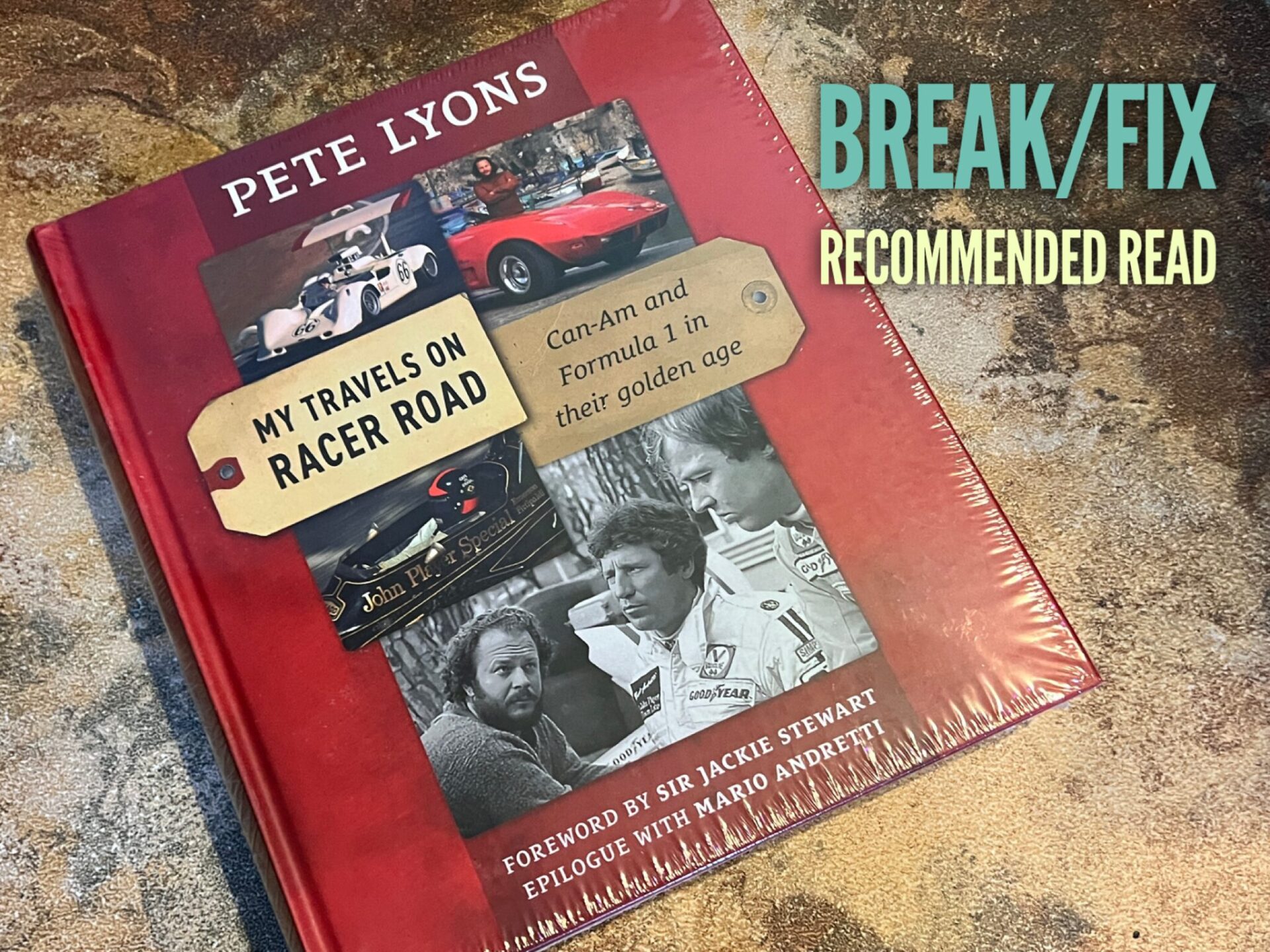
Tanya Kosta, Chairman of the event, commented: “For years, Concorso Italiano has offered a non-Italian marque display, and now, our parent company International Car Week is offering an expanded version through The Paddock where owners of European, Japanese, American, and other automotive pedigrees can display their prized vehicles. This new platform allows us to embrace a wider range of car enthusiasts and showcase a richer diversity of automotive excellence.” 

Attendees can enhance their car week experience by renting one of the limited culinary VIP cabanas, perfect for friends, families, car clubs and other groups to gather while enjoying cars and music. These exclusive spaces can be customized with amenities such as food service and a private bar, providing a perfect gathering spot to socialize and enjoy the show in comfort.

Clarence Habovstak, Director of Business Development, shared his excitement about upcoming developments: “We are on the brink of announcing some thrilling additions to The Paddock that will truly enhance the experience for our attendees. Over the next few weeks, we will unveil several specialty displays and unique features that are sure to excite automotive enthusiasts and collectors alike.” 

Among the early show highlights, Presenting Sponsor Saleen will hold their 25th anniversary celebration of the S7 at The Paddock, gathering several dozen owners and their vehicles in an expansive display on the show field. 

Joining the excitement at The Paddock will be RADwood, the premier 80s and 90s automotive lifestyle event celebrating music, fashion, and all things “RAD.” Created in 2017 as a gathering for friends in the San Francisco Bay area, RADwood quickly became a success thanks to a community of passionate enthusiasts and the power of social media. 

 “We are stoked to participate in The Paddock’s inaugural Monterey Car Week event with a curated display of the best the RADwood era has to offer. This will include a live DJ, to set the vibe, and many icons including supercars, domestics, and imports alike,” said Art Cervantes, co-founder and Director of RADwood. RADwood is more than just a vehicle display. Everyone is encouraged to dress in period-correct attire, and to flaunt their memorabilia. Vehicles from 1980-1999 are welcome to apply for this special showcase at the core of The Paddock event. 

Keeping the event accessible is also a priority for the organizers. The ticket prices for The Paddock are set to be affordable, encouraging families to attend and support the “Take a kid to a car show” initiative, which aims to foster a love for automotive culture among younger generations.

Event Details

  • When: Friday, August 15, 2025, from 3 PM to 8 PM
  • Where: Bayonet Black Horse, 1 McClure Way, Seaside, California, 93955
  • Features: Live entertainment, food & beverages, elevated VIP experiences, and a vendor village with top-tier automotive and lifestyle brands.

About The Paddock

Launched in 2024 by International Car Week, The Paddock was established to provide a premier platform for car owners and aficionados to display their vehicles against the stunning backdrop of the Pacific Ocean. The event promises a serene retreat at the Bayonet Black Horse, known for its beautiful landscape and peaceful environment. The Paddock is a multi-marque companion event to the Concorso Italiano event which is celebrating its 40th anniversary in 2025. It is designed to serve a broader audience of car owners and enthusiasts in a fun, relaxed, yet upbeat atmosphere. The Paddock is the second event in a one-week series of events to be rolled out at Bayonet Black Horse by parent International Car Week, ultimately maximizing the use of the Grand Hyatt Resort currently underway on the property with an expected completion in three years.

Media Contact:
Cindy Meitle/CAR PR USA
+1 480 277-1864
media@internationalcarweek.com