


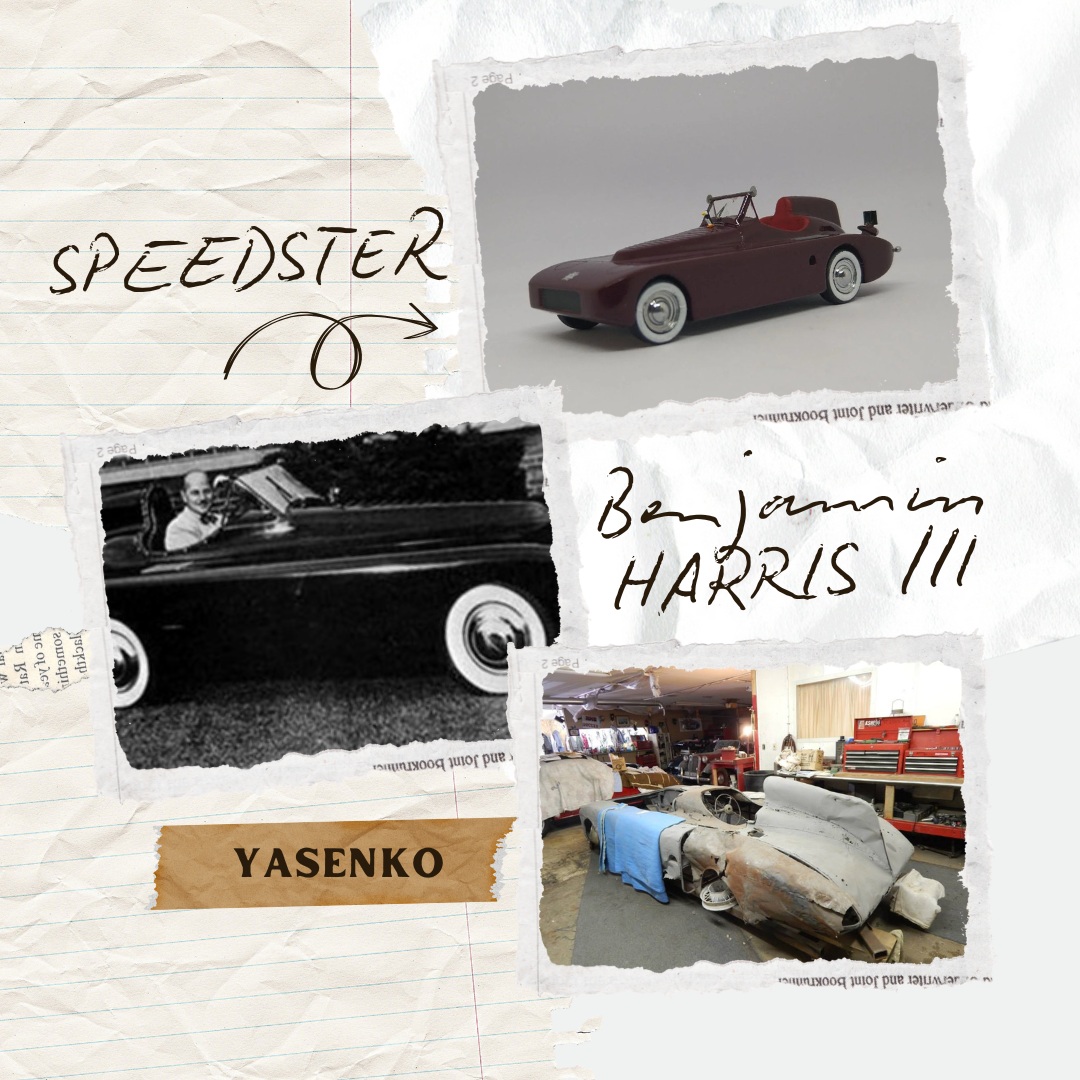
In the annals of American motorsports history, few figures have been as quietly influential – and as technically visionary – as Benjamin F. Harris III. In this episode of The Logbook we dive deep into Harris’s legacy, sparked by the 1987 rediscovery of his 1935 front-wheel drive speedster, a vehicle decades ahead of its time in design and engineering.
Tune in everywhere you stream, download or listen!



The Harris Speedster, unearthed in Clarksville, Missouri, was more than a relic – it was a blueprint for the future of race car design. With a dual-cam, dual-distributor V8 engine built in 1933–34, friction shock absorbers, and DuPont’s pioneering “chrome Metallica” lacquer finish, the car anticipated the form factor and performance ethos of 1950s icons like the AC Cobra and Jaguar D-Type.
Benjamin Harris wasn’t just a builder – he was a motorsports architect. His collaborations with Harley Earl, Jim Kimberly, and Zora Arkus-Duntov placed him at the heart of American automotive innovation. He held senior competition licenses from the SCCA, AAA, and FIA, and was instrumental in shaping the rules, safety standards, and organizational structure of post-war American racing.
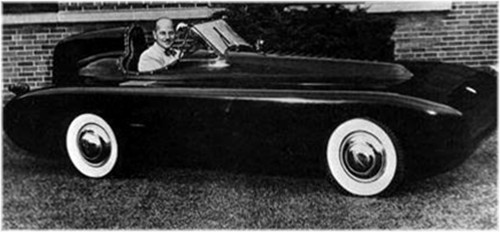
Harris played a foundational role in the development of Road America, helping to scout and shape the track layout alongside David Biggs. His involvement extended to officiating races, drafting regulations, and even flying GM executives to meetings in his personal aircraft. His fingerprints are all over the early infrastructure of American road racing.
Long before safety became a regulatory mandate, Harris was advocating for seat belts and roll bars. His vehicles incorporated these features in the 1930s and 40s, and he lobbied for their adoption across SCCA and FIA events. His foresight helped catalyze a shift in motorsport safety culture—especially in the wake of tragedies like the 1955 Le Mans disaster.
Spotlight
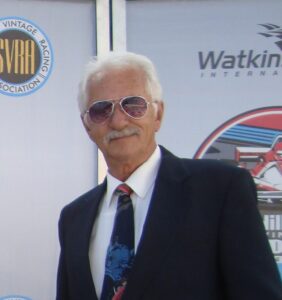
John Yasenko’s purchase of the remains of the 1935 Harris FWD Speedster decades ago led him into conducting 36 years of research into the car and its creator, Benjamin F. Harris. John’s objective has been to document how Harris was a key figure in postwar racetrack design and development, and in transforming the Sports Car Club of America (SCCA) into a national organization. John is a lifelong car enthusiast, business owner, restorer and historian, automotive show host, and all-around jack of all trades.
Synopsis
In this episode of The Logbook, our History of Motorsports series, John Yasenko recounts the discovery and historical significance of a unique 1935 front-wheel-drive speedster created by Benjamin F. Harris III. Initially found in a neglected state in 1987, this speedster led to extensive research revealing Harris’s influential role as an early industrial designer and motorsports architect. Harris contributed significantly to the development of American road racing, collaborated with notable figures like Harley Earl and Jim Kimberly, and played a key role in establishing Road America racetrack. The episode delves into Harris’s innovative design elements, his associations with automotive icons, and his advocacy for safety measures like seat belts and roll bars. Harris’s impactful legacy culminates in his posthumous induction into the SECA Walk of Fame in 2020. The episode also discusses the car’s current state and its ongoing restoration, underscoring the importance of preserving Harris’s contributions to automotive history.
Follow along using the video version of the Slide Deck from this Presentation
Transcript
Crew Chief Brad: [00:00:00] Break Fix’s History of Motorsports series is brought to you in part by the International Motor Racing Research Center, as well as the Society of Automotive Historians, the Watkins Glen Area Chamber of Commerce, and the Arge Singer family.
Crew Chief Eric: In this episode of the log book, John Yako recounts the discovery and historical significance of a unique 1935 front wheel drive speedster, created by Benjamin F.
Harris iii. Initially found in a neglected state in 1987, the vehicle’s unusual design and Harris’s innovative contributions to automotive history, intrigued John and his brother. This led to an extensive pre-internet research endeavor where they discovered Ben Harris was an early industrial designer and motorsports architect, and was deeply involved in the development of American Road Racing and CCAs national organization.
He collaborated with notable figures like Harley Earl and Jim Kimberly, and played a pivotal role in the establishment of the Road [00:01:00] America racetrack. John presents us with rich historical insights, personal anecdotes, and acknowledges the extensive research and supportive collaborations that uncovered Harris’s legacy, culminating in his posthumous induction into the SECA Walk of Fame in 2020.
John Yasenko: My introduction to Ben Harris as a story past occurred in 1987 while touring a property for purchase in Clarksville, Missouri. The property was a time capsule of partially buried pedigree automobiles and of their components I was drawn to and later purchased the Harris Front wheel drive speed because of its unique appearance and the fact that a tree had gone through the center of its cockpit.
And it just amazed me. I began researching the purchase pre-internet with a little more than this rendering by my brother Dan Yanko.
Crew Chief Eric: John, what initially intrigued you about Ben Harris and his work in automotive design
John Yasenko: as Ben f Harris III built? An anomaly in time in [00:02:00] 1935. We wanted to just touch upon it because he kind of built what was to come in the fifties in race car designs and exotic designs.
Always wore his hat, usually flight glasses. He was a pilot. He was a very politically involved person, and he usually had a dress code on, or he was dressed in the SCCA efficient material. This picture is from an SCCA magazine, Indiana Race, July, August, 1954.
Crew Chief Eric: Can you elaborate on the significance of Harris’s association with the AAA in the early days,
John Yasenko: Ben, apparently all the way back when this picture was taken was 1936, was highly involved with the a, a AAA.
You’ll notice there’s AAA license plate on the back of the speedster. That license plate says AAA official card.
Crew Chief Eric: What are some of the design elements of the Harris Speedster that were ahead of their time compared to the later race cars of the [00:03:00] 1950s?
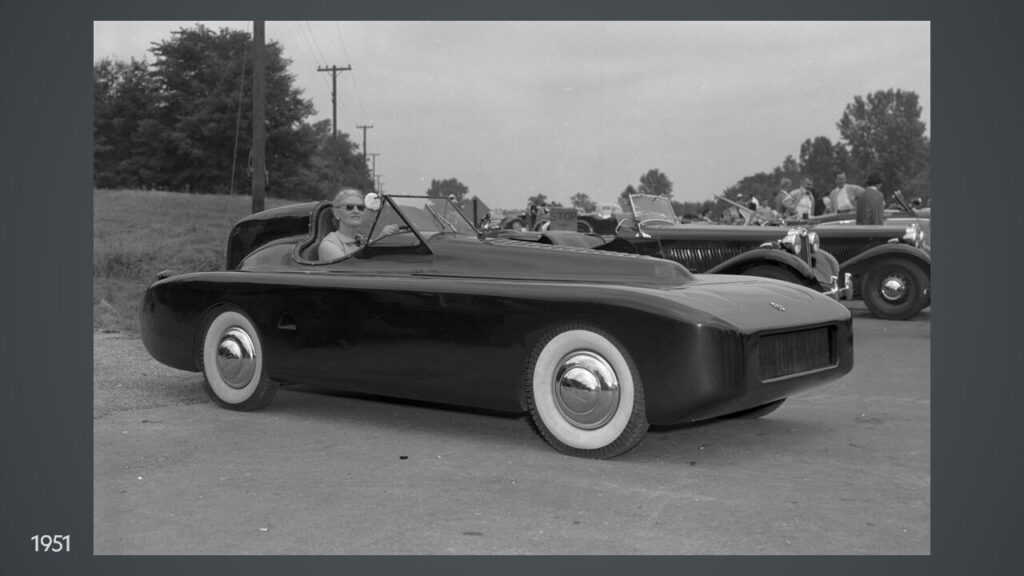
John Yasenko: Remarkably, in 1935, the speedster was the size of an AC cobra and a D type jaguar.
The motors was a two cam. Two distributor dual rated V eight, built in 1933 and 34. We could see that it had friction shock absorbers, which I knew was something from the twenties and thirties. Ben’s car started silk chr, Metallica paint. DuPont’s first. Actually, the color of that is their patent formular.
For chr, Metallica Paint, duke Lacquer was put onto the Harris Speedster.
Crew Chief Eric: How did GM executives react to Harris’s work? And was there any notable collaboration between them?
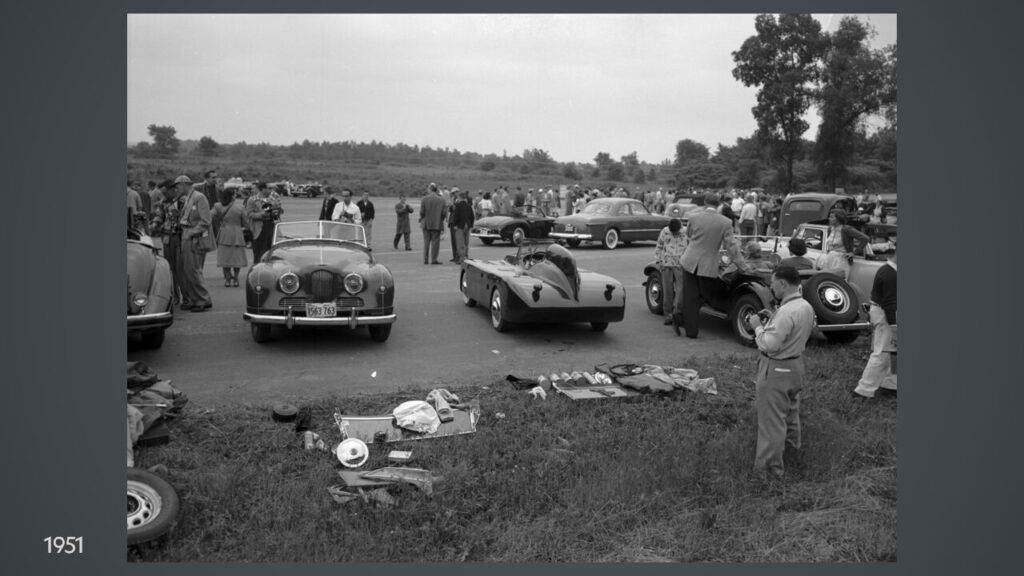
John Yasenko: My favorite picture to illustrate the size of the futuristic exotic design, the speedster photo from 52 Chicago Invitational event.
There are some GM executives in this picture. Here we have some other ones. GM was participating with Ben in this booth, and we do believe this is the one that another friend of Ben’s, Chrissy [00:04:00] Kaki, put a picture and featured Ben’s car on the front cover of his magazine for a special edition. We believe it was for this showing, but we’re truly not sure.
It mentions Ben’s car won an Indianapolis custom car show in 1951. The reason for this was Wally Parks, and I can’t think of the owner’s name of Hot Rod Magazine, ran a full page ad looking for Ben and his car. They wanted to send him an invitation to the second annual indie rod custom show. Ironically, at the end, 17 years of age and design, it won a first place trophy.
Can you even imagine that? It was still state-of-the-art futuristic. This picture here is actually clipped from the Hot Rod Magazine from 1951 where they were looking for Ben to send him an invitation. The car, at this point in time. Was still the chrome Metallica as DuPont called it. Ben never really named the [00:05:00] car that’s talked about in auto puzzles, which some may enjoy reading that story ’cause it brings back forth many, many more facts about Ben and the car.
This is a speedster stretching out its legs on the racetrack. This is a boardwalk. The speedster is on, and again, we think this is 46 to 48. The vehicle did do some racing. Very limited, but it did. The more I learned about the car, the more I became intrigued about the man behind the car. Harris’s interest in performance.
Cars wasn’t limited to industrial design. He was also an enthusiast who raced in and officiated numerous AAA SCCA and FI events in three. Countries. Yes. Three countries at Cuba, Nassau, Bahama, and 12 states that we have him at with pictures and magazine articles and stuff. Harris needs to say, was very active in the SCZA as it transitional lies into a [00:06:00] unified national organization.
Benjamin F. Harris was among the vanguards of industrial designers, engineers, and Motorsport architects as early as the 1930s. A small sampling of his associates include Gordon Bing, Harley Earl, ed Cole, Zora Doff, James Kimberly, wacky Arno, and many, many others. You’ll see pictures of Ben talking with Carol Shelby and his Maserati.
You’ll see a lot of different pictures coming up, uh, including with Wacky and everybody else. He was good friends with Fred Dusenberg, August son, Fritz. He was Best man at Gordon Bings wedding in Auburn, Indiana to Betty Whitten.
Crew Chief Eric: Can you describe the significance of Harris’ relationship with automotive icons like Harley Earl and Zora Donoff?
John Yasenko: Uh, knowing Harley Earl when he first went to GM 56 Harley, and I guess [00:07:00] Zora built him a special car vet and delivered it to him right out of the styling building at General Motors. Ben took his plate, flew there, picked it up, and while I was there, they also had a real nice luncheon for him. With most of the GM hierarchy.
They’re at the meeting Ben brings in Harley Earl, which is a lot to be said there. I have talked to Richard Earl. We’ve coordinated just a little bit. I gave him some documents that he’d never seen before. There’s another way that Ben Harris found together with his friends, Harley Earl. And others, um, concept CARNA Harris Speech for Marketing Techniques.
Benjamin Harris used to draw crowds at many racing events throughout the us. 1952 to 60 we’ll mention, we also talked about the loss history of the car, John Hendricks that owns, uh, discovery channels and a lot the 30 year loss history. And I told him what I thought, how that happened, but at the same [00:08:00] point in time, he showed me that he’d done a YouTube on that.
That’s a whole nother story. There’s a lot of sub stories off this. We moved out past that. We run into the name Teeter. Teeter is the one that actually was Perfect Circle Corporation, and also he’s the one that sued pretty much everybody for stealing his cruise control patent. Yeah. He’s the one that designed it and made it.
He brings in his friendships with Pop Meyers, Jimmy Snyder, Peter Collins, Rodriguez Brothers, Phil Hill, Alfred Momo, Alex Allman, and the great gentleman. Start your engines, Wil Shaw, Wil Behar another. A few others are pitching in a film that Ben did at one of the races, many races. That he was associated with in officiating and sanctioning.
We have not ran into anybody that contributed more to building the national level in rules, books and presentations than Ben Harris. That’s a bold statement, but [00:09:00] yet we’ve been at this for 35 years. Then he talks about Colonel Harrington of the contest board, the AA and American representative of FIA. I wonder if that’s perhaps why Ben was thrown an international flag at Nassau Bahamas.
Speedway talks about him holding SCCA Senior Competition license, AAA license, and FIA licenses, having served as an SCCA regional executive member of the National Activities Committee in a former national Vice president and publications director. Driven to different tracks. Stockholder of Road America.
Crew Chief Eric: What role did Ben play in the early development of Road America?
John Yasenko: David Biggs’s son told me he has records of them driving around and David Biggs’s, uh, Mercedes 500 cab filming the Road America before. It had any surface put onto it. They were making sure the track was just as they wanted it. And this same book also has rules [00:10:00] and regulations that they were talking about adding in.
This was 52 or 53 when this is filmed. I’ve tried to get that ’cause it would be great to go with this, especially for Road America, to show the real beginnings of shaking the track down at the inaugural race at Road America. Preston Tucker did have one of his tuckers at that too, promoting the concept car and everything else.
And by the way. I find this entertaining and not to take away from anybody, but this is 52. Ben’s car is 17 years old. It seems like it’s still drawing lots of people around it, and right in front of it is the four lac. Yes. Ben was also good friends with the Granite Teles. This is ones that they actually built for him.
Cut the body. Put in the different rear end knock off wheels. He used it as a tool. Ben had just driven it two weeks prior to a big Indy race where ironically, many, [00:11:00] many of the people that were there were gonna be president coming at the Chino race that had almost 80,000 people there. But the point is, is Ben used every tool that he could get.
There’s also rally events, which involves sometimes 30 mile drives, but he wanted to draw as many as possible, and I’m sure. Everybody around him agreed and they all participated in their plot that they were unleashing. Harris recognized the cart racing, provided an incubator for tomorrow’s motor sports champions, which it did.
This is from the collection of the Henry Ford Museum archives. There’s a lot more to be said about this picture, too. If you look in the background, you’ll see all the stands are full of people. He must have been bouncing everywhere over that whole 10 days for this event. Road America Big Bo event is what it was turned Harris could be spotted wearing a signature English flat cap and an SCCA official shirt with a hands-on car number one 19.
This photo is one of many [00:12:00] SCCA events officiated by Harris. This number 60 Jag. I think this is the 60 Jag that won the inaugural race at Road America. Sorry to learn that. The one archivist that I’d spoken with, really a nice guy, passed away. Looking forward to working with him, to giving him a bunch of information that they don’t have about the beginnings of Road America and how it all happened.
Finn Harris was a pilot. He owned an airport and he was constantly flying. People like Harley Earl, wacky Arnold James, Kimberly around to the different tracks, and in the meetings they were having in making the national SCC and also Building Road America.
Crew Chief Eric: How did Harris’s involvement in SCCA and other organizations influence Motorsport regulations?
John Yasenko: Now we’re getting into the actual racing part. We did wanna bring in some about the speedster. Is the 65-year-old mystery of CCAs early development solved. The question was initially posed in this edition of [00:13:00] SCCA magazine by executive director. Uh, last name was Bird of the SCCA. This is the front cover.
Ironically, I’m not sure what model or makeup vehicle it is going over the tracks. There’s a picture of Ben going over the same tracks, airborne in one of his mgs. That erased this SCCA article written by the executive director acknowledges that SCCA records were sketchy and very incomplete.
Unfortunately, this voids severely limited the ability to identify and recognize the individuals who made certificate contributions to the transformation of the SCA from a regional to a national organization. This was published in SCCA publication 1959. I do believe it was. February and what the executive director says is, when after the war, the ARCA was not reactivated to any great extent.
A group of enthusiasts in Boston founded a Sports Card Club of [00:14:00] America in February of 1944. This is in direct contradiction to California, claiming it in 1948. The club’s growth from then on is a matter of pride and common knowledge to the membership. This account, it is well realized is sketchy and very incomplete, and through inadvertence of poor memory, many names having been omitted, that should have been set down.
The records have almost without exception, disappeared, are been destroyed and this brief fragmentary switch has set down. But to hope that it may prove of some interest to present day enthusiasts despite its very incomplete nature. So if the thought from little acorns, et cetera, we set the time machine back to the present, take our somewhat creaking departure.
Jim Kimberly and Ben Harris, they were recognized in the first edition of Sports Illustrated in August, 1954. How did they ever get that done? Why wasn’t [00:15:00] Pebble Beach Indy or Watkins Glen use and why were Jim, Kimberly and Ben Harris featured? Could it be because of the title, new Herty? Bringing in new vision, dress codes, racing rules and regulations, safety aspects and formulas for drivers and race teams to follow, which ironically, it seems like all the teams to this very day were inspired that still going on with team colors and team wardrobes.
There was a wealthy that was really into this and of some of the other common people as is today, which mostly constitutes the SCCA membership. Records were lost unfortunately, when they removed from back east. I think to Indiana, maybe one or two dumpster loads were thrown away. Not doing any fault of the person doing it, you just didn’t have enough help.
It was something that happened that made life very difficult for us. I did go to Indy one time, AAA early. They [00:16:00] concentrated more so on. Indy, researched a lot of their races. Harris served is A-S-E-C-A National VP, public, and other leadership positions for the national SEC, which we have discussed. Ben was a rally official at this.
He was already digging in to statuses of the SCCA at the regional levels and such. He is wearing his rally event official jacket. This is one of the three mgs that Ben raced through the 12 years. Always had white walls on it and always had BFH on his license plate. Ben was wealthy and he also had. On all of his cars.
This kind of neat silver mascot for opening up the hood of the speedster and on the radiator of this MG of a character called Adolf, and it was a Jacques Cartier original. That’s kind of way he was.
Crew Chief Eric: It’s noted that Watkins Glen is a turning point for Motorsport safety, but what role did Ben play in rebuilding after the tragedy?
In [00:17:00] 1952,
John Yasenko: Harris worked closely with Wacky Anot, Jim, Kimberly, Harley Earl, amongst others to rebuild. After the tragedy at Watkins Glen, Ben was on the front row of the one race. But it wasn’t a race in which Fred Wacker slid and unfortunately hit the one child. Together. They tackled design and construction of Road America advocating the use of airports for future events, and an emphasis on safety measures for both drivers and spectators.
Crew Chief Eric: Let’s talk about Ben’s advocacy for safety measures such as seat belts and roll bars, and how these innovations changed racing.
John Yasenko: I know that Ben, which they’re in his car’s seat belts. And a built-in rule bar, Ben was constantly pushing that, that to become the law in SCCA racing and in hopes that even Formula One would pick it up for the safety of the drivers.
Few things that people didn’t realize. But yeah, Ben had seat belts in his car, quite amazing. Everything had to change at this [00:18:00] time. Racing in Europe, it changed Mercedes, it just had a horrible wreck and I think 40 or 50 people were killed and they actually pulled out a racing in entirety for decades. It went to future events.
Ended up being a Boeing SCCA trophy and officiated at SCCA base racing for racing planes. This has been 1954 Chino Air Force Base event. Our estimated attendance was 80,000 over the three day event, race car bill and legend, wacky on Noll as a whimsical point, and his wife were film checking race cars into the event.
If you can imagine. Even back then a multimillionaire, even owning one of the towers at Sebring, where the crews and Ben and everybody else would get to go on top and watch the races. All of this, the two years that they held, this was all in the plot, let’s say, of [00:19:00] what they were doing in building. Road America and to take it further was throwing the international flag at the first cart, SCCA competition in the world.
I think we have about 95 SCCA Sports Car America, um, magazines shows Ben as the SCCA publications director. I think Ben moved around through the groups here, more or less, to accomplish things that they wanted to get done. His association with Kimberly was really not known that well, but at the same point in time was very strong, along with other, let’s say, powerful known individuals have, I think five of the different proposed rules, changes and formula changes and stuff.
As I mentioned, some of these rules were probably being written up, either driving on Road Road America while it was still in dirt, shaking the track down. Does show Ben Harris down here as a director of publication [00:20:00] and these other names that come up through here. We have pictures of Ben with them. So many more documents we had to limit ourselves.
There’s a lot to this. Let’s just say that it changes things from the way many people thought it was.
Crew Chief Eric: How did Harris’s work influence the trajectory of SECA and International Motorsport standards?
John Yasenko: Ben was, I guess, nominated again, or, or maybe because there’s probably shortages of people that were allowed to throw the FIA flag that were FIA licensed here in the United States.
I pose that as a question to historians. This race 59 was being covered by NBC. I truly would like to find someone that can get into the NBC archives ’cause we’re sure it’s gonna show Ben all over the place. ’cause he flagged, I mentioned the first cart competition and uh, a speed week and showing Ben as the flagman of the whole thing.
This brings forth that Ben, I [00:21:00] guess, had enough power where he stopped wide broadcast and it caused a heated debate between Team Roosevelt and the A Bars. Uh, they were not allowed back on the track, but think of the power he carried to stop the whole international race. In here, you see a lot of the names of the people, the Scare Up Cars.
You see Paps in there, you see Donald Healy in there, you see Duncan, see Shelby’s name. All of these people are the ones that Ben ran with. I guess they all wanted to be friends with Ben too, when you think about it. But this is the televised event. We know Ben was there in 1958 too. You would’ve thought that the kidnapping of Juan Fangio would’ve maybe scared the person off for 1959 for other possible events.
But needless to say, Ben stood up. He took it and it all turned out well. Ben is throwing a flag. We believe this was the 59 Nassau Bahamas Speedway in his group of cars, or the most famous legend and race drivers ever recorded in the [00:22:00] history books. This image raises a question. How many FIF race officials were active in the US in 1959?
As I mentioned prior, I’d sure like to find that out. And again, Ben, his cap on cigarette, he always had cigarettes and his official shirt always wanting to be efficient and put on a show and have all the drivers and teams. Do the same. And you’ll notice too, he has his SCCA stopwatch on his belt that comes into a lot of pictures that we have of him.
Shelby was driving his Maserati Bird Cage Works card note. The Harris front wheel drive speedster Bird Cage design was produced 24 years prior to the Maserati. We have pictures of Ben with Gurney, Juan Fangio Moss, the Generals, and we have donated money to use the pictures from the Henry Ford Museum for the purpose of student and historic knowledge for records and such.[00:23:00]
It ends here is to work. Needed to create a national and united SCCA. Was finished. Tracy Bird, executive Director, SCCA 1959. There’s several articles, but what it all boils down to is the fact that there were five different racing organizations trying to rule the race, which was not working. They all had different formulas.
They had this, they had that. And it wasn’t working anymore. Names like Jack McAfee never cut. Jim Kimberly and even Ken Miles come up in this where they’re all arguing over. Apparently there was a lot of arguing when it all settled down. The SCCA was the national organization that they were gonna be racing under.
From then on, they had their other races, but they were not sanctioned, nor could they use the SCCA logoing for anything. Tracy Bird seemed to [00:24:00] think at the end of it all, that this was the big merger that came out of a desert deal between four people. It was a good one for SCCA and yes, it was. We could go on with Ben in the racing, but the last picture we have, was it a Michigan race track and he was looking at the gas cap of an AC Cobra doing a post race inspection of a winning car that won the race, the AC Cobra.
Crew Chief Eric: What’s the significance of the induction of Ben Harris into the walk of fame and how does it preserve his legacy?
John Yasenko: Benjamin F. Harris, I third National International Race Organization, track official and original stockholder in Road America. Three author of National SCCA positions 1952 Front Roof, the Glen’s Last Queen Catherine Cup Race.
This was used for Ben’s induction into the walk of fame. Thank you again, Mr. Bill Green for [00:25:00] helping me out. There again in ceremony, Ben and Jim Kimberly World Award Special Metal Lifetime, SCCA membership cards. I have yet to find anything of a ceremony whenever they retired after 10 and 12 years of building the national level at their own expenses too.
The first 10 years of Road America, Harris was active in the development of racing throughout the thirties through the fifties, Harris was nominated and selected as a track official for the inaugural event. Harris was an original stockholder and designer of the track, as we previously mentioned. The records of this are at the Chicago SCCA archival department where it shows they took a vote and they nominated Van to be, I guess the track official and the official flagman.
That is a picture of, I believe it’s Phil Hill and Sherwood Johnson. Gone past Ben at 130 miles an hour. Benjamin F. Harris third is inducted [00:26:00] in the DSCC walk of Fame September, 2020. The recognition was accepted on behalf of Harris by John Yanko. A sincere thank you to Mr. Bill Green. Again, this is on the courthouse steps at Watkins Glen.
Bill was very kind and let us put on a nice display of posters, which people really seem to enjoy. Which was part of Ben’s racing history and organization. I’d like to point out that, uh, for additional information on Ben, there’s a site called Auto Puzzles. I believe it is the largest site for archival automobiles from around the world.
Last year I looked ahead over 9 million.
Crew Chief Eric: Reads and getting back to the Harris Speedster, can you tell us more about the significance of the fire in 1964 and the impact that it had on the Harris collection?
John Yasenko: Remember, this car was built in 1935. This pencil sketch here from my brother Dan. This is when we first found the car and brought it in.
And we were trying to [00:27:00] make sense of what we found owned by David Biggs II and owner, proprietor of a selected museum for automobiles of pedigree in Louisiana, Missouri, a fire in 1964 damaged 13 to 18 vehicles. In his collection, the Harris Front Wheel Drive speedster in a newspaper article was considered the most valuable of these vehicles.
Other vintage cars damage included a 58 Ferrari tester. Known well through the Ferrari people is big red. A factory alloy bodied going with knockoffs, which he raced a pre-war Mercedes 500 Clee, a horse Clee. It was a really rare alpha Roadster, which actually Ralph Lauren owns one of the four, I believe it was four or five cars that was built that was special.
Crew Chief Eric: What’s next for the Harris Beat Reservation? John, how do you hope to contribute to automotive history?
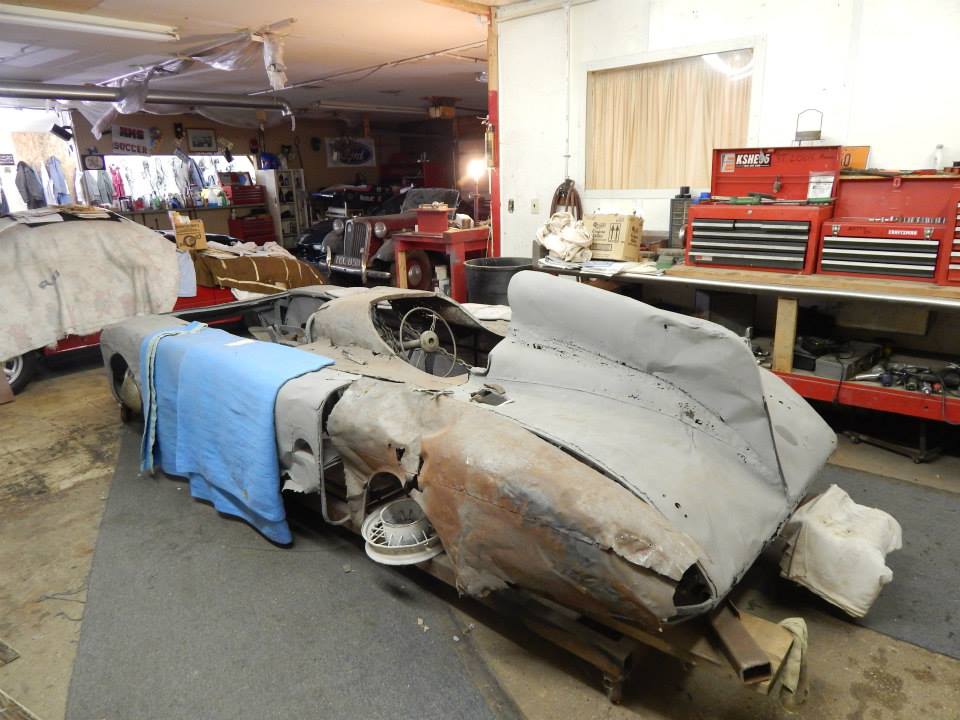
John Yasenko: We figured everybody would wanna know. Uh, I’m always asked, what condition is the [00:28:00] car in right now? We’re blatantly showing you the picture of it sitting there. It is real as the day is long. There are panels right now being restored and the motor is being finished off right now.
And also, if you wanna get in and look at this, the American Pickers came here to History Channel and filmed an episode, gave ’em about maybe. 30 seconds, 40 seconds on the car. It was their focus and my focus, the episode is called Tough Texas. I guess it turned into a favorite there. Unfortunately, they still make it pay to watch the episode even though it’s seven years old and they wanna come back and do an update on the car in the story in the future.
This whole story and the documents that are shown to you are actual documents. That are backed up. A lot of the things that we’ve read about race tracks and this person and that person, we’ve never seen an ounce of documentation to back it up. We, on the other hand, have become totally overwhelmed with what we have.
We [00:29:00] actually maybe can see a few of the posters here. We have 48 posters made. The story got to be so unbelievable that it was hard to even rationalize what had went on that got missed all through the decades.
Crew Chief Eric: All right, John. Well, we’ve reached that part of the episode where we’d like to invite our guests to share any shout outs, thank yous, promotions, or anything else we haven’t covered thus far.
John Yasenko: Uh, again, we have to thank the ER symposium, the Society of Automotive Historians. I am RRC, Mr. Robert Barr, Ruben Verde, my brother Dan Yankel, my son John Yankel, and probably hundreds more that will come out later in another presentation when we do one more so on Ben himself and really lay down the documents on the Harris Fester and the other 25 documents.
On his racing, which were being held back, we just can’t give it [00:30:00] all away. Not 35 years of work is deserving of a book. I want to thank everyone again for their time, and I hope that this, um, this knowledge that we’ve passed on is beneficial to some in their research and in their museums and archives. One other thing, Richard Taylor, thank you so much.
Richard Taylor did this for almost nothing and he also made blueprints of the car while making this computer generated image. Uh, so we can turn it into the Library of Congress and some other halls of fame as we go along. If anybody finds anything on Ben, I’d sure like to know about it. An email address to contact me is is capital B, capital J, capital H, capital S.
P-E-E-D-S-T-E r@outlook.com. Feel free to send. It’s truly appreciated.
IMRRC/SAH Promo: Thank you so much. This episode is brought to you in part by the International Motor Racing Research Center. Its [00:31:00] charter is to collect, share, and preserve the history of motor sports spanning continents, eras, and race series. The Center’s collection embodies the speed, drama and camaraderie of amateur and professional motor racing throughout the world.
The center welcomes serious researchers and casual fans alike to share stories of race drivers race series, and race cars captured on their shelves and walls, and brought to life through a regular calendar of public lectures and special events to learn more about the center. Visit www.racing archives.org.
This episode is also brought to you by the Society of Automotive Historians. They encourage research into any aspect of automotive history. The SAH actively supports the compilation and preservation of papers, organizational records. Print ephemera [00:32:00] and images to safeguard, as well as to broaden and deepen the understanding of motorized wheeled land transportation through the modern age and into the future.
For more information about the SAH, visit www.auto history.org.
Crew Chief Eric: We hope you enjoyed another awesome episode of Break Fix Podcast, brought to you by Grand Tour Motorsports. If you’d like to be a guest on the show or get involved, be sure to follow us on all social media platforms at Grand Touring Motorsports. And if you’d like to learn more about the content of this episode, be sure to check out the follow on article@gtmotorsports.org.
We remain a commercial free and no annual fees organization through our sponsors, but also through the generous support of our fans, families, and friends through Patreon. For as little as $2 and 50 cents a month, you can get access to more behind the [00:33:00] scenes action, additional pit Stop, mini SOS and other VIP goodies, as well as keeping our team of creators fed on their strict diet of Fig Newton’s, Gumby bears, and Monster.
So consider signing up for Patreon today at www.patreon.com/gt motorsports. And remember, without you. None of this would be possible.
Highlights
Skip ahead if you must… Here’s the highlights from this episode you might be most interested in and their corresponding time stamps.
- 00:00 Discovery of the Harris Speedster
- 01:15 Ben Harris: The Man Behind the Machine
- 02:54 Innovative Design Elements of the Harris Speedster
- 03:33 Harris’s Collaborations and Achievements
- 05:27 Racing Legacy and Contributions to Motorsport
- 09:36 Involvement in SCCA and Road America
- 17:29 Advocacy for Safety in Motorsport
- 24:29 Legacy and Induction into the Walk of Fame
- 29:15 Conclusion and Acknowledgements
Livestream
Learn More
 If you enjoyed this History of Motorsports Series episode, please go to Apple Podcasts and leave us a review. That would help us beat the algorithms and help spread the enthusiasm to others. Subscribe to Break/Fix using your favorite Podcast App:
Consider becoming a Patreon VIP and get behind the scenes content and schwag from the Motoring Podcast Network
Do you like what you've seen, heard and read? - Don't forget, GTM is fueled by volunteers and remains a no-annual-fee organization, but we still need help to pay to keep the lights on... For as little as $2.50/month you can help us keep the momentum going so we can continue to record, write, edit and broadcast your favorite content. Support GTM today! or make a One Time Donation.
From racing MGs with whitewall tires to officiating international events in Nassau and Cuba, Harris’s career spanned continents and decades. He was featured in Sports Illustrated’s inaugural issue in 1954, and his car won custom shows nearly two decades after its creation. His induction into the Watkins Glen Walk of Fame in 2020 was a long-overdue recognition of his contributions.
The Harris Speedster is currently undergoing restoration, with panels and the original engine being meticulously rebuilt. The project is backed by extensive documentation, including blueprints, photographs, and archival materials—many of which are being prepared for submission to the Library of Congress and other institutions.
 Photo courtesy John Yasenko via Facebook
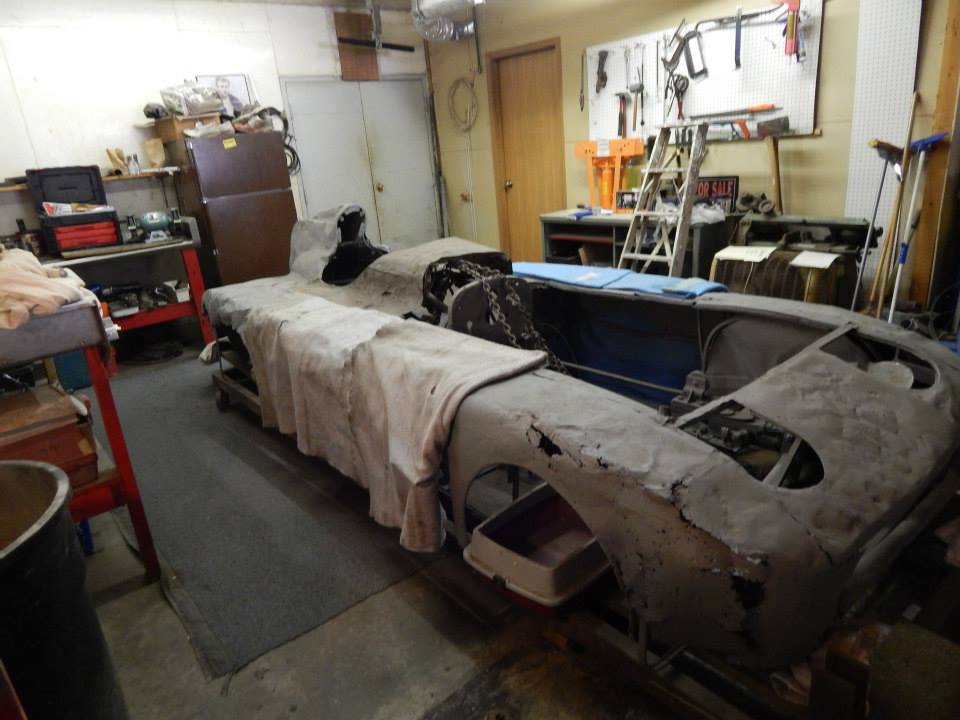
Benjamin F. Harris III was more than a designer – he was a systems thinker who helped unify fragmented racing organizations into a national body. His technical innovations, organizational leadership, and relentless advocacy for safety and structure laid the groundwork for modern American motorsports. To learn more, be sure to check out all the details and discussions about this car at Autopuzzles.com. If you have additional information or questions about the Harris Speedster please get in contact with John Yasenko.

This episode is sponsored in part by: The International Motor Racing Research Center (IMRRC), The Society of Automotive Historians (SAH), The Watkins Glen Area Chamber of Commerce, and the Argetsinger Family – and was recorded in front of a live studio audience.
Other episodes you might enjoy
Michael R. Argetsinger Symposium on International Motor Racing History
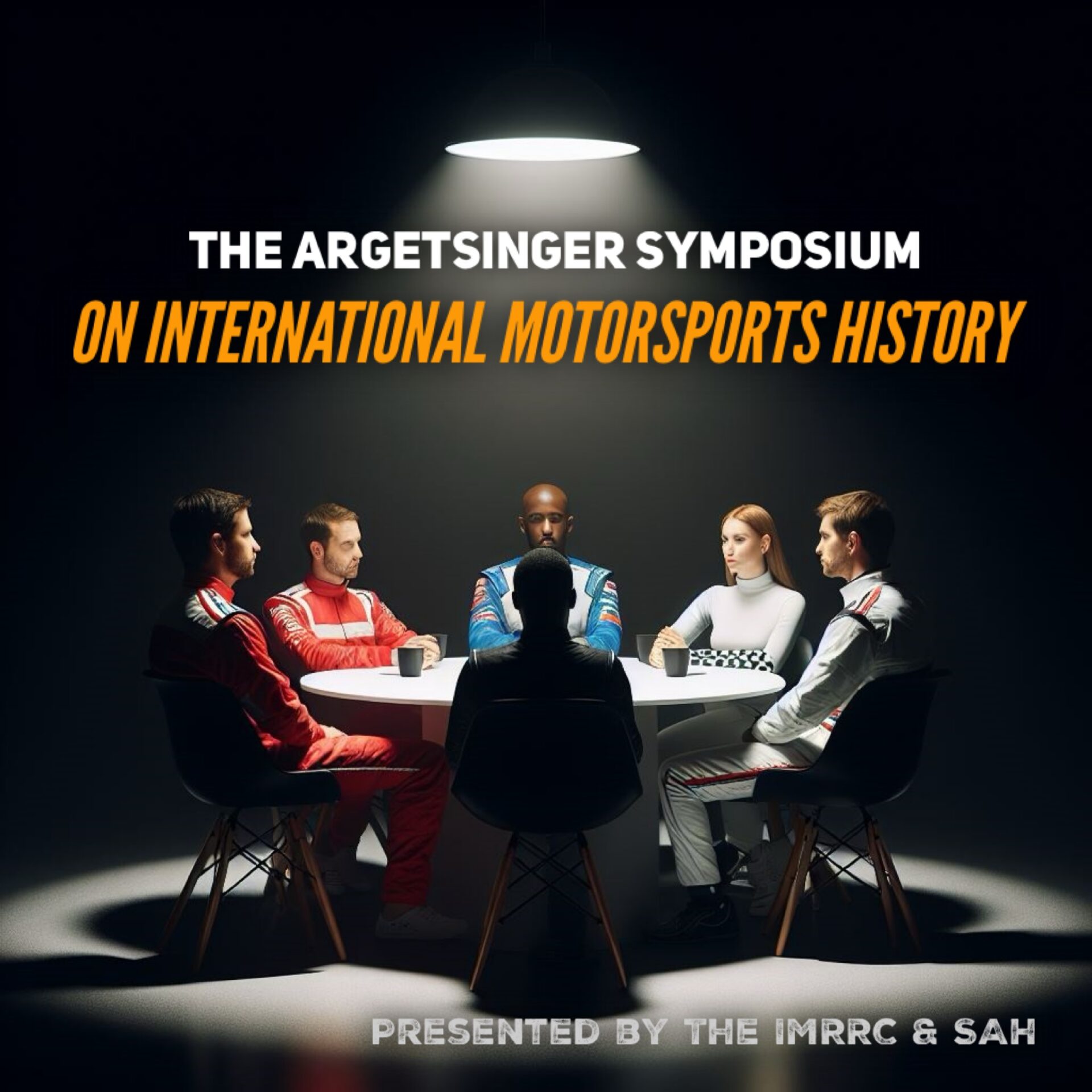 The International Motor Racing Research Center (IMRRC), partnering with the Society of Automotive Historians (SAH), presents the annual Michael R. Argetsinger Symposium on International Motor Racing History. The Symposium established itself as a unique and respected scholarly forum and has gained a growing audience of students and enthusiasts. It provides an opportunity for scholars, researchers and writers to present their work related to the history of automotive competition and the cultural impact of motor racing. Papers are presented by faculty members, graduate students and independent researchers.The history of international automotive competition falls within several realms, all of which are welcomed as topics for presentations, including, but not limited to: sports history, cultural studies, public history, political history, the history of technology, sports geography and gender studies, as well as archival studies.
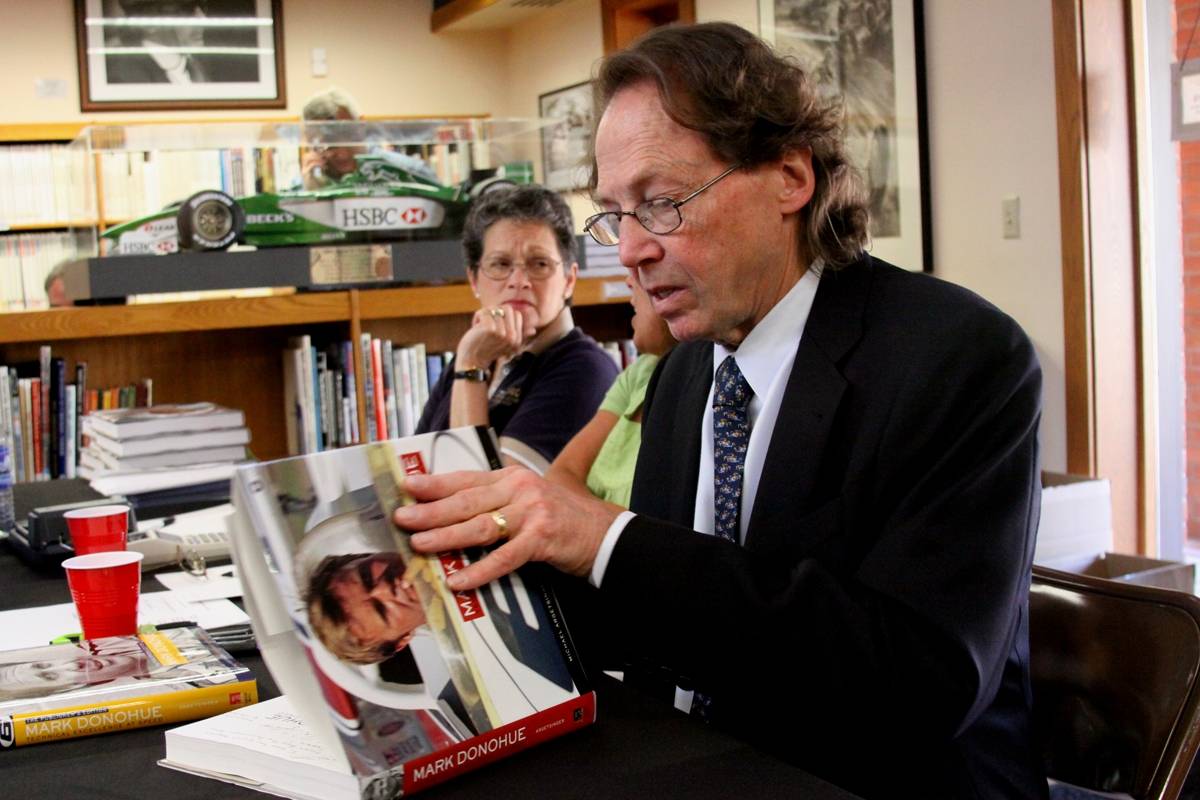 The symposium is named in honor of Michael R. Argetsinger (1944-2015), an award-winning motorsports author and longtime member of the Center's Governing Council. Michael's work on motorsports includes:
- Walt Hansgen: His Life and the History of Post-war American Road Racing (2006)
- Mark Donohue: Technical Excellence at Speed (2009)
- Formula One at Watkins Glen: 20 Years of the United States Grand Prix, 1961-1980 (2011)
- An American Racer: Bobby Marshman and the Indianapolis 500 (2019)

This content has been brought to you in-part by support through...












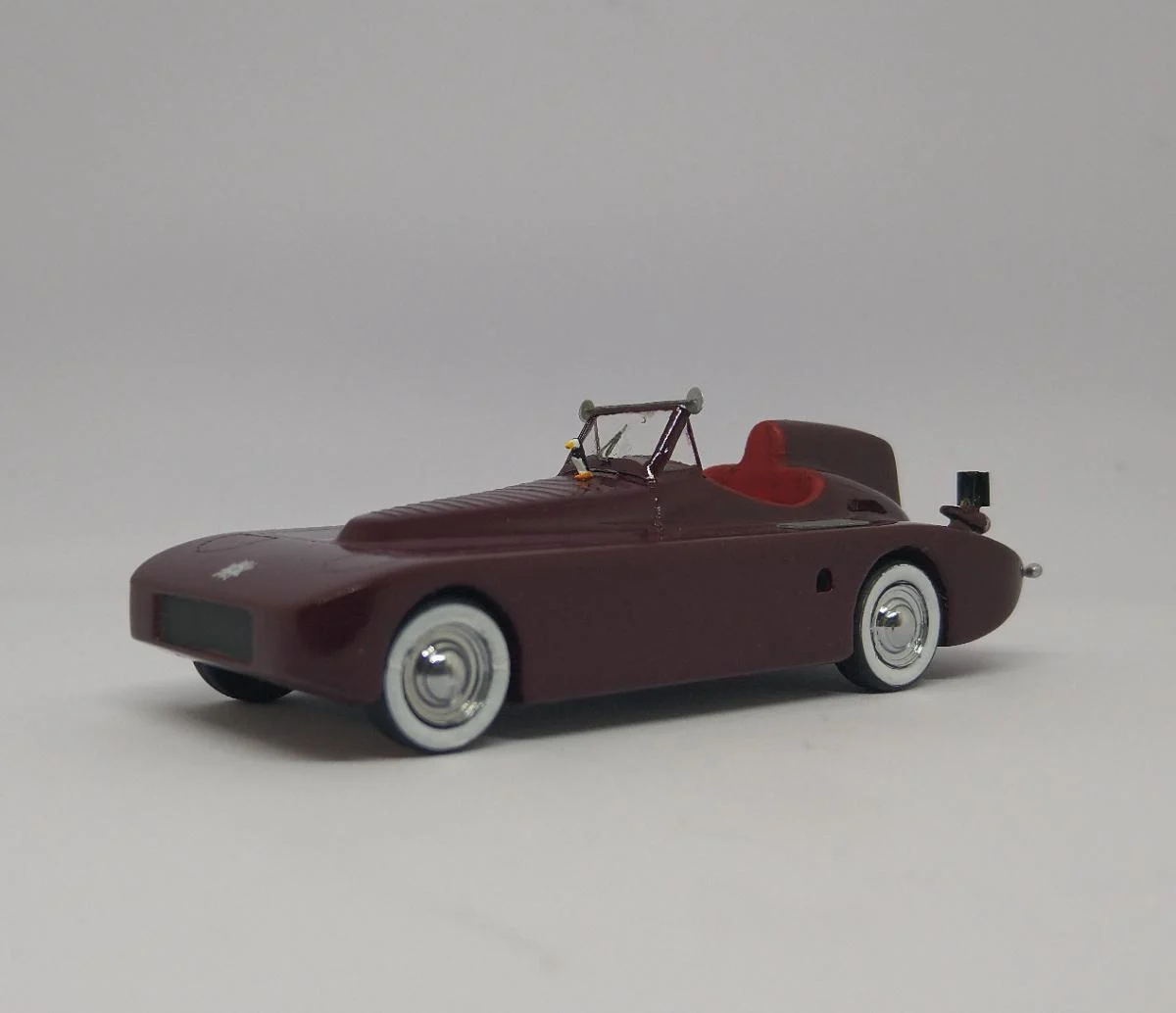
Wow! That’s the scratchbuilt 1/43 model of the Harris Speedster I built a few years ago. It’s referred to here as a ‘rendering’ but I can assure you it is an entirely real replica. The body is a simple 3d print of my own design. It was cut, puttied and massaged into shape. Everything else is handmade. The wheels and tires are from a 1940 Ford diecast car