

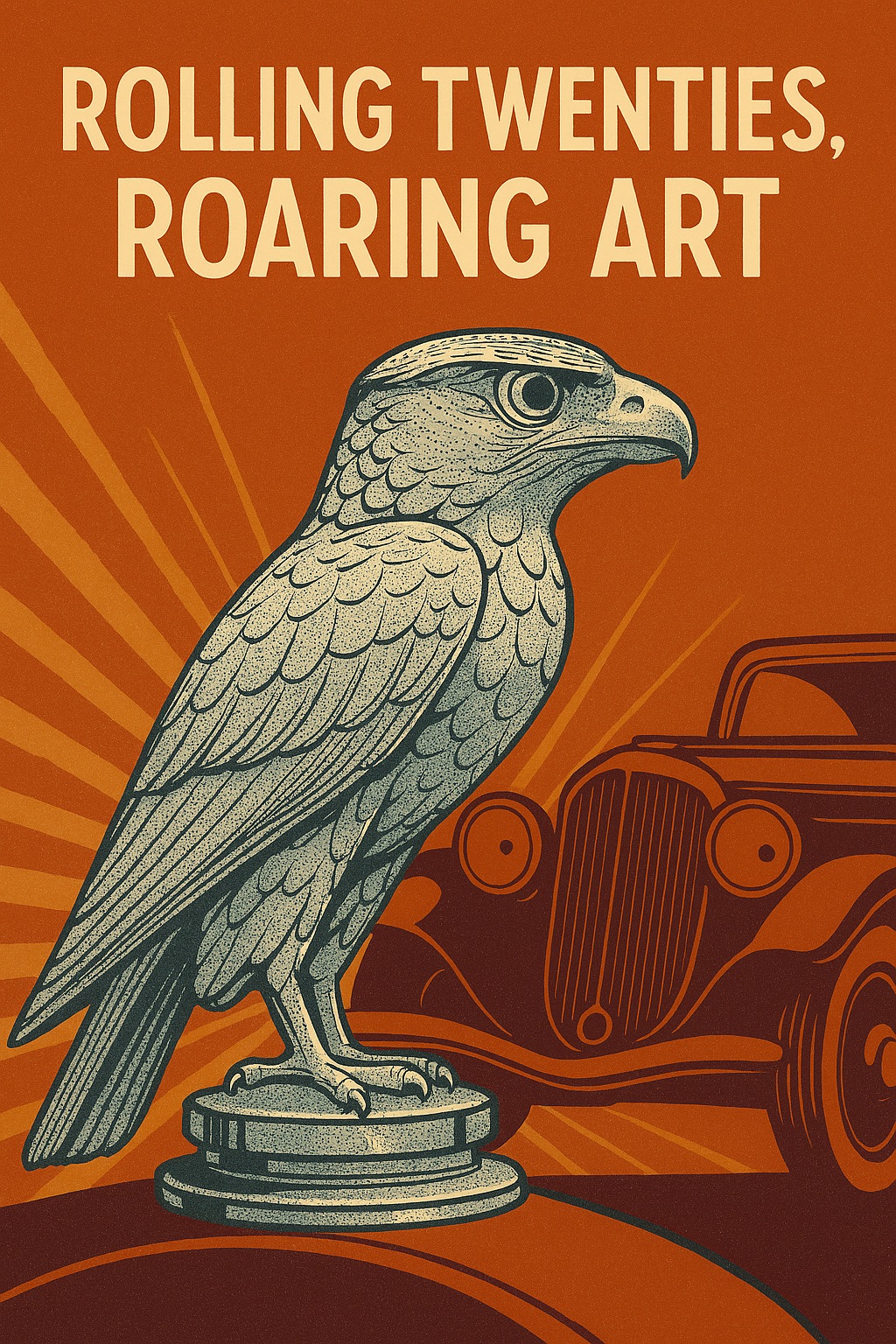
What can a palm‑sized sculpture teach us about the sweeping story of automotive history? According to Lauren Goodman, Associate Curator of Exhibitions at the Revs Institute, the answer is quite a lot. In her recent presentation, Goodman peeled back the layers of her award‑winning exhibition “Rolling Twenties, Roaring Art: French Automotive Mascots”, revealing how these elegant hood ornaments illuminate the tensions, triumphs, and blind spots within the broader world of automotive heritage.
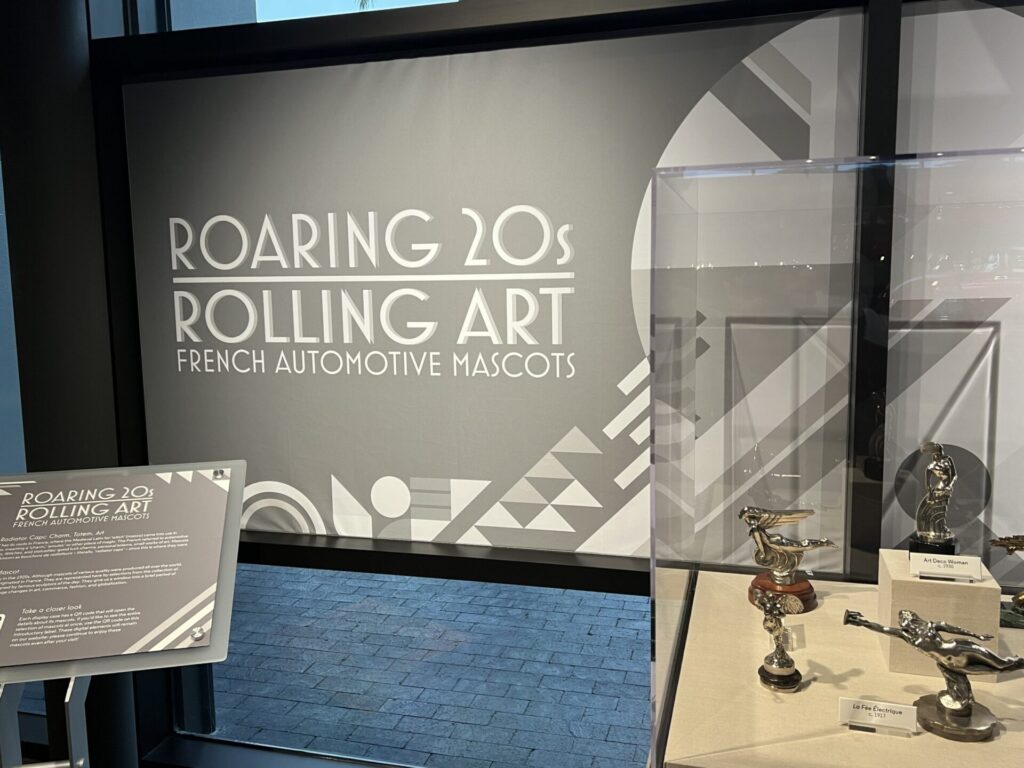
These mascots – once perched proudly atop radiator caps – may be small, but they carry enormous cultural weight. They reflect the artistry, technology, and social values of their era, and they expose the challenges facing historians who work to preserve and interpret automotive material culture today.
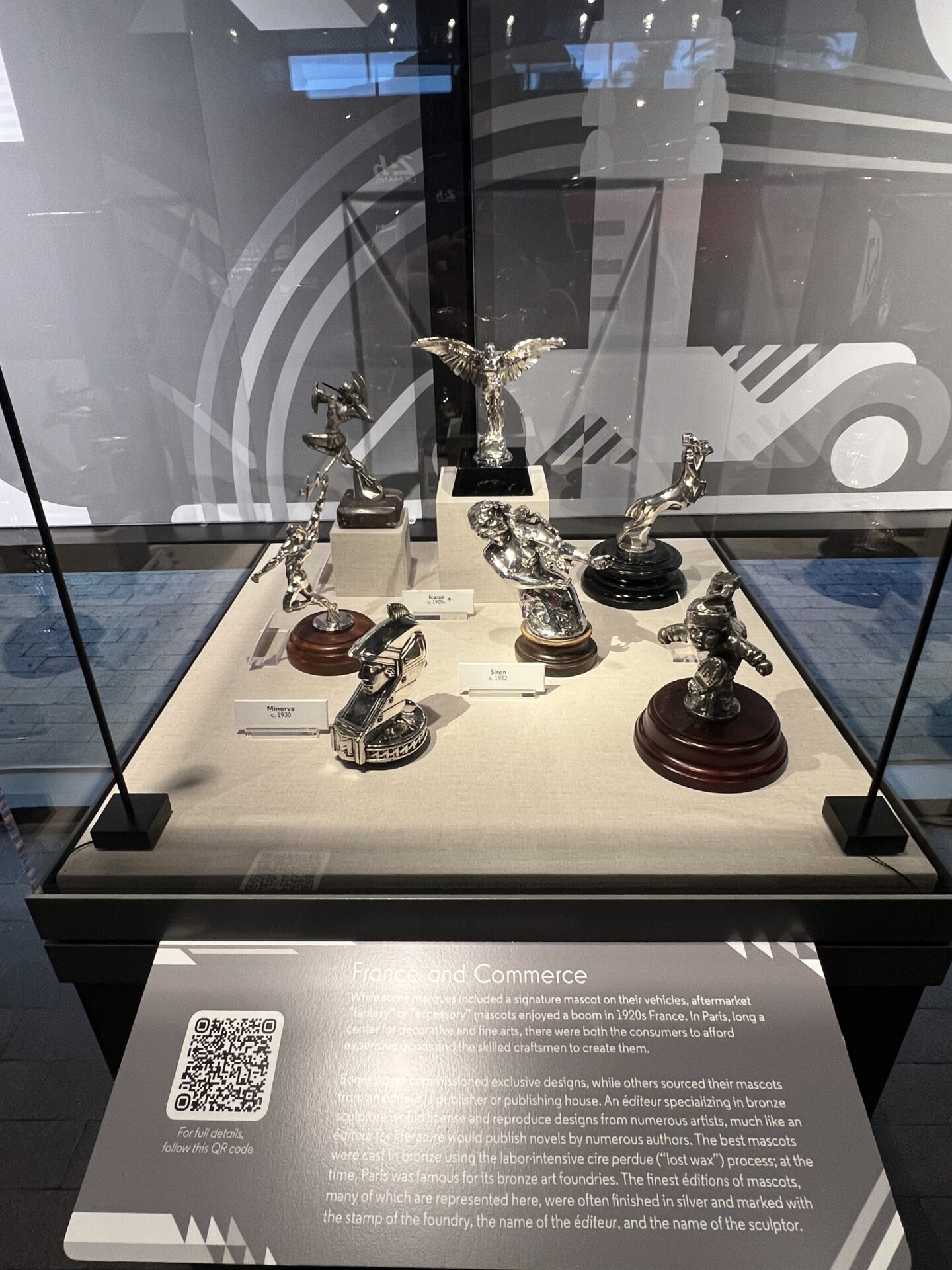
The Revs Institute has long enjoyed a close relationship with renowned mascot collector John Zolomij (seen below), whose extensive holdings include everything from American classics to rare French glass mascots by Lalique, Sabino, and others.
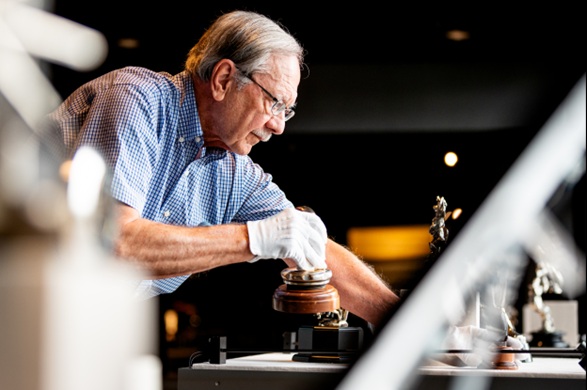
When the museum decided to refresh several display cases using pieces from Zolomij’s collection, Goodman expected a straightforward project. Instead, she fell down the rabbit hole…
Tune in everywhere you stream, download or listen!



What began as a simple exhibition quickly became a research odyssey into the world of French interwar mascots – their creators, their manufacturing processes, their cultural context, and the surprising gaps in the scholarship surrounding them.
The final exhibition is visually stunning, but Goodman emphasizes that the real work happened behind the scenes: digging through period French publications, comparing auction catalogs, cross‑referencing collector guides, and identifying where decades of English‑language literature had repeated the same unverified assumptions.
Bio

Lauren Goodman is the Associate Curator of Exhibitions at Revs Institute in Naples, Florida. She is passionate about the history of women in motorsport and the preservation of historic cars. She presented at the 2022 Symposium on Lucy O’Reilly Schell; Schell’s team Maserati 8CTF is permanently on display at Revs.
Synopsis
In this episode of The Logbook, our History of Motorsports Series, Lauren Goodman – Associate Curator of exhibitions at REVS Institute – discusses her award-winning exhibition on French automotive mascots from the interwar period, exploring their cultural significance and preservation challenges. The talk delves into the history of these mascots, their design processes, and the importance of documentation and collector-institution collaboration for future generations. She emphasizes the need for more cross-disciplinary studies and technological applications in automotive heritage, highlighting significant works and potential research pathways.
Follow along using the video version of the Slide Deck from this Presentation
Transcript
Crew Chief Brad: [00:00:00] Break Fix’s History of Motorsports Series is brought to you in part by the International Motor Racing Research Center, as well as the Society of Automotive Historians, the Watkins Glen Area Chamber of Commerce, and the Argo Singer family.
Crew Chief Eric: What can a small sculpture tell us about the big questions of automotive heritage in her award-winning exhibition?
Rolling twenties, roaring Art, French automotive mascots at the Revs Institute, Lauren Goodman reveals how these elegant ornaments, once perched proudly in the hoods of cars, embody the tensions and triumphs of preservation, design and cultural memory. They may be small in size, but they carry enormous meaning sparking debates about how we honor and interpret the past.
Lauren Goodman, associate curator of exhibitions at the Revs Institute in Naples, Florida, joins us to share her insights, passionate about the history of women in Motorsport. Today, she invites us to consider whether these mascots, these miniature works of art, might point us towards new directions in understanding automotive [00:01:00] heritage.
Stay tuned as we explore how the smallest details can spark the biggest conversations.
Lauren Goodman: Thank you. Thank you for that wonderful introduction. I feel very important right now. Thank you very much. If we haven’t met, my name’s Lauren Goodman and I am here in my capacity as the associate curator of exhibitions at Revs Institute.
Representing Revs. I’m very excited because last time I was presenting here in 2022, I was working a different job and just volunteering at Revs on the weekend. So I was only here in my capacity as a huge nerd instead of as an official representative of Revs Institute. So I’m gonna give you about a 20 minute presentation about interesting findings I had while working on an exhibition.
I wanted to talk to you about French mascots. Mascots are the fancy waves saying hood ornament much the way. Concur is the fancy way of saying car show, specifically French mascots of the interwar period between World Wars one and two. Revs Institute is [00:02:00] fortunate to enjoy the friendship of Mr. John in Zola, and he’s one of the foremost collectors of mascots of all types in the world.
You may have seen some of his collections, if you’ve ever been to the Auburn Core Dusenberg Museum, where he has a lot of beautiful American examples on display in the past. He’s also lent us his lovely glass mascots, so not just lik but. Sabino and Che. Just beautiful examples. And Mr. Zola also self-publishers catalogs of his collections, which is just a real boon to having documentation.
So in 2024 with Mr. Zola’s collaboration, our team at Revs decided to refresh some of our display cases with some of his beautiful mascot. And what began as a fairly simple display became instead my own looking glass, and I, as Alice dug into the wonderland of French mascots from the interwar period. I’d like you to come on that journey with me.
I’m happy to say that the resulting exhibition is beautiful on even a [00:03:00] little bit educational. In fact, you could see here we were able to put all the information on a website, QR codes and the display cases. So if anyone was interested, they could drill down and discover more about each specific piece, see a video about it.
Pretty proud of that. And even some other materials that illuminate some of things going on, design wise, culture wise, economy wise at the time in France, that would’ve influenced the design of these mascots. Pretty cool. So if you have ever put together an exhibition. You understand that the final installation is only the tip of the iceberg.
The bulk of the labor is spent in suffering, or it’s also pronounced research. I thought after I did all that work, maybe I should find a way to compile and share my research so future generations can pull from it for their own uses. So I wrote a lit review. It’s very fancy and very long, and my mom is very proud of me.
My mom. So more importantly, when I was writing [00:04:00] about what I found about mascots, I began to realize what was missing. So that paper, yeah, it’s about automotive mascots, but it’s also a paper about where automotive heritage is losing time in the corners compared to other heritage organizations and disciplines.
Now, let me say now, up front, I’m not assigning any blame. There’s no malfeasance here. We’re all passionate about these automobiles and their associated automobilia. I simply used mascot collecting as a lens through which to view the automotive heritage ecosystem. So the paper helped me understand and elucidate.
My own work and my own mission at the museum. So I’ll spend a little time sharing some of the points from the paper. I’m not gonna go over the whole thing, but I just wanna spark some more conversations about our future and the future of these objects that we love First, some clarifications. Since the exhibition focused mostly on accessory mascots, they form the bulk of this discussion.
But some of these findings apply to mark specific designs for high-end manufacturers like automobile [00:05:00] farming, for example. And although mascots were produced in a range of prices and quality, I was focusing really on the ones that I was displaying, which are the upmarket pieces. They were typically cast in bronze using the very complicated lost wax process, and then coated with silver, and even occasionally gold.
They were prized by collectors even then, meaning that many pieces enjoyed a protected life on a desk or a shelf instead of on the radiator cap of a car. And there are of course mascot examples that predate 1914, but the golden age for accessory mascots. Aftermarket mascots really began in France after World War I and peaked during the 1920s and early thirties.
Eventually, streamlining and underhood radiators made the mascot an old fashioned accessory. So by 1938, the Paris Salon had practically no mascots on display, on the automobiles on the show floor. So where does one begin researching these objects? Especially in the English language? I identified three [00:06:00] major works published in the late seventies that became the source for most of the later literature in English.
And you’re probably gonna recognize some of these names. We are indebted to these authors, and the literature in the eighties and nineties relies heavily on these works. To paraphrase Don Caps, the difference between fiction and history is footnotes. So in these three books, for example, you’re lucky to find a list of sources at the end, let alone an EndNote.
But the absence of those things actually makes sense when you consider the following. These authors were creating the literature. No one had bothered to write about it before. It was either a tacit knowledge, it was trade knowhow. So those who are writing about it, especially if they wanted photos, often had to negotiate access to privately held collections.
These authors had an audience in mind and that. Was enthusiasts and collectors. These were the people driving the demand for information. They weren’t necessarily demanding an academic bibliography. The [00:07:00] next major author emerges in the mid nineties. Michel LaGrand is so important. You can really divide the literature into a pre LaGrand era and a post LaGrand era.
Although some of his work is only available in French, the captions are really short, easy to read and translate, which is why he’s still a major source for those writing in English today. LaGrand first began by reproducing period catalogs, period sales catalogs. Then he began photographing mascots and ephemera from private collections.
Authors in the present day are still largely enthusiasts and collectors who draw heavily on LA gra and the three major works from the late seventies. Now, the magic of the internet allowed me to search contemporary French periodicals for more information about the mascots that I had on display and those who designed them.
In my paper, I make some really nitpicky points about provenance, contrasting primary sources with the later English literature. As I scoured the primary sources, I wondered why hasn’t the scholarship been done before? And there are a few major [00:08:00] reasons for that. One is the participation of collectors.
These are key collaborators, but they may feel they risk devaluing an investment piece. If new research casts a shadow on what was said in the auction catalog, there is risk as well. And sending their collections out for public display or research, it’s reasonable that a private collector would want to avoid risk.
The acquisition and maintenance of mascots like any other collection represents an investment of creativity, time, money, and the collection itself contributes to the collector’s own happiness. The most obvious solution, I think would be for collectors to plan what happens with their collections after their lifetimes, while continuing to enjoy them in the present.
By collaborating today on a plan with a public institution such as a museum or an archive, the collector can be assured that these mascots will be held in trust for future generations. These institutions have a duty of care for their collections, but they don’t assume financial risk or reward based on authentication and [00:09:00] research.
That is because collection items do not appear on the balance sheet as an asset. If you are a museum, I think the next typical barrier is an echo chamber. Now cross pollination between automobile, heritage and other disciplines from the humanities and social sciences that would equip automotive historians with better tools and encourage experts from other fields to conduct research on automobile.
For example, the 1970 sources do make reference to the Anier School of Sculpture and its impact on French bronze production, but the subsequent literature kind of dropped the ball on that. It doesn’t take up that thread again, which is really interesting when you consider that there are numerous collector guides and art historical texts on the Maier School of Sculpture and its artists such works date back all the way to the seventies, and the most recent major one I could find was from 2007.
And finally, I think it’s also the novelty of our field. The phrase automobile heritage is itself fairly new. In fact, in the scope of human history, the [00:10:00] car itself is fairly new. The Turin Charter, the conservation charter for most historic cars was adopted in 2013, which is nearly 50 years after the Venice Conservation Charter addressed the heritage of architecture and our built environment, the mascot as worthy manifestation of automotive material culture.
That may be an idea that takes time. As opposed to people thinking it’s a mere collector’s hobby. Here’s the crux. These obstacles, I believe, are symptomatic of a larger issue. Automobile heritage is still the purview of private collectors and enthusiasts. We don’t have an academic market for automotive history like other disciplines.
I’m talking about the market where the publisher parish imperative creates volumes of peer review journals. And where tenure tracks, endowed chairs and research grants underwrite the research. Rather, the automotive historian today makes his or her living by teaching in another specialty, by working in another field entirely and devoting his or her free time or retirement years to the topic, or by researching in authenticating for auction houses and collectors.
[00:11:00] Now it’s this less instance that’s the most potentially problematic enthusiasts and collectors rely on auction catalog. Which in rely on the writings of enthusiasts, collectors, and it becomes a vicious circle. Future scholarship should aim to break this particular feedback loop. I think about this a lot in my work as a museum.
Professional museums must maintain the public trust. We cannot status satisfact, which we only hope to be true. And if we cannot provide the funding for academics to draw them to automobile heritage, then we’ll have to pull information from other disciplines and find ways to apply it to what we do and to cars.
In my paper, I then turned my attention to other disciplines. Maybe they had something to teach us about French mascots. I wondered what I might find, but surely, surely it was too much to hope for an art historical book. That covers a topic as niche as bronze art foundries in 20th century Paris. Mad voila.
Here it [00:12:00] is. Dictionary of bronze art. Foundries in France is one of the most important works in this space by Luis Be Leal. It incorporates previous scholarship in French and was made available in English translation in 2015. Leal helped me understand something that had been bothering me as I researched mascot.
One of the central issues in English language literature is identification and attribution, and oftentimes the different people involved in making a mascot that would be people like the artist, but also the modeler, the fabricator, the editor, the chaser, and the retailer, and the associated marks on these pieces would get conflated.
English language catalogs have used dubious language when attributing mascot. To the point where a reasonable person might believe the artist was a central part of the manufacturer, and that the final piece received an intervention by the artist himself, the reality is murkier. So we’ll jump right in with one example from Leal and this particular case, the role of the Fa k and French.
[00:13:00] And I’ll just read aloud the quote here for anyone who can’t see. This is a quote from Lab, LeBron’s book, an editor of Art bronzes, also called himself a manufacturer, Fabricant. When he ran a factory fabrik, a term which designated a company where semi fine products are completed for marketing. The casting operations were very generally carried out by an independent foundry man who delivered the raw bronzes to the manufacturer who would handle either in his own workshops or by calling on molders and the final chiseling and patina operations.
Large houses like Continental Lure and Pinedo, which have always subcontracted their foundry work are therefore excluded from this study. Now if you are by any chance somebody who has read a lot of auction catalogs about mascots, you know the term company Continental and Lily Ever, ’cause they later merged, are often attributed as foundries in the literature.
And already we could see here in art history, they say that’s simply not true. Furthermore, the introduction of the term Fab K to the literature in English is [00:14:00] important. There were enough self-described fab camp in the late 19th and 20th century Paris, that they had their own trade organization with their own professional standards.
Understanding their role sheds new light on issues of attribution. For example, at the premises of the fabricant, the separate pieces delivered by the foundry would be assembled by the chaser, as stated in the previous paragraph, since several designs were being assembled at a given time, a system of numeration with letters and with numbers would indicate to the chaser which pieces together.
These numbers are therefore nothing like a print number, and do not give us any idea of the number of additions produced of a particular mascot. However, it does stand to reason these small marks could be useful for the authentication of mascots. Labone dictionary addresses the changing relationship between artist and foundry in 20th century Paris.
There was an industry of smaller foundries and these enterprising artists who were also creating multiple editions of their pieces. Now, these same topics are actually briefly mentioned by Michelle Gronk, the major author in in [00:15:00] the 1990s about mascots. He even addresses some of these enterprising artists, editors, and there were a number of small craft foundries, not fine art foundries, but craft foundries and the 11th r and d Mall of Paris that created both say, bronze light fixtures and fittings.
And also mascots as a sideline. Here clearly is an area where more cross pollination between art history and automotive history would be very fruitful. Now, historical study is not the only way we can learn more about mascots. New breakthroughs in technology have already been applied to bronzes produced in France in the 19th and 20th century.
Two studies available in English deal directly with the use of new technology to help with the provenance and attribution of friends Bronzes. They often use the handheld x-ray fluorescence spectrometer, which is a non-invasive and effective way to determine a bronze sculpture’s artist boundary, even date of casting.
And I think it’s an ideal framework for beginning to apply some of these [00:16:00] new technologies to things we already are familiar with and love. I will pause here to say, I’m sure there is a keen listener in the audience who is tapping their foot and thinking when is the Q and a? ’cause Lauren is missing some very important French mascots.
And I say. Fear not gentle listener. We are now at the automotive mascots of Lale. I’ve saved them for last because they’re the exception that proves the rule literature on lale glass mascots has long benefited from that very cross pollination between the worlds of the automobile and fine art like mascots.
Generally. The first major work in English on the lake appeared in the seventies and was aimed at the private collector. Lik made a variety of decorative objects for the home and office. So numerous collectors’ guides mentioned automobile mascots just as they would VAs or picture frames and table settings.
Yet these guides cite not only previous lite guides by 1988, they were also citing automotive mascot sources in their literature. Conversely, when Gigi Weiner devoted a two volume work [00:17:00] to Ali Mascots, he drew on the wider literature of decorative art collection and art history. In addition to our literature on automotive mascots, this cross pollination means that Ali mascots are better documented than all other French mascots combined.
So what, well, as I begin to think about it, I wondered perhaps the beauty and desirability of the Lille pieces are enough to account for its robust documentation. But I also began to consider is lite so well documented because it is popular or is it popular because it is so well documented? McClin, who is one of the ER texts in the field reproduced the mascot listings from L’S 1932 catalog, and this became a major point of reference for subsequent lite collector’s guides.
Furthermore, Ali’s entree to the world of mascots through a CI commission in 1925 is well documented. And lik had an exclusive sales agent in the UK from the early days, meaning there was always sales literature published in English. As small oar [00:18:00] mascots are not likely to have sales records to establish provenance, so sales catalogs are therefore the most common tool for identification.
Generally, if sales literature is the main source for authentication of mascots, and if collectors prefer pieces, which can be authenticated. Then trends in collecting are driven by availability of information as much as if not more than the inherent aesthetic qualities of the objects collected. This is evident in the sheer number of sources in the current literature about mascots that reproduce pages from sales catalogs.
So what does this mean for the future of these mascots? Well, I hope I’ve demonstrated that documentation creates value. And that we can create more documentation almost instantly just by drawing on work already published in other fields like art history. I believe that when scholars and other disciplines see their work cited in our publications, they will be enticed to focus a little more on cars.
More documentation will create information which will [00:19:00] drive collector confidence, thereby increasing market demand. The demand itself will create prices that justify spending more labor, therefore money on research and authentication. Herein is the one caveat I’ll say, as with fine art, this upward spiral may put the price of mascots beyond the reach of all, but a few enthusiasts.
A smaller handful of collectors will become even more important for the research and preservation of mascots as material culture. As the collections become larger and collectors become older, it seems likely that just as with fine art, our public institutions become the necessary destination of these pieces.
Anticipating this, collectors and institutions should begin collaborating now in the present about what will happen to these beautiful mascots in the future. Such collaborations between collectors and institutions exist already in the world of fine art. Recipient institutions. Work closely with scholars who in turn publish work that expands on our collective understanding of the fabrication, history, [00:20:00] conservation, and social import of material culture.
The collector is not necessarily the first person to own an object. But a collector who plans to give his or her collection to a museum is in a very real sense holding those objects in trust for future generations. The current collector of significant automobiles and automobilia is now faced with the same dilemma that has long weighed on the collectors of Titian, Picasso and Calder.
Are these works purchased for my own pleasure, a financial investment for myself and my descendants, or are they important material culture of which I have been merely the steward? And if so. Who should be the next steward? Thanks very much.
IMRRC/SAH PROMO: This episode is brought to you in part by the International Motor Racing Research Center. Its charter is to collect, share, and preserve the history of motor sports. Spanning [00:21:00] Continents, eras, and race series. The Center’s collection embodies the speed, drama and camaraderie of amateur and professional motor racing throughout the world.
The center welcomes serious researchers and casual fans alike. To share stories of race drivers race series, and race cars captured on their shelves and walls, and brought to life through a regular calendar of public lectures and special events. To learn more about the center, visit www.racing archives.org.
This episode is also brought to you by the Society of Automotive Historians. They encourage research into any aspect of automotive history. The SAH actively supports the compilation and preservation of papers, organizational records, print ephemera, and images. To safeguard as well as to broaden and deepen the understanding of [00:22:00] motorized wheeled land transportation through the modern age and into the future.
For more information about the SAH, visit www.auto history.org.
Crew Chief Eric: We hope you enjoyed another awesome episode of Break Fix Podcasts, brought to you by Grand Tour Motorsports. If you’d like to be a guest on the show or get involved, be sure to follow us on all social media platforms at Grand Touring Motorsports.
And if you’d like to learn more about the content of this episode, be sure to check out the follow on article@gtmotorsports.org. We remain a commercial free and no annual fees organization through our sponsors, but also through the generous support of our fans, families, and friends through Patreon. For as little as $2 and 50 cents a month, you can get access to more behind the scenes action, additional pit stop, minisodes and other VIP goodies, as well as keeping our team of creators.
Fed on [00:23:00] their strict diet of fig Newton’s, Gumby bears, and monster. So consider signing up for Patreon today at www.patreon.com/gt motorsports. And remember, without you, none of this would be possible.
Highlights
Skip ahead if you must… Here’s the highlights from this episode you might be most interested in and their corresponding time stamps.
- 00:00 Meet Lauren Goodman
- 01:43 The Journey into French Mascots
- 03:26 Research and Exhibition Insights
- 04:39 Challenges in Automotive Heritage
- 08:33 The Role of Collectors and Institutions
- 15:25 Technological Advances in Research
- 18:36 The Future of Automotive Mascots
- 20:48 Closing Remarks and Credits
Livestream
Learn More
 If you enjoyed this History of Motorsports Series episode, please go to Apple Podcasts and leave us a review. That would help us beat the algorithms and help spread the enthusiasm to others. Subscribe to Break/Fix using your favorite Podcast App:
Consider becoming a Patreon VIP and get behind the scenes content and schwag from the Motoring Podcast Network
Do you like what you've seen, heard and read? - Don't forget, GTM is fueled by volunteers and remains a no-annual-fee organization, but we still need help to pay to keep the lights on... For as little as $2.50/month you can help us keep the momentum going so we can continue to record, write, edit and broadcast your favorite content. Support GTM today! or make a One Time Donation.
Mascots or “hood ornaments,” if we’re being less French about it, flourished between World War I and World War II. In France especially, the 1920s and early 1930s saw an explosion of creativity. Artists and foundries produced mascots in bronze, silver, and glass, often using the complex lost‑wax casting method.
These were not cheap trinkets. Many were luxury accessories, prized as much for their artistry as for their automotive flair. Some never touched a car at all, living instead on desks and shelves as objets d’art.
But by the late 1930s, streamlining and under‑hood radiators rendered mascots obsolete. By 1938, the Paris Salon featured almost none.
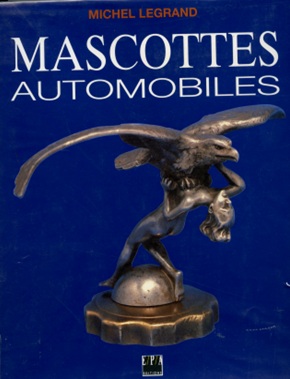
Lauren identified a recurring issue: the foundational literature on mascots was created by collectors, not academics.
The earliest major English‑language works appeared in the late 1970s. They were groundbreaking – but they lacked citations, footnotes, and academic rigor. Later authors relied heavily on these early books, creating a feedback loop where assumptions hardened into “facts.”
Why does this happen?
- Collectors control access to many of the most important pieces.
- Auction houses rely on existing literature, even when it’s flawed.
- Automotive history lacks an academic ecosystem — no tenure tracks, no dedicated research funding, no peer‑reviewed journals on the scale of art history or archaeology.
As Goodman puts it, automotive heritage is still largely the domain of passionate amateurs, not institutional scholars.
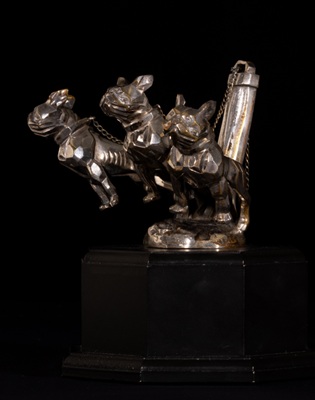
To move forward, Lauren argues, automotive historians must borrow tools and methods from other disciplines – especially art history.
One breakthrough came from a surprising source: a 2015 English translation of “Dictionary of Bronze Art Foundries in France” by Luis‑Beatriz Leal. This work clarified the roles of artists, foundries, fabricators, and fabricants (manufacturers) in early 20th‑century Paris.
This matters because many English‑language mascot catalogs misattribute pieces, conflating the roles of sculptor, foundry, and retailer. Leal’s research shows that companies like Contenot-Lelieur and Pinedo, often labeled as “foundries,” actually subcontracted their casting work.
In other words: the mascot world has been mixing up its credits for decades.

Lauren also highlights the potential of modern tools like handheld XRF spectrometers (seen above), which can analyze the metal composition of bronzes without damaging them. These methods are already used in fine‑art authentication and could revolutionize mascot research.
Imagine being able to identify:
- which foundry cast a mascot
- when it was produced
- whether it’s a period original or later reproduction
All without removing a single patina.
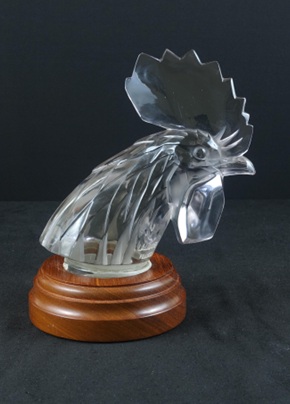
If most mascots suffer from sparse documentation, René Lalique’s glass mascots (above) are the opposite. They are the best‑documented mascots in the world — and Goodman believes this is no coincidence.
Lalique’s popularity may stem not only from his artistry, but from the fact that:
- his catalogs were widely published
- his work crossed into the fine‑art world
- English‑language sales literature existed early
- scholars in decorative arts embraced him
This cross‑pollination between automotive and art‑historical scholarship created a virtuous cycle: more documentation → more collector confidence → more demand → more research.
Goodman wonders whether other mascots might enjoy similar prestige if they received the same scholarly attention.
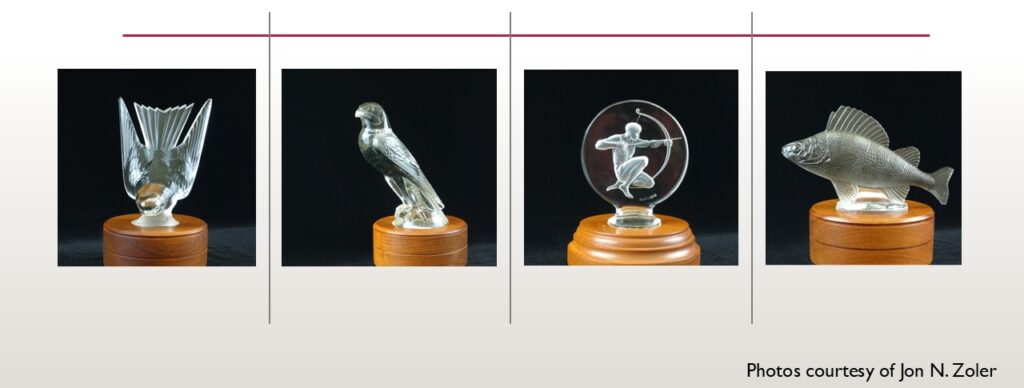
Lauren closes with a challenge – and an opportunity. As prices rise and collections grow, private collectors will play an increasingly important role in preserving mascot heritage. But they cannot do it alone. Museums and archives must work with collectors now to plan for the long‑term stewardship of these objects.
Just as fine‑art collectors see themselves as custodians of cultural heritage, automotive collectors may need to embrace a similar mindset.
These mascots are not just decorative accessories. They are artifacts of design, engineering, culture, and memory. And they deserve the same care and scholarship we give to paintings, sculptures, and architecture.
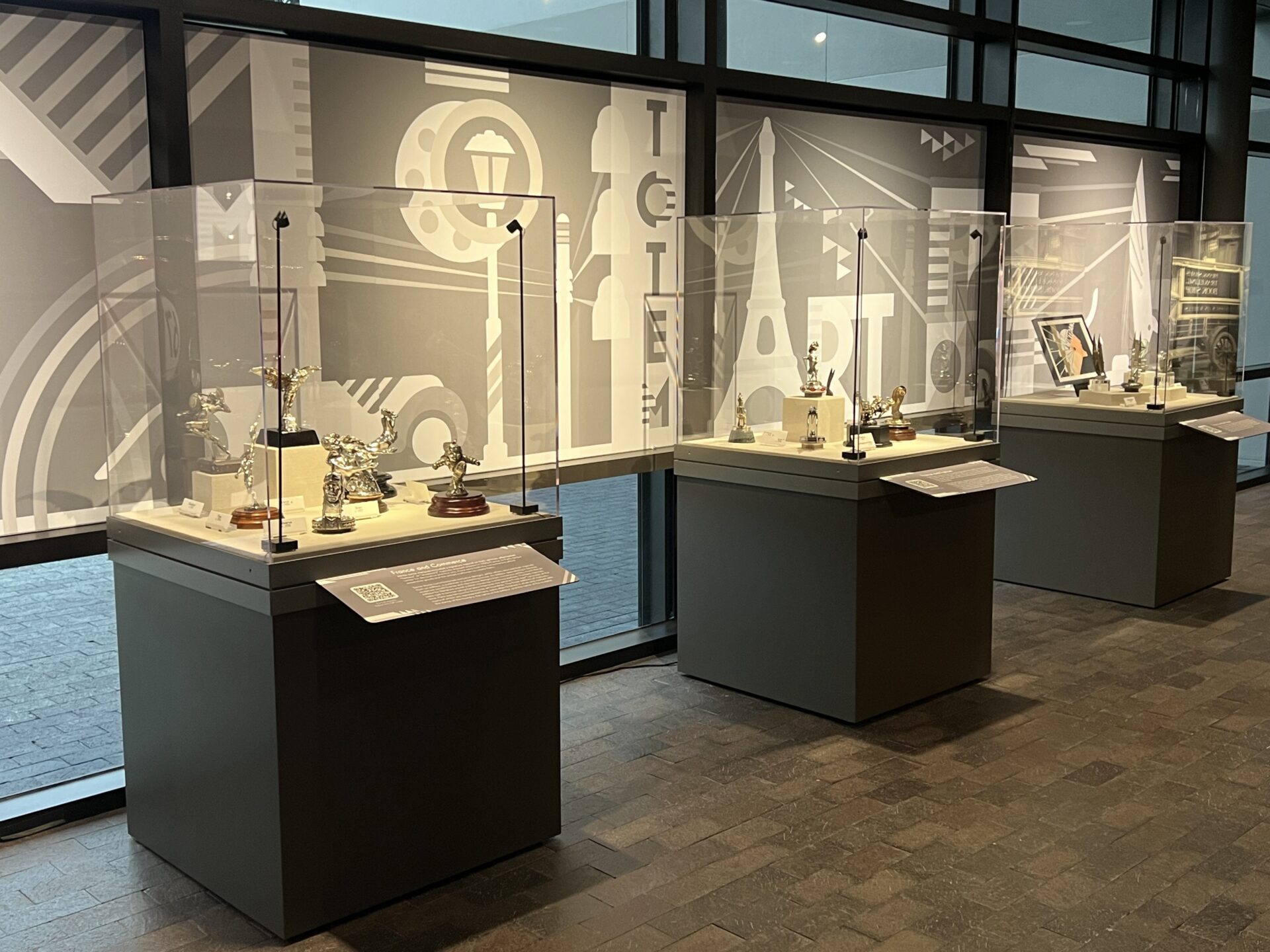
Lauren’s work reminds us that automotive heritage is more than engines and sheet metal. Sometimes the smallest objects – a leaping greyhound, a winged goddess, a glass falcon – can spark the biggest conversations about how we preserve and interpret our past.
And perhaps, by looking closely at these tiny sculptures, we can chart a better path for the future of automotive history itself.
This episode is sponsored in part by: The International Motor Racing Research Center (IMRRC), The Society of Automotive Historians (SAH), The Watkins Glen Area Chamber of Commerce, and the Argetsinger Family – and was recorded in front of a live studio audience.
Other episodes you might enjoy
Michael R. Argetsinger Symposium on International Motor Racing History
 The International Motor Racing Research Center (IMRRC), partnering with the Society of Automotive Historians (SAH), presents the annual Michael R. Argetsinger Symposium on International Motor Racing History. The Symposium established itself as a unique and respected scholarly forum and has gained a growing audience of students and enthusiasts. It provides an opportunity for scholars, researchers and writers to present their work related to the history of automotive competition and the cultural impact of motor racing. Papers are presented by faculty members, graduate students and independent researchers.The history of international automotive competition falls within several realms, all of which are welcomed as topics for presentations, including, but not limited to: sports history, cultural studies, public history, political history, the history of technology, sports geography and gender studies, as well as archival studies.
 The symposium is named in honor of Michael R. Argetsinger (1944-2015), an award-winning motorsports author and longtime member of the Center's Governing Council. Michael's work on motorsports includes:
- Walt Hansgen: His Life and the History of Post-war American Road Racing (2006)
- Mark Donohue: Technical Excellence at Speed (2009)
- Formula One at Watkins Glen: 20 Years of the United States Grand Prix, 1961-1980 (2011)
- An American Racer: Bobby Marshman and the Indianapolis 500 (2019)

This content has been brought to you in-part by support through...