

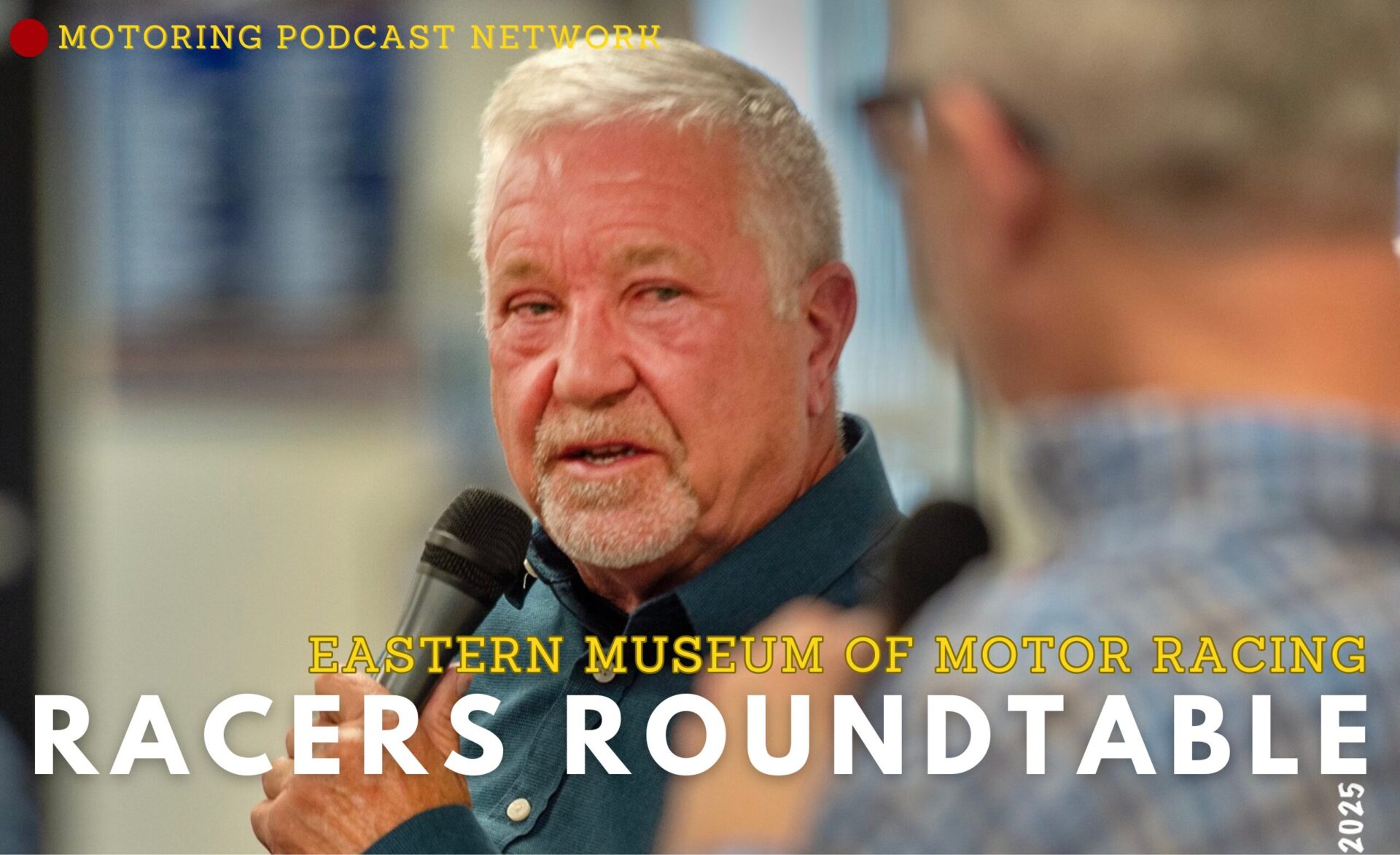
Few names in sprint car racing carry the weight and respect of Sammy Swindell. With over five decades behind the wheel, his story is not just about victories – it’s about resilience, technical mastery, and a relentless pursuit of excellence. At the Eastern Museum of Motor Racing’s Racers Roundtable, fans were treated to a rare, candid journey through the milestones of his career.
Swindell’s commitment was evident before the conversation even began. After enduring canceled flights, sleepless hours, and a long drive from Philadelphia, he still arrived ready to share his story. That grit mirrors the determination that defined his racing career.
Tune in everywhere you stream, download or listen!



Sammy’s racing journey began in Memphis, Tennessee, where his father was deeply involved in the local racing scene. By age 12, Sammy was already maintaining cars, building motors, and absorbing every detail of the sport. By 15, he was racing – and winning. His early years were marked by long weekends of competition across multiple divisions, often running three classes in a single night.
By 1975, Swindell had already claimed 22 sprint car victories across five states. Along the way, he raced against legends like Bubby Jones and Hooker Hood, learning from the best and proving himself against them. His philosophy was simple yet powerful: “Go find the winners, because you’ll learn more from them than from the guys in the back.”
Highlights
Skip ahead if you must… Here’s the highlights from this episode you might be most interested in and their corresponding time stamps.
- 00:00:00 Introducing Sammy Swindell
- 00:03:59 Sammy’s Early Racing Years
- 00:07:06 Rising Through the Ranks
- 00:19:03 The World of Outlaws and Beyond
- 00:25:43 Partnerships and Innovations
- 00:32:37 Success at Syracuse and Racing Strategies
- 00:36:18 TMC, Independent Front Suspensions & Turbocharged V6s
- 00:45:26 Dominating the ’90s and Winning Big Races
- 00:48:34 High-Speed Events and Racing on Pavement
- 00:58:42 Williams Grove National Open and Racing the Posse
- 01:00:45 Analyzing Competitors in the Pits
- 01:01:55 Achievements and Retirement
- 01:02:59 Rivalry with Steve Kinzer
- 01:06:07 Success at the Chili Bowl
- 01:09:19 Venturing into IndyCar and NASCAR
- 01:25:55 Memories and Tributes
Transcript
Crew Chief Brad: [00:00:00] Welcome to The Racers Roundtable, a podcast sponsored by the Eastern Museum of Motor Racing where history meets horsepower and legends live on each episode brings together voices from across the motor sports world, from grassroots heroes to seasoned veterans as they share stories, insights, and behind the scenes tales that shaped their racing journeys.
Whether you’re a diehard fan of dirt tracks, drag strips, or open wheel icons. The racers round table is your seat at the table for candid conversations and timeless memories from those who lived it strap in tight because it’s time to talk racing history one lap at a time.
Dave Hare: Now, uh, we’ve got Sammy Swindell and, and Sammy is a guy that was at the top of the wishlist. And I’d like to thank Justin sites. Justin sites, he and I are friends on Facebook. Of course, even in the racing community, you, you have a lot of folks that you know through Facebook, through social media. And Justin had gotten in touch with me and said, Hey, I’ve got a car of [00:01:00] Sammy’s.
Said I’m restoring. And I’m actually going down to see him in a couple weeks. And if he was agreeable to a round table at the Eastern Museum of Motor Racing, would that be something you’d be willing to entertain? I said, well, you know, it’s, it’s interesting because Alice and I had been talking and she said, put together a wishlist, and Sammy was at the top of that wishlist.
So the timing was perfect, and we certainly appreciate your commitment to the calls, brother. Yeah, thank you.
And for those of you who didn’t hear already, uh, most of you have, but for anyone who ever questioned Sammy’s character, he spent the better part of eight hours at the uh, airport. Yesterday, all flights were canceled Somewhere around midnight, he made new flight arrangements. He has been up since two 30 this morning.
He flew to Charlotte, from Charlotte to Philadelphia, and then he just drove from Philadelphia here to the museum with Alan Kreitzer, which I might add is comparable to running Syracuse with no roll cage. So Sammy, thank you. Thank you so much, brother. We [00:02:00] appreciate you. You’re welcome.
So for those of you that have attended the round tables here at the Eastern Museum of Motor Racing, at least the ones that I’ve been involved with and they’ve been so much fun, we like to work through things frequently, chronologically, and we’re gonna do some of that today. In the first part here, we’re gonna cover some sprint car stuff, and then in the second part of the round table, we’re gonna talk about Sammy’s pursuits and other racing venues.
You’re gonna be impressed, even hardcore fans are gonna go away with a greater appreciation. For those of you that know Sammy as a sprint car driver who’s come through Central Pennsylvania, when you leave today, I think you’ll have just a tremendous amount of respect for the man. Well, you’re all familiar with the stats, the three titles, the 394 Feature wins with the World of Outlaws, his five Chili Bowl titles, and the countless wins at the highest profile, most lucrative events in the sprint car world.
Flatly stated, he’s done it all, but what I’m hoping you’ll take from today’s discussion is a greater appreciation for his accomplishments away from the dirt track arena and how his technical prowess has [00:03:00] impacted the motorsports landscape. His book released in the spring of 2023 chronicles his ambitious and innovative journey through the world of motorsports.
It is simply titled and appropriately so. Sammy, 50 plus years of Winning. Please welcome back to the Eastern Museum of Motor Racing 2006 National Sprint Car Hall of Famer. One more time. How about it for Sammy Swindell?
You know, we talked earlier about, uh, everything that’s been happening here at the Eastern Museum of Motor Racing and how it’s grown over the last 50 years since the Williams Grove Alzheimer’s was um, established. We’ve got some great pieces here. Speaking of great pieces, if you’re looking for some of Sammy’s cars, I think they’re pretty well displayed out at the, uh, museum of America’s speed in Lincoln, Nebraska.
They still have that going on with them. Yeah, yeah.
Sammy Swindell: There’s still
Dave Hare: a few cars out there.
Sammy Swindell: Yeah. Sometimes they move them to different places, but I think there’s three or four there. Yeah. Um, we’re hoping to get some more out soon. Good. Some of. Go in and out of there.
Dave Hare: Yeah. [00:04:00] Well, Sammy, let’s, uh, let’s take a walk back in time.
Talk about your early years, man. You’ve been at this so long now. Your dad was the guy that was involved in racing down in the Memphis area?
Sammy Swindell: Well, he started racing the same year I was born was at the racetrack, like a few days after that. He had done real well there. Mm-hmm. Once a lot of the championships right around there.
Mostly in the, the sprint cars were the A class and the modifieds were the B and the late miles for a C called the C car. So he ran, the ones he built were B cars that he ran most of the time, but he ran all three of them at one point there for quite a few years. He ran the Memphis Race Car Club, was the president there.
So. Got to go to the racetrack and we’d go to the meetings and all the different things. So I got to see a lot about how everything works from him building the cars and building motors and stuff and through every part of it. And you know, and I was always interested in everything.
Dave Hare: You self described tinkerer,
Sammy Swindell: is that right?
Yeah, and sometimes I too much, I spend too much time on [00:05:00] details, but I like it to be right. So. By the time I was 15, you know, they, they had a little practice earlier and the year the track was open up in Milan, Tennessee, and we went up there and ran and, and everybody thought it did pretty good. He was building another car, didn’t get it finished till like the first part of July.
Dave Hare: Okay.
Sammy Swindell: So that’s when I started in 71. We went to Milan but he’d crashed the car and we got there late ’cause we were working on his car. I got in and expected it to be kinda like it was and it, and it wasn’t. Yeah. And um, we found out the steering had a tooth broke in it, but mm-hmm. You know, we got there a little late, but they pushed us out and we both got to make some laps to qualify so, or time.
So it kind of hit the fence over here and was over there and Yeah. It’s like something’s not right. Something’s not quite right. Yeah. So, so I didn’t get to run the very first night I run
Dave Hare: second night out
Sammy Swindell: things went much better. Right. Yeah. The second night, ’cause it was fourth July weekend, they ran Friday and Saturday at West Memphis.
Friday night he ran third, not run fifth. Hmm. [00:06:00] The next night I won.
Dave Hare: Simple as that. Yeah. Get in the car and win. Yeah. You were sort of prepping for this though, for years. I mean, from an early age you were a sponge, you were absorbing this stuff. Yeah. And before you even got in the car, if I remember correctly, you were pretty well responsible for good portion of the maintenance on your dad’s car, weren’t you?
Sammy Swindell: Yeah. Well, I was doing a lot of the things, you know, because he worked, he was a superintendent for commercial contractor.
Dave Hare: Okay.
Sammy Swindell: By the time I was 12, I was doing a lot of the maintenance on it, a lot of things, or I’d have things ready Yeah. That I couldn’t do for him to do. When he got there, started learning about how everything kind of went together.
You know, was able to build motors by the time I was probably 13. Wow. Learned a lot of stuff from my uncle about the carburetors, about how to set those up and different things, and was with my dad working on his and doing the setup stuff and tire stuff for that. But from the whole time since I’ve been around, I was always in the shop with him.
Dave Hare: Yeah.
Sammy Swindell: And that’s, you know, [00:07:00] probably four or five years old. So. He’d have me doing something
Dave Hare: that’s certainly played to your favor over the years. 1973. Then you graduated from high school and drive a sprint car for the first time.
Sammy Swindell: Yeah, we started running, well, I was running both the classes there. Mm-hmm.
But we could run the B cars down at Greenville, Mississippi on Friday nights.
Audience: Okay.
Sammy Swindell: It was like the next week. The second weekend I drove, uh, we went down and I won there and I won like every race down there that year. I don’t know, it was just something that fell into my car thing. We were just, it was easy down there.
But I mean, at, at at West Memphis, they, they started all the cars and a lot of times they’d have 40 cars. Oh wow. I remember starting on the front, taking off and I’d go down the back stretch and West Memphis isn’t really big, but when you got 40 cars, there’s guys that still hadn’t took off yet.
Dave Hare: Yeah. That could be probably that.
So by the time
Sammy Swindell: I made a lap, we were in traffic. Yeah. So, um. It was a good place to learn. It was a sticky track pretty fast there with some banks, so it, it taught me a lot about [00:08:00] going to other places and, and, but I started driving the sprint car and it was a bit different. Won a few races, but we were always up near the front all the time.
But they had a lot of really good guys there at that point. And some of the cars were better than one I had, but worked
Dave Hare: hard at
Sammy Swindell: it and got better.
Dave Hare: I think one of the common themes in your life story has been travel. You’ve been traveling. When you, when you started running, uh, I guess it was Bobby Sparks the first owner in the spring car.
Yeah, yeah.
Sammy Swindell: We started in, that’s who ran four in 73. Yep. In 74 we’d start going on Sundays. They ran up at Hobs spot. Mm-hmm. Which is about 300 miles north of us. And uh, we’d go up there. It didn’t take long. We won some races there And you guys were going to Devil’s Bowl in Florida? Yeah, a lot of times we, in 74 we’d go to Devil’s Bowl ’cause they ran on Friday nights.
Go to West Memphis on Saturday and go to HubSpot on Sunday. So that’s a few miles. Yeah, it
Dave Hare: is
Sammy Swindell: because I’m about 450 miles from. That was bowl. Wow. 300 up there. So it, you’re doing 6 [00:09:00] 1 1600 miles there in the weekend. Yeah. Well, when you’re 17, it’s okay,
Dave Hare: but things got busy, uh, at West Memphis because as you mentioned, you’re driving in a couple divisions and at some stages of your career.
Early on, I believe you were running three divisions. Yeah, it was just like
Sammy Swindell: in probably 70, maybe the last part of 73 or 74, I was running the stock car late model. There was quite a few times. I won all three.
Dave Hare: All three
Sammy Swindell: in the same night.
Dave Hare: Yep.
Sammy Swindell: So I was running a lot of laps and had to have two helmets for that.
Though we didn’t have tear offs so much like we did then, but we had like two visors or pull one off and different times. Yeah. A lot of times you’re ducking. It was pretty
Dave Hare: muddy down there. Sometimes here in this area, we’re pretty Pennsylvania centric. There’s a lot of talent, a lot happening down in that Memphis area.
Tell us about some of the folks you were racing against or maybe even some of the folks that you mentored with. They you looked up to.
Sammy Swindell: You know, when we first started traveling some there in 74, you know, Bubby Jones would come down. He drove for M Ma [00:10:00] Brown and my dad used to race against him. Mm-hmm.
Because, uh, he had a big car up there that they ran at Milam. Okay. They never really came down with that in Ma didn’t, but then we had sprint cars. He would come down, you know, they were sponsored most of the time by Bruce Gel Ford. Mm-hmm. So, um, Mr. Gel come up from Alabama, got a relationship going there because he would come.
That was when he was winning a lot of races with that car. But yeah, I was making it hard on him to win there at West Memphis. So, yeah, we had some pretty good races. He, he beat me some, but I think I beat him more. You know, that got me in a relationship to a ride down the road later
Dave Hare: on, and that was a, that was a big ride.
I love a good quote, Sammy and I, and I’m gonna share one here with you. I think this is approach you’ve always taken, but probably it was more prevalent in your formidable years. You said people would ask, what’s the best way for a young racer to get going in this sport? And your response, hang out with the best people.
Go find the winners because you’ll learn more. What are you gonna learn from the guys who run in the back if they knew [00:11:00] enough to teach you anything? They wouldn’t be back there in the first place. Yeah, it’s just true. And, and that’s why you sought out guys like Yeah, like Bubby and, and Hooker Hood was another guy down there.
It was hot. Yeah.
Sammy Swindell: Well, Rick Kel would come down there, off and on. It was a lot of people that came down there because Birchville was pretty good for that time. You know, I think they were paying a thousand dollars to win, which most places might only been. Three or 500. It doesn’t take long, you know, it’s like you don’t want to ask the guy that’s running last how to go faster when you’re already ahead of him.
There you go. It’s logical. Some people don’t get my dry sense of humor sometimes, you know, and I’m kind of to the point, but I’m consistent.
Dave Hare: There you go. Looking at some of your stats in early on, one of the stats that really impressed me was by 1975, and here you’re still very early in your career at that point.
In 1975, you had 22 sprint car victories in five states and you were running Bob Guine. [00:12:00] Gillett. Okay, thank you. One of those victories took place that in a little bull ring out in Stewart, Iowa. Yeah, you’d be the guy that was a pretty big name at the time. Yeah, I wasn’t
Sammy Swindell: supposed to do that. We’d come up to Knoxville before with Bobby Sparks.
So Bob took a little time off from his construction company, went, did some races, and we went up there and that place wasn’t a lot different from West Memphis, Stewart Sort. It was kind. Maybe the same size, maybe not banked quite as much. I know we didn’t really start up near the front, but we wound up winning there.
And uh, was that the one that beat Reer or Opperman? Opperman, yeah. Okay. Pretty big deal. Yeah. That was a Wingless show. Yeah. Yeah. We were Wingless there and you had The Wing with you. You never know which you would go back and forth all the time. Yeah. ’cause we run wings. Well they run both at West Memphis and then we’d run Wing.
A lot of times we’d have a wing and then go run Stot and they did run wings.
Dave Hare: Okay.
Sammy Swindell: Or he’d go someplace and run one night with a wing one night without. But yeah, that was special. You know, we didn’t have all the stuff we have now, the social media stuff, but I [00:13:00] still knew about this guy. I don’t think it went over too well.
Dave Hare: You said we didn’t have everything then that we have now social media, but that also includes the comforts of travel. I mean, at that point you’re hauling from Memphis Stewart is 45 minutes to an hour west of Des Moines off of Route 80. And so that’s a pretty good hike. And you’re doing that stuffed in a pickup.
Well
Sammy Swindell: then
Dave Hare: with
Sammy Swindell: Bob it would just be
Dave Hare: me and
Sammy Swindell: the other
Dave Hare: one. Okay. Just the two of you. Two of us really? Okay.
Sammy Swindell: Yeah.
Dave Hare: Yeah. But that’s still a pretty good home.
Sammy Swindell: Yeah.
Dave Hare: So you’re making a name for yourself early, you talked about a ride that’s on the horizon, but in between there, there was another ride that you had from um, a Memphis based car, the Bobby Davis Electric number 71.
Sammy Swindell: Bobby had hired Bill Anderson. Some of y’all might know that. Been around for quite a bit. Okay. But you know, in the winter he would drive trucks for. Ma Brown and he worked on the race cars during the summer and he was, he was with Bobby anyway, he went to work for Bobby. It was Tommy Nolin that was driving the car at the time and I guess they kinda had a falling out.
So, okay. [00:14:00] Bill told me he sat down and he said, well if you wanna win the races, you need to call Sammy. He said, Bobby about spit out his coffee. You know, he was always wanting to beat me. Yeah, yeah. You know, but, and he had a B car before that so that Ricky Hood drove. So we had a lot of races together and we started that and it went pretty good.
But to do a little more travel and a little more things that I haven’t done yet. A lot more places that I haven’t been to.
Dave Hare: And you guys ran Knoxville Nationals, I think you went to
Sammy Swindell: Skagit. Yeah. That was a little bit later I think Bill Anderson wound up going back and I had, I got Tommy Sanders that worked for Bobby Allen up here.
I’m glad you brought that up. We got the, and he was the one that brought me up here the first time. We got to do a lot more race in a lot, a lot of places, and all the way out to the very northwest corner of Washington state. Yeah. Got to go up and down the road quite a bit.
Dave Hare: And that’s quite an experience, uh, for a young man.
And to be able to explore the country like that and race as often as you are, that led you to a crossroads. You decided to enroll in [00:15:00] college. I mean, you’re a college student and you’re racing. Mm-hmm. And at some point you said, I need to make a decision.
Sammy Swindell: Yeah. If we go,
Dave Hare: we go back
Sammy Swindell: to 73 or so. I’m in high school, living at home, and I’m making thousand, over $1,500 a
Dave Hare: week in high school in 1973.
Sammy Swindell: Cash.
Dave Hare: They didn’t give you checks back then, right? Right. So anybody has an inflation calculator, plug that in. A thousand, $1,500 a week. I think most of us would take that in 1970 $3. Yeah, you’re doing well.
Sammy Swindell: Yeah. There’s a lot of people I had that I went to school with, they make, make 25 or $30 a week.
Mm-hmm. But at the same time, uh, you know, when I go to West Memphis, it was $5 to get in and it cost me about $3 for gas. The B car stuff that went on a percentage of the gate, it would be from two 50 to $500. And I didn’t have to split that with anybody. That always helps cost me seven or $8 to get in and race.
Yeah. [00:16:00] Your
Dave Hare: profit margin’s pretty
Sammy Swindell: good at that point right after I got going, it’s like, wh why do
Dave Hare: I want to do anything else? So tell the folks where you were attending college and what your interest, what your major was at that point.
Sammy Swindell: First of, I was going to, um, Memphis State then is what it was called, and I was doing mechanical engineering.
They just wanted to make you do a lot of other things, English and other things there that, that I didn’t have any interest in. And so I went there for. A year. Then I went over to the state technical college. You know, when I did the mechanical engineering, we were drawing gears or doing things, you know, just pieces and didn’t make a lot of sense to me.
But, and my granddad built some houses and stuff, so, um, I, when I moved over to State Tech, I just went into architectural engineering. Okay. You can build something there, design something, then you can see it, you know, when you’re designing gears or something. Some people doesn’t know, won’t ever see that.
Right. I gotcha.
Dave Hare: So you made the decision that [00:17:00] college is not gonna be the course you’re gonna take. Racing looks pretty good.
Sammy Swindell: Yeah. Well, I did try talk to all of my teachers and stuff there and like still want to do this, but I’m doing this and half of ’em was like, okay, we can do that. Then the other, there was some that said, no, you have to be in school.
And I said, well, you don’t understand. I’m paying my way through school, uh, because my parents couldn’t afford to do that. You know, it’s like, well, I can always go back. This racing thing doesn’t work out.
Dave Hare: Yeah. Well I think, uh, I think you’ve done okay. Yeah.
Sammy Swindell: Well I’m, I’m here today.
Dave Hare: There you go. You mentioned the name earlier, ma.
Brown car owner. He had what Trucking company. Down that way. Yeah. He was a, uh, 2019 National Sprint Car Hall of Fame inductee. And one of the great stats about Emmy Brown, I think over the course of roughly 10 years or so, he had nine national Sprint car Hall of Famers behind the wheel of his number 44 Bruce Kogel Ford sponsored car.
And of course that was the ride that you eventually picked up in when it was [00:18:00] like August of 77, somewhere around there.
Sammy Swindell: Yeah. Yeah. It was just right after the nationals driving, before the FedEx car. They wanted to go racing. So they gave me a chance to go to a lot of places and do a lot of things. And it was like that one was different because, um, back then I don’t think he had a motor that was under 400 cubic inches getting in that car.
It showed me that, that when you’ve got everything you can have, how much easier it is. We came to a lot of places and and did fairly well with it Might’ve been, we might’ve come up to Port Royal and I was, I think I was leading the, I think the Eastern run, was it 75 lap race or something up there?
Dave Hare: Where’s my Port Royal people? Yeah.
Sammy Swindell: And we were up there running that and it was actually leading for quite a while and had a flat. But that was a little scary ’cause the stands were so close and you’d have all the little kids waving the flags. I kept thinking I was gonna hit one of them.
Dave Hare: That’s Pennsylvania.
That was a high profile ride. I mean, you’ve had good rides up to this point. This one’s taken you to [00:19:00] another level, and you’re fully prepared to take advantage of that opportunity. 1978. Ted Johnson forms the world of Outlaws. And you’re in the Ma Brown car on tour, so to speak, with the Outlaws.
Sammy Swindell: Yeah. I think we only ran maybe 10 races though Ma likes to see his car run stuff, so we, he wanted to be around, we’d let us go different places, but uh, we’d always have to come back and run at West Memphis some and or, or places around there, or places he could go to be it hob stock.
But we did get to run a lot of the, like I said, we came up here. Mm-hmm. Cut to do a lot of, a lot more traveling. It’s hard to remember all the races we went through back there, but I don’t know. We won a fair amount in that car.
Dave Hare: Mike Brown
Sammy Swindell: m ma son. Mm-hmm. You still in contact with him? Yeah. I’ll see him every now and then.
Yeah. And he’ll come down to West Memphis or he’ll show up someplace I’m at. He’s restored a few, a few of the cars.
Dave Hare: Yeah. The 44 is gorgeous. Yeah. And he did beautiful.
Sammy Swindell: I think he did the TMC car too. Did he? He did one of those, as one that he [00:20:00] restored. Seems to do good work. He worked there with j and j with Jack.
He’s a real good fabricator.
Dave Hare: You mentioned the FedEx car, 1979 inbound. There, you, you make the move and you’re in with a guy by the name of AJ Jeffrey. Tell us what the connection was there.
Sammy Swindell: Well, that was the guy I started running his late model. His late model? Yeah, his late model. And so we, if we go back, he, he was one of the three or four guys that started with Fred Smith when they were at and started FedEx and he brought it to Memphis.
So we run his late model. We won a lot of races in that around locally there. We just got together and he wound up getting Fred to give us a bunch of money or give him a bunch of money. Yeah.
Dave Hare: And that was big deal. ’cause with a national tour forming to be able to bring in a company, and it wasn’t as large as it is today, of course.
No. But at that point, to be able to bring that type of company in, that was pretty significant move.
Sammy Swindell: Yeah. It was still a big company just getting started. Mm-hmm. But, uh, it just didn’t, that one didn’t [00:21:00] last real long, but, but when it did, it did. Yeah. It was, I think, uh, you had quite a few, we won a lot of races for that
Dave Hare: too.
79, I think you were third at the Knoxville. Nashvilles after coming through the b
Sammy Swindell: mm-hmm.
Dave Hare: Ran behind, uh, Ron Schumann and Randy Smith.
Sammy Swindell: Yeah. And we had, um, Carl Kinzer’s 3 55 motor in there. It was a little slick track. Well, we had a problem blur motor, so he, he loaned us one that probably didn’t make anybody’s notes.
Dave Hare: 1980, probably the car I first remember seeing you in when you came to Pennsylvania. And this was just another step in your career, another step up the ladder you ran for Laverne Dance. That was a high profile ride at the time it seemed, and I think you were a big part of making that a high profile ride.
Sammy Swindell: Yeah, that was a lot going on there. It was George Gillespie calling me one day. He said, Hey, you need to go out there and see Laverne, so I did. So we went in there with him and his wife in his office and he said, and he, first thing he said to me, he says. I don’t think I can afford to [00:22:00] have you. I said, you can’t afford not to have me.
Then went on to explain the stuff I’d learned in the short period of time, just the way I looked at doing things, or we can do this and do, I said, we need to build a car that a guy with a toolbox this big can put it together and go race. You’re a machinist. He said, yeah. I said, you could make fixtures where everything’s the same.
Yeah, you could make the cars the same. You can make all this stuff exactly the same. I said, well, I want to do this. We build the cars and stand them up, build the sides and do it this other way. But all the parts, you know, like the body or the, everything has to be the same. So you can just take a part off.
A guy can put it on, because that was the biggest thing back then. You bought something while you had to work on it. You had to file on it or cut it or something, or fit. You know. Nothing was that close. So it was like always when you could get some parts or you got something that always you had to
Dave Hare: work on.
Yeah. So you’re looking for consistency of operation. Yeah. You’re [00:23:00] looking at the the minute details to make sure that when you’ve got a car, it’s what you had before and you know where you’re gonna go with
Sammy Swindell: your
Dave Hare: adjustments.
Sammy Swindell: Yeah. I told ’em I wanna put everything on a schedule that we run so many laps on everything, so it doesn’t break.
That was
Dave Hare: brilliant
Sammy Swindell: because it’s, I said, you, you’re a manufacturer. You’re the stuff you don’t make, you buy at a discount and you make a profit on. So it’s like it’s gonna cost us too much to fall outta races, you know? ’cause we were talking about going to run the whole world of outlaw series. That’s the biggest deal, is we’ve gotta finish every race, but we’ll put it on a schedule.
We’ll do all this stuff. And I said, you won’t have any problem selling my cars. And we’ll just say, we’ll run ’em for a little bit and then get another one. That one kind of almost backfired on me because then he was wanting to, well, can I have another car?
Dave Hare: Yeah. He didn’t get much time in ’em then.
Sammy Swindell: No, but on your parts deal, instead of just selling the guy radius rods and es, you know, make the fixture where all the cars are the same, we can just make fixtures.
Your grandkids could go out and [00:24:00] build radius rods and have ’em set. Instead of selling a rear arm and this and that, you sell it with the pitch bolt, the shark bolt, the rod in. It’s all set up. All he has to do is slide it on the car. When I drove for him right before that, his car, man, it’s like you could adjust everything on it.
There was all kinds of things, and he was a little reluctant to take a lot of that stuff off. So it’s like we just bolt this one together and you can’t really mess it up. But then I asked him, I said, well, how many cars did you sell last year? He said, 45. I said, well, I bet you we can do over 200. Wow. He’s like.
I said, well, you’re gonna have to hire another welder. Mm-hmm. The one guy’s not gonna be able to keep up. And so it, it started that year. We ran 136 nights and I felt a lot of two races. One was a flat tire and one, we got a hole in the oil filter. No, no mechanical failures. No mechanical failures at all in that many races.
And we won 56 races and the world of Outlaw championship.
Dave Hare: And that became sort of a calling card for you, you being a [00:25:00] driver, but with a business mindset, someone who knew how to run the entire team. You saw the big picture. Mm-hmm. What it took to be successful.
Sammy Swindell: The more I knew,
Dave Hare: the
Sammy Swindell: more I’d be worth. The more I could do, the more I was gonna be worth, you know, just being able to do everything.
You know, A lot of people probably wouldn’t want to take that on, but you know, I won a race and this was gonna gimme a chance to run the whole world out all for all the races, all the big paying races. We even got to run a lot of other races, you know, and all that comes with, well, every time you run it and you win.
Well that makes my bank account look a little better. That’s what, it just all adds up. If I could control it all, I knew what I wanted to do and I could, was able to do that.
Dave Hare: Sam, I think one of the other areas where you were proved invaluable to the, not only Nance, uh, Laverne Nance, but other chassis companies down the road, is you formed relationships with these folks and then you were able to provide input to the design of their chassis and they would incorporate that input, [00:26:00] make a better car.
And to your point earlier, sell more cars. Well, if we back up
Sammy Swindell: to the FedEx car Sure. Went out to Phoenix a few times and was at some races and I got to know Gary Stanton. Mm-hmm. And so, uh, we got to be pretty good friends and stuff. So he said, well I want to build you cars. And I said, well, I want to make some changes from the car you got.
So he said, well, I’ll build you a couple cars however you want ’em. At the same time he made three cars. I said, what are you doing? Why are you doing three cars? And he said, well, I’m gonna have one here sitting here. You know, so it didn’t take me about about three weeks of running that one. And he showed up with Ron Schumann with us.
I said, oh, you got my other car out here. He said, well, it’s been looking pretty good, but you know, there’s just a lot of little stories down through everything. But you know, to get back, there wasn’t a lot of corporate stuff in the race and it was just a guy had some owned a business or had to had a car, you know, or something like that.
So when we went out. To, uh, Phoenix, if we go back to 74 the first time, well, you know, Bubby Jones [00:27:00] showed me how to, well, we talked to this promoter and, and he’ll give you this money. You can get this money or you can get a hotel room or you can get, you know, money, show up money and
Dave Hare: okay, whatever.
Sammy Swindell: So we’ll go out there, talk to Keith Hall and got this room for the whole week and had to spend time out there.
And, uh, that’s when I was driving for Bobby Sparks and, and so Ben Foot for Mascot comes down to him and he says, we want you to come over to the Pacific Co sofa the next week. And I said, well, it’s really not up to me. Lemme see how the guys can come over there. And he said, well, I got this. I can give you this much money and I could give you a room for the week on the beach.
And it’s like, well go back and talk to Bobby. Oh, okay. Well he called his dad. Yep. Yeah, we went over there and did that. So I got to go see a lot of the manufacturers that, that was out there. So I got started just building more and more acquaints, you know, stuff that we would have a problem with the car.
This is what would break first or mm-hmm. This, we had issues with. I could deal with them while seeing how they made pieces and did the things. So I was [00:28:00] able to help in making their parts better.
Dave Hare: So you provided feedback to the manufacturer sponsors, the folks that Yeah. You had developed relationships with.
Mm-hmm. They had enough trust in you to make that a reality, then they knew it would benefit them as well. Yeah. Even though I was 18, 19 years old. Wow. Sammy, one of the other things, uh, I thought was, was interesting. When we talk about your ability to manage a team, you’re a guy that, let’s say you’re involved with a tour and the tour’s going from Knoxville and they’re gonna go out and run Chico and up through Skagit, you would sit down and do the numbers and say, financially, does this West Coast swing make sense for me, for our team,
Sammy Swindell: there was a lot of guys that I drove for that couldn’t run the whole world of outlaw schedule, and so we would just pick out things and see what made sense.
Mm-hmm. Or we thought we could make the most money for what we were doing, and that was okay. There was plenty of races going around. The first part of the Outlaws, they went to a lot of different places and it was quite a bit of money to stay out on the road back then. But [00:29:00] we would put a schedule together with.
Kind of what owner was looking to spend.
Dave Hare: Yeah. And you had to stay within that. One of the things I wanted to touch on just briefly here, while you were with the Nance team, Tommy Sanders, still with you, I think, at that point, and there’s another fellow whose name would reappear throughout the course of your career.
Ken Jenkins.
Sammy Swindell: Ken was out there and that was another thing that he was trying to get me to go out there. At the same time too, you know, that he was over at Gambler and he had the his own deal out of Dodge City there for a bit, but we did a lot of things together over the years as different places. Yeah.
Comes back to those relationships. Mm-hmm. Yeah.
Dave Hare: Well, after the Nance deal folds, your next move from there you went met up with a guy named Raymond Bele,
Sammy Swindell: I believe. Yeah. That was just a deal. Like at the end of the year I got on a plane, I was just gonna go down to the Wins Cup race in Atlanta. Okay. I flew into Dallas and went from Dallas to Atlanta.
I got on a plane and wound up sitting next to Raymond Beetle and so we start talking about stuff and he’s, that’s when he’s telling me he’s [00:30:00] trying to put a cup team together and he’s got his funny car, you know? He said, well, maybe we could add a sprint car deal and then put you in a few races over there.
Part of the deal for me, leaving Nance, we were still gonna run his cars, but then he decided to let his son run the business and he wanted to go a different direction. Mm-hmm. So that’s kind of where that split. But that brought me back to Ken Jenkins and gambler. We started running those cars. We didn’t run the full schedule, but we ran quite a few races and it gave me an opportunity to run some of the NASCAR stuff.
Yeah,
Dave Hare: and we’re gonna get into that a little bit more in the second half of today’s round table. And what, when we do, I want you to think back on everything that we’ve talked about here in the early portion and understand that while all this is happening over here, Sammy’s also doing this over here that we’re talking about right now.
It’s, it’s super impressive. You’re with Raymond Beetle, 1983 Knoxville Nationals.
Sammy Swindell: We should have won that one,
Dave Hare: [00:31:00] or we did. Yeah,
Sammy Swindell: we
Dave Hare: did.
Sammy Swindell: Yeah. We had some pretty good runs and that brought me into, he had Bob Westfall there. Okay. Working at his shop. He built the motors. They were starting to build some motors there about the middle time of the year, a lot of guys had the aluminum, four 30 motors and we were still running a steel block.
Okay. 4 0 6. It was about just before the NA nationals that we got, the aluminum four 30 and it’s like, put that in. It’s like, oh my gosh, it is just so much better. And, uh, I think we won about six races in a row and counting the nationals. And uh, you know, then after we ran so many races on it, he had to take it back and wanted to look at it and it’s like, man, you’re gonna make me go back to this other, I’m, I’m spoiled down.
This, it’s way easier to pass people with this, this lighter motor with way more, you know, another a hundred horsepower. Wow. That had to be huge. Yeah, that was huge. Was this the point Du Sterl came on board right about this time? Yeah. He, he was there and the one guy that was from Wichita [00:32:00] that come over to nag me, Steve Cox, he followed me over to Beatles team.
We’d been together a couple years and then Deuce comes down and it was all good. We had some good runs, a lot of good times. We didn’t get to run as much as we wanted to, but, you know, we had four years with Raymond. Oh. And all good. Learned a lot of other things too. You know, there’s a lot of that. He, he owned Chaparral Trailers, which that was Oh yeah, that’s right.
Cadillac of the thing to have at the time. So we said, well, we just need to build a trailer for the sprint car. And we did that. He sold a lot of those. Mm-hmm. Too. That gave me another project to work on.
Dave Hare: Yeah. Yeah. You were with Raymond’s team 1984. You were second in world of outlaw points. You wanted Syracuse.
Why were you so good at Syracuse? I think there’s probably a couple factors, but I read somewhere you won like half your starts there, like five out of 10 or something like that. I don’t know. You might get upset here.
Sammy Swindell: No, have at it brother. But you know, somebody asked me about that. Well, how come you go so much better on the miles than [00:33:00] most people?
It’s like, you know, I think these guys are used to running the half miles and they run 120 mile an hour like Syracuse and you run 185. That’s ridiculous. Well, they’re hitting the chip at one 20, so it’s like the rest of the way. It’s like, oh shit, I ain’t gonna make it. I was talking with Al on the way up here.
He was asking me something about, about why, why are you so good on the bigger track? It’s just like, I don’t, I liked him. You know, you just, you get your card dialed in just right and you’d just go around there and just like you’re going down the freeway. I mean, speed’s there. But if, you know, if you didn’t want to go fast, you didn’t need to be in there anyway.
Yeah.
Dave Hare: Yeah.
Sammy Swindell: Like to go fast. Just like Ricky Bobby. Yeah.
Dave Hare: Perfect. But I remember you said at one point speed has a way of weeding drivers and cars out. Yeah. Well that was, you know, there’s some guys that
Sammy Swindell: just, I’ve seen been around enough people that run quarter miles where they have trouble going to the next step.
Mm-hmm. Yeah. I’ve seen guys go from three sixties to run four tens and they, they can win [00:34:00] 360 races, but then they can’t do any good four tens or so much quicker. And it’s the same with the bigger tracks. Always liked the faster places because I had fewer people to compete with. It narrowed a lot of them out.
Yeah. And some of it was just we had better cars or had better stuff, but still it’s trying to get all that out of it. You know? I did win most of the mile tracks. I think that’s why they quit going to them.
Dave Hare: It’s a conspiracy. Yeah. At this point, you know, we look back, Sammy, you had those two back to back titles with Laverne Nance, 81 82.
Between 1981 and 1989, you had one season where you were below the 20 win mark. So you’re getting it done, and though you do like the fast tracks at another great quote here, and I want you to talk about this. The strategy you developed was unique, but I certainly see where you’re coming from. You once said I wanted to win, going as slowly as I could.
Sammy Swindell: That’s something, you know, I tell people if I can get my car [00:35:00] where I can run 90% and win. I’m not hard on it. I don’t make very many mistakes.
Audience: Mm-hmm.
Sammy Swindell: The thing is, if like somebody comes up to challenge me, I still got that 10% to go and that spoils their day.
Dave Hare: And meanwhile, on the flip side of that coin, some of your competitors.
They might be running 110%, one lap, and then the next lap, they’re in recovery mode.
Sammy Swindell: Yeah. Well, that’s what I’ve told a lot of people though, helped and stuff. And you know, it’s like you can’t do a hundred percent every lap. 90% is still hard to do if you just add it up. If you make half your laps a hundred percent and half of ’em 50%, you’re only at 75%.
So my 90% wins every time. Yeah. At 90% it feels like I’m going slow until you get to Victory Lane. Yeah. Well, that way I can, you know, at Syracuse I can go change the radio stations back and forth because you just relax and go, but I tell [00:36:00] a lot of these kids and stuff, it’s like. I just wanna go for a ride, you know?
And if I can go for a ride, then I’m having a good time and I’m not stressed out. Yeah. You know, it’s like, I don’t know if some people play golf, but if you’re tense, it is a long ways to that hole.
Dave Hare: Love the perspective. Sammy. 1988, you partnered with another gentleman out the Des Moines area, an iconic ride.
The TMC number one,
Sammy Swindell: that was
Dave Hare: another Ken Jenkins
Sammy Swindell: deal. Okay. He wound up that the Harold did bystanding out. Yep. A couple years after, or a year or so after I was there. I guess me and the Harold got along pretty well, you know, ’cause he wanted his stuff clean with nice. And, uh, he, he liked to win. So they had me come down and I drove his car at Knoxville and we won.
And they hadn’t won all year. So it’s just things go from there.
Dave Hare: So he bought Gary Stanton operation, moved it to Des Moines and renamed it Challenger. Yeah. 1989. Is that when you, you went to run [00:37:00] with USA, right? Probably, yeah, probably was. Um, so Larry Clark was the president and he had a what, a relationship with Harold.
Sammy Swindell: Yeah. If you ever look at the cars, the early ones, it’s like on the fuel tank, he’ll have Larry Clark, CPA, and that’s what he did for Harold.
Audience: Okay.
Sammy Swindell: Harold was wanting to make racing better of the sprint car stuff, and he had backing to do it at the time. He talked with Ted quite a bit, so he says that they’d come to terms on a deal and he’d write him a check, and Deb would push it back a lot more, you know?
Mm. And so after about the third time, he wasn’t very happy with that. So yeah, he thought he could start his own deal. I mean, he had the right intentions, but the problems they ran into with that was Ted wound up having all the tracks tied up.
Audience: Okay.
Sammy Swindell: So there was a lot of places that we couldn’t go to.
’cause they were
Dave Hare: committed to the world of
Sammy Swindell: outlaw store. Yes. Okay.
Dave Hare: Well, that season, um, I believe you had 12 feature wins with USA, another four with the World of Outlaws here in the area, [00:38:00] Hagerstown Speedway seems like it’s been a pretty good stop for you over the years. I keep seeing that name pop up.
You won there in May with the Outlaws, and then you went back, I think August and September and won with USA. What about Hagerstown suits your style? You know, if we even
Sammy Swindell: go back to Hobbs stock. Sure. I’m, I’m running the bottom and everybody’s at the top. It’s like I could run the bottom pretty well.
Audience: Okay.
Sammy Swindell: At Hagerstown I could run the top fine, but when there was something down there I could really go where a lot of people couldn’t.
Dave Hare: Yeah. You know, and it’s
Sammy Swindell: a fairly fast place, but there’s some finesse to it. There’s some finesse to it, you know, trying to run that inside wall. Okay. I was there some times back in the seventies and I watched a guy named Smokey Run down there quite a bit.
Yeah. So it’s like, there might be
Dave Hare: something to that also. Uh, 1989, Sammy, and this is, speaks to that whole tinkering mindset. You debuted a car with independent front suspension and rack and pinions steering. Well,
Sammy Swindell: after I took it down to Volusia, Ted called me and told me I couldn’t run it. Why? Why was that?
There’s not a rule in there that says you can’t. [00:39:00] He says, but there will be. So that was a lot of work for not much. I run an all star races, but there were some things I’d learned from being around the stock cars. Okay. You know, and so I learned how to do the bumps here. I could do my own stock car, how to set the front ends up and, and all the different things you could make it, do, all the adjustments and, and things that you could change that you couldn’t do with a regular B Maxwell.
Every time I ran it, I was fast time, but we had a problem with the rack. You know, after looking at it, I could, I could have went right back to the regular steering and it would’ve been really good. Uh, there was just a lag because. And there again, I learn something. You know, it’s like the sprint cars, the pumps right there and the lines are real short, so it has to move really quick.
So the, so it’s very responsive in the traditional Yeah. So we had a little bit of a lag. Okay. You know, like qualifying, you’re wide open. You don’t hardly, you just nowhere to loose. You could just not much wheel. And so I could make it roll around there, but the thing [00:40:00] was, I could run the car way softer in the back.
I could run the car with less stagger because I could make the front end turn. It would’ve been a big advantage for I don’t know how long, but we never got to deal with it because I wasn’t gonna be able to run it. Right. Learned a lot of things from that, but, uh, it, it’s still there. If we could ever get it back somewhere again, you still have it.
Well, I’ve got all the blueprint, all the prints. Oh, okay, okay. Yeah. You know, it’s all laid out. I there, so, but it, it’s funny that that comes up because just yesterday a friend furnishes the motors from a chili bowl cars, Tim Bertand. He says, I want to do a independent frontend tq. I said, you can, it’s, it’s gonna be a little tight.
And then he said, this guy’s got this. There’s a guy that’s got one. He looked at it and I said, yeah. It’s like, well, it could probably be cleaned up on some details, looking at some pictures. But I could help him out with what it’s going to do or how it’s gonna change his car and what he can do. It was all fun.
It was all learning experience. It was just, you put your heart and soul in something and it’s legal when you [00:41:00] built it, but when you take it to the track, it’s not, that’s
Dave Hare: not fair. No, I get it. But as I understand it, you had a computer program, this is 35 years ago. Mm-hmm. That would illustrate or give you some sort of visual as to what changes you made with the mounting positions, what that would do to the car and what it would look like.
Sammy Swindell: Yeah. We gotta realize the computers and everything were a lot different. Yeah. But I can put it in there and you could move the front end up and down and it would tell you where the points, and you could see how it would all work together with the everything moving. If you had to input all the dimensions and then it would tell you that when you could move it or when it rolled either way, what was going on.
And I would think for sprint
Dave Hare: car racing, that would be pretty cutting edge for the time.
Sammy Swindell: Oh yeah. Even for me.
Dave Hare: And so I wanna talk just for a minute, Sammy, about Sammy Swin, innovator. You know, we’ve touched on a couple things, but there were some other areas where you were doing some experimentation, where you saw maybe a shortcoming and came up with a practical solution.
[00:42:00] 1987. Tell us about the Kodiak Big Tube car.
Sammy Swindell: Well, it was just from the Indy cars, you know, they used to build aluminum tubs and stuff. Mm-hmm. And being around some of the guys I’ve known, you know, and spent some time with ’em, what little time I had extra to spend. But you know, and then a guy comes out and builds a carbon fiber tub that Johnny Rutherford’s driving and he’s like, way faster.
Well, it was stiffer. I’d had some cars. Even when we go back to MA Brown’s car, the 44, he had two cars that we were running and, but we would always say, this car is perfect. One of the best cars he’s had, that’s when he used to have the top rail. Jack EAM built it. The rail went under the headers and then back up and over the car that ran the vest, they put the bar back in above the headers.
The other car didn’t have that. And he says, you gotta run 1100 bar in the right front. It’s the only way it works. Getting to run both of them, I could see what he was talking about, but you had to run the other car different and so it would [00:43:00] flex and the only way to get it out was to put the bigger bar in and kinda like preload the car.
So from then on it’s like the stiffer I can make the cars times it’s, I can make it a hundred percent by just using the shocks and the bars and all the air pressures and stuff, or the car that flexes. If you’re on a little track, maybe that might be better. But you go to a bank track, it’s gonna flex too much and then you won’t like it.
So I was into building cars that were stiffer Okay. Or stronger when we designed some cars, and even if you look at the one on the back that we built in 77, I moved the Benzs in the frame where the top rail goes and made it a bigger space in between a lot of little things that made it stronger and it had X in the front, X in the bottom, and uh, that car won a lot of races, but it wasn’t all so much about what a design, but it was probably about 250 pounds lighter than what everybody else was running at the time.
Oh, okay. See, I [00:44:00] pick up some things from Bobby Allen every now and then. Because this stuff’s always lighter than anybody else’s, or it was, yeah.
Dave Hare: One of the other things I thought was interesting. At one point, were you looking into Turbocharged v sixes?
Sammy Swindell: Yeah. Yeah. I had a deal going, you know, back when we were just starting to do that, the Indy Clear stuff, they had the Buick V six Fine Engine and the Turbocharged at that time.
It didn’t, there wasn’t anything there that said anything about you couldn’t have a turbo. How long did that last? Well, we never got started this time. I called Ted said, Hey, I got this corporate deal. You know, maybe you could get some money from GM and I could get these motors and, but I guess they didn’t want to give him any money because before we ever got it off the ground, you know, there was a rule.
No turbos. It was gonna be lighter. You know, there was a car that run up here that the Cook Brothers had that they ran quite a bit, ran pretty good, and it was definitely lighter. Yeah. But with the [00:45:00] turbo, we could, you know, they, they were telling me how much boost they could make and, and make it live with a thousand horsepower.
Well, at that time, that was like, you know, and you just got the no, you can turn a boost up and down. It’s like, okay, well this is qualifying mode or this past mode. This is like race mode. It is like, we could cut it up and down. I mean, that would’ve thrown a big can of worms and stuff there. But that’s one that never got off the ground.
That never got off the end.
Dave Hare: Let’s jump ahead here. 1990 and 91, combine those two seasons, 69 wins. And among them, I think we got here Seals Grove National Open, that was 50,000 and a headdress. That was kind of goofy, wasn’t it? You got a $50,000 check, you don’t care what you’re wearing.
Sammy Swindell: Yeah. When they come out and it’s like, what’s the,
Dave Hare: okay.
Syracuse Nationals. Yeah. Won them twice. Yeah. Ohio speed week twice. There was a little thing called the Fram dash at North Texas Speedway paid 65,000 win. You took [00:46:00] their money and ran.
Sammy Swindell: Yeah. That was the only two they had.
Dave Hare: I guess they, they got tired of, uh. Writing checks to you? I don’t know. 1990 of course was a big year here in Pennsylvania.
’cause Bobby Allen, the hometown boy wins the Knoxville nationals. That was a dual with you. Tell us the story behind the oil leak
Sammy Swindell: was the TMC car. We were running Girdy motors back then. We had those barroso valve coverage that were stamped out there were pretty thin. You know, you had to be careful or you’d bend it too much, you could tighten it down.
You know, you just had to be careful with it. Okay. And um, uh, they had some trouble with the gaskets. You know, they would try to push out or push in, you know, and if they pushed in a little bit, they’d hit the valve springs in the valve springs, like pull ’em on in. Wow. They decided they would make a gasket with a steel piece in the middle.
I got some that they used a different glue on. Some run somewhere. Somebody grabbed the wrong sauce. Hmm. It slid in the, on the right side, so it was making a big mess. [00:47:00] You were pretty well saturated. You couldn’t see, ’cause it would blow up in your face and then it was just, uh, tear offs, so you’re just wiping oil visor.
Well then, but your hands would get so wet that on one yellow, they, I got ’em to get me some tear offs and then I threw my gloves out and they threw me some more gloves. I put them on under caution. Yeah. Wow. Yeah, I had some talented guys.
That knew what I was talking about. Yeah, yeah, yeah. Hand signals. But that was another one up there. I could’ve won fairly easily, but it got so bad and the steer one got so slippery that I was having to drive it, holding onto the spokes. I tried to run the bottom ’cause that’s where Bobby was. I knew if I could just run the bottom that, but I couldn’t see it good enough to hit it, you know, slid out.
But
Dave Hare: I guess the lighting wasn’t, the track lighting wasn’t as good then as it as it is now. So that’s gonna play into it
Sammy Swindell: when you Yeah, but have lifted this, you know, they, they paint their wall a lot up there, Knoxville, so I just follow the white line up at [00:48:00] the top. But it was just a little more than I could, he was good enough to be better than my off day.
Yeah. It wasn’t very easy to drive, but I sure wanted the wind. I didn’t crash. Ran second.
Dave Hare: Yeah. I remember watching that event and the thing I didn’t consider at the time was, was how slick that steering wheel. Would’ve been between not being
Sammy Swindell: able
Dave Hare: to see and not being able to, hold on. Yeah. Yeah. Generally, you like to have both of those things planted in your favor.
Yeah.
Sammy Swindell: Well, I was in the car and it was pretty ugly, me driving and bouncing, hitting this and that, but kept my foot down.
Dave Hare: There you go. 1991. 92. World of Outlaws did a little experimenting. They ran some pavement races that played to your strength. You had three wins twice. You were a runner up and a top five.
Was that partly because of, at the time you were
Sammy Swindell: doing
Dave Hare: some pavement
Sammy Swindell: racing? I don’t know. I think that my take on running the tracks that get brokered up, you know, it’s like you’ll see a lot of guys that, that when a track gets locked down mm-hmm. You know, they’re still wanting to gas [00:49:00] it and have the back out a little bit and they, you see ’em, it looks nice, they’re tired smoking.
But I was always good at just finesse with the throttle and stuff to keep everything straight. And carrying a lot of speed. And so when we got the payment stuff that suited me, and I think that was another reason they may have decided not to do that. That, yeah. Uh, the other guy was having a trouble with, didn’t win a race on payment.
There
Dave Hare: was another guy.
Sammy Swindell: Well, he should be on your list.
Dave Hare: Yeah, no, I was just, I didn’t know if you wanted to elaborate. We can come back to that later. Um, yeah, let’s come back to that later. 19, uh, 92 33 wins, including the King’s Royal Silver Cup at Lerner V. And incidentally, this is your third consecutive year with 30 or more wins.
And I’m gonna mention this one because I think our videographer, Steve Gigas, I think he has footage of this. You won at the Suncoast Dome in Florida. That was uh, earlier indoor race. Yeah.
Sammy Swindell: Yeah. That was different. Running in a baseball [00:50:00] field.
Dave Hare: Is that what that was? It didn’t pay very
Sammy Swindell: good. No, we didn’t get paid at all.
I’ll go down in the Get us book Oral Records of whether the World Outlaw Race that paid zero
Dave Hare: $0. Another series I’d like you to talk about. Sammy, winner of 92, 93 and then again 93 94. And I remember when this hit television, diamond P Sports and Pat Patterson, that slick 50 Sprint car World Series. What did that do for the sport?
Sammy Swindell: Uh, well, it brought some live TV in, you know, I think there was some before with the TNN. Right? You know, it was just a deal that Pat Patterson put together. He got some money from SL 50 and was able to promote those races alive. It just gave another opportunity to do that. And, and, you know, TV brings in, it’s a lot easier to, to get the corporate money when you’re on tv.
Dave Hare: Yeah.
Sammy Swindell: I don’t think that at the time it, the stuff they had or the way, you know, they could really do a, a great job with it and some of [00:51:00] it they wanted to do it at a certain time so it wasn’t the best time for a dirt track. Okay. Uh, ’cause a lot of what we were doing. You know, before the sun went down. But you know, it gave an opportunity to do sprint car races on live tv.
Dave Hare: Yeah.
Sammy Swindell: Was that January?
Dave Hare: Yeah. Okay. I believe, I believe it was So first year it was a Manzanita. You’re in the TMC number one. I think you had three wins that year. Second season you had a victory. It was hosted at Canyon Speedway and then you were in uh, I think Jeff Gilliam’s car.
Sammy Swindell: Yep.
Dave Hare: You talked about corporate money, you talked about exposure.
That’s something you were acutely aware of from the beginning. Mm-hmm. Presentation is part of the game. You gotta bring a quality product to the table, but a better look good as well. You got a better chance of bringing some money in.
Sammy Swindell: Yeah. Well that was from probably me going up to the speedway there at Indy and seeing Roger Penske stuff, and I decided I needed to be like that.
Dave Hare: Not a bad model. No. 1995 you established Swindell Motor Sports. First off, it’s the Hooters number one win. 10 out of 48 starts that year, including [00:52:00] five straight with the world of outlaws. Starting your own team. That’s a pretty strong effort.
Sammy Swindell: Yeah, it was expensive too. But yeah, we did that that whole year.
We had two cars and, and uh, one motor didn’t get to run like a whole season with the Ls, but you know, I was able to run quite
Dave Hare: a few races following year. Channellock comes on board, and then in 1997 you claim your third world of Outlaws title. And I think significantly, that’s no longer an issue, but at the time, people questioned whether you could do it at your age.
Yeah. You were what, 41 going on 42?
Sammy Swindell: Yeah.
Dave Hare: And in the process became the first owner driver to win a World of Outlaws title. I
Sammy Swindell: never thought of that.
Dave Hare: You seem to take a great deal of pleasure in proving people wrong, proving that you can do what you set out to do, and I think that’s, that’s a great trait to have.
Sammy Swindell: Yeah. Well, this past year I ran 18 races. One six
Dave Hare: did I see you were out in Victor Lane pretty frequently. Were you out in [00:53:00] Colorado? Am I remembering correctly?
Sammy Swindell: Yes. Mm-hmm.
Dave Hare: Okay. Whose car are you in there?
Sammy Swindell: I’ve been in different guys’ cars out there, but I’ve been there five times and won four of ’em. Shoulda have won the fifth time, but.
I started fifth and got a good run. I went to the top, so I was behind the guy that started on the front. Well, he spins out. There’s a guy right underneath me, so there’s no place. I just had to stop. So started 23rd and I think I run fourth, but it got rubber up, but it was hard to pass. But I was doing it and did more of the same this year.
Well, no, haven’t been out there since I’ve been 69.
Dave Hare: Dude, you gotta keep it rolling. You gotta keep your streak alive. Yeah, it’s like
Sammy Swindell: at some point I’m gonna be too old.
Dave Hare: I don’t think I’ve thought I’d ever hear you say that. Well, that’s what everybody else says. Well, yeah. Okay. 97, 7 straight winds on a West Coast swing.
That’s almost unheard of anymore.
Sammy Swindell: Well, that was right after losing another Knoxville [00:54:00] National.
Dave Hare: Was that the Mark incident or am I misremembering
Sammy Swindell: man? It might’ve been. I don’t know. There’s a bunch of ’em.
Dave Hare: Too many. Yeah. But you did win your first Williams Grove National Open.
Sammy Swindell: Yeah, that
Dave Hare: was nice. It was swept the weekend.
Oh, okay. That was a sweep the weekend and, and Sammy’s defense. Let me share this and, and I think this is. Perfectly logical. He said, people will ask him from time to time about a certain event, certain race, that type of thing, and it just escapes him. But he has had so much success that sometimes it’s difficult to remember everything that you have accomplished.
Whereas if I’m a racer and I’ve got two big wins, I’m gonna be able to tell you every lap and who I beat, you know, what I ate for dinner that evening, that type of thing. But, uh, swept the weekend. Now let’s jump ahead. 1999, another $50,000 check for winning your Second Kings Royal.
Sammy Swindell: Well, I’ve always enjoyed running at Eldora.
Dave Hare: What is it about Eldora that you, is it go back to that whole Syracuse mindset,
Sammy Swindell: some of it, but that’s where I got my nickname too. I’m listening. Well, you know what it is.
Dave Hare: [00:55:00] I know what one is, but I, I was under the impression that slamming Sammy came from your father being swinging Sam and they started calling you, slamming Sammy when you were really young.
Sammy Swindell: No,
Dave Hare: no, no. We’re gonna have to talk to Bob Mayes then. Yeah, well this was at
Sammy Swindell: El Dora and, um, Terry Bal I to announcer Earl son. And uh, I was one of the first people to run wide open around there. Okay. So that’s where he was. I was slamming the corner, so. Okay. The nickname went from there. Okay. Yeah, there’s a lot of ’em that could fit.
Dave Hare: So going back to high speed events, Bristol Motor Speedway, 2000, 2001, and this is ridiculous, you turned a qualifying lap of 1 38 0.44 and if I’m remembering correctly, and I could be off here, but I think that was faster than the cup cars.
Sammy Swindell: Yeah. Channellock wanted me to go up there since they were sponsoring event, asked me to go up there and run on the pavement.
They had, it worked out where I could go out there right before the cup race started and there was a lot of guys there that didn’t want me to do that. [00:56:00] No. And uh, we just put some pavement tires on our car and went out, ran and, uh, on the pavement and it was. I might have run faster that day, but I wasn’t the right gear in it.
It’s like, oh, it’s like if I put a gear in, it’ll run about 160. It should be okay. But it wasn’t. It wasn’t because it was about 8,600, about halfway down, so I was just pedaling it, but I still ran a half a second faster than the cup cars. Wow. A lot of guys came down there, officials and was looking at it because they were worried that I would crash or something would happen because their race was gonna go right out after I was on the track.
Oh, okay. But I was friends with Gary Nelson at the time that was running, so he said, you’re gonna be all right. I said, sure. It was different running on that because you know, when they put the dirt on, it went all the way down to the inside wall. So it was maybe, you know, I think they said 24 degrees or it’s 36 up on the pavement.
I don’t know. Once I took off and kind of got rolling, it like [00:57:00] can’t see where the wall is ’cause the winds and like leaning down, geez, when I’m coming off the corner to see, well it’s coming up good to know when I come it’s like, well I gotta think about that when we come back. But that was a blast just cruising around there and still going that fast.
I was a little worried ’cause the tires I got were some super modified tires of Goodyear. That’s all they had that they used to run like up in the northeast and I think they were probably 15 or 18 years old. Well that’s comforting.
Dave Hare: So it’s
Sammy Swindell: like, are we really gonna make it. Yeah. When we went there, we practiced the first Bristol Dirt event.
When I was walking out later, there was a state trooper up there and he said, you’re the fastest one. I said, oh, yeah. He said, got you on a deal. I said, how fast am I going? He said, 180 5. That’s cool.
Dave Hare: That’s cool. You won both of those shows. I remember the 2001 show I was there with SCN Radio. We covered that.
Wayne [00:58:00] Harper and I were there. Mm-hmm. Ridiculous Dual with Jeff Shepherd.
Sammy Swindell: He was just a pest for a while.
Dave Hare: For a while. Well, I did win,
Sammy Swindell: but
Dave Hare: no, I just mean Jeff’s the guy that likes to stir the pot. That’s all. I mean, yeah,
Sammy Swindell: we’d been riding motorcycles earlier the day. We were both friends with Les Stewart.
Yeah. I didn’t start him before I had start back, so I had to get through a couple cars pretty quick. But you know, I passed Jeff on one end and the other end he passed me back. We did that about three times and I said, okay. I’m gonna change this up. I’m gonna pass him at the end. He passes me, then he disappeared.
He couldn’t pass me back on the other. End out a rhythm out nowhere. Out of balance.
Dave Hare: Oh, let’s go. 2010, your second stint with Todd Queering, you’d filled in before for Terry MCC Carl, you win your second Williams Grove National Open. You set fast time that night. Couple things worth mentioning here. I was actually watching it last night on the vault on uh, dirt Vision pass on the restart for the lead.
He went through [00:59:00] the middle was brilliant. And that win ended a streak of nine consecutive wins by the posse. Sorry, Lee. Lee style for, uh, Greg Knick’s mechanic is uh, here and they had won three or four straight I think. But that was a strong effort. I think Jason Myers was
Sammy Swindell: leading it. Yeah, he seen me on the bottom.
So he moved over. I think you came from seventh that night. I know the night before it was like we had a late number, so we went out and made the rates, but we started to way back and my guys were like, what are we going do for tomorrow? And I said, nothing. We just gotta get a good number. And it’s like I got the first one first out.
Dave Hare: That’s right. You were first out fastest car. Yeah, yeah,
Sammy Swindell: yeah, that’s right. I forgot that. Yeah. I took a car that qualified like 28th or something the night before. Mm-hmm. And didn’t touch it. Sometime you just need that little bit for everything to fall in place.
Dave Hare: Yeah. And you gotta take advantage of it.
Take advantage of it. Let’s talk about racing the posse. The fans historically get juiced when the world of outlaws come to town. Some of the drivers do likewise. And you took a lot of money home to [01:00:00] Tennessee over the years. 16 career wins at Williams Grove. They never victories at Hagerstown in the region here.
S Grove, even out Lerner, uh, where you took the Silver Cup on numerous occasions. You’ve done well up this way.
Sammy Swindell: I’ve always enjoyed coming up. It was different, you know, when I first come up here, these were tracks like I’ve never been on before. Just the guys I got to race with. Think Lynn Paxton had a good relationship for a long time, you know, and Bobby Allen, um, smokey.
Mm-hmm. Those a lot of guys we’d race and then we’d come in and they’re all come down and we’re talking, you know, it’s like you didn’t have that a lot of places, but, uh, there was just a lot of guys that was real friendly and they didn’t like me beating them. But yeah, I don’t know if they were coming down to talk to me or they coming down to just.
Check out my car.
Dave Hare: Yeah, something that you would do, you would walk through the pits. I think I read somewhere you said where, you know, some guys might go down through the pits and they might look at tires, or they might look at this particular area. You said there might be like 30 things you’re looking at.
How do you [01:01:00] take all that in just on a stroll through the pits?
Sammy Swindell: Well, you can’t always see all that every time, but. There’s things that might make a difference. You know, one thing that helped when I was running full-time or, or when I run with some of these guys, some there, there’s guys that like their cars a certain way and there’s guys that would run their cars other, you know, it’s like I just paid attention to who was going fast at that time and I figured that if I could make my car like theirs, I had a 50% chance of beating them.
It’s always seemed to work, but you know, it’s being able to race with guys a lot and they have their tendencies. One guy likes more right rear, one more guy likes more left rear. And you know, when guys jacked their cars up and stuff, you can look at it and see how it looks and it gives me an idea of which direction to go.
And so if I’m off a little bit, I’ll try to see cards. That’s the fastest, not the slowest. Yeah. Yeah. It gives me a direction to go.
Dave Hare: Yeah. 2012 King’s Royal Win. That’s your third and 13 world of outlaw [01:02:00] wins. And you’re doing all this at age 56. So the winning just continues. 2014, retirement 2015. Unre Retirement didn’t last long, huh?
No, that was just a time came back filled in for Jason Johnson, I believe for a while. Yeah. I got the
Sammy Swindell: call for the second time. I think you got a lot of calls. Didn’t I Filled in for, yeah. Yeah. A lot of, I was on the list a lot. When somebody couldn’t make it, they called me.
Dave Hare: I don’t think that’s a bad call is it?
For them? It wasn’t. I. You filled in for Jason Johnson then, uh, got behind the wheel of the Chad Clemens car, swept the Jackson Nationals, and that’s CJB number five. Following year 2016, you won the Knoxville 360 nationals with the ag and G range. 3G In doing so, became only the second driver ever to win both four 10 and 360 Knoxville nationals.
Well,
Sammy Swindell: that’s pretty good,
Dave Hare: I would think, given the list of entries. So, hey, I wanna talk about that other guy that we, that we touched on here a while back. [01:03:00] 2016 you won at Lebanon Valley in New York and what turned out to be Steve Kinzer’s final race. Is that a legit rivalry?
Sammy Swindell: If he told me he was going to quit, I probably would’ve let him win.
Really? But it’s like we’re out there and I won and he comes up and it’s like, didn’t know what he would be mad about, but then he retired. I was surprised. Yeah. There was a lot of stuff that we got along fine for a lot of things. Just every now and then it, it didn’t work out. But you know, we were able to do a lot.
The two of us being that young to be put in the spot that we were in for so long. Mm-hmm. We’re sort of two different people Really. Yeah. And there’s nothing wrong with that, but it worked out perfect for both of us really. There’s a lot of things that we did together that people never believe or understand that we did, but it was always good for both of us.
Dave Hare: I think it was two guys whose passion to win was almost equal and neither guy was backing down.
Sammy Swindell: You know, I don’t know what the percentage would be, but I think [01:04:00] we got a real good percentage that finishing races, you know, uh, people wanna look at the part, well, this happened or this happened, but, uh, we, we did tank a couple times, but we never had a radio.
We could talk to each other. So there’s a lot of times he didn’t know where I was going and I didn’t know where he was going. And we met in the middle. Fair
Dave Hare: enough.
Sammy Swindell: We ran a lot of races together. You know, if, if you go back and add all that up, it’s like, it’s probably gonna have some pretty good odds.
Yeah. That we got a lot of races that we ran together. I didn’t get to run all these outlaw deals like he did. So he had the opportunity to run more races than I did. But it’s the way it works out. But it, it was good. It was fun. I probably wouldn’t have had a book if it hadn’t been for
Dave Hare: him.
Sammy Swindell: And I hear he’s got one.
Yeah, he’s working
Dave Hare: on a book right now with Dave Aride. Lemme
Sammy Swindell: promote his,
Dave Hare: that’s very kind of you. 2017, you become the first five time winner of the I 30 Short Track Nationals. The following year, 2018, you’re now 62 years of age and you [01:05:00] embark on the A SCS National tour. You had eight wins that season.
48th consecutive year with a feature win.
Sammy Swindell: Yeah, it’s, it’s all been good. It’s just some days are better than others.
Dave Hare: Uh, let’s see here. You jumped into a car, uh, from a fellow in the upper Midwest, Brandon phone. You won an all star circuit of Champions race at I 34. You were 62. And then, dude, I gotta tell you, I love this and I’m sure anybody who was watching in home loved it.
2019, you sat on the pole for the King’s Royal at 63 years of age and they decided to interview you. Yeah. Before the race in the cockpit. And your response. I said, who is this? I didn’t see that coming. That was great. Yeah. Tell the fans about that. And for those who may not have seen that interview, what happened there?
I just got excited. It was like WWE e in the cockpit.
Sammy Swindell: Yeah. What’s the, what’s the guy’s, the wrestler’s name?
Dave Hare: Rick Flair. Yeah. Little Rick
Sammy Swindell: Flair.
Dave Hare: Yeah. Yeah. Fans loved it. Yeah. Eldora [01:06:00] fans, they went nuts. Yeah. Yeah.
Sammy Swindell: I heard ‘
Dave Hare: em and I don’t hear good. Yeah. Talk for a little bit, if you would, Sammy, about your success at the Chili Bowl.
You don’t spend a whole lot of time wheeling a midget. You’re the only five time winner. 19 89, 92, 96, 98. And again in 2009,
Sammy Swindell: you know, if we go back to, I think it’s 76, and I’m at Erie, Colorado. We’re out there running Overrates with the Bobby Davis car. That’s where they had the, they had the Rocky Mountain Midget Association and the one guy who got there, he asked me to drive his car.
I said, I’ve never seen a midget, but I’ll drive it. First night I won that, but not to take anything away, but it’s like, you know, the sprint car is like, you’re like riding a rocket and then you get in these lower class cars. It’s just like things seem so slow compared to what you’re doing, that you’ve got all this more time for me to think.
You know about what I’m doing or how I’m doing it or [01:07:00] what I need to change. I would think anybody would still say that, you know, if you get out of this card that’s like just hauling butt and you get in one that’s half as fast, it’s gotta be easy because the things come at you so fast. It’s like your brain or your computer’s like going overtime and so when you get in something else, it’s like just all goes down.
Yeah, yeah, yeah. It’s, it’s different. And I can see that everything I drove away, you know, like when I got that late model early, the first night I drove it, it was terrible. There was a lot of things, I mean, you had to pump the brakes and, and a lot of times I don’t like that. I don’t like that. We gotta change this and, and then we come back and did a few other things and then like won ever race, you know?
But it’s just, once you did this, the other stuff’s easier. Okay. And it’s not to take it away from anybody that does this or that, but you know, like when we first went to Tilly bowling or, or first time I even went to Ascot, it’s like, these guys are backing [01:08:00] in the corner. It’s like, I don’t think I need to do that.
That’s helped with doing some of these other things. That’s the deal to win no matter what you get in. Yeah. Every time we figure out how to do it. But once you’ve run these super fast cars, the lower ones are a lot easier. Yeah. Everything else falls for me anyway. It’s uh, it just gives you a lot of time to think.
Dave Hare: Well your success with the Chili Bowl historically now has made you a bit of a marked man. When you go down there, people see the swindell car and they get up on the wheel.
Sammy Swindell: Yeah. I think some of it is the people we race with have got a lot younger. Maybe some of their dads push ’em on, but haven’t had very good luck there the last few years.
Going back next year. Yeah, I’m gonna do that because I’m going to at least run a race when I’m 70. There you go. It might be the only one, but love it.
I’m guessing you don’t feel 70 some days. A lot of times I feel like I’m 35 or [01:09:00] 40 with old plumbing.
Dave Hare: I feel like we’ve only scratched the surface of what Sammy’s accomplished, uh, in open wheel, dirt track stuff, but it gives you a pretty good sampling of where the guy’s been, what he’s done in the remaining time we have, I wanna run through what he was doing while he was doing all that. 1982, you passed your rookie test at Indianapolis.
I mean, uh, you’re fresh off of, uh, a couple World of Outlaws titles and you’re dipping your toes into the Indianapolis swimming pool. 1984, your first Daytona run with the Bush series in a Pontiac Ventura finished 12th. And I think, uh, your comments regarding your experience at Daytona were similar to what you experienced with the midget.
You’re wide open. You felt like everything was slow motion.
Sammy Swindell: Well, not that time, but, but then later on I went down and was asked to come down to do a test with, uh, Dick Mosos car, his cub car. After Robbie had passed, one of the older crew chiefs, you know, and he’s [01:10:00] talking to me and, uh, I come in, I took, well, the car’s doing this, it’s doing that.
And he says, how make up cars you drove down here? I said, this is the first one. He says, how do you know all that? I said, well, when I get down to the corner, I just let go of the wheel and see which way where it goes. You know, whether it goes down or goes up, and then I can tell you exactly what it’s doing because I have no influence over.
He says. You take your hands off. I said, I don’t put ’em behind my head. You just release it and let the car, because the Daytona is like, you don’t wanna scrub any speed. If you got a death grip on it, you can’t tell. But if you just relax and just track it so big, we’re still going fast, but there’s nobody else out there.
Yeah. You got time to breathe. Yeah. But it’s still really narrow when you get other guys out there. Yeah, sure. You just gotta let it flow. But I guess he wasn’t ready for that answer.
Dave Hare: I wouldn’t imagine So. [01:11:00] Following year, 1985. You went back to Daytona. Here. Sammy Swindell, the innovator comes into play, I guess the year before.
You had problems with the, what? The transmission tunnel with some heat on your leg?
Sammy Swindell: Yeah.
Dave Hare: And so what did you do to, uh, solve that problem? Uh, we just
Sammy Swindell: put the deals down to the Hold Your leg off? Yeah. An extension off the seat. The extension went all the way to the front on both sides. Who else was doing that?
Nobody. But there was a lot of guys come over there and looked at that. And they had, they had ’em shortly thereafter? Yep. Because, um, I was in a car. It was an old car. It was one of the first front steers cars and, um, it wasn’t quite right. We, but I had a buddy par helping me, so he was pretty good. He’d worked for quite a few Good guys.
And we were having a little trouble figuring out, but I mean, we got it better. But you know, I was out running along. I come up behind Dave Marcus and got within about two and a half cars behind him and going into what’s [01:12:00] used to be turned three. His starter fell off. So this stuff just goes everywhere.
You can’t miss 50 pieces of stuff going. It just shrapnel everywhere. Ran over it. Well, it blew out the right front tire, and so I’m just trying to let it go up the hill to beat off some speed. And about that time, I guess Kyle Petty was coming while he hits me in the rear corner and turned to be 90 degrees.
Into the wall. The first thing was, it was, um, you know, when it hit the wall it was pretty hard. And we had those goggles, you know, so I had You were open face helmet? Yeah, it was open face. Okay. But I had a nice pair of Scott motocross goggles. I think they hit the windshield, which is about three feet out.
It doesn’t matter which way I turned my head, it’s gonna come back.
Dave Hare: Yeah. This is gonna hurt. Right.
Sammy Swindell: But that it was like, yeah, my feet dangled around too in that, so it’s like when I ran, the next time we put those extensions in, I had a sprint car seat in there that we had to [01:13:00] insert in. Had a lot of guys coming over looking at that stuff.
But they didn’t like my aluminum steering wheel.
Dave Hare: No,
Sammy Swindell: no inspector. Throw that one out. Oh, okay. I didn’t know
Dave Hare: it wasn’t working. I didn’t know all the roles. Yeah. Yeah. That was your cup start in Atlanta, qualified 30th out of 50 plus cars that same year, 1985. You drove Cliff Bar’s. Number 11, modified for the Shafer 200.
Anybody want to guess where he qualified on the pole? 113 miles an hour.
Sammy Swindell: Never been in one before. Unbelievable. And they picked Syracuse.
Dave Hare: That’s
Sammy Swindell: their mistake. Huh? It wasn’t their mistake. I don’t think so. Then the guy that was second quick was a sprint car guy. I can’t think of his name. But anyway, he said I seen me go in that corner and didn’t lift, and so I didn’t go when he drove his.
Yeah, we were, it was kind of weird. There’s two sprint car guys on the front of the biggest modified race in the world.
Dave Hare: Yeah, exactly. 1985 Also. I think this was an eyeopener. You qualified 12th for the [01:14:00] Michigan 500 IndyCar race. That was the race where you lost the right front wheel. But I think there was a lesson here about politics of the game.
You had a teammate by the name of Fit Polty.
Sammy Swindell: Yeah, he’s South America’s biggest orange producer or family was Okay, so two time world champion. Nice enough guy, but he doesn’t like to have somebody go faster than him.
Dave Hare: You out qualified him, right? Yeah. And then you passed him in the race. Yep. And then what happened?
I got a call. Yeah. What’d the call say? I said I need to let
Sammy Swindell: him go back by. Why is that? Because he’s racing for points and I’m not, probably didn’t sit real well. No,
we come down the front stretch and I told him to go ahead.
You know what happened next?
Dave Hare: No, please tell me. [01:15:00]
Sammy Swindell: My right front tire took a guy’s windshield out in the parking lot.
Dave Hare: Oh, that happened right after that?
Sammy Swindell: Yeah.
Dave Hare: So you were going roughly how fast when the right front came off.
Sammy Swindell: Two 30 at the end of the back stretch.
Dave Hare: And the right front comes off.
Sammy Swindell: I’m sitting, I start to turn in the corner.
It’s like I’m gaining toe
Dave Hare: and it, you can see that you’re processing all this in the
Sammy Swindell: IndyCar. The front tires are right here. Yeah. Yeah. Okay. And it’s like, oh man, this is my first race. And when these things crash, they tear up people’s feet. I just figured it out and drove it to my pit stall.
Dave Hare: Never crashed.
Never
Sammy Swindell: crashed.
Dave Hare: That wasn’t the last time that happened to you? No,
Sammy Swindell: when I was back, there was 86 when it drove John Bertera’s IndyCar.
Dave Hare: Oh, I think it was 87.
Sammy Swindell: 87. Yep. Yep, that’s right. Go to Indy. And of, first I’m going down the front stretch and thing starts gaining toe again. I said, I’ve been here before.
Geez. I kind of figured out, I just slowed down a little bit and um, the wheel [01:16:00] came off. So we were trying to get the rookie deal done. You had the retest? Yeah, it was a retest. Okay. You know, since I didn’t get the race the other time. So they come there, they wrap up the bottom of the car, gotta pick it up, gotta take it, takes about 45 minutes to get the car back and they put another wheel on it and try to tighten it up a little tighter.
And then we go back out, we’re run it again, run again. And it’s like, whoa, here it. Goes again. Every time going into one, I don’t know, it must be downhill or something. So the second time that tire comes off, I jump out, leave the motor running and go gather all the parts up. Then they get over there and I sit here, just pick this up and put it on.
I’ll drive it back to the pits. It got, gets on the radio and No, no, I can’t do that. I said, here he can hold my helmet. I’m just gonna go slow. No, they won’t. They had to pick it up and do. It’s like we’re burning up a lot of time. You know, my IndyCar experience is probably had the most right front tires fall off and never crash.
Dave Hare: [01:17:00] It’s pretty amazing. Yeah, pretty amazing. What else was going on? 1985 you ran the Poco Do IndyCar race. That coincided with the Knoxville National. So you’re flying back and forth. 86 Cliff Barkum puts together a bush car. You ran 17th at Daytona, also in 86 Indie Lights, American Racing Series. You were fifth on two occasions.
And again, folks keep in mind. He’s still running sprint cars during this time and, and doing so successfully. There’s just so much going on.
Sammy Swindell: Yeah. Well we need to
Dave Hare: back up Pocono with aj.
Sammy Swindell: AJ
Dave Hare: Ford. Yeah. Talk about that.
Sammy Swindell: Yeah. Well, I had a friend, Cecil Taylor from Kansas City and he, he was at, came to a lot of races, sprint car races, stuff, but, uh, he was always with, aj did all his tires for years and he was always trying to get me in the car.
So it’s like, come down and he says, Hey, uh, AG wants to talk to you. It’s like, oh, okay. And I go down. He says, you wanna run the car? I said, sure. Just like that. Yeah. You wanna run the car? Yeah. But he says, you got a seat. And I said, I don’t run these cars. I don’t have a seat [01:18:00] that’ll fit in their, um, so what’d they do?
We just put towels or blankets, corporate blankets and stuff in there and filled it up the past tech. Well, nobody ever checked.
Dave Hare: Okay?
Sammy Swindell: He comes there and he tells me to pull the car out. We get, I get situated in there, take it out, and he says, okay, we’ll go out here, run it in this gear, go this one, then go up to this gear and warm this up, make a lap and come around.
And then when you come back around the next time, pick the throttle up there in three. We didn’t have a radio or anything, so we’ll have on the board for you. He asked his guys, gimme a timing sheet and he says like, look, uh, when you get to a two 10 average, we’re gonna put you in the qualifying line. So it was like, I made my slow lap, went around and made the lap.
When I come back around, it’s in and it’s like, well, what’s going on? They’re waving you
Dave Hare: in at this point?
Sammy Swindell: Yeah. Okay. After one lab? Yeah, I guess so. But you know, I had to come all the way around. So then I, then I had to run the threequarter lab, pull in and say, what’s wrong? Oh, you just run two 13? Okay, we’re gonna put you in the [01:19:00] qualifying line.
Well, what’s it’s like, well just stay here and, and we’ll get over there and we get, you get back in and you go out. And so I go out and make my two laps qualifying. It comes in and he says, what do you think of the car? I said, well, it’s a little tight. The front’s pushing. He said, well, my car’s not. And I said, well, look at me and look at you.
And we’re sitting on the front tires. You know right up front. Yeah. It says, oh yeah, yeah, that might make a difference. Jesus says, you’re ready for the race. So it’s like, I’ve got three laps and I start a 500 mile race. They only have one pit crew that for both teams, so they gotta run back and forth. Well, our first stop, I come in to get some fuel and they couldn’t get the nozzle.
They’re messing, and they’d send me back out. Well, they had to change it. And then I come back in and they thought it was gonna run out, but they didn’t tell me till later. I didn’t have a radio, so I had to watch for the So you’re running the whole show without a radio? Yep. And we can only do hand signals for the pit, you know, whatever.
[01:20:00] It’s like I just gotta drive the car. Whatever it is, it’s what it is. I’m just trying to stay outta trouble, go as fast as I can. And I didn’t know until after the race, but they said Goodyear was gonna make ’em stop because they’d never run a set of tires 250 miles before the halfway point that I was gonna have to put tires on.
So they had to go get another set of tires. Mounted up. Mm-hmm. And so I ran half the race on one set and half the race on another. Or the other guys are using TID sets every time they come in they put new tires on. Yeah. I talked with Rick Meers earlier. I said, well, I got three laps in. What am I gonna expect?
He said, well, the tires fall off after about 30 laps, so, so it’s like 200 laps. I’m still going on the same ones. Floyd says, well, that’s the best he’s ever had. Two cars finish in probably 30 years where he finished fourth and I finished ninth.
Dave Hare: That was an adventure. Uh, you mentioned little John John ERO in 1987, qualifying for the Indy 500 qualified four laps at 2 0 [01:21:00] 1 0.84, and got bumped about 25 minutes remaining in qualifying same year.
Ran an SCCA race at Memphis International Qualified six. You were third coming off the final corner and there was some sort of mechanical issue.
Sammy Swindell: It just
Dave Hare: turned off. Is that what it was?
Sammy Swindell: Yeah. Coasted, but it was uphill. Oh. A little bit. Uh, but that was, that was cool to drive a road race car, TransAm car, and to get in and like we practiced and, and when I stopped, the guys were, we’re in the fast five.
We’re in the fast five. And I said, what is that? We get to race for the bull fastest. Five cars. Must been all right.
Dave Hare: Yeah.
Sammy Swindell: Never been in one
Dave Hare: making it happen. 91. You ran. Uh, Dick Mosos Olds in the Daytona 590 3-year-old buddy Harold Annette from, uh, Des Moines puts together a NASCAR Bush team ran Darlington, Dover Milwaukee, and IRP 95 NASCAR Truck series with Channel lock five top fives.
Best finish a fourth at Bristol. [01:22:00] Another good outing at Bristol.
Sammy Swindell: Yeah, should have won that one. Didn’t have a very good motor, but the car was great. They hired a guy that tested a lot there, Roland Bka, and he said, we’ll be on a pole. And it’s like, okay, that’s fine with me. But we were second, but we didn’t get any practice because the oil tank was leaking.
That was when you, everybody ran the bottom. But if I could get five laps in, then the front cross member quit hitting, hitting, going in the corner. It would hit scoot up. You know about a foot? Is that tire pressure thing front? Yeah. Okay. Yeah, some of it. So we had whatever the few laps to go, well, I could just pull away when we get to the traffic.
I didn’t know any better. They all stayed on the bottom. I just go around the outside of the. The lap cars and we’d get so far ahead, but then they’d line us back up to put the guy right behind you. So going in the first corner, he just drove in there and nailed me. Mm. So I slid up. It was all cup guys ahead of me.
If I could have got through them first 2, 3, 4 laps, I was gone again because I, I was running almost wide open.
Dave Hare: If you were down on power, that would make [01:23:00] sense. You could do that. Good. Yeah. Yeah. I know we’re getting toward the end. ’cause see, I wanna wrap up with, tell you what, two things here. Another quote.
To be completely secure, you’ve got to be the one who controls the money.
Sammy Swindell: That’s what I’m talking
Dave Hare: about. You know, the IndyCar thing with the fedal
Sammy Swindell: worked pretty hard. First I started, went to Patrick’s ’cause there’s a lot of guys that worked on the sprint cards and stuff that worked there. So I, I got him to first talk to him and then let me come there and just leave my trailer and we’d come work, do some work at the shop.
Yeah. Okay. While we were up that way, team man or come by. So he, he’d let me go test sometime. Well finally we, we run into that. But it was too an odd way. Their new car coming from England from March chassis company over there. They were trying to get it flown in so they could test it. Midland, Texas and Chicago was like all froze up or the airport was closed.
So he asked me, he said, you got a shop down there? And I said, yeah. I said, I got a nice shop, big shop. And so they flew the [01:24:00] car in down there, assembled it at my shop. Mm-hmm. Their new car and let me go out. Emerson started running, ran laps in the old car to get a base deal and then he ran the new one. And then when he left, they let me drive the old one.
What happened? Well, I guess I did all right. ’cause they asked me to come to another test. I’d never been in an Indy car, never been on a road course. Never been at that place. Yep. And I was only. Four tenths off what he ran in it.
Audience: Yeah.
Sammy Swindell: And so they let me go there. We went to Phoenix and I think Poncho Carter drove the car.
I got in it the next day and went faster than him, just like it was right off Then. One world outlaw race, said Aberdeen, South Dakota. Okay. Team manager calls me up, Hey, can you come to Michigan and test Emerson’s been here for four days and uh, they had another guy, Bruno Elli or something like that. Okay.
He’d never run on an hole and the bumps and you know, can you come here and run? Said, sure. Just figure [01:25:00] out a way to get me there. Go out. The first time they said, well, Emerson did this. You can run it wide open. You can do, you know, we put more wing on it, it’ll be a little slower, you know? But then I wound up running in five laps.
What? He ran in one with a less wing. Then they started talking, what do you think? What do you think? I said, well, if I was at Eldora, I would do this, or I would change the weight this way. Or change this pressure and stuff. And even with still with more wing on it, we went, kept going faster. Yeah. So then they decided they would invite me back for the race, but I didn’t know they weren’t gonna let me win.
Dave Hare: Yeah, yeah. No fun there. Your tires have to
Sammy Swindell: stay on.
Dave Hare: Yeah. I don’t know, man. I thought about that after I read that a couple times. I’m like, that’s just amazing. Being able to bring that car back in one piece, and not only once, but a handful of times there. Yeah. Later on down the road. Well, Sammy, uh, we certainly appreciate you coming by today.
I’m really looking forward to this. I tell you what, to close things out earlier today, we dedicated to Kevin Gore Gallery, [01:26:00] gore Family’s here. There was a nice display in there dedicated to Kevin. You had an opportunity to race with Kevin. We lost him September 24th, 1999. You ended up sweeping that weekend.
I think you provided a very nice tribute to him. If I understand correctly, in Victory Lane on the, the second night of the program, if you would, a couple remembrances of Kevin Gore. Never had a problem racing with
Sammy Swindell: him. Never had any problems and we always had some good talks the few that we had. This is just a shame things
Dave Hare: happen, but sometimes things happen for a reason.
I think maybe the common ground for the two of you would be the passion and the work ethic.
Sammy Swindell: It, it seemed we were kind of the same, but I wasn’t around him a lot. Sure. To really, really knowing him that that well, but kind of a lot on the same page. Same deal, same thing. You know, we could have got along for a long time.
Dave Hare: Yeah. Well, I appreciate the thoughts. Victory lane’s that second night of the program. Did you put a special hat on that night? I think somebody said you may have dawned an amaco cap in Victory Lane. Does that sound right? Yeah. Yeah. Nice tribute. And then, uh, Sammy, I know you’ve got to get up the [01:27:00] road here soon, but you got time to sign some autographs Oh, and whatnot.
Yeah. Yeah.
Crew Chief Brad: We hope you enjoyed this journey through racing history and the personal stories that keep the spirit of motorsports alive. The Eastern Museum of Motor Racing is a premier destination for motor racing enthusiasts, showcasing a vast collection of historic racing cars, artifacts, and memorabilia. To learn more about the EMMR or to be a part of the next in-person racers round table, you can plan your visit or support the museum’s mission to preserve and celebrate the legacy of racing by heading to www dotr.org.
Follow them on social media for the latest news, upcoming events, and exclusive content. Until next time, keep the engines running and the memories alive.
Crew Chief Eric: This episode has been brought to you by Grand Touring Motorsports as part of our Motoring Podcast network. For more episodes like [01:28:00] this, tune in each week for more exciting and educational content from organizations like The Exotic Car Marketplace, the Motoring Historian, break Fix, and many others. If you’d like to support Grand Tour Motorsports and the Motoring Podcast Network, sign up for one of our many sponsorship tiers at www.patreon.com/gt motorsports.
Please note that the content, opinions and materials presented and expressed in this episode are those of its creator, and this episode has been published with their consent. If you have any inquiries about this program, please contact the creators of this episode via email or social media as mentioned in the episode.
Swindell’s career quickly expanded beyond Memphis. He raced across the country, from Mississippi to Iowa, often traveling thousands of miles in a single weekend. These experiences not only sharpened his skills but also opened doors to high-profile rides, including the Bobby Davis Electric #71 and eventually the iconic Ma Brown #44.
Rising with the Outlaws
In 1978, when Ted Johnson formed the World of Outlaws, Swindell was already primed for national competition. His partnership with Ma Brown gave him access to powerful equipment and the chance to prove himself on the biggest stages. By 1979, he was piloting the FedEx-backed car, a groundbreaking sponsorship that signaled the growing professionalism of the sport.
Perhaps one of Swindell’s most influential chapters came in 1980 with car builder Laverne Nance. Sammy didn’t just drive – he revolutionized operations. He introduced manufacturing consistency, maintenance schedules, and a business-minded approach that elevated Nance’s chassis program from 45 cars a year to over 200. That season, Swindell ran 136 nights, won 56 races, and captured the World of Outlaws championship – all without a single mechanical failure.
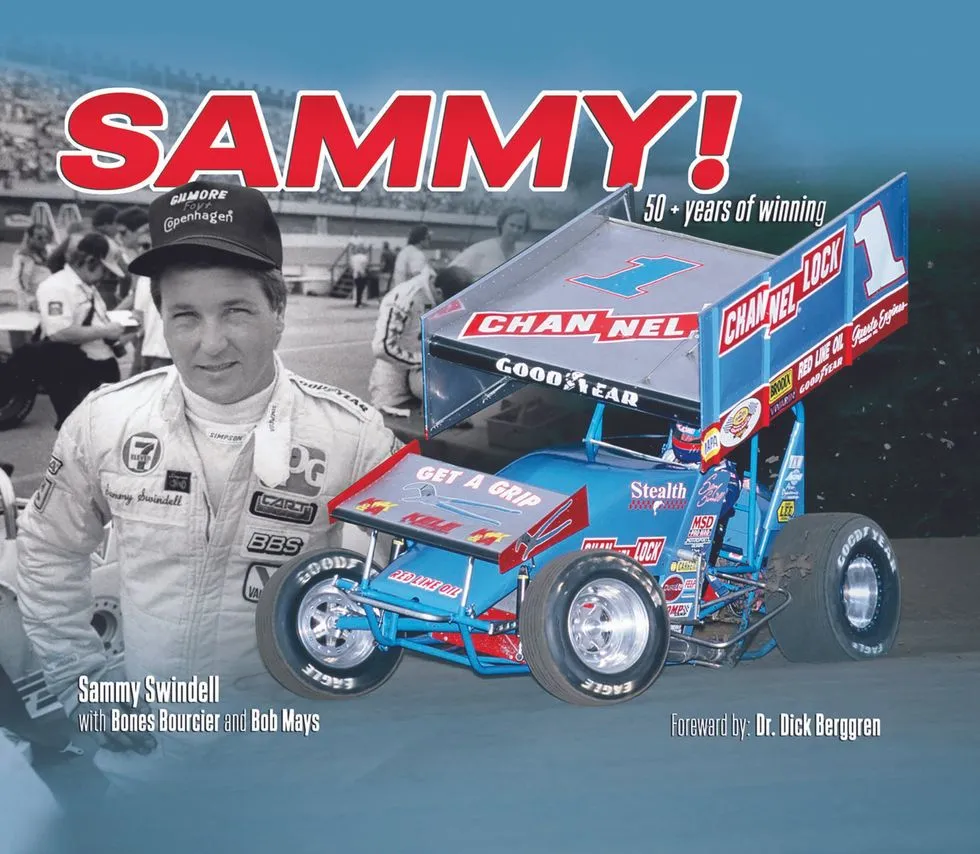
Swindell’s book, Sammy: 50+ Years of Winning (2023), chronicles this remarkable journey. It’s a testament to his dual identity as both a driver and a technical innovator, someone who shaped not only his own destiny but the broader motorsports landscape.
Sammy Swindell’s career is more than a list of wins – it’s a story of perseverance, ingenuity, and passion. From his Memphis roots to national championships, his journey reminds us that racing greatness comes not just from speed, but from vision and relentless dedication.
About the EMMR
The Eastern Museum of Motor Racing is a premiere destination for motor racing enthusiasts, showcasing a vast collection of historic racing cars, artifacts and memorabilia.
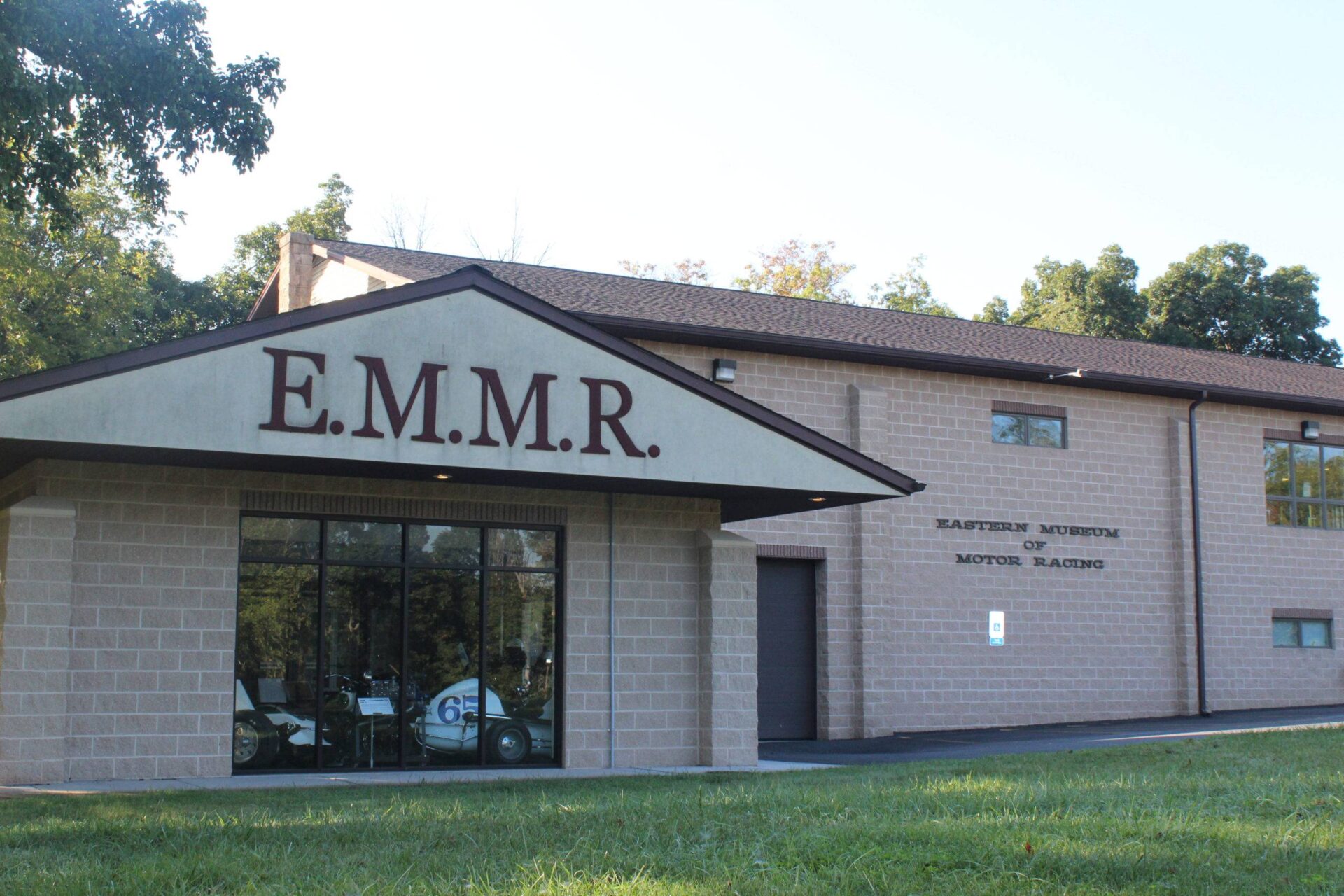
Each roundtable brings together voices from across the motorsports world, from grassroots heroes to seasoned veterans, as they share stories, insights, and behind-the-scenes tales that shaped their racing journeys. Whether you’re a die-hard fan of dirt tracks, drag strips, or open-wheel icons, the Racers Roundtable is your seat at the table for candid conversations and timeless memories from those who lived it.
To learn more about the EMMR, or to take part of the next in-person Racers Roundtable, you can plan your visit, or support the museum’s mission to preserve and celebrate the legacy of racing by heading to www.EMMR.org. Follow them on social media for the latest news, upcoming events, and exclusive content.
Tune in everywhere you stream, download or listen!
 Copyright Eastern Museum of Motor Racing. This episode was recorded in front of a live audience at the Eastern Museum of Motor Racing. This content in this episode has been remastered and published with the EMMRs consent; and has been reproduced as part of the Motoring Podcast Network and can be found everywhere you stream, download or listen to podcasts!