


For more than a century, the Rolls‑Royce Spirit of Ecstasy has glided ahead of some of the world’s most exclusive automobiles – an icon of elegance, speed, and mystique. But behind the legend lies a woman whose real story is far more compelling than the myths cast in silver. In a recent You’re Listening to Radio Revel “Keyhole Witness” episode, listeners were invited into the life of Eleanor Velasco Thornton, a woman who moved through Edwardian England with quiet brilliance, remarkable resilience, and a talent for navigating a world that rarely made room for women like her.
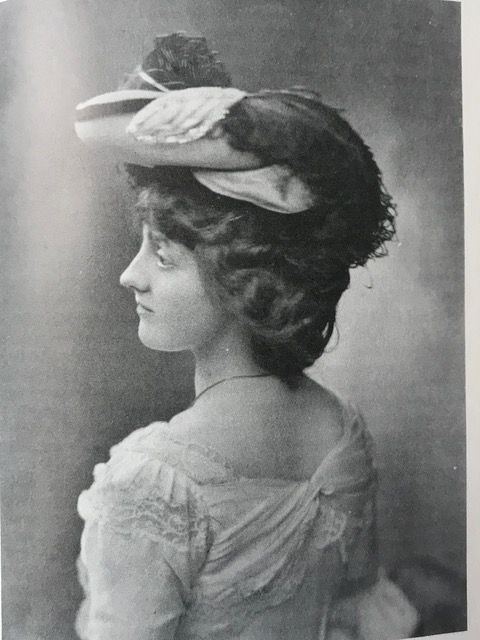
Eleanor – born Nelly Thornton in Stockwell – grew up in a working‑class family where practicality was survival. Her father managed telegraph offices across Britain, and her mother earned extra income typing letters for neighbors. As one document notes, she was “a charming, competent, creative young woman… who thrived as a free spirit.” Those early years taught her precision, brevity, and the power of language – skills that would later make her indispensable.
Tune in everywhere you stream, download or listen!



But Nelly wanted more than the narrow future offered by the Gray Coat Hospital Academy, where girls were trained for domestic service. With the encouragement of her neighbor Emma Velasco, a Polish elocution teacher who saw her potential, she left home at sixteen and reinvented herself as Eleanor Velasco Thornton. She tried acting and modeling in Chelsea’s bohemian Pheasantry, even posing for young sculptor Charles Sykes. Yet the artistic life didn’t pay the rent, and Eleanor soon turned to the practical world she knew best: clerical work. That decision changed everything…
Synopsis
Eleanor “Nelly” Velasco Thornton – long rumored to be the muse for Rolls‑Royce’s Spirit of Ecstasy – led a far richer life than the legend suggests, rising from a struggling London family to become a skilled telegraphist, actress, model, and ultimately a pivotal figure in Britain’s early motoring world. Her work at the Automobile Club and later Car Illustrated brought her into the orbit of John “Monty” Montagu, whose private commission of a small sculpture by Charles Sykes would later evolve, through corporate reinvention and mythmaking, into the famous Rolls‑Royce mascot. Though the evidence linking her to the emblem is largely circumstantial, her true legacy lies in her quiet, class‑defying professional success and the life she built before her death at 35 aboard the torpedoed SS Persia – a story far more compelling than any automotive myth.

Revel retired from active ESL teaching in 2014. But before that retirement, he spent 32 years in the profession. His last job was in a small, private academy in the North of Spain, an area he’d eventually move to after the hustle and bustle of New York City life.
CHECK OUT REVEL’S SUBSTACK
His work was a combination of helping kids with their school learning and teaching English as a Second Language; and in his retirement years, he’s found himself at the creative helm of “You’re Listening to Radio Revel“ podcast, a combination of memoir and audio drama.
Transcript
[00:00:00] Welcome back listeners to your listening to Radio Revel. This week is a bit of a throwback episode. I’ve resurrected the Keyhole Witness series to tell a story of an English woman who lived in the late 19th, early 20th century. The story came to me through my fellow podcaster and virtual friend Eric of the Break Fix podcast.
He had someone reach out to him with the idea of elaborating a story about the woman who has been credited with sitting for the Rolls Royce mascot, known as the spirit of ecstasy. After researching this woman and the men she rubbed elbows with, I came up with this story, a kind of alternative look at the legend, as well as a bit more focused on the woman herself.
What I tell, I do not report. I merely tell. Welcome to a new Keyhole witness episode titled The Spirit of Every [00:01:00] Woman.
Nelly was lying on the rumble sheets of the unmade bed clad only in one silk stocking pulled up over her bent right knee. Her left foot crossed over that knee and her arm stretched to her toes in the gesture of putting on the other stocking. Though that stocking was tangled in the bed clothes to her left, maybe the next movement was actually lowering the left leg and removing the stocking from the right.
Was she to do this? She would be totally nude. Nelly would not reach over for that stocking, though her nose itched, but she wouldn’t lift her hand to her face to scratch. Charles was a very fussy man and right now concentrating deeply on the charcoal sketch. He was blending into his notebook. Nelly knew that if she broke this pose or something like an itchy nose, it would break that concentration.
He would, as he had in the past, snap at her and [00:02:00] scold her as if she were a child. Despite being only 16 years old, literally a child, Nelly didn’t like being treated as one. Eleanor Nelly scolded herself mentally. Your name is Eleanor. Nelly is gone. You left her behind when you left home, the day you came to live here, you were reborn as Eleanor Velasco Thornton, renowned actress and dancer.
Applauded on the London stage. Favored muse of Charles Johnson Sykes, famous sculptor and painter, Eleanor Velasco Thornton, the incarnation of Aphrodite. Ecstasy Incarnate Nelly didn’t share these thoughts aloud with anyone. She understood that they were childish, knew that she’d be laughed at, and again treated like a child.
Many of her fantasies of goddesses and ecstasy came from her own imaginings, her own escapism from her fairly strict struggling tradesman class upbringing. Some of her [00:03:00] musings arose from the acting and social etiquette classes she received from her neighbor, Emma. And yet this idle daydreaming, this self distraction from the boredom of sitting for Charles would become a line upon which she could peg her hopes and dreams for her future.
Nelly’s. Father Frederick was a particularly unimaginative man, educated in engineering, fresh out of school, and recently married. He procured a position with the l Clark Muirhead and Company Telegraph interest, a job that had him traveling about England and Scotland to oversee installations and repairs on telegraph lines.
When he was not out in the field, he was responsible for local offices and operators. This meant he was most often home in the summer when weather was less likely to take down lines. The closest Fred Thornton came to spending time with his daughter, Nellie was during those periods that he was home when he needed help at a local [00:04:00] office.
Telegraph operators were not a dime a dozen then an absence at one office or another meant that Fred would have to substitute. And when there were two or more absences, Fred would take Nelly and later her younger sister Rose, park them in the swivel chair, and have them attend to both the incoming and outgoing messages.
The girls knew the Morris code as well as they knew the alphabet they used in school.
Nelly caught onto the entire messaging thing, especially well as when her father was away. Her mother, Sarah Ann often drafted Nelly into her service, despite her parents having sent both Nelly and Rose to the subsidized Poor Girls School, the Gray Coats Hospital Academy. Money was almost always problematic in the Thornton home.
Sarah Ann kept a tight reign on the household books and Fred’s salary. Nearly met their needs, but she had finally taken on jobs herself. Sarah Ann was literate, [00:05:00] something many of her neighbors in the terrace housed neighborhood were not. She could read letters sent by local departments, and more importantly, she could draft letters in reply.
She had a Remington typewriter. Her husband had fixed from junk yard recovery, and she made enough money to comfortably supplement Fred’s pay.
So many in afternoon. On arriving home from school, Nellie would find a hastily written note on the table asking her to rush over to this or that neighbor’s house to take notes or to read correspondence or bring the typewriter there or pick it up to take it to another neighbor’s. Nelly became well acquainted with typing, grammar, spelling, and thanks to the telegraph work, the concise use of language, she hardly ever said more than was absolutely necessary to get what she wanted, and that talent helped her almost always get what she wanted.
What Nelly had most recently wanted was to get outta the Gray Coat Hospital Academy. [00:06:00] Nelly walked every morning with her younger sister, rose more than an hour through the foggy, damp streets of London from their tired terrace house in the Stockwell neighborhood up to the academy near Westminster Cathedral.
Nelly felt stifled, suffocated, a gray coat. Girls were only allowed to wear those name forsaken gray coats with those scratchy gray skirts. During the long days at school, they were shuffled from Bible class to cooking class to household cleaning class, back to Bible class with a nod towards the modern young woman employment possibility of clerical or shop work.
Most girls would end up taking a position that would begin with washing up in the scullery, perhaps move up to making beds, and finally graduate to polishing silver, maybe even simply a combination of the three. So most of the education offered a gray coat focused on preparing the girls for this. Nelly, though was quite sure her future would not include white aprons and raw hands.[00:07:00]
There were also days when there was no note on the table. When Rose and Nelly returned home after school, they would often find the house cold and empty. Frederick would’ve been called up to Scotland to direct the rehanging of wires or the replacement of broken posts. Sarah Ann would most certainly be somewhere else reading a letter that had come in the post this morning with a threatening looking coat of arms replacing the return address.
Or perhaps crafting response to that letter in reasonable language that the neighbor would not have used, nor would have known how to write out an empty, cold house was no problem. Right next door, the girls would find Emily, whom they called Emma, fussing about in her kitchen with a hot kettle ready on the stove, and a bit of bread and jam spread out on the table.
Emily Velasco was an exotic member of the Stockwell Terrace House community. Despite having a Spanish sounding surname. Eine was Polish. She had come to London with her [00:08:00] Ukrainian husband, mainly because it was in London that she could find clients for her ever burgeoning acting slash social Graces school.
While she and her husband Ralph plotted and planned the school, they would eventually open in Devon. Years later, Emily gave Lucian and poise lessons throughout the year to young artist recently arrived in London, Emma, who had no children of her own treated Nelly and Rose as if they were her special pets, her talented daughters.
She saw clearly that both had been blessed with physical traits that would be advantageous as they navigated their futures. Nelly was even in her early teens, a well-built, rounded out female who would certainly attract the attention of a man of some station, perhaps even a station above the strict terrace house station the girls had been born into.
In addition, Nelly was incredibly clever, obsessively organized, and a very quick study. The challenge was to rise outta the cast of the Terrace house, [00:09:00] perhaps find a path into at least one cast above.
Emma focused most of her efforts on molding Nelly into a modern woman. The suffragist movement was not something that could be ignored. Women were marching in the streets. Some were even throwing explosives here and there. Emma was fairly critical of most of the demands placed upon women by those whose main efforts seemed at times violent and always political.
Emma had no reason for a woman to dress like a man or go after a man’s job or even behave like a man. Women were women and should be allowed to be so and take every advantage afforded them as women over the men they would encounter in this modern world. Emma belief firmly that women possess the wiles and the arms necessary not only to survive, to defend themselves, but also to triumph without counting on any manly traits.
These were the ideas she infused into Nelly’s Open Mind. Being [00:10:00] clever simply meant that Nelly would be more capable of holding her own when men eventually entered the picture. Right around the time Nelly turned 16, she confided her frustration with the strict atmosphere of the Gray Coates Hospital Academy.
To Emma complained that the studies there offered such a narrow outlook on life, all bed making and Shopkeeping. Nelly asked Emma if she mightn’t suggest a way out outta the school out of her home where she was basically unpaid labor to her father or her mother, and out with a pathway to a future that fit Nelly.
Emma Hobnobbed with most of the artists who lived in the Bohemian Chelsea neighborhood in small flats in the ancient pheasant tree. That building that only decades earlier had housed the principal nursery for the exotic pheasants and live hunted animals shot at by the nobility. She enjoyed the company, especially of the actresses, models and dancers.
Three professions that women could [00:11:00] aspire to without much male obstruction. Although the aspiration to these always seemed to be considered secondary to respectful marriage and homemaking, these women were often discriminated by society as not much more than pseudo prostitutes, even so Emma thought Nelly might fit in with that Bohemian crowd, or at least get a start among them.
Emma first consulted with Sarah Ann, who knew her daughter was headstrong, obliging her daughter to take that hour long walk to the Gray Coat Academy that only restricted her growth as a person would finally end in an uncontrollable rebellion with a probable, unfortunate outcome. Sarah Ann agreed to allow Nelly to take a room at the pheasant tree in Chelsea.
Emma had vouched for others who lived in the complex, especially one Charles Robinson Sykes, a young artist then 27 years old, who was beginning to make a name for himself as a sculptor who might agree to serving [00:12:00] as a type of mentor or guardian to the girl while she got her feet wet. With her looks, Nelly might even take on work as a paid artist’s model for Sykes and other artists living there in this way begin to make a living for herself.
So it was that with her mother’s hesitant blessings and her father’s near total ignorance. Nelly only 16 years old, an age that many girls began looking for positions. Quit the Gray Coates Hospital Academy, moved out of her parents’ home and began her career as an actress, a dancer, and an artist’s model.
That last artist modeled, that’s what placed her on Charles’ bed in Charles’s apartments at the pheasant tree in Chelsea.
A knock on the door broke into Charles’s concentration and he groaned, no actually growled at the interruption. He shouted a distracted what in the direction of the closed door, which [00:13:00] opened, and one of his mates hesitantly, leaned in to tell Charles that Monty and sis were in the drying room asking after him.
Charles growled again. The mates softly closed the door. Nelly lifted her head slightly to make eye contact with Charles, who cursed and told her that he’d forgotten. Plans he’d made with some friends. She could get dressed. They were done for the day. Nelly was glad of that. She finally reached up and robbed under her nostrils with energy before she rescued her stocking from the sheets, pulled it on, then wrapped herself in the dressing gown.
She’d worn to the sitting. As she passed through the drawing room, she saw couples standing next to the fireplace who somehow seemed outta place in these apartments like nobility descending into the world of the pros. For a disagreeable, fleeting moment, the man noticed Nellie, but rapidly looked away.
The woman made a more careful assessment, but also turned away when Charles came in from the bedroom and greeted them. Nelly slipped out the main door of the apartment and climbed the stairs to [00:14:00] her own room that she shared with two other girls in the attic.
The shillings and pennies the unknown struggling painters and sculptors at the pheasant tree were able to pay. Nellie were far from what she needed to pay for that shared room. No matter how elegant her stage name Eleanor Velasco Thornton sounded. She’d only been called upon once as a stand in for a tableau, forced to wear a scratchy, woolen overcoat that smelled of grease, paint and sweat to pose without moving for 20 minutes.
While the comics and singers who had the lights brought laughter and applause from the audience. And Eleanor Velasco Thornton had only played the dancing with her younger sister. She had no moves and less rhythm. So despite all her mother’s lessons in home economy, if there were no earnings, there was nothing there to budget with, and Eleanor was near ruin.
Nelly whined about this to her mother one Monday evening as the two women did the [00:15:00] washing up. After a rare family dinner, Nelly’s father was smoking a pipe in the back courtyard, outside the kitchen door, and her mother reached over the basin to push the window shut, both to block the smoke and to keep their mother daughter conversation private.
Fred had not been approving of his oldest daughter’s move into the pheasant tree, which he considered the den of inequity in London. Sarah Anne began clanking the stoneware plates in the watcher to make a distracting sound from the words she meant only for her daughter to hear. See here, Nelly, I know how important it was for you to get out on your own.
I know you thought you weren’t going anywhere at Gray Coat. Now having one less tuition to pay has been a bit of a relief on expenses around here, but not enough that your father and I can support you in your current lifestyle, and especially not the lifestyle of an actress or a dancer. Ah, no. Sarah Anne held up a wet soapy finger to Nellie’s objection.
Your father is way too conscious for your excuses, so there’s no use [00:16:00] you asking me or him for any money. You need to take advantage of what you do have. Emma Velasco was not wrong in teaching you how a woman should navigate a man’s world, but the whole acting artistic path is evidently not working. You are a bright girl.
You know how to manage numbers. You’re articulate. You know how to read and write. You’ve been concise with your telegraph work for years. You’re almost obsessively organized. There isn’t a straw in your head. You’re all brains. Being cute, certainly helps. It might get the door open though it will probably open the wrong doors.
Most cute women end up naked in beds and not so that some men can project them into posterity. Look over on the cupboard there. I’ve left you a few pages from the Times. There’s ads in there, dozens of ads, looking for young women able to do the same things you can do. Write letters, organize papers. Use the Typewriting machine.
These are salaried jobs. You’ll make money doing them [00:17:00] without money, you know, you won’t get anywhere. And Nelly knew that Sarah Ann was right. It was unlikely Eleanor Velasco Thornton would ever actually support herself as a member of that clan of Bohemians who were likewise, nearly unable to support themselves.
If Eleanor was to move forward, it would be in the serious world where her natural, almost inherited practicality of thought would be her best advantage. Eleanor had drive and was smart enough to know when the road her drive was taking her down was probably not the one that would most directly take her to her desired destination.
Nelly, or perhaps now that it’s been nearly a year since she’s moved away from home, who she call her, Eleanor was sitting for Charles again. Though she wasn’t really sitting. She was standing in his bathroom leaning over the large tub towards a huge oval shaped mirror hanging on the tiled wall. This time, Charles had draped a long bolt of gauze [00:18:00] over her shoulders, suggesting some type of a mythological bathing gown, something to partially discover the inm modesty of a nymph at a pond in the forest and uncharacteristically.
As he sketched, he chatted with her asking her how her search for a day job had been going. Eleanor explained while trying to keep as still as possible in the somewhat uncomfortable lean that she’d been rising nearly every morning, buying the times, clipping an advertisement, getting dressed in her only formal dress and hat and shoes, interviewing for a position, or simply leaving a typewritten note in different offices about the city.
She was not especially enthusiastic today. The insurance office, the Scriveners shop, the hat manufacturers all had been polite, but none had sent word of employment. Charles Crypta, that’s too bad and kept on sketching. Once he’d finished up and told Eleanor that she could dress, Charles suddenly remembered something that he’d forgotten Again, not uncommon in his character.[00:19:00]
He told Eleanor that he had a friend who had just recently become a founding member of what would be some kind of automobile club in the city, and that the gentleman who was named secretary of this club, one Claude Goodman Johnson, was looking around for some clerical help to get the offices of the club up and running.
Charles asked Eleanor if she’d be interested, and she replied that automobiles couldn’t be any more mundane than insurance or women’s hats could even be something exciting. They were new and somewhat controversial. Charles scribbled out a note of introduction in his sketchbook and handed her the leaf.
And Eleanor planned to visit the offices the next day.
Eleanor was not. Claude Johnson’s first choice for Girl Friday. She seemed fairly young and had an A of frivolity that could just be perceived under an otherwise serious demeanor. She was also really attractive, something that could be problematic to his personal life. [00:20:00] Claude was still flirting about with a childhood sweetheart looking towards marriage, much to the chagrin of his parents who felt that they had educated him better.
Jessica, the girl in question, was a rather controlling and jealous fiance who would certainly have some sharp words to say about the hiring of a cute, well-developed adolescent as a secretary. Yet a certain stroke of fate intervened on Eleanor’s behalf the very day that Eleanor presented herself for the position as she sat at the table and demonstrated that she could indeed manage a typewriting machine.
Claude had a visit from one of the founding members of the automobile club, the esteemed John Montague, member of Parliament, son of the first Lord Montague Douglas, Scott of eu. John or Monte to his friends, had dropped in on club business and to steal Claude away for an afternoon drive in his Daimler automobile.
Looking over at that young woman clacking away on that infernal writing machine. Monte had the strange intuition that [00:21:00] he’d seen her somewhere before. Without making any connections. He turned to Claude and made a comment on how a good looking secretary certainly brightened up a drab office space.
Eleanor worked for Claude from 1897 until 1902. In those years, she proved herself to be an organized, intelligent woman with an uncanny talent for event logistics. Her work on the club sponsored famous 1000 mile trials in the spring of 1900 was hardly applauded enough from heading off local protests against motorcar, still considered by rural folk as a nuisance at the least, and a real danger to body and property at most to simply making sure there was petrol available along the route, as well as reserving hotels, restaurants, and catering services.
Eleanor naturally and effortlessly shined like any event planner. The better the job done, the more invisible [00:22:00] they become. The 1000 mile trials was a massive success for the Automobile Club of Great Britain and Ireland, and so Eleanor went almost totally unnoticed, but not totally. Soon to be second Lord Montague of Blu.
That is Monty who had, as a founding member of the Automobile Club, had an active role in the planning of the trials who participated with moderate success in the race. Well, he had noticed Eleanor and her tireless efforts to pull off this logistical challenge. Monty noticed how she always allowed the men at the planning meetings to think they’d originated an idea to do this or that when it had been she who had imagined the detail.
She always managed all the testosterone in the room with one or two carefully worded sentences. He noticed how she made her simple beauty into an effective tool for getting what she wanted from the men. He had also made the connection during a visit to the club offices with Sykes, who warmly greeted Eleanor, that he’d [00:23:00] seen her so scantily clothed in Sykes apartments about a year ago, an image he could and would super impose on the serious professional look She presented in the Automobile club offices.
Monty could certainly give the impression of a man of means, a member of the wealthy class who moves through life’s challenges with the confidence that a fat bank balance and secret business connections afford. But at the time, he was motoring about in his Daimler, impressing the other rich men in his motoring circle.
He was actually living off his father’s estate. Having been voted, a member of Parliament just a few years earlier, at least ensured that he could brandish his own reputation and he had plenty of influential friends, but the truth be known, and it was kind of known just around 1902, Monty found himself pretty much broke.
It was then when one of his friends, the newspaper man, Alfred Harms [00:24:00] Worth offered him an opportunity to make a living within the strict class expectations of his cast. Harms with was a sort of silent party all across the upper class ecosystem. Publisher of several very popular newspapers, beginning with the Daily Mail in 1896 and later, the Daily Mirror in 1902.
His journalism was renowned for its simple language and straightforward reporting of stories that were of interest to the plebe. Harm’s Worth had been instrumental in making sure the 1000 mile trials were a success, not only by providing popular positive coverage in his press, not even by participating himself with his motorcar, but by putting up much of the money needed to pay for the event at a time that the auto club was in the red.
When Monty let slip in an unguarded moment of soul bearing, fueled by tobacco and brandy, that he was tight for capital to continue his auto hobbies harms worth suggested creating a magazine, [00:25:00] the. Glossy magazines were not something new. There were magazines that covered all kinds of interests from ladies fashion to politics.
However, up to the date, no one had thought to create and publish a glossy magazine about automobiles. The idea was golden. The entire reason the Automobile Club of Great Britain and Ireland existed in the first place was to promote the automobile in the kingdom. What better way to do so than an illustrated rag with the latest news and information to convince a hesitant population to jump onto the auto Mobilist chassis?
Of course, as the man who would establish the advertising driven business model for the printed press harms worth was also thinking about the money he could make advertising cars and car related stuff.
Monty went about the business of starting up his foray into publishing in the same way he did everything. He turned to the people he knew. First, he spoke with Claude. The automobile club was now [00:26:00] fairly firmly established, was making some money, had caught the eye of the crown Prince, who Monty himself had encouraged into the burgeoning auto fever.
After five solid years of making the Club a solid foundation for both the industry and the political world, Claude had decided to move on having partnered with one Charles Stewart roles and ambitious young man, everyone called cs, who had a special flare for sales. Claude and Cs were to set up the first car dealerships in the realm.
And let’s face it, Claude would make a whole lot more money than the always struggling auto club was able to pay him. The physical offices of the club were moving. Everything seemed to be ripe for change the most. Claude could promise Monty was to place automobile ads in his new magazine. As Monty left Claude’s office, he stopped to chat with Eleanor who was sitting at the very table he had seen her at five years earlier.
Despite her hard work, her efficiency, [00:27:00] her capacity for solving problems, even before they became problems, Claude hadn’t even promoted her to her own office. She had become much more than a simple secretary, and yet here she was typewriting machine to one side of her desk and papers to the other.
Thinking it was an appropriate moment. Monty offered Eleanor a position at his magazine with a higher wage and her own space to do her logistical magic. Eleanor looked around at all the boxes prepared for the move of the office to Piccadilly realized that change was indeed in the air and accepted the job.
No one really knows when Eleanor and Monty started their affair. It at least had to have started soon after Eleanor’s taking the job at Carr Illustrated in 1903, Eleanor found herself pregnant and giving birth to her only child. A girl, Joan, who she held briefly after the delivery. Then immediately gave [00:28:00] into adoption.
Monty could not possibly recognize the child publicly. He was happily married to Lady Cecil Victoria, constant Kerr Douglas, Scott Montague. He was a member of Parliament. At some point, he’d become the second Lord Montague of ou. Eleanor could not become a single mother that would simply cast her into infamy.
She would lose her hard earned status. Her job, her connections, albeit superficial with the rich and powerful men, her lover rubbed elbows with. So Joan was given over to the Ierson, a lovely couple who became friends with Monty and his wife, lady Sis. A lady Sis was a woman who was always the even headed one in any room.
The wife who knew her husband garnished his walking stick elsewhere, but helped him keep it discreet. Sis would make sure that Monty took good care of his responsibilities to Joan, even if they were to be kept secret. Eleanor would later consider the decision to give up her child to have been the hardest she’d had to [00:29:00] make in her life.
But there it was done and over. She had chosen both her affair with the married man and her career as his at attache over the harsh realities of single motherhood in early 20th century England.
Monty for his part was entirely smitten by Eleanor. Though he loved his wife, had loved her almost his entire life. They had known one another since they were children. No surprise. Monty and sis were first cousins. After all. He was like so many privileged men of his time. The Manly bravado, the expectations of virility, a certain disdain for women in general.
It was almost expected of him that he would have an affair or two. He was a noble man. Or Well, he’d become a noble man on his father’s death in 1905. Moving so from Parliament into the House of Lords.
Now, you’ll recall [00:30:00] that Claude Johnson had partnered up with a CS roll to open automobile salons and sell the machines to, well-to-do Englishmen. Well, right around the time that Monty was packing up his papers and moving them from one governmental office into another, both Claude and Cs had met an automobile engineer by the name of Frederick Henry Royce.
His cars were well made, had a touch of the luxurious, and Claude and Cs. Saw how they could focus exclusively on Royce’s designs and stability to create an exclusive car fit for the exclusive buyer. The Rolls Royce became our thing, and Claude became the company’s first boss.
Monty. Now a Lord got caught up in the whole exclusivity idea. He’d been placing ads in his magazine for all kinds of automobiles with prices ranging from the affordable to prohibitive, and the new Rolls Royce Silver Ghost represented [00:31:00] the peak of prohibitive. Consequently, the Lord John Walter Edward Montague, Douglas, Scott, yes, Monty had to have one.
He was not the only rich man who had one, but he was one of the first.
Now, the Rolls-Royce car was so exclusive for many reasons. Uh, for example, they were designed with the latest and best concepts of automotive engineering available. Each car was highly personalized, nearly artistically created according to the personal taste and suggestions of the man purchasing the vehicle.
Every detail was planned, consulted, executed with the idea of creating the quote, best car in the world, a car that a king would drive. One detail, though, was not necessarily considered or perhaps was considered to be spoken, and that was the car’s mascot.
The mascot was actually a fancy schmancy [00:32:00] radiator cap. You could buy a Rolls Royce with a traditional though shiny stainless steel screw on cap to cover that access to the radiator. But that would hardly be all that exclusive would it? Monty certainly didn’t think so. He asked his friend Charles Sykes, if he couldn’t make a design of something that could be stuck on that boring cap, kind of like the figurehead of a ship.
Something that would symbolize the grace, the beauty, the stealth of the Rolls Royce Silver Ghost.
Sykes had been illustrating for Monty’s Magazine, car Illustrated for years now. Had painted portraits of the Rolls-Royce had actually drawn an entire series of Rolls-Royces, driving up to different places, the theater, the horse races, the country home. Sykes liked the idea of making some kind of stat for his friend and his playful side.
Had him pulling a box of old sketchbooks off a high shelf in his studio and looking for drawings of one special model he’d drawn years earlier. Special [00:33:00] because she had been his muse for a couple of years, especially ’cause she was quite stunning in the sketches. Special because she was Monty’s lover, Eleanor.
Sykes made a couple of drawings from his sketches. He settled on one that presented a young version of Eleanor leaning slightly forward, a gauzy bathing garment, like one worn by a nymph at a hidden forest pond billowing behind her. This nymph held a finger to her lips. Sykes hint to Monty that the lover’s affair would always be kept secret between the two friends.
Monty was delighted with the little bronze Statu Sykes cast for him, bolted it onto every Silver Ghost automobile he used for years. Sykes called the Stae the Whisperer.
Now, Monty was not the only man who wanted a figurehead bolted onto their fancy radiator cap on their exclusive Rolls-Royce automobile. As the manufacturer was so [00:34:00] dedicated to respond to each and every whim of the purchaser, other artisans sculptures were producing personalized mascots from comical police figures to downright nearly pornographic representations of human copulation.
That young automobile engineer Henry Royce was somewhat scandalized by the idea of a figurehead being bolted under the hood of his cars at all, but there was little he could do to prevent the habit. Men will be men and will want their symbols right up front where everyone can see them. Royce asked Claude Johnson, if anything shouldn’t be done to protect the prestige of the Rolls Royce Mark.
Claude had a quick and historic insight. He’d, of course seen Monty’s personalized mascot. The whisperer Claude had liked it, found it dignified of the Rolls Royce, though he found Monty’s dedicated poem to the statue. A little silly. I am a little silver fairy. Your mascot of many a mile, [00:35:00] bringing you golden hours, guiding you safely the wild.
Anyway. Claude consulted with Sykes, asked him if he mightn’t rework the design he’d done for Monty. Make it a more mature, stylized version of the whisperer to serve as the official mascot for the Rolls Royce. Something that would look good in silver, something like that. Statue in the Louvre, what was it called?
Winged Victory. About what? Head in arms please. And maybe a bit of discretion was needed, it might not be a good idea to keep the face of the Lord’s secret lover on a mascot that would represent the best of the best in Autumn over well. You get the message. Sykes loved the idea and got right down to work.
He resched the statue, simplified the gauze and shaped it more like wings. Pushed the arms back into that billowing cape, and considering it the most correct. Reworked the face to represent perhaps the only other woman in his life. He would consider his muse, his mother.[00:36:00]
The evolution was evident. Eleanor was only a base for the end design. She had been diluted outta the statuette. Rumors ran rampant among those who knew. Those rumors became urban legend, and yet truth be known, that mascot that started out as the spirit of speed and then became known as the spirit of Ecstasy, was a conglomeration of charcoal sketches of Eleanor’s, early sittings as a model, a marble statue in the Louvre and the artist’s own mother.
None of this actually mattered to Eleanor or anyone else for that matter. She was comfortably installed in a pleasant apartment near Hanover Square, could take a coach to work every day, or the nicest of frocks and jackets and shoes and hats that a professional woman could want. She was excellent at her job managing the offices of the magazine, and as time passed, she became indispensable to Monty.
As his responsibilities in the House of Lords became more [00:37:00] complex, especially as the war was becoming an unpleasant reality. Even in London, Eleanor was becoming more a trusted lord’s at attache than a publisher’s executive secretary.
Round about 1915, Monty Lord Montague of Blu was commissioned to travel to India to manage something to do with motor cars for the British armed forces. There he proposed to Eleanor that she accompany him, if not all the way to India, well, at least to Egypt. To those who would observe the trip would simply be a Lord unofficial business, traveling with his secretary.
To those who knew, including Monty’s wife, who continued to nod and then turn her head, it would be an opportunity for the two to be alone and not have to play act, at least not on the cruise across the Mediterranean.
Eleanor wasn’t all that keen to travel so far. She had become an avid [00:38:00] reader of the press the Times with her breakfast at home, the daily mail with coffee at the office, the daily mirror at tea in her parlor. She was horrified at any news from the front, frustrated with the stupidity of politicians and generals and noblemen and businessmen who caused and pushed this silly war forward.
She understood the cultural, social, even economic realities that surrounded the events but couldn’t find justification for the massacre of so many young men, and she was deadly afraid of those deadly U-boats. The Germans had developed a kind of boat, an underwater tank, a sausage made of iron, and armed with torpedoes, a vessel that could not be seen, that could sneak up on a boat and sink it in less time than a call for help might be heard.
Speeding away under the waves to attack another boat. The Mediterranean Sea was just beginning to see more and more of these U-boats. Eleanor did [00:39:00] not fancy being on a ship that had been targeted yet the promise of a cruise with her lover. A relaxed honeymoon like voyage across the Mediterranean, away from gossip and restrictions.
Well, Eleanor was a woman in love as well. She agreed to travel with Monty, at least to Egypt, then returned to London to continue to manage business. A car illustrated.
On Christmas Day, 1915, Monte and Eleanor boarded the SS Persia and rapidly settled into the routines of sea travel, discreet separate rooms and first class accommodations. The relaxed spirit of the voyage, a calm sea. The first five days, almost convinced Eleanor to change her plans and accompany Monty all the way to Bombay.
It was on the 30th of December as the couple were settling down to lunch that a German U-boat torpedoed the SS Persia. The torpedo blasted into the [00:40:00] steam boilers, one of which exploded on its own. As the ship began to sink, Monty and Eleanor rushed to Monty’s Cabin to retrieve the newfangled inflatable life jackets he received as a gift rushed back to the deck.
The SS Persia was tilting. Water was rushing about as well. Both Monty and Eleanor ended up in the cold Mediterranean Sea. Monty lost grip on his lover. Eleanor was gone. Monty was picked up three days later, clinging to the underside of an upturned lifeboat with other survivors.
Nellie’s. Father and mother would not see her die. They would both die before her. Her sister Rose, married a guy named Gordon. When Eleanor died, Charles Sykes got in touch with Rose and gave her the original mold he’d used to cast the whisperer for Monty as a memento of his sister. Once Rose died, [00:41:00] Gordon remarried.
Funny anecdote, someone broke into Gordon’s home once he’d remarried, and among the things stolen was that cast funny thing to steal.
Around 1910, Eleanor had stopped frequenting the pheasant tree, concentrating on her professional career, and so lost touch with Emma Velasco, the elocution teacher. Emma and Ralph finally moved to Devon and opened their acting school. Emma Velasco passed away not long after the war was over. CS rolls. The car salesman got a bit of air fever, traveled about in hot air balloons, then became the first private person to buy an airplane, one of the first people to fly with Wilbur Wright as a passenger in a biplane, the first pilot to make a nonstop return trip over the English channel.
He did not stop there with being the first though. CES rolls [00:42:00] was the first fatality in British aviation. Falling from the sky knows first when the boom of his bi planes separated from the chassis. His funeral procession was almost a state event in crowd size, at least.
Alfred Harms worth. The newspaper publisher survived Ellen Ho by seven years passing away in 1922 from a prolonged illness at first rumored to be syphilis, probably because of his reputation as a lady’s man later confirmed as a chronic blood infection he’d harbored for years.
Claude Johnson, the first CEO of Rolls Royce died just 11 years after Eleanor. He’d been poorly for a while, insisted on attending a niece’s wedding collapsed. Was rushed back to London and finally succumbed to pneumonia. Only days later in 1926. John Walter Edward [00:43:00] Douglas, Scott Montague, second Barren Montague of eu known to friends as Monty would live another 14 years after losing his lover.
His death at 63 and 1929 like Claude from Pneumonia would leave a single heir Edward at the time, only two years old. Fruit of his second wife, lady Sis, having passed away in 1866. Monty would remember Eleanor with a dedicated plaque hung in the eu. Abbey reading in memory of Eleanor Velasco Thornton, who served him to vote Lee for 15 years.
Frederick Henry Royce, the automobile engineer, was never a very social person, so that when in 1930 his health began to deteriorate, it was not considered odd that he worked from home and be cared for there. Despite this quiet home and work situation, Royce passed away in 1933 asking [00:44:00] specifically to only be remembered not to be heralded.
His wishes were respected. Charles Sykes, the man who sculptured the mascot of an elegant woman with a gauzy cape, leaning into the destiny ahead, would survive Eleanor another 35 years. For many of those years, he would personally cast and polish each and every spirit of ecstasy mascot ordered to embellish the radiator cap of a Rolls Royce automobile.
A quick afterward. Contemporary information about Nellie a Thornton, more popularly known as Eleanor Velasco Thornton is so sparse and mostly anchored to the men she worked with and around. It is also conditioned by the necessity of keeping her relationship with Lord Montague Secret. Conditioned by social morals and expectations conditioned by attitudes, [00:45:00] prejudices, envy, and gossip that would have made her life a hell had she not been discreet and clever as she evidently was.
In other words, there’s really not much about her. There is little or no indication in her time of her having been a particularly active member of any feminist or suffragist movement. Her climb in the professional world seems only to likely to have come from a combination of evident factors. She was indeed good looking.
She was clever. She had a particular background and upbringing that gave her the practical skills she could use within the limited opportunities. Offered a woman in the working world of the late 19th, early 20th century. In a heavily classist society. She had family and friends who supported her and encouraged her throughout her initial years.
She had context as well that obviously made her entrance into the work world easier.
She does seem to have been a self-made woman, but she was [00:46:00] also the servant of two masters, the chauvinistic male oriented world of Edwardian England. Open to her only through the men she kept company with and her own ambitions to rise out of the social position of the Terrace house neighborhood of her youth.
Perhaps at least inhabit the neighborhood of the class one step above her. Movement between classes in Great Britain wasn’t something that happened frequently.
And allow me to address the elephant in the room, the story of her being. The inspiration for the Rolls Royce mascot may very well be true, though I didn’t find reliable contemporary evidence of such. Just the same circumstantial detail I’ve used to tell this slightly more mundane story of the woman in her connection with the statue.
I personally think the general acceptation of the story of Eleanor being the model of the spirit of ecstasy is more a product of urban legend supposedly confirmed years after the actual events [00:47:00] combined with romantic marketing. I am not suggesting that she was not. I’m merely telling the story that I saw as I delved into what little information we have about her from her contemporaries.
Eleanor was definitely a remarkable woman, one who probably died too young. She was only 35 years old. Had she lived the track record she had until her death would no doubt lead us to expect that she would’ve accomplished much more, might even have lifted herself out of anonymity and into a respectable place in history that represented more substantially who she was, what she had done than the superficial story of posing for a luxury car mascot.
Eleanor was one of hundreds, no thousands of women struggling in a world that continued to consider them second class for having been born girls. Her legacy should be her personal success in life. That’s what I will remember of her now that I’ve told this version of her story.[00:48:00]
A beautiful, talented, clever woman, able to put men in their places, able to tell men what to do and get them to do it. Able to climb a professional ladder and all that without the men around her taking notice. Hats off to Nelly, Eleanor, Velasco Thornton. Artist, model secretary, executive secretary at attache to a Lord, the spirit of the successful 20th century every woman.
Cheers, Eleanor,
your you are listening to radio.
Listen, like, subscribe, and share.[00:49:00]
This episode is brought to you in part by the Society of Automotive Historians. They encourage research into any aspect of automotive history. The SAH actively supports the compilation and preservation of papers, organizational records, print ephemera, and images to safeguard, as well as to broaden and deepen the understanding.
Of motorized wheeled land transportation through the modern age and into the future. For more information about the SAH, visit www.auto history.org. This episode has been brought to you by Grand Touring Motorsports as part of our Motoring Podcast network. For more episodes like this, tune in each week for more exciting and educational content from organizations like The Exotic Car Marketplace, the Motoring Historian, break Fix, and many others.
If you’d like to support Grand Touring Motorsport and the Motoring Podcast Network, sign up [00:50:00] for one of our many sponsorship tiers at www.patreon.com/gt Motorsports. Please note that the content, opinions and materials presented and expressed in this episode are those of its creator, and this episode has been published with their consent.
If you have any inquiries about this program, please contact the creators of this episode via email or social media as mentioned in the episode.
Highlights
Skip ahead if you must… Here’s the highlights from this episode you might be most interested in and their corresponding time stamps.
- 00:00 Throwback Return: Introducing Keyhole Witness & the Spirit of Every Woman
- 01:10 Eleanor Poses for Sykes: A Muse, a Name, and a Dream of Reinvention
- 03:20 Growing Up Thornton: Telegraph Work, Typewriting, and a Working-Class London Home
- 05:55 Gray Coats to Chelsea: Emma Velasco’s Lessons and Nelly’s Escape Plan
- 12:48 Bohemian Reality Check: The Pheasant Tree, Barely-Paid Modeling, and Money Trouble
- 14:56 A Practical Pivot: Sarah Ann’s Advice and the Search for a Real Salary
- 17:40 The Automobile Club Breakthrough: Meeting Claude Johnson and Landing the Job
- 21:16 Making the 1000-Mile Trials Happen: Eleanor’s Invisible Genius Gets Noticed
- 23:15 Monty’s Magazine Offer: Class, Cash Problems, and a New Role at Car Illustrated
- 27:42 Secret Love & Secret Child: The Affair, Pregnancy, and Joan’s Adoption
- 29:58 Rolls-Royce Origins: Monty, Claude, and the Rise of the Silver Ghost
- 31:44 From “The Whisperer” to Spirit of Ecstasy: How the Mascot Was Really Made
- 36:56 War Years and a Dangerous Voyage: Choosing to Sail on the SS Persia
- 39:25 Torpedoed in the Med: The Sinking of the SS Persia and Eleanor’s Death
- 40:41 Aftermath & Legacies: What Happened to the People Around Eleanor?
- 44:38 Afterword: Separating Urban Legend from the Woman’s Real Story
- 47:16 Final Tribute, Credits, and How to Support the Show
Learn More
Want to learn more about the fascinating world of automotive Mascots and the stories, people and places that inspired them?
This amazing coffee table book introduces the reader to the “sculptures” known as mascots and hood ornaments.
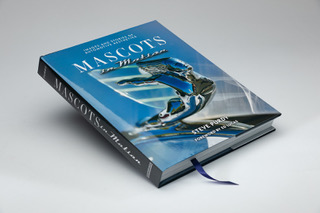
Photographed “in the wild” by Michigan-based automotive journalist and SAH member Steve Purdy at concours events, special shows, junkyards, back yards, salvage yards, anywhere, and always in natural light.
ORDER YOUR COPY TODAY
The photographs are beautifully presented by the art-book specialists at M.J. Jacobs, LLC, and annotated with their stories researched by the author/photographer who then puts it all into context with other complimentary images. As an added touch, each book is autographed by the author!
Bonus Content

In 1897, she joined the newly formed Automobile Club of Great Britain and Ireland as assistant to Claude Johnson – later known as “the hyphen in Rolls‑Royce.” Eleanor quickly became the quiet engine behind the club’s operations. Her logistical mastery during the 1900 Thousand Mile Trial was legendary among those who knew the truth. As the transcript recounts, she handled everything from fuel stops to rural protests, “always allowing the men… to think they’d originated an idea” while she kept the event from collapsing.
It was during these years that she caught the attention of John Montagu – MP, motoring pioneer, and future Lord Montagu of Beaulieu. Their professional relationship evolved into a deeply personal one, though constrained by class, marriage, and the rigid expectations of Edwardian society. Their daughter, Joan, born in 1904, was quietly adopted to protect Eleanor’s reputation and Montagu’s political career. It was, she later felt, the hardest decision of her life.
Montagu adored her. Sykes admired her. Harmsworth respected her. And yet history nearly erased her.
The famous Rolls‑Royce mascot – first The Whisperer, then the Spirit of Ecstasy – has long been linked to Eleanor. The truth is more nuanced. Sykes did use earlier sketches of her as inspiration, but the final form blended multiple influences, including the Winged Victory of Samothrace and even Sykes’s mother. As Revel notes, “Eleanor was only a base for the end design… diluted out of the statuette.” Still, the legend persisted, fueled by romance, rumor, and Rolls‑Royce marketing.
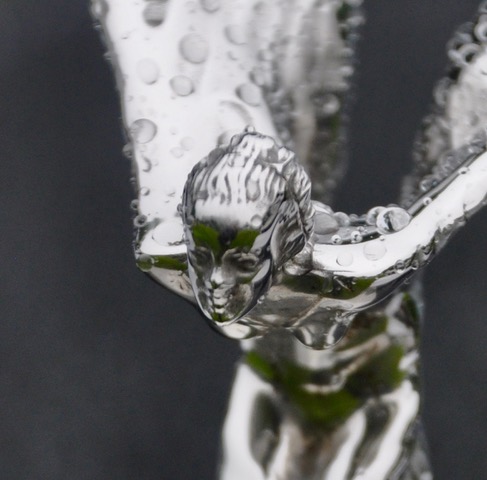
What cannot be diluted is her impact
Eleanor became Montagu’s right hand at The Car Illustrated, shaping early automotive journalism. She moved effortlessly between bohemian artists and aristocratic motorists. She managed events, edited copy, soothed egos, and kept the gears of Britain’s motoring world turning. She lived independently, intelligently, and boldly at a time when few women could.
Her life ended tragically in 1915 when the SS Persia was torpedoed in the Mediterranean. Montagu survived after clinging to an overturned lifeboat for days. Eleanor – just 35 – was lost to the sea.
Her legacy, however, is not the silver figurine on a radiator cap. It is the life she carved out for herself in a society that tried to confine her. As the transcript concludes, she was “the spirit of the successful 20th‑century every woman” – a woman who rose by talent, grit, and grace, not by myth.
Eleanor Velasco Thornton deserves to be remembered not as a muse, but as a maker – of events, of opportunities, of her own destiny.
Guest Co-Host: Revel Arroway
In case you missed it... be sure to check out the Break/Fix episode with our co-host.This content has been brought to you in-part by sponsorship through...