

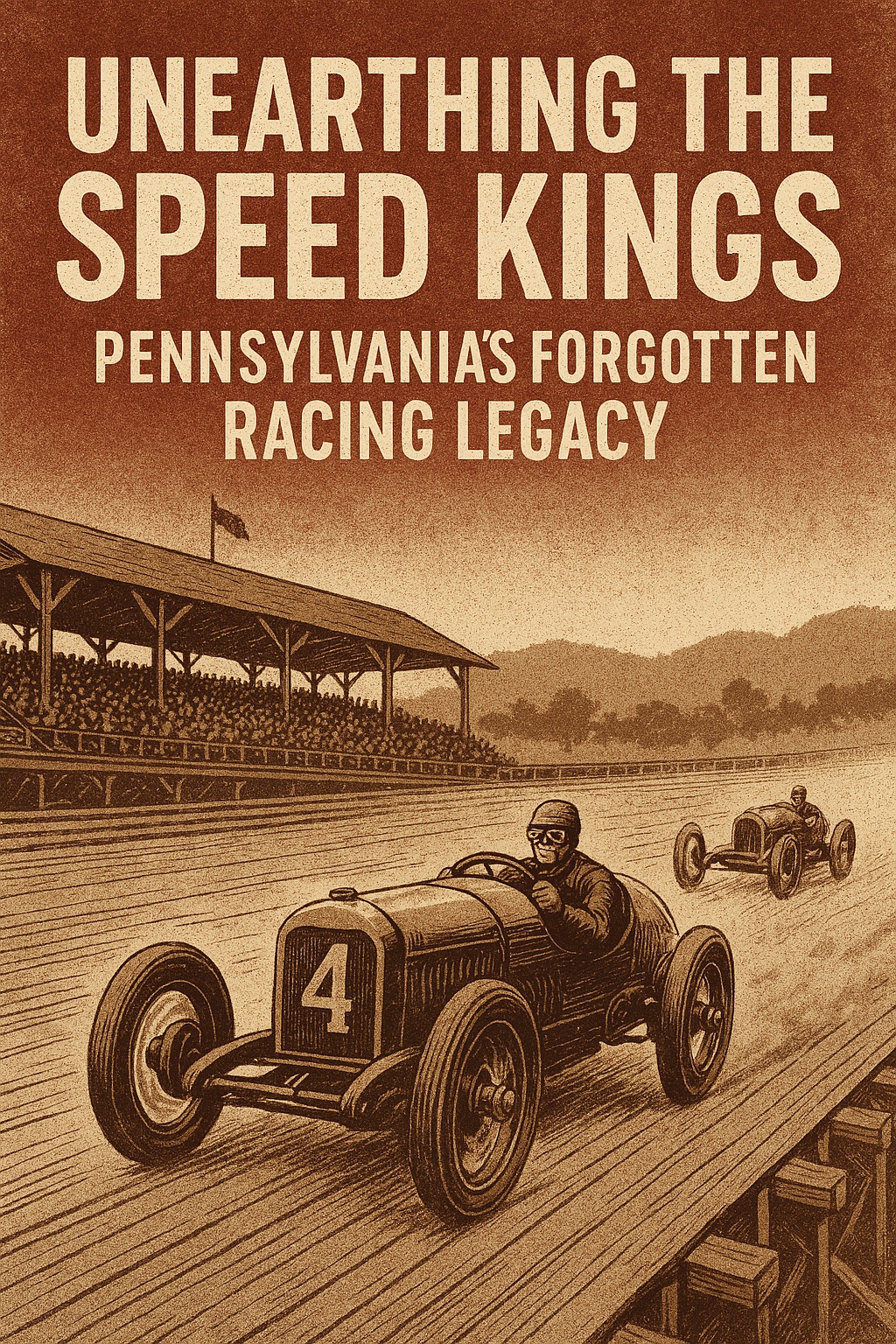
For most people, the quiet mountain town of Ohiopyle, Pennsylvania is a place for hiking, rafting, and weekend escapes. But for author, historian, and screenwriter Marcy McGuinness, it has been the center of a 45‑year quest to uncover one of America’s most overlooked motorsport stories – a saga of hill climbs, wooden board tracks, rum‑running racers, and the rise and fall of a forgotten racing empire.
Recently featured on the Women of the AutoSphere – Break/Fix Podcast, McGuinness shared the remarkable journey that led her from her grandmother’s hotel kitchen to becoming the unofficial historian of the Laurel Highlands – and the driving force behind the upcoming documentary Speed King.
McGuinness’ connection to Ohiopyle runs deep. Her grandmother owned the historic hotel on the river, and the family’s stories, recipes, and photographs became the seeds of her first projects. What began as a simple cookbook turned into a flood of community contributions — boxes of forgotten photos, handwritten notes, and memories from residents who feared their history would be lost. Then came the moment that changed everything.
Tune in everywhere you stream, download or listen!



One summer evening, local historian Jim Boyd summoned her to his basement. There, he handed her a stack of panoramic photos, race programs, and century‑old newspapers documenting two nearly forgotten motorsport phenomena:
- The Summit Mountain Hill Climbs (1913–1915)
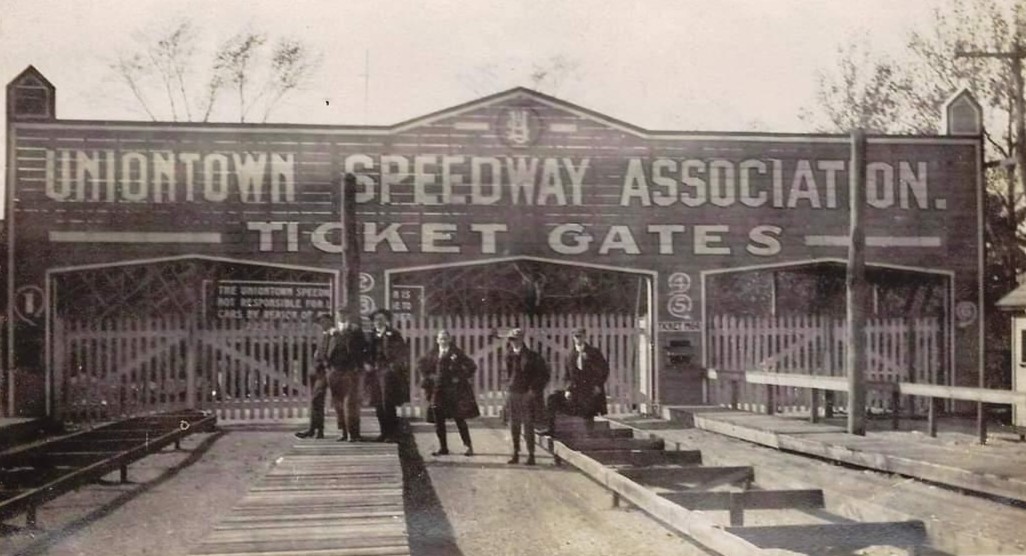
- The Uniontown Speedway Board Track (1916–1922)
He made her promise to “do something with this.” Three decades later, she still is.
Synopsis
Marci McGuinness, author, historian, and screenwriter, joins the Break/Fix podcast to share her journey of uncovering and preserving the rich history of Uniontown Speedway and Ohio Pyle, Pennsylvania. With 45 years of dedication, Marci explores the lives of early motorsport legends like Charlie Johnson and discusses her ongoing work on the Speed King documentary. The discussion delves into the historical context of early 20th-century racing, the impact of prohibition, and the construction of wooden board tracks. Marci also shares her experiences in creating documentaries, gathering historical research, and promoting motorsport heritage to future generations.
- What first drew you to the history of Ohiopyle, and when did you realize it would become a decades-long passion and focus of your work?
- Over 45 years of research, what discoveries have surprised you the most about Ohiopyle’s past or the people who shaped it?
- Can you walk us through the moment or the story that sparked the idea for the Speed King documentary?
- As both a historian and a storyteller, how do you balance factual accuracy with narrative engagement when bringing the past to life?
- What challenges have you encountered while researching or reconstructing the early motorsports history featured in Speed King?
- In your work as an author and screenwriter, how do you decide which stories deserve a deeper dive or a dedicated project?
- How does this film resonate with younger Motorsports enthusiasts?
- Has your decades long study and understanding of Ohiopyle or its cultural identity changed as you’ve uncovered more stories and preserved more history?
- Looking ahead, what stories or projects related to Ohiopyle’s history are you most excited to explore next?
Transcript
Lauren Goodman: [00:00:00] Welcome to Women of the Autos Sphere. On Break Fix, we dive into the stories of trailblazers, engineers, racers, designers, and disruptors who are shaping the automotive and motor sports industries. From the pit lane to the boardroom, from concept sketches to championship podiums, these women are driving change breaking barriers, and inspiring the next generation.
Whether you’re a lifelong gearhead, a curious newcomer, or someone who simply loves a good story. You are in the right place. This is more than a podcast. It’s a movement.
Crew Chief Eric: Welcome back to Women of the Autos Sphere. On Break Fix podcast. Today we’re joined by a remarkable storyteller who has become inseparable from the history and spirit of the Ohio pile, Pennsylvania area. For more than 45 years, author, historian, and screenwriter, Marcy McGuinness has dedicated her life to uncovering, preserving, and bringing to life the rich and often overlooked stories of this iconic region.
Lauren Goodman: From her [00:01:00] extensive books and historical research to her ongoing work on the Speed King documentary, Marcy has become one of the leading voices illuminating the legacy of early motor sports, local legends, and the cultural heartbeat of the Laurel Highlands. Get ready for a conversation filled with passion, history, and incredible storytelling as we explore her journey, her discoveries, and the fascinating world behind speaking.
Crew Chief Eric: That’s right. And joining me tonight is returning co-host Lauren Goodman, associate curator of exhibitions at the Revs Institute, and one of the many personalities here on the Motor Inc podcast network. So welcome back, Lauren. Hi. Great to be here. And with that, let’s officially welcome Marcy to break Fixx.
Thank you. Glad to be here. So let’s talk about what first drew you to the history of Ohio Pile and when did you realize it would become a decades long passion project and focus of your work?
Marci McGuinness: Well, my grandmother owned this big hotel in Ohio, pal on the river when I was a kid. And my mom had grown up in Ohio pal.
And then when I was [00:02:00] 17, I of course ran away to a higher pal ’cause it’s up in the mountains. It’s beautiful. All my cousins were there. The two characters that I write about Charlie Johnson, and then in a High Power I write about Congressman Andrew Stewart, who developed a high power in the before the Civil War.
They both grew up here in the mountains in the same little tiny little village over here, Gibbon Glade, which I always found interesting. I lived on part of the property that Congressman Andrew. Lived on and I didn’t know it at the time. And then when I started writing about him, I’m like, oh my Lord. I was living on their property, huh?
Just always paid attention when I was old. The state came in and, you know, evicted all these people with eminent domain along the riverside and took over and built this huge state park in Ohio pile. So I watched this happen later, 1991 when I moved into my grandmother’s. Home. Laura Bell, Morrison Marietta, she had been very popular, her [00:03:00] hotel was popular, her homemade noodles or homemade breads and everything, and she had this drawer in the kitchen full of all these little pieces of paper, you know, note cards with recipes.
My cousins asked me to please put a cookbook together. So after I decipher all these recipes, after talking to all the old ladies in the neighborhood, you know, there were no measurements. So I put together a nanny’s cookbook. And in that cookbook, my grandmother was also a shutter bug and she, uh, had boxes of old photographs.
So I put about a dozen pages of these old photographs of the old Ohio Powell Hotel and Landmarks, and people in the cookbook. People kind of went wild over that and started knocking on my door with boxes of old photographs. The story was usually, I’m afraid I’m gonna die and my kids will throw these out.
I had already written a history of Ohio PAL for a local magazine, the Scene magazine out of Scottdale. So I put together a yesteryear at a high [00:04:00] PAL calendar for the annual Buckwheat supper, the annual. Fundraiser for the fire department and a High Pal and sold hundreds of them. So I did that for a couple of years in a couple different towns, had a series of calendars, and I had so many photographs.
I started a whole series of yester year books, yester Year in a High Pal, volumes one, two, and three. Yester in Masontown Yester in Smithfield. So this led me to a friend of mine, introduced me to an old fellow Jim Boyd, and he had been contributing to the Yes Year and a High Pal Books. He had grown up in a little town that was also taken over by eminent domain to build the YY River Dam Summerfield.
So he had a lot of interesting historical photographs and we became friends. So one night he calls me seven 30 on a summer night and he said, can you come to my house right now? Meet me in my basement. This is always a good story. I said, well, you know, I, I have daughters. All the kids are running around town and I kind of busy and [00:05:00] he’s like, no, please come down.
He was, he had skin cancer and he was almost 80 and I went and met him in his basement and he had his arms loaded with old newspapers and panoramic photographs and just all this information programs from Summit Mountain Hill climbs 19 13, 14, and 15. And the Uniontown Speedway board track 1916 through 1922, and I had never heard of either one of them, didn’t know anything about them, and he wouldn’t show me what he had in his arms until he said, you have to promise to do something with this.
It’s important. No one has ever researched this. You know, he was a hoarder collector. He had buildings of stuff and he wanted to see this preserved, and so I promised him not knowing what I was even getting into. Now, 32 years later, here I am still creating for him, but that’s the story I promised him. And he died before the first book even got out.
That was 1993. And that was before the internet [00:06:00] had everything. And I was in microfilm in the library, you know, digging and digging. And I had gone home and called an historian who was also pretty old at the time, and he said, well, I can’t help you with a book. I’m too old, but I can lead you. Two people and he did.
And then other people, you know, it, it was snowballing. And in this 32 years I’ve been in more garages. I mean, shattered with more car guys. It’s phenomenal. I, I know a lot about cars now. It’s been a fun, fun journey.
Lauren Goodman: This is amazing to me by word of mouth. It’s like you became the local historical society.
Marci McGuinness: Yes, that is true. People always want to know if I am in an historical site, and I said it’s just, it’s just me. You know, when I go to people for advertising, sponsorships in the documentary so that I can get it across the finish line, I tell them that it’s just me. I’m 70 years old. Don’t wait till I die because my kids will own it.
There’s no promising you that we’ll have a Speedway museum and, and be [00:07:00] showing this film. You
Lauren Goodman: have this treasure trove from Jim Boyd about the Union Town Speedway and the Summit Mountain Hill Climb. And could you set the stage a little bit for us about what that looked like in the town and what did that look like for Motorsport in early America?
What was a hill climb? What was a board
Marci McGuinness: track to start out? The cars and the horses? Early 19 hundreds were fighting with each other. The cars were trying to take over the horses. Our roads were knee deep in mud and horrifying and manure. Sheep and cow. I mean, we had cattle going down the national road and all that.
Okay, so in Europe they had pretty good roads and they had road races, and I had never heard of a board track before. Jim Boyd laid this out for me. I’d never, I’m like, what do you, people were driving on wood. That’s pretty wild. Really wild. So anyway, George Tutlow in Uniontown in 1902 had driven the first car into the town.
Our understand southwestern PA was the wealthiest area in the United States at the [00:08:00] time due to our coal. Coke and Steel. Pittsburgh Steel. I mean, we had more co barrens than dozens of them, and they are the ones that opened this board track. They’re the ones who built the hotels and partied here. World War I was going on the whole time when other tracks, Indy 500, closed down for two years.
During World War I, they couldn’t afford to stay open. But Podunk, Uniontown, pa, we were rocking and rolling, putting 50,000 people in the stands. So before the board track. We have Summit Mountain here, which is three and a half miles, goes from maybe 900 at the bottom. 900 elevation feet, 26, 2700 at the top.
So, and it was def defying Turkey’s nest curve was taking people out and everything. So in 1913, the first automobile club in the county. Decided to have an amateur hill climb on the safest side of the mountain, the other side, the east side. And it was all amateur and it was very popular and there’s just thousands of people showed up.
So the [00:09:00] next year they had it on the dangerous side of the mountain, had a two day event and triple A sanctioned the race. AA came in, sent a guy from Philadelphia in 19 14th Uniontown to sanction this summit Mountain Hill climb, and some professional drivers were coming in from Pittsburgh and. Different states.
1915 comes along. Now we’ve got Ralph De Palmer came three weeks after he won the Indianapolis 500 to Uniontown. He was determined to beat Charlie Johnson, who was the local speed king, and he was ended up being the president of the Uniontown Speedway btr. He was determined because Charlie knew that mountain like nobody knew that mountain.
And of course, Charlie beat him by. I don’t know, 28 seconds or something. So, you know, there’s a quote in the local newspaper, Ralph DePalma said, I’ll be back next year. Take that trophy from Charlie Johnson. So, of course he never did. So I write about the Speed King in the documentary is Charlie Johnson, but it’s also Barney [00:10:00] Oldfield and Ralph DePalma and Louis Chevrolet.
You know, we had three years of these hill climbs. 1916, Charlie was planning this big hill climb, the Pennsylvania Department of Transportation. Shut them down four days before the hill climb. Now, understand the county, the tri-state area, was full of tourists coming on trains and buying mules and walking and carriages and buggies and cars in the mud.
Thousands and thousands of people, and they couldn’t hold the race. They scrambled and held it in a nearby town, Youngwood. Immediately. Charlie went to all the cold bears and he collected a hundred thousand dollars to build a wooden trek. He had like Louis Chevrolet and Barn Oldfield started out racing bicycles.
So he knew Jack Prince, who was the designer of all these. Wooden racetracks. They were built for bicycles and then motorcycles and then getting bigger. Ended up there were 24 in America, because our roads were so bad, we’re driving
Crew Chief Eric: on
Marci McGuinness: wood.
Crew Chief Eric: I wanna point out a hundred thousand [00:11:00] dollars in 1916 is $2.97 million in today’s dollars.
That’s an incredible amount of money.
Marci McGuinness: He did it in two months time. This is how much money was here. People were lined up coming to his garage. He had the big standard garage in town, sold cars and built race cars, and they were coming there and just handing out money. So Jack Prince comes in, who designed all these tracks all over America.
He set up an office in Uniontown at the standard garage and was collecting the money, and it took no time. They had the first race in December. They outlawed the race in July, signed the lease in the end of August, and boom, boom, boom. And the war was on. The men were. Off to war. And the United States hadn’t declared war yet, but many men were already being taken.
They hired 168 teenage boys, high school boys to put that track together to pound nails after school. So that’s who built the track. And it was just under 4 million square feet of [00:12:00] hemlock lumber, two by fours, you know, side by side. The curves were 34 degrees. I mean, they were so steep and they went over a hundred miles an hour.
They were breaking records. The last race in 1922, Jimmy Murphy broke all the records at 109 point something mile per hour.
Lauren Goodman: This is what I like to point out to folks about the birth of American racing is we didn’t have great roads, so we built these board tracks. Firstly, the wood allowed you to build those crazy bankings.
Crew Chief Eric: I’ll put it in perspective. 34 degrees on a wooden track today, the steepest track in NASCAR on the schedule is still Talladega at 33 degrees, so that was one degree steeper back then than the most steep track today. That’s absolutely incredible that they could build something like that.
Lauren Goodman: Crazy, crazy angles so cars could just keep going faster and faster and faster.
Second of all, building a board track meant that you could fence off the area and charge tickets. Oh
Marci McGuinness: [00:13:00] yeah,
Lauren Goodman: many
Marci McGuinness: tickets. It was quite amazing. And today I live maybe five miles from the old track, and Hopwood is not a, you know, just a few businesses and not much going on. And even people who live down there don’t even know about it.
And Uniontown. I’d said there were 24 of those tracks. A lot of ’em were quarter mile circles. You know, they grew, grew. But the ones that lasted the longest, most of ’em didn’t last two years. They would burn. They’re just different things. They’re just run outta money. Tacoma, Altoona, and Uniontown. Lasted seven and eight years.
The three of those, and then really most of them burnt or were, like I said, they were abandoned or half-built and all that.
Crew Chief Eric: Were any of ’em phased out because there were new techniques to building tracks by that point, or had they moved to dirt track racing? They wore out.
Marci McGuinness: There were so many splinters, I mean, filling up radiators and tires.
Barney Oldfield and Firestone Tire created the old field tire for racing. It was like a solid, like a tricycle tire, you know, that [00:14:00] solid rubber to avoid having to change tires constantly. And guys were getting big splinters in their elbows, in their eyeballs, and they didn’t have a helmet. They had no windshield, they had no roof.
So when Miller and ER. Built the first race car with a roof, which cost Barney old filled $15,000 in 1916. A lot of money. He brought it by train in his own special car to Uniontown for the grand opening in 1917. He was the world’s speed king and he was here. Can you even imagine they paid him $4,000 just to show up?
He didn’t even have to do anything, but he did race. He did bring his fancy car, and I have a photograph of Fred Dusenberg standing there looking at it with this awful scowl on his face. He didn’t think of it, but it was the big time. I have a photograph of in 1915, Vivian Prescott. Her husband, uh, Neil Waylan sitting on top of a sign on top of Summit Mountain watching the Hill Climb.
[00:15:00] Vivian Prescott was a silent film store for Universal Films. She made 202 films and uh, she was married to Neil Waylan, who owned auto dealerships in New York City and Philly, and he was a race car driver at Indian, blah, blah, blah. And they were promoting Sheepshead Bay, another very popular New York wooden track.
So in 1916, when. They started putting the board track together. They became the promoters for Uniontown Speedway, and she brought in the president of Universal Films, Carl Lemley. He spent $3,000 on a solid silver, three foot tall universal film trophy for the annual big race, 225 mile race every year. So in 1916, Louis Chevrolet won that trophy.
It’s hard to believe it.
Crew Chief Eric: So the last race was 1922, but racing was still gaining popularity pretty hard. Post World War I, especially in Europe. You had the birth of the Milam and a lot of other big races and racing had returned to Indianapolis and things like that. What happened in 1923 and beyond? We weren’t [00:16:00] in the depression area yet.
There was still plenty of good life in that area, obviously in a lot of affluence and whatnot. Why not another race? Or another location.
Marci McGuinness: That was the interesting thing that took me decades to really discover for a hundred years. People in the area here in the newspapers said that Charlie Johnson, president of the Union Town Speedway, ran off to Cuba with the Speedway money.
Now that was the normal. What I discovered was a rumor about Charlie. Charlie was their golden boy. He brought more people than Uniontown than anyone’s ever brought to Uniontown or ever will. And then they turned on him in that way. But this is what actually happened. It took me a lot of research. Charlie Johnson grew up right down the road here in the mountains, but he in the standard garage, he and his father, they owned a brewery, the Johnson Brewery, they owned a dairy, they owned coal mines.
They owned, you know, rental properties. Well, prohibition hit in January, 1920, and this is a time when they were putting more people in the stands. You know, the war was over the, it was [00:17:00] just 50,000 people was the record in 1920. But in January, 1920, prohibition hit and shut down all the breweries, the hotel, you know, they were busting everybody.
Charlie Johnson, he had a car called the Greyhound, who is the big star of this film. He was a Packard and he won all the races that he ever drove in, in the Greyhound Packard, and he outran the prohibition agents several times in that Packard trying to be the decoy so that his trucks of booze could go to Pittsburgh or wherever they were going during prohibition.
They kept throwing him in jail. Now he’s the big shot of the region, of the country, really in racing. And they kept throwing him in jail and that, you know, sheriff’s, his buddy, he’d pop him out. And this happened in 1921. They threw him in jail just before the big race, the universal film. Race Sheriff popped him out right after the race.
He had to go to New York. He had just a year or two before that formed a National Speedway Association with [00:18:00] some of the other guys at these big tracks, and they would meet annually in New York City. Well, those same guys were in the same position as Charlie. You know, they owned breweries, they owned this and this and that, and having trouble with prohibition.
Well, they started rum running. Bringing in ships from Cuba and rum running all over to Detroit and Chicago and Uniontown. And so Charlie became big time rum runner in his Greyhound Packard, trying to keep his parents afloat because they had shut these businesses down. His parents are like 65. And broke.
So he went to this meeting in New York in 1921 and his wife begged him not to go, but he went. And when he came back she had had a fatal heart attack. I had for many years, been so curious about these panoramic photos from each big race. Every year. Charlie’s cock of the W three piece suit in his cigar, the 1922, a year after his wife died.
He doesn’t even have a hat. He has. Sunglasses on no one. The [00:19:00] thousands of photographs I’ve seen of his board track, he’s the only one I’ve ever seen in shades. He had lost 50 pounds. He didn’t even have a suit on. Crooked tie, and you know, he was a wreck. You could tell. So I did all this deep diving and really found out what happened to her, what hap It was just a big snowball.
Not only did Prohibition take his wife, prohibition took the Greyhound and every business, they shut him down. They took everything. Charlie owned days after that last race, they busted the ship from Cuba out in the New York Harbor, and the federal agents were leaving those guys out there freezing. And the guys actually started burning the ship trying to keep warm.
So he took off to Cuba. He moved his parents, his siblings, his entire family to Florida. I have all their addresses and I figured it all out. He continued rum running. I have manifests of him on banana boats. Literally it says fruit boat, but I’m like, that is the banana boat, Cuba and New Orleans, Cuba and [00:20:00] Miami.
He did that throughout prohibition and then he came back home and he spoke at the. Opening Race of the Second Uniontown Speedway in 1940.
Crew Chief Eric: Okay. Wow. There’s a lot to unpack here. I know. Yeah. Where does this intersect? The legends of NASCAR Junior Johnson and the stills and the moonshine Runners of the South.
Does this predate that
Marci McGuinness: way? Predates that really? I know that the NASCAR thinks they invented it. They did not. You know, this is 1922 through 34. Prohibition ended in. 33. And Charlie’s parents died right around that time. And then they all moved home. You know, nascar, that stuff was in the forties. There was a big jump in between these two things.
They were the moonshiners, these were the rum runners. Charlie was one of the first race car drivers who was a rum runner. We had a question
Lauren Goodman: here about how do you, uh, balance factual accuracy with narrative engagement, but it doesn’t sound like you need to with a guy like Charlie. No,
Marci McGuinness: [00:21:00] because everyone wrote about him.
He was in awe the papers, there was a paper trail, no internet back then, but by golly, if you dig deep enough and with the internet today, you know, I couldn’t find all that stuff in 93 for the first book. When I decided to actually do the documentary, I’m like, I have to find out what actually happened to Charlie.
You know, rumors are rumors and I don’t wanna make a documentary about the rumors or prove it was true.
Crew Chief Eric: So let’s close the loop on Charlie’s life. So he is a rum runner. We’re in the thirties. You talked about his parents dying. What did he do for the rest of, how long did he live? What happened next?
Marci McGuinness: He had remarried in Miami, 1928.
You know, he was coming back and forth Miami, back and forth in New Orleans and La, la, la. His second wife. Edna met her and married her. She was from Vermont, and that was another rumor. Someone had told me he had brought a Cuban woman back with him and his wife, and they had all kinds, people have told me many things, but you know, you have to [00:22:00] figure out what actually happened.
And he actually moved back here. I have his address, Gallatin Avenue in Uniontown. And like I said, he spoke at the dedication of the Bryson’s. Uniontown Speedway, which was built inside the old wooden track, half mile track, and it was dirt with asphalt curves. They ran that for seven years. But yeah, they really honored him in the newspaper at that time.
You know that he did so much for road safety. He worked a lot with the Triple A. He did a lot of road races trying to get the Department of Transportation to spend money on. Roads, fixing roads and all that kind of thing. So they honored him for that. And he’s, he was here for about 10 years and then he and his wife moved to Chattanooga.
Some of his other family had a real estate office down there. He died in Chattanooga in 1954. It was a heart attack. And I do make this up at the end because I don’t know exactly what happened. Fell asleep and had a, i, i have no idea, but in the edit documentary, I [00:23:00] have him in his garage fixing a 1912 Packard.
He’s telling his wife, just let me die here with the greasy rags and, you know, let me die in my garage. And she calls an ambulance and Charlie says, you know, I might’ve lived if I drove that ambulance. But the, the driver was no speed king. That’s how I ended up. All right. And I do have a picture of his.
Grave. There you have it.
Crew Chief Eric: History is not linear. Hmm. This is one thread of many threads all happening simultaneously. So we got a glimpse of Charlie’s life. Let’s take a step back. The original track closed 1922, and there’s some famous names in there that we can follow their history, right? Louis Chevrolet and Barney Oldfield and all those guys.
But where did the rest of the racers who obviously were addicted to racing at that point? If they weren’t rum runners, where did they find themselves participating in races during all those years?
Marci McGuinness: 1923, Pennsylvania and California had the most tracks, ’cause that’s where the money was. Pennsylvania had three wooden tracks nearby.
Altoona, Pennsylvania. [00:24:00] Altoona built a track. They did the curves different for safety. They ran for eight years. Now that was all during prohibition and I don’t know how they handled that, but the same people were riding. Fred Dusenberg actually died over there, test driving a car on the mountain near that track.
There were a couple other ones built after that time. They actually finished the last race in 33 or so, these wooden tracks, and then there was more dirt. There were dirt tracks and drag tracks, you know, around, but the big crowds were coming to those wooden tracks because they put on the shows at the Uniontown Speedway during the war, they had a guy named Deloitte Thompson flying in a war plane, and they had built a fake fort in the middle of the infield, and he was dropping fake bombs during intermission.
All this kinda stuff. So really big show.
Lauren Goodman: Let’s bring that back During Grand Prix Indian Fields bombs, dropping glitter bombs on a [00:25:00] fake Ford or something like that.
Crew Chief Eric: Well, on that bombshell, why don’t we switch gears? Let’s talk about the world of making films. So let’s dive a little bit more into the documentary itself.
Marci McGuinness: I had never made a film. I’ve been in a bunch of documentaries and, you know, whatnot through the years and done a lot of radio shows and all that. But friend of mine, two years ago in January now, he said, you know, it’s about the time you did that documentary. I haven’t a clue how to even go about that, but I, I get it because.
It’s now or never really now or never. So I dropped, literally dropped what I was doing and delved into it, educated myself. And then I was in Florida at the time and I, when I got home, I started visiting all my old car guys who have sponsored all my books. I have four books on this track. So you know, they’ve been sponsoring my books or racetrack programs and all these years, and I first sent them out a note about what I was thinking about doing with [00:26:00] an outline.
They’re like, yeah, come see me. So I started visiting them and collecting sponsorships, and then I bought the Da Vinci Resolve Studio Software. I have no idea that I was gonna have to be the one to do it. ’cause I thought, well, I can just put the photographs and captions together and pass it on. Somebody put together, but there’s no way, because I literally would’ve had to remove my brain and put it in someone else’s brain because they don’t know all the extra stuff, all the zillions of silly, crazy facts and whatnot.
I ended up putting it together and now it’s a 72 minute film. What a trip this has been during this, I had a fellow who does videos and things around here and he has a good sound room and I was looking for someone to do the voice of Charlie Johnson. ’cause I wrote the screenplay and I’m like, I can fill in the blanks.
I can narrate blah, blah, blah. But I needed Charlie. So he found me a guy who has a great voice and he did a great job. He, he’s not a reader, he’s reading the screen. He, he’d never heard this story. He didn’t read the script that I’d [00:27:00] sent him in. He’s a busy guy and he runs a Derby race promotion business, hardcore Derby promotions.
Frankie guy, he did really a great job when I. Started going through it and trying to piece everything together with photographs and blah, blah, blah. He really nailed it. He had a lot of the same emotions. You know, he used to drive and he understood what Charlie went through. He even teared up, you know, when the wife died.
I’m like, whoa, stop. I’ve gotcha. You know? But, so putting it together has been a lot of fun. So I had that recording. Him and just all my stuff and I actually went and house, sat for a friend of mine and sequestered myself to try to put the story together, you know, in the first form. Took me about two months and I did it, but mine are the only eyes had been on this film except for my grandsons and a couple of two friends.
While I was doing that, I need some old film clips. So I dug around and dug around till I could find some [00:28:00] film clips that I could buy. I started out in 1902. I’m like, okay, I need a, a big guy who kind of looks like George Tutlow and he’s driving his car over a hill and into this town, just like George Tutlow drove into Uniontown with the first car, and I have all these old clips in between all of my photographs and articles and stories, and I found clips like.
1913 when we were having our first hill climb. Henry Ford was developing his first assembly line. I bought a clip of him, Henry’s standing on the steps with his stopwatch going go. And these guys, he call, he calls him a strong young man, but he’s my age. He ties a rope, the front of the chassis, pulls it and there’s a little crew here and they puts parts on, pulls it up some more.
There’s a crew, puts some parts on. That was the first assembly line he was trying to. Drop the price on his cars. He wanted to get that going. So then the second assembly line is [00:29:00] also in this clip. They built a one wheel track and they pushed the cars to each crew. I mean, it’s just stuff like that. I’ve found so many.
I have a clip of Barney Oldfield driving. Henry Ford’s first race car 9 9 9 on wood, and he comes around the track and he stops and he the car in his mouth and he takes his golfers off and grin. Here’s some good stuff. I have Louis Chevrolet winning the Harkins Trophy at Sheephead Bay and Gaston Chevrolet’s fatal crash.
Where three of those guys got killed in Beverly Hills. Oh my. They card him off in this clip. I couldn’t believe I found that and things like that. So I would have what’s going on with the speedway, but what’s going on in the automotive world and the racing world. And then what’s going on with the war at the same time?
So I have clips like 1918, so we are neck deep in the war. The United States is, at that time we put 4.8 million men from the United States over France and [00:30:00] oh my gosh. So I have clips of our soldiers marching down the streets of Paris and women throwing flowers at them and cheering because we won the war.
And I have clips of our guys bombing a German sub torpedoing it. You know, it says, while Charlie’s planning, uh, three big races for 1918, here’s the navy, boop, you know, that kind of thing.
Lauren Goodman: I feel very keenly how you feel like such a guardian and a steward of this legacy and making sure that going back to the day in the basement with Jim.
You’re gonna make sure that it gets passed on. I have such respect for that. I mean, of course I a little biased. I work at a car museum that also has a library and archive dedicated to the automobile. So all we do is we think about how can we save these things, and not just the physical objects, the ephemera, the photographs, but talk to people.
Because so much of the wisdom and the history is in people’s heads. Especially on the automobile. It’s trying to capture that while they’re still with us.
Marci McGuinness: It’s true. I’ve only [00:31:00] met two people who actually met Charlie. One is his niece and she’s 94. She contributed photos recently and remembered a lot what a character he was and remembered him coming back from Cuba and all this stuff.
Another guy who was almost a hundred when he passed away had ran into Charlie in the street during the 1940s. And Charlie told him stories about building race cars, showed him where the standard garage had been and all that. You’re right. And you can’t piece things together without talking to people.
’cause it’s like, ah, okay. That makes sense and it’s a lot of work. It’s crazy. Sometimes you just feel kind of insane, but you just have to keep on trucking to get it done. I want my grandsons, I want all my car guys, grandkids. And that’s what, when I first went to see Gary Sissen about it, Gary’s always been a sponsor of mine.
He has a car lot down here in Uniontown. He put his. Fingers under his chin and he said, oh my [00:32:00] grandkids. Exactly. So these car guys that are sponsoring the film is an hour of Charlie’s story, and then the next 12 minutes are clips from the Speed King meeting that I held last year at the Summit Hotel on top of Summit Mountain, where all these guys stayed, where Barney and Louis stayed across the hall from each other.
We had a meeting in the uh, Harvey Firestone room and filmed it, and all these guys talked about the importance of this story. They talked about their own lives racing. LJ Dennis, he’s won over 400 races. He’s in the Hall of Fame in North Carolina, but he lives right up the road. Here he is 90 and he’s still working on cars.
I pulled my car in there a couple weeks ago and said, what is this weird noise? You know? But you know, they’re all in the film. And throughout the main film, even several of them were talking about the coal mining, the, the wealth, and the, you know, how we could open such a track. In Southwestern Pennsylvania, [00:33:00] uh, you know, people don’t understand how wealthy this area was, and that’s Uniontown.
Pennsylvania is undermined. That’s how Andrew Carnegie made his money. But Greg Dahl speaks to it in the film under Uniontown. That’s Pittsburgh still, and Pittsburgh still supplied 50% of the Still for World War I that kind of brings it all home. It’s how we could race and Indy couldn’t throughout. That war and now, now it’s, it’s still a tourist area here, but for different reasons.
Lauren Goodman: In your work as an author and a screenwriter, how do you decide which of these stories, which of these threads deserves a closer
Marci McGuinness: look? It’s gut. When John May called me and said, you, you really need to do that documentary. I’m neck deep, just launched a book on a higher pal to do a three book series and then a documentary, and all my car guys are aging.
In January, it’ll be two years since we had the conversation. And I’ll tell you this summer, I was really tired. Really [00:34:00] tired after spending months and months in Da Vinci resolve Studio ’cause I’m a writer that was so technical and hurt my brain, but learned a lot, really happy that this is the way I went.
Then I’ll be ready for my second high power would be easy because I mean, I know that I don’t even need to interview anybody about that. I can just spill it.
Crew Chief Eric: So as we close out this thought on the film and the making of the film and everything that went into it, how do you think this is going to resonate with younger Motorsport enthusiasts?
Marci McGuinness: Now, that’s a big question. I know that there are a few things. The documentaries I’ve been into are running local schools. When I started the documentary, uh, one of my car guys, John over, took me down to South Union Township to see one of their township supervisors who wanted to put a trail over to Hopwood on Route 40 from this sheep’s skin trail that is there.
And John said to him, you know, that goes right through [00:35:00] the old Uniontown Speedway property. And Bob didn’t know he just wanted it where he went. In the meantime, they’re waiting on grants. To put the Speedway Trail in the unit, Speedway Trail and it there on the National Pike. This old gas station, the uh, national Road Heritage Corridor Group are trying to get grants to put the Uniontown Speedway Museum there.
Now this is a tourist area. So what I would we would like to do as this comes into fruition is of course continually play the film there. I’d like to design a, some kind of games where these guys can come in and drive on the wooden board track and play the film in schools and get them interested and and excited about it.
And through this museum and. Just let ’em know where cars come from. I think people take their cars for granted something terrible, so I’m going to do my best to launch this and get it on streamers and everything, but it’s a step by step thing. It will be in some film festivals next year [00:36:00] and all that jazz, and definitely I wanna show, and there’s middle schools and high schools.
Crew Chief Eric: So let’s talk about the future a little bit here. As you mentioned, the racing in the Ohio pile and Uniontown areas ended in 1922, over a hundred years ago. Yeah. Despite all the run running and everything else, but there’s a hundred years of history in that area, and you alluded to the fact that it’s still a very much a tourist area in southwestern Pennsylvania.
What does that a hundred years look like? Are there other chapters of the Ohio pile story that you wanna explore and talk about outside of, you know, speed King and, and things like that?
Marci McGuinness: Oh yeah. Ohio Pile is on the Yoki Gny Whitewater River. During the French and Indian War, George Washington came down the yak.
A log canoe almost drowned. They saved him right above the high Powell Falls. I write about all this kind of thing, but a High Powell was the busiest commercially run Whitewater River in the world for a long time, and my family owned a couple of those companies. And so. [00:37:00] What I’m writing about as far as how Haal goes is the beginning of a Haal after the Revolutionary War.
A lot of soldiers out of Virginia in these areas were not paid with money. They were paid with bounty land grants, and they would send these guys who were broke, just been shot at. Up into the hills, you know, like they owned 400 acres, but they didn’t have anything. So anyway, Congressman Andrew Stewart, these guys would come up here and he would buy their land from them and set them up.
Like one of ’em was raising mules and one of ’em was raising different things on all these different properties. He bought up 80,000 acres of Fayette County, this congressman. So I write about him. I don’t know what a high Powell would’ve been without the Congressman. He almost became president and when there was a flub in Philadelphia during the voting and all this stuff, and he came back home and they had been nominating him for vice president at the [00:38:00] time.
So he came back home and he had several hotels in this hotel down by the courthouse in Uniontown, the Clinton house. President Taylor came. Stopped there to see him and offered him the position of Secretary of the Treasury. He turned it down and bought up a high power. Instead, he came up here, built bridges over, you know, you couldn’t get into high power.
I mean, it’s mountainous and it was just forests and a river and creeks, and you couldn’t cross. I mean, he built bridges and gristmills and homes and made electricity out of the waterfall and built hotels, and he fought for 20 years to bring. The B and O railroad up through a high pal to his hotel, the Ohio Pal Hotel, which my grandparents later owned.
You know, he made a town out of this frontier, which just had travelers and Indians hunting the ground and fishing, and then poor soldiers coming up here trying to build log cabins and stuff. He really put people to work. He had [00:39:00] made tons of money. He did a lot of good for a Ohio pal.
Lauren Goodman: Ohio Pal is this incredible setting.
Beautiful kind of the stage for all these human dramas.
Marci McGuinness: Mm-hmm.
Lauren Goodman: Do you have any words of wisdom or advice to, let’s say, younger folks today who think, gosh, I wonder what happened. If there’s a similar history in my town, I wonder if I could get started looking around and seeing about that. Do you have any advice for budding local historians?
Marci McGuinness: Right, about what interests you? And do your research. Research is so much fun. The discovery, you know, putting things together and every town has a story and every town has interesting people and a lot of times, like Charlie Johnson and the congressmen are really unsung heroes around here. Like Hyatt Powell doesn’t have a bust of the congressman.
I always say this, where’s the bust of Congressman Andrew Stewart? Because he gave land for the fire department, the community center, the. Playground, everything. I mean, built all the homes. There’s nothing about him. The township is called Stor Township, but nobody knows why unless they [00:40:00] read my books. But I think a lot of places do have historical societies.
I would start there if that is available, but many libraries have, like we have the Pennsylvania room. You know, it used to be microfilm and everything. The libraries have collections of the oldest stuff. If you’re lucky and had really good people in these libraries. Libraries and historical societies, and talk to the oldest people.
You can find the oldest people. I’ve interviewed three 105 year old women, and I think the oldest man was 99. And they were still sharp. Listen to older people. Don’t ignore these people when they talk, ask them questions, ask them about their lives. They’ve been through more. I’ve lived seven decades now and I cannot believe Higher Pal is nothing like it was when I was a child.
Nothing. You know, sometimes I just lay on a river rock and think about 1960 and 1955. Oh my gosh. So you really have to [00:41:00] write about what interests you and do your homework and have fun.
Lauren Goodman: You know, besides the, you got some upcoming books planned about Ohio Pilot history. Any other kind of projects you have cooking?
Oh my gosh,
Marci McGuinness: a few years ago I wrote my memoir, it’s called Writer’s Life in case I croak or something, some cry. My kids hate when I say that, but I’m like. It’s gonna happen, but I’m writing my memoir and hopefully after I get done with the Higher Pal documentary and books, I will finish that thing. I wrote it actually up to maybe two years ago, and it’s a comedy.
I write all the crap, you know, boo blah, blah, blah, and I come up from a huge family. So there’s a lot of funny stuff. I’m writing it as a comedy, so anything I was bitchy about, you know, in the first draft is. Out, get out. You know, life is fun and who knows? I mean, it’s gonna take me a while to get all this done.
There’s no end to subjects I don’t think.
Crew Chief Eric: Well, that being said, Marcie, when you look back at all this and you [00:42:00] think about the history of Ohio pile and racing and everything else, what would you say is the one thing that motor sports has taught you? Those are good people.
Marci McGuinness: Those car guys. I didn’t know anything about racing.
You know, not really. I mean, I’ve been to races, but I didn’t know anything about it. They’ve taught me so much. It’s flabbergasting, and they’re such good, good people. When I promised to do something with this information, I had no idea I was gonna make so many friends, so many long, I mean, they’ve been with me for 32 years on this speaking project, 32 years.
I think back, I’m like, oh my gosh. We were young. When we started this stuff, beyond the writing and the research, I’ve just learned that racing people are good people, family oriented, and. Solid, solid people. That’s what I’ve learned.
Crew Chief Eric: All right, Marcy. Well, we’ve reached that part of the episode where I’d like to invite our guests to share any shout outs, promotions, thank yous, or anything else that we haven’t covered thus far.
Marci McGuinness: I’d like to thank Jim [00:43:00] Boyd for torturing me for 32 years with this and all of my sponsors. I have a website@speedkingstory.com. I have some clips from this Speed King documentary Uncut on YouTube Shore Films, S-H-O-R-E Shore Films. You can find, just go Uniontown Speedway. You’ll find it. The last 10 minutes of the film or the funny part where all the guys are talking, telling their stories, and uh, just talking about each other, talking about their dead friends and all that jazz.
But all my books are on Amazon. I mean, I sell them locally, et cetera. Marcy McGuinness. Just look up Uniontown Speedway books, you’ll find, you know, I have like 40 books on there. I have an High PAL info website. It’s a lot of information on that end of things, and I would just like to thank anyone who has ever contributed to any of my projects since 1981 when I started writing.[00:44:00]
Lauren Goodman: Well, that brings us to the end of today’s conversation with Marcy McGuinness, author, historian, screenwriter, and one of the most passionate guardians of Ohio, pys past her decades of dedication from uncovering forgotten stories to bringing the Speed King documentary to life. It reminds us how powerful history can be when it’s preserved by someone who really cares.
If Marcy’s work inspired you today, be sure to explore her books, follow the progress of speaking, and dive deeper into the rich heritage of Ohio Pile, Pennsylvania. For more information, be sure to check out her websites, Ohio pile.info and speed king story.com.
Crew Chief Eric: Marcy, I can’t thank you enough for coming on Break Fix and sharing your story with us, and it’s one of those reminders that no matter where you look, no matter what corner of the world you’re in, there’s always.
Something that pulls us back to motor sports, and I think you’ve proven that yet again, and I appreciate what you’re doing and keep up the good work.
Marci McGuinness: Thank you guys so much. It was [00:45:00] fun.
Lauren Goodman: Yay. It was a pleasure to meet you.
Marci McGuinness: You too.
Crew Chief Brad: We hope you enjoyed this journey through racing history and the personal stories that keep the spirit of Motorsport alive.
The Eastern Museum of Motor Racing is a premier destination for motor racing enthusiasts, showcasing a vast collection of historic racing cars, artifacts, and memorabilia. To learn more about the EMMR or to be a part of the next in-person racers Roundtable. You can plan your visit or support the museum’s mission to preserve and celebrate the legacy of racing by heading to www dotr.org.
Follow them on social media for the latest news, upcoming events, and exclusive content. Until next time, keep the engines running and the memories alive.
Crew Chief Eric: We hope you enjoyed another awesome episode of Break Fix Podcast, brought to you by Grand Tour Motorsports. If you’d like to be a guest on the show [00:46:00] or get involved, be sure to follow us on all social media platforms at Grand Touring Motorsports. And if you’d like to learn more about the content of this episode, be sure to check out the follow on article@gtmotorsports.org.
We remain a commercial free and no annual fees organization through our sponsors, but also through the generous support of our fans, families, and friends through Patreon. For as little as $2 and 50 cents a month, you can get access to more behind the scenes action, additional pit Stop, mini SOS and other VIP goodies, as well as keeping our team of creators fed on their strict diet of Fig Newton’s, Gumby bears, and Monster.
So consider signing up for Patreon today at www.patreon.com/gt motorsports. And remember, without you. None of this would be [00:47:00] possible.
Highlights
Skip ahead if you must… Here’s the highlights from this episode you might be most interested in and their corresponding time stamps.
- 00:00 Meet Marci McGuinness: Historian and Storyteller
- 01:42 Marci’s Early Inspirations and Projects
- 04:45 The Discovery of Uniontown Speedway
- 07:08 The Birth of American Racing: Board Tracks and Hill Climbs
- 13:40 Challenges and Innovations in Early Motorsports
- 16:13 Charlie Johnson: The Speed King and Rum Runner
- 20:05 The Legacy of Charlie Johnson and Early Motorsports
- 22:02 Honoring Charlie’s Contributions
- 23:30 The Evolution of Racing Tracks
- 25:06 Creating the Documentary
- 27:54 Gathering Historical Footage
- 30:21 Preserving Automotive History
- 36:07 Future Projects and Reflections
- 42:51 Closing Thoughts and Acknowledgments
Bonus Content
All of our BEHIND THE SCENES (BTS) Break/Fix episodes are raw and unedited, and expressly shared with the permission and consent of our guests.There's more to this story!
Be sure to check out the behind the scenes for this episode, filled with extras, bloopers, and other great moments not found in the final version. Become a Break/Fix VIP today by joining our Patreon.
Learn More
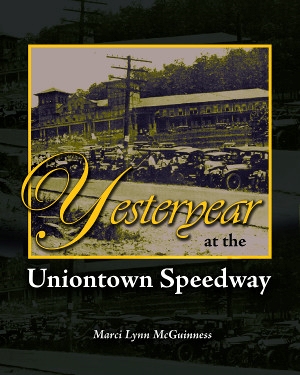
- Speed King Documentary: speedkingstory.com
- Ohiopyle History: ohiopyle.info
- Books by Marcy McGuinness: Available on Amazon
- You Tube Clips: Search “Shore Films Uniontown Speedway“
Beyond Speed King, Marci’s working on a multi‑volume history of Ohiopyle, a comedic memoir, continued preservation of local archives and she’s still honoring the promise she made in that basement in 1993!
The early 1900s were a chaotic time for transportation. Roads were muddy, livestock still dominated the streets, and automobiles were fighting for legitimacy. Europe had road racing — America had lumber.
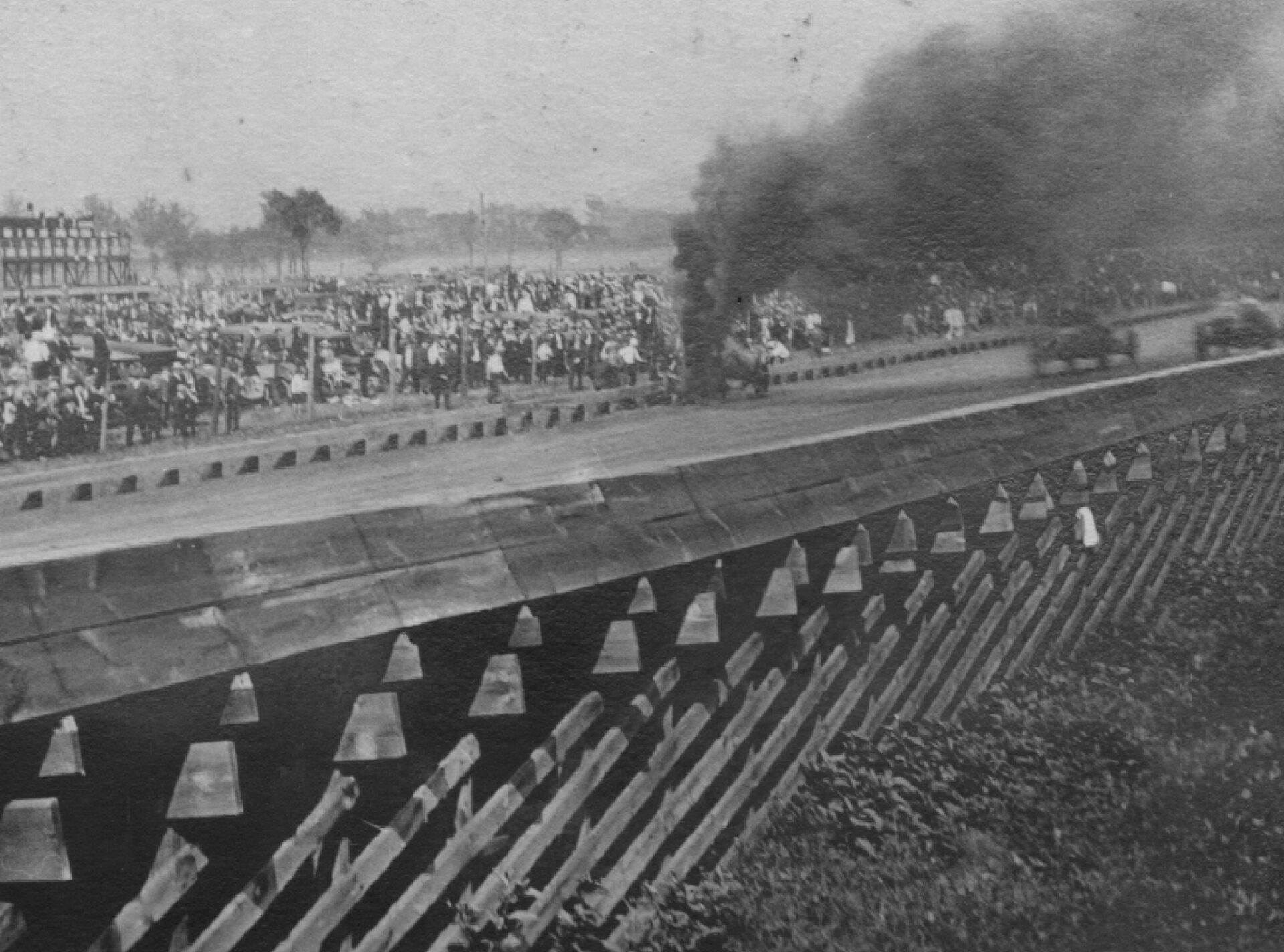
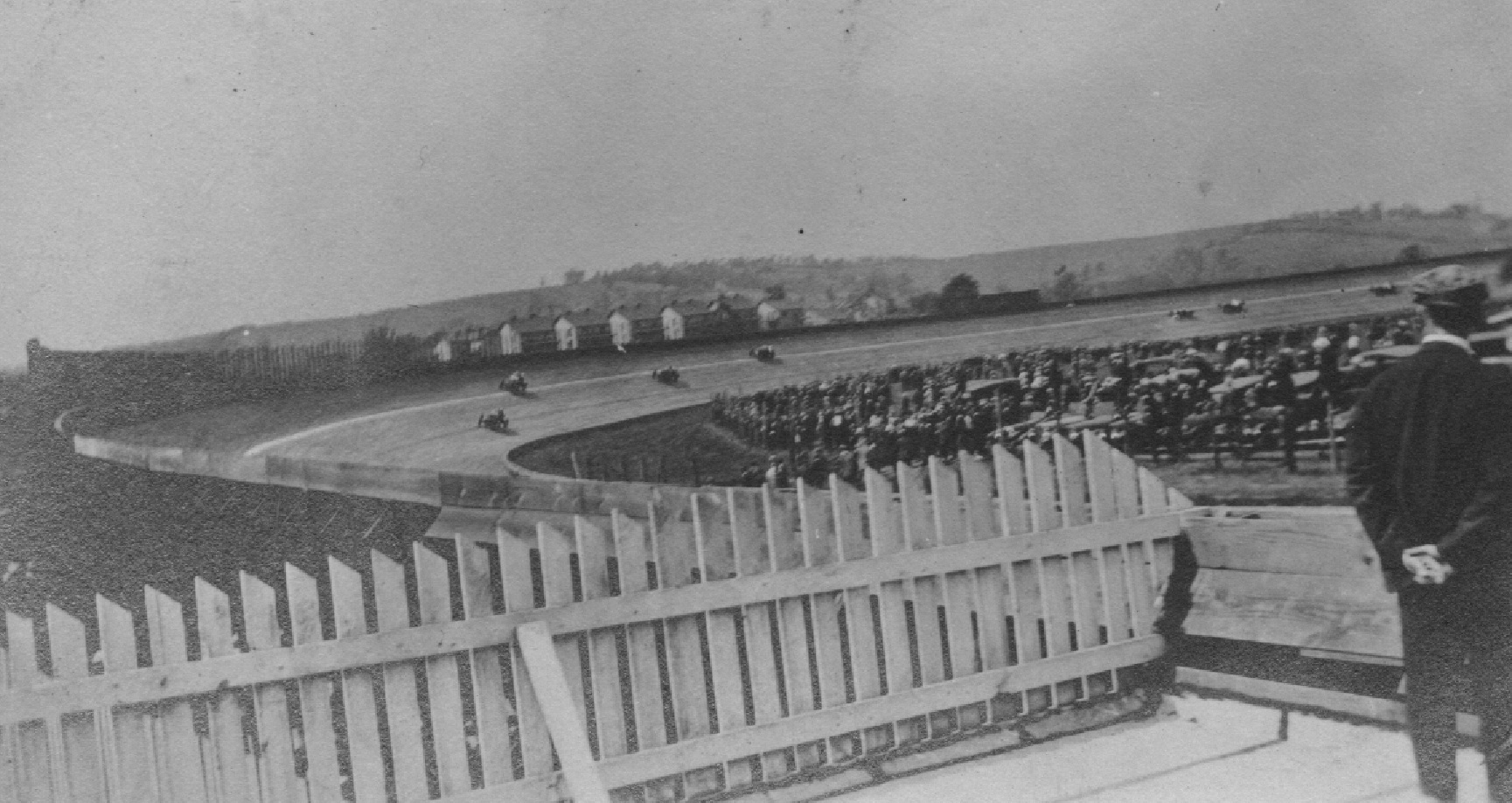
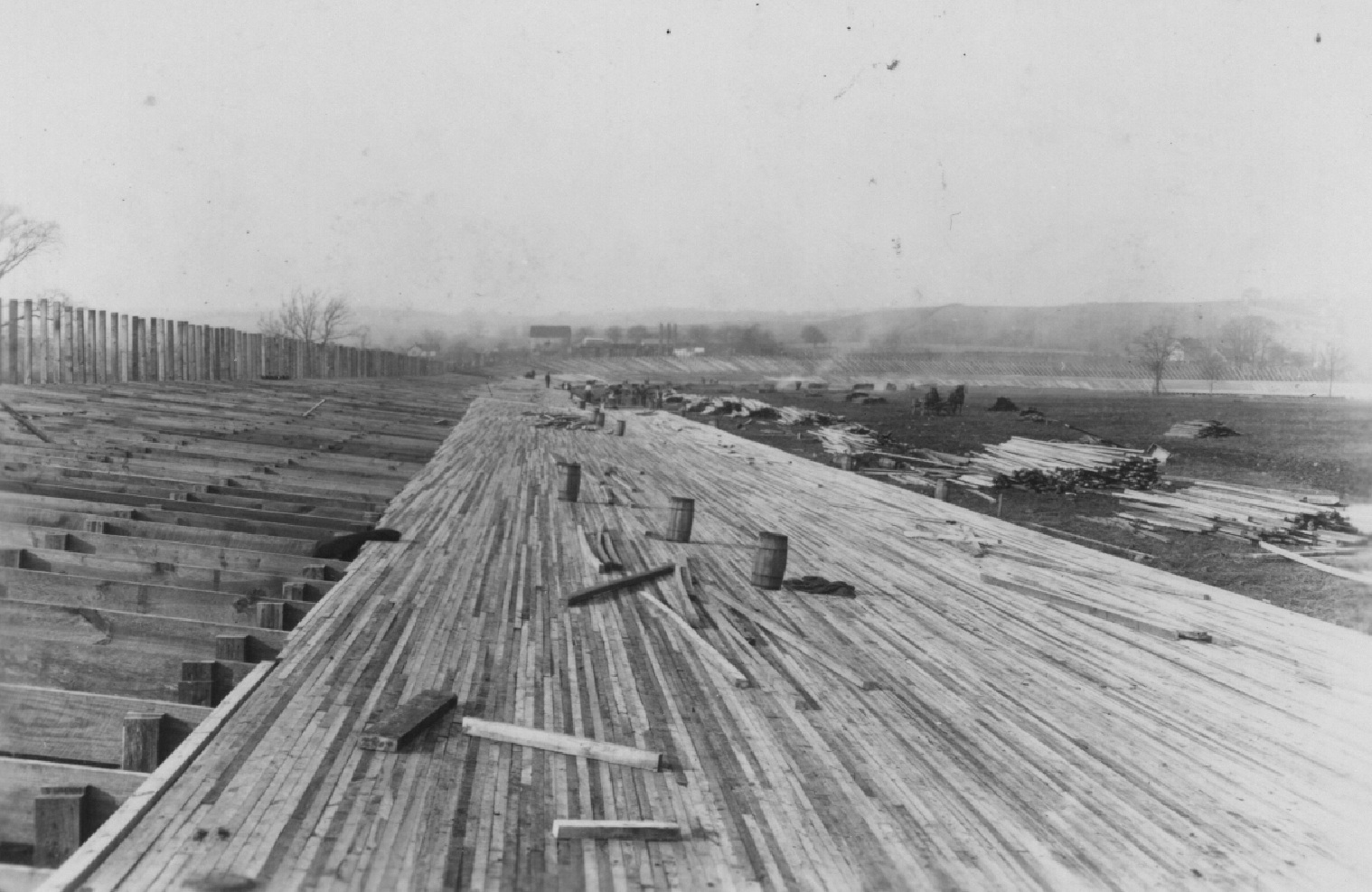
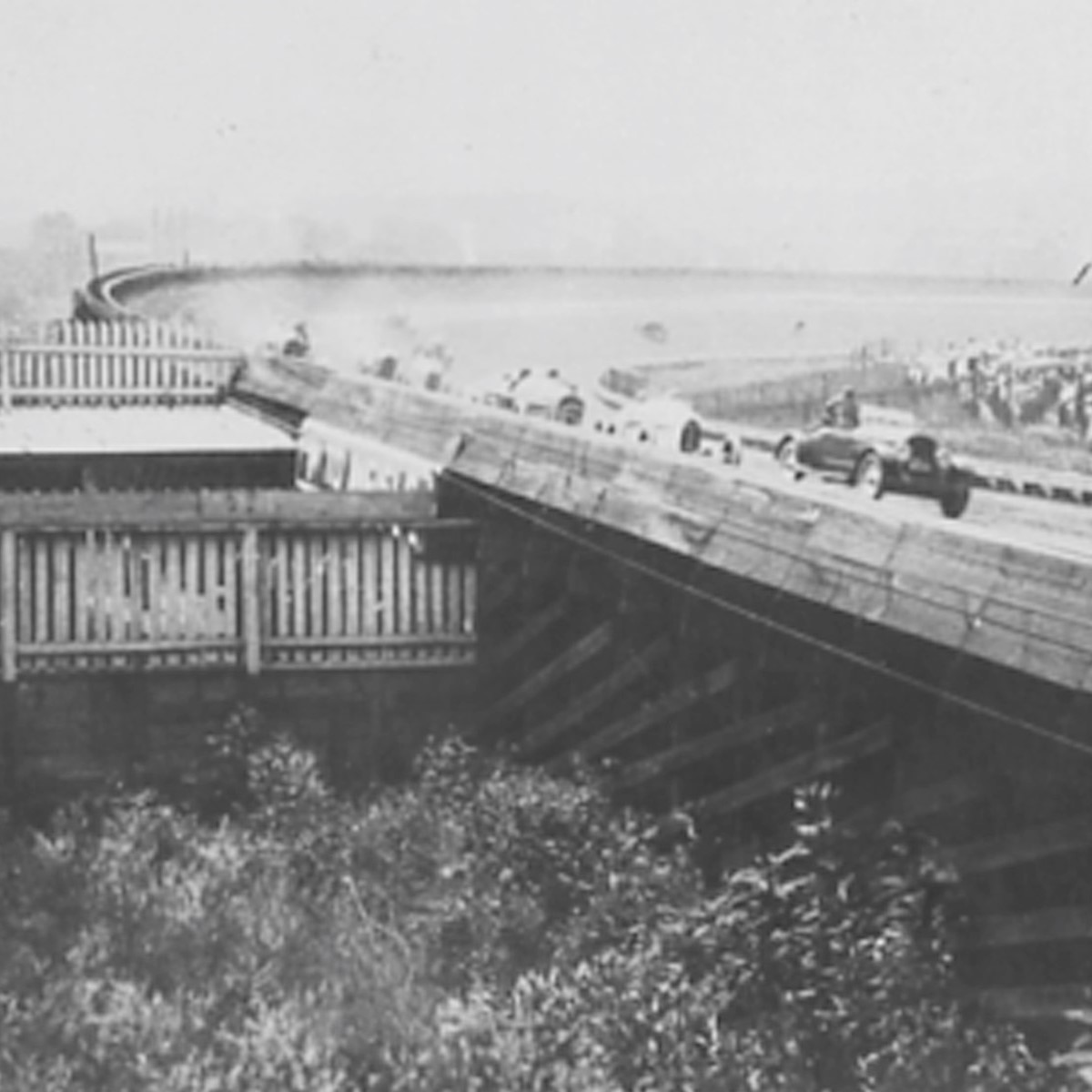
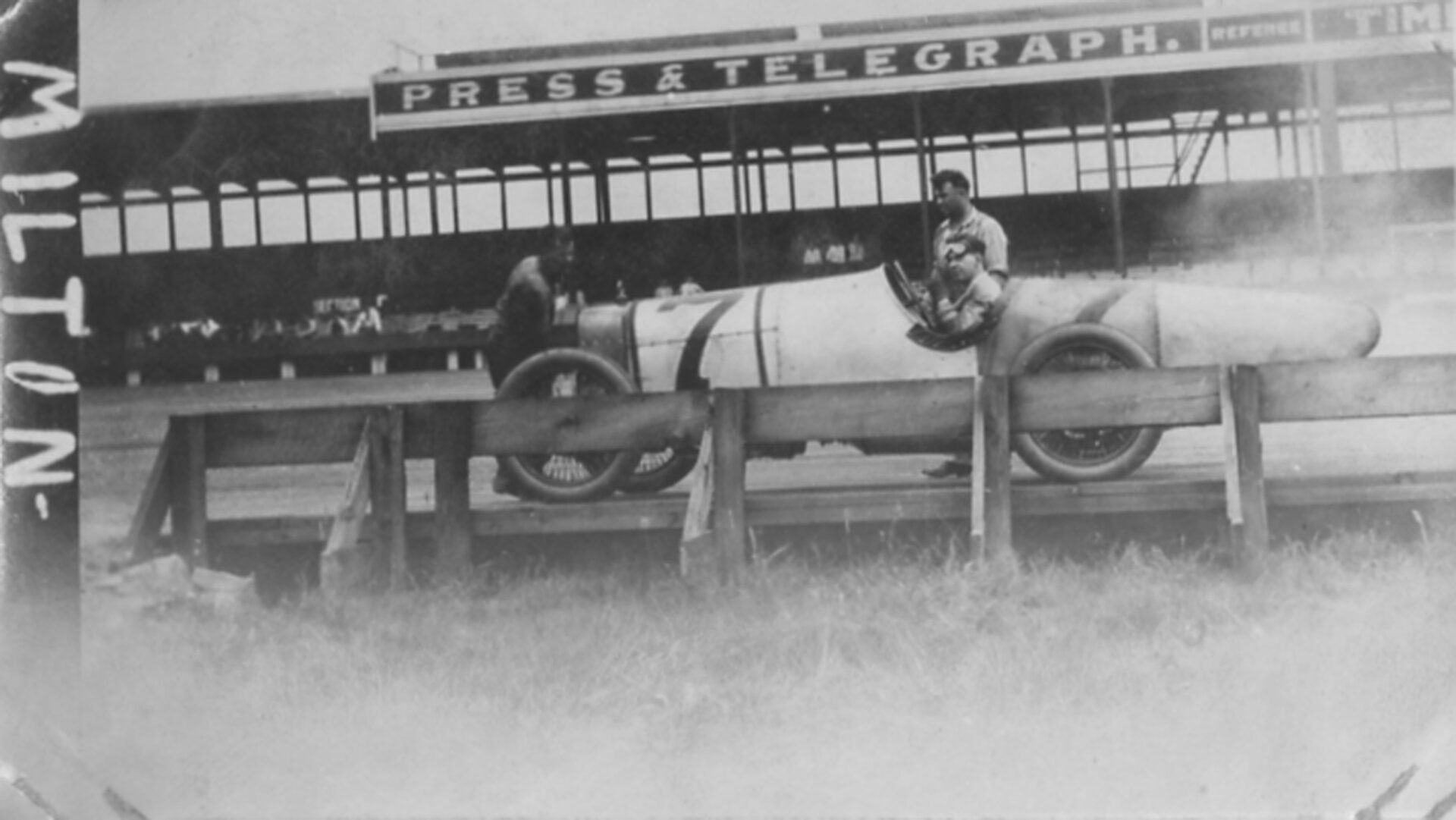
Board tracks, built from millions of feet of hemlock, became the proving grounds for speed. Uniontown’s track was among the most ambitious:
- 34-degree banking — steeper than modern Talladega
- Nearly 4 million square feet of lumber
- Built in just two months
- Funded by wealthy coal and steel barons
- Staffed by 168 teenage boys hammering nails after school
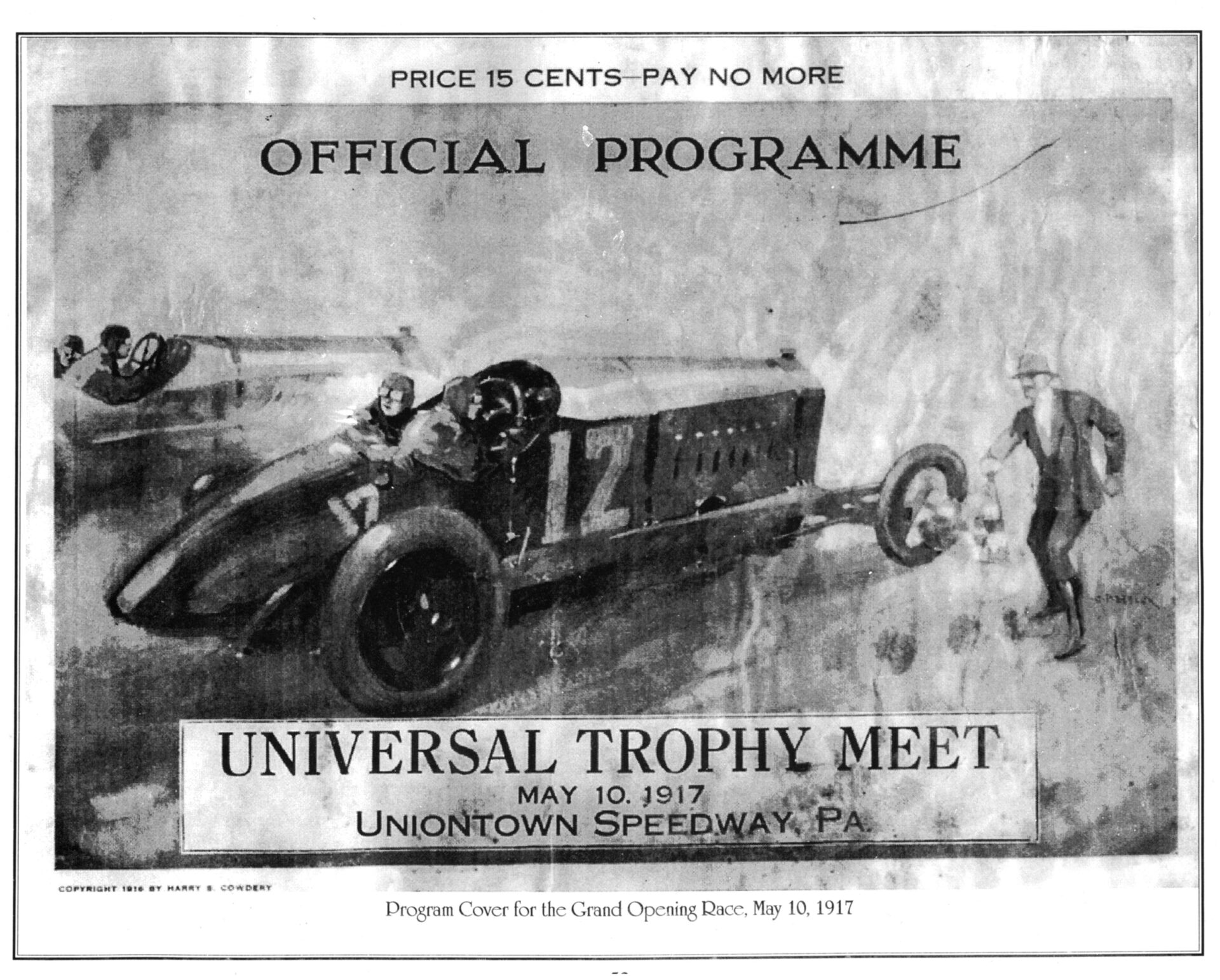
And the crowds came. 50,000 spectators packed the stands — even during World War I, when the Indianapolis 500 shut down. Racing royalty arrived too: Barney Oldfield, Louis Chevrolet, Ralph DePalma, and local hero Charlie Johnson, the “Speed King” himself.
Charlie Johnson: Racer, Folk Hero… and Rum‑Runner
Johnson’s story is the beating heart of McGuinness’ documentary.
A brilliant driver and beloved local figure, Johnson dominated the hill climbs and became president of the Uniontown Speedway. But when Prohibition hit in 1920, everything changed.
His family’s brewery, dairy, and coal operations were shut down. To keep them afloat, Johnson turned to rum‑running – using his Packard “Greyhound” to outrun federal agents on mountain roads he knew better than anyone.
He was jailed repeatedly. He lost his wife. He lost his businesses. And eventually, he fled to Cuba. For decades, locals believed he “ran off with the Speedway money.” McGuinness’ research proved otherwise – revealing a man crushed by Prohibition, not corrupted by it.
The Board Track Era Burns Out
By 1922, the Uniontown Speedway – like most wooden tracks – was splintering, dangerous, and expensive to maintain. Tires filled with wooden shards. Drivers suffered injuries from flying debris. Fires were common. The era ended as quickly as it began.
But the legacy lived on in the racers who moved to Altoona, Beverly Hills, and other tracks – and in the rum‑running culture that would later inspire NASCAR’s moonshine legends.
Despite never having made a film, McGuinness threw herself into the world of documentary production. She learned editing software, gathered archival footage, and recorded voiceovers – including a powerful performance from a local derby promoter who voiced Charlie Johnson.
The result is a 72‑minute documentary blending:
- Rare photographs
- Restored film clips
- Firsthand accounts
- Wartime context
- Automotive milestones
- And the emotional arc of a forgotten American racer
The final 12 minutes feature modern racers and historians reflecting on the Speedway’s significance – a bridge between past and present.
Marci’s mission goes beyond the film. Working with local leaders she is now pursuing: A Uniontown Speedway Trail, a Speedway Museum on Route 40, Educational programs for schools and interactive exhibits for young motorsport fans (like the one seen below).
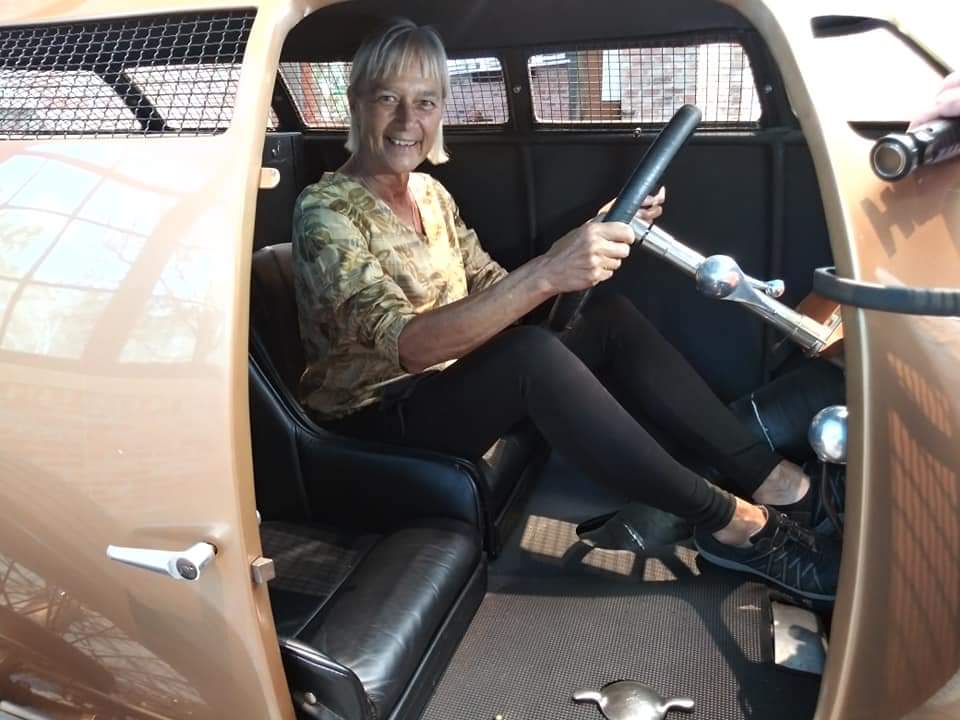
Her hope is simple: Teach people where cars – and American racing culture – really came from. McGuinness encourages anyone curious about their town’s past to: Follow your gut, visit libraries and historical societies, talk to the oldest people you can find, capture stories before they disappear and write about what fascinates you. “Every town has a story,” she says. “You just have to dig…”
Guest Co-Host: Lauren Goodman
In case you missed it... be sure to check out the Break/Fix episode with our co-host.Other Recommended Reads
Reading List








Goodreads

This content has been brought to you in-part by sponsorship through...