


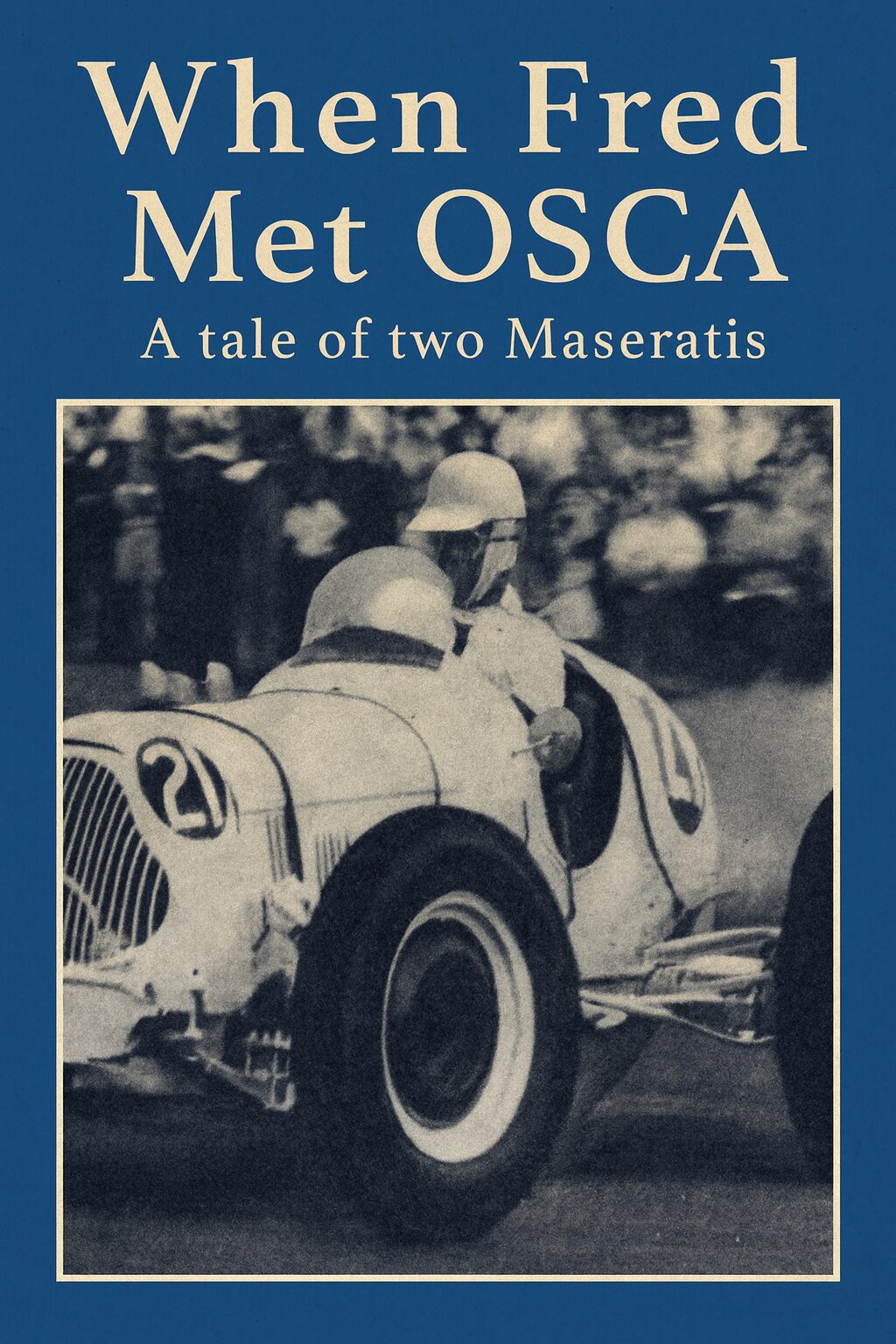
In the annals of motorsports history, some stories lie tucked away, waiting for the right voice to revive them. Trevor Lister’s When Fred Met Osca is one such tale – an intricate study of two ambitious Indianapolis-bound Maserati’s that never quite made it to the Brickyard, but instead found purpose half a world away on the race circuits of New Zealand.
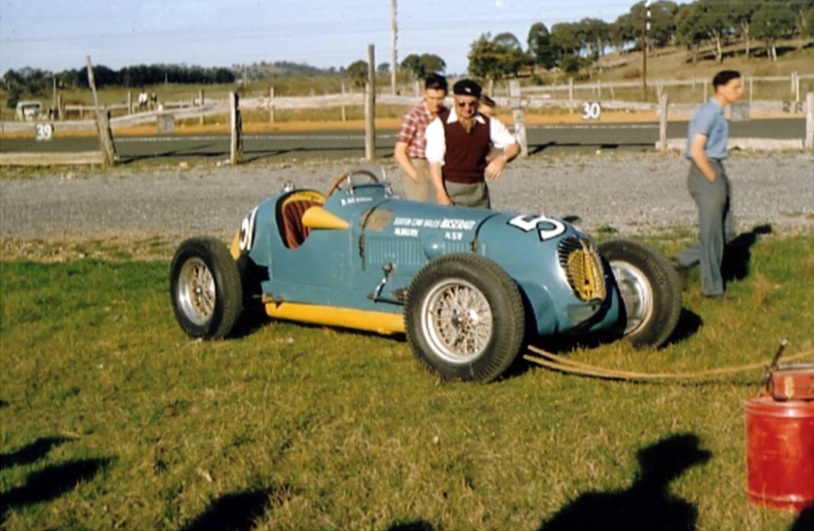
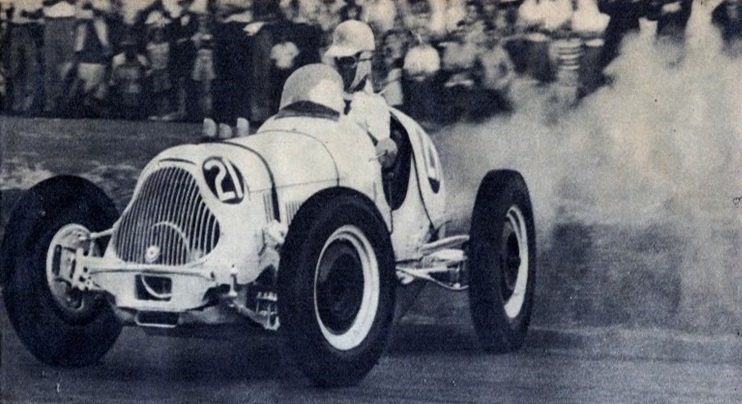
Fred Zambuca wasn’t just any racer – he was a post-war tinkerer, driven by the spirit of Kiwi ingenuity. Starting with surplus vehicles salvaged from his father’s yard, Fred built a racing legacy with unconventional tools: a DeSoto-based special gave way to a 1930s Maserati 6CM, and eventually two Maserati 8CLT machines originally constructed for Indianapolis 1950 but never raced.
Tune in everywhere you stream, download or listen!



Fred’s journey culminated in a daring 1956 trip to Italy, returning with three exotic cars – including the elusive Indy-destined 8CLTs. Though plagued by chronic overheating issues and destined for obscurity, Fred gave them new life, launching his own Scuderia Zambuca on Kiwi soil.
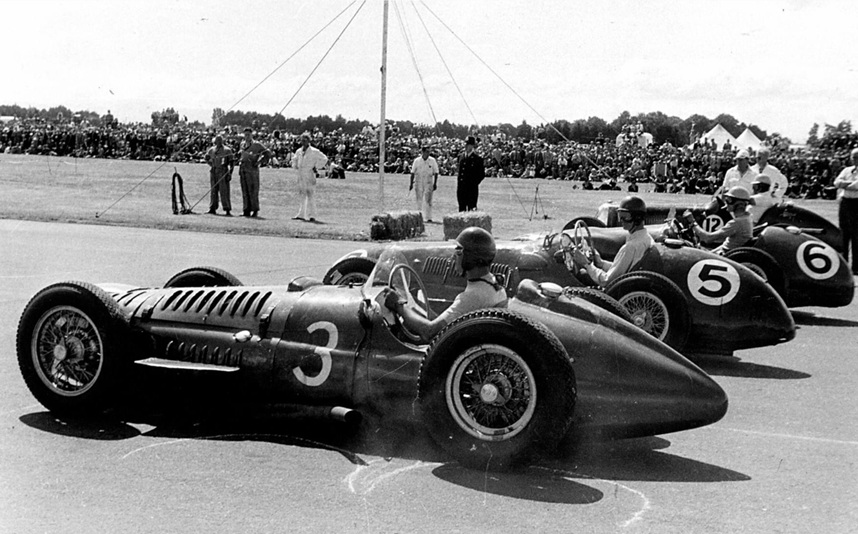
One of the presentation’s most compelling revelations is Maserati’s approach to car identification. Instead of serializing chassis, the factory assigned identities based on engines—creating a unique naming tradition where the engine’s configuration defined the car. Take the 8CTF, for example:
- 8C: Eight cylinders
- TF: Testa Fissa, or fixed cylinder heads
This approach muddled historical records but gave fascinating insight into Maserati’s manufacturing logic. Lister, alongside fellow historian Donald Capps, explores how these conventions complicate our understanding of surviving cars, especially when engines were swapped and re-serialized.
This presentation considers the short competition life of two cars intended to run at Indianapolis in 1950 that ended up in New Zealand six years later.
Spotlight
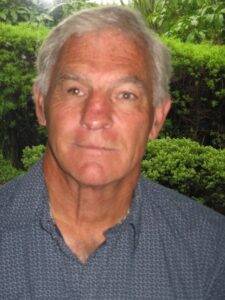
On leaving high school at the end of 1966, Trevor Lister was apprenticed to an engineering company that designed and built all types of materials handling equipment, along with road and farm vehicles. He was employed primarily in the drawing office, along with stints on fabrication and assembly in the workshop.
Lister entered the University of Canterbury on a Public Service Scholarship, graduating with a double degree in Physics and Mechanical Engineering. On graduation he worked in the Ministry of Transport in the setting and administration of Motor Vehicle Safety Standards. This led to a secondment to a national research and development organization where he was responsible for research on a wider range of alternative motor vehicle fuels, and also to an International Consultancy in that area. On completion he returned to his foundational automotive design skills and motorsports hobby. In semi-retirement Lister took up teaching and tutoring pre-apprenticeship students in mathematics, and the science behind automotive engineering. In full retirement he took on the role of Classic Motor Racing Club of New Zealand newsletter editor.
Synopsis
This episode of The Logbook, our History of Motorsports series, delves into the brief racing history of two Maserati IndyCars brought to New Zealand and their identity issues. The presentation by Trevor Lister, narrated by Revel Arroway, follows Fred Zambuca and his family’s racing endeavors post-World War II. Initially racing with a DeSoto Special, Fred eventually acquired and raced two HCLT IndyCars. The episode discusses Fred’s modest racing success, the technical and historical conundrums related to the car engines, and the significant roles these cars played in both New Zealand and international motorsports. Finally, the episode touches on Trevor Lister’s extensive background in automotive design and his contributions to documenting motor racing history.
Follow along using the video version of the Slide Deck from this Presentation
Transcript
Crew Chief Brad: [00:00:00] Breakfix’s History of Motorsports series is brought to you in part by the International Motor Racing Research Center, as well as the Society of Automotive Historians, the Watkins Glen Area Chamber of Commerce, and the Argettsinger family.
Crew Chief Eric: When Fred Met Asuka by Trevor Lister This presentation considers the short competition life of two cars intended to run at Indianapolis in 1950 that ended up in New Zealand six years later.
In 1956, two brothers traveled to Italy intending to purchase a car to race back home. They returned with three, two IndyCars and a 1930s 6CM. The first part of this paper covers the modest racing history of these cars in New Zealand. The second explores an identity policy that popped up while exploring the role of the engines in setting the tipos and individual identities of these cars.
The policy did not set chassis numbers nor even give engine numbers. Rather, it set out to describe the features of the engine as used on a particular car, for instance, as it applied to the [00:01:00] 1938 8CTFs. The eight C part of the description tells us that there are eight cylinder engines and the TF bit that these particular engines had fixed cylinder heads taken together, we get an eight CTF car, but eight CTF is an engine description, not a car one, the conundrum to be explored in this presentation.
On leaving high school at the end of 1966, Trevor Lister was apprenticed to an engineering company that designed and built all types of materials handling equipment, along with road and farm vehicles. He was employed primarily in the drawing office, along with stints on fabrication and assembly in the workshop.
Trevor entered the University of Canterbury on a public service scholarship, graduating with a double degree in physics and mechanical engineering. On graduation, he worked in the Ministry of Transport in setting administration of motor vehicle safety standards. This led to a secondment to a national research and development organization where he was responsible for research on a wider range of alternative motor vehicle fuels and also an international consultancy in that area.
On completion, he returned to his [00:02:00] foundational automotive design skills and motor sports hobby. In semi retirement, Trevor took up teaching and tutoring pre apprenticeship students in mathematics and the science behind automotive engineering. In full retirement, he took on the role of classic motor racing club of New Zealand newsletter editor.
This presentation has been narrated on behalf of Trevor Lister by Revel Arroway from Your Listening to Radio Revel podcast. When
Revel Arroway: Fred Met Aska, Part 1. The Zambuca Family. Fred was the eldest of five brothers. Post World War II, he joined his father’s business trading from a yard beside their family home.
The yard included a large shed that contained war surplus army equipment, including trucks, cars, and motorcycles. When an itch to race came along, the shed contained the wherewithal to do so, in the form of a stripped out DeSoto that gave up its chassis and running gear to become a typical Kiwi special.
In time, it was replaced by [00:03:00] a string of obsolescent Maseratis, an HCM in 1953, and the two HCLT Indianapolis cars mentioned above. These two HCLT cars are the focus of this presentation.
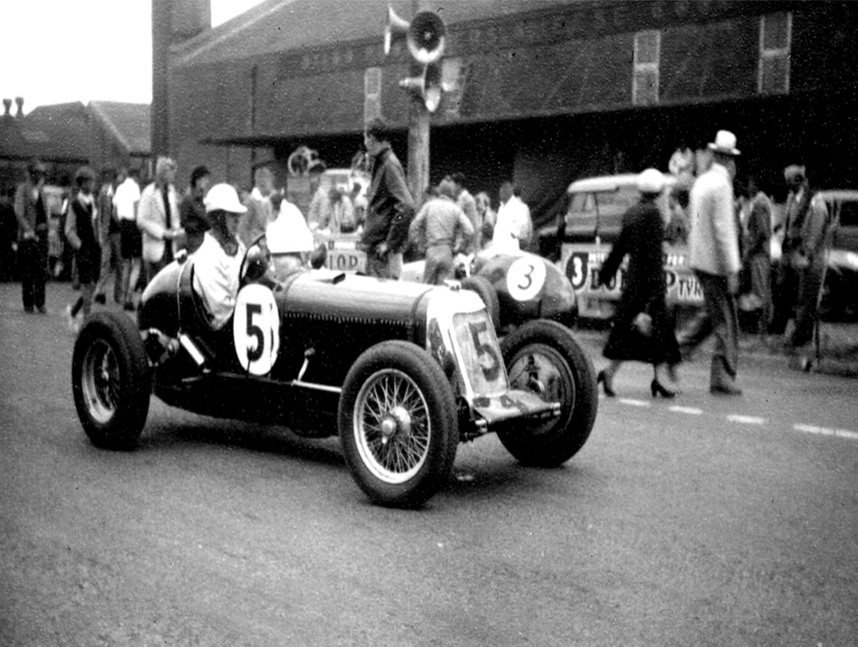
Fred raced from 1950 to 1956 with modest success. The photos show the HCM and the DeSoto Special, caught mid spin with its prominent waterfall grille. Between Fred and its next owner, the DeSoto had a working career from 1951 to 1957. Not bad for a Kiwi Special. But by 1953, Fred was looking for something a little faster.
He had hoped to buy a New Zealand domiciled Alfa Romero Tipo B, but the car went elsewhere. So it wasn’t until the following year that he parted [00:04:00] company with the DeSoto, upgrading to a Maserati HCM, imported from England. Towards the end of 1954, Fred ran the HCM in the Australian Grand Prix, this on a road not previously used for racing.
A period race report described the HCM as being, quote, almost uncontrollable on the bumpy Queensland country back roads. Staying a little longer in Australia, Fred fared better on a smoother surface, setting a new Australian speed record of 158 miles per hour, 254 kilometers per hour, in the 8CM. Back in New Zealand, and now much better acquainted with the car, Fred qualified on the second row of the grid for the 1955 New Zealand Grand Prix.
A spin into the hay bales early on compromised his race, but he came home a creditable second. 7th, and the second New Zealander home, [00:05:00] when Fred met Oscar Part Two, Change in the Wind. Change was already at hand, with the local rear engine Coopers now showing an ability to compete with the older, but more powerful pre war machines.
More Coopers were on the way, but Fred chose a different path for his 1956 season. Where others went small, he went big, going for a more powerful version of the older breed. The HCM went to a new owner, and Fred went to Italy. He returned with three cars, and a plan to both race the cars himself, and to hire them out to others.
A Scuderia Zambuca, if you will. What was on offer in Italy was a pre war 6CM. and the two eight CLTs that had been built for use at Indianapolis in 1950, but couldn’t be [00:06:00] completed in time for that race. Fred and one of his brothers found them in a dark corner of the OSCA works while looking for suitable cars for their Scuderia.
Other accounts say the cars were at the Maserati factory in Modena. Maybe, maybe not. The Asuka brand was a path of retreat for the Maserati brothers following the expiration of their 10 year service agreement with the Orsi family. There are instances where the Maserati brothers took on upgrades and repairs to orphaned Maseratis, Bira’s 4.
5 liter Asuka being an example, but whichever workshop they were in Fred purchased both cars. These two orphaned cars have been dubbed as 8 C L T. They were commissioned by Francesco Roll for an attempt at the Indy 500 in 1950. However, the nominated driver, Farina, decided to focus [00:07:00] on the upcoming Formula One season instead.
It didn’t help that the cars were serial overheaters that couldn’t be modified and repaired in time for shipment to Indy. Accordingly, the cars never went beyond their 1950 test sessions, and still hadn’t turned a wheel in anger the five years since. So, when Fred took the cars on, he was taking a big gamble.
Their first race outing ever was at the January 1956 New Zealand Grand Prix, one for Fred, and the second for the Scuderia. The second car failed to qualify, with Fred on the third row of the grid. He lay 8th halfway through, at which point his car demonstrated that the problems that had prevented it running at Indianapolis were still in play.
Fred trailed home 12th, with the new owner of his older HCM claiming 8th place position. The overheating problem was handled by an [00:08:00] instruction to the Scuderia drivers to not exceed 4, 000 rpm. How very apt. The cars could easily run to 6500 RPM, at which point valve bounce would set in. Both cars still exist, one in the United States and the other in New Zealand.
Sadly, Fred Zambuca raced the cars only once, and then only one of them. In May 1956, he suffered a brain hemorrhage and died. Both cars were sold to Frank Schuter via Fred’s estate. One of them, car 3036, raced on, courtesy of Frank who acted as custodian for the cars, overhauling them both while squeezing in a half dozen or so of race entries with car 3036.
The last recorded race entry for car 3036 was in the 1961 New Zealand Grand Prix, after which it found a new owner in England, and is now in the United States. In due time, the second car, [00:09:00] 3037, found its way into Southwards Motor Museum, where it has rested since 1963, when Fred met Oskar, Part III, the 8 CTF family.
The Orsi family enabled the Maserati family Grand Prix race car development work to continue, resulting in the 1938 1939 HCTF, the eight cylinder, fixed head engine known as the HCTF, Was first named by the Orsi family who kept this arrangement throughout their manufacturer with engines identified as eight CTFs in 1938.
The HC bit tells us that these were eight cylinder cars and the TF bit tells us that their engines had cylinder heads fixed Test. The visa taken together, we get an eight [00:10:00] CTF car. Remember though, eight CTF is an engine description. Not a car description. First emerging in 1938, the HCTFs were well capable of taking on the German teams in terms of speed, but were unreliable when raced.
The first of them made its race debut in Tripoli in May 1938, and from that point on, this engine family, and its later progeny, can be split into three subgroups. Uh, keep in mind that the existing Formula One teams had been put on notice that from 1947 onwards, supercharged cars would be restricted to no more than 1, 500 cc, a stricture that essentially finished the eight CTF racing careers in Europe.
Little wonder, then, that a number of them ended up in the Americas, or elsewhere. The early eight CTFs, subgroup [00:11:00] one, three off. Two cars ran in Europe in 38, commonly identified as 30 30 and 30 31. Note that it was standard Maserati practice that engines set the identity of the cars into which they were fitted.
As noted earlier, the numbers in the letters of the eight CTFs tell us that we have cars carrying 30 31. Eight cylinder engines with integral cylinder heads, testa fissa, or fixed heads. So, 3030 and 3031 are, strictly speaking, engine numbers, not chassis numbers. Also note that the C, the F, and the T all relate to specific engine features, not chassis or running gear features.
The first two HCTFs found their way to Indianapolis in 1940 and stayed there for many a year. [00:12:00] Car 3032 had managed this trick a little earlier, but had been found on delivery to have cracked cylinder blocks. A replacement engine was provided, held to be engine 3033. If that be true, then we may have an identity point to explore.
The HCLs, subgroup 2, two off. The cars that went from Italy to Indianapolis in 1940 included an HCL driven by Raul Rigante, on his way home to Argentina. This car was identified as the Transcripts provided by Transcription Outsourcing, LLC. just in time to go into wartime storage. It later emerged in the hands of [00:13:00] Pascual Puopolo in the post war Temporada races from 1946 to 1952.
As an aside, Pascual was one of Fangio’s companions on the Auto Club of Argentina mission to the USA and Europe in 1949. A similar car, identified as the 3035 was entered by Scuderia Milano for Biloresi to run at Indianapolis, with some success in 1946. Returning to Italy, it later turned up driven by either Farina or Villoresi, or both, accounts vary, in the 1948 Temporada races.
In his 1961 autobiography, Fangio’s account of who drove what and where in 1948 places Villoresi in a Quote, 1500 cc, four cylinder Maserati and Farina in a quote, three liter four CLT. This firsthand [00:14:00] account places farina in the HCL and REI in a four CL. It also puts a fly in the ointment by quoting the T bit as part of the description for this car.
T for tubular. But again, Maserati practice was that engine numbers determined the identity of the car they were placed in, and the chassis number was the same as that of the engine. All in all, there is no ground for calling either of these cars anything other than HCTFs, as they have all the distinguishing engine features of the earlier cars.
The 1950 HCLTs, subgroup 3, Our two target cars make up the last group. They were built to run at Indianapolis in 1950, and intended to be driven by Farina and Roll, these two looking to take advantage of a new arrangement in Formula One by [00:15:00] which drivers placing at Indy also qualified for World Championship points.
But, these cars became no shows when overheating problems were encountered while testing the cars in Italy. Troubles that couldn’t be rectified in time for the cars to make the trip to the USA, after which they were tucked away either in the Maserati or Oscar workshops, accounts vary. There they stayed until Fred Zambuca and his brother took them back to New Zealand in early 1956.
They made their first ever race appearance in the 1956 New Zealand Grand Prix, identified as 3036 and 3037. These two cars were the final iteration of the underlying 8CTF design. Their engines were built from two 4CLT units end on end, with fixed cylinder heads and four valves per cylinder, this time in a scaled up 4CL chassis with a dose of extra wheelbase to hold it all in.
[00:16:00] Hence, 8CLT describes the New Zealand cars. Here again, as they have all of the distinguishing engine features of the earlier cars, There is no ground for calling these cars anything other than HCTFs.
Postscripts. Fun times following engines. A few years ago, Trevor Lister and Donald Capps took a good hard look at the processes used at Maserati when identifying their race cars. This work was directed specifically at the 1950s Maserati 250F Grand Prix cars, but their findings also held good when applied to other Tipos, including Maserati, that is, 1928.
Put simply, the cars were identified according to the engines that went into them, not their chassis identification. Further, when a car received a new or replacement engine, the car was re identified according to the number of the [00:17:00] replacement engine, not the original engine. engine. Trevor and Don’s work on the 250Fs is available on request.
It then occurred to them that the car identifications quoted in the available histories were as much the gift of the commentators as of the factory that made them. Below is a straightforward example of this, illustrating what happened at Maserati when the identification tags were handed out.
Postscript 1, a bit of calibration. In 1934, Maserati began manufacture of a new design of six cylinder race cars. These were assembled on the existing chassis of the 8CM. If the chassis number was set in the car ID, then these new hybrid cars would carry identities in the 8CM sequence, but not so. The six cylinder engines in these cars set the identity of these cars, not their [00:18:00] brand new 8CM chassis.
These days, we call these cars 6CMs, that is, six cylinder engines. Monopostos. A caution. The 6CMs referenced above had engines quite different in character from those of the 8CMs from whence they got their chassis. That is, they had six cylinders rather than eight and a displacement beginning at 3. 3 liters that eventually reached 3.
7 liters. Despite this, they still share the engine numbering sequence of the earlier 8CM 3. 3s. Stretch the approximation a little and consider that 3. 3 and 3. 7 liters are still less than 4 liters. So, the 3. 0 bit, as the first two digits of the engine number, is not compromised. Postscript 2. This table follows the 3.
0 liter 30xx sequence of engines from 1930s [00:19:00] onwards, beginning with the HCMs of 1933. These engine numbers start at 30 05. The 30 bit tells us that we are looking at a 3 liter engine, and the 05 bit denotes that this is indeed the 5th engine of that size ever made by Maserati. The table below starts in 1933, and ends with the introduction of the 300S sports cars in 1955.
This is not the end of the 30XX series of engines. In 1955, the 300S sports cars appeared in the lists, bringing their engine stream with them, which is not surprising, given the five year gap between the end of the 8CLs and the rise of the 300S. What is surprising is that there is a 14 engine gap in the engine numbering sequence between these two streams of three liter engines.
That is a lot of standalone or replacement engines. Any help solving this [00:20:00] mystery would be appreciated. Postscript three. These photos show José Freulein González racing an Argentine Mecánica Nacionale car at about the same time that Fred was finding his feet with the DeSoto Special in New Zealand.
Half a world apart, yet the resemblance between the two cars is remarkable. A situation that often occurs when digging into Argentine and Kiwi race history, a topic perhaps for next year’s symposium.
Crew Chief Eric: This episode is brought to you in part by the International Motor Racing Research Center. Its charter is to collect, share, and preserve the history of motorsports, spanning continents, eras, and race series.
The center’s collection embodies the speed, drama, and camaraderie of amateur and professional motor racing throughout the world. The Center welcomes serious researchers and casual fans alike to share stories of race drivers, race series, and race cars captured on their shelves and [00:21:00] walls and brought to life through a regular calendar of public lectures and special events.
To learn more about the Center, visit www. racingarchives. org. This episode is also brought to you by the Society of Automotive Historians. They encourage research into any aspect of automotive history. The SAH actively supports the compilation and preservation of papers. Organizational records, print ephemera and images to safeguard, as well as to broaden and deepen the understanding of motorized wheeled land transportation through the modern age and into the future.
For more information about the SAH, visit www. autohistory. org.
We hope you enjoyed another awesome episode of Brake Fix Podcast, brought to you by Grand Touring Motorsports. If you’d like to be a guest on the show or get involved, be sure to follow us on all social media platforms at GrandTouringMotorsports. And if you’d like to learn more about the content of this episode, be sure to check out the follow on [00:22:00] article at GTMotorsports.
org. We remain a commercial free and no annual fees organization through our sponsors, but also through the generous support of our fans, families, and friends through Patreon. For as little as 2. 50 a month, you can get access to more behind the scenes action, additional Pit Stop minisodes, and other VIP goodies.
As well as keeping our team of creators fed on their strict diet of Fig Newtons, Gumby Bears, and Monster. So consider signing up for Patreon today at www. patreon. com forward slash GT Motorsports. And remember, without you, none of this would be possible.
Highlights
Skip ahead if you must… Here’s the highlights from this episode you might be most interested in and their corresponding time stamps.
- 00:00 When Fred Met Asuka: The Journey Begins
- 01:18 Trevor Lister’s Background
- 02:23 Fred Zambuca’s Racing Career
- 05:31 The 1956 New Zealand Grand Prix
- 09:16 The 8CTF Family and Engine Identity
- 16:17 Postscripts and Reflections
- 20:34 Closing Remarks and Credits
Livestream
Bonus Content
Special Thanks to Revel Arroway
This episode was narrated on behalf of Trevor Lister by Revel Arroway from You’re Listening to Radio Revel podcast. In Season 5 of Revel’s show, he has created a new series called Keyhole Witness. He looks for inspiration in mysterious, unsolved, sometimes conspiracy-ridden urban-myth-type events and made up stories about them. Sometimes creating a world that explains the unexplained, sometimes revealing, thanks to his research, other slants or aspects of the story than that which is repeated again and again across the Internet. Revel is a podcaster, writer, artist and is open for additional voice acting engagements upon request.
Tune in everywhere you stream, download or listen!
Learn More
 If you enjoyed this History of Motorsports Series episode, please go to Apple Podcasts and leave us a review. That would help us beat the algorithms and help spread the enthusiasm to others. Subscribe to Break/Fix using your favorite Podcast App:
Consider becoming a Patreon VIP and get behind the scenes content and schwag from the Motoring Podcast Network
Do you like what you've seen, heard and read? - Don't forget, GTM is fueled by volunteers and remains a no-annual-fee organization, but we still need help to pay to keep the lights on... For as little as $2.50/month you can help us keep the momentum going so we can continue to record, write, edit and broadcast your favorite content. Support GTM today! or make a One Time Donation.
Fred’s bold venture with the 8CLTs came to an abrupt end—he raced only once before suffering a fatal brain hemorrhage in May 1956. The cars, numbered 3036 and 3037, passed into new hands, eventually split between a private owner in the U.S. and a museum collection in New Zealand.
But Trevor Lister’s presentation isn’t just about the cars—it’s about the characters who moved them across continents, and the bureaucratic quirks that shaped their identities. The 8CLTs were more than machines; they were puzzles, historical artifacts wrapped in engine codes and racer dreams.
This episode is sponsored in part by: The International Motor Racing Research Center (IMRRC), The Society of Automotive Historians (SAH), The Watkins Glen Area Chamber of Commerce, and the Argetsinger Family – and was recorded in front of a live studio audience.
Other episodes you might enjoy
Michael R. Argetsinger Symposium on International Motor Racing History
 The International Motor Racing Research Center (IMRRC), partnering with the Society of Automotive Historians (SAH), presents the annual Michael R. Argetsinger Symposium on International Motor Racing History. The Symposium established itself as a unique and respected scholarly forum and has gained a growing audience of students and enthusiasts. It provides an opportunity for scholars, researchers and writers to present their work related to the history of automotive competition and the cultural impact of motor racing. Papers are presented by faculty members, graduate students and independent researchers.The history of international automotive competition falls within several realms, all of which are welcomed as topics for presentations, including, but not limited to: sports history, cultural studies, public history, political history, the history of technology, sports geography and gender studies, as well as archival studies.
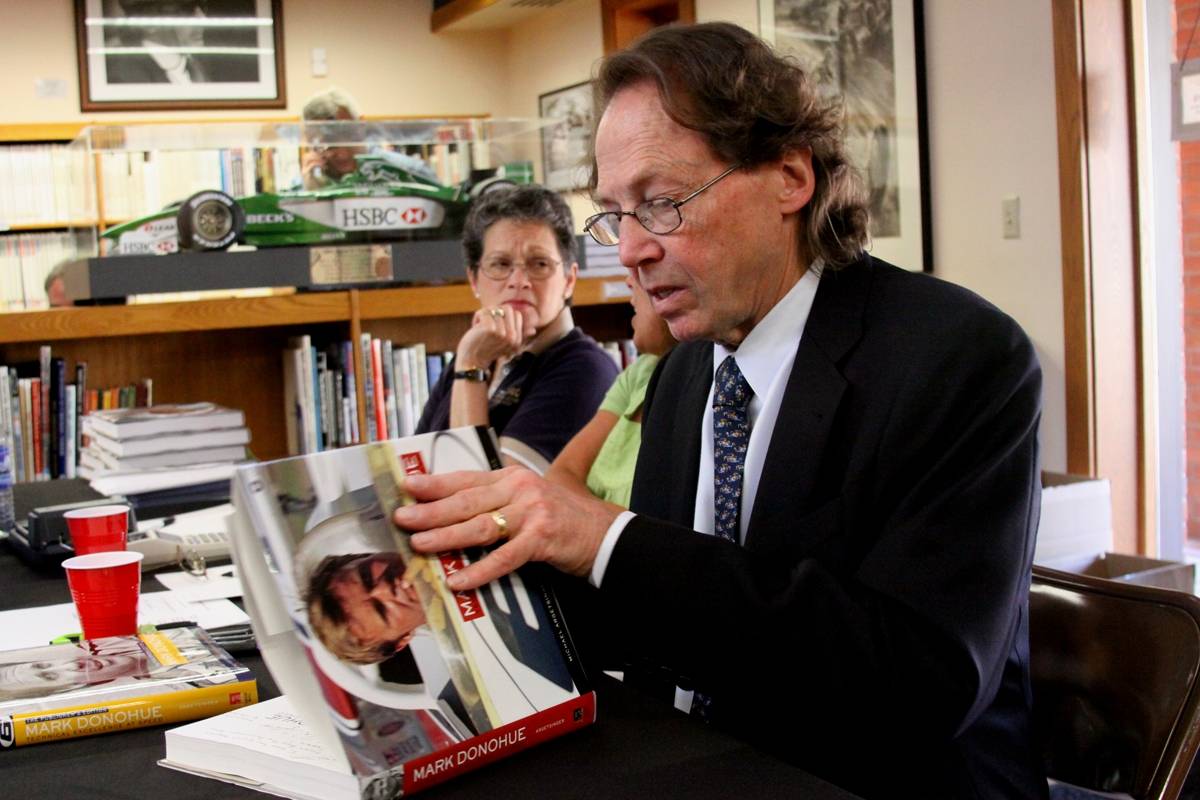 The symposium is named in honor of Michael R. Argetsinger (1944-2015), an award-winning motorsports author and longtime member of the Center's Governing Council. Michael's work on motorsports includes:
- Walt Hansgen: His Life and the History of Post-war American Road Racing (2006)
- Mark Donohue: Technical Excellence at Speed (2009)
- Formula One at Watkins Glen: 20 Years of the United States Grand Prix, 1961-1980 (2011)
- An American Racer: Bobby Marshman and the Indianapolis 500 (2019)
This content has been brought to you in-part by support through...















 8CTF and its journey from Indianapolis to New Zealand in 1950.)