
spot_img
Home Blog Page 13

F150 Race Truck up for Auction!

0

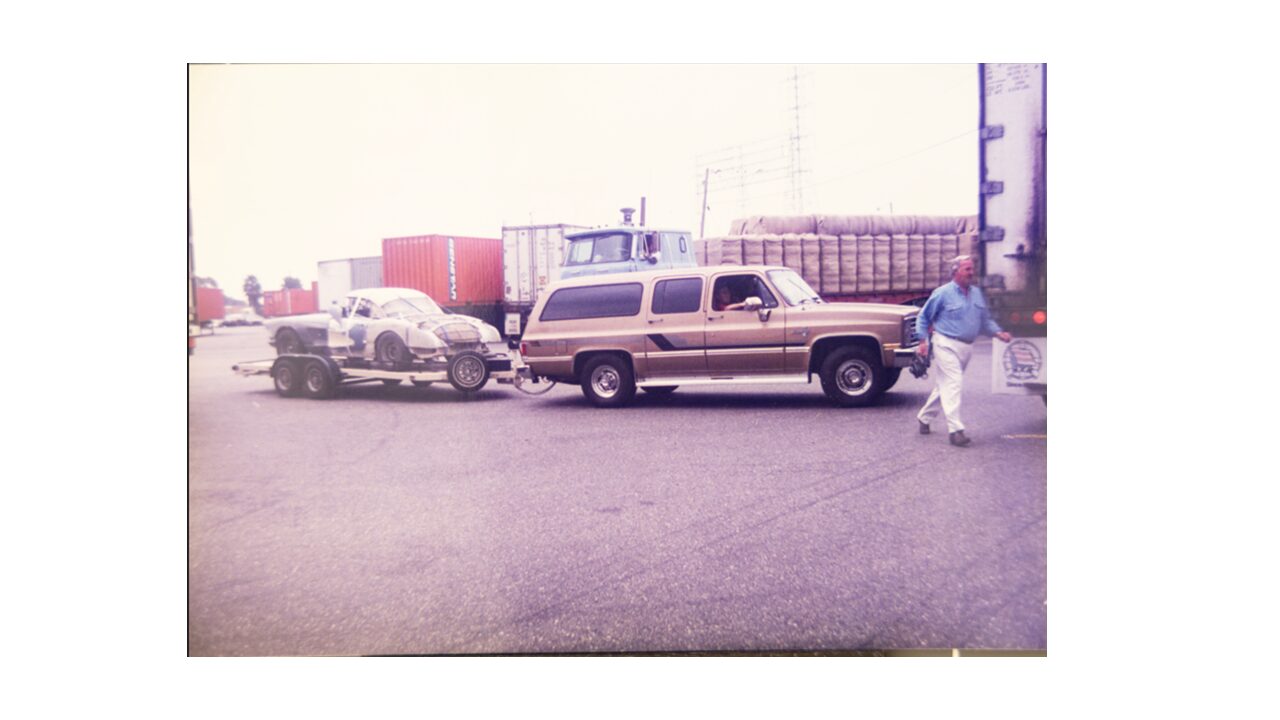
This iconic, original 1990’s fully customized Ford F-150 boasts a 500 horsepower 5.0-liter V8 engine built by Roush/McLaren.  The livery is eye catching in PPG custom painted purple, blue, green and yellow.

Additional cool details include 4 Taurus SHO leather bucket seats- two in the cab, two rear facing bed seats, 2 race headsets, custom bed cover, integrated rollbar, and orange flashing roof lights. The odometer reads approximately 5800 miles. It is unrestored and has a small nick and some slight cracks in the body but is still in great shape.  It is currently in storage loaded onto an open car trailer that can/cannot be included in the auction if preferred. This truck is no doubt as unique and special as our loved ones living with Spina Bifida!

The truck will be going up for sale at MECUM Kissimmee on January 7-19, 2025. The proceeds from the sale of this Indy Pace Truck will support individuals living with Spina Bifida, the most common permanently disabling birth defect. For additional information reach out to Bill Warner at billwarner@bwracing.net


Thanks for stopping by!
Don Weberg - Editor-Publisher-Founder, Garage Style Magazine

One Track Mind: Bob Gillespie’s Living Legacy in Paint

Motorsports history isn’t just written in lap times and trophies – it’s painted in vivid strokes by artists who capture the soul of racing. Few embody this better than Bob Gillespie, whose canvases and murals have become fixtures of Watkins Glen and beyond. His story is one of passion, persistence, and a lifelong pursuit of turning speed into art.

Photo courtesy of Bob Gillespie, www.glenspeed.art

Bob’s fascination with design began at age five, sketching airplanes inspired by his father, a pilot and aeronautical engineer. But one trip to Watkins Glen changed everything. The sleek forms of Jaguars, Lotuses, and Coopers became his new obsession – rolling sculptures that reminded him of aircraft, but with the visceral thrill of racing.

Tune in everywhere you stream, download or listen!

Listen on Apple
Listen on YouTube
Listen on Spotify

Though he initially pursued mechanical engineering, Bob realized his true calling was art. He transferred to study painting and photography, eventually earning a master’s degree. Yet cars remained his muse, pulling him back to the track and into a lifelong dialogue between motorsport and artistry.

Spotlight

Synopsis

This Break/Fix explores the artistic journey of Bob Gillespie, an artist with a deep passion for motorsports. We dive into Gillespie’s early life, his inspiration from car races, and how he seamlessly blended his love for art and automobiles. Gillespie shares his experiences of painting murals, his process of choosing subjects, and the technical nuances of his preferred medium, acrylic paints. The conversation also touches on his recent self-published book, ‘One Track Mind,’ which chronicles his artistic and motorsport journey. The episode underscores Gillespie’s belief in the shared state of mind between artists and race drivers, highlighting his dedication to preserving motorsports history through his art.

  • Last time we got together we were chatting about the genesis of the GGP and in that episode you mentioned some of your personal background, but this time we’re going to take a deeper dive into Bob Gillespie the artist, rather than Bob the environmentalist 😉 
  • Which came first, the artist or the petrol-head?
  • There’s so many facets to Art and Painting – How did you decide to pair the two together? What was the inspiration? Was it a race/event, a car, a photograph you saw?  
  • There’s all sorts of different styles of Art – what’s your chosen style/medium, and why?
  • Let’s talk about the Murals you’ve painted, you’re a large part of the Watkins Glen community. Why large murals? Which was the first (and why?) Talk a little about the latest one (also the cover of the book) found at the Chamber of Commerce 
  • What inspired you to publish a book about your art? What was that process like?
  • There’s a new trend of “photo realistic” paintings popping up all over social media; what are your thoughts on these types of pieces? 
  • Acquiring Bob Gillespie art. Do you work on custom commissions? Where can someone purchase one of your pieces? 
  • What’s next for Bob Gillespie? Upcoming pieces, projects or collaborations you can share? Events you’re going to be at in 2025 where people could see you work, or meet you?

Transcript

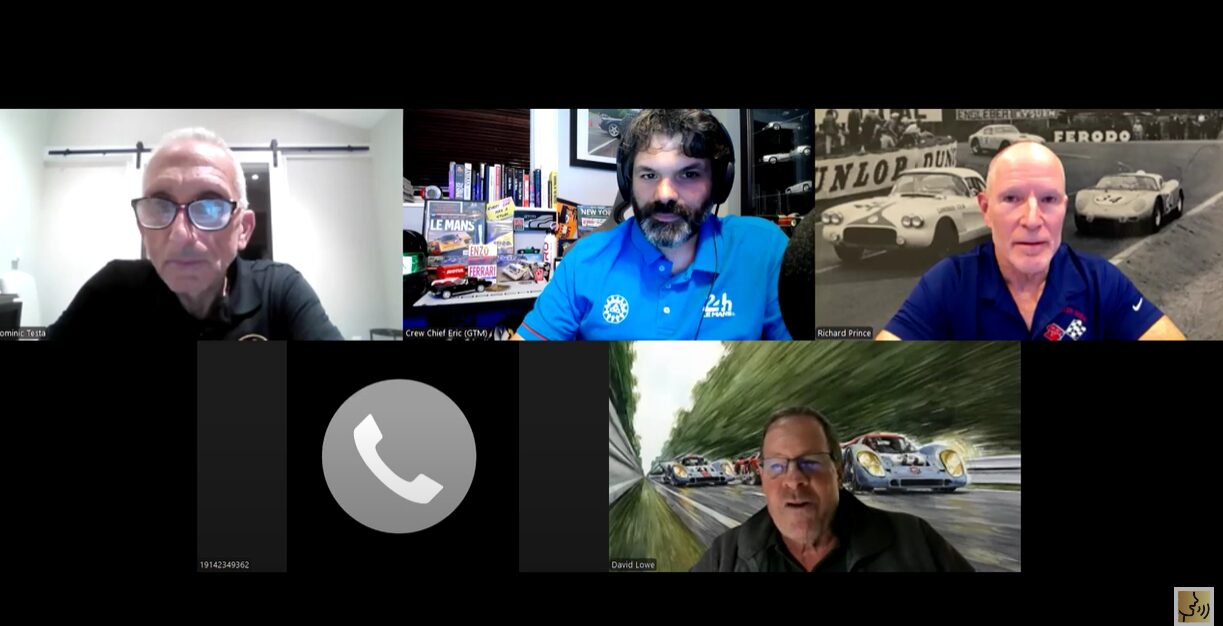
Crew Chief Brad: [00:00:00] BreakFix podcast is all about capturing the living history of people from all over the autosphere, from wrench turners and racers to artists, authors, designers, and everything in between. Our goal is to inspire a new generation of petrolheads that wonder what’s How did they get that job or become that person?

The road to success is paved by all of us because everyone has a story.

Crew Chief Eric: For our guest, there has always been a joy to drawing and painting. His conscious ego fades into almost selfless, relaxed concentration. Time dissolves and the decisions become intuitive and not reasoned. Kurt Vonnegut put it like this, to practice any art, how well or how badly, is a way to make your soul grow.

So do it. And with that, Bob Gillespie considers himself very fortunate to have witnessed more than his fair share of history at the racetrack. He never thought his childhood heroes would someday have his art hanging on their walls. [00:01:00] And he’s here to share his story and how he got the chance to honor them while exploring ways to capture their sport in paint.

And with that, let’s welcome Bob back to the show. It’s a break fix. Hello, Eric. Hey, Bob. So the last time we got together, you were here chatting about the genesis of the Green Grand Prix. And in that episode, you mentioned some of your personal background, but this time we’re going to take a deeper dive into the who, what, when, and where of Bob Gillespie, the artist rather than Bob, the environmentalist.

So let’s start off talking about how all this came to be, which came first, the artist or the petrol head?

Bob Gillespie: I would say both of them came first at the age of about five years old. My dad was a pilot and I was crazy about airplanes. And then when I went to my, uh, first Watkins Glen race, All my airplane drawings switched to, uh, D jaguars and lotuses and all kinds of exotically shaped, streamlined, [00:02:00] rolling sculptures that reminded me of airplanes.

They were fast. All that excitement was something that just was already growing in me and already nurtured by my dad. I wanted to design cars. Dad was an aeronautical engineer. He came home from World War II, finished his degree and took over the family milk business, but he was a born engineer. He wanted his sons to be interested in all kinds of mechanical things.

And I was supposedly the smartest, one of the four brothers. I don’t know how true that is, but I wanted to design cars and I guess that was good enough. And so, um, I. Decided, Hey, I want to apply to General Motors Fisher Body Institute. Well, I had an interview and I was rejected and I thought, Oh, well, my fallback is mechanical engineering.

So I studied mechanical engineering for three years, took the calculus, took the physics, all the numbers, all the formulas and all [00:03:00] that, and realized, Hey. I thought I wanted to draw cars, and there was nobody there that was designing cars. Well, what do I really like to do? I like to draw, so I took one course at Potsdam State, which was just down the street from Clarkson College in the north country of New York State, and I knew I had to switch.

All my credits, surprisingly, were transferable. I majored in art and photography, got my degree in art. For two years, went back and got my master’s degree in fine arts, painting and photography at Oswego state college in upstate New York. But I had always drawn cars. I’ve done a lot of abstract paintings.

I’ve done many other kinds of artwork. But my love was always cars. I just kept coming back to that. I was fortunate to get a job just 30 miles up the road from Watkins Glen. And we went to the races every chance I could. I took photographs. I did drawings from my photographs. Started doing [00:04:00] paintings, then the research center in Watkins Glen started up in 1998.

That was five years before I retired from teaching. And I thought, well, if I’m ever going to really jump into this, now’s the time to do it. So, I met a lot of people at Watkins Glen. Cameron Argettsinger, Bill Green, the historian, a number of the original drivers that were still around. They started saying, well, when are you going to do a painting of me?

And so I said, get in line. This is going to be fun. I’ve done about 130 paintings of the races at Watkins Glen and some other locations too, but primarily American road racing and Watkins Glen history.

Crew Chief Eric: When was your first. First race, because there’s three different versions of Watkins Glen. And in your book, you reflect a lot on the early, early days, the road course around the gorge.

And then you talk about Watkins Glen, the interim circuit, and then we have the Grand Prix circuit. So when did you get your first taste of the Glen? Was it in those early street racing days?

Bob Gillespie: No, I [00:05:00] missed those. I saw my first race in 1960. It was the year before the first United States Grand Prix at Watkins Glen.

It was a Formula Libra. And so we had D Type Jaguars, Sterling Moss, and Rob Walker’s Formula One Lotus 18, I think it was. There were Cooper Climax, Jack Brabham was there. It was a mixed bag of cars, and it was so exciting because it was such a variety of cars. And the sounds were incredible. And the smells, because some of them were burning alcohol.

It was amazing. I was 11 years old. And that’s a perfect age for a kid to get hooked on cars. And it was just a few months after I had seen the epic movie Ben Hur, in which there was a very exciting chariot race. My brothers and I were crazy about chariot races. We had horses. And so, you know, a four horse hitch on a Roman chariot, [00:06:00] that was just such a wonderful movie.

When I went to Watkins Glen, here was what I saw as a Roman amphitheater with a modern chariot race, with entries from all over the world. All kinds of names that I couldn’t pronounce. It was very exciting.

Crew Chief Eric: There’s a lot of facets to art and to painting, and you studied a lot of different things and probably took inspiration from some of the masters.

And in the book, you mentioned all the paintings are acrylic, unless you otherwise stated that they weren’t. Why did you choose that as your medium? You know, versus oils versus water versus this. And there’s a lot of pen and ink and charcoal preliminary sketches that gets you to your paintings. So how did you develop your style?

How did you choose your artistic style?

Bob Gillespie: I had done a lot of oil paintings. Oil painting is a ritual because the paint has to dry. The colors are beautiful. They’re very vibrant. They’re glossy, but it’s a slow process. Acrylic, I could paint fast, and I [00:07:00] like to paint fast. If I goofed up, I could wait five minutes, let it dry, and put on another coat of paint and fix it up.

If I made a mistake in an oil painting, I had to sit there and wait and look at the darn thing for too long before I could paint over it or change it. The technology of paint has really changed a lot, but I do enjoy oil painting, but I just like to paint fast.

Crew Chief Eric: Considering some of the larger scale paintings that you do, like your murals, that would make sense that you want to do them as quickly as possible.

I couldn’t see doing the side of a building in oil paint.

Bob Gillespie: No, no. And another reason why you should never do that in oil paint is because oil paint will not flex like acrylic or latex paint. Acrylic or latex. It can take humidity changes much better. It can take temperature changes better. So with a mural, you really have to work with water based paints.

But yeah, for smaller paintings, I’d love to [00:08:00] try some oil paintings again, you know, get back into it. I’ve done a combination of acrylic and oils. Both. I’ve done a lot of airbrush also. I love airbrush, but I just keep gravitating back to acrylics. I’m just so used to them. You paint with what you’re familiar with, and the only trick of acrylic paints is they dry a little darker than they look when they’re wet.

And so you have to have that in mind all the time.

Crew Chief Eric: Reminds me of some of the other artists that we’ve had on the show. For instance, Lynn Heiner, you know, she falls back to her paint knives. That’s what she’s known for. And that’s what she got used to doing. It was something different pinstripe, Chris Dunlop.

He came from the auto body world and he does a lot of these one time passes, a lot of airbrushing, because he comes from the body shop industry originally. So to your point, you kind of fall back on what you got good at. And that’s your go to, right? In terms of style.

Bob Gillespie: Yes. There’s something about working with thick paint.

Just the physical nature of the paint itself and [00:09:00] just pushing it on a canvas or on a board. There’s some kind of therapy in there that’s a lot different than using an airbrush and these fine mists, you know.

Crew Chief Eric: Let’s talk a little bit more about the murals that you’ve created. If any of the listeners have had the opportunity or will get the opportunity to go to Watkins Glen, It doesn’t take much to run into a Bob Gillespie mural downtown, either on the side of the building, inside the Chamber of Commerce, all over the place.

How did you get into doing these large scale paintings, the murals that you see? The

Bob Gillespie: first mural I did, when I was in third grade, my art teacher invited me, and there were three or four other kids doing that too, to paint a window in the downtown area where I grew up, which was Fulton, New York, and it was right next to the theater.

And it was Christmas time, and so we were painting snowflakes, and I just really enjoyed working big. My next experience was in college, a hamburger place. It wasn’t [00:10:00] McDonald’s. It was before McDonald’s. There’s outlets called Carroll’s Hamburgers, at least in the Northeast. While I was at Potsdam State working as a painting major, I was invited to do a mural.

In fact, it was a history mural to put up in a hamburger place at fast food, which is only in a college town. I guess you get a job like that, but I enjoyed that. I’ve always loved history. I mean, that’s a big part of it. I love history. All aspects of it. These murals that I did all involve specific moments in history, and I try to capture them as accurately as I can.

Crew Chief Eric: So let’s talk about your latest one, which can be seen right now if you go to the Watkins Glen Chamber of Commerce right downtown on Franklin Street, and it’s also the bottom half of the cover of your book, One Track Mind. So tell us about how you put it together. Why you were commissioned to do it.

What’s it all about? What’s the story trying to tell?

Bob Gillespie: The story is trying to tell Denver Cornets [00:11:00] story. He told us to many people about how the only time he had polled position in a race was in the 1952 queen Catherine cup, they drew straws. And that’s how I got the pole position. Actually, it was a Le Mans start.

They had to run across the road, hop in the cars and go. Denver was the first car. The trouble was Bill Spear had the means to buy a real brand new Asuka, which in 1952 was, was just sensational. It had 1500 CC displacement. This race was for one and a half liter cars or less. Bill Spear, Drew, I don’t know.

Fourth or fifth place. Denver told me that he pulled out, he led the race through the first two turns, and then Bill Spear passed him. Like he was pasted on the guardrail is what Denver said. He wanted me to do the start of that race because I could show him in the lead, but you see Bill [00:12:00] Spear in the Oscar kind of looming up behind him.

There’s a real narrative element to that painting. And you can see that many of these cars. Race with license plates on them. They were driven to the track, but Bill Spear had this brand new Oscar and he just ran away with this race, but I thought it was a dramatic scene. If I could put the viewer right in the middle of the road and in a mural.

That would be nice because, uh, you know, it’s kind of intimidating

Crew Chief Eric: for sure. And having seen it in person, I mean, it’s so big and the perspective, the cars almost seem like they’re going to run you over there that lifelike. And they’re that big. And you’re like, man, they’re just coming right at you. Almost jumping off the wall with something as large as the mural that’s at the chamber of commerce.

How long did that take to create?

Bob Gillespie: It actually took 12 weeks. But I had to commute. I would work three or four days a week, maybe six hours, seven hours. [00:13:00] And I took two weeks off, but there was a lot of setup and teardown because I couldn’t leave everything out because they opened early and sometimes stayed open late.

So I had to clean up my paint, put my equipment away. So yeah, that set up and tear down was a kind of a pain, but it was actually, that whole experience was wonderful because I met people from all over the world. They have thousands of people come in during the summer from all kinds of distant places. I made an effort to talk to anyone that would say hi or just say hello.

Gee, that looks nice, you know, asked him where they were from and just started up a little conversation. So that took a while also.

Crew Chief Eric: When we were there together looking at it, you had mentioned that there was a lot of issues you had with lighting doing a mural that large inside of the building. You needed it really, really dark.

Bob Gillespie: Yes, because they didn’t want me working in there at night. If they had given me a key to the place, [00:14:00] it would have been a lot easier. I was working from a sketch the fastest way to do it. There’s really two ways you can grid a wall out and scale your sketch with the same grid. Scale it up to a wall, or you can project it on the wall, or you can do both, which I did.

And so I had to get it dark in the uh, chamber of Commerce in the middle of the day, and I would have them turn off the lights. I would hang sheets or drop cloths, whatever I could find, to block out all the windows, so that I could take my Kodak carousel projector. It’s hard to find slide film anymore, so I’ve got a slide mount machine, so I took negatives of print film, put them in slide mounts, and I had the image divided up into nine sections, and so I could project them up on a grid, one by one, Paint each one and then key the next projection off that and trace the basic lines so I could grow [00:15:00] the image that way.

The disadvantage for the Chamber of Commerce was it looked like it was closed in the middle of the day when they’re in peak tourist season.

Crew Chief Eric: You make it sound so simple, but I guarantee it’s more complicated than we realize. What a feat of engineering in a way. To take your drawing that you probably did on an eight and a half by 11 and scale it up to something that’s 40 by

Bob Gillespie: 20.

You have to decide on the major lines. There’s no way that’s a very complex image and you have to just figure which lines are the most important and which ones you can just fill in. It is tricky. At least you’ve got the basic perspective, right? Positions of things so that they’re the same size, but it helps.

I’ve done about 20 murals. That also helps. It all takes practice.

Crew Chief Eric: As you’ve been going through all these different paintings, you mentioned over a hundred, I counted in the book, 84 paintings alone, just in the painting section, how did you choose what you were going [00:16:00] to do next? Was it just, you had a queue of people like a deli counter going, I’m number you know, 92 now serving 92, you know, the next one in line, or did you just paint what you wanted?

Bob Gillespie: Some of them were requested by people. Some of them were my own ideas. Many of them originated in stories that I just wanted to experience myself in a visual form, and I wanted to compose a scene in a way that was plausible, that captured the excitement, because there’s a lot of photography. Some is excellent, but not all.

You can paint from a perspective that you can’t photograph from. In other words, you can’t stand in the middle of the road during a race and take a photograph. I can stand in the middle of the road as a painter and paint those cars coming right at me. You know, one exciting aspect that you can use to get attention is you put the spectator, the viewer of the painting, in a position of danger.

You know, uh, that [00:17:00] definitely gets their attention. You know, these cars are coming right at you,

Crew Chief Eric: but there’s several of your paintings that you even mentioned that as you’re describing them, you know, the police officer shooing people off the bridge and you’re off to the side as the cameraman, or, you know, There’s the one shot of the cars coming up the S’s in the early days of the third generation of the track, what we know now to be the Grand Prix track.

It feels like the car is just leaping out of the page in your direction. Another one is that swooping downhill turn at, you know, 100 plus miles an hour. It just gives you this rush, even though everything’s completely static, but you get this feeling of how fast the driver is going down along the gorge down that hill.

What an incredible job.

Bob Gillespie: A lot of that is derived from photography where you can pan with your subject, follow the car, the car is going to be in focus, but the background is going to be smeared out. You have to know how much to smear the background. If you totally just make it a bunch of horizontal lines, it’s going to be boring.

You still have to [00:18:00] maintain some recognizability of that background, you know, so that people understand where it is. It just makes it more exciting, I think. It’s always a challenge to try to find different ways of capturing motion in paint.

Crew Chief Eric: Before we transition to talking a little bit more about the book, which we kind of are walking backwards into the big question of why’d you write the book, but we’ll get to that.

I got a pit stop question I got to ask you, Bob. We love asking artists and photographers this question, which is, The most beautiful or the sexiest car of all time, in your opinion. Is it that 930 Cabriolet that’s on the back cover of the book or is it something else?

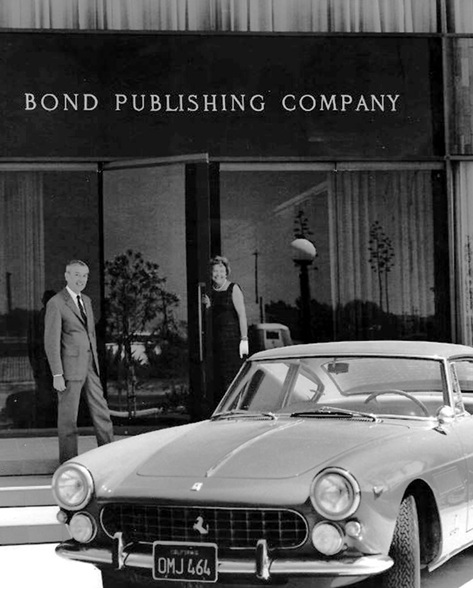
Bob Gillespie: No, you know what I’m always drawn to is the Ferrari 250 GT short wheelbase.

Not the GTO that followed it. I remember my father had a sports car graphic magazine. It was before it was car driver. Maybe it was road and track. I can’t remember. But they had this, when the GT category was introduced, and I think it was [00:19:00] 1960, 61, somewhere in there, they had these, Cars that were GTs and they had a 250 GT short wheelbase, and I just thought that was the most gorgeous thing, and I’ve never changed my mind.

It’s just this, for me, this classic shape, and it has something to do with the proportion of it.

Crew Chief Eric: So do you believe that? The wives tale, if you want to call it that, that at that same time that that car was being developed, that Enzo turned around and said that the E Type Jag was the most beautiful car in the world.

Bob Gillespie: No, I don’t believe that myth. No, I hope he never said that. A car has to look fierce, you know, and that, that was Enzo’s attitude. I mean, who knows, maybe he said it, but I was at the New York auto show at the debut of the XKE Jag. My dad took me and my four brothers. To the New York auto show and let’s see that that had to be 1961.

I think the E type was introduced and they had it. So they had the XK E there, but then they had a C type and a D [00:20:00] Jag. And we could walk up close to those and examine all of it. It was wonderful. I love Jaguars also. I mean, there’s a lot of cars, but there’s just, Something classic that just never changes about that 250 GT.

Crew Chief Eric: So the inverse of that would be pretty obvious. The ugliest car of all time. Is there one that gets under your skin? Or as an artist, do you find the beauty in, in all designs?

Bob Gillespie: I hated the AMC. Was it a Gremlin? What was the bubble?

Crew Chief Eric: The Pacer. Pacer.

Bob Gillespie: Is that the

Crew Chief Eric: Pacer? The one that inspired the 928. Allegedly,

Bob Gillespie: that car is way too big for the shape of it.

If that was a micro car, it might work, but it did not work.

Crew Chief Eric: Well, you’re right, Bob. It didn’t work on multiple levels, but there’s cult followings for everything.

Bob Gillespie: That’s true. And my neighbor had one, so I had to look at that thing.

Crew Chief Eric: So [00:21:00] let’s switch gears. Let’s talk about your book, One Track Mind. As you said, you’re a student of history and of art and a motorsports enthusiast through and through. You’ve been hooked since day one. And as you said, your paintings are this chronology, they’re telling a story of time past and of races gone and people, you know, drivers you met, there’s a whole ethos to one track mind.

When you read the book cover to cover, you realize you’re telling not just your life story, but the life story of others and people that you’ve met along the way. And so I wondered, you know, as an artist, And a photographer, what made you decide to just say, you know what, I’m going to write a book and not only just write a book, but you’re self publishing this book.

So you’re doing a lot more of the work that let’s say other people would farm out. So to take on this challenge at this point, why

Bob Gillespie: I wanted to do it myself because I wanted it to be in my own words. And I was frustrated that my three favorite painting instructors That I had in undergraduate school and grad school never wrote [00:22:00] a book.

They never wrote much about what they did and why they did it. And when my favorite one, his name is George D. Green. He had one man shows in New York City, paintings and art museums throughout the country. When he passed away, I wrote something, the funeral home, you could write notes. And so I wrote something.

I got a phone call from his widow, from his wife. And she wanted to know about him, and I told stories of how he nurtured me and my attitudes towards art. And she said, well, you know, George just spent all this time in the studio and never wrote much about what he did and why he did it. And I showed her some of my artwork, corresponded back and forth.

She was on the West Coast. She said, well, I want you to write a book. So she inspired me. And then this other patron of mine was also a book publisher. He wanted to do a book about my artwork, but I told him, I guess I’m a control freak. I kept putting him off because I knew if there was going to [00:23:00] be a book, I wanted it to be in my own words.

And my dad had written his memoirs. And that was part of it too, just for the family. He never published it. I always enjoyed selling things too, because my family was in the milk business. As soon as I could ride a bike, I was sitting around knocking on doors on a Saturday morning, collecting milk bills. I was nervous as hell, but you got over it and pretty soon you enjoyed collecting money from people, you know, hey.

And I thought, well, if I write it and sell it myself, Then I cut out the middleman and I had always worked with a printer for my calendars that I did. And I was very satisfied with their work. I didn’t know that they could print a book, but I mentioned it to them and they said, yeah, yeah, we can do that.

So we started talking and it was affordable for me. And now I’m in my second printing. It’s just the way I was born. Brought up, I think, added into that whole thing of self-publishing.

Crew Chief Eric: The way the book [00:24:00] is designed, if you saw it sitting on my coffee table or yours, you go, man, that’s a gorgeous coffee table book.

And you can kind of thumb through it and get the idea of what’s in there, right? The large portion of your art collection, not all of your art, it focuses specifically on motorsport and cars and racing and all those kinds of things. But if I was gonna say, you know, you need to read Bob’s book. Are there particular paintings or sections of the book that you would say really hone in on this, something that is very touching for you?

Like, we’re all going to have different interpretations of it, but Bob, in your own words, what should we be focusing in on? Is there a particular portion of it?

Bob Gillespie: I think you should be focusing in on how artwork that’s exciting keeps a person young. For me, painting these pictures and viewing these paintings Keeps the child in me alive.

Yes. I’m a landscape painter that happens to put cars as exciting focal points. I love landscape painting, but I need something besides just scenic qualities. I need that excitement. It’s the same reason that I [00:25:00] go to automobile races. It’s pretty basic when it comes to noise. Smells, sights. It’s a spectacle.

Painting a spectacle of road racing keeps my mind in that awake stage. For me, it’s a perfect vehicle for me to keep that childhood excitement that I had when I was 11 years old watching those Dee Jaguars and then Sterling Mawson and stuff. Formula One and it’s my way of keeping that experience with me.

The act of painting it is exciting.

Crew Chief Eric: If you read the entire thing and you really analyze the paintings that are there, if they had been laid out in sequential order, you could almost flip through and turn by turn go through the track, whether it was the first generation, second generation or third generation of Watkins Glen.

And so what I took away from it and I sort of wondered was Bob painted it. a scene on almost every turn, straight away chicane that exists or existed. But what’s his favorite? Like I couldn’t hone in on, okay, [00:26:00] he’s done this turn so many times. That must be his favorite vantage point on the track. That’s where he likes to watch at Watkins Glen.

So what is that for you?

Bob Gillespie: On the original track, 6. 6 mile round the gorge circuit. My favorite spot is right after they come into town around that flat iron building, that brick one with the French mansard roof. They came down this steep hill. They came screaming into town and then around that left hand turn and then had to break and turn on to market street.

My favorite scene is looking up 4th Street, which is that street where they turn on to Franklin Street from seeing the cars just after they’ve come down the hill and around that flat iron building seems to have all the ingredients I really like and it’s architecture, it’s cars and it’s trees and it’s people all in close proximity.

On the, uh, present Grand Prix [00:27:00] circuit, one favorite spot I’ve got is Turn 8, which it’s the heel of the boot. They come around, and then they go up the little hill, and then around the slowest turn back onto the NASCAR track. The reason I like that turn is because you can stand there, and I think I put this in a book.

There’s hardly anybody there. It’s like the cars are putting on a show just for me. They come in from my left. They go right in front of me. I can watch how they exit the turn, and then I can watch them go up around that slow turn. It’s almost like a carousel turn, and you can stand right in the middle of it.

And there’s no huge fence. That’s what I like about it too.

Crew Chief Eric: Well, one of the coolest pieces of trivia that I took away from the book is sort of in that middle section of paintings when you start talking about Briggs Cunningham, the Cunningham team, racing at Le Mans, racing at the Glen, the Cobras, the C4Rs, and you mention the That one of those Cunningham paintings that you were commissioned to make was actually used in [00:28:00] the cover of Burt Levy’s book, The Last Open Road.

I said, wow, what an honor. What a little known fact. Bob Gillespie’s art is on the cover of this really famous book. How did that make you feel to be involved in that?

Bob Gillespie: Oh, it was a huge breakthrough. Just that Cunningham’s at Stonebridge painting was a real game changer for me. And that, I think I painted that in 1998.

Right when the Motor Racing Research Center was starting up, I sold a gazillion prints of it. The Cunningham people came up to me and said, hey, we’re making some reproductions, can we use that on our promotional materials? And then Bert came up and wanted to put it on his book. I had somebody tell me the other day, wait a minute, that’s not on the book.

And I said, well, it’s on the jacket that was on the book. He didn’t print the ink on the hardcover itself, it’s on the jacket. It’s on the jacket. But yeah, that, that was a big deal and it was a real honor. It was a recognition thing that was humbling, really. I never sold that painting. That painting is [00:29:00] hanging in our living room.

I’ll never sell it.

Crew Chief Eric: You got a copy of the last open road. You need two signatures now, two autographs on there. You need Bert’s and Bob’s on that thing to make it look right.

Bob Gillespie: That’s right.

Crew Chief Eric: Going back and talking about art styles for a moment, one of the other things that I learned from reading the book and learning about your past and how you came up through art and became an art teacher and all that is you mentioned the early days of photorealism, which has really taken to new artists.

Now you see a ton of photorealistic paintings popping up. All over the place on social media and on the internet thinking about Samantha Zimmerman and Chris Dunlop and Manu Kampart and all these guys that you look at these things and you’re like, is that a photo or is that a painting? Especially when you’re far away from it, you realize once you zoom in, it’s not a poster, it’s been painted.

Why such a draw into this high resolution type of painting? Is it something that you would teach in class? Is that one of the skills that you’d pass on to folks?

Bob Gillespie: I view photo realism [00:30:00] as a technical exercise. You’re copying a photograph. A lot of people that do photorealism use three colors like the, uh, you know, cyan, magenta, yellow, and they mix them so they can reproduce the colors just like a photograph.

Why are people drawn to that? I think it’s just because of the magic of photorealism. Creating an illusion on a two dimensional surface, you can kind of make it disappear like a photograph. Our lives are surrounded by photography. We’re so used to photography, we think, Oh, that looks just like a photograph, meaning photographs are the most realistic images around.

Well, they’re not. If you look at some artwork that was done in the 1800s.

Crew Chief Eric: Like a Vermeer.

Bob Gillespie: Yes, 1600s. Yeah, a lot of Dutch painters, but there have been a lot of painters that have done what you’d call super realism. Which is more realistic than a photograph because they get [00:31:00] details in the darks. And details in the lights, you’ve got a full range that you could only get with multiple exposures of a photograph, just because the human eye can detect, you know, like a million different colors.

Don’t quote me on that, but photography is limited. But you can get more colors and paint than you can with photography.

Crew Chief Eric: That also lends to a conversation around the next generation of, let’s say, super realistic or photorealistic art. And that’s coming from AI generated

Bob Gillespie: these bots,

Crew Chief Eric: like a stable diffusion, a Dali, a mid journey, you know, those kinds of things.

So what’s your feeling, what’s your take, what’s your opinion on these types of programs that are now available and do they take away from the artistic world or the. Augmenting it in some way,

Bob Gillespie: I’d be interested to see AI generate a copy of one of my paintings, you know, which would be illegal. You know, you sign and [00:32:00] date a painting, you sign a number, a print, you have a certificate of authenticity that comes along with it.

I think AI generated artwork, and maybe I’m being naive about this, just make artwork from a good painter even more valuable, simply because the buyer knows it’s one of a kind, where AI could generate two paintings that are the same quite easily. I don’t know if they do. I haven’t seen how many lawsuits there have been yet on AI generated, but there’s also the, the surface too.

There’s a richness in the surface of a real painting that I would like to see AI try to copy. You know, in a one of a kind image. Yeah, you could make a lot of different copies of texture, a canvas in the right way, you know, and you say, okay, this brush mark is going to be here and we wanted the paint to be actually be thick.

I don’t know how you do all that with a one shot [00:33:00] AI image. I don’t know how you get that texture quality in there. I, I have a lot of questions about AI generated architecture.

Crew Chief Eric: I think we all do on multiple levels.

Bob Gillespie: No one has a good answer. Yeah.

Crew Chief Eric: But I could see it as a way for somebody starting out to use it as a tool to help them maybe communicate what’s in their head.

On to, let’s say an eight and a half by 11. I joke all the time, I’m not a graphic artist. I have a hard time communicating to somebody what exactly I would want to see on a canvas, but if I could mock it up in AI and then take it to you and say, Bob, okay, so this is sort of what’s in my brain. Can you make a painting out of this?

That would be really cool.

Bob Gillespie: Yeah, I think there would be a market for artists that would do that. Sure. I agree. I think all art makes life. It’s like Kurt Vonnegut said, I got a Kurt Vonnegut quote in the beginning of the book, which you read, and then there’s one at the end of the book that says, the arts are not a way to make a living.

They are a [00:34:00] very human way of making life more bearable. So I think if AI can generate some big murals in depressing locations. I think that would be wonderful. I don’t know if we should put illusions on the sides of cars.

Crew Chief Eric: I think we call those liveries, Bob.

Bob Gillespie: Yeah,

Crew Chief Eric: but I get your point. I mean, there’s a lot of different ways to do this, but also there should be, and there are a lot of different tools in an artist’s toolbox, right.

Or, or on their palette, AI might just be another one. It can be used for good and it can probably be used for evil too. Right. In this instance. And I think that leads us into our next question, which is talking about commissions and getting in line at the deli counter for some Bob Gillespie art. So how do we acquire some of your art?

How does one purchase your pieces or go about getting something made?

Bob Gillespie: I’m quite proud that I, uh, with the help of a friend, I’ve developed a new website called glenspeed. art. Right now it’s [00:35:00] got about 30 of my most popular prints on it. People can buy my artwork. I signed a numbered print online. Again, I’m a controlled freak.

I make my own prints. I’ve got a 10 color printer. I control the whole process and the quality of it. And so, yes, people can buy my artwork or commission a painting through glenspeed. art is my website.

Crew Chief Eric: We talked about, you know, how do you choose your next painting, but what’s next? What are you working on?

Any spoilers? Anything you can share?

Bob Gillespie: I’m doing volume two of the Watkins Glen International Coloring Book. I did a coloring book in 1998, and now It’s been a few years and the Racetrack would like me to do another one. I’m working on that and then I’m going to work on the festival poster for next year for the Watkins Glen Grand Prix Vintage Festival.

The theme is Porsche, so I’m excited about that. A

Crew Chief Eric: lot of other artists we’ve talked to Go to different car shows or events, or they have viewings and things like [00:36:00] that. Do you have anything lined up in terms of where people can come and see your art in person?

Bob Gillespie: Well, they could go to the Franklin street gallery in Watkins Glen.

I’m just up the road. They could stop by at my place if they wanted to see some artwork. I’m happy to say that I’m fortunate to sell just about all of my artwork. I have very little here at my house that I’ve done because I’ve, I’ve sold just about all of it. I’ve got a big old Victorian house and, uh, I work on big paintings in certain rooms and small paintings at the kitchen table.

So I’ve painted in about every room in our house. But yeah, Franklin Street, Mark and Glenn, it would be the place to see a lot of my artwork for sale.

Crew Chief Eric: Well, Bob, we’ve reached that part of the episode where I like to invite our guests to share any shout outs, promotions, thank yous, or anything else that you’d that we haven’t covered thus far.

Bob Gillespie: I’d like to put out a big thank you to the International Motor Racing Research Center for all the help they’ve been to me over the years. Bill Green, Sports Car Club of [00:37:00] America, which has been wonderful to me. I’m a member of the Glenn Region Chapter, the people at Watkins Glen Promotions, the people at the Watkins Glen Chamber of Commerce.

I’m very fortunate to have a lot of people that have encouraged me and given me an opportunity to exhibit and sell my work.

Crew Chief Eric: Bob’s book includes quotes that he chose to shed light on the creative process. They were made by artists that he admires and unexpectedly his auto racing paintings enabled him to befriend a generation of remarkable people involved with American road racing.

Many of those are no longer with us, and their quotes are also included and offer first person insights and perspectives on the sport. Bob believes there is a shared state of mind between artists and race drivers. Perhaps it’s a reliance on intuition along with a constant striving for perfection. If you’d like to pick up a copy of Bob’s book, One Track Mind, The Art of Bob Gillespie, you can log on to www.

glenspeed. art to order a copy [00:38:00] for yourself or someone you know that would enjoy a wonderful book like this, too. And with that, Bob, I can’t thank you enough for coming on Break Fix again, but this time sharing your passion for motorsports, enthusiasm, and art with us. You are the living embodiment of why we do this show.

These are the kinds of stories we love. You’re the type of enthusiast that we all look up to going live an incredible life, steeped and surrounded by motorsport, which is something that we all aspire to do. So Bob, thank you for what you’ve done for the community, for the world, for everyone, and keep doing what you do best painting and drawing and putting out some fantastic artwork.

Bob Gillespie: Thank you so much, Eric. I really appreciated the opportunity. All this enthusiasm is just a wonderful thing for us to share with our feelings about automobiles and history and racing. It keeps us all young.

Crew Chief Eric: We hope you enjoyed another awesome episode of Brake Fix Podcast, [00:39:00] brought to you by Grand Touring Motorsports. If you’d like to be a guest on the show or get involved, be sure to follow us on all social media platforms at GrandTouringMotorsports. And if you’d like to learn more about the content of this episode, be sure to check out the follow on article at GTMotorsports.

org. We remain a commercial free and no annual fees organization through our sponsors, but also through the generous support of our fans, families, and friends through Patreon. For as little as 2. 50 a month, you can get access to more behind the scenes action, additional Pit Stop minisodes, and other VIP goodies, as well as keeping our team of creators free.

Fed on their strict diet of fig Newtons, gummy bears, and monster. So consider signing up for Patreon today at www. patreon. com forward slash GT motorsports, and remember without you, none of this would be [00:40:00] possible.

Highlights

Skip ahead if you must… Here’s the highlights from this episode you might be most interested in and their corresponding time stamps.

  • 00:00 Introduction to Break/Fix Podcast
  • 01:07 Meet Bob Gillespie: The Artist and Petrolhead
  • 01:35 Early Inspirations and Career Beginnings
  • 02:45 Transition to Art and Photography
  • 04:11 Capturing Racing History in Paint
  • 04:56 The Excitement of Watkins Glen
  • 06:16 Choosing Artistic Mediums
  • 09:13 Creating Large-Scale Murals
  • 10:37 The Story Behind the Chamber of Commerce Mural
  • 13:44 Techniques and Challenges in Mural Painting
  • 18:21 The Most Beautiful Car: A Personal Opinion
  • 20:15 The Ugliest Car of All Time
  • 20:59 Switching Gears: One Track Mind
  • 21:42 The Inspiration Behind the Book
  • 24:09 The Excitement of Motorsport Art
  • 26:08 Favorite Spots at Watkins Glen
  • 29:12 Photorealism and AI in Art
  • 34:45 Acquiring Bob Gillespie’s Art
  • 36:41 Shout Outs and Final Thoughts

Bonus Content

There's more to this story!

Be sure to check out the behind the scenes for this episode, filled with extras, bloopers, and other great moments not found in the final version. Become a Break/Fix VIP today by joining our Patreon.

All of our BEHIND THE SCENES (BTS) Break/Fix episodes are raw and unedited, and expressly shared with the permission and consent of our guests.

Learn More

Walking around Watkins Glen

If you happen to be in town for the IMSA Sahlen’s Six Hours or the NASCAR events at Watkins Glen International Raceway be sure to take a stroll down main street and keep an eye out for Bob’s artwork on the sides of many of the buildings.

In case you missed it, Bob is a returning guest and was previously on Break/Fix talking about The Green Grand Prix which is an educational and competitive event in Watkins Glen, NY including the only Official SCCA road rally that promotes entry of all road- legal vehicle types and fuels in North America. The Road Rally is sponsored by THE DORIS BOVEE MEMORIAL FOUNDATION and TOYOTA. Doris Bovee was an environmental enthusiast and the road rally is a tribute to her. Learn More.

Tune in everywhere you stream, download or listen!

Listen on Apple
Listen on YouTube
Listen on Spotify

Bob experimented with oils, airbrush, and mixed techniques, but acrylics became his signature. Fast-drying and flexible, they allowed him to capture motion and drama with immediacy – perfect for murals and large-scale works. “You paint with what you’re familiar with,” he explained, noting how acrylics let him correct mistakes quickly and adapt to the demands of monumental projects.

Photo courtesy of Bob Gillespie, www.glenspeed.art

Living not far from the legendary circuit, Bob immersed himself in its culture. He befriended historians like Bill Green and original drivers who urged him to paint their stories. Over time, he produced more than 130 works chronicling American road racing, with Watkins Glen as the centerpiece.

His murals – seen throughout downtown, including the Chamber of Commerce – transform walls into immersive race-day experiences. One depicts Denver Cornett’s pole position at the 1952 Queen Catherine Cup, cars charging toward the viewer with cinematic intensity. Bob’s technique places spectators “in the middle of the road,” a perspective impossible in photography but electrifying in paint.

Bob’s self-published book, One Track Mind, is both memoir and gallery. Inspired by mentors who never documented their own journeys, he wanted to preserve his story in his own words. The book blends personal anecdotes, motorsports history, and over 80 paintings, offering readers a visual lap around Watkins Glen across its three generations of track layouts.

For Bob, the act of painting is more than craft – it’s a way to stay young, to keep alive the childlike wonder he felt at age 11 watching Sterling Moss and Jack Brabham thunder past. “Painting a spectacle of road racing keeps my mind awake,” he says.


Beauty, Speed, through the eyes of an Artist

Asked about the most beautiful car ever, Bob doesn’t hesitate: the Ferrari 250 GT Short Wheelbase. Its proportions, he insists, are timeless. Conversely, the AMC Pacer earns his vote for ugliest – proof that even artists can’t find beauty in every design.

These opinions reflect his philosophy: cars must look fierce, embodying both elegance and aggression. It’s this duality that fuels his art.

Bob Gillespie’s work isn’t just about cars – it’s about people, places, and the stories that make motorsport a cultural force. From his Cunningham painting gracing the cover of Burt Levy’s The Last Open Road to murals that stop tourists in their tracks, his art bridges generations.

In every brushstroke, Bob invites us to stand trackside, to feel the rush of speed, and to remember that racing is more than competition – it’s history, spectacle, and soul.

If you’d like to pick up a copy of Bob’s Book “One Track Mind: The Art of Bob Gillespie” you can logon to www.glenspeed.art to order a copy for yourself or someone you know that would enjoy a wonderful book like this too. 


This content has been brought to you in-part by sponsorship through...

Motoring Podcast Network

Being Kazakhstan’s first elite Female racer & Simracer

In Episode 34 of Init Talks, host Yvonne Houffelaar takes the seat to interview a very special guest: Lyubov Ozeretskovskaya (@LoveFortySix). From her beginnings in official karting championships to competing in events like Formula Masters and working with Astana Motorsports, Lyubov shares her incredible journey through the world of motorsport. She reflects on her achievements in karting, the challenges of competing at high levels, and her experience at the W Series selection event, offering insights into the determination and resilience needed to succeed.

Lyubov’s passion for motorsport eventually extended to the virtual world. In 2019, she began streaming, encouraged by her husband, and has since built a vibrant community of fans and racers. As a member of the Thrustmaster Rockets team and a proud ambassador for Next Level Racing, she has become a prominent figure in the sim racing community. Lyubov discusses how her real-world racing background has influenced her sim racing skills and the opportunities it has brought her, including competing in prestigious events like the Virtual Le Mans.

CHECK OUT LYUBOV’S PREVIOUS EPISODE

Adding to her list of accomplishments, Lyubov has also competed in the Porsche eSports Supercup All-Star Series, showcasing her talent on a global stage. Join Yvonne and Lyubov for a deep dive into her journey from real-world racing to becoming a sim racing ambassador, as well as her thoughts on inspiring the next generation of drivers and gamers. This is an episode filled with stories of ambition, perseverance, and passion for motorsport in all its forms.

Watch the livestream

Tune in everywhere you stream, download or listen!

Listen on Apple
Listen on YouTube
Listen on Spotify

Highlights

Skip ahead if you must… Here’s the highlights from this episode you might be most interested in and their corresponding time stamps.

  • 00:00 Introduction to Screen to Speed
  • 00:49 Meet the Guest: Lyubov Ozeretskovskaya
  • 01:48 Lyubov’s Early Karting Days
  • 07:13 Transition to Formula Racing
  • 09:50 Challenges and Achievements in Formula Racing
  • 13:27 W Series Selection Event
  • 24:01 Sim Racing and Streaming Journey
  • 30:59 Technical Challenges in Virtual Le Mans
  • 32:51 Experiences with Air Factor 2
  • 35:07 Joining the Virtual Le Mans with Graf by TRS Sports
  • 37:52 Porsche eSports Super Cup All Star Series
  • 41:17 Favorite Tracks and Cars in iRacing
  • 45:46 Olympus Esports Journey
  • 52:27 Sim4STEM Program and Scholastic Esports Awards
  • 54:54 Upcoming Events and Final Thoughts

Transcript

Crew Chief Brad: [00:00:00] Welcome to Screen to Speed powered by INIT eSports. In this podcast, we dive into the journeys of remarkable individuals making waves in sim racing and bridging the virtual with the real. From the thrill of digital circuits to the roar of real life racetracks, we explore the passion, Dedication and innovation that drives the world of motorsports.

We’ll hear from athletes, creators, and pioneers sharing their stories, insights, and the powerful ways sim racing is connecting communities and creating pathways into motorsports. So buckle up. Screen the speed starts now.

Yvonne Houffelaar: Hello everyone. Welcome to the inner talks episode 34. And do you think, oh, this is different than I used to? Yes, it’s different. Today I’m both. [00:01:00] And Lubov, uh, aka Love46, well known by everyone, is the guest. Welcome.

Lyubov Ozeretskovskaya: Welcome, everyone. Hello, hello. Uh, a bit different in the talks today, so I’m not a host. So happy to be here.

Yes,

Yvonne Houffelaar: that’s great to hear. I’m happy to have you here. And, uh, how is it for you to be the guest now instead of the host?

Lyubov Ozeretskovskaya: Oh, great experience, you know, to be on the other side. So not to be a host for one in a talk. It’s great. So feels a bit different for me, definitely.

Yvonne Houffelaar: Yeah, a bit more relaxed, I think.

You’re sitting now. Yes, yes. Well, let’s start by the beginning. I know you started very young, around nine years old. How did you get introduced by the cartoon world? Because you started in real [00:02:00] life first and then went over to the sim. How did you start with cartoon? Where did you find it in

Lyubov Ozeretskovskaya: the beginning?

Yeah, so I started from karting when I was nine years old. I still remember we went to rent karting with my dad and He just let me try it for once and i’m like, okay. Yeah, I really like it and he just suggests me that We can start to do championship of Kazakhstan. So I remember he built the first car for myself.

Uh, there was, you know, really old chassis, uh, with, uh, uh, engine from, uh, Honda Dio, that’s a scooter. Um, and I remember the, the frame, uh, it was the bright yellow. And I started to take a part in championship of Kazakhstan, um, in class And I had my 46 number with me. It was a great experience. Uh, so I really like karting.[00:03:00]

I really like this excitement and adrenaline, which I get from it. And, um, so yeah, then we move forward and I just, uh, won four times championship of Kazakhstan. Of course, I started not, you know, all races from the first, uh, places, uh, been to like, uh, Top six, top, top seven, uh, for several races. Uh, and then the last race, which we had in like, that was 2008, 2009.

Um, I remember that I won it and I was so happy. I still remember the guy who, uh, been fighting with me for the first position. Uh, he was crying after I won it. Oh yeah, he was so upset. So, yeah, it was really fun, uh, days and I, you know, that was great. My dad also raced at this time a little bit, uh, in different class and, uh, we’ve been into this, uh, together, um, that was awesome.[00:04:00]

Yvonne Houffelaar: It’s great to hear that you did this with your dad and also at such a young age, that’s great. So, I see that with me too. I started also very young, a bit younger than you when I was seven. And, uh, yeah, my dad was there to support. He didn’t do anything with cars. He didn’t drive in any cars. He was there for the support, but it’s still great to hear.

And how did you feel? Because back then you were young, and you probably was one of the only women in the field, I think.

Lyubov Ozeretskovskaya: Mm hmm. So, you know, I felt, uh, sometimes I was afraid of the speed, so that took some time to Uh, get used to everything, and, uh, then, you know, I felt great, uh, to be honest, like, uh, everybody tried to respect me, of course, uh, we had some people who’ve been, like, against, uh, girls in karting, and something like this, uh, that’s been, uh, Taking a place here.

[00:05:00] That was like, you know, 2008, 2009, a long time ago. So definitely right now situation is more friendly for everybody. Uh, and, uh, you know, of course the cursing is, uh, you know, that’s a lot of swearing and a lot of men in this. And, uh, uh, yeah, that was, uh, A little bit weird experience for me, uh, but I think that, uh, bring me, uh, the character which I got right now, so I’m really like a, a high motivated person, and I’m trying to push, uh, like, my goals, and, uh, I’m doing everything, like, if I got a goal, I’m just going for it till the end, and, uh, yeah, that’s really, uh, give me, um, you know, Great, uh, things, uh, bring great things to my life, definitely.

Um, we’ve been lucky enough to found a sponsor for our karting team, uh, here in Kazakhstan, because just, uh, investors which we [00:06:00] have here, they’ve been really interested into karting, they did karting, By themselves also. Um, and, uh, after all this stuff, so we started like the, the carting team. Um, so we did like, you know, a few seasons with our own money and, uh, the rest of the seasons and the rest career, which I did in real life racing, I did buy sponsor money, so we didn’t bring any, anything from our side, from the family, because my family is not really rich and, uh, motorsport carting and, uh, racing is, uh, really expensive.

Um, So yeah, and then they started to build the guard circuit here and we got the the big circuit right now I hope hopefully it’s going to work this summer. So they Tried to bring the MotoGP here Maybe it’s going to happen in the upcoming years here in Almaty So yeah, that’s the first big circuit which we got [00:07:00] here and it’s really long with the high speed corners really cool You Um, so yeah, will be awesome to see some MotoGP racing here one day.

Yvonne Houffelaar: Yes, that will be great. And, um, I think you also participated in the Formula Masters events. I think with Astana Motorsports, if I’m correct?

Lyubov Ozeretskovskaya: Yeah, that’s correct.

Yvonne Houffelaar: Can you tell more about that?

Lyubov Ozeretskovskaya: Uh, so after I did really good results in karting, uh, won four times championship of Kazakhstan, uh, we decided that we have to move somewhere and, um, We had a special event in Moscow with rent karting.

Uh, they’ve been doing the, you know, kind of like endurance, uh, karts, uh, event. Uh, there’s been like two hours race or something like this. Uh, we had, uh, four drivers in our team. Um, and. The price for the [00:08:00] first position, uh, the, being the testing days, uh, uh, informal masters. And so, yeah, we just, uh, we did this, uh, event, did this race, uh, won it.

So we did a really good strategy with the team. We also had, uh, really fast driver, uh, with us in a team and, uh, you know, I, everybody just, uh, bring. Their own side, their own time and consistency, uh, into the team results. And, uh, we won the test day, uh, at Kazan ring. Uh, and, um, we decided to find some, uh, like sponsors to go for this testing and maybe try, uh, the full season and formal masters, um, And yeah, then it just turns out that, uh, we found money, we, uh, bring ourselves to the circuit, did the test day, uh, I still remember it was really crazy to switch [00:09:00] from karting to formulas because in formulas you literally, uh, see nothing compared to karting because in karting you, uh, like, Just, uh, sitting on the outside, you can see everything, you can see Apex League, you can see everything.

Uh, in Formal, it was different, so when I first time, um, went to the track, I was like, Wow, I can see a thing, you know? It was, it was really funny. Um, after some time, I get used to it. So when you’re sitting in Formal, you actually see just, uh, top of the tires a little bit. It’s funny. Uh, and, and they’re pretty much it.

You don’t see anything on the sides and, uh, you, you can see a little bit, the rear view, the little mirrors, uh, mirrors, and that’s, that’s, that’s it. So it was a really fun experience. Definitely. Um, and then after this testing days, after the first season, we did like a thing, three, four races, we found some [00:10:00] investments, uh, from also Kazakhstan government, uh, support me.

Uh, and then just, uh, Astana Motorsports, uh, team, they found me, uh, they contact me and they decided like, okay, we can, uh, take you with us. Uh, at this time they had already. Uh, team in the car, they had, uh, like this big track in the car, uh, also I think SUV and, uh, motorcycle. So they had a quite big team, uh, which took a part in, uh, in racing around the world.

And yeah, and then, uh, they introduced me that I’m going to, uh, be in the formal program, our program we had, uh, which we had, uh, it’s been, uh, Uh, for the formal one, step by step, the program, uh, included also, uh, formal free in Spain and, uh, you know, all the stuff, but unfortunately, uh, we did formal masters in [00:11:00] 2015.

Uh, then at the same time, I also been, uh, taking part in the Asia Cup series, which is a formal BMW. Uh, it’s a punk, uh, so finish before informal masters and P six and Asia cup series. Uh, and then unfortunately they decided to completely shut down the team, uh, because, uh, just maybe some financial problems, maybe something else.

But what they told me that was like, uh, none of the races taking a part on the territory of Kazakhstan. And they not really interested in this. Um, so yeah, and still they’re not running any racing team anymore. So they’ll, they’ll only got the cycling team, uh, and then pretty much it. So it’s really sad, uh, because we had a really strong team in the car.

They finished, uh, in tracks, I think P10 or P11, which is, uh, great because, you know, the, the car is a really high level and [00:12:00] it’s, it’s really, uh, exhausting. Um, conditions in this race. Also, it’s really hard marathon, which, uh, running and racing. Um, so yeah, it’s, it’s really sad, but it was a great experience and I’m so grateful and happy that I, um, you know, been in this team because that like the highest level in Kazakhstan, uh, and I was the first, uh, uh, woman who took a part in, uh, formulas, uh, for, from Kazakhstan.

So no one. Right now doing any formal series, uh, who racing here in Kazakhstan.

Yvonne Houffelaar: Nice. Well done and congrats because it’s, uh, it’s, um, how do you say it in English? I’m not sure, but it’s, uh, it’s something you did very well and you can be very proud of yourself. Uh, I never heard about Astana Motorsports, but I knew about the cycling team, because yeah, I also [00:13:00] like cycling.

So, um, yeah, that’s how I. Uh, knew the name, but I never thought they had also a motorsports teams. This is interesting to hear as well, but a shame they stopped because I think if it reached far, from what I hear also from the results, you were getting better and better, getting more the groove, uh, in the Formula car.

And, uh, it’s a shame that it ended like this. Um, you also did a selection event for the W Series. Can you tell more about that? Yeah.

Lyubov Ozeretskovskaya: Yes, I can tell you about this. I want to add a little bit about Formal Masters also and Asia Cup Series. Um, I had this result. I think the results could be better. Just because we’ve been really limited with the budget, which we had.

So we had budget only for events, for racing events. But only for like one day practice. That’s like three, [00:14:00] four sessions to be exact. By 20 minutes maximum on track. So, and, uh, as I had all tracks new for me, it was really hard, you know, to adapt. Also, we had a, um, quite fast car compared to karting where I’ve been before.

So yeah, it’s, uh, definitely was a really hard challenge for me. And, you know, if someone would suggest me once again, try something like this, I would just, uh, uh, decline this because, you know, I understand now, uh, that. It’s really hard to go through all this racing events without any experience, without any practice.

It’s really hard. And of course, if I, uh, would take a part in any racing right now, I would love to have more testing days, more practice, uh, to then show better results, uh, in series. Uh, so yeah, unfortunately we’ve been really limited with financials and we’ve been limited, uh, in, um, like, uh, I would try. [00:15:00] Uh, to save the car because we’ve been limited, uh, in, in crashes, uh, also, uh, with the financials as, you know, Formula is real expensive, like, four tires cost, like, more than 1, 000 euros.

Um, one tire set cost that money and, uh, for example, the, the front wing cost, uh, like, uh, 1, 500 euros or something like this. So, yeah, if you’re going to get into a crash and also, uh, formal car made, uh, Made of paper. It’s it’s really fragile. And yeah, it was really hard in financial way to just push the limits and also, you know, put all everything I’ve got into the results.

So actually, I did my best about W series events. It was really fun. I remember so, uh, Had a really funny story about this, uh, because, uh, it was my husband. We decided [00:16:00] that we going to get married. And at the same time, I just, uh, send a application to W series that, Hey, I probably would like to take a part in the selection event.

So we didn’t, uh, think that it’s going to. And we just get married and I changed my surname and I had to go to Kazakhstan to change. Uh, so been living in Moscow at this time and I had to go to Kazakhstan to change all my documents, my passport and all the stuff. Um, and we’ve been really limited because we get married on the 11th of December and, um, We just, uh, you know, uh, face, uh, the reality that we got all this, uh, Christmas days and new year and all this stuff.

And we’ve been, you know, running out of time, uh, was making the visa to go to Austria. Um, hopefully we, we did everything in time and I’m so grateful [00:17:00] to. Uh, Austria Embassy, they did everything fast, uh, I remember Konso called me like, Oh, that’s uh, yeah, really, um, important event where you’re going, yeah, so I understand you’re doing racing and all this stuff.

I said yes, and they like, uh, called me. I know in two hours or so, they’re like, Oh, you, you got your visa and passports. I’m like, yes, let’s go. And then we went to WSeries event. Um, in a way how events went for me, it was great experience. That was my first time ever, uh, taking part, uh, in such events. And so we’ve been driving the Porsche.

Cayman, uh, GTS with winter tires, uh, on the mixed conditions. So we had, uh, like rain, snow, all the stuff. So there’ll be in, uh, in January, uh, really fun. You know, we did some drifting, some fun exercises, some team working, [00:18:00] um, some stuff like this. So I met a lot of girls and that was a great to be a part of this event.

Definitely. So I didn’t get into, uh, the series. I think because my Uh, maybe communication wasn’t that great as it is right now, and, uh, probably I was not really good at working in a team, uh, because I was, uh, really shy and maybe a little bit close to myself at this time. Uh, but anyway, I was really, uh, happy to take a part in this and be a part of, of that.

It’s really sad that W Series, uh, stopped to do their seasons. It’s, Uh, because I think it was a great, uh, series and, uh, I would love to see more girls into this. And, uh, just, you know, for example, for Jimmy Chadwick, uh, that turned out, uh, really in a really good way. So she get into IndyCar series and, uh, That’s, that’s awesome.

And, uh, yeah, I raced against her. So we, we had, [00:19:00] uh, some kind of like a rallycross, uh, on this Caymans in the end. Yeah, I raced with her. So she beat me, but just a little bit. So it was fun.

Yvonne Houffelaar: Ah, that’s good to hear. Yeah, they have nowadays, they have one academia, which is also very good to watch. I watch most of the races.

I try to watch them or watch them back later on. With every pooling, uh, absolutely dominate the season, apart from a few races. A Dutch lady, Maya Voogd, that won as well. I mentioned that because I’m not living in the Netherlands anymore, but still proud to be a part of it. So we were all excited about that.

Um, uh, yeah, you know, For, for, I think Abby goes now for the TB three. Mm-hmm . The British, uh, formula three.

Lyubov Ozeretskovskaya: Mm-hmm .

Yvonne Houffelaar: Uh, championship, I think it is. Uh, they were saying on the TV because she won the championship there and [00:20:00] she get that offered, uh, as, as a prize. So I think that’s also a good way to confirm. Uh, but yeah, I hope there is coming a lot more, uh, from those kind of events to, to not only give them the opportunity, but also to kind of, uh, showcase them in a way, uh, like they can present themselves.

They can show what they, what they can on track and then teams can see, Oh, look at that lady. She’s going fast. I would like to have her involved and then go further that way. So not only in price, but I think that’s, this could be a very good opportunity for the ladies who are participating now. And, uh, and by the way.

Happy anniversary, your anniversary from yesterday. Thank you. You’re welcome. Well, we have now a lot of talking about the racing, but I want to ask one more question [00:21:00] about that before we go into the sim racing part. What was your greatest moment in your motorsport career?

Lyubov Ozeretskovskaya: Uh, well, that’s definitely was, uh, that first win in karting, which and, uh, which I mentioned before, uh, and, uh, second greatest moment, which I had in racing, uh, there was, uh, that I finished, uh, P3 at Sochi Autodrome, uh, we had the, the full circuit, which formal one, uh, race, uh, Uh, this days and I, uh, get the P3 here.

Uh, funny thing that, uh, you know, at Sochi, they got this, uh, so the curbs and inside of the curbs here is the sausages. And, uh, so because I cut curbs, uh, quite a lot, so I had really good lap times, uh, here, uh, that kind of damaged the, the front wing. on the formula. And so I remember I was going through the DRS zone.

That’s a long [00:22:00] back straight at Sochi Autodrom. And when I started to turn into the corner, I’m like, Oh my God, car just not steering at all. So like, uh, the front wing started to fall down. At the last moment, that was the last, uh, last lap of the race. Yeah. Uh, at the last moment, uh, some grip just returned back to tires and I’m like, okay, we’re steering into the corner.

All good. So, uh, when I finished, uh, the race right on the finish, just the front wing fall down like this and it was, uh, look like a scoop, so, yeah, it was really fun race, you know, I finished like this. Didn’t notice that anything is wrong because I started to lose the downforce on the last lap only and it was pretty scary because we didn’t go on for this DRS zone.

Um, what do you got, uh, that the wall on, [00:23:00] on like, you know, after this, uh, the break in, uh, it’s the hardest break, break in, uh, point which you got on track. Uh, If I wouldn’t feed into the corner, I would end in the wall, so yeah, it was really fun anyway. Because I was like, oh my god, we’re not steering, what am I supposed to do?

And I can’t do anything, just, uh, you know, kind of, uh, I know front wing may be returned back or something, so I get the grape back, and I was like, whew. Finally,

Yvonne Houffelaar: Nice. And you had you had the, uh, front ringers or souvenir fire at home? Or , the damage from ?

Lyubov Ozeretskovskaya: No, they, uh, they suggest me to maybe you can, uh, you know, bring this, uh, front wing with you. I’m like, you know, no, not going to feed to airplane . Oh no. Yeah, I just can take it

Yvonne Houffelaar: Well, now we’re [00:24:00] taking a little bridge. Uh, did you use sim racing also to practice fully in real life racing?

Lyubov Ozeretskovskaya: Uh, yes. In, uh, 2019, uh, when I, uh, was doing the Formal Four Southeast Asia, um, in Malaysia, I, um, I practiced in race rooms, the bonk circuit, and I remember that I fixed, uh, Uh, T5, T6, uh, at the simulator that also helped me, uh, to improve my lap times at Spunk in real life.

Um, so yeah, I was using the simulators and, uh, before Informal Masters, I remember that I, uh, did some Race07 to learn, uh, the track, uh, the Sochi Octodrome and, uh, other track which you had in the calendar. of the series. Um, so yeah, but you know, I wasn’t really into sim racing, so I just, uh, use it like occasionally when I really need it.

Uh, so if I would jump to real life racing right now, I [00:25:00] would use sim racing a lot, definitely.

Yvonne Houffelaar: Yes, it’s definitely recommended even. It’s just to learn the track and so forth, because I did some racing too. And, uh, I was lucky if I had a track slap in before the race weekends or race day started because we didn’t have the testing.

And, uh, then I drove a silverstone, I drove the, I believe it’s national layout or something, never drove that before. Only did some left in the sink to, to know at least where the track is and which part you’re not taking. Basically from the Grand Prix. Uh. Circus and yeah, I was happy that I did it in the same because otherwise I went into the official practice on the Sunday For for 40 minutes, which I needed to share with my teammates But no knowledge of the track at all.

So, for me, the sim was really needed to get an idea of how the track goes. [00:26:00] They didn’t have a car in the sim, which was a bit of a shame. I used mostly around the GT4 cars, because it was a bit around the same speed, but didn’t have the same grip. So, uh, yeah, it’s both a bit different approach to a race day than I prefer and I wouldn’t recommend it either because it’s a lot less enjoyment when you’re not sure if everything goes right and if you’re not sure how the car will feel on the track and so forth.

It can always be different on race day, but at least you have an idea or a feeling by it. And when you have muffin, it’s, it’s a challenge.

Lyubov Ozeretskovskaya: Yeah, definitely. I agree with you.

Yvonne Houffelaar: Uh, you started simracing, uh, well, streaming, in 2019, offered by your husband.

Lyubov Ozeretskovskaya: Yeah, for sure. Uh, so as I [00:27:00] moved to Moscow in 2017, uh, I started to search for a job in, you know, motorsport related, uh, stuff. Uh, I found a job in a motorsport simulator that goes like this. They had, uh, Um, like some racing center with motion platforms, uh, DD wheels and, uh, Holsenfeld pedals. So work here as a coach and as a, uh, manager of this, uh, some racing center.

So I started like this. Uh, then I met my husband’s on my next work. I worked as a sale manager, uh, in air seats. So we’ve been selling the rigs and all this stuff. We met each other here and then we’ve been working in different sim racing companies. Also had a sim racing center with a race room. And, uh, Then, uh, during lockdown, uh, unfortunately we couldn’t work, uh, where we worked before because all [00:28:00] malls just shut down completely.

Uh, and yeah, we decided to try streaming, to try also racing at this time. Uh, and yeah, it just, uh, turns out, so we tried to bring, um, As many people as we can, uh, first time to the stream, like, uh, there’s been like 10, 15 viewers, something like this. Uh, and then it just, uh, started to grow, um, by Twitch recommendations, by also greater racing, uh, community, which helped me with some rates.

I, I remember Quaker ties rate me and, uh, uh, some other big streamers as well. So. It was, uh, it was a great time and, uh, I’m so grateful that, uh, the community and iRacing and Twitch, um, you know, they’re so friendly, they’re really helpful, and, uh, I was really shy on the camera, I was really, uh, closed, and, you know, just started to open up, I started to, [00:29:00] uh, improve my English, improve, uh, my driving at the same time as well, and, yeah.

Yeah, you know, we had some challenges, uh, definitely. Uh, so when we started, I had, uh, just a steel rig. Uh, we had, uh, just a bulb with, with a pocket on it as a soft light on the stream. Um, And I had a really old G27, uh, which then with community together, we, uh, switched to T300 with TLCM pedals and we switched single screen to triple, uh, and all things started.

So I just, uh, I remember that I messaged, uh, Fressmaster about, uh, a partnership and they like, Yeah, we can talk about this. And, uh, we with them for three years already. I’m so happy, uh, that I’m, I’m part of a first master rockets team. And, uh, that’s a great to be a part of this. Uh, and we got also a fractal design right now as a partner on our channel and, [00:30:00] uh, next level racing as well.

So just, uh, you know, everything started from a really, uh, small studio, which we build with, with our hands and, uh, turns out to like bigger, uh, channel and, uh, uh, good, uh, partnership and good community overall.

Yvonne Houffelaar: That’s great to hear and well done because, uh, you seem like you grow a lot because you’re now very confident.

Um, uh, Not shy at all. So it’s good to see you. Well done. Yeah. so much. You’re welcome. And you also took part in the virtual Lamar. I think everyone loves to watch the Lamar in real life 24 hour. For a lot of drivers, it will be the dream to race, but for some sim racers, it’s also a dream to race the virtual Lamar.

Can you tell more about that?

Lyubov Ozeretskovskaya: Yeah, we did a virtual Le Mans. Uh, I did it twice. Uh, [00:31:00] first time we did it with, uh, W Series. Uh, we had, uh, Betzke Wieser, um, I think another girl from W Series with us, me and, um, Emery, uh, she’s also a streamer in our racing. Um, so we’ve been preparing, uh, so hard for this one. Uh, we wanted to race GTE car in this event.

Uh, but unfortunately we didn’t take part in the race, uh, because for our teammate, uh, the Air Factor two just, uh, decided that shut down and, uh, we couldn’t re yeah, we couldn’t rejoin the server, uh, organizers didn’t, uh, give me, uh, give us this opportunity. Um, so unfortunately the, the first original laman, uh, end up like this.

Uh, then the next year, uh, Grav by TRS Sports, uh, suggests me to jump into LMP2 car with them, uh, for Virtua LeMans. Uh, we also had some technical [00:32:00] issues, um, during this race, but we finished it. Uh, we had quite good lap times, so we could finish easily, um, somewhere in the middle of the field of LMP2s. Uh, but unfortunately, due to some technical issues, once again, uh, we finished like P10 or P12, uh, something like this.

But it was a great experience with me, uh, for me, uh, because I’ve been into the team with, uh, in real life LMP2 driver. And we worked a lot with the data. We walked, uh, worked a lot with, uh, how to improve on track and, uh, they’re really, so this virtual man, uh, pushed me as a driver, um, to the next step. Uh, and, um, I’m so happy for this experience and it’s here as a sport is amazing, um, a sport team, uh, which is doing their job pretty well, so I’m just.

So, happy to have, uh, this experience with me and, uh, yeah, unfortunately, you know, Air Factor 2, it’s a great simulator. [00:33:00] Uh, I really like to race in it. It feels great when you race in Air Factor 2. Uh, but unfortunately, as, uh, maybe the studio which making the Air Factor 2 is small, uh, they just don’t have enough resources.

Uh, to run it properly. Uh, it just, uh, got some bugs and, uh, uh, a lot of server issues. So we experienced the previous, uh, virtual demand, uh, also make marks first up and disconnect, uh, I think few times from this race. Uh, which is kind of shame, but you know, it is where it is. I. Fully understand like, you know, the software and all the stuff.

It’s really complicated and When you got a small team, it’s really hard to run so I fully understand this and I really hope they’re factor to going to grow and going to be bigger and just Will be better for such a big event.

Yvonne Houffelaar: Yes, yeah, I would [00:34:00] like to see that too. I don’t drive often on Alpha 2. I do only one series, the Xbox series.

And, uh, I really enjoy doing that. And it’s more Like, uh, a community race than, um, than a competition because it’s all about networking and then we are on a Zoom call and then someone else comes in and tell more about what they are doing in racing, sim racing. So it’s a great community and it’s, it’s fun.

The only time that I’m racing on Airfactor 2, mostly on a ride and drive, because I have no time to practice, but that’s great to do so. I didn’t do it for months, because I haven’t driven for months, but, oh yeah, hopefully I’m back, uh, next year and then do some races with them again because I really enjoyed how it felt as well with this base and with my final tech base.

I struggled a lot to get the settings right without breaking, almost breaking [00:35:00] my wrist. But when you have it right, it’s, it’s a good game. It’s really enjoyable to do. How did you, how did the team got into the Virtual Le Mans? Because I know for a lot of teams, this was really the highlight. Uh, the race was the highlight to do, uh, for their team.

How is this working?

Lyubov Ozeretskovskaya: Uh, well, I’m not sure about W Series, how they get into Virtual Le Mans. Uh, probably they had some connections with the organizers. Uh, but, uh, speaking of the graph, uh, by tier eSports, eSports, they got, uh, really good, uh, eSports team in iRacing. They taken part in many special events and all this stuff.

Um, speaking about Virtua LeMans, they get into that because of Graf. Graf, uh, that’s a team, uh, which, uh, taken part in a real life, uh, LeMans event with LMP2 cars. So that’s in real life team. Uh, and they [00:36:00] just, uh, had collaboration, uh, together and to get into this. And, um, you know, they just invited me, uh, because they wanted to have a fast driver and also girl in their team.

Uh, and also as I was streaming, uh, this event on my Twitch, uh, We just found each other and yeah, once again, I’m going to tell you that it was a great experience and I would love to race in virtual Le Mans next time if someone going to suggest me this event. I spent a lot of time for practice. Uh, we did a lot of, uh, like team sessions and all this stuff.

Um, but yeah, it was, uh, it was awesome. I really like Le Mans. That’s one of my favorite circuits. Uh, I still remember when I first time tried to learn it in iRacing was like, Oh my God, this lap is so long, you know, it’s, uh, over three minutes and it just, uh, taken a [00:37:00] lot of time. But when you just. Learn this track, then every time you get into, uh, races on it, you’re like, wow, it’s just going with a really cool flow, especially with LMP2 car and it’s just great to race.

I really like this track. So, um, not a big fan of Nordschleife. Uh, so from long tracks, I would, uh, would pick the Le Mans.

Yvonne Houffelaar: Not a fan of the North China. I think I never heard that before.

Yeah, you bring me on some ideas for next year’s future Olympics. Maybe we can bring the different team in and maybe you can also be part of it. Getting some ideas of how we’ll have some networking around to see, uh, what we can do and we can drive it. Uh, you also took part in the Porsche eSports Super Cup All Star Series.

It’s a long name, so I needed to [00:38:00] double check on the, on the list. Uh, how, how was that?

Lyubov Ozeretskovskaya: It was great, uh, I’ve been taking part in the All Star Porsche Sports Super Cup for two years already. Uh, hopefully going to get into the next one, uh, which we will start I think in February or something like this. Um, that was a great experience, so we, uh, got like supportive, uh, races.

For the main championship, which, uh, going in our racing, uh, that’s the main, like, eSports, uh, sim racing championship, which we got alongside with, uh, Inascar in our racing, and it was, uh, great because, you know, streamers are really fast. Uh, we had really fun races. Uh, they got this format that, uh, first race you starting by qualifying, uh, second race, you starting with a fully reversed grid.

So, and then bring some, uh, you know, crashes, some fun moments. And I remember the previous [00:39:00] year I was leading in GT4, the whole race, the whole second race, uh, at that time. Uh, but unfortunately then, uh, they started bowling, uh, the, there was like a really close to the end of the race and I get into the crash.

Unfortunately, didn’t get a few one, uh, but I finished like top five or something like this. Uh, it was so fun. You know, I, I was upset a little bit because I was like, yes, I get through the crashes and everything. I’m leading the whole race because they just, uh. Fighting behind with each other and I was pretty sure that I can win.

I had a really good pace Was really surprised because I’m not the pro in GT forces So usually in cars like MX 5, GR86 and GT4 I’m not the best but this time I just get into G4 and, you know, did some, uh, good practice with the Porsche Cayman and this track. And also that’s one of my favorite tracks, uh, the Watkins Glen, I [00:40:00] really like it.

Um, so yeah, I get so lucky for, uh, get the, for the crashes and everything, but yeah, then we end up in the crash. I was upset, of course. But it was a great experience for me. So, uh, this Porsche championships, they always really. The organizers are so friendly and, uh, remember the funny thing we, we had, um, in race interviews, like you’re racing, you’re fighting with someone and they like, okay, we’re going to take interview from them.

And then we’re like, Oh no, but you know, it’s a, like, that’s a part of the, like support for the main championship. Uh, we always trying to bring some fun here and some content as well. Uh, so yeah, that’s a pleasure for me to take part in this championship alongside with Crux of Ties, Emre, Matt Malone, and other big streamers from my racing.

It’s always fun. [00:41:00]

Yvonne Houffelaar: Yeah, it’s cool. And, uh, well, you said already, Wolfgang’s Glen is a very good track. I agree with you. I like it too. It just flows very well. Uh, for some reason. Is it also your favorite track from Iron Racing?

Lyubov Ozeretskovskaya: Uh, well, I got few favorite tracks in Iron Racing. Uh, there’ll be definitely Watkins Glen.

I like it in every configuration. Like, we got boot, we got cup, one which is short, it’s really close to some kind of oval. I really like it, um, and I’m a big fan of Road Atlanta, so if you would ask my community, they’re going to tell me, tell you like, yeah, Road Atlanta, that’s her favorite track. Like every time we got Road Atlanta, I’m like, yes, I’m going to race it.

I really like it because it has, um, So, uphills, downhills, and uh, that S is after the T1, absolutely great, uh, so, this track [00:42:00] got really good flow, and also, it’s a little bit scary to race it every time, even if you, say, like, take part in a lot of races on this track, you still, like, you know, you get used to it.

What if I’m going to lose the car in Assis or somewhere, uh, like on the track? And it’s, it’s always so exciting to, to race it. And yeah, someone in chat just saying about Laguna Seca, I know that this is not favorite track for everybody, uh, in a racing and not the simulators. I, I love it. You know, Laguna Seca, great track and I really like it.

It’s, uh, just amazing with all this corners and especially Corkscrew, uh, the legendary corner on this track. Yeah, I love it. So that, that will be my top list of the, of the tracks like Road Atlanta, Laguna Seca, Watkins Glen. Um, speaking about European tracks, I think there’ll be Liman and, uh, Spa and Monza, something like this.

Yes, [00:43:00]

Yvonne Houffelaar: sounds good. It’s a nice list. And what about the cars? What is your favorite car to drive?

Lyubov Ozeretskovskaya: My favorite car to drive? Everybody knows that. That’s a Porsche Cup. I really like it. I really like the fact that this car without traction control, without ABS system, and you know, It’s always so rewarding to raise this car.

So when you nail the track, when you got really fast lap times, it’s more rewarding than driving the GT free car, for example, on the same track. Uh, just, just because when you’re getting into the rhythm, when you’re not making mistakes, you’re not locked up, uh, tires and, uh, you’re just like, you’re feeling great, uh, about this.

And, uh, it’s really cool car. I love it. Um, on the car, which I really like and I racing and which I raise, uh, On daily basis that, uh, formal 1 600. I really like it because it’s a simple car. Uh, it’s a good base. If you would like to go forward to formulas, [00:44:00] uh, and because here is not a lot of downforce on this car.

And, uh, Uh, you always get in really close battles in Formula 1 600. You get in, um, really cool side by side, two wide, you know, whole lap with someone, uh, in the race. It’s, it’s great. And I really like to race it in rain, uh, as well. Uh, recently we had a race at Tsukuba, uh, with Formula 1 600 and, you know, a lot of people, they just, uh, on the rain.

They rushing, they jumping, diving into the corner and then they missing. And you’re like, yes, that’s great. So, yeah, I think that’ll be my, uh, two favorite cars. And, uh, speaking about ovals, because I started, uh, to do a lot of ovals as well. Uh, that’s definitely will be Xfinity series as it’s, um, you know, community here is really friendly.

Uh, and, uh, [00:45:00] car is great. Uh, so usually when I’m getting into Xfinity races, uh, you get a really good points to our rating and you gaining safety rating as well because just people racing in a good way. Um, and especially I really like Xfinity Open, uh, so longer races. People think more, uh, about what to do with the strategy, with everything.

And, uh, a lot of, uh, less crashes we get in here and yeah, really like the series. And, uh, the second, uh, favorites from Ovals, there will be Arca. Arca is crazy, a lot of crashes, but I just really like this car.

Yvonne Houffelaar: Nice. Sounds good. Are you also part of the sim racing team?

Lyubov Ozeretskovskaya: Uh, yes. I’m a part of the Olympus sports. Uh, we started to be with Olympus when we had just three people in the team. Uh, and [00:46:00] actually funny thing that I met, uh, our boss from Olympus team, Charles Bushell in Instagram. So, uh, he’s been following me, um, You know, for years following my racing career, uh, then he was, uh, one of the first, uh, people who came to my stream, uh, we met each other here once again.

And he just like, I’m starting the sport team. Are you like interested to be a part of it? And I’m like, Yeah, sure. I’m going to be a part of it. Why not? So, as I didn’t have a team, I decided to join the Olympus Sport to support it, of course. And we started to do some special events, some VRS Endurances from time to time, and Olympus Esports is big right now, you know, I, I just, I don’t know how many people we got in the team.

So, uh, always when I coming to the discord, I’m like, wow, here is [00:47:00] so many people and it’s great to see. And we. Uh, one of the greatest championship where we’ve taken apart, that’s, uh, Evereight Club Sports, uh, Evereight Endurance, uh, that’s, uh, one of the biggest leagues, uh, which we got in racing, uh, one of the most competitive, I think, and, uh, the previous year we finished P5, P6 in Porsche Cup, uh, in the club series, that was great result, uh, for us and, uh, You know, I’m so, so happy that I’ve been one of the first drivers in Olympus Esports and it’s great to see the team is growing and they’ve taken part in cool championships, cool leagues, and also we’ve been a part of VCO Infinity event together.

So yeah, I’m just wishing all the best to Olympus Esports. I think that’s a great team and we got one of the most beautiful liveries.

Yvonne Houffelaar: Oh, yes, the delivery looks absolutely stunning. Nina also drives for [00:48:00] the team. She sometimes drives it also in the screen speed series and it looks so good. It really stands out from the rest.

It’s

Lyubov Ozeretskovskaya: good. Yeah, that’s what I really like because, you know, all the eSport teams, I don’t know why, but they really like, oh, we’re going to drive black cars or something like this. And here’s Olympus, like, bright blue with yellow with pink. It’s, it’s great. I know, just we need more cars with bright colors in eSports.

You know, you didn’t have to be really serious, like, I’m driving the black car. So I think it’s going to be great to see more colorful cars in the, on the field.

Yvonne Houffelaar: I like it too, but for us, I’m a co founder of Etoffe from the United Sim Team. And they have an orange going over to red livery. Why? Because I’m originally from the Netherlands and we are loving orange.

With every sporting event or when it’s King’s Day. [00:49:00] Everyone is wearing orange, you see it also with the F1, you see all the orange, all the Dutch fans with the orange shirt and then a Dutch flag and, uh, you even have it nowadays with the skiing, with Bosje Heese coming from the Netherlands, uh, skiing for the Netherlands now instead of Austria.

So even you saw it there, orange fireworks, so yeah, I’m very proud to have orange on the car. But, uh, Sophie and her favourite colour is red. So if we get this first, what are we going to do with livery? And I have to be honest, I’m a pain in the ass with livery because I want to have a perfect, so I can say a thousand times, uh, maybe change it for that, for that, for that.

And then I say to every cast, I like it, but can you change that? So, so that’s how it goes. And then she came up with this idea and it’s great to, to show also a bit of personality. Um, behind the team, so we’ll, we’ll, uh, [00:50:00] we’ll where the founders, for example, to see it back in a delivery. And, uh, it’s the same with the racing helmets.

I made mine, uh, bit a meaningful thing about myself mm-hmm. And about my family. And I think you can really make something special for it. And that’s what I like about live or designs. I can’t do it myself, but I really like to see what others are. Uh.

Lyubov Ozeretskovskaya: Mm hmm. Yeah. My husband’s making liveries for me. Uh, the last one which we had, uh, that was for Porsche all star series.

And, uh, we had it like, uh, you know, the comments going for the space. So it’s really a bright sound color with a deep purple, uh, black and something like this. So it was really cool. Uh, but, uh, For my daily streams I usually using the one which is a gray and purple on the back with my emotes from the channel.

It’s [00:51:00] really cute delivery. I really like it. Yeah. And, um, funny thing that, uh, we got a suit and the helmet, uh, in our racing and one of my, uh, viewers on channel, uh, he made the suit and helmet for me. That was, uh, at the time when we started streaming, uh, in 2020. And I’m still using it.

Yvonne Houffelaar: Nice. Uh, that’s cool.

Yeah. I’m very proud of my iRacing helmet because it’s exactly in my, in real life, racing helmet is in the game. So this, I think it was for Christmas or one of the holidays and she let it made by a official designer. We specialized in it and I know it’s a hard job to to get my house also on there because I have mountains on it and, um, uh, some special things on the top as well.

So it’s very fiddling to get it all right and, uh, yeah, it looks absolutely stunning [00:52:00] in the game. Same on Grand Theft Auto I have it as well and I’m very proud about that.

Lyubov Ozeretskovskaya: That’s great.

Yvonne Houffelaar: Yes. Well, thank you for your time. It was a pleasure. You did well. As not being a host, but I guess this time. I have a few news things, uh, before we end, uh, the, the inner talks for today.

Uh, Steffi Bau is in the final for the Scholastic Esports Awards. I hope I say this right, uh, with the Sim4STEM program. Sim4STEM is a great program, uh, where we teach, uh, Yeah, high school Children around that age, uh, the engineering parts, but also in the same. So I’ve been last year to Detroit for two weeks.

Yeah, we saw many students coming and trying and we gave them the [00:53:00] experience and they were learning what is possible to do with the engineering side of it. Also in the same. I had the best part because I was by the seams and they all loved to see all those rigs standing there. And, uh, yeah, it’s a great way for them to, to test if they like it.

And some even didn’t know about this at all. So, but it’s all possible. So we tried to show possibilities at the schools. And yeah, it’s amazing to, to see what’s, uh, what the children learn from a day. Because most of them are a day. Uh, for the school. And they learn a lot, they get excited from it. So it’s really great to, to see this program grow even more in America.

And hopefully it comes to Europe as well. So everyone, please vote for Stephanie. I’m putting the link in now. Because it’s well deserved for all the hard work she’s doing. [00:54:00] And, uh, the voting ends on the 15th of December, so, this Sunday. Then, I have another thing. The InnerTalks is now also open. On Spotify.

So every Monday after the inner talks, there will be, uh, the episodes you can listen to it in the car or at home, wherever you want to. And then you can listen to us back on Spotify, which is amazing. Uh, many thanks to Eric, uh, because he is organizing all of this with us and, uh, the GT Motorsport. Or, or slash spring to speed.

You can find everything about it. Also articles. So some amazing work. Thank you for the vote. Tasha. Great. And, uh, yeah, 2024 is almost coming to an end. It’s [00:55:00] almost the holidays and, um, it was a great year. I’m throwing back already a little bit, but some highlights and, uh, because for me, it’s the last time that you can hear me now for this year.

And, uh, yeah, we have some great events at the A of Sim Racing Expo. Uh, there are some great events coming up for next year. We will organize six races on our racing, uh, for the screen to speeds. We’re also gonna organize six races for the USF gg. Uh. And that will be, the winner will go and do some events with Team USA, which is absolutely amazing.

So, next year there will be more coming up, which are also for Gran Turismo and everyone else. And I’m looking forward to that. So, thank you today, Lou, and you’ll be back next week as the host. And then we have another guest [00:56:00] and, uh, for me, everyone, thank you for watching and also happy holidays because I’m in the background next week and you won’t see me and I’ll see you all in 2025.

Bye. Yeah,

Lyubov Ozeretskovskaya: guys. Thank you so much for watching. Thank you so much for being here. And don’t forget about invitational events, which we’re going to have, uh, yeah, on 15th. And I’m going to race here with Olympus Livery and Nina will be with Olympus Livery as well. So we’re going to see beautiful cars, beautiful girls in this event.

I will see you guys. Thank you so much. And thank you, Yuan, to be a host today. See you.

Yvonne Houffelaar: You’re welcome. I enjoyed it. Thank you.

Lyubov Ozeretskovskaya: See you.

Crew Chief Brad: Innate eSports focuses on sim racing events and digital tournaments. They [00:57:00] bring eSports content to fans and sponsorship opportunities to brands while maximizing audience reach across multiple sports, industries, and platforms. eSports is a woman-led company where diversity, equity, inclusion, and accessibility is in their DNA and their platform aims to combat bullying and cheating to help make the eSports world as safe and fair as possible To learn more, be sure to log on to www.initesports.gg or follow them on social media at init eSports.

Join their discord, check out their YouTube channel, or follow their live content via switch.

Crew Chief Eric: This episode has been brought to you by Grand Touring Motorsports as part of our Motoring Podcast Network. For more episodes like this, tune in each week for more exciting and educational content from organizations like The Exotic Car Marketplace, The Motoring Historian, Brake Fix, and many others.

If you’d like to support Grand Touring Motorsports and the Motoring Podcast Network, sign up for one of our many sponsorship tiers at www. patreon. com forward [00:58:00] slash GT Motorsports. Please note that the content, opinions, and materials presented and expressed in this episode are those of its creator, and this episode has been published with their consent.

If you have any inquiries about this program, please contact the creators of this episode via email or social media as mentioned in the episode.

Copyright INIT eSports. This podcast is now produced as part of the Motoring Podcast Network and can be found everywhere you stream, download or listen! 


More Screen to Speed…

Dive into the journeys of remarkable individuals making waves in sim racing and bridging the virtual with the real. From the thrill of digital circuits to the roar of real-life racetracks, they explore the passion, dedication, and innovation that drives the world of motorsports. They hear from athletes, creators, and pioneers sharing their stories, insights, and the powerful ways sim racing is connecting communities and creating pathways into motorsports.

INIT eSports focuses on sim racing events and digital tournaments. They bring eSports content to fans and sponsorship opportunities to brands, while maximizing audience reach across multiple sports, industries, and platforms. INIT eSports is a woman-led company where Diversity, Equity, Inclusion and Accessibility is in their DNA, and their platform aims to combat bullying and cheating to help make the eSports world as safe and fair as possible. To learn more, be sure to logon to www.initesports.gg today or follow them on social media @initesports, join their discord, check out their YouTube Channel, or follow their live content via Twitch.

At INIT eSports, founder and CEO Stefy Bau doesn’t just settle for the ordinary. She creates extraordinary experiences by producing thrilling online competitions and real-life events that transcend the boundaries of the eSports universe. And she’s here with us on Break/Fix to share her story, and help you understand why you need to get more involved in the world of eSports. 

Tune in everywhere you stream, download or listen!

Listen on Apple
Listen on YouTube
Listen on Spotify

Netflix’s SENNA Series, Reviewed

If you’ve been following our monthly Drive Thru News ark on Break/Fix podcast you’ll note that we’ve been checking in on the progress of this series for quite some time. How long have we been waiting?longer than we’d realized, actually. We dug back into our records, and it was during Drive Thru Episode #3 (September 2020 to be exact), that we first reported on the announcement that Netflix’s SENNA project was coming together.

Never sure if this series was more than just a tease, once we got official word that November 29th, 2024 was “the day” we’d been waiting for, the team of William Ross (Exotic Car Marketplace), Prof. Jon Summers (The Motoring Historian) and Crew Chief Eric (Gran Touring Motorsports) hurriedly pushed through the series so that they could get back together and compare notes, and then compare those yet again to their 30 years since Tamburello crossover episode from earlier this season.

Tune in everywhere you stream, download or listen!

Listen on Apple
Listen on YouTube
Listen on Spotify

After 4 years of waiting; the much anticipated SENNA mini-series is now available for you to binge in all its glory. We wouldn’t classify this as a “show” or “movie” so much as a 6-part mockumentary (dramatization) averaging roughly over an hour per segment. We would be remiss if we didn’t mention that Honda had a huge part in the making of this series, and even created a special advertisement to go along with the series. If you have ads enabled as part of your Netflix subscription, you’ll see the one below at the beginning of every episode.

Our goal for this review isn’t to divulge spoilers, because they’re really aren’t any. Let’s face it, just like Titanic, we already know the ending. And that’s exactly where Episode 1: THE CALLING, begins. With real footage of the the moment of Ayrton Senna’s death at Tamburello corner at the Imola Circuit on May 1st, 1994. Seeing the crash again, 30 years later, with fresh eyes doesn’t make it any less tragic or unnerving. Thanks to this series we do have new questions because of the surrounding context provided by the rest of Senna’s life story, which we’ll get to later in this article.

Tune in everywhere you stream, download or listen!

Listen on Apple
Listen on YouTube
Listen on Spotify

Highlights

Skip ahead if you must… Here’s the highlights from this episode you might be most interested in and their corresponding time stamps.

  • 00:22 Ayrton Senna: The Racing Legend
  • 01:19 Exploring Netflix’s Senna Miniseries
  • 01:46 The Anticipation and Production of the Series
  • 02:20 Analyzing the Miniseries: Style and Substance
  • 03:48 Senna’s Story: From Brazil to Formula One
  • 04:05 The Miniseries’ Portrayal of Senna
  • 05:38 Entertainment vs. Historical Accuracy
  • 06:40 Senna’s Early Racing Career
  • 07:53 The Fast-Paced Storytelling of the Miniseries
  • 11:33 Senna’s Personal Life and Relationships
  • 16:17 Senna’s Rivalries and Racing Tactics
  • 20:17 The Role of Media and Public Perception
  • 23:33 Senna’s Impact on Formula One
  • 25:02 The Prost-Senna Rivalry
  • 35:08 The Legacy of Ayrton Senna
  • 41:37 Senna’s Infamous Lap of the Gods
  • 42:02 Senna’s Out of Body Experience
  • 43:30 The Real Senna: Authenticity and Reactions
  • 45:22 Monaco 1990: Redemption
  • 45:30 Action Sequences and Real Footage
  • 48:35 Senna’s Relationship with Honda
  • 54:14 Senna’s Personal Life and Relationships
  • 57:17 The Tragic Weekend at Imola
  • 01:06:39 Senna’s Legacy and Final Thoughts
  • 01:14:52 Conclusion and Recommendations

Transcript

Crew Chief Brad: [00:00:00] Grand Touring Motorsports started as a social group of car enthusiasts, but we’ve expanded into all sorts of motorsports disciplines, and we want to share our stories with you. Years of racing, wrenching, and motorsports experience brings together a top notch collection of knowledge and information through our podcast, BrakeFix.

Crew Chief Eric: Tonight, we delve into the extraordinary life of a man who wasn’t just a racing legend, but an icon of human spirit and determination. Through the lens of Netflix’s highly anticipated miniseries, we’ll explore the meteoric rise, relentless drive, and untamed passion of Ayrton Senna, one of Formula One’s greatest champions.

Born in Brazil, a land of contrasts and dreams, Senna’s journey was nothing short of a cinematic masterpiece. From his humble beginnings on the karting tracks of Sao Paulo, to his three world championships, and the unforgettable rivalries that defined an era, Ayrton’s story is as exhilarating as the circuits he conquered.

But beyond the roar of the [00:01:00] engines, the glitz of the podiums, and the iconic yellow helmet, there was a man. A man who carried the weight of a nation, who raced with his heart as much as his skill, and whose life ended too soon, leaving a legacy that transcends sport. There is more than a story about speed and victory here.

It’s a tale of resilience, faith, and a relentless pursuit of perfection. And joining me tonight to help break down the miniseries, episode by episode, and dissect its most pivotal moments, is our most returningest guest host, William Big Money Ross from the Exotic Car Marketplace, along with Professor John Summers, the motoring historian.

So welcome back, gentlemen.

Prof. Jon Summers: Pleasure. Thanks for having us, Eric. This is gonna be fun.

Crew Chief Eric: I feel like we did the celebration of life earlier this year, and here we are again. Looking at another Senna film of some sort. What I came to realize is, we’ve been batting around this idea of a new Senna show for a while, and I wanted to pinpoint exactly when that all came about.

And I had to go back to September of 2020. Drive thru [00:02:00] news episode number three on BreakFix. is when they announced that this series was going to go into production. So it’s been four years that we’ve been waiting for this Senna miniseries, call it a mockumentary. That’s what I want to label it as. That I went into going, this is like Titanic.

I know the ending. What are you going to tell me that I don’t already know?

Prof. Jon Summers: But there are only nine stories in history, Eric. When you go to the cinema to see any story, you know the ending, what’s enjoyable. is how the story’s told, how the characters interact, whether or not themes resonate with society and the audience at the moment, whether or not the movie looks good and is stylish, that’s what your Hollywood guys lead on.

And what I look for is a ripping yarn, good story, great plot. And I look for compelling characters, and the older I get, I find I’m much more interested in, have the characters been well drawn? Are they charismatic? Do I like them? Do I give a shit what happens to them? And this is why my consumption of automotive media nowadays [00:03:00] exists outside of the realm of the fictional.

I can’t even do Game of Thrones anymore. It all feels like a 15 year old Dungeons and Dragons campaign that I wouldn’t want to be involved in anymore. You know, I’ve not watched the miniseries. I have read reviews, so I’m fascinated to understand what you guys think of it. And that informs the sort of little agenda that I wanted to work through.

And that agenda is simply the one that my English teachers gave me in high school, which is you talk about the plot, You talk about the characters, you talk about the themes. By the end of that, you should have an idea of whether or not this is just style over substance, or whether or not there’s really anything there.

So I am fascinated to get into it with you guys.

Crew Chief Eric: We’re not going to spend time talking about Senna’s life story. If you want to learn about that, go back into johnsommers. net and all the articles you’ve written about Senna. Go back and read Senna’s book. Go back and watch Senna the documentary from 2010.

Go back to [00:04:00] our 30 years after Temporello celebration of life episode. Like we don’t need to spend time talking about Senna. What we need to do is spend time understanding if they portrayed those stories correctly in this miniseries. So I don’t want to spend the next hour tearing apart Netflix’s interpretation of this.

So I’ll just blanket statement saying it’s good and it’s good in two ways. It’s good for the drive to survive crowd that knows nothing about Senna and is asking, who is Senna? When they hear people make references to Verstappen or to Hamilton, when they say he’s driving like Senna, or we haven’t seen antics like this since the days of Senna.

And people are going, who is this mythical Senna? Which for us is hard to fathom that anybody wouldn’t know who he was. So it’s important. That this story is told in a way that the younger generation can absorb it versus a documentary that they’re not going to want to suffer through, although the 2010 Senate documentary is awesome, and it’s all file footage with voiceovers and all that kind of stuff.

It’s also good for us, the [00:05:00] enthusiasts. The folks that were there in period as well as the historians from an accuracy perspective I give it high marks because what they did is a mockumentary like other ones I’ve seen like the man who would be bond where they used file footage and recreate it using the actors of today With cgi and all the wonderful things that we can do It makes for a great viewing experience for the people that are in the know, but then there’s some other threads and I have some specific ones that I want to pull on as we go through this that I think are important were not often showcased in other interpretations of Senna’s story.

And that’s where I want to focus and hone in on.

William Ross: As I tell a lot of people and you see it with all these movies and everything that’s come out in the past five, 10 years, what have you, because it’s a big influx of these people start nitpicking it and critiquing it. It’s like, look, this is entertainment.

This is not to be like historically accurate to nail everything down. This is for entertainment and for enjoyment. And that’s how I always go into these things. Look, I’m going to have some fun with this [00:06:00] and enjoy, you know, everything’s not going to be spot on. You know, they’re going to take liberties with things.

You know, they’re going to stretch it too. They’re going to leave certain things out. Well, especially this, you’re going to see within the first 15, 20 minutes. Okay. How are they going to portray this? They can make it. Look like was a nice guy, the bad guy. Are they going to be really truthful? I really enjoyed it.

And I knocked the thing out right off the bat that time. Cause I just got into it. I wanted to watch it and I actually rewatched some of it this morning just to kind of refresh myself. I thoroughly enjoyed it. And it’s just interesting. I watch it. Eric, watch it. We watch it. We know Senna’s history. We know everything, not everything, but we know the background, his story, where he came from and going up through and all this stuff and his teammates, all that stuff.

One question would be is, would you recommend someone watch this first, then go learn about them, or learn about them first, and then watch it? If you’re not familiar with the Senate story, because it could skew you a little bit, going, Well, wait a minute, I watched this, and that’s not matching up.

Crew Chief Eric: And that’s why I say it sort of works for both audiences.

If you don’t know, as an enthusiast, let’s say you’re from [00:07:00] NASCAR Nation, or you’re a rally guy, or IndyCar, or something like that, and you want to learn about something, You can learn enough to be dangerous from this series, but the real meat and potatoes is over on the 2010 SENA documentary, but you got to know what you’re getting into with that.

It’s more detailed, a lot more file footage, evidence, agency, all those things that are important to a historical documentary. But to William’s point, this is easily digestible. But also it isn’t because every episode is like a movie. It’s very cinematic. It’s very deep. It’s very detailed. There are about an hour a piece, some are more, some are less, but they average out to about an hour.

So you’re in this for six or seven hours by the time it’s done. The Senate documentary is only two. So you got to kind of balance that out and go, well, which one would I watch? If you want the express lane, watch the documentary and you’re going to get more historical fact. But something else you hit on, William, is the story moves very quickly.

But I made a note in my copious pages of notes. We get through birth to 1979 in the first Eight minutes of the first episode, [00:08:00] like boom, Formula Ford at minute nine. And we just rocket forward from there. So they skip over some of the pleasantries of his upbringing, how affluent his family was. Some of the other wives tales that we heard about how Senna had a go kart track in his backyard and he would go out and practice every day.

There’s some of that woven into the story as flashbacks and this and that, but there’s not a lot of context around it. So they fast track us to England in 1979. Eight minutes into the first episode.

Prof. Jon Summers: Yeah, they jump pretty quick. But this is what you need to do with storytelling. One of the professor at Stanford that I teach that class with, she always talks about you can start in the middle.

As long as you do the flashback, you need to start at a dramatic point where you draw your audience in. So I was interested to understand where they started.

Crew Chief Eric: Well, it doesn’t get any more dramatic than file footage of the crash at Tamburello. Boom, like immediately. And it’s sort of like that Jacob’s ladder thing where it’s like, well, let me tell you how I got here.

And then we work [00:09:00] backwards, but going forwards and come full circle, it starts and ends with the crash of Tamburello full stop.

Prof. Jon Summers: You have to start there. You absolutely have to start at that point, but where you choose to pick up and how you cover the childhood piece, I thought they might start with the rivalry.

William Ross: No, no. I anticipated. As Eric stated, you gotta start with, to your point, that initial hook. You start with the end, and to get people in and say, Alright, here’s the dramatic stuff, the accident, the death. Okay, now all of a sudden, let’s get back to, you know, where it starts. And, like he said, you know, they jump to the beginning part pretty quick in his youth.

And they kind of gloss over the fact of his wealth. They had a lot of money and it’s kind of humorous because once they jump into certain points and this is all in the first episode in regards to cost and paying for things. Oh, I got to sell the family Impala to pay for doing this and everything’s like, really?

Crew Chief Eric: You run the Brazilian equivalent of AC Delco or whatever, like a parts distributorship. [00:10:00] Yeah. Yeah. Okay.

William Ross: Yeah. And back then running Formula Ford, what do you have to maybe come up with? 7, 500 bucks. I mean, come on. I mean, yeah, back then he had some money, but it’s not like they were hurting for cash. It was the

Prof. Jon Summers: wraparound commitment though, wasn’t it?

It was the commitment to come from warm, familiar Catholic Brazil to cold, unfriendly England.

William Ross: They nailed the contrast between Brazil and the warmth. And then all of a sudden they’re showing England where it’s just dreary. They got the grayish back. They nailed it in regards to, wow, this is just

Prof. Jon Summers: I don’t know how they portrayed the Ron Dennis character, but if you think about the real Ron Dennis, he’s like an amalgam of all of my sales managers who ever worked together.

They

William Ross: had

Prof. Jon Summers: him wrong. From the sweariness, the hardness, to the seeing further and farther. And so it’s that feeling that I used to get from my sales managers. Maybe this is part of the reason why I was drawn to Zenith. It’s a feeling that I used to get from my sales managers that if they want you on the team, they believe in you.

Crew Chief Brad: Yeah,

Prof. Jon Summers: don’t need to pat you on the [00:11:00] back and tell you what a nice guy you are and give you a trophy for finishing second. The fact that you’re still hired and they’re not railing on you is how you know that you’re doing a good job.

Crew Chief Eric: That is evident throughout the film with his interactions with Ron Dennis.

There’s also the thing they sort of glaze over. In 1980, I think it was where Dennis was like, I want you to come drive for me now. And he said, nah, I don’t think I’m going to do that. Then there’s this whole family drama about him going back to Brazil and he’s there for like a hot minute and then finds himself in formula three right after that.

And then, you know, obviously the story kind of fast forwards from there. So there’s also the drama with his first wife.

William Ross: Yeah, how

Crew Chief Eric: she didn’t want to be there and he was only supposed to be there for a year because that’s the promise that he Made to his mother and

Prof. Jon Summers: I find hard to believe of course she didn’t want to be there I mean, it’s england’s ron dennis.

Do you want like beaches and brazil or do you want bloody ron dennis? And this is his childhood sweetheart And when forced to choose between her and the racing, we know what he chose. Now I [00:12:00] not delved into his personal life. I’ve never really read to understand if it was that contrast, but for me as a teenager, you know, when my first girlfriend dumped me, my first thought was, well, you know, Rather like Senna, when it came to cars or women, you lean into the cars, don’t you?

Because they don’t go wrong and they don’t ditch you sometimes, but you can fix them.

Crew Chief Eric: They also sort of leaned into this weird sexually aggressive nature of Senna throughout the film. And he has a type, by the way.

William Ross: Yeah.

Crew Chief Eric: As we go through the series, we start to realize that as well. But when you first meet Lillian, they’re in the Impala.

They’re doing sort of like the Makeout Mountain kind of thing. And it was a little cringey and almost like, It’s like, I’m going off to war tomorrow. We got to get the deed done. I was like, we don’t need this. All that stuff could actually have been deleted because I think that took away from the imagery I have of Senna.

It kind of made him, I don’t want to say it made him creepy, but it was just cringy. I didn’t like that. I didn’t appreciate that part of his story.

William Ross: I think they included that scene for the fact when she [00:13:00] said that she’ll go with him because he’s basically presenting it to her that he was going to go with himself.

I’ll only be gone a year, dah, dah, dah. She’s, oh no. I I’m going with you. I think that’s the whole reason they put that in there was for that fact. There’s all I know. I’m going with you in this whole little adventure.

Crew Chief Eric: That could have been done over breakfast though. You know what I mean?

William Ross: Exactly. They didn’t need to do it in the car in the front seat of the Apollo.

Cause they’re only what? 19.

Crew Chief Eric: Yeah. They’re about, I mean,

William Ross: it’s not like they were in there mid twilight. I mean, he was young when he went over there. I read just recently

Prof. Jon Summers: that she was his childhood sweet. Yes.

William Ross: Yeah. Yeah. They’ve been good forever. Yeah.

Prof. Jon Summers: In traditional accounts of Santa that I received in period.

She almost didn’t appear at all. Not that they ever really did backstories or girlfriends or anything like that. Because one of the interesting things, PK started a rumor that he was gay. Yeah. I remember that part of the reason why he started that was because Senna had this guy that was with him, like carrying his helmet at a couple of races.

So P. K. being P. K. was like, oh, and I wondered if they would delve into that at all. Whilst we’re talking about the sexual stuff, did they delve into that [00:14:00] at all?

Crew Chief Eric: No, they very rarely mentioned P. K. They got a guy playing his part that looked like him.

William Ross: The actor playing Senna I mean, he’s a dead ringer for him for sure.

Now,

Crew Chief Eric: the Nicky Lauda one, not so much. We’ll just

Prof. Jon Summers: leave that where it

William Ross: is.

Prof. Jon Summers: Lauda’s like him though. But Lauda looks like a character from Star Wars, doesn’t he? If you’d have had the real Lauda, people would have been like, what the fuck’s that? Like, I’m not watching Stallion. I thought it was Ron Howard

William Ross: for a second playing him.

Crew Chief Eric: Even Emerson Fittipaldi, they sort of did this at a distance thing. Like, we have these other Brazilian guys and they’re over there. We’re not going to focus on them. Basically, they sort of pushed P. K. out so that it didn’t show any sort of rivalry between his fellow countrymen in any way. The whole theme of the thing is very pro Senna.

It was really focused on Senna being the hope for Brazil.

William Ross: That’s why P. K. hated him, period. And they made sure to know that he was a very, very heterosexual man.

Crew Chief Eric: Oh, God.

William Ross: They made a point, to be sure, that, no, he liked women. We’ll

Crew Chief Eric: get to another good one later, as, like, episode four, or whatever. It’s like, oh, my God.

Yeah,

William Ross: [00:15:00] that princess or whatever she is.

Crew Chief Eric: Oh that too? I forgot about that.

William Ross: Yeah.

Prof. Jon Summers: Oh man. Then the

William Ross: TV started, yeah.

Prof. Jon Summers: This is really interesting that we’ve talked about this because on my vague little structure, one thing I had written down, and I don’t often feel the need to like mark a score, you know, make a chalk mark, but when some other motherfucker plagiarizes your work, you have to draw a line in the sand, don’t you?

And I read an article in AutoWeek by an individual with the second name of Vaughn, where he had used the word Vaughn. Beatification in the article, and he’d sort of muddied my concept that he had basically taken my word that I’ve been using for about a decade now, and put it in context of an article about cen

Crew Chief Eric: for those listening.

That’s a John Summers trademark phrase there. The beatification of

Prof. Jon Summers: Sena. Of Sena. Yeah. This notion that center is moving from being a. normal racing driver like Martin Brundle, for example, or Nelson Piquet, or even [00:16:00] Emerson Fittipaldi. He’s not an old racing driver now. He’s something more. He’s not like an actress from the 1950s.

He’s Marilyn Monroe. You know, he’s not Joey Lee Lewis. He’s Elvis. And this is a really interesting thing, and the miniseries interests me from that kind of perspective. So let’s talk more about the plot, more about the story here.

Crew Chief Eric: The road to Formula One. starts in episode two called belonging and it’s all about him basically being ostracized like who is this guy he’s an outsider does he really belong here he has to prove himself and it all centers around the tolman and that rain race at monaco and and all that stuff and so you’re like Okay, cool.

That’s true. All of that stuff happened. But there’s also this other side of Senna that they paint, which is the fastest driver wants the fastest car. And they basically show how he screwed over Tolman, and how he screwed over McLaren. That whole thing perpetuates. It becomes part of his persona, but they downplay, as you’ve referred to it, his [00:17:00] bully tactics.

And we’ll get into that more as we go along. We talk about the rivalry with Prost. The plot up to that point, there’s six episodes, right? So it’s the calling, the belonging, the ambition, the passion, the hero, and then time is the last episode. So belonging, ambition, and passion all sort of like go together, and it’s all about the greatness of Senna, how he became who he was, and all of the people that surrounded him.

So the major players that come out of the equation at this point, Are his carding rival in England

Prof. Jon Summers: is Terry Fullerton. Yeah. It’s a shout out. Yeah. It’s a party, a movie.

Crew Chief Eric: Correct.

Prof. Jon Summers: Who went on to be a builder just went on to be a normal bloke. Yeah,

Crew Chief Eric: but he gets carried through the entire film to the very end.

Like he comes back a bunch of times and whether that’s truthful or otherwise, whether they maintain their friendship. We don’t know, but they do spend a lot of time at the same track running go karts formula three formula 2000. I was like, can we just pick another track for crying out loud? Yeah.

Prof. Jon Summers: Is it Snetterton?

Crew Chief Eric: Yeah.

Prof. Jon Summers: Portions of it. I did read that [00:18:00] it’s Snetterton, but with mountains in the background. Correct. Yeah. And if you’ve ever been to Snetterton, there’s not mountains, there’s cloud, there’s shooting rain, and they’re shitting yourself on that absurdly long straight that they have there. It’s also the classic British club circuit.

You need to understand about club circuits. If you’ve come from other parts of the world, there’s tons of them all over England. They were all airfields in the Second World War, so they were all flat, and they all have corners, which are not like the corkscrew, they’re not banked, you just find the right line and you have big balls, and you’re fast, and if you get the line wrong and you don’t have big balls, you’re slow.

It’s a really very exacting environment, and Snetterton, because of the rain and the crap surface, is Yeah, I’ve done one track day there and I didn’t go back because it’s an asshole to get to and because the surface was bad.

William Ross: Yeah, they just dress it up in a few different ways. But again, it kind of goes back, like I said in the beginning, is they’re using it for certain scenes, using Formula 4, then F3.

Then they go back to it for [00:19:00] one little scene with Terry Fullerton karting school that he does. Yeah, it gets a bit annoying, but again, you got to take it to Kansas. They’re just kind of going this for a reference situation. It’s not about his skill and showing his craft. It’s more about between someone else.

Cause like the one for the formula four was against, uh, was that Quinn in Monticelli,

Crew Chief Eric: the Argentinian guy.

William Ross: Yeah. So that battle and then going into F3, it was against Martin Brundle, which they didn’t really get into too much, which I was surprised because him and Brundle went at it pretty good in F3.

Prof. Jon Summers: went at it pretty good.

Yeah. And Brundle beat it. Yeah. And that whole ostracized in Formula One, it was because everyone had seen that when under pressure, Senna crashed you. Yes. Now later in his career, maybe he didn’t, but in Formula Three, that’s how it was. And you didn’t do things like that in the British idiom, but I’ve just got to say, Martin Brundle, if I met him in person, if I ever get to shake his hand to me, still the guy who beat Senna is the only one.

Only guy who beat Santa on [00:20:00] a level playing field in that Formula 3 seat.

Crew Chief Eric: The way they handle all that stuff, those little other stories and those notions and whatnot, is to use this character, Laura Harrison. She’s Portuguese by ethnicity. But English by marriage. So she’s multilingual and all this kind of stuff.

She’s the reporter that follows him around from the very beginning, when he goes there for formula Ford and some cart racing all the way through the end of his career, he

William Ross: totally made

Crew Chief Eric: up.

Prof. Jon Summers: Yeah, exactly. No, no, no. She’s an amalgam of three or four different British. I read an article about it this morning.

I think Dennis Jenkinson, the motor sport guy who saw him really early on the guy who he was close with and then had the falling out with. Was a guy called Mike Doodson. I also think there’s another character in there. Maybe Mike Greesley. I maybe should have read more. I skim read the article about the Laura Harrison character.

My first thought is, well, that’s bogus. My next thought is, no, um, Dr. Jekyll and Mr. [00:21:00] Hyde. The narrator is this wallflower character. The great Gatsby. The narrator is a wallflower character. Great storytelling demands sometimes that the narrator is this wallflower who takes no part.

Crew Chief Eric: So she’s an important part of the plot.

Prof. Jon Summers: Yeah. Do you buy her as a character?

Crew Chief Eric: Yes. He allows Us the viewer to pull those other threads and they come to a head in like episode five and we’ll talk about that as we go along because your point about the bullying and she makes these references and what I always say is you can take the boy out of the cart but you can’t take the cart racer out of the boy and so some of Santa’s tactics go back to those early days of cart racing if I can’t get around you.

I’ll punt you, but it gets more dangerous the bigger the cars are. So some of that gets involved, but she’s always there. She’s always lurking in the background. And

Prof. Jon Summers: everyone else was afraid of touching in open wheelers. Senna wasn’t. I’d never seen that before. That’s what reached out of the screen and got me.

It was how much do you want it? Are you afraid to crash? Are you afraid to crash? He asked [00:22:00] every one of his rivals that. Every time he went to pass, and often they were, and when he’d beaten them once, he’d beaten them forever, and I’d never seen anything like that before. And then this individual, out of the car, wasn’t an aggressive, mean bully, he was cerebral, he was laid back.

He was cool. That was why he became my hero.

William Ross: The one thing that also is, you know, I want to say it’s prevalent throughout it, and it’s very, you know, I can say understated. There’s definite racial undertones in regards to how outsiders are treated over there, especially if you’re in English, but, you know, even, you know, European of the sort.

But coming from South America, There was definitely that message. There was a racial bias. So 100 percent

Crew Chief Eric: yes.

William Ross: Our Mr. FIA, how do we pronounce his name? John

Crew Chief Eric: Marie Balestra, our favorite

William Ross: villain

Crew Chief Eric: in the FIA. He’s

William Ross: just the total prick. Anyways, there’s a lot of racial undertone in that also that goes on too, which is kind of interesting.

Prof. Jon Summers: So Balest was in the Nazi party in the second world war. [00:23:00] Yeah, here we go. I, he was a real deal. So I was shocked when I learned that. And I only learned that recently. Because the way the news stories were covered in period, Senna was really aggressive and crashy, so I could understand why, like, the authorities were like, check yourself before you wreck yourself kind of thing.

Crew Chief Eric: But as we foreshadow another episode that’s coming where we talk a little bit more about Balestra, he’s not in it for the drivers. He’s in it for himself. And it becomes very clear in the series that Senna is good for business. Despite his attitudes and the way he handles the other drivers and all of his tantrums and everything else Senna’s good for business.

Prof. Jon Summers: He’s such a talent. That’s what the copadia movie does so well Is that in the first couple of minutes there’s footage of him driving those 1200 horsepower turbo cars And he’s got them on the ragged edge when the senna thing first came out came around again in, in a shocking way, 20 years after he’d gone in the mid [00:24:00] like 2010.

I went back and I re watched the races being like, I know what I saw when I was a kid, do I still feel it? Because I was terrified that I would watch and he would just be another racing driver. He wouldn’t stand out. But when you go back and you watch those early Formula 1 races, the difference is apparent.

The speed, The increased commitment it leaps out of the tv screen. It’s really astonishing

Crew Chief Eric: to the plot his family We don’t look at them as individual characters They’re a group his mother his father milton his sister vivian. They’re a unit they appear a lot. They obviously show that he’s a big family guy.

His relationship with his mother is super important. His relationship with his dad, even more so in some ways, and they’re a part of his life and they’re supportive. And they paint that picture. That’s part of the plot that runs all the way through to the very end is that his relationship with his family is tied back to Brazil.

When he gets to Europe, after all the England stuff. stuff. And we get into Formula One by episode two, three, this is where we can go. And now we can talk about [00:25:00] Jean Marie Balestra in more detail, what he was all about. But more importantly, where we start to really just ramp up is the picture they paint of the relationship between fellow Frenchmen, Alain Prost That.

Is like Emperor Palpatine and Darth Vader. That’s how they paint that picture. And Ayrton Senna is Luke Skywalker and he’s coming in here to rectify everything. Am I wrong, William? Like that’s how it comes across.

William Ross: Yeah, and the midget Yoda

Crew Chief Eric: has a very Star Wars feel to it when you get to the middle part.

William Ross: Well, you know, one thing I find interesting, too, is like, like you said, you know, also, we get to that form one day, but he honored his commitment or his promise that after the championship, he went back to Brazil. And how true it is. But Keith Sutton, the photographer, seems like he played a big role in getting him to come back as he was pushing him to come back.

But also he was talking with these teams.

Crew Chief Eric: I don’t know how true it is. They played him like Jimmy Olsen to [00:26:00] Superman is how they played. Exactly.

William Ross: A hundred percent.

Crew Chief Eric: Do you know

William Ross: Keith Sutton, John? Have you ever met him?

Prof. Jon Summers: Yes, I had a number of his book and when you mentioned the Keith Sutton name, I had forgotten that Santa had the close relationship with him.

It’s interesting that Keith Sutton’s a separate character and not amalgamated into the journalist character. Yeah, I feel like I need to go back and revisit because when I went to Imola in 2004, there was nothing there. It wasn’t closed. There was one other guy who recognized my helmet, which was a Senna replica crash helmet, because I’d ridden there on a bike.

So in 2004, no Razzmatazz there. In 2014, so 20 years after Senna’s passing, there was an event at Imola. And that event had used an awful lot of Keith Sutton’s photography. And I’ve used it in a lot of the work that I’ve done. So for example, they use Keith Sutton’s photography and then created a sort of Andy Warhol image of it.

And for me, seeing that exhibit first made me think about this whole transition from being a racing [00:27:00] driver to being some kind of immortal legend, somebody who deserves having a. miniseries made about them. For me it began at that exhibition and that photography was Keith Sutton’s works. The photography is of course a really interesting way to tell the story because racing cars particularly, the picture really does speak a thousand words when it comes to racing cars.

William Ross: He was in the early part and the way they were playing it in the beginning you thought he was going to play a little bit more role throughout the whole series but it was just in the early part. You know, getting him to come back to Brazil and taking some photos and whatnot, sharing some pictures. And that was about it.

I thought he’d be in there a little bit more because he was obviously played a huge role in that period, taking photographs and everything like that. And it seemed to be that they tried to play it off that Senna was very big into that, appreciated those types of photos. What

Prof. Jon Summers: you have to understand is England’s really small.

So if Ron Dennis doesn’t know that person personally, He knows somebody who went to the same high [00:28:00] school as him, or he knows somebody who was raced with him in a lower series or something. It’s rather like NASCAR, in that it’s a small community that you’re joining, and the media guys, they’re traveling on the planes, they’re staying in the same hotel.

The reason that Senna was so hurt by Mike Doodson that time, if it was him, Mike, if it wasn’t you, I’m sorry, but the reason he was so hurt by that was that, They talked on the plane to and from racist. And it was those conversations. It was that closeness that they felt like they were friends. And the journalists at the time separated what they really knew from what they were going to write for the particular British newspaper that they were writing for at the time.

And, and a number of the journalists would write for. a left wing rag one minute and then would write for a high end right wing newspaper. They’d go from one extreme to another in terms of the kind of stories that they’d write, but they would have the same relationships with the drivers. And Dennis Jenkinson, the motorsport guy, he was a Senna [00:29:00] believer.

After a plane flight where they talked together and it was then that DSJ realized that this wasn’t brain out speed This was deeply thought about and considered and listened to so in other words It is a club that you’re a part of and if you are an outsider if you’re a mediterranean Or from south america, you know There is a phrase, right, that an Englishman is worth 10 of Johnny Foreigner.

And I’m not saying Ron Dennis was a subscriber to that. That was something that people used to believe in the days of the redcoats and all of that. But there’s still a notion there that we’re doing it our way and you Frenchies and Mediterranean’s and anybody else can do it their fucking way. We’re doing it our way with our American buddies with these American Ford V8.

We’re doing it our way.

Crew Chief Eric: The way they portray that is actually a little bit earlier in the story where Peter wore from Lotus is like, we need to bring Senna to Lotus. We need to do it now. And one of his bosses, I forget who it was, is now it’s gotta be a British driver. We’re going to bring over [00:30:00] Mansell.

That’s the way they show it in the movie to again, do that racial bias that William was talking about. They use Lotus. As the way to explain that, but then later it’s like, Oh, look how triumphant Santa was. He ended up at Lotus. dah. And he overcome adversity. And it’s great. That’s only like a sliver of what goes on.

Because once you get to the meat of the sandwich, episodes two, three, and four, it becomes over. All about Senna and Prost.

William Ross: No, no, yeah, they really focus on that quite extensively in regards to that battle between those two. I find it hard to believe that Senna didn’t push back more in regards to, I would say, mental games.

The way they portrayed it was Prost was the one pretty much doing all the mental head games and Senna was just kind of like, yeah, whatever. I have to believe that Senna Gabe just as good as he was getting in those scenarios. It seems weird. I mean, yeah, I know he was a big thing. I’ll do it on the track.

I’ll show you on the track. We’ll race her, but I just can’t see him getting bullied by the midget like that.

Crew Chief Eric: I kept saying to myself and John, you and I [00:31:00] have had this discussion before about the Senate versus pros rivalry and how it supersedes everything hunt versus louder and going back to all of them.

It’s just. It’s like, but in this series, they portray Prost really, really badly. I am surprised if he hasn’t seen this, that he’s not suing Netflix because they really make him look like a complete piece of shit. I feel for him and I don’t, but I do because I think it was bad, but I don’t know that it was anything.

As bad as the hollywood turned it around on him.

William Ross: They tried to make it up though in the end And a lot was that in five six after he’s retired. It’s so

Crew Chief Eric: hollow

William Ross: Yeah, I mean they try to kiss his ass a little bit,

Prof. Jon Summers: but it’s like I

William Ross: don’t

Prof. Jon Summers: know in real life. They did make up Yeah, I believe in real life There was a closeness and and the other thing is is that in period the way the british media delivered the story to me, or the way I received the story, it was that Prost was part of the Formula One establishment.

He [00:32:00] was a fixture at McLaren, he was acknowledged as the most complete driver and the winningest driver at the time, and Senna was really fast. But Crashy, and that made him great to what, but you could understand why the Formula One authorities struggled with that a little bit. So for me, this portrayal of Ballest and Prost as villains is really, really peculiar.

Illusion. Now, I should say at this point, I got interested in Formula One in 1984, so the same time as Senna came to Formula One. I didn’t follow the PK period and the period of the FISA FOCA war. And this FISA FOCA war really, Bernie Ecclestone seizing control of Formula One as the FOCA representative from the teams, because at that time he was Brabham team principal.

In other words, If Boles has it in for the British teams, well it’s because Bernie [00:33:00] Ecclestone is a car trader from South London, Frank Williams is a car trader from South London, you know, Ron Dennis is a mechanic, he was Jack Brabham’s mechanic. They truly are Ferrari’s garage easters, and now one of them’s owning the sport and making lots of money out of it.

I mean, you can understand why people in France and people in Italy felt like they wanted to do something, you know, in the way that they did in the thirties when the Germans were winning all the time, they invented voiturette racing again with small engines so that they could have their own races that they could win again.

Crew Chief Eric: So it’s funny you bring up Ecclestone because the only time you see See him or someone portraying him in the series is actually during the driver signing in like 1989 into the 1990 season. He’s sitting to the left of Balestra as we’re facing him and you see the terrible comb over and they don’t use Eccleston in any way during the conversation.

But a little fact that people might not know because you brought up FISA is really interesting. If you look into Balestra’s past and [00:34:00] you want to talk about collusion and conflict of interest, he was at the head of the FIA. and the head of FISA at the same time. They overlap almost entirely from 1978 through 1993.

So he’s in control of two sanctioning bodies. How much power does Balestra really have? And again, at the end of the day, the way they paint the picture versus as we’ve come to understand in other ways, where Balestra is about Selling cars and what’s good for business and all those kinds of things. They really create this emperor Palpatine, Darth Vader collusion between Prost and Balestra.

And that’s how Prost got his championships. I mean, it’s like, tell me how Prost became a champion without telling me how Prost became a champion because Balestra wanted him to be champion. And that’s the story that they paint in this and how Senna was robbed. And then we come back and we pan to Brazil and all of Brazil is upset.

And you remember the paintings and the murals that people would have of the carpet being ripped out from underneath of Senna while Frost is there laughing and Balestra’s [00:35:00] holding the trophy and all these kinds of imagery. It’s a

Prof. Jon Summers: saint’s life.

Crew Chief Eric: Yeah, a hundred percent.

Prof. Jon Summers: This is the life of a saint. This is St.

Patrick walking on water. Yeah. This casting of Frost as the villain is really fascinating. But it’s almost a flip side of the movies that I used to watch when I was a lad, when the British Empire characters were the goodies, whereas now every movie that I watch, it’s like we’re the colonial baddies.

William Ross: Well, they create the whole narrative of that, basically just really drop it really hot, so to speak, when they take away the win at Monaco in 84, when he’s driving for Toleman.

All that rain’s going on and all of a sudden, you know, Pross is kind of like, oh, stop the race, and then stops before the finish line and Senna goes past and all that stuff. Yeah, because the rules were that it’s

Prof. Jon Summers: always from the lap before.

William Ross: Yeah.

Prof. Jon Summers: Nowadays, they just stop the race ages before. Yeah. Everyone would have been like, ooh, crash, ooh.

Right then they were like, Oh, leave it. And only when it got really bad where they like, Oh, we better stop it. Right. Yes. Senna felt that he’d been robbed. But the other thing that they show this [00:36:00] arguably Stefan Beloff’s performance in that race was even greater than Senate. Oh yeah. No, progress through the field was even more meteoric than Senate.

Crew Chief Eric: That would have taken away from the beatification.

William Ross: Yeah. Then later, obviously in. Four, they touched that and when he gets his first win with Lotus in the downpour, it’s in Portugal.

Prof. Jon Summers: Estoril. Yeah.

William Ross: And they’re trying to get him to stop the race and bow straight. He’s like, no, cause Prost is still kind of in there and whatnot.

Then all of a sudden, you know, what’s his name from Lotus is kind of saying, you should call it. You did it in Monaco. Da, da, da, da, No, it’s his entertainment. He kind of blows them off and then pros crash. And, but they finish it. That’s where they really kind of laid the groundwork and solidified that, look, Bouncers was really pro pros and pro French and manipulating things.

Just really being the puppet master.

Crew Chief Eric: And so the way they continue this for hours, because this is a large chunk of the series, And we get the classic altercations at Suzuka. We get Monaco, the lap of the gods, all that kind of stuff. And I [00:37:00] want to talk about the lap of the gods separately. He’s almost going to lap pros, but the way they bring it all together at the end, before Senna and pros make up and become friends suddenly, I mean, that literally happens, it’s like a 32nd thing.

And you’re like, wait, like you guys were trying to kill each other five minutes ago and now you’re friends. So, okay, fine. The way they do it, it’s beautiful. Actually. They use the Laura Harrison character as she’s writing about Senna’s story. And we’re getting closer to the 1993, 1994 season. She writes this article in episode five ish, and it’s on the headline of the motoring journal that she was writing for.

And it says Senna champion, a bad example. Question mark. And now he’s got a grudge against the fictitious journalist. He doesn’t want to talk to her anymore. All this kind of thing. Fine. But I thought that was really, really interesting and really telling because it makes you question who is the bad guy here?

Because if you watch the Senate documentary, if you do your own research, you read the books and the papers in and out of period, you start to realize Senate [00:38:00] was a bully. To your point, the mind games that he would play.

Prof. Jon Summers: Let’s be clear about what he would do, which others were just not ballsy enough. to do.

He would put the car in a place where the other driver had to make a decision. Do I turn in and we crash or do I let him pass? Right. And if you let him pass, you’ve let him pass forever, every time you race him. And I thought it was absolutely majestic that nobody else had the cojones to do it. I thought it was absolutely majestic.

Absolutely majestic. Nobody else was fast enough to be able to put themselves there.

Crew Chief Eric: Except for Schumacher, who did the same thing.

Prof. Jon Summers: Yeah. Nowadays, everyone does the same thing. And from the days of Schumacher, really, it fundamentally changed the sport. And what we need to do is we need to almost roll back to the way that it was in the 50s, where if you touched in an open wheeler, somebody was eating hospital food.

If not, you were going to their funeral or was your funeral, literally. In the old days, only Farina. Was actually gonna put the car somewhere where you let him past [00:39:00] or wrecked. Nobody else did that. Nobody else was that aggressive. And even if you read about George Fulmer, you know, that character from American motorsport, when he raced in Formula One, he was much more aggressive than the Europeans and the Europeans hated him for it because it was like fine.

Argy bargy on a dirt track in Nebraska, but you can’t argy bargy at spa in the rain, but Fulmer, Race the dirt track in Nebraska and spar in the rain in a Formula One car in exactly the same way. That hadn’t happened in Formula One, right? Formula One got safer throughout the 80s. You know, after that period in the early 70s when it was really bad, they took the most dangerous circuits away and it became a lot safer.

When I was first watching Formula One in the 1980s, it wasn’t death in the afternoon. The seat at Lotus was open because de Angelis was killed testing over the winter. I, I think, believe it or not,

Crew Chief Eric: I’m glad you went here because there’s something I think you would agree with. The way they did it was very subtle if you were paying attention.

It all goes back to again, the Laura Harrison [00:40:00] journalist character at one of the moments before she publishes. That is Sena a bad example article. She shoves the microphone and senna’s face and she asks them, what do you think about what? Stuart has to say about you, and he’s like, well, what do you mean?

And she says, and I think it’s a direct quote from Sir Jackie Stuart in that Senna ushered in the end of the era of gentlemen drivers

Prof. Jon Summers: fully a hundred percent. And at the time I didn’t want to be listening to what my parents were listening to. I wanted to be listening to Slayer and that’s what Senna brought.

William Ross: Yeah. Well, that’s where he came up with one of his. Famous quote or said, if there’s a gap, I’m going for the gap. If you don’t go for the gap, you’re not a racing driver. Right.

Prof. Jon Summers: Yeah. And that’s why not the half Portuguese attractive lady reporter. That’s why the little beardy dude who sat alongside Sterling Moss when he won the melee, Melia looked at that Brazilian and thought, Oh, you’re something different.

You’re really special because Dennis Jenkinson, who wrote for motorsport, which was the magazine that I read really believed in center right from the outset. And when the others were like, he’s too crashy, [00:41:00] DSJ would always be like, no, look deeper. Look at the reasons why. And that’s why in those seasons at Lotus, he ran out of gas in a lot of those races.

And the British press said, Oh, it was cause he turned the turbo up to have the glory of leading. But really he never had the speed in the first place. Whereas I believed he had the speed. He just didn’t strike me as the character who would do that. And years later, I realized that DSJ knew that. Sen himself was deeply hurt by the notion that he would have just wound the turbo up to have the glory of leading, right?

He just was not that kind of character at all. I felt that through the TV screen, DSJ knew that for a fact having spent that quality time with it. Jenks was great. Loved him.

Crew Chief Eric: Well, I’m glad you brought up the speed because that allows us to segue into another part of the plot, which is the infamous lap of the gods at Monaco in 1988 behind the wheel of the McLaren.

What’s interesting about this is I feel that there’s two laps of the god because he gets retribution a couple of years later at Monaco in the 90s. Where he executes, without mistake, what [00:42:00] he wanted to achieve in 88. Now, when you listen to even the documentary, in Senna’s own words, he talks about the surreal out of body experience, and how the laps just kept coming, and he was going faster, and blah blah blah, and it was Ron Dennis on the radio that distracted him, and suddenly broke his concentration.

Well, he wasn’t really concentrating, right? Because he was having an out of body experience, so he was driving by complete intuition. All of the sudden, And I listen to it now with much wiser ears, and I’m like, this sounds like alien abduction stories. And I’m not trying to be any sort of way towards that, but it’s like, okay, just admit that you were going too fast and you screwed up and you had a tantrum and went off to your hotel room.

Prof. Jon Summers: No, no, you qualify a second and a half faster than the fastest guy in the sport. Apart from you in the same car, you were not just a bad guy. bit faster you were on another plane and you went back to your hotel that night you lay in bed and you slept and you knew that god had [00:43:00] touched you in a special way second half is huge that’s massive and so when you’re in the car and driving and you’re concentrating you are in the zone as they say for senna that was fully god speaking through him that’s what i believe he believed his death Talent in the car was something that God had given him, and he was simply channeling.

And I feel that he got high on his own supply, and that’s why when Ron was like, Slow down! He was like, Oh, fuck, and put it in the barriers at Portier, right? And that whole thing of, Oh, he went back to his hotel room, he sulked. No, I didn’t have any problem understanding. I can’t understand these NASCAR drivers who get out of the car after a wreck and are like, My sponsor, love my wife, family, God, Jesus, better luck next time, right?

No, fuck on that. I’m pissed. I lost. It was my fault. I’m sulking in my flat and I’m not talking to anyone. I understood that. That’s how I would have reacted. That’s why I loved

William Ross: him. There was really no way to get back to the pits from where he crashed at anyway. That was the other thing too. It [00:44:00] was like, it would have been a night.

It was like, it was right there. And I agree. I wouldn’t say anything. Screw this. I’m going in. It’s right there. Back then, you didn’t have all the, what you got to do today. Like you’re saying with NASCAR, any series. Oh, thank this. God bless that. Blah, blah, blah. Hey, you know, and yada, yada. You know, inside you’re so pissed off.

It’s like, come on, you know, it’s not reality. That’s what I loved about Senate. It was so real. It was so authentic.

Crew Chief Eric: The problem is the film detracts from that because what we saw in period on television was Senna’s got that look. He looks like a kid that just, he just screwed up and he’s going to go pout in his room kind of thing.

And he’s going to be punished for it or whatever, right? The way the film does it is he goes back to his hotel room. We see him go up the stairs and the next scene, his sister Vivian, who is a, Psychologist is in there appeasing him and talking to him and consoling him. And that’s how we get the whole discussion about this surreal nature of his driving and how God touched his soul and all this stuff.

And you’re like, Oh my God. Like, yeah. Okay. And again, the Senate documentary, you [00:45:00] hear it in Senna’s voice where he explains it himself in his own words. And you’re like, okay, so there’s a little movie magic there. There’s a lot of footwork and pedal box, which was super annoying and CGI and all this blurring of the screen.

And it’s cool. for the non racing enthusiast. Like, Oh, that’s really cool. That’s dramatic. That’s a neat way that they did that to kind of exemplify it all. But I was like, okay, let’s move on. Because if I look at Monaco 90, he drives exactly the same way in exactly the same car and he doesn’t screw up and it’s a better lap at the end of the day.

Prof. Jon Summers: Willie, what did you make of the action sequences? I read they were a bit like Ron Howard’s Rush.

Crew Chief Eric: Yes.

Prof. Jon Summers: Yeah. I found Ron Howard’s Rush a little glossy and pornographic for my liking.

William Ross: Yeah. They used some actual real footage here and there. I wish they would have used more.

Crew Chief Eric: The machinery was exquisite though, much like the Ferrari movie.

William Ross: Yes, exactly. Having access to the actual cars, obviously helped out immensely.

Crew Chief Eric: There’s that one scene, especially like they have the Tolman and they have the McLaren and [00:46:00] P4 and all that stuff. It’s that one in the dark with the Lotus, the John player special, when they show the real car in that warehouse, that was so cool to see that

William Ross: as Eric said is we can tell looking at it and watch it.

Okay. That’s just not real. That’s fake. That’s CGI. We don’t really need to see that, but to the person that just kind of, Hey, this is entertainment value, the drive to survive crowd. I mean, is that. Which is what they’re going after because that’s a huge audience. Oh, this is so awesome. This is cool. I mean, how do you think they got all these people subscribe to Netflix because of Drive to Survive and got people on board with F1?

I

Prof. Jon Summers: want to watch with my kid. I want to see whether or not it captures his imagination. He’s 10 now. Oh, he’ll

Crew Chief Eric: like it. Yeah, I like it a lot.

Prof. Jon Summers: We’ll see. I’m really fascinated to see if his classmates are interested in watching it as well and how it resonates for them.

William Ross: You just can’t be back there going, that’s not true.

No, that didn’t happen. You can’t be critiquing it, but you got to keep your mouth shut. No, no. I’m, I’m

Prof. Jon Summers: literally gonna button my lip. Yeah.

Crew Chief Eric: But the thing I thought was funny is how many times they went back like they would do in a Fast and the Furious film. All the shifting and the [00:47:00] arm movements and all this, it was always the pedal box.

And he’s wrapping the throttle. Like he’s driving a rally car. Right. Which I think comes from the famous video of him driving the NSX at Suzuka for Honda, where he’s wrapping the throttle to try to get the car to be more pliable in the corners. So they just translated that to, this is how he drives his Ferrari.

formula car, which I don’t think you would be that erratic and that not smooth because you don’t want a formula car to step around a corner like it’s drifting or whatever. So I saw that as, for me as a detractor in terms of saying, well, this is how Senna drove. Like he was a rally driver and he’s not.

Prof. Jon Summers: Sam Posey did a piece that I’m not sure if it’s still on YouTube, but he did a piece analyzing Senna 20 years ago. I mean, Sam’s like. Alzheimer’s now, isn’t he? Yeah. In that piece, he broke down the genius by saying that he felt like in certain corners, not all of them, medium speed turns, Senna would bend his line around the turn.

He would enter on a more shallow [00:48:00] entry, turn in at the normal point, but have a more shallow entry, and then tighten his line around the apex. So for Posey, he sort of chopped at the steering wheel. On around that. So perhaps it was replicated. Now I’m not seeing that NSX footage. Interesting thought with the pedal box.

Crew Chief Eric: And by the way, the series is sponsored largely in part by Honda. They even have a special advertisement that they do at the beginning. You’ve probably seen it starts out. You won’t remember my name. It’s all about perseverance or whatever. So the series is backed by Honda. It’s very pro Honda. So that’s why I was sort of like, I wonder if they got the inspiration from that NSX video.

Prof. Jon Summers: How do we talk about the relationship with Honda? Then in the movie, because all the time he was at McLaren, the talk was that Prost was the one that was the outsider because Senna had this special relationship with Honda. And I felt like, yeah, Senna had this special relationship with Honda was because when you worked with Senna, Senna delivers, if most people deliver a hundred percent, Senna delivers at 110%.

And [00:49:00] that’s what Honda wanted. Honda aren’t. In the French boys club, Honda aren’t European, right? Honda are looking for somebody who is going to arrive early, not get drunk and stay late. That’s what they want. And Senna with the engineering feedback combined with the utter brain out commitment on the track.

He was exactly what they wanted. Of

William Ross: course they did enjoy karaoke. I was going to say. I would have been great if they would have had, uh, cell phones back then and see them guys singing karaoke. Because that’s the one interesting scene when they’re kind of negotiating that with Honda. It’s Ron Dennis and Senna.

Crew Chief Eric: And Ochiro Honda, old man Honda.

William Ross: Yeah, and they’re, and then like the one guy, like tell him, come up here on stage and let Ron talk, you know, kind of a whole interesting little scene. But yeah, it was kind of funny seeing them.

Crew Chief Eric: I was so bad.

Prof. Jon Summers: I don’t know if that really happened, but it’s really cool to imagine that that might have happened.

Old man Honda, Senna, and Ron Dennis drunk in a karaoke club.

William Ross: Pretty much. He’s drinking whiskey. I mean, he takes a, I mean, you can see it. It’s [00:50:00] a great picture because who’s really going to tell what actually happened. Ron Dennis would be the only one. You know, Ron’s not going to say anything. But hey, let’s paint a picture.

It’s entertaining.

Crew Chief Eric: The gentleman he goes up on stage with, and pardon me for forgetting his name, from Honda, Becomes a major secondary player from that point forward. You always see him with Senna. And then there’s the arguments with Prost about the favoritism that the engineer from Honda is giving to Senna.

And then even in the very last episode, right before the race at Imola, you see a glimpse of the guy from Honda sort of giving him the what’s up nod and that cast of people, so that’s how Honda kind of places themselves almost product placement. Outside of the car throughout the rest of the series,

Prof. Jon Summers: it’s clever of Honda to be involved because the legend of Santa would not be what it was.

Were it not for those Honda motors, they were just the class of the field in period.

William Ross: Oh yeah, definitely. In that scene, Mr. Honda proposes the question to Ron Dennis. Well, do you think Post is going to like having Santa as his teammate? And [00:51:00] Ryan kind of does a chuckle if he’s got a Honda engine, he doesn’t care who his teammate is.

So along those lines, and it’s basically making the fact is, you know, that’s the superior engine. That’s the engine you want to have. All they did was basically have it. It was Prost and Senna and the McLaren stuff. They really didn’t get into it when Prost left McLaren. All of a sudden, Prost is retired.

And it’s like, okay.

Crew Chief Eric: They followed the theme of the fastest driver wants the fastest car. So he left Holman to go to Lotus. Because Lotus was perceived as the fastest team. He left Lotus to go to McLaren because McLaren was beating Lotus hand over fist. And then he left McLaren to go to Williams because Williams had, quote unquote, the magic carpet.

All the electronic nannies that were helping Damon Hill and Nigel Mansell. And all those guys to win. So he goes to Williams in the end, and then he gets the rug pulled out from under him, pun intended, because Ballester decides, well, we’re going to take all the nannies away, but it leveled the playing field for all the drivers because nobody got the electronic nanny.

Prof. Jon Summers: It didn’t level the playing field because [00:52:00] Williams had not done any conventional development. for two years. Two years Williams had been Active Ride. Now the Active Ride was taken away. Some teams hadn’t ever developed Active Ride. Some of them had continued with a crappy form of Active Ride that was still like half active but half not.

The point is that it wasn’t a level in the playing field. At the beginning of 94, Williams had been the best car and immediately went to having no development. So Senna had struggled so hard. To get into what became an unbelievably twitchy, difficult car to drive. I just want to say, I’m not sure if they got into this at all, but I wrote a piece years ago and it’s since again, cropped up on Wikipedia.

And I’m like, Oh, you know, it begins with the pit lane fire in 1994, right? Josh Verstappen’s most memorable moment. The Verstappen name’s first entry in Formula One history. Flavio Briatore cheats the fuel rig. So it pumps more gas into the tank. That means the fuel spills everywhere and Verstappen’s car catches on fire.

And this is [00:53:00] Briatore cheating. And Briatore was cheating with traction control. He was cheating with the fuel rig. And that put Senna on the back foot throughout 1994. It was hard to watch because after 92 and 93, where the car just fell further and further, Off the pace for 94, finally got the, I mean, I’m not sure if they do this in the series, but it was well known during 1993 that he was racing from a power and on a race by race contract, he said

William Ross: he would drive for Williams for free.

One scene that how expensive it was. And I think we all know it was a million dollars a race. Remember it served me correct. It was something obscene number, but yeah, they touched on that, that it was a race by race basis.

Crew Chief Eric: And the other thing that we get later. That culminates from all this is the pro Senna thing abruptly stops and they don’t talk much about when pros went to Ferrari and all that.

They just sort of like, they like, he went over there and that’s the end of that. And then they mentioned Schumacher like twice, the German at Benetton that he’s fighting with, but they never show they don’t have anybody [00:54:00] play Schumacher or anything like that. And they don’t really talk about it anymore because.

At this point, we’re five episodes in out of six and we need to wrap things up. But there’s a bigger piece that we missed that carries over three episodes and take it or leave it. It goes back to what we mentioned in the beginning about the sexual aggressive nature and Senna has a type, you know, we go from Lillian to the princess of Monaco, which that was hilarious.

And then we usher in Xuxa, famed Brazilian TV host, actress, singer, you know, she was popular with children’s programming, even some here in the United States. They had this weird undertone, if you kind of paid attention, where every time he sort of did something with a woman, something went wrong, or he lost a race.

You could attribute the lap of the gods in 88, to the fact that he hooked up with the princess the night before. Be a king.

Prof. Jon Summers: But did he in real life?

Crew Chief Eric: I have no idea. I don’t either. Nobody knows, but the joke would be, you know, our friends. Steve and Izzy from everything I learned from movies, Steve would say that he had post nut clarity going into that Monaco race.

But the point is when we get to [00:55:00] Shusha, I remember that Christmas special where, you know, he leans in and the innuendos and they showed it in America on PBS or something like that or whatever. Like you never knew and you thought something was weird and was going on. But what I didn’t know in period was they were a couple.

The series made it sound like they were going to get married and they were going to have kids and he was going to retire from racing and Shusha was now his world. Then comes the breakup when they broke up at the end of 89 in Australia. Then he has this shit season the next season. But the worst part of it, William, tell me this, this was not a direct ripoff of days of thunder, that pillow talk scene where he’s like, Oh, it was so cringy.

You could have deleted it completely from the film. It was unnecessary. Yeah. Did all this stuff with Shusha actually happen again? They spent the better part of three episodes. Using her as part of the plot.

William Ross: That intertwined deeply. Is that the message they’re trying to put out there? That when he gets involved with a woman, all of a sudden shit happens and he [00:56:00] drives bad because his mind’s not clear?

Because again, you know, unless you’re in that room, you don’t know what’s going on. And even if they were talking to his family, they wouldn’t know exactly what was going on behind closed doors. So you don’t know. So it’s all kind of just say, well, he’s together, but we can, it was unnecessary. Yeah. You could touch on the fact that if you wanted to know his personal side, a little bit was the fact is, you know, they had the relationship and it seemed like they had, they were going to go through him, but then also, you know what, our careers are just too busy and we’re just too famous.

We can’t make this happen. We’re done.

Crew Chief Eric: And here’s some obligatory boobs because of the HBO crowd that wants to see them.

William Ross: Yeah. It shows some TNA a little bit on there too. You know, I was surprised over there going that route because they really didn’t touch on the fact his religious aspect of it, because he was a very religious guy, you know, they kind of mentioned it, but all his philanthropy that he did in Brazil and what he does and still going today, like very, very healthy billions and millions of dollars.

Did Sanina get a mention?

Crew Chief Eric: Sanina was shown on a t shirt. That’s how they did that. And he was wearing it during one of the recreation, I think it was the driver’s meeting that he got [00:57:00] up and left. He was wearing the Sanina t shirt.

William Ross: Yeah. And again, it was six episodes long. Then you think, well, maybe they’re just trying to squeeze stuff in.

You know what? I think they could have find some, put it in there. But again, it’s like the story they kind of wanted to tell. You know, all of a sudden they just kind of cut off from the McLaren stuff with Prost. Now all of a sudden he’s at Williams, you know, last episode, they’re delving into that tragic weekend.

They didn’t like get into anything about the buildup to it. They didn’t get anything like about the season, him going to Williams and doing any testing, anything. It’s just all of a sudden they’re there. They go into that pretty in depth in regards to all the tragedy that happened with, you know, Barrichello’s crash.

Kind of expand on that, talking with Barrichello after the crash and, Oh, I’m fine, I’m alright, this and that. But then, the thing happened with Ratzenberger, and then you really start seeing, set aside of it. Because that’s the other thing they really touch on is, you know, he was very driver safety oriented, even though he kind of was a bully on the track.

I don’t think we should be racing. It’s now, you know, hey, you know, we’ve had these tragic accidents. I think we should be making [00:58:00] more statement. And of course now, hey, the show must go on basically.

Prof. Jon Summers: He was a completely reasonable man off the track. Yes, completely psychotic on the track. That was what I remember.

Crew Chief Eric: Could you bring that up because that’s another thread that they continue to pull from the very first episode and Senna was just like Belligerent about I settle my problems on the racetrack. You could have turned it into a drinking game. How many times that phrase was used throughout the series, which gave me pause when we get to Tamburello, should we go here, William uncorked that baby.

All right, here we go. Buckle yourself up, John. Here you go. With that context in mind, my wife said something as she was watching the last episode with me and seeing the crash footage of Tamburello for the first time as someone who had never seen it before. She goes. Did he drive off intentionally? And I stopped for a second.

I said, wait, wait, wait, hold on back that up. And I looked at it and I looked, I looked at it again and I went back and I’ve rewatched the Tamburello crash a couple of times. And it made me think if I use the lens of the Netflix series [00:59:00] and that aggressive undertone of, I settle my problems on the track, going into that race at Imola, he was angry at the FIA, especially Max Mosley.

He wanted the race to be stopped. Ratzenberger is killed. Barrichello is in the hospital. There is crash after crash after crash. The track surface is terrible. It was a very like Jackie Stewart stopped the race. We shouldn’t be doing this, but he calls his mother from his hotel room, which by the way, the hotel room is nothing like what you depicted in any of your stories or photographs.

It’s very nice. It’s like the Ritz Carlton in comparison. He calls his mother, who I believe would have told him to not race that day. She goes, you do what you’re going to do. You’re going to race because you always race. You’re not going to not race tomorrow or whatever. And then you can feel the dramatic buildup and all this kind of thing.

And again. Listening to my wife’s very innocent words, thinking about what Netflix did, I speculate if he didn’t want to make the ultimate statement to stop the race by purposefully putting the [01:00:00] car in the wall, and he miscalculated how fast and how much he needed to slow down.

Prof. Jon Summers: Eric, Jesus died for our sins.

Crew Chief Eric: Thank you.

Prof. Jon Summers: Jesus died. Died so motor racing could live. I don’t believe it for a minute. You can get that impression. I don’t want to encourage people to sit there watching crash footage, but PK had a wreck that he thinks ended his career as the fastest guy, right? He thinks he was never as fast and his eyes certainly weren’t the same after his Imola wreck.

There’s footage of that. I remember in period, Berger’s rat there, where Berger hits, spins a little bit, then the car catches fire. On each occasion, the car spears off the track. At its route, I don’t subscribe to the broken steering column theory. I subscribe to a theory that has the car riding low because of reduced tire pressures, because of the time behind the pace car, and the fact that the inside of Tamburello was bumpy, and Senna warned Hill, his teammate, not to go there.

But Senna puts the car there [01:01:00] and you can see that from the onboard footage of Michael Schumacher’s car. In fact, from that onboard footage, you can see that Senna’s car sparks more than anybody else’s there. That’s right. I came here to win and I’m a go karter, so I’m going to set the car up real low. So his car was lower than anybody else’s.

So yeah, me, he tobogganed off. There’s unfinished business. People don’t commit suicide if they’ve got a full diary. He had a full diary beating the Germans.

William Ross: And to your point about tire pressure, he was bitching when they were behind the safety car, the safety car wasn’t going fast enough.

Prof. Jon Summers: It wasn’t the safety car.

So for me, when I went to Imola in 2004, one of the single most awesome things was you could go in the garages, the garages were open. There was also that Opel Vectra. Pace car. I was a sales rep in England. We had cars like that. They were called Vauxhalls, but that was the top of the range one. It was the double overhead cam, 16 valve, two liter.

Hold onto your hats. It made 190 horse. Oh, that much? [01:02:00] 190. Yeah. And it might just crack 140 miles an hour. Nowadays. The pace cars are much faster than that, aren’t they? In order to keep the tyre temperatures up. Let’s be clear, that car was the first year of safety cars. One of the first times. Yeah. That’s even the first time a safety car had ever been deployed.

And yes, at the time Senna did express. Concerns about the tire pressures and all that. Look, there’s no way you could have kept the tires up to temperature. No way. No. How? No,

William Ross: I will say it’s an interesting theory or proposition. If you could look at everything on it and his viewpoint and see, yeah. But again, I think if I was going to do it, I would have done it at a much slower corner, not doing 190 miles an hour.

I would have probably picked one when I was doing about 60 miles an hour. done something on those lines. I mean, cause what is his goal would have been to try and get the race stopped? He knew in his body he wouldn’t stop the race.

Crew Chief Eric: Why crash on a different corner than everybody else that already crashed on?

Cause that’s the corner everybody was crashing in.

William Ross: True, but again, he knew though, they wouldn’t stop the race then if he crashed because they don’t stop the race. What

Crew Chief Eric: doesn’t discount my new [01:03:00] theory. Sabotage theory is out of the question and I never believed the steering theory. I’m sort of eh on the cold tires.

The electronic nannies regulation thing is another thing you could consider. You know, these are not the era of ground effects cars. And to your point, John, if he lowers the car, he can artificially create ground effects that way. So maybe that was part of his plan, whatever. But what we don’t have, we don’t have substantial data from the car to disprove whether he was accelerating, constant throttle.

or braking going through that corner and you want to tell me that even at 34 years old senna’s reaction time and they made a big point of this in the series that he needed to feel the car we got to tighten those straps so he can feel every vibration of the car that he didn’t know something wasn’t right Approaching the corner in the corner mid corner The only thing that can disprove that he didn’t go straight off is looking at the data from the car if it actually exists Because if he was full throttle through the corner, [01:04:00] let’s just say that.

Yes, you’re right. He planned his attack He set the car up and the car just gave way and tobogganed off the track. It’s

Prof. Jon Summers: not a corner in that period. Tamburello is not a corner, it’s a straight, right? The kink. How does Keith Coe define a straight? A straight is where you can do what you like with the throttle.

So from the time that you come across the start finish straight at Imola at that time, the throttle is flat until you are through Tamburello absolutely flat, then you slow down at the end to go into Tosa, or whatever that corner is at the bottom of the hill there. All it was a case of doing was deciding where you put the car on the track.

Crew Chief Eric: Go back and watch the crash, which I’m sure you’ve done. The trajectory is like laser straight compared to he’s mid turn and the car just under steers off the track and he ends up in the barrier. He literally goes straight into the wall.

Prof. Jon Summers: Yeah, it spears off. It’s not like an understeer y. Correct. You’re right.

It doesn’t seem to be. That’s why I always want to use the word toboggan. To me, it’s like toboggan. Straight off the track.

Crew Chief Eric: If there was race data, and even if he [01:05:00] was speared off, he would have reacted by a change in steering angle and slamming on the brakes. The race data would prove conclusively how he reacted to what was happening, even At high triple digit speeds.

Prof. Jon Summers: I thought he had tried to apply the brake. We

Crew Chief Eric: can all think different things. Again, I want race data.

Prof. Jon Summers: Well, I mean, isn’t that one thing about it that the car has been broken up? Yeah. We don’t know where the car is gone. And that is one of the things where if it was around. We could in future do different tests than we were able to do in period to maybe work out what happened.

William Ross: Well, they made it disappear because I think they knew in their mind that the Italian course because they’ve set precedent about going after like Caro and stuff like that. Didn’t they try and go after Frank Williams and charge him with manslaughter or something? But then they they couldn’t look at the car because oh, we broke it apart or whatever.

And they try and go after him legally.

Crew Chief Eric: That’s where I get the whole sabotage theory is that somebody sabotaged the steering and blah, blah, blah. And all this kind of thing. That’s where that came from because of the accusations [01:06:00] against Frank Williams that they tampered with the car. But why would you do that to your prized horse?

That doesn’t make sense.

William Ross: And here’s where I, and I’m kind of happy they did. They really didn’t get into theories. No. What cause they just said, Hey, he crashed and he died. They really didn’t get into touch either that, oh yeah, he was kind of alive for a bit after it actually was, according to Sid Watkins, you know, he was still alive for a bit.

I don’t know how long after, but not much, but, you know, they really didn’t delve into that, which is good, I thought. It’s like, why start to, you know, oh, maybe this or whatnot. Oh, hey, he crashed on purpose, you know, creating those candle worms. But it gets there and gets to that point. Then obviously they go on after the fact, briefly on the funeral, everything like that.

I thought they could have gone into more too about his legacy in regards to what after the fact and what up till now, I mean, even today, he is such a mythical figure in auto racing. He is such an inspiration, you know, even to kids that never saw him race, they just know who he is. How

Prof. Jon Summers: old was Lewis Hamilton when he raced, right?

Lewis Hamilton was younger than my son [01:07:00] when he signed up. Yeah. But this was the thing that I jotted down two topics in this sort of thing. The theme section that we’re in is greatness and the center difference, and that’s sort of the same thing. Does the series convey the center difference properly?

Does it convey what made him so great? Does it convey why the series is about him rather than about any one of the other guys in that driver briefing?

Crew Chief Eric: No, it’s exactly what I summarized in the introduction in that it’s about nationalism. It’s about pride. It’s about being the hope of a people. That’s how it ends.

That whole theme is cemented. With his win at Interlagos in 91, and that carries through the last episode. And to William’s point, they glaze over the funeral because Brazil is heartbroken. Jesus is dead. The hero has fallen with his shielder on it. And that’s where they leave you, and then it pans to the very famous.

Speech of inspiration and hope by Senna himself. And I’m including it in the articles. If people have never seen it, they can watch it. But it ends with Senna talking to the camera, breaking the fourth [01:08:00] wall. In his own words, this message of hope for the world.

Prof. Jon Summers: The actor or the real Senna?

Crew Chief Eric: The real Senna.

Prof. Jon Summers: And that’s where they

Crew Chief Eric: leave it. You’re still like, what did I just see? What happened here? You have a sense and understanding that he is a great driver. But we’ve had this argument before about greatness. If you compare Senna to Fangio, if you compare Senna to Schumacher, if you compare to Lewis Hamilton, it’s like always in period in the machinery and you can justify why he was great at the time.

He was great. I’m not saying that Senna wasn’t a great person. And I’m again, not saying that he committed suicide or anything like that, but there is still a lot of mystique around this story and there’s answers that we don’t have. And I don’t think we’re ever going to get.

William Ross: I hate to use the word. But they mentioned it once in regards to his work ethic, you know, and he was very well known that this guy’s just unbelievable in regards to work ethic.

And they really didn’t get into that too. And the other aspect I think that they should have touched on more too is, I mean, he was, had an engineering background. Mine. So he knew what he was [01:09:00] talking about. He wasn’t just some schlep. The guy was like, well, it’s just doing a little of this. So figure it out.

Then I’ll go drive it again. See if we fixed it. He had input and worked on the cars and knew what it was doing and how to fix that and correct it to see if it would help solve the issue.

Prof. Jon Summers: Yeah. My understanding is he had good rapport with the mechanics. Yes. They respected his work ethic. Obviously, they didn’t like it if he crashed, but they respected the level of commitment that he brought and that if they’d made a change, he wouldn’t just go out and be like, man, if they made a change, that would be reflected in his performance.

And of course, it’s that element that Michael Schumacher takes to the nth degree and allowed Michael Schumacher to turn Formula One into a procession for a number of years.

William Ross: That would go more to us automotive people, and we’d have loved to have seen it, but again, they’re making a piece to ride this, try to survive a wave.

They’re trying to make this appealing to a mass audience, and especially a mass audience that their knowledge and history of Formula 1 auto racing [01:10:00] itself is very minimal. So a lot of these people are just getting into it. They’ve only been for a few years. You know, they’re on the periphery of it. You know, now all of a sudden they’re kind of delving into it.

It has

Prof. Jon Summers: to be an on ramp for people.

William Ross: Yeah.

Crew Chief Eric: So one thought I had Hold on, hold on, hold on. Wait, wait, wait. The one other thing that it does do though is, even though he doesn’t qualify age wise, it enters him into that mysterious 27 club, they call it. Like a Kurt Cobain or an Amy Winehouse, where we don’t know the whole story.

story. It was a tragic death. There’s a lot of people in that realm. And so in my opinion, it depicts him in that way where it’s like, you should now understand that this person was larger than life. You might not have the whole story and you might not need all the details, but understand. That he is in a category with these other folks that were taken from us too early.

And what could have been, if he was still alive today, he’d be in his 70s. Let’s be real. We don’t know.

Prof. Jon Summers: Well, he’d be Martin Brundle now, wouldn’t he? That’s a really profound comparison though. The comparison with Amy Winehouse and Kurt Cobain. That’s [01:11:00] better than my Elvis and Monroe. Eric, you’ve really hit the nail on the head with those contemporary 90s characters.

And what I wanted to ask you guys a little bit about was I feel like the reason why, if you were a movie studio, you would have greenlighted this, despite the Cappadia film, the sort of retelling of the Cappadia film. If I’m a movie executive and I’ve funded this, I want big shoulder dresses. I want cocaine white Ferrari Testarossas, particularly.

I want this to look as cool as Miami Vice looked in period. If I’m signing the checks, that’s what I want it to look like. Did this piece look like good?

Crew Chief Eric: Yes. Yeah. You would have thought Ron Howard did this movie, much like Rush, but it was done by a crew of South Americans and Portuguese. I mean, it is not even filmed in English.

I watched it in the native Portuguese with English subtitles. There are dubbed versions. The whole cast was mostly non American. You look at the credits and stuff. I mean, you’re like, this was produced out of the [01:12:00] norm. Even for Netflix, which is fine because I took it like Money Heist and some of the other foreign shows that Netflix has brought to the table, which have been exceptional.

So it’s slightly a league above like a Money Heist and some of those other programs because it has that quality to it that you would expect from a Ron Howard film. It is that good looking and the machinery is fantastic. Again, very, very good. The pink jumpers. So there’s good with bad, but again, like I said at the beginning, I would recommend this to both the non racing enthusiasts to get an idea of what Senna’s life was like, but also to the die hard Formula One fans that maybe know even more than we do to say, you will enjoy this.

It’s a good retelling of There are other options out there for you. So I wouldn’t just pass it over and say, Eh, I know the Senna story, because there are other nuggets in there, like the Shusha thing is a prime example that I was like, Wow, okay. I always like when I walk away from something like this, mockumentary or documentary, going, that’s [01:13:00] interesting.

I’m going to pull that thread and I’m going to dig a little deeper.

William Ross: Yeah, because they don’t tell, I’m going to say, fabricate lies. Don’t know that never happened. You know, just for the story to try and make it even bigger, whatever you want to say it would be. You know, they stay true to the history of it.

They just like omit some things and maybe gloss over some things and that kind of stuff. But it’s not like they take some story, which we would know in depth or know what happened and just totally change it. Just for the storylines, which is good.

Crew Chief Eric: Well, it also benefits from the fact that this happened basically through the eighties and nineties, and there’s a ton of file footage to pull from.

Again, I say, when you watch the press conferences, the interviews, when Senate takes his stand and basically says the FIA is a bunch of idiots, all that was taken from primary sources and they reenacted, they dramatize those sources, but they did them exactly. And they were beautiful and they were brilliant.

Are they convincing? Oh, hell yeah.

William Ross: Oh, yeah. When you watch, it’s worth the time. I guess the one nice thing is you can break it up. It’s not like you got to sit there and [01:14:00] watch it, like a two hour movie. You know, Hey, you got an hour here, hour there. We had time.

Prof. Jon Summers: You did, but you don’t have to do that.

William Ross: Yeah.

Crew Chief Eric: I had to break it up because I was writing so many notes.

I wanted to digest. Every episode by itself and then I re review my notes. I was a little bit more pragmatic about it. But yes, you could binge it on a Saturday in front of the fireplace if you want to. But space it out because there’s so much there. Again, every episode feels like a movie because there’s a lot happening very quickly that they’re jamming into a 60 minute format.

You’ll definitely

William Ross: enjoy it. There’s no doubt about that. Yeah, you’ll definitely enjoy it. And I recommend people to, you know, definitely watch it. Not force it on someone, but definitely watch it. And again, it’s entertainment. This is not historically accurate, telling it so you know exactly what happened.

No, this is entertainment. Getting this, you know, history and background incentive for a period of his life. It’s definitely worth the watch. I will say

Prof. Jon Summers: that. I guess my last question would be, Is there anything about the series, plot, character, theme, or style, thought that you have, note that you [01:15:00] made, Eric, that you don’t feel like we’ve covered in the conversation today?

Crew Chief Eric: No, because what I don’t want to do is spoil it for people, especially for those that haven’t watched yet or planning to, didn’t know that it released on the 29th of November, or have been anxiously awaiting for it, or want to learn more about Senna. I want you to enjoy it the way it is, and then Go about and do your own research.

Go back to some primary sources. Go back to the F1 TV channel. Watch some of the old races. Watch Suzuka in the late 80s and 90s and the battles against pros. How all that stuff played out and how the media covered it. The journalist

Prof. Jon Summers: character is a real magazine. Autosport.

Crew Chief Eric: Exactly. Yeah. Go back and watch the documentary from 2010, which is absolutely excellent.

Just use this as a jumping off point to other things. If you’re an inquisitive person and want to know about a really, really important era in Formula One racing.

Prof. Jon Summers: Thank you, Eric.

Crew Chief Eric: So I’ll leave our listeners with this. And again, in the spirit of not spoiling it for those that haven’t seen it, we’re going to have a collection of additional supporting [01:16:00] information in the Grand Touring Magazine in issue 31.

It’ll come out alongside of the episode, but I also encourage you to go back and check out johnsommers. net and some of the articles that John has written about his day. Time following the Senna story, being a Tamburello photographs of the Andy Warhol picture that he talked about earlier, you know, things like that, but also understand that it is a fictional mini series based on Ayrton Senna, De Silva’s life.

He’s a Brazilian racing legend. He won the formula one championship three times. It’s available on Netflix for you to binge and enjoy. It’s six hours or so long broken into six episodes. So I just want to remind people to never stop learning and to really enjoy this. Almost unmatched era in Formula One racing.

We hope you enjoyed another awesome episode of Brake Fix Podcast brought to you by Grand Touring Motorsports. If you’d like to be a guest on the show or get involved, be sure to follow us on all social media platforms at Grand Touring Motorsports. And if you’d like to [01:17:00] learn more about the content of this episode, be sure to check out the follow on article at gtmotorsports.

org. We remain a commercial free and no annual fees organization through our sponsors, but also through the generous support of our fans, families, and friends through Patreon. For as little as 2. 50 a month, you can get access to more behind the scenes action, additional Pit Stop minisodes, and other VIP goodies, as well as keeping our team of creators Fed on their strict diet of fig Newtons, gummy bears, and monster.

So consider signing up for Patreon today at www. patreon. com forward slash GT motor sports, and remember without you, none of this would be possible.

Bonus Content

There's more to this story!

Be sure to check out the behind the scenes for this episode, filled with extras, bloopers, and other great moments not found in the final version. Become a Break/Fix VIP today by joining our Patreon.

All of our BEHIND THE SCENES (BTS) Break/Fix episodes are raw and unedited, and expressly shared with the permission and consent of our guests.

Tuning into to the podcast episode (above) will give you more of a series review and play-by-play, but there’s a few key aspects we’d like to pull from that discussion for you to consider when experiencing the series for yourself.


Jean-Marie Balestre (1921-2008)

If allowed, the producers of this series could probably do an entire extra mini-series on the life of Jean-Marie Balestre. Always seen as a divisive figure in Motorsports, serving at the head of FISA (The Fédération Internationale du Sport Automobile) from 1978-1991 *and* the FIA (The Fédération Internationale de l’Automobile) from 1985-1993. We speak more to Balestre’s role in the shaping of WRC (and Group-B Rally) in another podcast, but lets just summarize our understanding as “he wasn’t in it for the drivers.” 

Balestre in the SENNA series is always lurking in the background, with very few lines but always placed at the right place, at the right time. And much was communicated through his body language. Even though some artistic license was taken during “closed door scenes” – which we realize could be a mixture of primary and secondary source accounts – encounters like those between Lotus’ Peter Warr and Balestre, or the driver selection meeting in 1989 with Ron Dennis (above), did happen. And the distain that Senna felt for the sanctioning body (especially Balestre) wasn’t made up either but any mention of Bernie Ecclestone and his role in shaping Formula 1 at this time was wiped from the story.

However, the reenactments of the press conferences and interviews sourced from available file footage were perfectly executed. And if you were wondering, disgruntled drivers versus FIA management (seen above) at that time were par for the course, if you look over F1’s history. It stems from pioneers for F1 safety like Sir Jackie Stewart constantly going to battle against the establishment during the ’60s and ’70s, at the risk of being suspended or worse, banned. Even in period for Senna, this was just “more of the same” (including throughout Max Mosley’s time at the helm as Balestre’s replacement). As motorsports enthusiasts we just continued to grin and bare all of it. There’s even a point where Ron Dennis comments that Balestre needs Senna to remain in F1 because “its good for business”; despite Senna’s outright and flagrant opposition to “politics and stupid decisions” on the part of the FIA leadership.

Where it gets really interesting is how the series depicts the almost sinister relationship between Jean-Marie Balestre and fellow Frenchman and four time F1 world champion Alain Prost; creating a very “Pro-Senna” vibe throughout the remaining episodes.


Prost… the villain of our story, or is He?

Jon Summers and Crew Chief Eric have debated on several occasions the Senna v Prost rivalry. Was it really real? or Was it all just publicity? That aside, it was like nothing else up to that point (even Hunt v Lauda wasn’t on this level) their rivalry seemed to never be at anything less than redline; and as some would recount “…nearly killing each other every time they went out on track.”

Jon would argue for and align with the sentiment expressed in the series that Senna ushered in “…the end of the era of gentlemen drivers” a quote accredited to Jackie Stewart after Senna received his world championship title. The film tends to lean in a little deeper into the scheming and collusion that (allegedly) occurred between Prost and Balestre. It all comes to a head during the 1989 Grand Prix of Japan at Suzuka Circuit, where despite not being penalized for jumping the start, Prost, later “turns into Senna” attempting to take him out of the race, and then runs to Balestre citing rule book regulations in an attempt to get Senna disqualified and cement his championship. #collusion #dirtytricks

Now, some might argue that Senna was up to his standard “bully tactics” trying to force himself “into a gap,” causing Prost to make the error, and whereby he deliberately plowed into Prost. Potato-PotAHtoe. The fact remains that they were teammates and this should have never happened. Senna was able to continue, and miraculously win the race, only to be heavily penalized in favor of Prost’s next championship title; while McLaren’s manufacturer points suffered as the collateral damage. And it just gets worse from there, all the way up through Prost’s retirement from Ferrari in the early ’90s.

The series highlights mind-games, gentlemanly trash talk, mistrust, distain, loathing and even aggressive backyard brawling attitudes on the part of Prost throughout the series, attempting to paint him squarely into the role of the villain. It goes as far as to title Episode 5 – “HERO” – as the rivalry comes to a sudden close; with a quick turn-about showing Prost and Senna suddenly as “good friends.” So again, we ask: Was it really real? or Was it all just publicity?

To Jon’s credit, we can’t avoid mentioning the other more subtle antagonist in the series which comes in the form of the fictitious F1 journalist Laura Harrison. She’s been following Senna’s progress from his early days of Formula Ford in the UK. She poses the question: “Is Senna a bad example?” Hinting at the idea that you can take the boy out of the Go-Kart, but not remove the aggressive tactics of a Kart racer out of the boy.


The Lap of the Gods (Monaco, 1988)

One of the most iconic moments in F1 – Monaco 1988 – was Senna’s race to loose (and he did). Describing in his own words, in the documentary also titled “SENNA” from 2010, an “out of body” type experience as he continued to pour on the speed increasing his gap on teammate Alain Prost.

Movie magic and special effects really heighten the viewing experience (below) during EPISODE 3: AMBITION as part of the reenactment of Monaco ’88. What it provides visually in exploring Senna’s sensations is wonderful, but also makes him seem a little crazy, almost as if you were listening to an account of alien abduction.

Although you can’t fit every detail into a series like this, I’ll submit from the F1 archives: Monaco 1990, where Senna is on the charge and looking just as fast as he did in ’88. To many of us these ’90 laps were absolute perfection!


Xuxa plays a bigger role than we’d realized? 

Maria da Graça Xuxa Meneghel better known to the world as just “XUXA“, was a Brazilian TV host, actress, and singer with popular children’s programming seen even in the US during the late ’80s and early ’90s. Some of us might remember the Christmas episode (below) with the infamous unheard on-air innuendos between Xuxa and Senna, but that’s really all gossip we got in the states. #blushing

During the series, we got to see “a lot more” of Xuxa throughout Episodes 3-5. And by “a lot more” there’s even a scene reminiscent of the famed Days of Thunder pillow talk between Nicole Kidman and Tom Cruise, all we were missing was the sugar packet. Like most love scenes in car films, it was a little cringey, and could have been removed in a directors cut without the audience knowing any better.

All that to say, we never realized how much time Xuxa and Senna spent together as a couple. The film focuses on their relationship quite a bit and even teases marriage and future children. Their break up comes at the end of the ’89 season in Australia, and 1990 is glazed over as a “throw away year” for Senna, which quietly raises the question: Did she have a hand in Senna loosing his edge?

The series quickly turns to his first win on home soil at Interlagos (Brazil) in 1991. Xuxa returns several more times throughout the film and even hints that maybe they might get back together.


Impressions are everything

The two big questions that people seem to continue to ask us about the series: “Is it worth the watch?” and “Is it any good?” – Truthfully, the answer is *YES* on both counts. Netflix’s SENNA unlike Asif Kapadia’s SENNA documentary from 2010 is designed for the Drive to Survive crowd as much as hardcore automotive historians and enthusiasts alike.

Newer Formula 1 fans they might be going into this saying “Who is this Senna?” after hearing phrases like “…not since Senna have we seen…” or “…he’s acting just like Senna” when referencing current drivers like Lewis Hamilton or Max Verstappen. This series also helps fuel the continued enthusiast debates about who is “the GOAT” of Formula 1, and for some of us it’s hard to fathom that you wouldn’t know about or consider Senna when having that conversation.

Overall, this series does a wonderful job of summing up his life, his importance, and his legacy for all audiences. SENNA is aesthetically pleasing, the machinery (if original and not totally CGI) is amazing to see in action, and using primary sources as the inspiration for the dialogue is brilliant.

Some folks might be turned off by the Portuguese with English subtitles format, but Ayrton Senna was Brazilian and this series showcases his nationalism, heritage, and is deserves to have been produced using (and watched in) his native tongue. Although, you do have other viewing options, if you like dubs and exercises in bad lip reading.


Tightening up loose steering ends

Just like the SENNA series, we come full circle with the crash at Tamburello. There’s been debates for over 30 years about “Steering Malfunctions, Sabotage, Cold Tires, Electronic Nannies Regulations” and countless other theories and speculation surrounding the crash.

With wiser eyes we began reanalyze everything though the lens of the SENNA series. Much like William Walker’s book about his cousin Peter Kries mysterious death: “The Last Lap” what *IF* you put into context the series’ underlying (and repeated) message that Ayrton Senna always wanted to “settle his issues on the racetrack” and always having something to prove, Did he make the ultimate statement at Tamburello?

We’ll leave that up to you and the Formula 1 scholars to decide, but we do explore this idea in more detail on the podcast, in case you skipped it. #invincible 

Just like the SENNA series, we’re going to end this article with Ayrton Senna’s famous inspirational speech to the world. #belikesenna


Guest Co-Host: Jon Summers

In case you missed it... be sure to check out the Break/Fix episode with our co-host.
Listen on Apple
Listen on YouTube
Listen on Spotify

Guest Co-Host: William Ross

In case you missed it... be sure to check out the Break/Fix episode with our co-host.
Listen on Apple
Listen on YouTube
Listen on Spotify

From Detroit Basement to Pebble Beach: The Slot Mods Story of David Beattie

On this episode of Break/Fix, we dive into the extraordinary journey of David Beattie – founder, designer, and lead artist behind Slot Mods, the bespoke slot car track company that’s turned childhood nostalgia into high-end motorsport art.

Photo courtesy Davie Beattie

David Beattie’s story begins in Livonia, Michigan, where he grew up as the youngest of eleven siblings. His brother Leo worked for McLaren’s K&M team in the early 1970s, bringing home tales from the racetrack and even Peter Revson’s car hauler to their driveway. That moment – seeing a real race car up close and salvaging its burned-out tires – ignited David’s lifelong passion for motorsports.

Tune in everywhere you stream, download or listen!

Listen on Apple
Listen on YouTube
Listen on Spotify

Slot cars were already part of the Beattie household, with David and his brothers racing 1:24 scale Strombeckers through the house in loops that rivaled professional circuits. But it wasn’t until decades later that slot cars would become more than just a childhood pastime.

David’s early adult life veered into music. A self-taught drummer, he landed a record deal at 20 and played in punk and new wave bands across Detroit. His brother Leo had transitioned from racing to managing rock legends like Alice Cooper and Peter Frampton, and David followed suit into the music scene.

But after a serious car accident in 1992 left him with temporary memory loss, David’s life took a turn. “I haven’t been the same since,” he says – and that’s a good thing. The accident sparked a desire to do something meaningful, something lasting.

Spotlight

Synopsis

This Break/Fix episode features an in-depth interview with David Beattie, the founder, designer, and lead artist of Slot Mods. Established in 2007, Slot Mods specializes in creating custom, hand-crafted 1/32nd scale slot car tracks for private clients and public exhibits. David shares his journey from growing up in a large family in Detroit, his early exposure to motorsports, and his varied career path that led him to turn his passion for slot car racing into a successful business. The discussion includes his design process, the meticulous craftsmanship involved in building the tracks, and stories of working with notable personalities like Jay Leno, Bobby Rahal, and Zack Brown. David also offers tips for DIY enthusiasts looking to get back into slot car racing, emphasizing patience, proper tools, and the importance of enjoying the hobby. Future projects and ongoing innovations at Slot Mods are also highlighted, showcasing the company’s commitment to high-quality, detailed creations that bring joy to enthusiasts worldwide.

  • Superhero origin story! – 10 kids? Take us back to Motown and how your passion for Motorsports got started. How were you introduced to Slot Car Racing? 
  • How did you turn a hobby into a career? Did you go to school for art? Design? Industrial design?  What was the road that led to Slot Mods getting started? 
  • Let’s talk about the Design / Build Process for these tracks. Are they all commission based? or do you just decide, ok… this month we’re going to build a replica of X?
  • You’ve also had the opportunity to chat with Legendary drivers to get their perspective on the replica tracks you’ve built. Famous Names with Slot Mods tracks?
  • Are there any public locations where people can go see or race on a Slot Mods track? 
  • 1/32, 1/24 vs HO-scale – why/why not?
  • The good/bad/indifferent of the various brands? Do you recommend any?
  • Tips & Tricks for slot car racers; what’s the best way NOT to fly off the track? 
  • What’s next for Slot Mods?

Transcript

Crew Chief Brad: [00:00:00] BreakFix podcast is all about capturing the living history of people from all over the autosphere, from wrench turners and racers to artists, authors, designers, and everything in between. Our goal is to inspire a new generation of petrolheads that wonder what’s How did they get that job or become that person?

The road to success is paved by all of us because everyone has a story.

Crew Chief Eric: Tonight’s guest founded the slot mods brand in 2007 and serves in the dual role of both designer and lead artist for each commission project, every slot mods track bears David Beattie’s signature, passion, artistry, and meticulous attention to detail.

But did you know that David grew up in a suburb of Detroit with 10 siblings? One who worked for McLaren’s K& M team. He’s a fan of all things motorsports, including Formula 1, NASCAR, and sports car racing. His love of auto racing began when [00:01:00] Peter Revzin’s K& M car appeared on a car hauler in the family’s driveway.

And he’s here tonight to chat with us about how he turned his passion for slot car racing into a second career. And with that, let’s welcome David to BreakFix.

David Beattie: Gentlemen, it’s a pleasure to be here.

Crew Chief Eric: And joining me tonight is William Ross, who you might remember from MPN’s Ferrari Marketplace podcast and other fine programming that we have here on the network.

Welcome back, William.

William Ross: Hey, it’s awesome to be here. It’s gonna be a fun one tonight. Just so you guys know, listening, I’m That I actually was blessed to be able to tour David’s studio, which was fantastic. It’s really cool. And if you haven’t seen the video, check out the video to the tour. Cause it’s really, really cool.

Crew Chief Eric: Like all good break fix stories. There’s a superhero origin, 10 brothers and sisters. You got to take us back to Motown and how this all got started. It starts with your brother. Back in the

David Beattie: early seventies. I was only nine or 10 years old. My brother, Leo was working for McLaren. He was kind of a gopher tiger guy and such like that here in Livonia, Michigan.

Yeah. We were watching speed racer and really enjoying that. [00:02:00] And we had slot car tracks and things like that, but with him working for McLaren, coming home and going out on the road, and then with the Peter Revson car, the car hauler coming back from road America was really kind of like the, uh, you know, the aha moment.

And it was super cool. We just really wanted to ride the pit bikes because we had an acre of land. You know, we’re like animals. We just all wanted to get on the bikes and he’s like, Hey, chill out. Seeing Peter’s car there. You know, that was really impressive. From that comes the story of us getting the burned out tires off the truck and put into our garage and we had, you know, all four of them.

We like to roll them around. I mean, they were big. We were little. That was kind of my introduction. And one day my dad came on and said, we’re going to clean the garage and I want those tires thrown to the road. We rolled them out there thinking, okay, yeah, we’re just going to throw them away. You can see the cord sticking through them and such.

And now I think back and I go, God, I wish I had those in my office. And, you know, it’s just one of those things when you’re in the moment, you’re not really thinking about it. As he went on the road and, you know, he’d come back and we’d always talk about speed racer and talk about racing. And I [00:03:00] believe he gave my brother and I the snowmobile slot car set.

And he also got us a Bachman Turner overdrive album, which is really cool for Christmas. Something else. Little BTO. Yeah. You know, we started watching the Indy races cause he was working for, I think it was Gordon Johncock was driving for McLaren, but I believe he was the driver in the Indy series for McLaren at the time.

He was in the music business after that, but being able to go to McLaren with him one day was super cool. When I had the chance to go pre COVID to a reunion and the dynamometer is still in the room and it was really a small place. So it was really kind of cool to see some of the guys who worked with him.

William Ross: Dave, how old was your brother at that time?

David Beattie: 19 or 20. Oh, that’s it. Oh, wow. He was young. Yeah. He was out on the road and you know, I have this great picture of He came home and it’s my birthday and there’s a cake and he’s in his McLaren shirt and we’re all sitting there around the table. It was pretty cool.

Crew Chief Eric: As adults, we raced slot cars, but as kids we played with slot cars. It’s very different. So that snowmobile set, was that the Genesis of [00:04:00] your getting into slot car racing, or were you already playing with slot cars before that point?

David Beattie: We were playing with slot cars before that point, because I have six brothers.

They were racing one 24 scale, big Strombecker, one 24 cars in the house. You know, it got down to where we were just racing chassis, the bodies and such were torn off. And so the way our house was set up, you could go in a complete H through all the rooms and come around. So we’d have our corner marshals and we’d host races.

They would humor us. I have a twin brother and he’s actually more of a car guard than myself. So that’s when we were like racing slot cars in our minds. And then when we got the Stummobile thing, that was more of a toy ish, it was kind of fun, they didn’t go fast. And to your point, Eric, we weren’t really racing, we were more, more or less playing with them.

And so, with life, as it changes, and I started finding myself watching more Formula One, I was enjoying Indy and all that kind of thing, and it was when I got older, and I would say, When I [00:05:00] turned 45, six or 48 ish is when I had a franchise that I was running and I was kind of bored. And I said to my wife, I got a hummock or schlummer Christmas catalog.

It’s a little green. I don’t know if you’ve ever heard of it. Love that catalog. I think it was great. Yes. Yeah. It was like a Brookstone or one of those kinds of things in there. I said, Hey, you know, I’d like a soccer track for Christmas. And I showed my wife it and, uh, it was Christmas morning and I got up and I was all excited and there was no slack car track set there for me.

I was kind of bummed out and then she went down the hall and she came out and she gave it to me and I was like, ah, yes. And I looked at him like, ah, one of the 132nd set, but she got me the 143rd. I couldn’t show that I wanted the bigger track. I went downstairs, we set it up on the floor and I was down there on my hands and knees and racing.

And I was like, I felt physically too old to be on the floor racing. And so over the course of the next four months, I purchased over 120 feet of plastic track went to one 32nd, half of my basement was all just plastic track. And then, then I was racing with my brothers and a couple of [00:06:00] my neighbors. So I would say my late forties when I really re engaged with the hobby.

Slot car racing and collecting.

Crew Chief Eric: There’s a huge gap there between little David playing with the snowmobile slot cars and let’s say 50 year old David racing with slot cars. So you mentioned that you had a franchise in between. Now in your second career as the founder of Slot Mods, it’s chief designer and artist and things like that.

Did you go to school for like industrial design or for design in general, graphic arts? Like, what is your background and how did you take your original career or your schooling and turn it into this second career?

David Beattie: Number one, I didn’t graduate from high school. Number two, I thought that was a great social scene.

So I was really good at that, but you don’t get graded for that. And I have no shame in that. I always felt more artistic. I’m a self taught drummer. So at the age of 20, I got a record contract with a band out of Florida. So I moved to Key West for a short period of time and some of the members had been backup musicians in ABBA and bands like that.

So I was [00:07:00] a self taught drummer because my brother Leo, after he went from the racing, he went to work for a road manager for like Alice Cooper, Peter Frampton, Proko Harum. I was around a lot of music and I wanted to be a drummer. So it was a big chunk of my life there that now I was a drummer. I was playing around in Detroit, late seventies, early eighties, all, you know, in the punk bars and new wave.

So I really wanted to make it music. So that’s where I kind of turned away from the racing, but I was still watching formula one, which I really enjoyed. So that gap there, I was just trying to find myself in life, you know, because I was kind of like a lost soul. So I really turned to music, but I was also always had like an entrepreneurial spirit.

I was in sales and we drive down this road. I mean, it’s like our main strip. Gratiot tell my daughter, people used to cruise Gratiot back in the seventies and sixties here, just like Woodward, but they cruise Gratiot. And there’s all these little buildings and. I told her, I said, I used to go and knock on every one of these doors to try and sell people printing because that’s what I was into.

So I learned to be quick on my feet and [00:08:00] talking about things. And she’s like, Oh, you know, how many jobs did you have? I said, well, you know, because I kept taking different jobs in different fields. And I just told her, I said, you know, Mads, your dad can interview really well, but I get smoked out about six months later.

So I didn’t move on, but nothing really held my attention. I always liked old toys and so that kind of like had me going in the music part, but I was driven being the youngest of 11. My dad worked two jobs. There was a lot of struggle in there, but we always had holiday gifts and things like that. But I wanted to kind of, I don’t want to say break the mold.

When I saw the movie Wall Street, good or bad, it had this influence on me and I had the blue suit and I wanted to go sell and didn’t have the brains for it. But, um, to answer your question, I mean, there was young David having fun with slot cars and then the music and playing out and getting the really great opportunities there to then going, okay, what am I really going to do with my life?

I was in a car accident in 1992 that wiped out my memory for six months. I [00:09:00] could remember like an old episode of Gilligan’s Island, but if you just asked me what I had for dinner yesterday, I wouldn’t remember. It was kind of crazy. I recovered for over a year, but after that accident, you know, like my family and friends and everybody where I am today, they like said, man, what did that accident do to you?

Because my head went to the side window and I said, I don’t know, but I haven’t been the same sense. And thank God, because here’s what I’m doing. Not that I thought, oh, geez, life is short. It was just like, I want to do something. I want to do something. The economy crashed here in 2008. Prior to that, you know, like a year or two before that, my wife had gotten me that slot car set by Carrera.

From playing with the slot car set I got for Christmas, and then developing that, I met somebody and they said, Hey, you know, there’s a guy in Dearborn, which is out by Ford Motor Company. He has this large wooden slot car track. You should go there. And I’m like, yeah, I’d like to meet him. So I finagled an invitation and I went there and I took him a gift.

I had this mobile oil racing shirt and his name is Jimmy Adder. And he’s kind of my mentor from the early days. And [00:10:00] the way he talks, it’s like, Oh, thanks. He’s got a really high voice. He goes, no one’s ever given me a shirt. And I’m like, well, I always like to bring a gift. He and I bonded really quick. His track is phenomenal.

It’s called the North line raceway. And I said, boy, I’d like to build one of these. He goes, yeah, everyone says that. And I said, no, really, I want to build one of these. Jimmy came out and we measured in my basement. Okay. 18 by 18, we can fit a track. And so he comes over and I got the wood and he goes, where are your tools?

And I go, what tools? And I was a hammer. And it’s Screwdriver and he’s like, come on. So the next week he brought over his tools and table saw. And we started cutting things outside and really created a bond. And I learned a lot from him, but to that point, there was a lot of gentlemen who lost their jobs here in the automotive industry.

And there was about six other gentlemen. And so they would come over every two weeks and help me build out this big wooden slot car track. And then we’d host races. And that’s when I got into racing because Jimmy would hold these big races. And then I’d have races with [00:11:00] 12 guys over my track race, six cars.

And it was a great camaraderie. And at that time I wasn’t really thinking about this can become a business. It was just something I was doing. I was an operations manager at a large exhibit and display company. But then when I lost my job, Prior to that, I was trying to sell this do it yourself, you know, 4×16 kit.

And I showed William the picture of my daughter and I in the hobby shop that I went to after losing my job, thinking, what am I going to do? And then I thought, I love slot car racing. I think there’s people out there who will enjoy what I’m doing at this larger level, or even a small level, just to get people back into the hobby.

And that’s what I was really driven by. I never thought, oh, I’m gonna, I’m making a lot of money. So I’m like, I say, I’m going to make all this money because that really wasn’t the vision. It was more about getting this grassroot movement of bringing friends and families together through the joys of slack car racing, because that’s what I was experiencing with my friends during this difficult time in building this track and racing.

I was kind of lost, but then I thought, okay, I’m going to try to sell these tracks. I [00:12:00] went to a hobby shop. The gentleman said, Hey, you know what? I’ll let you set up an aisle six. So I set up a track that I routed on the side of my garage, a true story. And I took it there, set it up. My young daughter, Madeline, was with me, and I was just sitting there and people would come by and go, oh wow, you know, what’s this?

And I’d say, oh, there’s slot cars, you know, and the store was busy. So a lot of times they thought I was like one of the stock boys. So I’d start helping them and picking out slot cars. Oh yeah, here’s a good one for you. Through that, I met a gentleman, he came in and he goes, oh, everyone’s got a high voice in my world, I guess.

Oh, you know, but

William Ross: not

David Beattie: really. He said, this is really interesting. And he took my card and he said, you know, Dave, you should print some cards and leave them up at AutoZone, which is in the parts store, which is a really nice static model shop, magazine store on Woodward in Birmingham. And a lot of the heavy hitters, Ford Motor and such go there to get die cast cars.

And I mean, it’s a great, it’s called past diners. So I set some cards out there and in doing so, a gentleman picked up my card and he called me and said, Hey, you know, I’m interested in slot card track. And I said, well, you know, sure. Come [00:13:00] on over. Cause he had heard about mine, which was called legends. And he saw my track and he was like, Oh shit, this is amazing.

You know? And I said, Hey, so I started saying, okay, well, here’s these four by 16s that I sell. And he goes, no, no, how much for something like this? And I’m like, well, I don’t know. And I said, I can’t build you anything this big, which was eight by 18. Let’s just say. And he goes, what about a third? And I thought, ah, geez, you know, I said, ah, 4, 000.

And he goes, all right, let’s do it. And I’ll say, I’m like, wow, 4, 000. I’m leaning against my dryer in the basement thinking this guy’s going to actually pay me money to do this. Went out to his house and he and his wife were so excited. It was one of the coolest experiences because it was my first sale. I took it in my Dodge Caravan over there and installed it and they still have it.

And Jimmy actually came out and helped me build it. And as I was building it, I started getting the idea that man, slot mods could be something much bigger than just these four by 16 tracks. And I should really think about doing more of a scenic track. So I was working on that track. And that’s when the light went off about building these big tracks for private [00:14:00] clients.

As I was finishing up that track, I took an ad out in Garage Style Magazine, just on a whim that said custom slot car tracks and things like that. They reached out to me and they said, Hey, you know, the Pebble Beach concourse is coming up. And could you build us the Pebble Beach Raceway, which it was to be raised to the forest.

And I said, sure. So borrowed 10 grand that I didn’t have from my friend and said, this is all I need. I’m going to build this track. I’m going to California. As I was building that track, I got an email from Jim Farley, Ford Motor Company president. Back then he was the global marketing president. I didn’t know who he was and so I had to Google him and he was like the golden boy Alexis before he came to Ford.

And I’m like, Oh wow, you know, Jim Farley wants me to build him a track. He said, Hey David, can you come out to my house? And I said, well, sure. So went out to his house, got to meet Him, he wanted Laguna Seca because he and his wife used to go out there and watch races when they were dating and such. And so I started building him that track, which now I couldn’t really work at my house.

So I had to go to a friend’s building who was kind of like a brother in law [00:15:00] to me, rent a space from him, you know, rent it. I think it was a hundred bucks a month, but it was probably 15 feet by 25 feet wide. So I could just build one thing in there. So I started working on Jim’s track. And I was also working on the Pebble Beach track.

But what year was that? That was 2010, 11, right around there. So it was early on, there was a lot going on because I was trying to grow the business and try to really kind of figure out what am I doing with this? You know, where do I want to go and how do I do this by myself? And Jimmy would still come around, but I had another guy that I was actually able to pay to work with me.

Jim mentioned something about possibly a Ford motor track. And at that time I couldn’t even imagine. I’m like, Let me just build these little tracks. And for me, it wasn’t little, it was like 10 by maybe 12. We shoehorned it into his basement. It was really cool. And he was really happy. But the actual launching point would have been when I went to Pebble Beach and I was able to set up in the retro automobile exhibit and Gooding Auction agreed to auction off the track so I could get my money back.

And then I could come home and such like that. [00:16:00] So the track went up for auction. But in the meantime, someone said, Hey, Jay Leno’s in the tent. And I said, Oh, that’s cool. And then His producer came over and he’s looking around and he goes, man, this is really cool. He goes, what’s your story? And so I just told him, I said, yeah, you know, I’m David Beattie.

I’m from Detroit. I made this track, blah, blah, blah. And kind of mentioned about my job a little bit. And he goes, Hey, I think Jay will dig this. So then, you know, Jay’s walking through. Hey, everybody. He comes over, he goes, whoa, what’s this? And so, you know, next thing he goes, let’s do a segment right then and there, you know, Jay and I are talking and he’s asking me about the track.

And I said, oh yeah, I’m building one for Jim Farley. And he’s like, oh yeah, Jim Farley, Ford motor. It was really exciting because. You know, I got to meet Jay and then there was other celebrities that I got to race slot cars with. And one of the coolest thing was they had a VIP dinner that I took this track to.

It was at some estate and I’m sitting there manning the track and, um, Sterling Moss came up to the track and I’m like, Oh man, this is awesome. I just saw him at the racetrack because I would go over there during the day, sneak away. And they were racing the historics. He got in an accident. So he was kind of in this wheelchair.

Someone was [00:17:00] helping him. So he came rolling up literally cause he’s in a wheelchair. I had his Mercedes going around. I think it’s when he raced at Targa Florio or something. He’s like, Oh, that’s my car. And then I just handed the controller to him. He was just sitting there squeezing it. It was just really a special moment.

One of the things that you can Google Sterling Moss racing slot cars, and they have this really cool black and white video of he and his wife laying on the floor and they’re racing slot cars. And his dad is carving the trophy and he’s talking about his love of slot cars and it’s about 10 minutes long.

He was very passionate about slot cars. That was really a highlight of that event. And the track sold for 29, 000 during the auction. So that gave me an idea of what these things were worth. And while I was there, I met people from Rob Report. And then in a blink of an eye, it was gift of the season and Rod report.

Just kind of like, Hey, David, you know, what can you offer us? And I’m like, well, I’m building this other track that I was taking to concourse here at Meadowbrook in Detroit. So much was happening, but before I knew it, I was building Jim Farley, a track [00:18:00] auto week magazine, a track Tom loans, reliable trucking up here.

Then as I finished up Jim’s track 2011, I got a call from a gentleman from Ford motor company and said, Hey, is this David Beattie? And I said, yeah, he goes, Hey, Jim Farley says you’re the best. Slot car track builder in the world. I said, okay, I’ll go with that. Yeah. I said, yeah. Okay. What’s going on? He goes, well, can you come down and see me?

And I went down to Ford when this guy’s office, he says, Hey, we’re, we’re launching Carroll Shelby. I don’t know if it was a 50th anniversary. There was some GT and can you build us a track and make us custom slot cars and such. And I said, sure. Not knowing how I was going to pull this off at that kind of level that they’re looking for with a nice shiny base and everything.

Yeah. Before I knew it, I was building Ford motor track and it went around to the North American auto show. But the real launching point would be pebble beach with the track. And the funny thing is when I was flying there, I met Bob Bondurant in the airport, you know? And he was sitting across from him looking at him like, man, you look familiar.

And he goes, Oh, I’m Bob Bondurant. And I said, Oh, I’m David Petey. Like, you know, who the [00:19:00] hell am I? It was really super cool.

Crew Chief Eric: Well, to use a metaphor, it sounds like you came out of the last corner and just slammed the plunger into the back of the controller. You accelerated so fast with an idea that you didn’t even think might even blossom.

And that’s absolutely incredible. And it’s super rare, especially in the modern times in the mid 2000s with everything that’s happened. And you’ve continued to perpetuate that over all these years. But I think we need to take a pit stop because you said you’re a big fan of Formula One. So I’m not going to ask you who’s your number one driver because you got Nigel Mansell on the wall behind you.

But I’ve heard you say in other interviews that you’re a big fan of WRC, which is a discipline of motorsport is near and dear to me as many fans of the show know. So I got to ask, favorite car driver and or era of world rally for me, Walter

David Beattie: roll with the Audi just because they were kind of out of control.

But when, when the, the Lancey Estrados and all that came out, you know, those are like formula one rally cars and they were just so fast, but you know, that era when Audi really took over. Yeah. The racing [00:20:00] scene, it’s the fastest cars. Those old videos of the rally racing and then racing through streets of South America, wherever they were cresting those hills and dropping in the pops and bangs out the exhaust.

I used to come home, go on YouTube to watch it. Then I bought the Duke videos, guys changing out the rear axle of a car on the side of the road during the middle of a race. And they didn’t know what they were going to do. And then a guy came by, a casual citizen came by with the same car. And he pulled over and the guy said, Oh, here, you can take my rear end out of my car.

And they put it in the rally car. I’m drawing a blank on the team, but I think it was a Rothman sponsored car. So the older rallies, late fifties, early sixties, into the seventies was kind of the era that I really enjoyed. And then back in the 2000s, you used to be able to watch WRC rally racing on TV. Be able to come home and see all the modern day races, Subaru and such.

And then, and then that went away. Colin McRae, unfortunate death. Do I have a favorite? Like Walter Roll, you know what I’m saying? But

Crew Chief Eric: yeah, that’s the, uh, group B period of rally. And then followed that up to your point, Colin McRae, you got Marco [00:21:00] Allain, Ran the Lancias, Delta HS. That was all group A. That was later.

I digress.

William Ross: For those of you to go watch the video, since you’re on the rally point of this, one track he is building currently for a client. That’s three tracks incorporates all kind of aspects of the rally. Cause you start on the one and you got it up in the mountains and the snow and a bunch of different things.

And it’s really neat. Then he’s got the middle section, which is the largest track of the three, all your greenery or like that. And it incorporates a lot of these cool aspects of like the mountains, Belvedere hotel and everything like that. And then he’s got the desert one right next to that. So it’s got all three disciplines in essence for the route, but the detail.

on it is just unbelievable in regards to what they get into and how they go about making the little pieces like a little toolbox on the desert one he’s got like little fire pits with little logs and everything like that and the trees and the bush and the brush going on and be just the detail that they get into on those i highly recommend watching the video because you’ll see what they get into and how they think of every little thing to make it so [00:22:00] realistic looking it’s it’s amazing that rally track

David Beattie: is the dakar rally eric that’s what that’s based on And the client, he actually has a brand new Dakar he wanted that rally represented.

Crew Chief Eric: And I appreciate William’s masterful segue into our next segment of the discussion, David. So let’s talk a little bit about the design and the build process. Obviously these are commission based. I’m sure there’s a few that brew in your head that for funsies, you probably want to put together on your own.

You’re like, now what do I do with this? But William brought up how detailed the tracks are and looking at the behind the scenes video, you can see all the different materials that you’re using, some really creative ideas. So what’s the build process like, say I come to you or actually my sister asked about this, she’d love to build a replica of VIR that would fit in her basement.

What would that process be like? From stem to stern,

David Beattie: she said, Hey, I’m going to build VAR. I’d say that’s fantastic track. We’d have a consultation call. How much space do you have? So we started with finding the parameters that we have to work in because we [00:23:00] can’t build something to scale because it’d have to be as big as VAR.

So I call it, we build them in the spirit of basically, I would be talking to her, to you about your space allowance. What era of racing did you enjoy there? Like if it’s sixties. And so that would start tuning me into the time period where I’d start to do in my mind thinking, okay, I understand if he had the oak tree turn, which I just thought was beautiful.

And I did incorporate that into 1 of my earlier tracks. I’m surprised they never put another tree there because without it, I don’t know what track that is. If you know what I mean, basically goes from a consultation call, getting to know what you’re looking for, what the size is, and then. As I work up a pricing, I would quote you like, okay, based on the size and scenic elements, your tracks going to be, let’s just say, 50, 000.

And then you would say, okay, let’s move forward. I’d say, okay, I need to, I need to design posit. And so with that, once I get that, then I sit down and I start to gather information. Yeah, books that I have on racing or YouTube [00:24:00] videos, and I’ll start to doodle a spirit of track and capturing turns and such.

And then I would get with my guy, Nick, who can take my doodles to the next level of doodles that William saw here that clients can actually frame. And then I would submit that to you to say, what do you think? And on there, it would show the call outs. The grandstands, pit areas, the trees, yoke tree turn.

And once you approve that, that part of it, then we take it to our three dimensional drawings, more engineering to show elevations and such. And then I would present that to you for your approval. So as the client now, you’re involved in the design process. It’s just not this blind thing that comes out the end.

You can see, I like that. I don’t like that. Hey, what about this? As we get through that, once there’s the final design that we’re showing you in 3D that you can spin around on the tube and see like, okay, I get this, get signed off, we get our first progress payment, and then we begin to build over six

William Ross: or eight month build period.

Someone might have heard that number price that he’s [00:25:00] stolen off. You have to understand that basically nothing is off the shelf. Everything is made by hand, even starting with not the base where it’s sitting on, but the base of the track. He starts with these solid. Um, blocks that can be 30, 40, 50, just with that, then he’s shaming it off.

The track itself is all hand done, all the details, everything. It’s all made by hand and by his guys and everything like that. Once you see how he goes about building and constructing these tracks, you get the sense of, Oh, wow. Okay. Because you’re not going to see another one like it. That’s for sure. But.

The detail that get into it, but you can see the value that’s there. Once you realize how this thing is built, because it’s just, it’s unbelievable.

Crew Chief Eric: And that’s down all the way to the track itself, to William’s point, you’re not using plastic track and then building around it. Like some DIYers might attempt to do.

You’re literally carving out the grooves that the cars will run in themselves.

David Beattie: Yes. Thank you, William, because I appreciate when people bring me back into it. how I do these things because I kind of give the cliff notes, you know, and to the point of like the scenic [00:26:00] elements, everything is made by hand.

Everything is looked at pictures and then we scale it down and we start making it to the track design. Once we take it from the CAD, we’re able to see all the elevation. So when we CNC cut them and we no longer hand routering them like we used to in the early days, and we did a lot of that. It’s more of an engineering interactive piece of art that by the time it’s done, you don’t really see all the internals.

You see the track and the beauty and the elevations and that miniature world that we’re creating, you know, from carving the foam to roll forming the Armco rails to painting the track surfaces. There’s just a lot of man hours structures. It’s just kind of crazy. If I’m building the Nürburgring and I’m doing the main straight building, yeah, you know, I’ve done that.

I’ve done, you know, the Monza big grandstand, but everything is thought well out and it’s all made by hand. And to your point, Eric, not buying things off the shelf, it’s not there and that would be boring.

Crew Chief Eric: So I would assume if you had a six lane track, be a lot harder to get the spirit of VIR or its footprint, unless you had a [00:27:00] massive amount of space, but maybe with a two lane track, you have a little bit more wiggle room to work in.

David Beattie: Absolutely. It’s kind of my trademark to do three lanes or less because once I do a four lane, I’m really trying to get the most linear feet racing length out of a track. So if I do three, it looks to scale with the buildings and such. And two, you can really get a lot of switchbacks and such. And with the threes, I’ve been able to capture turns and make some pretty cool tracks.

Crew Chief Eric: So you mentioned before having the opportunity to chat with legendary drivers like Sterling Moss, and you even mentioned that you get some input and perspective when you’re building these replicas from pro drivers that have driven on these circuits. Any other stories you want to share about your dealings with some of these pro drivers and their thoughts about your replica tracks?

Quick Vic, Vic

David Beattie: Elford is

Crew Chief Eric: a great

David Beattie: one. Yeah, I had this idea about doing a Porsche 917. And watching the videos in the early videos, Vic Alford racing at Lamar, you know, that really made an impression upon me. And so I don’t [00:28:00] know who gave me the introduction to him, but I reached out to him and I said, Hey, Vic, my name is David Beattie.

I’m going to do this 917 clamshells open and it can be seen on our site at www. slotmaster. com. And he said, well, I didn’t drive the Porsche Steve McQueen one, but I did drive. The long

Crew Chief Eric: tail

David Beattie: Martini car later. Yeah. Number four, Martini Rossi racing, Vic signed it. I said, well, I can do that version too. So we agreed that, okay, he’s going to let me use his name.

And first it was just kind of like, I just wanted to have a business, you know, like, Hey, look, I’d like you to put your name with this car. And I said, well, by the way, what was it like racing at Lamar? And what was it like racing at Monza? I said, I watched the video Grand Prix and I see the Monza rail. And I was like, So, you know, what’s that like?

He goes, Oh, David, crazy as hell. It’s stainless aluminum foil. I forget more about what he told me, but it was just like, it was hot in the cars. You really just had to have the concentration and the focus when racing at Target Florida. I mean, the guy raced everywhere. It was very interesting. He was a very [00:29:00] warm gentleman.

We kind of became friends and we just kind of talk about slot car tracks in real races. And from there, when Bobby Rahal commissioned a track, Bobby, he was interesting because, so I got to back up here. I get an email. Hey, I’m Zach Brown. I’m interested in you building me a track. Can you come down to my place?

And I’m like, who’s Zach Brown? So I Googled him. And at the time he had his JMI marketing, you know, and I said, okay. We were going back and forth and I said, well, well, what race tracks do you like? And he said, his favorites were Indy, Le Mans, Riverside, which is one of my favorites. Even though people say, well, it’s boring.

It’s not, man. It’s one of the coolest tracks ever were was, you know, Zach’s telling me, you know, okay, this is what I like. And I said, well, I can glide down. My brother in law has a plane, built a kid plane. I helped pull some of the wires in it, so I was a little bit nervous about flying with him, just because I worked on it.

So what happened was, it was a snowstorm here, and I called Zach, and I said, hey, I can’t make it. And Zach said, well, don’t worry about it. I’ll send you my jet. And I’m like, yeah, okay. You [00:30:00] know, and I just kind of blew it off. And then his assistant came back and said, yeah, please be to the Pentastar terminal at the airport.

Zach’s jet will pick you up at 10 a. m. So I’m like, wow, this is awesome. Who sends a jet for you? Build and slack our tracks. Flew down there, Carmel, Indiana. Went to Zach’s beautiful home and went downstairs and the whole house is finished and the door he opens is this frickin bomb shelter, you know, shit hangin from the ceiling and it’s just an unfinished room, you know?

Like the builders, when they left it, wires were hangin and no drywall, just studded walls and He goes, well, this is as much room as you got and it was only enough for him to fit like a 20 by 14 track and this weird angle. And he goes, I want you to stuff as much as you can in here. And all I want is 4 feet on this side.

So I’m like, okay, so we got these really kind of funky shape and he goes, don’t worry. Just build me the track. The room will be ready. I ended up building this track for him and he had a Super Bowl party and he had like the vice president of marketing from 7up and all these heavy hitters and Bobby Rahal was there.

[00:31:00] Like, oh, this is cool. In my mind, I’m thinking, okay, Bobby Rahal. Yeah, man, he’s going to want to track. And Zach would talk about his friends that he was telling the track about. There’s a simulator in the next room and I hear all these guys on it. You know, and it’s like, I’m like, what is going on? Cause everyone was getting stuck against the walls and, you know, in those simulators, they’re difficult.

The next thing I know, I hear like, well, well, well, it was just something. Symphony of shifting and breaking and such. And I went and looked and I go, wow, who’s in there? And so I’m going, oh, that’s Bobby Ray hall. And I’m like, oh man, this is awesome. And he was racing at mid Ohio. It was kind of his home track, I guess.

I he’s from Ohio. Right. Drive it blind. Yeah. So then I was excited now and I was in, I was in the slot car room, the track and everything, and Bobby came in and he’s like, oh my God, this thing is awesome. And he saw us guys racing around and I’ve already get something to eat before I buy this. And I’m like, oh, well.

It was kind of like networking and I met Bobby and, you know, Zach was there. He was all proud of everything. I’m driving home and I’m kind of all out of builds and this is kind of [00:32:00] the ups and downs of the business world. I didn’t have any tracks, you know, in the queue, I was finishing some up, but nothing new.

And also I got this call as I’m driving back and, you know, it’s like, Hey Dave, it’s Bobby. I want you to build me a track. I said, you know, what are you interested in? And he’s like, I want to road America. Can you be in Chicago tomorrow? And I’m like, I’m thinking to myself tomorrow, man, I’m driving from Indiana to Detroit.

I just want to go home. You know, so I said, you turn, how about Monday? He’s like, okay, went to his place. He had a super cool place. He gave me a bunch of stacks from his racing career of the tracks, the programs. He just gave a lot of insight into what I was building for him. And normally my tracks start out low in the front and then plateau.

So you’re watching the cars go up and about. And Bobby’s like, no, I don’t want that. I want to just like road America where the beginning of the track is high. And then as they go out onto the course, it goes lower. And so Bobby was able to give me a lot of insight into that. And he had a party too. And I went to that party and met Don Devine, Emerson Fittipaldi, [00:33:00] Adrian Fernandez.

I built a track for, and just people who were kind of in the racing industry for quite a while.

William Ross: Wasn’t Adrian the one that was like. Super,

David Beattie: super particular. Yeah. Adrian reached out to me and he said, Hey David, I’d like you to build a track. He’s got a killer place. And it’s on the seventh floor of this office building down in Miami.

And he says, I want you to build me something very unique. And I’m very, very particular. And I thought, okay, well, everyone’s kind of particular, you know, that’s okay. I talked to Zach. I said, Hey, Adrian’s looking to get a track. And he’s like, oh, no, he’s a solid guy. You know, basically everyone knows Zach Brown.

That’s what I found out in the racing world. So Adrian and I hit it off. I made this track with drawers with leather inlays, and you know, you could put the cars in, and it was just, it was like a big jewelry box slot car track. And this was going in his man cave where he actually has one of his Indy cars hanging on the wall, which is super cool.

We built the track and we got it done and Adrian goes, thanks. You know, I, I, you know, I know I can be pretty particular. I said, Oh yes, you are very particular. And he just kind of [00:34:00] smiled and just a great experience trying to meet their expectations as drivers and wanting to have fun. And, you know, he just loved the slot car track for me.

Sometimes I feel like, well, I kind of get bored with this, but I think I’m so close to it every day that I don’t get that feeling. Like I did when I first saw my friend, Jimmy’s track, like, man, I want to come back every day. Yeah, geez. You know, from the racing world to the rock and roll world with Brian Setzer from the stray cats, he reached out to me, called me.

He goes, yeah, man, I’m interested, you know, in a slot car track. And I said, well, let me get this out of the way first. Are you Brian Setzer of these stray cats? And he goes, yeah, yeah, that’s me. So

William Ross: I had to go,

David Beattie: okay, I said, yeah, you know, big fan, you know, rock this town and things. And, you know, he went on to say about when he was younger, he and his brother used to race lock cars and he wanted to get a track for his home studio.

You know, you get to know these guys and you’re working with them over the course of the build and then you deliver it and you know, if they need things, they’ll reach out to me and things like that. The building of the track for Brian was [00:35:00] really cool.

Crew Chief Eric: My back’s starting to hurt from having to pick up all these names.

Going back to the scenario that we pose there, you’re building a replica of VIR. It is going to be a substantial amount of money. There’s a lot of time and care and effort put into making a replica of whatever it is. Even if you’re creating a fantasy track, maybe your version of National Corvette, where it’s a combination of other tracks to make that test track.

Is there a potential for people to go try a Slot Mods track or see one in person? Are there places that have them in public or that hold events on a Slot Mods track where somebody could basically try before they buy? The

David Beattie: only place that I know of, the LeMay Museum up in Washington, we built the track for them for their grand opening.

So the track is set up. Still there and the public can go there, can pay a donation of $5. You get to race on the super cold track that has parts of Road America, parts of Daytona, it’s all American tracks that are on there right now. Currently we built a track for Hot Wheels and it’s over in Abu [00:36:00] Dhabi at a mission play.

It’s like an indoor amusement park. So if you have the money and the means, you can go over to Abu Dhabi and race there. You know, unfortunately, there aren’t any in a real public setting here in the States. They go in private collections, car collections that people aren’t going to allow you in. Like Bobby Rahal’s not going to allow you in to race at his house.

You know, Zach Brown, he loved his track so much when he moved to England, we moved it over there and moved it. We had to go back to England twice and move it. You got a raise or something. He went from COO to something else, a general manager. Unfortunately, Eric, there’s not any tracks that the public can go race on.

And I, and I think it’s a shame. I would interject

William Ross: though, and I’ll chalk this up to today’s memory. Now, obviously it’s not a public place, but you can’t go there. To the facility when they have some events, they have some events that won’t probably get paid, but he is doing some stuff for the M1 concourse.

Thank you, William, that you will have the ability to test out and try, but not until the end of like 2025 though. Right. That’s

David Beattie: correct. M1 [00:37:00] concourse X center experience. They’re going to have two 10 by 20 tracks, one representing all European tracks. And then the other one, which is kind of interesting is tells the history of Pontiac triangle where the M1 course.

is located. It’s super cool. So the public will be able to go to Xcenter, uh, M1 concourse, and we’ll be putting that out as we get closer to it.

Crew Chief Eric: Let’s go back to our DIYers. Maybe we’ve got some slot car tracks. Collecting dust in a closet somewhere. I got to get back to that. You know, I’ve always wanted to build something or maybe you’re getting back into the modeling hobby, right?

Because that’s also part of this is like you said, not just the track layout, but the scenery and all the things that go with it. And there’s a lot of very creative people out there, especially on social media and the things that they can do with, you know, sadly Lego or with trains and how you combine all these different mediums together and things like that.

Maybe some tips and tricks from the master about what you can do with that off the shelf kit. It’s got that patina now. And you want to bring it out and do something with,

David Beattie: well, you know, [00:38:00] what I would recommend is if you really want to get back into it and you have an old track and you bring it out in today’s market, you can actually go out and buy a really nice track.

That’s going to run. And you’re not going to spend so much time getting that up to running. Carrera is very affordable and fun. Great slot car company. Have a great relationship with you. So those out there who are looking to get into the hobby, you know, on YouTube, there’s many guys out there showing their miniature modeling skills.

You can go to our website and look at what we’ve recreated. And we don’t really ever get into, I mean, there’s the video it’s called painting coconuts. Which Audi did a feature film short on me that won a pleo in the advertising world, which I didn’t expect to happen. But it shows me carving foam and kind of talking about how we do things here.

But when people say to me, Hey, I want to get back into slack car racing. I’ll say, you know, Carrera and Scalelectric makes a really good set and you can get these online. But then I say you can lay your track out, get a 4 by 8 sheet of foam, outline your track shape, carve [00:39:00] down, remove that, inset your track in there, and then start carving around the foam to get those reliefs of the berms and the side things, and then start scraping the topography.

It all depends on what the person’s skill level is. And, you know, if you want to get back into the hobby, and you want to pull out your old stuff, which is super cool, I collect vintage slot car sets. So I got things that still have the little trees in the box, and you can set up a little grandstand, little pit building.

I would suggest, Refurbing your own little set or looking at how to make your own set, which can be a good father and son kind of thing with the wood and the routering, by all means, just get back into the hobby, and there’s a lot of information out there on YouTube about building your tracks and scenic elements.

Crew Chief Eric: When you started out, Jimmy was saying, well, you only got a hammer and a screwdriver. That’s it for tools. What are the top five tools that a DIY er should have in their toolbox if they’re going to build their own set?

David Beattie: Let’s see, hand router, table saw, drills, break screw machine for, you know, cutting all the supports.

But basically if you [00:40:00] go out and you can go to Lowe’s or Home Depot’s, get yourself three quarter inch MDF and you can make a template. And there’s plenty of videos on how to make a wooden slot car track, but MDF board for the track surface. There’s magnetic braid that you can get through like professor motor.

That is the rails that’ll run. You can get a transformer from Professor Motor. So you can get all these items from a slot car supplier and you can make your own track and you can make it inexpensively. You can make your own little flat track that you put on a ping pong table. That’s a great place to start.

Even if you’d put the track on the ping pong table, that’s plastic. You know, you need some power tools. You need a router to route all the slots, but you don’t really use hammers. So, you know, you use drills and power screwdrivers and, you know, that kind of stuff. And then paint it with outdoor flat latex gray or black.

And then I come through with cans of Rust Oleum and I blend colors to make it look like pavement. I made the biggest mistake when I made my track, I painted it all. And Jimmy’s like, Oh, you got to spray it with doll coat. And I’m like, okay. And you know, that stuff’s [00:41:00] like. Death, you know, when you sprayed, it’s like, you know, from the 10 commandments when the plague came in, you know, and, you know, I didn’t put any blood around the door.

My wife came home and she’s like, what the hell is that smell? It was coming up to the air ducts and it was bad. I mean, I’m glad the pilot on the water heater. You didn’t get it. You know, just, you know, Blue at my house, but I’ve had people call me and say, Hey, I want to make a track for myself. Can you help me now listeners out there?

I am all about helping people out and I have to help people out. I’ve sold some tracks at cost, if not below, just because their passion for it and their situation. It isn’t about. The money. This is a business. I have guys I depend on. And when I first got married, my wife’s like, how can you live out of the ATM?

Like, I had all these receipts, you know, 20 bucks. I just said, I don’t know. You know, so she straightened me out. But sometimes it gets lost in doing podcast and interviews that people talk about the celebrities and we talk about where I’ve been with the tracks and this and that. But at the end of the day, What I got out of slot car racing [00:42:00] was I could sit down in my basement and just tune a car and with my lap timing system, trying to shave off a hundredth of a second, tenth of a second, or whatever that minimal thing was by sanding the tires, painting the front tires.

Here’s a trick. You paint the front tires with nail polish. So when they go around the turns, it cut backs the resistance. So the hard rubber isn’t pushing against the track. And so there’s just things like that, that the guys who really race know. All these tricks, but just to be able to go down there and go, Oh yeah, I got a lower lap time.

I’d spend three hours doing that. I’d get out of bed at three in the morning. Cause I couldn’t sleep. And I’d go downstairs and my wife would say, here’s, you know, and I had 121 foot linear slack our track and to paint the picture for you was a Sunday morning. It was about 56 degrees out track conditions were slightly dusty and I got my Rothman’s a nine 56.

Normal lap times to get around my track were like around 22 to 23 seconds. These are cars that are weighted. There’s [00:43:00] no magnets. You really had to have it tuned with silicone tires and the right magnets on there. So, I spent three hours and I went from an average lap speed of 23 seconds. to 19. 87 and I was racing on the edge and the rear tires were chattering around the turns and then when it was done I was exhausted but I was like yes because no one could ever beat that record on my track but I spent the time sanding the tires and just really being engrossed in it.

It was the greatest escape.

Crew Chief Eric: Well, I’m glad we went here because our last segment of the conversation was really going to be about the cars. Let’s walk back just a second. You specialize in 132nd scale cars, but you also mentioned in the old days, the 124th scale, but there’s also the HO scale cars. So when you look at, again, the DIY at home, Maybe go into the local hobby shop and they want to buy a set off the shelf to start with just to get the foundation going, or maybe they got that vintage set in the closet.

Your heart leans one 32nd, but some pros and cons of the other two scales

David Beattie: pros [00:44:00] of one 24th. They look super cool. They’re big. The details really great. The cons are they’re heavy and when you’re racing them, you really got to have a lot of fun. track length. And when they go around the turns on a plastic track, they’ll kind of pull the track a little bit.

The weight going through a turn. And so you’re always pushing the track sections together. The way to them was mostly the con of it. Unless you’re racing 1 24th scale, they look like a flying wedge and they’re super fast. That’s a whole nother level. But for the person getting back into it, I wouldn’t really recommend 1 24th scale.

I would just say I would stay away from 1 24th because there’s not enough variety of cars available. HO I think are great. They’re a scale that, you know, younger, I had a, had a track, but it didn’t really grow too fond of it because the cars were little. I thought they went too fast and it wasn’t realistic enough.

I mean, I’m going to be building my first HO track this year for a gentleman. He built this big house, of course, and he’s got this beautiful fireplace and on the side of it he has this. I’ll call it a table, but it’s four by [00:45:00] eight. He wants to put a track, have us recreate his home in such in the Colorado area.

I’m always up for a challenge. So we’ve been playing around with HO cars and everything. And I think they’re really cool. They’re just too small and they’re really fast. But I think for young kids, they can really enjoy it because they can set up a track in their bedroom and they got enough space to set up an HO track versus 132nd where you need a little bit more room and 124th where you need much more room.

So each scale has its pros and cons, but 132nd, the manufacturers are just making such high quality models. And the detail is just any scale, any model. Race them because you’re going to enjoy them.

Crew Chief Eric: So you mentioned your relationship with Carrera. That’s only one of the brands, you know, there’s a scale electrics.

There’s a CX there’s fly. There’s so many out there. Are there also, just like we’re talking about the track sizes, are there good, bad, and indifferent? You mentioned weighted cars versus magnetic cars. What would you suggest to a first timer or somebody coming back into the hobby? What should they be looking at, [00:46:00] or is there a compromise between quality and price?

What’s on your list when you’re selecting a car, especially to race?

David Beattie: If I’m going to race, slot it cars, slot it brand. Maurizio Ferrari, who’s not related to the family. He has like, I’ll call it a boutique business, but he’s one of the finest brands of slot cars in the world. And I’m talking about cars you can buy off a website.

NSR makes Wonderfully fast, beautiful slot cars. They’re almost too fast for my tracks because mine, I call it miniature model racing where you’re going to go fast, but you’re not going blistering fast. But NSR is a very fast car and in like South America and in Europe, they’ll have big races where they have eight lane tracks.

It’s plastic and they race these on there. If you’re going to get into the hobby, you’re going to go buy a track. Carrera makes wonderful tracks. They’re going to last a long time. The width of the track is more to scale. The quality of the pebble finish, let’s say, retraction is really good. And their magnetic downforce between the amount of steel they have in their tracks, because the cars [00:47:00] come with magnets, all modern day slot cars come with magnets that you’re buying out of the box.

You can buy a track. You’re going to spend maybe 140 to 250 on a Scalelectrics. Scalelectrics makes great cars. That’s what I give with my tracks because they run great out of the box and they run really well on wood. Ferrara pros and cons. Beautiful cars. The guide pins on them for a wooden track, they’re too thick.

And the Germans, bless their heart, they always over engineer things. They could have left the guides alone like they were 10 years ago. But you know, everyone wants to keep improving. But once you have one of those tracks, you can go back to your local hobby shop, which I would. Prefer people do, they’ll have slot cars, singular ones that you can buy from Lola’s to Mercedes to 911s to, you know, LMP cars from the 60s to current day models are available and they have the same quality as a die cast car.

When you’re looking at it, you’re not going to really get into racing with magnets unless you’re really diehard. Now the patients keep putting your car on while you learn how to take a turn at the proper speed. [00:48:00] I can race with or without magnets and I can be competitive with somebody on one of my tracks who has magnets and I’m running without them because I know where to let up in the turns.

And

Crew Chief Eric: I think it’s super cool. Like I geek out on this kind of stuff and I got out of the hobby. My sister’s still sort of in it. Like I was saying, you know, she wants to build BIR and stuff like that. So that’s why I ask. It’s like every once in a while she teases me. She’s like, Oh, I’m going to set up the track and we should come over and race like in the old days.

And I’m like, you know, that maybe I should buy a new car. What’s the Technology now, 20 plus years later. I don’t know. You know, I got to check it out.

David Beattie: You know, one of the things that is new is digital racing and that can be a lot of fun. And I was really against it early on when I had my career set, but then Carrera with the digital racing, you and your sister, you could buy plastic track and make a closest replica to VR as possible, but you can raise six cars on.

And do lane changing and you can go down there and race by yourself and put on the ghost cars. You’re single and you’re racing around these other cars that are automatically breaking. And first time I did that, I [00:49:00] got kind of dizzy because I was watching all these cars going up. I’m controlling mine, but with the lane changing, it’s really fun.

And so if you have limited space, And you have, let’s say, a couple of buddies that want to come over and race and not just stand there and watch two people race. A digitalist, they can all get into it. And I gifted my twin a track last year. Went over there and I surprised him and we built this track.

He’s like, I don’t know what I’m doing. I go, just sit back and watch. And so, I was just, I kept reconfiguring this thing. thing and it was a digital track and it’s just a blast. So he’s in a car group. He has a 57 Chevy. He’s got a model a, and he’s in this group called the taints is their car club.

And they’re all crazy bastards, but they all got super cool cars. But they go over his house and they race on Friday nights, but you can race four to six people, you know, that’s something to think about. But as far as technology, slot cars are the quality of the models. The construction is better. They operate the same.

They go fast, but there’s [00:50:00] just a bigger variety of the models themselves.

Crew Chief Eric: But it all really comes down to the tires at the end of the day, like you were saying, right? So like my old slot cars might benefit from new rubber technology like any old race car would. Put a brand new set of Hoosiers on it versus bias plies from the 60s.

It’s going to handle completely different without changing anything. So is the same true of the slot cars? Is the tire technology really improved?

David Beattie: Out of the box? I mean, the tires. You know, when they’re putting them together in China, that’s basically where they come from, unless you’re getting your NSRs, you know, and they’re making them over there in Italy and they’re truing the tires and everything, you know, when you pull it out of the box, it’s going to go on the track and it’s going to run great.

Similar to slotted. If you’re getting scale electrics. And Carrera, you know, they’re being made over, you know, in China, they’re being assembled, like people aren’t really passionate. Sometimes the chassis are screwed down really tight. So when I get a slot car, I’ll take it apart. I’ll make sure the gears are lined up and the tires are pressed.

First thing I do is I get rid of the stock tires and I put on silicone tires. And you can get those from a major slot car supplier, [00:51:00] be it Professor Motors or Electric Dreams, and that silicone will immediately give you better handling of the car, better traction through the corners, you know, a nice round ride and such.

So I take it apart. I’ll super glue any of the inside pieces. So nothing’s rattling just. tighten the screws, but then once I tighten them up, I’ll back all the screws out. So the chassis and the body’s got a little bit of a waiver. So when I go through the turns, it’s more like a suspension instead of just a stiff thing.

So you want it to give a little bit, there is a lot of tuning that you can do to cars. I mean, you can go online and you can upgrade the motors from 20, 000 RPMs to 25 to 30 to 40 red, green, blue motors, and they’ll fly and they’re fantastic. So it depends. You can take them out of the box and race them and have fun, or you can really get into tuning each car you get.

And that’s what I really got into for a long time. But now like I’ll get cars and I’ll give them to my slot car guy and go here, tune this for me, or I’ll call, you know, Oliver, I’ll go on his site and I’ll say, Hey, I see all these cars. I want these, but I want you to put these engines in [00:52:00] them, these tires, they’ll come to me and there’ll be pre tuned and there’ll be hot cars set up for me to run.

Maybe that’s one of the benefits I have of being the slot mods guy, but there’s so much available out there for slot car enthusiasts. You can go online. I don’t like to say Amazon, but you can find some stuff on Amazon, but support your local hobby dealer, go to garage sales, you know, go to a Facebook marketplace and you can pick this stuff up.

People are just getting rid of it. You know, they’ve only want 10 for it. But you know, once you get it home and clean it up, it’s worth hundreds for yourself, the amount of enjoyment you’re going to get out of it.

Crew Chief Eric: You’ve mentioned before, and even on the behind the scenes video with William about the custom cars that you guys make.

So how does that work? Because we had Rick shod, quote unquote, the Pope of plastic on a while back. And he talks about the recreations that he makes and how he modifies the cars. And he’s famous for doing all sorts of very intricate and realistic recreations, especially race cars. So are you guys basically taking, let’s say a chassis?

Like you just said, I’m going to Facebook marketplace, I’m going to eBay and I’m buying up the [00:53:00] chassis and then building bodies on top of them. Are you building your own thing? Forms, are you taking other sets apart? Like what constitutes a custom slot car?

David Beattie: For what we do when I say like we do custom slot cars, when we did the Audi project, they were launching the a four a seven.

So it doesn’t exist in a slot car. So we had those 3d printed and we were able to buy chassis that had adjustable facing from the front of the back tire. There’s screws and you can lengthen the chassis or close it in to fit within the wheel wells. So what we’re doing here, like we made a hundred Fiat, uh, what, what, what is that little Fiat?

The 500

Crew Chief Eric: Cinquecento?

David Beattie: Yeah. So we made a hundred of those for when we did the Lingotto Fiat factory and the cars were racing on the roof. But basically what we’re doing for those, we got sneaky, I’ll call it sneaky. We got one 43rd scale bodies and we printed the Fiat bodies because then they look to scale and they fit on those cars.

You know, I have a guy here, Nick, who’s wonderful and he’s got a great head of hair, right, William? Yeah. That guy’s got the best hair. You got to see

William Ross: it in the video. [00:54:00] Outstanding.

David Beattie: Yeah. Well, basically what we’re doing, like we’ll take a real world car, a slot car and Nick can design it in 3d CAD and everything, and then we’ll 3d print it.

And then we’ll fit it up to a chassis that is adjustable. That’s the extent versus the super. Talented guys that can modify cars and just call it hand weld brass chassis where there’s all these lines and everything. And I’m like, how did you do this? And they’re miniature works of art. I mean, they really are.

We don’t tend to get into that when I say that we do custom slot cars. We’ve done slot car shopping carts, you know, and they raced around the track and we’ve done Mercedes vans. We’ve done the Fiats. And right now, uh, William was here and the project we’re working on, we’re going to be making custom Gammond Porsche 356 slot cars.

We’re going to be designing those right from Nick’s head, like looking at the math and making those and possibly 3D printing the chassis. So that’s going to be a little bit more into pushing us beyond what we’re normally doing and kind of kit bashing by using the 3D printing. [00:55:00] 3D printing has come a long way.

And so that’s kind of what we do on the custom end. But there’s guys out there that are just building phenomenal slot cars. You don’t even want to race them. I mean, they’re that beautiful in the amount of detail.

Crew Chief Eric: So we’ve talked about tips and tricks for building the tracks for acquiring your cars and tires and things like that.

But I guess the last piece is some of us get frustrated. Like you said, there’s that patience factor. You’re there for three hours, trying to set your best lap time on the track with your timers and all that. When you get back into the hobby again, what are some ways to not fly off the track? Are there exercises you got to do with your finger, your trigger finger?

Like what are some of your tips and tricks for being a better racer and enjoying the experience of slot car racing more, especially if you’re getting back into it or getting into it for the first time?

David Beattie: I always say, pretend you’re in the car. And you wouldn’t go into a turn at full speed. So throttle control on the trigger, that’s your gas pedal, you know, go around slowly, but then as you start to build confidence, no, to let up before you go into a turn, [00:56:00] like two feet or one feet into it.

So you can flow through the apex. It’s more about start out slow, then build up your confidence level. Because people say, man, when I had a stock car track, they always went off in the first turn. It’s like, well, you don’t squeeze it. You got to, again, put yourself in the car and think about how you would be Braking and actually driving to get young Children.

And what we do, we send these tracks out to shows. You can buy magnets attached to the bottom of the car to give you really good down for us. You can put magnets on there are so strong. I can pull 12 volts full power and it will never come off. It’s a business, you know, but I like it to be a little bit of a challenge that, you know, there’s a consequence.

You need to learn how to drive. Start off slowly, pretend you’re in the car and just build up your feel for it. It’s sort of like when you get on the track, you got to warm up

Crew Chief Eric: your tires, your brakes, and your brain. Exactly.

David Beattie: You know, I was out at Thermal Raceway. I don’t know if you’re familiar with the Thermal Club.

You know, they take you around a few times. We were in BMWs and I’m like, Oh yeah, I got this. In the lead driver, you’re following me saying, David, get off my ass, you know, because I’m kind of [00:57:00] competitive. And I, you know, I’m not a race car driver or anything like that. So then they let you have your own track time.

And I was getting real confident. And I came up over this crest and it went into these S’s and I just came over too hot and I started going off in the gravel. It scared the shit out of me. And then I was like, Whoa, that didn’t like automatically think about slot car racing. But it was just kind of like follow the lines, you know, in the apex and everything and build up your confidence.

And then you can really turn in some hot laps just by getting to work. The controller, just be patient, enjoy it. It’s fun. People love to crash. Yeah. You know, that’s one thing I found out, not the guys on the race nights. They don’t like to crash cause they got their really nice cars and stuff, but it’s fun, it’s a hobby guys.

Take it real serious. That’s fine too. There’s those groups. I say, get kids started young with a small track and then get them involved and get them on a bigger track and turn them on to, um, videos on YouTube. Or, you know, we don’t make enough videos. We’re too busy building these tracks.

Crew Chief Eric: So Dave, what’s next for slot mods?

David Beattie: Well, currently, right now, I’m [00:58:00] deciding to release these new half scale Porsche 917s. They’re art cars, which would be a fiberglass shell, which would be airbrushed, hand painted, with rubber wheels and everything, and it would be similar to the 917 that we did. You flip a latch, the track opens up, and then there’s a miniature Le Mans raceway in there, in 143rd scale.

Instead of on 132nd, you could actually have in your office thing would be about five feet long, maybe seven feet long, three feet wide, 917 that opens up and it’s got a miniature raceway in it and you can race slot cars. So when you’re not racing it, you just click a button and it closes. Looking to bring to market in 2025.

There’ll be limited editions. There’ll be the Steve McQueen number 20, the winning Salzburg Porsche, the red with the white livery. You know, we can talk rally, but I just got commissioned to build one of my largest builds, which is the recreation of Targa Florio and Miglia. Miglia. It’s going to be pretty incredible with those Italian villages and stuff, and it’s quite a project.

And the gentleman says to me, I want you to make your build of a lifetime, your [00:59:00] most magnificent, you know, and I said, well, this is the price. He goes, Oh, I wasn’t thinking it would be that much. And I said, well, we can take things away. And he goes, Oh no, I want it all. And I’m like, okay, well, it’s salesmanship, but there has to be a limit because we only have so much time to build these and we want to make each one special.

And that takes a lot out of me as an artist to make sure that it looks right. And it’s not that I’m just mailing it in. Because people are making a big investment in me and with my guys and we really do want to deliver and bring a lot of happiness to people and joy.

Crew Chief Eric: We’ve reached that point of the episode where I like to ask our guests to share any shout out promotions or anything else we haven’t covered thus far.

William Ross: Dave left out something there in the beginning when he was kind of getting going and starting this. Tabletop hockey games he builds. Not just talking these old chinky, old tin metal things. Primo, I mean outstanding. He’s got his little thing, you know, it’s a slobbery, but he does some other things too and got an unbelievable collection of old stuff sitting up in his rafters too at his shop.

But the one funny [01:00:00] thing was you were walking through what in the back, you know, you would think that as busy as he, all these different projects going on. Cause me and him talked about this. He’s at the front, he’s in the middle and he’s at the end of the whole process. Wearing all these different hats, so to speak.

But he finds the time to go do his own thing for everything. He’s building his own little track for himself. He’s like, I’m just doing this for me. Really neat. You can see the passion there that he still has for this. And this is the enjoyment. He’s like, this is my, I’m building this for myself. It’s fantastic to see what he puts into it.

And it’s going to be really cool to see technology advances, whatnot. He, you know, new techniques, everything like that. Better and better and better. I can’t wait to see what comes up out in like five years, what he’s going to be able to come out with. Cause he’s going to be unbelievable.

David Beattie: Well, thank you, William.

And the tabletop hockey was a real passion of mine from childhood. And Eric, I have over 200 vintage tabletop hockey games just above my head. And it inspired me to build my own custom tabletop hockey. And I kind of did it out of spike because a guy in New York sold me a game and he sent it with it cracked and I wanted my money and he’s like, well, you wanted me to rush it.

And I’m like, [01:01:00] oh yeah, I’ll show you. And I’m not boasting. I built my games and it got to be the gift of the year and cigar aficionado. I printed out the article and I sent it to him on the Christmas card. And I was like, you know,

Crew Chief Brad: yeah,

David Beattie: there you go, buddy. Anger can really kind of motivate me, but you know, it’s kind of funny because the tabletop hockey as a kid and racing slot cars and Christmas morning, it’s all those kinds of things that I enjoy.

And, you know, the business side of it, it can take the shine off of what we do, but then when we deliver these things to people and their eyes light up and. You know, there’s a gentleman, we built him some point Raceway and he raised his nine 11 there and we built this for him and he was over the moon.

He’s like, yeah, all my buddies come over. We race now every Thursday night and they bring their wives. And when I heard that, it just, it made me feel so good. And then they sent me a summit point t shirt and you bring these things into people’s lives because they’re not watching TV, you know, they’re having fun with their friends and they’re racing.

And, you know, it’s just like you setting up the track with [01:02:00] your sister. I mean, I think you should do it. I think you should come to Detroit. You and William should come up when we get these three massive tracks done. But other than that, we’re really busy with just building these really incredible one offs for clients.

And for the listeners out there in 2025, William and I are going to work together in bringing a track for a donation to raise some funds for his charities, a charity of his choice, because I’m at a point where I really want to give back in any way I can. And that’s pretty much what’s

Crew Chief Eric: going on. David’s creations have been featured in publications across the globe, including Car and Driver, Sports Illustrated, and CNBC.

And he has made appearances on Jay Leno’s Garage, the Today Show, Discovery Channel, the BBC, Galileo, and multiple enthusiast podcasts, including this one. Inspired by legendary circuits from around the world, Slot Mods creates wooden 1 32nd scale megatracks. And every inch of these raceways, from the corkscrews to the chicanes, from the paddocks to the pits, right down to the mounting bolts on the aluminum guardrails, is handmade with incredible [01:03:00] precision and built to withstand years of intense racing.

If you’d like to get your very own bespoke slot car track, be sure to check out www. slotmods. com. Slot mods. com and learn more or follow them on social at slot underscore mods, underscore raceways on Instagram and YouTube at slot mods, raceways on Facebook. And you can also connect with David via LinkedIn.

And with that, David, I can’t thank you enough for coming on break fix and reigniting a passion for many of us collecting patina in a corner. Some are going, man, I got to bust that slot card track out and turn some laps again. It’s a great way to introduce a younger crowd of petrol heads into the many disciplines of motorsport that we all enjoy.

And I’m all for perpetuating the continuation of motorsports out there in the world. So thank you for what you’re doing and thank you for being a unique part of the autosphere.

David Beattie: Well, thank you, Eric and William for having me on. Sometimes I think that everyone knows about slot cars, so. A show like this helps reintroduce to people who maybe [01:04:00] forgot that they can get back into the hobby of slot cars and they can do something with their kid while the kid’s plugged in on the couch to Nintendo.

From my experience, all little kids love to race slot cars with each other and with their parents. So it’s really a great interaction, be it the plastic track, be it a slot mods track. What you guys are doing is amazing for hobbyists, not only in the slot cars, but your other followers and interest in shows that you’ve shared.

Crew Chief Eric: You know, I feel like a kid again. I love it.

David Beattie: Yeah. You know, right on. Thanks for having me on.

Crew Chief Eric: We hope you enjoyed another awesome episode of break fix podcasts brought to you by Grand Touring Motorsports. If you’d like to be a guest on the show or get involved, be sure to follow us on all social media platforms at Grand Touring Motorsports, and if you’d like to learn more about the content of this episode, be sure to check out the follow on article at gtmotorsports.

org. We remain a commercial free and no annual fees [01:05:00] organization through our sponsors, but also through the generous support of our fans, families, and friends through Patreon. For as little as 2. 50 a month, you can get access to more behind the scenes action, additional Pit Stop minisodes, and other VIP goodies, as well as keeping our team of creators Fed on their strict diet of fig Newtons, gummy bears, and monster.

So consider signing up for Patreon today at www. patreon. com forward slash GT motorsports, and remember without you, none of this would be possible.

Highlights

Skip ahead if you must… Here’s the highlights from this episode you might be most interested in and their corresponding time stamps.

  • 00:00 Introduction to Break/Fix Podcast
  • 00:27 Meet David Beattie: Founder of Slot Mods
  • 00:45 David’s Early Life and Motorsports Passion
  • 00:57 The Influence of McLaren and Family
  • 01:26 From Childhood to Slot Car Enthusiast
  • 04:47 Reconnecting with Slot Car Racing
  • 06:15 The Birth of Slot Mods
  • 09:30 Building the First Custom Tracks
  • 13:43 Expanding the Business and Early Success
  • 16:01 Meeting Celebrities and Gaining Recognition
  • 22:16 Designing and Building Custom Tracks
  • 27:28 Collaborations with Pro Drivers
  • 29:12 Zak Brown and Bobby Rahal Stories
  • 31:36 Exciting Beginnings with Bobby
  • 32:11 Building Tracks for Racing Legends
  • 34:21 From Racing to Rock and Roll
  • 35:22 Public Slot Car Tracks and Challenges
  • 37:20 DIY Slot Car Track Tips
  • 43:35 Choosing the Right Slot Car Scale
  • 52:31 Custom Slot Cars and 3D Printing
  • 57:55 Future Projects and Personal Passions
  • 01:02:28 Final Thoughts and Shoutouts

Bonus Content

There's more to this story!

Be sure to check out the behind the scenes for this episode, filled with extras, bloopers, and other great moments not found in the final version. Become a Break/Fix VIP today by joining our Patreon.

All of our BEHIND THE SCENES (BTS) Break/Fix episodes are raw and unedited, and expressly shared with the permission and consent of our guests.

Learn More

Limited Edition ART CARS by SLOT MODS & HOT SHOE STUDIOS

Slot Mods is collaborating with Tony Lauro’s Hot Shoe Studios, offering limited-edition 1/2 scale cars from one of the greatest eras of racing. Each Art Car is masterfully built on a hand-crafted tubular chassis underpinning a hand-painted exterior shell. Just release the latch to open the body and reveal the ultimate slot car racing experience!

The 1/2 scale 917K is a faithful reproduction with composite body panels true to its original shape. Specifications: original-style center lock wheels, race-worn tires, working headlights and taillights, and inside… a beautiful 1:43 scale slot car wooden raceway, featuring hand-crafted period-correct signs, banners, aluminum Armco railing, trees and structures. But we couldn’t stop there. Also available from this historical grid, we’re offering the legendary Ferrari 330P4. Learn More.

Hot Wheels track with Ferrari’s by Slot Mods Raceways

Check out one of the tracks from Slot Mods Raceways that was mentioned on this episode! Conceived to provide the ultimate HotWheels experience, this impressive 9′ x 12′ setup is ideally suited for any location. This track can now be seen and raced on in a track in the middle east! Learn More.

If you’d like to get your very own bespoke slot car track, be sure to check out www.slotmods.com and learn more or follow them on social @slot_mods_raceways on Instagram and YouTube, @SlotModsRaceways on Facebook, and you can also connect with David via LinkedIn! 

In his late 40s, David received a slot car set from his wife – a humble 1:43 scale track from a Hammacher Schlemmer catalog. Disappointed at first, he dove headfirst into the hobby, eventually building a massive plastic track in his basement and racing with neighbors and brothers.

That rekindled passion led him to meet Jimmy Adder, a local slot car enthusiast with a wooden track in Dearborn. With Jimmy’s mentorship and the help of laid-off auto workers, David built his first large-scale wooden track – “Legends” – in his basement. It wasn’t long before he realized this could be more than a hobby.


The First Sale and the Big Break

David’s first sale came from a chance encounter at a hobby shop. A customer saw his track and asked for a custom build. David quoted $4,000 – a number that felt surreal at the time. That track, delivered in a Dodge Caravan, marked the beginning of Slot Mods.

Then came Pebble Beach. Garage Style Magazine invited David to build a track for the concours event. He borrowed $10,000, built a replica of the Pebble Beach Raceway, and auctioned it off for $29,000. Jay Leno stopped by the tent, filmed a segment, and Sterling Moss raced on the track – a surreal moment for any motorsport fan.

From there, Slot Mods took off. Jim Farley, then Ford’s global marketing president (now CEO), commissioned a Laguna Seca track. Ford hired David to build a commemorative Shelby GT track for the North American Auto Show. AutoWeek, Reliable Carriers, and other big names followed.

Each track is a handcrafted masterpiece, built in the spirit of the original circuit. David’s process includes consultation calls, hand-drawn sketches, 3D renderings, and months of meticulous construction. Nothing is off-the-shelf – every tree, toolbox, and fire pit is custom-made.

Just a few of the 1/32 slot cars in Crew Chief Eric’s collection discussed on the Behind the Scenes version of the episode (available above) on Patreon.

David’s love for motorsports spans Formula One, NASCAR, and especially WRC. He’s a fan of Walter Röhrl and the Group B era, and his Dakar Rally-inspired track showcases snow-covered mountains, desert dunes, and lush forests – all in miniature scale.

Slot Mods isn’t just about racing. It’s about storytelling, craftsmanship, and bringing people together. As David puts it, “I wanted to get this grassroots movement of bringing friends and families together through the joys of slot car racing.”

Want to explore the artistry behind Slot Mods? Check out the studio tour video and see why David Beattie’s tracks are more than toys – they’re living tributes to motorsport history.


Guest Co-Host: William Ross

In case you missed it... be sure to check out the Break/Fix episode with our co-host.
Listen on Apple
Listen on YouTube
Listen on Spotify

This content has been brought to you in-part by sponsorship through...

Motoring Podcast Network

Sim.Expo

0

Sim.Expo, the first comprehensive simulation exhibition in the United States, will debut in Austin March 13-15, 2025. This groundbreaking event is the collaborative effort of co-CEOs Stefy Bau and Nadine Wamser. It combines the decade-long success of the world’s leading SimRacing trade show, the SimRacing Expo in Germany — organized by Nadine Wamser’s South West Vision GmbH — with the global expertise of Init Esports, a leading Sim Racing tournament organizer led by Stefy Bau.

From 3 days, the Long Center for the Performing Arts will transform into the global hub for simulation fans and industry professionals. Whether racing, agriculture, aviation, trucking, or even space exploration,  Sim.Expo brings together a diverse range of simulation categories under one roof.

Sim.Expo offers the perfect blend of B2B opportunities and B2C entertainment, drawing exhibitors, businesses, and fans worldwide, focusing on networking and showcasing the latest technologies, Sim.Expo will become the central meeting point for this rapidly growing industry.

Event Highlights:

  • World-Class Exhibitors: Discover cutting-edge technologies and products from leaders in racing, aviation, agriculture, space, and more.
  • Interactive Experiences: Engage in hands-on demos and simulation stations across various industries.
  • Networking Opportunities: An ideal environment for professionals, innovators, and enthusiasts to connect, collaborate, and grow.
  • Celebrity Guests: Meet icons from simulation, racing, and esports.
  • Entertainment and Fun: Three action-packed days blending business and excitement for fans of all ages.

“The meticulous work and success of the SimRacing Expo in Germany as a key anchor for the SimRacing community and industry made expansion alongside Init Esports the next logical step. Sim.Expo will provide a platform for leading simulation manufacturers to share the latest technologies and advancements with the world,” said Nadine Wamser, co-CEO of Sim.Expo.

“Sim.Expo is more than just an event—it’s a celebration of the remarkable growth and potential of the simulation industry. Our goal is to unite enthusiasts, businesses, and innovators in a dynamic space where ideas and experiences come together, with an eye toward the Esports Olympics” said Stefy Bau, co-CEO of Sim.Expo.

From March 13–15, 2025, Austin, Texas, will become the central hub for the simulation industry. Whether you’re new to the field, a passionate fan, or focused on B2B opportunities, Sim.Expo is set to be a milestone for North America.

Sim.Expo will work with Dreamspace, an award-winning creative brand experience design agency. Thanks to Dreamspace’s expertise and support in our vision to turn Sim.Expo into a key event in Austin.

Tickets and additional information are available at Sim-Expo.com. For media inquiries, please contact: info@sim-expo.com


About Sim.Expo

Sim.Expo is a US-based company co-founded by Stefy Bau and Nadine Wamser, dedicated to showcasing the best in simulation technology. With roots in the Sim Racing Expo, held in Germany for over a decade, and the expertise of Init Esports, Sim.Expo brings together the world of simulation across industries for unparalleled innovation and engagement. Sim.Expo is a women-owned company.


About INIT eSports

INIT eSports focuses on sim racing events and digital tournaments. They bring eSports content to fans and sponsorship opportunities to brands, while maximizing audience reach across multiple sports, industries, and platforms. INIT eSports is a woman-led company where Diversity, Equity, Inclusion and Accessibility is in their DNA, and their platform aims to combat bullying and cheating to help make the eSports world as safe and fair as possible. To learn more, be sure to logon to www.initesports.gg today or follow them on social media @initesports, join their discord, check out their YouTube Channel, or follow their live content via Twitch.

At INIT eSports, founder and CEO Stefy Bau doesn’t just settle for the ordinary. She creates extraordinary experiences by producing thrilling online competitions and real-life events that transcend the boundaries of the eSports universe. And she’s here with us on Break/Fix to share her story, and help you understand why you need to get more involved in the world of eSports. 

Tune in everywhere you stream, download or listen!

Listen on Apple
Listen on YouTube
Listen on Spotify

Screen to Speed: Meike Ploeg

In Episode 33 of Init Talks, host Lyubov Ozeretskovskaya (@LoveFortySix) welcomes the Dutch Meike Ploeg, a rising star in the racing world. The number 33 isn’t just the episode number; it’s also Meike’s racing number, a meaningful symbol of her journey and ambitions. Meike shares the story behind her choice of number and how it represents her determination as she navigates the thrilling world of motorsport.

Meike recently celebrated a significant milestone by earning her European racing license, a key achievement that allows her to compete across Europe. She speaks passionately about her goal to participate in the Fun Cup, a unique and exciting racing series that bridges the gap between novice and experienced drivers. With a clear vision and unwavering drive, Meike is chasing the dream of her life—making a mark in motorsport both on and off the track.

Alongside her real-world racing endeavors, Meike is an avid sim racer, dedicating countless hours to platforms like RaceRoom Racing Experience and iRacing. She explains how sim racing has been instrumental in developing her skills and fostering her love for the sport. Tune in to hear Meike’s inspiring journey, her thoughts on balancing sim and real-world racing, and her plans for the future as she races toward her dreams.

Watch the livestream

Tune in everywhere you stream, download or listen!

Listen on Apple
Listen on YouTube
Listen on Spotify

Highlights

Skip ahead if you must… Here’s the highlights from this episode you might be most interested in and their corresponding time stamps.

  • 00:00 Introduction to Screen to Speed
  • 00:49 Meet Meike Ploeg
  • 01:29 Meike’s Early Racing Days
  • 07:03 Transition to Sim Racing
  • 12:02 Challenges and Community in Sim Racing
  • 29:04 Equipment Upgrades and Experiences
  • 32:36 From Basic Equipment to Advanced Sim Racing
  • 33:47 Building a Custom Sim Rig
  • 35:48 Choosing the Right Monitor Setup
  • 38:43 VR and Sim Racing Preferences
  • 39:36 Favorite Car and Track Combos
  • 42:44 Future Plans in Real and Sim Racing
  • 47:06 Consistency in Racing
  • 49:18 Streaming and Community Engagement
  • 54:55 Encouraging Women in Sim Racing
  • 58:20 Conclusion and Final Thoughts

Transcript

Crew Chief Brad: [00:00:00] Welcome to Screen to Speed powered by INIT eSports. In this podcast, we dive into the journeys of remarkable individuals making waves in sim racing and bridging the virtual with the real. From the thrill of digital circuits to the roar of real life racetracks, we explore the passion, Dedication and innovation that drives the world of motor sports.

We’ll hear from athletes, creators, and pioneers sharing their stories, insights, and the powerful ways sim racing is connecting communities and creating pathways into motor sports. So buckle up screen. The speed starts now.

Lyubov Ozeretskovskaya: Welcome everyone to talks episode number three, three, Mikey got three, three, as her racing number. Also, So welcome, uh, Mikey blue tower. Any talks [00:01:00] welcome in,

Meike Ploeg: uh, hello there. Uh, yeah, it’s, uh, it’s a first for me, uh, life on, uh, on the, in the webs. But, uh, yeah, here we are. And indeed, uh, 33 is my start, uh, a racing number for quite some years.

I believe. From 2011, 2012 or so, yeah. Mm-hmm .

Lyubov Ozeretskovskaya: That’s great. Uh, we, so happy to have you here. And let’s start with, uh, how did you get into racing? Uh, I know that you started in carting, so let’s start with this. Yeah. Uh,

Meike Ploeg: well, the racing. Um, addiction or the racing, uh, virus started on a very early age. Uh, I caught a scuttler.

I had an, uh, herby, uh, bedroom. I had herby bedding. Herbie toys, and [00:02:00] I believe, I don’t, I’m not sure, but I believe my, uh, grandma also made Herbie curtains. Something in my mind says I had Herbie curtains, not sure. And then on an, uh, uh, around eight or ten, uh, we had a Atari, uh, game computer, uh, at home. The Atari 26, uh, uh, 2600.

And, uh, we had a game, uh, N’Zero. N’Zero was, uh, an arcade game with, uh, all kinds of, uh, um, situations. Uh, night, fog, winter. Yeah, that was my first, uh, game. Um, um, connection with racing and also the Herbie movie. Uh, yeah. From Herbie, uh, it was going, [00:03:00] uh, to carting in I believe 94. I was 14. I was 14, 15, uh, uh, 14, 15.

And uh, yeah, I was. Go into the cart, carting track, uh, on a, uh, on a bicycle, uh, two times, three times a month, sometimes, and just setting, uh, uh, the fastest, uh, time of the week, sometimes at the fastest time of the month and, uh, Around, uh, it was, uh, at the end of 1996, uh, Williams, the Williams FF one team, together with Sonars had a, um, uh, a challenge.

You had to set a, a fast, uh, the fastest time on some of the, uh, indoor tracks and when you were fast enough. I believe the fo fast is four [00:04:00] something and. You were invited to come to the speech and design, uh, uh, exhibition in, um, in Utrecht. Uh, that was at the end of the year. Speech and design was something, uh, That was, uh, organized every year around December, around this time.

And, uh, we had a final, the fastest hundreds of, I believe, plus 5, 000, 6, 000, uh, Um, attendees, uh, were invited the fastest and that, yeah, I was one of them. And one thing I still remember is like Joshua Stappan did, uh, a day, a demo on the, uh, on the cartoon track was just a concrete floor. Uh, on the first, uh, on the first level of the yardless, uh, [00:05:00] um, building and, uh, he showed it like he was going on rails.

And then we were able to do the practices and the concrete was like ice. And so my, my, um, adoration for your stuff came from that. Uh, experience like he drove on ice like it was on rails and we were, uh, um, skidding around, uh, making doughnuts, not intended, but yeah, that was really fun. But, uh, I think I became.

Uh, somewhere in the top 30, top 40, not, not as my true self. So when I saw my name again, uh, on the, uh, leaderboards, [00:06:00] uh, it, it does, it didn’t felt good, uh, in that way. Uh, I couldn’t, uh, uh, find, uh, uh, um. I didn’t feel comfortable to know I was quick enough to become, uh, uh, better in karting in, in most sports, but not with this name.

And that is why I stopped, uh, go karting on, uh, uh, on levels like the challenges. Um, uh, how do we say that? Uh, uh, events like events, like one hour races or so. I stopped with that, and I was just go karting, uh, in indoor karting tracks, and that was enough. So, yeah, they’re, they’re my, uh, uh, racing ambitions [00:07:00] stopped somewhere.

And, uh, it was at the end of the nineties, I believe, end of the ninth weekend zeros, I had my first racing wheel, uh, for the computer, uh, Microsoft, Microsoft side window. And then, uh, I started in, uh, pro, uh, rally 2000.

Another rally game and a NASCAR 98, I believe. NASCAR 98, uh, and such. So that was my first, uh, uh, idea of, yeah, it wasn’t really sim racing. Like, uh, uh, Yvonne also talks for, uh, uh, a week ago. It wasn’t really sim racing, but it was. Like for the first time, uh, doing races offline, uh, to. Mm-hmm . And yeah, [00:08:00] it was steering wheel.

Uh, it, it had four feedback or so, so,

Lyubov Ozeretskovskaya: yeah. Uh, so about cars, it can be really competitive, especially in Europe. I know that many people doing it. Mm-hmm. It can be really hard, uh, especially I think in nineties when you did it. Uh, so fully understand that you. Yeah. Like, uh, then go to only go karting and, uh, then switch to sim racing as understand.

Um, how was it, uh, for you to change from actually the, the karting into sim racing? Uh, do you have enough skills to like reproduce in sim racing or, uh, do you learn something new in sim racing as well?

Meike Ploeg: Oh, funny enough, uh, the, um, the most, uh, I learned from, uh, from racing lines, I caught from the BMX, uh, together with my brother, I did a BMX, uh, in the late eighties, uh, early nineties.

Uh, so in a BMX, [00:09:00] we also did, uh, the apex, the clipping point. So, uh, out in out and I wasn’t the quickest. I was, uh, The, the opposite of a daredevil, because I, I, I didn’t dare to jump, I didn’t dare to, uh, cycle on my back wheel, uh, I was just too afraid to break a bone. But the, uh, idea of cornering, uh, and, uh, like BMX, you can cycle through the whole corner.

You don’t have to break. You don’t have, you can go through all the, uh, banking and, uh, go on. And with, uh, Go karting, it was something new and you spent all around, uh, in some corners, uh, especially in go in the pro cars with two engines in the back. Uh, yeah, you go go around then uh with [00:10:00] uh from Go karting to sim racing, then it was also, uh, again with the, uh, with the rating lines out in out, but I never, uh, understood, uh, or never got, uh, the, uh, The focus, right?

To look through corners. And to be fair, uh, I never saw myself as a, as a true sim racer, uh, as fast as Yvonne or as fast as the aliens, because I always, uh, till a few weeks ago, I always, um, had the issue with the focus. I find it really difficult to find focus to look in the corners digitally. And when I did, uh, my first, uh, test drives in the film club two years [00:11:00] ago, then it was immediately looking, looking into corners and you, you can point your car to where you, where you watch.

And like, like the course two weeks ago. On Salesforce. I have my focus right now with simul racing. In the past two weeks, I, I feel I, not now more focus where. I had so much, uh, difficulty with finding the focus and now it’s easy.

That’s great. So yeah, I feel, I think I feel, uh, well, a few 10s, maybe a half second faster than I was before, before I started the, uh, racing course for the racing license stuff.

Lyubov Ozeretskovskaya: It’s really interesting that, uh, BMX experience actually help you in some [00:12:00] racing, uh, That’s awesome. Um, so can you tell me, you just mentioned that you’ve been into Nascar and some other games, uh, racing games, and how, uh, do you actually move from racing games into the sim racing and, uh, start to take it serious?

Meike Ploeg: Uh, I took it serious. I believe Uh, about, uh, well, uh, 11, uh, 12 years ago, uh, I started with the Crunchyroll 5. Uh, uh, I got connected with a small Dutch community, GTRacing. nl. And they are just community races, uh, every week or twice a week. And, uh, racing on a low level, just a community race of maybe five to 10, uh, drivers, [00:13:00] it’s, uh, got the feeling for me online with racing against real people, not racing against bots or AI.

And then it was really, uh, fun to raise, uh, door handle. To door handle a mirror to mirror, and, uh, with also with G Grant , uh, you can, uh, um, approach it on a really, uh, professional level, but you can’t, uh, approach it on, uh, on that level. Like in I racing. In Gran Turismo, I always find it difficult to find the right breaking spots, the right clipping points, the right visual markers you use.[00:14:00]

But yeah, throughout the Gran Turismo 5, 6, and 7, um, and then I hopped back, uh, to the, uh, PC with, uh, I said, of course, competition four years ago, and now, uh, with iRacing. Yeah, now I see it more, uh, uh, as a digital motorsport.

Lyubov Ozeretskovskaya: Mm hmm. That’s cool. Um, what do you think about, uh, so you jump into Gran Turismo 5 years, like, some time ago, and, uh, community definitely help you, and, uh, what do you think about, uh, Some racing community overall.

Do you think that people are trying to help newcomers and like, oh, yeah Yeah,

Meike Ploeg: yeah, most definitely it’s like I think When you take soccer, for example, or hockey, I, I’ve did, [00:15:00] I’ve did some, uh, uh, uh, field hockey on a very low, uh, uh, basis, uh, in Utrecht, but there was already, uh, like, um, um, how do you say that?

Um, uh, leveling. What kind of left wing they were looking to each other, but they didn’t really help or support, uh, each other. It was, uh, on your own in most, in, uh, uh, community races in Crown Trismo, later in Assetto Corsa and, uh, I Racing, they, uh, I find it very welcoming is like, It doesn’t matter who you are, it doesn’t matter what you are, is as much or as, um, [00:16:00] they should try to do it on a professional level and not do it on an a arcade level.

Lyubov Ozeretskovskaya: Mm-hmm .

Meike Ploeg: So you try to. You try to to find your raising lines, you try to break on a, uh, on, on a certain point, you don’t pun. Uh, others, uh uh, often track all the time. Then they see if, okay, that person wants to learn, that person wants to be quicker, we can help. Or you can help him and that that’s what I see in, uh, in the same rating community.

Very helpful. Very welcoming. Um, um, very welcoming, uh,

I can’t find, find the word now.

Lyubov Ozeretskovskaya: Yeah. Uh, some racing community [00:17:00] indeed, really welcoming. So when I jump into a racing, uh, that was during the pandemic, uh, in 2020, um, found that, you know, everybody’s trying to support you. Everybody’s trying to help you. If you got bad moments on track, uh, people trying to cheer you up and, um, Um, you know, just really, they’re really friendly and, uh, welcoming, indeed, as you said.

Um, Can you tell me what challenges did you face when you moved from Gran Turismo to a racing in ACC? What what was the main change for you in driving and in your skills?

Meike Ploeg: It was a whole different level. Okay Uh, start, uh, by the beginning, uh, it was, it was 2020 indeed, uh, with the Corona. Um, I was helping someone, um, um, he was, [00:18:00] uh, launching a new website and he had a web, uh, a website, a webpage about, um, um, movies with the trans, uh, theme.

Involved. So I came to the movie, just Charlie. I was searching on a movie, just Charlie interviews and such. Then I, uh, came to, uh, Charlie Martin interview, Charlie Martin. And then I thought, Oh my, there is someone like me racing. And it was, it was a week or so before she did the, uh, math, uh, nerveracking 24 hours.

Uh, it, it was, I believe, uh, at the end of August began September. Uh, it was darkest at 24 hours on nerveracking ever. Uh, then, uh, at the end of, [00:19:00] uh, 2020, then the diamond drive, uh, cup, uh, launched. So I got, uh, motivated. To buy a new gaming PC and be in that diamond drive cup. With as for the competition, with Johnny Martin, with other drivers, it opened so much, it opened not only the community.

It opened also my, uh, uh, uh, perspective of sim racing. Uh, I saw, I, I needed to find seconds, uh, to be seconds far faster than my basic speed loss, uh, uh, to make it worse. The first race in the Diamond Drive Cup was on the Alton Park. I think there are no tracks other than Alton Park. I kind of hate it.[00:20:00]

So that was, that was an eye opener. It was really an eye opener from, from Gran Turismo. I took it seriously. I took it seriously as a, uh, as virtual motorsports. But the, the, the The level of professionalism in, uh, from, from too. I said the course wa was a huge step for me.

Lyubov Ozeretskovskaya: Mm-hmm .

Meike Ploeg: So, yeah.

uh, I, I had to learn, uh, new, uh, tactics, new, uh, a new, a new way of, uh, of breaking. I, I, I did a racing with my. Uh, Logitech, um, G29 on the, uh, on Gran Turismo, it was the same set. [00:21:00] I did, uh, um, the first, the first races in, uh, Yeah. Yeah. Totally, totally different world of, uh, sim racing.

Lyubov Ozeretskovskaya: Awesome. So you also get into ACC, uh, during pandemic time.

That’s really funny because, uh, you know, many guests, which we had on any talks, they started from pandemic also, and actually, uh, many people just, uh, discover sim racing during this time and that that’s definitely awesome. And yeah, as you mentioned that you change your break in and. A lot of challenges you face, uh, during switching Gran Turismo to Data

Meike Ploeg: markers.

Lyubov Ozeretskovskaya: Yeah.

Meike Ploeg: Like, like, in, in, uh, in, in Gran Turismo times, if I call it that, in Gran Turismo times, I always I did, uh, restart, [00:22:00] restart a new lap, restart a new lap, restart a new lap with, uh, I said the Corsa Competizione and with the Diamond Drive Cup and later also another, uh, um, uh, uh, female racers. I don’t know what that, uh, challenge was, uh, competition was, with more female racers.

More female

Lyubov Ozeretskovskaya: racers. Yeah.

Meike Ploeg: Yeah. I did, uh, I did some qualifications in that, really. And, uh, then I stopped to restart my lips and just keep on, uh, doing my lips. Uh, I stopped using my racing lines, uh, on and on and on. I. I turn it off and try to find my racing lines myself. So yeah, in, in real racing, you don’t have a racing line either.

I just try to challenge myself to, okay, I don’t have, uh, that in, in real life. So we [00:23:00] don’t have in sim racing either.

Lyubov Ozeretskovskaya: And

Meike Ploeg: that’s also with sim racing. I try to, uh, Yeah, I challenge myself in driving with less traction control, driving with less ABS or driving with less downforce. Yeah, sometimes you have to try new things.

Lyubov Ozeretskovskaya: Yeah, that’s definitely right. When you try new things. You’re learning, uh, something and, uh, you go with new experience, uh, to races and you’re doing that better than better, uh, you getting better results and also more satisfied, having more fun, definitely. Uh, so when I jumped to our racing, I also came to some racing from in real life racing.

So, I have really high expectations about myself that are like, going to win every race or something like this. Um, and, uh, Astim Racing is really competitive. [00:24:00] That, uh, kind of calms me down, uh, when I jump into, uh, racing because I can, you know, You know, win every race. It was really hard. It was a big challenge for me.

Um, so yeah, I learned something new. Like I started to be more calm, uh, during races, not rush. And sometimes just, uh, you know, plan the race, uh, better, uh, because we got Yeah, the

Meike Ploeg: work on the, uh, what I also did in as far as the competition, that’s why I also fell in love with the Gina at us. Uh, doing offline races in the Ginettas or one hour to two hour races, uh, uh, starting from the back, uh, turned, uh, uh, AI level a bit lower, and then, uh, try to, uh, be, uh, uh, to become first in one hour, two hour races, and then, uh, turn the AI level up and up and up and up.

So, [00:25:00] yeah, then you can challenge yourself and become quicker, quicker, quicker.

Lyubov Ozeretskovskaya: Yeah, that’s the great thing about simracing, that you got the opportunity to jump anytime to the practice session. And we got great AI in iRacing, for example, so you can set it to any level. Um, can practice side by side fighting.

Meike Ploeg: And also, don’t forget Raceroom. I have to say Raceroom also, uh, In the time I did Gran Turismo, uh, and I had to unplug my, uh, uh, Logitech out of the PlayStation, move it to the, uh, old PC and Raceroom was the only, uh, sim, uh, sim I could run on that PC and, and, uh, Raceroom, I could run, uh, leaderboard, uh, leaderboard challenges.

So it was also, uh, a [00:26:00] bit, uh, mix between, uh, Arcade and sim racing. I didn’t do any, uh, real racing or racing to against AI or against real people. But, uh, yeah, race from also, I have to call them, uh, uh, for their, uh, Also for the sound engine, they’re creating a sound. Mm-hmm . Uh, uh, of cars, uh, but also, uh, with the feeling of, uh, certain cars like the bm BBMW, uh, M1 Pro Car and a suit tt uh, yeah.

Sound cars. I, I, I, I love racing very room for. Especially for the leaderboards.

Lyubov Ozeretskovskaya: Yeah. Race room is great. Uh, I raised some time and it’s also, uh, that happened. So I started from a set of Corsa, uh, not competizione, just a simple one. Um, then I raised my racing and then at the same time we [00:27:00] had, uh, like offline sim racing, um, point in the mall.

And so we had race room on this, uh, on our equipment here. And I remember I was racing here and also prepared in race room for, uh, one of the stages in Formula 4, uh, because race room got, uh, Sepang circuit. It’s a absolutely amazing circuit. I love it. Um, yeah. Um, many people said that, wow. Sound engine is, is great and Raceroom and people just in love with it.

And, uh, that’s great that we got, uh, all kinds of different, uh, simulators right now, and you can just, uh, jump to whatever, uh, comfortable for you, or you got like equipment, uh, for exactly like you just said, yeah, you choose Raceroom because you could run it on your PC.

Meike Ploeg: Yeah. Now, uh, uh, since, uh, Corona times, I do have a better PC, so I can run every, uh, sim, uh, I, I [00:28:00] like.

But, uh, yeah, it’s, uh, back in those days, uh, like between 2012, 2013, when they launched and yeah, uh, just, uh, yeah, Raytheon is free and sometimes I buy a car or buy a track or, uh, yeah, in, in all those years, I have, uh, quite, uh, an amount of cars, uh, collected.

Lyubov Ozeretskovskaya: Yeah, Raceroom got great tracks, also sometimes really cool leaderboard challenges and competitions.

So yeah, I think that people can have a look at Raceroom. It’s free to play also. That will be our recommendation. So maybe start some racing. And

Meike Ploeg: you can, and you can test drive every car you like before you buy it. Also, I, I will say, uh, every sim has to implement that. Uh, that idea so you can test drive every car [00:29:00] before you buy I racing do it.

Lyubov Ozeretskovskaya: Yeah. Uh, you mentioned before that you’ve been, uh, racing on sidewinder, then you changed to, to G29. Uh, did you upgrade your wheel or in pedals? So were you?

Meike Ploeg: You upgrade it. Yes. Uh, I got an upgrade, uh, not by myself, uh, it was, uh, last year, uh, December, uh, 23. Or was it 22? Oh, I don’t know.

It doesn’t, it doesn’t matter. Um, I got an upgrade by, uh, by my husband. Uh, he gave me, seriously.

Oh!

A Merusa, um, I believe V2 RS, uh, wheel. With an [00:30:00] RAR nine, uh, base. And, uh, this year, uh, in the spring, I bought myself, uh, the, sorry, uh, Mozart, SRP, uh, pedals. Mm-hmm . And, uh, I do it now. Uh, I’ve raised for years in my, uh. Uh, uh, wouldn’t do it yourself, uh, Rick, but this year, uh, a few months ago, I built myself, uh, I built, uh, a sim labs, uh, Rick, uh, I got from Yvonne and, uh, Sophie.

Lyubov Ozeretskovskaya: That’s nice. So you, you really upgrade your equipment. That’s awesome. Um, How do you like it compared to what you had in 90s and, uh, how was it, can you compare this experience like you right now on high end equipment and you start on low end, uh, so how was it for you?

Meike Ploeg: Well,[00:31:00]

I’ve always said, uh, it’s not the, uh, Equipment is the driver. Uh, I have to come back to that. Uh, especially when I’m now in the sim labs, uh, everything is 30. I don’t have any, um, how do you say that? Um, uh, tolerances. Like a moving, everything is sturdy. Um, when I started with Quanturismo with a, uh, with a little community, I, uh, I have built myself a little case.

Like, uh, it was almost a coffin and it was, uh, foldable. So it was a little flight case, something like that. In a weird shape in, uh, kind of we shape, uh, wet, uh, shape. And then I folded open, um, uh, clicked my, uh, steering wheel in it. And then I had my, um, yeah, [00:32:00] ric, uh, in, in the bedroom. Uh, uh, pfi, uh, above me a little bit too high.

I have neck drains, uh, observation. Uh, uh, yeah, that was for me at that time was enough for, uh, for the fun of racing. Not, um, um, how to say it, approaching it on a professional level, but just my racing wheel was in a secure spot. My pedals were in a secure spot. I used an old, uh, go karting seat that I could move with, uh, little.

Pins and holes in a, in a case, in a fight case. So I had a, I had a seating position so I could race, but compared to that and what I do have now, yeah, totally different [00:33:00] world, totally different world of sim racing and racing. Uh, yeah, I truly can say now I race for virtually and, uh, thing I did back then was like arcade gaming.

Lyubov Ozeretskovskaya: That’s great. You know, I really like that you started from really base equipment and you step by step improve it for the years. It’s, uh, it’s really great. Um, when people come to me and ask me like, uh, what should I get as a first equipment? I just telling them, uh, like you can, you should get the one in which you can efforts actually.

So you can start from basic one and then move to more expensive if you got an opportunity for this.

Meike Ploeg: Maybe you can, uh, show, uh, something, uh, what I have, uh, previous on this, uh, SimRig. Uh, I had a rig built from scaffolding pipes. Mm. Um, just [00:34:00] scaffolding pipes, uh, with a, um, not the torques, but a bu, um, keys.

Mm-hmm . So I, I just ordered, I, I, I, I just ordered a load of, uh, pipes. I just ordered a lot load of, uh, those, uh, couplings, uh, built myself, uh, first, uh, uh, desk with a small triangle. I, uh, mounted a, a steering wheel on it. When I used my desk for home things and like, uh, uh, creating or, uh, drawing, then I just had a, uh, a desk with a L shape.

And when I was going to race, my pedals were, uh, just in the corner, uh, 45 degrees, then I. Put the triangle in its position, uh, uh, uh, turns the, uh, the couplings, uh, uh, tighten the couplings. Uh, with triangle where my steering wheel was [00:35:00] on it, and then I was able to race. So my desk was, uh, multifunctional, uh, then I, uh, then I changed that desk to a rig with the same pipes, same scaffolding pipes.

Didn’t, uh, any, uh, uh, additions to it. And like now for, I think the past year, uh, doing, uh, uh, I’m going to race. No, not going to go to it. I’m racing in this, uh, sim labs, uh, still scaffolding pipes for my money. My monitor stand is, uh, mounted to the, uh, SimLabs rig for my monitor.

Lyubov Ozeretskovskaya: That’s awesome. Uh, you know, also when I started in 2020, I had, uh, like custom made, uh, steel rig and when we switch from single screen, so single screen, I had [00:36:00] it on desk actually, and when we changed to triple, uh, we just, uh, built with my husband out of the plain woods, uh, the table.

So it was made for the triple it’s, you know, it’s really comfortable and it’s, uh, really solid as it’s, uh, that’s a playbook. It’s, um, you know, just like solid, solid, yeah. And you know, it’s still working. He’s still using, uh, this, uh, the stand for triple. It’s also, so we move a couple of times, uh, bring it with us and it’s still in one piece and working.

Meike Ploeg: I, I know I, I’ve been to, uh, Yon, uh, a few times, and I know Yon had that, uh, Samsung, uh, uh, uh, quiet war mm-hmm. Uh, screen. Yeah. That’s, that’s one thing I, I want to buy, uh, for myself. Mm-hmm . For, yeah. [00:37:00] Just instead of the triple screen, just one monitor, uh, with a, uh, yeah. Uh, how do you say it? math curve, uh, in it and then, yeah, this one, uh, one addition I could use for this rig.

Lyubov Ozeretskovskaya: Yeah, I think this, uh, monitor can be good also for PC performance because triple definitely ate a lot of, uh, resources from PC, from GPU and from CPU as well as all simulators. They, you know, pretty hard on single core, uh, from CPU. So yeah, I think that that’s a good, uh, I’m, I’m,

Meike Ploeg: Not into that. I’m just not into that digital technical stuff.

It’s just, it has to work.

Lyubov Ozeretskovskaya: Yeah, you know, you just have to take what’s comfortable for you. So I know that some people are really comfortable with a single screen, so they just get used to, they got their own reference points on their monitors, and they just [00:38:00] race with single screen. But for myself, I choose triple.

Just because it gives you more angle, so when you race side by side in road races, it’s really comfortable to use.

Meike Ploeg: Yeah, it’s like, uh, with, uh, with single screen, uh, I try now to use, uh, sometimes the, uh, one of those picks. I try to use for, uh, for looking to left or right. So that’s what I try, uh, in

Assetto Corsa, it works a bit better than in IAC. But, uh, yeah, something I, yeah, and VR is also not. Something I, uh, I do want because I am afraid I, uh, I, I will hurt my eyes with the VR. [00:39:00] I don’t know. I don’t like it.

Lyubov Ozeretskovskaya: Yeah, VR is just, uh, you know, not for everyone because someone gets sick from it. Someone just dies.

doesn’t, uh, don’t like that, uh, you know, getting a worm and, uh, around your eyes and, uh, you can sweat also. So for long races, I think VR is a not, not really good option. Um, yeah, once again, um, you have to go with whatever you’ll be comfortable with.

Meike Ploeg: No, I prefer the real racing, a little bridge.

Lyubov Ozeretskovskaya: Uh, can you tell me, you mentioned that you, uh, didn’t like Alton Park in a racing, um, can you tell me what is your favorite combo in a racing and in a set of Corsa Compensione, like favorite car and favorite track also?

Meike Ploeg: Um, well, lately, uh, the past two years, I, uh, really liked, uh, solar [00:40:00] also because I, uh, raised, uh, uh, with the fun cup in real life, uh, uh, that’s why, um, I think the unit, the genetic GT four on solar, that’s, that’s for me, uh, uh, uh, Yeah, perfect combo, um, like in iRacing, uh, for example, I’m, I’m not, I’m not really into, uh, Formula cars, but, uh, the, the Formula, uh, the FF1600.

On Lime Rock, uh, I also really like.

Lyubov Ozeretskovskaya: Yeah, F Formula race, amazing. I like it. Um, my favorite one is, uh, Summit Point with this car. Um, but I think Lime Rock Park is, uh, you know, for the first time you Yeah, Summit,

Meike Ploeg: Summit, Summit and Lime Rock are really interchangeable.

Lyubov Ozeretskovskaya: I

Meike Ploeg: think Lime Rock and Cemetery are really close to each other.[00:41:00]

Lyubov Ozeretskovskaya: Yeah, they’re really close to each other. I agree with you. And I think that Lime Rock Park, for some people, when you’re first time looking in the track, you’re like, Oh, it’s like pretty easy to to race here. Yeah. But when you get on the track, you’re like, wow, it’s it’s really complicated in some places.

And, you know, all the time you you say, Steering to the right many times on this track and, uh, it can be really challenging to keep a consistent lap times for like 20 laps.

Meike Ploeg: Yeah, I’ve did so many laps to, to get, uh, uh, the last part of the track, uh, to me, just the, the, the, the, uh, The long right hander.

Lyubov Ozeretskovskaya: Mm-hmm .

Meike Ploeg: Uh, lime Rock. It’s just, yeah. It took me so long to get it right. Um, yeah. With, with Summit, it, it is the final corner, uh, long time. I, uh, drove from Summit, but, uh, [00:42:00] uh, uh, gear, uh, gearing down to mm-hmm . Third, uh, to third care in, in a ff six unit, but now I. Do it more in fourth gear and just, uh, yeah, how does it throw it into the corner?

Lyubov Ozeretskovskaya: Yeah, I, I got it. Like you, um, bringing more speed into the, the last, uh, one. Yeah, that’s definitely working. You know, that last corners on summit point and Lime Rock Park, I think they really familiar. So it can, if you nail the, the one on Lime Rock Park, you’ll be, uh, okay with summit point as well, I think.

All right. Um, so we’re moving to near to the end of our show and, uh, let’s talk about your plans and, uh, about your dreams. What are you planning for your future? Um, are you going to jump into real life racing? [00:43:00] Um, and what are you planning to do in sim racing as well?

Meike Ploeg: Uh, no, my plans are really focused on real racing.

Um, beginning of this year, uh, I said to myself, I want to get my racing license this year. Uh, and I, uh, ordered myself and, uh, uh, my personal logo. I don’t. Oh, it’s cute. Nope. This also with the Beatle with a film cup, Beatle and from Herbie. And uh, yeah. Um, I said to myself, I had to get my racing license this year and at the summer I didn’t knew really if it was going to succeed or not.

Uh, in September I was watched and, uh, visited, uh, max five. With, [00:44:00] uh, Miaras, uh, for example, I visited Germany, then I saw, yeah, okay, motorsports is expensive. Okay. I know it. And then, uh, I came back from holiday, uh, mid October and I had some, um, uh, email contact with someone from Sanford. He has his own, uh, racing school, uh, booting up his, uh, company with that.

And, uh, I thought I have to do it. I have to do it. It’s still this year I have to do it. So, yeah. Um, some, some people know. And I have my racing license, EU EU racing license. Awesome. Congrats to you. So my, my goal, uh, with a, a racing license is to, uh, get into, [00:45:00] uh, the film cup. Uh, starting, uh, my, uh, story with the Herbie and, uh, ending my ambitions to get in the funk of Beatles, like racing in Herbie.

Yeah, it’s, uh, if it’s only one stint, if it’s only one stint, uh, As Sanford or as far, but now I, I believe there’s more, uh, more than that for me. And, uh, I, I have to do some networking. I have to do some stuff, but I really believe, uh, there’s something to do in the most spots for me.

Lyubov Ozeretskovskaya: Yeah, I hope all your dreams are going to come true.

I also noticed that you got pretty, uh, earrings. Yeah. With beetles. Yeah, that’s,

Meike Ploeg: uh, This, uh, also, uh, some [00:46:00] DI, uh, DU crafting, I did myself. Oh, uh, based on the logo, based on the logo of the film cup. So, uh, that’s awesome. Uh, so I have, uh, since a few, uh, since a year or two, I have a legend, graver and laser Kurt.

In my, uh, shed, so I do, uh, some, uh, sometimes, uh, stuff like this.

Lyubov Ozeretskovskaya: That’s really cool. I love it.

Meike Ploeg: And I also, uh, what, what I also want to mention is like, uh, uh, sure. I want to, uh, stay in, uh, sim racing, uh. This year, uh, of no or no? Uh, last year, uh, with, uh, the Rachel for Mental Health, 2023, I raced with, uh, ASRA Racing. Mm-hmm . And this, this year in, uh, spring, I raced with, [00:47:00] with, um, in the, I don’t know, it was or

And, uh, working with sim racing and real racing to work on consistency. Uh, even also, uh, learned me just consist, consistency. Now consistency is key. It’s like, I, I’m not always the fastest, uh, like mostly I’m three to five seconds slower than the aliens.

Lyubov Ozeretskovskaya: And

Meike Ploeg: that’s, that’s okay for me. But I, when. I drove with Astra in the race for mental health on solar or on Le Mans this year and I only made four or five mistakes in the whole event.

Yeah, then I think my consistency is okay. [00:48:00] And when I, when I can turn that into the real racing to be consistent there to, yeah, what I always said. That is like a drive round like a Jensen butternut and also that round that like a smooth driving style. Yeah, and I tried to Convert it to the real racing

Lyubov Ozeretskovskaya: Yeah, I think as you said consistency is a key and I think with consistency also Speed will come to you because if you’re consistent, you can actually analyze your laps and it’s better to see mistakes which you’re doing and overall it will help you to improve in the future. So yeah, I think this is the main thing in simracing and racing as well.

Meike Ploeg: Yeah, and now the focus is, uh, more on point for me, like I, I can look into the corners more in [00:49:00] virtual, uh, in virtual racing. Uh, yeah, I think I found there are some, some tense, maybe half a second. So yeah, I think, I think, uh, I, I will have to try some new events this or next year. So we’ll see.

Lyubov Ozeretskovskaya: Yeah, and, uh, speaking about your racing career and, uh, that you’re planning to do some networking, um, I think you can use SimRacing as well for this as, uh, you know, so many racing drivers in SimRacing, and, uh, maybe you can think to start streaming, start, uh, some socials as well, and, uh,

Meike Ploeg: you streaming.

Streaming is something I don’t like.

Lyubov Ozeretskovskaya: Um,

Meike Ploeg: no, it’s not, not like, but it’s not in my, um, first, uh, um, um, first problems map I had when I called that [00:50:00] it’s like, when I go to race, yeah, I want to stream, but I’m not that aware or that. Uh, fonts to, uh, make it a streaming, uh, business, uh, it’s, I want to race. Yes. I want to, uh, share my passion.

I want to share my, uh, uh, goals. Yeah. But, uh, streaming with all the editing and, and, uh, Social media around. I, I, I think I’m or do all for it or not that into it. I don’t know.

Lyubov Ozeretskovskaya: So maybe you just, uh, don’t have experience. Yeah. Um, I think if you’re going to meet people, uh, who can help you, uh, even with streaming.

So maybe one day, uh, you, you can jump into it. Yeah. And even, you know, if you go on to do any races and some racing, I think it will be really good to stream them. Uh, because you’re going to find mm-hmm . Uh, your [00:51:00] people who’s going to support you. They’re going to come to every Yeah, yeah, that’s right. Every race.

Yeah. To cheer for you. Mm-hmm . And that’s great. Yeah. I have to ask,

Meike Ploeg: so maybe

Lyubov Ozeretskovskaya: Yeah. And also you one, uh, said that I can help you . Yeah. God, you know, we guys, uh, really, uh, friendly and a welcome community and like everybody Yeah.

Meike Ploeg: That, that, that, and, uh. It, it doesn’t have to be free, of course. Mm-hmm . And, uh, if people, uh, like to make, uh, digital photographs of the flu racing or indeed, uh, editing of videos, yeah.

Who knows? But, uh, at this point I’m not into that. Mm-hmm . Yeah, I remember. I, I don’t know. I, I don’t also, uh, what my, uh, goal is with [00:52:00] simulating. If I go to, uh, overriding, even if I go to, More, uh, tooling class, like in a race room now, or maybe more like Formula and IndyCar, I don’t know.

Lyubov Ozeretskovskaya: All right, so you’re going to decide for your future, I’m pretty sure.

And, you know, I remember when I started streaming and started to get into sim racing, I was, uh, You know, absolutely had no clue about streaming and how to do this. And, uh, you know, how to be, how to race at the same time and communicate with the community. Yeah. Um, it was a big challenge for me, definitely.

And, um, for this years, I can tell you that, uh, you know, I just became more confident and, uh, feeling more comfortable with community. And, uh, it’s actually a little bit weird when you’re racing. Uh, and you’re not streaming in the same time because I just get used to this. I get used to that. [00:53:00] I got all the time, my people who support me in every races.

Um, but sometimes, you know, I’m like, I’m practicing, uh, offline, not on stream. And it feels a bit weird.

Meike Ploeg: Yeah. Yeah. Well, like, uh, talk now, uh, uh, for an hour or so with, which you in a calm camera. I’m not used to cameras that much and, uh, getting comfortable by the minute with the camera. Yeah, who knows? Uh, yeah, I don’t call it totally off.

Uh, I don’t, I won’t do it, but, uh, it’s not in my, uh, yeah, yeah. I don’t know how to say it. It’s not in my streets to, uh, to focus on that streaming stuff more. I’m more eager to focus on the sim racing and, uh, become quicker and more, [00:54:00] um, uh, reliable, uh, as a team member for Astra racing or. Or another team, but, uh, and then, uh, and then go streaming instead of go streaming and still, uh, hopping around.

And I first have to find my, um, my point of racing. Uh, hopefully with the, hopefully with the Jinekas, I really, uh, like to, uh, race them. But yeah, maybe GT3, maybe IndyCar, I don’t know.

Lyubov Ozeretskovskaya: Yeah, I fully understand you, um, and you’re great on camera today. You’re doing amazing.

Meike Ploeg: Thank you. The lights, uh, turned off, uh, almost.

Half hour ago. All right.

Lyubov Ozeretskovskaya: Yeah. Um, what would you say to women, uh, who are interested [00:55:00] in join, uh, sim racing? What would you suggest to them? Uh, maybe like jump into any of the sports, uh, and what they, um, can do to get involved into sim racing?

Meike Ploeg: First of all, try it. Uh, yeah. Like, compared to 10 years ago, and now, uh, the community I found with the Diamond Drive Club.

With a head, uh, discord and, uh, also with, uh, you know, it’s in team and, uh, SR racing, um, there, there was so much to find, uh, as a female register, also as an LGBT racer. Um, there was so much to, uh, Uh, to discover, uh, what kind of, um, race you like, what kind of, um, of not, not what kind of, [00:56:00] what, what amount of, uh, uh, sim racing you want in your life.

Uh, what, what time you have for it? What, what, uh, um, what do you want to put into it, in your new hobby? And to get out of it, uh, is it just gaming and just have fun for an hour a week, or do you want to make it more, uh, more your hobby? Uh, then I say, yeah, uh, try it. And there are so many, so many clubs, so many events, uh, so many, uh, companies you, you can, uh, attend, visit, uh, like, uh, formula one, uh, GT3, uh, GT3, uh, clubs, uh, if even on, on racing tracks, uh, itself like Nürburgring and Sandsport, you can.

You can visit them, and they have a sim rig. So, uh, there is much to explore [00:57:00] for everyone.

Lyubov Ozeretskovskaya: Yeah, definitely. A lot of opportunities to jump into different simulators. Also, uh, if you don’t have a rig, as you said, yeah, we got some sim racing centers, uh, where you can come and just try sim racing. That’s awesome, yeah.

Many ways to start, uh, to get, to be involved into sim racing, as you said.

Meike Ploeg: And also like, um, uh, try to, uh, ask, uh, people in your neighborhood, uh, maybe colleagues, uh, maybe, uh, uh, friends of friends, uh, who are into a sim racing, yeah, you can ask, uh, Hey, uh, I heard you, you, you did sim racing, you have a steering wheel.

Uh, yeah, you, you can ask and. Like, like we have said, uh, it’s a very welcoming community and, uh, someone who wants to share [00:58:00] his patient too.

Lyubov Ozeretskovskaya: So he

Meike Ploeg: said, maybe he says like, uh, Oh yeah, come on over, uh, have a drink, uh, come over this weekend and you can try it. So it’s also, uh, lots of, lots of opportunities.

Lyubov Ozeretskovskaya: Yeah, that’s true. I absolutely agree with you. Um, and now we’re just, uh, flew really fast with you. Uh, so thank you so much for taking your time and, uh, speaking with us. It was awesome. Yeah. You’re great on camera. I’m going to say this once again. Thank you so much. Thank you. Yeah. Thank you guys for watching and till the next time with the neat talks.

Bye. Bye.

Crew Chief Brad: Innate eSports focuses on sim racing events and digital tournaments. They bring eSports content to fans and sponsorship opportunities to brands while maximizing [00:59:00] audience reach across multiple sports, industries, and platforms. eSports is a woman-led company where diversity, equity, inclusion, and accessibility is in their DNA and their platform aims to combat bullying and cheating to help make the eSports world as safe and fair as possible.

To learn more, be sure to log onto www.initesports.gg or follow them on social media at init eSports. Join their discord, check out their YouTube channel, or follow their live content via switch.

Crew Chief Eric: This episode has been brought to you by Grand Touring Motorsports as part of our Motoring Podcast Network.

For more episodes like this, tune in each week for more exciting and educational content from organizations like the Exotic Car Marketplace, The Motoring Historian, Brake Fix, and many others. If you’d like to support Grand Touring Motorsports and the Motoring Podcast Network, sign up for one of our many sponsorship tiers at www.

patreon. com forward slash gtmotorsports. Please note that the content, opinions, and materials presented and expressed [01:00:00] in this episode are those of its creator, and this episode has been published with their consent. If you have any inquiries about this program, please contact the creators of this episode via email or social media as mentioned in the episode.

Copyright INIT eSports. This podcast is now produced as part of the Motoring Podcast Network and can be found everywhere you stream, download or listen! 


More Screen to Speed…

Dive into the journeys of remarkable individuals making waves in sim racing and bridging the virtual with the real. From the thrill of digital circuits to the roar of real-life racetracks, they explore the passion, dedication, and innovation that drives the world of motorsports. They hear from athletes, creators, and pioneers sharing their stories, insights, and the powerful ways sim racing is connecting communities and creating pathways into motorsports.

INIT eSports focuses on sim racing events and digital tournaments. They bring eSports content to fans and sponsorship opportunities to brands, while maximizing audience reach across multiple sports, industries, and platforms. INIT eSports is a woman-led company where Diversity, Equity, Inclusion and Accessibility is in their DNA, and their platform aims to combat bullying and cheating to help make the eSports world as safe and fair as possible. To learn more, be sure to logon to www.initesports.gg today or follow them on social media @initesports, join their discord, check out their YouTube Channel, or follow their live content via Twitch.

At INIT eSports, founder and CEO Stefy Bau doesn’t just settle for the ordinary. She creates extraordinary experiences by producing thrilling online competitions and real-life events that transcend the boundaries of the eSports universe. And she’s here with us on Break/Fix to share her story, and help you understand why you need to get more involved in the world of eSports. 

Tune in everywhere you stream, download or listen!

Listen on Apple
Listen on YouTube
Listen on Spotify

Behind the Lens: Richard Prince’s Road to Racing Immortality

From the moment Richard Prince first laid eyes on a ’67 Corvette in a car magazine, his life was set in motion – toward restoration, photography, and ultimately, a place in the Corvette Hall of Fame. In this episode of the Break/Fix Podcast, we trace Richard’s extraordinary journey from teenage wrench-turner to one of the most respected automotive photographers in the world.

Photo courtesy of Richard Prince – richard@rprincephoto.com

Before the camera, there was the garage. Richard and his wife launched a full-service restoration business in 1988, specializing in vintage Corvettes. Working out of a home garage with little more than grit and determination, they tackled body-off restorations and built a reputation for excellence. By 1995, they sold the business to a fellow enthusiast, but the experience laid the foundation for everything that followed.

Tune in everywhere you stream, download or listen!

Listen on Apple
Listen on YouTube
Listen on Spotify

A chance phone call from Vette Magazine editor D. Randy Riggs changed everything. Richard’s wife had written a letter to the editor, and when Riggs called to follow up, he offered a monthly column. Richard accepted – without even asking about payment. That column ran for over a decade and led to technical articles and car features, which required photography. When assigned photographers failed to deliver, Richard picked up the camera himself. What began as documentation for restorations quickly evolved into a professional pursuit.

Photo courtesy of Richard Prince – richard@rprincephoto.com

In 1992, Richard and his wife commissioned a painting of their restored Sunray DX L88 Corvette – a car with a storied racing pedigree. That painting caught the eye of Gary Claudio, who years later became the marketing manager for Chevrolet Racing. In 1997, Claudio called Richard with a request: loan the car for the public unveiling of Corvette Racing at SEMA. Richard agreed – and asked for a favor in return: full access to document the program. Claudio said yes, and Richard became the embedded photographer for Corvette Racing.

Photo courtesy of Richard Prince – richard@rprincephoto.com

Ever wonder where the iconic Jake logo came from? Richard was there. It started with pit crew member Donnell hiding skull stickers on the car, much to GM’s dismay. Marketing consultant Eddie Jabbour saw potential and sketched a stylized skull incorporating Corvette emblem elements. Gary Claudio named it “Jake,” after a team owner’s newborn son. Though GM resisted at first, fans embraced it – and Jake became a symbol of Corvette Racing’s edgy spirit.

Spotlight

Synopsis

This Break/Fix podcast episode features Richard Prince, an esteemed automotive photographer, journalist, and author, as he recounts his remarkable journey in the auto industry. Starting as a hobby in childhood, Prince’s love for cars led him to establish a vintage restoration business, which transitioned into a prolific career in automotive photography. Prince shares pivotal moments, including his discovery and restoration of a historic Corvette race car, which eventually led to his involvement with General Motors and Corvette Racing. He also recounts a severe injury he suffered at a 2019 VIR race, highlighting the risks of motorsport photography. Despite the challenges, Prince emphasizes the importance of finding joy and purpose in his work and life. The episode concludes with Prince offering insights and gratitude to the racing community and fans.

  • Let’s talk about The who/what/where/when/how of YOU  – you got your start in photography in 1991, but there must be a path up to that point? 
    • Did you originally go to school to become a photographer? 
    • Was there always a passion for cars and motorsports there? 
    • What drew you to motorsports? 
    • What was that moment or piece you would consider “your big break?”
  • You were at the birth of Modern Corvette Racing back in 1997, what was that like? How did you get involved? Was it because of the restoration business or being a photographer
  • Take us to VIR 2019: Catherine Legge (NSX) crash where you were involved. 
  • There’s many folks that want to break into this sort of work. Do you have any advice for those starting out? And those that are still plugging away? Anything you can share? (some do’s/don’ts)
  • You keep a very busy schedule, but what’s next Richard Prince? 

Transcript

Crew Chief Brad: [00:00:00] BreakFix podcast is all about capturing the living history of people from all over the autosphere, from wrench turners and racers to artists, authors, designers, and everything in between. Our goal is to inspire a new generation of petrolheads that wonder How did they get that job or become that person?

The road to success is paved by all of us because everyone has a story

Crew Chief Eric: involved in the car hobby. Since his childhood, our guests founded a vintage restoration business after completing his graduate degree. And by 1991, his career had evolved into being an automotive photographer, journalist, and author.

Richard Prince has photographed for brands like Aston Martin, Audi, Bentley, Cadillac, Ferrari, Jaguar, Mercedes Benz, and at some of the most interesting locations and racetracks around the world. He’s published numerous books as well as authoring and illustrating thousands of magazine articles. There’s no doubt you’ve seen his [00:01:00] photography in dozens of books and over 400 publications in more than 80 countries worldwide.

And he’s here to tell us all about his exciting journey filled with twists and turns that he never thought his career would take him on. And with that, Richard, welcome to Brake Fix.

Richard Prince: Thank you very much. Thank you for having me.

Crew Chief Eric: Well, Richard, like all good Brake Fix stories, there’s a superhero origin. So tell us about the who, what, when, and where of how you got involved in the automotive and motorsports world.

Take us back to the beginning, up through 1988, and this restoration business and the journey into photography. How did that all play out?

Richard Prince: Well, as with many people, it began as a hobby. It was mesmerized by certain cars. From early as childhood and among them were early Corvettes, E type Jaguars, certain Ferraris.

I was in love with first generation Camaros. Grew up at a time and in a place where cars were very central to young people’s lives. What really got me going was we went on a family trip to California [00:02:00] and while there my sister bought a copy of a car magazine and they happened to have an article about a 1967 Corvette.

I took one look at the photos of that car and I was absolutely infatuated. I was, I think about 12 years old. All of a sudden I couldn’t wait to get home because I wanted to get a job, start earning money so I can save money so that I could buy a, an early Corvette. And in fact, I did exactly that. I got home and the only job I could get at that age was a paper route and was cutting lawns and shoveling snow in the winter and doing anything I could to earn a little bit of money to, Save up for that car.

Crew Chief Eric: So do you think that magazine was a little bit of foreshadowing?

Richard Prince: It is always interesting looking back at how small things can ultimately really profoundly change the trajectory of one’s life. Had my sister not bought that magazine? Well, I still would have been in love with cars, but. Wouldn’t have been a turning point where I went from being interested in them as a 12 year old to being absolutely obsessed with earning the money to buy [00:03:00] one of these.

And I was still obviously several years away from being able to drive one. But yeah, it is interesting that. Her simple act of buying that magazine and sharing it with me changed a lot for me.

Crew Chief Eric: What did you go to school to study? Was photography at the front of your mind? Was that something you wanted to do?

Or even that was like a hobby in the background, something you were just doing because you enjoyed it?

Richard Prince: It was a hobby and I was not obsessed with it. Around four or five years old, my grandfather bought my sister and I, uh, I want to say a toy camera. It wasn’t a toy, they were real, but they were inexpensive kind of throwaway cameras.

And this was in the late 1960s. I was fascinated with it and loved it. A few years later, my parents gifted me a Polaroid camera. And of course that was like magic technology as well, but I did not, as a child, aspire to be a professional photographer. It just never occurred to me. I wasn’t infatuated with photography.

And I went to school for unrelated subjects. My undergraduate degree was in English and the history. And simply because I was [00:04:00] interested in those subjects, I did not know what I wanted to be when I grew up. Followed my heart and studied what I was interested in.

Crew Chief Eric: And then went to graduate school. And then started a restoration business.

How does that all work out?

Richard Prince: Well, it was a very intense hobby for my girlfriend, who’s now my wife and I, we did a complete restoration, our first complete restoration when I was at the end of my high school career, we had a 66 Corvette that has some, Rust in the chassis and the best way to fix that was to take the body off the chassis.

And we didn’t have facilities, we didn’t really have all the tools we needed, and we certainly didn’t have the experience we needed, but we were pretty fearless as a lot of teenagers are. So we dove right in and working out of our home garage at her parents house and mostly working in the driveway, we did a complete body off the chassis restoration of that car in circa 1981, 82.

And I went off to college in Manhattan, [00:05:00] and I did my four years there, and then, still not knowing what I wanted to do with myself, decided to go to law school, so I went to California, completed law school, and was working at a law firm in Los Angeles. And I had mixed feelings about staying there on the West coast, but I likely would have at least for some amount of time, but it was actually my girlfriend who became my wife, who was really determined to turn our hobby, which we both love very much into a business.

I was a little hesitant about that. I thought it might take a lot of the joy out of it if we had to do it every day, rather than doing it because we wanted to do it. I did realize. It would be much more difficult later on to walk away from a career and take a risk and start a business. I don’t know if it was a logical choice, but the logic seemed to be, I’m at the very beginning of my legal career, so I don’t have, A lot of time and effort invested in a trajectory there, and the trajectory is either toward [00:06:00] a partnership if you’re with a firm or typically toward building your own business, building up clientele and hiring people.

You know, once you get years into that investment, it’s very difficult to step away. And also, of course, it’s very difficult to step away from the income. I went from working your typical lower paying jobs. It’s through junior high school and high school and through college. And then all of a sudden I was earning a new lawyer’s salary and it was a lot of money to leave behind.

But three, four, five, seven years down the road, it would have been way more difficult. So I agreed to give it a try, give it one year, start a business and see how it goes. So that’s how we ended up in the car restoration business.

Crew Chief Eric: That was 1988. And in 1991, according to your resume, you started working as a photographer.

So in those three years, what changed? What was your big break? How did you suddenly go from doing the restorations and all these other plethora of things? As you said, trying to find your way. And now you’re behind the lens of a camera.

Richard Prince: Yeah, that’s [00:07:00] another very unusual part of my story. The answer involves my wife.

We were very, very busy right from the moment we opened the doors, we specialized in old Corvettes at any given time had five or six or seven of something else in the shop. We typically had about 18 or 20 vintage Corvettes and five or six or seven of something else. And that ranged from your typical muscle cars, SS Chevelles and Shelby Mustangs to one offs and odd cars.

I had one custom. We had a customer who was really fascinated with Paso Vegas, where it was a French made car. We restored a vintage MG. We had a customer with a vintage Bentley, a one off custom body Bentley. Well, what happened was my wife wrote a letter to the editor of Vet magazine. The editor at the time was a man named D, Randy Riggs.

He received her letter and was planning to publish it, but he had some questions. So he called the number that she provided in the letter, which was the shop number, and he spoke with her first. The [00:08:00] name of the business was Real Cars and he said, what’s Real Cars? And she explained it’s a full service restoration business.

He said, Oh, what a coincidence. I am looking for somebody with a lot of hands on experience with the cars who can write a column for me every month. Would you be interested? She doesn’t like writing. It’s not her thing. And so she immediately said, no, definitely not. Not for me, but maybe my husband would be interested.

He’s done quite a lot of writing, uh, all through his schooling career, and he enjoys writing. So she called me and I was in the shop. And it’s astounding when I think back, it was literally a two minute conversation, a very simple happenstance that changed the trajectory of my life in a way. We were super busy.

We’re open long hours. We had typically between 12 and 15 employees. There was a lot to do and a lot to manage. And so she called me in and said that the editor of that magazine is on the phone and he wants to ask you a question. And so he said, I’m looking for somebody to write a column. Would you be interested without thinking [00:09:00] deeply at all?

I just said a column about a lot. And he said, it’s up to you. Anything that you think is of interest to Corvette hobbyists. You write about whatever you want. Literally, in three seconds, I said, Okay, sounds like fun. I enjoy writing. But with one caveat, as long as you and I can agree that if you don’t like what I send you, or I don’t like doing it, we can part friends and there’ll be no hard feelings.

And he said, Deal. That’s how I got started. I started writing a column, a monthly column for that magazine, and it was toward the end of 1991, and I think the first column was published in March of 92. Another kind of funny part of this is, I never discussed payment with him. I was so focused on what was going on in the shop, you know, the things that I was responsible for, it didn’t occur to me to say, does this pay?

How much does it pay? It was a release for me. It was a, it was recreational, believe it or not. I enjoyed it. Great diversion from what I was doing every day. A few weeks later, a check arrived in the mail. That made it even better. So I [00:10:00] continued doing, I wrote that column for more than 10 years. Column quickly led to requests to write more.

I did quite a few technical articles in the beginning and car features as well. And those required photography. And initially for the first few photography assignments that went to somebody else. So I was. Asked to write about a certain car or a certain procedure. Somebody else was asked to do the photography and that didn’t work well.

I hate to say it, but the stereotype about the difficult artists that really grounded in reality. So some of the time the photographer just didn’t even show up. It felt like half the time when the photographer showed up, the photos were no good, they didn’t work. Why not? The location. was terrible. The light was terrible.

The lab ruined the film. All I could think of was, well, who chose the location? You did. Who chose the time of day when the light was no good? You did. And how many times can the lab ruin the film? We did a lot of photography as part of the [00:11:00] restoration business. Every extensive restoration that we did was photo documented.

So the owner of the car, when the restoration was completed, got a photo out. It was something nice to do for the customers. And it also was a way for us to document the work that we were doing. It wasn’t creative photography or art photography, but it was photography. So we were shooting 25, 30, 35 rolls of film every week because it was a busy shop with a lot of cars.

And I never once had the lab room in the film. So I quickly lost patience with the photographers. I was doing it because I enjoyed it, not because it was my livelihood or I needed to do it. I was doing it because I enjoyed it. And when the photographer didn’t show up with a lab room in the film, it certainly took the fun out of it for me.

So I immediately concluded I either had to just stop doing this. Or do the photography myself. That’s how I became a photographer.

Crew Chief Eric: Necessity breeds invention, right? In this case, I guess it begets a solution.

Richard Prince: Yes. I didn’t have any formal [00:12:00] training. I did have the kind assistance of my first editor. The man I mentioned, D Randy Riggs.

He was already an established, accomplished, talented photographer. He wasn’t in the habit of taking people who didn’t know what they were doing. Under his wing, but I already had a relationship with him and with the publisher because I was writing the column. So he helped me in the beginning to really get a grasp of the basics.

It’s not rocket engineering. It was, of course, a little more challenging. Back then, we’re talking 1992, no digital, it was all film. So there was obviously a disconnect between shooting the images and then seeing the images. So it was a little harder to learn quickly. Today, of course, you can see your mistakes immediately.

Again, it wasn’t super complicated for me, sort of a visual person, and I can think in a 3D kind of a way. It was pretty easy to get pretty good quickly. Getting better and better, of course, became more and more challenging.

Crew Chief Eric: So if I follow your chronology correctly, and listening to [00:13:00] other interviews you’ve done, and past times that we’ve gotten together, part of your story involves not just Corvette, But General Motors and the birth of Corvette Racing.

And you mentioned that you wrote this column for Vet Magazine for nearly 10 years. So if I do my math right, that puts us into the early 2000s. And Corvette Racing started in 1997, thereabouts. So how does that all come together? Is it a result of Vet Magazine? Was there another random phone call that got you in the door at General Motors?

Richard Prince: That’s an even stranger story. I say it is. It’s a most unlikely sequence of unrelated events that led me to where I am today. What happened with that was, we, my wife and I, discovered a long lost, very well known Corvette race car. We first encountered the car in 1988. I was after the engine that was in it.

The engine that was in the car at the time was the original engine for a different Corvette. They were both 67s. So there was a 67 [00:14:00] Coupe here on Long Island that had been raced since anybody could remember. The man who owned it owned two Corvettes at the same time. And in 1973, he took the 427, 435 horse engine out of his convertible.

It was original to the convertible and he put it in the Coupe and went racing with the Coupe. He sold the convertible with a different engine. In 1988, we contacted him with the intention of buying the engine. The tripower 427 that was in his coupe buying the convertible that that engine was original to and reuniting we called him he was very happy to sell us the engine.

I went to see the engine and didn’t occur to me. Maybe the car it’s in is. Something worth looking at. When I got there, there were things about that car that were super intriguing. It was a 67 coupe. It had been on MSO until 1987. The man who owned it, loaned it to somebody who raced at a [00:15:00] bridge Hampton, crashed it in 87.

And the man who owned it thought his. Intense racing days were winding down, and when he fixed the crash damage, he decided he would put the car on the street for the first time. Put more of an interior in it, and windshield wipers, and turn signals, and so on and so forth, and he went to a DMV office in New York in 1988 and registered that car for the first time.

I thought, well, that’s interesting. Here’s a car that was never registered. So obviously somebody bought this car to race when it was new. The man that owned it at the time, he bought it in 73 and he did not know anything about its history prior to 73. And at the time, not that I. I examined the car and there were some really intriguing things about the car itself.

It was a car equipped with an option called C48. C48 was a heater defrost to delete option. So every 67 Corvette started life with a heater and defroster system, buyers could delete that. [00:16:00] Chevrolet Bill 35, no heater cars in 1967. And I believe technically those cars were not even street legal because I believe in 1967, every car sold for street use in America had to have a windshield defroster.

So it was kind of a wacky option and a Corvette started in 1967. The base price was a little over 4, 000 and you could easily get over 5, 000 with some options and a really loaded car would approach 6, 000. So who would delete a heater system to save a few dollars? It didn’t make sense unless you were buying a car specifically to race and only the race.

I looked at the car and I knew it was a factory, no heater car. The most interesting thing about that is there were no rules. Anybody could buy a no heater car. If a buyer bought the L88 engine package, which was an all out road racing engine package, they could not get a heater in the car. Every L88 produced.

In 1967 was a no heater car. [00:17:00] They produced 20 L 80 eights. Of the 35 no heater cars produced. 20 of them were L 80 eights, 15 were not. I can do simple math. If you are looking at a 67 Corvette that you believe to be a factory, no heater, defroster car, there is better than a 50 50 chance you are looking at a factory, a 88 car.

And there were a few other things. The car had J 56 brakes. which by itself is not super rare. I think they made 236 J56 brake cars. That’s a heavy duty brake option. Every L88 had to have a J56 brake option. All of the pieces for the factory option were there, but there were also some pieces in the brake system that differed from normal production and that were not part of the J56.

production option. So that was highly unusual and quite interesting to me. The front chassis crossmember had an area where there was a section cut out. Steel had been shaped, placed in there, and welded in there to create a recess. There’s normally a recess in the front [00:18:00] crossmember to provide clearance for the harmonic balancer on big blocks.

So starting in 65, they all had a recess for the balancer. That car had an additional recess. The man who had the car didn’t know what it was. He said, that was there when I bought it. I don’t know what it’s for. I knew what it was for. It was to provide clearance for a dry sump on a big block Chevrolet engine.

So I said to myself, you know, you’re looking at a car that was never registered until 1987. It has an unusual brake system that goes beyond the factory big brake setup. It’s a factory no heater, no defroster car. And whoever owned this car prior to 1973 was running a dry sump big block. If you put that in the context of racing, In the late sixties into the early seventies, big block Corvettes raced in SCCA production, or if they were racing an FIA sanctioned races like Lamar or Sebring or Daytona.

Modifications were allowed, but I’m not aware, and I’m not saying it didn’t happen, but [00:19:00] I was not aware of anybody running a production based Corvette with a dry sump big block in it in that timeframe, dry sump, big block Chevrolet engines were found at that time in Can Am cars, for example, not in production Corvettes, putting all the pieces together.

I said, this is a super interesting car. Well, we ultimately ended up buying the car, still didn’t know it’s early history. We were researching it. It was a long tedious process, but we ultimately got back to the owner before the man we bought it from and the owner before him. And that car was in fact, a factory L88 car.

It was owned new by an oil company called the Sunray DX oil company. They bought it specifically to go road racing from Yanko Chevrolet. Yanko race prepared the car and it was the GT winner at the 12 hours of Sebring in 1967. And it was the GT winner in the 24 hours of Daytona in 1968. So it was super, super rare, highly [00:20:00] valuable and fascinating car.

We restored it to its Sebring configuration, spent thousands of hours researching the history of the car, traveled all over the country, did video interviews with everybody who was still alive, who was connected to the car, it took me from coast to coast and Believe it or not to the Eisenhower presidential library, because man named Clyde Wheeler was the vice president at Sunray DX oil.

He later became a cabinet member in the Eisenhower administration and all his papers ended up in the Eisenhower Memorial library in Kansas. So anyway, my wife and I restored it. We showed it. We’ve been to trace that we adored it and we commissioned an artist. To do a painting of that car. It was the first and last time we’ve ever hired an artist to do a painting for us.

I asked some people at Chevrolet who I was friendly with, that they could recommend a automotive fine artists. They recommended Charles Maher in Michigan. We hired him. He did the painting and when it was completed, he [00:21:00] asked us if he could display it at an automotive fine artists society show in Detroit.

And of course we said, sure. He displayed that painting at an AFAS show. Coincidentally, a man named Gary Claudio went to see that show. Corvette guy, car guy, he fell in love with the painting and wanted to buy it. And the artist explained to him it was a commissioned work. It’s not for sale. Somebody already owns it.

And Gary said, well, maybe whoever you did the work for would sell it to me. And the artist said, I doubt it. I’ll pass your info along to them, but I doubt they’ll sell it. It’s a couple in New York and they own the actual car that’s shown. That was in 1992. Yeah. Three, four years later, that same man, Gary Claudio was the marketing manager for Chevrolet racing, a planning meeting, they were discussing delivery for this race program.

That’s coming. He was planning the public unveil of the program, which took place at SEMA in 1998, and he’s a Corvette buff [00:22:00] and a Corvette history enthusiast, and he thought, wouldn’t it be cool if I could put together a display with some historically significant vintage Corvette race cars. And he immediately thought of that painting and the Sunray DX LED8.

So he tracked down the artist and from the artist got my phone number and my name. One day in late 1997, my phone rang and it was another astounding conversation as was the conversation with Randy Riggs. It was a couple of minutes long and it really did change the trajectory of my life. He called and asked me, and I said, this is Richard Prince.

And he said, Richard, I want to ask a big favor of you, but before I ask the favor, I have to know if I can trust you. I thought it was a prank. I was living in New York at the time on Long Island. I was working in Manhattan. The guy on the other end of the phone had a distinct Long Island accent. So I said, okay, this is one of my idiot friends.

And there’s some kind of a joke or a prank, and I couldn’t place a voice, I didn’t know who it was, in the middle of writing a [00:23:00] story, and I was busy, and I, he said, okay, whatever, I’ll play along, so, he said, before I ask you for this big favor, I have to know if I can trust you, and I said, buddy, you can trust me with your life, what do you need, and I thought I was gonna get a punchline, and it was gonna be a ha ha, and he said, my name is Gary Claudio, I’m the marketing manager for Chevrolet Racing, And I want to borrow your 1967 L88 race car for a display.

We have a factory road race program coming and we’re going to Unvalid. And, and of course, in that instant, I knew that it wasn’t a prank. And he said, I got your name and number from Charles Maher. I saw your painting a few years ago. I said, yes, I’m happy to loan you the car. And we had another historic Corvette race car and SCCA national championship winning C1 Corvette at the time.

And I said, I have another Corvette you might be interested in and you can borrow both of them. And now I’d like to ask you for a favor. And I did say the answer to my question, um, doesn’t change the outcome of my willingness to loan you these cars. I [00:24:00] said, at the present time, I’m writing and photographing cars for a whole variety of magazines.

And this race program sounds really cool. I would like to basically join the team and bed with the program and have unlimited permission to go wherever they go and to photograph whatever it is that they’re doing. And I’ll stick with the program. It was scheduled to be a three year program, so there was about a year and a half of testing and then three years of racing.

I said, I’ll start immediately. I’ll go where they go. I’ll stick with the testing and the three years of racing. And when it’s over, I will produce a book about it. I wasn’t asking GM to pay for it. I was just asking for permission to do it without hesitating. He said, you got it. So that in a nutshell is how I became a racing photographer

Crew Chief Eric: and to not take us down a slightly different path.

But I have a question to ask because you’re probably one of the few people that might know where Jake came from. Is it because of Gary Claudio? Is it something that somebody [00:25:00] said? Where does that iconic? Figure of Corvette racing come from since you were there at its inception.

Richard Prince: Yeah. Gary Claudio figures prominently in that story.

Then it’s the sort of thing that quickly morphs into sort of an urban legend. And over time, the details are forgotten and the key players can be forgotten some number of years ago. I did a deep dive into that. And I wrote a very detailed article about Jake because I saw all kinds of explanations around that I knew were wrong.

What happened with that is, some of the team management, specifically, most specifically, Doug Feehan, who was the program manager for Corvette Racing from the beginning for many years, thought that a key to the program’s success was reaching younger people. GM is a very conservative company, and it has been for a long time.

Feehan and others thought, we need to get edgier, we need to Find ways to reach out to, and to make friends with younger people. So he actually hired a very small edgy marketing agency that was based in New York [00:26:00] city run by a guy named Eddie Jabbour to come on board and to help figure this out, how do we develop this persona and reach a younger audience?

Eddie came to Lamar to just start to get a feel for the team and to get an understanding sort of brainstorm and come up with some ideas. At the same time, there was a crew member, one of the truck drivers, and one of the pit crew members, a guy named Don Nell, who had a little bit of a fascination with skulls.

It’s just sort of something that he enjoyed. It’s like sort of a biker culture thing, you know, skulls figure prominently in mythology and in literature. And Don just loved these skulls. He, um, started putting little skull stickers and little skull pins around on the car. And some executives at GM were highly annoyed by that.

And it became a little bit of a cat and mouse thing. So Don would hide these little skulls. They’d appear here, there, everywhere. And then somebody from GM would take the sticker off the car or these little metal [00:27:00] pins. Eddie took notice of that, thought, how can we sort of harness this? This is edgy and this is kind of funny and cool.

And he literally on a napkin drew what became Jake. He conceived the idea with Gary Claudio doing this sort of stylized skull that incorporated key elements of the Corvette Emble. That napkin and that drawing still exists. That’s where the skull logo came from. The name Jake came from Gary Claudio.

Claudio, prior to Corvette, was with Pontiac racing. One night at a, at a race, Gary and some of the crew people went out, and they had dinner, and they had probably too much to drink. And on the way back to the hotel, somebody stole a lawn ornament. You know, one of the old fashioned, the little guy holding the, uh, little pail.

So they stole this lawn ornament because they thought it was funny and they brought it back to the track the next day. It became sort of the team mascot, this lawn [00:28:00] ornament, dress them up and they got a credential for him. Gary named the lawn ornament Jake, and it was named after a recently born baby of one of the team principals.

One of the team owners had a son born. The son’s name was Jay. So they named the. Team mascot after the son of the team owner. Once the skull logo was created, Eddie Jabbour drew it out on the napkin. Gary christened the new mascot, Jake. So that is how that happened. And then there was a stretch there where GM really didn’t embrace it.

People at GM who thought it was the wrong image. So there was this. A little bit of tension and this constant back and forth with these jakes showing up everywhere. They started showing up everywhere. It was showing up on t shirts. It seemed to be coming from a website called Bad Boy Vets. And the website was created to look like a couple of 14 or 15 year old bad boys, bratty young teenagers created this thing.

It was really edgy, but it was actually Eddie Jabbour [00:29:00] who created the website. And that was pushing this Jake Skull logo. Over time, the fans really embraced it. Pretty soon, some designers at Chevrolet took a liking to it. It reached sort of tidal wave proportions where the people at GM who thought it was a bad idea, just couldn’t resist anymore.

Eventually it was completely embraced by General Motors and you’ll see Jake now it’s all over the C8s. It was on the C7s, it was on C6s, it was imprinted on the under hood insulation, and it’s showing up embroidered on seats and in body graphics. So that, that’s a somewhat abridged version of the Jake logo.

Crew Chief Eric: As we switch gears into the next segment, one question that sort of still lingers here from your origin story is, what about your restoration business? Is Real Cars still around? Is that something you’re still doing now for fun? Or did you put all that to bed?

Richard Prince: Well, we sold that business in 1995 and stayed on in the transition period.

We sold it to a friend of [00:30:00] ours who was already in the restoration business. He’s an interesting character. He was actually also obsessed with Corvettes and turned a hobby into a business long before we did, but he was always sort of flying under the radar. He didn’t have proper operating licenses and we were completely compliant, which was a full time job in and of itself.

We had painted. So we had permits for everything, paint storage, emissions, the spray booth. Fire suppression system, waste management, all this, you know, it’s very difficult, especially in New York to maintain a legitimate business doing automotive work and body work and painting. And so he needed to sort of come out of the shadows and it was a match made in heaven.

He bought the business and he kept his name. So the name no longer exists, but he’s still going and he’s still very actively restoring, doing beautiful work, mostly Corvettes, but other cars as well. So we stayed on through the end of 1995 and then stayed there another, about another five months, because we had a car of [00:31:00] our own that was in process and it was a part, the body was off the chassis.

And I knew at that point. Point, we were going to move on to other things and we needed to put that car back together because otherwise it would stay apart for a long, long time. So we stayed there until, uh, like may or so of 1996. And we had a target date that car went to the special collection in Bloomington for display there in June.

So we had a good date to work to her and we finished that car after that. It was a long time. Before my wife and I did any restoration work again, I got super busy starting in 1997 with the racing work. And it was a whole new environment, a whole new world. And the established photographers who had been shooting racing for a long period of time, some of them at that point already 20 plus years, they all told me the same thing.

They all had the same advice, which is this is a brutal business. The programs come and go, the factories are in, they’re out. Don’t get used to it. Don’t [00:32:00] give up your day job. And my day job was writing and photography for primarily editorial clients. Working on my first book at that point in late 98 or early 99.

But I followed their advice. I didn’t give up my day job. And the racing just got bigger and busier and busier and busier. So I ended up with two jobs and then three jobs. There wasn’t time for the

Crew Chief Eric: cars. Well, Richard, let’s take a pit stop here as we transition into the next segment, and let’s talk about your travels around the world, and you know, we ask folks on the show all the time, you know, is there a bucket list track you’d like to race at, or you’d like to attend, or if you could go back in time, you know, which driver on which track, you know, those kinds of things, But you’ve been to so many interesting places in the world and to so many locations, I kind of have to frame it in a very simple way, which is as a photographer, what is some of the best or maybe worst places to photograph in terms of racetracks in the world?

Richard Prince: I am a hundred percent committed [00:33:00] to find happiness everywhere. So even the tracks that I enjoy less for one reason or another, or the events that I enjoy less, I still enjoy them. I just enjoy them less. If I had to pick one track, one event, it would be the 24 Hours of Le Mans. I love the long races to begin with.

I’m a history buff. My undergraduate degree is in history. I still read a lot about history. The only real TV I watch is documentaries about history. And of course, the sense of history there is unmatched. That race began in 1923, and aside from a few years of interruption during the Second World War, it has been held every year, and every year, the best teams, the best drivers with the best cars come from everywhere in the world to race there.

You ask any driver in any discipline. Multi Formula One world champions, MotoGP world champions, best top fuel drag racers in the world. It doesn’t matter. Every one of them [00:34:00] wants to add a win at Le Mans to their resume. I just adore it. So I, I went there for the first time and, 2000 when Corvette went there, Corvette did not go during the COVID year in 2020.

So I didn’t go either this year was my 24th, and it’s not the same experience. Of course, there’s no getting around that. There’s always an evolution. The first time for anything is going to be different from the second time. And the third time is going to be different from the second time. And the 10th time is going to be different from the fifth time, but I’ve never gotten tired of it all.

Board with it. It’s exciting for me every single year and I look forward to it every single year. And part of the challenge there, and this is not exclusive to Le Mans, but it applies to Le Mans. It applies to everywhere I go. I still go to new tracks once in a while. I’ve photographed over a thousand races now.

A lot of the tracks I’ve been there 30, 35, 40, 50 times, but I still go to some new ones. One of the great challenges and [00:35:00] thrills of going back to the same place. For the 20th time, or the 25th time, or the 50th time, it’s trying to see it in a different way, trying to find something new, one new angle of view, one new location, one new something to create a different photograph that I didn’t create the first 15 or the first 40 times I’ve been there.

It’s obviously increasingly difficult. The more times I’ve been to a given track, I say there’s always something new, and the challenge is to find it. Always something new, and it’s super, super gratifying to do that.

Crew Chief Eric: We’ve had the privilege of sitting down with a lot of different pro drivers on the show, and you hear all about the war stories, and the battles, and the things that happened on track.

And there you are on the other side of the fence, as Bill Warner likes to say when he was here. And you got to capture those moments, those battles, those wars that we saw play out on television, and that we hear the big fish stories later and all those kinds of things, but there was a point in your [00:36:00] life.

And as you said, it’s a series of unrelated events that have come together. Where these two things converged, the story we saw on TV, the story that you hear about, and your life, those two paths cross, and it takes us to V. I. R. in 2019. And what I’m referring to is, if anybody saw it, it’s Catherine Legge’s crash in the NSX.

And unbeknownst to many of us that were watching it on TV, you’re like, oh my god, she wrecked, you know, this and that. There’s another side to the story that many people don’t know. And so I want to Open the conversation up for you to share that experience in your own words, what that crash meant to you and how it changed your life in an impactful way.

Richard Prince: No pun intended. Yes, it was impactful way because I was impacted. You know, racing is, it’s a dangerous environment anyway. You slice it way, way safer than it’s ever been, but it’s still a dangerous environment. And credentialed photographers are allowed to go in areas that the public is not, where it is Potentially more dangerous.

And on that [00:37:00] fateful day at the uh, IMSA race at VIR in August of 2019, I was in one sense, in the wrong place at the wrong time. The car crashed, it struck the steel barrier, and I was right there. And I saw the car coming about a second before the impact. So I didn’t have a lot of time. I had three cameras with me, three bodies, three lenses.

Actually set them down and set myself down, crouched down behind the crash barrier, the barriers that the IR are not setting concrete. They just set into the earth. I wasn’t raining at that moment, but it had been raining in the days prior to the race. So the ground was particularly soft. The grass was wet still, which helped the car probably had a tire failure.

I, I, I, I don’t think there was a definitive understanding of the crash. What happened? There wasn’t two cars that came together. The NSX by itself suffered a sequence of failures that left Katherine with no steering and no brakes. And the car made a left turn, went off the track, and went along the [00:38:00] grass, which was wet, which didn’t help slow it down, obviously.

It struck the steel barrier going quite fast. I was told it was going at about 156 miles an hour when it struck the barrier, and it drove the barrier back about three feet, and one of the steel I beams supporting it struck me in my torso. This has changed now. They did remedy this, but at that time, there was about a three foot wide aisleway between the steel crash barrier and a cabled catch fence.

The cabled catch fence came about because of the condominiums that they built trackside there. So they built the condos and they didn’t want the people who were enjoying the condos to be able to go right up to the crash barrier. So they built this cabled catch fence and they only put it a few feet off the crash barrier, I guess, to maximize the front lawns of the condominiums.

So there was no escape. I couldn’t get far away from the barrier. So I hit the ground and I was struck. It was an interesting [00:39:00] experience for sure. Never lost consciousness. I wasn’t even knocked over, but it was a hard hit. Initially. I thought I actually might be dead because I was at a racetrack and it was of course, noisy.

There was a race going on still. And in the instant that I was struck, I heard the most complete silence that I’ve ever experienced in my life. I was fully conscious and was thinking to myself, is this the end? The beginning of the journey after one’s life concludes this pure silence. I gathered my thoughts and said, I don’t think you’re dead.

I think I’m very much alive. I knew I’d been injured. I thought I probably had a, at least a couple of broken ribs. But my breathing felt fine. My head wasn’t struck, so I wasn’t worried and I really just wanted to get out of there. I didn’t want to be part of the story. The Corvettes were in the battle there for the lead in the class.

They were, uh, I think running second and third or second and fourth at the point where the accident took place. And there was about 20 minutes left in [00:40:00] the race. And so I knew even if they didn’t pass, one of them didn’t pass to take the lead, they were going to be on the podium. I just wanted to get out of there and shoot the podium.

But fortunately I couldn’t escape because when the car hit, there were light truck tires that were bolted together. And the car actually, I think, dove under the tires before it hit the steel barrier. And it pitched a whole grouping of, it was about 17 tires or something, over the steel barrier. And it landed between the fence.

And I was quite fortunate that didn’t land on me. I did a rough calculation later on, and that grouping of tires weighed about 1, 600 pounds. So had that landed on me, we wouldn’t be speaking today. But, it blocked my exit. It was my left side that was struck, and I had temporary paralysis. I couldn’t move my left arm.

And I had As I said, three cameras and three lenses to carry, uh, including a 300 millimeter 2. 8 and a 500 millimeter 2. 8. So they’re big and they’re [00:41:00] heavy and I have one arm, so I couldn’t get out of there. And that turned out to be, uh, fortunate. A friend of mine, a man named Bill Miller, who is a commercial airline pilot, In real life, but he’s also a huge racing enthusiast and he’s a professional race spotter.

So he goes to, I think, just about all the IMSA races and he acts as, uh, works as a spotter for one or sometimes more teams. So they place people around the track. With a radio headset and they’re helping the driver to understand the track situation. If there’s a crash with his oil on the track where they’re coming up on a slower car, whatever the circumstances are, the spotter can help the driver.

So that’s what Bill Miller was doing. And he happened to be right nearby and he saw the whole thing and he came running over and he was on the other side of the catch fence. And he was screaming at me, you’re getting in that ambulance. You don’t know what you’re talking about. I was saying, I got the wind knocked out of me, but I think I’m okay.

And he was screaming, you’re not okay. You’re in shock. You could be badly hurt. You’ve got to go to the [00:42:00] medical center, blah, blah, blah, blah. And I was stubborn and foolish and resisting. I looked okay. I wasn’t bleeding. I had no external apparent injuries. The emergency crews got there like a dummy. I would have avoided the ambulance, but Bill Miller was screaming at me, and he was screaming at the EMTs.

You’ve got to take this guy. He was struck being stubborn and foolish. I was explaining to the empties. Yeah, I did get hit, but I think I’m okay. I feel fine. I need to go with you. Bill Miller was behind that fence. I won’t repeat what he was saying because he was using some foul language, really screaming at me and I was sort of feeling pressured there.

Then what happened was I lost the vision in my left eye. I initially thought there was maybe some mud on my glasses. You can see this actually on the TV coverage. The helicopter was hovering above. I took my glasses off to clean the mud off of them, and there wasn’t a mud on them. That was a horrifying moment because I realized that.

I lost the vision of my left [00:43:00] eye, and I thought, you know, my optic nerve’s been severed, or my retina’s disconnected, or something horrible has happened here, and I’m now half blind, so I agreed to get the ambulance. Bill Miller’s screaming at me, and I lost the vision of my left eye. So that’s how I ended up in the ambulance.

And then there’s no medical center at BIR. There’s just a medical room where there’s a, a doctor and a nurse, and a blood pressure machine, and some basics. So we were on our way there and we got about halfway and the vision returned in my eye and I then just wanted outta the ambulance like a moron. And again, I felt okay.

I was in pain. It hurt, but it wasn’t excruciating pain, and my breathing was fine. I wanted out of the ambulance, but of course, once I was in, they couldn’t let me go. There’s nothing else for liability reasons. We got back to the medical room. No external injuries. I wasn’t bleeding. Nothing was obviously wrong.

Took my blood pressure. That is the one and only time in my whole life I’ve got high blood pressure. [00:44:00] My blood pressure is normally picture perfect, exactly where it’s supposed to be. So when I heard the numbers, I was like 156 over 119 or something. I thought, oh boy, that’s not good, but they looked at it and said, well, you know, at your age, you’ve just been involved in a traumatic accident.

Your blood pressure is not bad. It’s okay. And I’m thinking, not bad. It’s never ever been high under any circumstances. Anyway, they said, you know, you really, you were struck in the torso. You really need to, at least to get an x ray, you need to go to the hospital and get an x ray. Do you have somebody who can drive you?

I said, well, I have a lot of friends and a lot of people I know here, but everybody I know is here working. So yeah, I can get somebody to drive me, but it’s not going to be for a couple of hours. I said, well, that’s, that’s not good. You have to go now. And I said, well, I’ll drive myself. And they said, well, we can’t let you drive yourself because you suffered at least some kind of an injury.

There wasn’t a medevac helicopter there, but they dismissed it because I kept saying I’m fine. [00:45:00] They gave the ambulance crew the bad news that they had to take me to the hospital and the race had ended at that point and I think they were ready to go home so they were a little disappointed and I was a little disappointed because I really didn’t want to go to the hospital, but that’s where I was going so got in the ambulance and I’m the whole time I’m saying, I’m okay, I’m fine.

So they never put the lights on and don’t put the siren on we just. Stuck in traffic over an hour because the race had ended and the BIR is in a rural area in uh, southern Virginia, right near the North Carolina border and there’s just one country road in and one out and there were 40, 000 people there watching the race and when the race ended it was a A giant traffic jam.

So it was a long slog to get to the, it was a little over an hour to get to the hospital. We went to Danville Regional Hospital, which is not the place to go to if you’ve suffered a severe traumatic injury. But I kept saying, I’m okay. I looked okay. So that’s where we went. And it was terrible for my wife.

It was much worse for my wife than it was [00:46:00] for me. I was calm. I was at peace. I didn’t understand what my injuries were at that point, but I was, I was okay. And once I was in the ambulance, I thought, well, I better call her.

Crew Chief Eric: And nothing like this had ever happened to you before. This is the first time in all your many years.

Richard Prince: To this day, I’ve never had a car accident. I’ve driven over a million miles. I’ve never had a car accident. I never had a broken bone in my life. And I did stupid things as a kid. I was just lucky. I fell off my bike plenty of times. I rode motorcycles, dirt bikes, Got banged up and scraped up and cut and so on and so forth.

I needed some stitches when I was a child here and there, but I never had a broken bone, never had a blunt force trauma injury. So it was all new. I called my wife in the ambulance and she watches every race. She’s a massive race fan, much bigger race fan than I am. She watched the race. And I said, there was a crash at the end.

And she said, yeah, I know the Acura. Really whack the wall. And I said, well, I was kind of caught up in that accident. [00:47:00] And she immediately lost her mind, started screaming. Don’t lie to me. I know you’re lying to me. How bad is it? Don’t sugarcoat it. And then, uh, we lost the cell signal. Cell phone coverage is not so great because again, it’s a rural area.

And we were literally crawling along. And I had no cell signal, she absolutely freaked out and she found some numbers from some of my photographer friends and started making phone calls. And none of them knew anything. They knew I wasn’t at the podium and I wasn’t in the photo room after it was over, which was a little weird, but I was out there by myself when the crash happened.

She got no information. It wasn’t until it was about an hour and 10 minutes later, when we got to the hospital that I was able to call her again. So that was a very, very difficult time for her because she intuitively knew that it was bad. And it was bad, as it turns out. So they called the hospital ahead of time, and it’s a regional hospital.

There was, there were no specialists there. They had to call specialists. So they had an [00:48:00] x ray tech and he did an x ray to start with. You know, the loss of the vision of my left eye was the first horrifying moment. The look on the face of the x ray technician after he did the x ray was the second horrifying moment.

And I said that to him. He was looking at his screen and looking at me, looking at the screen, looking at me. And he had a look of absolute disbelief on his face. And I said, you were looking at me as though you find it shocking that I’m still alive. What do you see? And he didn’t answer me, and I said, Look, I know I at least have a couple of broken ribs.

And he said, You have a lot more than a couple of broken ribs. There’s a surgeon on the way, and I’m going to let her explain it to you, because I’m really not supposed to interpret the x ray and give you my opinion. They called her, and she had asked them to do a an upper body scan, so I went in for the scan before she got there.

Uh, then she arrived. Even in the midst of this, I found it humorous. And I thought, man, I wish some of my buddies were here to laugh along with me. But [00:49:00] she was called in, she wasn’t in hospital. So she didn’t have the doctor’s outfit on. She didn’t have the stethoscope around her neck. She just didn’t look like a doctor.

She looked at the scan and she said you need a thoracotomy, a chest tube, and I said, well, I assume that is what it sounds like, but I’ve never had an injury of any sort. I’ve never had a chest tube. What does that entail? And she described the procedure to me, and I said, well, that’s barbaric. No thanks.

Give me another option, and she said, you’re an adult, you’re not inebriated, you’re not even in shock. If you refuse treatment as much as it hurts me, I have to honor that. And I said, I’m not refusing treatment, I’m just refusing the chest tube. Give me another option, and she looked at her watch and she said, you have two choices.

either a chest tube, or you’ll be dead in 30 minutes. Your chest cavity is filling with blood, it’s about one third full, and when it reaches a certain point, your heart will stop. The [00:50:00] blood will compress the vessels in your chest, you’re still bleeding, and the only good thing I can say about it is it will be relatively quick and relatively painless.

And I said, I’ll take the chest tube. Thank you. The funniest part of this, it was funny. We were heading toward the operating room, and she asked me where I’m from. And I said, Long Island. And she said, Oh, I go to Long Island all the time. And I said, Naive me. But do you have family there? And she said, No, my psychic is all along.

That’s what I thought. Oh, damn it. I wish somebody some friend of mine was here to hear this. This is ridiculous. I found it hilarious, actually, um, she described the procedure, and I had just one question. It entails putting a titanium tube through the torso into the pleural cavity, and it’s gotta be forced through.

I said, okay, it goes through the flesh, [00:51:00] through the rib cage, and through the chest cavity. What stops it? Because I’m not a doctor, I had a collapsed lung, and that’s what was the source of the bleeding. And I said, you can live with one lung, but you can’t live with no lung. So, when that tube is plunged in, what stops it from piercing the other lung?

And she said, well, that’s my burden. That’s where the skill of the surgeon comes in. So, that was it. The operation was a success. Oh, by the way, it was painful. That’s, uh, another thing I’ll mention. I got no anesthesia. Not even the topical. So it starts with a scalpel, and then it’s a lot of procedure. I won’t get gory, but no anesthesia.

And man, did that hurt. I later, I had to see a pulmonologist and other specialists. When I got back home for follow ups for a couple of years and I asked the pulmonologist, is there some medical reason why you can’t get anesthesia or at least a local when you get a chest tube? And he thought it was kind of funny.

He said, [00:52:00] no, no, no reason. Well, why didn’t they give me one? And he said, there’s no such thing as you, you don’t schedule a chest tube. It’s always an emergency. It’s always a life and death situation. And the vast majority of the time, the patient is unconscious, so it’s just habit. You just do it. I learned my lesson.

Next time I need a chest tube, I’m asking for the anesthesia. Anyway, that evening after my first night there, I saw an orthopedic surgeon and a neurologist, and the neurologist said to me, you’re not going to appreciate this now, but you’ll appreciate it later. You are the single luckiest person on the face of the earth today.

Because I was walking when I saw the car coming, and I just hit the ground. Again, it had about a second. He said, if you had taken one step fewer, that I beam would have hit your head, and you wouldn’t be here. You would have died essentially immediately, instantly. And if you had taken one step more, that I beam would have struck you in your waist, below the ribcage, and it would have caused massive internal bleeding, you know, the force of the blow, [00:53:00] and you would have just led to death.

Before they got to you. He also said, this is not where you come when you have the injuries that you have. This is a regional hospital. You belong to a level one trauma center. Had you been bleeding at a greater rate, and we would have fully expected that you would have been given the extent of the injury, you should have been bleeding out faster than you are.

You should have died in that ambulance, and even if you made it to the hospital, if you were right on the edge, there was nobody here to save your life. No surgeon here. Everybody had to be called in. So you are super, super lucky to be alive. And that’s the way I feel. The force of that blow shattered my scapula, broke nine ribs, tore my rotator cuff up, caused a massive edema, chest wall trauma, collapsed lung, internal bleeding.

Crew Chief Eric: You felt fine. You were good to go.

Richard Prince: Yeah. Double. That’s the story. I feel super lucky and it wasn’t certainly wasn’t a happy story. It was a happy story for the track or for the series or for GM and I [00:54:00] have to say there’s no other experience like staring down the abyss and coming face to face with your own mortality.

It’s a unique experience and if you digest it and contemplate it and put it in the right perspective, it can dramatically increase your appreciation for life and that’s what it’s done for me. It made me way more committed to enjoy every second. But ultimately, like I said, even the races that I don’t enjoy as much, even the travel that I do, I try to find happiness in every single thing that I do.

And I try to find some happiness in everything. And that includes this story about the crash of VIR. And I really do. I’m not trying to fool myself. I find happiness in everything. I really do.

Crew Chief Eric: Did you ever sit down with Catherine and talk about this experience together?

Richard Prince: She was going quite fast. And she did what drivers are trained to do, which is take your hands off the steering wheel when you have no [00:55:00] control of the car and you’re about to hit something at a very high impact.

Everybody’s instinct to grab that wheel with all your might, and what happens is when the car hits something, that wheel can be jerked suddenly one way or the other with such force that it’ll break your wrists, break your arms. So she said that she crossed her arms, and she prayed, because she was convinced that Given the rate of speed, she was convinced that she was not going to come out of that okay.

And she did. And she only learned afterwards that somebody else had been injured. She called me the following day, the Monday when I was in the hospital. I went to the next race, which was crazy. Another crazy part of the story. And we had a chat at the racetrack. Yeah, she felt terrible, but it wasn’t her fault.

The crash was not her fault. It was either a tire failure or a mechanical failure in the car. And you know what? Even if it was her fault, I’m a big believer in personal responsibility. I understand the work that I do entails some level of risk, and certain places on certain tracks have a higher level of risk, and I [00:56:00] chose to be there.

And so I’m, I’m responsible, even if The driver made a mistake that led to the crash. I’m still responsible for me being there, so I accept full

Crew Chief Eric: responsibility for it. Up until that point, like we said, nothing had really happened. You know, you get up on the ladders, you’re in a tree, behind the fences, you’re shooting the cars.

Life is good. And then this happens. And then you learn from it. You adapt and you overcome. As we’ve seen at many a track day, whether it’s a professional event, or it’s an HPD, you know, there’s always some sort of trackside photographer at a lot of these events, you know, they’re out there either trying to get started to make their name, or they’re still just kind of plugging away at it.

So knowing what, you know, now looking back over. This incident and your entire career as a photographer, is there some sort of wisdom that you can pass on? Maybe some do’s and don’ts to these photographers that are out there?

Richard Prince: Sure. In terms of safety, absolutely. Because photography is a passion driven endeavor.

People who end up in racing photography typically love racing and they love photography. It’s a [00:57:00] very emotional, personal, passion driven activity. In that environment, in those circumstances, it can be very easy to take more risks. My photographer buddies and I, we will often say anything for the shot, facetiously, but to some extent, it does apply, where you will take risks.

It’s certainly, what happened to me, is certainly a reminder that the dangers out there are real. And sometimes it’s just not worth it. It’s just not worth the shot. And I’ll give you another example where I apply that. Lime Rock, which is a beautiful natural terrain road course, historic road course, can lead to the creation of very beautiful photography.

It’s a wooded rural area. It’s in Connecticut. The tick population is super high. For many years, certain areas, certain shots that to get to those areas, you go through the woods, you just track through the woods every year. I tracked through the woods and I come out with ticks on me, they’re just in there and I reached a point just a few years ago where I said, you [00:58:00] know, this is, it’s not like getting hit by a car where you’re bleeding internally, but.

Ticks can lead to serious problems, debilitating diseases, Lyme disease, this and that. I’m super lucky. I’ve been bitten many times and I don’t have Lyme disease or Rocky Mountain Spotted Fever or any of the other tick borne ailments, but everybody’s luck runs out eventually. I just decided none of these photographs are worth the risk.

So my advice is, yeah, I understand the mentality and I’m not suggesting anybody crawl under a rock or be overly risk averse. As with everything else in life, there’s a reasonable balance point, a sensible place to be to extend yourself, work harder. You’re always taking some chances. You get out of bed in the morning, you’re taking a chance to advance the art and adventure business.

Understand that there’s also a line in the sand that you determine that for yourself in many instances. Uh, of course, to some extent it’s determined for us. We’re not allowed to go certain places. But even [00:59:00] within the realm of the places where we are allowed to go, sometimes it’s okay to make that choice and say, you know, I just don’t feel comfortable here.

And what has changed for me is there are places, and you ask any race photographer who does a lot of racing, There are certain places and certain tracks that just feel less safe than others. Maybe statistically they are or they aren’t, but they just feel less safe. There are some places where I just won’t go, but there are places where I feel less safe.

I still want to get the shot. I still want to go there. I’ll just spend less time there. So that’s how I, in my mind, mitigate the risk. You just have to make those choices and make smart choices. At the end of the day, we all want to go home to the ones we love, and so you just have to make smart choices.

Crew Chief Eric: You said before, Richard, you keep a very, very busy schedule throughout the year, so I have to ask, what’s next?

Richard Prince: What’s next? Uh, usually, In past years, this would be kind of a blind time for me because racing tapers down and I [01:00:00] do other things. I’m still doing a lot of editorial work and doing a lot of new car photography for Cadillac and Chevrolet and other car companies as well.

But the car show season is getting underway with the LA car show and the chariot car show. So there’s typically one or two new car projects this time of the year. The racing season has started. Slowly, but steadily expanded in the last two weeks. I’ve been in seven different countries. What’s next is, uh, let’s see.

I’ll write some stories for, um, Hemings and I have a new book out this year, a new, uh, Corvette C8 book. I’ll do a book signing. The beginning of January, I will be at home working on that 65 Corvette and doing house stuff and doing some writing, spooching up my dogs. My son’s got a car project that I’m immersed in as well.

So I’ll be helping him to try to get that

Crew Chief Eric: wrapped

Richard Prince: up.

Crew Chief Eric: Speaking of wrapping up, Richard, we’ve reached that part of the episode where I like to invite our guests to share any shout outs, promotions, or anything [01:01:00] else that we haven’t covered thus far.

Richard Prince: One thing I can think of is I’ve written five books.

Three of them are in print. The C8 Corvette book was published this year. I wrote a 70th anniversary Corvette book that was published last year and a C3 Corvette restoration guidebook that was published 25 years ago, but it’s still in print.

Crew Chief Eric: Oh, and by the way, congratulations on being inducted into the Corvette Hall of Fame.

Richard Prince: Oh, thank you. Yeah, that is a very, very nice honor. Very, uh, much appreciated. I enjoyed the event. It was at the end of August, very, very much. It was an opportunity to say a very heartfelt thank you to a lot of people in a very public way. And I, that was the best part of it for me, was being able to thank all of the people because I could be, you know, The most talented, best photographer in the world and the hardest working photographer in the world.

It wouldn’t matter. It really does take a much, much larger community to make it all work. I need the support of the people who I work for and the [01:02:00] people who I work with, the teams and the drivers and the mechanics. Certainly above all else, the fans, the people who support racing, who love racing and who love the cars.

Without them, there would be no racing and no cars. Go Corvette Racing. Go Cadillac Racing. I hope the race fans will continue to support those particular programs and as well the series that give them a venue to race in.

Crew Chief Eric: Richard Prince has been working as an automotive photographer since 1991 and has a wide range of experience.

Shooting product, motorsports events, and people. His clients include many of the world’s major automobile manufacturers and a diverse array of companies. And if you want to learn more or to check out some of his work, be sure to log onto www. rprincephoto. com or follow Richard on Instagram at RichardPrincePhoto.

And with that, Richard, I can’t thank you enough for coming on Break Fix and sharing your story with us. I have to say, you are the living example [01:03:00] of the reason why we tell people stop and listen to other people’s stories, especially when you’re at the racetrack. You never know what’s hiding behind, let’s say the lens or behind that ball cap or behind that t shirt.

All sorts of fascinating stories throughout the paddock and more importantly have to congratulate you again on all of your achievements.

Richard Prince: I appreciate that very much. I must thank you and as well your audience, everybody listening to this further to what I said about the Hall of Fame induction without the fans, without the enthusiasts, without this Massive swell of support for the cars we all love and for the racing that we love.

I would not have the blessings in this life that I have. And so I really do owe it all to you. Thank you very much.

Crew Chief Eric: And remember, always try to find the good in everything, right, Richard?

Richard Prince: Absolutely. There is good in everything and it’s a state of mind and it’s out there. Even the things you don’t really want to do, there’s some silver lining to [01:04:00] everything.

It is a beautiful way to live. I travel extensively. I’ve been to every state in the country and I’ve been to 30 some odd different countries and I’m still traveling constantly and I can say with absolute honesty I love the journey. I adore the destination and then I absolutely love coming home. If you can enjoy the journey, enjoy the destination, and love coming back home, you’ll lead a blessed life.

It’s a beautiful way to live.

Always look on the bright side of life. Always look on the light side of life.

If life seems jolly rotten, there’s something you’ve forgotten. And that’s to laugh and smile and dance and sing.

Crew Chief Eric: We hope you enjoyed another awesome episode of Brake Fix Podcast brought to you [01:05:00] by Grand Touring Motorsports. If you’d like to be a guest on the show or get involved, be sure to follow us on all social media platforms at GrandTouringMotorsports. And if you’d like to learn more about the content of this episode, be sure to check out the follow on article at GTMotorsports.

org. We remain a commercial free and no annual fees organization through our sponsors, but also through the generous support of our fans, families, and friends through Patreon. For as little as 2. 50 a month, you can get access to more behind the scenes action, additional Pit Stop minisodes, and other VIP goodies, as well as keeping our team of creators Fed on their strict diet of fig Newtons, gummy bears, and monster.

So consider signing up for Patreon today at www. patreon. com forward slash GT motorsports, and remember without you, none of this would be [01:06:00] possible.

Highlights

Skip ahead if you must… Here’s the highlights from this episode you might be most interested in and their corresponding time stamps.

  • 00:00 Introduction to Break/Fix Podcast
  • 00:28 Meet Richard Prince: From Restoration to Photography
  • 01:36 Early Influences and Passion for Cars
  • 03:11 The Journey into Photography
  • 04:11 Starting a Restoration Business
  • 06:42 Transition to Professional Photography
  • 13:38 Discovering a Legendary Corvette
  • 21:38 The Birth of Corvette Racing
  • 24:49 The Iconic Jake Logo
  • 29:52 Life After Real Cars
  • 32:22 Travels and Favorite Racetracks
  • 34:21 The Thrill of Returning to Familiar Tracks
  • 35:33 A Life-Changing Crash at VIR
  • 36:43 The Immediate Aftermath and Medical Response
  • 45:44 The Hospital Experience and Realizations
  • 56:36 Reflections on Safety and Career Wisdom
  • 59:44 What’s Next for Richard Prince?
  • 01:00:51 Final Thoughts and Gratitude

Bonus Content

There's more to this story!

Be sure to check out the behind the scenes for this episode, filled with extras, bloopers, and other great moments not found in the final version. Become a Break/Fix VIP today by joining our Patreon.

All of our BEHIND THE SCENES (BTS) Break/Fix episodes are raw and unedited, and expressly shared with the permission and consent of our guests.

Learn More

Richard Prince has been working as an automotive photographer since 1991 and has a wide range of experience shooting product, motorsports, events, and people. His clients include many of the world’s major automobile manufacturers and a diverse array of companies.

To learn more, or check out some of his work, be sure to logon to www.rprincephoto.com or follow Richard on Instagram @richardprincephoto

In August 2019, Richard was photographing an IMSA race at VIR when Katherine Legge’s NSX crashed at 156 mph. The steel barrier struck him in the torso, causing nine broken ribs, a shattered scapula, a collapsed lung, and internal bleeding. He lost vision in one eye, refused treatment at first, and underwent emergency surgery without anesthesia. “There’s no experience like staring down the abyss,” he said. “It dramatically increases your appreciation for life.”

Photo courtesy of Richard Prince – richard@rprincephoto.com

Richard’s advice to aspiring motorsports photographers is clear: “It’s okay to take risks, but know where the line is.” Whether it’s dodging race cars or ticks in the woods at Lime Rock, he urges photographers to balance passion with safety. “We all want to go home to the ones we love.”

Photo courtesy of Richard Prince – richard@rprincephoto.com

With five books under his belt – including a new C8 Corvette title – Richard continues to shoot for Cadillac, Chevrolet, and editorial outlets like Hemmings. He’s still traveling the world, still chasing the perfect shot, and still helping his son with car projects at home. His mantra? “Find happiness in everything.”

Photo courtesy of Richard Prince – richard@rprincephoto.com

Richard’s induction into the Corvette Hall of Fame is more than a personal milestone – it’s a tribute to the fans, teams, and enthusiasts who made his journey possible. “Without them, there would be no racing and no cars,” he said. “I owe it all to you.”


This content has been brought to you in-part by sponsorship through...

Motoring Podcast Network

Andy Pilgrim’s Road to Le Mans

Andy Pilgrim – a name etched into the annals of American endurance racing. From autocross beginnings to six appearances at the 24 Hours of Le Mans, Andy Pilgrim’s journey is a masterclass in grit, adaptability, and mechanical empathy.

Photo courtesy of Richard Prince – richard@rprincephoto.com

Andy’s debut in 1996 with the New Hardware team was anything but glamorous. Limited practice, and a car that barely held together meant he had to learn the Circuit de la Sarthe on the fly. “I did three laps total in practice,” he recalls, “and then I got three more at night. That was it.”

Tune in everywhere you stream, download or listen!

Listen on Apple
Listen on YouTube
Listen on Spotify

Yet even in the chaos, he found clarity. He visualized every corner, made meticulous notes, and leaned on his experience managing traffic in touring cars. That mental preparation paid off – he finished the race and laid the groundwork for future success.

The following year, Andy joined Rook Racing in a factory-connected Porsche GT2. With slick tires and a lighter chassis, he was instantly on pace. He out-qualified legends like Olivier Beretta and Jean-Pierre Jarier in pre-qualifying, and nearly won the race – only a late turbo failure dropped the team to second in class and tenth overall.

It was a breakout moment. “People started asking, ‘Who is this guy?’” Pilgrim says. His performance opened doors, including one that would define the next chapter of his career.

Photo courtesy of Richard Prince – richard@rprincephoto.com

In 2000, Pilgrim became part of the inaugural Corvette Racing team, piloting the C5-R alongside Frank Freon and Kelly Collins. The car was loud, raw, and untested – but it had potential. “The acceleration and downforce were significantly more than the Porsche,” Pilgrim explains. “You could brake so late. It was crazy.”

Despite going up against dominant Viper teams, Corvette Racing held its own. Andy and his teammates finished third in their debut year, then second in each of the next three Le Mans outings. The rivalry with Viper was fierce, but the Corvette program matured quickly – thanks in part to Pilgrim’s setup expertise and relentless focus.

Spotlight

Be sure to check out the Break/Fix Road to Success episode with Andy Pilgrim! Hosted by Crew Chief Eric of the Motoring Podcast Network, the episode traces Pilgrim’s evolution from budget-conscious Renault Cup racer to GM factory driver, with stops at Sebring, Petit Le Mans, Pikes Peak, and NASCAR along the way. But it’s Le Mans—the crown jewel of endurance racing—that anchors this conversation.

Synopsis

In this episode of Evening with the Legend, Andy Pilgrim discusses his illustrious racing career, notably his multiple finishes at the 24 Hours of Le Mans. Andy shares how he began in endurance racing, his journey through different racing series, and his experiences with the Firestone Firehawk series. He recounts his first time racing at Le Mans in 1996, the mental and physical challenges faced during night stints, and the evolution of his driving style over the years. Pilgrim also delves into his tenure with GM, driving both Corvettes and Cadillacs, his significant battles with Viper teams, and the development of the Corvette racing team. The episode concludes with reflections on his racing career, thoughts on returning to Le Mans, and the state of sports car racing today.

  • But let’s fast forward to 1996 – Tell us about how you got to LeMans? Was it always a goal of yours to go endurance racing? What kind of deal was made to get you there?
  • You were there during the “new Era” of LeMans which is the configuration that we’re still using today. Did you get any advice about racing at LeMans (if so from who) or did you have to figure it all out on your very first lap of practice?
  • 1996-1997 – Driving for Porsche in GT class under two different teams. 1996-4th (your first attempt, and only non-podium finish). 1997 was your first podium at LeMans (this would have been the 993-based GT2, correct?)
  • 3 years later, you return as part of the GM Factory Team racing for Corvette, and then back-to-back from 2000-2003, each time with a podium finish – tell us about that. 
  • What do you feel is the most challenging part of driving at the 24 hours of LeMans? 
  • If you could go back to LeMans today and drive any of the 2023/24 season cars, what would that be? 

Transcript

Crew Chief Brad: [00:00:00] Evening with the Legend is a series of presentations exclusive to Legends of the Famous 24 Hours of Le Mans, giving us an opportunity to bring a piece of Le Mans to you. By sharing stories and highlights of the big event, you get a chance to become part of the Legend of Le Mans, with guests from different eras of over 100 years of racing.

Crew Chief Eric: Tonight, we have an opportunity to bring a piece of Le Mans to you, sharing in the legend of Le Mans with guests from different eras of over 100 years of racing. And as your host, I’m delighted to introduce. Andy Pilgrim, whose resume includes wins at the 12 hours of Sebring, the Petit Le Mans, the Rolex 24, GT races on five continents, the Pikes Peak Hill Climb, NASCAR, and six finishes with [00:01:00] five podiums at the 24 hours of Le Mans.

He is best known for his days racing with Cadillac and Corvette Racing, and we’re honored to have him with us tonight to share his stories about racing at Le Mans. And with that, I’m your host, Crew Chief Eric from the Motoring Podcast Network, welcoming everyone to another Evening with a Legend. Andy, welcome to the show.

Andy Pilgrim: Thanks so much, Eric. It’s really a privilege to be here. It’s an honor to be here. Thank you.

Crew Chief Eric: For those of you that don’t know Andy’s origin story, we encourage you to check Break Fix podcast episode number 136, where we covered his story in detail from those early days of autocross, to the Renault Fuego Cup racing, to Firestone Firehawk series, and all the way up to what you’re doing today.

But before we jump right into your Le Mans story, tell us about how you got into endurance racing, because those other series that I mentioned were just stepping stones into endurance. Was it always your goal to become an endurance driver?

Andy Pilgrim: When I started in a series like the Renault Cup series, you could buy the car for 6, 500.

You could [00:02:00] actually drive it to the racetrack because they were street legal and maybe six or seven of us used to drive the cars to the racetrack. I did the West Coast Series first. It cost me 6, 500 bucks second hand and I could just about sleep in the car if I needed to, maybe get a cheap hotel. That’s how you kind of start.

To move up, I didn’t have a sponsor and I certainly didn’t have the budget. Luckily, when I sold the car, got the 3000 for the car, I bought two rides in what was then the Firestone Firehawk series. And that bought me two weekends in a Pontiac and that was in 1986. It was gosh, there were probably 50 cars in the Grand Sport class at that point, which was the top class.

And we ended up getting a couple of top 10 finishes, the gentleman driver who owned the team and myself, he wasn’t a bad driver at all. You know, he sort of said after two races, nice job, we’ll see you again in a few weeks. And I said, well, probably not because you know, I only managed to buy the two weekends because he wasn’t managing the team, somebody else’s managing it.

And so he said, Oh, well, okay, Andy, it’s been fun. I got a call literally on the [00:03:00] Tuesday the following week and it was him. And he said, Hey, can you get yourself to the races? And I said, yes. And he said, look, for the rest of the season, I’d like you to be my teammate. And if you can get yourself there, that would be wonderful.

And if we can do that, does that work for you? And I said, ah, yeah, it works for me. That’s great. And that’s how I got in, but really and truly getting into an endurance series. And there were so many teams from the touring car class. To the sport class to the grand sport class at that point, sometimes over a hundred entries for race weekend, a lot of us had that opportunity to get a little bit of money, get a weekend or two and try to get into a series.

And there were enough gentlemen drivers around at the time, cause you didn’t need 5 million to do the series. It was a great place for me to get in. It was really economics. And the fact that there was so much opportunity for me to be able to get in and the Firestone Firehawk series was just a great series at that time, just not super competitive, but the opportunity was there.

That’s why it was really economics.

Crew Chief Eric: In [00:04:00] that 10 year span between 1986 and the Firestone Firehawk series up until your first time at Le Mans, obviously you got more and more involved in endurance racing. How did you physically have to change your driving style, building up the tolerance to do endurance racing?

Was it something that you got more and more, let’s say, conditioned to?

Andy Pilgrim: I was an athletic kid. I was not an Olympic athlete, but high school, I would play soccer. I would play cricket, play tennis, play rugby for my school, all kinds of stuff. I was an athletic kid. Driving gave me the, you know, you get car fit.

Do you know what I mean? It’s like you don’t have to necessarily as a race car driver look like an Olympic athlete. Yeah, I’m fit, but there’s a lot of guys that may not look the fittest guy in the world, man, they are car fit. What I needed to do understanding the racing was there was a mental side of it.

In endurance racing, sometimes you do a stint and then you have to do another stint. Because somebody is either not ready or somebody gets sick or something like that, especially in the 24 hour races of which there were quite a few [00:05:00] between the world challenge series and also the Firestone Firehawk series.

There were a lot of 24 hour races. And sometimes honestly, if you happen to be the quickest guy on the team, you would get an opportunity to run potentially like 10 hours. 12 hours because they would just keep putting you back in the car because you were making time up or you were holding position better than somebody else might have done.

And so that conditioning in those cars was something because there was no AC, there was no real thought about getting air in the car, they were hot. Yeah, that was a very good training ground. They were street tires. To start with in those series, like shaved street tires. So the grip levels, there wasn’t really a tremendous amount of downforce.

And it was actually Tommy Morrison in the Corvettes later on. I got into a car in the early nineties, 91, 1991 from the endurance racing in the Firestone series or the world challenge. Tommy, John Heinersey, Don Knowles, people like that. We were given an opportunity to run with Morrison. I started understanding [00:06:00] how to run on slick tires, and then the World Challenge, it got a little bit more serious, where you had front diffuser and you had a rear wing.

Lo and behold, we were talking downforce. And suddenly the setup of which I had become quite known, I guess, as being a setup person, I could relate well with engineers. And my background is more physics and computer science, if you like. And I made it my business. And you know who told me that? It was Rob Wilson, the legend in my mind, Rob Wilson, the coach to F1.

Rob told me when I was at Miami 1988, and I was running there and I was just talking to him. And he was very, very straight guy. You know, he’s always smoking on a cigarette and stuff like that. He’s just a brilliant guy. And he said, you know, Andy, he says there’s 20 guys in any series that are really quick.

He said, you don’t have a budget. We were talking about things like that. He said, make sure you really understand cost setup. And I made it my business from that point to understand cost setup. And that’s a big deal. And it’s understanding that difference. So there’s the mental side, there’s the car fit side and things like that.

But it was [00:07:00] those years gave me that opportunity.

Crew Chief Eric: And you’ve mentioned some of your colleagues. There in that part of your story. And you also made friends with folks like Johnny O’Connell and you ran with Tommy Kendall and all these other names that we know from this side of the pond. That graduating class of drivers.

I mean, you saw them everywhere and all sorts of different races. How was the deal constructed that you ended up going to Lamont? There’s a lot of people that hope and pray. And one day I’ll get there and it’s a bucket list thing, but you got there not once, but six times, but that first time is always the toughest.

How did you get to Lamont?

Andy Pilgrim: The weirdest thing was that there were teams looking for drivers and they had to have some kind of funding, but also if you were somebody that had a resume, then you could bring a sponsor and you could then give a little bit of money. And they would give you a potential opportunity.

I had a couple of friends in England, and one of them basically told me that this in 1996, the new hardware team, they had a spot. And if there was a little bit of [00:08:00] sponsorship, then you could bring that, then there was a potential opportunity. I spoke to Bill Farmer, very, very nice guy from New Zealand.

Bill and I spoke, and we came up with a deal for me to be able to do the race in 96. And that’s really how it started. But my resume at that point was really important. The fact that I’d driven on slick tires, I had a little bit of experience with Porsche, thanks to super guy, you may remember Larry Schumacher, Larry gave me a first opportunity in 1995 in a 911.

So the timing was perfect. I mean, honestly, I dreamed about, Oh, I’d love to sit in a Porsche one day, just because the legend of the name of Porsche, and he gave me that opportunity and I drove with him in 95, a few times that all helped. The fact that I had 911 experience, even though 96, the car was a twin turbo, wasn’t the, uh, the GT3 type car, the GT2 class.

It wasn’t like the GT1 car, twin turbo Porsche, which I drove in 1997. Those things were ridiculously fast there, especially at Le Mans. They were, they were so [00:09:00] much more horsepower, you know.

Crew Chief Eric: Coming up through Firestone, Firehawk, driving a Pontiac. You got your first experience with the 911. Had you driven a Corvette yet by that point?

Andy Pilgrim: Yeah, 1991, Tommy Morrison, cause he went from the Camaros to the Corvette. And if you remember, the Lotus Head ZR1, that was the first car that Tommy made into a GT car. In fact, one of them is still in the, uh, Smithsonian, as an example of an American GT car. I don’t know if it’s on permanent display, but it was on display for quite a few years, and I know it’s still with the Smithsonian.

And that was one of Tommy’s cars. That was the car I drove, actually, that the Smithsonian has.

Crew Chief Eric: Did that leave a lasting impression for you, Corvette and GM and all that? What did you think comparing it to the 911?

Andy Pilgrim: It’s so different because even though they were sort of in the same class early on like that, the Porsches were a more complete race car at that time.

And the Corvette was like, we’re taking a street car, a very much a street car. And Tommy’s crew tried to make this thing into a GT car. But it was still extremely heavy. There was no way they could get it down to the lightweight of a [00:10:00] 911, a tailor made GT car, if you like, right from the factory, it was different.

You had to drive it differently. The Porsche was much more nimble, yet the Corvette was pretty fast on the straights, you know, and things like that.

Crew Chief Eric: So first impressions are everything. So you get to Le Mans.

Andy Pilgrim: Yes.

Crew Chief Eric: And you’re no stranger to endurance racing at this point, Rolex, all these others. But Le Mans is something different.

It’s grand just in the lap itself, let alone everything else. So what were your first thoughts when you got there? How were you received? What did you think about the Circuit de la Sarthe?

Andy Pilgrim: It’s hard to describe, but there were no simulators. I had looked at a map. I really had no idea. It was awe inspiring.

The thing that struck me the first time out was finding my way through the Dunlop Bridge, down to Tetrouge, and out onto Tetrouge, going down towards the first chicane, because we had the, the chicane’s already there, obviously. And it was just like, when am I going to get there? It’s like, you know, the straightaways on normal road courses.

These things are twice as long each time before you get to a chicane. They’re twice as long. [00:11:00] So I’m like going down this thing and it was just that. And then it’s like, so you come through the chicane, you figure out the chicane. come out and then there’s another one. It was just the immensity of the track.

And it was like you were, you were leaving a racetrack, you know, the Bugatti circuit, you leave the Bugatti circuit, and then you go onto the back and it’s like, you know, you’re going off to see grandma. Here we are out in the country, you know, it was just an amazing experience. I did three laps total in practice, four maybe, before the race started, because they didn’t have all the money to fix the car, they didn’t have engines.

And honestly, that was the deal. It was like, we do as few laps as possible, you’ll learn it through the race. Stefan Noateli was with me as a teammate, and also Andrew Bagnell, who’s a gentleman driver from New Zealand. Now Stefan was really quick. I mean, the kid was an F Formula driver. He won Le Mans overall with Alan McNish, I think in 99 in the GT1 Porsche, maybe 98 actually.

But it was just an amazing experience. I, I had such a smile on my face. It was such a smile on my [00:12:00] face. And once I’d done those three laps, then it was get your book out, write each corner, visualize each corner, try and remember each corner because you’re not going to get much time. Then I got three laps in night practice.

I had to learn the track as best I could because night practice is pretty serious. You’ve got to do your lap, so you need to finish, but you also, I wanted to get my speed up. And I kept getting faster each lap, even though it was only six laps, I got to a respectable place, not as quick as Ortelli, but not that far off.

And it was like, I could do my job. It was hard work. I mean, I really worked at it to try and make sure that I was doing it. I was playing it out in my head, visualizing parts of the track, visualizing another part of the track, realizing the parts where I could really lose some time, other parts where I could make time.

It was a fantastic experience.

Crew Chief Eric: And one of the things I often think we take for granted in thinking about races like this is there’s a lot to it when it comes to traffic management as well. And you running in the GT class, you’ve got at the time, the prototypes and some of the faster cars up on top [00:13:00] of you all the time, and in 1996 and 97 and so on.

You’re there with other big name drivers. Like Mario Andretti was there with the courage team in LMP one. So what was that like? You’re trying to learn the track and manage all of these bees that are buzzing around you basically.

Andy Pilgrim: Absolutely. And you know, what really helped the fact that I’d done enough racing and touring cars in the Firestone series.

60 70 percent of the lap, honestly, in a touring car in the series, you’re in a Honda Civic Si, and you’re up against Camaros and Pontiacs with much greater straightaway speed, possibly 40 or 50 miles an hour. Well, guess what? It was similar there, but just at higher speed overall. And you’re running 60, 70 percent of the time in your mirrors.

So I was really comfortable with using mirrors and the Porsche does have pretty good rear visibility. It’s not like suddenly you’re going into only rear view mirrors. You have the rear view mirror and that experience helped a tremendous amount.

Crew Chief Eric: So 1996 was the only year you didn’t podium out of the six times you went to Le Mans.

So you finish, you’ve got all your [00:14:00] notes, the race is over, everything that happened in 96. How did 97 happen? Did you just get a phone call again and say, Andy, we want you back in the car?

Andy Pilgrim: Yeah. And again, it was like, okay, not the new hardware guys. They only went there the one time from New Zealand. It was a big New Zealand operation.

It was super to be part of it. But then I was looking to do some more racing in Europe if I could possibly do it. So I had a little bit of sponsorship that I gained and I was really trying hard to figure it out. Well, a Porsche factory connected team was the Rook racing team and the Rook racing brothers out of Poland, Germany.

I called them and asked, you know, if there was any chance of doing something. put together a deal for Le Mans. I mean, it was fairly close to Le Mans. I wasn’t sure I was going to be able to do it with them because people have more budget and things like that. But essentially that’s what happened. And their car was a little bit different to the new hardware car.

It was a little more prepared. If you like, it was a lighter, at least it felt lighter to steer the car. When I went back, I was instantly on [00:15:00] pace. Pre qualifying was a big deal back then, of Olivier Barretta and Wendlinger, and those people were in the, the Vipers were there then, the factory team. And also, like, Jean Pierre Jarrier was in a Porsche there, the Formula One guy.

And at pre qualifying, I can still remember, I put a pretty good lap together and ended up being on pole for pre qualifying, ahead of Barretta and, uh, Jean Pierre Jarrier. And that was a big turning point because people started, who is this guy, you know, this American slash English person, but it was the big turning point.

More things that came after, you’re going to ask me about anyway, came from that. My time at Le Mans, we almost won. We had a turbo failure within the last hour of the race. That cost us enough time that we unfortunately finished second. That first year, I think working as hard as I did to memorize, figure it out, work on things when I wasn’t there.

And when I came back, I was ready. And I didn’t have a simulator or anything like that, but I think you can do a lot of visualization. If you [00:16:00] make good notes from the time, contemporaneous notes really help you come back to that moment. I was just. Chewing over my notes before I got there for 97. And I was very happy with that.

I think Andre Alla and Bruno Eichmann, who was a Porsche Carrera Cup champion. He was a extremely quick guy as well. So I was really, really happy with that deal because it showed me a progression, you know.

Crew Chief Eric: And you’re very humble about that second place finish because it’s actually also a 10th place finish overall, which is nothing to shy away from as well.

So it absolutely amazing.

Andy Pilgrim: One thing on that, which I just remembered was we lost the power steering with eight hours left to go and they never got fixed. And that made it tough.

Crew Chief Eric: And it’s really funny how some of these stories very much parallel with other drivers, because as I think back, we had Rob Dyson on and he talked about studying Brian Redmond’s notes and getting all this information for other people and the same thing.

They had turbo issues with the 956 and they limped it to [00:17:00] the end, but they placed well, there seems to be this common thread.

Andy Pilgrim: Absolutely. You’ve just, you’ve got to finish. You gotta finish.

Crew Chief Eric: And that’s just part of it too. You know, you talked about pre qualifying, and how well you did, and where you were against everybody else, but we all know the race is not won in turn one.

It’s a 24 hour race. There’s a lot to get done.

Andy Pilgrim: Yeah, some drivers seem to have a hard time learning that.

Crew Chief Eric: 1997 and then we’ve got a bit of a three year gap and then you start to put on the GM racing suit. Your whole career changes from that point. You get instantly recognized iconic cars. Not only the Corvette number three that you shared with Dale and Dale Jr at Rolex. But also the Cadillac you drove and all the other things you’ve done with GM over the last 20 plus years, how did we get to GM in 2000?

And what was it like being part of the birth of team Corvette racing and Jake and the C5R and all this whole new program that they established?

Andy Pilgrim: Okay. So they [00:18:00] were looking for drivers, obviously, as they put the program together, Ron fellows, John Heiner see, and I think Chris knifel also. But mostly Ron and John Heinersey were involved in the development of the car from like 1997, 98.

And I got a call halfway through 1998 from Doug Feehan, not with an offer per se, it was like, do you have an interest? If we can put something together, something Corvette related, and we’d like to put your name in the hat if you’re interested, and we’re going to be doing endurance races. You’d be doing the long races next year if it all comes together.

And I said, of course, I’d be super happy. That came from the guy that was running and working with Pontiac. When I started running with the Pontiacs, there was a connection with Pontiac factory there through a gentleman called Gary Claudio. And Gary was a manager at General Motors. He was responsible for the drag racing part, but I think they sort of moved him to the road racing side when I was at Pontiac.

And we became [00:19:00] friendly at that time, but Gary was such a great guy. And I genuinely believe that Gary was the person that said, Hey, we should give Andy Pilgrim a shot to try out type of thing. Cause it was one of those things where you’re going to try out. Then they had tryouts at Rotorlanta in October, November of 1998.

And that’s the first time I drove the car. And there were two cars there. And funnily, at that time, Pratt Miller really didn’t exist in a way. It did, but it was really small. There were probably nine guys there or 10 guys there with Gary Pratt. So the other car was actually run by Bill Riley. Riley Engineering ran the second car, even though they were both cars under GM, obviously.

At that time, Gary needed help, and so they brought in, uh, Riley to run the car in 99. So, I was running the car that was being done by Bill Riley, and Ron Fellows, and Kneifel, and John Paul Jr. was the other one that was on that car. And we had, on Heinrich C, we had Scott Sharp as well. So that’s kind of how that started.

We had to do a test at, uh, Road [00:20:00] Atlanta. That’s how that started. Now there was no Le Mans in 99, because they were putting the car together. They were doing the research, doing the development work through that whole year. And again, Ron Fellows had done most of that development work. That’s where it started.

But driving with the Porsche, having done Le Mans, the Le Mans thing was thought about at that time. Maybe that was part of it. Because I had done Le Mans twice. Ron had never done it, and I thought never done it. They had Justin Bell coming as well in the other car. John Paul Giugni didn’t run Le Mans in 2000.

So we had drivers, Frank Freon had run Le Mans. He was in our car. And I was the one that told Feehan that, Hey, you should consider Callie Collins. Kelly and I were friends and he tried out and he did a super job. So it was Kelly, Frank, Freon, and myself in our core.

Crew Chief Eric: Kelly did such a super job that he was your teammate for the next three Le Mans after the initial one.

Andy Pilgrim: Absolutely. As was Frank. And then Ollie Gavin came in, I think. Yeah.

Crew Chief Eric: You got your first taste of Corvette with the C4 base ZR1 before you started with the 911s. Yep. But now the [00:21:00] C5R, totally different car, totally different engineering. It’s a devoted race team. They’re really trying to build a program around this.

How does the C5R compare to the 993 base GT2 911 that you had run at Le Mans previously?

Andy Pilgrim: Oh, well, first of all, the Corvettes acceleration and the downforce was significantly more, significantly more. So you had to get up to speed through the Porsche curves, for instance, that was big. Tetra Rouge, although it was always bumpy, that was a corner.

Dunlop curves was always kind of small, the S’s after Dunlop. That was a place also where the downforce had an effect. I had to work my way up because it was like, okay, this is a lot more downforce. And you’ve got to be careful because obviously we had crashes at the Porsche Coupes throughout practice and everything else.

There’s always issues there. So you have to really have your game together and learning that the sound of the car, the Porsche was loud, but not really. The Corvette was deafening. The funny thing when we were first there in [00:22:00] 2000 with the car, the cars were on pit lane. My car was on pit lane first and we were sitting there ready for practice to start.

And then I’m thinking, wow, there’s a lot of people around now. I didn’t realize that they have so many people are allowed around on pit lane and things like that at the time. And a ton of journalists were around the car from wherever they were. And a lot of the French people, some of the officials were there probably from ACO was standing there and the car was completely surrounded.

And they said on the radio, okay, fire it up and the car, you fire it and turn it. And then the exhaust pipes, you know, uh, this thick, you know, this, they round. And when it goes, it’s bah, bah, and it just bop, bop, bop, bop, bop like this. And everybody around the car jumped. And then it was all these big smiles, like, Oh, Magnifique, you know, it was super.

I mean, they was like going, Oh, this is superb. You know, you could, I could see them all talk and I was like, great. It was so cool. I was being the first one in the car. It was so cool because pre practice hadn’t quite started yet.

Crew Chief Eric: So [00:23:00] you had had some seat time in the Corvette because of ALMS. What was it like turning your first practice laps in the C5R at Le Mans?

Andy Pilgrim: Well, it had been three years since I was there because it was 2000 and I remember that I was sort of told from the gearbox in just be easy with the gearbox, be easy with the differential. So actually I got to do some laps at a slower speed because of running that stuff in. And I was really glad I had because they gave me two laps to run everything in and then I came in, then I could go out at full chat and I was on it.

Just sighting at a slower speed made a big difference. But what struck me immediately was the braking because you could brake so late, you know, we had a lot more downforce. I mean, honestly, some of the Porsches at the end of the straightaway, you could catch them coming onto the straightaway and then at top speed, you’d be basically at the same speed as some of the Porsches that were not in your class.

It was amazing because they have just so much less drag and less downforce. But then you go into the brake zone, they might brake at a [00:24:00] 300 and you’re braking at like 175. So you just fly to the brake point, you know, and then the prototypes are going to the 100. So it was, it was crazy. It was really crazy.

Crew Chief Eric: You’ve talked about Viper. Yes. You were in the throes of what I saw at the time as one of the more interesting rivalries, because the Porsche Corvette rivalry has been around since the beginning almost.

Andy Pilgrim: Certainly in the street car sense. Yeah.

Crew Chief Eric: For sure. But Viper versus Corvette at Le Mans in ALMS and all the series.

What was that like going head to head with Viper teams?

Andy Pilgrim: They were the world champions. They’d been world champions in 97. They were champions 98 and they were champions in 99. And in 2000, it was like, here they are. They’re still the world champions. And we knew that we were against it. We really were. I mean, the Viper was quick on the straightaways.

They weren’t as good as us through the curvy bit. Um, I had some good battles like early morning. I think it was like five o’clock in the morning to like seven o’clock in the morning. I had a really good battle with one of the Viper drivers. I forget who it was, but we had a really good run and [00:25:00] he would just kill me on the straightaways through Porsche curves and all the way through the start and finish line.

I could make it back up. It was getting really old. And then as my tires went off, Halfway through, I couldn’t do it anymore. And he was just pulling away at that point. But it was tremendous. And they had tremendous support. But they were just so together. I think we did a pretty fair job, honestly. But they were the mark to beat.

They won Daytona. They won Sebring. They won Le Mans in that year. We got our first Corvette win in Texas. But the one after that, we got Petit Le Mans in 2000. And that was actually stopping them getting their four big ones in one year. Took from 99 all the way to the end of 2000 for us, literally two seasons, really, to get to where they were, you know, I heard a conversation that had happened between the ACO and I believe the Corvette team at that time manager was talking about it and said, so there’s so much faster than us on the straightaway.

I said, yes, yes, we’ve been talking to ACO about it. And the ACO gentleman official, he said, You have to [00:26:00] work on your car. You are just coming here. They are four years in their development work on your car. And it was like, okay. All right, fair enough. That’s what it was. We knew we were up against it, but, uh, we did the best we could, and there’s really not a comparison between the Porsche because of the downforce.

The straightaway speed, yeah, at the end of the straight, was similar, around 185 to 190 miles an hour, power drag related, but the cornering speeds were totally different, the braking points were different. Because of the downforce.

Crew Chief Eric: So no balance of performance for you guys that first year.

Andy Pilgrim: Yeah, it was actually great.

I mean, it was, it was all good.

Crew Chief Eric: You still podiumed, you came in third, and then the three subsequent years, second place every time with the Corvette. So when you look back at that fourth time with Team Corvette in the C5R in 2003, and you look back at 2000, four seasons prior, now you’ve got those four years under your belt, just like Team Viper did.

How much had the Corvette changed in that time?

Andy Pilgrim: It had become [00:27:00] better because there was an update on the car that gave us a bit more track. And also we had the gearbox became a transactional gearbox. That made a big difference as well. So the things that were coming. Along from the engineering side made a huge difference.

It wasn’t that the car was any quicker on the straightaway. It wasn’t, but it just became much easier to manage it. We needed less drag so we could use less wing. If you like, we create less downforce and we still had a little bit better aero, but the King of aero was still the Ferrari. I think that Lamont was crazy.

The Ferrari that we ran against later, 2001 to that thing was fast in the straightaway. It was crazy. I think 311 kilometers. I mean, they were close to 200 miles an hour. It was crazy. They were fast.

Crew Chief Eric: And that was the 360 Modena chassis, I believe. I think it

Andy Pilgrim: was. Yeah.

Crew Chief Eric: Talking about that initial time out with the C5R was how you had to sort of bed the car in, you know, let everything come to temp.

You got your sighting laps in slower. It reminds me of a theme that comes up with every driver. Like we said, you don’t win Le Mans turn one, it’s a [00:28:00] 24 hour race, but there’s also multiple drivers. So one of the things that it’s super important is the concept of mechanical sympathy. Reliability of the vehicles also really, really important.

And you’ve got a new car on a new chassis. It’s untested, right? No turbos to worry about, like in the 911 that would fly. fail, but did you have any issues with the Corvette or was it knock on wood, just reliable all the way through?

Andy Pilgrim: There was some issues along the way, but nothing that was a nagging single issue.

There was one point where I think it was a sump plug. Somehow somebody maybe gone over a curb or something and something was leaking underneath and they realized. That it was a plug, one of the mechanics, genius. So once they realized what it was and they pulled out the piece, they realized there was negative vacuum.

So they basically put some packing material on the outside. They stuck it there. And basically, as long as the car was running, it pulled it in and it was like, it was solid enough and it fixed it for the whole rest of the 24 hour race. I remember [00:29:00] that the suspension say solid. I mean, the thing was built.

Because I think Pratt Miller knew enough about the Daytona and Sebring in particular. Le Mans doesn’t beat the car up like Sebring. Sebring is ridiculous. So I think when they built the car, they built it really tough. And the gearbox, yes, there was no real issue with the gearbox at all. But once we got in the transactional, it was just a better shift.

It wasn’t like an age pattern, which it was initially, it was an age pattern. And then it became more of a sequential pullback. And then of course, later became the paddles with the C6R, which I drove just one time in 2007.

Crew Chief Eric: So why does your Le Mans story stop in 2003? Why didn’t you go back?

Andy Pilgrim: That’d been moved to Cadillac.

Cadillac wasn’t going there, right? They gave me the opportunity to drive the Cadillacs for another, gosh, 10, 11 years, which was amazing. But we didn’t go to Le Mans, right? So they had Corvette drivers there. And I was now a Cadillac driver, if you like. Any opportunities I had at Le Mans with another team had to be approved.

And there was one year in particular I had a chance to go, but it wasn’t a GM [00:30:00] vehicle. And I would have been running in the same class. against the Corvettes, not that they were worried about me specifically. They didn’t want a GM driver driving against the GM car. It was as simple as that. So it was something that I’d done.

I didn’t have the wherewithal. I didn’t have the context to potentially set that up again. It was just the reality. I didn’t. Obviously, I was busy in the States doing the series that I was doing with Cadillac and things like that.

Crew Chief Eric: So had you had the opportunity to campaign the CTS V, how do you think it would have fared at Le Mans?

Andy Pilgrim: That’s a great question. It was a lot more complicated than the Corvette. It was a great sprint race car, and it was reliable for most of the time, especially the first generation and second generation cars were quite, quite reliable. The car would have done well, but it didn’t have the downforce. It wasn’t set up to be a high downforce car in World Challenge.

It wasn’t really until 2011 12 when the first generation of Amoligated GT3 cars came out, and it was a whole different world. And the second generation Cadillac had to compete a year or two against those first gen [00:31:00] GT3 cars. And it did a pretty fair job up to 2014. But you can get a good idea how it would have done because we were running against the Porsche, we were running against Ferraris, we were running against those Vipers.

That car did a pretty good job. So in World Challenge car, it was very similar at that point to a GT3 car, or the cars that we would have been competing against. In 11, 12. So I think it would have done well, but it wasn’t designed to do 24 hour races. It was a more complicated car. If things went wrong, it wasn’t a quick fix.

The Corvette was built more to do quick fixes and the Cadillac certainly wasn’t that way. It was, I mean, the engineers are telling me that I didn’t work on it, but they told me there’s a lot, you know, it takes a while to do things. And I, obviously there’s no reason to go prototype. Sure. The prototypes were there in 2001, 2002 with Cadillac.

That’s a whole different class. Yeah. But for another GT car to go there, I can understand why that wouldn’t even been on the cards.

Crew Chief Eric: So a lot of drivers have said that Le Mans changed them, them personally changed their driving style. They learned a lot. You know, [00:32:00] there’s many challenges to driving at Le Mans.

What did you take away from Le Mans? How did it change you?

Andy Pilgrim: You look at physical racetracks. Sebring is a physical racetrack. There are tracks that are physical and there are tracks that are not so physical. But Le Mans, for me, I started using the word, it’s a mental racetrack. And I don’t mean mental by the fact that it’s nuts.

I mean mental by the fact that you can easily lose concentration. And it’s a strange place because you’re in the lights when you’re in the Bugatti area, and you’re coming through there at night. In particular, night is what I’m gonna really say. There’s 55 cars on the track. If you have like a restart, at the time, you know, you’d have a restart after a yellow or something.

There were three pace cars. In 1996, For instance, I was on my own, literally on my, I mean, I could barely see lights behind me and I could see nothing in front of me. And there were two instances where it wasn’t like I lost concentration by any means, but my perspective wasn’t good. I was coming out of the second chicane at Molson and I was like coming [00:33:00] towards where you have the hump before you cut into Molson corner, the right hander there.

And I’m coming along and before I can see the horizon of the road because behind it is an orange glow thinking like something’s on fire. I can understand that. So I’m concentrating on this orange glow and I’m doing 185 miles an hour close to it and I’m coming up there. I’m in left lane because I’m coming up to a right hand corner and then I notice, luckily, there was a guy with a standing on the white line in the middle of the road.

And I’m on his left, and he’s pointing, go around me this way. I had perspective on the orange glow, and I almost missed him. And it scared the bejesus out of me. And I missed him, and I went over the top. I was still going way quick, but I was off the gas, obviously, going over the top. And this car was just an Inferno.

It was a GT1 Porsche. I think it was actually the France Conrad car burning up. You’re thinking, God, did someone crash? Is everybody okay? [00:34:00] You’re going by and then you’re still doing 160 and suddenly you’ve got to go into Moson corner and you’re like, Hey, get your head back. It was a real huge wake up call.

Those things, when you’re going that fast for that long, and especially at night, that change in perspective, boy, it woke me up. I realized that you cannot relax. You cannot relax because strange stuff happens in the dark and it’s so, so dark in the back there. There’s no lighting whatsoever. It’s amazing.

And the same thing happened later in the race. And when I was coming up to Indianapolis, and again, you know, coming out of Mulsanne Corner, all you do is cranking it up all the way as fast as it’ll go towards Indianapolis. You have the little kink, then you have the look slightly bigger kink, but you can still do it flat.

And I’m coming up to the second kink, and it just goes uphill very, very slightly, and the barrier is quite close to you on the left. And in my lights, I just saw some grass, just grass floating in the wind. I suddenly went, whoa, and I got off the gas. Because I thought, I don’t know, I don’t see [00:35:00] anything. And I went around the next kink, and there in the middle of the track, on the left side, where I was, was a car sideways.

And I was like, jeez LPs. And they had just happened, and they didn’t have flags out. Somehow I missed it, because I got off the gas enough, and I moved the car to the right, and just missed the front of this guy’s car. And it was sitting there, he done, just done a big spin, he must have dropped a tire off or something.

Again, it was like twice, and that was two different stints. And it’s a, you know, it’s a short night there, and I did two nightstints that race in 96, and it was like, oh, you know, this is crazy. You know, you suddenly start doubting yourself, like, why am I doing this? I’m a semi intelligent person. Yeah, those kinds of things stay with you, really.

I mean, it gets my heart racing just thinking about it telling you right now.

Crew Chief Eric: Well, you’re not the only one that doesn’t like running in the dark. We’ve had many other people say that, but you have no choice at Le Mans, right? It’s a 24 hour race.

Andy Pilgrim: No, I, I don’t mind running in the dark, but Le Mans lets you know, you really can’t see me.

The lights are good for like 80 miles an hour. Let’s be honest, [00:36:00] especially back then, you were out running the lights by twice the speed. So, you know, you’re just hoping you get something. So it just lets you know, your eyes have to be as far into that dark as you can possibly get. And then forget about raining.

2001, the rain. Oh my goodness.

Crew Chief Eric: I’m glad you brought that up because weather conditions are so variable at Lamar on one side it could be raining the other side it could be dry you know you experience everything there’s some other tracks that are like that too Watkins Glen Spa etc where they’re so big they have these microclimates to what we were talking about before a lot of people don’t like running in the dark But more so running in the rain at Lamar is treacherous.

So what is that like?

Andy Pilgrim: Oh, it’s mad. It’s completely mad. I mean, you come out onto the straightaway, even when it’s daylight, it’s foggy because of the spray. Now, if you’re running on your own, it’s not too bad. The rain tires are pretty good. As long as you don’t have standing water, you know, you just go flat out and obviously breaking earlier, you less lateral grip and all the rest of it.

But you run hard in the rain. It’s not a problem per se, but if suddenly you’re in a pack of cars and you’re [00:37:00] the fifth car in line or. Cars are side by side, you’re running in fog, you can’t see. There’s a pink tinge of a car’s light in front of you, but that’s about it. You can’t see much else. And in the Corvette, in 2001, I would basically get the car into the left lane, coming out of Tetra Rouge, and out of the peripheral vision in my eye, I could see the white line at the side of the road.

Because if I looked ahead, I could literally see nothing but fog and mist. Nothing. And so all you were looking for is the light in the mist getting brighter. And if it is, then you, you start backing it off. And that was it. But honestly, you had to keep the peripheral vision in the side because I really couldn’t see ahead.

You were definitely questioning your sanity after each stint. You really, and truly, it was crazy. It was a crazy race because most of it was pouring rain. And it literally started on the first lap of the race. Ron’s car was on wets, I was on dries, and I almost completely crashed the car out on the first lap.

I just got lucky that I clipped [00:38:00] another car that was basically crashed in the road, clipped another car because where we were it had suddenly rained, and literally I was aquaplaning, sliding, and I just teased the car through a gap, and I just clipped. The left front wheel. So the steering was like that for the rest of the race.

But luckily that’s all that happened. Luckily. And we ended up finishing, I think, second or something. It was crazy.

Crew Chief Eric: You had an illustrious career under the GM flag and running both Cadillacs and Corvettes.

Andy Pilgrim: 21 years in GM.

Crew Chief Eric: You saw a lot of change from your initial driving a C4 to the C5, 6s, 7s, and the birth of the C8, especially with your ties to the National Corvette.

But I always wondered if you had a hand in the design of the National Corvette Museum track itself, because there’s certain parts of that that emulate Le Mans. Does that come from your experience?

Andy Pilgrim: No, not at all. They had several people work on that track together. I was not one of those people, but they purposely did put in pieces.

Of like the Le Mans chicane, right? The Le Mans chicane in their [00:39:00] turn 1A, 1B is a replica of the first Le Mans chicane. You know, it’s got a long straightaway piece as well, but no, I wasn’t part of that. But I did do some consulting work there for four years, which I thoroughly enjoyed. It was a lot of fun, but that track is a great track at the museum.

It’s a super, super track. It’s fun, really, really fun track.

Crew Chief Eric: So if you could go back to Lamont today and you’re still racing, you know, you’re still out there, you’re turning laps. If you could drive any car and turn laps at Lamont again, what would it be?

Andy Pilgrim: I think I’d like to drive the 1998 Porsche GT one that my good, good friend, Alan McNish won the race in.

Cause he said it was just such a fun car to drive. I got to drive the Evo version of that car in 99 with Alan. And I also drove in 97 with Alan in the first generation car. I don’t even know what they call it. I guess it would have been third generation car of that GT1. That was such a beautiful car. I would have loved to have raced that one.

And also I would have to say the current C8. I, I’ve never driven the C8 race car [00:40:00] and I would love to have a go in that car as well. Absolutely. That would be fun.

Crew Chief Eric: Looking at the success of team Corvette, who just now privatized everything, right? It’s no longer officially Jim Pratt and Miller took over officially and kind of the same model that Ferrari and Porsche follow.

What are your thoughts on team Corvette? You were there at the beginning. You were there at the end, seeing the completion of that whole story.

Andy Pilgrim: Yeah, I think it’s a great move. I think it’s a great move for Pratt and Miller to build those cars. Yeah. I’ve heard good things about the new car. It’s certainly under development.

Some of the guys that have been involved in the development, you know, working hard on that car. I, in fact, I ran into the guys at Paul Ricard this year. They were there testing after we were done testing there. They were testing the next day, which was really great to see some of the engineers and Garcia was there as well, which was great.

And also my old friend, Stefan Altelli as well. He was there, which was crazy. I think it’s the way to go for them. It means that they can get more Corvettes out there. People will have more access to it. They still have the factory engineers helping out these teams to [00:41:00] help develop the car further. So I think it’s a super way to go because honestly, GM want more people in these cars, more people racing these cars, just like they did with the C5s.

A lot of the cars ended up overseas, C6s and also the C7s they passed these cars on. I think it’s great because I had a meeting where I work for Motortrend sometimes on and off over the years and I’m still with them if you like. I was there a couple of years ago when they introduced the new Cayman with the GT3 engine and I was sitting next to Andres Pruninga.

It was funny because we were at dinner. Andy, he said, how’s the, how’s the C8 coming along? And I said, no, I said, it’s great. I said, it’s, it’s, it’s a good car. I said, it’s a really nice car. He said, yes, we were very, very happy to see the C8. I said, really? He said, Andy, there’s not many of those cars left. He said, if Corvette doesn’t make a C8 or a C9 or something like that, it’s hard for other companies to make a case for their sports cars.

Sports cars are becoming rarer and rarer. And I was just thinking, you asked me that. It’s [00:42:00] nice to see that because it means that race car versions of this thing are going to keep going. And Porsche can keep going and Toyota can keep going with a Supra, the BRZ and the, and the, uh, 86 and the Nissan 400Z.

I love to see sports cars out there because it’s a big thing to get in a sports car. I don’t care. You know, I love low power cars as much as high power cars. Obviously there’ll be the really high end cars, but more accessible ones is great because there’s nothing like doing a track day, go to an autocross.

Enjoy your cars and they’re just so much fun to drive.

Crew Chief Eric: This past year, the 2024, the hundred and first lama, we really saw the bridge beginning to get closer between WEC and imsa. We saw Toyota there with the Lexus. We saw BMW In the GT classes, there were a lot more cars. It looked more like an IMSA race in some respects.

Mm-Hmm. . And like you, I get excited about that because I do want to see more sports cars. Exactly. At Lama.

Andy Pilgrim: And it was so cool for Porsche guys to tell me, Hey, cause he knew, you know, it was [00:43:00] related, if you like to call that. And it was a wonderful conversation with him. He was so enthusiastic about the C8 and he said, yes, yes, this is good.

This is good for all of us, all of us. He said, so, you know, and he meant it.

Crew Chief Eric: Well, we have reached that point where I would like to turn the microphone over to the ACO USA president, David Lowe, for a couple of words.

David Lowe: Andy, it’s been an honor and a privilege to have you on tonight. I personally enjoyed it.

Particularly this last part about sports cars. I’ve been really pushing my wife. I’ve told her, you know, I’m getting to that age that I’m probably capable of driving a sports car more regularly.

Andy Pilgrim: Yes.

David Lowe: So I’ll just tell her that Andy really suggests that I go to look at one seriously. Now, especially a

Andy Pilgrim: Corvette.

Highly recommended. Ben

David Lowe: Keating has been a personal friend. He’s also one of our legends. Just a wonderful guy.

Andy Pilgrim: Super, super nice guy. I don’t know him well, but he’s such a nice guy. Absolutely.

Crew Chief Eric: Andy Pilgrim, racer, educator, and journalist. He continues his work in traffic safety. He’s a professional racing driver in [00:44:00] series like SRO World Challenge.

He also writes vehicle test articles and creates video content. If you want to catch up with Andy, be sure to check out www. AndyPilgrim. com for all the details or follow him on social media at Andy Pilgrim on Facebook and YouTube, or at Andy Pilgrim number eight on Instagram and Twitter. And on behalf of everyone here and those listening at home, thank you for sharing your story with us.

We hope you enjoyed this presentation and look forward to more evenings with the legend throughout the season. And Andy, I can’t thank you enough for coming on evening with a legend. It’s been an honor to call you a friend for over 10 years now. I’ll never forget the first time I got in the car with you.

And it’s always great to get together and share stories.

Andy Pilgrim: Eric, thank you so much, mate. Thanks a lot. It’s really been fun for me to go through this. It’s been a long time since I’ve had so much discussion about Lamar. It’s just been great. Just churning things out of the back of my head. It’s awesome.

Cheers, mate.[00:45:00]

Crew Chief Eric: This episode has been brought to you by the Automobile Club of the West and the ACO USA. From the awe inspiring speed demons that have graced the track to the courageous drivers who have pushed the limits of endurance, the 24 Hours of Le Mans is an automotive spectacle like no other. For over a century, the 24 Hours Le Mans has urged manufacturers to innovate for the benefit of future motorists.

And it’s a celebration of the relentless pursuit of speed and excellence in the world of motorsports. To learn more about, or to become a member of the ACO USA, look no further than www. lemans. org, click on English in the upper right corner, and then click on the ACO members tab for club offers. Once you’ve become a member, you can follow all the action on the Facebook group, ACO USA members club, and become part of the legend with future evening with the legend meetups.[00:46:00]

This episode has been brought to you by Grand Touring Motorsports as part of our Motoring Podcast Network. For more episodes like this, tune in each week for more exciting and educational content from organizations like The Exotic Car Marketplace, The Motoring Historian, Brake Fix, and many others. If you’d like to support Grand Touring Motorsports and the Motoring Podcast Network, sign up for one of our many sponsorship tiers at www.

patreon. com forward slash GT Motorsports. Please note that the content, opinions, and materials presented and expressed in this episode are those of its creator, and this episode has been published with their consent. If you have any inquiries about this program, please contact the creators of this episode via email or social media as mentioned in the

episode.

Highlights

Skip ahead if you must… Here’s the highlights from this episode you might be most interested in and their corresponding time stamps.

  • 00:00 Meet Andy Pilgrim: Racing Resume and Early Career
  • 01:40 Starting in Endurance Racing
  • 02:20 The Firestone Firehawk Series
  • 03:59 Building Endurance and Racing Skills
  • 07:18 First Experience at Le Mans
  • 10:19 Challenges and Learning at Le Mans
  • 17:32 Transition to GM and Corvette Racing
  • 24:09 Rivalries and Racing Dynamics
  • 24:57 Racing Rivalries and Challenges
  • 25:25 Corvette’s Journey to Success
  • 26:56 Technical Evolution and Engineering Insights
  • 31:52 Le Mans: The Mental and Physical Challenge
  • 35:46 Racing in the Dark and Rain
  • 38:21 Reflections on a Racing Career
  • 40:04 The Future of Sports Cars and Team Corvette
  • 43:10 Closing Remarks and Acknowledgements

Bonus Content

There's more to this story!

Be sure to check out the behind the scenes for this episode, filled with extras, bloopers, and other great moments not found in the final version. Become a Break/Fix VIP today by joining our Patreon.

All of our BEHIND THE SCENES (BTS) Break/Fix episodes are raw and unedited, and expressly shared with the permission and consent of our guests.

Learn More

Evening With A Legend (EWAL)

We hope you enjoyed this presentation and look forward to more Evening With A Legend throughout this season. Sign up for the next EWAL TODAY!

Evening With A Legend is a series of presentations exclusive to Legends of the famous 24 Hours of Le Mans giving us an opportunity to bring a piece of Le Mans to you. By sharing stories and highlights of the big event, you get a chance to become part of the Legend of Le Mans with guests from different eras of over 100 years of racing.

Andy’s reflections on night racing at Le Mans are haunting. He describes moments of near disaster – missing a track marshal in the fog, narrowly avoiding a sideways car in Indianapolis – all while pushing 185 mph. “Le Mans is a mental racetrack,” he says. “You cannot relax. Strange stuff happens in the dark.”

These stories underscore the psychological toll of endurance racing. It’s not just about speed – it’s about staying sharp when everything around you blurs.

  • Photo courtesy of Richard Prince - richard@rprincephoto.com
  • Photo courtesy of Richard Prince - richard@rprincephoto.com
  • Photo courtesy of Richard Prince - richard@rprincephoto.com
  • Photo courtesy of Richard Prince - richard@rprincephoto.com

Though Andy Pilgrim’s Le Mans story paused in 2003, his impact endures. He continued racing with Cadillac for over a decade, contributed to GM’s development programs, and remains a vocal advocate for sports car accessibility. His reflections on the C8 and the future of Corvette Racing reveal a driver who’s still deeply connected to the sport’s evolution. “I love low-power cars as much as high-power ones,” he says. “There’s nothing like doing a track day, going to an autocross. They’re just so much fun to drive.”

Andy Pilgrim’s story isn’t just about podiums – it’s about persistence, preparation, and passion. Whether you’re a seasoned racer or a weekend enthusiast, his journey reminds us that greatness isn’t born – it’s built, one lap at a time.


ACO USA

To learn more about or to become a member of the ACO USA, look no further than www.lemans.org, Click on English in the upper right corner and then click on the ACO members tab for Club Offers. Once you become a Member you can follow all the action on the Facebook group ACOUSAMembersClub; and become part of the Legend with future Evening With A Legend meet ups.


This content has been brought to you in-part by support through...

Screen to Speed: Yvonne Houffelaar (Update!)

In this episode of Init Talks, host Lyubov Ozeretskovskaya (@LoveFortySix) welcomes the inspiring and accomplished Yvonne Houffelaar (@Yvonne_Houffelaar). Yvonne is a dynamic force in sim racing and motorsport, wearing multiple hats as the Community Manager of Init Esports, Team Manager for the Screen to Speed Dream Team, and Co-founder of United Sim Team. With a passion for inclusivity and diversity, Yvonne has dedicated her career to creating opportunities for women and underrepresented groups in the racing community.
As a disabled sim racer and racing driver, Yvonne is a shining example of resilience and determination. Her journey in motorsport demonstrates how barriers can be overcome with hard work, innovation, and a strong support network. From managing successful teams to empowering others in the racing world, Yvonne’s story is one of courage and leadership.

CHECK OUT YVONNE’S PREVIOUS EPISODE

Join us for a deep dive into Yvonne’s remarkable career, her advocacy for inclusivity, and her vision for the future of sim racing and motorsport. This conversation is sure to leave you inspired and motivated to embrace challenges and pursue your passions

Watch the livestream

Tune in everywhere you stream, download or listen!

Listen on Apple
Listen on YouTube
Listen on Spotify

Highlights

Skip ahead if you must… Here’s the highlights from this episode you might be most interested in and their corresponding time stamps.

  • 00:00 Introduction to Screen to Speed
  • 01:12 Meet Yvonne Houffelaar: A Journey in Racing
  • 02:49 Challenges and Triumphs in Racing
  • 03:44 Discovering Sim Racing
  • 04:38 Highlights and Memorable Moments
  • 05:23 Driving with Hand Controls
  • 08:26 Switching to ACC and Endurance Racing
  • 15:54 Building a Sim Racing Community
  • 20:03 Women in Sim Racing
  • 22:57 Streaming and Content Creation
  • 25:07 Sim Racing Community Insights
  • 27:18 Sim Racing Expo Experience
  • 30:03 Behind the Scenes of Content Creation
  • 30:19 Memorable Moments and Fun Times
  • 31:31 The Thrill of SimRacing
  • 35:50 Endurance Racing Preparation
  • 39:56 Advice for Aspiring SimRacers
  • 49:06 Upcoming Events and Future Plans
  • 58:19 Concluding Remarks and Farewell

Transcript

Crew Chief Brad: [00:00:00] Welcome to Screen to Speed powered by INIT eSports. In this podcast, we dive into the journeys of remarkable individuals making waves in sim racing and bridging the virtual with the real. From the thrill of digital circuits to the roar of real life racetracks, we explore the passion, dedication and innovation that drives the world of motorsports.

We’ll hear from athletes, creators, and pioneers sharing their stories, insights, and the powerful ways sim racing is connecting communities and creating pathways into motorsports. So buckle up screen. The speed starts now.

Lyubov Ozeretskovskaya: Welcome everyone to unit talks. Hello. Hello. Good evening. Uh, today we have an Wonderful. You wanna with us and want to tell you that you can, uh, listen [00:01:00] to any talks on Spotify. Don’t forget about this. And you want welcome.

Yvonne Houffelaar: Hello. Thank you. Nice to be here again.

Lyubov Ozeretskovskaya: Yeah, that’s good. Um, so let’s start with, uh, how you start your journey in, uh, in racing and in some racing as well.

Can you tell us a little bit about this?

Yvonne Houffelaar: Yes. Well, I started with go karting since I was seven years old. Uh, I was on holiday with my parents in the south of France and there was a nice little outdoor track and they were advertising, uh, go karting for the youth. So I said to my parents, Oh, that looks cool.

And I was always watching already the F1 with my dad. So they said, okay, well. Let’s try it see if it’s something so I tried it and it’s actually went pretty good as well And I really loved it. So when we came back in the Netherlands Um, I started to look [00:02:00] into okay Where are the cartoon clubs? Because I wanted to learn because I always when I do something I want to achieve the best that I can So then I found, uh, in the Netherlands, uh, the NYE cafe.

So that was a Dutch, um, uh, used for karting where you get training two times a week. And in the weekends I race, I did races. So I did that till I was, uh, 16 years old. And then I went over to the racing side of it because when I was 15, I got my racing license in the Netherlands. And, um, yeah, then I started some tests, uh, driving on the tracks, uh, looking into what I would like to race because it’s all very expensive.

So yeah, I needed to find a way. And then, uh, yeah, my disability got worse. I needed to drive with hand controls, which was a bit of a struggle because back then. There were some [00:03:00] racing cars with hand controls, but those were so expensive to race in, uh, I couldn’t afford it. Also, a few sponsors weren’t enough.

So then, I decided to stop, also with the karting, uh, because, uh, I like to be competitive. If I can’t shoot to my health. I can get very disappointed and, uh, I’m normally not about giving up. Uh, no, I just wanted to, to make sure that I’m still have the enjoyment, like I always have to, and not laying down, uh, for three weeks after one race.

So that was the case when I, just before I stopped. So then I decided to stop. And, uh, in 2015, uh, I came in, uh, contact with iRacing for the first time, uh, by my ex brother in law. And, uh, he says, well, I found something, you need to try it, you will like this. So, yes, I did [00:04:00] try, and I liked it, so I had a old cheap wheel from him.

With my laptop, because it still runs iRacing, I was sitting on the desk driving, uh, get off the desk chair, get the wheels off to make sure you don’t slide backwards all the time. And, uh, that’s how I started on iRacing. And then, uh, later on due to sim racing, I got back in the racing car again in England for Team Brits with hand controls.

So that was very cool.

Lyubov Ozeretskovskaya: That’s great. You know, you got a really nice experience in racing and it’s racing as well. Um, and can you tell me what is your highlighted events in racing, uh, which you did and you remember, um, like get a podium or something like this?

Yvonne Houffelaar: Well, my highlights. It’s not even about the podium because especially with karting I had I have enough trophies I had enough podium but my highlight was [00:05:00] when I got back in the racing car after 10 years It was exactly 10 years that week as well.

I drove for the first time again at Silverstone with hand controls And that was the dream. So That’s was definitely my highlight to be able to be back racing again with the hand controls in England. Yeah. It was fantastic.

Lyubov Ozeretskovskaya: That’s cool. Uh, can you tell me how is it to drive with the hand controls? Because I know some people driving like this and maybe we can get involved more people who are disabled and maybe dream about racing.

But um, Yeah. Just not thinking that you can use the hand controls, uh, right here.

Yvonne Houffelaar: Yes, but if you are interested in sim racing or racing and you need to use hand controls, please send me a message, Discord, social media, whatsoever. I can help, that’s not a problem. So please send a message over, because, uh, I like to help everyone out there.

So that’s, [00:06:00] that’s one of my goals, always, to help everyone else. And, uh, for me, it was very good because, uh, I just don’t have the feeling in my legs and my feet anymore after my back surgery. And for me, it’s a struggle to, to drive because you can’t see how much you push the pedal. You can’t feel it. So for me, the hand controls were perfect.

The only challenge was, uh, as you can see, I think I have small hands. So for me, they needed to adjust it a little bit to be able to, to reach the, uh, the, the throttle and brake and also where you shift with, because I shift myself. So, uh, that was, uh, a button on, on the wheel that was for the shifting, but to be able to reach it all, it needed to be a little bit adjusted, but apart from that, yeah, it was perfect.

Lyubov Ozeretskovskaya: Uh, can you tell the difference? So, uh, as [00:07:00] I understand you drove with, uh, with legs and then you switched to hand controls, how was it for you to switch a, was it really hard to get used to that?

Yvonne Houffelaar: I already drove in, uh, yeah, my daily life car, a normal car with hand controls, so it was a different system, much better for racing because what goes in the car is not suited for a race car, but, um, I wasn’t really quite used.

So to drive with my hands, um, of course I enjoyed the pedals more because back then I was a lot more able, uh, to do with my body, uh, like with sports and just in daily life, it’s went a lot better back then. So that’s why I prefer the pedals. But the hand controls are great. It’s a great solution if you can’t use your legs anymore for any reason.

Or even with a broken leg or something, you can still drive in the sim. If you have a couple of [00:08:00] glitches, you can already race. That’s great.

Lyubov Ozeretskovskaya: Yeah, I remember I tried, uh, just for fun on stream, I had, uh, Thrustmaster SF 1000, which got, uh, clutches, and I tried to use it as a throttle and brake pedal. Um, actually, it achieves quite good lip time, so I think that brain can adapt quite fast to this, and it’s great, yeah, definitely.

Um, you mentioned that you started from, uh, racing. Um, how You switched to another course, Campa, because I know that you’ve been into a CCA lot of time and you Yes. Did some championships here as well.

Yvonne Houffelaar: I have wait many hours in, in, uh, a CC probably more was also watching because I love to do endurance racing.

So I did loads of, uh, 24 hours or 12 hour races, or six hour races with the gt. We are ladies, uh, back then, so that was great. And, um, yeah, um, [00:09:00] I really like ACC because I still have adjusted pedals so my feet can’t go off. But I like the braking a bit more. It’s a bit easier for me to get the braking. On the control by looking to my desk to see how much I push my pedals.

Then on iRacing, on iRacing for me, the brakes are my biggest enemy in the car because then you brake too much or you don’t edge off enough or, uh, You brake too fast, uh, too much. It’s really difficult to do exactly the same every lap on iRacing with my pedals. So that’s why I secretly enjoy Benedetta Bentley on ACC a lot more.

Lyubov Ozeretskovskaya: Yeah, I noticed that in ACC you really have to push pedal really hard compared to iRacing where you’re just pressing a little bit and you [00:10:00] breaking quite a lot and you stop in the car better. Uh, so understandable that ACC is better with the hand controls because you can Like push 100 percent and then release and it’s a lot easier to do compared to a racing.

I fully understand this um, can you tell me about the biggest event where you take a part in ACC and Yeah, maybe take some cool places or just had fun with your friends in endurance

Yvonne Houffelaar: Oh, I had a lot of fun Fun with friends with endurance racing, that’s for sure. Uh, I can’t remember that. I went for an, yeah, I did.

I needed to think. Um, I went, uh, with the GTWR guys, uh, to the aime Racing Expo at the Berg Ring. Uh, I think it was four years ago. I’m not sure. Four or five years ago since then, I went every year to the expo. But that was pretty cool because, uh. [00:11:00] The guy won as well, and I was making the pictures, so I was laying under the rig there, and I had the winning shot of the teammate that won, so yeah, that was perfect as well.

Um, and yeah, Endurance Racing, I met a lot of people thanks to SimRacing, not only at the XBOX, So, uh, I went to, to England for a birthday of Thea, who got 30, uh, as a surprise. It was during the COVID time. So last minute I decided, okay, I can go. And, um, I met Sophie who I’m together with now for, for three years.

Four years? I’m not sure. Three years, I think, so, yeah, it’s great and I made a lot of friends and, uh, yeah, it’s good fun.

Lyubov Ozeretskovskaya: Yeah, that’s great. Can you tell me how is it for you to be, uh, with your partner into some racing together? Uh, because I got the same situation and, uh, For me, it’s, it’s really fun. It’s really [00:12:00] cool when you got someone who supports your, your way and trying to help you as well, so help is it for you?

Yvonne Houffelaar: Yes, it’s great. We try to help each other. We like to race with each other. Uh, and as. It’s nice because we, we used to do a lot of, uh, VRS endurance, so the two of us, it was a three hour race, so not too long, and then the two of us drove that, and that was great. Now I’m driving a bit less in the rig, now I’m sitting here for show, but it isn’t used for some time, so hopefully when, when it’s a little bit more adjusted, and, uh, Yeah, a little bit better setup for me with my disability.

I’ll be able to race again. And then yeah, that will be perfect

Lyubov Ozeretskovskaya: Yeah, speaking about the rig. What are you having right now? And what are you planning to upgrade to make it more comfortable for you?

Yvonne Houffelaar: Well, I have now a similar brick, uh, with a Ossetech wheelbase, the [00:13:00] Forter, I believe. Yes, the Forter, uh, with a round wheel, with clutches, and everything on.

And I have the Heusinkveld spritz, uh, at the moment. In the future, I will I’m doubting what I want to do. Uh, there’s now also the disability rig. So you can go in with your wheelchair, uh, to sit in the wheelchair and then able to race. That’s an option. I tried it at the expo and it was great and it works very well, but.

I’m also doubting, uh, because you have from bels to seats and then you have a GT seats and, and then you have special inserts that you can do and that shape to the form of your back. Mm-Hmm. . And that could be very interesting as well to try first before I go over to a complete disability risk. Uh, yeah. I need to see what will be the best option.

Mm-Hmm. . [00:14:00] And then, uh, I’ll be able to sit longer in the rig. I struggle not to sit an hour like this in the rig. Uh, if I need to race, it’s even more difficult. So, uh, that’s why, uh, in the future we will change some, some things adjusted here and there, and then, uh, I’ll be able to race again.

Lyubov Ozeretskovskaya: Yes, I see on the camera you got a little bit, like, more formula between GT, uh, seating position, right?

Yes.

Yvonne Houffelaar: Yes, I have a GT seat, but I needed to tilt it a little bit because otherwise my legs were in the way of the steering wheel. And that couldn’t go higher anymore, so, uh, yeah. It’s all It’s just not right, not perfect, and I need to have a perfect for my back to be able to race longer because I like the endurance racing more than the sprints.

I’m not a sprint type, uh, racer. All

Lyubov Ozeretskovskaya: right. So speaking about endurance races, uh, what is [00:15:00] your favorite combo? What, what car do you like and what track do you like the most?

Yvonne Houffelaar: Well, um, my favorite track and car, I can say it in one sentence. Because I get already excited from the idea. Is Bernadette de Benelli at Misano?

If I do, if I’m, if I, what I do there, I don’t know. But I have very good pace there. And if I could find out what I do there. And I could do that on every tech, it would be perfect. But I haven’t found it out yet. But you could here, could there, could everywhere, but not too much. And it just works. It just flows so well.

Yeah. By far my favorite combination.

Lyubov Ozeretskovskaya: Yeah, Mizana is a great track, for real. Like, it’s awesome. Yeah, I agree with you. Um, I know that you’re a co founder of a United Team team and also working in Nita [00:16:00] Sports. Uh, so let’s talk, let’s dive deep into this a bit more. Yes.

Yvonne Houffelaar: Yes, I’m the co founder of United Sim Team together with Sophie, with my partner, and, uh, we have, yeah, how many drivers do we have?

Around 20, I believe, maybe a bit more or less. So quite a lot. Uh, we have some pros, we have some amateurs, and in the middle, so we have all kind of levels. And, uh, that’s what makes it great because everyone can learn from each other. And, uh, we like to To help everyone where we can and, uh, yeah, it’s just, uh, just great to, to, to be able to provide this as well to, to other drivers.

Lyubov Ozeretskovskaya: Um, how did you get into Inuit sports and, uh, how long time that was ago?

Yvonne Houffelaar: Um, Um, [00:17:00] Message, I was messaging with Steffi, I think she saw me somewhere streaming or with the sim grid or something like that. And, uh, then I went to, with Steffi, to an event in Birmingham, so then I saw her in person. As well and help there also with AKA Esports.

Um, they were there too. So the three of us were there and, uh, helping out there and, uh, yeah, just kept talking a bit and then they came, uh, the screen to speak Las Vegas events. And, uh, I was thinking, would I like to participate? Uh, I’m not sure. I’m not fit. My health was bad, so I wasn’t really interested in, uh, participating in the event.

But then I thought, well, she is looking for someone who can manage the community and all things around it. And I figured, ah, that can be something for me. I like to help other people. My dream used to [00:18:00] be being a nurse in the hospital and going for emergency trips outside of the country. Where it’s needed.

Well, I definitely can’t do that with with my disability, but that’s okay. So now I’ll figure out a way how to help others, let them shine. And I just be in the background and, uh, yeah, it’s great. So, uh, I must say I would like to do this, I would like to help others, let them behind. And that’s how I got, uh, involved.

And, uh, two years later, I’m still there.

Lyubov Ozeretskovskaya: That’s great. It’s awesome that you found the place where you, uh, you dedicated to what you’re doing. It’s, uh, it’s great and awesome. And it’s also like some racing, racing related, um, company. It’s awesome. Yes. That’s the greatest thing in the world when you’re doing what you love, definitely.

Yvonne Houffelaar: Yes, that is great. And if you can give others the [00:19:00] opportunity to, to, uh, go to, for example, Las Vegas, that some didn’t even fly. That was the first time that they were flying. And then you go to Vegas. It’s amazing. And as well, she got to drive in the GT3 cup car. Uh, yeah, it’s, it’s great. If you can provide.

things for others to give them the opportunity. And still after we did the group series, uh, and that was, uh, also nice to do because you can still, uh, help them. You can still give them the opportunity to. To shine basically also for social media. You can give them a little boost

Lyubov Ozeretskovskaya: And

Yvonne Houffelaar: yeah with the inner talks, uh, I arrange a lot a lot of things normally in the background So you won’t see me, but i’m there So that and that’s also nice to do because you give others the spotlight To tell about their story and to [00:20:00] highlight them and I think that’s good.

Lyubov Ozeretskovskaya: Yeah, so, um How do you feel to represent women in simracing and racing as well? And how do you feel, like, community friendly or not really? So what’s your opinion about this?

Yvonne Houffelaar: Uh, I think women belong in simracing and motorsports. And, uh, they deserve it. Just need to believe in yourself because everyone can achieve it.

No matter how old, young you are, who you are, disabled or not, women or men, doesn’t matter. So, I think it’s great. This is a great way to get women involved into sim racing. Uh, into motorsports with the SIM4STEM we get a lot of female students who are around, uh, the 16 years old and they can get a taste how it’s all going in the engineering part and then they’re thinking, oh, but then they’re trying the [00:21:00] same.

That’s very cool. Uh, then they, uh, Joining in the cup series or, uh, we help them privately in the same, see, uh, uh, if we can help them improve and how it all works and so forth and so forth. So, uh, I think it’s a great way to get more women involved and allow them shine. I definitely

Lyubov Ozeretskovskaya: agree with you that, uh, everything should start, like, from childhood, uh, get involved girls into racing or simracing, uh, like, if they don’t have opportunity to jump into the racing or karting because it can be really expensive.

Yvonne Houffelaar: Yes.

Lyubov Ozeretskovskaya: But I think simracing is, uh, really open for everyone because you can even race with a desk and just simple, uh, racing wheel and pedals and just drive. Jump into some racing and try it and that’s a great opportunity for everybody

Yvonne Houffelaar: Well, even with a console you can just sit on the couch have the controller and You can race so it doesn’t need to be expensive at [00:22:00] all.

You can get a ps5 or ps4 PS4 secondhand, uh, because I remember when I was living in England with Soph, uh, I started with Gran Turismo. I bought 400 pounds, I bought a secondhand PlayStation and we had loads of fun on Gran Turismo. And since then I’ve been driving on Gran Turismo as well. That’s why I say it doesn’t need to be expensive, a lot of things that you already have at home.

You can use for it and then you don’t need a rig. You can build up with a controller and then say, Oh, I would like to try a wheel. And you can, you don’t still don’t need a rig. You can have a wheel stands and they’re already there. So you can, it can build it up and you can make it as expensive as you want to.

Basically.

Lyubov Ozeretskovskaya: Yeah, that’s right. You can like build the rig for your budget, which you got right now, and maybe then plan some greats and something like this. You mentioned about streaming with SimGrid, [00:23:00] can you tell about this a bit more? And if you’re planning to make any content in the future, so what’s that going to be?

Yvonne Houffelaar: Well, I mostly did was lab guides for the, for the SimGrid. talk right away because yeah, they first said, Oh, it’s better if you drive and then to overlay with the voice. But I didn’t really like that. So I was driving and make the lap time right away. And, uh, yeah, a lot went wrong, so I have a lot of bloopers.

But I always had something good in the end. It was good fun to do. And, um, yeah, I streamed myself also for some years, on YouTube and Twitch. But yeah, when I’m back on racing, sim racing again, I will be back streaming, but now I really don’t have something to stream because I don’t play any other game than sim racing.

And I’m further also not very interested in all the other games, so it’s a bit [00:24:00] difficult to stream, uh, nothing.

Lyubov Ozeretskovskaya: Yeah, I fully understand this. How did you enjoy streaming, uh, when you’ve been racing, yeah? Um, how was it for you to manage Chad and all things together with, with driving?

Yvonne Houffelaar: Well, I like it. I like to talk and drive.

So, uh, I always had the chats on my top screen. I had my desk on the top screen so I could see my pedal inputs. So I always looked at the chats and tried to talk with them. And, uh, yeah, I really enjoyed it. And, uh, yeah, some races weren’t good, but if you then have a nice conversation with the chat, it makes it better.

Yeah, then it makes it fun still to do and you enjoy it still. So that’s good.

Lyubov Ozeretskovskaya: Yeah, absolutely agree with you because even if you got really bad crashes or something like this Like community trying to support you they trying to make a joke from this and it’s a great [00:25:00] thing. Yeah Definitely. Yes,

Yvonne Houffelaar: but that always makes it better.

Lyubov Ozeretskovskaya: Uh, how can you Uh compare the community and acc to maybe iRacing, um So what do you think about this?

Yvonne Houffelaar: Uh, ACC is getting a little bit less, unfortunately. I think they’re, in general, they’re driving less people on ACC than iRacing. But it’s getting more less now, so you see a lot of ladies also switching from ACC to iRacing.

Luckily, if you’re new to iRacing, we can offer a three months, uh, code, so they can try it, have all the free content, and then they can see, okay, I like this, then, yes, you can go further with it, or I don’t like it, that’s okay, you’ve tried it, did some races with us, and you didn’t like it, that’s fine, so.

Yeah, it’s, it’s [00:26:00] getting less on ACC, but it’s a shame because I really like ACC and it suits a bit more my driving, so, yeah, that’s a bit, uh A bit of a shame, but we’ll get there. We still get some races there, so maybe I will participate in some later on with the LFM community. And, uh, well, if I ask Soph and a few others, would you like to drive on it?

We’re going to drive on it, so that will be fun.

Lyubov Ozeretskovskaya: Yeah, but I think that ACC really grown for this year. So together with our racing, uh, as well, everything started basically in 2020, when all the pandemic stuff happened, like a lot of people get bored and just jump into some racing. Um, so yeah, hopefully we’re going to have like, It’d be, uh, a lot people in a CC and in the racing as well, alongside with it.

Uh, it’s going to be great.

Yvonne Houffelaar: Yes. Well, as Mike says, uh, set of course was coming, so I’m curious what [00:27:00] that’s gonna be. It was at the experts to try, but I was too busy with work, so,

Lyubov Ozeretskovskaya: Mm-Hmm, .

Yvonne Houffelaar: I haven’t tried it yet, but as soon as it comes there, uh, I will, uh, test this right away and see if we can do some events on there.

That would be great as well.

Lyubov Ozeretskovskaya: Right, you’ve been on SimRacingExpo, as you mentioned, right now, uh, you’ve been behind the scenes, can you tell about this event, uh, what was interesting here, and what was your job right here as well?

Yvonne Houffelaar: Well, it was great. That’s for the start. For the first time, there was a, uh, a women’s arena, At the SimRacingExpo, uh, the Screen2Speed, uh, Women’s Arena, was it called?

And, uh, yeah, on the, on the days, we had lots of ladies coming in. Some were trying for the first time they’re coming with their boyfriends or husbands or Whatever they’re coming with, they [00:28:00] tried it. Some did already sim racing, but never tried iRacing before. And they are now joining in to the races and get the three months off, uh, from iRacing, get the three months, uh, three months membership from iRacing.

And now they’re trying out how iRacing works and so forth and so forth. So that’s already great. And then on Saturday we have the event. We had 10 ladies invited and because we had 10 rigs, so we said 10 ladies is max because We don’t have any more rigs to do the race And we had two 20 minutes races Uh with the f4 at the Nürburgring and uh, yeah, it was some very very good racing Victoria Thompson won the german lady as well.

So that made it perfect a german winner in germany You Can’t be better. The prize is, uh, get a, a test day at the Nordschleife. Ah, that was, [00:29:00] that’s perfect. So, yeah, probably that’s going to be next year. And, uh, yeah, hopefully we see her there then, uh, racing at the Nordschleife. That’s, uh, that’s great. And, uh, yeah, my story.

Lyubov Ozeretskovskaya: Yeah. Yeah. You can continue. Sorry.

Yvonne Houffelaar: Oh yeah. I can keep talking. But, uh, uh, my role there was to, to help all the ladies, um, uh, together with Yana, we set up everything. And also with some guys from the Outdox Sim Racing Expo, uh, helped as well because building up the rigs was a lot of work and, uh, well, we got it all just in time with many hours in.

Lyubov Ozeretskovskaya: So

Yvonne Houffelaar: just in time, I was ready when, when I saw it on Friday and then we just welcomed everyone, uh, get all the ladies in, uh, help them in the rigs, uh, yeah, talk with everyone. And, uh, yeah, I was helping the [00:30:00] lady, supporting them, uh, did the communication with them. I was also helping in the stream behind the scenes, so I did a bit of everything.

The days, oh, making content, content as well, posting it on the social media, and yeah, it was crazy. Hard work, but it was perfect.

Lyubov Ozeretskovskaya: Yeah, I remember we had, uh, one of the in eat talks with, uh, with Jana and, uh, she was in a hotel.

Yvonne Houffelaar: Yeah, we were completely naked. I remember, yeah.

Lyubov Ozeretskovskaya: That was really fun. That was a

Yvonne Houffelaar: Friday evening.

Uh, because we originally planned it for the Thursday, but it was a mess. We still needed so much to do that. Well, I’m sorry. We’re definitely not going to make that one. We need to build further. We need to get this ready. So then we postponed it to the Friday and we were driving back together to the hotel and we were saying, Oh no, that we planned this.

So we had a coffee and then went [00:31:00] into the inner talks, uh, and it was still great. It was just fun. We’re nice with all the ladies there as well. It was, it was fun.

Lyubov Ozeretskovskaya: It was awesome. She was really, you know, relaxed. And, uh, uh, she told me that maybe I’m not going to be too chatty. And she just like, dive into the inner talks and, uh, spoke a lot.

Yvonne Houffelaar: It was fun. The door went open and she walked very well in it.

Lyubov Ozeretskovskaya: Definitely, that was awesome. You know, that’s great that we got big events in SimRacing right now, and maybe more people are going to know about SimRacing and dive deep into it, because it’s awesome. I really like SimRacing. I even I like it more to my career, which I had in real life, uh, because unfortunately you’re not getting that competitive racing, um, in real life races, uh, just because less people getting into racing and, uh, sim racing is more competitive because of this, and I really like [00:32:00] this.

Um,

Yvonne Houffelaar: yes, I like it too. Although I, I like also, uh, with the racing, uh, you really, you put your helmet on, you’re getting ready. Uh, it’s, it’s different. You have still the same mentality as in the sim. But it’s still different to race in real life or in the sim. And that’s more because of the adrenaline is coming in there.

Uh, it’s more, uh, intensive for the body and so forth. Yeah. Further, it’s a lot of the same by in comparison with, but those are the differences.

Lyubov Ozeretskovskaya: Yeah. I remember I’ve been racing in Malaysia, whereas the humidity is 100%. And, uh, it’s, it’s really hot. It’s like 30 degrees by Celsius outside and in the car. You just you got nothing like to cool you down.

Uh, I remember guys in G3s They had this cool shirt and all the stuff So they [00:33:00] were in more comfortable situation and than I because I was driving the formal BMW and then formal four It was really hard, like, you, you just, uh, really try to push, push yourself to stay on the track till the finish, uh, line, till the finish flag, um, so mentally it’s a different thing, uh, than in sim racing, but because you’re getting really competitive races in sim racing, uh, you also Like, um, got a lot of emotions, got a lot of, uh, concentration and, uh, you’re getting tired as well.

But with the body, you’re of course, uh, feeling a lot better.

Yvonne Houffelaar: Yes, I understand that. Well, what I, what I liked as well with the racing, it was not only the racing itself, you could really inspire others. To do things like I did a lot of things with RacingPride. I went on some panels just to, to, to help others as well.

And show you can do [00:34:00] this. And, uh, I tried to do the same in sim racing. So, uh, when I’m back again and maybe with the, uh, just Rick, because I tried it and it was really, really good and really stable as well. Because I was afraid if you don’t have all the parts here and the seat with the weight how it’s gonna feel With the base because I have quite a strong base and I like that.

But how is that gonna go with the rig? Well, you’re not having weight here because normally it keeps it in balance and That works perfect. So yeah, if I, if I have something like that, I will make content from it and try to help as much um others to to Show you that with a limited budget because it’s it’s a bit cheaper than a normal rake You can still even when you’re disabled you can still race.

You don’t need an offensive wheel to be able to race also then So [00:35:00] if I can only help one, it’s already good, but yeah, I would like to help everyone.

Lyubov Ozeretskovskaya: That’s a good thing. I also really like to help people when they’re coming to stream asking about maybe Equipment or sometimes about racing and how to do properly the track, which we’re driving this week It’s always a pleasure for me to help people and they like return back after some time maybe in two weeks or months or something They tell him like, what’s up?

Wow, you twice helped me to get better on this track. I, like, I achieved the better lap time. It’s, it’s a great feeling.

Yvonne Houffelaar: Yeah, it’s great. Yeah, that’s what I hope to do, uh, over a couple of months.

Lyubov Ozeretskovskaya: That’s great. We’re going to wait for this, definitely.

Yvonne Houffelaar: Yes, um, I’m waiting for it. I would like to.

Lyubov Ozeretskovskaya: Right, um, speaking about driving, uh, what is your routine, uh, to prepare for endurance race, for example?

Yvonne Houffelaar: For in the [00:36:00] sim? Yeah, in the sim, yeah. Well, I first always go to the loo, because I need to pee often a day. So I always do that. And for an endurance race, I always drink an espresso. I have my favorite coffee. I drink it way too much a day. But, I always do that first, and it doesn’t matter if I have one set or double sets, or how long it is, I always do the same.

Lyubov Ozeretskovskaya: That’s great. I think that, I really like to have a tea. I always get a tea, um, on my, on my, like, somewhere close to the rig, when I’m racing, when I’m doing the streaming and everything. Um, Good that you got a coffee and it really helps you to get energy for endurance races, I think.

Yvonne Houffelaar: It’s just a routine. So, uh, 20 minutes before I know I need to go in the car, I’ll say, okay, I’ll be right back.

Can I have a coffee? And then I put [00:37:00] the machine on, go to the loo, have the coffee, and then I go back in the rig and then I’m ready to go. But yeah, I do that every time, but I did the same with racing before I sat in the car. I always drink my espresso. I have my coffee machine with me in the garage because, uh, the British coffee, it’s very watery.

Let’s say it that way. And I like a nice strong espresso. So, um, I always brought my own machine. And I did it always before I sat in the car. It didn’t matter what session it was. I always had a coffee. I went to the loo and then I did my gay room and went in the race car.

Lyubov Ozeretskovskaya: That sounds good. Uh, can you tell me you really into endurance races and what do you like the most?

Like that’s a management of the schedule or management of the fuel. Uh, so what’s your role in the team and what do you like the most? [00:38:00]

Yvonne Houffelaar: Um, well, mostly we make a schedule together, but, um, yeah, I like with endurance racing, uh, the consistency. I’m not the fastest. I know that, but I can drive very consistent.

So then. I like endurance racing more because with sprint you need to be really fast, elbows out and racing to be able to win and, um, I can’t, so I know I don’t have the winning speed, but because of an endurance race you can still win. Because, uh, you, you can keep the lap times very close. And what I like with, with the others drive, uh, you practice together, uh, making the, the schedule, uh, you must also sometimes, well, mostly you drive with friends, which is also nice to do all together.

And then you try, uh, all together to, [00:39:00] to achieve the best results you can. And that’s also a nice to do instead of alone.

Lyubov Ozeretskovskaya: That’s great. I think, uh, from my side, I really like Endurances, um, to, like, manage the schedule and also do consistent lap times and, like, trying to be safe and avoid crashes. Yes. On track, because it’s really important.

You have to keep your pace. Car in one piece and bring it to the finish line. Yeah, that’s different compared to sprint races, as you said. I like sprint races, but endurance is just different. It’s really cool to do them with your friends, with people who you’re comfortable with.

Yvonne Houffelaar: Yes. Well, you have the speed for the sprint races as well, so that makes it already a bit better.

Lyubov Ozeretskovskaya: That’s right. Um, what advice can you give to people who [00:40:00] Thinking to start in sim racing and racing as well as you, um, one day you jump into racing, yeah, you said that you run into the karting school, um, so yeah.

Yvonne Houffelaar: Uh, hey Mark, Kirsten Abens, sorry, he is German so I figured I’ll say that. I’ll say something in German.

Um, but yeah, my advice will be for starting with sim racing. You don’t need all the fancy, very cool looking equipment to be able to race. You can start small and you can expand if you like, just in bits. I did my PC and everything also in bits. It all came together in a couple of years. So you don’t need to spend loads in one go.

You can even start on the console, start with Gran Turismo, or ACC on the console, or on the Xbox, and, uh, or Playstation. [00:41:00] You don’t need to, to start expensive to be able to be competitive in every game.

Lyubov Ozeretskovskaya: And

Yvonne Houffelaar: I think that’s the tip, because, mostly on, Uh, or on social media you see all those fancy rigs and then you see the price and you think oh no, I can’t afford this now.

So if you, uh, start a bit smaller and then when you want something, uh, but is a bit more expensive, you can work towards that, you don’t need it right away. So, uh, yeah, don’t spend too much if you don’t need it, basically. In the beginning, just to start with, because, uh, I know sometimes, especially when you see those things on the social media, you think, Oh, I want that, and then you look at the price, 1500 euros, and you think, Oh, no, that’s too expensive.

There are cheaper options to start with.

Lyubov Ozeretskovskaya: Yeah, the worst thing in [00:42:00] social media is sometimes that people really force you to go to DR drive wheelbases and, like, expensive stuff. It’s

Yvonne Houffelaar: not me, that’s

Lyubov Ozeretskovskaya: Mhmm. Like, you won’t be competitive or something like this, uh, but yeah, I’m also on the side that you can start with whatever equipment you got, like, you can use console, as you said, yeah, and, uh, yeah.

Like, if you got a laptop which can run the simulator, you can also start from this, and yeah. I think it’s, that sim racing is more open for everybody.

Yvonne Houffelaar: Yes, it is. And like Micah says as well, uh, uh, don’t go for the higher racing in game series, like F1 or GT3. Lower series are much fun and good to learn racing, even better in one make series.

Yeah, that’s true. Don’t, uh, pressure yourself to do the fastest car with the most aero, uh, aero. aerodynamics and sports. You can start with the MX 5 [00:43:00] or the Toyota GR86 and you have loads of fun. You can learn everything and then you can build up further, uh, step by step. And that’s a good thing, and most games have that, that you can build up step by step.

Lyubov Ozeretskovskaya: Yeah, that’s right, and especially talking about some racing, I just suggest people to stick with the one car, just learn tracks and go in step by step, so get familiar with the car and get comfortable with it, and you’re going to gain. Also like more confidence and you’ll feel more comfortable and then you can switch to different cars to faster cars where you can use the aerodynamics and how it’s working, uh, as well.

And from my side for formalists, I really like formal 1 600 because, uh, It’s fast enough, it gives you really good, um, draft on long tracks, and it’s really cool to fight with people on, in this car. It’s, uh, sometimes I’m getting, like, [00:44:00] more exciting races, uh, in the Formula 1 600 compared to Formula 3 in a racing, and it’s a great series, really.

Yes.

Yvonne Houffelaar: Yes, I remember, I gained, uh, loads of I rating and license, um, with the Skip Barber. Well, that’s already some years ago. Heh heh! So it’s, I’m not sure if it’s still there, maybe it’s a legacy car, maybe it is, but that was also a good thing to race with.

Lyubov Ozeretskovskaya: Yes, Kebab is still in the, in the racing, and I think that’s a great series.

I remember a lot of people have been running this and As it’s on the road tires, it’s also give you some, uh, like more slip angle on track and it’s, uh, it’s great to drive. Uh, I like it. So I race it maybe a couple of times, but I enjoy it all the time. We had some fun races with community and Ski Barber.

So.

Yvonne Houffelaar: Yeah, that’s good fun. Yeah, as for racing, [00:45:00] uh, you can even go to a circuit close by you or just on Google you can type in if you want to go for your racing license, what are the options? Because every track in every country has the options for a racing license. Uh, you need to, well you can then choose, uh, which company you go with.

Uh, and then you can have some training leading up to it, or you’ll have a two day course, or yeah, or it’s a one day, and then you’ll have your theory exam, and the driving exam, basically, on the track, and yeah, what you want to race, it’s all up to what your goal is, that’s for everyone different in racing, and uh, there are many classes in each country to race, And, uh, yeah, to, to find sponsors, it can be a [00:46:00] challenge, but it is doable.

If you, it’s not about how many, you know, it’s about who you know. So, um, yeah, if, if people have questions about how to get into sim racing or into racing, they can always message me. Uh, like my car just has a racing license right away in AU1 and not only a Dutch one. Yeah. Which is great. So she can race in a whole Europe now.

That’s an amazing step forward. So, yeah, I like to hear those kinds of things and, uh, And try to, to promote it a bit more. So she will be the guest next week. And then, uh, we can promote it a bit more. And, uh, yeah, hopefully she can find the sponsors to go into the, to the Fun Cup. I believe it is. Micah, correct me if I’m wrong, please.

But, uh, yeah. Yeah, that’s uh, this will be cool. And then if we can promote that as well And then we we can’t guarantee that we can find any [00:47:00] sponsors But we can at least promote them so people see their social media accounts and uh, yeah, then you’ve been uh, Then you can get also more contact, uh, on social media with companies or people.

It’s not how many, but we know. And, uh, yeah. Ah, the Fun Cup series it is.

Lyubov Ozeretskovskaya: That’s great. Yeah, as you mentioned, it’s, uh, I think it’s really important also if you want to Uh, dive deep into the racing. Uh, you have to alongside work with your social medias because it can give you, uh, some connections, as you said, and also, uh, it’s going to be easier for you to find sponsors and, um, because I started my Instagram long time ago.

I also, uh, gain really good audience here. I was able to start streams and, uh, bring some people from. Um, from my Instagram and, uh, that [00:48:00] really helped the Twitch to grow and that, that’s really working like this and it’s awesome. Uh, so yeah, I, from my side, I can suggest people who go on to try racing. If you’re ready in karting, you can do some videos or like photos, whatever you have to post them.

You have to. Uh, gain the audience, uh, which, uh, probably going to help you in the future with a racing career or with your career overall as well. Yes. Yes.

Yvonne Houffelaar: And it’s important to post regularly, so not on and off, but to post sometimes in the week and do that every week the same. Within a different post, of course, but on the same days, basically.

That works as well to get a, get a rhythm into it. Uh, but yeah, uh, for me, I need to post more on social media because I do a lot. I do a lot of things in the background, but I don’t tell, so that’s fine by me. I don’t post [00:49:00] about it, but, uh, yeah, networking is always good.

Lyubov Ozeretskovskaya: Right. And as you with, uh, any of the sports and also, uh, we, we, alongside with screen to speed, uh, can you tell us what events, uh, we’re going to have in the near time?

Yvonne Houffelaar: Well, this year we had the Cup Series, unfortunately, we needed to stop that, uh, but for next year we have a plan, uh, Everything is gonna be fully announced on social media and on Discord when we have all the dates ready, but we’re gonna, uh, Organize six events on iRacing, that’s gonna be together with iRacing, it’s gonna be special events.

And it will be also coming only iRacing calendar from the special event. So that’s already quite big. And then we’re going to try to get as much as possible women involved. And, um, yeah, it’s gonna be, uh, six special [00:50:00] events. And, uh, we’re trying to also get some, something going on Gran Turismo and we’re working on a plan for that as well.

And for America, uh, with the USF, uh, we’re gonna organize six races also for them. And who wins that, has a chance to compete for Team USA. At the Olympic Esports Games. So there’s all big things coming up and, um, yes, I’m looking forward to the six events. I think it’s better than a cup. So drivers needs to commit less to races and still has a big highlight as a race, for example.

So, uh, with the special events and we can really promote them and push it out there on the social media. If I haven’t broadcast that and, uh. Yeah, I think we can achieve more this way than we, uh, previously did with the cup series.

Lyubov Ozeretskovskaya: Mm hmm. Yeah, I think [00:51:00] that, uh, if that’s going to be a, like, separate special event, um, there’s more people going to drive, uh, here because they’re not going to really, uh, You know, aim to gain points for the championship or something like this.

Like, I found it’s easier, um, when you’re running the community races, you just hold the session and everybody jump in and, uh, you know, just everybody having fun, not thinking about this, uh, points and all this stuff. Yes.

Yvonne Houffelaar: Well, we’re going to organize some prizes for each events. And, uh, we first have the 15th of December.

You’ve got mail as well. Just a, just a heads up. And we will have the Screen2Speed Holiday Invitational 2024. Because last year, 2023, we had it as well. So that’s why we always took the number of the year behind it. And, uh, that’s going to be a special event. And, [00:52:00] um, yeah, we’re going to start with that. The top three will get some iRacing credits from iRacing.

And, uh, yeah, that’s going to be good fun with the iRacing. com. Everything on it.

Lyubov Ozeretskovskaya: Yeah, that would be great. I’m going to take a part in this. I’m looking for, for more information about what, how are we going to

Yvonne Houffelaar: do to the list? And then you get the information.

Lyubov Ozeretskovskaya: All right. That sounds awesome. Uh, so speaking about you, uh, what’s your plans for 2025 and for upcoming years as well?

So we, we just, uh, I think can. Tell about this and, uh, Uh, then just go on to invite people once again to our broadcast of, uh, Screen2Speed. The race will be, uh, 15th of nove of of December. Um, yes, so yeah, uh, let’s move to your Big plans for the future.

Yvonne Houffelaar: Well, I have some big [00:53:00] bold plans because I have a dream here in Austria.

Um, well, as you all know, I’m disabled, so I’m doing also disabled sporting. So, um, I would like to have hair around the eye, I can say. And not only normal cycling, but also hand biking, because there’s a beautiful lake, beautiful bike paths where you can, can cycle. And for example, with a hand bike, that’s perfect.

You can air across country and skiing. So you’ll be able to do that. So I would like here to start a company and, uh, to, to help others, provide them the opportunity when you’re disabled to sports, but also that’s your partner or parents or whoever is with you also can do the sport, but then the normal way, so you can all do it together as a family or friends.

Uh, and then you can do the sports here, also [00:54:00] adjusted, and, uh, do workshops as well, so give workshops to show, uh, what’s possible, and, uh, for everyone, there is something possible. You maybe do it a bit slower, or in a wheelchair instead of walking or running, uh, that’s all fine. So show what can, what’s possible and just don’t give up and you’ll get there and if I can help a lot more people with it than I do myself, yeah, that’s, that will be great.

So I’m, I’m making a business plan all in German. So it’s a challenge and then I hope to, to start this here in this region and then maybe expand further out in Austria as well, but it’s so small here with just a few, um, Uh, handbikes, uh, mono ski, uh, cross country, uh, sits, uh, ski, um, you can do, uh, [00:55:00] canoeing on the lake.

Uh, I haven’t adjusted one like that, so, yeah, there is so much possible here, uh, to do for disabled sports, but isn’t there yet, so, yeah, my, my dream would like to To, uh, to, to create this opportunity for others to be able to also go on a sports holiday and not have to worry, oh, but I can’t do this. I can’t do that.

I can’t do that. No, you can do everything here. It doesn’t matter disability or not. Yeah, that’s one of my biggest dreams. Well next year I also hope to be back in the sim, do some races that is Because I’ll miss it. That’s that’s for sure and I will be streaming that as well I hope to be back in the sim and I also will do for good charity I will go again up to Selvio with a bike, surf as well, [00:56:00] uh, to raise money, uh, for cancer research.

And I also will do this year the Alpe d’Huez. Uh, that’s very popular in the Netherlands. Uh, it’s a mountain in France, but every, uh, every year they organize, um, The event to raise money for cancer as well. And, uh, yes, I do, Mark, I know. But, um, and then we raised money. And, uh, yeah, unfortunately, I lost a lot of loved ones due to cancer.

So I’m happy that I can do this to raise money to the good charity and hopefully they will find well, they find a way, uh, to have a better treatment that they’re more surviving chance for the people as well. Uh, because, uh, Yeah, I think this is a great thing to do. So I’m gonna organize some charity races again Like I did last year.[00:57:00]

It was it came up in an idea the middle of the night level I need to do a charity race to raise money on the sim. So I did something on ground tourism because I knew because of the dtm classic community because of sharon because of mark I will get at least a lobby full So I had two lobbies full running with stream and everything to raise money So this year i’m definitely gonna do something And take some more time for this.

So once the calendar is all finished then I will take a look on that and um Organize also something online racing to to raise money for both of the charities So one is going to be the 5th of june. Then we go Okay The Old West with the bike and, uh, I believe it’s 30th of August. We’re going up to Selvia with the bike.

Lyubov Ozeretskovskaya: This is awesome. You got a really big plans. I hope all your dreams come true. [00:58:00] And I, I think that everything is possible for everyone. Like we, we got a lot of opportunities also because of the internet that we can connect with a lot of people around the world. And that’s a Great opportunity. Um, so I’m pretty sure that your charity races and everything will go, uh, really well.

And yeah, thank you so much, uh, for talking with us. Thank you so much for being here and thank you for all the job which you’re doing for some racing and, uh, for this world as well.

Yvonne Houffelaar: Thank you. And, uh, uh, Mark, I’ll be coming back to the ATM classic. I’ll promise you, but I first have the German course and that’s exactly on the same time that that raises.

So, uh, I have now a new one because I want to learn German as I speak Dutch. So I have still some ways to go and, um, Yeah, and when that’s finished, I’ll be there [00:59:00] with my BMW e30 that I started in so I was all proud and I still have a truth because I got second the last season and With a controller, so I was all proud of the BMW e30 And I drove that as well the the first time when I went on a racetrack when I was 15 So yeah, that looks great.

Lyubov Ozeretskovskaya: Yeah, this BMW is awesome. I really like old BMWs, they look so beautiful.

Yvonne Houffelaar: Yes, yes, especially the old ones. I really like it. And yeah, don’t forget, because I need to remind this for a moment, because we’re working hard behind the scenes for the postcards, so you can all listen to it. After Monday, it will go online, and then you can all listen to this back in the car, or when you’re laying in bed and want to relax, and then you Then you hear me and you get very sleepy, but [01:00:00] you can all listen it back now also on the podcast, which is great.

Lyubov Ozeretskovskaya: Yeah, that’s awesome. Yeah guys, uh, don’t forget to, uh, check Spotify for IneedTalks and also don’t forget to follow social medias like Ineedesports and Screen2Speed as well to be up to date with upcoming events where you can take a part, uh, in some races and some racing in the future. And once again, thank you so much for watching.

Yuan, thank you so much for being here. We’ll see you next time. Bye! See you next

Yvonne Houffelaar: time. Bye

Lyubov Ozeretskovskaya: bye!

Crew Chief Brad: Innate eSports focuses on sim racing events and digital tournaments. They bring eSports content to fans and sponsorship opportunities to brands while maximizing audience reach across multiple sports, industries, and platforms. Innate eSports is a woman led [01:01:00] company where diversity, equity, inclusion, and accessibility is in their DNA.

And their platform aims to combat bullying and cheating to help make the e sports world as safe and fair as possible. To learn more, be sure to log on to www. initesports. gg or follow them on social media at init esports. Join their discord, check out their YouTube channel or follow their live content via Twitch.

Crew Chief Eric: This episode has been brought to you by Grand Touring Motorsports as part of our Motoring Podcast Network. For more episodes like this, tune in each week for more exciting and educational content from organizations like The Exotic Car Marketplace, The Motoring Historian, Brake Fix, and many others. If you’d like to support Grand Touring Motorsports and the Motoring Podcast Network, sign up for one of our many sponsorship tiers at www.

patreon. com forward slash GT Motorsports. Please note that the content, opinions, and materials presented and expressed in this episode are those of its creator, and this episode has been published with their consent. If you have any inquiries [01:02:00] about this program, please contact the creators of this episode via email or social media as mentioned in the episode.

Copyright INIT eSports. This podcast is now produced as part of the Motoring Podcast Network and can be found everywhere you stream, download or listen! 


More Screen to Speed…

Dive into the journeys of remarkable individuals making waves in sim racing and bridging the virtual with the real. From the thrill of digital circuits to the roar of real-life racetracks, they explore the passion, dedication, and innovation that drives the world of motorsports. They hear from athletes, creators, and pioneers sharing their stories, insights, and the powerful ways sim racing is connecting communities and creating pathways into motorsports.

INIT eSports focuses on sim racing events and digital tournaments. They bring eSports content to fans and sponsorship opportunities to brands, while maximizing audience reach across multiple sports, industries, and platforms. INIT eSports is a woman-led company where Diversity, Equity, Inclusion and Accessibility is in their DNA, and their platform aims to combat bullying and cheating to help make the eSports world as safe and fair as possible. To learn more, be sure to logon to www.initesports.gg today or follow them on social media @initesports, join their discord, check out their YouTube Channel, or follow their live content via Twitch.

At INIT eSports, founder and CEO Stefy Bau doesn’t just settle for the ordinary. She creates extraordinary experiences by producing thrilling online competitions and real-life events that transcend the boundaries of the eSports universe. And she’s here with us on Break/Fix to share her story, and help you understand why you need to get more involved in the world of eSports. 

Tune in everywhere you stream, download or listen!

Listen on Apple
Listen on YouTube
Listen on Spotify