spot_img
Home Blog Page 15

Behind the Lens: Richard Prince’s Road to Racing Immortality

From the moment Richard Prince first laid eyes on a ’67 Corvette in a car magazine, his life was set in motion – toward restoration, photography, and ultimately, a place in the Corvette Hall of Fame. In this episode of the Break/Fix Podcast, we trace Richard’s extraordinary journey from teenage wrench-turner to one of the most respected automotive photographers in the world.

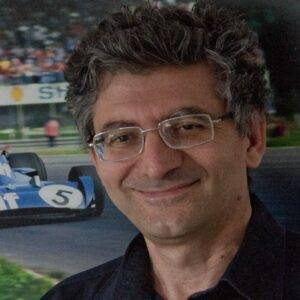
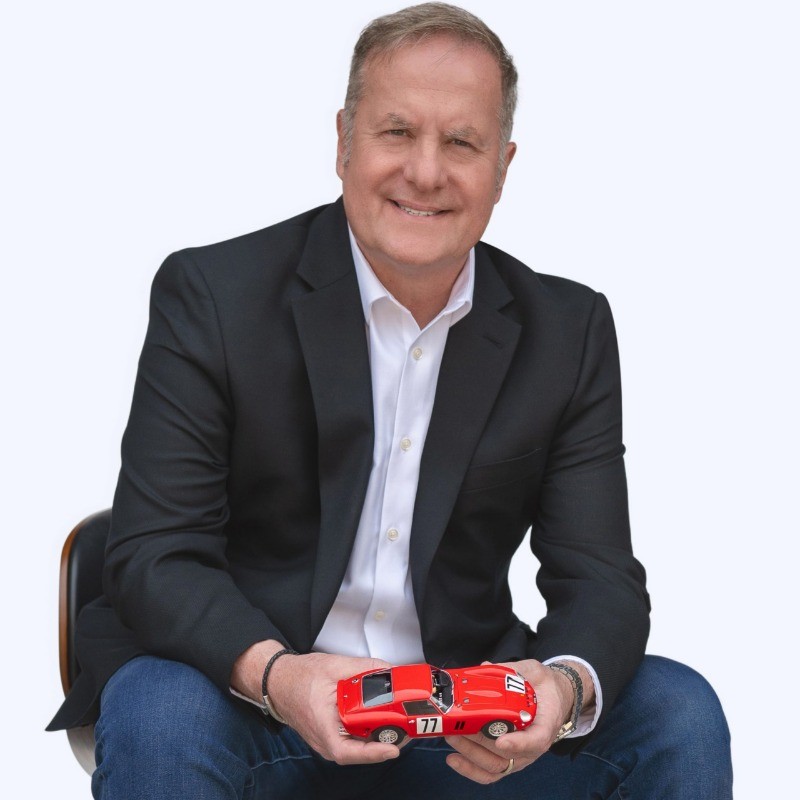
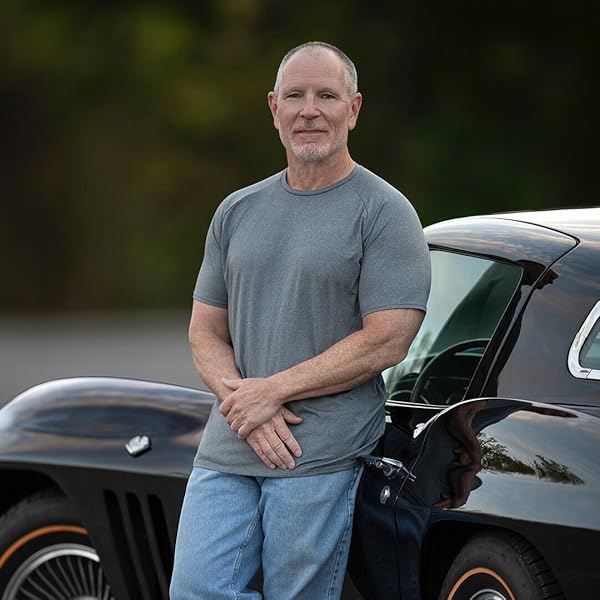
Photo courtesy of Richard Prince – richard@rprincephoto.com

Before the camera, there was the garage. Richard and his wife launched a full-service restoration business in 1988, specializing in vintage Corvettes. Working out of a home garage with little more than grit and determination, they tackled body-off restorations and built a reputation for excellence. By 1995, they sold the business to a fellow enthusiast, but the experience laid the foundation for everything that followed.

Tune in everywhere you stream, download or listen!

Listen on Apple
Listen on YouTube
Listen on Spotify

A chance phone call from Vette Magazine editor D. Randy Riggs changed everything. Richard’s wife had written a letter to the editor, and when Riggs called to follow up, he offered a monthly column. Richard accepted – without even asking about payment. That column ran for over a decade and led to technical articles and car features, which required photography. When assigned photographers failed to deliver, Richard picked up the camera himself. What began as documentation for restorations quickly evolved into a professional pursuit.

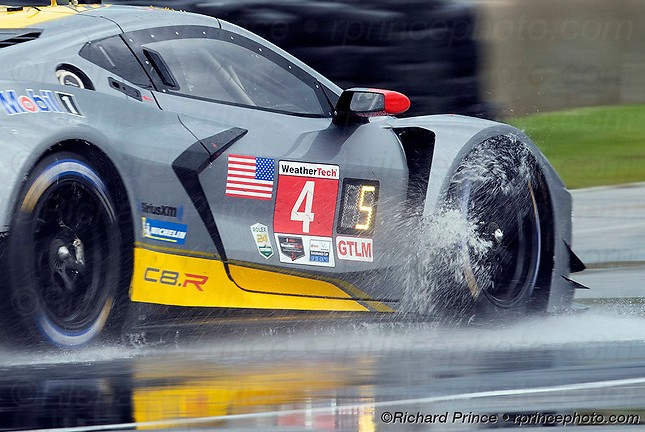
Photo courtesy of Richard Prince – richard@rprincephoto.com

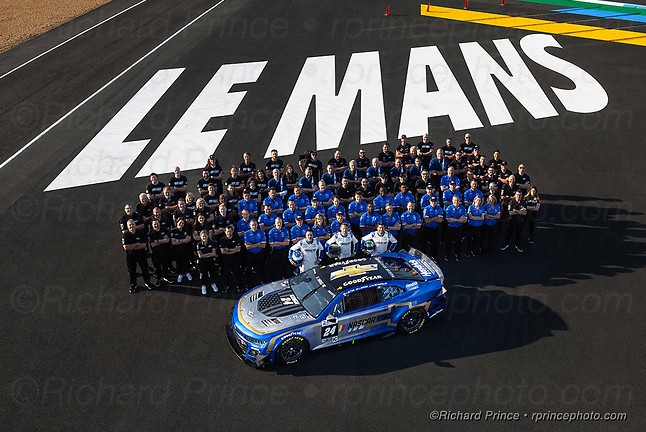
In 1992, Richard and his wife commissioned a painting of their restored Sunray DX L88 Corvette – a car with a storied racing pedigree. That painting caught the eye of Gary Claudio, who years later became the marketing manager for Chevrolet Racing. In 1997, Claudio called Richard with a request: loan the car for the public unveiling of Corvette Racing at SEMA. Richard agreed – and asked for a favor in return: full access to document the program. Claudio said yes, and Richard became the embedded photographer for Corvette Racing.

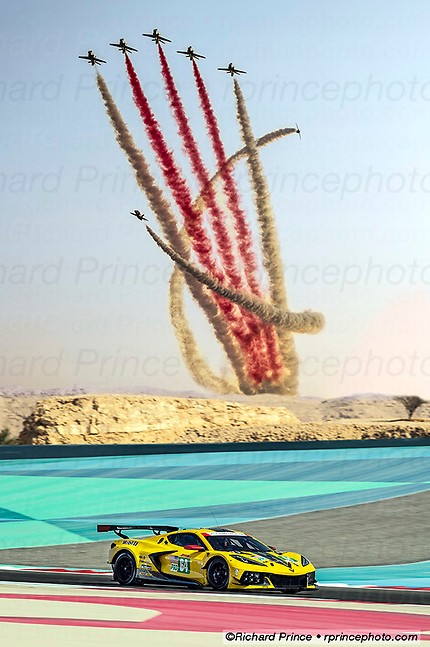
Photo courtesy of Richard Prince – richard@rprincephoto.com

Ever wonder where the iconic Jake logo came from? Richard was there. It started with pit crew member Donnell hiding skull stickers on the car, much to GM’s dismay. Marketing consultant Eddie Jabbour saw potential and sketched a stylized skull incorporating Corvette emblem elements. Gary Claudio named it “Jake,” after a team owner’s newborn son. Though GM resisted at first, fans embraced it – and Jake became a symbol of Corvette Racing’s edgy spirit.

Spotlight

Synopsis

This Break/Fix podcast episode features Richard Prince, an esteemed automotive photographer, journalist, and author, as he recounts his remarkable journey in the auto industry. Starting as a hobby in childhood, Prince’s love for cars led him to establish a vintage restoration business, which transitioned into a prolific career in automotive photography. Prince shares pivotal moments, including his discovery and restoration of a historic Corvette race car, which eventually led to his involvement with General Motors and Corvette Racing. He also recounts a severe injury he suffered at a 2019 VIR race, highlighting the risks of motorsport photography. Despite the challenges, Prince emphasizes the importance of finding joy and purpose in his work and life. The episode concludes with Prince offering insights and gratitude to the racing community and fans.

  • Let’s talk about The who/what/where/when/how of YOU  – you got your start in photography in 1991, but there must be a path up to that point? 
    • Did you originally go to school to become a photographer? 
    • Was there always a passion for cars and motorsports there? 
    • What drew you to motorsports? 
    • What was that moment or piece you would consider “your big break?”
  • You were at the birth of Modern Corvette Racing back in 1997, what was that like? How did you get involved? Was it because of the restoration business or being a photographer
  • Take us to VIR 2019: Catherine Legge (NSX) crash where you were involved. 
  • There’s many folks that want to break into this sort of work. Do you have any advice for those starting out? And those that are still plugging away? Anything you can share? (some do’s/don’ts)
  • You keep a very busy schedule, but what’s next Richard Prince? 

Transcript

Crew Chief Brad: [00:00:00] BreakFix podcast is all about capturing the living history of people from all over the autosphere, from wrench turners and racers to artists, authors, designers, and everything in between. Our goal is to inspire a new generation of petrolheads that wonder How did they get that job or become that person?

The road to success is paved by all of us because everyone has a story

Crew Chief Eric: involved in the car hobby. Since his childhood, our guests founded a vintage restoration business after completing his graduate degree. And by 1991, his career had evolved into being an automotive photographer, journalist, and author.

Richard Prince has photographed for brands like Aston Martin, Audi, Bentley, Cadillac, Ferrari, Jaguar, Mercedes Benz, and at some of the most interesting locations and racetracks around the world. He’s published numerous books as well as authoring and illustrating thousands of magazine articles. There’s no doubt you’ve seen his [00:01:00] photography in dozens of books and over 400 publications in more than 80 countries worldwide.

And he’s here to tell us all about his exciting journey filled with twists and turns that he never thought his career would take him on. And with that, Richard, welcome to Brake Fix.

Richard Prince: Thank you very much. Thank you for having me.

Crew Chief Eric: Well, Richard, like all good Brake Fix stories, there’s a superhero origin. So tell us about the who, what, when, and where of how you got involved in the automotive and motorsports world.

Take us back to the beginning, up through 1988, and this restoration business and the journey into photography. How did that all play out?

Richard Prince: Well, as with many people, it began as a hobby. It was mesmerized by certain cars. From early as childhood and among them were early Corvettes, E type Jaguars, certain Ferraris.

I was in love with first generation Camaros. Grew up at a time and in a place where cars were very central to young people’s lives. What really got me going was we went on a family trip to California [00:02:00] and while there my sister bought a copy of a car magazine and they happened to have an article about a 1967 Corvette.

I took one look at the photos of that car and I was absolutely infatuated. I was, I think about 12 years old. All of a sudden I couldn’t wait to get home because I wanted to get a job, start earning money so I can save money so that I could buy a, an early Corvette. And in fact, I did exactly that. I got home and the only job I could get at that age was a paper route and was cutting lawns and shoveling snow in the winter and doing anything I could to earn a little bit of money to, Save up for that car.

Crew Chief Eric: So do you think that magazine was a little bit of foreshadowing?

Richard Prince: It is always interesting looking back at how small things can ultimately really profoundly change the trajectory of one’s life. Had my sister not bought that magazine? Well, I still would have been in love with cars, but. Wouldn’t have been a turning point where I went from being interested in them as a 12 year old to being absolutely obsessed with earning the money to buy [00:03:00] one of these.

And I was still obviously several years away from being able to drive one. But yeah, it is interesting that. Her simple act of buying that magazine and sharing it with me changed a lot for me.

Crew Chief Eric: What did you go to school to study? Was photography at the front of your mind? Was that something you wanted to do?

Or even that was like a hobby in the background, something you were just doing because you enjoyed it?

Richard Prince: It was a hobby and I was not obsessed with it. Around four or five years old, my grandfather bought my sister and I, uh, I want to say a toy camera. It wasn’t a toy, they were real, but they were inexpensive kind of throwaway cameras.

And this was in the late 1960s. I was fascinated with it and loved it. A few years later, my parents gifted me a Polaroid camera. And of course that was like magic technology as well, but I did not, as a child, aspire to be a professional photographer. It just never occurred to me. I wasn’t infatuated with photography.

And I went to school for unrelated subjects. My undergraduate degree was in English and the history. And simply because I was [00:04:00] interested in those subjects, I did not know what I wanted to be when I grew up. Followed my heart and studied what I was interested in.

Crew Chief Eric: And then went to graduate school. And then started a restoration business.

How does that all work out?

Richard Prince: Well, it was a very intense hobby for my girlfriend, who’s now my wife and I, we did a complete restoration, our first complete restoration when I was at the end of my high school career, we had a 66 Corvette that has some, Rust in the chassis and the best way to fix that was to take the body off the chassis.

And we didn’t have facilities, we didn’t really have all the tools we needed, and we certainly didn’t have the experience we needed, but we were pretty fearless as a lot of teenagers are. So we dove right in and working out of our home garage at her parents house and mostly working in the driveway, we did a complete body off the chassis restoration of that car in circa 1981, 82.

And I went off to college in Manhattan, [00:05:00] and I did my four years there, and then, still not knowing what I wanted to do with myself, decided to go to law school, so I went to California, completed law school, and was working at a law firm in Los Angeles. And I had mixed feelings about staying there on the West coast, but I likely would have at least for some amount of time, but it was actually my girlfriend who became my wife, who was really determined to turn our hobby, which we both love very much into a business.

I was a little hesitant about that. I thought it might take a lot of the joy out of it if we had to do it every day, rather than doing it because we wanted to do it. I did realize. It would be much more difficult later on to walk away from a career and take a risk and start a business. I don’t know if it was a logical choice, but the logic seemed to be, I’m at the very beginning of my legal career, so I don’t have, A lot of time and effort invested in a trajectory there, and the trajectory is either toward [00:06:00] a partnership if you’re with a firm or typically toward building your own business, building up clientele and hiring people.

You know, once you get years into that investment, it’s very difficult to step away. And also, of course, it’s very difficult to step away from the income. I went from working your typical lower paying jobs. It’s through junior high school and high school and through college. And then all of a sudden I was earning a new lawyer’s salary and it was a lot of money to leave behind.

But three, four, five, seven years down the road, it would have been way more difficult. So I agreed to give it a try, give it one year, start a business and see how it goes. So that’s how we ended up in the car restoration business.

Crew Chief Eric: That was 1988. And in 1991, according to your resume, you started working as a photographer.

So in those three years, what changed? What was your big break? How did you suddenly go from doing the restorations and all these other plethora of things? As you said, trying to find your way. And now you’re behind the lens of a camera.

Richard Prince: Yeah, that’s [00:07:00] another very unusual part of my story. The answer involves my wife.

We were very, very busy right from the moment we opened the doors, we specialized in old Corvettes at any given time had five or six or seven of something else in the shop. We typically had about 18 or 20 vintage Corvettes and five or six or seven of something else. And that ranged from your typical muscle cars, SS Chevelles and Shelby Mustangs to one offs and odd cars.

I had one custom. We had a customer who was really fascinated with Paso Vegas, where it was a French made car. We restored a vintage MG. We had a customer with a vintage Bentley, a one off custom body Bentley. Well, what happened was my wife wrote a letter to the editor of Vet magazine. The editor at the time was a man named D, Randy Riggs.

He received her letter and was planning to publish it, but he had some questions. So he called the number that she provided in the letter, which was the shop number, and he spoke with her first. The [00:08:00] name of the business was Real Cars and he said, what’s Real Cars? And she explained it’s a full service restoration business.

He said, Oh, what a coincidence. I am looking for somebody with a lot of hands on experience with the cars who can write a column for me every month. Would you be interested? She doesn’t like writing. It’s not her thing. And so she immediately said, no, definitely not. Not for me, but maybe my husband would be interested.

He’s done quite a lot of writing, uh, all through his schooling career, and he enjoys writing. So she called me and I was in the shop. And it’s astounding when I think back, it was literally a two minute conversation, a very simple happenstance that changed the trajectory of my life in a way. We were super busy.

We’re open long hours. We had typically between 12 and 15 employees. There was a lot to do and a lot to manage. And so she called me in and said that the editor of that magazine is on the phone and he wants to ask you a question. And so he said, I’m looking for somebody to write a column. Would you be interested without thinking [00:09:00] deeply at all?

I just said a column about a lot. And he said, it’s up to you. Anything that you think is of interest to Corvette hobbyists. You write about whatever you want. Literally, in three seconds, I said, Okay, sounds like fun. I enjoy writing. But with one caveat, as long as you and I can agree that if you don’t like what I send you, or I don’t like doing it, we can part friends and there’ll be no hard feelings.

And he said, Deal. That’s how I got started. I started writing a column, a monthly column for that magazine, and it was toward the end of 1991, and I think the first column was published in March of 92. Another kind of funny part of this is, I never discussed payment with him. I was so focused on what was going on in the shop, you know, the things that I was responsible for, it didn’t occur to me to say, does this pay?

How much does it pay? It was a release for me. It was a, it was recreational, believe it or not. I enjoyed it. Great diversion from what I was doing every day. A few weeks later, a check arrived in the mail. That made it even better. So I [00:10:00] continued doing, I wrote that column for more than 10 years. Column quickly led to requests to write more.

I did quite a few technical articles in the beginning and car features as well. And those required photography. And initially for the first few photography assignments that went to somebody else. So I was. Asked to write about a certain car or a certain procedure. Somebody else was asked to do the photography and that didn’t work well.

I hate to say it, but the stereotype about the difficult artists that really grounded in reality. So some of the time the photographer just didn’t even show up. It felt like half the time when the photographer showed up, the photos were no good, they didn’t work. Why not? The location. was terrible. The light was terrible.

The lab ruined the film. All I could think of was, well, who chose the location? You did. Who chose the time of day when the light was no good? You did. And how many times can the lab ruin the film? We did a lot of photography as part of the [00:11:00] restoration business. Every extensive restoration that we did was photo documented.

So the owner of the car, when the restoration was completed, got a photo out. It was something nice to do for the customers. And it also was a way for us to document the work that we were doing. It wasn’t creative photography or art photography, but it was photography. So we were shooting 25, 30, 35 rolls of film every week because it was a busy shop with a lot of cars.

And I never once had the lab room in the film. So I quickly lost patience with the photographers. I was doing it because I enjoyed it, not because it was my livelihood or I needed to do it. I was doing it because I enjoyed it. And when the photographer didn’t show up with a lab room in the film, it certainly took the fun out of it for me.

So I immediately concluded I either had to just stop doing this. Or do the photography myself. That’s how I became a photographer.

Crew Chief Eric: Necessity breeds invention, right? In this case, I guess it begets a solution.

Richard Prince: Yes. I didn’t have any formal [00:12:00] training. I did have the kind assistance of my first editor. The man I mentioned, D Randy Riggs.

He was already an established, accomplished, talented photographer. He wasn’t in the habit of taking people who didn’t know what they were doing. Under his wing, but I already had a relationship with him and with the publisher because I was writing the column. So he helped me in the beginning to really get a grasp of the basics.

It’s not rocket engineering. It was, of course, a little more challenging. Back then, we’re talking 1992, no digital, it was all film. So there was obviously a disconnect between shooting the images and then seeing the images. So it was a little harder to learn quickly. Today, of course, you can see your mistakes immediately.

Again, it wasn’t super complicated for me, sort of a visual person, and I can think in a 3D kind of a way. It was pretty easy to get pretty good quickly. Getting better and better, of course, became more and more challenging.

Crew Chief Eric: So if I follow your chronology correctly, and listening to [00:13:00] other interviews you’ve done, and past times that we’ve gotten together, part of your story involves not just Corvette, But General Motors and the birth of Corvette Racing.

And you mentioned that you wrote this column for Vet Magazine for nearly 10 years. So if I do my math right, that puts us into the early 2000s. And Corvette Racing started in 1997, thereabouts. So how does that all come together? Is it a result of Vet Magazine? Was there another random phone call that got you in the door at General Motors?

Richard Prince: That’s an even stranger story. I say it is. It’s a most unlikely sequence of unrelated events that led me to where I am today. What happened with that was, we, my wife and I, discovered a long lost, very well known Corvette race car. We first encountered the car in 1988. I was after the engine that was in it.

The engine that was in the car at the time was the original engine for a different Corvette. They were both 67s. So there was a 67 [00:14:00] Coupe here on Long Island that had been raced since anybody could remember. The man who owned it owned two Corvettes at the same time. And in 1973, he took the 427, 435 horse engine out of his convertible.

It was original to the convertible and he put it in the Coupe and went racing with the Coupe. He sold the convertible with a different engine. In 1988, we contacted him with the intention of buying the engine. The tripower 427 that was in his coupe buying the convertible that that engine was original to and reuniting we called him he was very happy to sell us the engine.

I went to see the engine and didn’t occur to me. Maybe the car it’s in is. Something worth looking at. When I got there, there were things about that car that were super intriguing. It was a 67 coupe. It had been on MSO until 1987. The man who owned it, loaned it to somebody who raced at a [00:15:00] bridge Hampton, crashed it in 87.

And the man who owned it thought his. Intense racing days were winding down, and when he fixed the crash damage, he decided he would put the car on the street for the first time. Put more of an interior in it, and windshield wipers, and turn signals, and so on and so forth, and he went to a DMV office in New York in 1988 and registered that car for the first time.

I thought, well, that’s interesting. Here’s a car that was never registered. So obviously somebody bought this car to race when it was new. The man that owned it at the time, he bought it in 73 and he did not know anything about its history prior to 73. And at the time, not that I. I examined the car and there were some really intriguing things about the car itself.

It was a car equipped with an option called C48. C48 was a heater defrost to delete option. So every 67 Corvette started life with a heater and defroster system, buyers could delete that. [00:16:00] Chevrolet Bill 35, no heater cars in 1967. And I believe technically those cars were not even street legal because I believe in 1967, every car sold for street use in America had to have a windshield defroster.

So it was kind of a wacky option and a Corvette started in 1967. The base price was a little over 4, 000 and you could easily get over 5, 000 with some options and a really loaded car would approach 6, 000. So who would delete a heater system to save a few dollars? It didn’t make sense unless you were buying a car specifically to race and only the race.

I looked at the car and I knew it was a factory, no heater car. The most interesting thing about that is there were no rules. Anybody could buy a no heater car. If a buyer bought the L88 engine package, which was an all out road racing engine package, they could not get a heater in the car. Every L88 produced.

In 1967 was a no heater car. [00:17:00] They produced 20 L 80 eights. Of the 35 no heater cars produced. 20 of them were L 80 eights, 15 were not. I can do simple math. If you are looking at a 67 Corvette that you believe to be a factory, no heater, defroster car, there is better than a 50 50 chance you are looking at a factory, a 88 car.

And there were a few other things. The car had J 56 brakes. which by itself is not super rare. I think they made 236 J56 brake cars. That’s a heavy duty brake option. Every L88 had to have a J56 brake option. All of the pieces for the factory option were there, but there were also some pieces in the brake system that differed from normal production and that were not part of the J56.

production option. So that was highly unusual and quite interesting to me. The front chassis crossmember had an area where there was a section cut out. Steel had been shaped, placed in there, and welded in there to create a recess. There’s normally a recess in the front [00:18:00] crossmember to provide clearance for the harmonic balancer on big blocks.

So starting in 65, they all had a recess for the balancer. That car had an additional recess. The man who had the car didn’t know what it was. He said, that was there when I bought it. I don’t know what it’s for. I knew what it was for. It was to provide clearance for a dry sump on a big block Chevrolet engine.

So I said to myself, you know, you’re looking at a car that was never registered until 1987. It has an unusual brake system that goes beyond the factory big brake setup. It’s a factory no heater, no defroster car. And whoever owned this car prior to 1973 was running a dry sump big block. If you put that in the context of racing, In the late sixties into the early seventies, big block Corvettes raced in SCCA production, or if they were racing an FIA sanctioned races like Lamar or Sebring or Daytona.

Modifications were allowed, but I’m not aware, and I’m not saying it didn’t happen, but [00:19:00] I was not aware of anybody running a production based Corvette with a dry sump big block in it in that timeframe, dry sump, big block Chevrolet engines were found at that time in Can Am cars, for example, not in production Corvettes, putting all the pieces together.

I said, this is a super interesting car. Well, we ultimately ended up buying the car, still didn’t know it’s early history. We were researching it. It was a long tedious process, but we ultimately got back to the owner before the man we bought it from and the owner before him. And that car was in fact, a factory L88 car.

It was owned new by an oil company called the Sunray DX oil company. They bought it specifically to go road racing from Yanko Chevrolet. Yanko race prepared the car and it was the GT winner at the 12 hours of Sebring in 1967. And it was the GT winner in the 24 hours of Daytona in 1968. So it was super, super rare, highly [00:20:00] valuable and fascinating car.

We restored it to its Sebring configuration, spent thousands of hours researching the history of the car, traveled all over the country, did video interviews with everybody who was still alive, who was connected to the car, it took me from coast to coast and Believe it or not to the Eisenhower presidential library, because man named Clyde Wheeler was the vice president at Sunray DX oil.

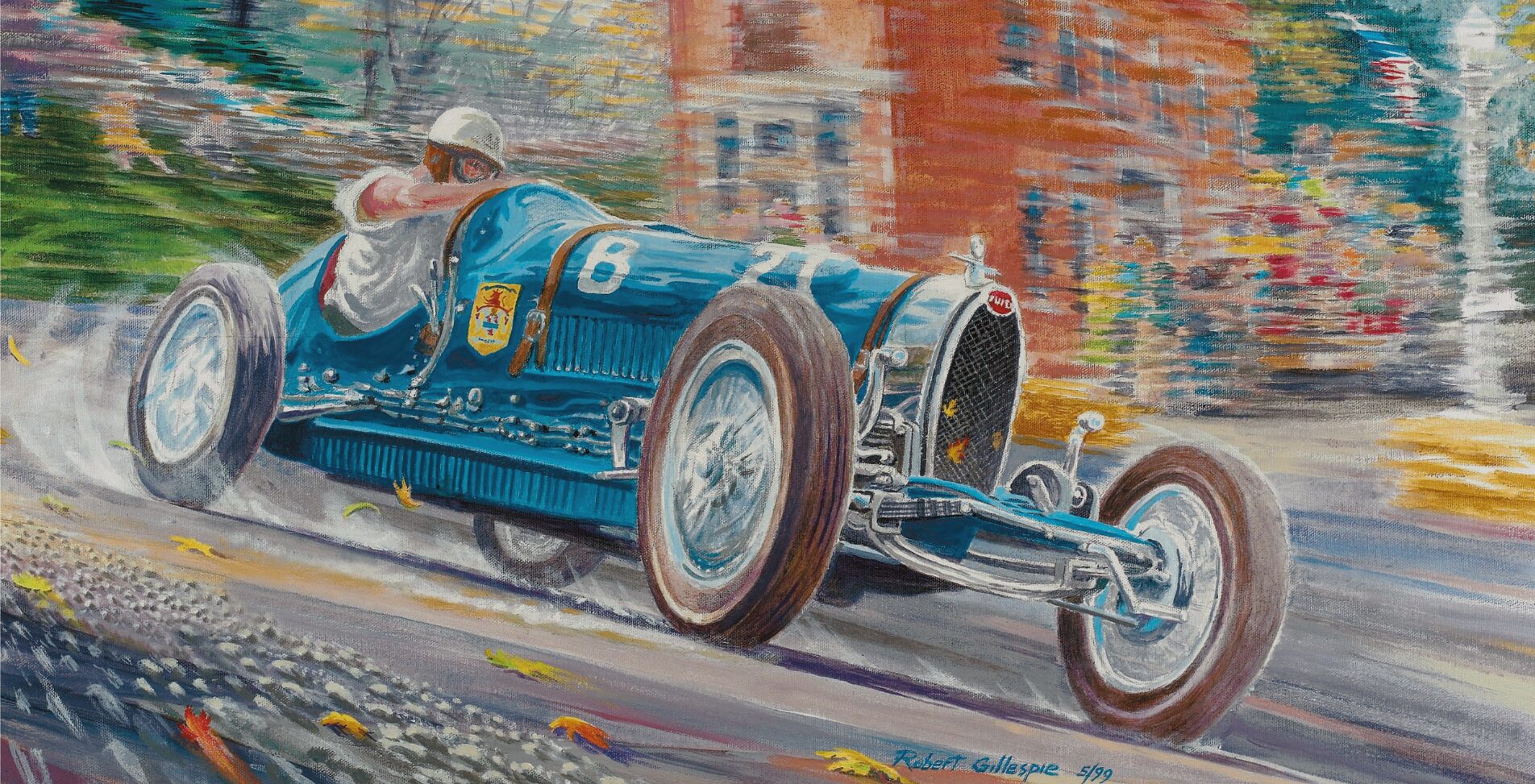
He later became a cabinet member in the Eisenhower administration and all his papers ended up in the Eisenhower Memorial library in Kansas. So anyway, my wife and I restored it. We showed it. We’ve been to trace that we adored it and we commissioned an artist. To do a painting of that car. It was the first and last time we’ve ever hired an artist to do a painting for us.

I asked some people at Chevrolet who I was friendly with, that they could recommend a automotive fine artists. They recommended Charles Maher in Michigan. We hired him. He did the painting and when it was completed, he [00:21:00] asked us if he could display it at an automotive fine artists society show in Detroit.

And of course we said, sure. He displayed that painting at an AFAS show. Coincidentally, a man named Gary Claudio went to see that show. Corvette guy, car guy, he fell in love with the painting and wanted to buy it. And the artist explained to him it was a commissioned work. It’s not for sale. Somebody already owns it.

And Gary said, well, maybe whoever you did the work for would sell it to me. And the artist said, I doubt it. I’ll pass your info along to them, but I doubt they’ll sell it. It’s a couple in New York and they own the actual car that’s shown. That was in 1992. Yeah. Three, four years later, that same man, Gary Claudio was the marketing manager for Chevrolet racing, a planning meeting, they were discussing delivery for this race program.

That’s coming. He was planning the public unveil of the program, which took place at SEMA in 1998, and he’s a Corvette buff [00:22:00] and a Corvette history enthusiast, and he thought, wouldn’t it be cool if I could put together a display with some historically significant vintage Corvette race cars. And he immediately thought of that painting and the Sunray DX LED8.

So he tracked down the artist and from the artist got my phone number and my name. One day in late 1997, my phone rang and it was another astounding conversation as was the conversation with Randy Riggs. It was a couple of minutes long and it really did change the trajectory of my life. He called and asked me, and I said, this is Richard Prince.

And he said, Richard, I want to ask a big favor of you, but before I ask the favor, I have to know if I can trust you. I thought it was a prank. I was living in New York at the time on Long Island. I was working in Manhattan. The guy on the other end of the phone had a distinct Long Island accent. So I said, okay, this is one of my idiot friends.

And there’s some kind of a joke or a prank, and I couldn’t place a voice, I didn’t know who it was, in the middle of writing a [00:23:00] story, and I was busy, and I, he said, okay, whatever, I’ll play along, so, he said, before I ask you for this big favor, I have to know if I can trust you, and I said, buddy, you can trust me with your life, what do you need, and I thought I was gonna get a punchline, and it was gonna be a ha ha, and he said, my name is Gary Claudio, I’m the marketing manager for Chevrolet Racing, And I want to borrow your 1967 L88 race car for a display.

We have a factory road race program coming and we’re going to Unvalid. And, and of course, in that instant, I knew that it wasn’t a prank. And he said, I got your name and number from Charles Maher. I saw your painting a few years ago. I said, yes, I’m happy to loan you the car. And we had another historic Corvette race car and SCCA national championship winning C1 Corvette at the time.

And I said, I have another Corvette you might be interested in and you can borrow both of them. And now I’d like to ask you for a favor. And I did say the answer to my question, um, doesn’t change the outcome of my willingness to loan you these cars. I [00:24:00] said, at the present time, I’m writing and photographing cars for a whole variety of magazines.

And this race program sounds really cool. I would like to basically join the team and bed with the program and have unlimited permission to go wherever they go and to photograph whatever it is that they’re doing. And I’ll stick with the program. It was scheduled to be a three year program, so there was about a year and a half of testing and then three years of racing.

I said, I’ll start immediately. I’ll go where they go. I’ll stick with the testing and the three years of racing. And when it’s over, I will produce a book about it. I wasn’t asking GM to pay for it. I was just asking for permission to do it without hesitating. He said, you got it. So that in a nutshell is how I became a racing photographer

Crew Chief Eric: and to not take us down a slightly different path.

But I have a question to ask because you’re probably one of the few people that might know where Jake came from. Is it because of Gary Claudio? Is it something that somebody [00:25:00] said? Where does that iconic? Figure of Corvette racing come from since you were there at its inception.

Richard Prince: Yeah. Gary Claudio figures prominently in that story.

Then it’s the sort of thing that quickly morphs into sort of an urban legend. And over time, the details are forgotten and the key players can be forgotten some number of years ago. I did a deep dive into that. And I wrote a very detailed article about Jake because I saw all kinds of explanations around that I knew were wrong.

What happened with that is, some of the team management, specifically, most specifically, Doug Feehan, who was the program manager for Corvette Racing from the beginning for many years, thought that a key to the program’s success was reaching younger people. GM is a very conservative company, and it has been for a long time.

Feehan and others thought, we need to get edgier, we need to Find ways to reach out to, and to make friends with younger people. So he actually hired a very small edgy marketing agency that was based in New York [00:26:00] city run by a guy named Eddie Jabbour to come on board and to help figure this out, how do we develop this persona and reach a younger audience?

Eddie came to Lamar to just start to get a feel for the team and to get an understanding sort of brainstorm and come up with some ideas. At the same time, there was a crew member, one of the truck drivers, and one of the pit crew members, a guy named Don Nell, who had a little bit of a fascination with skulls.

It’s just sort of something that he enjoyed. It’s like sort of a biker culture thing, you know, skulls figure prominently in mythology and in literature. And Don just loved these skulls. He, um, started putting little skull stickers and little skull pins around on the car. And some executives at GM were highly annoyed by that.

And it became a little bit of a cat and mouse thing. So Don would hide these little skulls. They’d appear here, there, everywhere. And then somebody from GM would take the sticker off the car or these little metal [00:27:00] pins. Eddie took notice of that, thought, how can we sort of harness this? This is edgy and this is kind of funny and cool.

And he literally on a napkin drew what became Jake. He conceived the idea with Gary Claudio doing this sort of stylized skull that incorporated key elements of the Corvette Emble. That napkin and that drawing still exists. That’s where the skull logo came from. The name Jake came from Gary Claudio.

Claudio, prior to Corvette, was with Pontiac racing. One night at a, at a race, Gary and some of the crew people went out, and they had dinner, and they had probably too much to drink. And on the way back to the hotel, somebody stole a lawn ornament. You know, one of the old fashioned, the little guy holding the, uh, little pail.

So they stole this lawn ornament because they thought it was funny and they brought it back to the track the next day. It became sort of the team mascot, this lawn [00:28:00] ornament, dress them up and they got a credential for him. Gary named the lawn ornament Jake, and it was named after a recently born baby of one of the team principals.

One of the team owners had a son born. The son’s name was Jay. So they named the. Team mascot after the son of the team owner. Once the skull logo was created, Eddie Jabbour drew it out on the napkin. Gary christened the new mascot, Jake. So that is how that happened. And then there was a stretch there where GM really didn’t embrace it.

People at GM who thought it was the wrong image. So there was this. A little bit of tension and this constant back and forth with these jakes showing up everywhere. They started showing up everywhere. It was showing up on t shirts. It seemed to be coming from a website called Bad Boy Vets. And the website was created to look like a couple of 14 or 15 year old bad boys, bratty young teenagers created this thing.

It was really edgy, but it was actually Eddie Jabbour [00:29:00] who created the website. And that was pushing this Jake Skull logo. Over time, the fans really embraced it. Pretty soon, some designers at Chevrolet took a liking to it. It reached sort of tidal wave proportions where the people at GM who thought it was a bad idea, just couldn’t resist anymore.

Eventually it was completely embraced by General Motors and you’ll see Jake now it’s all over the C8s. It was on the C7s, it was on C6s, it was imprinted on the under hood insulation, and it’s showing up embroidered on seats and in body graphics. So that, that’s a somewhat abridged version of the Jake logo.

Crew Chief Eric: As we switch gears into the next segment, one question that sort of still lingers here from your origin story is, what about your restoration business? Is Real Cars still around? Is that something you’re still doing now for fun? Or did you put all that to bed?

Richard Prince: Well, we sold that business in 1995 and stayed on in the transition period.

We sold it to a friend of [00:30:00] ours who was already in the restoration business. He’s an interesting character. He was actually also obsessed with Corvettes and turned a hobby into a business long before we did, but he was always sort of flying under the radar. He didn’t have proper operating licenses and we were completely compliant, which was a full time job in and of itself.

We had painted. So we had permits for everything, paint storage, emissions, the spray booth. Fire suppression system, waste management, all this, you know, it’s very difficult, especially in New York to maintain a legitimate business doing automotive work and body work and painting. And so he needed to sort of come out of the shadows and it was a match made in heaven.

He bought the business and he kept his name. So the name no longer exists, but he’s still going and he’s still very actively restoring, doing beautiful work, mostly Corvettes, but other cars as well. So we stayed on through the end of 1995 and then stayed there another, about another five months, because we had a car of [00:31:00] our own that was in process and it was a part, the body was off the chassis.

And I knew at that point. Point, we were going to move on to other things and we needed to put that car back together because otherwise it would stay apart for a long, long time. So we stayed there until, uh, like may or so of 1996. And we had a target date that car went to the special collection in Bloomington for display there in June.

So we had a good date to work to her and we finished that car after that. It was a long time. Before my wife and I did any restoration work again, I got super busy starting in 1997 with the racing work. And it was a whole new environment, a whole new world. And the established photographers who had been shooting racing for a long period of time, some of them at that point already 20 plus years, they all told me the same thing.

They all had the same advice, which is this is a brutal business. The programs come and go, the factories are in, they’re out. Don’t get used to it. Don’t [00:32:00] give up your day job. And my day job was writing and photography for primarily editorial clients. Working on my first book at that point in late 98 or early 99.

But I followed their advice. I didn’t give up my day job. And the racing just got bigger and busier and busier and busier. So I ended up with two jobs and then three jobs. There wasn’t time for the

Crew Chief Eric: cars. Well, Richard, let’s take a pit stop here as we transition into the next segment, and let’s talk about your travels around the world, and you know, we ask folks on the show all the time, you know, is there a bucket list track you’d like to race at, or you’d like to attend, or if you could go back in time, you know, which driver on which track, you know, those kinds of things, But you’ve been to so many interesting places in the world and to so many locations, I kind of have to frame it in a very simple way, which is as a photographer, what is some of the best or maybe worst places to photograph in terms of racetracks in the world?

Richard Prince: I am a hundred percent committed [00:33:00] to find happiness everywhere. So even the tracks that I enjoy less for one reason or another, or the events that I enjoy less, I still enjoy them. I just enjoy them less. If I had to pick one track, one event, it would be the 24 Hours of Le Mans. I love the long races to begin with.

I’m a history buff. My undergraduate degree is in history. I still read a lot about history. The only real TV I watch is documentaries about history. And of course, the sense of history there is unmatched. That race began in 1923, and aside from a few years of interruption during the Second World War, it has been held every year, and every year, the best teams, the best drivers with the best cars come from everywhere in the world to race there.

You ask any driver in any discipline. Multi Formula One world champions, MotoGP world champions, best top fuel drag racers in the world. It doesn’t matter. Every one of them [00:34:00] wants to add a win at Le Mans to their resume. I just adore it. So I, I went there for the first time and, 2000 when Corvette went there, Corvette did not go during the COVID year in 2020.

So I didn’t go either this year was my 24th, and it’s not the same experience. Of course, there’s no getting around that. There’s always an evolution. The first time for anything is going to be different from the second time. And the third time is going to be different from the second time. And the 10th time is going to be different from the fifth time, but I’ve never gotten tired of it all.

Board with it. It’s exciting for me every single year and I look forward to it every single year. And part of the challenge there, and this is not exclusive to Le Mans, but it applies to Le Mans. It applies to everywhere I go. I still go to new tracks once in a while. I’ve photographed over a thousand races now.

A lot of the tracks I’ve been there 30, 35, 40, 50 times, but I still go to some new ones. One of the great challenges and [00:35:00] thrills of going back to the same place. For the 20th time, or the 25th time, or the 50th time, it’s trying to see it in a different way, trying to find something new, one new angle of view, one new location, one new something to create a different photograph that I didn’t create the first 15 or the first 40 times I’ve been there.

It’s obviously increasingly difficult. The more times I’ve been to a given track, I say there’s always something new, and the challenge is to find it. Always something new, and it’s super, super gratifying to do that.

Crew Chief Eric: We’ve had the privilege of sitting down with a lot of different pro drivers on the show, and you hear all about the war stories, and the battles, and the things that happened on track.

And there you are on the other side of the fence, as Bill Warner likes to say when he was here. And you got to capture those moments, those battles, those wars that we saw play out on television, and that we hear the big fish stories later and all those kinds of things, but there was a point in your [00:36:00] life.

And as you said, it’s a series of unrelated events that have come together. Where these two things converged, the story we saw on TV, the story that you hear about, and your life, those two paths cross, and it takes us to V. I. R. in 2019. And what I’m referring to is, if anybody saw it, it’s Catherine Legge’s crash in the NSX.

And unbeknownst to many of us that were watching it on TV, you’re like, oh my god, she wrecked, you know, this and that. There’s another side to the story that many people don’t know. And so I want to Open the conversation up for you to share that experience in your own words, what that crash meant to you and how it changed your life in an impactful way.

Richard Prince: No pun intended. Yes, it was impactful way because I was impacted. You know, racing is, it’s a dangerous environment anyway. You slice it way, way safer than it’s ever been, but it’s still a dangerous environment. And credentialed photographers are allowed to go in areas that the public is not, where it is Potentially more dangerous.

And on that [00:37:00] fateful day at the uh, IMSA race at VIR in August of 2019, I was in one sense, in the wrong place at the wrong time. The car crashed, it struck the steel barrier, and I was right there. And I saw the car coming about a second before the impact. So I didn’t have a lot of time. I had three cameras with me, three bodies, three lenses.

Actually set them down and set myself down, crouched down behind the crash barrier, the barriers that the IR are not setting concrete. They just set into the earth. I wasn’t raining at that moment, but it had been raining in the days prior to the race. So the ground was particularly soft. The grass was wet still, which helped the car probably had a tire failure.

I, I, I, I don’t think there was a definitive understanding of the crash. What happened? There wasn’t two cars that came together. The NSX by itself suffered a sequence of failures that left Katherine with no steering and no brakes. And the car made a left turn, went off the track, and went along the [00:38:00] grass, which was wet, which didn’t help slow it down, obviously.

It struck the steel barrier going quite fast. I was told it was going at about 156 miles an hour when it struck the barrier, and it drove the barrier back about three feet, and one of the steel I beams supporting it struck me in my torso. This has changed now. They did remedy this, but at that time, there was about a three foot wide aisleway between the steel crash barrier and a cabled catch fence.

The cabled catch fence came about because of the condominiums that they built trackside there. So they built the condos and they didn’t want the people who were enjoying the condos to be able to go right up to the crash barrier. So they built this cabled catch fence and they only put it a few feet off the crash barrier, I guess, to maximize the front lawns of the condominiums.

So there was no escape. I couldn’t get far away from the barrier. So I hit the ground and I was struck. It was an interesting [00:39:00] experience for sure. Never lost consciousness. I wasn’t even knocked over, but it was a hard hit. Initially. I thought I actually might be dead because I was at a racetrack and it was of course, noisy.

There was a race going on still. And in the instant that I was struck, I heard the most complete silence that I’ve ever experienced in my life. I was fully conscious and was thinking to myself, is this the end? The beginning of the journey after one’s life concludes this pure silence. I gathered my thoughts and said, I don’t think you’re dead.

I think I’m very much alive. I knew I’d been injured. I thought I probably had a, at least a couple of broken ribs. But my breathing felt fine. My head wasn’t struck, so I wasn’t worried and I really just wanted to get out of there. I didn’t want to be part of the story. The Corvettes were in the battle there for the lead in the class.

They were, uh, I think running second and third or second and fourth at the point where the accident took place. And there was about 20 minutes left in [00:40:00] the race. And so I knew even if they didn’t pass, one of them didn’t pass to take the lead, they were going to be on the podium. I just wanted to get out of there and shoot the podium.

But fortunately I couldn’t escape because when the car hit, there were light truck tires that were bolted together. And the car actually, I think, dove under the tires before it hit the steel barrier. And it pitched a whole grouping of, it was about 17 tires or something, over the steel barrier. And it landed between the fence.

And I was quite fortunate that didn’t land on me. I did a rough calculation later on, and that grouping of tires weighed about 1, 600 pounds. So had that landed on me, we wouldn’t be speaking today. But, it blocked my exit. It was my left side that was struck, and I had temporary paralysis. I couldn’t move my left arm.

And I had As I said, three cameras and three lenses to carry, uh, including a 300 millimeter 2. 8 and a 500 millimeter 2. 8. So they’re big and they’re [00:41:00] heavy and I have one arm, so I couldn’t get out of there. And that turned out to be, uh, fortunate. A friend of mine, a man named Bill Miller, who is a commercial airline pilot, In real life, but he’s also a huge racing enthusiast and he’s a professional race spotter.

So he goes to, I think, just about all the IMSA races and he acts as, uh, works as a spotter for one or sometimes more teams. So they place people around the track. With a radio headset and they’re helping the driver to understand the track situation. If there’s a crash with his oil on the track where they’re coming up on a slower car, whatever the circumstances are, the spotter can help the driver.

So that’s what Bill Miller was doing. And he happened to be right nearby and he saw the whole thing and he came running over and he was on the other side of the catch fence. And he was screaming at me, you’re getting in that ambulance. You don’t know what you’re talking about. I was saying, I got the wind knocked out of me, but I think I’m okay.

And he was screaming, you’re not okay. You’re in shock. You could be badly hurt. You’ve got to go to the [00:42:00] medical center, blah, blah, blah, blah. And I was stubborn and foolish and resisting. I looked okay. I wasn’t bleeding. I had no external apparent injuries. The emergency crews got there like a dummy. I would have avoided the ambulance, but Bill Miller was screaming at me, and he was screaming at the EMTs.

You’ve got to take this guy. He was struck being stubborn and foolish. I was explaining to the empties. Yeah, I did get hit, but I think I’m okay. I feel fine. I need to go with you. Bill Miller was behind that fence. I won’t repeat what he was saying because he was using some foul language, really screaming at me and I was sort of feeling pressured there.

Then what happened was I lost the vision in my left eye. I initially thought there was maybe some mud on my glasses. You can see this actually on the TV coverage. The helicopter was hovering above. I took my glasses off to clean the mud off of them, and there wasn’t a mud on them. That was a horrifying moment because I realized that.

I lost the vision of my left [00:43:00] eye, and I thought, you know, my optic nerve’s been severed, or my retina’s disconnected, or something horrible has happened here, and I’m now half blind, so I agreed to get the ambulance. Bill Miller’s screaming at me, and I lost the vision of my left eye. So that’s how I ended up in the ambulance.

And then there’s no medical center at BIR. There’s just a medical room where there’s a, a doctor and a nurse, and a blood pressure machine, and some basics. So we were on our way there and we got about halfway and the vision returned in my eye and I then just wanted outta the ambulance like a moron. And again, I felt okay.

I was in pain. It hurt, but it wasn’t excruciating pain, and my breathing was fine. I wanted out of the ambulance, but of course, once I was in, they couldn’t let me go. There’s nothing else for liability reasons. We got back to the medical room. No external injuries. I wasn’t bleeding. Nothing was obviously wrong.

Took my blood pressure. That is the one and only time in my whole life I’ve got high blood pressure. [00:44:00] My blood pressure is normally picture perfect, exactly where it’s supposed to be. So when I heard the numbers, I was like 156 over 119 or something. I thought, oh boy, that’s not good, but they looked at it and said, well, you know, at your age, you’ve just been involved in a traumatic accident.

Your blood pressure is not bad. It’s okay. And I’m thinking, not bad. It’s never ever been high under any circumstances. Anyway, they said, you know, you really, you were struck in the torso. You really need to, at least to get an x ray, you need to go to the hospital and get an x ray. Do you have somebody who can drive you?

I said, well, I have a lot of friends and a lot of people I know here, but everybody I know is here working. So yeah, I can get somebody to drive me, but it’s not going to be for a couple of hours. I said, well, that’s, that’s not good. You have to go now. And I said, well, I’ll drive myself. And they said, well, we can’t let you drive yourself because you suffered at least some kind of an injury.

There wasn’t a medevac helicopter there, but they dismissed it because I kept saying I’m fine. [00:45:00] They gave the ambulance crew the bad news that they had to take me to the hospital and the race had ended at that point and I think they were ready to go home so they were a little disappointed and I was a little disappointed because I really didn’t want to go to the hospital, but that’s where I was going so got in the ambulance and I’m the whole time I’m saying, I’m okay, I’m fine.

So they never put the lights on and don’t put the siren on we just. Stuck in traffic over an hour because the race had ended and the BIR is in a rural area in uh, southern Virginia, right near the North Carolina border and there’s just one country road in and one out and there were 40, 000 people there watching the race and when the race ended it was a A giant traffic jam.

So it was a long slog to get to the, it was a little over an hour to get to the hospital. We went to Danville Regional Hospital, which is not the place to go to if you’ve suffered a severe traumatic injury. But I kept saying, I’m okay. I looked okay. So that’s where we went. And it was terrible for my wife.

It was much worse for my wife than it was [00:46:00] for me. I was calm. I was at peace. I didn’t understand what my injuries were at that point, but I was, I was okay. And once I was in the ambulance, I thought, well, I better call her.

Crew Chief Eric: And nothing like this had ever happened to you before. This is the first time in all your many years.

Richard Prince: To this day, I’ve never had a car accident. I’ve driven over a million miles. I’ve never had a car accident. I never had a broken bone in my life. And I did stupid things as a kid. I was just lucky. I fell off my bike plenty of times. I rode motorcycles, dirt bikes, Got banged up and scraped up and cut and so on and so forth.

I needed some stitches when I was a child here and there, but I never had a broken bone, never had a blunt force trauma injury. So it was all new. I called my wife in the ambulance and she watches every race. She’s a massive race fan, much bigger race fan than I am. She watched the race. And I said, there was a crash at the end.

And she said, yeah, I know the Acura. Really whack the wall. And I said, well, I was kind of caught up in that accident. [00:47:00] And she immediately lost her mind, started screaming. Don’t lie to me. I know you’re lying to me. How bad is it? Don’t sugarcoat it. And then, uh, we lost the cell signal. Cell phone coverage is not so great because again, it’s a rural area.

And we were literally crawling along. And I had no cell signal, she absolutely freaked out and she found some numbers from some of my photographer friends and started making phone calls. And none of them knew anything. They knew I wasn’t at the podium and I wasn’t in the photo room after it was over, which was a little weird, but I was out there by myself when the crash happened.

She got no information. It wasn’t until it was about an hour and 10 minutes later, when we got to the hospital that I was able to call her again. So that was a very, very difficult time for her because she intuitively knew that it was bad. And it was bad, as it turns out. So they called the hospital ahead of time, and it’s a regional hospital.

There was, there were no specialists there. They had to call specialists. So they had an [00:48:00] x ray tech and he did an x ray to start with. You know, the loss of the vision of my left eye was the first horrifying moment. The look on the face of the x ray technician after he did the x ray was the second horrifying moment.

And I said that to him. He was looking at his screen and looking at me, looking at the screen, looking at me. And he had a look of absolute disbelief on his face. And I said, you were looking at me as though you find it shocking that I’m still alive. What do you see? And he didn’t answer me, and I said, Look, I know I at least have a couple of broken ribs.

And he said, You have a lot more than a couple of broken ribs. There’s a surgeon on the way, and I’m going to let her explain it to you, because I’m really not supposed to interpret the x ray and give you my opinion. They called her, and she had asked them to do a an upper body scan, so I went in for the scan before she got there.

Uh, then she arrived. Even in the midst of this, I found it humorous. And I thought, man, I wish some of my buddies were here to laugh along with me. But [00:49:00] she was called in, she wasn’t in hospital. So she didn’t have the doctor’s outfit on. She didn’t have the stethoscope around her neck. She just didn’t look like a doctor.

She looked at the scan and she said you need a thoracotomy, a chest tube, and I said, well, I assume that is what it sounds like, but I’ve never had an injury of any sort. I’ve never had a chest tube. What does that entail? And she described the procedure to me, and I said, well, that’s barbaric. No thanks.

Give me another option, and she said, you’re an adult, you’re not inebriated, you’re not even in shock. If you refuse treatment as much as it hurts me, I have to honor that. And I said, I’m not refusing treatment, I’m just refusing the chest tube. Give me another option, and she looked at her watch and she said, you have two choices.

either a chest tube, or you’ll be dead in 30 minutes. Your chest cavity is filling with blood, it’s about one third full, and when it reaches a certain point, your heart will stop. The [00:50:00] blood will compress the vessels in your chest, you’re still bleeding, and the only good thing I can say about it is it will be relatively quick and relatively painless.

And I said, I’ll take the chest tube. Thank you. The funniest part of this, it was funny. We were heading toward the operating room, and she asked me where I’m from. And I said, Long Island. And she said, Oh, I go to Long Island all the time. And I said, Naive me. But do you have family there? And she said, No, my psychic is all along.

That’s what I thought. Oh, damn it. I wish somebody some friend of mine was here to hear this. This is ridiculous. I found it hilarious, actually, um, she described the procedure, and I had just one question. It entails putting a titanium tube through the torso into the pleural cavity, and it’s gotta be forced through.

I said, okay, it goes through the flesh, [00:51:00] through the rib cage, and through the chest cavity. What stops it? Because I’m not a doctor, I had a collapsed lung, and that’s what was the source of the bleeding. And I said, you can live with one lung, but you can’t live with no lung. So, when that tube is plunged in, what stops it from piercing the other lung?

And she said, well, that’s my burden. That’s where the skill of the surgeon comes in. So, that was it. The operation was a success. Oh, by the way, it was painful. That’s, uh, another thing I’ll mention. I got no anesthesia. Not even the topical. So it starts with a scalpel, and then it’s a lot of procedure. I won’t get gory, but no anesthesia.

And man, did that hurt. I later, I had to see a pulmonologist and other specialists. When I got back home for follow ups for a couple of years and I asked the pulmonologist, is there some medical reason why you can’t get anesthesia or at least a local when you get a chest tube? And he thought it was kind of funny.

He said, [00:52:00] no, no, no reason. Well, why didn’t they give me one? And he said, there’s no such thing as you, you don’t schedule a chest tube. It’s always an emergency. It’s always a life and death situation. And the vast majority of the time, the patient is unconscious, so it’s just habit. You just do it. I learned my lesson.

Next time I need a chest tube, I’m asking for the anesthesia. Anyway, that evening after my first night there, I saw an orthopedic surgeon and a neurologist, and the neurologist said to me, you’re not going to appreciate this now, but you’ll appreciate it later. You are the single luckiest person on the face of the earth today.

Because I was walking when I saw the car coming, and I just hit the ground. Again, it had about a second. He said, if you had taken one step fewer, that I beam would have hit your head, and you wouldn’t be here. You would have died essentially immediately, instantly. And if you had taken one step more, that I beam would have struck you in your waist, below the ribcage, and it would have caused massive internal bleeding, you know, the force of the blow, [00:53:00] and you would have just led to death.

Before they got to you. He also said, this is not where you come when you have the injuries that you have. This is a regional hospital. You belong to a level one trauma center. Had you been bleeding at a greater rate, and we would have fully expected that you would have been given the extent of the injury, you should have been bleeding out faster than you are.

You should have died in that ambulance, and even if you made it to the hospital, if you were right on the edge, there was nobody here to save your life. No surgeon here. Everybody had to be called in. So you are super, super lucky to be alive. And that’s the way I feel. The force of that blow shattered my scapula, broke nine ribs, tore my rotator cuff up, caused a massive edema, chest wall trauma, collapsed lung, internal bleeding.

Crew Chief Eric: You felt fine. You were good to go.

Richard Prince: Yeah. Double. That’s the story. I feel super lucky and it wasn’t certainly wasn’t a happy story. It was a happy story for the track or for the series or for GM and I [00:54:00] have to say there’s no other experience like staring down the abyss and coming face to face with your own mortality.

It’s a unique experience and if you digest it and contemplate it and put it in the right perspective, it can dramatically increase your appreciation for life and that’s what it’s done for me. It made me way more committed to enjoy every second. But ultimately, like I said, even the races that I don’t enjoy as much, even the travel that I do, I try to find happiness in every single thing that I do.

And I try to find some happiness in everything. And that includes this story about the crash of VIR. And I really do. I’m not trying to fool myself. I find happiness in everything. I really do.

Crew Chief Eric: Did you ever sit down with Catherine and talk about this experience together?

Richard Prince: She was going quite fast. And she did what drivers are trained to do, which is take your hands off the steering wheel when you have no [00:55:00] control of the car and you’re about to hit something at a very high impact.

Everybody’s instinct to grab that wheel with all your might, and what happens is when the car hits something, that wheel can be jerked suddenly one way or the other with such force that it’ll break your wrists, break your arms. So she said that she crossed her arms, and she prayed, because she was convinced that Given the rate of speed, she was convinced that she was not going to come out of that okay.

And she did. And she only learned afterwards that somebody else had been injured. She called me the following day, the Monday when I was in the hospital. I went to the next race, which was crazy. Another crazy part of the story. And we had a chat at the racetrack. Yeah, she felt terrible, but it wasn’t her fault.

The crash was not her fault. It was either a tire failure or a mechanical failure in the car. And you know what? Even if it was her fault, I’m a big believer in personal responsibility. I understand the work that I do entails some level of risk, and certain places on certain tracks have a higher level of risk, and I [00:56:00] chose to be there.

And so I’m, I’m responsible, even if The driver made a mistake that led to the crash. I’m still responsible for me being there, so I accept full

Crew Chief Eric: responsibility for it. Up until that point, like we said, nothing had really happened. You know, you get up on the ladders, you’re in a tree, behind the fences, you’re shooting the cars.

Life is good. And then this happens. And then you learn from it. You adapt and you overcome. As we’ve seen at many a track day, whether it’s a professional event, or it’s an HPD, you know, there’s always some sort of trackside photographer at a lot of these events, you know, they’re out there either trying to get started to make their name, or they’re still just kind of plugging away at it.

So knowing what, you know, now looking back over. This incident and your entire career as a photographer, is there some sort of wisdom that you can pass on? Maybe some do’s and don’ts to these photographers that are out there?

Richard Prince: Sure. In terms of safety, absolutely. Because photography is a passion driven endeavor.

People who end up in racing photography typically love racing and they love photography. It’s a [00:57:00] very emotional, personal, passion driven activity. In that environment, in those circumstances, it can be very easy to take more risks. My photographer buddies and I, we will often say anything for the shot, facetiously, but to some extent, it does apply, where you will take risks.

It’s certainly, what happened to me, is certainly a reminder that the dangers out there are real. And sometimes it’s just not worth it. It’s just not worth the shot. And I’ll give you another example where I apply that. Lime Rock, which is a beautiful natural terrain road course, historic road course, can lead to the creation of very beautiful photography.

It’s a wooded rural area. It’s in Connecticut. The tick population is super high. For many years, certain areas, certain shots that to get to those areas, you go through the woods, you just track through the woods every year. I tracked through the woods and I come out with ticks on me, they’re just in there and I reached a point just a few years ago where I said, you [00:58:00] know, this is, it’s not like getting hit by a car where you’re bleeding internally, but.

Ticks can lead to serious problems, debilitating diseases, Lyme disease, this and that. I’m super lucky. I’ve been bitten many times and I don’t have Lyme disease or Rocky Mountain Spotted Fever or any of the other tick borne ailments, but everybody’s luck runs out eventually. I just decided none of these photographs are worth the risk.

So my advice is, yeah, I understand the mentality and I’m not suggesting anybody crawl under a rock or be overly risk averse. As with everything else in life, there’s a reasonable balance point, a sensible place to be to extend yourself, work harder. You’re always taking some chances. You get out of bed in the morning, you’re taking a chance to advance the art and adventure business.

Understand that there’s also a line in the sand that you determine that for yourself in many instances. Uh, of course, to some extent it’s determined for us. We’re not allowed to go certain places. But even [00:59:00] within the realm of the places where we are allowed to go, sometimes it’s okay to make that choice and say, you know, I just don’t feel comfortable here.

And what has changed for me is there are places, and you ask any race photographer who does a lot of racing, There are certain places and certain tracks that just feel less safe than others. Maybe statistically they are or they aren’t, but they just feel less safe. There are some places where I just won’t go, but there are places where I feel less safe.

I still want to get the shot. I still want to go there. I’ll just spend less time there. So that’s how I, in my mind, mitigate the risk. You just have to make those choices and make smart choices. At the end of the day, we all want to go home to the ones we love, and so you just have to make smart choices.

Crew Chief Eric: You said before, Richard, you keep a very, very busy schedule throughout the year, so I have to ask, what’s next?

Richard Prince: What’s next? Uh, usually, In past years, this would be kind of a blind time for me because racing tapers down and I [01:00:00] do other things. I’m still doing a lot of editorial work and doing a lot of new car photography for Cadillac and Chevrolet and other car companies as well.

But the car show season is getting underway with the LA car show and the chariot car show. So there’s typically one or two new car projects this time of the year. The racing season has started. Slowly, but steadily expanded in the last two weeks. I’ve been in seven different countries. What’s next is, uh, let’s see.

I’ll write some stories for, um, Hemings and I have a new book out this year, a new, uh, Corvette C8 book. I’ll do a book signing. The beginning of January, I will be at home working on that 65 Corvette and doing house stuff and doing some writing, spooching up my dogs. My son’s got a car project that I’m immersed in as well.

So I’ll be helping him to try to get that

Crew Chief Eric: wrapped

Richard Prince: up.

Crew Chief Eric: Speaking of wrapping up, Richard, we’ve reached that part of the episode where I like to invite our guests to share any shout outs, promotions, or anything [01:01:00] else that we haven’t covered thus far.

Richard Prince: One thing I can think of is I’ve written five books.

Three of them are in print. The C8 Corvette book was published this year. I wrote a 70th anniversary Corvette book that was published last year and a C3 Corvette restoration guidebook that was published 25 years ago, but it’s still in print.

Crew Chief Eric: Oh, and by the way, congratulations on being inducted into the Corvette Hall of Fame.

Richard Prince: Oh, thank you. Yeah, that is a very, very nice honor. Very, uh, much appreciated. I enjoyed the event. It was at the end of August, very, very much. It was an opportunity to say a very heartfelt thank you to a lot of people in a very public way. And I, that was the best part of it for me, was being able to thank all of the people because I could be, you know, The most talented, best photographer in the world and the hardest working photographer in the world.

It wouldn’t matter. It really does take a much, much larger community to make it all work. I need the support of the people who I work for and the [01:02:00] people who I work with, the teams and the drivers and the mechanics. Certainly above all else, the fans, the people who support racing, who love racing and who love the cars.

Without them, there would be no racing and no cars. Go Corvette Racing. Go Cadillac Racing. I hope the race fans will continue to support those particular programs and as well the series that give them a venue to race in.

Crew Chief Eric: Richard Prince has been working as an automotive photographer since 1991 and has a wide range of experience.

Shooting product, motorsports events, and people. His clients include many of the world’s major automobile manufacturers and a diverse array of companies. And if you want to learn more or to check out some of his work, be sure to log onto www. rprincephoto. com or follow Richard on Instagram at RichardPrincePhoto.

And with that, Richard, I can’t thank you enough for coming on Break Fix and sharing your story with us. I have to say, you are the living example [01:03:00] of the reason why we tell people stop and listen to other people’s stories, especially when you’re at the racetrack. You never know what’s hiding behind, let’s say the lens or behind that ball cap or behind that t shirt.

All sorts of fascinating stories throughout the paddock and more importantly have to congratulate you again on all of your achievements.

Richard Prince: I appreciate that very much. I must thank you and as well your audience, everybody listening to this further to what I said about the Hall of Fame induction without the fans, without the enthusiasts, without this Massive swell of support for the cars we all love and for the racing that we love.

I would not have the blessings in this life that I have. And so I really do owe it all to you. Thank you very much.

Crew Chief Eric: And remember, always try to find the good in everything, right, Richard?

Richard Prince: Absolutely. There is good in everything and it’s a state of mind and it’s out there. Even the things you don’t really want to do, there’s some silver lining to [01:04:00] everything.

It is a beautiful way to live. I travel extensively. I’ve been to every state in the country and I’ve been to 30 some odd different countries and I’m still traveling constantly and I can say with absolute honesty I love the journey. I adore the destination and then I absolutely love coming home. If you can enjoy the journey, enjoy the destination, and love coming back home, you’ll lead a blessed life.

It’s a beautiful way to live.

Always look on the bright side of life. Always look on the light side of life.

If life seems jolly rotten, there’s something you’ve forgotten. And that’s to laugh and smile and dance and sing.

Crew Chief Eric: We hope you enjoyed another awesome episode of Brake Fix Podcast brought to you [01:05:00] by Grand Touring Motorsports. If you’d like to be a guest on the show or get involved, be sure to follow us on all social media platforms at GrandTouringMotorsports. And if you’d like to learn more about the content of this episode, be sure to check out the follow on article at GTMotorsports.

org. We remain a commercial free and no annual fees organization through our sponsors, but also through the generous support of our fans, families, and friends through Patreon. For as little as 2. 50 a month, you can get access to more behind the scenes action, additional Pit Stop minisodes, and other VIP goodies, as well as keeping our team of creators Fed on their strict diet of fig Newtons, gummy bears, and monster.

So consider signing up for Patreon today at www. patreon. com forward slash GT motorsports, and remember without you, none of this would be [01:06:00] possible.

Highlights

Skip ahead if you must… Here’s the highlights from this episode you might be most interested in and their corresponding time stamps.

  • 00:00 Introduction to Break/Fix Podcast
  • 00:28 Meet Richard Prince: From Restoration to Photography
  • 01:36 Early Influences and Passion for Cars
  • 03:11 The Journey into Photography
  • 04:11 Starting a Restoration Business
  • 06:42 Transition to Professional Photography
  • 13:38 Discovering a Legendary Corvette
  • 21:38 The Birth of Corvette Racing
  • 24:49 The Iconic Jake Logo
  • 29:52 Life After Real Cars
  • 32:22 Travels and Favorite Racetracks
  • 34:21 The Thrill of Returning to Familiar Tracks
  • 35:33 A Life-Changing Crash at VIR
  • 36:43 The Immediate Aftermath and Medical Response
  • 45:44 The Hospital Experience and Realizations
  • 56:36 Reflections on Safety and Career Wisdom
  • 59:44 What’s Next for Richard Prince?
  • 01:00:51 Final Thoughts and Gratitude

Bonus Content

There's more to this story!

Be sure to check out the behind the scenes for this episode, filled with extras, bloopers, and other great moments not found in the final version. Become a Break/Fix VIP today by joining our Patreon.

All of our BEHIND THE SCENES (BTS) Break/Fix episodes are raw and unedited, and expressly shared with the permission and consent of our guests.

Learn More

Richard Prince has been working as an automotive photographer since 1991 and has a wide range of experience shooting product, motorsports, events, and people. His clients include many of the world’s major automobile manufacturers and a diverse array of companies.

To learn more, or check out some of his work, be sure to logon to www.rprincephoto.com or follow Richard on Instagram @richardprincephoto

In August 2019, Richard was photographing an IMSA race at VIR when Katherine Legge’s NSX crashed at 156 mph. The steel barrier struck him in the torso, causing nine broken ribs, a shattered scapula, a collapsed lung, and internal bleeding. He lost vision in one eye, refused treatment at first, and underwent emergency surgery without anesthesia. “There’s no experience like staring down the abyss,” he said. “It dramatically increases your appreciation for life.”

Photo courtesy of Richard Prince – richard@rprincephoto.com

Richard’s advice to aspiring motorsports photographers is clear: “It’s okay to take risks, but know where the line is.” Whether it’s dodging race cars or ticks in the woods at Lime Rock, he urges photographers to balance passion with safety. “We all want to go home to the ones we love.”

Photo courtesy of Richard Prince – richard@rprincephoto.com

With five books under his belt – including a new C8 Corvette title – Richard continues to shoot for Cadillac, Chevrolet, and editorial outlets like Hemmings. He’s still traveling the world, still chasing the perfect shot, and still helping his son with car projects at home. His mantra? “Find happiness in everything.”

Photo courtesy of Richard Prince – richard@rprincephoto.com

Richard’s induction into the Corvette Hall of Fame is more than a personal milestone – it’s a tribute to the fans, teams, and enthusiasts who made his journey possible. “Without them, there would be no racing and no cars,” he said. “I owe it all to you.”


This content has been brought to you in-part by sponsorship through...

Motoring Podcast Network

Andy Pilgrim’s Road to Le Mans

Andy Pilgrim – a name etched into the annals of American endurance racing. From autocross beginnings to six appearances at the 24 Hours of Le Mans, Andy Pilgrim’s journey is a masterclass in grit, adaptability, and mechanical empathy.

Photo courtesy of Richard Prince – richard@rprincephoto.com

Andy’s debut in 1996 with the New Hardware team was anything but glamorous. Limited practice, and a car that barely held together meant he had to learn the Circuit de la Sarthe on the fly. “I did three laps total in practice,” he recalls, “and then I got three more at night. That was it.”

Tune in everywhere you stream, download or listen!

Listen on Apple
Listen on YouTube
Listen on Spotify

Yet even in the chaos, he found clarity. He visualized every corner, made meticulous notes, and leaned on his experience managing traffic in touring cars. That mental preparation paid off – he finished the race and laid the groundwork for future success.

The following year, Andy joined Rook Racing in a factory-connected Porsche GT2. With slick tires and a lighter chassis, he was instantly on pace. He out-qualified legends like Olivier Beretta and Jean-Pierre Jarier in pre-qualifying, and nearly won the race – only a late turbo failure dropped the team to second in class and tenth overall.

It was a breakout moment. “People started asking, ‘Who is this guy?’” Pilgrim says. His performance opened doors, including one that would define the next chapter of his career.

Photo courtesy of Richard Prince – richard@rprincephoto.com

In 2000, Pilgrim became part of the inaugural Corvette Racing team, piloting the C5-R alongside Frank Freon and Kelly Collins. The car was loud, raw, and untested – but it had potential. “The acceleration and downforce were significantly more than the Porsche,” Pilgrim explains. “You could brake so late. It was crazy.”

Despite going up against dominant Viper teams, Corvette Racing held its own. Andy and his teammates finished third in their debut year, then second in each of the next three Le Mans outings. The rivalry with Viper was fierce, but the Corvette program matured quickly – thanks in part to Pilgrim’s setup expertise and relentless focus.

Spotlight

Be sure to check out the Break/Fix Road to Success episode with Andy Pilgrim! Hosted by Crew Chief Eric of the Motoring Podcast Network, the episode traces Pilgrim’s evolution from budget-conscious Renault Cup racer to GM factory driver, with stops at Sebring, Petit Le Mans, Pikes Peak, and NASCAR along the way. But it’s Le Mans—the crown jewel of endurance racing—that anchors this conversation.

Synopsis

In this episode of Evening with the Legend, Andy Pilgrim discusses his illustrious racing career, notably his multiple finishes at the 24 Hours of Le Mans. Andy shares how he began in endurance racing, his journey through different racing series, and his experiences with the Firestone Firehawk series. He recounts his first time racing at Le Mans in 1996, the mental and physical challenges faced during night stints, and the evolution of his driving style over the years. Pilgrim also delves into his tenure with GM, driving both Corvettes and Cadillacs, his significant battles with Viper teams, and the development of the Corvette racing team. The episode concludes with reflections on his racing career, thoughts on returning to Le Mans, and the state of sports car racing today.

  • But let’s fast forward to 1996 – Tell us about how you got to LeMans? Was it always a goal of yours to go endurance racing? What kind of deal was made to get you there?
  • You were there during the “new Era” of LeMans which is the configuration that we’re still using today. Did you get any advice about racing at LeMans (if so from who) or did you have to figure it all out on your very first lap of practice?
  • 1996-1997 – Driving for Porsche in GT class under two different teams. 1996-4th (your first attempt, and only non-podium finish). 1997 was your first podium at LeMans (this would have been the 993-based GT2, correct?)
  • 3 years later, you return as part of the GM Factory Team racing for Corvette, and then back-to-back from 2000-2003, each time with a podium finish – tell us about that. 
  • What do you feel is the most challenging part of driving at the 24 hours of LeMans? 
  • If you could go back to LeMans today and drive any of the 2023/24 season cars, what would that be? 

Transcript

Crew Chief Brad: [00:00:00] Evening with the Legend is a series of presentations exclusive to Legends of the Famous 24 Hours of Le Mans, giving us an opportunity to bring a piece of Le Mans to you. By sharing stories and highlights of the big event, you get a chance to become part of the Legend of Le Mans, with guests from different eras of over 100 years of racing.

Crew Chief Eric: Tonight, we have an opportunity to bring a piece of Le Mans to you, sharing in the legend of Le Mans with guests from different eras of over 100 years of racing. And as your host, I’m delighted to introduce. Andy Pilgrim, whose resume includes wins at the 12 hours of Sebring, the Petit Le Mans, the Rolex 24, GT races on five continents, the Pikes Peak Hill Climb, NASCAR, and six finishes with [00:01:00] five podiums at the 24 hours of Le Mans.

He is best known for his days racing with Cadillac and Corvette Racing, and we’re honored to have him with us tonight to share his stories about racing at Le Mans. And with that, I’m your host, Crew Chief Eric from the Motoring Podcast Network, welcoming everyone to another Evening with a Legend. Andy, welcome to the show.

Andy Pilgrim: Thanks so much, Eric. It’s really a privilege to be here. It’s an honor to be here. Thank you.

Crew Chief Eric: For those of you that don’t know Andy’s origin story, we encourage you to check Break Fix podcast episode number 136, where we covered his story in detail from those early days of autocross, to the Renault Fuego Cup racing, to Firestone Firehawk series, and all the way up to what you’re doing today.

But before we jump right into your Le Mans story, tell us about how you got into endurance racing, because those other series that I mentioned were just stepping stones into endurance. Was it always your goal to become an endurance driver?

Andy Pilgrim: When I started in a series like the Renault Cup series, you could buy the car for 6, 500.

You could [00:02:00] actually drive it to the racetrack because they were street legal and maybe six or seven of us used to drive the cars to the racetrack. I did the West Coast Series first. It cost me 6, 500 bucks second hand and I could just about sleep in the car if I needed to, maybe get a cheap hotel. That’s how you kind of start.

To move up, I didn’t have a sponsor and I certainly didn’t have the budget. Luckily, when I sold the car, got the 3000 for the car, I bought two rides in what was then the Firestone Firehawk series. And that bought me two weekends in a Pontiac and that was in 1986. It was gosh, there were probably 50 cars in the Grand Sport class at that point, which was the top class.

And we ended up getting a couple of top 10 finishes, the gentleman driver who owned the team and myself, he wasn’t a bad driver at all. You know, he sort of said after two races, nice job, we’ll see you again in a few weeks. And I said, well, probably not because you know, I only managed to buy the two weekends because he wasn’t managing the team, somebody else’s managing it.

And so he said, Oh, well, okay, Andy, it’s been fun. I got a call literally on the [00:03:00] Tuesday the following week and it was him. And he said, Hey, can you get yourself to the races? And I said, yes. And he said, look, for the rest of the season, I’d like you to be my teammate. And if you can get yourself there, that would be wonderful.

And if we can do that, does that work for you? And I said, ah, yeah, it works for me. That’s great. And that’s how I got in, but really and truly getting into an endurance series. And there were so many teams from the touring car class. To the sport class to the grand sport class at that point, sometimes over a hundred entries for race weekend, a lot of us had that opportunity to get a little bit of money, get a weekend or two and try to get into a series.

And there were enough gentlemen drivers around at the time, cause you didn’t need 5 million to do the series. It was a great place for me to get in. It was really economics. And the fact that there was so much opportunity for me to be able to get in and the Firestone Firehawk series was just a great series at that time, just not super competitive, but the opportunity was there.

That’s why it was really economics.

Crew Chief Eric: In [00:04:00] that 10 year span between 1986 and the Firestone Firehawk series up until your first time at Le Mans, obviously you got more and more involved in endurance racing. How did you physically have to change your driving style, building up the tolerance to do endurance racing?

Was it something that you got more and more, let’s say, conditioned to?

Andy Pilgrim: I was an athletic kid. I was not an Olympic athlete, but high school, I would play soccer. I would play cricket, play tennis, play rugby for my school, all kinds of stuff. I was an athletic kid. Driving gave me the, you know, you get car fit.

Do you know what I mean? It’s like you don’t have to necessarily as a race car driver look like an Olympic athlete. Yeah, I’m fit, but there’s a lot of guys that may not look the fittest guy in the world, man, they are car fit. What I needed to do understanding the racing was there was a mental side of it.

In endurance racing, sometimes you do a stint and then you have to do another stint. Because somebody is either not ready or somebody gets sick or something like that, especially in the 24 hour races of which there were quite a few [00:05:00] between the world challenge series and also the Firestone Firehawk series.

There were a lot of 24 hour races. And sometimes honestly, if you happen to be the quickest guy on the team, you would get an opportunity to run potentially like 10 hours. 12 hours because they would just keep putting you back in the car because you were making time up or you were holding position better than somebody else might have done.

And so that conditioning in those cars was something because there was no AC, there was no real thought about getting air in the car, they were hot. Yeah, that was a very good training ground. They were street tires. To start with in those series, like shaved street tires. So the grip levels, there wasn’t really a tremendous amount of downforce.

And it was actually Tommy Morrison in the Corvettes later on. I got into a car in the early nineties, 91, 1991 from the endurance racing in the Firestone series or the world challenge. Tommy, John Heinersey, Don Knowles, people like that. We were given an opportunity to run with Morrison. I started understanding [00:06:00] how to run on slick tires, and then the World Challenge, it got a little bit more serious, where you had front diffuser and you had a rear wing.

Lo and behold, we were talking downforce. And suddenly the setup of which I had become quite known, I guess, as being a setup person, I could relate well with engineers. And my background is more physics and computer science, if you like. And I made it my business. And you know who told me that? It was Rob Wilson, the legend in my mind, Rob Wilson, the coach to F1.

Rob told me when I was at Miami 1988, and I was running there and I was just talking to him. And he was very, very straight guy. You know, he’s always smoking on a cigarette and stuff like that. He’s just a brilliant guy. And he said, you know, Andy, he says there’s 20 guys in any series that are really quick.

He said, you don’t have a budget. We were talking about things like that. He said, make sure you really understand cost setup. And I made it my business from that point to understand cost setup. And that’s a big deal. And it’s understanding that difference. So there’s the mental side, there’s the car fit side and things like that.

But it was [00:07:00] those years gave me that opportunity.

Crew Chief Eric: And you’ve mentioned some of your colleagues. There in that part of your story. And you also made friends with folks like Johnny O’Connell and you ran with Tommy Kendall and all these other names that we know from this side of the pond. That graduating class of drivers.

I mean, you saw them everywhere and all sorts of different races. How was the deal constructed that you ended up going to Lamont? There’s a lot of people that hope and pray. And one day I’ll get there and it’s a bucket list thing, but you got there not once, but six times, but that first time is always the toughest.

How did you get to Lamont?

Andy Pilgrim: The weirdest thing was that there were teams looking for drivers and they had to have some kind of funding, but also if you were somebody that had a resume, then you could bring a sponsor and you could then give a little bit of money. And they would give you a potential opportunity.

I had a couple of friends in England, and one of them basically told me that this in 1996, the new hardware team, they had a spot. And if there was a little bit of [00:08:00] sponsorship, then you could bring that, then there was a potential opportunity. I spoke to Bill Farmer, very, very nice guy from New Zealand.

Bill and I spoke, and we came up with a deal for me to be able to do the race in 96. And that’s really how it started. But my resume at that point was really important. The fact that I’d driven on slick tires, I had a little bit of experience with Porsche, thanks to super guy, you may remember Larry Schumacher, Larry gave me a first opportunity in 1995 in a 911.

So the timing was perfect. I mean, honestly, I dreamed about, Oh, I’d love to sit in a Porsche one day, just because the legend of the name of Porsche, and he gave me that opportunity and I drove with him in 95, a few times that all helped. The fact that I had 911 experience, even though 96, the car was a twin turbo, wasn’t the, uh, the GT3 type car, the GT2 class.

It wasn’t like the GT1 car, twin turbo Porsche, which I drove in 1997. Those things were ridiculously fast there, especially at Le Mans. They were, they were so [00:09:00] much more horsepower, you know.

Crew Chief Eric: Coming up through Firestone, Firehawk, driving a Pontiac. You got your first experience with the 911. Had you driven a Corvette yet by that point?

Andy Pilgrim: Yeah, 1991, Tommy Morrison, cause he went from the Camaros to the Corvette. And if you remember, the Lotus Head ZR1, that was the first car that Tommy made into a GT car. In fact, one of them is still in the, uh, Smithsonian, as an example of an American GT car. I don’t know if it’s on permanent display, but it was on display for quite a few years, and I know it’s still with the Smithsonian.

And that was one of Tommy’s cars. That was the car I drove, actually, that the Smithsonian has.

Crew Chief Eric: Did that leave a lasting impression for you, Corvette and GM and all that? What did you think comparing it to the 911?

Andy Pilgrim: It’s so different because even though they were sort of in the same class early on like that, the Porsches were a more complete race car at that time.

And the Corvette was like, we’re taking a street car, a very much a street car. And Tommy’s crew tried to make this thing into a GT car. But it was still extremely heavy. There was no way they could get it down to the lightweight of a [00:10:00] 911, a tailor made GT car, if you like, right from the factory, it was different.

You had to drive it differently. The Porsche was much more nimble, yet the Corvette was pretty fast on the straights, you know, and things like that.

Crew Chief Eric: So first impressions are everything. So you get to Le Mans.

Andy Pilgrim: Yes.

Crew Chief Eric: And you’re no stranger to endurance racing at this point, Rolex, all these others. But Le Mans is something different.

It’s grand just in the lap itself, let alone everything else. So what were your first thoughts when you got there? How were you received? What did you think about the Circuit de la Sarthe?

Andy Pilgrim: It’s hard to describe, but there were no simulators. I had looked at a map. I really had no idea. It was awe inspiring.

The thing that struck me the first time out was finding my way through the Dunlop Bridge, down to Tetrouge, and out onto Tetrouge, going down towards the first chicane, because we had the, the chicane’s already there, obviously. And it was just like, when am I going to get there? It’s like, you know, the straightaways on normal road courses.

These things are twice as long each time before you get to a chicane. They’re twice as long. [00:11:00] So I’m like going down this thing and it was just that. And then it’s like, so you come through the chicane, you figure out the chicane. come out and then there’s another one. It was just the immensity of the track.

And it was like you were, you were leaving a racetrack, you know, the Bugatti circuit, you leave the Bugatti circuit, and then you go onto the back and it’s like, you know, you’re going off to see grandma. Here we are out in the country, you know, it was just an amazing experience. I did three laps total in practice, four maybe, before the race started, because they didn’t have all the money to fix the car, they didn’t have engines.

And honestly, that was the deal. It was like, we do as few laps as possible, you’ll learn it through the race. Stefan Noateli was with me as a teammate, and also Andrew Bagnell, who’s a gentleman driver from New Zealand. Now Stefan was really quick. I mean, the kid was an F Formula driver. He won Le Mans overall with Alan McNish, I think in 99 in the GT1 Porsche, maybe 98 actually.

But it was just an amazing experience. I, I had such a smile on my face. It was such a smile on my [00:12:00] face. And once I’d done those three laps, then it was get your book out, write each corner, visualize each corner, try and remember each corner because you’re not going to get much time. Then I got three laps in night practice.

I had to learn the track as best I could because night practice is pretty serious. You’ve got to do your lap, so you need to finish, but you also, I wanted to get my speed up. And I kept getting faster each lap, even though it was only six laps, I got to a respectable place, not as quick as Ortelli, but not that far off.

And it was like, I could do my job. It was hard work. I mean, I really worked at it to try and make sure that I was doing it. I was playing it out in my head, visualizing parts of the track, visualizing another part of the track, realizing the parts where I could really lose some time, other parts where I could make time.

It was a fantastic experience.

Crew Chief Eric: And one of the things I often think we take for granted in thinking about races like this is there’s a lot to it when it comes to traffic management as well. And you running in the GT class, you’ve got at the time, the prototypes and some of the faster cars up on top [00:13:00] of you all the time, and in 1996 and 97 and so on.

You’re there with other big name drivers. Like Mario Andretti was there with the courage team in LMP one. So what was that like? You’re trying to learn the track and manage all of these bees that are buzzing around you basically.

Andy Pilgrim: Absolutely. And you know, what really helped the fact that I’d done enough racing and touring cars in the Firestone series.

60 70 percent of the lap, honestly, in a touring car in the series, you’re in a Honda Civic Si, and you’re up against Camaros and Pontiacs with much greater straightaway speed, possibly 40 or 50 miles an hour. Well, guess what? It was similar there, but just at higher speed overall. And you’re running 60, 70 percent of the time in your mirrors.

So I was really comfortable with using mirrors and the Porsche does have pretty good rear visibility. It’s not like suddenly you’re going into only rear view mirrors. You have the rear view mirror and that experience helped a tremendous amount.

Crew Chief Eric: So 1996 was the only year you didn’t podium out of the six times you went to Le Mans.

So you finish, you’ve got all your [00:14:00] notes, the race is over, everything that happened in 96. How did 97 happen? Did you just get a phone call again and say, Andy, we want you back in the car?

Andy Pilgrim: Yeah. And again, it was like, okay, not the new hardware guys. They only went there the one time from New Zealand. It was a big New Zealand operation.

It was super to be part of it. But then I was looking to do some more racing in Europe if I could possibly do it. So I had a little bit of sponsorship that I gained and I was really trying hard to figure it out. Well, a Porsche factory connected team was the Rook racing team and the Rook racing brothers out of Poland, Germany.

I called them and asked, you know, if there was any chance of doing something. put together a deal for Le Mans. I mean, it was fairly close to Le Mans. I wasn’t sure I was going to be able to do it with them because people have more budget and things like that. But essentially that’s what happened. And their car was a little bit different to the new hardware car.

It was a little more prepared. If you like, it was a lighter, at least it felt lighter to steer the car. When I went back, I was instantly on [00:15:00] pace. Pre qualifying was a big deal back then, of Olivier Barretta and Wendlinger, and those people were in the, the Vipers were there then, the factory team. And also, like, Jean Pierre Jarrier was in a Porsche there, the Formula One guy.

And at pre qualifying, I can still remember, I put a pretty good lap together and ended up being on pole for pre qualifying, ahead of Barretta and, uh, Jean Pierre Jarrier. And that was a big turning point because people started, who is this guy, you know, this American slash English person, but it was the big turning point.

More things that came after, you’re going to ask me about anyway, came from that. My time at Le Mans, we almost won. We had a turbo failure within the last hour of the race. That cost us enough time that we unfortunately finished second. That first year, I think working as hard as I did to memorize, figure it out, work on things when I wasn’t there.

And when I came back, I was ready. And I didn’t have a simulator or anything like that, but I think you can do a lot of visualization. If you [00:16:00] make good notes from the time, contemporaneous notes really help you come back to that moment. I was just. Chewing over my notes before I got there for 97. And I was very happy with that.

I think Andre Alla and Bruno Eichmann, who was a Porsche Carrera Cup champion. He was a extremely quick guy as well. So I was really, really happy with that deal because it showed me a progression, you know.

Crew Chief Eric: And you’re very humble about that second place finish because it’s actually also a 10th place finish overall, which is nothing to shy away from as well.

So it absolutely amazing.

Andy Pilgrim: One thing on that, which I just remembered was we lost the power steering with eight hours left to go and they never got fixed. And that made it tough.

Crew Chief Eric: And it’s really funny how some of these stories very much parallel with other drivers, because as I think back, we had Rob Dyson on and he talked about studying Brian Redmond’s notes and getting all this information for other people and the same thing.

They had turbo issues with the 956 and they limped it to [00:17:00] the end, but they placed well, there seems to be this common thread.

Andy Pilgrim: Absolutely. You’ve just, you’ve got to finish. You gotta finish.

Crew Chief Eric: And that’s just part of it too. You know, you talked about pre qualifying, and how well you did, and where you were against everybody else, but we all know the race is not won in turn one.

It’s a 24 hour race. There’s a lot to get done.

Andy Pilgrim: Yeah, some drivers seem to have a hard time learning that.

Crew Chief Eric: 1997 and then we’ve got a bit of a three year gap and then you start to put on the GM racing suit. Your whole career changes from that point. You get instantly recognized iconic cars. Not only the Corvette number three that you shared with Dale and Dale Jr at Rolex. But also the Cadillac you drove and all the other things you’ve done with GM over the last 20 plus years, how did we get to GM in 2000?

And what was it like being part of the birth of team Corvette racing and Jake and the C5R and all this whole new program that they established?

Andy Pilgrim: Okay. So they [00:18:00] were looking for drivers, obviously, as they put the program together, Ron fellows, John Heiner see, and I think Chris knifel also. But mostly Ron and John Heinersey were involved in the development of the car from like 1997, 98.

And I got a call halfway through 1998 from Doug Feehan, not with an offer per se, it was like, do you have an interest? If we can put something together, something Corvette related, and we’d like to put your name in the hat if you’re interested, and we’re going to be doing endurance races. You’d be doing the long races next year if it all comes together.

And I said, of course, I’d be super happy. That came from the guy that was running and working with Pontiac. When I started running with the Pontiacs, there was a connection with Pontiac factory there through a gentleman called Gary Claudio. And Gary was a manager at General Motors. He was responsible for the drag racing part, but I think they sort of moved him to the road racing side when I was at Pontiac.

And we became [00:19:00] friendly at that time, but Gary was such a great guy. And I genuinely believe that Gary was the person that said, Hey, we should give Andy Pilgrim a shot to try out type of thing. Cause it was one of those things where you’re going to try out. Then they had tryouts at Rotorlanta in October, November of 1998.

And that’s the first time I drove the car. And there were two cars there. And funnily, at that time, Pratt Miller really didn’t exist in a way. It did, but it was really small. There were probably nine guys there or 10 guys there with Gary Pratt. So the other car was actually run by Bill Riley. Riley Engineering ran the second car, even though they were both cars under GM, obviously.

At that time, Gary needed help, and so they brought in, uh, Riley to run the car in 99. So, I was running the car that was being done by Bill Riley, and Ron Fellows, and Kneifel, and John Paul Jr. was the other one that was on that car. And we had, on Heinrich C, we had Scott Sharp as well. So that’s kind of how that started.

We had to do a test at, uh, Road [00:20:00] Atlanta. That’s how that started. Now there was no Le Mans in 99, because they were putting the car together. They were doing the research, doing the development work through that whole year. And again, Ron Fellows had done most of that development work. That’s where it started.

But driving with the Porsche, having done Le Mans, the Le Mans thing was thought about at that time. Maybe that was part of it. Because I had done Le Mans twice. Ron had never done it, and I thought never done it. They had Justin Bell coming as well in the other car. John Paul Giugni didn’t run Le Mans in 2000.

So we had drivers, Frank Freon had run Le Mans. He was in our car. And I was the one that told Feehan that, Hey, you should consider Callie Collins. Kelly and I were friends and he tried out and he did a super job. So it was Kelly, Frank, Freon, and myself in our core.

Crew Chief Eric: Kelly did such a super job that he was your teammate for the next three Le Mans after the initial one.

Andy Pilgrim: Absolutely. As was Frank. And then Ollie Gavin came in, I think. Yeah.

Crew Chief Eric: You got your first taste of Corvette with the C4 base ZR1 before you started with the 911s. Yep. But now the [00:21:00] C5R, totally different car, totally different engineering. It’s a devoted race team. They’re really trying to build a program around this.

How does the C5R compare to the 993 base GT2 911 that you had run at Le Mans previously?

Andy Pilgrim: Oh, well, first of all, the Corvettes acceleration and the downforce was significantly more, significantly more. So you had to get up to speed through the Porsche curves, for instance, that was big. Tetra Rouge, although it was always bumpy, that was a corner.

Dunlop curves was always kind of small, the S’s after Dunlop. That was a place also where the downforce had an effect. I had to work my way up because it was like, okay, this is a lot more downforce. And you’ve got to be careful because obviously we had crashes at the Porsche Coupes throughout practice and everything else.

There’s always issues there. So you have to really have your game together and learning that the sound of the car, the Porsche was loud, but not really. The Corvette was deafening. The funny thing when we were first there in [00:22:00] 2000 with the car, the cars were on pit lane. My car was on pit lane first and we were sitting there ready for practice to start.

And then I’m thinking, wow, there’s a lot of people around now. I didn’t realize that they have so many people are allowed around on pit lane and things like that at the time. And a ton of journalists were around the car from wherever they were. And a lot of the French people, some of the officials were there probably from ACO was standing there and the car was completely surrounded.

And they said on the radio, okay, fire it up and the car, you fire it and turn it. And then the exhaust pipes, you know, uh, this thick, you know, this, they round. And when it goes, it’s bah, bah, and it just bop, bop, bop, bop, bop like this. And everybody around the car jumped. And then it was all these big smiles, like, Oh, Magnifique, you know, it was super.

I mean, they was like going, Oh, this is superb. You know, you could, I could see them all talk and I was like, great. It was so cool. I was being the first one in the car. It was so cool because pre practice hadn’t quite started yet.

Crew Chief Eric: So [00:23:00] you had had some seat time in the Corvette because of ALMS. What was it like turning your first practice laps in the C5R at Le Mans?

Andy Pilgrim: Well, it had been three years since I was there because it was 2000 and I remember that I was sort of told from the gearbox in just be easy with the gearbox, be easy with the differential. So actually I got to do some laps at a slower speed because of running that stuff in. And I was really glad I had because they gave me two laps to run everything in and then I came in, then I could go out at full chat and I was on it.

Just sighting at a slower speed made a big difference. But what struck me immediately was the braking because you could brake so late, you know, we had a lot more downforce. I mean, honestly, some of the Porsches at the end of the straightaway, you could catch them coming onto the straightaway and then at top speed, you’d be basically at the same speed as some of the Porsches that were not in your class.

It was amazing because they have just so much less drag and less downforce. But then you go into the brake zone, they might brake at a [00:24:00] 300 and you’re braking at like 175. So you just fly to the brake point, you know, and then the prototypes are going to the 100. So it was, it was crazy. It was really crazy.

Crew Chief Eric: You’ve talked about Viper. Yes. You were in the throes of what I saw at the time as one of the more interesting rivalries, because the Porsche Corvette rivalry has been around since the beginning almost.

Andy Pilgrim: Certainly in the street car sense. Yeah.

Crew Chief Eric: For sure. But Viper versus Corvette at Le Mans in ALMS and all the series.

What was that like going head to head with Viper teams?

Andy Pilgrim: They were the world champions. They’d been world champions in 97. They were champions 98 and they were champions in 99. And in 2000, it was like, here they are. They’re still the world champions. And we knew that we were against it. We really were. I mean, the Viper was quick on the straightaways.

They weren’t as good as us through the curvy bit. Um, I had some good battles like early morning. I think it was like five o’clock in the morning to like seven o’clock in the morning. I had a really good battle with one of the Viper drivers. I forget who it was, but we had a really good run and [00:25:00] he would just kill me on the straightaways through Porsche curves and all the way through the start and finish line.

I could make it back up. It was getting really old. And then as my tires went off, Halfway through, I couldn’t do it anymore. And he was just pulling away at that point. But it was tremendous. And they had tremendous support. But they were just so together. I think we did a pretty fair job, honestly. But they were the mark to beat.

They won Daytona. They won Sebring. They won Le Mans in that year. We got our first Corvette win in Texas. But the one after that, we got Petit Le Mans in 2000. And that was actually stopping them getting their four big ones in one year. Took from 99 all the way to the end of 2000 for us, literally two seasons, really, to get to where they were, you know, I heard a conversation that had happened between the ACO and I believe the Corvette team at that time manager was talking about it and said, so there’s so much faster than us on the straightaway.

I said, yes, yes, we’ve been talking to ACO about it. And the ACO gentleman official, he said, You have to [00:26:00] work on your car. You are just coming here. They are four years in their development work on your car. And it was like, okay. All right, fair enough. That’s what it was. We knew we were up against it, but, uh, we did the best we could, and there’s really not a comparison between the Porsche because of the downforce.

The straightaway speed, yeah, at the end of the straight, was similar, around 185 to 190 miles an hour, power drag related, but the cornering speeds were totally different, the braking points were different. Because of the downforce.

Crew Chief Eric: So no balance of performance for you guys that first year.

Andy Pilgrim: Yeah, it was actually great.

I mean, it was, it was all good.

Crew Chief Eric: You still podiumed, you came in third, and then the three subsequent years, second place every time with the Corvette. So when you look back at that fourth time with Team Corvette in the C5R in 2003, and you look back at 2000, four seasons prior, now you’ve got those four years under your belt, just like Team Viper did.

How much had the Corvette changed in that time?

Andy Pilgrim: It had become [00:27:00] better because there was an update on the car that gave us a bit more track. And also we had the gearbox became a transactional gearbox. That made a big difference as well. So the things that were coming. Along from the engineering side made a huge difference.

It wasn’t that the car was any quicker on the straightaway. It wasn’t, but it just became much easier to manage it. We needed less drag so we could use less wing. If you like, we create less downforce and we still had a little bit better aero, but the King of aero was still the Ferrari. I think that Lamont was crazy.

The Ferrari that we ran against later, 2001 to that thing was fast in the straightaway. It was crazy. I think 311 kilometers. I mean, they were close to 200 miles an hour. It was crazy. They were fast.

Crew Chief Eric: And that was the 360 Modena chassis, I believe. I think it

Andy Pilgrim: was. Yeah.

Crew Chief Eric: Talking about that initial time out with the C5R was how you had to sort of bed the car in, you know, let everything come to temp.

You got your sighting laps in slower. It reminds me of a theme that comes up with every driver. Like we said, you don’t win Le Mans turn one, it’s a [00:28:00] 24 hour race, but there’s also multiple drivers. So one of the things that it’s super important is the concept of mechanical sympathy. Reliability of the vehicles also really, really important.

And you’ve got a new car on a new chassis. It’s untested, right? No turbos to worry about, like in the 911 that would fly. fail, but did you have any issues with the Corvette or was it knock on wood, just reliable all the way through?

Andy Pilgrim: There was some issues along the way, but nothing that was a nagging single issue.

There was one point where I think it was a sump plug. Somehow somebody maybe gone over a curb or something and something was leaking underneath and they realized. That it was a plug, one of the mechanics, genius. So once they realized what it was and they pulled out the piece, they realized there was negative vacuum.

So they basically put some packing material on the outside. They stuck it there. And basically, as long as the car was running, it pulled it in and it was like, it was solid enough and it fixed it for the whole rest of the 24 hour race. I remember [00:29:00] that the suspension say solid. I mean, the thing was built.

Because I think Pratt Miller knew enough about the Daytona and Sebring in particular. Le Mans doesn’t beat the car up like Sebring. Sebring is ridiculous. So I think when they built the car, they built it really tough. And the gearbox, yes, there was no real issue with the gearbox at all. But once we got in the transactional, it was just a better shift.

It wasn’t like an age pattern, which it was initially, it was an age pattern. And then it became more of a sequential pullback. And then of course, later became the paddles with the C6R, which I drove just one time in 2007.

Crew Chief Eric: So why does your Le Mans story stop in 2003? Why didn’t you go back?

Andy Pilgrim: That’d been moved to Cadillac.

Cadillac wasn’t going there, right? They gave me the opportunity to drive the Cadillacs for another, gosh, 10, 11 years, which was amazing. But we didn’t go to Le Mans, right? So they had Corvette drivers there. And I was now a Cadillac driver, if you like. Any opportunities I had at Le Mans with another team had to be approved.

And there was one year in particular I had a chance to go, but it wasn’t a GM [00:30:00] vehicle. And I would have been running in the same class. against the Corvettes, not that they were worried about me specifically. They didn’t want a GM driver driving against the GM car. It was as simple as that. So it was something that I’d done.

I didn’t have the wherewithal. I didn’t have the context to potentially set that up again. It was just the reality. I didn’t. Obviously, I was busy in the States doing the series that I was doing with Cadillac and things like that.

Crew Chief Eric: So had you had the opportunity to campaign the CTS V, how do you think it would have fared at Le Mans?

Andy Pilgrim: That’s a great question. It was a lot more complicated than the Corvette. It was a great sprint race car, and it was reliable for most of the time, especially the first generation and second generation cars were quite, quite reliable. The car would have done well, but it didn’t have the downforce. It wasn’t set up to be a high downforce car in World Challenge.

It wasn’t really until 2011 12 when the first generation of Amoligated GT3 cars came out, and it was a whole different world. And the second generation Cadillac had to compete a year or two against those first gen [00:31:00] GT3 cars. And it did a pretty fair job up to 2014. But you can get a good idea how it would have done because we were running against the Porsche, we were running against Ferraris, we were running against those Vipers.

That car did a pretty good job. So in World Challenge car, it was very similar at that point to a GT3 car, or the cars that we would have been competing against. In 11, 12. So I think it would have done well, but it wasn’t designed to do 24 hour races. It was a more complicated car. If things went wrong, it wasn’t a quick fix.

The Corvette was built more to do quick fixes and the Cadillac certainly wasn’t that way. It was, I mean, the engineers are telling me that I didn’t work on it, but they told me there’s a lot, you know, it takes a while to do things. And I, obviously there’s no reason to go prototype. Sure. The prototypes were there in 2001, 2002 with Cadillac.

That’s a whole different class. Yeah. But for another GT car to go there, I can understand why that wouldn’t even been on the cards.

Crew Chief Eric: So a lot of drivers have said that Le Mans changed them, them personally changed their driving style. They learned a lot. You know, [00:32:00] there’s many challenges to driving at Le Mans.

What did you take away from Le Mans? How did it change you?

Andy Pilgrim: You look at physical racetracks. Sebring is a physical racetrack. There are tracks that are physical and there are tracks that are not so physical. But Le Mans, for me, I started using the word, it’s a mental racetrack. And I don’t mean mental by the fact that it’s nuts.

I mean mental by the fact that you can easily lose concentration. And it’s a strange place because you’re in the lights when you’re in the Bugatti area, and you’re coming through there at night. In particular, night is what I’m gonna really say. There’s 55 cars on the track. If you have like a restart, at the time, you know, you’d have a restart after a yellow or something.

There were three pace cars. In 1996, For instance, I was on my own, literally on my, I mean, I could barely see lights behind me and I could see nothing in front of me. And there were two instances where it wasn’t like I lost concentration by any means, but my perspective wasn’t good. I was coming out of the second chicane at Molson and I was like coming [00:33:00] towards where you have the hump before you cut into Molson corner, the right hander there.

And I’m coming along and before I can see the horizon of the road because behind it is an orange glow thinking like something’s on fire. I can understand that. So I’m concentrating on this orange glow and I’m doing 185 miles an hour close to it and I’m coming up there. I’m in left lane because I’m coming up to a right hand corner and then I notice, luckily, there was a guy with a standing on the white line in the middle of the road.

And I’m on his left, and he’s pointing, go around me this way. I had perspective on the orange glow, and I almost missed him. And it scared the bejesus out of me. And I missed him, and I went over the top. I was still going way quick, but I was off the gas, obviously, going over the top. And this car was just an Inferno.

It was a GT1 Porsche. I think it was actually the France Conrad car burning up. You’re thinking, God, did someone crash? Is everybody okay? [00:34:00] You’re going by and then you’re still doing 160 and suddenly you’ve got to go into Moson corner and you’re like, Hey, get your head back. It was a real huge wake up call.

Those things, when you’re going that fast for that long, and especially at night, that change in perspective, boy, it woke me up. I realized that you cannot relax. You cannot relax because strange stuff happens in the dark and it’s so, so dark in the back there. There’s no lighting whatsoever. It’s amazing.

And the same thing happened later in the race. And when I was coming up to Indianapolis, and again, you know, coming out of Mulsanne Corner, all you do is cranking it up all the way as fast as it’ll go towards Indianapolis. You have the little kink, then you have the look slightly bigger kink, but you can still do it flat.

And I’m coming up to the second kink, and it just goes uphill very, very slightly, and the barrier is quite close to you on the left. And in my lights, I just saw some grass, just grass floating in the wind. I suddenly went, whoa, and I got off the gas. Because I thought, I don’t know, I don’t see [00:35:00] anything. And I went around the next kink, and there in the middle of the track, on the left side, where I was, was a car sideways.

And I was like, jeez LPs. And they had just happened, and they didn’t have flags out. Somehow I missed it, because I got off the gas enough, and I moved the car to the right, and just missed the front of this guy’s car. And it was sitting there, he done, just done a big spin, he must have dropped a tire off or something.

Again, it was like twice, and that was two different stints. And it’s a, you know, it’s a short night there, and I did two nightstints that race in 96, and it was like, oh, you know, this is crazy. You know, you suddenly start doubting yourself, like, why am I doing this? I’m a semi intelligent person. Yeah, those kinds of things stay with you, really.

I mean, it gets my heart racing just thinking about it telling you right now.

Crew Chief Eric: Well, you’re not the only one that doesn’t like running in the dark. We’ve had many other people say that, but you have no choice at Le Mans, right? It’s a 24 hour race.

Andy Pilgrim: No, I, I don’t mind running in the dark, but Le Mans lets you know, you really can’t see me.

The lights are good for like 80 miles an hour. Let’s be honest, [00:36:00] especially back then, you were out running the lights by twice the speed. So, you know, you’re just hoping you get something. So it just lets you know, your eyes have to be as far into that dark as you can possibly get. And then forget about raining.

2001, the rain. Oh my goodness.

Crew Chief Eric: I’m glad you brought that up because weather conditions are so variable at Lamar on one side it could be raining the other side it could be dry you know you experience everything there’s some other tracks that are like that too Watkins Glen Spa etc where they’re so big they have these microclimates to what we were talking about before a lot of people don’t like running in the dark But more so running in the rain at Lamar is treacherous.

So what is that like?

Andy Pilgrim: Oh, it’s mad. It’s completely mad. I mean, you come out onto the straightaway, even when it’s daylight, it’s foggy because of the spray. Now, if you’re running on your own, it’s not too bad. The rain tires are pretty good. As long as you don’t have standing water, you know, you just go flat out and obviously breaking earlier, you less lateral grip and all the rest of it.

But you run hard in the rain. It’s not a problem per se, but if suddenly you’re in a pack of cars and you’re [00:37:00] the fifth car in line or. Cars are side by side, you’re running in fog, you can’t see. There’s a pink tinge of a car’s light in front of you, but that’s about it. You can’t see much else. And in the Corvette, in 2001, I would basically get the car into the left lane, coming out of Tetra Rouge, and out of the peripheral vision in my eye, I could see the white line at the side of the road.

Because if I looked ahead, I could literally see nothing but fog and mist. Nothing. And so all you were looking for is the light in the mist getting brighter. And if it is, then you, you start backing it off. And that was it. But honestly, you had to keep the peripheral vision in the side because I really couldn’t see ahead.

You were definitely questioning your sanity after each stint. You really, and truly, it was crazy. It was a crazy race because most of it was pouring rain. And it literally started on the first lap of the race. Ron’s car was on wets, I was on dries, and I almost completely crashed the car out on the first lap.

I just got lucky that I clipped [00:38:00] another car that was basically crashed in the road, clipped another car because where we were it had suddenly rained, and literally I was aquaplaning, sliding, and I just teased the car through a gap, and I just clipped. The left front wheel. So the steering was like that for the rest of the race.

But luckily that’s all that happened. Luckily. And we ended up finishing, I think, second or something. It was crazy.

Crew Chief Eric: You had an illustrious career under the GM flag and running both Cadillacs and Corvettes.

Andy Pilgrim: 21 years in GM.

Crew Chief Eric: You saw a lot of change from your initial driving a C4 to the C5, 6s, 7s, and the birth of the C8, especially with your ties to the National Corvette.

But I always wondered if you had a hand in the design of the National Corvette Museum track itself, because there’s certain parts of that that emulate Le Mans. Does that come from your experience?

Andy Pilgrim: No, not at all. They had several people work on that track together. I was not one of those people, but they purposely did put in pieces.

Of like the Le Mans chicane, right? The Le Mans chicane in their [00:39:00] turn 1A, 1B is a replica of the first Le Mans chicane. You know, it’s got a long straightaway piece as well, but no, I wasn’t part of that. But I did do some consulting work there for four years, which I thoroughly enjoyed. It was a lot of fun, but that track is a great track at the museum.

It’s a super, super track. It’s fun, really, really fun track.

Crew Chief Eric: So if you could go back to Lamont today and you’re still racing, you know, you’re still out there, you’re turning laps. If you could drive any car and turn laps at Lamont again, what would it be?

Andy Pilgrim: I think I’d like to drive the 1998 Porsche GT one that my good, good friend, Alan McNish won the race in.

Cause he said it was just such a fun car to drive. I got to drive the Evo version of that car in 99 with Alan. And I also drove in 97 with Alan in the first generation car. I don’t even know what they call it. I guess it would have been third generation car of that GT1. That was such a beautiful car. I would have loved to have raced that one.

And also I would have to say the current C8. I, I’ve never driven the C8 race car [00:40:00] and I would love to have a go in that car as well. Absolutely. That would be fun.

Crew Chief Eric: Looking at the success of team Corvette, who just now privatized everything, right? It’s no longer officially Jim Pratt and Miller took over officially and kind of the same model that Ferrari and Porsche follow.

What are your thoughts on team Corvette? You were there at the beginning. You were there at the end, seeing the completion of that whole story.

Andy Pilgrim: Yeah, I think it’s a great move. I think it’s a great move for Pratt and Miller to build those cars. Yeah. I’ve heard good things about the new car. It’s certainly under development.

Some of the guys that have been involved in the development, you know, working hard on that car. I, in fact, I ran into the guys at Paul Ricard this year. They were there testing after we were done testing there. They were testing the next day, which was really great to see some of the engineers and Garcia was there as well, which was great.

And also my old friend, Stefan Altelli as well. He was there, which was crazy. I think it’s the way to go for them. It means that they can get more Corvettes out there. People will have more access to it. They still have the factory engineers helping out these teams to [00:41:00] help develop the car further. So I think it’s a super way to go because honestly, GM want more people in these cars, more people racing these cars, just like they did with the C5s.

A lot of the cars ended up overseas, C6s and also the C7s they passed these cars on. I think it’s great because I had a meeting where I work for Motortrend sometimes on and off over the years and I’m still with them if you like. I was there a couple of years ago when they introduced the new Cayman with the GT3 engine and I was sitting next to Andres Pruninga.

It was funny because we were at dinner. Andy, he said, how’s the, how’s the C8 coming along? And I said, no, I said, it’s great. I said, it’s, it’s, it’s a good car. I said, it’s a really nice car. He said, yes, we were very, very happy to see the C8. I said, really? He said, Andy, there’s not many of those cars left. He said, if Corvette doesn’t make a C8 or a C9 or something like that, it’s hard for other companies to make a case for their sports cars.

Sports cars are becoming rarer and rarer. And I was just thinking, you asked me that. It’s [00:42:00] nice to see that because it means that race car versions of this thing are going to keep going. And Porsche can keep going and Toyota can keep going with a Supra, the BRZ and the, and the, uh, 86 and the Nissan 400Z.

I love to see sports cars out there because it’s a big thing to get in a sports car. I don’t care. You know, I love low power cars as much as high power cars. Obviously there’ll be the really high end cars, but more accessible ones is great because there’s nothing like doing a track day, go to an autocross.

Enjoy your cars and they’re just so much fun to drive.

Crew Chief Eric: This past year, the 2024, the hundred and first lama, we really saw the bridge beginning to get closer between WEC and imsa. We saw Toyota there with the Lexus. We saw BMW In the GT classes, there were a lot more cars. It looked more like an IMSA race in some respects.

Mm-Hmm. . And like you, I get excited about that because I do want to see more sports cars. Exactly. At Lama.

Andy Pilgrim: And it was so cool for Porsche guys to tell me, Hey, cause he knew, you know, it was [00:43:00] related, if you like to call that. And it was a wonderful conversation with him. He was so enthusiastic about the C8 and he said, yes, yes, this is good.

This is good for all of us, all of us. He said, so, you know, and he meant it.

Crew Chief Eric: Well, we have reached that point where I would like to turn the microphone over to the ACO USA president, David Lowe, for a couple of words.

David Lowe: Andy, it’s been an honor and a privilege to have you on tonight. I personally enjoyed it.

Particularly this last part about sports cars. I’ve been really pushing my wife. I’ve told her, you know, I’m getting to that age that I’m probably capable of driving a sports car more regularly.

Andy Pilgrim: Yes.

David Lowe: So I’ll just tell her that Andy really suggests that I go to look at one seriously. Now, especially a

Andy Pilgrim: Corvette.

Highly recommended. Ben

David Lowe: Keating has been a personal friend. He’s also one of our legends. Just a wonderful guy.

Andy Pilgrim: Super, super nice guy. I don’t know him well, but he’s such a nice guy. Absolutely.

Crew Chief Eric: Andy Pilgrim, racer, educator, and journalist. He continues his work in traffic safety. He’s a professional racing driver in [00:44:00] series like SRO World Challenge.

He also writes vehicle test articles and creates video content. If you want to catch up with Andy, be sure to check out www. AndyPilgrim. com for all the details or follow him on social media at Andy Pilgrim on Facebook and YouTube, or at Andy Pilgrim number eight on Instagram and Twitter. And on behalf of everyone here and those listening at home, thank you for sharing your story with us.

We hope you enjoyed this presentation and look forward to more evenings with the legend throughout the season. And Andy, I can’t thank you enough for coming on evening with a legend. It’s been an honor to call you a friend for over 10 years now. I’ll never forget the first time I got in the car with you.

And it’s always great to get together and share stories.

Andy Pilgrim: Eric, thank you so much, mate. Thanks a lot. It’s really been fun for me to go through this. It’s been a long time since I’ve had so much discussion about Lamar. It’s just been great. Just churning things out of the back of my head. It’s awesome.

Cheers, mate.[00:45:00]

Crew Chief Eric: This episode has been brought to you by the Automobile Club of the West and the ACO USA. From the awe inspiring speed demons that have graced the track to the courageous drivers who have pushed the limits of endurance, the 24 Hours of Le Mans is an automotive spectacle like no other. For over a century, the 24 Hours Le Mans has urged manufacturers to innovate for the benefit of future motorists.

And it’s a celebration of the relentless pursuit of speed and excellence in the world of motorsports. To learn more about, or to become a member of the ACO USA, look no further than www. lemans. org, click on English in the upper right corner, and then click on the ACO members tab for club offers. Once you’ve become a member, you can follow all the action on the Facebook group, ACO USA members club, and become part of the legend with future evening with the legend meetups.[00:46:00]

This episode has been brought to you by Grand Touring Motorsports as part of our Motoring Podcast Network. For more episodes like this, tune in each week for more exciting and educational content from organizations like The Exotic Car Marketplace, The Motoring Historian, Brake Fix, and many others. If you’d like to support Grand Touring Motorsports and the Motoring Podcast Network, sign up for one of our many sponsorship tiers at www.

patreon. com forward slash GT Motorsports. Please note that the content, opinions, and materials presented and expressed in this episode are those of its creator, and this episode has been published with their consent. If you have any inquiries about this program, please contact the creators of this episode via email or social media as mentioned in the

episode.

Highlights

Skip ahead if you must… Here’s the highlights from this episode you might be most interested in and their corresponding time stamps.

  • 00:00 Meet Andy Pilgrim: Racing Resume and Early Career
  • 01:40 Starting in Endurance Racing
  • 02:20 The Firestone Firehawk Series
  • 03:59 Building Endurance and Racing Skills
  • 07:18 First Experience at Le Mans
  • 10:19 Challenges and Learning at Le Mans
  • 17:32 Transition to GM and Corvette Racing
  • 24:09 Rivalries and Racing Dynamics
  • 24:57 Racing Rivalries and Challenges
  • 25:25 Corvette’s Journey to Success
  • 26:56 Technical Evolution and Engineering Insights
  • 31:52 Le Mans: The Mental and Physical Challenge
  • 35:46 Racing in the Dark and Rain
  • 38:21 Reflections on a Racing Career
  • 40:04 The Future of Sports Cars and Team Corvette
  • 43:10 Closing Remarks and Acknowledgements

Bonus Content

There's more to this story!

Be sure to check out the behind the scenes for this episode, filled with extras, bloopers, and other great moments not found in the final version. Become a Break/Fix VIP today by joining our Patreon.

All of our BEHIND THE SCENES (BTS) Break/Fix episodes are raw and unedited, and expressly shared with the permission and consent of our guests.

Learn More

Evening With A Legend (EWAL)

We hope you enjoyed this presentation and look forward to more Evening With A Legend throughout this season. Sign up for the next EWAL TODAY!

Evening With A Legend is a series of presentations exclusive to Legends of the famous 24 Hours of Le Mans giving us an opportunity to bring a piece of Le Mans to you. By sharing stories and highlights of the big event, you get a chance to become part of the Legend of Le Mans with guests from different eras of over 100 years of racing.

Andy’s reflections on night racing at Le Mans are haunting. He describes moments of near disaster – missing a track marshal in the fog, narrowly avoiding a sideways car in Indianapolis – all while pushing 185 mph. “Le Mans is a mental racetrack,” he says. “You cannot relax. Strange stuff happens in the dark.”

These stories underscore the psychological toll of endurance racing. It’s not just about speed – it’s about staying sharp when everything around you blurs.

  • Photo courtesy of Richard Prince - richard@rprincephoto.com
  • Photo courtesy of Richard Prince - richard@rprincephoto.com
  • Photo courtesy of Richard Prince - richard@rprincephoto.com
  • Photo courtesy of Richard Prince - richard@rprincephoto.com

Though Andy Pilgrim’s Le Mans story paused in 2003, his impact endures. He continued racing with Cadillac for over a decade, contributed to GM’s development programs, and remains a vocal advocate for sports car accessibility. His reflections on the C8 and the future of Corvette Racing reveal a driver who’s still deeply connected to the sport’s evolution. “I love low-power cars as much as high-power ones,” he says. “There’s nothing like doing a track day, going to an autocross. They’re just so much fun to drive.”

Andy Pilgrim’s story isn’t just about podiums – it’s about persistence, preparation, and passion. Whether you’re a seasoned racer or a weekend enthusiast, his journey reminds us that greatness isn’t born – it’s built, one lap at a time.


ACO USA

To learn more about or to become a member of the ACO USA, look no further than www.lemans.org, Click on English in the upper right corner and then click on the ACO members tab for Club Offers. Once you become a Member you can follow all the action on the Facebook group ACOUSAMembersClub; and become part of the Legend with future Evening With A Legend meet ups.


This content has been brought to you in-part by support through...

Screen to Speed: Yvonne Houffelaar (Update!)

In this episode of Init Talks, host Lyubov Ozeretskovskaya (@LoveFortySix) welcomes the inspiring and accomplished Yvonne Houffelaar (@Yvonne_Houffelaar). Yvonne is a dynamic force in sim racing and motorsport, wearing multiple hats as the Community Manager of Init Esports, Team Manager for the Screen to Speed Dream Team, and Co-founder of United Sim Team. With a passion for inclusivity and diversity, Yvonne has dedicated her career to creating opportunities for women and underrepresented groups in the racing community.

As a disabled sim racer and racing driver, Yvonne is a shining example of resilience and determination. Her journey in motorsport demonstrates how barriers can be overcome with hard work, innovation, and a strong support network. From managing successful teams to empowering others in the racing world, Yvonne’s story is one of courage and leadership.

CHECK OUT YVONNE’S PREVIOUS EPISODE

Join us for a deep dive into Yvonne’s remarkable career, her advocacy for inclusivity, and her vision for the future of sim racing and motorsport. This conversation is sure to leave you inspired and motivated to embrace challenges and pursue your passions

Watch the livestream

Tune in everywhere you stream, download or listen!

Listen on Apple
Listen on YouTube
Listen on Spotify

Highlights

Skip ahead if you must… Here’s the highlights from this episode you might be most interested in and their corresponding time stamps.

  • 00:00 Introduction to Screen to Speed
  • 01:12 Meet Yvonne Houffelaar: A Journey in Racing
  • 02:49 Challenges and Triumphs in Racing
  • 03:44 Discovering Sim Racing
  • 04:38 Highlights and Memorable Moments
  • 05:23 Driving with Hand Controls
  • 08:26 Switching to ACC and Endurance Racing
  • 15:54 Building a Sim Racing Community
  • 20:03 Women in Sim Racing
  • 22:57 Streaming and Content Creation
  • 25:07 Sim Racing Community Insights
  • 27:18 Sim Racing Expo Experience
  • 30:03 Behind the Scenes of Content Creation
  • 30:19 Memorable Moments and Fun Times
  • 31:31 The Thrill of SimRacing
  • 35:50 Endurance Racing Preparation
  • 39:56 Advice for Aspiring SimRacers
  • 49:06 Upcoming Events and Future Plans
  • 58:19 Concluding Remarks and Farewell

Transcript

Crew Chief Brad: [00:00:00] Welcome to Screen to Speed powered by INIT eSports. In this podcast, we dive into the journeys of remarkable individuals making waves in sim racing and bridging the virtual with the real. From the thrill of digital circuits to the roar of real life racetracks, we explore the passion, dedication and innovation that drives the world of motorsports.

We’ll hear from athletes, creators, and pioneers sharing their stories, insights, and the powerful ways sim racing is connecting communities and creating pathways into motorsports. So buckle up screen. The speed starts now.

Lyubov Ozeretskovskaya: Welcome everyone to unit talks. Hello. Hello. Good evening. Uh, today we have an Wonderful. You wanna with us and want to tell you that you can, uh, listen [00:01:00] to any talks on Spotify. Don’t forget about this. And you want welcome.

Yvonne Houffelaar: Hello. Thank you. Nice to be here again.

Lyubov Ozeretskovskaya: Yeah, that’s good. Um, so let’s start with, uh, how you start your journey in, uh, in racing and in some racing as well.

Can you tell us a little bit about this?

Yvonne Houffelaar: Yes. Well, I started with go karting since I was seven years old. Uh, I was on holiday with my parents in the south of France and there was a nice little outdoor track and they were advertising, uh, go karting for the youth. So I said to my parents, Oh, that looks cool.

And I was always watching already the F1 with my dad. So they said, okay, well. Let’s try it see if it’s something so I tried it and it’s actually went pretty good as well And I really loved it. So when we came back in the Netherlands Um, I started to look [00:02:00] into okay Where are the cartoon clubs? Because I wanted to learn because I always when I do something I want to achieve the best that I can So then I found, uh, in the Netherlands, uh, the NYE cafe.

So that was a Dutch, um, uh, used for karting where you get training two times a week. And in the weekends I race, I did races. So I did that till I was, uh, 16 years old. And then I went over to the racing side of it because when I was 15, I got my racing license in the Netherlands. And, um, yeah, then I started some tests, uh, driving on the tracks, uh, looking into what I would like to race because it’s all very expensive.

So yeah, I needed to find a way. And then, uh, yeah, my disability got worse. I needed to drive with hand controls, which was a bit of a struggle because back then. There were some [00:03:00] racing cars with hand controls, but those were so expensive to race in, uh, I couldn’t afford it. Also, a few sponsors weren’t enough.

So then, I decided to stop, also with the karting, uh, because, uh, I like to be competitive. If I can’t shoot to my health. I can get very disappointed and, uh, I’m normally not about giving up. Uh, no, I just wanted to, to make sure that I’m still have the enjoyment, like I always have to, and not laying down, uh, for three weeks after one race.

So that was the case when I, just before I stopped. So then I decided to stop. And, uh, in 2015, uh, I came in, uh, contact with iRacing for the first time, uh, by my ex brother in law. And, uh, he says, well, I found something, you need to try it, you will like this. So, yes, I did [00:04:00] try, and I liked it, so I had a old cheap wheel from him.

With my laptop, because it still runs iRacing, I was sitting on the desk driving, uh, get off the desk chair, get the wheels off to make sure you don’t slide backwards all the time. And, uh, that’s how I started on iRacing. And then, uh, later on due to sim racing, I got back in the racing car again in England for Team Brits with hand controls.

So that was very cool.

Lyubov Ozeretskovskaya: That’s great. You know, you got a really nice experience in racing and it’s racing as well. Um, and can you tell me what is your highlighted events in racing, uh, which you did and you remember, um, like get a podium or something like this?

Yvonne Houffelaar: Well, my highlights. It’s not even about the podium because especially with karting I had I have enough trophies I had enough podium but my highlight was [00:05:00] when I got back in the racing car after 10 years It was exactly 10 years that week as well.

I drove for the first time again at Silverstone with hand controls And that was the dream. So That’s was definitely my highlight to be able to be back racing again with the hand controls in England. Yeah. It was fantastic.

Lyubov Ozeretskovskaya: That’s cool. Uh, can you tell me how is it to drive with the hand controls? Because I know some people driving like this and maybe we can get involved more people who are disabled and maybe dream about racing.

But um, Yeah. Just not thinking that you can use the hand controls, uh, right here.

Yvonne Houffelaar: Yes, but if you are interested in sim racing or racing and you need to use hand controls, please send me a message, Discord, social media, whatsoever. I can help, that’s not a problem. So please send a message over, because, uh, I like to help everyone out there.

So that’s, [00:06:00] that’s one of my goals, always, to help everyone else. And, uh, for me, it was very good because, uh, I just don’t have the feeling in my legs and my feet anymore after my back surgery. And for me, it’s a struggle to, to drive because you can’t see how much you push the pedal. You can’t feel it. So for me, the hand controls were perfect.

The only challenge was, uh, as you can see, I think I have small hands. So for me, they needed to adjust it a little bit to be able to, to reach the, uh, the, the throttle and brake and also where you shift with, because I shift myself. So, uh, that was, uh, a button on, on the wheel that was for the shifting, but to be able to reach it all, it needed to be a little bit adjusted, but apart from that, yeah, it was perfect.

Lyubov Ozeretskovskaya: Uh, can you tell the difference? So, uh, as [00:07:00] I understand you drove with, uh, with legs and then you switched to hand controls, how was it for you to switch a, was it really hard to get used to that?

Yvonne Houffelaar: I already drove in, uh, yeah, my daily life car, a normal car with hand controls, so it was a different system, much better for racing because what goes in the car is not suited for a race car, but, um, I wasn’t really quite used.

So to drive with my hands, um, of course I enjoyed the pedals more because back then I was a lot more able, uh, to do with my body, uh, like with sports and just in daily life, it’s went a lot better back then. So that’s why I prefer the pedals. But the hand controls are great. It’s a great solution if you can’t use your legs anymore for any reason.

Or even with a broken leg or something, you can still drive in the sim. If you have a couple of [00:08:00] glitches, you can already race. That’s great.

Lyubov Ozeretskovskaya: Yeah, I remember I tried, uh, just for fun on stream, I had, uh, Thrustmaster SF 1000, which got, uh, clutches, and I tried to use it as a throttle and brake pedal. Um, actually, it achieves quite good lip time, so I think that brain can adapt quite fast to this, and it’s great, yeah, definitely.

Um, you mentioned that you started from, uh, racing. Um, how You switched to another course, Campa, because I know that you’ve been into a CCA lot of time and you Yes. Did some championships here as well.

Yvonne Houffelaar: I have wait many hours in, in, uh, a CC probably more was also watching because I love to do endurance racing.

So I did loads of, uh, 24 hours or 12 hour races, or six hour races with the gt. We are ladies, uh, back then, so that was great. And, um, yeah, um, [00:09:00] I really like ACC because I still have adjusted pedals so my feet can’t go off. But I like the braking a bit more. It’s a bit easier for me to get the braking. On the control by looking to my desk to see how much I push my pedals.

Then on iRacing, on iRacing for me, the brakes are my biggest enemy in the car because then you brake too much or you don’t edge off enough or, uh, You brake too fast, uh, too much. It’s really difficult to do exactly the same every lap on iRacing with my pedals. So that’s why I secretly enjoy Benedetta Bentley on ACC a lot more.

Lyubov Ozeretskovskaya: Yeah, I noticed that in ACC you really have to push pedal really hard compared to iRacing where you’re just pressing a little bit and you [00:10:00] breaking quite a lot and you stop in the car better. Uh, so understandable that ACC is better with the hand controls because you can Like push 100 percent and then release and it’s a lot easier to do compared to a racing.

I fully understand this um, can you tell me about the biggest event where you take a part in ACC and Yeah, maybe take some cool places or just had fun with your friends in endurance

Yvonne Houffelaar: Oh, I had a lot of fun Fun with friends with endurance racing, that’s for sure. Uh, I can’t remember that. I went for an, yeah, I did.

I needed to think. Um, I went, uh, with the GTWR guys, uh, to the aime Racing Expo at the Berg Ring. Uh, I think it was four years ago. I’m not sure. Four or five years ago since then, I went every year to the expo. But that was pretty cool because, uh. [00:11:00] The guy won as well, and I was making the pictures, so I was laying under the rig there, and I had the winning shot of the teammate that won, so yeah, that was perfect as well.

Um, and yeah, Endurance Racing, I met a lot of people thanks to SimRacing, not only at the XBOX, So, uh, I went to, to England for a birthday of Thea, who got 30, uh, as a surprise. It was during the COVID time. So last minute I decided, okay, I can go. And, um, I met Sophie who I’m together with now for, for three years.

Four years? I’m not sure. Three years, I think, so, yeah, it’s great and I made a lot of friends and, uh, yeah, it’s good fun.

Lyubov Ozeretskovskaya: Yeah, that’s great. Can you tell me how is it for you to be, uh, with your partner into some racing together? Uh, because I got the same situation and, uh, For me, it’s, it’s really fun. It’s really [00:12:00] cool when you got someone who supports your, your way and trying to help you as well, so help is it for you?

Yvonne Houffelaar: Yes, it’s great. We try to help each other. We like to race with each other. Uh, and as. It’s nice because we, we used to do a lot of, uh, VRS endurance, so the two of us, it was a three hour race, so not too long, and then the two of us drove that, and that was great. Now I’m driving a bit less in the rig, now I’m sitting here for show, but it isn’t used for some time, so hopefully when, when it’s a little bit more adjusted, and, uh, Yeah, a little bit better setup for me with my disability.

I’ll be able to race again. And then yeah, that will be perfect

Lyubov Ozeretskovskaya: Yeah, speaking about the rig. What are you having right now? And what are you planning to upgrade to make it more comfortable for you?

Yvonne Houffelaar: Well, I have now a similar brick, uh, with a Ossetech wheelbase, the [00:13:00] Forter, I believe. Yes, the Forter, uh, with a round wheel, with clutches, and everything on.

And I have the Heusinkveld spritz, uh, at the moment. In the future, I will I’m doubting what I want to do. Uh, there’s now also the disability rig. So you can go in with your wheelchair, uh, to sit in the wheelchair and then able to race. That’s an option. I tried it at the expo and it was great and it works very well, but.

I’m also doubting, uh, because you have from bels to seats and then you have a GT seats and, and then you have special inserts that you can do and that shape to the form of your back. Mm-Hmm. . And that could be very interesting as well to try first before I go over to a complete disability risk. Uh, yeah. I need to see what will be the best option.

Mm-Hmm. . [00:14:00] And then, uh, I’ll be able to sit longer in the rig. I struggle not to sit an hour like this in the rig. Uh, if I need to race, it’s even more difficult. So, uh, that’s why, uh, in the future we will change some, some things adjusted here and there, and then, uh, I’ll be able to race again.

Lyubov Ozeretskovskaya: Yes, I see on the camera you got a little bit, like, more formula between GT, uh, seating position, right?

Yes.

Yvonne Houffelaar: Yes, I have a GT seat, but I needed to tilt it a little bit because otherwise my legs were in the way of the steering wheel. And that couldn’t go higher anymore, so, uh, yeah. It’s all It’s just not right, not perfect, and I need to have a perfect for my back to be able to race longer because I like the endurance racing more than the sprints.

I’m not a sprint type, uh, racer. All

Lyubov Ozeretskovskaya: right. So speaking about endurance races, uh, what is [00:15:00] your favorite combo? What, what car do you like and what track do you like the most?

Yvonne Houffelaar: Well, um, my favorite track and car, I can say it in one sentence. Because I get already excited from the idea. Is Bernadette de Benelli at Misano?

If I do, if I’m, if I, what I do there, I don’t know. But I have very good pace there. And if I could find out what I do there. And I could do that on every tech, it would be perfect. But I haven’t found it out yet. But you could here, could there, could everywhere, but not too much. And it just works. It just flows so well.

Yeah. By far my favorite combination.

Lyubov Ozeretskovskaya: Yeah, Mizana is a great track, for real. Like, it’s awesome. Yeah, I agree with you. Um, I know that you’re a co founder of a United Team team and also working in Nita [00:16:00] Sports. Uh, so let’s talk, let’s dive deep into this a bit more. Yes.

Yvonne Houffelaar: Yes, I’m the co founder of United Sim Team together with Sophie, with my partner, and, uh, we have, yeah, how many drivers do we have?

Around 20, I believe, maybe a bit more or less. So quite a lot. Uh, we have some pros, we have some amateurs, and in the middle, so we have all kind of levels. And, uh, that’s what makes it great because everyone can learn from each other. And, uh, we like to To help everyone where we can and, uh, yeah, it’s just, uh, just great to, to, to be able to provide this as well to, to other drivers.

Lyubov Ozeretskovskaya: Um, how did you get into Inuit sports and, uh, how long time that was ago?

Yvonne Houffelaar: Um, Um, [00:17:00] Message, I was messaging with Steffi, I think she saw me somewhere streaming or with the sim grid or something like that. And, uh, then I went to, with Steffi, to an event in Birmingham, so then I saw her in person. As well and help there also with AKA Esports.

Um, they were there too. So the three of us were there and, uh, helping out there and, uh, yeah, just kept talking a bit and then they came, uh, the screen to speak Las Vegas events. And, uh, I was thinking, would I like to participate? Uh, I’m not sure. I’m not fit. My health was bad, so I wasn’t really interested in, uh, participating in the event.

But then I thought, well, she is looking for someone who can manage the community and all things around it. And I figured, ah, that can be something for me. I like to help other people. My dream used to [00:18:00] be being a nurse in the hospital and going for emergency trips outside of the country. Where it’s needed.

Well, I definitely can’t do that with with my disability, but that’s okay. So now I’ll figure out a way how to help others, let them shine. And I just be in the background and, uh, yeah, it’s great. So, uh, I must say I would like to do this, I would like to help others, let them behind. And that’s how I got, uh, involved.

And, uh, two years later, I’m still there.

Lyubov Ozeretskovskaya: That’s great. It’s awesome that you found the place where you, uh, you dedicated to what you’re doing. It’s, uh, it’s great and awesome. And it’s also like some racing, racing related, um, company. It’s awesome. Yes. That’s the greatest thing in the world when you’re doing what you love, definitely.

Yvonne Houffelaar: Yes, that is great. And if you can give others the [00:19:00] opportunity to, to, uh, go to, for example, Las Vegas, that some didn’t even fly. That was the first time that they were flying. And then you go to Vegas. It’s amazing. And as well, she got to drive in the GT3 cup car. Uh, yeah, it’s, it’s great. If you can provide.

things for others to give them the opportunity. And still after we did the group series, uh, and that was, uh, also nice to do because you can still, uh, help them. You can still give them the opportunity to. To shine basically also for social media. You can give them a little boost

Lyubov Ozeretskovskaya: And

Yvonne Houffelaar: yeah with the inner talks, uh, I arrange a lot a lot of things normally in the background So you won’t see me, but i’m there So that and that’s also nice to do because you give others the spotlight To tell about their story and to [00:20:00] highlight them and I think that’s good.

Lyubov Ozeretskovskaya: Yeah, so, um How do you feel to represent women in simracing and racing as well? And how do you feel, like, community friendly or not really? So what’s your opinion about this?

Yvonne Houffelaar: Uh, I think women belong in simracing and motorsports. And, uh, they deserve it. Just need to believe in yourself because everyone can achieve it.

No matter how old, young you are, who you are, disabled or not, women or men, doesn’t matter. So, I think it’s great. This is a great way to get women involved into sim racing. Uh, into motorsports with the SIM4STEM we get a lot of female students who are around, uh, the 16 years old and they can get a taste how it’s all going in the engineering part and then they’re thinking, oh, but then they’re trying the [00:21:00] same.

That’s very cool. Uh, then they, uh, Joining in the cup series or, uh, we help them privately in the same, see, uh, uh, if we can help them improve and how it all works and so forth and so forth. So, uh, I think it’s a great way to get more women involved and allow them shine. I definitely

Lyubov Ozeretskovskaya: agree with you that, uh, everything should start, like, from childhood, uh, get involved girls into racing or simracing, uh, like, if they don’t have opportunity to jump into the racing or karting because it can be really expensive.

Yvonne Houffelaar: Yes.

Lyubov Ozeretskovskaya: But I think simracing is, uh, really open for everyone because you can even race with a desk and just simple, uh, racing wheel and pedals and just drive. Jump into some racing and try it and that’s a great opportunity for everybody

Yvonne Houffelaar: Well, even with a console you can just sit on the couch have the controller and You can race so it doesn’t need to be expensive at [00:22:00] all.

You can get a ps5 or ps4 PS4 secondhand, uh, because I remember when I was living in England with Soph, uh, I started with Gran Turismo. I bought 400 pounds, I bought a secondhand PlayStation and we had loads of fun on Gran Turismo. And since then I’ve been driving on Gran Turismo as well. That’s why I say it doesn’t need to be expensive, a lot of things that you already have at home.

You can use for it and then you don’t need a rig. You can build up with a controller and then say, Oh, I would like to try a wheel. And you can, you don’t still don’t need a rig. You can have a wheel stands and they’re already there. So you can, it can build it up and you can make it as expensive as you want to.

Basically.

Lyubov Ozeretskovskaya: Yeah, that’s right. You can like build the rig for your budget, which you got right now, and maybe then plan some greats and something like this. You mentioned about streaming with SimGrid, [00:23:00] can you tell about this a bit more? And if you’re planning to make any content in the future, so what’s that going to be?

Yvonne Houffelaar: Well, I mostly did was lab guides for the, for the SimGrid. talk right away because yeah, they first said, Oh, it’s better if you drive and then to overlay with the voice. But I didn’t really like that. So I was driving and make the lap time right away. And, uh, yeah, a lot went wrong, so I have a lot of bloopers.

But I always had something good in the end. It was good fun to do. And, um, yeah, I streamed myself also for some years, on YouTube and Twitch. But yeah, when I’m back on racing, sim racing again, I will be back streaming, but now I really don’t have something to stream because I don’t play any other game than sim racing.

And I’m further also not very interested in all the other games, so it’s a bit [00:24:00] difficult to stream, uh, nothing.

Lyubov Ozeretskovskaya: Yeah, I fully understand this. How did you enjoy streaming, uh, when you’ve been racing, yeah? Um, how was it for you to manage Chad and all things together with, with driving?

Yvonne Houffelaar: Well, I like it. I like to talk and drive.

So, uh, I always had the chats on my top screen. I had my desk on the top screen so I could see my pedal inputs. So I always looked at the chats and tried to talk with them. And, uh, yeah, I really enjoyed it. And, uh, yeah, some races weren’t good, but if you then have a nice conversation with the chat, it makes it better.

Yeah, then it makes it fun still to do and you enjoy it still. So that’s good.

Lyubov Ozeretskovskaya: Yeah, absolutely agree with you because even if you got really bad crashes or something like this Like community trying to support you they trying to make a joke from this and it’s a great [00:25:00] thing. Yeah Definitely. Yes,

Yvonne Houffelaar: but that always makes it better.

Lyubov Ozeretskovskaya: Uh, how can you Uh compare the community and acc to maybe iRacing, um So what do you think about this?

Yvonne Houffelaar: Uh, ACC is getting a little bit less, unfortunately. I think they’re, in general, they’re driving less people on ACC than iRacing. But it’s getting more less now, so you see a lot of ladies also switching from ACC to iRacing.

Luckily, if you’re new to iRacing, we can offer a three months, uh, code, so they can try it, have all the free content, and then they can see, okay, I like this, then, yes, you can go further with it, or I don’t like it, that’s okay, you’ve tried it, did some races with us, and you didn’t like it, that’s fine, so.

Yeah, it’s, it’s [00:26:00] getting less on ACC, but it’s a shame because I really like ACC and it suits a bit more my driving, so, yeah, that’s a bit, uh A bit of a shame, but we’ll get there. We still get some races there, so maybe I will participate in some later on with the LFM community. And, uh, well, if I ask Soph and a few others, would you like to drive on it?

We’re going to drive on it, so that will be fun.

Lyubov Ozeretskovskaya: Yeah, but I think that ACC really grown for this year. So together with our racing, uh, as well, everything started basically in 2020, when all the pandemic stuff happened, like a lot of people get bored and just jump into some racing. Um, so yeah, hopefully we’re going to have like, It’d be, uh, a lot people in a CC and in the racing as well, alongside with it.

Uh, it’s going to be great.

Yvonne Houffelaar: Yes. Well, as Mike says, uh, set of course was coming, so I’m curious what [00:27:00] that’s gonna be. It was at the experts to try, but I was too busy with work, so,

Lyubov Ozeretskovskaya: Mm-Hmm, .

Yvonne Houffelaar: I haven’t tried it yet, but as soon as it comes there, uh, I will, uh, test this right away and see if we can do some events on there.

That would be great as well.

Lyubov Ozeretskovskaya: Right, you’ve been on SimRacingExpo, as you mentioned, right now, uh, you’ve been behind the scenes, can you tell about this event, uh, what was interesting here, and what was your job right here as well?

Yvonne Houffelaar: Well, it was great. That’s for the start. For the first time, there was a, uh, a women’s arena, At the SimRacingExpo, uh, the Screen2Speed, uh, Women’s Arena, was it called?

And, uh, yeah, on the, on the days, we had lots of ladies coming in. Some were trying for the first time they’re coming with their boyfriends or husbands or Whatever they’re coming with, they [00:28:00] tried it. Some did already sim racing, but never tried iRacing before. And they are now joining in to the races and get the three months off, uh, from iRacing, get the three months, uh, three months membership from iRacing.

And now they’re trying out how iRacing works and so forth and so forth. So that’s already great. And then on Saturday we have the event. We had 10 ladies invited and because we had 10 rigs, so we said 10 ladies is max because We don’t have any more rigs to do the race And we had two 20 minutes races Uh with the f4 at the Nürburgring and uh, yeah, it was some very very good racing Victoria Thompson won the german lady as well.

So that made it perfect a german winner in germany You Can’t be better. The prize is, uh, get a, a test day at the Nordschleife. Ah, that was, [00:29:00] that’s perfect. So, yeah, probably that’s going to be next year. And, uh, yeah, hopefully we see her there then, uh, racing at the Nordschleife. That’s, uh, that’s great. And, uh, yeah, my story.

Lyubov Ozeretskovskaya: Yeah. Yeah. You can continue. Sorry.

Yvonne Houffelaar: Oh yeah. I can keep talking. But, uh, uh, my role there was to, to help all the ladies, um, uh, together with Yana, we set up everything. And also with some guys from the Outdox Sim Racing Expo, uh, helped as well because building up the rigs was a lot of work and, uh, well, we got it all just in time with many hours in.

Lyubov Ozeretskovskaya: So

Yvonne Houffelaar: just in time, I was ready when, when I saw it on Friday and then we just welcomed everyone, uh, get all the ladies in, uh, help them in the rigs, uh, yeah, talk with everyone. And, uh, yeah, I was helping the [00:30:00] lady, supporting them, uh, did the communication with them. I was also helping in the stream behind the scenes, so I did a bit of everything.

The days, oh, making content, content as well, posting it on the social media, and yeah, it was crazy. Hard work, but it was perfect.

Lyubov Ozeretskovskaya: Yeah, I remember we had, uh, one of the in eat talks with, uh, with Jana and, uh, she was in a hotel.

Yvonne Houffelaar: Yeah, we were completely naked. I remember, yeah.

Lyubov Ozeretskovskaya: That was really fun. That was a

Yvonne Houffelaar: Friday evening.

Uh, because we originally planned it for the Thursday, but it was a mess. We still needed so much to do that. Well, I’m sorry. We’re definitely not going to make that one. We need to build further. We need to get this ready. So then we postponed it to the Friday and we were driving back together to the hotel and we were saying, Oh no, that we planned this.

So we had a coffee and then went [00:31:00] into the inner talks, uh, and it was still great. It was just fun. We’re nice with all the ladies there as well. It was, it was fun.

Lyubov Ozeretskovskaya: It was awesome. She was really, you know, relaxed. And, uh, uh, she told me that maybe I’m not going to be too chatty. And she just like, dive into the inner talks and, uh, spoke a lot.

Yvonne Houffelaar: It was fun. The door went open and she walked very well in it.

Lyubov Ozeretskovskaya: Definitely, that was awesome. You know, that’s great that we got big events in SimRacing right now, and maybe more people are going to know about SimRacing and dive deep into it, because it’s awesome. I really like SimRacing. I even I like it more to my career, which I had in real life, uh, because unfortunately you’re not getting that competitive racing, um, in real life races, uh, just because less people getting into racing and, uh, sim racing is more competitive because of this, and I really like [00:32:00] this.

Um,

Yvonne Houffelaar: yes, I like it too. Although I, I like also, uh, with the racing, uh, you really, you put your helmet on, you’re getting ready. Uh, it’s, it’s different. You have still the same mentality as in the sim. But it’s still different to race in real life or in the sim. And that’s more because of the adrenaline is coming in there.

Uh, it’s more, uh, intensive for the body and so forth. Yeah. Further, it’s a lot of the same by in comparison with, but those are the differences.

Lyubov Ozeretskovskaya: Yeah. I remember I’ve been racing in Malaysia, whereas the humidity is 100%. And, uh, it’s, it’s really hot. It’s like 30 degrees by Celsius outside and in the car. You just you got nothing like to cool you down.

Uh, I remember guys in G3s They had this cool shirt and all the stuff So they [00:33:00] were in more comfortable situation and than I because I was driving the formal BMW and then formal four It was really hard, like, you, you just, uh, really try to push, push yourself to stay on the track till the finish, uh, line, till the finish flag, um, so mentally it’s a different thing, uh, than in sim racing, but because you’re getting really competitive races in sim racing, uh, you also Like, um, got a lot of emotions, got a lot of, uh, concentration and, uh, you’re getting tired as well.

But with the body, you’re of course, uh, feeling a lot better.

Yvonne Houffelaar: Yes, I understand that. Well, what I, what I liked as well with the racing, it was not only the racing itself, you could really inspire others. To do things like I did a lot of things with RacingPride. I went on some panels just to, to, to help others as well.

And show you can do [00:34:00] this. And, uh, I tried to do the same in sim racing. So, uh, when I’m back again and maybe with the, uh, just Rick, because I tried it and it was really, really good and really stable as well. Because I was afraid if you don’t have all the parts here and the seat with the weight how it’s gonna feel With the base because I have quite a strong base and I like that.

But how is that gonna go with the rig? Well, you’re not having weight here because normally it keeps it in balance and That works perfect. So yeah, if I, if I have something like that, I will make content from it and try to help as much um others to to Show you that with a limited budget because it’s it’s a bit cheaper than a normal rake You can still even when you’re disabled you can still race.

You don’t need an offensive wheel to be able to race also then So [00:35:00] if I can only help one, it’s already good, but yeah, I would like to help everyone.

Lyubov Ozeretskovskaya: That’s a good thing. I also really like to help people when they’re coming to stream asking about maybe Equipment or sometimes about racing and how to do properly the track, which we’re driving this week It’s always a pleasure for me to help people and they like return back after some time maybe in two weeks or months or something They tell him like, what’s up?

Wow, you twice helped me to get better on this track. I, like, I achieved the better lap time. It’s, it’s a great feeling.

Yvonne Houffelaar: Yeah, it’s great. Yeah, that’s what I hope to do, uh, over a couple of months.

Lyubov Ozeretskovskaya: That’s great. We’re going to wait for this, definitely.

Yvonne Houffelaar: Yes, um, I’m waiting for it. I would like to.

Lyubov Ozeretskovskaya: Right, um, speaking about driving, uh, what is your routine, uh, to prepare for endurance race, for example?

Yvonne Houffelaar: For in the [00:36:00] sim? Yeah, in the sim, yeah. Well, I first always go to the loo, because I need to pee often a day. So I always do that. And for an endurance race, I always drink an espresso. I have my favorite coffee. I drink it way too much a day. But, I always do that first, and it doesn’t matter if I have one set or double sets, or how long it is, I always do the same.

Lyubov Ozeretskovskaya: That’s great. I think that, I really like to have a tea. I always get a tea, um, on my, on my, like, somewhere close to the rig, when I’m racing, when I’m doing the streaming and everything. Um, Good that you got a coffee and it really helps you to get energy for endurance races, I think.

Yvonne Houffelaar: It’s just a routine. So, uh, 20 minutes before I know I need to go in the car, I’ll say, okay, I’ll be right back.

Can I have a coffee? And then I put [00:37:00] the machine on, go to the loo, have the coffee, and then I go back in the rig and then I’m ready to go. But yeah, I do that every time, but I did the same with racing before I sat in the car. I always drink my espresso. I have my coffee machine with me in the garage because, uh, the British coffee, it’s very watery.

Let’s say it that way. And I like a nice strong espresso. So, um, I always brought my own machine. And I did it always before I sat in the car. It didn’t matter what session it was. I always had a coffee. I went to the loo and then I did my gay room and went in the race car.

Lyubov Ozeretskovskaya: That sounds good. Uh, can you tell me you really into endurance races and what do you like the most?

Like that’s a management of the schedule or management of the fuel. Uh, so what’s your role in the team and what do you like the most? [00:38:00]

Yvonne Houffelaar: Um, well, mostly we make a schedule together, but, um, yeah, I like with endurance racing, uh, the consistency. I’m not the fastest. I know that, but I can drive very consistent.

So then. I like endurance racing more because with sprint you need to be really fast, elbows out and racing to be able to win and, um, I can’t, so I know I don’t have the winning speed, but because of an endurance race you can still win. Because, uh, you, you can keep the lap times very close. And what I like with, with the others drive, uh, you practice together, uh, making the, the schedule, uh, you must also sometimes, well, mostly you drive with friends, which is also nice to do all together.

And then you try, uh, all together to, [00:39:00] to achieve the best results you can. And that’s also a nice to do instead of alone.

Lyubov Ozeretskovskaya: That’s great. I think, uh, from my side, I really like Endurances, um, to, like, manage the schedule and also do consistent lap times and, like, trying to be safe and avoid crashes. Yes. On track, because it’s really important.

You have to keep your pace. Car in one piece and bring it to the finish line. Yeah, that’s different compared to sprint races, as you said. I like sprint races, but endurance is just different. It’s really cool to do them with your friends, with people who you’re comfortable with.

Yvonne Houffelaar: Yes. Well, you have the speed for the sprint races as well, so that makes it already a bit better.

Lyubov Ozeretskovskaya: That’s right. Um, what advice can you give to people who [00:40:00] Thinking to start in sim racing and racing as well as you, um, one day you jump into racing, yeah, you said that you run into the karting school, um, so yeah.

Yvonne Houffelaar: Uh, hey Mark, Kirsten Abens, sorry, he is German so I figured I’ll say that. I’ll say something in German.

Um, but yeah, my advice will be for starting with sim racing. You don’t need all the fancy, very cool looking equipment to be able to race. You can start small and you can expand if you like, just in bits. I did my PC and everything also in bits. It all came together in a couple of years. So you don’t need to spend loads in one go.

You can even start on the console, start with Gran Turismo, or ACC on the console, or on the Xbox, and, uh, or Playstation. [00:41:00] You don’t need to, to start expensive to be able to be competitive in every game.

Lyubov Ozeretskovskaya: And

Yvonne Houffelaar: I think that’s the tip, because, mostly on, Uh, or on social media you see all those fancy rigs and then you see the price and you think oh no, I can’t afford this now.

So if you, uh, start a bit smaller and then when you want something, uh, but is a bit more expensive, you can work towards that, you don’t need it right away. So, uh, yeah, don’t spend too much if you don’t need it, basically. In the beginning, just to start with, because, uh, I know sometimes, especially when you see those things on the social media, you think, Oh, I want that, and then you look at the price, 1500 euros, and you think, Oh, no, that’s too expensive.

There are cheaper options to start with.

Lyubov Ozeretskovskaya: Yeah, the worst thing in [00:42:00] social media is sometimes that people really force you to go to DR drive wheelbases and, like, expensive stuff. It’s

Yvonne Houffelaar: not me, that’s

Lyubov Ozeretskovskaya: Mhmm. Like, you won’t be competitive or something like this, uh, but yeah, I’m also on the side that you can start with whatever equipment you got, like, you can use console, as you said, yeah, and, uh, yeah.

Like, if you got a laptop which can run the simulator, you can also start from this, and yeah. I think it’s, that sim racing is more open for everybody.

Yvonne Houffelaar: Yes, it is. And like Micah says as well, uh, uh, don’t go for the higher racing in game series, like F1 or GT3. Lower series are much fun and good to learn racing, even better in one make series.

Yeah, that’s true. Don’t, uh, pressure yourself to do the fastest car with the most aero, uh, aero. aerodynamics and sports. You can start with the MX 5 [00:43:00] or the Toyota GR86 and you have loads of fun. You can learn everything and then you can build up further, uh, step by step. And that’s a good thing, and most games have that, that you can build up step by step.

Lyubov Ozeretskovskaya: Yeah, that’s right, and especially talking about some racing, I just suggest people to stick with the one car, just learn tracks and go in step by step, so get familiar with the car and get comfortable with it, and you’re going to gain. Also like more confidence and you’ll feel more comfortable and then you can switch to different cars to faster cars where you can use the aerodynamics and how it’s working, uh, as well.

And from my side for formalists, I really like formal 1 600 because, uh, It’s fast enough, it gives you really good, um, draft on long tracks, and it’s really cool to fight with people on, in this car. It’s, uh, sometimes I’m getting, like, [00:44:00] more exciting races, uh, in the Formula 1 600 compared to Formula 3 in a racing, and it’s a great series, really.

Yes.

Yvonne Houffelaar: Yes, I remember, I gained, uh, loads of I rating and license, um, with the Skip Barber. Well, that’s already some years ago. Heh heh! So it’s, I’m not sure if it’s still there, maybe it’s a legacy car, maybe it is, but that was also a good thing to race with.

Lyubov Ozeretskovskaya: Yes, Kebab is still in the, in the racing, and I think that’s a great series.

I remember a lot of people have been running this and As it’s on the road tires, it’s also give you some, uh, like more slip angle on track and it’s, uh, it’s great to drive. Uh, I like it. So I race it maybe a couple of times, but I enjoy it all the time. We had some fun races with community and Ski Barber.

So.

Yvonne Houffelaar: Yeah, that’s good fun. Yeah, as for racing, [00:45:00] uh, you can even go to a circuit close by you or just on Google you can type in if you want to go for your racing license, what are the options? Because every track in every country has the options for a racing license. Uh, you need to, well you can then choose, uh, which company you go with.

Uh, and then you can have some training leading up to it, or you’ll have a two day course, or yeah, or it’s a one day, and then you’ll have your theory exam, and the driving exam, basically, on the track, and yeah, what you want to race, it’s all up to what your goal is, that’s for everyone different in racing, and uh, there are many classes in each country to race, And, uh, yeah, to, to find sponsors, it can be a [00:46:00] challenge, but it is doable.

If you, it’s not about how many, you know, it’s about who you know. So, um, yeah, if, if people have questions about how to get into sim racing or into racing, they can always message me. Uh, like my car just has a racing license right away in AU1 and not only a Dutch one. Yeah. Which is great. So she can race in a whole Europe now.

That’s an amazing step forward. So, yeah, I like to hear those kinds of things and, uh, And try to, to promote it a bit more. So she will be the guest next week. And then, uh, we can promote it a bit more. And, uh, yeah, hopefully she can find the sponsors to go into the, to the Fun Cup. I believe it is. Micah, correct me if I’m wrong, please.

But, uh, yeah. Yeah, that’s uh, this will be cool. And then if we can promote that as well And then we we can’t guarantee that we can find any [00:47:00] sponsors But we can at least promote them so people see their social media accounts and uh, yeah, then you’ve been uh, Then you can get also more contact, uh, on social media with companies or people.

It’s not how many, but we know. And, uh, yeah. Ah, the Fun Cup series it is.

Lyubov Ozeretskovskaya: That’s great. Yeah, as you mentioned, it’s, uh, I think it’s really important also if you want to Uh, dive deep into the racing. Uh, you have to alongside work with your social medias because it can give you, uh, some connections, as you said, and also, uh, it’s going to be easier for you to find sponsors and, um, because I started my Instagram long time ago.

I also, uh, gain really good audience here. I was able to start streams and, uh, bring some people from. Um, from my Instagram and, uh, that [00:48:00] really helped the Twitch to grow and that, that’s really working like this and it’s awesome. Uh, so yeah, I, from my side, I can suggest people who go on to try racing. If you’re ready in karting, you can do some videos or like photos, whatever you have to post them.

You have to. Uh, gain the audience, uh, which, uh, probably going to help you in the future with a racing career or with your career overall as well. Yes. Yes.

Yvonne Houffelaar: And it’s important to post regularly, so not on and off, but to post sometimes in the week and do that every week the same. Within a different post, of course, but on the same days, basically.

That works as well to get a, get a rhythm into it. Uh, but yeah, uh, for me, I need to post more on social media because I do a lot. I do a lot of things in the background, but I don’t tell, so that’s fine by me. I don’t post [00:49:00] about it, but, uh, yeah, networking is always good.

Lyubov Ozeretskovskaya: Right. And as you with, uh, any of the sports and also, uh, we, we, alongside with screen to speed, uh, can you tell us what events, uh, we’re going to have in the near time?

Yvonne Houffelaar: Well, this year we had the Cup Series, unfortunately, we needed to stop that, uh, but for next year we have a plan, uh, Everything is gonna be fully announced on social media and on Discord when we have all the dates ready, but we’re gonna, uh, Organize six events on iRacing, that’s gonna be together with iRacing, it’s gonna be special events.

And it will be also coming only iRacing calendar from the special event. So that’s already quite big. And then we’re going to try to get as much as possible women involved. And, um, yeah, it’s gonna be, uh, six special [00:50:00] events. And, uh, we’re trying to also get some, something going on Gran Turismo and we’re working on a plan for that as well.

And for America, uh, with the USF, uh, we’re gonna organize six races also for them. And who wins that, has a chance to compete for Team USA. At the Olympic Esports Games. So there’s all big things coming up and, um, yes, I’m looking forward to the six events. I think it’s better than a cup. So drivers needs to commit less to races and still has a big highlight as a race, for example.

So, uh, with the special events and we can really promote them and push it out there on the social media. If I haven’t broadcast that and, uh. Yeah, I think we can achieve more this way than we, uh, previously did with the cup series.

Lyubov Ozeretskovskaya: Mm hmm. Yeah, I think [00:51:00] that, uh, if that’s going to be a, like, separate special event, um, there’s more people going to drive, uh, here because they’re not going to really, uh, You know, aim to gain points for the championship or something like this.

Like, I found it’s easier, um, when you’re running the community races, you just hold the session and everybody jump in and, uh, you know, just everybody having fun, not thinking about this, uh, points and all this stuff. Yes.

Yvonne Houffelaar: Well, we’re going to organize some prizes for each events. And, uh, we first have the 15th of December.

You’ve got mail as well. Just a, just a heads up. And we will have the Screen2Speed Holiday Invitational 2024. Because last year, 2023, we had it as well. So that’s why we always took the number of the year behind it. And, uh, that’s going to be a special event. And, [00:52:00] um, yeah, we’re going to start with that. The top three will get some iRacing credits from iRacing.

And, uh, yeah, that’s going to be good fun with the iRacing. com. Everything on it.

Lyubov Ozeretskovskaya: Yeah, that would be great. I’m going to take a part in this. I’m looking for, for more information about what, how are we going to

Yvonne Houffelaar: do to the list? And then you get the information.

Lyubov Ozeretskovskaya: All right. That sounds awesome. Uh, so speaking about you, uh, what’s your plans for 2025 and for upcoming years as well?

So we, we just, uh, I think can. Tell about this and, uh, Uh, then just go on to invite people once again to our broadcast of, uh, Screen2Speed. The race will be, uh, 15th of nove of of December. Um, yes, so yeah, uh, let’s move to your Big plans for the future.

Yvonne Houffelaar: Well, I have some big [00:53:00] bold plans because I have a dream here in Austria.

Um, well, as you all know, I’m disabled, so I’m doing also disabled sporting. So, um, I would like to have hair around the eye, I can say. And not only normal cycling, but also hand biking, because there’s a beautiful lake, beautiful bike paths where you can, can cycle. And for example, with a hand bike, that’s perfect.

You can air across country and skiing. So you’ll be able to do that. So I would like here to start a company and, uh, to, to help others, provide them the opportunity when you’re disabled to sports, but also that’s your partner or parents or whoever is with you also can do the sport, but then the normal way, so you can all do it together as a family or friends.

Uh, and then you can do the sports here, also [00:54:00] adjusted, and, uh, do workshops as well, so give workshops to show, uh, what’s possible, and, uh, for everyone, there is something possible. You maybe do it a bit slower, or in a wheelchair instead of walking or running, uh, that’s all fine. So show what can, what’s possible and just don’t give up and you’ll get there and if I can help a lot more people with it than I do myself, yeah, that’s, that will be great.

So I’m, I’m making a business plan all in German. So it’s a challenge and then I hope to, to start this here in this region and then maybe expand further out in Austria as well, but it’s so small here with just a few, um, Uh, handbikes, uh, mono ski, uh, cross country, uh, sits, uh, ski, um, you can do, uh, [00:55:00] canoeing on the lake.

Uh, I haven’t adjusted one like that, so, yeah, there is so much possible here, uh, to do for disabled sports, but isn’t there yet, so, yeah, my, my dream would like to To, uh, to, to create this opportunity for others to be able to also go on a sports holiday and not have to worry, oh, but I can’t do this. I can’t do that.

I can’t do that. No, you can do everything here. It doesn’t matter disability or not. Yeah, that’s one of my biggest dreams. Well next year I also hope to be back in the sim, do some races that is Because I’ll miss it. That’s that’s for sure and I will be streaming that as well I hope to be back in the sim and I also will do for good charity I will go again up to Selvio with a bike, surf as well, [00:56:00] uh, to raise money, uh, for cancer research.

And I also will do this year the Alpe d’Huez. Uh, that’s very popular in the Netherlands. Uh, it’s a mountain in France, but every, uh, every year they organize, um, The event to raise money for cancer as well. And, uh, yes, I do, Mark, I know. But, um, and then we raised money. And, uh, yeah, unfortunately, I lost a lot of loved ones due to cancer.

So I’m happy that I can do this to raise money to the good charity and hopefully they will find well, they find a way, uh, to have a better treatment that they’re more surviving chance for the people as well. Uh, because, uh, Yeah, I think this is a great thing to do. So I’m gonna organize some charity races again Like I did last year.[00:57:00]

It was it came up in an idea the middle of the night level I need to do a charity race to raise money on the sim. So I did something on ground tourism because I knew because of the dtm classic community because of sharon because of mark I will get at least a lobby full So I had two lobbies full running with stream and everything to raise money So this year i’m definitely gonna do something And take some more time for this.

So once the calendar is all finished then I will take a look on that and um Organize also something online racing to to raise money for both of the charities So one is going to be the 5th of june. Then we go Okay The Old West with the bike and, uh, I believe it’s 30th of August. We’re going up to Selvia with the bike.

Lyubov Ozeretskovskaya: This is awesome. You got a really big plans. I hope all your dreams come true. [00:58:00] And I, I think that everything is possible for everyone. Like we, we got a lot of opportunities also because of the internet that we can connect with a lot of people around the world. And that’s a Great opportunity. Um, so I’m pretty sure that your charity races and everything will go, uh, really well.

And yeah, thank you so much, uh, for talking with us. Thank you so much for being here and thank you for all the job which you’re doing for some racing and, uh, for this world as well.

Yvonne Houffelaar: Thank you. And, uh, uh, Mark, I’ll be coming back to the ATM classic. I’ll promise you, but I first have the German course and that’s exactly on the same time that that raises.

So, uh, I have now a new one because I want to learn German as I speak Dutch. So I have still some ways to go and, um, Yeah, and when that’s finished, I’ll be there [00:59:00] with my BMW e30 that I started in so I was all proud and I still have a truth because I got second the last season and With a controller, so I was all proud of the BMW e30 And I drove that as well the the first time when I went on a racetrack when I was 15 So yeah, that looks great.

Lyubov Ozeretskovskaya: Yeah, this BMW is awesome. I really like old BMWs, they look so beautiful.

Yvonne Houffelaar: Yes, yes, especially the old ones. I really like it. And yeah, don’t forget, because I need to remind this for a moment, because we’re working hard behind the scenes for the postcards, so you can all listen to it. After Monday, it will go online, and then you can all listen to this back in the car, or when you’re laying in bed and want to relax, and then you Then you hear me and you get very sleepy, but [01:00:00] you can all listen it back now also on the podcast, which is great.

Lyubov Ozeretskovskaya: Yeah, that’s awesome. Yeah guys, uh, don’t forget to, uh, check Spotify for IneedTalks and also don’t forget to follow social medias like Ineedesports and Screen2Speed as well to be up to date with upcoming events where you can take a part, uh, in some races and some racing in the future. And once again, thank you so much for watching.

Yuan, thank you so much for being here. We’ll see you next time. Bye! See you next

Yvonne Houffelaar: time. Bye

Lyubov Ozeretskovskaya: bye!

Crew Chief Brad: Innate eSports focuses on sim racing events and digital tournaments. They bring eSports content to fans and sponsorship opportunities to brands while maximizing audience reach across multiple sports, industries, and platforms. Innate eSports is a woman led [01:01:00] company where diversity, equity, inclusion, and accessibility is in their DNA.

And their platform aims to combat bullying and cheating to help make the e sports world as safe and fair as possible. To learn more, be sure to log on to www. initesports. gg or follow them on social media at init esports. Join their discord, check out their YouTube channel or follow their live content via Twitch.

Crew Chief Eric: This episode has been brought to you by Grand Touring Motorsports as part of our Motoring Podcast Network. For more episodes like this, tune in each week for more exciting and educational content from organizations like The Exotic Car Marketplace, The Motoring Historian, Brake Fix, and many others. If you’d like to support Grand Touring Motorsports and the Motoring Podcast Network, sign up for one of our many sponsorship tiers at www.

patreon. com forward slash GT Motorsports. Please note that the content, opinions, and materials presented and expressed in this episode are those of its creator, and this episode has been published with their consent. If you have any inquiries [01:02:00] about this program, please contact the creators of this episode via email or social media as mentioned in the episode.


Copyright INIT eSports. This podcast is now produced as part of the Motoring Podcast Network and can be found everywhere you stream, download or listen! 


More Screen to Speed…

Dive into the journeys of remarkable individuals making waves in sim racing and bridging the virtual with the real. From the thrill of digital circuits to the roar of real-life racetracks, they explore the passion, dedication, and innovation that drives the world of motorsports. They hear from athletes, creators, and pioneers sharing their stories, insights, and the powerful ways sim racing is connecting communities and creating pathways into motorsports.

INIT eSports focuses on sim racing events and digital tournaments. They bring eSports content to fans and sponsorship opportunities to brands, while maximizing audience reach across multiple sports, industries, and platforms. INIT eSports is a woman-led company where Diversity, Equity, Inclusion and Accessibility is in their DNA, and their platform aims to combat bullying and cheating to help make the eSports world as safe and fair as possible. To learn more, be sure to logon to www.initesports.gg today or follow them on social media @initesports, join their discord, check out their YouTube Channel, or follow their live content via Twitch.

At INIT eSports, founder and CEO Stefy Bau doesn’t just settle for the ordinary. She creates extraordinary experiences by producing thrilling online competitions and real-life events that transcend the boundaries of the eSports universe. And she’s here with us on Break/Fix to share her story, and help you understand why you need to get more involved in the world of eSports. 

Tune in everywhere you stream, download or listen!

Listen on Apple
Listen on YouTube
Listen on Spotify

Thanksgiving, Snow, and Spark Plugs: The Untold Story of America’s First Auto Race

In the annals of American automotive history, few events are as mythologized – and misunderstood – as the 1895 Chicago Times-Herald Horseless Carriage Contest. Often reduced to a footnote about the Duryea brothers winning a snowy Thanksgiving Day race, the real story is far richer, more chaotic, and surprisingly modern in its implications.

Photo courtesy David Schmidt, SAH

The idea for the race was sparked by a Parisian newspaper article detailing the 1895 Paris–Bordeaux race. Herman H. Kohlstaat, publisher of the Chicago Times-Herald, saw an opportunity – not just to promote American innovation, but to boost his paper’s circulation and celebrate its 50th anniversary. With backing from the War Department, carriage builders, and electrical engineers, Kohlstaat launched a contest that would test vehicles powered by steam, electricity, gas, oil, or even air.

But there was a problem: American inventors weren’t ready. Of the 80+ entries, only a handful could even start the race. The event was postponed multiple times, finally landing on Thanksgiving Day, November 28, 1895.

Tune in everywhere you stream, download or listen!

Listen on Apple
Listen on YouTube
Listen on Spotify

The weather was brutal – 12 inches of snow, 60 mph winds, and temperatures in the 30s. Only six vehicles made it to the starting line. The 54-mile course from Chicago to Evanston and back was a gauntlet of ice, drifts, and horse-drawn traffic.

After more than 10 grueling hours, the Duryea Motor Wagon crossed the finish line first, averaging just 5 mph. The Mueller Benz came second. A third vehicle, the Macy Benz, finished the next day – disqualified for missing the time limit.

Spotlight

David Schmidt is a Director at the Society of Automotive Historians (SAH) as well as Panel
Chair for the SAH Bradley Award. He is also a member of the Porsche Club of America and
Fuelfed, a private club for enthusiasts of European cars. Born in Detroit, his father and
grandfather both worked for GM at Fisher Body. Being a product of a certain generation he
experienced the muscle car era first hand cruising the famed Woodward Avenue in the late
1960’s. David received a BA from Michigan State University, MA and PhD from Indiana University and after a career in financial services retired from TIAA. As an auto enthusiast, he can be seen driving about town in a 1967 Volvo Amazon or 1989 Porsche Carrera.

Synopsis

This episode of The Logbook, our History of Motorsports series, details the historical significance and background of the 1895 Horseless Carriage Contest held on Thanksgiving Day in Chicago, sponsored by the Chicago Times Herald. It is often considered the first automobile race in America. David Schmidt, a director at the Society of Automotive Historians, will discuss the event’s what, why, when, where, and who, delving into the conditions, entries, and outcomes. The event featured 80 entries, only 6 of which started, and 3 managed to finish, albeit with rule violations. The contest led to awards for innovation and performance. Noteworthy figures included Hieronymus Mueller, Charles B. King, and the developers of an electric vehicle named the Electrobat. The race is also contextualized within the broader backdrop of the era’s technological advancements and the burgeoning automotive industry. Sponsors like the International Motor Racing Research Center, the Society of Automotive Historians, and others helped bring this historical presentation to life.

Follow along using the video version of the Slide Deck from this Presentation

Transcript

[00:00:00] Breakfix’s History of Motorsports series is brought to you in part by the International Motor Racing Research Center, as well as the Society of Automotive Historians, the Watkins Glen Area Chamber of Commerce, and the Argettsinger family.

The 1895 Horseless Carriage Contest. Sponsored by the Chicago Times Herald. Also known as the first auto race in America. This presentation is a peek into the what, why, when, where, and who beyond the auto history lore of a Duryea victory on a cold and snowy Thanksgiving day in Chicago. Presenter David Schmidt is a director at the Society of Automotive Historians as well as a panel chair for the SAH Bradley Award.

He is also a member of the Porsche Club of America and FuelFed, a private club for enthusiasts of European cars. Transcribed Born in Detroit, his father and grandfather both worked for General Motors at Fisher Body. Being a product of a certain generation, he experienced the muscle car era firsthand, [00:01:00] cruising the famed Woodward Avenue in the late 1960s.

David received a B. A. from Michigan State University, M. A. and Ph. D. from Indiana University, and after a career in financial services, retired from TIAA. As an auto enthusiast, He can be seen driving about town in a 1967 Volvo Amazon or a 1989 Porsche Carrera. The importance of his presentation is of this auspicious event and is perhaps best captured that same year by Peter Studebaker of the eponymous wagon maker, who with prescience commended the sponsoring newspaper quote, for transferring the manufacturer of the motorcycle, a term applied to the horseless carriage, concentrating the inventive faculties of the nation on this new departure.

And my endeavor today is to discuss the first automobile race in America in 1895. You and I would be hard pressed to find a more appropriate introduction to my topic today. Hiram Percy Maxim, pioneer motor vehicle inventor and [00:02:00] umpire in one of the vehicles entered in the contest, I will explore, wrote the following in his book, quote, the Times Herald horseless carriage race.

Which I believe was the first motor race in America was to be held in Chicago on Thanksgiving day, 1895. I had yet to learn that being entered for a motor race is considerably different from participating in a motor race and altogether different from finishing a motor race. With over 80 entries in this contest, only six appeared at the starting line and only two finished in regulation.

And because this contest has been so well documented, today, I will endeavor to address myself selectively to some of the facts and circumstances surrounding the event by examining questions of what, why, when, where, and who. So this is my effort to provide the context for that Thanksgiving Day contest in 1895.

Chicago Times Herald, July 9, 1895. Newspaper reads, prize for motors [00:03:00] must be tested in a race. Milwaukee to Chicago in November, cash rewards for inventors. The newspaper goes on to say, it is a fact which cannot be denied or overlooked. That the United States is in the rear of the procession in this branch of inventive progress, while it should be in the front rank.

The horseless carriage is the sensation of the hour in France and Germany, and already has commanded favorable attention of the English parliament. These words were an obvious reaction to horseless carriage races in France, Paris to Iran in 1894, Paris to Bordeaux in 1895. As well as a reaction to inventories in Germany, Karl Benz and Gottlieb Daimler.

This July 9 announcement, no official race date had yet been established, but it was to be somewhere near November 1. And significantly, a committee was to be formed to oversee the race. Of greater or equal importance, the committee represented by the department of war, the national carriage builders association, and electrical engineers [00:04:00] was to preside over the tests, which were designed to obtain vehicle technical data.

Uh, This testing is to become an important element in granting the coveted gold medal. Subsequently, it would be determined that the preliminary testing for the racing was to be held starting October 29 for quote, vehicles, the mode of power of which will be electricity, steam, oil, gas, or air with a race date set for November 2.

Fast forward to the very morning of Saturday, November 2, the Chicago Times Herald front page reads, Race is postponed. Judges of the motorcycle contest yield to pressure. I’ll explain motorcycle in a moment. Informal trial today. Inventors not entirely ready for the final event. Of 83 inventors working on vehicles, less than a handful were ready.

Contest gets postponed again until Thanksgiving day, November 28. But an exhibition run or consolation race or the informal trial with a 500 purse to the winner took place on that Saturday. For [00:05:00] those vehicles that were ready. Two entries, H. Mueller Manufacturing Company of Decatur, Illinois and Duryea Motor Wagon of Springfield, Massachusetts made the run while remaining entries demonstrated their vehicles, but did not run the entire course.

Mueller won the contest. Duryea was sidelined when running into a ditch, trying to avoid a collision with a horse drawn wagon. Two weeks later, rules for the Thanksgiving day race were revised and published on November 16. There were 27 articles in the rules, such as must have three or more wheels, must have trumpet, fog horn, or other signal capable of sounding warning signal of approach requiring an umpire be in each vehicle, et cetera, et cetera.

But article 20 seems to me to be the key to race results. It reads. The judges recall the committee I was mentioned above recall the judges will base their awards on the showings made in the preliminary tests and in the road contest in November 28 and making the final awards judges will consider and weigh the general utility and [00:06:00] adaptability ease of control speed economy of operation cost general appearance and And excellence of design in each contesting motorcycle.

What is that term? Well, it was a term applied for horseless carriages after a naming contest was sponsored by the Times Herald because the term automobile was not yet widely accepted and perhaps seen by some as too quote Frenchy close quote. And by the way, there was also a publication of the same name, motorcycle appearing for a few issues covering developments of this budding new horseless carriage era.

Preliminary tests for the Thanksgiving Day race began on November 19 in a building owned by the Studebaker Brothers Manufacturing Company. They made the facility available for race tests, as well as the exhibition of motorcycles. Race rules required each vehicle be tested before being allowed to compete.

The testing machine was a raised platform dynamometer. Horseless age, the periodical of the time, similar to motorcycle, wrote with this device it is possible [00:07:00] to measure the load the vehicle will carry, how steep a grade it will climb, the consumption of fuel, the power and efficiency of the mechanism. So we go to race day, which finally arrives.

This is the Chicago Times Herald of November 29, the following day. Of 11 entrants the night before, pre race favorite Haynes Apperson Crash trying to avoid a street car and four others failed to make the starting line with inclement weather, which was 12 inches of snow and 60 mile an hour winds the previous days, leaving ice and drifts coupled with race temperatures.

In the thirties, a race shortened 54 mile contest commenced with six competitors. After more than 10 hours, the Duryea Wagon was first with a speed of 5 miles an hour. Mueller Benz was second. The Macy Benz finished the next day, not in regulation time. Based upon reports of the umpires in each vehicle reporting lost time, any violations, etc.,

Plus testing data, the judge awards were announced not until December 5th on page three, not on page [00:08:00] one on December 6th in the Times Herald to the verbiage and award of 2, 000 to the Duryea Motor Wagon Company for best performance in the road race. For range of speed and pull with compactness of design, an award of 1, 500 to H.

Mueller and company motorcycle for performance in the road race and economy of operation. And an award of the Times Herald gold medal to the Morris Solemn Electrobat, the name of the electric horseless carriage that they had for best showing made in the official tests for ease of control, safety, absence of noise, vibration, heat or odor cleanliness, and general excellence of design and workmanship.

So interestingly, Duryea and Mueller get the purse, but Morris and Salomon get the gold. A logical question might be asked if the contest was held on November 28, why did it take another week to announce the awards? On that, the Times Herald wrote, the problem presented to judges was a knotty one. And that problem was, all three contestants that finished the race [00:09:00] violated the rules.

All went off course, some had to be pushed, one failed to finish in the allotted time. Hence the Times Herald wrote. It is therefore found that under any construction of the plain rules of the race, not a contestant had a valid claim to a first award. And yet, between practicality on the one hand, so many entrants, over 80, with an abundance of interest in the outcomes, not just race results, but testing results as well, And then on the other hand, preserving the newspaper and its publisher’s reputation, somehow closure was reached and awards were presented.

The test results were announced by Horseless Age in January 1896, quote, the first scientific investigation of this important subject. It will be awaited with interest by manufacturing and technical world. Well, the report of the committee with detailed figures and performance came out on February 16, 1896, covering horsepower, fuel economy, and pull.

And this is one scientific American in April, 1896 carried a piece entitled motor [00:10:00] vehicle tests. The engineers submit their report to the tests made at Chicago, valuable data for makers and users alike. So that’s what happened in the contest in 1895, a condensed version of a much larger experience with many tales shared in print by a variety of participants in that Thanksgiving Day race.

During my literature review, I came upon this Saturday Evening Post article that caught my attention because Alexander Witten, inventor of the steering wheel, is the man Henry Ford beat in a sweepstakes race in 1901, which subsequently helped put Ford on the map. But I’m jumping ahead about six years.

Wynton began experiments with horseless carriages in 1893. Duryea brothers, 1891, 1892. So I wanted to dig a little deeper. We know what happened on that Thanksgiving day, but why this race in 1895? Because according to Horseless Carriage, quote, until the year 1895, few American inventors devoted any attention to the problem of mechanical propulsion of vehicles, and the results of the laborers are generally crude and [00:11:00] impractical.

The stimulus of a widespread public interest was lacking then. Few inventors whose ideas assumed the more practical form were forced to curb their impatience and wait until the public should manifest a livelier curiosity. That way it was, of course, brief. Paris to Rwanda in 1894, and then Paris to Bordeaux in 1895 led to an explosion of efforts on both sides of the pond.

The Horseless Age wrote, the race from Paris to Bordeaux and return last June was such a phenomenal performance that all Christendom paused for a moment. The Chicago Herald Times offering of cash rewards for inventors was the spark on this continent. Inventors had operated in isolation from one another.

Quote, blissfully ignorant that so many of us began work so nearly the same without the slightest notion that others were working on the same problem, wrote Hiram Percy Maxim in his book, Horseless Carriage Days, nearly four weeks before the contest on November 2 in 1895, a letter to the editor of the publication, the Motocycle, the other Horseless Carriage publication, addressing itself [00:12:00] to the upcoming Times Herald race.

Quote, your action in the Times Herald has hastened the development of motorcycle several years. And what is more important, it has had the effect of transferring the manufacturer of the motorcycle from Europe to America. That letter was written by Peter Evers Studebaker of Studebaker Brothers Manufacturing Company.

He was the publisher of the Times Herald newspaper and is credited with organizing the first auto race. And as far as I can determine, there are at least four reasons why this is the case. First from Colsette in his own words, carried in a Saturday evening post article, January, 1924, it reads quote in May, 1895 in the Chicago club, I picked up a copy of El Istracion of Paris containing an account with illustrations of the Of an automobile race between Paris and Bordeaux, which had taken place a few weeks before.

It gave me an idea, a contest in Chicago of horseless vehicles. Second reason for the contest was that Colesat felt, [00:13:00] quote, the greatest use of the motor wagon would be for the army and commercial trucks. He actually turned to president Grover Cleveland and asked the war department to both take charge of the experiments, AKA vehicle testing, as well as the race.

The motorcycle, the publication wrote in December, 1895. With armor clad, horseless carriages, capable of climbing fences, running over rocks and such obstacles and of being moved over the country, Uncle Sam would have a formidable weapon. Well, obviously the war department heading up the race day committee had already taken notice and was awaiting test results along with 80 plus other interested parties.

The third reason Colsette sponsored the race was he was a shrewd businessman. Apparently La Petite Journal increased its own circulation by sponsoring the 1894 Paris to Iran excursion. In those days, newspapers had to scratch for circulation. There were 29 newspapers in Chicago. In Carriages Without Horses by Richard Sharsberg, He writes, all newspapers were giving space to the announcement of the [00:14:00] coming race, and it was all good publicity as much as they hated to have anything to do with promoting a news story fostered and thrust upon the public for the express purpose of advertising a rival journal.

And the fourth reason why Colesat was to sponsor the race was to celebrate the 50th anniversary of the Times Herald. This was the Chicago Tribune on Thanksgiving day. Writing, the day we celebrate the day when Turkey and football rule could be 2023. This rival newspaper’s front page referenced football.

University of Michigan was playing University of Chicago at Marshall Field in close proximity to the start of the first auto race in America. Saturday Evening Post wrote. As they, the vehicles, passed Lincoln Park, they were greeted suddenly by cheers from a crowd of thousands. These weren’t race fans, but attendees at the football game between University of Chicago and University of Michigan, who noticed the horseless carriages slowly working their way up the street on that Thanksgiving day.

But wait, according to Colesat’s own article in [00:15:00] January, 1924, in the Saturday Evening Post, he said when the contest was to be held, on the 4th of July. So let’s backtrack a moment. What happened? Of the 60 contestants entered at that time, only one horseless carriage was ready, Haynes Apperson of Kokomo, Indiana.

So the contest was to be rescheduled, possibly to Labor Day. But then on July 9th, the Times Herald wrote, The 85 miles between Chicago and Milwaukee probably afford the finest roadway for such a test that can be found in the country. Date of the contest will not be far from the 1st of November. But a month later in August, roads north of Waukegan near Racine, Wisconsin were judged undesirable.

So the contest would now start and end in Chicago. Contestants, again, not having their vehicles ready, petitioned for another extension of time. So it was again, rescheduled back to Thanksgiving day, November 28, and the contest from Chicago to Waukegan and back of only 92 miles. Then due to severe snow storm, 12 inches on the 25th of November, a couple of days before the event, coupled [00:16:00] with cold weather, winds, and snow drifts on race day, the contest distance was further reduced to 54 miles from Chicago to Evanston and back.

That gets me to. The question of where a newspaper reporter for the New York Herald described crowds in the first race in France, spurring American newspapers to attempt something like the 1894 Paris Durand race. So that begs the question, where in America should such an event take place? New York City?

Kokomo, Indiana? Allow me to suggest three reasons for the contest being held in Chicago. First, I don’t believe it’s a mere coincidence that the initial horseless carriage contest in France and the United States both followed in the sights of imagination and invention that in those days accompanied the world expositions.

Expositions provided opportunities for the newest developments in machinery, science, and technology. For example, the Paris Expo of 1889 saw escalators, diesels, and Electric cars and talking films. Chicago in [00:17:00] 1893 introduced the automatic dishwasher, fluorescent light bulbs, the zipper, and the first electric automobile in America initially developed in 1890.

There were only two horseless carriages at the Chicago World’s Fair, William Morrison’s electric carriage and Gottlieb Daimler’s gas engine quadricycle. It became apparent that the gas engine Daimler had the more lasting impact. Elwood Haynes, Ransom Olds, Charles and Frank Duryea, Henry Ford, Charles B.

King, William Packard, all visited the World’s Fair and examined the Daimler. They all came to recognize the gasoline engine was likely the better source of power for horseless carriages. Even William Steinway of Steinway Pianos saw merit in the gas engine Daimler. As his archives suggest, the American Daimler Motor Company produced a gas powered vehicle around 1895 or 1896.

And there was an additional link between inventors with curious minds and world’s fairs. Medals and awards were very popular, especially from world’s fairs in the decade 1890 to 1900. Paris in [00:18:00] 1889, Chicago in 1893, Brussels 1897, Paris in 1900. So it should come as no surprise that Kolstad in promoting this horseless carriage event would arrange to give awards for various aspects of engineering or design innovation coupled with a prestigious gold medal for the best horseless carriage.

My second reason for the race being in Chicago is bicycles. Albert Pope helped launch the cycling craze in America with the introduction of his Velocipede under the Columbia brand. And as you can see that same Columbia brand was later applied to automobiles. In 1890, American companies built 30, 000 bicycles.

60, 1894. By the mid to late 1800s, Chicago was the home to nearly 100 bicycle manufacturers. German immigrant Ignaz Schwinn came to America in 1890 to explore the bicycle industry. In 1895, he and a meatpacker, Adolf Arnold, formed Arnold Schwinn and Company. A year later, Schwinn built an electric car, but decided to proceed no further.

The [00:19:00] Rambler name was applied to a bicycle in Chicago prior to becoming a well recognized name in automobile history and moving to Chicago. You can see the transition from Velocipede to bicycle to automobile, but the bicycle craze was on the decline by the mid 1890s. Albert Pope tried to expand his Columbia bicycle business by hiring Hiram Percy Maxim under the Pope Manufacturing Columbia Motor Carriage firm.

Alexander Witten had a bicycle shop in Cleveland. He later founded Witten Motor Carriage. Most interesting, James Fink, author of America Adopts the Automobile 1895 to 1910 wrote, quote, no preceding technical innovation, not even the internal combustion engine was as important to the development of automobiles as the bicycle.

That gets to my third reason, transportation, proximity to transportation. Chicago had become the railroad Mecca of America. By the 1880s, Cord Scott pointed out that Chicago had been a central crossover point for rail and river shipping. So inventors had the opportunity to ship their cars to [00:20:00] Chicago rather than drive and risk any number of potential impediments, accidents, breakdowns, or bad weather.

And indeed that is exactly what RH Macy Benz, yes, that department store Macy, did after leaving New York for Chicago and getting no further than Schenectady. Bicycle department manager, Frank McPherson had the carriage loaded onto a train bound for Chicago. So a Chicago World’s Fair, Chicago is the bicycle capital of America and Chicago as a transportation hub, all contributed to explaining where the first auto race would be located.

This gets me to inventors and industrialists having briefly examined questions of what, why, when, and where. In closing, I am taking the liberty of selecting a few names who failed to garner the recognition of the Duryea brothers, much less the later luminaries such as Ransom Owls or Henry Ford.

Nevertheless, these three award winners were involved in the development of the horseless carriage from the outset. A bit about the endeavors of the second place finisher, the many automotive accomplishments of the umpire in that second place vehicle, and the electric [00:21:00] powered gold medal winner, all participants in that Thanksgiving Day contest.

Then there are two titans of industry I found to be of interest, plus a famous piano manufacturer. We know the race winner, Duryea Brothers, accredited with building the first automobile in America and going into production for a number of years, Duryea Motor Wagon, later Stevens Duryea. But what of Hieronymus Muller?

The driving force behind the second place, Mueller Benz. He was intrigued with the horseless carriage because during my interview with the Mueller museum director, she said either he, or perhaps his wife was afraid of horses. So he bought the Benz in April, 1895, refined it with such features as a reverse gear, water cooled radiator, newly designed spark plugs, all leading to patents.

While horseless carriages were a sideline to his very successful plumbing business. He did intend to go into production with his own motors, not a Benz motor. He built half a dozen vehicles, but in 1900, while working on one of his vehicles, he was exposed to open flame around gasoline fumes. The fire resulted in very serious burns that claimed his life.

His wife was so upset. She [00:22:00] told the Chaundra to sell the vehicles and the patents. Thus the brief history about the tragic ending of our second place finisher. Brings me to Charles B. King. Charles B. King was the umpire in that Mueller Bench, driven by Harroneth Mueller’s son, Oscar. King steered that Mueller Bench to second place, as Oscar was either overcome by the wind, snow, and cold weather, or as another tale suggests, Oscar was given a flask, whiskey, from which to drink to keep his insides warm.

Accepting that Oscar may not have been accustomed to alcohol, this apparently had a very negative consequence as he was unable to continue driving. But back to Charles B. Smith. He was an inventor who, like many others, could not finish his vehicle, a four cylinder, four stroke engine in time for the race, but the vehicle became the first car on the streets in Detroit in 1896.

He drove Woodward Avenue long before the Woodward Avenue Dream Cruise. A tale often suggests that he was followed that day in a bicycle by none other than Henry Ford. King was a prodigious inventor with 40 patents. He won the prize at the Columbia Exposition in [00:23:00] Chicago, was recognized for engineering prowess at home, connected for a time with ransom oals, and abroad had the opportunity to participate in the 1894 race Paris Rouen with the Stintz Gas Engine Company.

Developed the first eight cylinder engine, left hand drive, proposed the American Motor League, which many of the automobile pioneers merged into, and in 1904, became AAA, American Automobile Association. He helped Henry Ford, working at the time for Edison in Detroit, build his quadricycle. And later he formed the Automobile Old Timers in 1939, which today is the automotive hall of fame in Dearborn.

Brings me to the Electrobat. This is the electric powered vehicle, nicknamed the Electrobat by Morris and Solem of Philadelphia, which won the gold medal. The publication Motorcycle, parroting the awards committee wrote, Morris and Solem get the gold medal in the Electrobat, notwithstanding the fact that they did not go over the course, but the general excellence of the machine was shown so decidedly in its official tests that this award must [00:24:00] meet with the hearty approval of all interested in the perfect development of the motorcycle.

The carriage is very economical, in power, to say nothing of almost complete absence of noise, vibration, total absence of heat and odor. Yet Charles B. King suggests the award was not without some consternation among contestants. And in fact, in March, 1896, Veronimus Mueller has a letter to the editor that appears in Horseless Age, noting that quote, it seems as if there was no first prize as the carriage coming in first received the 2, 000, but did not receive the gold medal for reasons best known to the judges.

Morrison Salem announced that they had plans to manufacture, sail, and rent their vehicles. But in 1897, Morrison Salem sold off their enterprise, which was later reincorporated and insured by Albert Pope and the Columbia Automobile Company. And as for electricity, Alexander Witten said, electric vehicles clogged the market, but in the end, opinion turned to gasoline because it was clean, safe, and dependable.

Which brings me to the tycoons of the world of electricity. [00:25:00] Westinghouse and Edison competed for the contract to light the 1893 Columbia exposition. Westinghouse underbid Edison and won. In 1895, George Westinghouse is said to have started work on a gas engine. I found no activity of note until 1901 when Westinghouse purchased patents of hub motors, which produced a few electric cars in Chicago.

In 1905, Westinghouse introduced gas powered vehicles designed in Pittsburgh, but manufactured by Westinghouse in France, production ceased in 1907, and Edison said in November of 1895, 17th of November issue of New York World, quote, the horse is doomed. The horseless vehicle is the coming wonder. Will these vehicles be run by electricity?

I don’t think so. As it looks at present, it would seem more likely that they will be run by a gasoline or naphtha motor of some kind. It’s quite possible, however, that an electrical storage battery will be discovered, which will prove more economical. But at present, the gasoline or naphtha motor looks more promising.

And on that Edison never gave up, hoping to develop [00:26:00] better performing batteries. He started in 1899 on an alkaline storage battery that took 10 years to perfect. By then the Model T was on its way to cementing its place in the automobile world, Edison patented an electric car, building three in 1912, but they never went into production.

It’s been suggested that Henry Ford partnered with Edison around 1914 to explore options for low cost electric cars. I did not pursue it. That gets me to Steinway, Steinway of piano fame founded American Daimler motor company in 1888 building motors using American rights to Daimler patents. They were used primarily for stationary machines and boats.

Steinway company had good woodworking knowledge for boat building, having been producing pianos. The archives suggest that there was a vehicle produced around 1895. Steinway dies in 1896 and the firm was declared worthless. Following Steinway’s death, a new Daimler manufacturing company was formed in 1898, takes over the business of Daimler Motor and produces the first Mercedes made in America and [00:27:00] continues in production until 1913.

And if you visit the Mercedes Benz Public Archives or the Mercedes Benz Group magazine, you’ll note Mercedes Benz still celebrates its original adventure with William Steinway. Writing of the Thanksgiving Day Race, America’s oldest literary magazine, Yale Review summed it up with these words, Thus, amid praise and ridicule, our pioneer motorists made their first feeble assaults upon the barriers of space that one man had built and another could keep motion.

Strong in this faith, they suffered, endured, and conquered. Yale Review, December, 1895. So with that, I’d like to thank you for your attention. Allow me to share the source information from my slides by thanking IMRRC and SAH, as well as my son and daughter for their assistance in cropping, arranging, coloring, and sizing some of the images.

I look forward to receiving any questions. Thank you much. This episode is brought to you in part by the International Motor Racing Research Center. Its charter is to collect, share, and preserve the history of motorsports, spanning continents, [00:28:00] eras, and race series. The center’s collection embodies the speed, drama, and camaraderie of amateur and professional motor racing throughout the world.

The Center welcomes serious researchers and casual fans alike to share stories of race drivers, race series, and race cars captured on their shelves and walls and brought to life through a regular calendar of public lectures and special events. To learn more about the Center, visit www. racingarchives.

org. This episode is also brought to you by the Society of Automotive Historians. They encourage research into any aspect of automotive history. The SAH actively supports the compilation and preservation of papers. Organizational records, print ephemera and images to safeguard, as well as to broaden and deepen the understanding of motorized, wheeled land transportation through the modern age and into the future.

For more information about the SAH, visit www. autohistory. org.

We hope you enjoyed another awesome [00:29:00] episode of Brake Fix Podcast brought to you by Grand Touring Motorsports. If you’d like to be a guest on the show or get involved, be sure to follow us on all social media platforms at GrandTouringMotorsports. And if you’d like to learn more about the content of this episode, be sure to check out the follow on article at GTMotorsports.

org. We remain a commercial free and no annual fees organization through our sponsors, but also through the generous support of our fans, families, and friends through Patreon. For as little as 2. 50 a month, you can get access to more behind the scenes action, additional Pit Stop mini sodes, and other VIP goodies, as well as keeping our team of creators safe.

Fed on their strict diet of fig Newtons, gummy bears, and monster. So consider signing up for Patreon today at www. patreon. com forward slash GT motorsports, and remember without you, none of this would be [00:30:00] possible.

Highlights

Skip ahead if you must… Here’s the highlights from this episode you might be most interested in and their corresponding time stamps.

  • 00:00 Introduction and Sponsors
  • 00:16 The 1895 Horseless Carriage Contest Overview
  • 00:37 Presenter Background: David Schmidt
  • 01:21 Significance of the 1895 Race
  • 02:53 Race Day Preparations and Challenges
  • 07:10 The Thanksgiving Day Race
  • 08:44 Post-Race Analysis and Awards
  • 10:07 Impact and Legacy of the 1895 Race
  • 10:43 Why the 1895 Race Was Held
  • 11:29 The Role of the Chicago Times Herald
  • 14:56 Rescheduling and Final Preparations
  • 16:08 The Birth of American Auto Racing
  • 16:28 Why Chicago?
  • 18:18 The Bicycle Craze and Its Influence
  • 19:44 Chicago: The Transportation Hub
  • 20:30 Unsung Heroes of the Horseless Carriage
  • 21:18 The Tragic Tale of Hieronymus Muller
  • 22:06 Charles B. King: A Prodigious Inventor
  • 23:36 The Electrobat: An Electric Pioneer
  • 24:56 The Battle of Electric vs. Gasoline
  • 26:23 Steinway’s Automotive Adventure
  • 27:34 Conclusion and Acknowledgements

Livestream

Learn More

If you enjoyed this History of Motorsports Series episode, please go to Apple Podcasts and leave us a review. That would help us beat the algorithms and help spread the enthusiasm to others. Subscribe to Break/Fix using your favorite Podcast App:

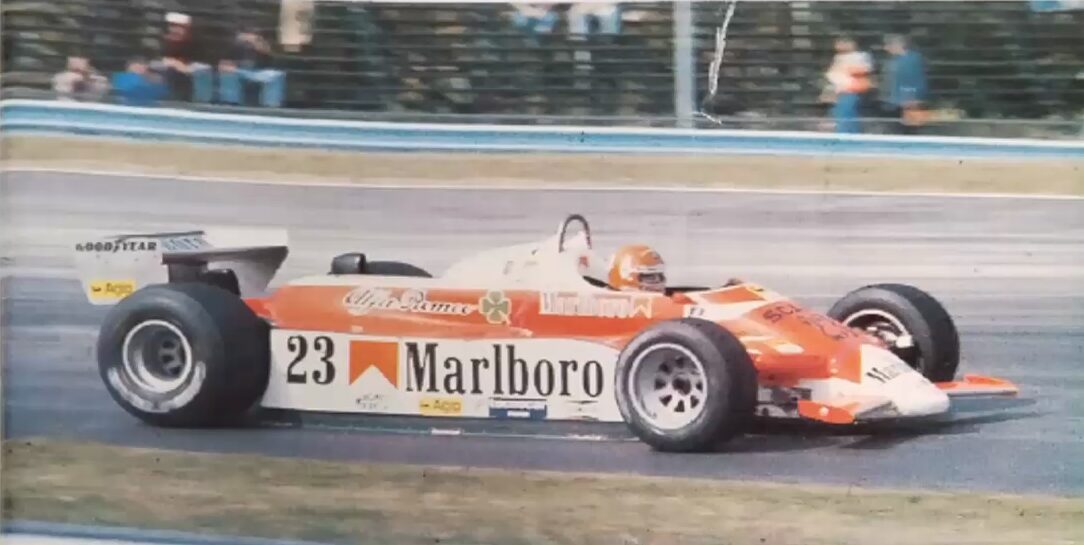
Listen on Apple
Listen on YouTube
Listen on Spotify

Consider becoming a Patreon VIP and get behind the scenes content and schwag from the Motoring Podcast Network

Do you like what you've seen, heard and read? - Don't forget, GTM is fueled by volunteers and remains a no-annual-fee organization, but we still need help to pay to keep the lights on... For as little as $2.50/month you can help us keep the momentum going so we can continue to record, write, edit and broadcast your favorite content. Support GTM today! or make a One Time Donation.

The judges faced a dilemma: all three finishers had violated race rules. Some went off course, others were pushed, and one didn’t finish in time. Yet awards were still given:

  • $2,000 to Duryea for best road performance
  • $1,500 to Mueller for economy and reliability
  • Gold Medal to Morris & Salom’s Electrobat (an electric vehicle) for design and cleanliness – even though it didn’t complete the course

The awards reflected not just race results, but technical testing conducted beforehand using a dynamometer provided by Studebaker Brothers. These tests measured fuel consumption, horsepower, and grade-climbing ability – making this event the first scientific evaluation of motor vehicles in America.


Forgotten Innovators and Tragic Tales

While the Duryea brothers went on to automotive fame, others faded into obscurity:

  • Hieronymus Mueller, whose fear of horses led him to refine a Benz with reverse gear and water cooling, died from burns sustained while working on one of his vehicles.
  • Charles B. King, umpire in the Mueller Benz, later drove the first car on Detroit’s streets and helped Henry Ford build his quadricycle.
  • Morris & Salom, creators of the Electrobat, sold their enterprise to Albert Pope, who folded it into the Columbia Automobile Company.

Legacy and Reflection

Three reasons made Chicago the ideal host:

  1. The 1893 World’s Fair showcased electric cars and gas engines, inspiring inventors like Ford, Olds, and Duryea.
  2. The Bicycle Boom: Chicago was home to nearly 100 bicycle manufacturers, including Schwinn and Rambler—many of whom pivoted to automobiles.
  3. Transportation Hub: With railroads crisscrossing the city, inventors could ship their vehicles rather than risk driving them.

The race also highlighted the battle between electric and gasoline propulsion. Edison believed gasoline was more promising, though he spent a decade developing better batteries. Westinghouse dabbled in electric cars but eventually abandoned the effort. Steinway, the piano maker, even built gas engines under Daimler patents before his death ended the venture.

The Yale Review captured the spirit of the event best: “Thus, amid praise and ridicule, our pioneer motorists made their first feeble assaults upon the barriers of space… Strong in this faith, they suffered, endured, and conquered.”

The 1895 Chicago Times-Herald race wasn’t just a contest – it was a crucible of invention, ambition, and resilience. It marked the moment America began to take the wheel from Europe, setting the stage for a century of automotive innovation.

This episode is sponsored in part by: The International Motor Racing Research Center (IMRRC), The Society of Automotive Historians (SAH), The Watkins Glen Area Chamber of Commerce, and the Argetsinger Family – and was recorded in front of a live studio audience.


Other episodes you might enjoy

Michael R. Argetsinger Symposium on International Motor Racing History

The International Motor Racing Research Center (IMRRC), partnering with the Society of Automotive Historians (SAH), presents the annual Michael R. Argetsinger Symposium on International Motor Racing History. The Symposium established itself as a unique and respected scholarly forum and has gained a growing audience of students and enthusiasts. It provides an opportunity for scholars, researchers and writers to present their work related to the history of automotive competition and the cultural impact of motor racing. Papers are presented by faculty members, graduate students and independent researchers.The history of international automotive competition falls within several realms, all of which are welcomed as topics for presentations, including, but not limited to: sports history, cultural studies, public history, political history, the history of technology, sports geography and gender studies, as well as archival studies.

The symposium is named in honor of Michael R. Argetsinger (1944-2015), an award-winning motorsports author and longtime member of the Center's Governing Council. Michael's work on motorsports includes:
  • Walt Hansgen: His Life and the History of Post-war American Road Racing (2006)
  • Mark Donohue: Technical Excellence at Speed (2009)
  • Formula One at Watkins Glen: 20 Years of the United States Grand Prix, 1961-1980 (2011)
  • An American Racer: Bobby Marshman and the Indianapolis 500 (2019)

This content has been brought to you in-part by support through...

Motoring Podcast Network

Holiday Shopping Guide, 2024

0

In the 51st episode of ‘The Drive Thru,’ the hosts deviate from their traditional discussions to present the Ultimate Holiday Shopping Guide curated specifically for car enthusiasts. Sponsored by major automotive brands, this episode features a variety of gift ideas, from model cars and Lego sets to high-end watches and automotive art. Guest appearances include Don Weberg from Garage Style Magazine and William Ross from The Exotic Car Marketplace who share their top picks for automotive-themed gifts. The episode also includes exclusive discount codes and promotions for products like Auxito LED headlights, Owner’s Pride detailing chemicals, and more. Additionally, charitable organizations related to automotive causes and opportunities for holiday giving are highlighted. Motorsports-oriented items and events like track day gift cards, memberships, and special motorsport tickets are also recommended. The episode wraps up with fun rich people gifts and novel car accessories, ensuring there’s something for every enthusiast this holiday season.

Tune in everywhere you stream, download or listen!

Listen on Apple
Listen on YouTube
Listen on Spotify

Showcase: Holiday Shopping Guide ’24

So what do you get for the enthusiast that already has all their toys?  – want to add to the list? Comment below! Below are all the articles, links and videos we talk about in this episode.

GTGlow Car Lamp

Without decor that aligns with your interests, your space can feel mundane. Introducing the GTGlow Car Lamp lighting solution that brings the legendary light into your home. ... [READ MORE]

LeMans Fall Collection

Check out the LeMans Store, their new fall collection is pretty hot, especially the 1959 inspired Shelby Leather jackets - become a member of the ACO USA and save nearly $60 euros on this item, but there’s tons of discounts on everything in the LeMans store.  ... [READ MORE]

"Malibu Ross" by Playforever Toys

On your marks get set go! You can almost hear the roar of the engine as Malibu stands poised, ready for the race. Drawing inspiration from the early Maserati Formula 1 cars of the 20s and 30s but with a modern Playforever twist, our Malibu racing car is built for speed. With a pure and simple cigar tube chassis, long nose and wide open mouth, its shape is sleek and stream-lined whilst its wide profile, low-to-the-ground rubber tyres give it a bold confidence to rival all others at the starting grid. Fierce, but just as fast, Malibu is slightly smaller than the rest of our collection, proving that when it comes to speed, size isn't everything. ... [READ MORE]

CarArt.us

What could be better than an original piece of art commissioned by a professional artist covering you and your car? An original original if ever there was one. Or, perhaps a nice print from a pro – or the original. It can be a masterful gift idea for the automotive enthusiast. ... [READ MORE]

Green Porsche 911 Canvas

Green Porsche Poster - is modern wall art decor for your home and office. This Porsche Poster help you transform your interior and create a pleasant atmosphere at your living room or office. Porsche 911 canvas print ready to hang with hooks. ... [READ MORE]

Isle of Man TT Limited Edition

Bremont reveals the Isle of Man TT 2022 Limited Edition as it continues its timing partnership with the world’s greatest road race, one of the last great challenges in motorsport and the ultimate test of both man and machine. The new 43mm Bremont Isle of Man TT chronograph comes in a steel Trip-Tick case, featuring a bi-directional rotating, ceramic bezel and 42 hour power reserve. The black dial is decorated with the Isle of Man TT logo at the 6 Hour position whilst a subtle debossing of the Isle of Man triskelion can be seen on the 3 Hour sub-dial. Turning the watch over reveals a closed case back decorated with the map of the TT mountain racecourse in relief, complemented by a black rubber strap, the perfect combination for high endurance motorsports. ... [READ MORE]

Race Master Chronograph GLF

Nothing like a nice timepiece, especially when it’s inclined to motorsports. The Ferro & Company watch story is the stuff that dreams are made of, and one of their products is the Race Master Chronograph. Measuring 39 mm, the brushed 316L stainless steel case and domed crystal construction are remarkable. German made with Japanese movement, it features a C3 illumination and soft Italian racing-style straps. ... [READ MORE]

Allure - Manual Chronograph - Blue

A maker of fine, motorsports-inspired watches, one of our favorites is the Allure line. Available in a multitude of colors and faces, our favorite features the perforated blue leather strap, 39 mm case with sapphire crystal, and blue face. Assembled in France ... [READ MORE]

Leather Driving Gloves

Inspired in the 50s and handstitched by our master artisans, in our leather gloves collection you will find our iconic Triton driving gloves, deerskin, and elkskin Motorcycling gloves also with Kevlar and Carbon knuckles, and some other work gloves and dress gloves. Master pieces crafted with special care to detail and by the best leather gloves artisans. ... [READ MORE]

Reedyville Goods

With some of the finest reproduction signs in the business, Reedyville Goods aims to please with a huge selection of signs ranging from the food and beverage industries to humor signs to the automotive signs to circus signs to tobacco signs to the gas and oil signs – the sky is kind of the limit. Nicely too, if you want to create your own signs, Reedyville can make them for you. In fact, Garage Style Magazine’s Garage Tour Award signs were made by Reedyville Goods. One of our favorite signs is the El Mirage sign pictured – very unique, we’ve never seen anything quite like it.  ... [READ MORE]

Busted Knuckle Garage: Bar Stools

With a plethora of items to choose from, the BKG brand has become synonymous with humor and good times in the garage with a touch of nostalgia. Their barstools are second to none, and each features great designs. Our favorite is the winged spark plug ... [READ MORE]

Route 66 by ZYMOL

Blending their love for natural ingredients and the open road, the Zymol Wax Company recently released their all-new Route 66 product line. The complete kit is packaged in a special box and contains a wash, a spray wax, and a microfiber – and this kit can be personalized with a picture of your favorite ride on the box. Very nice touch. Nicely priced, it’s the perfect Holiday Gift!  ... [READ MORE]

**All photos come from the original article; click on the image to be taken to the original article. GTM makes no claims to this material and is not responsible for any claims made by the original authors or their sponsoring organizations. All rights to original content remain with authors/publishers.

Special Promotions


25% off OWNER'S PRIDE Detailing Products
OWNERS PRIDE is excited to kick off the holiday season with an exclusive early Black Friday deal just for you! For the entire month of November, enjoy 25% off our premium 16oz and 1-gallon detailing chemicals. No code necessary, discount applied at check out. This applies to favorites like: EcoWash Concentrate, Ceramic Detailer, Ultra Wash and Bug Blaster. - Available on OwnersPride.com


50% off Private Track Memberships
This is your chance to live out the driver’s dream and secure an exclusive standard track membership for half the price! THE NJMP Drivers Club standard memberships are available for $10,000 for a limited time only (Nov 12th- Dec 1). Typically priced at $20,000, this exclusive membership offers more than 35 track days a season. Receive professional instruction from experienced drivers to master each of NJMP’s two road-racing racetracks: Thunderbolt and Lightning. Gain access to pro driver days, where a seasoned professional driver lends one-on-one advice to members with a track walk and throughout the day. Enjoy delicious catered breakfasts and lunches at the Finish Line Pub and relax by the exclusive outdoor pool with your family and friends as your hosted guests. Be one of the first people to experience the brand-new Thunderbolt Devil’s Pass reconfiguration in 2025 which will retain the traditional Thunderbolt circuit through Turn 7 but exit onto a flat-out sweeping bend to the right. (Read more about this update on NJMP.com) The Driver’s Club is perfect for those who have a need for speed, looking to improve their driving skills while enjoying the company of the motorsport community. Visit NJMP.com to learn more about the Drivers Club benefits and discounts, as well as how to apply today before the sale ends on December 1, 2024! - Available on NJMP - $10000


Apex Performance
Dave Peters and the crew from HPDEJUNKIE.COM would like to extend some discounts to all their followers. Use code HPDEJUNKIE at checkout or call Linda and mention HPDEJUNKIE when buying from Apex Performance to receive 10% off. - Available on Apex Performance


Autoverse Affiliate Program
You will get a Get 10/Give 10 discount for your network to use your code when they purchase our paid membership. They get 10% off (currently valued at $33) and you get a $33 referral commission. All I need is to know what short code you’d like to use for it. USE CODE: GTM24 www.theautoverse.io - Available on The Autoverse


Become part of the Legend
Join one of the oldest car/motorsports clubs in the world. Did you know the ACO has a USA region? Special benefits for USA members. - Available on LeMans.org - $104


Black Friday Bonus
AutoInterests will be running a Black Friday bonus value gift card special. Be sure to also check out their track packs, and other pre-season discounts at autointerests.com. - Available on AutoInterests.com


Consider supporting the IMRRC!
Enter the IMRRC sweepstakes and enter for a chance to win a 2024 C8 Corvette Z06 with the Z07 Package. - Available on The IMRRC


Giving Tuesday Support for Operation Motorsport
Operation Motorsport helps medically retired service members and veterans transition back to civilian life through two programs: Our Diversionary Therapy Program (#OpMo eMotorsport iRacing League) & Motorsport Immersion Program (where veterans are placed as crew with motorsport teams). We understand the challenges that come with leaving military life and aim to restore a sense of Team, Identity, and Purpose. Veterans once again wear a uniform, have a mission and realize that their dedication and skills from military life are valuable as they transition to civilian life. Our veterans say these experiences energize them and direct their attention, not to the past, but to the future. Every Gift Amount Helps. HELP US REBUILD VETERAN LIVES THROUGH MOTORSPORT! - Available on Operation Motorsport


GLOC Brakes Discount
Dave Peters and the crew from HPDEJUNKIE.COM would like to extend some discounts to all their followers. Save 10% with GLOC BRAKES by mentioning HPDEJUNKIE when you call 1-844-9-BRAKES on your next order. - Available on G-LOC Brakes


Hyper Drive Starter Package!
Available all season for $80 at Hyperfest & NASA events. Get your taste of the track. - Available on Hyperfest 2024 - $80


MECUM On-Time Auctions
Long in the business of connecting buyers and sellers, the Mecum Auction Company has gone one step further by launching their On Time division. An entire division, the On Time division handles the sale of memorabilia and smaller items that are otherwise more difficult to sell due to their size. Entirely online, sellers send their items to the Mecum headquarters in Walworth, Wisconsin for cataloging, photography, and listing on the website. It’s a great place to find unique, rare, hard-to-find pieces for someone. - Available on MECUM On-Time


The Other Side of the Fence by Bill Warner
Proceeds from the sale of this book go 100% to SPINA BIFIDA research and treatment, a cause near and dear to Bill Warner. - Available on Spina Bifida Jacksonville - $100


USE: KT4for1 | Kelly Telfer Art
Get ready for the Ultimate motorsports art sale. From Nov 18th through Dec 1st, buy any 4 11x14 prints and get a 16x20 for FREE with code: KT4for1. While supplies last. - Available on Telfer Design


USE: MANS50 | LeMans Yearbooks
Up to 50% off all Le Mans yearbooks. Feel the rush of adrenalin as you navigate each chapter, almost as if you were in the cockpit yourself... Relive the excitement of every 24 Hours of Le Mans race through the yearbooks. Recall the most iconic moments, the boldest strategies and the most gripping battles to have marked the legendary race’s history. This is the perfect opportunity to add one to your collection and experience the magic of the race, again and again, year after year. To take advantage of this discount, use the following code: MANS50 - Available on LeMans.org


USE: MOTORINGHISTORIAN | 15% OFF AUXITO LED Bulbs
Use code: MOTORINGHISTORIAN to get 15% off your next purchase of AUXITO replacement LED Headlight bulbs. Drop in hassle-free replacement with no fuss, no muss and no ballasts! - Available on AUXITO


Winter Storage Garages
3 months, $1000 - 15x26 bay space with 10x20 opening. Electricity included. Available Dec 1st, 2024 - March 1st, 2025 - Available on NJMP

Recommended Reads

One Track Mind: The Art of Bob Gillespie

Bob Gillespie considers himself very fortunate to have witnessed more than his fair share of history at a racetrack, and has been fascinated, and at times maybe obsessed with. He never thought his childhood heroes would someday have his art hanging on their walls. And he’s here to share his story and how he got the chance to honor them while exploring ways to capture their sport in paint. 

Tune in everywhere you stream, download or listen!

Listen on Apple
Listen on YouTube
Listen on Spotify

Bob’s book includes quotes that he chose to shed light on the creative process. They were made by artists that he admires. And unexpectedly, his auto racing paintings enabled him to befriend a generation of remarkable people involved with American road racing. Many of those are no longer with us, and their quotes are also included and offer first-person insights and perspectives on the sport. Bob believes there’s a shared state of mind between artists and race drivers. Perhaps it’s a reliance on intuition along with a constant striving for perfection. If you’d like to pick up a copy of Bob’s book “One Track Mind: The Art of Bob Gillespie” you can logon to www.glenspeed.art to order a copy for yourself or someone you know that would enjoy a wonderful book like this too. 

Spotlight: The Trouble with Howard

Lee Anne Patterson now owns a boutique promotions agency working with select clients that have stories to tell. But she’s also produced her first children’s book “The Trouble with Howard” based on the real-life story of Howard and Anita Millican. And she’s here to tell us all about her automotive and motorsports journey.

Lee Anne Patterson’s expertise includes designing and building turn-key programs, developing visionary business networking strategies, designing results-oriented marketing programs, and coordinating activation with measurable results including good-cause marketing elements. The Trouble with Howard, Lee Anne’s first children’s book – A book created by racers, about racers, for racers – Is now available for sale, and you can pick up a copy at www.troublewithhoward.com

Tune in everywhere you stream, download or listen!

Listen on Apple
Listen on YouTube
Listen on Spotify

To learn more about Lee Anne, be sure to follow her on Instagram and Facebook @leeannepatterson.author, or you can follow her on LinkedIn, or reach out via email at leeanne@thegroundeffects.com.

Spotlight: J.K. Kelly

The Lost Bird is Kelly’s seventh work of fiction, and it is the story of two modern-day families, criminals without conscience, and an awkward partnership formed in an attempt to find the missing plane.

Kelly’s past works include the Formula One/CIA spy thriller Deadly Driver, The Export Series, Found In Time, The Lost Pulse, and the autobiography Fuelin’ Around.

Tune in everywhere you stream, download or listen!

Listen on Apple
Listen on YouTube
Listen on Spotify

For more information, to request a review copy or an interview with the author, please write to Info@JKKelly.com. To order a print or Kindle version of THE LOST BIRD on Amazon click here.

Reading List

Don't miss out on great book like this one, or other titles we've read and covered as part of the GTM Bookclub on Break/Fix Podcast.
My Travels On Racer Road: Can-Am and Formula 1 in their golden age
DeLorean: The Rise, Fall and Second Acts of the DeLorean Motor Company
A French Kiss with Death
Driving to the Future: Living life following Formula One racing
Tales From the Garage
Geared for Life: Making the Shift Into Your Full Potential
Ultimate Garages
Fenders, Fins & Friends: Confessions of a Car Guy
Racing While Black: How an African-American Stock Car Team Made Its Mark on NASCAR
The Last Lap: The Mysterious Demise of Pete Kreis at The Indianapolis 500
James Dean: On The Road To Salinas
Performance Thinking: Mental Skills for the Competitive World...and for Life!
The Other Side of the Fence: Six Decades of Motorsport Photography
Racing with Rich Energy
Little Anton: A Historical Novel Complete Series
Lone Rider: The First British Woman to Motorcycle Around the World
Iacocca: An Autobiography
Colin Chapman: The Man and His Cars: The Authorized Biography by Gerard Crombac
Paved Paradise: How Parking Explains the World
Shipwrecked and Rescued: Cars and Crew: The


Gran Touring Motorsports's favorite books »

Check out even more gift ideas over at Garage Style Magazine!

Garage Style Magazine

Garage Style Magazine (GSM) is what’s been missing. A publication devoted entirely to garages and collections – we cover collectibles such as automobilia, petroliana, neon, porcelain, and more; we also bring to you the ideas that make a garage work, such as tools, cabinets and storage solutions, car covers, lifts, and doors to name a few; and, of course, we work in a few lifestyle bits – electronics such as stereos, televisions, and other entertainment must haves, and some luxury products such as watches, briefcases, handbags, travel ideas and personal items.

Guest Co-Host: Don Weberg

In case you missed it... be sure to check out the Break/Fix episode with our co-host.
Listen on Apple
Listen on YouTube
Listen on Spotify

Honorable Mentions

  • Aluminum Cans for Burned Children (ACBC) Buffalo Trace Whiskey Raffle.
  • Island Safe Harbor Animal Sanctuary – Learn how you can help!
  • El Mirage 1939 Motor Speedway Reproduction Metal Sign – Reproduction Vintage Signs
  • Project Motoring Garage Sale
  • Support Ben Leung Art – Graphics, Prints including Initial-D Draft Graphic Tee!
  • The Tazio Nuvolari Collection – New line of Motorsports inspired clothing. (note: European Sizes; ships from Germany)
  • Limited Edition (signed) Fangio prints up for grabs
  • GarageArt.com: A company that’s grown leaps and bounds over the years, GarageArt.com has a multitude of products for the garage, home, and office all largely related to the autosphere or the enthusiast’s desire to enjoy a little nostalgia.  One of our favorites is the winged Honda neon sign – nicely priced, it’s a great piece that will bring some cool vibes to any room. Honda Wing LED Flex-Neon Sign
  • Not a member of the ACO USA? Did you know that you can purchase the entire Behind the Scenes collection of Evening With A Legend, and get continued updates for a one-time fee? Learn more about our exclusive online collection.
  • Don’t forget about BLIPSHIFT! Great place to stock up on CAR RELATED apparel too! & Heel Tread Socks
  • Tell your cars story with an AutoBio Tag!
  • Joey O’Hara from Track Rabbit the Motorsport registration platform reach out, and wanted to let HPDE organizers know that they a 3% all in deal currently running for their system. A 2% credit card fee and 1% platform fee. If you’re looking to revamp your HPDE registration system for next season, be sure to reach out to Joey at 302-757-7436.
  • Holiday FLORIDA MAN Smashes Porch Pirate’s Getaway Car With Rental Cybertruck

Rich People Thangs!

TRANSCRIPT

Executive Producer Tania: [00:00:00] The Drive Thru is our monthly news episode and is sponsored in part by organizations like HPTEJunkie. com, CollectorCarGuide. net, Project Motoring, Garage Style Magazine, The Exotic Car Marketplace, and many others. If you are interested in becoming a sponsor of The Drive Thru, look no further than www.

MotoringPodcast. net. Click about, and then advertising. Thank you again to everyone that supports the Motoring Podcast Network, Grand Touring Motorsports, our podcast, Brake Fix, and all the other services we provide.

Crew Chief Brad: Oh, welcome to the drive through episode number 51, but instead of our regularly scheduled ranting and raving, we’re back with the ultimate holiday shopping guide for the petrol heads in your life that might not have everything yet. So let’s pull up to window number one or some great gift ideas. [00:01:00]

Crew Chief Eric: And we’ve got a packed sleigh tonight, joining our standard drive thru crew of Crew Chief Brad, Executive Producer Tanya, and myself.

We are visited by Don Wieberg from Garage Style Magazine as Santa Claus, and William Ross from the Exotic Car Marketplace as his helper elf, and our, what’s the word, most returning est guest host ever. Right, William?

William Ross: Seems to be, yeah.

Crew Chief Eric: Well, like all holiday drive thrus gone by, we will be visited by three ghosts.

The ghost of drive thrus past, the ghost of Christmas presents, pun intended, and the ghost of break fix guests yet to come.

Crew Chief Brad: That was a terrible dad joke. I’m done. Bye. I’ll see you later. You cringe? Yes. My heart grew three sizes then.

Crew Chief Eric: How big is that? Cause you’re a big guy. So if it’s three, nevermind. On top of that, this is one of my favorite episodes because this is when we get to do a little bit of show and tell.

So if you’re watching this on Patrion behind the scenes, you’ll get to see us actually [00:02:00] demonstrate some of these gifts if we have them with us. So I’m really excited to see what we came up with in typical GTM tradition. Let’s kick it off with some general gift ideas. So Brad, what do you got for us this year?

Crew Chief Brad: Well, I fall victim to the Instagram marketing campaigns. All the time. And this one came across my desk. It’s a GT glow car lamp, mostly different Porsches. And then there’s like a, an F 40 and you know, some other different things. E30 M3. Don’t know why that is part of this list, you know, with all these better cars.

But anyway, if you’re interested, it’s a vernia. store.

Crew Chief Eric: I have also seen these on the Instagrams and have clicked on it many times, but what’s special about this is they’re running basically a 50 percent sale right now. You can pick up one of these. GT glow lamps for 54 bucks and who wouldn’t want a black nine 64 turbo for 54.

That thing looks awesome.

Crew Chief Brad: I think they’re pretty sweet looking. Yes, I agree. 54. If you’ve ever been down the lamp and [00:03:00] lighting aisle at your local target, well, maybe not Walmart because China. You’ll see that this lamp is actually reasonably priced compared to the other crap that they’ve got there.

Crew Chief Eric: And to use your phrasing, this lamp identifies as a Porsche,

Crew Chief Brad: except for the weird one that identifies as an E30 M3,

Crew Chief Eric: that does not fit

Crew Chief Brad: this.

That lamp is just confused.

Don Weberg: Did I make a Yugo version?

Crew Chief Brad: You go somewhere else, Don.

Don Weberg: No, the beauty of it is you don’t need a light bulb because you know, every time you turn the little thing, it won’t start.

Crew Chief Brad: The E30 M3 one just blinks.

Don Weberg: The hazard

Crew Chief Eric: lights.

Crew Chief Brad: Yeah, the hazard lights just blinked the whole time.

Crew Chief Eric: Speaking of that Yugo lamp, Don, you might not find that on Avernia’s website, but you might find that at an auction out of somebody’s garage.

Don Weberg: In fact, you might just get the whole full size Yugo and just attach a whole bunch of lights to it. Then you have your indoor lighting. You hang it from the ceiling like a chandelier.

Crew Chief Brad: I would think you just light a match and you light it like a candle. One time use, you go. Yeah, you could do that.

Crew Chief Eric: [00:04:00] So, Don, you’re the guru of garages and auctions and classic cars and things like that. Why should we think about an auction for holiday shopping?

Don Weberg: I mean, if you’re referring to Meekamontime.

That is an excellent place to go because Mecham on time is the newest and the latest and the greatest from the Mecham auction company. Have I said Mecham enough times already, Eric?

Crew Chief Eric: The algorithms are still processing it.

Don Weberg: No, what’s fun about going to something like an auction and it could be Mecham on time.

It could be eBay. It could be any of them, but you know, you get a lot more. Personal when you go to an auction, because I can go to an auction and let’s say, you know, a Knight writer guy. So you think to yourself, well, what do you really like? Let’s key in Knight Writer and see what the search brings up.

You have this whole smorgasbord of Knight writer things that you can choose from, and then when you’re buying that little Knight writer piece for that, somebody they think to themselves, wow. This is really awesome. They put a lot of thought into this. It’s not like we just went running off to Walmart or Target or wherever and just bought whatever was on the shelf.

No, we actually put a little thought into this [00:05:00] and went out of our way a little bit to buy it at an auction. And some auctions, they have the buy it now price. So you’re not even dilly dallying with bidding and outbidding and all that stuff. You just. Go in there and pay the fee and, and you’re done.

Crew Chief Eric: And you drew that parallel between eBay and Mecum there just to use two names, but on time, as we learned from Melissa Smith, when you and I got together with her, that’s their online version of a in person Mecum auction.

So you don’t have to worry about cause Simi’s in January. So that’s too far away to buy a gift. And I just missed Dallas and Las Vegas and all the other ones on time. Is it 365? Seven days a week operation. And you could be shopping there year round for gifts for people. So I think that’s pretty awesome.

Don Weberg: Yeah, it’s a lot of fun. And I mean, you know, the brainchild behind it, the Genesis was meet them. Just speaking to them specifically, they always have a lot of clients that come to them and they want to sell entire collections and they have a garage full of cars and they have a garage full of stuff that goes with the cars, not necessarily going with the cars, but you know, you have your [00:06:00] little collectibles all over the wall.

That stuff was always really, really hard for them to move. Yeah. With online capabilities, they decided, why don’t we just bring this in house? We’ll handle it exactly the way we handle our cars. We’ll control the auction. We’ll take the pictures. We’ll put it up online, promote it. And it’s been going pretty good.

2025 Mecham has a lot of stuff lined up for their own time and they’re devoting more resources to it. They’re beefing it up. They’re getting more people on board. They’re promoting it more heavily. They really are giving it much more of a serious consideration because when they put it out there. At first to the Meekins, it was kind of just a, yeah, we need this little side effect just because it’s a natural evil that we have to take care of.

But as time rolled on, they realized, boy, people like this, they’re selling here. They’re bringing us their stuff and they want us to sell it. And a lot of die cast goes to, as I say, sell a lot of die cast stuff, but it’s ranching out. They’re getting a little bit more automobile, which is interesting because, you know, they have their road art division, which is their.

Fancy term for automobilia. It’s [00:07:00] interesting to watch the Meekam on time and the automobilia division kind of cross paths a little bit. It’s like watching the two circles go over each other. So you’re getting more and more interesting, really interesting stuff coming to Meekam on time. It’s really fun to watch that division grow.

Crew Chief Eric: I need to check that out. I need to go there because to your point, you never know what you’re going to come across, but. Like other online auction sites, you can set up reminders, you can set up triggers, you can set up alerts, this kind of item appeared, all those things that you’d be accustomed to, like with eBay and YouBid and some of the other places.

They’ve got everything you’re looking for, but if you’re a petrol head, it’s definitely the place to check out. So I can’t speak highly enough about it, especially for the holidays. If you’re in a bind and you’re looking for something interesting, there’s always something on, on time. So switching gears to, A section of shopping that I think is near and dear to all of our panelists here.

We’re going to talk about model cars, Legos, and the virtual world. So Tanya, what’s on the list this year?

Executive Producer Tania: First one on the list is a set of Lego like cars. It’s actually [00:08:00] the Lego competitor mega previously known as mega blocks, which is now all owned by Mattel. So they were kind of the lesser known Lego competitor, but they’ve got a set of Hot Wheels and Fired racing cars, compete with speed champions of Lego, and I found two of the four offerings, which happened to be an Audi R eight and an RS six concept.

I found them at my local grocery store, ,

Crew Chief Eric: and I happen

Executive Producer Tania: to have

Crew Chief Eric: them right here. They’re super cool. I don’t

Executive Producer Tania: recall what the other two are, but I believe

Crew Chief Eric: the back of the package does say. It is a Corvette C2 Stingray race car followed by the Cadillac CTS V race car.

Executive Producer Tania: There you go. I think you can also find them at Target and Amazon if you’re looking.

Don’t have to go down the grocery store toy aisle.

Crew Chief Eric: Oh wait. Oh wait, there’s more. They have a bigger size of these things and I picked one of these up when I was with William. And this is the basically one 18th scale. There’s only a handful of these in terms of [00:09:00] models. This is the Audi 90 GTO that Hans Stuck and Hurley Haywood drove back in the early nineties, but there’s also a Corvette stingray version.

And then they also show a hot rod and then another. Cadillac. So there’s four different models in this larger size as well. And this is a almost thousand piece model that you put together. So pretty cool. Also available at target.

Don Weberg: No, no. I was just going to ask, do they have a price for a TC? No, that’s where they made the mistake,

Crew Chief Brad: but they have a Cadillac.

So it may be in a long day.

Crew Chief Eric: Yeah, we’re getting there. Yeah. That’s a little Walker in the back. I heard those smaller sets, Tanya, what do they run? Like 14 bucks. Something like that. And this bigger one was right around 80, which is not a bad price when you compare it to Lego. So they’re trying to kind of take a bite out of that market because Mattel can take a swing like that.

Really curious to see what additional designs they come up with and who they can get licensing from, which you think wouldn’t be that hard considering they own Hot Wheels.

Executive Producer Tania: So earlier [00:10:00] this year, Lego actually had an announcement on a future partnership with F1 beginning in 2025 seasons. So it’s not actually a new partnership because you can actually already get F1 Lego cars.

They’ve got the McLaren, the Mercedes, and they’ve got the older Senna. Now they’ve got a bit of a cloak and dagger announcement that there’s. Quote, a new signing for the 2025 F1 season. We’re bringing the thrill of Formula One to LEGO fans of all ages with builds featuring all teams on the grid, plus loads of exciting extra content.

They say drive back to this page for future thrills right from their website. You’ll be able

Crew Chief Eric: to buy a LEGO Haas.

Executive Producer Tania: And then you can crash it. A hundred percent.

Crew Chief Brad: Well, Haas is already using Lego Haases.

Crew Chief Eric: I want the rich energy version of the Haas Lego rich energy. That’s what I need. So we’re still talking about Lego here.

I picked up two this year to add to my burgeoning collection of these things. I don’t know why I keep buying them. I love

Crew Chief Brad: how Eric’s already bought all these gifts.

Crew Chief Eric: Well, I gotta have something to show for the episode, right? So I’ve got the [00:11:00] Countach. Last year, I talked about the Ferrari that I bought.

I’ve got a couple other ones in the box. But this year, I picked up the Ken Block Audi e tron Speed Champions set. This came in at 25 before they raised the price on them. They were 20 for the longest time, and then they went up to about 24. So I grabbed this one basically at the beginning of this year after the holiday season.

And then Day one, I went and stood in line and I got myself the F40. Oh yeah. I bought two. I mean, it’s awesome. It’s not as nice as some of the previous F40 stuff that Lego has done with Ferrari. But I think this is really cool because it’s been a minute since they’ve done something Ferrari and hoping for.

Testarossa, I’m hoping for something else, right? Cause they’ve done some other Ferraris in the past.

William Ross: Fingers crossed. Yeah. You know, and one tip for everyone out there that’s listening is don’t just look on the shelves, look up on the top shelf, look behind stuff. Cause stuff gets hidden and put in places where it shouldn’t be.

So don’t get discouraged if you walk in the aisle and don’t see it right away through. Start digging through [00:12:00] everything because you’d be surprised at what you’ll end up finding hidden and whatnot. Yeah. You can

Crew Chief Brad: also ask and see if they have anything in the back too.

Crew Chief Eric: Yeah, there you go. For the real Lego files out there.

I will remind you that if you’re not what they used to call VIPs, now it’s called Lego insiders. Sign up for free. You can order this today. stuff off Lego’s website, you get all these points and then the points turn into cash and you can get stuff for free and all that. But there are deals with Walmart and Target that if you purchase kits there that you can then take your QR codes or whatever it is that comes with the box and still get points towards your VIP and then get free cool stuff.

Check out lego. com, sign up for an account, get all that stuff done because it’s definitely worth it if you’re a collector because you might be able to buy that F40 or some other kit for free. But I also want to remind people, don’t forget to look at the blockzone. com. These are guys that post a lot of their designs up on rebrickable.

com and you can order all the parts necessary to build, let’s say Marty’s Toyota four by [00:13:00] four or. The Falcon XBGT from Mad Max, you know, other cars like that. They don’t have traditional names. You can’t go and look up Ford XBGT. It’s called like the interceptor or whatever. They got all these made up names to kind of avoid the licensing and all those kinds of things.

But there’s some really, really cool kits on the block zone. Some really interesting stuff that you won’t find. At lego, but it’s mostly lego parts that you’re ordering and then get the instructions and build your own little collection that way. So it’s pretty cool and their prices are really reasonable and they run promotions and sales all year long.

But especially during christmas time

Executive Producer Tania: shifting gears to video games. There’s a new installment in the test drive unlimited franchise That’s Test Drive Unlimited Solar Crown. You know, one of these free roaming racing video games trying to compete with the likes of Forza Horizon. This particular one takes place in Hong Kong and features some sort of street gang rival situation where I think at the very beginning of the game you gotta choose your side and then you’re racing to essentially win [00:14:00] the Solar Crown and I guess to have all the glory of your street gang.

But it’s available on all the majors, Nintendo, PlayStation, Xbox, and PC.

Crew Chief Eric: Jimmy Broadbent. Did a two and a half hour review of test drive, silver crown, which I don’t recommend watching the TLDR the too long. Didn’t read is I might still buy it. Anyways, Don, we should talk about real model cars. It wouldn’t be fair if we didn’t give a shout out to Rick shod, the Pope of plastic.

Don Weberg: Yeah, that guy’s amazing.

Rick Schad: You want to find me, please. Don’t be scared of Tik TOK for crying out loud. Don’t believe all the hype. Go to at the pope of plastic on TikTok, at the Pope of plastic on TikTok, also on Instagram at the Pope of plastic. On, on, uh, LinkedIn. You can always find me at Rick Shad.

R-I-C-K-S-C-H-A-D. I’ve usually post all my models on LinkedIn. That’s kind of where I got my start, my first commission. came, believe it or not, from LinkedIn and I build anything. It doesn’t have to be cars. I build anything, planes, boats, tanks, cars, it doesn’t matter. So if you’re [00:15:00] interested in having something really special, please reach out to me.

You can also email me at the Pope of plastic at Gmail. Love to have you all come and visit me. If you come and watch me and tick tock live, just tell me you saw me. I’d love to say hi and feel free to ask me any questions and I need to do a model for you guys. We need to do a Kootosh and a Porsche.

Crew Chief Eric: Have you bought anything from our friend Patrick Strong at Model Citizen?

Don Weberg: You know as well as I do what I bought from him and it was a little while ago that I bought it so I don’t know if it still qualifies for your show. Does it still qualify? You gotta buy it in this calendar year. Then I haven’t bought anything from him.

Crew Chief Eric: That’s okay, I made up the difference for you.

Don Weberg: I figured you

Crew Chief Eric: would.

He posted on social, and I hate this word but I’m gonna say it, it was serendipitous because I just got done a project with Professor Summers, the motoring historian. The next day, he posts. I’ve got Ari Vatanen’s Peugeot 205 Turbo T16 in stock, and I had to have it. Immediately was like, boom, buy it now, send it to me.

He sent me a personal handwritten [00:16:00] message thanking me. He was like so surprised. It’s one of the first people to buy it from him. And he said he had me in mind when he’s been looking at more Group B rally cars to have in his inventory. Because remember, he curates everything that he has in stock. So I thought this was super cool.

I could not resist buying it. It looks awesome. It opens in every which direction. It’s extremely detailed. It’s an absolute joy to have in my ever growing selection of cars here.

Patrick Strong: I typically do a kind of a low key Black Friday, Cyber Monday sale in that I just put a lot of stuff on Markdown. I don’t do a special promotion with, you know, here’s your percentage discount or buy two get one free or anything like that.

It’s just things get put into the sales section. So week after Thanksgiving, I’d be looking for that to happen. The best way to find out about deals like that is to get on our mailing list. We’re not spamming. We only send emails out to let people know about new products or events where we’re going to be.

Whether you are a veteran collector with very finely honed [00:17:00] taste, or whether you are new to the hobby, modelcitizendicast. com is a great place to find a Very tightly focused selection of exquisite model cars. And if you are new to the hobby, my contact info is readily available there, and I’m always happy to answer any questions you might have.

Model citizen die cast.com is a great place to start or continue your journey as a die cast model collector.

Crew Chief Eric: So model citizen die cast for your one 18th scale and. high end 164th scale. Now that’s something else that Patrick is carrying in his inventory is 164th scale cars. And I wanted to show off some that I got this year, which I thought were super cool.

So Hot Wheels, as we know, and we talked about with Patrick, they’re doing these premium collections, very expensive for the size. You’re talking 12 Hot Wheels. And it’s like, who’s the hell is going to spend 12 bucks on Hot Wheels? Well, this idiot does stuff like that. This is one of my favorites. I’ve got the Fiat race car carrier with an [00:18:00] Abarth 131 rally car and the homologation version, all in premium.

I mean, this in my hands is probably, I hate to say, it’s 40 bucks worth of car in my hands, but extremely detailed, sticky tires, you know, really cool wheels. Everything’s almost looks like it’s hand painted versus the way they stamp things out. This is super cool. All the actual livery from back in the seventies and whatnot.

So they’re producing some really, really high quality stuff right from Mattel.

Don Weberg: You know, it’s funny you say 40 bucks, like it’s expensive and I guess it kind of is for such tiny little cars. But if you can appreciate the quality. I think all of a sudden that 40, it just kind of goes away. The

Crew Chief Eric: problem is it snowballs, especially with the one 18th scale cars, because I have a big enough, let’s call it garage for my one 18th scale cars.

But I realized I was missing something, the service stand. I thought this was so cool. Oh yeah. You gotta have that. So this is the shells oils [00:19:00] version. They have a bunch of different ones of these Exxon and VP racing and whatnot. I really like this one. The color scheme of the yellow and red of the shell, but this holds pretty much any one 18th scale car and you can lift it.

You can park another car underneath of it. So if you want to really kind of maximize your space or make a really cool display with multiple cars, it is die cast as well. So it’s actually quite heavy, fabulously painted and detailed. It even has the alignment racks and stuff. I found this online. I hate to say I bought this on Amazon.

I can’t remember the manufacturer off the top of my head, but if you search one 18th scale. Stands these come up alongside of like the acrylic cases and some of the other stuff that’s out there So for the same kind of money as a plastic box, I thought this was really cool

Crew Chief Brad: Yeah, those stands are a lot of fun.

It makes changing their imaginary oil a lot easier, too

Crew Chief Eric: Yeah, and you know, what’s funny? I have to park the nine 11 backwards because otherwise it doesn’t align right on the way these plates are made. Cause it’s all kind of set up for a front mount car. It’s [00:20:00] really interesting. Again, the detail is really, really cool and very lifelike.

Crew Chief Brad: Yeah. Speaking of premium high end ways again, Instagram, you know, marketing campaign. This company play forever. They make these really nice premium children’s toys. They’re all cars, you know, designed after some of our favorites. Obviously, as you mentioned earlier, you know, to get around the copyright, they can’t call them, you know, what they actually are, but there’s a very nice Porsche look alike, a nice Lamborghini looks like a charger or a Mustang.

A lot of race cars and things like that. They’re made with very durable, high quality plastics painted with UV proof paint. So it’s all child friendly. They’ve got soft rubber tires, really nice toys. They say they last a lifetime. You know, I believe it looking at the quality of these things and they’re actually quite large.

You know, they’re not one 64th scale. They’re probably one 43rd or in between maybe one 32nd, but they’re really nice cars. I’ve been looking to get a couple for the boys for Christmas. You should definitely check them out. It’s play forever. us.

Crew Chief Eric: I like this Malibu [00:21:00] Ross. Did you see that William? I saw that one.

Crew Chief Brad: I think that should be his new nickname. Sadly it’s sold out. My favorite one is the UFO Leonisa.

Crew Chief Eric: Yeah. Which is basically a Lamborghini. Coontosh.

Crew Chief Brad: Yeah. It looks like a coontosh. I really liked the scaling. It looks like some of those graphic shirts that are like spray painted and stuff. It, it’s like one of those brought to life with the really oversized wheels and everything.

It looks to me, they look really, really cool.

Crew Chief Eric: Model cars and Legos. Aren’t the only things you can fill your shelves with. If you’re a collector. The other thing that we always like to bring up during this episode is the books, especially those of us that are automotive historians. I don’t think there’s enough books that we can get our hands on.

There’s always something. There’s something new coming out or a new way to look at history or a particular story or driver or event or, you know, situation or crash, you know, that happened. There’s just a plethora of books and we always have the distinct privilege of having many authors on the show throughout the year.

We had author Leanne Patterson on the show [00:22:00] who wrote a children’s book based on the true life events of another break fix guest. Anita Milliken and her husband Howard. And so it’s all about their adventures, actually adopting a baby skunk, and making it part of their race team, and how it was involved in the paddocks, and they would take it around with them, things like that.

So the book is called The Trouble with Howard, but I’ll let Leanne tell you a little bit more about the book and how you can get a copy of it.

LeeAnne Patterson: Who wants to get into trouble? And just in time for Christmas. Before you gift the Trouble with Howard to your favorite little racer, be sure to fill out your pit pass. There’s a place for your crew member name, a team affiliation that you can make up, and then you’ve issued the book to them. So make sure that you sign your name there.

And then once they’ve issued that pit pass, they can go through the gates and into the story. The end sheets are also filled with fun racing bits. For instance, at the start of the story, Anita and Howard are enjoying pizza from Maria’s, but at the end of the story, it’s Aldo. Now, what [00:23:00] famous twin brothers do we know named Mario and Aldo?

There are 27 other things that are different. Perhaps you can find them all. Roger Warwick is an amazing artist. And he loves racing, too. You’ll find that throughout the book, things look just like they do with the racetrack. And just in time for Christmas, you can use the code GETINTOTROUBLE. With the purchase of a book, that code will give you any two other items, including trouble, including trouble.

We’re 15 percent off and as always orders over 50 are always free shipping. So get into trouble this Christmas and your little racers will be inspired to always dream big.

Crew Chief Eric: Are you a fan of the 24 hours of Lamont? Well, we’ve got something very special for you. An offer of up to 50 percent off. All the Lamar yearbooks.

You can feel the rush of adrenaline as you navigate each chapter, almost as if you were in the cockpit yourself. You can relive the excitement of every 24 hours of Lamar race through these yearbooks. You can recall the [00:24:00] most iconic moments, the boldest strategies, the most gripping battles to have marked the legendary race’s history.

These are a perfect opportunity for you to add one to your collection and experience the magic of Lamar again and again, year after year. So to take advantage of the discounts, when you go to the Lamar store at lamans. org, use the check a code M A N S 5 0 to get 50 percent off all your Lamar yearbooks at checkout.

There’s also an even deeper discount if you become a member of the ACO USA. And here’s a couple of words from David Lowe. President of ACO USA about why you should become a member of the club.

David Lowe: You definitely want to take advantage of what the members club has to offer. Got a lot to offer, like you talked about the ACO Tribune 1718.

That’s my go to tribune. Purchase access to La Chappelle, which is an incredible hospitality facility located there just beyond the Dunlop Bridge. It’s [00:25:00] an incredible, um, facility. viewing of Tetra Rouge cars coming through the Dunlop. It’s a great place to view as well as the hospitality tense area.

Honestly, big screen TVs give you the best. They’re just these huge screens and you hear the sound right there and see him right now on the big screen. So it’s a it’s a wonderful place plan to go for a week. If you only go for the day of the race, you’re gonna miss a lot. You need to Kind of watch the race come alive.

The pits get built out and you want to get a paddock pass might cost you a few extra dollars. You want to do that with the club. So you’ve got access to La Chapelle and the members areas there at T17. So, but in the meantime, throughout the year, as we build up, you’ve got these events that we’re putting together around the country, got the zoom meetings each month evening with a legend.

Which absolutely are incredible. We’re open to suggestions. A lot of the ideas we get come from volunteers that actually set it up for us. We have a lot of past presidents from other car clubs that are members that provide good sound wisdom and guidance for us as we grow

Crew Chief Eric: [00:26:00] our wings, if you will. If you’re not a member of the ACO USA, did you know that you can purchase the entire behind the scenes collection of Evening with the Legends?

and get continued updates for a one time fee by visiting our Patreon. We have a special price just for the Evening with a Legend collection. You can see the sessions that we recorded with Lynn St. James, with Mario Andretti, with Andy Pilgrim, the Camaradi Corvette team, and countless others that have Grace us with their stories on evening with the legend.

So check that out details in the show notes.

Don Weberg: We have a few books here that we’ve thrown out there that have been great last year. I think it was Rodney Kemmerer brought about his tales from the garage, which of course is all of his columns from inside garage style magazine. He took all of them.

Turbocharged the already very colorful, beautiful art and put him in his own book. And part of the fun thing about it is he made the book so that it was roughly the size of vehicle owner’s manual. So it’ll fit in your glove box. So you can have this thing [00:27:00] wherever you go. You can show it to your friends, et cetera.

If you haven’t read any of his stories, he’s a fantastic writer. He tells some wonderful stories. He’s got some great stuff there. So tales from the garage. You can find that on Amazon.

Rodney Kemerer: Thanks Eric and Don for having me on your podcast. We talk about tales from a garage, everyone has a car story, these just happen to be mine.

These are personal stories of mine mixed with the stories of others. Part memoir, part the memory of other people. Each story stands alone, each chapter has its own graphic language that runs through each story so that nothing is repeated. It is designed with the shape and the feel of an automotive ownership, so it fits into your glove box so you can take And I’m hoping you do take a visit.

It’s available at tailsfromthegarage. com and it’s available on Amazon.

Don Weberg: Next up, something from our very own, again, Matt Stone. He’s written a spectacular book about the DeLorean automobile. He’s spent a lot of [00:28:00] time researching this book and looking into the nuances. He brought to light some various photographs and information from Italdesign Studios, where the car was actually designed by Giugiaro, called DeLorean, the rise, fall, and rise.

And second acts of the DeLorean motor company. Again, you can find it on Amazon brand spanking new. It literally just got off the press. Another one would be from again, our very own Lance Lambert. We’ve spent years writing for Garage Style. As a matter of fact, he was our very first columnist, tremendous storyteller.

He wrote a series of books. One of my favorites is Gears, Grins, and Gasoline. Very similar to Tales from the Garage, except Gears, Grins, and Gasoline. It’s all about Lance’s personal little stories. Some of them have very little to do with cars. Some of them have a lot to do with cars, but all of them have something to do with cars.

And he takes you down that sort of Mayberry and trip down memory lane, which is always fun for car guys. Cause we’re always kind of [00:29:00] nostalgic. And of course, one of my favorites, the godfather of the movement, ultimate garages written by Phil Berg. Now he has three of these, but so far I’ve only been able to actually get ahold of.

Two. Ultimate Garages was pretty much the first major effort of putting in print collections of garages that inspire people to make their garages even better. He has some of the best garages that have ever been seen in that book. It is an older book, but it’s really definitely worth checking out. Again, find it on Amazon.

Crew Chief Brad: So I have a book from a former guest, Dr Jacques Dallaire, the book is called performance thinking and basically he takes the reader through how people in competitive environments and just in life in general, they sabotage their own success. He works through steps on how to first recognize this sabotage and then gives you the tools you need to overcome these self imposed obstacles to become the best versions of yourself.

He’s got the performance thinking version and he also [00:30:00] has one called helping kids perform, which is more how to help your children and younger kids that are in your life perform. He’s also got one for law enforcement. So you can go to his website, performance prime. com to learn more and purchase some of these books.

So he’s a past gas, a great episode. If you want to go back through our catalog and listen to a great person to talk to, please buy his book.

Bryce Kenny: Hey guys, this is Bryce Kenney driver of the great cliffs Mohawk warrior, monster jam truck, and the author of geared for life. And if you’re like me and ever get to that point, your head hits the pillow and you think, is this really all there is to life? Then maybe all you need to do is not be given some secret formula or some secret to success.

Maybe all you need to do is. Find your next gear. That’s what gear for life is all about. I would love and be honored if you would pick up a copy anywhere books are sold, go on Amazon, pick up your copy, and I’ll see you down the road at [00:31:00] Monster Jam. I’m a break fix fan. So let’s keep it rolling. Thanks guys.

Crew Chief Brad: Obviously, I’ve got a young kid, so a lot of the things that I have on here are purchasing gifts from my kids Mode, Motorhead Garage, children’s books. They’ve got a series of different children’s books getting them interested in, you know, the automotive world. What are things that dad and mom might say when they’re talking about their cars?

T is for Turbo is one of them. The sprocket rocket is about a motorcycle, the whiny supercharger. I mean, it’s all just a lot of fun books to read with your children at night. So it’s MHG productions dot com. It’s Motorhead Garage Productions.

Crew Chief Eric: Speaking of previous guests, author J. K. Kelly was on the show to talk to us about the first in his series with his character, Bryce Winters, and that was called Deadly Driver.

And then he released. The sequel to that called Switchback. So that’s available and he’s got a couple other books and a new little intro into his latest book. So let’s take a listen to that.

If you feel the need, the need to read, perhaps The Lost Bird is a [00:32:00] book for you. Check out J. K. Kelly’s other book as well, Deadly Driver.

Crew Chief Eric: And also on our Goodreads, we’ve got William Walker’s The Last Lap. This was presented at last year’s Argettsinger Symposium. It’s all about the mysterious demise of William Walker’s cousin, Peter Kreiss, at the Indianapolis 500 early days of the Indy 500. So there’s some speculation as to was it sabotage?

Did something break? Was it suicide? So there’s a whole episode on that in our catalog, but the book itself goes into tons more detail and you can find this on Amazon. It’s called The Last Lap by William Walker. Now let’s hear from future Brake Fix guests, Corvette Hall of Famer and professional racing photographer, Richard Prince.

Richard Prince: I’ve written five books, three of them are in print. The C8 Corvette book was published this year. I wrote a 70th anniversary Corvette book that was published last year, and a C3 Corvette [00:33:00] Restoration Guide book that was published 25 years ago, but it’s still in print. So, with the Christmas season coming up, it’s in the works.

The, uh, people hearing this want a, uh, nice gift for a car lover in your life, particularly a Corvette enthusiast in your life. They can contact me and I’ll be happy to ship out a signed book to them.

Crew Chief Eric: And one more on our Goodreads list. Racing While Black by Leonard T. Miller and Andrew Simon. This is all about the story of an African American stock car team that made its mark on NASCAR.

If you haven’t read this book, and if you’re a NASCAR fan, you ought to check this out. This is one of those stories, Unsung Heroes. NASCAR is still one of those sports where you can really shake the tree and you can make things happen. And stories like this are awesome. Definitely check it out. So Racing While Black, also available.

On Amazon and this along with a bunch of other books that we recommend are in our goodreads which are linked in The show notes along with this [00:34:00] episode and the last book I have but it’s also a transition into Artwork a little bit of both friend of the show one of the custodians of the green grand prix for over 20 years Painter bob gillespie wrote a book.

It’s called one track mind And it’s part memoir, part art collection where he describes the evolution of the Watkins Glen area from the early days of the first track, through the interim track, through the current Grand Prix track. It’s full of really interesting stories, quotes from very famous race car drivers, people that he’s met, people he’s painted for.

The painting section of the book alone has 84 of his over 100 and some odd paintings and we’re going to do an episode that follows along with this to dive deeper into Bob’s story and you can learn all about One Track Mind, where the inspiration for these paintings came from.

Bob Gillespie: Hello, I’m Bob Gillespie and for 2025 instead of producing a calendar [00:35:00] I’m offering a book I’ve completed containing 84 of my best paintings, 25 drawings, and 4 of my murals whose subjects span nearly a century of American road racing. This is not a book of racing statistics, but an entertaining celebration of racing moments, primarily at Watkins Glen, captured in paint.

Numerous quotes and recollections by drivers of the original Watkins Glen road circuit directly to me appear throughout the book. Additional quotes by artists relating to the creative process lend further insight and food for thought. This is a uniquely personal and sometimes humorous tour through American road racing history.

One Track Mind also describes how the encouragement and advice of well known race drivers and artists shaped my life from an early age. The book is available for 35 plus 5 shipping at my website, www. glenspeed. com. And I’d like to [00:36:00] wish everybody Merry Christmas, Happy Holidays. I hope you have a wonderful holiday season.

Crew Chief Eric: Absolutely gorgeous book. It’s a wonderful read. It’s a lot of fun. And it gives you a lot of insight into Bob and his lifetime in motorsport. And one other little bit of trivia. Did you know he’s also the artist that drew the cover art for Burt Levy’s The Last Open Road? You’ll find more interesting stories like that in One Track Mind.

Don Weberg: Okay, so for artwork, got a plethora of places to go for. One of my favorites though is garageart. com. There’s a company that’s grown leaps and bounds over the years. It has a multitude of products for the garage, the home, the office, all largely related to the autosphere. Or the enthusiast’s desire just to enjoy a little nostalgia.

One of our favorites is the winged Honda neon sign. Nicely priced. It’s a great piece that’ll bring home some cool vibes in basically any room.

Crew Chief Eric: Well, speaking of artists, guests of the show, Kelly Telfer is running a [00:37:00] holiday sale on his art.

Kelly Telfer: Eric just asked me, what are we doing for holiday promotions and sales?

I’m going to double my retail price and give you 50 percent off everything. Including free. You might get a good painting for 500 bucks. Well, it’s an okay painting. I don’t know. You can’t see all the stuff I have. You want artifacts? Come here. I’ll give you a bunch of junk that’s really cool, but sorry UPS FedEx Love you guys, man.

You’ve saved me a million times. You’re the best. Go Raiders! Out.

Crew Chief Eric: He’s got a promo code KT441. So that’s KT, the number four, F O R 1. And the promotion goes like this. November the 1st through December the 18th, buy any four 14 prints at 60 each and get one 16 by 20 absolutely free. He’s got all sorts of really cool Porsche stuff, Volkswagen, Jeep, et cetera.

I’ve seen a lot of Kelly’s work. It’s beautiful. It looks great hanging up on the wall. My kids [00:38:00] have some Kelly tell for art in their bedrooms, which is fantastic. So again, discount code K T four for one. Transform your living room, office, hallway, bedroom, garage, or workshop with a stunning motorsport art and make this Hollist Day season one to remember.

Don Weberg: Another great place to pick up some art from is car art us. These guys handle some original commissioned art pieces by professional artists. Pete Alet, the owner of Car Art. It’s a good friend of mine, but also he can hook you up with some amazing stuff. He is a petrol head through and through. He was a designer for years at Mazda.

What’s really cool about him. Let’s say you’ve got a really cool picture of a special loved one with their special car. You can give that to Pete and work with him to find the artist that would be best. Turn that picture, turn that Polaroid into a one of a kind piece of art from a real artist. That’s really something special.

Granted, we’re edging in here on the holidays. So this [00:39:00] might be something you want to hold off for a birthday or maybe next year for Christmas because obviously the artist needs a little time to paint it. But if that’s not up your alleyway, he can also hook you up with all kinds of really cool stuff. So again, that’s carart.

us.

Crew Chief Eric: And Brad, we had pinstripe Chris Dunlop on the show. Let’s hear what he has to say.

Pinstripe Chris Dunlop: I post new stuff every week on Instagram and usually the new stuff is also listed on the website at the same time. Uh, art of chrisdunlop. com and pinstripe underscore chris on Instagram, showing new videos as regularly as possible, new artwork, and that’s usually the best way to get ahold of me.

Either contact me through the website or straight through Instagram. I’m still one of those weird people that tries to respond to every message and every comment that I can.

Crew Chief Eric: Thank you for responding to us. Yeah, I think that’s how we got connected. Yeah. Sometimes you do commissions. It’s very rare. I do that, but you will entertain ideas, but you start with always, I’ll always hear

Pinstripe Chris Dunlop: somebody out.

Yeah, exactly. Exactly. I, it’s just simpler that way. [00:40:00] There’s not enough time in the day to say yes to everybody. I would like to, but for the time and the expanse, I want to make sure that artwork is going in the hands of people that are like, I realize they’re just paintings of cars, but for some people, this is like part of their family, or it’s a really important part of them.

Or it’s an aspiration car. And it’s not always easy to find those types of people that are interested in artwork. But to me, there’s not one type of car person. I think there’s a lot of like passive people that enjoy cars, but there’s some really diehard car people. And I just really want to make sure that if I’m putting the effort into It’s for the people that are really serious about it.

So

Executive Producer Tania: what

Pinstripe Chris Dunlop: we haven’t

Executive Producer Tania: talked about is how does one go about acquiring some Samantha Zimmerman artwork?

Samantha Zimmermann: So for commissions, if you go to my website, you can hit a contact form and you can fill out all the information and send me an email with that, or you can send me an email directly. It’s samzimmermanart at gmail.

com. If you’re looking at buying an original for me of my produced works, I have them all listed on my website as well. I do have prints of the [00:41:00] majority of my work. Just get in touch with me and I’m more than happy to assist from there. If you have any inquiries about things I have listed on the website or prints, anything to that effect, like I said, you’re welcome to get in touch with me.

I’m more than happy to answer any questions you may have.

Crew Chief Eric: William, you’ve been awful quiet, but you’ve got some art on the table.

William Ross: You want to talk about for a man cave, but this would be someone I would say that has a rather large collection of vehicles. Those of you who don’t know who Gerald Lang is, I definitely recommend looking him up and doing a search on him.

He’s a great guy. Fantastic guy, very interesting guy. I like to tell people it’s kind of more of a modern Warhol type situation. Very big into cars, loves motorcycles. Did some trips across the U. S. on his bike. Definitely recommend checking him out. But I have a couple of his pieces he did towards the end of his life.

When he first started doing his pieces, he was very heavily into cars and motorcycles. And then he got into other things and towards the end he got back into what his passion was. Drag racing and specifically Don Garlitz was one of his muses, I guess you could say, [00:42:00] and he did two pieces that I have available.

We have a few others, but these are the ones kind of made me focus on, but the one is rather large. It’s over 20 feet long and almost six feet high, so I mean it’s a big piece of him and the Swamp Rat. I have another one smaller, but They’re very statement like pieces for wherever you may put them up again.

You know, you’re talking mid to high six figure range on each piece. These are some of some deep pockets, but they’re outstanding pieces. And if anything, I said, check out Gerald Lang, look them up online. He has with any artist. You can always buy the stuff. That’s just the copies of it and everything like that.

But he’s got some really cool pieces and he does. He’s got some stuff on Jim Clark. Delves in F1s and some of his pieces and that. So he’s got some really cool stuff. So I highly recommend checking out Gerald Lang. You

Crew Chief Eric: see, William never forgets. Money presents to the party.

Crew Chief Brad: I feel like this should be under rich people things.

Crew Chief Eric: It’s right there. My man,

William Ross: I had the same thought, Brad. It’s like, where’s this fall into

Crew Chief Eric: since we’re talking about rich people things. How about some limited edition prints that are now up for grabs signed by the man [00:43:00] himself? Juan Fangio.

Executive Producer Tania: How many thousands of dollars do these cost?

Crew Chief Eric: So what it says here, they’re in the hands of the guy that did these original prints and got them signed or whatever.

I don’t know how many he has, and this is over on Exotic Car Marketplace.

Executive Producer Tania: It was valued 500 10 years ago, so it’s not 500 today.

Crew Chief Eric: So now they’re two grand, three grand each. Okay, let’s say it’s a thousand. That’s still Fangio. Put his sharpie on it. That’s history, right? So to get a signed print, now granted it’s going to cost you 500 to ship it from Australia.

500 bucks for a piece of artwork signed by Fangio? Add that to your Christmas list. If you’re interested in getting one of these, the contact information to reach Kevin Waite in Australia is at Exotic Car Marketplace. Just search for Limited Edition Prints.

William Ross: We’re coming across and starting to get some really cool artists that are reaching out to want to get on the website.

I highly recommend checking it out. We’re really expanding what we have on the site in regards to, we’d say memorabilia. You can’t just have your cars over there. You [00:44:00] got to have the posters. You got to have like that. So we’re really trying to expand what our offerings are because once you get your car, then what do you do?

You got to buy all the trinkets and everything that go along with it to, uh, put things on your wall and everything like that. So you really need some real good ideas. You talk with Don. Now he knows all the people and get some really good ideas for your garage. I know a few

Crew Chief Eric: guys.

William Ross: We’ll come back

Crew Chief Eric: to that shortly.

But Brad, you got a couple of art pieces on this list.

Crew Chief Brad: The first site that I found is canvas for the number four walls. com. They’ve got a whole section dedicated to cars, mostly Porsches and things like that. There are canvas prints. Not quite 20 feet wide, but you can get them up to five feet wide, which anybody that’s going to put something in their house, that’s a pretty large piece of art.

They’re reasonably priced, 160, 170 for something that at large, a lot of different Porsches, a lot of overhead views of the Porsche is some F1 stuff. It’s pretty cool stuff on this site. And then the next website, as I’m sure everybody’s seen, is Petrol Vibes. They make these metal silhouette frames of vehicles.

I’ve been eyeing the Porsche 911 [00:45:00] Turbo and the GT3 RS. A lot of really cool stuff on their site. They’re all reasonably priced, less than 100. Everything’s on sale now, almost 50 percent off. Got track maps as well. They’ve got the Nurburgring. Some of them light up. They’ve got neon lights underneath. Check their website, see what they got.

You’ll definitely find something for your wall.

Crew Chief Eric: You gotta get the 9 64 silhouette to go with your 9 64 headlamp. Come on. I mean, you gotta have the matching. Of course. Of course,

Crew Chief Brad: of course. And you gotta go to that mecu on time to find your 9 64 service manual.

Crew Chief Eric: Nine 60 fours are hot right now. That’s all I’m gonna say.

Crew Chief Brad: So hot right now, . And then the last thing I have tuner cartoons.com. You basically, the way this works, you send them pictures of your vehicle, they will turn it into. Art. You can choose a couple of different styles, more like a lifelike digital image, or they can turn it into more of a cartoony image. They will send it back to you and then you can use it for making custom stickers, for phone cases, t shirts, or hoodies.

If you’ve got somebody that loves their car and you want to do something nice for them, take a picture, create a [00:46:00] t shirt for them, go to tunercartoons. com and they can go ahead and hook you up.

Crew Chief Eric: This is really cool.

Crew Chief Brad: I thought you might like that.

Crew Chief Eric: Yeah, that’s cool. Well played. Well, we got a new section on our holiday shopping guide music.

Well, where did this come from? Don, what have you done to music? What is this about music and cars? Those don’t go together. Wait, what is this?

Crew Chief Brad: No, it’s not like we don’t have a podcast episode about it. Not at all.

Crew Chief Eric: Brad

Don Weberg: music and cars go together hand in hand, depending on who you’re talking to. A lot of times I’ve noticed race car drivers don’t particularly agree with me.

That’s why we put speakers in our

Crew Chief Eric: helmets. You see,

Don Weberg: so, you know, for those of us who just loaf around in our Chrysler DCs, we listen to music, we have a nice time. It’s enjoyable. We have a glass of wine. It’s wonderful. But going into that, nothing goes better than just chilling out in your garage, doing whatever it is you do in your garage, and maybe having a few tunes in the background.

If you’re not streaming it to your headphones and looking like some 15 year old punk, you probably want something that [00:47:00] fills the garage space with a warm and a charm of nostalgia. And for that, I highly recommend basically anything from the Crosley company. They’ve been making radios forever, and yes, they are related at one point to the Crosley car company, but that being said, my favorite at the moment, which is.

Perfect for a garage because it’s the right size. It’s not too big. It’s not too small. It’s got great sound reproduction. It’s the Crosley Fleetwood radio CD. And the reason I love this, not only just because of its size and its quality, but it’s got two cars in the name, Crosley and Fleetwood. Perfect for the garage.

It’s a compact stereo. It’s a CD player with an FM and of course, Bluetooth in case you want to stream something from your private collection. Again, you can find it at Amazon. Just look up the Crosley Fleetwood radio CD and it shall be yours

Crew Chief Eric: for what they used to call a high five back in the day for 149 95, compared to some of the other stuff that’s [00:48:00] out there.

This is a super versatile, got all the options, AM, FM, Bluetooth. Like you said, CD player, all that. This is a really good deal. That’s a good find.

Crew Chief Brad: Not bad. Right. Don opened up the door, so I’m just going through it for a lot of us that have older cars, you know, we can’t really add a navigation to it or, you know, a lot of these newer stereo systems just won’t fit.

They’re all doubled in our cars have singled in. You can get the CarFlix portable CarPlay Android auto screen. Basically it looks like one of those Garmin GPS devices you put on your dash, except it’s a wide screen, adds CarPlay and Android to your vehicle. Connects to either Bluetooth or it can be a wired connection through aux cable.

You can also connect through FM transmitter, Tanya. I don’t know if it’ll do the cassette connection, but you can always use the FM transmitter if you have to connect to any modern phone and it will allow you to use your CarPlay or Android auto right there from the screen.

Executive Producer Tania: The FM transmitter doesn’t work very well, unless they’ve [00:49:00] made better ones.

Crew Chief Brad: I know. I think the aux cable, you can probably get it to work with the tape deck. I know the tape deck is always the best option. I had trouble with the FM.

Don Weberg: You know, I remember a time I had a Lincoln and I had an eight track player and I had an eight track converter for it to set. So I put that in there.

And then I got the cassette converter for CD and I put that in, in the eight track converter. And then I was able to run my CD player, you know, in my Lincoln. I felt so cool.

Crew Chief Brad: It’s audio and such

Don Weberg: a string of stuff coming out of the eight track. You know,

Crew Chief Brad: the last time I saw an eight track player was when my dad was throwing one out the window because it ate his eight track.

Crew Chief Eric: We’d be remiss if we didn’t talk about watches. I know this is Don’s favorite thing to talk about. You know, I went back and I listened to previous holiday specials that we’ve done, especially once we got together with garage style and started combining our shopping lists and things like that. You know, some of those watches Tag Hauers will blow your mind in terms of how expensive they are and things like that.

But I [00:50:00] found one I’m over the top. I’m macho man, Randy Savage. I’m coming in with the elbow. I’m coming in with the Bremont Isle of Man TT. Watch. Have you seen this? This is a killer watch for the Lolo bargain. Rich people. Thanks. Price of 6,

William Ross: 600. That’s actually not that bad.

Crew Chief Brad: Eric’s like, Oh my God. It’s the sexiest watch live.

William Ross. It’s not that bad,

Crew Chief Eric: man. And the price is a big money Ross. Watch here, man. Come on now. Malibu Ross.

Crew Chief Brad: It doesn’t look big money though,

Crew Chief Eric: but it’s Bremont. It’s a high end brand. You’re talking Swiss movement. You’re talking all the stuff that you’re supposed to have on the internals part. It’s a chronometer.

If you’re a motorcycle enthusiast, if you’re a fan of the Isle of man, That speaks to me. I think this is cool.

Don Weberg: Yeah, I actually really like the watch. I prefer the white face. You’re right, it doesn’t scream 6, 600 watch. I kind of like watches that are a little more subtle. I mean, come on, I wear a swatch every day.

It’s just black with a stainless face. [00:51:00] Wonder why I wear that watch. But anyway. Yeah, I like this Bremont though. This is really, really a nice looking watch and you’re right. You really can’t go wrong with a Bremont. These are tremendous watches. And they are limited production.

Crew Chief Eric: So you do have to reach out to them for availability.

Crew Chief Brad: The white ones where the black one is.

Crew Chief Eric: Either way, that’s like, oh, that’s good looking. All right. Moving on. Don, what do you got for us in the watch department?

Don Weberg: Okay. So I’m going to go from rich guy stuff only to China, rich guy stuff only. Cause I still can’t afford these things. Well, it’s one of those things almost anybody can afford one of my watches.

It’s just a question of. Are you cheap? So the first one up on the list. Nothing like a nice timepiece, especially when it’s inclined to motor sports. The Farrell and Company Watch Story is the stuff that dreams are made of. And one of their products is the Race Master Chronograph. Measuring 39 millimeters, the brushed 316 stainless steel case and domed crystal construction are remarkable.

German made with [00:52:00] Japanese movement. It features a C3 illumination and soft Italian racing style straps. And then if you don’t like that one, they have a ton of other motorsport related watches. One of which I’ve got, which is the 356 and it is a watch that literally Face of it looks like the speedometer of the 356 Porsche really kind of a cool watch.

I really like that watch

Crew Chief Eric: Yeah, this is in line with the old gulf livery thing that was in vogue for the last couple of years It’s a nice looking watch. I really like the wristband the blue stitching it and everything and 39 millimeter That’s a little smaller than I think a lot of folks are used to anymore So almost a good unisex watch in that sense that it’s not too big for a lady’s wrist also Not too small To where every day versus some of these 50 plus millimeter watches that are out there.

Nowadays,

Don Weberg: one thing too, that I learned just recently talking to a couple of watch aficionados. They’re saying that they’re really big. Watch faces are actually starting to lose traction. People are buying smaller and smaller. [00:53:00] They want a little bit more of that subtle look. They want something that doesn’t might stand out as much as maybe they used to.

One of my buddies is a dealer. He’s actually having trouble moving. These heavier, larger watches, he’s having a lot of trouble selling them on the used market. Nobody wants them anymore. So at 39 millimeters, it definitely does step in line with, you know, what modern people are looking for.

Crew Chief Brad: I like the British racing green version.

Yeah. That’s that one speaks to me with the cream band.

Crew Chief Eric: Yeah. So moving down the list. You’ve got another brand that you’re pretty fond of. I do, DePansel. Is it DePansel or Depan sel?

Don Weberg: That I don’t know. Depan sel, Alpine versus Alpine, however you want to say it. They are a maker of fine motorsports inspired watches, and one of our favorites is the Allure line.

Available in a multitude of colors and faces. Our favorite features, the performance blue leather strap. It measures 39 millimeters, got a Sapphire crystal and a blue face assembled in France. You can find out all [00:54:00] kinds of cool stuff about the DePansel watch company. Again, at the DePansel website. Like Ferro, they too make a ton of different styles of motorsports inspired watches.

So if you don’t happen to like the Allure or you don’t think the person you’re going to be buying it from might be a fan of it. They should have something there that’ll tickle your fancy

Crew Chief Brad: again. The allure stradale that a day is really speaking to me. I’m, I’m a huge fan of British racing green right up my alley.

Crew Chief Eric: Well, you know, what’s cool about these? It’s the little details that you have to really focus in on. Like the watch bands between. The Depencel and the Faro and company are very similar, but if you notice that the Depencel, they have this extra little bit of stitching, it’s like a red, white and blue for, you know, the French flag or whatever it is, and I think that’s neat.

And when you really start to focus in on it, you start to notice other little details like that, that they’ve added in as accents to make it stand out. And it’s not something ostentatious, you have to look at it like three times to go. Is that what I think it [00:55:00] is? So I think that’s really cool. And for the price, you get all those little extras and those little Easter eggs, if you will.

That’s neat. It’s something to talk about. And when people look at your watch, like, wow, that’s, I’ve never seen anything like that.

Don Weberg: Yeah. One of my favorites, I’m looking at it right now. It’s called the Elegance 24H Panda. If you don’t run your cursor over it, it’s just a white face with the black chronograph and then black straps with the perforation.

I think that watch is absolutely stunning. It’s very simple. It’s. 40 millimeters. So just a little bit bigger, but I look at that watch and the simplicity of it, the beauty of it. And it’s just a stunning looking watch. But to your point, Eric, yeah. When you really start looking at it, you do see the little details like the little red stripe in the crown.

Yeah. If you look at the stitching, it’s just a beautiful watch. The whole family has gorgeous watches. You want something

Crew Chief Eric: sub a thousand dollars. You should definitely be looking at this.

Don Weberg: Well, I mean, look at that one, that Panda I was talking about, it’s been cut from 650 to 395. That’s a hell of a cut, [00:56:00] it really is.

And

Crew Chief Eric: there’s some rebadged fossils out there for that price, if you want to go in that direction. So why not get something unique like this, a little bit more boutique. Especially, they’re making their own components now internally, so that’s kind of cool. But, you can’t just go out of the house with watches.

You gotta have some fashion to go along with it.

Crew Chief Brad: One of the sites that I posted, the Cafe Leather site, they’ve got like those overnight bags and those small road trip type bags.

Crew Chief Eric: Well, I’m glad you brought that up because another place to shop for stuff like that, fine leather goods that are motorsport inspired, is actually the Le Mans store.

And again, going back to David Lowe talking about, you know, the discounts you get and things like that, becoming an ACO USA member. I mean, the discounts are pretty steep. You can get upwards of 50 percent off, but if you go to the lemans. org and go to the store, which you can look at the French version, but switch over to English, you’ll see the leather jackets that they have.

They have some really, really cool stuff. 1959 Le Mans inspired Shelby jackets. They’ve got the bags, they’ve got the purses, they’ve got the backpacks. I happened to [00:57:00] see their leather goods in person when I was there for the 100th. And you would walk into the booths. You knew exactly what you were buying.

You knew what you were getting. That was that rawhide smell. It was real leather. It’s really nice. And so when you look at it, you don’t go, Well, that’s some Chinese knockoff stuff or whatever. This is really nice. So when you look at the price, You go, I’m getting graded leather for that kind of money, plus your membership discount, it’s well worth checking out the LeMans store.

Don Weberg: Who is the company building on what you’re saying about the 1950s Aston Martin racing suit? William knows then. Shu Teal. Because I know they

William Ross: have a lot of that stuff. I first discovered them when I was at Pebble Beach. Sterling Moss wearing their one polo, but yeah, they make all that retro and stuff like that.

They got some really neat stuff. They don’t have like a ton of product, but the product they do have is really cool.

Don Weberg: Wow. These guys aren’t just making bags. They’re actually trying to cater to the motorsport community. So I thought that was really nice too.

William Ross: Jordan bespoke’s got some really gorgeous leather bag wear and that, you know, they do the inside linings, like they’ll take like a golf logo or [00:58:00] Lotus or something like that, they do some really nice stuff.

Don Weberg: And car people are known for throwing a few clothes in a, in a nice bag, throwing it in the trunk and going away for the weekend. The point’s unknown.

William Ross: It’s kind of like along the line with like watches, but also with the bags. But I’ll still look at something and say, Oh my God, I spent how much on this?

But a nice bag, a nice watch. That’s something that’s going to last you, you take care of it your lifetime, especially on bags. You start getting that patina to it and the wear. I say that from just getting tossed around. I need to get that really cool look that just over time, you get it. And that’s one thing you look at this stuff.

We have someone that’s got to wear with all the pay 1500, two, three grand for a bag. So we didn’t get the guy only can afford something that’s, you know, 50 bucks. So the problem is, is the guy that bought the bag for the higher price, he’s only going to buy that one for, to have that forever. Another person, you buy a bag.

Two, three years later, it falls apart. They buy another one. Two years later, they buy another one. You spend those few extra dollars, you’re going to have something that’s going to last you a long time because it’s just built better. It’s made better. The quality is better. Everything like that. It’s just, it’s a lot nicer product.

Crew Chief Eric: And I think a lot of this is culminating into this whole trend that we’re seeing of dress like your [00:59:00] heroes. And we sort of alluded to this last year without really knowing about it. There was a lot of Steve McQueen stuff and a lot of other things that were surfacing in our world. And we’re kind of looking at Fashion and bags and attire and accessories like watches and things like that.

But now we’ve got the Shelby collection, the new Lamont’s fall collection, which has other dress like your heroes type of thing. And then we take it to a whole nother extreme, right? William with the whole Tazio Nuvalari collection.

William Ross: Yeah. I mean, you’re getting very specific. And again, though, the nice thing though, it’s not stuff that you might’ve seen to say 10, 20 years ago, it’s just a complete knockoff type cheap crap.

They’re getting made over in China or something, you know, this stuff is very nice quality. product. Tying in with using Tazio Nuvolari’s name. What’s great with these guys, especially the magazine as well, they’re working together. The magazine, Tazio Nuvolari Collection Clothing line, but then also the museum, they all kind of work hand in hand, and they’re great guys.

Oh, me and Eric done some stuff with these guys. They’re really great people. Plain on the name, whatnot, but it’s a name people know, and the [01:00:00] people that know the name are the target market that they want to go after too. People that really love racing and know the history of racing, they’re going to go after.

And knowing who Tazio Nuvolari was, it plays a big role in it.

Crew Chief Eric: Porsche is getting into that game too. They just announced two weeks ago, the Andiol collection is now available through Porsche. com. Have you seen this stuff? We’re talking retro, motorsports inspired Porsche collection. One of the more famous, Privateer Porsche builders is Andy all it looks so cool.

You got to justify the price, but it’s like, man, this stuff is pretty awesome. And I know Brad is a fan of Brown. Brown is back again, but they’ve also contracted with major suppliers like Puma and others to be able to put the Andy all livery on all this attire. And again, this is dress like your heroes type of stuff.

And I think this is really cool. Talking about falling prey to the Instagram gimmicks and whatnot. My wife got me a gift. I consider it an accessory. I consider it apparel. And I got to shine a little bit of light. [01:01:00]

Don Weberg: She got you those. That’s awesome.

Crew Chief Eric: So basically they’re working gloves or you put them over your gloves and they have little LED lights on your pinky finger and your index finger.

So you can shine light. Where you’re working. Don’t look like for someone who’s got an issue with porn. They are very S and M like I don’t get it, but you know, I do have the glasses with the LEDs in them, which are pretty cool because then again, you’re shining light where you’re looking and it’s not that goofy headlamp.

Look like you’re like a minor in the old days of Pennsylvania or West Virginia or something like that. So these are kind of neat. I don’t know how they’re going to hold up because I worry that they’re just going to get dirty. They’re kind of cool. They’re super lightweight. They’re pretty easy to put on.

So I’ll give them a try. Worst case, I’ll use them for something else. I also want to highlight, my daughter and I, we were at this year’s Comic Con. We have a collection of art from a local artist, Ben Leung, who does this sort of almost caricature style. He does these really cool recreations of like the scene from Friends, where they’re all together, but it’s like comic book characters.

[01:02:00] And he does Darth Vader with Luke and Leia as kids, you know, giving them ice cream and they’re on like the Tilt A Whirl, and it’s a really good Fun way to reimagine some of the classics. My show and tell for this one is the t shirt that I’m wearing right now because when I was at Comic Con I went to his booth to check out what he had and I could not pass up buying his interpretation of the classic drift anime series Initial D.

So he did the RX 7 and the AE 86 together drifting down Mount Akina in his style. The shirt’s awesome. It’s a very nice Heathered black kind of almost jersey material very breathable. I love wearing this shirt. It’s a lot of fun I thought it was 39 bucks well spent for something unique done by an artist rather than done by a machine or done by ai So I thought this was really cool And you can pick up stuff like this by visiting his instagram page and we’ll have the link to that in the show notes as well

Steve & Izzy EILFM: Hey everybody.

Are you looking for the perfect stocking stuffer for the holidays? Do you like supporting the arts? Well then you need to check out UntidyVenus. [01:03:00] etsy. com The top one stop shop that always pops her top!

Ah! That’s hot!

Steve & Izzy EILFM: Are you a fan of dinosaurs? Snacks? Dinosaurs made out of snacks? Movie monsters? Unicorns?

Cats? Dogs? Rats? Shrimp? Pokemon? Tie dye? Paracord bracelets? Paracord dog leashes? Enamel pins? Coloring books? Block prints? Watercolor? Pet portraits? Buttons? Magnets? Stickers? Bottle openers? Artist trading cards? Or really anything else that’s awesome? Then stop on by UntidyVenus. etsy. com. That’s a goddess who’s bad at housekeeping.

Etsy. com. New items are popping up all the time, so be sure to follow her on Instagram, Twitter, Facebook, or Patreon at UntidyVenus. Or visit her website at izzycreates. com for the latest. Did I mention the Snackasaurs? How about Gary the Unicorns? UntidyVenus. etsy. com, the goddess who’s bad at housekeeping.

Check it out now.

Executive Producer Tania: And don’t forget about Blipshift as an alternative for car design t shirts as well. Not just shirts, but go to Heeltred if you’re [01:04:00] interested in socks. There’s a little bit of a partnership on Blipshift. So when you go to their website, you will see Heeltred socks on their site. So you can order them through Bloopshift or go directly to Heeltread.

Crew Chief Eric: And I got one more t shirt for you guys. These we had designed for GTM’s 10th anniversary. These are Sparco inspired. These are limited edition. We do have limited sizes both in men’s and women’s cut. In black and in white. Celebrating our 10th anniversary, starting in 2014. So these are the Grand Touring Motorsports Enthusiasm shirts, 10th anniversary, again, a lightweight, breathable t shirt, machine wash, all that kind of stuff.

We put the design together based on a vintage Sparco design that we saw. So I really liked these. These were a lot of fun. We had these when we were at the Argent Singer Symposium earlier in the fall. But if you’re interested in getting. Any of these give us a shout crew chief at gtmotorsports. org or sign up for patreon and we’ll send you one if we have a size that matches and if we have enough demand maybe we can do a second run or something like that [01:05:00] but we’ll be posting more details about the 10th anniversary t shirts on the clubhouse website so that’ll be over at club.

gtmotorsports. org

Crew Chief Brad: circling back to don’s point about the bags and everything a cool website i found cafeleather. com They’ve got some pretty neat car inspired things. What really drew me to the site was their leather racing gloves or leather driving gloves. Uh, and then they’ve gotten overnight bags, general apparel and watch straps and, and various, you know, leather and canvas, you know, items and stuff.

But the leather driving gloves are what really got me. They also have a relationship with Audi because they do a Audi RS inspired leather racing glove is really just got the RS logo on the racing glove. So that’s kind of cool. So check them out at cafeleather. com.

Crew Chief Eric: Again, you’re the guru of garages, so we need to talk about tools and other fine garage gadgets and items.

Executive Producer Tania: So if you’ve walked around your local Lowe’s recently, you would have seen them debut already earlier this year, these mini cobalt tool chests. So [01:06:00] imagine your big tool chest in the garage, but this is a two drawer, 10 inch by six by six toolbox that On the surface, you’re going to go, what am I going to put in there?

And maybe it’s not great for the garage, but I could see this going in an office. If you had the desk space to be supplying pencils, pens, whatever else, you know, little notepads comes in a variety of colors. I’ve seen the blue in the store. I’ve also seen, they’ve got like a pink edition, I guess, trying to cater to, you know, ladies or whoever likes the color pink coming across all the colors, red, silver, green, black, blue, pink, so on and so forth.

So if you’re interested in like a little mini mechanics toolbox tool chest in your home, check out your local Lowe’s. They’re only about 20 bucks.

Crew Chief Eric: Did you notice that they released the second version? So now you can stack them. There’s a topper. And the bottom. So you can have a double high one. Nice.

Crew Chief Brad: Do they come on little caster wheels?

So you can wheel them around your desk. You can buy those at Harbor Freight.

Crew Chief Eric: I did see these in person as well. I, and I literally had the same thought that Tanya [01:07:00] says, like, what am I going to do with this? But then I kept playing with it. I’m like, I got to find a reason to have this. There’s got to be an excuse to have this toolbox.

Cause it is pretty cool.

Executive Producer Tania: Be cool. If you’re a crafter of some sort and you’ve got like a craft area and maybe you stack a couple of them and that’s where you’re putting supplies for. Scissors and knives and things like that.

Crew Chief Eric: How many brick separators can fit in that? That’s a

Executive Producer Tania: lot.

Crew Chief Eric: To go with that, maybe to put inside of that mini cobalt tool chest there is these new style ratcheting screwdrivers.

I’m sure all of us has tried different ratcheting screwdrivers at some point. They’re good for about five minutes. And then you realize that they kind of suck, whether it’s the handle turns or the top turns, or it’s this and that. And take a standard ratchet and put some sort of screwdriver bit in. I mean, there’s all sorts of weird combinations.

The latest one I’ve seen is a tap and die style. ratcheting screwdriver which I thought was actually kind of interesting and I’m willing to try out especially if you can pick it up somewhere like a Harbor Freight or Lowe’s or whatever. Again this stuff kind of comes across [01:08:00] on Instagram from time to time so if you’ve ever played with the tap and die you know it’s got a long t bar style handle and then you put the bit in through the center and it locks in and then you just rotate it.

In this case, they’ve made the rotation pin, then ratchet the whole piece and then use that T bar for additional leverage. They call it a 24 in one magnetic screwdriver set clocking in around 40 bucks. DeWalt

Executive Producer Tania: actually makes a gyroscopic screwdriver. And so with the turn of your hand, it’s variable speed, that motion will initiate the screwing or unscrewing.

And then the more severe your hand movement is, the faster it will rotate. So that does exist. You can actually go to your local Lowe’s or local Lowe’s website and order one. I have used one before. It was surprising. Because I’ve never used something like that before, but it does work.

Crew Chief Eric: Will it torque out of your hand, or is it pretty good about when it slows down or stops?

Executive Producer Tania: It might have an anti overtorque to it, I don’t recall.

Crew Chief Eric: Well, speaking of [01:09:00] overtorquing and Brad’s favorite torque specification, Gutentight. Brands like GearWrench, even Snap on and Craftsman, they’re all stepping up. You’ve seen the number of teeth escalate in ratcheting wrenches over the years. I think we’re now finally into triple digits.

I was reading the other day, I forget which brand it is, it has 128 teeth. tooth wrench now. And I always joke that I live my life a quarter turn at a time. And basically that quarter turn movement can now rotate a bolt head almost 360 degrees with very little input. So I’m a little bit of a skeptic. I’m a little bit apprehensive because I’m sure something like that is going to be expensive, but I am willing to try it because there are some jobs that It just takes way too long because you have no space.

So anything that saves space and saves time, I’m willing to give it a go, which is why I have like 13 different size, 17 wrenches. All right, Brad, you got a couple of things for the garage.

Crew Chief Brad: Just a couple that came out of like necessity from just recently working on my own vehicle. Realized that inside my [01:10:00] garage, I did not have enough light.

So I found the Nyko rechargeable cordless under hood work light. It’s got soft hooks that wrap around the edge of the hood. So it hangs there while you’re doing some work on your motor and everything. It’s cordless. So you don’t have to worry about tripping over the extension cord when you’re running around looking for your 10 millimeter.

Crew Chief Eric: Those things are a game changer. Once you buy one of those,

Crew Chief Brad: you

Crew Chief Eric: throw all the other lights away, basically. Except for those finger lights I showed you guys earlier.

Crew Chief Brad: And since my next job is going to be under the hood specifically, one of these is definitely going to come in very nicely. And then next on the list for me is the Fluid Evacuator from Tool Discounter.

The next couple of jobs I’ve got is the DSG service and the Haldex service. And being able to extract the fluid out of the transmission is definitely going to be key. So one of these be pretty nice sitting in my garage next to

Crew Chief Eric: my new light. You can do your oil this way too. If you run it down through the dipstick, that way you don’t have to get under the car and strip the oil pan bolt anymore.

Crew Chief Brad: Well, there you go. No more, no more from auto

Crew Chief Eric: valve. That’s right. If you have a top Mount oil [01:11:00] filter, you don’t need to jack the car up. But in the case of the older cars, especially, you know, the old VWs with their aluminum oil pans that you pray to whatever you believe in, every time you take that bolt out that you don’t strip the pan, putting it back in, this is a great way to not have to deal with that ever again.

Don Weberg: Getting out of tools, going into stuff you can slap on the walls. Some of the finest reproduction signs in the business I’ve seen come from Reedyville Goods. They aim to please with a huge selection, ranging from the food and beverage industry, to humor signs, to the automotive signs, to circus signs, to tobacco signs, to the gas and oil signs.

Literally, the sky is the limit. If you want to create your own sign, ReadUVeil can make that for you. In fact, Garage Town Magazine’s Garage Tour Award signs were made by ReadUVeil Goods. One of our favorite signs right now is the El Mirage sign. We have pictured On our website, it’s very unique. We’ve never seen anything like this before.

And again, El Mirage, if you don’t know that, that’s kind of the desert [01:12:00] version, the dust bin of the salt flats. It’s where guys go to run hot rods, run experimental vehicles, see how fast they’ll go, El Mirage is really, really a cool place. Next up would be Busted Knuckle Garage, with a plethora of items to choose from.

The BKG brand has become synonymous with humor and good times in the garage, with a touch of nostalgia. Their barstools are second to none. I think I promote these every year because I really do like their barstools. They are terrific. Each one features great designs. Our favorite is the Winged spark plug, but you can find your favorite one at Busted Knuckle Garage’s website.

Same with Reedyville Goods. Just look them up on the web and you’ll find whatever it is you want.

Crew Chief Eric: Hey Don, you know what? You always talk about what belongs in the garage and this and that, but how about garages in general? Our friends at New Jersey Motorsports Park are now introducing an off season winter storage program and I think this is actually really cool because they have these big garages that they use during the year in the paddock.

And they [01:13:00] can be entered from both sides and they’re generally empty when the track is closed. So what they’re doing is they’re making them available from December 1st through March 1st, before the season kicks off, and you can park your car, your trailer, whatever you want. You can store motorcycles, all sorts of power sports equipment, and whatever you have inside of their garages there at the track.

It’s actually kind of cool because they’re selling per bay for a thousand bucks. So to store your car, your trailer, your rig over the winter to get it out of the snow for a thousand bucks. I think that’s a pretty good deal.

Don Weberg: Yeah. I like the idea. That’s really good. But can you decorate it or is it just, you put your car in there and shut up and go away?

Well,

Crew Chief Eric: you only get it for three months.

Crew Chief Brad: Can you put your car on jack stands and constantly take your tools over there to work on it?

Crew Chief Eric: I think you could. They say that electric is included. I mean, why would they include electric other than for the winter? I guess for battery tenders, verified access, they’re locked and they’re secured.

And they say it’s ideal for vehicles, boat, trailers, power sports equipment. And the base size is 15 by 26 [01:14:00] with a 10 by 20 doorway.

William Ross: Well, it looks like they got three different options on this. The way it looks like on the site, you got shade tree garages, VIP garages and event garages. It looks like the two options are your own garage, but.

It doesn’t look like it’s amenities, so to speak, but then your event garage is where you’re there. Then obviously they have those full blown garage condos that are all the rage now that are going up all over the country. Obviously depending on your budget, it can be basic or be full blown garage malls.

Crew Chief Eric: Well, the holidays are also a time of giving. Like we’ve done in the past, we want to give some shout outs to some charities.

Don Weberg: Yes, you’re right, Eric. There are a lot of charities and tis the season for giving back and supporting those who are looking for a little bit extra love this year and who isn’t.

One of our favorites comes from Deb Pollack. She established Drive for a Cure, which is raising lots and lots of money for Parkinson’s research. A disease near and dear to her heart. If you go to her website, she explains all about it. So you can always make a [01:15:00] nice donation there, help her and her paws, even get a little tax write off if you want to.

Bill Warner’s book, On the Other Side of the Fence, it’s a wonderful pictorial of his history running around, literally the United States, taking pictures at different motorsports events. Interesting thing about Bill’s book. He put this all together himself. He got it published himself. 100 percent of the proceeds go for Spina Bifida research and support.

Near and dear to Bill’s heart.

Bill Warner: Hi, this is Bill Warner in Jacksonville, Florida. And I want to wish everybody a very Merry Christmas and a Happy New Year. And I’m also here to promote a book that I did on six decades of motorsports photography from my first race at Sebring, Florida, 1960 to the present. So if you like photo books, this is it.

Each one’s got a little story behind it. To be honest with you, it’s my life from the time I was 16 years old to today. This includes a story from when I did a story with Andy Gibb. On a Gimbala Avalanche Porsche [01:16:00] down at West Palm Beach, Punty Story. I have to thank my friends, Jokin Moss, David Hobbs, Brian Redman, Hurley Haywood, Roger Pinsky, Mario Andretti, Derek Bell, Peter Brock, for the lovely liner notes they did for the book.

They were great to support it and they’re in the book too, so. Each photo has a story behind it. It’s more than just a photo book. So if you’re interested in me, a nice Christmas present for anybody who’s into auto racing and into photography, the book is available through Spina Bifida Jacksonville, or you can send an email to me at Bill Warner at bwracing.

net. And I’ll vector it over to them and we can get this book to you by Christmas. The price is a 100 donation to Spina Bifida Jacksonville, so it’s completely tax deductible. All proceeds from the book go to Spina Bifida Jacksonville to take care of those people born with a terrible birth defect called Spina Bifida.

Drop me a note. Have a Merry Christmas. And thank you so much.

Crew Chief Eric: And William, you’ve got some that are near and dear to your heart. Yes, I do.

William Ross: I help out a couple entities [01:17:00] in my area. One is aluminum cans for burned children. And what’s beautiful about this, we work with over 100 local fire stations. And at those departments, we collect aluminum cans.

And also with fundraising events, donations and whatnot, we help support pediatric burn survivors. We send them to a couple summer and winter camp. So twice a year, you can send them off to a camp and we do it ourselves. They may need started doing something else that we started doing raffles throughout the year and currently right now Don’t buy some raffle tickets.

We are raffling off two half cases of Buffalo trace whiskey So if you’re a whiskey person, you can win yourself six bottles whiskey Acbcohio. org and you can go into the event section you’ll find under there

Crew Chief Eric: and William a little birdie told me you’re working on a Slot car track with David Beattie from Slot Mods Raceways for charity as well.

David Beattie: And for the listeners out there in 2025, William and I are going to work together in bringing a track for a donation to raise some funds for his charities, a charity of his choice. Cause I’m at a point where I really want to give back in any way I [01:18:00] can.

William Ross: But my other thing that’s near and dear to my heart also is I’m a big animal advocate.

I volunteered a couple of animal shelters in my area. Go there, walk dogs, what have you, but I also foster dogs and cats. One thing to understand is a couple hours a week. You could go one day a week for two hours. You don’t have to adopt an animal. You can foster, you can donate. There’s so many ways you can help support your local animal shelter.

Just look into it. Like I said, you’re not looking for 40 hours a week. You can just go there for an hour or two a week. To help walk the dogs, play with the cats. There’s so many different things you can do. They need people just to go in and interact with the animals. What workers you want to do is go for two hours to play with some dogs or puppies or some cats and kittens, and just give them some exercise and give them some entertainment.

Wherever you’re at in this part of the country, look into your local charities. There’s many, many ways you can help out these entities, not just financial, but time, whatnot. There’s a lot of things you can do to help. So just look into it. It’s a very rewarding to help out.

Randy Lanier: Right on. I have a nonprofit called freedom grow.

org. We support cannabis prisoners, non violent. If you haven’t heard of us, [01:19:00] check us out, freedomgrow. org. We do it all through volunteer efforts on our own time. And we support these non violent cannabis prisoners and their families. We do holiday gifting. We do it all through donations. So please check us out, freedomgrow.

org.

Crew Chief Eric: All right, switching gears for your ride. I know Tanya loves these. I’m gonna get her a set. This is gonna be in her stocking. I bought a set for myself, and I have to blame John Summers, the motoring historian for this, for the Auxedo replacement LED headlight bulbs.

Jon Summers: I’m watching Furious, driving that YouTuber.

Probably too annoying for you. He’s in Kent. He has what you would describe as shit cars. Let’s just cut straight to the chase. But I do like him. I think it’s because I’m just attracted to these YouTubers who have large amounts of terrible vehicles. That they nobly try and keep going, or maybe idiotically try and keep going.

But look, he has this, you know, MX 5, whatever. He has this [01:20:00] relationship with this company called Quartzito, who do H E V life. And it put me in mind of remembering the days when it was cool to do business and travel. When I drive home, I, uh, left late at night. I was running not that fast, but fast enough, you know, a number that I don’t really want to mention on the pod.

And certainly it was fast enough that we came over a rise and over the rise, the road changed direction and I was in the decimals. I was off the road in the desert, literally a cactus up against the nose of the car. Anyway, long and short, having got going again, I realized that what had happened was I had been running too fast for the throw of the headlights.

So in that moment, I was like, I want proper lights. Always wanted HID brighter lights. Surely be able to get the bulbs, right? I don’t want spotlights to make the car look like a rally car at the front of it. I just wanted better bulbs to go in the same. This is what Orbzito do. And this [01:21:00] is the interesting shtick.

I, uh, mentioned it on a previous poll. And what I mentioned was the furious driving advantage. I had bought some on the back of that, on the back of me buying. They mailed me and said, did I want a discount code? I said, yes. My discount code is Motoring Historian. It gives you 15%. That’s awesome. Awesome.

Crew Chief Eric: And you can use promo code motoring historian to get 15 percent off your order of these drop in, no hassle, no fuss, no muss, no ballast, LED replacement bulbs.

I think they’re awesome. It sucks for everybody else on the road that has to see them as I’m coming toward them, but I am not blind. I do not travel by braille at night with a candle out the window like I’m Paul Revere. It’s awesome to be able to see at night. And if you could see Tanya’s face right now.

Executive Producer Tania: I’m restraining

Crew Chief Eric: myself.

Crew Chief Brad: Don’t hold back. Not to go down a [01:22:00] rabbit hole of what we discussed last drive thru. You are why. You are the problem. Why people are getting their windshields tinted. It’s because of these HID lights.

Crew Chief Eric: Think about taking an old crappy headlight and making it awesome. That’s the whole point.

No, they were fine. They were bright enough.

Crew Chief Brad: It’s good enough for a race car on a racetrack. It’s good enough for me on the street.

Crew Chief Eric: Fine is the enemy of great. These are great.

Executive Producer Tania: Can you put these as just the high beam so I can blind everybody else who has these as a regular light? Then I’m into this.

Crew Chief Eric: So if I can’t convince you to buy some oxido headlight bulbs, then I guess we should talk about car care.

We should really clean our headlights. Maybe we should use buffing products or something like that. I

Don Weberg: just did.

Crew Chief Eric: The

Don Weberg: headlights on the Honda with a Griot product, fan bloody tastic. I cannot believe how easy it was to restore the headlights on the Honda. It really had some fogged out headlights. Griot’s [01:23:00] garage ceramic headlight restoration kit.

A real life kit. It comes in a box complete with the, uh, nitrile gloves, the oxidation remover. And the ceramic headlight coating, as well as handheld little circular sanders that you just stick it on like Velcro and you go to town following their instructions, literally to the letter. I was amazed at how easily it ate up all the fog, made them clear.

They literally look very, very, very close to new headlights. So if you or your loved one are in cleaning headlights, or there are some headlights in the family that need to be done, Rio’s Garage Ceramic Headlight Restoration Kit.

Chuck Bennett: Is car wax the perfect holiday gift? I’ve been asked that many, many times. Many years. Somebody wants to give something to someone who loves cars and you don’t know what to give them. Most holiday gifts say you bought something sophisticated or cool. But do they say, [01:24:00] Hey, I know what you love and I love that about you.

Where cars are concerned, there’s a passion involved. There’s fun, there’s thrills, but we need to remember that loving a car is a big job. You’re right. Giving somebody a 16 can for the holiday can be hard to understand. Sometimes it’s not the car that you need. It’s the car that needs you. So let’s talk about a real gift.

Zymal was created because of a love for cars and the exciting people who share a passion for them. We strive to make the best products based upon what kind of fresh ingredients we can find available in nature. This brings the highest quality and absolute best products that any collector or enthusiast could want.

We want people to understand that we’re part of that love for the automobile. And it doesn’t matter whether it’s a grass buggy or a brand new Ferrari. It’s the love of the automobile and the reason why we’re here. When you think [01:25:00] about the holidays, think about that person that really loves that car.

What would bring a smile to their face? It could be something as simple as a card, or it could be some Zymol. We want to wish a happy holiday to everyone from Zymol.

Don Weberg: Number one on the list is Root66, a new wax product by Zymol. Lending their love of natural ingredients and the open road, the Zymol wax company recently released their all new Root66 product line. The complete kit is packaged in a special box and contains the wash, spray wax, and the microfiber. Take care.

Very, very cool for the holiday season. This kit can be personalized with a picture of your favorite car on the box. So if you have a loved one who had a really nice car or a great picture, they love of the car. You can send it to Zymal and have it emblazoned on the Route 66 box. So that’s kind of fun.

Well,

Crew Chief Eric: better still, you use that link that Brad had to get it all cartoonified and then put it [01:26:00] 66 box.

Don Weberg: That’d be fun.

Crew Chief Eric: Absolutely.

Don Weberg: Find that at Zymal. com.

Crew Chief Eric: Well, Don, since we’re still on the topic of DIY and detailing and things like that, and I know that’s a topic that’s near and dear to your past as a professional detailer yourself.

You and I sat down with Dan Williams from Owner’s Pride, and he reached back out to us and he was excited. Excited to let us know that they are kicking off their holiday season with an exclusive early black Friday deal. So for the entire month of November, you can get 25 percent off their premium 16 ounce and one gallon detailing chemicals.

No codes are necessary. The discount is automatically applied to checkout and it applies to favorites like eco wash, which we talked about on the episode with Dan, their ceramic detailer, their ultra wash as well as their bug blaster. So you can learn more about the sale. And all the owner’s pride products at owner’s pride.

com. And don’t forget to tune into the break fix episode that we did with Dan earlier this year. So you can learn all the details about how it works in his own [01:27:00] words.

Crew Chief Brad: I’ve got a list of things that I’ve just been eyeing over the last couple of months for my various vehicles. To start, anybody that has a full size pickup truck, if you’re not exactly my size, it can get difficult to reach things in the back of the truck sometimes.

Rough Country makes a pickup bed cargo storage box that straps into the end where the tailgate is, and you can basically slide it in and out. It creates a nice little bucket, essentially, for you to put your stuff in so it’s not rolling around, doesn’t roll all the way up to the cab and you can’t reach it.

It’s reasonably priced, only 180. So if you’ve got a full size truck and you have trouble reaching things, or even if you put your groceries in the bed of the truck, this is a nice to have. That’s pretty cool. Adding on to the truck bed cargo box from Rough Country. If you’ve got a little bit deeper pockets, you can get the decked truck bed drawer system.

I’ve been eyeing this for years. It’s hard, thick plastic with big drawers that slide all the way back to the cab of the truck. You can put anything in there pretty secure when you lock the tailgate. They don’t take up too much [01:28:00] space. Yeah, you lose some bed height. Fairly expensive, like 1, 500 to 2, 000, depending on your truck and stuff like that.

But they sell boxes and stuff that fit into the sliding drawers and everything. And I think it’s really cool. I’ve been eyeing these for a couple of years. I just haven’t been able to drop the money on them. My truck came with both seats and they’re getting a little weathered now having had the vehicle for seven years.

Been eyeing, you know, catskin leather interiors, but a much more affordable option. I found Seat Cover Solutions. They make luxury looking seat covers that are custom fit to the vehicle. And they’re fairly, uh, reasonably catskins, which can be well over a thousand dollars. These are in the few hundred. So check them out, SeatCoverSolutions.

com. Next on my list. Having just worked on my car and had it on jack stands for a couple months, obviously the battery died, could not get it started, it would not jump, trickle charger didn’t work, I ended up picking up a Noco Boost Plus GB40, put it on the car, hit the exclamation point button, it [01:29:00] started the car in seconds.

From a dead battery. 100 on Amazon. Best 100 I’ve ever spent. Leave it in the vehicle with you. It’s amazing.

Crew Chief Eric: Amen. I’ve got one of these too and it has been a lifesaver. It is awesome. You can charge it with a cell phone cable. I mean, it’s incredible what you can do with this very small lithium power pack.

Yeah. And you can jumpstart, not one car, but multiple cars off of a single charge. And it’s really, really good. It’s worth the money. I haven’t found anything quite like it.

Crew Chief Brad: Yeah. The noco products are really, really good stuff. This particular one, the GB 40 will charge gasoline vehicles up to six liters and diesel engines up to three liters.

So it’s a very wide range of vehicles that this little box can handle. And it’s compact, it’ll fit, you can charge it right in your other vehicle if you have it with you for emergencies. Next on my list, anybody that’s been on a road trip with Eric, no road trip supplies are complete without your Target or Big Lots plastic bag as your trash bag.

Crew Chief Eric: I thought you were going to say 11 hours. With no music or NPR.

Crew Chief Brad: [01:30:00] No, that’s what the Sirius XM, uh, subscriptions for now, but we’re going to replace those plastic trash bags hanging off your glove box with the Duluth trading trash commander or compact portable car trash bag. It’s cloth throw your little trash in there.

You take it and you dump it somewhere else. When you’re done, it. Takes up about as much space as the plastic bag, but then it’s always with you. So,

Crew Chief Eric: you know, what’s good about this, Brad, this is really helpful because where I live, it’s really hard to get plastic grocery. You got to pay for them.

Crew Chief Brad: They’re 5 cents

Crew Chief Eric: if you can find them, but you know, what’s even more difficult is hanging a paper bag from your glove box.

So this is ideal.

Crew Chief Brad: So there you go. Yeah. Duluth trading. This next one’s just for fun. You know, everybody’s got a car. Winter’s coming up.

Crew Chief Eric: You’re going to be a jabroni if you buy this.

Crew Chief Brad: We don’t want our cars to get cold. We don’t want our gear shift levers to get cold. So one more funny has a hoodie car gear shift cover.

Jabroni. I don’t need to say anything else. It’s basically all I’m going to say is, uh, it’s a hoodie for your gear selector. They come in multiple colors. [01:31:00] They’re 17.

Crew Chief Eric: They are kind of cute though. You’re coming around still jabroni. And one last thing for your ride is a reminder that as we’d like to say on the show, everyone and every car has a story.

So don’t forget about a great stocking stuffer for the petrol head in your life. How about picking up an auto bio tag? That way you can tell the story of your vehicle when you’re at the next cars and coffee. But let’s hear from Paul and Katie Ruprai about how it works and the promotions that they got going on during the holiday season.

Paul & Katie Rooprai: Autobio tags are 49 and that’s a one time fee. It’s yours for life. You can edit it as many times as you want. There’s not a subscription. That is actually the most gratifying thing to share with people is that you are getting your own personal webpage. that you get to customize and you get to tell the story for 49.

We do offer group discounts. So if you have a club or a large collection or something and you want to call us, we’re happy [01:32:00] to work with you on that. And around the holidays, we do offer a buy two, get one free special, which is very, very popular. It’ll be coming up around Black Friday and running through the holidays.

So if we show up at a show, it’s always a buy two get one. It’s a show special as well. They make really good gifts for the car lover and you, you know, you know, you’re going to give it to somebody who is not going to be afraid of the technology. Really nothing to be afraid of. They do make good gifts.

Crew Chief Eric: Well, guys. Wouldn’t be a drive through if we didn’t have some rich people. Things.

William Ross: You gotta put yourself in a new Ferrari. You got some bunch for sale, or a nice Porsche, gimme a call. You wanna get the ultimate Christmas gift for yourself? Get yourself a nice car.

Crew Chief Brad: I’ll have my wife reach out William .

Crew Chief Eric: But if you can’t put a Ferrari in your garage, how about some miniature Porsches?

David Beattie: Right now I’m deciding to release these new, um, half scaled Porsche nine seventeens. They’re art cars, which would be a fiberglass shell, which would be airbrushed, hand painted with rubber wheels and everything, and it would be similar to the 917 that we did. You flip a [01:33:00] latch, the track opens up, and then you, there’s a miniature Le Mans raceway in there.

In 143rd scale, instead of on 132nd, you could actually have, in your office, thing would be about, maybe 7 feet long, 3 feet wide, 917, that opens up and it’s got a miniature raceway in it. And you can race slot cars. And when you’re not racing it, you just click a button and it closes. Looking to bring to market in 2025, there’ll be limited editions.

There’ll be the Steve McQueen, uh, number 20, the winning Salzburg Porsche, the red with the white livery. If

Crew Chief Eric: you’re interested in these hideaway slot car tracks, be sure to check out slotmods. com for more information. Oh, look at this. We have more rich people. Thanks.

Executive Producer Tania: Make sure you put down this winter. If you’re one to ask Santa for presents, maybe you want to ask him.

Ask for this if you’re expecting a little bundle of joy in the future. How would you like a Lamborghini for your baby?

Crew Chief Eric: Wait, wait, wait. Are we talking like Bugatti Baby 2? Because that’s been done before.

Executive Producer Tania: No, we’re talking about a limited [01:34:00] edition baby stroller.

Crew Chief Eric: No!

Executive Producer Tania: Yes. A Lamborghini baby stroller could be yours.

Is it named after a bull like all the other Lamborghinis are? There’s only going to be 500 made. The price isn’t revealed yet on it. But the basis of this stroller costs a thousand dollars. So expect it to cost more than a thousand dollars. Is that all?

Crew Chief Brad: It’s actually not terribly outlandish for a baby stroller.

Crew Chief Eric: Do you know how loud Lamborghinis are? This would frighten the child. We’ll go down there. You know, you know, that V10 sound that they make.

Crew Chief Brad: That trooper that pulled you over would give this person a ticket. 100%.

Crew Chief Eric: I do like the orange stitching though, that is super nice.

Crew Chief Brad: I’m gonna do that to my baby stroller that I probably won’t be using once Adam starts walking.

Boom, done.

Executive Producer Tania: Bring out some Lambo stickers, put them on.

Crew Chief Eric: Yep. So much cheaper.

Executive Producer Tania: Feel like I have a

Crew Chief Eric: Lamborghini. We have to do a holiday update.

Executive Producer Tania: There is news on the front [01:35:00] of the Bugatti Baby 2. No!

Crew Chief Eric: No.

Executive Producer Tania: As if the original Bugatti Baby 2 wasn’t enough, there’s two new things for you to check out on their website.

First is new liveries being released. Nation colors. There’s a blue and white livery. There’s also USA, Monaco, Germany, France, Netherlands, and Belgium grouping. So check out all those different colors. But the most exciting addition

is

Executive Producer Tania: The Carbon Edition Bugatti Baby II. Inspired by the W16 Mistral Roadster, been developed in partnership with the Headley Studios, and each of these are hand built to customer specifications.

The exterior and interior detailing mimics that of the W16 Mistral. The ideal addition to your collection.

Crew Chief Eric: For the low, low price of Enquire. Too much. If it says Enquire, we know the rule, right? You don’t want to know how much it costs. Carbon fiber, it’s got a [01:36:00] way less than the original Bugatti BB2. So now that takes your speed key, you got to be able to squeeze a couple more mile an hour out of this thing.

Executive Producer Tania: You know, it doesn’t talk about that. So we know the top speed of the Pursang and the Vitesse are 45 miles an hour.

Crew Chief Eric: It’s got to do 50.

Executive Producer Tania: Power to weight ratio. Maybe one or two mile an hour more.

Don Weberg: I guarantee if you put me in that thing, it won’t do 45 miles an hour.

Crew Chief Brad: There’s no way. We’d love to focus on the Bugatti Baby 2, but this company, Headley Studios, they make a Bentley.

We make the Bugatti. They have a Ferrari Testarossa J. They’ve got the Aston Martin DB5.

Crew Chief Eric: That’s like the Harrington Go Karts then, right? They do the same thing. We talked about those the last time.

Executive Producer Tania: Well, I believe we did this on a past episode where we each chose from the other models which one we would get.

If it wasn’t the Bugatti and the

Crew Chief Eric: prices were all the same and quiet

Crew Chief Brad: more than you can afford, pal.

Crew Chief Eric: Exactly.

Crew Chief Brad: Baby Bugatti.

Crew Chief Eric: [01:37:00] Well, it’s time we go down South for some eggnog and reindeer.

Executive Producer Tania: All right. So Florida, man.

Crew Chief Eric: Wait, wait, wait. Before we get into that, how do you plan to defrost your Turkey this year?

Executive Producer Tania: I mean, you could just put it in a Tesla and wreck the Tesla.

William Ross: You buy some of those led lights and put those in and just. Park your turkey in front of those lights. That probably does.

Executive Producer Tania: I like that.

Crew Chief Eric: We’ve learned in the past the recommended ways to throw it in your pool, but you know, I’m gonna leave that where it is.

Executive Producer Tania: You could also put it in your Malibu with some candles. Speaking of that, I saw something on Facebook that was an interior shot. Imagine that sitting in driver’s seat looking through the windshield and there were three lit candles on the dashboard and it was defrosting.

It was [01:38:00] defrosting the windshield actively.

William Ross: That’s outstanding.

Crew Chief Eric: Boom. Now we understand. Going back to drive through number one, it has taken us 50 episodes to figure out why somebody put candles. In their car. You’ve solved the mystery. It’s over. We’re done.

Executive Producer Tania: Except I think that person was in Florida. So what they were defrosting, I don’t know.

But back to present day. So we’ve got a good one here.

Oh boy.

Executive Producer Tania: And there’s a video. Florida man smashes porch pirate’s getaway car with rental cyber truck.

Steve & Izzy EILFM: Wait,

Executive Producer Tania: what? It’s a lot. So what happened is random dude, apparently through this company, puts his cyber truck out for somebody to rent. So his Cybertruck is out in the world.

Random dude 2, he’s driving around in rental Cybertruck. He’s on his way home, he strolls up his neighborhood street. What does he see? He sees some guy hurriedly running down his front property. Jumping into a Genesis G80.

Crew Chief Eric: Because he’s stealing the [01:39:00] Christmas presents off of his porch.

Executive Producer Tania: The porch pirate, and this guy finds him.

So what does he think to do? Floor it. What does he want to do? Catch this guy. So watch the video. Watch what happens. Wait for it. Wait for it. Wow. I don’t think he intended necessarily hit him, but he intended to block him because you could only make a left turn at the end of this street. Wow. He couldn’t stop in time.

So not only did he do a good maneuver here, that he got the guy into a tree, But then, unfortunately, he also wrecked the Cybertruck, and in the beginning photo, the whole article, that’s extensive damage on the Cybertruck.

Crew Chief Eric: Didn’t look like that much of a hit. I thought he was gonna pit maneuver him. Angle he was going in.

Now, I will say, he went into warp drive. It was like Picard. Engage maximum warp, right? I mean he just flew up on him. I was like damn that thing can scoot

Crew Chief Brad: watch the other video I did not

Crew Chief Eric: expect

Crew Chief Brad: him to hit the

Crew Chief Eric: tree

Crew Chief Brad: the video from the ring camera You see the guy running a second later. You just see the truck just shoot past

Crew Chief Eric: [01:40:00] whoa Dude, that guy was going back to the future.

There should have been fire underneath those tires. Luckily,

Executive Producer Tania: there wasn’t after he crashed into the back of the Genesis. Great Scott,

William Ross: Marty.

Executive Producer Tania: Wow. That’s going to be covered on Arturo’s rental agreement. Supposedly, they are covering it through the insurance. That’s what the article is saying at that time.

Crew Chief Eric: See, he was a vigilante, self deputized. It’s Florida laws, right? What’s it called?

Crew Chief Brad: Stand your ground.

Crew Chief Eric: Is it stand your ground?

Crew Chief Brad: This is not stand your ground.

Crew Chief Eric: Robbing his Christmas presents off the porch. That’s a good one though. I like that.

William Ross: Elon responded to it. Elon’s got to have said something about it.

I’m sure he’s seen that. I’m sure he’s got a good quip about it.

Crew Chief Brad: The department of government efficiency needs to weigh in. The doge, the doge department needs to

Crew Chief Eric: weigh in. Well, folks, it’s time to quickly go behind the pit wall and talk about motorsports news. In this case, we’re not going to talk about news.

motorsports gifts.

Executive Producer Tania: Don’t forget that you can become an ally of Women in Motorsports North America, WMNA, and also you’re still in time to [01:41:00] sign up for their annual Women in Drive Summit. This year it’s being held right before PRI, the week of December 9th in Indianapolis.

Lyn St. James: I would appreciate that you promote Women in Motorsports North America because that’s ongoing and obviously a lot of your listeners are probably women or young girls or females.

You know, I do have a book out that’s been out for a while, so it’s not new. If people just go to my website, they’re in my garage and I ship them out. And if you tell me you want me to autograph it, I’ll autograph it. Love going to the races. Just go to the races, man. Just go to the races. Have fun.

Crew Chief Eric: Dave Peters and the crew from hbdejunkie.

com would like to extend some discounts to all of their followers. You can use code HBDE junkie at checkout or call Linda and mention HBDE junkie when buying from apex performance to receive 10 percent off. And you can also save 10 percent at G lock breaks by mentioning HBDE junkie when you call 1 844 9 breaks for [01:42:00] your next order.

Crew Chief Brad: Did you know that you can buy track days or gift cards to track events for the petrolhead in your life? Organizations like Hooked on Driving, Chen Track Days, David Murray Track Days, and many others offer you the ability to buy track time for others.

Jason Kennedy: Every year, uh, Auto Interest sells promotional value gift cards for Black Friday.

So if you check out our website in the weeks leading up to and right through Black Friday, you can buy a gift card and pay less than face value for it. So that’s our annual promotion to check out for the holidays. And that’s auto interests with the nasa. com.

Chris Cobetto: Well, the other thing from NASA is I would say that at hyperfest, if you want to come out, if you’re not exactly sure whether you want to get on track, it’s something that you just want to try.

We have something called hyper drives, which is basically a single session HPD E cause we start with HPD one right from the very beginning and have a ladder up through time trials and racing. And if you’re just not sure if you want to get out, if you want to try a sort of low impact [01:43:00] time, but with one of our certified instructors, for 80 bucks you can get on the track and do a 20 minute session.

And it’s a taste test of what we do, and it’s very low impact. So if somebody wanted to check that out, they would just need to come to any one of the NASA events actually in Mid Atlantic, run Hyperdrive sessions. We have a lot of them at Hyperfest. At VIR

Crew Chief Eric: and for the HPDE organizers out there, Joey O’Hara from Track Rabbit, the Motorsports registration platform reached out and he wanted to let HPDE organizers know that they’re offering a 3% deal across the board on their platform for their system.

It’s a 2% credit card fee and a 1% platform fee. So if you’re looking to revamp your HPDE registration system for your next track season, be sure to reach out to Joey at 3 0 2 7 5 7 7 4. Do

Crew Chief Brad: you love garage sales? Do you need to stock up on equipment for next season? Project motoring has some clearance items like undergarments and 2024 production belts good for [01:44:00] five years and you can check it out at projectmotoring.

com forward slash collections forward slash garage hyphen sale

Crew Chief Eric: And we mentioned NJMP earlier. Well, guess what? Not only can you get some garages for the winter, they’re also having their annual Black Friday sale. And instead of things from the pro shop and this and that, they are now offering 50 percent off their private track memberships.

So this is your chance to step up and live out the driver’s dream and secure an exciting

So I got to frame it for you guys. The NJMP drivers club standard memberships are generally available and priced at 20, 000 for the year. So for a limited time, only November the 12th through December the 1st, you can pick up that driver’s club membership for a cool 20, 000. 10, 000 bucks. With that membership, you can receive professional instruction from experienced drivers to master each of NJMP’s two road racing racetracks, Thunderbolt and Lightning.

And don’t forget that Thunderbolt, not [01:45:00] only was it just recently repaved, but is being expanded. Again, you’ll be able to race on the new track before everyone else. You’ll gain access to pro driver days where seasoned professional drivers will lend one on one advice to you as a member. They’ll do track walks, they’ll look at your data, all those kinds of things.

Not only that, you can enjoy delicious catered breakfast and lunches at the finish line pub and relax by the exclusive outdoor pool with your family and your friends, because you’re hosting them as guests as part of your membership. The driver’s club is perfect for those who have a need for speed, looking to improve their driving skills while enjoying the company of the motorsport community, and you can learn all about this exclusive package at njmp.

com. And learn more about the driver’s club benefits and discounts and how to apply before the sale ends on December the 1st, we recently had a Paul Ragsdale, the founder of the autoverse on break fix, and he has an affiliate program and you can get and give 10 percent to you or your network of friends.

If you use the [01:46:00] code GTM 24. When purchasing a paid membership to the autoverse, the way it works is they’ll get 10 percent off the base membership currently valued at 33 bucks, and you get a 33 referral commission. So all he needs is when you sign up for the autoverse use code GTM 24. In addition to that, the IMRRC’s Corvette Sweepstakes is continuing through February of 2025, and it is your chance to win a 2024 Corvette Z06 with a Z07 package.

Details on the Corvette are available on racingarchives. org. If you don’t want the Corvette, that’s okay. There’s always a cash option, and we talk about a really awesome Christmas gift. The proceeds from the sweepstakes go to benefit the continued operation of the international motor racing research center in Watkins Glen, which is a 501c3 non for profit organization.

All right, Brad, we’ve reached that point. Take us home.

Crew Chief Brad: Uh, William, honestly, I didn’t realize you were going to be on the show. So the [01:47:00] gift I have for you is a free membership to our Patreon. So I hope you enjoy it. Eric, of course, for you, a triple A membership for the next time the van breaks. Oh,

Crew Chief Eric: wow.

That’s a good one. Damn.

Crew Chief Brad: Those are my gifts to you all. I hope you enjoy them.

Crew Chief Eric: So, Don, any Christmas gifts or wishes for someone on the panel?

Don Weberg: I wish you all very well. I’m gonna buy you all a copy of Matt Stone’s book about DeLorean so we can all speak intelligently about it.

Crew Chief Eric: Tonya, did you select gifts for anybody?

It doesn’t have to be everybody. Did you select any gifts for anybody on the panel?

Executive Producer Tania: No, I forgot we were doing that.

Crew Chief Eric: Well, that’s okay, because I’m getting you some Oxido LED headlight bulbs, so it’s all good. Guaranteed, you’re getting this. Oh, Bradley, I don’t know. What should I get? The man who has everything.

I don’t have any. Lies, lies. I have to think about it. I have to think about it some more. I want to be sneaky about whatever you get. It’s just going to show up, and [01:48:00] then some cyber truck pirate is going to take it away, unfortunately.

William Ross: Exactly. You know what? There’s always something out there to float your boat.

Talk about all this stuff, and that’s the thing. There’s so many Entities out there that produce stuff, depending on what you’re looking for. If you want something to reproduction, what have you, but all the way up to the full blown custom artwork pieces. And that there’s some really, really cool stuff out there that you can collect and whatever you’re going for.

It’s really interesting when you start looking into it, you can go down that rabbit hole pretty quick and go down pretty far to find some really neat stuff. And again, you got something that won’t break the bank. You find stuff in there for, you know, 20, 30 bucks. You can find stuff for 20, 30 grand. So, Hey, what are you trying to find?

And what are you trying to do with what you want for? I mean, you’re just looking for something for your office. to put on the shelf there to stare at or you’re looking for something to put up on your wall to take up an empty space in your garage because you know next to your car and stuff like that.

There’s just so much cool stuff out there. Hopefully people check out things that we’re recommending and start looking at stuff because they said there’s a lot of cool stuff out there. It says I go on the website as well. Got a lot of cool links for a lot of cool stuff to go hunt down. So there’s a lot of neat stuff out there.

Just go out there and look and go [01:49:00] shop.

Crew Chief Brad: As a reminder, you can find tons of upcoming local shows and events for the holiday season at the ultimate reference for car enthusiasts. Collector car guide. net. We also want to remind people, if you’re looking for that extra special, something to make your garage office, den, or man cave, just a little bit extra, be sure to check out garage style magazine.

com for a list of upcoming auctions and events, along with a curated list of items going up for sale all over the country so that you can make your space unique.

Don Weberg: While we’re still biding our time to get back into print, the digital realm has been very rewarding and interesting. That said, we have a number of back issues still available, and while many have been sold out, lost forever, a few remain.

Check our website for more details on garagetownmagazine. com

Crew Chief Brad: Because after all, What doesn’t belong in your garage?

Executive Producer Tania: It’s been an amazing year for our team. And up to today, we’ve already beat our goal for the year, producing over 100 episodes in a season on the Motoring Podcast [01:50:00] Network, which includes shows like Break Fix, The Motoring Historian, The Ferrari Marketplace, Evening with a Legend, What Should I Buy, and of course, The Drive Thru.

There’s tons more to come as Season 5 concludes in February. We head into all sorts of new and exciting programming for the 2025 season, so stay tuned to Break Fix Podcast and our digital magazine at gtmotorsports. org.

Crew Chief Eric: You’ve probably heard us say many, many times that you can sign up for our Patreon for free and there’s lots of great extras and bonuses on the free tier and this and that, but there are folks in our community, friends of the show, that have gone the extra mile and signed up.

For one of our sponsorship tiers. And we want to acknowledge those folks personally,

Crew Chief Brad: Ashley McAnally, and it’s all in the cards. Podcast

Crew Chief Eric: Bob Barr from the society of automotive historians,

Executive Producer Tania: Mark Shank,

Crew Chief Eric: Mark Hewitt said with such grinchy sarcasm, Bob Gillespie and the green Grand Prix corporation,

Executive Producer Tania: Romano Conti,

Crew Chief Eric: Nicholas Matthews, Janet and Brian were [01:51:00] still

Executive Producer Tania: Andrew Maureen,

Crew Chief Eric: Brett and Michael Sonnerby American muscle.

com

Executive Producer Tania: Brian Young.

Crew Chief Eric: David Scherf. John Caffeci and Project Motoring.

Executive Producer Tania: BJ Harrington, Harper Holmes, Michigan.

Crew Chief Eric: Sean Roberts. Harry Brill.

Executive Producer Tania: Rebecca Griffith. Ryan

Crew Chief Eric: Compton.

Executive Producer Tania: Ron Richter. Dr. Gordon Bell.

Crew Chief Eric: Embracer Ron Sherry. Mike and Chrissy, Storytime, Crutchfield. Additionally, we’d like to thank all of our sponsors who helped us this year.

Start off by saying a huge thank you to William Ross from the Exotic Car Marketplace,

Crew Chief Brad: Garage Style Magazine,

Executive Producer Tania: the motoring historian John Summers,

Crew Chief Eric: our team at ACO USA,

Crew Chief Brad: collectorcardguide. net,

Executive Producer Tania: hptejunkie. com,

Crew Chief Eric: Our friends at the international motor racing research center

Crew Chief Brad: and project

Crew Chief Eric: motoring and many, many others.

Executive Producer Tania: And remember for everything we talked about on this episode and more, be sure to check out the follow on article and show notes available at gtmotorsports. org.

Crew Chief Brad: And a thank you to our co host and executive producer, Tanya. Along [01:52:00] with our other co hosts for this episode, Don and William Ross, thank you so much for coming.

And to all the fans, friends, and family who support GTM, without you, none of this would be possible. Happy holidays, everyone! Ho, ho, ho! And

Don Weberg: we’re out. Please stand by. As the idiot you’ve invited to your show, Is trying to screw everything up.

Crew Chief Brad: I thought that was an actual voiceover.

Don Weberg: That’s cool. Thank you.

Crew Chief Eric: Are you guys ready for this?

This is my favorite drive thru of the year because we get to do show and tell. This is pretty awesome.

Crew Chief Brad: Yeah.

Crew Chief Eric: Okay, I guess I’m the only one showing.

Crew Chief Brad: So, so excited.

Crew Chief Eric: So hot right now. All right. All right, Brad. If you’re ready, let’s rock and roll.

Crew Chief Brad: Am I saying, do you have any Christmas? No, no, no, no.

Crew Chief Eric: That was, that was the other part.

And just, you can skip over that.

Crew Chief Brad: You know, I read literally everything that’s on Ron Burgundy folks. Yes.

Crew Chief Eric: Do you want Don to do the ho ho ho? He is Santa Claus in this particular episode. I

Crew Chief Brad: mean, it doesn’t matter. Ho ho ho. See, that’s

Don Weberg: good. You should give [01:53:00] it that Tom’s Groover. Ho ho ho. Don’t you remember that?

How does that go? Now I have.

Crew Chief Brad: I don’t think we need the rest of the intro. I think we just start with that. Yeah. We’re good. Uh, does everybody have the document up first of all, so they can see unlike you,

Crew Chief Eric: we came prepared.

Crew Chief Brad: Oh, Oh, I’m always never prepared. It’d be nice if I actually read through the show notes,

Crew Chief Eric: try to

Don Weberg: arrange that stuff.

What website is this? You guys are on.

Crew Chief Brad: Yeah, I put a, I put a hyperlink in there.

Don Weberg: I’m not that tech Eric, come on now. I’m going to write it down and send it to Carrier

Crew Chief Brad: Pigeon with the website for you.

Executive Producer Tania: I tried to click on it and like a couple other links, my antivirus got angry with me with the big thing in the middle of my screen saying, I was under attack, so.

Don Weberg: Actually, Eric, I want to interject something because you made me think, which you know how bad that hurts me. I don’t like doing that.[01:54:00]

Crew Chief Eric: We hope you enjoyed another awesome episode of Brake Fix Podcast brought to you by Grand Touring Motorsports. If you’d like to be a guest on the show or get involved, be sure to follow us on all social media platforms at GrandTouringMotorsports. And if you’d like to learn more about the content of this episode, be sure to check out the follow on article at GTMotorsports.

org. We remain a commercial free and no annual fees organization through our sponsors, but also through the generous support of our fans, families, and friends through Patreon. For as [01:55:00] little as 2. 50 a month, you can get access to more behind the scenes action, additional Pit Stop minisodes, and other VIP goodies, as well as keeping our team of creators Fed on their strict diet of fig Newtons, gummy bears, and monster.

So consider signing up for Patreon today at www. patreon. com forward slash GT motorsports, and remember without you, none of this would be possible.

Highlights

Skip ahead if you must… Here’s the highlights from this episode you might be most interested in and their corresponding time stamps.

  • 00:00 Introduction and Sponsorships
  • 00:38 Holiday Shopping Guide Kickoff
  • 02:08 General Gift Ideas and Auctions
  • 07:50 Model Cars and Legos
  • 21:32 Books for Petrolheads
  • 36:27 Artwork and Collectibles
  • 41:43 Gerald Lang’s Automotive Art
  • 42:54 Limited Edition Prints by Juan Fangio
  • 44:19 Canvas and Metal Art for Car Enthusiasts
  • 45:33 Custom Car Art and T-Shirts
  • 46:09 Music and Cars: The Perfect Pair
  • 49:39 Motorsport Watches
  • 56:18 Motorsport-Inspired Fashion and Accessories
  • 01:05:44 Garage Tools and Gadgets
  • 01:14:29 Charity Spotlight
  • 01:19:17 LED Headlight Bulbs
  • 01:22:33 Car Care and Detailing
  • 01:23:43 Other Holiday Gifts for Car Enthusiasts
  • 01:27:05 Truck Accessories
  • 01:32:25 Rich People Thangs
  • 01:40:44 Motorsports News and Gifts
  • 01:46:52 Holiday Wishes and Wrap-Up

Ghosts of Holiday Specials Past

Behind the Scenes

There's more to this story!

Be sure to check out the behind the scenes for this episode, filled with extras, bloopers, and other great moments not found in the final version. Become a Break/Fix VIP today by joining our Patreon.

All of our BEHIND THE SCENES (BTS) Break/Fix episodes are raw and unedited, and expressly shared with the permission and consent of our guests.


Guest Co-Host: William Ross

In case you missed it... be sure to check out the Break/Fix episode with our co-host.
Listen on Apple
Listen on YouTube
Listen on Spotify


This content has been brought to you in-part by sponsorship through...

Motoring Podcast Network

Screen to Speed: Nina Hahn (Update!)

0

In Episode 31 of INIT Talks, host Lyubov Ozeretskovskaya (@LoveFortySix) welcomes back the talented Nina Hahn (@downforce_girl), a lightning-fast sim racer and a driver for Olympus eSports and the Screen to Speed Dream Team. Nina shares updates on her racing journey, her experiences as a top-level sim racer, and her ambitions to transition into real-life motorsport.

CHECK OUT NINA’S PREVIOUS EPISODE

This episode dives into Nina’s passion for sim racing, the competitive environment with Olympus eSports, and her role in the Screen to Speed Dream Team. She discusses how her virtual racing experiences fuel her drive to pursue real-world racing and the steps she’s taking to make that dream a reality. Her story is one of relentless ambition and love for motorsport.

Whether you’re a fan of sim racing, inspired by drivers chasing their dreams, or curious about the pathway from virtual racing to real-life tracks, this episode offers an exciting glimpse into Nina’s world. Don’t miss this engaging conversation with one of the fastest and most determined drivers in the sim racing community!

Watch the livestream

Tune in everywhere you stream, download or listen!

Listen on Apple
Listen on YouTube
Listen on Spotify

Highlights

Skip ahead if you must… Here’s the highlights from this episode you might be most interested in and their corresponding time stamps.

  • 00:00 Introduction to Screen to Speed
  • 00:49 Meet Nina Hahn: Licensed Racing Driver
  • 01:13 The Dream Team and Upcoming Events
  • 03:51 Sim Racing Highlights and Achievements
  • 05:27 Getting Started in Sim Racing
  • 07:19 Equipment Evolution and Key Upgrades
  • 10:04 The Experience of Oval Racing
  • 17:01 Real-Life Racing and Formula Student
  • 22:35 Electric Formula Racing Experience
  • 30:04 Combustion vs. Electric: A Mechanic’s Perspective
  • 31:40 Debating the Future of Motorsports
  • 33:12 Electric Cars: Changing Perspectives
  • 34:50 Formula Woman Competition Experience
  • 38:01 Challenges and Triumphs in Women’s Racing
  • 40:09 Sim Racing Community and Inclusivity
  • 42:41 Joining Olympus eSport Team
  • 46:27 Behind the Scenes of Race Control
  • 01:00:33 Future Goals and Aspirations
  • 01:03:50 Conclusion and Farewell

Transcript

Crew Chief Brad: [00:00:00] Welcome to Screen to Speed powered by INIT eSports. In this podcast, we dive into the journeys of remarkable individuals making waves in sim racing and bridging the virtual with the real. From the thrill of digital circuits to the roar of real life racetracks, we explore the passion, Dedication and innovation that drives the world of motorsports.

We’ll hear from athletes, creators, and pioneers sharing their stories, insights, and the powerful ways sim racing is connecting communities and creating pathways into motorsports. So buckle up screen. The speed starts now.

Lyubov Ozeretskovskaya: Hi everyone. Welcome to new talks. Uh, happy to see everybody here. Uh, today we got Nina. Han, she’s a licensed racing driver, uh, also racing store for one of the [00:01:00] biggest, uh, league in racing ever, uh, and some racing, uh, driver for Olympus Esports and also part of the Dream Team. Welcome, Nina. Hello! Happy to have you here.

Uh, so can you tell me a bit more about the Dream Team and let’s start from this and, uh, what, uh, event you’re planning to do in the future? Sure.

Nina Hahn: Yeah, sure. So, um, the dream team is basically a team that was created out of the screen to speed movement, basically, where we had just, um, the first event we did was the VCO infinity.

And for that, we needed like a, Yeah, a bit more of a fixed team that could do like bigger events together and for the VCO Infinity it was me, um, BaltzGewisser, for example, um, Yvonne as well and, um, Victoria Mello and Sarah Dove. Did I miss anyone? [00:02:00] I don’t think so. I don’t think so. Okay. Yeah. And, um, so we now have our newest addition Esmeralda as well.

So, um, we are planning to do the 24 hours of Daytona in January together, probably as like, um, four driver team. In, yeah, we’ll see like probably LMP2 class, but we’re not entirely set on that yet, but already looking forward

Lyubov Ozeretskovskaya: to,

Nina Hahn: um,

Lyubov Ozeretskovskaya: to that race. Yeah, Daytona will be one of the biggest events in racing, definitely.

We’re going to have a bunch of teams, a lot of drivers, and, uh, not a big fan of LMP2, to be honest, but, uh, if you enjoy that, I’ll be happy to, to see you in Daytona 24. Um, how was it for you to be the part of the Dream Team and, uh, No, but what’s different in this team compared to other, uh, where you take a part also?

Nina Hahn: Yeah, it’s really cool. Um, [00:03:00] because also because it’s under the umbrella of the, um, screen or rather under init esports, uh, we had great connections to different companies and everything also to people who were able to coach us and just give us very, very good insights so we can prepare very well for events and also obviously having, um, A great realized driver, like, by the team is always a huge, like, number one, a huge honor.

And also just, um, yeah, amazing to be, um, driving with her. Also, I met her after our first race, then at the 24 hours of Nordschleife. Or like, of Nürburgring, I think is the official name, and that was very cool, so I’m really glad that I got asked to be on this team, and yeah, can’t wait for the next race.

Lyubov Ozeretskovskaya: Yeah, I wish you good luck for this race, definitely will be a great event, I’m waiting for it also, I think I’m going to take a part in it with Olympus Sport, as I [00:04:00] did the two previous years, um, what was your brightest sim racing event which you did in the past? Well

Nina Hahn: The biggest, or like, where I got, like, the biggest prize, uh, was the, uh, Scream 2 Speed Invita Women’s Day Invitational last year, where I, um, won, actually, like, a sim rig from, uh, Sabbelt, which is just, like, an awesome prize.

And, um, there are, there are many great races, though. So, for example, I think two weeks ago, I also did like the 23 hours of Zolder, like Jimmy Broadbent’s, um, race for charity, you know, where we could race, I think over a hundred thousand pounds, which is insane. Wow. And yeah, it’s, it’s crazy. And yeah, there are many great races.

Obviously, like the first, um, 24 hour race I did with Olympus, for example, was a great one. Also [00:05:00] then, um, where we won a Daytona 24 hour race, an hour split as well. And yeah, there are plenty of really, really cool races and they are all special in their own

Lyubov Ozeretskovskaya: way. Yeah, understandable. I’m in the same way. So when someone asks me like, can you highlight the one event?

I just can’t do this because a lot of really cool races, a lot of nice events happen in sim racing all the time. And especially in the racing. Um, can you tell me, uh, when did you start sim racing and how was it? How? How did you get into this passion?

Nina Hahn: Um, that’s a bit tricky to answer because I was playing Need for Speed as a kid, you know, here and there, like Underground 2 and those kind of games.

And after that, I didn’t really drive much or wasn’t really that into it. interested in cars actively, uh, until probably like [00:06:00] around 2016 where I, uh, got like a cheap wheel. It was like, I think a Thrustmaster T150 or something. And I did dirt rally on that one because it was just, it seemed like a cool challenge to just, you know, race with like pace notes, and then I did that for a little bit and also did like project cars or set a course and stuff, but never really like as what you would call sim racing, and it only started in, I think, 2018, where I wanted to take it a bit more serious because I was part of the formula student team of my university.

And we always had a driver selection where the fastest two of our team would be able to drive the race car internationally against other universities. And I obviously wanted to do that. And that’s where I also created my iRacing account and started practicing a bit. And [00:07:00] then in the 2019 season, I was fast enough to qualify as one of the two main drivers for our team.

And it’s. Such an amazing experience that I’ll never forget in my life.

Lyubov Ozeretskovskaya: Awesome. Um, so can you tell me, um, what equipment? So you already tell me that you had a Thrustmaster T150. Yeah. Uh, can you tell me what do you got now? And, uh, Also, it will be great to know, uh, what was the big, uh, biggest improvements in your equipment.

Because, uh, for example, for me, there was, uh, definitely low tail pedals. So, when I switched from G27 pedals, uh, to TLCMs, I was like, Wow, I can, you know, consistently, uh, brake in and control the car in a better way. So, for me, there was, uh, just game, uh, Changer, uh, what was it, uh, what it was for you?

Nina Hahn: Uh, yeah, definitely.

Uh, I would also probably say it’s load cell pedals, uh, or like a load cell break. That’s the most [00:08:00] important one and Yeah, I At first when I got this load cell pedals, I didn’t have a rig to mount them. So I had to practice pushing down with my heel on the base plate as to not like flip away the pedals when I brake harder and that was quite difficult because at the time I was living in a student dorm and I had an old BMW, just a street car BMW seat just on the floor propped against like a thing so it wouldn’t fall over and then my pedals and still the T150 mounted on the on the desk and that’s where I really break properly and how to, um, yeah, how to do it more with the muscle tensing up instead of the movement of your foot.

And then obviously another great improvement, which is similar to that one was when I got like a proper rig, like the one that’s behind me here. [00:09:00] And also with that, I had a used, um, wheel base. It’s. It’s the one I still use, it’s the CSL Elite from Fanatec. It’s still belt driven, um, but that’s definitely way better than the T150 I had back then.

Also it allowed me to just have different wheels, so I have a formula wheel and a round wheel depending on if I drive NASCAR or formula stuff and everything. And for me, my rig, I always wanted to race in a formula style. Rick, so that’s why I have here. I always like laying down very much and it’s very comfy.

And that’s also what I just knew from the Formula student, you know, those, those were like open wheel race cars and you’re laying in the car completely. So that’s the position I was the most comfortable in and still am. And yeah, that’s probably the second like big improvement I had.

Lyubov Ozeretskovskaya: I think that Rick is really important because uh, driving position, uh, So you, you have to feel comfortable, uh, in your rig and to race for many hours.

[00:10:00] Sometimes we’re having like really long endurance races. Yeah. And such a stuff. Yeah, exactly. Um, can you tell me, so you mentioned that you, uh, doing ovals and, uh, I know that you’re doing road, uh, races in that racing. Uh, can you tell me more about, uh, how is it to be in ovals? Is it a lot more different compared to road racing?

Yeah,

Nina Hahn: like the type of driving is definitely quite different because you’re It’s very meditating after a while, in my opinion, and it requires a bit of a different skill set, because you’re always kind of on like the edge of grip, but if you’re overstepping it, even if you’re not losing the car, but you’re overheating the tires way too much, so you have to really, Be very careful how you load the tires and everything.

And yeah, it’s just different. But I think overall that also makes you a [00:11:00] better driver. If you’re able to drive multiple different types of racing. That’s also one of the reasons why I then in iRacing went to get all my ILS. A licenses on every, um, how do you say, like every class. So on Oval, on Road back then, before the split, and then Dirt Oval and Dirt Road.

I got A class in all of those. But also on the side, I did a bit of drifting in a set of Corsa, for example. And Every bit of, yeah, different driving styles that you learn, I think, improves how you drive any other car.

Lyubov Ozeretskovskaya: Yeah, that’s true. Um, I think the Ovals also give me a lot of different experience compared to road races.

Uh, so you get opportunity to drive side by side with everybody. For the whole race, like, you’re not getting this in road races, usually. Um, it’s a great experience, definitely, and, uh, when someone coming to my streams, I also recommend [00:12:00] them, like, you have to try all those, that’s different experience, you’re going to gain, um, some different skills which going to help you, uh, in road races as well.

Nina Hahn: Yeah, very much. And also with Oval, for me, I drive in VR, and I, especially on Oval, that is a real, like, it helps so much because you can just quickly glance to your right or to your left and see if the car is still there, how far it is away and everything, and it being three dimensional gives you like a very natural understanding of how How much space you have and yeah to avoid crashes and everything also if cars are spinning in front of you It’s in my opinion way easier to judge distances and how to avoid crashes and everything So that’s my preferred way

Lyubov Ozeretskovskaya: to drive in vr Yeah, vr is awesome.

Uh, unfortunately, I didn’t have opportunity to try it in a racing. Uh, try it Long time ago in the set of [00:13:00] Corsa that was in 2017 or something like this, but it was like, wow, you know, you actually like sitting in a race car. It was a great feeling. Definitely. So, yeah. I think that if I will have opportunity in the future, I’ll get VR just to try it.

Uh, because, uh, in my opinion, I think triple screen is great for, um, you know, long races, some endurances, and for streams, of course, but, uh, uh, for different feelings, for, uh, like, great emotions, I think VR is a cool thing to have.

Nina Hahn: Yeah, definitely. And I I like the realism of it, because I, I drive lots of open wheel stuff, so formula cars, for example, and I, I just like using a minimal amount of overlays or anything, so I even turn the virtual mirror off a lot of the time and just drive with the in car mirrors, which is cool.

don’t really work on like screens in my opinion [00:14:00] but in VR if you move your head it also like changes what you see in the mirror like in a real mirror and that just yeah to me is that’s how I want to learn how to drive because I have very um yeah real expectations or goals in real life racing and there you don’t have a virtual mirror that just floats around above your head.

So you need to use the actual mirrors and I want to just have that muscle memory and just being comfortable with grabbing mirrors.

Lyubov Ozeretskovskaya: Yeah, that’s great. Uh, can you tell me what is your, uh, favorite combo right now in a racing? I know that you in a racing most of the time. Uh, so can you tell me your favorite oval combo and your favorite road combo as well?

Nina Hahn: Um, oval is difficult because I I don’t have that many tracks, to be honest, but I always enjoy the short tracks, definitely. [00:15:00] So, um, also, like, in, like, the lower powered cars, so not really, like, the big NASCARs, they are fun as well. But especially something like the Street Stock or something is really Those on short ovals is just where my biggest enjoyment in ovals comes from.

And then on road, yeah, as I said, I drive mostly formula cars. And there is just, um, Road Atlanta, like F4 on Road Atlanta, or also Super Formula Lights. They’re just great on that track. And then if you go, um, To like sports car, I guess probably the LMP two is one of my favorites. And then track is difficult because I wanna say the North Lifer, but that doesn’t fit very well with the LMP two , uh,

So yeah, there are many great tracks. I mean, I like Daytona, obviously. Um, I. Trying to think of more. Yeah, I think probably still wrote Atlanta. I just I love that track. It’s [00:16:00] it’s a great track

Lyubov Ozeretskovskaya: So you wrote Atlanta girls as I

Nina Hahn: yeah, definitely I really really want to drive on that track in real life at some point.

Lyubov Ozeretskovskaya: Yeah me too I think that’s a great track with all the elevation changes and it’s hard to drive and at the same time It’s like, you know roller coaster. It’s so it gives you a lot of excitement when you drive in it even in simulator it’s So, uh, cool. And, you know, when some, uh, crashes happen in Nessus, for example, you getting, uh, this fear and, you know, even in the simulator, it’s cool.

Nina Hahn: And even like in, that’s also a track that is very rewarding if you get it right, in my opinion, especially something like turn three or something where if you’re doing it right, you can easily get like two tens or something. And then, um, that’s always. Yeah. It’s just so rewarding if you absolutely hit, hit it and everything

Lyubov Ozeretskovskaya: and then, uh, yeah.

Yeah, that’s true. I [00:17:00] absolutely agree with you. Uh, let’s return back a little bit to your past. So you mentioned that you, uh, did some formal student, I, uh, read that you did this, uh, project also in your, uh, like university. Can you tell me more about this?

Nina Hahn: Uh, yeah. So it’s like a, um. design competition, I think is the best translation, where university students build a race car every year, year, and just race against other universities on tracks across, like, we went to tracks in Europe, there’s also tracks in Australia and the US and everything.

And, uh, yeah, it’s. Our car was, to give like some example, our car was less than 400 pounds, so less than 180 kilograms, but it had over 80

Lyubov Ozeretskovskaya: horsepower,

Nina Hahn: and that, that, like, with like a huge aero package, you had up to like three G’s during cornering, which was insane. It’s really, really crazy to drive [00:18:00] and, um, yeah, it’s, it’s probably the craziest car I’ll drive in my life.

And you actually can see like here, a picture of it. I can also get it closer if you want to see. Um, To maybe, maybe I should do that. Yeah, that gives you a bit more Yeah, you can of a, of a perspective of what those kind of cars look like if you’ve never seen one before. So it’s, uh, can you see this?

Lyubov Ozeretskovskaya: Yes.

Nina Hahn: Yeah. Wow. And so, yeah, these are insane . Um, yeah, I was part of that team in the aerodynamics. So I, yeah, did a lot of CFD and also CAD to, yeah, design and simulate all the aerodynamics on the car. And that’s also a big passion of mine, like aerodynamics in general, especially like also, In Formula One, when you always see like the little new things that they add and [00:19:00] everything, that’s, that’s really where my passion lies for those kind of cars.

Um, yeah. And then I, obviously in 2019, as I said, I managed to be a driver for that team. So I was driving on the Hockenheimring, the Red Bull Ring in Austria. Circo de Catalunya in Barcelona in Spain and I mean not the full layout, like a shorter layout, but still it’s so incredible to drive like on real racetracks and in these kind of cars and against other universities, obviously.

So, yeah, it’s a very, very cool experience.

Lyubov Ozeretskovskaya: That’s great. Yeah, car looks awesome. And also with a lot of fire stuff. I love it. Uh, can you tell me, was it your first ever experience in real life or you did maybe some karting before or something like this? Well, I did like rental karting

Nina Hahn: like a few times. But not [00:20:00] really that much.

Um, mainly as a kid. And, obviously, as a kid I already really enjoyed it and told my parents, Yeah, I want to do this more and here and there. But like, you know, my parents just weren’t able to afford that. Which is, you know, that’s normal, I guess. Because it can get expensive quite quickly. So, uh, I couldn’t pursue it back then.

And then I kind of forgot about it, as I said, until I was much older. And yeah, then like rental cars here and there. But that was the first time in an actual race car on, like in an actual competition. And yeah, that’s, that’s very much where I, where my passion for, driving race cars really took off because obviously it was there before that’s why I practiced for it but it’s it’s something like if you if you’ve driven a race car once then you yeah you always want to continue

Lyubov Ozeretskovskaya: yeah that’s true it’s uh it give [00:21:00] you great emotions and adrenaline and all this stuff yeah it’s It’s so exciting.

I think

Nina Hahn: you

Lyubov Ozeretskovskaya: also drove like, uh, some real race cars at some point, right? Yes, I did some, uh, karting. So I started from nine years old, uh, did professional karting, uh, won four times championship of Kazakhstan, then moved to open Villers. I did, um, Like, right now it’s old school, uh, because I did Formula Bart, uh, it’s with a stick gearbox, uh, and, uh, Awesome.

It was a 200 horsepower, 1. 4 turbo engine. It was really cool. So this car, actually, between Formula 4 and Formula 3, so it’s a little bit faster, uh, than Formula 4, uh, with, uh, better aero and everything. Um, yeah, this car was really fun to drive, and also I did some formal BMW, uh, at Sepang. I’m still waiting, uh, when I race and go on to add this track, because I read somewhere, uh, that they’re planning to do this.

Uh, absolutely amazing track. Um, so [00:22:00] yeah, uh, that was great experience, uh, which I had and, uh, also give me a lot of skills, which I, uh, continue to improve in sim racing as well.

Nina Hahn: Yeah. That’s also something that I noticed. Like if you, if you felt what a real race car is doing in real life, it’s, it’s definitely giving you skills that you can translate into sim.

And the other way around as well. So, um, it, it tells you kind of like what the tire does. And, um, yeah, it just makes it to me easier to like drive right on the slip angle. Because I kind of know what it felt like in real life and

Lyubov Ozeretskovskaya: yeah, yeah, that’s true Can you tell me you did also some electric formal for?

Tell me more about this event and how much time you spent in the car and how is it? To compare to the virtual one which we got in a racing

Nina Hahn: Um, yeah, that was for a driver [00:23:00] selection, um, sponsored by racing pride for like a full season in that championship that was planned. It would, would have been a support series of the ETCR, which would have been a support series of Formula E.

So it would have been even broadcast on television and everything. Uh, sadly that didn’t like, Didn’t end up happening. Um, I also didn’t get the seat, which, which is fair enough. There are other amazing rivers there, but it was electric formula four. So it was like a prototype. Um, on a formula four chassis, but.

And it was a day at Zolder. We spent the whole day there. I was in the car twice. I couldn’t even say how many laps I did. Um, and yeah, it was, it was just overall amazing to be driving like a bigger car. race car. Like the Formula students, as I said, were great and everything, but they are also, [00:24:00] um, very short geared.

So like the top speed was in fourth gear, like 140 or something, 150 maybe, but like the straights were also very short. And then being in a Formula 4 on like a full race track with like long straights and everything, it just, uh, yeah, gave you a completely, not completely, but like a bit of a different racing experience.

because he had more time on the straights to actually like, yeah, breathe for a second. But, um, yeah, it’s also like one of my absolute highlights that I did in racing because how cool is it to be driving a Formula 4 car, obviously, especially for someone who loves Formula cars, open wheel cars. And, um, they’re like, the first stint I went out was kind of more like, uh, okay, get comfortable with the car and the track and everything.

And yeah, that’s, um, That was more like siding laps and just checking the car and everything. [00:25:00] And then in the second stint, it was more like, okay, now, um, go faster and like, you know, try the car and everything. And that’s when really the suspension started working. So you could actually, when you load the tires and everything, you can really feel the suspension like moving and everything.

Because before that it was quite stiff because you’re going slow, but with a bit of speed, the car felt so natural and so great to drive. Um, obviously it being electric, I had to adjust my throttle control a little because you have all the torque instantly if you push the pedal. So I spun once on throttle, but I wasn’t the only one, so that’s fine.

Uh, it was a new experience for all of us and yeah, I would have, would have loved to drive that car more often and who knows, maybe stuff develops in the future or something, but, uh, yeah, it’s, it was a great experience and comparing it to iRacing, it’s kind of similar, but also different. Obviously, [00:26:00] it not being electric on iRacing, but with a combustion engine makes it a bit different how you can apply the throttle also because it like the F4, for example, doesn’t have that much power.

So you can. don’t have to be that gentle on the throttle. But the general physics of it is really good. It’s really comparable to how it felt on the, yeah, in the real car. And every time, just driving F4 and Zolder, it’s just bringing back memories. And it’s, it’s just, yeah, such a cool thing. And yeah,

Lyubov Ozeretskovskaya: Yeah, that’s great.

I also, uh, I raced, uh, at Formula 4 in 2019. That was exactly the same chassis which we got in a racing, uh, and notice the same thing as you, so it’s, it’s really close in a racing to what we got in real life. It’s, it’s really cool, actually, to finally drive the car which you, uh, drove in real life and then you Guided in simulator.

It’s a great feeling. Yeah, I absolutely agree with you. [00:27:00]

Nina Hahn: Yeah, definitely and also like the Um cars for the year era championship back then They were still based on the older one without the halo So, that was also a cool experience, um, and that’s also where I learned that in Formula cars, the mirrors can’t really see much in them, so.

You very much have to, have to trust everyone around you, but also give the other cars, um, space, which is something that, um, oftentimes is when people only drive the sim I think they don’t have that much of a feel for it because they always expect you to have like your mirror set up or like a spotter or anything but in real life you don’t have that always and sometimes you just can’t see much in your mirrors and you if you’re leaving the pits then or if you’re driving and someone else is leaving the pits you just must expect them to not be able to see you because that’s how it is sometimes [00:28:00] And But that’s also like where I get a bit of a reflex to just avoid incidents in sim because I just Tend to give people a little bit more space which then just doesn’t create these like weird situations where it’s inevitable that you get a contact and I think that also has Um, had a big impact that I know how little you see and also the kind of, I don’t want to call it fear, but if you, if you go into a corner really fast in real life, it just, it’s different than in sim because you feel the G forces and the speed.

And it’s just, it’s, it’s something that the sim doesn’t get across, which is fair enough, but, um, it’s, it’s something that makes it way more, you can appreciate real race car drivers way more if you know what it, These corners can feel like and then seeing people in F1 or even other motorsports just absolutely sending It’s so amazing to see [00:29:00] As

Lyubov Ozeretskovskaya: you mentioned, uh about the view in the formal car, I just remember, uh my first time, uh in Test session and formulas.

So I switched from karting and you know in karting you like you’re sitting outside. You can see everything Just like on on the bike, for example so when I first time get into the formal car was like How I’m going to erase the track, like I can’t see anything, you know?

Nina Hahn: Yeah, you can see like the top of the tires and then like to your left are like the big headrests and you have a hands device so you can’t move your head forward and you can only do this and you don’t see much else.

Lyubov Ozeretskovskaya: Yeah, true, you know, that was a, that was a big shock for me. But then after some time, I just, you know, lab by lab. Uh, started to get used to that and it just, uh, you know, more natural. And then you like kind of feel the car as a part of you and, uh, you can, uh, keep the distance to other cars [00:30:00] and yeah, do all the stuff.

Uh, can you tell me, are you more, um, like fuel head person or are you uh, enjoy that we uh, got more electric cars and racing as well and on the streets also?

Nina Hahn: Um, well it’s a, it’s a cool technology definitely and also I’m, I’m a mechanic, you know, in real life as a job. Um, so I, I work on both. Um, and there, They’re just different, you know, they, they both have their pros and cons.

Obviously, like sound and emotion is more in combustion engines. But also with modern, very modern combustion engines, they’re like running so perfectly and everything that you don’t have that much raw emotion anyway. So electric is cool, but I still prefer just a [00:31:00] combustion engine because it’s, you know, I don’t know, it’s, it’s the way that it develops power, it just feels more raw and more, with more emotions to me.

Um, which is also a big part of driving, you know, you want to enjoy it, not just be fast, but you want to enjoy being fast. And I’m not saying you can’t do that with electric, but it’s, it’s just different. And obviously driving it itself is different, because as I said, throttle application, because you have all the torque instantly if you want it, which is a pro and a con.

It’s just different. Hmm. You know, it, it depends on how, how good you can control your right foot. Um, but yeah, it’s, um, it’s just different. It’s, mm-Hmm, difficult to compare.

Lyubov Ozeretskovskaya: Yeah. To be honest, I, uh, can’t imagine that, uh, NASCAR going to go for Ines car one day, uh, because I just really enjoy when they go in on the all holes and with the, with this, uh, engines and, you know, like, here’s a 40 cars on track.

It’s, uh, [00:32:00] it’s great.

Nina Hahn: Yeah, and especially, I think, if you’re going to watch motorsports as a fan, like in the stands, part of why you’re going is the sound, at least that’s it for me. And I understand that cars don’t have to be insanely loud, like they used to be, uh, but I think a certain level of volume and just like, you know, like that the air vibrates around you, uh, that’s for me part of motorsports kind of.

And. With electric, you don’t have it, or like, at least you can probably, it depends. Like, I also saw, for example, a company that, um, swapped like an E36, I think, BMW E36, to fully electric with straight cut gears. And a lot of sound was coming from the straight cut gearbox, but they also had electric motors that were built for motorsports, so not for passenger cars, so they weren’t quiet, but they actually made sound.

And that was [00:33:00] very interesting as well. And Who knows, like, if the development goes in that direction, then I can definitely see how electric sound can also be very, yeah, and joyful and passionate.

Lyubov Ozeretskovskaya: Yeah, alright, um, I think I agree with you, like, uh, you know, we just have to accept that technology is going forward and, uh, probably we’re going to have some series with electric.

Cars, uh, some of this year is going to stay with, uh, um, like classic engines. Um, so that’s absolutely okay. I was, uh, really against electric cars, uh, maybe five years ago or so. Uh, but right now I see them on the streets and it’s really cool. Um, one time I was in taxi, it was fully electric car and it’s really quiet.

So as a passenger, you really, uh, enjoy that, like no vibration and, uh, you just chilling and uh, enjoy the, the journey. It’s, it’s really cool.

Nina Hahn: Yeah. [00:34:00] Um, I just read, uh, in the chat and I see like, I think your webcam is frozen, just saying. Um, but yeah, it’s like, um, in definitely in passenger cars, it’s a huge pro because it’s just comfortable.

You don’t hear much and you just, yeah, like, um, I worked at a BMW dealership. So I had also a lot of, um, new cars, like the new, I don’t know, BMW i7, for example, which is an absolute spaceship. And it’s just so comfortable because it’s just quiet. You can, you can drive for hours and hours and it’s just quiet, which is obviously like for a passenger car, a great thing.

But for racing, I just, um, I like the sound of race cars. So

Lyubov Ozeretskovskaya: yeah, me too. I agree with you. In that, uh, can you tell me a bit more about the event, which you did also in real life, there was a formula woman. Yeah. So can you tell me a bit more about? Yeah. [00:35:00]

Nina Hahn: Uh, yeah, that was also a, um, a competition that I did this April, I believe it was start of April.

Um, that was in the UK at cattle park, uh, which was very cool because it was exclusively for women. And the winner of the event, uh, got like a race seat in a radical series in the UK. And, uh, yeah, it was a three day competition with, um, also some very cool, uh, just, uh, talks that we attended and like great people talking and like talking about the experience, but also how to, you know, not just drive, but also how to be healthy and how to.

yeah, care for yourself on the off time when you’re not racing and everything. So I was very informative and um, then we obviously got on track and we had um, I think I went on track three times and um, the last [00:36:00] time was in a BMW M, no, M240 or something, like not an M2 but like one of these like slightly below and uh, yeah, that was great.

It was really tricky conditions, so it was like drizzling on and off and, you know, perfect British weather, obviously. And, uh, Kerbal Park is an amazing track. I definitely recommend driving there on like a track day if you get the chance. Because it’s, it’s quite narrow, but it’s also very three dimensional, so you have a lot of like ups and downs and everything.

And it’s just great fun, especially in the wet, because The car was constantly dancing and you had to really like make sure not to overstep it and just Push it but not overstep it and then apart from the driving. We also then had Fitness assessments. We had media training. We had also some some Technological things where like brake bias setup stuff was discussed and I [00:37:00] got all the way into the finals Actually, I also have like the uh little glass trophy.

I have yes Here for being in the final And um, yeah also a great experience uh so You Definitely if they, if they’re going to do another event, I’m definitely going to take part in that as well. And yeah, it was, I think around like 70 women or something. And I got into like the last 15 and, um, yeah, I’m, I’m kind of proud of that one.

And it was a great, great experience all around because just being around like a full paddock of women who are into motorsports, it’s just so cool because you, you really don’t have that usually. It’s mostly guys and like, maybe there’s one other girl, but oftentimes you’re the only one. And, um, yeah, it was just cool to have like all women around and everyone was so supportive and it was just a great atmosphere and I can fully recommend that for any women out there.[00:38:00]

Lyubov Ozeretskovskaya: Yeah, that sounds, uh, similar to W Series event, so it was a part in, uh, selection event in, uh, January 2019. Uh, it was a really cool experience, so I didn’t get, unfortunately, into, uh, the W Series, uh, because, you know, that there was a first time when I was driving, so we’ve been in Austria. Um, on the small track, uh, small racing track.

And, uh, it was a January with winter tires. We had a Porsche Cayman, um, GTS, and they give us some kind of, you know, drifting exercises, something like this. So it wasn’t really good at this, uh, because I, I just, you know, didn’t have experience with, uh, like road cars on the racing track ever. So it dropped only, uh, like karting and then open wheelers.

Um, So, yeah, it was really hard for me, but, uh, the atmosphere and, uh, a lot of, uh, women, uh, on this event, it was, uh, it was great [00:39:00] to see. Um, because they all really, uh, dedicated into what they’re doing and, yeah, that was awesome. And that’s kind of sad that W Series, uh, just, uh, like, cancelled and, um, no longer, uh, having any racing seasons, uh, but it was really, uh, great.

Uh, fun, like three years for this series and this selection event, um, was great.

Nina Hahn: Yeah, I bet. Like the whole series was great. Yeah. I always, obviously support women in motorsports and that was just such a cool series to see, like just all women, but also with F1 Academy. That’s also just like every time like cool to watch because I know it’s just it’s just cool to see like women being represented that like majorly In motor sports as well these days because for a long time, I guess it just wasn’t a thing But that’s, that’s starting to change a bit and I’m very glad about that.

And yeah. [00:40:00]

Lyubov Ozeretskovskaya: Yeah, me too. I can notice that, uh, like more women, uh, working in motorsports also appear in sim racing and it’s a really cool thing to see. Um, how do you feel overall, uh, to be a girl in sim racing? Uh, do you maybe meet some toxic people here or like a community most, mostly, uh, welcome and friendly?

Nina Hahn: Yeah, it depends what kind of stuff you drive. Definitely. Uh, so like on like road or formula stuff, I usually don’t have issues. Um, people are usually fine. Um, yeah. Ovals is probably also fine, but like, dirt ovals is oftentimes not that welcoming to women. Um, I usually just turn off the voice chat, um, which, which is fine, you know, it’s, I don’t know, if it’s, if it’s their guys like, place, then sure, whatever, they can do whatever they want.

I just, I needed to do quite a few races for [00:41:00] my A license there, and then I just, um, yeah, I did hear some not so nice things, and like, you do get these, like, occasionally. But I think at this stage, it’s oftentimes, um, not that much of a problem. Like, yeah, as I said, like, sometimes you get just toxic people, but I guess everyone gets it.

And, um, yeah, it’s, it’s just easy to, to call out girls for being girls in cars. But I think overall, um, people are also happy to see women in sim racing. Because, uh, yeah, it’s, I don’t know, it’s just, it’s just cool. And we’re all, we’re all on track to be fast. So, you know, it shouldn’t matter what gender you are.

Lyubov Ozeretskovskaya: Yeah, that’s true. Um, I think that everybody equal, especially in sim racing, where you don’t have, like, some physical, maybe, advantage from guys, yeah? Compared to girls. So, it’s great to see that we got [00:42:00] more, uh, women into sim racing. And I noticed from my side that, uh, your community kind of welcome, um, Most of the time and, uh, it’s great.

You can maybe have some toxic people in Oval sometimes that see tracks for me. Um, but you know, that’s okay. You just turn off the chat or just mute these drivers and yeah. And then enjoy the race. Uh, like it’s okay. Yeah, it’s, uh, exactly.

Nina Hahn: Don’t, don’t let those people ruin your day. Yeah. It’s not worth it, like, who are they to tell you something?

That’s true, yeah.

Lyubov Ozeretskovskaya: If

Nina Hahn: you believe in yourself, you

Lyubov Ozeretskovskaya: can do it. Yeah, that’s the most important thing, I think. So yeah, most of the community are really Welcome friendly and they trying to help me help you they trying to guide you for the Some racing and it’s it’s really cool to have and to see as well Um, so I know that you are part of Olympus team.

Uh, can [00:43:00] you give me more information about this? How is it for you? for you to be, uh, the part of this team. Um, you know, when we started, uh, when Charles started Olympus eSport, uh, there was really small team and right now just, uh, uh, see a lot of drivers. Uh, I didn’t know them and, uh, that’s a huge team right now.

It’s a pretty cool to be part of it. Definitely.

Nina Hahn: Yeah, it’s really cool how it evolved. So I joined the team in. 2022, I believe, uh, because I, I was getting my rig and I started to drive more again because I hadn’t been driving for like two or three years at that point. So like when everyone during COVID started doing sim racing, I kind of, I didn’t like, I, I just had other stuff to do and, um, I just didn’t race a lot.

And then I moved, um, I moved again and, um, finally got like a proper rig and I didn’t have to put my wheel away and on again all the time [00:44:00] So I could just always like just hop in it’s just ready and that made a huge change and after a while I then Just felt the need of like hey, I want to do endurance events.

I want to be part of a team I want to you know, talk to people be in a community or something and then I went on the iRacing forums and I And, as luck would have it, I saw, like, an opening for, yeah, Olympus. And I just texted and then joined them and everything. And the first race I did was actually the Majors 24 in 2022, I believe, yeah.

And since then I’ve just always been with Olympus. Like, currently I don’t do a lot of races because I have quite a bit of stuff to do with school. But, yeah, I definitely want to do sim racing more and definitely from December onwards. I should have more time again. So especially over the winter, I plan to do a lot of racing also officials because I don’t do a lot of officials.

[00:45:00] So, um, I also want to boost my air riding a lot there. But yeah, with Olympus, it’s just, it’s a great team. Like they’re very welcoming. They’re very helpful. We have a lot of great drivers at this point. And, um, also like racing in a lot of great series. You know, it’s, it’s, um, it’s a really, really cool team and I appreciate it every time.

I’m always very proud to, you know, wear the Olympus shirt and just, you know, it’s, it’s just cool. It’s a cool team and, uh, they definitely deserve, um, Being in the big series.

Lyubov Ozeretskovskaya: Yeah, that’s true. And also, uh, the most beautiful deliveries we got in Olympus . Oh

Nina Hahn: yeah. Especially the new deliveries. I don’t know how many of them are out yet, but the next, like the deliveries for 2025 look amazing.

Mm-Hmm. like that. They’re, so, I don’t know how much you see. Uh, saw it, you probably saw it in IRA or something. Yeah, I saw it.

Lyubov Ozeretskovskaya: Yeah.

Nina Hahn: Yeah. And um, yeah, [00:46:00] that’s just

Lyubov Ozeretskovskaya: such a cool

Nina Hahn: delivery.

Lyubov Ozeretskovskaya: Yeah. So, um. Moving to EVA, I know you, uh, that you on the other side, so I’m, uh, as a driver in Porsche Cup, uh, for this season as well.

We did, uh, last season with Olympus finish, uh, with a, with a great results, uh, P5, P6 for Porsche Cup, uh, in the club sports series. So, can you tell me more about this experience which you, uh, got on, uh, The other side from from the drivers. Yeah, that’s a racing, uh Stuart

Nina Hahn: Uh, yeah, so like it’s obviously a huge series.

Um, and the organizers basically to give like a short overview Um, we’re the same who did the 24 hours esports like the official 24 hours esports Um series to the real life series And then we obviously have the ivra. So international You virtual racing association. And, um, where you have like two classes and just the most skilled [00:47:00] drivers kind of like, I don’t know if there’s a ranking for like that, like this or like the highest I writing a series, but splits or like strength of fields over seven K aren’t uncommon.

We have multiple, um, people with over 10k in their like pro licenses and then to be in race control of that and to yeah to um analyze like incidents and to just being part of the whole like creating the whole event around it and everything and like working with the documents working in the safety cars it’s just number one very cool uh but it also gives you a very different insight into racing, where if you look at incidents, uh, you learn a lot about where to place your car and where not to place your car, even as a driver.

So that’s another thing that helps me drive, for example, because I, I just spot like stuff that happens over and over and over again in kind of [00:48:00] similar ways, which then helps you to Avoid these situations when you drive yourself, but obviously I’ve been with Ivor now for I think like three years or something and it’s grown more and more especially since the 24 hours esports series has now been Sadly cancelled because of um the main sponsor uh dropping the series which you know, it’s uh, it happens, uh, But ivar is still going very strong and we are now had Actually, for the qualifying, we had to limit, um, people to have one car per team because we just didn’t have the manpower to steward more than two splits simultaneously.

And, um, we have now a very, very competitive field. It’s, it was insanely tough to get into some of these classes. So Anyone who made it in like you did amazing because sometimes it was really if you had one incident then [00:49:00] basically you’re out it’s it was really that tough and In a field that’s that like well contended.

I guess it’s really Great to you always like see them drive and the driving standards have improved so much over the past few years even that Yeah, we have I don’t know eight hour races with like, if you don’t count like the, um, safety car incidents or like pit lane incidents or something, then you have like over eight hours with 55 cars, you have like 30 incidents, which is insane.

It’s such a cool racing experience just to watch it. And there are also streams or anyone who watches and is interested, please watch the streams on YouTube on Racepot TV. Um, and, um, Yeah, it’s just, it’s very cool to see a race from the other side and being part of, uh, the one [00:50:00] who has to decide about stuff.

Also, like some decisions are very difficult. Uh, some incidents are very tricky and maybe to the outside, sometimes they seem very easy and obvious, but if you have all the data that we have, and if you have, uh, usually three different stewards looking at one incident and then having to come to a conclusion.

It’s not always that easy because oftentimes there are so many different variables that go into it that it’s difficult to really also We have to adhere to our own rules, you know, we have like a huge rule set where all the different overtakings are clarified, which is what is okay, what is not okay, how should you filter in the pit lane, what to do behind the safety car, we have a whole flow chart for that.

And it’s kind of complicated sometimes. And that’s also why it takes safety car, a couple minutes sometimes. But. [00:51:00] We’re trying to be as quick as possible and just giving everyone who takes part in the series the best racing experience possible. Because we want to make it a really professional league and a very, yeah, just the best league that we can make it.

And I think we are at a pretty good spot at this point.

Lyubov Ozeretskovskaya: Yeah, true. I absolutely, you know, with, I could have a lot of, uh, complainants about Ivory, about, uh, um, Like some five seconds penalties or something like this But I think that’s okay. So if you got like really strict rules so everybody just going to behave in better way as a result and To be honest, I would love to see for the next season.

Maybe if either a will have a opportunity to have a Two, two full splits, uh, running at the same time, uh, because it, it was kind of sad to not see that someone not get into, uh, this area, uh, of the club sport, for [00:52:00] example, or endurance, uh, because just, uh, E3 growing so fast and a lot of drivers, uh, get into this and I, I feel, uh, I fully understand that you don’t have a lot of spots yet because you’re limited with the people who’s working, uh, in the very But, uh, for the upcoming years it will be, uh, great to see, uh, like, a few splits, uh, running, uh, fighting for the championship.

It will be great to Like give everybody opportunity to take part in this, uh, absolutely amazing league, uh, you know, racing. So in my opinion, that’s one of the best league, which I, uh, where I took a part as a driver, so I really enjoy when we got like club sports and especially, you know, the opportunity that you can have, uh, for our races with a Porsche cop, it’s, it’s great.

Nina Hahn: Yeah, first of all, thank you for like that feedback and um, I’ll i’ll definitely talk to the people but I don’t think that we can just simply with manpower I don’t think we can do two splits also [00:53:00] like with Just adding new series or something to have like a third league for example again. It’s just um We all do this in our spare time, like we don’t get paid to be stewarding.

We do it because we have the passion for motorsports and, um, most of like the entry fees that we have goes to like creating sessions and to the broadcasting and here and there and everything. And I think I can speak for all of the stewards that we don’t expect to get paid. Um, it’s just a huge, um, a huge amount of time that we have to spend in this because Uh, for, for you as a driver, uh, and I don’t want to downplay anything here, but you have like the qualifying or like the practice and then the driver’s briefing, the qualifying, uh, and then the race.

Let’s say it’s, uh, let’s say it’s an eight hour race. So you as a driver have probably like 10 hours kind of in the session, [00:54:00] but as race control, we need to prepare like, I don’t know, one or two hours, like with practice. And then, um, usually incidents get reviewed after the incident, uh, after the race as well.

So for us, um, it’s probably like two or three hours more. And then if we have like the long races, like we had like a 12 hour race or something, we have one guy that’s pretty much always, um, just looking at the pit lane. And for the 12 hour races, he was looking at the pit lane camera for 15 hours straight.

That was his So, um, uh, yeah, with how complex the rules are and everything, I don’t know if we can do a second split. I would love to, because also for us as race controllers, it’s very sad to not see some of the teams that we had over the past few years, make, you know, make a difference. Make it into this year’s selection because we also had, as I said, like the 24 hour series was cancelled, but we had a lot of these, um, spots [00:55:00] that invites that were still left over from that series, which we then, um, converted to like those two leagues that also had their own invites.

So for some of the classes, it was just like not a lot of spots left. And. With, as I said, SOFs of like 7k not being uncommon, it was really tough to just get in. Uh, obviously I would love to have, um, more people, like more teams racing, but, um, we will see. I’ll, I’ll definitely tell the people, but, um, I can’t really say that, like, that’s gonna happen soon, sadly.

Lyubov Ozeretskovskaya: Yeah, but, you know, we’re all just, uh, hoping that they’re going to get even bigger and stronger, uh, for the years and, uh, maybe in the future we’ll see, uh, more splits and more teams into this, uh, awesome league. Um, Also,

Nina Hahn: maybe to add to [00:56:00] this one, if you, uh, Um, want to be part of race control and stewarding and get into that.

We’re always looking for people. So, you know, anyone who’s interested can just like text, um, Casper Decord, for example, or also just me and I can forward it, um, or join the IWRA server and, um, get in contact there because we’re always looking for people and you don’t have to be 8k yourself to be able to steward.

You know, if you, if you’re like a decent driver or just know somewhat, what a racing line is, then, um, you know, it’s, it’s something that you can definitely learn. And, um, yeah, we, we’re always looking for people, which then obviously would make it a bit more, um, yeah, maybe create more opportunities for different, either different types of leagues or more splits or, you know, Mm hmm.

Lyubov Ozeretskovskaya: Uh, you mentioned that, uh, review, reviewing the incidents, uh, definitely help you with your own, uh, race [00:57:00] crafts and how you, you know, handle situations on the track. Um, what other advices can you give to people who are planning to get into sim racing?

Nina Hahn: Um, about the driving itself or getting into the racing first?

Lyubov Ozeretskovskaya: Uh, yeah, about driving and about getting to races, maybe, like, you have to review incidents or something like this?

Nina Hahn: Um, yeah, it’s, I think it’s a very personal journey, depending on where you start out, but as, like, a general thing, I think the first thing you need to learn is to keep the car on track. Just, you know, finishing races without incidents, even if that means you have to give up some time, but in the beginning that really doesn’t matter.

And, um, stop what like Need for Speed and everything teaches you that you always have to win. You’re not going to win always. That’s, you know, and that’s, you can have fun even in like fighting for some of the last positions. [00:58:00] It just depends on like, where you are on track and if you can keep it stable on track that’s like the biggest thing and after that comes like pace kind of just um they’re like it’s very personal thing learn how to brake learn how to turn and then um yeah after that at some point you can start adjusting setups but setups should really be like one of the last steps because for example me like i don’t in formula 4 i usually drive the official setup because it’s You know, they’re good enough to, uh, to be quick, and, um, I’m at this point always driving top split, and I’m usually in the top five, so, you know, and that’s just with the iRacing setups, and I know that Formula 4 isn’t, like, the most competitive, but, um, there are some pretty quick people in there, and me being close to them is already, like, a great reward for all the practice I’ve spent.[00:59:00]

Yeah, so, yeah, and maybe, wait, maybe, um, for getting into sim racing in the first place, uh, don’t worry too much about gear, uh, the more important thing is kind of to just get started and just try it out, see if it’s for you, and also what kind of racing is for you, maybe you just want to do some street drifting, or maybe you want to do on track racing, or ovals, or, I don’t know, off road tracks, they’re all very different, and there are different games that do different things just better than others.

And, um, just kind of find what you like, and from there, um, it’s a more like a natural progression, in my opinion.

Lyubov Ozeretskovskaya: Absolutely agree with you, especially with, uh, uh, the thing about equipment, uh, because some people just, uh, you know, Getting crazy about equipment, that they, uh, need the best stuff. Um, I always, uh, tell people that you can start with whatever you got.

You got the wheel and pedals, you can [01:00:00] jump, uh, into, like, uh, racing with it and, uh, just to have fun. And, uh Earn some experience, build your skills and just be the part of community and have fun. That’s the main thing, definitely.

Nina Hahn: Yeah, definitely. And also, if you’re just starting out, a direct drive and active pedals will not make you faster.

They just, they just won’t. You need to drive, you need to build your racecraft first to really benefit from the advantages that these kind of systems can bring.

Lyubov Ozeretskovskaya: Yeah, absolutely agree with you. And, uh, before we end the stream, I want to know, uh, What’s, uh, what’s your goals for the future? What are you planning to do in the future?

Um, well, that’s a very open ended question.

Nina Hahn: Obviously, as I mentioned before, I have very real aspirations to do more real life races. Like, I’ve set myself, like, the big goal of someday being [01:01:00] 24 hours of Nordschleife. Which is just it’s that is like my absolute like dream race that I want to be part in at some point.

And yeah, for example, like, recently, I’ve applied for another driver selection in a GT four class. Uh, I don’t know yet, uh, if I get selected and even if I then, um, get selected for the driver selection, I have to like, kind of win it to get the spot, but, um, I really, really hope that that works out and that I, uh, can go there and, um, just drive a GT4 car because it’s, yeah, it’s like, I just love racing and, um, yeah, I hope that that works out.

Apart from that, um, also Maybe then just start, um, the RCN races at the Nordschleife, you know, like the smaller ones that you have to build up to at some point being able, like having the licenses to drive in a 24 hour race. [01:02:00] But also, apart from real racing, um, sim racing, I want to improve my R rating. As I said, I don’t really drive any officials, um, but I really should at least, um, somewhat Last time, I think, I drove, um, and I had like, in three evenings or something, I gained 700 eye rating.

So, my eye rating is really not where it should be, and I would kind of like to have it more like, yeah, where, where I want it. So, um, also just to, yeah, I don’t know, it’s kind of cool if your eye rating is a bit higher, not gonna lie.

Um, but yeah, uh. I don’t know. I kind of want to go back into ovals. Uh, I don’t know how much time I’ll have for that. That’s definitely a secondary goal. And yeah, I don’t know. Apart from that, uh, do the races with the Dream Team, obviously. Can’t wait for those to happen. And also, like, always, like, back, [01:03:00] um, yeah, behind the scenes, there are always, like, I’ve talked to a lot of people here and there, and there are some opportunities that might open up, some that Maybe don’t but you know, you give it a shot and um, that’s that’s what you need to do if you want to you know You just apply for different things some work out some don’t And um, i’m really I really want to make racing more of my career.

I would also love to start streaming Sadly currently my pc doesn’t really support racing and streaming at the same time It’s just um, it’s pushing 10 years. So it’s I need a new pc at some point. But um, You Since I’m, uh, still in education, or again, in education currently, uh, I don’t have that much money to spend on new hardware, so, uh, yeah, but that’s definitely also a big thing that I want to improve in the simracing front.

Lyubov Ozeretskovskaya: Mhm. So, I wish you good luck in real life experience, and in streaming as well, I would love to see your streams in the future. Uh, I hope you’re going to get the [01:04:00] PC and everything set up. Uh, thank you so much for being here, thank you so much for talking with us, see your Amazing and wish you good luck for your life and for racing as well.

Nina Hahn: Yeah, same to you, by the way. Whatever your goals might be, I hope you achieve them.

Lyubov Ozeretskovskaya: Yeah, guys, thank you so much for watching. We will see you next time on Thursday with more Innit Talks. Bye!

Crew Chief Brad: Innit Esports focuses on sim racing events and digital tournaments. They bring e sports content to fans and sponsorship opportunities to brands while maximizing audience reach across multiple sports industries and platforms. And it e sports is a woman led company where diversity, equity, inclusion, and accessibility is in their DNA.

And their platform aims to combat bullying and cheating to help make the e sports world as safe and fair as [01:05:00] possible to learn more. Be sure to log on to www. innitesports. gg or follow them on social media at Innit Esports. Join their Discord, check out their YouTube channel, or follow their live content via Twitch.

Crew Chief Eric: This episode has been brought to you by Grand Touring Motorsports as part of our motoring podcast network. For more episodes like this, tune in each week for more exciting and educational content from organizations like the Exotic Car Marketplace, The Motoring Historian, BrakeFix, and many others. If you’d like to support Grand Touring Motorsports and the Motoring Podcast Network, sign up for one of our many sponsorship tiers at www.

patreon. com forward slash GT Motorsports. Please note that the content, opinions, and materials presented and expressed in this episode are those of its creator. And this episode has been published with their consent. If you have any inquiries about this program, please contact the creators of this episode via email or social media, as mentioned in the [01:06:00] episode.

Copyright INIT eSports. This podcast is now produced as part of the Motoring Podcast Network and can be found everywhere you stream, download or listen! 


More Screen to Speed…

Dive into the journeys of remarkable individuals making waves in sim racing and bridging the virtual with the real. From the thrill of digital circuits to the roar of real-life racetracks, they explore the passion, dedication, and innovation that drives the world of motorsports. They hear from athletes, creators, and pioneers sharing their stories, insights, and the powerful ways sim racing is connecting communities and creating pathways into motorsports.

INIT eSports focuses on sim racing events and digital tournaments. They bring eSports content to fans and sponsorship opportunities to brands, while maximizing audience reach across multiple sports, industries, and platforms. INIT eSports is a woman-led company where Diversity, Equity, Inclusion and Accessibility is in their DNA, and their platform aims to combat bullying and cheating to help make the eSports world as safe and fair as possible. To learn more, be sure to logon to www.initesports.gg today or follow them on social media @initesports, join their discord, check out their YouTube Channel, or follow their live content via Twitch.

At INIT eSports, founder and CEO Stefy Bau doesn’t just settle for the ordinary. She creates extraordinary experiences by producing thrilling online competitions and real-life events that transcend the boundaries of the eSports universe. And she’s here with us on Break/Fix to share her story, and help you understand why you need to get more involved in the world of eSports. 

Tune in everywhere you stream, download or listen!

Listen on Apple
Listen on YouTube
Listen on Spotify

Limited Edition Art Cars by SLOT MODS & HOT SHOE STUDIOS

0

Slot Mods is collaborating with Tony Lauro’s Hot Shoe Studios, offering limited-edition 1/2 scale cars from one of the greatest eras of racing. Each Art Car is masterfully built on a hand-crafed tubular chassis underpinning a hand-painted exterior shell. Just release the latch to open the body and reveal the ultimate slot car racing experience!

The 1/2 scale 917K is a faithful reproduction with composite body panels true to its original shape. Specifications: original-style center lock wheels, race-worn tires, working headlights and taillights, and inside… a beautiful 1:43 scale slot car wooden raceway, featuring hand-crafted period-correct signs, banners, aluminum Armco railing, trees and structures. But we couldn’t stop there. Also available from this historical grid, we’re offering the legendary Ferrari 330P4.


About Slotmods.com

They create bespoke handcrafted, 1:32 scale, wooden raceways. Their work is enjoyed around the world in private homes, ultimate garages, museums, and commercial trade shows. Slot Mods is dedicated to creating the finest, handcrafted, slot car race experiences in the world.

Tune in everywhere you stream, download or listen!

Listen on Apple
Listen on YouTube
Listen on Spotify

Tune into the Break/Fix “Road to Success” podcast episode above to learn about Slot Mods directly from it’s founder David Beattie. – LEARN MORE.


Thanks for stopping by!
Don Weberg - Editor-Publisher-Founder, Garage Style Magazine

From Paddock to Platform: How Media Shaped Formula One’s Story

Formula One has always been more than just speed and spectacle. It’s a sport shaped as much by the voices behind the microphone and the lenses behind the camera as by the drivers behind the wheel. In this episode of The Logbook, our History of Motorsports series, Professor Richard Haynes takes us on a riveting journey through the evolution of media relations in Formula One – from the adrenaline-fueled commentary of Murray Walker to the algorithm-driven reach of Liberty Media’s digital empire.

Murray Walker, the iconic voice of British motorsport, once said, “Motorsport needs explaining more than other sports.” Unlike football or tennis, most fans have never raced, let alone sat in an F1 car. Walker’s high-pitched, tank-trained enthusiasm helped bridge that gap – not just with technical insight, but with raw emotion. His journey from advertising to broadcasting, fueled by nepotism and passion, set the tone for generations of motorsport storytellers.

Tune in everywhere you stream, download or listen!

Listen on Apple
Listen on YouTube
Listen on Spotify

Motorsport journalism, it turns out, is rarely a straight path. Morris Hamilton, a young Irish fan, wrote a letter to Ian Young of Autocar and ended up shadowing Bruce McLaren’s inner circle. That serendipitous start led to decades of coverage for The Guardian and beyond. Longevity is a hallmark here – Bill Boddy, editor of Motorsport magazine, wrote for 81 years, beginning with a piece on Brooklands in 1930.

Spotlight

Richard Haynes is professor of Media Sport in the Division of Communications, Media and Culture at the University of Stirling, Scotland. He is author of seven books on sport and communications including the award-winning history BBC Sport in Black and White (Palgrave 2016) and his forthcoming book with Raymond Boyle Streaming the Formula 1 Rivalry: Sport and the Media in the Platform Age to be published by Peter Lang in 2024.

Synopsis

This episode The Logbook, our History of Motorsports series, features Richard Haynes, a Professor of Media Sport. Haynes, an author of multiple books on sport and communications, presents a detailed analysis of the evolution of media relations in Formula 1 from the 1960s to today. The talk is based on Haynes’ forthcoming book co-authored with Raymond Boyle. Using interviews with journalists, broadcasters, and communications managers, the presentation examines key figures in F1 media, like Murray Walker and Bernie Eccleston, and discusses the impact of social media and Liberty Media’s ownership on F1 media dynamics. Haynes explores the changing landscape of F1 journalism, the role of television, iconic journalists, and the increasing control over media access. He concludes by reflecting on the broader implications of these changes in the world of sports media.

Follow along using the video version of the Slide Deck from this Presentation

Transcript

[00:00:00] Brake Fix’s History of Motorsports series is brought to you in part by the International Motor Racing Research Center, as well as the Society of Automotive Historians, the Watkins Glen Area Chamber of Commerce, and the Argettsinger family.

From the paddock to the slipstream, transformations in media relations in Formula 1. By Richard Haynes. Richard Haynes is Professor of Media Sport in the Division of Communications and Media Culture at the University of Stirling in Scotland. He is author of seven books on sport and communications, including the award winning history BBC Sport in Black and White, published by Palgrave in 2016, and his forthcoming book with Raymond Boyle, Streaming the Formula One Rivalry, Sport and the Media in the Platform Age, to be published by Peter Lang in 2024.

Based on archival and biographical research, the interviews with British journalists, broadcasters, and communications managers, this presentation provides an analysis of the transformations in media relations in Formula One. From the 1960s [00:01:00] onward, the presentation explores the professional careers of leading British journalists and broadcasters of Formula One to explore how media relations have changed over time.

We conclude with some thoughts on how Formula One, in the era of Liberty Media, is bringing new opportunities to F1 across different platforms, transforming again the media relations in the sport. So my talk is based on a book which I’ve just written with my colleague, Raymond Boyle. The talk is really about the changing, Relationships between journalists and Formula One, that’s the focus of our book.

I’m mainly going to talk about the kind of historical aspects of that, but also point towards some of the contemporary issues that this has raised. We researched the book doing interviews. We interviewed journalists, both contemporary journalists and journalists that have been in F1 or motorsport journalism for many years, many decades in some cases.

And we also spoke to broadcasters, and we spoke to communications managers who work in F1. And one of the reasons we wanted to do this was because neither Raymond or I would say we’re experts in [00:02:00] motorsport by any means, but we’re both your average fan, I guess, of F1 for many years. But what we noticed as researchers of the relationships between media and sport, that F1 is delivering something different, new in this relationship, and it may be signposts to where other global sports may be heading in the future.

And that was one of the reasons why we were intrigued. To explore this with journalists, with broadcasters, with the comms people from within that industry and see what they thought was going on. Because definitely things have changed in that sport quite radically, certainly since Liberty Media took over, of course, that was one reason for writing the book.

The other really is to look at how the media ecology of sports changed. So we placed the contemporary media relations in a broader historical context. We identified the central role that the media, particularly television, played. And it’s placed in the history structure and the governance of the sport.

Bernie Eccleston’s been mentioned various times and he’s had his fair share of run ins with the law and governance throughout his reign in Formula One. [00:03:00] For a used car salesman who, uh, is recently found guilty of tax fraud. Certainly, you know, he made, obviously, Formula One a very intriguing and lively and a kind of business that it has become.

But arguably it’s moved on from his reign in tune. And I’ll talk a little bit about how in Eccleston’s period, the media. Bill, a certain type of media relation within the sport, which was again, was maybe unique and a sport enters into a kind of digital age of engagement of seeing things like tick tock and so on are just a wash with content to do with formula one, that intense relationship between F1 and the creative industries not only shows us something about where the media are changing, but also How we understand what even the term sport or motorsport means, because I think there are aspects of how the sport is changing because of the media, which again are intriguing and tell us something a bit different about our relationship with it.

So those are the reasons why we wrote the book. But first, my historical journey about the sport. Formula One begins with Murray Walker. He was BBC and then ITV [00:04:00] commentator, or announcer, as you’d call here, for many years. For somebody of my generation, Murray Walker was synonymous with motorsport and Formula One.

His voice, I mean, I can hear it now, it’s quite a high screech. Somebody said it was like a 500cc motorcycle, kind of high pitched, kind of rev, um, and he spoke that quickly as well. All of his commentaries, he was stood up because his adrenaline and his excitement at motorsport just came through the microphone.

Now no longer with us, he died in 2021. But when I was researching another book on the history of BBC sport over a decade ago now in 2008, had the pleasure of interviewing Murray, which again was a kind of interesting experience. Murray’s professional career was not in broadcasting at all. It was in advertising.

It was involved in the second world wars. He drove tanks. He was in the tank regiment. As he left, he joined the advertising industry. Obviously you would have heard of Mars chocolate. He ran the account for the ad campaign, which went a Mars a day helps you work, rest and play. And he was in charge of that.

It’s a very famous slogan from advertising from the [00:05:00] 1970s. And Murray was involved in that, but he did commentary part time. When I interviewed him, he said, if you ask me, how did I get into broadcasting? He said it was nepotism. My dad and his dad, Graham was a radio commentator in the 1930s for the BBC and also raced motorbikes.

And it was that passion for motorbikes that mainly led Morita to get into broadcasting. So he did it part time. But one of the most interesting things he said to me, to quote in there, he said, I believe motorsport needs explaining more than other sports. Partly because most people haven’t done it.

Whereas with most other sports, they have done it. Whether it’s cricket, football, soccer, tennis, most people at a participatory level have played these sports, but motorsport is different. Most people haven’t done it. And partly because also the equipment itself, the technical aspects of the cars or the motorcycles.

It’s an interesting quote because I think that still resonates today, doesn’t it? Most people have never raced cars and certainly most people have never sat in an F1 car. So the job of the broadcaster to explain what’s going on [00:06:00] is quite a difficult one. In a sense for us, the audience to pick up on that.

And that plays through into some important aspects of how television in particular works in its coverage of motorsport and F1. And why in the 1970s that again, we’ve heard the name James Hunt mentioned and Murray Walkers commentated with James Hunt. He very quickly became a kind of the analyst for the BBC coverage of Formula One in the 1970s and also people like Jackie Stewart as well.

And today for Sky Sports, Martin Brundle is probably the most well known ex driver that does. Broadcasting for F1 British television. But for all the journalists, broadcasters and communication professionals, we interviewed the route to becoming an F1 journalist involved elements of luck and happenstance really was the professional journey into F1 journalism by design or straightforward.

Rather journalists followed their instincts of the kind of career that they wanted and develop their craft of journalism and move quickly. An opening appeared into their chosen career. And another good example of [00:07:00] that, apart from Murray’s, I guess, is uh, Morris Hamilton, again, a well known motorsport journalist, but also author from Ireland.

He explained that as a young man in Ireland, he was very passionate about motorsport and just wanted to get some association with it, to be on the track, at the side of the track, to see his heroes. And so he wrote just randomly as a young man to a guy called Ian Young, who was a columnist for Autocar.

But also a friend of Bruce McLaren and had strong associations with the McLaren team. And for whatever reason, Ian Young said, well, come over to Britain. And he took him under his wing. He basically, Hamilton was kind of held onto his coattails. sideman of coverage and interviews around motorsport and F1 again, in particular, and introduced Hamilton to the kind of top tier, to the team managers, to drivers, sponsors, and so on at a very early age.

And he said, He was incredibly lucky. It just happened to be at the right time, the right place. Probably his face just fitted for whatever reason from that very early experience in his early twenties and having that network very [00:08:00] early in his career was able then to become the Guardian’s motorsport correspondent in the 1970s and then has gone on still is reporting on motorsport decades later.

One of the interesting things about motorsport when generally you look at it. In terms of its relationship with the media is the longevity of some of the publications within it and some of the journalists that have had really long careers in association with Formula One. Again, some years ago, I was asked to do a Oxford Dictionary and National Biography entry for a guy called Bruce.

Bill Body who’s uh, and Bill Body was the editor of Motorsport from 1936 to 1991, and he continued to write for the magazine until his death in 2011. That was an 81 year career as a journalist in Motorsport. And at the time, he was not only the longest serving editor in the British media, but I think the longest serving journalist nonstop in the world.

81 years, which is quite incredible. So Boddy was by far and away, you know, one of the more fascinating characters that I’ve come across from the world of [00:09:00] motor sport journalism. His career began when he visited Brooklands as a young man or a young boy in 1926. And he published his first article on the history of the Brooklands motor track in 1930.

Boddy developed a career as a freelance motor journalist, and after a brief spell working in a motorcycle shop, his first editorial role came in 1933, as the editor of Brooklyn’s Track and Air, for which he also road tested new cars as a passenger because he hadn’t passed his driving test. The image of a Grand Prix racing has also been key to our popular imagination of the sport.

The brand of Ferrari, for example, is heavily linked to the rise of sport photojournalism in the 1960s. Italian photojournalist, Franco Linney was one of the first journalists to travel to all Grand Prix races around the world. Reporting for the Journal Auto Italiana, Enzo Ferrari was so impressed with Lynn’s knowledge, his contacts, his multilingual capabilities.

He offered him the job of team manager [00:10:00] in 1966 and helped. In the changing of, again, we heard about the image of motorsport and the image of the Scuderia from that period. The brand and the imagery that goes with Ferrari really all links back to the work of Franco Lini and a lot of his photographs from the fifties and sixties.

We interviewed a number of former editors and photographers of motorsport magazines who’d followed in the footsteps of Boddy and Linney. This included people like Matt Bishop, who latterly was the comms manager for Aston Martin F1 team, but previously had spent nearly 30 years as a journalist and editor of F1 Racing, which then became GP Racing, now part of the Motorsport Network.

And he remarked about the importance, uh, as a young boy, Passionate again about soccer, and he had a subscription to a soccer magazine, but going in to collect it one day, he saw a copy of Autosport on the shelves. It’s just intrigued again. I think it was a, an amazing image of an F1 car on the front. His fascination got the better of him.

He changed his [00:11:00] subscription from a soccer magazine to a motorsport magazine, and the rest is history. From that point on, all he wanted to do again was get to get close to the drivers, get close to the cars and develop a career in the business. I suppose one of the things to say, finally, about the longevity of some of these titles is that, obviously, they’ve had to change as the media ecology has changed.

So, obviously, Motorsport is not only a magazine in print, it’s a website, it works across different platforms, it does video, it does podcasts, it does lots of social media as well. So, again, how the longevity of Motorsport magazines has changed over time has had to change with the technology. that delivers them and how people want to read them.

The history of broadcasting in F1, and again, forgive me, the focus here really is on the UK. Different nations have different kind of broadcasting histories around sport, not least in the United States. Britain has a quite distinct, I would say, history of broadcasting sport, and particularly motorsport.

And that’s mainly because the BBC itself continues to be publicly funded through a license fee and doesn’t take advertising, [00:12:00] although I know if you watch BBC America here, you’ll see lots of advertising. But in the UK. Still, there’s no spot advertising between programs on the BBC, even though it arguably works more and more as a commercial type broadcaster in many ways.

The first notable radio broadcast on the BBC on the subjects of Grand Prix racing was in August 1926, in a 30 minute talk entitled, The Brooklyn’s Grand Prix by the Engineer and Journalist and Motoring Enthusiast. Mervyn O’Gorman, and the talk was broadcast on the eve of Britain’s first Grand Prix on the 7th of August, 1926, at Brooklyn’s racetrack.

On the 1st of October, 1927, the BBC carried its second eyewitness report of the second British Grand Prix, also from Brooklyn’s. And on this occasion, the BBC turned to a racing driver called Sammy Davis to provide The account of the race. Davis had not long returned from winning the 24 hour race, but was also the sports editor of the magazine AutoCar and was therefore viewed as someone with both a [00:13:00] sporting and journalistic credibility.

And I think one of the interesting things about broadcasting in particular, and the challenge that sport broadcasters have had ever since the medium was invented was. Announcers have to have that skill of being a broadcaster, of kind of being mellifluous, of being able to speak to an audience and explain what’s going on, and balance that out with being an expert in the sport.

Quite often, or increasingly, I would argue that those two roles are kind of split now. Obviously, we have an announcer that does the play by play commentary of explaining what’s going on, sat next to or alongside an expert, a former player. Or former motor racing driver in the case of F1. That’s the challenge of broadcasting commentary and announcing is that balance between expertise in the sport and being an expert broadcaster.

And so we see early examples of the BBC trying to do that with Sammy Davis being a driver, but is also just happened to be a journalist as well. It was not until 1950 that the BBC found its main voice of motorsport with a guy called Raymond Baxter. Again, a long standing [00:14:00] broadcaster in the UK. What’s quite interesting about this period, all these guys were involved in the war in some shape or form.

Baxter was a fighter pilot in the Second World War, but also spent some time working for British Forces Network radio in Hamburg during his time in the forces. He entered the BBC as their first motoring correspondent in 1946. He worked across radio and television, not only active as a broadcaster, but also as a motor racer himself.

He competed in 12 Monte Carlo rallies and quite often did radio reporting as he was doing the, the racing. One of the interesting asides about the BBC and the Monte Carlo rally. As in, I think nine, I might say in 1958, they entered a London taxi to the Monte Carlo rally from Glasgow to Monte Carlo. One of the doors fell off as they got on the ramp to go on the ferry across to France.

So they did most of the race without one door. And then they also went missing. So the BBC had put journalists all around the, you know, along the course or the route. The driver, a guy called Tony Brook [00:15:00] decided, well, there’s no way I’m getting a London taxi, you know, around the central massif of the mountainous area of central France.

So I’m going to go round the flatter course, but the BBC had put Posted one of its journalists at the top of the mountains and they were waiting and waiting and waiting for this car never arrived And so they posted back to London to say we think he’s crashed He’s disappeared and it wasn’t until he turned up in Monte Carlo that they actually realized he was still alive And he got a rollicking by all accounts by the producer for changing his route The London Times had headlines of BBC taxi disappears in the mountains of France But partly because of the challenges, I guess, of covering motorsport was one of the reasons why between the 1950s and 1970s, there really wasn’t much Formula One racing on television.

There was a bit of film coverage. BBC did show quite a bit. Again, one of the producers of BBC Sport in this period in the fifties and sixties said to me, they used to buy film from America. of crashes and their editor used to just put them all together in a two minute sequence of just lots of car [00:16:00] crashes, whatever sort of track it was from the States.

They thought the audience found that entertaining for whatever reason. I guess that’s one of the appeals maybe of the jeopardy of motorsport on TV, but let’s think of a sport like boxing, for example, that’s relatively straightforward to cover because it’s what you might call maximum action in a minimal space.

Whereas motorsport, well, it’s maximum action, but it’s in a really expansive terrain. You know, trying to cover that on television or on radio is a logistical nightmare. It’s a real challenge, even to this day, arguably. So you can post cameras all around a track, but how you make sense of that for the audience is really difficult.

And that was one of the reasons really why motorsport didn’t take off on television in the UK, certainly in this period, because it was either too expensive to do that or hadn’t figured out what the best way of doing it was. So during the early 1950s, Baxter persuaded the BBC also to create its own motorsport events.

So one of the interesting things is hill climbs was a big thing in the UK from the 1920s onwards. And just after the war, Baxter came up [00:17:00] with a new competition called the BBC Television Trophy. And him and a producer came up with a bespoke track just north of London. So it was easy to get, again, the outside broadcast.

cameras there, they set the course so that they could strategically place the cameras in the right places and so on. This lasted for about seven or eight years, and one of the interesting things about it is the trophy there. That is a, what’s called an image orthicon camera, which was the main camera that the BBC then used in the 1950s.

And so they had an artist design that trophy that looked like the camera, and that was first used as a motor racing trophy. But from 1954. The same trophy was also used for what’s called the BBC Sports Personality of the Year, which still continues to this day. It’s one of the most prestigious awards sports people in Britain receive from the viewers.

So viewers vote for who they want to win that trophy. And in 1961, we’ve got Sterling Moss receiving it. So again, the lineage of a kind of major Sporting Award has its links back to the BBC trying to create a motorsport [00:18:00] event for its cameras for itself that it knew it would cover. So it’s a nice kind of link back, I guess, to that early history of how broadcasting of motorsport began on the BBC.

It’s also interesting to note that Formula One drivers or motorsport drivers more generally have won that trophy on eight occasions, which is only surpassed by athletics. Many people would argue that football, soccer is the biggest sport in the UK, but in terms of that trophy. It doesn’t equate, it doesn’t link.

And I think partly one of the reasons for that is that motor racing drivers just have that kind of hero factor. You know, they’re risking their lives. They just become kind of heroic figures like Sterling Moss. So the winners include Sterling Moss, John Surtees, Jackie Stewart, Nigel Mansell. Damon Hill and Lewis Hamilton, and in fact, Hill and Hamilton have won it on more than one occasion.

So the success of that award, and the success of F1 drivers in that award, is maybe suggest a signpost to the broader cultural appeal of F1 to the British public, even though in the, like I say, the 70s, they didn’t [00:19:00] really see very much action of drivers at all, but they continue to be worshipped, I guess, as key sporting heroes within British popular culture.

Okay, now the Eccleston part. Bernie recently, uh, found guilty of tax fraud at the grand old age. I think he’s now about 96 or something, certainly in his 90s. But for many years, obviously the extrovert, controller, owner, commercial entrepreneur of Formula One. One of the interesting things in talking to the journalists was what they perceived was the relationship or the access that journalists had during the Eccleston era.

And I think to sum it up is basically that Eccleston just Loved newspaper coverage, whether it was good, bad, or indifferent, he didn’t really care. But if F1 or his name was in the papers, that’s all he was interested in. So it didn’t have to be a good news story, it could be a bad news story. But it was just getting the visibility of F1 out there.

He liked to be controversial. I think Rebecca Clancy, who’s one of the few female F1 journalists of the times, she said, Bernie’s creating headlines. In F1, it was known as [00:20:00] throwing a grenade. So he was well known for throwing a grenade all the time, I guess, to get in the news. The ability to more or less get access to all areas of the racetrack is one of the major differences of the late 20th century compared to how things developed once press officers and communications managers came into the sport.

Again, to quote Morris Hamilton, he said, It was very open and you were on good terms with everybody. You could chat away as they walked along the pit lane. You could talk anytime you liked. Similarly with team owners, Colin Chapman, less so because he was God and I was terrified of him. But people like Ted Mayer, McLaren, Ken Turrell, for example, you could go and chat to Ken anytime about any topic on anything.

And Hamilton also talked about a time where journalists. Would turn up at driver’s motorhome and just huddle around a table asking questions. He mentioned James Hunt again was one of the key characters that you could just roll up and just ask him questions and they would use those stories as the follow ups for their Tuesday edition.

So Monday was for [00:21:00] reporting on the weekend racing, um, you know, the factual aspects of what happened on the race, but Tuesday was the follow up of the kind of different kinds of angles and stories. So he said, we all had different thoughts, and so it was really quite good. You recall. The tabloids would have their different line and they were reporting on kind of personal angles of the drivers.

I might be more interested in how the chassis setup works or some of the technical details. So he worked to build the relationships with mechanics who would provide insights on how cars were performing and in particular cars were running. And he said, now there’s security, you can’t get close to them.

They’re not allowed to talk to you. They’re scared and terrified of breaching their protocols. So I think one of the key things that start to come out of the conversations we were having with journalists was particularly the ones like Morris Hamilton, who’d been doing it for decades, was since Eccleston finished then Liberty Media took over, is far more control about how the media relations work and the access that they have into the pit lane and with drivers, which is far more kind of controlled and timed on particular days and at [00:22:00] particular times.

What that’s created is, of course, our kind of media hierarchy, so it’s no surprise because television broadcasters pay the lion’s share of the income that F1 receive. I think Sky Sports, which is the main broadcaster of F1 but also in Germany, Italy, I think, Think Spain, they are literally one of the largest commercial sponsors of F1 at the moment because the amount of money they pay in rights.

So there’s no surprise that they get first access and incredible access really around the paddock. You know, we’ve got Martin Brule there talking to Brad Pitt, and again, this pre-race walkthrough and walk around has become synonymous with the house sky cover of the sport. Martin Brundle is the one that leads that.

We’re talking about the image of the sport rubbing off of celebrities that are also there in the pad. But you won’t find one single journalist on pit lane. They don’t have that access. They’re back in some media center somewhere watching it unfold on the screen. Whereas broadcasters, they’re there on the ground getting really intimate coverage, interviewing drivers if they’re prepared to talk before the race.

[00:23:00] Sports writer, Richard Williams, again, who wrote a fantastic book, Racers, which is about the 1996 season when Damon Hill won the championship. And a great insight into, again, how one season unfolds and the narrative unfolds around a story. He argues that then, so again, we’re going back to the 1990s and until maybe 10 years ago, I would say that television provided the images, but it was the tabloid newspapers that provided the stories for the British public around F1.

So for a good 20, 30 years, newspapers. Remain important for telling the stories for the angles for celebrity culture around sport and some of the scandal, of course, around the sport, but he argues that that’s now changed. Newspapers just don’t have that leverage anymore. And another interviewee, Andrew Benson from the BBC sport online, he acknowledged that broadcasters are definitely ranked higher than the written media and where there is high demand for interviews and drivers are selecting who to talk to.

It. They will always go to broadcasters first. They will not choose a journalist, even an online [00:24:00] journalist for a reputable organization like the BBC, they will skip the overlook those and go to the, uh, the main broadcaster. So fundamentally they’re using the media to expose their brand. He said, as they see it, which is part of the complications of the job from the media’s perspective.

So you can understand. Why they’re going to rank the importance of outlets as far as they’re concerned. What happened in there with the quality of access dictates really both the ranking order, but also the quality of the media representation that any particular outlet can produce. And so that’s continues to be a major struggle for what we might call traditional journalism.

So, to finish off, one of the things, again, no surprises really, as the media ecology has changed. The most significant shift in the media relations has been caused by social media. Many journalists noted frustration with how drivers and teams released information on social media. Usually Twitter or X or Instagram that stands as the final communication on particular events and Lewis Hamilton has done this on numerous occasions where if he wants to get a message across [00:25:00] he’ll use his social media but he won’t talk to a journalist he’ll just say a question about whatever the matter is arises he says just go and look at my social media there’s my answer.

So when questioned further on the information released on social media drivers are reluctant. To expand on the detail, preferring to let their comments and images posted on social media stand as the final point of communication. Long time journalist and author, Morris Hamilton, again, believes this has changed everything.

And Rebecca Clancy of the Times argues that when drivers have their own media outlets, why do they need to talk to us? So, to conclude, we would argue that the rise and importance of social media in the last decade or so has cut across the value of traditional news media and accounts of the race. By the time the newspaper hits the shelves, or even the website, the main story of the race has been told and covered on multiple channels, broadcasters and social media, with multiple perspectives.

from different commentators. This has changed the dynamic and become the key factor in both policing behavior but paradoxically allowing drivers to take greater control of [00:26:00] the narratives that surround them. In so doing, it has allowed the drivers and the teams to reach out to a wider audience, many of whom simply do not read newspapers anymore.

This episode is brought to you in part by the International Motor Racing Research Center. Its charter is to collect, share, and preserve the history of motorsports, spanning continents, eras, and race series. The center’s collection embodies the speed, drama, and camaraderie of amateur and professional motor racing throughout the world.

The Center welcomes serious researchers and casual fans alike to share stories of race drivers, race series, and race cars captured on their shelves and walls and brought to life through a regular calendar of public lectures and special events. To learn more about the Center, visit www. racingarchives.

org. This episode is also brought to you by the Society of Automotive Historians. They encourage research into any aspect of automotive history. The SAH actively supports the [00:27:00] compilation and preservation of papers. Organizational records, print ephemera and images to safeguard, as well as to broaden and deepen the understanding of motorized, wheeled land transportation through the modern age and into the future.

For more information about the SAH, visit www. autohistory. org.

We hope you enjoyed another awesome episode of Brake Fix Podcast brought to you by Grand Touring Motorsports. If you’d like to be a guest on the show or get involved, be sure to follow us on all social media platforms at GrandTouringMotorsports. And if you’d like to learn more about the content of this episode, be sure to check out the follow on article at GTMotorsports.

org. We remain a commercial free and no annual fees organization through our sponsors, but also through the generous support of our fans, families, and friends through Patreon. For as little as 2. 50 a month, you can get access to more behind the scenes action, [00:28:00] additional Pit Stop minisodes, and other VIP goodies.

As well as keeping our team of creators fed on their strict diet of fig Newtons, gumby bears, and monster. So consider signing up for Patreon today at www. patreon. com forward slash GT motorsports, and remember without you, none of this would be possible.

Livestream

Learn More

If you enjoyed this History of Motorsports Series episode, please go to Apple Podcasts and leave us a review. That would help us beat the algorithms and help spread the enthusiasm to others. Subscribe to Break/Fix using your favorite Podcast App:
Listen on Apple
Listen on YouTube
Listen on Spotify

Consider becoming a Patreon VIP and get behind the scenes content and schwag from the Motoring Podcast Network

Do you like what you've seen, heard and read? - Don't forget, GTM is fueled by volunteers and remains a no-annual-fee organization, but we still need help to pay to keep the lights on... For as little as $2.50/month you can help us keep the momentum going so we can continue to record, write, edit and broadcast your favorite content. Support GTM today! or make a One Time Donation.

Ferrari’s brand owes much to Franco Lini, an Italian photojournalist whose global Grand Prix coverage in the 1960s helped shape the Scuderia’s mystique. His photographs didn’t just capture moments – they built legends. Lini’s transition from journalist to Ferrari team manager underscores the deep entanglement between media and motorsport identity.


Broadcasting Challenges and Triumphs

Covering motorsport has always been a logistical puzzle. In the 1950s, the BBC created its own hill climb event just to control camera placement. Raymond Baxter, a fighter pilot turned broadcaster, raced in Monte Carlo rallies while reporting live. The BBC even entered a London taxi in the rally – losing a door and disappearing in the French mountains, only to reappear in Monte Carlo with headlines blazing.

Despite these efforts, F1 coverage remained sparse until the 1970s. The sport’s expansive terrain and unpredictable action made it hard to capture. But when it worked, it worked – the BBC’s Sports Personality of the Year trophy, originally a motorsport award, has been won by F1 drivers more than any sport except athletics.


Ecclestone’s Era: Grenades and Gatekeeping

Bernie Ecclestone’s reign was marked by chaos and charisma. Journalists had near-total access – pit lane chats, motorhome interviews, and off-the-cuff stories were the norm. Ecclestone didn’t care if coverage was good or bad, as long as it kept F1 in the headlines. Rebecca Clancy of The Times called it “throwing a grenade” – a strategy that kept the sport culturally relevant.


Liberty Media and the Rise of the Algorithm

Today, access is tightly controlled. Broadcasters like Sky Sports pay top dollar and get top-tier access. Journalists? They’re often confined to media centers, watching the race unfold on screens. Social media has further disrupted the dynamic. Drivers like Lewis Hamilton now speak directly to fans via Instagram or X, bypassing traditional outlets entirely.

Rebecca Clancy summed it up: “When drivers have their own media outlets, why do they need to talk to us?” The result is a media hierarchy where broadcasters dominate, and journalists scramble for scraps – a far cry from the open paddocks of the past.

Formula One’s media evolution mirrors broader shifts in global sport. From radio reports in 1926 to TikTok takeovers in 2025, the sport has always adapted – sometimes reluctantly, sometimes radically. As Professor Haynes argues, F1’s media journey isn’t just about coverage. It’s about control, identity, and the ever-changing definition of what it means to be a fan.

This episode is sponsored in part by: The International Motor Racing Research Center (IMRRC), The Society of Automotive Historians (SAH), The Watkins Glen Area Chamber of Commerce, and the Argetsinger Family – and was recorded in front of a live studio audience.


Other episodes you might enjoy

Michael R. Argetsinger Symposium on International Motor Racing History

The International Motor Racing Research Center (IMRRC), partnering with the Society of Automotive Historians (SAH), presents the annual Michael R. Argetsinger Symposium on International Motor Racing History. The Symposium established itself as a unique and respected scholarly forum and has gained a growing audience of students and enthusiasts. It provides an opportunity for scholars, researchers and writers to present their work related to the history of automotive competition and the cultural impact of motor racing. Papers are presented by faculty members, graduate students and independent researchers.The history of international automotive competition falls within several realms, all of which are welcomed as topics for presentations, including, but not limited to: sports history, cultural studies, public history, political history, the history of technology, sports geography and gender studies, as well as archival studies.
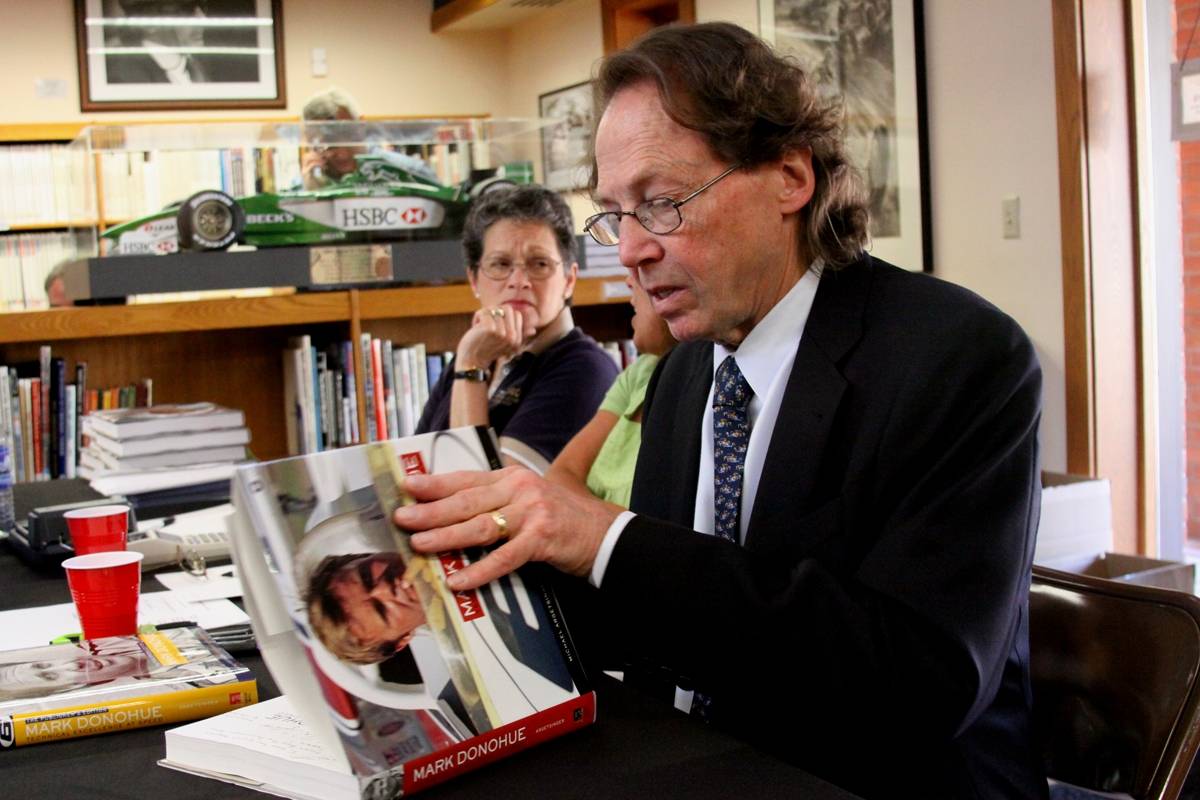
The symposium is named in honor of Michael R. Argetsinger (1944-2015), an award-winning motorsports author and longtime member of the Center's Governing Council. Michael's work on motorsports includes:
  • Walt Hansgen: His Life and the History of Post-war American Road Racing (2006)
  • Mark Donohue: Technical Excellence at Speed (2009)
  • Formula One at Watkins Glen: 20 Years of the United States Grand Prix, 1961-1980 (2011)
  • An American Racer: Bobby Marshman and the Indianapolis 500 (2019)

This content has been brought to you in-part by support through...

Motoring Podcast Network

Follow the Money: How Formula One Sponsorships Reveal Cultural Shifts

In the world of motorsports, few phrases carry as much investigative weight as “follow the money.” For Elton “Skip” McGoun – emeritus professor of finance and longtime observer of vehicle culture – this mantra unlocks a fascinating lens into Formula One’s evolution from niche sport to global cultural icon.

Take a moment to look at all the sponsors; Photo courtesy Skip McGoun

Skip’s presentation, part of the LogBook “History of Motorsports” series, dives deep into the shifting landscape of F1 sponsorships. From billboards at the 1908 French Grand Prix to today’s high-tech logos on carbon fiber chassis, he traces how corporate branding not only funds the sport but reflects its changing audience, values, and cultural cachet.

Tune in everywhere you stream, download or listen!

Listen on Apple
Listen on YouTube
Listen on Spotify

Skip’s research reveals a clear progression in the types of companies investing in Formula One:

  • Early Days (1950s): Sponsorships were sparse and mostly automotive-related – petroleum, tires, spark plugs. Logos were minimal, often just a grille badge or a subtle emblem.
  • Tobacco Era (1970s–1990s): As advertising restrictions tightened elsewhere, cigarette brands flooded F1. Cars became rolling billboards for Marlboro, John Player Special, and others, often painted to match cigarette packs.
  • Mass Consumer Phase (1990s–2000s): Brands like BEX beer and consumer electronics entered the fray, targeting a broader audience as F1’s popularity surged.
  • Upscale & Tech Boom (2000s–Present): Today’s sponsors include banks, cloud computing firms, and data analytics companies like Palantir – entities with little direct connection to racing but strong interest in F1’s elite image.

Spotlight

Elton G. “Skip” McGoun is an Emeritus Professor of Finance at Bucknell University and a former visiting professor at the University of Donja Gorija in Montenegro. He has presented and published on both finance history and culture and automobile history and culture and served as area chair of the Vehicle Culture Section of the Popular Culture Association.

Synopsis

This episode of The Logbook, our History of Motorsports series, features a presentation by Elton “Skip” McGoun, an emeritus professor of finance at Bucknell University. The presentation explores the evolution of sponsorship in Formula One racing from post-World War II to the present day. McGoun examines how sponsorships reflect and shape the cultural appeal of the sport, discussing how various industries – from tobacco to consumer electronics and technology companies – have used Formula One to market their products. He highlights the strategies and potential benefits for companies, including attracting new customers, retaining current ones, and enhancing brand image. The presentation also covers the changing demographics of Formula One audiences and the implications for sponsorship trends. Audience comments and questions added insights into the nuances of sponsorships, including the role of individual drivers and personal endorsements.

Follow along using the video version of the Slide Deck from this Presentation

Transcript

[00:00:00] Brake Fix’s History of Motorsports series is brought to you in part by the International Motor Racing Research Center, as well as the Society of Automotive Historians, the Watkins Glen Area Chamber of Commerce, and the Argettsinger family.

Follow the money. Formula One’s financial support as cultural indicator. By Elton G McGoun, Elton Skip McGoun is an emeritus professor of finance at Bucknell university and a former visiting professor of the university of Montenegro. He has presented and published on both finance history and automobile history and culture and served as area chair of the vehicle culture section of the popular culture association.

Skip examines formula one on track and on vehicle sponsorships through the post world war two period to show the evolution of the cultural appeal of the series. The title of this presentation is Follow the Money, which is a very familiar investigation approach. You know, if you really want to know [00:01:00] what’s going on beneath the surface.

follow the money. My observation has been that within motor racing, at least one transaction that appears to be ubiquitous is pay and display. So on the one hand, you have companies providing racing groups with some form of compensation and exchange. They’re allowed to display their name. It’s impossible to believe that anyone isn’t aware of this phenomenon.

Had they not closed the blinds, you could either look at this slide, or you could look out the windows and see numerous banners and billboards. Now, what’s interesting about this are a couple of things. First is, if you look at historic photos from the French Grand Prix of 1908, there are billboards. And there have always been billboards at races.

If you look at what’s on the [00:02:00] billboards, okay, so this is a Formula One event. You have an advertisement for a shipping company, DHL. You have a large international bank, UBS. You have an insurance company, Allianz, and it looks here like you even have a consumer electronics and appliance company, LG, none of which appear to have any direct connection with the company.

Motor racing. And in fact, I have to admit, I’ve been looking out the window since I’ve been here. And I can’t figure out what go bowling has to do with motor racing either. Another location for advertising now is on a tire. This was apparently a relatively recent phenomenon. I mean, we had billboards and banners for a long time.

And it took quite a while before we started seeing anything like this. And it appears to have started out, and this is based upon just looking over some historical photos, with [00:03:00] just a small name on the chest. Kind of like, I think, Eric was wearing yesterday with Pirelli. And then it seems that it’s evolved into something that’s pretty extraordinary from a fashion point of view or a functional point of view.

I’ll go back to this. And I noticed Eric is kind of following this trend this morning. I noticed at least two, Mobile and Porsche. Finally, what everyone has observed after it became legal in the late 60s, we see the logos and names on the automobiles pretty much everywhere it’s possible for them to be.

And again, as with the attire. It’s a little hard to imagine just what the point of something like that is. You know, it’s clearly not something that could ever be seen from any sort of distance. The location of these advertisements really does pose some interesting questions. Why do companies do this?

Obviously, they think that they must be obtaining [00:04:00] some sort of benefit from it. What are the potential benefits that a company might receive from these displays? The obvious one is kind of a traditional marketing benefit, attract new customers. Without having interviewed the folks at Martini and Rossi, this was one of the earliest consumer products to be advertised in Formula One.

And one of the assumptions, or at least part of my speculation, first of all, they’re an alcoholic beverage company. Perhaps they assumed that the audience for Formula One consisted of people who drank alcoholic beverages. You know, which may not be an inappropriate stereotype at the time. However, they weren’t drinking their alcoholic beverages.

Perhaps they thought that by advertising in Formula One, they could convince some of those folks in the stands to give a different drink a try. Okay, so attracting new customers. A second, more or less traditional marketing rationale is to [00:05:00] retain current customers. It’s very difficult for me to believe that anyone in the audience for this Formula One event did not know about Red Bull.

and had not already made a decision whether to drink Red Bull or not. However, you can imagine that maybe what Red Bull is looking for in something like this is that if the folks in the audience are fantasizing taking the checkered flag, you know, standing on the podium, even though they don’t have the car, they could have a can of Red Bull and that this can of Red Bull becomes part of this image, part of this fantasy.

And maybe they might have more than one, hopefully not so many that they’re going to have heart seizures. Now, I took a look at Google Scholar to see if any work had been done in this area and it appeared to me that most of what people have written about has been more or less traditional. You look at sponsorship of Formula One, you see [00:06:00] if revenue increased, if the stock price increased, if brand awareness increased.

It was very, very conventional. I think there are different benefits from something like this that perhaps explains some of the questions I posed earlier. Now I’m calling this social benefits, and if you want to kind of summarize this in a smaller phrase, it’s the opportunity to hang with the cool kids.

So you sponsor a Formula One team, you know, you get to shake hands with the drivers, you get to pose for pictures with them, you get invited to attend the receptions, okay, there are certain benefits to that. These benefits might be for you personally. Keep in mind, I mean, these are companies. Presumably they do have to answer to investors.

But of course, this is an opportunity to take clients and customers along with you. And something like this would be very, very impressive. And I use this as an example. I don’t know if any [00:07:00] of you have heard of Footwork, but Footwork was a Japanese logistics company. And like some of these other sponsorships that you see, it’s really hard to see any really direct connection with Footwork.

Formula One racing, but on the other hand, you can imagine that the customers of footwork would be fans of racing and would be interested in going to these events and having their photos taken with the principles. Another benefit, and I may be. Mistaken in referring to this as political benefits. But the idea is that there’s something else going on, not necessarily related directly to business activities.

Early on, there was certainly a very significant nationalism component to racing. So you could see in a situation like that, an Italian company might want to be showing its patriotism or its political commitment by advertising at an event like that. or advertising on a vehicle in that event. Another one, and [00:08:00] this occurred to me when I was watching the films on Thursday night, you know, we had the Sprint cars with a lot of advertisements on them of companies I had never heard of.

And I thought, well, maybe it’s kind of a way for the company to show its kind of more personal support. For a customer, okay, so that they’re willing to donate in a way to their venture and not just sell them a product. Of course, you could also look at this as being kind of a product discount as well.

But the reason I’ve used Parmalat here is that Parmalat is an Italian, I believe, dairy products company. And again, you’re thinking like, you know, what’s the connection? And I think maybe at this time a Parmalat was trying to become a conglomerate. They wanted their name to be known to potential investors, you know, when they’re looking to finance their acquisitions.

So this is a way of getting their name out there. That may seem a little elusive, but I’ll explain a little more in just a second. And another one, and I think this is becoming increasingly important, is the [00:09:00] idea of brand image. So we have The company Palantir, which as near as I’ve been able to figure out, is a data mining company trying to extract something from large databases.

I’ve never heard of their name in conjunction with motor racing. Usually Palantir is associated with the Department of Homeland Security, with a central intelligence agency, but here they are. Talent here. Ferrari team partner. Interestingly, two days ago I was looking at the CNN website and there was an identical banner on the website to this.

Same photo, same everything, different company. But again, a technology company. One thing that I’ve looked at in the past is the importance of making something tangible. Humans deal with physical objects. And obviously a company like Palantir is intangible. And I’m wondering if making the technology [00:10:00] association with Ferrari gives them some sort of visual substance or visual picture to their clients and customers.

Let me digress just a little bit. I had a friend from Germany visiting a week ago, and I told him I was coming up to the conference and he said, Oh, what are you going to do? And I’m making a presentation and I told him about the presentation. So he told me a story. My friend is with a German biotech company in Munich.

This biotech company, it’s very small, it has a very specialized product. What they produce are delivery systems for drugs. You know, drugs can’t all be administered in the form of a pill. It can be a very, very. very difficult process to get the chemical into the body and get it to the right place. And this is what his company does.

So, the customer for his company are drug companies. So, they hire this company to develop delivery systems for their new experimental drugs, which is [00:11:00] really way far removed from anything individuals are familiar with, and certainly far removed from sport. Now, he was able to use company money to make a contribution to a participant in a race called, and I think it’s called Funderglob.

It’s a solo around the world sailing race. That occurs every four years. One of the reasons I think he made this contribution from his company, he obviously had the influence to do this, is that he’s a sailor. So he kind of liked the idea. But the other reason is, Fond du Globe, I understand, is largely a French So most of the contestants are French, but it’s held every four years.

And four years ago, a German contestant participated and did really well, apparently ended up in the top five out of about 30. And this got huge publicity within Germany. And he thought it might be good to sponsor this [00:12:00] race because another German who was from Bavaria was going to compete. What’s interesting is I don’t know that he anticipated the consequences, but one thing that happened is that as a result of the sponsorship, his company’s representative in France, was invited to a reception where she was photographed with the German contestant in this race.

And this photo ended up prominent in German media. You know, saying, okay, here’s a representative from Sirion Biotech. So, that answered my question as to what the point of all those things on the jackets were. Is it so when someone gets photographed with a driver, they can see on the driver the logo for their company.

Now, the other interesting thing about this story [00:13:00] about my friend is that at the time They were in the process of kind of selling themselves. They were looking for a larger company to take them over. And what he found was their association with this race turned out to be significant. Potential acquirers that they were talking to thought it was pretty cool that the company was associated with this race.

And the thing is, you never know what people are going to bond over or what’s going to be an interesting topic of conversation. So rather than having to talk about antibodies, they were able to talk about I’m going to talk a little bit about sail racing, that story that he told me really gave me some insights into what might really be going on here, that this association can have very valuable, yet very indirect benefits, so that all of those little logos.

on the car are not going to be visible to [00:14:00] customers if any customer ever cares about them, but they provide other downstream benefits that can be extremely valuable. I thought, well, it seems as if there’s an evolution of sponsorships and advertising. It’s kind of gone through a series of changes.

Originally, racing was an important means of advertising the automobiles themselves. But what I found to be interesting here is that in the 1950s, that really wasn’t so much the case. Maybe it was because the cars had deviated so much from anything that people could actually purchase. So if you look at photos from Formula One cars from the 1950s, I saw only two, maybe three.

that had a logo, and it wasn’t very prominent. You know, Mercedes had the star, Maserati had the trident in the grille, and I think I saw a Ferrari logo. The only other thing was, you could spot the Gordinis by the shape of [00:15:00] the grille. They weren’t really advertising the car so much, but as you can tell from the billboard in the background, most of the advertising had to do with various sorts of automotive products.

Petroleum products, tires, spark plugs, those sorts of things. The next stage was really Tobacco advertising. Now, I think there were two reasons for this. One reason is there were fewer and fewer places where tobacco was allowed to be advertised. And in fact, in some cases, it wasn’t even allowed to be advertised on the automobiles.

In some countries, tobacco companies are looking for a place to advertise their product. Here’s where the stereotypes might come in. You know, I mentioned before, stereotype that maybe the Formula One audience at the time Well, maybe there was also a stereotype that the Formula One audience at the time was more likely to smoke than the general population, whether that was accurate or not.

So they had to find someplace to advertise. They chose this possibly because of the audience and also [00:16:00] because they were able to paint the car to look like their pack of cigarettes, which was pretty exciting. And I don’t know of any cigarettes that were green. Then As Formula One apparently became more popular and had a much broader audience, you started seeing advertisements for generic consumer products.

And by generic, I mean did not necessarily appeal to a unique market segment. That pretty much most people would be in the market for this sort of thing. You know, most people would be out and thinking about purchasing a camera, for example. Then from there, It kind of moved more into upscale products.

They were targeting what would probably consider maybe more wealthy people. Okay, so you see HSBC advertising. You see WorldCom advertising. Again, I’m not sure at the time how many of WorldCom’s products actually were under the name WorldCom. People purchase cell service. People purchase telephone service.

I don’t know if they know about WorldCom. And I don’t know [00:17:00] much about beer. I always associated BEX with being a little cut above. This was not bug. So we see them advertising more upscale consumer products. And then, of course, what we see nowadays is astonishing, is advertisements for technology companies.

And again, you can maybe make an argument that these were suppliers in some form or another. I’m not so sure. Okay, so in this case, you do see Palantir. You see Amazon Web Services. I looked some of these up, you know, one was like a Swiss cloud computing company. Okay, so these are companies you’d pretty much for the most part never heard of, kind of like Syrian biotech.

So I saw this as being kind of a progression of products that were being sponsored and wondered what the connection was between that and the audience, or at least that and the company’s perception of the audience. So do the changes in sponsorship correlate with changes in [00:18:00] the Formula One audience and kind of the cultural position of Formula One?

I thought, well, let me see if I can quantify that in some way, and honestly, I don’t know if I had, but what I was able to do was find a Wikipedia site where someone had looked at every Formula One team, and by year, they had the constructor, and that’s how it was listed. Then they identified what they called, at various places, the main sponsor, the delivery sponsor, or the principal sponsor.

And then they had a list of all the secondary sponsors, which obviously was pretty extensive. So I thought, well, let me see who was committed enough to be a main sponsor for three or more consecutive years. In other words, they really believed in something enough to really make a financial commitment.

And then what I did was I looked through and tried to classify them by industry. Take a quick look at who the sponsors were. Now, in [00:19:00] automotive, there weren’t many, where there was some sort of automotive automobile or automotive product associated with a different constructor. Now, I’m guessing that there’s probably a pretty close connection between Stewart and Ford and between HRT and Cosworth.

This is the one where there’s probably no connection. And I’m thinking maybe Infinity was willing to sponsor Red Bull because there was no other automotive name associated with it. Some of the other categories, these are the ones where the constructor was also the principal sponsor. On the one hand, you can see where the automobile company itself, obviously, tremendous resources, is its own principal sponsor, Alfa Romeo, Honda, Lotus, Mercedes Benz for a time, Renault, and some of the others, you can see, you know, some of the more Are less well known constructors.

Apparently couldn’t get another sponsor. So ended up being the principal sponsor themselves. [00:20:00] Here we have the consumer electronics sponsorships. Now again, the idea is principal sponsor three or more consecutive years. General consumer products. And it doesn’t appear to be any particular product category here.

It’s quite a wide variety of companies, you know, many of which I never heard of. Financial companies. Call this oil and chemicals. Actually, most of it’s petrochemicals. There are a few. I think this is a kind of a sugar company. I think Corto’s, you know, is more diversified products. But, you know, notice most of them are petrochemicals.

Technology companies. Tobacco companies. And here you can see, like, Marlboro, for example, sponsored in a wide variety of teams for extended periods of time. And, like, Imperial Tobacco was there for Gold Leaf, but then was there for John Player Specials. You know, there was some sort of break between these, so they didn’t sponsor for a while, and then did.

[00:21:00] transportation companies or logistics companies. So what? I’m not even going to try to necessarily make sense. You can look at these and you can see if this really can have any connection. Obviously, this was very preliminary, okay? So, most of them, constructors, tobacco and petrochemicals, We’re the largest sponsors, then you move into kind of consumer products, and now later into technology and transportation, the average beginning for these terms was highest for tobacco and general consumer products, and then oil and transportation, and later on financial technology.

More recent phenomenon and finally length of sponsorship. I kind of thought this was interesting is that consumer products tended to stick with team for the longest period of time, but tobacco was pretty loyal constructor. It seemed to me that, you know, you would finance yourself until you could find someone else to [00:22:00] provide the principal sponsorship.

So as I said, I’m not sure if these numbers really justify, however, the claim I’m making is that this evolution of sponsorships correlates with the evolution of F1 as a cultural phenomenon. 1950s, F1 was appealing to a subculture. You know, you look at the folks here, I think there are two women and one child in this photo.

Basically, it’s a lot of guys, many of whom appear to be of the same age. It moved from subculture to more mass cultural. A wider range of people were coming. They were bringing their families. You could fill the stands. So we see the transition from the automotive products and tobacco products to the general consumer products.

This is a transition I find interesting. And honestly, I was thinking, you know, maybe next year I ought to come up and do some [00:23:00] research on the cooling of Formula One. So when did Formula 1 go from being a mass phenomenon to being associated with James Bond? So this was where it kind of took the leap from the general consumer products into kind of the higher end products.

Interestingly, Formula 1 now is being used as a backdrop for fashion. It clearly has become very high end and very fashionable, although it does not look as if this has led to fashion sponsorships yet. So you don’t see fashion companies putting their name on the vehicles, but of course, what you do see more than anything else now is this formula.

One is the epitome of technological sophistication, and a lot of companies are taking advantage of that. Making the association and as I suggested giving some sort of tangible image to what is for the most part an intangible and in some cases almost incomprehensible product. It took [00:24:00] me a while before I ever imagined what Palantir did.

So, I think there’s something here. Now, we just saw a presentation which was a long series of clear violations of the statistical principle that correlation does not imply causation. Just because two things happen together doesn’t mean that one caused the other. In this case, I think that may be true.

The audience for Formula One, or at least the stereotypes of the audience for Formula One, or how Formula One is viewed culturally, then leads companies to exploit that with appropriate sponsorships. Therefore, if we’re interested in seeing where this is within the culture, we can look at this in order to do it.

Thank you very much.

Comment. Regarding sponsorship, you mentioned that Marlboro is there again and again and again. I get the impression that you don’t have a [00:25:00] sponsor ever sponsoring multiple teams in the same season. Is that correct? And if not, why not? I mean, it seems like you’d want your name splattered everywhere. You know, Marlboro never sponsored more than one car at the same time.

You’d mentioned you, uh, hadn’t seen a green car with tobacco sponsorship. Well, in North America, Cool Cigarettes was a major sponsor for almost a decade in Formula Atlantic and, uh, CART IndyCar. You started out talking, you mentioned the Go Bowling. I had a chance to interview the Go Bowling folks in August.

Demographics is their big interest in NASCAR because their demographic in bowling are very similar to demographics of what they find. In NASCAR. And so that’s why they come. And it’s not just about being on the signage or on a car. They do what’s called activation, which they bring a bowling alley here [00:26:00] and set it up and let people get involved and the clothing and that sort of thing.

But yeah, it’s not just about your name on the car. It’s what they call activation. and getting people involved and out to the track. You talked about cigarettes and alcohol sponsorship in the 70s. And you talked about, you know, the demographic, who they’re trying to attract. I think it’s also affected the memory of that era as well.

In my social media streams, I’m always getting these pictures of James Hunt smoking and drinking. It seems to be that when people think nostalgically about that era, It’s the smoking and drinking and, you know, leading to guys like Hunt being a little overrated. So anyway, I hope that doesn’t offend anyone.

Um, he kind of lucked into a championship, but that’s another story. But I think it’s also affected the memory. So not just the image of the time, but even how we think about the past. That’s wonderful research, Skip. You’re doing some great stuff there. I have a question about the role of the individual.

Like, we [00:27:00] see this in NASCAR a lot. A driver will come to a team with a sponsor, and that’s where they get their job. And it’s to the point where drivers will get fired because somebody else comes in with a more lucrative sponsor that’s sponsoring the individual, not so much the team. They’ll sponsor whatever car this guy or woman goes to.

I’m just wondering if you saw that with Formula One. Because I’m thinking of someone like Lewis Hamilton. We were all talking about the fashion industry. He seems to be connected with a lot of high end clothing companies, Tommy Hilfiger, and then like the watch deals that so many see drivers promoting watches that seems to be much more personal than a team or a manufacturer.

So just wondering if. There’s any correlation there. That’s clearly, that’s clearly worth doing. As I said, the source for that information was by Constructor. Call me a slacker. I didn’t go the next step to see what drivers were associated with those vehicles at the time and [00:28:00] then to see whether they had an influence on subsequent sponsorship.

But clearly, that would be worth doing. And actually, there’s a wealth of PhD dissertation material here. There really is. Unfortunately, motorsports could stand to be a much more acceptable topic of academic research. I think we’ve just seen Bernie Ecclestone lectures on Formula One with Jim Miller. Then we got Richard Haynes coming up.

Skip, wonderful presentation. Can’t say enough good things about it. A lot of great comments. Yay.

This episode is brought to you in part by the International Motor Racing Research Center. Its charter is to collect, share, and preserve the history of motorsports, spanning continents, eras, and race series. The center’s collection embodies the speed, drama, and camaraderie of amateur and professional motor racing throughout the world.

The Center welcomes serious researchers and casual fans alike to share stories of race drivers, race series, [00:29:00] and race cars captured on their shelves and walls and brought to life through a regular calendar of public lectures and special events. To learn more about the Center, visit www. racingarchives.

org. This episode is also brought to you by the Society of Automotive Historians. They encourage research into any aspect of automotive history. The SAH actively supports the compilation and preservation of papers. Organizational records, print ephemera and images to safeguard, as well as to broaden and deepen the understanding of motorized wheeled land transportation through the modern age and into the future.

For more information about the SAH, visit www. autohistory. org.

We hope you enjoyed another awesome episode of Brake Fix Podcast brought to you by Grand Touring Motorsports. If you’d like to be a guest on the show or get involved, be sure to follow us on all social media platforms at GrandTouringMotorsports. And if you’d like to learn more about the content [00:30:00] of this episode, be sure to check out the follow on article at GTMotorsports.

org. We remain a commercial free and no annual fees organization through our sponsors, but also through the generous support of our fans, families, and friends through Patreon. For as little as 2 and 50 cents a month, you can get access to more behind the scenes action, additional Pitstop minisodes and other VIP goodies, as well as keeping our team of creators.

Fed on their strict diet of fig Newtons, gumby bears, and monster. So consider signing up for Patreon today at www. patreon. com forward slash GT motorsports, and remember without you, none of this would be possible.

Livestream

Learn More

If you enjoyed this History of Motorsports Series episode, please go to Apple Podcasts and leave us a review. That would help us beat the algorithms and help spread the enthusiasm to others. Subscribe to Break/Fix using your favorite Podcast App:
Listen on Apple
Listen on YouTube
Listen on Spotify

Consider becoming a Patreon VIP and get behind the scenes content and schwag from the Motoring Podcast Network

Do you like what you've seen, heard and read? - Don't forget, GTM is fueled by volunteers and remains a no-annual-fee organization, but we still need help to pay to keep the lights on... For as little as $2.50/month you can help us keep the momentum going so we can continue to record, write, edit and broadcast your favorite content. Support GTM today! or make a One Time Donation.

Skip challenges the conventional wisdom that sponsorship is purely about marketing ROI. Sure, companies want visibility, but he identifies deeper motivations:

  • Customer Retention & Fantasy Fulfillment: Red Bull doesn’t just sell energy drinks—it sells the dream of podium glory. Fans may never race, but they can sip the same fuel as champions.
  • Social Capital & Networking: Sponsorship grants access to exclusive events, photo ops with drivers, and VIP hospitality. It’s a way to “hang with the cool kids,” impress clients, and build prestige.
  • Political & National Pride: Italian brands like Parmalat once used F1 to signal patriotism and ambition, especially during periods of corporate expansion.
  • Tangibility for Intangible Brands: Tech firms like Palantir use F1 to give physical form to abstract services. A logo on a Ferrari makes data mining feel more real.

One of Skip’s most compelling anecdotes involves a German biotech company sponsoring a solo sailing race. Though the firm had no direct link to sport, the sponsorship led to media coverage, boosted its profile during acquisition talks, and gave executives a relatable story to share – proof that emotional resonance can be more valuable than direct advertising.

Using a Wikipedia dataset of F1 constructors and sponsors, Skip categorized long-term sponsors by industry. His findings suggest:

  • Tobacco and petrochemicals dominated early sponsorships.
  • Consumer products had the longest sponsorship durations.
  • Technology and financial firms are recent entrants, reflecting F1’s shift toward upscale and digital audiences.

Skip concludes that F1’s sponsorship evolution mirrors its cultural journey:

  • 1950s: Male-dominated subculture.
  • 1980s–2000s: Mass appeal with family-friendly events.
  • Today: A fashionable, high-tech spectacle- more James Bond than grassroots racing.

Fashion brands haven’t yet plastered their logos on cars, but F1 is increasingly a backdrop for style shoots and luxury branding. Drivers like Lewis Hamilton embody this shift, bringing personal sponsors like Tommy Hilfiger and watch companies into the spotlight.


Academic Goldmine

Skip’s talk ends with a call to action: motorsports deserve more academic attention. The interplay of finance, culture, and identity in F1 sponsorships offers fertile ground for dissertations, documentaries, and deeper research.

Whether you’re a fan of tire compounds or cultural theory, Skip McGoun’s “Follow the Money” presentation reminds us that every logo on a race car tells a story – not just of commerce, but of who we are, what we value, and how we dream.

This episode is sponsored in part by: The International Motor Racing Research Center (IMRRC), The Society of Automotive Historians (SAH), The Watkins Glen Area Chamber of Commerce, and the Argetsinger Family – and was recorded in front of a live studio audience.


Other episodes you might enjoy

Michael R. Argetsinger Symposium on International Motor Racing History

The International Motor Racing Research Center (IMRRC), partnering with the Society of Automotive Historians (SAH), presents the annual Michael R. Argetsinger Symposium on International Motor Racing History. The Symposium established itself as a unique and respected scholarly forum and has gained a growing audience of students and enthusiasts. It provides an opportunity for scholars, researchers and writers to present their work related to the history of automotive competition and the cultural impact of motor racing. Papers are presented by faculty members, graduate students and independent researchers.The history of international automotive competition falls within several realms, all of which are welcomed as topics for presentations, including, but not limited to: sports history, cultural studies, public history, political history, the history of technology, sports geography and gender studies, as well as archival studies.

The symposium is named in honor of Michael R. Argetsinger (1944-2015), an award-winning motorsports author and longtime member of the Center's Governing Council. Michael's work on motorsports includes:

  • Walt Hansgen: His Life and the History of Post-war American Road Racing (2006)
  • Mark Donohue: Technical Excellence at Speed (2009)
  • Formula One at Watkins Glen: 20 Years of the United States Grand Prix, 1961-1980 (2011)
  • An American Racer: Bobby Marshman and the Indianapolis 500 (2019)

This content has been brought to you in-part by support through...

Motoring Podcast Network

Watkins Glen’s Circus Era: When Formula One Came to Town

In the golden age of motorsports, before Formula One became a global media juggernaut, it spent two glorious decades nestled in the heart of rural New York. From 1961 to 1980, Watkins Glen hosted the U.S. Grand Prix, transforming a quiet village into a vibrant epicenter of speed, spectacle, and community spirit. Professor Jim Miller’s presentation, “Formula One at Watkins Glen: The Circus Days,” offers a rich tapestry of this era—an affectionate, intellectual, and deeply human look at how a small town helped shape the future of international racing.

Tune in everywhere you stream, download or listen!

Listen on Apple
Listen on YouTube
Listen on Spotify

Watkins Glen’s motorsports legacy began in 1948, when Cameron Argetsinger, a local with deep family roots, envisioned racing through the village streets. With the help of the mayor, local business owners, and racing enthusiasts, the dream became reality. The races drew thousands, and by 1956, a permanent track was built—followed by a second in 1971. Formula One arrived in 1961, and for 20 years, the Glen became synonymous with world-class racing.

Spotlight

Dr. James Miller has a longtime interest in media technology, and this led him to the historical study of the automobile as an under-appreciated site of media consumption. From there, the highly digitalized modern race car presented itself as a possible precursor of future mobility. This was also an excuse to intellectualize the pleasure of motorsports, which has resulted in a connection with the IMRRC and membership in the International Motor Press Association. Miller is professor emeritus of communications at Hampshire College, a former member of the graduate faculty at UMass Amherst and a member of the Porsche Club of America.

Synopsis

On this episode of The Logbook, our History of Motorsports series, sponsored by the International Motor Racing Research Center, we feature Dr. James Miller presenting on the history of Formula One racing at Watkins Glen. The presentation highlights Watkins Glen’s 20-year era of hosting Formula One from 1961 to 1980, underscoring its unique community involvement, the evolution of Formula One, and the significant cultural and technological impacts of this era. Miller, a professor emeritus and a member of the Porsche Club of America, delves into the local economic benefits, the transition from amateur to professional racing, and the challenges faced by the sport during that period. He also compares the racing circus to traditional carnivals and fairs, noting how they both required community effort and brought advanced technologies of their times. The discussion spans notable personalities, the transformation of racing teams, driver dynamics, and the ongoing legacy of motorsport in Watkins Glen.

Follow along using the video version of the Slide Deck from this Presentation

Transcript

[00:00:00] Brake Fix’s History of Motorsports series is brought to you in part by the International Motor Racing Research Center, as well as the Society of Automotive Historians, the Watkins Glen Area Chamber of Commerce, and the Argettsinger family.

Formula One at Watkins Glen. The Circus Days by Dr. James Miller. James Miller has had a long time interest in media technology and this led him to the historical study of the automobile as an underappreciated site of media consumption. From there, the highly digitized modern race car presented itself as a possible precursor of future mobility.

This was also an excuse to intellectualize the pleasure of motorsports, which has resulted in a connection with the IMRRC and membership in the International Motor Press Association. Miller is a professor emeritus of communications at Hampshire College, a former member of the graduate faculty at UMass Amherst, and a member of the Porsche Club of America.

Formula One raced at [00:01:00] Watkins Glen for 20 years, from 1961 to 1980. This was a still early time in post war Formula One, when nearly everything was smaller scale, sponsorship was just beginning, a DIY ethos ruled the paddock, and U. S. media attention was limited. Yet these 20 years mark a crucial midway point between the Glen’s original road racing and the modern, corporatized Formula One that has now developed into a global media spectacle.

To mark 75 years of Watkins Glen Motorsports, this presentation offers a sketch of this distinctive time and place with emphasis on the local community engagement that made those glorious 20 years of Formula One possible. Our next presentation is by Professor Jim Miller, and it’s a very much appropriate one.

Formula One at Watkins Glen Circus Days. So, Jim, when you’re ready. Thank you. So, sports car racing on the streets and roads of Watkins Glen took place between 1948 and 1955. It was the realization of a fantastic dream of [00:02:00] Cameron Argettsinger. He’d summered on the nearby family farm and learned to drive on these same streets and roads when he was just 12 years old.

Argettsinger teamed up with the village mayor, a newspaper man, a garage operator, the owner of the Seneca Lodge, and a bunch of other local business leaders, racing they thought would be fun for the Northeastern elite who could afford to do it, and the spectacle would extend the local economic benefits of tourism further into the autumn.

The races were successful beyond expectations, drawing thousands of spectators. The first permanent track was built in 1956 and a second in 1971. In 1961, Formula One came to stay for 20 years. This presentation is part of a larger historical study of Grand Prix auto racing. Last year, I presented a model of F1’s developmental stages with a media orientation and an emphasis on the U.

S. Watkins Glen seemed to me to be a worthwhile case study of what I’m calling the Circus Era. That’ll be my focus today, [00:03:00] although I can only skim the surface of what I’ve learned since last November. Let me begin with three key observations, which will help you appreciate the details that follow. First, the 13 years of racing at Watkins Glen very much prefigured the Formula One experience.

In terms of organization, success, community involvement, sanctioning issues, and financial challenges. My second takeaway is related to the first. F1 at Watkins Glen was a fluke of historical circumstances that came together almost kaleidoscopically. It was at once a logical step in the modernization of Formula One.

A remarkable local achievement in a situation whose apparent strengths were equally the source of its eventual failure, that is, bankruptcy and the loss of the U. S. Grand Prix. A last observation is that there’s no denying the importance of F1 at the Glen. Nearly half of all U. S. GPs attend F1. Watkins Glen hosted the race longer than any other [00:04:00] American venue.

Teams, drivers, the press, fans, all agreed on the special charm and beauty of the place, the warmth and skill of race organizers, and the joyous participation of the villagers. It was unique, and also more generally influential, in what people call the Watkins Glen Effect, meaning, Encouraging other early circuits, like Elkhart Lake, Lime Rock, and perhaps Bridgehampton.

Nor is the past forgotten locally. For 30 years, the village has hosted a one day Grand Prix festival. That’s a kind of reenactment of those long ago times. And the Argett Singer’s family, The gift of the International Motor Racing Research Center collects and preserves precious materials that document the past, available to anyone.

This was a period when F1 began to become something recognizable to our own time. Regular circuits and countries became legacy venues. Familiar teams established themselves. Champion drivers emerged, and there were serious technological advances. The sport also [00:05:00] became more commercial and actually depended on sponsorship, which changed car livery from national colors to corporate and product designs.

While new organizations like the GP Drivers Association and the F1 Constructors Association challenged both the authority of the FIA and the independence of local race organizers. It was also an extremely dangerous time. When nine drivers were killed, two of them here, these fatalities provoked drivers into a sustained program for safety that improved tracks and racecars.

Here’s a schematic representation of the circus era study as it’s coalescing. I won’t be talking about the media component today due to lack of time. My overall aim in this is to move outside the usual motorsport historiography into a more lived cultural context, a kind of arms length ethnography. The most abstract and all encompassing frame here is the carnivalesque.

By this I mean a zone of sanctioned fun, but [00:06:00] crucially, where inversions of the normal take place, where fantasy becomes reality. So, speeding is prohibited, except here, where it’s demanded. Where mythical gods turn into superhuman drivers. Where everyday safety and security are abandoned in favor of embracing danger.

And where celebration, without inhibition, prevails. takes place. Think of the bog. A side note, and there could be many of these, during this period, another related carnivalesque phenomenon, the Outdoor Music Festival, emerged. Holistic leisure, somebody calls it, complete with on site camping, merchandise, food, and all the rest.

In July of 73, there was Summer Jam, featuring the Allman Brothers, the Grateful Dead, the band, and 600, 000 rock fans, and it took place here. Calling this the circus era goes beyond an affectionate metaphor. In fact, the circus and the county fair are predecessor cultural forms to Formula One. They afford ready made structures and cultural [00:07:00] practices that racing took as its own.

Both are mostly rural and small town. Fairs were meant to educate farmers about the latest agricultural techniques, and that required entertainment to get their attention, which looked a lot like circuses, some version of the rings and the midways. Locals collaborated to maintain an annual fair, and they mixed it up with the exotic outsiders that circuses brought to town.

Fairs sought to be community building. Circuses displayed advanced technologies, like electric lighting and travel by train. Fairs involved competition, animal building, and canned fruit. Circuses were mobile encampments, while fairgrounds had permanent buildings. Fairs most popular events were Included horse racing, which gave way to auto racing with circuits and grandstands auto thrill shows were a kind of circus spinoff.

There’s a great deal more to say about how circuses and faires foreshadowed automobile racing and maybe F1 in particular during this period, just not today. Watkins Glen is a rural village whose [00:08:00] population during the circus era was about 2, 500. People descend mainly from English and Irish immigrants and there’s a sizable Italian community.

The area then was mostly agricultural with a significant salt producing industry. Situated at the southern tip of Seneca Lake, Watkins Glen has a long history of tourism. Steamboats and the railroad brought the well to do to elegant hotels and a spa near a two mile long gorge, which at the turn of the 20th century Became a popular New York State Park was and it is pleasant working class town of small businesses and modest homes.

Its biggest neighbors include Ithaca, home of Cornell and Elmira, where there’s a small airport. There is nothing in any of these rather commonplace features, even hints that someday Watkins Glen would become globally synonymous with the pinnacle of international road racing and produce a 75 year heritage of motorsports.

The invention of road racing at Watkins Glen [00:09:00] was a top down affair. It would come to involve the genuine enthusiasm and active support of townspeople, but it was mostly the work of a social elite, men with the experience, education, time, and means to organize, operate, and compete in sports car racing.

There was a core of local founders. They were informed by pre war racing in the U. S. and Europe, and savvy enough to gain sanctioning to close the streets and roads, To stop the trains to attract contestants and all the rest. Drivers were gentlemen sportsmen with serious money, fame, or both. They might have played polo or sailed in regattas.

They attended the dropout of Ivy League schools. They were widely known in popular culture. They had resources for serious play. A modest 1948 MGTC cost twice the price of a basic Ford coupe. Many of them had experienced the Depression in comfort. They all, of course, had survived the war and were looking to live full lives.

Some were heirs and were especially [00:10:00] influential. The Collier brothers grew up on an estate next to the Rockefellers. The boys built a racetrack out of its service roads. In the years just before the stock market crash, teenage Sam built and ran a summer theater featuring vaudeville in movies. It’s seated 66 and was financed by his father.

The patriarch made his money in streetcar and subway advertising and then bought more than a million acres of southwest Florida, where Collier County is named for him. Briggs Cunningham is in a league of his own. His influence on American post war road racing is probably as immeasurable as his personal wealth.

It was Cameron Argettsinger’s dream to race cars through the roads where his family roots were generations deep. His father had gone to Ohio, where he became an officer of a Youngstown steel mill. Father and son drove Packards. At age 20, Cameron was co owner of a Packard dealership. After the war, he was a married father, and between college and law school, he seems to have been able to devote himself [00:11:00] to road racing.

It would not be unkind to call this a vanity project, one whose success was directly linked to Argettsinger’s philanthropy. From the start, he sought to bring Formula One to the Glen. Many teams, as many as 60, circulated through F1 during the circus era. Maybe 15 could be considered significant. What are today called team principles were then some combination of owner manager, fundraiser, and designer.

Colin Chapman was a university trained engineer. A number of these owners were former drivers. Bruce McLaren designed, built, and drove his own cars. Sometimes a mother company manufactured road cars. whose main purpose was to pay for racing. Ferrari and Lotus are examples. These men shared a single minded dedication to the sport.

Frank Williams called it a lifelong compulsion. Ginny Williams wrote this about her husband of nearly 40 years. I’m quite certain he never visualized himself as one of the world’s leading constructors. His motivation was [00:12:00] simply his love of Formula One racing. He was addicted, no lesser word will do, to all aspects of the Grand Prix circus.

He didn’t really mind whether he was on the trapeze or cleaning out the cages, so long as he was there. The owners were idiosyncratic. Williams never ate on race day. He didn’t drink or smoke. He was a serious runner, keeping very fit. His future wife loaned him her inheritance, infuriating her father, who stopped Jenny’s monthly allowance.

Williams barely made his own wedding, and lived his first married year without furniture. There were an eviction and a baby at about the same time. His personal driving was so dangerous, he was called a hooligan. Teams often operated on a shoestring and with a DIY mentality. Enzo Ferrari disdainfully called them garagistas.

It took Williams a good decade before his team found success. He started by buying and selling used race cars and parts. Sharing a London bachelor pad. Creditors circled and [00:13:00] mechanics were paid by barter. Ford would loan the team a van, and Frank would sell it for cash. Drivers avoided his team. Maybe out of pity, Ken Tyrrell loaned an engine.

But Williams made his team feel like a family. People worked for him for ages. And eventually, of course, during the circus era, Williams won 11 races and a driver’s and a constructor’s championship. Things got only better after that. But running a team was hit or miss then, and teams very much reflected their owners quirky, impassioned personalities.

There’s disagreement about who first remarked that F1 drivers are like interchangeable light bulbs. But you see the point. During the circus era, there were a great many drivers who passed through the sport. Teams then didn’t identify, train, and advance them. Careers were short, several years at most. And only a few rose to the glow of celebrity.

Among scores, even hundreds of dimmer bulbs. For most, even those who became stars, a driver’s life was often one of struggle [00:14:00] and danger. Jackie Stewart was three times world champion. Eventually, he ran his own team. He led the successful fight for driver safety. Roman Polanski made a film about him, and George Harrison recorded a single.

He provided TV race commentary, and was a spokesman for Ford and Rolex. The King of Jordan was Stewart’s buddy. Stewart’s calls his F1 experience and the life it engendered a rocket ship ride. That’s because he began as a mechanic in his family’s rural garage. Climbing the ladder he says, I drove whenever, whatever, wherever possible.

For his first Monaco race, To save money, he drove the round trip from Scotland. And while he felt he was up against the sons of rich fathers, he referred to death on the track as akin to an air crash and a medieval battlefield. Today’s drivers, Stewart says, have no understanding at all. of what we experience.

Mechanics are the essential grunts of Formula One. They may be dedicated to their team [00:15:00] and enjoy a winning relationship with a driver, but their anonymous life is hard, with 14, 16, and even 18 hour days not uncommon in the past. Steve Matchett, a Bennington mechanic for eight years during 90s, offers these unromantic recollections.

He recalls wearing bubble wrap on his feet during winter testing in the UK, plus a t shirt, race shirt, sleeveless sweater, heavy knit sweater, duck down body warmer, and wet weather anorak. The long hours, the all nighters, and the hectic workloads that we are sometimes forced to endure are terrible facets of work in F1, and at times, I felt we were little more than slave labor.

The reality is this. Formula One, for all its associated passions, is a job of work, another way of earning a living. The Grand Prix Drivers Association gave Watkins Glen its Best Stage Grand Prix Award in 1965, and 1970, [00:16:00] 1972. Ginny Williams said that Watkins Glen was my favorite place in the world. Jackie Stewart remembered the glorious colors of autumn in the Finger Lakes.

Rural America in the fullest sense, and unlike the other places we’d be traveling to. The team stayed at the Glen Motor Inn. And because of the Canadian and Mexican races, Teams might remain there for three weeks. There was a charity golf tournament for drivers. Drivers fished on the lake. Bruce McLaren waterskied.

Graham Hill said, In Europe, we don’t stay in the same hotels. We meet only at the racetrack. Here, it’s like a party. Well, there were actual parties. Before the race, at the Argettsingers home, where Bill Green screened race movies in the garage. Looking back, Bill Milliken said, The homespun hospitality led to permanent friendships and was never forgotten by drivers or teams.

There was a post race party at the Seneca Lodge, where Francois Severe would play the piano, and James Hunt picked up waitresses. In between, there was a [00:17:00] champagne party for drivers wives and girlfriends. When F1 was finished with the Glen, Rob Walker said, It makes me very sad to have to go. Local people sold parking places in their yards.

Kids sold race tickets to the lines of cars streaming into the track. Church ladies prepared boxed lunches. Concession stands were staffed by locals, and some of that money paid for the annual high school trip to Washington. Ferrari mechanics overheard Italian being spoken in a store, which led them to cooking with the Italian speaking villager in her kitchen.

Before there were proper facilities at the track, dealerships that ordinarily sold Detroit products turned their garages over to the F1 teams, and locals trucked the cars up the hill for the race. Rick Huey’s experience with Tyrrell Racing epitomizes the easy collaboration between the visiting circus and the villagers.

To put it way too briefly, as a teenager, Rick met Ken. This led to Rick’s becoming an invaluable local man Friday. And then for 27 years, at several North American [00:18:00] tracks, Rick worked when he could as a Terrell team member. Try that today. So, what remains to be studied? Well, there is the so called Watkins Glen Effect, a kind of ripple across U.

S. road racing. Local participation was a distinctive feature here. More specific examples would bring this more to life, like names of lodgings and shops that catered to the race crowd, stories about volunteering, memories about F1 cars at places like the Chevy Garage. That sort of thing. But that’s a tough challenge to get that kind of information so many years later.

And some sort of limited comparison with F1 in Europe during this period would demonstrate either how unusual Watkins Glen was or how certain Grand Prix qualities were universal. I would just say that there’s always more to be done.

Thank you, Jim. Some questions for Jim. We talk a lot about the glory days, the glory days at Watkins Glen. What are [00:19:00] ways that you can see us both preserving that heritage, but also adding to it? Well, I suppose there are different ways to come at that. My particular interest here is regarding F1. I have a broader interest in sports car racing.

And of course, NASCAR has been here now for a long time. So there’s still racing going on. The research center, where I’ve spent many hours, Both going through materials and talking with generous people is this living archive full of material, which just speaking for myself in this project, I now feel a responsibility to bring this to life in some way and publish it and see that it’s circulated.

So perhaps people can remember a past. Maybe the larger question is, you know, is there a future for auto racing as we’ve known it? I had this kind of cockamamie model that I presented last year, which suggests that maybe the next chapter in the life of Formula One, at least. Might be a kind of a simulated hyper reality experience where we don’t have to go to a race which actually isn’t taking place anyway.

Now that’s pretty extreme speculation. Those would be my initial responses to your [00:20:00] question. Vintage racing might be another way to help preserve and present historic race cars. Probably heard this, Sam Posey wrote a book, I think it was called The Mudge Pond Express. It’s a little hard to find, but it really describes a lot of the escapades that went on back in the day.

I haven’t read Posey’s book, but I live relatively close to Lime Rock, so the straight there is now named after him, and he lives in Sharon. The vintage racing is actually one of the principal activities during the annual Grand Prix Festival here in September. It’s a good point. It happened a weekend earlier annually at Lime Rock.

I have to say this, and I hope it’s not offensive to anybody, but I think we owe Bernie Eccleston for the decline of Formula One racing here at Watkins Glen, and I really regret that we’re moving to venues like Las Vegas, but money drives the world. Eccleston then was the leader of the Formula One Constructors Association.

He was a Brabham team owner at the [00:21:00] time, I think. His aim was to Get a better deal for the teams, and especially lining his own pockets. My recollection, and others would know this better than I do, is that he in particular put pressure, along with the drivers, on the track for more updated facilities. I think toilets in the paddock might have been one of the issues.

As well as safety. One of the dynamics going on at the time was a kind of general upgrade. It was just too expensive, as I understand it, for Watkins. Now Bill, don’t challenge any of my historical facts. What I’m going to tell you is the biggest rock concert was here. Bigger than Woodstock and bigger than the one that was at Ontario some years later.

I worked here. And so did Rick Huey. Rick was around. Bunch of us others. When it came time for Summer Jam, You couldn’t go nowheres in Watkins Glen. Montour Main Street was parked full of cars and there was cars all over the place in Watkins Glen. The only way you could go down through Montour Falls was down South Street, out and over the roadway to Burdett and all that.

But it was the biggest thing in the world. [00:22:00] And the pickup after that was a lot too of all kinds of things. Cars that would never, never go back where they had came from. And you’d find money on the ground. Food that was unable to be preserved because they didn’t have enough ice. But anyways, Watkins Glen was the biggest one.

Bigger than the other two that I mentioned. Okay, that’s interesting because in July of 72, there was a music festival held at Pocono Raceway. And it was about a quarter of a million people or so showed up, and it was like a Woodstock type of thing. And that’s just when he said that, and it’s like, wait a second, Pocono had one as well.

So it must just be a commercial endeavor for a facility. That takes in lots of people, has a lot of room, can hold campers, and I just wanted to see the construction. Well, those were the days, and these places are natural sites. The organizers here were serious professionals who had done other very successful gatherings.

This got totally out of control, as I understand it. And as in many cases, Woodstock would be the prime example. Many people paid nothing. They just overwhelmed the place. [00:23:00] My sense is that the local people were very upset by this invasion of 600, 000 people. The Pocono event did as well. Roads were blocked.

It was a rainy weekend, so it was mud and a lot of gate crashing. And again, crippling the community because there was such an influx going to the racetrack. Although some of us have a certain age kind of remember those things fondly. We won’t go there. How I’m trying to conceptualize. A historical moment and particularly in this place is convincing to you and whether you have suggestions for ways to fiddle with it Thank you, jim.

That was wonderful. That was a very different look. Thank you

This episode is brought to you in part by the international motor racing research center Its charter is to collect share and preserve the history of motorsports spanning continents eras and race series The center’s collection embodies the speed drama and camaraderie of amateur and professional motor racing throughout the world You The Center welcomes serious researchers and casual fans [00:24:00] alike to share stories of race drivers, race series, and race cars captured on their shelves and walls and brought to life through a regular calendar of public lectures and special events.

To learn more about the Center, visit www. racingarchives. org. This episode is also brought to you by the Society of Automotive Historians. They encourage research into any aspect of automotive history. The SAH actively supports the compilation and preservation of papers. Organizational records, print ephemera, and images to safeguard, as well as to broaden and deepen the understanding of motorized wheeled land transportation through the modern age and into the future.

For more information about the SAH, visit www. autohistory. org.

We hope you enjoyed another awesome episode of Brake Fix Podcast brought to you by Grand Touring Motorsports. If you’d like to be a guest on the show or get involved, be sure to follow us on all social media platforms at GrandTouringMotorsports. [00:25:00] And if you’d like to learn more about the content of this episode, be sure to check out the follow on article at GTMotorsports.

org. We remain a commercial free and no annual fees organization through our sponsors, but also through the generous support of our fans, families, and friends through Patreon. For as little as 2. 50 a month, you can get access to more behind the scenes action, additional Pit Stop minisodes, and other VIP goodies.

As well as keeping our team of creators fed on their strict diet of fig Newtons, gumby bears, and monster. So consider signing up for Patreon today at www. patreon. com forward slash GT motorsports, and remember without you, none of this would be possible.

Livestream

Learn More

If you enjoyed this History of Motorsports Series episode, please go to Apple Podcasts and leave us a review. That would help us beat the algorithms and help spread the enthusiasm to others. Subscribe to Break/Fix using your favorite Podcast App:
Listen on Apple
Listen on YouTube
Listen on Spotify

Consider becoming a Patreon VIP and get behind the scenes content and schwag from the Motoring Podcast Network

Do you like what you've seen, heard and read? - Don't forget, GTM is fueled by volunteers and remains a no-annual-fee organization, but we still need help to pay to keep the lights on... For as little as $2.50/month you can help us keep the momentum going so we can continue to record, write, edit and broadcast your favorite content. Support GTM today! or make a One Time Donation.

Miller frames this period as the “Circus Era,” not just metaphorically but culturally. Like traveling circuses and county fairs, Formula One brought exotic outsiders, cutting-edge technology, and a sense of inversion – where danger was embraced, speed was celebrated, and mythical drivers became local legends. Watkins Glen’s charm lay in its ability to host this spectacle while remaining deeply rooted in its community.

What made Watkins Glen unique wasn’t just the racing – it was the people. Locals sold parking spots in their yards, staffed concession stands, and even lent their garages to F1 teams. Drivers stayed at the Glen Motor Inn, fished in Seneca Lake, and partied at the Argetsinger home and Seneca Lodge. Mechanics cooked with Italian-speaking villagers. Teenagers like Rick Huey became honorary team members. It was a grassroots collaboration between villagers and the racing elite.

Miller doesn’t shy away from the darker truths. The era was perilous – nine drivers lost their lives, two at the Glen. Mechanics endured grueling hours, often working in freezing conditions with makeshift gear. Teams operated on shoestring budgets, fueled by passion more than profit. Frank Williams, for example, lived without furniture, borrowed money from his future wife, and sold team vans for cash – yet built a championship-winning team.

Miller’s approach is refreshingly interdisciplinary. He views motorsports through a media and cultural lens, likening F1 to carnivalesque spaces where fantasy becomes reality. He draws parallels between racing and outdoor music festivals like the 1973 Summer Jam, which brought 600,000 fans to Watkins Glen – larger than Woodstock. These events, he argues, reflect a holistic leisure culture that shaped the Glen’s identity.


Legacy and the Watkins Glen Effect

Watkins Glen hosted more U.S. Grands Prix than any other venue. Its influence rippled across American motorsports, inspiring tracks like Lime Rock and Elkhart Lake. The Grand Prix Drivers Association awarded it “Best Stage Grand Prix” multiple times. Today, the village honors its legacy with an annual Grand Prix Festival and through the work of the International Motor Racing Research Center, which preserves this rich history.

As Miller reflects, the challenge now is not just remembering Watkins Glen’s glory days but envisioning what motorsports might become. Could simulated hyper-reality replace physical races? Will vintage racing keep the spirit alive? These questions linger, but one thing is clear: Watkins Glen’s Circus Era was a magical moment in motorsports history – where community, culture, and competition converged in unforgettable ways.

This episode is sponsored in part by: The International Motor Racing Research Center (IMRRC), The Society of Automotive Historians (SAH), The Watkins Glen Area Chamber of Commerce, and the Argetsinger Family – and was recorded in front of a live studio audience.


Other episodes you might enjoy

Michael R. Argetsinger Symposium on International Motor Racing History

The International Motor Racing Research Center (IMRRC), partnering with the Society of Automotive Historians (SAH), presents the annual Michael R. Argetsinger Symposium on International Motor Racing History. The Symposium established itself as a unique and respected scholarly forum and has gained a growing audience of students and enthusiasts. It provides an opportunity for scholars, researchers and writers to present their work related to the history of automotive competition and the cultural impact of motor racing. Papers are presented by faculty members, graduate students and independent researchers.The history of international automotive competition falls within several realms, all of which are welcomed as topics for presentations, including, but not limited to: sports history, cultural studies, public history, political history, the history of technology, sports geography and gender studies, as well as archival studies.

The symposium is named in honor of Michael R. Argetsinger (1944-2015), an award-winning motorsports author and longtime member of the Center's Governing Council. Michael's work on motorsports includes:

  • Walt Hansgen: His Life and the History of Post-war American Road Racing (2006)
  • Mark Donohue: Technical Excellence at Speed (2009)
  • Formula One at Watkins Glen: 20 Years of the United States Grand Prix, 1961-1980 (2011)
  • An American Racer: Bobby Marshman and the Indianapolis 500 (2019)

This content has been brought to you in-part by support through...

Motoring Podcast Network