spot_img
Home Blog Page 16

Rob Dyson’s Le Mans Odyssey: A One-Time Run That Changed Everything

In 1986, Rob Dyson – radio entrepreneur turned racing legend – took on the 24 Hours of Le Mans. It wasn’t a lifelong dream or a bucket list item. It was curiosity, confidence, and a chance encounter with Richard Lloyd that led him to the famed Circuit de la Sarthe. What followed was a singular experience that reshaped his perspective on racing forever.

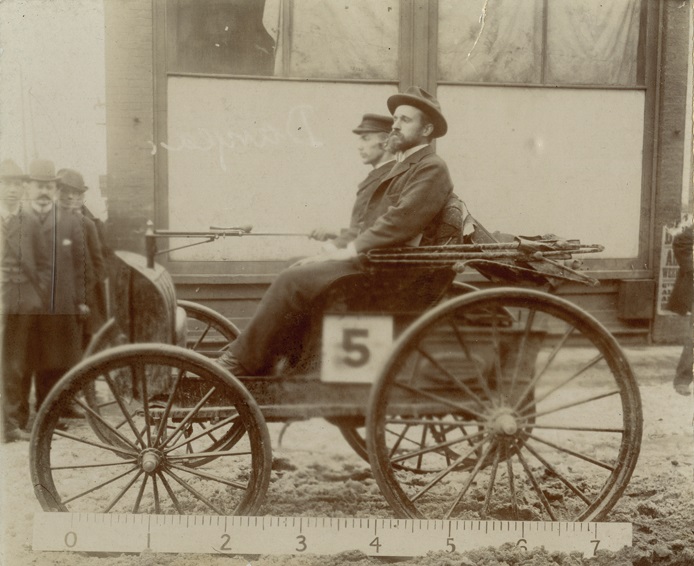
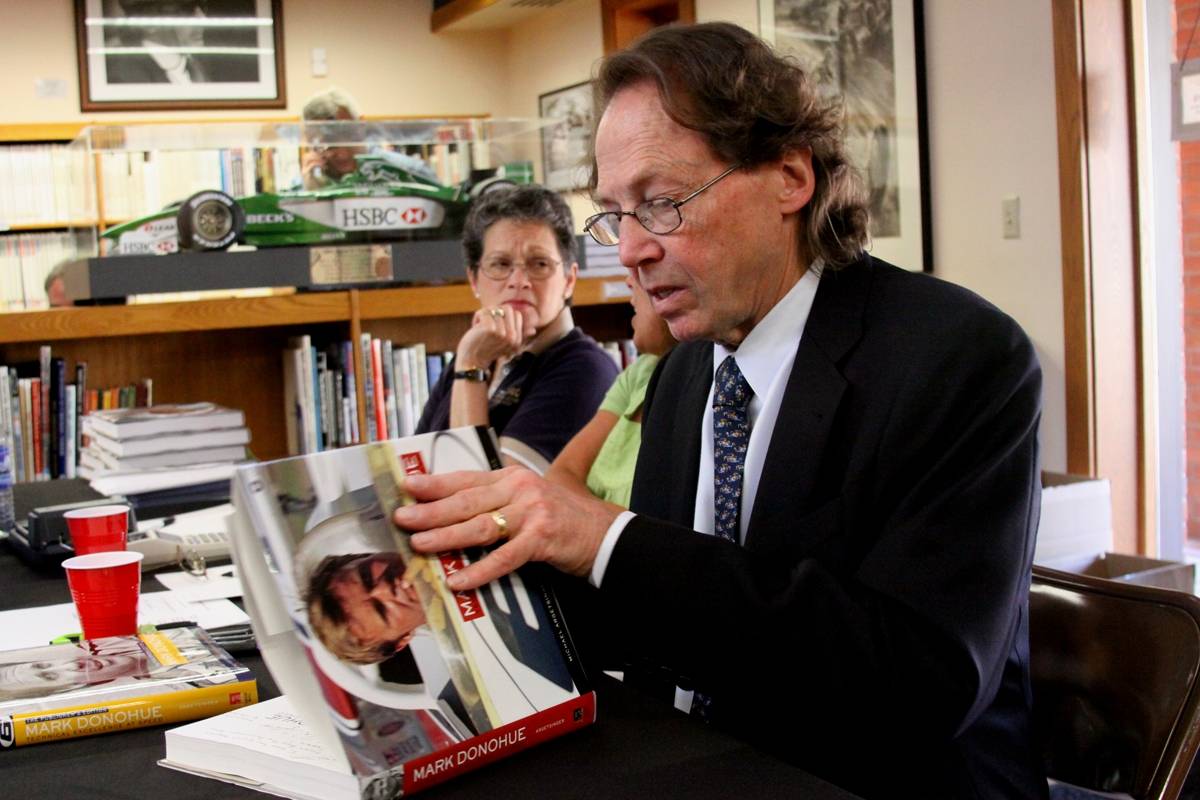
Photo courtesy International Motor Racing Research Center

Dyson’s journey into motorsports began in 1974 at Watkins Glen, and by 1981 he had claimed the SCCA GT2 National Championship. He founded Dyson Racing in 1983, building one of America’s premier sports car teams. But Le Mans? That was a different beast.

“I was building a national radio business,” Dyson recalled. “I’d fly into races in a business suit, change in the truck, and go drive. Racing wasn’t on my bucket list—but I was beating Le Mans winners in the 962. So I figured, maybe I belong there.”

Tune in everywhere you stream, download or listen!

Listen on Apple
Listen on YouTube
Listen on Spotify

In 1985, Dyson visited Le Mans as a spectator and met Richard Lloyd and James Weaver. That friendship led to an invitation the following year: drive Lloyd’s Porsche 956 at Le Mans. Dyson skipped Silverstone and Spa, opting to focus solely on the French classic.

Photo courtesy International Motor Racing Research Center

“I borrowed a scooter and rode the track before the race,” he said. “It wasn’t daunting—just long. But I nearly wrecked on my first lap in the car, mistaking a sign for the Mulsanne corner. That was my wake-up call.”

Synopsis

This episode of Evening with the Legend features Rob Dyson, a notable figure in American sports car racing. Starting his career in 1974 and forming the Dyson Racing Team in 1983, Rob reflects on his racing experiences, particularly his 1986 Le Mans participation. He discusses his early racing years, navigating the complexities of international racing, the challenges and strategies of endurance racing, and the transformation of Le Mans over decades. Dyson also delves into his connections and friendships within the racing community and highlights the importance of mechanical sympathy in endurance racing. The episode concludes with a discussion about the evolution of racing technologies and a reflection on Rob’s legacy and continued involvement in racing through his son’s and grandsons’ careers.

  • Your personal attempt at the LeMans 24; you had a successful run starting in 1982 in TransAm, what was your Road to LeMans like?
  • Had you raced in Europe before 1986? If so, where, how did that go?
  • When you got there, what were your first impressions of Le Mans? (this was still in the last few years before the major track changes.
  • Let’s talk about the Liqui-Moly Porsche 956 you campaigned in 1986. This was during the overlap period between the 956 (Group C) and Porsche 962. Why the 956? What was it like to Drive?
  • What do you feel is the most challenging part of driving at the 24 hours of LeMans? 
  • This was not the last time “Dyson Racing” would appear at Le Mans – what was it like coming back as a team principal? What has changed with all your return visits to Le Mans? 
  • We just celebrated the 101st (92nd) Le Mans – Any thoughts on the Porsche 963? 
  • You’ve seen a lot of change in the last 40+ years; what are some of the best “new” things to have come to LeMans since you started there?

Transcript (Evening With A Legend)

Crew Chief Brad: [00:00:00] Evening with the Legend is a series of presentations exclusive to Legends of the Famous 24 Hours of Le Mans, giving us an opportunity to bring a piece of Le Mans to you. By sharing stories and highlights of the big event, you get a chance to become part of the Legend of Le Mans, with guests from different eras of over 100 years of racing.

Crew Chief Eric: Tonight, we have an opportunity to bring a piece of Le Mans to you, sharing in the legend of Le Mans with guests from different eras of over a hundred years of racing. And as your host, I’m delighted to introduce Rob Dyson. who started his racing career in 1974 at Watkins Glen International. And in 1981, he won the SCCA’s GT2 National Championship and began racing professionally in IMSA GTO [00:01:00] and SCCA Trans Am in 1982.

The following year, to support his professional racing efforts, he founded the Dyson Racing Team, which over the next few years grew to be one of America’s premier sports car racing teams. From their base in Poughkeepsie, New York, over the course of nearly four decades, the team won 19 championships, 72 race victories, started 72 times from the pole and achieved 224 podium finishes.

Among the team’s notable accomplishments is a pair of overall victories in America’s premier endurance race, the Rolex 24 at Daytona International Speedway. But in 1986, Rob found himself behind the wheel of a Porsche 956 at the famed Circuit de la Sarthe. And with that, I’m your host crew chief, Eric, from the motoring podcast network, welcoming everyone to this evening with a legend.

So Rob, welcome to the show.

Rob Dyson: Great to be with you. You know, when you talk about racing, we’re all lucky that we’ve experienced it in some way or form. Whether you’re sitting in the seats and the [00:02:00] grandstands, or whether you’re in the pit crew, or whether you’re driving the cars, I mean, it’s just such a captivating sport.

It’s just remarkable. So glad to be with you.

Crew Chief Eric: Well, for those that don’t know Rob’s origin story, we actually encourage you to check out his keynote address from the 7th Annual Argettsinger Symposium on Motorsports History on the Motoring Podcast Network. But we want to fast forward through your time at Watkins Glen, through the early days of the 80s, To 1986, but take us to 1986.

How did you get to Lamont’s? Was it always a goal? Was it a bucket list thing? What kind of deals had to be made to get you from America over to racing in France?

Rob Dyson: All I can tell you is, is that, uh, you know, relating these stories is kind of got me thinking about it. I was fortunate. I had good support from my wife, from my family.

I consider when I look back on my life, I’m glad of one thing. When I got out of graduate school, I said to my wife, I want to go racing one year. I want to understand what it’s like out there. Which was Chris Economacky’s number [00:03:00] one question that he asked people during his life. What’s it like out there?

I’ve worked on cars all my life, and when I got out of grad school from Cornell, I said, well, we aren’t kids, let’s just do it. I bought a clapped out Datsun 510 because I did some research and Datsun had a lot of speed parts and I figured we’d get something going there and uh, we’d be able to get the parts and handle that and get that done.

So, when I think back on how I would travel to the races in a business suit, I was building a radio business nationally so I was on a plane all the time and I’d get off the plane at Portland or Laguna or something in a business suit. So, in those days everybody traveled in business suits and go to the truck and Get into my stuff and was it fortunate enough to be able to do it and feel pretty good about it and do a pretty good job.

So the thing that’s, uh, it’s interesting is that it wasn’t on my bucket list, but it got to be that I was driving pretty effectively at the nine, six, two. And that’s what those guys were racing. So I figured, well, hell, if I can stay up with [00:04:00] those guys, in fact, beat a lot of them, including some Lamont’s winners, maybe there’s a shot for me.

So that’s what I did. And the thing is that. I went over in 85 merely just to kind of take a look at it. And it was there that I got to know Richard Lloyd, James Weaver. And I got to know one another in 85. James did a race for us in 85. I couldn’t make the race down in Atlanta. So he priced it, the race in 85.

So I met Richard Lloyd and we just struck up a friendship and started talking, but I was interested to see the Le Mans thing and kind of get a handle on it to see what it’s like. And then the next year I talked to Richard and I said, Richard, what can we do? Do you have an opportunity for me? He says, yeah.

And he says, why don’t you plan on doing Silverstone, which generally happened two to three weeks before Le Mans, maybe a month, then you did Le Mans and then Spa. I said, gee, that’d be great, but I don’t think I have the time to do all of them. So why don’t we try to just do Le Mans? So we started talking about it and we worked on it and off we went.

And at the end of the day, [00:05:00] Richard rolled out a, uh, a nine, five, six that he had raced with his guys over in the world championship over in Europe. And that’s what got me in the car. It was merely curiosity. And then. Richard saying, you know, why don’t you hop in and do it? And I felt confident that I could do it.

Crew Chief Eric: So you said you wanted to go over there and check it out and see what it was all about. That first impression, what you imprinted on when you got to Lamar, how different was that than racing in the United States? What was your impression of Lamar when you first got over there?

Rob Dyson: Well, I never raced at Silverstone.

I didn’t go there. I just went to Le Mans, but Richard wanted me to run the Silverstone to get used to driving the car and all that. And that was the old configuration of Silverstone’s changed significantly since. No, I went over to Le Mans and what I was impressed with was that, you know, these were cars from all over the world, very exotic teams, a lot of drivers I’d never even heard of, guys that were really quick too, by the way, and I got to see how the Porsche factory ran their deal, you know, the Jaguar guys, how they ran their deal.[00:06:00]

Because remember, we were running sort of against Holbert, we were running against the Porsche factory in the U. S., and then we were running against Jaguar in the U. S. as well. So it just gave me an appreciation for how the dynamic and what you need to do to get the deal done. But in 85, Richard, his car finished second to Joost, and they probably would have won the race, but they had a false reading of a sensor.

And so they had to back off the car a little bit and they came in second, but they were running up front the whole entire 24 hours. But the thing is, is that when I got to 86, it was just, I had a better feel for not only the people, but I also had a better feel for what it entailed. Cause while I was there, you know, obviously I got a small scooter, borrowed it from Richard and just kind of rode around the circuit before the racing started and kind of get a feel for it.

So I had a chance to kind of look the place over. I said, well, you know, let’s try it. So that’s what we did.

Crew Chief Eric: By doing that sort of, let’s say, hot lap on a Vespa there, did you find any of the [00:07:00] corners suddenly like, Ooh, that’s going to be tricky. That’s going to be tough.

Rob Dyson: It wasn’t a particularly daunting track.

I mean, you know, the corners were the corners. And it was a long track on a lot of roads. And I felt, well, okay, this all looks sort of familiar, you know, when you read the magazines and you see the layouts and all that. I mean, I understood from the year before that the Mulsanne straight’s pretty long and the cars go pretty quick.

And that’s how I just handled it. I said, okay, let’s go.

Crew Chief Eric: Which is interesting because you weren’t a stranger to a car that was capable 200 miles an hour because you were already piloting 962s. I was doing my own research and I had just kind of scratched my head for a second. It’s like 956 in 1986. This is the period where there’s an overlap between the 956 Group C car and the 962s.

So did you feel like you maybe you were taking a step backwards running the 956 or how did it compare running the Liqui Moly 956?

Rob Dyson: Well, fortunately, there wasn’t much difference between the 956 and the 962. [00:08:00] The 956, they just had a slightly shorter wheelbase, water cooled engine, actually not as powerful as our air cooled engine that we were using, but the car, the basic ergonomics, the instrumentation, and everything, it The way the gearbox worked, the way the visibility went, the mirrors and all of that was the same as a 962.

The only fundamental difference was the power plant, which was different. And also the wheelbase was just a little shorter because John Bishop said you’re going to put the driver’s feet behind the centerline of the wheels in the 956. Your driver’s feet were slightly ahead, which when I got in the car for the first time, Price said, remember, this is a 956.

It’s got a shorter wheelbase, so if it looks like you’re going to hit the wall, pull your feet back, which, you know, so I’ll keep that in mind.

Crew Chief Eric: Was that the first time you got to drive a 956? Was that outlap going into your first practice round at Le Mans, or had you had experience with the car prior to that?

Rob Dyson: Nope, that was it.

Crew Chief Eric: Doing a lap at speed [00:09:00] versus doing it on a scooter, did it all come together for you? Did it change your perspective of Le Mans, especially coming down the Mulsanne at over 200 miles an hour and braking zones and learning a new car? What was your takeaway at that moment?

Rob Dyson: Well, one of the things when I first started out, I went around a very slow lap and then I started to pick up the pace on the Mulsanne, which in those days was virtually straight, except for the kink at the end.

It had a slight hill and a slight kink going in the Mulsanne corner. They had these sign boards saying 3, 2, 1, and an arrow saying turn. Well, okay, I absorbed that, but I didn’t absorb it enough to realize that it’s me, so I was going 3, 2, 1, okay, I gotta turn. Well, I realized that the Mulsanne Corner was still another tenth of a mile further.

And I almost wrecked the car. I literally almost wrecked the car. How I saved it, I have no idea, because I was downshifting, getting ready to turn, and all it was was guardrail, and I said, holy shit, wait a minute. That was a quick tutorial to say, look, you gotta master this part of the racetrack.

Crew Chief Eric: One of the questions [00:10:00] that we got from the crowd, and Terry asked, how does the strategy differ?

We’re in approaching a six, 24 hour race. And obviously you came to Lamar with Daytona already on your resume, but the lap at Lamar is so much longer. So what type of strategy did you have to implement as a driver to keep your cadence throughout your entire stint? A

Rob Dyson: couple of things. One was, is that Reinhold Joost came up to me and I asked him, I said, Hey, what kind of hints about Lamar’s?

He says, do not touch the curves. The various curves on the corners don’t touch the curves. Brian Redman said that when you go down the Mulsan, go down as much as you can, or as long as you can, in the center. Especially when you come up over the hill, because you don’t know what’s going to be there, and you want to make sure you can go either left or right if there’s something in the middle.

Funny thing about the Mulsan Strait is it gives you a lot of time to think. And that was one thing that Derek Bell said. He says, don’t let your imagination get away from you. You got 60 seconds with your [00:11:00] foot to the floor. Just don’t think about it. And that took me a little while to think about it, and especially during the race when it was starting to rain.

Crew Chief Eric: Stuart asks, you mentioned Bell, Redmond, Yost, all racing Porsches for various teams. Of all the drivers with whom you spoke, who gave you what you would consider the most comprehensive, honest, or best advice?

Rob Dyson: You lie. Fourth, that was when IMSA was racing at Lime Rock. Everybody that was going to do Le Mans had to get down to Kennedy Airport to fly out on Sunday night to get to France and get down to the racetrack for the Tuesday inspection.

And you had to be there. You had to sign in. Fortunately, we had a travel agent, Marion Champlain, who started with us and started a huge catering operation as he’s since retired from racing. Marion was a travel agent. She set up all the logistics. She hired small planes to fly us down to Kennedy Airport so that we could make the Air France flight.

And there must have been about 15 of us that were doing Le Mans. Goes to show how times have changed. [00:12:00] Landed. Plane’s taxied up to the jet. We got off and went up the stairs to get on the plane. When I was flying over, Brian Redman came over to me and I wish I’d kept it. He handed me a eight and a half by 11 pad with his advice as to how to race Le Mans.

I devoured that. In fact, I read it. I gave it to Cobb. Cobb may have it. He was the guy that gave all the detail on how the pit straight is, the kind of gearing you’ll use going underneath the Dunlop Bridge, going down through the esses, how to handle the Mulsanne straight. He was the one that wrote, go down there in the middle as much as you can, especially over the brow by the kink.

The Indianapolis, you’ve got to be very careful there, the road leading up to Indianapolis is crowned, and it still is as a matter of fact, so you’ve got to be careful that you’re not going to unbalance the car, pick a side and go down that side, and so you’ve got to kind of stay with it, and that was the most edifying of all of it, and he was, was [00:13:00] then, and is even now, a very, very, very close friend.

The other thing is that the car was really set up pretty well, we ran the long tail. The long tail is a streamlined tail. Racing on IMSA, we had a high tail, more of a sprint format. The other thing is because we were running this water cooled engine, which was very benign, a 2. 8 liter engine that was almost silent, it was very quiet, wonderful balance.

It wasn’t quite as loud or noisy in the cockpit because it didn’t have the blower fan like the 962 did. That was a significant difference in kind of the way the car felt. It was just quieter. You were doing all these very fast speeds, but somehow it was just quieter and a little bit more I won’t say relaxing, but it was a little more calming than having the air cooled engine, which sounded loud from the start in the cockpit.

The fortunate thing is, our relationship with Goodyear was pretty deep, and so we were running Goodyear tires. And so we were running Goodyear tires that we knew how they worked, and we [00:14:00] knew how they ran. We had several of the same tire engineers that we had with IMSA. So you had that advantage, but the strategy was, you know, just go until the red light comes on, and then come to the pitch.

Drive as fast and as comfortably as you can. You know, the stopwatch tells you whether you’re doing anything or not. You work up to it. We did not have radios in those days. Nobody did. Nobody had radios. People were experimenting with them, but the communications laws and all that stuff in France said you can’t use radio, where we were just starting to use them in the U.

S.

Crew Chief Eric: So no radios. New track, new car, and new teammates. So talk about the relationship with the other guys driving the 956.

Rob Dyson: The guy that was the European, the Liqui Moly sponsored driver, was Mauro Baldi, who we have known from being over in the States. He ran in the States as well. Very affable, very good guy.

And then Price Cobb, of course, who’s probably my oldest friend in racing. So Price and I went over there as kind of a package. You know, you got to understand, I’m a business guy. I didn’t do [00:15:00] this for a living. And I didn’t do all the races from 1981 on. I never did a full season of racing or whatever class I was racing.

Then we met with Morrow and he drove us around the racetrack and when it was a road, when it’s open and you can just drive around and take a look at it, he explained a lot of intricacies and the kind of the tricks of the trade, he was very, very forgiving of our ignorance. And so he was a great teammate in that respect.

Crew Chief Eric: Being a businessman and time being part of the constraints of your ability to complete a season and things like that, were you considered just part of the team, or were you looked at as, let’s say what we would call today the bronze driver, or the gentleman driver, or how were you positioned in that hierarchy?

Rob Dyson: Well, Price and I, of course, were raised together. So it wasn’t like, who is this guy? So Price and I, we’d done pretty well on a couple races. One out of Riverside and, you know, we were, we were a unit. There was no problem there. Baldy, I think, respected us. I don’t know whether he ran at Riverside when we ran there.

But, you know, he, he knew us as being serious [00:16:00] drivers. In fact, what I did for a living was kind of irrelevant. I didn’t feel out of place or, uh, I didn’t have any sense that, You know, I was behind the eight ball. It was just, Hey, I got a job to do and let’s go. That was the great thing that I had about racing is that it was so different than what I do day to day.

So I didn’t feel unequal to anybody.

Crew Chief Eric: When you come in from your stint and you have an opportunity to download with one of the other drivers that isn’t running, what would you guys talk about? What kind of information were you sharing? Cause obviously you had this. Two hours or however long you were out there where you had no communication, what kind of information were you downloading back to the team and to the drivers?

Rob Dyson: In those days, that was the state of the art. So in other words, you weren’t coming from any flaw or anything that, you know, the other teams didn’t have anything on us. Even the Porsche guys, they were suffering from the same, couldn’t download all the information on the way the car was performing. But I think the main thing that we talked about was just, How you handled the mechanics of the car, shifting, brake [00:17:00] points, feel of the car, that was the biggest thing.

Crew Chief Eric: Marky Smith Haas writes, given the brakes had such a long time to cool off during the car’s trip down the Molson Strait, and then the hard braking heat up for the Molson corner, did you need to lightly drag your left foot on the brake before hard braking to warm them up? Or did you experience cracked rotors as a result of the extreme heating and cooling?

Rob Dyson: No, but during the race in those days, you changed brakes. Definitely changed pads. Nowadays, they don’t even do that. Or they rarely do it. Carbon brakes and carbon pads and the technology they brought to bear on it. And we were present when we were doing that early carbon brake stuff with prototypes we were running.

We were using steel brakes. That was the way you had to do it. And this is true also at Daytona in those days. When you came down the straightaway, when you crossed the stripe, you kind of rolled your left foot over the brake just to touch it a little while you’re flat out, just to get them a little bit warmed up.

And you had to do that at the Mulsanne. The rest of the time, you could pretty much brake normally. The thing that we had in our [00:18:00] 956s, we were the slowest of all the Porsches on the straightaway. We were the quickest of all the Porsches in the corner, because we did not run a Le Mans undertrack. We ran a sprint racing undertrack.

So while we were slower down the straight, we had better traction and better handling through the corners. We were running times that were equal to the guys that were running far ahead of us. And it was one of the reasons why we were able to make up so much time when we slipped down on these different maladies we had.

But the braking, that’s a great question, but braking, even braking has changed now. There’s no degradation in the braking now because they’ve made the technology so good.

Crew Chief Eric: Margi also writes, I was advised to drag the brake when I drove an 84 in the Group B 930 and competitors were having to pit to change their brake rotors all the time.

Rob Dyson: Yeah, it was a common thing. We did it at Daytona. That was one of the things that we spent a lot of time developing the tools to enable us to squeeze the pads back to get new pads on. And have it help you if you had to replace the actual [00:19:00] discs itself, because that took a lot longer. Nowadays, they have click in, it’s literally a quick disconnect, they can disconnect the calipers, pop the whole setup out, and then put the new setup on.

I saw that, in fact, I think I saw that at Watkins Glen, a Porsche did that just this past weekend.

Crew Chief Eric: So you mentioned the rain, and we’ve talked many times before about the variable weather conditions at lama. It could be sunny on one side and a downpour on the other. It’s just so big and so spread out. It just happens to have its own interesting microclimate.

Your year 86. It rained quite a bit this year at the 101st anniversary of Le Mans in 2024. It rained quite a bit as well, but they didn’t have safety cars holding up the show in 1986. So what was driving in the rain like at Le Mans? What did it teach you about your driving? Was there anything you took away from it?

Rob Dyson: Well, it wasn’t much because that year we had a lot of weather changes. It didn’t rain hard, but it rained enough. So that was whatever you learned, you [00:20:00] couldn’t impart on anybody. Because, you know, you had to go on. Experiences herself pretty straightforward. I mean it was it was gonna be a long race and you just got to make sure you preserve the car Don’t wreck anything.

Crew Chief Eric: That’s a common theme amongst a lot of the drivers We spoke to is this idea this concept of mechanical sympathy and not every driver is maybe as sympathetic as another one But the goal is to maintain that consistent lap time from one driver to the next to the next and the car has to survive Winners bring it home at the end of the day if it breaks somewhere in between that’s a failure

Rob Dyson: Ironically, that is the first fundamental difference between endurance racing now and endurance racing then.

Nowadays, the cars don’t break. If you take a look at all the cars that started the Daytona race, Sebring, Le Mans, any of the long distance makes races, Silverstone, the six hours of Watkins Glen, Petit Le Mans, Cars don’t break anymore, and that’s a result of a whole lot of things, one of which is a lot of computer driven and computer measured fuel, incredibly [00:21:00] well built products that are put in the car, the cars are built better now.

The other thing is, is that the gear shifting is all done by paddle shift, and the paddle shift is all computer controlled, which means that if you’re going along the Mulsanne Strait, nowadays they’re going about 210 maybe, the Jaguars were going 240. When we were racing, we were going about 220 to 222.

But the thing that is different about it now is that they have the ability to not miss a shift. They don’t miss a shift anymore because the computer won’t let, it’s a wheel speed thing, the wheel speed catches up to the speed of the car and that lets the gear shift go down. All of that is completely different.

In our deal, it was a five speed, and off you went. Fortunately with the Porsches, it was one of the great characteristics of it was, is that they were synchro gearboxes. The negative of it was, particularly in street courses and incident, you couldn’t quite get the shift quick enough. Whereas the guys with straight cut gears like Hewland and the Jaguars and a lot of the [00:22:00] other guys, they could just jam the gears a lot quicker.

But in our case, we had to make sure with all the dog rings and all the things to make a synchronized gearbox synchronized, you had to be careful with that. But that is the fundamental difference between racing now and racing then. Ricky

Crew Chief Eric: So I’m glad you brought that up. Your thoughts on the 963 in comparison to the 962 and the 956.

Transcribed by https: otter. ai

Rob Dyson: Well, it’s typical Porsche. I mean, they, you know, they take it very, very seriously. I think having it under the, uh, aegis of Roger Penske also helps. They spent the budget on the car. The cars are clearly good. They’re clearly reliable, but they worked an awful lot on that.

Those cars are incredibly complex. They have hydraulic front brakes and electric rear brakes. That all has to be coordinated. You know, in our deal, they were mechanical, fluid pushed braking all around. Now it’s fly by wire. It’s a big factor. And the hybrid is another thing. Plus, the cars are a lot heavier.

Crew Chief Eric: At the end of your personal run in 1986, walk [00:23:00] away from the event, from the car, what were your thoughts? How had your impression of Le Mans changed after being behind the wheel, going through all the weather conditions, all the things that you experienced while you were there?

Rob Dyson: Well, you know, it’s kind of funny.

The thing that happened to us was Mauro Baldi got sick. He got sick after his first, uh, he was sick actually when we met him and then during the night before the race he was in really bad shape. He got in the car and ran the first stint and from then on we didn’t see him until the end. He didn’t drive with us at all.

He did no driving after his first hour and a half stint in the car. So it was just Price and I, kind of back to the old days. You know, it was one of those things where, uh, where we were just able to just run the car, just he and I. The most important thing about LeMans was we survived it. Joe Gartner was a real up and coming talent.

He was driving a Kramer car and the transmission locked up. He hit the armco barrier, car cut in half, died of his injuries there. But I think the biggest thing was is that I came out [00:24:00] of it, we finished, we were running as high as fifth, we finished ninth. We were as low as 17th, we had some car problems that were inexcusable, never should have happened.

Had we not had the car problems, I think we could have been up in the, easily in the top five. We had a very fast car. The thing that was significant about it was that after that, there was no straightaway that was long. Any other racetrack I raced on, the straightaway was never as long. You were never on the foot to the floor for as long as you were.

And had the time to think about it as you did it going down to Mulsanne Street. The other thing is, I was kind of afraid of the dark. I’ve always been a little bit afraid of the dark. Well, when I finished Le Mans, I was not afraid of the dark anymore. Running in the rain in the middle of the night, which didn’t last very long, but running in, running in the rain in the middle of the night, 220 miles an hour, cars darting all over the place because the adhesion was poor in those rain tires.

You know, that was the other thing that kind of changed. I could be in total darkness and not have to have to worry about it.

Crew Chief Eric: Was it [00:25:00] something you wanted to do again?

Rob Dyson: Well, I’ll tell you why I only did it once. I only did it once because first, now it’s a real time sink. You’ve got to be there for a period of time.

We got off the plane on Monday, uh, Monday morning and we were at the track on Tuesday and we read, we did inspection on all that and ran Wednesday. Wednesday night, Thursday qualifying, Friday had off, and then Saturday was the race, and Sunday, you know, we headed off to the airport. Now it’s a lot longer, a lot more elaborate timing wise.

Had I not finished, had our car not finished, we had wheel bearing problems, I had a, we had a shock absorber go, all had to be replaced, I had a lower control link go on me and the, and the kink, at about 200 miles an hour, popped the right rear wheel. Kind of on its edge, slowed up, came in, they fixed it, and off I went, got back into it, I couldn’t believe it, I actually did it in retrospect.

But anyway, so, if I had not finished the race, and not had the experience of driving around that track at the [00:26:00] end of the race with the corner workers coming back onto the track surface, waving all of their flags, their congratulations for having survived it, And in those days, remember one guy didn’t and they had a, another team, a GT team had a, a pit fire and they had some people really seriously injured there.

So, you know, it was kind of an experience that I’m glad I did and I don’t think I could have duplicated it, doing it again. I just felt that, I hung it out there. I had done it, did a great job, my times were comparable to all of the top guys. I felt very confident driving the car at the tail end, I finished the race.

I just think that the experience was hard to beat a second time, so I decided not to do it. I had plenty of offers from other people, other teams, to do the race. Jaguar called me, uh, Tony Dow was running the Jaguar team in the U. S. said we’d like to come and test and maybe do Le Mans with us. And I said, Tony, no, I just, I won’t have the time to do them.

You know, that would have been a first rate team. Knowing those guys and racing [00:27:00] against them, they were good. They knew what they were doing and had great equipment. I just felt that it was just good once and, uh, let’s not push your luck. That’s really what it was.

Crew Chief Eric: So it sounds like Le Mans made you a better driver.

So you took that with you back to racing here in the States and other places then. Oh, yeah. So 1986, that was your time behind the wheel at Le Mans, but it was not your last time at Le Mans. So let’s talk about the years following that and especially coming back as the team principal for Dyson Racing and also supporting your son Chris’s three attempts at Le Mans in 2004, So what was that like coming back after all the changes?

From your time behind the wheel, because the Molson had changed, the pits had changed, all the new buildings that were put in place. What was it like returning to Le Mans as a team principal?

Rob Dyson: Well, it was kind of interesting. Chris signed on with Jan Lammerstein in prototype. Jan had driven for us. And a couple of races.

And when I got there looking around, the place was [00:28:00] substantially changed. I mean, the garages in 86 were the same garages that were there probably since the late 50s. And they looked, it reminded me of Sebring before Don Panos Same kind of thing. Plaster was falling off the ceiling and the bathrooms were, I think, a mixed company.

I wouldn’t like to describe them, but anyway, kind of a mess. But the other thing that changed, of course, was the fact that the teams had radios. They had more electronics. They had the setups in the garage. They had setups out on the pit wall to monitor how the cars were doing. And taking a brief again on a, on a scooter that Ann Lambert’s had, I talked to the organizers and they let me ride around in a, um, more of a motorcycle so then they’d get it done quicker and ran around the course and it was substantially different.

They got rid of the S’s, the, uh, Dunlop Bridge is different. It’s slower. They put a chicane there at the end of it. In fact, I think one of the reasons why the Toyota lost in second place was because they spun out there. But the Mulsanne corner was in essence the same. [00:29:00] Down into Indianapolis, it was the same, and the Porsche cars were the same.

But the runoff area was a little bit better. Still not great. I still think it’s probably one of the most dangerous racetracks on the planet. Onco barriers have long since been discredited as a safety barrier. But that’s what they line most of the track with. Frankly, it’s because most of them will sound straight as a road, but the chicanes were the thing that were just staggering how slow it made the cars go.

And yet, the cars at the end of it qualifying faster than we ever did. Shows you how technology and cornering speeds and braking have changed. I found it different, but it, you know, it was good to be over there to see Chris run. When I was there, I met so many of the people that I actually raced against 20 years before.

Different people from all walks of life, but the thing is, is that the spirit of the place and the daunting task it is to run that race and to win it still remained.

Crew Chief Eric: You talked about how Brian Redmond gave you all this advice, and you know, you still wish you had a handwritten note, wherever that ended up, and [00:30:00] that was sage advice at the time.

But you also said how much the track had changed, especially when you lead into 1989 and 90 and so on, where it really started to take the shape that it has today. Being very involved in your son, Chris’s racing career as part of Dyson Racing and all that, it was probably very difficult to relay any advice to Chris because the track was so different.

So what did you guys talk about? Did you find common ground? Was there some sort of shared experience there between Le Mans of the past and Le Mans of today?

Rob Dyson: Some. I told Chris that he’ll feel formal pressure. There are a lot of races. But I think there are probably five races, you know, that are real races.

Le Mans is one of them. Indy 500 is one of them. Probably the uh, Grand Prix of Monte Carlo is one of them. Bathurst is one of them. The Daytona 500 is one of them. But then, you know, you get down to them and all the rest of them are kind of just car races. I told him that when he goes over there, it’s going to be a different thing.

Because when he went over there in 89, they hadn’t done all the chicane work. They [00:31:00] had changed a little bit of the, actually came close to running the same course that I ran on. But they did add a chicane going onto the straightaway. They since moved it further down, so kind of a Mickey Mouse chicane. But the big thing was, is that I just said to him, you’re going to feel a little more pressure on this one.

But Chris was pretty experienced by the time he did it. He had run a lot of races with us and did pretty well. So he kind of knew the score. But I think other than saying that, you know, this is it. If you’re talking sports cars, this is the Indy 500 of sports cars. This is it. To do well at it and to finish it is really important.

And that’s the one thing I told him to get with his guys. And so then everybody knows they’re not a hero, that everybody has to handle with a car in good shape. Between one driver and the next, because if you got it, some guy, you know, wrecked third gear, pretty soon second or fourth is going to go. And in those days, he was shifting.

It wasn’t paddle shift in those days.

Crew Chief Eric: One of the questions that comes up from the crowd quite a bit is if you could pick any one of the [00:32:00] current 2023 or 2024 season Le Mans cars from any of the classes, and let’s say you could get behind the wheel tomorrow and turn another lap. At Le Mans, what would you choose?

Would it be the 963, the Ferrari, one of the LMP2 cars, something else?

Rob Dyson: Well, clearly, I think I can probably get into the Porsche probably easier because I know who I am and I know my record with working with them. I’ll tell you, the Ferraris are pretty damn impressive. The Toyota cars are superb as well.

Not taking anything away from the Porsche guys. But those Ferrari guys, they were really hooked up. And what was interesting about all those guys that were running the two lead Ferrari cars, and then the non works car, they were all GT trained. They were not open wheel guys that came down to race. They were all guys that started factory programs in GT cars.

That’s what so impressed me about the fact that these guys, they were flying. I mean, all of those guys were really running hard. Again, they were running hard because they could. They were running hard because they made it possible to be able to run [00:33:00] a car consistently harder all the time than it used to be, for all of the reasons I mentioned earlier.

That Ferrari, clearly, it’s pretty cool. It’s a, I think it’s a, you know, one of the striking cars racing out there. It’d be interesting to see what one of those is like, but clearly, you know, you know, that was then, this is now, and you know, 50 years later, we’re still doing it. While I’m not doing it personally, driving that is, which was a lot of fun.

I enjoyed all of them. To be a part of it still, through Chris, and now through my grandsons, they’re both starting to do some racing. Go karts for John at this point. So eight years old, it’s kind of like, uh, you know, it’s like Ted Williams. He’d like to think he could hit a home run against a major league pitching at the age of 75 or 80.

But the reality of it is by the time you’re swinging, the ball’s already gone into the catcher’s net,

Crew Chief Eric: which actually leads into a great sort of closing question, Rob, let’s just say somebody walked up to you, maybe at the Glen or one of the other tracks that, you know, you’re still frequenting. And says, [00:34:00] Hey, I heard you drove at Lamont, but I don’t know anything about it.

You know, I wanna learn more about the race. Why should I either go all the way to France to see it, or why should I tune in to watch it on tv? What would you say to those folks?

Rob Dyson: Well, I think because it’s lamonts, I mean, uh, after the Indy 500, I think it’s one of the longest, one of the oldest continuously run races in the world.

I mean, there’s a tradition, there’s a history. I mean, the Bentley boys started in, you know, the mid to late 20s. I mean, they were running cars of Le Mans in their teens. It’s the tradition of them. The other thing, I think, it’s all the resources that everybody puts into it. Porsche made their name and made their reputation.

Running and winning Lamont’s, they are masters of having done that well. And it was a part of their corporate objective every year that we are going to win Lamont’s and that’s part of it. The tradition, the competition, everybody brings their best stuff. Before

Crew Chief Eric: we close out, I would [00:35:00] love to turn the microphone over to ACO USA President David Lowe

David Lowe: for some closing thoughts.

Well, again, Bob, I certainly want to thank you on behalf of all the members. We certainly appreciate your time and look forward to you attending one of our live events as a legend.

Rob Dyson: That’d be great. I’d be honored to do it. You know, it was long ago, but, uh, when you start thinking about it, all I can tell you is, is that I’m really honored to have been able to do the racing that I was able to do.

It’s an honor to impart what I’ve learned to people, and I’m really honored that you asked me, Eric. I really appreciate it.

Crew Chief Eric: And thank you, Rob. And I do want to turn the microphone over to Bob Barr, press president of the Society of Automotive Historians and a member of the International Motor Racing Research Center that helped co sponsor this evening with the legend.

So Bob.

Bob Barr: 40 years ago, I was a brake and suspension mechanic and lowly G production SCCA, which doesn’t exist anymore. So Rob, I found a lot of your talk really fascinating about the brakes. Just a thank you to Rob. Dave and [00:36:00] Eric for putting this on. This is a real treat. Thank you all.

Crew Chief Eric: During his 21 seasons as a professional racing driver, Rob Dyson drove in 92 races, scoring four overall race wins, including the 1997 Rolex 24 at Daytona, and a total of 18 podium finishes.

Rob continued to compete episodically in professional racing through 2007, and today remains active, driving his collection of vintage Indy cars in a variety of demonstration events. He was named chairman of the board of the directors at the Indianapolis motor speedway museum in 2021, following a decade as a member of the board.

And he is guiding the institution through its 89 million transformation and renovation and charts its future path as a repository of history and related artifacts of America’s oldest active and most storied racing facility. Rob is still involved in the Dyson racing team. And supporting his son’s efforts and his grandsons.

And so look forward to more things coming from Rob in the future. And on behalf of everyone here and [00:37:00] those listening at home, thank you for sharing your story with us. And we hope you enjoyed this presentation and look forward to more Evening with the Legend throughout the season. So Rob, thank you again for coming on and we appreciate you sharing your time and your stories.

Rob Dyson: Thanks everybody. It was an honor to be here.

Crew Chief Eric: This episode has been brought to you by the Automobile Club of the West and the ACO USA. From the awe inspiring speed demons that have graced the track to the courageous drivers who have pushed the limits of endurance, the 24 Hours Le Mans is an automotive spectacle like no other. For over a century, the 24 Hours Le Mans has urged manufacturers to innovate for the benefit of future motorists.

And it’s a celebration of the relentless pursuit of speed and excellence in the world of motorsports. To learn more about or to become a member of the ACO USA, look no further than www. lemans. org, click on English in [00:38:00] the upper right corner, and then click on the ACO members tab for club offers. Once you’ve become a member you can follow all the action on the Facebook group ACOUSAMEMBERSCLUB and become part of the legend with future Evening with the Legend meetups.

This episode has been brought to you by Grand Touring Motorsports as part of our Motoring Podcast Network. For more episodes like this, tune in each week for more exciting and educational content from organizations like The Exotic Car Marketplace, The Motoring Historian, Brake Fix, and many others. If you’d like to support Grand Touring Motorsports and the Motoring Podcast Network, sign up for one of our many sponsorship tiers at www.

patreon. com forward slash GT Motorsports. Please note that the content, opinions, and materials presented and expressed in this episode are those of its creator, and this episode has been published with their consent. If you have any [00:39:00] inquiries about this program, please contact the creators of this episode via email or social media as mentioned in the

episode.

Highlights

Skip ahead if you must… Here’s the highlights from this episode you might be most interested in and their corresponding time stamps.

  • 00:00 Introduction to the Legend of Le Mans
  • 00:43 Meet Rob Dyson: Racing Career Highlights
  • 02:17 Journey to Le Mans: The 1986 Experience
  • 05:17 First Impressions and Challenges at Le Mans
  • 09:59 Racing Strategies and Insights
  • 20:34 Endurance Racing: Then and Now
  • 22:55 Reflections on Le Mans and Future Involvement
  • 27:16 Returning to Le Mans as a Team Principal
  • 34:57 Closing Thoughts and Acknowledgements

Bonus Content

Rob’s Keynote Address

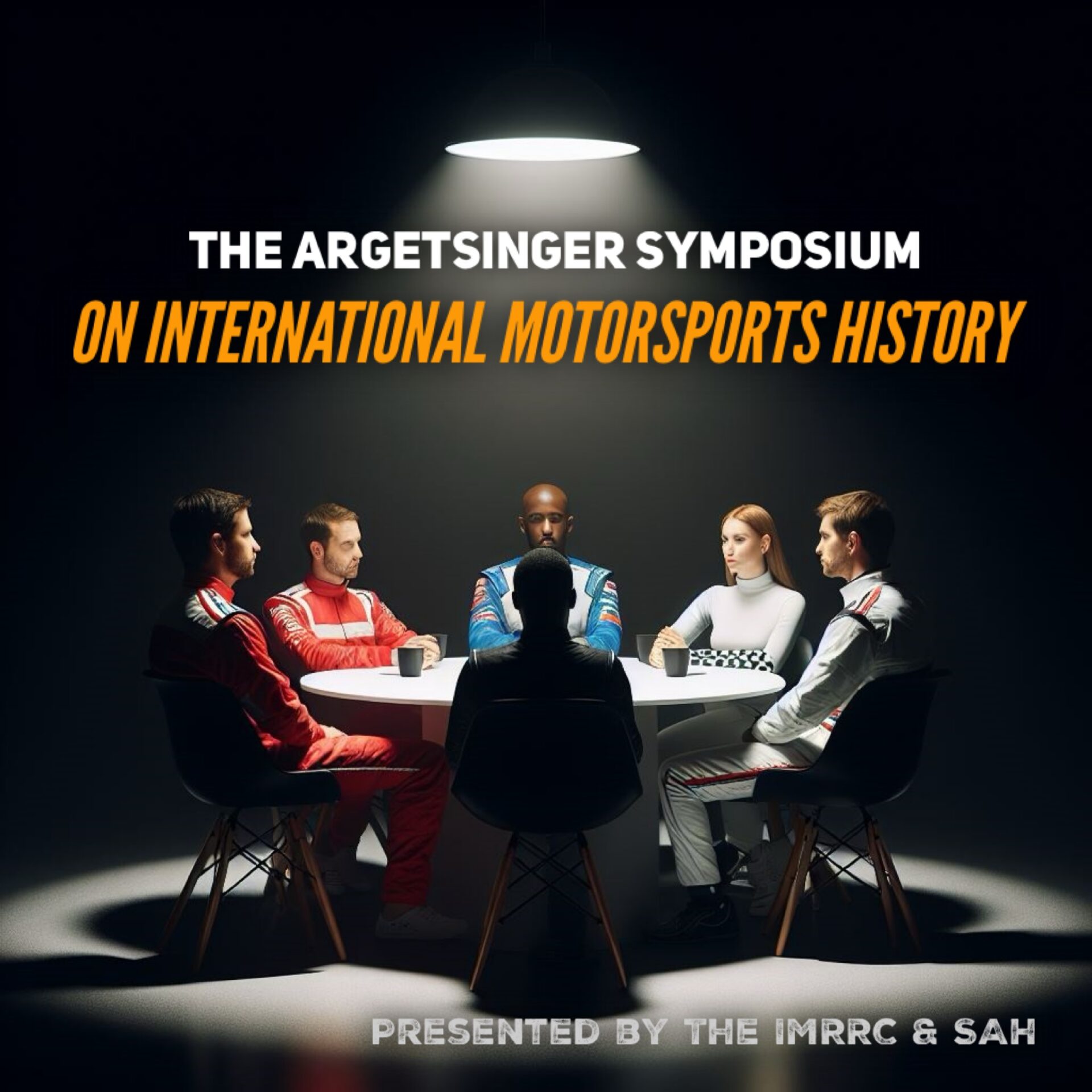
The 7th Annual Michael R. Argetsinger Symposium on International Motor Racing History was held at Watkins Glen International on Nov. 3rd and 4th, 2023. Rob Dyson, the Keynote for the event, presented “A Driver’s Reflections on Watkins Glen at 75.” An appreciative crowd gathered to listen and the IMRRC was extremely grateful that Mr. Dyson made the trip to Watkins Glen to join the conference.


Tune in everywhere you stream, download or listen!

Listen on Apple
Listen on YouTube
Listen on Spotify

There's more to this story!

Be sure to check out the behind the scenes for this episode, filled with extras, bloopers, and other great moments not found in the final version. Become a Break/Fix VIP today by joining our Patreon.

All of our BEHIND THE SCENES (BTS) Break/Fix episodes are raw and unedited, and expressly shared with the permission and consent of our guests.

This episode was brought you in-part by the International Motor Racing Research Center who’s charter is to collect, share and preserve the history of motorsports, and stories like those of Rob Dyson. The IMRRC’s collection embodies the speed, drama and camaraderie of amateur and professional motor racing throughout the world. And welcomes serious researchers and the casual fans alike to share stories of race drivers, race series, and race cars captured on their shelves and walls, and brought to life through a regular calendar of public lectures and special events. To learn more, be sure to check out www.racingarchives.org or follow them on social media @imrrc

Transcript (Keynote)

[00:00:00] Brake Fix’s History of Motorsports series is brought to you in part by the International Motor Racing Research Center, as well as the Society of Automotive Historians, the Watkins Glen Area Chamber of Commerce, and the Argettsinger family.

A Driver’s Reflections on Watkins Glen at 75 by Rob Dyson. Rob Dyson is a New York based businessman and retired professional racing driver with a long association with Watkins Glen International and the International Motor Racing Research Center. Following completion of his licensing school at Watkins Glen in 1974, Dyson began competing in amateur SCCA competition.

In 1981, he won the Sports Car Club of America’s GT2 National Championship. Dyson began racing professionally in IMSA GTO and the SCCA Trans Am Series in 1982. The following year, to support his professional racing efforts, Dyson founded the Dyson Racing Team, which over the next few years grew to be one of America’s premier sports car racing teams.

From its base in Poughkeepsie, New York, over [00:01:00] the course of nearly four decades, the team has won 19 championships, 72 race victories, and started 72 times from the pole and achieved 224 podium finishes. Among the team’s notable accomplishments is a pair of overall victories in America’s premier endurance race, the Rolex 24, at Daytona International Speedway.

The team fielded cars during the heyday of IMSA Camel GT, winning the first time out with a Porsche 962 at Lime Rock Park. Under Dyson’s leadership, the team went on to successfully field entries in IndyCar, the World Sports Car Championship, the United States Road Racing Championship, and the American Le Mans Series, where the team scored two championships, the Rolex Sports Car Series, and the Pirelli World Challenge, where the team scored Bentley’s first ever North American race victory.

During his 21 seasons as a professional racing driver, Dyson drove 92 races, scoring four overall race wins, including the 1997 Rolex 24 at Daytona, and a total of 18 podium finishes. Dyson continued to compete episodically in professional racing through [00:02:00] 2007, and today remains active driving his collection of vintage IndyCars in a variety of demonstration events.

Dyson’s personal historic IndyCar collection ranges from a 1913 Isotta Freschini Tipo IM to Johnny Rutherford’s 1978 Budweiser McLaren M24B, and includes the 1961 Kimberly Cooper Climax, the first successful rear engine car to compete in the Indy 500. Named chairman of the board of directors of the Indianapolis Motor Speedway Museum in 2021, following a decade as a member of the board, Dyson is guiding the institution through its 89 million dollar transformation and renovation as it charts its future path as the repository of the history and related artifacts of America’s oldest active and most storied racing facility.

In 2011, Dyson donated to the IMRRC the historic archives of National Speed Sport News, America’s premier motorsports news publication since the late 1930s. Dyson is chairman and chief executive officer of the Dyson Kisner Moran Corporation, a privately owned international holding company. I am [00:03:00] thrilled to be able to introduce you all to Rob Dyson.

Rob has had a long association with Watkins International as well as the Research Center. Couple of highlights of Rob’s career, received his competition license in 1974, 1981 he won the SCCA GT2 National Championship. 1982, Rob participated in his first professional race, MCGTO and SACA Trans Am, and in 1983, Dyson Racing was formed.

19 championships, 72 victories, and two Rolex 24 victories to date. Rob himself raced 21 seasons, 92 races, and 18 podium finishes in that time span. Rob is passionate about history, currently serves as chairman of the board of the International Motor Speedway Museum, where he oversees the museum’s renovation, which is currently in the throes now towards an 89 million campaign.

Last but not least, in 2011, Rob saw to it that the research center received a donation of the National Speed Sport News Archives, which is a collection that we use almost daily at the research center. So [00:04:00] without further ado, let me introduce you to Rob Dyson. Well, hi everybody. Thank you, Mark. I appreciate the introduction.

One of the things that when I was asked to speak about my personal experiences of Watkins Glen, it’s hard not to be a little bit emotional about it. You know, it really comes in four stages. My first stage here was as a race fan. I think that’s the way everybody starts, some way or another, you start as a race Millbrook, New York in 1963.

In the summer, it was sports car racing. And every year, it was an odd year if I didn’t come up here at least twice. It was summer at Watkins Glen was a norm of some sort of racing, sometimes twice. Can Am, sports cars, any kind of event that was taking place in the summer. Or alternatively, either freezing or getting sunburned in October for the F1 race.

Many of you probably attended the F1 races. My first one was in 1965. And the one thing that so [00:05:00] disturbed me was, it took an awful lot of effort to get into the pits. Fortunately, if you looked at the color coding of the pits, Pit passes in those days and brought one of those packets that you get in the school supply store, multi colored, you get the rest of the idea.

Just to show you how important Watkins Glen and being here and coming to events at Watkins Glen as a race fan. My wife and I were married on August 28th, 1971. In October of 1971, she joined me up here. Fortunately, we were able to get passes, and it didn’t rain that year. But she really enjoyed it, but I’ll talk about her in a few minutes.

So here you go, it started as being a race fan. When I was in graduate school at Cornell starting in 1972, cut classes to come over here for the U. S. Grand Prix because it was so close by. I mean, Ithaca is what, about 45 minutes to an hour away, right? I came over the hill, came here when they were unloading the trucks.

[00:06:00] I said, I’ll get here on Sunday or Monday just to see what’s going on. I helped them unload the trucks. So I got a pass that enabled me to come and I came every single day, including race day. But with the pass, I was able to get around. That was in 72 and 73. I spent the entire week here. And that was in the days when the cars were brought in on a car hauler.

Crews were smaller and they rolled the cars into the, then the Kendal Center. And it was fairly primitive, but it was Formula One. And it was amazing when you think back on it, how it’s all evolved. Now you have minimal crews. I would be surprised they don’t have 200 people at the race per car. In addition to that, I will also admit that I would come over here in my BMW, During graduate school, periodically, and drive this racetrack.

There were very few barriers, and frankly, there was a county road that went right through the racetrack. You could come up to the track, get in. I wouldn’t drive for high speeds, but I would drive the racetrack. For maybe half an hour, just driving down into the boot, coming [00:07:00] up out of the boot, driving around one of the barricades.

that were minimal, not even covering the whole width of the racetrack. So you have to understand that it was Rob Dyson, the race fan, that first got acquainted with this wonderful facility at a very early age. This was before the boot was built, before the pits were built, before even the access or anything remotely approaching a media center was ever built.

Then we go to stage two. Descending into the depths. Now the depths means, I started to race myself. I came over here to start researching. I came over in October of 1973. I said to my wife, I want to do it for one year because I’ve been working on cars all my life. Going to car races, I want to see what it’s like to be out there.

What’s it like out there? The great question that Chris Akonemaki used to always ask drivers. What’s it like out there? I wanted to experience it myself. So I started with a Datsun 510. It was crewed by me and my wife. My second driver school was here. That was when I got my regional [00:08:00] license. My first one was at Thompson in Connecticut and then came up here.

And that gave me a regional license. And then I could go racing. Numerous races in regional racing. We were twice a year up here at the national level. It was either the Finger Lakes region, the New York region, or the New England region that was sanctioning it. And all of a sudden, here I was racing on a track that I was truly finding out what it’s like out there.

And I really, really liked it. It was the ultimate ability to be able to get out there and do what I’d always thought would be pretty cool to do. But I wanted to experience it and I was able to do that. And in 1981 I won the GT two National Championship and in 1981 I won the championship. And in 82 I started doing more club racing.

But to qualify for the runoffs, I only needed to do six races. ’cause I was automatically qualified to come back. I don’t know what the rule is now, but that was the rule then. But in 1982, I decided that maybe [00:09:00] I should step up. And a good friend of mine, Bob Aiken, a dear friend, said, Rob, it’s time to get out of club racing.

So that was stage three. You see how I’m descending into the depths or rising further up the pyramid, I guess? And I went from SCCA amateur racing to SCCA and IMSA. First in 83 and 84 in a GTO slash Trans Am Pontiac Firebird, which was probably the lousiest car I’d ever driven. But by then I had a small crew of guys, there were five of us, and we learned a lot from that.

And what I learned was how good our guys were, and how we should also move up to take the next step to get into prototypes. It was there that I had a very interesting conversation with Bob Aiken, because I related it to Bob. I said, Bob, I want to move up. He said, you should. He said that because we had come third in the 500 miler at Elkhart, I never did a lot of races in the Pontiac.

And actually, after 1981, I never did a full season of racing in any form of [00:10:00] any racing that Dyson Racing did. I said, look, I’m going to go over to England and see the guys that march, and he shakes his finger just like this. Nobody collects marches. He said, the big thing you’ve got to do is get into a car that you know is going to work.

I said, look, nobody can get the 962s. He says, let me call Hobart. You know Hobart. Why don’t you call him? So I called Al, and I said, Al, I want to get a 962. He said, yeah, you can call me. He says, let me see what I can do. And shortly thereafter, we worked a transaction with Bruce Levin, who was a Bayside Disposal entrepreneur, who later became a very dear friend, who I shared several races with.

We were able to get the 962, we picked it up in March, and raced it at Lime Rock, and we won our first race at Lime Rock. The thing that was interesting is one of my crew guys said, why don’t we retire undefeated? We didn’t, of course. So we started racing real cars, like Hovert says, you want to get into real racing.

Here we were running the Porsches. To come up here to Watkins Glen at the sharp end of the entire field, to qualify with all of these great professional drivers and to [00:11:00] go out and run with them, going up the back straight that I had done so many times from my BMW to my B sedan to my Trans Am car, but then to do it in a 962 Porsche.

It was an experience that, other than doing Le Mans, was kind of breathtaking, actually. Then there were a couple other professional races that I did here that was not in the 962, that was done in the Burger King 24 Hours. That was one of the greatest events I’ve ever participated in. Burger King was part of the Firehawk Challenge, which was a showroom stock class.

I was driving with Bob Aiken, and depending on what showroom stock was, depending on how the manufacturer kind of said what was showroom stock and what wasn’t, The advantage that we had, we had better fuel economy and better wear on our tires. But those Burger King races had 70 or 80 cars running here at night.

And even if you have 70 or 80 cars running here at night, Watkins Glen in the middle of the night is a very dark place to race. And then we started running other [00:12:00] prototypes as I started getting less involved in the cars and my son, Chris, his first professional race was up here. We had come up here the week before the IMSA race with the Rileys to do Goodyear tire testing.

And Chris came up and he had a spec racer Ford and we let him run when we weren’t running, when we were adjusting the car, changing something. And I said, why don’t we just put Chris in the car and see how he would do. And in six laps, he would have qualified sixth in the grid the year before. So I said to the organizers when weekend started, I said, hey, I want to add my son.

He’s got a SCCA competition license. Can we give him an IMSA license? He’s got all the medical. And Chris got in and drove his first pro race in a Raleigh. He took my time away from me in the six hour. Unfortunately, we had an electrical problem with the car, but Chris did a terrific job and that led to him barely a year later, he and James, we were winning the six hours at Watkins Glen.

When I think back, as to reflect on my experiences here, [00:13:00] coming here even today, it’s like visiting an old friend. It’s such a familiar place, even getting up here is familiar. The roads, the surroundings, the town. It’s been so many years of this being a part of my life. Just this past couple of months ago, we had a Rentsport reunion.

At an autograph session, I was sitting next to Terry Bootson, who he and I became friends as a result of he was driving for Champion Racing in the 9 11s at all the racetracks, but it was funny, he came up here, came over to me and said he had never been here before. This is Terry Bootson, a well known, effective F1 and sports car champion, and he asked me, what’s the track like and all that, and I pointed out the different aspects of the boot and all that.

After the race came up to me, he says this is the best racetrack I’ve ever driven. He said, I’ve never experienced a track where you can get such a great rhythm and go so fast. Enjoy the change in the elevation, but also the passing zones, the pit area. It was just a great experience. I felt great about that because that’s exactly how I [00:14:00] felt.

But having a guy like this who’s raced every fathomable racetrack except this place, coming to me and telling me, Rob Dyson, who came here in 1963, he’s telling me what a great racetrack it is, as we both get out of our cars. The heritage of this place, personally, that I’ve experienced, the victories of mine and my son, when I think back on it, it’s a gift to win a car race.

We’ve also been here for the tragedy, too. And everybody can remember some of the F1 incidences that have happened here. Francois Severt being the highest profile. I was here also when Graham Hill damn near got killed, broke both his legs when his car went end over end up in the back straight because of a suspension failure.

But I think the other thing I want to reflect on is how important the International Motor Racing Research Center is. I finished a race up here. We had one in the mid 80s, and Jean Argettsinger came up to me at the end of the race, and she said, Rob, I’m raising money at the Watkins Gunn Library to start a motor racing [00:15:00] library for the world to be able to come and do research, and it’s going to be done out of the Watkins Gunn Library.

And I was wondering if you would want to contribute. Well, here we had just won, I think, about 180, 000, which is a lot of money, camel money. Needless to say, when a woman like that asks you for money, you respond. And that was my first gift to the International Motor Racing Research Center. And it’s the gratitude that I have for the Argett Singers, for creating it and then preserving it, and then seeing how it’s been changed and how it’s improved over the years.

The bottom line here is that Watkins Glen is different than all the other racetracks. Because of its age, and because of its heritage, and because it’s the same place that everybody raced on, Formula 1, Can Am, sports cars, Indy cars, all happened here. It’s a wonderful place. The Research Center has been a remarkable resource for so many people, and I’m honored to have been a part of it.

And I’m honored to be here today, and I thank you very much. [00:16:00] Any

questions? Questions, anybody want to? I’m an old racer, so speak up. From the transition from being a race fan, to being a race driver, to then being a race father, what is your favorite stage? All of them. At the time, everyone seemed to kind of work. Truly the, an evolution of a racing career, I guess you could say.

Actually, it wasn’t until I was asked to do this that I actually started to put my thinking together. That really was, it’s the evolution of a racing career. There are very few drivers that are driving in cars, that are racing cars, that didn’t start off as race fans. I find it hard to believe that they wouldn’t have had some kind of inkling that they wanted to go racing at some time or another, as kids or whatever.

What it was is, it’s the evolution of a race fan. Becoming a race driver. I mean, it was important for me to get out there because I figured [00:17:00] I was 27 years old. I didn’t have any kids. I just came out of grad school. I had just started my broadcasting business. And I said, I’ve got to do this if for no other reason, but to say that at least I understand what’s going on.

But that was in 1974 and I’m still doing it. I’m not driving cars, you know, the race job, the race team, all of what’s going on. I’m going to do it up to here. And then with all the other things I’m doing with the Speedway Museum and the Research Center, which Chris is now a part of, it never ends and you don’t want it to end because it’s such a captivating sport.

I mean, it’s just interesting and it is all stories. Anybody that’s here can relate half a dozen stories about this place. Whether you were at the bog or whether you were, you know, watching or seeing Jim Clark or hearing the mattress go up the back straight, watching the IndyCars in the 70s and 80s. I mean, it’s just, you know, uh, it’s stories, it’s memories, it’s things that you’d rather [00:18:00] be here than anywhere else when you were here.

That’s the way I felt at every racetrack, and it’s still the way I feel. And ever I go through the gates of a racetrack, after all these years and after all these races, whenever I go through the gates of a racetrack, my heart just beats a little quicker. And why is that? Because it’s so goddamned interesting.

And you know that there’s gonna be something that’s gonna educate you. Something is going to give you a sense of more awareness of something. And this place is one of the best places, in my opinion, the best place to experience that. Thank you all very much.

This episode is brought to you in part by the international motor racing research center. It’s charter is to collect, share, and preserve the history of motorsports spanning continents, eras, and race series. The Center’s collection embodies the speed, drama, and camaraderie of amateur and professional motor racing throughout the world.

The Center [00:19:00] welcomes serious researchers and casual fans alike to share stories of race drivers, race series, and race cars captured on their shelves and walls and brought to life through a regular calendar of public lectures and special events. To learn more about the Center, visit www. racingarchives.

org. This episode is also brought to you by the Society of Automotive Historians. They encourage research into any aspect of automotive history. The SAH actively supports the compilation and preservation of papers, Organizational records, print ephemera and images to safeguard as well as to broaden and deepen the understanding of motorized wheeled land transportation through the modern age and into the future.

For more information about the SAH, visit www. autohistory. org.

We hope you enjoyed another awesome episode of Brake Fix Podcast brought to you by Grand Touring Motorsports. If you’d like to be a guest on the show or get involved, be sure to follow us on all social media [00:20:00] platforms at GrandTouringMotorsports. And if you’d like to learn more about the content of this episode, be sure to check out the follow on article at GTMotorsports.

org. We remain a commercial free and no annual fees organization through our sponsors, but also through the generous support of our fans, families, and friends through Patreon. For as little as 2. 50 a month, you can get access to more behind the scenes action, additional Pit Stop minisodes, and other VIP goodies.

As well as keeping our team of creators fed on their strict diet of fig Newtons, gummy bears, and monster. So consider signing up for Patreon today at www. patreon. com forward slash GT motorsports, and remember without you, none of this would be possible.


Learn More

Evening With A Legend (EWAL)

We hope you enjoyed this presentation and look forward to more Evening With A Legend throughout this season. Sign up for the next EWAL TODAY!

Evening With A Legend is a series of presentations exclusive to Legends of the famous 24 Hours of Le Mans giving us an opportunity to bring a piece of Le Mans to you. By sharing stories and highlights of the big event, you get a chance to become part of the Legend of Le Mans with guests from different eras of over 100 years of racing.

Dyson’s ride was the Liqui Moly Porsche 956 – a slightly shorter wheelbase than the 962, with a quieter water-cooled engine. His teammates were Mauro Baldi and Price Cobb, the latter a longtime friend and racing partner. “Mauro was generous with his knowledge,” Dyson said. “He drove us around the circuit and explained the intricacies. Price and I were a unit. It didn’t matter that I was a businessman—I was there to race.”

Advice came from legends: Reinhold Joest warned against touching curbs. Brian Redman handed Dyson a handwritten guide to the track. Derek Bell cautioned against letting your imagination run wild on the Mulsanne. “The straight gives you time to think,” Dyson said. “You’re flat out for 60 seconds. Don’t let your mind wander.”

Rain added complexity. With no radios allowed, communication was limited to post-stint debriefs. Dyson and Cobb shared insights on braking points, gear shifts, and car feel. Baldi, unfortunately, fell ill after his first stint, leaving Dyson and Cobb to carry the load.


Mechanical Sympathy and the Race’s Rhythm

Le Mans in the ’80s demanded mechanical sympathy. Dyson’s team ran Goodyear tires and a sprint-style undertray, sacrificing top speed for cornering grip. They were the slowest Porsche on the straights, but the fastest in the corners. “We changed brake pads during the race,” Dyson said. “You’d tap the brakes on the straight to warm them. Today’s cars don’t break—but back then, survival was the goal.”


The Finish and the Aftermath

Dyson’s car ran as high as fifth and finished ninth. They overcame wheel bearing issues, a blown shock, and a control arm failure at 200 mph. But they finished. “I was afraid of the dark before Le Mans,” Dyson admitted. “After racing in the rain at night, I wasn’t anymore.”

He never returned as a driver. “I had offers – from Jaguar, even – but I felt I’d done it. I’d hung it out there, survived, and couldn’t top that experience.”

Dyson’s Le Mans run wasn’t just a race – it was a transformation. It made him a better driver, deepened his respect for endurance racing, and gave him stories that still resonate decades later. “I didn’t do it for a living,” he said. “But I did it right. And that was enough.”


ACO USA

To learn more about or to become a member of the ACO USA, look no further than www.lemans.org, Click on English in the upper right corner and then click on the ACO members tab for Club Offers. Once you become a Member you can follow all the action on the Facebook group ACOUSAMembersClub; and become part of the Legend with future Evening With A Legend meet ups.


This content has been brought to you in-part by support through...

Watkins Glen at 75: A Road Racing Legacy Forged in Passion

In the heart of upstate New York, nestled among rolling hills and autumn leaves, lies a motorsports mecca with a story as winding and thrilling as its track: Watkins Glen. For 75 years, this legendary circuit has been the beating heart of American road racing, thanks to one man’s dream and a community’s unwavering support.

Photo courtesy International Motor Racing Research Center

It all began in 1948 with Cameron Argetsinger, a man whose passion for European-style road racing led him to propose something radical—racing through the streets of his hometown, Watkins Glen. Armed with an MGTD and a dream, Argetsinger navigated a labyrinth of local, state, and federal approvals, even halting train service for a day to make it happen.

Photo courtesy International Motor Racing Research Center

On October 2, 1948, the first post-WWII American road race took place. Spectators—about 10,000 strong—lined the streets to witness the Junior Prix and Grand Prix unfold across a 6.6-mile course. Frank Griswold took victory in both races, while Briggs Cunningham finished second. Argetsinger himself suffered a flat tire in the Junior Prix but rallied to finish ninth in the Grand Prix.

Tune in everywhere you stream, download or listen!

Listen on Apple
Listen on YouTube
Listen on Spotify

The races grew rapidly in popularity. By 1952, crowds swelled to over 150,000. But with speed came risk. That year, a tragic accident claimed the life of a young spectator, ending the era of street racing in Watkins Glen.

Yet the spirit of racing endured. From 1953 to 1955, a new 4.5-mile circuit outside the village allowed for practice days and safer conditions. Then, in 1956, Watkins Glen took a bold leap forward: a permanent track was built. Teardrop-shaped and 2.5 miles long, it was designed for speed—over 100 mph lap averages—and professionalism.

Photo courtesy International Motor Racing Research Center

Synopsis

This episode of History of Motorsports episode dives into the rich history of racing at Watkins Glen, tracing its origins from Cameron R. Argetsinger’s vision of bringing Grand Prix racing to the U.S. in 1948. Starting with modest races, the series overcame numerous obstacles to become a premier racing event. Kip Zeiter’s talk covers key milestones including the transition from town races to a permanent circuit in 1956, the hosting of the Formula One U.S. Grand Prix from 1961 to 1980, and various significant racing series over the years. The episode also highlights the contributions of notable drivers and evolving racing technologies, culminating in a modern, state-of-the-art racing facility. The script underscores how Watkins Glen has remained a pivotal location in American motorsport history.

Transcript

Crew Chief Brad: [00:00:00] Brake Fix’s History of Motorsports series is brought to you in part by the International Motor Racing Research Center, as well as the Society of Automotive Historians, the Watkins Glen Area Chamber of Commerce, and the Argettsinger family.

Crew Chief Eric: Hey everybody, Crew Chief Eric here. And on this edition of Too Long Didn’t Read, we’re joined by Kip Zeider from the International Motor Racing Research Center to talk to us about Cameron Argetsinger’s dream to bring Grand Prix racing to the United States, which got its start at Watkins Glen and has lasted for over 75 years.

Kip Zeiter: 1948 to 2023, 75 years of racing at the Glen. It all started with one man, car, and a dream. Cameron Argetsinger was the man. And MGTD was the car and the dream was to hold a European style road race to the streets and roads around Watkins Glen. The obstacles Mr. Argesinger faced were almost insurmountable, needing to get approval from [00:01:00] local, state, county officials to run the race.

Even having to stop the trains from running for a single day, the race had to be sanctioned, and obviously, ultimately was, by the fledgling sports car club of America. A person with less passion and drive would probably have thrown up their hands and walked away from the project, but Cameron was not cut from that cloth.

And on October 2nd, 1948, the first post World War II race in America took place through the small village streets of Watkins Glen, New York. It began with a curious crowd of spectators estimated at roughly 10, 000 to watch two races. A Junior Prix of four laps and a Grand Prix of eight laps in length around a 6.

6 mile course of public roads that circled the state park. The start finish line sat boldly in front of the county courthouse on Franklin Street. 23 cars ran in Junior Prix and 15 cars competed in the Grand Prix. Both races were won by Frank Griswold driving a 1938 Alfa Romeo. The great American sportsman, Briggs Cunningham, finished second in each race.

Hargett Singer suffered a flat [00:02:00] tire in the junior pre, but rebounded to finish ninth in the Grand Prix. This was a very challenging circuit composed of paved roads, stone roads, dirt roads. In 1949, the race state was moved to mid September and remained there during the Street Ears era. Two races were also held in 1949.

The Junior Prix was renamed the Seneca Cup. It remained at four laps in length, but the Grand Prix was increased to 15 laps in length. Beginning in 1950 and through 1952, three races were held. Each year, the crowd increased dramatically. By 1951 and 1952, crowds are estimated in excess of 150, 000 people.

Racing through the streets was not without incident, of course. Yes, straw bales. We’re pretty much the only thing separating the cars from the crowd. The cars were obviously getting bigger and faster. And with the increased number of spectators, it was only a matter of time before something would happen.

In 1952, a crowd brushed the crowd and sadly a young boy was killed and several other people were injured. The days of [00:03:00] racing through town ended precisely with that incident. That race was never finished and they never raced through town again. While the 1952 tragedy ended racing through town, it certainly did not end the enthusiasm that racing had generated in Watkins Glen.

A circuit of roughly 4. 5 miles using town roads outside the village itself was utilized in the years 1953 to 1955. Itself a very challenging circuit. One of the benefits was that it actually allowed the competitors a day of practice before the actual races. Something that was never able to be accomplished when they were running through the streets of town.

The street races were all one day races, show up, race, go home same day. Realizing that a permanent circuit was really necessary to take racing to the next level, more professional level at Watkins Glen, several hundred acres of land were purchased and a permanent circuit was built in 1956. A teardrop shape, roughly two and a half miles in length, the goal was to have the fastest road course in the country with lap speeds in excess of [00:04:00] 100 miles an hour.

Appropriately enough, as both NASCAR and Watkins Glen celebrated their 75th anniversaries last year, the first actual professional race, i. e. people got paid, was a NASCAR stock car race in 1957. NASCAR returned in 1964 and 1965 and returned permanently in 1986. And it’s become the biggest spectator event held annually at the track, almost as soon as the permanent circuit was in place.

Cameron’s goal became to bring the premier road racing series in the world. The Formula 1 Grand Prix circuit to Watkins Glen. The series had run without much fanfare at Riverside and Sebring previously. Did not attract many people. Did not get hardly any attention at all through the media, but with the same tenacity that he used to bring racing to Watkins Glen in 1948, in 1961, the Formula One United States Grand Prix came to Watkins Glen, beginning a glorious 20 year history of Grand Prix racing here.

Hosting the Formula One circuit for 20 years put Watkins Glen on the world stage of motor [00:05:00] racing. It became the event of the fall and was run under either lovely warm Indian summer type weather, the leaves are turning, the breezes are blowing, or exactly the opposite with rain and snow and mud and just horrendous conditions.

Also during that 20 year period, in 1971 to be exact, the track length was increased to its current 3. 377 miles. As a section known as the boot was added speed of the cars again in the late 1960s, it increased to the point where the speed of the cars were starting to outstrip the capabilities of the track and a longer circuit was needed.

The boot added more than a mile to the overall length of the original circuit and was universally hailed by drivers as a challenging and very new dynamic to the course today. Formula 1 races. In Austin, Texas, Miami, and in November of last year, they made their actually second appearance in Las Vegas. We all wish that would host another Formula 1 Grand Prix from an economic standpoint.

That simply will never happen. So they can have as many races in the United States as they’d like. But the Glen is still and will always [00:06:00] be the really rightful home of the United States Grand Prix. So, the last Formula 1 race was in 1980. Sadly, the track had gotten into financial difficulties, largely due to how they financed adding the boot in 1971, and the 20 year marriage ended.

They had actually not been able to pay the purse for the 79 race. But they built up such good feelings among the Formula One community over the years that they gave them a one year reprieve. And sadly, when they came back in 1980, the finances were not any better than they’d been the previous year. So Formula One walked away in 1980, sadly never to return.

But from the first winner of the first race in Ireland in 1961, which ironically was the only Grand Prix win of his career, to the last winner, Alan Jones, in 1980, Which was the culmination of his world championship season. It was truly a magical 20 years run, but the Glenn has paid host to many other great racing series and notable drivers over the years, Ken Miles driving the famous Cobra, Mark Donohue and Walt Hanscom in Mustangs, Mark Donohue [00:07:00] again, driving the all conquering Sunoco Camaro from 1968, the great Parnelli Jones capping off his.

Championship winning season in 1970, Parnelli Jones, arguably one of the toughest, meanest guys ever to slurp in behind a race car. In my opinion, the greatest road racing series ever held was the original Can Am or the Canadian American Challenge Cup series, which ran from the late 1960s to the early 1970s.

Few rules, big horsepower, interesting drivers. Great tracks, constantly changing ideas regarding aerodynamics. And again, remember this was before the era of the computer designed car, big name drivers, the series really had it all. Let’s look at the IMSA years. Now IMSA still races to this day, but the International Motorsports Association was founded by John Bishop, a former president of the Sports Car Club of America.

It ran its first race at Pocono Raceway in 1969, and has been a dominant as an organization in sports car racing for 50 plus years. Thank you. The IMSA organization was always known for a [00:08:00] large number of different cars. Even today, that remains true. They’re on a roll. They have their hypercars and three or four other series that IMSA is a very strong organization in sports car racing.

Here’s something that you wouldn’t have thought would have raced here. These are midgets. The midgets race here actually on more than one occasion. Now midgets we commonly think are on a dirt track or a paved oval. Don’t midgets only turn left? Well, not when racing at Watkins Glen. Specifically for midgets, it’s interesting to note that six Offy midgets competed in the 1959 International Formula Libre race against a field that included Jaguars, Maseratis, and Lotuses.

That race was won by a Cooper Climax Formula car, but an Offy midget actually ended up finishing second. Another car that we normally associate with short track racing and only turning left, and one of my favorite types of cars, is the Asphalt Modified. Mods also are traditionally just associated with circle tracks turning left.

Modified Tour races have run here, I believe, on at least four different occasions. Very exciting. They’re a little bit out of their element here, but they put on a great [00:09:00] show. The fans enjoy seeing them, if only for the novelty of it. NASCAR. I told you that NASCAR returned back in 1986. Has been here ever since.

And IndyCars competed here on three different occasions. IndyCars first competed here from 1979 to 1981, then 2005 to 2010, and most recently, 2016 and 17, kind of as a replacement for the ill fated Boston street racing circuit that never took place. Now, while IndyCars put on a spectacular show here, their wicked fast.

Unfortunately, they always got weekends that were not good fan weekends. The original contract in 2016 was supposed to be for three years, but both sides mutually agreed to end it after the 2017 race. We’d love to have them back. Everybody from IndyCar loved coming here. The problem now is simply trying to find a hole in their schedule where they could run.

The weekend that was traditionally the Watkins Glen weekend is now Portland Oregon race. Formula 5000 followed the original [00:10:00] K& M series. Again, it was small block Chevy V8 motors, spectacular racing, Mario Andretti, Brian Redman, all kinds of great drivers. It was just a spectacular series. It was actually sanctioned originally by USAC and USAC didn’t really do it.

Any great favors in terms of publicizing it and everything, but it was a tremendous series while it lasted. And then finally, we come to 2023. As I said, originally, IMSA is on a roll, both from the standpoint of number of different car manufacturers that are entering these days, number of different classes of cars that are running in their races, the big IMSA race here is always the six hour race, which takes place in late June.

So from our original start through the streets of Watkins Glen in 1948, to the current 2024, racing has gone on uninterrupted. Racing just keeps getting bigger. It’s pretty cool to think that what started on the streets of a small village in upstate New York way back in 1948 continues today at a state of the art course up on the hill.

But [00:11:00] everything that led to that state of the art course on the top of the hill began down through the streets of Watkins Glen. So there you have a very quick 75 year racing history of Watkins Glen. Thanks for listening.

Crew Chief Eric: This episode is brought to you in part by the International Motor Racing Research Center.

Its charter is to collect, share, and preserve the history of motorsports spanning continents, eras, and race series. The center’s collection embodies the speed, drama, and camaraderie of amateur and professional motor racing throughout the world. The Center welcomes serious researchers and casual fans alike to share stories of race drivers, race series, and race cars captured on their shelves and walls and brought to life through a regular calendar of public lectures and special events.

To learn more about the Center, visit www. racingarchives. org. This episode is also brought to you by the Society of Automotive Historians. They encourage research into any aspect of automotive history. The SAH actively supports the compilation and preservation of papers. Organizational [00:12:00] records, print ephemera and images to safeguard, as well as to broaden and deepen the understanding of motorized wheeled land transportation through the modern age and into the future.

For more information about the SAH, visit www. autohistory. org.

We hope you enjoyed another awesome episode of Brake Fix Podcast brought to you by Grand Touring Motorsports. If you’d like to be a guest on the show or get involved, be sure to follow us on all social media platforms at Grand Touring Motorsports. And if you’d like to learn more about the content of this episode, be sure to check out the follow on article at gtmotorsports.

org. We remain a commercial free and no annual fees organization through our sponsors, but also through the generous support of our fans, families, and friends through Patreon. For as little as 2. 50 a month, you can get access to more behind the scenes action, additional Pit [00:13:00] Stop minisodes, and other VIP goodies, as well as keeping our team of creators Fed on their strict diet of fig Newtons, gummy bears, and monster.

So consider signing up for Patreon today at www. patreon. com forward slash GT motorsports, and remember without you, none of this would be possible.

Learn More

Learn More at RacingArchives.org

With the new circuit in place, Argetsinger set his sights on the pinnacle of motorsport: Formula One. After lackluster U.S. appearances at Riverside and Sebring, Watkins Glen became the official home of the United States Grand Prix in 1961. For two glorious decades, the world’s best drivers battled on its tarmac, from Innes Ireland’s lone Grand Prix win to Alan Jones’s championship-clinching victory in 1980.

In 1971, the track was extended to 3.377 miles with the addition of “the Boot,” a section praised by drivers for its technical challenge. But financial troubles loomed. Despite goodwill from the F1 community, Watkins Glen couldn’t pay the purse in 1979, and after a final race in 1980, Formula One departed.

Watkins Glen didn’t fade—it diversified. NASCAR first raced there in 1957 and returned permanently in 1986, becoming the track’s biggest annual draw. IMSA, founded by John Bishop, brought endurance racing and continues to thrive with its six-hour summer classic.

The Glen also welcomed unexpected guests: midget cars and asphalt modifieds—typically oval-track machines—took on the road course with surprising success. Even Offy midgets held their own against Jaguars and Lotuses in the 1959 Formula Libre race.

IndyCar made three separate appearances, most recently in 2016–17, filling a gap left by a canceled Boston street race. Though scheduling conflicts ended the run early, drivers and fans alike cherished the experience.

The original Can-Am series, with its minimal rules and maximum horsepower, brought innovation and spectacle in the late ’60s and early ’70s. Formula 5000 followed, featuring small-block Chevy V8s and legendary drivers like Mario Andretti and Brian Redman. Though USAC’s promotion fell short, the racing was unforgettable.

In 2023, Watkins Glen celebrated its 75th anniversary alongside NASCAR. IMSA remains a cornerstone, with diverse manufacturers and classes keeping the racing fresh and competitive. From humble village streets to a world-class facility, the Glen’s journey is a testament to perseverance, community, and the enduring thrill of motorsport.

As Kip Zeiter of the International Motor Racing Research Center reminds us, Watkins Glen may no longer host Formula One, but it will always be the spiritual home of the United States Grand Prix.

B/F: The Drive Thru #49

0

The 49th episode of ‘The Drive Thru,’ a monthly automotive news recap, delves into personal stories from the host’s life intertwined with car-related events. Sponsored by various automotive organizations, the host shares a tale of being unfairly pulled over and discusses the challenges of managing daily tasks with a broken ankle at home. The episode touches on issues with the family’s Pacifica hybrid minivan, explores the difficulties of navigating the city on an electric scooter, and features a humorous recount of facing off with an elderly pedestrian. The episode wraps up with reflections on automotive industry dilemmas, such as Stellantis’s struggle, the exorbitant price of EVs, and notable changes in motorsport. Additionally, the hosts discuss implications of regulatory actions on automotive companies, profiling incidents, and reflections on the recent Top Gear/Grand Tour special.

Tune in everywhere you stream, download or listen!

Listen on Apple
Listen on YouTube
Listen on Spotify

Showcase: Book’em Danno!

Cobb Tuning’s $2.9M Fine Fires Another Warning Shot At Emissions Cheats

All future tuner devices and tunes must be proven not to increase emissions above allowable levels  ... [READ MORE]

These Are The States Where It Is Most Expensive To Own A Car

Every single Californian is a tech billionaire, right?  ... [READ MORE]

The US finally takes aim at truck bloat

A new rule has been proposed that could rein in excessively large trucks and SUVs. ... [READ MORE]

Don't forget - Study Links Preference For Loud Cars to Some Unsurprising Personality Traits

 ... [READ MORE]

Living with a Hybrid - UPDATE!

We need one of those "it's been X days since incident" signs ... [READ MORE]

Quicker EVs might lead to more accidents

 ... [READ MORE]

Stellantis Boss: The Auto Industry Is in 'Survival Mode'

Carlos Tavares says Stellantis needs to reach cost parity between gas and electric cars to stay alive.  ... [READ MORE]

McLaren’s Zak Brown honored with IMRRC Cameron Argetsinger Award

 ... [READ MORE]

County’s proposed vehicle ‘noise cameras’ bill draws support during hearing

Legislation would enforce modified muffler prohibition  ... [READ MORE]

**All photos and articles are dynamically aggregated from the source; click on the image or link to be taken to the original article. GTM makes no claims to this material and is not responsible for any claims made by the original authors, publishers or their sponsoring organizations. All rights to original content remain with authors/publishers.


Automotive, EV & Car-Adjacent News

For a list of all the articles and events referenced on this episode check out the show notes below.

Domestics

EVs & Concepts

Formula One

Japanese & JDM

Lost & Found

Lower Saxony

Lowered Expectations

Motorsports

News

Rich People Thangs!

Shaq has recieved the worlds first Carbon Fiber CyberTruck!

Stellantis

Tesla

VAG & Porsche

TRANSCRIPT

Executive Producer Tania: [00:00:00] The Drive Thru is our monthly news episode and is sponsored in part by organizations like HPTEjunkie. com, CollectorCarGuide. net, Project Motoring, Garage Style Magazine, The Exotic Car Marketplace, and many others. If you are interested in becoming a sponsor of The Drive Thru, look no further than www.

motoringpodcast. net. Click about, and then advertising. Thank you again to everyone that supports The Motoring Podcast Network. Grand Touring Motorsports, our podcast, Brake Fix, and all the other services we provide.

Crew Chief Brad: Uh, yes, I am as ready as I always am. Wait, how’s my hair? But anyway, okay, welcome to drive through episode number 49, our monthly recap where we put together a menu of automotive, motorsport, and random car adjacent news.

Now let’s pull up to window number one. For some automotive news. Did you notice that Tanya

Crew Chief Eric: already has her popcorn? She is ready for tonight.

Crew Chief Brad: Is this the Florida Man episode?

Crew Chief Eric: No, this is better. Tonight, we are [00:01:00] bonded in the love of storytelling. Because tonight, tonight, tonight. Whoa,

Crew Chief Brad: that old Genesis song was the Genesis or Phil Collins.

I can’t remember.

Crew Chief Eric: Is there really a difference?

Crew Chief Brad: Yeah.

Crew Chief Eric: It’s the same lead singer. It’s not that different. It’s like,

Crew Chief Brad: is there a difference between Bon Jovi and John Bon Jovi? No, not really. It’s the same shit. Yeah. No, I’ve got a bone to pick with this intro though, because we only pull up to window number one, but I guess it’s kind of like when you go through a drive through nowadays, they’ve got two windows, you really just go to the first one or the second one and that’s it, it’s just one window.

Window number one. Here we go. What are we doing today?

Crew Chief Eric: Only a few times in the 49 drive throughs that we’ve had over the last few seasons have we really taken a step into the personal. Again, sharing the love of storytelling. And this month it was almost, and I hate this word, serendipitous that certain articles lended themselves to events that had been going on in my life.

It’s going to be a little bit of a personal showcase this time. We’re going to talk about Buford [00:02:00] T. Justice, Roscoe Picotrain, and maybe Judge Dredd in there. You know, I am the law.

Crew Chief Brad: Judge Jerry Executioner.

Crew Chief Eric: But I got to back up a little bit because I got to set the stage for our listeners. Now, some of our listeners, May know just before back to school.

So somewhere in between the last drive through in this one, my wife broke her ankle pretty bad in three places, surgery. We’re talking deck screws and metal plates and weeks and weeks and weeks of recovery and stuff like that.

Crew Chief Brad: And how did she do it again? She was wrestling a bear, right? She was hiking and got literally stuck between a rock and a hard place.

Crew Chief Eric: That being said. I am on the road more now every day of every week than I have been in probably years. And you guys already know how I feel about being in traffic. It’s a Herculean effort. I’m doing a lot of stuff, running around, all these kinds of things. In the early part of this, I’m trying to get some stuff just done around the house.

And I was like, you know what? I’m going to run to Home Depot because I’ve been [00:03:00] driving the minivan for so long. I was like, you know what? My station wagon has been sitting. I’m going to take it into town just to drive it, to get it out of its parking spot. And hopefully the tires aren’t square. So I head off into town.

It’s not like super early in the morning, like contractor early, you know, got to be at Home Depot to pick up my Tesla replacement parts at six in the morning type of deal.

Executive Producer Tania: It was after 8am.

Crew Chief Eric: I go there. I get what I need. I’m coming back and there’s a major intersection traffic light. There’s a wawa there and it’s three lanes that can turn left and one that can turn right.

So it’s actually a really, really wide intersection and I’m the first car in the middle lane and there’s a bunch of cars behind me. Beautiful day, absolutely gorgeous weather, had the windows down. I didn’t even have the radio on. I was just enjoying that Saturday morning. In my old car, right, the light turns green and I just proceed to take off like normal.

I’m not doing anything stupid. I’ve lived in this town for what feels like forever now. And I had noticed in the two weeks prior that the town [00:04:00] was just crawling with cops, you know, in their normal hiding places. And then they’re in the bushes and then they’re in camouflage and all this kind of thing.

And I’m like, you know what? I’m not here to burn the carbon out of the intake. I just, you know, Want to drive the car, drive a manual transmission car and just enjoy this beautiful Saturday morning. So I’m coming home from the home depot, a little short shift for a second gear. I’m going below the speed limit and through traffic.

I see behind me, this gray Ford Explorer come. Flying up on just like what the hell so my eyes got a little big and I’m like, okay and All the lights go off. I’m like, what did I do? Am I going too slow? Did something fall off you can imagine what happened next license and registration? I’ve been through this not my first rodeo I’m, like, excuse me officer.

Is there a problem? Is there something I can help you with? He didn’t already like that. You know, they start their speech. Please understand that you’re under recording and blah, blah, blah. Everything you say and do and blah, blah, blah. Like, okay, great. Yeah, I get it. Your camera’s like in my nostril at this point.

And he proceeds [00:05:00] to tell me that my car was Unnecessarily loud and frightening. Which car was this? This is the Wookiee wagon. My VR6 station wagon. I had to bite my tongue. So I responded and I said, Really? Do you happen to have a decibel meter on your truck? Can you tell me how loud it is? And he looked at me like I was a Cerberus from hell with three heads.

I didn’t know if he didn’t know what I was talking about, but I was flat out like, how can you tell me if my car is too loud? Meanwhile, my blood is like starting to boil. Cause I’m like, this is stupid. What did you pull me over for? Cause I wasn’t speeding. I wasn’t doing anything dumb. I was in the right lane.

No, I didn’t do a burnout at the traffic light. I’m minding my own business coming home from Home Depot. Like, what do you want from me?

Crew Chief Brad: We joke about this all the time because you’re a very well bearded man. But how much of this do you think could be profiling because you don’t look like the normal demographic in that area?

That’s what I said. I thought about that. I remember when we were coming home from Texas from CODA and you got stopped, you know, the random check. [00:06:00] Checkpoint, I’ve got a photo evidence to prove it. They frisked you and went all up and down your crotch. Meanwhile, you could have been

Crew Chief Eric: carrying anything and everything.

And you walked through like it was

Crew Chief Brad: nothing. I look like, you know, the good old boy.

Executive Producer Tania: I mean, it was beginning of September when this happened to you. And September is a particular month in this country. Now, not saying anything.

Crew Chief Eric: You look at the old profile pictures and the headshots, My hair is much shorter.

I’ve let my hair grow out. Your beard has grown out a lot. But I have a lot of white in my beard too. So when he came around the corner, I think he was like, Oh, this is older guy. And this little hot rod is scared. And but yes, I did think about that. Being of olive skin. It’s like, you know, how much of that does play in, you know, he was blonde haired and blue eyed.

I don’t know what to say about that. Again, I don’t think about things that way. People are people and people do people things and that’s that. Move on with life. That’s not how the world works. I know, I know, I live in a bubble.

Executive Producer Tania: I wonder if he’s gonna pull over Santa Claus.

Crew Chief Eric: Oh [00:07:00] yeah, Tanya brought that up.

She’s like, there’s another guy with a VR6 GTI running around and it makes noise too. Apparently he looks like Santa Claus.

He looks straight up like Santa Claus. Is Santa Claus driving a Mark 4 VR6?

Crew Chief Brad: Delivering audible treats to all the little boys and

Crew Chief Eric: girls. Okay, first of all, can you argue as a VR6 owner that the VR6 sounds bad?

Crew Chief Brad: I mean, it sounds fucking amazing.

Crew Chief Eric: Thank you. It’s one of the best sounding engines of all time.

Crew Chief Brad: Other than V8s, and then a select few like straight sixes and stuff like that, the VR6 is one of the best sounding motors ever produced.

Crew Chief Eric: But even at full song, the VR6 is quieter than the Nissan VQ, because those, those, those Three fifties are allowed the infinities and all those, the GTRs and a straight six BMW is really shrill.

Like if you want to talk about a startling engine, the VR six is not it. It sounds like a freaking Wookiee, but anyway, I digress.

Crew Chief Brad: I don’t know why he was expecting to get any money out of you. You were driving a 22 year old Volkswagen. It’s blood out of a turn up. [00:08:00] Thank

Crew Chief Eric: you. Thank you. Thank you. Well, what I think he wanted was to get me for something, because I got a loud car, and I got a lowered car, and it’s a station wagon.

It’s not like I’m running around in a Camaro with a roots blower on it, right? It’s just a freaking 20 year old Volkswagen, who cares? So then he proceeds to tell me, well, you know, you have a taillight out.

Crew Chief Brad: Oh, the old taillight trick, right? Did he smash it with a nightstick before he came

Crew Chief Eric: up? Man, if he had done that, that would have hurt.

Cause I got European taillights, but Tanya had actually told me and I forgot like a week or two prior. She’s like, you’re right rear taillights out. Yeah, I got to change that. But in the midst of everything that’s been happening at home, I totally forgot about it. Okay. I need a brake light. Thank you, officer.

I didn’t know. You know, I never get to see the back of my car. So I’m trying to be nice because he’s already pissed me off with this exhaust thing. Right? So license registration goes back to the car. He’s back there for a while. I’m like, ah, God damn it. What kind of ticket is he gonna hit me with? Again, I didn’t do anything and he didn’t say I was speeding because I wasn’t.

I was actually under the speed limit. Like I said, I knew they had been [00:09:00] crawling and they were all kind of in the area.

Crew Chief Brad: He didn’t have a gun on you anyway. There’s no way he

Crew Chief Eric: He comes back and he’s like, I have two pieces of paper for you. I’m like, oh, geez, Louise, what the hell is this? He’s like, well, the first one’s a repair order for your taillight.

You need to take it somewhere and have it fixed. I’m like, I can fucking fix it at home. And I sort of said that, but not in that way. I said, okay, I’m going to go home. It’s going to take me five minutes. We really have to go through this process. He’s like, yep. I was like, okay, that’s how he’s going to get under my skin.

because he can’t give me a speeding ticket because again, I wasn’t speeding. Then he gives me another warning on top of that. And this is what really just irked me and pissed me off. He starts off by saying, you know, I, I know Volkswagen because you know, this and that, and it shouldn’t be unnecessarily loud like this and blah, blah, blah.

And he goes, you know, your muffler cut off. And I’m like, no, no, no, no. So you can look under my car. I have a catalytic converter. a resonator and a full exhaust. I, I don’t understand what you’re talking about. And he’s like, well, I’m not looking, I’m not looking under your car. I’m like, I’m telling you, it’s all there.

Well, that’s not the exhaust that this [00:10:00] car came with. And I said, okay, well the original one rotted off the car and this is what I put on to replace it. And what’s funny is I went back afterwards because I kind of started doubting myself. I bought my exhaust from Tectonics. It’s DOT approved as a replacement exhaust.

So in my head, I’m like, again, running these scenarios and I said to him, where am I supposed to get a replacement exhaust for an almost 22 year old Volkswagen? And he’s like, well, that’s not my problem. Okay, well now you’re just an asshole, right? And I’m like, fine, I’ll just live with that. And mind you, when I was pulled over, I let it sit in idle and it just sits there and it’s not like it lopes like a V8.

It’s pretty subdued at idle. Like you got to kind of go, Oh, is it running?

Crew Chief Brad: You mean you can have a conversation with a police officer at idle?

Crew Chief Eric: A hundred percent. But what really got under my skin, you know, after he’s like, you know, have a nice day. And I was like, you know, thanks again for letting me know about the brake light.

So I sit there and I read this warning and I’m going to read it to you exactly the way it’s written. Motor vehicle not equipped with exhaust muffler system. Unlawful use of muffler cutoff.

Crew Chief Brad: Which he [00:11:00] didn’t check to see if that’s even accurate. You told him to look under the car, he refused to.

Crew Chief Eric: And if this was a TRO, or repair order, first of all I’d get a lawyer involved, because there’s a bunch of things on there.

On this particular warning that are incorrect that first would get this thrown out. But second of all, the first mechanic that puts the car in the air goes, what the hell are you talking about? There’s a cat, there’s a resonator, and there’s a muffler with a tip. There’s no cutoff. There’s no bypass. This is a DOT approved replacement exhaust for my car.

It’s what I could afford to buy. And it’s what I put on there. It’s not my problem if it’s louder and you can’t tell me what the definition of loud is.

Crew Chief Brad: How about the fact that it passes emissions every two years,

Crew Chief Eric: every year. And that’s the other thing I thought was. grace. I got together wit called one of our club me cop and I told him the sto man, that guy was fishing know, he was a young cop, academy, you know, all th and he goes, you’re lucky with the repair order for the fact that he’s got yo these things, he’s like, [00:12:00] hold up and it’d be a nuis For everybody, because I’d fight this, this is ridiculous, and I’m not running straight pipes, I’m not running a side pipe with no mufflers or anything ridiculous.

Crew Chief Brad: His badge number and name is on the paper?

Crew Chief Eric: Oh yeah, it’s all here.

Crew Chief Brad: I would call, and I would talk to his superior, and I would file a complaint for harassment.

Crew Chief Eric: I’m not that type of person, but it pisses me off, but the story continues.

Executive Producer Tania: Me and my

Crew Chief Eric: big dooly went, ah! Yeah, and the Mustang guy coming from the cars and coffee went by at 70 mile an hour with his open pipe, so that wasn’t a problem.

I’m in the little German car. Fur and car don’t belong around here. You know, I’m, I’m like one of two in the area.

Executive Producer Tania: Yeah, I have the other one.

Crew Chief Eric: So I go over to the inspection place, which was interesting to even find a place that would do a safety equipment repair order. Right. So that was the whole thing. So I get over there and it was recommended by one of our sponsors, you know, Hey, this is where we take our cars.

Don’t bother with the local Firestone or with the whatever, this and that. So I go over there early on a Monday morning and I walk in the door and this lady looks at me and I [00:13:00] look at her and she’s like, what do you want? And it’s that voice, like the caseworker in Beetlejuice. She’s been smoking a pack a day for the last 30 years.

What’s your problem? Why are you here? We just get to chit chatting a little bit and I said, look, I got this repair order. That’s for the taillight. I hate to bother you guys with this, but it’s a bother to me as well. And she’s like, yeah, these cops, you know, blah, blah, blah. They’ve been on the war path the last two weeks.

You know, they’ve been putting up blockades throughout the county, pulling people over, looking at their license plates and registrations and this and that. And I was like, wow, I didn’t know that, but I knew something was up. We get to talking a little bit more. And I said, You know, it could have been worse.

And she goes, well, what do you mean? And I said, you know, he gave me a warning for my exhaust. She goes, I didn’t even hear you come in. What kind of car do you have? I’m like, okay. And she goes, you’re telling me he was scared? He was scared of your car? I need to see this thing. And I’m like, okay. So we walk outside.

She immediately starts laughing. And she’s not laughing because she is laughing at my car.

Crew Chief Brad: Laughing at the situation.

Crew Chief Eric: Because now she recognizes the situation, right? [00:14:00] She’s like, you gotta be kidding me. So she looks at my car and she’s like, you know, this is really nice. You should take it to shows and like blah, blah, blah.

And I said, you know, it’s just my Sunday grocery getter. Like literally, I just like driving it around town and on the B roads and, you know, minding my own business. Another guy from the shop shows up and, you know, we chit chat and talking about the car and this and that and got the hood open. And she’s looking at all the things I’ve done to it.

You know, she’s a car gal. And she starts telling me about. I can’t believe you’d get pulled over in this and blah, blah. It’s the way she worded it. She was going off about her Mustang that she built. She’s apparently got a Camaro as well. Some pro street car. She’s like, God forbid they find me. My car’s a bright red and super loud.

And she’s like, I’m going to jail. Right? So we’re just BS in a little bit. And then she’s like, all right, I need to hear how scary your car is. I fired up. She’s got this big grin on her face. Was that it? Blip the throttle to like 2, 500 and then she goes, Yeah, that sounds good! I’m like, oh my god. Real [00:15:00] country girl, right?

And I mean, I was eating it up. And she’s like, I’ll be happy to sign your paper. Get on out of here and have yourself a blessed day. You have made my day. And she just started laughing. She’s like, this is unreal, right? Needless to say, we got all that taken care of. But I was just like, come on, man. Seriously?

And I’ve only had this happen to me one other time. And this was in my old drape five Audi coupe. And I had a full exhaust on that too, but it would reverberate off the buildings in like downtown Baltimore. And I went to go pick up my wife and I got pulled over like within a block. Cause they were like,

why are you street racing?

Crew Chief Eric: And it was another one of these, I was like. Dude, I’m like a block from power plant live. Like, where am I going to go? The streets are as wide as a Fiat 500. Like, are you kidding me? That time they tried to get me on a front license plate for that car, but I literally had the plate on the passenger floor with a broken bracket.

I’m like, it broke off the car earlier today. Like I need to order the part. So they sort of like, let me go, but it was all like, you know, lights and sirens [00:16:00] and we’re good. You know, I’m like, come on, man, I’m not trying to be a public nuisance here. I’m really not. I’m too old for this stuff. But Tanya, you know, as we were talking about this and discussing this and kind of peeling it apart, you discovered something new and it’s in the news now about some changes that are happening in our fair state with respect to the sound of cars.

Executive Producer Tania: Yeah, I’m in trouble because the MoCo is trying to get bill passed that they’re going to put noise cameras up. throughout good old MoCo, Maryland. Can you believe that? Basically a speed camera, but sound. Yeah.

Crew Chief Eric: With a decibel meter

Executive Producer Tania: on

Crew Chief Eric: it.

Crew Chief Brad: They’re going to catch you at the speed of sound.

Executive Producer Tania: Take your phone.

Your

Crew Chief Eric: decibels are too high. So what’s going to happen is we’re all going to rev and then drop it in neutral when we all know where the sound cameras are. And we’re going to coast by and then we’re going to downshift and floor it.

Crew Chief Brad: All your experience at Lime Rock has paid off.

Crew Chief Eric: That is so true because people actually do that where the sound meters are.

And I’ve heard they do that at Summit Point and some other places as well. So, I mean, as racers, we kind of know those games or get the [00:17:00] dryer vent, more Home Depot parts and turn it away so that the sound is, you know, pushing the other with a Doppler effect.

Executive Producer Tania: I literally did this in town coming back yesterday through the car in neutral.

Cause I was like, Passing a cop with his window open and I like threw the car in neutral and like ghosted by him. Because of all of this, your experience hearing the Montgomery County thing, like all flashed in my head and I was like, crap, not that I was doing anything because I could have just gone by at the speed I was going.

It was, it wouldn’t have been anything, but I was like, I’m not taking a chance.

Crew Chief Brad: Yeah.

Crew Chief Eric: Yeah. Not right

Crew Chief Brad: now. Maryland is just a great place to live. It’s going the way of California.

Crew Chief Eric: I go back to that article from May where we talked about, you know, how loud exhausts are attractive to people with criminal minds and psychopaths and this and that, but it really got in my head.

I haven’t driven the car since, and I shouldn’t feel guilty to drive my own car. I have regular plates on it. I have a legal DOT approved exhaust.

Executive Producer Tania: Make a copy of your paperwork and put it in the car.

Crew Chief Eric: You know what I do keep in the car now is a spare taillight bulb.

Executive Producer Tania: I was gonna [00:18:00] say, the other lesson learned here is have a spare taillight bulb in your car.

Crew Chief Brad: You also might want to get a decibel meter.

Executive Producer Tania: I do actually want to get one, which you actually can download. There’s some apps you can just download on your phone. Yeah,

Crew Chief Brad: I would, I would do that. And

Executive Producer Tania: I’m curious.

Crew Chief Brad: I would almost look up the ones that the cops Allegedly use I don’t I would have the same model.

I just have it sit in the car. Well look officer This says it was at 95. What’s the legal limit 102?

Executive Producer Tania: Oh, you’d be in violation at 95 guarantee

Crew Chief Eric: Is it posted anywhere? I mean i’m guaranteeing every state is different But what scares me is normally stuff like this comes from california first and it’s weird that it’s happening here on the east coast

Executive Producer Tania: Oh, no, it’s not.

It’s montgomery county. This is normal

Crew Chief Eric: Well, what i’m saying is if other states buy into this Now suddenly it’s like Switzerland where the cars have to be whisper quiet.

Executive Producer Tania: So there’s been a noise camera in Laurel for, I don’t know, decades now.

Crew Chief Eric: And how many times have you blown by it at wide open throttle?

Executive Producer Tania: Never, because I know it’s there, but there’s also speed cameras on that same road. But it’s on a road that’s Directly with like apartments on either [00:19:00] side. I understand in that area there was probably some dipshit that kept doing burnouts, waking everybody up at all hours of the night and they did that.

So if they want to put noise cameras in a very tight residential area, I don’t like it but I’d understand it. If it’s on like an open road that you’re not bothering anybody, that’s BS.

Crew Chief Brad: Instead of catching the criminals, they just punish everybody else.

Executive Producer Tania: Well, that’s the problem.

Crew Chief Eric: And there it is. And that’s something I noticed being in traffic.

And it’s something that I thought is super illegal. And maybe I’m wrong, but please correct me. I’m seeing a lot more tinted windshields.

Executive Producer Tania: Yes.

Crew Chief Eric: And I’m not talking just like, oh, we put like a foot and a half of black. across the top. I’ve seen two tone where it’s super dark limo tint on the first half and then it’s dark on the bottom.

And then I’ve seen like all black where you can’t see the driver and it’s super obvious. If I can’t see you, not that I really want to see you in your car, but if I can’t see you, your glass is tinted. Some of them are reflective on top of [00:20:00] that, like polarizing, which is really distracting in your rear view mirror.

And I’m like, that’s illegal everywhere in the United It’s like, how are those folks not getting pulled over? But you’re worried about me in my Volkswagen, which at cruise altitude doing 50 miles an hour, the car gets really quiet.

Crew Chief Brad: So I’m going to say low hanging fruit. You are the lower chance of causing a headache in that guy’s day.

The person with willing to do the tenant windows is probably. Doing some other nefarious things and you’re just JoBlo citizen just trying to putt around. I think you’re, you were low hanging fruit.

Crew Chief Eric: Why waste the time to pull me over? Especially if I wasn’t speeding. Come on. Like what’s the point? He saw

Executive Producer Tania: that brake light after you

Crew Chief Eric: pulled over.

That’s true too. Well,

Crew Chief Brad: if you were in

Crew Chief Eric: a

Crew Chief Brad: light though, he may have

Crew Chief Eric: saw it at the light. So that’s the thing about that traffic light. I couldn’t see him because I’m always kind of Scanning and looking around, make sure, you know, some dump truck isn’t coming without breaks. But he was so far back in the line that I didn’t see him.

Crew Chief Brad: He was grasping at straws the whole time.

Crew Chief Eric: Right. And he [00:21:00] heard me because I was the first in line of the three cars as we’re turning and I stuck out like a sore thumb. ’cause it’s like, oh, look at that car. That goodness. But he probably thought I was gonna do a smoky burnout and run down at a hundred miles an hour.

But you know, what else is funny is not even a half mile down from that intersection is the police barracks. I’m not an idiot. I’m not going to go blow and buy there at a hundred miles an hour. Like that’s literally the dumbest thing you could do. I would have gone straight

Crew Chief Brad: there. I’d have pulled right in there with my little notice and said, I want to file a complaint against officer Buford here.

Crew Chief Eric: Well, and that’s what our friend said. The former cop, he’s like, go change your bulb and drive right over to the barracks right now and get them to sign the paperwork. And I was like, you know what? I’m not going to tempt fate. that this guy is gonna be there. I just don’t want to do it.

Executive Producer Tania: What would

Crew Chief Brad: he have gotten you on?

Executive Producer Tania: He can get you on a lot on that car, technically. Lowered suspension, blah, blah,

Crew Chief Eric: blah.

Crew Chief Brad: Oh, all these stupid marijuana laws that I don’t have to deal with. That’s right. Yeah, yeah,

Crew Chief Eric: yeah. Just wait. It’ll come to you too. On rural Virginia. But let’s [00:22:00] face it. It could be worse. Have you heard about all the tunes and the tuners and all the shops?

That are closing.

Executive Producer Tania: Cobb just got charged that they owe like 2.9 million, almost 3 million or something like that.

Crew Chief Eric: 3 million for selling. Basically what the EPA is qualifying as emissions defeat devices.

Are they wrong?

Crew Chief Eric: No. No. The way tunes are designed today, I would say there’s more of that going on because like Brad’s car and my car, or even your car, Tanya, you get a chip.

It’s not really designed to change emissions. It’s designed to remap, let’s say the VE table, the volumetric efficiency table or the timing table or whatever it is. Give you a little bit more fuel, a little bit more rev or whatever it is, but they weren’t going in there and systematically turning off functions of the engine to bypass, let’s say particulate filters or exhaust gas recirculation or things like that.

So I understand where does this end? I’m sure there’s a cutoff where they’ll retroactively say, okay, well if you got a tune on a 20 year old car, we don’t care. This is clinching down on [00:23:00] the aftermarket. If you pass emissions with a tune today on a modern car, let’s say it’s a Subaru or a Volkswagen or a Mazda or whatever.

If you pass, does it matter? Like how are the drivers and the owners going to suffer from what Cobb is going through? Like what’s the butterfly effect of this?

Crew Chief Brad: I’m just dumbfounded. I don’t even know what to say about this.

Crew Chief Eric: If that wasn’t bad enough and you were talking about, you know, we’re all here in the DMV together suffering equally in some ways.

There are worse states. No doubt. Ours don’t even make the list of the worst states to be a car owner in.

Crew Chief Brad: Well, I know number one is California.

Crew Chief Eric: Oh, 100 percent.

Crew Chief Brad: My guess is Colorado is another.

Executive Producer Tania: Oh, it sucks to be in Washington D. C. owning a car.

Crew Chief Eric: D. C. didn’t make the list either. We won’t do the whole Letterman thing.

Check this out. Here’s the surprise ones to me. New Mexico and Arkansas. Alaska, that’s sort of obvious. Brad, you’re 100 percent right. Colorado’s on that list. Oregon’s on that list too. California’s on that list. You’ve got Georgia, Nevada, and tied for [00:24:00] third, Florida. I

Executive Producer Tania: disagree.

Crew Chief Brad: Florida is surprising to me.

But the things that they include like fuel costs and car insurance, I was thinking, you know, pivoting from our last discussion, I was thinking it’d be more on like the, like the EPA and the restrictions.

Executive Producer Tania: This isn’t just registration fees,

Crew Chief Eric: right? This is the most expensive states in the country to own a car today.

Okay.

Executive Producer Tania: Cause I was going to call BS because Texas should not like Maryland can’t not be on this list of Texas is there. I know how much registration was, but. Per year in Texas and Maryland has now exceeded that.

Crew Chief Eric: Well, I’m glad you brought that up because I had to renew the registration on the Jeep. I got to tell you, it is,

Executive Producer Tania: it was probably 70%.

Crew Chief Eric: It is a 58 percent increase over two years ago. 5, 000 pound vehicles in this state, 187 for two years. And a lot of people are going, Oh, compared to my state, that’s cheap. California, man, like thousand dollars. I’ve heard stories and stuff. And there’s other places that are super cheap where it’s like Ohio.

And it’s like 40 bucks to register your car kind of deal. [00:25:00] But when you go from 187, which was already a price increase from when it was one foot. 49 and before that it was like 127 and whatever, it’s jumped through COVID and now 323 for two years. It was really hilarious as I got the letter in the mail from the DMV, I walk in and I’m talking to my wife and I said, this is the most expensive sticker I’ve ever put on anything in my life.

Cause that’s all you get.

Executive Producer Tania: No, you get

Crew Chief Eric: a little three by three part. That piece of paper is worth it.

Crew Chief Brad: You get a sticker that says, Oh, you’ll get pulled over for something else.

Crew Chief Eric: And I sort of wondered to myself like why all this stuff isn’t digital, why it even matters. There should be almost a barcode on your tag that they could just scan and look up and see if your registration is up to date.

You know,

Crew Chief Brad: it’s almost like they can pull your plates. It’s almost like they can just read your tag and look up information about you in the DMV system. No. They can’t do that now?

Crew Chief Eric: This is Star Trek, dude. technology you’re talking about. Oh my god, beam me up Scotty.

Executive Producer Tania: Although I do kind of like [00:26:00] being a look at people and being like, look at this hasn’t renewed his tags in like five years.

Crew Chief Eric: But again, that guy’s not getting pulled over. No getting pulled over for having a one out of your two license plate lights burned out. because they were 20 years old. That happened to me another time too. Luckily, I didn’t get a repair order for that one, but I was like, again, thank you for telling me.

Okay. Is it really that important? No. Okay.

Executive Producer Tania: Meanwhile, what about that guy who just drove by? His muffler’s dragging on the ground. Hold on. Hold on.

Crew Chief Eric: Wait, wait, wait. I heard a Mustang. Are there sirens? Oh, come on. What about every Altima on the road? Please. That’s unfair. You’re targeting. Not to get political,

Crew Chief Brad: but how many of these states are liberal

Crew Chief Eric: run states?

Our fair state is questionable every other day of the week. So I don’t know. But this continues. Okay. This continues. So we got

Crew Chief Brad: more.

Crew Chief Eric: Oh, you’re, you’re kidding. Oh, wait, there’s more. I love this. So I told you it’s personal. This whole showcases the stories of what’s happened over the last month.

Executive Producer Tania: Look at this guy.

He doesn’t drive anywhere. And then like he’s driving somewhere for like, Two weeks and look at all these stories.

Crew Chief Eric: All right, what’s next? [00:27:00] So I’m back in the minivan driving the kids to the city, all this kind of stuff for school. And I decided I’m going to work remote. I’m going to be closer to school because if something happens when the kids get sick, I don’t want to have to drive all the way and get stuck in traffic and all this kind of thing.

So I’m going to do my homework. And I did way too much like I do when I buy anything. I’m going to buy myself. an electric scooter to get around town. It’s going to be super cool. So let me tell you, it’s really difficult to find adult rated EV scooters that A, are the right weight requirement, balance of power, range, and then speed.

So those are sort of like the four categories, right? You have to look at, and it started reminding me of like, if I was purchasing an electric vehicle, I got to look at weight. I got to look at speed. I got to look at range, anxiety is a thing on the scooter as well. Let me tell you. I ended up buying a Varla Wasp, which comes in as the lightest adult scooter.

It doesn’t have the highest top speed, but it has decent range, but lightest at 32 [00:28:00] pounds. The ones that like really haul ass, like a Lime or a Spin or some of the other ones you see in the city, those things can weigh upwards of 50, 60, 80, 100 pounds, because the faster you go, the more battery you need.

And if you’re running dual motor, which mine is not, mine’s a single 350 watt motor, it can save all that weight. But the problem is it’s not very fast. So again, I’m in the city. It’s pretty hilly. And what I noticed right away was I either have to do the old school, like you’re on a skateboard and put out one leg and give it some help going up the hills, or I have to walk it.

It just doesn’t have the torque to carry me in my backpack up a hill. So that gave me pause. After like the first day of riding and I said, you know, yeah, there’s some bike lanes here. They’re really out in traffic and the people here are a little bit crazy. And I just don’t feel comfortable. And the bike path doesn’t go all the way to where I’m going.

I have to get up on the sidewalk. I have to get out of the way, like all these kinds of things. I figured I’ll try to ride the sidewalk when I can. And if I see people, especially people with dogs, [00:29:00] I dismount, I get off. I put the scooter on the grass and I just walk along the sidewalk, like I’m walking and I just push it.

And I’m trying to be very respectful of all the pedestrians. That said, I was coming back one afternoon, I’m like by myself, and I’m just cruising down on the sidewalk, and this young girl passed me on one of the big scooters, I mean, she just blew by me, like I wasn’t moving, and then when I say, this thing is slow, it’s about as fast as a car.

As a runner, it does like eight or nine miles an hour. If I’m going downhill pushed by a Metro bus, it could probably hit its top speed of 15 or whatever it’s supposed to do, but it doesn’t do that on the regular does like eight or nine mile an hour, which is faster than walking, but it’s whatever, what I realized was when I tried to use the bike lane.

I was too slow and the bicyclists were pissed and I was just in their way and it was just, this is ridiculous. Again, I’m coming home one afternoon, I’m by myself and then I see this little old lady and she’s got her cane 50 feet from her. I dismount and I just start walking and I have the scooter in the grass and she gets in the middle of the sidewalk and she gets as big as she can and she starts [00:30:00] shaking her finger at me.

And she starts yelling at me and she was like let me tell you I’ve had enough. I’ve had enough of these scooters and da da da and the bicyclists and the bicyclists should be all be put in jail and blah blah blah and I was like yes ma’am yes ma’am I’m so sorry yes ma’am. I would have exploded her ass.

Oh she went off and she went off and so I said I understand but I dismounted from the sidewalk and now I am walking and you are blocking me you’re on my side. Side of the sidewalk. She said, there is no side to the sidewalk. This is my sidewalk and I’m gonna walk here. And I’m like, well damn. Okay. You own the town.

Apparently she must have been the mayor or something. Right? At 97 years old, that would’ve infuriated me more. I don’t need to get into a fight with anybody, just like, I don’t want to get into an argument with the cop. It’s a Danny Glover moment. You’re like, I’m too old for this. And as soon as I part ways with you, I’m never going to see you again and I don’t care.

Executive Producer Tania: That’s why I told her to go F herself and kept going because I’ve never seen her again.

Crew Chief Eric: Then it became like this political rant and I’m [00:31:00] like, ma’am, I have to go. I could care less. You

Executive Producer Tania: stayed way longer than I ever would have.

Crew Chief Brad: I don’t even know if I would have said anything to her. I would have just kept going.

I would have ignored her. She’d have been nothing to me. I

Crew Chief Eric: guess. I just don’t need anybody reporting me or, oh, there’s a guy running around and, you know, he looks like.

Crew Chief Brad: Newsflash, they’re gonna report you anyway, you don’t look

Crew Chief Eric: like them. It’s true. You know, Tanya brought up a good point. She was like, it’s not always legal everywhere to ride the scooter on the sidewalk.

And I noticed on the bigger ones, the rental ones, it literally says on the base plate where you stand, it says, do not ride on the sidewalk. And I’m like, I get it because those things haul ass. They do like 30 miles an hour, right? And you know who

Crew Chief Brad: rides them on the sidewalk? Everybody that rents one

Crew Chief Eric: safer.

Crew Chief Brad: Exactly.

Crew Chief Eric: It is. And the old lady did say, she’s going, I understand that you don’t want to get hit by a car. And I’m like, okay, let’s just stop there for a moment. And that is true. I am fearful to use the bike lane, even if it’s available, because again, it is too slow. And I don’t want to cause a bicyclist to have an issue [00:32:00] because they are going faster than me because they’re capable of going faster than me.

But I’ve noticed though everybody with a dog that takes the time to say good morning or hello or whatever has been like oh thank you so much for not scaring my dog because you see the dogs get all antsy they don’t even like the cars in the city let alone the scooters everybody else I’ll just ride along and they’re like good morning hello and it’s like you know this happy middle America type of neighborhood it’s super weird like I’m living in this bubble that I just don’t understand and it’s like I don’t know I just can’t put up with the whole being yelled at by everybody I guess the bigger point is it’s like some people respect the bicyclists and the scooters.

I will say that I have seen some crazy stuff from the bike messengers because they do still exist in the city with their fixed gear bikes and they just blow through intersections and they could care less. And I’m like, wow, that’s brave. That’s the word I’m going to use for it. But I’m like, uh, okay. What really gave me pause about all this, and I’m still riding the scooter, I don’t really care, and I ride on the sidewalk, and I tell you what, there’s this one kid every day, dude, he [00:33:00] meanders down the sidewalk, and I literally have to yell to him, Eyes up!

Eyes up! He’s just gonna run into me, not because I’m trying to run into him, because he’s not looking, he’s playing Pokemon Go or something. But I fear for him. I fear for myself, maybe some of the other people, because there’s an article that came out recently from the NHTSA addressing the bigness of the vehicles, especially trucks and SUV, and they’re trying to, I guess, trim the fat.

But I really want to know what the definition of a quote unquote excessively SUV is. Where do we draw the line on that?

Crew Chief Brad: Well, it’s the same definition as excessively loud,

Crew Chief Eric: right?

Executive Producer Tania: In Brad’s perspective, he doesn’t think any of them are excessively tall. From my perspective, when the headlight is at the height of my head, I’m sorry, that is excessively tall.

Crew Chief Brad: Well, yeah. If you’re standing outside the vehicle, the headlights or the, or the bumper is at your head, that’s too tall. Yes. I agree.

Executive Producer Tania: You’re not a Mack truck.

Crew Chief Brad: You’re not off roading in the bush.

Executive Producer Tania: Yeah.

Crew Chief Brad: You don’t need a eight inch lift. With 42 inch [00:34:00] tires on your F three 50, it’s unnecessary.

Crew Chief Eric: I love those trucks though.

And then they have a 12 inch drop on their trailer hitch because they’re too tall to actually tow anything. So they can tow their mulch trail.

Executive Producer Tania: No, cause the guy’s five foot nothing and he can’t get in.

Crew Chief Eric: Or he can’t get it up either. Going back to what we were talking about with the cop. I’ve never seen one of these bro dozers pulled over before.

I had one behind me even today. F 150 that’s been lifted, what looks like a foot, and the tires are sticking out eight inches on either side.

Crew Chief Brad: Which is also illegal in Maryland.

Crew Chief Eric: The windshield is pitch black, and then he’s blowing diesel smoke, rolling coal out stacks, and yet I got pulled over, right? And I’m not trying to play the victim here, but I’m like, really?

That’s okay? That’s cool? And he’s loud because those diesels aren’t working.

Crew Chief Brad: How many shotguns did you see in his gun rack?

Crew Chief Eric: What’s funny about all this is I never really took it seriously until I became like more of a hardcore let’s say pedestrian everyday in the city and really like being involved in traffic.

When you’re in a car you’re sort of [00:35:00] protected you don’t think about yeah there’s a brodozer but when you’re on a scooter doing like Eight and one goes by you and kind of like nearly knocks you over. You’re just like, you have a pucker moment on both sides of your body. That is pretty incredible. But what I also noticed that I never considered is how scary EVs can be.

So it goes back to what we were talking about before the cars need to make a little bit of noise. Because you could have a Prius or a Tesla just creep up on you. I had an electric BMW following me up a hill on a side street that was like only a car wide. I didn’t know he was back there until I heard like the crack of the tire roll over like a twig.

And I was like, Oh my God, there’s something behind me. And he had been there a while. And then as soon as I realized that he was there, I got out of the way and then he just floored it and took off just like a bat out of hell. He didn’t honk the horn or anything like that, which probably would have startled me.

Right? Because again, I didn’t hear him.

Crew Chief Brad: What you were describing though, it reminds me of that scene in the office where Andy and Dwight are dueling in the parking lot and Andy [00:36:00] creeps up on him in the Prius, like. Five miles an hour. So you can’t hear them. Exactly. I think you need to get yourself one of those high visibility jackets, like the construction workers wear.

I got a bright red

Crew Chief Eric: backpack, man.

Crew Chief Brad: You

Crew Chief Eric: can see it.

Crew Chief Brad: Those yum, yum, yellow vests and wear that as you’re going down the road.

Crew Chief Eric: I’ll wear the GTM media polos from the track days. That

Crew Chief Brad: is perfect.

Crew Chief Eric: But there was another article, and this is again, where I think big brother is listening. And it’s a bit of a de doy moment here, as Brad likes to say, but quicker EVs might lead to more accidents.

Oh, you don’t say.

Crew Chief Eric: But there’s one more part, Brad, and I don’t know if you put it out there in the world, gave me the karma, but I’m gonna get one of those signs like they used to have in the factories.

Executive Producer Tania: Do I still use those?

Crew Chief Eric: That says, X number of days since incident, because guess what? The Pacifica’s back in the shop.

Oh

Crew Chief Brad: my god, what happened?

Crew Chief Eric: Well, it’s been 200 days since Since it’s been in the shop, so that’s seven months for those of you counting at home. I was driving it into the city like I do every morning and I didn’t warn the girls, but the [00:37:00] dashboard lit up like Times Square, all sorts of lights. Then a big red wrench with a lightning bolt in the middle.

And it says service hybrid system now. And I’m like, Ooh, something’s about to go seriously wrong. I got them dropped off and then basically took a minute to get my thoughts together. Talk to my wife, like, Oh my God, we’re going to about to be down a car.

Executive Producer Tania: That’s true. Yeah.

Crew Chief Eric: She cannot drive for several more weeks and I drove it immediately to the dealership and I made it their problem again.

And this comes on the heels of us literally talking about. The Pacifica and talking about the letter that we got from Stellantis saying how they just put an unlimited warranty on the hybrid system. So we’re taking advantage of that. My

Executive Producer Tania: question is, did you guys just get a lemon? Lemon law or is every single one of these?

The dealership garage lot is just full because everyone’s is doing this.

Crew Chief Eric: I don’t know and I’ve asked the dealer and every time I say the word lemon [00:38:00] law, they look at me again like a Cerberus from hell. I’m like, look, I’m not trying to be any sort of way. I just want you to tell me without having to go dig through the Oracle of Google to figure out what the law is or get a lawyer involved.

But yeah, it’s been in the shop so many times over the last couple of years. And it’s had three going on four transmission replacements, which by the way, the hybrid is in the transmission and it’s a big to do, and it’s usually there for three weeks plus, and they got to get a transmission from Detroit.

What I’m hearing as of today is it may not be a transmission problem. It’s part of the EV coolant system, which we’ve had a problem with before. It’s not the first time with that either where sensors go bad, or there was a leak on the pump, which is inside the transmission. It’s a whole thing, right? But even the lady at the dealership was like, seriously, this is unbelievable.

Like she’s looking at our records and she doesn’t even know what to say. And I’m like, thank you very much. What are we supposed to do? My wife and I had a heart to heart about this. And like, we’ve talked about our [00:39:00] previous drive thrus before. What do we do if the Pacifica finally goes belly up? Like if it goes really pear shaped.

Fix it, again, trade it in at the next local Toyota dealer, and call it a day. Cuz I’m done. Unless we’re gonna buy another Jeep. Because to me, buying a Jeep is like buying an Audi or a Benz. They’re more of a higher end car now than they used to be. There’s a lot more in them. There’s a lot more quality.

It’s the flagship of Stellantis, at least in the United States. You look at the rest of the Chrysler fleet, it’s not worth it. And if you look at the rest of the vans, cause my wife wants another van, if we were to replace it, what do you buy? We’ve talked about the Kias, the Honda and not buying a 62, 000 Volkswagen ID buzz.

Like I’m not buying another Volkswagen. You know what I mean? It’s a mess. Well, I

got another minivan.

Crew Chief Brad: The sliding doors. She’s hooked on the sliding doors now. I bet. The sliding doors are pretty nice. Yeah. And the cargo space and the, yeah, I get it. Question. About the Pacifica. All these issues that you’ve

Crew Chief Eric: had.

I love it. It’s the best car we’ve ever owned, except for all this.

Crew Chief Brad: We [00:40:00] exclude the time it bricked itself just sitting in your garage, but all the other times, what is the ratio you driving versus Jess driving?

Crew Chief Eric: This is the first time it’s happened to me. Okay,

Crew Chief Brad: that debunks my theory because we have a theory like that about another GTM member that is really hard on vehicles and they’ve had transmission issues and stuff with all their vehicles, too.

Crew Chief Eric: And I’m glad you brought that up because I was on pace to try to beat Jess’s record and that’s what was super impressive about the Pacific. I was like, man, this thing is torquey and blah, blah, blah. And you know, the way the hybrid works and it’s all electric before it’s gas and how far I could go. There were some days I could get to school and have like 30 percent left.

So I’m coming back part of the way on electric, which was awesome. I was averaging everything I was doing. I hadn’t put gas in it in three weeks and I was getting 48. 2 miles to the gallon, cumulative average city highway, freaking unbelievable. That’s better than diesel. Most of the time,

Crew Chief Brad: didn’t there used to be a saying back in the day that [00:41:00] Cars run best right before they’re going to die thousand percent.

So there was a foreshadowing there. You put it in the world. That’s

Crew Chief Eric: what you did.

Crew Chief Brad: I didn’t Chrysler did.

Crew Chief Eric: Well, Chrysler put some other stuff in the world. Did you read this thing by the CEO?

Crew Chief Brad: No. What did this fool do?

Crew Chief Eric: He says that the auto industry is in survival mode. That’s a gross generalization.

Stellantis might be in survival mode because what are you selling in the United States? States. You got rid of everything. There’s no challenger. There’s no charger. There’s the Pacifica, the Jeeps, and that’s it. What else do you sell? What else do you have? Cause there’s no more alphas. There’s no more Fiat’s other than the ones that are left over for the next three years.

And they’ve sold all the Dodge darts that were remaining from 2016. So what? They got nothing and they brought over the Hornet, which was a joke. Like, I don’t even think they sell that anymore. They actually downsized part of the Jeep fleet. There’s talk of getting rid of the manual transmission in the Gladiator, which I didn’t even know was an option.

What are you guys doing? And that’s where I’ve lost faith in the brand. I joke [00:42:00] that Volkswagen has lost their way, but Chrysler has been lost in the desert for 40 years now. Like when are they going to come home? The one thing I did take away from this article, which I thought was hilarious, is some creative rebranding and marketing.

I’m always game for stuff like that. I think it’s pretty cool. So according to the CEO of Stellantis, we now have electric motors and thermal motors, not internal combustion, thermal. Motors, which someone pointed out to me that steam engines are also thermal engines. So maybe they’re going back to that. Is that a Tesla?

Oh, we’ll get to that later.

Crew Chief Brad: I mean, I can kind of see what he’s saying from like the auto industry is being squeezed from both sides from a regulatory standpoint of being forced and strongly suggested to start making vehicles. That do a certain 1 thing or another, and they’re trying to balance meeting those regulations with also providing a product that customers want, which they haven’t been able to do because the customers and the government don’t really [00:43:00] agree.

And then they’re stuck in the middle. So I can kind of understand what he means. And maybe this is, it’s less like, this isn’t right now, but it’s like a preemptive. We’re heading this way really soon kind of thing.

Crew Chief Eric: They come to the table with something like the airflow. Remember that? It was supposed to be sort of like the Cherokee, but had the Chrysler badge.

It was really cool and sleek looking. Develop that body shape, which was interesting, and everybody went, Oh, that’s pretty cool. But give me an engine package option. Nobody’s doing that where it’s like, I can buy a golf with an electric motor, or I can buy a golf with a two liter turbo gas, and I can still have a golf.

If that’s what I want, or in this case for Stellantis, the airflow, if I want to buy that, Just give me an engine package to choose from. They keep developing these crazy cars for no reason that, to your point Brad, nobody wants. Stop making them weird looking, stop making them unusable, stop making them not functional.

And the reason people keep gravitating towards, let’s say SUVs, is because they are Functional and [00:44:00] useful and still very drivable, but you get into some of these other cars and you’re like visibility is garbage You can’t even get a suitcase in them. You can’t fit four people in them Like why are you building this trash and then the cars that we want you stop building?

Well, it’s like just put the freaking ev As an option and the cars that we do want and then they speak out of the other sides of their mouths And there’s another article still antis Blames bad marketing for poor Maserati sales. I’m like, guys, wake up.

Crew Chief Brad: How about his poor products?

Crew Chief Eric: If Maseratis were cool, which is a stretch they haven’t been for a long time, more people would buy them.

But when you think about what they cost, you’re going to buy a Ferrari if you can afford it, or you’re going to buy something else. So it’s like we said, if they restructured and maybe did the highline SUVs. As a Maserati, like, they built that one for a while there, but instead it’s like, no, we have to have the Stelvio.

We have to have the Maserati version. We have to have the Fiat version. It’s like this proliferation of internal competition. And then suddenly they go, we can’t sell anything. So we’re [00:45:00] just going to stop making them. I

Executive Producer Tania: like how it’s more people would buy Maseratis. That group of people buying Maseratis is so small, right?

You make it sound like more people would buy Hondas. First of all, who cares? Why are they even mentioning Maserati? That’s such a niche market and they should go investigate why the uber rich are putting their money somewhere else. Who cares?

Crew Chief Brad: Because Maserati doesn’t satisfy the uber rich. Maserati is the Buick or Oldsmobile of Italy.

Crew Chief Eric: But tries to be a Ferrari. Well,

Crew Chief Brad: Oldsmobile, Buick tries to be a Cadillac, but it’s not.

Crew Chief Eric: I’d rather have the lowest low end Ferrari, which right now is the 296. Then any high end Maserati, sorry. Like if I’m going to spend that kind of money, the Ferrari is a status symbol, not the Maserati.

Crew Chief Brad: There was another automaker that went through something similar, making all these duplicate vehicles, and then basically not selling anything because where they were competing with themselves.

Who was that?

Crew Chief Eric: What was that Brad?

Crew Chief Brad: That was General Motors. Oh, Oh, you’re right. Wait, wait, or was it Ford? Oh. [00:46:00] Or, or, or maybe it was Chrysler. I think all the American brands did that stupid stuff. And look how it worked out for them. They all needed to be bailed out. I feel like Chrysler’s

Crew Chief Eric: Stallones Stellantis It’s like history is doomed to repeat itself.

They’ve been with this struggle ever since Iacocca got there in the 80s, where it’s like, we got to take the government bailout. We got to do this. We’re always on the verge of bankruptcy. We got cool ideas, but we can’t execute them. So we develop, instead of something awesome, the Ares K Car. You’re like, come on.

Like, I get it. But you know, the Ares didn’t save Chrysler. The caravan did. Because it was something people wanted. It was fun. functional, it was useful, and they lasted for freaking ever. I still see some of those old bread boxes still running around, which is mind blowing, those Iacocca era Chryslers. But it’s just like, have you not learned anything yet?

Anything. And because I dropped the Pacific off at the dealership, would you like to know what was sitting in the parking lot to be purchased? Ram Rebels Cherokees. That’s it. That’s all there was. That’s not a lot of choice. And [00:47:00] if you want to buy a pickup truck, we know the best selling pickup truck in America is a FiberTruck Ford F 150, so why are you bothering?

Crew Chief Brad: You also need 50, 60, 70, 80, 90 thousand dollars to buy one too.

Crew Chief Eric: That sort of wraps up

Crew Chief Brad: my showcase.

Crew Chief Eric: And the show is over.

Crew Chief Brad: I do want to say you’ve got to ditch your scooter and just get a really good set of Heelys. And you’ll be golden.

Crew Chief Eric: If you’d see the roads and the sidewalks in the city, I’ve gotten good at jumping the scooter, but I don’t think I could do Heelys.

Dude,

Crew Chief Brad: there’s a guy on Instagram that he wears Heelys and he does like Heelys parkour. It’s pretty sweet.

Crew Chief Eric: Dude, there’s so many rooted sidewalks. Ugh, it’s awful. Yeah, yeah. And these, again, things I don’t consider. When I’m just walking or people cut your bushes back and there’s not even room for a person to walk.

Like, why are you sticking out three feet into the sidewalk?

Crew Chief Brad: Where’s the HOA in this instance?

Crew Chief Eric: No, seriously. And these are things I’m like vehemently against usually. But in this case, I’m like, you know what? I understand why these rules are this way.

Executive Producer Tania: Ah, yeah. See, and then you understand how these bills get passed for noise.

[00:48:00] Cameras because when it’s in your backyard, it’s a problem when it’s in the guy’s backyard 10 miles away It’s not a problem

Crew Chief Eric: Like that guy with the go kart track in his backyard as we wrap up here in honor of all these shenanigans We did a special mini sewed a while back. It was actually drive thru number 19 I had to go look it up to figure it out.

So it’s been a minute. 30 drive throughs ago. There’s an extra episode that was a complete rant about the shenanigans that happen in city traffic. And I tell you what, I went back and we listened to it. Nothing has changed. Zero. So we’re going to re release that alongside of this episode. So you can hear me go off about people using their cell phones as sun visors and other fun things.

Crew Chief Brad: I think we need to change it Pitstop to a PSA and we need to remarket it. You know, we got to change our poor marketing and we remarket it to this is a public service announcement. It’s an outreach program really is we’re trying to help you all help me help you.

Crew Chief Eric: Well, on that, let’s get back to our regularly scheduled ranting and raving.

[00:49:00] Stellantis has told us that the automotive industry is in survival mode. And that might be true at Volkswagen because reports are saying the crisis continues. Since the last time we talked about this, they might be forced to close factories in Germany. And wait, this just in, factories in China too.

Executive Producer Tania: What’s the name of the Chinese EV company?

Crew Chief Eric: BYD.

Executive Producer Tania: Who’s going to compete against them? Because it’s the EV factories that they’re shutting down. Because they can’t compete against Chinese EV.

Crew Chief Eric: Because nobody wants them. Volkswagen bet the farm on EVs.

Executive Producer Tania: No, it’s not that nobody wants an EV. Nobody wants a Volkswagen’s EV when they can have the Chinese BYD for 75 percent less.

Crew Chief Brad: For

Crew Chief Eric: 25

Executive Producer Tania: yen.

Crew Chief Eric: Well, and that’s just it. We talked about the ID buzz at 62, 000. How many Honda odysseys? Basically two of them. Can you buy for the price of that ID Buzz?

I would just like to say that you cannot buy two Honda Odysseys for the price of one ID Buzz. The Honda Odyssey 2025 version starts at 41920 MSRP.

Crew Chief Eric: How much are they at [00:50:00] CarMax? I bet I can buy two at CarMax.

Okay,

Executive Producer Tania: used. Then we gotta wait to see how much a used ID Buzz is.

Crew Chief Brad: Yeah, if you’re buying used, then you can get six Honda Odysseys.

Crew Chief Eric: Used, they’re gonna cost 62, 000 because nobody’s buying them.

Executive Producer Tania: I probably can get six 2005 Honda Odysseys. That’s

Crew Chief Brad: what I mean.

How low can you go? How used do you want? You can buy 25 Mazda Miatas.

Executive Producer Tania: I’m gonna get a Dodge Caravan from the early 90s.

Crew Chief Eric: It’s insane. Nobody wants that stuff. You want to tell me it’s because it’s an EV? They’re pushing the ceiling of what the market can bear. And for once, the market is not willing to bear the cost of these cars.

And they’re either not being made, they’re not being sold, or they’re sitting on lots. And I say, hell yeah. Vote with your wallet in this case. Don’t buy these cars. They’re ridiculous. And not because they’re not good. Because the prices need to come down. You guys get my point’s?

Executive Producer Tania: That guy’s name at the dealer?

Crew Chief Eric: Oh yeah. You’re talking about Chuck led duck? Yeah. . Chuck LED duck. Yeah. I [00:51:00] still get emails from him. Oh shoot. There’s an article here about BMW.

Executive Producer Tania: Apparently maybe we’re in for some new BM BMW stylings as they’re seem to be replacing their chief people in charge.

Crew Chief Eric: Okay. Define styling. Changing the grills back to what they were before is not changing the styling.

Executive Producer Tania: It would be a step in the right direction.

Crew Chief Eric: I don’t disagree with that.

Executive Producer Tania: For anyone who liked the Z4, apparently they’re bringing that guy back. I do

Crew Chief Eric: like the Z4. It’s one of the few BMWs I do like.

Executive Producer Tania: Well then maybe there will be a style change that you like, because the guy that designed that one is coming back apparently.

Crew Chief Eric: Will they all be as ugly as the Z4?

Executive Producer Tania: Well now you just spoke out of both sides of your mouth.

Crew Chief Eric: No! I said I liked it. It’s sort of like that scrappy junkyard pound puppy and you’re like, he’s so ugly. He’s cute. Okay. That’s the Z4. You’re like, it’s so ugly. It’s kind of

Executive Producer Tania: nice. I like it. Time will tell what changes we might see exterior, et cetera, on future BMWs.

Crew Chief Eric: I’ll believe it when I see it. I just like his name. Who he don’t. He develops the [00:52:00] donks

Crew Chief Brad: over at BMW. Donks like a truck. Chuck, Chuck. Double dubs, baby. For the record, the more and more I see the BMW M models with that giant front grill.

Don’t tell me.

Crew Chief Brad: The more I like it. The more

Crew Chief Eric: you like it?

Crew Chief Brad: The more I like it.

Crew Chief Eric: Have you seen them at night when they light up? They’re atrocious.

Crew Chief Brad: I cannot say I’ve seen it at night. You need to get out more. Come at me, bro. Where am I gonna go? I go to daycare. Daycare is during the day.

Crew Chief Eric: My wife’s doctor has an M2 competition, black on triple black with the seats, with the BMW motorsport stitched leather.

And

Crew Chief Brad: it probably says M like 50, 000 places

Crew Chief Eric: when it’s an M2 competition. I mean, this thing is legit awesome. And I don’t say that about a lot of BMWs, but I was like, dude, that’s a really, really nice car. That is pretty cool. So good on him. But again, there’s very few and far between BMWs I can say that about.

Executive Producer Tania: Oh, it

also has a normal size

Executive Producer Tania: grill.

Crew Chief Eric: The

Crew Chief Brad: M2 has a normal size grill.

Crew Chief Eric: Yeah, that’s

Executive Producer Tania: why it looks

Crew Chief Eric: good.

Executive Producer Tania: That’s why even if all they did is go back to normal size

Crew Chief Eric: grills, it would be a step in the right direction. More of that marketing nonsense. [00:53:00] It’s like thermal motors. Buzzwords. Synergy. We have synergy. Well, moving into domestic news, General Motors at the cutting edge of 10 years ago,

Crew Chief Brad: the cutting edge of failure.

Executive Producer Tania: I don’t know. Is it 10 years ago? Because Tesla only very recently started opening up its charger network to non Tesla manufacturers, right?

Crew Chief Eric: Yeah. I feel like they are first to market on this. Well, Ford’s already doing it. They got access to the network. But what I don’t understand is when you pull up with your Hummer EV and charge of the Tesla network, how does that work?

Do you get a Tesla subscription? Like, I understand the Electrify America thing.

Crew Chief Brad: Well, I think you pay at the quote unquote pump.

Crew Chief Eric: I’ve seen that with other systems, which is super awesome at places like Ikea, where they have that you can park right up front. And it is relatively inexpensive, but it is a 225 uplift to get this adapter so you can use the Tesla chargers.

Yeah, and Ford gave away their adapter for free.

Executive Producer Tania: Beginning, I think they’re gonna start charging.

Crew Chief Eric: Why can’t we just develop [00:54:00] better charging stations and put Elon out of business?

Crew Chief Brad: Why can’t we just develop better technology for everybody to use for free? Why do you have to curse in church all the time?

Executive Producer Tania: Uh, You want to give a mass group of people something for free for the general benefit of society.

What country are you in?

Crew Chief Eric: That was the premise of the movie The Saint. Remember that free energy? Yeah,

Crew Chief Brad: cold fusion. Yeah. He drove a

Crew Chief Eric: Volvo. I just want to point that

Crew Chief Brad: out. He did. He did. I don’t have a problem with it costing 225 when they’re selling it to people that bought a 130, 000 Hummer.

Crew Chief Eric: I have a problem with it costing 225 because Ford’s giving it away for free.

Executive Producer Tania: Ford gave it away. Ford is

Crew Chief Brad: a better company.

Executive Producer Tania: But apparently they’re not free anymore. Because GM started to charge for them. It’s all tit for tat. Well, no, cause if GM just started this Ford said that after June 30 of this year, it would be 230. So look, GM just beat them by 5.

Crew Chief Brad: 230. I’m selling mine [00:55:00] for 229, Bob, 229.

Executive Producer Tania: You can take that extra 5, go to Subway. And get an 8 footlong and you’re still out of

Crew Chief Brad: pocket, but you can’t charge outside the subway. That’s like the people that get a coupon and they’re like, look, I’m saving money. No, you spent 500. Yeah, but I would have spent seven 50. I saved 250. No, you didn’t.

Crew Chief Eric: You

Crew Chief Brad: spent 500.

Oh, look at your bank

Crew Chief Eric: account. You know, the marketing term for that is. Spaving. Spending and saving. Spaving. All right, let’s switch gears and talk about Japanese and Asian domestic news. Do we actually have news? We do! It has nothing to do with America, which makes it completely awesome, and it really has nothing to do with the car that’s going to exist, either, because we’ve talked before about how the Supra is going away, and we’re all very saddened by this weird four cylinder one that nobody’s going to be brokenhearted about.

The Australians, never to be outdone, say Here, hold my fosters. That’s Australian for beer. [00:56:00] They’re doing V8 supercars, Supras.

Crew Chief Brad: So first of all, I think this article is clickbait because I saw Toyota Supra gains a V8 engine. And I’m like, we’ll go racing in Australia. Oh, only the supercar championship cars will have the V8.

They’re not going to sell any on the street. Like there’s not going to be any for consumption.

Crew Chief Eric: And what gets me about this is Supra or Lexus, R C L C, whatever the heck they are, F Sport.

Crew Chief Brad: Those Lexus LC coupes are awesome. Right? They sound amazing.

Crew Chief Eric: Why not just use the ones that are an IMSA that are like 100 years old?

Isn’t that like the same thing?

Crew Chief Brad: Super’s lighter. Sort of. Smaller is lighter. Maybe there’s an issue where they can’t use the car that’s already

Crew Chief Eric: in production. What it means, and it’s probably already been done. LS swap all the Supras now because you know a V8 fits up there.

Crew Chief Brad: They’ve been putting V8s in Furs and Burrs.

There’s a guy running around on Instagram with a Ferrari V8 in his Furs.

Crew Chief Eric: Yeah, it doesn’t fit right though. But this isn’t the first time they did this down in [00:57:00] Australia. Do you remember the V8 Ultima?

No.

Crew Chief Eric: And I wondered what do we call this one? You know, we have the Taltima all that. You guys got any creative names?

Because I came up with one. This is the Baltima. Got balls tima. Baltima. That’s awesome. But that’s old news. We got to move on to some new news. Random EVs and concept cars. My wife, who has ample free time now because she can’t really go anywhere, do anything. So she’s been trolling and doom scrolling on Instagram and sent me this one knowing that I love some French cars.

Have you guys seen this Renault rendering of the, call it Resto Mod, R17 EV? Very neat. I love this.

Crew Chief Brad: It’s very Mad Max to me.

Executive Producer Tania: Not a fan of this brown color, but you know, that could be changed. I

Crew Chief Brad: love the color.

Crew Chief Eric: Brown is back. Did you look at the original one to compare it to what they did? I think they did a really good job of pulling the design language of a 1970s Ford.

French coupe into the modern era. I think it looks really, really cool. [00:58:00] It’ll never get made. Of course not. Because anything awesome never gets made or it’ll get made and we’ll never see it.

Executive Producer Tania: Oh, we’ll never see it for sure.

Crew Chief Eric: Throw a Nissan badge on it and call it something else. Meanwhile, we talk about the auto industry being in survival mode.

There are some people that are taking themselves off of Survivor Island.

Executive Producer Tania: This is just another manufacturer that’s. Joining the bandwagon of not going full electric anymore. So Volvo is saying that they’re going to ditch their previous plans to sell only electric cars by 2030. Because again, we’re seeing this decrease in demand for electric battery powered vehicles.

Crew Chief Eric: We pulled the rubber band as far as it can go. It’s just coming right back to where it was.

Executive Producer Tania: People got real optimistic. They said, you know what, let’s do it. Let’s run with it. And then it was like, let’s see how this goes. It’s not going how they forecasted, so they’re popping the brakes, so to speak.

Crew Chief Eric: So do you think they feel silly divesting Polestar?

Executive Producer Tania: Do they feel silly not being 100 [00:59:00] percent Swedish?

Crew Chief Eric: Well, there’s that too. Could that be part of the problem as well? Because of the huge tariffs that have been imposed upon the Chinese imports to basically keep them out of the United States. Probably not helping. That’s what’s happening to Lotus right now.

The cost of their new EV, the Elettra, has jumped to 230, 000. Because it’s another Chinese owned legacy manufacturer. Not going to help. What are we afraid of? I guess that’s my bigger question. What

do you mean?

Crew Chief Eric: Why can’t we allow BYD to build the cars here? Everything else we outsourced to China. That’s for a different podcast.

Oh, okay. All right.

Crew Chief Brad: That’s a totally different discussion. That’s a battle that the lobbyists are fighting.

Crew Chief Eric: I’ll leave that where it sits. I mean, if you can tell me the difference between a Tesla three and a BYD,

Crew Chief Brad: it’s the same difference between a Sorni and a magnet box.

Crew Chief Eric: That’s Sorni.

Executive Producer Tania: I’m not sure if there’s a Home Depot in China or not.

Crew Chief Eric: And speaking of Polestar being divested, this one made me think two if by land and one if by sea. [01:00:00] Because Polestar is gonna make electric boats! Because we know how well water and electricity go together. Why is this boat flying? It’s a hydrofoil.

Executive Producer Tania: They do go together because when the batteries go off in a chain reaction to burn, you need an ocean of water to put them out, so it’s perfect.

Crew Chief Eric: Sink it. Done. I don’t know that this is the first electric boat or thing of this type. I remember meeting the gentleman from Von Mercier and they were developing an EV hovercraft, and that was a couple of years ago now. I’ve heard of EV airplanes. Again, this was the next logical conclusion, I suppose. I just didn’t think Polestar was going to be the one to do it, but hey, send it.

Speaking of going for it, Brad, we need to turn to lost and found. I found something for you. I know it’s one of your favorite BMWs, speaking of BMW earlier, this is the chassis hand built by God himself, the E39 M5. Yep. But is that 280, [01:01:00] 000 worth of yep?

Crew Chief Brad: Nope. Because the chassis hand built by God has a very, very close cousin in the Chevrolet formerly Holden SS sedan, which, when it first came out, Drew very similar comparisons to the E39 M5 during road tests and everything like that.

So do I pay 280, 000 for this car or do I pay 40 or 50 for that car? I’m going to pay 40 or 50 for that car.

Crew Chief Eric: And that LS sounds better than this BMW V8. And

Crew Chief Brad: it’ll cost you a lot less to run over time.

Crew Chief Eric: But this one has 633 miles and it’s in Dakar yellow. Can you get your SS in that? I can puke this color all over my SS if I want to.

You know, there’s Fans of this color. There’s people that love this. I’m not a big fan of yellow cars. I mean, it’s just not my thing. And I know here comes a joke about the Aztec, but let’s let sleeping dogs lie. You said it to me. I love these M fives though. They are fantastic. I [01:02:00] actually thought about buying one of these, not a V8, a.

Three and a half liter six to run at the track instead of an E36 M3 and I regret not doing that.

Crew Chief Brad: I almost bought a 540i with the smaller V8. I had check in hand at CarMax ready to buy it and somebody in my journey from home to CarMax put it on dealer transfer and

Crew Chief Eric: I didn’t

Crew Chief Brad: get it. They refused to sell it to me.

And I was very distraught. I probably would still have that car. So I love the car. I don’t love it. 280, 000 worth though.

Crew Chief Eric: Every time I look at these, it’s a beautiful blend of E36 styling and E46 styling. It like sits in between and it has these cues and these certain features. They just still look good today.

It’s one of the few, let’s say 20 plus year old BMWs Still looks really, really awesome. So God bless whoever buys this, but yeah, there’s a lot of cars you can buy for 280 grand. Well, Tanya,

Executive Producer Tania: we would be remiss if we didn’t talk about the [01:03:00] great Tesla.

We finally have, yes. Possibly. Vindication! Are you happy now? I busted out in a small laugh towards the end of this article. So there’s an article about how Tesla has now deleted its blog postings, any mention of postings where it said that their cars have self driving hardware. How curious. The better part is, that made me laugh, is they touted this whole time that they have fully autonomous, full self driving, duh, duh, blah, blah, except they have yet to prove that it’s capable.

Nobody has been able to prove that it’s capable without some sort of adult supervision. This is awesome. Tesla is now calling the system FSD, which is the full self driving. FSD, FSD, FSD.

Crew Chief Eric: Isn’t that just called driving? I mean, this is like thermal motors. I mean, here we go [01:04:00] again.

Executive Producer Tania: It’s like contradiction.

Full self driving. Supervised. So it’s not full self driving. But it’s

Crew Chief Eric: not supervised full self driving because if you change the subject predicate noun agreement, then it actually changes the connotation of what they’re saying.

Executive Producer Tania: I wonder what the legal implication of this order of the words is.

Crew Chief Eric: What about full supervised self driving or full self supervised driving?

Bullshit

Crew Chief Brad: driving. This just goes along with the people can identify as whatever they want. I can identify as a chair. Eric can identify as a car with working taillights. Tesla’s cars can identify as full self driving. That is the world in which we live. There doesn’t have to be any truth behind any of it.

Wow. When you say it, I identify as a czar of a remote country that I just don’t get to visit.

Executive Producer Tania: King of India, over there.

Crew Chief Brad: What

Executive Producer Tania: would your

Crew Chief Brad: country be called? Portlandian. I

Crew Chief Eric: think Fred Armisen might have something to say about that.

Executive Producer Tania: Yes,

Crew Chief Eric: yes.

Crew Chief Brad: Oh, he’s [01:05:00] my vice czar.

Executive Producer Tania: Nice shot. So there’s still more Tesla. This one’s even better.

Crew Chief Brad: There’s more Tesla news.

Executive Producer Tania: It’s unreal. It’s about the Cybertruck. Oh, something we haven’t talked about much this year at all. Because the Cybertruck is without fault. Oh, it is infallible. Like anything Elon touches is A turd. Meets the expectations. is totally in line with the promises.

Crew Chief Eric: I’ll say again, a turd.

Executive Producer Tania: Works to the utmost degree, like a freaking Swiss timepiece. That’s how well these things work. So recall the windows, right? Back however many years ago it was now.

Crew Chief Eric: The baseball.

Executive Producer Tania: Oh, they’re, you know, armor plate glass that can withstain bullets, blah, blah, blah. I’ll show you by lobbing this baseball at it with my untrained, unprofessional slow ball.

shatter. Oh, it was a fluke. It was this and the other, you know, this is still the prototype, blah, blah, blah, blah, blah. So then why [01:06:00] now that we’re in production with 3, 000 of these or whatever the production rate is, 11, 000 were recalled. That’s right, we did say it was 11, 000, so good job, they’re all in the parking lot somewhere.

This is probably going to be another recall, maybe, I don’t know. At any rate, some poor individual who spent 100, 000 on this car, left it parked wherever. And the impenetrable, unsinkable cyber truck, heard that one before. It’s like the Titanic. With its shatterproof glass. The thief rolled up to it, tried back the window a little bit.

Crew Chief Brad: Because it’s frameless, I want to point it out. So this would happen with any car with a frameless.

Executive Producer Tania: Yes, so we won’t fault the frameless part. I’m not faulting the frameless part.

Crew Chief Brad: It’s a lack of notification.

Executive Producer Tania: Well, I don’t even fault that because honestly, if you jimmy a little bit, I don’t think anyone’s cars are that sensitive that.

They’re going to sound the alarm yet,

Crew Chief Brad: but the shattered window,

Executive Producer Tania: did this window shatter because the window peeled back like an onion layer. And so [01:07:00] people are up in arms about how to your point, there was no alarm notification. I wasn’t told my car was being robbed. The alarm didn’t go off. What alarms going off this thing like rolled up like a paper towel.

It didn’t even know the window was open. Where’s the sensor airflow. Suddenly the air current changed into the vehicle, but it was the door wasn’t open. That’s. The sensor. I don’t know. Is it worth saying that the thief was in a Nissan Ultima?

Crew Chief Eric: Yes.

Executive Producer Tania: Oh, no.

Crew Chief Eric: Are you serious?

Executive Producer Tania: Yeah. But the picture of this peeled down window is just wild.

Wild. You wouldn’t be able to do that on any other.

Crew Chief Eric: No. And I think it has to do with the fact that it’s safety glass. So it has that coating on it. So it’s not supposed to shatter and all that. But in thinking about previous Teslas that I’ve been in, remember, I told you guys that story about when I was in Tampa.

And how that Tesla Model Y tried to choke me because the door seal ended up falling on my head as I was getting out and all this kind of thing. If the seals are that bad on a Cybertruck, and with all those [01:08:00] angles, you don’t need a pry bar. You probably could put your fingers in there and pull the window back.

Executive Producer Tania: Probably would’ve did.

Crew Chief Eric: Which is a lot harder to do on other cars, even on a frameless door car, which we’ve owned some over the years. It’s pretty tight in there and usually the window goes up into a cavity. Yes. Where it seals. inside of that door seal, even though it doesn’t have a frame. To say that the build quality is maybe not quite where it should be, and all those weird angles might add an extra layer of, I don’t know, weakness, or entry point, or attack vector, we’ll call it that.

You know, I don’t know! But I guess this guy proved the hypothesis.

Crew Chief Brad: Tesla’s recall fix is going to be going down to the local home depot and getting some rebar to build a frame for your frameless door. Just caulk it shut. Just get a couple of tubes of caulk. Your answer usually, I would just get some caulk.

I was going to say caulk, but I decided to go with the rebar. Yeah.

Executive Producer Tania: I’d like to spend a hundred thousand dollars on a vehicle that I can peel the glass back on. What the fuck?

Crew Chief Eric: [01:09:00] Ah, you know, now that my expectations are thoroughly lowered, we need to Things that are unfortunately unfortunate.

Executive Producer Tania: Look at that.

The first unfortunate thing. Right back with the Cybertruck.

Crew Chief Brad: I feel like this is like serendipitous though.

Crew Chief Eric: No, this is the definition of irony.

Crew Chief Brad: Yeah.

Crew Chief Eric: The headline alone explains it. Okay, Yahoo News reports. Tesla Cybertruck hits fire hydrant, catches on fire.

Crew Chief Brad: Well, they were already there with the water. So their fire

Crew Chief Eric: hydrant was on the scene.

The fire hydrant

Crew Chief Brad: was on the

Crew Chief Eric: scene. Apparently he caused the fire, but also could not put out the fire. Do you know how much water a fire hydrant puts out? But that is needed to put out the fire. Oh, still not enough. The picture of this thing alone just cracks me up.

Executive Producer Tania: How do you hit a fire hydrant? They’re not in the middle of the road.

Supervised full self driving. It was F U S D.

Crew Chief Brad: Yeah.

Executive Producer Tania: Oh, unsupervised.

Crew Chief Brad: No, so this Cybertruck identified as a fire hose. [01:10:00]

Crew Chief Eric: God. There were reports this month of other EVs burning to the ground and the fires are just unbelievably tragic.

Executive Producer Tania: Everyone wants to say, Gasoline, ice, thermal motors catch on fire more than Thermal means fire.

When was the last time, though, sir, that an ice engine that hit a fire hydrant caught on fire?

Crew Chief Eric: I believe the chances of that are one in a trillion.

Executive Producer Tania: Unlike the Fast and the Furious movies,

Crew Chief Eric: generally.

Executive Producer Tania: When internal combustion engine operated vehicles strike something, they don’t normally go up in a blaze of glory.

Crew Chief Eric: Would have been amazing if that Cybertruck’s dashboard lit up and it said danger to manifold.

Executive Producer Tania: I mean, I get, yes, maybe ice do catch on fire more regularly, but it seems like the difficulty and the severity of some of these electric [01:11:00] vehicle fires, imagine you’re in some big collision and then you’re out of it.

You can’t even get out of your car or you can’t get out of your car until somebody comes rescues you and then the damn thing ignites. Would it

Crew Chief Eric: be fair to say that maybe Knowing what we know, having the safety gear that we have available to us, that we should wear our Nomex suits. Every time we take a ride in a Tesla,

Crew Chief Brad: I was just about to say that.

Yep, exactly. So you can go down the Tesla cyber truck rabbit hole with this one article. I don’t know if you looked in the middle of the page, but it says man almost loses a finger to a cyber truck.

Executive Producer Tania: Oh, the window tried to like,

Crew Chief Brad: no, this was the door because of where the door buttons are. So his finger got caught between the rear door and the front door.

He almost lost the finger. And then the next one out of that is. Out of control Cybertruck crashes into a house? I think that’s the one we talked about.

Crew Chief Eric: Yeah, a while ago, yeah.

Crew Chief Brad: I just, I love it.

Crew Chief Eric: I saw one on the highway today, and I’ve never seen one in traffic. And the beltway, six lanes on each side type of deal.

It is massive. Looks like there’s [01:12:00] lumbering. And I couldn’t figure out where the brake lights were. You know how we discovered that the headlights are in that gap? Between the front fascia and the bumper, I think the brake lights are in the same place on the back. But every time we would stop and go in traffic, I didn’t see that back bar light up.

I think that back bar across the lift gate only comes on at night. Unless he wasn’t using the brakes.

Crew Chief Brad: Maybe. Regenerative braking that you don’t have to break in those cars. But

Crew Chief Eric: you still have to hit the

Crew Chief Brad: brake

Crew Chief Eric: pedal because we’re coming to a full stop.

Crew Chief Brad: Not if it’s full self driving, it’s fully aware.

Crew Chief Eric: Oh,

Crew Chief Brad: Identifies as a brake light.

Crew Chief Eric: Or the brake lights just don’t work. I mean, amongst a million other things that don’t work on those. They could have shortened for all we know. Had brand new temp tags on it.

Crew Chief Brad: I will say, I see cyber trucks all the time. I see at least one a day. They’re creepy though. When they come up on

Crew Chief Eric: you, you’re suddenly like, whoa, what is that?

Crew Chief Brad: I hate the fact that they’re so popular. I don’t know why, I just, they rub me the wrong way. Really upset me

Crew Chief Eric: because you didn’t get one and you are owed a T-shirt. That’s why

Crew Chief Brad: I didn’t want one. Yeah, I ordered a cyber truck and all I got was this stupid T-shirt. [01:13:00] Parentheses. Thank God .

Crew Chief Eric: Thank Elon. Get

Crew Chief Brad: it right.

Thank you El Well, Elon is God. There you go.

Crew Chief Eric: Soon to be he’s gonna be the first trillionaire. Did you hear that? It’s insane.

Crew Chief Brad: Don’t even get me started on how stupid people make money. . He’s not stupid. He’s very smart, but he’s also. Stupid.

Crew Chief Eric: He’s also a horrible human being.

Crew Chief Brad: Yes, horrible human beings make a lot of money.

Crew Chief Eric: Well, this next one almost made Florida man, but this is really unfortunate. This

Crew Chief Brad: is right down the road!

Executive Producer Tania: The rich man’s side! I don’t understand what happened. I don’t understand how this is physically possible.

Crew Chief Eric: Where’s

Executive Producer Tania: the rest of the truck? Kept going. What? So the cab separated, but I don’t understand the highway sign was that low?

The only

Crew Chief Eric: way I can explain this is that it went off and then rode the pole.

Executive Producer Tania: No, so it says that the semi When it’s raised bed. So he was driving like a dump lift.

Crew Chief Eric: That’s a big dump lift. That’s the full length of a tractor trailer. I didn’t think those things tilted.

Executive Producer Tania: Because it says the semi was headed [01:14:00] west when it’s raised bed slammed into the overhead sign near mile marker 200 as it approached the 64 295 split.

The cab continued on and then stopped, obviously, because it separated from the bed of the tractor trailer.

Crew Chief Eric: He was adding rocks to the trailer. Chips to the highway

Executive Producer Tania: troopers do not know why the bed was raised or how long was up before the crash. Oh, okay. That’s my missing piece of information possible.

Crew Chief Eric: This happened in Georgia a couple years ago and we reported on it where a dump truck hit a bridge, remember? And he didn’t realize that the dump was up or something like that.

Crew Chief Brad: Yeah, but that’s a dump truck. This is a dump truck.

Crew Chief Eric: This is like a

Executive Producer Tania: dump tractor trailer. Apparently that bed could be lifted.

Crew Chief Brad: Well, it lifted.

Executive Producer Tania: Can you imagine being on the highway behind that is straight up. Out of. But

Crew Chief Eric: nobody tried to flag this guy down or tell him, Hey, up, up, up. Maybe he’s thinking do the horn and he’s just blowing the horn at him. Right?

Crew Chief Brad: No, you’re in Virginia. You just get the hell out of the way. They’re all amped out in the left lane.

Crew Chief Eric: Nothing.

Crew Chief Brad: Yeah. You just, just let it happen. This trailer identified as a street sign, [01:15:00] apparently, but as Tanya

Crew Chief Eric: likes to say,

Crew Chief Brad: that’s unfortunate.

Crew Chief Eric: All right, guys. So following up from last month, gave you guys a homework assignment. Did anybody watch one for the road? Final chapter in the Top Gear Grand Tour Clarkson Hammond and Mays saga.

Crew Chief Brad: No.

Crew Chief Eric: Yes. What?

Crew Chief Brad: Yes, of course.

Crew Chief Eric: And what do we think?

Crew Chief Brad: It was just like all the rest. I feel it was more for them than for the fans.

Crew Chief Eric: I

Crew Chief Brad: would agree with that. They didn’t do anything new or earth shattering. It was just kind of like a greatest hits of their jokes and I don’t know it was definitely for them.

Executive Producer Tania: I wasn’t sure like the beginning of it okay they got their three cars they’re going on this road trip and I was like nothing was really happening so to speak like it was pretty mundane yeah the Capri kept breaking down every 20 minutes.

But it’s kind of like par for the course. And then they, they did the antics, I guess I’ll call it. And it’s like, let’s drive down the railway. And I’m like, okay. I mean, that’s been done before they even said they’d done it before. So I don’t know if that felt forced, contrived. Yeah. Forced. That was nor here nor there.

Could they have just skipped that and [01:16:00] driven the rest of the way? I don’t know. I mean, I will say I was just a little bit heartbroken that he destroyed the railroad. That Lancia. When that bumper ripped off, I was just like.

Crew Chief Eric: I loved all the mods on the Lancia when he goes, and it’s got the 308 taillights and it’s got the Delta HF grille in the headlight.

He

Executive Producer Tania: said it cost him 80, 000 pounds. I’m like, can you drive slower over the potholes? For

Crew Chief Eric: Pete’s sake, like, anyway, there was a couple of good potshots in there too. Like when Hammond was working on the Capri and they talked about some of his crashes and they kind of really get him on the Rimac that he destroyed, you know, that kind of thing.

I thought that was funny. It was interesting to see James may actually get a little bit emotional towards the end. Cause he’s, he’s like the ice man. Like he’s always like, Oh, he’s always kind of like the curmudgeon. You know what I mean? Like, Oh, okay. I’m here. I’m doing this. I

Crew Chief Brad: thought for sure Tanya would be heartbroken or like angry that they destroyed a Volkswagen Beetle.

[01:17:00] Oh, and I gotta say up until the very last second where the beetle disintegrated, I thought it held up pretty well given what was going on and just the tumbling down. I was like, wow, if Tanya’s ever in an accident on track, I think she’s going to be okay. And then tumble, tumble, tumble, tumble, tumble, tumble.

Hey, the cockpit’s fine. It’s fine. Until it wasn’t,

Crew Chief Eric: did you see when the motor and transmission ejected itself? Like it went into orbit.

Crew Chief Brad: Yeah, but who cares? I was only looking at the cockpit to make sure the driver would have been okay. And it was fine until like the last two seconds. And then all of a sudden it collapsed on itself.

Executive Producer Tania: That was unnecessary. Yes.

Crew Chief Brad: 100 percent

Crew Chief Eric: it was.

Crew Chief Brad: It should have been a caravan.

Executive Producer Tania: Really unnecessary. That car would have been the better car to have driven across those roads than the ones they chose. But at any rate, I get it. It was actually

Crew Chief Brad: a pristine beetle too. It was in really good condition.

Executive Producer Tania: I was like eating something and I literally just mid bite just stopped mouth agape and I didn’t move [01:18:00] the whole, I was just like.

Crew Chief Eric: And you knew what was coming too. You’re like, come on. Oh my God.

Crew Chief Brad: They built it up so much. Oh my God. I’ve gotten myself into a predicament. Oh, I

Executive Producer Tania: know. And it was just like, ah,

Crew Chief Brad: we spent five minutes building it up.

Executive Producer Tania: Really? Oh yeah. That was distasteful.

Crew Chief Eric: I think it would have been better had he done it. Ferris Bueller style where the brick is on the pedal and then he’s just kicking the shit out of it until it just goes off the cliff, but it should have been going backwards, you know what I mean?

Kind of thing. Like it would have been. Perfect.

Crew Chief Brad: I like the idea that they used a dog though. It was almost like an homage to top gear dog.

Crew Chief Eric: Yeah, it was. I got top gear dog, man. That’s been a minute too. And I thought the other part that was kind of cool, whether it was produced or not, was when they came across the original cars, except for Oliver, which we know is back in the UK that were on that original special.

So his launch of beta coop and the Mercedes, I thought that was really cool. I think that was the moment when James sort of realized like. Oh, [01:19:00] crap. This is the end.

Crew Chief Brad: Yeah, I don’t think the boys knew, but I think the producers knew. Like, they probably found those cars.

Crew Chief Eric: Yeah, I thought that was really, really well done.

Crew Chief Brad: I will say, I definitely thought they were going to drive through the minefield.

Crew Chief Eric: But they’ve done that before too, right? With all the military exercise stuff they’ve done. Yeah, but it

Crew Chief Brad: wasn’t quite a minefield. The fact that that truck went through, I thought that was awesome.

Crew Chief Eric: Yeah, that was pretty cool. I felt like it came full circle and it did literally and figuratively because it spoiler alert, it ends where it started.

I had to wrap my head around it because I’ve been following top gear since let’s say top gear version one, when it was more like motor week Clarkson was on there, but he was reviewing like the Renault R 17, the original one and telling you about how crappy the tires were and what the handling was like, just like you would expect from, let’s say motor week.

And then when Top Gear 2. 0 came out, suddenly had Clarkson Hammond in May and the airport and stuff like that, they had their adventures, but I didn’t realize that the specials, and what they meant by specials was these [01:20:00] independent, long format, two hour deals that they would put together, started 17 years ago and started there in Botswana and the whole thing, and that’s why I say it came full circle, because I kept thinking there were other specials where they would talk for maybe five minutes, But it fit inside of the 44 minute episode that they had put together with a break in a little conversation street or whatever it is.

Yeah. But the

Crew Chief Brad: reason they fit and it’s cause they were edited down. If you were able to get when they were on Netflix or whatever, or if you had access to BBC, if you were able to get the unedited versions, they were our, our plus episodes, even the standard top gear episodes were over an hour.

Crew Chief Eric: Cause I felt like the Africa special was already well into them doing so.

specials. There were other things that they had done already on Top Gear that sort of led up to that moment. So I felt like, man, they’ve been doing this for a lot longer than 17 years. But 17 years is nothing to sneeze at. Jeremy Clarkson has been in the business well over 30 years, and Clarkson, Hammond, and May well over 20 years together.

So I agree with you that it was for [01:21:00] them, but I think as fans, If they had just left it where they left it, let’s say with the previous special.

Crew Chief Brad: Oh, it wasn’t good enough. We needed some closure. Thank you.

Crew Chief Eric: Exactly.

Executive Producer Tania: It was a nice ending to something and like other stuff that just kind of like ends with and you’re like looking around going, okay,

Crew Chief Eric: that was

Executive Producer Tania: it.

Crew Chief Eric: Little kind of side notes from this when that triumph stag showed up I actually knew about that car and I had just paused it. I said, oh my god, you won’t believe what a piece of crap Those motors, you know, and then they would take the rover sd1 engine and put it in there And then they led into that this like I paused as soon as the car showed up because she’s like what is this?

And we were talking about it Yeah We were kind of arguing a little bit about whether it was barney purple or not because to me it was a little bit too Magenta and then they they lay into it and She’s like, how do you know all this stuff? And I’m just like, I know things I shouldn’t, I guess, you know what I mean?

But that Rover SD1, the backup car, I love those things. I think they’re super cool. They sort of gave inspiration to what we got in the States, which [01:22:00] was that Sterling. If you remember that European Accord, it kind of had a similar look to it. It lasted for like a hot minute in the late 80s, early 90s.

Executive Producer Tania: I thought it was funny because they roasted him a little bit from the beginning.

Oh my God. This engine’s a turd. They all overheat. You never find a stag with this motor because they’ve all been replaced with the V8 and da da da da da. And that car never had a problem the whole time through the heat and all that. I’m like, well, that car doesn’t overheat through that trip. It ain’t never overheat.

Yeah, right.

Crew Chief Brad: I wouldn’t be surprised if secretly he did replace the motor and it had a different motor in it. I was disappointed in the fact they took the doors off of that car, considering how good a condition it was in.

Crew Chief Eric: I guarantee they put them back on afterward. It was cardboard garbage at the end though.

But you know what’s funny is, I read some Somewhere that the searches on Google of triumph stag were up 6, 000 percent as a result of that episode,

Crew Chief Brad: Lord, it’s going to be the fast and furious effect. [01:23:00] Like the prices of supers went up. The prices of those cars are going to go up now.

Crew Chief Eric: Yeah. And then people are going to realize how crappy they are.

And it doesn’t really matter. I’d rather have that Rover SD one, honestly, the gold car. I love the beta Monte Carlos. They’re so awesome. And then the scorpion on top is even better. Right? So there was another article. that Hammond talked about after they shot and did production of the episode that apparently it’s sort of like not the end.

It’s the end of the three of them together, right? Clarkson is doing his thing, Clarkson Farm and all that stuff, which is fantastic if you’ve never watched it. It’s actually a lot of fun. But apparently him and May are going to do something of an adventure together. And then apparently Hammond and his brother are going to go off and redo some of the previous adventures that they had in the past, but with a little less.

of a whole production team there to help them, like, fix the stuff. Like, they’re actually gonna do some of these adventures. So I thought that was pretty cool, and he was talking about that after it was all over. So it’s sort of not the end, and all three of them are used to being on camera. I mean, [01:24:00] James May’s still doing the R Man in Japan, and R Man here, and all that kind of stuff.

So I don’t see a finality to this, unless They’re physically not capable of doing something. They’re just not going to be doing it together.

Crew Chief Brad: It’s not the end of their careers. It’s just the end of their, them to get, it’s the end of an era,

Crew Chief Eric: not

Crew Chief Brad: their careers.

Crew Chief Eric: And I don’t think it’s the end of their friendship.

Although I really love the whole thing where may is like

Crew Chief Brad: deleting their numbers. Yeah,

Crew Chief Eric: it was so good. But even that ending I appreciated and Jess really liked it when Jeremy’s talking and then suddenly he just. Pulls the mic and then that was it and it went quiet

Yeah

Crew Chief Eric: But I also thought with all those quotes that they used and not all of them were from that episode Some of them were pulled from other things.

I felt it appropriate and it was a missed opportunity for jeremy’s classic ending And on that bombshell, it’s time to end. Boom! Mic drop. Done.

Yeah.

Crew Chief Eric: I just felt like I needed that. That was me. Hopefully I’m not alone in that feeling. I do think the disconnected mic thing was cool, but it [01:25:00] is what it is.

Because of this, my kids have started to get into Top Gear and they want to see more of the old special. So, I might actually spend some time, like, revisiting. Not all of them are appropriate. Some of their antics, to use Tanya’s word, are not always appropriate. Kosher, but you know, there’s some good ones in there.

I mean, Bolivia, the North Pole, especially. I mean, there’s some really, really awesome ones in the mix.

Crew Chief Brad: Yeah. I think the Bolivia one’s my favorite.

Crew Chief Eric: Yeah. That one’s definitely top three. And obviously the original Africa one for that matter is fantastic. So they did watch Scandi Flick recently though. And that accident, everybody reacts the same way.

It’s not great. Not ideal. We have some rich people things.

Crew Chief Brad: Yay!

Crew Chief Eric: Sponsored by Garage Style Magazine, because after all, what doesn’t belong in your garage? Shaq said he needed another car, and what did he buy? Cybertruck. See Brad? He’s another happy Cybertruck owner.

Crew Chief Brad: This is what irritated me.

Executive Producer Tania: However, it’s I guess a one of a kind, because it is a carbon fiber Cybertruck.

So, Mr. O’Neil [01:26:00] is actually a little bit intelligent, because he went, uh, I don’t want this stainless steel trash.

Crew Chief Eric: I will pay quadruple for carbon fiber. That’s a lot of carbon. I don’t want to

Executive Producer Tania: be out here

Crew Chief Eric: buffing

Executive Producer Tania: this thing.

Crew Chief Eric: It still weighs 8, 000 pounds instead of 9, 000 pounds though. They should have made the cyber truck out of carbon fiber.

That would have been more cyber. That would have been more futuristic to have a street car that wasn’t a hyper car made out of carbon fiber. They could have made it out of Kevlar. So the whole thing was not bulletproof. Carbon Kevlar is not new. They did that in the eighties on like, Audis and Ferraris and stuff.

Executive Producer Tania: Stainless steel ain’t new either. So he wasn’t going for that.

Crew Chief Eric: No, we’d straight back to the eighties on that too. It’s still ugly, but I like the red light in the front though.

Crew Chief Brad: I think it looks cool. It’s murdered out. It’s like the rate. I’ve seen a cyber truck like this, like blacked out in my area.

Crew Chief Eric: Here, the guy wrapped it.

It’s still ugly, but it looks better than the stainless.

Crew Chief Brad: It’s better than it was, but it’s still polishing a turd.

Crew Chief Eric: Did you notice that Shaq’s windshield is also tinted?

Crew Chief Brad: Yep.

Crew Chief Eric: Illegal. Issue that man a citation. He ain’t driving that

Executive Producer Tania: thing. Isn’t it really [01:27:00] small inside? How the hell is he fitting?

Crew Chief Brad: That’s what I was wondering.

Like, they’re not very big inside, but it’s got enough headroom for the driver.

Executive Producer Tania: Maybe it’s custom on the inside. Since it’s only like seven foot something. There’s

Crew Chief Eric: no backseat. He just sits in the back. So it did bring up a question in my mind. You remember how Shaq was doing that Shaq’s garage cartoon, sort of like the Cars movie.

So is there going to be a Cybertruck in it now? Is that show even still on? Did it even make it to market? I

Executive Producer Tania: don’t know.

Crew Chief Eric: We got to look that up. We got to find out.

Executive Producer Tania: That came up during the beginning of COVID, I think.

Crew Chief Eric: Oh, look at this. We have more rich people times.

Executive Producer Tania: Make sure you put down this winter. If you’re one to ask Santa for presents, maybe you want to ask for this if you’re expecting a little bundle of joy in the future.

How would you like a Lamborghini? for your baby.

Crew Chief Eric: Wait, wait, wait. Are we talking like Bugatti Baby 2? Because that’s been done before.

Executive Producer Tania: No, we’re talking about a limited edition baby stroller.

Crew Chief Eric: No!

Yes. A

Executive Producer Tania: Lamborghini baby stroller could be yours.

Crew Chief Eric: Is it named after a bull like all the [01:28:00] other Lamborghinis are?

Executive Producer Tania: There’s only going to be 500 made. The price isn’t revealed yet on it. But the basis of this stroller costs 1, 000. So expect it to cost more than 1, 000. Is that all?

Crew Chief Brad: It’s actually not terribly outlandish for a baby stroller.

Crew Chief Eric: Do you know how loud Lamborghinis are? This would frighten the child. It would go down there.

Rawr, You know, you know that V10 sound that they make?

Crew Chief Brad: That trooper that pulled you over would give this person a ticket? 100%.

Crew Chief Eric: I do like the orange stitching though, that is super nice.

Crew Chief Brad: I’m gonna do that to my baby stroller that I probably won’t be using once Adam starts walking. Boom, done.

Executive Producer Tania: Bring out some Lambo stickers, put them on.

Crew Chief Eric: Yep. So much cheaper. Feel like I have a Lamborghini.

Well, we’ve reached that part of the episode where it’s time to go down south and talk about alligators and beer.

Executive Producer Tania: Oh man, we’re in a flirta man.[01:29:00]

Our first Florida man, how unfortunate for the owners. Right. But this thief decided to steal a tractor trailer full of Porsche’s race car. Yes! Worth about 1. 5 million dollars. And he got away with it apparently. This is

Crew Chief Brad: very gone in 60 seconds.

Crew Chief Eric: He’s a Florida man motorsports enthusiast. He knew what he was doing.

What he was going to do with them after he stole them is beyond me. Because race cars are pretty obvious. Chop them up. Parts. There’s so little things on a race car that you could use back on a street car. It’s not worth it. Bold move, Cotton.

Executive Producer Tania: Maybe you just thought they were regular Porsches, and then like, once you’ve stolen it, and then you’re like, crap, now what?

Shit.

Crew Chief Eric: But that plays into the fact that you see one 911, you’ve seen them all. They all kind of do look the same.

Executive Producer Tania: Unit for a penny, unit for a pound, is that the same?

Crew Chief Eric: Pass the point and overturn. All right, Florida, what else you got?

Executive Producer Tania: [01:30:00] There’s another Florida man. This one is interesting. I mean, what would you do if you came outside to your Corvette?

There was a person inside of it. You didn’t know that person.

Crew Chief Brad: I’d hit the panic button and call 9 1 1 and then I’d get the biggest tool or axe or something I could find in my garage and I would stand there and wait with the gentleman until the police showed up.

Executive Producer Tania: I mean, that’s basically what this person did aside from the menacing weapon, but I don’t know how the guy got in the Corvette, but apparently he couldn’t get it.

Out of the Corvette because he got locked inside and couldn’t figure out how to open the door. But apparently maybe you can’t open the door of these Corvettes without the key present?

Crew Chief Eric: It’s electric.

Executive Producer Tania: The new ones? Okay.

Crew Chief Eric: The C7 is the same thing. I’ve seen it in the C8. It has this little kind of triangular button that you hit on the handle.

But it’s electric and it doesn’t work if you’re not near the cars. But how he got in to your point, doesn’t make a lot of sense.

Crew Chief Brad: Does it have frameless window?

Crew Chief Eric: They do, but you know, it didn’t peel back like it did on the cyber truck.

Crew Chief Brad: And it didn’t alert the owner either.

Executive Producer Tania: So [01:31:00] however he got in, that’s a Houdini right there.

Cause a car alarm should have been going off. I need to look

Crew Chief Eric: up

Executive Producer Tania: the definition

Crew Chief Eric: of this word.

Executive Producer Tania: I

Crew Chief Brad: love how he is quote unquote, a suspect. He’s not a suspect, he’s a criminal.

Crew Chief Eric: Right? It says he was charged with burglary of an unoccupied conveyance, according to local media. And I’m like, wait a minute.

Executive Producer Tania: Something that conveys.

So a vehicle would convey a person.

Crew Chief Eric: It has two definitions. The non lawyer definition is the action or process of transporting someone or something from one place to another. Full stop. The legal definition of conveyance is the legal process of transferring property from one owner to another, neither of which apply here.

Executive Producer Tania: Sometimes authors try to use big words.

Crew Chief Eric: Why use a 50 word when you can use two 1 words? I

Executive Producer Tania: mean, it’s Florida. Maybe they use the word conveyance

Crew Chief Eric: instead of vehicle. This does not convey properly to me. Alright, what else?

Executive Producer Tania: This one is a little different, less on the funny side or whatever. And we go up north to [01:32:00] Michigan for this, and this is Michigan Police.

So apparently there was somebody in a, I don’t know, older end of middle aged, was having a medical emergency. Which people didn’t realize at the time, but they were in a medical emergency while they were driving whatever GMC Sierra truck they were in. And they were weaving on the road and like hitting the curb and kind of going up and coming down.

Crew Chief Eric: I believe the Dodgeball movie referred to it as duck, dive, dit, duh.

Executive Producer Tania: Yes, all those things. Because he was no longer in control of his faculties and what was going on. So these two officers in Ford Explorer or whatever got alerted or however and came onto the scene. From the video, it didn’t look like the guy was going very fast.

I think he was in a coasting mode, basically, because I don’t think he was feet on the pedals or anything like that, so. I would have thought you would have pulled in front of the guy, let the bumpers hit, slow him down, safely. So no, instead, they decide to go fast and furious, with the cop pulling up next to the truck, the driver has no control of, get as close as he can while the [01:33:00] other officer climbs out of the window, into the car.

The other vehicle while they’re still moving and you see in the video when she gets in she just hits the ignition button and like shuts the vehicle off. So I’m like you weren’t going very fast then.

Crew Chief Brad: He was going five miles an hour.

Executive Producer Tania: If you were able to do that, if you were only going five miles an hour, why would you risk Yourself by crawling through one window to the other

Crew Chief Brad: because falling in between 2 vehicles and getting run over at 5 miles an hour is the same as falling in between 2 vehicles and getting run over at 50 miles.

You’re still getting run over.

Executive Producer Tania: It’s going to not be pleasant. And oh, my God, such praise for the, you know, whatever thinking and

Crew Chief Eric: heroics.

Executive Producer Tania: Only because this worked out, because if she’d fallen in between the cars, or suddenly, like, he regained something and turned the steering wheel, and suddenly the gap between the cars opened, or the gap’s opening, she’s hanging through, and the other guy’s like, Oh no, I need to get closer, and then, like, what, smashes her in between the cars?

Like, this could have ended wrong in so many ways. Yeah,

Crew Chief Brad: for sure.

Executive Producer Tania: It’s like, was it worth it?

Crew Chief Brad: Well, [01:34:00] they’re on TV. We’re talking about it. That’s true. We are doing all of those things.

Executive Producer Tania: I’m trying to talk about it as a public service announcement of stupidity.

Crew Chief Eric: And it’s not like it was a semi. It was a Silverado.

All of this could have been avoided. Good for them. I mean, I guess it comes full circle and we can say there’s happy stories too.

Executive Producer Tania: Well, it is a happy story. They were able to stop the car. Nobody else got hurt. They were able to get the guy medical attention for whatever was his ailment. So it is a happy story.

I

Crew Chief Eric: guarantee you they issued him a citation afterwards.

Executive Producer Tania: Well, no, I don’t think he’d get a citation. You wouldn’t get a citation. It’s

Crew Chief Eric: reckless driving.

Executive Producer Tania: If you had a stroke, whose fault is that? That doesn’t matter. I am the law.

Crew Chief Brad: You live in America. It’s somebody’s fault.

Crew Chief Eric: Exactly. And that driver, even if he stroked out, I guarantee you they gave him a citation.

Crew Chief Brad: He may not get any criminal penalties, but he’ll definitely get civil. He’s driving on the curb. How many signs did he hit? Damages, property, all that stuff.

Executive Producer Tania: Is that why they didn’t want to do the stop and front technique?

Crew Chief Brad: [01:35:00] Because of insurance? Yeah, yeah, there’s that too. My guess. It was just a snap decision and they didn’t think about it at the

Executive Producer Tania: time.

Probably at this snap decision at this 5 mile an hour. You could have stopped. Okay, there you go. If it was okay, we’re going to go with it was 5 miles an hour because we talked about speeds of scooters and walking and running earlier. Yes, 5 miles an hour. You could have stopped your cruiser, got out, and jogged up to the dude and opened

Crew Chief Eric: the door.

Let’s just say in the 90s this would have been a lot easier because it would have got carjacked at that speed.

Crew Chief Brad: I swear I thought I saw where it said five miles

Crew Chief Eric: an hour. Oh man, never ceases. All right, well folks, it’s time we go behind the hit wall and talk about motorsports news. Formula One’s back. So much drama in the latest.

And the greatest, Adrian Newey, I hear rumors he’s going to Aston Martin. Not a rumor.

Executive Producer Tania: They paid him Fort Knox

Crew Chief Eric: money. It begged the question. [01:36:00] We’re going to see

Executive Producer Tania: three

Crew Chief Eric: time world champion Fernando Alonso. Thank you very much. Oldest Formula One driver to win a championship, right, at this point. Does he stand a chance or are they going to give him the pink slip?

Executive Producer Tania: His contracts are renewed, not that they can’t still get him out. I don’t remember for how many years his contracts are renewed, but I would say at least through 2025 he’s there. He’s there. if they’re able to make car changes for next season and if those car changes are miraculously at the level of what red bull used to be it’s conceivable that fernando could be a third time world champion i suppose however the real question would be are there team orders that make lance stroll

Crew Chief Brad: one time

Executive Producer Tania: world

Crew Chief Eric: champion daddy pays daddy gets what he wants

Crew Chief Brad: Yeah, but you still have to have some talent.

Who?

Crew Chief Eric: Are you kidding me? This goes back to Formula One, even to the 70s. The best cars and the best money, and it didn’t really matter the driver. If they wanted you to win, they would make it happen.

Executive Producer Tania: Let’s say they equal the previous Red Bulls. [01:37:00] Verstappen and Perez were always 1 2, 1 2, 1 2, 1 2, 1 2. It’s conceivable that they could be 1 2 also, and then at that point,

Crew Chief Eric: uh oh.

And Alonso’s paid to play blocker for Lance. He’s the best. That’s a retirement gig,

Executive Producer Tania: which would just be bad. I don’t know. That’d be the most pathetic world champion win ever because it’s like, he didn’t deserve it.

Crew Chief Eric: Take it back to 1979, Jody Schecter and Gilles Villeneuve. Villeneuve was under team orders from Ferrari to basically play blocker.

He was faster than Schecter, but they wanted Schecter to have the championship. And so they forced him to take a backseat for years. That sucks. And that’s why I hate the team orders thing. I get it in the days of like, preserve the car and this and that, but I mean, again, there was cases with Barrichello and Schumacher.

It was the same thing where Barrichello could have run the race, but he had to get out of the way to let Schumacher through, right? That’s the part of Formula One I don’t like. And that’s where, Brad, you’ve said it before, it’s not a driver’s championship, it’s a manufacturer’s championship.

Executive Producer Tania: And currently, I believe, McLaren is now winning that.[01:38:00]

Crew Chief Eric: Good on Zach Brown, who, by the way, was recently honored at the IMRRC Artsinger Award for Motorsports Achievement this past month. There’s a full article on that on the IMRRC’s website with pictures and all that kind of stuff. He celebrated that with Bobby Rahal, who was the MC of the event and a lot of other really cool people, and fortunately was supposed to be there.

But due to life circumstances, To get to go, but you know, there’s always next year. There’s always another honoree good for McLaren. They’re having their moment in the sun. So, and that bright orange is very, very reflective on the downslide of that. Brad, are you, are you getting a little blue? Are you, your heartthrob might be on the chopping block again?

Crew Chief Brad: Not surprised. He hasn’t been the same since he left Red Bull.

Executive Producer Tania: You’ve made bad decisions and this is where he is and he’s done.

Crew Chief Brad: He left McLaren and now they’re front runners.

Crew Chief Eric: So is that the pattern? Every time Daniela Ricardo leaves a team, then they get better. Is that what we’re seeing?

Crew Chief Brad: Yeah, but it didn’t happen to Renault slash Alpine.

Crew Chief Eric: So is he going to be signs his teammate over Haas or wherever the hell he ended up? Oh, he’s [01:39:00] going away. There’s too many junior guys.

Crew Chief Brad: He’s going to be racing with Brendan Hartley out in WEC.

Crew Chief Eric: You know, and that might be a step in the right direction. Or

Crew Chief Brad: no, maybe he’ll just race in an Australian supercar.

He’ll drive the new Toyota. Oh, the

Crew Chief Eric: super. Yeah, that’d be really good for him. I mean, again, there have been other guys that have left formula one and have had amazing careers and other disciplines of racing, and that’s where I’ve made the argument before, what would Verstappen be like, or what would Hamilton be like if they left their ivory towers of formula one and tried to go race somewhere else?

And we saw what happened with Kimi and all those. They just. They suck. Meanwhile, speaking of Haas, there’s some drama.

Executive Producer Tania: Well, I don’t even know because that’s old drama because they’ve already raced several races post this declaration of after the Italian GP. So it’s like, I don’t know what got seized because the cars are still on the track.

Crew Chief Brad: Gene, Gene Haas called him and said the checks in the mail.

Executive Producer Tania: Didn’t he really?

Crew Chief Brad: He literally like in an interview said, he said the checks in the mail, like the funds were sent. Get off my back. Leave my cars alone. Nice. [01:40:00] He probably sent it via MoneyGram.

Crew Chief Eric: Might as well use the sponsorship, get that discount.

This is all a result of HeMightSpin or Mazispin’s dad, right? This is all the Eurocoli and all their investment.

Executive Producer Tania: Paying for everything.

Crew Chief Eric: Yeah.

Executive Producer Tania: Title sponsors, blah, blah, blah, blah. And then with the invasion of Ukraine, Russia got kicked out

of everything. Yeah.

Executive Producer Tania: And so did they. And so they wanted their money back for all the endorsement and sponsorship and everything they paid into the cars.

It was like 12 million or something that Jean wouldn’t need to pay. But he didn’t.

Crew Chief Eric: Was it the full original amount or is it like the prorated what was left on the contract amount?

Executive Producer Tania: I don’t know.

Crew Chief Eric: Cause I think it would be unfair to be like, you know, the Karen scenario where you’re at the restaurant and you’ve eaten seven eighths of the meal and then you complained that it wasn’t any good and you found a hair in it.

Executive Producer Tania: Since Maz’s spin crashed several of the cars, I believe. Yeah.

Crew Chief Eric: Like I’m not paying you back. So other drama going on, Tanya, you brought this up on our discord. [01:41:00] Sounds like the FIA is having a little moment of silence. censorship,

Executive Producer Tania: which is dumb because so there’s two layers to it. So there is rules within the FIA rulebook, blah, blah, blah, around language.

It’s particularly in regards to when they’re doing the press stuff and they’re actually in front of a whole audience. People should be watching their language. I don’t disagree with that. Like, It’s unprofessional. You don’t need dropping f bombs when somebody’s asking you how your race went.

Crew Chief Eric: If you’re getting a nut punch from one of the other drivers, you might curse a little bit.

Okay,

Executive Producer Tania: that’s extenuating circumstances, but what actually has just literally happened yesterday is Verstappen actually, I think, has gotten penalized, reprimanded at the very least, but I think some sort of penalization because he cursed on a live Singapore Press conference because the next race is in Singapore.

First of all, I wouldn’t do anything remotely bad in the country of Singapore. I don’t know if he’s getting fined or something for it. And it’s like, dude, why? Why do you need to do that? Right? And that is clearly in your rule book. No excuse, right? Like go cry yourself a river if you’re going to complain about it now.

[01:42:00] But what they’re trying to sounds like almost extend is the driver in the car when their adrenaline is to the max and their life is on the line and they’re going 11 tens. If they drop an F bomb, it’s like, you shouldn’t be dropping F bombs. Get the hell out of here!

Crew Chief Eric: On a closed radio system.

Executive Producer Tania: Well, no.

Because the problem is, with all like, F1 TV and all this stuff, you can go into individual people’s feeds and actually be hearing the radio. And a lot of times they broadcast what some of the commentary on the radios is. So, one, don’t broadcast it. Two, stop making it, you know, Publicly available, which is basically what all the drivers are coming and saying is like, don’t let people listen to us then.

This is crap. How can we control what we’re saying in the heat of a moment thing?

Crew Chief Eric: Every time they get hit by Ocon, I would be cursing every expletive that existed.

Executive Producer Tania: I mean, if my teammate took me out for no reason on like lap two, I’d be like, what was this atmat for doing?

Crew Chief Eric: Or a total Elon move. Go

Executive Producer Tania: F yourself.

Yes. Is it unsportsmanlike? Blah, blah, [01:43:00] blah. Like, if someone is doing it in a way that’s super malicious or very directed and pointed at someone, fine. There is some level of reprimanding that needs to take place. But if you’re on your team rating and you’re like, Fuck! Sorry, guys. Like, messed that up. Like Who cares?

Move on with life. Don’t broadcast it then if we’re worried that somebody’s sensitive and hearing it. I think that’s silly. Hopefully it doesn’t get put into effect. That’s just crap.

Crew Chief Eric: Well, it’s also just the sport itself. It has the luxury of having the access to that. You don’t have that with like football.

Football or baseball or any of those kinds of things. It’s part of the realism of racing. Like you said, these guys are under stress. They’re under a lot of load and shit happens. Let’s just call a spade a spade.

Executive Producer Tania: And that was multiple drivers comments too. It’s like, we’re broadcasted. That’s why you hear it.

They’re like, mic up anyone on the soccer pitch or in a basketball game. I guarantee

Crew Chief Eric: you they’re cursing at each other.

Executive Producer Tania: You just can’t hear it.

Crew Chief Brad: And to that point, they actually do Mike some [01:44:00] individual players. And some of those other sports, they just don’t broadcast. They edit and filter out what the general public hears.

But there are instances like Tanya just mentioned, where they actually do mic some of the players at these events.

Executive Producer Tania: They could do the same thing here too, because if F1 TV feed or whatever, they could put a delay on it and then they could filter out the curse word.

Crew Chief Brad: Yeah, exactly. What’s a, what’s a two or three second delay going to do?

You for each team. You got somebody sitting there to edit it.

Crew Chief Eric: It used to be seven seconds. That gave them enough time to filter that kind of stuff out. And now with the AI technology and everything else we have,

Crew Chief Brad: it should be an automatic bleep. Just bleep it. You don’t even have to filter it out. Just bleep it.

Crew Chief Eric: Bleep. Done. Well, you know what? Can’t be bleeped out. And I couldn’t believe this corporate espionage underfoot in the world of IndyCar.

Executive Producer Tania: Wow. What year are we in?

Crew Chief Eric: I know, right? This is some cloak and dagger. Spy versus spy stuff the way the story reads and I love the headline It sounds like super bad fbi agents [01:45:00] carry out operation at ray hall headquarters You’re like, what is this about?

Like, what did they do? Who died? Okay, whatever apparently they hired somebody from andretti global came over to ray hall’s team and I don’t know if this person took intellectual property from Andretti and then here’s my USB stick, plug it into the computer. Or if it’s like tried to do a brain dump of everything he knew and giving them an advantage.

You sign non competes. You’re supposed to be good about that stuff and NDAs and all those kinds of things. But I don’t know. I’m curious to see how this plays out, but there’s really not any more information than exactly what’s in this article from racer. com. It’s just like. The FBI went in and took all their computers and I guess they’ll never get ’em back.

Who knows? The shadow knows.

Crew Chief Brad: I also wanted to just say, I learned something today. Now I knew that you could watch WEC races on HBO Max or just, it’s just Max now, which came in handy today because [01:46:00] Adam was home sick, so I needed to. Watch him needed something to do. So I put on something palatable that a less than one year old would be able to watch what I did not know that I’m pleasantly surprised by is you can also get the full MotoGP schedule as well.

So I was sitting there watching Mark Marquez’s return to glory, catching some of that old stuff. It was quite nice. So if anybody’s a motorcycle fan and has been looking to try and watch the MotoGP races, you can catch them on the max app. They’re also on TNT sports. Which are sometimes broadcast on true TV.

And then all the WEC races are out there. They were at CODA, I think September

Crew Chief Eric: 1st,

Crew Chief Brad: which was fun to watch. I learned something new today.

Crew Chief Eric: And don’t forget the IMSA season is wrapping up here in the early part of October. Oh

Crew Chief Brad: yeah. They’re going to Petit Le Mans. Are you going?

Crew Chief Eric: I want to go so bad. But I can’t

Crew Chief Brad: because of your third child,

Crew Chief Eric: we’ll just say I’m grounded for a little while.

But yes, if all had gone to plan, I [01:47:00] was going to meet up with some friends. There’s an ACO event going on down there. A bunch of other stuff that weekend would love to be a Petit Lamar. I absolutely adore road Atlanta. I think that’s a. Fantastic event, but you know, sometimes it’s not in the cards. There’s always next year, which I am still hopeful to do a Lamont’s classic.

So looking forward to that, but we’ll see. We’ll see if I can swing France again, that would be absolutely amazing. But there’s other cool stuff. Goodwood, a million other things I’d love to do.

Crew Chief Brad: Goodwood is on my bucket list. Goodwood and the revival.

Crew Chief Eric: I want to do the Isle of Man. I’m not a big bike guy when it comes to following motorcycle, like motor GP and all that stuff.

Like my dad was, but I’m like, Isle of Man, be pretty cool.

Yeah,

Crew Chief Eric: well, that wraps up our motor sports news. Oh wait, no, it doesn’t. We’ve got one more piece here and that’s from the virtual world. So if you guys go back into this month’s catalog, you’ll see that we did an episode with Steffi Dow from Innit Esports.

She’s a world champion motocross rider. She’s got a sim for STEM program and something else called screen to speed. And they have a lot of these tournaments going on [01:48:00] throughout the season and they have one coming up right now. They were looking for people to qualify, to represent the United States.

eSports games. We posted about this on our discord and a couple other places where you can get access to up to date information from GTM and NPN headquarters. But what’s really cool is you can continue to follow the action of the global eSports games. You can join their discord. You can follow them on Twitch and the real life finale.

Is either going to be in South America or in Abu Dhabi, look for that in December, but you can learn more about what’s going on in the global esports games at initesports. gg. Go from there, there’ll be a link to the global esports games qualifier and the link and information is also in our show notes.

So good luck to everybody from Init Esports is going to be competing on this global stage in the virtual racing world. As a reminder, our Motorsports News is brought to us in partnership with the International Motor Racing Research Center. A couple quick teasers for the [01:49:00] remainder of the season. As I mentioned before, there’s a write up, there’s video, and other coverage of the Argottsinger Awards Night honoring Zach Brown, the CEO of McLaren, at RacingArchives.

org. We also posted a And some of it on our clubhouse website, club. gtmotorsports. org. And there’s other racing outlets that you probably subscribe to that are covering the same press releases from the event. So check that out. I will say that racingarchives. org is the only place to get access to the YouTube video compilation that was made for the events of that’s there.

And don’t forget at the tail end of October, starting on the 31st Halloween. The Real Wheel Film Festival kicks off the 8th Annual Michael R. Argettsinger Symposium on Motorsports History. If you can’t come to the Glen for any of that, we will be live streaming it on our Twitch, twitch. tv forward slash GrandTouringMotorsports.

So be sure to follow us for more details on that. And if you can’t even catch the live stream, all that stuff will be available after the fact, [01:50:00] chopped up and turned into podcast episodes and things like that throughout the rest of the season. And you might recall that the IMRRC loves to do a Corvette sweepstakes every year.

This year is no exception and the Corvette sweepstakes is back. It is running through spring of next year. You can enter now for your chance to win a 2024 Corvette Z06 with the Z07 package. Details on racingarchives. org. And don’t forget that if you don’t want the Corvette, that’s perfectly fine. There’s always a cash option and all the proceeds go to benefit the continued operation of the center, which is a 501c3 not for profit organization.

And with that, Brad. Take us home.

Crew Chief Brad: As a reminder, you can find tons of upcoming local shows and events at the Ultimate Reference for Car Enthusiasts, collectorcarguide. net.

Crew Chief Eric: You know, Brad, that reminds me, we have a special announcement. I want to give a quick shout out to the Unbound Wheels of Hope Car Show.

They would like to welcome anyone to the Landmark [01:51:00] Church 12th. This event is not only to showcase incredible cars, but also a way to contribute to a worthy cause. They are encouraging enthusiasts to sign up their vehicles and contribute to the show and help make a memorable experience. You can learn more by registering at unboundwheelsofhope.

com. And if you have any questions or are interested in sponsorship opportunities, feel free to contact them directly at info at unboundwheelsofhope. com and you’ll find the event listing at gtmotorsports. org. Are you still looking to fill your calendar with some track days? How about some hpdjunkie. com trackside information?

This month we actually put out a three part time trials and HPDE classroom session that was taken from our time with our friends at EMRA. It’s all about learning how to get on track, what you need to know. Our website follow along article includes the slides, videos, and we presented it as a single extended podcast episode everywhere [01:52:00] you download podcasts, including this episode you’re listening to right now.

If you’re looking for the article, it is an issue 29 of our magazine. So next month kicks off issue 31 because we had our special car week one in there, which was issue 30. So look to that for all those details. Again, you can check out all the local motorsports events on the East Coast, or at least in the DMV area, ranging from autocross track days, karting, et cetera, on club.

gtmotorsports. org. And we also promote national events as part of the magazine and the calendar there. That’s on gtmotorsports. org. And if you’re looking to advertise events like the ones we’re talking about here or like the Unbound Wheels of Hope, drop us a line, send us an email, get it read on air, get it added to our database, and then we actually can distribute that out to other folks as well.

So again, if you’re looking for somewhere to explore the limits of your car in a safe and controlled manner, look no further than HPDEJunkie. com for an up to date list of high performance driver’s education events from all across North America. You can filter by location and find the [01:53:00] perfect HPD event for you.

Crew Chief Brad: We also want to remind people, if you’re looking for that extra special something to make your garage, office, den, or man cave just a little bit extra, be sure to check out GarageStyleMagazine. com for a list of upcoming auctions and events, along with a curated list of items going up for sale all over the country, so that you can make your space unique or round out a collection.

Because after all, What doesn’t belong in your garage?

Executive Producer Tania: We just crested 387 episodes of Brake Fix while you’ve been listening to this episode. We’ve expanded our catalog as part of the Motoring Podcast Network, where you can enjoy programs like What Should I Buy?, The Ferrari Marketplace, The Motoring Historian, Evening with a Legend, The History of Motorsports, brake fix, and of course, the drive through.

If you’re not listening to this via your favorite podcast app, search for brake slash fix or gran, no d, touring everywhere you download, stream, or listen. And be sure to check out www. motoringpodcast. net for more [01:54:00] details on all these programs and the services we provide.

Crew Chief Brad: Did you know you can sign up for our Patreon for free?

Lots of great extras and bonuses even on the free tier. But if you’d like to become a BrakeFix VIP, jump over to www. patreon. com slash gtmotorsports and learn about our different tiers. Join our Discord, or become a member of the GTM Clubhouse by signing up at club. gtmotorsports. org. Drop us a line on social media, or visit our Facebook group and leave us a comment.

Tell us what you like and send us ideas for future episodes.

Crew Chief Eric: And Brad, you know what else you’ll start getting for free? We’re trying something new because no one has time for 10, 000 more emails a week. So we’re going to be putting our newsletter on Patreon. There’s no sense in putting it on our website, which is already an online magazine.

But if you need that quick hit of GTM goodness, we’d Check out our Patreon for those updates. Click the join for free blue button in the middle of the page. When you visit patreon. com forward slash GT motor sports, it’s really just that simple.

Executive Producer Tania: And remember for everything [01:55:00] we talked about on this episode and more, be sure to check out the follow on article and show notes available at gtmotorsports.

org.

Crew Chief Brad: And a thank you to our co host and executive producer, Tanya, and all the fans, friends, and family who support GTM and the motoring podcast network. Without you, none of this would be possible.

Crew Chief Eric: The next one, big 5 0!

Executive Producer Tania: Not that 5 0, we already did 5 0.

Crew Chief Eric: All right, and on that bombshell Book him, Dan o! Oh, look at this thing.

Does it actually work? No, we cannot hear you at all. Did you turn it off and turn it back on again? It plugged in.

Crew Chief Brad: Is it working now? Yeah, it’s working. You were recording, right?

Crew Chief Eric: Oh, yeah. Yeah. I never hit stop.

Crew Chief Brad: Okay. I didn’t I didn’t see the, uh, I don’t see the red dot.

Crew Chief Eric: No, it’s up in the top corner.

Crew Chief Brad: Okay. Ever since I got this thing, it’s just not been a pleasant experience.

And so I don’t know. But everybody

Crew Chief Eric: says how good the yetis are. They’re supposed to be made when they’re

Crew Chief Brad: working. They’re great. Whoever I bought it from, you know, I guess Amazon seller [01:56:00] 23876524 just you. Didn’t sell me all the, the whole thing packaged properly, I guess. Yeah.

Crew Chief Eric: Well, I mean, you could get another cable.

I mean, especially USB C or whatever. It’s supposed to be. So

Crew Chief Brad: micro USB is hard to find these days. Everything’s USB C. Yeah.

Crew Chief Eric: Anchor makes those things like they’re going. So I need, I need

Crew Chief Brad: to buy some. So, yeah. But how do I sound? You sound good. You sound not scratchy

Crew Chief Eric: like before.

Crew Chief Brad: Not scratchy. Okay. Good, good, good, good.

What about volume wise?

Crew Chief Eric: No,

Crew Chief Brad: you’re good.

Crew Chief Eric: You’re

Crew Chief Brad: good. Perfect. Let’s see. Show notes,

Crew Chief Eric: by the way, watch out with your illegal mufflers.

Crew Chief Brad: Yeah. Be careful. My car’s still on Jackson. So I can’t get a ticket.

Crew Chief Eric: I love it. Well, that’s that. That’s a wrap, right?

Yep.[01:57:00]

Crew Chief Eric: We hope you enjoyed another awesome episode of Brake Fix Podcast brought to you by Grand Touring Motorsports. If you’d like to be a guest on the show or get involved, be sure to follow us on all social media platforms at GrandTouringMotorsports. And if you’d like to learn more about the content of this episode, be sure to check out the follow on article at GTMotorsports.

org. We remain a commercial free and no annual fees organization through our sponsors, but also through the generous support of our fans, families, and friends through Patreon. For as little as 2. 50 a month, you can get access to more behind the scenes action, additional Pit Stop minisodes, and other VIP goodies, as well as keeping our team of creators Fed on their strict diet of fig Newtons, gummy bears, and monster.

So consider signing up for Patreon [01:58:00] today at www. patreon. com forward slash GT motorsports, and remember without you, none of this would be possible.
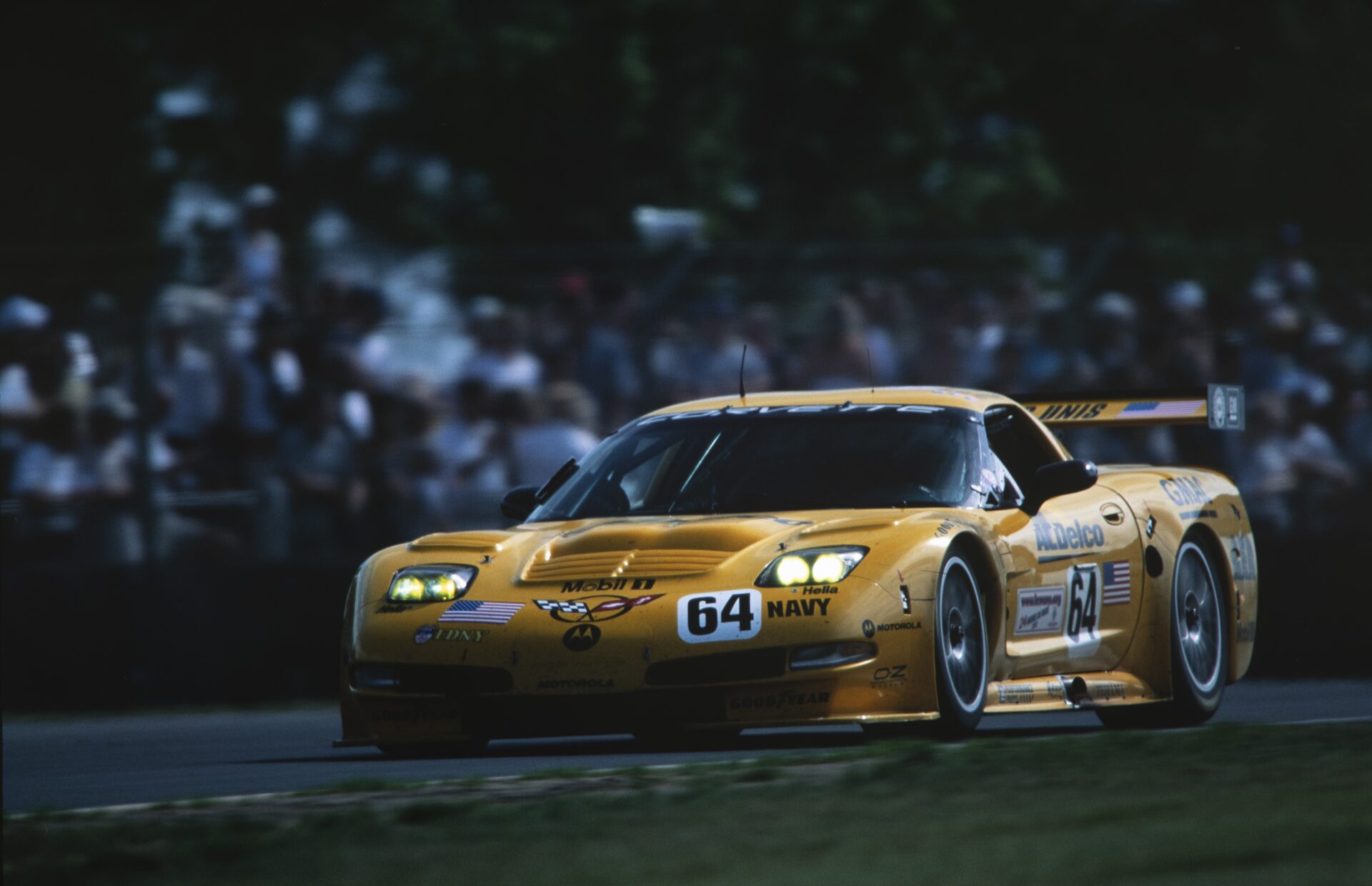
Highlights

Skip ahead if you must… Here’s the highlights from this episode you might be most interested in and their corresponding time stamps.

  • 00:00 Introduction and Sponsorships
  • 00:37 Monthly Recap and Automotive News
  • 01:35 Personal Stories and Traffic Encounters
  • 26:59 Scooter Adventures and City Life
  • 40:36 Electric Car Adventures
  • 41:07 Chrysler’s Struggles and Industry Insights
  • 42:14 Stellantis and Market Challenges
  • 43:48 SUVs and Market Preferences
  • 45:01 Maserati’s Market Position
  • 45:54 American Automakers’ History
  • 46:09 Chrysler’s Persistent Issues
  • 46:48 Limited Vehicle Choices
  • 48:06 Ranting About City Traffic
  • 48:58 Volkswagen’s EV Struggles
  • 51:01 BMW’s Design Changes
  • 53:03 GM and Tesla Charging Networks
  • 55:31 Japanese and Asian Car News
  • 58:25 Volvo’s EV Strategy Shift
  • 01:00:00 Polestar’s Electric Boats
  • 01:00:48 BMW E39 M5 and Alternatives
  • 01:02:56 Tesla’s Self-Driving Controversy
  • 01:05:07 Cybertruck’s Issues
  • 01:13:20 Unfortunate Truck Accident
  • 01:15:03 Top Gear Grand Tour Finale
  • 01:17:20 Unexpected Car Ejection
  • 01:17:26 Cockpit Safety Concerns
  • 01:17:49 The Pristine Beetle Incident
  • 01:18:04 Building Up the Drama
  • 01:18:21 Ferris Bueller Style Ending
  • 01:18:34 Top Gear Dog Homage
  • 01:18:39 Original Cars Reunion
  • 01:19:09 Driving Through the Minefield
  • 01:19:23 Top Gear’s Full Circle
  • 01:19:49 Top Gear Specials History
  • 01:21:18 Triumph Stag Discussion
  • 01:21:56 Rover SD1 and Sterling
  • 01:23:16 Future Adventures of Clarkson, Hammond, and May
  • 01:25:47 Shaq’s Carbon Fiber Cybertruck
  • 01:27:48 Lamborghini Baby Stroller
  • 01:29:11 Florida Man Steals Porsche Race Cars
  • 01:30:06 Corvette Intruder
  • 01:31:58 Michigan Police Rescue
  • 01:35:46 Formula One Drama
  • 01:44:41 IndyCar Espionage
  • 01:45:49 MotoGP and WEC on Max
  • 01:46:42 IMSA Season Wrap-Up
  • 01:47:38 Motorsports News Conclusion
  • 01:50:41 GTM Announcements and Events
  • 01:53:25 Podcast and Patreon Information

The Infamous Traffic </rant>

We always have a blast chatting with our guests about all sorts of different topics, but sometimes we go off the rails and dig deeper into their automotive and motorsports pasts. As a bonus, let’s go behind the scenes with this pit stop mini sode for some extra content that didn’t quite fit in the main episode.

In this special Drive Thru inspired Pit Stop Minisode … Brad, Tania and Eric <rant> about crazy city drivers and their experiences on the roads in this “post-covid” world.

Tune in everywhere you stream, download or listen!

https://open.spotify.com/episode/5NRbAGcVeax8LBpShuZO2J?si=blBV565mQuWqMPYPvHnc_g
Listen on Apple
Listen on YouTube
Listen on Spotify

Sit back, enjoy, and remember to like, subscribe, and support Brake/Fix on Patreon for early access to this content.


Would you like fries with that?


There's more to this story!

Be sure to check out the behind the scenes for this episode, filled with extras, bloopers, and other great moments not found in the final version. Become a Break/Fix VIP today by joining our Patreon.

All of our BEHIND THE SCENES (BTS) Break/Fix episodes are raw and unedited, and expressly shared with the permission and consent of our guests.


UnCOOL-wall! 

Now is your chance to rate some of the best of the worst from our Drive Thru NewsParking Lot Gold and What Should I Buy? series. Vote early and often!


This content has been brought to you in-part by sponsorship through...

Motoring Podcast Network

Argento e Rosso: Reimagining the Mid-Engine Revolution in Grand Prix Racing

What if the rear-engine revolution in Formula One had arrived decades earlier? What if the silver arrows of Germany had been challenged not by scattered efforts, but by a unified Italian industrial powerhouse? In his provocative presentation, Dr. Karl-Heinz Mertins invites us to explore an alternate motorsports history – one where engineering ambition, political will, and industrial strategy converge to reshape the trajectory of Grand Prix racing.

Tune in everywhere you stream, download or listen!

Listen on Apple
Listen on YouTube
Listen on Spotify

Mertins begins in 1937, at the height of the 750-kilogram formula era, where German engineering dominated the European Championship. The Auto Union cars, with engines mounted behind the driver, stood in stark contrast to the front-engined Mercedes and Alfa Romeos. This configuration, though unconventional, hinted at a future that wouldn’t fully materialize until the 1960s.

Despite the technical promise of mid-engine designs, the rulemakers underestimated the pace of innovation. Advances in metallurgy, tire technology, and chassis design rendered the weight restrictions moot. The result? A surge in performance and complexity that demanded teams of specialists, not solitary geniuses.

Spotlight

Dr. Karl-Heinz Mertins holds a master’s degree in mechanical engineering and a doctorate degree in mechatronics/ag engineering from the Technical University Berlin, Germany. He has over 35 years of engineering and business experience in Europe and the United States, with focus on product innovation and new business incubation, using cross-disciplinary methods and cross-cultural sensitivities. His work includes experimental work on intelligent mobile equipment and wind energy systems at the Corporate Engineering Division of Deere & Company. His enthusiasm for F1 began in the year 1961.

Notes

This episode of The Logbook, our History of Motorsports series, features Dr. Karl-Heinz Mertins‘ exploration of an alternate history of the mid-engine revolution in motorsports. Mertins, with extensive engineering experience in Europe and the United States, presents a ‘what if’ scenario imagining the potential impact of different decisions made in the 1950s within motorsport. The narrative focuses on key figures like Robert Eberin von Eberhorst, Francesco Di Virgilio, and Joseph Michel, and foretells a collaboration that could have accelerated the adaptation of mid-engine vehicles in Formula One. The historical backdrop includes the technical details of Grand Prix racing, the influence of the 750kg formula, the role of major car manufacturers like Mercedes and Auto Union, and the socio-political elements that affected motorsports during that era. The episode also discusses the logistical and engineering developments, such as the introduction of radial tires and the company’s alignment with the various global automotive innovations, while emphasizing the hypothetical consequences of these changes on mid-engine car technology.

Follow along using the video version of the Slide Deck from this Presentation

Transcript

[00:00:00] Brake Fix’s History of Motorsports series is brought to you in part by the International Motor Racing Research Center, as well as the Society of Automotive Historians, the Watkins Glen Area Chamber of Commerce, and the Argettsinger family.

Argento e Ebroso, an alternative story of the mid engine revolution by Carl Heinz Mertins. Dr. Karl Heinz Mertins holds a master’s degree in mechanical engineering and a doctorate degree in engineering from the Technical University in Berlin, Germany. He has over 35 years of engineering and business experience in Europe and the United States with focus on product innovation and new business incubation using cross disciplinary methods and cross cultural sensitivities.

His work includes experiments on intelligent mobile equipment and wind energy systems at the corporate engineering division of Deere and Company. His enthusiasm for Formula One began in 1961. Mertins presents a what if story. What if Robert Eberin von Eberhorst in 1953 would have joined the newly formed [00:01:00] Unione Automobili instead of the Auto Union that was only a shadow of its former self?

What if Francesco Di Virgilio and Ettore Zacconamina had been tasked with designing a compact V6 engine for the 2. 5L GP Formula that would take on the rather conventional Mercedes W186? Eberin What if Joseph Michel’s aerodynamic knowledge would have been applied to create downforce? Would lessons learned from pre war silver arrows and the untimely Sistalia Grand Prix project, when blended with elements of Lancia’s passionate engineering culture, have accelerated rear engine revolution in Formula One?

Our next presentation is, I love, I get to say this, I get to use some of my Italian. Argento e Rosto, An Alternate History of the Min Engine Revolution, by Carl Heinz Mertins. I love this topic. This is one of those things, thinking out of contrafactual history, is something that’s being used a lot now to examine different events in history.

I’m looking forward to this one. Thank you. Did it really need to take [00:02:00] 25 years from the first cars that were winning Grand Prix races with the engine mounted behind the driver until it became commonplace and then all the U. S. Grand Prix’s that were held here at this wonderful racetrack were all Contested by and won by cars that had the engine mounted behind the driver.

It seemed to be the most normal thing in the world. So, let me run you through a few stages of what happened in reality, and then I will veer off into what I would submit as an alternative reality. And you can dispute that, and you can criticize me for some of the stupidities that I will throw out here.

But it’s something that I’ve been thinking about for a long time. And now in retirement, I’ve had time to really devote some quality time to this topic. And I want to share this with you, but I invite you to be critical with me. I start here at the year [00:03:00] 1937, and this is just one of the races that we’re counting towards the European Championship of Drivers.

And what you see here is the typical view in those years. There are many silver cars, and they have just a sprinkle of red. There’s a lot of Argento, a little sprinkle of Rosso in this image. The lone Alfa Romeo here of Tassio Nuvolari. In the pole position here is Bernd Rosemeyer in an Auto Union. As you may deduct here, the engine is really mounted behind the driver.

Whereas all the Mercedes cars in the vicinity here, Herman Lang, Caracciola here, they all have the typical, classical front engined cars, just like the Thomas Flyer engine mounted in front of the person that drives the car, or the two people that were sitting there. That seemed to be the norm. Why [00:04:00] even question that?

And yet we know from many Instances in industry in art and so on things change and sometimes they have to change for good reasons But the underlying situation here. I want to point out quickly was that this happened all under the 750 kilogram formula that the CSI brought into action because the previous cars were getting too fast and too powerful.

Thought was, well, if you limit the drive weight of the car to 750 kilograms, then not much can happen. The engines will have to become smaller and there is just no chance for increase in performance and perhaps a decrease in safety of running these cars on the given tracks. The opposite happened. Rule makers did not really anticipate the tremendous progress that happened in metallurgy, in engineering in general, in tires, in many areas that [00:05:00] compose the car.

What happened was the technical complexity went up dramatically, the performance of these cars compared to the previous ones went up dramatically, and the dominance of that was held by the red cars, the Rosso element, switched over to the Agenta, to the silver cars, the ones that happened to be made in Germany, where I also come from.

And as you see in the results here, the first three finishers were silver cars, Mercedes in the first two places, Auto Union number three, and Pazio several minutes distance came in as fourth. Two years prior, by the way, he had won this race because this man, von Bauchitsch, was abusing his tires and he didn’t want to stop for a second tire change and he paid heavily for that and Nuvolari was the surprise winner.

The organizers were not prepared to have a foreigner win the German Grand [00:06:00] Prix. They were struggling to get the national anthem dug out and all those things. And it took a while for the spectators to recognize that they had a different winner than what they had expected. So there were a number of things happening under the 750 kilogram formula, but by and large, it was a duel between the silver arrows of Mercedes Benz and Auto Union.

This period was one of disruptions. What became evident was that a complex car could no longer be designed and constructed by a singular genius. By an artisan, a craftsperson, it went to teams of specialists that replaced those individuals. That was difficult for some people, and as an example, Ettore Bugatti perhaps, and more pertinent to this talk than Vittorio Jano, were more in this category, I would say.

They may not have been the best leaders of [00:07:00] a team of specialists, and that’s what came about. You can see here the Mercedes core team of their racing department, led by Uhlenhout. He was also the person that focused very much on a new chassis. paradigm where previously chassis were pretty flimsy affairs and the wheel suspension was pretty hard and the chassis was basically the suspension system, spring system that changed dramatically when the chassis was fortified and became much more stable.

We also saw, as in the previous image, that the mid engined chassis, car concept became competitive. It was almost equal to the conventionals. So when that happens in a very short period of time, that’s pretty amazing and should tell people that there’s something to it. Because typically it takes a while for the new challenger to challenge an incumbent because the incumbent has naturally some 50 years of experience to refine the [00:08:00] concept.

So this was, was telling. I think also the uh, fascist governments in Italy and in Germany started to use and abuse GP racing for propaganda purposes. So it was no longer a matter of the individual driver and the team to be successful. Now you had to be successful for the whole nation or you would be criticized by masses and by the leadership.

There were state subsidies paid in Germany. But they were relative minor contributions to the overall budget. This space race, so to speak, that happened in Germany was much more expensive than, say, the sums that were paid by the government. Going forward, Mercedes was well known, of course. But the challenger was Auto who?

Auto Union. Not really an organization with a long history. Well, it was a company that was born out of necessity. There were four companies in Saxony, in [00:09:00] Germany. And they were closely related geographically, but they all four had the same financial troubles and they had difficulties growing. The banks, namely the, uh, Saxon State Bank, was very worried about their investments and they said, something needs to change here.

Why don’t we bring those four? companies together and work towards economies of scale. So, in 1932, those four companies, previously independent, Audi, DKW, or DKW, Horsch and Wanderer, were brought together into this Auto Union AG. The company kept a multiple brand strategy. When you look at these bar graphs, you see that the portion of the bars here stands for the DKW, DKW.

Contribution here, a very simple and low cost car made the majority of this business in terms of volume, sold cars per year. And you can see over the years, there was quite [00:10:00] an increase. The company, Auto Union, became the number two in Germany, but not many people knew about the name and could relate the name to specific projects and products.

So either they had to go big time into advertising or. and make a name for themselves. Now, Wanderer, one of the four constituents, had already had a good relationship with Dr. Ferdinand Porsche’s engineering office out of Stuttgart, and he had designed some of the very successful Wanderer cars and engines for those, four cylinder, six cylinder, and he also had plans already in his mind.

for a car from what was called then the P Wagen or P Wagen, a 4. 4 liter V16 Grand Prix car with the engine mounted behind the driver. Wanderer was almost sold on it, but now they had to get approval from the Auto Union holding company. It took a while to get there, but finally that came [00:11:00] to pass, particularly when the political landscape shifted around.

at this time, and Hitler came into power, and he was very much into mass mobilization and automobile propagation. And he wanted to demonstrate, of course, the essential superpower of the German nation, and it could be demonstrated in some sort of a space race that at that point was auto racing. Now, the Porsche design, quite, Intricate and complex was only that.

It was a design. Porsche’s engineering office did not build anything, really, other than some rough prototypes. So it had to be done within Auto Union, that they had to come up with a real car. And the task was given to this gentleman here, who smokes, and the full picture would show there’s a race car in this vicinity, and this is taken at the boxes.

And it was Robert Eberhahn. from Eberhorst. His statement was from the get go he was completely convinced that this what he then called the rear engine concept was [00:12:00] really the real deal and he was fully behind propagating that. Here we learn a little bit more about Ferdinand Porsche’s P Wagen as documented in patent literature here and what you see here in particular is of course the general concept of the car and the engine is.

The gearbox cantilevering behind the rear axle. What he pointed out in this particular text and claims was that the line here, the yellow line, which is close to what we today would call the roll axis of the vehicle. In those days, the term had not been coined, but he pointed out this axle was very important and it should go through the center of gravity of the unsprung mast.

When that was accomplished, then there would be no sideway inclinations of the car, and they would be absolutely done with, and the car would really hold the road like a board sliding over the road. There would be no tilting or rolling of the car. You can see a little bit here, Bound [00:13:00] Rosemeyer negotiating a corner at the Donington Circuit in England.

You can see that there’s not much roll here, But there’s a lot of oversteer and opposite lock, and it wasn’t easy to control these cars at the time. Because there’s a bit of a flaw in this concept that looks good on paper, that there should be no roll. Roll is a pretty good early indicator that the car is getting closer to its limits, the adhesion limits of the tires.

So, you want to have a little bit of roll, otherwise the driver will get much more surprised by the rear. That was a lesson after World War II. We skipped that dark part of history. The silver arrows were pretty much out of business. The Auto Union, as it was known then, was out of business. It was partially located in the Russian zone, what became then East Germany.

And the smart people that worked there tried to get out [00:14:00] of Dodge as quickly as possible. And they reestablished some smaller organization in West Germany, a new Auto Union, but not nearly as potent as the original was. And Mercedes Benz, the factories were in smithereens and they had to slowly rebuild their core business.

Alfa Romeo, on the other hand, had a couple of challengers for post World War II Grand Prix racing at their disposal. They were smart enough to hide those assets well, protect them throughout the war, and they had two concepts. One was what we know as the 158 Alfietta, which was a conventional car with the engine in the front, and there was the second one, That was the 512, very much modeled after the Auto Union race cars.

And you can see here, it had a very high roll center in the rear axle. And it pretty much copied the same slope of the roll axis as the 512. Porsche patented outline. This was more or less a brainchild or [00:15:00] project directed by Fredo Ricard, who was a very theoretical man, studied, not necessarily the most practical person, and not a person who interacted well with the more practical people, maybe the previous artisan generation.

There was a bit of a wall between them. So he persisted with this relatively high roll center here. The DDO are excellent. The back shows that there’s a watts linkage. There was an unusual high placement of the roll center at the lateral arresting point of the DDO tube. So that was a bit of a flaw. Hence, there were some issues with the road holding of that prototype.

There were almost two 512s. The first one was tested in 1940. It showed some difficulties with road holding. Now, on the other hand, the 158 had its own chassis impairments that would show up later as the engine [00:16:00] horsepower increased quite dramatically. But for now you could argue when Alfa Romeo decided what to go racing with after World War II, the Alfetta, was the more reasonable choice.

Early on, way back when I first thought about this alternative history, this seemed to be a perfect deviation point, you know, where you deviate from real history into La La Land, and my first thought was why don’t we just shift from one car to the mid engined car, the 512? Well, it is not quite that easy.

easy as it showed once I did a little bit of my way of research and dug into literature and all kinds of prior art that existed at the time. It seemed that there were issues obviously in the design which could have been changed and further developed. However, when Hugo Gombato, who was running Alfa Romeo at the time, was assassinated in 1945, Eric Cart, who came originally from Spain, felt for his own safety it was best to go [00:17:00] back to Barcelona.

And he had not made many friends within the Alfa organization, so when he left there were not many disciples that would have picked up and would have development of this quite visionary design of the 512. The engine, by the way, was certainly a superior element in that whole design compared to the 158.

So, the revolution was suspended, and my story couldn’t pivot at that point. In the meantime While Alfa Romeo was quite successful in the, um, driver world championship in 1950 and 51, at the beginning of the Formula One as we know it, Mercedes was still rebuilding the core business, but they had declared already in 51 that by 54, when the new 2.

5 liter Formula One would come into being, that they would start participating in it. Now, they had a new project leader in Hans Schoenberg, But they also had some of the old experienced guys like Alfred Neubauer, Rudolf Uhlenhout at their disposal to start building this next [00:18:00] generation of Silver Arrow.

And they had roughly 200 staff members at their disposal, which is a huge number. Number of engineers and technicians and fabricators in those days. So they were going all out. They were not kidding when they said in 54 we want to be on the racetrack again. And they had further access to about 300 specialists within the corporation that they could get information from on a part time basis.

So there was a lot of potential there in terms of. engineering horsepower know how. They also worked quite well with Bosch, that they had been working with as a partner during World War II, on fuel injection systems. So they got a lot of help there in optimizing their direct fuel injection system, which was also an improvement over competition.

So you wondered who could be an opponent for this onslaught by Mercedes Benz after World War II. Certainly none of the German companies, we had already briefly stressed Auto Union, [00:19:00] the newly formed GMBH, wasn’t really in a position to do that. They didn’t have the means. Burgwardt, who was kind of a, multi brand cluster of companies as well.

They were into touring car racing to some extent. Veritas was a very small scale builder of race cars, kind of a silver arrow that they tried and they used the BMW 328 engine for their efforts. Well, as they were not that successful, BMW asked them to stop using their engine and then they had to make their own engine and they dabbled with two cycle engines.

They wouldn’t go anywhere. They didn’t have anywhere near these resources. So that didn’t work out well. Meanwhile, in Italy, after El Toromeo was already quite successful with the pre war designs, and they were thinking about, they needed to have a new design in order to stay competitive, Garagi was then.

running Alfa Romeo and his leadership team [00:20:00] felt it was enough with racing and it was good to stop at the height of their success rather than continuing and risking to lose the glory that they had accumulated. Ferrari was particularly in the context of mid engined cars. A big opponent to him, the Oxford horse, always must pull the cart.

It’s his style. It’s thought kind of a faulty analogy because even front engine cars push the car as long as it’s rear wheel driven. And then there was Cisitalia, who was a small company with huge ambitions and they had contracted the Porsche engineering team. to design the 360, a very advanced, mid engined, Formula car, Grand Prix car that was very complex.

And Duzio, who owned Sissitalia at the time, was way over his head, I think, in terms of financial commitments. And understanding how much it would take beyond the initial design of a car. You have to field it, and then you have to also be aware. That when you [00:21:00] start, even if you’re very competitive at the beginning, competition isn’t going to sleep, there will be upgrades and you will have to upgrade yours.

And so they just didn’t have, based on their relatively small, tiny boutique car company with beautiful cars, with bodywork styled by Farina. They were popular, but they didn’t make much money, so there wasn’t. the financial wherewithal to support a Grand Prix project like this. The engine by the time, you know, 54 would roll in, the 1.

5 litre supercharged engine was obsolete, so they would have to, uh, to get a different engine. But by 49, Cisitalia was pretty much bankrupt, and Duzio took the car himself over to Argentina, and there was no real engineering support. So this project, which was very promising, died out before it ever really got onto a racetrack.

Also, they waited way too long to do the first on track tests. They wanted to build six cars, ideally, and then [00:22:00] think it was perfect to go racing. So they didn’t really Very much about the four wheel drive that was part of this car and to try it out to understand How does it work on straight ahead and in curves and so on so there was a lot of?

over optimism that would that project is good area Milan was even more optimistic in coming up with a kind of a raw prototype of a mid engined car that had a transversely mounted eight cylinder engine, air cooled, without showing any serious means of getting rid of the heat that this very powerful engine would generate.

And they certainly didn’t have the wherewithal, so I would say, don’t do that. Now, of course, you know, the real history shows us, and Chris Nixon shows in his book very well, There was a arrival to Mercedes Benz in form of the Lancia D50, but I submit Lancia was not really in a position to get into Grand Prix racing.

They didn’t have the financial wherewithal. Gianni Lancia, who was [00:23:00] running the company then, should have been told to pivot more to the money making side of the business and hold back for now on the Grand Prix. Passionate racing enterprise. So I don’t think that that was real. Also, although they had a car that after some development showed promise and could have challenged Mercedes, they could probably not withstand the ongoing upgrades and competition that would raise the bar.

So. My conclusion here is there was no single entity in Italy or elsewhere in France or England that could really mount a challenge to Mercedes Benz and therefore something else would have to happen in order to fulfill my dream of propelling forward the change to rear engined cars. So, I’ve defined two conditions that are necessary for enduring.

success, it probably pertains to other classes as well. An effective project has to have a solid funding and a long term commitment. [00:24:00] It can’t just be a commitment. It has to be more than one year. It has to be an extended commitment from a potent industrial corporation, I would say. It doesn’t necessarily have to be a car company, as Red Bull today demonstrates this.

But, it should preferably be one. And, I would submit as a second condition, a component supplier should be involved also. Particularly since either tires or fuel are playing a big role in the ultimate performance of the car. Maybe one of those suppliers should be involved actively. Not just putting their labels on the car, but being actively involved in the development process, because they have some skin in the game, financially, but also image wise.

And so when you have these two conditions fulfilled, I think then you have a good shot at being successful. being ultimately successful, and I bring forward two examples here for your consideration, although they extend a little bit beyond the time period I’m talking about. But there is the [00:25:00] FenWall effort to bring British Racing Green into the forefront of competition.

Grand Prix Racing, Tony Vanderwaal, who was very committed, who had the wherewithal, he was the head of a large corporation that built sliding bearings for engines for the car industry. Among other things, he owned Lucas, was responsible for the Prince of Darkness. And in so far, there was some potency there.

And over years. First, he started out with modified Ferraris, as you know. Then he pivoted towards his own design, which was ultimately successful in 1958. He won the first Constructors Championship, which was then open for the first year. Not the Drivers Championship that went to Mike Hawthorne on a Ferrari.

And then, you could say, Rubery Owen, which also adopted the BRM project, which was kind of flawed from the get go when it was this designed by committee organization way back in the forties. But it was like a cat with [00:26:00] many lives ended up at some point once the, uh, automotive component company, Rupert Owen pulled pretty much out of that venture.

Then we find an example where a different type of sponsor comes into the picture and that would be one way. But That sponsorship was not really contributing to the technical development and it was pretty feeble because they went from one car company to the next and sometimes they supported more than one but it wasn’t enough to stay alive.

So what I’m proposing And again, this is a bit of a leap of faith that you may want to follow me with or not. I think in Italy, there was enough potential, there was enough passion to get big time into Grand Prix racing, but it would take that financial underpinning of a larger company. Renewal Fiat would not participate.

They were never interested after their successes in the 1920s to go back into GP racing. So it takes a [00:27:00] conglomerate effort. very similar to the Auto Unione that we had seen prior to World War II. I suggest in Italy there should be the establishment of an Unione Automobili, a Finmeccanica company, part of the, uh, ERE, which was a public holding company in Italy that had picked up, previously in the 1930s, already Alfa Romeo, when they were in hard times.

And so Alfa Romeo was already part of this, I submit, when you look at the categories here and the brands that Auto Union had, then Alfa Romeo probably would be an equivalent to Vandra. The DKW, I’m struggling a little bit with it. I think Iso, Iso Rivolta and the Isetta would be an interesting play. I think also, since DKW always had motorcycles as the point of entry for automobiles.

Consumers to get into mobile equipment. There [00:28:00] may be a play for a Vespa in terms of a joint venture, perhaps. Lancia would be the upscale part, not trying to compete with Alfa Romeo. That would be fairly senseless. There may be some overlapping, some platform sharing that I could see, even with the eyes of somebody in the early 1950s, and there may be in this low cost segment.

Bernard out of France, but in those days having multinational corporations was probably not very feasible yet. So, that’s a bit of an open question. And I add also a category, and we’ll soon see why that is significant. And I’m not really talking about mid engined race cars, as you recognize. I’m building a platform that, uh, allows that technology to really take place in a big scale.

I submit also tractors could play a role. And there is a play for the Saame tractor company that also has a long [00:29:00] history of being connected to Alfa Romeo because the, uh, Cassani brothers that formed Saame had previously formed Spica. Some of you may know the Italian equivalent of Bosch in fuel injection.

And so these tractor guys, they needed for their diesel engines something to get the fuel into the combustion chambers. And since it was the autarky policy, they couldn’t just go to Bosch in Stuttgart and get their stuff, they built their own version. And they got then into ERE and were delegated into the Alfa Romeo company.

Fold in the 1930s, 1940s already because we’re seeing that they were more relevant with their technology. Now, people that were coming from the tractor faculty did not match very well to the more structured corporate environment, and they left pretty soon and formed their own tractor company again, which became very successful and exists.[00:30:00]

So I put these elements together in some way because so far there’s perhaps a good story if you believe that this Onione Automobili could come into being. But, of course, in every good story, you know, there are heroes and there are villains. I think a very obvious villain, kind of the white elephant in the room, Fiat would probably not sit still and say, Oh, this is nice, there’s a new competitor being formed, and public money goes into that also.

So somehow, Unione Automobili would have to create a new competitor. A competitive advantage that was compelling, particularly to the politicians of that time. Because Fiat had clout in the political space at the time, and had that for decades. So, one of the things Fiat was not terribly interested in was helping to sustain or to develop the Mezzogiorno.

lower part of Italy, which was mostly an agrarian society with a [00:31:00] lot of manual labor in agriculture. So, that’s where the, um, slow development comes into play to gradually bring up the the technical capabilities and financial wherewithals in southern Italy, rather than putting some of these huge projects into place as had been done and was done later on with steelworks and so on, that became cathedrals in the desert that didn’t really fit into the society yet.

So I submit that having a tractor, a very simple one, this was first some tractor, later on they became much more sophisticated, it would help. You know, to transfer manual labor into mechanized forms of agriculture, it would free up labor. But you could also now bring some of the farm boys into mechanics, into working on vehicles on a very low level of complexity.

And then later on you could grow that. So you could do something like Ford did when they had [00:32:00] ramped up the Model T manufacturing. office assembly plants or branch assembly plants in different parts of the, uh, country. The building stands still there in Fargo, North Dakota. It’s no longer used for its original purpose, obviously.

It’s a nicely converted office building. But they assembled parts that were shipped from Detroit to these remote areas and, and helped to reduce shipping costs for one thing, because when you ship old cars, you’re shipping mostly air. They shipped some parts that came from the mothership, and then there was some local content gradually introduced.

So when you do that, you have some more sustainable, gradual development of a more agrarian company. And frankly, people who come from the land, who see the progress that mechanization can bring, they will buy more into this, and they will, later on, become more productive. Good mechanics and good people that can assemble more complex vehicles in the South.

So [00:33:00] also when you own an automobile, you can leverage a state development funds that were available at the time. Casa Peril Mesojorno and the INA Casa for public housing could have been dipped into particularly if the political communication would have worked well. Now, what you need then for the leadership in this new would be somebody who’s more politically astute, not somebody who is an engineer and loves cars and digs deeply into it.

It’s probably not the right person who can convince some of the politicians and political powers in place parties that it’s in their best interest longer term to support this program. And so you find a person in Luigi Rosari who has been a long term leader within the Pirelli organization. He was responsible for the cable business in Pirelli, not so much for the tires.

He was a person with a lot of soft skills. He had honed those during the transition when committees ruled these large [00:34:00] corporations for a while in 1946. And so he had good experience in labor relations, which down the road would be He was very much about this gradual and sensible growth of the, uh, Netzer Journal.

And so, now we look at the, uh, industrial supplier, the component supplier, and we check in a due diligence process. And the choice is pretty obvious. There are companies that have technical know how, like these folks that make frames for race cars. They’re very specialized in that. They’re very good at tubing and forming oval tubing and tapered tubing and so on.

Gilco, Autotillai. But they also work for Ferrari and for Lancia and for whoever pays them. So, you don’t want to really get them too close to what you’re doing with your new concept. Olivetti is certainly interesting from a technology perspective, because they were getting into digital computation at that time already.

[00:35:00] the typewriter folks, obviously. Long term, they may be interesting, but short term, they were also a little bit of an utopian company. Pirelli, an obvious choice. Monte Cattini, a large chemical company, could play a role in, uh, that they wanted to get into the automotive industry so they could leverage, perhaps, this entry point, and that may be good.

But, since we know that tires are so essential for the success of race cars, And Pirelli had a long term success with their Biosupply tires, conventional tires, in racing. They’ve won world championships up to that point. They also developed a radial tire already since 49. So that kind of prompts me to think.

Why not introduce radial tires to racing, to Grand Prix racing, at this early point of entry? It would be doable, I think, and Pirelli would see benefits from doing that. It would become a centerpiece of their marketing campaign, that radial tires can work under the most harsh and demanding conditions.

[00:36:00] They would have enough skin in the game in this project, because if they lose, that doesn’t look good for them. But, on the other hand, of course, these tires compared to the previous ones require a different driving style. So there is something to learn for the people that run these cars. In essence, the slip angle gets much smaller for a given lateral force.

But Pirelli has the opportunity to become, also, one of Automobili’s preferred tire supplier. There is a volume business in the background. And this is a depiction, obviously, of the, But we need a technical hand, so we switch scenes here and we go to Burton on Trent in the UK. You may ask, why do we do that?

Well, there is an interesting person to be met. And that’s, again, our friend Robert Everan Eberhorst, who was involved in the Auto Union activities. He also oversaw the Cisitalia construction in Torino. And he’s being invited by the, uh [00:37:00] for a chat. At the time he was in England, he worked as the chief engineer at Aston Martin, the company that was then owned by David Brown.

He had been lured into England to work at ERA, but according to his own words, that proved to be a disaster, a real disappointment, because they didn’t hire him. nearly have the resources that he was used to at Aston Martin who was much better. So the leadership of Unione Automobili talks him into coming back to Italy instead, leave this misery in England behind, and don’t get tempted by this new Auto Unione because that’s what he will do in reality.

He will find that the really lower ranks in the company really don’t like him, and even some of his peers on the upper echelon don’t like him. despise him because he’s a little bit too far out there for their taste. So, I’d suggest this new scenario has Evan Eberhorst become the technical director and responsible for the GP project at [00:38:00] Uniona Automobili, and by doing that we combine this analytical spirit, the scientific.

race car engineering with the passion of the Italians and with the willingness to experiment. The car concept is somewhat influenced by the Sissitalia 360. It’s although less complex. For example, I don’t think the four wheel drive solution was already appropriate. May never be in such a car, and I would place the gearbox behind the differential, behind the rear exalt, which would increase the, uh, polar moment of inertia in the your mode a bit, and would make the car a little bit more drivable.

The seating position would be more reclined than in the cisitalia, which in a way was still old school, but it had already a good space frame. Use that we extend the cockpit so the driver can lean back a little bit. It makes a lot of sense to use a V six engine because luncher. And its fame was built around V6 engines.

There were interesting engineers like the Virgilio, who came [00:39:00] up with the 60 degree equal firing order distance angle V6, which at the time was not well known or was not practiced. But he introduced that successfully to Lancia. And there were other folks from the Lancia team that would have been useful.

I submit, of course, the engine would have been useful. It’s a double overhead camshaft and it would have a speaker fuel injection system. You don’t want to over freight a new project with too many features, that are new and unproven. So, for exploratory purposes, they should dabble with pneumatic valve springs to have an alternative to the decimotromic valve train that Mercedes had introduced, or would introduce.

So, the V6. volume of two and a half liters, rated speed and piston speed in particular, was well within the realm of possibilities of that time. Uh, so I’m not exaggerating too much. This would be a pretty competitive project. It would be a good chance to introduce disc brakes. [00:40:00] preferably from Gerling that were readily available and somewhat proven.

The anti roll bar introduction to GP cars was long in coming and should be introduced here for sure. Then again, the exploration to future upgrades could be devoted to monocoque chassis and more importantly, to the introduction of aerodynamic downforce. Again, why did it take so long? From today’s perspective it’s easy to say when you were living in 52, 53 it was a little bit more of a stretch of imagination, but not totally uncalled for.

John and Charles Cooper in England had been working on these Kinds of concepts already. And Connot had its own program going on. They were waiting for the Godiva Coventry climax engine to the V eight engine to become ready, and they would’ve put it into the back of their car, and it would’ve been a very interesting challenger.

But Coventry Climax got cold feet. They thought the engine wasn’t powerful enough. When they heard of 300 [00:41:00] horsepower plus, the Mercedes would be delivering, which they never did. And so they decided to deep six their very impressive V8 engine program. Now, when you have so many unknown parts in your car, you want to de risk your project.

And here I introduced another player. Rudolf Ruska, who had been working with, uh, SysItalia, with Porsche. So he was part of the inner team already. He would be tasked with providing a test mule. That would be a car that would not look like a Grand Prix car yet, but the underpinnings would be exactly that.

And you could introduce new technologies. and expose the drivers to the new driving characteristics and working with disc brakes and radial tires. In a very disguised way, you could do data acquisition and learn about the optimization of this new package. So, he was a good player for doing that. He had good connections to Carrocerías.

[00:42:00] Turing had already worked for Montecatini, previously mentioned, on this little prototype with a resin fiberglass combination bodywork. So we suggest they should just do something like this and use that as the test and run it in Monza and on other tracks. And Ursga will later on lead a project that will unify the platforms of the Giulietta of Romeo and the Appia of Lancia.

It’s a safe cost to get economies of scale, and this project should be successful. Now, we talk about advanced aerodynamics, and when we think of wings, we think that’s something that happened very recently with Chaparral and Jim Hall, or maybe Michael May in Switzerland in the mid fifties. But in the late thirties, when Mercedes wanted to build this T 80 world record car, they had already experimented.

This was, again, a design of, uh, engineering firm. They had already dabbled with the thought of wings, fixed [00:43:00] wings, even movable flaps here. And this is all discoverable in late open patent applications and patents that were accessible to people, certainly in the 1950s. So this fellow here, Joseph Mikkel was a founding member of the Porsche engineering team in Stuttgart.

His background was aeronautical and mechanical engineering, and he had a specific interest in the aerodynamics. So, these patents are very interesting to read and very visionary. Because we need also drivers, obviously, in order to make this a successful project. And here I propose that Alberto Ascari is undisputable the best choice to be driver number one.

He was the world champion in 52 53, and he left Ferrari not for Lancia, as in real life, But, yeah, he comes to Unione Automobili and will be their star driver. Most likely will not have a splash in the Monaco harbor, [00:44:00] and he’ll have no reason to drive a sports car of Ferraris on May 26th, 1955, where he fatally crashes.

And the second one, just briefly to round this out, we learn from the Rosemeyer experience and bring in somebody. From the motorcycle faculty, a two time world champion that was proven on 500cc motorcycles, Shillera, he won two titles. And so he would be an interesting addition to the team because he would bring a different driving experience with him.

And that’s it. Analog to Gantt Rosemeyer, he may be able to deal with these rear engined cars better or mid engined cars better than, say, drivers that were used to the conventional ones. Anyway, so at the end, the happy end is Ascari will not win the 1954 World Championship. That would be too much of a stretch.

We leave that to Fangio. And, but he’s a close second and Massetti happens to win one [00:45:00] Grand Prix, British one, that was a bit of an aberration, bad weather conditions, etc. So that’s pretty much the framework of this story. It brings together. And, uh, The Italian element and some of the Germanic, which is mostly Austrian, to be honest.

A lot of the good automotive engineers that work in Germany come from Austria or from former Czechoslovakia. That happened here too. So it’s this combination that could accelerate a rear engine or mid engine revolution. Give it to you to, uh, criticize that or tell me I’m totally out of hundred pages and with real sources.

So this is not all just out of thin air. So it has some. Some validity and maybe some believability, but I leave it up to you as the much more experienced folks. A very different approach to all that history in an action. Thank you. That was really great. Thank you

This episode is brought to you in part by the international motor racing research center Its [00:46:00] charter is to collect share and preserve the history of motorsports spanning continents eras and race series The Center’s collection embodies the speed, drama, and camaraderie of amateur and professional motor racing throughout the world.

The Center welcomes serious researchers and casual fans alike to share stories of race drivers, race series, and race cars captured on their shelves and walls and brought to life through a regular calendar of public lectures and special events. To learn more about the Center, visit www. racingarchives.

org. This episode is also brought to you by the Society of Automotive Historians. They encourage research into any aspect of automotive history. The SAH actively supports the compilation and preservation of papers, Organizational records, print ephemera and images to safeguard, as well as to broaden and deepen the understanding of motorized, wheeled land transportation through the modern age and into the future.

For more information about the SAH, visit www. autohistory. org.[00:47:00]

We hope you enjoyed another awesome episode of Brake Fix Podcast brought to you by Grand Touring Motorsports. If you’d like to be a guest on the show or get involved, be sure to follow us on all social media platforms at GrandTouringMotorsports. And if you’d like to learn more about the content of this episode, be sure to check out the follow on article at GTMotorsports.

org. We remain a commercial free and no annual fees organization through our sponsors, but also through the generous support of our fans, families, and friends through Patreon. For as little as 2. 50 a month, you can get access to more behind the scenes action, additional Pit Stop minisodes, and other VIP goodies, as well as keeping our team of creators Fed on their strict diet of fig Newtons, gummy bears, and monster.

So consider signing up for Patreon today at www. patreon. com forward slash GT motorsports, and remember without you, none of this [00:48:00] would be possible.

Livestream

Learn More

If you enjoyed this History of Motorsports Series episode, please go to Apple Podcasts and leave us a review. That would help us beat the algorithms and help spread the enthusiasm to others. Subscribe to Break/Fix using your favorite Podcast App:
Listen on Apple
Listen on YouTube
Listen on Spotify

Consider becoming a Patreon VIP and get behind the scenes content and schwag from the Motoring Podcast Network

Do you like what you've seen, heard and read? - Don't forget, GTM is fueled by volunteers and remains a no-annual-fee organization, but we still need help to pay to keep the lights on... For as little as $2.50/month you can help us keep the momentum going so we can continue to record, write, edit and broadcast your favorite content. Support GTM today! or make a One Time Donation.

Auto Union itself was a product of economic necessity – a merger of four struggling Saxon automakers (Audi, DKW, Horch, and Wanderer) orchestrated by the Saxon State Bank. With Ferdinand Porsche’s visionary P-Wagen design and Robert Eberan von Eberhorst’s engineering leadership, Auto Union fielded competitive mid-engined race cars. Yet, despite their technical edge, the post-war landscape saw the company fragmented and diminished.

Alfa Romeo, meanwhile, emerged from WWII with two Grand Prix contenders: the front-engined 158 Alfetta and the mid-engined 512. The latter, inspired by Auto Union’s layout, showed promise but suffered from handling issues and internal politics. When Alfa’s technical director Ricart fled to Spain after the assassination of company head Ugo Gobbato, the 512 project lost its champion. The revolution was postponed.

By 1954, Mercedes-Benz reentered Formula One with formidable resources – 200 engineers, access to Bosch’s fuel injection expertise, and a clear vision. Italy, by contrast, was fragmented. Ferrari clung to tradition. Cisitalia’s ambitious Porsche-designed 360 project collapsed under financial strain. Lancia’s D50 showed potential but lacked sustainable backing.


A New Italian Union?

Mertins proposes a bold counterfactual: the creation of an Italian equivalent to Auto Union – Unione Automobili. This conglomerate, backed by the state-owned Finmeccanica and the ERE holding company, would unite Alfa Romeo, Lancia, Iso, and even Vespa under one banner. With shared platforms, coordinated engineering, and a commitment to mid-engine innovation, Italy could mount a credible challenge to Mercedes.

To gain political favor and economic relevance, Unione Automobili would also invest in agricultural mechanization. Partnering with Saame, a tractor company with ties to Alfa Romeo and fuel injection pioneer Spica, the initiative would uplift Southern Italy’s agrarian economy. Assembly plants modeled after Ford’s decentralized strategy would train local labor and build technical capacity.


Heroes, Villains, and the Road Not Taken

Fiat, the dominant force in Italian industry, would likely oppose such a venture. But by aligning with national development goals – especially the modernization of the Mezzogiorno – Unione Automobili could secure public support and funding. The mid-engine revolution, in this alternate timeline, becomes not just a technical shift but a socio-economic movement.

Dr. Mertins’ vision is more than speculative fiction. It’s a reminder that motorsports history is shaped not just by engineering breakthroughs, but by the interplay of politics, economics, and cultural will. The rear-engine layout may have eventually triumphed, but its delayed adoption speaks volumes about the forces that govern innovation.

Would the world of Formula One look different today if Italy had embraced collaboration over competition? Perhaps. But thanks to thinkers like Mertins, we’re free to imagine – and learn from – the roads not taken.

This episode is sponsored in part by: The International Motor Racing Research Center (IMRRC), The Society of Automotive Historians (SAH), The Watkins Glen Area Chamber of Commerce, and the Argetsinger Family – and was recorded in front of a live studio audience.


Other episodes you might enjoy

Michael R. Argetsinger Symposium on International Motor Racing History

The International Motor Racing Research Center (IMRRC), partnering with the Society of Automotive Historians (SAH), presents the annual Michael R. Argetsinger Symposium on International Motor Racing History. The Symposium established itself as a unique and respected scholarly forum and has gained a growing audience of students and enthusiasts. It provides an opportunity for scholars, researchers and writers to present their work related to the history of automotive competition and the cultural impact of motor racing. Papers are presented by faculty members, graduate students and independent researchers.The history of international automotive competition falls within several realms, all of which are welcomed as topics for presentations, including, but not limited to: sports history, cultural studies, public history, political history, the history of technology, sports geography and gender studies, as well as archival studies.

The symposium is named in honor of Michael R. Argetsinger (1944-2015), an award-winning motorsports author and longtime member of the Center's Governing Council. Michael's work on motorsports includes:
  • Walt Hansgen: His Life and the History of Post-war American Road Racing (2006)
  • Mark Donohue: Technical Excellence at Speed (2009)
  • Formula One at Watkins Glen: 20 Years of the United States Grand Prix, 1961-1980 (2011)
  • An American Racer: Bobby Marshman and the Indianapolis 500 (2019)

This content has been brought to you in-part by support through...

Motoring Podcast Network

When in Doubt, Pit In: We go back to Racing School with EMRA!

At Gran Touring Motorsports, we believe motorsports is more than just speed – it’s about community, learning, and legacy. That ethos was on full display at Pocono Raceway, where EMRA (Eastern Motorsports Racing Association) hosted a high-performance driver’s education (HPDE) event that blended safety, strategy, and storytelling.

Crew Chief Eric, EMRA’s acting chief instructor and founder of Gran Touring Motorsports, kicked off the day with a candid classroom session. With over a decade of experience and a championship title under his belt, Eric’s approach is refreshingly direct: “I’m not here to coddle you. I’m here to gear you up for racing.”

Tune in everywhere you stream, download or listen!

Listen on Apple
Listen on YouTube
Listen on Spotify

The mantra of the day? “When in doubt, pit in.” Whether it’s a strange vibration, a questionable flag, or a gut feeling – don’t hesitate. Pit in. It’s the simplest way to keep yourself and others safe.

Eric emphasized that learning styles vary – some drivers are visual, others auditory, and some thrive on hands-on coaching. EMRA instructors adapt to each student, investing in their growth and tailoring vocabulary to resonate with individual drivers.

Synopsis

This live episode of Break/Fix shares insights Crew Chief Eric’s years of racing experience. The Eastern Motorsports Racing Association (EMRA), highlighting its competitive racing series and Eric as the chief instructor, offers a comprehensive briefing at Pocono Raceway covering priorities, safety protocols, different learning styles, pit and flag procedures, vehicle dynamics, and advanced driving techniques. The session aims to prepare attendees for racing and improve their driving skills by understanding car setup, braking strategies, trail braking, segmenting tracks, and the importance of practice and consistency. Emphasis is placed on progressing through different racing levels, modding cars responsibly, and making informed decisions on vehicle improvements.

Video

Join us for this 3-part in classroom Racing School presented by Crew Chief Eric of Gran Touring Motorsports. 

Follow along with the presentation with these slides! Swipe left or right to view.

Transcript: Classroom

Crew Chief Brad: [00:00:00] Grand Touring Motorsports started as a social group of car enthusiasts, but we’ve expanded into all sorts of motorsports disciplines, and we want to share our stories with you. Years of racing, wrenching, and motorsports experience brings together a top notch collection of knowledge and information through our podcast, Brake Fix.

Crew Chief Eric: A little over 50 years ago, a few local car clubs joined together with the vision of building a better place to race in the Northeast. Since then, the Eastern Motorsports Racing Association, better known as EMRA, has grown to become one of the premier sanctioning bodies on the East Coast. EMRA’s wheel to wheel racing series is designed to deliver close, competitive racing for all cars of all makes and models.

And their goal is to provide top competition without sacrificing any of the enjoyment. EMRA members race hard, And always have fun. Good morning everybody, welcome to Pocono. I’m the chief instructor here at Emron, my name’s Eric. I [00:01:00] have over 10 years of instruction doing trialers, you know, racers, as well as HPDE.

I was the 2018 ST5 champion here at uh,

Audience Q&A: Emron.

Crew Chief Eric: I founded Grand Touring Motorsports, I run a podcast, a bunch of other kind of fun stuff. My contact information is there, my card is here, if you want to get a hold of me after the fact. Go ahead and talk about what our priorities are for today. So first and foremost, the difference that you’ll get in the classroom session here at Amron versus any other club that you go to is that we are gearing you up for racing.

I am not here to coddle you, I’m not here to teach you how to drive, you got here safely so we’re going to continue with that idea of safety is number one priority, but the end goal here is to get you to progress through the system and become a time trial, which is very different than a club racer or just somebody that does high performance driver’s education.

Thank you. Safety is number one, number two, I want you to have fun, and number three, you’ll learn something as a result of that, and finally, going faster. Going faster is always the last thing, and we’ll talk about that in the situations of where you have an instructor in the [00:02:00] car. The methodology that we use, going fast, is always the last thing in the equation, and it will come naturally.

You will get progressively faster. I have to go back over some of the things that are covered in the safety briefing. We’re going to talk about your setup, we’re going to talk about how to beat the clock, and we’re also going to talk about So we’re going to talk about advancement and what advancement is and what it’s like.

Safety first, there are all different kinds of students. We all learn in different ways. Coaches like myself and like Brad and others that are here, we are trained to adapt to who you are and how you learn. Some of you guys are auditory, some of you are visual, some of you are book people, whatever it might be.

Let us know. You’re not absorbing the information as it’s being given to you from an instructor. Safety first. We have to adjust to that. We’re going to learn. We’re going to ask you questions. We want you to talk to us. There’s going to be debrief sessions. We’re going to be working with you. We’re investing in you as a driver.

So it’s important that we understand that. We also need to learn your vocabulary. Certain words are going to be used and we’re going to go over that as well. We’re going to adapt throughout the day [00:03:00] as we work with you. My number one rule, this is to shorten the entire safety briefing from this morning, is when in doubt, pit in.

Okay, they talked about the black flag and, you know, losing laps and all this kind of thing. If you see a black flag, the natural reaction for anybody who’s ever seen one is, well, was that for me? Was that for the guy in front of me? And then you’re going around another lap going, am I going to see another black flag?

Again, there’s that doubt suddenly in your mind, just hit it. If something’s vibrating on the car, something doesn’t feel right, hit in. We’ll go until it breaks, and then I know it’s broken. But again, if there’s that as a student, as a beginner, if there’s doubt, come in. It’s just easier for everybody, and it keeps the flow of the event moving.

Number two rule, I guess, is always remember to take a safe approach. to learning anything at the track, right? Especially if this is your first time doing this. When you’re driving on the street, I hate to say, anybody can go fast in a straight line by pressing down on the skinny pedal. It becomes really real at a [00:04:00] racetrack when you go into a turn at 90 miles an hour and go, how do I get over there?

It’s not the same as when you’re on the highway. It’s just a totally different animal here. So safety first. Take a safe approach. Build up to the speed. You guys saw the flag briefing this morning. I’d like to cover it again. I summarize this. Just know your colors. The basics are simple. Red, stop. Green, go.

Checkered, it’s over. It’s all the nuances of the other flags that are really, really important. Different organizations do the flags a little differently. Sometimes you’ll see variations in the blue flag. People go, what does the yellow stripe mean versus the orange? I’ve seen a red. They’re all the same thing.

NASCAR uses red, we use orange. PCA uses yellow as a stripe on the blue flag. But it all means, hey, there’s a faster guy behind you. You’re not paying attention, let him pop. All the rest of these, there’s really nuances in the yellow flags and all that kind of thing. We’re going to talk that. So my friends like to summarize what the flags mean, green is send it, you know, somebody else is sending it too hard, you’re last chance to send it, all these kinds of content.[00:05:00]

But I really want to address some important use cases that they don’t talk about in the safety briefings with respect to flags. This, the idea here, is that it gets you thinking. I’m going to ask, and somebody volunteer an answer. After a red flag has been shown, which color should be thrown next? You guys know the answer to that?

Black flag. Black flag. Exactly. Why is that? Does anybody know? The reason is, in a full stop condition, as he said this morning, you stop by the closest flagger station. So they can see you, they can take accountability of everything that’s going on on the track. The next logical conclusion is that they’re going to bring you in.

They red flagged that session because there was either a wreck or debris or something they needed to take care of. So that should already be in your mind, a doubt. Red flag. Oh, I’m not sure what’s happening next. I’m going to come in. When in doubt, pit in. When the checkered flag is thrown, you should reduce your speed to 55 miles an hour.

True or false? Show of hands for false? The answer is false. Right? You can continue at [00:06:00] your pace. Obviously you’re going to slow down as you pit in and come into pit lane. But there are some people that will drop anchor on track when they see the checkered flag. No. There’s a lot of folks out there, especially if you’re running in mixed group or you just got advanced.

They want to come in, they want to check their tire pressures, they want to check their temperatures. The car needs to be at a certain temperature to do all that kind of stuff. So be respectful of that. Just keep the pace. You can start to back off, but you don’t need to just drop down to 45, you know, kind of put your way into the track.

When you see a standing yellow versus a waving yellow, does anybody know the difference between those two? It’s actually really important. Standing yellow, you see a flagger just holding a yellow flag. It means that there is a precaution condition still existing in that particular apartment. It’s not active, it’s being taken care of.

So it’s a reminder, hey there’s a dead groundhog here, there’s something going on here, there’s a car that’s off. If the flags are waving, it means a currently active caution condition. Like somebody just went off, they’re trying to get your attention because this is new cautionary activity. [00:07:00] So that’s the big difference between standing and waving.

Double versus single, things like that, that’s all based on the flag routines and how they like to do things. Some will use double yellows instead of waving yellows. Those are just nuances, but understand standing versus waving. There’s an importance factor there, and that translates to black flags as well.

A pointed or standing black is very different than a waving black flag. You guys need to come in, when in doubt, pin it. Which flags indicate a caution situation? Yellow. Do you guys know? Yellow’s one of them. It’s

Audience Q&A: the obvious one. Black. Red. Red, no. Oh.

Crew Chief Eric: The other one is It starts with a W, the white flag. All of those are cautionary flags, right?

Say you’re in an organization doing hot pulls like NASA, you’ve got emergency vehicles out on track, you need to be aware that’s a caution situation when you see a white flag as well. After two laps, the debris flag was shown, the hazard was cleared, true or false? [00:08:00] False. Yes, the answer is exactly false.

You need to be constantly aware of what’s going on on the track. You’ll hear a lot, especially from instructors, get your eyes up, get your eyes up, you should actually be scanning the asphalt and things in the distance because that gopher or that puddle of oil, or maybe we use some oil dry, which is basically kitty litter on the track, still there.

The conditions of the track surface have changed. In bad weather, it’s the same thing, drying versus wet and all of those situations in between. You have to be constantly. Scanning up and down, and then thinking about the conditions of the track surface. So just because the debris flag got taken away doesn’t mean that the asphalt is completely clear.

You need to gauge that for yourself. There’s been plenty of people that have been surprised, but I don’t know, my car stepped out suddenly in that turn. Well, there was a debris flag that got taken away a couple laps ago, so maybe there’s something still there which flags indicate that you should return to the pit black flags and B checkers and B [00:09:00] blue flag.

It’s an assumed, oh, the red flag, right, because the black flag comes next. In the case of an accident, and you don’t see a flag at a station, you should assume the following color is present. Red. It’s going to be immediately a yellow, followed by a black. So if you see a car go off, and an accident happens in front of you, pit in.

Because the next flag out is going to be a black or a red. Caution’s going to be thrown, that’s obvious. But, again, if something happens and the flaggers haven’t reported, you see it, don’t just keep going. Just come in. Because you know what happens next. Again, this is thinking ahead. Again, when in doubt, pit in.

This one doesn’t get covered often. They talked about putting your fist out the window, and we’re going to go over this again in a minute. The pit in signal. True or false, is an implied blue flag, is an implied pass, yes or no? True. False. True. The answer is true. If somebody gives you a pin in signal, in this case we’re gonna be on the left, but generally on the [00:10:00] right, and they’re pulling off, that’s your indication, that’s a passing signal, you can go around them with caution, just be careful, make sure they don’t do anything weird.

But you don’t have to sit behind them. I’ve seen plenty of people sit behind somebody that’s saying that they’re pitting in. You can go right around them. That’s an implied pass. It’s very important. Especially if you’re out there, you’re competing, you’re in the enduro or something, somebody’s got to come in.

Why sacrifice that lap? You can go right around them and keep going. That is allowed. If you see a black flag and you’re not sure what it’s for, what should you do? I want to hear you all say it.

Audience Q&A: Hit it in. Hit it in.

Crew Chief Eric: There we go. I got to cover this too. Never get out of your car unless you see fire or heavy smoke, then you can bail immediately, right?

Head to the closest wall to the closest corner station, whatever it is, get away from the vehicle as fast as you can. There are other organizations that actually do exit drills. You have to do within a certain amount of time, get unstrapped, all this kind of stuff. Don’t try to be a firefighter. Your car’s already on fire and don’t forget [00:11:00] there are things under the hood that act as catalysts.

Opening the hood is one of the worst things you can do if there is a fire. It’s just you’re adding oxygen to it and you’re making it worse. There are tracks out there though, personally going through this situation myself, where they’re like, Here’s an extinguisher, you can take care of it. And I’m like, I’m not a volunteer firefighter, I’m sorry.

Remember, at that point, what flag will suddenly become active? Especially if there’s a fire condition, right? Yellow flags, everybody’s gonna slow down. They’re gonna start black flagging, especially if the car’s on fire. They need to take care of you right away. Again, for any other issues, mechanical, you hit the wall, whatever.

Stay in your car, keep your helmet on. A lot of people immediately take their helmet on. The reason we tell you to keep your helmet on is because Say in worst case scenario, somebody’s following you, you go off and they go off behind you or they suddenly target fixate on you and happen to go off. Maybe there’s oil in that spot and they hit you and they hit you and you’re in your car without your helmet on, you do the math.

Stay with all [00:12:00] your safety gear and stay in the car. You are better protected there. Unless there’s a fire. There’s a lot of words that are going to be used if you have an instructor in the car. I highlighted most of them here and we’ll talk about them as we go through. A lot of us refer to this as just technical jargon.

Many of us get overloaded with all these terms. But, Break, wait, turn in, turn out, unwind, open the wheel, means to open the wheel up, right, go back to straight, go, aim, means to fixate on something, and then both feet in, especially if you’re in a spin condition. The rest of these words are all interchangeable.

But what I talked about earlier, about being adaptable, especially with a coach in the car, is that we’re going to learn the words that you use. So maybe I’m using aim, and you’re like, focus. Alright, well I’m going to change to focus, because that resonates with you. That’s the word you’ve told me that your brain is processing.

So we’re going to work with you on this. But there are these basic, you know, eight or ten terms, and you’re going to hear that. Instructors are super concise, right? They’re, in the beginning, repetitive on every corner. [00:13:00] Do this, break here, turn now, gasp. If you’re having a conversation in the car, you’re not learning anything, right?

It should be very direct, especially in the beginning, as somebody who’s doing this for the first time, is what you need to do. We need to get you acclimated and oriented to the track as quickly as possible. So it means that you’re going to be in a group of mixed Skill levels. You’re going to have people that have been in red because the green students run with the red at the same time.

They’re out there solo, and they’re mixed in. So we want the communication that we have, like we do with the track, right? Flags are our way of communicating, or the track communicating with us, the way we communicate to each other. We don’t have comms in the car like they do with World Challenge or IMSA.

You know, we can radio back and forth. The only thing we have are hand signals. And the hand signals need to be clear, they need to be early, and they need to be very direct. They cannot be ambiguous in any way. So I like to cover what a passing signal looks like. When you’re passing on the left hand side, you want somebody to go around you on that side of the car, the left side of the car.

It’s demonstrative. It’s big movements. [00:14:00] 1. 5 per car. Go around me. If you want somebody to tuck inside of you on the right side of the car, up and over the roof. Get that arm under. None of these, like, T Rex arms. You see this all the time with the Miata guys. No offense. You have the smallest car in the world, and you can’t get your arm out the window.

I don’t get it. Get them up there. Make it known that you want these people to go around you. Just be clear and be direct. No confusion. And it’s 1. 5 per vehicle. So if you have two cars behind you, 1. 5. And then the next one. Now there’s little two fingers, I can’t see that. The other thing is, we tell people, not only for your own safety to wear gloves, get yourself gloves, get high vis colors, right?

Because if you do this longer term, especially as you move up, a bright orange, a bright yellow is a lot easier to see, and I know I’m a hypocrite because I wear black all the time, but seeing that orange come up over the roof, boom, there’s my passing signal. You are not allowed to pass until somebody gives you a point by it.

So what does that mean? There’s a negotiation there between you and the other car, whether [00:15:00] you’re the chasing car or you’re the car that’s being pursued. Waving in the mirror is what everybody says, but it’s nuanced as well. If you’re chasing somebody, And they say, they tap on the mirror and say, Hey, I see you there signaling behind say, yeah, it’s over.

Good. I’ll give you a point by soon. You can’t wave in the mirror either. You have to wait under it to say, Hey, I got you. Because if you have somebody behind you, then they’re going, Hey, he’s going to give me a pass. And then it gets all confusing and people, you know, again, miscommunication need to minimize that.

So all you have in the car are your two arms. I know it’s very busy, especially in a short course like we have today. Left arm is always commands. Do this. Pass me here. Pass me there. Inside the car is signals back and forth. You’re communicating with the other car saying, no, I just want to follow you right now.

Or, yeah, I got you. I see you’re back there. I’m going to set this up as soon as I can. If you guys come to that agreement, that’s what we try to teach you this stuff, common language amongst all of you, it becomes very easy. Passing is fluid. It’s early. It can be done [00:16:00] seamlessly. And we’ll talk about doing it early and passing strategy and things like that.

As I said before, pit in, fist out the window, 90 degree elbow. I mean, kart racers do this and they don’t have windows, right? I’m pitting in. It’s a universal signal for I’ve got to come in, you know, whether you have an issue or not. But again, it’s an implied pass when that pit signal is out the window.

Bonus question, which way are we going? I can’t tell you how many times I’ve seen this before. I guess a helicopter is passing me, right? This is not a point by. It doesn’t mean anything to anybody. It’s either out or up and over, right? You gotta get that arm up and over the roof. Alright, still talking about safety and talking about driving technique, especially if you’re out there by yourself.

A lot of people talk about the ergonomics of seating position. I’m not here to tell you how to put your seat. There’s got to be X amount of inches from the steering wheel. You know, I don’t want to see anybody like lean back, but there’s three different hand positions you can use when you’re driving a car out on track, especially when you’re competing.

You can go with the classic 10 and 2. You can do 9 and 3, and then what we [00:17:00] call low grip or cart style, which is 7 and 4. A lot of guys are comfortable with that because they don’t have to put in a lot of movement. The idea is that you still have the same range of motion when you’re working the steering wheel at that point.

No one handed, no resting on the shifter, none of that kind of stuff. Put your hands in position. Because remember, this isn’t like driving on the street. And when you go to a more complicated track, let’s say like Shenandoah Circuit, right, that Emra goes to, 17 turns in 2 miles. You never get a break. So you need to know exactly where your hands are because you’re shuffling all the way through that track.

Leads us into a segue about fixed steering versus shuffle steering. So a lot of guys, when they first get out there, their first time, they’re anxious, they’re nervous. I’ve seen some guys just vein out, they’re gripping the steering wheel like they’re at the gym. It’s like, chill out, relax, find a comfortable arm position in any one of those three positions, and just work with the car, right?

Don’t overstress. But, be mindful, every car is different. You need to learn what the kind of steering ratio is. Don’t forget that. I hate to say the term, like trucks, and others are like Mini Coopers, where they’re like go karts, right? [00:18:00] So you get into this debate, and some people, it’s almost a religion, they’re like, never move your hands from the steering wheel, just pick your position.

And then when they end up in, I hate to say it, a Code Brown moment, they’re doing one of these numbers, because their steering ratio is so big, they can’t turn anymore. And they’re like, well, the car won’t go! Well that then gets into a debate about shuffle steering. There’s the classic shuffle steering, where you’re doing all this movement, and it’s not efficient.

for driving here on the track, and you see a lot of autocrossers shuffle steer. What I try to propose to people is a combination of the two. It’s a pre placement or pre positioning of your hand, and you bring it to the point where you want to execute that turn. So your steering wheel may be turned down here, but your hand is right where it needs to be at like 10 and 3 and whatever, so you’re doing like a slight shuffle steer.

You’ll learn all this kind of stuff, and your instructors will work with you on like what’s the best approach, learning about your car, you know, things like that. But hand placement and how you use it. You’re going to realize how short this is and [00:19:00] how busy it is at the same time that you’re going to need to find something that gives you a nice rhythm to work with the car through these chicanes as you’re, as you’re getting through the program.

And again, everybody’s got their style. I’m not here to critique, but your instructor is going to work with you on what’s safe for track use versus driving on the street and all that kind of stuff. Other things I want to address with respect to shifting. Show of hands who’s in a manual transmission car.

Okay, good amount of you. So this is really important for you guys. It doesn’t really get talked about a lot. Because again, the assumption is you know how to drive. But there’s a lot of mistakes that have been made over the years with respect to, You know, you hear a guy, I blew up my transmission, or I money shifted, and you know, I flipped the car over.

You hear all these ridiculous stories, these big fish stories, but they’re actually true. And some of it comes from really, really simple things that we have forgotten from driving on the street for so many years. We all sort of learn how to overhand shift, right? Kind of just meatball the shifter and go through the gears.

What ends up happening is, this is a [00:20:00] physiological thing. When we shift that way, the natural tendency for our elbow is to come to our hip. It’s just how our body is designed. So you hear the guy say, I’m going to shift it. I grab second gear instead of fourth, coming out of fifth gear, going into that turn.

Why? Because you grabbed it like this, and pulled it towards yourself, and yanked second gear, and that was the end of that. So, what we’ve done is we’ve come up with a couple alternatives, and you can try these, and practice them on the street. If you’re not comfortable doing it here at the track, you can practice in the paddock, whatever have you.

The overhand shifting method, kind of still continue that, but what we recommend is moving to what is called palming. So you’re kind of slapping 3rd and 4th by using your palm to move the gear selector through 3rd, that way. So that way you’re not grabbing it and pulling it towards yourself. There’s also the concept of underhand shifting, which is what I do, which physically forces the shifter away from my body.

I’m pushing it away, and I’m pulling it back this way, especially when I grab fourth and sixth gears. There’s no way for me [00:21:00] to put it in second gear because I can’t physically do this without becoming a T Rex. So shifters. And we’ll talk more about feet position as we go through advanced driving techniques later.

Important reminders! They probably covered this already. If they didn’t, I’ll remind you again. No loose art in the car. If you have something in the windshield, like a suction cup for a GoPro or whatever, a lot of tracks require you to tether it. Tethering is just put a zip tie on it somewhere on a bench or something like that.

Because if that suddenly comes loose with your windows down, it flies out the window, is now a projectile, and we got a debris flag. And potentially meatball fly if it busts somebody’s windshield. So anything like that, make sure it’s secured in the car. And I know the ram mounts are awesome, but they, on a hot day with the right angle, they will pop loose too.

And you see GoPros just flying out the car or bouncing around inside your car. You create another hazard at that point. Clean and clear windshield. Again, your seating position is up to you and your belts. Make sure that everything is tight. If [00:22:00] you have a three point system and not like harnesses, like some of us have, consider getting yourself a CG lock.

Especially if you find yourself kind of loose in the car and fighting in the car, CG locks are great to keep the belts tight. Sometimes guys have them here where you can buy them from like safety providers and there’s that very cheap upgrade for the car and for your safety too. Something else they didn’t talk about and it’s not going to exist on this track configuration is the blend line.

Does anybody know what the blend line is? You do. You got all the answers.

Audience Q&A: It’s when you’re coming out of the pits onto a hot track or even not a hot track and you You want to stay in that line, because if you go out, you, if someone’s coming behind you, they can smack and just cause a collision all around.

Crew Chief Eric: So safety is always the number one priority, right? And there are certain tracks that we joke, like Shenandoah Circuit and Summit, where’s the blend line? It’s about three feet long, because there is none, right? And Pocono North is going to be very similar too. They’re going to lead you out onto that bowl as you come around.

But the blend line is really, really important. As you come to more EMRA events, as you go to [00:23:00] other places and you experience more tracks, The idea is that if there is a condition at a track where there is a blend line, the direction is to take that line, to stay to the right, all the way to the apex of the first corner.

And there’s some tracks, like Summit Point Main, where it’s like a half a mile away, and people are like, oh, I can just cut over. No, you can’t. There’s something known as track etiquette, and the etiquette everywhere you go in every club is taught the same way. Maintain that blend line. The idea is, at some point, the straightaway’s downhill, it’s blind, you got somebody coming out of turn 10, rocketing on you at 140 miles an hour, and you just decide to cut over and start finish.

That doesn’t work. That’s a recipe for a wreck. So the blend line’s really important. Here, again, you’re going to be pushing out into the bowl and coming down. You know, one car at a time, they’re going to let you guys out, but the blend line is important. All right, so quick do’s and don’ts. I won’t go over all these.

Make sure when you’re out there, check your flag stations, keep your eyes up. Smooth inputs, right? We’ll talk more about what smooth means. Be very direct with the car when you’re on [00:24:00] track. This isn’t a lazy river, you’re not on the street, turn in, turn, right? Commit that car. When you’re braking, commit, be confident.

No double breaking. You’re like, break once, you realize, well, I slowed down too much. Well, then break later, right? It needs to be very consistent, very direct inputs to the car. When we talk about advanced driving, some of these things go from don’ts to dos, like bumper hanging, showing that you want to pass, things like that.

Don’t force it. If the car tells you a lot when you’re out on track, if it doesn’t feel right, it’s not right. It’s like dancing. It’s like a foreign language. If it doesn’t sound right, if it doesn’t feel right, it’s not right. Your first session’s on track. There’s four steps to mastering any track. This first session you go out is orientation.

You should not be going out there trying to put your best lap. It’s cold. The sun is now up, the asphalt hasn’t heated up, your tires aren’t hot, your brain’s not hot, the car’s not hot, nothing’s up to temperature. Use this opportunity to just learn where the track goes. How many right turns are on Pocono North?

How many of this, you know, what kind of speed is out there? You know, how big is this corner? Things like that. Just get [00:25:00] used to the track. Where are the flag stations? Where are the apex cones if they exist? Make mental notes of everything that’s going on. Your second session should be all about memorization.

Do it this way, do it that way, especially if you have an instructor in the car. He’s going to tell you certain things, you want to do it that way, right? He’s giving you the foundational building blocks to become a better driver. So, memorization. Just try to do it over and over again. Memorization brings consistency.

And then from consistency, if you can master that, I’m not saying you have to do every turn perfectly, it’s sort of like a busted clock, right? It’s right there twice a day. Well, the same thing is true. As long as you’re messing up the same way, in the same turn, and not doing the same turn a hundred ways, then we can work with that, right?

Especially instructors, they can dial you in, we can work specifically on a corner, and if you’re doing it wrong the same way, it actually makes it easier. So be consistent. And then after that, speed. By the end of the day, you’ll realize how much faster you are, right? Then you were at the beginning if you follow these steps if you try to go out there now and just send it You’re gonna have a miserable day Remember that Brad’s here.

I’m here. There’s a [00:26:00] couple other folks you can talk to you and you’re not alone Don’t feel like you’re out there just sort of figuring out if we can put somebody in the right seat with you That’s great. If you have a little bit more experience put you out there solo Work with each other as well. Buddy up with somebody.

Hey, let’s do some lead follow. You’ve done a bunch of track days. This guy in the cannon here, he might be like, Hey, I’ll take two of you behind me. Just follow me around. And then you can break up. For those of you that do have a little bit more experience, and Red especially, try to help me out. Try to help Brad out in that respect too, as if we can do that.

Then, you guys are working together. Again, you’re not alone. This sport is not a sport of just solo people. It’s not a team sport like football or soccer, but we do work together. Next session we’re going to talk about vehicle dynamics and all sorts of other fun stuff and advanced driving techniques.

Everybody come back here, we’re going to do a download, talk about what the first session was like, and we’ll go from there. Thank you.

Well, most of you guys are back, so how was that first session? Pretty good. [00:27:00] Yeah? No issues? Do you have thumbs down? Why? Um, my VTEC’s so long, I don’t know how to get into it. So, I gotta use a little bit. That’s a racer right there. Do you guys know why? First thing you learn is excuses. Alright, so any other critiques, questions about the first session?

Go ahead.

Audience Q&A: There’s that 86 NASCAR style car. Uh huh. No passes. The late model? Oh, yeah. Does he have a window net

Crew Chief Eric: in?

Audience Q&A: I didn’t check. I couldn’t see.

Crew Chief Eric: I’ll ask Brad to check. Do you know if he has a window net? I think he does. Yeah, so he’s not going to give 5s. That’s fair suggestion. And if you’re catching a late model, we’ll get that taken care of because he can pull down the window net.

He doesn’t need it. Yeah, that’s true. Yeah. Alright, session two, we’re going to talk a little bit more about dynamics, setup, modding, things like that. Because as you’re here, as racers, everybody gets hooked right away. We want to go faster, and they think the answer is, let’s bolt on more stuff. So we’ll get to that as we go along.

So we’re going to talk about mods, we’re going to talk about bananas, we’re going to talk about upkeep, which is really, really important to your track weekend and the success of your track weekend. And then we’re going to talk about driving [00:28:00] by feel. And that’ll lead us into advanced driving topics. I didn’t talk about this in the safety briefing, but dehydration is bad.

Captain Obvious to the rescue here, but it’s important for both you to stay hydrated, but your car to stay hydrated as well. A lot of people come in and they hear, I gotta check my tires. First thing I gotta do, I gotta check my tires. After you’re done with that, lift the hood. Start making sure that there aren’t any leaks.

Making sure that your antifreeze isn’t the color of iced tea. A lot of people forget about that stuff. Engine maintenance is as important as physical maintenance as well. You got it. Are you low on coolant? Especially in the summer time when you’re running these vents. Today it’s supposed to get up to about 80 degrees.

The internal temperature of your car is going to be about 140 when the sun is beating down on you. The engine temperature, yeah the gauge says 190. Exhaust temperatures are 1300 degrees. That engine compartment gets hot. So you need to check on things, make sure things aren’t breaking down. You need to constantly be following up with your car throughout the day.

Everybody talks about mods. We’re talking about progression. How do I progress? How do I progress? You know, all [00:29:00] these kinds of things. It’s the first three mods you should ever consider when you’re driving. When you’re doing any of these events, whether it’s DTE, Time Trials, Club Racing, or otherwise is tires.

You know, if you’re out there on all seasons, you might want to reconsider that. Granted, if you’re running your street car, I get it, not everybody wants to haul around multiple sets of wheels, things like that. The next one is always a big brake kit. I gotta have bigger brakes. I got news for you guys.

Anybody here run a Miata? Except for Mark. You know the solution to big brakes, right? Is to remove weight, right? So if you’re building your car, you don’t necessarily So, um, I’m going to go through a couple of things. I’m going to go through a couple of things. I’m going to go through a couple of things.

Don’t mess with the car. The more you mess with the car, you’re raising the bar to a point you [00:30:00] can’t exceed the capabilities of that vehicle. So that’s the only thing you have to remember. I want to go faster. Great, we want to go faster. How many track days do you have? We’re only doing one track event.

You need more seat time. Don’t worry about the tires. Don’t worry about the brakes. Don’t worry about removing the passenger seat. All the fun cultural things and time trials we’ve grown accustomed to. So seat time is really important. Again, that’s why you’re sitting in this classroom. Things you can do for yourself today, say you are running all season tires, borrow a little trick from the autocrossers.

Dial in the air pressure, right? Oh, the car doesn’t want to turn in. Well, do you have the right air pressure, right? Is it driving off the nose, you know? Maybe your car’s set up a little loose, it likes to drive off the rear end. If you chop the tires, shoe polish or grease pen or paint pen or whatever, as you go out there, it’s going to rub that off of the sidewall.

You’re going to go up over the edge, come down all the way to the You can even mark the wheel if you want to see how much rotation You can see how good the seal is on the tire to the wheel, the bead. And you can see all that just by marking the tire. Motocrossers still do this to this day to figure out where’s the optimal tire pressure for [00:31:00] the vehicle.

Street tires need more air because their sidewalls are not reinforced. Race tires generally have some sort of extra material in there to keep them stiff. And there’s positives and negatives to both of that. The reason I bring it up is a street tire needs to be overinflated and you have to manage it this way to figure out do I need to bleed air, do I need to do this.

A race tire because it’s so stiff. You don’t sometimes remember, or you’re so busy in the morning, you haven’t got all that coffee in. I have 15 pounds of air. I know guys that have done this, they go out on Hoosiers, and they’re like, I spun, I don’t know what, the car didn’t grip. And he checks his air pressure, he goes, it’s basically flat.

But when he was sitting in the paddock, it looked completely, you know, full of air. So you’ve got to monitor those tires. Also remember that a properly inflated tire on track is 100 percent opposite of the street. When you set your pressures at home, you’re doing what the car is doing. 35 pounds, blah, blah, blah.

At the track, it’s always hot. Always set your pressures after you come off track. It takes two [00:32:00] sessions to properly dial in a tire, okay? So they have to come to temperature and you bleed them down. They’ll come to temperature again, you bleed them down. By your third session, they will be rock solid when they cool off.

By the way, hot tip. When they do cool off, which takes about an hour and a half or so, which is great to do at the lunch break because it’s long, okay? Check that pressure. That’s generally your cold starting pressure. Now you can adjust for really, really cold days and wet days, but that’s going to be your starting baseline number.

So maybe that’s 28. That’s where you should be starting because you know that that tire is going to grab six or eight pounds as it heats up on track. But again, you’re working with a hot pressure. Go research the tires you bought. Everybody goes, yeah, what are you running? Oh, I got Falcon 660s. Oh, I got Hoosier R7s.

I got this. I got Toyos. Great. Do you know anything about that tire? No. You know what your buddy knows, and we’re all kind of guessing, but if you go to Hoosier’s website, or Toyo’s website, there’s information about the tire. There’s actually maximum recommended hot pressures. A [00:33:00] Hoosier is generally 36 pounds, by the way, on a car that weighs about 3, 000 pounds.

So, you know, kind of do the mental math there, or the mental gymnastics there. Look that stuff up. It’s all available online. That’s the first thing you should be dialing in when you’re setting up the car. Brakes. Ha ha. All they do is just slow you down, you don’t need brakes, right? Just chuck the car in the corner.

Honestly, one of the things you can do for yourself, especially if you’re coming here with a street car, and if you have the wherewithal to change pads yourself, have multiple sets of pads. But if you can’t do that, try to find yourself a pad that is not a race pad, but isn’t a Duralast pad over the counter from Advanced Auto.

You need something sort of in the middle, like an autocross pad, that will hold up to the stress, that to the stress. and the heat of braking on track. Braking on track is not like braking on the street. Your pads do not get an opportunity to cool down. That what you have to look into, and we actually did a podcast episode about this with Porterfield, brake pads have [00:34:00] an operating temperature that they run in, optimal operating temperature they run in.

They don’t like to be above it, they don’t like to be below it. So, Some pads are more aggressive than others, track pads don’t like to be cold, they have to get heat in them. Street pads don’t like to be super heated because then they don’t stop and you get brake fade and all these kinds of things. So researching your equipment is really important, keeping an eye on that stuff.

More importantly is keeping an eye on pads throughout the day. I can’t tell you how many people have come into the pit running on their car, they’re like, oh the car doesn’t stop, and they come in and they’re like on the backing plates. It’s a miracle that they’re still out on track and haven’t had an accident or hit somebody else.

Because how is this car stopping? Corvettes. Anybody got a Corvette in here? A big, heavy American car? They are notorious for eating brake pads, like two sessions and they’re done, if you’re running the stock GM OEM patents. So what have you got on your car? Think about that. You drove here, or maybe you trailered here.

If you’re trailing here, maybe you’re a little bit more advanced, but again, look into your equipment. Not just take the [00:35:00] recommendation of your friend that says, well, I run Hawk 60s. Great. Why? Those pads might not actually be getting hot enough for your Miata to be affected. Maybe you need a CarboTac or a Hawk Blue, something lower on the scale that heats up more quickly.

Again, do the research. Talk to veteran racers as well and get an idea of why they chose the equipment they have and see what works. And obviously, talk to other people with cars like your car. Have If you’re the only one in the parking lot with, uh, you know, I hate to say it, the Kia Stinger that’s outside, you’re the only one in the parking lot.

If you look around, it’s Miatas and M3s, and there’s a certain formula that works for those cars that’s been researched year after year. The other thing I’d like to point out is rotors. They are telltale of what’s going on about key transfer, pad transfer, how the pad’s wearing down, even if you can’t physically see if the pad is cracked.

Look at the rotor. The other thing people love to do is you get online, you get on the forums, and you see these cool, like, cross drilled rotors, and slotted rotors, and all this kind of fun stuff. Let me give you a tip from racers. If you look at our cars, it’s the [00:36:00] cheapest, flattest, largest surface area rotor you can get.

Why? It’s a consumable. Buying a fancy rotor does nothing but waste money when you’re on track. They look great on the street or at the cars and coffee, but what you’re introducing is possibility for failure. All those cross drills is an opportunity to crack the rotor and for it to break prematurely. Yes, solid rotors will crack after an entire season of abuse.

There is more times than not that slotted and cross drill rotors will fail on a track weekend. So if you came here with those, keep an eye on them while you’re here and look for cracking. Micro fissures are okay, but as those start to increase, suddenly the rotor will snap and it’ll generally happen on your own track and you’re like, oh, I got no brakes and it’s not a great day.

So keep an eye on your equipment before and after you go out. How many of you have cars, let’s say, newer than 2012 that show hands? So, not too many nannies in the [00:37:00] room. But, if you’re driving a car like the Cayman that has PSM and all these alphabet soup of acronyms that exist, what I recommend to first time drivers on track is leave all that stuff on.

Because turning a nanny off is equivalent to adding a mod. Taking away weight or doing something else. You don’t know the characteristics of your car yet. Learn how to drive it the way Porsche suppli it, and then when you realize that the nanny is interfering, you’re overdr it or whatever have you, you’re working with an instructor and like, yeah, I mean we need to turn that off.

Or there’s different levels, like the Corvettes have like six different levels of traction control and all this stuff. You gotta learn what each of those do. You can’t just go from street to track.

Audience Q&A: And you go, oh

Crew Chief Eric: yeah, the car’s amazing. Is it really? Because you’ve got, then again, moved the bar way out here, and when the car breaks loose on you, you don’t really know how to react to it.

So it’s a gradual approach to learning the dynamics of the vehicle, and increasing your ability as a driver. And I know, everybody’s comfortable with their car every day. I’m driving on the street. What the hell are you talking about? It’s different here. The [00:38:00] conditions are extreme versus when you’re on the road.

All those nannies, you don’t even feel them when you’re driving on the street. Here, they will show themselves and they will generally show themselves in a very apparent way. You’re like, what is that? What’s it doing? There’s some sort of nanny getting in the way. We’re checking tires, we’re checking pressures, we’re looking at brakes, doing all this kind of stuff under the hood, making sure the car is healthy, again, more hydrated as well.

Never, ever, ever, I see this all the time, tighten your lugs, your studs after you come off the track. You will snap a lug in a stud and then that’s your bad news at that point. But, also remember to respect the pattern, right? Let the car cool down, all that other kind of stuff. Respect the bolt patterns, learn it, memorize it, do all that kind of stuff.

Also, when you’re here at the track, especially if you’ve done stud conversions, a lot of BMW guys do, Audi guys, or Audi VW guys do, check the recommended torque specs. A lot of guys love to go click, click, and they’re, yeah, 100 pounds. Now you’re at 110, right? You’ve overstressed that lug, you’ve overstressed [00:39:00] that stud, especially when they’re hot, that’s when they break.

So, So, what I recommend people is if you like to do the click click type of deal when you’re torquing, come off five pounds on that torque wrench because then you’ll be right at the number you want to be at. If you’re using a gun, make sure you check it because not every gun is graded equal. A lot of them will torque to about 90 pounds and some of them you’re like, man, I ran it in and it went click, click, click, and it’s on there at 35.

Don’t ask me why they do that, but you always have to double check, you know, it’s all trust but verify. Let’s talk a little bit more about modding. Again, we’re talking about racing here. This is not a DE organization. This is a racing organization. It’s all about time trials and gearing you up to become a full time trialer.

Every time you change your car, you change classes within the points allocations. There’s a whole episode we did with Cory and John about this, and about how it works and the sliding scale and how you can allocate points. It gets very convoluted and complicated quickly. So you think you’re doing something awesome, but these 315 tires on my Miata and it’s You know, like a roller skate or a wing or whatever, it’s going to move [00:40:00] you around and suddenly you find yourself uncompetitive in the class that you got put in.

Especially if you’re racing for points, you really need to look at the rule book, see what it says, what you are and are not allowed to do. This also translates to other organizations like SCCA, NASA, et cetera, where cars are built to spec. They are built to class. So just bolting on whatever you can find because the Mustang Forum or the Miata Forum said that’s what you got to do.

Great. Cross match that too, because, like I said, never mod past your abilities. Learn how to out drive your equipment before you mod. Do mods incrementally. Because what I like to tell people is, you know, every mod, every change results in leveling up. But do you have a wind tunnel at yours? I see this constantly, right?

Oh, I put canards on, I put an air dam on, I put a spoiler on. If you don’t have the physical ability to test those mods, they don’t work. I’m going to tell you that flat now. It’s just eye candy. You’re better off investing in different [00:41:00] types of coilovers, different types of brake pads, maybe upgrades on brakes, things like that, removing weight from the car, talking to people that are developing the car that you have.

When you look around and you say, Okay, well the M3s all run this same wing. Maybe that’s part of spec for NASA, part of spec 3, because it probably is. That’s the wing you buy, because that’s what’s in the rule book. But this sort of stuff, yeah, it doesn’t actually work. It looks cool, but it doesn’t work.

That brings us into driving by feel. This is what you should be learning to do right now. If you have a timer in your car, especially as a student, you have telemetry, you have a Garmin or anything like that, you’re maybe trying to do some self study, okay, that’s cool. We’ll talk more about that later. But right now.

All that stuff is a distraction, because what you end up doing is focusing on the fact that it went red, or it went green, or your lap time wasn’t the same as the lap time. You’re distracting yourself. You’re not learning how to drive the car. And because you’re distracting yourself, you’re not paying attention to what the car is saying.

So you need to learn to drive [00:42:00] by feel. Driving by feel, if you can master it, is also important if any of you have ambitions on ever becoming a coach. And I bring that up now, a little bit prematurely, because all I have is a coach in the car with you. This is my two buttcheeks, right? This is my, my ass dyno.

Tells me exactly what’s going on, right? I can feel how the car is shifting around, how it’s moving. I’m the G meter in the car, right? So if you can master that as well, then you know, man, this doesn’t feel right going into the corner. Maybe that tire’s getting a little hot. Something’s a little off. It’s all these little nuances about the car that it’s going to feed back to you through the seat.

And if you don’t believe me, go look up, uh, Hans Stuck, you guys should know the name. He always said the best tool he ever had in the car was his ass. Right? It wasn’t his hands, it wasn’t his eyes. It was his two ass cheeks that he was sitting on. Driving by feel is super important, right? You gotta boil it down to the basics, because we’re just learning how to drive by feel.

So, weight transfer under acceleration and under braking, right? You can feel the car very easily do that. It’s when you start putting [00:43:00] transfer into turn, how far can I go? When you don’t know how far you can go. You can feel it, the tires might scream at you, but maybe you bought autocross tires, like a 200 treadmill tire.

You might want to run with the guys here at Emron. Those tires talk to you less and less. The better tire you get, the less communicated they are audibly. So now you need to start looking at chalking those tires, you look at air pressures, and you need to start getting parameters and stuff, figuring out how am I using that, you know, is my camber wrong?

Right? And again, I say to people, if you came here with eight degrees, you’re going to learn really fast that it’s going to be more like two degrees after a while, right? More stance is bad at the track, right? It’s great for shows, not good for the track. So again, learn how to drive the car the way it was intended to be driven.

How to beat the clock, right? That’s what we’re here to do. As trialers, I relate this 100 percent to qualifying. Time trials is qualifying. That’s what you’re doing, okay? Enduros and club racing is a whole different animal because it’s not about putting down your fastest lap time. It’s about being consistent, [00:44:00] being defensive, and that.

Time trials, there’s a whole other methodology and it relates 100 percent to qualifying. Does anybody not know the difference between understeer and oversteer? Alright, I’ll leave it there. A lot of other organizations, and Brad can attest to this as well, there’s this whole concept of smooth, smooth, you hear the word and it’s like, it might as well be a drinking game, we all get plastered in the amount of times you hear the word smooth throughout the day.

There is a common misconception on the way smooth is being related and communicated to you guys. This chart is a little bit odd. It makes sense to me and I’ll try to explain it. It’s just, the idea is this. When you’re learning now, you want the car to be smooth. You want the car to be predictable. You’re gonna be nervous.

You’re gonna be like, all over the map, thinking about a million things. Basically drinking from the fire hose. Where’s the corner station? What’s that guy doing? Why did he take the turn like that? Should I be taking the turn like that? What’s my instructor telling me in the car? What the heck is, what’s that buzzing sound?

You’re all over the place. Mentally you’re just, Completely frenetic, right? So the [00:45:00] car needs to be smooth. Like I said when you guys went out first, deliberate braking. Deliberate turning. Very predictable, you know, not sawing at the wheel. Not double braking. Things like that. As you get faster, as you get more comfortable.

As you progress. The smoothness changes from the vehicle to you. You become confident, you become calm, you’re ready for any situation. You want to chuck that car in that corner and slide it? Fine. You want to attack that curbing? It pops up on two wheels, you better be ready for it. These are the things you learn over time.

If you want to get more aggressive, you You have to become smoother. The car gets more erratic. So there’s this really prominent change in your driving ability, but it comes with time. You can’t just go there right away and say, I’m going to attack that curbing coming out of turn four. Why? Oh, the guy in front of me did it.

Well, should he be doing it? Is that the right way to do it? There’s a lot more experimentation. And the reason I say there’s more experimentation is you’ll hear this concept of, The line will keep you smooth. Like you’re in yoga or something, right? Like, just keep saying, [00:46:00] Oh, yes, the line, the line, the line.

It’s the second drinking game of, you know, DE organizations. There is no line. To borrow a little bit from The Matrix, right? There is no spoon. There is no line. The line is something we’re teaching you so that you can get around the track safely. And you have an idea of how the track should be driven at a fundamental level.

The idea there is that if you run New Jersey or you run Pocono or Summit Point with us, and then you go to SCCA and you go to HOD or whoever, then you have an idea of how it should be driven. When it comes down to the gaining time is where you have to get creative. And we’re going to talk about that more as we go along.

Driving conditions change throughout the day. The track was cold this morning, it’s going to continue to heat up, and by this afternoon, if you’re here for the enduro, the track’s going to get cold again. It’s going to change. If we got rain, if we got fog, if we got, who knows, right? The track conditions are constantly changing.

That dead deer they took out, right? The blood was there, now it’s not, all those kinds of things. So you have to be constantly [00:47:00] adjusting to the track. I want you guys to get creative, but getting creative is not gross. changes in your turn ins and things like that, it’s minute changes. And if you’re in a condition where you see the apex cone, well this time I was two feet away from it and last time I was four feet away from it, obviously you want to get closer to those apex cones, not further away.

Try a different entry angle, try a different entry speed, slow down a little bit more. Look at your exit speed. Exit speed is more important than entry speed. Everybody thinks I need to go in deep, I need to go in hard into that corner. No. You need to exit that corner as quickly as possible, which means carrying as much speed as you can through the corner.

How you decide to do that going in is up to you. So exit speed is always more important than entry speed. Like I said this morning, buddying up with our friend here in the Cayman who’s got a bunch of track experience. Do some lead follow with somebody else that has more experience. Follow other people. I always remind folks, if you’re in a Miata, And you come up on a Corvette and you get that constant about, He didn’t want to let me [00:48:00] by, he didn’t want to let me by.

Okay Corvette guy, let’s take a chill pill for a second. Let the Miata by, because he was not teleported there. That guy’s carrying a ton of speed. He’s carrying more speed than you. Get behind him, follow that person, see what they’re doing different than you. You’re going to pick something up. You are also a culmination of all the people you run with, and all the instructors you’ve ever had in the right seat.

You are now developing your driving style. Again, what you brought here from the street does not translate to the track. You are re learning how to drive and it’ll actually work in your benefit as you go back to the street. The other thing I always tell people, because we’re focused on racing, we’re focused on qualifying and time trials, never make the track longer than it needs to be.

The whole point of time trials, just like autocross, is to find the shortest way through the track. to reduce your lap times so you can get back to a lap. So that means none of these lazy river, late apex, you know they always tell you in other organizations, early apex is the enemy. That’s not true. It’s what [00:49:00] works for the car and the proof is in the lap times.

But what you need to learn are the basics, the fundamentals of the way to get around the track and then you adjust for your car, for your driving style and the times will show and reflect accordingly. Couple of gotchas. Even though there are apex cones out there, there are plenty of people that fixate on those, and they drive cone to cone to cone.

That’s the equivalent of driving gate to gate in a r cross. That is not the fastest way around the course. You need to be looking through complex combinations on the track, especially if you can see through multiple turns. Ask yourself, can I make that a straightaway? Can I connect those dots? Can I use a little bit of curving to open this up?

If I do take this a little bit later, how does it change my exit? How does it open up the track? If you’re in a corner and the car’s bound up, it’s again, cars communicating back to you, adjust, change your entry angle. So you open the track up, you open the wheel sooner. If you’re under steering, I tell people all the time, the enemy of understeer is opening the wheel, right?

It’s continue to add more input. [00:50:00] No wrong. Go the other way. Lift off the throttle. Spend some time on a skid pad. This is what they always, you know, other groups do skid pad exercises. It’s what the skid pad actually teaches you. It’s not for you to get out there and hoon around and drift on a wet skid pad.

The idea is to learn how to increase and decrease the radius by driving with your foot and maintaining a constant steering angle because the car will want to come to the center of the circle, and if you add more gas then it goes out. The principle is the centrifugal force, right? So again, don’t drive by cones and also remember that the cones that are there were not perfect.

So I’m going to show you how to do that, and I’m going to show you how to do it in a minute. So, I’m going to show you how to do it in a minute, and I’m going to show [00:51:00] you how to is. Benefit to you is to walk the course. If you’re given the opportunity, the day before, the morning of, or whatever is to get out there and see what the track looks like, how big certain corners are, if there are professional markings, and sometimes I’ll get out there and I’ll move the cone.

They put it in the wrong spot. It belongs here, right? To try to help you guys out as well. So walking the track, just like walking the course in autocross is a huge plus. If you can do it, if you paid for it, use all of it. That’s the blanket statement here. There are plenty of people that are. So, if you’re afraid to, like, let the car just track out, or go here, go there, they’re really tight in certain corners, you have a lot of asphalt.

Look at the runoff. Your first session should have been orientation. How much room do I have? Is there room on the other side of the curbing if I screw up and I’m carrying too much speed? These are all really important factors. Also take a look at the curbing. You can see curbing up close when you walk the track.

Oh man, uh, New Jersey Lightning, there’s a lot of them, they’re flat. You can drive right over top of them and [00:52:00] it’s okay. It’s when you get up, it washes out. in Rockins Glen and there’s like a set of stairs and the car is jumping up and down, you don’t want to run on those curbs. But if you can use it, and it helps you on your exit speed, carry more into the next straightaway or the next section, by all means.

Use every square foot of track that you can. Again, you paid for it. Alright, turning has four simple rules. Always brake, and if you’re in a manual like most of you guys are, downshifting in a straight line before the turn in. It’s judging the braking zone that’s complicated. There’s breaking markers starting sometimes at 600 yards or 600 feet or whatever it is, depending on where we are, you know, all the way down.

So if you’re like, man, I break at the 250, I’m like, okay, and I follow you and the break lights are on at the 450. I’m like, okay, in your mind, you’re at 250 because you’re looking at it. That’s not where you started stopping. But some people also get ambitious and they hear that, oh, he broke at the 250 and they get in there and the next thing you know, they’re locking them up and they’re smoking them all the way down to the apex.

You have to, again, build up to [00:53:00] braking gradually. Braking is one of the hardest things that you’re going to do on track. It’s not turning, it’s not accelerating by any stretch, it’s braking. Mastering braking is what makes you faster, okay? And there’s different techniques to braking. Obviously equipment is part of that, but when we start talking about trail braking, thresholding, and all this other kind of stuff, now you’re not just pumping the brakes to stop at a traffic light.

That’s not what we’re doing here. We’re reducing speed to a window that we need to be in so we can carry speed to a corner. We’re not coming to a complete stop. A lot of people also do that. They brake too much. Or they end up breaking twice, because they’re not sure where that window is. And that’s what the breaking zone is all about, is determining what that window is.

Can I go a little deeper? Can I go a little faster? Can I break a little later? Do I need to break sooner? And the pedal’s gonna tell you a lot too. If the pedal’s getting mushy or going to the floor, you need to back off. You need to breathe off. You’re going in too late. You’re going in too deep. When you guys get back, we’re gonna talk all about turning.

I’m gonna try to wrap this thing up. [00:54:00] Yeah.

Alright, let’s get back into this. So, comments, critiques, alibis, feedback on the last session. How was it? Different than the first one? Tracks a little warmer? It

Audience Q&A: was fast.

Crew Chief Eric: Any issues out there? Too much traffic? Yeah,

Audience Q&A: well, it wasn’t bad. Everyone was pointing bison.

Crew Chief Eric: Yeah? Okay. Point bison are clear. Anybody doing T Rex arms?

I know you were, I mean, she had a window net up at one point, right? I didn’t. Oh, okay. But everybody’s getting their arms out. It’s clear at least. Okay. So we’re going to get back into talking about terming. I told you guys earlier, breaking is the most important thing you have to learn. The next most important thing is term.

And like we said earlier, in the second segment, there’s no such thing as a line. But there is a textbook way to take a term. You read all the speed secrets, and there’s an A to B to C way to take a term. You know, come into the breaking zone, hit the apex, track out. One, two, three, connect the dots. Those are the terms [00:55:00] that your instructor, if you have an instructor in the car, you will use.

Like we said earlier, There’s that whole laundry list of terms. Bring his own turn in the apex and track out. Track out is always the most questionable of those four terms. Because what does that exactly mean? Tracking out. What you’re letting the car do is drift to a point where it’s coming straight on its own, right?

Some cars, especially high horsepower rear wheel drive cars, need more track out space than, say, a low horsepower Honda or Miata. Track out is variable. What we often tell people is, especially if your car is equipped with a limited space, Slip more importantly, on a front wheel drive, if it doesn’t want to go there, don’t drive it there.

It goes back to the principle of don’t make the tracker longer, and you have to, but you also have to take into consideration, was my entry angle correct? If I’m not getting adequate track out right, and how deep is my track out? That’s the other thing to consider. Not how far out, but how far down is my track out as well.

Right? Because exit speed is more important than entry speed. [00:56:00] So if your track out is further down, you’re carrying more speed, right? So, we’re going to talk more about that and how to play within a boundary that works for you guys to determine what is early, what is late. You hear those terms all the time.

So, early apexing is lengthening the braking zone. You’re braking earlier, you’re also turning in earlier, what you’re tracking earlier. However, In a front wheel drive, this is where the asterisk comes into play, they always say early apex is your enemy because 80 percent of the cars that come to the track are rear wheel drive.

So early apex is bad. It’s tight. It gets the car off balance. It wants to let that, you know, the rear end hang out, but in a front wheel drive that pivots off the front wheels, you leverage the lift throttle oversteer to your advantage. Sometimes using an early apex is good because as you lift, the car pivots and then begins to push.

So what we use is what I like to call I’m going to show you how to use the anticipated understeer to develop trackout for front wheel drive. So show of hands, anybody’s run a front wheel [00:57:00] drive? Okay, so I’m only speaking to a couple of you guys. It’s a totally different driving technique than any other car that you’ll be in.

All wheel drives are close, they tend to be neutral, they tend, some tend to push more like a front wheel to front wheel bias, some all wheel drive to a rear wheel bias, so they’re a little harder to gauge. For rear wheel drive cars, you want to talk about late apexing. There’s late and then there’s really late.

I’m turning in early. I’m bringing the apex closer to me, but I have to brake earlier, but I’m also shortening the exit, which means I’m reducing my exit speed. So we need to change this. We need to lengthen the braking zone, and we need to change this vector, change this angle, so we change the, By going a little further, when we talk about those braking markers earlier, how important braking is, it’s not about braking at the two.

It’s about understanding if your car can brake within 200 yards or 200 feet, depending on how the markers are designed. That’s what you need to know. That’s why those, that first session is important. What is my [00:58:00] braking distance look like today? Right? Brake pads are also affected by the temperature outside.

Is it raining all this kind of stuff that we talked about early on? So, when you figure that out. We go, I can consistently brake within 250 feet, but that 250 feet could be back here or it could be up here. So the brake markers become irrelevant once you understand how your car stops. And that’s why I say braking is the most important thing.

In order to change the difference between early and late braking, getting rid of double braking, which a lot of novices tend to do, is understanding that your car can stop from 100 miles an hour to 80, if that’s the desired speed, in 250 feet. Now let’s move those 200 feet around. That said, late apex means you’re drawing in, you’re extending the braking zone, right?

But it doesn’t mean you’re going in deeper, you’re braking, you’re braking later, but you’re still within the boundaries of, let’s say, that 200 feet that we’re using for this equation, right? It’s always the 200 feet, that’s where your car is capable of braking in. [00:59:00] So we move that down, which means that we change the vector, and we move the apex out, which means we move the track out point out, but it also means I can get on the line.

I’m on the throttle earlier because my whole trajectory out of that is flat. The car is settled, I’ve squatted it down, and now I’m powering out. I’m on the throttle earlier because I shifted everything down. There are some groups that there’s even later, and it’s like these lazy river types of lines, the track, and you have to find a balance that works for you.

Sometimes you’ll see it, and you’ll be like, man, that guy went to this school, and you’re just like, what, what is that line? But you need to learn, again, from the other cars that are out there. That’s also important when we start talking about passing strategy. As you move up at MRON, you get more competitive, you need to capitalize on those differences in lines to say, that’s my opportunity to pass.

He always takes turn 5 like that, means I can dive inside of him, I can put myself there, I can make myself known. He’s going to be outside anyway, and this is an opportunity for me to get around. This is looking [01:00:00] at the strengths and weaknesses of the drivers around you. So understanding how to take the turns and It’s not just getting around the track and being fast, but it’s also the strategy of the game that we’re playing here.

How do I tell the difference between late and early? So the breaking zone still has to be taken into account. What’s the maximum I can do? The difference between early textbook and late is literally the length of your course. Textbook turn in is always That entry cone, and my body, and I turn. You will do that A to B to C through that corner.

If you go to the back wheel of the car, you’ve added that additional 6 feet, let’s call it, or less. That makes all the difference in the world. Try that. Wait until the cone gets to the back wheel, and turn in. You can extend the braking zone that extra distance. That’ll create a late apex. Try early. When the front wheels get there, turn in.

Suddenly you’ll be like, oh man, I’m already at the curb, what’s going on? It’s all, you know, whatever works for your car. Again, for a front wheel drive, there’s an advantage to doing that, because you can pivot through the corner and get through quicker. But really, [01:01:00] when you’re gauging, people tell you, take it early, or you took it late, or do this, and you’re like, I don’t know what that means.

I’m just hearing words. It’s literally measurements on the car, and these are the three measurements I’m giving you. The front bumper, where you sit. and the rear tire. That will give you early textbook and late, so try that next time you’re out there. Try just making those subtle adjustments like we talked about in the second segment to adjust your turning.

And you’ll notice the exit speed and how you track out of the corner will be very different with all three of these. So we talked about late braking. Again, first you need to understand how to brake. How much you can break, what your car’s capable of, and then staying within what works, right? You were talking about getting brake fade and other things like that in your car.

So if you’re at that point, you’ve gone too far. You need to back off. You can’t be braking at 175. Let’s go to 225, because I can consistently do 225. I can only do 175 feet once. How does that lap turn out for you? Let’s think about it. Changing that breaking zone, [01:02:00] understanding how much give you have in there, and being assistive, using your own visual references, not necessarily those of the tracking, and making those computations in your head, changes the difference in the exit speed at the apex.

Exit speed is judged here, as you pull out. So a three mile an hour difference at the apex, maybe with adjustments or late braking or trail braking in some instances, that adds a couple mile an hour at the end of the straightaway into the next turn. And so every time you add a couple mile an hour, you’re shaving a couple tenths of a second.

Your lap time’s getting quicker. And then it compiles on itself. Because remember, when you’re out there, you’re not driving this turn when you’re in that turn. You’re driving two turns away. You should be thinking two to three turns out. You should be looking way out ahead of you of what’s going on. Again, going back to those cautionary tales of the first segment, we’re talking about flags.

You should be looking way out ahead of you. But if you’re thinking about the turn you’re in, it’s already too late. Right? You need to be thinking about the two turns that are coming up. Because, when we talk about [01:03:00] complex combinations, it’s all about setting. This up for what’s out here, not about driving one, two, three, a couple of different key terms in advanced breaking, right?

There’s learning how to break, which is not like breaking on the street, and then we get into threshold breaking. Anybody here not have APS other than you? Alright, I might be breaking, actually. Yeah. At

Crew Chief Brad: 94 years.

Crew Chief Eric: Yeah. So, with the old Miata’s, things like that, or non ABS car, threshold breaking, you are the ABS.

It’s all about learning the point at which, right before they lock up. And that’s a foot feel, that’s a finesse thing. You have to work on that. You actually literally need, To go out and brake in an extreme way to figure out where it is and start working back from that. Because that’s going to be your maximum braking potential, and then you can modulate from there.

It’s understanding what that threshold is before you basically cook them and lock them up. Okay? So, on an ABS car, ABS cars do this for you. So you get the pulsating and all this other kind of, they’re threshold braking. They’re coming on and off the brakes quickly to try to make sure that you’re not locking up [01:04:00] the front wheels.

That’s the computer, the nanny, like I talked about earlier, getting in your way. Okay? Trail braking is this very, very dark art to driving fast. A lot of people say they trail brake. And I get in the car with them and I’m like, show me how you trail brake. And they brake straight and then they turn in. And I’m like, that’s not trail braking.

Trail braking is for those of us, unfortunately, disadvantaged with front wheel drive cars, if you don’t know how to trail brake, you’ll never get fast. Because what we have to do is carry maximum speed, as much as we possibly can, brake as late as we can, and use the brakes to rotate the car. Trail braking means you’re really extending the braking zone, you’re braking hard, but you’re carrying the brakes to the apex and immediately back on the throttle.

It’s challenging to do in a rear wheel drive car, it’s not that it can’t be done, but we have to do it all the time with front wheel drive, because it’s the only way to get the car to come around on us the way we need it to. So trail braking is all about really extending that braking zone, but you’re riding the brake to the apex, [01:05:00] immediately getting back on the gas.

So if you’re still braking in a straight line and say, oh, I broke as I started to turn, that’s not trail braking. When you’re really trail braking, you’re riding it in as you’re heading to the apex. You’re slowing the car down. Basically, at an angle, going into that turn, that is your braking zone. The first part of the turn in is the braking zone.

That’s really what trail braking is all about. We covered late braking, we talked about braking zones, braking markers, exit speed, corner speed, right? Just keep all these things in mind. Braking is the key. I can’t say this enough. Alright, I did talk about trail braking. Like I said, you’re still gonna send it, you’re in the braking zone, you’re gonna lift, and you’re gonna brake really late all the way to that apex to come get back on the throttle as quickly as possible and carry a ton of speed.

Try it, but do it at a low speed. Whenever you try something, like I said before, build up to it and really learn how to trail brake. You gotta get creative. I’ve said this before. Anybody here been to V. I. R.? You know what I’m talking about. Oaktree, the shoot at Summit Point, Watkins Glen, and Boone, things like that.

We could argue till the [01:06:00] cows come home about how to take certain turns. That’s why there is no line. There is no right answer. What you need to learn is, by driving by feel, what is your car telling you? What are those tires telling you? What is it communicating back? What do the exit speeds look like? All the stuff that’s going on tells you what the line is in that turn.

Oaktree, if you watch any of the videos, go look at VIR, Virginia International Raceway. It’s an ideal turn to understand why you’ve got to get creative, because it’s basically a square. It’s a horseshoe, and you could go through it a million different ways, and there’s a million different ways that it’s taught.

There are certain things that work for Corvettes, that don’t work for BMWs, and definitely not for Miatas. So everybody’s got a different way of going through there, and it’s comical to see it when they’re all out on a track together. But it’s just the way we play the game. Like I said before, complex combinations.

Think about the track in segments. If you’ve watched professional racing, well in segment one you lost half a second. Well what is segment one? Segment one is these four turns. Everything is in segments because it’s how you’re supposed to learn the tracks too. There’s [01:07:00] certain tracks, I’ll give you an example.

National Corvette Museum. You cannot master that track if you don’t break it into three large segments. Because it’s a test track and not a race track. you The modeling, the segments, are designed to be part of Le Mans, a part of Laguna Seca, So you have to approach them independently. There’s a lot of other tracks that are like that too.

The Walkin Sun, if you go there with them or another group, you have to approach the boot a certain way versus the other parts of the track. So you learn it in segments. But then you need to stitch the segments together, and you need to look at the combos, and the complex combinations that are there. So, changing the angle here drastically changes the second turn and the third turn.

So when you’re doing this, you have to think about the entire stream of the segment. So that’s where it’s important. If I’m a little later here, a little earlier there, or if I’m late two places, how does it mess up the third turn? Again, this is why you need to be thinking two to three turns ahead when you’re trying to bring your speed up and bring your times down.

So don’t think about the track as turn one [01:08:00] and turn two and turn three. Think about this as segment one and segment two and segment three. Pogono North is really, really short, so for me it’s only really two segments, the Chicane and Nascar Turn 3. Not a whole lot there, but when you start running bigger tracks, it’s really important to break things down.

And it’s also easier to relate to your coach and say, Hey, let’s work on segment one. I want to perfect this combination of turns. And then you move on to the next piece, where you can chunk it. Straightaways, just because you hit the straight, doesn’t mean there’s nothing to do. This is your opportunity to breathe, check coolant, look at the flag stations, look ahead, who’s behind you.

If your head’s not on a swivel, you’re not paying attention. You’re not situationally aware, is what we call it. Straightaway is a great opportunity to do that. But straightaways are also an opportunity to let other people go by, make sure you have gas. Don’t ask me how many people I know that run out of gas.

But one thing that’s important about a straightaway is the turn leading on to a straightaway is always the fastest turn on the track. Flat out. [01:09:00] If anybody ever quizzes you on that, the fastest turn on the track is the one leading on the straightaway. But it’s one of the most important turns too when you’re in traffic.

Because that gives you an opportunity, as you’re going in, you know how to set it up. Quick point by, as you’re entering that turn, not exiting the turn, because what we don’t want to do is break momentum. Straightaways are an opportunity to break up traffic. So, give that point by early, let them go by, stay in the throttle, and go.

And we’ll talk a little bit more about passing this side. Brake less, steer less. Drive with your feet. A lot of driving of vehicles isn’t about steering input and all these other things that we talked about. Some of it has to do with what trail braking can give you, how it rotates the car, using that weight transfer to unsettle it, you know, driving off the nose versus driving a little looser, driving off the rear wheels, using your feet.

And then again, like I mentioned earlier about skid pads, learning how the centrifugal forces work in the car, the physics of the car laterally, you can then learn if I lift just a little bit of throttle, it noses in. I don’t have to add more input. Or if I give it a little gas, it’s going to push out. [01:10:00] All these subtle nuances, and a lift.

You know, if I hear an instructor go, just lift. It’s a quick lift. Because all we’re trying to do is get the car to correct. And Watkins Glen in Turn 7 is famous for this. It’s completely off camber, up 600 horsepower hill. People are like, I can never meet the apex. And they’re standing on the throttle. And it’s like, no, because it’s throwing you that way.

And I just say, lift. And the car moves two feet. Like, wow. That’s all you gotta do, man. Just lift your foot. You didn’t even have to change your steering angle, and the car came right in. So play with that when you’re out there. And like I said earlier this morning, if you’re getting further away from that apex cone, even though that’s not gospel, just lift a little bit.

You should be getting closer to it, not further away from it. You’re missing your mark the further you get away from the apex. Nobody in here is running a Porsche except for you, right? No? Okay. I don’t got that one. Nah. So you have to worry about trailing throttle oversteer. That’s a whole nother, we can talk about that on Offline.

That’s why I always put it at the bottom. This is a very Porsche thing. Since there are front wheel drives going backwards. But, uh, [01:11:00] you know, it’s all good. Most cars nowadays have a propensity to understeer. They’re dialed in that way from the factory. Even pro racers talk about now how they’re driving all the race cars off to front end.

Because they use that understeer. So, it’s Quote unquote safer, it’s easier to anticipate, and suddenly the car steps and snaps and they gotta correct it. You’re losing time if you’re drifting, by the way. It looks cool, but it’s not fast. Like I said before, the enemy of understeer is opening the wheel, but it’s also lifting the throttle.

Right? So it’s a little bit of both. You have to decide which works. In some cases, depending on the complex corner that you’re working on, quickly snapping the wheel open, getting the car straight, means you can get back on the power sooner. We talked about this in New Jersey. There’s a bunch of that stuff going on there.

So you have to find it’s a delicate balance between Riding your foot and just quickly opening the wheel to get those wheels straight as possible. Super important for front wheel drives. The faster we can get our wheels straight, the more quickly we can put the power to the ground. And I tell you what, if you’ve never raced [01:12:00] a front wheel drive on track, I highly recommend it because it makes you a better driver.

And the guys that run overseas, touring car and all that kind of stuff, they’re all front wheel drives and they’re maniacs. But you put them in something else, and they can do all sorts of really neat stuff with other cars. So it’s an art form, and you guys will get there. More throttle and more steering is never the answer, right?

So remind yourself of that. If you’re walking away from the apex, don’t add more gas. Don’t add more steering. Lift. Left foot braking. You hear people say, Oh yeah, left foot braking, I keep the turbo spooled up. Especially if you’ve got an older car. I laugh, and it’s true, and I do it. But this is not the place to learn how to left foot brake.

A manual transmission car is not the car to learn left foot braking on either. So if your daily driver is an automatic, go left foot brake with that. Go learn how to rudder. Because you don’t have the finesse in your clutch leg that you do in a manual. So you need to learn that. Jokingly, I mean, it’s, it’s true.

I’ve taken my jeep and my previous tow rigs on track before, and I’ll go out there and I’ll left foot them, get them to rotate. It’s all sorts of fun, [01:13:00] but you gotta have that finesse in your leg. Learn it on the street, do it at low speed. Do it on a road that you know, because the first time you do left foot braking, you’re gonna put yourself through the windshield.

It’s gonna be like, whoa,

Audience Q&A: whoa, wait, what?

Crew Chief Eric: So, just learn how to do that. Outside of the track, and when you master it, then you need to decide, when can I left foot brake? When am I not shifting? It’s all about when you’re not shifting, especially with a manual transmission car. If you’re an automatic guy with a modern car, and you can rudder, you’re gonna be fast.

Because now, you never have to come off the throttle, so there’s not that delay between the brake and the gas when you need to execute at apex. So there is an advantage. That’s why all the race cars now flappy power gear boxes and two pedals, because there’s time lost in shifting gears. Now it’s a lot more fun, whatever.

Heel, toe is really, really important. But a lot of new cars, Hondas, Cortes, et cetera, they’re doing automatic lifting for you to do the rev matching and whatnot. And this is another difficult thing to learn. And I say the track is the [01:14:00] wrong place to learn a lot. A lot of instructors I’ve met in the past.

You need to work on your heel toe today. I’m like, nah, the track is not the place to do that. Let’s just focus on getting around here, doing what needs to be done. There’s other ways to shift where if you’re not comfortable heel toeing, you don’t have to do it. Don’t feel that you have to force yourself.

But you do have to practice. There’s a video on my YouTube channel all about doing rev matching both up and down shifting because it works both ways. A lot of people forget that. I can share that link if you guys are interested. But I want to remind you that there are two ways to do this. The original heel toe was designed for BMWs and Porsches where the pedal comes up from the floor.

And it’s a specific foot position to be able to do that and be able to operate both pedals at the same time. It is not the same foot position. For a car with hanging pedals. So it’s sort of like snowboarding, right? There’s the normal way and then there’s goofy. It’s the same thing with heel toe. You have to master both, especially if you switch cars, you go from a Porsche to a Mustang pedals, drop pedals, raise, and it’s [01:15:00] not the same foot position.

It’s a different technique in your ankle to make heel toe work. So again, the video that I put out kind of covers all that kind of stuff. If you want to see it in more detail, I won’t belabor the point here, but more importantly, if you have an issue and you go off. A, be mindful of the runoff that you have available, and remember that your hands go where your eyes go.

So if you’re looking at the guardrail, that’s where you’re going to go. So you always should be diverting your eyes to the exit, right? Where do I want to take the car? Your hands will go there and the rest becomes natural, becomes intuitive, because everything sort of slows down during a spin or a slide or whatever.

But if you go off and you feel the car is going to completely come around 360 or more, especially if you have a transmission car, both feet in immediately. And the reason both feet go in, to disengage the drivetrain, but to not stall the motor. Because if you need to recover, you can pop the clutch and keep going.

If you’re sitting there stalled, you’re dead in the water. So when you spin, both feet in. Talking about going faster. There [01:16:00] is a rule that I have lived by in my many years of time trialing. Especially as you guys move up. It’s a nine lap strategy. Because you have to maintain your consumables. Racing is expensive.

If anybody tells you otherwise, they’re lying to you. Right? Tires, fuel, everything right now, because of inflation, is pretty high. So I abide by a nine lap strategy. Spend the first three laps, It’s warming everything up. You don’t have to go out full bore. Your tires are cold. Your air pressures aren’t right.

If you’ve got TPMS, use it. You know, let everything come up. Warm up your car before you go out. Make sure the engine’s operating. Temperature and all that kind of stuff. Once traffic is cleared, remember the first three laps, everybody’s trying to find their pace. You just got let out altogether. This isn’t a rally stage where we set you out 20 seconds apart.

You’re all bunched up and you’re like, Oh, I was in a dream for the whole session. Chill out. These are the first three laps, let traffic dissipate, orient yourself to the track, figure out what the flaggers are, figure out what the asphalt looks like, all that stuff. Spend those three laps just getting warmed up, you know, like you’re on a cyclotron, it’s like, we’re gonna build up speed.

Three laps, [01:17:00] hot, push as fast as you can go, do what you need to do. Three laps. Cool down and relax. Alright? Your adrenaline is going to spike. Once you’re going for time, you’re going to be like, ahhh, like the Incredible Hulk. Three laps. Cool down. Come in. If you can’t get your fastest lap time in this nine lap structure, you’re wasting time.

You’re wasting consumables. You’re just out doing three laps. So this is, when you’re competing, and you’re out here for trophies and points in white group and blue group, follow a nine lap strategy. It saves tires over the day. It saves consumables. It saves your brain. You’re not wearing yourself out. And you’ll go out the next session.

And I’m like, I got to fix this, I got to do this, I have time to look at my data, I have time to review the video, whatever you’re doing at that level. But by doing this, you’re saving yourself and you’re saving the car. Remember, you’ve got four or five sessions in a day to get the work done. And your best lap time of the day is what counts for the trophies at the end.

Right? So it doesn’t need to be completed the first session out. Alright, the next most important part of any of this, whether you’re in the student group or you’re on [01:18:00] track, is traffic management. There’s always one of you, right? Don’t be this guy. So I tell people all the time, there is no line, but don’t drive someone else’s line.

If you’re following the taillights of the car in front of you, if he or she makes a mistake, you will too. It’s just our natural habit as humans. It’s a very hard thing to do, is you’re looking through the cars ahead of you. When I’m out on track, it’s like a cartoon. Everything becomes a cone. They’re just objects on track.

I don’t know that it’s a Honda or a Corvette. It’s an object that’s in my way, and I’m just looking through it. I need to maintain my line, because what’s most important for me is maintaining my momentum. Especially in a low horsepower car, we’re at a severe disadvantage. I need to make sure that I can capitalize on your mistakes.

Or where you’re not fast, but I can find a way through there to keep my lap as consistent, as fast as possible. And when you start building up your skills, your laps should be within tenths of a second of each other, regardless of traffic. Because again, you’re thinking ahead, you’re looking [01:19:00] ahead, you’re looking through cars, you’re planning your attack route through traffic.

If you want to practice what they call racecraft, which is exactly what I explained, go do some go karting. And go do go karting with other people that race. Because it all becomes very real at that point. You see it all, because now you’ve leveled the playing field. You see the lines and how everybody’s manipulating each other in traffic.

You will go race craft through go karting. So, it’s more than just having beers and going having fun. There’s something from every discipline that you can bring to the table, especially here at Tucked Trials. Where to pass. You know, they talked about passing zones this morning for you guys. Oh, we’re gonna go to the back straight.

Generally the rule is, at most tracks you go to, um, the answer is where to pass. Passes where the wheels are perceived to be straight. The exit of a turn is okay, we’re going to straight, it’s perceived straight. So again, if you set up passing early, you’ve got that Miata, Corvette’s coming up on it, you give it early.

As you guys are exiting the corner, you can do a nice over under, and the Corvette goes by you and away you go. The other thing about [01:20:00] passing is, if you’re ducking in in front of somebody to go into a braking zone, make sure you can see their headlights in your rearview mirror, because that means there’s enough berth between you and them.

them that you’re not going to plow into each other going into the braking zone. This is a good rule for any time you pass. Don’t get back on driver’s line until you can clearly see them in your rear view mirror. When to pass is a strategy, right? It’s part of this game. You have to learn where to sacrifice a corner to take a position because you have a slower car in front of you that you’ve been trying to get around in your battle or whatever as you move up.

The same is true in your guy’s run group. It’s about making yourself known, making your intentions known. I hear it all the time, that guy didn’t let me pass. Well how far were you from him? Well I was like five car lots back. Well you’re not, you’re not ready to pass. What do you mean? You have to make your intentions known.

Get up on that guy. I’m not telling you to tailgate them, but get up on them and sit outside of their mirror a little bit, in their quarter panel. Be like, hey I’m here. I’m here. If you need to talk back [01:21:00] underneath them because you’re going to a breaking zone, all you got to do is barely move the steering wheel and you’re back in line again.

So you’re making yourself known like, Hey, I’m here. He gives you the wave. Alright, you get me at the next turn and we’ll go do about our business. You guys are still communicating with each other, but when you move into open passing and like blue group, now there’s no more communicating. Guys still are courteous and will flag each other and sometimes point by, but then you have to think about when.

When can I take advantage of what’s coming up? I’m faster in segment one. Remember we’re talking about segments. I’m quicker than this guy in this segment of the track. If I can get around him, that gives me my advantage for the rest of the lap. He starts building that gap between me and the other guy. I talked earlier about feel.

It’s really, really important, but FEEL can only take you so far. Driving by FEEL is going to be a life skill for you when you’re driving on the road, in bad weather conditions, you know, whatever’s going on. But also if you have ambitions on becoming a coach for a while, right? Like I said, being able to drive by FEEL is important because you don’t have anything.

You’re alone for the ride, you don’t have any [01:22:00] data. As you move up, as you progress, and why I don’t like to have the student groups be timed, is that you get too fixated on the stuff. There’s some really neat tools out there, you know, the Ames, the Garmins, the Apex Pros, Harry’s Laptime, or whatever. All of us are, you know, we want to run it, we want to do it.

Put that stuff away for right now, because if you don’t have somebody helping you understand the data and analyze the data with you, and there’s folks like ourselves that can sit down with you and say, Let’s look at your lap. Let’s look at your braking zones, all this kind of stuff. It’s just a bunch of numbers.

It becomes as crazy as Excel sheets that don’t mean anything to you. So don’t get fixated on the data just yet. Once you’ve gotten to the point that you have enough days and tracks under your belt, you’re turning consistent lap times, you’re being recorded by the tower and things like that, then you go, let me start looking at my data to see how I can go faster.

But then you’re still going to need a mentor. You need a different kind of coach at that point to step in with you and sit down, look at your video. Drive with you, look at the data sets, and really work on honing your skills. And if you’re going the direction you’re going, it’s 100 [01:23:00] percent what you gotta do.

So that being said, so we talked about data a little bit. You know, the big question about today has been progression, progression, progression, progression. Many folks want to get rid of their instructors if they have them as quickly as possible. I don’t need that extra 200 pounds of ballast in my right seat.

Audience Q&A: That’s

Crew Chief Eric: the wrong answer. It’s sort of like when you first started to learn AppDrive. You want somebody with you for as long as you possibly can. There’s so many different scenarios. There’s so many different tracks. So many different situations. So many opportunities to learn. When you’re out there by yourself, or you’re not working with fellow folks in your run group, you’re not actually learning.

You’re just driving. You’re just doing whatever comes natural to you at that point. So you’re not growing. So what I like to tell people is, you know, never stop learning. Ask any coach, even a coach you’ve had before. Hey, can you ride with me? Blah, blah. Can you come see what I’m doing? Let’s talk. You know, let’s go over all these things.

But if you wanted to go So, let’s say moving from red to white group here with this organization. My personal rule of thumb is that to be a more well rounded driver, [01:24:00] it’s not numbers of days that somebody posted on their rules, you can have 27 days and you can move to this group, that group. It really has to do with the diversity of the tracks in your portfolio.

So to even begin considering moving someone up, my personal rule, and this comes from me coming up through the system, is you gotta have somewhere between six to eight different tracks. And different tracks isn’t, well I did Pocono South and I did Pocono North, you’re still at Pocono. You need to go to different venues.

I went to VIR, I went to the Glen, I went to Summit Point, I went to New Jersey. Because they’re so drastically different, you’re going to pull something away from each of those experiences and being able to, you know you’re there. When you look at a turn and you go to a new track, the pit race, and you go, Man, turn one is just like this turn in the blend.

And now you know exactly what you need to do, how you’re going to put the car in there, where you’re going to brake, all this kind of stuff. When you’re teaching yourself and relating it back to your previous experience, that’s when you know you’re ready to move up into the more advanced groups. Because you can stitch it all together.

Now, what you’re looking for at [01:25:00] that point is, I need the tricks of the guys that run here all the time to really make me fast. And those are things that are easy to learn and easy to pick up. So, progression, you shouldn’t be in a hurry to get to advanced. And let me tell you something, when you do go for a checkout run, most organizations that you play with out here, you are being checked out in the next run group up.

And the qualifications that they’re looking for are very different than what you’re accustomed to. So, for instance, here, you go from red to white. What they’re looking for in white is speed. They’re looking for etiquette. They’re looking for situational awareness. Maybe you were the fastest guy in red group, so you’re not used to giving point buys, but you just went from one rung to the other where the speeds are much faster.

If you look at the lap times, in your lap time, you’re at the bottom of the next group. Think to yourself, where am I going to sit when I’m out there? I’m going to be a back marker. And I don’t mean that as a derogatory term, but you’ve got to be realistic with yourself and say, I’m going to have guys all over me, and I’m not used to giving point buys.

So [01:26:00] now, my whole awareness changes, right? I’m no longer just kind of focused on what’s in front of me. So, that’s what they’re going to be testing you for, and every time you move up a rung, it becomes more and more difficult. So say you go from white to blue group, they want to see how you deal with open passing, three abreast, all sorts of weird situations that you’re going to be put in because it’s more like club racing, it’s more like door to door racing.

So you have to think about that. So don’t be in a hurry to rush and move up. Enjoy the experience. Enjoy this hobby. Right? And do get competitive. You know, go into the timed part because parts of red group are timed here, right? So you can do that without having to move yourself. into a class where then you’re uncompetitive.

So again, like we talked about, it all comes full circle. The learning how to drive, reading the rulebook, stitching all this stuff together, getting creative and whatnot. It just brings us back to, be safe, have fun, the learning will come, and the speed is last. That’s pretty much my spiel. Any other questions, anything you guys want to discuss?

Otherwise, I won’t keep you here, it’s lunchtime. I mean, that’s it for classroom. We don’t get [01:27:00] together again after that. You know, see some of the group leaders if you have a problem. Talk to John Katz, talk to Corey, Brad, anybody from the staff. You’re YouTube? YouTube. com forward slash Grantory Motorsports.

Grantory Motorsports. G R A N. Yeah. Alright guys, if there’s no further questions, normally we would dissect the track if it was bigger, but it’s not that complicated today, so. But if you’ve got any questions, come see me, and you know, like I said, just be safe out there, and stay hydrated.

This episode has been sponsored in part by the Eastern Motorsport Racing Association, the leader in timed events and grassroots racing since 1969. For more details on Emra and their racing programs, visit www.emramraracing.org. Follow them on Facebook and Instagram at Emra Racing, or use the online contact us form on their website to reach out to John and Corey directly.[01:28:00]

Crew Chief Brad: If you like what you’ve heard and want to learn more about GTM, be sure to check us out on www. gtmotorsports. org. You can also find us on Motorsports. Also, if you want to get involved or have suggestions for future shows, You can call or text us at 202 630 1770, or send us an email gtmotorsports. org.

We’d love to hear from you.

Crew Chief Eric: Hey everybody, Crew Chief Eric here. We really hope you enjoyed this episode of Break Fix, and we wanted to remind you that GTM remains a no annual fees organization. And our goal is to continue to bring you quality episodes like this one at no charge. As a loyal listener, please consider subscribing to our Patreon for bonus and behind the scenes content, extra goodies, and GTM swag.

For as little as 2. 50 a month, you can keep our developers, writers, editors, casters, and other volunteers fed on their strict diet of [01:29:00] fig newtons, gummy bears, and monster. Consider signing up for Patreon today at www. patreon. com forward slash GT Motorsports. And remember, without fans, supporters, and members like you, none of this would be possible.

Highlights

Skip ahead if you must… Here’s the highlights from this episode you might be most interested in and their corresponding time stamps.

  • 00:00 Introduction to Grand Touring Motorsports
  • 00:22 History and Growth of EMRA
  • 00:55 Welcome to Pocono: Meet the Chief Instructor
  • 01:20 Classroom Session: Priorities and Safety
  • 04:13 Understanding Racing Flags
  • 05:47 Pit In: The Importance of Safety Signals
  • 16:40 Driving Techniques and Hand Positions
  • 19:18 Shifting Methods and Common Mistakes
  • 21:12 Vehicle Maintenance and Track Preparation
  • 27:39 Modding Your Car for Racing
  • 41:27 Driving by Feel: Mastering Car Control
  • 44:13 Understanding Smoothness in Driving
  • 46:39 Adapting to Changing Track Conditions
  • 47:26 The Importance of Exit Speed
  • 47:45 Learning from Other Drivers
  • 52:21 Braking Techniques and Their Impact
  • 01:04:04 Mastering Trail Braking
  • 01:06:43 Segmenting the Track for Better Performance
  • 01:17:54 Traffic Management and Passing Strategies
  • 01:23:03 Progression and Continuous Learning
  • 01:26:52 Conclusion and Final Thoughts

Learn More

Learn more about EMRA

The Eastern Motorsports Racing Association is The leader in timed events and grassroots racing since 1969. For more details on the EMRA or their racing programs visit – https://www.emraracing.org/ or follow them on facebook and instagram @emraracing or use the online “contact us” form on their website to reach out to Jon and Cory directly.

Tune in everywhere you stream, download or listen!

Listen on Apple
Listen on YouTube
Listen on Spotify

Learn Time Trials classing rules

Get behind the scenes on the original EMRA episode, when we dig deep and discuss changes to the Time Trials classing system, the legendary EMRA Enduro, and much more!

Special thanks to Cory Canzone (Chairman and CI) along with Jon Katz the (CIO/CTO) from EMRA for having this open debate and clarifying a lot of questions surrounding the difficulties of properly classing vehicles for competition.

Tune in everywhere you stream, download or listen!

Listen on Apple
Listen on YouTube
Listen on Spotify

This episode was sponsored by the Eastern Motorsport Racing Association, the leader in timed events and grassroots racing since 1969. Learn more at emraracing.org and follow them on social media @emraracing.

Flag knowledge isn’t just procedural – it’s predictive. Eric walked through nuanced scenarios:

  • A red flag should be followed by a black flag. Why? Accountability. Flaggers need to see you and bring you in.
  • After a checkered flag, don’t slam the brakes. Maintain pace respectfully – others may be checking tire pressures or cooling down.
  • Standing yellow = caution condition exists. Waving yellow = active caution. Know the difference.
  • White flags can indicate emergency vehicles on track. Treat them as cautionary.
  • Debris flags removed? Doesn’t mean the hazard is gone. Scan the track constantly.

Bonus tip: A pit-in signal (fist out the window) is an implied pass. Don’t sit behind a car that’s pulling off – go around safely.


Vocabulary of Speed

Instructors use concise commands: brake, wait, turn in, unwind, go. But they’ll adapt to your language. If “aim” doesn’t click, and “focus” does – expect your coach to switch. Communication is key, especially in mixed-skill groups.

Hand signals matter too. Point-bys must be clear and deliberate. Left arm = command. Over-the-roof gestures = pass on the right. And please, no T-Rex arms: Miata drivers, we’re looking at you.

Eric dove into seating and hand positions:

  • 10 & 2, 9 & 3, or 7 & 4 (kart style) – pick what works, but no one-handed cruising.
  • Shuffle steering vs. fixed grip? It’s not religious. Pre-positioning your hands for turns is often the best hybrid.
  • Manual drivers: avoid “money shifts.” Overhand shifting can pull your elbow toward your hip, risking a wrong gear. Try palming or underhand techniques to push the shifter away from your body.

Track Etiquette and Setup

  • No loose items in the car. Tether your GoPros.
  • Consider a CG lock if you’re running stock seatbelts.
  • Know your blend line. At tracks like Summit Point, it’s long and blind—cutting over early is a recipe for disaster.
  • Smooth, confident inputs. No double braking. Commit to your actions.

Four Steps to Mastering a Track

  1. Orientation – First session: learn the layout, flag stations, and corners.
  2. Memorization – Second session: start building rhythm and consistency.
  3. Consistency – Predictable mistakes are easier to coach than random ones.
  4. Speed – Only after you’ve built consistency does speed come naturally.

Tire Pressure, Brake Pads, and the Myth of Modding

Eric’s advice? Start with the basics—and know them well.

  • Tire pressures: Your cold starting pressure (say, 28 psi) should be based on what the tire gains during a session—typically 6–8 psi. Check pressures after cooldown, ideally during lunch.
  • Brake pads: Street pads fade under heat. Race pads need heat to work. Autocross pads often strike the right balance for HPDE.
  • Rotors: Fancy cross-drilled rotors look great at Cars & Coffee – but they’re prone to cracking under track stress. Racers prefer flat, solid rotors with maximum surface area.

Eric’s golden rule: “Trust, but verify.” That applies to torque specs, lug patterns, and even your buddy’s advice. Don’t overtighten lugs post-session – heat stress can snap studs. And don’t rush into mods. “Never mod past your abilities,” Eric warned. Learn to outdrive your equipment first.


Driving by Feel and Segment Strategy

Driving by feel is a skill – and a survival tool. Your body becomes the G-meter. Learn how weight transfer, tire feedback, and throttle inputs affect the car’s behavior. And remember: “More throttle and more steering is never the answer.”

Break tracks into segments. Stitch turns together. Think two or three corners ahead. Exit speed matters more than entry speed. And when it comes to trail braking – especially in front-wheel-drive cars – it’s an art form. Practice it slowly, build up confidence, and use it to rotate the car into the apex.


Racecraft, Passing, and Progression

Want to build racecraft? Go karting. It’s the best way to learn traffic strategy and passing etiquette. On track, passes should happen where wheels are straight – typically at corner exits. Make your intentions known. Sit in the mirror. Don’t tailgate, but don’t linger five car lengths back either.

Progression isn’t about rushing to the next run group. It’s about diversity of experience. Eric recommends six to eight different tracks before moving up. Learn from every venue. Stitch together your knowledge. And when you’re ready, seek mentorship – not just data. “Never stop learning,” he said. “Speed is always last.”


This content has been brought to you in-part by sponsorship through...

Motoring Podcast Network

The Last Lap – The Mysterious Death of Peter Kreis

In the annals of motorsports history, few stories are as haunting, perplexing, and emotionally charged as that of Peter Kreis – a daring Indy driver whose final lap in 1934 remains one of racing’s greatest enigmas. Was it a tragic accident, or a deliberate act of self-destruction? After decades of research, William Walker, Kreis’s cousin, believes it was the latter.

Peter Kreis was born into privilege. His father, John Kreis, was a multimillionaire railroad magnate whose marble quarries supplied stone for buildings on the National Mall. Like many patriarchs of the era, John pushed his sons to be bold, daring, and unrelenting. Pete, the middle child, took that challenge to heart – racing from 1925 to 1934 at the Indianapolis Motor Speedway.

Tune in everywhere you stream, download or listen!

Listen on Apple
Listen on YouTube
Listen on Spotify

He was known for his charm, impeccable style, and self-deprecating humor. Pete would arrive at the track in a three-piece suit, change into overalls – tie still on – and race with fearless abandon. But beneath the charisma lay a troubled soul.

Please note that the following episode is based on real life events and contains depictions of suicide. If you or someone you know is experiencing suicidal thoughts or a crisis, please reach out immediately to the Suicide Prevention Lifeline at 800-273-TALK (8255). These services are free and confidential. The following episode is intended for mature audiences. Please note that listener discretion is advised.

Spotlight

A long-time fan of open-wheel racing, William T. Walker Jr. was introduced to the Indianapolis Motor Speedway and the Indy 500 by the broadcasts of Sid Collins. He grew fascinated by the careers of his cousins Pete Kreis and Rex Mays, both Indy drivers. He earned his BA and MA from the University of Virginia. After teaching at Lamar University and the University of New Orleans, he served as associate vice president at Virginia Tech, Gettysburg College, and William & Mary.

Since retiring, Walker has returned to an enduring love — researching and writing narrative history books. His first book was Betrayal at Little Gibraltar, a study of a World War I battle published by Scribner in 2016, followed by The Last Lap, the story of the fast lap and strange death of Pete Kreis. He lives in Staunton, VA.

Synopsis

On this episode of The Logbook, our History of Motorsports series, explores the mysterious and tragic death of Indy driver Peter Kreis. The presentation, based on William Walker’s extensive research, tells the story of Kreis’s rise and fall in the racing world. Walker delves into Kreis’s affluent background, his early racing career, and the series of events leading to his death at the Indianapolis Motor Speedway in 1934. Despite years of speculation, Walker suggests that Kreis’s death was a suicide, influenced by a series of traumatic events and mental distress. The episode also offers insights into the broader context of suicide within motorsports. It ends with a call for listener discretion due to the sensitive subject matter, and provides information on the Suicide Prevention Lifeline for those in need.

Follow along using the video version of the Slide Deck from this Presentation

Transcript

[00:00:00] Breakfix’s History of Motorsports series is brought to you in part by the International Motor Racing Research Center, as well as the Society of Automotive Historians, the Watkins Glen Area Chamber of Commerce, and the Argettsinger family.

Suicide on the Track, the case of Peter Kreis by William Walker. A longtime fan of open wheel racing, William T. Walker Jr. was introduced to the Indianapolis Motor Speedway and the Indy 500 by broadcasts of Sid Collins. He grew fascinated by the careers of his cousins Peter Kreis and Rex Mays, both Indy drivers.

The possibility of drivers dying by suicide on track has long been acknowledged, sometimes alleged, but seldom proven. It remains a forbidden topic because drivers are unwilling to admit any weakness, much less depression. The case of Peter Kreiss, however, offers an opportunity to examine a case which resulted in two purposeful deaths at the Indianapolis Motor Speedway.

Peter raced at Indy from 1925 to 1934, when he and his riding mechanic [00:01:00] died in Turn 1. Indy drivers, track officials, and other experts could not identify any obvious cause for the accident, calling it the strangest death in all of racing history. After 50 years of research, William reached the conclusion that Peter took his own life.

The results of his investigation were published in The Last Lap, The Mysterious Demise of Peter Kreis in the Indianapolis 500 by Octane Press in 2023. Please note that the following episode is based on relevance and contains depictions of suicide. If you or someone you know is experiencing suicidal thoughts or a crisis, please reach out immediately to the Suicide Prevention Lifeline at 802 7 3 talk 8 2 5 5 or text home to the crisis text line at 7 4 1 7 4 1.

These services are free and confidential. The following episode is intended for mature audiences. Please note that listener discretion is advised. Mr. Walker is going to talk to us about Suicide on the Track, the case of Peter Christ. He also has a book that’s come out, The Last Laugh and the Mysterious Demise of Peter Christ [00:02:00] in the Annapolis 500.

I’m here to talk about my cousin, who is Pete Criss. Pete raced from 1925 at Indy to 1934. Nine years. Pete was the son of a wealthy man, John Criss. who was a multi millionaire, he built railroads, and he had marble quarries on his land, and many stones from that marble quarry were used to build the buildings on the National Mall in Washington, D.

C. And by the way, I should say, we were the poor side of the family. These people are extremely wealthy. They’re still extremely wealthy. And my side of the family did not inherit any of that wealth, unfortunately. Like a lot of fathers, and especially like, if you know Joseph Kennedy, who fathered John and Robert and Teddy, he wanted to build a [00:03:00] dynasty.

And he pushed his three sons, John Jr. Pete, who is the race driver, and Harmon, and he pushed these kids very hard. He wanted them to be risk takers, he wanted them to be daring. To give you a sense of what Pete was like, they had the biggest house in Knoxville, still beautiful. His sister lives there, and by the way, his sister, who has now departed, helped me tremendously.

Her name was Hazel. And she gave me all of his papers, would answer all my questions. Always had the best cars, Auburns, whatever it was, he had it. Very handsome fella, not terribly attracted to the women, but he was always making jokes, he always dressed. in a three piece suit, and he would come to the track in that three piece suit, and go into the shed and change into his overalls.

Generally, he would leave his tie on. Pete began [00:04:00] driving on the back roads of Knoxville. He learned how to drive using his father’s 1920 Marmon, which he souped up and drove around the back roads. There was one race course in Knoxville, and he drove on it. One day, however, as he was just approaching twenty four, a friend asked to be driven to Knoxville from this rural area where they lived, and Pete looked at him and joked.

Pete was a very gregarious kind of person and had great fun. And he said to this kid, I’ll have you in Knoxville or in hell. in ten minutes. It was a very cold night. They hit some black ice. The Marmon flipped over. The boy was killed and Pete was knocked unconscious. He apparently had a traumatic brain injury.

He began suffering from [00:05:00] flashbacks and things of that sort. But he kept driving. And his father Knew his son was depressed and he knew only one way to go, and that was to keep charging. He and Pete took the train to Indiana and he bought his son a top of the line Duesenberg Roadster to buy that car, which was 10, 000 by the way.

And the average salary, I think, was about 600 a year then. So you can imagine what kind of wealth they had. But he had to become a member of the Duesenberg team. Fred and Augie took him out to the track, tried him out, and they knew that my cousin had speed. This man could travel. Pete got off to a fast start.

In his first race, which was at one of the board tracks in Culver City, California, he couldn’t get the car started. When the flag [00:06:00] dropped, he started dead last and finished second. Going through the field, this man knew how to achieve speed. He was eighth in his rookie year at Indy. The Duesenberg brothers and Peter DiPaolo, by the way, whom I talked with during the course of my research, tried to get him to slow down a bit because he was impetuous.

So he did finish 8th at the Indy in 1925. Tommy Milton, a very famous driver, elected to take Pete to Monza to race against Formula One or Grand Prix cars. And Pete started off on the front row, and the second sweep around, you know the Parabolica curve, which is steeply banked. He came out of that curve in first place.

and set fast lap. Now he thought, because of the difference in language, he thought he had set a track record. The third [00:07:00] lap, transmission gave out, and he spun into a curve called the Portalesmo. It’s claimed a lot of cars. It’s still there. When you watch Monza, you will see it. When he set the track record, or set fast lap at Monza, he went downtown that night, and he was always trying to please his father, of course.

He sent him a, a one line telegram. Broke track record and car. Love, Pete. And that’s sort of the way he conducted himself, with self deprecating humor. He gave up his car, he sold his cars, and he would race at Indianapolis. And everybody loved to see him coming. He was just so admired by people. He had driven a couple of the front wheel drive Millers, and he liked them.

He liked bored tracks. So he switched to Miller. And he had purchased a brand new Miller 91 for the 1926 race, a 91 cubic inch engine, a dual overhead cams, [00:08:00] supercharged and front wheel drive. Miller. I don’t know whether you know it, but it is a terrific, it is the epitome of racing in the twenties and thirties.

He was expected to finish high in the 1926 race. Unfortunately, something happened to him, which happened to a lot of us a couple of years ago. He caught the flu. He was hospitalized, and Tommy Milton brought several drivers for him to interview. The one he chose was a man, a little known man from California named Frank Lockhart.

Lockhart took his car and won the race his rookie year. And that event sort of really put the skids to Pete. He never was quite the same after that. Pete never finished another 500. He was running fifth in 1932 in one of those Studebaker junk formulas. Crashed into turn [00:09:00] one at 475 miles. Now there was no doubt about the kind of professional driver Pete was.

You see a picture here of Pete shaking hands with Henry Ford. This was taken in 1932. Ford was standing in turn one. In the infield, Pete came down and did a 360. A Danny Sullivan move. And Ford said, that guy can really drive, I want to meet him. They ushered Pete up and he met Henry Ford. So Henry Ford, who was a pretty good driver himself in the old days, Barney Oldfield days, realized that Pete could handle cars.

And he was well known. for being extremely good at recovering from spins. Another uncle of mine, who’s now deceased, he was very famous in Knoxville, and people would say, Peter, you’re going to win it this year. He had a series of DNFs and crashes. Is this going to be the year? In [00:10:00] 1934, Pete said to him, I’m either going to win it, or I’m coming home in a pine box.

And my uncle swore that he was not kidding. The day of Pete’s death, he saw an accident on the way to practice, in which two people were killed. He stopped the taxi that he was taking to the track, tried to save the lives of these people, and unfortunately, they both died. When he got to Indy, his old friends, very famous drivers, Fred Frame.

People like that who were car owners wouldn’t give him a car. They had heard about all of these accidents. He was very disgusted. Fred Frame finally assigned a car to him with only two days left to qualify. Pete qualified the car. It was a good car. It was a Miller 91. And the crash in 1934 resulted in his death and the death of a riding mechanic, which is one of [00:11:00] the more perplexing problems of this story.

When Pete crashed, it was a national story. Subtitle here says, Death of Pete Kriss, a mystery, drivers say. And then car wrecked while apparently under control. That caught my attention. Here’s what happened. He was going at a relatively slow speed, about a hundred, and these cars could blast along on the straights up to about 160.

He went into turn one and then got on top of the retaining wall and slid perfectly balanced for 75 yards. A state patrolman saw this and swore to this. He said, I could not believe that he was balanced right on top of this. The way he got up on top, look at this element that the track had installed in a few years earlier.

This is a firm.[00:12:00]

And I think that this berm was put in, in hopes that it would push the cars away from the wall and save crashes, because as you know, turn one in India is the most dangerous curve in racing. At any rate, he rode up that berm. got on top of the retaining wall and sat there for that 75 yards. It was a spectacular crash.

They spun off after about 75 yards, hit a tree that was in the backyard of one of those houses on the south end of the track. They hit, unfortunately, right at the cockpit. It killed both Pete and the riding mechanic. It nearly severed. Pete’s legs from his body. The mechanic lived very briefly. Pete was killed instantly.

In doing this, I became attracted to this story [00:13:00] when I was a little kid. So I wanted to solve the mystery. A bunch of drivers and officials, winner of the Indy 500, concluded In one of the print stories, they said, This is the strangest death in all racing history. And I was determined to solve that mystery.

I did some research on suicide. The article had given me some evidence to think that there might have been suicide involved. Freud, of course, started his research on the death wish. That’s notorious. We know that it’s spurious to some degree. But he said that people who go through a trauma, as Pete did when he killed the young man, have one of two reactions.

The first reaction is people flee away from the danger. And you know that’s notorious about what happened to World War I veterans. They would hear a car backfire and they would hit the ground, thinking that it was shell fire. The [00:14:00] second reaction, however, and this is a rare reaction, is that people, if they’ve gone through this trauma, try to do it again to prove that they can conquer the fear that this trauma induced in them.

So we know more about PTSD now, and I think Pete had a case of PTSD. A medical doctor at Harvard has done a lot of research into suicide, and he found that potential Victims of suicide engage in a series of near death accidents to practice subconsciously their final act. Their psychological pressure closes them off from other people.

They lose friends. There is often a slight precipitating factor that may be very tiny, but it kicks them off. And then in some cases, and this is of course the key to proving suicide, there’s an announcement in a note or gesture. Pete [00:15:00] began to practice suicide. One of my uncles knew him well. Pete decided to buy an airplane.

Eddie Rickenbacker had talked him into it. Peter DiPaolo told him it was a great idea. And Pete bought a Waco biplane. And one day he was taking off from an airport in Knoxville. And the engine cut out. They couldn’t turn around. It flopped into the Tennessee River upside down. Pete got out very quickly.

His co pilot was trapped. But Pete went back down into the water and freed this guy from the seatbelt. Lost part of a finger. Had bones. As you can see, damaged his eye, and as we go through this, you’re going to see that more and more Pete began to have what we would call accidents, but they’re not really accidents.

Three personal wrecks in 1932. He saw five deaths at [00:16:00] Indy in 1933. Plane crash was 32. Then, I found this interesting item. Dave Lewis, a driver who had been an Indian, raced several years, had retired and moved to California. Dave, one day, shot himself. And I found an article in the Indianapolis newspaper that said there was a lot of talk about suicide at the track the other day.

He said, many people don’t believe that Dave Lewis committed suicide. And then a driver is quoted as saying, Dave would not have done it with a pistol. If he had wanted to kill himself, he would have just lifted his hands when he was going into one of the turns at Indy and crashed through the wall. As much as we would like to believe that suicide is not something that’s considered in racing circles, this proves that it was a pretty hot topic from time to time.

[00:17:00] I want to show you those two slides. This is the same man over nine years. Look at the change from this optimistic young man. In 1925 to this old man in 1934, that’s hard to account for nine years. He looks like he’s aged 30 years and I think this gives us a clue in 1935. At Daytona Beach, Malcolm Campbell was trying out the Bluebird, the AP reporter for Racing, got together a group of Indianapolis experts.

Pop Myers was there, if you know him, he was vice president, Eddie Rickenbacker’s brother was there, Bill Cummings. who had won the 1934 race, and they had drinks in a bar at the Clarendon Hotel right on the beach. They went through what I call an inquest, coroner’s jury, into what happened to Pete Criss.

And they [00:18:00] noted these things, that it was practice, there were no other cars on the track, he was driving at a relatively slow speed. They had examined the car. There were no mechanical defects. There were no impediments on the track. No skid marks. He hadn’t tried to brake. He hadn’t tried to steer out of the thing.

As the reporter said, it appears that his car was under control when he went up on the wall. And then this phrase appears, and Pete was apparently in good health and spirits. If you know anything, that’s an invitation to draw a conclusion that this was suicide. But they didn’t draw that conclusion. They said they finally decided they just couldn’t reach a conclusion.

They called it the strangest death in all racing history. Questions remain. If this is suicide, could he have taken a riding mechanic along with him? That’s the biggest objection. The researchers that I’ve [00:19:00] read point to the fact that when someone is on the verge of suicide, he’s got a psychic vision that just closes down and he doesn’t consider other things.

There was, of course, a precipitating event. We know that suicide can be an impulsive act. He could, however, and this is my alternative, had been having a flashback. He mentioned these flashbacks. He talked about them, and he said, Every now and then I lose my nerve, but I get it back. It may have been that he was having those flashbacks.

But the biggest thing, of course, is there was no note or gesture. I told you about Pete’s sister, Hazel. Hazel Bill was quite old when I met her. A wonderful lady, just a wonderful person. Strong, energetic. All three of her brothers died and she took over the family, ran the outfit. Called me one day and said, Bill, I need you to come down, we need to have one of our talks.

And when I got to her home, this big Italian [00:20:00] villa, She said, Bill, I have something I haven’t told you. And I could see she was getting old and she knew she was headed for the last round up. And I said, well, Hazel, what is it? And she said, Pete knew he was going to die that day. I said, well, Hazel, how do you know that?

How do you know that he, he knew? She said, he had a premonition. We’d been talking for years, and she hadn’t told me this story. I said, well, how do you know this? She said, Pete had a diamond ring. And I used to tease him about that diamond ring. Every time I would see him, I’d say, Pete, when are you going to give me that ring?

I want that ring. He would tease her back, they were very close, and he’d say, No, no, Hazel, it’s not time for you to get the diamond yet. Right before the practice run, right before Pete went out for his last run, he took the ring off, gave it to the pit captain, and said, If anything happens to me, make [00:21:00] sure that my sister gets this ring.

Now, Hazel saw this as a premonition that it was God’s will that Pete was going to die, and he knew it, and he accepted it. I see it as a gesture announcing that he had decided to commit suicide. And that’s the final, near the closing chapter of the book. That’s what has convinced me, I don’t know of any other way to interpret this.

I don’t believe in premonitions of this sort. His tombstone is in my family cemetery in Knoxville, Tennessee. Now, when Pete was killed in 1934, his father hired an Italian sculptor to make that tombstone. As you can see, it’s probably 5 feet tall, 18 feet long. It’s huge. They had to put a concrete foundation 6 feet deep underneath it to keep it level.

And [00:22:00] it has on it an exact replica of the Indianapolis Motor Speedway. Down to the bricks. Thousands of little carved bricks. The other remarkable thing is that car goes off right where Pete went off the track and was killed. You can see it in the lower right. When I saw that first, when I was four or five years old, In those days, we would go to the cemetery to clean the graves and that sort of thing, and I would always take a a little racing car and bump it around the track.

And by the way, you can see that the motto on it is the last lap, and that’s where the title of the book I was captivated. It was over for me. I had to know more about this guy. And I have spent off and on through my life learning about Pete, Chris, now the end of the Chris Dynasty. Pete’s father was overjoyed because the tombstone was named the [00:23:00] best tombstone of the year 1935 by the New York Times.

I guess that’s a runner up prize, but, uh, at any rate, you can see here the car. Pete’s brother, John, died in a car crash that he caused. He was encouraging a man to go faster. One of the old throttles on the steering wheel, he jammed the throttle forward, crashed into an abutment, and it killed him. His brother Harmon had been gassed in World War I, and he died of alcoholism a year later.

They all died within three years. Three self destructive deaths. None of the boys reached 40. It’s just like the Kennedy story. Three sons dying of violence. His wife, John’s wife, died of heart attack. And then, if you’re writing a novel, you could put this in. The state condemned their beautiful farm and converted it.

And I have said that that makes an ironic statement about what kind of family it was. [00:24:00] I believe that the father was one of these hard driving patriarchs who drove his sons to death. And then John, shortly after World War II, died in a fall from the barn. The Chris line ended, no male heirs, and the dynasty dissolved into thin air.

There are no Chrises left. The family continues to have some unbelievably either bad luck or self destructive tendencies. This is all that’s left. There’s the tombstone. That is the story of Pete Criss. And let me thank you for your attention, but let me also say, I am particularly eager for you to ask me any question that might offer another alternative to the story of Pete’s demise.

I had to reach the conclusion I reached, and it’s not a happy conclusion, but if you have other ideas, you won’t offend me. I’ve been questioned [00:25:00] by CNN, New York Times, and you won’t offend me by any questions you may have. So, thank you very much. Well, thank you. This

Please, go ahead. Can you please read the line on the tombstone, on the bottom, the very bottom? This guy is weighing five, and it says the last lap was speedway. This is a portrait of me, but I really inflated his son’s reputation. The

last lap indicates, suggests, I think, that there was a victory involved. The black and white checkered flag suggests that someone misleading, and some of the people in Knoxville remarked on that when it came up. Did Pete’s brothers have any children? [00:26:00] The sad part about this family is there’s a history of suicide in this family and to be honest with you I had promised Hazel that I would write this biography and I did not include the notion about the other people committing suicide.

There was one son of John, the older brother. He wanted to be an opera singer, and they had the money to make that happen. And John was trying out to be an opera singer. One day he had been put down by a music director and was told he just did not have the voice to be an opera singer. He went home and chiseled out a part of the floor, a wooden floor, and he took a butcher knife, and jammed the handle of that butcher knife into the floor and then fell on the knife and killed himself.

And this is the way this family has lived. Very sad [00:27:00] business. And I could tell you, you would know them. This family owned all of the Ruby Tuesday restaurants in the United States. That’s what they did with their money following the sad event. But it’s a family that is filled with tragedy after tragedy and still going on.

I wonder if today it would be possible to do a computer simulation of that situation and see the circumstances under which a car could leap up over that wall. It is an amazing situation. I wondered about that, and then I came across this picture of the berm. And I think if it were going fast enough, and a hundred would certainly be fast enough, that it would go up that berm, get a bump off that berm, and then be propelled along the wall.

I found this in a book by the official track historian, and it just said these berms were intended to direct cars back onto the track. If they [00:28:00] were headed into the turn wrong, they tended to get cars airborne, and they were done away with two or three years after that. I wish I knew more. If you’ve ever tried to research things at Indianapolis, it’s difficult.

You know, you need to go through Really do a deep dive into archival stuff to find that out. But I think it was that berm. And there were berms at each of the corners. What was his relationship with this riding mechanic? Because he was killed, right, in a wreck. I mean, it seems like he tried to save people.

He would do that and take the life of somebody and stuff. You know, that’s the one, to me. That’s the one flaw in my argument. Could he really have decided to do himself in at a time that he had another person in the car? I must admit, I gave in to psychological theorizing. And what I said was that it might have reminded him [00:29:00] of the young man he had in his car when he had the accident.

In Knoxville, that he had a passenger in the right front seat, and that’s the only thing I have, and I, and I must say, I thought long and hard, and if you read the book, you will see my sort of agonizing over this interpretation, but the diamond ring story. is such powerful evidence that I have to believe that that’s what he did.

And what about his brother and his father? Was, was that a suicide too, or? Uh, no, I don’t think he did. He was, uh, this man, Never gave up. Never gave up. He was the son of a Civil War hero. They did foolish things to test their luck. Foolish, foolish things. And he taught his sons to do foolish things. So it was a difficult thing.

I see we’re reaching the end and I’ve enjoyed this. Can I tell you one more story? This combines a [00:30:00] lot of the elements of this weekend for me. Some years ago I had written part of this book, and I’ve written this book a hundred times, different ways. Uh, I decided that the quickest way to get the story out would be to get Paul Newman to do a movie about it.

I thought about how to do that. And I knew a man that probably many of you have met, Reeves Calloway. Reeves set up his cars, Paul Newman’s cars. And I gave Reeves a call, very welcoming sort of fellow, really nice guy. And I said, I need 15 minutes of your time to tell you a story. And he said, sure, come on up.

And my wife and I drove up to Connecticut, and I had a picture book then, and I gave him this, this whole thing that you’ve just seen. And he said, that’s a very interesting story. How do I fit in? And I said, I want you to give this to Paul Newman and see if he’ll do a movie of it. And he [00:31:00] said, Paul will love this story.

And he took the books and took them to Paul Newman. And Paul decided he could not do it because he was too old to play the lead. And so now I have a very nice letter from Paul Newman on my wall. And that’s the end of my near miss, let’s say. Thank you very much.

very much. We can all help prevent suicide. The 988 Lifeline provides 24 7 free and confidential support for people in distress, prevention, and crisis resources for you or your loved ones, and best practices for professionals in the United States. If you or someone you know is experiencing suicidal thoughts or a crisis, please reach out immediately to the Suicide Prevention Lifeline at 800 273 TALK, 8255, or text HOME to the Crisis Text Line at 741741.

These services are free and confidential. This episode is brought to you in part by the International Motor [00:32:00] Racing Research Center. Its charter is to collect, share, and preserve the history of motorsports, spanning continents, eras, and race series. The center’s collection embodies the speed, drama, and camaraderie of amateur and professional motor racing throughout the world.

The Center welcomes serious researchers and casual fans alike to share stories of race drivers, race series, and race cars captured on their shelves and walls and brought to life through a regular calendar of public lectures and special events. To learn more about the Center, visit www. racingarchives.

org. This episode is also brought to you by the Society of Automotive Historians. They encourage research into any aspect of automotive history. The SAH actively supports the compilation and preservation of papers. Organizational records, print ephemera and images to safeguard, as well as to broaden and deepen the understanding of motorized, wheeled land transportation through the modern age and into the future.

For more information about the SAH, visit www. autohistory. org.[00:33:00]

We hope you enjoyed another awesome episode of Brake Fix Podcast brought to you by Grand Touring Motorsports. If you’d like to be a guest on the show or get involved, be sure to follow us on all social media platforms at GrandTouringMotorsports. And if you’d like to learn more about the content of this episode, be sure to check out the follow on article at GTMotorsports.

org. We remain a commercial free and no annual fees organization through our sponsors, but also through the generous support of our fans, families, and friends through Patreon. For as little as 2. 50 a month, you can get access to more behind the scenes action, additional Pit Stop minisodes, and other VIP goodies, as well as keeping our team of creators Fed on their strict diet of fig Newtons, gummy bears, and monster.

So consider signing up for Patreon today at www. patreon. com forward slash GT motorsports, and remember without [00:34:00] you, none of this would be possible.

Livestream

Learn More

If you enjoyed this History of Motorsports Series episode, please go to Apple Podcasts and leave us a review. That would help us beat the algorithms and help spread the enthusiasm to others. Subscribe to Break/Fix using your favorite Podcast App:
Listen on Apple
Listen on YouTube
Listen on Spotify

Consider becoming a Patreon VIP and get behind the scenes content and schwag from the Motoring Podcast Network

Do you like what you've seen, heard and read? - Don't forget, GTM is fueled by volunteers and remains a no-annual-fee organization, but we still need help to pay to keep the lights on... For as little as $2.50/month you can help us keep the momentum going so we can continue to record, write, edit and broadcast your favorite content. Support GTM today! or make a One Time Donation.

At age 24, Pete crashed his souped-up Marmon on a cold night, killing a passenger and suffering a traumatic brain injury. From that moment on, he was plagued by flashbacks and depression. His father’s response? Buy him a top-of-the-line Duesenberg and push him harder.

Pete’s talent was undeniable. He finished eighth in his rookie year at Indy and set fast laps at Monza. But after missing the 1926 Indy 500 due to the flu – and watching Frank Lockhart win in his car – Pete’s confidence began to unravel.


A Pattern of Near-Death

Over the years, Pete survived a series of harrowing incidents: three personal wrecks in 1932, five deaths witnessed at Indy in 1933, and a plane crash that nearly cost him his life. Each event seemed to inch him closer to the edge.

Psychological research suggests that trauma victims may subconsciously rehearse their final act through near-death experiences. Pete’s behavior – his increasing isolation, impulsive decisions, and morbid jokes – fit that pattern.

The most chilling detail came from Pete’s sister, Hazel. Just before his final practice run, Pete handed his diamond ring to the pit captain and said, “If anything happens to me, make sure my sister gets this ring.” Hazel saw it as a premonition. Walker saw it as a gesture – a farewell.


The Final Lap

On that fateful day in 1934, Pete qualified a Miller 91 with only two days left. During practice, he entered Turn 1 at a relatively slow speed, rode up a berm, and balanced atop the retaining wall for 75 yards before crashing into a tree. Both he and his riding mechanic were killed instantly.

There were no skid marks. No mechanical failure. No evasive maneuvers. Just a perfectly controlled slide into oblivion.

Pete’s tombstone in Knoxville is a five-foot-tall replica of the Indianapolis Motor Speedway, complete with thousands of carved bricks and a car exiting Turn 1 – the very spot where he died. It bears the inscription “The Last Lap,” a phrase that inspired Walker’s book and encapsulates the eerie finality of Pete’s story.

Pete’s brothers also died young – one in a car crash, another from alcoholism. A nephew, denied his dream of becoming an opera singer, took his own life. The Kreis dynasty, once powerful, dissolved into tragedy.

Walker once pitched the story to Reeves Callaway, hoping Paul Newman would bring it to the screen. Newman declined, citing age, but sent a heartfelt letter – now framed on Walker’s wall.


The Unanswered Question

Could Pete have knowingly taken another life with him? Walker agonizes over this point. Perhaps the riding mechanic reminded Pete of the boy he killed years earlier. Perhaps it was a flashback. Perhaps it was fate.

But the ring, the crash, the silence – they all point to a man who had reached his final lap.

This episode is sponsored in part by: The International Motor Racing Research Center (IMRRC), The Society of Automotive Historians (SAH), The Watkins Glen Area Chamber of Commerce, and the Argetsinger Family – and was recorded in front of a live studio audience.


Other episodes you might enjoy

Michael R. Argetsinger Symposium on International Motor Racing History

The International Motor Racing Research Center (IMRRC), partnering with the Society of Automotive Historians (SAH), presents the annual Michael R. Argetsinger Symposium on International Motor Racing History. The Symposium established itself as a unique and respected scholarly forum and has gained a growing audience of students and enthusiasts. It provides an opportunity for scholars, researchers and writers to present their work related to the history of automotive competition and the cultural impact of motor racing. Papers are presented by faculty members, graduate students and independent researchers.The history of international automotive competition falls within several realms, all of which are welcomed as topics for presentations, including, but not limited to: sports history, cultural studies, public history, political history, the history of technology, sports geography and gender studies, as well as archival studies.

The symposium is named in honor of Michael R. Argetsinger (1944-2015), an award-winning motorsports author and longtime member of the Center's Governing Council. Michael's work on motorsports includes:
  • Walt Hansgen: His Life and the History of Post-war American Road Racing (2006)
  • Mark Donohue: Technical Excellence at Speed (2009)
  • Formula One at Watkins Glen: 20 Years of the United States Grand Prix, 1961-1980 (2011)
  • An American Racer: Bobby Marshman and the Indianapolis 500 (2019)

This content has been brought to you in-part by support through...

Motoring Podcast Network

Screen to Speed: Emma Galasso

In Episode 21 of INIT Talks, host Elz Indriani (@elzindriani) welcomes Emma Galasso (@bullissemma), a passionate and skilled sim racer. Emma shares her journey in the competitive world of sim racing, highlighting her experience participating in the USEF.GG Qualifying Race for the prestigious Global Esports Games. This episode dives into Emma’s preparation for high-stakes competitions, the challenges she faced during the qualifying race, and how sim racing has become a central part of her life. Emma discusses her growth as a racer, what motivates her on the track, and her aspirations for future esports events. Whether you’re a sim racing enthusiast, an esports fan, or simply inspired by stories of determination and ambition, this episode offers a fascinating look into the competitive world of sim racing and Emma’s unique perspective. Don’t miss this engaging and motivational conversation with Emma!

Watch the livestream

Tune in everywhere you stream, download or listen!

Listen on Apple
Listen on YouTube
Listen on Spotify

Highlights

Skip ahead if you must… Here’s the highlights from this episode you might be most interested in and their corresponding time stamps.

  • 00:00 Introduction to Screen to Speed
  • 01:00 Meet the Host and Special Guest
  • 02:42 Emma’s Sim Racing Journey
  • 07:11 Challenges and Learning in Sim Racing
  • 14:06 Favorite Cars and Sim Racing Games
  • 18:15 The Importance of Community and Clean Racing
  • 22:39 Sim Racing Equipment and Setup Tips
  • 31:26 Documenting the Sim Racing Journey on TikTok
  • 41:22 Finding the Right Racing Technique
  • 42:05 Qualifying Race Preparation
  • 44:12 Challenges and Favorite Tracks
  • 48:17 Racing Events and Experiences
  • 57:29 Sim Racing Goals and Community
  • 01:12:15 Final Thoughts and Farewell

Transcript

Crew Chief Brad: [00:00:00] Welcome to Screen to Speed powered by INIT eSports. In this podcast, we dive into the journeys of remarkable individuals making waves in sim racing and bridging the virtual with the real. From the thrill of digital circuits to the roar of real life racetracks, we explore the passion, Dedication and innovation that drives the world of motorsports.

We’ll hear from athletes, creators, and pioneers sharing their stories, insights, and the powerful ways sim racing is connecting communities and creating pathways into motorsports. So buckle up, Screen to Speed starts now.

Elz Indriani: I see many people here joining. Welcome everyone. Welcome to the 21st episode of Indie Talks. Oh my God. Very nice to have you all [00:01:00] here today. I’m Els, the host, and today we have a special guest. Why I’m saying it’s special because, uh, we have Emma right now and she is, um, currently competing in the US online qualifier for the upcoming global e sports games.

Guess what? Global e sports games. Hi. Hi Emma, hi hi, very nice to have you here today in the Indie Talks. Thank you so much for joining us today.

Emma Galasso: Yeah, thank you for having me. I’m happy to be here.

Elz Indriani: I’m super happy. So, how are you doing today? Happy almost weekend, by the way.

Emma Galasso: Yeah, yeah. It’s a good day. Busy day.

I’m actually like taking this on my lunch break, so it’s still work to do after this, but it’s a dreary day outside, so glad to be here doing this. Something exciting.

Elz Indriani: Oh, wow. Okay, so she’s having an interview during the lunch break. Okay. That’s very efficient. Yeah, you know. That’s very [00:02:00] efficient. Okay, I will try to turn it up.

And let me know if my sound is slightly better now. So I put my microphone a little bit closer to my mouth. A very good lunch break. Like, imagine guys, doing a podcast while having a lunch break. I don’t know if I could ever do that.

Emma Galasso: It’s all good.

Elz Indriani: Oh my God, by the way, DTR underscore cars, by the way. Hi, hi.

Welcome to in the box. Very nice to have you here today and ash. Hi. Hi. Welcome in. Welcome in ash. Welcome. I have a new friend joining the unit box today, Emma, and she’s playing a lot in ACC. So disclaimer, this unit box will be all about ACC and we will talk more about Emma, what she does in simracing, and maybe you can tell me a bit about what you do on daily basis.

Like, are you like a full time simracer, or [00:03:00] are you like having another things to do outside, outside the gaming world, I must

Emma Galasso: say. Oh yeah, I’m definitely not a full time simracer. I would say it’s very much a hobby for me, but something that I’ve been doing. Pursuing about every day. I definitely drive every day for like the past three years or so.

Um, but I do work in the automotive industry. Now I originally worked in the film industry, though I made the switch actually a couple months ago. So now I work, um, as a brand partnerships coordinator, um, with an automotive company. So I get to work with cars every day, which is pretty exciting. But, um, I got into sim racing.

I originally did Formula One 2021, which I would not recommend, uh, learning how to sim drive on that game, but that’s what I did. And that’s how I got the bug and, um, I’ve just been playing ever since. And I’ve been very lucky to make a lot of friends in e sports, a lot of friends in the motorsport world that has all just kind of helped, [00:04:00] um, this become something that I like to pursue.

Elz Indriani: Yeah. So every day. Your world is all about sea racing, motor sport from the day you wake up and until the day like you’re going to bed, you’re about to sleep every day, every time. It’s all about cars. I must say.

Emma Galasso: It’s all about cars now, which is, which is pretty exciting. So I get the opportunity to drive a lot of cool cars and talk to people about cars.

I’m certainly not a petrolhead myself. I I really try appreciate cars. I love them a lot. Um. But it’s really cool to work at a place where everyone else is Incredibly knowledgeable and passionate. So

Elz Indriani: yeah, I feel like sim racing and motorsport is like a great place to be Like it’s a really great community.

Everybody is like very helpful if you have question even even if it’s a dumb question people will Oh, yeah try their best, you know to help

Emma Galasso: you Probably two years to figure out [00:05:00] How to actually communicate, like break bias stuff. Right. The percentages, it just, it didn’t make sense to me. There’s a lot of stuff that still doesn’t make sense.

I’m still learning every single day, but I have found the sim racing community to be extremely welcoming. I was a little bit nervous about that at first, um, because I, I used to play a lot of call of duty. And it wasn’t quite a great place for women at the time. Um, but so I was a little bit nervous coming to sim racing, but I have.

Just absolutely met some of the best people, um, I’m in like the, one of the best leagues I could possibly ever imagine having found, um, And it’s just been a blast so far.

Elz Indriani: Right, yeah, um, at first when I want to switch my career path, I must say, getting into the gaming industry, I was, I was like really really nervous.

I was so afraid because everybody knows that This industry is all about boys. It’s a man’s world something like that, you know, and it kind of [00:06:00] scares me at first but yeah throughout the time I feel like I found a lot of great people and Surprisingly, I found like a lot of girls here like who likes to play and I was like i’m feeling more safe That’s how I feel, you know, not that more safe, but it’s more like welcoming You

Emma Galasso: And I like about sim racing is so much of it.

Um, you have to build your own community in a way. I did a lot of like pot lapping and just as you know, driving by myself, but you’re not going to be as good of a racer if you’re not actually racing everyone.

Elz Indriani: So I

Emma Galasso: had to kind of branch out and find my own league. Um, and you know, there’s plenty of leagues that I just knew were not going to be for me.

And then I found the one that I’m in and I’ve raced with other people now, and it was just a great place to. To get started, um, one that was rookie friendly because I was terrible when I first started sim racing, it was really bad. Um, and you know, it’s been cool to see the growth of not only my own driving, but everyone in my league as [00:07:00] well.

Elz Indriani: Yeah, same here. Trust me, when I first got into this, I have no idea about a racecraft. I don’t understand the concept of understeer, oversteer. I’m like, what is that?

Emma Galasso: Yeah, I mean, it was like learning a whole new language, like literally and figuratively you have to learn so much about yourself and how you drive and how, like, I’m a notoriously late breaker and you’ll see in my telemetry all the time that I’m really fast on entry and terrible on exit, which is not how you’re supposed to drive, that’s how I instinctually drive.

Um, so it’s a lot of analyzing yourself and analyzing your own data. But then there’s also other people on track, so you can’t hit other people. Um, so yeah, it’s been a great, an amazing learning experience and I’m so glad I started doing it.

Elz Indriani: Yeah. Cause I feel like sim racing is one of the hobby that is like that.

I don’t know. I feel like sim racing has a deep learning curve, so it takes time for everyone to [00:08:00] actually get good at it. So maybe that’s also the reason why I’m staying in this hobby for it. quite a long time, like four or five years now, I think. Because every day, like, I’m learning something new. Every day, I feel like I’m a newbie.

I’m learning something. Oh, this is new, you know?

Emma Galasso: Yeah, like every track, you can always just try a new track you’ve never driven before, and there’s something you’re gonna learn about the track. You can always just change cars. It’s, it’s really cool.

Elz Indriani: Yeah. And speaking about the sim racing part of your life, um, which, uh, which game or sim that you play most?

Emma Galasso: Um, driving time definitely be the original Assetto Corsa. My league is all on Assetto Corsa, but recently I’ve also been doing ACC a lot. Um, so I did the Ferrari Esports Series. Um, and I, I didn’t make it past the qualifier for the U. S. I made it past the hot lap [00:09:00] portion, which was a, uh, A huge achievement for me because I’m not that fast, but um, and it was good in the race I finished p7 in both of my races, but only I think the top Two from each one went.

I definitely didn’t make it, you know, but it was good to, that was my first real taste of being competitive on ACC and Apparently ACC just suits my driving style a lot better. I do have iRacing too, but I am just not, I’m not a fan of the MX 5 and I know I have to like get through that stage to get Further in iRacing, so it’s been, and I have my league races every week, so I focus on my league races when I have time, or if I’m doing a competition like this, I focus on that.

So,

Elz Indriani: iRacing’s

Emma Galasso: definitely there. I was lucky enough to, actually the Canadian eSports Federation, I think they’re still doing it actually, US citizens and Canadians can get iRacing for a year for a 10 donation to the So I just donated [00:10:00] 10 and got free iRacing, free, free iRacing for a year. Um, so it’s been great to just be able to try it out.

And I definitely want to get more into it, but it takes, it takes a while.

Elz Indriani: Yeah, because I think for me, it was quite a challenge to switch from ACC to iRacing back and forth. I cannot do that.

Emma Galasso: Yeah, I think that, I mean, The way that I approach it, I just am kind of just assuming I’m not going to be great at either.

So I just enjoy a different game. There’s definitely stuff to learn. Like I, I’m not good with tires and I racing at all. I will pretty much, I’m so used to just like stomping it out of the pits and AC that the first time and I just destroyed my tires before I even left the pit lane. Um, so yeah, I’m, and I definitely don’t race enough to, to be able to speak on it, but it’s right.

Moving from AC to ACC is a huge switch, too. Um, because AC you’re dealing with very old stuff, even with mods, which I have [00:11:00] plenty of mods in. Um, but I don’t know, something about ACC just kind of clicks with my driving. But, yeah, I drive AC more.

Elz Indriani: More on AC. Right, right. And here even still very good, the result.

Yeah, I mean, I don’t know, um, I know some drivers are getting into a leak race or a big Event trying to win but I like to Take it as one step at a time, you know

Emma Galasso: Oh, yeah, I when I started sim racing I knew I’m a lot I started three years ago from nothing So it was like I knew I was not going to be winning any races I didn’t even know what a racing line was.

I had a general idea I’ve been around racing kind of but I would watch Formula One as a kid And it was like, oh, that’s really cool You But I didn’t pay attention to any of that stuff. I could not tell you Monza T1. I didn’t know anything about that. Nothing. Um, so starting sim racing has really been, it was a humbling [00:12:00] experience for sure, because I don’t like to be bad at things, but I had to be bad for a really long time.

And honestly, my goal was always just finish the race for the first three or four seasons of my racing league. All my focus was finishing. Even just finishing the race, I was still picking people off because some people would just like quit or just not finish the race for whatever reason. Um, I’ve only not finished one race and that was because, um, I accidentally got my connector cable between my, um, direct drive wheel and my pedals caught between the pedals.

So every time I put on the brakes I was trying to sever the brake. So that didn’t work. I had a mechanical failure in real life. So yeah, I just always tell people, like, don’t, don’t worry about winning. Like, that’s why my league is so cool. Just because the community is so great that we’re just having a good time racing, you know, it’s just fun and exciting and it’s still, [00:13:00] still very competitive, but it’s not crazy.

Elz Indriani: But honestly, I don’t know. Yeah, it’s nice to set the goal as finishing the race, especially if you just start getting into it. Because I feel like a lot of people are focusing a lot on the win, even if this is a new sim for them. It’s a new game, it’s just released and they just like focusing on that. But yeah, focusing on finishing the race is a great start to step up your game.

That’s how I see it, you know.

Emma Galasso: Yeah, absolutely. And I, my other goal was don’t crash anyone out. And then my very first league race ever,

Elz Indriani: I,

Emma Galasso: I thought I was on the racing line, but apparently I wasn’t. We were at Laguna Seca. And I was getting lapped, and the two guys in the lead were fighting, and I accidentally got in their way, and I wrecked one of them out and took away his only win, so.

Oh my

Elz Indriani: gosh, yeah. But everybody made mistakes, okay?

Emma Galasso: Everybody. Yeah, yeah, and I was just like, and that was like, I was like, I am so sorry, I can’t believe I did that to you, and [00:14:00] we still joke about it now, three years later, like.

Elz Indriani: We still joke about it. Oh, here, Ash is asking in the chat, favorite car to drive on ACC?

That’s a good question.

Emma Galasso: For me, it’s definitely the Ferrari. I got so used to it from the Ferrari E sport series that, I don’t know, I really like it. Um, the Mustang has been interesting to, I had to completely kind of relearn my driving style for that car. It’s very interesting. Same. And I would say probably my least favorite is the McLaren, just because for whatever reason it just does not work for my driving style very well, so Ferrari for sure.

Or the Porsche. I like the Porsche.

Elz Indriani: Yeah, I like the Porsche. Yeah. But I haven’t, I haven’t actually like tried driving fast the Mustang, and yeah. It’s interesting. Yeah. It’s definitely interesting. I only drive the Mustang on iRacing, and Well in I racing, I feel like the Mustang is so dead in the rain, but I [00:15:00] don’t know how it drives in, in a CC.

Maybe it’s a good car. Maybe it’s, to me,

Emma Galasso: I just came out of A-A-T-C-R series and a set of corset and the driving style is similar enough to TCRs actually, for me anyway. Right. But I, that’s how I’ve been able to kind of like get a hold of it a little bit. But it’s very different. It, it’s been a, a steep learning curve.

’cause I’ve never driven the Mustang before this.

Elz Indriani: Is it like a big challenge for you for now? Cause for the US online qualifier, I believe we’ll be driving the Mustang

Emma Galasso: in Kota. Yeah. Um, yeah, so it is, is Mustang and Kota. So, um, yeah, I just, you know, I was actually practicing Kota in the Ferrari and then when it was announced that it was a Mustang had to make the switch.

So

Elz Indriani: it’s

Emma Galasso: worked out. I mean, I’m definitely now I’m faster in the Mustang than I was in the Ferrari on this track, but I haven’t done a lot of Kota. Uh, Hot lapping in ACC, but I thankfully already knew the track because we raced it a bunch in my league So it was nice not to [00:16:00] have to, you know, kind of learn the track as well Yeah, it’s it’s come around and once you get the hang of it You can kind of adjust your driving style to suit it a little bit more Which is what I’m still trying to do and still trying to find Plenty of time.

There’s plenty of time to be found.

Elz Indriani: Yeah, I mean looking at the pro driver You Like the pro eSports driver, they spend like 10 hours in the sim, like doing like a lot of drive, hundreds or thousands of laps. So, yeah, we’ll get there eventually. Everybody, all of us will get there, guys. All of us will get our pro license one day.

Mm hmm, for sure.

Emma Galasso: It’s all about, like, to me, it’s like, you can always improve, and that’s the cool thing about sim racing. Even the guy who is Or girl. Hey girl. In the first place, period. Could always find time. Um, there’s always a way to find the new limit. And you know, ACC, every time there’s a new patch,

Elz Indriani: you

Emma Galasso: gotta get your time set to see if you’re still the [00:17:00] fastest in that car.

So, interesting.

Elz Indriani: Yeah. The updates is kind of like stressing the drivers sometimes. Especially like, I know someone, um, who compete in the past. In the first screen to speed. Okay. So basically we were having the screen to speed in Las Vegas two years ago, I believe. And yeah, it was like basically the first event for the girls to have like an offline event, like you’re racing on the side with the same racing setup and everything.

And I know there’s like one girl who is like really quick on ACC. She’s more like an ACC driver. And yeah, she was like, she told me like, um, You know what? I’m so stressed out. Every time I’m having this, um, big event, like big, big event on ACC coming, and then there’s a patch update, everybody will stress out.

Like, they need to redo the setup and everything. Like, oh God, it’s so stressful.

Emma Galasso: Yeah, that’s where it’s like when you’re [00:18:00] pro level, you know, every single little setup change can make such a difference. And, um, When you’re not as good, you can just, you know, there’s so many fundamentals. If you just have the fundamentals down, you can get a pretty good lap time.

And then the fine tuning stuff is where you can really get thrown off by that. Cause I did the Porsche e sports challenge as well. Um, and that was an in person, they had online qualifiers, but it was also in person. So you had to go to the Porsche experience center and they had, um, a PS4 set up with Gran Turismo, um, and a Fanatec set up, and you had to just, Um, and then you can just jump in the rig and try to set your best time on basically new equipment or unfamiliar equipment.

So I encourage people if, if there’s any like free events like that around you to try that because it’s really good to like practice being in high, I guess a high stress, high excitement environment and still see if you can set the laugh time. Cause it definitely affected, I was two seconds faster at my house and then I went and I was a lot slower, but [00:19:00] um, eventually, you know, got around to it.

But.

Elz Indriani: Right. But I think you, me, and everyone who race in the script to Speed Vegas are lucky because we get to experience that. Because it’s not like every day you get like an offline event or we can go to an offline event. And what I learned in this offline event is that the game is not just about driving fast, but who can adapt to the setup quickly.

Absolutely. Like, that’s more like the game than just trying to drive fast for me. And I feel like I’m so noob on that. Like, I have more experience.

Emma Galasso: It’s the same with kind of, like, hot lapping versus racing as well. Like, I started and I was only doing hot laps. You know, I really thought I was getting good and whatever.

And then I joined my first race and as soon as there’s other cars or other actual people are driving them, I It’s completely different. So that’s why people always told me join a league as fast as you can And I was like, no, I have to be faster first [00:20:00] And if I could put up anything like don’t wait just join a league You will learn race craft and you’ll also be getting faster and it’ll really help you in the long run.

Elz Indriani: That’s it Yeah, I couldn’t agree more on that like really at first I was like too afraid to race against people because I was like having this mindset I got to be fast first to be able to race You know, but trust me everyone here in the chat. It’s not the right mindset sometimes you just have to throw yourself into the race because in the end the The experience that you get on the track when you’re racing is the most important It’s more important than just doing a hot lap in a solo practice you

Emma Galasso: Yep.

Absolutely. And like what it’s a tire dag and stuff like that. Like we’ve had races where it was so much fun because everyone’s tires were absolutely gone. So hiding around, you had to just see who was going to survive the race. And it just adds another element to it.

Elz Indriani: Right. And by the way, I want to get back into our conversation earlier, [00:21:00] because you are saying that you’re starting from F1 2021.

And then you’re, you’re saying that it’s not really recommended for everyone, um, who wants to get into sim racing kind of thing. But I think in my, cause I’m starting from Gran Turismo event. So basically both of us, we can say that we are starting from the sim cave and then we are moving to the sim, let’s say.

Yeah. And I feel like the sim cave can be a great start for everyone. Yeah. Like,

Emma Galasso: yeah, I, I agree with that. I think that, um, I honestly think that Gran Turismo could be better than, I mean, it depends, I mean, I, I got into it as I liked Formula One, but at the same time, I have not driven a Formula One car in a race sense.

Um, I think it’s just helpful to like, I don’t know. It’s whatever you want to do. Whatever’s going to motivate you. Cause it’s time in the seat. I mean, I remember I wanted to get good at every single Formula One track. [00:22:00] And I wanted to be, they had like the online leaderboard and it was like you could be in, it would tell you what percentage you were in.

I was like, I’m going to be top 50 percent for every single track. And then I want to be top 40. And then I want to be top 30. And I kept doing that. And I went about my training, I guess all wrong. Like I literally was like, I’m going to do turn one of Bahrain. 100 times in a row and like see if I could do it and I literally had a whiteboard and I was like writing down My time every single time.

Oh my god So like it doesn’t help you like you need to do the whole track because part of it is flow and like all this stuff But you know, I was still way more like I was so motivated to do that So it was it ended up being a good thing. So I would say if there’s whether it’s a simcade or like it’s a You know something like iRacing or something It’s whatever motivates you to to get in the seat and drive can be useful for sure because the fundamentals don’t change I mean you either know the racing line or you don’t and it doesn’t matter what game you’re playing You’re gonna be pretty fast either way

Elz Indriani: It’s true [00:23:00] as long people as long you’re having fun in it.

That’s the most important thing It doesn’t matter like if people say like on the internet outside They’re like saying this game is better that game is better in my opinion. Just do what you want just, and

Emma Galasso: so many equipment too. People, so many people that I’ve talked to are like, oh, I need a good setup.

I need to have X, Y, Z before I start. You def, I mean, it definitely helps. Like I started with a, a Logitech G 29 and that was my, my wheel and I had like a really basic, basic setup.

Elz Indriani: Mm-hmm . And then

Emma Galasso: I was lucky enough that, um. My, actually my co workers gifted me a Fanatec setup, so I didn’t even have to pay for it, which was amazing.

Can I be

Elz Indriani: friends with your co

Emma Galasso: workers? I did not expect that at all. Yeah,

Elz Indriani: yeah. Oh my god,

Emma Galasso: your co workers. Since then, it’s been like, you know, as soon as you get a load cell pedal, that’s what I always tell people. If you’re going to upgrade anything, a load cell pedal is the, load cell brakes is the [00:24:00] best thing to start with.

But, people are like convinced that they’re not fast because they don’t have You know, the top of the line SimCube setup and stuff. And I’m like, it doesn’t matter. There are people who are e sports professionals who are racing on a Logitech

Elz Indriani: G29. I

Emma Galasso: know one of them who won like a competition just with a Logitech G29.

You can do it. You just, you got to learn it. It’s like anything else. I mean, every Sim has things that aren’t realistic to real life. Um, you kind of have to exploit those. And it’s the same with the equipment. Like you can make it work. It’s the motivation. That’s all it is.

Elz Indriani: I agree with you on that. Like, yeah, I mean, when I first won my championship on ACC, I was pretty much using like, not like a budget wheel, but pretty much an entry level.

I was using the Thrustmaster T300 and I mount the wheel to like a hospital tray that I bought on Amazon. Like I’m just trying my best to make it work [00:25:00] because I want to race in the end. And I won my championship then. It’s more like, I’m proving it to myself like, yeah, you don’t need an expensive or fancy equipment to win a race.

It’s just, I don’t know, it sounds like an excuse to me. I’m sorry. Not like excuse, but yeah, you know. Sure.

Emma Galasso: My mentality when I started was like, I just needed I mean, some people do it with controller too, but for me I wanted to actually learn like the Not everyone can afford even, you know, a Logitech G29, so don’t get me wrong there.

But, I would say like if you, if you can, like having a wheel and pedals is actually teaching you stuff. Because then when you go to real track experiences, It’s kind of crazy because even though the feeling is not the same, because obviously the g forces are really there and stuff, it looks pretty much the same out the dashboard window.

And so your brain just kind of like registers it similarly to when you’re in the sim. Um, and then your hand eye coordination kind of goes with the steering. So I found it to be [00:26:00] pretty helpful when I did, I did one track day. So,

Elz Indriani: yeah, yeah. In real life, um, yeah, there’s a lot of things that cannot break my focus in real life because I tried life.

Not like a track day, but I tried like driving around the track sometimes, or one or two times. Sometimes I feel like, yeah, you can feel the g force, which for me, kind of helps me to feel the speed going into the corner. While in sim, I have to rely on my eyes to see if I’m fast or not. Which, yeah. But, sometimes I feel like the movement when I’m like driving fast, the movement is kind of breaks my focus.

You know what I mean? Like, the g force, everything.

Emma Galasso: I don’t think about it, but when I’m driving in my sim, I lean at the turns. I really hate that I do it still. I don’t know why, but you can tell when I’m getting frustrated because I really start to lean over when the turns don’t work and instead of just like adjusting my braking and not getting understeer, I just assume that leaning is gonna just really help.

Elz Indriani: Really helps you in [00:27:00] the sim. Yeah. Winning is a, is a state of mind. Yeah. I feel like. There’s a lot of aspect in racing. I feel like the more I’m doing race, doing a race, the more I realize it’s not just about winning. There are one race that you just focus on learning how to drive around the track.

There’s a race that just goes wrong. Everything just wrong. So you just focus on survival, crossing the finish line. So like, there’s like a lot of aspect in racing and maybe some people can win every time, but to me, you can’t win every time.

Emma Galasso: Yeah, yeah, for sure. Like, we’ve had, we had an endurance series, so we did the 2.

4 hours of Le Mans. Just being able to complete that race, like, it was a work night, whatever, just got home and I knew I was going to be driving for the next two plus hours. Um, I don’t even remember what I placed in that race. I probably [00:28:00] did pretty close to last, but it was still, like, an accomplishment. I was still, like, Gross and like finish the race.

And I was like, that was pretty cool.

I mean, like in my league, it’s not even, it’s not usually the same winner, but there’s like the same five or six guys who win every time and it’s really fun for them, but also back in the mid pack, like we have an am championship and stuff like that, so we’re just, we just make it our own kind of competition.

And I’m pretty competitive, but I know my, I know I’m not gonna win in my league right now. I need to get a little bit faster. But it’s still, things can feel like a win that aren’t actually a win.

Elz Indriani: Yeah, things can feel like a win. ’cause I’ve won a race and I’ve messed up my race. Okay. I’ve had a good race, I’ve had a bad race.

When I, when I win a race, I’ll be happy for one hour, two hour, like celebrating like, oh my God. Feeling ecstatic like that. But [00:29:00] after that, okay, that’s it, you know, but I feel like when I had a good race a good battle It feels more memorable To me than winning the race. I don’t know. Yeah, I don’t want to win Yeah,

Emma Galasso: like I think about I’m thinking we had a race at Watkins in GT4s And I was just racing against, um, one of my friends in my league and I was pretty new and I had never been able to match his pace before, but we had like an amazing battle all through Watkins for like lap after lap.

And it was so much fun. And it was like, I still think about that battle all the time. And it’s just like, I don’t know. I don’t even remember what we placed. It doesn’t matter, but I don’t even remember who won the fight, honestly, because it was just so much fun. Afterward, we were both just like, we both really learned from it, which was.

The win for us, we were both like, that was an awesome fight. Like it was great. And um, so yeah, we took our win there. It didn’t really matter what happened on track.

Elz Indriani: Yeah, [00:30:00] exactly. Remember you go faster when you lean forward. A hundred percent. Trust me, bro. No. In simracing, you will go faster when you push your wheel.

Okay, question. When you guys simracing, do you push your wheel or do you guys pull your wheel? It’s a question for everyone. And that’s for you, Emma. Do you feel it like when you’re driving?

Emma Galasso: I don’t know. I mean, I have a play seat, so I have, like, a direct drive wheel stuck on a play seat, so it’s, like, very I wouldn’t call it unstable, but it’s not the most stable thing.

I probably push on my wheel more than pull.

Elz Indriani: Yeah,

Emma Galasso: I

Elz Indriani: think I’m pushing. Yeah, I push more than pull. Right, right, right. Yeah, I see on your TikTok. Oh, by the way, guys, Emma is on TikTok. So if you want to see a simracing content, and she’s also posting her simracing setup. Right? I think it’s been on your TikTok, I believe, when you’re like, on top of the post.[00:31:00]

Yeah. If you guys want to see more simracing content on TikTok, or if you guys want to see, like, who are the female content creator, simracing content creator on TikTok, Emma is one of them. So give a follow. Emma, can you share your TikTok? Do you mind sharing your TikTok to us?

Emma Galasso: Yeah, I actually have to remember what it is.

I created my TikTok so that I could just document my sim racing journey.

Elz Indriani: True.

Emma Galasso: Um, so I think Just

Elz Indriani: using TikTok like a diary, like a sim racing diary journal.

Emma Galasso: It’s really cool because I will forget what I did and then I go back and then I’m like, oh, wow, I was really slow back then. Um, I don’t know if I, if it’s going to be able to be visible on the screen, but it’s Belissima.

So, B E L I S I M A. S S E M M A dot racing.

Elz Indriani: Bellissima dot racing. Yeah, so that’s the TikTok. It’s not a website, guys, that’s the username. So if you guys wanna [00:32:00] follow Emma on TikTok, that’s the username. And yeah, she’s posting her simracing setup. She’s sharing a lot on TikTok, more than me and everyone else, I feel like.

Cause, I don’t know, I don’t get the TikTok. Why are you choosing TikTok?

Emma Galasso: Um, I don’t like, I tried to do Instagram too, and I just don’t like it. Um, I can just record it and overlay my video and be done with it. And if there’s like a more of a casual, I mean, I personally don’t even use TikTok. Actually, I don’t watch videos on TikTok.

Um, I just upload there. Like I, I’m pretty, I’m not an advocate for TikTok actually. But I just make my videos and post it there and I can talk about whatever I want. If I wanted to do, I used to, like, I was gaining a lot of momentum last year on TikTok and I stopped doing it because the work kind of got in the way and then, you know, fell off a cliff.

But I was posting videos where I was just talking about my laps and didn’t even have a lap overlay or anything. [00:33:00] And people weren’t moving with that just as much as they do when I show my laps, um, which I don’t think would be the case on Instagram. And YouTube takes a lot of editing time, stuff like that.

TikTok, I’ve got it kind of down. Um, and there’s just so much, I just feel like you have to be so involved with other social media platforms. And my goal isn’t to be like a content creator necessarily. Like I just wanted to document my journey because when I was searching for Sim drivers, it was always people who are really good.

And like, you’re watching someone do like a crazy lap and you’re like, okay, cool. And then you try it and you’re eight seconds slower. And it’s like, well, then I must just not be cut out for this. So I wanted to create a channel that kind of shows the progress. Like, you will not see me winning races on my TikTok, sorry.

Maybe someday, but I’m always just, like, trying to beat my own best time. You know, I’m definitely comparing my time to other people and stuff, but it’s just focusing on my own growth and documenting my races in my league [00:34:00] that nobody knows about or really, you know, cares about because it’s not like a major esports thing or anything.

It’s just my friends. But a lot of people seem to really enjoy it, um, and there’s definitely I feel like there’s just not too many female creators in the motorsports space in general. It’s a very small kind of group. And so I’m also just an advocate for women in motorsports. So the more visibility, the better.

Um, so I kind of created the, the TikTok just so I could have something for myself, mostly for myself, just to look back on, but also if other people can enjoy it and find inspiration in it. Like people are always trying to beat my time, which isn’t that difficult. So. Please do. But, um, yeah, it’s just cool to see.

And then I talked to the same people and they helped me out with labs and stuff. So it’s just another way to build the community.

Elz Indriani: Yeah. I feel like, I don’t know. I feel like the way you explain, like, why are you making a TikTok account? Why are you posting a video? It makes me feeling relatable, you know, [00:35:00] cause yeah, you see a lot of good drivers, but you should remember that those top drivers are the top 1 percent of Millions of people who got into sim racing.

So it means that most of us, we are quick. We know how to drive, but it’s different, you know, like it’s on a different level. So sometimes people are stressed out about the race. You know what I mean? Like, Oh my God, I’m not fast. I’m not a pro. Something like that. Cause yeah, I don’t know. For me, just making like.

Yeah, everyone feels relatable because in the end we’re like, we are messing up our race and yes Everybody is on their journey to become a pro.

Emma Galasso: Like you’ll see clips on my tiktok of me just Spinning out like I don’t spin out Even that’s cool because I can go back and be like, wow, I couldn’t even finish a lap before and now I like You know, I just totally messed up in this race and I, I don’t have like the cool, like, Oh, it overtook two people in one corner thing like that doesn’t happen [00:36:00] to me.

I just like happened to avoid people spinning out in front of me or something. And, um, that’s another thing I always encourage people to do is like, just try to have a clean race, because if you can just have a clean race, you can pick off everyone who, even if they’re two seconds faster than you, every lab, if they’re two seconds faster than you and they spin out and they’re out for 30 seconds trying to get back on track, like you still beat that person.

Yeah.

Elz Indriani: That is super true Clean racing is yeah, because it doesn’t matter if you’re fast and then you mess up the next lap Everybody is gonna pass you anyway Yeah For your fastest ferrari setup visit melissimondo. racing That’s so hard. They’re making it sounds like it’s an ad Yeah,

Emma Galasso: I definitely probably wouldn’t trust my Ferraris.

I definitely, I’m trying to think of it right now, because right now I’m in the Mustang zone and I’m just, I can’t even remember my brake bias.[00:37:00]

The most useful thing for the Ferrari for ACC that I can remember is to set your steering, uh, Setting 16. Yeah, the steering ratio to 16 and then your wheel, um, degrees 800. Oh yeah.

Elz Indriani: Oh yeah, I forgot. I think ACC has like a different wheel angle or, or wheel rotation kind of thing.

Emma Galasso: It’s very for, big apparently, like I really, like I had to change my mind a lot for the Mustang and I was like, wow, I can’t get the car to turn in.

And my friend was like, yeah, what’s your, what’s your, what’s your, Real angle and I was like, oh, it’s 800. He was like, yeah, that’s way too high. . So there’s like stuff you have to change. But like I said, I’m not a pro, I don’t sit like, I mean, okay. I shouldn’t say that. I do tweak my setup as I go. Mm-hmm . Most well, like when I have been getting a certain lap time and then I’m not getting it anymore with the same setup and then it makes me mad, then I like change something kind of, I, I do it a little bit too drastically, but I change something.

So just to [00:38:00] get my brain in the mode of like, I have to learn how to be fast again, because it just helps me. Like if I, you know, mess with the anti roll bar or totally mess with the brake bias, and then I have to like, all of a sudden the car is not behaving the way it was before it gets my brain into the sense of like, okay, you’re still learning, like you have to get into like an absorption mode.

So I usually do that and then get mad again and then switch back to my original setup and it kind of works.

Elz Indriani: Uh, wait, Jacob. Hey, by the way. Hey, Jacob. I didn’t see you there. I’m sorry. Hi, Jacob. Very nice to have you here today. Welcome to Innit Talks. So, you’re saying the only race that ever truly matters is the one you run is against yourself.

True. To be that little bit better than you were yesterday. It’s more like trying to beat yourself. That’s how I feel. It’s all in your mind.

Emma Galasso: Like for the Ferrari E Sports Challenge, we were doing a Hot Lap Challenge at Brands Hatch in ACC, [00:39:00] and I was trying to break out of the 124s. Um, I was at like a 124.

00, 0 3 4 I think was my time. And I was so close, and we only, I was gone visiting friends for like four days of it, so I didn’t have time in the rig. I I was basically learning ACC for the first time too and I was like, I came back and I just drove for like hours and hours and hours until my brain just like melted and I could not break the 24th.

I didn’t end up breaking it and it was like, it was demoralizing for me. It was really tough. I was just like, wow, I’m just not even good enough to get in the 23s. Like what the heck? And then, um, one of my friends is a, he is a new sports driver and he was like, we literally, cause I track all my times every day.

I track my best time. And I would suggest if you’re getting frustrated with simracing, make a Google Sheet and just put your best time every single day and you will see your improvement. Because if you look at my sheet, even for this challenge, I was starting the 208s, [00:40:00] um, and that was literally the best I could do that day was a 208.

And now I’m in the 206s, um, and hoping to break the 205s soon. Um, and it’s just, but to me it doesn’t feel like I’ve improved that much, but then I look at that timing sheet. And you have to have a clear agreement, like, even if you didn’t, yeah, if you didn’t meet your, your goal, like, I didn’t break into the 123s, but I started at, like, a 127 or something, managed to break it down, so.

Elz Indriani: You kind of have

Emma Galasso: to reevaluate. That’s why it’s good to have friends who race, too, because they can kind of tell you, like, stop beating yourself up and stuff like that.

Elz Indriani: Yeah, I feel like your friends can be, like, a really good tool. Mental coach as in like, yeah, because your friends seeing everything like from outside the bubble when you’re like focusing on things your friends can give you like an input like, oh, you know what you’re doing it wrong.

You didn’t realize that in that corner. Yeah, you know, and it really boosts my performance in sim racing since I’m racing or just even just driving or driving [00:41:00] around just being silly. Just, you know, like having like silly battle. It really boost me a lot in sim racing.

Emma Galasso: Yeah, I mean, I have friends in my league who I was so frustrated with Coda.

I was sector three. I just could not get it. And I just had one of my friends hop on my onboard and watch. And he was like, you just have to be more patient. You’re just trying to rush it. You can’t rush it. And it feels like you’re going slower, but you’re actually going faster. And I was like, yeah, yeah, everyone says that.

But then he was in my ear watching me do it. And he’s like, don’t no throttle, wait, just keep waiting. And then finally, it started coming together. And it was like, Oh, You were right the whole time, but I wasn’t going to find it myself. I had to have someone else tell me.

Elz Indriani: Yeah, you need someone else to see from outside to spot like what are your weakness in the track.

Because when you’re driving, you’ll be focusing on, oh yeah, I need to go to this corner, no off track. It depends on what are your goals on your driving. So you won’t pay attention to those, to those details, [00:42:00] I must say, to other details. Yeah. Yeah. And, by the way, speaking about the preparation, going into this qualifying race, how is everything going with you?

Are you ready? Nervous? Going?

Emma Galasso: I mean, the cool thing about, I race every single week, different track, like we do, my league does a different car every season, at different tracks all over the world, so I credit my league to helping me. Kind of be prepared to just jump into races because we only have like a week to prep and then we jump in the race and it’s like full on.

And there’s some people in my league who are alien level, just like, okay. Um, so for this, it’s like definitely, um, I kind of split my practice into qualifying practice and then race pace, because for me with ACC, especially like somebody that I’ll get on ACC and my, like, I can do. Um, A two Oh six one on coda.

And then the next day, the best I could do is like a two Oh seven [00:43:00] nine. And I’m like, why? So it’s all about like momentum. So I always practice qualifying laps first. Maybe it’s just a confidence thing in my brain or whatever. But as soon as I start setting the fast laps, then all of a sudden the time could come down.

But if I just focusing on keeping it clean and like, I just tend to go slower. So yeah, I’ve definitely been prepping more and then. AI races are sort of helpful for ACC. I do that a lot for the Ferrari eSports Challenge, um, our race at Spa. And I had to like relearn Spa cause I had not raced it in a long time.

Um, But it was just, I had my qualifying pace and I knew what line I was supposed to do. But then you have to think about where people are gonna try to overtake you. Are you ready to change your line if somebody’s in the way of your racing line and stuff? So I’m just kind of starting into that practice and figuring it all out for Koda.

But I’ve raced here a lot before and we did a GT4 [00:44:00] series that went to Koda in AC. So I’m quite familiar with, uh, The dive bomb spots and all that. The

Elz Indriani: dive bomb spots at Cota . Yeah. I don’t know. I feel like Kota is, to me, Kota is like the hardest track in United States. It’s not difficult.

Emma Galasso: Mm-hmm. Very

Elz Indriani: technical.

Like, I don’t get the groove around the track. Uh, I just, I’m just Okay. At that track. I don’t even consider myself as,

Emma Galasso: yeah. I, um, like my first sector. Is less than a tenth away from like a 204 lab, but then the rest of it is not. So, my focus has been definitely Sector 2, Sector 3 for sure.

Elz Indriani: Sector 3 is more technical, or at least for me, Sector 3 is my biggest weakness.

For sure. Like, oh god, I don’t, oh god, I’m wishing you good luck, okay? I really hope you’re winning it, you will win [00:45:00] it, and you will represent United States in the global esports game, I would love to see it. Oh my god. We’ll see what happens. Oh my god, that would be like super cool. Okay, Ash, you got another question.

Can Alma, can Emma tell us her least favorite track in ACC and why is it Alton Park? She hasn’t answered yet, Ash.

Emma Galasso: I actually like Alton. See, but to be fair, I haven’t raced in GT3s. We did a TCR series and I’ve done, I think we also did an MX5 series. I liked it. I mean, I shouldn’t say that. It was definitely frustrating, but the races were fun.

And honestly, I haven’t, I haven’t done GT3s on a ton of tracks on ECC, I’ve pretty much only done Misano, Monza, Spa, and Koda, Brands, Hatch, and then a couple other ones, but I literally had to download all of the, [00:46:00] DLC for the Ferrari e sports series because I Didn’t have it. So I was really happy to find that.

I actually had the american track pack for this one. So Sorry, I can’t give you a better answer, but oh, I should oh, that’s a lie My least favorite track is paul ricard 100

Elz Indriani: Oh my god, I had this conversation Everywhere and seems like everybody agreed with you with me. And yeah, everybody said like How

Emma Galasso: was the LFWM, um, like, license track when I was trying to do LFM?

And I was like, how can I be really fast at brands and then just can’t even qualify for LFM at Paul Ricard? It made me so mad.

Elz Indriani: No. French counterpart. Yeah, it is. It’s so confusing, I’m sorry, but if anyone here likes Pole Record, but yeah, I’m sorry. I’m just, let’s say I’m so sucks at it. I’m sucks.

Emma Galasso: [00:47:00] Yeah, I’m not good at it at all.

I haven’t even tried it since, like, it was just embarrassing. I was like, wow, I’m so bad at this.

Elz Indriani: I think in GT3 you can be like, under 2 minutes. What’s the, what’s the fast lap time in Pole Record? But, yeah, it’s like, I’m not good at it.

Emma Galasso: I don’t even remember what my times were at Paul Ricard.

Elz Indriani: Yeah, I don’t even remember.

I only raced in

Emma Galasso: ACC. It was so bad that when I looked it up, it like, didn’t even come up as a remotely possible time people were getting. And I was like, okay, I’m just not gonna look at this anymore.

Elz Indriani: The worst French Grand Prix track. Is that track still exists? I mean, I think people still drive in Paul Ricard for endurance or something, right?

I

Emma Galasso: don’t know about endurance, but yeah, I know people definitely, I know people who have actually driven that track in real life. I don’t have any Is

Elz Indriani: that track is still active technically? And maybe we don’t need to tell iRacing that Paul Ricard exists so they won’t [00:48:00] add Paul Ricard to the track. And I hope, or probably in ACC Evo, we won’t have Paul Ricard.

I’m so

Emma Galasso: But a lot of people don’t like Coda either. I mean, Coda’s really I’ve been to the Formula 1 race at Coda. I went in 2018, so I got to see Kimi Raikkonen’s last win in person, which is my big goal for that. Um, and it’s an awesome track to watch a race at. It’s definitely Now it’s a lot more crowded.

In 2018 It was like pre drive to survive. So I remember I walked up to the fan zone. I was 30 minutes before the autograph session and I was front row. And so I got Fernando Alonso’s autograph, just like

Elz Indriani: barely had

Emma Galasso: weight. I was at the airport with Stoffel Van Doorn when he was racing for McLaren. He was just chilling.

Nobody knew who he was. I was behind Lucio Rubinene in the TSA line. Um, I got dropped off in a [00:49:00] Ferrari as I was leaving right in front of me and my dad was so jealous because he wasn’t on the same flight as me and I was like, well I’m gonna go hang out with the Ferrari team. I’m not like that anymore. I haven’t even been to Kota since then.

I’ve been to IMSA races and even IMSA races are getting super packed. I went to Daytona and I went to Petit Le Mans. Oh my god, I’m so jealous of you now. I didn’t even do the gridwalks the past couple times because they’re so packed now. It’s cool because motorsports definitely catching on, which is, which is good, but it was kind of nice seeing

Elz Indriani: it grow, you know, like grow even bigger and bigger because I like the hype and everything, every time I’m going to a racetrack, like, oh my God, it’s so hard to get a merch, you know, like

Emma Galasso: Jonah, my friend had a spot in the Porsche club.

So we like got to hang out with all the Porsche people and just like, Oh, wow. everything and we were right next to the track.

Elz Indriani: Um,

Emma Galasso: it was awesome. But personally, my favorite is Petit Le Mans in Atlanta.

Elz Indriani: So fun. [00:50:00]

Emma Galasso: Yes, absolutely. It’s a 12 hour endurance race. And actually the first time I went was with my racing league.

A bunch of us, um, decided to go to the race together. So I met them all in real life and we just had like a blast at Petit Le Mans and now we go every year. So.

Elz Indriani: Oh my

Emma Galasso: God.

Elz Indriani: I want to go to Petit Le Mans too. Um, it’s a lot. Yeah. I wanted, ah, I think I only went to one IMSA race in Road America. I was still living in Chicago back then, so it was, it was an okay trip to Wisconsin.

But now I live in California. The only option for me is going to Long Beach or going to Sonoma . Mm-hmm . Yeah. Oh my God. So you’ve been to date now? 24.

Emma Galasso: Yeah.

Elz Indriani: How was

Emma Galasso: it? It was a lot of fun. I, like I said, I like Petit Le Mans better. Um, because Petit, you can stay up for the whole race. It’s 12 hours. So you can just like be part of it all.

Oh, [00:51:00] cool. Like it’s definitely a different atmosphere and it’s like kind of amazing. I’ve never been to Daytona before and I can’t imagine what it’s like for the Daytona 500 because. It has got to be crazy for the Daytona 500. It was like just seeing how many empty seats there were for the Rolex 24 compared to Daytona sold out every year, the Daytona 500.

Elz Indriani: Um, it was

Emma Galasso: really cool. It was a really fun time, but I was, I have to say, like, I was less focused on the racing at Daytona and was more focused on like walking around and like doing stuff. Whereas petite, like, You can’t escape the racing and there’s a lot of really cool technical points on track where You can just kind of see all the action So I love it.

Elz Indriani: I bet and especially like you have the You have the gt3 gtp racing in road atlanta. Oh my god I

Emma Galasso: actually went to the ferrari challenge race at road atlanta as well.

Elz Indriani: Oh It

Emma Galasso: was not very packed at all it was very empty and I got to I actually got to sit in a couple ferraris because I [00:52:00] just ended up talking to the Ferrari people.

They had a Puro Sangue there. So I was like, Oh, this is really cool. Um, and so there’s, it was definitely a different vibe though. Like it really wasn’t all about like, I don’t know how to explain it. It was just a different vibe. So I like it better, but it was cool. Like, it was really cool to see the Ferrari challenge in person.

Around Ferraris is always cool.

Elz Indriani: The real race is the MX 5 in IMSA. Yeah, I must say, the real race is the MX 5.

Emma Galasso: One of the MX 5 races is terrifying. Like, I don’t know how those guys do it. And it is crazy. Like, the bumper to Like, they’re just Yeah, I can’t do it. That would freak me out. And I would also immediately wreck out the person behind me because they’d be trying to draft me and I would brake too early and just

Elz Indriani: Oh no!

The MX 5 is going like six wide into turn one. Yeah, I mean, oh my god at first when I first watching the MX 5 at Daytona honestly, I was quite skeptical because okay MX 5. Okay. Let’s see what we got [00:53:00] and I think it was like 40 minutes race, I believe in Daytona MX 5 and it was like full of full of like drafting close racing and I was like, wow, I changed my mind.

I’m humbled bro. I’m like,

Emma Galasso: yeah. I think it’s Erdalina too, 24 Hours of Lemons, where you have your car, it has to be under 500, and you just race. That one seems fun, I haven’t been to it, but a couple of my friends wanted to actually do the race. And I was like, look, I like sim racing, I don’t really think I’m gonna get in a real car, especially a 500 car, and actually race people, but people love it, so.

Elz Indriani: I would love to, lowkey I want to get into that. Lowkey, I wanna build a Lambo.

Emma Galasso: Yeah, people make some amazing cars. They decorate them really cool.

Elz Indriani: That’s how

Emma Galasso: actual racing is, because half the time you’re just trying to keep your car alive till the end.

Elz Indriani: Yeah, yeah, yeah, you have to keep your car alive, true.

And, [00:54:00] Ash, guess what? Yeah, you’re saying, by the way, you’re saying like, yeah, this MX 5 going six wide into turn one in Daytona. And you should see the MX 5 going five wide. Into the SS at the Glen. Oh my God. It’s just crazy. I love, I love watching them. It’s five days, but I don’t like driving the MX five because I’m bad.

Yeah.

Emma Galasso: It’s like, like I said, like it was fun. Our lead did spec, um, we did spec me out as, and then we did MX five cup cars or something, and it was fun. My league was doing it. Cause everyone, like, I don’t know, cause I know all of them and we all just have a good time all the time. Yeah. But iRacing, like, you’re, it’s a lot more by yourself, and all of my League buddies are like, have an insane iRating, and I’m just like, I haven’t even attempted to work on my iRating, because that’s what kind of stresses me out about iRacing, it’s like, I don’t want to do bad in the race and ruin my iRating, and they’re like, don’t even think about it, just, just race, and the iRating will come later, but it still [00:55:00] stresses me out.

Elz Indriani: Yeah, I’m still thinking about it sometimes, and I’m still like, sometimes I get mad about it, like, uh, it’s not like I’m mad. I’m feeling mad to other, to another people, but it’s more like, how can I be this sucks? I can do better. It’s, you know, that feeling sometimes. Yeah,

Emma Galasso: for sure. Um,

Elz Indriani: like I’m blaming myself.

Like if I’m like losing a lot, I’ll be like, okay, else your sucks. Like,

Emma Galasso: but yeah, it’s really easy to get into, like I was in a pretty negative mindset two days ago with my hot lapping time. I literally thought I was never going to, Breaking the 206s. I was like, I can’t do it. I’m stuck. I can’t do it. And then I got a 206 9 and then the next day I got a 206 7, the next day a 206 5.

Nice. Have to keep Sometimes you do need to step away. You have to step away from your rig for a minute and take a breather and come back because if you’re driving really angry, it’s not really gonna

Elz Indriani: work. True. Actually, I [00:56:00] took a coaching session lately. Like, I went on I just want to get good in driving the Porsche car.

That’s why I took the coaching session. And this is what I learned from my coach. Instead of like, you’re actually pushing yourself after this coaching session, why don’t you take a break, go to sleep, come back later. Come back in the morning. I tried to follow that and I improved more than when I was like pushing myself real hard.

Really.

Emma Galasso: It’s really, I mean, racing is just such a, like I said, it’s like learning a language. So you got to give your, your brain can’t process it. Like sleep helps your brain process it. So there’s all kinds of stuff going on in the background that you’re not paying attention to because I try to push it.

When I was driving brands hash, I was driving it like four hours a day, trying to get a better time. And it was not good. I just couldn’t get better because I just was pushing too much.

Elz Indriani: Luka! Hi, hi! No, you’re not late. We’re having a chat, but I think we’re all maybe like we’re like 15 [00:57:00] 20 minutes done because Emma, our guest, is currently on her lunch break.

So we’re like kidnapping Emma for this podcast. So she got to go. Get back to work after this. So but you’re not late. You’re not late You still have time to hang out here, by the way. Hi luka Very nice to have you here with emma the driver for the us online qualifier for the upcoming global esports games Hi luka.

Hi. Hi So emma, by the way Speaking about the racetrack we talk about imsa. We talk about yeah, imsa daytona roller planta everything Then it got me thinking what are your favorite tracks in real life? And why? Other than attending the event, let’s talk about the track itself. I don’t

Emma Galasso: know, I think, I mean this is going to sound really cliche, but I really like Monaco.

Just for the history of Monaco, but also when you do a really good lap around Monaco, it’s a pretty cool feeling. [00:58:00] Great. Um, so Monaco is probably one, and then, I haven’t been to it though, but my favorite track that I’ve ever been to probably is Monza.

Elz Indriani: Oh, wow. What? Monza

Emma Galasso: is really cool, and if you ever go, you can go to the old banking.

And I went to the old banking, and, um, yeah, I was just, it’s, it’s really cool. Um, so yeah, that would be probably my two favorite European tracks, sorry. But, but yeah.

Elz Indriani: Have you ever been to any F1 race in, in the Europe or not yet?

Emma Galasso: Not in Europe. I was, funny story. I was, my friend, I have friends in Italy who live in Milan.

Um, actually my friend Lux is the one who drew the Monza poster for Ferrari, this for the past race. Wow. Um, so Lux and I hang out all the time whenever I go to, to Italy and, uh, they took me [00:59:00] to Monza. Uh, I’ve been to Monza. Twice now? Yeah, twice. And it’s just been really cool. So, I’m always invited to Monza, but I haven’t been able to go.

Um, I did ask if I could go hang out in the Ferrari, um, hospitality with Lux this past time, but, obviously, that didn’t happen. Um, yeah, and then I have, uh, friends who live by Zandvoort and stuff, so I have friends around, I just have to, like, just hang out. Give a goal, make it out there. Yeah. Yeah. Make a

Elz Indriani: plan and visit.

Emma Galasso: Because it’s actually like I went to Coda, I don’t mind saying this. When I went to Dakota in 2018, I bought tickets, three day tickets that were at turned 15, like mm-hmm . Where all the crowds were happening, and we got to see a Bruno Mars concert and it was $500 for the whole weekend .

Elz Indriani: Um,

Emma Galasso: and now those same seats are $1,600 just for one day.

Elz Indriani: Wow.

Emma Galasso: Yeah, that’s unaffordable in the U. S., which I really hate. [01:00:00] It’s actually cheaper to go to Europe, to fly to Europe and go to a race and come back than it is to go, to just get tickets in the U. S. So, I don’t think we’ll be a European race unless I get invited to a U. S. race to go for free, because otherwise I’m not paying for it.

Sorry.

Elz Indriani: Yeah, the price is crazy. And you’re right, I feel like it’s cheaper for us right now to travel to Europe and get the Evo ticket. One, there’s a lot of race in the Europe more than the United States, and there are like a lot of, or there are some tickets that is affordable. I think Zandvoort is one of them, I believe, correct me if I’m wrong, but Zandvoort is one of

Emma Galasso: the I know the Monza is actually pretty affordable still, like, they just, they’re upping the prices a little bit every year, but Yeah, this year my friends were like, oh my gosh, Monza is so expensive, it’s like 250 for the weekend, and I was like Wait till

Elz Indriani: you see Texas, Vegas.

I don’t know about Miami. I’m not sure about [01:01:00] Miami. Miami

Emma Galasso: is pretty expensive. I had friends who went to the very first Miami race. Uh, they, I could have bought a ticket for 800 for the whole weekend, but I was like, um, I don’t really like going to Florida in general. So, sorry.

Elz Indriani: Las Vegas Grand Prix is out then.

Yeah. I’m having a mixed feeling about the last Vegas, okay? First of all, I know everybody been complaining about the policy and everything, everything that is going on in Vegas during the race weekend, which everybody hates that, which I understand that, but the race itself was actually pretty good. The race was kind of like, paid off to me, at least last year.

So I don’t know about this year, quite hoping. Yeah.

Emma Galasso: I just wish that. Formula one wasn’t getting so prohibitive, everyone, um, it’s just like, I don’t know. But then it is like weird, like going to the race at Coto was super fun and it was like [01:02:00] an absolute blast, but

Elz Indriani: mm-hmm .

Emma Galasso: I still like watching it at home ’cause you get all the action.

I mean, rcs even had like the big screen so we could pretty much watch the whole thing

Elz Indriani: on screen. But it’s different. Yeah,

Emma Galasso: it’s definitely different.

Elz Indriani: At least for me, going to racetrack, it’s like. Feels like going to Disneyland. It’s more like the experience, like you’re walking from, even from the parking lot to the, to the entrance and then like you walk around.

I know, I know like, yeah, we will see more action on TV, but sometimes I like to go to racetrack to listen to the sound of the car. Yeah,

Emma Galasso: the sound is cool. There’s nothing, the sound.

Elz Indriani: Like, sometimes I’m just like, I don’t know. I just want to sit down and like, Oh my God, just enjoy the car goes fast. You know?

Oh yeah.

Emma Galasso: Daytona is really cool for that because you just can’t watch it for 24 hours straight. Like some people do, but we were just like sitting in lawn chairs, like hanging out and cars are just like flying by, but you get super dirty [01:03:00] because, uh, like Rubbers flying off the track. You don’t even see it and by the end of the day, you’re like wiping your face off and it’s all black

Elz Indriani: Oh my god.

Oh my god First of all gene, thank you so much for subscribing to our channel to init esports. Thank you so much Love you. I really appreciate you and second Taylor Mills. Thank you so much. Oh my god, Taylor. Thank you so much for the rate. Oh my god We hit 50 viewers here. Oh my god. I’m super happy. Oh my god Very nice to have you all here today.

Meet my new friend. Emma. Oh my god. Hi everyone. Thank you so much Thank you so much taylor for trusting your community to this channel. Thank you so much. I really appreciate you And hello everyone. Welcome to init talks. Oh my god. We’re having a chat with emma right now Oh my god, how’s it going, you guys?

How’s it going? So, we are having a chat about, basically right now we are having Emma as our guest and we are having a chat about ACC F1. [01:04:00] Well, now we are talking about the F1 race. So, I hope you guys really enjoy your time here, okay? Enjoy your time here, you all. I love you guys so much. Thank you, thank you.

Yeah, by the way, oh my god, I got distracted, but thank you so much again for all the support. I really appreciate you guys So I’m by the way speaking about your goal. Do you what are your goals? Do you wanna be a race car driver one day?

Emma Galasso: um, no, that’s not I started sim racing just because I saw it as a completely new challenge, and I just wanted to prove to myself that I can learn something completely new.

And it doesn’t matter how old you are when you start, you can still be My dad can probably still beat me on a track, and he has been playing Gran Turismo on controller since like, Playstation 2 days. Um, And it’s just like, there’s plenty, there’s so many people. It’s like, I feel [01:05:00] like there’s so many barriers to entry in sim racing.

And I just kind of wanted to show that it doesn’t matter when you start, as long as you dedicate time to it and enjoy it, like you can get anywhere. So my goal is to be, I mean, obviously I want to win. There’s no question, but, um, I want to win on, on my terms, having documented the whole journey to get there, just to kind of, I don’t know how long it’s gonna take.

I remember when I first started I was like, I’m gonna be I wanted to be a formula one esports like world champion and now i’m like Jarno Otmir pretty much has that one down so he can Do that. I will stick to what i’m doing and if I can win a race in my league I’ll be set. That would be a pretty pretty cool thing for me

Elz Indriani: um, maybe Maybe you will be in the women division in the qualifying race.

We never know Right? Maybe you will get your win in a few days from now, right? I think the race will be on 21st, [01:06:00] right? On the 21st and 22nd? Something like that? Definitely have

Emma Galasso: to do to get there.

Elz Indriani: Counting days, oh my god, oh my god. I really hope you’re going to at least have a good result, you know? And I’m wishing you having a good time.

That’s the most

Emma Galasso: important thing. It’s been really cool so far. It’s cool. The esports community is small, but, um, it’s, it’s a really good community to be part of. So you can really do a lot with it. Like that’s what’s been so cool for me. It’s like, I never have a problem reaching out to people. So like I’ve talked to the Ferrari esports team.

Um, I’ve talked to the Porsche esports people, like just, just because I reached out and was like, Hey, Hey, This is cool. I’m not any good, but I’d love to talk to you guys. People are down for it, so. Right. Yeah, there’s a lot of opportunities. And we’ll see if I can make it a little bit more worth their while.

Trying to get a we’ll see. [01:07:00]

Elz Indriani: You know what, sometimes you just have to Well I don’t know how to say it. Sometimes you just have to ask. Or you just have to start the conversation. Sometimes Absolutely. People are Sometimes people are, well, I myself feeling nervous too sometimes when I’m about to talk to big people in motorsport.

But, you know, people are very nice. People are very welcoming. Even if you’re a newbie in this motorsport, like, don’t be afraid. Sometimes you just have to ask questions. Don’t be afraid to ask questions and reach out.

Emma Galasso: You can always ask. I even have a little story about this. So that’s it. I signed Sebastian Vettel driver card from when he drove for Ferrari.

And the reason, he sent it to me in the mail. Because I, he used to have like an address where you could just write him like a letter or something. And he was retiring, so my friends and I were just like, oh we’ll just write Sebastian a letter. So I just wrote him a letter and I was like, hey, like, it was so great to watch you [01:08:00] race in 2018.

Like, I wish I would have been able to get your, um, autograph from Ferrari, but I never had the chance because I was too busy doing other stuff. But the Ferrari fan zone was packed, whatever. And then like three months later, he sent Aston Martin driver cards, but he also included a Ferrari driver card. So he actually read the letter and saw that I didn’t get his signature when he drove for Ferrari.

So he sent me that. So you always just have to ask. You never know what’s going to happen.

Elz Indriani: True. You have to ask. And it’s free. It costs you nothing to ask questions, guys.

Emma Galasso: All the coolest things that ever happened in my life, I just asked for them.

Elz Indriani: Yeah, I mean, yeah, I mean, don’t worry, trust me guys. Even though that you guys see me every week, or almost every day I’m streaming, and you can see that I’m like, hey everyone, but in real life, I feel nervous a lot, you know, like, oh god, I’m nervous of this, nervous of that.

But I’m learning today from Emma, like, yeah, don’t be afraid to ask questions. If Emma can do it, we can [01:09:00] do it.

Emma Galasso: Yep. Absolutely. Definitely. If I could do it, you guys could do it. Trust me.

Elz Indriani: And again, by the way guys, if you guys are active on TikTok, feel free to give Emma and Init Esports a follow on TikTok.

Because yeah, we’ll be posting like a lot of video, more like a video on TikTok. Well, on Instagram also for us, on Init Esports and Screen2Speed. But if you want to follow Emma’s journey in simracing, you can find her on TikTok at Bellissima. racing Did Emma race in the F1 series? No, I don’t think Emma was racing in F1 series.

Nope.

Emma Galasso: This is only the second, like, actual, well, I guess third actual competition thing that I’ve ever done.

Elz Indriani: Right, so the USAF qualifier is the third. Boom, event. I’m wishing you tons of luck. Oh my god. Honestly, I’m sucks at quali. So if there is like a competition that [01:10:00] requires you to do the online quali, I’m like 70 percent I’m not gonna qualify.

I’m more like focused on consistency instead of like pushing the pushing the car, you know.

Emma Galasso: For

Elz Indriani: everyone who passed the qualifying, you guys are so fantastic.

Emma Galasso: It’s definitely, it’s a completely different mindset. And there’s a lot of people, like, that’s how my friends always tell me, like, yeah, there’s always going to be people who are super fast hot lappers, but it doesn’t mean they know how to race.

So you just have to practice everything.

Elz Indriani: True. I guess you need to find, like, what are your weakness and what are your greatness, as in, like, what are you good at? And to me, I like to maximize what I’m good at. And compromise a bit on my weakness, you know? Like, yeah. It’s more like trying to find a balance instead of like trying to be good at everything.

I like to focus on Yeah, my race pace in in this case

Emma Galasso: and I’d also say like, you know when you’re just starting out you still have to figure out the fundamentals, but At [01:11:00] some point you do get to your own driving style where other people’s advice won’t actually help you get faster um, take it with a grain of salt because a lot of times people are telling you the right thing to do but there’s been times where One of my friends who is like a professional esports person that watched me do a line and he was like, I didn’t even know you could do that line, but it’s actually just fast, so keep doing it, I guess.

You can, you can always figure out your own thing.

Elz Indriani: I hear Vettel could be coming back to F1? I read, I saw like some posts on internet a bit about, about Vettel, but I don’t know if, if he’s gonna make a comeback. to motorsport or something.

Emma Galasso: I could, I think, I could see him coming back to motorsport, but I don’t know about F1.

I

Elz Indriani: feel

Emma Galasso: like F1 is just such a different sport now that, I don’t know, it’s

Elz Indriani: Right, right, right. I get you. I get you. [01:12:00] I hope to see Emma around in as many of the STS series as she can do. Amen to that, Luca. Amen. Emma is really fantastic. If you’re on TikTok, again,

Emma Galasso: give her a follow. Thanks, guys. I appreciate it.

I actually do have to run. I just got an email that I have to respond to, though. Right, right.

Elz Indriani: Okay, um, okay, so let’s say we are down to the last question now. Um, alright, so, um, let’s see. Okay. I’m gonna, I’m gonna pick the last question, um, from the, from the chat. Okay. So we can feel more. Oh, related.

Relatable. Hi Luka. So F1, ACC. So what other platforms do you raise? And is, okay, I will add that to another, I will add the question from Luka. So if there’s like one sim that you want to master, you want to be very good at it, what would it be?

Emma Galasso: Um, [01:13:00] Well, this is going to sound bad because it’s the one I’m least experienced with, but iRacing, because everything is moving towards iRacing now.

And I feel like I kind of missed the boat on ACC. ACC used to be like, I feel like the top thing that everyone was driving. But now it seems like esports teams, um, in general are like moving towards iRacing. So I definitely have to get into that. So if I could master any, it would be that. But also, an unrelated sim, but Richard Burns Rally, um, which like, only exists on the, you know, nooks and crannies of the internet now.

Um, if I could ever be good at that, I’d be really proud of myself, but rally is very difficult and a completely different ballgame, but.

Elz Indriani: Right. I’m really looking forward to see you joining iRacing for sure. Like, so whenever you’re Getting your subscription on iRacing and you feel like you want to race, feel free to reach out to us On discord at init esports.

[01:14:00] So maybe we can like, I don’t know, even just having like a fun lobby with friends You know, like having fun being silly around Yeah, we always welcome you by the way

Emma Galasso: Thank you so much. Yeah, I love, I would love to do something like that, because iRacing is just a lot more lonely of a sim for me, so.

Elz Indriani: You won’t feel lonely anymore, don’t worry.

You will find Because in eSports, I can say, like, our player base is really big in iRacing. So you won’t feel lonely. Yeah. You will find, you will always find, like, someone to play with in iRacing.

Emma Galasso: Yeah, I’ll definitely hit you

Elz Indriani: up then. Yeah. By the way, guys, guess what? Emma, so, again, Luca, we kidnapped Emma. So, she’s like, in the middle of lunch break, and instead of having lunch, she’s having a podcast with us.

But now I have to let her go because she you need to get back to work, right? It’s not even the weekend. Yeah Yeah Thank you so much [01:15:00] emma. Thank you so much for your time today. so much And thank you

Emma Galasso: everyone. I appreciate all your time and questions. Super cool

Elz Indriani: Thank you. Thank you quick emma go it can run on an empty stomach.

Yeah, we need to let emma go guys Thank you so much for hanging today. I really appreciate you all Thank you for the sub. Thank you for the for the rate and everything. I love you guys so much and yeah, I will see you, not I, but we’ll see you, we’ll see you on the next episode of init talks. Okay. Yes, this is my last one.

So I’m gonna say goodbye. I’m signing off from init talks, but it was a really nice talk to having Emma as the guest. But yeah, I’m wishing you all the best and Yeah, bye bye everyone. Love you guys. Thank you so much, Emma. Bye bye.

Emma Galasso: Hey guys, thank you. Appreciate it.

Elz Indriani: Bye. Love you guys.[01:16:00]

Crew Chief Brad: In it, e sports focuses on sim racing events and digital tournaments. They bring e sports content to fans and sponsorship opportunities to brands while maximizing audience reach across multiple sports, industries, and platforms. In it, e sports is a woman led company where diversity, equity, inclusion, and accessibility is in their DNA.

And their platform aims to combat bullying and cheating to help make the esports world as safe and fair as possible. To learn more, be sure to log on to www. initesports. gg or follow them on social media at initesports. Join their Discord, check out their YouTube channel, or follow their live content via

Crew Chief Eric: Twitch.

This episode has been brought to you by Grand Touring Motorsports as part of our Motoring Podcast Network. For more episodes like this, tune in each week for more exciting and educational content from organizations like The Exotic Car Marketplace, The Motoring Historian, Brake Fix, and many others. If you’d like to support Grand Touring [01:17:00] Motorsports and the Motoring Podcast Network, sign up for one of our many sponsorship tiers at www.

patreon. com forward slash GT Motorsports. Please note that the content, opinions, and materials presented and expressed in this episode are those of its creator, and this episode has been published with their consent. If you have any inquiries about this program, please contact the creators of this episode via email or social media as mentioned in the episode.

Copyright INIT eSports. This podcast is now produced as part of the Motoring Podcast Network and can be found everywhere you stream, download or listen! 


More Screen to Speed…

Dive into the journeys of remarkable individuals making waves in sim racing and bridging the virtual with the real. From the thrill of digital circuits to the roar of real-life racetracks, they explore the passion, dedication, and innovation that drives the world of motorsports. They hear from athletes, creators, and pioneers sharing their stories, insights, and the powerful ways sim racing is connecting communities and creating pathways into motorsports.

INIT eSports focuses on sim racing events and digital tournaments. They bring eSports content to fans and sponsorship opportunities to brands, while maximizing audience reach across multiple sports, industries, and platforms. INIT eSports is a woman-led company where Diversity, Equity, Inclusion and Accessibility is in their DNA, and their platform aims to combat bullying and cheating to help make the eSports world as safe and fair as possible. To learn more, be sure to logon to www.initesports.gg today or follow them on social media @initesports, join their discord, check out their YouTube Channel, or follow their live content via Twitch.

At INIT eSports, founder and CEO Stefy Bau doesn’t just settle for the ordinary. She creates extraordinary experiences by producing thrilling online competitions and real-life events that transcend the boundaries of the eSports universe. And she’s here with us on Break/Fix to share her story, and help you understand why you need to get more involved in the world of eSports. 

Tune in everywhere you stream, download or listen!

Listen on Apple
Listen on YouTube
Listen on Spotify

Discovering the MotorCities National Heritage Area: Where America’s Automotive Story Lives

0

Ever cruised past a brown roadside sign and wondered what history it’s quietly pointing to? If you’re anywhere near Detroit, Michigan, it might be guiding you toward one of the most expansive and fascinating heritage zones in the country – the MotorCities National Heritage Area. This isn’t just a collection of old factories and museums. It’s a living, breathing tribute to the people, places, and innovations that put the world on wheels.

Photo courtesy Motorcities National Heritage Area

Unlike traditional national parks, National Heritage Areas are designated by Congress to recognize regions with unique cultural, historical, and industrial significance. MotorCities is one of 62 such areas in the U.S., and the only one in Michigan. It celebrates the state’s automotive and labor legacy—from the tinkerers who became titans to the workers who built the middle class.

Tune in everywhere you stream, download or listen!

Listen on Apple
Listen on YouTube
Listen on Spotify

MotorCities operates with a three-pronged mission:

  • Preservation and Revitalization: Grants help restore historic auto sites, from old factories to labor landmarks.
  • Education and Interpretation: Programs and exhibits tell the story of Michigan’s automotive rise.
  • Heritage Tourism: The area is promoted as a destination for car lovers, history buffs, and curious travelers alike.

The idea for MotorCities took shape in the 1990s, championed by Congressman John Dingell and Senator Carl Levin. In 1998, President Bill Clinton signed the bill establishing the Automobile National Heritage Area. Today, it spans over 10,000 square miles across 16 counties and includes more than 6 million residents.

Spotlight

Synopsis

In this episode, we focus on the MotorCities National Heritage Area in Michigan, a region celebrated for its contribution to putting the world on wheels. Bob Sadler, Director of Communications and Engagement, discusses the significance of the National Heritage Area, its origins, and its mission, which includes preservation, education, and tourism. The conversation delves into the numerous sites and museums within the area, highlighting key attractions such as the Ford Paquette Plant Museum, the Detroit Historical Museum, and the Gilmore Car Museum. The Motor Cities National Heritage Area also supports various projects through grants, including documentary films and historical preservation initiatives. The episode underscores the importance of understanding and appreciating automotive and labor heritage, encouraging listeners to explore the area’s numerous attractions and stories.

  • Like we said in the intro, many of us have seen the signs, but what is a National Heritage Area?
  • How did the Motorcities NHA get started? What’s its mission? How has it grown and evolved? What comprises the Motorcities NHA?
  • The “brown signs” – there is a list on the website where they exist along the highway, and there quite a few, does this demarcate the boundary of the NHA? How big is the footprint of the Motorcities NHA? 
  • What are some highlights of the cooperative? (Who participates in the NHA?) – Moreover, top-5 places people should visit on their next road trip through the area?
  • What is the Junior Rangers program? 
  • The Motorcities NHA has various Grants and Outreach Programs – what are those about, and how do they work? Who benefits?
  • And its not all about travel and historical sites of significance, the Motorcities NHA also shares the stories from the community – elaborate on Many Voices One Story” – “Making Tracks” and “Story of the Week” – what are they all about?  
  •  You can become a member of the Motorcities NHA and helps support the cause. Is it limited to just Michiganders? What are the benefits of becoming a member? Are there different levels of membership? Special Events? 

Transcript

Crew Chief Brad: [00:00:00] Break fix podcast is all about capturing the living history of people from all over the auto sphere, from wrench turners and racers to artists, authors, designers, and everything in between. Our goal is to inspire a new generation of petrol heads that wonder. How did they get that job or become that person?

The road to success is paved by all of us because everyone has a story.

Crew Chief Eric: Have you ever found yourself on a long road trip cruising down the highway and wondered what those brown signs along the roadside are all about? Or maybe you say to yourself, I wish I had more time to stop and check that out. Well, if you happen to be in the Detroit metropolitan area anytime soon, you need to take that off ramp and check out the Motor City’s National Heritage Area, where they tell the stories of how southeast and central Michigan put the world on wheels.

And with us tonight is Director of Communications and Engagement Bob Sadler to explain why taking this particular [00:01:00] detour needs to be part of your upcoming travel plans. And with that, welcome to BreakFix, Bob. Hey, great. It’s great to be on and looking forward to it. Well, like all good BreakFix stories, there’s a superhero origin.

But in this case, we’re talking about something a little less tangible. We’re talking about a national heritage area. So, like we said in the intro, many of us have seen these signs and maybe oftentimes are clouded by the need to pull off where the blue signs take us. But let’s talk about what these brown signs are all about.

And first off, what is a National Heritage Area?

Bob Sadler: A National Heritage Area, it’s a really interesting concept because we are actually at Motor City’s National Heritage Area part of What the National Park Service refers to as a national heritage area system, there’s specific themes or industries or geographic features in the country that in the case of Michigan.

Ours is the automobile. We are the part of the world that put America [00:02:00] on wheels and put the world on wheels. Our National Heritage Area is devoted specifically to our country’s automotive and labor heritage. We are all about those tinkerers that became titans and the working people that became part of a middle class.

And all those stories that came together in this unique place with unique natural resources, unique geography, surrounded by the Great Lakes, and it created all of the right stuff. All in one place to make the automobile what it became. So we have the credibility and prestige that comes with being part of the National Park Service, but National Heritage areas, each in their own way are completely unique.

There are actually 62 different National Heritage areas around the United States. Motor City’s National Heritage Area happens to be the only one currently in the state of Michigan.

Crew Chief Eric: So a National Heritage Area as part of the [00:03:00] National Park Service, if we think about it maybe from a perspective that we’re familiar with, if any of us go camping or you’ve been to a state park or one of the state preserves, things like that, Is there a sense of preservation here too?

Is a national heritage area a protected area?

Bob Sadler: We work specifically in a number of areas, but one of the things that we try to do is to preserve the automotive heritage and labor heritage. So there is a preservation element of certain historic sites that were relevant to the creation of the automobile.

The moving assembly line, you know, all those kinds of places that were involved in the creation of the U. A. W. 1 key aspect of our mission is revitalization and preservation. Motor cities gives out grants. We’re involved in helping preserve key automotive sites, whether they’re old factories. Whether they’re homes of auto barons, there’s a number of different kinds of sites.

Sites that were relevant to [00:04:00] the creation of the United Auto Workers and organized labor in Michigan around the automotive industry. We have a three pronged mission where preservation and revitalization is one aspect of that. And then we also are involved in education and interpretation of telling that story.

And then the third prong is heritage tourism, where we are literally promoting and marketing this area of lower Michigan as a tourist destination for people who are interested in the story of how this state put the world on wheels, almost acting like a destination marketing organization, like a convention bureau or a tourism bureau.

Crew Chief Eric: So there had to be a catalyst or an inflection point that said, you know what, we need to preserve some of these old factories in these buildings, like you said, and some have been lost to time where the city has changed. The city has evolved. Somebody stood up and said, Hey, hey, stop, stop. This is part of our legacy.

This is what makes Detroit [00:05:00] an amazing part of the history of the world. As you’re saying, when did the Motor City’s National Heritage Area get

Bob Sadler: started? The National Heritage Area movement actually started in the late 80s. The first one dates back to the Reagan administration. The idea that became Motor City’s National Heritage Area started out in the 1990s.

And so in the 90s, National Heritage Areas were still kind of a new idea. There were people in Michigan who thought the automotive industry might be a really good match with this concept. There were a number of folks, a kind of a coalition that crossed education, key museums and historic sites, the state historical museum, a number of places came together.

And so the idea of creating a national heritage area in Michigan around automotive and labor heritage started to gather momentum. All of the national heritage areas. Need to be approved by acts of [00:06:00] Congress and then signed by the president. We had a champion in the United States House of Representatives in the late Congressman John Dingell, who was a longtime Detroit area congressman in November of 1998.

The bill creating the Automobile National Heritage Area was signed by President Bill Clinton. And again, it was championed by John Dingell in the House, the late Senator Carl Levin in the Senate, and November 6, 1998, what we now know as Motor City’s National Heritage Area was born.

Crew Chief Eric: So Bob, being a small, non for profit organization, how did you get involved with the Motor City’s National Heritage Area?

Bob Sadler: I actually have devoted most of my career Two nonprofit organizations. I actually spent 18 years at the Detroit Historical Society prior to joining Motor Cities. So I was actually at the Detroit Historical Museum, which is why I’m able [00:07:00] to talk so much about the specifics of the automotive exhibits and, and stuff in the collection there.

So I was there for 18 years and I joined Motor Cities in 2017. So I’ve actually been at Motor Cities now for almost seven years. So I’ve been steeped in history, just have delved into the automotive part of our history even more in the time since I’ve joined Motor Cities.

Crew Chief Eric: So were you a petrolhead by birth or were you birthed into becoming a petrolhead?

Bob Sadler: I would say I was not a petrolhead from birth. We actually, uh, was, uh, born and raised in the Cleveland area, where I tell you one thing, if Winton had beaten Henry Ford in that race that the two of them had around 1900 or so, I can’t remember the exact date, but if Henry Ford hadn’t beaten Winton in that race, Cleveland would be the automotive capital of the world and not Detroit.

Crew Chief Eric: Going back to the people that started the initiative back [00:08:00] in the 90s, do you think they were inspired by folks like Henry Ford and what he did with Greenfield Village? Because that was a concept of preserving history as well, where he brought in things like Edison’s lab into that environment, and that still exists today.

Is that also part of the National Heritage Area?

Bob Sadler: I’m sure that both his story and his aura Is definitely present in the creation of Motor City’s National Heritage Area, the Henry Ford Museum, Greenfield Village. They have a rouge factory tour. The story of Henry Ford actually crosses a number of our partner organizations and attractions.

Crew Chief Eric: I was noticing on the website, there’s actually a list of where you get notified when you’re on a road trip that you’re entering the National Heritage Area or you’re approaching it. To kind of map it out, how big is the footprint of the Motor City’s National Heritage Area?

Bob Sadler: The actual footprint covers over 10, 000 square miles, so it’s a pretty good chunk of the [00:09:00] lower peninsula of Michigan.

It translates out to 16 different counties. And a population, more than 6 million people. So it’s a pretty substantial portion of Michigan and it’s Motor Cities for a reason. It’s not just Detroit. Most people will think Motown. But it is Motor Cities because the National Heritage Area also includes Flint, the birthplace of General Motors.

the capital area around Lansing, which is the origins of RE Olds and Oldsmobile, and goes still further west to include Kalamazoo and Kalamazoo County, where they manufactured yellow cabs. Kalamazoo County is the home of the largest automotive museum in North America, that is the Gilmore Car Museum. And those brown signs, by the way, those are normally affiliated with Parks or national parks, or in our case, the National Park Service or [00:10:00] National Heritage Area System.

So when you see a brown sign, you generally know that it has something to do with a park, local or state parks. In our case, of course, the National Park Service arrowhead is included on our signs to show our linkage with the National Park Service. And there’s currently 14 of those signs in our national heritage area.

We hope to have more of them. We actually want to more than double those to about 30 signs. How many sites are there in total? When we first did a census back when the organization was being created, they came up with as many as 10, 000 different sites.

Crew Chief Eric: Wow.

Bob Sadler: Now, not all of them exist anymore. And we also have a network of what we call wayside signs, where there are small signs held up with posts in various communities around the National Heritage Area.

They help tell the story of different sites. Sometimes stuff is still there. Sometimes it’s telling a story that is now completely invisible to the public that you have to see the sign and [00:11:00] read the story there. And there’s 300 more of those.

Crew Chief Eric: So those brown signs, you know, now entering the Motor City’s National Heritage Area, they sort of demarcate the boundary, but how do you know where to go from there?

Are there guides on the website that says, hey, if you’re in this county or you’re in this place, these are the top 10 places to check out along I 75 or whatever it is. How do you guys organize all this to make it easier for those of us that want to travel and check it out?

Bob Sadler: The idea behind the signs is, either points of entry into the National Heritage Area, also to try to strategically place them around where there are clusters of a lot of our partner organizations, attractions, historic sites.

Around Detroit, you’ll find them when you enter from Canada via one of the bridges or the tunnel. On I 75, you’ll find a number of them both on the north and south entry points to the National Heritage Area, and you’ll find a number of them along Interstate 94. Around towns like Ypsilanti or Lansing and the Kalamazoo area.[00:12:00]

And then we actually have a find your road trip, interactive map. Our website has a number of ways that you can do that where organizations are how people can find their way. Uh, there’s a pull down menu where you can go by community. You can go by You know, there’s a number of ways that you can create your own itinerary and you can kind of mix and match right there on the website.

Another way we can do it is by stopping at one of our partner attractions and grabbing our passport guide. And the passport guide is kind of patterned. After the National Park Service passports, you know, you have seen those blue passports that look like your actual travel passport, but in the National Park Service case, you can take those to National Parks and you can get them stamped.

You can chronicle your travels. And so, in a similar manner, we have our own Motor Cities passport. We have about 25 different partner attractions that are listed in our passport book, and you can pick them up at any 1 of our [00:13:00] attractions. They’re outfitted with their stamps, then you can get started and collecting stamps at as many of them as you’re interested in visiting.

And there’s a map inside the passport book as well, so you can track where you are and where you might want to go next.

Crew Chief Eric: If you were planning a route for yourself, which I’m sure you’ve done many times before, what would you say are maybe top five places that people should visit?

Bob Sadler: Oh, I wish you wouldn’t have said five.

All right, top

Crew Chief Eric: ten then.

Bob Sadler: Well, I’ll tell you, I have more than a few. I’d like to break them out geographically. If you’re in the city of Detroit, there’s more than one. You want to stop at the Ford Paquette Plant Museum, which is the birthplace of the Model T. And it was the factory that most of the early Alphabet cars were made.

were created and where the Model T was first conceived and was first made until they outgrew it and then they moved on to the Highland Park plant. And the Highland Park plant, of course, was the one that was famous for being the place where [00:14:00] Ford perfected his moving assembly line and was able to produce Model T’s You know, one every 30 minutes, but it was created initially at this picket Avenue facility.

And that particular place is, you know, almost a poster child for what motor cities can do a success story of things. And it was a handful of people who were enthusiastic about Henry Ford and his story. Took this building, which was falling into disrepair and had a couple tenants, but it was not even involved in the auto industry in any way anymore.

And over time purchased parts of the building until they owned the entire building and then started undertaking renovations. To the building to create a museum and over time, they have managed to pull together enough resources that, you know, they’re open as a museum. They get 30 to 40, 000 visitors a year.

They have 1 of the few collections of the alphabet cars all in 1 [00:15:00] place and they have the most amazing tour guides. that can really bring the story to life. And you can see Henry Ford’s office. And you can see the so called secret room where he and his engineers and partners literally, in a closed off corner of this building, conceived the idea that became the car that became the Model T, the car built for the masses, the car that literally put the world on wheels.

That’s in Detroit. You got the Ford Paquette Plant Museum, and not far from there, the Detroit Institute of Arts has the amazing Diego Rivera murals, which were created in the 1930s, featuring the Ford Rouge plant. Which was the outgrowth from the Highland Park plant. So, if we follow chronologically, the Rouge was the industrial behemoth born of the success of Ford at Highland Park.

They made Model Ts up through [00:16:00] the late 20s. The Rouge was the next plant in the Ford’s progression and was where the Model A that succeeded the T, which was actually the second Model A that Ford produced. The Rouge is that site. And so the Diego Rivera murals were this, it’s, it’s, it’s hard to describe because it literally is four walls that surround you, a lot of symbolism there about the workers and the entrepreneurs, the leadership, Diego Rivera had a political point of view.

There’s his take on matters, but there’s allegory and there’s. There’s seedlings and there’s babies growing from, you know, and there’s all kinds of interesting imagery that goes to this industrial behemoth that makes these vehicles, you know, it’s, it’s an amazing piece of art. It certainly is one of the signature attractions when you visit Detroit.

Kiddie corner across the street from the Detroit Institute of Arts is the Detroit Historical Museum, which has a exhibit inside called America’s Motor [00:17:00] City. You can see a replica of the first car that drove the streets of Detroit, beat Ford’s quadricycle by a few months. It was Charles Brady King in March of 1896.

And you can see that you can see a portion of the moving assembly line from the Cadillac Clark Avenue plant, and you can see a whole lot of the automotive industry history as it was in the city of Detroit in that museum. So there’s kind of a big 3 in the city of Detroit, all very close by, you’d move out to Dearborn about 15 minutes from downtown Detroit.

And you have the Henry Ford, which is the Henry Ford Museum of American Innovation, which has. Multiple exhibits on the automobile, they have the automobile in American life, they have a racing exhibit now and Greenfield village, of course, that you’ve mentioned, you know, which features not just automotive, but the Wright brothers and Thomas Edison and all these amazing American inventors and innovators, you [00:18:00] know, the people who literally shaped our culture, shaped our industry.

Are responsible for where we are in the world today. A stone’s throw on the northern part of their parking lot is the automotive hall of fame, which tells the story of the people that made the international auto industry. The auto hall of fame is unique in the sense that it’s not just about the American automobile industry.

It’s literally about the worldwide automobile industry and telling stories through the eyes of the people that have made vehicles and have been responsible for mobility over the 130 plus years. You can go down the road to Ypsilanti, where there’s the Ypsilanti Automotive Heritage Museum, which was in an old Hudson dealership.

One of the last Hudson dealerships is now a museum. A stone’s throw from there is the Michigan Firehouse Museum, which has an amazing collection of fire apparatus, which were produced by the auto industry. You go up US 23 from the [00:19:00] Ypsilanti area and you get to Flint, the birthplace of General Motors. And there’s an amazing museum up there known as the Sloan Museum of Discovery, which has an amazing gallery named for Billy Durant, who was the founder of General Motors, one of the founders of Buick prior to that.

You can see the history of the automotive industry through a General Motors lens. You proceed west from Flint, and you can get to Lansing, where you can see where Ransom Olds held court. There’s the R. E. Olds Transportation Museum in Lansing. You get that story of Oldsmobile, and the R. E. O. brand, and the various vehicles that were made in the Lansing area.

Again, you keep going further west, and you get to Kalamazoo, as I mentioned, where they made yellow cabs right through the 1980s. And the Gilmore Car Museum, which is a fantastic place, very similar in the sense to the Henry Ford, where it’s a campus and there are multiple museums all in one place where you can see the [00:20:00] collection of Mr.

Gilmore, who was a CEO of Upjohn Pharmaceuticals and his wife’s family were the people who founded that particular company. And as he amassed wealth and was collecting cars, his wife said at some point when there just became too many cars in their garage and around their property, she told him, you need to just put a museum together for this.

That’s how the Gilmore Car Museum came to be. There’s just so much. It’s hard to put it into a top 5 or even a top 10. You need our passport book so you can see 25 different places that you can visit. And if you use the map on the website, you can find even more.

Crew Chief Eric: I think we take signs for granted. There’s so many of them that we have to read and kind of process, especially in a hurry when we’re driving down the road, you know, there’s even a science to signage and there’s a signage museum and all this, but you hear these stories, you know, my dad took me to this place when I was a kid, and, oh, if we didn’t read every sign in the place.

[00:21:00] Jokingly, we all look back on that, because we’re all kids at some point. We’re like, ah, you know, that was, it was such a march that we had to go through on these vacations. I’ve noticed that on the website, there’s a junior rangers program as part of the National Heritage Area. How have you guys designed that program to make these sorts of trips a little bit more exciting Petrelheads?

Bob Sadler: The junior ranger program, it’s inspired by and part derived from a junior ranger program that exists within the national park service. And it’s a relatively recent creation for us. We wanted to create something that incentivized. Families and children to learn more about the automobile industry and the stories that are told here in our 16 counties of Michigan and learn very specifically about auto barons and the labor story and all of those kinds of things.

There was a number of years that it took to kind of develop the program and then the pandemic happened. The Junior [00:22:00] Ranger program as it currently sits, if you go to MotorCities. org and you see the menu at the top of the home page, you’ll see Junior Ranger and when you click on it, it’s basically almost entirely a virtual program.

It’s the idea of looking at a map and figuring out what cool things or what cool stories are on the map. Right now you click on videos and you watch videos and things. We’re going to definitely add a second phase to the junior ranger program. We’re going to work on it in league with our partners and our various attractions to make it more hands on and allow for people to travel from site to site attraction to attraction.

And have specific things that they can do or they can look for at those sites, but as it is right now, it’s still kind of more of a virtual program and it has a number of different activities and things that children can do. There’s a part of activities that are geared toward 5 to 7. there’s 8 to 10 and then there’s age 11 plus.

[00:23:00] And if you do a certain number of activities and complete them and then show us proof that you completed them, then we can send you a badge that you are an official Motor City’s Junior Ranger.

Crew Chief Eric: I noticed that the Motor City’s National Heritage Area has various grants and outreach programs. Let’s talk a little bit about those.

How do they work and who do they benefit?

Bob Sadler: Grants are a big part of our mission. We received the majority of our funding through the National Park Service and therefore the Department of the Interior and the federal government. We have to be good stewards of the government’s resources. We actually have a grant program.

There’s two different kinds of grants. One is a challenge grant, which are up to 25, 000, and then there’s also a mini grant program for smaller projects up to 1, 500. We have kind of a rolling application process where each quarter we accept new applications as the funding each year allows much like the mission that I mentioned earlier with [00:24:00] revitalization interpretation and education and heritage tourism, we give priority to projects that fall under those 3 areas.

And then we also like to give a preference to projects that exemplify diversity, equity, inclusion and accessibility as well. Grants can be anything from construction related projects. Like I said, we helped the Ford plant museum over the years. With parts of their renovations from fixing a very large roof to having an HVAC system added to their building.

Recently, the Gilmore Car Museum received a grant for a new visitor orientation and event pavilion, which is outside. They host a number of events that are outdoors. Cruise nights and concerts and, and all kinds of different events and that particular grant will help them to have a key place to convene tour groups and special events.

You know, we’ve also done grants that have helped fund things like documentary films. [00:25:00] There was a recent documentary film called Detroit City of Hot Rods and Muscle Cars. It talked in great depth about the car culture of Detroit, which is even within the town that put the world on wheels. You know, we also have a very unique car culture.

There’s a lot of gearheads and people that tinker in their basements with their classics and they take them out during the week. They go to cruise nights and on the weekends throughout the summer, there’s big cruises all over the state of Michigan. This film kind of looks at that through many different eyes.

Including women involved in it, disabled people involved with it, Vietnam vets, just lots of different stories of people and their cars and how it becomes part of this interwoven into this fabric of this Detroit car culture. So, the grants are kind of all over, but they’re in those 3 key mission areas.

And then we also have a variety of programs. That include things like we were part of a coalition of organizations that built a park at the site where in 1932, two and a half years into the Great Depression. At that [00:26:00] point, workers at Ford Motor Company convened and marched through Detroit into Dearborn to the Rouge plant.

With a list of demands for Henry Ford, mostly around working conditions and fair wages. There was a lot of suffering in the worker community. This march turned out to be a seminal moment in the creation of the UAW. They clashed with Dearborn police and Ford security forces. Five workers were killed. And dozens were injured.

We worked with a number of organizations and actually created a park in a very underserved part of Southwest Detroit that not just tells the story, but also creates a place kind of a haven for people in the neighborhood. To enjoy a park, those kinds of things are part of the mission as well.

Crew Chief Eric: And what I love about this is that it’s not all about the travel and the historical sites.

It’s really the significance of the Motor City’s National Heritage Area. And what I came to really appreciate in understanding [00:27:00] more about your organization is the time you guys take to elaborate on these stories. And you have three different sections on the website. You’ve got many voices, one story, making tracks.

And then the story of the week. God bless whoever’s writing all these things or maybe you’re working with, you know, the society of automotive historians. I don’t know where you guys find the time, but there’s just this treasure trove of information on the website. I hope that we can express to people that it’s more than just planning your next road trip.

It’s checking out these stories and becoming more involved in the intimate backgrounds of these people’s lives and how it really changed the face of the world.

Bob Sadler: I’m glad you brought those up many voices. One story is our homage to diversity, equity, and inclusion in the sense that we tell stories that are undertold focusing on our minority communities.

So there are stories about the black experience in the automotive industry. There’s stories about Hispanic and Latino people in the automotive industry. There’s stories that relate to people with disabilities. [00:28:00] Obviously, you became familiar with the story of Ralph Teeter with the premiere of the Blind Logic film at the Automotive Hall of Fame recently.

That’s an amazing story. Before I even learned of the documentary, I had actually, myself, had become familiar with the story of Ralph Teeter. And Ralph Teeter’s story is one of the stories that we tell. And this Many Voices, One Story part of our website. There’s stories about people with autism. There’s a young driver trying to make his way through NASCAR, who is autistic, that’s from the Detroit area.

He’s a young African American and he’s autistic. He has a unique set of challenges as he’s moving up through the ranks as a race car driver. I had the opportunity to interview him and to talk about his story and his unique perspective and you just can’t help but root for someone like that. There’s stories that just come from so many different places that are in that particular section.

You Then we have making tracks, which is specifically devoted to the African American experience in the automotive industry that tells over a century of stories that a [00:29:00] lot of the African American stories in the auto industry have their origins with Henry Ford’s 5 day. Which was announced in January of 1914, he revolutionized the industry by saying he was going to more than double the salary of the workers, because it was very difficult work.

It was dangerous. It was hot and the turnover of employees. Was just ridiculous. He wanted to deal with that aspect of the turnover part by countering it by saying, if you can meet these criteria, you can make 5 a day for your work in our automotive plants. And this sparked a migration of folks from the American South and from Eastern Europe and from Africa and the Middle East.

It completely changed Detroit over a 15 year period from 1914 to the stock market crash in 29. Detroit grew unlike any city in the country ever has or frankly ever will. That was a big story [00:30:00] and the African American experience was a key part of that. So making tracks Starts with that migration, and then it gets into organized labor and how leadership within the African American community grew into the civil rights movement after World War Two, then there’s stories about the advancements and firsts of African Americans in the industry.

First professional engineers and first African American automotive manufacturing by companies that were owned by African Americans. The first African American to have a car dealership that was affiliated with one of the big three, all those kinds of stories you’ll find in the making track section of motorcities.

org. And then what I affectionately refer to as the franchise, which is the story of the week. I guess you could call it a weekly blog. New one comes out every Wednesday. It is distributed through an e newsletter that we put out. It’s free. It’s called You Ought to Know. Hits your inbox every Wednesday and the [00:31:00] franchise within that is our weekly story of the week.

These are all over the place. They’re basically different stories about some aspect of the automotive industry, whether it’s firsts, whether it’s specific models, stories of people, it really runs the gamut. Today’s story of the week, for example, was about Steve McQueen, the actor, and his automotive collection, and how he channeled driving the famous Bullitt Mustang in the movie Bullitt in the chase scene that everyone can remember, and also being a race car driver on the side and appearing in the movie Le Mans in the 70s.

Not only was he an actor and he, he drove in, in his, in the movies, but he also built a collection over his lifetime. Unfortunately, it’s life was cut pretty short 1980, only 50 years old when he passed away, but he did accumulate a pretty amazing collection of both. American and foreign cars. And so today’s story of the week is about Steve McQueen and his collection.

It [00:32:00] really runs all over the place and it’s put out in the e newsletter every week, and then it also is a big part of our social media because we talk about the story of the week and our social media close to the weekends. We have our weekend alert posts, which. Flag down specific events and things that are going on in the national heritage area.

Every weekend during the summer, there are many, many, many events going on. The story of the week is always pretty fun. More than anything that we’ve done over the years. It’s driven the growth of our website, the growth of our social media. Look for it every Wednesday.

Crew Chief Eric: You also mentioned that your funding in some ways comes from the National Park Service and the Department of Interior and things like that.

But also there’s an opportunity for us. petrol heads to become involved in the Motor City’s National Heritage Area and support the cause. And so on the website there’s a donation page, you become a member, all these kinds of things. Is becoming a member of the Motor City’s National Heritage Area limited to just Michiganders or can anybody sign up?

What are the benefits of [00:33:00] becoming a member? Are there different levels or tiers of membership? Can you like break that all down for us?

Bob Sadler: Absolutely. The answer in terms of is it limited to Michiganders? And the answer to that is absolutely not. Anybody can become a member of Motor City’s National Heritage Area.

Obviously, in most cases, a lot of the benefits are tied to things you can find within the state of Michigan and with our partner attractions. But individual membership starts as low as 30 for an individual family memberships are 65 and then there’s some higher levels that go up to 500. but in terms of the benefits, there are 15 of our partner attractions that offer either admission discounts.

Museum or gift shop discounts, membership discounts. There’s a variety of discounts that are available to people. If you actually used a couple of them, you’d actually more than pay for the amount you paid for the membership. You know, someone who wasn’t from the state of Michigan conceivably, if they were planning a trip to the national heritage area, they could buy a [00:34:00] membership.

And if they visited two or three or even more of our attractions and use their membership card, they can earn some significant discounts. There’s also an organizational membership. If you have a, an organization that is about automotive heritage, or it’s about local history, people can also become organizational members at different levels.

And the benefits of that are that, you know, you can be featured in our social media, our e newsletters, on our website. You can apply for our grants. Now that would be more for people within our organizations in the state of Michigan, but you get recognized as being a partner in all the stories that we tell as an organizational member.

It’s definitely not limited to people within the state of Michigan. Plus, to be honest, a lot of the people that are our supporters. That become our members, they’re not doing it because they’re looking for five bucks off admission. They’re doing it because they care about the stories we’re telling. They do it because we’re doing something important [00:35:00] that our mission of keeping those stories alive, getting those stories to as many people as possible and sharing that auto and labor heritage.

Those are the people that they’re going to want to support us. Regardless of what benefits it entails, our social media, our Facebook, we have 26, 000 followers on our Facebook page. It goes all over the country and around the world, Europe and Africa and Middle East and South America and beyond that are liking our posts and making comments and sharing their own stories or angles on some of these Detroit, Michigan focused stories.

You know, it’s become an amazing way to connect with people.

Crew Chief Eric: Well, it sounds like you guys have come up with a great way to diversify and augment the funding that you have, keep people involved, but not all of it is necessarily digital or just on the website. You guys have got other events and ways to interact with the Motor City’s National Heritage Area, right?

We do have

Bob Sadler: some special events [00:36:00] each year around our auto heritage. We created something about 10 years ago called Michigan Auto Heritage Day. Which is something that we do in conjunction with our state government, the state legislature and the governor’s office, where they declare it Michigan auto heritage day, gives us an opportunity to share some different stories and get some visibility around motor cities and our mission.

And what we do, we have other programs where we talk about telling the story, the interpretation. We have a speakers Bureau where we have speakers that go out to speak. To local historical societies, they go to libraries, they have a variety of topics from the people that made the auto industry, the different entrepreneurs, their stories about Rosie the Riveter and world war two and willow run and many aspects of the life of Henry Ford or Walter Chrysler or Billy Durant and the creation of General Motors.

We also work with our peers and our contemporaries that work with our [00:37:00] partners and we do lunch and learn type programs where we try to pick an aspect that might help them do their job better or easier, more efficiently. We also have awards of excellence that we hand out focusing around those key areas.

of education, interpretation, revitalization, and tourism. We try to put a spotlight on the work of key partners and individuals who are doing amazing work and keeping this story alive.

Crew Chief Eric: All right, so Bob, what’s next for the Motor City’s National Heritage Area? What’s the two, five, ten year plan look like?

Bob Sadler: Well, it’s a really interesting question because we’ve just completed our most recent strategic plan, which is going to cover the next 2 or 3 years. You know, we’re looking at a lot of things in terms of our partnerships with the various attractions and museums and organizations, international heritage area, as well as ways forward on many fronts.

So we’ve done a lot of inward looking, we’ve done a lot of sit downs [00:38:00] and surveyed our members. And it’ll be interesting to see how we’re starting to flesh that strategic plan out. And we’re starting to create specific tactics and plans attached to it. Some of the stuff is happening behind the scenes and is going to be tied to funding and discussions that we’re having at the state level.

But there are going to be a number of things that are going to be happening. We did recently receive a grant through the national park foundation that is tied to the upcoming 250th birthday of the country, an inclusive storytelling grant, and we’re going to be doing even more work segueing on what we’ve already been doing with many voices, one story and making tracks and finding a lot of those lesser known stories.

That are tied to themes that are among the foci of the 250th birthday of the country. We’re starting to roll that out right now, and that’s going to be happening, you know, over the next nine to 12 months, there’ll be a number of public [00:39:00] events and things around that. Suffice it to say, there’s going to be a lot going on leading up to 2026.

And there’s going to be a lot of things specific around. New initiatives and new ways to share these unique auto and labor heritage stories for being a three person organization. We’re a small, but mighty nonprofit that does a heck of a lot and has a great impact. You know, we actually say that each year, the programs and the grants and the things that we do to promote heritage tourism into Michigan generates a 489Million dollar economic impact and supports over 5000 jobs.

Michigan Technological University And generates 40 million in tax revenue. Small but mighty.

Crew Chief Eric: So, Bob, we’ve reached that part of the episode where I’d like to invite our guests to share any shoutouts, promotions, or anything else that we haven’t covered thus far.

Bob Sadler: Yeah, I mean, I think the biggest thing would be, we certainly have mentioned the website.

I do something on our social media. That’s unique. The first year I was at motor cities, I created [00:40:00] about 240 this day and auto heritage posts. And so for most every day of the year, if you go on our social media, predominantly our Facebook page, you will find something from our automotive history for almost every day of the year.

And we call it This Day in Auto Heritage. If you want to catch little factoids or little morsels of automotive history on almost a daily basis, our social media is definitely what you want to follow. The hashtag is This Day in Automotive Heritage.

Crew Chief Eric: The Motor City’s National Heritage Area links the world’s largest collection of cultural and labor organizations, museums, archives, factories, auto collections, and events to preserve the story of how tinkerers became titans and how they helped build the middle class.

While transforming manufacturing worldwide, the Motor Cities National Heritage Area Partnership is a non for profit corporation affiliated with the National Park Service. They preserve, interpret, and promote the region’s rich automotive and labor heritage in a way that is diverse. [00:41:00] Equitable, inclusive, and accessible.

And you can customize your next trip to the Detroit area or make a donation today by logging on to www. motorcities. org or follow them on social media at Motor Cities on Facebook, Instagram, and Twitter along with at Motor Cities NHA on YouTube. And with that, Bob, I can’t thank you enough for coming on break fix and sharing the motor cities, national heritage story with us.

The saying is you need to take the time to stop and smell the roses. But I think in this case, we need to take the time to pull off and check out what’s connected to those Brown signs.

Bob Sadler: Absolutely. I’m glad that we were able to do this and I’m hoping that we hit some new audiences with this podcast.

Thanks so much, Eric.

Crew Chief Eric: We hope you enjoyed another awesome episode of Brake Fix Podcast brought to you by Grand Tory Motorsports. If you’d like to be a guest on the show or get involved, be sure to follow us on all [00:42:00] social media platforms at GrandTouringMotorsports. And if you’d like to learn more about the content of this episode, be sure to check out the follow on article at GTMotorsports.

org. We remain a commercial free and no annual fees organization through our sponsors, but also through the generous support of our fans, families, and friends through Patreon. For as little as 2. 50 a month, you can get access to more behind the scenes action, additional Pit Stop minisodes, and other VIP goodies, as well as keeping our team of creators fed on their strict diet of Fig Newtons, Gumby Bears, and Monster.

So consider signing up for Patreon today at www. patreon. com forward slash gtmotorsports. And remember, without you, there would be no None of this would be possible.

Highlights

Skip ahead if you must… Here’s the highlights from this episode you might be most interested in and their corresponding time stamps.

  • 00:00 Exploring the Motor City’s National Heritage Area
  • 00:53 Interview with Bob Sadler
  • 01:30 Understanding National Heritage Areas
  • 03:15 Preservation and Revitalization Efforts
  • 05:06 The Origins of Motor City’s National Heritage Area
  • 06:36 Bob Sadler’s Journey
  • 13:14 Top Attractions in the Motor City’s National Heritage Area
  • 21:07 Junior Rangers Program
  • 23:12 Grants and Outreach Programs
  • 27:34 Diversity and Inclusion Stories
  • 32:32 Membership and Support
  • 35:52 Special Events and Future Plans
  • 39:43 Conclusion and Final Thoughts

Bonus Content

Learn More

The MotorCities National Heritage Area Partnership is a nonprofit corporation affiliated with the National Park Service. They preserve, interpret and promote the region’s rich automotive and labor heritage in a way that is diverse, equitable, inclusive and accessible.

And you can customize your next trip to the Detroit Area or make a donation today by logging on to www.motorcities.org or following them on social media @motorcities on FB, IG and Twitter, along with @MotorCitiesNHA on YouTube. 

Bob Sadler, who joined MotorCities in 2017 after 18 years at the Detroit Historical Society, wasn’t born a petrolhead – but he became one through his work. His deep knowledge of the region’s automotive history makes him the perfect guide to this sprawling heritage zone.

Photo courtesy Motorcities National Heritage Area

Bob’s top picks (though he admits narrowing it down is tough) include:

In Detroit:

  • Ford Piquette Plant Museum (above): Birthplace of the Model T and a restoration success story.
  • Detroit Institute of Arts: Home to Diego Rivera’s iconic murals of the Ford Rouge Plant.
  • Detroit Historical Museum: Features “America’s Motor City” exhibit and a replica of Charles Brady King’s pioneering car.

In Dearborn:

  • The Henry Ford Museum & Greenfield Village: Celebrates American innovation, from cars to airplanes.
  • Automotive Hall of Fame: Honors global automotive pioneers.

Beyond Detroit:

  • Ypsilanti Automotive Heritage Museum: Housed in a historic Hudson dealership.
  • Michigan Firehouse Museum: Showcases fire apparatus built by auto manufacturers.
  • Sloan Museum of Discovery (Flint): Tells GM’s story through the Billy Durant Gallery.
  • R.E. Olds Transportation Museum (Lansing): Chronicles Oldsmobile’s legacy.
  • Gilmore Car Museum (Kalamazoo): The largest auto museum in North America, born from one man’s collection.

MotorCities has installed 14 brown entry signs and over 300 wayside markers that tell stories – some visible, some long gone. Their goal? To double the number of entry signs and make the region’s rich history even more accessible.


Engaging the Next Generation

MotorCities offers a virtual Junior Ranger program with age-specific activities and badges. A hands-on version is in the works to make site visits even more interactive for young explorers.

  • Interactive Map: Plan your trip by community or interest.
  • Passport Guide: Collect stamps at 25 partner attractions, just like a National Park passport.

MotorCities awards challenge grants (up to $25,000) and mini grants (up to $1,500) for projects that support preservation, education, and tourism. Recent recipients include the Gilmore Car Museum and the documentary “Detroit: City of Hot Rods and Muscle Cars.”

Photo courtesy Motorcities National Heritage Area

The MotorCities website features three rich storytelling sections:

  • Many Voices, One Story: Highlights underrepresented communities in automotive history.
  • Making Tracks: Focuses on African American contributions, starting with Ford’s $5 workday in 1914.
  • Story of the Week: A rotating spotlight on compelling tales from across the region.

MotorCities isn’t just about cars – it’s about people. It’s about how innovation, labor, and community shaped not just Michigan, but the world. Whether you’re planning a road trip or diving into the archives online, this heritage area invites you to explore, learn, and connect.


This content has been brought to you in-part by sponsorship through...

Motoring Podcast Network

Nine Times to Le Mans: An Evening with Mario Andretti

In the pantheon of motorsport legends, few names evoke as much reverence as Mario Andretti. From the dirt tracks of Pennsylvania to the glitz of Formula One, Andretti’s career spans five decades, six continents, and nearly every racing discipline imaginable. But among his many triumphs—the Indy 500, Daytona 500, and a Formula One World Championship – there’s one race that kept calling him back: the 24 Hours of Le Mans.

In a recent installment of Evening with a Legend, Mario Andretti shared stories from his nine entries at Le Mans. What unfolded was a masterclass in endurance, humility, and the relentless pursuit of speed.

Born in Italy and raised in the U.S., Andretti’s journey to Le Mans began in 1966 with Ford’s GT40 program. Paired with Lucien Bianchi, he tackled the legendary circuit with a mix of awe and determination. Though mechanical issues cut their race short, Andretti’s speed and adaptability were already turning heads. “Any new experience is daunting, no question. But I embraced it in the most positive way,” said Mario.

Tune in everywhere you stream, download or listen!

Listen on Apple
Listen on YouTube
Listen on Spotify

Andretti’s second Le Mans outing in 1967 ended in a dramatic crash- caused by a brake pad installed backward during a pit stop. The incident not only wrecked the car but left Andretti with broken ribs and a bitter taste of endurance racing’s unforgiving nature. “The car just turned to the right… I busted some ribs and whatever. That was the race that was unfortunate,” he said.

Spotlight

Synopsis

This Evening With A Legend episode highlights the legendary career of Mario Andretti. The discussion spans Andretti’s early career, his various racing experiences, and his nine entries in the 24 Hours of Le Mans. Andretti shares stories from his first race in 1966 to his return in 2000 at the age of 60. The talk covers technical aspects, racing strategies, and personal anecdotes, providing a deep dive into the endurance racing world and the evolution of Le Mans over the decades. Andretti also touches on the physical and mental challenges faced by drivers, as well as the technological advancements in racing. The episode concludes with reflections on Andretti’s lasting impact on motorsport and his involvement in future endeavors with Andretti Autosport and Le Mans.

  • Mario, let’s start off by talking about your “Road to LeMans” – your first visit was in 1966, with a Holman Moody Ford GT40 MkII, with co-driver Lucien Bianchi. Tell us about that first trip to LeMans. How did racing at LeMans compare to everything you’d done up to that point? And what was it like driving the GT40?
  • You returned to LeMans in 1967, this time in another GT40 (MkIV), and unfortunately in the middle of the night there was a bit of a mistake made in the pits… what happened? 
  • After the incident in 1967, you didn’t return to LeMans until after completing your seasons in Formula 1. How had LeMans changed by 1982
  • You were also racing with Michael in a Mirage M12 Ford. Was this one of the earlier/maybe earliest events where you and Micheal co-drove together? What was that like?
  • In 1988 you returned, with Michael and your nephew John, this time in a Porsche 962. Compared to the open wheel cars you’d been driving; how did the 962 differ? Describe what it was like?
  • You returned 3 more times back-to-back from 1995-1997 with the Courage Team – How had LeMans changed by the ‘90s?
  • And finally in 2006, at the age of 60, you attempted the race one more time driving for Panoz in the LMP-1 Roadster S – again, we have huge jumps in technology and changes to the circuit – your thoughts? 
  • What do you feel is the most challenging part of driving at the 24 hours of LeMans?
  • What’s next for Mario Andretti? And Andretti Autosport as part of the future of LeMans? 

Transcript

Crew Chief Brad: [00:00:00] Evening with the Legend is a series of presentations exclusive to Legends of the Famous 24 Hours of Le Mans, giving us an opportunity to bring a piece of Le Mans to you. By sharing stories and highlights of the big event, you get a chance to become part of the Legend of Le Mans, with guests from different eras of over 100 years of racing.

Crew Chief Eric: Tonight, we have an opportunity to bring a piece of Lamar to you, sharing in the legend of Lamar with guests from different eras. of over a hundred years of racing. And as your host, I’m delighted to introduce a racing icon considered by many to be the greatest race car driver in the history of the sport.

Born in Italy, emigrating to the United States and beginning his career racing stock cars in Pennsylvania at the age of 19, he won races in sports car, [00:01:00] sprint car, stock car, formula cars. On ovals, road courses, drag strips, on the dirt, and on the pavement. His achievements are legendary. The world watched as he won the Daytona 500, the Indy 500, and ultimately the Formula One World Championship, an unprecedented trifecta.

Mario Andretti took the checkered flag 111 times during his career, a career that stretched five decades and across six continents, and includes nine That’s right. Nine entries in the famed 24 hours of Le Mans. And with that, I’m your host, Crew Chief Eric from the Motoring Podcast Network, welcoming everyone to this evening with a legend.

And so without further ado, Mario, welcome to the show.

Mario Andretti: Thank you, Eric. Thank you very much. Thanks for having me.

Crew Chief Eric: Well Mario, let’s start off by talking about your road to Le Mans. Your first visit was in 1966 with the Holman Moody Ford GT40 Mark II with co driver Lucien Bianchi. So tell us about that first trip to Le Mans.

How did racing at Le Mans [00:02:00] compare to everything you’d done on the road up until that point.

Mario Andretti: First of all, I really look forward to doing Le Mans. At that point, I had only done one long distance race, which was a Daytona 500 in 66 with Ferrari, but the opportunity to go to Le Mans with Ford, there was a big, big effort there.

Their objective was obviously to win it, you know, and they did finally. So anyway, I welcomed the idea, and Lucien Bianchi was quite the veteran of Valon Dess racing, and he and I became very, very close friends, you know, over the time. The experience was good, but we didn’t finish.

Crew Chief Eric: The GT40, it was still new, it was evolving, we’ve all seen the movie Ford versus Ferrari.

Was it a lot like that, going to Le Mans with that car?

Mario Andretti: Well, I had done a lot of testing. Uh, I was part of the testing team. So I was involved in, uh, all of the running that was done. So I had a pretty good feel for the car, except that, as I said, that in [00:03:00] that particular event, they put in the, well, no, no, actually there was one later that where they put in the wrong pads, you know, on the side.

Crew Chief Eric: Oh, we’ll talk about that.

Mario Andretti: Yeah. And actually in 66. I think we had an engine issue, but I felt comfortable. I felt that we had a good shot of doing well. I mean, because again, I felt good in the car, you know, and the following year, Bruce McClaren and I won the 12 hour, so I was familiar. It’s not that I didn’t have extensive road racing experience, but I was, when I was coming on pretty good in the testing, you know, my speed was, was actually comparable to anyone there.

Crew Chief Eric: So would you say that first trip Lamar was intimidating? That was probably the longest lap you’d ever driven, right? On any course, or had you done other courses like the Nuremberg ring or something like that up until that point?

Mario Andretti: No, no, that was for me. That was the first. And yeah, it can be intimidating if you let it be intimidating.

It’s just that obviously any potential negative. out of your mind, no question. You approach it the way you should approach [00:04:00] any, any new experience, if you will. I felt that we had a great team behind us. There was plenty of time to get familiar with the course. Yes, I’ve been challenging, daunting, high speed.

Yes, all of that, all of those things that we, you know, I love because, uh, I mean, I used to do the Banking at Daytona, you know, flat at 220 miles an hour. So the speed was not a factor, but anything, any new experience is daunting, no question. And again, the fact that I really, really look forward to it, I think makes a big difference.

So I embraced it in the most positive way.

Crew Chief Eric: Well, you brought it up, Mario. Le Mans 1967, that was your second trip to the famed 24 Hours, and you hinted at it. There was a bit of a mistake made in the pits in the middle of the night. So what happened? Describe it for us.

Mario Andretti: Yeah, it was Aleutian Bianchi, uh, and I, and again against Zangerni and, and A.

J. Foyt. I was in the same stint as A. J. Foyt, and I thought that I probably [00:05:00] could do a bit better. Uh, I had, you know, more experience with the car and I was putting up quite a bit of distance between us. And especially it was wet and part of the stint, actually I did two stints at that point, then when I handed the car.

To Lucian, he didn’t know that we had a break issue, but we knew how to deal with it. And there was a lot of vibration, but we had to live with it up to a certain point. But he was not aware of that. I had almost a lap advantage on AJ at that point when Lucian took over. Then I’m still sitting at the wall because I was pretty well spent in those daunting two stints.

And all of a sudden he comes in. And he’s discussing the situation with one of the mechanics, like, you know, like during practice, I said, you know, there’s a race going on, but he wanted the brake pads changed, which that was not going to change anything. It was that the disc needed to be [00:06:00] changed, but it wasn’t the time.

That’s what I’m saying. But since he asked for something. All of a sudden the change in the pads and I was a bit upset. So I pulled him out. I said, I’m going back in and of course full load of fuel. And, uh, unbeknownst to me later on, I’m coming over the rise, going to the down lump chicane and breaking the car, just, just turn to the right.

That’s it. So we crashed and it was all over. Actually, I busted some ribs and whatever. That was the race that was unfortunate. Later on, when they gather all the pieces together, they found out that one of the pads on the right front was put on backwards, metal to metal, uh, since the disc was cracked, it caught and with a full load of fuel.

We still run, you know, a lot of fuel in those days and it took the wheel right out of my hands. And then we went, I went into the dirt bank and basically destroyed the front of the car.

Crew Chief Eric: So after that incident in 1967, you didn’t return to Le Mans until after [00:07:00] completing your seasons in Formula One. We’re talking a gap of 1967 all the way up to 1982.

So let’s talk about how Lamar evolved during that time period. When you returned, what was it like, you know, walking down the paddock into pit lane? How had Lamar changed since 1967?

Mario Andretti: You know, obviously, Things evolve, you know, that everything just changes for the better, if you will. It’d be, you know, the infrastructure is different and the cars, rules and all those things, it’s not that I had been away from the sport.

So I was changing with that. I expected things to be different. Of course, I felt quite comfortable in that situation as well, because. We were with a Kramer Porsche, great experience team and so on and so forth. And Felipe was a third driver, you know, very good. And of course it was, uh, Michael was his second experience, but the first experience we never got to start.

You know, well, it’s a long story there. We were on a grid and they said the car was [00:08:00] illegal. So anyway, so I had a little bit of everything as far as experiences there.

Crew Chief Eric: That was with the Mirage M12 Ford?

Mario Andretti: Yes, yes, yes, yes.

Crew Chief Eric: And in 82, that was still pre bus stop, pre chicane on the Molson. So you were able to go full tilt down the straightaway.

Mario Andretti: Full tilt. Yeah, yeah, yeah.

Crew Chief Eric: So did you guys make it through qualifying in 82? You just didn’t make it to the grid?

Mario Andretti: Yeah, we made it through qualifying. We were on a grid. We were ready to start and all of a sudden, you know, one of the marshals come here and he’s pulling me out of the car. And I said, what’s going on?

But anyway, one thing led to another that they deemed our car illegal because they said that some of the, uh, oil coolers, intakes, so forth, were changed from qualifying to the race. So I was not aware of any of that. So they pulled us out of the race. That would have been Michael’s debut. My son Michael’s debut at the time.

Crew Chief Eric: And that would have also been the first time that you guys co drove together.

Mario Andretti: Indeed. [00:09:00] Indeed. Yes. Yes.

Crew Chief Eric: But not the last time.

Mario Andretti: Not the last

Crew Chief Eric: time. 1982, if I do my math right, and I was doing some research on this, a Porsche 924 GTR Carrera took your place. I’m wondering if that was one of our previous legends that were on the show.

Maybe that was the Jim Busby, Doc Bundy team that took your spot after the car was disqualified. Cause I heard a little bit of that story as well.

Mario Andretti: Well, I suppose that was it, but I wasn’t too interested in that.

Crew Chief Eric: Speaking of that, you know, you’ve talked about the breakdowns and the pads and the disqualifications, all these situations with the car.

And one of the biggest themes that has come up with other guests on this program is mechanical sympathy. So would you say that’s maybe one of the most important parts about endurance racing, especially racing at Le Mans?

Mario Andretti: No question. You know, it’s a mouthful when you say 24 hours, the mechanical side plays, and this is when.

Porsche comes in or Ferrari, the renowned reliability they always had and as a driver, that’s where you [00:10:00] want it to be in, quite honestly, either one. The record is insurmountable, you know, the Porsche, especially a Le Mans. Yeah, to have that opportunity, you know, it was a lot of pleasure because we finished third, but we were just behind the full factory team, which they won too.

Actually, they had Trouble right at the end at one, I think it was determined that one or two laps, we would have won that race because they’re both has a turbocharger problem and nevertheless, uh, on a podium was, it was a good beginning with my son, Michael, alongside and of course, uh, it was a good podium.

Crew Chief Eric: So the last time you and I got together, we talked about how you helped. Team Lotus and Colin Chapman developed ground effects in the Type 79. And you saw that technology carry through into the sports car and endurance world, especially at Le Mans. Here we are in the eighties moving into 1988, where you mentioned earlier, you were running the Porsche 962 with Michael and your nephew, [00:11:00] John.

And so these were full ground effect cars. And so I want to take a moment to kind of compare and contrast the 962 To everything else you driven up into that point, because a lot of us hold the 9 62 in massive regard is probably one of the most legendary endurance cars of all time. So I’m going to walk us through that experience and that technology change from the Lotus 79 and what you helped develop.

To that point in 1988, almost 10 years later,

Mario Andretti: well, obviously you learn more, you know, you develop and all of a sudden with the sports car, you have a lot more square inch area to deal with as far as your diffusers and so on and so forth. So even though obviously it’s regulated, if you will, the diffuser access and so forth, but still no ground effect downforce is what drivers we love because, you know, you have more speed through the corner.

That’s the whole objective. To me, all the drivers, I’m sure, we welcomed that feature, no question. The unfortunate thing, everybody else had it, too. [00:12:00] You know, so all you did is just go faster, which is great. I remember clearly that getting away from Le Mans at Daytona, I was, Michael and I, We’re the first ones to drive a 962 because usually Le Mans was a 956, you know, 962 was for us because that single turbocharger for him.

So, and, uh, we were the first ones actually, I was on Polo Daytona and we had a gearbox issue. Actually, I was at the infancy of ground effects for Porsche because the 962 at the beginning was like a lot of air cooling in the engine and so for qualifying, it just blocked the air intakes underneath and you gain tremendous amount of downforce obviously because of that, but in a race.

They had to obviously keep that open. So in the race, it was, it was not the same, but here at the beginning and so on and so forth, the 962, it was full, full downforce, the maximum [00:13:00] that could be allowed under the rules. And, uh, it was an awesome car to drive. Absolutely.

Crew Chief Eric: Well, I have a very specific question from Neil here.

So this goes back to the 1988 race, you against the factory Porsche team with Stuck Bell and Ludwig in the car. They were the expected winners. What were you, Michael and John told to do? Like, was this still a time of team orders and rank and file and things like that? Were you told to take it easy? You just had to bring the car home.

What was the plan? And did you feel like you could beat the Jaguars?

Mario Andretti: Well, we felt that we could beat the Jaguars, but there was a strange rule in place in 1988. There was a maximum amount of fuel that you could burn for, you know, with any car. Kind of was a stupid rule, but that’s it. You had to go by it.

Quite honestly, the engineer, Mr. Singer, Herbert Singer, I loved the man. I really did. And I think he liked us and he knew that we would obey. And there was no order as far as, you know, who does [00:14:00] whatever. It’s just that who just follows the strategy. He said, if by one in the morning, it said, you’re on, on a, on a fuel mark.

He said, no deficit. You probably have a chance to win the race there. That the big competition was with the Jaguars and our teammates were in deficit of fuel, something like actually. Five or seven liters, which can mean you have to stay in the pits for that long, like for maybe 30 seconds, sometimes a minute, you know, because you won’t have fuel to finish.

And we were right on. And then what happened? We lost an injector. We went on five cylinders, you know, obviously not a disappointment, you know, with a Porsche, here we go. And we, from one in the morning to the finish, we had to go five cylinders. We lost the cylinders and we still finished. We finished sixth and what helped us.

To stay somewhat competitive with [00:15:00] the rain for at least three or four hours, which helped, but at Lamont, especially straight line, we lost tremendous amount of straight line speed, obviously, and that’s, that’s a big penalty there. So, you know, going back to the question, do we have any orders? Okay. There were no orders at all that I know because going in, you never know what’s going to happen.

If there was going to be an order, it was going to be maybe toward the end or something, you know, because of points. But, you know, we did what we needed to do as far as, uh, the stain right within that allowed fuel burn and so forth. And we were right on it. I had all the faith in the world and, uh, Mr.

Singer because, uh, you know, his experience and, uh, uh, Another I know that he liked us as well.

Crew Chief Eric: And what’s great about this time period here in the late 80s, especially early 90s, you’re still running an IndyCar or cart, whichever name you want to use at that time. So if you compare your IndyCar [00:16:00] to the 962, maybe it’s apples and oranges.

And I want to ask which one did you like better, but were they similar in a way to drive or were they just totally different animals?

Mario Andretti: Absolutely, totally different animals. I mean, you talk about the weight factor, the size. When you go from one discipline to the other, usually there’s a lot of, you know, adaptation that you have to deal with to be able to extract everything out of it.

So, you cannot compare a sports car with an open wheel with a single seater. You just cannot compare that. The sports prototypes are a lot of fun. I mean, I enjoyed it. I mean, every bit about it. It’s not to be compared with a single seater.

Crew Chief Eric: 1988 is the second to last year of the open straightaway, the open Mulsanne as we jump your story forward.

You return to Lamont in the 90s 3 times in a row, 95 96 and 97 with the courage team outside of that major change. And let’s talk about the lap itself. What else about Lamont had [00:17:00] changed from the 80s? Into the mid nineties.

Mario Andretti: When were the Porsche curves introduced? I’m trying to think because that was a huge, huge change.

Their white house corner, I think it was called, was eliminated, which, uh, you were going through a narrow bridge and all that sort of thing that was very dangerous part, probably the most dangerous part of the lot, you know, before the change that I don’t remember exactly when, but I’m glad that I had the opportunity to drive that too.

You know, as a comparison to the course.

Crew Chief Eric: So the 90s, the Courage team, three in a row, what happened?

Mario Andretti: The first one there, we, uh, we obviously, we should have won that one. I made a mistake very close to the beginning. The car that I wanted to overtake was a car in front, it was really quite slow in the wet.

Hans Stuck was one of the drivers there and I was surprised, you know, that he was that slow, but I figured, okay, it’s Hans Stuck, he’ll know that I’m coming up to overtake him. I was a bit too anxious, I should have [00:18:00] waited. 2DS is there, and he pushed me in the grass, and I spun and hit the guardrail with the left side, and of course, you know, bent.

You know, body wasn’t as bad, but there was a wishbone that needed to be changed, and unfortunately, they were not really ready for it, so it took a lot longer than we thought. I felt the responsibility to really get a lot of the time back, and I was driving like a man possessed, especially at night. And there was a time when it was, uh, it was some wet driving and again, I got back, you know, more, uh, almost all the time that, that we had, it’s still plenty of time to go.

And then Bob Wallach had a problem. He spawned something on a bush curve. So we lost some more time there. And then. And we were recovering, but we needed a few more laps. At the end, we were about four minutes behind, and we couldn’t recover that, because obviously our car was quicker than the [00:19:00] McLaren’s that won.

The only thing I can tell you, I had a lot of fun, because I, I drove my butt off, and I love that, because that, you know, we had nothing to lose, and I was qualifying every lap. And, uh, I remember one of my guys, you know, J. F. Thorman, was on the side, he said, Oh, unbelievable, Alex, you’re running, you’re turning, you know.

So that part was fun, but we missed out. We finished second, but first, first in class. So I can claim. I won Le Mans. If you win class, you still win, right?

Crew Chief Eric: That’s true.

Mario Andretti: And I have a trophy upstairs to prove it. So it should have been overall, obviously. But a win is a win. I probably had more fun than if we would have just cruised around and, you know, and won that way.

Crew Chief Eric: Outside of the other changes to the track with the addition of the chicane bus stop there on the Mulsanne, did you like that addition? You know, slowing the cars down a bit instead of what you were used to, the full [00:20:00] bore down the straightaway all the way down the Mulsanne corner?

Mario Andretti: I liked it because it was another breaking point for overtaking whatever and quite honestly made it a little more technical because the chicane at the Mulsanne, you know, I think was really, it’s well done.

It’s not a Mickey Mouse chicane, you know, it’s like a proper corner. So I think it was needed because, you know, you love the high speed, but something happens and so forth. You know, before that, again, we were reaching, you know, 220, 230 miles an hour, done this straight away. I know I did that one in the morning or something with a mark two, we were about 235 miles an hour way back when

Crew Chief Eric: those speeds were absolutely unbelievable.

When you look at the nine seventeens and the GT forties, all these cars doing 200 plus mile an hour. It’s absolutely incredible.

Mario Andretti: Yeah.

Crew Chief Eric: Again, back to back to back three years in a row. So 96 and 97, you’re back with the courage team. Any significant stories you can share with us about 96 and 97.

Mario Andretti: It’s crazy that [00:21:00] I didn’t have a lot of luck there for some reason, I think in 96, I think it was 96, uh, we were running quite well.

What did we do? I tried to out break into the Indianapolis corner, uh, one of the Porsches. And, uh, like the fronts, I went into the sandbox. That was embarrassing. That was embarrassing. Yeah.

Crew Chief Eric: So you mentioned luck. And one of my predecessors on this program used to bring up, when talking to the Le Mans legends, he had this saying that was, Le Mans chooses its winner.

You don’t get to choose the winner. Whether you win Lamont’s or not. Do you feel that that’s true? Is there a certain bit of, I don’t know, mystique or superstition there that Lamont’s chooses its winner?

Mario Andretti: Well, to this winner, I mean, in a sense, because of so much can happen in a 24 hour period. In my situation, like, you know, I said, okay, I was unlucky.

Some of it, I brought the unlock. I brought on myself quite honestly, because I must admit that many times I was Caught up in a moment that, [00:22:00] uh, I could have let things go, but my specialty was not long distance. I’m only thinking of the moment. I said, Oh, gosh, why did I push that? And this was a one stupid mistake that I, I would like to have another crack at, you know?

So I follow my sword when, when, when I need to, you know, and some of the situation I brought on myself, quite honestly. The fact is, my competitive spirit, you know, was, I mean, a little bit too aggressive there for long distance. But, you know, I guess I was going about to change for some reason. I’m looking at the results here in, in, in my nine.

There were a lot of DNFs here. Nevertheless, I got quite a bit of satisfaction out of it, out of my time there, just being at Le Mans, I just love, love driving that course, I just truly did.

Crew Chief Eric: And what’s really fun about this discussion, nine times at Le Mans, we’ve only talked about eight of them so far, and I held the best one for last, because if it isn’t, Incredible enough until this [00:23:00] point and people, I’m sure searching and Googling like, Oh, Mario’s time at Lamont race results.

You’re looking at as well from the time. But in 2000, it’s not that long ago. You returned to Lamont at the age of 60 and attempted the race 1 more time. And I find that just mind blowing because how many professional drivers can say I returned to the track at that age and competed in the 24 hours. So this time you partner with pain knows in the L.

M. P. 1 Roadster s. Mhm. And when you look at the, again, mid nineties to the two thousands, it’s another jump from the last time you went to Lamont. So the circuit has changed again. It has evolved. So I want to get your thoughts on that ninth entry at Lamont. What was going through your head at 60 years old, looking back over that time.

Mario Andretti: Well, here again, you know, I just, uh, I look forward to that. As you can see, that was actually my very last professional race of my career. Uh, you know, driving with David Brabham and John Magnuson, I think it was actually a great opportunity to be with those two [00:24:00] drivers. And, uh, there’s two things that happened.

One, the left front tire blew up on me once along the way, and that’s going into Indianapolis, actually. But I didn’t crash, you know, fortunately did some damage, you know, to the body because of the high speed got in the grass a bit, but I brought it back to the pits and then at night I was really, really running well, actually.

They were very happy, the competitive times that we were doing. And then there was a crash, I think was one of the GT Porsches. There were a lot of bits on the track and I was just coming in to change, you know, at the end of my stint, and it was something in the middle of the track that went underneath the oil filter somehow stood out outside of the body underneath.

And it caught the oil filter. I felt something drag, but I had no idea. And then what now? I think it was David that took over. They were ready to go. They were all happy and all of a sudden smoke. They didn’t know what it was and they, you know, [00:25:00] lost time there to change the oil filter or whatever. So we lost quite a bit of time there and that’s why we finished about 16th or something.

Crew Chief Eric: For our listeners who have never been to Lamar before, they may only be familiar with watching the race on television, right? The actual dedicated 24 hours of Lamar, but the race itself is more than just the spectacle, you know, over the Saturday and Sunday, it takes place over the entire week, sometimes longer there’s testing, there’s night practice, there’s scrimmages, qualifiers, all this kind of thing.

And so that adds to the stress level. Of every pro driver into the car. I mean, by the time you run the 24 hours, and in some cases, the cars already run the 24 hours. By the time you get to the race, thinking about Lamont holistically, what do you feel is the most challenging part of driving Lamont?

Mario Andretti: Well, it’s the physical side to be able to stay sharp.

Physically, you’re, you’re basically spent nowadays. That’s why in those days there were three driver, but I already drove it. We were two drivers, you know, at the beginning, but three drivers, it was actually [00:26:00] quite a relief. And now they have four drivers, which, uh, I think it’s a, it’s a good idea as long as all four are up to the same level.

Yeah. I mean, it’s the physical side of it. No question about it. And as you said, there’s a lot of activity. I mean, if you pull the short straw, sometimes they say, okay, you’re going to do the morning warmup at nine in the morning. So you have to get up at seven and then you have to stay up 24 hours, which is a race starts at two in the afternoon or something.

So you get the little extra. And, and, uh, I think I, uh, I do the shorts twice. I think I had to do that. So as you can see, like I said, from a physical level, yeah. You really have to prepare properly and that’s what it’s about. I mean, it’s, uh, it’s equal for everyone, but that’s the other challenge that you have, not just the mechanical challenge.

Are you sure in the world don’t want to leave anything on the table just because you’re tired or because, uh, You know, you’re not functioning a hundred percent. So that’s a matter of pride. So that’s one thing that can tell you [00:27:00] clearly, I don’t think I’ve given up an ounce in that respect. That was a real challenge, you know, to be right on.

And again, that’s another one of those things he had paid a lot of attention to. Stay hydrated, all the things.

Crew Chief Eric: And I’m glad you brought up the physical side of racing, because multiple of our audience had either sent in a question like that, or even posted it here in the chat. And they wanted to know about the physical fitness part.

You know, if you think about it today, all these pro drivers, they have simulators and reaction time testing and physical trainers and strict diets and teams of people. You were jumping from discipline to car to races all over the world. And so for you. Was it just another day at the office or how were you keeping yourself physically prepared, even mentally prepared for all these races, especially for the 24 hour Le Mans?

Mario Andretti: Well, Eric, you have to realize what you’re up against, you know, and you prepare accordingly and you know, what’s going to be daunting, you know, whether it’s any long distance race is that long distance and you better be up [00:28:00] for it. As you said, we, we had some, uh, professional help even in those days. As far as, uh, you know, people making sure that we have the, you know, the proper meals and whatever and all of that and stay hydrated and, and then we will have somebody to do some massaging or whatever.

There was even one of the races, we had a hyperbaric chamber where you could go in and take a bit of a nap, but I’m claustrophobic, so I couldn’t use that. I was in there and I was going crazy. So Anyway, but usually the teams, you know, they have professionals, you know, to help you along that, that area.

Crew Chief Eric: Another thing that comes up when discussing the 24 hour Le Mans and how demanding it can be for a driver are the weather conditions. It is so variable. There’s other tracks, Spa, Watkins Glen, the Nurburgring are like this too, where you could be at one side of the track, it’s completely dry. And on the other side, it’s downpouring and everything in between.

But Le Mans also has this added bonus. [00:29:00] Of hitting around the summer solstice is the longest day of the year with the shortest amount of nighttime driving in all those conditions. Obviously, every driver wants to drive the perfect lap when it’s sunny in the middle of the day without the sun in their eyes, but talk about driving in the wet and talk about driving at night.

How bad is it at Lamont?

Mario Andretti: I’m glad you mentioned that actually, because. You know, even going back to, um, 95, I made the most of that at night. It was, uh, quite a few hours of wet and I stayed in the car because the worst thing to do is to be, you know, to interrupt the stint and put a fresh driver in there in the middle of the night.

Whoever starts the part drive most of the night. And that’s where I made up tremendous amount of time. You figure, oh man, it’s daunting. In a way, you never know what’s going to happen, and the visibility factor and everything. But I, I said, this is an opportunity. That’s why I was making time like crazy.

Especially I could see when, um, [00:30:00] even in our own class, when, uh, they would have a driver change. It takes two, three laps for the individual to get acquainted with the conditions, if you will. I can tell you one thing, the breaking point at the end of Molson, most of the time you couldn’t even see, you know, where the breaking point, and there was a church steeple on the right beyond the trees, and it was like a bit foggy and messy, you know.

And I was judging myself to that church steeple, and I could go probably another, maybe, uh, 100 meters or so. And then definitely, you know, that was my breaking point. I said, if that church ever moves, I’m done.

That church really, really helped me because I didn’t have to hunt for it. That’s awesome. Yeah. I can still see it.

Crew Chief Eric: So a question from our audience that falls right in line with this. Matthew asks, did you find noticeable differences in your [00:31:00] ability to stay sharp for the whole race throughout your entire career there at Lamont?

Mario Andretti: You know, you know, your own self, you know, as far as what you can do and how you can extend yourself and, and you’d be surprised. How, you know, obviously toward the end of the race, obviously you’re pretty spent, but as soon as you get in the car and all of the thing that requires, you know, the speed up, you just wake right up.

I mean, your senses just sharpen up immediately and you just go, to be honest with you. And there was some other race, one race that I thought that, you know, uh, how can I go back in, in a cockpit? It was at Sebring with Bruce McLaren, you know, because, well, anyway, it was one of the hardest races of my life.

But you back in, maybe you just somehow your senses just pick right up and you go, then you die again when you come out. It’s just, you know, it’s what it is. It’s adrenaline. All of a sudden, you’re living on pure adrenaline. At that point, [00:32:00] there’s a story about my life to, you know, my long career. When I actually came out of the cockpit officially, I had some issues, issues that I Could not understand.

And I was under the temptation of a professor at the University of Pennsylvania, who, by me telling him stories about my life, my career, he says, I have it now. He says, uh, the most part of your life, he said, you, you’ve been in an adrenaline junkie and your senses, your body thinks you’re dead. Believe it or not, it took me like five years to kind of start reclaiming myself.

And it’s, uh, when I got in the cockpit again to test at Indianapolis for, uh, Tony Kanaan, I was going to have to qualify for him in, uh, 2003, just as I’m in the car in the first run, all of a sudden, I just resuscitated. I mean, I was in, in my element again, and I realizing what was been happening all [00:33:00] my life, but it’s, it’s amazing how your body just gets attuned to something and it sort of helps you deal with that.

But then if you change it dramatically, like I did, all of a sudden, you know, your senses are somewhat, I don’t know, I mean, confused, if you will. And that’s what’s happening. It’s something that was interesting, you know, talking with this professor, but he was right. He said, it’d probably take you two, three, four years, you know, to just get back to what you, you know, you’re okay again.

Crew Chief Eric: You mentioned earlier about switching between disciplines, and we highlighted the fact that there were gaps between your entries at Lamar. And so when you think about it, Coming into the sixties, you had done tons of oval tracks, stock car, sprint car. And you brought that knowledge and that experience with you to Lamar.

And then you go back and then formula one happens. And then you bring that to Lamar and then you go back and IndyCar. And you know, you, you have this leapfrog in between, even though you brought a ton of experience with you to Lamar. What did Lamont teach [00:34:00] you and what did you take back to those other disciplines of racing every time you went back sort of to your day job?

Mario Andretti: Well, I’ll tell you what it teaches you. It teaches you along this is that you’d be surprised sometime when you, you start more, you know, relaxing to some degree, how you start doing the perfect lap. And you’re still quick and you take less out of the car, especially in those days where reliability factor was a big, big, big thing.

And even the short, especially the short races, you know, to be able to just get to that zone. Long distance race, the beautiful thing about it, between stints, you think about this and that, a lot of things, then you go back. And you’re trying this, you have the luxury to try so many things. And you said to yourself, I’m going to try to do the perfect lap.

Come off the same revs where I want, because you always feel when you have good acceleration off the corner. You see it, you see that at the end of the straightaway and all that. You [00:35:00] just measure yourself. There’s always something that you learn. And yes, and in long distance, as I say, you have the luxury to keep trying and trying different things every time you’re in a car.

Maybe it’s just small nuances, not big changes, but those are the things that make all the difference, you know, and in the end. So, uh, no question. I mean, that it’s a great, great test bed for, for any driver. You know, if you really try to pay attention to a lot of things.

Crew Chief Eric: So Scott asks, what is your favorite corner or section of the Sartre?

Do you have a favorite track outside of all of the ones that we’ve already talked about?

Mario Andretti: People ask that often, you know, what’s your favorite corner, this and that. And, uh, I don’t have a favorite corner, you know, and it’s just that I think, quite honestly, Slight bit of banking. You could really lean into the front going into Indianapolis.

You know, that’s what they call Indianapolis, you know, and I sort of like that. I really tried to measure myself a deep. I could go into it and [00:36:00] just take advantage of what it can. But other than that, I like all the corners.

Crew Chief Eric: So there’s no least favorite at Lamar.

Mario Andretti: No least favorite, quite honestly.

Crew Chief Eric: One of the most popular questions from our audience of all the mail ins that we got, I kind of summarized it and created one question for you.

You’ve driven a long list of cars over your career. Which was your favorite or most memorable and why?

Mario Andretti: I’ll give you a short answer to that. Every car that I could win a race with. That’s it. That’s all I can tell you. Nothing that can top that. People ask me the same thing about what’s your favorite track, any track I want to race.

That’s it. That’s the ultimate, the only objective you have, you know, as a race driver to win, and that’s your memory. That’s the golden memory. And, uh, you fall in love with the car you’re in because. It gave you that. It gave you the opportunity and so yes, that’s the only way I can put it.

Crew Chief Eric: So that leads into another one.

By May, what was the best [00:37:00] racing moment in your career?

Mario Andretti: I must say because of what really drew me to the sport, what attracted me as a young age, a young teenager. The day that I clinched the Formula One World Championship. You know, I’ve been fortunate when, you know, as you say, premier races like, you know, the Indy 500 and all that, and even winning the Indy 500 was a great day, but my thing was winning the championship, you know, the national championship, because that’s Encompasses the whole season, you know, so I won four of those and the winning world championship and another championship, the third track championship, all of those, you know, but, you know, to answer your question, the favorite moment that, uh, obviously really, really brought it all together for me was, uh, When the ultimate dream for me started, and that’s winning the world championship.

Crew Chief Eric: Well, Mario, we are heading into our wrap up segment here, and I’m gonna morph Christopher’s question into [00:38:00] my question, which is sort of along the lines of, if you go back to Le Mans, and if you’re a fan now, would you just watch the race? But we’ll take it a little further and say, if someone asks you today, why should I go or watch the 24 Hours of Le Mans, what would you say to them?

Mario Andretti: I’m gonna watch it from the hotel. No television. Well, you see what I mean? It’s that to watch it there, when you’ve been in a car, done that, to be honest with you, I’m not a good spectator. If I had one of my own, maybe driving, if you will, you know, then it’s a different story, you know, but just to go watch.

I watch, you know, just periodically during the race and be interested. But if you were in a car, you’ve done that. Watching is not really my, my rodeo.

Crew Chief Eric: Well, you’ve seen a lot of change in the last 58 years since your first Le Mans, so what are some of the highlights that you would say that have come out of Le Mans since your very, very first trip there that you would communicate to somebody that [00:39:00] maybe is interested for the first time?

Mario Andretti: What’s beautiful today is the reliability of the cars due to the Proper rules today, barring mistakes or something usually have the best chance of finishing than ever before. And that’s why the races are daunting because, uh, all the top competitors, you know, can be right there. Fighting hard. That’s the beauty of today’s long distance sports car racing and the way actually some of the U S races, it seems to run in himself, you know, they have different ruling when the yellow come out, you regroup and all that.

If you have problems. Along the way, you have a chance to recoup and, and, you know, I’m doing the yellow. That’s a good thing, obviously, uh, you never feel you’re totally out of the race that way. The races are as competitive as ever because of this, and that’s why even from a spectator standpoint, you know that there’s so much to look forward to, because most of your favorites will still be there at the [00:40:00] end, and uh, that’s a, that’s a great thing, that’s a plus.

Crew Chief Eric: So our final question, Mario, I’ve been waiting to ask this since the last time we got together. Do you have a car for me? That’s the answer, right? You hinted at going after some records even at your spry age of 85 years old now, right?

Mario Andretti: Oh,

Crew Chief Eric: four, four,

Mario Andretti: four.

Crew Chief Eric: Yeah, there you go. Almost, right? So what’s next, Mario?

And let’s add to that. What’s next for Andretti Autospart as part of the future of Le Mans?

Mario Andretti: Well, they obviously they’re going to be there this year, and that’s another chapter for Andretti Global, if you will. Now, I’m very proud of my son, Michael. He wants to be part of all the major disciplines in our sport.

That’s certainly one of them. So, um, yeah, we’re all excited about that. And because of that, one of these days I might be there as well. So.

Crew Chief Eric: Well, before I do the outro, I want to pass the baton quickly to ACO USA President David Lowe. Do you have any parting words for Mario before I close out?

David Lowe: [00:41:00] All right. It was certainly an honor and a pleasure to have you on.

I know the members were very, very excited and looked forward to this for quite some time. So it was very gracious of you to share your time with us this evening. so much.

Mario Andretti: Well, my pleasure. I enjoy that. You know, this always brings back some fun memories for sure.

Crew Chief Eric: Mario Andretti remains one of the greatest ambassadors and one of the most respected voices in motorsport.

You can follow Mario on social media by finding him on Twitter at Mario Andretti, on Instagram at Andretti Mario, and on Facebook at Mario Andretti Official. Be sure to visit his official website at marioandretti. com for more updates on what’s next for Mario. And on behalf of everyone here and those listening at home, thank you for sharing your stories with us.

Because it doesn’t get bigger in racing than a name Mario Andretti. A name everyone knows, past, present, and future petrolheads alike. Someone all of us can relate to. So we hope you enjoyed this presentation and look forward to more Evenings [00:42:00] with a Legend throughout the season. With that, thank you, Mario.

Thank you.

Mario Andretti: Grazie

Crew Chief Eric: mille. Arrivederci, as they say, right? Arrivederci.

Mario Andretti: Thank you. Thank you.

Crew Chief Eric: This episode has been brought to you by the Automobile Club of the West and the ACO USA. From the awe inspiring speed demons that have graced the track to the courageous drivers who have pushed the limits of endurance, the 24 Hours of Le Mans is an automotive spectacle like no other. For over a century, the 24 Hours of Le Mans has urged manufacturers to innovate for the benefit of future motorists, and it’s a celebration of the relentless pursuit of speed and excellence in the world of motorsports.

To learn more about or to become a member of the ACO USA, look no further than www. lemans. org, click on English in the upper right corner, and then click on the ACO members tab for [00:43:00] club offers. Once you’ve become a member, you can follow all the action on the Facebook group, ACO USA members club, and become part of the legend with future evening with the legend meetups.

Hello, hello, hello, hello.

Crew Chief Eric: This episode has been brought to you by Grand Touring Motorsports as part of our Motoring Podcast Network. For more episodes like this, tune in each week for more exciting and educational content from organizations like The Exotic Car Marketplace, The Motoring Historian, Brake Fix, and many others.

If you’d like to support Grand Touring Motorsports and the Motoring Podcast Network, sign up for one of our many sponsorship tiers at www. patreon. com forward slash gt motorsports. Please note that the content, opinions, and materials presented and expressed in this episode are those of its creator, and this episode has been published with their consent.

If you have any inquiries about this program, please contact the creators of this episode via email or [00:44:00] social media as mentioned in the episode.

Highlights

Skip ahead if you must… Here’s the highlights from this episode you might be most interested in and their corresponding time stamps.

  • 00:00 Introduction to the Legend of Le Mans
  • 01:44 Mario Andretti’s Early Years and First Le Mans Experience
  • 04:39 Challenges and Setbacks at Le Mans
  • 07:02 Return to Le Mans After Formula One
  • 10:42 Ground Effects and the Porsche 962
  • 16:47 Racing in the 90s with the Courage Team
  • 21:32 The Unpredictability of Le Mans
  • 22:49 A Return to Le Mans at 60
  • 25:07 The Physical and Mental Challenges of Endurance Racing
  • 28:38 Weather Conditions and Night Driving at Le Mans
  • 33:29 Lessons Learned from Le Mans
  • 36:16 Favorite Cars and Tracks
  • 37:53 Reflections and Future Plans
  • 40:51 Closing Remarks and Acknowledgements

Bonus Content

There's more to this story!

Be sure to check out the behind the scenes for this episode, filled with extras, bloopers, and other great moments not found in the final version. Become a Break/Fix VIP today by joining our Patreon.

All of our BEHIND THE SCENES (BTS) Break/Fix episodes are raw and unedited, and expressly shared with the permission and consent of our guests.

Learn More

Evening With A Legend (EWAL)

We hope you enjoyed this presentation and look forward to more Evening With A Legend throughout this season. Sign up for the next EWAL TODAY! 

Evening With A Legend is a series of presentations exclusive to Legends of the famous 24 Hours of Le Mans giving us an opportunity to bring a piece of Le Mans to you. By sharing stories and highlights of the big event, you get a chance to become part of the Legend of Le Mans with guests from different eras of over 100 years of racing.

After conquering Formula One, Andretti returned to Le Mans in 1982, this time with his son Michael. Though their Mirage M12 Ford was disqualified before the start, the moment marked the beginning of a family legacy at the Circuit de la Sarthe.

Photo courtesy ACO

In 1988, the Andretti trio – Mario, Michael, and nephew John – took on the race in a Porsche 962. Despite running on five cylinders for much of the event, they finished sixth, proving that grit often outpaces horsepower. “We lost an injector… and we still finished. That’s a big penalty at Le Mans.”

Andretti’s 1995 run with Courage Competition was nearly a fairy tale. After an early mistake, he drove like a man possessed – especially in the rain-soaked night hours – clawing back time and finishing second overall, first in class. “I was qualifying every lap… I probably had more fun that if we would have just cruised around and won.”

In 2000, at age 60, Andretti returned for his ninth and final Le Mans. Driving the Panoz LMP-1 Roadster S (above) alongside David Brabham and Jan Magnussen, he faced tire failures and debris damage but still delivered competitive stints. “That was actually my very last professional race… I just truly loved driving that course.”

Andretti’s reflections reveal the deeper truths of endurance racing: mechanical sympathy, mental sharpness, and the ability to adapt across decades of technological change. From judging braking points by a church steeple in the fog to pushing through physical exhaustion, his stories are a testament to the human spirit behind the wheel. “You’d be surprised how you start doing the perfect lap when you relax… and take less out of the car.”

Though Le Mans never crowned him its overall winner, Andretti’s legacy there is etched in every corner he conquered, every mistake he owned, and every lesson he passed on. His story reminds us that greatness isn’t just measured in trophies – but in the pursuit itself.


ACO USA

To learn more about or to become a member of the ACO USA, look no further than www.lemans.org, Click on English in the upper right corner and then click on the ACO members tab for Club Offers. Once you become a Member you can follow all the action on the Facebook group ACOUSAMembersClub; and become part of the Legend with future Evening With A Legend meet ups.


This content has been brought to you in-part by support through...

From Dirt Tracks to Digital Dreams: Stefy Bau’s Journey from Motocross to Esports Innovation

What happens when a fearless motocross champion turns her sights toward the digital frontier? You get Stefy Bau – founder and CEO of INIT Esports – who’s redefining motorsports through the lens of esports, sim racing, and STEM outreach. In this episode of the Break/Fix podcast, Stefy shares her incredible journey from the trails of northern Italy to the cutting edge of virtual racing.

Photo courtesy Stefy Bau, INIT Esports

Stefy’s story begins in the picturesque region of Lago di Como, Italy. Raised by motorsport-loving parents, she was immersed in racing culture from the start. At just four years old, her father handed her a real Italjet mini dirt bike – not a toy – and taught her the basics in a cornfield near their home. By six, she was beating boys on local tracks and quickly rose through the ranks, from regional races to the Italian and European championships.

Her talent was undeniable. By the time she reached the U.S., she had contracts with Kawasaki and Honda, racing professionally until a devastating injury at age 28 ended her career. A crash on a double jump nearly cost her both legs. Though she recovered, she chose not to own a motorcycle again, knowing her competitive spirit would push her too far.

Tune in everywhere you stream, download or listen!

Listen on Apple
Listen on YouTube
Listen on Spotify

Stefy’s racing résumé includes legendary circuits like Mugello, Imola, and Monza. She even drove an IndyCar as part of a USA Network show, showcasing her versatility across motorsport disciplines. Her passion for dirt bikes never waned, and her loyalty to Honda – rooted in childhood dreams – remains strong.

When asked about her dream bike, she bypasses the expected Ducati or Aprilia and instead reflects on her time racing an Aprilia in Italy, emphasizing her love for off-road riding.

Spotlight

Synopsis

This Break/Fix episode, founder and CEO of Init eSports, Stefy Bau, shares her journey from a motorcycle racing enthusiast in Italy to an influential figure in eSports and sim racing. Stefy discusses her early passion for motorsport, inspired by her family’s love for the sport, which led her to a professional racing career until a career-ending injury. She also highlights the challenges and opportunities for women in motorsport, advocating for greater media coverage and support. Stefy’s current focus is on creating pathways for women in motorsport through initiatives like the Sim4STEM program and the screen-to-speed movement. These programs aim to make motorsport more accessible for young girls by blending STEM education with sim racing, ultimately nurturing future talent. Stefy emphasizes the importance of equal opportunities, media attention, and mentorship in building a more inclusive and diverse motorsport community.

  • Before we jump into all the specifics around INIT ESPORTS and the SIM4STEM program, tell us about your Motorsports journey. How did you get mixed up in all this? Did you come up through racing, a racing family or maybe started out as a fan? 
  • What was it that set INIT ESPORTS into motion?
  • Motorcycles don’t get as much representation in the Sim World, but you’ve managed to create an entire eSports series around MotoCross – how does that work?  
  • We know “all the players” in the car sim world – but What type of gear is being used for Motorcycle sims? Controllers? Or Rigs?
  • How has sim racing changed Motorsports? 
  • The Screen to Speed Dream Team – what is that all about?
  • Challenges with SIM racing yet to overcome? Does sim racing/esports have the same barriers/costs compared to IRL motorsports? 
  • Was the pandemic “the height” of sim racing? Or is it still on the rise?
  • Let’s unpack the SIM4STEM program – how does it work?

Transcript

Crew Chief Brad: [00:00:00] Break fix podcast is all about capturing the living history of people from all over the auto sphere, from wrench turners and racers to artists, authors, designers, and everything in between. Our goal is to inspire a new generation of petrol heads that wonder. How did they get that job or become that person?

The road to success is paved by all of us because everyone has a story.

Crew Chief Eric: Brace yourself, race fans for a mind blowing SIM racing event, an adrenaline pumping motorcycle online tournament. Our guest tonight is part of an unstoppable e sports powerhouse dedicated to delivering unparalleled excitement to fans and groundbreaking sponsorship opportunities to brands alike.

Trevor Marks: At INIT Esports, founder and CEO Stefy Bau doesn’t just settle for the org. She creates extraordinary experiences by producing thrilling online competitions and real life events that transcend the boundaries of the e sports universe. And she’s here with us. [00:01:00] On BreakFix to share her story and help you understand why you need to get more involved in the world of esports.

Crew Chief Eric: And with that, let’s welcome Stefy to BreakFix.

Stefy Bau: Hi everyone. It’s a pleasure to be here.

Crew Chief Eric: And joining me tonight is my co host and returning BreakFix guest, founder of K53, He’s part of TORC Atlanta and an e sports aficionado. Let’s welcome back Trevor Marks.

Trevor Marks: Hello. Hello. Welcome to be here.

Crew Chief Eric: Well, Stefy, like all good break fix stories, there’s a super heroine origin story.

So let’s jump into your motorsports history before we deep dive into in e sports and your Sim4STEM program. Tell us about your motorsports journey. How did you get mixed up in all this? Did you come through a racing family or did you start out as a fan?

Stefy Bau: So my story goes like this. So you’re probably starting to hear that I have an accent.

So I am from Italy. I was a little girl with the passion of motorcycle racing. Why? Because my mom and dad, they used to be a fan of the sport. So they used to go and watch the world [00:02:00] championship round every time I was coming to Italy. So basically I was born going to the track every time there was a big world championship race happening.

At the age of four, my dad ended up buying a motorcycle and he was going just, uh, riding in like an enduro in the trails, you know, just from the house, go and do trail riding. And every time he was coming back, you know, like from his rides, he was super happy, biggest smiles on his face, dirty, full of mud and whatever.

And I start saying. Hey, I want to do that too. So ask mom and dad, I want a motorcycle. And surely enough, instead of buying me a motorcycle that was like a toy, like a battery or whatever, they ended up buying me a real motorcycle. It was a mini bike. So it was like a full on dirt bike from an Italian company called Italjet.

And yes, you know, like a very, very small, similar to what big bikes are nowadays. Maybe even like more like the Pee Wee from Yamaha. You know, the PeeWee 50. So a 50cc bike with all the gear and [00:03:00] everything. And they put me on it, you know, there was a cornfield in front of the house. They told me like, right hand is the throttle, left hand is the brake.

And here I go. So for a couple of years, I started practicing around in the field doing figure eights. Everybody that knows dirt bike or motorcycle understand what figure eights are. You know, like you continue to do it over and over to learning about cornering. When I was six years old, what happened was that my dad in one of his trip that he was out and about riding, he figured out that there was a small track with other kids who were participating.

He shoots back home and says to me, get dressed, get ready. We’re going to go there because there are other kids that they are racing motorcycle like you do. Up to them point again, my mom and dad, they were just fan of the sport. So they thought the motocross was only for adult. So they were completely like, Oh my God, this also racing for kids.

So it was a revelation. We went to do this little track. I was following my dad in the trails, you know, me with my little motorcycle, him with his arrive at the track. And then [00:04:00] he said, Hey, go in. This is the direction I found. In about one hour time, I was beating all the little boys in the track. So the family there looked at my dad and say, Hey, where are you guys coming from?

And my dad said, well, we live like six kilometers down the road. We just came up, you know, like experience this. So we basically learned that the war racing for little kids. We did a proper, you know, licensing or whatever in Italy to be able to do that. Go to my first race, the first race in my life. I finished third among little boys.

After that, that year I won every races I entered. So. You know, I was completely like, yeah, I like this. I wanted to continue racing and that’s how I got involved with them motorsport as a whole.

Crew Chief Eric: And so for our listeners, just to give them a reference point, you grew up in the Lago di Como area in the northern part of Italy, you know, bordering France and Switzerland.

That’s not a super dense area. populated area like Milano or Parma or Moldena or Bologna, [00:05:00] where you would expect to see more motorsport where Lamborghini is, where all the racetracks are. So what was it like racing up in the North of Italy or in South of France and South of Switzerland? Of

Stefy Bau: course, immediately we ended up just doing a local racing around the area at that time, you know, what’s called mini crosses.

So for mini bike. It was a very popular, you know, like the region of Lombardia, which is where Lake Como, Milan and all the other province are, was very popular. Had a lot of kids doing this as a sport. So, you know, we learn, you know, starting to do local and then regional events and then eventually the Italian championship.

And then from there, I went over to the European championship and I came to America and continue my career.

Crew Chief Eric: So are you still racing bikes today or how long did you race bikes for?

Stefy Bau: So I race bikes until I was 28 years old when I had a career ending injury. It’s okay because it happens, you know, motor sport is not easy on you.

And sometimes you’re lucky. You only have a few injury and you can still be [00:06:00] okay. Sometimes it becomes difficult. In my case, unfortunately, I came up short on a big double jump. Yes. Both of my ankle exploded and they wanted to amputate my legs. So. I have my legs, I can walk, but I don’t race anymore. I don’t own a motorcycle because I know that my brain would be like, wanted to twist that throttle like I used to.

So I purposely don’t own it. But every once in a while, if there is an occasion, yes, I’ll just hop on and do a couple laps here and there.

Crew Chief Eric: So did you own street bikes as well?

Stefy Bau: No, actually, especially when I came in the United States, I had my first contract with Kawasaki and my second contract with Honda.

In my contract, it said that I was not allowed to ride on the street because this being like an investment for the brand to have me racing for them and represent them in the various championships around the world. It became kind of like, Hey, in the street, you know, it’s not so much about me and my skill.

They of course proven over and over again that there is no issue there, but it’s more like about the cars. They [00:07:00] don’t see you. So now never been a fan of going on the street, but I did race road racing when I was back in Italy. So I ended up racing in Misano, Mugello, Monza. Imola and all of those, you know, back in the days.

And I decided to do it. I was about 17 years old when I doubled down and did the motocross and road racing that year, just because, you know, like I wanted to try something different than the dirt and I can tell you though, my best performance in on road racing was when was wet. Because at that point, the bikes were like shaking all around.

So it was more of my familiar territory. You know, they’re going just on a straight line and hitting the marks.

Crew Chief Eric: You opened a great opportunity for an additional Pit Stop question. You mentioned you were sponsored by Kawasaki and by Honda. So if money was no object, what kind of bike would you buy?

Stefy Bau: For me?

Like, since I was a very little girl, you know, and looking at America’s Supercross, the teams that they were winning was the Honda. It kind of is still embedded in me that [00:08:00] Honda is the choice, but I think it is because it comes from when I was little, you know, and when. I had this dream that I looked at my mom and dad in the eyes and say, one day I will race Supercross in the United States of America.

This, I was six years old. So you can imagine, you know, like the look in the face of my parents are like, yes, kiddo, go out and play. Right. But I ended up doing it. And like one thing that is very rewarding that comes back full circle is the fact that, that those guys that were on my wall. When I was a little girl, I got to be part of this industry and I have their cell phone number.

They respect me, you know, and a little girl coming from a small town in Italy, near Lake Como, had a dream and just went for it.

Crew Chief Eric: I expect her to say Ducati.

Trevor Marks: Yeah. A lot was to get the Primota, but. You know,

Crew Chief Eric: or an Aprilia or something.

Trevor Marks: Right.

Stefy Bau: No, it’s because it’s motocross, you know, like Ducati just made the motocross bike.

My heart has always been more into dirt bike, but I have to say when I raced [00:09:00] that year in the road racing circle in Italy, I was on board of an Aprilia. So here you have it.

Crew Chief Eric: So, as a comparison, did you ever turn laps in a car on a road racing circuit so you could have an idea what it was like to race the bike and race a car?

Stefy Bau: So, what happened to me was this. When I was in the United States, you know, and I started to be kind of like on top of my game here, I was lucky enough to be invited to participate in a, uh, TV show made by USA channel. So those was the early 2000. So this show was supposed to be, the idea around it was to pick different female sport of extreme sports and make them do another extreme sports.

So I did two episodes of them. One was skydiving. And I loved it, you know, like first the jump, a tandem, second jump solo, crazy, you know, but it seems for athlete, of course, I go for it. But the second one was I drove an IndyCar with that, you know, back in Las Vegas, there was actually, I just learned this not too long ago, that Derek Daly was the guy that had this in [00:10:00] Las Vegas back in the days.

It’s funny that everything comes full circle as we know in the industry, because now I work with his niece, Nikki Daly in one of our program. So it’s funny, like how everything works. But yes. So I drove in the car and by doing the circuit, yes, road racing and car racing at the end, you know, the racing line is still the same.

It’s just that when one of you are sitting, the other one, you just have a lot of wind against you.

Crew Chief Eric: Well, you had my attention at Mugello. It is a favorite based there in the Florence area for those that don’t know where it is. Then you mentioned Imola. So I have a question and I know it’s, It’s probably the most infamous turn in all of racing.

What’s Tamburello like on a motorcycle?

Stefy Bau: Everything on a motorcycle is definitely much more dangerous feeling than in the car. You know, no matter how you want to present it, you have nothing to protect you. So if you crash it, it’s going to hurt, you know? It is just like racing in general, it is just amazing.

I grew up doing that. So like any track anywhere, if I get an opportunity, I was always like, yep, let’s do [00:11:00] this. So Tamburello or the Monza wall or whatever, you know, like let’s go and let’s do it.

Crew Chief Eric: So this comes up a lot on the four wheeled side of the house. Who is the GOAT? Who is the greatest of all time?

And we immediately go to Formula One and it becomes this Senna versus Schumacher and Hamilton and Verstappen discussion and it just all kind of spirals. But when you turn your focus to motorcycles,

Trevor Marks: and

Crew Chief Eric: there’s one name that comes to mind, and I want to see if you agree or not, is it Rossi?

Stefy Bau: Well, yes, yes.

So for road racing is Rossi. I think he won 10 world title, nine or 10 world title, but it really changed the interaction with the sport. So it was really like an actor, you know, in a way. So by doing that. All the young kids wanted to be right now, influencer. He was the original influencer by acting in the way they act.

And, you know, like, I mean, it comes from a family that is like that too. Cause I don’t know if you guys know, but his dad used to go around with a paddock with a chicken on a leash. [00:12:00] So like, that’s his dad. Yeah.

Trevor Marks: So it runs in the

Stefy Bau: family. It’s kind of like a disenvironment, but like a definitely Valentino was able to do.

For the sport. And I think Mark Marquez was destined to follow, but then, you know, like with a lot of injuries, you know, he’s still like an amazing, talented guy, but of course the injury kind of like put a little bit of a wrench into his, uh,

Trevor Marks: blame Honda for all of that. But we don’t have to,

Stefy Bau: well, you know, like it’s doing good with Ducati right now, but if we are talking about.

Door bike, you have different category because you have the American reality and then you have the world championship that goes everywhere. Sometimes it comes to America, but you know, it’s like that. So for the world championship, you have generational talent. It used to be like when I was younger, Stefan Evers was amazing.

He won 10 world title. Then of course, Antonio Cairoli. Amazing. He won nine world titles, the next [00:13:00] generation. And now, you know, in supercross and motocross, you add the Jeremy McGrath, the king of supercross, you know, like Ricky Carmichael, Bubba Stewart,

Trevor Marks: Bubba Stewart, man,

Stefy Bau: and motocross. And now, you know, Jack Lawrence, you know, Jack Lawrence, a 20 years old kid.

There’s seven years that does not lose a championship. So, you know, his goal is to have more wind that Jeremy McGrath and he has the potential to do that. So, you know, there are those generational talent to the change of the sport and it’s just amazing to see.

Crew Chief Eric: So the way you describe that lets me draw a parallel between Supercross, Motocross and WRC.

Cause if you think about the dynasties that exist at WRC, they’re very, very similar.

Stefy Bau: They’s a very. Similar concept, this generational talent that they change the sport. It’s just amazing to witness. I believe that if you are arriving second, you don’t like that much, but it is needed to change the sport. I like to think, and I’ve been told that I’m one of those for the women, you know, I’ve been called the [00:14:00] goat.

Crew Chief Eric: You know, like you’re the Michel Mouton. Yes,

Stefy Bau: yes, but then, you know, now there are other girls, you know, like there is a motocross. this young lady from the Netherlands. Her name is Lotte van Droenen. She’s amazing. But why she’s the first year that she’s doing the full on women’s championship. Leading the championship.

But why? Because she race with the boys. Cause she raised her whole career with the boys, same equipment in there with the boys. So now, you know, like competing with the girls, she is a little bit of a step up compared to them. I mean, amazing girl and amazing talent, but you can see the difference, which is what we need to accomplish by continuing having the women’s series.

And then get the women to compete with the boys. And then you see. That pathway to participation,

Crew Chief Eric: you raced for over 20 years professionally. And so how did that lead to the world of e sports? What happened in between and guide us into the inception of what you’re doing now?

Stefy Bau: Yes. [00:15:00] So of course, you know, like I’ve been one of the few women that’s.

was able to break the glass ceiling in motorcycle racing and therefore open opportunity for more other girls. I always have that desire to figure it out ways, how we can have motorsport two or four wheel as opportunity to bring more female into the industry. That doesn’t necessarily mean as. athlete per se, but it could be also part of the industry as a whole.

So I was in Italy in 2020 before the world change up to that point, that my journey into e sport was only in the fact that I was featured in two video games. As a character, when I used to be a racer. So after that point, that was my involvement with the industry, but I was in Italy and my niece at the time, I noticed that she was watching people playing video games for two, three hours a day.

So that got me going and I’m like, wait a second, maybe, you know, like a sim racing could be a potential way to create a pathway to participation for women in [00:16:00] motorsport. We all knew like at that point. Pandemic happened, all sports closed down. So Formula One was king, utilizing sim racing as an opportunity to continue to have fun, you know, like engage with the audience and so on and so forth.

So it just happened at the right time. So I study a lot, I learn a ton. And then I quickly discovered that there was no one putting effort for women. So at that point, I created a ity sport with a goal of my two passion. One pillar is motorcycle sport racing, and the other pillar is sea racing. Focusing on women.

Crew Chief Eric: eSports in general is huge, and it can be subdivided as Trevor and I have talked about many times before. You know, are you first person shooters? Is it I racing? Is it this? Is it that? But I feel like motorcycles don’t get as much representation in the sim world. I can only think of a couple of titles in my head and let’s put the arcade ones like road rash and those things to the side, you know, there’s ride and there’s some other titles out there, but there’s not that many.

So you’ve managed to create an entire e sports series [00:17:00] around. Motorcycles and motocross. So how does that work?

Stefy Bau: So again, I study a lot and I figured out what was on the market in regards to games. And just like you touch point there, there are the arcade games, but there are a couple of games in the market right now.

They are pure simulator game. So those games are exactly the same. How iRacing or Assetto Corsa Competizione work. Meaning like they are meant to have the same physics of a real motorcycle and therefore they target gamers that they have a knowledge of what racing is about. With that in mind, I started to create the partnership with a publisher of those kind of games.

And then because I come from the motor sport industry as a whole, for me, it was just like a few phone calls and try to say to different Federation, And to big trade show in the motorcycle industry. Hey, there is an opportunity here to bring the young demographic into the industry by leveraging gaming.

So with that, we ended up creating the first ever [00:18:00] Ecma eSport event. Ecma for the people that they don’t know. It’s the number one trade show for motorcycle in the war in 2024 is the 110th year that this show is going on in Italy. And there are brands from all over the world that go there. Mostly, you know, to show product to everybody, talk about the motorcycle coming out for the new year and so on and so forth.

So just like motorsport in four wheel, two wheel racing needs more kids. So when we talk to them in regards to the opportunity, Hey, we can bring a new demographic here, it was just a no brainer. So in four days that we did the event there, we got 4, 000. Thousand people through our event and we ended up having those two competition.

One, there was a four gaming specifically. So we basically open up a sign up online to compete. We got 10, 000 people to download the game to compete in this championship where the top 40 were competing for four races in a row. And [00:19:00] then the top 10 in that championship, we brought them to the event in EICMA in Milan for the grand finale.

And these are the gods of this game, you know, like, because if you see them playing, they’re like, how it can even be possible, you know, but we know that it works like that in real racing too, right? You know, like in Vestappen or Hamilton. People will say, how is it even possible, you know? So it works the same way, but they did this and it was incredibly successful.

But then we came up with another event there, we call the VIP event, where we were able to have the top three of the finale of the motocross game on MXY to race the very next day on simulator with a pickup truck, with Danny Pedrosa, Antonio Cairoli, David Bulliga, and all of this kind of like a legend. Of the motorcycle two wheels world.

And it was like magic in the works because whereas we got Danny Pedrosa to win the race on the pickup truck, one of the gamer got third overall. [00:20:00] So it was super good to see, you know, like that now stellar people, they have had success, you know, in their industry as a racer, they were right there competing, you know, with kids that they may otherwise would never even have a chance to even meet them, let alone, you know, compete against them on a video game.

Trevor Marks: Right. What’s your sim of choice? What do you like to drive on?

Stefy Bau: I don’t drive on the sim. I’m too busy running a company, you know, and try to, to change the world.

Trevor Marks: I’ve seen you in the sim. I’ve seen you in the sim a couple of times.

Stefy Bau: This might sound funny, but I’m mostly in the sim to discover if a potential game can be part of the movement.

So I tried the game as a, See it, you know, like, and then we can discuss it about creating possible partnership or whatnot. Now, I really like it for me, you know, me travel. I work with everybody because I do believe that every company out there has the same mission. The industry is big enough that we don’t do one specific seam only.

So we like to give [00:21:00] opportunities to everybody. And you know, sometimes there’s one. Cockpit, sometimes it’s a different cockpit, you know, like, and I think also that helps, you know, like bring back feedback to the same companies to learn if there is updates that can be made to kind of target a little bit more the female audience.

You know, so it’s important for us to be able to use different opportunity to kind of help the industry grow.

Trevor Marks: We know about How important simulator and what equipment that we use for car simulation. What is that look like for motorcycles? Is it controllers? Are there other simulator rigs? I mean, I know things have progressed a lot since your career.

What does that look like now for someone that’s competing at the highest level?

Stefy Bau: As of right now, everybody still compete on controllers. You know, we PCs, but you know, like, because I’m very much involved in this, I’m talking with lots of supplier to figure it out ways to create something that will give the feeling of a simulator, because for anybody that ever rode a motorcycle, you will know, you know, there is very easy.

Okay. [00:22:00] Difficult to be able to reproduce like the G force of a corner or even the sensation of doing a triple jump in Supercross, right? But we are getting there mostly in a way that at least how my company is looking into this and provides a suggestion to hardware company is to make it in a way that it is affordable.

Because again, you know, the key is there. There is some opportunity out there, but they are 100, 000 and a kid that cannot spend 100, 000 to have a simulator in their bedroom, right? You know, those are more like for training purposes, much more similar to what you will see, like a Dallara for the real car simulator.

So they are meant with that concept in mind. But like, if we wanted to bring more kids toward the sport, again, that being two or four wheels, you need to do it in the way that it’s accessible. So we are working on it. So there is going to be something happening by the end of the year. So just stay tuned.

Trevor Marks: That’s great.

Crew Chief Eric: And that’s a special situation too, because you’re dealing specifically with a [00:23:00] discipline within motorcycle racing. Which is motocross, you know, we’re talking about gear here for a moment. And I want to pull on a thread because I recently took my daughters to an arcade and they glommed on to these road racing arcade machines over there.

And you get on a physical bike and you lean it over and you use the throttle and the brake and these kinds of things. So that seems to exist for the road racing side of motorcycles. Is that ever going to translate? I mean, those are big apparatuses to your point. It’s not really going to fit in the bedroom.

Maybe some thoughts on what that might look like.

Stefy Bau: I’m going to give you a little bit of a insight information on that. So if you’re going to use a simulator, like arcade style simulator for road racing, most of the people that want to really go fast, what will they will do is put both feet on the ground and move the bike side by side.

So that’s not racing, that’s not a simulator, you know what I mean? So the purpose is like appealing to the eye, but it doesn’t do what we are trying to make happening. That’s why those are not [00:24:00] really applicable to eSports as a whole. What we are trying to create is something that it will give somewhat the feeling of grabbing a handlebar, but then having the opportunity to be integrated, like perhaps with VR.

With VR technology, then at that point, you can trick the brain to feel like that even though you’re not really moving that much, your brain thinks that you are. And then you can apply that on dirt bike games and road bike games.

Trevor Marks: Since you’re talking about opening up the sim racing world to motorcyclists and making it more accessible, how has the Sim racing changed motorsports and racing in motorsport.

Stefy Bau: To me, the 2020 pandemic is actually what spearheaded like the movement to new heights. I mean, sim racing is a very great opportunity to enter the sport. With a fraction of the cost,

Trevor Marks: it

Stefy Bau: will never substitute go karting. And every time, you know, like we speak about this, I think everybody’s aligned on that.[00:25:00]

You know, like it’s not the e sport and sim racing will take away go karting. No, that’s not possible. But it is an addition to discover talent. Because even go karting per se, we know there is. Just a category of people that tend to have the funding to be part of that.

Trevor Marks: Correct.

Stefy Bau: We’ve seen raising by lowering the barrier of entry.

Now you give the opportunity to many more people for every background, every gender, you know, every ethnicity to be able to Give it a try. So that’s what is important. I feel about sim racing and for us in particular, Trevo, you already know, we really focus on the girls because it’s never been done before and we speak on a way of authenticity, you know, like our team face forward is always women.

We are proud to say these four women by women. Because we understand that community, we work with them and we have created this safe space where, uh, you know, like this participant are in there and we support them and thanks to the opportunity in the industry that we are able to [00:26:00] provide, we are continue to open that doors, which then at the end, motorsport as a whole wins.

Trevor Marks: Absolutely. And one of the things that we’ve seen, and I’m sure you’ve seen this as well. And during the iRacing series. Is that they had that moment where the drivers were cooling their tires on the grass and then coming over into now I did see a driver doing that in like a GT3 class some point in real life, which is the risk reward.

There is crazy. But have you seen sim racers learning? Bad habits, because there’s like an iRacing line and driving, right? There’s things you can do where you’re super competitive online. But if I put you in that real car, that’s not a feasible move. You can’t really go for that gap. You can’t really take the curbs that hard.

And the reason why is because it hurts. If you’re in a formula car and you take a curb on some of these turns, it’s gonna hurt. Have you seen that? And how is that gonna impact the sim racing Motorsports ecosystem moving forward?

Stefy Bau: Everyone is gonna try anything in their power to win , no matter what. Right, because that’s the the [00:27:00] sense of racing, right?

Correct. I mean, I think it was last year or maybe a couple years ago, there was a professional race car driver. They took the racing line , so he rode the wall.

Trevor Marks: Yes, in NASCAR, that was a absolute video game move. 100%,

Stefy Bau: 100 percent

Trevor Marks: banned to hell. Now, absolutely do not do it again, but he got in with it,

Stefy Bau: but this is the point, right?

You know, the point, like you will do anything and everything in life to get that little advantage. You know, like, uh, if you have tried in iRacing and like, Hey, I’m crazy enough. You know, I’ve done it bad enough. I’m going to try it on a real racing that is going to happen. And then of course, all the organization, like everything, if you do it once and it’s not good, then you create the rules so that you can do it anymore.

In a way, I feel it goes both ways. You know, people are going to always try anything, you know, they can. It’s good to see that in, at least in digital racing. So in I racing and all of the scene racing, you don’t have the [00:28:00] risk to get hurt. So

Trevor Marks: that’s

Stefy Bau: the point there. And in real life depends how crazy you are, I guess, how bad you want it.

Crew Chief Eric: But isn’t that what we judge the quality of the sims on? Especially if we come from the racing world, how good they are or how realistic they are. So for me, maybe I’m a purist. It annoys me if you can get away with doing something that isn’t feasible in real life. And I watched some of these other racers or I look at some of the ghost files, you know, even in Assetto Corsa or some of the other things that I run.

And it’s just like, that’s impossible. I’ve driven this track in real life. You can’t do that. And you watch their replay and it’s like, How does the system even allow it? So when you guys are judging the competition, you mentioned the rules change, but do you take that into account? Like that isn’t humanly possible and that weighs against the sim racers.

So there’s that risk reward there.

Stefy Bau: When you create a sim racing competition, do you put out a lot of rules for participants so they know beforehand, you know, what the expectation is. So even that, for instance, you know, like [00:29:00] we run most of the time tight racing where a contact is not allowed. Yeah. Because that’s the same thing in racing, you can not just go out there and put somebody on the wall just for the fun of it.

So you kind of like try really much to mimic the in real racing world. But then again, it is a digital environment. As you were saying earlier, you’re not going to feel the G force. So, you know, like if you are able to. Keep the car somehow on the track by doing something that you think it is impossible to do in real life, they’re going to try to do it no matter what.

And I can tell you that, you know, there are some people out there that are so good in digital environment that it just blows your mind away. You’re just thinking, just like you said, it’s not possible. I cannot believe that this is possible, but I witnessed more than one time than doing it in real life.

On a simulator, you look at them and you look what they are doing on the screen. And it’s like, well, they are doing it.

Crew Chief Eric: But we also have seen, let’s say, movies highlight this transition from digital to the real world. Let’s take the Gran Turismo movie [00:30:00] as a prime example. So has that happened in the two wheeled world in motorcycles where someone has gone from digital and gone in real life?

What is their feedback been?

Stefy Bau: In motorcycle, it’s not been done yet. It’s one of my tasks that I wanted to achieve. Again, for the nature of motorcycle, it doesn’t really translate that much compared to what it is on the scene. We wanted to create opportunities where we can get the best scene racing motorcycles to take classes eventually, unless they’re already a racer, then, you know, they’re already a racer, but if they are not to take classes.

To be able to bring them into the industry in a smart way. So that’s the progression. But you’re never gonna be William Baron that, you know, wins a scene racing motorcycle event and then go out and win a Supercross event. There’s no chance. It’s not possible that way. But again, it’s possible to create a pathway.

to participation, but I also want to bring out because you said about [00:31:00] the Gran Turismo movie, we did something for that for girls. The screen to speed original, you know, was exactly that. So we add the competition and travel was part of it. So you witness it. We create this online competition, girls from all over the world sign up, participate online, and then the top 20, the best of this qualification, we brought them to Las Vegas during the NASCAR Penza 400 event, and not only they were like there when the race was happening around them, imagine, you know, the scenario, but the winner did not even have a driving license.

And we brought her back, you know, like to test in a real Porsche 911 cup car and her performance was like mind blowing. So exactly the same effect of a Gran Turismo. And we are using that to be able to now link opportunities through the movement to eventually discover talent, even for the F1 Academy. So continue to dig deeper within the community of eSports, but also [00:32:00] we’re going to get to that, but like with the Sim4STEM program that goes in school, it’s all about trying to discover talent, give them chance and when they’re young, take them by hand and say, Hey, this is an opportunity for you starting from Sim.

And then. Having the door open to potentially go into a real race car.

Trevor Marks: Do you see the future for sim racing being more screen to speed programs and more of a pipeline being built out? Or how do you see this relationship with sim racing and motorsports evolving?

Stefy Bau: I think it goes hand in hand because what we’ve been saying, right?

It’s a way to get the sport in front of people that maybe otherwise would never try it. So, it would be a no brainer in my opinion if it just stays separate one from the other. We have proven more and more that there is the pathway to participation and I see that it’s going to continue to evolve that way.

Brands are going to start looking more and more into SimRacer than putting them in go karting or like mini cars or whatever it is. And again, for [00:33:00] us, we are the original for the women and we do have the community. And it’s been very rewarding to see and discover this talent from all over the world and create this environment that it’s for them is a safe space.

We are there with a sense of women supporting women to. Be arm in arm with each other. So if that one will step out and compete, maybe one day in Formula One, she will know that there is an army of other girls that we have created behind her there to support.

Trevor Marks: I believe it’s Formula Two. There’s no power steering, right?

Stefy Bau: Correct.

Trevor Marks: I don’t know what I was watching. Some type of series, women in racing. There was someone. Of authority in racing with saying that they need to add power steering for women because they’re not strong enough to do it. I have friends that are MMA fighters that are women. I have friends that are boxers.

I really strongly take offense to that the idea that a woman is not strong enough or cannot gain the strength necessary To turn the wheel because she’s gonna have to gain the strength to keep her head up as you deal with the g forces And this is women talking about how this needs to be brought down So what is your opinion on that

Stefy Bau: [00:34:00] in formula one car?

You have steering assistant So therefore, if a woman is in a Formula One car, she’ll drive with a steering assistant, but if they are in Formula Two or in Formula Four, they should drive exactly the same that the guys drive. So like same equipment is incredibly important to continue to tell the story that women belong there.

So if you start messing with the equipment, then it becomes. Not a good opportunity to compare Apple to Apple. Right. The thing that I wish it will happen is like that the Formula One Academy, instead of driving with Formula Four car, they will drive Formula One car among themselves. They have testing car, all of this team, they can have testing cars.

They have two for each driver during the races. They can have tasting car and have a woman on that. Now you’re talking the same now is Apple to Apple, but like having the girls in the Formula Four car and then putting them alongside the Miami GP with the Formula One car, of course, the girl are going to look silly, you

Trevor Marks: know, like much slower.

Stefy Bau: [00:35:00] Those cars are silly compared to Formula One car. And I guarantee you each and every one of these girls, if you give them the opportunity to be in a Formula One car and compete amongst themselves, they will sign their life away right now and say, Put me in 100%. And as I was saying a little bit ago, like motocross, that’s my sport.

That’s exactly how it happens. That is the women’s world motocross championship, the rides on 250 or stroke machine. Exactly the same of the MX2 world championship with men. What that creates is like equal. Level. So now you can really compare apple to apple,

Trevor Marks: right? Lap times and performance. It’s

Stefy Bau: the same, it’s the same track, right?

The same equipment. So now it’s like, and motocross is a little bit harder than drive cars. I’m sorry, but , the physicality on a dirt bike, it’s a little bit harder, you know, like than being in a car.

Trevor Marks: I’m with you on that.

Crew Chief Eric: So did they do balance of performance then? Because obviously weight plays in

Stefy Bau: No, no.

You do it the same, but I can also tell you this a [00:36:00] very. Good motocross rider right now, you know, by even like 20 years ago, when I was racing, you don’t use brute force. You don’t, you use physics, right? You use physics and leverage. That is why I was able to compete with the best men in the world, because even though I’m not so good.

like a man at the top of their fitness level, me being at top of my fitness level, I was not strong like them, but was able to compete with them, given not at the level to win a super cross world championship, but I can hold my place there. Right. Because it was the same equipment.

Trevor Marks: Right.

Stefy Bau: So like, I guarantee you, like, if we have a women that have the opportunity, I think more than equal is trying to create that too.

You know, like if we can have a women with the same equipment of men and give them the same amount of time on the equipment as men, You will find that Formula One driver for women, guaranteed. And also like looking in the other way, Abby Pooling, that got to win the Formula One F1 Academy in Miami, just [00:37:00] race with the same type of car, the F4 in the UK, and guess what?

She won the race against the men. Point proven. So it has to be the same equipment. So all of this conversation, you know, they just stay where they are, unless there is the same equipment, you know, everybody can say whatever they want, but until you compare Apple to Apple.

Trevor Marks: Now, given that, that’s a huge goal to get the first female into Formula One.

What are the problems that we have in sim racing as a whole? That we have to overcome, like there’s still a cost barrier. How does that compare to in real life? Motorsports? What do we have to work on together as people that are in this industry?

Stefy Bau: For me, the key is media attention in real life and in sim racing coming as a former professional racer.

And talking about the women’s side of things, there is not enough media attention,

Trevor Marks: media attention on simracing as a whole,

Stefy Bau: on simracing, but also on female drivers as a whole,

Trevor Marks: women, motor sports and sim in general,

Stefy Bau: right? There is not enough attention brought to them. So like we live in the world that the visual it’s [00:38:00] important.

So we always say, Lindsay and James say that often too, if you can see her, you can be her. So we need to sow those women, those girls. So, so then somebody else is going to believe, Oh, I can do that too. And then it continued to grow. But we are seeing this in sport in general. Everybody knows about Kathleen Clark right now, because she’s not only a great athlete, but she’s getting a ton of media attention.

Same thing what happened with soccer, with the revolution of this women’s soccer world. Why they got that popular? Not only because they were good, but because media started following them. That’s the key. And in Motorsport, we never had it. And if we have had it, and they say I spin it on my skin too. It’s just like that decade or that four, five years that she’s on top of it.

Everybody talks about her. And then there is no pathway to follow. So that’s exactly what we are creating. A pathway of participation to have more and more women, that superstar stop racing. There is another one we can put there. And then the [00:39:00] next year, it might be two we can put there. And then in the year follow three, we can put there.

And if one fall off, there is another one to come up. So exactly the same, our work in men racing.

Crew Chief Eric: You mentioned earlier Lynn St. James, do you work with WMNA?

Stefy Bau: Yes. So I’m part of WMNA. Yes. I’m inside of WMNA and that, you know, it was launched a couple of years ago and actually it was Beth Perretta that she invited me to be part of the group.

So of course I know Lynn, you know, respect Lynn and everybody in that group at home. And I’m in there, you know, with the sim racing aspect and it’s still a little bit a young concept, let’s say for the group. You know, like hopefully little by little, they’re going to start to understand it a little bit better in some ways.

I mean, they are getting wrapped in into some stuff, but everybody has their own way, you know, to present things and we’ll see what happens, but I’m part of the group. So I’m in the working group of WMNA.

Crew Chief Eric: And I think you’ve stepped into something that we’ve talked about before. It’s the special nature of motor sports as a whole.

What I’m getting [00:40:00] at is. It’s probably one of the most diverse sports hands down across all sports that exist, whether you recognize motorsport as a sport or not. So I understand the arguments for men’s basketball versus women’s basketball. And sometimes I’m like, I don’t understand why these sports aren’t co ed, but in the case of motorsport, it’s a level playing field.

So the question becomes, how do we bring more people in and make it more diverse?

Stefy Bau: My solution is how I explain it. You know, it is exactly by creative representation, but for women specifically, I’m a woman in this male dominated industry. I can tell you that, yes, it is true behind the steering wheel with the helmet on, everybody’s the same.

But there is not enough women that we can continue to put out there or team to say, yes, we’re going to put a 50 50 grid on the racetrack to be able to achieve that 50 50 grid. We need to have the army. Otherwise it will never happen. So we are deconstructing the problem by Figure it out, you know, like I want to have 10, 000 little [00:41:00] girl.

They want to do sim racing and then 100, 000 little girl. They want to do sim racing and then move them into go karting and then move them into something else. Now you start having the number. Other countries taught us this. The Netherlands, they decide to do field hockey in every school in the Netherlands.

They started focusing on that sport. Now the Netherlands has so many young little girl. They play field hockey, that they been like the world champion in the Olympic for years and years and years and years. But why? Because they have the feeding. So that’s what we need to create. And then once we have that feeding, then that argument that everybody’s the same is going to completely go away because you have the number.

Then, then it’s just class right now. What happens is that if you have just one sensational athlete, they are going to sensationalize her. And that’s it. Now you have brands that they wanted to invest, but they have as many brands, they are like, yeah, but there is no scalability.

Trevor Marks: It’s a similar problem to traditional esports when [00:42:00] talking to any minority group about why we don’t have more reputations for them.

And the question is how many people need to play Counter Strike to get one pro? How many people need to sim race and cart? to get one Formula One driver. It’s like a million people. You need a million people to get one Formula One driver. You need a million people to get one Tana Fey. So I can understand how you’re feeding that ecosystem to get that million girls to get that one Formula One driver, that one IndyCar champion, that one NASCAR champion.

Crew Chief Eric: But I think it goes back to something you said earlier, Stefy, about media coverage. If you look at it on the global scale, there’s going to be certain racing bodies Be it Formula One, be it World Rally, whether it’s WEC, IMSA, Superbike, all that kind of stuff. They’re the bastions that we look up to.

They’re like the pinnacle of racing in those disciplines. I’ve noticed though, on a more grassroots level, especially in the United States, I went to an expo recently for sprint car and dirt track racing. There were more female drivers, especially young women drivers in [00:43:00] that discipline of motorsport than I’d ever seen anywhere else.

It felt really just normal. It felt super comfortable. It wasn’t like we’re placating to these ideas. It was like. There’s a lot of women in this, how do we shine a light on that? How do we then grow and blossom that and maybe get the bigger motorsports disciplines to kind of turn their head and go, we need to do what they’re doing in USAC or they’re doing, you know, over here, over there.

Stefy Bau: So it’s a very complicated problem. You know, like I leave this, you know, like it’s me being a former racer. So you have a few things going on. Usually once a kid hit the teenage years. There is no difference. You find him more often than not is 50 50, you know, in whatever sport. And you can see that in this small category of racing too.

They are competitive, but nobody expects you to become Lewis Hamilton. It’s more fun, it’s family, whatever. Then there is a very interesting study that came from a university in the UK that share when we lose the girl. Pay attention to [00:44:00] this. So in the teenage year, when I started in puberty and you start realizing different things in the world, if you have a situation where a boy fail on doing anything, it’s not just about motorsport, like a boy fails, what happens is that the peer group around that boy, 99 percent of the time, the answer is to that boy, come on, get up.

Do it again. I don’t want to hear it. Get up. Do it again. And this is documented, like, it’s a study. If a girl fails, especially if she’s trying to do something in a male dominated industry, therefore is going to be surrounded mostly by male, the majority of the answer is, Oh, sweetie, it’s okay. You tried. So what does that do in the brain of that girl?

They’re going to be like, hell no, I’m not going to do that ever again. You know, I don’t want to be confronted to this reality. I’ll just stay aside and I’m going to go do something else, you know, without confronting myself. Because we know this, one of the things that we are doing by saying, for women, by women, is that we can go to that [00:45:00] teenage girl and say, I don’t want to hear it.

Get up and do it again. Because I’m a female, you know, I can go to her and say that. So we are trying to change the narrative in that way. So, it is important to see those things because it’s at that age that we can create individuals that then grow up seeing the world that there is no differences. So this is what we are doing with the racing, the scene for STEM, what we’re doing with the movement from screen to speed is trying to tell that story, you know, and make everybody feel like, of course, there is no difference.

We are all treating the same. I can get up and do it again. So that’s one important part that sometimes is forgotten. Because it’s part of human nature, there is going to be the Stefy out there, like there is the Jamie Chadwick out there. Even if they say, Hey sweetie, it’s okay. I’m like, are you saying it’s okay?

Let me show you. You know, like there is not enough because it’s the culture that we live in because there is always the father figure that wants to protect the little girl. And there’s nothing wrong with that. [00:46:00] You know, it’s just that we need to kind of like change a little bit the narrative and say, no, you are capable to do anything you want.

You know, in this world. And another thing to unpack the question that you put out there is for me, it’s like, we need to do way more the model the extreme E is doing. So one male, one female, at least to generalize like this, then one day, okay. It’s going to be non binary, whatever. It’s all good. But right now to be able to give the same media attention.

That’s the way, and in fact, you know, the young demographic is very much attracted to what’s happening with extreme E. If you look and you talk to the young one, that’s what they look up. They say, Oh, I can have my teammate, you know, like, and it’s a woman or a boy to compete with me. The ER1 series, the boat series, copying the same model.

So I think that’s the future. If we can start to do that. More and more, then we started to get the balance, but it takes a village because the cultural effort, the way that we are brought up thinking, and [00:47:00] also the fact that there are a lot of brands don’t want to take the risk. Somebody told me that there will never be a Formula One or Indy 500 car woman compete at the highest level because the industry is scared of her dying in an accident.

And I’m like, Oh, a woman and a man’s body is the same, you know, like, And men can die like a woman can die.

Trevor Marks: Yeah, but culturally, women and children first, then women get killed. It’s a big problem.

Stefy Bau: So

Trevor Marks: if that’s got your logo on there, it’s a way bigger deal. The contrapositive to that is that men are disposable, women are not.

And yeah, that’s a huge hurdle to have to culturally overcome.

Stefy Bau: But that’s not the truth, though. Like, we are all human beings, so there is no difference, really. You know, like, Especially sport, you know, but in anything you do. Right. But the only hope is like to get the young demographic to start treating E.

coli from the very young age when they hit that puberty. Then they’re started to, you know, the DNA working like we’ve been for many, many centuries now. Little by little, you know, give her the opportunity [00:48:00] to think like that she can do it. And it goes back to the fact if you can see her, you can be her. So it goes back to the media attention.

So more we can show that those girls are out there and there is other girls out there that they are doing it, more we’re going to kind of tilt that needle and eventually not have ever anymore the discussion who is behind the helmet. It doesn’t matter. It’s just an individual that wants to race.

Crew Chief Eric: Stephie, you’ve tiptoed us across the threshold of this next subject.

A couple of times, you’ve mentioned your Sim4STEM program. So let’s talk about that. How does that work? What’s that all about?

Stefy Bau: So the Sim4STEM program, it’s an idea that came about between me and my very good friend, Nikki Daly. She’s a former Olympian from Ireland and her uncle is Derek Daly and her cousin is Connor Daly.

So she never had the opportunity to really race or be involved as a participant in motorsport, but she always been around motorsport. So she has a very similar passion on the one that I have. So she started to come up with the idea, what if we use STEM, [00:49:00] you know, like to get the attention of girls and me being the esports sim racing for girls, it was just a natural opportunity to get together and create.

seen for STEM. So what this program does goes into schools and put the younger in a role of a motorsport team by using STEM activities motorsport related and then they apply what they learn into simulators. So now you have the racing line, you have a bunch of other things that they can actually use math to understand and then goes into the simulator and they can see results.

So it becomes an experiential learning. So now schools are like, Whoa, you open the Pandora box here because not only, you know, you meet the kids where they are online, but also you get them to do math, engineering, science, and technology in a way that is very appropriate to what they are doing every day when they play games.

And using motorsport, it’s a no brainer because everybody can relate to it. Now [00:50:00] you can have the principal of a school or a superintendent then. Put them into a sim and they’re like, Oh, now I get why you want to have eSport in the schools. This is an opportunity. And I’m not saying that sim racing is the only way, but it’s definitely a way that opens tons of possibility for eSport to become more and more popular in every school in the world, not just in the US.

With that though, we create the pathway. So we discover the talent, then we can create the online school championship for girls, and then they can escalate to the screen to speed online series. So compete against girls all over the world. And then eventually, you know, we can figure out ways to put them in cars to test or go karts, depending on the age, right, and get them to have an experience in real life.

And yeah, Who knows, maybe along the way we’ll do find that talent that she didn’t even know that she has. Because it’s all about inclusivity, and for me is incredibly important. In school now, we are also running the program mix. But the thing that we say is like, yes, you are [00:51:00] allowed to run the program mix, but it has to be at least 50 percent girls.

So now it touches back to the extreme model. So now if you are a boy, of course, you’re going to want to do sim racing, you know, and do math and whatever to get better. But now you’re going to have to recruit the girls. Otherwise you don’t get to do it.

Crew Chief Eric: So STEM or STEAM?

Stefy Bau: Well, right now we call it STEM, but of course, you know, we can put art in there for sure.

You know, like we have not explored that part yet, but it’s all about building and not dividing. We are doing this. We have the passion. If You know, like other people, like David is doing too, and we got connected with him. Let’s just unite the energies, you know, and try to elevate everybody together. So that’s the most important thing I say.

Crew Chief Eric: So Stefy, when you look back over your motorsports career, there aren’t a ton of female motorcycle riders out there. I’m sure, you know, a lot of them, but you’re at the pointy end of that spectrum. Beer, but who was somebody that you looked up to? Somebody that inspired you in the motor sports world?

Stefy Bau: Yeah.

So when I was a very [00:52:00] little, I didn’t know of any woman doing this, you know, like all of my competition, when I was a young girl, up to my teenager, I turned professional at 17. They were all the boys. So, you know, I, I was like, Oh yeah, I like to do this. I was looking up, of course, at the dream of the American supercross racer.

So all of these guys I was telling you earlier that they were on my wall, you know, like that’s what I was looking up. But when I got a little bit older, like around that teenage years, I discovered, and guess this was the age where there were no social media and the internet that you can discover everything like in a split of a second.

I learned about this female athlete. Her name is Mercedes Gonzalez and she’s American. I remember still nowadays, the thing that I loved, she was featured on a box of Axo boot. So every boot that was be sold worldwide, there was her image in there. And then he’s like, Oh man, I need to do this. I want it to be her.

And it’s funny again, like the very first time that I got to come to the United States of [00:53:00] America to race, I was 14 years old. And guess what? I competed in this international women’s race event in the Paris Raceway in California, where there was Mercedes. That was almost toward the end of her career. So for me already, you know, be there and compete with my idol was incredibly like something to Out of this world and I have won the race.

So you can imagine, you know, like how I built my confidence and continue to do what I ended up doing in life, but like, we are great friends, her, you know, give me the opportunity to say, yeah, you are this little one now coming up, you know, like, and be able to be the queen of the sport, but with respect.

You know, back and forth, it’s never been, you know, like any situation with anybody in the women’s series. Like, Oh, you know, like the ones, the young ones come in and so we need to keep them back now. I did the same back to, you know, like when I was toward the end of my career, I was inviting rider that I knew that they were getting to be faster than me.

But I was not [00:54:00] scared that they were going to beat me because that’s the evolution of the sport. You know, you need to help the young generation to want it to continue to grow. And they look at you and say, you’ve done it before. So I want to be you, you know, and when you turn around and say, let me help you get there, then it’s magical.

Crew Chief Eric: So Stefy, I got one more question. As we wrap up this thought about Sim4STEM screen to speed program and all these different things that you’re working on. And we’ve sort of hinted at this the whole time and you’ve said it, but I want to hear your elevator pitch in a way, you know, a little girl walks up to you in the paddock and says, Stephie, why should I race?

What do you say to them?

Stefy Bau: Well, if they come up to me and say, why should I race? It’s like, first of all, you’re already in the paddock. So you have the bug. And second, let me help you get that desire where it can go. So the sky is the limit always go for it. So if you have a passion, that’s the key though.

It’s passion. So if you have the passion, just keep going in newer, like the negativity because it [00:55:00] comes, we live in a world where we are connected with everybody in your that just keep on working out and keep on going because sooner or later, you’re going to get what you want. Just follow your passion.

Crew Chief Eric: Well, Stephie, we’ve reached that part of the episode where I like to invite our guests. To share any shout outs, promotions, or anything else that we didn’t cover thus far.

Stefy Bau: Now, you know, Dorna is putting together the championship for women in road racing. So that is going to be launched this year. There is movement, you know, in motorcycling too, you know, and I hope that by trying to get girls interested in e sports motorcycling as well, we can kind of continue to feed that system.

Possibly get more women involved. We have the movement that they school screen to speed. My company’s name is in it. So our tagline is be in it. So be part of something to make a difference. So in it, uh, esport. gg can find that the championship that we run in there, you see the two category near motorcycle and sim racing with cars.

And yes, you know, like. This is kind of like what we do. [00:56:00] We do activation, of course, also, and you know, this is part of sim racing. So if you wanted to engage, you know, the female world or like make something that is a little bit different than everybody else, probably we are the one for you.

Trevor Marks: Stefy takes pride in being part of a woman led company, blazing a trail of diversity, equity, and inclusion.

With a cutting edge platform, they are on a mission to eradicate bullying and cheating from the e sports world, ensuring a level playing field where safety and fairness reign supreme. In it e sports is here to unleash a tidal wave excitement, pushing the boundaries of what’s possible in the gaming realm and motorsports.

To learn more about how you can join them as they revolutionized the motorsports and esports landscape, be sure to log on to initesports. gg or follow them on social at init underscore esports on Twitter, at initesports on Facebook, Instagram and on YouTube.

Crew Chief Eric: And with that, Stefy, I can’t thank you enough for coming on break fix and sharing your story with us.

And I have to say being [00:57:00] paisani, it’s in the DNA to be passionate about motor sports as Italiani, but your passion goes beyond just the heritage and the ethnicity. It comes through in everything you’re doing and the way you speak and the way you’re putting this out there. And I’m excited as a father of two daughters that are entrenched in the motor For world that there are opportunities like this for them to explore when they come of age and they’re getting close to it.

So we’ll be looking to work with you more in the future, but I’m really excited on the foundation you’ve built. And I have really appreciate the way you’re continuing to promote motorsports enthusiasm.

Stefy Bau: Thank you so much. It’s been a pleasure to be here. Thank you everybody for listening to my story and I can’t wait to keep providing an opportunity for young girls and anybody that wants to be in this fantastic world of motorsport.

Crew Chief Eric: Grazie.

Stefy Bau: Prego. Ciao, ciao.

Crew Chief Eric: We hope you enjoyed another awesome episode of Brake Fix Podcast brought to you [00:58:00] by Grand Touring Motorsports. If you’d like to be a guest on the show or get involved, be sure to follow us on all social media platforms at GrandTouringMotorsports. And if you’d like to learn more about the content of this episode, be sure to check out the follow on article at GTMotorsports.

org. We remain a commercial free and no annual fees organization through our sponsors, but also through the generous support of our fans, families, and friends through Patreon. For as little as 2. 50 a month, you can get access to more behind the scenes action, additional Pit Stop minisodes, and other VIP goodies, as well as keeping our team of creators Fed on their strict diet of fig Newtons, gumby bears, and monster.

So consider signing up for Patreon today at www. patreon. com forward slash GT motorsports, and remember without you, none of this would be [00:59:00] possible.

Highlights

Skip ahead if you must… Here’s the highlights from this episode you might be most interested in and their corresponding time stamps.

  • 00:00 Meet Stefy Bau: From Motorsports to Esports
  • 01:36 Stefy’s Early Motorsports Journey
  • 04:44 Racing in Italy and Career Highlights
  • 14:51 Transition from Racing to Esports
  • 16:22 Creating Opportunities for Women in Esports
  • 24:28 Sim Racing and Its Impact on Motorsports
  • 28:49 Sim Racing Rules and Realism
  • 29:53 Digital to Real World Transitions
  • 30:56 Screen to Speed: A Success Story
  • 32:18 The Future of Sim Racing and Motorsports
  • 33:13 Women in Motorsports: Challenges and Opportunities
  • 37:35 The Importance of Media Attention
  • 48:26 Sim4STEM: Bridging STEM and Motorsports
  • 51:43 Stefy’s Inspirations and Career Reflections
  • 55:10 Final Thoughts and Future Endeavors

Bonus Content

There's more to this story!

Be sure to check out the behind the scenes for this episode, filled with extras, bloopers, and other great moments not found in the final version. Become a Break/Fix VIP today by joining our Patreon.

All of our BEHIND THE SCENES (BTS) Break/Fix episodes are raw and unedited, and expressly shared with the permission and consent of our guests.

Learn More

Global eSports Games Opportunity!

INIT eSports is running the qualifiers for TEAM USA to go to the Global Esports Games. Hot laps until Sept 15. Qualifier Sept 21. IRL finale in Lima (Peru) or Abu Dabhi in December (14-17, 2024). All expenses paid by the United States Esports Federation.

REGISTER NOW

To learn more about how you can join them as they revolutionize the motorsports and esports landscape be sure to logon to www.initesports.gg or follow them on social @init_esports on Twitter, @initesports on FB, IG and on YouTube! 

Stefy’s pivot to esports began in 2020, inspired by her niece’s gaming habits and the pandemic’s impact on traditional racing. She saw sim racing as a gateway for young people – especially women – to engage with motorsports in a meaningful, accessible way.

INIT Esports was born from this vision, with two core pillars: motorcycle racing and sim racing, both with a strong focus on female participation. Stefy’s team has created groundbreaking events, including the first-ever esports competition at EICMA, the world’s largest motorcycle trade show. The event drew 4,000 attendees and 10,000 online participants, culminating in a thrilling finale where top sim racers competed alongside legends like Dani Pedrosa and Antonio Cairoli.

Sim Racing for All: Breaking Barriers, Building Futures

Stefy is passionate about lowering the barrier to entry in motorsports. While elite simulators exist, they’re often prohibitively expensive. Her goal is to develop affordable, immersive motorcycle sims – possibly integrating VR – to bring the thrill of racing to more kids’ bedrooms.

She also emphasizes the importance of authenticity and realism in sim racing. While some digital tricks (like wall-riding in NASCAR) might work online, they don’t translate to real-world racing. Her team works closely with developers to ensure games reflect true racing physics and strategy.

Sim4STEM and the Future of Inclusive Motorsports

Through programs like Sim4STEM, Stefy is creating safe, supportive spaces for women in esports. Her organization is proudly “for women, by women,” and she’s committed to expanding opportunities across gender, ethnicity, and background.

Sim racing isn’t a replacement for karting or traditional motorsports – it’s an addition. It’s a tool for discovering talent, building community, and reshaping the future of racing.

When asked about the greatest of all time in motorcycle racing, Stefy doesn’t hesitate: Valentino Rossi. But she also highlights generational talents like Stefan Everts, Antonio Cairoli, and rising stars like Jett Lawrence and Lotte van Drunen – young athletes who are changing the game by competing with the boys and dominating the women’s field.

And as for Stefy herself? She’s been called the GOAT of women’s motocross. Like Michèle Mouton in rallying, Stefy’s legacy is one of trailblazing, grit, and transformation.

Want to hear more from Stefy Bau and the world of motorsports esports? Tune in to the full episode of Break/Fix and discover how passion, perseverance, and pixels are shaping the next generation of racers.


Guest Co-Host: Trevor Marks

In case you missed it... be sure to check out the Break/Fix episode with our co-host.
Listen on Apple
Listen on YouTube
Listen on Spotify

This content has been brought to you in-part by sponsorship through...

Motoring Podcast Network