spot_img
Home Blog Page 19

B/F: The Drive Thru #45

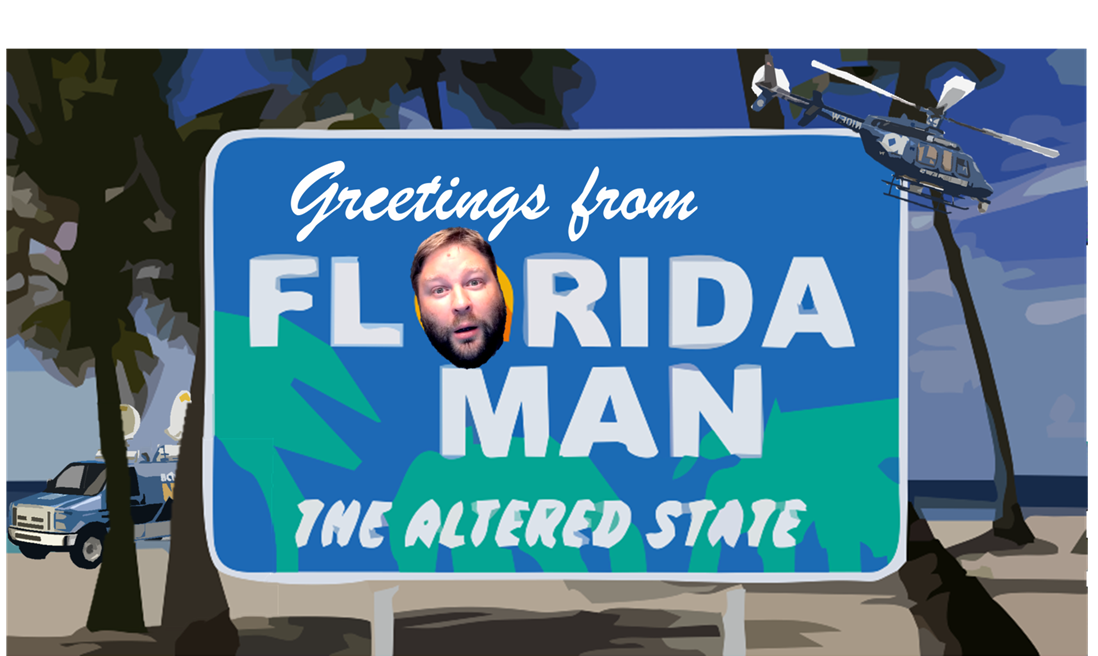
In the 45th episode of ‘The Drive Thru’, the hosts bring a monthly recap featuring sponsorship shout-outs, discussions about automotive and motorsport news, and playful banter. The show kicks off with a thank you to sponsors and shifts to co-host William ‘Big Money’ Ross joining in. The hosts dive into a broad range of topics, starting with the anticipation of summer and its road trips. The Cybertruck is scrutinized for its build quality and controversial features. Discussions move to Buc-ee’s convenience stores expanding northwards, and a past guest’s extensive South American road trip is highlighted. Attention turns to the demise of certain car models in 2024 and the intricacies of various car brands, including a feature on the Nissan Sentra’s specs. A notable TikToker’s financial missteps and the practicality of leasing versus buying new cars are dissected. The show also delves into the new Toyota SFR, a quirky Miata competitor. Lost and Found focuses on auction finds and the entertaining misadventures of Florida Man. Motorsport segments discuss upcoming races, the Senna commemoration, and the return of loud engines in 2030. The episode wraps up with event listings and promotions for summer activities, including track days and car shows.

Tune in everywhere you stream, download or listen!

Listen on Apple
Listen on YouTube
Listen on Spotify

Showcase: Let’s go Road Trippin’!

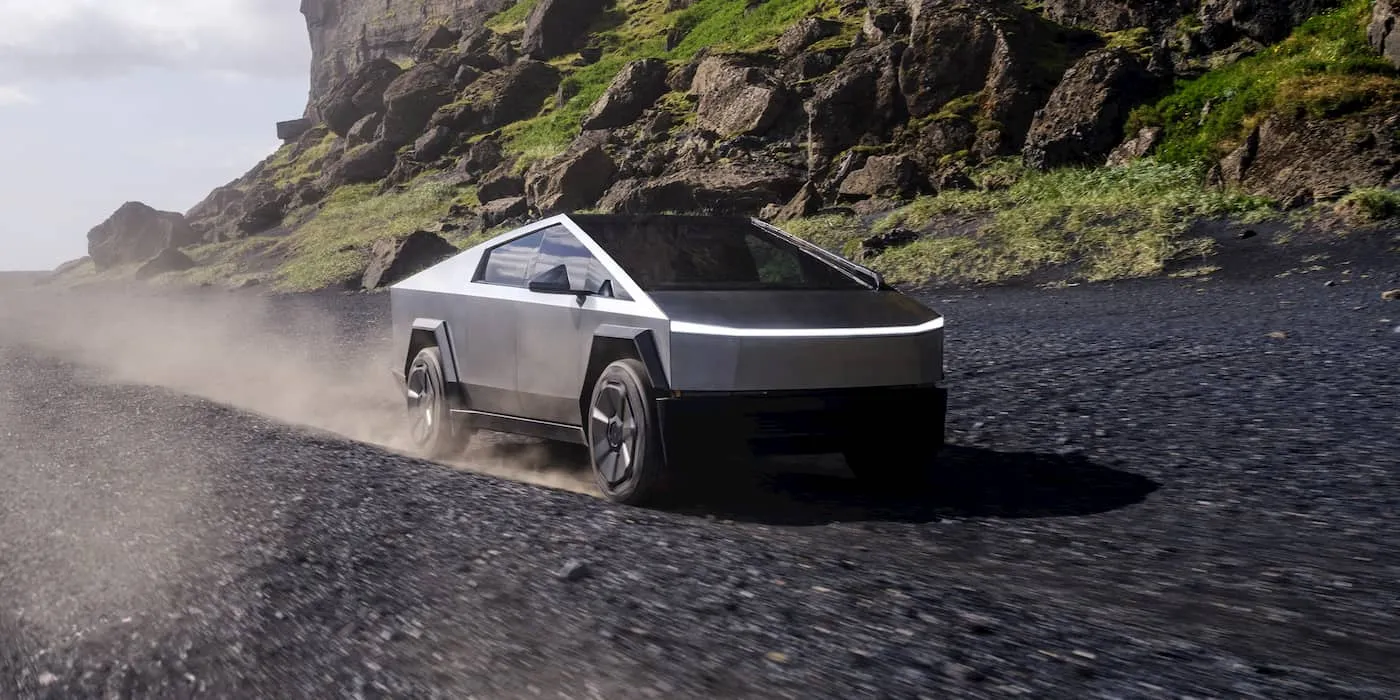
Would You Cross Country in a Cybertruck?

Tesla Cybertruck: Pedal Confusion, And Now Gear Shifter Drama ... [READ MORE]

These Vehicles Are Dead for 2024

Farewell Audi R8, Dodge Challenger, Mazda CX-9, and Nissan Maxima. ... [READ MORE]

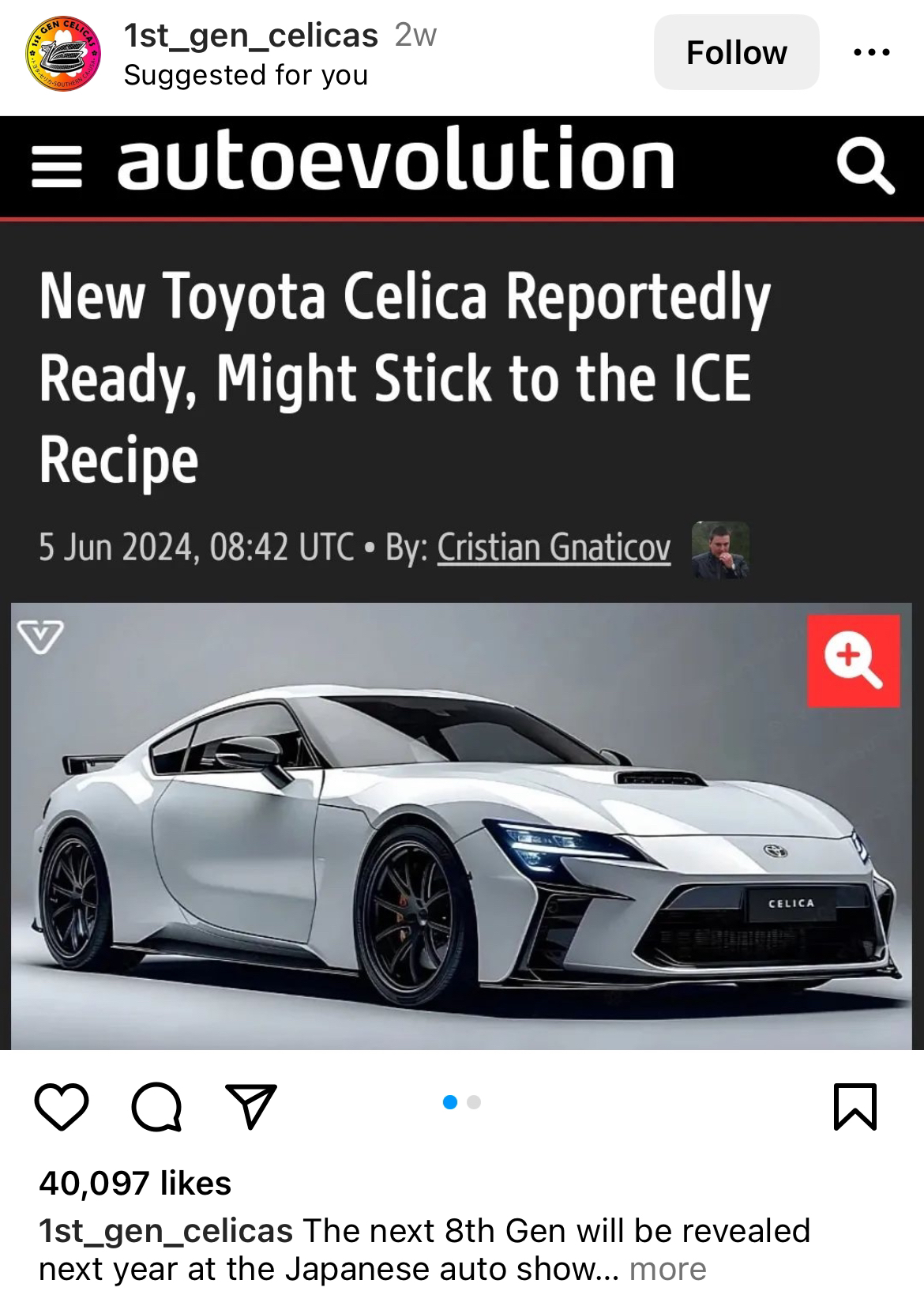
Toyota will challenge the Miata directly with its S-FR sports car

 ... [READ MORE]

Nissan Tells Dealers to Sell Cars at a Loss

Dealers can discount 2024 models by up to 10 percent below invoice.  ... [READ MORE]

AC Propulsion tZero on display at CalTech Event!

 ... [READ MORE]

Le Mans Ultimate: Time Trials!

Which LMP1 / HY / GTP it actually quickest around the Circuit de la Sarte? ... [READ MORE]

Is Buc-ees coming as far North as Michigan?

 ... [READ MORE]

Don't get lost in the dark in your road trip!

Drop in hassle free, no ballast needed, replacement LED headlight bulbs for your favorite classic! Save 15% with promo code: MOTORINGHISTORIAN - See the difference for yourself! ... [READ MORE]

**All photos and articles are dynamically aggregated from the source; click on the image or link to be taken to the original article. GTM makes no claims to this material and is not responsible for any claims made by the original authors, publishers or their sponsoring organizations. All rights to original content remain with authors/publishers.

Guest Co-Host: William Ross

In case you missed it... be sure to check out the Break/Fix episode with our co-host.
Listen on Apple
Listen on YouTube
Listen on Spotify

The Exotic Car Marketplace founded by William Ross provides private client services to the discreet Ferrari and Porsche buyer and seller.  We provide our clients with the discretion that they desire.  With our experience and access to the most desired vehicles in the marketplace we can source that specific vehicle you require or sell your vehicle to one of our existing clients that is looking for that specific model.


Automotive, EV & Car-Adjacent News

For a list of all the articles and events referenced on this episode check out the show notes below.

Domestics

EVs & Concepts

Japanese & JDM

Lost & Found

Lowered Expectations

Motorsports

Tesla

VAG & Porsche

TRANSCRIPT

Executive Producer Tania: [00:00:00] The Drive Thru is our monthly news episode and is sponsored in part by organizations like HPTEjunkie. com, CollectorCarGuide. net, Project Motoring, Garage Style Magazine, The Exotic Car Marketplace, and many others. If you are interested in becoming a sponsor of The Drive Thru, look no further than www.

motoringpodcast. net. Click about, and then advertising. Thank you again to everyone that supports The Motoring Podcast Network. Grand Touring Motorsports, our podcast, Brake Fix, and all the other services we provide.

Crew Chief Eric: All right, William, you’re up.

William Ross: So welcome to drive thru episode number 45. This is our monthly recap where we put together a menu of automotive, motorsport, and random car adjacent news.

So now let’s pull up to the drive thru window number one for some automotive news.

Crew Chief Eric: Well, folks, you heard it. It’s our most returning this guest cohost on the drive through. It’s William Big Money Ross filling in for Brad tonight. Welcome back to the show, William.

William Ross: Thank you. Is that a [00:01:00] returning returning?

What was that word? Is that a most

Crew Chief Eric: returning is

Executive Producer Tania: technical term.

Crew Chief Eric: We’re allowed to make things up on this episode. It’s the only time we get some freedom, you know, But speaking of freedom, tonight we’re going to talk about freedom of the open road because, you know what, all the obligatory hallmark and federal holidays are behind us for a while.

I think we’re in that long haul here of the summer, right? The blistering heat, those wonderful things that go along with summertime. But it also means it’s time for some road trips. So I feel like this is going to be our punch buggy, no punchbacks episode. Potentially.

Executive Producer Tania: I would just like to interject that it’s May.

Summer has not started yet.

Crew Chief Eric: We’re very close.

Executive Producer Tania: We are a month away.

William Ross: I thought Memorial Day was your, you’re going by the actual official date. I’m going by the actual.

Crew Chief Eric: Not until June. We’re getting technical. The fact that it’s 90 degrees this week tells me it’s summertime. It’s hot. Before we jump into our showcase about road tripping, we got to talk about the Cybertruck [00:02:00] because it’s our HHR.

It’s our Dodge Dart. It’s all those things rolled up into one. If it could get any worse.

William Ross: Big old pile of dump. You had to see this coming. I mean, come on, you know, knowing some about metal stamping and trying to stamp stainless and trying what they’re doing, they try to do it as simple as possible by having all the straight edges and not really any contour or nothing.

And people are cutting fingers off. And

Executive Producer Tania: if you own a stainless steel appliance in your kitchen, you know what it’s going to look like in about. Five seconds. .

Crew Chief Eric: If she said it once, she said it a hundred times at this point,

Executive Producer Tania: like I called that from the beginning and I saw one recently down the road. Like I legit actually was like, oh crap, I’m gonna like speed up a little bit and catch ’em at the next light because I wanted to see this thing in person.

And it was nasty looking the smudges all on the door, like where you would be handling it to enter. It just looked like vomit on the side of the door. And then your point about stamping the stainless steel, it had this ripple effect that I was like, is this straight?

Crew Chief Eric: No, [00:03:00]

Executive Producer Tania: no. But

Crew Chief Eric: we’ve covered all that before.

We actually have new news about the Cybertruck and Tanya, this one. Literally blows my mind. This takes the cake. Would you like to inform our audience on what this latest development in Cybertruck nonsense is?

William Ross: Are you talking about the gas pedal? We covered that last

Executive Producer Tania: time. I’m

Crew Chief Eric: talking about the shifter.

Do you guys know where the shifter is?

Executive Producer Tania: Oh, I heard it’s like in the visor or something. Yes! Who designed this thing

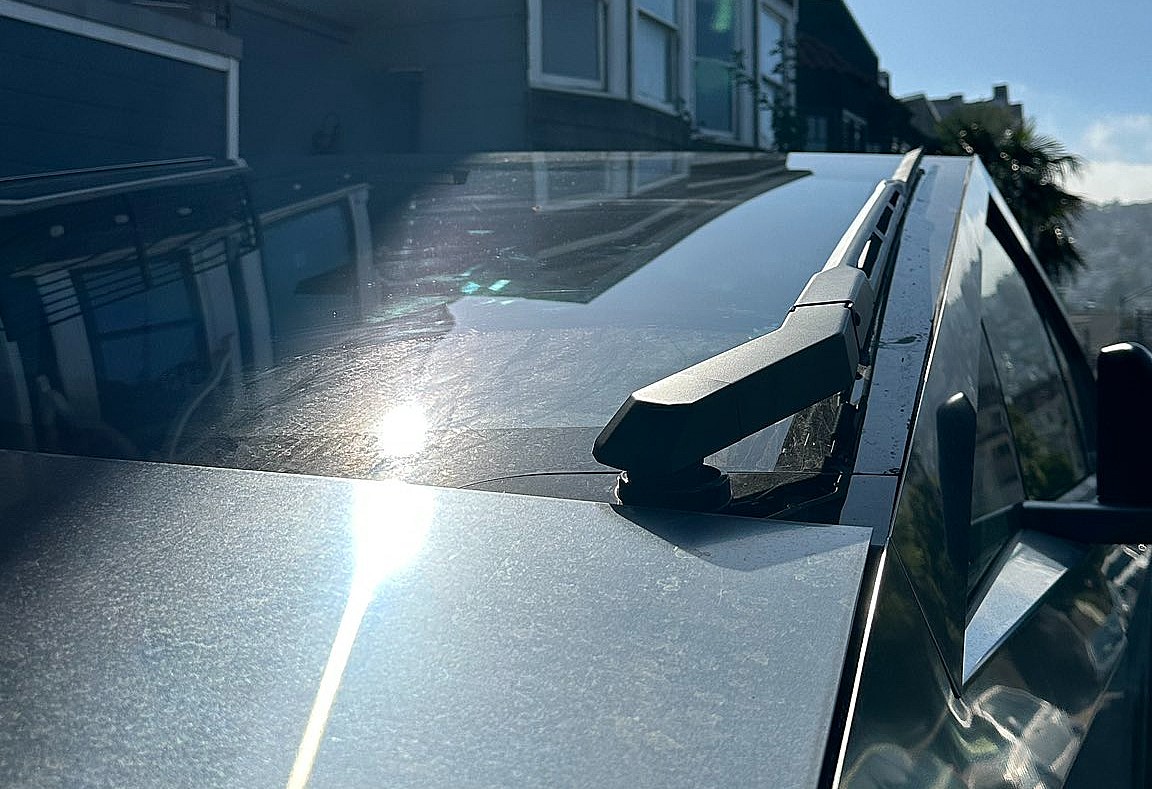
Crew Chief Eric: designed by a crazy person who puts transmission shifter buttons in the sun visor.

Executive Producer Tania: Oh, it’s in the center. It’s like where your rear view mirror would be.

William Ross: Right. A guy named Elon Musk. That’s got more money than he knows what to do with it and his

Crew Chief Eric: egos.

But the thing is, it’s like one of the most highly touched areas in the car, right? The sun visor, the rear view mirror. And the steering wheel.

Executive Producer Tania: No, this isn’t. If you look at the picture, this isn’t a highly touched area because this thing doesn’t have a rear view [00:04:00] mirror in it. Instead of a rear view mirror, you have this button panel.

So it’s really not a high touch area.

Crew Chief Eric: Why would you put it there?

Executive Producer Tania: I wouldn’t put it there. I’m not defending its location there. But given what they’ve removed to place it there, it actually is not a high touch area. Which just goes more to the shoddy craftsmanship if it falls out without you even needing to touch it.

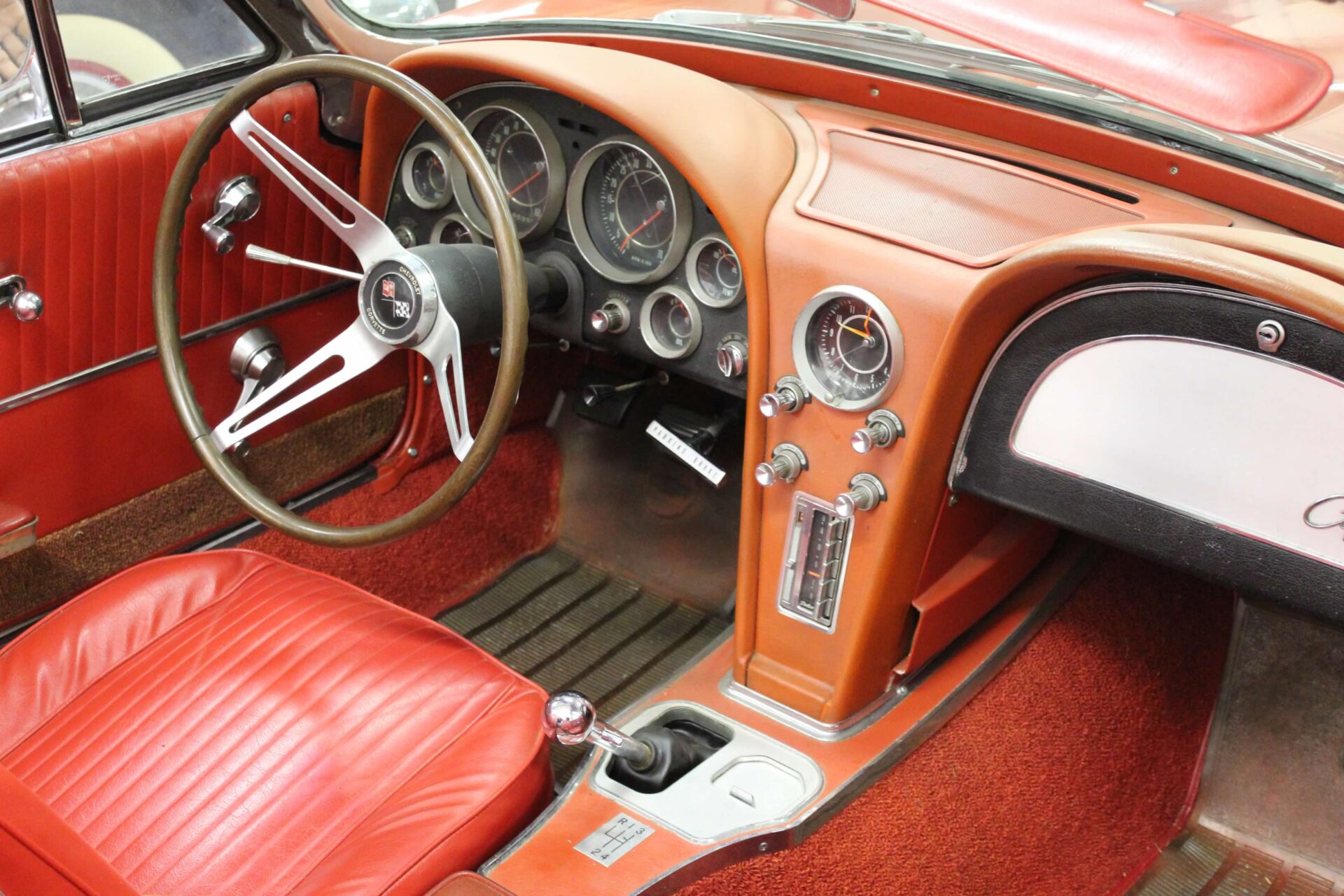
William Ross: Here’s a question and there could be a poll what’s worse looking or worse placement or how that design engineering is that or on the C. A. Corvette center council. Oh,

Crew Chief Eric: you know, and that Lincoln Mark Z had all the buttons up on the side of the dashboard to those were weird. But I think this takes the cake because what I’m talking about in the high touch area, you’re constantly moving that visor, you’re messing around with the visor and then your transmission shifter falls out.

And stops working. I mean, who in their right mind thought this was a good idea? And by the way, the hazard lights are there too.

Executive Producer Tania: Yeah. What about the rear quarter panel? It just falls off.

Crew Chief Eric: Oh man. I saw that too. I’m like, what? And it was [00:05:00] just

Executive Producer Tania: like interior frame is plastic.

Crew Chief Eric: It looks like when you take the door card off of an old Volkswagen and you see the internals of how the window works.

I was like, where’s the frame to the back of the truck?

Executive Producer Tania: I mean, so did this thing not have to go through an HTSA crash study? This

Crew Chief Eric: is why it’s Teslagate. If you pay enough, if you got enough, which bill is his face on now, like the thousand dollar bill. If you have enough Elon Musk dollars, you can pay this thing through the NTSA.

Executive Producer Tania: If this gets hit, it’s going to get obliterated by even a small vehicle.

William Ross: Here’s what they’re doing. And I don’t know to where the line’s drawn, but there’s a lot. of these tests that are self certifying. Oh, no. That’s good. So it’s just basically the manufacturer does it and goes, Oh, yeah, we’re good. That could be one of the ones that fell under self certification, which is pretty scary when you start thinking about it, because who’s monitoring it?

Eric, like you said, have enough Musk dollars, stamp approval, make it rain. What would Brad say if he was here?

Crew Chief Eric: [00:06:00] Delusion! There’s Big Money Ross money, then there’s Elon Bucks. No, all kidding aside, so going into our road trip in here, would you go cross country in a Cybertruck?

Executive Producer Tania: No, you wouldn’t make it. No, you wouldn’t make it in any electric car.

You’d get somewhere in the Midwest with a big rainstorm, and then you’d be stranded because the car got wet.

Crew Chief Eric: Or because your shifter fell off.

Executive Producer Tania: So you’re done and then you would have hit some place with some sand and then it would have gotten stuck. And so you’re done.

William Ross: I just have to laugh. I mean, I don’t know how much you watch this from when foundations got launched and then hitting the either I’d say private off market transactions and then the auctions because they all first want to go to auction.

Well, there’s quite a few that sold prior to that. Just kind of off market transaction to 25 to 50. Basically within four weeks. Almost paying sticker. And a lot of people were like, I don’t even know if I want to pay sticker for these basically in four to five weeks, man, those things lost 150, 000 in value.

They just

Crew Chief Eric: sold one at [00:07:00] Mecum and it came in at 105, which is just barely over sticker and I’m like, wow. Okay.

William Ross: Yeah. They felt like a lead balloon. These people. Hopefully everybody will just buy them just to have that little gimmicky thing for it because you’re not going to resell make any money anymore on it.

That’s for sure.

Crew Chief Eric: What’s funny about this is especially the picture of the fender and everything that is now falling off the gas pedal, the shifter, the fenders. I mean, God knows what else is going to fall off the Cybertruck, but it’s literally. The epitome of the expression. I’m going to drive it until it falls apart around me.

It’s brand freaking new.

William Ross: That ain’t going to be a far drive.

Crew Chief Eric: You know, talking about driving the Cybertruck cross country, one of our favorite places for most well seasoned road trippers is to make a stopover. At the closest Buc ee’s.

William Ross: Gotta love Buc ee’s. This place is

Crew Chief Eric: awesome. Coming your way, William, there is rumor, they’ve been posting on social media and in the Detroit Free Press, that Buc ee’s is making its way north.

There’s billboards as far north as I [00:08:00] 96 in Michigan, basically alluding to Buc ee’s coming that far into the Midwest.

William Ross: Well, my understanding is they’re supposed to be putting one down there by Dayton. Somewhere between Dayton and Cincinnati, I think on 75. Oh, wow. This was just a couple of months ago. Read it that supposedly they bought the land, everything like that.

They found a small ranch

Crew Chief Eric: in Ohio to purchase a couple

William Ross: thousand acres. But yeah, somewhere down, but like by Dayton and since then, I want to say it was on 75 there, that corridor. Cause it would make sense. Cause if they get up into Michigan, it’s that’s that straight shot. It’s going up. And like, I know going down, which I’m going to be going that way in about A week and a half is going down, hitting 71, 75.

And then just right when you get into Kentucky, you hit that big one. Well, they’re all big.

Crew Chief Eric: Tonya, you were in Texas. Some of the biggest Buc ee’s in the country down there, because everything’s bigger in Texas. And for those that don’t know about Buc ee’s, what’s it all about? Why are we talking about a gas station?

Executive Producer Tania: Well, they also were founded out of Texas. So of course they’re going to be bigger and badder down there. [00:09:00] They have an advertisement that they have, I don’t know if it’s the world’s or whatever, cleanest bathrooms that you’ll ever find at a rest stop and damn if that’s not true.

William Ross: Oh god, they smell great too.

Executive Producer Tania: The one in between going like Houston to Austin.

Crew Chief Eric: You made us stop there when we went to Formula One.

Executive Producer Tania: Yeah, we stopped and you went into the restroom and you could have had a party of like dozens of people. It was so huge. It was like a palace and it was sparkling clean. It was amazing. Whatever faux marble they were using, it was Glamorous.

But not only the bathrooms. I mean, they’ve got, I don’t know how many pumps outside.

William Ross: I think a minimalist one was like 200 plus pumps. They’re packed. Almost every pump is being used.

Crew Chief Eric: How many Tesla chargers are the Bucky’s? Two. 200 gas pumps and two Tesla chargers. I love it. It’s brilliant.

William Ross: Making no money on that electricity.

Of course you would think though, with that big ass store they have that they’d be like, no, what? Let’s give it These people are stuck here for a couple hours, especially, you know. Only half the chargers be [00:10:00] working anyways, and they’re gonna be stuck there for three, four hours.

Crew Chief Eric: It’s a

William Ross: Tesla quality.

Executive Producer Tania: There’s like, the food services, then there’s the gift shop, and then I think there was like, the bait and tackle shop, and it was like, anything that you could possibly think you needed on your road trip, you can get at a Buc ee’s. Like, it’s more than just a gas station, it’s an experience.

William Ross: First time I ever went was just recently back, last fall, whatever, when I went down to Tennessee.

I don’t know if they got the gimmick down, but I mean, they’re banging it. I mean, it’s just, it’s unbelievable.

Crew Chief Eric: Michiganders, there could be a Buc ee’s coming near you. So stay tuned to social media and the Detroit Free Press for updates on the newest Buc ee’s coming to the Midwest. So I’m excited for that too.

William Ross: They’ll go game, but man, they have the legal pot. People can just sit there and they’re pumping their gas. Eat an edible, go inside and just stuff their face with the pulled pork. Jeez. Do you want to have to leave all day?

Crew Chief Eric: That’s a trip into itself. That’s a different kind of trip. It’s

William Ross: a different road trip, but it’s all the road trip it is.

Crew Chief Eric: You don’t want to get yourself into too much trouble. You can [00:11:00] get into a little bit of trouble there at the Bucky stuff, but. Don’t get into trouble like Joey Jordan did on his big South American adventure. So go back into our catalog and search for Joey’s South American adventure. That’s an excellent road trip story.

It’s a journey man and machine coming of age 26, 000 miles in a Toyota high ACE that he bought sight unseen. Left from L. A. and drove all the way to Patagonia. Really, really cool story if you haven’t heard it before. So go back, and if you’ve heard it before, it’s time to revisit it. So check it out in our catalog.

Looking back into our catalog a little bit as we’re thinking about road tripping, we did an episode with Brian Kreider from Boulder Camper Vans. So that might be worth a re listen if you’re thinking about some longer road trips. You know, there was a huge craze during COVID. People doing the small house and going off grid and I’m going to have my camper van.

So there’s a lot of those in the market, but if you’re looking for something completely custom built to your specifications, Boulder camper vans is definitely a place to look. And Brian is an [00:12:00] expert in that field.

William Ross: Speaking of the road trip, I came across that. I posted it up in a couple of spots on LinkedIn and that was, I think USA Today did it top 10, I would say glamping, but they’re actually, they take the retro old school travel trailers.

And it’s a hotel. They’re all set up. So you got like, it’s a travel park, but you’re obviously just renting it. You show up. It was all the old cool restaurants, but they had like the top 10 around the United States. That’s kind of the cool thing this day and age is you can find some really cool places to stay.

I know back in my day, the cool thing was staying at the Holidome. That was the shiznit.

Crew Chief Eric: You mean the Hojo? You’re staying at the Hojo? The Hojo.

William Ross: So you find those like, yeah, I’m living large. So many cool places to stay. I mean, You have a lot of fun this day and age and really kind of get down a two to three week road trip out there and have some fun.

Crew Chief Eric: Well, you bring up a really good point because maybe a lot of our Petrelhead audience out there doesn’t know, but if you have kids or grandkids in fourth grade, it’s a nationwide Program that if you have a child in fourth grade right now You get [00:13:00] access to all the national parks for free You don’t have to pay the fees for camping any of that kind of stuff and it applies to your whole family As long as you have one kid in the fourth grade So if you have a second kid coming into fourth grade with older kids You can take everybody on these trips to yellowstone and sequoia And all these places completely for free.

Executive Producer Tania: It also just by national park pass for not that much money. That’s outstanding.

Crew Chief Eric: So lots of things to look forward to. I mean, look into your department of natural resources, parks, department, things like that. There’s a lot of really cool things you can do. It doesn’t have to be rustic camping with vaulted toilets and stuff like that, really going off grid, but there’s a lot of excellent places that you can go for not a lot of money and enjoy that kind of Griswold family vacation as you’re heading across country.

William Ross: Just don’t get out of your car and try to walk up and pet a bison, or go after the bear and the cubs, alright, like that. You have some frickin common sense.

Crew Chief Eric: Well, to your point, you can’t go on a road trip if you don’t have a reliable set of wheels. It’s up for debate on whether or not we can take a Cybertruck cross [00:14:00] country.

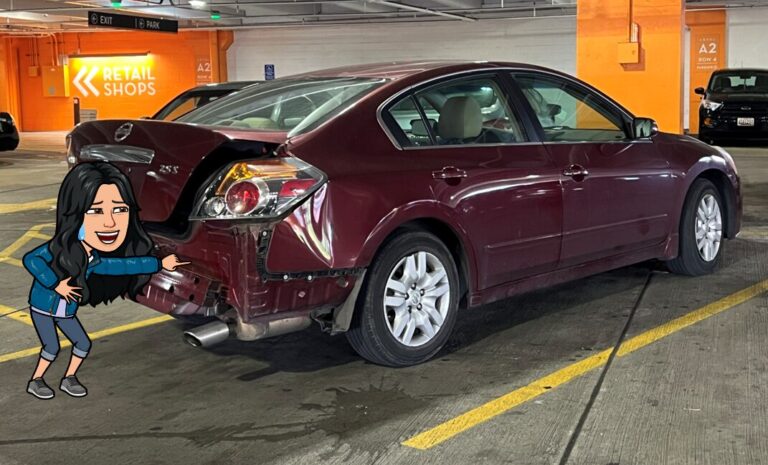
Somebody’s gonna try it, somebody’s gonna do it. That’s unless, of course, you’re a cybertruck driver. You have a Nissan Altima, right Tanya? That’ll stand the test of time. Cockroaches and nuclear winter and Nissan Altimas. Those will be here till the end of time. So it’s all good. And as I like to remind Brad, now that we’re halfway through the 2024 car buying year, let’s talk about what’s officially dead going into September when the 2025 year kicks off, is there anything on this list?

That surprises you or anything you should pick up as maybe a cross country car.

Executive Producer Tania: Well, what annoys me about this list is things like the Chevy Bolt EV, but no, it’s not because you literally talked about how you’re actually bringing it back and there’s going to be a second generation. So there’s just not going to be one in the 2024 year.

But it’s not like they’re discontinuing it for eternity.

Crew Chief Eric: Right.

Executive Producer Tania: I hate confusing stuff like this.

Crew Chief Eric: Exactly. And some of these Chryslers, we already knew they were dead two years ago. They made that announcement. It’s not that big of a deal. The [00:15:00] TT died last year, the Audi R8. I was like, they still make that? I thought they stopped producing that a couple of years ago.

So some of these are like, why the hell are they on the list? And then there’s one for William on here.

William Ross: Yeah. Your FA, I mean, I’m horrible at distinguishing between the models of like, you know, you got your four, eight, eight, your F eight, your piece to all this stuff, they look so similar when they came out with the two, nine, six, this became almost redundant.

What’s the point? I mean, that two, nine, six was supposed to be your energy level. It’s got more horsepower. It’s a better car. Yeah, that’s not surprising. And going by the wayside, my thought probably be next year is the SF 90. I don’t see why. They’ll keep that either. They’re not selling them. No one’s buying them, which is kind of strange.

I mean, it’s got all that horsepower and like that, but people don’t want them. I kind of get it. Everything kind of stopped at the four or five, eight. Once they started going turbo charging, it was like, what’s the point? That’s one of those ones. I was just saying this. Like, wait, that one’s going away? Oh, it’s still here?

Crew Chief Eric: Yeah, right, it’s still around.

William Ross: Like with R8? Wait, I thought that thing was done.

Crew Chief Eric: The other one that I’m sort of surprised but [00:16:00] not is that Ford Focus based Ford Transit Connect, the smaller little carrier van, those were becoming really popular here, at least on the east coast, as they were replacing like the bigger Chevy Savannas and stuff.

Stuff for like electricians and some plumbers that only need smaller equipment to carry around. Like the Comcast guy. Why is he driving around in a suburban, right? The Ford Transit’s more than big enough for what they need to do. Those coax cables aren’t that big. So that’s kind of surprising that that’s going away.

Wondering what Ford’s going to replace that with. As you go down the list, there’s more Chrysler stuff. That’s not a shocker. The Kia Stinger. We already knew about that. Mazda is always kind of doing the hokey pokey. The McLaren 720. Again, another supercar that I thought they stopped building, right?

William Ross: Yeah, that’s the thing with those.

Started with the MP412, whatever, C, blah, blah, blah. Then you go into the 570, then it went into 720, now it’s the 750. There wasn’t leaps and bounds in regards to what they think there are changes on these cars. I know when they went from the 675 to the [00:17:00] 720, I think they had, it was all new tub. Then again, after that, it’s just engineering and horsepower, that kind of stuff.

To your point. Yeah. It’s like, didn’t even know they were still making it. And like, why would you still be making it when you have the 750? Some of this stuff’s just baffling. You got to wonder if it’s just a complete order books or what? I don’t know. But I love the, I guess you would say the moniker or the label these things are getting, because I guess they’re just.

Absolute nightmares to own in regards to electronics, everything like that. I guess like the 720, 750 is so bad, but the 570, 685 and all, especially the MP12, 4Cs, whatever, they call them McCarrens now.

Crew Chief Eric: McCarrens. I love that. That’s awesome. Like what? There’s a laundry list of Benzes here, which I’m sure breaks.

Tanya’s heart, because she’s a big fan of Mercedes. And did you notice a common theme outside of the Metris, between all of these Benzes, Tanya?

Executive Producer Tania: No, apparently.

Crew Chief Eric: They’re all basically coupes.

Executive Producer Tania: I was gonna say that, and then I was like, well, there is the sedan four door.

Crew Chief Eric: The CLS has that low roof, Like a Passat CC and all that stuff that they were messing with for a while there.

I’m sort of [00:18:00] glad to see that go away. Cause I thought it was kind of awkwardly shaped.

Executive Producer Tania: I mean, are we surprised? I mean, in the market here, nobody wants a two door really.

Crew Chief Eric: They’re such good looking cars. I thought they got rid of CLS for a couple of years and brought it back. It’s the same question I have about the Maxima, which is on this list as well.

Tanya corrected me like a couple of months ago. Still around they still may well here it is on the death list rest in peace to the Maxima

Executive Producer Tania: I’m disappointed to see the renegade going away.

Crew Chief Eric: Yeah. Well the Fiat 500 X is going away and they’re the same car basically So that’s the end of that

William Ross: obviously Production planning and how they go about doing this their plan was all right in 2024 This will be like so this plans out and then their mindset back.

That was to us. Oh, we’re going Is Now everyone’s second guessing it because no one wants to buy the electric cars. The infrastructure’s not there. I mean, it’s all just kind of hitting the fan. And again, these coming years are going to be interesting in regards to how this all plays out. These companies invested billions of dollars doing these [00:19:00] things.

You have some just completely stopping the factories they were building. And it’s going to be interesting to see what comes about here. I saved the best for last.

Crew Chief Eric: I think it needs some faux wood paneling down the side. This is the German version of the Griswold family truckster. The Porsche Panamera Sport Turismo.

I think it’s probably the only car on this list I would go cross country and I’m a huge fan of station wagons. But I understand why this didn’t sell who wants a Porsche station wagon. It doesn’t make any sense. I love

William Ross: this thing though. I think it’s awesome.

Crew Chief Eric: I mean, if you’re a fan of the RS six Avant or any of the other station wagons from the VAG portfolio,

William Ross: I’d buy the RS six first before I bought that, but I liked those things.

They’re great. It’s twice as much as the RS six. So why not just buy the RS six? Cause you’re basically got the same car.

Executive Producer Tania: It’s not. Who wants a Porsche wagon? It’s who wants a wagon? Because honestly, who wants a Porsche SUV? I’m sorry, they have no business being an SUV either, but people like SUVs. People don’t like wagons in this country.

Crew Chief Eric: How many times is Enzo spinning in [00:20:00] his grave with that Puro Sangue coming to the market?

Executive Producer Tania: That Mazda CX whatever?

William Ross: Yeah, that Puro Sangue drives like, that thing’s phenomenal.

Executive Producer Tania: I mean, you’ve seen the memes where they put the SUV next to the Mazda SUV and they look identical. And it’s like, good thing Ferrari spent millions of dollars to make a Mazda.

William Ross: Here’s the kind of question, like say with this, with the, you know, Sport Turismo is like, all right, there are built in limited numbers anyways, who out there bought it and is just sitting on it because they figured in 20 years, it’s going to be worth something. Yeah. Because they built God, maybe only 15, 20, 000 of them total production run, maybe.

If that,

Crew Chief Eric: do you remember when low volume was like less than 50, less than a hundred, less than 2000, it’s creeped up to, I have a low production car. There’s only 35, 000 of the main, like, wait, what got a couple extra zeros on there, buddy.

William Ross: Yeah, exactly. It’s getting stretched just a little bit too much. I mean, yeah, it’s still a small number, but they talk about like with the F40, cause there’s about 1300 of them [00:21:00] built.

In my mind, that’s a lot for what it is, but, Oh, it’s rare. Low productions that make. Man, there’s 1300. There’s quite a few and never a problem finding one for sale. I’m in the boat with you and saying, look, if it’s 50 or less, okay, that’s low production.

Crew Chief Eric: This next one might be low production too, but what would a discussion about road tripping be if we didn’t talk about some open air motoring, right?

That’s the other side of taking a road trip. Throw the top Miata or your C class Mercedes or your Ford Mustang convertible, whatever you’ve got, right? Drop the top, jam it in fourth gear and let’s let it rip. Toyota’s coming to the table with something, and I don’t even know how to explain this. Is

William Ross: that a Hot Wheel?

Crew Chief Eric: Tanya, what is this thing? Is this a cappuccino? Is this a K Car? I

Executive Producer Tania: can’t tell. It’s unfortunate. Wait, is that your description of it? It’s unfortunate? That’s perfect. That is perfect. That sums it up. It’s an unfortunate stylistic choice. [00:22:00]

Crew Chief Eric: So what are we talking about here?

Executive Producer Tania: It’s supposed to be a Miata fighter?

Competitor?

Crew Chief Eric: Toyota is bringing to market, supposedly. Allegedly. We’ll see if it happens. Hopefully it’ll come in a GR edition. The SFR, not to be confused with the FRS, it’s a weird combination of style choices, as you point out. But yes, they’re targeting the Mazda Miata directly with a tiny two door drop top.

William Ross: Well, I mean, is that just a Targa? Because the way that looks, it looks like it’s just a Targa.

Crew Chief Eric: Well, it’s all renderings, right? So we don’t know. But it sort of reminds me of the ND Miata fixed roof.

William Ross: Yeah. That RF or whatever it is. Yeah. Yeah. Yeah. Yeah. Which that thing is cool by the way. I love that. Seems awesome.

You don’t see many of those. There you go. There’s a rarity. Well, we

Executive Producer Tania: know what it looks like.

William Ross: It’s

Executive Producer Tania: not a render. No, this is a concept car from 2015. That they’re actually, I guess, considering now making. It

William Ross: looks like it was getting the dryer too long. That’s just weird looking.

Crew Chief Eric: Here’s the [00:23:00] thing about this Ugly Duckling.

I’m actually okay with it because A, I’m hoping for a GR edition. B, I gotta go back to the time in the early 2000s when the Z3 The TT, the Honda S 2000, the MRS and the Lotus Elise all came to market. Basically at the same time, there was like this glut of convertibles and Targos for the first time in like decades, the MRS, the MR2 Spyder, basically the MRS, the Toyota.

Was the ugliest of the bunch if you compared it to the Audi or compared to the BMW, whatever But at the end of the day when you were behind the steering wheel It had the biggest smile factor because I got to drive all of them So it sort of didn’t matter what it looked like and knowing what toyota’s capable of let’s put that 300 horsepower Three cylinder turbo in there from the yaris or the corolla.

This thing’s gonna be a rocket ship. I’m all about this I would love to try to drive this car I would say it’s going to be a great track day car, but probably not on [00:24:00] your list of luxury convertibles that you would go on a road trip with.

Executive Producer Tania: I think they should be doing this. Like, cool. Yes. Keep doing these cool cars, but my goodness, can we make it look a little better?

Crew Chief Eric: No, it’s got to have that Prius effect. It’s got to be ugly for a long time. And then suddenly overnight, it’s like, wait, it looks like a real car now. No offense to Prius owners. Just that we all agree. The Gen 5 Prius is really good looking compared to everything else. Yeah,

William Ross: it’s a sharp looking car.

Crew Chief Eric: I got a chance to ride in one of the Green Grand Prix’s.

I won’t belabor that. But

Executive Producer Tania: I mean, they’re really like, they’re really strongly influenced by the Cappuccino and that’s not a good thing.

Crew Chief Eric: Have you ever seen one of those in person?

Executive Producer Tania: Not in person.

Crew Chief Eric: There was one parked in the same parking lot as me, the guy would bring it on Fridays and I would bring a Mark IV.

Granted, I mean, I bring my station wagon, which is slightly longer than a Golf of that period, but I thought I was in a 68 Lincoln in comparison to the Cappuccino. It’s tiny.

Executive Producer Tania: That’s fine. The size isn’t the problem. It’s not attractive. [00:25:00]

Crew Chief Eric: It’s a design choice. That kind of wraps out our road trip and showcase.

Although as our audience knows that we’ll be pulling on that thread throughout the rest of the episode, but it’s time we turn and talk a little bit about Porsche, Volkswagen, and Audi news. So what’s going on, Tanya?

Executive Producer Tania: So there’s actually a couple of tidbits. One of the latest things apparently is that the ID seven, the electric slot, um, apparently is, uh, Delayed without further notice.

Wow.

Crew Chief Eric: So I mean like

Executive Producer Tania: they’re not saying when I don’t know if it’s indefinitely, but there’s not a oh, we’re just delaying it a couple months But it’s too big money. Ross’s earlier point ev sales are down people aren’t buying

Crew Chief Eric: Well, people weren’t buying the facade either. So it’s sort of a lose lose situation in this case Sedans are on the decline.

I mean, wagons are like dinosaurs. Like we mentioned, I mean, if you’re not in the SUV, CUV market or EUV, I guess [00:26:00] it would be these days. People aren’t turning their attention to that. So Volkswagen coming to market with a full size sedan, EV, petrol, or otherwise, they already got burned by this. I think the ID seven is cool.

I know you got to see them in person at CES a couple of years ago, but it’s like, okay, daylight and a dollar short VW.

Executive Producer Tania: I think the other bit of interesting VW news, which is late breaking as of today, basically, is apparently they’re in some very strong negotiation, partnering discussions with India to, I guess, have a production facility there.

Crew Chief Eric: So Tata’s gonna make Volkswagens now?

Executive Producer Tania: It’s a very brief article. That just says they’re in discussions about a passenger car production in India.

Crew Chief Eric: Well, passenger car. I was thinking the big man trucks because Volkswagen owns M A N man. They own a lot of other stuff too. So I was like, okay, well maybe that could make sense, you know, because they do have a lot of lorries in India, stuff like that.

Executive Producer Tania: I mean, it could make sense if it’s the production facility [00:27:00] for that geographic area, right? If they’re trying to increase. Sales in India or even China

Crew Chief Eric: or reduce shipping too, right? That’s a whole right. Exactly.

Executive Producer Tania: Like you’re near to that market if you put it there

Crew Chief Eric: and they’ve already done this before. So this isn’t foreign to Volkswagen because they have a plant in China as well or multiple ones, I guess.

But the funny part about that is if you look at some of the photographs, sometimes you’re like, when was this photo taken? Because they’re still building the quantum like from the 80s in China today, they call it the Shanghai. I’m sort of wondering like what retro Volkswagen are they going to build in India for the next 30 years?

Maybe that’s how we’ll get new Chiracos or something, you know, they’ll just be built in India.

William Ross: Hey, if they build a new Chiraco, hey, we’ll build India wherever.

Crew Chief Eric: Dude. Yeah. I would stand in line. Brand would, wait, how’s that song go? I would walk 5,000 Miles . Yeah, I would do that for a Rocco.

William Ross: They’ve been teasing, you know, little things here and there.

Like every couple years they drop it or there’s a drawing or something. Oh, Rocco might be, you know, and everyone [00:28:00] gets

Crew Chief Eric: all in a tizzy. And then,

William Ross: no,

Crew Chief Eric: I got to see street versions of the Rocco R when I was in Lama last year, and uh, everyone that went by it just. Soul crashing. I like, I could have this, but they won’t bring it.

Uh, no. Well, another thing that apparently is super disappointing, you know, we’re talking about new cars that are going away, but there’s also a shortage of new cars that people really want. Some clever gentleman out there decided that, well, you know what? He couldn’t get a test drive in a Ford Maverick.

So he just headed on down to his local U Haul. 1995, you can test drive a Maverick for an entire day. That’s pretty clever.

William Ross: Yeah, well, you get an extended test drive. You can actually put it through some real world paces.

Crew Chief Eric: And you didn’t have to deal with the sales guy. It cost you 20 bucks.

William Ross: Yeah, I was like, here’s 20 pounds salt, buddy.

And I’m out of here.

Crew Chief Eric: Go pick up some mulch at home depot.

William Ross: Oh, heck yeah. And that always baffled me this day and age, minimum 40, 50 grand. All right, let’s go on this 10 minute test drive where you don’t go on the highway, you go on the highway for like one exit, which is maybe a quarter [00:29:00] of a mile. Go here.

Oh, don’t go over 25. You know, it’s like. Get back. So what do you think you’re ready to buy it? What?

Crew Chief Eric: No,

William Ross: every now and then either you got a new salesperson or you find a decent there’s a dollar. You can take it for a couple hours. Just sign this. Give me an insurance card. And there you go. But yeah, I don’t think you’ll find that this date is because you know, inventories are just nothing

Crew Chief Eric: a little different in the exotic car market though, isn’t it?

You got the F 40, you push it about 14 feet. And then you ask the guy, so you want to buy it

William Ross: for 14 feet, maybe 14 inches.

Crew Chief Eric: You know, talking about buying and selling cars, I’ve been saying for a while, I got to pull back on some previous episodes. Cause I am still very much enamored, smitten, if you will, not, not, not necessarily in love with, but I am still a huge fan of the Nissan 400 Z.

And I’ve asked Brad, I’ve asked Tanya, I’ve asked William before in conversation. Have you seen one on the road lately?

Yeah,

Crew Chief Eric: one, right? They’re just non existent. Here’s the irony in all this. So we got Altimas that [00:30:00] won’t die. They’ll be here at the turn of nuclear winter. We’ve got 400 Zs that we don’t know if they’re being built.

And Nissan is telling dealerships to sell all their cars at a loss. So basically liquidate the inventory again, a power move by the French. I don’t understand what the heck is going on at Nissan. Like they build some cool stuff. Why do people just not care?

William Ross: It’s a really good question.

Executive Producer Tania: Really? Really? I mean, you’re right, actually.

Let’s go through some of them. We have the Altima. We have the Altima. We have the Gert Altima. . We have the Becky wants to go to the Altima. , you’re right, there are so many different Nissans to choose from that it’s shocking

William Ross: that people aren’t getting the nude Z . And I don’t know if it’s, the fact is when you have such a limited.

Choice in regards to models. I mean, cause you only have the couple, you know, to pick from. It’s not like you got this breadth of like 20, 30 different models. You can, you know, [00:31:00] stay in there. It’s kind of like, well, Mr. Bishop, you really didn’t feel that good of a car anyways, but same premise. When they had the Lancer, the Evo was outstanding.

That’s the thing though. Is this, I think if you just, you don’t have that wide range of choices. Unless you have a very specific type of car, that’s the only reason you’re going to go there. You know, again, like Mitsubishi, the Lancer, but then, you know, Nissan, the 400Z.

Crew Chief Eric: And the other thing is, I think the most 400s I’ve seen in any one place is they’re actually running them in World Challenge right now.

There’s a handful of them there. I’m super excited about that. Like they’ve got them on track. The Nissans are doing well. It’s not following that old adage of race on Sunday, sell on Monday. Nobody’s run into a dealership. To buy a 400 Z. And it’s just like compared to the Corvette, to the Porsches, to the Mustangs, to the Supra, to everything that’s available right now, the Z is still a bargain and granted that drag race thing that Kamisa did against the Supra and the Mustang, it didn’t really help the Z in any way.

And, you know, they made all these excuses about, well, if it had better [00:32:00] tires and if it had this and that, okay, it’s big, it’s heavy, whatever. But if you want to buy, and I’ve said it before, a modern Japanese. Slash French 928 brand tourer. The Z is the car to have, and it looks good. It’s got good performance numbers.

It might not be as good as a Corvette or whatever, but it depends on what you want. And that’s the car as a sports car that I would take cross country. Like I’ve sat in one there. They’re really comfortable. They’re really nice. They’re very well appointed, you know, you fit well, even if you’re tall. Why not for 50 grand compared to other things you can buy?

You

William Ross: know, you won’t have any mechanical issues. They’re, I don’t want to say bulletproof, but built like a brick shithouse. I mean, they’re just solid cars.

Crew Chief Eric: It goes back to the three spoke steering wheel of the R32, and it’s got the DNA of the Altima, right, Tonya?

Yeah.

Crew Chief Eric: I think I might have five. Found the problem.

Okay. With what’s going on in Nissan. First of all, they lost captain Marvel Brie Larson’s out. So there’s a whole new batch of 2024 [00:33:00] commercials. Even though, as I said earlier, we’re basically halfway through 2024 at this point, but I was listening to this commercial because you can’t watch streaming television anymore without commercials.

It’s just sort of a given it’s everywhere. And I hear this in the background and the punchline to this new commercial, cause it’s full of like nobodies and extras, right? Oh, that Sentra is what I need. And I’m like, whoa, whoa, whoa, whoa, wait, wait, what? So I was like, I gotta go find this commercial. And I couldn’t find it, but it led me down a rabbit hole, investigating the new Sentra.

And I’m like, this is a car that I would like never look at, right? Back in the day in the 90s, When the Sentra was cool, like with the SCR model, and it would compete with smaller hot hatches and kind of sporty sedans that were out there. It was like, Oh yeah, Sentra, that’s awesome. But they got bigger and bigger and bigger and bigger, right?

So outside of the marketing woes that Nissan has, I think I found the problem. And I’m going to pose it to you guys as one of our guess who type of questions. How much horsepower Do you think a Sentra makes and how much [00:34:00] do you think it weighs?

Executive Producer Tania: The new one?

Crew Chief Eric: Yes, the 2024 Sentra.

Executive Producer Tania: It’s the size of a Maxima, I think, or an Ultima, okay?

So it’s just an Ultima in disguise. So it probably weighs in the three thousands easily. Upper three thousands.

Crew Chief Eric: Okay. Willie, what do you think it weighs?

Executive Producer Tania: 4, 200 pounds. It’s

William Ross: got about 135 horsepower.

Executive Producer Tania: I’ll be a little more generous. Let’s say one 50. Well, what is it? Two 10

Crew Chief Eric: official numbers from Nissan. It weighs 3, 122 pounds.

Executive Producer Tania: Okay. Lighter than I thought

Crew Chief Eric: at 149 horsepower.

Executive Producer Tania: Oh,

Crew Chief Eric: We were small part, we were close. 90, I almost nailed it. Japanese engine though, pork numbers are down. Gotta rub

William Ross: the piss out of it.

Crew Chief Eric: Is it a four cylinder or a

William Ross: three?

Crew Chief Eric: Two liter, 16 valve, no turbo.

Executive Producer Tania: It doesn’t get out of its own way.

Crew Chief Eric: You know, with that awesome Nissan CVT transmission, so it’s like winding up the hamsters with bringers, bringers.[00:35:00]

I can only imagine what that’s like to drive because I’ve driven the Lancer cross SUV thing and that was a miserable experience. Another vehicle that weighed about 3, 200 pounds, made it 150 horsepower. And to Tanya’s point, it can’t get out of its own way. So that’s the thing. Give it 210, give it 225, 240, bump it up a little bit so that the driving experience aligns itself with the commercials.

Cause if you listen to these commercials, it’s like the sport tune handling and the precision shifting and the acceleration. 149 horsepower does 85 with a tailwind and a Silverado pushing it. Are you kidding me?

So did you guys hear about the money shift heard around the world?

Executive Producer Tania: Yeah.

Crew Chief Eric: Yeah. Can you believe this? So this guy apparently grabs like, I don’t know, third gear instead of fifth gear in a crazy, like upshift, basically rubs the motor to like almost nine grand and to go to tells them it’s going to cost [00:36:00] 42, 000 to replace the engine.

And I’m like, wait, doesn’t the GR Corolla only cost like. 40, 000.

William Ross: Yeah. How can it cost that much?

Crew Chief Eric: I think that’s a big F you from Toyota.

William Ross: Buy a new car.

Crew Chief Eric: Yeah. They’re not going to fix that under warranty. They’re like, you’re a putz go back to learning how to drive. Mistakes happen. Honest mistakes happen. But this is why I talk about, and I recently re released our time trial school.

And in that There is a lesson in there about shifting. There’s even a video that I have on our YouTube channel about this, about learning to change your hand position, especially when you’re dealing with gears four, five, and six, being able to push it away from your body. I’ve seen so many people even make the mistake at the track where they go to go grab food.

And they end up grabbing second. The next thing, you know, the motor’s doing 11, 000 RPM and the car is tumbling ass over tea kettle down the front straightaway. And it’s like, take your time. Those power shifts stuff you see on the drag racing cars, they’re built to do that. Plus they’re sequential gearboxes, you know, stuff like [00:37:00] that, or those other, you know, multiple lever shifters.

I forget what those things are called that they have, but a standard street car. You’ve already lost the race. If you think that power shifting from a stoplight is going to save you at the end of the day, either you got it or you don’t, come on, guys. Save the clutch, be mechanically sympathetic, take it easy.

Learn from this guy, 42 grand because he missed the shift. That’s also why I think they should put manuals back in race cars, but that’s a whole nother debate for another day.

Executive Producer Tania: Well, that’s what I’ve been saying for F1. Yes. Yeah. Right. Yes.

Crew Chief Eric: But before we switch gears here, I want to take a moment to let you guys in on a little bit of a promo that we have going on.

So our friend, professor John Summers, the motoring historian did some research on these oxido led headlights. And so I listened to episode 19 of the motoring historian and he was talking about this with GAMI and he’s going to put them in the Mustang and this and that, and he’s got a promo code and all this kind of thing.

And so I was like, you know what? I [00:38:00] too suffer from the same problems John did. So if you love driving your eighties, nineties, or two thousands classic with those terrible fogged over plastic headlights and all the woes that we have, some of us change them over to European glass lenses and whatnot, if you’re tired of having to run home early from the car show, because your headlights are terrible, or if your car is fast enough that you can actually out drive the shine of your headlights.

These headlights are something you should really consider. I bought a set, I put them in my car, and they made a huge difference. I posted the before and after on our old Instagram at GrandTouringMotorsports, so check out the pictures. But if you want better headlights, Without needing special ballast, without rewiring, without any hassle, these literally drop in, they’re designed to replace your brand name Sylvania’s and whatever that you have in your car today.

Grab a set of these Oxedo LED headlights, use the code motoringhistorian That’s all one word motoring historian to get [00:39:00] 15 percent off your order of auxedo led replacement headlights and see the difference for yourself.

Executive Producer Tania: Are you one of these people now that I hate on the road that has these blinding piercing headlights?

Crew Chief Eric: Maybe, but I can see and my test drive was at night in the rain and it was glorious. I thought I was driving my Jeep, which actually has HIDs. It was awesome. I was like, I haven’t been able to see that well out of a 20 plus year old Volkswagen in a very long time. And they weren’t expensive at all. I mean, 50, 60 bucks for a set of headlights, headlight bulbs.

Plus then you take the discount off that. It was awesome. Well, it’s time we switch to random new EVs and concept cars. What you got for me, Tanya?

Executive Producer Tania: I’ve got a French one for you. Okay. Okay. All right. I’m excited. You won’t be. It’s your favorite French car of all time. No, come on. It’s a Citroen.

Crew Chief Eric: Oh, god damn it.

Tell me it’s not the pill bug.

Executive Producer Tania: Yes, of course it is. Oh my god. There’s discussion that the DS brand No.

Crew Chief Eric: No.

Executive Producer Tania: Is going to

Crew Chief Eric: [00:40:00] La la la la la la

Executive Producer Tania: la la la la la la la. Come back. La la la, I’m not listening. Be reborn, if you will. La la la la la. This time Nope. With the electrical fairy’s assistance. Oh,

Crew Chief Eric: come on.

Executive Producer Tania: But they go on further to say that something to the effect that Basically, they could share the platform with the new Dodge Charger Daytona.

So what are you saying? It’s like some DS? Does that change your opinion?

Crew Chief Eric: The pill bug has turned into a caterpillar. Oh my god.

Executive Producer Tania: It is sprouting its wings. It shall soon fly like a butterfly.

Crew Chief Eric: I get it. It’s the car that saved De Gaulle and blah blah blah and all this. I hate these things. I hate them with a passion.

If I could obliterate them, I would. I would find such sport in doing antics like Top Gear did with Citroen DSs. I just, there’s something about that car that just gets under my skin. And to hear that it’s coming back now, now, now you’ve ruined it for me.

Executive Producer Tania: Would you drive cross country in that? Or the cyber truck.

Crew Chief Eric: Oh, okay. Damn it. Why you got to do that? [00:41:00]

William Ross: I do the citron and then drive it into the ocean.

Crew Chief Eric: See Williams on my wavelength. Cause I was thinking the same thing. Am I allowed to just beat the heck out of it? Throughout this entire trip. Can I burn it at the end?

William Ross: Find a pier somewhere, just right in the Pacific.

Crew Chief Eric: Nukes of hazard style. Just bow

William Ross: and attach me. Let’s see if this thing can float. It

Crew Chief Eric: looks like an upside down boat.

William Ross: Yup.

Crew Chief Eric: So much, so much with a passion. I love a lot of other French cars. DS. It’s all downhill, but I digress. We gotta switch to Brad’s favorite section of the drive through Lost and Found, but this time he’s not here to tell us about all the cars on the internet that are still sitting on dealership.

Lots considered air quotes new like, you know, the 20 16 4 GT for $850,000 and things like that. But instead we have William. So William, what’s hot in your part of the world? Any interesting cars for sale in the market right now?

William Ross: You know what? It’s funny is our friend Don over at Garage [00:42:00] Style Magazine a few months back.

He had messaged me because he had come across, it was a 1970s, early, some four door family grocery, he’s looking for a car for one of his kids, low miles, reasonably priced, like 5, 500 bucks. And I was like, are you close to wherever this thing was at? And he goes, yeah, I’m only like, you know, hour and a half.

So I’ll go look at it. So that kind of opened up the floodgates and really kind of go into Facebook Marketplace every day and like see what’s out there. And I got to tell you, I mean, you hope they’re legit, but there’s some really cool old caddies, you know, the old Buicks, the old four doors big, just bark allowance, your front seats.

For road tripping. Yeah. It’s got 150 horsepower, but it’s got like, you know, 300 foot pound of torque.

Crew Chief Eric: How big is that motor again? Seven, eight or nine liters. I’d

William Ross: say it’s probably 10 liters getting about maybe eight miles to the gallon.

Crew Chief Eric: You mean gallons per mile. Yeah.

William Ross: Yeah. Talking about going across country, doing some road tripping.

There’s your rides right there. The thing will cruise all day [00:43:00] long, 89 miles an hour. Just revs will be at about 1200, 1400. I mean, it’s nice and low. It’s quiet, just smooth. The suspension on that thing, you could go over a parking curb and you wouldn’t feel it.

Crew Chief Eric: It’s fun you bring that up because that reminds me of the episode that we did with Bill Warner from Amelia Island.

He was in the original one lap. He’s done the cannonball, you know, those kinds of things. But he talked about the original one lap. And he did it in a Lincoln that they modified for that. And I thought that was really cool. And back then one lap of America was one lap of America. Yeah. Not like they do today where it’s like sort of these cloverleafs around South Bend, Indiana.

Yeah. I think you’re onto something. Those old American kind of sofas on wheels, especially old station wagons, like a grand marquee. They like the family truckster. Those are great cross country vehicles.

William Ross: People might get a little leery because they’re saying, well, you know, it’s, in the winter, snort, that’s stuff like that.

But you have a lot of those where it was grandma’s car, you know, grandpa’s car. They didn’t drive in the winter. They maintain those things meticulously. They got all the records. I mean, you [00:44:00] come across some really cool stuff. Go out there between five and 10 grand. You can get something really cool.

That’s going to drive me and you can work on it yourself. It’s so simple. You don’t have all these electronics. You have all this crap in there. You can just lift up the hood and you can see everything. There’s the motor, there’s the battery, everything’s there. New car side, though. You go buy a dealer’s lot.

They don’t have any cars.

Crew Chief Eric: Rent them from U Haul, right?

William Ross: Yeah. Go to U Haul and rent there.

Crew Chief Eric: This next one, I need somebody to explain to me. I don’t get this. I mean, we talked about TikTokers and YouTubers doing crazy stuff with like the Hummer and some of these supercars. They end up wrecking them about 10 seconds after they get them.

But is this new math?

William Ross: These stupid people that don’t understand how interest rates work.

Crew Chief Eric: So the headline reads TikToker gets rid of her Chevy Tahoe after paying 50, 000 in interest. 10,

William Ross: 000 only came off the principal and kind of goes into. I guess you would say math skills. They were able to justify their 1, 400 a month payment for the tile, but they said the 1, 600 a [00:45:00] month for her husband’s Silverado, which was a better vehicle newer, they didn’t make sense.

So all that extra 200 a month, that puts you over the top.

Crew Chief Eric: Because TikTok wasn’t paying for the Silverado. It was only paying for the tile.

William Ross: Yeah. But here’s the thing though, is cause she was paying what 10 percent or something interest on a love set. This was three years ago when rates were cheap or anything like that.

I hate to say what, but someone saw her coming and just stuck her. You shouldn’t get paid more than 4%, especially on a new vehicle.

Crew Chief Eric: Okay. And this is where Brad usually chimes in. Cause you know, he’s a finance guy and he’s looking at all this kind of stuff and he’s done loans before and all that. And I think, and this is just me sort of looking from the outside, If your line of income is tick tock, I’m not saying that was her primary line of income, but if I’m looking at your debt to income ratio and the stability of your income, tick tock is sort of fleeting in comparison to having, I don’t know, like a real job with a real paycheck and a w two where they can say, okay, well, you’re making this income.

much and you have collateral and you have this and you have that, but if you’re [00:46:00] basing it solely on crowdfunding and crowdsourcing and social media and stuff, that’s a high risk loan for a 900, 000 vehicle, right?

William Ross: Oh yeah. You’re going to get cracked on that interest rate. There’s always, you know, all those different ways to skin a cat, go get a equity line, home equity loan, do something that’s, you’re not killing yourself, but having to keep up with the Joneses.

So she’s doing that through TikTok. Why did you need a 2022 loaded up Chevy Tahoe when your TikTok stuff is nothing to do with vehicle? I mean, why? For the gram. Yeah. And then the husband goes out and gets himself a brand new truck to boot too.

Crew Chief Eric: I never advocate for this because especially as a collector, I mean, you know this William, I’m like lease versus buy.

You can make those arguments. But these days the cars are so expensive. She’s only had this thing like a year and a half or two years. You paid 50, 000 in interest. I’m going to say the simple math says that actually leasing it for the 18 months that she had it or whatever would have been more sound and fiscally [00:47:00] responsible than the way this was carried out.

William Ross: I’m going to have to just never buy a new car because you’re always going to lose right off the bat anyways. I mean, the last new car I ever bought off the floor with my C4 vet, that was the last one I got. And that was just like, Hey, I want to get a six speed, but you know, it’s just, I was 24. I didn’t give a shit.

So I was like, Hey, I’m getting this thing, but it doesn’t make sense. Financially economically, just the way the numbers work. Yeah. It’s like, to your point is lease it best is, you know, you look at what the residual is and everything like that. You look at all the angles of it, position yourself better at the end of a 36 month lease, what have you.

You can kind of being ahead on it. I’ve seen instances, I’m sure Brad can concur with this too, as well. If he was on his. The argument where, when a lease was up, the person was so in the positive in regards to equity wise that they had in the car, because they went up in value or whatever, that, that the dealer was basically forcing them to tell them, no, you got to turn the car in.

Nope, we’re taking it. They wouldn’t let them buy it. It’s like, yeah, they’re like, no, it’s right here in the contract. And seeing those types of scenarios as well. You know, you really got to go in and understand what you’re looking at, [00:48:00] especially when you’re talking what cars are valued at today, what you’re paying, having a four figure a month car payment, 1, 400.

I mean, that’s a mortgage payment for a majority of people.

Crew Chief Eric: You said something really important, William. And I need to pull on this thread. You said C4 Corvette. And spoiler alert for our audience out there. We’re going to talk about Corvettes more at a future episode together, but I want to remind our audience too, if you go back in our catalog and listen to some of the, what should I buy?

As the Williams has been on, he was also a Fiero owner. So we’ve gone from the Fiero to a C4 Corvette. So did the mullet get longer or shorter between those two

William Ross: cars? It went from Mazda GLC to Fiero GT. To Mustang GT. Oh,

Crew Chief Eric: cruising in your 5.

William Ross: 0. Longer, longer, longer. Going on top, longer in the back. Oh, yeah.

Got worse and worse, you know. Then you get into the vet. That’s when you get the chrome jacket with the Corvette down the arm and all the attire go balls out.

Crew Chief Eric: Your first pair of new [00:49:00] balances. Did you get this?

William Ross: Oh, yeah. Thank you. My jeans up to my nipples

Crew Chief Eric: Before we go too far afield, I think we would be remiss if we didn’t talk about tesla

Executive Producer Tania: Well, do we have to

Crew Chief Eric: again some more This is a staple Within the show now, it’s its own thing.

It has morphed mutated

Executive Producer Tania: executives quitting. That’s Kind of old news already at this point. I mean, that already happened before they laid off a bunch of people by having them just show up and their badge not working. We covered that last time.

William Ross: The other thing that I love, Mr. Musk, you know, I guess you’d say a brilliant move, charging, you know, someone 24, 000 for yourself driving and all these things, but pay me now for it.

We’ll get it to you eventually. Oh, but when we do, you’re gonna have to pay us more money. It’s unbelievable how brainwashed these people are in regards to these Teslas because they tolerate it I wouldn’t tolerate that if I was getting a card I paid for [00:50:00] that. Where is it?

Crew Chief Eric: And that’s just it I would love to know why they’re quitting this Elon on a tear Is he just firing people in a very apprentice sort of Trump Ian way or whatever?

Something else is going on or is the writing on the wall that Cybertruck Elon was quoted as saying was going to bury them. And it’s getting worse and the stock is tumbling and all this stuff is happening. And where is the cheap 30, 000 people’s EV, the model two and all this hokey pokey, and it’s like, what exactly is going on?

I wrote in a Tesla just a couple of weeks ago when I was in Tampa and I pointed to the person I was riding with. We were in an Uber and it’s a brand new Tesla model. Why, as a matter of fact, I never ridden in a model Y and I pointed. And he just nods his head and the whole seal of the door was like coming off.

And when I got out of the car, it actually caught me and I pulled it out and I had to put it back. And I’m like, car’s trying to strangle me. I was like, what this thing’s I’ve never experienced that in any other car where this stuff is like falling apart. On [00:51:00] me. And when I looked at it, it was like that door seal wasn’t even formed correctly.

It didn’t meet up with the interior components. And I’m like, you pay all that money. Is it a status thing? Like, I don’t understand. Think about

William Ross: that.

Crew Chief Eric: What other

William Ross: brand, if you bought a Ford or anything like that, and that was happening, just imagine recalls everything, just the backlash. Happens with Tesla.

It’s like, oh, that’s just a Tesla. I don’t get it. I mean, I would be furious But they just seem to well, that’s just the way a Tesla is, you know, it’s Built quality customer service sucks and it’s horrendous. I don’t know. I just don’t get it. I don’t know how people tolerate I just It’s unfortunate.

Crew Chief Eric: This next one’s pretty unfortunate too. Remember I talked about being in San Francisco and people were like, you know, we’d have to worry about self driving because soon we’ll be communicating with our Teslas through the neural link. I just want to say.

Executive Producer Tania: Topia

Crew Chief Eric: fail, fail, fail.

Executive Producer Tania: They haven’t given up yet. Yes, their first [00:52:00] human implant has had some difficulties.

So apparently they put this little chip in you that has all these little thin diameter wires that they poke into your brain and apparently Like 85 percent of the wires have like retracted out from.

Crew Chief Eric: They were rejected by the body.

Executive Producer Tania: They were pointed into the motor cortex and 85 percent of that have retracted from the motor cortex.

So they’re there to send electrical impulses and stimulate motor function. And it was put into a quadriplegic.

William Ross: It made me have a flashback or think of the big bang episode when Wolowitz had that robotic arm and it got stuck. Duck on his, uh, you know, Willie, his member. Yes. So I’m thinking the neural link is going to have that.

William,

Crew Chief Eric: are you having a stroke or a software malfunction?

Executive Producer Tania: Did you try turning it off? I’m still shocked that they got [00:53:00] FDA approval for human trials.

Crew Chief Eric: Are we sure about this or is this more musk money?

William Ross: Self certification there again.

Executive Producer Tania: Allegedly it has FDA approval. Now all disclosures around that been shared unclear.

So I don’t know. It’s surprising. Cause I mean, that’s a pretty serious. apparatus. I mean, it’s pretty serious. You’re manipulating the brain to have gotten approval with God knows what pre testing, right? Because it would have had to have proven itself in some other form that would have been part of criteria is they would have had to have some sort of trial non human that showed efficacy.

Crew Chief Eric: It was a rat. We all know it. Of

Executive Producer Tania: course it would have been. Yeah. Like a

Crew Chief Eric: microchip on its head. Yeah.

William Ross: Well, we’re being Told or what is being disclosed is what half a percent? It’d probably be scary some of the stuff all the documentation and what’s been going on with that

Crew Chief Eric: If we want to get to star trek level borg nanomites, this is the [00:54:00] way we got to go there, right?

It’s got to start somewhere and then you know miniaturization and perfection and murphy’s law and all that. I mean That’s what

Executive Producer Tania: kind of this is

Crew Chief Eric: Tinfoil hat wearing conspiracy theorists also believe we got nanomites through the COVID vaccine, but you know, hey, whatever.

Executive Producer Tania: No, no, no, Bill Gates. I’ve got Microsoft inside me.

Crew Chief Eric: Well, if it’s anything else, like older versions of windows, it’s destined to blue screen and not work. So it doesn’t matter.

Executive Producer Tania: Nothing’s gone wrong. Thank you.

Crew Chief Eric: Your face permanently goes into that. We scream, you know, smiley wink, and then you sit there and it makes that sound. What would a Tesla conversation be without some legal troubles?

Executive Producer Tania: They’re constantly in legal struggles.

Crew Chief Eric: Is it over their certifications?

Executive Producer Tania: Probably. I wouldn’t be surprised if that’s out there too. We just don’t know it. Right. But I mean, they’re still under litigation, etc. around the false claims of [00:55:00] the self driving fully autonomous. Blah, blah, blah. BSBS, their line. BSBS, their line.

Come

Crew Chief Eric: on, this makes you happy. You were on this soapbox for like three years straight. Like, come on, people. Now we have a, what, class action lawsuit?

Executive Producer Tania: Well, I want to see it actually happen.

Crew Chief Eric: Somebody sent Tanya the 12 that they’re going to receive from this lawsuit, right? Have you guys ever done a class action lawsuit?

All this rigmarole and all this stuff. And then you end up with a check for like 4 and 37 cents. You’re like, really? That was so not worth it.

William Ross: Yeah. It shows up five years later too. Yeah.

Crew Chief Eric: You totally forgot about it. You’re like, what’s this even about? Like, I don’t care.

William Ross: I did one just for that purpose to find out.

I think it came back to like a dollar something. Oh, it’s ridiculous. Yeah, it’s like, what’s the point? You gotta figure that’s what those lawyers are hoping for, is no one bothers with it. So it’s just

Crew Chief Eric: more money for them. That was like Dieselgate. They were buying back all the Volkswagens, and then they were like, So, Bosch, what are you gonna do to make people whole?

Well, here’s a 500 check. You’re [00:56:00] like, wait, what? Excuse me? It’s better than zero, but still, I was like, Fine, whatever. Tesla news always sort of lowers my expectations.

There’s always a Tesla story that sort of crosses the boundary between Tesla gate and what we call low E here in the studio or lowered expectations. And this one. I have to give a huge shout out to the special guest on the drive through a ways back. He’s been a longtime fan of the show and supporter of break fix through Patreon.

Mr. Mark Hewitt brought us this gem of Tesla news. You could see Tanya’s face right now.

Come on.

Executive Producer Tania: It’s

William Ross: unfortunate. You got to get some t shirts maybe with that on there. It’s unfortunate.

Executive Producer Tania: Unfortunate state of society. This poor individual. It was time to run a [00:57:00] firmware update on the car. I guess they were inside of it at the time. And okay. Update now. Except I believe when the Teslas are doing their updates and whatnot, basically disables, uh, Everything, essentially, all the electronics get paused, you’re not supposed to drive the car, you’re basically not supposed to do anything with it, I don’t think you’re supposed to engage anything.

So, I think they quite literally took that to be, I’m gonna sit in the car this whole time, it’s California, it’s hot outside, the windows are up, you know, the doors are closed, we all know what happens. in the middle of the day to the interior of a car. Okay. The three digit temperatures it reaches and she’s in there sweltering, dying.

Crew Chief Eric: It was a sauna.

Executive Producer Tania: Chick fil a

William Ross: orders stayed nice and hot. Oh my God.

Executive Producer Tania: Except for that milkshake became

William Ross: hot chocolate. Curdled a little bit. Well, here’s the thing though. She’s gotten what? 30 million views on it? Something like that?

Executive Producer Tania: Yeah. And you got to wonder like, How much of this is staged BS? You know what I mean?

You can’t trust half these [00:58:00] videos you see on TikTok anymore because it’s like get real. This is acting.

Yes.

Executive Producer Tania: And maybe you could be ignorant to the fact that Teslas have manual door releases. You don’t need the electronics to work. Like it’s the one safety feature I guess that they have. That in an event of an emergency you aren’t trapped inside of it.

Like there’s this thing called an old fashioned door handle. And you could release yourself? The driver could have done this that whole time. Maybe they didn’t know it was a feature. I wouldn’t have sat there going into, uh, heat stress, heat stroke, while my freaking car is updating. Here’s your license.

William Ross: Tesla offers manual door releases for situations with depleted power. But Janelle opted to wait, fearing potential damage to her car.

Crew Chief Eric: How long

Executive Producer Tania: did she opt to wait? At least 24 minutes, because allegedly that was how long the update was going to take. If that’s 24 minutes in computer time, that was anywhere from 24 minutes to like three hours.

William Ross: Yeah.

Crew Chief Eric: We’ve all done Windows updates before. That is 100 percent accurate.

William Ross: [00:59:00] Then she makes the comma. She goes, inside my car, it’s 103 degrees. She goes, so I’m slightly freaking out. I hope I don’t run out of air. I’ll show you me. You can’t go and pull that handle that you’re aware of that. Oh, my

Crew Chief Eric: God.

Executive Producer Tania: And so she ended up being in there for 40 minutes.

Yeah.

Crew Chief Eric: At 115 degrees.

Executive Producer Tania: Probably she didn’t pass out again. Is this BS? She had like a cooler of water in there and she’s

Crew Chief Eric: Again, it’s a sauna.

William Ross: Yeah, you start looking at this stuff and you’re really kind of like, come on, you look, okay, how many followers did you gain out of that? I mean, cause then, you know, in their mind they’re thinking, Oh wow, I got 30 million or even if it was half of that.

Okay. I got to do something else now. They’re going to do something else and try and get it.

Crew Chief Eric: Well, we’re going to talk about one of those fools in a minute too. So let’s not get too far ahead of ourselves. This next one must make you smile, Tanya. How did you miss this?

Executive Producer Tania: I think it happened so fast that unless you were really acutely watching one of the episodes of The Good Place, you just would have missed it.

Crew Chief Eric: And what happened?

Executive Producer Tania: They were foreshadowing the dumpster fire that is the [01:00:00] Cybertruck by literally having a picture of the Cybertruck, a billboard picture above a lit on fire dumpster.

Crew Chief Eric: And they sent it to the bad place. I love it.

William Ross: It’s hilarious. How prophetic is that? It’s perfect. I’m sad. I

Executive Producer Tania: need to go

William Ross: back and

Executive Producer Tania: watch that episode.

Crew Chief Eric: This next one had me going,

so did you see this bug?

Executive Producer Tania: I didn’t. I never listened to it, but I saw it.

Crew Chief Eric: Okay. 74 Volkswagen Super Beetle that they converted to an EV. I mean, that’s been going on since the beginning of time. I don’t have a problem with that. EV West has been put in EV packs. And Porsche’s and VW’s for forever. Right. But you pop the hood at the car show and you look in there and you see a milk jug strapped to a cross beam.

And you say to yourself, what the hell is that? Like, I mean, the old days as a racer, you’re like, it wasn’t uncommon to see like a Foster’s can and somebody’s engine compartment using it for like overflow for antifreeze or the vapor [01:01:00] blowout from like the valve cover, you know, with the oil and all that kind of stuff.

So, okay, fine. Milk jug is an alternative too. What did this ingenious, clever automotive enthusiast do with this milk jug?

Executive Producer Tania: Little flappy handles on it and what it just goes like

Crew Chief Eric: It makes it sound like the bug is idling with a flat four.

Executive Producer Tania: So is he in the car like pulling a lever and just making it go stop, stop, stop, stop?

Got

Crew Chief Eric: a little electric motor that’s running off the batteries. It’s like a child’s toy. It sits there and it bangs on the milk jug and it makes it sound like it’s idling. But the best part is if you watch the video, the guy’s like at the very end, he’s like Rev it up. I’m like, Oh my God, this was definitely low e for sure.

I’m like, Oh, but you know, good on him. I mean, we’re talking about it, aren’t we?

William Ross: Yeah.

Crew Chief Eric: Speaking of talking about things, I hate talking about this next one.

William Ross: You don’t like talking about it because Whistlin Diesel’s involved. Cause he’s kind of moron.

Crew Chief Eric: This is the guy, Tanya, that puts the wagon wheels on the Hellcat and turn the Tesla upside down.

He’s the [01:02:00] one that cut the mirrors off of that Ferrari. Like, I wonder what this is going to be like. He did it with a sawzall. I’m like, come

on.

Crew Chief Eric: Put his F8 out in a cornfield,

William Ross: drive around and burn to the ground. And it’s

Executive Producer Tania: like, it must be nice to have more money. Where does he get the money to destroy this stuff?

William Ross: Got

Crew Chief Eric: millions. 12 year olds on YouTube watching his videos and Google pays him. Blah.

William Ross: I’m trying to remember how many he’s got. Just crap. I think it’s like 20 million. So he’s

Crew Chief Eric: got, well, he’s got one less. So what’s

Executive Producer Tania: this latest one that’s saying his cameraman?

Crew Chief Eric: Yeah, and I can relate to this

William Ross: because when I saw this, I kind of chuckled because since I have, you know, we have our event coming up here soon, uh, end of July, he was putting together the cars and coffee types of events.

You know, you just kind of, hey, here’s a place to meet everything that Bob was, is, you know, he was getting, you know, people leaving burnouts, everything like that. The police were trying to find some way to get him. He’s the blame. He’s the one organizing [01:03:00] everything like that. They went after him for organizing these events, some about inciting riots.

So they went hardcore, like way to the top. And it’s like, are you kidding me? I mean, it’s like, DA in this situation doing this because it’s like, okay, you’re just a real prick and either you got a lot of time on your hands or something like that, but all this kid did, or guy, whatever you want to call it, just organized some cars and coffee type events.

They got pissed off because you know, business around the place, people even doing burnouts or that. So. They went after him and it’s sad. You know, at first it was, you kind of chuckled about it, but then all of a sudden it got pretty damn real when the charges got filed and he’s looking at five years in prison and I’m trying to remember what the fine was.

Six digit figure.

Executive Producer Tania: The whistling diesel guy or

Crew Chief Eric: the camera man,

Executive Producer Tania: camera guy. Oh, so the camera guy of whistling. So it’s not technically associated with the whistling diesel guy.

William Ross: You would think, all right, I’m whistling diesel and this is my camera guy, whatnot. Hey, I got your back, man. Don’t worry about it.

Whenever we’ll pay it by what? Not once have I seen anywhere [01:04:00] has Winston Diesel stepped up and says, Hey man, I got this, you know, I want you to take care of that. Not once. It’s just like, you’re on your own.

Crew Chief Eric: Fucking rude. Speaking of rude, this next one got under my skin pretty hard and it should upset pretty much every petrol head on the face of the planet.

Once you read this article study links preference for loud cars to some unsurprising personality traits. And I’m going to sum this up by saying that some professor somewhere doing a study of some things and this and that they surveyed X amount of small portion of people and said that basically if you like the sound of the exhaust on your Porsche, Mustang, AMG, Mercedes, VR6, it doesn’t matter what it is.

You’re either a sadist or a psychopath. I was like, excuse me. What? First I was like, is this a freaking April fool’s article? Cause I was like, there’s no way this is real science. And there’s words thrown in here, Machiavellian and like all this. I’m like, uh, what bookworm wrote this? [01:05:00] Like, have you ever been.

To attract a, have you experienced what motorsports is about? Why people might like loud cars. And I’m not saying they need to be loud to the point that they’re obnoxious because there is a modicum of just overbearing. Some engines can be really annoying when they’re uncorked, but some of them are just absolutely delightful.

And there’s an Instagram response to this that I thought was absolutely amazing. And the Senator is quoted in this Instagram reel as saying. Modified exhaust systems serve no purpose other than to create fear, chaos, and intimidation. And there’s like a news report, actual car fans. And then it’s a 911 GT3 RS.

Do it just a flat out burnout from the start line. And it just sounds glorious. I was like, amen, [01:06:00] brother. That is the response to this. Like throw all your exhaust sounds at these people because to us and correct me if I’m wrong, it’s music. Is there anything like a multi Weber B12 Ferrari?

William Ross: Oh, yeah. To your point, like it’s almost like it’s a musical note.

It’s a symphony. How is that a dark trait? You know, your likeness to, you know, a symphony or to music and you’re trying to say dark trait. It’s just, those are people starting these things. They already have ill, bad intent going in to try and prove their opinion. It’s unfortunate. Where did you pick these 500?

It’s like the results were preordained in regards to this. They just went through the hoops or did what they had to do to make it look

Crew Chief Eric: legit. Somebody’s grant money paid for that. That’s all I’m saying.

William Ross: Exactly. They got a 50 or 60, 000 grant. Here you go. Research this for a year.

Crew Chief Eric: I got so many things I could say to this, but just that

William Ross: 9

Crew Chief Eric: 11 amen.

That’s, that’s it, man. I mean, there’s plenty of other great sounding cars out there, but yeah, if you don’t get it, [01:07:00] you don’t get it. Right. I mean, it is what it is. This next reel on Instagram.

Executive Producer Tania: See, that’s an example of a psychopath. I cannot believe

Crew Chief Eric: this.

Executive Producer Tania: Like, what the is that? How long are those pipes? Can it actually get under the stoplight?

I was wondering that

Crew Chief Eric: too. Because those things look like they’re 20 feet tall.

Executive Producer Tania: I mean, it could be the camera angle with all due respect to perspective, but.

Crew Chief Eric: So, okay, I know the JDM guys are into doing all sorts of crazy stuff, but here we have a new Zupra, the new Supra BMW combination. And he’s put these exhaust pipes on it that go straight up like a cartoon and they are at least 20 feet tall.

The car doesn’t Sound any different? It just sounds like a Supra, but I’m also asking myself, how the hell does he support these? How does it not break the exhaust? How are they braced? And to your point, Tanya, how does he clear the traffic light

William Ross: where that bends at coming out from underneath the car? Such a stress point just from that weight [01:08:00] going up.

If one thing was going straight up at 90 degrees, but that’s at an angle, so you have that stress point right there at that bend. whatever degrees it may be, then the pressure underneath, you know, your point that’s farther up underneath the car is getting pushed.

Executive Producer Tania: And it’s constantly under load. It’s constantly, yeah, you know, bouncing because every little imperfection in the road, it’s just swinging.

There’s no brace

William Ross: going between it. So they’re independent of each other.

Crew Chief Eric: This is so stupid.

William Ross: It’s almost like that, you know, inflatable dude. Yes. Yes, the burning man. Yeah, the person driving behind them, man. They’re brave because that thing falls down. That’s going to do some damage to somebody’s home.

Executive Producer Tania: I was just about to say that.

What are those movies? Final Destination.

Crew Chief Eric: Yeah. I mean, it’s going to be like that. That thing’s going to come through the windshield like a bazooka. That

William Ross: shit’s hot.

Crew Chief Eric: Well, all that pipe, all that money, it’s better stainless steel than the Cybertruck. But the point is, it doesn’t sound any different. So it sort of proves the point that as ridiculous as those, let’s call them [01:09:00] stacks are, because that’s sort of what he’s trying to do, like a tractor trailer, except three times taller.

It makes no difference in the sound of the car. I mean, you would have been better off doing a side exit cutoff, like they do in the race cars. If you want it to sound different.

William Ross: You know he’s gotten pulled over a bunch of times. He has to.

Crew Chief Eric: You know, there’s people getting pulled over for the weirdest stuff, and this guy’s out on the road?

Must be in Florida.

William Ross: There’s no way that’s, like, legal. Yeah, it can’t be. There’s just no way. It’s just not safe. But yeah, it looks like it’s Florida.

Crew Chief Eric: This next one. We have normally reserved four lowered expectations. I have given Tanya and Brad a homework assignment month after month, but I figured, William, since you’re here from the exotic car marketplace as our resident Ferrari expert, I’m bumping this to rich people fangs.

I’m going to ask Tanya one last time. Did you watch the Ferrari movie?

Executive Producer Tania: Yes, I did because I said I would last time. All right!

Crew Chief Eric: What is this movie about? And who is it about exactly?

Executive Producer Tania: Obviously, it’s called Ferrari. [01:10:00] It’s about him. But see, that’s the thing. I didn’t know what it was actually about because it could be about so many different things going into it, right?

As the movie progressed, okay, are we going down this avenue? Well, we’re not. So we’re going to go down this avenue. We’re really not. And then you get towards the end and it’s like, We’re going down this avenue. Is that what this, the whole thing has

Crew Chief Eric: been about? So you understand my point now when I say who is this movie about?

Executive Producer Tania: And I’m being cryptic because I don’t know if you want to give spoilers.

Crew Chief Eric: That’s up to you guys.

William Ross: I’m sure it was either you watch it now or, I mean, I’ve watched it six times already.

Executive Producer Tania: Immediately you realize, okay, this is not like some sort of documentary of biography of his life, right? Because you enter it, he’s already of a certain age.

The company already exists. It’s not about him and where he grew up from and how it even came to be Ferrari, that’s not what the movie is about. I thought maybe it was. For a while I thought it was the equivalent of Ford vs. [01:11:00] Ferrari. Ferrari vs. Maserati.

Right.

Executive Producer Tania: Yeah. I was like, okay, so there’s gonna be some like, sort of unknown battle between the early days of Maserati and Ferrari.

Okay, this could be interesting. And then it really wasn’t. And then, you know, you’re wondering, well, we’ve already into the man’s life. Is it about his wife? Exactly. And his illegitimate child and all this stuff. No, it really wasn’t. And then it’s like, okay, we’re going racing. Cool. It’s like, okay, well, we know the outcome of what happens.

Crew Chief Eric: Yeah, the 57 millimeter. Yeah.

Executive Producer Tania: Yeah. With the tone of the movie up to that point, it was very shocking. And then I read a little bit afterward and it intentionally made the scene of the crash that basically ended that race ever happening again.

William Ross: That’s a hardcore, even for the CGI doing that, man, that was brutal.

Executive Producer Tania: I mean, I read that they tried to make it pretty much like this is basically what would have happened like they tried to be like realistic with it and it’s just like the tone of the movie then it was like whoa we just went [01:12:00] there and it’s like the carnage and the chaos and it was just like that is emotional.

William Ross: Well Michael Mann actually had met when he went to the site whatever there was actually an old guy now but he was one of the kids. Per se that were sitting at the table and went out.

Yeah,

William Ross: it was actually there and he got that viewpoint from someone that was there. Right. If it was the aftermath or he was standing close to everybody, he really wanted to make a statement with that scene and it leaves an impression on you.

That’s like a holy, oh, Jesus Christ.

Executive Producer Tania: It definitely did. And it’s interesting kind of reading more on the history of that accident. It was like the people that were like super up close on the road actually fared better, even survived than some of the people that were a little bit further away from the road, apparently, which is just like, it’s all just mind blowing.

Uh, maybe it’s similar to the wreck at Le Mans where the guy went into the stands too. Right. I mean, he obliterated even dozens more people. I think that that accident, not to make it any less tragic than it was. So that happened. And [01:13:00] then. And you’re like, okay, how deep are we going to get into the litigation and all that stuff?

Because basically it was like, they’re blaming Ferrari. And I don’t know, they, they went through it really fast. They were exonerated basically that it wasn’t defect of the car or their negligence of sending the car out with improper tires and this, that, and the other. They, you know, they went back and the safety people that did the investigation and all that.

had gone back and concluded that it was the reflector basically in the road that punctured the tire and sent the Ferrari catapulting through the air and ricocheting off poles and stuff. So I don’t know what the movie was about in the end because there were just so many things. Didn’t you say that?

There were so many things going on and it’s not that it was super even disjointed. I don’t want to say it. load. I mean, I guess it did. It, it had a weird string that it followed and it wasn’t what I was expecting. I didn’t necessarily go in with an expectation either. So I wasn’t left super disappointed.

I wasn’t like, this is the best movie ever.

Like, I mean, in [01:14:00] terms of like seeing a movie, like the Ford versus Ferrari, right? Like that was just. I don’t know, that was very different versus this. I did, I guess, maybe have an expectation that maybe it was going to be kind of on a level like that. Like you were going to get that history, that story, how he rose to the success and all that.

And it wasn’t necessarily. It

Crew Chief Eric: was very dark.

Executive Producer Tania: Maybe that movie’s still out there to come.

Crew Chief Eric: And oddly enough, it’s based on the book that’s on William’s shelf. And it’s behind me on my shelf. If you’re watching the video version of this, Brock Yates Enzo biography, which is a tome if there ever was one. It is a big book.

Executive Producer Tania: There’s a ton of content out there to make a very compelling and captivating movie, but it wasn’t a bad movie. I mean, I don’t, I don’t know what to think about it.

William Ross: Gotta go into it. I’ll say a disclaimer, but like when I watched it the first time, that’s one thing I went and saw it for the first showing that day when they had it out.

But kind of putting out to say, look, people got to remember, this is not a documentary.

Executive Producer Tania: Right, exactly.

William Ross: That’s the thing. You know, it’s just a movie. It’s entertainment. You know, there’s a lot of things [01:15:00] that aren’t lining up time for a line. Right. Look, this is just for entertainment. Don’t take it so serious.

But so many people, Oh my God, it was over on his desk. Like that’s not what it was for. No. And then watching it’s like, but if he had like another 45 minutes or an hour length wise, it was in there. He might’ve been like. We’re going to complete some of the things and kind of run it off. It’d be interesting to see if he comes out at some point in time with the director’s cut.

You know, they filmed a lot of the stuff. Well,

Crew Chief Eric: as long as that doesn’t end up like the Justice League director’s cut, which is a completely different movie. I was like, what is this?

Executive Producer Tania: Yeah. I will say that it was neat seeing how they blended some of the old footage in with the new, like they did that pretty well.

They clearly brought out some real cars or at least some replicas in certain scenes. The sounds were pretty nice. I mean, if you’re a psychopathic, narcissistic, Machiavellian sadist.

William Ross: Exactly. They did have a couple of real ones, but the majority of them were all replicas that were made [01:16:00] by, uh, I’m trying to remember the place, but they did a phenomenal job with those.

Put them together because obviously those vehicles today from then, especially the winning car worth so many millions of dollars.

Executive Producer Tania: Yeah, of course. I felt like there were a few scenes where like, okay, we pulled them out. Probably there. They might be the real ones. And then of course the theme where it’s like, but Maserati and stuff is like careening down the field.

I’m like, yeah, that’s not a real one.

Crew Chief Eric: It’s an Ultima.

William Ross: Yeah, so watch it and you see that they actually use some actual footage. I thought that was really cool. Gave me that feel for it. Because you got some of these other ones where it’s all CGI, they make shit up or whatever. Like in Ford versus Ferrari, you know, they’re out to whatever track, they’re going, you know, 30 miles an hour, but then they speed it.

That kind of shit is like, no, they use actual footage. Which I thought was really good and as we know is Michael Mann’s a director So it

Crew Chief Eric: doesn’t hold a candle to let’s say ford versus ferrari or rush and some of the other films that have come out It’s in a different league than let’s say lemans some of the classics it does Step above films like the Ferruccio Lamborghini movie that came out.

[01:17:00] That was terrible.

So

Crew Chief Eric: there’s some garbage out there for sure. So it’s at the top end of the middle, if we look at it that way. But I also want to bring up, Brad said he did watch it. So by proxy, I just want to say that, you know, he said he got emotional watching the film and I’m allowed to make fun of him because he’s not here.

And I don’t think he got emotional over the Deportago wreck. I think he got emotional over seeing Patrick Dempsey as an old man In this film.

Executive Producer Tania: Now I was, I was going to bring that up. Not the emotional thing. I think it was the car crash based on the timestamp, but the Dempsey thing, I didn’t realize he was in the movie.

And then you don’t see him to like a good, I feel like 45 minutes in and they’re like at the dinner table or something. You’re like, wait a second. Cause he didn’t say anything. He was just sitting at the table. I think he said like one word and he’s got like white, white, white hair. And I was like, is that Patrick Dempsey?

And I’m like, you’re only, and then I’m like. And I had to look it up and I was like, it is Patrick Dempsey. And then you don’t see him again for like another 30 [01:18:00] minutes. I think you’re only in this movie because you probably got to drive like one of the real Ferraris for like five seconds.

Crew Chief Eric: Or he owns one of them.

You never know. I

William Ross: don’t know. It’s interesting. If you look up who they used as a lot of the drivers and stuff like that, that they snagged to do it. There’s some really interesting people that they utilize to drive the cars.

Crew Chief Eric: Former formula one guys, like all sorts of stuff. But overall, I think. If you put that all together, that’s what brings it to the top of the middle, right?

The bottom of those upper echelon films like Rush and the other ones we mentioned. I think if you want more in depth, if you want to learn more, and Tanya, I don’t know if you’ve already listened to the two part episode that William, Professor Summers and I did together about the history of the Mila Mila, but we do cover the crash.

We do cover 57, the turning point, what happened to the Mila Mila after that. So it is all based on true events and true stories, but There’s a lot more to all of those characters at the table to include the character that Dempsey is portraying. And so it’s like, when you really dive into the history, especially 54 to 57, [01:19:00] it is action packed.

The cars are amazing. Ferrari really is starting to come into his own. And to your point, that’s what’s missing from the film. But that would be an eight hour documentary at that point. Hell, it was a three hour podcast split in two pieces.

Executive Producer Tania: Yeah. Yeah, it was a two hour movie and we didn’t even scratch the surface.

Crew Chief Eric: So it’s all good stuff. I’m glad you finally watched it. And I’m glad you now understand what I’ve been asking every month. What is this movie about? Who is this movie about? So now you get it. Now you understand. And William, we’re going to dive in more into the Ferrari movie later this year too. Cause John wants to revisit that and compare it to all the research we did about the Mille Miglia.

So that’s going to be interesting as well.

William Ross: That’s going to be good. But it’ll be fun sitting there listening to John talk.

Crew Chief Eric: We kid because we care, and he’s not here, so we can poke fun.

William Ross: We love you, John. We love you, baby.

Crew Chief Eric: Well, with that, it’s time we go down south and talk about alligators and beer.[01:20:00]

Executive Producer Tania: Ding, ding, ding, ding, ding, ding, ding.

Crew Chief Eric: Where in the world are we this time?

Executive Producer Tania: Well, we’re going to start in the mid Atlantic.

Crew Chief Eric: Oh, that’s close to home.

Executive Producer Tania: We’re gonna pull our Tesla thread. Oh

Crew Chief Eric: no!

Executive Producer Tania: So apparently, Delaware, New Jersey area, it’s all confusing. Let’s

Crew Chief Eric: call it Wilmington.

Executive Producer Tania: Sure. Somebody stole a Cybertruck.

Crew Chief Eric: That was their first mistake.

Executive Producer Tania: It ensued high speed chase. Well, not a high speed chase. A police chase. There was no high speed here. And I thought it funny reading through because I’m like, where is this gonna end? Because he took it out on a dirt road. I was like, I mean, arguably mistake number one was stealing the Cybertruck, depending how you look at that.

But mistake number two, definitely like you took it on, on an unpaved road. But it didn’t get stuck as I assumed it probably was going to do.

Crew Chief Eric: How many body panels fell

Executive Producer Tania: off? Well, we’ll get there. No, just kidding. But I like the way the person wrote this and I will just read from their [01:21:00] article. And so a chase ensued.

The police said the driver ignored all signals to pull over. One imagines the otherworldly looking stainless steel coffin, which weighs close to 7, 000 pounds, piggishly bumbling its way across unpaid roads with powerful jerks of acceleration, gracing those backwoods like a meandering UFO. AI written all over it.

The imagery here, the imagery. Chat GPT. Yeah, I was

Crew Chief Eric: wondering, did chat GPT, you know?

Executive Producer Tania: But needless to say, the hot pursuit ended. The guy ended up just pulling over and they arrested him. Blah, blah, blah. But, wow, our first Tesla Cybertruck robbery.

William Ross: Which went to 4, 002 bond. That’s it? 4, 002. What’s with the 2?

That’s the processing fee. Yeah, but he uses debit card.

Crew Chief Eric: It’s been a minute since we’ve had actual Florida man stories. So we have a

Executive Producer Tania: legit [01:22:00] Florida man one here. Are

Crew Chief Eric: you sure?

Executive Producer Tania: Well, he’s a Florida person. So, it’s not correlated, it’s adjacent. Because he stole a boat. And a UTV? Whatever. Anyway, some sort of. How do you

Crew Chief Eric: steal a boat and a UTV?

Executive Producer Tania: I don’t know, but he did, or he tried to.

And then he dressed as a woman. Rather unconvincing one. Yeah. I mean, the picture’s pretty good.

Crew Chief Eric: That’s unfortunate.

Executive Producer Tania: I mean. Like that wig it’s like a broom mop on his head and then the five o’clock shadow it’s quite evident Wow, I mean lovely dress I like the pairing with the little white sweater, you know, it’s a

Crew Chief Eric: very unfortunate

Executive Producer Tania: Ensemble there my friend Points for your ensemble, but, uh, let’s give it to the Okachico Bee County police that they spotted him.

They did not get [01:23:00] the wool pulled over their eyes on this one. I

William Ross: think he could have used a better pair of sunglasses to really sell it.

Crew Chief Eric: Those macho man, Randy Savage things are in style again. The vipers, they call them, right? I don’t get

Executive Producer Tania: it. Oh my God. I’ve been staring at them going, what are those from?

Absolutely. Yes.

Crew Chief Eric: Florida never disappoints. You know, it’s been a minute. Like I said, it’s summertime. The eggs are hatching. The crazy is coming out. There’s going to be more Florida mad stories for sure. So now it’s time we go behind the pit wall and talk about motor sports news. So Tanya and William, you guys are big fans of open wheel racing.

What’s going on in the world of.

William Ross: There’s been a colleague making that statement that powers me for 2030. Next set of new regs would come out. Oh my

god.

William Ross: You bring back the noise and I guess really make a big change. Honestly, that’s ways away, but that would be a dream. Plus you have to watch it in Seb and listen to Seb drive Senna’s McLaren MP4 or whatever that was.

God, that thing sounded just so glorious. Oh, that thing was beautiful. We’ve seen some mix [01:24:00] up, which is great. Lando comes out of Miami and wins, which was awesome to see. Wait, wait,

Crew Chief Eric: wait, wait, wait, wait, wait, wait. Verstappen, the king of being 50 seconds ahead of everybody, didn’t win a race. What happened? Did he catch on fire again?

William Ross: What was the argument everyone’s trying to say, which was, well, you know, with the safety car timing wise, blah, blah, blah. But in simulation and whatnot, they basically put out that Lando probably wouldn’t have caught him and passed him. Ooh.

Executive Producer Tania: Wasn’t it also like he hit that bollard and then it was like,

William Ross: yeah,

Executive Producer Tania: attraction.

I meant car,

William Ross: all this nonsense. So excuses, of course. Yeah. Cause then he went to the next race and Imola and Lando, what was it? 0. 7 seconds at the finish line. You know, he was catching them one more lap. He would have had them, you know, and when it had two in a row, now we know we got Monaco coming up and that’s just a procession going on the track.

Unless someone stuffs in a wall. You always pray for rain at that race because that’s the one you’re gonna watch start to finish, but when it’s that you watch the start you peek in about an hour in and then you come at the end and watch the finish [01:25:00] because it’s just it’s a procession going through. And Tony maybe you agree is the big news is Mr.

Adrian Newey gathering on off into the sunset. And maybe that’s why the Red Bull’s not doing so well. He took the magic with him. Him taking his gardening leave, but the power he had, if he wanted to go somewhere ASAP, he could, but He’s going to go to Haas.

Executive Producer Tania: Well, that whole story is unclear because he’s still technically with Red Bull because he’s developing like their LMP car or whatever, their prototype or whatever it is.

So he’s still working on that project. So he’s technically not going to another F1 team.

Crew Chief Eric: Guess he’s going to WEC instead.

William Ross: His big thing, he really stayed in F1 is when these direct, you know, ground effects and everything like that. It was such a big change. Intrigued him, you know, got his juices flowing like that.

Cause it wasn’t just the same OBS coming through and designing it. Now it’s just the engine change here coming in 2026. You know, everyone’s saying he’s going to come back with somebody. He’s only, what, 65?

Crew Chief Eric: He’s as old as Alonzo. Yeah, okay.

William Ross: Yeah, exactly. [01:26:00] If we were back when there was no budget caps or nothing, I would say that this one had a really big effect for the rest of the season.

Obviously, because you got So many races. So a lot of people could catch up and start throwing money. But now with the budget cap, it’s not like people are just going, Oh, he’s gone. We got it. A lot of stuff’s already set in place. You know, they have the program set where, okay, we had upgrades coming for this and at this point, and that’s it.

You know, you can’t fill stuff in. So it’ll be interesting how the rest of the season plays out. You know, McClaren’s made their strides. Aston Martin came out with a couple and it didn’t do squat. It’s getting interesting. It’s not the same old BS.

Executive Producer Tania: Honestly, I didn’t renew my subscription. So I’ve been only going back and watching highlights because.

Honestly, I was waiting to see because it was like another season of, Oh, Verstappen’s 50 seconds ahead of the next guy. It’s like a snoozefest! Because like every race was a train race and it was like two minutes of action. However, maybe season’s actually turning a corner and there’s a little bit more competition going on.

And as [01:27:00] was just said, it’s like McLaren’s. door. He’s not 50 seconds ahead. He’s ending only at less than a second ahead. Wow. Maybe there’s some interesting fights that can happen now. He’s no longer hot lapping by himself under zero pressure. Let’s see how you do when you’re no longer out there by yourself and you’ve got someone breathing down your neck.

William Ross: And he’s being the, they call him a war bot, whatever, because this past weekend, you know, he was racing in a virtual Nürburgring 24 hour race. They won it too. He actually did six hours in the seat for that thing. Wow. The guy’s that’s the excuse. He was tired. Yeah. He didn’t pull ahead. He’s not far ahead points wise.

What? That’s what I said. So it could get really interesting in the next six, seven races. I think that will dictate in regards to how things play out. If people have caught up. But why not? Because obviously Red Bull’s going to come out with some upgrades too. It remains to be seen what happens now that the big brain’s gone.

Crew Chief Eric: Well, you mentioned Seb [01:28:00] driving Senna’s McLaren at Imola, which is another great tribute to probably one of the greatest F1 drivers of all time. We can argue about that till the cows come home. And we did on a special tribute episode of our own with Professor Summers. And we went back and looked at the life of Senna and then the 30 years since his passing, because Senna would have been in his sixties this year, kind of like Alonzo, but all jokes aside.

It was really funny because guest of the show, friend of the show, Elizabeth Blackstock, got on the opposite end of this discussion. She’s got a new show that’s come out as well, since she’s sort of separated from Donut and everything. Deadly Passions and Terrible Joys. And on there, she’s like, I’m so tired of hearing about Senna and Senna tributes and all this kind of thing.

And I’m like, That is an interesting dynamic. It is very polarizing compared to everybody else paying homage and reverence to Senna and his life and things like that. And I think we kind of took a middle of the road approach to that, right, William? Where we sort of looked at it and said, Is he still as good as?

Does he still qualify? If we put him in today’s lens, or if we go [01:29:00] backwards in time. And John was very good about Framing that whole conversation. And where did we end up with all that?

William Ross: Let’s see the go. You can’t make that argument because of just difference in regards to the machinery. Do you do an actual breakdown?

I, someone did an awesome graphic. They did it from the start of F1 back, you know, in the fifties and they started from the first race all the way and they had it going as the points and everything like that. Shit. When they first started, they only had six races in a year, you know? So you start looking at the wind ratios and everything like that.

Neil Fongio’s record. I don’t think you can make that argument. Was he the hell of a driver? Yeah. Could he drive the ass off a cart? Yeah. I mean, there’s no doubt about that. You’re just talking difference machinery, everything like that. And it’s just hard to say. I personally look at, if I had Joe in my mind is, you know, he’s up there, but it’s either Jim Clark or Andretti because of their ability to drive.

And win in any.

Crew Chief Eric: Yeah, they’re all arounders.

William Ross: Yes. I mean, you’re not talking just Oakville. I mean, racing in, you know, Le Mans. Winning at Indy, I [01:30:00] mean, that’s the Oakville, but totally different discipline. The ability to get into a tintop, get into a single seater, unbelievable talent there. In my mind, I think that makes you more of an all arounder.

Well,

Crew Chief Eric: I’m glad you brought up Indy because, you know, there are different disciplines of open wheel racing out there and America won’t be outdone. We don’t have the same problems that they have overseas, you know, some Dutch guy running away 50 seconds ahead of everybody doing a time trial by himself. No, we have items like a mannequin falling from the track and landing near the track and drivers are freaking out, you know, because We have to adorn our racetracks with all sorts of paraphernalia.

But if you’ve ever been to Barber Motorsports Park, it’s really par for the course. It’s probably one of the most manicured and most accessoried tracks in the United States. It’s gorgeous. But when I read about this mannequin basically falling on the track, I was like, well, there we go. And we wonder why people laugh at us.

William Ross: Yeah, that was funny. That was hilarious.

Crew Chief Eric: Well, switching gears a little bit to [01:31:00] WRCI promised I wasn’t gonna talk about WRC News, but since we’re heading into the summer, I have been getting caught up in WRC. Obviously, their events are much more spaced out. They happen basically once a month, starting in January or thereabout, sometimes twice a month.

Portugal happened this month, which has some of the biggest. Air of any event on the WRC schedule. So if you want to see cars flying, Portugal is the one to tune into the Italian rally comes up later in June. But if anybody was curious from our discussions last year, TK also known as Takamoto Katsuda is still crashing.

He’s crashing less than last season, but I still watch every stage saying to myself, it’s really not if it’s when TK crashes. So more to come on the WRC scene when we get together with John Summers, the motoring historian, who is also a avid rally fan, along with some. Other guests, you might recall from break fix that you don’t know our rally fan.

So we’ll be coming to the table to do a special WRC episode, not only talking about the new stuff, but looking [01:32:00] back into the past all the way back into group B and beyond. So look forward to that later in the season. It’s going to be a lot of fun. And in the WEC camp, we are only weeks away folks from not only father’s day.

But the Super Bowl of Super Bowls, the world championship of racing the Le Mans 24 hours. So this will be the 101st anniversary of Le Mans, the 92nd running of the event on June 15th and 16th. But for some of us, we’re not going to be going to France. We got other things planned. And we’re going to be headed to Detroit for a special ACO USA viewing party, which is also going to have an exclusive activation where we’re going to be unveiling Le Mans Ultimate.

They’re at M1 concourse in Detroit, one of the newest racetracks. So it’s going to be a lot of fun. It’s going to be a weekend full of Le Mans and racing and petrol heads. Hoping William’s going to be there, but also we were very fortunate to be able to put together another evening with a legend. So you can go back and catch that on our Patreon right now.

We had one of the [01:33:00] most famous ladies in racing, Lynn St. James. She’s still with us. Stop by and got behind the microphone to talk about in more detail than in break, fix episode number one, 42, her two attempts at Lamont’s. A lot of people don’t know that she ran at Lamont’s once in 1989. And the other one that she quote, doesn’t like to talk about in 1991.

So you get the uncut behind the scenes access to that on our Patrion right now, you can see all the bloopers, all the comments, Lynn telling her story, getting an emotional about things and whatnot. That’s at patrion. com forward slash GT motor sports. Look for that episode to be digitally remastered later in the season for the general public to consume.

But if you want to become a member of the ACO and get exclusive access to the WEC feed of the 24 hours of Le Mans straight from France, if you want to be part of upcoming events like the M1 concourse event in Detroit and others, we have links to how you can become an ACO member In our show notes, it’s actually a really, really cheap.

You get a lot of benefits, discounts at the store, Lamont swag, all sorts of really cool stuff, and if you’re [01:34:00] planning ahead, maybe a little road trip all the way to San Diego, the ACO is going to be holding an event called blown away to. It’s the last event that they’re going to be holding on the America’s cup yacht before it set sail around the world.

Again, it’s an evening with legends live in person. It’s a cruise out of the San Diego Marina, and you’ll be able to sit down and talk with legends of Lamont’s in person, great meal, great atmosphere, music. I’ll be there because I’m the host of evening with a legend. And what’s an evening with a legend event without its host.

So I’m looking forward to seeing other fans of WEC hours and lawns out there at blown away to in August. And I mentioned Le Mans Ultimate, the newest sim racing game to hit the streets. It’s available now on Steam. It’s no longer a prototype, generally available to everybody that has access to a PC. We put together in conjunction with MIE Racing, a time trials in preparation for this upcoming activation to figure out which is the fastest [01:35:00] LMP1 hybrid, GTP, whatever class you want to use.

And so we broke it down by the car, all the hot laps, all the data. It’s all there for you. It’s available in our show notes, but also on our YouTube page. So check that out. Some really interesting results. And there’s an article that goes along with that on MIE racing, giving you pointers and some suggestions about which car you should think about choosing.

If you want to attempt the four. Full 24 hours, which you can do in Lamont’s ultimate. It’s the only game since a game called total immersion racing, where you can run the 24 hours of Lamont. So it’s pretty cool. And with that, our motor sports news is brought to us in partnership by the international motor racing research center.

Just want to point out. We mentioned last month. month, May 11th was the first center conversation for the season. It featured the Purdy Deuce and other super modifieds and personalities from circle track and sprint car racing, along with a conversation around the history of Oswego Speedway. It was the highest attended center conversation to date for the IMRC with over 200 people in attendance.

So [01:36:00] we’re going to be hosting and remastering that footage as soon as we get it. And we’ll bring that to you as part of the motoring podcast network. They also have another center conversation coming up called the greatest Corvette story ever told. It’s about the Camaradi Corvette, which participated at Le Mans back in the sixties and it will be on display at the IMRRC to see in June.

And then in September. There’s the Cameron R. Argettsinger award for outstanding contributions to motor sports. And guess what? They revealed the honoree this year and that’s Zach Brown. Yes, Zach Brown, CEO of McLaren formula one. You can still buy tickets to attend the event. So hop over to racingarchives.

org and click on store to purchase your seat at the table and see Zach Brown in person. And don’t forget November 1st through the 2nd at Watkins Glen International is the Michael R. Argettsinger Symposium on Motorsports History, which will be live streaming for folks that can’t make it out to the Glen.

But if you’re in the area, take a road trip. If you’ve never been to the Glen, one of the prettiest places [01:37:00] in New England and one of the best racetracks in my opinion. So come on down to the Glen and check out the symposium while you’re there. So William, we got to take it home. It’s time to wrap it up and talk about different events and special things that are going on.

So you’ve got something in the works for this summer. People should be making a road trip to where?

William Ross: West side of Cleveland. Just, you’ll get here July 28th. We have our inaugural rock and revs event. To support our charities, we’re working with aluminum cans for burned children. We work with all the local fire departments, collecting aluminum cans, drop off bins at every fire station in the area, fundraising events and donations.

Children that have been injured in fires, we send to a summer and winter camp. Then whatever else we could help them out with in their home for mobility, what have you, but then also with Island Safe Harbor Animal Sanctuary. They are located up in Marblehead. Dancy and her team up there do great things with animals that are close to being euthanized or just people just they’re old and whatnot just don’t want to deal with them.

She’ll take them in and she loves them and puts them back to health and gets them out there. So it’s two great entities that we’re doing some fundraising for [01:38:00] but The event itself is going to be a lot of fun. We’re going to have a very wide range and eclectic things of vehicles there. We got Wixie 1260 radio station.

They play 60s, 70s, 80s rock. They’re going to be coming. We’re going to have some other, uh, supporting businesses and stuff like that there. But the fun thing is. Right next door is the fair’s going to be going on for Fairview Park where we have all the fair rides, all the fair food, and everything like that going on.

So if you bring your kids and check out all the cool cars, you can walk right over, literally take you a minute, if that, to walk over and go on all the fair rides. So it’s going to be a lot of fun putting everything together. Eric’s coming up for it. Don’s coming up from Texas to help out. So we’re going to have a thing set up for MPN as well.

So it’s going to be a lot of fun. But the other cool thing you can do is if you go on to Exotic Car Marketplace. And you also go into the collector car guide site. You can get listing of majority events throughout the country and kind of get things narrowed down and check out what’s going on in your region.

Summertime in the United States, it’s time to hit the shows, car shows, events, racing events, everything like that. There’s [01:39:00] always something going on every weekend. So you got good resources to go and find out. Any event you want to go check out, definitely recommend getting yourself on there and seeing what’s going on in your neck of the woods.

Crew Chief Eric: Well, you’re right about that, William, because not only is it car show season, it’s track day season. In our constant reminder that you need to get off the couch. And go to the track hbdjunkie. com is your source for planning your track season. Look no further than hbdjunkie. com for an up to date list of events from all across North America on their website.

You can filter by location and find the perfect high performance driver’s education event for you. And be sure to keep an eye out on our motor sports calendar on gtmotorsports. org forward slash events. To learn about other special events happening in various different disciplines of motorsport that you shouldn’t miss.

And we just uploaded things like circle track racing at Bridgeport and Honeygrove. And we’ve got other things like four, 10 races listed. I mean, all sorts of events are coming our way and we’re listing those out on our motorsports calendar. So [01:40:00] lots of things to check out in the track side report.

Executive Producer Tania: We just crested 346 episodes of Brake Fix while you’ve been listening to this episode, but more importantly, we’ve expanded our catalog as part of our new motoring podcast network, where you can enjoy programs like The Ferrari Marketplace, The Motoring Historian, Evening with a Legend, The History of Motorsport Series, and more.

brake fix and others. Search for brake slash fix or grand no d touring everywhere you download stream or listen and be sure to check out www. motoringpodcast. net for reviews of the shows new episodes bios of our on air personalities and descriptions of the services we offer.

William Ross: All right guys we are on patreon but did you know you can sign up for patreon for free there’s lots of great extras and bonuses even on the free tier but if you’d like to become a brake fix vip jump on over to Patreon.

com forward slash GT motor sports and learn about our different tiers. Join our discord or become a member of the GTM clubhouse by signing up at club. gtmotorsports. [01:41:00] org drop us a line on social media or visit us on the Facebook group page, leave us a comment. Tell us what you like, what you don’t like.

Give us some ideas for the future shows. We’re open ears.

Executive Producer Tania: And remember for everything we talked about on this episode and more, be sure to check out the follow on article and show notes available at gtmotorsports. org.

William Ross: So a big thank you to our co host and executive producer, Tanya, and all the fans, friends, and family who support GTM and the Motoring Podcast Network.

Without you, none of this would be possible.

Crew Chief Eric: And a big shout out to our most returningest guest co host of the drive thru. William, Big Money Ross, thank you again for stepping into Brad’s Size 14 loafers and filling in for him this month, and we look forward to seeing you on one of our many road trips this month.

William Ross: Oh, plenty of coming. We’re going to have a good summer this year. It’s going to be a great summer.

Crew Chief Eric: Outro.

William Ross: Outro. All right. All

Crew Chief Eric: in one take. Can you believe that?

William Ross: We’re turning in for some big words, these new words coming out. [01:42:00] That’s impressive.

Executive Producer Tania: Barely, that last sentence was throwing me. Like, this isn’t, this isn’t reading correctly.

Just keep going.

William Ross: Thanks guys. There’s

Crew Chief Eric: some idiots on behind me. I lean out the window and scream. Hey, whatcha trying to do,

blind me? My wife says maybe we should

Crew Chief Eric: We hope you enjoyed another awesome episode of Brake Fix Podcast brought to you by Grand Touring Motorsports. If you’d like to be a guest on the show or get involved, be sure to follow us on all social media platforms at GrandTouringMotorsports. And if you’d like to learn more about the content of this episode, be sure to check out the follow on article at GTMotorsports.

org. We remain a [01:43:00] commercial free and no annual fees organization through our sponsors, but also through the generous support of our fans, families, and friends through Patreon. For as little as 2. 50 a month, you can get access to more behind the scenes action, additional Pit Stop minisodes, and other VIP goodies, as well as keeping our team of creators Fed on their strict diet of fig Newtons, gummy bears, and monster.

So consider signing up for Patreon today at www. patreon. com forward slash GT motorsports, and remember without you, none of this would be possible.


Highlights

Skip ahead if you must… Here’s the highlights from this episode you might be most interested in and their corresponding time stamps.

  • 00:00 Introduction and Sponsorships
  • 00:33 Welcome to Episode 45
  • 01:09 Summer Road Trips and Automotive News
  • 01:55 Cybertruck Controversies
  • 07:36 Buc-ee’s Expansion
  • 11:02 Road Trip Stories and Camper Vans
  • 12:43 National Parks and Family Road Trips
  • 14:12 2024 Car Models and Discontinuations
  • 29:35 Nissan’s Market Struggles
  • 33:45 Nissan Sentra: Performance and Specs
  • 35:41 The Costly Money Shift Incident
  • 36:19 Shifting Techniques and Time Trial School
  • 37:33 Promo: Oxedo LED Headlights
  • 39:34 Random New EVs and Concept Cars
  • 41:34 Classic Cars and Facebook Marketplace Finds
  • 44:27 TikTokers and Financial Missteps
  • 49:06 Tesla Troubles and Legal Issues
  • 01:02:36 Whistlin Diesel’s Cameraman in Trouble
  • 01:04:15 Study Links Loud Cars to Personality Traits
  • 01:07:02 Crazy Car Mods: The 20-Foot Exhaust Pipes
  • 01:09:28 Ferrari Movie Review: A Deep Dive
  • 01:19:47 Cybertruck Chase: A Wild Ride
  • 01:21:54 Florida Man Strikes Again
  • 01:23:28 Motorsports News: Open Wheel Racing Updates
  • 01:32:05 Le Mans and WEC: Upcoming Events
  • 01:37:07 Summer Car Shows and Track Days
  • 01:40:02 Wrap-Up and Thank Yous

UnCOOL-wall

VOTE NOW – VOTE OFTEN for all your (un)favorites!

Now is your chance to rate some of the best of the worst from our Drive Thru NewsParking Lot Gold and What Should I Buy? series. Vote early and often!


Would you like fries with that?


There's more to this story!

Be sure to check out the behind the scenes for this episode, filled with extras, bloopers, and other great moments not found in the final version. Become a Break/Fix VIP today by joining our Patreon.

All of our BEHIND THE SCENES (BTS) Break/Fix episodes are raw and unedited, and expressly shared with the permission and consent of our guests.


This content has been brought to you in-part by sponsorship through...

Motoring Podcast Network

Indy Firsts: Anita Millican and Caitlin Brown Break Barriers at the Brickyard

In the world of motorsports, where speed reigns supreme and tradition runs deep, breaking barriers is no small feat. On this episode of the Break/Fix Podcast, we celebrate two extraordinary women whose grit, talent, and trailblazing spirit have forever changed the face of racing at the Indianapolis 500.

Photo courtesy Anita Millican and Caitlin Brown

Anita Milliken’s journey into motorsports began not with a racing pedigree, but with a love story. She met her husband Howard – a respected mechanic, machinist, and racer – at a sprint car event in California. From that moment on, they worked side by side for over 30 years, traveling the country with a station wagon full of tools and a race car on an open trailer.

Howard’s unwavering support and belief in Anita’s abilities helped her break into a male-dominated industry. “Your work has to be better than everybody else’s to be accepted,” he told her. And she delivered. Anita became the first woman over the wall at the Indy 500, handling van toes and jack duties with laser focus and precision.

But her contributions didn’t stop at pit lane. Anita and Howard were pioneers in motorsports R&D, introducing shock dynos, flow benches, and aerodynamic innovations that are still relevant today. They even helped develop helmet designs for racing cyclists and fine-tuned radiator configurations for qualifying versus race conditions.

Despite facing intense sexism – being slammed against fences, denied access to Gasoline Alley, and questioned by security – Anita persisted. Her story is one of resilience, technical brilliance, and quiet revolution.

Tune in everywhere you stream, download or listen!

Listen on Apple
Listen on YouTube
Listen on Spotify

Fast forward to today, and Caitlin Brown is carrying the torch lit by Anita decades ago. Growing up around dirt racing, Caitlin knew early on that her passion lay in turning wrenches, not turning laps. After attending tech school in North Carolina, she landed a job at Team Penske, first on the NASCAR side, then transitioning to IndyCar in 2021.

Photo courtesy Caitlin Brown; Team Penske

Her first Indy 500 experience came through Beth Paretta’s team, and it was love at first sight. “I want to come back here. I want to be successful here,” she said. And she did just that – becoming the first female over-the-wall crew member to win the Indy 500.

Today, Caitlin serves as the engine mechanic on the No. 2 car at Penske, handling everything from fuel cell maintenance to inside front tire duties. Her goal? To become a car chief, leading the crew and working directly with engineers and drivers.

Caitlin’s presence in the paddock is part of a growing wave of women in motorsports. Engineers, mechanics, spotters – women now occupy nearly every role on race teams. And while challenges remain, Caitlin emphasizes humility, teamwork, and relentless learning as keys to success. 

Bio: Anita Millican

First women to be licensed as an IndyCar mechanic. (1980)

  • Prior to this, women were not allowed in the garage area – even to bring someone a
    sandwich.
  • Image of credential available

First women to go over the wall as a member of a pit crew – Position, Jackman

  • Machinist Union Team with Driver Larry Dixon
  • There was no pit lane speed limit at the time.
  • Wore Balaclava, so nobody really knew it was her.
  • Promoted by the Machinist Union to support female members.
  • Official Promo photos, press release and other pics available.

Anita was an exceptional machinist and fabricator.

  • Learned the skills from the ground up from Howard.
  • “Everything I know Howard taught me; He didn’t have time to teach me everything he
    knew.” Howard and Anita outfitted a Bluebird bus as a rolling machine shop.
  • There were no ready parts to buy from Dallara in their era. It all had to be machined by
    hand.
  • If a team crashed the bus allowed them to rebuild at the track.
  • This was BW (Before Women – were allowed in the pits) Anita “managed” the bus and eventually earned the trust of other teams to do the machine work, while they continued with repairs in the garage.
  • Images of the bus available.

Howard and Anita were the first to put an IndyCar on a flowbench.

  • The cut a car in half and mounted in on the wall.
  • Howard would run the big fan, Anita would take measurements of airflow.
  • Their work redesigned the leading edge of front wings.

Howard and Anita created the first shock dyno.

  • Howard built that actual dyno and Anita created the software to provide the readouts.
  • This revolutionized the mystic world of shocks and set-up.
  • They worked closely with Jeff Ryan on this project at Galles. Jeff created the first 2-way and 3-way adjustable shock. Created Penske Shocks. After Howard’s passing, Anita went to work with Jeff at Penske Shocks in their R&D department.

Howard and Anita were married in Speedway, IN in 1966.

  • They met in Southern, CA and worked together every day of their married life.

Bio: Caitlyn Brown

Synopsis

This episode of Break/Fix explores the inspiring journeys of two trailblazing women in motorsport, Anita Millican and Caitlin Brown. Anita Millican, the first female mechanic in the Indianapolis 500 pits, shares her story of breaking barriers in a male-dominated industry alongside her supportive husband, Howard. Caitlin Brown, the first female over-the-wall pit crew member for Team Penske, discusses her path from dirt racing to becoming an engine mechanic and a member of an Indy 500-winning team. The episode also covers historical advancements in racing technology and the importance of supporting women in motorsport.

  • Let’s take a moment to share each other’s origin stories into the world of Motorsports
  • Let’s talk about how Motorsports has changed over the last 40+ years. Anita – what was it like when you were there? History tells us that prior to time there, women weren’t allowed in the garages at all, for any reason.
  • Caitlyn – a lot has changed since Anita’s time, how were you received when you first came on board? What types of challenges still exist in motorsports.
  • Anita, you and your husband were the first to put an Indy car on a flow bench. Why? What was the catalyst for this idea? And what was the result of the testing (ie: introduction of front wings). You also helped introduce “Shock Dyno’s” – tell us about that? And Why?
  • Anita – when did racing end for you? And Why? Caitlyn – what’s next? 
  • We’d like to know more about the “average day” on a pit crew. What’s the shape of your schedule when it’s a race weekend, and what’s your career like when it’s not? Trying to give curious listeners the sense of what it’s like to have your job!
  • Anita & Caitlyn – if a young lady walked up to you today and said “Why Motorsports, should I pursue a career in Racing?” what would you say?

and much, much more!

Transcript

Crew Chief Brad: [00:00:00] Break fix podcast is all about capturing the living history of people from all over the auto sphere, from wrench turners and racers to artists, authors, designers, and everything in between. Our goal is to inspire a new generation of petrol heads that wonder. How did they get that job or become that person?

The road to success is paved by all of us because everyone has a story.

Crew Chief Eric: Tonight, we’re diving into another inspiring journey into the heart of motorsport history as we shine a spotlight on Indy first. And we have the honor of having not one, but two guests with us tonight. First up is Anita Milliken, a trailblazer whose indomitable spirit and mechanical prowess shattered barriers in a male dominated world of racing.

As the first female mechanic to grace the pits of the iconic Indianapolis 500. Anita’s story is a testament to resilience, determination, and the relentless pursuit of excellence.

Lauren Goodman: Joining Anita is [00:01:00] Caitlin Brown. who made history as the first female over the wall pit crew member for Team Pinsky. And with unparalleled skill, determination, and a passion for racing fueling her every move, Kaitlin has shattered barriers and redefined what it means to be a pit crew member and one of the most prestigious teams in motorsport.

And this brings Anita’s efforts full circle, not only being part of the team, but an Indy 500 winning team. With that, let’s welcome Anita and Kaitlin to Break Fix!

Crew Chief Eric: And joining us tonight is co host Lauren Goodman, Supervising Producer of Media and Exhibitions from the REVS Institute. So welcome back to the show, Lauren.

Lauren Goodman: Well, it’s good to be here.

Crew Chief Eric: Well, as you know, like all good break fix stories, there’s a super heroine origin story. So tonight we’re going to kind of flip flop back and forth and share each other’s origin stories in the world of motorsport. So, Anita. Walk us through your journey into motorsports. What sparked your interest?

How did you get involved? Did you come from a racing family?

Anita Millican: No, I fell in love with the racer. I used to go to [00:02:00] Ascot, California sprint car race. And when Howard was in that end of the country, he had a sprint car reserved for him and he would drive. The owner of the series, Walt James, you might have heard his name, had a going away party for one of the really superb young racers, Jimmy Miller, Jim Bob, they called him, who was drafted at age 18 for Vietnam.

Not a social butterfly, never was, but his wife asked me to come and help at the party. And my car got trapped and I couldn’t escape and this guy was watching videos on the screen, the old fashioned drop screen and this guy came up beside me and I had said to myself, I wish I could see. And this guy let out a blood curdling scream, everybody went away and he said, now you have the [00:03:00] screen to yourself.

And that’s how we met. More than two years later, we were married. He wanted us to be together and all he ever did was work. So we worked together. And at a time when chauvinism was pretty rampant, really in the racing industry, I think He cut trail in his generosity to back me up, to allow me to work, to show me how to work.

He was a superb mechanic. He was extremely well respected. He was also a bit crazy wild, like all the racers were in those days. All the racers respected him. And I think that’s what helped allow me to be able to be involved is because. Howard had my back.

Crew Chief Eric: So you say Howard was a mechanic, but you’re known as a machinist.

So did he bring you into that world or was that an interest of yours too?

Anita Millican: He was a mechanic, a machinist, [00:04:00] a fabricator, a racer. And what Howard said to me, your work has to be better than everybody else’s to be accepted. And so he led me, he helped me, he guided me, and we worked shoulder to shoulder, hand in hand.

For 30 years.

Crew Chief Eric: So nobody starts at Indy. What was the road to Indy like? Where did you begin your journey in motorsports and what did it take to get to Indianapolis?

Anita Millican: My life, couldn’t even dream it or imagine it. It was so incredible and so exciting. People used to ask me, don’t you get tired? I was always tired.

It was in the days when IndyCar was on an open trailer and you took a station wagon and I can still hear the tools in the toolbox jingling in the station wagon as we would go across country. In those days, you unloaded Saturday, qualified race Sunday [00:05:00] and went home. And what we would do is go through the car Monday and then tour from, say, Phoenix back to Indy or Indy up to Pennsylvania.

We would go to forts and museums, old houses, and battlefields all across the country.

Lauren Goodman: So

Anita Millican: it was a wonderful, awesome, incredible, unimaginably exciting life with a man that was so good. He was strong, and honest, and extremely talented, and generous, and kind. Not often are people kind and strong both, and he was.

Lauren Goodman: Wow. It sounds like a real ally too.

Anita Millican: Oh boy. Yeah.

Lauren Goodman: Yeah.

Anita Millican: Wanda, Devon, the marvelous Wanda, saw us one year, many years after we’d been married and we always walked hand in hand. She had gone to high school with Howard. We happened to be going and she was [00:06:00] coming and she told Howard, she said, you act like you’re On your honeymoon we were walking hand in hand and Howard said when the honeymoon’s over so is the marriage.

Crew Chief Eric: Wow. Was it through Howard’s efforts or was it his goal to get to Indianapolis?

Anita Millican: He was working at Indy. He worked with Vita Fresh Orange Juice. He worked with Bobby Unser. Kent Chuck. I can’t think of his last name. Well, he worked as a mechanic for many people.

Crew Chief Eric: So not just being part of the pit crew, being a machinist, being the first woman over the wall at the Indy 500, what did they have you doing?

From some of the pictures I saw, were you doing fueling? What were you responsible for? Van toes and jack. And what was that like? That first time at Indy being over the wall, what were those feelings? What were you thinking?

Anita Millican: You know, I’d like to say all the things that people say, but I was a hundred percent focused on the car because in those days they came in at speed with a hundred percent [00:07:00] focus on the car getting in, getting stopped, getting plugged in correctly, staying with it until the tire crews and wing adjusters were done and unplugging.

I saw nothing, heard nothing, felt nothing, just do what I had to do with the hoses.

Crew Chief Eric: And this was in the early 80s, right? Uh, yeah. At the height of some of the best IndyCar racing we’ve seen. I mean, it’s only gotten better.

Anita Millican: There was no better racing than in those days. Phoenix, Milwaukee, Indy 500. Michigan, we went to St.

Joliet. That was just awesome. And the drivers, they were just so incredible. So awesome.

Crew Chief Eric: You had some legendary names back then, right? You had the Sullivans and the Andrettis and the Unsers and the Mears and the list goes on and on and on during those days.

Anita Millican: Yeah. And they were all spectacular and competitive.

And the crowds at Indy, I mean, there were 450, 000 people and [00:08:00] 300 acres. It was just, We would go in although it wasn’t allowed because we lived in Danville close to the track when we were in town. We’d go home and shower, get a bite to eat, sneak back into the track before the closing and sleep in the garage because at four o’clock in the morning you plug the oil heaters in.

And at six o’clock in the morning we would climb up to the grandstand when the bombs went off to open. The tunnel to watch the crowd come roaring in

Crew Chief Eric: for those of our listeners that are just getting familiarized with your story. It might be Google searching you right about now. This is the early 80s. So which team and which driver were you crewing for?

Anita Millican: Larry Dixon, the Sprint car winner, not the drag racer. It was the machinist union. With Andy Kenapenski, the head of the racing machinist union.

Crew Chief Eric: Well, let’s put a pin in your story there, Anita. And we’ll come back to that as we continue the conversation here, but let’s flip over to Caitlin. So same question to you.

[00:09:00] Tell us about how you got into motor sports and your road to the Indy 500.

Caitlyn Brown: Yeah, for me, I’ve grown up around racing. My family is big into it. We did a lot of dirt racing back home and still do. And so it was always a passion of mine and I raced myself, but I kind of got to a point where I knew that I wasn’t cut out to be behind the wheel, but I enjoy turning wrenches on them.

When I graduated high school, I moved down to North Carolina, attended a tech school and just through connections and getting to know people and trying to immerse myself in the world. In the motor sports world as much as possible down here, I was able to get a job at Team Penske. Originally, I was on the NASCAR side, and that was at first kind of what I thought my dream was to do the NASCAR racing.

But when you get hired at Team Penske and you, you know, the history of the team and what Rogers done, you know that the IndyCar team is there as well. And that was something that. Was an interest of mine. Once I got there, eventually in 2021, I was given the opportunity to dip my toes in the IndyCar racing.

And once I did, I didn’t [00:10:00] want to leave it.

Lauren Goodman: Because I’m a fan of a lot of different series and Penske competes in all different series. What’s so special about IndyCar and specifically the Indy 500 as an event?

Caitlyn Brown: I don’t know. It’s hard to explain. It’s one of those things that you really have to experience, but.

Yeah. Experience is the

Anita Millican: answer.

Caitlyn Brown: Yeah. I mean, Indy 500 race day is incredible. I can’t imagine what it was like in the eighties, but you know, even today it’s still, you know, 350, 000 plus people and you know, the traditions and the pageantry and all of it together on Memorial Day weekend, it’s really cool.

Anita Millican: Still gives me goosebumps to think about it. Can you remember

Caitlyn Brown: that?

Crew Chief Eric: What was it like your first time at the Indy 500? What were you thinking? What were you feeling?

Caitlyn Brown: So the first time for me at Indy 500 was with Beth Perretta’s team and her alliance the team Penske. It was kind of like, this is a one shot opportunity, so it was trying to soak it in as much as possible because we didn’t know if we’d get the chance to come back.

It was wild to think that we were there and we were doing what we were doing, and just to be a part of [00:11:00] it in some sort of way. That first time there opened my eyes to know I want to come back here. And I want to be successful here. And I want to be a part of this race and what it means.

Crew Chief Eric: So what do they have you working on right now?

Caitlyn Brown: So currently I am the engine mechanic on the two cars. So, you know, I maintain that during the week. So, you know, like Chevy does all the internal pieces and so we’ll get the engines from them and we’ll dress them and do everything around it, maintain the fuel cell, all of that. So I’m kind of like the middle portion of the car.

Per se, and then obviously do the inside front tire as well.

Crew Chief Eric: So fast forward a couple of years and you find yourself on a winning team at the Indy 500. What was that like?

Caitlyn Brown: It was crazy. I still can’t believe it happened, but just being able to be a part of a winning team there in any fashion and especially for Roger and.

You know, that he’s done in the history of this team, to be a part of that is super incredible and super humbling.

Anita Millican: Congratulations, you go girl. Thank [00:12:00] you. Wow. I’m so proud for you. It’s such an incredible deal.

Crew Chief Eric: Thank

Anita Millican: you.

Crew Chief Eric: That first Indy, becoming part of the Penske Indy team, did you know about Anita’s story?

Did you know about the history and the shoes that you were stepping into?

Caitlyn Brown: Not so much the first year I knew Anita and I knew a little bit about her story and the more I got involved in the IndyCar side, the more I learned of all the amazing women that have come before me and all the current women in the paddock now.

You know, last year when we won, it was kind of like that full circle moment of, you know, You know, finally, there’s been a female to win over the wall. It was kind of crazy to think that in all of the history of the Indy 500, that it’s the first time it’s happened. But then, you know, you look back at the history of it and, you know, everything Anita went through to even break the barrier of getting females in the garage.

It kind of, in a way, makes sense that it is now like the first time that it’s happening. But it also just goes to show just how hard it is to win that race, even [00:13:00] as a mechanic, as any team member. Right. It’s very difficult and to be able to do that and be able to be the first female to do that is something you don’t think would happen or that you would be a part of.

So it’s been really cool.

Crew Chief Eric: On the flip side of that, Anita, had you heard about Caitlin coming on the scene a couple of years ago? Have you been keeping track of racing since you got out?

Anita Millican: I’ve been down in Costa Rica in the jungle playing with hummingbirds and orchids and my dogs. A lot of times my TV would speak Spanish and wasn’t involved in racing, so I didn’t receive any information until Lauren Sullivan let me know that, Oh my God, you have one with.

I mean, so incredible that you did it. I mean, I’m so proud for you. I’m so thrilled for you. It’s such a really big deal.

Lauren Goodman: Thank you. We’re talking a little bit about the history here and making history. And [00:14:00] Anita, you were very familiar with the era BW, before women. I coined that. And this was a rule. No women in Gasoline Alley.

And it wasn’t allowed? It just wasn’t permitted. In fact, when the European drivers first came over, their wives weren’t allowed to be timekeepers.

Anita Millican: No, and treated very badly. Very, very badly. Arrogant, abusive. Even for years afterwards. Even in uniform. Credentialed. It was difficult to get through the gate into the pits.

Lauren Goodman: Security would stop you like, what are you doing here?

Anita Millican: Oh, they’d slam me against the fence. They called me all kinds of names. Wow. And it was just my wonderful husband, Howard, just to say, head down, mouth shut, elbows out and move forward. So how did you finally get credentials? There was an Indy Star reporter that sued the Speedway for the right to enter the garage area.

So the Speedway allowed. Reporters in but no other women and the [00:15:00] following year other women started complaining yelling. It was years before there was a bathroom in the garage area. Can you imagine going to 450, 000 people to go to the bathroom? Just all kinds of little things. But I don’t have a single complaint.

Lauren Goodman: It’s incredible to hear, yes, the privilege of being at the Speedway, participating, but also what you had to endure just to do your job. You wanted to be a professional and focus on your job and be excellent at it. And all this other, you know, BS they put you through just to do your job. I kind of want to ask Caitlin, what are things like today on team?

Caitlyn Brown: I want to ask that too. Thank you for asking. I think they’ve definitely gotten better. You know, there’s still little things here and there, but personally, like everyone’s been so great to me, you know, even like guys from other teams say, hi, how are you doing? You know, they keep in touch and, you know, they ask, what are you [00:16:00] doing on the car these days?

So I definitely think that it’s changed. There’s here and there that can get better and are getting better. But I mean, there’s so many females now in the garage that it’s hard for them to try and not let us be a part of it because, you know, we’re a part of it now and we’re here and it’s only growing.

Lauren Goodman: I was at the opener in St.

Pete for the season and just walking up and down the pit lane because I had pit lane passes, the number of women who were engineers, who were running things, who were Every single position, because that’s important too, right, is having a woman in every single area to help establish that as a norm.

Caitlyn Brown: There’s engineers, there’s mechanics, there’s quite a few of us over the wall in different positions, spotters, like there’s females in every position pretty much now and it’s really cool to see.

Anita Millican: It’s amazing because when I was there, there was one woman for years and years. There were no women. That’s amazing.

It is. And I’m so pleased that Caitlin has done that. I mean, I could just blow [00:17:00] up with pleasure at what she’s accomplished. It’s a huge deal.

Caitlyn Brown: You know, for you, was there a point when you did start to see other females in the garage and realize that you kind of got the ball rolling for us all?

Anita Millican: I quit going to the racetracks per se in the early 90s.

We pretty much stayed doing the R& D in the shop and the women that were coming in in this period were pretty much the wives scoring and that’s there were a few there was one I can’t think of her name but extremely awesome with Valvoline. She was a big deal at Valvoline. I’ve heard Caitlyn that it’s better now.

I don’t know that men will ever consider a woman fully equal. I don’t know if I’ll see it in my lifetime. I hope you do. It’s a challenge.

Caitlyn Brown: Yeah.

Anita Millican: It’s not something that’s overt, but the attitude is covert.

Caitlyn Brown: Yeah, I [00:18:00] definitely think, like, even if I don’t necessarily have to. It’s like constantly feel like, okay, I got to do this, but I got to do this 10 percent better than the guy next to me because

Anita Millican: absolutely,

Caitlyn Brown: you know, they might still question question you even if I don’t feel like the guys I work with do, but you want to be better and you want to be that much better just to prove yourself.

Anita Millican: Yeah, and what I ran into also was pit lane interviews, how many reporters. Asked a male mechanic what they weighed, you know, it’s just, it’s changing. Now, you do have to be better than the guys, but one of Roger Pencey’s great sayings is, there are no individual stars on a race team. There’s only the team as a unit.

I had some We could say discussions with the machinist union because they wanted to promote women [00:19:00] in the unions and they kept singling me out and I kept telling them you cannot do that because it compromises the cohesion of the race team. And on the team Penske, there is no better racer in the world than Roger Penske.

It’s

Caitlyn Brown: really incredible to be a part of Team Penske.

Anita Millican: Howard and I worked on Penske cars, the Dan Gurney Eagles in the 60s. Yeah. And the Penske cars. were the finest cars ever built. They were mechanically excellent. They were aerodynamically excellent. They were wonderful cars. And we got to work on a number of Penske’s on various teams.

Eventually, Jeff Ryan asked me to come to Penske Shocks in Redding some years after my husband died, and I spent six years up there working on shocks.

Lauren Goodman: Anita, did you work on any of the Eagles at Indy that ran [00:20:00] in the 70s? Oh, no. It was BW.

Crew Chief Eric: There’s a lot of other indie firsts on this list, especially Anita, you sort of alluded to working in shock absorbers.

And one of the things I found in, you know, looking over your profile and digging into your history, you and your husband helped introduce something called shock dinos. Where did that come from? And what is that all about?

Anita Millican: Well, that was an interesting story too. We were working at Gallus Research and Development for Rick Gallus in Albuquerque with Valvoline and Alan Sir Jr.

Jeff Ryan was in California with Bob Fox. Rick got Jeff to come to Albuquerque as a shock man. And Jeff is, I’m going to say the best shock man in the world. There’s a Yon Ruckus somewhere in that was Coney, but Jeff is the best. He would dream about shocks in color. He came to Howard and I at the [00:21:00] research end of Gallus cause he’s shy.

And he said, I just don’t know what to do. And Howard said, what do you want to see a shock do? And Jeff would tell him what he wanted it to do and how he wanted it to, and we developed a shock dyno that did everything that Jeff wanted it to do. Eventually, a bunch of NASCAR crew came through, one of them saw the shock dyno, and he said, well, that’s no good unless it has a spring on it.

Unloaded the shock, put the coil over on, and it was one of the most amazing things to see. If you think of a person who doesn’t know how to ride a horse, their bottom hits the saddle every other time. That’s what was happening with the shock spring combination. And it upset the chassis and at the time no one knew what it don’t feel good with some of the driver’s comments.

And people think you take a shock off and you hand them another [00:22:00] shock. Well, that’s what they did in the 60s and 70s. A shock absorber, as I’m sure Caitlin knows, is as complicated as an engine. There’s valves, pistons, o rings, forces, The way the shock functions, puts the car on the ground, makes it smooth.

The main purpose of a shock is to keep the tire on the ground. The ways to achieve that are, I don’t know, several million. And you do that by little shims, saw shims, zig shims, on different shapes and forms of pistons with bleed holes, just like in an engine. What we did was this. Dialing the shock, it was amazing to see and it made a huge difference on the cars.

Crew Chief Eric: So not only that, you and your husband were the first to put an IndyCar on a flow bench. What gave you guys the idea to do that, to get into aerodynamics?

Anita Millican: He cut a full size IndyCar in half [00:23:00] lengthwise. And put it on a plate, put a big curved throat at the front and an airplane motor at the back and we sucked air through it.

And some of the things we learned were from some of the mistakes we made in setting up the wind tunnel. One of the things we did, we worked a whole day. On the space between the tire and the cowling and we were making games making games. We realized at the end of the day that the model was moving. And so what that led to was changing the shape of the body work inside entering the tunnel.

One of the things we saw, knackaducks were just coming in to fashion. We would put either little drops of oil across the leading edge or a bit of short piece of yarn taped. The knackaduck is supposed to draw air in. This one [00:24:00] was not. Sucking air out for its shape, you know, we just learned so many things.

We put a kid in the Spelegrum at Indy. They’re racing bicycles. We put a kid on a bicycle and developed a helmet. That was aerodynamically cleaner. He sat in the wind tunnel, pedaling his bike, moving his head and his arms and his back to be aerodynamically clean. And he went quite a lot faster. We did radiators.

We learned that, and Caitlin, I’m sure knows, a nine fin radiator is less drag, equates to more horsepower, but it cannot cool for long periods. An 11 fin, cool, better, but more drag. Put the 9 fin on to qualify, and the 11 fin for the race.

Crew Chief Eric: So somewhere in all this R& D, supposedly you guys also had a hand in the introduction of the more modern [00:25:00] style front wings on the IndyCars, is that true?

Anita Millican: Mm hmm. An airplane wing in shape is to lift. On an IndyCars F1, it’s to suck, you want to get it to hold onto the ground. One of the things that we were seeing, I forget the year, but they were crashing, coming off at speed on the fourth turn. And what was happening, the right front corner, as it came around, was lifting just millimeters.

Tiny bit. It was losing downforce on the car and it couldn’t control it. And we saw that

Crew Chief Eric: Caitlin, all these things you’re hearing about Anita that she was involved in with her husband, Howard, in doing the research and development, inventing these different solutions and modifications to the cars. How much of this stuff are you still seeing today and maybe taking for granted at Penske?

Caitlyn Brown: There’s still quite a bit of it. Like one of the big things we do is we go aero testing and we still check all these little things. And is this adding drag or is this [00:26:00] taking away or what is this little guy doing here on the car? And what’s this dot doing there and how is it affecting everything? And no, Indy’s our biggest focus.

So it’s the one thing that we’re constantly still testing, you know, ways to get better there. But I think Anita has done way more incredible things in the testing world and R and D to figure out what works best, it’s incredible hearing her talk about that. It’s really cool.

Anita Millican: But you know full well that in two months, three races, six months, your development now is obsolete.

Then that’s why you keep developing, developing, developing, testing, changing.

Crew Chief Eric: I want to transition and talk a little bit about the future. And I sort of want to pick up Anita, where your story left off. And you alluded to this earlier, you said you got out of racing in the early nineties. So I’m wondering, were you there in the advent of Lynn St.

James coming on the scene and becoming, you know, rookie of the year and all that in the early nineties? Were you there to see that?

Anita Millican: Yeah. [00:27:00] And she and I had, shall we say, numerous discussions. Lynn is focused on women drivers. She’s not focused on hands on over, I told her that there’s an age limit, men or women, for drivers.

A mechanic can retire when they’re 90 years old. I did not get out of racing in the 90s. I just stayed in the shop, and we eventually work pretty much exclusively on shock absorbers.

Crew Chief Eric: If I remember my history correctly, Lynn and her husband also were in the shock business. So did you compete against her in business as well?

Anita Millican: Well, I was at Penske. Lynn St. James was working with Panos. To develop the car and for some reason, he also contacted Penske shocks, and I got the deal for the panels cars for Penske, and I thought that Lynn would be very excited about that, [00:28:00] but she was pretty upset because she wanted john to do the shocks.

But there were Penske’s on them.

Crew Chief Eric: So in Lynn’s case, you know, she wasn’t the first woman behind the wheel of an Indy car. You know, we can go back and talk about Janet Guthrie and things like that. But as you were transitioning to becoming more involved in the shop and she’s getting ready for her debut at Indy, what was that like for you?

What were you thinking about to see a woman behind the wheel of an Indy car, having you yourself transitioned into going over the wall and being more accepted at the Indy 500?

Anita Millican: I felt there should be more women. Period.

Crew Chief Eric: And that’s completely fair. So when did you officially retire from motorsport, getting out of the shock business altogether?

How long ago was that?

Anita Millican: I was working on gasolineality at Indy Motorsports on Saturday, got on an airplane with a backpack and two dogs and landed in Costa Rica on November 26th in 2012.

Crew Chief Eric: That’s a long career in motorsports. Congratulations. Thank you. [00:29:00] So, Caitlin, you’re still in it. You’re in the throes.

You’re at the front end of this climb. What’s next for you?

Caitlyn Brown: Yeah, what’s next?

Crew Chief Eric: What are your hopes, your dreams?

Caitlyn Brown: You know, right now, just keep building as a mechanic and just learning everything I can to further my career. Next step for me, you know, next goal of mine would to one day be a car chief. That’s, you know, working with the engineer and driver and relaying the information the engineer gives to set the car up and not even just set the car up, but, you know, taking responsibility of the crew on the car and help and run the car.

Lauren Goodman: Caitlin, I’ve seen you speak before at the last Women With Drives Summit. I think you’re going to do the next one at the Speedway this coming year. So I hope I see you again there and you have more incredible stories about going over the wall. If you had any questions, Any advice to give to somebody, a young woman looking to get a foothold in motorsport, what would be your top three tidbits to give them?

Caitlyn Brown: Like Anita said earlier, like just put your head down and work. Like that’s something I still do every day, just head down and [00:30:00] work. You know, I have a great attitude, and that’s not something anyone could change but yourself. You know, something I say all the time is, the car doesn’t know who you are or what you are.

It doesn’t know if a guy’s working on it or a female’s working on it, so you just gotta do the best job you can.

Anita Millican: And be helpful and generous and considerate to all the team. Well, don’t try and take the credit or, as Roger Penske said, don’t point the finger, fix the problem.

Lauren Goodman: Yeah,

Anita Millican: be humble. That’s what I tried to do was be generous with the teammates, encourage them, help them, congratulate them.

It makes it easier for you to be around them.

Caitlyn Brown: You’re never going to know everything there is to know. So you got to humble yourself and, you know, be willing to ask questions, even if it’s hard ones, and just always stay learning. And I think that’s something I try and do. Absolutely. Also to show people that you don’t think you’re better than them in any sort of way because You know, it’s a privilege for us to all be a part of it.

Perfect.

Anita Millican: I plagiarized Little Al when he won the [00:31:00] Speedway against his daddy and saying his dad taught him everything he knew. He wasn’t able to teach him everything his dad knew, and I can say that with Howard. Howard taught me everything I know. He didn’t have the years in his life to teach me everything he knew.

Lauren Goodman: I think looking forward, the really big question is, How do we keep things on the right track? In other words, how do we keep this progress going in the paddock, that it’s becoming easier and easier for women? And I know, Anita, you’re saying maybe not during your lifetime, but maybe during Caitlin’s. Is there really just like one silver bullet solution, or do you think it’s a lot of things?

Anita Millican: I think it’s Women need to support women. Linda Conti said the other day, little girls now are being allowed, I wasn’t, to play sports. In playing sports, the objective for a little kid is not to win, it’s to learn teamship and communication. And little girls now [00:32:00] are learning that. In my time, I had a lot of pushback from women.

And so I think it’s important, and I’m sure Caitlin knows and does, is support the women. Not to the exclusion of guys, but to support, encourage, back up the women.

Caitlyn Brown: One thing that I’m seeing a lot more of is just like bringing in kids to the racetrack. Just showing them that. There is females in these positions and they can do it.

There’s a lot of programs now that they bring kids from schools into the track on a Friday or Saturday and show them around and all these different diversity programs that are helping to showcase and get them to have like the eyes on it to see, you know, what is possible for them.

Anita Millican: I used to go into schools, high schools, grammar schools, to encourage kids that yes you can, and we’d bring a shock absorber or a turbo, and we’d show them you can touch this, you can manipulate it, you can work it, but you [00:33:00] have to pay attention in grammar school.

You have to learn your math, be careful what you do, and because it was a real race car part that they could touch, I think it sparked.

Crew Chief Eric: I guess the term these days is girl dad, which is what I am. I got two little girls. And let’s say they walked up to either one of you and said, Anita, why should I pursue a career in motorsports?

Or Caitlin, same question to you.

Caitlyn Brown: Go, Caitlin. I’ve had this question asked and, you know, if it’s something you’re passionate for, then, you know, there’s no reason you shouldn’t try and go for it. Especially to young girls. I was lucky in my life to have people tell me that. So to just be able to continue to carry that message forward.

Anita Millican: Tell any kid, girl or boy, you can, but you have to work hard. You have to want to. It’s wonderful, exciting. But it’s not easy. It makes for tremendous passion. Caitlin, you know, racing is addictive. [00:34:00] highs and lows. Tell your little girls to go for it.

Crew Chief Eric: Alright ladies, well, we’ve reached that part of the episode where I’d like to invite our guests to share any shout outs, promotions, or anything else that we haven’t covered thus far.

So, Anita, anything you’d like to say? Anybody you’d like to thank?

Anita Millican: I’m so impressed with Caitlin. I’m so thrilled for her. It’s awesome. Thank you. I’d like to thank my wonderful husband, but the list is 45 years long. Jeff Ryan, Roger Penske, Mark Meikle. I’d like to thank the people who supported me and I’d also like to thank the people who Made it difficult for me because it made me stronger and better.

Crew Chief Eric: Caitlin, how about you?

Caitlyn Brown: Yeah, just, you know, my family and everyone that supports me and, uh, all my teammates. And no Roger for giving me the biggest opportunity there is. The best

Anita Millican: in the business.

Crew Chief Eric: And I think we got to give a special shout out to Miss Lauren Sullivan for bringing us all together tonight to be able to share these stories with everyone.

Caitlyn Brown: Thank [00:35:00] you, Lauren. What an honor. She kept telling me, you got to talk to Anita. You got to talk to Anita.

Lauren Goodman: In this episode, we dove into Caitlin’s journey from her early days as a racing enthusiast to a groundbreaking role with Team Penske, exploring the challenges she’s overcome and the triumphs she’s achieved along the way.

Which is Anita’s dream come true, unraveling the challenges she faced, the triumph she celebrated, and the lasting legacy she left on the sport. We invite you to celebrate both of these women by searching for them online and through social media, and be sure to share this story with others.

Crew Chief Eric: Absolutely.

And I can’t thank both of you enough for coming on break fix and sharing your stories and getting together, giving us this exclusive opportunity to unite you both and to learn about the past and the future and celebrate what’s happening in motor sports. This is. Absolutely amazing. And I can’t believe what you both have done.

So I have to say thank you. Thank you. Thank you. And congratulations to [00:36:00] you both. Because if it wasn’t for both of you, I don’t know where Motorsport would be these days.

Lauren Goodman: Thank you. Thank you. Huge for me too. And both of you, if you’re ever in Florida, you have a standing invitation to visit the museum and I’ll give you personal tours.

If

Anita Millican: you’re ever in Costa Rica, mi casa es tu casa.

Crew Chief Eric: We hope you enjoyed another awesome episode of Brake Fix Podcast brought to you by Grand Touring Motorsports. If you’d like to be a guest on the show or get involved, be sure to follow us on all social media platforms at GrandTouringMotorsports. And if you’d like to learn more about the content of this episode, be sure to check out the follow on article at GTMotorsports.

org. We remain a commercial free and no annual fees organization through our sponsors, but also through the generous support of our fans, families, and friends through Patreon. For as little as 2. 50 a month, you can get access to [00:37:00] more behind the scenes action, additional Pit Stop minisodes, and other VIP goodies, as well as keeping our team of creators safe.

Fed on their strict diet of fig Newtons, gummy bears, and monster. So consider signing up for Patreon today at www. patreon. com forward slash GT motorsports, and remember without you, none of this would be possible.
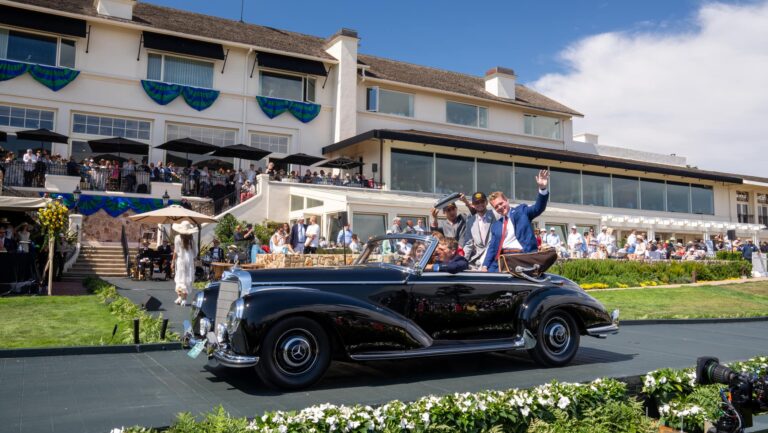
Highlights

Skip ahead if you must… Here’s the highlights from this episode you might be most interested in and their corresponding time stamps.

  • 00:00 Spotlight on Anita Milliken
  • 01:48 Anita’s Journey into Motorsports
  • 04:18 Life on the Road to Indy
  • 06:28 Challenges and Triumphs at Indy
  • 08:53 Introducing Caitlin Brown
  • 09:21 Caitlin’s Path to Team Penske
  • 10:16 Experiencing the Indy 500
  • 15:39 Women in Motorsports Today
  • 17:54 Overcoming Challenges in a Male-Dominated Field
  • 18:23 Team Penske: Excellence in Racing
  • 19:43 Innovations in Shock Absorbers
  • 22:47 Aerodynamics and Wind Tunnel Discoveries
  • 26:39 Women in Motorsports: Past and Future
  • 29:44 Advice for Aspiring Female Mechanics
  • 34:03 Reflections and Gratitude
  • 35:07 Closing Remarks and Future Episodes

Bonus Content

There's more to this story!

Be sure to check out the behind the scenes for this episode, filled with extras, bloopers, and other great moments not found in the final version. Become a Break/Fix VIP today by joining our Patreon.

All of our BEHIND THE SCENES (BTS) Break/Fix episodes are raw and unedited, and expressly shared with the permission and consent of our guests.

Learn More

“The Trouble with Howard,” A Children’s Book Based on a Real-Life Racing Story

Photo courtesy LeeAnne Patterson

What could possibly go wrong if a skunk was in the pits at an auto race?

“The Trouble with Howard,” a children’s book based on a real-life story about auto racers Howard and Anita Millican and their pet skunk, is available now through the website TheTroubleWithHoward.com and at select retail outlets.

The 48-page hardcover book is a collaboration between author and motorsports veteran Lee Anne Patterson, a native of Atlanta, and acclaimed racing illustrator Roger Warrick of Hamilton, Ohio.

Photo courtesy Anita Millican

The story is based on the experiences of driver and mechanic Howard Millican and his wife, Anita. The latter became the first woman licensed IndyCar mechanic in 1980. She was also the first woman to go over the pit wall during pit stops at IndyCar races as a pit crew member. She was the jack “man.”

The book promotes gender equality and encourages girls to tackle STEM careers. It also suggests how to handle bullies and ways to display good sportsmanship.

In addition, it inspires compassion towards animals. A portion of the proceeds will go to animal rescue operations.

Patterson wrote the book for children who are 5 to 8 years old. Each page carries Warrick’s colorful illustrations like a picture book. It is sure to resonate with auto racing fans of all ages as well as others with no knowledge of the sport.

The book chronicles the story of an injured wild skunk who was treated and adopted by Howard and Anita Millican before they were married. They named him “Trouble.” He travels with the couple from race to race, but never sprays anyone. Most of the racers learn to like Trouble with the exception of Jack, a driver who uses not-so-nice moves on and off the track.

One day Jack scares Trouble out of the tractor-trailer the Millicans use to transport their race car to events, and Trouble becomes lost. Scared and tired, he eventually finds a hiding place in the cockpit of Jack’s race car. He’s still hiding in it when a race starts.

On the last lap Jack gives Howard’s race car a shove in an effort to win. Terrified, Trouble runs up Jack’s chest. Jack loses control of the car and they crash.

Howard wins the race. Trouble and Jack are both unhurt, but Trouble sprays Jack.

Howard, Anita and Trouble celebrate in victory lane. Showing good sportsmanship, Howard gives Jack several cans of tomato juice to use to try to alleviate the odor from being sprayed.

Now Available Online and at Select Retail Outlets!

The book is available to ship now. It carries a suggested retail price of $18.50. Retailers who would like to carry the book are encouraged to contact M.L. Padden at REV Branding in Louisville, Ky., at mlpadden@revbranding.com or by calling (502) 727-4226.

“The Trouble with Howard” is published by Ground Effects Marketing, Inc. Its ISBN number is 979-8-9902067-0-0. For more information visit TheTroubleWithHoward.com.

Though Anita now lives in Costa Rica, far from the roar of the track, she was thrilled to learn of Caitlin’s victory. “I could just blow up with pleasure at what she’s accomplished,” she said. Their stories, separated by decades but united by purpose, reflect the slow but steady progress of gender equity in motorsports.

Photo courtesy Caitlin Brown; Team Penske

Anita coined the term “BW”—Before Women—to describe the era when women weren’t even allowed in Gasoline Alley. Today, Caitlin walks the same pit lane with respect and camaraderie from her peers. The road wasn’t easy, but it’s been paved by pioneers like Anita.

Both women offered powerful advice for young women entering motorsports:

  • “Head down, mouth shut, elbows out, and move forward.” – Anita
  • “The car doesn’t know who you are. Just do the best job you can.” – Caitlin
  • “Be humble. Stay learning. Support your teammates.” – Both

Their message is clear: excellence, humility, and teamwork transcend gender. And while there’s still work to be done, the future of motorsports is brighter – and more inclusive – thanks to women like Anita Milliken and Caitlin Brown.


Guest Co-Host: Lauren Goodman

In case you missed it... be sure to check out the Break/Fix episode with our co-host.
Listen on Apple
Listen on YouTube
Listen on Spotify

This content has been brought to you in-part by sponsorship through...

Motoring Podcast Network

Finding the Fastest Car in Le Mans Ultimate

0

For an upcoming activation, we worked with and challenged our partners at Gran Touring Motorsports (GTM) to figure out which is “the fastest” (or most equal) car in the GTP / HY / LMP1 class in the newly released Le Mans Ultimate sim. Our driver, GTM’s Crew Chief Eric is running a full spec’d AMD powered system with a Challenge PlaySeat, and MOZA Racing R9 CS, CRP Pedal box along with the add-on Handbrake and H-pattern shifter (as mentioned in this article).  Each vehicle was tested using the same conditions: Closed Course (no AI distractions), 18 minutes. Real tire wear, real fuel consumption, TCS set to 8 (car vary from 6 to 8 stock), and No Sets. Best lap of the session goes on the leaderboard. Check out the compiled sessions and results from on-board Crew Chief Eric’s rig below.

Crew Chief’s Thoughts & Notes about each Vehicle

  • Cadillac – takes some getting used to, and can be a bit twitchy. Exercising patience on corner exit throttle application is a must to avoid tank slapping. However, the more time you spend with the Cadillac you begin to realize it’s very good on tire consumption, and rewarding to drive long term.
  • Ferrari – has the best brakes out of all cars, consistent throughout the entire session. You can continually brake deep, late and even trail brake into corners if you’ve mastered the skill. The Ferrari’s engine is a bit high-strung which means having to really rev it out through the upper gears to achieve a top speed in the range of the rest of the cars.
  • Glickenhaus – one of two “non-Hybrid” cars in the fleet. The Glickenhaus accelerates quickly due to its close ratio gearing up through 6th, but it tends to understeer, and also provides some “bumpy” Force Feedback as the tire wear down. It also tends to lock up the brakes if you push too deep into a corner. It can exceed 200 mph, but 7th gear is a bit tall and therefore it struggles past 205 mph.
  • Peugeot – the second fastest in a straight line due to its slippery Aerodynamics. But that’s also this cars Achilles heel, it can tend to step out in corners if you’re not constantly vigilant, but when it does break loose, it’s pretty controllable, and can produce some epic power slides.
  • Porsche – sitting somewhere in the middle of the pack, it has one of the better exhaust notes. The engine is quite torquey and power delivery is very linear, which is typical of many racing Porsches. But the added torque also makes it want to step out, therfore careful throttle application and timing is key at corner exits. The 963 also tends to chew up the front tires more quickly than some of the other cars. You might be able to achieve 1 or 2 “hot laps” before they start to give out, making tire management extra important in longer stints. The Porsche also has the most violent steering pull down the long straights, be sure to keep your hands firmly on the wheel at high speed or it will see-saw you off the track!
  • Toyota – its the Le Mans halo car, it’s near perfect, and it’s really quick… everywhere. It’s hard not to be fast in the Toyota. Braking is strong, but not as consistent as the Ferrari. It has the highest top speed down the Mulsanne, but the handling and grip are by far the best.
  • Vanwall – The second “non-Hybrid” in the bunch. The Vanwall is also the only car with a 6-speed transmission (all the others being 7 speeds); It too can reach 200+ mph, but because of the longer gear ratios, it takes much longer to get there, and unfortunately makes it the slowest. But for what it lacks in speed, it makes up for in handling! It’s playful, responsive and a joy to drive, giving the best “smile factor” of the bunch. You also get the impression you’re driving an Indy car with full body work (especially the sound) compared to the rest of the Sports Prototypes.

Final Standings

As you can see, most of the cars are very close in time, with our driver putting down consistent laps in the 3:34 range. The Cadillac and Ferrari were only separated by 0.05 of a second. But the clear winner was the Toyota with a 2 second advantage over the rest of the field, and time left on the boards. We narrow down the Toyota’s advantage to the fact that it can achieve a top speed of 211 mph compared to other vehicles that hit their terminal velocity around 206-209. Those extra couple of miles-per-hour partnered with the Toyota’s acceleration, hybrid system and gearing adds up over the 8.5+ mile lap of Le Mans. Outside of the two “non-Hybrid” HY class cars (Glickenhaus & Vanwall) our opinion is that all of the cars are well matched. Pick your favorite brand, favorite sound or the one that suits your sim driving style best – either way, you won’t be disappointed. 

Come try them for yourself.

If you don’t have access to a sim-rig or one capable of running Le Mans Ultimate yet, come try it out for yourself at our upcoming activation in conjunction with the ACO USA’s Le Mans 2024 Viewing Party at M1 Concourse in Detroit, Michigan. Details on the event, and how you can register can be found here. If you’re a fan of Le Mans and want to get more access to upcoming news, events, and special “Evening with a Legend” series livestreams, check out the ACO USA’s membership packages today and “Become Part of the Legend” of Le Mans.

Special Thanks to our Partners for contributing to this research!


The Pope of Plastic: Rick Schad’s Journey from T-Shirts to TikTok Stardom

From designing iconic Grateful Dead tees to co-founding one of America’s most celebrated concours events, Rick Schad’s creative journey is anything but ordinary. With over three decades of experience across fashion, packaging, toys, and motorsports, Rick has shaped industries—and now, he’s shaping miniature masterpieces as the “Pope of Plastic.”

Photo courtesy Rick Schad

Rick’s professional entry into the car world began with a legendary machine: Ayrton Senna’s rookie Formula One car, the Toleman chassis #2. Despite its reputation as unreliable, this car nearly won the 1984 Monaco Grand Prix in the rain. Rick was tasked with selling it – and he didn’t just list it, he branded it.

Tune in everywhere you stream, download or listen!

Listen on Apple
Listen on YouTube
Listen on Spotify

He built a story around the car, created a presentation, and even verified its authenticity against a replica owned by Pink Floyd’s Nick Mason. The clincher? A modified roll bar that matched Senna’s height. Rick’s branding savvy helped sell the car to none other than Zak Brown, who – during the inspection – received the call confirming his appointment as CEO of McLaren F1.

Photo courtesy Rick Schad, The Pope of Plastic

That sale launched Rick into the motorsports world, where he applied his branding expertise to race teams and sponsorships. But his vision didn’t stop there. Inspired by Newport, Rhode Island’s elegance, Rick dreamed up a Pebble Beach–style event on the East Coast. He pitched the idea, built a presentation, and partnered with Audrain Museum founder Nick Schorsch to create the Audrain Newport Concours & Motor Week.

Launched in 2019, it was hailed as one of the most successful first-year automotive events in U.S. history.

Spotlight

Synopsis

In this episode of Break/Fix, Rick Schad, a professional artist with over three decades of experience, shares his journey from designing for renowned clients like the Grateful Dead and the White House to becoming a top model builder on TikTok. Known as the Pope of Plastic, Rick discusses how he transitioned into the automotive world by selling Ayrton Senna’s rookie Formula One car and later co-created the acclaimed Audrain’s Newport Concours and Motorweek. Rick delves into his early passion for models, influenced by his brother, and how model building played a significant role in his recovery from alcoholism. He also highlights his live modeling sessions on TikTok, where he builds models from various categories, including cars, planes, and tanks, while interacting with his audience. Rick offers tips for beginners and shares stories about his most challenging builds. The episode touches on his aspirations for a Netflix series centered around custom model builds that resonate with personal stories, promoting the art and passion of model building to a broader audience.

  • How did you get into the Vehicle Enthusiast world? What was that defining moment? Or Car that Inspired you?
  • You got started in models like many of us at a young age, was there someone that mentored or inspired you to deepen your passion for modeling?
  •  “The Pope of Plastic” – Where did the name come from, and what’s it all about? 
  • You mentioned that you build live on Tik Tok, do you feel the pressure “to be perfect” while you’re doing that? How does that help your business?
  • What would you say has been one of your most challenging builds? – also – is there a bucket list build?
  • There’s different levels of modeling and model collecting; Yours are on a whole other level – let’s talk about why people should get into modeling (again).
  • What gear should every (beginner) modeler have?
  • You do models on commission, how does that work? What do you charge (is it based on the size, complexity or customer requirements, or just hourly?) Do you autograph your models? Plastic models are delicate, how do they get shipped? What if something happens? 

Transcript

Crew Chief Brad: [00:00:00] Break fix podcast is all about capturing the living history of people from all over the auto sphere, from wrench turners and racers to artists, authors, designers, and everything in between. Our goal is to inspire a new generation of petrol heads that wonder. How did they get that job or become that person?

The road to success is paved by all of us because everyone has a story.

Crew Chief Eric: Our guest is a seasoned professional artist and visionary based in Rhode Island with over three decades of experience shaping various industries. From designing iconic t shirts for clients like the Grateful Dead and the White House To innovating in the golf industry with the world’s first fashion belt equipped with a divot tool, Rick Schad’s creativity knows no bounds.

His journey led him through packaging design, toy innovation at Hasbro, and even culminated in co creating the acclaimed Audrain’s Newport Concours and [00:01:00] Motorweek. And he’s here to tell all of us about his story. So with that, let’s welcome Rick to BreakFix.

Rick Schad: Man, great to be here. Thank you. Thank you for the, uh, introduction.

I sound really important.

Crew Chief Eric: And hiding in the background, but not for too much longer, is one of our regular co hosts, to break fix. Let’s welcome back Don Wieberg from garage style magazine.

Don Weberg: Hello. Thank you. Thank you. Good to be here. Good to be here. You know, next time, Eric, make sure there’s some background music going on.

When you introduced me, wave, please. Come on.

Crew Chief Eric: Some nice lounge music, a cigar,

Don Weberg: step this up a little bit, you know?

Crew Chief Eric: Well, Rick, like all good break fix stories, there’s a superhero origin story. So tell us how you got involved in the Vehicle enthusiast world. What was that defining moment? What was that car that inspired you?

Rick Schad: Professionally getting into the car world. I was asked to assist in selling Ayrton Senna’s rookie formula one car, the Toleman chassis, number two, which placed second at Monaco in the rain. And [00:02:00] technically probably should have won that race. Uh, we know the how everything went down with that.

Crew Chief Eric: The one you mentioned is like the worst one he ever drove.

Do you ever think that that’s just kind of ironic? The Tolman? Yeah, it wasn’t the Lotus. It wasn’t one of the MP4s, McLarens or whatever. It was the Tolman, which he ran for like one year and the car was like hellaciously unreliable.

Rick Schad: Yeah, it was a terrible car. He actually won Monaco, but they stole it from him.

And he ran one of the most incredible laps ever there. I spent a lot of time with that car and had to do a lot of research for it because Nick Mason from Pink Floyd thought he had the real Tolman and we had to go to see him and go look at his car and tell him why it wasn’t the real car, which he had spent.

I don’t know at that time, probably 600, 000 on the car. It was a total fabrication. It was built from Tolman parts, but it wasn’t the actual car. The reason we knew ours was, well, number one, we got the actual guys that built the car to work with us. And when we went there and we looked at the actual car, we knew [00:03:00] it was the real car because Senna was fairly short.

The roll bar above his head and back of his helmet. Well, when Johansson took over that car after Senna left and the roll bar was too short, so they cut the roll bar and extended it. So as soon as we walked up to the car, we saw that that had been cut. We knew that it was sentenced. I was asked to sell that car and I took an approach, which was a little bit different than other people.

I literally turned that car basically into a brand and put a real story around it. And I built basically a book on the car. I took my branding expertise. it to the way I would any brand to that car. And that was my first professional foray into the car world was really by the selling that airtime Seneca, which is kind of a crazy story in itself, because I’m very good friends with a gentleman who was Mario Andretti’s long time PR guy, Donald Henderson.

He was a character in the formula one, Indy car, [00:04:00] the whole racing world. And it may easy. One of the. Best branding guys in the world. In fact, he helped create Newman’s own with Paul Newman. And I was on LinkedIn one day and this guy had posted a picture of a motorcycle saying this motorcycles for sale.

And next to the car could see part of like a quarter panel of a car that I knew was a race car. And it was Don Henderson that posted this picture. And I reached out to him and I said, you know, who cares about this motorcycle? What is that? That is. Next to the motorcycle, me making that comment to Don. Don asked for my phone number.

He called me from that day forward, Don and I became very good friends. And it was Don that approached me about this Sena car. And he said, you know, I don’t have the time to sell it. And I really don’t care about selling it. He didn’t know anybody who could kind of take this on ultimately sold that car to Zach Brown.

So then the day that I met Zach Brown there for him to go over the car and he did the car inspection while he was doing the car inspection, [00:05:00] his cell phone ring and he was told that he had just gotten the position of CEO of McLaren Formula One while we were looking at walking around the car. That’s awesome.

That is a true story. Yeah, it was a, that was an amazing, amazing thing. And then it was kind of from there, I got launched into the automotive world first selling that car and then getting exposed to different race teams and people that were trying to build race teams. And again, I was applying my creative hat and my branding hat to help teams raise money and get sponsorships.

That’s kind of how it all started. It actually started for me responding to a picture on LinkedIn . So. And then I started going to different car events associated with building teams and things like that in the racing world. But I was going to all the major car events and I came up with the idea of why shouldn’t we have a car event like a Pebble Beach here in Newport, Rhode Island?

Because Newport is so beautiful and it has the mansions and the lawns and In my mind, I kind of painted [00:06:00] this picture as to what something like that would look like. And do like I do with any idea I have, I actually put it down on paper. And I take that idea from that concept that I’ll write in bullet point.

I’ll start talking to some people about it, and it looks like it has some kind of legs. Then I will go ahead and do a formal presentation around the idea, and then that is my selling tool to sell whatever it is creatively that I’m trying to do. Ultimately, I met Nick Schorsch, who was the founder of Audrain Automotive Museum.

He basically said, you know, I’ve always wanted to do something like this. And he had been thinking about something similar. He said, you know, why would I compete with you to build an event? Why don’t we do it together and I’ll hire you to do it. And we started that journey in 2017 and it took until. 2019, we launched the first Audrey Newport Concord Motor Week, and it was heralded as one of the most successful first year automotive event ever held in the United States.

It was very difficult thing to do over such a short period of time and make it look [00:07:00] like it had happened year after year after year. And that was probably one of the pinnacles of my life was building that event.

Crew Chief Eric: And you know, what’s fun about this is we’ve now painted a picture of Rick, the adult, but that’s not what we came here to talk about.

We came here to talk about your alter ego, the Pope of plastic. And we’re going to dive more into that, but that starts with little Rick playing in the basement, you got started in models. Like many of us at a really young age, who brought you to that? Was there somebody that mentored you or inspired you to deepen your passion for modeling?

And obviously that carries into a passion for car.

Rick Schad: I was born to be an artist. And my mom saw that very early on that she had a son that she felt had talent who could end up being something in the art world. But the model building started when I was really young. I mean, I built my first model in 1975.

It was a model by Ravel. It was a submarine. I did an absolute terrible job. You know, I was horrible. But the person who really influenced me in model building was my oldest brother, [00:08:00] David. He used to build incredible models. And he would never let me watch him build a model. He’d never let me see. And I would sit outside of his bedroom, begging to come in to look and watch him build models, but he would never, ever let me when he would go to school or I’d get out early and I’d get home before him, or he would go out someplace.

I’d sneak into his room and I would look at his models and I’d look at the paints, and he was really my inspiration for model building. I wanted to be like him and build models the way that he built models, but because he wouldn’t help me, I had to discover it kind of on my own. See, the tables have turned now.

Now my brother is jealous that I build models professionally. And he’s probably one of my biggest fans and I share pictures with him all the time and we go back and forth. He was like, you know, maybe I should have let you watch me build models. He goes, but I think you figured it out on your own, you know, better than he ever could.

So my brother was my first inspiration. And I don’t talk about this a whole lot, but sometimes I do. And, you know, I was an [00:09:00] alcoholic and I’m recovered and not recovered. You’re always recovering. But. Model building essentially saved my life. I was in a deep depression. I was drinking myself to death and I had to get back into something that was positive.

I got back into model building and it’s not the only thing that saved my life, but huge part of it and doing it every day and doing something positive. And then when people were giving positive feedback on what I was doing and were encouraged by what I was doing, especially when they hear what I’ve kind of gone through, To see what I’m doing.

And then it inspires them to kind of do the same thing. And the bigger picture is that it’s much more than model building. You know, a lot of people are looking at this as a healthy alternative as well. You know, I have a lot of people that were addicts and things like that, and they need something positive to do.

And it’s, it’s incredible. I mean, people that are trying to do something that can ultimately kind of change their lives. And that’s an important thing to know. And it’s really on TikTok. It’s really what my community is about. It’s not about, Hey, look at me. I’m the best model builder on [00:10:00] TikTok or I’m this, I’m that, I’m the Pope of Plastic.

It’s encouraging people to come together creatively to just be part of something. And if I can kind of be that ringleader to let people know, Hey, you know, there’s fun things to do that other people can enjoy you doing that are positive versus stuff that’s negative, then that’s really what it’s all about for me.

And I’m, you know, and I make a living at it, you know, I’m not going to lie. I get money. Tick tock pays me money and I sell models. As far as cars go, I grew up having an affinity for racing. My cousin was Cale Yarborough, the famous NASCAR driver. I grew up watching Cale race. And I was also a huge fan of the Indianapolis 500.

And like every kid, I had all the matchbox cars and I would set up in the kitchen and pretend I was running the Indianapolis 500. And I just always loved cars, but mainly I loved cars because of their artistic form. So I spent a lot of my childhood drawing cars, sketching [00:11:00] cars, dreaming of one day being able to design a car, which I’m not a car designer, but I’ve been friends with a lot of car designers.

I just always saw the art in them. And then when I got the chance to build car models, it’s just incredible now to be able to build these cars that I dreamed of as a kid. And now I’m able to do it at a level that most people aren’t. I mean, I guess if they dedicated themselves, they’d be capable of doing it.

But most people don’t have the time or they’re not capable of doing it artistically. So it’s just a huge passion.

Crew Chief Eric: Well, Don, I think he opened the door for a pet stop question. And I think, you know what I’m going to ask him, right?

Don Weberg: No idea.

Crew Chief Eric: It’s one of our classics, Rick, which is as an artist, especially, I love hearing the answer to this.

What is the sexiest car of all time?

Rick Schad: Well, I can’t say one car, but I can say one brand and that without a doubt is Ferrari. And I know that would be a popular answer for most people, but. The thing about Ferrari is it is 100 percent art from the engine to the chassis to everything that they do with those [00:12:00] cars, especially the classic Ferraris when Enzo Ferrari, you know, his vision, his passion was always about the sound, about the look, about what it looked like when it was going down the road, what it looked like from behind, what it looked like, you know, the front, you know, he said, you know, a Ferrari emulates a beautiful woman.

I’ve done some public speaking and things and I’ll talk about Ferrari and I will draw the silhouette very quickly and I can say, okay, imagine a woman laying on her side and here is the hip and then it goes down and then you have the shoulder and then it goes all the way out into the nose of the car down to the road.

And if you look at that shape, what you can look at is basically like a beautiful woman on her side, and then you can actually start adding wheel wells and everything else. And you can watch it transform into the actual shape of something that looks very similar to a Ferrari. And I think that’s a good example of the way that design process was done back in the day.

Ferraris are so fluid and so sexual. And even if it wasn’t Ferrari, if it was another brand that had kind of that [00:13:00] same

Crew Chief Eric: Well, the car that comes up a lot, and you’d probably not be surprised by this, is the E Type Jag.

Rick Schad: Yeah. Enzo said that the Jaguar was the most beautiful car he had ever seen. Kind of the same principle when you look at it.

They’re almost liquid in their form. That’s an incredible thing. So, It’s hard to say one because I think all Ferraris are beautiful. I’m not as much of a fan now of the more modern Ferraris. I’m more of the classical Ferraris. I think when Ferrari went public, a lot of things changed. I don’t think you would have ever seen an SUV from Enzo Ferrari.

I don’t think you would have ever seen an electric Ferrari. And I think he was very true to his passion. And he kept that passion alive all the way until he died. When he died, Ferrari changed immensely. I think. I think at the core of the passion is still there, but especially amongst Ferrari fans. I mean, I’m still a fan of Ferrari.

I’ll always bleed Ferrari red, but I’m not as much of a fan of the new stuff as I was at the old stuff.

Don Weberg: You know, Rick, listening to you about [00:14:00] Ferrari, et cetera. I think we can all agree here that the best looking Ferrari ever made, you know, correct me if you think I’m wrong. The Mondial Troop. Oh, stop.

Rick Schad: Oh yeah.

It was the greatest Ferrari ever done. That family four seater Ferrari. There you go. It looked like a squash toaster.

Don Weberg: I love the cheese grater on the side. Grate your Parmesan right there. It’s terrific. Yeah. There’s

Rick Schad: definitely visions of the 250 GTO and that. Yeah. It’s just unbelievable. Great car. The Mondial.

Don Weberg: I was curious about your moniker, your name, the Pope of Plastic. Go into that for me. What the hell is the Pope of Plastic?

Rick Schad: Well, the Pope of Plastic came about, first off, I wasn’t working, I was looking for work, still am, and I wanted to get back into model building because I was always able to sell models kind of on commission on the side to make extra money.

And when I couldn’t find work, I said, well, look, I got to do this seriously. And if I’m going to do it seriously, I need to be on different social media sites. I was just sitting there one night. I said, I got to come up with a name. And I went through all [00:15:00] these different iterations of what it should be called.

And then I was like, you know, it should have something to do with plastic. Plastic is a great word. A lot of people relate to plastic. I said, what goes with plastic? And I went through all these different names. And all of a sudden I hit upon, what would be the hierarchy of plastic? If plastic was a religion, what would the hierarchy be?

And I was like, well, the top would be the Pope. As soon as I said Pope, I went Pope plastic, Pope of plastic. I was like, bingo. There it is. I thought it was funny. I thought people would find it humorous and it’s tongue in cheek. I was never trying to say to people, Hey, you know, I’m the best model builder in the world.

Look at me. It was more a funny, humorous thing that would grab somebody’s attention and also something that I could build a logo around. And so I started Popoplastic first on Instagram, really didn’t get much traction. I wasn’t really putting a lot of work into it, but a friend of mine said to me, said, Hey, you should go on Tik TOK because Tik TOK is all live.

He goes, people would love to watch [00:16:00] you build models. And I was like, you know, what am I going to do on Tik TOK? I don’t dance. I don’t, I own a cat. I don’t do makeup pointers. He said, no, he goes, you could build an amazing community on Tik TOK. Forget about what you hear about the media and everything.

People are there to discover things. And especially watch people do things live, whether it’s oil painting or DIY things or crocheting or whatever it is. And he said, you should give it a try. He goes, you know, you have a good sense of humor. Obviously, I know what I’m doing when I’m building models. And I said, all right, what the hell?

I’ll go on there one night. I went on and set up the account and never thought that anybody would follow me. And within like a month, I had a thousand followers and I could go live. And when I started going live. People just hooked right into it. It was incredible. To this day on TikTok, people don’t even know my real name.

They call me the Pope. I’m the Pope. That’s all they refer to me as is the Pope. Pope this, Pope can you answer this question, Pope can you do this. And it’s really incredible [00:17:00] because it’s turned into a community of people that are just fascinated with model building. A lot of older people who hadn’t built a model since they were in high school, and they’re looking for something to do.

And I I’ve gotten a lot of people back into the hobby. I’ve gotten a lot of people to bring their young children in to watch me do what I do. A lot of the people who follow me have become friends with each other. It’s a pretty interesting thing. So the purple plastic is really turned into a brand. For me,

Don Weberg: now, Rick, forgive me.

I haven’t seen any of your tick talk, but I’m curious. You say people watch you build the models. You put them together. Are you showing them specific techniques on painting on bluing on how are you doing this? What are you building it with?

Rick Schad: They’re literally watching me build a model from start to finish.

So they’ll tune in and say, if I’m unboxing the model, I’ll say, okay, we’re going to build a new model. And my models take weeks to build. to build. I don’t build them overnight, so they’ll watch me from day one where I’ll take the first piece of plastic out and they’ll watch me do the whole process. So I will announce [00:18:00] each day.

Hey, today I’m going to be doing weathering or today I’m going to be building the engine. Today I’m going to be doing the chassis. So people will sometimes tune in for specific things that I’m doing and they’ll have specific questions. But most of the people watch me, watch me almost like it’s a television series.

They want to watch me from the start and they don’t want to miss a single episode of me building. And I usually build live three times a day. And I take a lunch break. I treat it like an actual job, which it is for me. And then the customers that are ordering models from me, they get the opportunity to see me build their model live.

They find it very fascinating and a lot of people order models from me now order it because of that reason. They want to watch me build their model. And then when they get it, they’re excited because, you know, they’ve seen me do the whole thing from start to finish. So it’s really unique and it’s a very, very positive community that I’ve built.

You know, a lot of those people become friends with each other, which is really, really cool.

Don Weberg: So it obviously helps your business then.

Rick Schad: It is my business, and it’s [00:19:00] why it scares me when I hear them talk about getting rid of it, because I can honestly tell you on all the platforms that I’m on, TikTok is the only one I don’t think I’ve ever had a negative reaction.

comment. I’ve never had a negative thing happen. And TikTok is very strict. I can’t sit there and talk about drugs or things like that. They’ll yank you right off. So you have to really be very measured in what you do on there. And for what I’m doing, I think that’s a very good thing. I pride myself on building a very positive community on there.

Don Weberg: The way you’re describing it. Do you feel a lot of pressure to be like perfect on spot? Click, click, click, click, click.

Rick Schad: I build like I would if I were just sitting here by myself, except I talk to the people. The thing they love the most is when I get angry because I get mad a lot when I’m building and I have been known to throw things and I’ve been known to drop a few F bombs here and there.

Crew Chief Eric: Usually when the tester’s glue keeps your fingers united, right?

Rick Schad: Yeah. Their favorite thing is when I drop things on the floor. Because that’s like [00:20:00] the worst thing in model building is when you drop something on the floor, especially a small piece and they can watch me progressively get angrier and angrier.

They just love it. I mean, cause it’s real. Can I tell them all the time? What if I were at your job standing behind you, watching you work all day and making comments, you know, how would you do, especially I’m doing. Stuff that’s very, very tedious. I’m wiring things. I’m making things look extremely real.

I’m doing the gauges on the instrument panel, things like that. And it’s very, very tedious. So you can get very angered while you’re doing it because you get frustrated, but it’s very, very real what I do. So it’s not like your normal YouTube channel, where everything is scripted and you know, Oh, okay. I’m going to put these two pieces together and go off camera, build everything to come back and it’s, you know, all put together.

They’re literally watching me from start to finish and they get to see the good, the bad and the ugly all the time. One thing that I did a week ago, which was really, really cool. I came up with [00:21:00] the idea to do something called the F bomb marathon. I said, here’s the idea, everybody. I said, I’m going to let you vote on a model kit.

I’m going to pull out 10 model kits. You guys pick the model kit. Right after the Kentucky Derby in, I’m going to come on here on live and I am going to build from start to finish without taking a break for as long as it takes. I don’t care if it takes five hours, 10 hours, 12 hours, 24 hours, whatever it is, I’m going to build a complete model for start to finish.

And we call it the f bomb marathon because you can be guaranteed that I started dropping f bombs the more hours accumulated. And let me tell you, it was one of the most watched things I’ve ever done. I had over 140, 000 people watch over the course of 12 hours. And I built the model from start to finish in 12 hours.

And at the end, in the 12th hour, I auctioned the model off. And then they got to take the model home. But it was really cool. I’m always doing fun things like that, coming up with different contests to give stuff away.

Don Weberg: What was your favorite model to build? What

Rick Schad: kind of car was it? Well, I build [00:22:00] everything.

I build whatever I’m hired to build. I build cars, planes, trucks, tanks, boats, whatever it is I get hired to do. So, I do do a lot of cars. My favorite car that I’ve ever done was an Alfa Romeo Spyder race car from 1934, I think. It’s beautiful. It’s a beautiful, beautiful model. It’s a 1 12th scale, but it has every hose, a lot of scratch building.

It looks exactly like the real thing. And I did it post race. So it’s dirt with the mud and the grime. It’s a beautiful, beautiful model. I’ve done so many though. I get asked all the time. I, even today when I was live, they were like, Oh, what’s your favorite model that you’ve done? I love every single one of them that I do.

Just for this year alone, today I finished my 22nd model since January 1. That’s a lot of models. And when you see my models, it’s pretty incredible. As I’ve been able to do that many this year, but I do it every day. I do it probably 60 hours a week.

Crew Chief Eric: That’s incredible. Dovetailing off [00:23:00] of what Don was just asking you about, what would you say is maybe one of your most challenging builds?

The

Rick Schad: most challenging build I had to do was I was hired by the United States Marine Corps to build an entire squadron of Harrier jump jets for the 50th anniversary of the Black Sheep squadron, and these were 132nd scale aircraft. In their configuration. So I had to do everything custom to make it look exactly like those, but I don’t build models that just look like the thing I’m building the engines to where they’re all wired.

The cockpits are all perfect. The wheel wells are all plumbed with hydraulics. So to do a whole squadron, which was six aircraft. At one time was absolutely insane. It took 14 weeks to do them working every single day, at least eight hours a day, sometimes 10 hours, sometimes 12 hours a day. It was insane.

That was a pretty crazy project.

Crew Chief Eric: And then kind of thinking to the future, [00:24:00] because the year’s not over yet. What’s on your bucket list? What do you still want to build?

Rick Schad: Well, I actually have it here. I haven’t started it yet. I have to find a customer for it because it was. A gift from one of my fans. I just got a one 12 scale Bugatti type 37.

I want to do that. Wanted a model of that car. I’ve actually driven it before the real one. And I’ve always wanted to do one. So that’s one that’ll be coming up at some point. I’ll find a customer for it and I’ll end up building. I can’t build unless I have a customer for it. Cause it takes too much time and I have to.

You know, get paid for what I do. The other thing that I’ve always wanted to do, and I will get the opportunity, I’m not sure if it’ll be this year or next year, probably the end of this year, is a four and a half foot long Titanic, with all working lights, working steam funnels, sound, the whole nine yards.

Crew Chief Eric: Does it crack in half? No, I’m not going to do

Rick Schad: the crack in half version, but so I’m going to be doing that. The model’s already been purchased. I’ll get it at some point. I, you know, I’m, I’m fortunate that I get to build a lot of really cool models. [00:25:00] And to be honest with you, I’ve had a lot of fans ask me, Hey, what model have you always wanted to build?

And then I’ll tell them and miraculously it’ll show up at my house. So I have basically all the models I’ve ever wanted to build. You know, I just have to find customers.

Don Weberg: How many models are in your house unbuilt right now?

Rick Schad: Um, over a hundred, but they’re all for customers. So they’re not mine. They’re right.

They’re just waiting. I have a waiting list. And then a lot of the times people send me models every day. I had a model come today. They’re just because they want to give me a model. All week long, I build the big complicated models. On the weekends, I’ll do small models, something I can build in two days.

So those are models that the average person can kind of afford. And I’ll auction them off. Or I run contests and sometimes I’ll build a contest winner’s build on the weekend.

Don Weberg: Where do you auction

Rick Schad: these off? TikTok? TikTok, yeah. I tell them Sunday at 7 p. m. I’m going to auction this off and tune in the way that it works is they have to place their bid in the [00:26:00] comment section and I bet everybody before I say if you’re going to bid, you have to message me.

You have to understand how it works. You have to be ready to pay as soon as the auction is over with. And it’s worked out really well for me. I’ve never been scammed by anybody. I always have bidding wars. in there, which is really interesting to see. I have some guys that have almost 10 of my models, which my models are expensive, the 500 to 800 model.

So I’ve got guys that collect my models and, but it’s fun because the small inexpensive models, it gives the average person a chance to own one of my models. Models, which is pretty cool. So

Don Weberg: where do you find these fits? I mean, are these Les AMTs? What are we talking about?

Rick Schad: We make a lot of fun of a MT and MPC and the hurdle.

A lot of ’em, the customer will buy the model, have already bought the model. Maybe it’s a model that maybe even their father owned or something and would never built, and they’ve always wanted to see it built. Or it’s a model of car that they wanted as a kid, or they drove in high school and they’ll find the kit and they don’t [00:27:00] have the skills to build it.

So they send it to me. Same thing with airplanes or tanks or whatever. The customer buys the model and then they send it to me or I find the model for them and then they pay for the model and then I build the model for them. But it’s not just building right out of the box. You know, there’s a lot that goes into it.

Yes. I use what’s in the box, most of it, but a lot of times I’m scratch building completely. On it’s because they’re not up to the realism that I want.

Don Weberg: What are some of the components you scratch build

Rick Schad: for an interior of a car? The seatbelts, the upholstery, the dash, the instrument panels are usually scratch built all of the wiring goes behind the dashboard.

Even though you don’t see a lot of this stuff, it’s still there. And I take photographs as I’m going. So the customer has photographs of the whole. Process so they can see what went into it, all the stuff that a model companies don’t invest the time to putting into the car or it’s just not realistic enough.

So I’m reupholstering and make it look more real.

Crew Chief Eric: And it’s interesting you bring that up [00:28:00] because I’ve seen some videos where guys are either restomodding or rehabbing or restoring older models. So do you do some of that as well? You, you mentioned the word reupholster and it sprung that image into my mind where I’ve watched videos of guys doing this.

Rick Schad: I will refurbish a model for somebody, but I prefer to start from scratch. Put it this way, I just had a huge vintage Formula One car model sent to me. It’s partially built, which I normally say absolutely no, I won’t do that, because I want to start from scratch because it’s a process I go through, but on certain occasions, this is a very special model that they stopped making in the 70s.

And it’s a very detailed model out of Japan and I couldn’t turn it down. So I was like, yeah, I’ll do this. But most of the time I’m building it from the start to finish. What kind of makes me different from everybody else is that I don’t build showroom models. I build models that look like they’ve been raced, run, worn, rusty, dented, dirty interiors.

[00:29:00] The wheels are dirty, you know, the tires are about to go flat. For me, that is the fun of building for me is making it truly look realistic, understanding how to create rust and in dirt and grind and make it look scale and make it look really realistic. That’s really what I’m good at. And 90 percent of the time, those are the kinds of models I’m building.

And that’s really where my bread and butter is.

Crew Chief Eric: Rick, it’s obvious that your skill level is leaps and bounds above where many of us are. There aren’t many of us that I can think of that are professional model builders, but you mentioned earlier about building a community around modeling and things like that.

So there’s a lot of people that are probably curious, want to know, how do they get in? So let’s see. Kind of dial it back a moment and talk more to the beginners or the intermediates and people that want to get back into modeling again, as a hobby, where do you start? And obviously it must be gear. So what should every modeler have as a beginner in their toolbox?

Rick Schad: Here’s what I asked somebody who wants to. to get into the hobby. I say, okay, well, what is the subject [00:30:00] matter that you like? Well,

Crew Chief Eric: cars, obviously.

Rick Schad: Okay. So cars. Yeah. So what kind of car do you like? Do you like a domestic hot rod or do you want a Cadillac? Do you want a Duesenberg? Ferrari? What kind of car do you want?

Once I hear that, it is very important. That out of the gate, you build a quality brand model.

Crew Chief Eric: Let’s unpack that for a second. Cause we talked about Ertl and AMT. So what to you is a quality brand, especially in plastic? Tamiya,

Rick Schad: Asagawa, Ashima. There’s a few brands out there that are very, very good. The Japanese probably make the best kits in the world.

The domestic kits that you want would be like a Mobius or you’d want Silvino Jr., which makes a lot of racing kits. AMT and MPC, which most people remember as a kid, those kits, there are millions of them out there. They make a lot of great subject matter, but the quality of their models is not very good.

The molding isn’t that good. They’re very complicated because [00:31:00] they don’t fit very well. So I steer people away from that. I tell them if you want to build a really good kit right out of the gate, I would buy Tamiya. Because Tamiya is one of the oldest model companies in the world. Their instructions are rock solid.

The fit and finish of their models is far none better than anybody else in the industry. So the better the kit, the easier it is to build and the better results you’re going to have. So I steer them towards a Tamiya kit. Number two, get the model kit, read on the side what paints that you need and buy those paints.

Just follow the instructions and follow the painting guides. Make sure you have a good set of very good paintbrushes. Go to Hobby Lobby or whatever and buy a nice set of good paintbrushes with a nice variety. Number three, you need an airbrush right out of the gate. And people get scared of that. Oh, an airbrush, oh my god.

Terrifies people when you mention the word airbrush. You can get an airbrush for very little money. You can get an airbrush for twenty dollars, you can get a compressor for eighty dollars, and you have to learn to airbrush [00:32:00] early on to get good results. I mean, would you paint your regular car with a paintbrush or a paint roller?

No. I’ve seen people do it though. Wait, wait, which car?

Crew Chief Brad: Yeah.

Rick Schad: So you want to get an airbrush so you can get a nice smooth finish, you know, on all of your parts. You have to get the right glues. We’d still use the glue that you used as a kid, but it’s used for certain things. There’s about four different glues that you need to get.

And you got to understand how to use those different glues. The most important thing when you open up a kit and you actually start to build and you’re following the instructions is my biggest, best piece of advice for somebody is. Treat every little assembly like its own model. Take great care in each assembly.

If you’re starting out with the engine, follow the painting instructions. Assemble everything very carefully. And if you take your time with every single component, by the end of the model, you’re going to have a very, very nice model. And I think you’ll have a lot of fun doing it. It’s no different than doing a puzzle or whatever.

[00:33:00] It’s a little more entailed and when people finish a model the first one I hear from them all the time and they’re just absolutely they’re like, I can’t believe how much fun that was and my kid enjoyed doing it with me. I can’t wait to do another one in this next one. We’re actually going to try to weather the engine, you know, and things like that.

So I get to watch that progression. But yeah, The most important thing is to buy a very good model kit, which would be my suggestion would be Tamiya out of the gate. Don’t buy something too complicated. You don’t want to go to a 112 scale out of the box. You want to stick with like 125 scale car to start with and just love it and take your time.

That models aren’t meant to be rushed, meant to be taken one step at a time. Joy,

Don Weberg: when you recommend practicing on the airbrushing, learning how the machinery works, learning how the spray works, what substrate would you recommend people practicing on?

Rick Schad: Great thing to use for airbrushing is plastic spoons, spoons, almost the same thing.

That auto guy, you know, when they paint, they do test spray. We call ’em spray out. When you do a spray out on a [00:34:00] car, you get that little car form, they spray on it, they look at how the sun is reflecting. You can buy those, but plastic spoons are fantastic because they have different reflections off of it.

Just painting on paper, just painting on a cardboard box, just painting on a water bottle. Painting on anything, but just to get the feeling of how it is to use the airbrush and how it is to clean the airbrush. Once you get over that hump, the first time you use it, 99 percent of the time, everybody goes, Oh my God, it was a lot easier than I thought it was.

And it was so much fun. And I can’t believe how great the paint came out because they’re not used to doing that, or they’re used to using a rattle can, which are terrible because they put too much pain out too quickly. And it’s very difficult to get a good finish with a rattle can. Airbrushing is incredible, but you also have to know how to bend the paint, what paint to use.

I don’t ever recommend anybody use an enamel anymore. Most of us have moved over to acrylics, which are great because you can thin them with water or you can thin them with rubbing alcohol, is what I use. As [00:35:00] the Pope of Plastic, I call it the Holy Spirit. So that’s what we use, which is 91 percent rubbing alcohol that you can buy at any Walgreens or CVS.

I use Tamiya acrylic paint. As soon as you get the bottle, you can split this in half. Half rubbing alcohol, half paint. So you’re automatically extending your paint, but you need to be able to thin the paint in order for it to work with the airbrush. The other great thing about thinning it with rubbing alcohol is that it accelerates the drying.

So pretty much when you’re done spraying it, you’re done. The model is dry to the touch, so you can actually handle it a little bit. So it’s a lot different than your old enamels, which take a long time to dry. And, you know, once you get a fingerprint in it, you know, you’re screwed.

Don Weberg: You mentioned, you know, cutting it with alcohol, cutting it with water.

Do you have demonstrated videos where people can watch what you’re doing so they can see exactly how you’re doing it so they can learn from that?

Rick Schad: A lot of guys do do that. I really don’t think. do that. I encourage people to watch me do it live and when they come on the live, they can ask me any [00:36:00] question in the world.

A lot of times when I’m in between things, I’ll demonstrate for them. Here’s how I did it. Here’s how I’m doing it. And I do it in live time versus just making a recording of my hands and showing how I do it. The other thing to be honest with you is that a lot of this stuff I’m kind of secretive about. I just don’t like everybody knowing how I do everything.

And unfortunately, I’ve had to give a lot of his secrets away because I keep getting asked, keep getting asked, or they’re watching me do something and they’re like, Oh, what are you doing right there? What is that that you just did? And then I’m kind of forced to tell them. I’m getting better at doing that because I realized that what I’m doing is an art form and just because you watch Rembrandt paint a painting, it doesn’t mean that you’re going to be Rembrandt.

I’ve had to kind of realize that what I do is art and you have to have an artistic eye, especially in painting, because Weathering in painting is all about layering color. If you don’t understand color theory, and you don’t understand what colors go to trick the eye to think it’s this and think it’s that, then you’re [00:37:00] not going to be very good at the weathering part of it.

Weathering is all layering of color. And understanding how that all works and making rust on a model kit. You don’t do it the same way. You know, the rust is actually formed in nature. You’re tricking the eye to think it is actual rust. So there’s a lot of techniques and things like that, that you develop over time to be able to execute those things.

And I can execute them very fast because I do it all the time. So it’s just, you know, that’s what they really enjoy watching. They like seeing it unfold.

Don Weberg: Decals. They’re the absolute worst.

Crew Chief Eric: Oh, they’re the nemesis.

Don Weberg: You dip them in the little water. You pull them out and they tear. You’re done. It’s over. Do you have any tips on how to handle that stuff?

Rick Schad: Decals are difficult. So the tip is. Always start with very hot water. You dip the decal in. Don’t let it sit for too long. Test it and see where it just starts sliding off the paper. You put the paper in position where you want the decal to go. You slide the very beginning of it off until it [00:38:00] touches the plastic.

And then you gently slide the paper and let it fall down onto the plastic. You know, that’s okay. But what happens is bubbles will form. It doesn’t go down into the cracks, like putting a big sheet of piece of vinyl on your car and saying, okay, there you go. It looks great. But they move and smoosh all the bubbles out.

They cut and they let it fall into all the crevices. So in model building, they make solution now called solve set. And solve set is you put the decal down with water. You tap down the water or you let the decal dry a little bit. Once the decal dries a little bit, then you take paintbrush in the solve set liquid, you paint that liquid over the decal, and then you just leave it.

You don’t touch it. And what will happen is the solve set dissolves the decal and lets it fall into all of the crevices and it will remove most of the bubbles, but you may have to go back and poke a little tiny hole into certain bubbles and then put solve set on it again and let it soak down. [00:39:00] It literally becomes almost part of the paint job.

So solve set is really a miracle in model building.

Crew Chief Eric: It’s almost like Mod Podge in a way, when you’re doing decoupage, it’s the same idea.

Rick Schad: It’s basically the same thing. And then it depends, different companies make different decals. Some are better than others. We know which ones are really bad. You know, even me as a professional, you know, have very hard time with, and when I see them and I know they’re from a certain company.

I can design my own decals, so I will design a lot of time my own decal, and I have a decal printer that prints them for me. So I have resources that a lot of people don’t have, and that’s a whole nother process is designing your own decals. But

Don Weberg: yeah, I was gonna say that’s not something that we all do.

Crew Chief Eric: 3D printers are becoming a thing, but decal printer, that’s a whole nother story

Don Weberg: when you wanna buy a model. Where do you go? Do you go to Amazon? Do you go to a toy store you like? Where do you go?

Rick Schad: Amazon is a great place to find just about any model. I get everything on Amazon. I have my own hobby shop on Amazon.

Amazon. com [00:40:00] slash shop slash the political plastic and I have over 300 items in there. A lot of models, all the supplies that everybody watches me use every day. I say, Hey, if you want what I’m using, it’s on Amazon. I don’t make a whole bunch of money from that. I did it more as a convenience because I get the question all the time.

Oh, where did you get your airbrush? You know, where did you get your compressor? Where did you get this model? Where did I have it all in that store so they can go there and everything is there. It’s like going to a hobby shop. I always tell everybody, if you have a local hobby shop, go to the local hobby shop, don’t go to my store, go there because.

Hobby shops are dying free, and we need to support those hobby shops. The only reason I built the Amazon store was for people who can’t get to a hobby shop, or they don’t have a hobby shop, or I have guys that are in wheelchairs that follow me and can’t get out really. But they still want to build models.

So that was pretty much the main reason I built the Amazon store. But Amazon’s great. You can get just about any model kit you can imagine or any airbrush or any [00:41:00] exacto knife or whatever.

Crew Chief Eric: But Rick, I want to take this in a slightly different direction because. There are a lot of fans of plastic model kits out there.

And I had a few growing up myself and I loved taking kits that were different and try to make like cool cars. Like I’m going to do a six cylinder 904 with Fuchs wheels because I had a 911 turbo. And, you know, I made my own engine mounts and, you know, plastic was fun because you could do that with stuff.

Some testers or super weld or stuff like that. But as I got older, I sort of just got disillusioned with the whole plastic thing. And now as an adult, I don’t mess with plastic unless the box says Lego on it. You know what I mean? So plastic over die cast. Let’s talk about that a little bit. I know where Don sits on this and he knows about my collection.

So I want to get your thoughts on plastic versus die cast.

Rick Schad: Uh, there’s no comparison plastics leaps and bounds. Better than die cast? Look, I know all the brands, I know CMC and Exato and Amalgam and all of that, but most of the die casts are not die casts, they’re resin, and resin [00:42:00] models are equally as good, if not better sometimes, than plastic is.

Die cast, let’s use the word correctly, like an herbal die cast car cannot hold a candle to a really well done car. And the reason being is that die cast has a thickness to it, that it has to be cast in a certain thickness or else it’ll basically break.

Crew Chief Eric: Yeah, it’s pot metal.

Rick Schad: It’s pot metal. So plastic, you can go very thin, so you can get very realistic crease lines, opening doors.

trunk lid openings, vent openings, all of those types of things. And then when you add in photo etched to it and then 3d resin printed parts or 3d cast parts, it sleeps in balance better than die cast. Now, when you get into an amalgam, which I’ve actually done work with amalgam, I’m friends with the founder, Sandy Copeland out of the UK who their models are 20, 000, 50, 000, a hundred thousand dollars.

Again, that’s a resin model and they’re [00:43:00] hand forming all the different components and their 3d printing, all the different components. And then you can’t buy that as a kit and you have to buy it as a finished model, but the quality is incredible, but they’re not doing die cast. They’re doing resin and they’re doing plastics and they’re doing photo edge, even though they’re amazing.

And I own a bunch of CMC and I have Exato and I have amalgam and I have all these things. When you look at a die cast. You can tell the body thickness is thicker than it would be on like an actual car. That’s the only telltale sign. CMC and Exodo make amazing models. They’re incredible. Their craftsmanship is incredible.

But also I look at those and I can, my eye, Is trained to look at things kind of in scale. And a lot of times on Exato and CMC, the scaling of fabrics and things like that, isn’t quite right. Those are the things I look at. So when I’m building a model, I’m looking for things that look truly scale. So this fabric on a seat, what fabric would I use?

But most of the time I’m not using fabric [00:44:00] because fabric, there is no scale that’s small enough to make it look like actual fabric. So you have to develop your own tricks. To make it look like fabric when it’s not actually fabric.

Crew Chief Eric: I saw that on a Ferrari build where a guy was using some shaved something or other on an F40 to give it that look, because the F40 had that Alcantara dashboard or whatever.

And then it was some particle, but to your point, it tricked the eye to make you believe that it was that material. Yes. I still love my diecast though. I got way too many of them. Don’t

Rick Schad: get me wrong. I love diecast. I think it’s wonderful.

Crew Chief Eric: But where I’m going with that is there’s a whole nother craze right now in the modeling world.

And that’s the sort of resto modding of the 164th model. CL cars, the matchbox and the hot wheels taking them beyond where we think they can go with those things. And Mattel has really stepped up the game with their premium lines, but there’s creators out there that are really going above and beyond. So I want to get your feedback on this new trend in the one 64th world.

Rick Schad: Yeah, it’s amazing. I have [00:45:00] a lot of those guys. Follow me and I’m friendly with a lot of them. It’s just another aspect of the hobby. That is just incredible. I think, I don’t know who the first, first one is decided. They could break one of these things apart and put different wheels on it and lower it and everything else that do these paint jobs and the stuff they do is absolutely incredible.

It thrills me beyond belief to see people doing this kind of stuff. You know, because this is the kind of stuff I would have done when I was a kid or whatever. And anytime I see a young person, especially that’s getting into this kind of stuff and getting off of the phone or getting off of a video game and doing something with their hands and then trading it like we did trading cards or matchbox cards when we were a kid.

Seeing these things happen, it thrills me to death. When I’m on live working and a young person comes in, he says, Hey, you know, I’m 12 years old and I just got my first model. That just thrills me. I’m like, wow, this is incredible. A lot of the older people looking for a hobby. Are doing this stuff. And there’s some amazing guys out there.

Don Weberg: I want to shift gears a [00:46:00] little bit. You do models on commission. Yes. So how does that work? How do you charge it based on the size, the complexity that the customer wants? Is it just an hourly flat rate? There’s so many variables that can play in. So how do you figure that out? Now

Rick Schad: it is done by an hourly rate.

I used to just say, Oh, okay, if it’s this size, I’ll charge this much. But I would got myself into trouble a few times where a model where I thought wasn’t going to be that complicated ended up taking me 150 hours, you know, and I only charged 500 for it. So I had to get over that and I had to come up with an hourly rate that made sense to me.

I’m pretty good at estimating now because I build so much how many hours it’s going to take me. The big 132nd scale, say, aircraft is probably going to take me 100 hours. So 100 times the hourly rate gives me that number. Smaller kits that I know that I can do in 12 hours. So it all kind of works out in the end.

Some of them can get very expensive. But I let the customer know right up front, Hey, this is how many hours it’s going to take. I’ll stick to this [00:47:00] hour. So if I say it’s 100 hours, that’s what you’re going to get billed for. You know, so I’m very, very good at staying on target as far as how many hours it’s going to take me.

I also build a lot faster than the average person because I build so much.

Don Weberg: Do you autograph your models? You know, do you autograph a popoplastic or a rickshaw?

Rick Schad: I give the customer the option, but I always sign them, always ask them. To sign them.

Don Weberg: Where do you sign them?

Rick Schad: I usually find an inconspicuous place to sign them.

I don’t want it on the top, you know, I sign it like any artist would, you know. But I do sign it in my actual signature, which nobody can really read, and then I put the Popop plastic, and then I put the date on when it was completed. Then I usually take part of the model box itself, and then I cut out that, and then I sign that part of it.

And then the instruction booklet always. Which they love is getting the instruction booklet. And then I signed the cover of the instruction booklet.

Don Weberg: Oh, very cool. When it comes to these plastic models, when it comes to any model, they can be pretty delicate when [00:48:00] you send it to your client. What if something happens?

And how do you ship those? Has anything

Rick Schad: ever happened? Not anything major. I’m really good at packing them. Of course, something can happen to it. I’ve been very lucky. I haven’t had, and I’ve shipped them all over the world. So I just had one go to Argentina. I just had one go to Scotland and I haven’t had any damage.

You know, every once, inevitably you’ll have like a little, if it’s an airplane and antenna will come off and I’ll video chat with them and tell them how to do it so they can reaffix it. But most of the time they get there in one piece. I’m really good at packing them. If it gets damaged, I mean, the customer knows that we’re at the mercy of the mail, and it’s just part of the thing.

If it was that damaged, I would have them send it back to me and I would repair it for them. Do

Don Weberg: you have a preferred mail method, USPS or FedEx?

Rick Schad: Believe it or not, the U. S. Postal Service is the best, to be honest with you. It’s the fastest. It’s the most inexpensive. They seem to take the [00:49:00] most care in handling the packages.

They’re super nice to work with. I used to use only UPS, but I’ve moved to the United States Post Office. They’re great. I really, I can’t say enough good things about them. I mean, I’m shocked to be saying that, but it’s truthful. They’re really, really wonderful. All

Crew Chief Eric: right, Rick. I need a rough order of magnitude here.

1970 in the Sunoco livery in 118th scale in plastic. What are we talking here?

Rick Schad: In 118th scale, well, we have to see the most likely to probably be in, if there’s a kit, there’d be probably be in the 124th scale or 125th scale. I’m just going off the top of my head here. Be about 800 bucks. But be fully custom, fully look like the real thing.

Don Weberg: And I just want to say, Eric, it’s a bargain. Even if he told you 8, 000, it’s a bargain. Because you buy it, you’ve got it, you’re done. You don’t have to insure this car. You don’t have to maintain this car. You put it on a shelf. There it is. For the rest of your life, done.

Crew Chief Eric: If you think about it, [00:50:00] it’s 125th the price, because the real deal sold for half a million bucks a couple years ago, so there you go.

Don Weberg: But it’ll look just

Rick Schad: exactly like the

Don Weberg: real thing. I’ve always wanted a Countach. It’s been my dream car since I was yay big. I love a

Rick Schad: Countach. They’re

Don Weberg: the most ridiculous, outrageous cars and you just gotta love them.

Rick Schad: One of my most favorite cars, the anniversary edition, white with red interior.

Don Weberg: Yeah, with the stripes and everything.

Yeah, they’re crazy. I bought one of these and I don’t remember what I paid for it. It’s still in the closet today. I have not pulled it out. I don’t have a place to put it yet, but I forget who built it, but I paid a lot of money for it in my opinion, but I’m cheap. And when I told my wife, I said, this is what I’m paying for it.

And she said, Oh, okay. And I said, yeah, but look at it this way. I’ve kind of resigned myself to Don is never going to own a real coontosh. So this is the closest I’m going to get. So this is a bargain price.

Crew Chief Eric: And you know, that’s sort of the moral of modeling, the moral of

Don Weberg: modeling. I love that

Crew Chief Eric: on the collector side of it.

For you, Rick, [00:51:00] there’s a sense of completion. There’s a sense of, you know, being one with your artistry and all that stuff as a builder, as a creator. But for us, it’s Collectors. There’s the excitement of I’ve got this unique thing. And that’s why I bring up that nine 14. Cause it has a special place for me.

It invokes emotion and invokes memories from when I was a kid growing up around that car and being involved with that family and stuff. And so to Don’s point, he may never achieve having a real Kuntosh in the garage, but that model gets his juices going and he’s thinking and he gets the daydream and all that.

And live those memories and those. Thoughts. So it works on both ends of the pendulum. And I think that’s, what’s so special about modeling, whether you’re a creator or a collector, you’ve

Rick Schad: hit the nail on the head, my customers, I’m recreating a memory 95 percent of the time. It’s a memory that they have.

It’s a car that they drove. It’s a car, their father drove. This is the car we drove across country. This is our farm truck that we wanted. Those are the people that I’m building for. And that’s why my models. They supply me with pictures, and I emulate [00:52:00] exactly what those pictures, so when they get it, they’re like, Wow, this is what I remember.

You know, this is exactly what I remember. Anybody can go buy a die cast car of just about any car on the planet, you know, and put it there. And those are cool, there’s nothing wrong with that. My cars, my models, tell a story. You look at it, and it’s very personal, that person. I’ve had this concept, and maybe somebody listening here will reach out to me.

I’ve been wanting to do a television, like a Netflix series. Or a Hulu series on that exact topic where the story is the person comes to me with their story. Say it’s a Lamborghini Countach and it was a car my dad owned, but he’s not with us anymore. So the television show would literally tell the history of that car or whatever it is.

It would tell the story of his father and why he had the affinity to the car. And then it goes to me actually getting the model and building the model based on the photography and the stories that the family has told me. And at the end, I’m unveiling the [00:53:00] model to the family, to that special person. And that is the show that I’m dying to do one day, if I ever get the opportunity, because I think It has the perfect blend of history, feel good, family, watching something that you’ve done as a kid, and maybe you want to do again.

And then it has that element of unveiling, of surprise, you know, at the end. What is the person going to think when they pull the sheet off of this Countach that they’ve dreamed about, and now here it is. And that eventually is something that I really, really want to do one day, is that whole concept.

Don Weberg: I was picturing it in my mind.

I was actually thinking this show could actually be

Crew Chief Eric: Yeah, it’d be pretty cool. I’d watch it for sure. Even though I’m a collector, and I know Don is, my daughters come down here and they ask me about the cars and what’s so important about this one. And so I can either tell them about its importance and significance in the world of racing, or in the autosphere, or it’s important to me, or my grandfather had one of these, and they’re like, wait, what?

Much like the motto of our [00:54:00] show, every car has a story. Everyone has a story. They’re all special in their own way. And what you’re doing, it resonates with that.

Rick Schad: I love talking about model building. Obviously, you know, it’s just an amazing thing to do every day.

Crew Chief Eric: I’m jealous, right? I wish I could. I know sooner thinking this guy builds

Don Weberg: models for a living every day.

Crew Chief Eric: Well, Rick, we’ve reached that part of the episode where I like to invite our guests. To share any shout outs, promotions, or anything else we haven’t covered thus far?

Rick Schad: Well, I mean, if you wanna find me, please don’t be scared of TikTok for crying out loud. Don’t believe all the hype go to at the pope of plastic on TikTok at the Pope of plastic on TikTok, also on Instagram at the Pope of plastic on uh, LinkedIn.

You can always find me at Rick Schadd, R I C K S C H A D. I usually post all my models on LinkedIn. That’s kind of where I got my start. My first commissions came, believe it or not, from LinkedIn and I build anything. It doesn’t have to be cars or planes, boats, tanks. It doesn’t matter. So if you’re interested in having something really special, you know, please reach out to me.

[00:55:00] You can also email me at rickSchadd, S C H A D D at gmail. com, or you can email me at thepopoplastic at gmail. com. And I’m going to be building another event that nobody knows about, so I’m kind of excited about it. Another one here in Rhode Island, but I’ll have to come back on and talk about it.

Crew Chief Eric: Oh, for sure.

You’re always welcome back.

Rick Schad: I appreciate y’all having me. It’s been fun to talk about model building and to get people exposed to it, and hopefully they’ll find this hobby and they’ll try it for themselves and hopefully they’ll turn into something that they’ll be impassioned of there.

Don Weberg: Now known as the Pope of Plastic, Rick Schadd captivates audiences worldwide on TikTok where he holds the title of Top Modeler, routinely commissioned to build intricate and unique models for collectors and enthusiasts located all over the world.

To learn more about Rick, be sure to follow him on social media at thepopeofplastic. com. On Instagram and YouTube, and most importantly at the Pope of Plastic on [00:56:00] TikTok, where you can see him build live daily. And if you’d like to commission some work, you can reach him via email at rickschad at gmail.

com.

Crew Chief Eric: Well, Rick, I can’t thank you enough for coming on break fix and sharing your story about coming up through the professional automotive world and then turning your passion of artistry and modeling into a career for yourself and turning your life completely around. It’s truly inspiring. And most importantly, what you’re doing as a creator, and we love having creators on this show.

Is expressing your enthusiasm about the vehicle world in a way that resonates with so many people worldwide. So I can’t thank you enough for doing that. And especially promoting motorsports enthusiasm, which is something that’s really, really important these days. We’d

Rick Schad: love to have you all come and visit me.

If you come and watch me in Tik TOK live, just tell me you saw me, you know, on the internet or whatever. And I’d love to say hi and. Feel free to ask me any questions and I need to do a model for you guys. We need to do a Kutash and a Porsche. [00:57:00] I’m all for that.

Crew Chief Eric: We hope you enjoyed another awesome episode of Brake Fix Podcast brought to you by Grand Touring Motorsports. If you’d like to be a guest on the show or get involved, be sure to follow us on all social media platforms at GrandTouringMotorsports. And if you’d like to learn more about the content of this episode, be sure to check out the follow on article at GTMotorsports.

org. We remain a commercial free and no annual fees organization through our sponsors, but also through the generous support of our fans, families, and friends through Patreon. Thank you For as little as 2. 50 a month, you can get access to more behind the scenes action, additional Pit Stop minisodes, and other VIP goodies, as well as keeping our team of creators fed on their strict diet of Fig Newtons, Gumby Bears, and Monster.

So consider signing up for Patreon today at www. patreon. com forward [00:58:00] slash gtmotorsports. And remember, without you, there would be no None of this would be possible.

Highlights

Skip ahead if you must… Here’s the highlights from this episode you might be most interested in and their corresponding time stamps.

  • 00:00 Introduction to Break Fix Podcast
  • 00:27 Meet Rick Schad: A Creative Visionary
  • 01:33 Rick’s Journey into the Automotive World
  • 07:05 The Pope of Plastic: Rick’s Alter Ego
  • 08:55 Model Building as a Lifesaver
  • 15:51 The TikTok Community and Business
  • 22:59 Challenges and Future Projects
  • 29:28 Building a Community Around Modeling
  • 29:49 Essential Tools for Beginner Modelers
  • 30:12 Choosing the Right Model Kit
  • 31:42 Airbrushing Tips and Techniques
  • 34:43 Advanced Painting and Weathering
  • 37:41 Handling Decals Like a Pro
  • 39:46 Where to Buy Model Kits and Supplies
  • 41:36 Plastic vs. Diecast Models
  • 44:31 The Resto-Modding Craze
  • 46:00 Commissioning Custom Models
  • 47:54 Shipping and Handling Models
  • 51:39 The Emotional Connection to Models
  • 54:25 Rick Schadd’s Social Media and Contact Information
  • 57:07 Conclusion and Final Thoughts

Bonus Content

There's more to this story!

Be sure to check out the behind the scenes for this episode, filled with extras, bloopers, and other great moments not found in the final version. Become a Break/Fix VIP today by joining our Patreon.

All of our BEHIND THE SCENES (BTS) Break/Fix episodes are raw and unedited, and expressly shared with the permission and consent of our guests.

Learn More

What’s your most complex build, Rick?

“The most challenging build I had to do was I was hired by the United States Marine Corps to build an entire squadron of Harrier jump jets for the 50th anniversary of the Black Sheep squadron, and these were 132nd scale aircraft. In their configuration. So I had to do everything custom to make it look exactly like those, but I don’t build models that just look like the thing I’m building the engines to where they’re all wired.”

Photo courtesy Rick Schad, The Pope of Plastic

“The cockpits are all perfect. The wheel wells are all plumbed with hydraulics. So to do a whole squadron, which was six aircraft. At one time was absolutely insane. It took 14 weeks to do them working every single day, at least eight hours a day, sometimes 10 hours, sometimes 12 hours a day. It was insane.”

To learn more about Rick be sure to follow him on social media @thepopeofplastic on Instagram and YouTube and most importantly @thepopeofplastic on Tik Tok where you can see him build live daily; and if you’d like to commission some work you can reach him via email at rickschad@gmail.com 

Rick’s artistic roots trace back to childhood. His first model – a Revell submarine in 1975 – was a disaster, but his older brother David was the true inspiration. Forbidden from watching David build, Rick would sneak into his room to study the models and paints. That curiosity became a lifelong passion.

Later, model building became more than a hobby – it became a lifeline. During a battle with alcoholism and depression, Rick returned to the craft. It gave him purpose, structure, and eventually, a community.

The moniker “Pope of Plastic” started as a joke. Rick needed a name for his social media presence and imagined plastic as a religion. Who’d be at the top? The Pope. It stuck – and it became a brand.

On TikTok, Rick found his people. His live builds – three times a day – became must-watch content. Fans tune in like it’s a TV series, watching him unbox, paint, wire, and weather models with precision and personality. They love the realism, the occasional F-bombs, and the shared frustration when a tiny part hits the floor.

Live on Tik Tok, 3x a Day – The Pope of Plastic!

Building Community, One Model at a Time

Rick’s TikTok isn’t just entertainment – it’s therapy, mentorship, and inspiration. Recovering addicts, parents, and curious creatives find joy in his process. Customers commission builds and watch them come to life. Some fans even send him kits he’s always dreamed of building.

His “F-Bomb Marathon” – a 12-hour live build followed by a live auction – drew over 140,000 viewers. He’s built everything from tanks to planes to a 1934 Alfa Romeo Spider, and even a squadron of Harrier jets for the U.S. Marine Corps.

Rick’s bucket list includes a 1:12 scale Bugatti Type 37 and a four-foot Titanic with working lights and steam funnels. With over 100 kits waiting in his studio and a growing fanbase, the Pope of Plastic isn’t slowing down.

Rick Schad’s story is a testament to creativity, resilience, and reinvention. Whether he’s branding a Formula One car, building a concours event, or wiring a model engine live on TikTok, he brings artistry and authenticity to everything he touches.

Photo courtesy Rick Schad, The Pope of Plastic

And if you ask him what the sexiest car of all time is? Ferrari. Every curve, every sound, every silhouette – pure art.


Guest Co-Host: Don Weberg

In case you missed it... be sure to check out the Break/Fix episode with our co-host.
Listen on Apple
Listen on YouTube
Listen on Spotify

This content has been brought to you in-part by sponsorship through...

Motoring Podcast Network

Ben Keating’s Unforgettable Victory in the Centenary Race

In the world of endurance racing, few events carry the mystique and gravity of the 24 Hours of Le Mans. And in its 100th anniversary year, the race didn’t just crown a winner – it anointed one. That’s how Ben Keating, American businessman turned world-class endurance driver, describes his improbable triumph with Corvette Racing in 2023. “You don’t win Le Mans,” he says. “Le Mans chooses you.”

Photo Gran Touring Motorsports, Monterey Historics 2023, Laguna Seca

Ben Keating’s journey into motorsports began not with a lifelong dream, but with a Christmas gift – a weekend track course from his wife in 2006. Fast forward nearly two decades, and Keating has become the only American driver to win multiple world championships in endurance racing, with victories at Daytona, Sebring, and now back-to-back wins at Le Mans.

Tune in everywhere you stream, download or listen!

Listen on Apple
Listen on YouTube
Listen on Spotify

Having driven nearly every GT car imaginable – from the Dodge Viper to the Ferrari 488, Ford GT, Porsche RSR, and Aston Martin – Keating calls the Corvette C8.R “the most well-rounded car I’ve ever driven.” Unlike other machines that shine on specific tracks, the Corvette excels across the board. “You know you’ve got a decent chance at every single track,” he says.

Photo Gran Touring Motorsports, Monterey Historics 2023, Laguna Seca

But it’s not just the car – it’s the team. Corvette Racing’s factory crew brought a level of intensity and precision Keating hadn’t experienced before. “They’re more serious than any other team I’ve raced for,” he admits. “When I make a mistake, they’re in my face. And I love that.”

Spotlight

Notes

This EWAL episode features Ben Keating, an American racing driver and business owner, in a series called ‘Evening with the Legend,’ which highlights legends of the 24 Hours of Le Mans. Hosted by Ruben Sanchez of ACO USA, the conversation covers Keating’s extensive racing career, including his nine participations and two wins at Le Mans. Keating discusses the differences between various race cars, particularly focusing on his experience with Corvette in the most recent 100th-anniversary event. He offers a detailed recount of the race strategies, challenges, and key moments that led to his team’s victory despite setbacks. Keating also delves into the technical adjustments and teamwork that contributed to their success. The episode concludes with Keating’s future racing plans and reflections on his racing journey.

  • This Evening With A Legend was hosted by Ruben Sanchez of the ACO USA.

Transcript

Crew Chief Brad: [00:00:00] Evening with the Legend is a series of presentations exclusive to Legends of the Famous 24 Hours of Le Mans, giving us an opportunity to bring a piece of Le Mans to you. By sharing stories and highlights of the big event, you get a chance to become part of the Legend of Le Mans, with guests from different eras of over 100 years of racing.

Crew Chief Eric: Ben Keating is an American racing driver and business owner operating out of Victoria, Texas. He is the owner of 28 automotive dealerships across Texas as part of the Keating Auto Group. Since starting auto racing in 2006, he has competed in many auto races worldwide, including the 24 Hours of Le Mans, the 24 Hours of Daytona, the 12 Hours of Sebring, and most recently the World Endurance Championship.

He has competed in the 24 Hours of Le Mans nine [00:01:00] times with two wins under his belt, one with Aston Martin and most recently with Team Corvette. He is the only American driver to have won multiple world championships. Ben Keating began racing in 2006 after receiving a weekend track driving course as a Christmas present from his wife.

This Evening with a Legend was hosted by Ruben Sanchez of the ACO USA.

Ruben Sanchez: I would like to extend a warm welcome to all the ACO members and our esteemed guests from the Corvette Club to join us tonight. Additionally, I’m thrilled to introduce our special guest for the evening, Ben Keating, the factory Corvette driver for the number 33 car for the WEC in the World Endurance Championship.

Tonight he joins us to share the remarkable victory at the prestigious 100th anniversary of Le Mans, as well as securing already the World Endurance Championship. My first question, Ben. All right. This was your first time at Le Mans with Corvette. Can you share the differences between Corvette and your previous teams?

I mean, what’s unique about Corvette compared to the other teams? How do they prepare,

Ben Keating: et cetera? This was my ninth year to [00:02:00] do the 24 Hours of Le Mans and in eight different cars. I think the only person who has matched my number of cars has been Rob Belth. I’m not a hundred percent sure on that, but I’ve driven almost everything.

You know, as you compare the Dodge Viper to the Ferrari 488, the Ford GT, the Porsche RSR, the Aston Martin, and now the Corvette, clearly different cars perform better at different tracks. What I would say about the Corvette is it is. Maybe the most well rounded car that I’ve ever driven in comparison. So the one Lamar last year, also driving the Aston Martin, the Aston Martin might have been the easiest car at Lamar specifically.

And I think that was because the long wheelbase really made it smooth and easy around the high speed corners. But the Aston [00:03:00] Martin was terrible at Portimao, which is this tight and twisty track. What I really love about the Corvette, it’s incredibly strong at Le Mans, but it’s pretty doggone good everywhere.

That’s what you need in terms of winning a championship. We were lucky enough to win the championship last year with the Aston Martin, but it wasn’t easy because it wasn’t a great car at every single track, whereas In the Corvette, you know, coming in that you have a decent chance at every single track.

Yeah. You asked about the team and what it was like going in with this Corvette racing factory team that’s been running pro all these years, it’s hard to underestimate. The value of that, even though, you know, we had a damper failure at the beginning of the race, went two laps down. The beauty of that is we changed the damper in 10 minutes.

I think most other teams would have gone down three or four laps and would have been completely out of the race. [00:04:00] Every pit stop. As a driver, I come in and I know that if I hit my marks, if I charge into the pit lane and I stop on the line on the board, if I do my job well, I know we’re going to gain positions in the pits every time we come in for a stop because the team is just that good.

And it’s so nice to have that much confidence in the guys you’re driving for. And I’ll say these guys are more serious than Any other team I’ve ever raced for. And I appreciate that I’ve been racing in GTM. Most of the teams I’ve been racing for, I’ve been the customer. So I’m the guy paying the bills.

I’m the guy that they’re all catering to. So when I made a mistake, the response has usually been, it’s going to be okay. We’re going to overcome it. It’s going to be okay. You know, no big deal. With these guys, when I make a mistake, they’re all up in my business. They’re all after me. I made a joke out of it actually, after the first couple of races, [00:05:00] because I had a long driver change at one of the races and they were ready to drop the car and ready for us to go and I wasn’t across the line yet, I cost us two seconds in a pit stop and the pit crew guys were in my face, upset that I cost them two seconds.

On their stock and I’m making them look bad. I appreciate that competitive nature. I appreciate the fact that everybody wants to be the best at their job. It just doesn’t exist like that at most of the other teams.

Ruben Sanchez: You know, the old adage, you don’t win LeMans, LeMans chooses its winner. Arriving at Le Mans, you know, winning at Sebring, you did it as well in Portimao, and then Spa, second place.

I mean, the team had to have come in at a pretty confident level. I know you had some issues in the race, you had some issues in qualifying that I want to address here shortly, but what was the mood before Le Mans? Did you feel we got a really strong opportunity? I know you said before that it’s a crapshoot, that you never know what’s going to happen.

Ben Keating: I strongly [00:06:00] believe that every car in a 24 hour race is a long shot. Anything can happen. An LMP2 car can lose their mind for a split second and run over you and take you out and it’s all over. Has nothing to do with you. It seems like Lamont chooses you. I’m going to go back to Spa. I was the only GT driver who chose to start the race on rain tires.

It was a bad decision. Everybody else was correct, except for me. And because I was losing so much time on the rain tires, because we had to come in for an extra stop, we went down a lap and we seemed to be out of the race for Spa. The way that all worked out extremely lucky got our lap back. We got the wave buyer, the pass around, which is this new thing for the W.

E. C. for this year. We got that 3 times at spa and the way we ended up being able to get 2nd place. Was just miraculous. It almost felt like we were chosen in that situation as [00:07:00] well. Clearly going into the race, we had to be one of the favorites because we were leading the championship. We’d gotten first place, first place, second place.

Everyone was talking to us. Like we were one of the favorites. We felt like one of the favorites, but I won’t allow anybody to feel that You can’t let down your guard. You briefly touched on it. Nico let down his guard and had a big wreck right before qualifying. The team had to rebuild the car. We only got out to get two laps in in qualifying.

It’s really hard when you have co drivers named Nico and Nikki. One of the best performances of the weekend was Nikki driving a car that had a terrible setup on it and putting it within HyperPole that was just miraculous that we even made it into qualifying. Then I had the honor this first time in the history of the race that they required the bronze rated driver to [00:08:00] qualify and hyperpole.

I like the car set up differently than Nico and Nikki. The team made a bunch of changes to the car specifically for me for qualifying and the car was. Unbelievable, really strong. And I ended up doing three laps in qualifying that would have been the poll. And I think I ended up being something like I get the poll by 1.

3 seconds. So we start the race in front. We’re racing in P1, 90 minutes in, Nicky comes on the radio and says, we’ve got a problem. The car is super difficult to drive. I don’t know what’s broken, but something’s wrong. So we come in for an unexpected pit stop. I don’t know what’s going on. I’m just standing in the garage, watching the guys, the guy on the front, right?

Just starts yelling broken, broken, broken. They put it on skates. They roll it in. They change the front right damper 10 minutes to change the damper. We go down for two laps. If you followed the 24 hours of Lamar at all [00:09:00] over the last hundred years, you know that you don’t get the opportunity to make up.

When you’re down two laps in the history of the race, it doesn’t happen this year. For the first time ever, they’ve introduced this safety car and this pass around the IMSA dicing of turning wet into a little bit of IMSA, which I’m not a huge fan of, even though I greatly benefited from it. Because we had all been in the race for so many years, everybody in the team, the announcers on the television, everybody on the team, the drivers, the engineers, everybody felt like our race is over.

Our day is done. You just don’t get the opportunity to come back when you’re two laps down. Then we had the first safety car right as the big rain came down. That was a pivotal moment for me in the race, but what a lot of people don’t realize it was a big moment for us because we came in early, we put rain tires [00:10:00] on, we went back out.

Then the safety car came out, we had made the right call and we were going to get our lap back. We were going to get one of our laps back. I don’t think anybody realizes this other than the people who are care about it. But when you come in for a pit stop, they’re not supposed to let you out at the end of pit lane until the whole line of cars has passed our leader pitted.

So we were going to have the leader behind us and we were going to get our lap back. Unfortunately, we had a Ferrari in front of us that chose to stay out on slicks. He could not keep the pace of the safety car. And so the guy at the end of pit lane thought that the line of cars had already passed. They let all the leaders out.

And so the leaders ended up getting in front of us because the Ferrari in front of us couldn’t keep the pace car pace. And so we ended up not getting our lap back, even though we argued with the race director for an hour and a half while we were under safety car. They did not correct it. We did not get our lap back.

And then I was just [00:11:00] angry. Then I thought, okay, not only did we have this bad luck, but now we got screwed by the race director. And I thought our race is really over now. I had to go back and watch the race to see really what happened. Cause I didn’t really understand it. The fact is that we ended up getting one lap back under safety car because of the new rule, partly because Nico ran to the front and got in front of the leader, partly because we were lucky that the leader was behind us at that moment in time, the way the stints and strategy were working out.

But we got one lap back that way, and then it’s easy to say that we drove the other lap back. But as I’ve watched the race, what I now realize is that. Every single car in the race had a problem of some sort during the race, one by one. So out of 21 GT cars that started the race, only nine GT cars finished.

That may not be unusual in the older races [00:12:00] of Le Mans. With the modern day race cars, that is really unusual. There was a really high attrition rate, and even the cars that finished One by one, every single one of the cars had a problem of some sort, and that is really what allowed us to drive back to the lead, and it definitely feels like somewhere in the universe, Le Mans chose us, definitely feels that way.

It felt that way last year. It definitely feels that way this year, more than any other time. I don’t understand how we had the opportunity to win. Any other way than if we were just chosen.

Ruben Sanchez: Like you pointed out, you were down to 21st by the six hour mark. Then I think Nico got you back up to 12 within the seventh hour with that one unlapping.

I know you had the unfortunate with the pace card. It is what it is, but it doesn’t matter because the result was we wanted anyway, right? But I wanted to get back to you when you mentioned qualifying, because I remember an interview you did with the WEC, where the [00:13:00] car was six seconds a lap off the pace.

And that’s an eternity in racing when we’re talking a tenth of a second. Sure. What the hell did they do to get that car that you got on the pole by a second? I mean, cause that’s a huge spread.

Ben Keating: It’s three different things. Nobody talks about the fact that all the cars play major games on performance until race day.

Nobody wants to look too fast because they’re afraid you. They’re going to get slowed down. You know, if you don’t play the game, then you’re not in the game. Some of it is us playing the game, just like everybody else is playing the game. But I don’t know why this car is different than last year’s car.

It’s a different chassis. Everything should be set up the exact same. They’re on the same setup pad, the same jig, everything should be identical. I can’t tell you why, but it’s not. And a big part of our issues all week long is that. The team just wasn’t willing to admit that the car was different and needed [00:14:00] something else.

They were so committed to, we were leading the race when we got knocked out of last year’s race. We’ve got a setup that everybody loved. You are going to love it. I promise. They were so committed to the setup that they ran last year that they were very slow. to move away from it. And the third thing, which is really significant, is GM has what they call a DIL simulator.

They call it the Driver in Loop Simulator. That’s actually where I spent all day today in North Carolina at the GM DIL preparing for Fuji, which is our next race. But we spent a lot of time preparing for Le Mans in the sim. What we noticed is that I like a car with a much more stable rear than my co drivers.

My co drivers want a much more stable front. I believe that it is the fact that they are all left foot breakers and they’re all on both pedals the whole time. hustling the car [00:15:00] around a corner, they are carrying much more speed into the corner and trail braking and doing those types of things as they go around and they’re instantaneously in between the pedals.

I am still a right foot breaker, which means I have more time as I transition between the pedals and it also means that I’m still comfortable trail braking, just not as much as what they are doing. I like to get on the throttle earlier than they do, and I like a more confident rear. And driving on the Sim with my co drivers at the same time, it became really clear that I just like a more confident rear.

One of the really nice things about the C8R GTE Corvette Is that it’s an easy, simple, quick change to change the rear bar. What we did for qualifying and for the race is that every time I got in the car, they would go completely soft on the rear [00:16:00] bar for me and midway on the rear bar for my co drivers, that was a significant change in terms of the handling in the car, but it was a really big change for me in qualifying.

We were working on the car so much before we got to qualifying that we weren’t really happy with it yet. And so not only did we make a big step in the setup of the car overall, but they also customized it for me, having it much more confidence in the rear. And golly, when I qualified in that car, it was the best car I’d ever driven at Le Mans.

It was so easy to do an amazing lap.

Ruben Sanchez: A second lead on qualifying. I mean, that’s pretty unheard of. So you definitely came alive. That’s for sure. Move forward. I know you weren’t expected to drive at night. I like driving at the rain, but I guess I’m a little bit crazy. You did three stints at night in the rain.

I mean, you definitely brought back

Ben Keating: that deficit you had. Throughout my history at Le Mans, prior to this year, you can’t make up any lost time. In [00:17:00] GTM, you got one bronze, one silver, and one pro. And everybody has to do a minimum of six hours in the car. My philosophy has always been if I’m one second a lap slower in the rain or one second a lap slower at night, then I shouldn’t drive in those conditions because I don’t want to give up any time that I don’t have to give up.

The plan was for me to not drive in rain and to not drive at night. One of the things that I bring to the table is that I’m comfortable driving for a really long period of time, especially at Le Mans. If they would allow me to do my whole six hours at once, I would do it. I’m really comfortable going for a long period of time.

So after we put the new damper on the car, it was kind of like, okay, we’re running in 21st place. We’re down two laps. They put me in the car coming out of the garage. It kind of felt like, okay, this race is over. Let’s just put Ben in the car, let him get his time knocked out. And so I went out and my first stint was great.

It was daylight. [00:18:00] Everything was comfy. Halfway through my second stint, I came out of Arnage, which is the slowest corner on the track. You’re flat out all the way up into the Porsche curves. You’re in sixth gear where you turn into the Porsche curves is where you transition from being on public road to being on the permanent track.

Normally you would just barely break downshift one time and turn in. I’m going to guess that our minimum speed in that corner is about 150 miles an hour. I’m in sixth gear flat out down that straightaway right to the point where I should be breaking and downshifting and turning in and I hit a wall of water.

One of the things that made Le Mans so treacherous this year is that You had a lot of rain, but it was a big heavy rain cloud over one corner over one section of the track. It would be over one chicane. And so I pull up into this area where it’s suddenly downpouring. I think I literally prayed out loud.

It [00:19:00] may be the only time I’ve ever prayed out loud in a car. And I made the decision not to turn. I made the decision to stay on the public road, kept it in the crown of the road, hopefully having less water there, slowed it down slowly, slowed it down in a straight line, whipped it around once I got stopped, came back and tiptoed on slicks around the Porsche curves.

I came on the radio and I said, guys, I’m giving up way too much time. We need rain tires on the car. I feel like I’m costing the team so much time because I’m looking at the Delta on the dash. And I’ve realized that I’ve just cost us 20 seconds, which is an eternity. I’m feeling guilty about the decision that I’ve made.

So I come in, I get out of the car, Nico gets in the car on rain tires. And I look at the monitor and I watch every car that comes up to that same spot has decided to try to make the turn and they’re into the wall, one after [00:20:00] another, just piling into each other. I felt so guilty when I was in the car, it turned out to be a genius decision because we got to finish the race.

And that is where some of our biggest competitors ended their race because they tried to make the turn. When I get out of the car, I talked to the strategist and I asked those guys. When do you want me back? They said, go get sleep, you know, wake up at 4am, get something to eat, get dressed and be down in the garage at 5am.

Interesting fact about Lamar, they always have it. Whatever weekend is closest to the summer solstice so that you have the maximum amount of daylight. It gets daylight around 530 or so it starts to get daylight. And so I was expecting to get into the car about 530. I went into my hospitality room that I had where all my guests were there.

And I stood up in front of timing and scoring, and I explained to all of them how seventh place would be the maximum result that we could hope for at this point, which is all funny now because we won, but tried to sleep [00:21:00] through the fireworks, which was impossible. Sounded like World War three was going on outside my room, expecting to wake up at 4 a.

m. At 1 a. m. They came and woke me up. And said we need you in the garage right now. Throw on a driving suit, driving clothes, I run down to the garage, literally run down there. What’s happened? And they’ve said, we don’t know exactly what’s happened, but Nico is not feeling good. Nico. Passed out in the stairwell of hospitality.

He’s sick. We’ve got him at the doctor. We don’t know what’s going on over there. All we know is we need you in the car right now. And so, Nicky couldn’t drive any longer because he just done a triple stint. I don’t want to drive at night because my 51 year old eyes don’t see very well. And because my most important job is bringing the car home safely, I don’t take as much risk.

So, I’m slower. I don’t want to give up any time I don’t have to give up. But you do what you got to do. So I get ready, I get in the car [00:22:00] and I do a triple stint from 2 a. m. to 5 a. m. in the car. When you’re driving the car, you have no idea what’s going on on the track around you. I’ve got my engineers telling me what other cars are doing in terms of lap time.

Now I can look back on it and say, I’m really proud of the job that I did at night during that three hour stint. And I believe it ended up being one of the reasons why we won the race, because most of the other bronzes had the same strategy of waiting until daylight to drive in the car. On Sunday morning is what we call happy hour.

That’s when the tracks all rubbered in, the temperatures are nice and cool. And you can see when all the other bronzes were in the car and still had to do the maximum amount of their drive time, we had our fast guys in there just killing them to the tune of. Anywhere from four to six seconds a lap. And when you’re doing 15 laps in an hour, that’s 90 seconds per [00:23:00] hour of track time that you’re making up on everybody.

And so I felt like I was able to hold my own during the night and really put Nico and Nikki in position to get us back into the lead in the morning.

Ruben Sanchez: Have you driven in Le Mans ever before at night?

Ben Keating: Oh, yeah, plenty of times. But as I said before, I’ve driven a bunch at night. I actually like driving at night, but I’m about two seconds a lap slower at night than I am in the daylight.

And always before you don’t get the opportunity to make up lost time. And so I don’t want to give up two seconds a lap if I don’t have to. From 2019 forward, I’ve always had the goal of trying to do all of my six hours of driving in the last nine hours of the race. I want to get in the car around 6am and knock it out on Sunday morning.

Now with the new safety car rules, it’s not that important anymore.

Ruben Sanchez: And what was wrong with Nico?

Ben Keating: He’s a 22 year old kid. Nico is younger than both of my children. He would say, I have [00:24:00] no idea what happened because I have a little bit more experience than he does. I’ll say, I think he had what they call a vasovagal response.

I think he got up out of bed too quickly and fainted. I’ve only had it happen to me one other time. And I’ll say, it’s a scary experience. I thought I was having a stroke. I think it was a Bezo Bagel response. I think as he got up out of bed and started to walk downstairs, he fainted. And at 5 a. m. when they say, okay, pit now, come to the box for a driver change.

My question was, who’s getting in the car? When they said Nico was getting in the car, it made me feel good to know that we weren’t going to have a problem with every driver getting their six hours of drive time. Because that’s always a concern. If you have a driver who’s sick and can’t drive, Then you can be disqualified.

It all worked out fine. He ended up feeling well for the rest of the race. And of course, when it came to the end, he felt better than he’d ever felt in his life.

Ruben Sanchez: Of course, you know, [00:25:00] crossing the line, but those density did also, I mean, he really crawled back to the lap down at the, in the moment and ended up one lap ahead at the flag, which is.

Ben Keating: At the end, it all depends on where the overall leader finished. We had about a two minute lead specifically because the 85 Porsche had to do a last minute brake change because I did so much of my drive time. I did an hour and a half on Saturday during the daylight before the rain. I did three hours at night.

And so I’d already done four and a half hours of my drive time. By the time happy hour started in my experience, whoever drives From 6 a. m. to 9 a. m. on Sunday morning is going to put in the fastest laps. We put them in position to be able to gobble up all that extra time because almost every other car was running their bronze during happy hour.

Nothing against bronze drivers, I’m the same way. But I get into a rhythm. If I’m driving a 3 minute 55 second lap, I will [00:26:00] tend to just do that same thing over and over again like a robot. I might not always be able to find that one or two extra seconds of speed the way those guys will. And I really think that’s what happened.

You know, they got in the car. They found that extra time. Nico drove the fastest lap of the race of any GT car during that time. When the other bronzes were in the car, just kind of putting in their time and running their lap time. It did make a big difference throughout the last nine hours of the race.

Ruben Sanchez: Well, reflecting back now that you won the championship, and you’ve been at Le Mans for the last eight straight years, what’s the greatest accomplishment? Would you rather win Le Mans, or would you rather win the World

Ben Keating: Championship for WEC? Having won both, it’s hard to answer that. If you gave me the choice at the beginning of the year, do you win the Le Mans or do you get to win the championship?

I’d say Le Mans every time. In IMSA, if you gave me the choice of winning Daytona or winning the championship, I’m going to take Daytona every [00:27:00] time. It’s the big race of the year. It’s the most historical value. Most people remember what happened in the 24 hours of Le Mans. Very few people remember what happened in the championship.

It’s a wonderful feather to have in my cap. I love the fact that I’ve done it back to back wins at Le Mans, back to back world championships. Those are really, really special. Those are something I’ll have with me for the rest of my days. They’re big accomplishments. But if you have the choice, you take Le Mans every single time because it’s so hard.

You only get one chance to win a 24 hour race. Every car is a long shot. You have to have luck. You have to have skill. You have to have a great team. You have to have no mistakes. It’s just really, really hard to pull it off.

Ruben Sanchez: It’s an incredible accomplishment. All the diversity you had this year to come back and win.

And for the Centenary, I mean, that’s Definitely a unique trophy that’s only won for this year that you have on your trophy case now. Let’s move over to 2024. I mean, you’ve [00:28:00] been among for the nine straight years with eight different manufacturers and LMP2 and in GTE categories. What’s next for 2024?

Ben Keating: I have to get an invite, but it is my hope.

So next year for the World Endurance Championship, LMP2 will not be in the championship, but they will run at Le Mans. They have reserved 15 spots at Le Mans for the LMP2 class. I hope to be in LMP2 in the Pro Am class at Le Mans. I want to race less. You know, I’m doing a full season of IMSA in the LMP2 class.

Uh, I’m doing a full season of the World Endurance Championship and right now I’m spending about four months of my year at a racetrack and it’s too much for me. I am planning to race less. I expect to be an EMSA in the LP two. I hope to be at lama, which will be my 10th year in nine different cars. I’m hopeful to be a, uh, third year in a row winner in the class, but there’s a lot of that that’s yet to be seen,

Ruben Sanchez: the future long term.

Do [00:29:00] you plan on continuing racing and for how long? I

Ben Keating: mean, I love it. So I do this for fun. I sell cars for my vocation and I race for my recreation, but I’ve bitten with the bug. I’m addicted to the drug, whatever you want to call it. I don’t see myself leaving racing. I really love, I’m super excited in another three weeks.

I’m going to race in a 24 hour race. A chump car race at VIR, that is as much fun as any other racing that I do. I expect to do Daytona for a long time. I expect to do more chump car racing. And I still have the Viper that I ran in 2015, the AMG that I won. Sebring in the Ford GT that I won and lost Le Mans in and I’ll own this C8R Corvette at the end of the year.

And so I hope to have time to go out and play with those toys in some historic racing or track days. It’ll be a long time before I walk away from racing. It’s just going to look a little bit [00:30:00] different. It’s going to be a different season. Once a

Ruben Sanchez: racer, always a racer. It’s hard to get rid of that out of the blood.

Crew Chief Eric: This episode has been brought to you by the Automobile Club of the West and the ACO USA. From the awe inspiring speed demons that have graced the track to the courageous drivers who have pushed the limits of endurance, the 24 Hours Le Mans is an automotive spectacle like no other. For over a century, the 24 Hours Le Mans has urged manufacturers to innovate for the benefit of future motorists, and it’s a celebration of the relentless pursuit of speed and excellence in the world of motorsports.

To learn more about, or to become a member of the ACO USA, look no further than www. lemans. org, click on English in the upper right corner, and then click on the ACO Members tab for club offers. Once you’ve become a member, you can follow all the action on the Facebook [00:31:00] group, ACO USA Members Club, and become part of the legend with future Evening with the Legend meetups.

This episode has been brought to you by Grand Touring Motorsports as part of our Motoring Podcast Network. For more episodes like this, tune in each week for more exciting and educational content from organizations like the Exotic Car Marketplace, The Motoring Historian, Brake Fix, and many others. If you’d like to support Grand Touring Motorsports and the Motoring Podcast Network, sign up for one of our many sponsorship tiers at www.

patreon. com forward slash GT Motorsports. Please note that the content, opinions, and materials presented and expressed in this episode are those of its creator, and this episode has been published with their consent. If you have any inquiries about this program, please contact the creators of this episode via email or social media as mentioned in the

[00:32:00] episode.

Highlights

Skip ahead if you must… Here’s the highlights from this episode you might be most interested in and their corresponding time stamps.

  • 00:00 Introduction to Evening with the Legend
  • 00:34 Meet Ben Keating: Racing Driver and Business Owner
  • 01:08 Ben Keating’s Racing Journey
  • 01:15 Welcome and Introduction of Ben Keating
  • 01:46 Ben Keating’s Experience with Corvette Racing
  • 05:35 Challenges and Triumphs at Le Mans
  • 07:21 The Role of Strategy and Teamwork
  • 16:44 Night Driving and Overcoming Obstacles
  • 26:31 Reflections and Future Plans
  • 30:17 Closing Remarks and Acknowledgements

Bonus Content

Learn More

Evening With A Legend (EWAL)

We hope you enjoyed this presentation and look forward to more Evening With A Legend throughout this season. Sign up for the next EWAL TODAY! 

Evening With A Legend is a series of presentations exclusive to Legends of the famous 24 Hours of Le Mans giving us an opportunity to bring a piece of Le Mans to you. By sharing stories and highlights of the big event, you get a chance to become part of the Legend of Le Mans with guests from different eras of over 100 years of racing.

The 2023 Le Mans was brutal. A damper failure early in the race dropped the team two laps behind. In most years, that would be a death sentence. But thanks to new safety car rules and a bit of luck, they clawed their way back.

Keating’s triple stint in the rain-soaked night was pivotal. Despite being slower in the dark, he kept the car safe while others crashed out. “I literally prayed out loud in the car,” he recalls, describing a terrifying moment when he hit a wall of water at 150 mph. His decision to avoid turning into the Porsche Curves likely saved the race.

Later, when co-driver Nico Varrone fainted from what Keating suspects was a vasovagal response, Keating was called back into the car at 2am. “You do what you gotta do,” he shrugged. That stint helped position the team for a morning charge, where a recovered Nico and teammate Nicky Catsburg unleashed blistering pace – making up nearly 90 seconds per hour on rivals.

Photo Gran Touring Motorsports, Monterey Historics 2023, Laguna Seca

Ben’s team not only won Le Mans but also clinched the World Endurance Championship. Still, if given the choice, he’d pick Le Mans every time. “It’s the big race of the year. The most historical. You only get one chance to win a 24-hour race.”

Photo Gran Touring Motorsports, Monterey Historics 2023, Laguna Seca

Looking ahead to 2024, Ben hopes to return to Le Mans in the LMP2 Pro-Am class. He’s scaling back his racing commitments but not stepping away. “I sell cars for my vocation. I race for my recreation,” he says. “I’ve been bitten by the bug. I’m addicted to the drug.”

With nine Le Mans appearances in eight different cars, and a tenth on the horizon, Keating’s story is one of resilience, adaptability, and passion. Whether it’s a chump car race at VIR or another world championship, one thing’s clear: once a racer, always a racer.


ACO USA

To learn more about or to become a member of the ACO USA, look no further than www.lemans.org, Click on English in the upper right corner and then click on the ACO members tab for Club Offers. Once you become a Member you can follow all the action on the Facebook group ACOUSAMembersClub; and become part of the Legend with future Evening With A Legend meet ups.


This content has been brought to you in-part by support through...

How TV Changed Racing Forever: The Thrill, the Tragedy, and the Transformation

In the golden age of American motorsports, long before streaming services and 24/7 cable coverage, racing fans had one lifeline to the action: television. But the relationship between motorsports and the small screen was anything but smooth. In this episode of The Logbook, author and motorsports historian Preston Lerner dives deep into how television first turned its gaze on racing – and how that gaze shaped the sport in ways both exhilarating and excruciating.

Tune in everywhere you stream, download or listen!

Listen on Apple
Listen on YouTube
Listen on Spotify

In the late 1950s, ABC was the underdog of American television. Lacking the clout to compete with NBC and CBS for major sports, ABC’s sports division – helmed by Edgar Scherick and Rune Arledge – took a different tack. Instead of chasing the big leagues, they focused on second- and third-tier sports, where rights were cheap and outcomes unknown to most viewers. This strategy birthed the now-legendary Wide World of Sports, which debuted in 1961 and ran for nearly four decades.

Photo courtesy Preston Lerner

Motorsports, with its visceral thrills and visual drama, fit perfectly into this eclectic mix. ABC’s first foray was a segment on the Indianapolis 500 time trials. Soon after, they secured rights to Le Mans footage and began eyeing NASCAR. But early efforts were clumsy – CBS’s 1960 coverage of Speed Week was a disaster, and NBC’s Daytona experiment left Big Bill France fuming. ABC, however, found a way in by hiring racing journalist Chris Economaki (above; left), whose credibility and charisma helped bridge the gap between racers and the viewing public.

Spotlight

Preston Lerner is a freelance writer who has covered racing for the past four decades. For many years, he was a regular contributor to Automobile Magazine and Road & Track. Lerner is also the author or co-author of six books, most recently Shelby American: The Renegades Who Built the Cars, Won the Races, and Lived the Legend. The material used in “Television Turns Its Gaze on Motorsports” is drawn from his upcoming book, The Deadliest Decade, which examines the safety, commercial and technological developments that transformed racing from 1964 to 1973.

Synopsis

This episode of The Logbook, our History of Motorsports series, features freelance writer Preston Lerner discussing the impact of television on motorsport from 1964 to 1973. Drawing from Lerner’s upcoming book ‘The Deadliest Decade,’ the talk highlights how early television broadcasts, notably ABC’s Wide World of Sports, began covering automobile racing, significantly expanding its reach and attracting commercial sponsors. The presentation touches on key events and figures that shaped this era, the mixed reception from enthusiasts, and the controversial focus on accidents. It also notes the gradual improvements in safety prompted by these broadcasts. Lerner concludes by reflecting on the dual-edged nature of television’s influence, emphasizing how it both popularized and commercialized the sport while inadvertently spotlighting its dangers.

Follow along using the video version of the Slide Deck from this Presentation

Transcript

[00:00:00] Brake Fix’s History of Motorsports series is brought to you in part by the International Motor Racing Research Center, as well as the Society of Automotive Historians, the Watkins Glen Area Chamber of Commerce, and the Argettsinger family.

Television turns its gaze on motorsports by Preston Lerner. Preston Lerner is a freelance writer who has covered racing for the past four decades. For many years, he was a regular contributor to Automobile Magazine, as well as Road Track. Lerner is also the author and co author of six books, most recently Shelby American, The Renegades Who Built the Cars, Won the Races, and Lived the Legend.

The material used in Television Turns Its Gaze on Motorsports is drawn from his upcoming book, The Deadliest Decade, which examines the safety, which examines the safety and the commercial and technological developments that transformed racing from 1964 to 1973. Lerner’s presentation covers the early and often controversial efforts of TV to bring [00:01:00] automobile racing into American living rooms.

In 1961, a segment from the Indianapolis 500 time trials was broadcast as a part of ABC’s new Wild World of Sports program. During the first few years, racing coverage was expanded to include Formula One, Le Mans, NASCAR, and even the USAC dirt track races. Television dramatically expanded the reach of the sport, which in turn attracted major commercial sponsors.

By the 1970s, racing had been transformed into the global commercial engine we know today. Yet from the beginning, enthusiasts had a love hate relationship with ABC. On one hand, TV coverage confirmed that racing was a legitimate sport rather than a tawdry carnival sideshow. On the other, serious fans found the broadcasts puerile and sensationalistic.

The camera work was shaky, the commentary insipid, and the focus on accidents infamously morbid. Coverage of the fatal wrecks of Lorenzo Bendini and Roger Williamson inspired widespread disgust that led to improvements in safety. This was an unintended consequence, but it was a [00:02:00] product largely of television’s unblinking eye.

Preston Lerner is going to be talking about his television turns its gaze on motorsports. So I will be speaking today about a subject drawn from research I’m doing for a book about racing from 1964 to 1973. If you discount the tragedy at Le Mans in 1955, this was the deadliest 10 year stretch of racing history, and I’ll want to explore why that was the case and what the ramifications were.

So I’ll be looking at subjects ranging from the growth of the safety industry, sponsorship, technological developments, and television. And in fact, I plan to devote two chapters to television. The second one will look at the later years and get to the financial nitty gritty. The first one, and that’s the one I’ll be focusing on here today, is about the early years and looking specifically at the United States.

In one of those delicious ironies that makes the study of history so delightful, television was invented in 1927 by a young man who’d grown up in a log cabin with no electricity. For a quarter century after that, radio [00:03:00] was still king. In 1943, there were only 6, 000 television sets in the entire country.

But by the end of the 1950s, 90 percent of all American households had at least one television set. From the beginning sports was a major part of broadcast programming. Baseball was the biggie back then. It was the national pastime. It was relatively easy to cover from a technical standpoint. But television also made major sports out of boxing and professional wrestling.

And football fans will tell you that the 1958 sudden death playoff game between the Baltimore Colts and New York Giants is what put the NFL on the map. By the late 50s, there were three major networks left standing, same ones we have today. So that would be NBC was the oldest, the most powerful, and the most profitable.

CBS was second, but it enjoyed tremendous influence and prestige thanks to the news department headed up by Edward R. Murrow. ABC was a distant and dismal third. So far behind the other two, the NBC executives joked that ABC stood for the almost broadcasting company. So in the late 1950s, ABC [00:04:00] hired a Harvard Phi Beta Kappa turned TV executive by the name of Edgar Sherrick to run its sports programming.

Sherrick was whip smart, excitable, and inscrutable. Colleagues described him as a high strung, mad hatter. One of his first hires was an equally bright, dapper, politically savvy young exec by the name of Rune Arledge. You know, Arledge and Sherrick couldn’t have been much different in terms of personality, but they shared a common ambition, and that was to raise ABC to a level of being a legitimate rival to CBS and NBC.

Problem was, they didn’t have the clout or the money to compete with NBC and CBS for major sports. So they embarked on a program of business jujitsu and making a strength out of their weakness. So what they did was, Instead of chasing after top tier sports, they went after the second and third tier events, ones that Americans knew little or nothing about.

Two advantages to this approach. First of all, the broadcasting rights were peanuts, so that fit into their budget. Second one was since so few Americans knew about the sport, or knew much about these sports, they wouldn’t know how [00:05:00] the games had turned out before they got to see them. And this was critically important because Sherrick and Arledge didn’t have the resources, nor, frankly, did they have the inclination to televise any of these events live.

The idea was to cover them as they occurred, and they were doing film in those days, this is before videotape. The film would go back to New York, where it would be edited into dramatic and digestible segments. They could then broadcast on a sports omnibus show that they planned to launch on Saturday afternoons.

So Arledge ran this concept past Curt Gowdy, veteran announcer of the day. And Gowdy told him, that’s the craziest idea I ever heard of. It’ll never work. The Y World of Sports debuted on April 29th, 1961, and it ran continuously until 1998. Jim McKay’s famous intro, Thrill of Victory and Agony of Defeat, became one of the best known catchphrases in America.

From the beginning, programming ranged from the sublime to the ridiculous. Anybody here remember barrel jumping? How about Acapulco cliff diving? Personal favorite. Automobile racing fit perfectly into the eclectic mix that Arledge and Sherrick had in mind. So on May [00:06:00] 27th, 1961, the fifth weekly installment of Waterworld of Sports featured the Indianapolis 500.

Time trials, that is, not the race. The race had been broadcast on local Indianapolis television in 1949 and 50. But after that, Speedway president Wilbur Shaw, a three time 500 winner, decided that the broadcast was cutting into ticket receipts at the gate, so he banned coverage of the race. And in 1961, ABC was reduced to covering time trials.

instead of the 500 itself. Still, it went over pretty well, and Sherrick decided to dispatch Arledge to Paris to see if he could line something up for the upcoming 24 Hours of Le Mans. Arledge recalled, I spoke almost no French, and in fact had almost no money to spend. No matter, I believe I was the first American ever to make a pitch for television rights.

In other words, American Broadcasting Company, in this instance, worked wonders. Arledge secured the rights to French film of the race for a mere 10, 000. He hires a color commentator, Sterling Moss, who was actually racing in a Ferrari 250 short wheelbase with Graham Hill. And Jimmy Kaye came over from the States to do the play [00:07:00] by play.

The Brockhouse was a success, so much so that Arledge and Sherrick now decided to turn their attention to NASCAR and the upcoming Firecracker 250 at Daytona International Speedway. But here they ran into a little problem in the person of Big Bill France, the not so benevolent dictator of NASCAR. What had happened was the previous year, CBS had taken a flyer on a covering speed week, and that’s the orgy of races that precede and include the Daytona 500.

The network sent 50 technicians and two of their biggest guns to Florida, anchorman Walter Cronkite and director of programming Art Peck. They were serious car guys, actually. Tech was a founder of the Madison Avenue Sports Car Driving and Chowder Society, which, believe it or not, was a big deal back then.

And Cronkite had raced Elantria at Sebring in the 12 hour in 1960. So they knew a lot about car racing. Unfortunately, they didn’t know anything about stock car racing, and the broadcast was a disaster. As Chrissy Kahnemacki recalled, the reviews were devastating, just criminally bad. But it got worse for NASCAR.

Two weeks later, NBC cajoled France into putting on a special made for TV event [00:08:00] at Daytona called the Autolite Challenge. And after France put it together, he was unhappy to discover that NBC was not going to cover the race in its entirety, but just give it fewer than five minutes on the Today Show. So he was pretty peeved after that.

And after getting burned by the two bigger networks, he wasn’t inclined to work with the smaller network at ABC. That’s it. So to placate him, Marla and Sherrick agreed to hire Konamaki to provide expert commentary. Much to everybody’s surprise, this shotgun wedding turned into an enduring and mutually profitable marriage.

Ikanoumaki was the owner and editor in chief of National Speed Sport News, which was the bible of American circle track racing. He brought with him a granular understanding of the racing world and access to all levels of the racing fraternity. Also, his ability and personality and willingness to ask tough questions made him a natural for TV.

So he gave ABC instant credibility with racers, giving it Katamaki that is, a platform in front of millions of television viewers, ABC transformed him into the face of motorsports for the general public. During this year in the 1960s, racing was largely ignored by what [00:09:00] we now call the mainstream media.

Other than the Indy 500 and the Monaco Grand Prix, the only races to merit column inches in daily newspapers were ones where somebody was killed, and preferably as spectacularly as possible. Now, the car magazines did a wonderful job covering racing in this era. Much better than they do today, to be honest.

Problem was that the race reports didn’t appear on newsstands or arrive in subscribers mailboxes until a month, two months, sometimes three months after the races had been run. So it was really hard to stay abreast of what was going on in the racing world on a daily or weekly basis, even. And if you wanted to actually see the action, you had to attend a race in person.

Dick Wallen was one of the first people to figuratively bring The Mountain to Muhammad. Most of you may know him for his fabulous books, but during the 1960s, he made a living shooting, editing, and selling movies about USAC open wheel racing, from Sprint Cars in the Dirt of Du Quoin to Roadsters on the Bricks at Indianapolis.

In the 60s, he recalled, People were starved for any kind of films that showed real racing cars. We used to put on shows in the summer during the racing season. I’d go into a town, make arrangements to rent a [00:10:00] hall, do the promotion, sell tickets to one or two thousand people, then split the gate 50 50 with the driver who worked the show with me.

Wallen’s projects went off so well that a company called the Music Corporation of America, or MCA, unveiled closed circuit television coverage of the Indy 500 in 1964. What happened was they beamed black and white footage to 161 venues all over the country, talking about movie theaters, sports arenas, convention centers, wherever they could really get a hall big enough to justify the broadcast.

MCA would continue to offer full circuit coverage until 1970. Frankly, they were never a big hit. They were just marginal in terms of attendance and mediocre in terms of production values. Problem was, people didn’t really want to see racing in movie theaters. They wanted to see it in the comfort of their living rooms.

And this was an itch that only television could scratch. In the three years after it launched, Y World of Sports showcased a dozen races. IndyCar races, NASCAR races, Formula 1 races, Le Mans. In 65, they went all in on motorsports with four NASCAR races, two Grand Prixs from Monaco and the Nürburgring, a champ [00:11:00] car race on the dirt in Sacramento, and, for the first time ever, a national broadcast of the Indy 500.

No, it wasn’t live. And when the footage was aired the week after the fact, the race had been edited down to a 45 minute segment that shared the time slot with the World Pocket Billiards Championship. Even so, it was a big deal, and ABC would continue to broadcast the NBC 500 every year until 2019, when it lost the contract to NBC.

In 1967, ABC decided to raise the ante by broadcasting a race in glorious color. Ooh! Now this was a big deal back then. Again, hard to believe. Sort of ancient history. For this grand experiment, they decided to showcase the most glamorous race on the schedule, Monaco Grand Prix. Now students of Formula 1 history already know that the 67 edition of Monaco was one of the darkest in the long history of the race.

On lap 82 of 100, Lorenzo Bandini was running second in his Ferrari three 12. He came out of the tunnel, the top of fifth gear, bent his car into the chicane, which was much faster than it is now. His left side tires clipped the curb. This sent him Caram into a wooden barrier on the right, and he bounced back pinball style to the left [00:12:00] towards the quay overlooking the harbor, and hit at the precise spot where Alberto Ascari had lost control of his launch of D 50 in 1955.

Ascari, you may recall, his car actually flew over the quay, into the harbor, and he had to be rescued by Frogman, who had been stationed in the water below. Had there been a guardrail at this spot, Bandini’s Ferrari would have glanced off and he probably wouldn’t have been hurt. But there was no guardrail, because in 1967, no one paid serious attention to safety.

Not safety of the drivers, not safety of race officials, not safety of the fans. So instead of the guardrail, there was a wall, and I use that term euphemistically, a wall of hay bales. Bandini’s Ferrari sheared right through this wall of hay bales and clobbered a large iron bollard. This sheared a wheel off the car, the Ferrari flipped over a caught fire, Bandini was trapped in the cockpit underneath while it burned.

The rescue operation that followed reached a level of ineptitude that verged on criminal negligence. As David Phipps wrote acidly in his year end review in Autocourse, Lorenzo Bandini was allowed to die at Monaco. Firefighters didn’t arrive at the scene for a [00:13:00] minute after the accident occurred. They weren’t wearing any protective gear, so they couldn’t get close enough for their puny fire extinguishers to have any effect.

Meanwhile, a helicopter, shooting footage of the event, was hovering overhead, and its blades were fanning the flames. Four minutes passed before they were able to right the car and yank Bandini out of the cockpit. He was dumped on the pavement like a sack of potatoes, whereupon the fuel tank exploded, and the car, and Bandini, caught fire for a second time.

Why World of Sports caught it all on film, in grisly color. The coverage was so egregious that it captured the attention of New York Times television critic Jack Gould, who eviscerated the network in his column. As he wrote, The manner of the reportage, particularly since there was time to do whatever editing might be dictated by the requirements of good taste, left much to be desired.

To replay the scene in the stop action technique common to televised sports was quite unnecessary, and the scenes of Bandini’s body being dragged down the street and then being covered by flames for a second time bordered on the macabre, especially in vivid color TV. I should acknowledge, detailed coverage of wrecks is still a big part of [00:14:00] racing coverage.

Frankly, if you’re not involved, everyone loves a wreck, except somebody gets seriously hurt. In that case, all bets are off. Protocol these days is for television directors to cut away from the action as soon as they think somebody has been seriously injured. They would never think of showing emergency crews cutting somebody out of a cockpit or administering CPR or something like that.

But that wasn’t the way things were done in the 1960s and 1970s. So what you have to understand is that sensationalism wasn’t a bug in the program. It was the program. Why World of Sports was in the business of electrifying its audience, which is why Evel Knievel was such a regular guest. The lurid spectacle was fundamental to racing’s appeal to ABC.

The daunting consequences of failure also make racing seem like a more serious endeavor than other Why World of Sports staples like wrist wrestling and log rolling. Bandini’s death was the first automotive fatality to be broadcast on the program, but it wouldn’t be the last. A year later, while covering the Rex Mays 300 IndyCar race at Riverside, ABC demonstrated just how blithely it had ignored Gould’s condemnation.

Lew Sell, a local dentist and a very fine driver, was coming down the back straight, fastest part of the track in his [00:15:00] Eagle, lost control under braking for turn 9, and then in a Gould ish reprise of Bandini’s accident, His car turned over, caught fire, and he was trapped in the cockpit. Once again, it took firefighters far too long to get the fire out.

The camera lingered lovingly on the scene, then zoomed in for a close up on the cockpit as the mangled car was turned over. I’m certainly afraid of what we’re going to see now, he said in a hushed tone on the broadcast. Miraculously, Sel was still alive, and he laboriously levered himself out of the cockpit to reveal a badly charred uniform.

Well, that’s a pleasant surprise, isn’t it, Ikonomaki said cheerfully? Was it? In the production booth, I can imagine the director gnashing his teeth because the shot hadn’t been more gruesome. Ironically, ABC’s most scathing critics weren’t people like Jack Gould’s New York Times. You know the type, people who hate everything about racing.

No, the people who complain the most bitterly were the fans who love the sport, like the late, great columnist Brock Yates. Car and driver in the wake of Sell’s accident, he wrote sarcastically. Thanks Mr. Arledge, for another triumph and good taste and our best wishes to you and your crew, and your eager search to find violence and [00:16:00] bloodshed in sport.

Perhaps on some quiet week in the future, you could bring back your wondrous footage of the 1967 Lorenzo Bandini Crash at Monaco. Sort of a golden oldie for all the sickies out there who missed it the first time. While it’s easy, and I think fair, to criticize the network for its morbid coverage, it’s worth noting that the attitudes about death were much different then than they are now.

The 1960s were only a generation away from World War II, and we were still fighting in Southeast Asia. In fact, combat footage from Vietnam was routinely being broadcast on the nightly news. What rankled racing fans even more than the fixation on death was the perceived incompetence of the broadcasts.

From cameras that always seem to be in the wrong place, to broadcasters who always seem to be commenting about the wrong thing. And there’s also a sense that the broadcasts were being dumbed down for viewers who didn’t know much about racing. You know, you think about baseball games, nobody bothers to explain what a relief pitcher is or how the infield fly rule works.

And in football games, they don’t tell you what a pass interference and penalty is or how you get a first down. But at ABC, the producers behaved as though the audience consisted mostly of aliens from outer space. Every broadcast seemed to feature a breakdown of how a pit stop worked, or [00:17:00] an explanation, with graphics no less, of drafting.

The audience was treated like third graders rather than adults, and that was really annoying. By the end of the decade, ABC faced competition in the racing space. Again, back then they weren’t covering an entire series the way they do now. They were just cherry picking the races that they thought would sell well or that fit their schedule.

This meant that there were a lot of races that weren’t covered at all. And promoters of these races and the sanctioning bodies of series that weren’t covered, you know, they wanted a piece of the television pie. So they began contracting with small production companies who put together racing broadcasts of their own and sold them to independent TV stations.

The good news was this meant more television coverage. Bad news was, since these companies had fewer resources and less experience than ABC, their coverage was, if anything, even worse. Here’s AutoWeek after watching a particularly pathetic IndyCar broadcast. Nickel Dime operations being anchored by announcers who are woefully ignorant about either racing or television production or both have resulted in a string of real dozers.

Shows that rightly end up behind reruns of Tarzan and the Enraged Springboks in audience surveys and [00:18:00] could send racing to the same limbo as roller derby unless somebody takes the time to learn what it’s all about. The recent Trenton 200 is a case in point. Two hours of spoon players on the Ted Mack show wouldn’t have approached it for sheer boring inefficacy.

Ouch. There was even a fear in some circles that too much television was a bad thing. The fear was that television would suck the magic out of racing and homogenize it and turn it into a dull, predictable, made for the boob tube spectacle like bowling or professional wrestling. Yates, for example, used his bully pulpit at Car and Driver to rail repeatedly about the dangers posed by promoters and sanctioning bodies who were, in his opinion, selling their souls for television.

He thought it was better for fans to attend races rather than subsisting on the pre digested morsels sold out on the airways. As he wrote, we may be disorganized and confused, and we may lack status with the so called sports establishment, but at least we in motor racing don’t have the leeches from television on our backs, and for that we can be abundantly grateful.

Uh, yes and no. I would characterize the relationship between TV and the racing community as can’t live [00:19:00] with them, can’t live without them. After decades of being marginalized as the boorish devotees of a de classe blood sport, racing fans couldn’t help but feel validated by the attention suddenly being paid to motorsports.

And speaking personally, I’ve got to say that even though I would complain all the time about how bad the coverage was, I watched every race I could see, because that was the only game in town. Watching races on television was better than not watching them at all. Eventually, even Yates came around, and he was seduced by the siren song of network television.

So after years of relentlessly slamming ABC and print for a wide variety of sins, he embarked on a second career of his own, doing on air TV commentary for CBS, and later SpeedVision. And why not? During the 1960s and 70s, television broadened the reach of the sport to an extent that would have been unfathomable a generation earlier.

This period marked the dawn of an age when television viewers, rather than paying spectators, were the sport’s principal drivers. TV brought racing to millions of fans who had never seen it before and weren’t likely to travel to Indy, much less Watkins Glen or the Terre Haute action track. These new eyeballs suddenly made racing more attractive to sponsors [00:20:00] large and small.

Two of the major advertisers on wide world of sports were R. J. Reynolds and Brandon Williamson. In years to come, money from these and other tobacco companies will become the lifeblood of the racing industry. And that was progress, wasn’t it? More fans meant more advertisers. More advertisers meant more money.

More money meant more professionalism and R& D, which translated into more speed, which led to more excitement and more competition. But with all these shiny benefits came one sinister consequence. Put all the ingredients together and you had a recipe for more danger, more accidents, more death and destruction.

According to a wonderful website, Motorsports Memorial, every year between 1964 and 69 there was on average more than 150 deaths at racetracks around the world. 150. It’s a staggering number and it’s sort of inconceivable, I think, to fans now who’ve grown up with a no tolerance attitude towards fatalities in racing.

It was easy to blame television for spotlighting the carnage with such apparent glee, but ABC wasn’t the reason that the drivers and track officials and fans were being killed at rates never seen before or since. Its coverage was a symptom, not a [00:21:00] cause. The first step in any addiction recovery program is to admit that you have a problem.

Nothing was going to change in racing until the leaders of the motorsports world, sanctioning bodies, promoters, race officials, spectators, and yes, even the racers themselves, admitted that something was wrong. Then, after acknowledging the enormity of the problem, they would have to look inward and ask some awkward questions about their seemingly endless tolerance for tragedy.

Until then, public outrage would continue to grow as the plots in the motorsports graveyard continued to multiply. If anybody has any questions, I’ll do my best to answer them.

How did you get all those archival material? I’m doing a lot of research. At this point, I’ve been doing book and uh, magazine research from the era. Done a couple interviews. I’m actually finishing up doing Motorsport Magazine, the British publication. Hoping to start doing real interviews next couple of weeks.

You were mentioning the failed ABC broadcast of the [00:22:00] 1961 Firecracker 400. If I’m not mistaken, NASCAR just released the footage of that on YouTube not too long ago. So you can actually see just how clunky and awkward and horrible the footage was. I believe it was, I think Keith Jackson was the host, but that material is now out there.

And actually, I haven’t seen that particular broadcast. The funny thing is, is I try to avoid watching crash videos on YouTube. And that’s been one of the unfortunate things about this project. I sort of, I’m required. You know, I had to watch the Bandini footage, watch the Lucille footage. I mean, it’s, it’s just dreadful.

It’s hard to believe that that was standard practice 50, 60 years ago. If you haven’t read his book that came out very recently on Shelby American, the renegades behind it. That’s a great book. Very interesting. He’s got another one coming out. He’s been working on for a while that I think will be an interesting read, The Deadly Years.

Thank you so much, Preston. I’m so happy that you’re one of our presenters this year. Thank you.[00:23:00]

This episode is brought to you in part by the International Motor Racing Research Center. Its charter is to collect, share, and preserve the history of motorsports spanning continents, eras, and race series. The center’s collection embodies the speed, drama, and camaraderie of amateur and professional motor racing throughout the world.

The Center welcomes serious researchers and casual fans alike to share stories of race drivers, race series, and race cars captured on their shelves and walls and brought to life through a regular calendar of public lectures and special events. To learn more about the Center, visit www. racingarchives.

org. This episode is also brought to you by the Society of Automotive Historians. They encourage research into any aspect of automotive history. The SAH actively supports the compilation and preservation of papers. organizational records, print ephemera, and images to safeguard, as well as to broaden and deepen the understanding of motorized, wheeled land transportation through the modern age and into the future.

For more information about the SAH, visit [00:24:00] www. autohistory. org.

We hope you enjoyed another awesome episode of Brake Fix Podcast brought to you by Grand Touring Motorsports. If you’d like to be a guest on the show or get involved, be sure to follow us on all social media platforms at GrandTouringMotorsports. And if you’d like to learn more about the content of this episode, be sure to check out the follow on article at GTMotorsports.

org. We remain a commercial free and no annual fees organization through our sponsors, but also through the generous support of our fans, families, and friends through Patreon. For as little as 2. 50 a month, you can get access to more behind the scenes action, additional Pit Stop minisodes, and other VIP goodies.

As well as keeping our team of creators fed on their strict diet of fig Newtons, gumby bears, and monster. So consider signing up for Patreon today at www. patreon. com forward [00:25:00] slash GT motorsports, and remember without you, none of this would be possible.

Livestream

Learn More

If you enjoyed this History of Motorsports Series episode, please go to Apple Podcasts and leave us a review. That would help us beat the algorithms and help spread the enthusiasm to others. Subscribe to Break/Fix using your favorite Podcast App:
Listen on Apple
Listen on YouTube
Listen on Spotify

Consider becoming a Patreon VIP and get behind the scenes content and schwag from the Motoring Podcast Network

Do you like what you've seen, heard and read? - Don't forget, GTM is fueled by volunteers and remains a no-annual-fee organization, but we still need help to pay to keep the lights on... For as little as $2.50/month you can help us keep the momentum going so we can continue to record, write, edit and broadcast your favorite content. Support GTM today! or make a One Time Donation.

As television brought racing into American living rooms, it also brought its dangers. The 1967 Monaco Grand Prix, broadcast in color, captured the horrific crash and death of Lorenzo Bandini in graphic detail. The footage, replayed with little regard for taste, drew sharp criticism from media critics and fans alike. Yet it also forced a reckoning: the spectacle of death on screen sparked conversations about safety that had long been ignored.

A year later, ABC repeated the pattern at Riverside, airing the fiery crash of Lew Sell with similar sensationalism. While Sell survived, the broadcast’s tone – hovering between voyeurism and cheer – left many fans disillusioned. Critics like Brock Yates lambasted the network for exploiting tragedy, even as they acknowledged the power of television to elevate the sport’s profile.


A Double-Edged Sword

Despite its flaws, television transformed motorsports. It brought racing to millions who might never attend a live event. It attracted sponsors like R.J. Reynolds and broadened the sport’s commercial appeal. But it also introduced new pressures: the need for spectacle, the temptation to prioritize drama over dignity, and the risk of sanitizing or sensationalizing a sport rooted in raw, mechanical danger.

By the end of the 1960s, even diehard critics like Yates had joined the TV ranks, recognizing that the medium was no longer optional – it was essential. As Lerner puts it, racing’s relationship with television became a classic case of “can’t live with them, can’t live without them.”


Legacy in the Lens

Today, we take for granted the polished broadcasts, real-time data, and global reach of motorsports coverage. But it all started with grainy footage, awkward commentary, and a network willing to take a chance on a sport that was equal parts thrilling and terrifying. The early years of televised racing were messy, morbid, and often misguided – but they were also the crucible in which modern motorsports media was forged.

As Lerner reminds us, television didn’t cause the dangers of racing – it merely exposed them. And in doing so, it forced the sport to evolve, not just for the sake of spectacle, but for the safety and survival of everyone involved.

This episode is sponsored in part by: The International Motor Racing Research Center (IMRRC), The Society of Automotive Historians (SAH), The Watkins Glen Area Chamber of Commerce, and the Argetsinger Family – and was recorded in front of a live studio audience.


Other episodes you might enjoy

Michael R. Argetsinger Symposium on International Motor Racing History

The International Motor Racing Research Center (IMRRC), partnering with the Society of Automotive Historians (SAH), presents the annual Michael R. Argetsinger Symposium on International Motor Racing History. The Symposium established itself as a unique and respected scholarly forum and has gained a growing audience of students and enthusiasts. It provides an opportunity for scholars, researchers and writers to present their work related to the history of automotive competition and the cultural impact of motor racing. Papers are presented by faculty members, graduate students and independent researchers.The history of international automotive competition falls within several realms, all of which are welcomed as topics for presentations, including, but not limited to: sports history, cultural studies, public history, political history, the history of technology, sports geography and gender studies, as well as archival studies.

The symposium is named in honor of Michael R. Argetsinger (1944-2015), an award-winning motorsports author and longtime member of the Center's Governing Council. Michael's work on motorsports includes:
  • Walt Hansgen: His Life and the History of Post-war American Road Racing (2006)
  • Mark Donohue: Technical Excellence at Speed (2009)
  • Formula One at Watkins Glen: 20 Years of the United States Grand Prix, 1961-1980 (2011)
  • An American Racer: Bobby Marshman and the Indianapolis 500 (2019)

This content has been brought to you in-part by support through...

Motoring Podcast Network

Revisiting Gentleman Driver: Behind the Scenes with Toni Calderon

Nearly a decade after its inception, the motorsports documentary Gentleman Driver continues to spark conversation – and controversy. In a special episode of the Break/Fix podcast, we rewind the clock to revisit the film not through the eyes of critics, but through the voices of its creators: brothers Toni and Santiago Calderon. Their behind-the-scenes insights reveal a story far richer than the Netflix synopsis suggests.

Photo courtesy Toni Calderon

Toni and Santiago’s motorsports journey began in Mexico, where childhood weekends were spent watching Ayrton Senna tear through the old Formula One circuit. That early exposure planted the seeds for lifelong passion. Santiago recalls being too young to pick sides in the Senna-Prost rivalry, but the family’s love for racing was infectious.

Tune in everywhere you stream, download or listen!

Listen on Apple
Listen on YouTube
Listen on Spotify

Fast forward to their move to the U.S., where Toni’s friendship with Indy Lights driver Rodolfo Lavín opened doors to the racing world. Santiago, ever the supportive sibling, tagged along to races, helped with logistics, and eventually found himself immersed in the motorsports industry – setting up simulators, assisting drivers, and working with teams.

Then came the spark: a bottle of wine in Paris, a conversation among friends, and the wild idea to make a documentary. Five years later, Gentleman Driver premiered on Netflix.

Photo courtesy Santiago Calderon

Toni’s transition from Champ Car to endurance racing wasn’t just a career pivot – it was a revelation. After helping Mexican driver David Martinez land a seat at the 24 Hours of Daytona in 2009, Toni saw the business potential in sports car racing. The worlds of IndyCar, IMSA, WEC, and Formula One may seem distinct, but behind the scenes, they’re surprisingly interconnected.

Santiago, meanwhile, fell in love with endurance racing as a fan. The multi-class chaos, the strategy, and the drama of races like Daytona – where outcomes hinge on the final lap after 24 hours of battle – captivated him. He’s since become an evangelist for the format, converting friends to the gospel of WEC and IMSA.

Spotlight

Synopsis

This episode features a retrospective discussion on ‘The Gentleman Driver’ documentary with Toni and Santiago Calderon. They explore the film’s origin, focusing on four elite businessmen who race professionally. They discuss their personal journeys into motorsports, the film’s production, and the unique challenges they faced. The conversation also covers viewer critiques, highlighting what could have been improved, particularly regarding the portrayal of the drivers’ talents and the lack of female representation in racing. Future projects and the importance of mental strength in the sport are also discussed.

  • Before we jump into discussing the film, let’s talk about how you got into Motorsports, and how this led to being involved in the film.
  • Immigrating from Mexico – what was Motorsport like growing up there as a Kid? Formula is probably at the forefront, no? Why Endurance racing?
  • Tell us a little bit about “making the film” – this project took about 3 years? What was its genesis? What was your goal for the film? How did you choose the 4 people you were going to follow? 
  • You guys got a chance to review our original review of the documentary, as race fans, were we fair, too harsh? Would love to get your reactions.
  • What was your goal with the Film?
  • What do you feel was left on the table? If you could go back and “do it over again” – what would you change?
  • What’s next for Toni? (& Santiago). Is there another film project in the works?

Transcript

Crew Chief Brad: [00:00:00] Break fix podcast is all about capturing the living history of people from all over the auto sphere, from wrench turners and racers to artists, authors, designers, and everything in between. Our goal is to inspire a new generation of petrol heads that wonder. How did they get that job or become that person?

The road to success is paved by all of us because everyone has a story.

Crew Chief Eric: The gentleman driver gives an inside look into the lives of four extraordinary businessmen who moonlight as race car drivers at the highest levels of sports car racing. But you might be asking yourself right now, am I having déjà vu?

Didn’t Break Fix already cover the Gentleman Driver documentary? Well, you’d be partially right. Tonight, we’re actually rewinding the clock all the way back to episode four of season one. But this time, instead of a panel of critics, we’re joined by brothers Toni and Santiago Calderon, who were involved in the making of Gentleman Driver, to get a behind the scenes [00:01:00] view on the who, what, and why, and the importance of this film.

And with that, Toni and Santiago, welcome to Break Fix.

Santiago Calderon: Thank you. Great to be here. Yeah. Nice to be here.

Crew Chief Eric: Before we jump into the film, like all good break fix stories, there’s a superhero origin. So let’s talk about how you guys got into motorsports and how this led to being involved in the film later.

Toni Calderon: When I was a kid, my uncle and my dad would take me to Formula One races in Mexico, back in the, not the new remodeled track, but the old version of the track. And we are both from Mexico. We grew up there and. Got to watch Ayrton Senna drive around many years. And I was a huge fan of Ayrton.

Crew Chief Eric: So Santiago, were you a Senna fan as well?

Or were you an Alan Prost fan? Were you on the other side of the rivalry?

Santiago Calderon: I think I was too young to like, even know who I was, uh, following up. You know, I’ve been an athlete and love sports and with Toni’s passion for racing, bringing it home every weekend and watching them, our family just loved watching sports together and.

Racing was one of them.

Toni Calderon: Fast forward many years, we moved to the U. S. and I became friends [00:02:00] with Rodolfo Labine, who was Indy Lights driver. I would start saving up money, going to races with him. And I was just a big IndyCar fan or a champ car back then. Got lucky, got to be involved with some meetings that he had, got to translate certain things.

He was sponsored by Corona beers. So there were, there’s a lot going on. And. Long story short, he got moved up to Chamkar back then and I basically told him like, you know, you don’t have to pay me, just bring me to this races. I want to be your assistant or your helmet bitch, what we lovingly call it. That worked out and got into that world and eventually, you know, moved up from there, started.

A few different companies

Santiago Calderon: been following Toni around whenever I can to all the races. I got to go to a bunch of champ car races back in the day when, uh, they race are in Houston and we went to the Texas motor speedway when it got canceled because they were too fast. So too many forces I’ve met with Toni at different parts in the world to go to races and I’ve gotten to work in the motor sports industry with him, helping him out with a bunch of different things from setting up Sims.

To helping drivers out to helping teams out.

Toni Calderon: And that [00:03:00] led to many, many years later, after being at the 24 hours of Lamar for a few years and winning it over a bottle of wine in Paris with some friends and say, Hey, wouldn’t it be a crazy idea to try to do a documentary? And. Five years later, it came out on Netflix.

So quite a bit of work, but, uh, that’s how we got here.

Santiago Calderon: And then for the Gentleman Driver, I got to be in behind the scenes, but just at Le Mans in New Mexico. And I love being in the background. And that’s, that’s kind of been my, my ride there. And it continues. And then obviously watching the movie and watching all that happen.

It was asked Toni every couple of weeks, how’s it coming? How’s it coming? And he was like, Oh, you’ll see, you’ll see, you’ll see. And then we got to be in Austin for the premiere. And it was. So the once in a lifetime parent

Crew Chief Eric: grew up in formula, one transition to champ car, Indy car, IRL cart, whatever you want to call it at the time.

It had like six different names, but still in the open wheel world. So you made this transition from open wheel racing to endurance racing. What was that like for you? You know, going to your first Lamar, going to your first IMSA race, did you suddenly get hooked or did it take you time to say, you know what?[00:04:00]

These aren’t as cool as the formula cars are maybe more impressive. Then

Toni Calderon: You know, once you get in the business behind the scenes, they’re not quite as separate, you know, you see a lot of the same people, the same mechanics, engineers, drivers, PR people. So for me, it was set their champ car and IndyCar joined or merge, right?

The team I was working for, which is Foresight Racing disappeared. So then I was looking for a new job and everything. And one of the drivers I was managing, David Martinez, who was one of the up and coming Mexican drivers, he was out of a ride. So an opportunity came up for him to race at the 24th of Daytona with a young team.

So I helped him put that together. And that was my first experience at Daytona. That was in 2009. I was kind of hooked and I realized, wow, there’s a huge amount of opportunity here on the business side to do a lot of work. You know, I don’t really consider it like, well, you’re one or the other. It’s just like for many, many, many years, including now, you just kind of do it all.

At least SportCars and OpenWheel, once you get into the NASCAR world or rally or MotoGP or something like that, that is a little bit different [00:05:00] world. But when you’re talking about IndyCar, sports cars, whether it’s MSI, SRO, yellow mass, WEC, and even some Formula 1 stuff, it’s a little more of the same world.

It’s different, you know, you, you learn to love them in different ways. And some things are cooler on one side, some things are cooler on the other side. And it depends on what eye you’re looking at it with.

Crew Chief Eric: Well, then I’m going to turn it over to Santiago. Looking at it through your eyes as a fan, what did you like better?

Open wheel or sports car and endurance racing?

Santiago Calderon: I really enjoyed sports cars, endurance racing. My first race. Was 2014 or so seeing all the classes racing against each other. And, you know, Toni was explaining to me at the time, it was like, you know, the prototype is X amount of faster than the, the GT cars and they’ll pass them so many times.

And it was like, wow, that is, and there’s so many more cars, a lot more action. As much as I, I’ve enjoyed open wheel racing and I’ve had, you know, a lot more experience watching that just from everything Toni and I have watched in the past. I do enjoy the endurance racing and that kind of racing a lot more.

There’s so much more that goes into it. And I think something that got me the most impressed was I’ve been to the [00:06:00] Daytona, I think three times, Daytona 24. And the fact that all three races I’ve been to come down to the last lap, it was just so crazy to be there to witness that and be like, they’ve gone for 24 hours and it comes down to the last minute and a half.

I’ve been turning some of my friends to look more into the WEC or IMSA, because it is a lot, it just, there’s so much more happening.

Crew Chief Eric: Toni, you alluded to the genesis of the Gentleman Driver film, which goes back to that 2014, 2015, 2016 season, as you were putting together all the clips and working with the different drivers that are involved in the film.

As we look back, we’re celebrating almost 10 years of the beginning of that project, which is really interesting to do this retrospective. Walk us through the project. What was your goal with the film and how did you choose the four people that you were going to follow?

Toni Calderon: It all kind of started with one of the jobs that I was doing within racing was as a manager for race car drivers or like a sports agent.

And I was managing Ricardo Gonzalez, who’s one of the characters in the film, a Mexican gentleman driver. We had won Le Mans in 2013 by winning Le Mans in the LMP2 class. He had [00:07:00] become only the second ever Mexican driver to win it. And when we went back in 2015. We were with a very good team and we had a very good chance.

So definitely winning again. So I told him like, Hey, why don’t we bring a film crew just in case it does happen? Because if it does happen, you won’t get the coverage that the professional drivers do. Cause usually gentlemen drivers, you know, they’re, they’re not as followed by ESPN or NBC sports or whatever, you know, sky or whatever it might be.

I said, but it will be historic. So we did that. And then as we were filming there at Le Mans, he ended up not winning it, but the crew that I brought, they were fascinated by the fact that, you know, they didn’t understand this concept, like he’s a businessman, but also he’s racing, you know, against some of the best drivers in the world.

And that’s kind of how this, this whole thing started. I was like, well, while we’re there, why don’t we film a little more about this just in case. And so I, you know, I knew a bunch of team owners and gentlemen drivers and professional drivers. So we interviewed everybody and came back to, um, Austin, Texas.

And we kind of had this itch like, Oh, this could be interesting. So we came up with a little pseudo trailer of what the movie could be, but that’s about as much footage that we had as it was like a two minute trailer. And it actually was quite interesting kind of telling this [00:08:00] story that it’s never really been told in this format.

We were like, well, somebody should make a documentary about this. This is quite interesting. And. We kind of looked at each other. We’re like, do you know anybody that can do it? We’re like, we don’t. And like the people are with video production company here in Austin, but they were doing TV commercials and music videos and stuff like that.

Nothing really long form like this. We’re like, Hey, let’s research this a little bit. I’ve personally always been a documentary nerd. I started thinking of, you know, what, I’ve seen hundreds of documentaries, but you know, there’s somebody made this one. This is, I kind of had an idea in my mind of what it would look like and what the story would be.

And these guys kind of went and did some research about what it takes to make a film like this. So long story short, they came up with some ideas and some budgets. And I went around and try to go say like, well, Hey, we don’t know anybody else will do it. Let me see if I can figure out how to raise some money and how to get the right people involved, like the right characters and all that stuff.

Thinking that it was just a long shot and then within a week or so, I ended up finding some investors that wanted to pick a gamble on it and see what would happen. And then obviously I was working with Ricardo, but then we started understanding like, [00:09:00] what are the right personalities to put on this? And one of the things that we’ll discuss after you guys review is like, I think One of the things that wasn’t very clear in the movie is like the guys that we picked were the best gentlemen drivers in the world.

I mean, we’re talking guys that are not seven seconds off. They were one second off from the professional teammate while still being CEOs of this massive companies. Right. It doesn’t matter how much money you got, you can’t just do that. You know, it takes a lot of talent as well. So anyway, yeah, we ended up with a great group.

We filmed for a year following the four of them. So towards the end of the 15th season into the, almost the end of the 16th season, Without really knowing exactly what the storylines were going to be. And you know, we were kind of making it up as we went as far as we have no experience filming a documentary.

But like I said, we just went along with it and started figuring out that one very important thing is we knew that if we made a documentary truly about racing, there was a lot of competition, you know, like Senna is one of my favorites. Top three favorite documentary of all time. Not just racing. I think it’s, it’s an incredible story, right?

Or truth in 24, like you guys mentioned in your podcast. [00:10:00] That’s fantastic. So we didn’t want to compete against that. We were realistic about it. And on the other hand, doing a business documentary about like very successful entrepreneurs. That’s been done in very, very impressive ways. So we didn’t want to compete against that, but that little sliver in the middle of the combination of the two, we knew that was our niche.

So everything we did was around that, you know, it’s not really about racing. It’s not really about business. It’s about like the combination of the two and that’s what we stuck with. And yeah, film for a year, it was about another year and a half to edit around many times. And then eventually somehow Netflix, which we always joked about that.

That would be a pipe dream. And, you know, that was, we always. said, hopefully we’ll put it on YouTube and it won’t suck. And, you know, we’ll be proud ish of it. It kind of started coming together and yeah, uh, the other day we started filming September of 2015 and it came out on Netflix January of 2019. So it was quite a bit of time.

Crew Chief Eric: A lot of us became familiar with it during COVID because we were catching up on shows and there’d be suggested to us. And you also mentioned, you know, Truth in 24, which we mentioned in our review. But you [00:11:00] also sort of just missed the curve of drive to survives popularity. So you have that opportunity to get it in front of people while they weren’t so buried in drive to survive.

They were still kind of worried about tiger King, but not so much other racing documentaries at the time.

Toni Calderon: I will never be able to have this answer officially from Netflix. I know from the grapevine that one of the reasons that Netflix wanted this, this came out, actually, if you look at the dates came out exactly a month Season one of Drive to Survive came out.

One of the reasons Netflix wanted something like this, they wanted something that would be good that they could put on to have shoulder content for Drive to Survive, which is a massive production, obviously, right? So it ended up working out great for us because obviously we had minimal marketing budget and no experience in how to market these things.

However, Drive to Survive, by being huge, you know, like, I think, like, what happened to you guys? If you watch this, then you might like this. It drove a ton of people to watch our movies, so that worked out pretty well.

Crew Chief Eric: The four people that you followed during the course of the documentary are former [00:12:00] CEO and president of Patron, which is now owned by Bacardi, which is Ed Brown.

Then you had Ricardo Gonzalez, who you were close to as his manager, and he was the chairman of the board at Arkansas State University in Mexico. Then you had Mike Gauche, who’s the CEO of Molecule Labs. And then finally, Paul Dalalana, who’s the CEO of Northwest Value Partners. Two questions here. As you’re behind the scenes, who was your favorite of the gentlemen drivers that you saw Toni interacting with, or maybe you got to meet, and then secondly, let’s follow this up with, where are they now?

Santiago Calderon: I got to hang out with Ricardo a lot cause I was actually in Sweden for a lot of those seasons. When they were doing the WEC in Europe, I got to go to Silverstone Spa and to Le Mans. So I got to see a lot of behind the scenes of just Riccardo and hanging out with him and going to dinner with him and, and he’s a Mexican, so I kind of had just like this quite biased view on it.

I think I met the other guys maybe once just walking around. Yeah, Ricardo was my boy. Obviously, the race in Mexico, I was there for [00:13:00] that. Funny enough, I was there for our cousin’s wedding, which Toni couldn’t go because he was at the race. But during the wedding, I was following and they ended up winning that race.

So I was in the middle of like the dinner party. I was like, Oh yeah, they won, they won. And I was like looking at me and you know, I had an investment in knowing him and knowing his co drivers. Ricardo is my favorite.

Crew Chief Eric: Team Ricardo. So Toni, you had to work with all four of these guys. So it’s been a bunch of years.

Where are they now? What are they up to? Are they still racing?

Toni Calderon: You know what? The only one that is still racing as far as I know is Mike Gouache, but he’s racing go karts. He kept racing. Then unfortunately had quite a bad accident in an LMP3 car in, um, Silverstone broke his back. It was in the, in ELMS that kind of stopped his racing, but that guy’s a beast.

He’s now back. He lives in California and I know, um, like he races go karts pretty often. And then Ed Brown sold Patron. Obviously he’s involved with a lot of different organizations and doing many different things. All the Atlanta was the one that stayed the longest and he’s been very [00:14:00] successful. And I believe he just announced that last year was his last, at least full season in racing.

And he was doing a lot. He was doing for many years, he would do WEC and then do a bunch of IMSA races as well. I met Ricardo after we finished the movie and you know there was a lot going on if you’ve seen it You know, we started a team we promoted a race in Mexico that it was quite a bit of work But then at the same time he was starting this humongous project in Mexico is starting a new university So he retired after the year that we that we filmed that was his last year But now his sons are starting to race go karts and in usf junior.

So next generation is coming up It’s hard to stay away. That’s for sure

Crew Chief Eric: So now we’re going to dig a little bit deeper into the film. Sometimes gentlemen drivers are looked down upon in racing, right? We talked a lot about this in our review. It’s all pay to play. And if you have enough money, they just let you in door because you’re keeping the team afloat.

But then you do have some even current gentlemen drivers like Ben Keating, who has done Le Mans nine times. He just won two in a row with Aston and then Corvette, and he’s hoping to win again this year. The Gentleman Driver sort of spans the gambit. But what’s interesting [00:15:00] is, and you alluded to this earlier, and I think it goes back to that concept, one of our critics sort of hit on was the aristocracy that was brought up in the beginning.

What was left on the table was their actual talent. As you said, these were four of the best Gentleman Drivers in the world, and that really wasn’t portrayed in the film. I want to start off, before we really deep dive into all those topics, what was your guys reaction to our review of the documentary now, years later?

What did you think? Were we too harsh as race fans? Were we fair? Did you appreciate our reaction?

Toni Calderon: I was 50 50. Some fascinating discussions and that’s what you want, right? Like when you have a film about whatever topic, you don’t want it to be too biased. One way or the other. And if people interpret things in different ways, that’s what you want, right?

Especially what was it with the documentary. So I really appreciated that. And it was very interesting to hear on the topics. And then I thought you guys had some very astute comments about, you know, we should have covered more of this and more of that. And if we get into it, you know, like there’s a lot of reasons why certain things get covered.

None of the [00:16:00] things are covered in that situation. I thought it was great. I was a bit disappointed that you guys were taking your personal biases about what gentlemen drivers mean to the sport and taking it out on the film, which was just a journalistic way of, it’s a mirror of what happens in real life.

It’s like, if you watch a war documentary and you’re anti war, you shouldn’t say people shouldn’t watch that documentary because it covers something I don’t like. So that part, cause I think at the end of the year, recommendation for most of them was like, I wouldn’t recommend it because it doesn’t really represent.

Racing in a, in a good light. And I disagree. I think it represents, it just shows parts of racing and whether you like it or not, that’s on you. Right. But you guys reviewed it as insiders in the racing world, of course, and as race fans, and one of the things that we really try to do, and it was a very tough balance was to not just make it for race fans while still staying true.

To the racing world. So like one of the things that I was very, very strict about, whether you like it or not, at least let’s not fluff it, the racing part of it, and even the racing scenes and the edits, like, you know, you see a lot of stuff where like, it’s kind [00:17:00] of, you know, it’s not realistic, but we try to keep very true to that.

But also let’s not go too deep because your target market is tiny, right? If you go deep to Joseph sports car fans, you know, it’s just a handful of people. We, we really wanted to make it more mainstream. So that was always that balance. So yeah, I appreciated the discussion and I wish you guys would have not taken out your personal biases on the movie.

Crew Chief Eric: And I appreciate that feedback as well and going back and re listening to that episode four years later and re looking at the material with different eyes, you know, wiser eyes. I think I would probably pull back some of the things That were said myself personally, so I apologize, you know, if they came off a little too cross or a little too harsh.

Toni Calderon: No man, it’s, it’s been my favorite review of the movie because it was a lot more in depth, but this is perfect, right? This is, you know, you’ve done something interesting when people have very varied opinions about it. When it

Crew Chief Eric: becomes polarizing.

Toni Calderon: Yeah.

Crew Chief Eric: There are still things that, we’ll get to this as we go along.

What was left on the table? What could have been done differently? What could have helped us even as the enthusiasts, but help the newbie, right? Cause I’m always thinking about the newbie and the education part. [00:18:00] And I think you just mentioning at the beginning of this conversation, these were four of the best gentlemen drivers in the world that was not conveyed.

That was not clear. Even to me as a racing fan, I’m sitting here going. Well, Bruno Senna was his teammate and this and that, and I’m thinking about his stats and I don’t know much about these guys, right? We could dive more into that, but that would have really changed the tone for all of us going, they’re not just gentlemen drivers.

They’re exceptional at their job, right? And that realigned some of the, I think the complaints and the critiques that you guys got, but. In all fairness, let’s turn it to a sort of unbiased third party. Santiago, what did you think of our review and what was your review of the film once you saw it the first time?

As far as your review, I was laughing.

Santiago Calderon: I think I kind of like Toni said, I had like both sides because obviously it’s my brother’s movie. And I was like, you guys don’t know what you’re talking about. Well, you do know, you know too much of what you’re talking about, I guess. I was kind of that target audience.

I actually, I probably am the target audience that movie was for because I knew about racing and I’ve been at [00:19:00] races, but not all the little details and everything that goes on. So yeah, I think the review was polarizing on both. I’m like, yeah, I agree with that. But no, what is it? You’re not supposed to know about that.

Cause that’s, they’re trying to explain this and they’re trying to, Get the beginner to go in there and get a better idea. And if they want to get, know more about it, then go watch the races and figure it out yourself, right? Read into it. Luckily, I have an expert as a brother, so I could ask all the questions that I needed to at the races and then while filming and even, you know, throughout the editing process.

I got to see a lot of rough cuts. Well, that leads to the next question, right? It was cool seeing the trailer that Toni mentioned, the two minute one. And then he would be like, Oh, check this out. We have like a rough draft of it. So then I would watch parts of it. He’s like, but you got to remember, there’s going to be better sound.

There’s music and a narrator. So seeing it happen. And then the first time I got to watch it on the big screen, they had a pre show at the really cool place in Austin, but it was outside. And the sound wasn’t fully there, but I got to see all the scenes happening, which was great. And then of course watching it at the Alma Draft House in [00:20:00] Austin at the premiere with the red carpet and panel and like Toni’s name on the screen.

I think I have a picture of it somewhere there. It says, you know, executive producer and. Don’t know if I’ve told you before, but I was very proud of you, Toni, for that. And especially, again, having been in the background and kind of seeing everything happen and first time I could do that for any kind of movie, just being like, Oh, I was there.

I was that scene. I was behind the camera guy, but same time it’s up in the screen. It was accelerating in a good way.

Crew Chief Eric: One of the bigger comments that was made throughout the film, and I think I asked my critics probably a half a dozen times throughout the course of that podcast episode, the show portrays.

Racing as a rich man’s playboy sport. Does this turn off the grassroots enthusiasts or inspire them? I felt like I was badgering the witness a little bit as I went back and read I was like man How many times did I ask him this and nobody really answered that question? So i’m going to ask you guys But the way it was all put together as a, let’s say, up and coming racer or somebody that’s like an SCCA or SRO working their way up, they see the [00:21:00] gentleman driver.

Did you design it to try to draw them in or inspire them? What are your thoughts?

Toni Calderon: One of the things that you guys were totally right. I don’t think we Looking back expressed enough, like how like these guys were the 1 percent of the 1%, which is the 1 percent of the gentlemen drivers, right? And there’s gentlemen drivers in all levels like you guys, you can take your Porsche out on a track day and do that.

But what driving an LMP2 car and winning Le Mans, that’s a whole different thing, right? So they’re at the top of the sphere. And I don’t think we expressed that properly for sure. We did try to find the balance between not just making like, well, look how cool these guys are. They’re so rich and they drive the fastest, coolest cars.

And they got a bunch of money and they fly in private jets. Like we have to show that because that’s the reality. But also on the other hand, we wanted to show like, Yeah, there’s a bunch of people like that, but there’s only four of them that are at this level that are racing, you know, so it’s not just like having a hundred million dollars or having a hundred billion dollars doesn’t make you a faster driver.

And to be at the level that you have to be here, you really got to try. Right.

Crew Chief Eric: And that’s that concept of meristocracy where it doesn’t matter [00:22:00] how silver the spoon is. How deep your bank account is. If you don’t have the talent, you can’t buy your way to the crown at Lamar.

Toni Calderon: And one of the things we’re trying to also to show, but, you know, like, and like you guys mentioned as well, like, you know, to become a successful, these guys are, you know, you’re, you’re a special personality and you’re probably polarizing in many ways, you know, in, uh, in, in social ways.

However, one of the things we try to show and it goes to the, I know you guys talk about imposter syndrome and stuff like that. It’s like. Look, this guy might run Patron and might have however many thousand employees and you know, everybody basically sucks up to him and probably never says no, but when he steps in the race car, his 23 year old teammate might tell him who makes 50, 000 a year at best probably might tell him You suck and you got to get your stuff together.

So we were trying to find like that balance of like changing, completely being from the CEO to being the guy that gets told that you’ve got to do better because you’re the worst one there, we thought that was a very interesting balance to try to show. And I like to find different angles, right. To, to show that once again, like, yeah, you can be rich and Famous and successful, but it’s [00:23:00] still

Crew Chief Eric: okay.

So I’m glad you brought that up because I know I made the comments about how Bruno Senna is in the background and this and that. And I’m like, if he said two words, the entire film, that was it. And I wonder if that problem that you’ve kind of presented there for the audience. Could have been solved by showing maybe an over the shoulder shot of Bruno and Ricardo talking, going over data, like this is where you can prove this is where you’re breaking it.

You know, I know it’s very technical in the weeds racing, but when we compare that to Dr. Art Markman. A lot of us were lost and that was another focal point that we brought up and we sort of like teased it because it was like, who is this psychologist? I’m sure he’s well known and all this kind of stuff, but it took away from the racing experience.

So let’s dive into that part of it a little bit more.

Toni Calderon: There’s two ways to dive into it. the fun thing about doing a behind the scenes stuff. You can dive into it, like the storylines and you know, and how we thought about it and expressing them. And then you can also dive into the logistics of like what we filmed and what we did and, and [00:24:00] the budgets and, you know, how many days you could actually film and how many races you could go to.

And at the end of the day, you know, as, as rookie filmmakers making the best of it. Right. So obviously going back, if I ever do something like this again, you know, I have about. A list of a hundred things that would do differently. Right. And a lot of that goes along how to capture these stories and how to keep the stories going, which similar to racing, you know, every day of filming costs X, so you only have so many days and you’re going to be very strategic about it, man.

Like Bruno is a perfect example, right? Like Bruno, he’s probably the biggest name we had in the film. I mean, you barely see him. And honestly, that has a lot to do with the logistics of when he came on board of the team. It was, that was the second year of the second season that we were filming. And technically we only film, it looks like we film the whole season.

We actually only filmed two races that year. We filmed the Silverstone race, which the team won. Great. It was great to capture. And then the Mexico race, which it also won. Like, so that alone, like the documentary gods aligned the storylines for us in that sense. But we just ran out of footage to have any from Bruna.

And we had this tiny little camera crew that was [00:25:00] filming, not just. Ricardo and Bruno and Philippe Albuquerque and that’s it. But then we were also filming Ed and Paul and Mike. There were a lot of things that happened that we just didn’t capture. We were like, well, damn, that would have been great to capture.

We had another film crew or we had another race to film. So that was on that side. Art, Markman’s side and all that stuff. In many ways, it was a bit forced and we knew it. But we also knew that we had to. Dig a little deeper into these themes. And a lot of them were just because you’re super successful and famous in one part of your life, doesn’t mean that that just carries over to everything else, you know?

And the fact that, you know, like these guys will go risk their life and be humbled. Yeah. By spending a lot of money and being really cool and wasn’t good, but also doing something that they’re not good at. They’re probably not used to that. And we were trying to like coach that entrepreneurial spirit more than if you’re not good at something, you can still try something else.

Crew Chief Eric: But now we get into this. Weird situation where again, there’s a bit of a contradiction because if we understand that they’re the top 1 percent of the 1 percent of gentlemen drivers, and let’s say they’re only a second behind the pros, [00:26:00] the whole imposter syndrome and the risk mitigation sort of goes out the window again, because they have nothing to be anxious about.

They should be proud of the fact if you’re within a second of a pro driver, I mean, holy smokes, that’s amazing. If you were seven seconds behind and then going home with the Lamont’s trophy. And I think we explored that a little bit in our review. That’s where you could say, okay, you’ve got the imposter syndrome because did you really win?

Did you really earn that trophy at the end of the day when the other guys are doing triple your stint and they’re spending all the time in the pit and with the engineers, and you’re just told to show up and this is when you drive and you go home. So there’s a fine line that has to be walked here to make it believable for the audience.

Santiago Calderon: Imposter syndrome happens. to the top everyone, everyone has imposter syndrome saying, Oh, just because he’s one second off, he shouldn’t have imposter syndrome. Even Bruno Senna has imposter syndrome. Even Ben Keating has imposter syndrome. You know, that happens to the top athletes. Tom Brady had imposter syndrome for a while, you know, in every sport that I remember in the review, when you guys said that, I was like, no, everyone has that in like the sports [00:27:00] performance, probably the biggest, the most common thing.

They may just not show it. They may be, they have the confidence and the swagger behind it. But a lot of them are thinking, what the hell am I doing here? How am I still top of the game?

Toni Calderon: I like said, this is something we didn’t show the right way in the movie, but it’s yeah, you can be a second off, but you could also be ninth and stuff, you know, on these guys that are like high performance at this level of both business and sport, they’re never happy.

Like they’re like, yeah, I’m a gentleman driver. Everybody knows I’m the slowest one. Even if like you’re the best one, you know, it’s like being the best of the worst. They don’t want to be that. Plus don’t forget, like, and you know, that scene we show it at the beginning where Paul Atlanta crashes. Leading Lamar, right?

We said also, there’s only so much we could follow up on that, but yeah, he was paying for it, but he caused a Lamar win to a team of 50 people or somewhere, but his own mistake. And he could have not made that mistake. We were trying to explore that a little bit. Like these guys are competitive to the core, regardless of their limitations by age or experience of the game.

Crew Chief Eric: Do you think it would have helped the audience to maybe add more of a office or Parks and Rec style confessional where [00:28:00] you got that vulnerability directly from Ricardo or from Ed because it’s sort of lacking is you miss that opportunity to hear it from them. And there were certain things that even Ricardo said that we highlighted that it’s like, wow, this doesn’t jive with the message that you’re trying to put out.

It was just contradictory.

Toni Calderon: A hundred percent. And I wish we could have had more of that. And like I said, you know, honestly, it comes down to one inexperience in filmmaking. It, you know, like as producers, you know, like you, you got the guys that make this amazing documentary, they’ve interviewed with a hundred people and they know how to get this out of them.

Right. Also, these guys were pretty guarded at first, which I know you guys mentioned in your, um, review actually, you know, like a fun behind the scenes story, the scene of all of us interviewed. Having dinner, which ended up being a scene that goes throughout the movie. And we used it to tell different things.

Crew Chief Eric: I love that. By the way, that got used again later. I think you guys influence motorsport TV. They did it with Michelle Mouton and David Coulthard,

Toni Calderon: the heroes documentary. Yeah, that was actually, and I know the, you know, the guy that made that as a guy that made Santa, who I got to know a little bit, he helped me a little bit unofficially with some advice to this.

So [00:29:00] that was pretty cool to see. But that was the very last thing we ever filmed. And it wasn’t in the plan. It wasn’t in the budget. I had to come up with a bit of magic at the end of the filming, because we knew we were missing a lot. Not only something that would connect some storylines, but also I like, you know, I will tell my producers, I was like, I know these guys are way more open and way more laid back and way more just honest than what we’ve gotten on TV.

But they’re not used to being filmed with all that camera. And how do I know that? Because I’ve been out to dinner with them drinking wine and, you know, talking about whatever. So then we’re thinking, well, why don’t we just go out to dinner and drink wine and talk about it? And that’s how it came about.

And we got a little more of that. So looking back, I would have done many more of those scenes or figured out a way to like, kind of get behind the skin a little bit more.

Crew Chief Eric: I really enjoyed that. I think that’s one of my favorite parts is going back to that dinner scene. And as mentioned, they did seem uncomfortable even together there at the table, so it didn’t feel forced, but it was just sort of like, man, these guys need to relax a little bit, a couple more bottles of wine, you know?

Toni Calderon: We had a [00:30:00] director of photography and sound people. They’re like, well, you can’t be drinking cutting steak and drinking wine, or what about continuity? It’s going to look one scene that you have a full glass of wine and the next scene less, and the steak’s going to be on table. And I was like, I don’t care.

Don’t worry about it. This is an indie documentary. Nobody’s going to judge us on continuity. They’re going to judge us on the story we tell. So like, I don’t care. And if it’s loud and there’s like. Okay, let’s just try to get the most out of it. It’s my favorite scene also. And I love the way our editor used it as the spine of the story to tell it.

I don’t know what we would have done without it. I don’t know what, there’s so many things that came together that sometimes I have a little panic and excited, like, what if we hadn’t had that, like, what the hell would we have done with it? You know, like winning the race in Mexico, it all kind of just, you know, it looked like it was made to be, and they closed a lot of storylines and stuff.

So we got lucky in many ways.

Crew Chief Eric: Did Netflix kind of box you into the 88 minute magic length, or was that your guy’s choice?

Toni Calderon: Actually, Netflix, we didn’t even begin discussions with Netflix until the movie was completely finished and done. So we took a different approach also, you know, learning about the [00:31:00] business and distribution and the entertainment world, which I’m still learning about, but obviously much more experienced now, but.

We had no idea what we were going to do with this movie. We knew we wanted to make the best possible movie with the resources and the experience that we had. And then after it was 99 percent finished, that’s when Netflix said, okay, we’re interested. And then after that, honestly, they just asked us for like subtitles and a few little things here and there, but nothing else.

So no, the 88 minutes, 83 minutes, actually, now we’re 23, whatever that is. It just kind of worked out. We try to make it as concise as possible. You know, the, you know, if you saw the first call, there was four hours, obviously impossible. Right. And it was, it was terrible. But then after that, we went to one hour 40, then one hour 30 and one hour 29 and then one hour 27.

And we’re just trying to keep it as, as much puzzle. And looking back now that I’ve watched it, you know, a few years later, I would probably would have made it a little bit shorter, but it is what it is.

Crew Chief Eric: Sure. I would have advocated for making it longer at 20 minutes. Back into it.

Toni Calderon: If we had it, we

Crew Chief Eric: didn’t know what else

Toni Calderon: to put in it.

Crew Chief Eric: There’s one other big critique that the panel made about [00:32:00] the gentleman driver. And it it’s right on the nose. It’s right in the title, the gentle man driving. And one of the questions we bring up on this show quite a bit is diversification of the paddock. And you can take that however you like. So in this case, Where is the gentle lady driver?

And more importantly, how do we entice more people, especially women, to come into racing?

Toni Calderon: So this is a perfect example of what I said at the beginning of the show. Like, I 100 percent agree that that is the case. However, that is not necessarily a reflection, in my opinion. Like, we were just showing what the reality is.

It wasn’t like we were like, let’s just have a bunch of guys and no females in this movie. Like, they were just within the world that we were in. And, you know, and like I said, getting into logistics and budgets and all that, there were absolutely zero women that we could follow that were general women drivers or general lady drivers, whatever you want to call it.

However, I a hundred percent agree on some projects that I’ve been working on nowadays address that much more. And I think, and [00:33:00] it’s crazy also, you know, what has changed the world from 2015, from when we started filming this to now. So I a hundred percent agree with the critique of that as a sport. I think it’s a little unfair to critique the movie on that because, you know, it’s like, I said, it’s putting your bias in front of the review, but that’s fair.

You know, I get it. And where is it? I mean, we all know racing is not the most diverse sport. I think it’s gotten much better. And a lot of the organizations, like you see IMSA and IndyCar and pushing scholarships and diversity scholarships, stuff like that. And then you see now in a WEC, you know, there’s a lot more female drivers.

But still far behind, right? So I do think the sport needs to continue pushing that. There’s a lot of fantastic drivers out there. I’ve gotten to be personally involved with some really cool projects lately, much after the movie came out many years later to create opportunities for female drivers. And I love it.

And I think I a hundred percent agree with you guys. That’s Highly lacking in the sport and hopefully we’ll see some changes. I don’t think it’s fair either to say like, well, who’s fault is it? Like, you know, I don’t, I don’t think there’s anybody. I don’t think most people out there are necessarily trying to hold anybody back and all that.

It’s a [00:34:00] universal thing, right? It comes from the beginning. There’s not enough girl carters. So then at that point, there’s less opportunities to move up just like you’ve seen in other sports. And then I think there could be a lot more sponsorship that could help, that would help a lot, you know, that would help bring women along in.

But then, you know, one of my dear friends, Beth Paretta, she has her IndyCar team, you know, what she’s done is incredible. And she’s proven that you can have a, not just a female driver, but mostly female lead crew, both working on the cars, doing the pit stops and engineering marketing. And they just take somebody like her to really help push it along.

And I hope that, you know, that we can keep pushing that way. And, And like I said, with some of my new projects, we’re trying to figure out a little grain of sand that on our side and how we can help with that.

Crew Chief Eric: So santiago you were nodding your head while your brother was talking. What are your thoughts on diversifying the paddock?

Santiago Calderon: I was nodding because I i’ve seen since 2015 14 when I first started going to the races and being behind the scenes with Toni and being in the pits and all that to even I got to go to daytona’s last year and just The amount of women that are represented both as drivers and [00:35:00] as just part of it. And not just as lane girls as they used to be in the jam car and all that, but they’re actually kicking ass out there and getting stuff done, I think it’s been growing and I, I’m very proud of just, that is a change kind of like Toni was saying, it’s such a unique sport where in all sports right now, it’s a male dominated system, but we’re starting to see a change.

And that reminded me that even the NCAA women’s. More people have been watching the woman’s side than the men’s side or something like that, which is crazy.

Crew Chief Eric: I’m really glad you went there because one of the things that I always put a big pin in is the fact that motorsport is one of the only sports where it can be completely co ed.

It doesn’t have to have this delineation between men’s basketball and women’s basketball. And I never understood the concept of Formula W. Why can’t these women drive formula cars? I mean, Lynn St. James broke records 40 years ago in IndyCar being rookie of the year. And there’s been plenty of other women like Michelle Mouton and others that have set records around the world.

They’ve proven that they can do this. It’s, I [00:36:00] hate to say, somebody else has referred to drivers as the meat behind the steering wheel. It doesn’t matter what gender, color, race, ethnicity, creed you are. It’s the machine and the person together that are out there competing. So I want to get your guys thoughts on maybe the unification of some of these series.

Do you see that happening in the future?

Toni Calderon: I hope so. I mean, like I said, it’s W series and now F1 Academy, right? Whatever it is that I read, like, you know, she, she has strong opinions on that and they’re what you think, right? It might be going backwards a little bit, but look at the day, I think. At least it’s doing something as and it’s giving women some opportunities.

However, like you said, a meritocracy, right? Like the stopwatch doesn’t know who’s driving, how old they are, what gender they are, what their socioeconomic status is, what their race is. It doesn’t matter. And it is one of the very few sports where you can have that. You will hear probably at the very high level, maybe like an F1 or IndyCar, there’s probably a bit of a physical like strength component with a super high G forces.

I say that and then you see like Simona Silvestro, who’s an incredibly [00:37:00] competitive and whatever you put her in, IndyCar, Formula E, anything like that, right? So I think it’s really more about the grassroots part of it, because like anything else, like any sport with gender, race, nationality, like if you don’t have a strong grassroots, then the pyramid just gets much smaller as you get to the top.

I hope that we see more of that and I think we will.

Santiago Calderon: I’m very optimistic about it. I think is it like 40 years of title nine? So like it’s bringing up women are behind just because of the gender systematic roles and being more exposure. And I know some of the Toni’s projects and other projects going on.

I think those are creating opportunities and exposure for women to be top level and not just be a gender role.

Crew Chief Eric: And that’s why organizations like Women in Motorsports North America also exists. So partnering with them, which I know Beth is a part of as well, is fantastic. And they’re doing, you help women achieve in all different disciplines of motorsport.

Really looking forward to seeing where that takes itself in the next couple of years, because it’s only a couple of years old now. So it’s still in its infancy and continuing to grow very, very quickly. We talked a lot about different [00:38:00] things could have done, should have done throughout this talk. Toni, what do you think was left on the table?

If you could go back and do it over again, what’s the thing that you would change?

Toni Calderon: I would have been a lot more aggressive with capturing those awkward moments, right? On those difficult moments. I assume, you know, from some friends I’ve met in the entertainment industry now, like that’s a hard part, right?

But you know, when, when you see the, the really, really in depth. Docuseries and documentaries and you know, these directors and, and these showrunners that have this incredible way of like putting the camera right here with somebody while they’re going through something incredibly difficult, whatever that might be.

So I would’ve loved to do that. I actually hold my ground, which is a little bit of like against what you guys were saying about going more into detail on a lot of the race. I mean, maybe a couple of things here and there, explaining more in detail what the racing was. We made a very painful one for me, but I knew we had to do it, that we were not gonna get into.

LMP2 and GTD ELMS versus WEC and a lot of those details because once again that makes your target audience much smaller and we were really trying to go [00:39:00] for a wider one. I do wish we would explain a little more kind of like the concept of like why these guys they were a little different right and why why they were very successful as gentlemen drivers.

I wish we would have had more experience when we made it, you know, like I made a lot of mistakes, our first edit was terrible. So we had to kind of start from scratch after a year or so. And that was discerning, but then we had this incredible editor, Justin Barclay that joined us and, uh, he kind of really revived the story.

So that, and then honestly, I wish we would have had more experience. On the marketing side of things. Cause I think this could have gone bigger. Obviously having a Netflix is already kind of built in marketing, but I think we could have done much better. And, uh, but no, if I did it again, I would do it much differently, but also it’s probably one of the, if not one of the most proud projects of my life.

And I still, it’s kind of weird because I’m a racing guy, right? I’m not, but then, you know, you get into this thing. It’s like, Oh, you made a movie, a Netflix movie, which is crazy. So definitely something I’ll be proud to tell my grandkids about one of these days.

Crew Chief Eric: Santiago real talk. You want to tell your brother the one [00:40:00] thing he should change about his movie?

I don’t know. Put me more in it. You’re the guy stacking the tires in the background, right? Yeah,

Santiago Calderon: something. Yeah, yeah, no, or put me in every scene, kind of like a ward of Aldo, but it was fun to kind of just go through and see everything, like it being developed and the dream of Netflix and then the realization of Netflix, it was really cool to see, you know, I’m just a fan.

I’m an outsider. I’m a behind the scenes guy. And I really enjoyed just. Being part of what I could be part of, especially more on the personal level with Toni and say, yeah, I don’t know what he could have changed.

Toni Calderon: I’ll tell you what, speaking of imposter syndrome, I wish I would have had less imposter syndrome because when you have that, as you’re doing something, you know, like I said, you push harder, right?

Like you’re not like, ah, well, can you, we film this or talking to the organizations, can we get permits to, or the, the, the rights to do this or that, or, or even honestly, uh, You know, my negotiations with our agency and Netflix and all that stuff. At the time I was like, whatever, just give me a thing and I’ll sign it.

Which has then bit me in the ass quite a bit down the road in no major ways. But, you know, if you want to [00:41:00] look at it, like I wish I would have been a lot more aggressive on the business side on how to like, be able to take this even further.

Crew Chief Eric: That begs the question. So what’s next, Toni, any other projects?

Is there a Gentleman Driver 2 in the works? Anything else coming up?

Toni Calderon: There’s no Gentleman Driver 2 because I think. Even the title itself is no longer applicable, as we talked about. And that’s something we realized. I have been on and off working on what I call a sequel. I want to call a spinoff. I’m on my third or fourth try of this project, which is a docu series.

Not necessarily about Gentleman Drivers anymore. It’s more about the behind the scenes world of Pro Am racing, because there’s a lot of cool stories in the Pro Am world, not just the drivers, but the crews. You know, the mom and pop operations. And, um, that again, that might be like an MC, a Michelin pilot, you know, there’s, there might be a team.

There’s literally a team of a family of dentists that just do their own thing. And then they’re racing against the Hyundai Herda factory team, right? Like, so there’s a lot of cool stories there.

Crew Chief Eric: You see a lot of that in SRO. Exactly.

Toni Calderon: Yeah. So there’s a lot of cool stuff there. So that’s something that we’ve [00:42:00] been trying for quite a while.

And in fact, I partnered with Brad Payton, who’s a big time Hollywood director, who has a huge movie about to come out on Netflix. So we’ve been working on that. But it’s, it’s tough, man. And that’s a docu series. So it’s 10 times the budget because it’s 10 episodes instead of one, whatever, you know, and then more recently, um, I’ve gotten involved with a very, very cool group called the Rafa racing club who are working on some really, really cool projects and both in racing and in entertainment.

So I had. You know, the experience that we all start working together and very excited about that, where we filmed pilot for something we call the shootout, which is a competition show that we had nine female drivers from around the world come into Texas and do a competition like top chef style for a whole week.

And we filmed the whole thing. And then the winner now is, her name is Caroline Candace, a very talented and impressive young French driver. And she’s now racing full time in Porsche Sprint Challenge sponsored by us. And then we’re following that. We had another super cool story that we’re following as well, which is Ian Porter, better known as Crim6 [00:43:00] to, uh, any gamers out there.

He’s one of the most successful Call of Duty player. Ever turned sim racer and now turned real life racer. And, uh, we’re working with him both on his racing career and following his story, also racing in sports sprint challenge. And he showed up at Sebring about a month ago for the first sprint challenge race.

I’ve never taken a non virtual green flag in his life. And he led every session, qualified on pole position, led every lap, won both races. So that’s quite an impressive story and that we’re capturing as well. And then there’s a bunch of other projects that I can’t talk about yet, but you’ll probably hear a lot from the Rapha Racing Club and Driven Studios and just happy to have a bit of involvement in it.

Crew Chief Eric: So Santiago, do you see yourself teaming up with Toni again, or working in the shadows behind the scenes? What’s your involvement in the motorsport world in the future?

Santiago Calderon: Well, I think as long as I’ve known him, I’ve been chasing him or been helped by him, so I tell him, let me know what’s next and I’ll try to show up for it.

I’m sure you’re going to see me at a bunch of races with him. And whatever he’s [00:44:00] doing, whether I’m his personal assistant or helping his drivers or something, you know, I’ve definitely fallen in love with being at the racetrack and I can’t wait to get back out there.

Toni Calderon: Well, and I think Santi is being humble.

He’s a professional mental strength coach. He’s worked with many drivers in the both open wheel and sports cars. And now, you know, looking at putting together packages that help not just young, any driver, whether it’s young driver, pro driver, gentleman driver, and I work on that kind of mental strength side of things, which is racing.

It’s about as mental as it can, as a sport that you can have, right? Uh, racing and golf, I would say are those two ones. So. Yeah, I’m sure you’ll see him around.

Crew Chief Eric: Well, guys, we’ve reached that part of the episode where I invite my guests to share any shout outs, promotions, or anything else that we haven’t covered thus far.

Toni Calderon: You can follow me on X or, uh, Instagram, uh, you can find me there at ToniColor on one more importantly, you know, follow, um, Rapha Racing Club. We’re doing some really, really cool stuff there and that you’ll see soon. And then Speed Group, that’s a company that we’ve always had. If you’re a young driver that needs help.

Santiago Calderon: Camel [00:45:00] wave performance. That’s my mental strength coaching, and I’m also partnered with speed group. So yeah, just follow me on Instagram on X. I’m just going to be around Baltimore trying to survive.

Crew Chief Eric: The gentleman driver follows four men through both their business and racing lives, learning about what makes them unique, how they got where they are and how they deal with their two lives.

The men featured in this film are at the top in both business and in the racing worlds, they are true outliers. In case you missed it the first time around, you can learn more about the documentary by visiting www. thegentlemandrivermovie. com or stream it on Peacock, Tubi, Vudu, Plex, Velo, Amazon Prime, and Apple TV.

And you can also revisit the social media handles at Gentleman Driver Movie on Instagram and Facebook and at TGD underscore movie on Twitter. And X. And with that, gentlemen, I can’t thank you enough for coming on BreakFix and sharing your story and this retrospective on The Gentleman Driver with all of us.

And I have to say, I think [00:46:00] looking back, we’ve all grown and we’ve all learned, not only from our movies, but as a podcaster, I always apologize for my first season of the show. So thank you for being part of the Thank you for sitting down and going back over this, having this reunion. This has been absolutely fantastic.

And I can’t thank you guys enough for sharing this corner of the motor sports world with new petrol heads and enthusiasts out there, but also continuing to spread motor sports enthusiasm. So keep up the good work and we’ll stay in touch.

Toni Calderon: No, I appreciate what you guys do. Thanks for having us on and we’ll keep you posted and, uh, whatever new project comes up.

Let’s see what the review is.

Santiago Calderon: Yeah. Thank you. Thank you.

Crew Chief Eric: We hope you enjoyed another awesome episode of break fix podcast brought to you by Grand Touring Motorsports. If you’d like to be a guest on the show or get involved, be sure to follow us on all social media platforms at Grand Touring Motorsports. And if you’d like to learn more about the content of this episode, be sure to check [00:47:00] out the follow on article at gtmotorsports.

org. We remain a commercial free and no annual fees organization through our sponsors, but also through the generous support of our fans, families, and friends through Patreon. For as little as 2. 50 a month, you can get access to more behind the scenes action, additional Pit Stop minisodes, and other VIP goodies, as well as keeping our team of creators Fed on their strict diet of fig Newtons, gumby bears, and monster.

So consider signing up for Patreon today at www. patreon. com forward slash GT motorsports, and remember without you, none of this would be possible.

Highlights

Skip ahead if you must… Here’s the highlights from this episode you might be most interested in and their corresponding time stamps.

  • 00:00 Revisiting the Gentleman Driver Documentary
  • 01:04 Meet Toni and Santiago Calderon
  • 01:20 Early Motorsports Memories
  • 01:56 Journey into Professional Racing
  • 02:59 The Making of Gentleman Driver
  • 03:48 Transition to Endurance Racing
  • 06:19 Behind the Scenes of the Documentary
  • 11:55 Gentlemen Drivers: Where Are They Now?
  • 14:32 Reflecting on the Documentary’s Impact
  • 23:49 Behind the Scenes: Filmmaking Challenges
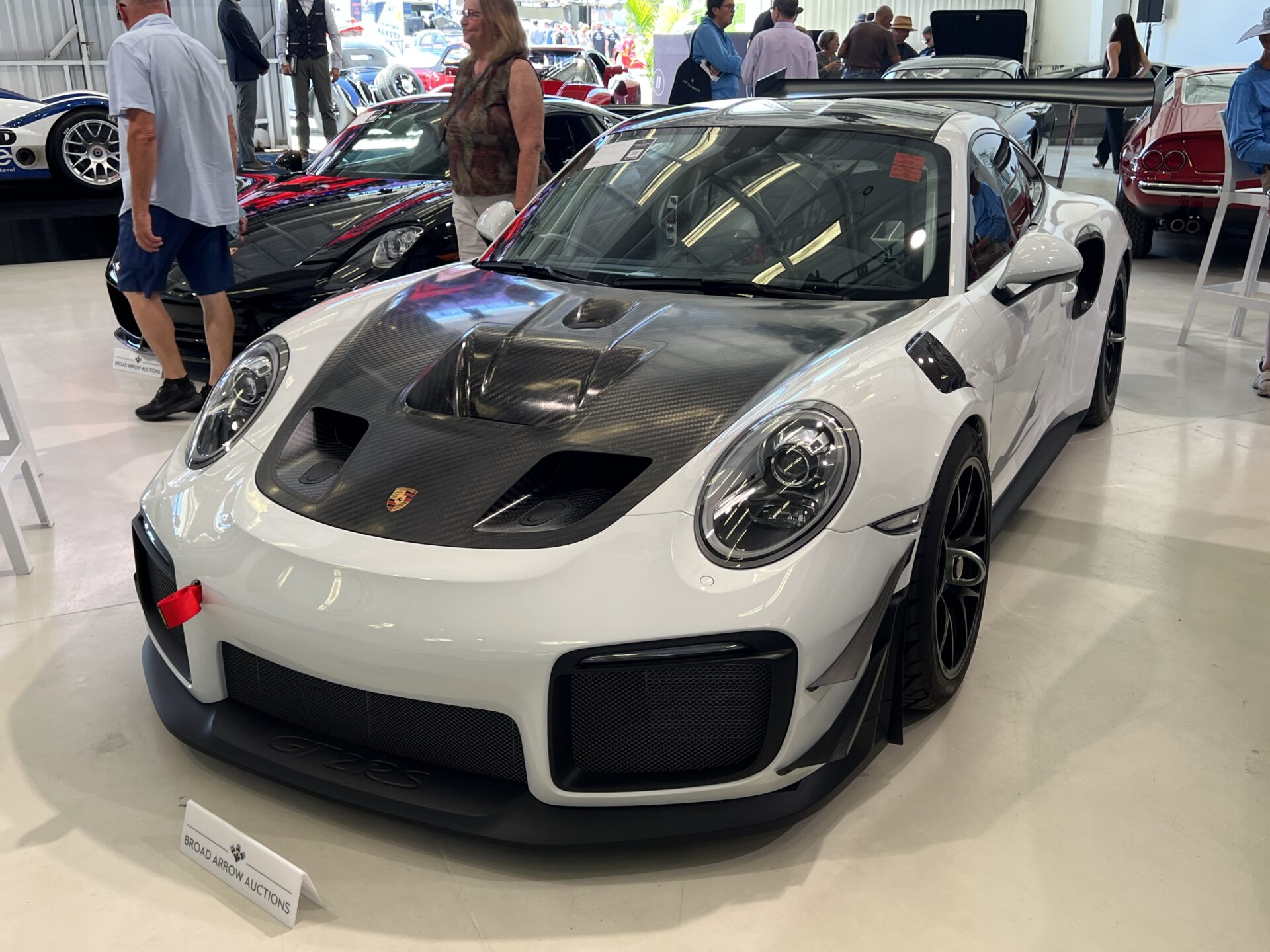
  • 24:15 Logistics and Filming Constraints
  • 25:48 Exploring Imposter Syndrome
  • 27:52 Capturing Vulnerability and Authenticity
  • 30:45 Reflections on Filmmaking Experience
  • 31:55 Diversity in Motorsport
  • 41:07 Future Projects and Aspirations
  • 44:36 Final Thoughts and Shoutouts

Bonus Content

There's more to this story!

Be sure to check out the behind the scenes for this episode, filled with extras, bloopers, and other great moments not found in the final version. Become a Break/Fix VIP today by joining our Patreon.

All of our BEHIND THE SCENES (BTS) Break/Fix episodes are raw and unedited, and expressly shared with the permission and consent of our guests.

Learn More

Incorporating gripping race-track broadcasts, in-car action-cam’ footage and interviews with experts in success, flow & sports psychology, the film utilises access to everything from pit garages, to personal conversations & tours with the four business tycoons at their places of work. Following the men through both their business and racing lives, this unique documentary follows the Gentlemen Drivers through their 2015 and 2016 seasons in the FIA World Endurance Championship and IMSA WeatherTech SportsCar Championship, exploring what makes them unique, how they got to where they are, and how they deal with their “two lives”.

“The Gentleman Driver” is a documentary that follows four tycoons who moonlight as Motorsport competitors and examines what fuels them to succeed, both at work and on the track. Now, some of you might be thinking, this isn’t new, this particular film debuted in 2018. That’s true, and even then the content was from the 2015-16 WEC/LEMANS/IMSA season. But it happens to be new to us, as a “recommended to watch” by Netflix. CHECK OUT OUR ORIGINAL REVIEWDo you agree with our findings? Comment below.

Tune in everywhere you stream, download or listen!

Listen on Apple
Listen on YouTube
Listen on Spotify

The documentary began with a simple idea: capture Ricardo Gonzalez’s potential second win at Le Mans in 2015. As Toni explains, gentleman drivers rarely get the media spotlight, even when they achieve historic feats. Though Gonzalez didn’t win that year, the film crew was hooked by the concept: successful businessmen racing at the highest levels against world-class professionals.

From there, the project snowballed. A pseudo-trailer was cut. Investors were found. And Toni, drawing on his experience managing drivers, curated a cast of four elite gentleman drivers:
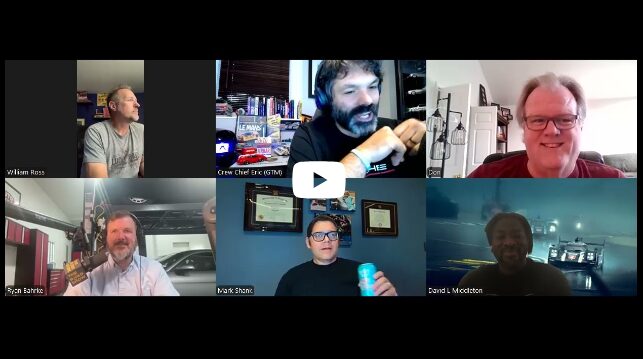
    • Ed Brown – Former CEO of Patron Spirits
    • Ricardo Gonzalez – Chairman of the Board at Arkansas State University Mexico
    • Mike Guasch – CEO of Molecule Labs
    • Paul Dalla Lana – CEO of NorthWest Value Partners

These weren’t hobbyists. As Toni emphasizes, they were the best of the best – often just a second off their pro teammates’ pace. That nuance, he admits, wasn’t fully conveyed in the final cut.


The Balancing Act: Racing vs. Business
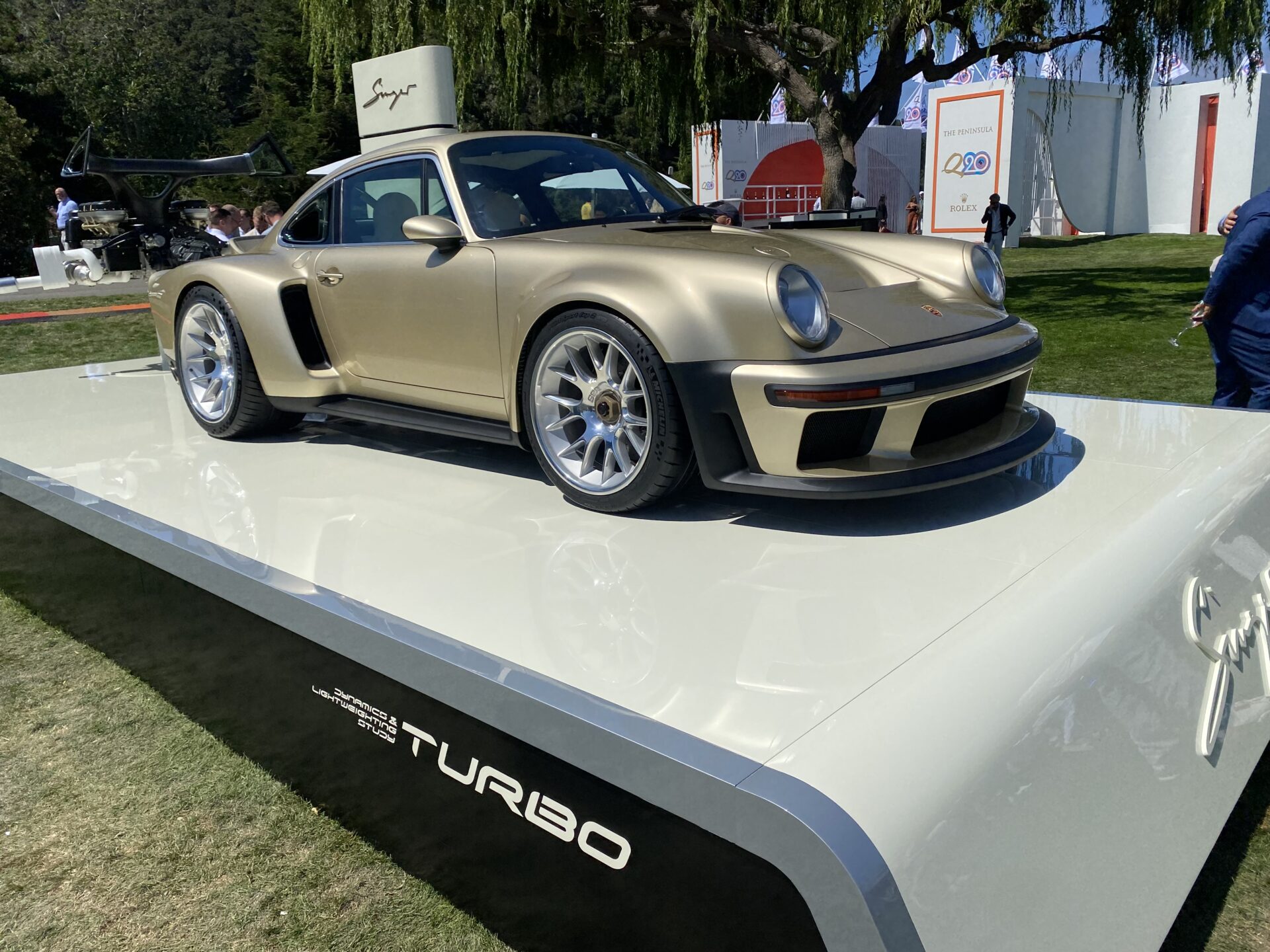
The Calderons were intentional about the film’s tone. It wasn’t meant to be a pure racing documentary like Senna or Truth in 24, nor a business exposé. Instead, it explored the intersection of two demanding worlds. The goal was to make motorsports accessible to a broader audience without alienating die-hard fans.

Still, the film faced criticism—especially from racing insiders. Some felt it glamorized wealth and portrayed racing as a playground for the elite. Toni pushes back: “It’s a mirror of what happens in real life. Whether you like it or not, that’s on you.”
Santiago, ever the diplomat, found the critiques both amusing and insightful. He saw the film as an entry point for newcomers, a way to spark curiosity and encourage deeper exploration.


Where Are They Now?

Of the four featured drivers, only Mike Guasch is still racing – albeit in go-karts after recovering from a serious LMP3 crash. Ed Brown sold Patron and moved on to other ventures. Paul Dalla Lana retired after a long and successful run in WEC and IMSA. Ricardo Gonzalez stepped away from racing to launch a university in Mexico, but his sons are now climbing the karting ranks.

Toni acknowledges that some key details – like the drivers’ actual talent – were underplayed. Scenes showing data analysis, coaching moments, or teammate dynamics could have helped bridge the gap for skeptical fans. The inclusion of psychologist Dr. Art Markman, while insightful, may have confused viewers expecting more trackside drama.

Still, the Calderons are proud of what they created. Santiago beams recalling the Austin premiere, seeing his brother’s name on the big screen. “It was exhilarating,” he says. “I was very proud.”

Does Gentleman Driver inspire grassroots racers or turn them off? Toni believes it’s both. The film shows that money alone isn’t enough – you need talent, discipline, and humility. In racing, even a CEO gets told when he’s the slowest on the team.

That meritocracy, that leveling of the playing field, is what makes motorsports magical. And Gentleman Driver – blemishes and all – offers a glimpse into that world.


This content has been brought to you in-part by sponsorship through...

Motoring Podcast Network

The Pilgrimage to Tamburello

Driving from the hotel onto the Via Emilia, and out of Castel San Pietro Terme to Imola in a eurobox rental car, I found myself feeling pretty emotional – partly because I was so literally in Senna’s wheel tracks, and also because the route is the SS-9, the Via Emilia, part of the route of the Mille Miglia, where, as a boy, Enzo Ferrari came and watched motor racing, and where, as a man, developed road cars which excelled on roads such as the Via Emilia was years ago.

Tune in everywhere you stream, download or listen!

Listen on Apple
Listen on YouTube
Listen on Spotify

The area is beautiful, slate coloured farm houses nestling in verdant green fields. In his later years, Ferrari never wanted to leave. The world came to Maranello, the man remained in the shadow of Mount Cimone. In his memoirs, Ferrari tells a story of taking a famous actress out in a Ferrari GT car, saying: “she had a peculiar feeling when the engine was turning at maximum revs – it was as though the hum penetrated her insides. I later told a friend of hers that I wondered what this feeling could be and he explained it to me with one of the great actress’s own expressions in the expressive Roman vernacular.”

Imola, start finish, taken from the Variante Alta:

All the best, the most visceral stuff of life is right here.

Simple things done well.

Either that, or I had just spent far too long on my own in the car.

Arriving at the track, I parked up outside, just by the river which runs right by Tamburello. It wasn’t immediately clear whether I was really allowed to park in that spot, but other people had, so I rolled the dice. Imola is a park, and I wandered there first – here’s what I found on the inside of Tamburello:

Initially I tried to get the lie of the land – there was an exhibition, cars on track and a very busy paddock. At lunch time the track day sessions ended, and I stood with a crowd awaiting the opening of the gate onto the track. The atmosphere was part rock concert sense of anticipation, part political demonstration, similar to one I once stumbled into in a rather rough town in Calabria. I hope the video captures that, with pantomime cheering and booing as it looked as if the gate was opening, but then was closed once more.

When we were allowed onto the track, it was only to walk from the grid to Tamburello, and this really did feel something like a pilgrimage. It was hot, and I was wearing shorts and flip flops; I walked barefoot in the grass, on the hot tarmac.

Who were the other people there ? Well, you be the judge, here we are entering the track, and making our little pilgrimage:

Someone must be making replica helmets too – once mine was unique:

At Tamburello, we observed a minute’s silence. Priest mumbled in Latin. Ferrari drivers, both contemporary and of yore spoke. Like a rock concert, it was hard to see anything, and you were carried somewhat by the ebb and flow of the herd. It was very emotionally charged; how many of these people actually remember Senna racing? Surely no-one much younger than me, and I am 40!

From memory, we had Raikonnen, Alonso, Morbidelli, Badoer and probably some others I am forgetting, most speaking Italian. Gerhard Berger, for many years Senna’s team mate, and also a former Ferrari pilot spoke, and since he is known as a joker, the crowd half expected his anecdote to end with a funny of somesort. “Of course, I had my accident at Tamburello in ‘89….later, when we were teammates, Ayrton and I walked down here, and talked about what we could do. We wondered if we could push the wall back. But of course, the river is there. We thought there was nothing we could do. Of course, we could have asked for a chicane, like we have now….but we didn’t think to do that….” No laugh, no funny, just an awkward pause. Then, a band struck up with the Italian National Anthem.

This is what I found on the outside of Tamburello, behind the wall which was the point of impact:

Afterwards, I walked around the track on the perimeter roads. They are named after great Italian motor racers, Ascari, Musso, Nuvolari, Tenni, cutting into the paddock as the crowds were leaving just by Rivazza.

By the time I got back around to Rivazza, the long queues of earlier in the day had disappeared, and I could easily get into the exhibition. It was worthwhile, offering McLaren, Lotus and Toleman F1 chassis, and the Formula 3 Ralt with which he burst onto the european scene. I was recently lucky enough to hear some of the F1 cars run, and it tickles me that, to the ear of 2014, these cars now sound like tuner Civics – a 4 cylinder drone overlaid by the whistle of a gargantuan turbo. There was memerobilia too. Particularly poignant were some marshall’s gloves, one signed by Senna, the other by Schumi. At the time, Michael had been in a coma for at least 3 months. I was particularly taken with the Warhol Senna; is anything more symbolic of becoming a twentieth century icon that being represented in the same style as Warhol’s Elvis, Monroe, Campbell’s soup can ? Linking everything together were about 100 large Keith Sutton photographic images, many familiar, some depicting fresh angles on familiar scenes. The large banner which had been down at Tamburello earlier in the afternoon, a few pics of Senna and virgin white, was now in the exhibition hall, bearing thousands of sharpie signatures – our activities today were part of the exhibit. You could even see the Opel Vectra GSi Pace car from 1994, which in this writers opinion was more responsible than any other single factor for Senna’s accident.

To non-Catholics the notion of Saints is an odd one, mortal men and woman who have become semi-divine, like Roman or Greek demi-gods. To anyone who knows modern Italy it is amusing that rather than directly asking God for something, you choose to work through an intermediary, a Saint who could “put in a good word” for you with God, since working around the system is a national sport in Italy. I used to wonder how one became a Saint. With a Mother Teresa of Calcutta, the qualifying criteria, if that is the term, is easy to see. In Brazilian and Italian attitudes to Senna a similar beatification seems to be taking place, a beatification which seems to forget that Senna was a flawed genius, that Prost won more races and championships.

What is going on here is not really a mystery; after all, if it was obvious to me at 12, obvious to me at 40 watching old races on youtube, that this guy really was something altogether different, inspiring, motivating – isn’t this beatification, peculiar as it might seem, just another way of recognizing that Senna was special ? That his greatness lay in his approach and attitude, and that it is completely separate from statistics about numbers of races or championships won.

I had thought my trip to Imola was about death, but in fact it was about life. If there’s a lesson here, it is perhaps that life is short, but if lived strikingly well, immortality is possible.


This content was originally featured on JonSummers.net, reposted with permission. 


Senna v Schumacher – An unfair advantage?

Having seen it, few can forget Jos Verstappen’s pit lane fire, at the German Grand Prix in 1994. The split seconds between the spill – when the team, and you, the viewer, know the fire is coming, and then the sheer size/spread of the conflagration forces one to conclude that Bernie and Max and the FIA gods chose spectator entertainment over safety when they decided refueling was a good idea. To me, refueling in the pit lane, during a race, under duress, is always going to be….uh, forgive me, playing with fire….but what was news to me was this, from the Wikipedia entry on Benetton: “During the 1994 season Benetton removed a fuel filter from the refueling rig used during pit stops. This may have resulted in a fire that took place during Jos Verstappen’s first pitstop at Hockenheim. This resulted in further inquiries by the FIA, during which, the refueling rig manufacturer made clear that in their opinion the modification would have resulted in 10% higher flow rates than the rules allowed.” That is to say, there is a good chance the fire was caused by cheating, by modifying the rig to improve flow and shorten pitstops.

1994 was unique in my experience of Grand Prix watching; not only did the Imola weekend bring the loss of Senna and Ratzenberger, but serious injury to Lehto and Barrichello; at the next round, Monaco, Wendlinger, had a serious accident which finished him as a competitive Formula 1 driver. These horrors tended to separate the split the season pre- and post-Imola. Changes to the cars came rapidly too – by the summer, Hill’s Williams was a different animal from the car Senna had lined up on the grid in northern Italian spring.

Tune in everywhere you stream, download or listen!

Listen on Apple
Listen on YouTube
Listen on Spotify

Pre-season ’94, and all the talk was that this would be Senna’s year; the pesky Frenchman had retired, freeing up a seat in what had been far and away the best car of ’92 and ’93, the Williams. However, over the Christmas break, there had been a raft of rule changes which had banned the traction control/antilock braking/ride height adjustment electronic jiggery-pokery which was making the sport more of a battle of software engineers rather than driving skill. The result was skittish, difficult to drive cars for ‘94, with the Williams car advantage all but gone. In the first race of the season, at Interlagos, Senna led until his first pit stop. Michael Schumacher – Verstappen’s teammate at Benetton – was running second, pitted on the same lap as Senna, but somehow was able to exit the pit lane ahead, despite running a similar strategy. Behind, Senna turned up the wick, and as he chased Michael, and was closing when he span in the twisty infield section. I vividly remember this, because Senna simply did not make those kind of mistakes, especially not in the dry. Michael went on and won. In the next round, in Japan, Schumacher beat Senna off the line, then Hakkinnen ran Senna off the road. M again went on to win.

Which brings us back to the fueling rig at Hockenheim; if Benetton were cheating there, by modifying the rig to work more efficiently, isn’t it likely they were doing the same at Interlagos ? Isn’t that how Michael was able to leapfrog Senna in the pits ? The other area in which Benetton were caught cheating in ’94 was around traction control software. This was the era of chips which carried programs during the race, however would erase the information when the engine was switched off in parc ferme after the race, allowing the car to pass scrutineering. Could it be the Benetton had traction control, and that was how M got the jump on A at the start of the Japanese race ?

It matters because without the cheating, if indeed that is what was going on, Senna would not have felt himself in the same pressure cooker as he did at Imola: Michael already had two wins; Senna a humiliating spin and a DNF, while it was he who supposedly enjoyed a car advantage.

Overall then one is forced to consider: had Benetton not ( probably) been cheating, would Senna have felt the same need to blank out Ratzenberger, Barrichello, his own fears, and commit that car right to the inside line, right where the bumps were to lift it off the ground, to turn it into a toboggan pointing straight at the wall…


This content was originally featured on JonSummers.net, reposted with permission. 


Senna – The Movie & The Devine Right to Win

As the thirtieth anniversary of Senna’s death passes ( May 1 ) it seems the great man’s life has been immortalized by a film, released in Europe and the US during the summer. I think the first thing to say is that all the reviews are saying that the film itself is good, enjoyable for Senna fans and people who have never heard of him. Remembering the great motoring films – Grand Prix, Le Mans, Two Lane Blacktop, Vanishing Point – usually the plot/character is dodgy even while the car footage is fantastic. It is exciting if the Senna film truly does carry both specialist and broad appeal, because it means Senna will be accessible to people now and in the future who aren’t Formula 1, or car people. So how should posterity remember Senna?

I feel unusually qualified to comment; you see, Senna, or more precisely the way he drove the black and gold John Player Special Lotus Renault in the summer of 1985, turned me onto motorsports as a 13 year old, and at 21 his passing marked my transition to manhood. As a teenager, on a Sunday morning, if there was a Grand Prix, I would read the paper to learn the grid and practice news, do my homework ( ! ) and then watch the race on Sunday afternoon. I still use the Senna criteria – fastest, feistiest – to decide who to follow in motor sport now. In my twenties, he symbolized a balls out no compromise flat out no fear full throttle approach to life – I’d tell people his influence was stronger than it ever was whilst he was alive.

Tune in everywhere you stream, download or listen!

Listen on Apple
Listen on YouTube
Listen on Spotify

My favorite Senna story concerned the Peralta, in Mexico. It is a long, 180 degree right hander. It was acknowledged to be a 5th gear corner – above 150mph. One year, Senna tried in 6th. He crashed, heavily. The following year, he tried again.

That he crashed again isn’t the point. I simply hadn’t ever witnessed that sort of courage, sheer self belief before. At Monaco in 1988 Senna was 1.5 seconds faster than anyone else; in Formula 1 terms, that just as well be a year and a half. As he went faster and faster, Senna later described it as an out of body experience – he was above the car watching it. I didn’t realize until years later was what was going on inside his head. Senna was deeply religious, and I believe he felt his speed was a gift from God – almost like a medieval King, who believed he had the Divine Right to rule, a mandate from God, Senna felt his gift endowed him with a Divine Right to pass, to win.

The qualifying format of the 80s/90s showcased the Senna gift most spectacularly; he would wait in the garage until the final seconds of the session, until everyone else had given their best, and then go out and be faster. From somewhere down inside, or perhaps outside, he harnessed the skill to be fastest. 65 times – his ratio of race starts to poles is unmatched. Often, it was the best spectacle of the race weekend. It was completely unlike the clinical Michael Schumacher would be in later years – Senna was turbocharged with passion – Holy Gasoline – he simply had to be on pole.

Monaco is a street circuit, and uniquely almost unchanged since the racing first tool place there, in 1923. Driving 1000hp+ turbo charged eighties Formula 1 cars there meant it was, to quote Nelson Piquet, “ ..like riding a bicycle around your living room…” – demanding great precision, forgiving no error. Senna shone here, and the clip here illustrates just how:

The self belief, the divine right meant that Senna had a will to win unlike anyone else in the sport. He introduced an over-taking technique common in Formula 1 now, where in order to pass, you position your car on the track in such a way that it is up to the other driver to either let you by, or crash into you. “Unsporting” people used to say, but as a teenager I loved it. Twenty years on, watching deliberate crashing, and the “win at all costs even if it is dirty” attitude which is standard practice in F1 now, it is the Michael Schumacher era we blame for the change; infact, these sort of tactics are something MS learned from AS. It is also something for which the sport cannot but be the worse for.

After Imola ’94, I remember feeling not so much upset, as conscious it was the end of an era, and that was very sad; also that Senna had always been on a razor edge, and he who lives by the sword….

Perhaps the best postscript is to watch those last few seconds of onboard footage; during practice and qualifying Senna had been deeply affected both by Ratzenberger’s death, and his countryman Barichello’s serious accident. Senna had made a point of advising Damon Hill, his young team mate: stay off the bumps on the inside of Tamburello, since they unsettled the car and could cause it to toboggan off track; yet the onboard footage shows him placing the car right on the bumpy inside line. Eyes open, fully conscious of the danger, up to the end, he was doing everything to achieve the fastest possible line through the corner.


This content was originally featured on JonSummers.net, reposted with permission.