Home Blog Page 22

Finding the Fastest Car in Le Mans Ultimate

0

For an upcoming activation, we worked with and challenged our partners at Gran Touring Motorsports (GTM) to figure out which is “the fastest” (or most equal) car in the GTP / HY / LMP1 class in the newly released Le Mans Ultimate sim. Our driver, GTM’s Crew Chief Eric is running a full spec’d AMD powered system with a Challenge PlaySeat, and MOZA Racing R9 CS, CRP Pedal box along with the add-on Handbrake and H-pattern shifter (as mentioned in this article).  Each vehicle was tested using the same conditions: Closed Course (no AI distractions), 18 minutes. Real tire wear, real fuel consumption, TCS set to 8 (car vary from 6 to 8 stock), and No Sets. Best lap of the session goes on the leaderboard. Check out the compiled sessions and results from on-board Crew Chief Eric’s rig below.

Crew Chief’s Thoughts & Notes about each Vehicle

  • Cadillac – takes some getting used to, and can be a bit twitchy. Exercising patience on corner exit throttle application is a must to avoid tank slapping. However, the more time you spend with the Cadillac you begin to realize it’s very good on tire consumption, and rewarding to drive long term.
  • Ferrari – has the best brakes out of all cars, consistent throughout the entire session. You can continually brake deep, late and even trail brake into corners if you’ve mastered the skill. The Ferrari’s engine is a bit high-strung which means having to really rev it out through the upper gears to achieve a top speed in the range of the rest of the cars.
  • Glickenhaus – one of two “non-Hybrid” cars in the fleet. The Glickenhaus accelerates quickly due to its close ratio gearing up through 6th, but it tends to understeer, and also provides some “bumpy” Force Feedback as the tire wear down. It also tends to lock up the brakes if you push too deep into a corner. It can exceed 200 mph, but 7th gear is a bit tall and therefore it struggles past 205 mph.
  • Peugeot – the second fastest in a straight line due to its slippery Aerodynamics. But that’s also this cars Achilles heel, it can tend to step out in corners if you’re not constantly vigilant, but when it does break loose, it’s pretty controllable, and can produce some epic power slides.
  • Porsche – sitting somewhere in the middle of the pack, it has one of the better exhaust notes. The engine is quite torquey and power delivery is very linear, which is typical of many racing Porsches. But the added torque also makes it want to step out, therfore careful throttle application and timing is key at corner exits. The 963 also tends to chew up the front tires more quickly than some of the other cars. You might be able to achieve 1 or 2 “hot laps” before they start to give out, making tire management extra important in longer stints. The Porsche also has the most violent steering pull down the long straights, be sure to keep your hands firmly on the wheel at high speed or it will see-saw you off the track!
  • Toyota – its the Le Mans halo car, it’s near perfect, and it’s really quick… everywhere. It’s hard not to be fast in the Toyota. Braking is strong, but not as consistent as the Ferrari. It has the highest top speed down the Mulsanne, but the handling and grip are by far the best.
  • Vanwall – The second “non-Hybrid” in the bunch. The Vanwall is also the only car with a 6-speed transmission (all the others being 7 speeds); It too can reach 200+ mph, but because of the longer gear ratios, it takes much longer to get there, and unfortunately makes it the slowest. But for what it lacks in speed, it makes up for in handling! It’s playful, responsive and a joy to drive, giving the best “smile factor” of the bunch. You also get the impression you’re driving an Indy car with full body work (especially the sound) compared to the rest of the Sports Prototypes.

Final Standings

As you can see, most of the cars are very close in time, with our driver putting down consistent laps in the 3:34 range. The Cadillac and Ferrari were only separated by 0.05 of a second. But the clear winner was the Toyota with a 2 second advantage over the rest of the field, and time left on the boards. We narrow down the Toyota’s advantage to the fact that it can achieve a top speed of 211 mph compared to other vehicles that hit their terminal velocity around 206-209. Those extra couple of miles-per-hour partnered with the Toyota’s acceleration, hybrid system and gearing adds up over the 8.5+ mile lap of Le Mans. Outside of the two “non-Hybrid” HY class cars (Glickenhaus & Vanwall) our opinion is that all of the cars are well matched. Pick your favorite brand, favorite sound or the one that suits your sim driving style best – either way, you won’t be disappointed. 

Come try them for yourself.

If you don’t have access to a sim-rig or one capable of running Le Mans Ultimate yet, come try it out for yourself at our upcoming activation in conjunction with the ACO USA’s Le Mans 2024 Viewing Party at M1 Concourse in Detroit, Michigan. Details on the event, and how you can register can be found here. If you’re a fan of Le Mans and want to get more access to upcoming news, events, and special “Evening with a Legend” series livestreams, check out the ACO USA’s membership packages today and “Become Part of the Legend” of Le Mans.

Special Thanks to our Partners for contributing to this research!


The Pope of Plastic: Rick Schad’s Journey from T-Shirts to TikTok Stardom

From designing iconic Grateful Dead tees to co-founding one of America’s most celebrated concours events, Rick Schad’s creative journey is anything but ordinary. With over three decades of experience across fashion, packaging, toys, and motorsports, Rick has shaped industries—and now, he’s shaping miniature masterpieces as the “Pope of Plastic.”

Photo courtesy Rick Schad

Rick’s professional entry into the car world began with a legendary machine: Ayrton Senna’s rookie Formula One car, the Toleman chassis #2. Despite its reputation as unreliable, this car nearly won the 1984 Monaco Grand Prix in the rain. Rick was tasked with selling it – and he didn’t just list it, he branded it.

Tune in everywhere you stream, download or listen!

Listen on Apple
Listen on YouTube
Listen on Spotify

He built a story around the car, created a presentation, and even verified its authenticity against a replica owned by Pink Floyd’s Nick Mason. The clincher? A modified roll bar that matched Senna’s height. Rick’s branding savvy helped sell the car to none other than Zak Brown, who – during the inspection – received the call confirming his appointment as CEO of McLaren F1.

Photo courtesy Rick Schad, The Pope of Plastic

That sale launched Rick into the motorsports world, where he applied his branding expertise to race teams and sponsorships. But his vision didn’t stop there. Inspired by Newport, Rhode Island’s elegance, Rick dreamed up a Pebble Beach–style event on the East Coast. He pitched the idea, built a presentation, and partnered with Audrain Museum founder Nick Schorsch to create the Audrain Newport Concours & Motor Week.

Launched in 2019, it was hailed as one of the most successful first-year automotive events in U.S. history.

Spotlight

Synopsis

In this episode of Break/Fix, Rick Schad, a professional artist with over three decades of experience, shares his journey from designing for renowned clients like the Grateful Dead and the White House to becoming a top model builder on TikTok. Known as the Pope of Plastic, Rick discusses how he transitioned into the automotive world by selling Ayrton Senna’s rookie Formula One car and later co-created the acclaimed Audrain’s Newport Concours and Motorweek. Rick delves into his early passion for models, influenced by his brother, and how model building played a significant role in his recovery from alcoholism. He also highlights his live modeling sessions on TikTok, where he builds models from various categories, including cars, planes, and tanks, while interacting with his audience. Rick offers tips for beginners and shares stories about his most challenging builds. The episode touches on his aspirations for a Netflix series centered around custom model builds that resonate with personal stories, promoting the art and passion of model building to a broader audience.

  • How did you get into the Vehicle Enthusiast world? What was that defining moment? Or Car that Inspired you?
  • You got started in models like many of us at a young age, was there someone that mentored or inspired you to deepen your passion for modeling?
  •  “The Pope of Plastic” – Where did the name come from, and what’s it all about? 
  • You mentioned that you build live on Tik Tok, do you feel the pressure “to be perfect” while you’re doing that? How does that help your business?
  • What would you say has been one of your most challenging builds? – also – is there a bucket list build?
  • There’s different levels of modeling and model collecting; Yours are on a whole other level – let’s talk about why people should get into modeling (again).
  • What gear should every (beginner) modeler have?
  • You do models on commission, how does that work? What do you charge (is it based on the size, complexity or customer requirements, or just hourly?) Do you autograph your models? Plastic models are delicate, how do they get shipped? What if something happens? 

Transcript

Crew Chief Brad: [00:00:00] Break fix podcast is all about capturing the living history of people from all over the auto sphere, from wrench turners and racers to artists, authors, designers, and everything in between. Our goal is to inspire a new generation of petrol heads that wonder. How did they get that job or become that person?

The road to success is paved by all of us because everyone has a story.

Crew Chief Eric: Our guest is a seasoned professional artist and visionary based in Rhode Island with over three decades of experience shaping various industries. From designing iconic t shirts for clients like the Grateful Dead and the White House To innovating in the golf industry with the world’s first fashion belt equipped with a divot tool, Rick Schad’s creativity knows no bounds.

His journey led him through packaging design, toy innovation at Hasbro, and even culminated in co creating the acclaimed Audrain’s Newport Concours and [00:01:00] Motorweek. And he’s here to tell all of us about his story. So with that, let’s welcome Rick to BreakFix.

Rick Schad: Man, great to be here. Thank you. Thank you for the, uh, introduction.

I sound really important.

Crew Chief Eric: And hiding in the background, but not for too much longer, is one of our regular co hosts, to break fix. Let’s welcome back Don Wieberg from garage style magazine.

Don Weberg: Hello. Thank you. Thank you. Good to be here. Good to be here. You know, next time, Eric, make sure there’s some background music going on.

When you introduced me, wave, please. Come on.

Crew Chief Eric: Some nice lounge music, a cigar,

Don Weberg: step this up a little bit, you know?

Crew Chief Eric: Well, Rick, like all good break fix stories, there’s a superhero origin story. So tell us how you got involved in the Vehicle enthusiast world. What was that defining moment? What was that car that inspired you?

Rick Schad: Professionally getting into the car world. I was asked to assist in selling Ayrton Senna’s rookie formula one car, the Toleman chassis, number two, which placed second at Monaco in the rain. And [00:02:00] technically probably should have won that race. Uh, we know the how everything went down with that.

Crew Chief Eric: The one you mentioned is like the worst one he ever drove.

Do you ever think that that’s just kind of ironic? The Tolman? Yeah, it wasn’t the Lotus. It wasn’t one of the MP4s, McLarens or whatever. It was the Tolman, which he ran for like one year and the car was like hellaciously unreliable.

Rick Schad: Yeah, it was a terrible car. He actually won Monaco, but they stole it from him.

And he ran one of the most incredible laps ever there. I spent a lot of time with that car and had to do a lot of research for it because Nick Mason from Pink Floyd thought he had the real Tolman and we had to go to see him and go look at his car and tell him why it wasn’t the real car, which he had spent.

I don’t know at that time, probably 600, 000 on the car. It was a total fabrication. It was built from Tolman parts, but it wasn’t the actual car. The reason we knew ours was, well, number one, we got the actual guys that built the car to work with us. And when we went there and we looked at the actual car, we knew [00:03:00] it was the real car because Senna was fairly short.

The roll bar above his head and back of his helmet. Well, when Johansson took over that car after Senna left and the roll bar was too short, so they cut the roll bar and extended it. So as soon as we walked up to the car, we saw that that had been cut. We knew that it was sentenced. I was asked to sell that car and I took an approach, which was a little bit different than other people.

I literally turned that car basically into a brand and put a real story around it. And I built basically a book on the car. I took my branding expertise. it to the way I would any brand to that car. And that was my first professional foray into the car world was really by the selling that airtime Seneca, which is kind of a crazy story in itself, because I’m very good friends with a gentleman who was Mario Andretti’s long time PR guy, Donald Henderson.

He was a character in the formula one, Indy car, [00:04:00] the whole racing world. And it may easy. One of the. Best branding guys in the world. In fact, he helped create Newman’s own with Paul Newman. And I was on LinkedIn one day and this guy had posted a picture of a motorcycle saying this motorcycles for sale.

And next to the car could see part of like a quarter panel of a car that I knew was a race car. And it was Don Henderson that posted this picture. And I reached out to him and I said, you know, who cares about this motorcycle? What is that? That is. Next to the motorcycle, me making that comment to Don. Don asked for my phone number.

He called me from that day forward, Don and I became very good friends. And it was Don that approached me about this Sena car. And he said, you know, I don’t have the time to sell it. And I really don’t care about selling it. He didn’t know anybody who could kind of take this on ultimately sold that car to Zach Brown.

So then the day that I met Zach Brown there for him to go over the car and he did the car inspection while he was doing the car inspection, [00:05:00] his cell phone ring and he was told that he had just gotten the position of CEO of McLaren Formula One while we were looking at walking around the car. That’s awesome.

That is a true story. Yeah, it was a, that was an amazing, amazing thing. And then it was kind of from there, I got launched into the automotive world first selling that car and then getting exposed to different race teams and people that were trying to build race teams. And again, I was applying my creative hat and my branding hat to help teams raise money and get sponsorships.

That’s kind of how it all started. It actually started for me responding to a picture on LinkedIn . So. And then I started going to different car events associated with building teams and things like that in the racing world. But I was going to all the major car events and I came up with the idea of why shouldn’t we have a car event like a Pebble Beach here in Newport, Rhode Island?

Because Newport is so beautiful and it has the mansions and the lawns and In my mind, I kind of painted [00:06:00] this picture as to what something like that would look like. And do like I do with any idea I have, I actually put it down on paper. And I take that idea from that concept that I’ll write in bullet point.

I’ll start talking to some people about it, and it looks like it has some kind of legs. Then I will go ahead and do a formal presentation around the idea, and then that is my selling tool to sell whatever it is creatively that I’m trying to do. Ultimately, I met Nick Schorsch, who was the founder of Audrain Automotive Museum.

He basically said, you know, I’ve always wanted to do something like this. And he had been thinking about something similar. He said, you know, why would I compete with you to build an event? Why don’t we do it together and I’ll hire you to do it. And we started that journey in 2017 and it took until. 2019, we launched the first Audrey Newport Concord Motor Week, and it was heralded as one of the most successful first year automotive event ever held in the United States.

It was very difficult thing to do over such a short period of time and make it look [00:07:00] like it had happened year after year after year. And that was probably one of the pinnacles of my life was building that event.

Crew Chief Eric: And you know, what’s fun about this is we’ve now painted a picture of Rick, the adult, but that’s not what we came here to talk about.

We came here to talk about your alter ego, the Pope of plastic. And we’re going to dive more into that, but that starts with little Rick playing in the basement, you got started in models. Like many of us at a really young age, who brought you to that? Was there somebody that mentored you or inspired you to deepen your passion for modeling?

And obviously that carries into a passion for car.

Rick Schad: I was born to be an artist. And my mom saw that very early on that she had a son that she felt had talent who could end up being something in the art world. But the model building started when I was really young. I mean, I built my first model in 1975.

It was a model by Ravel. It was a submarine. I did an absolute terrible job. You know, I was horrible. But the person who really influenced me in model building was my oldest brother, [00:08:00] David. He used to build incredible models. And he would never let me watch him build a model. He’d never let me see. And I would sit outside of his bedroom, begging to come in to look and watch him build models, but he would never, ever let me when he would go to school or I’d get out early and I’d get home before him, or he would go out someplace.

I’d sneak into his room and I would look at his models and I’d look at the paints, and he was really my inspiration for model building. I wanted to be like him and build models the way that he built models, but because he wouldn’t help me, I had to discover it kind of on my own. See, the tables have turned now.

Now my brother is jealous that I build models professionally. And he’s probably one of my biggest fans and I share pictures with him all the time and we go back and forth. He was like, you know, maybe I should have let you watch me build models. He goes, but I think you figured it out on your own, you know, better than he ever could.

So my brother was my first inspiration. And I don’t talk about this a whole lot, but sometimes I do. And, you know, I was an [00:09:00] alcoholic and I’m recovered and not recovered. You’re always recovering. But. Model building essentially saved my life. I was in a deep depression. I was drinking myself to death and I had to get back into something that was positive.

I got back into model building and it’s not the only thing that saved my life, but huge part of it and doing it every day and doing something positive. And then when people were giving positive feedback on what I was doing and were encouraged by what I was doing, especially when they hear what I’ve kind of gone through, To see what I’m doing.

And then it inspires them to kind of do the same thing. And the bigger picture is that it’s much more than model building. You know, a lot of people are looking at this as a healthy alternative as well. You know, I have a lot of people that were addicts and things like that, and they need something positive to do.

And it’s, it’s incredible. I mean, people that are trying to do something that can ultimately kind of change their lives. And that’s an important thing to know. And it’s really on TikTok. It’s really what my community is about. It’s not about, Hey, look at me. I’m the best model builder on [00:10:00] TikTok or I’m this, I’m that, I’m the Pope of Plastic.

It’s encouraging people to come together creatively to just be part of something. And if I can kind of be that ringleader to let people know, Hey, you know, there’s fun things to do that other people can enjoy you doing that are positive versus stuff that’s negative, then that’s really what it’s all about for me.

And I’m, you know, and I make a living at it, you know, I’m not going to lie. I get money. Tick tock pays me money and I sell models. As far as cars go, I grew up having an affinity for racing. My cousin was Cale Yarborough, the famous NASCAR driver. I grew up watching Cale race. And I was also a huge fan of the Indianapolis 500.

And like every kid, I had all the matchbox cars and I would set up in the kitchen and pretend I was running the Indianapolis 500. And I just always loved cars, but mainly I loved cars because of their artistic form. So I spent a lot of my childhood drawing cars, sketching [00:11:00] cars, dreaming of one day being able to design a car, which I’m not a car designer, but I’ve been friends with a lot of car designers.

I just always saw the art in them. And then when I got the chance to build car models, it’s just incredible now to be able to build these cars that I dreamed of as a kid. And now I’m able to do it at a level that most people aren’t. I mean, I guess if they dedicated themselves, they’d be capable of doing it.

But most people don’t have the time or they’re not capable of doing it artistically. So it’s just a huge passion.

Crew Chief Eric: Well, Don, I think he opened the door for a pet stop question. And I think, you know what I’m going to ask him, right?

Don Weberg: No idea.

Crew Chief Eric: It’s one of our classics, Rick, which is as an artist, especially, I love hearing the answer to this.

What is the sexiest car of all time?

Rick Schad: Well, I can’t say one car, but I can say one brand and that without a doubt is Ferrari. And I know that would be a popular answer for most people, but. The thing about Ferrari is it is 100 percent art from the engine to the chassis to everything that they do with those [00:12:00] cars, especially the classic Ferraris when Enzo Ferrari, you know, his vision, his passion was always about the sound, about the look, about what it looked like when it was going down the road, what it looked like from behind, what it looked like, you know, the front, you know, he said, you know, a Ferrari emulates a beautiful woman.

I’ve done some public speaking and things and I’ll talk about Ferrari and I will draw the silhouette very quickly and I can say, okay, imagine a woman laying on her side and here is the hip and then it goes down and then you have the shoulder and then it goes all the way out into the nose of the car down to the road.

And if you look at that shape, what you can look at is basically like a beautiful woman on her side, and then you can actually start adding wheel wells and everything else. And you can watch it transform into the actual shape of something that looks very similar to a Ferrari. And I think that’s a good example of the way that design process was done back in the day.

Ferraris are so fluid and so sexual. And even if it wasn’t Ferrari, if it was another brand that had kind of that [00:13:00] same

Crew Chief Eric: Well, the car that comes up a lot, and you’d probably not be surprised by this, is the E Type Jag.

Rick Schad: Yeah. Enzo said that the Jaguar was the most beautiful car he had ever seen. Kind of the same principle when you look at it.

They’re almost liquid in their form. That’s an incredible thing. So, It’s hard to say one because I think all Ferraris are beautiful. I’m not as much of a fan now of the more modern Ferraris. I’m more of the classical Ferraris. I think when Ferrari went public, a lot of things changed. I don’t think you would have ever seen an SUV from Enzo Ferrari.

I don’t think you would have ever seen an electric Ferrari. And I think he was very true to his passion. And he kept that passion alive all the way until he died. When he died, Ferrari changed immensely. I think. I think at the core of the passion is still there, but especially amongst Ferrari fans. I mean, I’m still a fan of Ferrari.

I’ll always bleed Ferrari red, but I’m not as much of a fan of the new stuff as I was at the old stuff.

Don Weberg: You know, Rick, listening to you about [00:14:00] Ferrari, et cetera. I think we can all agree here that the best looking Ferrari ever made, you know, correct me if you think I’m wrong. The Mondial Troop. Oh, stop.

Rick Schad: Oh yeah.

It was the greatest Ferrari ever done. That family four seater Ferrari. There you go. It looked like a squash toaster.

Don Weberg: I love the cheese grater on the side. Grate your Parmesan right there. It’s terrific. Yeah. There’s

Rick Schad: definitely visions of the 250 GTO and that. Yeah. It’s just unbelievable. Great car. The Mondial.

Don Weberg: I was curious about your moniker, your name, the Pope of Plastic. Go into that for me. What the hell is the Pope of Plastic?

Rick Schad: Well, the Pope of Plastic came about, first off, I wasn’t working, I was looking for work, still am, and I wanted to get back into model building because I was always able to sell models kind of on commission on the side to make extra money.

And when I couldn’t find work, I said, well, look, I got to do this seriously. And if I’m going to do it seriously, I need to be on different social media sites. I was just sitting there one night. I said, I got to come up with a name. And I went through all [00:15:00] these different iterations of what it should be called.

And then I was like, you know, it should have something to do with plastic. Plastic is a great word. A lot of people relate to plastic. I said, what goes with plastic? And I went through all these different names. And all of a sudden I hit upon, what would be the hierarchy of plastic? If plastic was a religion, what would the hierarchy be?

And I was like, well, the top would be the Pope. As soon as I said Pope, I went Pope plastic, Pope of plastic. I was like, bingo. There it is. I thought it was funny. I thought people would find it humorous and it’s tongue in cheek. I was never trying to say to people, Hey, you know, I’m the best model builder in the world.

Look at me. It was more a funny, humorous thing that would grab somebody’s attention and also something that I could build a logo around. And so I started Popoplastic first on Instagram, really didn’t get much traction. I wasn’t really putting a lot of work into it, but a friend of mine said to me, said, Hey, you should go on Tik TOK because Tik TOK is all live.

He goes, people would love to watch [00:16:00] you build models. And I was like, you know, what am I going to do on Tik TOK? I don’t dance. I don’t, I own a cat. I don’t do makeup pointers. He said, no, he goes, you could build an amazing community on Tik TOK. Forget about what you hear about the media and everything.

People are there to discover things. And especially watch people do things live, whether it’s oil painting or DIY things or crocheting or whatever it is. And he said, you should give it a try. He goes, you know, you have a good sense of humor. Obviously, I know what I’m doing when I’m building models. And I said, all right, what the hell?

I’ll go on there one night. I went on and set up the account and never thought that anybody would follow me. And within like a month, I had a thousand followers and I could go live. And when I started going live. People just hooked right into it. It was incredible. To this day on TikTok, people don’t even know my real name.

They call me the Pope. I’m the Pope. That’s all they refer to me as is the Pope. Pope this, Pope can you answer this question, Pope can you do this. And it’s really incredible [00:17:00] because it’s turned into a community of people that are just fascinated with model building. A lot of older people who hadn’t built a model since they were in high school, and they’re looking for something to do.

And I I’ve gotten a lot of people back into the hobby. I’ve gotten a lot of people to bring their young children in to watch me do what I do. A lot of the people who follow me have become friends with each other. It’s a pretty interesting thing. So the purple plastic is really turned into a brand. For me,

Don Weberg: now, Rick, forgive me.

I haven’t seen any of your tick talk, but I’m curious. You say people watch you build the models. You put them together. Are you showing them specific techniques on painting on bluing on how are you doing this? What are you building it with?

Rick Schad: They’re literally watching me build a model from start to finish.

So they’ll tune in and say, if I’m unboxing the model, I’ll say, okay, we’re going to build a new model. And my models take weeks to build. to build. I don’t build them overnight, so they’ll watch me from day one where I’ll take the first piece of plastic out and they’ll watch me do the whole process. So I will announce [00:18:00] each day.

Hey, today I’m going to be doing weathering or today I’m going to be building the engine. Today I’m going to be doing the chassis. So people will sometimes tune in for specific things that I’m doing and they’ll have specific questions. But most of the people watch me, watch me almost like it’s a television series.

They want to watch me from the start and they don’t want to miss a single episode of me building. And I usually build live three times a day. And I take a lunch break. I treat it like an actual job, which it is for me. And then the customers that are ordering models from me, they get the opportunity to see me build their model live.

They find it very fascinating and a lot of people order models from me now order it because of that reason. They want to watch me build their model. And then when they get it, they’re excited because, you know, they’ve seen me do the whole thing from start to finish. So it’s really unique and it’s a very, very positive community that I’ve built.

You know, a lot of those people become friends with each other, which is really, really cool.

Don Weberg: So it obviously helps your business then.

Rick Schad: It is my business, and it’s [00:19:00] why it scares me when I hear them talk about getting rid of it, because I can honestly tell you on all the platforms that I’m on, TikTok is the only one I don’t think I’ve ever had a negative reaction.

comment. I’ve never had a negative thing happen. And TikTok is very strict. I can’t sit there and talk about drugs or things like that. They’ll yank you right off. So you have to really be very measured in what you do on there. And for what I’m doing, I think that’s a very good thing. I pride myself on building a very positive community on there.

Don Weberg: The way you’re describing it. Do you feel a lot of pressure to be like perfect on spot? Click, click, click, click, click.

Rick Schad: I build like I would if I were just sitting here by myself, except I talk to the people. The thing they love the most is when I get angry because I get mad a lot when I’m building and I have been known to throw things and I’ve been known to drop a few F bombs here and there.

Crew Chief Eric: Usually when the tester’s glue keeps your fingers united, right?

Rick Schad: Yeah. Their favorite thing is when I drop things on the floor. Because that’s like [00:20:00] the worst thing in model building is when you drop something on the floor, especially a small piece and they can watch me progressively get angrier and angrier.

They just love it. I mean, cause it’s real. Can I tell them all the time? What if I were at your job standing behind you, watching you work all day and making comments, you know, how would you do, especially I’m doing. Stuff that’s very, very tedious. I’m wiring things. I’m making things look extremely real.

I’m doing the gauges on the instrument panel, things like that. And it’s very, very tedious. So you can get very angered while you’re doing it because you get frustrated, but it’s very, very real what I do. So it’s not like your normal YouTube channel, where everything is scripted and you know, Oh, okay. I’m going to put these two pieces together and go off camera, build everything to come back and it’s, you know, all put together.

They’re literally watching me from start to finish and they get to see the good, the bad and the ugly all the time. One thing that I did a week ago, which was really, really cool. I came up with [00:21:00] the idea to do something called the F bomb marathon. I said, here’s the idea, everybody. I said, I’m going to let you vote on a model kit.

I’m going to pull out 10 model kits. You guys pick the model kit. Right after the Kentucky Derby in, I’m going to come on here on live and I am going to build from start to finish without taking a break for as long as it takes. I don’t care if it takes five hours, 10 hours, 12 hours, 24 hours, whatever it is, I’m going to build a complete model for start to finish.

And we call it the f bomb marathon because you can be guaranteed that I started dropping f bombs the more hours accumulated. And let me tell you, it was one of the most watched things I’ve ever done. I had over 140, 000 people watch over the course of 12 hours. And I built the model from start to finish in 12 hours.

And at the end, in the 12th hour, I auctioned the model off. And then they got to take the model home. But it was really cool. I’m always doing fun things like that, coming up with different contests to give stuff away.

Don Weberg: What was your favorite model to build? What

Rick Schad: kind of car was it? Well, I build [00:22:00] everything.

I build whatever I’m hired to build. I build cars, planes, trucks, tanks, boats, whatever it is I get hired to do. So, I do do a lot of cars. My favorite car that I’ve ever done was an Alfa Romeo Spyder race car from 1934, I think. It’s beautiful. It’s a beautiful, beautiful model. It’s a 1 12th scale, but it has every hose, a lot of scratch building.

It looks exactly like the real thing. And I did it post race. So it’s dirt with the mud and the grime. It’s a beautiful, beautiful model. I’ve done so many though. I get asked all the time. I, even today when I was live, they were like, Oh, what’s your favorite model that you’ve done? I love every single one of them that I do.

Just for this year alone, today I finished my 22nd model since January 1. That’s a lot of models. And when you see my models, it’s pretty incredible. As I’ve been able to do that many this year, but I do it every day. I do it probably 60 hours a week.

Crew Chief Eric: That’s incredible. Dovetailing off [00:23:00] of what Don was just asking you about, what would you say is maybe one of your most challenging builds?

The

Rick Schad: most challenging build I had to do was I was hired by the United States Marine Corps to build an entire squadron of Harrier jump jets for the 50th anniversary of the Black Sheep squadron, and these were 132nd scale aircraft. In their configuration. So I had to do everything custom to make it look exactly like those, but I don’t build models that just look like the thing I’m building the engines to where they’re all wired.

The cockpits are all perfect. The wheel wells are all plumbed with hydraulics. So to do a whole squadron, which was six aircraft. At one time was absolutely insane. It took 14 weeks to do them working every single day, at least eight hours a day, sometimes 10 hours, sometimes 12 hours a day. It was insane.

That was a pretty crazy project.

Crew Chief Eric: And then kind of thinking to the future, [00:24:00] because the year’s not over yet. What’s on your bucket list? What do you still want to build?

Rick Schad: Well, I actually have it here. I haven’t started it yet. I have to find a customer for it because it was. A gift from one of my fans. I just got a one 12 scale Bugatti type 37.

I want to do that. Wanted a model of that car. I’ve actually driven it before the real one. And I’ve always wanted to do one. So that’s one that’ll be coming up at some point. I’ll find a customer for it and I’ll end up building. I can’t build unless I have a customer for it. Cause it takes too much time and I have to.

You know, get paid for what I do. The other thing that I’ve always wanted to do, and I will get the opportunity, I’m not sure if it’ll be this year or next year, probably the end of this year, is a four and a half foot long Titanic, with all working lights, working steam funnels, sound, the whole nine yards.

Crew Chief Eric: Does it crack in half? No, I’m not going to do

Rick Schad: the crack in half version, but so I’m going to be doing that. The model’s already been purchased. I’ll get it at some point. I, you know, I’m, I’m fortunate that I get to build a lot of really cool models. [00:25:00] And to be honest with you, I’ve had a lot of fans ask me, Hey, what model have you always wanted to build?

And then I’ll tell them and miraculously it’ll show up at my house. So I have basically all the models I’ve ever wanted to build. You know, I just have to find customers.

Don Weberg: How many models are in your house unbuilt right now?

Rick Schad: Um, over a hundred, but they’re all for customers. So they’re not mine. They’re right.

They’re just waiting. I have a waiting list. And then a lot of the times people send me models every day. I had a model come today. They’re just because they want to give me a model. All week long, I build the big complicated models. On the weekends, I’ll do small models, something I can build in two days.

So those are models that the average person can kind of afford. And I’ll auction them off. Or I run contests and sometimes I’ll build a contest winner’s build on the weekend.

Don Weberg: Where do you auction

Rick Schad: these off? TikTok? TikTok, yeah. I tell them Sunday at 7 p. m. I’m going to auction this off and tune in the way that it works is they have to place their bid in the [00:26:00] comment section and I bet everybody before I say if you’re going to bid, you have to message me.

You have to understand how it works. You have to be ready to pay as soon as the auction is over with. And it’s worked out really well for me. I’ve never been scammed by anybody. I always have bidding wars. in there, which is really interesting to see. I have some guys that have almost 10 of my models, which my models are expensive, the 500 to 800 model.

So I’ve got guys that collect my models and, but it’s fun because the small inexpensive models, it gives the average person a chance to own one of my models. Models, which is pretty cool. So

Don Weberg: where do you find these fits? I mean, are these Les AMTs? What are we talking about?

Rick Schad: We make a lot of fun of a MT and MPC and the hurdle.

A lot of ’em, the customer will buy the model, have already bought the model. Maybe it’s a model that maybe even their father owned or something and would never built, and they’ve always wanted to see it built. Or it’s a model of car that they wanted as a kid, or they drove in high school and they’ll find the kit and they don’t [00:27:00] have the skills to build it.

So they send it to me. Same thing with airplanes or tanks or whatever. The customer buys the model and then they send it to me or I find the model for them and then they pay for the model and then I build the model for them. But it’s not just building right out of the box. You know, there’s a lot that goes into it.

Yes. I use what’s in the box, most of it, but a lot of times I’m scratch building completely. On it’s because they’re not up to the realism that I want.

Don Weberg: What are some of the components you scratch build

Rick Schad: for an interior of a car? The seatbelts, the upholstery, the dash, the instrument panels are usually scratch built all of the wiring goes behind the dashboard.

Even though you don’t see a lot of this stuff, it’s still there. And I take photographs as I’m going. So the customer has photographs of the whole. Process so they can see what went into it, all the stuff that a model companies don’t invest the time to putting into the car or it’s just not realistic enough.

So I’m reupholstering and make it look more real.

Crew Chief Eric: And it’s interesting you bring that up [00:28:00] because I’ve seen some videos where guys are either restomodding or rehabbing or restoring older models. So do you do some of that as well? You, you mentioned the word reupholster and it sprung that image into my mind where I’ve watched videos of guys doing this.

Rick Schad: I will refurbish a model for somebody, but I prefer to start from scratch. Put it this way, I just had a huge vintage Formula One car model sent to me. It’s partially built, which I normally say absolutely no, I won’t do that, because I want to start from scratch because it’s a process I go through, but on certain occasions, this is a very special model that they stopped making in the 70s.

And it’s a very detailed model out of Japan and I couldn’t turn it down. So I was like, yeah, I’ll do this. But most of the time I’m building it from the start to finish. What kind of makes me different from everybody else is that I don’t build showroom models. I build models that look like they’ve been raced, run, worn, rusty, dented, dirty interiors.

[00:29:00] The wheels are dirty, you know, the tires are about to go flat. For me, that is the fun of building for me is making it truly look realistic, understanding how to create rust and in dirt and grind and make it look scale and make it look really realistic. That’s really what I’m good at. And 90 percent of the time, those are the kinds of models I’m building.

And that’s really where my bread and butter is.

Crew Chief Eric: Rick, it’s obvious that your skill level is leaps and bounds above where many of us are. There aren’t many of us that I can think of that are professional model builders, but you mentioned earlier about building a community around modeling and things like that.

So there’s a lot of people that are probably curious, want to know, how do they get in? So let’s see. Kind of dial it back a moment and talk more to the beginners or the intermediates and people that want to get back into modeling again, as a hobby, where do you start? And obviously it must be gear. So what should every modeler have as a beginner in their toolbox?

Rick Schad: Here’s what I asked somebody who wants to. to get into the hobby. I say, okay, well, what is the subject [00:30:00] matter that you like? Well,

Crew Chief Eric: cars, obviously.

Rick Schad: Okay. So cars. Yeah. So what kind of car do you like? Do you like a domestic hot rod or do you want a Cadillac? Do you want a Duesenberg? Ferrari? What kind of car do you want?

Once I hear that, it is very important. That out of the gate, you build a quality brand model.

Crew Chief Eric: Let’s unpack that for a second. Cause we talked about Ertl and AMT. So what to you is a quality brand, especially in plastic? Tamiya,

Rick Schad: Asagawa, Ashima. There’s a few brands out there that are very, very good. The Japanese probably make the best kits in the world.

The domestic kits that you want would be like a Mobius or you’d want Silvino Jr., which makes a lot of racing kits. AMT and MPC, which most people remember as a kid, those kits, there are millions of them out there. They make a lot of great subject matter, but the quality of their models is not very good.

The molding isn’t that good. They’re very complicated because [00:31:00] they don’t fit very well. So I steer people away from that. I tell them if you want to build a really good kit right out of the gate, I would buy Tamiya. Because Tamiya is one of the oldest model companies in the world. Their instructions are rock solid.

The fit and finish of their models is far none better than anybody else in the industry. So the better the kit, the easier it is to build and the better results you’re going to have. So I steer them towards a Tamiya kit. Number two, get the model kit, read on the side what paints that you need and buy those paints.

Just follow the instructions and follow the painting guides. Make sure you have a good set of very good paintbrushes. Go to Hobby Lobby or whatever and buy a nice set of good paintbrushes with a nice variety. Number three, you need an airbrush right out of the gate. And people get scared of that. Oh, an airbrush, oh my god.

Terrifies people when you mention the word airbrush. You can get an airbrush for very little money. You can get an airbrush for twenty dollars, you can get a compressor for eighty dollars, and you have to learn to airbrush [00:32:00] early on to get good results. I mean, would you paint your regular car with a paintbrush or a paint roller?

No. I’ve seen people do it though. Wait, wait, which car?

Crew Chief Brad: Yeah.

Rick Schad: So you want to get an airbrush so you can get a nice smooth finish, you know, on all of your parts. You have to get the right glues. We’d still use the glue that you used as a kid, but it’s used for certain things. There’s about four different glues that you need to get.

And you got to understand how to use those different glues. The most important thing when you open up a kit and you actually start to build and you’re following the instructions is my biggest, best piece of advice for somebody is. Treat every little assembly like its own model. Take great care in each assembly.

If you’re starting out with the engine, follow the painting instructions. Assemble everything very carefully. And if you take your time with every single component, by the end of the model, you’re going to have a very, very nice model. And I think you’ll have a lot of fun doing it. It’s no different than doing a puzzle or whatever.

[00:33:00] It’s a little more entailed and when people finish a model the first one I hear from them all the time and they’re just absolutely they’re like, I can’t believe how much fun that was and my kid enjoyed doing it with me. I can’t wait to do another one in this next one. We’re actually going to try to weather the engine, you know, and things like that.

So I get to watch that progression. But yeah, The most important thing is to buy a very good model kit, which would be my suggestion would be Tamiya out of the gate. Don’t buy something too complicated. You don’t want to go to a 112 scale out of the box. You want to stick with like 125 scale car to start with and just love it and take your time.

That models aren’t meant to be rushed, meant to be taken one step at a time. Joy,

Don Weberg: when you recommend practicing on the airbrushing, learning how the machinery works, learning how the spray works, what substrate would you recommend people practicing on?

Rick Schad: Great thing to use for airbrushing is plastic spoons, spoons, almost the same thing.

That auto guy, you know, when they paint, they do test spray. We call ’em spray out. When you do a spray out on a [00:34:00] car, you get that little car form, they spray on it, they look at how the sun is reflecting. You can buy those, but plastic spoons are fantastic because they have different reflections off of it.

Just painting on paper, just painting on a cardboard box, just painting on a water bottle. Painting on anything, but just to get the feeling of how it is to use the airbrush and how it is to clean the airbrush. Once you get over that hump, the first time you use it, 99 percent of the time, everybody goes, Oh my God, it was a lot easier than I thought it was.

And it was so much fun. And I can’t believe how great the paint came out because they’re not used to doing that, or they’re used to using a rattle can, which are terrible because they put too much pain out too quickly. And it’s very difficult to get a good finish with a rattle can. Airbrushing is incredible, but you also have to know how to bend the paint, what paint to use.

I don’t ever recommend anybody use an enamel anymore. Most of us have moved over to acrylics, which are great because you can thin them with water or you can thin them with rubbing alcohol, is what I use. As [00:35:00] the Pope of Plastic, I call it the Holy Spirit. So that’s what we use, which is 91 percent rubbing alcohol that you can buy at any Walgreens or CVS.

I use Tamiya acrylic paint. As soon as you get the bottle, you can split this in half. Half rubbing alcohol, half paint. So you’re automatically extending your paint, but you need to be able to thin the paint in order for it to work with the airbrush. The other great thing about thinning it with rubbing alcohol is that it accelerates the drying.

So pretty much when you’re done spraying it, you’re done. The model is dry to the touch, so you can actually handle it a little bit. So it’s a lot different than your old enamels, which take a long time to dry. And, you know, once you get a fingerprint in it, you know, you’re screwed.

Don Weberg: You mentioned, you know, cutting it with alcohol, cutting it with water.

Do you have demonstrated videos where people can watch what you’re doing so they can see exactly how you’re doing it so they can learn from that?

Rick Schad: A lot of guys do do that. I really don’t think. do that. I encourage people to watch me do it live and when they come on the live, they can ask me any [00:36:00] question in the world.

A lot of times when I’m in between things, I’ll demonstrate for them. Here’s how I did it. Here’s how I’m doing it. And I do it in live time versus just making a recording of my hands and showing how I do it. The other thing to be honest with you is that a lot of this stuff I’m kind of secretive about. I just don’t like everybody knowing how I do everything.

And unfortunately, I’ve had to give a lot of his secrets away because I keep getting asked, keep getting asked, or they’re watching me do something and they’re like, Oh, what are you doing right there? What is that that you just did? And then I’m kind of forced to tell them. I’m getting better at doing that because I realized that what I’m doing is an art form and just because you watch Rembrandt paint a painting, it doesn’t mean that you’re going to be Rembrandt.

I’ve had to kind of realize that what I do is art and you have to have an artistic eye, especially in painting, because Weathering in painting is all about layering color. If you don’t understand color theory, and you don’t understand what colors go to trick the eye to think it’s this and think it’s that, then you’re [00:37:00] not going to be very good at the weathering part of it.

Weathering is all layering of color. And understanding how that all works and making rust on a model kit. You don’t do it the same way. You know, the rust is actually formed in nature. You’re tricking the eye to think it is actual rust. So there’s a lot of techniques and things like that, that you develop over time to be able to execute those things.

And I can execute them very fast because I do it all the time. So it’s just, you know, that’s what they really enjoy watching. They like seeing it unfold.

Don Weberg: Decals. They’re the absolute worst.

Crew Chief Eric: Oh, they’re the nemesis.

Don Weberg: You dip them in the little water. You pull them out and they tear. You’re done. It’s over. Do you have any tips on how to handle that stuff?

Rick Schad: Decals are difficult. So the tip is. Always start with very hot water. You dip the decal in. Don’t let it sit for too long. Test it and see where it just starts sliding off the paper. You put the paper in position where you want the decal to go. You slide the very beginning of it off until it [00:38:00] touches the plastic.

And then you gently slide the paper and let it fall down onto the plastic. You know, that’s okay. But what happens is bubbles will form. It doesn’t go down into the cracks, like putting a big sheet of piece of vinyl on your car and saying, okay, there you go. It looks great. But they move and smoosh all the bubbles out.

They cut and they let it fall into all the crevices. So in model building, they make solution now called solve set. And solve set is you put the decal down with water. You tap down the water or you let the decal dry a little bit. Once the decal dries a little bit, then you take paintbrush in the solve set liquid, you paint that liquid over the decal, and then you just leave it.

You don’t touch it. And what will happen is the solve set dissolves the decal and lets it fall into all of the crevices and it will remove most of the bubbles, but you may have to go back and poke a little tiny hole into certain bubbles and then put solve set on it again and let it soak down. [00:39:00] It literally becomes almost part of the paint job.

So solve set is really a miracle in model building.

Crew Chief Eric: It’s almost like Mod Podge in a way, when you’re doing decoupage, it’s the same idea.

Rick Schad: It’s basically the same thing. And then it depends, different companies make different decals. Some are better than others. We know which ones are really bad. You know, even me as a professional, you know, have very hard time with, and when I see them and I know they’re from a certain company.

I can design my own decals, so I will design a lot of time my own decal, and I have a decal printer that prints them for me. So I have resources that a lot of people don’t have, and that’s a whole nother process is designing your own decals. But

Don Weberg: yeah, I was gonna say that’s not something that we all do.

Crew Chief Eric: 3D printers are becoming a thing, but decal printer, that’s a whole nother story

Don Weberg: when you wanna buy a model. Where do you go? Do you go to Amazon? Do you go to a toy store you like? Where do you go?

Rick Schad: Amazon is a great place to find just about any model. I get everything on Amazon. I have my own hobby shop on Amazon.

Amazon. com [00:40:00] slash shop slash the political plastic and I have over 300 items in there. A lot of models, all the supplies that everybody watches me use every day. I say, Hey, if you want what I’m using, it’s on Amazon. I don’t make a whole bunch of money from that. I did it more as a convenience because I get the question all the time.

Oh, where did you get your airbrush? You know, where did you get your compressor? Where did you get this model? Where did I have it all in that store so they can go there and everything is there. It’s like going to a hobby shop. I always tell everybody, if you have a local hobby shop, go to the local hobby shop, don’t go to my store, go there because.

Hobby shops are dying free, and we need to support those hobby shops. The only reason I built the Amazon store was for people who can’t get to a hobby shop, or they don’t have a hobby shop, or I have guys that are in wheelchairs that follow me and can’t get out really. But they still want to build models.

So that was pretty much the main reason I built the Amazon store. But Amazon’s great. You can get just about any model kit you can imagine or any airbrush or any [00:41:00] exacto knife or whatever.

Crew Chief Eric: But Rick, I want to take this in a slightly different direction because. There are a lot of fans of plastic model kits out there.

And I had a few growing up myself and I loved taking kits that were different and try to make like cool cars. Like I’m going to do a six cylinder 904 with Fuchs wheels because I had a 911 turbo. And, you know, I made my own engine mounts and, you know, plastic was fun because you could do that with stuff.

Some testers or super weld or stuff like that. But as I got older, I sort of just got disillusioned with the whole plastic thing. And now as an adult, I don’t mess with plastic unless the box says Lego on it. You know what I mean? So plastic over die cast. Let’s talk about that a little bit. I know where Don sits on this and he knows about my collection.

So I want to get your thoughts on plastic versus die cast.

Rick Schad: Uh, there’s no comparison plastics leaps and bounds. Better than die cast? Look, I know all the brands, I know CMC and Exato and Amalgam and all of that, but most of the die casts are not die casts, they’re resin, and resin [00:42:00] models are equally as good, if not better sometimes, than plastic is.

Die cast, let’s use the word correctly, like an herbal die cast car cannot hold a candle to a really well done car. And the reason being is that die cast has a thickness to it, that it has to be cast in a certain thickness or else it’ll basically break.

Crew Chief Eric: Yeah, it’s pot metal.

Rick Schad: It’s pot metal. So plastic, you can go very thin, so you can get very realistic crease lines, opening doors.

trunk lid openings, vent openings, all of those types of things. And then when you add in photo etched to it and then 3d resin printed parts or 3d cast parts, it sleeps in balance better than die cast. Now, when you get into an amalgam, which I’ve actually done work with amalgam, I’m friends with the founder, Sandy Copeland out of the UK who their models are 20, 000, 50, 000, a hundred thousand dollars.

Again, that’s a resin model and they’re [00:43:00] hand forming all the different components and their 3d printing, all the different components. And then you can’t buy that as a kit and you have to buy it as a finished model, but the quality is incredible, but they’re not doing die cast. They’re doing resin and they’re doing plastics and they’re doing photo edge, even though they’re amazing.

And I own a bunch of CMC and I have Exato and I have amalgam and I have all these things. When you look at a die cast. You can tell the body thickness is thicker than it would be on like an actual car. That’s the only telltale sign. CMC and Exodo make amazing models. They’re incredible. Their craftsmanship is incredible.

But also I look at those and I can, my eye, Is trained to look at things kind of in scale. And a lot of times on Exato and CMC, the scaling of fabrics and things like that, isn’t quite right. Those are the things I look at. So when I’m building a model, I’m looking for things that look truly scale. So this fabric on a seat, what fabric would I use?

But most of the time I’m not using fabric [00:44:00] because fabric, there is no scale that’s small enough to make it look like actual fabric. So you have to develop your own tricks. To make it look like fabric when it’s not actually fabric.

Crew Chief Eric: I saw that on a Ferrari build where a guy was using some shaved something or other on an F40 to give it that look, because the F40 had that Alcantara dashboard or whatever.

And then it was some particle, but to your point, it tricked the eye to make you believe that it was that material. Yes. I still love my diecast though. I got way too many of them. Don’t

Rick Schad: get me wrong. I love diecast. I think it’s wonderful.

Crew Chief Eric: But where I’m going with that is there’s a whole nother craze right now in the modeling world.

And that’s the sort of resto modding of the 164th model. CL cars, the matchbox and the hot wheels taking them beyond where we think they can go with those things. And Mattel has really stepped up the game with their premium lines, but there’s creators out there that are really going above and beyond. So I want to get your feedback on this new trend in the one 64th world.

Rick Schad: Yeah, it’s amazing. I have [00:45:00] a lot of those guys. Follow me and I’m friendly with a lot of them. It’s just another aspect of the hobby. That is just incredible. I think, I don’t know who the first, first one is decided. They could break one of these things apart and put different wheels on it and lower it and everything else that do these paint jobs and the stuff they do is absolutely incredible.

It thrills me beyond belief to see people doing this kind of stuff. You know, because this is the kind of stuff I would have done when I was a kid or whatever. And anytime I see a young person, especially that’s getting into this kind of stuff and getting off of the phone or getting off of a video game and doing something with their hands and then trading it like we did trading cards or matchbox cards when we were a kid.

Seeing these things happen, it thrills me to death. When I’m on live working and a young person comes in, he says, Hey, you know, I’m 12 years old and I just got my first model. That just thrills me. I’m like, wow, this is incredible. A lot of the older people looking for a hobby. Are doing this stuff. And there’s some amazing guys out there.

Don Weberg: I want to shift gears a [00:46:00] little bit. You do models on commission. Yes. So how does that work? How do you charge it based on the size, the complexity that the customer wants? Is it just an hourly flat rate? There’s so many variables that can play in. So how do you figure that out? Now

Rick Schad: it is done by an hourly rate.

I used to just say, Oh, okay, if it’s this size, I’ll charge this much. But I would got myself into trouble a few times where a model where I thought wasn’t going to be that complicated ended up taking me 150 hours, you know, and I only charged 500 for it. So I had to get over that and I had to come up with an hourly rate that made sense to me.

I’m pretty good at estimating now because I build so much how many hours it’s going to take me. The big 132nd scale, say, aircraft is probably going to take me 100 hours. So 100 times the hourly rate gives me that number. Smaller kits that I know that I can do in 12 hours. So it all kind of works out in the end.

Some of them can get very expensive. But I let the customer know right up front, Hey, this is how many hours it’s going to take. I’ll stick to this [00:47:00] hour. So if I say it’s 100 hours, that’s what you’re going to get billed for. You know, so I’m very, very good at staying on target as far as how many hours it’s going to take me.

I also build a lot faster than the average person because I build so much.

Don Weberg: Do you autograph your models? You know, do you autograph a popoplastic or a rickshaw?

Rick Schad: I give the customer the option, but I always sign them, always ask them. To sign them.

Don Weberg: Where do you sign them?

Rick Schad: I usually find an inconspicuous place to sign them.

I don’t want it on the top, you know, I sign it like any artist would, you know. But I do sign it in my actual signature, which nobody can really read, and then I put the Popop plastic, and then I put the date on when it was completed. Then I usually take part of the model box itself, and then I cut out that, and then I sign that part of it.

And then the instruction booklet always. Which they love is getting the instruction booklet. And then I signed the cover of the instruction booklet.

Don Weberg: Oh, very cool. When it comes to these plastic models, when it comes to any model, they can be pretty delicate when [00:48:00] you send it to your client. What if something happens?

And how do you ship those? Has anything

Rick Schad: ever happened? Not anything major. I’m really good at packing them. Of course, something can happen to it. I’ve been very lucky. I haven’t had, and I’ve shipped them all over the world. So I just had one go to Argentina. I just had one go to Scotland and I haven’t had any damage.

You know, every once, inevitably you’ll have like a little, if it’s an airplane and antenna will come off and I’ll video chat with them and tell them how to do it so they can reaffix it. But most of the time they get there in one piece. I’m really good at packing them. If it gets damaged, I mean, the customer knows that we’re at the mercy of the mail, and it’s just part of the thing.

If it was that damaged, I would have them send it back to me and I would repair it for them. Do

Don Weberg: you have a preferred mail method, USPS or FedEx?

Rick Schad: Believe it or not, the U. S. Postal Service is the best, to be honest with you. It’s the fastest. It’s the most inexpensive. They seem to take the [00:49:00] most care in handling the packages.

They’re super nice to work with. I used to use only UPS, but I’ve moved to the United States Post Office. They’re great. I really, I can’t say enough good things about them. I mean, I’m shocked to be saying that, but it’s truthful. They’re really, really wonderful. All

Crew Chief Eric: right, Rick. I need a rough order of magnitude here.

1970 in the Sunoco livery in 118th scale in plastic. What are we talking here?

Rick Schad: In 118th scale, well, we have to see the most likely to probably be in, if there’s a kit, there’d be probably be in the 124th scale or 125th scale. I’m just going off the top of my head here. Be about 800 bucks. But be fully custom, fully look like the real thing.

Don Weberg: And I just want to say, Eric, it’s a bargain. Even if he told you 8, 000, it’s a bargain. Because you buy it, you’ve got it, you’re done. You don’t have to insure this car. You don’t have to maintain this car. You put it on a shelf. There it is. For the rest of your life, done.

Crew Chief Eric: If you think about it, [00:50:00] it’s 125th the price, because the real deal sold for half a million bucks a couple years ago, so there you go.

Don Weberg: But it’ll look just

Rick Schad: exactly like the

Don Weberg: real thing. I’ve always wanted a Countach. It’s been my dream car since I was yay big. I love a

Rick Schad: Countach. They’re

Don Weberg: the most ridiculous, outrageous cars and you just gotta love them.

Rick Schad: One of my most favorite cars, the anniversary edition, white with red interior.

Don Weberg: Yeah, with the stripes and everything.

Yeah, they’re crazy. I bought one of these and I don’t remember what I paid for it. It’s still in the closet today. I have not pulled it out. I don’t have a place to put it yet, but I forget who built it, but I paid a lot of money for it in my opinion, but I’m cheap. And when I told my wife, I said, this is what I’m paying for it.

And she said, Oh, okay. And I said, yeah, but look at it this way. I’ve kind of resigned myself to Don is never going to own a real coontosh. So this is the closest I’m going to get. So this is a bargain price.

Crew Chief Eric: And you know, that’s sort of the moral of modeling, the moral of

Don Weberg: modeling. I love that

Crew Chief Eric: on the collector side of it.

For you, Rick, [00:51:00] there’s a sense of completion. There’s a sense of, you know, being one with your artistry and all that stuff as a builder, as a creator. But for us, it’s Collectors. There’s the excitement of I’ve got this unique thing. And that’s why I bring up that nine 14. Cause it has a special place for me.

It invokes emotion and invokes memories from when I was a kid growing up around that car and being involved with that family and stuff. And so to Don’s point, he may never achieve having a real Kuntosh in the garage, but that model gets his juices going and he’s thinking and he gets the daydream and all that.

And live those memories and those. Thoughts. So it works on both ends of the pendulum. And I think that’s, what’s so special about modeling, whether you’re a creator or a collector, you’ve

Rick Schad: hit the nail on the head, my customers, I’m recreating a memory 95 percent of the time. It’s a memory that they have.

It’s a car that they drove. It’s a car, their father drove. This is the car we drove across country. This is our farm truck that we wanted. Those are the people that I’m building for. And that’s why my models. They supply me with pictures, and I emulate [00:52:00] exactly what those pictures, so when they get it, they’re like, Wow, this is what I remember.

You know, this is exactly what I remember. Anybody can go buy a die cast car of just about any car on the planet, you know, and put it there. And those are cool, there’s nothing wrong with that. My cars, my models, tell a story. You look at it, and it’s very personal, that person. I’ve had this concept, and maybe somebody listening here will reach out to me.

I’ve been wanting to do a television, like a Netflix series. Or a Hulu series on that exact topic where the story is the person comes to me with their story. Say it’s a Lamborghini Countach and it was a car my dad owned, but he’s not with us anymore. So the television show would literally tell the history of that car or whatever it is.

It would tell the story of his father and why he had the affinity to the car. And then it goes to me actually getting the model and building the model based on the photography and the stories that the family has told me. And at the end, I’m unveiling the [00:53:00] model to the family, to that special person. And that is the show that I’m dying to do one day, if I ever get the opportunity, because I think It has the perfect blend of history, feel good, family, watching something that you’ve done as a kid, and maybe you want to do again.

And then it has that element of unveiling, of surprise, you know, at the end. What is the person going to think when they pull the sheet off of this Countach that they’ve dreamed about, and now here it is. And that eventually is something that I really, really want to do one day, is that whole concept.

Don Weberg: I was picturing it in my mind.

I was actually thinking this show could actually be

Crew Chief Eric: Yeah, it’d be pretty cool. I’d watch it for sure. Even though I’m a collector, and I know Don is, my daughters come down here and they ask me about the cars and what’s so important about this one. And so I can either tell them about its importance and significance in the world of racing, or in the autosphere, or it’s important to me, or my grandfather had one of these, and they’re like, wait, what?

Much like the motto of our [00:54:00] show, every car has a story. Everyone has a story. They’re all special in their own way. And what you’re doing, it resonates with that.

Rick Schad: I love talking about model building. Obviously, you know, it’s just an amazing thing to do every day.

Crew Chief Eric: I’m jealous, right? I wish I could. I know sooner thinking this guy builds

Don Weberg: models for a living every day.

Crew Chief Eric: Well, Rick, we’ve reached that part of the episode where I like to invite our guests. To share any shout outs, promotions, or anything else we haven’t covered thus far?

Rick Schad: Well, I mean, if you wanna find me, please don’t be scared of TikTok for crying out loud. Don’t believe all the hype go to at the pope of plastic on TikTok at the Pope of plastic on TikTok, also on Instagram at the Pope of plastic on uh, LinkedIn.

You can always find me at Rick Schadd, R I C K S C H A D. I usually post all my models on LinkedIn. That’s kind of where I got my start. My first commissions came, believe it or not, from LinkedIn and I build anything. It doesn’t have to be cars or planes, boats, tanks. It doesn’t matter. So if you’re interested in having something really special, you know, please reach out to me.

[00:55:00] You can also email me at rickSchadd, S C H A D D at gmail. com, or you can email me at thepopoplastic at gmail. com. And I’m going to be building another event that nobody knows about, so I’m kind of excited about it. Another one here in Rhode Island, but I’ll have to come back on and talk about it.

Crew Chief Eric: Oh, for sure.

You’re always welcome back.

Rick Schad: I appreciate y’all having me. It’s been fun to talk about model building and to get people exposed to it, and hopefully they’ll find this hobby and they’ll try it for themselves and hopefully they’ll turn into something that they’ll be impassioned of there.

Don Weberg: Now known as the Pope of Plastic, Rick Schadd captivates audiences worldwide on TikTok where he holds the title of Top Modeler, routinely commissioned to build intricate and unique models for collectors and enthusiasts located all over the world.

To learn more about Rick, be sure to follow him on social media at thepopeofplastic. com. On Instagram and YouTube, and most importantly at the Pope of Plastic on [00:56:00] TikTok, where you can see him build live daily. And if you’d like to commission some work, you can reach him via email at rickschad at gmail.

com.

Crew Chief Eric: Well, Rick, I can’t thank you enough for coming on break fix and sharing your story about coming up through the professional automotive world and then turning your passion of artistry and modeling into a career for yourself and turning your life completely around. It’s truly inspiring. And most importantly, what you’re doing as a creator, and we love having creators on this show.

Is expressing your enthusiasm about the vehicle world in a way that resonates with so many people worldwide. So I can’t thank you enough for doing that. And especially promoting motorsports enthusiasm, which is something that’s really, really important these days. We’d

Rick Schad: love to have you all come and visit me.

If you come and watch me in Tik TOK live, just tell me you saw me, you know, on the internet or whatever. And I’d love to say hi and. Feel free to ask me any questions and I need to do a model for you guys. We need to do a Kutash and a Porsche. [00:57:00] I’m all for that.

Crew Chief Eric: We hope you enjoyed another awesome episode of Brake Fix Podcast brought to you by Grand Touring Motorsports. If you’d like to be a guest on the show or get involved, be sure to follow us on all social media platforms at GrandTouringMotorsports. And if you’d like to learn more about the content of this episode, be sure to check out the follow on article at GTMotorsports.

org. We remain a commercial free and no annual fees organization through our sponsors, but also through the generous support of our fans, families, and friends through Patreon. Thank you For as little as 2. 50 a month, you can get access to more behind the scenes action, additional Pit Stop minisodes, and other VIP goodies, as well as keeping our team of creators fed on their strict diet of Fig Newtons, Gumby Bears, and Monster.

So consider signing up for Patreon today at www. patreon. com forward [00:58:00] slash gtmotorsports. And remember, without you, there would be no None of this would be possible.

Highlights

Skip ahead if you must… Here’s the highlights from this episode you might be most interested in and their corresponding time stamps.

  • 00:00 Introduction to Break Fix Podcast
  • 00:27 Meet Rick Schad: A Creative Visionary
  • 01:33 Rick’s Journey into the Automotive World
  • 07:05 The Pope of Plastic: Rick’s Alter Ego
  • 08:55 Model Building as a Lifesaver
  • 15:51 The TikTok Community and Business
  • 22:59 Challenges and Future Projects
  • 29:28 Building a Community Around Modeling
  • 29:49 Essential Tools for Beginner Modelers
  • 30:12 Choosing the Right Model Kit
  • 31:42 Airbrushing Tips and Techniques
  • 34:43 Advanced Painting and Weathering
  • 37:41 Handling Decals Like a Pro
  • 39:46 Where to Buy Model Kits and Supplies
  • 41:36 Plastic vs. Diecast Models
  • 44:31 The Resto-Modding Craze
  • 46:00 Commissioning Custom Models
  • 47:54 Shipping and Handling Models
  • 51:39 The Emotional Connection to Models
  • 54:25 Rick Schadd’s Social Media and Contact Information
  • 57:07 Conclusion and Final Thoughts

Bonus Content

There's more to this story!

Be sure to check out the behind the scenes for this episode, filled with extras, bloopers, and other great moments not found in the final version. Become a Break/Fix VIP today by joining our Patreon.

All of our BEHIND THE SCENES (BTS) Break/Fix episodes are raw and unedited, and expressly shared with the permission and consent of our guests.

Learn More

What’s your most complex build, Rick?

“The most challenging build I had to do was I was hired by the United States Marine Corps to build an entire squadron of Harrier jump jets for the 50th anniversary of the Black Sheep squadron, and these were 132nd scale aircraft. In their configuration. So I had to do everything custom to make it look exactly like those, but I don’t build models that just look like the thing I’m building the engines to where they’re all wired.”

Photo courtesy Rick Schad, The Pope of Plastic

“The cockpits are all perfect. The wheel wells are all plumbed with hydraulics. So to do a whole squadron, which was six aircraft. At one time was absolutely insane. It took 14 weeks to do them working every single day, at least eight hours a day, sometimes 10 hours, sometimes 12 hours a day. It was insane.”

To learn more about Rick be sure to follow him on social media @thepopeofplastic on Instagram and YouTube and most importantly @thepopeofplastic on Tik Tok where you can see him build live daily; and if you’d like to commission some work you can reach him via email at rickschad@gmail.com 

Rick’s artistic roots trace back to childhood. His first model – a Revell submarine in 1975 – was a disaster, but his older brother David was the true inspiration. Forbidden from watching David build, Rick would sneak into his room to study the models and paints. That curiosity became a lifelong passion.

Later, model building became more than a hobby – it became a lifeline. During a battle with alcoholism and depression, Rick returned to the craft. It gave him purpose, structure, and eventually, a community.

The moniker “Pope of Plastic” started as a joke. Rick needed a name for his social media presence and imagined plastic as a religion. Who’d be at the top? The Pope. It stuck – and it became a brand.

On TikTok, Rick found his people. His live builds – three times a day – became must-watch content. Fans tune in like it’s a TV series, watching him unbox, paint, wire, and weather models with precision and personality. They love the realism, the occasional F-bombs, and the shared frustration when a tiny part hits the floor.

Live on Tik Tok, 3x a Day – The Pope of Plastic!

Building Community, One Model at a Time

Rick’s TikTok isn’t just entertainment – it’s therapy, mentorship, and inspiration. Recovering addicts, parents, and curious creatives find joy in his process. Customers commission builds and watch them come to life. Some fans even send him kits he’s always dreamed of building.

His “F-Bomb Marathon” – a 12-hour live build followed by a live auction – drew over 140,000 viewers. He’s built everything from tanks to planes to a 1934 Alfa Romeo Spider, and even a squadron of Harrier jets for the U.S. Marine Corps.

Rick’s bucket list includes a 1:12 scale Bugatti Type 37 and a four-foot Titanic with working lights and steam funnels. With over 100 kits waiting in his studio and a growing fanbase, the Pope of Plastic isn’t slowing down.

Rick Schad’s story is a testament to creativity, resilience, and reinvention. Whether he’s branding a Formula One car, building a concours event, or wiring a model engine live on TikTok, he brings artistry and authenticity to everything he touches.

Photo courtesy Rick Schad, The Pope of Plastic

And if you ask him what the sexiest car of all time is? Ferrari. Every curve, every sound, every silhouette – pure art.


Guest Co-Host: Don Weberg

In case you missed it... be sure to check out the Break/Fix episode with our co-host.
Listen on Apple
Listen on YouTube
Listen on Spotify

This content has been brought to you in-part by sponsorship through...

Motoring Podcast Network

Ben Keating’s Unforgettable Victory in the Centenary Race

In the world of endurance racing, few events carry the mystique and gravity of the 24 Hours of Le Mans. And in its 100th anniversary year, the race didn’t just crown a winner – it anointed one. That’s how Ben Keating, American businessman turned world-class endurance driver, describes his improbable triumph with Corvette Racing in 2023. “You don’t win Le Mans,” he says. “Le Mans chooses you.”

Photo Gran Touring Motorsports, Monterey Historics 2023, Laguna Seca

Ben Keating’s journey into motorsports began not with a lifelong dream, but with a Christmas gift – a weekend track course from his wife in 2006. Fast forward nearly two decades, and Keating has become the only American driver to win multiple world championships in endurance racing, with victories at Daytona, Sebring, and now back-to-back wins at Le Mans.

Tune in everywhere you stream, download or listen!

Listen on Apple
Listen on YouTube
Listen on Spotify

Having driven nearly every GT car imaginable – from the Dodge Viper to the Ferrari 488, Ford GT, Porsche RSR, and Aston Martin – Keating calls the Corvette C8.R “the most well-rounded car I’ve ever driven.” Unlike other machines that shine on specific tracks, the Corvette excels across the board. “You know you’ve got a decent chance at every single track,” he says.

Photo Gran Touring Motorsports, Monterey Historics 2023, Laguna Seca

But it’s not just the car – it’s the team. Corvette Racing’s factory crew brought a level of intensity and precision Keating hadn’t experienced before. “They’re more serious than any other team I’ve raced for,” he admits. “When I make a mistake, they’re in my face. And I love that.”

Spotlight

Notes

This EWAL episode features Ben Keating, an American racing driver and business owner, in a series called ‘Evening with the Legend,’ which highlights legends of the 24 Hours of Le Mans. Hosted by Ruben Sanchez of ACO USA, the conversation covers Keating’s extensive racing career, including his nine participations and two wins at Le Mans. Keating discusses the differences between various race cars, particularly focusing on his experience with Corvette in the most recent 100th-anniversary event. He offers a detailed recount of the race strategies, challenges, and key moments that led to his team’s victory despite setbacks. Keating also delves into the technical adjustments and teamwork that contributed to their success. The episode concludes with Keating’s future racing plans and reflections on his racing journey.

  • This Evening With A Legend was hosted by Ruben Sanchez of the ACO USA.

Transcript

Crew Chief Brad: [00:00:00] Evening with the Legend is a series of presentations exclusive to Legends of the Famous 24 Hours of Le Mans, giving us an opportunity to bring a piece of Le Mans to you. By sharing stories and highlights of the big event, you get a chance to become part of the Legend of Le Mans, with guests from different eras of over 100 years of racing.

Crew Chief Eric: Ben Keating is an American racing driver and business owner operating out of Victoria, Texas. He is the owner of 28 automotive dealerships across Texas as part of the Keating Auto Group. Since starting auto racing in 2006, he has competed in many auto races worldwide, including the 24 Hours of Le Mans, the 24 Hours of Daytona, the 12 Hours of Sebring, and most recently the World Endurance Championship.

He has competed in the 24 Hours of Le Mans nine [00:01:00] times with two wins under his belt, one with Aston Martin and most recently with Team Corvette. He is the only American driver to have won multiple world championships. Ben Keating began racing in 2006 after receiving a weekend track driving course as a Christmas present from his wife.

This Evening with a Legend was hosted by Ruben Sanchez of the ACO USA.

Ruben Sanchez: I would like to extend a warm welcome to all the ACO members and our esteemed guests from the Corvette Club to join us tonight. Additionally, I’m thrilled to introduce our special guest for the evening, Ben Keating, the factory Corvette driver for the number 33 car for the WEC in the World Endurance Championship.

Tonight he joins us to share the remarkable victory at the prestigious 100th anniversary of Le Mans, as well as securing already the World Endurance Championship. My first question, Ben. All right. This was your first time at Le Mans with Corvette. Can you share the differences between Corvette and your previous teams?

I mean, what’s unique about Corvette compared to the other teams? How do they prepare,

Ben Keating: et cetera? This was my ninth year to [00:02:00] do the 24 Hours of Le Mans and in eight different cars. I think the only person who has matched my number of cars has been Rob Belth. I’m not a hundred percent sure on that, but I’ve driven almost everything.

You know, as you compare the Dodge Viper to the Ferrari 488, the Ford GT, the Porsche RSR, the Aston Martin, and now the Corvette, clearly different cars perform better at different tracks. What I would say about the Corvette is it is. Maybe the most well rounded car that I’ve ever driven in comparison. So the one Lamar last year, also driving the Aston Martin, the Aston Martin might have been the easiest car at Lamar specifically.

And I think that was because the long wheelbase really made it smooth and easy around the high speed corners. But the Aston [00:03:00] Martin was terrible at Portimao, which is this tight and twisty track. What I really love about the Corvette, it’s incredibly strong at Le Mans, but it’s pretty doggone good everywhere.

That’s what you need in terms of winning a championship. We were lucky enough to win the championship last year with the Aston Martin, but it wasn’t easy because it wasn’t a great car at every single track, whereas In the Corvette, you know, coming in that you have a decent chance at every single track.

Yeah. You asked about the team and what it was like going in with this Corvette racing factory team that’s been running pro all these years, it’s hard to underestimate. The value of that, even though, you know, we had a damper failure at the beginning of the race, went two laps down. The beauty of that is we changed the damper in 10 minutes.

I think most other teams would have gone down three or four laps and would have been completely out of the race. [00:04:00] Every pit stop. As a driver, I come in and I know that if I hit my marks, if I charge into the pit lane and I stop on the line on the board, if I do my job well, I know we’re going to gain positions in the pits every time we come in for a stop because the team is just that good.

And it’s so nice to have that much confidence in the guys you’re driving for. And I’ll say these guys are more serious than Any other team I’ve ever raced for. And I appreciate that I’ve been racing in GTM. Most of the teams I’ve been racing for, I’ve been the customer. So I’m the guy paying the bills.

I’m the guy that they’re all catering to. So when I made a mistake, the response has usually been, it’s going to be okay. We’re going to overcome it. It’s going to be okay. You know, no big deal. With these guys, when I make a mistake, they’re all up in my business. They’re all after me. I made a joke out of it actually, after the first couple of races, [00:05:00] because I had a long driver change at one of the races and they were ready to drop the car and ready for us to go and I wasn’t across the line yet, I cost us two seconds in a pit stop and the pit crew guys were in my face, upset that I cost them two seconds.

On their stock and I’m making them look bad. I appreciate that competitive nature. I appreciate the fact that everybody wants to be the best at their job. It just doesn’t exist like that at most of the other teams.

Ruben Sanchez: You know, the old adage, you don’t win LeMans, LeMans chooses its winner. Arriving at Le Mans, you know, winning at Sebring, you did it as well in Portimao, and then Spa, second place.

I mean, the team had to have come in at a pretty confident level. I know you had some issues in the race, you had some issues in qualifying that I want to address here shortly, but what was the mood before Le Mans? Did you feel we got a really strong opportunity? I know you said before that it’s a crapshoot, that you never know what’s going to happen.

Ben Keating: I strongly [00:06:00] believe that every car in a 24 hour race is a long shot. Anything can happen. An LMP2 car can lose their mind for a split second and run over you and take you out and it’s all over. Has nothing to do with you. It seems like Lamont chooses you. I’m going to go back to Spa. I was the only GT driver who chose to start the race on rain tires.

It was a bad decision. Everybody else was correct, except for me. And because I was losing so much time on the rain tires, because we had to come in for an extra stop, we went down a lap and we seemed to be out of the race for Spa. The way that all worked out extremely lucky got our lap back. We got the wave buyer, the pass around, which is this new thing for the W.

E. C. for this year. We got that 3 times at spa and the way we ended up being able to get 2nd place. Was just miraculous. It almost felt like we were chosen in that situation as [00:07:00] well. Clearly going into the race, we had to be one of the favorites because we were leading the championship. We’d gotten first place, first place, second place.

Everyone was talking to us. Like we were one of the favorites. We felt like one of the favorites, but I won’t allow anybody to feel that You can’t let down your guard. You briefly touched on it. Nico let down his guard and had a big wreck right before qualifying. The team had to rebuild the car. We only got out to get two laps in in qualifying.

It’s really hard when you have co drivers named Nico and Nikki. One of the best performances of the weekend was Nikki driving a car that had a terrible setup on it and putting it within HyperPole that was just miraculous that we even made it into qualifying. Then I had the honor this first time in the history of the race that they required the bronze rated driver to [00:08:00] qualify and hyperpole.

I like the car set up differently than Nico and Nikki. The team made a bunch of changes to the car specifically for me for qualifying and the car was. Unbelievable, really strong. And I ended up doing three laps in qualifying that would have been the poll. And I think I ended up being something like I get the poll by 1.

3 seconds. So we start the race in front. We’re racing in P1, 90 minutes in, Nicky comes on the radio and says, we’ve got a problem. The car is super difficult to drive. I don’t know what’s broken, but something’s wrong. So we come in for an unexpected pit stop. I don’t know what’s going on. I’m just standing in the garage, watching the guys, the guy on the front, right?

Just starts yelling broken, broken, broken. They put it on skates. They roll it in. They change the front right damper 10 minutes to change the damper. We go down for two laps. If you followed the 24 hours of Lamar at all [00:09:00] over the last hundred years, you know that you don’t get the opportunity to make up.

When you’re down two laps in the history of the race, it doesn’t happen this year. For the first time ever, they’ve introduced this safety car and this pass around the IMSA dicing of turning wet into a little bit of IMSA, which I’m not a huge fan of, even though I greatly benefited from it. Because we had all been in the race for so many years, everybody in the team, the announcers on the television, everybody on the team, the drivers, the engineers, everybody felt like our race is over.

Our day is done. You just don’t get the opportunity to come back when you’re two laps down. Then we had the first safety car right as the big rain came down. That was a pivotal moment for me in the race, but what a lot of people don’t realize it was a big moment for us because we came in early, we put rain tires [00:10:00] on, we went back out.

Then the safety car came out, we had made the right call and we were going to get our lap back. We were going to get one of our laps back. I don’t think anybody realizes this other than the people who are care about it. But when you come in for a pit stop, they’re not supposed to let you out at the end of pit lane until the whole line of cars has passed our leader pitted.

So we were going to have the leader behind us and we were going to get our lap back. Unfortunately, we had a Ferrari in front of us that chose to stay out on slicks. He could not keep the pace of the safety car. And so the guy at the end of pit lane thought that the line of cars had already passed. They let all the leaders out.

And so the leaders ended up getting in front of us because the Ferrari in front of us couldn’t keep the pace car pace. And so we ended up not getting our lap back, even though we argued with the race director for an hour and a half while we were under safety car. They did not correct it. We did not get our lap back.

And then I was just [00:11:00] angry. Then I thought, okay, not only did we have this bad luck, but now we got screwed by the race director. And I thought our race is really over now. I had to go back and watch the race to see really what happened. Cause I didn’t really understand it. The fact is that we ended up getting one lap back under safety car because of the new rule, partly because Nico ran to the front and got in front of the leader, partly because we were lucky that the leader was behind us at that moment in time, the way the stints and strategy were working out.

But we got one lap back that way, and then it’s easy to say that we drove the other lap back. But as I’ve watched the race, what I now realize is that. Every single car in the race had a problem of some sort during the race, one by one. So out of 21 GT cars that started the race, only nine GT cars finished.

That may not be unusual in the older races [00:12:00] of Le Mans. With the modern day race cars, that is really unusual. There was a really high attrition rate, and even the cars that finished One by one, every single one of the cars had a problem of some sort, and that is really what allowed us to drive back to the lead, and it definitely feels like somewhere in the universe, Le Mans chose us, definitely feels that way.

It felt that way last year. It definitely feels that way this year, more than any other time. I don’t understand how we had the opportunity to win. Any other way than if we were just chosen.

Ruben Sanchez: Like you pointed out, you were down to 21st by the six hour mark. Then I think Nico got you back up to 12 within the seventh hour with that one unlapping.

I know you had the unfortunate with the pace card. It is what it is, but it doesn’t matter because the result was we wanted anyway, right? But I wanted to get back to you when you mentioned qualifying, because I remember an interview you did with the WEC, where the [00:13:00] car was six seconds a lap off the pace.

And that’s an eternity in racing when we’re talking a tenth of a second. Sure. What the hell did they do to get that car that you got on the pole by a second? I mean, cause that’s a huge spread.

Ben Keating: It’s three different things. Nobody talks about the fact that all the cars play major games on performance until race day.

Nobody wants to look too fast because they’re afraid you. They’re going to get slowed down. You know, if you don’t play the game, then you’re not in the game. Some of it is us playing the game, just like everybody else is playing the game. But I don’t know why this car is different than last year’s car.

It’s a different chassis. Everything should be set up the exact same. They’re on the same setup pad, the same jig, everything should be identical. I can’t tell you why, but it’s not. And a big part of our issues all week long is that. The team just wasn’t willing to admit that the car was different and needed [00:14:00] something else.

They were so committed to, we were leading the race when we got knocked out of last year’s race. We’ve got a setup that everybody loved. You are going to love it. I promise. They were so committed to the setup that they ran last year that they were very slow. to move away from it. And the third thing, which is really significant, is GM has what they call a DIL simulator.

They call it the Driver in Loop Simulator. That’s actually where I spent all day today in North Carolina at the GM DIL preparing for Fuji, which is our next race. But we spent a lot of time preparing for Le Mans in the sim. What we noticed is that I like a car with a much more stable rear than my co drivers.

My co drivers want a much more stable front. I believe that it is the fact that they are all left foot breakers and they’re all on both pedals the whole time. hustling the car [00:15:00] around a corner, they are carrying much more speed into the corner and trail braking and doing those types of things as they go around and they’re instantaneously in between the pedals.

I am still a right foot breaker, which means I have more time as I transition between the pedals and it also means that I’m still comfortable trail braking, just not as much as what they are doing. I like to get on the throttle earlier than they do, and I like a more confident rear. And driving on the Sim with my co drivers at the same time, it became really clear that I just like a more confident rear.

One of the really nice things about the C8R GTE Corvette Is that it’s an easy, simple, quick change to change the rear bar. What we did for qualifying and for the race is that every time I got in the car, they would go completely soft on the rear [00:16:00] bar for me and midway on the rear bar for my co drivers, that was a significant change in terms of the handling in the car, but it was a really big change for me in qualifying.

We were working on the car so much before we got to qualifying that we weren’t really happy with it yet. And so not only did we make a big step in the setup of the car overall, but they also customized it for me, having it much more confidence in the rear. And golly, when I qualified in that car, it was the best car I’d ever driven at Le Mans.

It was so easy to do an amazing lap.

Ruben Sanchez: A second lead on qualifying. I mean, that’s pretty unheard of. So you definitely came alive. That’s for sure. Move forward. I know you weren’t expected to drive at night. I like driving at the rain, but I guess I’m a little bit crazy. You did three stints at night in the rain.

I mean, you definitely brought back

Ben Keating: that deficit you had. Throughout my history at Le Mans, prior to this year, you can’t make up any lost time. In [00:17:00] GTM, you got one bronze, one silver, and one pro. And everybody has to do a minimum of six hours in the car. My philosophy has always been if I’m one second a lap slower in the rain or one second a lap slower at night, then I shouldn’t drive in those conditions because I don’t want to give up any time that I don’t have to give up.

The plan was for me to not drive in rain and to not drive at night. One of the things that I bring to the table is that I’m comfortable driving for a really long period of time, especially at Le Mans. If they would allow me to do my whole six hours at once, I would do it. I’m really comfortable going for a long period of time.

So after we put the new damper on the car, it was kind of like, okay, we’re running in 21st place. We’re down two laps. They put me in the car coming out of the garage. It kind of felt like, okay, this race is over. Let’s just put Ben in the car, let him get his time knocked out. And so I went out and my first stint was great.

It was daylight. [00:18:00] Everything was comfy. Halfway through my second stint, I came out of Arnage, which is the slowest corner on the track. You’re flat out all the way up into the Porsche curves. You’re in sixth gear where you turn into the Porsche curves is where you transition from being on public road to being on the permanent track.

Normally you would just barely break downshift one time and turn in. I’m going to guess that our minimum speed in that corner is about 150 miles an hour. I’m in sixth gear flat out down that straightaway right to the point where I should be breaking and downshifting and turning in and I hit a wall of water.

One of the things that made Le Mans so treacherous this year is that You had a lot of rain, but it was a big heavy rain cloud over one corner over one section of the track. It would be over one chicane. And so I pull up into this area where it’s suddenly downpouring. I think I literally prayed out loud.

It [00:19:00] may be the only time I’ve ever prayed out loud in a car. And I made the decision not to turn. I made the decision to stay on the public road, kept it in the crown of the road, hopefully having less water there, slowed it down slowly, slowed it down in a straight line, whipped it around once I got stopped, came back and tiptoed on slicks around the Porsche curves.

I came on the radio and I said, guys, I’m giving up way too much time. We need rain tires on the car. I feel like I’m costing the team so much time because I’m looking at the Delta on the dash. And I’ve realized that I’ve just cost us 20 seconds, which is an eternity. I’m feeling guilty about the decision that I’ve made.

So I come in, I get out of the car, Nico gets in the car on rain tires. And I look at the monitor and I watch every car that comes up to that same spot has decided to try to make the turn and they’re into the wall, one after [00:20:00] another, just piling into each other. I felt so guilty when I was in the car, it turned out to be a genius decision because we got to finish the race.

And that is where some of our biggest competitors ended their race because they tried to make the turn. When I get out of the car, I talked to the strategist and I asked those guys. When do you want me back? They said, go get sleep, you know, wake up at 4am, get something to eat, get dressed and be down in the garage at 5am.

Interesting fact about Lamar, they always have it. Whatever weekend is closest to the summer solstice so that you have the maximum amount of daylight. It gets daylight around 530 or so it starts to get daylight. And so I was expecting to get into the car about 530. I went into my hospitality room that I had where all my guests were there.

And I stood up in front of timing and scoring, and I explained to all of them how seventh place would be the maximum result that we could hope for at this point, which is all funny now because we won, but tried to sleep [00:21:00] through the fireworks, which was impossible. Sounded like World War three was going on outside my room, expecting to wake up at 4 a.

m. At 1 a. m. They came and woke me up. And said we need you in the garage right now. Throw on a driving suit, driving clothes, I run down to the garage, literally run down there. What’s happened? And they’ve said, we don’t know exactly what’s happened, but Nico is not feeling good. Nico. Passed out in the stairwell of hospitality.

He’s sick. We’ve got him at the doctor. We don’t know what’s going on over there. All we know is we need you in the car right now. And so, Nicky couldn’t drive any longer because he just done a triple stint. I don’t want to drive at night because my 51 year old eyes don’t see very well. And because my most important job is bringing the car home safely, I don’t take as much risk.

So, I’m slower. I don’t want to give up any time I don’t have to give up. But you do what you got to do. So I get ready, I get in the car [00:22:00] and I do a triple stint from 2 a. m. to 5 a. m. in the car. When you’re driving the car, you have no idea what’s going on on the track around you. I’ve got my engineers telling me what other cars are doing in terms of lap time.

Now I can look back on it and say, I’m really proud of the job that I did at night during that three hour stint. And I believe it ended up being one of the reasons why we won the race, because most of the other bronzes had the same strategy of waiting until daylight to drive in the car. On Sunday morning is what we call happy hour.

That’s when the tracks all rubbered in, the temperatures are nice and cool. And you can see when all the other bronzes were in the car and still had to do the maximum amount of their drive time, we had our fast guys in there just killing them to the tune of. Anywhere from four to six seconds a lap. And when you’re doing 15 laps in an hour, that’s 90 seconds per [00:23:00] hour of track time that you’re making up on everybody.

And so I felt like I was able to hold my own during the night and really put Nico and Nikki in position to get us back into the lead in the morning.

Ruben Sanchez: Have you driven in Le Mans ever before at night?

Ben Keating: Oh, yeah, plenty of times. But as I said before, I’ve driven a bunch at night. I actually like driving at night, but I’m about two seconds a lap slower at night than I am in the daylight.

And always before you don’t get the opportunity to make up lost time. And so I don’t want to give up two seconds a lap if I don’t have to. From 2019 forward, I’ve always had the goal of trying to do all of my six hours of driving in the last nine hours of the race. I want to get in the car around 6am and knock it out on Sunday morning.

Now with the new safety car rules, it’s not that important anymore.

Ruben Sanchez: And what was wrong with Nico?

Ben Keating: He’s a 22 year old kid. Nico is younger than both of my children. He would say, I have [00:24:00] no idea what happened because I have a little bit more experience than he does. I’ll say, I think he had what they call a vasovagal response.

I think he got up out of bed too quickly and fainted. I’ve only had it happen to me one other time. And I’ll say, it’s a scary experience. I thought I was having a stroke. I think it was a Bezo Bagel response. I think as he got up out of bed and started to walk downstairs, he fainted. And at 5 a. m. when they say, okay, pit now, come to the box for a driver change.

My question was, who’s getting in the car? When they said Nico was getting in the car, it made me feel good to know that we weren’t going to have a problem with every driver getting their six hours of drive time. Because that’s always a concern. If you have a driver who’s sick and can’t drive, Then you can be disqualified.

It all worked out fine. He ended up feeling well for the rest of the race. And of course, when it came to the end, he felt better than he’d ever felt in his life.

Ruben Sanchez: Of course, you know, [00:25:00] crossing the line, but those density did also, I mean, he really crawled back to the lap down at the, in the moment and ended up one lap ahead at the flag, which is.

Ben Keating: At the end, it all depends on where the overall leader finished. We had about a two minute lead specifically because the 85 Porsche had to do a last minute brake change because I did so much of my drive time. I did an hour and a half on Saturday during the daylight before the rain. I did three hours at night.

And so I’d already done four and a half hours of my drive time. By the time happy hour started in my experience, whoever drives From 6 a. m. to 9 a. m. on Sunday morning is going to put in the fastest laps. We put them in position to be able to gobble up all that extra time because almost every other car was running their bronze during happy hour.

Nothing against bronze drivers, I’m the same way. But I get into a rhythm. If I’m driving a 3 minute 55 second lap, I will [00:26:00] tend to just do that same thing over and over again like a robot. I might not always be able to find that one or two extra seconds of speed the way those guys will. And I really think that’s what happened.

You know, they got in the car. They found that extra time. Nico drove the fastest lap of the race of any GT car during that time. When the other bronzes were in the car, just kind of putting in their time and running their lap time. It did make a big difference throughout the last nine hours of the race.

Ruben Sanchez: Well, reflecting back now that you won the championship, and you’ve been at Le Mans for the last eight straight years, what’s the greatest accomplishment? Would you rather win Le Mans, or would you rather win the World

Ben Keating: Championship for WEC? Having won both, it’s hard to answer that. If you gave me the choice at the beginning of the year, do you win the Le Mans or do you get to win the championship?

I’d say Le Mans every time. In IMSA, if you gave me the choice of winning Daytona or winning the championship, I’m going to take Daytona every [00:27:00] time. It’s the big race of the year. It’s the most historical value. Most people remember what happened in the 24 hours of Le Mans. Very few people remember what happened in the championship.

It’s a wonderful feather to have in my cap. I love the fact that I’ve done it back to back wins at Le Mans, back to back world championships. Those are really, really special. Those are something I’ll have with me for the rest of my days. They’re big accomplishments. But if you have the choice, you take Le Mans every single time because it’s so hard.

You only get one chance to win a 24 hour race. Every car is a long shot. You have to have luck. You have to have skill. You have to have a great team. You have to have no mistakes. It’s just really, really hard to pull it off.

Ruben Sanchez: It’s an incredible accomplishment. All the diversity you had this year to come back and win.

And for the Centenary, I mean, that’s Definitely a unique trophy that’s only won for this year that you have on your trophy case now. Let’s move over to 2024. I mean, you’ve [00:28:00] been among for the nine straight years with eight different manufacturers and LMP2 and in GTE categories. What’s next for 2024?

Ben Keating: I have to get an invite, but it is my hope.

So next year for the World Endurance Championship, LMP2 will not be in the championship, but they will run at Le Mans. They have reserved 15 spots at Le Mans for the LMP2 class. I hope to be in LMP2 in the Pro Am class at Le Mans. I want to race less. You know, I’m doing a full season of IMSA in the LMP2 class.

Uh, I’m doing a full season of the World Endurance Championship and right now I’m spending about four months of my year at a racetrack and it’s too much for me. I am planning to race less. I expect to be an EMSA in the LP two. I hope to be at lama, which will be my 10th year in nine different cars. I’m hopeful to be a, uh, third year in a row winner in the class, but there’s a lot of that that’s yet to be seen,

Ruben Sanchez: the future long term.

Do [00:29:00] you plan on continuing racing and for how long? I

Ben Keating: mean, I love it. So I do this for fun. I sell cars for my vocation and I race for my recreation, but I’ve bitten with the bug. I’m addicted to the drug, whatever you want to call it. I don’t see myself leaving racing. I really love, I’m super excited in another three weeks.

I’m going to race in a 24 hour race. A chump car race at VIR, that is as much fun as any other racing that I do. I expect to do Daytona for a long time. I expect to do more chump car racing. And I still have the Viper that I ran in 2015, the AMG that I won. Sebring in the Ford GT that I won and lost Le Mans in and I’ll own this C8R Corvette at the end of the year.

And so I hope to have time to go out and play with those toys in some historic racing or track days. It’ll be a long time before I walk away from racing. It’s just going to look a little bit [00:30:00] different. It’s going to be a different season. Once a

Ruben Sanchez: racer, always a racer. It’s hard to get rid of that out of the blood.

Crew Chief Eric: This episode has been brought to you by the Automobile Club of the West and the ACO USA. From the awe inspiring speed demons that have graced the track to the courageous drivers who have pushed the limits of endurance, the 24 Hours Le Mans is an automotive spectacle like no other. For over a century, the 24 Hours Le Mans has urged manufacturers to innovate for the benefit of future motorists, and it’s a celebration of the relentless pursuit of speed and excellence in the world of motorsports.

To learn more about, or to become a member of the ACO USA, look no further than www. lemans. org, click on English in the upper right corner, and then click on the ACO Members tab for club offers. Once you’ve become a member, you can follow all the action on the Facebook [00:31:00] group, ACO USA Members Club, and become part of the legend with future Evening with the Legend meetups.

This episode has been brought to you by Grand Touring Motorsports as part of our Motoring Podcast Network. For more episodes like this, tune in each week for more exciting and educational content from organizations like the Exotic Car Marketplace, The Motoring Historian, Brake Fix, and many others. If you’d like to support Grand Touring Motorsports and the Motoring Podcast Network, sign up for one of our many sponsorship tiers at www.

patreon. com forward slash GT Motorsports. Please note that the content, opinions, and materials presented and expressed in this episode are those of its creator, and this episode has been published with their consent. If you have any inquiries about this program, please contact the creators of this episode via email or social media as mentioned in the

[00:32:00] episode.

Highlights

Skip ahead if you must… Here’s the highlights from this episode you might be most interested in and their corresponding time stamps.

  • 00:00 Introduction to Evening with the Legend
  • 00:34 Meet Ben Keating: Racing Driver and Business Owner
  • 01:08 Ben Keating’s Racing Journey
  • 01:15 Welcome and Introduction of Ben Keating
  • 01:46 Ben Keating’s Experience with Corvette Racing
  • 05:35 Challenges and Triumphs at Le Mans
  • 07:21 The Role of Strategy and Teamwork
  • 16:44 Night Driving and Overcoming Obstacles
  • 26:31 Reflections and Future Plans
  • 30:17 Closing Remarks and Acknowledgements

Bonus Content

Learn More

Evening With A Legend (EWAL)

We hope you enjoyed this presentation and look forward to more Evening With A Legend throughout this season. Sign up for the next EWAL TODAY! 

Evening With A Legend is a series of presentations exclusive to Legends of the famous 24 Hours of Le Mans giving us an opportunity to bring a piece of Le Mans to you. By sharing stories and highlights of the big event, you get a chance to become part of the Legend of Le Mans with guests from different eras of over 100 years of racing.

The 2023 Le Mans was brutal. A damper failure early in the race dropped the team two laps behind. In most years, that would be a death sentence. But thanks to new safety car rules and a bit of luck, they clawed their way back.

Keating’s triple stint in the rain-soaked night was pivotal. Despite being slower in the dark, he kept the car safe while others crashed out. “I literally prayed out loud in the car,” he recalls, describing a terrifying moment when he hit a wall of water at 150 mph. His decision to avoid turning into the Porsche Curves likely saved the race.

Later, when co-driver Nico Varrone fainted from what Keating suspects was a vasovagal response, Keating was called back into the car at 2am. “You do what you gotta do,” he shrugged. That stint helped position the team for a morning charge, where a recovered Nico and teammate Nicky Catsburg unleashed blistering pace – making up nearly 90 seconds per hour on rivals.

Photo Gran Touring Motorsports, Monterey Historics 2023, Laguna Seca

Ben’s team not only won Le Mans but also clinched the World Endurance Championship. Still, if given the choice, he’d pick Le Mans every time. “It’s the big race of the year. The most historical. You only get one chance to win a 24-hour race.”

Photo Gran Touring Motorsports, Monterey Historics 2023, Laguna Seca

Looking ahead to 2024, Ben hopes to return to Le Mans in the LMP2 Pro-Am class. He’s scaling back his racing commitments but not stepping away. “I sell cars for my vocation. I race for my recreation,” he says. “I’ve been bitten by the bug. I’m addicted to the drug.”

With nine Le Mans appearances in eight different cars, and a tenth on the horizon, Keating’s story is one of resilience, adaptability, and passion. Whether it’s a chump car race at VIR or another world championship, one thing’s clear: once a racer, always a racer.


ACO USA

To learn more about or to become a member of the ACO USA, look no further than www.lemans.org, Click on English in the upper right corner and then click on the ACO members tab for Club Offers. Once you become a Member you can follow all the action on the Facebook group ACOUSAMembersClub; and become part of the Legend with future Evening With A Legend meet ups.


This content has been brought to you in-part by support through...

How TV Changed Racing Forever: The Thrill, the Tragedy, and the Transformation

In the golden age of American motorsports, long before streaming services and 24/7 cable coverage, racing fans had one lifeline to the action: television. But the relationship between motorsports and the small screen was anything but smooth. In this episode of The Logbook, author and motorsports historian Preston Lerner dives deep into how television first turned its gaze on racing – and how that gaze shaped the sport in ways both exhilarating and excruciating.

Tune in everywhere you stream, download or listen!

Listen on Apple
Listen on YouTube
Listen on Spotify

In the late 1950s, ABC was the underdog of American television. Lacking the clout to compete with NBC and CBS for major sports, ABC’s sports division – helmed by Edgar Scherick and Rune Arledge – took a different tack. Instead of chasing the big leagues, they focused on second- and third-tier sports, where rights were cheap and outcomes unknown to most viewers. This strategy birthed the now-legendary Wide World of Sports, which debuted in 1961 and ran for nearly four decades.

Photo courtesy Preston Lerner

Motorsports, with its visceral thrills and visual drama, fit perfectly into this eclectic mix. ABC’s first foray was a segment on the Indianapolis 500 time trials. Soon after, they secured rights to Le Mans footage and began eyeing NASCAR. But early efforts were clumsy – CBS’s 1960 coverage of Speed Week was a disaster, and NBC’s Daytona experiment left Big Bill France fuming. ABC, however, found a way in by hiring racing journalist Chris Economaki (above; left), whose credibility and charisma helped bridge the gap between racers and the viewing public.

Spotlight

Preston Lerner is a freelance writer who has covered racing for the past four decades. For many years, he was a regular contributor to Automobile Magazine and Road & Track. Lerner is also the author or co-author of six books, most recently Shelby American: The Renegades Who Built the Cars, Won the Races, and Lived the Legend. The material used in “Television Turns Its Gaze on Motorsports” is drawn from his upcoming book, The Deadliest Decade, which examines the safety, commercial and technological developments that transformed racing from 1964 to 1973.

Synopsis

This episode of The Logbook, our History of Motorsports series, features freelance writer Preston Lerner discussing the impact of television on motorsport from 1964 to 1973. Drawing from Lerner’s upcoming book ‘The Deadliest Decade,’ the talk highlights how early television broadcasts, notably ABC’s Wide World of Sports, began covering automobile racing, significantly expanding its reach and attracting commercial sponsors. The presentation touches on key events and figures that shaped this era, the mixed reception from enthusiasts, and the controversial focus on accidents. It also notes the gradual improvements in safety prompted by these broadcasts. Lerner concludes by reflecting on the dual-edged nature of television’s influence, emphasizing how it both popularized and commercialized the sport while inadvertently spotlighting its dangers.

Follow along using the video version of the Slide Deck from this Presentation

Transcript

[00:00:00] Brake Fix’s History of Motorsports series is brought to you in part by the International Motor Racing Research Center, as well as the Society of Automotive Historians, the Watkins Glen Area Chamber of Commerce, and the Argettsinger family.

Television turns its gaze on motorsports by Preston Lerner. Preston Lerner is a freelance writer who has covered racing for the past four decades. For many years, he was a regular contributor to Automobile Magazine, as well as Road Track. Lerner is also the author and co author of six books, most recently Shelby American, The Renegades Who Built the Cars, Won the Races, and Lived the Legend.

The material used in Television Turns Its Gaze on Motorsports is drawn from his upcoming book, The Deadliest Decade, which examines the safety, which examines the safety and the commercial and technological developments that transformed racing from 1964 to 1973. Lerner’s presentation covers the early and often controversial efforts of TV to bring [00:01:00] automobile racing into American living rooms.

In 1961, a segment from the Indianapolis 500 time trials was broadcast as a part of ABC’s new Wild World of Sports program. During the first few years, racing coverage was expanded to include Formula One, Le Mans, NASCAR, and even the USAC dirt track races. Television dramatically expanded the reach of the sport, which in turn attracted major commercial sponsors.

By the 1970s, racing had been transformed into the global commercial engine we know today. Yet from the beginning, enthusiasts had a love hate relationship with ABC. On one hand, TV coverage confirmed that racing was a legitimate sport rather than a tawdry carnival sideshow. On the other, serious fans found the broadcasts puerile and sensationalistic.

The camera work was shaky, the commentary insipid, and the focus on accidents infamously morbid. Coverage of the fatal wrecks of Lorenzo Bendini and Roger Williamson inspired widespread disgust that led to improvements in safety. This was an unintended consequence, but it was a [00:02:00] product largely of television’s unblinking eye.

Preston Lerner is going to be talking about his television turns its gaze on motorsports. So I will be speaking today about a subject drawn from research I’m doing for a book about racing from 1964 to 1973. If you discount the tragedy at Le Mans in 1955, this was the deadliest 10 year stretch of racing history, and I’ll want to explore why that was the case and what the ramifications were.

So I’ll be looking at subjects ranging from the growth of the safety industry, sponsorship, technological developments, and television. And in fact, I plan to devote two chapters to television. The second one will look at the later years and get to the financial nitty gritty. The first one, and that’s the one I’ll be focusing on here today, is about the early years and looking specifically at the United States.

In one of those delicious ironies that makes the study of history so delightful, television was invented in 1927 by a young man who’d grown up in a log cabin with no electricity. For a quarter century after that, radio [00:03:00] was still king. In 1943, there were only 6, 000 television sets in the entire country.

But by the end of the 1950s, 90 percent of all American households had at least one television set. From the beginning sports was a major part of broadcast programming. Baseball was the biggie back then. It was the national pastime. It was relatively easy to cover from a technical standpoint. But television also made major sports out of boxing and professional wrestling.

And football fans will tell you that the 1958 sudden death playoff game between the Baltimore Colts and New York Giants is what put the NFL on the map. By the late 50s, there were three major networks left standing, same ones we have today. So that would be NBC was the oldest, the most powerful, and the most profitable.

CBS was second, but it enjoyed tremendous influence and prestige thanks to the news department headed up by Edward R. Murrow. ABC was a distant and dismal third. So far behind the other two, the NBC executives joked that ABC stood for the almost broadcasting company. So in the late 1950s, ABC [00:04:00] hired a Harvard Phi Beta Kappa turned TV executive by the name of Edgar Sherrick to run its sports programming.

Sherrick was whip smart, excitable, and inscrutable. Colleagues described him as a high strung, mad hatter. One of his first hires was an equally bright, dapper, politically savvy young exec by the name of Rune Arledge. You know, Arledge and Sherrick couldn’t have been much different in terms of personality, but they shared a common ambition, and that was to raise ABC to a level of being a legitimate rival to CBS and NBC.

Problem was, they didn’t have the clout or the money to compete with NBC and CBS for major sports. So they embarked on a program of business jujitsu and making a strength out of their weakness. So what they did was, Instead of chasing after top tier sports, they went after the second and third tier events, ones that Americans knew little or nothing about.

Two advantages to this approach. First of all, the broadcasting rights were peanuts, so that fit into their budget. Second one was since so few Americans knew about the sport, or knew much about these sports, they wouldn’t know how [00:05:00] the games had turned out before they got to see them. And this was critically important because Sherrick and Arledge didn’t have the resources, nor, frankly, did they have the inclination to televise any of these events live.

The idea was to cover them as they occurred, and they were doing film in those days, this is before videotape. The film would go back to New York, where it would be edited into dramatic and digestible segments. They could then broadcast on a sports omnibus show that they planned to launch on Saturday afternoons.

So Arledge ran this concept past Curt Gowdy, veteran announcer of the day. And Gowdy told him, that’s the craziest idea I ever heard of. It’ll never work. The Y World of Sports debuted on April 29th, 1961, and it ran continuously until 1998. Jim McKay’s famous intro, Thrill of Victory and Agony of Defeat, became one of the best known catchphrases in America.

From the beginning, programming ranged from the sublime to the ridiculous. Anybody here remember barrel jumping? How about Acapulco cliff diving? Personal favorite. Automobile racing fit perfectly into the eclectic mix that Arledge and Sherrick had in mind. So on May [00:06:00] 27th, 1961, the fifth weekly installment of Waterworld of Sports featured the Indianapolis 500.

Time trials, that is, not the race. The race had been broadcast on local Indianapolis television in 1949 and 50. But after that, Speedway president Wilbur Shaw, a three time 500 winner, decided that the broadcast was cutting into ticket receipts at the gate, so he banned coverage of the race. And in 1961, ABC was reduced to covering time trials.

instead of the 500 itself. Still, it went over pretty well, and Sherrick decided to dispatch Arledge to Paris to see if he could line something up for the upcoming 24 Hours of Le Mans. Arledge recalled, I spoke almost no French, and in fact had almost no money to spend. No matter, I believe I was the first American ever to make a pitch for television rights.

In other words, American Broadcasting Company, in this instance, worked wonders. Arledge secured the rights to French film of the race for a mere 10, 000. He hires a color commentator, Sterling Moss, who was actually racing in a Ferrari 250 short wheelbase with Graham Hill. And Jimmy Kaye came over from the States to do the play [00:07:00] by play.

The Brockhouse was a success, so much so that Arledge and Sherrick now decided to turn their attention to NASCAR and the upcoming Firecracker 250 at Daytona International Speedway. But here they ran into a little problem in the person of Big Bill France, the not so benevolent dictator of NASCAR. What had happened was the previous year, CBS had taken a flyer on a covering speed week, and that’s the orgy of races that precede and include the Daytona 500.

The network sent 50 technicians and two of their biggest guns to Florida, anchorman Walter Cronkite and director of programming Art Peck. They were serious car guys, actually. Tech was a founder of the Madison Avenue Sports Car Driving and Chowder Society, which, believe it or not, was a big deal back then.

And Cronkite had raced Elantria at Sebring in the 12 hour in 1960. So they knew a lot about car racing. Unfortunately, they didn’t know anything about stock car racing, and the broadcast was a disaster. As Chrissy Kahnemacki recalled, the reviews were devastating, just criminally bad. But it got worse for NASCAR.

Two weeks later, NBC cajoled France into putting on a special made for TV event [00:08:00] at Daytona called the Autolite Challenge. And after France put it together, he was unhappy to discover that NBC was not going to cover the race in its entirety, but just give it fewer than five minutes on the Today Show. So he was pretty peeved after that.

And after getting burned by the two bigger networks, he wasn’t inclined to work with the smaller network at ABC. That’s it. So to placate him, Marla and Sherrick agreed to hire Konamaki to provide expert commentary. Much to everybody’s surprise, this shotgun wedding turned into an enduring and mutually profitable marriage.

Ikanoumaki was the owner and editor in chief of National Speed Sport News, which was the bible of American circle track racing. He brought with him a granular understanding of the racing world and access to all levels of the racing fraternity. Also, his ability and personality and willingness to ask tough questions made him a natural for TV.

So he gave ABC instant credibility with racers, giving it Katamaki that is, a platform in front of millions of television viewers, ABC transformed him into the face of motorsports for the general public. During this year in the 1960s, racing was largely ignored by what [00:09:00] we now call the mainstream media.

Other than the Indy 500 and the Monaco Grand Prix, the only races to merit column inches in daily newspapers were ones where somebody was killed, and preferably as spectacularly as possible. Now, the car magazines did a wonderful job covering racing in this era. Much better than they do today, to be honest.

Problem was that the race reports didn’t appear on newsstands or arrive in subscribers mailboxes until a month, two months, sometimes three months after the races had been run. So it was really hard to stay abreast of what was going on in the racing world on a daily or weekly basis, even. And if you wanted to actually see the action, you had to attend a race in person.

Dick Wallen was one of the first people to figuratively bring The Mountain to Muhammad. Most of you may know him for his fabulous books, but during the 1960s, he made a living shooting, editing, and selling movies about USAC open wheel racing, from Sprint Cars in the Dirt of Du Quoin to Roadsters on the Bricks at Indianapolis.

In the 60s, he recalled, People were starved for any kind of films that showed real racing cars. We used to put on shows in the summer during the racing season. I’d go into a town, make arrangements to rent a [00:10:00] hall, do the promotion, sell tickets to one or two thousand people, then split the gate 50 50 with the driver who worked the show with me.

Wallen’s projects went off so well that a company called the Music Corporation of America, or MCA, unveiled closed circuit television coverage of the Indy 500 in 1964. What happened was they beamed black and white footage to 161 venues all over the country, talking about movie theaters, sports arenas, convention centers, wherever they could really get a hall big enough to justify the broadcast.

MCA would continue to offer full circuit coverage until 1970. Frankly, they were never a big hit. They were just marginal in terms of attendance and mediocre in terms of production values. Problem was, people didn’t really want to see racing in movie theaters. They wanted to see it in the comfort of their living rooms.

And this was an itch that only television could scratch. In the three years after it launched, Y World of Sports showcased a dozen races. IndyCar races, NASCAR races, Formula 1 races, Le Mans. In 65, they went all in on motorsports with four NASCAR races, two Grand Prixs from Monaco and the Nürburgring, a champ [00:11:00] car race on the dirt in Sacramento, and, for the first time ever, a national broadcast of the Indy 500.

No, it wasn’t live. And when the footage was aired the week after the fact, the race had been edited down to a 45 minute segment that shared the time slot with the World Pocket Billiards Championship. Even so, it was a big deal, and ABC would continue to broadcast the NBC 500 every year until 2019, when it lost the contract to NBC.

In 1967, ABC decided to raise the ante by broadcasting a race in glorious color. Ooh! Now this was a big deal back then. Again, hard to believe. Sort of ancient history. For this grand experiment, they decided to showcase the most glamorous race on the schedule, Monaco Grand Prix. Now students of Formula 1 history already know that the 67 edition of Monaco was one of the darkest in the long history of the race.

On lap 82 of 100, Lorenzo Bandini was running second in his Ferrari three 12. He came out of the tunnel, the top of fifth gear, bent his car into the chicane, which was much faster than it is now. His left side tires clipped the curb. This sent him Caram into a wooden barrier on the right, and he bounced back pinball style to the left [00:12:00] towards the quay overlooking the harbor, and hit at the precise spot where Alberto Ascari had lost control of his launch of D 50 in 1955.

Ascari, you may recall, his car actually flew over the quay, into the harbor, and he had to be rescued by Frogman, who had been stationed in the water below. Had there been a guardrail at this spot, Bandini’s Ferrari would have glanced off and he probably wouldn’t have been hurt. But there was no guardrail, because in 1967, no one paid serious attention to safety.

Not safety of the drivers, not safety of race officials, not safety of the fans. So instead of the guardrail, there was a wall, and I use that term euphemistically, a wall of hay bales. Bandini’s Ferrari sheared right through this wall of hay bales and clobbered a large iron bollard. This sheared a wheel off the car, the Ferrari flipped over a caught fire, Bandini was trapped in the cockpit underneath while it burned.

The rescue operation that followed reached a level of ineptitude that verged on criminal negligence. As David Phipps wrote acidly in his year end review in Autocourse, Lorenzo Bandini was allowed to die at Monaco. Firefighters didn’t arrive at the scene for a [00:13:00] minute after the accident occurred. They weren’t wearing any protective gear, so they couldn’t get close enough for their puny fire extinguishers to have any effect.

Meanwhile, a helicopter, shooting footage of the event, was hovering overhead, and its blades were fanning the flames. Four minutes passed before they were able to right the car and yank Bandini out of the cockpit. He was dumped on the pavement like a sack of potatoes, whereupon the fuel tank exploded, and the car, and Bandini, caught fire for a second time.

Why World of Sports caught it all on film, in grisly color. The coverage was so egregious that it captured the attention of New York Times television critic Jack Gould, who eviscerated the network in his column. As he wrote, The manner of the reportage, particularly since there was time to do whatever editing might be dictated by the requirements of good taste, left much to be desired.

To replay the scene in the stop action technique common to televised sports was quite unnecessary, and the scenes of Bandini’s body being dragged down the street and then being covered by flames for a second time bordered on the macabre, especially in vivid color TV. I should acknowledge, detailed coverage of wrecks is still a big part of [00:14:00] racing coverage.

Frankly, if you’re not involved, everyone loves a wreck, except somebody gets seriously hurt. In that case, all bets are off. Protocol these days is for television directors to cut away from the action as soon as they think somebody has been seriously injured. They would never think of showing emergency crews cutting somebody out of a cockpit or administering CPR or something like that.

But that wasn’t the way things were done in the 1960s and 1970s. So what you have to understand is that sensationalism wasn’t a bug in the program. It was the program. Why World of Sports was in the business of electrifying its audience, which is why Evel Knievel was such a regular guest. The lurid spectacle was fundamental to racing’s appeal to ABC.

The daunting consequences of failure also make racing seem like a more serious endeavor than other Why World of Sports staples like wrist wrestling and log rolling. Bandini’s death was the first automotive fatality to be broadcast on the program, but it wouldn’t be the last. A year later, while covering the Rex Mays 300 IndyCar race at Riverside, ABC demonstrated just how blithely it had ignored Gould’s condemnation.

Lew Sell, a local dentist and a very fine driver, was coming down the back straight, fastest part of the track in his [00:15:00] Eagle, lost control under braking for turn 9, and then in a Gould ish reprise of Bandini’s accident, His car turned over, caught fire, and he was trapped in the cockpit. Once again, it took firefighters far too long to get the fire out.

The camera lingered lovingly on the scene, then zoomed in for a close up on the cockpit as the mangled car was turned over. I’m certainly afraid of what we’re going to see now, he said in a hushed tone on the broadcast. Miraculously, Sel was still alive, and he laboriously levered himself out of the cockpit to reveal a badly charred uniform.

Well, that’s a pleasant surprise, isn’t it, Ikonomaki said cheerfully? Was it? In the production booth, I can imagine the director gnashing his teeth because the shot hadn’t been more gruesome. Ironically, ABC’s most scathing critics weren’t people like Jack Gould’s New York Times. You know the type, people who hate everything about racing.

No, the people who complain the most bitterly were the fans who love the sport, like the late, great columnist Brock Yates. Car and driver in the wake of Sell’s accident, he wrote sarcastically. Thanks Mr. Arledge, for another triumph and good taste and our best wishes to you and your crew, and your eager search to find violence and [00:16:00] bloodshed in sport.

Perhaps on some quiet week in the future, you could bring back your wondrous footage of the 1967 Lorenzo Bandini Crash at Monaco. Sort of a golden oldie for all the sickies out there who missed it the first time. While it’s easy, and I think fair, to criticize the network for its morbid coverage, it’s worth noting that the attitudes about death were much different then than they are now.

The 1960s were only a generation away from World War II, and we were still fighting in Southeast Asia. In fact, combat footage from Vietnam was routinely being broadcast on the nightly news. What rankled racing fans even more than the fixation on death was the perceived incompetence of the broadcasts.

From cameras that always seem to be in the wrong place, to broadcasters who always seem to be commenting about the wrong thing. And there’s also a sense that the broadcasts were being dumbed down for viewers who didn’t know much about racing. You know, you think about baseball games, nobody bothers to explain what a relief pitcher is or how the infield fly rule works.

And in football games, they don’t tell you what a pass interference and penalty is or how you get a first down. But at ABC, the producers behaved as though the audience consisted mostly of aliens from outer space. Every broadcast seemed to feature a breakdown of how a pit stop worked, or [00:17:00] an explanation, with graphics no less, of drafting.

The audience was treated like third graders rather than adults, and that was really annoying. By the end of the decade, ABC faced competition in the racing space. Again, back then they weren’t covering an entire series the way they do now. They were just cherry picking the races that they thought would sell well or that fit their schedule.

This meant that there were a lot of races that weren’t covered at all. And promoters of these races and the sanctioning bodies of series that weren’t covered, you know, they wanted a piece of the television pie. So they began contracting with small production companies who put together racing broadcasts of their own and sold them to independent TV stations.

The good news was this meant more television coverage. Bad news was, since these companies had fewer resources and less experience than ABC, their coverage was, if anything, even worse. Here’s AutoWeek after watching a particularly pathetic IndyCar broadcast. Nickel Dime operations being anchored by announcers who are woefully ignorant about either racing or television production or both have resulted in a string of real dozers.

Shows that rightly end up behind reruns of Tarzan and the Enraged Springboks in audience surveys and [00:18:00] could send racing to the same limbo as roller derby unless somebody takes the time to learn what it’s all about. The recent Trenton 200 is a case in point. Two hours of spoon players on the Ted Mack show wouldn’t have approached it for sheer boring inefficacy.

Ouch. There was even a fear in some circles that too much television was a bad thing. The fear was that television would suck the magic out of racing and homogenize it and turn it into a dull, predictable, made for the boob tube spectacle like bowling or professional wrestling. Yates, for example, used his bully pulpit at Car and Driver to rail repeatedly about the dangers posed by promoters and sanctioning bodies who were, in his opinion, selling their souls for television.

He thought it was better for fans to attend races rather than subsisting on the pre digested morsels sold out on the airways. As he wrote, we may be disorganized and confused, and we may lack status with the so called sports establishment, but at least we in motor racing don’t have the leeches from television on our backs, and for that we can be abundantly grateful.

Uh, yes and no. I would characterize the relationship between TV and the racing community as can’t live [00:19:00] with them, can’t live without them. After decades of being marginalized as the boorish devotees of a de classe blood sport, racing fans couldn’t help but feel validated by the attention suddenly being paid to motorsports.

And speaking personally, I’ve got to say that even though I would complain all the time about how bad the coverage was, I watched every race I could see, because that was the only game in town. Watching races on television was better than not watching them at all. Eventually, even Yates came around, and he was seduced by the siren song of network television.

So after years of relentlessly slamming ABC and print for a wide variety of sins, he embarked on a second career of his own, doing on air TV commentary for CBS, and later SpeedVision. And why not? During the 1960s and 70s, television broadened the reach of the sport to an extent that would have been unfathomable a generation earlier.

This period marked the dawn of an age when television viewers, rather than paying spectators, were the sport’s principal drivers. TV brought racing to millions of fans who had never seen it before and weren’t likely to travel to Indy, much less Watkins Glen or the Terre Haute action track. These new eyeballs suddenly made racing more attractive to sponsors [00:20:00] large and small.

Two of the major advertisers on wide world of sports were R. J. Reynolds and Brandon Williamson. In years to come, money from these and other tobacco companies will become the lifeblood of the racing industry. And that was progress, wasn’t it? More fans meant more advertisers. More advertisers meant more money.

More money meant more professionalism and R& D, which translated into more speed, which led to more excitement and more competition. But with all these shiny benefits came one sinister consequence. Put all the ingredients together and you had a recipe for more danger, more accidents, more death and destruction.

According to a wonderful website, Motorsports Memorial, every year between 1964 and 69 there was on average more than 150 deaths at racetracks around the world. 150. It’s a staggering number and it’s sort of inconceivable, I think, to fans now who’ve grown up with a no tolerance attitude towards fatalities in racing.

It was easy to blame television for spotlighting the carnage with such apparent glee, but ABC wasn’t the reason that the drivers and track officials and fans were being killed at rates never seen before or since. Its coverage was a symptom, not a [00:21:00] cause. The first step in any addiction recovery program is to admit that you have a problem.

Nothing was going to change in racing until the leaders of the motorsports world, sanctioning bodies, promoters, race officials, spectators, and yes, even the racers themselves, admitted that something was wrong. Then, after acknowledging the enormity of the problem, they would have to look inward and ask some awkward questions about their seemingly endless tolerance for tragedy.

Until then, public outrage would continue to grow as the plots in the motorsports graveyard continued to multiply. If anybody has any questions, I’ll do my best to answer them.

How did you get all those archival material? I’m doing a lot of research. At this point, I’ve been doing book and uh, magazine research from the era. Done a couple interviews. I’m actually finishing up doing Motorsport Magazine, the British publication. Hoping to start doing real interviews next couple of weeks.

You were mentioning the failed ABC broadcast of the [00:22:00] 1961 Firecracker 400. If I’m not mistaken, NASCAR just released the footage of that on YouTube not too long ago. So you can actually see just how clunky and awkward and horrible the footage was. I believe it was, I think Keith Jackson was the host, but that material is now out there.

And actually, I haven’t seen that particular broadcast. The funny thing is, is I try to avoid watching crash videos on YouTube. And that’s been one of the unfortunate things about this project. I sort of, I’m required. You know, I had to watch the Bandini footage, watch the Lucille footage. I mean, it’s, it’s just dreadful.

It’s hard to believe that that was standard practice 50, 60 years ago. If you haven’t read his book that came out very recently on Shelby American, the renegades behind it. That’s a great book. Very interesting. He’s got another one coming out. He’s been working on for a while that I think will be an interesting read, The Deadly Years.

Thank you so much, Preston. I’m so happy that you’re one of our presenters this year. Thank you.[00:23:00]

This episode is brought to you in part by the International Motor Racing Research Center. Its charter is to collect, share, and preserve the history of motorsports spanning continents, eras, and race series. The center’s collection embodies the speed, drama, and camaraderie of amateur and professional motor racing throughout the world.

The Center welcomes serious researchers and casual fans alike to share stories of race drivers, race series, and race cars captured on their shelves and walls and brought to life through a regular calendar of public lectures and special events. To learn more about the Center, visit www. racingarchives.

org. This episode is also brought to you by the Society of Automotive Historians. They encourage research into any aspect of automotive history. The SAH actively supports the compilation and preservation of papers. organizational records, print ephemera, and images to safeguard, as well as to broaden and deepen the understanding of motorized, wheeled land transportation through the modern age and into the future.

For more information about the SAH, visit [00:24:00] www. autohistory. org.

We hope you enjoyed another awesome episode of Brake Fix Podcast brought to you by Grand Touring Motorsports. If you’d like to be a guest on the show or get involved, be sure to follow us on all social media platforms at GrandTouringMotorsports. And if you’d like to learn more about the content of this episode, be sure to check out the follow on article at GTMotorsports.

org. We remain a commercial free and no annual fees organization through our sponsors, but also through the generous support of our fans, families, and friends through Patreon. For as little as 2. 50 a month, you can get access to more behind the scenes action, additional Pit Stop minisodes, and other VIP goodies.

As well as keeping our team of creators fed on their strict diet of fig Newtons, gumby bears, and monster. So consider signing up for Patreon today at www. patreon. com forward [00:25:00] slash GT motorsports, and remember without you, none of this would be possible.

Livestream

Learn More

If you enjoyed this History of Motorsports Series episode, please go to Apple Podcasts and leave us a review. That would help us beat the algorithms and help spread the enthusiasm to others. Subscribe to Break/Fix using your favorite Podcast App:
Listen on Apple
Listen on YouTube
Listen on Spotify

Consider becoming a Patreon VIP and get behind the scenes content and schwag from the Motoring Podcast Network

Do you like what you've seen, heard and read? - Don't forget, GTM is fueled by volunteers and remains a no-annual-fee organization, but we still need help to pay to keep the lights on... For as little as $2.50/month you can help us keep the momentum going so we can continue to record, write, edit and broadcast your favorite content. Support GTM today! or make a One Time Donation.

As television brought racing into American living rooms, it also brought its dangers. The 1967 Monaco Grand Prix, broadcast in color, captured the horrific crash and death of Lorenzo Bandini in graphic detail. The footage, replayed with little regard for taste, drew sharp criticism from media critics and fans alike. Yet it also forced a reckoning: the spectacle of death on screen sparked conversations about safety that had long been ignored.

A year later, ABC repeated the pattern at Riverside, airing the fiery crash of Lew Sell with similar sensationalism. While Sell survived, the broadcast’s tone – hovering between voyeurism and cheer – left many fans disillusioned. Critics like Brock Yates lambasted the network for exploiting tragedy, even as they acknowledged the power of television to elevate the sport’s profile.


A Double-Edged Sword

Despite its flaws, television transformed motorsports. It brought racing to millions who might never attend a live event. It attracted sponsors like R.J. Reynolds and broadened the sport’s commercial appeal. But it also introduced new pressures: the need for spectacle, the temptation to prioritize drama over dignity, and the risk of sanitizing or sensationalizing a sport rooted in raw, mechanical danger.

By the end of the 1960s, even diehard critics like Yates had joined the TV ranks, recognizing that the medium was no longer optional – it was essential. As Lerner puts it, racing’s relationship with television became a classic case of “can’t live with them, can’t live without them.”


Legacy in the Lens

Today, we take for granted the polished broadcasts, real-time data, and global reach of motorsports coverage. But it all started with grainy footage, awkward commentary, and a network willing to take a chance on a sport that was equal parts thrilling and terrifying. The early years of televised racing were messy, morbid, and often misguided – but they were also the crucible in which modern motorsports media was forged.

As Lerner reminds us, television didn’t cause the dangers of racing – it merely exposed them. And in doing so, it forced the sport to evolve, not just for the sake of spectacle, but for the safety and survival of everyone involved.

This episode is sponsored in part by: The International Motor Racing Research Center (IMRRC), The Society of Automotive Historians (SAH), The Watkins Glen Area Chamber of Commerce, and the Argetsinger Family – and was recorded in front of a live studio audience.


Other episodes you might enjoy

Michael R. Argetsinger Symposium on International Motor Racing History

The International Motor Racing Research Center (IMRRC), partnering with the Society of Automotive Historians (SAH), presents the annual Michael R. Argetsinger Symposium on International Motor Racing History. The Symposium established itself as a unique and respected scholarly forum and has gained a growing audience of students and enthusiasts. It provides an opportunity for scholars, researchers and writers to present their work related to the history of automotive competition and the cultural impact of motor racing. Papers are presented by faculty members, graduate students and independent researchers.The history of international automotive competition falls within several realms, all of which are welcomed as topics for presentations, including, but not limited to: sports history, cultural studies, public history, political history, the history of technology, sports geography and gender studies, as well as archival studies.

The symposium is named in honor of Michael R. Argetsinger (1944-2015), an award-winning motorsports author and longtime member of the Center's Governing Council. Michael's work on motorsports includes:
  • Walt Hansgen: His Life and the History of Post-war American Road Racing (2006)
  • Mark Donohue: Technical Excellence at Speed (2009)
  • Formula One at Watkins Glen: 20 Years of the United States Grand Prix, 1961-1980 (2011)
  • An American Racer: Bobby Marshman and the Indianapolis 500 (2019)

This content has been brought to you in-part by support through...

Motoring Podcast Network

Revisiting Gentleman Driver: Behind the Scenes with Toni Calderon

Nearly a decade after its inception, the motorsports documentary Gentleman Driver continues to spark conversation – and controversy. In a special episode of the Break/Fix podcast, we rewind the clock to revisit the film not through the eyes of critics, but through the voices of its creators: brothers Toni and Santiago Calderon. Their behind-the-scenes insights reveal a story far richer than the Netflix synopsis suggests.

Photo courtesy Toni Calderon

Toni and Santiago’s motorsports journey began in Mexico, where childhood weekends were spent watching Ayrton Senna tear through the old Formula One circuit. That early exposure planted the seeds for lifelong passion. Santiago recalls being too young to pick sides in the Senna-Prost rivalry, but the family’s love for racing was infectious.

Tune in everywhere you stream, download or listen!

Listen on Apple
Listen on YouTube
Listen on Spotify

Fast forward to their move to the U.S., where Toni’s friendship with Indy Lights driver Rodolfo Lavín opened doors to the racing world. Santiago, ever the supportive sibling, tagged along to races, helped with logistics, and eventually found himself immersed in the motorsports industry – setting up simulators, assisting drivers, and working with teams.

Then came the spark: a bottle of wine in Paris, a conversation among friends, and the wild idea to make a documentary. Five years later, Gentleman Driver premiered on Netflix.

Photo courtesy Santiago Calderon

Toni’s transition from Champ Car to endurance racing wasn’t just a career pivot – it was a revelation. After helping Mexican driver David Martinez land a seat at the 24 Hours of Daytona in 2009, Toni saw the business potential in sports car racing. The worlds of IndyCar, IMSA, WEC, and Formula One may seem distinct, but behind the scenes, they’re surprisingly interconnected.

Santiago, meanwhile, fell in love with endurance racing as a fan. The multi-class chaos, the strategy, and the drama of races like Daytona – where outcomes hinge on the final lap after 24 hours of battle – captivated him. He’s since become an evangelist for the format, converting friends to the gospel of WEC and IMSA.

Spotlight

Synopsis

This episode features a retrospective discussion on ‘The Gentleman Driver’ documentary with Toni and Santiago Calderon. They explore the film’s origin, focusing on four elite businessmen who race professionally. They discuss their personal journeys into motorsports, the film’s production, and the unique challenges they faced. The conversation also covers viewer critiques, highlighting what could have been improved, particularly regarding the portrayal of the drivers’ talents and the lack of female representation in racing. Future projects and the importance of mental strength in the sport are also discussed.

  • Before we jump into discussing the film, let’s talk about how you got into Motorsports, and how this led to being involved in the film.
  • Immigrating from Mexico – what was Motorsport like growing up there as a Kid? Formula is probably at the forefront, no? Why Endurance racing?
  • Tell us a little bit about “making the film” – this project took about 3 years? What was its genesis? What was your goal for the film? How did you choose the 4 people you were going to follow? 
  • You guys got a chance to review our original review of the documentary, as race fans, were we fair, too harsh? Would love to get your reactions.
  • What was your goal with the Film?
  • What do you feel was left on the table? If you could go back and “do it over again” – what would you change?
  • What’s next for Toni? (& Santiago). Is there another film project in the works?

Transcript

Crew Chief Brad: [00:00:00] Break fix podcast is all about capturing the living history of people from all over the auto sphere, from wrench turners and racers to artists, authors, designers, and everything in between. Our goal is to inspire a new generation of petrol heads that wonder. How did they get that job or become that person?

The road to success is paved by all of us because everyone has a story.

Crew Chief Eric: The gentleman driver gives an inside look into the lives of four extraordinary businessmen who moonlight as race car drivers at the highest levels of sports car racing. But you might be asking yourself right now, am I having déjà vu?

Didn’t Break Fix already cover the Gentleman Driver documentary? Well, you’d be partially right. Tonight, we’re actually rewinding the clock all the way back to episode four of season one. But this time, instead of a panel of critics, we’re joined by brothers Toni and Santiago Calderon, who were involved in the making of Gentleman Driver, to get a behind the scenes [00:01:00] view on the who, what, and why, and the importance of this film.

And with that, Toni and Santiago, welcome to Break Fix.

Santiago Calderon: Thank you. Great to be here. Yeah. Nice to be here.

Crew Chief Eric: Before we jump into the film, like all good break fix stories, there’s a superhero origin. So let’s talk about how you guys got into motorsports and how this led to being involved in the film later.

Toni Calderon: When I was a kid, my uncle and my dad would take me to Formula One races in Mexico, back in the, not the new remodeled track, but the old version of the track. And we are both from Mexico. We grew up there and. Got to watch Ayrton Senna drive around many years. And I was a huge fan of Ayrton.

Crew Chief Eric: So Santiago, were you a Senna fan as well?

Or were you an Alan Prost fan? Were you on the other side of the rivalry?

Santiago Calderon: I think I was too young to like, even know who I was, uh, following up. You know, I’ve been an athlete and love sports and with Toni’s passion for racing, bringing it home every weekend and watching them, our family just loved watching sports together and.

Racing was one of them.

Toni Calderon: Fast forward many years, we moved to the U. S. and I became friends [00:02:00] with Rodolfo Labine, who was Indy Lights driver. I would start saving up money, going to races with him. And I was just a big IndyCar fan or a champ car back then. Got lucky, got to be involved with some meetings that he had, got to translate certain things.

He was sponsored by Corona beers. So there were, there’s a lot going on. And. Long story short, he got moved up to Chamkar back then and I basically told him like, you know, you don’t have to pay me, just bring me to this races. I want to be your assistant or your helmet bitch, what we lovingly call it. That worked out and got into that world and eventually, you know, moved up from there, started.

A few different companies

Santiago Calderon: been following Toni around whenever I can to all the races. I got to go to a bunch of champ car races back in the day when, uh, they race are in Houston and we went to the Texas motor speedway when it got canceled because they were too fast. So too many forces I’ve met with Toni at different parts in the world to go to races and I’ve gotten to work in the motor sports industry with him, helping him out with a bunch of different things from setting up Sims.

To helping drivers out to helping teams out.

Toni Calderon: And that [00:03:00] led to many, many years later, after being at the 24 hours of Lamar for a few years and winning it over a bottle of wine in Paris with some friends and say, Hey, wouldn’t it be a crazy idea to try to do a documentary? And. Five years later, it came out on Netflix.

So quite a bit of work, but, uh, that’s how we got here.

Santiago Calderon: And then for the Gentleman Driver, I got to be in behind the scenes, but just at Le Mans in New Mexico. And I love being in the background. And that’s, that’s kind of been my, my ride there. And it continues. And then obviously watching the movie and watching all that happen.

It was asked Toni every couple of weeks, how’s it coming? How’s it coming? And he was like, Oh, you’ll see, you’ll see, you’ll see. And then we got to be in Austin for the premiere. And it was. So the once in a lifetime parent

Crew Chief Eric: grew up in formula, one transition to champ car, Indy car, IRL cart, whatever you want to call it at the time.

It had like six different names, but still in the open wheel world. So you made this transition from open wheel racing to endurance racing. What was that like for you? You know, going to your first Lamar, going to your first IMSA race, did you suddenly get hooked or did it take you time to say, you know what?[00:04:00]

These aren’t as cool as the formula cars are maybe more impressive. Then

Toni Calderon: You know, once you get in the business behind the scenes, they’re not quite as separate, you know, you see a lot of the same people, the same mechanics, engineers, drivers, PR people. So for me, it was set their champ car and IndyCar joined or merge, right?

The team I was working for, which is Foresight Racing disappeared. So then I was looking for a new job and everything. And one of the drivers I was managing, David Martinez, who was one of the up and coming Mexican drivers, he was out of a ride. So an opportunity came up for him to race at the 24th of Daytona with a young team.

So I helped him put that together. And that was my first experience at Daytona. That was in 2009. I was kind of hooked and I realized, wow, there’s a huge amount of opportunity here on the business side to do a lot of work. You know, I don’t really consider it like, well, you’re one or the other. It’s just like for many, many, many years, including now, you just kind of do it all.

At least SportCars and OpenWheel, once you get into the NASCAR world or rally or MotoGP or something like that, that is a little bit different [00:05:00] world. But when you’re talking about IndyCar, sports cars, whether it’s MSI, SRO, yellow mass, WEC, and even some Formula 1 stuff, it’s a little more of the same world.

It’s different, you know, you, you learn to love them in different ways. And some things are cooler on one side, some things are cooler on the other side. And it depends on what eye you’re looking at it with.

Crew Chief Eric: Well, then I’m going to turn it over to Santiago. Looking at it through your eyes as a fan, what did you like better?

Open wheel or sports car and endurance racing?

Santiago Calderon: I really enjoyed sports cars, endurance racing. My first race. Was 2014 or so seeing all the classes racing against each other. And, you know, Toni was explaining to me at the time, it was like, you know, the prototype is X amount of faster than the, the GT cars and they’ll pass them so many times.

And it was like, wow, that is, and there’s so many more cars, a lot more action. As much as I, I’ve enjoyed open wheel racing and I’ve had, you know, a lot more experience watching that just from everything Toni and I have watched in the past. I do enjoy the endurance racing and that kind of racing a lot more.

There’s so much more that goes into it. And I think something that got me the most impressed was I’ve been to the [00:06:00] Daytona, I think three times, Daytona 24. And the fact that all three races I’ve been to come down to the last lap, it was just so crazy to be there to witness that and be like, they’ve gone for 24 hours and it comes down to the last minute and a half.

I’ve been turning some of my friends to look more into the WEC or IMSA, because it is a lot, it just, there’s so much more happening.

Crew Chief Eric: Toni, you alluded to the genesis of the Gentleman Driver film, which goes back to that 2014, 2015, 2016 season, as you were putting together all the clips and working with the different drivers that are involved in the film.

As we look back, we’re celebrating almost 10 years of the beginning of that project, which is really interesting to do this retrospective. Walk us through the project. What was your goal with the film and how did you choose the four people that you were going to follow?

Toni Calderon: It all kind of started with one of the jobs that I was doing within racing was as a manager for race car drivers or like a sports agent.

And I was managing Ricardo Gonzalez, who’s one of the characters in the film, a Mexican gentleman driver. We had won Le Mans in 2013 by winning Le Mans in the LMP2 class. He had [00:07:00] become only the second ever Mexican driver to win it. And when we went back in 2015. We were with a very good team and we had a very good chance.

So definitely winning again. So I told him like, Hey, why don’t we bring a film crew just in case it does happen? Because if it does happen, you won’t get the coverage that the professional drivers do. Cause usually gentlemen drivers, you know, they’re, they’re not as followed by ESPN or NBC sports or whatever, you know, sky or whatever it might be.

I said, but it will be historic. So we did that. And then as we were filming there at Le Mans, he ended up not winning it, but the crew that I brought, they were fascinated by the fact that, you know, they didn’t understand this concept, like he’s a businessman, but also he’s racing, you know, against some of the best drivers in the world.

And that’s kind of how this, this whole thing started. I was like, well, while we’re there, why don’t we film a little more about this just in case. And so I, you know, I knew a bunch of team owners and gentlemen drivers and professional drivers. So we interviewed everybody and came back to, um, Austin, Texas.

And we kind of had this itch like, Oh, this could be interesting. So we came up with a little pseudo trailer of what the movie could be, but that’s about as much footage that we had as it was like a two minute trailer. And it actually was quite interesting kind of telling this [00:08:00] story that it’s never really been told in this format.

We were like, well, somebody should make a documentary about this. This is quite interesting. And. We kind of looked at each other. We’re like, do you know anybody that can do it? We’re like, we don’t. And like the people are with video production company here in Austin, but they were doing TV commercials and music videos and stuff like that.

Nothing really long form like this. We’re like, Hey, let’s research this a little bit. I’ve personally always been a documentary nerd. I started thinking of, you know, what, I’ve seen hundreds of documentaries, but you know, there’s somebody made this one. This is, I kind of had an idea in my mind of what it would look like and what the story would be.

And these guys kind of went and did some research about what it takes to make a film like this. So long story short, they came up with some ideas and some budgets. And I went around and try to go say like, well, Hey, we don’t know anybody else will do it. Let me see if I can figure out how to raise some money and how to get the right people involved, like the right characters and all that stuff.

Thinking that it was just a long shot and then within a week or so, I ended up finding some investors that wanted to pick a gamble on it and see what would happen. And then obviously I was working with Ricardo, but then we started understanding like, [00:09:00] what are the right personalities to put on this? And one of the things that we’ll discuss after you guys review is like, I think One of the things that wasn’t very clear in the movie is like the guys that we picked were the best gentlemen drivers in the world.

I mean, we’re talking guys that are not seven seconds off. They were one second off from the professional teammate while still being CEOs of this massive companies. Right. It doesn’t matter how much money you got, you can’t just do that. You know, it takes a lot of talent as well. So anyway, yeah, we ended up with a great group.

We filmed for a year following the four of them. So towards the end of the 15th season into the, almost the end of the 16th season, Without really knowing exactly what the storylines were going to be. And you know, we were kind of making it up as we went as far as we have no experience filming a documentary.

But like I said, we just went along with it and started figuring out that one very important thing is we knew that if we made a documentary truly about racing, there was a lot of competition, you know, like Senna is one of my favorites. Top three favorite documentary of all time. Not just racing. I think it’s, it’s an incredible story, right?

Or truth in 24, like you guys mentioned in your podcast. [00:10:00] That’s fantastic. So we didn’t want to compete against that. We were realistic about it. And on the other hand, doing a business documentary about like very successful entrepreneurs. That’s been done in very, very impressive ways. So we didn’t want to compete against that, but that little sliver in the middle of the combination of the two, we knew that was our niche.

So everything we did was around that, you know, it’s not really about racing. It’s not really about business. It’s about like the combination of the two and that’s what we stuck with. And yeah, film for a year, it was about another year and a half to edit around many times. And then eventually somehow Netflix, which we always joked about that.

That would be a pipe dream. And, you know, that was, we always. said, hopefully we’ll put it on YouTube and it won’t suck. And, you know, we’ll be proud ish of it. It kind of started coming together and yeah, uh, the other day we started filming September of 2015 and it came out on Netflix January of 2019. So it was quite a bit of time.

Crew Chief Eric: A lot of us became familiar with it during COVID because we were catching up on shows and there’d be suggested to us. And you also mentioned, you know, Truth in 24, which we mentioned in our review. But you [00:11:00] also sort of just missed the curve of drive to survives popularity. So you have that opportunity to get it in front of people while they weren’t so buried in drive to survive.

They were still kind of worried about tiger King, but not so much other racing documentaries at the time.

Toni Calderon: I will never be able to have this answer officially from Netflix. I know from the grapevine that one of the reasons that Netflix wanted this, this came out, actually, if you look at the dates came out exactly a month Season one of Drive to Survive came out.

One of the reasons Netflix wanted something like this, they wanted something that would be good that they could put on to have shoulder content for Drive to Survive, which is a massive production, obviously, right? So it ended up working out great for us because obviously we had minimal marketing budget and no experience in how to market these things.

However, Drive to Survive, by being huge, you know, like, I think, like, what happened to you guys? If you watch this, then you might like this. It drove a ton of people to watch our movies, so that worked out pretty well.

Crew Chief Eric: The four people that you followed during the course of the documentary are former [00:12:00] CEO and president of Patron, which is now owned by Bacardi, which is Ed Brown.

Then you had Ricardo Gonzalez, who you were close to as his manager, and he was the chairman of the board at Arkansas State University in Mexico. Then you had Mike Gauche, who’s the CEO of Molecule Labs. And then finally, Paul Dalalana, who’s the CEO of Northwest Value Partners. Two questions here. As you’re behind the scenes, who was your favorite of the gentlemen drivers that you saw Toni interacting with, or maybe you got to meet, and then secondly, let’s follow this up with, where are they now?

Santiago Calderon: I got to hang out with Ricardo a lot cause I was actually in Sweden for a lot of those seasons. When they were doing the WEC in Europe, I got to go to Silverstone Spa and to Le Mans. So I got to see a lot of behind the scenes of just Riccardo and hanging out with him and going to dinner with him and, and he’s a Mexican, so I kind of had just like this quite biased view on it.

I think I met the other guys maybe once just walking around. Yeah, Ricardo was my boy. Obviously, the race in Mexico, I was there for [00:13:00] that. Funny enough, I was there for our cousin’s wedding, which Toni couldn’t go because he was at the race. But during the wedding, I was following and they ended up winning that race.

So I was in the middle of like the dinner party. I was like, Oh yeah, they won, they won. And I was like looking at me and you know, I had an investment in knowing him and knowing his co drivers. Ricardo is my favorite.

Crew Chief Eric: Team Ricardo. So Toni, you had to work with all four of these guys. So it’s been a bunch of years.

Where are they now? What are they up to? Are they still racing?

Toni Calderon: You know what? The only one that is still racing as far as I know is Mike Gouache, but he’s racing go karts. He kept racing. Then unfortunately had quite a bad accident in an LMP3 car in, um, Silverstone broke his back. It was in the, in ELMS that kind of stopped his racing, but that guy’s a beast.

He’s now back. He lives in California and I know, um, like he races go karts pretty often. And then Ed Brown sold Patron. Obviously he’s involved with a lot of different organizations and doing many different things. All the Atlanta was the one that stayed the longest and he’s been very [00:14:00] successful. And I believe he just announced that last year was his last, at least full season in racing.

And he was doing a lot. He was doing for many years, he would do WEC and then do a bunch of IMSA races as well. I met Ricardo after we finished the movie and you know there was a lot going on if you’ve seen it You know, we started a team we promoted a race in Mexico that it was quite a bit of work But then at the same time he was starting this humongous project in Mexico is starting a new university So he retired after the year that we that we filmed that was his last year But now his sons are starting to race go karts and in usf junior.

So next generation is coming up It’s hard to stay away. That’s for sure

Crew Chief Eric: So now we’re going to dig a little bit deeper into the film. Sometimes gentlemen drivers are looked down upon in racing, right? We talked a lot about this in our review. It’s all pay to play. And if you have enough money, they just let you in door because you’re keeping the team afloat.

But then you do have some even current gentlemen drivers like Ben Keating, who has done Le Mans nine times. He just won two in a row with Aston and then Corvette, and he’s hoping to win again this year. The Gentleman Driver sort of spans the gambit. But what’s interesting [00:15:00] is, and you alluded to this earlier, and I think it goes back to that concept, one of our critics sort of hit on was the aristocracy that was brought up in the beginning.

What was left on the table was their actual talent. As you said, these were four of the best Gentleman Drivers in the world, and that really wasn’t portrayed in the film. I want to start off, before we really deep dive into all those topics, what was your guys reaction to our review of the documentary now, years later?

What did you think? Were we too harsh as race fans? Were we fair? Did you appreciate our reaction?

Toni Calderon: I was 50 50. Some fascinating discussions and that’s what you want, right? Like when you have a film about whatever topic, you don’t want it to be too biased. One way or the other. And if people interpret things in different ways, that’s what you want, right?

Especially what was it with the documentary. So I really appreciated that. And it was very interesting to hear on the topics. And then I thought you guys had some very astute comments about, you know, we should have covered more of this and more of that. And if we get into it, you know, like there’s a lot of reasons why certain things get covered.

None of the [00:16:00] things are covered in that situation. I thought it was great. I was a bit disappointed that you guys were taking your personal biases about what gentlemen drivers mean to the sport and taking it out on the film, which was just a journalistic way of, it’s a mirror of what happens in real life.

It’s like, if you watch a war documentary and you’re anti war, you shouldn’t say people shouldn’t watch that documentary because it covers something I don’t like. So that part, cause I think at the end of the year, recommendation for most of them was like, I wouldn’t recommend it because it doesn’t really represent.

Racing in a, in a good light. And I disagree. I think it represents, it just shows parts of racing and whether you like it or not, that’s on you. Right. But you guys reviewed it as insiders in the racing world, of course, and as race fans, and one of the things that we really try to do, and it was a very tough balance was to not just make it for race fans while still staying true.

To the racing world. So like one of the things that I was very, very strict about, whether you like it or not, at least let’s not fluff it, the racing part of it, and even the racing scenes and the edits, like, you know, you see a lot of stuff where like, it’s kind [00:17:00] of, you know, it’s not realistic, but we try to keep very true to that.

But also let’s not go too deep because your target market is tiny, right? If you go deep to Joseph sports car fans, you know, it’s just a handful of people. We, we really wanted to make it more mainstream. So that was always that balance. So yeah, I appreciated the discussion and I wish you guys would have not taken out your personal biases on the movie.

Crew Chief Eric: And I appreciate that feedback as well and going back and re listening to that episode four years later and re looking at the material with different eyes, you know, wiser eyes. I think I would probably pull back some of the things That were said myself personally, so I apologize, you know, if they came off a little too cross or a little too harsh.

Toni Calderon: No man, it’s, it’s been my favorite review of the movie because it was a lot more in depth, but this is perfect, right? This is, you know, you’ve done something interesting when people have very varied opinions about it. When it

Crew Chief Eric: becomes polarizing.

Toni Calderon: Yeah.

Crew Chief Eric: There are still things that, we’ll get to this as we go along.

What was left on the table? What could have been done differently? What could have helped us even as the enthusiasts, but help the newbie, right? Cause I’m always thinking about the newbie and the education part. [00:18:00] And I think you just mentioning at the beginning of this conversation, these were four of the best gentlemen drivers in the world that was not conveyed.

That was not clear. Even to me as a racing fan, I’m sitting here going. Well, Bruno Senna was his teammate and this and that, and I’m thinking about his stats and I don’t know much about these guys, right? We could dive more into that, but that would have really changed the tone for all of us going, they’re not just gentlemen drivers.

They’re exceptional at their job, right? And that realigned some of the, I think the complaints and the critiques that you guys got, but. In all fairness, let’s turn it to a sort of unbiased third party. Santiago, what did you think of our review and what was your review of the film once you saw it the first time?

As far as your review, I was laughing.

Santiago Calderon: I think I kind of like Toni said, I had like both sides because obviously it’s my brother’s movie. And I was like, you guys don’t know what you’re talking about. Well, you do know, you know too much of what you’re talking about, I guess. I was kind of that target audience.

I actually, I probably am the target audience that movie was for because I knew about racing and I’ve been at [00:19:00] races, but not all the little details and everything that goes on. So yeah, I think the review was polarizing on both. I’m like, yeah, I agree with that. But no, what is it? You’re not supposed to know about that.

Cause that’s, they’re trying to explain this and they’re trying to, Get the beginner to go in there and get a better idea. And if they want to get, know more about it, then go watch the races and figure it out yourself, right? Read into it. Luckily, I have an expert as a brother, so I could ask all the questions that I needed to at the races and then while filming and even, you know, throughout the editing process.

I got to see a lot of rough cuts. Well, that leads to the next question, right? It was cool seeing the trailer that Toni mentioned, the two minute one. And then he would be like, Oh, check this out. We have like a rough draft of it. So then I would watch parts of it. He’s like, but you got to remember, there’s going to be better sound.

There’s music and a narrator. So seeing it happen. And then the first time I got to watch it on the big screen, they had a pre show at the really cool place in Austin, but it was outside. And the sound wasn’t fully there, but I got to see all the scenes happening, which was great. And then of course watching it at the Alma Draft House in [00:20:00] Austin at the premiere with the red carpet and panel and like Toni’s name on the screen.

I think I have a picture of it somewhere there. It says, you know, executive producer and. Don’t know if I’ve told you before, but I was very proud of you, Toni, for that. And especially, again, having been in the background and kind of seeing everything happen and first time I could do that for any kind of movie, just being like, Oh, I was there.

I was that scene. I was behind the camera guy, but same time it’s up in the screen. It was accelerating in a good way.

Crew Chief Eric: One of the bigger comments that was made throughout the film, and I think I asked my critics probably a half a dozen times throughout the course of that podcast episode, the show portrays.

Racing as a rich man’s playboy sport. Does this turn off the grassroots enthusiasts or inspire them? I felt like I was badgering the witness a little bit as I went back and read I was like man How many times did I ask him this and nobody really answered that question? So i’m going to ask you guys But the way it was all put together as a, let’s say, up and coming racer or somebody that’s like an SCCA or SRO working their way up, they see the [00:21:00] gentleman driver.

Did you design it to try to draw them in or inspire them? What are your thoughts?

Toni Calderon: One of the things that you guys were totally right. I don’t think we Looking back expressed enough, like how like these guys were the 1 percent of the 1%, which is the 1 percent of the gentlemen drivers, right? And there’s gentlemen drivers in all levels like you guys, you can take your Porsche out on a track day and do that.

But what driving an LMP2 car and winning Le Mans, that’s a whole different thing, right? So they’re at the top of the sphere. And I don’t think we expressed that properly for sure. We did try to find the balance between not just making like, well, look how cool these guys are. They’re so rich and they drive the fastest, coolest cars.

And they got a bunch of money and they fly in private jets. Like we have to show that because that’s the reality. But also on the other hand, we wanted to show like, Yeah, there’s a bunch of people like that, but there’s only four of them that are at this level that are racing, you know, so it’s not just like having a hundred million dollars or having a hundred billion dollars doesn’t make you a faster driver.

And to be at the level that you have to be here, you really got to try. Right.

Crew Chief Eric: And that’s that concept of meristocracy where it doesn’t matter [00:22:00] how silver the spoon is. How deep your bank account is. If you don’t have the talent, you can’t buy your way to the crown at Lamar.

Toni Calderon: And one of the things we’re trying to also to show, but, you know, like, and like you guys mentioned as well, like, you know, to become a successful, these guys are, you know, you’re, you’re a special personality and you’re probably polarizing in many ways, you know, in, uh, in, in social ways.

However, one of the things we try to show and it goes to the, I know you guys talk about imposter syndrome and stuff like that. It’s like. Look, this guy might run Patron and might have however many thousand employees and you know, everybody basically sucks up to him and probably never says no, but when he steps in the race car, his 23 year old teammate might tell him who makes 50, 000 a year at best probably might tell him You suck and you got to get your stuff together.

So we were trying to find like that balance of like changing, completely being from the CEO to being the guy that gets told that you’ve got to do better because you’re the worst one there, we thought that was a very interesting balance to try to show. And I like to find different angles, right. To, to show that once again, like, yeah, you can be rich and Famous and successful, but it’s [00:23:00] still

Crew Chief Eric: okay.

So I’m glad you brought that up because I know I made the comments about how Bruno Senna is in the background and this and that. And I’m like, if he said two words, the entire film, that was it. And I wonder if that problem that you’ve kind of presented there for the audience. Could have been solved by showing maybe an over the shoulder shot of Bruno and Ricardo talking, going over data, like this is where you can prove this is where you’re breaking it.

You know, I know it’s very technical in the weeds racing, but when we compare that to Dr. Art Markman. A lot of us were lost and that was another focal point that we brought up and we sort of like teased it because it was like, who is this psychologist? I’m sure he’s well known and all this kind of stuff, but it took away from the racing experience.

So let’s dive into that part of it a little bit more.

Toni Calderon: There’s two ways to dive into it. the fun thing about doing a behind the scenes stuff. You can dive into it, like the storylines and you know, and how we thought about it and expressing them. And then you can also dive into the logistics of like what we filmed and what we did and, and [00:24:00] the budgets and, you know, how many days you could actually film and how many races you could go to.

And at the end of the day, you know, as, as rookie filmmakers making the best of it. Right. So obviously going back, if I ever do something like this again, you know, I have about. A list of a hundred things that would do differently. Right. And a lot of that goes along how to capture these stories and how to keep the stories going, which similar to racing, you know, every day of filming costs X, so you only have so many days and you’re going to be very strategic about it, man.

Like Bruno is a perfect example, right? Like Bruno, he’s probably the biggest name we had in the film. I mean, you barely see him. And honestly, that has a lot to do with the logistics of when he came on board of the team. It was, that was the second year of the second season that we were filming. And technically we only film, it looks like we film the whole season.

We actually only filmed two races that year. We filmed the Silverstone race, which the team won. Great. It was great to capture. And then the Mexico race, which it also won. Like, so that alone, like the documentary gods aligned the storylines for us in that sense. But we just ran out of footage to have any from Bruna.

And we had this tiny little camera crew that was [00:25:00] filming, not just. Ricardo and Bruno and Philippe Albuquerque and that’s it. But then we were also filming Ed and Paul and Mike. There were a lot of things that happened that we just didn’t capture. We were like, well, damn, that would have been great to capture.

We had another film crew or we had another race to film. So that was on that side. Art, Markman’s side and all that stuff. In many ways, it was a bit forced and we knew it. But we also knew that we had to. Dig a little deeper into these themes. And a lot of them were just because you’re super successful and famous in one part of your life, doesn’t mean that that just carries over to everything else, you know?

And the fact that, you know, like these guys will go risk their life and be humbled. Yeah. By spending a lot of money and being really cool and wasn’t good, but also doing something that they’re not good at. They’re probably not used to that. And we were trying to like coach that entrepreneurial spirit more than if you’re not good at something, you can still try something else.

Crew Chief Eric: But now we get into this. Weird situation where again, there’s a bit of a contradiction because if we understand that they’re the top 1 percent of the 1 percent of gentlemen drivers, and let’s say they’re only a second behind the pros, [00:26:00] the whole imposter syndrome and the risk mitigation sort of goes out the window again, because they have nothing to be anxious about.

They should be proud of the fact if you’re within a second of a pro driver, I mean, holy smokes, that’s amazing. If you were seven seconds behind and then going home with the Lamont’s trophy. And I think we explored that a little bit in our review. That’s where you could say, okay, you’ve got the imposter syndrome because did you really win?

Did you really earn that trophy at the end of the day when the other guys are doing triple your stint and they’re spending all the time in the pit and with the engineers, and you’re just told to show up and this is when you drive and you go home. So there’s a fine line that has to be walked here to make it believable for the audience.

Santiago Calderon: Imposter syndrome happens. to the top everyone, everyone has imposter syndrome saying, Oh, just because he’s one second off, he shouldn’t have imposter syndrome. Even Bruno Senna has imposter syndrome. Even Ben Keating has imposter syndrome. You know, that happens to the top athletes. Tom Brady had imposter syndrome for a while, you know, in every sport that I remember in the review, when you guys said that, I was like, no, everyone has that in like the sports [00:27:00] performance, probably the biggest, the most common thing.

They may just not show it. They may be, they have the confidence and the swagger behind it. But a lot of them are thinking, what the hell am I doing here? How am I still top of the game?

Toni Calderon: I like said, this is something we didn’t show the right way in the movie, but it’s yeah, you can be a second off, but you could also be ninth and stuff, you know, on these guys that are like high performance at this level of both business and sport, they’re never happy.

Like they’re like, yeah, I’m a gentleman driver. Everybody knows I’m the slowest one. Even if like you’re the best one, you know, it’s like being the best of the worst. They don’t want to be that. Plus don’t forget, like, and you know, that scene we show it at the beginning where Paul Atlanta crashes. Leading Lamar, right?

We said also, there’s only so much we could follow up on that, but yeah, he was paying for it, but he caused a Lamar win to a team of 50 people or somewhere, but his own mistake. And he could have not made that mistake. We were trying to explore that a little bit. Like these guys are competitive to the core, regardless of their limitations by age or experience of the game.

Crew Chief Eric: Do you think it would have helped the audience to maybe add more of a office or Parks and Rec style confessional where [00:28:00] you got that vulnerability directly from Ricardo or from Ed because it’s sort of lacking is you miss that opportunity to hear it from them. And there were certain things that even Ricardo said that we highlighted that it’s like, wow, this doesn’t jive with the message that you’re trying to put out.

It was just contradictory.

Toni Calderon: A hundred percent. And I wish we could have had more of that. And like I said, you know, honestly, it comes down to one inexperience in filmmaking. It, you know, like as producers, you know, like you, you got the guys that make this amazing documentary, they’ve interviewed with a hundred people and they know how to get this out of them.

Right. Also, these guys were pretty guarded at first, which I know you guys mentioned in your, um, review actually, you know, like a fun behind the scenes story, the scene of all of us interviewed. Having dinner, which ended up being a scene that goes throughout the movie. And we used it to tell different things.

Crew Chief Eric: I love that. By the way, that got used again later. I think you guys influence motorsport TV. They did it with Michelle Mouton and David Coulthard,

Toni Calderon: the heroes documentary. Yeah, that was actually, and I know the, you know, the guy that made that as a guy that made Santa, who I got to know a little bit, he helped me a little bit unofficially with some advice to this.

So [00:29:00] that was pretty cool to see. But that was the very last thing we ever filmed. And it wasn’t in the plan. It wasn’t in the budget. I had to come up with a bit of magic at the end of the filming, because we knew we were missing a lot. Not only something that would connect some storylines, but also I like, you know, I will tell my producers, I was like, I know these guys are way more open and way more laid back and way more just honest than what we’ve gotten on TV.

But they’re not used to being filmed with all that camera. And how do I know that? Because I’ve been out to dinner with them drinking wine and, you know, talking about whatever. So then we’re thinking, well, why don’t we just go out to dinner and drink wine and talk about it? And that’s how it came about.

And we got a little more of that. So looking back, I would have done many more of those scenes or figured out a way to like, kind of get behind the skin a little bit more.

Crew Chief Eric: I really enjoyed that. I think that’s one of my favorite parts is going back to that dinner scene. And as mentioned, they did seem uncomfortable even together there at the table, so it didn’t feel forced, but it was just sort of like, man, these guys need to relax a little bit, a couple more bottles of wine, you know?

Toni Calderon: We had a [00:30:00] director of photography and sound people. They’re like, well, you can’t be drinking cutting steak and drinking wine, or what about continuity? It’s going to look one scene that you have a full glass of wine and the next scene less, and the steak’s going to be on table. And I was like, I don’t care.

Don’t worry about it. This is an indie documentary. Nobody’s going to judge us on continuity. They’re going to judge us on the story we tell. So like, I don’t care. And if it’s loud and there’s like. Okay, let’s just try to get the most out of it. It’s my favorite scene also. And I love the way our editor used it as the spine of the story to tell it.

I don’t know what we would have done without it. I don’t know what, there’s so many things that came together that sometimes I have a little panic and excited, like, what if we hadn’t had that, like, what the hell would we have done with it? You know, like winning the race in Mexico, it all kind of just, you know, it looked like it was made to be, and they closed a lot of storylines and stuff.

So we got lucky in many ways.

Crew Chief Eric: Did Netflix kind of box you into the 88 minute magic length, or was that your guy’s choice?

Toni Calderon: Actually, Netflix, we didn’t even begin discussions with Netflix until the movie was completely finished and done. So we took a different approach also, you know, learning about the [00:31:00] business and distribution and the entertainment world, which I’m still learning about, but obviously much more experienced now, but.

We had no idea what we were going to do with this movie. We knew we wanted to make the best possible movie with the resources and the experience that we had. And then after it was 99 percent finished, that’s when Netflix said, okay, we’re interested. And then after that, honestly, they just asked us for like subtitles and a few little things here and there, but nothing else.

So no, the 88 minutes, 83 minutes, actually, now we’re 23, whatever that is. It just kind of worked out. We try to make it as concise as possible. You know, the, you know, if you saw the first call, there was four hours, obviously impossible. Right. And it was, it was terrible. But then after that, we went to one hour 40, then one hour 30 and one hour 29 and then one hour 27.

And we’re just trying to keep it as, as much puzzle. And looking back now that I’ve watched it, you know, a few years later, I would probably would have made it a little bit shorter, but it is what it is.

Crew Chief Eric: Sure. I would have advocated for making it longer at 20 minutes. Back into it.

Toni Calderon: If we had it, we

Crew Chief Eric: didn’t know what else

Toni Calderon: to put in it.

Crew Chief Eric: There’s one other big critique that the panel made about [00:32:00] the gentleman driver. And it it’s right on the nose. It’s right in the title, the gentle man driving. And one of the questions we bring up on this show quite a bit is diversification of the paddock. And you can take that however you like. So in this case, Where is the gentle lady driver?

And more importantly, how do we entice more people, especially women, to come into racing?

Toni Calderon: So this is a perfect example of what I said at the beginning of the show. Like, I 100 percent agree that that is the case. However, that is not necessarily a reflection, in my opinion. Like, we were just showing what the reality is.

It wasn’t like we were like, let’s just have a bunch of guys and no females in this movie. Like, they were just within the world that we were in. And, you know, and like I said, getting into logistics and budgets and all that, there were absolutely zero women that we could follow that were general women drivers or general lady drivers, whatever you want to call it.

However, I a hundred percent agree on some projects that I’ve been working on nowadays address that much more. And I think, and [00:33:00] it’s crazy also, you know, what has changed the world from 2015, from when we started filming this to now. So I a hundred percent agree with the critique of that as a sport. I think it’s a little unfair to critique the movie on that because, you know, it’s like, I said, it’s putting your bias in front of the review, but that’s fair.

You know, I get it. And where is it? I mean, we all know racing is not the most diverse sport. I think it’s gotten much better. And a lot of the organizations, like you see IMSA and IndyCar and pushing scholarships and diversity scholarships, stuff like that. And then you see now in a WEC, you know, there’s a lot more female drivers.

But still far behind, right? So I do think the sport needs to continue pushing that. There’s a lot of fantastic drivers out there. I’ve gotten to be personally involved with some really cool projects lately, much after the movie came out many years later to create opportunities for female drivers. And I love it.

And I think I a hundred percent agree with you guys. That’s Highly lacking in the sport and hopefully we’ll see some changes. I don’t think it’s fair either to say like, well, who’s fault is it? Like, you know, I don’t, I don’t think there’s anybody. I don’t think most people out there are necessarily trying to hold anybody back and all that.

It’s a [00:34:00] universal thing, right? It comes from the beginning. There’s not enough girl carters. So then at that point, there’s less opportunities to move up just like you’ve seen in other sports. And then I think there could be a lot more sponsorship that could help, that would help a lot, you know, that would help bring women along in.

But then, you know, one of my dear friends, Beth Paretta, she has her IndyCar team, you know, what she’s done is incredible. And she’s proven that you can have a, not just a female driver, but mostly female lead crew, both working on the cars, doing the pit stops and engineering marketing. And they just take somebody like her to really help push it along.

And I hope that, you know, that we can keep pushing that way. And, And like I said, with some of my new projects, we’re trying to figure out a little grain of sand that on our side and how we can help with that.

Crew Chief Eric: So santiago you were nodding your head while your brother was talking. What are your thoughts on diversifying the paddock?

Santiago Calderon: I was nodding because I i’ve seen since 2015 14 when I first started going to the races and being behind the scenes with Toni and being in the pits and all that to even I got to go to daytona’s last year and just The amount of women that are represented both as drivers and [00:35:00] as just part of it. And not just as lane girls as they used to be in the jam car and all that, but they’re actually kicking ass out there and getting stuff done, I think it’s been growing and I, I’m very proud of just, that is a change kind of like Toni was saying, it’s such a unique sport where in all sports right now, it’s a male dominated system, but we’re starting to see a change.

And that reminded me that even the NCAA women’s. More people have been watching the woman’s side than the men’s side or something like that, which is crazy.

Crew Chief Eric: I’m really glad you went there because one of the things that I always put a big pin in is the fact that motorsport is one of the only sports where it can be completely co ed.

It doesn’t have to have this delineation between men’s basketball and women’s basketball. And I never understood the concept of Formula W. Why can’t these women drive formula cars? I mean, Lynn St. James broke records 40 years ago in IndyCar being rookie of the year. And there’s been plenty of other women like Michelle Mouton and others that have set records around the world.

They’ve proven that they can do this. It’s, I [00:36:00] hate to say, somebody else has referred to drivers as the meat behind the steering wheel. It doesn’t matter what gender, color, race, ethnicity, creed you are. It’s the machine and the person together that are out there competing. So I want to get your guys thoughts on maybe the unification of some of these series.

Do you see that happening in the future?

Toni Calderon: I hope so. I mean, like I said, it’s W series and now F1 Academy, right? Whatever it is that I read, like, you know, she, she has strong opinions on that and they’re what you think, right? It might be going backwards a little bit, but look at the day, I think. At least it’s doing something as and it’s giving women some opportunities.

However, like you said, a meritocracy, right? Like the stopwatch doesn’t know who’s driving, how old they are, what gender they are, what their socioeconomic status is, what their race is. It doesn’t matter. And it is one of the very few sports where you can have that. You will hear probably at the very high level, maybe like an F1 or IndyCar, there’s probably a bit of a physical like strength component with a super high G forces.

I say that and then you see like Simona Silvestro, who’s an incredibly [00:37:00] competitive and whatever you put her in, IndyCar, Formula E, anything like that, right? So I think it’s really more about the grassroots part of it, because like anything else, like any sport with gender, race, nationality, like if you don’t have a strong grassroots, then the pyramid just gets much smaller as you get to the top.

I hope that we see more of that and I think we will.

Santiago Calderon: I’m very optimistic about it. I think is it like 40 years of title nine? So like it’s bringing up women are behind just because of the gender systematic roles and being more exposure. And I know some of the Toni’s projects and other projects going on.

I think those are creating opportunities and exposure for women to be top level and not just be a gender role.

Crew Chief Eric: And that’s why organizations like Women in Motorsports North America also exists. So partnering with them, which I know Beth is a part of as well, is fantastic. And they’re doing, you help women achieve in all different disciplines of motorsport.

Really looking forward to seeing where that takes itself in the next couple of years, because it’s only a couple of years old now. So it’s still in its infancy and continuing to grow very, very quickly. We talked a lot about different [00:38:00] things could have done, should have done throughout this talk. Toni, what do you think was left on the table?

If you could go back and do it over again, what’s the thing that you would change?

Toni Calderon: I would have been a lot more aggressive with capturing those awkward moments, right? On those difficult moments. I assume, you know, from some friends I’ve met in the entertainment industry now, like that’s a hard part, right?

But you know, when, when you see the, the really, really in depth. Docuseries and documentaries and you know, these directors and, and these showrunners that have this incredible way of like putting the camera right here with somebody while they’re going through something incredibly difficult, whatever that might be.

So I would’ve loved to do that. I actually hold my ground, which is a little bit of like against what you guys were saying about going more into detail on a lot of the race. I mean, maybe a couple of things here and there, explaining more in detail what the racing was. We made a very painful one for me, but I knew we had to do it, that we were not gonna get into.

LMP2 and GTD ELMS versus WEC and a lot of those details because once again that makes your target audience much smaller and we were really trying to go [00:39:00] for a wider one. I do wish we would explain a little more kind of like the concept of like why these guys they were a little different right and why why they were very successful as gentlemen drivers.

I wish we would have had more experience when we made it, you know, like I made a lot of mistakes, our first edit was terrible. So we had to kind of start from scratch after a year or so. And that was discerning, but then we had this incredible editor, Justin Barclay that joined us and, uh, he kind of really revived the story.

So that, and then honestly, I wish we would have had more experience. On the marketing side of things. Cause I think this could have gone bigger. Obviously having a Netflix is already kind of built in marketing, but I think we could have done much better. And, uh, but no, if I did it again, I would do it much differently, but also it’s probably one of the, if not one of the most proud projects of my life.

And I still, it’s kind of weird because I’m a racing guy, right? I’m not, but then, you know, you get into this thing. It’s like, Oh, you made a movie, a Netflix movie, which is crazy. So definitely something I’ll be proud to tell my grandkids about one of these days.

Crew Chief Eric: Santiago real talk. You want to tell your brother the one [00:40:00] thing he should change about his movie?

I don’t know. Put me more in it. You’re the guy stacking the tires in the background, right? Yeah,

Santiago Calderon: something. Yeah, yeah, no, or put me in every scene, kind of like a ward of Aldo, but it was fun to kind of just go through and see everything, like it being developed and the dream of Netflix and then the realization of Netflix, it was really cool to see, you know, I’m just a fan.

I’m an outsider. I’m a behind the scenes guy. And I really enjoyed just. Being part of what I could be part of, especially more on the personal level with Toni and say, yeah, I don’t know what he could have changed.

Toni Calderon: I’ll tell you what, speaking of imposter syndrome, I wish I would have had less imposter syndrome because when you have that, as you’re doing something, you know, like I said, you push harder, right?

Like you’re not like, ah, well, can you, we film this or talking to the organizations, can we get permits to, or the, the, the rights to do this or that, or, or even honestly, uh, You know, my negotiations with our agency and Netflix and all that stuff. At the time I was like, whatever, just give me a thing and I’ll sign it.

Which has then bit me in the ass quite a bit down the road in no major ways. But, you know, if you want to [00:41:00] look at it, like I wish I would have been a lot more aggressive on the business side on how to like, be able to take this even further.

Crew Chief Eric: That begs the question. So what’s next, Toni, any other projects?

Is there a Gentleman Driver 2 in the works? Anything else coming up?

Toni Calderon: There’s no Gentleman Driver 2 because I think. Even the title itself is no longer applicable, as we talked about. And that’s something we realized. I have been on and off working on what I call a sequel. I want to call a spinoff. I’m on my third or fourth try of this project, which is a docu series.

Not necessarily about Gentleman Drivers anymore. It’s more about the behind the scenes world of Pro Am racing, because there’s a lot of cool stories in the Pro Am world, not just the drivers, but the crews. You know, the mom and pop operations. And, um, that again, that might be like an MC, a Michelin pilot, you know, there’s, there might be a team.

There’s literally a team of a family of dentists that just do their own thing. And then they’re racing against the Hyundai Herda factory team, right? Like, so there’s a lot of cool stories there.

Crew Chief Eric: You see a lot of that in SRO. Exactly.

Toni Calderon: Yeah. So there’s a lot of cool stuff there. So that’s something that we’ve [00:42:00] been trying for quite a while.

And in fact, I partnered with Brad Payton, who’s a big time Hollywood director, who has a huge movie about to come out on Netflix. So we’ve been working on that. But it’s, it’s tough, man. And that’s a docu series. So it’s 10 times the budget because it’s 10 episodes instead of one, whatever, you know, and then more recently, um, I’ve gotten involved with a very, very cool group called the Rafa racing club who are working on some really, really cool projects and both in racing and in entertainment.

So I had. You know, the experience that we all start working together and very excited about that, where we filmed pilot for something we call the shootout, which is a competition show that we had nine female drivers from around the world come into Texas and do a competition like top chef style for a whole week.

And we filmed the whole thing. And then the winner now is, her name is Caroline Candace, a very talented and impressive young French driver. And she’s now racing full time in Porsche Sprint Challenge sponsored by us. And then we’re following that. We had another super cool story that we’re following as well, which is Ian Porter, better known as Crim6 [00:43:00] to, uh, any gamers out there.

He’s one of the most successful Call of Duty player. Ever turned sim racer and now turned real life racer. And, uh, we’re working with him both on his racing career and following his story, also racing in sports sprint challenge. And he showed up at Sebring about a month ago for the first sprint challenge race.

I’ve never taken a non virtual green flag in his life. And he led every session, qualified on pole position, led every lap, won both races. So that’s quite an impressive story and that we’re capturing as well. And then there’s a bunch of other projects that I can’t talk about yet, but you’ll probably hear a lot from the Rapha Racing Club and Driven Studios and just happy to have a bit of involvement in it.

Crew Chief Eric: So Santiago, do you see yourself teaming up with Toni again, or working in the shadows behind the scenes? What’s your involvement in the motorsport world in the future?

Santiago Calderon: Well, I think as long as I’ve known him, I’ve been chasing him or been helped by him, so I tell him, let me know what’s next and I’ll try to show up for it.

I’m sure you’re going to see me at a bunch of races with him. And whatever he’s [00:44:00] doing, whether I’m his personal assistant or helping his drivers or something, you know, I’ve definitely fallen in love with being at the racetrack and I can’t wait to get back out there.

Toni Calderon: Well, and I think Santi is being humble.

He’s a professional mental strength coach. He’s worked with many drivers in the both open wheel and sports cars. And now, you know, looking at putting together packages that help not just young, any driver, whether it’s young driver, pro driver, gentleman driver, and I work on that kind of mental strength side of things, which is racing.

It’s about as mental as it can, as a sport that you can have, right? Uh, racing and golf, I would say are those two ones. So. Yeah, I’m sure you’ll see him around.

Crew Chief Eric: Well, guys, we’ve reached that part of the episode where I invite my guests to share any shout outs, promotions, or anything else that we haven’t covered thus far.

Toni Calderon: You can follow me on X or, uh, Instagram, uh, you can find me there at ToniColor on one more importantly, you know, follow, um, Rapha Racing Club. We’re doing some really, really cool stuff there and that you’ll see soon. And then Speed Group, that’s a company that we’ve always had. If you’re a young driver that needs help.

Santiago Calderon: Camel [00:45:00] wave performance. That’s my mental strength coaching, and I’m also partnered with speed group. So yeah, just follow me on Instagram on X. I’m just going to be around Baltimore trying to survive.

Crew Chief Eric: The gentleman driver follows four men through both their business and racing lives, learning about what makes them unique, how they got where they are and how they deal with their two lives.

The men featured in this film are at the top in both business and in the racing worlds, they are true outliers. In case you missed it the first time around, you can learn more about the documentary by visiting www. thegentlemandrivermovie. com or stream it on Peacock, Tubi, Vudu, Plex, Velo, Amazon Prime, and Apple TV.

And you can also revisit the social media handles at Gentleman Driver Movie on Instagram and Facebook and at TGD underscore movie on Twitter. And X. And with that, gentlemen, I can’t thank you enough for coming on BreakFix and sharing your story and this retrospective on The Gentleman Driver with all of us.

And I have to say, I think [00:46:00] looking back, we’ve all grown and we’ve all learned, not only from our movies, but as a podcaster, I always apologize for my first season of the show. So thank you for being part of the Thank you for sitting down and going back over this, having this reunion. This has been absolutely fantastic.

And I can’t thank you guys enough for sharing this corner of the motor sports world with new petrol heads and enthusiasts out there, but also continuing to spread motor sports enthusiasm. So keep up the good work and we’ll stay in touch.

Toni Calderon: No, I appreciate what you guys do. Thanks for having us on and we’ll keep you posted and, uh, whatever new project comes up.

Let’s see what the review is.

Santiago Calderon: Yeah. Thank you. Thank you.

Crew Chief Eric: We hope you enjoyed another awesome episode of break fix podcast brought to you by Grand Touring Motorsports. If you’d like to be a guest on the show or get involved, be sure to follow us on all social media platforms at Grand Touring Motorsports. And if you’d like to learn more about the content of this episode, be sure to check [00:47:00] out the follow on article at gtmotorsports.

org. We remain a commercial free and no annual fees organization through our sponsors, but also through the generous support of our fans, families, and friends through Patreon. For as little as 2. 50 a month, you can get access to more behind the scenes action, additional Pit Stop minisodes, and other VIP goodies, as well as keeping our team of creators Fed on their strict diet of fig Newtons, gumby bears, and monster.

So consider signing up for Patreon today at www. patreon. com forward slash GT motorsports, and remember without you, none of this would be possible.


Highlights

Skip ahead if you must… Here’s the highlights from this episode you might be most interested in and their corresponding time stamps.

  • 00:00 Revisiting the Gentleman Driver Documentary
  • 01:04 Meet Toni and Santiago Calderon
  • 01:20 Early Motorsports Memories
  • 01:56 Journey into Professional Racing
  • 02:59 The Making of Gentleman Driver
  • 03:48 Transition to Endurance Racing
  • 06:19 Behind the Scenes of the Documentary
  • 11:55 Gentlemen Drivers: Where Are They Now?
  • 14:32 Reflecting on the Documentary’s Impact
  • 23:49 Behind the Scenes: Filmmaking Challenges
  • 24:15 Logistics and Filming Constraints
  • 25:48 Exploring Imposter Syndrome
  • 27:52 Capturing Vulnerability and Authenticity
  • 30:45 Reflections on Filmmaking Experience
  • 31:55 Diversity in Motorsport
  • 41:07 Future Projects and Aspirations
  • 44:36 Final Thoughts and Shoutouts

Bonus Content

There's more to this story!

Be sure to check out the behind the scenes for this episode, filled with extras, bloopers, and other great moments not found in the final version. Become a Break/Fix VIP today by joining our Patreon.

All of our BEHIND THE SCENES (BTS) Break/Fix episodes are raw and unedited, and expressly shared with the permission and consent of our guests.

Learn More

Incorporating gripping race-track broadcasts, in-car action-cam’ footage and interviews with experts in success, flow & sports psychology, the film utilises access to everything from pit garages, to personal conversations & tours with the four business tycoons at their places of work. Following the men through both their business and racing lives, this unique documentary follows the Gentlemen Drivers through their 2015 and 2016 seasons in the FIA World Endurance Championship and IMSA WeatherTech SportsCar Championship, exploring what makes them unique, how they got to where they are, and how they deal with their “two lives”.

“The Gentleman Driver” is a documentary that follows four tycoons who moonlight as Motorsport competitors and examines what fuels them to succeed, both at work and on the track. Now, some of you might be thinking, this isn’t new, this particular film debuted in 2018. That’s true, and even then the content was from the 2015-16 WEC/LEMANS/IMSA season. But it happens to be new to us, as a “recommended to watch” by Netflix. CHECK OUT OUR ORIGINAL REVIEWDo you agree with our findings? Comment below.

Tune in everywhere you stream, download or listen!

Listen on Apple
Listen on YouTube
Listen on Spotify

The documentary began with a simple idea: capture Ricardo Gonzalez’s potential second win at Le Mans in 2015. As Toni explains, gentleman drivers rarely get the media spotlight, even when they achieve historic feats. Though Gonzalez didn’t win that year, the film crew was hooked by the concept: successful businessmen racing at the highest levels against world-class professionals.

From there, the project snowballed. A pseudo-trailer was cut. Investors were found. And Toni, drawing on his experience managing drivers, curated a cast of four elite gentleman drivers:

    • Ed Brown – Former CEO of Patron Spirits
    • Ricardo Gonzalez – Chairman of the Board at Arkansas State University Mexico
    • Mike Guasch – CEO of Molecule Labs
    • Paul Dalla Lana – CEO of NorthWest Value Partners

These weren’t hobbyists. As Toni emphasizes, they were the best of the best – often just a second off their pro teammates’ pace. That nuance, he admits, wasn’t fully conveyed in the final cut.


The Balancing Act: Racing vs. Business

The Calderons were intentional about the film’s tone. It wasn’t meant to be a pure racing documentary like Senna or Truth in 24, nor a business exposé. Instead, it explored the intersection of two demanding worlds. The goal was to make motorsports accessible to a broader audience without alienating die-hard fans.

Still, the film faced criticism—especially from racing insiders. Some felt it glamorized wealth and portrayed racing as a playground for the elite. Toni pushes back: “It’s a mirror of what happens in real life. Whether you like it or not, that’s on you.”

Santiago, ever the diplomat, found the critiques both amusing and insightful. He saw the film as an entry point for newcomers, a way to spark curiosity and encourage deeper exploration.


Where Are They Now?

Of the four featured drivers, only Mike Guasch is still racing – albeit in go-karts after recovering from a serious LMP3 crash. Ed Brown sold Patron and moved on to other ventures. Paul Dalla Lana retired after a long and successful run in WEC and IMSA. Ricardo Gonzalez stepped away from racing to launch a university in Mexico, but his sons are now climbing the karting ranks.

Toni acknowledges that some key details – like the drivers’ actual talent – were underplayed. Scenes showing data analysis, coaching moments, or teammate dynamics could have helped bridge the gap for skeptical fans. The inclusion of psychologist Dr. Art Markman, while insightful, may have confused viewers expecting more trackside drama.

Still, the Calderons are proud of what they created. Santiago beams recalling the Austin premiere, seeing his brother’s name on the big screen. “It was exhilarating,” he says. “I was very proud.”

Does Gentleman Driver inspire grassroots racers or turn them off? Toni believes it’s both. The film shows that money alone isn’t enough – you need talent, discipline, and humility. In racing, even a CEO gets told when he’s the slowest on the team.

That meritocracy, that leveling of the playing field, is what makes motorsports magical. And Gentleman Driver – blemishes and all – offers a glimpse into that world.


This content has been brought to you in-part by sponsorship through...

Motoring Podcast Network

The Pilgrimage to Tamburello

Driving from the hotel onto the Via Emilia, and out of Castel San Pietro Terme to Imola in a eurobox rental car, I found myself feeling pretty emotional – partly because I was so literally in Senna’s wheel tracks, and also because the route is the SS-9, the Via Emilia, part of the route of the Mille Miglia, where, as a boy, Enzo Ferrari came and watched motor racing, and where, as a man, developed road cars which excelled on roads such as the Via Emilia was years ago.

Tune in everywhere you stream, download or listen!

Listen on Apple
Listen on YouTube
Listen on Spotify

The area is beautiful, slate coloured farm houses nestling in verdant green fields. In his later years, Ferrari never wanted to leave. The world came to Maranello, the man remained in the shadow of Mount Cimone. In his memoirs, Ferrari tells a story of taking a famous actress out in a Ferrari GT car, saying: “she had a peculiar feeling when the engine was turning at maximum revs – it was as though the hum penetrated her insides. I later told a friend of hers that I wondered what this feeling could be and he explained it to me with one of the great actress’s own expressions in the expressive Roman vernacular.”

Imola, start finish, taken from the Variante Alta:

All the best, the most visceral stuff of life is right here.

Simple things done well.

Either that, or I had just spent far too long on my own in the car.

Arriving at the track, I parked up outside, just by the river which runs right by Tamburello. It wasn’t immediately clear whether I was really allowed to park in that spot, but other people had, so I rolled the dice. Imola is a park, and I wandered there first – here’s what I found on the inside of Tamburello:

Initially I tried to get the lie of the land – there was an exhibition, cars on track and a very busy paddock. At lunch time the track day sessions ended, and I stood with a crowd awaiting the opening of the gate onto the track. The atmosphere was part rock concert sense of anticipation, part political demonstration, similar to one I once stumbled into in a rather rough town in Calabria. I hope the video captures that, with pantomime cheering and booing as it looked as if the gate was opening, but then was closed once more.

When we were allowed onto the track, it was only to walk from the grid to Tamburello, and this really did feel something like a pilgrimage. It was hot, and I was wearing shorts and flip flops; I walked barefoot in the grass, on the hot tarmac.

Who were the other people there ? Well, you be the judge, here we are entering the track, and making our little pilgrimage:

Someone must be making replica helmets too – once mine was unique:

At Tamburello, we observed a minute’s silence. Priest mumbled in Latin. Ferrari drivers, both contemporary and of yore spoke. Like a rock concert, it was hard to see anything, and you were carried somewhat by the ebb and flow of the herd. It was very emotionally charged; how many of these people actually remember Senna racing? Surely no-one much younger than me, and I am 40!

From memory, we had Raikonnen, Alonso, Morbidelli, Badoer and probably some others I am forgetting, most speaking Italian. Gerhard Berger, for many years Senna’s team mate, and also a former Ferrari pilot spoke, and since he is known as a joker, the crowd half expected his anecdote to end with a funny of somesort. “Of course, I had my accident at Tamburello in ‘89….later, when we were teammates, Ayrton and I walked down here, and talked about what we could do. We wondered if we could push the wall back. But of course, the river is there. We thought there was nothing we could do. Of course, we could have asked for a chicane, like we have now….but we didn’t think to do that….” No laugh, no funny, just an awkward pause. Then, a band struck up with the Italian National Anthem.

This is what I found on the outside of Tamburello, behind the wall which was the point of impact:

Afterwards, I walked around the track on the perimeter roads. They are named after great Italian motor racers, Ascari, Musso, Nuvolari, Tenni, cutting into the paddock as the crowds were leaving just by Rivazza.

By the time I got back around to Rivazza, the long queues of earlier in the day had disappeared, and I could easily get into the exhibition. It was worthwhile, offering McLaren, Lotus and Toleman F1 chassis, and the Formula 3 Ralt with which he burst onto the european scene. I was recently lucky enough to hear some of the F1 cars run, and it tickles me that, to the ear of 2014, these cars now sound like tuner Civics – a 4 cylinder drone overlaid by the whistle of a gargantuan turbo. There was memerobilia too. Particularly poignant were some marshall’s gloves, one signed by Senna, the other by Schumi. At the time, Michael had been in a coma for at least 3 months. I was particularly taken with the Warhol Senna; is anything more symbolic of becoming a twentieth century icon that being represented in the same style as Warhol’s Elvis, Monroe, Campbell’s soup can ? Linking everything together were about 100 large Keith Sutton photographic images, many familiar, some depicting fresh angles on familiar scenes. The large banner which had been down at Tamburello earlier in the afternoon, a few pics of Senna and virgin white, was now in the exhibition hall, bearing thousands of sharpie signatures – our activities today were part of the exhibit. You could even see the Opel Vectra GSi Pace car from 1994, which in this writers opinion was more responsible than any other single factor for Senna’s accident.

To non-Catholics the notion of Saints is an odd one, mortal men and woman who have become semi-divine, like Roman or Greek demi-gods. To anyone who knows modern Italy it is amusing that rather than directly asking God for something, you choose to work through an intermediary, a Saint who could “put in a good word” for you with God, since working around the system is a national sport in Italy. I used to wonder how one became a Saint. With a Mother Teresa of Calcutta, the qualifying criteria, if that is the term, is easy to see. In Brazilian and Italian attitudes to Senna a similar beatification seems to be taking place, a beatification which seems to forget that Senna was a flawed genius, that Prost won more races and championships.

What is going on here is not really a mystery; after all, if it was obvious to me at 12, obvious to me at 40 watching old races on youtube, that this guy really was something altogether different, inspiring, motivating – isn’t this beatification, peculiar as it might seem, just another way of recognizing that Senna was special ? That his greatness lay in his approach and attitude, and that it is completely separate from statistics about numbers of races or championships won.

I had thought my trip to Imola was about death, but in fact it was about life. If there’s a lesson here, it is perhaps that life is short, but if lived strikingly well, immortality is possible.


This content was originally featured on JonSummers.net, reposted with permission. 


Senna v Schumacher – An unfair advantage?

Having seen it, few can forget Jos Verstappen’s pit lane fire, at the German Grand Prix in 1994. The split seconds between the spill – when the team, and you, the viewer, know the fire is coming, and then the sheer size/spread of the conflagration forces one to conclude that Bernie and Max and the FIA gods chose spectator entertainment over safety when they decided refueling was a good idea. To me, refueling in the pit lane, during a race, under duress, is always going to be….uh, forgive me, playing with fire….but what was news to me was this, from the Wikipedia entry on Benetton: “During the 1994 season Benetton removed a fuel filter from the refueling rig used during pit stops. This may have resulted in a fire that took place during Jos Verstappen’s first pitstop at Hockenheim. This resulted in further inquiries by the FIA, during which, the refueling rig manufacturer made clear that in their opinion the modification would have resulted in 10% higher flow rates than the rules allowed.” That is to say, there is a good chance the fire was caused by cheating, by modifying the rig to improve flow and shorten pitstops.

1994 was unique in my experience of Grand Prix watching; not only did the Imola weekend bring the loss of Senna and Ratzenberger, but serious injury to Lehto and Barrichello; at the next round, Monaco, Wendlinger, had a serious accident which finished him as a competitive Formula 1 driver. These horrors tended to separate the split the season pre- and post-Imola. Changes to the cars came rapidly too – by the summer, Hill’s Williams was a different animal from the car Senna had lined up on the grid in northern Italian spring.

Tune in everywhere you stream, download or listen!

Listen on Apple
Listen on YouTube
Listen on Spotify

Pre-season ’94, and all the talk was that this would be Senna’s year; the pesky Frenchman had retired, freeing up a seat in what had been far and away the best car of ’92 and ’93, the Williams. However, over the Christmas break, there had been a raft of rule changes which had banned the traction control/antilock braking/ride height adjustment electronic jiggery-pokery which was making the sport more of a battle of software engineers rather than driving skill. The result was skittish, difficult to drive cars for ‘94, with the Williams car advantage all but gone. In the first race of the season, at Interlagos, Senna led until his first pit stop. Michael Schumacher – Verstappen’s teammate at Benetton – was running second, pitted on the same lap as Senna, but somehow was able to exit the pit lane ahead, despite running a similar strategy. Behind, Senna turned up the wick, and as he chased Michael, and was closing when he span in the twisty infield section. I vividly remember this, because Senna simply did not make those kind of mistakes, especially not in the dry. Michael went on and won. In the next round, in Japan, Schumacher beat Senna off the line, then Hakkinnen ran Senna off the road. M again went on to win.

Which brings us back to the fueling rig at Hockenheim; if Benetton were cheating there, by modifying the rig to work more efficiently, isn’t it likely they were doing the same at Interlagos ? Isn’t that how Michael was able to leapfrog Senna in the pits ? The other area in which Benetton were caught cheating in ’94 was around traction control software. This was the era of chips which carried programs during the race, however would erase the information when the engine was switched off in parc ferme after the race, allowing the car to pass scrutineering. Could it be the Benetton had traction control, and that was how M got the jump on A at the start of the Japanese race ?

It matters because without the cheating, if indeed that is what was going on, Senna would not have felt himself in the same pressure cooker as he did at Imola: Michael already had two wins; Senna a humiliating spin and a DNF, while it was he who supposedly enjoyed a car advantage.

Overall then one is forced to consider: had Benetton not ( probably) been cheating, would Senna have felt the same need to blank out Ratzenberger, Barrichello, his own fears, and commit that car right to the inside line, right where the bumps were to lift it off the ground, to turn it into a toboggan pointing straight at the wall…


This content was originally featured on JonSummers.net, reposted with permission. 


Senna – The Movie & The Devine Right to Win

As the thirtieth anniversary of Senna’s death passes ( May 1 ) it seems the great man’s life has been immortalized by a film, released in Europe and the US during the summer. I think the first thing to say is that all the reviews are saying that the film itself is good, enjoyable for Senna fans and people who have never heard of him. Remembering the great motoring films – Grand Prix, Le Mans, Two Lane Blacktop, Vanishing Point – usually the plot/character is dodgy even while the car footage is fantastic. It is exciting if the Senna film truly does carry both specialist and broad appeal, because it means Senna will be accessible to people now and in the future who aren’t Formula 1, or car people. So how should posterity remember Senna?

I feel unusually qualified to comment; you see, Senna, or more precisely the way he drove the black and gold John Player Special Lotus Renault in the summer of 1985, turned me onto motorsports as a 13 year old, and at 21 his passing marked my transition to manhood. As a teenager, on a Sunday morning, if there was a Grand Prix, I would read the paper to learn the grid and practice news, do my homework ( ! ) and then watch the race on Sunday afternoon. I still use the Senna criteria – fastest, feistiest – to decide who to follow in motor sport now. In my twenties, he symbolized a balls out no compromise flat out no fear full throttle approach to life – I’d tell people his influence was stronger than it ever was whilst he was alive.

Tune in everywhere you stream, download or listen!

Listen on Apple
Listen on YouTube
Listen on Spotify

My favorite Senna story concerned the Peralta, in Mexico. It is a long, 180 degree right hander. It was acknowledged to be a 5th gear corner – above 150mph. One year, Senna tried in 6th. He crashed, heavily. The following year, he tried again.

That he crashed again isn’t the point. I simply hadn’t ever witnessed that sort of courage, sheer self belief before. At Monaco in 1988 Senna was 1.5 seconds faster than anyone else; in Formula 1 terms, that just as well be a year and a half. As he went faster and faster, Senna later described it as an out of body experience – he was above the car watching it. I didn’t realize until years later was what was going on inside his head. Senna was deeply religious, and I believe he felt his speed was a gift from God – almost like a medieval King, who believed he had the Divine Right to rule, a mandate from God, Senna felt his gift endowed him with a Divine Right to pass, to win.

The qualifying format of the 80s/90s showcased the Senna gift most spectacularly; he would wait in the garage until the final seconds of the session, until everyone else had given their best, and then go out and be faster. From somewhere down inside, or perhaps outside, he harnessed the skill to be fastest. 65 times – his ratio of race starts to poles is unmatched. Often, it was the best spectacle of the race weekend. It was completely unlike the clinical Michael Schumacher would be in later years – Senna was turbocharged with passion – Holy Gasoline – he simply had to be on pole.

Monaco is a street circuit, and uniquely almost unchanged since the racing first tool place there, in 1923. Driving 1000hp+ turbo charged eighties Formula 1 cars there meant it was, to quote Nelson Piquet, “ ..like riding a bicycle around your living room…” – demanding great precision, forgiving no error. Senna shone here, and the clip here illustrates just how:

The self belief, the divine right meant that Senna had a will to win unlike anyone else in the sport. He introduced an over-taking technique common in Formula 1 now, where in order to pass, you position your car on the track in such a way that it is up to the other driver to either let you by, or crash into you. “Unsporting” people used to say, but as a teenager I loved it. Twenty years on, watching deliberate crashing, and the “win at all costs even if it is dirty” attitude which is standard practice in F1 now, it is the Michael Schumacher era we blame for the change; infact, these sort of tactics are something MS learned from AS. It is also something for which the sport cannot but be the worse for.

After Imola ’94, I remember feeling not so much upset, as conscious it was the end of an era, and that was very sad; also that Senna had always been on a razor edge, and he who lives by the sword….

Perhaps the best postscript is to watch those last few seconds of onboard footage; during practice and qualifying Senna had been deeply affected both by Ratzenberger’s death, and his countryman Barichello’s serious accident. Senna had made a point of advising Damon Hill, his young team mate: stay off the bumps on the inside of Tamburello, since they unsettled the car and could cause it to toboggan off track; yet the onboard footage shows him placing the car right on the bumpy inside line. Eyes open, fully conscious of the danger, up to the end, he was doing everything to achieve the fastest possible line through the corner.


This content was originally featured on JonSummers.net, reposted with permission. 


30 YRS since SENNA: The beatification of a racing driver

Its now 30 years since Senna’s passing, and 10 years since my visit to Imola. Thinking the whole experience through resulted in this paper, titled St. Ayrton: The Beatification of a Racing Driver, a Commentary on How Attitudes to Ayrton Senna have Changed, which I presented at the 2018 Historic Vehicle Association Drive History Conference. The audience was small but compelling, and included the brother of one of Senna’s pit crew during his time at Lotus.

Ayrton Senna – Lotus Renault by Artem Oleynik

On May 1 1994 Ayrton Senna da Silva was killed at Imola, crashing out of the San Marino Grand Prix while leading the race.  Ruthless and aggressive as a racing driver, sensitive and introspective as a man, Senna inspired polarized emotions during his life. Since his death he has captured the imagination of people who never saw him race, while his approach inspires those with no interest in motor racing just as Muhammad Ali inspired those with no interest in boxing.

Tune in everywhere you stream, download or listen!

Listen on Apple
Listen on YouTube
Listen on Spotify

This paper sets out to examine a clear, documented example of a flesh and blood human becoming a cultural icon in the vein of Elvis Presley or Marilyn Monroe. Not twenty-five years after his passing, Senna has already achieved legendary status, illustrated by his position as the Number One driver in most polls of The Greatest Formula 1 Driver of All Time. The Daily Telegraph, Skysports and the BBC each show Senna as Number One, as does the Grand Prix history website 8W and the motoring journalists polled by Autosport Magazine. This sits in contrast with contemporary polls; when Senna was racing in the eighties five journalists were asked to name their Top 10 Formula 1 drivers and only one even mentioned Senna. More statistics based approaches by Sheffield University scientists and Forbes place Senna’s hero, Juan Manuel Fangio at Number One due to his 46% wins to starts ratio.

It is notoriously difficult to try to compare Formula 1 drivers from different generations, however comparing contemporaries, especially if they were driving the same car gives a more level playing field. Senna’s arch-rival Prost scored four world championships against Senna’s three. He won more races, 51 to 41, and in a longer, more consistent career scored more points. Only in pole positions does Senna out stat prost – 65 to 33.

The statistics lead us to question the nature of Senna’s greatness.  Could it be just hype, because he died young and good-looking? If he really was greater than Prost, that greatness has to lie in something more than sheer on track dominance. What might that have been? A good place to start might be his sheer speed over a single lap. Sixty five pole positions was untouched at the time and for two decades after his passing, and suggest that while he may or may not have been the greatest, he might well have been the fastest.

Image thanks to Motorward

In NASCAR there is an adage the “rubbin’ is racin’”, that is to say that a little bit of gentle contact between cars is part a parcel of the sport. In Formula 1 the attitude has always been different simply because the implications of contact are much more serious with open wheeled cars: contact usually sends one car airbourne risking drivers and spectators alike. Senna broke this taboo; he overtook by placing his car such that his competitor either yielded the place or caused an accident. The first World Champion, the fascist-era Italian Guiseppe Farina had also been ready to force his way past competitors but until Senna there had not been anyone as ruthless as Farina. Part of Senna’s attitude must have been realpolitik; the cars and tracks of the eighties were hardly safe, but they were far, far safer than those of the fifties, sixties and seventies; one could get away with bad behavior. At Suzuka in 1990 Senna deliberately hit Prost in the first corner of the race, removing both of them from the race, and ensuring he, Senna, won the Championship. Senna’s willingness to risk or even deliberately cause accidents appalled contemporary journalists and drivers, and must influence our attitude to him and his greatness or otherwise today. One of the great tragedies of Senna’s premature passing was that we were deprived of the duel between the mature, rounded, cerebral Senna, and the young German pretender, Michael Schumacher. Schumacher would dominate the sport to a far greater degree than anyone ever before, the standard to which every other driver aspired for well over a decade, and, like Senna, he would crash on purpose on more than one occasion, each time more cynically, more obviously, than Senna. But the poor precedent had been Senna’s. Part of human experience is that we tend to gloss over the unpleasant elements of our past, dwelling instead on our positive memories, and this must work strongly in Senna’s favor in the polls discussed above.

Part of Senna’s aura is due to the way he over-shadows contemporary Formula 1. The bends on older racing circuits are often named for great drivers of yore, but Senna’s overhang is greater.  Formula 1’s current dominant driver, Lewis Hamilton, was a Senna fan in boyhood and today often wears helmets with designs inspired by Sennas. Hamilton also shares Senna’s Christian faith. For them, racing is about more than statistics, tire wear and pit stop times, it has a deeply spiritual element. Both believe their talents were God given. Devout racing fans see something in Hamilton they hadn’t seen since Senna – the speed, the astonishing self-belief, the charisma and the childish petulance in defeat. Certainly, both share the ability to do things which others believe cannot be done with a racing car, and it is this which makes motor sport a compelling spectacle.

Lewis Hamilton’s 2008 helmet

A new generation is discovering Senna second hand, because he was and remains Hamilton’s hero. The manner of Senna’s passing – crashing out of the race while leading and expiring before our very eyes in the name of entertainment – and the person he was out of the car make for an enthralling story. Facilitating this process enormously is the excellent 2010 film, Senna. The Senna movie stands out because while it is a documentary, it dispenses with talking heads in favor of previously unpublished footage which was shot in period by Bernie Ecclestone’s Formula 1 management company. This enormous resource is completely separate from the world feed coverage which race fans watched and now appears on youtube or on contemporary DVDs. For those who know the story, because they watched it live, it is hard to underestimate how contextually rich this new source makes the film. For those who do not already know the story, footage of the protagonists speaking in Driver’s Meetings makes a documentary pacey and watchable like a feature film. “Senna” has the limitations of any film, in that a neat story has to be told in a reasonable time. Unsurprisingly, Alain Prost was unhappy with the way he was depicted: one of the tragedies of Senna’s passing was that after bitter rivalry, in the last months of Senna’s life he and Prost had become friends, a nuance which the film makers dispensed with. Senna’s other great rivals such as Nigel Mansell, Nelson Piquet and Martin Brundle barely have cameo appearances. Perhaps Senna’s immediacy in the twenty first century is best illustrated by the Google doodle which appeared twenty years after his death.

In May 2004, ten years after Senna’s passing, there were no special events at Imola and nothing to mark the date as significant. In May 2014 there was a weekend of events on and off the track, with many of the great cars Senna raced on hand and a spectacular photography exhibit. A track walk took place, with a crowd of a few thousand waiting to be allowed onto the track, and then making the short walk down to Tamburello, where Senna met his end, for a series of tributes by Ferrari Formula 1 drivers and a minutes silence, led by a Catholic Priest. A short distance from the circuit, on the outskirts of town, the hotel where Senna used to stay when racing at Imola hosted a Senna book launch. The suite where Senna spent his last night was open, with a visitors book on the desk awaiting entries. When prompted, Hotel staff mentioned that guests “often request to sleep in the actual bed”.

While signing the visitor’s book, a Spanish TV News crew arrived. I moved to step aside, but they asked to film me writing my entry. I had attended as an observer, but by my sheer presence became a participant and part of the Myth of Senna.

  • The Suite Where Senna Spent His Last Night
  • The Guest Book

The existence of the odd shrine which the hotel suite became, and the religious format of the events at the track suggest that institutions like the Church are adopting Senna. By coming to Imola, and leading a minutes silence, the Roman Catholic church confirmed Senna was someone special. Just down the road from Imola, in Modena stands the Ferrari birthplace museum. In the gift shop they sell a graphic novel telling the story of a fictionalized 1995 Grand Prix season, a season with Senna at Ferrari.

There is an enormous, ever-growing canon of Senna literature, more than a dozen biographies just in English. As is often the case with motor racing literature, many of these are coffee table or Christmas stocking stuffer in character. Some focus specifically on his passing: there are various competing explanations of the cause. In the case of the book launch mentioned above, the focus was the strange and macabre series of events in Senna’s life which culminated in his death. Like most motor racing biographies, Senna’s biographies can be sycophantic, however there is plenty of substance in this literature to draw Senna in contrast not just to other Formula 1 or racing drivers, but other sports people too. The spiritualism, faith, adrenaline and skill which he channeled so single mindedly is clear, and the circumstances of the final days and weeks do have the feeling of the hand of fate.

Supplementing and predating the literature are the magazine articles which tend to function as academic journals regarding motorsport history. These sources depict Senna’s arrival on the British and International racing scene with clarity. In the pages of Motor Sport and AutoSport, a growing, grudging, admiration of Senna’s sheer speed and determination can soon be detected. Many early articles make reference to Senna effecting people like Senna pods do!

McLaren-Honda for 1988: Ayrton Senna, Alain Prost and the MP4/4

More compelling than any secondary sources is the existence of thorough primary sources. All of Senna’s Formula 1 races are on youtube in their entirety, albeit often with non-English commentary and sometimes poor resolution. Selecting races from his decade long Formula 1 career, it is striking just how much Senna’s differentness stands out: often, his car is visibly more on the ragged edge between the very highest speed through corners and leaving the track. So obvious is the skill and passion it is impossible not to see what contemporaries saw thirty years ago. Victory or defeat, glory or ignominy, the Senna difference is glaring.

In conclusion, it is clear Senna was something special, and anyone can see it. Events at Imola taking place after twenty years but not after ten suggest there is something special about a two decade time frame. Perhaps this is due to the stages of our life: twenty years is from boy to man, from middle to old age. By this rationale, attitudes to Senna have changed because we ourselves have changed.

Senna and McLaren at Monaco, 1993

Had Senna’s passing not taken place in Italy, or if he had not been a devout Catholic the process of change might not have the overtones it has. Because what seems to be happening is that a man is transcending his humanity to become something more. The change is taking place not because he drove well and won races, or that he was handsome, or that he was a philanthropist, but because he was so thoroughly committed, so much more on the edge than anyone else that to watch him drive was to watch an artist at work. It was awe inspiring and poetic. Perhaps it was God.

Recognizing how magical and inspirational Senna was is important, because it shows us a path to immortality: Senna’s transformation shows us how an icon is born. It is not about the substance of achievement, but about the style. Lewis Hamilton would be the first to admit he may have more poles than Senna, but Senna remains the standard by which he measures himself, tail light he follows around the curve and into the darkness of the Monaco tunnel.


This content was originally featured on JonSummers.net, reposted with permission. 


B/F: The Drive Thru #44

1

The GTM monthly news episode ‘The Drive Thru’ features sponsorship acknowledgements and a wrap-up of the month of April. The hosts discuss various automotive and motorsport news, including the launch of the 2024 Prius Prime and its performance at the Green Grand Prix, rumors about Tesla’s struggles, and amusing April Fool’s jokes in the automotive sector. They also touch on the evolving state of Formula One, the complexities of the IndyCar windscreen, bizarre finds under racing tracks, and unique car collections. Featured content includes conversations with notable figures in motorsport and teasers for upcoming events at the IMRRC. The episode concludes with discussions about rich people’s automotive extravagances and safety enhancements in various racing leagues.

Tune in everywhere you stream, download or listen!

Listen on Apple
Listen on YouTube
Listen on Spotify

Showcase: It’s a slow news month… but we’re still gonna #sendit! 

2024 Green Grand Prix (20th Anniversary)

Go on-board with Crew Chief Eric from Break/Fix Podcast and Jeremy Neil from Toyota as they embark on the 20th Anniversary Green Grand Prix at Watkins Glen International in a 2024 Prius Prime ... [READ MORE]

Mercedes-Benz Is Killing Its 'EQ' Badge

The 2025 G-class debuts Benz's new EV naming convention. Instead of being called the EQG, the electric G-wagen is the G580 with EQ Technology.  ... [READ MORE]

Italy Says Its Illegal To Build The Alfa Romeo Milano Anywhere But Italy

Government officials say the car's name is too "Italian sounding" not to be built in Italy.  ... [READ MORE]

Stellantis Sold Negative One (-1) Chrysler 200 Sedan Last Quarter And I Just Want To Know How

 ... [READ MORE]

Dealership Employee Reportedly Wrecks Ferrari F40 in Tunnel

The 24-year-old employee was reportedly driving the $3 million supercar to a car show when he crashed in a tunnel.  ... [READ MORE]

Integra Convertible?

Acura neither confirms or denies the possibility ... [READ MORE]

BMW reveals color changing car

What could go wrong? ... [READ MORE]

**All photos and articles are dynamically aggregated from the source; click on the image or link to be taken to the original article. GTM makes no claims to this material and is not responsible for any claims made by the original authors, publishers or their sponsoring organizations. All rights to original content remain with authors/publishers.


Automotive, EV & Car-Adjacent News

For a list of all the articles and events referenced on this episode check out the show notes below.

EVs & Concepts

Formula One

Lowered Expectations

Motorsports

Literally drove the wheels off it...

Indy Cars get a new Aeroscreen

News

Model Car Collectors Rejoice! - Mattel makes VR6 Corrado casting.

Rich People Thangs!

  • What's the Real Difference: 550 Maranello v 575? -- This week William discusses the differences between the iconic modern-era Ferrari 550 and the 575. Which one should you consider and why? Are either a good investment? What are your options? and more... on this episode!

Tesla

CyberTruck Pedal Recall Fixed!

TRANSCRIPT

Executive Producer Tania: [00:00:00] The Drive Thru is GTM’s monthly news episode and is sponsored in part by organizations like HPTEjunkie. com, Hooked on Driving, AmericanMuscle. com, CollectorCarGuide. net, Project Motoring, Garage Style Magazine, and many others. If you are interested in becoming a sponsor of the Drive Thru, look no further than www.

gtmotorsports. org. Click about, and then advertising. Thank you again to everyone that supports Grand Touring Motorsports, our podcast, Brake Fix, and all the other services we provide.

Crew Chief Eric: Well, I guess that just about wraps up April and I have to give a big shout out to you, Tanya, for helping us get through this April episode here.

And as Brad likes to say, unfortunately, he couldn’t be with us here tonight.

Crew Chief Brad: That was set up pretty well. That was, that was set up pretty well. But

Crew Chief Eric: I thought we were going to get a good April fool’s on you, my man.

Crew Chief Brad: No.

Crew Chief Eric: Well, I guess we should probably kick this thing off. Shouldn’t we?

Crew Chief Brad: Maybe I got to get to it.

Pop the

Crew Chief Eric: clutch.

Crew Chief Brad: Let’s do [00:01:00] it. Welcome to drive through episode number 44. This is our monthly recap where we put together a menu of automotive, motorsport, and random car. Jason news. Now. Let’s pull up to window number one for some automotive news.

Crew Chief Eric: Well, you know, in the spirit of April fools, we seem to do this every year, kind of flip flopping between herb day, earth day, April fools for April.

It’s such a slow news month. And I got to bring something up that you brought up before Brad, that you don’t like to hear. It’s the mid year already for 2024 vehicles. And I think that’s why the news is so slow because we should be talking about those 20, 25 models that are right around the corner.

Crew Chief Brad: I can’t say that I’m excited about any new cars, really.

Crew Chief Eric: I found a good one for you. And in the spirit of, of upcoming father’s day of April fools, I found the perfect. Dad joke for you. You know how many, many times on this show you will kick off and go, you know what really grinds my [00:02:00] gears?

Crew Chief Brad: Yeah. The old family guy bit. Yep.

Crew Chief Eric: Yeah. You know what really grinds my gears?

Crew Chief Brad: Uh, what’s that? Clutch

Crew Chief Eric: failure. Yeah, I’d

Crew Chief Brad: have to say that is probably the number one cause of grinding gears.

Crew Chief Eric: I thought that was good. I read that. I laughed out loud. I was like, that is the perfect petrol head dad joke. If I’ve ever heard one, that’s, that’s fantastic. Yes. It is unfortunately a slow news month.

We aren’t kidding about that, but we do have some things to cover here. Wanted to kick off just a little bit of Earth Day stuff, talking about the 20th anniversary of the green Grand Prix. If you missed it, I’m sorry you missed it. We live streamed it again this year on our Twitch channel, and we were posting about it on our new Instagram.

So if you’re not following us at Motoring Podcast Network. Please do so that’s where we’re posting all the updates about the shows, about the drive thrus, about everything we’re doing, especially with our partners and other folks that are participating in the motor and podcast network. So 20 years, the green ground pre I got [00:03:00] to ride a shotgun with one of the folks from Toyota corporate in a brand new 2024 Prius prime.

I learned a ton about it. There’s a nearly. Hour and 45 minute video of us going back and forth, talking about the Prius, talking about Toyota, the history of Toyota motorsport, as we’re driving around the track, so you get a perspective of Watkins Glen while we’re driving this Prius and, you know, debating back and forth and stuff.

So shout out to Jeremy from Toyota. Fantastic time. Excellent driver has done the green Grand Prix a ton of times. The autocross was a little lackluster this year. We have recap footage of that as well out on our YouTube channel. The weather wasn’t great. And I’m thinking maybe that’s what kind of put a damper, ha ha pun intended on the event.

It did start to clear up throughout the weekend, but I will say some of my favorite cars, as you saw, we posted some pictures on our social media on at grand touring motor sports, Instagram channel, the veggie powered rabbit diesel pickup truck was definitely a favorite [00:04:00] for me. And then the Autocross killing Geo Metro, AKA Suzuki Swift was back and all EV built by one of the universities.

Fantastic car. Good to see that back out there again.

Crew Chief Brad: And I’m assuming they explain how the ruling works or the scoring and everything. So what is it? It’s the greatest distance in the amount of time you have to run it or something?

Crew Chief Eric: It’s a trophy bearing event because it’s a SCCA sanctioned Road rally.

So you actually score SCCA points, you get a trophy. It’s a legitimate, it’s not just some gimmicky thing that they’re putting on. It’s very professionally done. I mean, obviously after 20 years, they’ve got their act together. This year they did try some different timing software, which is pretty cool. And the most important thing, you know, obviously the autocross is scored like a traditional SCCA autocross and all that kind of stuff.

Crew Chief Brad: Yeah. Oh my God. The Sienna at the autocross. That’d be fun.

Crew Chief Eric: They, uh, and they do break it down into classes, which is cool. So the Sienna Pride be in its own class as a van, just like my Jeep was in a diesel only class, you know, that kind of thing. So it’s not closed [00:05:00] to just EVs or hybrids. It’s alternative to gasoline.

So there’s a whole bunch of options there. There’s homegrown, there’s SAE cars, all sorts of stuff at the Green Grand Prix. So at the end, what you hang your hat on, what you can boast about is those MPG numbers. And I’m surprised you guys didn’t ask me, how did the Prius do?

Crew Chief Brad: Is the Prius Prime a plug in hybrid?

Crew Chief Eric: It is. What I’ve learned is all the prime models are plugins.

Crew Chief Brad: Okay. So that, that’s what makes it prime.

Crew Chief Eric: Exactly. We managed to squeeze out by playing with the hybrid system because what’s cool about the prime is you can actually force it into gas only mode or full EV mode or hybrid mode.

Crew Chief Brad: You can hypermile it.

Crew Chief Eric: You can, you can. So we were able to stretch the 40 miles of all electric that it can do.

Crew Chief Brad: 49.

Crew Chief Eric: Yeah. Throughout the 80 miles. Of the green ground pre and we clocked in 99. 9 miles per gallon. It was insane. So we barely used a gallon of fuel during that entire, like two hours that we were on track. [00:06:00]

Crew Chief Brad: Something tells me that the E46 M3 that Clarkson ran against the Prius on the top of your track would not be able to see those same numbers.

Crew Chief Eric: No,

Crew Chief Brad: not even close.

Crew Chief Eric: The Green Grand Prix is a lot of fun, hoping to see it grow maybe in its 21st year. Here’s some rumors about things that are changing. So really looking forward to that coming up next year at Watkins Glen. So if you can make the trek, check it out. But if you want to see what it’s been like over the last couple of years, check our YouTube channel for all the different live streams.

I guess they wouldn’t be live streams anymore. They would be Just videos, right?

Crew Chief Brad: Streaming. Yeah. Streams. I guess you’re

Crew Chief Eric: streaming it. Yeah.

Crew Chief Brad: Before you move on for those of us, wink, wink, nudge, nudge me who are interested in possibly running with my, now that I’m a hybrid owner, Toyota Sienna, maybe next year or in years to come, where can we go to get more information?

Crew Chief Eric: www. greengrandprix. com. That’ll have all the rules, regulations, details, costs. It’s not a very expensive [00:07:00] event, but yeah, everything you need to know is on greengrandprix. com. Well, other big news for the show, we advertise this. On the motoring podcast network, Instagram, and a bunch of other places. As you know, we have a partnership that’s been building with the ACO for the American arm of the automobile club of the West, the sanctioning body of 24 hours in Lemans.

So I took over as the MC for evening with a legend. And I was looking back over the calendar, you know, kind of reminding people, Hey, you know, check out these episodes and things that we’ve done in the past. And almost to the day, the serendipity of this, right. And I hate that word almost to the day. I got to sit down and do round two with Mario Andretti.

What an unbelievable, just legendary driver. Hell of a guy for almost 85 years old. He is in top physical shape. He’s all there. Amazing storyteller. We specifically talked about his not one, not two, but nine attempts. Winning Lamar over [00:08:00] basically a four decade period. And so lots of really interesting stories.

I mean, there’s one point when you listen to the interview, we’re just cracking up because he’s talking about breaking zones at night. And he tells a story about this church and he kept using it as a reference point. At one point he goes, I just kept thinking that I hope the church doesn’t move. What? So it was a lot of fun.

It was good to get back together with Mario again. And we’re going to re release the episode here in the next coming week. So stay tuned to break fix podcast, where you’ll see the evening with a legend series coming out. We’re actually kicking it off with a reprise of Ben Keating’s episode from late last year.

So that’s going to come out and then we’re going to go to leapfrog. Some of the episodes. So we’re going to be bringing that onto the motoring podcast network, obviously sponsored by the ACO. So really looking forward to that. I also did Rick noobs a couple of months ago in February. That’ll be coming out here in the summer.

And then we’ve got some other guests lined up, so I don’t want to spoil anything, but if you’re not an ACO USA member, check it out. You can get access to the [00:09:00] private Facebook, get access to some of these legend. We actually recorded the Mario episode. In front of a live audience and people are sending me questions and managing the chat.

And so it was a really, really good time as super geeked to see him. And again, you know, just focusing on those Lamont stories. I mean, so much good and so much bad and so many learning experiences for him. I just was like absorbing as much as I could from the storytelling. So absolutely fantastic. And it is available right now on our Patreon for our VIPs.

So you can get it uncut raw, exactly the way it was recorded today. Patreon. com forward slash GT motor sports.

Crew Chief Brad: Sweet. So what do you have planned for Mario next year?

Crew Chief Eric: I know, right? We got to do an anniversary special with Mario and Dreddy. I think that’s going to be awesome. Well, that’s the end of our showcase.

Crew Chief Brad: Shortest episode ever.

Crew Chief Eric: So why don’t we move on to automotive news?

Crew Chief Brad: I feel like we should just start making shit up.

Crew Chief Eric: Well, you know, that’s what some other shows do, but we’re going to stick to the facts.

Crew Chief Brad: Volkswagen [00:10:00] announced this month. The new W24 VR motor going into the GTI.

Crew Chief Eric: So what you’re saying is it’s Volkswagen with a T, right?

Remember that?

Crew Chief Brad: No, it’s, it’s Volkswagen.

Crew Chief Eric: Volkswagen, ah.

Crew Chief Brad: They’re from Minnesota. Volkswagen from Minnesota.

Crew Chief Eric: We’ll power it with eggs. That’s our new alternative fuel. We’ll call it the Yolkswagen.

Crew Chief Brad: No, they should power it with potatoes. What would that be? The Spudwagen? Yes, the Spudnikwagen.

Crew Chief Eric: All right. Well, we got no Volkswagen news, no Audi news, no Porsche news.

We got nothing from Mercedes because I don’t know what they’re doing over there, building the EQS. But we have some news sort of by way of BMW. Do you guys remember the color changing car that they were kind of throwing out there, but it wasn’t really color changing. It was monochromatic, like a Kindle body, and you could do all this kind of stuff.

And then they talked about patterns and, you know, making the car chameleon to the background, all that. You remember, we talked about this a couple of times.

Crew Chief Brad: Yeah, but I thought it was [00:11:00] actually towards the end there. The latest variation was actually color changing.

Crew Chief Eric: It was official in April. I don’t know if it’s April fools, but the headline reads.

BMW unveils the world’s first fully color changing car. What could go wrong?

Crew Chief Brad: Cool idea. I guess.

Crew Chief Eric: Breaker, breaker. I’m in pursuit of a blue, I mean, green, uh, uh, yellow BMW.

Crew Chief Brad: I guess the question is how long does it take? Yeah. First of all, do you have to swipe your credit card to download the subscription so that you can change the color?

And do you have to buy new colors through microtransactions? Do they use the BMW slash EA subscription model? Yes. All of them.

Crew Chief Eric: I don’t know. I think the idea is cool. I mean, you’re going to see some crazy stuff. To quote Tanya from the last time we talked about this, I believe she said some asshats going to run around with dick butts all over their car.

Crew Chief Brad: Shout out to Sam Harrington.

Crew Chief Eric: Yeah. Right. I don’t know what the limit is on the capability or the [00:12:00] technology. It was just sort of a headline in a picture of a not so attractive BMW in a not really Harlequin, it was a very price is right looking seventies layout.

Crew Chief Brad: I feel like you didn’t need to say not so attractive BMW.

I feel like you say that anyway, when you just say a BMW, you

Crew Chief Eric: know, the grills are small on this particular one.

Crew Chief Brad: That’s the news right there. BMW grills have gotten smaller, small grill, small grill.

Crew Chief Eric: I like the idea of a Harlequin. I want to change it up. I want my car black today, tomorrow, Navy blue. I want to do something crazy.

Cause I’m going to a car show. I think that’s cool. But having owned a BMW in the past, and you’ve heard me say this before, overcomplicated and not made of the best materials. So sort of wondering how long before this breaks, it’s going to be expensive to replace.

Crew Chief Brad: Yeah. Is it Sherwin Williams paint or is it bare?

It’s Kindle. It’s Kindle paint. Yeah. Is it, do you flip a switch? I bet in order for it to work, the car probably has to be in park or it has to be [00:13:00] in some special mode. Yeah. You can’t do it while driving down the road.

Crew Chief Eric: Well, it looks like I stand corrected. Our resident Mercedes aficionado has found an article for us.

What is this all about?

Executive Producer Tania: This is the most interesting thing happening right now. I mean, it’s pretty sad. What is this fossil that you have

Crew Chief Eric: presented us with? What are you talking about? The G Wagon. It’s like a Tyrannosaurus Rex. They’ve been making this thing for a hundred years. How is this news?

Crew Chief Brad: And now they’re making an electric one.

Executive Producer Tania: Well, yes, it’s not even about the G Wagon. Per se, but yes, they’re making an electric one, but what they’re doing is alphabet soup badge engineering, again, dropping the whole EQ, EQE, EQ, whatever nomenclature, and they’re going back to the more traditional letter and numbers,

Crew Chief Brad: God,

Executive Producer Tania: even though the numbers when it’s EV really don’t mean anything anymore, but

Crew Chief Brad: the points don’t matter 100

Executive Producer Tania: percent don’t matter

Crew Chief Brad: the EQG what get out of here.[00:14:00]

How do you pronounce that? Equi Equigee. E Egegee. I got, I got a Egegee. A 2005 Egegee. So it

Executive Producer Tania: won’t be the EQG anymore. It’ll just be the G580.

Crew Chief Brad: It’s just the guh. The guh. It’s the guh.

Executive Producer Tania: But who knows what the 580 actually has anything to do with.

Crew Chief Eric: Brad, I get your point. It’s sort of like the Volkswagen. How do you actually pronounce Touareg?

Is it twarg? It’s Torg from Borg. Yeah, right. I never really Glommed onto the whole EQ idea, the EQE and the EQS. And I mean, I looked at them and I went, that’s an A class, that’s an ML, that’s a G wagon. Why reinvent the wheel? You know, I guess we went through the same thing with Audi, although it’s been 30 years where they dropped the Audi 80 and the 90 and they became the A4 and the A5 and all this kind of thing.

And they leaned into that, but Mercedes had already established their nomenclature. And when they went to this EQ idea, it just didn’t make sense. Now, as far as this. Fossil is concerned. It should be in a museum at this point. This is unbelievable that it must be super popular. They can continue to sell the [00:15:00] G wagon with basically almost no revisions.

Crew Chief Brad: Well, I mean, news about the G wagon, you know, a little side tangent, two players that were just drafted in the WNBA on the same day, both bought G wagons for themselves. So they are popular with the affluent people.

Crew Chief Eric: Bought or given? Uh,

Crew Chief Brad: the article I read said bought, but you know,

Crew Chief Eric: I don’t know. I don’t think Lewis Hamilton has bought any of his Mercedes.

That’s all I’m saying.

Crew Chief Brad: Oh,

Executive Producer Tania: of course not.

Crew Chief Brad: Well, I mean, they’re drafted by the WNBA. I don’t think they’re getting much from Mercedes.

Crew Chief Eric: I’m just saying Mercedes sponsors, some of the stadiums and sports events too. I mean, I see it out there every now and again. That’s

Crew Chief Brad: true. That’s true. I wouldn’t be surprised if they got some sort of sponsorship anyway, to tie into the G wagon.

You know, they are still popular. We’ve got a club member or a friend of the show who has one as well. Although he kind of beats the crap out of his cause he actually off roads it. They still float around

Crew Chief Eric: and I want to hate on it, but I actually, I liked the G wagon. I think it’s cool, but it is a fossil fossil.

They still [00:16:00] make, I know, I know,

Crew Chief Brad: but you know what? You’re a fossil. So of course it makes sense that you would like it. Everything you own is fossilized. Here’s the thing. Even the Jeep is, isn’t that old, but it uses like old, old, old fossil fuel. That’s true.

Executive Producer Tania: Let’s be real to Brad’s point. This is. A vehicle for the affluent.

The 2024 G Class, the AMG G63.

Crew Chief Brad: We’re going to do a pricing guess.

Executive Producer Tania: Is 183, 000. What?

Crew Chief Eric: There’s a lot of other cars you can buy for 200 grand.

Executive Producer Tania: There’s a class of people that are supporting the purchase of these vehicles.

Crew Chief Eric: Having ridden in a G Wagon, they’re not that nice. Compared to the other Mercedes, like an S Class.

They are

Crew Chief Brad: military vehicles. Why the fuck would it be nice? People are delusional. The people that buy this, yeah, I’m going to stereotype here. The rich, white, blonde ladies that get this to [00:17:00] drive around to the shops on Rodeo Drive, they think they’re getting some luxury vehicle. It’s the same middle class version that buys the Jeep Wrangler, four door or the Bronco.

They think they’re getting something super special. No, it’s a turd.

Crew Chief Eric: Dude, you got it all wrong. It’s sort of like when all the BMW drivers started buying Audis. All the G Wagon soccer moms now drive Land Rover or Range Rovers or whatever they are. Evoque. Partially designed by Beckham. No, I think

Crew Chief Brad: they’re driving Cayennes.

Crew Chief Eric: Well, there’s that too. Anyway. If you’re not driving a Puro Sangue, I don’t know what you’re doing, right? That’s the new hotness right now. Come on.

Crew Chief Brad: Yeah. Yeah.

Crew Chief Eric: Well, since we’re in mainland Europe and I just brought up Ferrari, we need to talk about Stellantis, don’t

Crew Chief Brad: we? Yes. Let me get to

Crew Chief Eric: my caviar. Count Stellantis.

It’s like the count on Sesame Street. Like that’s how serious I could take it. All right. Get this. Italy says. It’s illegal to [00:18:00] sell the Alfa Romeo Milano outside of Italy.

Crew Chief Brad: Build. What? Not sell, build.

Executive Producer Tania: Yes, they have a law that prohibits this.

Crew Chief Eric: Okay, explain it to me.

Executive Producer Tania: Not the Milano specifically. But there is some sort of law, apparently, that an Alfa Romeo cannot be built outside of Italy, cannot entirely be built outside of Italy.

So there’s a little loop there, and it depends how they designate, at what point do the components come together. Make it the car because they can probably do some assembly

Crew Chief Brad: you see you build a rolling chassis

Executive Producer Tania: Right some part of it bring it back in and finish it

Crew Chief Brad: But when you give it the alpha heart, you got to give it the alpha heart in Italy the alpha soul Yes, the heart in the soul.

Crew Chief Eric: I imagine walking in to Alfa Romeo behind the receptionist. Is this wall? Explaining the gestation period of an Alfa Romeo, but when is it

Executive Producer Tania: Alfa and Alfa? What?

Crew Chief Brad: When is [00:19:00] it life?

Executive Producer Tania: Oh, wait. So I am misinformed here. So it actually is the fact of the name of the car. So a car called Milano can’t be produced outside of Italy because it’s Italian sounding and it would be false advertising essentially.

Crew Chief Brad: If I, can I just say this sounds like the most Italian law I’ve ever heard. This is Italy, this whole article and just the whole situation is 1000 percent Italy.

Crew Chief Eric: It’s so stupid. It’s real, right? And that’s the convoluted nature. And this is what drives me nuts. Every time I go over there, people are like, I don’t understand, you know, your heritage, blah, blah, blah.

And I’m like, ah, it’s stuff like this that drives me nuts. Like who thought this was a good idea and who wasted the time to make it a law? I mean, I can understand if it’s part of like the ethos of Alfa Romeo to be like, we’ll call it something different. Sort of like the whole Alfa [00:20:00] Romeo Tonale is sold here in the United States as the Dodge Hornet, which it makes the hairs on the back of my neck stand up because that drives me nuts because it has nothing to do with the Hornet, blah, blah, blah.

We won’t, I won’t get on my soap box and rant about that. But the point is it’s that kind of Idiocracy that exists.

Executive Producer Tania: I mean, it really would be the first Alfa Romeo not built entirely in Italy, though. I wonder if that’s part of their issue, too. How does the Giulia not sound Italian?

Crew Chief Eric: Because we misspell it here.

We spell it with a J, so it’s all good, right?

Executive Producer Tania: Okay. I mean, I guess Milano, the city.

Crew Chief Eric: Well, they sold the Alfa Romeo Milano here in the 90s when Alfa was trying to Do its thing again and failed miserably. So it’s not like the one 64 was also known as the Milano. So it’s like, whoop dee doo. So maybe it’s that it’s tying back to a failed launch of a car.

They don’t want to do that again. Who knows, you know, they’re superstitious. They’re silly, you know, whatever adjective you want to use, whatever. But speaking of [00:21:00] Italian cars, you may or may not be in the investment portfolio to buy one of these vehicles. But William Ross. from the Ferrari marketplace who has become part of the motoring podcast network shares his views most recently on the subtle differences between the 550 Maranello and the Ferrari 575.

And it is a deep dive. It is encyclopedic. William is a wealth of information. I found it fascinating and I actually learned a lot. Now, if I go to a car show or if I go to car week and I see one of these, I might more readily be able to tell the difference between the two at first glance. And he points out some things even cosmetically that I thought were really interesting and things to look for.

Crew Chief Brad: It’s one of my favorite Ferraris ever. Oh,

Crew Chief Eric: well, I know. And that’s why I bring it up. Such

Crew Chief Brad: a beautiful car.

Crew Chief Eric: Absolutely. And you know, one of the things that got me talking about the styling, because the 575 and 550 aren’t that different. It came down to like little things, like, like you mentioned before, like the little turn indicators.

But also like the fog [00:22:00] lights, just these little changes that they made. And that’s what made the difference. Now, obviously the five 75, the big giveaway was the color matched headlights to the body that immediately is not a five 50. So I’m like, Oh, okay. That’s cool. So there’s these things to like look out for, but I’m with you as a front engine V12 rear drive Ferrari.

One of the best looking cars still to this day. I don’t, I don’t think the five nine nine and some of the later ones are as good looking as when the five 50 hit the shelves. Yes. But what really blew my mind and I didn’t know was that the five fifties were all manual, right? I was expecting certain percentages would be flappy paddle and all this kind of thing.

And so he dives into all these details and then talks about buying them as an investment, all those kinds of things. So if you’re interested in those cars, Check out the episode. It’s the most recent Ferrari marketplace. It’s on our platform while moving right along, we don’t have any other domestic news.

And that wasn’t really domestic news either. Cause we talked about Italian cars owned by a [00:23:00] conglomerate that owns American cars. So we’re going to move right across the globe into Japanese and Asian domestic vehicles. And this next one has to be an April fool’s prank because otherwise it is headed directly.

Do not pass go. Do not collect 200 to the uncool wall. Thoughts on the cabriolet version of the Integra. Um.

Executive Producer Tania: This person’s probable rendering doesn’t even look that bad, honestly. This was put out on April 1st. It has to be an April Fool’s thing. There’s different posts here and there. There’s nothing definitive from Acura saying it’s true.

There’s also nothing saying it’s not true. There’s no like, oh, it’s just an April Fool’s thing.

Crew Chief Brad: This is the modern day. Chrysler Sebring.

Crew Chief Eric: Yes. I see it now. You’re right. Oh my God. That is just, but I’m still not sold on the Integra. You’re not saying you’re right. It’s

Crew Chief Brad: Integra.

Crew Chief Eric: It that’s [00:24:00] Integra. It’s so large.

And so I’m like, uh, it’s an accord because the Integra and the civic and even the civics gotten bigger and blah, blah, blah, blah, blah, blah, blah. But the other day, and I think Tonya and I were together when we saw this brand new Acura. TLX.

Executive Producer Tania: Was it TLX or TSX?

Crew Chief Eric: Whatever it was. It’s got hips like a Audi RSS four or RSS six.

Avan. It was low. It was wide. I don’t care how long it was. Big wheels, you know, tinted windows. I was like, that is hotness right there. I was like, and I. I see that a lot about Hondas, especially the more modern ones. I’m like, ah, they’re okay. Couldn’t stop looking at, especially those hips that they put on that car, those flares.

And I’m like, it’s all factory. And I’m like, damn, that’s a good looking car. So I would give that a second thought. If I was thinking about a sports sedan right now,

Executive Producer Tania: I guess it is a TLX. I don’t think they make the TSX anymore.

Crew Chief Eric: No, I think they discontinued that, that whole, and then wasn’t there an ILX for a while, which was.

Yeah. The [00:25:00] precursor to the trash. Yeah.

Crew Chief Brad: Frickin trash. It was based on the civic.

Crew Chief Eric: Well, skipping right along to new EVs and concepts. I want to call back our discussion about Fisker from last month. Remember how they were having issues and the ocean is having problems and all these recalls and blah, blah, blah, blah, blah.

Crew Chief Brad: Fisker always has issues. That’s just like their natural state.

Crew Chief Eric: And the three people that bought them,

Crew Chief Brad: I feel so bad,

Crew Chief Eric: right? And again, I don’t know, is this Jalopnik having some fun with us or what? But you’re hearing about, you know, three new cars. And then there’s an article on the other side saying Fisker is running out of options as all stock trading halts.

And I’m like, wait, what the

Executive Producer Tania: hell is going on? Apparently they’re going to be possibly claiming bankruptcy soon. So,

Crew Chief Eric: and that’s just it. And that’s where it was like. Wait, they’re going to come out with three new cars. They can’t get the ocean right. And the company’s basically falling apart. A lot of misinformation.

So I have a hard time believing anything that comes out in April. Maybe that’s why it’s such a slow news month because some of it’s just so unbelievable right now.

Executive Producer Tania: Well, according to Business Insider, there’s four [00:26:00] automakers in talks to buy them out.

Crew Chief Eric: Really? Who’s on the docket? General Motors is always on the docket.

Executive Producer Tania: Does not indicate.

Crew Chief Eric: They’ll buy any losing company. Was that Nikola? Remember that one? Yeah. Oops. Whoopsie. Well, I wanted to take a moment to talk about wheels and our friends over at ESC Carbon have recently released pictures of the fully formed E3. We’ve been waiting a while to see, so they’re able to put that into production.

When you look at it, it’s a multi spoke wheel, kind of reminiscent of a early 2000s, uh, wheel. BBS type style, like an RKRX, that kind of thing. And that’s a cool wheel for an all one piece carbon fiber wheel. But it got me thinking about wheels on cars these days. You know, we had this whole fad for a while where as we know, Tesla puts the covers on some actually decent looking wheels and there’s a lot of, I’m going to call them air quotes, interesting wheels out there, wheel designs out there right now.

I kind of wanted to look at this from the other perspective and ask your guys opinion. Who do you think has the ugliest wheels on their car right now? Which

Executive Producer Tania: automaker?

Crew Chief Eric: [00:27:00] Yeah, which automaker? All of them. Brad, have you seen some ugly wheels? Man, they just keep nailing it. Thousand percent

Crew Chief Brad: ugly wheels. I don’t know about now, but if we go back in the day, I have to say Those stupid double three spoke came on the SN 95 Mustangs.

Oh yeah. You could always tell it was a V six Mustang because it had those stupid wheels on them. Anything three spoke is just complete track.

Crew Chief Eric: Except for the

Crew Chief Brad: steering wheel, except for the steering wheels, the drive from the legendary R 32 Nissan. Well, I was

Crew Chief Eric: also going to say, I have a sweet spot for the three spoke.

Not three bolt, like the smart car, the three spoke wheel from the original Viper. I thought those wheels look cool, but they’re very nineties, right? They’re very in period appropriate and they look good on that.

Crew Chief Brad: They’re very ugly.

Crew Chief Eric: You’re blasphemy.

Crew Chief Brad: No, they’re three spoke. Any wheels that are wrapped in tires [00:28:00] are ugly.

I stand by this statement. You know, it really grinds my gears. Three spoke wheels blind my ears.

Crew Chief Eric: Um, maybe I’m pointing out the obvious here. I think the winner right now, take a look at the cars on the road. The new cars on the road. I mean, the EVs are trying some really weird stuff, whatever, but ugliest wheels on the road right now.

I’m going to give the award to Kia. They’re all heinous. I actually like some of them.

Crew Chief Brad: Some of the wheels that come on the Telluride, I’ve seen some pretty wicked stuff and the wheels that come on the Hyundai Genesis, I know it’s not Kia, but some of the wheels that come on the Genesis models are pretty wicked looking to

Crew Chief Eric: one or two, but I think in general, the regular line of wheels that they’re putting on like the EV six and you know, whatever that sob thing is that’s running around, they’re just all kind of funky and what everybody’s doing right now is these sort of GTI style.

Lag in the wind, hyperaluminum with a black inset. Like they’re just [00:29:00] funky looking. They don’t look good when they’re spinning. They don’t good look when they’re still, they’re always a kind of dirty. And I’m just like, Oh, these wheels are gross.

Crew Chief Brad: I get it. They almost look like steel wheels that they painted to make look like they’ve got spokes.

Exactly. They do this for aerodynamics.

Crew Chief Eric: For a million reasons. Yeah. I think we need to pay closer attention and maybe start thinking about. Ugly wheel ranking system like who’s second place who’s got the second ugliest wheels out there And there’s some humdingers in the old days to use an old timey term.

Oh my

Crew Chief Brad: god the wheels on the aztec Oh god, complete trash. They had branches like little sprouting branches off the spokes Oh,

Crew Chief Eric: they were awful the ronald teddy bear. I know there’s people that love those. There’s some those

Crew Chief Brad: are awesome Those are fantastic.

Crew Chief Eric: The daisy that they had on the beetle.

Crew Chief Brad: Oh, the daisy was pretty.

Crew Chief Eric: There’s some winners. There’s some winners out there for sure. The

Crew Chief Brad: teddy bear was awesome

Crew Chief Eric: though. Stop it. That was making a comeback too. Well, Brad, it’s time we move on to lost and found [00:30:00] your favorite section where you scour the internet looking for the newest old piece of junk on dealership lots.

Crew Chief Brad: If I had to guess the Ford GT, I guarantee the Ford GT still out there.

Crew Chief Eric: Don’t give us any of these, more of these Jetta’s and stuff, man. You got to give us cool cars.

Crew Chief Brad: That’s what I was going to say. Those are the cars that are going to still be out there. No max price, unless Daniel bought them. I don’t know what he’s got up at the mountain. Yep. Those two Jetta’s. One diesel, one VR6 are still for sale at Alexandria Volkswagen.

Nope. No, thank you. Yeah, the rest of this is trash.

Crew Chief Eric: Well, I love this next one, Brad, because you know how we talked about Dodge Darts for so long. We’ve talked about Vipers that are still for sale. You can pick up an NSX or two every now and again. But this next one, just read the headline.

Crew Chief Brad: What? How is that possible?

Sold negative What the fuck? How do you sell a neg So they bought one back. So I’m guessing it was a lemon. I haven’t read it yet. Well, let’s bring our listeners up to speed. Negative one. Chrysler 200 [00:31:00] last month. Stellantis sold negative one. Chrysler 200s. So they sold two and bought back three. How did they do

Crew Chief Eric: this?

This is brilliant.

Crew Chief Brad: That is the burning question. How does an automaker sell a negative car?

Crew Chief Eric: Maybe this is like that Karen moment where it’s like they bought it. They drove it about 10 feet. They said, I need to speak

Crew Chief Brad: to the manager. They sold a negative car. How does it want to make yourself less than zero cars?

Maybe it’s just clickbait. Well, it’s the Autopian. So of course it is. Yeah, it’s bullshit.

Crew Chief Eric: Yeah. I think this is my April fool’s thing.

Crew Chief Brad: Get this trash out of here. Clickbait go away. The story is stupid.

Crew Chief Eric: Well, we do have a legitimate uncool wall nominee. I present for your consideration the 2003 Kia Sedona GT Cabriolet.

Crew Chief Brad: This was ahead of its time.

Executive Producer Tania: It’s a three row.

Crew Chief Brad: If this came out when the Nissan Murano cross cabriolet [00:32:00] came out, they would have sold Tens of them,

Crew Chief Eric: tens of

Crew Chief Brad: them, tens of them, they would have sold more than negative one. I can say that. Oh, I love the suicide doors on this too,

Executive Producer Tania: right? So somebody did this in their backyard. How unsafe is this vehicle?

Crew Chief Eric: There’s some structural integrity lost in this vehicle. Is this an e

Crew Chief Brad: prepared car? Is that what this is? Now you got to cut the windshield off a lemon’s car. It’s got to be, it’s got to be,

Crew Chief Eric: but you know, I really, really liked the fact that we went retro with this and put a hood ornament on the key. Poke them horns.

Oh man, this is terrible. Terrible.

Crew Chief Brad: I love how they mounted the hood ornament.

Crew Chief Eric: They’re turbo clamps.

Crew Chief Brad: Yeah, they got it from Advance Auto. I bet they hit the steer and killed it. And they’re like, well, what are we going to do with his horns? Let’s

Crew Chief Eric: mount it on the car. It’s a Kia and the wheels are ugly. Am I wrong?

Crew Chief Brad: Yeah, I didn’t even notice the [00:33:00] wheels. I have to go back to that. They’re so

Crew Chief Eric: ugly. You don’t pay attention to them.

Crew Chief Brad: I couldn’t get past the convertible.

Crew Chief Eric: What do you think, Tanya? Would you drive this stellar piece of automotive design?

Executive Producer Tania: Yeah, I’d drive it right off the side of a cliff and jump out of it in a second.

Crew Chief Brad: I love that they put. Music to this, R. Kelly’s bump and grind.

Executive Producer Tania: That makes it better.

Crew Chief Brad: Yeah.

Executive Producer Tania: I wouldn’t get in this death trap.

Crew Chief Eric: Well, would you get in this or our next vehicle? Because of its recent recalls, because we would be remiss

if we didn’t talk about.

Before we jump into Tesla, have you noticed after 44 drive thrus that we have begun to really split hairs on Tesla? Tesla has become its own segment on the show. I remember when it was just, we would be remiss. And then it became Teslagate, and then it became stupid shit that Elon does, and now the Cybertruck has its own segment by itself, [00:34:00] because it is a spectacle.

Executive Producer Tania: Well, there’s some other non Cybertruck stuff in here.

Crew Chief Eric: Lies.

Executive Producer Tania: But the Cybertruck is obviously the new, quote, hotness, so it’s top of mind. Finally, after 16, 000 years, it’s in production. 16 minutes after being in production.

Crew Chief Brad: Oh my God.

Executive Producer Tania: It’s already recalled.

Crew Chief Brad: Oh my God, this is so fucking stupid.

Executive Producer Tania: And you know, it’s like a silly recall.

I mean, it’s a serious thing, but it’s also silly at the same time. When we’ve gone through this, we’ve seen this before. It’s the reason why. All cars now have the little clips on the floor mats. It’s because unfortunately Toyota had to learn this painful lesson of what can happen in the footwell if something lodges and gets the accelerator pedal stuck.

The car keeps accelerating.

Crew Chief Eric: But Tesla marches to the beat of their own drum. Just want to point out the Germans had carpet [00:35:00] clips in the nineties. It’s not new.

Executive Producer Tania: Yes. But it wasn’t until there was a problem. Yeah, but their carpet, their carpet

Crew Chief Brad: clips cost 15, 000.

Crew Chief Eric: Well, it’s the little nubs underneath the carpet that have been, you know, solidly holding carpet in place for ages.

They’re bolted

Crew Chief Brad: in from underneath the car. And then the only way to get them out is engine out.

Crew Chief Eric: Yeah, a hundred percent.

Crew Chief Brad: Service position for your format is engine out.

Crew Chief Eric: Well, in a beetle, yes. Everything is engine out

Crew Chief Brad: in a

Crew Chief Eric: beetle. Well,

Executive Producer Tania: the sad thing is you’d think that the little things like this. And this isn’t a format issue yet.

Crew Chief Brad: If this is worse, this is much worse. No, this is an accelerator pedal falling off. It’s not the whole pedal though. Just the cover,

Executive Producer Tania: just the slide on cover. And apparently it’s a glue issue, but the glue, the temperature, I think something, I don’t even remember.

Crew Chief Brad: Elmer’s that’s what’s wrong.

Executive Producer Tania: Yes.

Crew Chief Brad: They left home Depot.

Cause shit was too expensive. They went to Target [00:36:00] and bought Elmer’s from the school supply section, and then they’re using that on this pedal.

Executive Producer Tania: It was back to school sales at the beginning of the year. It was discount, no tax on the glue.

Crew Chief Brad: Yeah, they bought out the entire, like, Southwest region.

Crew Chief Eric: It literally says on the bottle, Elmer’s Blue All.

It’s pretty straightforward. It glues all right. Barely

Executive Producer Tania: not your, whatever this accelerator pedal is even made of. I don’t even know. Probably plastic, maybe a little bit of stainless steel left over pieces that they reformed.

Crew Chief Brad: There’s no wood in there.

Executive Producer Tania: No wood in this one. I know I read somewhere that they were attributing it to in the production line, something with the temperature, the adhesive wasn’t right.

And then,

Crew Chief Eric: so it

Executive Producer Tania: didn’t set or something. So basically when you’re mashing down the accelerator pedal, you end up sliding the cover off and then it jams into what would be,

Crew Chief Eric: hold on a second. What kind of troglodyte. It’s [00:37:00] pressing the accelerator pedal like Donkey Kong.

Crew Chief Brad: Hey, hey, hey, some of us have big feet and we can’t control it.

Executive Producer Tania: No, no, no. Okay, because to the point of the Toyota incident, I am using the inappropriate rubber floor mats in one of my vehicles. Meaning that they don’t clip in to the clips, and I am constantly actually pulling the floor mat back sometimes while I’m driving just by virtue of my feet being there. I’m not even doing anything, but by virtue of my feet being on top of it, there’s enough.

I’m not pressing down on it, but it does slide forward constantly. So I could see. that a loose little bullshit cover on the pedal, especially it’s the type of pedal that’s on the floor, then you kind of have that weird motion of you making your foot go up anyway. So I think it would be easy to have that cover come off and then it jams into what would be the transmission tunnel if it had one, right?

So that center console piece like jams in there and it keeps [00:38:00] Accelerator depressed and somebody apparently had it happen to them and they hit a pole. I thought

Crew Chief Eric: they called that ludicrous mode.

Executive Producer Tania: I don’t know if the cyber truck has ludicrous mode, but that was ludicrous to have happened.

Crew Chief Eric: Well, I love the fix.

Can we get to the fix?

Executive Producer Tania: The fix. Is on par with everything, right? I mean, I personally would love to spend 100, 000 on a car to have the glue not set correctly and then have the fix be a fricking rivet.

Crew Chief Eric: I would like to point out, I did research just like the Model Y. You can go to your local Home Depot, aisle 13, bay 26 and buy a packet of rivets for like a couple

Executive Producer Tania: dollars.

Home Depot! Does a rivet work? Sure. Is it aesthetically pleasing anymore? I mean, not to say that it was to begin with without the rivet. The rivet could be an improvement. I don’t know. Or

Crew Chief Eric: for the course with the Cybertruck, but you know.

Executive Producer Tania: You just spent a hundred thousand dollars on a car and that’s how they’re gonna fix it?

They’re just gonna be like, oh yeah. [00:39:00]

Crew Chief Eric: I mean, not to open this can of worms again, but this is what I keep saying. Everybody oohs and ahs over these vehicles. And the. Build quality is variable from car to car, and it is not on par with the hundred year old manufacturers. Pick one. Chevy, Ford, Fiat, Audi, Volkswagen, Porsche.

It doesn’t matter. You can’t

Executive Producer Tania: get these wet. Let’s talk about build

Crew Chief Eric: quality. Jesus.

Executive Producer Tania: So they keep focusing on car washes or washing your car. But I’m like, so what happens when it rains and the car gets wet? It’s shorting out the electronics temporarily. And you gotta like wait hours for it to reboot.

Crew Chief Eric: Doesn’t rain that often in California where they build the Cybertruck?

Executive Producer Tania: Well, no, they built it in Austin, didn’t they?

Crew Chief Eric: Again, does it rain in Austin?

Executive Producer Tania: Yes, it rains in Texas.

Crew Chief Eric: Lies, lies, fake news.

Executive Producer Tania: In the hill country, actually, where it’s quite green, they do get some water. Lies! And when the hurricanes come through, they get the remnants of the rain from those. At any rate, I couldn’t [00:40:00] find it.

I thought I saw something going into the whole car wash thing. Where it’s like, don’t take it to the car wash. And make sure you take it to the car wash that it has to be some sort of like, no drive mode or something. And it basically like, shuts down. It like, locks the charge port. It disengages. It disengages.

The wipers apparently like what is what and then it like locks the doors and all this stuff and then there’s like a role mode. So it’s distant. I don’t know. Anyway, but the article was a guy I think who washed out the bed and then he ended up like bricking the truck for a while and turned back on. And I thought I saw something going into that.

Where they showed, I guess water was going under the bed somehow and then getting like stuck in like frame rails or something like that. And then I guess whatever, wiring maybe? I don’t know, don’t quote me. I saw it briefly and I didn’t, I closed it and I don’t remember how to find the article again. But I’m just like, that’s wild!

To your point, it’s like, There’s so many other cars on the road that can get wet. [00:41:00] It’s not a problem. Like, I think we’ve figured out how to send a car through a car wash and not have it be catastrophic. What again? You spent a hundred thousand dollars on a car that you can’t get wet. You can’t drive after men like, Oh, is it a Gremlin?

Crew Chief Brad: You don’t, you don’t. Get it wet after midnight and

Crew Chief Eric: not the AMC. Yeah. The eighties movie, the gremlin. Oh my God.

Crew Chief Brad: Two is taking their cyber truck to the car wash though, because do you just wash stainless steel? I thought you just kind of wipe it down with a diaper or something.

Executive Producer Tania: Well, no. So if you go on Tesla’s website, there’s a whole like.

Page scrolling of how to clean the exterior of the thing. And it’s like, don’t use this. Don’t use that. Don’t do it in the sunlight. Don’t do it after you’ve eaten. Wait 30 minutes.

Crew Chief Brad: You can only do it on the day of the full moon. [00:42:00] In Feb tober. Yeah. Like

Executive Producer Tania: what? There’s like wild notes in here too. And this is. From the Tesla website. Okay. This is legit stuff. Don’t use alcohol on the headlights. I’m like, why? What are the headlights made out of? Alcohol evaporate.

Crew Chief Eric: Because your beer will rust the stainless steel.

Executive Producer Tania: Ah, okay. Wrong alcohol. There was also a thing in here that was like, Oh, if I could find it again, it was like, yeah, yeah, here it is. Do not aim water hoses. Okay, so like if you’re washing your car and you have the garden hose, right? It’s like, don’t aim the water hose directly at the windows.

Crew Chief Eric: Wait, aren’t these those indestructible bulletproof

Executive Producer Tania: things?

Windows? I can’t aim a garden hose at? Like what? Now I don’t think it’s the glass itself because then it’s The door or the hood seals.

Crew Chief Eric: I think they leak.

Executive Producer Tania: So don’t get it wet, basically.

Crew Chief Eric: There’s a higher probability of Apex seals in an RX 7 sealing better than those window seals in the Cybertruck.

Executive Producer Tania: Apparently. And then it killed me at one of the things, like, the [00:43:00] recommended way to, like, to clean the stainless steel. Again, this is from Tesla.

Crew Chief Eric: Unreal.

Executive Producer Tania: I know you’ve written some articles about how to clean your car, and we’ve had the wax people on. I feel like even if you’re not the most into detailing, you know this.

And given it’s stainless steel. It said that you use a circular motion. And I’m like, have you ever cleaned a stainless steel pot? If you have anything abrasive, a circular motion. Oh my God. I mean, even on a painted car, you don’t really want to use a circular motion in case there’s something gritty there because you will leave swirl marks.

You always go. Quote unquote with the grain, so it’s less noticeable. Oh my God.

Crew Chief Eric: You know, since we’re talking about cleaning, I included an additional article here. It goes back to the, you know, why the trucks are rusting because it’s from February and it’s [00:44:00] not about that. I included it because I wanted you guys to see these pictures.

I don’t know if somebody urinated on this vehicle, vomited on this vehicle or what. But this is why they look terrible. Like, all the pictures in this article from Wired, oh my god, this thing looks so bad. Awful. Oh yeah, no, no, no. Absolutely awful.

Executive Producer Tania: It looks like your appliance is in your like, this was the first thing I said.

Do you not know when you have water splashing, like, the front of the dishwasher or your stove? Because it happens, people. You go reach for the towel that’s either hanging on your dishwasher or, you know, bar or on the stove. Oven door bar. Water hits the surface and it looks like garbage after two seconds.

Crew Chief Eric: I will say this. Now, this is an argument for something that I just recently tested. So if you go back into the April catalog, you’ll see that Don from Garage Style and I did an episode with Dan Williams from Owner’s Pride and their Eco Wash. Is designed for low water conditions and [00:45:00] all this kind of stuff.

And I was like, you know, I’m going to try it until I understand it and get a bottle and read it and kind of mess with it. I’m not going to really understand how it works. I tell you what, I think that soap is perfect for the Cybertruck. And here’s why. I did it on two different vehicles and I was absolutely astounded by the results.

Literally a capful, and I’m talking about like a Pepsi bottle capful that you would get on like, you know, out of the 7 Eleven case, full of this soap to three gallons of water. Rinse the car if you want, don’t, it doesn’t matter how it comes out the same. I washed our van and I washed the Jeep. using the eco wash with only three gallons of water.

I didn’t rinse the car before, did the whole thing, used up all three gallons of water that I had, didn’t rinse it afterward. It looked as clean as if I had done it the traditional way or went to the car wash. Unbelievably good. One of those things that until I tried it, I wasn’t convinced, but in the case of the Cybertruck, I could see something like eco wash.

being perfect for it.

Executive Producer Tania: There is a section on waterless [00:46:00] wash. You got a hand wash using a non ionic pH neutral waterless wash with a high quality microfiber towel.

Crew Chief Brad: It sounds like that waterless shampoo.

Crew Chief Eric: And I was thinking the same thing again, three gallons of water to a cap full of soap. I did both cars, three gallons a piece.

But I was thinking about it. If you’re in a situation in California where water conservation is important, you know, they have drought conditions. Don’t water your lawn. Don’t use a car wash. The eco wash is perfect. But then obviously taking it to the next logical conclusion, if you really can’t get the cyber truck wet, sort of like washing a cat, I suppose this is perfect.

This is something I would recommend in all seriousness to cyber truck owners to use. I recommend getting rid of the truck.

Executive Producer Tania: Or you could just. Spot clean using a glass cleaner and microfiber cloth. Spray the glass cleaner and wipe in a

Crew Chief Eric: zigzag motion. Oh my god.

Executive Producer Tania: So

Crew Chief Eric: many rules with this truck. It’s wild.

Executive Producer Tania: And basically this and the other rules are [00:47:00] immediately clean the surface.

So bird poop’s on it. Pull over. Get your glass cleaner and zigzag it off. Don’t want to create scratches because it’s going to scratch. Now there is a solution to this problem.

Crew Chief Eric: Don’t buy a cycle. It’s called paint.

Executive Producer Tania: It’s called the 5, 000 clear coat.

Crew Chief Brad: Oh my god.

Executive Producer Tania: Why? It’s not standard.

Crew Chief Brad: You can’t rattle can it?

Executive Producer Tania: You could, why not? You could paint it. Although it might short out. I don’t know what happens with the paint.

Crew Chief Eric: Well, I would say paint over the glass too, just seal everything in and call it a day. Prevent any future leaks.

Crew Chief Brad: I think the best solution is to trade your Cybertruck in for a Rivian. A Fisker.

Executive Producer Tania: I don’t know.

But in other non Cybertruck related news, do you remember when they talked about how we’re going to make the people’s car? Let me guess. The Tesla 2. The Model 2 at 25, 000 for everyone. Electric Chargers for all.

Crew Chief Eric: Lies.

Executive Producer Tania: In fact, it is lies. Because now they’re basically [00:48:00] apparently abandoning it or quote putting it on the back burner.

Crew Chief Eric: That’s code for we’re not doing it anymore.

Executive Producer Tania: In order to focus on their robo taxis using the same platform.

Crew Chief Eric: Okay, yeah, whatever, sure. Meanwhile, the price of all the rest of the Teslas went up again, and next month they’ll put them on sale and then they’ll jack them back up again and all that hokey pokey.

Executive Producer Tania: Well, they are going through something at the moment because they just laid off 10 percent of their global staff.

That hurts.

Executive Producer Tania: The worst is, and there’s quite a lot of, I think it’s like 14, 000 people.

Wow.

Executive Producer Tania: Lot of people. And because it’s Elon and he’s, I’m sorry, total ass hat. I wouldn’t want to be under him.

Some people found out that they had been laid off when they arrived at work, and their badge didn’t work.

Crew Chief Eric: Wow, that is a bold move, Cotton.

Executive Producer Tania: And got escorted away. That’s how you let you’re an asshole. But we already knew this when COVID [00:49:00] happened and the whole you can work from home and then you can’t and then the ultimatums that these people that move they had to move back and all this crap that he did and then they handled it like a total jerk, you know, in the communications with the people.

I’m like, okay, I’m not surprised by this, but what a D move. Can you imagine? Suddenly it’s like what? There’s a layoff? And it’s me? What? Yeah,

Crew Chief Brad: I could see, yeah, I could see you coming up to the door with your co worker, talking. It was like, man, did you hear about those layoffs? Man, I’m so glad that I still have my job.

Hey, that’s weird. My badge doesn’t work. Hey, try yours. Does your badge work? Oh, yours works. Oh, just let, let me in. Oh, they won’t let the, why, why can’t I get

Executive Producer Tania: no tailgating?

Crew Chief Eric: Tesla’s like the weirdest reality television show I’ve ever seen. It just every day, something

Executive Producer Tania: it’s weird. It’s all two sided too. It’s like, Oh, record sales. We’re selling so many. We’ve built so many. And then you lay off all your people and then you’re lowering prices and your stock. It’s going down, but that’s [00:50:00] because you’re doing so well.

I, I don’t understand. It’s not usually in good times of economic prosperity that people go, you know what? Let’s just cut 10 percent of the workforce for funsies. Although who knows, maybe that is what happens.

Crew Chief Brad: He’s probably sitting around in a bar with his executive buddies. Just like, you know, it’d be really good.

You know how we could like really help the bottom line. You know, they say that like HR and salary and stuff is your worst expense. Let’s just cut half or 10 percent of the workforce. Oh, yeah, that sounds great. Let’s do it. Let’s do it. The end.

Executive Producer Tania: I mean, I feel bad for those people. Of course. Hopefully, they’re able to move on to something bigger and better.

Crew Chief Eric: Well, you have, once again, successfully lowered my expectations. Lowered expectations. Oh my

Executive Producer Tania: god. I’m watching this video, and it’s pretty good. Couldn’t do this with a Cybertruck.

Crew Chief Eric: Nope, you sure couldn’t. And since we’re talking about washing cars, I thought this was appropriate. This is a great April Fool’s prank.

She’s getting pissed. So we have a link in the show notes to this. It’s [00:51:00] a video of these guys. Basically just messing with this lady who’s washing her Range Rover at a self car wash place and they keep throwing milk on the car and she thinks some birds shitting all over it. I mean, is it milk? It’s milk.

Yeah, it is a riot busted out laughing watching this thing. And normally I don’t go for this kind of stuff. I was like, Oh, this is lame, whatever. But I actually thought this was super funny.

Executive Producer Tania: I get it now why they have to. Because my cars are old, I don’t have all this fancy technology. I didn’t think about it on the Cybertruck.

Why they have to disengage the wiper blades, because it probably, because just like her Range Rover here, she keeps setting the windshield wipers off. It’s got the auto sensing windshield wipers. The Cybertruck could probably blow the whole thing up.

Crew Chief Eric: I was wondering what would happen if you poured milk on a Cybertruck.

Would it just melt?

Executive Producer Tania: You’d have to wipe it real quick to not mess up the stainless steel.

Crew Chief Eric: How gross would that look? It would look like vomit. Well, switching gears, I got to ask you guys one more time.

Executive Producer Tania: No.

Crew Chief Eric: Did y’all watch the Ferrari [00:52:00] movie?

Executive Producer Tania: Not yet.

Crew Chief Eric: There’s a Ferrari movie? Oh, man. All right. So here’s the plan.

You guys aren’t going to watch it. You’re not going to take it seriously. I’m

Executive Producer Tania: going to watch it.

Crew Chief Eric: You’re not going to answer my question. Who is this movie about? I’m going to take it to higher authorities. You know what I’m going to do? I’m going to call up John Somers, the motoring historian, maybe my friend, William Ross, and see if we can review this movie.

How about that?

Executive Producer Tania: Oh, I didn’t know you wanted to review it in the middle of this segment.

Crew Chief Eric: I wanted your opinion. That’s good enough.

Executive Producer Tania: Okay. Well then we have homework for the next month.

Crew Chief Eric: Speaking of Ferraris. This could have gone anywhere. This could have been in Stellantis News. This could be Florida Man. But I think it finds its home here in Lowered Expectations.

Executive Producer Tania: I mean, this is a brickin tragedy.

Crew Chief Brad: Right? This is a crime. This is a capital crime.

Executive Producer Tania: The guy should be thrown in jail.

Crew Chief Eric: Headline reads, not that a headline has never started this way before, dealership employee.

Executive Producer Tania: 24 year old. Dealer employee,

Crew Chief Eric: I repeat. Dealership employee reportedly wrecks a Ferrari F 40 in a tunnel.

Who [00:53:00] in their right mind gives the keys to a $3 million low production Ferrari. To a 24 year old.

Crew Chief Brad: Lawrence Stroll.

Crew Chief Eric: Yeah. I don’t care that the driving laws in Europe are stricter and more this and more that than they are here in the United States. Nobody in their right mind is going to give a 20 year old, unless they’re a YouTuber, that can afford the car, the keys to an F 150.

40! I mean, come on!

Executive Producer Tania: Imagine a dude’s like, Hell yeah, I’m gonna let it rip! I’m gonna hear it through the tunnel!

Crew Chief Eric: Meanwhile, it stepped out on him, didn’t know what the hell to do with 500 horsepower in a car that weighs nothing, and put it in the wall. Sounded hella good! For the gram. Yeah. This is criminal because this car is trashed.

Executive Producer Tania: They say they’re going to repair it.

Crew Chief Eric: At whose expense? The deal is sure.

Executive Producer Tania: They must have a massive insurance policy on it.

Crew Chief Eric: He had to have spun. Look at how it bent the door. Remember this is a carbon Kevlar tub. The whole car is like specialty, you know, whatever the rear wheel is [00:54:00] cocked in like reverse stance, bro.

He must’ve been going quick. And he spun and hit

Crew Chief Brad: hard. This car is no longer three million dollars. No, this car is 30 bucks. So what the dealership is going to have to pay a lot more than just fixing the car, they’re going to have to make this guy whole.

Crew Chief Eric: It’s going to cost them the value of the car to rebuild this.

And I love the comments. V8 Ferrari in the tunnel. Who could resist? I’m like, okay, man, let’s be a little bit more mature

Crew Chief Brad: about this for a second. Wait a minute. You’re looking at the comments and expecting maturity. Your first mistake.

Crew Chief Eric: I know I couldn’t help but scroll down. It’s that morbid curiosity. You know, it’s like, what are the trolls saying?

Executive Producer Tania: Here’s another question. So this car was going to go for sale or something, right? It’s three plus million dollars. Why are you driving it to the

Crew Chief Eric: trailer? You make a very good point, Tanya. Even in Europe, this car would have been on the back of a lorry in a closed compartment, completely cleaned, ready to go.

Crew Chief Brad: [00:55:00] Yeah.

Crew Chief Eric: Something’s fishy here. Maybe this was an insurance payout deal. You know,

Crew Chief Brad: like the guy who drove the Veyron into the, in the lake. Yeah. And the Everglades.

Crew Chief Eric: I’m not saying it was that, I mean, that’s all just conjecture, but to your point, yeah, if this car was being transported to auction in the States, this would have been in a closed vehicle.

Under lock and key.

Executive Producer Tania: You would never want to risk this happening or somebody else hitting you, right? Yeah. It’s wild.

Crew Chief Eric: Unless he stole it and went for a joyride.

Executive Producer Tania: I don’t know.

Crew Chief Eric: Could be. Un reeking believable is what it is. So another one bites the dust, unfortunately.

Executive Producer Tania: We’re gonna fix it.

Crew Chief Eric: I got to bring up this next thing because it has come up on our discord is come up in conversation.

I have decided there’s a new category of car and it’s called the ultimate highway hooptie. And maybe this is a phenomena on the east coast. Let me correct me if I’m wrong. You’ve driven the beltways. You’ve been around the metropolitan areas. And my wife pointed this out to me. Are all the hoopties on the beltway, always a Nissan.

There’s actually a montage video.

Executive Producer Tania: [00:56:00] It’s amazing.

Crew Chief Eric: Oopty Nissan’s on the byways and they’re all like flapping panels and just hoods. They’re bent and crab walking. They’re garbage.

Executive Producer Tania: Every Nissan is just an Ultima. It’s like, it’s the regular, you have the regular Ultima. Tima, you’ve got the Altima, the pickup truck, you’ve got the HVAC in Altima, ,

Crew Chief Brad: you’ve got the Paul Walker Altima,

Executive Producer Tania: you’ve got the Jarret’s Altima,

Crew Chief Eric: They’re all trash. It’s sort of like the PT Cruiser spotting. And then there’s those, the other Camry corners where every Camry has a bashed in left rear bumper, you know, kind of thing. And to your point, it seems to be ultimas more than anything, maybe. ’cause that’s the only car that Nissan actually sells these days.

But they’re all trash. We spotted two on the road

Executive Producer Tania: the

Crew Chief Eric: other day.

Executive Producer Tania: They’re still out there. Look at that underlying quality. They’re still out there. Such rugged, rugged, they are [00:57:00] abused and they’re still out there. So they are rugged.

Crew Chief Eric: They’re so terrible. Rental car agencies won’t even pick them up. When was the last time you saw a Sentra at

Crew Chief Brad: like Alamo?

No,

Crew Chief Eric: no.

Crew Chief Brad: Didn’t we rent a Nissan Murano when we were in Texas?

Crew Chief Eric: But that was like a decade

Crew Chief Brad: ago. No, it wasn’t. It

Crew Chief Eric: was like

Crew Chief Brad: 2017.

Crew Chief Eric: It was 2017. Yeah. It was a long time ago. You

Crew Chief Brad: are correct,

Crew Chief Eric: sir. Not a decade yet, but getting close. I’ve decided. Ultimate Highway Hooptie spotting, we want Nissan pictures, send it to us on our Facebook group.

Not only that, I’ve also decided, argue with me, tell me I’m wrong. Nissans are the people of Walmart of the highway.

Crew Chief Brad: You know what’s funny? It used to be Kia.

Crew Chief Eric: Well, they had that whole USB hacker thing, right? Steal a Kia. The Highway Hooptie used to be Kia’s. Well, I’ve got some rich people thangs to tell you.

Before we get into the actual rich people thangs news that Tanya has here for us, I found something super cool [00:58:00] and I gotta give mad props to Tanya. A little show and tell if you’re watching the video version of this. I finally added a LMP1 Mercedes C9 to my collection and it is the gorgeous. This is my now prized jewel in my collection.

Yes! Yeah, it’s my precious. I gently buff it with Zyma and stuff at night. We stopped by this in your old neck of the woods, Brad, where your dad lives. There’s like a toy exchange. They call it there in a shopping Plaza. And we popped in just to see what they have, because online they advertise like vintage toys, and I was like, Hey, let’s go see if they have any model cars and, you know, Legos or whatever else, just to see what they have in there.

So we happened to be in that area together. We stopped in and in this glass case, a bunch of just absolutely gorgeous, gorgeous one 18th scale model cars. And I got a soft spot for that size model car, you know, the nine, 10 inch cars. Behind me, you’ll see I’ve got Andy Pilgrims, PF Goodwrench, number three, Dale Earnhardt, C5 Corvette, also picked that up at the same place when I picked up the Mercedes.

In the case, he had Porsche [00:59:00] 956, you know, Rothman’s car, Steve McQueen 917, the Ferrari Daytona that actually sold at RM Sotheby’s last year at Le Mans. I saw that car in person. He had the model of that, some muscle cars. There were probably about 20 cars in the case. And if I could have taken them all home, believe me, I would have, but a little bit on the pricey side.

So I had to settle. I almost passed on the Mercedes again. I’m going to show it here because it is just so amazing. What’s so cool about this. I’ve never bought one of these racing legends models, and this is by Exato. I have some auto art. I have some other stuff. That’s really nice. This is a cut above like the materials that are used on here are almost watchmaker quality.

There’s little hinges with these tiny screws. And when you open the engine compartment, it’s got wires and hoses and fittings. Fabrics and just unbelievable amounts of detail, actual springs in the suspension. And I mean, it’s just really, really wild. I sort of guffawed at the price when he told me what he wanted for it.

And I was like, ah, you know, well, I’ve [01:00:00] spent about that for some other stuff. We negotiated because I’ve got the Corvette and I got some other things while I was there, so he came down on the price. Super happy to have this. It’s not exactly the livery I wanted because I wanted the factory, basically Silver Arrows C9, you know, with the green patch over the brake light.

This is the Yves Saint Laurent car. So it’s navy blue and white. It’s still absolutely gorgeous. It’s super heavy too. I wanted to make sure that I got a good deal. So I went online. I want to ask you guys as our resident price guessers here on The Price is Right Rich People Fangs. How much do you think that C9 is selling for?

Don’t look it up on places like eBay, et cetera. If you can get it, I’m going to preface this by saying I paid a fraction of what it’s worth right now,

Crew Chief Brad: like on eBay. So I have an idea of what I think you paid. So I got to multiply that up. Okay. What do you think I paid? I think you paid about 250. I actually paid less than that.

So then I think it’s worth. Or people are asking on eBay, probably 1500.

Crew Chief Eric: Ooh. Okay. You’re [01:01:00] double over. So on the high end, it’s half that it’s about seven 50 to 800. And on the low end, it’s about six.

Executive Producer Tania: Yeah.

Crew Chief Eric: So I got a really, really good deal on it. Now, granted probably worth more if it had the box, but even then, what was he going to charge me for the box?

I mean, come on, it’s a, it’s a freaking box, right? So all the cars were out of the box, but still, if I wanted to turn around and sell it, it’s actually a really good investment. You know, we did that episode a while back with Patrick strong before the holidays, talking about investing in model cars and looking at the higher brands and stuff like this.

This was a great opportunity because this came off an estate sale. So I’m sure he got it at a good rate. There’s a decent markup there that he obviously made on the car, but little did I know bringing that home. I’ve made money on the car. If I decide tomorrow, you know, I want to get rid of it. So I think that’s actually really kind of cool.

So don’t shy away from the model cars. If you’re looking for an investment, I’m not saying do that instead of buying a five 50 Maranello, if you can afford it, but think about that

Crew Chief Brad: to diversify your motor sports portfolio.

Crew Chief Eric: You got it, my man. You got it. [01:02:00] Super proud of this by super proud.

Crew Chief Brad: Do they make one?

That is the silver arrows livery that you,

Crew Chief Eric: yes, it costs about the same. So the livery doesn’t make a difference

Crew Chief Brad: because you know where I’m going. If you could find one that you actually want, you could flip that car into whatever you want.

Crew Chief Eric: Exactly. So just like real life, buying cars, flipping cars, blah, blah, blah.

Meanwhile, more rich people thangs.

Executive Producer Tania: Oh, rich people thangs. So HANU, we remember them, those futuristic looking utilitarian little bands. Yeah,

yeah.

Executive Producer Tania: Their CEO is also an asshat, apparently, and spent double the annual revenue on his own private jet.

Crew Chief Eric: Out of the company funds.

Executive Producer Tania: That’s how you do it.

Crew Chief Eric: That’s how you run a business.

That’s how it’s done. And they expect this company to be profitable.

Executive Producer Tania: Not at that rate.

Crew Chief Eric: How did these people not go to jail? That’s what I want to know.

Executive Producer Tania: They do. They just go to a fancy jail.

Crew Chief Eric: The ones with the tennis courts, right? [01:03:00] We’re at this high point. In what I call boutique manufacturers and we’re seeing Fisker with problems.

We have the Rivians and we have the canoes and we have all this stuff. How many of these companies are actually going to survive?

Executive Producer Tania: Not this one.

Crew Chief Eric: Not at this rate. That’s for sure. Again, I will be amazed if even Tesla. As air quotes, good as they’re doing, doesn’t get absorbed by somebody in the future. And I think that’s always been part of the plan, right?

Is to sell patented technology, license it to somebody else to use, which is the Toyota model. Right.

Executive Producer Tania: To your point of them being a software company now there’s, and we didn’t talk about it, but there’s also rumblings about them licensing their full self driving BS. That’s

Crew Chief Eric: not

Executive Producer Tania: full self driving. So they’re

Crew Chief Eric: going to sell negative one of those two, right?

Oh man. Well, I guess it’s time we go south and talk about alligators and beer.[01:04:00]

Executive Producer Tania: We’re going to go south and talk about this poor man.

Crew Chief Eric: Was he a poor mountaineer, barely keeping his family fed?

Executive Producer Tania: No, but this poor man, he had his 2023 limited edition Dodge Charger SRT What? Apparently that’s a thing. Stolen. The kicker on this was, I don’t know, apparently he bought the cars and it was an homage to his late mother and all this stuff and yada yada.

Well,

Crew Chief Eric: well, well, well, pause, pause. How is a Dodge Charger Hellcat Redeye jailbreak An homage to your mother.

Executive Producer Tania: I don’t know, but it was like

Crew Chief Eric: Was his mother a trapeze artist for Cirque du Soleil? Because that’s the only thing that makes sense here. Like what, what are we Well,

Executive Producer Tania: homage might not be the right word, but he said to quote, that the main reason I got the car, Because of her to represent her

Crew Chief Eric: again, I [01:05:00] ask.

Executive Producer Tania: So whatever that I don’t know, but somehow a limited edition purple Dodge Charger SRT Hellcat red eye jailbreak with some vinyl graphics in the paint or something.

Crew Chief Eric: What is on the side of the, is that our lady of Guadalupe?

Executive Producer Tania: I think it’s the statue of Liberty, maybe, or it could be. I’m not really sure. Or it’s somebody, something completely different.

I don’t know. Is that his

Crew Chief Eric: mother wearing a tiara?

Executive Producer Tania: Or maybe that’s a picture of his mom. Oh, I don’t know. It has a

Crew Chief Brad: mustache. It’s got a goatee. That’s a guy. I think that’s jesus.

Executive Producer Tania: It could be jesus in the thorn of roses on his head I don’t know. There’s words too. Maybe I can’t tell that’s not the point It’s entirely the point No, no, no, no wait because the point is he got this for his mother Represent his mother i’m using the word homage Apparently this man had a deep relationship with his mother so deep that he kept the cup of her ashes In the car.[01:06:00]

They were stolen with the car. But, as he said, the person might not be right, but they had a good heart. Because they came back and they put the ashes in his mailbox, kept the car, but they returned the ashes. Thankfully, the mind’s messed up.

Crew Chief Brad: He did his due diligence and he’s investigated work and he worked to preserve the evidence

Executive Producer Tania: by

Crew Chief Brad: using a shirt to close the lid of the container, holding the ashes.

Yes. Very smart. Very smart. Mr. Carter.

Crew Chief Eric: Okay. Colombo to have made the distinction between quote unquote, the urn. I don’t know how these ashes were kept in the vehicle, but I’m going to assume that they weren’t kept in the ashtray. So telling the difference between the cup holder, again, I say cup holder.

They were in a

Crew Chief Brad: Carl’s jr. Cup.

Crew Chief Eric: My point. How do you know that it wasn’t just cigarettes? So what I’m saying is. Collusion to use Brad’s [01:07:00] term.

This is an inside job Nobody would know unless it was one of his friends relatives or otherwise. I think this was an inside job

Executive Producer Tania: I don’t know it only happens in Florida See

Crew Chief Eric: that’s why the point of this is about the graphics on the side of the car and the homage to his mother and not About the ashes.

That’s what I’m saying This is ridiculous. I don’t know. I’m convinced. That’s like Jesus in the toast. That’s what it’s right there.

Executive Producer Tania: I don’t know. I can’t tell. It’s hard to see the angle. The picture’s not good. That’s a really dark purple with the black graphic. It’s hard to see. Nice car.

Crew Chief Eric: Jesus in the toast.

Executive Producer Tania: All right. Now we can go up north middle ish of the country to the delightful Yellowstone National Park.

Crew Chief Eric: Yogi Bear lives there.

Executive Producer Tania: Where some sort of Karen created

Karen of Yellowstone, I [01:08:00] apologize to all the good Karens out there getting a bad rap. Apparently this woman exited her vehicle and it was an SUV, so it fits the Karen stereotype.

Crew Chief Brad: Was it a Rage? Was it a G Wagon?

Executive Producer Tania: No, no, it was not. I think it was a Ford.

Crew Chief Brad: Bronco.

Executive Producer Tania: Anyway, if you’ve ever been to Yellowstone, most of the areas through the national park, Yep.

One lane each way, and there’s really not a shoulder in anything, and there’s only wilderness there, right? Preserved area. Anyway, so she decided to just, you know, park it, leave it running, because that’s environmentally friendly for the National Park, and then get out to go do some National Geographic photography.

No, she’s not part of National Geographic. She was going to go take a picture of a little bear, because not only, A, what you don’t do is leave your car running in the middle of the road. You also B, don’t try to approach a bear cub because C, mama’s probably around the corner and you don’t want to F with her.

Crew Chief Eric: This is you again using the Vulcan logic. I’m going to start calling you Tuvok in a minute. Bears are [01:09:00] cuddly. They’re warm. They’re fuzzy. They’re friendly.

Crew Chief Brad: They have giant teeth and claws. They’re hungry. We’ve heard other

Executive Producer Tania: stories out of Yellowstone.

Crew Chief Eric: You’re right. We’ve heard about Winnie the Pooh and we’ve heard about the Bernstein bears, all of them.

Executive Producer Tania: Like I’ve been there. I’ve gone through Yellowstone, the Grand Tetons, all that stuff. And like the wildlife is real. The bison, they are literally there on the side of the road and you might actually have to stop for them because they’re in the middle of frickin road. But you don’t want to stop for them, you really want to keep going.

That’s all real, and the people that get out of their car to approach them, the stories of them getting gored, or like, catapulted through the air, also real. Public service announcement! Do not approach the wildlife! Do not feed the wildlife! Stay in your vehicle at all times. Have you seen Jurassic Park?

Don’t get out of the Jeep.

Crew Chief Brad: Please win that Darwin award. Thin the herd, come on. Survival of the fittest. If these people are stupid enough to get out of their [01:10:00] car and get killed by a wild animal, then

Executive Producer Tania: Nothing happened with the animal or anything. What she did was apparently It was high season, so it caused a huge backup of people that just sat there

Crew Chief Eric: behind

Executive Producer Tania: her.

I’m surprised that somebody with the thing running didn’t just move the car out of the way and just park it down in the ditch and keep going.

Crew Chief Eric: This is like the Church of Petrelhead. Can I get a do doy? It’s like an amen. Can I get a do doy?

Executive Producer Tania: I mean, it’s one thing if it, like, she took the keys with her, but the thing’s running?

Like jump in, just push it off a cliff.

Crew Chief Brad: Then Karen would call the cops and accuse you of grand theft auto.

Executive Producer Tania: Yes, a hundred percent. Just make sure the ashes aren’t in it.

Crew Chief Brad: I’d like to speak to the manager. What you do is you get in it. You don’t actually get fully in it. You put the emergency brake down and you put it in neutral and you let it go.

Wherever it goes, it goes. Not

Crew Chief Eric: full brick move. Ferris Bueller on the

Crew Chief Brad: accelerator. No, you can claim, Oh, she, she must’ve left it in neutral. I don’t know what happened, [01:11:00] Ossifer. Yeah, that’s true. Well, it’s

Crew Chief Eric: time we go behind the pitfall and talk about British sports news. And we have some NASCAR news this time.

You know, it’s one of these moments where truth is stranger than fiction.

Executive Producer Tania: But it’s not surprising.

Crew Chief Eric: Not at all. Headline reads, Moonshine Cave found underneath North Wilkesboro Speedway grandstands, track officials say.

Executive Producer Tania: I mean, sure.

Crew Chief Brad: I mean, there’s nothing more NASCAR than this story.

Executive Producer Tania: Exactly.

Crew Chief Eric: 700 square foot still shine operation that was basically buried under these Submit grandstands for decades.

Executive Producer Tania: I think it’s a pretty cool find.

Crew Chief Eric: It is kind of cool. I’m sure Dale Earnhardt Jr. will do something on Lost Speedways about it soon enough. But the point is, it does hearken back to stock car racing’s original history. We had Buzz McKim give a presentation about this, about the ties back to moonshining and the origin of NASCAR.

It goes back and forth. The races on the beach at Daytona, blah, blah, [01:12:00] blah. You know, there’s some revisionist history happening here where it’s like, well, we don’t want to talk about the Shiner days and all this kind of thing. But like you guys, I think this is kind of cool to see. I wonder how many other NASCAR tracks might have hidden treasures like this.

I recently discovered a story about another track. Where it was said that at one point, I think it was Henry Ford had commissioned, you know, the celebration for like 4th of July, the race, they had stored fireworks under there. And thank God it was made out of cement because somebody threw a cigarette that was still like, sort of lit and it sell the fireworks off and like exploded underneath the cement.

I mean, this was way back in like the 1910s, 1920s kind of thing. So I mean, crazy, crazy stuff like this. To your point, not a surprise that there’s a still under there or, you know, illegal alcohol production facility, let’s call it that. I mean, cool fines, right? Lost history. Speaking of things that are lost, I don’t know about you guys.

I don’t often get the time to watch the craftsman truck series. But you had to have heard about this race at Coda [01:13:00] quote, the driver drove the wheels off of it. Mechanical failure. That is a big one. Basically the whole rear end of the truck fell off and went into the middle of the track as the car careened into the corner.

So truth sometimes is stranger than fiction. So if you watch that race and you saw it. Maybe tell us about the details. I still have to go back and watch the replay, but I found it extremely amusing. And, you know, unfortunately stuff happens, stuff breaks, but to have a whole rear differential axle, it looks like they just purposely took it off.

The truck, that’s a big failure. So somebody, yeah, someone’s getting fired. Exactly. Well, let’s switch to open wheel racing for a little bit. Would this be considered open wheel? You know, that’s a good one. That’s very true. So before we get deep into IndyCar and Formula 1, did you guys hear about the debut of the F1 Arcade in Boston?

Crew Chief Brad: No, I had not heard of that. I’ve seen stuff about it on Instagram and everything, but I never really paid much attention [01:14:00] to it.

Crew Chief Eric: So I thought it was going to be maybe an extension of F1 Boston, if you guys remember that. That’s the go kart track that became really, really famous. Back in the early 2000s in Boston, we’ve been there a bunch of times.

It’s a heck of a lot of fun. They got multiple courses. It’s really big for indoor complicated, multiple floors, all this kind of stuff. And so I was thinking, Oh, they finally expanded, you know, trying to be back in the news. Well, no downtown Boston F1 arcade. It’s a bar

Executive Producer Tania: Dave and busters.

Crew Chief Eric: Yeah, it’s me. Yeah, exactly.

Executive Producer Tania: Formula one themed simulators.

Crew Chief Eric: So the Toto and Christians. Toto and Christians, exactly. I had some friends that are in the sim business kind of check out these videos that are out. I happened upon the one from Two Girls, One Formula outside of their kind of preliminary stuff of getting into Boston. They did an interesting tour of the facility.

So I watched that. It was a great way to digest it in quick order and get a feel for, like you said, the Dave and Busters of Formula One. So I think if I was in town, I would check it out. What about you guys?

Executive Producer Tania: I would, but it’d probably be a ridiculous amount of people. Maybe in a little while when things calm down.

Crew Chief Eric: Definitely, I would check it out the next time I’m in [01:15:00] Boston. IndyCar has been at the forefront of safety in open wheel racing. They were the first ones to kind of introduce the halo and some of the other stuff. And, you know, we could debate, uh, Formula One, the pinnacle of technology, but really IndyCar sort of adopted that in Formula One.

Came later IndyCar changed to the windscreen and halo setup, which they’ve used for the longest time. And now it looks like they’re getting a whole new windscreen setup for it looks like next season. So they’re making additional modifications to the IndyCars. And I guess that will translate through open wheel racing, probably into formula one here in the near future.

Possibly.

Crew Chief Brad: So IndyCar is not governed by the FIA, is it? No, it is not.

Executive Producer Tania: I don’t know that Formula One would adopt this similar.

Crew Chief Brad: Why are they making this change?

Crew Chief Eric: Well, I think it has a lot to do with the episode that we did with Penske’s aerodynamicist, Lauren Sullivan. And so because of the speeds that are sustained at the Indy 500 and some of these other oval events that they do, [01:16:00] They need to find every possible way to make the car as slippery as possible, but maintain the safety.

And so the new quote unquote arrow screen is designed to improve the aerodynamics and the airflow going around the driver. So it looks a little odd. It’s kind of tankish when you look at it. I

Executive Producer Tania: mean, they added vents and they put a lid on the top basically, because the current windscreen is really like an open wheel windscreen.

So it just comes up and it’s open over your head. Looks like they put a top on it, but then obviously, so you don’t Frickin boil and suffocate. There’s two huge vents. Yeah. Push air in.

Crew Chief Brad: So basically if they put fenders over the wheels, they’ve got a prototype.

Crew Chief Eric: Gee, I’m glad you brought that up. Hmm. Funny how that works.

It’s all going to be in dirt’s cars soon enough. Well, let’s talk about formula one. What has happened here over the last month?

Executive Producer Tania: Still the Mac show won four out of the five races. Missed that one because car broke. Yes. Carlos won that one, I [01:17:00] think, instead. So good for him.

Crew Chief Eric: Let’s clarify, didn’t Verstappen’s Red Bull catch on fire?

Executive Producer Tania: Yes, there was a brake issue on basically lap one. The rear brake was stuck, so it was constantly riding the brake and then obviously he was having handling issues, didn’t realize, or they didn’t communicate what it was, and he came into the pit lane and it got to the point that it literally exploded into a burst of flames because it got so hot.

And that was it catastrophic failure that put him out of the race on like lap two or three or something.

Crew Chief Eric: Awesome.

Executive Producer Tania: And otherwise I think all the other races he’s been, you know, 45 seconds ahead of the next car and like lather rinse repeat from last year. How exciting.

Crew Chief Brad: How fast was he during the sprint race?

He was like 20 seconds ahead in a, or no, like 10 or 15 seconds ahead in a. 20 minute race or something ludicrous.

Executive Producer Tania: Yeah, I

Crew Chief Brad: mean.

Crew Chief Eric: Cheating.

Crew Chief Brad: I don’t know.

Crew Chief Eric: There’s something going on. The thing I don’t understand is

Crew Chief Brad: he’s so

Crew Chief Eric: much faster than [01:18:00] even Perez. Not to spoil an upcoming episode, but we’re doing a tribute to Ayrton Senna.

And so it commemorates 30 years since his passing, tragic passing at Temporello at Ipola. And one of the comparisons that we made on that episode was Verstappen to Senna. If you look at Senna’s 1988 season, he had the perfect run. He missed all but one. And that was the event at Monza because that was sort of like giving the nod to Ferrari because Enzo had passed.

And so Ferrari wins it at Monza and the whole thing, right? Kind of thinking about it, drawing this parallel between Max And Senna, which you can make, especially if you extrapolate all the data that exists and all this kind of stuff. But the one thing that kept coming up, and I’ve said this before, and you guys told I want to put Max in the Haas and see what he does.

Executive Producer Tania: Why are you saying? I don’t disagree with you. I’ve never said the contrary. A lot of people have. I don’t think Brad has either.

Crew Chief Brad: Shout out to Sam Harrington. [01:19:00]

Crew Chief Eric: No, but a lot of people have that’s so stupid. That’s what I want to see him in another car. The same argument was made with Senna. You put the best driver in the best car.

He’s always going to win. Is it the driver? Is it the car? If you want to make the decision, put him in a lesser car and see how he does. If he kicks butt 20 seconds ahead in a Ferrari or in a Mercedes, which we know is slower or in a Haas, you know, to make the joke, okay, it’s for stopping. He’s that good.

You’ve got to take the Red Bull out of the equation.

Crew Chief Brad: But the only way to really prove that is to have everybody driving the same car. Oh, that’s called spec racing. Oh, that’s cool.

Executive Producer Tania: Well, I mean, to Brad’s point, he’s miles ahead of his own teammate in supposedly the same car, which they’re not exactly the same, right?

Crew Chief Eric: So that goes back in the history books. And it’s something that we talked about even with Senna, you know, with all these different teammates outside of Prost, they would make these negotiations. Like when he was at Lotus, Now, I’m not saying Red Bull doesn’t have deep pockets because they all sort of do, but back in [01:20:00] those days he would demand my car gets the best parts.

The cars are, yes, in look and feel, they are equal, but they are not. The other car, the backup driver, the number two driver, basically got all the leftover crap and it met spec and it met qualification and whatever, but the lead car got the better parts. I’m not saying it’s exactly the same, you know, maybe the tuning is different.

I mean, so many different things in a modern formula one car, but I’m wondering a, if some of that is happening or B, like I’ve said before, maybe they’re cheating and nobody’s been able to prove it yet.

Executive Producer Tania: I don’t know. I mean, I think there’s a consistency in him, no doubt that he can consistently. Just lap after lap hit the same freaking mark exactly the same way.

When you’ve seen some of the races where he passes the other cars as if they’re parked, and I know there’s the DRS and all that stuff, but some of the gap closing is just extraordinary, and it’s like this car is in a league of its own. It’s not even

Crew Chief Eric: Again, is it the car? Is it him?

Executive Producer Tania: Well, in a straight line, it’s the [01:21:00] car, because what is his talent?

Pushing the pedal down

Crew Chief Eric: corner exit speed makes a huge difference. I mean,

Executive Producer Tania: yes. Yes. In that regard. Yes. The corner exit speed, but on some of the traps was a really long straights.

Crew Chief Eric: But here’s the thing. 10 years from now, 20 years from now, we look back. We might. Be talking about Verstappen as the second coming of Senna.

I want to put it under a different lens and I know I’ve been hating on Verstappen for a long time, but I’ve come into this new way of thinking. Maybe I’m not hating, maybe we are seeing something. Just like we saw it in the 80s when Senna was coming up, because if you watch some of those races, he was ballistically fast compared to everybody else.

His closing rates, his exit speeds, it was like he was driving a space shuttle and everybody else was driving Cinquecentos. Again, I’m wondering if this is sort of the second coming of Senna.

Crew Chief Brad: Did anybody make that same comparison when Lewis Hamilton was winning all his championships?

Crew Chief Eric: No, Lewis Hamilton was constantly compared to Schumacher.

He was in Schumacher’s shadow. And even though [01:22:00] Hamilton wanted to be Senna, you know, that whole attitude and this facade that he put on, that I’m not here to make friends, and he wanted to emulate Senna. Senna, he was more like Schumacher. He cold and calculated and precise and consistent. Not that passionate driving.

Not that just on the ragged edge lap after lap. Senna was that way. He drove at the ragged edge, 13 tenths, every lap, the same. Just ridiculous with complete disregard for everybody else and the thing is granted more Formula One drivers come up through karting than ever before but back then it was super rare and Senna was a karter before he was in Formula One he went Formula Two and moved up the ranks but Max also comes from a big history and practice of karting and when you watch him drive.

Executive Producer Tania: They all do though everyone. In the grid right now does.

Crew Chief Eric: Well Lance

Crew Chief Brad: Stroll comes from Mario Kart.

Crew Chief Eric: But my point is, it’s hard to take the Carter out of the boy, you know what I’m saying? And we’ve seen some of that behavior with Verstappen, so I’m just [01:23:00] telling people, for the haters out there, I think in a couple of years, we’ll be looking back going, Damn, we were here for the beginning of something amazing.

Executive Producer Tania: But in the moments where the car hasn’t been good, he hasn’t done shit. Very few races. Where, like, the car was having problems, like, he couldn’t, I don’t know if he got into a Haas, because the Haas is inferior, that he could win, and definitely not by 45 seconds or something ridiculous like that. I don’t think anybody could.

I think what will be more telling, and the jury is out on the car versus him and all that stuff, because everyone claims the car. is because Adrian Newey, he designed it. Well, guess what? He’s leaving Red Bull.

So

Executive Producer Tania: if he builds the same car somewhere else and now suddenly that gap closes, now you know it’s the car, right?

For sure.

Executive Producer Tania: Now if he has to fight somebody for that first place constantly, and there’s real racing going on, because he’s out by himself doing time trials. He’s not under pressure to make a mistake. He doesn’t have to make a mistake because he’s [01:24:00] got somebody breathing down his neck.

Crew Chief Brad: Yet he always has something to complain about.

Executive Producer Tania: Right? So that’s a whole different dynamic too. When you’re out there just doing hot laps by yourself, the dynamic’s different. So who knows? So it’ll be interesting to see. We don’t know, allegedly. So it’s kind of breaking news today. Where knew he’s going? It says he wants out and he’s gone. He’s gonna even break the contract that he has, I think, to get out.

Because I think technically his contract goes till the end of next season. But he can, I think, break it and get out so that he could be with a new team starting next season.

Crew Chief Eric: And ready.

Executive Producer Tania: Be interesting to see where Well, there was, I think, rumors a while ago about, Oh, if Hamilton moves and Adrian, like, goes with him, would he go to Ferrari?

Or did daddy wore bucks? Pony up some big cash to bring him to Aston so his son can look good. I don’t know.

Yeah,

Executive Producer Tania: that’ll be interesting to see because if he clones a red bull for somebody else

Crew Chief Eric: or let’s say he doesn’t sign with a team at all that reeks of suspicion that maybe they were on the verge of getting caught for doing something, you know, Lotus esque [01:25:00] in this modern time and he doesn’t want to be associated with it.

Conspiracy

Crew Chief Brad: theories! What? That’s a very NCAA collegiate sports theory there. Just saying, it could happen. I suspect he’s trying to get out because of the whole Christian Horner drama, and there’s probably more going on there.

Executive Producer Tania: That’s supposedly the impetus for it, is the whole Horner allegations thing.

He’s like, nope, I’m done with this.

Crew Chief Eric: Well, let’s just cross our fingers and hope he goes to Audi, and I mean Sauber, and the Germans is coming to destroy everybody, it’d be perfect.

Executive Producer Tania: Oh my god, that’d be amazing. Which, speaking of Audi, apparently they’ve signed their first driver and it’s not Harlow Sines. Uh

oh.

Executive Producer Tania: Even though there’s rumors about that, that they’re courting him and this, that, and the other, but they have Nico Hülkenberg.

What?

Executive Producer Tania: Like, okay, he’s sitting there backmarking in Haas right now. Like, cool. Really? You could’ve brought Vettel back out of retirement, I don’t know.

Crew Chief Brad: Probably would’ve been better.

They still might.

Executive Producer Tania: There’s a rumor about that too.

Crew Chief Brad: They could get bonus out of retirement.

Executive Producer Tania: Out of his green state car. What [01:26:00]

Crew Chief Eric: is there anybody else on the list with a German last name? Let’s start there.

Executive Producer Tania: Uh, there are no other German drivers on the grid right now.

Crew Chief Eric: That’s why they chose Hulkenberg. It’s very simple.

The way Volkswagen works. They’re gonna start there. Just gonna leave it alone. But couldn’t they still get in Mick Schumacher?

Crew Chief Brad: That’s not possible. He’s not doing anything right now.

Executive Producer Tania: Could. I don’t know who any of the reserve drivers are. If there’s any German ones there might be. But the next F1 news is Miami.

Welcome to Miami. Thousand dollars for three days. Get your uh, wallets open. I’d rather not. So May 5th I believe is that race. Another spectacle.

Crew Chief Eric: Well, if that’s all we got, we will tune in next month for more Formula One recap. But for now, our motorsports news is brought to us in partnership with the International Motor Racing Research Center Watkins Glen.

So I just want to let you guys know the raffle closed and we do have a winner of the 2024 e ray that they were raffling off. Apparently it is going to a man in Florida, so we may see this car show up in the news soon [01:27:00] enough. The rumor on the street is they’ve already selected the next raffle car. So spoiler alert, it’s going to be another Corvette.

This time it will be a Z06. So I don’t have all the details on that yet, but look for an upcoming announcement on the next raffle car for the 2024 2025 season. And by the way, if you do buy a raffle ticket, And you win, you do have the option to take home the car or a cash prize option instead. But please note that every ticket you buy goes to continue the work being done at the IMRRC, which is a non profit organization celebrating its 25th year of existence this year.

So through your help, it keeps the lights on, keeps things going, keeps research going. And it’s for a really great cause because they are at the epicenter of a lot of things in the motorsports communities really appreciate the work that they’re doing and your help by participating in these sweepstakes and other things very much goes a long way.

So that being said, teasers for upcoming events at the IMRC on May 11th, there is going to be a center [01:28:00] conversation called. Oswego Supers, a legacy of speed at the Steel Palace, which includes the Purdy Deuce, one of the legendary super modifies that’s run at Oswego, and it’s currently on display at the center.

If you look at our Instagram, if you look at theirs, all the social media stuff, we have some special articles about the Purdy Deuce. We recently sat down with Camden Proud, the PR director from Oswego, to talk about the history. Kip Zyder came on and did a short, what we call TLDR, too long, didn’t read about the importance of the Purdy Deuce, lots of stuff around that.

They’re going to be recording the session and we’ll be able to bring that to you later in the season. And then again, on June 22nd, there’s another center conversation. This one, even more important, it’s called the greatest Corvette story ever told. It’s about the Camarotti Corvette, which has multiple wins under its belt to include.

Really, really awesome car. It’s the tail end of the C1 Corvettes. So first generation Corvettes, again, they’re looking to record that. We’ll get that out and remastered later in the year. And then on September the 12th, there will be the Cameron R Argett Singer [01:29:00] award for outstanding contributions to motorsport.

I am privy to who is getting awarded this year. It can’t say yet. The official press release will be coming out any day now. So stay tuned to that. And I think a lot of people will be shocked. And tickets are on sale for the Argettsinger award dinner right now. You can get those from the IMRRC website by clicking on store and then going to awards dinner.

And then don’t forget November 1st through the 2nd, mark your calendar. The 8th annual Michael R. Argettsinger symposium on motorsports history is going to be held at Watkins Glen international. And we will again, be carrying it on the motoring podcast network and live streaming it for you on our Twitch.

So stay tuned for that. And we are re releasing remastered. Presentations from throughout last year’s symposia out on break fix and out on the motoring podcast network throughout the year. So stay tuned for some really interesting and educational episodes throughout the rest of the season. Well, guys, we’ve hit the wrap up, so it’s time to bring it home.

Crew Chief Brad: As a reminder, you can find tons of upcoming local shows [01:30:00] and events at the ultimate reference for car enthusiasts. So

Crew Chief Eric: I want to remind you if you’re still planning your track season, look no further than hbdejunkie. com for an update list of events from all across North America on their website. You can filter by location and find the perfect HPD event for you.

And be sure to keep an eye on our motorsports calendar on gtmotorsports. org forward slash events to learn about other special events like autocrosses, rallycross, go karting events, and other various disciplines of motorsport that you shouldn’t miss.

Executive Producer Tania: We just crested 335 episodes of Brake Fix while you’ve been listening to this episode.

But more importantly, we’ve expanded our catalog as part of our new motoring podcast network, where you can enjoy programs like The Ferrari Marketplace, The Motoring Historian, The History of Motorsports Series, Brake Fix, and others. Search for Break Slash Fix or Grand No D Touring everywhere you download, stream, or listen, and be sure to check out www.

[01:31:00] motoringpodcast. net for reviews of the shows, new episodes, bios of our on air personalities, and descriptions of the services we offer.

Crew Chief Brad: Did you know you can sign up for our Patreon for free? Lots of great extras and bonuses, even on the free tier. But if you’d like to become a break fix VIP, jump over to www.

patreon. com slash GT motor sports and learn about our different tiers, join our discord, or become a member of the GTM clubhouse by signing up at club. gtmotorsports. org. Drop us a line on social media or visit our Facebook group and leave us a comment. Tell us what you like, dislike. And send us ideas for future shows.

Executive Producer Tania: And remember, for everything we talked about on this episode and more, be sure to check out the follow on article and show notes available at gtmotorsports. org.

Crew Chief Brad: And, as always, a special thank you to our executive producer and co host, Tanya, and to all the fans, friends, and family who support GTM. Without you, none of this would be possible.

Otro.

[01:32:00] Otro.

Crew Chief Brad: And we’re out.

Here we are in the eyes in front of us, cars in back of us, all just waiting to order. There’s some idiot in a Volvo, with his bright son behind me. I lean out the window and scream, hey, whatcha trying to do, blind me? My wife says maybe we

Crew Chief Eric: should We hope you enjoyed another awesome episode of Break Fix Podcast brought to you by Grand Touring Motorsports.

If you’d like to be a guest on the show or get involved, be sure to follow us on all social media platforms at Grand Touring Motorsports. And if you’d like to learn more about the content of this episode, be sure to check out the follow on article at gtmotorsports. org. We remain a commercial free and no annual fees organization through our sponsors, but also through the generous support of our fans, [01:33:00] families, and friends through Patreon.

For as little as 2. 50 a month, you can get access to more behind the scenes action, additional Pitstop minisodes, and other VIP goodies, as well as keeping our team of creators Fed on their strict diet of fig Newtons, gummy bears, and monster. So consider signing up for Patreon today at www. patreon. com forward slash GT motorsports, and remember without you, none of this would be possible.
Highlights

Skip ahead if you must… Here’s the highlights from this episode you might be most interested in and their corresponding time stamps.

  • 00:00 Introduction and Sponsorships
  • 00:53 Kicking Off the Episode
  • 01:15 April Fools and Automotive News
  • 02:29 Green Grand Prix Recap
  • 07:11 Evening with a Legend: Mario Andretti
  • 09:58 Automotive News Roundup
  • 29:57 Lost and Found: Unusual Car Listings
  • 33:35 Tesla Troubles and Cybertruck Issues
  • 45:00 The Perfect Soap for Cybertruck
  • 46:17 Eco Wash: A Water Conservation Solution
  • 46:40 Cybertruck Cleaning Tips
  • 47:39 Tesla’s People’s Car Abandonment
  • 48:29 Tesla Layoffs and Controversies
  • 50:53 Hilarious Car Wash Prank
  • 51:58 Ferrari Movie Review Plans
  • 52:45 Ferrari F40 Wrecked by Dealership Employee
  • 55:39 Nissan Hoopties on the Beltway
  • 57:53 Model Car Collection Showcase
  • 01:02:33 CEO’s Extravagant Spending on Private Jet
  • 01:04:13 Dodge Charger Hellcat Theft and Ashes Return
  • 01:07:40 Karen’s Yellowstone Adventure
  • 01:11:16 Moonshine Cave Found Under NASCAR Track
  • 01:15:06 IndyCar’s New Windscreen Setup
  • 01:18:05 Verstappen vs. Senna: A Comparison
  • 01:25:31 Audi Signs Nico Hülkenberg
  • 01:26:40 IMRRC Raffle and Upcoming Events
  • 01:29:53 Wrap Up and Thank You

UnCOOL-wall Nominee! 
For your consideration we present the 2003 Kia Sedona GT “Cross Cabriolet!” with Special Edition hood ornament and 3rd row seating.

VOTE NOW – VOTE OFTEN for all your (un)favorites!
Now is your chance to rate some of the best of the worst from our Drive Thru NewsParking Lot Gold and What Should I Buy? series. Vote early and often!
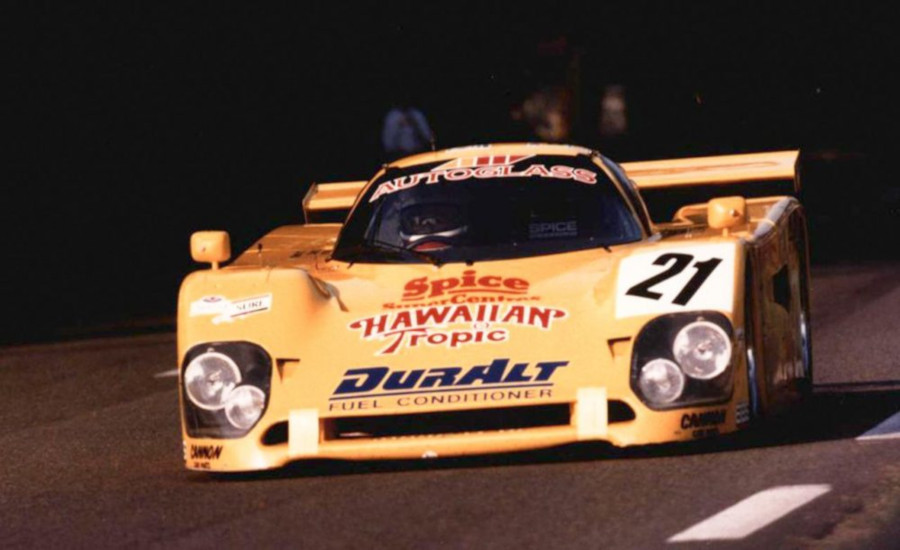

Would you like fries with that?


There's more to this story!

Be sure to check out the behind the scenes for this episode, filled with extras, bloopers, and other great moments not found in the final version. Become a Break/Fix VIP today by joining our Patreon.

All of our BEHIND THE SCENES (BTS) Break/Fix episodes are raw and unedited, and expressly shared with the permission and consent of our guests.


This content has been brought to you in-part by sponsorship through...

Motoring Podcast Network