Home Blog Page 21

Discovering the MotorCities National Heritage Area: Where America’s Automotive Story Lives

0

Ever cruised past a brown roadside sign and wondered what history it’s quietly pointing to? If you’re anywhere near Detroit, Michigan, it might be guiding you toward one of the most expansive and fascinating heritage zones in the country – the MotorCities National Heritage Area. This isn’t just a collection of old factories and museums. It’s a living, breathing tribute to the people, places, and innovations that put the world on wheels.

Photo courtesy Motorcities National Heritage Area

Unlike traditional national parks, National Heritage Areas are designated by Congress to recognize regions with unique cultural, historical, and industrial significance. MotorCities is one of 62 such areas in the U.S., and the only one in Michigan. It celebrates the state’s automotive and labor legacy—from the tinkerers who became titans to the workers who built the middle class.

Tune in everywhere you stream, download or listen!

Listen on Apple
Listen on YouTube
Listen on Spotify

MotorCities operates with a three-pronged mission:

  • Preservation and Revitalization: Grants help restore historic auto sites, from old factories to labor landmarks.
  • Education and Interpretation: Programs and exhibits tell the story of Michigan’s automotive rise.
  • Heritage Tourism: The area is promoted as a destination for car lovers, history buffs, and curious travelers alike.

The idea for MotorCities took shape in the 1990s, championed by Congressman John Dingell and Senator Carl Levin. In 1998, President Bill Clinton signed the bill establishing the Automobile National Heritage Area. Today, it spans over 10,000 square miles across 16 counties and includes more than 6 million residents.

Spotlight

Synopsis

In this episode, we focus on the MotorCities National Heritage Area in Michigan, a region celebrated for its contribution to putting the world on wheels. Bob Sadler, Director of Communications and Engagement, discusses the significance of the National Heritage Area, its origins, and its mission, which includes preservation, education, and tourism. The conversation delves into the numerous sites and museums within the area, highlighting key attractions such as the Ford Paquette Plant Museum, the Detroit Historical Museum, and the Gilmore Car Museum. The Motor Cities National Heritage Area also supports various projects through grants, including documentary films and historical preservation initiatives. The episode underscores the importance of understanding and appreciating automotive and labor heritage, encouraging listeners to explore the area’s numerous attractions and stories.

  • Like we said in the intro, many of us have seen the signs, but what is a National Heritage Area?
  • How did the Motorcities NHA get started? What’s its mission? How has it grown and evolved? What comprises the Motorcities NHA?
  • The “brown signs” – there is a list on the website where they exist along the highway, and there quite a few, does this demarcate the boundary of the NHA? How big is the footprint of the Motorcities NHA? 
  • What are some highlights of the cooperative? (Who participates in the NHA?) – Moreover, top-5 places people should visit on their next road trip through the area?
  • What is the Junior Rangers program? 
  • The Motorcities NHA has various Grants and Outreach Programs – what are those about, and how do they work? Who benefits?
  • And its not all about travel and historical sites of significance, the Motorcities NHA also shares the stories from the community – elaborate on Many Voices One Story” – “Making Tracks” and “Story of the Week” – what are they all about?  
  •  You can become a member of the Motorcities NHA and helps support the cause. Is it limited to just Michiganders? What are the benefits of becoming a member? Are there different levels of membership? Special Events? 

Transcript

Crew Chief Brad: [00:00:00] Break fix podcast is all about capturing the living history of people from all over the auto sphere, from wrench turners and racers to artists, authors, designers, and everything in between. Our goal is to inspire a new generation of petrol heads that wonder. How did they get that job or become that person?

The road to success is paved by all of us because everyone has a story.

Crew Chief Eric: Have you ever found yourself on a long road trip cruising down the highway and wondered what those brown signs along the roadside are all about? Or maybe you say to yourself, I wish I had more time to stop and check that out. Well, if you happen to be in the Detroit metropolitan area anytime soon, you need to take that off ramp and check out the Motor City’s National Heritage Area, where they tell the stories of how southeast and central Michigan put the world on wheels.

And with us tonight is Director of Communications and Engagement Bob Sadler to explain why taking this particular [00:01:00] detour needs to be part of your upcoming travel plans. And with that, welcome to BreakFix, Bob. Hey, great. It’s great to be on and looking forward to it. Well, like all good BreakFix stories, there’s a superhero origin.

But in this case, we’re talking about something a little less tangible. We’re talking about a national heritage area. So, like we said in the intro, many of us have seen these signs and maybe oftentimes are clouded by the need to pull off where the blue signs take us. But let’s talk about what these brown signs are all about.

And first off, what is a National Heritage Area?

Bob Sadler: A National Heritage Area, it’s a really interesting concept because we are actually at Motor City’s National Heritage Area part of What the National Park Service refers to as a national heritage area system, there’s specific themes or industries or geographic features in the country that in the case of Michigan.

Ours is the automobile. We are the part of the world that put America [00:02:00] on wheels and put the world on wheels. Our National Heritage Area is devoted specifically to our country’s automotive and labor heritage. We are all about those tinkerers that became titans and the working people that became part of a middle class.

And all those stories that came together in this unique place with unique natural resources, unique geography, surrounded by the Great Lakes, and it created all of the right stuff. All in one place to make the automobile what it became. So we have the credibility and prestige that comes with being part of the National Park Service, but National Heritage areas, each in their own way are completely unique.

There are actually 62 different National Heritage areas around the United States. Motor City’s National Heritage Area happens to be the only one currently in the state of Michigan.

Crew Chief Eric: So a National Heritage Area as part of the [00:03:00] National Park Service, if we think about it maybe from a perspective that we’re familiar with, if any of us go camping or you’ve been to a state park or one of the state preserves, things like that, Is there a sense of preservation here too?

Is a national heritage area a protected area?

Bob Sadler: We work specifically in a number of areas, but one of the things that we try to do is to preserve the automotive heritage and labor heritage. So there is a preservation element of certain historic sites that were relevant to the creation of the automobile.

The moving assembly line, you know, all those kinds of places that were involved in the creation of the U. A. W. 1 key aspect of our mission is revitalization and preservation. Motor cities gives out grants. We’re involved in helping preserve key automotive sites, whether they’re old factories. Whether they’re homes of auto barons, there’s a number of different kinds of sites.

Sites that were relevant to [00:04:00] the creation of the United Auto Workers and organized labor in Michigan around the automotive industry. We have a three pronged mission where preservation and revitalization is one aspect of that. And then we also are involved in education and interpretation of telling that story.

And then the third prong is heritage tourism, where we are literally promoting and marketing this area of lower Michigan as a tourist destination for people who are interested in the story of how this state put the world on wheels, almost acting like a destination marketing organization, like a convention bureau or a tourism bureau.

Crew Chief Eric: So there had to be a catalyst or an inflection point that said, you know what, we need to preserve some of these old factories in these buildings, like you said, and some have been lost to time where the city has changed. The city has evolved. Somebody stood up and said, Hey, hey, stop, stop. This is part of our legacy.

This is what makes Detroit [00:05:00] an amazing part of the history of the world. As you’re saying, when did the Motor City’s National Heritage Area get

Bob Sadler: started? The National Heritage Area movement actually started in the late 80s. The first one dates back to the Reagan administration. The idea that became Motor City’s National Heritage Area started out in the 1990s.

And so in the 90s, National Heritage Areas were still kind of a new idea. There were people in Michigan who thought the automotive industry might be a really good match with this concept. There were a number of folks, a kind of a coalition that crossed education, key museums and historic sites, the state historical museum, a number of places came together.

And so the idea of creating a national heritage area in Michigan around automotive and labor heritage started to gather momentum. All of the national heritage areas. Need to be approved by acts of [00:06:00] Congress and then signed by the president. We had a champion in the United States House of Representatives in the late Congressman John Dingell, who was a longtime Detroit area congressman in November of 1998.

The bill creating the Automobile National Heritage Area was signed by President Bill Clinton. And again, it was championed by John Dingell in the House, the late Senator Carl Levin in the Senate, and November 6, 1998, what we now know as Motor City’s National Heritage Area was born.

Crew Chief Eric: So Bob, being a small, non for profit organization, how did you get involved with the Motor City’s National Heritage Area?

Bob Sadler: I actually have devoted most of my career Two nonprofit organizations. I actually spent 18 years at the Detroit Historical Society prior to joining Motor Cities. So I was actually at the Detroit Historical Museum, which is why I’m able [00:07:00] to talk so much about the specifics of the automotive exhibits and, and stuff in the collection there.

So I was there for 18 years and I joined Motor Cities in 2017. So I’ve actually been at Motor Cities now for almost seven years. So I’ve been steeped in history, just have delved into the automotive part of our history even more in the time since I’ve joined Motor Cities.

Crew Chief Eric: So were you a petrolhead by birth or were you birthed into becoming a petrolhead?

Bob Sadler: I would say I was not a petrolhead from birth. We actually, uh, was, uh, born and raised in the Cleveland area, where I tell you one thing, if Winton had beaten Henry Ford in that race that the two of them had around 1900 or so, I can’t remember the exact date, but if Henry Ford hadn’t beaten Winton in that race, Cleveland would be the automotive capital of the world and not Detroit.

Crew Chief Eric: Going back to the people that started the initiative back [00:08:00] in the 90s, do you think they were inspired by folks like Henry Ford and what he did with Greenfield Village? Because that was a concept of preserving history as well, where he brought in things like Edison’s lab into that environment, and that still exists today.

Is that also part of the National Heritage Area?

Bob Sadler: I’m sure that both his story and his aura Is definitely present in the creation of Motor City’s National Heritage Area, the Henry Ford Museum, Greenfield Village. They have a rouge factory tour. The story of Henry Ford actually crosses a number of our partner organizations and attractions.

Crew Chief Eric: I was noticing on the website, there’s actually a list of where you get notified when you’re on a road trip that you’re entering the National Heritage Area or you’re approaching it. To kind of map it out, how big is the footprint of the Motor City’s National Heritage Area?

Bob Sadler: The actual footprint covers over 10, 000 square miles, so it’s a pretty good chunk of the [00:09:00] lower peninsula of Michigan.

It translates out to 16 different counties. And a population, more than 6 million people. So it’s a pretty substantial portion of Michigan and it’s Motor Cities for a reason. It’s not just Detroit. Most people will think Motown. But it is Motor Cities because the National Heritage Area also includes Flint, the birthplace of General Motors.

the capital area around Lansing, which is the origins of RE Olds and Oldsmobile, and goes still further west to include Kalamazoo and Kalamazoo County, where they manufactured yellow cabs. Kalamazoo County is the home of the largest automotive museum in North America, that is the Gilmore Car Museum. And those brown signs, by the way, those are normally affiliated with Parks or national parks, or in our case, the National Park Service or [00:10:00] National Heritage Area System.

So when you see a brown sign, you generally know that it has something to do with a park, local or state parks. In our case, of course, the National Park Service arrowhead is included on our signs to show our linkage with the National Park Service. And there’s currently 14 of those signs in our national heritage area.

We hope to have more of them. We actually want to more than double those to about 30 signs. How many sites are there in total? When we first did a census back when the organization was being created, they came up with as many as 10, 000 different sites.

Crew Chief Eric: Wow.

Bob Sadler: Now, not all of them exist anymore. And we also have a network of what we call wayside signs, where there are small signs held up with posts in various communities around the National Heritage Area.

They help tell the story of different sites. Sometimes stuff is still there. Sometimes it’s telling a story that is now completely invisible to the public that you have to see the sign and [00:11:00] read the story there. And there’s 300 more of those.

Crew Chief Eric: So those brown signs, you know, now entering the Motor City’s National Heritage Area, they sort of demarcate the boundary, but how do you know where to go from there?

Are there guides on the website that says, hey, if you’re in this county or you’re in this place, these are the top 10 places to check out along I 75 or whatever it is. How do you guys organize all this to make it easier for those of us that want to travel and check it out?

Bob Sadler: The idea behind the signs is, either points of entry into the National Heritage Area, also to try to strategically place them around where there are clusters of a lot of our partner organizations, attractions, historic sites.

Around Detroit, you’ll find them when you enter from Canada via one of the bridges or the tunnel. On I 75, you’ll find a number of them both on the north and south entry points to the National Heritage Area, and you’ll find a number of them along Interstate 94. Around towns like Ypsilanti or Lansing and the Kalamazoo area.[00:12:00]

And then we actually have a find your road trip, interactive map. Our website has a number of ways that you can do that where organizations are how people can find their way. Uh, there’s a pull down menu where you can go by community. You can go by You know, there’s a number of ways that you can create your own itinerary and you can kind of mix and match right there on the website.

Another way we can do it is by stopping at one of our partner attractions and grabbing our passport guide. And the passport guide is kind of patterned. After the National Park Service passports, you know, you have seen those blue passports that look like your actual travel passport, but in the National Park Service case, you can take those to National Parks and you can get them stamped.

You can chronicle your travels. And so, in a similar manner, we have our own Motor Cities passport. We have about 25 different partner attractions that are listed in our passport book, and you can pick them up at any 1 of our [00:13:00] attractions. They’re outfitted with their stamps, then you can get started and collecting stamps at as many of them as you’re interested in visiting.

And there’s a map inside the passport book as well, so you can track where you are and where you might want to go next.

Crew Chief Eric: If you were planning a route for yourself, which I’m sure you’ve done many times before, what would you say are maybe top five places that people should visit?

Bob Sadler: Oh, I wish you wouldn’t have said five.

All right, top

Crew Chief Eric: ten then.

Bob Sadler: Well, I’ll tell you, I have more than a few. I’d like to break them out geographically. If you’re in the city of Detroit, there’s more than one. You want to stop at the Ford Paquette Plant Museum, which is the birthplace of the Model T. And it was the factory that most of the early Alphabet cars were made.

were created and where the Model T was first conceived and was first made until they outgrew it and then they moved on to the Highland Park plant. And the Highland Park plant, of course, was the one that was famous for being the place where [00:14:00] Ford perfected his moving assembly line and was able to produce Model T’s You know, one every 30 minutes, but it was created initially at this picket Avenue facility.

And that particular place is, you know, almost a poster child for what motor cities can do a success story of things. And it was a handful of people who were enthusiastic about Henry Ford and his story. Took this building, which was falling into disrepair and had a couple tenants, but it was not even involved in the auto industry in any way anymore.

And over time purchased parts of the building until they owned the entire building and then started undertaking renovations. To the building to create a museum and over time, they have managed to pull together enough resources that, you know, they’re open as a museum. They get 30 to 40, 000 visitors a year.

They have 1 of the few collections of the alphabet cars all in 1 [00:15:00] place and they have the most amazing tour guides. that can really bring the story to life. And you can see Henry Ford’s office. And you can see the so called secret room where he and his engineers and partners literally, in a closed off corner of this building, conceived the idea that became the car that became the Model T, the car built for the masses, the car that literally put the world on wheels.

That’s in Detroit. You got the Ford Paquette Plant Museum, and not far from there, the Detroit Institute of Arts has the amazing Diego Rivera murals, which were created in the 1930s, featuring the Ford Rouge plant. Which was the outgrowth from the Highland Park plant. So, if we follow chronologically, the Rouge was the industrial behemoth born of the success of Ford at Highland Park.

They made Model Ts up through [00:16:00] the late 20s. The Rouge was the next plant in the Ford’s progression and was where the Model A that succeeded the T, which was actually the second Model A that Ford produced. The Rouge is that site. And so the Diego Rivera murals were this, it’s, it’s, it’s hard to describe because it literally is four walls that surround you, a lot of symbolism there about the workers and the entrepreneurs, the leadership, Diego Rivera had a political point of view.

There’s his take on matters, but there’s allegory and there’s. There’s seedlings and there’s babies growing from, you know, and there’s all kinds of interesting imagery that goes to this industrial behemoth that makes these vehicles, you know, it’s, it’s an amazing piece of art. It certainly is one of the signature attractions when you visit Detroit.

Kiddie corner across the street from the Detroit Institute of Arts is the Detroit Historical Museum, which has a exhibit inside called America’s Motor [00:17:00] City. You can see a replica of the first car that drove the streets of Detroit, beat Ford’s quadricycle by a few months. It was Charles Brady King in March of 1896.

And you can see that you can see a portion of the moving assembly line from the Cadillac Clark Avenue plant, and you can see a whole lot of the automotive industry history as it was in the city of Detroit in that museum. So there’s kind of a big 3 in the city of Detroit, all very close by, you’d move out to Dearborn about 15 minutes from downtown Detroit.

And you have the Henry Ford, which is the Henry Ford Museum of American Innovation, which has. Multiple exhibits on the automobile, they have the automobile in American life, they have a racing exhibit now and Greenfield village, of course, that you’ve mentioned, you know, which features not just automotive, but the Wright brothers and Thomas Edison and all these amazing American inventors and innovators, you [00:18:00] know, the people who literally shaped our culture, shaped our industry.

Are responsible for where we are in the world today. A stone’s throw on the northern part of their parking lot is the automotive hall of fame, which tells the story of the people that made the international auto industry. The auto hall of fame is unique in the sense that it’s not just about the American automobile industry.

It’s literally about the worldwide automobile industry and telling stories through the eyes of the people that have made vehicles and have been responsible for mobility over the 130 plus years. You can go down the road to Ypsilanti, where there’s the Ypsilanti Automotive Heritage Museum, which was in an old Hudson dealership.

One of the last Hudson dealerships is now a museum. A stone’s throw from there is the Michigan Firehouse Museum, which has an amazing collection of fire apparatus, which were produced by the auto industry. You go up US 23 from the [00:19:00] Ypsilanti area and you get to Flint, the birthplace of General Motors. And there’s an amazing museum up there known as the Sloan Museum of Discovery, which has an amazing gallery named for Billy Durant, who was the founder of General Motors, one of the founders of Buick prior to that.

You can see the history of the automotive industry through a General Motors lens. You proceed west from Flint, and you can get to Lansing, where you can see where Ransom Olds held court. There’s the R. E. Olds Transportation Museum in Lansing. You get that story of Oldsmobile, and the R. E. O. brand, and the various vehicles that were made in the Lansing area.

Again, you keep going further west, and you get to Kalamazoo, as I mentioned, where they made yellow cabs right through the 1980s. And the Gilmore Car Museum, which is a fantastic place, very similar in the sense to the Henry Ford, where it’s a campus and there are multiple museums all in one place where you can see the [00:20:00] collection of Mr.

Gilmore, who was a CEO of Upjohn Pharmaceuticals and his wife’s family were the people who founded that particular company. And as he amassed wealth and was collecting cars, his wife said at some point when there just became too many cars in their garage and around their property, she told him, you need to just put a museum together for this.

That’s how the Gilmore Car Museum came to be. There’s just so much. It’s hard to put it into a top 5 or even a top 10. You need our passport book so you can see 25 different places that you can visit. And if you use the map on the website, you can find even more.

Crew Chief Eric: I think we take signs for granted. There’s so many of them that we have to read and kind of process, especially in a hurry when we’re driving down the road, you know, there’s even a science to signage and there’s a signage museum and all this, but you hear these stories, you know, my dad took me to this place when I was a kid, and, oh, if we didn’t read every sign in the place.

[00:21:00] Jokingly, we all look back on that, because we’re all kids at some point. We’re like, ah, you know, that was, it was such a march that we had to go through on these vacations. I’ve noticed that on the website, there’s a junior rangers program as part of the National Heritage Area. How have you guys designed that program to make these sorts of trips a little bit more exciting Petrelheads?

Bob Sadler: The junior ranger program, it’s inspired by and part derived from a junior ranger program that exists within the national park service. And it’s a relatively recent creation for us. We wanted to create something that incentivized. Families and children to learn more about the automobile industry and the stories that are told here in our 16 counties of Michigan and learn very specifically about auto barons and the labor story and all of those kinds of things.

There was a number of years that it took to kind of develop the program and then the pandemic happened. The Junior [00:22:00] Ranger program as it currently sits, if you go to MotorCities. org and you see the menu at the top of the home page, you’ll see Junior Ranger and when you click on it, it’s basically almost entirely a virtual program.

It’s the idea of looking at a map and figuring out what cool things or what cool stories are on the map. Right now you click on videos and you watch videos and things. We’re going to definitely add a second phase to the junior ranger program. We’re going to work on it in league with our partners and our various attractions to make it more hands on and allow for people to travel from site to site attraction to attraction.

And have specific things that they can do or they can look for at those sites, but as it is right now, it’s still kind of more of a virtual program and it has a number of different activities and things that children can do. There’s a part of activities that are geared toward 5 to 7. there’s 8 to 10 and then there’s age 11 plus.

[00:23:00] And if you do a certain number of activities and complete them and then show us proof that you completed them, then we can send you a badge that you are an official Motor City’s Junior Ranger.

Crew Chief Eric: I noticed that the Motor City’s National Heritage Area has various grants and outreach programs. Let’s talk a little bit about those.

How do they work and who do they benefit?

Bob Sadler: Grants are a big part of our mission. We received the majority of our funding through the National Park Service and therefore the Department of the Interior and the federal government. We have to be good stewards of the government’s resources. We actually have a grant program.

There’s two different kinds of grants. One is a challenge grant, which are up to 25, 000, and then there’s also a mini grant program for smaller projects up to 1, 500. We have kind of a rolling application process where each quarter we accept new applications as the funding each year allows much like the mission that I mentioned earlier with [00:24:00] revitalization interpretation and education and heritage tourism, we give priority to projects that fall under those 3 areas.

And then we also like to give a preference to projects that exemplify diversity, equity, inclusion and accessibility as well. Grants can be anything from construction related projects. Like I said, we helped the Ford plant museum over the years. With parts of their renovations from fixing a very large roof to having an HVAC system added to their building.

Recently, the Gilmore Car Museum received a grant for a new visitor orientation and event pavilion, which is outside. They host a number of events that are outdoors. Cruise nights and concerts and, and all kinds of different events and that particular grant will help them to have a key place to convene tour groups and special events.

You know, we’ve also done grants that have helped fund things like documentary films. [00:25:00] There was a recent documentary film called Detroit City of Hot Rods and Muscle Cars. It talked in great depth about the car culture of Detroit, which is even within the town that put the world on wheels. You know, we also have a very unique car culture.

There’s a lot of gearheads and people that tinker in their basements with their classics and they take them out during the week. They go to cruise nights and on the weekends throughout the summer, there’s big cruises all over the state of Michigan. This film kind of looks at that through many different eyes.

Including women involved in it, disabled people involved with it, Vietnam vets, just lots of different stories of people and their cars and how it becomes part of this interwoven into this fabric of this Detroit car culture. So, the grants are kind of all over, but they’re in those 3 key mission areas.

And then we also have a variety of programs. That include things like we were part of a coalition of organizations that built a park at the site where in 1932, two and a half years into the Great Depression. At that [00:26:00] point, workers at Ford Motor Company convened and marched through Detroit into Dearborn to the Rouge plant.

With a list of demands for Henry Ford, mostly around working conditions and fair wages. There was a lot of suffering in the worker community. This march turned out to be a seminal moment in the creation of the UAW. They clashed with Dearborn police and Ford security forces. Five workers were killed. And dozens were injured.

We worked with a number of organizations and actually created a park in a very underserved part of Southwest Detroit that not just tells the story, but also creates a place kind of a haven for people in the neighborhood. To enjoy a park, those kinds of things are part of the mission as well.

Crew Chief Eric: And what I love about this is that it’s not all about the travel and the historical sites.

It’s really the significance of the Motor City’s National Heritage Area. And what I came to really appreciate in understanding [00:27:00] more about your organization is the time you guys take to elaborate on these stories. And you have three different sections on the website. You’ve got many voices, one story, making tracks.

And then the story of the week. God bless whoever’s writing all these things or maybe you’re working with, you know, the society of automotive historians. I don’t know where you guys find the time, but there’s just this treasure trove of information on the website. I hope that we can express to people that it’s more than just planning your next road trip.

It’s checking out these stories and becoming more involved in the intimate backgrounds of these people’s lives and how it really changed the face of the world.

Bob Sadler: I’m glad you brought those up many voices. One story is our homage to diversity, equity, and inclusion in the sense that we tell stories that are undertold focusing on our minority communities.

So there are stories about the black experience in the automotive industry. There’s stories about Hispanic and Latino people in the automotive industry. There’s stories that relate to people with disabilities. [00:28:00] Obviously, you became familiar with the story of Ralph Teeter with the premiere of the Blind Logic film at the Automotive Hall of Fame recently.

That’s an amazing story. Before I even learned of the documentary, I had actually, myself, had become familiar with the story of Ralph Teeter. And Ralph Teeter’s story is one of the stories that we tell. And this Many Voices, One Story part of our website. There’s stories about people with autism. There’s a young driver trying to make his way through NASCAR, who is autistic, that’s from the Detroit area.

He’s a young African American and he’s autistic. He has a unique set of challenges as he’s moving up through the ranks as a race car driver. I had the opportunity to interview him and to talk about his story and his unique perspective and you just can’t help but root for someone like that. There’s stories that just come from so many different places that are in that particular section.

You Then we have making tracks, which is specifically devoted to the African American experience in the automotive industry that tells over a century of stories that a [00:29:00] lot of the African American stories in the auto industry have their origins with Henry Ford’s 5 day. Which was announced in January of 1914, he revolutionized the industry by saying he was going to more than double the salary of the workers, because it was very difficult work.

It was dangerous. It was hot and the turnover of employees. Was just ridiculous. He wanted to deal with that aspect of the turnover part by countering it by saying, if you can meet these criteria, you can make 5 a day for your work in our automotive plants. And this sparked a migration of folks from the American South and from Eastern Europe and from Africa and the Middle East.

It completely changed Detroit over a 15 year period from 1914 to the stock market crash in 29. Detroit grew unlike any city in the country ever has or frankly ever will. That was a big story [00:30:00] and the African American experience was a key part of that. So making tracks Starts with that migration, and then it gets into organized labor and how leadership within the African American community grew into the civil rights movement after World War Two, then there’s stories about the advancements and firsts of African Americans in the industry.

First professional engineers and first African American automotive manufacturing by companies that were owned by African Americans. The first African American to have a car dealership that was affiliated with one of the big three, all those kinds of stories you’ll find in the making track section of motorcities.

org. And then what I affectionately refer to as the franchise, which is the story of the week. I guess you could call it a weekly blog. New one comes out every Wednesday. It is distributed through an e newsletter that we put out. It’s free. It’s called You Ought to Know. Hits your inbox every Wednesday and the [00:31:00] franchise within that is our weekly story of the week.

These are all over the place. They’re basically different stories about some aspect of the automotive industry, whether it’s firsts, whether it’s specific models, stories of people, it really runs the gamut. Today’s story of the week, for example, was about Steve McQueen, the actor, and his automotive collection, and how he channeled driving the famous Bullitt Mustang in the movie Bullitt in the chase scene that everyone can remember, and also being a race car driver on the side and appearing in the movie Le Mans in the 70s.

Not only was he an actor and he, he drove in, in his, in the movies, but he also built a collection over his lifetime. Unfortunately, it’s life was cut pretty short 1980, only 50 years old when he passed away, but he did accumulate a pretty amazing collection of both. American and foreign cars. And so today’s story of the week is about Steve McQueen and his collection.

It [00:32:00] really runs all over the place and it’s put out in the e newsletter every week, and then it also is a big part of our social media because we talk about the story of the week and our social media close to the weekends. We have our weekend alert posts, which. Flag down specific events and things that are going on in the national heritage area.

Every weekend during the summer, there are many, many, many events going on. The story of the week is always pretty fun. More than anything that we’ve done over the years. It’s driven the growth of our website, the growth of our social media. Look for it every Wednesday.

Crew Chief Eric: You also mentioned that your funding in some ways comes from the National Park Service and the Department of Interior and things like that.

But also there’s an opportunity for us. petrol heads to become involved in the Motor City’s National Heritage Area and support the cause. And so on the website there’s a donation page, you become a member, all these kinds of things. Is becoming a member of the Motor City’s National Heritage Area limited to just Michiganders or can anybody sign up?

What are the benefits of [00:33:00] becoming a member? Are there different levels or tiers of membership? Can you like break that all down for us?

Bob Sadler: Absolutely. The answer in terms of is it limited to Michiganders? And the answer to that is absolutely not. Anybody can become a member of Motor City’s National Heritage Area.

Obviously, in most cases, a lot of the benefits are tied to things you can find within the state of Michigan and with our partner attractions. But individual membership starts as low as 30 for an individual family memberships are 65 and then there’s some higher levels that go up to 500. but in terms of the benefits, there are 15 of our partner attractions that offer either admission discounts.

Museum or gift shop discounts, membership discounts. There’s a variety of discounts that are available to people. If you actually used a couple of them, you’d actually more than pay for the amount you paid for the membership. You know, someone who wasn’t from the state of Michigan conceivably, if they were planning a trip to the national heritage area, they could buy a [00:34:00] membership.

And if they visited two or three or even more of our attractions and use their membership card, they can earn some significant discounts. There’s also an organizational membership. If you have a, an organization that is about automotive heritage, or it’s about local history, people can also become organizational members at different levels.

And the benefits of that are that, you know, you can be featured in our social media, our e newsletters, on our website. You can apply for our grants. Now that would be more for people within our organizations in the state of Michigan, but you get recognized as being a partner in all the stories that we tell as an organizational member.

It’s definitely not limited to people within the state of Michigan. Plus, to be honest, a lot of the people that are our supporters. That become our members, they’re not doing it because they’re looking for five bucks off admission. They’re doing it because they care about the stories we’re telling. They do it because we’re doing something important [00:35:00] that our mission of keeping those stories alive, getting those stories to as many people as possible and sharing that auto and labor heritage.

Those are the people that they’re going to want to support us. Regardless of what benefits it entails, our social media, our Facebook, we have 26, 000 followers on our Facebook page. It goes all over the country and around the world, Europe and Africa and Middle East and South America and beyond that are liking our posts and making comments and sharing their own stories or angles on some of these Detroit, Michigan focused stories.

You know, it’s become an amazing way to connect with people.

Crew Chief Eric: Well, it sounds like you guys have come up with a great way to diversify and augment the funding that you have, keep people involved, but not all of it is necessarily digital or just on the website. You guys have got other events and ways to interact with the Motor City’s National Heritage Area, right?

We do have

Bob Sadler: some special events [00:36:00] each year around our auto heritage. We created something about 10 years ago called Michigan Auto Heritage Day. Which is something that we do in conjunction with our state government, the state legislature and the governor’s office, where they declare it Michigan auto heritage day, gives us an opportunity to share some different stories and get some visibility around motor cities and our mission.

And what we do, we have other programs where we talk about telling the story, the interpretation. We have a speakers Bureau where we have speakers that go out to speak. To local historical societies, they go to libraries, they have a variety of topics from the people that made the auto industry, the different entrepreneurs, their stories about Rosie the Riveter and world war two and willow run and many aspects of the life of Henry Ford or Walter Chrysler or Billy Durant and the creation of General Motors.

We also work with our peers and our contemporaries that work with our [00:37:00] partners and we do lunch and learn type programs where we try to pick an aspect that might help them do their job better or easier, more efficiently. We also have awards of excellence that we hand out focusing around those key areas.

of education, interpretation, revitalization, and tourism. We try to put a spotlight on the work of key partners and individuals who are doing amazing work and keeping this story alive.

Crew Chief Eric: All right, so Bob, what’s next for the Motor City’s National Heritage Area? What’s the two, five, ten year plan look like?

Bob Sadler: Well, it’s a really interesting question because we’ve just completed our most recent strategic plan, which is going to cover the next 2 or 3 years. You know, we’re looking at a lot of things in terms of our partnerships with the various attractions and museums and organizations, international heritage area, as well as ways forward on many fronts.

So we’ve done a lot of inward looking, we’ve done a lot of sit downs [00:38:00] and surveyed our members. And it’ll be interesting to see how we’re starting to flesh that strategic plan out. And we’re starting to create specific tactics and plans attached to it. Some of the stuff is happening behind the scenes and is going to be tied to funding and discussions that we’re having at the state level.

But there are going to be a number of things that are going to be happening. We did recently receive a grant through the national park foundation that is tied to the upcoming 250th birthday of the country, an inclusive storytelling grant, and we’re going to be doing even more work segueing on what we’ve already been doing with many voices, one story and making tracks and finding a lot of those lesser known stories.

That are tied to themes that are among the foci of the 250th birthday of the country. We’re starting to roll that out right now, and that’s going to be happening, you know, over the next nine to 12 months, there’ll be a number of public [00:39:00] events and things around that. Suffice it to say, there’s going to be a lot going on leading up to 2026.

And there’s going to be a lot of things specific around. New initiatives and new ways to share these unique auto and labor heritage stories for being a three person organization. We’re a small, but mighty nonprofit that does a heck of a lot and has a great impact. You know, we actually say that each year, the programs and the grants and the things that we do to promote heritage tourism into Michigan generates a 489Million dollar economic impact and supports over 5000 jobs.

Michigan Technological University And generates 40 million in tax revenue. Small but mighty.

Crew Chief Eric: So, Bob, we’ve reached that part of the episode where I’d like to invite our guests to share any shoutouts, promotions, or anything else that we haven’t covered thus far.

Bob Sadler: Yeah, I mean, I think the biggest thing would be, we certainly have mentioned the website.

I do something on our social media. That’s unique. The first year I was at motor cities, I created [00:40:00] about 240 this day and auto heritage posts. And so for most every day of the year, if you go on our social media, predominantly our Facebook page, you will find something from our automotive history for almost every day of the year.

And we call it This Day in Auto Heritage. If you want to catch little factoids or little morsels of automotive history on almost a daily basis, our social media is definitely what you want to follow. The hashtag is This Day in Automotive Heritage.

Crew Chief Eric: The Motor City’s National Heritage Area links the world’s largest collection of cultural and labor organizations, museums, archives, factories, auto collections, and events to preserve the story of how tinkerers became titans and how they helped build the middle class.

While transforming manufacturing worldwide, the Motor Cities National Heritage Area Partnership is a non for profit corporation affiliated with the National Park Service. They preserve, interpret, and promote the region’s rich automotive and labor heritage in a way that is diverse. [00:41:00] Equitable, inclusive, and accessible.

And you can customize your next trip to the Detroit area or make a donation today by logging on to www. motorcities. org or follow them on social media at Motor Cities on Facebook, Instagram, and Twitter along with at Motor Cities NHA on YouTube. And with that, Bob, I can’t thank you enough for coming on break fix and sharing the motor cities, national heritage story with us.

The saying is you need to take the time to stop and smell the roses. But I think in this case, we need to take the time to pull off and check out what’s connected to those Brown signs.

Bob Sadler: Absolutely. I’m glad that we were able to do this and I’m hoping that we hit some new audiences with this podcast.

Thanks so much, Eric.

Crew Chief Eric: We hope you enjoyed another awesome episode of Brake Fix Podcast brought to you by Grand Tory Motorsports. If you’d like to be a guest on the show or get involved, be sure to follow us on all [00:42:00] social media platforms at GrandTouringMotorsports. And if you’d like to learn more about the content of this episode, be sure to check out the follow on article at GTMotorsports.

org. We remain a commercial free and no annual fees organization through our sponsors, but also through the generous support of our fans, families, and friends through Patreon. For as little as 2. 50 a month, you can get access to more behind the scenes action, additional Pit Stop minisodes, and other VIP goodies, as well as keeping our team of creators fed on their strict diet of Fig Newtons, Gumby Bears, and Monster.

So consider signing up for Patreon today at www. patreon. com forward slash gtmotorsports. And remember, without you, there would be no None of this would be possible.

Highlights

Skip ahead if you must… Here’s the highlights from this episode you might be most interested in and their corresponding time stamps.

  • 00:00 Exploring the Motor City’s National Heritage Area
  • 00:53 Interview with Bob Sadler
  • 01:30 Understanding National Heritage Areas
  • 03:15 Preservation and Revitalization Efforts
  • 05:06 The Origins of Motor City’s National Heritage Area
  • 06:36 Bob Sadler’s Journey
  • 13:14 Top Attractions in the Motor City’s National Heritage Area
  • 21:07 Junior Rangers Program
  • 23:12 Grants and Outreach Programs
  • 27:34 Diversity and Inclusion Stories
  • 32:32 Membership and Support
  • 35:52 Special Events and Future Plans
  • 39:43 Conclusion and Final Thoughts

Bonus Content

Learn More

The MotorCities National Heritage Area Partnership is a nonprofit corporation affiliated with the National Park Service. They preserve, interpret and promote the region’s rich automotive and labor heritage in a way that is diverse, equitable, inclusive and accessible.

And you can customize your next trip to the Detroit Area or make a donation today by logging on to www.motorcities.org or following them on social media @motorcities on FB, IG and Twitter, along with @MotorCitiesNHA on YouTube. 

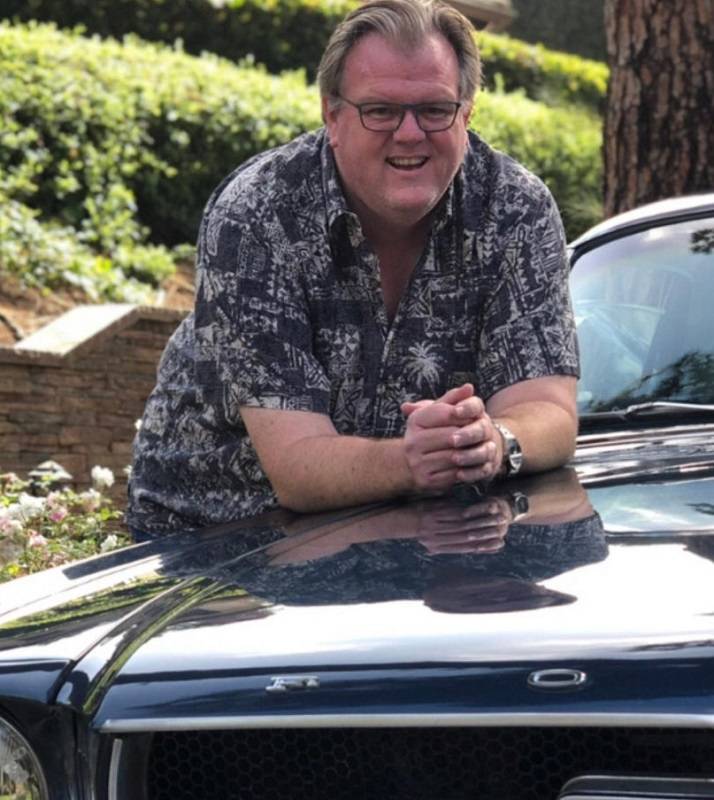
Bob Sadler, who joined MotorCities in 2017 after 18 years at the Detroit Historical Society, wasn’t born a petrolhead – but he became one through his work. His deep knowledge of the region’s automotive history makes him the perfect guide to this sprawling heritage zone.

Photo courtesy Motorcities National Heritage Area

Bob’s top picks (though he admits narrowing it down is tough) include:

In Detroit:

  • Ford Piquette Plant Museum (above): Birthplace of the Model T and a restoration success story.
  • Detroit Institute of Arts: Home to Diego Rivera’s iconic murals of the Ford Rouge Plant.
  • Detroit Historical Museum: Features “America’s Motor City” exhibit and a replica of Charles Brady King’s pioneering car.

In Dearborn:

  • The Henry Ford Museum & Greenfield Village: Celebrates American innovation, from cars to airplanes.
  • Automotive Hall of Fame: Honors global automotive pioneers.

Beyond Detroit:

  • Ypsilanti Automotive Heritage Museum: Housed in a historic Hudson dealership.
  • Michigan Firehouse Museum: Showcases fire apparatus built by auto manufacturers.
  • Sloan Museum of Discovery (Flint): Tells GM’s story through the Billy Durant Gallery.
  • R.E. Olds Transportation Museum (Lansing): Chronicles Oldsmobile’s legacy.
  • Gilmore Car Museum (Kalamazoo): The largest auto museum in North America, born from one man’s collection.

MotorCities has installed 14 brown entry signs and over 300 wayside markers that tell stories – some visible, some long gone. Their goal? To double the number of entry signs and make the region’s rich history even more accessible.


Engaging the Next Generation

MotorCities offers a virtual Junior Ranger program with age-specific activities and badges. A hands-on version is in the works to make site visits even more interactive for young explorers.

  • Interactive Map: Plan your trip by community or interest.
  • Passport Guide: Collect stamps at 25 partner attractions, just like a National Park passport.

MotorCities awards challenge grants (up to $25,000) and mini grants (up to $1,500) for projects that support preservation, education, and tourism. Recent recipients include the Gilmore Car Museum and the documentary “Detroit: City of Hot Rods and Muscle Cars.”

Photo courtesy Motorcities National Heritage Area

The MotorCities website features three rich storytelling sections:

  • Many Voices, One Story: Highlights underrepresented communities in automotive history.
  • Making Tracks: Focuses on African American contributions, starting with Ford’s $5 workday in 1914.
  • Story of the Week: A rotating spotlight on compelling tales from across the region.

MotorCities isn’t just about cars – it’s about people. It’s about how innovation, labor, and community shaped not just Michigan, but the world. Whether you’re planning a road trip or diving into the archives online, this heritage area invites you to explore, learn, and connect.


This content has been brought to you in-part by sponsorship through...

Motoring Podcast Network

Nine Times to Le Mans: An Evening with Mario Andretti

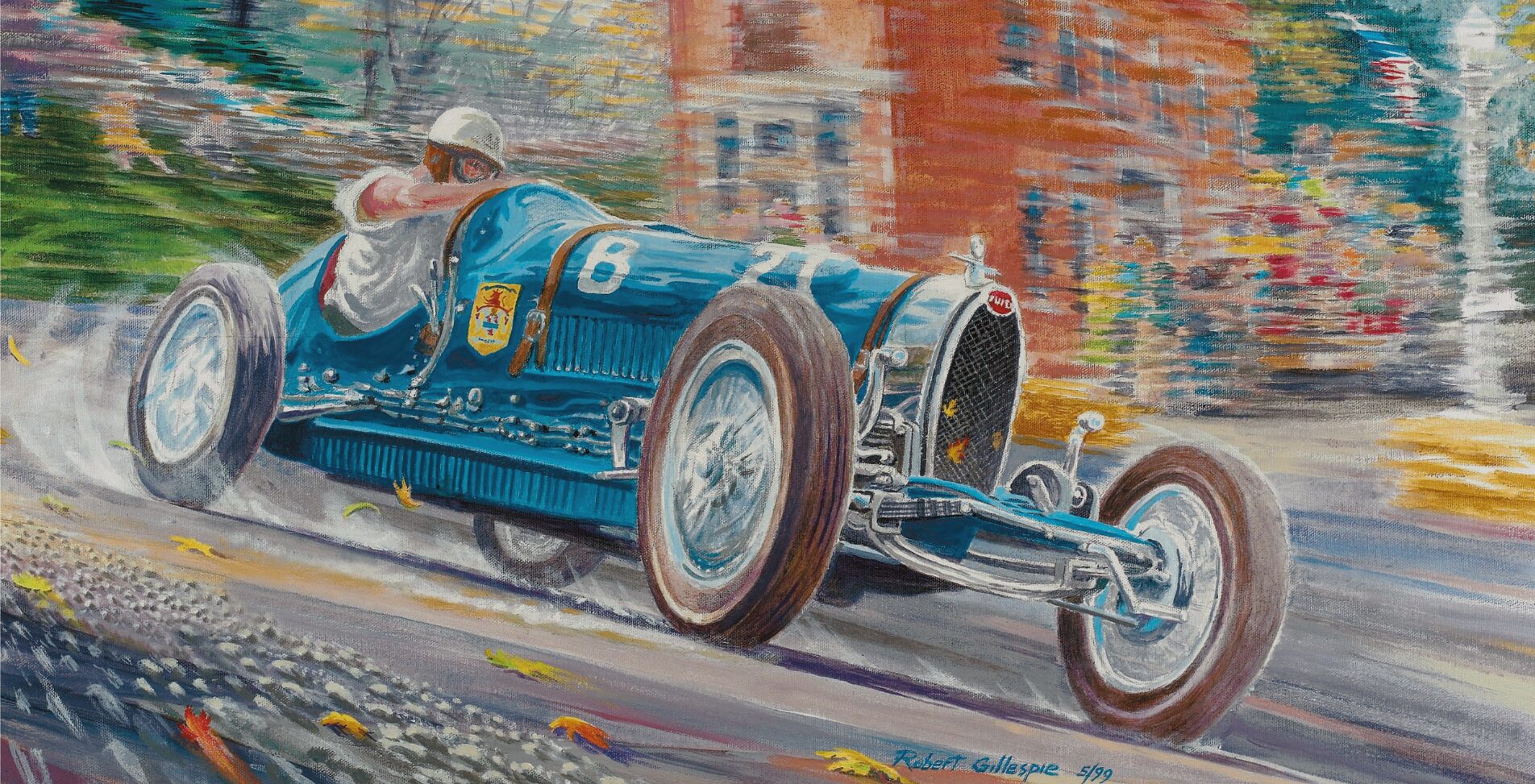
In the pantheon of motorsport legends, few names evoke as much reverence as Mario Andretti. From the dirt tracks of Pennsylvania to the glitz of Formula One, Andretti’s career spans five decades, six continents, and nearly every racing discipline imaginable. But among his many triumphs—the Indy 500, Daytona 500, and a Formula One World Championship – there’s one race that kept calling him back: the 24 Hours of Le Mans.

In a recent installment of Evening with a Legend, Mario Andretti shared stories from his nine entries at Le Mans. What unfolded was a masterclass in endurance, humility, and the relentless pursuit of speed.

Born in Italy and raised in the U.S., Andretti’s journey to Le Mans began in 1966 with Ford’s GT40 program. Paired with Lucien Bianchi, he tackled the legendary circuit with a mix of awe and determination. Though mechanical issues cut their race short, Andretti’s speed and adaptability were already turning heads. “Any new experience is daunting, no question. But I embraced it in the most positive way,” said Mario.

Tune in everywhere you stream, download or listen!

Listen on Apple
Listen on YouTube
Listen on Spotify

Andretti’s second Le Mans outing in 1967 ended in a dramatic crash- caused by a brake pad installed backward during a pit stop. The incident not only wrecked the car but left Andretti with broken ribs and a bitter taste of endurance racing’s unforgiving nature. “The car just turned to the right… I busted some ribs and whatever. That was the race that was unfortunate,” he said.

Spotlight

Synopsis

This Evening With A Legend episode highlights the legendary career of Mario Andretti. The discussion spans Andretti’s early career, his various racing experiences, and his nine entries in the 24 Hours of Le Mans. Andretti shares stories from his first race in 1966 to his return in 2000 at the age of 60. The talk covers technical aspects, racing strategies, and personal anecdotes, providing a deep dive into the endurance racing world and the evolution of Le Mans over the decades. Andretti also touches on the physical and mental challenges faced by drivers, as well as the technological advancements in racing. The episode concludes with reflections on Andretti’s lasting impact on motorsport and his involvement in future endeavors with Andretti Autosport and Le Mans.

  • Mario, let’s start off by talking about your “Road to LeMans” – your first visit was in 1966, with a Holman Moody Ford GT40 MkII, with co-driver Lucien Bianchi. Tell us about that first trip to LeMans. How did racing at LeMans compare to everything you’d done up to that point? And what was it like driving the GT40?
  • You returned to LeMans in 1967, this time in another GT40 (MkIV), and unfortunately in the middle of the night there was a bit of a mistake made in the pits… what happened? 
  • After the incident in 1967, you didn’t return to LeMans until after completing your seasons in Formula 1. How had LeMans changed by 1982
  • You were also racing with Michael in a Mirage M12 Ford. Was this one of the earlier/maybe earliest events where you and Micheal co-drove together? What was that like?
  • In 1988 you returned, with Michael and your nephew John, this time in a Porsche 962. Compared to the open wheel cars you’d been driving; how did the 962 differ? Describe what it was like?
  • You returned 3 more times back-to-back from 1995-1997 with the Courage Team – How had LeMans changed by the ‘90s?
  • And finally in 2006, at the age of 60, you attempted the race one more time driving for Panoz in the LMP-1 Roadster S – again, we have huge jumps in technology and changes to the circuit – your thoughts? 
  • What do you feel is the most challenging part of driving at the 24 hours of LeMans?
  • What’s next for Mario Andretti? And Andretti Autosport as part of the future of LeMans? 

Transcript

Crew Chief Brad: [00:00:00] Evening with the Legend is a series of presentations exclusive to Legends of the Famous 24 Hours of Le Mans, giving us an opportunity to bring a piece of Le Mans to you. By sharing stories and highlights of the big event, you get a chance to become part of the Legend of Le Mans, with guests from different eras of over 100 years of racing.

Crew Chief Eric: Tonight, we have an opportunity to bring a piece of Lamar to you, sharing in the legend of Lamar with guests from different eras. of over a hundred years of racing. And as your host, I’m delighted to introduce a racing icon considered by many to be the greatest race car driver in the history of the sport.

Born in Italy, emigrating to the United States and beginning his career racing stock cars in Pennsylvania at the age of 19, he won races in sports car, [00:01:00] sprint car, stock car, formula cars. On ovals, road courses, drag strips, on the dirt, and on the pavement. His achievements are legendary. The world watched as he won the Daytona 500, the Indy 500, and ultimately the Formula One World Championship, an unprecedented trifecta.

Mario Andretti took the checkered flag 111 times during his career, a career that stretched five decades and across six continents, and includes nine That’s right. Nine entries in the famed 24 hours of Le Mans. And with that, I’m your host, Crew Chief Eric from the Motoring Podcast Network, welcoming everyone to this evening with a legend.

And so without further ado, Mario, welcome to the show.

Mario Andretti: Thank you, Eric. Thank you very much. Thanks for having me.

Crew Chief Eric: Well Mario, let’s start off by talking about your road to Le Mans. Your first visit was in 1966 with the Holman Moody Ford GT40 Mark II with co driver Lucien Bianchi. So tell us about that first trip to Le Mans.

How did racing at Le Mans [00:02:00] compare to everything you’d done on the road up until that point.

Mario Andretti: First of all, I really look forward to doing Le Mans. At that point, I had only done one long distance race, which was a Daytona 500 in 66 with Ferrari, but the opportunity to go to Le Mans with Ford, there was a big, big effort there.

Their objective was obviously to win it, you know, and they did finally. So anyway, I welcomed the idea, and Lucien Bianchi was quite the veteran of Valon Dess racing, and he and I became very, very close friends, you know, over the time. The experience was good, but we didn’t finish.

Crew Chief Eric: The GT40, it was still new, it was evolving, we’ve all seen the movie Ford versus Ferrari.

Was it a lot like that, going to Le Mans with that car?

Mario Andretti: Well, I had done a lot of testing. Uh, I was part of the testing team. So I was involved in, uh, all of the running that was done. So I had a pretty good feel for the car, except that, as I said, that in [00:03:00] that particular event, they put in the, well, no, no, actually there was one later that where they put in the wrong pads, you know, on the side.

Crew Chief Eric: Oh, we’ll talk about that.

Mario Andretti: Yeah. And actually in 66. I think we had an engine issue, but I felt comfortable. I felt that we had a good shot of doing well. I mean, because again, I felt good in the car, you know, and the following year, Bruce McClaren and I won the 12 hour, so I was familiar. It’s not that I didn’t have extensive road racing experience, but I was, when I was coming on pretty good in the testing, you know, my speed was, was actually comparable to anyone there.

Crew Chief Eric: So would you say that first trip Lamar was intimidating? That was probably the longest lap you’d ever driven, right? On any course, or had you done other courses like the Nuremberg ring or something like that up until that point?

Mario Andretti: No, no, that was for me. That was the first. And yeah, it can be intimidating if you let it be intimidating.

It’s just that obviously any potential negative. out of your mind, no question. You approach it the way you should approach [00:04:00] any, any new experience, if you will. I felt that we had a great team behind us. There was plenty of time to get familiar with the course. Yes, I’ve been challenging, daunting, high speed.

Yes, all of that, all of those things that we, you know, I love because, uh, I mean, I used to do the Banking at Daytona, you know, flat at 220 miles an hour. So the speed was not a factor, but anything, any new experience is daunting, no question. And again, the fact that I really, really look forward to it, I think makes a big difference.

So I embraced it in the most positive way.

Crew Chief Eric: Well, you brought it up, Mario. Le Mans 1967, that was your second trip to the famed 24 Hours, and you hinted at it. There was a bit of a mistake made in the pits in the middle of the night. So what happened? Describe it for us.

Mario Andretti: Yeah, it was Aleutian Bianchi, uh, and I, and again against Zangerni and, and A.

J. Foyt. I was in the same stint as A. J. Foyt, and I thought that I probably [00:05:00] could do a bit better. Uh, I had, you know, more experience with the car and I was putting up quite a bit of distance between us. And especially it was wet and part of the stint, actually I did two stints at that point, then when I handed the car.

To Lucian, he didn’t know that we had a break issue, but we knew how to deal with it. And there was a lot of vibration, but we had to live with it up to a certain point. But he was not aware of that. I had almost a lap advantage on AJ at that point when Lucian took over. Then I’m still sitting at the wall because I was pretty well spent in those daunting two stints.

And all of a sudden he comes in. And he’s discussing the situation with one of the mechanics, like, you know, like during practice, I said, you know, there’s a race going on, but he wanted the brake pads changed, which that was not going to change anything. It was that the disc needed to be [00:06:00] changed, but it wasn’t the time.

That’s what I’m saying. But since he asked for something. All of a sudden the change in the pads and I was a bit upset. So I pulled him out. I said, I’m going back in and of course full load of fuel. And, uh, unbeknownst to me later on, I’m coming over the rise, going to the down lump chicane and breaking the car, just, just turn to the right.

That’s it. So we crashed and it was all over. Actually, I busted some ribs and whatever. That was the race that was unfortunate. Later on, when they gather all the pieces together, they found out that one of the pads on the right front was put on backwards, metal to metal, uh, since the disc was cracked, it caught and with a full load of fuel.

We still run, you know, a lot of fuel in those days and it took the wheel right out of my hands. And then we went, I went into the dirt bank and basically destroyed the front of the car.

Crew Chief Eric: So after that incident in 1967, you didn’t return to Le Mans until after [00:07:00] completing your seasons in Formula One. We’re talking a gap of 1967 all the way up to 1982.

So let’s talk about how Lamar evolved during that time period. When you returned, what was it like, you know, walking down the paddock into pit lane? How had Lamar changed since 1967?

Mario Andretti: You know, obviously, Things evolve, you know, that everything just changes for the better, if you will. It’d be, you know, the infrastructure is different and the cars, rules and all those things, it’s not that I had been away from the sport.

So I was changing with that. I expected things to be different. Of course, I felt quite comfortable in that situation as well, because. We were with a Kramer Porsche, great experience team and so on and so forth. And Felipe was a third driver, you know, very good. And of course it was, uh, Michael was his second experience, but the first experience we never got to start.

You know, well, it’s a long story there. We were on a grid and they said the car was [00:08:00] illegal. So anyway, so I had a little bit of everything as far as experiences there.

Crew Chief Eric: That was with the Mirage M12 Ford?

Mario Andretti: Yes, yes, yes, yes.

Crew Chief Eric: And in 82, that was still pre bus stop, pre chicane on the Molson. So you were able to go full tilt down the straightaway.

Mario Andretti: Full tilt. Yeah, yeah, yeah.

Crew Chief Eric: So did you guys make it through qualifying in 82? You just didn’t make it to the grid?

Mario Andretti: Yeah, we made it through qualifying. We were on a grid. We were ready to start and all of a sudden, you know, one of the marshals come here and he’s pulling me out of the car. And I said, what’s going on?

But anyway, one thing led to another that they deemed our car illegal because they said that some of the, uh, oil coolers, intakes, so forth, were changed from qualifying to the race. So I was not aware of any of that. So they pulled us out of the race. That would have been Michael’s debut. My son Michael’s debut at the time.

Crew Chief Eric: And that would have also been the first time that you guys co drove together.

Mario Andretti: Indeed. [00:09:00] Indeed. Yes. Yes.

Crew Chief Eric: But not the last time.

Mario Andretti: Not the last

Crew Chief Eric: time. 1982, if I do my math right, and I was doing some research on this, a Porsche 924 GTR Carrera took your place. I’m wondering if that was one of our previous legends that were on the show.

Maybe that was the Jim Busby, Doc Bundy team that took your spot after the car was disqualified. Cause I heard a little bit of that story as well.

Mario Andretti: Well, I suppose that was it, but I wasn’t too interested in that.

Crew Chief Eric: Speaking of that, you know, you’ve talked about the breakdowns and the pads and the disqualifications, all these situations with the car.

And one of the biggest themes that has come up with other guests on this program is mechanical sympathy. So would you say that’s maybe one of the most important parts about endurance racing, especially racing at Le Mans?

Mario Andretti: No question. You know, it’s a mouthful when you say 24 hours, the mechanical side plays, and this is when.

Porsche comes in or Ferrari, the renowned reliability they always had and as a driver, that’s where you [00:10:00] want it to be in, quite honestly, either one. The record is insurmountable, you know, the Porsche, especially a Le Mans. Yeah, to have that opportunity, you know, it was a lot of pleasure because we finished third, but we were just behind the full factory team, which they won too.

Actually, they had Trouble right at the end at one, I think it was determined that one or two laps, we would have won that race because they’re both has a turbocharger problem and nevertheless, uh, on a podium was, it was a good beginning with my son, Michael, alongside and of course, uh, it was a good podium.

Crew Chief Eric: So the last time you and I got together, we talked about how you helped. Team Lotus and Colin Chapman developed ground effects in the Type 79. And you saw that technology carry through into the sports car and endurance world, especially at Le Mans. Here we are in the eighties moving into 1988, where you mentioned earlier, you were running the Porsche 962 with Michael and your nephew, [00:11:00] John.

And so these were full ground effect cars. And so I want to take a moment to kind of compare and contrast the 962 To everything else you driven up into that point, because a lot of us hold the 9 62 in massive regard is probably one of the most legendary endurance cars of all time. So I’m going to walk us through that experience and that technology change from the Lotus 79 and what you helped develop.

To that point in 1988, almost 10 years later,

Mario Andretti: well, obviously you learn more, you know, you develop and all of a sudden with the sports car, you have a lot more square inch area to deal with as far as your diffusers and so on and so forth. So even though obviously it’s regulated, if you will, the diffuser access and so forth, but still no ground effect downforce is what drivers we love because, you know, you have more speed through the corner.

That’s the whole objective. To me, all the drivers, I’m sure, we welcomed that feature, no question. The unfortunate thing, everybody else had it, too. [00:12:00] You know, so all you did is just go faster, which is great. I remember clearly that getting away from Le Mans at Daytona, I was, Michael and I, We’re the first ones to drive a 962 because usually Le Mans was a 956, you know, 962 was for us because that single turbocharger for him.

So, and, uh, we were the first ones actually, I was on Polo Daytona and we had a gearbox issue. Actually, I was at the infancy of ground effects for Porsche because the 962 at the beginning was like a lot of air cooling in the engine and so for qualifying, it just blocked the air intakes underneath and you gain tremendous amount of downforce obviously because of that, but in a race.

They had to obviously keep that open. So in the race, it was, it was not the same, but here at the beginning and so on and so forth, the 962, it was full, full downforce, the maximum [00:13:00] that could be allowed under the rules. And, uh, it was an awesome car to drive. Absolutely.

Crew Chief Eric: Well, I have a very specific question from Neil here.

So this goes back to the 1988 race, you against the factory Porsche team with Stuck Bell and Ludwig in the car. They were the expected winners. What were you, Michael and John told to do? Like, was this still a time of team orders and rank and file and things like that? Were you told to take it easy? You just had to bring the car home.

What was the plan? And did you feel like you could beat the Jaguars?

Mario Andretti: Well, we felt that we could beat the Jaguars, but there was a strange rule in place in 1988. There was a maximum amount of fuel that you could burn for, you know, with any car. Kind of was a stupid rule, but that’s it. You had to go by it.

Quite honestly, the engineer, Mr. Singer, Herbert Singer, I loved the man. I really did. And I think he liked us and he knew that we would obey. And there was no order as far as, you know, who does [00:14:00] whatever. It’s just that who just follows the strategy. He said, if by one in the morning, it said, you’re on, on a, on a fuel mark.

He said, no deficit. You probably have a chance to win the race there. That the big competition was with the Jaguars and our teammates were in deficit of fuel, something like actually. Five or seven liters, which can mean you have to stay in the pits for that long, like for maybe 30 seconds, sometimes a minute, you know, because you won’t have fuel to finish.

And we were right on. And then what happened? We lost an injector. We went on five cylinders, you know, obviously not a disappointment, you know, with a Porsche, here we go. And we, from one in the morning to the finish, we had to go five cylinders. We lost the cylinders and we still finished. We finished sixth and what helped us.

To stay somewhat competitive with [00:15:00] the rain for at least three or four hours, which helped, but at Lamont, especially straight line, we lost tremendous amount of straight line speed, obviously, and that’s, that’s a big penalty there. So, you know, going back to the question, do we have any orders? Okay. There were no orders at all that I know because going in, you never know what’s going to happen.

If there was going to be an order, it was going to be maybe toward the end or something, you know, because of points. But, you know, we did what we needed to do as far as, uh, the stain right within that allowed fuel burn and so forth. And we were right on it. I had all the faith in the world and, uh, Mr.

Singer because, uh, you know, his experience and, uh, uh, Another I know that he liked us as well.

Crew Chief Eric: And what’s great about this time period here in the late 80s, especially early 90s, you’re still running an IndyCar or cart, whichever name you want to use at that time. So if you compare your IndyCar [00:16:00] to the 962, maybe it’s apples and oranges.

And I want to ask which one did you like better, but were they similar in a way to drive or were they just totally different animals?

Mario Andretti: Absolutely, totally different animals. I mean, you talk about the weight factor, the size. When you go from one discipline to the other, usually there’s a lot of, you know, adaptation that you have to deal with to be able to extract everything out of it.

So, you cannot compare a sports car with an open wheel with a single seater. You just cannot compare that. The sports prototypes are a lot of fun. I mean, I enjoyed it. I mean, every bit about it. It’s not to be compared with a single seater.

Crew Chief Eric: 1988 is the second to last year of the open straightaway, the open Mulsanne as we jump your story forward.

You return to Lamont in the 90s 3 times in a row, 95 96 and 97 with the courage team outside of that major change. And let’s talk about the lap itself. What else about Lamont had [00:17:00] changed from the 80s? Into the mid nineties.

Mario Andretti: When were the Porsche curves introduced? I’m trying to think because that was a huge, huge change.

Their white house corner, I think it was called, was eliminated, which, uh, you were going through a narrow bridge and all that sort of thing that was very dangerous part, probably the most dangerous part of the lot, you know, before the change that I don’t remember exactly when, but I’m glad that I had the opportunity to drive that too.

You know, as a comparison to the course.

Crew Chief Eric: So the 90s, the Courage team, three in a row, what happened?

Mario Andretti: The first one there, we, uh, we obviously, we should have won that one. I made a mistake very close to the beginning. The car that I wanted to overtake was a car in front, it was really quite slow in the wet.

Hans Stuck was one of the drivers there and I was surprised, you know, that he was that slow, but I figured, okay, it’s Hans Stuck, he’ll know that I’m coming up to overtake him. I was a bit too anxious, I should have [00:18:00] waited. 2DS is there, and he pushed me in the grass, and I spun and hit the guardrail with the left side, and of course, you know, bent.

You know, body wasn’t as bad, but there was a wishbone that needed to be changed, and unfortunately, they were not really ready for it, so it took a lot longer than we thought. I felt the responsibility to really get a lot of the time back, and I was driving like a man possessed, especially at night. And there was a time when it was, uh, it was some wet driving and again, I got back, you know, more, uh, almost all the time that, that we had, it’s still plenty of time to go.

And then Bob Wallach had a problem. He spawned something on a bush curve. So we lost some more time there. And then. And we were recovering, but we needed a few more laps. At the end, we were about four minutes behind, and we couldn’t recover that, because obviously our car was quicker than the [00:19:00] McLaren’s that won.

The only thing I can tell you, I had a lot of fun, because I, I drove my butt off, and I love that, because that, you know, we had nothing to lose, and I was qualifying every lap. And, uh, I remember one of my guys, you know, J. F. Thorman, was on the side, he said, Oh, unbelievable, Alex, you’re running, you’re turning, you know.

So that part was fun, but we missed out. We finished second, but first, first in class. So I can claim. I won Le Mans. If you win class, you still win, right?

Crew Chief Eric: That’s true.

Mario Andretti: And I have a trophy upstairs to prove it. So it should have been overall, obviously. But a win is a win. I probably had more fun than if we would have just cruised around and, you know, and won that way.

Crew Chief Eric: Outside of the other changes to the track with the addition of the chicane bus stop there on the Mulsanne, did you like that addition? You know, slowing the cars down a bit instead of what you were used to, the full [00:20:00] bore down the straightaway all the way down the Mulsanne corner?

Mario Andretti: I liked it because it was another breaking point for overtaking whatever and quite honestly made it a little more technical because the chicane at the Mulsanne, you know, I think was really, it’s well done.

It’s not a Mickey Mouse chicane, you know, it’s like a proper corner. So I think it was needed because, you know, you love the high speed, but something happens and so forth. You know, before that, again, we were reaching, you know, 220, 230 miles an hour, done this straight away. I know I did that one in the morning or something with a mark two, we were about 235 miles an hour way back when

Crew Chief Eric: those speeds were absolutely unbelievable.

When you look at the nine seventeens and the GT forties, all these cars doing 200 plus mile an hour. It’s absolutely incredible.

Mario Andretti: Yeah.

Crew Chief Eric: Again, back to back to back three years in a row. So 96 and 97, you’re back with the courage team. Any significant stories you can share with us about 96 and 97.

Mario Andretti: It’s crazy that [00:21:00] I didn’t have a lot of luck there for some reason, I think in 96, I think it was 96, uh, we were running quite well.

What did we do? I tried to out break into the Indianapolis corner, uh, one of the Porsches. And, uh, like the fronts, I went into the sandbox. That was embarrassing. That was embarrassing. Yeah.

Crew Chief Eric: So you mentioned luck. And one of my predecessors on this program used to bring up, when talking to the Le Mans legends, he had this saying that was, Le Mans chooses its winner.

You don’t get to choose the winner. Whether you win Lamont’s or not. Do you feel that that’s true? Is there a certain bit of, I don’t know, mystique or superstition there that Lamont’s chooses its winner?

Mario Andretti: Well, to this winner, I mean, in a sense, because of so much can happen in a 24 hour period. In my situation, like, you know, I said, okay, I was unlucky.

Some of it, I brought the unlock. I brought on myself quite honestly, because I must admit that many times I was Caught up in a moment that, [00:22:00] uh, I could have let things go, but my specialty was not long distance. I’m only thinking of the moment. I said, Oh, gosh, why did I push that? And this was a one stupid mistake that I, I would like to have another crack at, you know?

So I follow my sword when, when, when I need to, you know, and some of the situation I brought on myself, quite honestly. The fact is, my competitive spirit, you know, was, I mean, a little bit too aggressive there for long distance. But, you know, I guess I was going about to change for some reason. I’m looking at the results here in, in, in my nine.

There were a lot of DNFs here. Nevertheless, I got quite a bit of satisfaction out of it, out of my time there, just being at Le Mans, I just love, love driving that course, I just truly did.

Crew Chief Eric: And what’s really fun about this discussion, nine times at Le Mans, we’ve only talked about eight of them so far, and I held the best one for last, because if it isn’t, Incredible enough until this [00:23:00] point and people, I’m sure searching and Googling like, Oh, Mario’s time at Lamont race results.

You’re looking at as well from the time. But in 2000, it’s not that long ago. You returned to Lamont at the age of 60 and attempted the race 1 more time. And I find that just mind blowing because how many professional drivers can say I returned to the track at that age and competed in the 24 hours. So this time you partner with pain knows in the L.

M. P. 1 Roadster s. Mhm. And when you look at the, again, mid nineties to the two thousands, it’s another jump from the last time you went to Lamont. So the circuit has changed again. It has evolved. So I want to get your thoughts on that ninth entry at Lamont. What was going through your head at 60 years old, looking back over that time.

Mario Andretti: Well, here again, you know, I just, uh, I look forward to that. As you can see, that was actually my very last professional race of my career. Uh, you know, driving with David Brabham and John Magnuson, I think it was actually a great opportunity to be with those two [00:24:00] drivers. And, uh, there’s two things that happened.

One, the left front tire blew up on me once along the way, and that’s going into Indianapolis, actually. But I didn’t crash, you know, fortunately did some damage, you know, to the body because of the high speed got in the grass a bit, but I brought it back to the pits and then at night I was really, really running well, actually.

They were very happy, the competitive times that we were doing. And then there was a crash, I think was one of the GT Porsches. There were a lot of bits on the track and I was just coming in to change, you know, at the end of my stint, and it was something in the middle of the track that went underneath the oil filter somehow stood out outside of the body underneath.

And it caught the oil filter. I felt something drag, but I had no idea. And then what now? I think it was David that took over. They were ready to go. They were all happy and all of a sudden smoke. They didn’t know what it was and they, you know, [00:25:00] lost time there to change the oil filter or whatever. So we lost quite a bit of time there and that’s why we finished about 16th or something.

Crew Chief Eric: For our listeners who have never been to Lamar before, they may only be familiar with watching the race on television, right? The actual dedicated 24 hours of Lamar, but the race itself is more than just the spectacle, you know, over the Saturday and Sunday, it takes place over the entire week, sometimes longer there’s testing, there’s night practice, there’s scrimmages, qualifiers, all this kind of thing.

And so that adds to the stress level. Of every pro driver into the car. I mean, by the time you run the 24 hours, and in some cases, the cars already run the 24 hours. By the time you get to the race, thinking about Lamont holistically, what do you feel is the most challenging part of driving Lamont?

Mario Andretti: Well, it’s the physical side to be able to stay sharp.

Physically, you’re, you’re basically spent nowadays. That’s why in those days there were three driver, but I already drove it. We were two drivers, you know, at the beginning, but three drivers, it was actually [00:26:00] quite a relief. And now they have four drivers, which, uh, I think it’s a, it’s a good idea as long as all four are up to the same level.

Yeah. I mean, it’s the physical side of it. No question about it. And as you said, there’s a lot of activity. I mean, if you pull the short straw, sometimes they say, okay, you’re going to do the morning warmup at nine in the morning. So you have to get up at seven and then you have to stay up 24 hours, which is a race starts at two in the afternoon or something.

So you get the little extra. And, and, uh, I think I, uh, I do the shorts twice. I think I had to do that. So as you can see, like I said, from a physical level, yeah. You really have to prepare properly and that’s what it’s about. I mean, it’s, uh, it’s equal for everyone, but that’s the other challenge that you have, not just the mechanical challenge.

Are you sure in the world don’t want to leave anything on the table just because you’re tired or because, uh, You know, you’re not functioning a hundred percent. So that’s a matter of pride. So that’s one thing that can tell you [00:27:00] clearly, I don’t think I’ve given up an ounce in that respect. That was a real challenge, you know, to be right on.

And again, that’s another one of those things he had paid a lot of attention to. Stay hydrated, all the things.

Crew Chief Eric: And I’m glad you brought up the physical side of racing, because multiple of our audience had either sent in a question like that, or even posted it here in the chat. And they wanted to know about the physical fitness part.

You know, if you think about it today, all these pro drivers, they have simulators and reaction time testing and physical trainers and strict diets and teams of people. You were jumping from discipline to car to races all over the world. And so for you. Was it just another day at the office or how were you keeping yourself physically prepared, even mentally prepared for all these races, especially for the 24 hour Le Mans?

Mario Andretti: Well, Eric, you have to realize what you’re up against, you know, and you prepare accordingly and you know, what’s going to be daunting, you know, whether it’s any long distance race is that long distance and you better be up [00:28:00] for it. As you said, we, we had some, uh, professional help even in those days. As far as, uh, you know, people making sure that we have the, you know, the proper meals and whatever and all of that and stay hydrated and, and then we will have somebody to do some massaging or whatever.

There was even one of the races, we had a hyperbaric chamber where you could go in and take a bit of a nap, but I’m claustrophobic, so I couldn’t use that. I was in there and I was going crazy. So Anyway, but usually the teams, you know, they have professionals, you know, to help you along that, that area.

Crew Chief Eric: Another thing that comes up when discussing the 24 hour Le Mans and how demanding it can be for a driver are the weather conditions. It is so variable. There’s other tracks, Spa, Watkins Glen, the Nurburgring are like this too, where you could be at one side of the track, it’s completely dry. And on the other side, it’s downpouring and everything in between.

But Le Mans also has this added bonus. [00:29:00] Of hitting around the summer solstice is the longest day of the year with the shortest amount of nighttime driving in all those conditions. Obviously, every driver wants to drive the perfect lap when it’s sunny in the middle of the day without the sun in their eyes, but talk about driving in the wet and talk about driving at night.

How bad is it at Lamont?

Mario Andretti: I’m glad you mentioned that actually, because. You know, even going back to, um, 95, I made the most of that at night. It was, uh, quite a few hours of wet and I stayed in the car because the worst thing to do is to be, you know, to interrupt the stint and put a fresh driver in there in the middle of the night.

Whoever starts the part drive most of the night. And that’s where I made up tremendous amount of time. You figure, oh man, it’s daunting. In a way, you never know what’s going to happen, and the visibility factor and everything. But I, I said, this is an opportunity. That’s why I was making time like crazy.

Especially I could see when, um, [00:30:00] even in our own class, when, uh, they would have a driver change. It takes two, three laps for the individual to get acquainted with the conditions, if you will. I can tell you one thing, the breaking point at the end of Molson, most of the time you couldn’t even see, you know, where the breaking point, and there was a church steeple on the right beyond the trees, and it was like a bit foggy and messy, you know.

And I was judging myself to that church steeple, and I could go probably another, maybe, uh, 100 meters or so. And then definitely, you know, that was my breaking point. I said, if that church ever moves, I’m done.

That church really, really helped me because I didn’t have to hunt for it. That’s awesome. Yeah. I can still see it.

Crew Chief Eric: So a question from our audience that falls right in line with this. Matthew asks, did you find noticeable differences in your [00:31:00] ability to stay sharp for the whole race throughout your entire career there at Lamont?

Mario Andretti: You know, you know, your own self, you know, as far as what you can do and how you can extend yourself and, and you’d be surprised. How, you know, obviously toward the end of the race, obviously you’re pretty spent, but as soon as you get in the car and all of the thing that requires, you know, the speed up, you just wake right up.

I mean, your senses just sharpen up immediately and you just go, to be honest with you. And there was some other race, one race that I thought that, you know, uh, how can I go back in, in a cockpit? It was at Sebring with Bruce McLaren, you know, because, well, anyway, it was one of the hardest races of my life.

But you back in, maybe you just somehow your senses just pick right up and you go, then you die again when you come out. It’s just, you know, it’s what it is. It’s adrenaline. All of a sudden, you’re living on pure adrenaline. At that point, [00:32:00] there’s a story about my life to, you know, my long career. When I actually came out of the cockpit officially, I had some issues, issues that I Could not understand.

And I was under the temptation of a professor at the University of Pennsylvania, who, by me telling him stories about my life, my career, he says, I have it now. He says, uh, the most part of your life, he said, you, you’ve been in an adrenaline junkie and your senses, your body thinks you’re dead. Believe it or not, it took me like five years to kind of start reclaiming myself.

And it’s, uh, when I got in the cockpit again to test at Indianapolis for, uh, Tony Kanaan, I was going to have to qualify for him in, uh, 2003, just as I’m in the car in the first run, all of a sudden, I just resuscitated. I mean, I was in, in my element again, and I realizing what was been happening all [00:33:00] my life, but it’s, it’s amazing how your body just gets attuned to something and it sort of helps you deal with that.

But then if you change it dramatically, like I did, all of a sudden, you know, your senses are somewhat, I don’t know, I mean, confused, if you will. And that’s what’s happening. It’s something that was interesting, you know, talking with this professor, but he was right. He said, it’d probably take you two, three, four years, you know, to just get back to what you, you know, you’re okay again.

Crew Chief Eric: You mentioned earlier about switching between disciplines, and we highlighted the fact that there were gaps between your entries at Lamar. And so when you think about it, Coming into the sixties, you had done tons of oval tracks, stock car, sprint car. And you brought that knowledge and that experience with you to Lamar.

And then you go back and then formula one happens. And then you bring that to Lamar and then you go back and IndyCar. And you know, you, you have this leapfrog in between, even though you brought a ton of experience with you to Lamar. What did Lamont teach [00:34:00] you and what did you take back to those other disciplines of racing every time you went back sort of to your day job?

Mario Andretti: Well, I’ll tell you what it teaches you. It teaches you along this is that you’d be surprised sometime when you, you start more, you know, relaxing to some degree, how you start doing the perfect lap. And you’re still quick and you take less out of the car, especially in those days where reliability factor was a big, big, big thing.

And even the short, especially the short races, you know, to be able to just get to that zone. Long distance race, the beautiful thing about it, between stints, you think about this and that, a lot of things, then you go back. And you’re trying this, you have the luxury to try so many things. And you said to yourself, I’m going to try to do the perfect lap.

Come off the same revs where I want, because you always feel when you have good acceleration off the corner. You see it, you see that at the end of the straightaway and all that. You [00:35:00] just measure yourself. There’s always something that you learn. And yes, and in long distance, as I say, you have the luxury to keep trying and trying different things every time you’re in a car.

Maybe it’s just small nuances, not big changes, but those are the things that make all the difference, you know, and in the end. So, uh, no question. I mean, that it’s a great, great test bed for, for any driver. You know, if you really try to pay attention to a lot of things.

Crew Chief Eric: So Scott asks, what is your favorite corner or section of the Sartre?

Do you have a favorite track outside of all of the ones that we’ve already talked about?

Mario Andretti: People ask that often, you know, what’s your favorite corner, this and that. And, uh, I don’t have a favorite corner, you know, and it’s just that I think, quite honestly, Slight bit of banking. You could really lean into the front going into Indianapolis.

You know, that’s what they call Indianapolis, you know, and I sort of like that. I really tried to measure myself a deep. I could go into it and [00:36:00] just take advantage of what it can. But other than that, I like all the corners.

Crew Chief Eric: So there’s no least favorite at Lamar.

Mario Andretti: No least favorite, quite honestly.

Crew Chief Eric: One of the most popular questions from our audience of all the mail ins that we got, I kind of summarized it and created one question for you.

You’ve driven a long list of cars over your career. Which was your favorite or most memorable and why?

Mario Andretti: I’ll give you a short answer to that. Every car that I could win a race with. That’s it. That’s all I can tell you. Nothing that can top that. People ask me the same thing about what’s your favorite track, any track I want to race.

That’s it. That’s the ultimate, the only objective you have, you know, as a race driver to win, and that’s your memory. That’s the golden memory. And, uh, you fall in love with the car you’re in because. It gave you that. It gave you the opportunity and so yes, that’s the only way I can put it.

Crew Chief Eric: So that leads into another one.

By May, what was the best [00:37:00] racing moment in your career?

Mario Andretti: I must say because of what really drew me to the sport, what attracted me as a young age, a young teenager. The day that I clinched the Formula One World Championship. You know, I’ve been fortunate when, you know, as you say, premier races like, you know, the Indy 500 and all that, and even winning the Indy 500 was a great day, but my thing was winning the championship, you know, the national championship, because that’s Encompasses the whole season, you know, so I won four of those and the winning world championship and another championship, the third track championship, all of those, you know, but, you know, to answer your question, the favorite moment that, uh, obviously really, really brought it all together for me was, uh, When the ultimate dream for me started, and that’s winning the world championship.

Crew Chief Eric: Well, Mario, we are heading into our wrap up segment here, and I’m gonna morph Christopher’s question into [00:38:00] my question, which is sort of along the lines of, if you go back to Le Mans, and if you’re a fan now, would you just watch the race? But we’ll take it a little further and say, if someone asks you today, why should I go or watch the 24 Hours of Le Mans, what would you say to them?

Mario Andretti: I’m gonna watch it from the hotel. No television. Well, you see what I mean? It’s that to watch it there, when you’ve been in a car, done that, to be honest with you, I’m not a good spectator. If I had one of my own, maybe driving, if you will, you know, then it’s a different story, you know, but just to go watch.

I watch, you know, just periodically during the race and be interested. But if you were in a car, you’ve done that. Watching is not really my, my rodeo.

Crew Chief Eric: Well, you’ve seen a lot of change in the last 58 years since your first Le Mans, so what are some of the highlights that you would say that have come out of Le Mans since your very, very first trip there that you would communicate to somebody that [00:39:00] maybe is interested for the first time?

Mario Andretti: What’s beautiful today is the reliability of the cars due to the Proper rules today, barring mistakes or something usually have the best chance of finishing than ever before. And that’s why the races are daunting because, uh, all the top competitors, you know, can be right there. Fighting hard. That’s the beauty of today’s long distance sports car racing and the way actually some of the U S races, it seems to run in himself, you know, they have different ruling when the yellow come out, you regroup and all that.

If you have problems. Along the way, you have a chance to recoup and, and, you know, I’m doing the yellow. That’s a good thing, obviously, uh, you never feel you’re totally out of the race that way. The races are as competitive as ever because of this, and that’s why even from a spectator standpoint, you know that there’s so much to look forward to, because most of your favorites will still be there at the [00:40:00] end, and uh, that’s a, that’s a great thing, that’s a plus.

Crew Chief Eric: So our final question, Mario, I’ve been waiting to ask this since the last time we got together. Do you have a car for me? That’s the answer, right? You hinted at going after some records even at your spry age of 85 years old now, right?

Mario Andretti: Oh,

Crew Chief Eric: four, four,

Mario Andretti: four.

Crew Chief Eric: Yeah, there you go. Almost, right? So what’s next, Mario?

And let’s add to that. What’s next for Andretti Autospart as part of the future of Le Mans?

Mario Andretti: Well, they obviously they’re going to be there this year, and that’s another chapter for Andretti Global, if you will. Now, I’m very proud of my son, Michael. He wants to be part of all the major disciplines in our sport.

That’s certainly one of them. So, um, yeah, we’re all excited about that. And because of that, one of these days I might be there as well. So.

Crew Chief Eric: Well, before I do the outro, I want to pass the baton quickly to ACO USA President David Lowe. Do you have any parting words for Mario before I close out?

David Lowe: [00:41:00] All right. It was certainly an honor and a pleasure to have you on.

I know the members were very, very excited and looked forward to this for quite some time. So it was very gracious of you to share your time with us this evening. so much.

Mario Andretti: Well, my pleasure. I enjoy that. You know, this always brings back some fun memories for sure.

Crew Chief Eric: Mario Andretti remains one of the greatest ambassadors and one of the most respected voices in motorsport.

You can follow Mario on social media by finding him on Twitter at Mario Andretti, on Instagram at Andretti Mario, and on Facebook at Mario Andretti Official. Be sure to visit his official website at marioandretti. com for more updates on what’s next for Mario. And on behalf of everyone here and those listening at home, thank you for sharing your stories with us.

Because it doesn’t get bigger in racing than a name Mario Andretti. A name everyone knows, past, present, and future petrolheads alike. Someone all of us can relate to. So we hope you enjoyed this presentation and look forward to more Evenings [00:42:00] with a Legend throughout the season. With that, thank you, Mario.

Thank you.

Mario Andretti: Grazie

Crew Chief Eric: mille. Arrivederci, as they say, right? Arrivederci.

Mario Andretti: Thank you. Thank you.

Crew Chief Eric: This episode has been brought to you by the Automobile Club of the West and the ACO USA. From the awe inspiring speed demons that have graced the track to the courageous drivers who have pushed the limits of endurance, the 24 Hours of Le Mans is an automotive spectacle like no other. For over a century, the 24 Hours of Le Mans has urged manufacturers to innovate for the benefit of future motorists, and it’s a celebration of the relentless pursuit of speed and excellence in the world of motorsports.

To learn more about or to become a member of the ACO USA, look no further than www. lemans. org, click on English in the upper right corner, and then click on the ACO members tab for [00:43:00] club offers. Once you’ve become a member, you can follow all the action on the Facebook group, ACO USA members club, and become part of the legend with future evening with the legend meetups.

Hello, hello, hello, hello.

Crew Chief Eric: This episode has been brought to you by Grand Touring Motorsports as part of our Motoring Podcast Network. For more episodes like this, tune in each week for more exciting and educational content from organizations like The Exotic Car Marketplace, The Motoring Historian, Brake Fix, and many others.

If you’d like to support Grand Touring Motorsports and the Motoring Podcast Network, sign up for one of our many sponsorship tiers at www. patreon. com forward slash gt motorsports. Please note that the content, opinions, and materials presented and expressed in this episode are those of its creator, and this episode has been published with their consent.

If you have any inquiries about this program, please contact the creators of this episode via email or [00:44:00] social media as mentioned in the episode.

Highlights

Skip ahead if you must… Here’s the highlights from this episode you might be most interested in and their corresponding time stamps.

  • 00:00 Introduction to the Legend of Le Mans
  • 01:44 Mario Andretti’s Early Years and First Le Mans Experience
  • 04:39 Challenges and Setbacks at Le Mans
  • 07:02 Return to Le Mans After Formula One
  • 10:42 Ground Effects and the Porsche 962
  • 16:47 Racing in the 90s with the Courage Team
  • 21:32 The Unpredictability of Le Mans
  • 22:49 A Return to Le Mans at 60
  • 25:07 The Physical and Mental Challenges of Endurance Racing
  • 28:38 Weather Conditions and Night Driving at Le Mans
  • 33:29 Lessons Learned from Le Mans
  • 36:16 Favorite Cars and Tracks
  • 37:53 Reflections and Future Plans
  • 40:51 Closing Remarks and Acknowledgements

Bonus Content

There's more to this story!

Be sure to check out the behind the scenes for this episode, filled with extras, bloopers, and other great moments not found in the final version. Become a Break/Fix VIP today by joining our Patreon.

All of our BEHIND THE SCENES (BTS) Break/Fix episodes are raw and unedited, and expressly shared with the permission and consent of our guests.

Learn More

Evening With A Legend (EWAL)

We hope you enjoyed this presentation and look forward to more Evening With A Legend throughout this season. Sign up for the next EWAL TODAY! 

Evening With A Legend is a series of presentations exclusive to Legends of the famous 24 Hours of Le Mans giving us an opportunity to bring a piece of Le Mans to you. By sharing stories and highlights of the big event, you get a chance to become part of the Legend of Le Mans with guests from different eras of over 100 years of racing.

After conquering Formula One, Andretti returned to Le Mans in 1982, this time with his son Michael. Though their Mirage M12 Ford was disqualified before the start, the moment marked the beginning of a family legacy at the Circuit de la Sarthe.

Photo courtesy ACO

In 1988, the Andretti trio – Mario, Michael, and nephew John – took on the race in a Porsche 962. Despite running on five cylinders for much of the event, they finished sixth, proving that grit often outpaces horsepower. “We lost an injector… and we still finished. That’s a big penalty at Le Mans.”

Andretti’s 1995 run with Courage Competition was nearly a fairy tale. After an early mistake, he drove like a man possessed – especially in the rain-soaked night hours – clawing back time and finishing second overall, first in class. “I was qualifying every lap… I probably had more fun that if we would have just cruised around and won.”

In 2000, at age 60, Andretti returned for his ninth and final Le Mans. Driving the Panoz LMP-1 Roadster S (above) alongside David Brabham and Jan Magnussen, he faced tire failures and debris damage but still delivered competitive stints. “That was actually my very last professional race… I just truly loved driving that course.”

Andretti’s reflections reveal the deeper truths of endurance racing: mechanical sympathy, mental sharpness, and the ability to adapt across decades of technological change. From judging braking points by a church steeple in the fog to pushing through physical exhaustion, his stories are a testament to the human spirit behind the wheel. “You’d be surprised how you start doing the perfect lap when you relax… and take less out of the car.”

Though Le Mans never crowned him its overall winner, Andretti’s legacy there is etched in every corner he conquered, every mistake he owned, and every lesson he passed on. His story reminds us that greatness isn’t just measured in trophies – but in the pursuit itself.


ACO USA

To learn more about or to become a member of the ACO USA, look no further than www.lemans.org, Click on English in the upper right corner and then click on the ACO members tab for Club Offers. Once you become a Member you can follow all the action on the Facebook group ACOUSAMembersClub; and become part of the Legend with future Evening With A Legend meet ups.


This content has been brought to you in-part by support through...

From Dirt Tracks to Digital Dreams: Stefy Bau’s Journey from Motocross to Esports Innovation

What happens when a fearless motocross champion turns her sights toward the digital frontier? You get Stefy Bau – founder and CEO of INIT Esports – who’s redefining motorsports through the lens of esports, sim racing, and STEM outreach. In this episode of the Break/Fix podcast, Stefy shares her incredible journey from the trails of northern Italy to the cutting edge of virtual racing.

Photo courtesy Stefy Bau, INIT Esports

Stefy’s story begins in the picturesque region of Lago di Como, Italy. Raised by motorsport-loving parents, she was immersed in racing culture from the start. At just four years old, her father handed her a real Italjet mini dirt bike – not a toy – and taught her the basics in a cornfield near their home. By six, she was beating boys on local tracks and quickly rose through the ranks, from regional races to the Italian and European championships.

Her talent was undeniable. By the time she reached the U.S., she had contracts with Kawasaki and Honda, racing professionally until a devastating injury at age 28 ended her career. A crash on a double jump nearly cost her both legs. Though she recovered, she chose not to own a motorcycle again, knowing her competitive spirit would push her too far.

Tune in everywhere you stream, download or listen!

Listen on Apple
Listen on YouTube
Listen on Spotify

Stefy’s racing résumé includes legendary circuits like Mugello, Imola, and Monza. She even drove an IndyCar as part of a USA Network show, showcasing her versatility across motorsport disciplines. Her passion for dirt bikes never waned, and her loyalty to Honda – rooted in childhood dreams – remains strong.

When asked about her dream bike, she bypasses the expected Ducati or Aprilia and instead reflects on her time racing an Aprilia in Italy, emphasizing her love for off-road riding.

Spotlight

Synopsis

This Break/Fix episode, founder and CEO of Init eSports, Stefy Bau, shares her journey from a motorcycle racing enthusiast in Italy to an influential figure in eSports and sim racing. Stefy discusses her early passion for motorsport, inspired by her family’s love for the sport, which led her to a professional racing career until a career-ending injury. She also highlights the challenges and opportunities for women in motorsport, advocating for greater media coverage and support. Stefy’s current focus is on creating pathways for women in motorsport through initiatives like the Sim4STEM program and the screen-to-speed movement. These programs aim to make motorsport more accessible for young girls by blending STEM education with sim racing, ultimately nurturing future talent. Stefy emphasizes the importance of equal opportunities, media attention, and mentorship in building a more inclusive and diverse motorsport community.

  • Before we jump into all the specifics around INIT ESPORTS and the SIM4STEM program, tell us about your Motorsports journey. How did you get mixed up in all this? Did you come up through racing, a racing family or maybe started out as a fan? 
  • What was it that set INIT ESPORTS into motion?
  • Motorcycles don’t get as much representation in the Sim World, but you’ve managed to create an entire eSports series around MotoCross – how does that work?  
  • We know “all the players” in the car sim world – but What type of gear is being used for Motorcycle sims? Controllers? Or Rigs?
  • How has sim racing changed Motorsports? 
  • The Screen to Speed Dream Team – what is that all about?
  • Challenges with SIM racing yet to overcome? Does sim racing/esports have the same barriers/costs compared to IRL motorsports? 
  • Was the pandemic “the height” of sim racing? Or is it still on the rise?
  • Let’s unpack the SIM4STEM program – how does it work?

Transcript

Crew Chief Brad: [00:00:00] Break fix podcast is all about capturing the living history of people from all over the auto sphere, from wrench turners and racers to artists, authors, designers, and everything in between. Our goal is to inspire a new generation of petrol heads that wonder. How did they get that job or become that person?

The road to success is paved by all of us because everyone has a story.

Crew Chief Eric: Brace yourself, race fans for a mind blowing SIM racing event, an adrenaline pumping motorcycle online tournament. Our guest tonight is part of an unstoppable e sports powerhouse dedicated to delivering unparalleled excitement to fans and groundbreaking sponsorship opportunities to brands alike.

Trevor Marks: At INIT Esports, founder and CEO Stefy Bau doesn’t just settle for the org. She creates extraordinary experiences by producing thrilling online competitions and real life events that transcend the boundaries of the e sports universe. And she’s here with us. [00:01:00] On BreakFix to share her story and help you understand why you need to get more involved in the world of esports.

Crew Chief Eric: And with that, let’s welcome Stefy to BreakFix.

Stefy Bau: Hi everyone. It’s a pleasure to be here.

Crew Chief Eric: And joining me tonight is my co host and returning BreakFix guest, founder of K53, He’s part of TORC Atlanta and an e sports aficionado. Let’s welcome back Trevor Marks.

Trevor Marks: Hello. Hello. Welcome to be here.

Crew Chief Eric: Well, Stefy, like all good break fix stories, there’s a super heroine origin story.

So let’s jump into your motorsports history before we deep dive into in e sports and your Sim4STEM program. Tell us about your motorsports journey. How did you get mixed up in all this? Did you come through a racing family or did you start out as a fan?

Stefy Bau: So my story goes like this. So you’re probably starting to hear that I have an accent.

So I am from Italy. I was a little girl with the passion of motorcycle racing. Why? Because my mom and dad, they used to be a fan of the sport. So they used to go and watch the world [00:02:00] championship round every time I was coming to Italy. So basically I was born going to the track every time there was a big world championship race happening.

At the age of four, my dad ended up buying a motorcycle and he was going just, uh, riding in like an enduro in the trails, you know, just from the house, go and do trail riding. And every time he was coming back, you know, like from his rides, he was super happy, biggest smiles on his face, dirty, full of mud and whatever.

And I start saying. Hey, I want to do that too. So ask mom and dad, I want a motorcycle. And surely enough, instead of buying me a motorcycle that was like a toy, like a battery or whatever, they ended up buying me a real motorcycle. It was a mini bike. So it was like a full on dirt bike from an Italian company called Italjet.

And yes, you know, like a very, very small, similar to what big bikes are nowadays. Maybe even like more like the Pee Wee from Yamaha. You know, the PeeWee 50. So a 50cc bike with all the gear and [00:03:00] everything. And they put me on it, you know, there was a cornfield in front of the house. They told me like, right hand is the throttle, left hand is the brake.

And here I go. So for a couple of years, I started practicing around in the field doing figure eights. Everybody that knows dirt bike or motorcycle understand what figure eights are. You know, like you continue to do it over and over to learning about cornering. When I was six years old, what happened was that my dad in one of his trip that he was out and about riding, he figured out that there was a small track with other kids who were participating.

He shoots back home and says to me, get dressed, get ready. We’re going to go there because there are other kids that they are racing motorcycle like you do. Up to them point again, my mom and dad, they were just fan of the sport. So they thought the motocross was only for adult. So they were completely like, Oh my God, this also racing for kids.

So it was a revelation. We went to do this little track. I was following my dad in the trails, you know, me with my little motorcycle, him with his arrive at the track. And then [00:04:00] he said, Hey, go in. This is the direction I found. In about one hour time, I was beating all the little boys in the track. So the family there looked at my dad and say, Hey, where are you guys coming from?

And my dad said, well, we live like six kilometers down the road. We just came up, you know, like experience this. So we basically learned that the war racing for little kids. We did a proper, you know, licensing or whatever in Italy to be able to do that. Go to my first race, the first race in my life. I finished third among little boys.

After that, that year I won every races I entered. So. You know, I was completely like, yeah, I like this. I wanted to continue racing and that’s how I got involved with them motorsport as a whole.

Crew Chief Eric: And so for our listeners, just to give them a reference point, you grew up in the Lago di Como area in the northern part of Italy, you know, bordering France and Switzerland.

That’s not a super dense area. populated area like Milano or Parma or Moldena or Bologna, [00:05:00] where you would expect to see more motorsport where Lamborghini is, where all the racetracks are. So what was it like racing up in the North of Italy or in South of France and South of Switzerland? Of

Stefy Bau: course, immediately we ended up just doing a local racing around the area at that time, you know, what’s called mini crosses.

So for mini bike. It was a very popular, you know, like the region of Lombardia, which is where Lake Como, Milan and all the other province are, was very popular. Had a lot of kids doing this as a sport. So, you know, we learn, you know, starting to do local and then regional events and then eventually the Italian championship.

And then from there, I went over to the European championship and I came to America and continue my career.

Crew Chief Eric: So are you still racing bikes today or how long did you race bikes for?

Stefy Bau: So I race bikes until I was 28 years old when I had a career ending injury. It’s okay because it happens, you know, motor sport is not easy on you.

And sometimes you’re lucky. You only have a few injury and you can still be [00:06:00] okay. Sometimes it becomes difficult. In my case, unfortunately, I came up short on a big double jump. Yes. Both of my ankle exploded and they wanted to amputate my legs. So. I have my legs, I can walk, but I don’t race anymore. I don’t own a motorcycle because I know that my brain would be like, wanted to twist that throttle like I used to.

So I purposely don’t own it. But every once in a while, if there is an occasion, yes, I’ll just hop on and do a couple laps here and there.

Crew Chief Eric: So did you own street bikes as well?

Stefy Bau: No, actually, especially when I came in the United States, I had my first contract with Kawasaki and my second contract with Honda.

In my contract, it said that I was not allowed to ride on the street because this being like an investment for the brand to have me racing for them and represent them in the various championships around the world. It became kind of like, Hey, in the street, you know, it’s not so much about me and my skill.

They of course proven over and over again that there is no issue there, but it’s more like about the cars. They [00:07:00] don’t see you. So now never been a fan of going on the street, but I did race road racing when I was back in Italy. So I ended up racing in Misano, Mugello, Monza. Imola and all of those, you know, back in the days.

And I decided to do it. I was about 17 years old when I doubled down and did the motocross and road racing that year, just because, you know, like I wanted to try something different than the dirt and I can tell you though, my best performance in on road racing was when was wet. Because at that point, the bikes were like shaking all around.

So it was more of my familiar territory. You know, they’re going just on a straight line and hitting the marks.

Crew Chief Eric: You opened a great opportunity for an additional Pit Stop question. You mentioned you were sponsored by Kawasaki and by Honda. So if money was no object, what kind of bike would you buy?

Stefy Bau: For me?

Like, since I was a very little girl, you know, and looking at America’s Supercross, the teams that they were winning was the Honda. It kind of is still embedded in me that [00:08:00] Honda is the choice, but I think it is because it comes from when I was little, you know, and when. I had this dream that I looked at my mom and dad in the eyes and say, one day I will race Supercross in the United States of America.

This, I was six years old. So you can imagine, you know, like the look in the face of my parents are like, yes, kiddo, go out and play. Right. But I ended up doing it. And like one thing that is very rewarding that comes back full circle is the fact that, that those guys that were on my wall. When I was a little girl, I got to be part of this industry and I have their cell phone number.

They respect me, you know, and a little girl coming from a small town in Italy, near Lake Como, had a dream and just went for it.

Crew Chief Eric: I expect her to say Ducati.

Trevor Marks: Yeah. A lot was to get the Primota, but. You know,

Crew Chief Eric: or an Aprilia or something.

Trevor Marks: Right.

Stefy Bau: No, it’s because it’s motocross, you know, like Ducati just made the motocross bike.

My heart has always been more into dirt bike, but I have to say when I raced [00:09:00] that year in the road racing circle in Italy, I was on board of an Aprilia. So here you have it.

Crew Chief Eric: So, as a comparison, did you ever turn laps in a car on a road racing circuit so you could have an idea what it was like to race the bike and race a car?

Stefy Bau: So, what happened to me was this. When I was in the United States, you know, and I started to be kind of like on top of my game here, I was lucky enough to be invited to participate in a, uh, TV show made by USA channel. So those was the early 2000. So this show was supposed to be, the idea around it was to pick different female sport of extreme sports and make them do another extreme sports.

So I did two episodes of them. One was skydiving. And I loved it, you know, like first the jump, a tandem, second jump solo, crazy, you know, but it seems for athlete, of course, I go for it. But the second one was I drove an IndyCar with that, you know, back in Las Vegas, there was actually, I just learned this not too long ago, that Derek Daly was the guy that had this in [00:10:00] Las Vegas back in the days.

It’s funny that everything comes full circle as we know in the industry, because now I work with his niece, Nikki Daly in one of our program. So it’s funny, like how everything works. But yes. So I drove in the car and by doing the circuit, yes, road racing and car racing at the end, you know, the racing line is still the same.

It’s just that when one of you are sitting, the other one, you just have a lot of wind against you.

Crew Chief Eric: Well, you had my attention at Mugello. It is a favorite based there in the Florence area for those that don’t know where it is. Then you mentioned Imola. So I have a question and I know it’s, It’s probably the most infamous turn in all of racing.

What’s Tamburello like on a motorcycle?

Stefy Bau: Everything on a motorcycle is definitely much more dangerous feeling than in the car. You know, no matter how you want to present it, you have nothing to protect you. So if you crash it, it’s going to hurt, you know? It is just like racing in general, it is just amazing.

I grew up doing that. So like any track anywhere, if I get an opportunity, I was always like, yep, let’s do [00:11:00] this. So Tamburello or the Monza wall or whatever, you know, like let’s go and let’s do it.

Crew Chief Eric: So this comes up a lot on the four wheeled side of the house. Who is the GOAT? Who is the greatest of all time?

And we immediately go to Formula One and it becomes this Senna versus Schumacher and Hamilton and Verstappen discussion and it just all kind of spirals. But when you turn your focus to motorcycles,

Trevor Marks: and

Crew Chief Eric: there’s one name that comes to mind, and I want to see if you agree or not, is it Rossi?

Stefy Bau: Well, yes, yes.

So for road racing is Rossi. I think he won 10 world title, nine or 10 world title, but it really changed the interaction with the sport. So it was really like an actor, you know, in a way. So by doing that. All the young kids wanted to be right now, influencer. He was the original influencer by acting in the way they act.

And, you know, like, I mean, it comes from a family that is like that too. Cause I don’t know if you guys know, but his dad used to go around with a paddock with a chicken on a leash. [00:12:00] So like, that’s his dad. Yeah.

Trevor Marks: So it runs in the

Stefy Bau: family. It’s kind of like a disenvironment, but like a definitely Valentino was able to do.

For the sport. And I think Mark Marquez was destined to follow, but then, you know, like with a lot of injuries, you know, he’s still like an amazing, talented guy, but of course the injury kind of like put a little bit of a wrench into his, uh,

Trevor Marks: blame Honda for all of that. But we don’t have to,

Stefy Bau: well, you know, like it’s doing good with Ducati right now, but if we are talking about.

Door bike, you have different category because you have the American reality and then you have the world championship that goes everywhere. Sometimes it comes to America, but you know, it’s like that. So for the world championship, you have generational talent. It used to be like when I was younger, Stefan Evers was amazing.

He won 10 world title. Then of course, Antonio Cairoli. Amazing. He won nine world titles, the next [00:13:00] generation. And now, you know, in supercross and motocross, you add the Jeremy McGrath, the king of supercross, you know, like Ricky Carmichael, Bubba Stewart,

Trevor Marks: Bubba Stewart, man,

Stefy Bau: and motocross. And now, you know, Jack Lawrence, you know, Jack Lawrence, a 20 years old kid.

There’s seven years that does not lose a championship. So, you know, his goal is to have more wind that Jeremy McGrath and he has the potential to do that. So, you know, there are those generational talent to the change of the sport and it’s just amazing to see.

Crew Chief Eric: So the way you describe that lets me draw a parallel between Supercross, Motocross and WRC.

Cause if you think about the dynasties that exist at WRC, they’re very, very similar.

Stefy Bau: They’s a very. Similar concept, this generational talent that they change the sport. It’s just amazing to witness. I believe that if you are arriving second, you don’t like that much, but it is needed to change the sport. I like to think, and I’ve been told that I’m one of those for the women, you know, I’ve been called the [00:14:00] goat.

Crew Chief Eric: You know, like you’re the Michel Mouton. Yes,

Stefy Bau: yes, but then, you know, now there are other girls, you know, like there is a motocross. this young lady from the Netherlands. Her name is Lotte van Droenen. She’s amazing. But why she’s the first year that she’s doing the full on women’s championship. Leading the championship.

But why? Because she race with the boys. Cause she raised her whole career with the boys, same equipment in there with the boys. So now, you know, like competing with the girls, she is a little bit of a step up compared to them. I mean, amazing girl and amazing talent, but you can see the difference, which is what we need to accomplish by continuing having the women’s series.

And then get the women to compete with the boys. And then you see. That pathway to participation,

Crew Chief Eric: you raced for over 20 years professionally. And so how did that lead to the world of e sports? What happened in between and guide us into the inception of what you’re doing now?

Stefy Bau: Yes. [00:15:00] So of course, you know, like I’ve been one of the few women that’s.

was able to break the glass ceiling in motorcycle racing and therefore open opportunity for more other girls. I always have that desire to figure it out ways, how we can have motorsport two or four wheel as opportunity to bring more female into the industry. That doesn’t necessarily mean as. athlete per se, but it could be also part of the industry as a whole.

So I was in Italy in 2020 before the world change up to that point, that my journey into e sport was only in the fact that I was featured in two video games. As a character, when I used to be a racer. So after that point, that was my involvement with the industry, but I was in Italy and my niece at the time, I noticed that she was watching people playing video games for two, three hours a day.

So that got me going and I’m like, wait a second, maybe, you know, like a sim racing could be a potential way to create a pathway to participation for women in [00:16:00] motorsport. We all knew like at that point. Pandemic happened, all sports closed down. So Formula One was king, utilizing sim racing as an opportunity to continue to have fun, you know, like engage with the audience and so on and so forth.

So it just happened at the right time. So I study a lot, I learn a ton. And then I quickly discovered that there was no one putting effort for women. So at that point, I created a ity sport with a goal of my two passion. One pillar is motorcycle sport racing, and the other pillar is sea racing. Focusing on women.

Crew Chief Eric: eSports in general is huge, and it can be subdivided as Trevor and I have talked about many times before. You know, are you first person shooters? Is it I racing? Is it this? Is it that? But I feel like motorcycles don’t get as much representation in the sim world. I can only think of a couple of titles in my head and let’s put the arcade ones like road rash and those things to the side, you know, there’s ride and there’s some other titles out there, but there’s not that many.

So you’ve managed to create an entire e sports series [00:17:00] around. Motorcycles and motocross. So how does that work?

Stefy Bau: So again, I study a lot and I figured out what was on the market in regards to games. And just like you touch point there, there are the arcade games, but there are a couple of games in the market right now.

They are pure simulator game. So those games are exactly the same. How iRacing or Assetto Corsa Competizione work. Meaning like they are meant to have the same physics of a real motorcycle and therefore they target gamers that they have a knowledge of what racing is about. With that in mind, I started to create the partnership with a publisher of those kind of games.

And then because I come from the motor sport industry as a whole, for me, it was just like a few phone calls and try to say to different Federation, And to big trade show in the motorcycle industry. Hey, there is an opportunity here to bring the young demographic into the industry by leveraging gaming.

So with that, we ended up creating the first ever [00:18:00] Ecma eSport event. Ecma for the people that they don’t know. It’s the number one trade show for motorcycle in the war in 2024 is the 110th year that this show is going on in Italy. And there are brands from all over the world that go there. Mostly, you know, to show product to everybody, talk about the motorcycle coming out for the new year and so on and so forth.

So just like motorsport in four wheel, two wheel racing needs more kids. So when we talk to them in regards to the opportunity, Hey, we can bring a new demographic here, it was just a no brainer. So in four days that we did the event there, we got 4, 000. Thousand people through our event and we ended up having those two competition.

One, there was a four gaming specifically. So we basically open up a sign up online to compete. We got 10, 000 people to download the game to compete in this championship where the top 40 were competing for four races in a row. And [00:19:00] then the top 10 in that championship, we brought them to the event in EICMA in Milan for the grand finale.

And these are the gods of this game, you know, like, because if you see them playing, they’re like, how it can even be possible, you know, but we know that it works like that in real racing too, right? You know, like in Vestappen or Hamilton. People will say, how is it even possible, you know? So it works the same way, but they did this and it was incredibly successful.

But then we came up with another event there, we call the VIP event, where we were able to have the top three of the finale of the motocross game on MXY to race the very next day on simulator with a pickup truck, with Danny Pedrosa, Antonio Cairoli, David Bulliga, and all of this kind of like a legend. Of the motorcycle two wheels world.

And it was like magic in the works because whereas we got Danny Pedrosa to win the race on the pickup truck, one of the gamer got third overall. [00:20:00] So it was super good to see, you know, like that now stellar people, they have had success, you know, in their industry as a racer, they were right there competing, you know, with kids that they may otherwise would never even have a chance to even meet them, let alone, you know, compete against them on a video game.

Trevor Marks: Right. What’s your sim of choice? What do you like to drive on?

Stefy Bau: I don’t drive on the sim. I’m too busy running a company, you know, and try to, to change the world.

Trevor Marks: I’ve seen you in the sim. I’ve seen you in the sim a couple of times.

Stefy Bau: This might sound funny, but I’m mostly in the sim to discover if a potential game can be part of the movement.

So I tried the game as a, See it, you know, like, and then we can discuss it about creating possible partnership or whatnot. Now, I really like it for me, you know, me travel. I work with everybody because I do believe that every company out there has the same mission. The industry is big enough that we don’t do one specific seam only.

So we like to give [00:21:00] opportunities to everybody. And you know, sometimes there’s one. Cockpit, sometimes it’s a different cockpit, you know, like, and I think also that helps, you know, like bring back feedback to the same companies to learn if there is updates that can be made to kind of target a little bit more the female audience.

You know, so it’s important for us to be able to use different opportunity to kind of help the industry grow.

Trevor Marks: We know about How important simulator and what equipment that we use for car simulation. What is that look like for motorcycles? Is it controllers? Are there other simulator rigs? I mean, I know things have progressed a lot since your career.

What does that look like now for someone that’s competing at the highest level?

Stefy Bau: As of right now, everybody still compete on controllers. You know, we PCs, but you know, like, because I’m very much involved in this, I’m talking with lots of supplier to figure it out ways to create something that will give the feeling of a simulator, because for anybody that ever rode a motorcycle, you will know, you know, there is very easy.

Okay. [00:22:00] Difficult to be able to reproduce like the G force of a corner or even the sensation of doing a triple jump in Supercross, right? But we are getting there mostly in a way that at least how my company is looking into this and provides a suggestion to hardware company is to make it in a way that it is affordable.

Because again, you know, the key is there. There is some opportunity out there, but they are 100, 000 and a kid that cannot spend 100, 000 to have a simulator in their bedroom, right? You know, those are more like for training purposes, much more similar to what you will see, like a Dallara for the real car simulator.

So they are meant with that concept in mind. But like, if we wanted to bring more kids toward the sport, again, that being two or four wheels, you need to do it in the way that it’s accessible. So we are working on it. So there is going to be something happening by the end of the year. So just stay tuned.

Trevor Marks: That’s great.

Crew Chief Eric: And that’s a special situation too, because you’re dealing specifically with a [00:23:00] discipline within motorcycle racing. Which is motocross, you know, we’re talking about gear here for a moment. And I want to pull on a thread because I recently took my daughters to an arcade and they glommed on to these road racing arcade machines over there.

And you get on a physical bike and you lean it over and you use the throttle and the brake and these kinds of things. So that seems to exist for the road racing side of motorcycles. Is that ever going to translate? I mean, those are big apparatuses to your point. It’s not really going to fit in the bedroom.

Maybe some thoughts on what that might look like.

Stefy Bau: I’m going to give you a little bit of a insight information on that. So if you’re going to use a simulator, like arcade style simulator for road racing, most of the people that want to really go fast, what will they will do is put both feet on the ground and move the bike side by side.

So that’s not racing, that’s not a simulator, you know what I mean? So the purpose is like appealing to the eye, but it doesn’t do what we are trying to make happening. That’s why those are not [00:24:00] really applicable to eSports as a whole. What we are trying to create is something that it will give somewhat the feeling of grabbing a handlebar, but then having the opportunity to be integrated, like perhaps with VR.

With VR technology, then at that point, you can trick the brain to feel like that even though you’re not really moving that much, your brain thinks that you are. And then you can apply that on dirt bike games and road bike games.

Trevor Marks: Since you’re talking about opening up the sim racing world to motorcyclists and making it more accessible, how has the Sim racing changed motorsports and racing in motorsport.

Stefy Bau: To me, the 2020 pandemic is actually what spearheaded like the movement to new heights. I mean, sim racing is a very great opportunity to enter the sport. With a fraction of the cost,

Trevor Marks: it

Stefy Bau: will never substitute go karting. And every time, you know, like we speak about this, I think everybody’s aligned on that.[00:25:00]

You know, like it’s not the e sport and sim racing will take away go karting. No, that’s not possible. But it is an addition to discover talent. Because even go karting per se, we know there is. Just a category of people that tend to have the funding to be part of that.

Trevor Marks: Correct.

Stefy Bau: We’ve seen raising by lowering the barrier of entry.

Now you give the opportunity to many more people for every background, every gender, you know, every ethnicity to be able to Give it a try. So that’s what is important. I feel about sim racing and for us in particular, Trevo, you already know, we really focus on the girls because it’s never been done before and we speak on a way of authenticity, you know, like our team face forward is always women.

We are proud to say these four women by women. Because we understand that community, we work with them and we have created this safe space where, uh, you know, like this participant are in there and we support them and thanks to the opportunity in the industry that we are able to [00:26:00] provide, we are continue to open that doors, which then at the end, motorsport as a whole wins.

Trevor Marks: Absolutely. And one of the things that we’ve seen, and I’m sure you’ve seen this as well. And during the iRacing series. Is that they had that moment where the drivers were cooling their tires on the grass and then coming over into now I did see a driver doing that in like a GT3 class some point in real life, which is the risk reward.

There is crazy. But have you seen sim racers learning? Bad habits, because there’s like an iRacing line and driving, right? There’s things you can do where you’re super competitive online. But if I put you in that real car, that’s not a feasible move. You can’t really go for that gap. You can’t really take the curbs that hard.

And the reason why is because it hurts. If you’re in a formula car and you take a curb on some of these turns, it’s gonna hurt. Have you seen that? And how is that gonna impact the sim racing Motorsports ecosystem moving forward?

Stefy Bau: Everyone is gonna try anything in their power to win , no matter what. Right, because that’s the the [00:27:00] sense of racing, right?

Correct. I mean, I think it was last year or maybe a couple years ago, there was a professional race car driver. They took the racing line , so he rode the wall.

Trevor Marks: Yes, in NASCAR, that was a absolute video game move. 100%,

Stefy Bau: 100 percent

Trevor Marks: banned to hell. Now, absolutely do not do it again, but he got in with it,

Stefy Bau: but this is the point, right?

You know, the point, like you will do anything and everything in life to get that little advantage. You know, like, uh, if you have tried in iRacing and like, Hey, I’m crazy enough. You know, I’ve done it bad enough. I’m going to try it on a real racing that is going to happen. And then of course, all the organization, like everything, if you do it once and it’s not good, then you create the rules so that you can do it anymore.

In a way, I feel it goes both ways. You know, people are going to always try anything, you know, they can. It’s good to see that in, at least in digital racing. So in I racing and all of the scene racing, you don’t have the [00:28:00] risk to get hurt. So

Trevor Marks: that’s

Stefy Bau: the point there. And in real life depends how crazy you are, I guess, how bad you want it.

Crew Chief Eric: But isn’t that what we judge the quality of the sims on? Especially if we come from the racing world, how good they are or how realistic they are. So for me, maybe I’m a purist. It annoys me if you can get away with doing something that isn’t feasible in real life. And I watched some of these other racers or I look at some of the ghost files, you know, even in Assetto Corsa or some of the other things that I run.

And it’s just like, that’s impossible. I’ve driven this track in real life. You can’t do that. And you watch their replay and it’s like, How does the system even allow it? So when you guys are judging the competition, you mentioned the rules change, but do you take that into account? Like that isn’t humanly possible and that weighs against the sim racers.

So there’s that risk reward there.

Stefy Bau: When you create a sim racing competition, do you put out a lot of rules for participants so they know beforehand, you know, what the expectation is. So even that, for instance, you know, like [00:29:00] we run most of the time tight racing where a contact is not allowed. Yeah. Because that’s the same thing in racing, you can not just go out there and put somebody on the wall just for the fun of it.

So you kind of like try really much to mimic the in real racing world. But then again, it is a digital environment. As you were saying earlier, you’re not going to feel the G force. So, you know, like if you are able to. Keep the car somehow on the track by doing something that you think it is impossible to do in real life, they’re going to try to do it no matter what.

And I can tell you that, you know, there are some people out there that are so good in digital environment that it just blows your mind away. You’re just thinking, just like you said, it’s not possible. I cannot believe that this is possible, but I witnessed more than one time than doing it in real life.

On a simulator, you look at them and you look what they are doing on the screen. And it’s like, well, they are doing it.

Crew Chief Eric: But we also have seen, let’s say, movies highlight this transition from digital to the real world. Let’s take the Gran Turismo movie [00:30:00] as a prime example. So has that happened in the two wheeled world in motorcycles where someone has gone from digital and gone in real life?

What is their feedback been?

Stefy Bau: In motorcycle, it’s not been done yet. It’s one of my tasks that I wanted to achieve. Again, for the nature of motorcycle, it doesn’t really translate that much compared to what it is on the scene. We wanted to create opportunities where we can get the best scene racing motorcycles to take classes eventually, unless they’re already a racer, then, you know, they’re already a racer, but if they are not to take classes.

To be able to bring them into the industry in a smart way. So that’s the progression. But you’re never gonna be William Baron that, you know, wins a scene racing motorcycle event and then go out and win a Supercross event. There’s no chance. It’s not possible that way. But again, it’s possible to create a pathway.

to participation, but I also want to bring out because you said about [00:31:00] the Gran Turismo movie, we did something for that for girls. The screen to speed original, you know, was exactly that. So we add the competition and travel was part of it. So you witness it. We create this online competition, girls from all over the world sign up, participate online, and then the top 20, the best of this qualification, we brought them to Las Vegas during the NASCAR Penza 400 event, and not only they were like there when the race was happening around them, imagine, you know, the scenario, but the winner did not even have a driving license.

And we brought her back, you know, like to test in a real Porsche 911 cup car and her performance was like mind blowing. So exactly the same effect of a Gran Turismo. And we are using that to be able to now link opportunities through the movement to eventually discover talent, even for the F1 Academy. So continue to dig deeper within the community of eSports, but also [00:32:00] we’re going to get to that, but like with the Sim4STEM program that goes in school, it’s all about trying to discover talent, give them chance and when they’re young, take them by hand and say, Hey, this is an opportunity for you starting from Sim.

And then. Having the door open to potentially go into a real race car.

Trevor Marks: Do you see the future for sim racing being more screen to speed programs and more of a pipeline being built out? Or how do you see this relationship with sim racing and motorsports evolving?

Stefy Bau: I think it goes hand in hand because what we’ve been saying, right?

It’s a way to get the sport in front of people that maybe otherwise would never try it. So, it would be a no brainer in my opinion if it just stays separate one from the other. We have proven more and more that there is the pathway to participation and I see that it’s going to continue to evolve that way.

Brands are going to start looking more and more into SimRacer than putting them in go karting or like mini cars or whatever it is. And again, for [00:33:00] us, we are the original for the women and we do have the community. And it’s been very rewarding to see and discover this talent from all over the world and create this environment that it’s for them is a safe space.

We are there with a sense of women supporting women to. Be arm in arm with each other. So if that one will step out and compete, maybe one day in Formula One, she will know that there is an army of other girls that we have created behind her there to support.

Trevor Marks: I believe it’s Formula Two. There’s no power steering, right?

Stefy Bau: Correct.

Trevor Marks: I don’t know what I was watching. Some type of series, women in racing. There was someone. Of authority in racing with saying that they need to add power steering for women because they’re not strong enough to do it. I have friends that are MMA fighters that are women. I have friends that are boxers.

I really strongly take offense to that the idea that a woman is not strong enough or cannot gain the strength necessary To turn the wheel because she’s gonna have to gain the strength to keep her head up as you deal with the g forces And this is women talking about how this needs to be brought down So what is your opinion on that

Stefy Bau: [00:34:00] in formula one car?

You have steering assistant So therefore, if a woman is in a Formula One car, she’ll drive with a steering assistant, but if they are in Formula Two or in Formula Four, they should drive exactly the same that the guys drive. So like same equipment is incredibly important to continue to tell the story that women belong there.

So if you start messing with the equipment, then it becomes. Not a good opportunity to compare Apple to Apple. Right. The thing that I wish it will happen is like that the Formula One Academy, instead of driving with Formula Four car, they will drive Formula One car among themselves. They have testing car, all of this team, they can have testing cars.

They have two for each driver during the races. They can have tasting car and have a woman on that. Now you’re talking the same now is Apple to Apple, but like having the girls in the Formula Four car and then putting them alongside the Miami GP with the Formula One car, of course, the girl are going to look silly, you

Trevor Marks: know, like much slower.

Stefy Bau: [00:35:00] Those cars are silly compared to Formula One car. And I guarantee you each and every one of these girls, if you give them the opportunity to be in a Formula One car and compete amongst themselves, they will sign their life away right now and say, Put me in 100%. And as I was saying a little bit ago, like motocross, that’s my sport.

That’s exactly how it happens. That is the women’s world motocross championship, the rides on 250 or stroke machine. Exactly the same of the MX2 world championship with men. What that creates is like equal. Level. So now you can really compare apple to apple,

Trevor Marks: right? Lap times and performance. It’s

Stefy Bau: the same, it’s the same track, right?

The same equipment. So now it’s like, and motocross is a little bit harder than drive cars. I’m sorry, but , the physicality on a dirt bike, it’s a little bit harder, you know, like than being in a car.

Trevor Marks: I’m with you on that.

Crew Chief Eric: So did they do balance of performance then? Because obviously weight plays in

Stefy Bau: No, no.

You do it the same, but I can also tell you this a [00:36:00] very. Good motocross rider right now, you know, by even like 20 years ago, when I was racing, you don’t use brute force. You don’t, you use physics, right? You use physics and leverage. That is why I was able to compete with the best men in the world, because even though I’m not so good.

like a man at the top of their fitness level, me being at top of my fitness level, I was not strong like them, but was able to compete with them, given not at the level to win a super cross world championship, but I can hold my place there. Right. Because it was the same equipment.

Trevor Marks: Right.

Stefy Bau: So like, I guarantee you, like, if we have a women that have the opportunity, I think more than equal is trying to create that too.

You know, like if we can have a women with the same equipment of men and give them the same amount of time on the equipment as men, You will find that Formula One driver for women, guaranteed. And also like looking in the other way, Abby Pooling, that got to win the Formula One F1 Academy in Miami, just [00:37:00] race with the same type of car, the F4 in the UK, and guess what?

She won the race against the men. Point proven. So it has to be the same equipment. So all of this conversation, you know, they just stay where they are, unless there is the same equipment, you know, everybody can say whatever they want, but until you compare Apple to Apple.

Trevor Marks: Now, given that, that’s a huge goal to get the first female into Formula One.

What are the problems that we have in sim racing as a whole? That we have to overcome, like there’s still a cost barrier. How does that compare to in real life? Motorsports? What do we have to work on together as people that are in this industry?

Stefy Bau: For me, the key is media attention in real life and in sim racing coming as a former professional racer.

And talking about the women’s side of things, there is not enough media attention,

Trevor Marks: media attention on simracing as a whole,

Stefy Bau: on simracing, but also on female drivers as a whole,

Trevor Marks: women, motor sports and sim in general,

Stefy Bau: right? There is not enough attention brought to them. So like we live in the world that the visual it’s [00:38:00] important.

So we always say, Lindsay and James say that often too, if you can see her, you can be her. So we need to sow those women, those girls. So, so then somebody else is going to believe, Oh, I can do that too. And then it continued to grow. But we are seeing this in sport in general. Everybody knows about Kathleen Clark right now, because she’s not only a great athlete, but she’s getting a ton of media attention.

Same thing what happened with soccer, with the revolution of this women’s soccer world. Why they got that popular? Not only because they were good, but because media started following them. That’s the key. And in Motorsport, we never had it. And if we have had it, and they say I spin it on my skin too. It’s just like that decade or that four, five years that she’s on top of it.

Everybody talks about her. And then there is no pathway to follow. So that’s exactly what we are creating. A pathway of participation to have more and more women, that superstar stop racing. There is another one we can put there. And then the [00:39:00] next year, it might be two we can put there. And then in the year follow three, we can put there.

And if one fall off, there is another one to come up. So exactly the same, our work in men racing.

Crew Chief Eric: You mentioned earlier Lynn St. James, do you work with WMNA?

Stefy Bau: Yes. So I’m part of WMNA. Yes. I’m inside of WMNA and that, you know, it was launched a couple of years ago and actually it was Beth Perretta that she invited me to be part of the group.

So of course I know Lynn, you know, respect Lynn and everybody in that group at home. And I’m in there, you know, with the sim racing aspect and it’s still a little bit a young concept, let’s say for the group. You know, like hopefully little by little, they’re going to start to understand it a little bit better in some ways.

I mean, they are getting wrapped in into some stuff, but everybody has their own way, you know, to present things and we’ll see what happens, but I’m part of the group. So I’m in the working group of WMNA.

Crew Chief Eric: And I think you’ve stepped into something that we’ve talked about before. It’s the special nature of motor sports as a whole.

What I’m getting [00:40:00] at is. It’s probably one of the most diverse sports hands down across all sports that exist, whether you recognize motorsport as a sport or not. So I understand the arguments for men’s basketball versus women’s basketball. And sometimes I’m like, I don’t understand why these sports aren’t co ed, but in the case of motorsport, it’s a level playing field.

So the question becomes, how do we bring more people in and make it more diverse?

Stefy Bau: My solution is how I explain it. You know, it is exactly by creative representation, but for women specifically, I’m a woman in this male dominated industry. I can tell you that, yes, it is true behind the steering wheel with the helmet on, everybody’s the same.

But there is not enough women that we can continue to put out there or team to say, yes, we’re going to put a 50 50 grid on the racetrack to be able to achieve that 50 50 grid. We need to have the army. Otherwise it will never happen. So we are deconstructing the problem by Figure it out, you know, like I want to have 10, 000 little [00:41:00] girl.

They want to do sim racing and then 100, 000 little girl. They want to do sim racing and then move them into go karting and then move them into something else. Now you start having the number. Other countries taught us this. The Netherlands, they decide to do field hockey in every school in the Netherlands.

They started focusing on that sport. Now the Netherlands has so many young little girl. They play field hockey, that they been like the world champion in the Olympic for years and years and years and years. But why? Because they have the feeding. So that’s what we need to create. And then once we have that feeding, then that argument that everybody’s the same is going to completely go away because you have the number.

Then, then it’s just class right now. What happens is that if you have just one sensational athlete, they are going to sensationalize her. And that’s it. Now you have brands that they wanted to invest, but they have as many brands, they are like, yeah, but there is no scalability.

Trevor Marks: It’s a similar problem to traditional esports when [00:42:00] talking to any minority group about why we don’t have more reputations for them.

And the question is how many people need to play Counter Strike to get one pro? How many people need to sim race and cart? to get one Formula One driver. It’s like a million people. You need a million people to get one Formula One driver. You need a million people to get one Tana Fey. So I can understand how you’re feeding that ecosystem to get that million girls to get that one Formula One driver, that one IndyCar champion, that one NASCAR champion.

Crew Chief Eric: But I think it goes back to something you said earlier, Stefy, about media coverage. If you look at it on the global scale, there’s going to be certain racing bodies Be it Formula One, be it World Rally, whether it’s WEC, IMSA, Superbike, all that kind of stuff. They’re the bastions that we look up to.

They’re like the pinnacle of racing in those disciplines. I’ve noticed though, on a more grassroots level, especially in the United States, I went to an expo recently for sprint car and dirt track racing. There were more female drivers, especially young women drivers in [00:43:00] that discipline of motorsport than I’d ever seen anywhere else.

It felt really just normal. It felt super comfortable. It wasn’t like we’re placating to these ideas. It was like. There’s a lot of women in this, how do we shine a light on that? How do we then grow and blossom that and maybe get the bigger motorsports disciplines to kind of turn their head and go, we need to do what they’re doing in USAC or they’re doing, you know, over here, over there.

Stefy Bau: So it’s a very complicated problem. You know, like I leave this, you know, like it’s me being a former racer. So you have a few things going on. Usually once a kid hit the teenage years. There is no difference. You find him more often than not is 50 50, you know, in whatever sport. And you can see that in this small category of racing too.

They are competitive, but nobody expects you to become Lewis Hamilton. It’s more fun, it’s family, whatever. Then there is a very interesting study that came from a university in the UK that share when we lose the girl. Pay attention to [00:44:00] this. So in the teenage year, when I started in puberty and you start realizing different things in the world, if you have a situation where a boy fail on doing anything, it’s not just about motorsport, like a boy fails, what happens is that the peer group around that boy, 99 percent of the time, the answer is to that boy, come on, get up.

Do it again. I don’t want to hear it. Get up. Do it again. And this is documented, like, it’s a study. If a girl fails, especially if she’s trying to do something in a male dominated industry, therefore is going to be surrounded mostly by male, the majority of the answer is, Oh, sweetie, it’s okay. You tried. So what does that do in the brain of that girl?

They’re going to be like, hell no, I’m not going to do that ever again. You know, I don’t want to be confronted to this reality. I’ll just stay aside and I’m going to go do something else, you know, without confronting myself. Because we know this, one of the things that we are doing by saying, for women, by women, is that we can go to that [00:45:00] teenage girl and say, I don’t want to hear it.

Get up and do it again. Because I’m a female, you know, I can go to her and say that. So we are trying to change the narrative in that way. So, it is important to see those things because it’s at that age that we can create individuals that then grow up seeing the world that there is no differences. So this is what we are doing with the racing, the scene for STEM, what we’re doing with the movement from screen to speed is trying to tell that story, you know, and make everybody feel like, of course, there is no difference.

We are all treating the same. I can get up and do it again. So that’s one important part that sometimes is forgotten. Because it’s part of human nature, there is going to be the Stefy out there, like there is the Jamie Chadwick out there. Even if they say, Hey sweetie, it’s okay. I’m like, are you saying it’s okay?

Let me show you. You know, like there is not enough because it’s the culture that we live in because there is always the father figure that wants to protect the little girl. And there’s nothing wrong with that. [00:46:00] You know, it’s just that we need to kind of like change a little bit the narrative and say, no, you are capable to do anything you want.

You know, in this world. And another thing to unpack the question that you put out there is for me, it’s like, we need to do way more the model the extreme E is doing. So one male, one female, at least to generalize like this, then one day, okay. It’s going to be non binary, whatever. It’s all good. But right now to be able to give the same media attention.

That’s the way, and in fact, you know, the young demographic is very much attracted to what’s happening with extreme E. If you look and you talk to the young one, that’s what they look up. They say, Oh, I can have my teammate, you know, like, and it’s a woman or a boy to compete with me. The ER1 series, the boat series, copying the same model.

So I think that’s the future. If we can start to do that. More and more, then we started to get the balance, but it takes a village because the cultural effort, the way that we are brought up thinking, and [00:47:00] also the fact that there are a lot of brands don’t want to take the risk. Somebody told me that there will never be a Formula One or Indy 500 car woman compete at the highest level because the industry is scared of her dying in an accident.

And I’m like, Oh, a woman and a man’s body is the same, you know, like, And men can die like a woman can die.

Trevor Marks: Yeah, but culturally, women and children first, then women get killed. It’s a big problem.

Stefy Bau: So

Trevor Marks: if that’s got your logo on there, it’s a way bigger deal. The contrapositive to that is that men are disposable, women are not.

And yeah, that’s a huge hurdle to have to culturally overcome.

Stefy Bau: But that’s not the truth, though. Like, we are all human beings, so there is no difference, really. You know, like, Especially sport, you know, but in anything you do. Right. But the only hope is like to get the young demographic to start treating E.

coli from the very young age when they hit that puberty. Then they’re started to, you know, the DNA working like we’ve been for many, many centuries now. Little by little, you know, give her the opportunity [00:48:00] to think like that she can do it. And it goes back to the fact if you can see her, you can be her. So it goes back to the media attention.

So more we can show that those girls are out there and there is other girls out there that they are doing it, more we’re going to kind of tilt that needle and eventually not have ever anymore the discussion who is behind the helmet. It doesn’t matter. It’s just an individual that wants to race.

Crew Chief Eric: Stephie, you’ve tiptoed us across the threshold of this next subject.

A couple of times, you’ve mentioned your Sim4STEM program. So let’s talk about that. How does that work? What’s that all about?

Stefy Bau: So the Sim4STEM program, it’s an idea that came about between me and my very good friend, Nikki Daly. She’s a former Olympian from Ireland and her uncle is Derek Daly and her cousin is Connor Daly.

So she never had the opportunity to really race or be involved as a participant in motorsport, but she always been around motorsport. So she has a very similar passion on the one that I have. So she started to come up with the idea, what if we use STEM, [00:49:00] you know, like to get the attention of girls and me being the esports sim racing for girls, it was just a natural opportunity to get together and create.

seen for STEM. So what this program does goes into schools and put the younger in a role of a motorsport team by using STEM activities motorsport related and then they apply what they learn into simulators. So now you have the racing line, you have a bunch of other things that they can actually use math to understand and then goes into the simulator and they can see results.

So it becomes an experiential learning. So now schools are like, Whoa, you open the Pandora box here because not only, you know, you meet the kids where they are online, but also you get them to do math, engineering, science, and technology in a way that is very appropriate to what they are doing every day when they play games.

And using motorsport, it’s a no brainer because everybody can relate to it. Now [00:50:00] you can have the principal of a school or a superintendent then. Put them into a sim and they’re like, Oh, now I get why you want to have eSport in the schools. This is an opportunity. And I’m not saying that sim racing is the only way, but it’s definitely a way that opens tons of possibility for eSport to become more and more popular in every school in the world, not just in the US.

With that though, we create the pathway. So we discover the talent, then we can create the online school championship for girls, and then they can escalate to the screen to speed online series. So compete against girls all over the world. And then eventually, you know, we can figure out ways to put them in cars to test or go karts, depending on the age, right, and get them to have an experience in real life.

And yeah, Who knows, maybe along the way we’ll do find that talent that she didn’t even know that she has. Because it’s all about inclusivity, and for me is incredibly important. In school now, we are also running the program mix. But the thing that we say is like, yes, you are [00:51:00] allowed to run the program mix, but it has to be at least 50 percent girls.

So now it touches back to the extreme model. So now if you are a boy, of course, you’re going to want to do sim racing, you know, and do math and whatever to get better. But now you’re going to have to recruit the girls. Otherwise you don’t get to do it.

Crew Chief Eric: So STEM or STEAM?

Stefy Bau: Well, right now we call it STEM, but of course, you know, we can put art in there for sure.

You know, like we have not explored that part yet, but it’s all about building and not dividing. We are doing this. We have the passion. If You know, like other people, like David is doing too, and we got connected with him. Let’s just unite the energies, you know, and try to elevate everybody together. So that’s the most important thing I say.

Crew Chief Eric: So Stefy, when you look back over your motorsports career, there aren’t a ton of female motorcycle riders out there. I’m sure, you know, a lot of them, but you’re at the pointy end of that spectrum. Beer, but who was somebody that you looked up to? Somebody that inspired you in the motor sports world?

Stefy Bau: Yeah.

So when I was a very [00:52:00] little, I didn’t know of any woman doing this, you know, like all of my competition, when I was a young girl, up to my teenager, I turned professional at 17. They were all the boys. So, you know, I, I was like, Oh yeah, I like to do this. I was looking up, of course, at the dream of the American supercross racer.

So all of these guys I was telling you earlier that they were on my wall, you know, like that’s what I was looking up. But when I got a little bit older, like around that teenage years, I discovered, and guess this was the age where there were no social media and the internet that you can discover everything like in a split of a second.

I learned about this female athlete. Her name is Mercedes Gonzalez and she’s American. I remember still nowadays, the thing that I loved, she was featured on a box of Axo boot. So every boot that was be sold worldwide, there was her image in there. And then he’s like, Oh man, I need to do this. I want it to be her.

And it’s funny again, like the very first time that I got to come to the United States of [00:53:00] America to race, I was 14 years old. And guess what? I competed in this international women’s race event in the Paris Raceway in California, where there was Mercedes. That was almost toward the end of her career. So for me already, you know, be there and compete with my idol was incredibly like something to Out of this world and I have won the race.

So you can imagine, you know, like how I built my confidence and continue to do what I ended up doing in life, but like, we are great friends, her, you know, give me the opportunity to say, yeah, you are this little one now coming up, you know, like, and be able to be the queen of the sport, but with respect.

You know, back and forth, it’s never been, you know, like any situation with anybody in the women’s series. Like, Oh, you know, like the ones, the young ones come in and so we need to keep them back now. I did the same back to, you know, like when I was toward the end of my career, I was inviting rider that I knew that they were getting to be faster than me.

But I was not [00:54:00] scared that they were going to beat me because that’s the evolution of the sport. You know, you need to help the young generation to want it to continue to grow. And they look at you and say, you’ve done it before. So I want to be you, you know, and when you turn around and say, let me help you get there, then it’s magical.

Crew Chief Eric: So Stefy, I got one more question. As we wrap up this thought about Sim4STEM screen to speed program and all these different things that you’re working on. And we’ve sort of hinted at this the whole time and you’ve said it, but I want to hear your elevator pitch in a way, you know, a little girl walks up to you in the paddock and says, Stephie, why should I race?

What do you say to them?

Stefy Bau: Well, if they come up to me and say, why should I race? It’s like, first of all, you’re already in the paddock. So you have the bug. And second, let me help you get that desire where it can go. So the sky is the limit always go for it. So if you have a passion, that’s the key though.

It’s passion. So if you have the passion, just keep going in newer, like the negativity because it [00:55:00] comes, we live in a world where we are connected with everybody in your that just keep on working out and keep on going because sooner or later, you’re going to get what you want. Just follow your passion.

Crew Chief Eric: Well, Stephie, we’ve reached that part of the episode where I like to invite our guests. To share any shout outs, promotions, or anything else that we didn’t cover thus far.

Stefy Bau: Now, you know, Dorna is putting together the championship for women in road racing. So that is going to be launched this year. There is movement, you know, in motorcycling too, you know, and I hope that by trying to get girls interested in e sports motorcycling as well, we can kind of continue to feed that system.

Possibly get more women involved. We have the movement that they school screen to speed. My company’s name is in it. So our tagline is be in it. So be part of something to make a difference. So in it, uh, esport. gg can find that the championship that we run in there, you see the two category near motorcycle and sim racing with cars.

And yes, you know, like. This is kind of like what we do. [00:56:00] We do activation, of course, also, and you know, this is part of sim racing. So if you wanted to engage, you know, the female world or like make something that is a little bit different than everybody else, probably we are the one for you.

Trevor Marks: Stefy takes pride in being part of a woman led company, blazing a trail of diversity, equity, and inclusion.

With a cutting edge platform, they are on a mission to eradicate bullying and cheating from the e sports world, ensuring a level playing field where safety and fairness reign supreme. In it e sports is here to unleash a tidal wave excitement, pushing the boundaries of what’s possible in the gaming realm and motorsports.

To learn more about how you can join them as they revolutionized the motorsports and esports landscape, be sure to log on to initesports. gg or follow them on social at init underscore esports on Twitter, at initesports on Facebook, Instagram and on YouTube.

Crew Chief Eric: And with that, Stefy, I can’t thank you enough for coming on break fix and sharing your story with us.

And I have to say being [00:57:00] paisani, it’s in the DNA to be passionate about motor sports as Italiani, but your passion goes beyond just the heritage and the ethnicity. It comes through in everything you’re doing and the way you speak and the way you’re putting this out there. And I’m excited as a father of two daughters that are entrenched in the motor For world that there are opportunities like this for them to explore when they come of age and they’re getting close to it.

So we’ll be looking to work with you more in the future, but I’m really excited on the foundation you’ve built. And I have really appreciate the way you’re continuing to promote motorsports enthusiasm.

Stefy Bau: Thank you so much. It’s been a pleasure to be here. Thank you everybody for listening to my story and I can’t wait to keep providing an opportunity for young girls and anybody that wants to be in this fantastic world of motorsport.

Crew Chief Eric: Grazie.

Stefy Bau: Prego. Ciao, ciao.

Crew Chief Eric: We hope you enjoyed another awesome episode of Brake Fix Podcast brought to you [00:58:00] by Grand Touring Motorsports. If you’d like to be a guest on the show or get involved, be sure to follow us on all social media platforms at GrandTouringMotorsports. And if you’d like to learn more about the content of this episode, be sure to check out the follow on article at GTMotorsports.

org. We remain a commercial free and no annual fees organization through our sponsors, but also through the generous support of our fans, families, and friends through Patreon. For as little as 2. 50 a month, you can get access to more behind the scenes action, additional Pit Stop minisodes, and other VIP goodies, as well as keeping our team of creators Fed on their strict diet of fig Newtons, gumby bears, and monster.

So consider signing up for Patreon today at www. patreon. com forward slash GT motorsports, and remember without you, none of this would be [00:59:00] possible.

Highlights

Skip ahead if you must… Here’s the highlights from this episode you might be most interested in and their corresponding time stamps.

  • 00:00 Meet Stefy Bau: From Motorsports to Esports
  • 01:36 Stefy’s Early Motorsports Journey
  • 04:44 Racing in Italy and Career Highlights
  • 14:51 Transition from Racing to Esports
  • 16:22 Creating Opportunities for Women in Esports
  • 24:28 Sim Racing and Its Impact on Motorsports
  • 28:49 Sim Racing Rules and Realism
  • 29:53 Digital to Real World Transitions
  • 30:56 Screen to Speed: A Success Story
  • 32:18 The Future of Sim Racing and Motorsports
  • 33:13 Women in Motorsports: Challenges and Opportunities
  • 37:35 The Importance of Media Attention
  • 48:26 Sim4STEM: Bridging STEM and Motorsports
  • 51:43 Stefy’s Inspirations and Career Reflections
  • 55:10 Final Thoughts and Future Endeavors

Bonus Content

There's more to this story!

Be sure to check out the behind the scenes for this episode, filled with extras, bloopers, and other great moments not found in the final version. Become a Break/Fix VIP today by joining our Patreon.

All of our BEHIND THE SCENES (BTS) Break/Fix episodes are raw and unedited, and expressly shared with the permission and consent of our guests.

Learn More

Global eSports Games Opportunity!

INIT eSports is running the qualifiers for TEAM USA to go to the Global Esports Games. Hot laps until Sept 15. Qualifier Sept 21. IRL finale in Lima (Peru) or Abu Dabhi in December (14-17, 2024). All expenses paid by the United States Esports Federation.

REGISTER NOW

To learn more about how you can join them as they revolutionize the motorsports and esports landscape be sure to logon to www.initesports.gg or follow them on social @init_esports on Twitter, @initesports on FB, IG and on YouTube! 

Stefy’s pivot to esports began in 2020, inspired by her niece’s gaming habits and the pandemic’s impact on traditional racing. She saw sim racing as a gateway for young people – especially women – to engage with motorsports in a meaningful, accessible way.

INIT Esports was born from this vision, with two core pillars: motorcycle racing and sim racing, both with a strong focus on female participation. Stefy’s team has created groundbreaking events, including the first-ever esports competition at EICMA, the world’s largest motorcycle trade show. The event drew 4,000 attendees and 10,000 online participants, culminating in a thrilling finale where top sim racers competed alongside legends like Dani Pedrosa and Antonio Cairoli.

Sim Racing for All: Breaking Barriers, Building Futures

Stefy is passionate about lowering the barrier to entry in motorsports. While elite simulators exist, they’re often prohibitively expensive. Her goal is to develop affordable, immersive motorcycle sims – possibly integrating VR – to bring the thrill of racing to more kids’ bedrooms.

She also emphasizes the importance of authenticity and realism in sim racing. While some digital tricks (like wall-riding in NASCAR) might work online, they don’t translate to real-world racing. Her team works closely with developers to ensure games reflect true racing physics and strategy.

Sim4STEM and the Future of Inclusive Motorsports

Through programs like Sim4STEM, Stefy is creating safe, supportive spaces for women in esports. Her organization is proudly “for women, by women,” and she’s committed to expanding opportunities across gender, ethnicity, and background.

Sim racing isn’t a replacement for karting or traditional motorsports – it’s an addition. It’s a tool for discovering talent, building community, and reshaping the future of racing.

When asked about the greatest of all time in motorcycle racing, Stefy doesn’t hesitate: Valentino Rossi. But she also highlights generational talents like Stefan Everts, Antonio Cairoli, and rising stars like Jett Lawrence and Lotte van Drunen – young athletes who are changing the game by competing with the boys and dominating the women’s field.

And as for Stefy herself? She’s been called the GOAT of women’s motocross. Like Michèle Mouton in rallying, Stefy’s legacy is one of trailblazing, grit, and transformation.

Want to hear more from Stefy Bau and the world of motorsports esports? Tune in to the full episode of Break/Fix and discover how passion, perseverance, and pixels are shaping the next generation of racers.


Guest Co-Host: Trevor Marks

In case you missed it... be sure to check out the Break/Fix episode with our co-host.
Listen on Apple
Listen on YouTube
Listen on Spotify

This content has been brought to you in-part by sponsorship through...

Motoring Podcast Network

B/F: The Drive Thru #48

0

In episode 48 of The Drive Thru, the hosts provide a comprehensive monthly recap of automotive, motorsport, and car-adjacent news. Sponsored by several auto-centric organizations, this episode covers a wide range of topics. The hosts begin by humorously chiding their lack of preparation before diving into a detailed review of notable cars sold at the recent Monterey Car Week auction. They discuss the rising prices and rarity of vehicles such as the Bugatti Chiron, Ferraris, and vintage models. They also touch upon car events, including the Pittsburgh Vintage Grand Prix and Rocks and Revs in Cleveland, highlighting unique attendee cars and future plans. Furthermore, the hosts examine industry news, noting BMW and Volkswagen’s strategic moves and recalls. They cover a broad spectrum from the affordability of the VW ID Buzz to the soaring prices of new Lamborghinis and the recall of 720,000 BMW vehicles for fire risks. Additionally, the episode explores quirky automotive initiatives like solar-powered EV chargers created by college students and updates from various racing disciplines. They end by previewing Clarkson, Hammond, and May’s final episode on Amazon Prime, reflecting on their legacy. The episode offers a blend of humor, in-depth analysis, and a tribute to automotive culture.

Tune in everywhere you stream, download or listen!

Listen on Apple
Listen on YouTube
Listen on Spotify

Showcase: Car Week 2024

Car Week 2024 Guide

 ... [READ MORE]

These Are The Most Expensive Cars Sold At The 2024 Monterey Car Week Auctions

The rich people of the world seem to be doing pretty well ... [READ MORE]

GTM's Special Edition #30 - Car Week!

Everything related to car week from GTM, GSM and Break/Fix Podcast ... [READ MORE]

Volkswagen Golf could stay on with petrol power until 2035, including GTI – report

The Mk8 Golf may remain in showrooms until 2035 – including the iconic Golf GTI – for a potential 16 years on sale. ... [READ MORE]

BMW Might Bring The M3 Touring To The U.S. If We Buy Enough M5 Tourings

120,000 is a lot to spend on a car, but if you can, you owe it to all of us to buy an M5 Touring. ... [READ MORE]

Two GR Corollas Burned Down. Toyota Won’t Honor the Warranties

Two owners lost their cars to fire and both received weird letters denying warranty coverage.  ... [READ MORE]

Solar-powered EV chargers power up college campus thanks to student engineers

 ... [READ MORE]

First Recaro and BBS, now Fanatec is in trouble

Known for producing the industry standard in automotive sports seats, lightweight alloy wheels for motorsports, and sim-racing gear, Recaro, BBS, and now Fanatec are separately dealing with financial troubles. ... [READ MORE]

**All photos and articles are dynamically aggregated from the source; click on the image or link to be taken to the original article. GTM makes no claims to this material and is not responsible for any claims made by the original authors, publishers or their sponsoring organizations. All rights to original content remain with authors/publishers.


Automotive, EV & Car-Adjacent News

For a list of all the articles and events referenced on this episode check out the show notes below.

Bikes

Domestics

EVs & Concepts

Japanese & JDM

Lost & Found

Lower Saxony

Stellantis

Tesla

VAG & Porsche

TRANSCRIPT

Executive Producer Tania: [00:00:00] The Drive Thru is our monthly news episode and is sponsored in part by organizations like HPTEjunkie. com, CollectorCarGuide. net, Project Motoring, Garage Style Magazine, The Exotic Car Marketplace, and many others. If you are interested in becoming a sponsor of The Drive Thru, look no further than www.

motoringpodcast. net. Click about, and then advertising. Thank you again to everyone that supports The Motoring Podcast Network. Grand Touring Motorsports, our podcast break fix, and all the other services we provide.

Crew Chief Eric: P minus three hours until outro. Are

Crew Chief Brad: we ready?

Crew Chief Eric: Yeah. Yeah. Welcome to the jungle.

Crew Chief Brad: Okay. Welcome to drive through episode number 48. This is our monthly recap, where we’ve put together a menu of automotive, motorsport and car adjacent news. No Shoei PBs in this episode. Now, let’s pull up to window number one for some automotive news. What do we got, Eric? Ah, [00:01:00] number 48. Are you ready for this?

I’m as ready as I always am. I opted to work on the car rather than prepare for the drive thru. I think it’s gonna turn out well.

Crew Chief Eric: Tanya subscribed to the same idea because she’s as prepared as you are.

Crew Chief Brad: Amen, Tanya. Amen to that. I praise you for your dedication to working on your car. I usually at least open it.

Crew Chief Eric: She didn’t even get that far. She literally goes, Where’s the link? I can’t find it. But here’s the thing, right? The saying holds true. You’re never more prepared than when you’re not.

Crew Chief Brad: It’s true.

Executive Producer Tania: It’ll be our best episode yet.

Crew Chief Brad: I like to fly by the seat of my pants. A hundred

Crew Chief Eric: percent.

Crew Chief Brad: At least I’m wearing pants this time.

You’ve

Crew Chief Eric: been known to do the Ron Burgundy thing.

Crew Chief Brad: Yeah. The Ron Burgundy or the Rambo Commando.

Crew Chief Eric: Didn’t Dan rather not wear pants when he was at his desk?

Crew Chief Brad: No, I think that was the Williams guy for NBC who was cheating on his wife and his daughter’s an actress. What was his name?

Crew Chief Eric: I want to say Ted, but that’s a

Crew Chief Brad: singer, isn’t it?

That’s Ted Bundy. Not Al Bundy.

Crew Chief Eric: Four touchdowns in a single [00:02:00] game for Polk High. Well, we’ve got some rich people thangs because it is car week month. Car Week continues to get longer. There’s this whole, I’m Spartacus. No, I’m Spartacus situation going on with Car Week. You know, who’s the first event? Even last year when I was there, it was like, we’re the first of the first.

And then you hear that. And then I know I’m the first event of Car Week. And Car Week’s like 15 days long now. It’s absolutely insane. We weren’t able to be there in person this year. Mad shout out to Ryan Barkey and Danny P, formerly of the steering committee and Danny P on cars now part of the roadshow podcast for sending us updates on things that were going on during car week.

Hopefully we’ll get there next year. But rather than recap every sort of detail, we put together a special edition of our magazine. So issue number 30 was released during car week. And what we did is we tied together everything related. Two car week from years past that we had covered all of last year and then guests that we [00:03:00] sat down with after the fact.

And so we’re going to continue to dogpile onto that. So check out issue 30 on our website, but really what everybody wants to talk about. It’s the cars that sold it. Did you guys take a look at the homework that Jalopnik did for us?

Crew Chief Brad: I love it when people do my work for me.

Crew Chief Eric: Yeah. They gave a cheat where you can click and look at all the slides without actually looking at the pictures of the cars, which is pretty cool.

Oh,

Crew Chief Brad: fantastic.

Crew Chief Eric: They have them in order by price. If we do this Letterman style, we can work backwards from. Lowest to highest.

Crew Chief Brad: I love it. Let’s do that. Yeah. They went in the reverse of what we’re going to do. Okay. So we’re going to do the Monterey car week, top 16 cars sold at auction.

Crew Chief Eric: You notice that there’s two numbers here.

It’s two and then 15 and then three and then 14. And they’ve numbered. One as

Executive Producer Tania: the heading of

Crew Chief Eric: the

Crew Chief Brad: thing, because it’s the first slide.

Executive Producer Tania: Exactly. This is the confusion here.

Crew Chief Brad: Whoever put together this PowerPoint presentation does not know what they’re doing.

Crew Chief Eric: Have you read anything on Jalopnik? I mean, come on,

Crew Chief Brad: between the typos, [00:04:00] some of them, Oxford comma, some of them, no Oxford comma, some of them, no punctuation at all.

Crew Chief Eric: It’s amazing. They can put a listicle together. This is brilliant. All right. Short circuiting this whole process.

Crew Chief Brad: Coming in at number 15, we’ve got the 2021 Bugatti Chiron Chiron. It’s the Chiron. She, she, she, she, she run sports. Noir. Somebody else say this. I can’t see this stupid name.

Crew Chief Eric: What it basically boils down to is a flat black Bugatti Chiron, and it looks like the Batmobile and it is awesome.

And it’s sold for a whopping 3. 36 million.

Crew Chief Brad: Is that cheaper than the car was when it was purchased from Bugatti? Because I thought those cars were more than four or five. I know the previous Bugatti Veyron was like two plus, and then they had all the special, special editions. I got to imagine this guy kind of the owner guy or girl, whoever was probably took a bath when this car sold.

Crew Chief Eric: That’s what I’m thinking too. That’s really cheap for a Bugatti. I mean, 3. 36 [00:05:00] million is not anything to sneeze at, but it’s also not a lot of money for that type of hyper car. But boy, does it look good. I mean, Bruce Wayne’s probably got. Six or seven of these. Yep. Coming in at number 14, some of these are not gonna be any shock as we get kind of further down the list here.

66 Ferrari 2 75 GTB 60 C alloy, $3.481 million.

Crew Chief Brad: So can somebody translate the name of this car for me?

Crew Chief Eric: Yes. William Ross could do that. I don’t understand what any of it means. Either

Crew Chief Brad: spec with alloy, coach, work, whatever that means. . But the Ferrari 275s and the 250 GTO, I mean, those cars are sky high anyway.

So this is not a surprise.

Crew Chief Eric: But as a Ferrari, let’s say two series, 250, 275.

Crew Chief Brad: This is on the bottom end of that.

Crew Chief Eric: Exactly. Exactly. Cause there’s some of these that sell not just in the seven digits like this one did, but then for eight digits. So this is the cheap bargain basement. Ferrari, if [00:06:00] you’re looking for a two series or 200 series.

Car . Yep. Next up, another Bugatti Sheron SS or Super Sport 3.497 million. I can’t tell the difference between the other one other than

Crew Chief Brad: the paint.

Crew Chief Eric: It looks the same and it’s a different color. It’s gray.

Crew Chief Brad: The other one didn’t have the I, I’ll call it ground effects package, but the arrow,

Crew Chief Eric: is it just me or does it make it look like a Supra?

Crew Chief Brad: It does look like a very fat supra. I will, right. I will give it that, yes.

Crew Chief Eric: Especially with those wheels, they’re very JDM. It doesn’t look right.

Crew Chief Brad: And here’s our first poll question for Eric and Tanya. Would you rather have this or a Supra?

Crew Chief Eric: I don’t want anything. You know, I’ve been seeing a lot more Supras on the road lately.

Crew Chief Brad: I don’t see very many at all. I

Crew Chief Eric: saw one in yellow. I don’t like it in yellow.

Crew Chief Brad: I see more Rivians than I do Supras.

Crew Chief Eric: I think the Bugatti would look good in yellow though.

Crew Chief Brad: I’ve seen one in yellow. If anybody who’s ever been up and down Rodeo drive, the owners of one of the fashion shops there owns a bright yellow and black Bugatti Veyron.

That’s pretty hot. Next on the list.

Executive Producer Tania: This is some pretty dry stuff. I hope [00:07:00] the listeners are enjoying. Well, we’re going to fast forward here.

Crew Chief Eric: 34 Duesenberg, 3. 7 million, 34 Alfa Romeo, 8C, 4 million. And then we start to get into some cool stuff, stuff that we’re interested in as racers. Coming in at number 10, 76 Porsche, 935.

Crew Chief Brad: Yes.

Crew Chief Eric: That’s all you have to say in a martini and Rossi livery, 5 million bucks. Would you spend 5 million bucks on this?

Crew Chief Brad: I don’t know. It’s pretty tough. Cause the cyber truck could. Pull one of these and beat this at the same time going through the quarter mile. Allegedly

Crew Chief Eric: the next one at 5 million bucks.

If you’re going to put another race car in your collection, all the 333, 333 SP, this thing is awesome.

Crew Chief Brad: It is. Is this the car that Tanya used to whip everybody’s butt in Forza?

Crew Chief Eric: No, that was the Eagle talent.

Crew Chief Brad: Oh, excuse me. That was her B class car, but wasn’t this her like P class car? Might’ve been. Yeah. I love these.

Crew Chief Eric: Before the current 499X, [00:08:00] these were the last Ferraris in LMP1 at Le Mans, that kind of stuff, right? So these are really iconic. They’re really, really cool.

Crew Chief Brad: Given that, I’m surprised it sold for so cheap.

Crew Chief Eric: And you got to watch the video of this car because the sound is unreal. And then what kills you is the guys that have these, and then they put like a Judd V10 in it, and it’s like Really?

I mean, yeah, the Judd V10 sounds great too, but it’s not a Ferrari 12. I mean, come on.

Crew Chief Brad: No, that’s just a waste of space. They couldn’t afford to put the Ferrari motor back in it. That’s why.

Crew Chief Eric: So the next like 10 cars, Ferrari, Ferrari, Ferrari, Ferrari, Ferrari, Alfa male, and then Ferrari. But we’ll talk about the top three in a second.

So everything up until the top three cars is like 5 million bucks and under, they kind of creep up 5. 1, 5. 2. 5. 3, 5. 3, and so on. There’s a Ferrari F50 on here. I was just about to say one of my favorite cars, the Ferrari F50, the car that Eric hates. So awful, but apparently not only is it on this list as a top seller during car week, it’s also the currently most expensive [00:09:00] F50 to ever sell at auction at 5.

5 million. Did it

Crew Chief Brad: used to belong to share?

Crew Chief Eric: No, that was a 240 60. No,

Crew Chief Brad: no, my bad.

Crew Chief Eric: So breaking some records there for F fifties, Love it or hate it. That’s good news for F50 owners. I would buy the Chiron instead. It’s a much better car, but that’s just me.

Crew Chief Brad: No contest. I would buy the F50.

Crew Chief Eric: Next up in fourth place, 59 Ferrari, 250 GTB, long wheelbase, California Spider, not to be confused with the Ferris Bueller car.

Because as soon as somebody hears California Spider, they think Ferris Bueller’s day off. This is the long wheelbase car. You know, it’s hard to tell the difference. William could probably do a whole episode on the difference between the short and the long wheels base cars, but if you look at it long enough, you can tell it is longer.

It seems proportionally wrong than what you’re used to seeing. No surprise, maybe not as sought after at 5. 6 million as some of the other Ferrari 250 Californias that are out there. But rounding out the top three drum roll[00:10:00]

number three, 1955 Ferrari, four 10 sports spider at 12. 985 million.

Crew Chief Brad: That’s a big jump in price.

Crew Chief Eric: Yeah. From 5 million to 12, I actually think this car is kind of ugly.

Crew Chief Brad: I mean, I don’t think it’s ugly, but I think it looks like any other race car from that era

Crew Chief Eric: compared to the two 50 Testa Rosa though.

Crew Chief Brad: Well, yes, of course.

Crew Chief Eric: It’s like, ugh. I don’t know. I don’t like it. I think it’s kind of ugly. It feels like a precursor to that design. Although they were all, to your point, very similar during the mil milia period there. Yeah. When they developed these $13 million, though, not so much. So next, number 2, 19 38. Alpha male, eight C.

2,900 B. Luo Spider. That’s a very long name for a very sexy car. That looks like A BMW. Yeah. Stunning and black though. My God. That is. Gorgeous car. I mean, that’s pebble beach worthy right there.

Crew Chief Brad: I’m just not that big of a fan looks wise of [00:11:00] that

Crew Chief Eric: pre war period.

Crew Chief Brad: Yeah. Give me the next car. That’s my wheelhouse right there.

Crew Chief Eric: So this alpha sold at 14 million. That’s with an M. And then to your point, last but certainly not least, this is Ferris Bueller’s Ferrari California Spider. 17 million for a 1960 Ferrari 250 GT short wheelbase California Spider in the most gorgeous gray that I have ever seen.

Crew Chief Brad: Yes.

Crew Chief Eric: Delicious.

Crew Chief Brad: Yes, I concur.

Crew Chief Eric: Oh, man. I mean, I could just stare at that all day.

Crew Chief Brad: Have you taken a snapshot of just looking at the list? Just the list? It’s 11 Italian cars. They sprinkle in a little, uh, french fry.

Crew Chief Eric: And that random Duesenberg.

Crew Chief Brad: Then some schnitzel.

Crew Chief Eric: At any rate. Car week, so exciting. It’s so chaotic. We were in touch with so many people, even though we weren’t able to be there.

There’s a lot more followup on garage style. There’s a lot more articles that are coming. Don did a good job putting together a car week guide, but one of the things I thought was interesting as he’s [00:12:00] rolling out coverage of car week, he’s looking for the stories that are a little bit more exclusive that people maybe weren’t able to get to.

And one of them in particular. Is these videos of the setup for a special invite only private my Bach event and how they like bring the cars in using a crane.

Crew Chief Brad: Wow. That my box pretty sweet looking.

Crew Chief Eric: Yeah. That SUV is killer too. At first I was like, is that like a Brabus? Like what is that? And then Nope.

That’s a, my Bach SUV.

Crew Chief Brad: Oh, that red one with like the equivalent of the Louis Vuitton scheme. That’s pretty sweet.

Crew Chief Eric: Very, very cool. So he told me there’s more stuff like that coming in the next couple of weeks as he’s got people sending him stuff behind the scenes at car week and whatnot. So stay tuned for more stuff like that.

Crew Chief Brad: So just a way for rich people to outreach people, other rich people.

Crew Chief Eric: Oh,

Crew Chief Brad: so

Crew Chief Eric: you’ve been to car week. Yeah.

Crew Chief Brad: By the way, a shout out to Mercedes and, uh, Tanya, I saw it wasn’t an AMG GT. It was [00:13:00] the precursor to that, I guess the SLS. There was a really pretty bright red one in my neighborhood a couple weeks ago.

Crew Chief Eric: Don’t go wrong with a Mercedes coupe.

Crew Chief Brad: No, no, you cannot.

Crew Chief Eric: Last year when we were at Car Week at Pebble Beach, just before the Concord kind of opens up and the judging starts and all that kind of stuff, there is a showcase. As you go down towards the beach and they have highlights for new cars. So in years past, you got to see things like the DeLorean re imagined, we got to see the ID buzz and some other things, the new Mustang, they were kind of revealed at car week at pebble beach.

Well, BMW decided to do a reveal this year. And it wasn’t what we expected. And I got super excited about yet another station wagon returning to the roster that had been shrinking for the last five years. Can you believe BMW is going to put out an M5 Touring in the United States?

Crew Chief Brad: That’s amazing. I don’t believe it.

I mean, I’m in shock.

Crew Chief Eric: Do you think it’s because Audi’s done so well with the RS6 Avant?

Crew Chief Brad: I guarantee you that’s exactly why. [00:14:00] So

Crew Chief Eric: get this staggering 717 horsepower. In a station wagon. First I say, is that necessary? And then I say, is that really enough?

Crew Chief Brad: Well, it depends on what you’re hauling. How many bags of mulch are in the back of your estate?

Crew Chief Eric: Have you seen this thing?

Crew Chief Brad: By the way, I’m not typically a fan of green cars, but I think this green is pretty slick.

Crew Chief Eric: It is cool looking. The wheels are interesting. Everything’s interesting about it. Now, granted the grills are still kind of wrong, but it is very cool. It’s very different, but I love station wagons.

There’s something about the long roof. It just brings it all together. Especially BMW station wagons have never looked bad going way, way back. They’ve always looked really. Sort of elegant in a way, but also aggressive at the same time without being overly, let’s say, AMG and you know, the way the RS6 Avant is where it’s like they forcibly made it look aggressive and wide like the BMWs have always had that sort of like mean but subtle at the same time sort of thing.

I don’t even know how to explain it. They’re just really

Crew Chief Brad: cool. I believe Eric, we need to put [00:15:00] this disclaimer out there. The estate cars, not the weird GT kind of hatchback liftback things that they came out with. I think it introduced with the five series, not those we’re talking about true, legitimate wagons and estate cars.

Crew Chief Eric: BMW and its own infinite wisdom. You know, we’ve talked about this before. They’re always making the right moves. We won’t even talk about what it’s going to cost because we already know it’s going to be a six digit car. It’s an M car. It’s a five series. It’s a station wagon. They’re going to purposefully make it competitive with the RS6, which we know is a hundred plus thousand dollar car.

But here’s the business logic that I don’t understand. BMW might bring an M3 touring to the US. If we buy enough M5 Tourings. Does that make sense?

Crew Chief Brad: I’m trying to do rich people math in my head to try and figure this out.

Crew Chief Eric: Let me put it in perspective for you. We didn’t talk about how much the M5 station wagon is going to cost.

Venture a guess as to how much the M3 station wagon will be? [00:16:00] 80, 85? 110. Oh, so close, but not quite. 120, 000 suggested MSRP on the M3 station wagon.

Crew Chief Brad: Wait, wait, wait, wait, what was that word you threw out there? Adjusted MSRP. What are we adjusting for?

Crew Chief Eric: Alleged? MSRP

Crew Chief Brad: alleged. Oh, I thought you said adjusted.

Alleged. MSRP. . So basically what they’re saying is they don’t really have any clue,

Crew Chief Eric: but if you look at the picture of this supposed M three touring, ooh, this looks even better. And I don’t mind the big owl beaver buck teeth grills on this thing because for whatever reason. It actually looks good in this configuration.

Crew Chief Brad: I will say that the more I see cars with these grills, the more I like them. And I actually try to tell myself all the time, I’m not going to buy a BMW. I’m not going to buy a BMW, but the M fours with these grills, I’m like, I could, I could rock with that. In the right color. And then it’s gotta be in the right color.

This in this blue, it’s kind of the right color.

Crew Chief Eric: Yeah, it looks really good. And again, Long roof M three and you [00:17:00] really go wrong with this equation.

Crew Chief Brad: What is the difference between the M

Crew Chief Eric: the, well, the difference between the M three and the M five back in the day was what? Three inches of leg room in the back.

Crew Chief Brad: Yeah. So, so that means the M five is going to be one 50, one 60 plus.

Crew Chief Eric: Exactly.

Crew Chief Brad: So this is the turbo six though. The M five has a V8 performance hybrid.

Crew Chief Eric: So BMW making a splash during car week with their station wagon of all things. I think that’s a bold move, really curious to see where it goes in the future.

So it would be cool to go down the road and get totally blasted by one of these station wagons with 700 horsepower or whatever. So I think that’s, that’s really, really cool.

Crew Chief Brad: You know, as much as I see the RS6 all over the interwebs. I have yet to see one in person just rolling down the road. Like I’ve seen one at NGP and various places like that.

I don’t think I’ve ever seen one on the

Crew Chief Eric: road. Hardly ever. I think I took a picture of one and posted it on discord once. Cause it had some really cool aftermarket wheels. And that’s the last time I’ve seen one. And that was like, I [00:18:00] don’t know, like a year ago. Yeah, but yeah, every once in a while they pop up, but for the people fortunate enough to have those kinds of cars, I’m jealous, man.

You’ve got my attention. I love that kind of stuff. Hot rod station wagon. Hell yeah,

Crew Chief Brad: I’ll stick to my hatchbacks for now. Cause that’s what I can afford.

Crew Chief Eric: Like I said, even though we didn’t get to go to car week this year, we are looking forward to next year. We have some plans in the works and hopefully a couple of special surprises and some honors in there as well.

So we’re not going to give any spoilers yet, but you know, making plans and we’re looking forward to next year, even though it’s a year away, some of these big events, whether it’s this or the Florida man games or LeMans classic or whatever it is, you got to start planning early. Well, as a quick aside, there’s a couple other things that happened since the last time we got together for the drive through.

So you remember we were talking about rocks and revs and all that kind of stuff. So we went out to Cleveland and hooked up with William Big Money Ross, who a lot of our listeners are familiar with from the What Should I Buy series and the Ferrari Marketplace and the Motoring Podcast Network. I got a special surprise when I got out there.

So I’m going to get together with William, got to set up [00:19:00] for the event, this and that, and he goes, Hey, Pittsburgh vintage Grand Prix. You want to go? I mean, yeah. Okay. So what’s the plan? I’ll see you at six o’clock tomorrow morning. And so we headed down to good old pit race, took a bunch of videos, talk to people in the paddock, walk around, you know, meet some of the drivers and six different classes of cars ranging from sub 2000 CCs to the, what they call the ground pounders, the late models and trucks.

I mean, you name it. All sorts of really cool stuff. Super happy to see a bunch of nine fourteens. Cause you know, that’s a soft spot for me racing at the track. I took a bunch of videos. I put together like a compilation summary video for anybody who wants to see what the vintage Grand Prix was like. This was the beginning of sort of the Pittsburgh car week.

In a sense, that’s why it’s loosely related to our Car Week Showcase. They did this whole like seven plus day thing where it started at Pit Race and then it ended at Shenley Park for another Vintage Grand Prix through the streets of Pittsburgh. Similar cars, not all the same ones that were running at the VRG SCCA event that they had going on at Pit Race, but [00:20:00] you know, they have this whole festival and it sort of moves throughout the area of Pittsburgh.

And I thought that was really, really cool. I’ve been talking for a long time about getting into vintage racing and buying a vintage race car. And it’s sort of been not a bucket list thing, but it’s a tire I’ve been kicking for a while. But going to one of these events, talking with the drivers, getting a better understanding of how the classing works and the rules and the different series that they can run in with some of these older cars, it was a pretty eyeopening experience and not nearly as cost prohibitive as I thought it would be compared to, you know, some of the stuff that’s going on today, like in SCCA.

Right. I got to do a little bit more homework, but I’m really excited to get a little bit more involved in the vintage racing world. So it’s a cool place to go. If you’re into those types of cars,

Crew Chief Brad: how long until spec Miata becomes vintage Miata last year? Well, I’m late. It’s already happened.

Crew Chief Eric: Yeah. BRG started a campaign and we actually talked to some of the drivers about that, how they felt about early Miata showing up and they’re like, look, they’re [00:21:00] over 30 years old now.

So. You know, it makes you feel super old that the Miata is that old. But on the same token, they’re by definition of the rules of vintage racing. They’re vintage. You don’t see too many of them. There were a couple running around. They’re under 2000 CC. So they run them with those cars. They’ve got to do some balance or performance.

You know, they got to make the rules work, but they’re making. Space for especially 1. 6 liter Miatas. They’re giving them a home to go race at because they’re not competitive and SCCA anymore, not unless they’re cheating. I think it’s good, but I think you’re going to start to see a lot of other cars out there running and mixing it up.

I was shocked. There was a Mark one GTI that came through. Flying out of the pits. And I was like, Whoa, pump the brakes. What? And there was other stuff like that where you’re like, I guess that is vintage now. Okay. You know, it’s not just Austin Healy’s and MGs and stuff like that.

Crew Chief Brad: No, no. Yeah. Well, things that we think are vintage are things that our parents were like, Oh, those are still cool.

Those are things that people, so we’re, we’re all technically vintage racers. I think [00:22:00] we’re

Crew Chief Eric: vintage ourselves at this point. Yeah, that’s it.

Crew Chief Brad: We’re, we’re vintage. Comma racers

Crew Chief Eric: by the internet youth standard. We are vintage. We might be antique.

Crew Chief Brad: Oh my God. You know, we should be dead by now.

Crew Chief Eric: Hey, in the old days, you weren’t expected to live till 40.

You know what I mean?

Crew Chief Brad: Yep. I know. Thank God we made it past that. Okay. What’s next.

Crew Chief Eric: All right. So rocks and revs. It was the inaugural automotive festival there in Cleveland in partnership with summer fest there in Fairview park. Really interesting setup. The venue itself. I mean, it was like an ocean of asphalt.

You park 200 cars for an event and it doesn’t look full at all because you had space for double that. Williams got good plans for next year and for growth and to involve more people. A lot of folks were coming up and talking to me, Hey, I’m going to tell my club and have them come out. And we had good representation from a Shelby Cobra club show up, a bunch of other groups, so really dynamic group of cars, huge selection of imports.

Felt like a Honda VW meet a couple of guys with Mark fours. We went around and talked to a whole bunch of people. So [00:23:00] it was interesting for a first time, taking over a legacy event, rebranding it, merging it with another one, you know, all the logistics that he had to go through, not bad at all. I wish William continued success.

And if you’re in that tri state area or close to Cleveland, I would definitely put it on your calendar for next year. But most importantly, I didn’t think I would come across one of these and maybe you could chalk it up to rich people. Thanks. As we close out our segment here, but I picked up a little something for myself while I was in Ohio.

Check it out. We’ll show it till here. It’s the Hot Wheels Audi Quattro IMSA GTO mega blocks set with the matching die cast car.

Crew Chief Brad: I saw four of those at Target. The other day, you didn’t have to get it at rocks and revs, but I’m glad you got it. Pat yourself on the back. Good job, buddy. That’s what I appreciate about you

Crew Chief Eric: down where you’re at.

There’s cooler stuff than up in where I am, where there’s nothing. So, you know,

Crew Chief Brad: that’s true. But

Crew Chief Eric: I will say I did have a little table set up a thing for charity and all that to [00:24:00] donate money to aluminum cans for bird children and for the animal sanctuary and all that. But I sold off a bunch of my hot wheels that I have like a big bin of what I call the car show collection.

And so I was like, well, sell off the small ones to buy the bigger ones. Sounds like playing to me. That’s a one for one trade. Yep. Yes, sir. And that’s going on the Christmas shopping list. And you know, what’s funny is Hot Wheels owns mega blocks. That’s why obviously there’s no license with like Lego.

Crew Chief Brad: I was confused by that.

I was like, who is this Lego knockoff kind of thing?

Crew Chief Eric: So Mattel, the parent company owns all that, right? It’s pretty big. But they’re all in cahoots together. What’s funny is I don’t know why they chose this maybe because the car’s kind of blocky in shape. So it was easy for them to do, but there’s only one other one in this size, which it’s about a 10 inch car.

So think like one 18th scale model, but it’s a Corvette stingray, like a C2. Everything else they have is more like the speed. Champion size, like six, seven inches, but nothing this large. Maybe there’s more coming in the future. Maybe it’s a licensing thing. I figured they would have [00:25:00] all that because of hot wheels and matchbox and all the other brands that they own.

Really curious to see what they do with the mega blocks. I’ve never built anything mega blocks. before. So fit and finish will be mostly what I’m critiquing.

Crew Chief Brad: Maybe if they sell enough M5 Tourings, they’ll bring the M3. Yeah. Yeah.

Crew Chief Eric: There you go. Yeah. Yeah. That’s the moral of the story.

Crew Chief Brad: So I’ve got a question for you because I know you, I know how you operate.

Did you buy two so you can put one together and leave one in the box?

Crew Chief Eric: So they had four on the shelf.

Crew Chief Brad: And did you bring four home?

Crew Chief Eric: Three remained when I left. I

Crew Chief Brad: was tempted to buy two though. I really disappointed, disappointed because I know you, I know you’re sitting there and it’s like, well, I can get two of them and I can leave one as like a collector.

If I sell it in the future, then I make money on it. So it’s not really costing me anything. It wasn’t cheap. I know. I’ve seen them at target. I’ve seen the price. It’s

Crew Chief Eric: 80 bucks. I mean, I’m not going to lie. It’s rich people things, right? It’s like, you’re going to drop 80 bucks on a Lego set. It better be damn good.

We’ll see how it turns out for me. It’s an iconic car. It’s part of my childhood. One of those [00:26:00] things that I was like, I have to have it. You know what I mean? So we’ll see how it goes.

Crew Chief Brad: Good on you.

Crew Chief Eric: I am going to take it out of the box eventually. I don’t know. We’ll see.

Crew Chief Brad: Because you want to play with it because you’re two years old.

Of course.

Crew Chief Eric: Well, that said we’re back to our regularly scheduled ranting and raving. So we need to talk about Porsche, Audi and Volkswagen news. So what a great lead in there. Actually have news for them now. That’s cool. They’ve lost their way and they’re so lost that they’re going to expand their presence in Australia.

Yeah. With eight new models, while everyone else has moved out.

Crew Chief Brad: Are they going to start selling utes?

Crew Chief Eric: The list of cars is not that interesting, other than the pickup trucks that we never get, like the Amarok and all that stuff. But it’s the ID4 the Golf and Tiguan. It’s like, okay, great. Wonderful. It is a little confusing that there’s two vans.

So we’ve got the ID Buzz and then there’s the Multivan. Okay. And then the Transporter. Stuff that we don’t get here in the States. Great. You’re taking your regular lineup of cars to Australia.

Crew Chief Brad: Yeah. Where’s the mark for [00:27:00] ute pickup? No, the Jetta pickup or whatever. That Daniel wants to build. Where’s one of those that would sell like hotcakes.

Where’s the ID buzz. Ute. Everything should be a Ute.

Crew Chief Eric: Yeah. A hundred percent.

Crew Chief Brad: The two Utes.

Executive Producer Tania: Have you seen the. Old Jeep Cherokee Ute that’s down the road.

Crew Chief Eric: Yeah. Yeah. It’s like sitting back in

Crew Chief Brad: the woods. You got to take your trailer out there and go dig it out. That’s a barn find my friend. No,

Executive Producer Tania: it runs. He moved it.

Now you can’t tell because he backed it into the woods.

Crew Chief Eric: Did you see how he had it parked though? He had the wheels position. Like he was taking Facebook marketplace pictures of it. I was like. What is happening? That’s a photo shoot parking job there with the wheels. Talked like that.

Crew Chief Brad: So it was a Jeep Wrangler.

You that kid’s pretty expensive. No,

Executive Producer Tania: it’s cheap. Cherokee.

Crew Chief Brad: Oh, Cherokee. You’d Oh,

Executive Producer Tania: like an old square.

Crew Chief Brad: Really? Yeah, that is. So

Crew Chief Eric: instead of buying a Comanche, he just decided to make one.

Executive Producer Tania: He just chopped like the back section of glass out basically. Cause it’s so short. [00:28:00]

Crew Chief Brad: International

Crew Chief Eric: scout style. Yeah. It’s it’s weird,

Crew Chief Brad: but

Crew Chief Eric: it definitely catches your eye because you’re like, what is that?

Crew Chief Brad: So going back to Volkswagen and trying to sell cars in Australia, I have no need for one because we already bought a minivan, but I actually really, really liked the ID buzz.

Crew Chief Eric: So do I. Okay. Tanya got to see it in Vegas. My wife likes it. I think we all are kind of enamored with it. Until they just recently released the price tag.

Do you guys know how much this thing is gonna cost? Why don’t you guess? Let’s play the game.

Executive Producer Tania: I already know the price, so I can’t.

Crew Chief Brad: Before opening the page, I thought like 40, 45. Somewhere around the same as the ID4. Uh huh, yeah.

Crew Chief Eric: Our listeners will not be surprised if they go back and listen to last month’s 50, 000 millennial gray challenge.

This doesn’t even clock in at 50 grand. I wish even with the tax credit, it’s going to be high fifties with destination charges and everything else. Suggested MSRP of 62, 000.

Crew Chief Brad: Without the [00:29:00] cool colors. Yeah. They’re using the Tesla pricing model.

Crew Chief Eric: Okay, let’s be real. Minivans are not cool anymore. You and I both have them, but we bought them for practicality purposes and for, you know, a million reasons.

And we’re like, vans make sense. Vans are big station wagons, big hatchbacks, blah, blah, blah. And you can put a lot of shit in them. It depends on how you use it. SUVs can be more functional. You know, we can make those arguments all day long, but either way, you can buy a pretty well equipped SUV or minivan for less than 50, 000.

We already know this we’ve studied, but 62, 000 for a Volkswagen. That better be an Arteon or a Phaeton or something. I’m like,

Executive Producer Tania: what? There’s only 10 grand more than the next cheapest minivan.

Crew Chief Eric: Then what, an Odyssey? Because the Odyssey’s got all these whiz bang built in vacuum cleaners and all sorts of crazy stuff.

The Volkswagen doesn’t have any of that. But

Executive Producer Tania: the Honda Odyssey is more expensive than that. The Honda Odyssey is actually like 42, 000, but [00:30:00] The 2025 Chrysler Pacifica Hybrid is 51. Since

Crew Chief Eric: when?

Executive Producer Tania: According to MSRP.

Crew Chief Brad: Does that include the cost of the additional transmissions? Hey,

Crew Chief Eric: I

Crew Chief Brad: got an update on that. You joke.

You joke. Do you have it back yet? We never got, uh, we never got any closure on it.

Crew Chief Eric: We’re, we’re on like transmission number four. It’s all good. So, but get this. They sent us a letter now, because I guess they’ve had so many problems with those hybrids. They have extended the warranty on the hybrid transmission system for life.

It will cost us 0 in a year and a half when we take it back in to get our fifth transmission. So it’ll be all good.

Crew Chief Brad: 0. But how much time? How much money is it going to cost you to buy a replacement car to use while that’s in the shop?

Crew Chief Eric: That is always the question. We were a little shaken in our boots the last time going like, is this it?

Are we done? How much is this going to cost? We’ve been very fortunate. You know, we bought the max care from Chrysler when we bought it new. And so we haven’t had to pay anything cause it’s always been under warranty. But in Stellantis’s [00:31:00] defense to avoid a class action lawsuit, whatever, they just flat out did the same thing they did with the Jeeps during diesel gate and said, we’re just going to extend the warranty.

Here you go. Done. We’ll take care of it. But at this rate, even though we have the superseded newer transmission and all this kind of stuff, it already failed once. So we’re like, all right, we’ll see how this goes.

Crew Chief Brad: I thought for sure you were going to say they sent you a letter stating that they were going to buy it back because that seems to happen to all the cars that you buy.

There’s a buyback.

Crew Chief Eric: That is 100 percent true. I’m waiting for that shoe to fall.

Executive Producer Tania: So if you had the report, would you buy another minivan?

Crew Chief Eric: You know, we’ve talked about that. It would either probably be an SUV or a minivan. I would maybe lean a little bit more into the Jeep camp. Talked about getting another diesel Jeep, something 4×4 because of where we live, and when it does snow, it snows pretty bad.

Whoa, bad. The 4XE is appealing because it’s hybrid and you get the all wheel drive, but the problem is the Jeep is really expensive, but in comparison [00:32:00] to what a new Pacifica would cost.

Executive Producer Tania: And there you go, new Pacifica for 10 grand more, would you get the ID Buzz? The

Crew Chief Eric: problem I think is the ID Buzz. Needs to be a hybrid and not full electric.

And then we would make the jump. I don’t think my wife is ready for full electric. She said that before she loves the fact that when she runs out of power, she can just rely on the petrol or, you know, it’s doing its regenerative thing or whatever, from a fuel economy standpoint, she’s doing way better than with any diesel we ever had, because she’s getting mixed driving 50 miles to the gallon.

I mean, we’ve talked about this before. So the Pacific is really hard to replace. From an economic standpoint, the problem is the transmission keeps failing. Knock on wood, the Jeep has been super reliable and it probably will be for a very, very long time. My money sort of goes in that direction. And as the kids get older, the sliding doors aren’t nearly as necessary, but they are super convenient.

Like the sliding doors is like game changing.

Crew Chief Brad: That’s kind of where we’re at. We bought the van because the kids are so [00:33:00] young, knowing. That and about five years or so, we’re going to upgrade to like a Tahoe or something else,

Crew Chief Eric: but you still cannot beat the cargo capacity of the van. I mean, the van has saved our butts so many times.

She’s like random trip to Ikea and you’re like, well, it’s going to fit.

Crew Chief Brad: It might not make it home, but it’s going to fit. It’s

Crew Chief Eric: going to fit. Yeah, exactly. So Volkswagen is out of their minds. 62, 000 for an electric van is just way, way too much. And you’re only getting 300 miles of range. 62, 000 and you can only go 300 miles.

That makes for a really, really long road trip and experience if that’s what you’re using it for. On the other side of the Volkswagen camp and the horsepower war portfolio that they have, right? Because Bugatti, Audi, Porsche, all the hypercars that they build. I’m sitting here thinking like, are we building ID buzzes to offset the new Lamborghinis?

Is that what this is all about? Because the new, I can’t even pronounce, I didn’t know there were this many different variants of bulls [00:34:00] because apparently every Lamborghini is named after a bull or a bullfighter or something like that. But the Temerario, 907 horsepower. Who’s going to drive that?

Executive Producer Tania: Who’s going to drive the 717 horsepower BMW wagon?

Crew Chief Eric: Me and Brad raised our hands. We’re going to do that.

Crew Chief Brad: Yes. Yes. Sign me up.

Crew Chief Eric: I’m good with 700. 900 is a bit much.

Crew Chief Brad: I think Eric’s wrong. I’m in the opposite camp. I think the more power, the better.

Crew Chief Eric: Oh, well then you’re right in line for a Z06 then. Did you hear about that?

Crew Chief Brad: Oh, I have not heard about it yet.

Crew Chief Eric: Well, that’s just it.

Is this Lambo in response to the Z06? Because Hellcat’s at 700 and Mustang’s at 700.

Crew Chief Brad: The demons at eight

Crew Chief Eric: something. And yeah. Now we’re at 900. By the way, the Z06 makes a thousand horsepower. I was not prepared for that. Neither are the people with the new balance shoes that are going to buy them.

Crew Chief Brad: Yeah. How many you’re going to run into the wall coming out of the pits in a track day?

Crew Chief Eric: How many Hellcats were destroyed coming off the dealership lot?

Crew Chief Brad: Oh [00:35:00] my god, so many hulk heads. This Lamborghini looks amazing in this green. Another green car that I’m like all about. Green is back! But like good greens, not some like crappy greens that are

Crew Chief Eric: Is it better than the Countach?

Crew Chief Brad: Uh, no. To me, no.

I’m all in on the Coontosh. The Coontosh has replaced the Diablo as my favorite Lamborghini. Which, by the way, I saw a Diablo today on the road. It was a blast from the past, and I was very happy to see one. But the new Coontosh, for me, is peak Lamborghini.

Crew Chief Eric: This one just reminds me too much of every Huracan and whatever that came before it.

Yeah, it’s just

Crew Chief Brad: a continuation of that evolution. It’s pretty though.

Crew Chief Eric: So there lies the problem with the VAG family taking over Lamborghini. When Lamborghini was Lamborghini, they would be like, all right, scrap it. Let’s come up with something totally ridiculous. If you look at every Lamborghini up until VW group took over, they were just outlandish.

They were garish. They were bold, daring [00:36:00] stream colors, like insane cars. A lot of them are terrible to drive, but now Lamborghini has taken on this. 911 model where we just continue to make it bigger, wider, more horsepower, blah, blah, blah, blah, blah. And we’re going through this evolutionary process. And so give it another name, it goes all the way back to like the Gallardo, right?

I mean, it’s like, have they really changed at all in the last 15 years plus?

Crew Chief Brad: What was the last Lamborghini not vague influenced? Was it the mercy logo?

Crew Chief Eric: Yeah, because Chrysler bought Lamborghini during the Diablo period. So, you know, Ferruccio sold off the company. I forget to who in between Chrysler and then Chrysler sold it off.

It’s changed hands a couple of times, but yeah, I think. I think the Murcielago might be, I know there was that prototype in there, the Kala that Italdesign did, that’s sort of a bridge between the Diablo and the Murcielago if you look at it. Yeah. But yeah, ever since VW took over, to me, they’re all the same except for [00:37:00] the Countach because that’s just a tribute car at the end of the day.

Crew Chief Brad: Yeah. And the Murcielago is a very, very pretty car too.

Crew Chief Eric: I mean, the Aventador was a pretty car. No,

Crew Chief Brad: I didn’t like the angles. I like the Murcielagos, just kind of very Diablo esque. Yeah. Updated Diablo styling.

Crew Chief Eric: Well, you know what has updated styling? And they say that beauty is in the eyes of the beholder. I must be apparently due for an eye exam because I don’t get it.

The new A6 and S6 sportback e trons. And they’re revealed, as it says here, with aerodynamics and tech as top of mind.

Crew Chief Brad: You know what it looks like to me? It looks like a clog, or like those really big chunky shoes that women wear sometimes. It looks like a big chunky shoe.

Crew Chief Eric: Tell me I’m wrong!

Crew Chief Brad: Tell me I’m wrong.

It’s a giant clunky shoe with like a three inch rubber sole.

Crew Chief Eric: From the back, it looks like an A3 that gained 2, 000 pounds.

Crew Chief Brad: Yes. [00:38:00] He really let himself go.

Crew Chief Eric: I’ve read this before. Rich people are to blame for all of these really muted, boring primer colors that we have now. There is no way to make this shade of beige look good.

Ever. On any car. Even a 911 would look terrible in this color.

Crew Chief Brad: I disagree. I actually kind of like it on this car.

Crew Chief Eric: Where

Executive Producer Tania: is it beige?

Crew Chief Brad: Beige? It’s like a cream. It’s like clamshell. It’s ugly. Oh my god. The whole thing is hideous. It’s portabella.

Crew Chief Eric: What are yeah, it’s portabella. This is the vegan Audi, okay? It’s

Crew Chief Brad: a portabella

Crew Chief Eric: chunky shoe.

Look at the mirrors. That’s what I want you to focus in

Executive Producer Tania: on. Whoa, are they cameras?

Crew Chief Eric: They’re just cameras. What is it that Tanya says? Hot garbage. I don’t like the interior either. There’s nothing about this that I like. That carpeted look on the seats. It reminds me of like office carpeting from the 90s.

Crew Chief Brad: There’s carpet on the [00:39:00] dash too.

Executive Producer Tania: The light up Audi rings on the back are kind of cool.

Crew Chief Brad: That is kind of cool. No,

Crew Chief Eric: they’re not. They look so cool. Oh God, this thing is awful. I’m glad they brought back sliding accordion style slider thing there in the center console that’s from like a 1984 quantum. That looks fantastic.

This interior is tweed.

Executive Producer Tania: I bet this interior is better in person than how it’s designed. being represented in this photo. And this is probably microfiber, but it’s being photographed horribly.

Crew Chief Brad: The only thing that would be worse is corduroy.

Executive Producer Tania: The rendering doesn’t look right.

Crew Chief Eric: And maybe it’s the optics of the fish eye that they use.

The door handles on the inside below the LCD screens that are the mirrors.

Executive Producer Tania: They finally moved the handle that when the window opened, the water doesn’t go right.

Crew Chief Eric: No, because the water goes on top of the screen that is your mirror that is now inside the car.

Executive Producer Tania: No, that looks like it’s up in the dash, like where your air vent would be.

Crew Chief Eric: This looks so Knight Rider.

Crew Chief Brad: So here’s our polling question number two [00:40:00] for Eric and Tanya, those listening at home. The

Crew Chief Eric: answer’s no.

Crew Chief Brad: This or the Tesla Model Y?

Crew Chief Eric: Can I walk instead?

Crew Chief Brad: You’re going to be walking anyway with your Pacifica.

Crew Chief Eric: Okay, I thought about this next one long and hard. The title just kills me.

I think this is Volkswagen’s only way back from the brink of extinction. So it reads, the Mark 8 GTI, that’s what they’re referring to, the Mark 8 might be around until 2035 with a gas engine.

Executive Producer Tania: How does that help them from extinction?

Crew Chief Eric: They’ve gone EV, EV, EV, EV, EV. Why would

Executive Producer Tania: they keep A mark for 16 years.

Crew Chief Eric: This is a play for them to be able to come back from their full EV model, because otherwise nobody’s going to buy Volkswagen’s anymore. So when they totally go off the edge and they decide to scrap the entire ID dot, whatever lineup, they can always. fall back on the GTI. It’s been around forever. And this one will literally have been around forever.

I’m

Executive Producer Tania: just going to like a dodge dart, leave like [00:41:00] three of them here and there at dealerships and be like, we’re still selling them.

Crew Chief Brad: Why would they not redesign it?

Executive Producer Tania: Why would they not just release the

Crew Chief Eric: Mark 9? Again, I’ve been putting a lot of useless thought behind this particular article, trying to even gain a clue as to what VW might be thinking.

Crew Chief Brad: Also, why in VW’s infinite. Styling wisdom. Did they put a GTI badge under the mirror?

Crew Chief Eric: It looks terrible.

Crew Chief Brad: That looks like somebody had a GTI badge in their parts bin and they walked up and just slapped it onto the side of somebody’s car for fun. It’s

Crew Chief Eric: like those letters you buy at advanced auto to put on the back of your Yeah, it’s

Crew Chief Brad: the letters you get at Home Depot.

Like when you’re trying to.

Crew Chief Eric: Turbo S with the big for sale sign S.

Crew Chief Brad: I mean, it could be worse. It could be a Nissan GTR badge. People put those on everything too.

Crew Chief Eric: After straining my mind grapes on this for a while, here’s the only thing I could come up with. Okay. There are bans in certain parts of the world against diesel and new petrol cars and things like [00:42:00] that.

If Volkswagen does the Microsoft thing or the Apple thing, I guess, and says, this is the last operating system you’ll ever need liars. The GTI, if they keep on the mark eight platform and to your point, Tanya, they keep restyling it just a little bit, but the chassis stays the same. And the power plant basically stays the same.

Is it really a new car when you haven’t changed? Let’s say the software version, it’s still GTI version eight. So it’s not a new car. It’s an old car that they just continue to sell forever. So in my mind, they can get around these bans that have been maybe prematurely activated, where we’ve heard things like 2025, 2027, 2029, 2035.

There’s all these numbers floating around. So this way, Volkswagen says, all right, Mark 8 is the last GTI you’ll ever need, and that we’ll ever build. It’s not a new car anymore. So I think this is a loophole that they’re looking to execute on.

Executive Producer Tania: I have no idea what they’re doing, nor do I care.

Crew Chief Brad: I’m starting to go down the rabbit hole like Eric [00:43:00] did.

It mentions in the article that the 74 Mark I was manufactured for 34 years with the South African City Golf production ending in 2009.

Crew Chief Eric: That is true.

Crew Chief Brad: Is this going to be like the original Beetle was manufactured for what, 50 years because they still made them in Mexico and stuff? They made them

Crew Chief Eric: in Mexico until 2003.

Crew Chief Brad: Yeah. So are they going to. Sell the Mark 8 alongside like a Mark 9 or a Mark 10 or whatever in the future.

Crew Chief Eric: Well, they’ll sell it alongside the e golf, whatever it’ll be called, right? Because they can’t make a new petrol powered golf if the rules are upheld the way they’re written.

Crew Chief Brad: Got it. Okay. Yeah.

Crew Chief Eric: So that’s my conspiracy theory, tinfoil hat or otherwise.

I think they’re going to do a 9 11 strategy and go like the Lamborghini. And it’s certainly not a new car.

Crew Chief Brad: It’s going to be the Mark 8. 1, the Mark 8. 2, the Mark 8. 4.

Executive Producer Tania: Porsche already

Crew Chief Eric: started

Executive Producer Tania: doing

Crew Chief Eric: that.

Executive Producer Tania: How can you have a Mark 8 and a Mark 9? The Mark 8 [00:44:00] petrol. Alongside the Mark 9 electric vault.

Crew Chief Brad: How can you have a Mustang and a Mustang Mach E?

What Mustang Mach E? That’s not a Mustang.

Executive Producer Tania: Because up to this point, all Marks have been petrol or diesel. And so if the 9 is now electric, what if they do decide to make another petrol after the 8? They’re just going to skip and go 10?

Crew Chief Eric: Well, they’ve already said 8. 5.

Crew Chief Brad: It’s going to be like BMW. The odd numbers are the four doors and the even numbers are the two doors, but sometimes four doors don’t even start in Volkswagen terms.

The odd numbers are going to be the electrics. And then the even numbers are going to be the petrols.

Crew Chief Eric: But did you guys see this commercial that was filmed in our backyard of at all places, summit point raceway,

Crew Chief Brad: good old

Crew Chief Eric: Tanner, Tanner versus Tanner. Like I didn’t understand this commercial on multiple levels.

Executive Producer Tania: I think it was a really nice videography. It

Crew Chief Eric: was well edited.

Executive Producer Tania: Yes, that was nice. They put a GTI quote head to head with an R. I don’t understand. I don’t know. You go through the lab. They’re kind of [00:45:00] like fighting each other. Okay, sure. Like one’s ahead. The other’s ahead. He literally comes out of nine. And he’s making the motions like he’s rowing a goddamn boat up the hill in the R like I got to row this mother effer to even get close to the GTI.

And then he finishes in the R have a car length ahead of the GTI. It’s like, what advertising is this? So you go spend how much more than R to have the same, the same performance of the GTI, go spend 20, 30 grand more to have barely a faster car.

Crew Chief Brad: This is like the opposite of what Porsche would have done.

Didn’t they purposefully make the Cayman worse so it wouldn’t compete with the 911 or something? Because they didn’t want to take away sales from the 911. If

Crew Chief Eric: Porsche had made this commercial. It would

Crew Chief Brad: have lapped itself.

Crew Chief Eric: They would have had the Paisley 917 and the 918 Carrera and the this and that, and then suddenly a take hand would have appeared by a UFO and gone into warp speed and destroyed everything in like a nuclear [00:46:00] inferno.

Volkswagen on the other hand is like. Hey, our shitbox that costs 20, 000 less than our flagship is just as fast as our flagship. Don’t you want to buy our flagship? And this is what I’ve been saying about the Golf, which is a problem with the Golf. Everybody goes, Ooh, ah, go far, errr. Dude, it weighs 600 pounds more than the front wheel drive, and you’re carrying around a bunch of ballast for nothing.

So yeah, they threw 50 more horsepower at it, but at the end of the day, the power to weight ratio is the same. So you’re still driving a shitbox. But you have more stuff that you’re lugging around and you have less trunk space and more problems and more maintenance and everything that goes along with that.

So it’s sort of like, like if I had to choose between the two, I’d probably just buy the regular GTI because it came with a manual. They showed that when I was like, all right, you’ve won me over there and I’m going to save 20 grand by the time it’s all said and done. So. If I look at it as not an enthusiast and not a critic, ooh, that’s an exciting commercial and isn’t that amazing that [00:47:00] they filmed it at Summit Point.

I’m proud of them for all of those things. But as an enthusiast, I look at it and go, as I talked about on Discord, it doesn’t make sense. This is a stupid commercial. It doesn’t sell me, not like if you go back and look at the original. R 32 commercials they did where they were at the VW test track and they’re up on the bank and they’re doing, you know, 150 plus mile an hour and like all this stuff and it was like, holy cow, VW, they can do that kind of speed.

This is just like, okay. And does anybody even remember Tanner Faust other than from the flop that was top gear America? I mean, global rally cross has been gone for like a decade now.

Crew Chief Brad: He’s probably still contractually obligated to do things for Volkswagen. I have

Crew Chief Eric: a feeling. Yes, it was absolutely good for some point.

They’re going to sell negative 10 GTIs because of that. Meanwhile, in Lower Saxony, BMW is back on the docket. This time with some recalls. So we talked in the past, what, 270, 000 Volkswagens recalled, you know, umpteen million [00:48:00] Teslas have been recalled, all this kind of stuff. Well, BMW is adding their name to the list.

720, 000 vehicles recalled because of a fire risk that starts. With a short circuit and a water pump.

Executive Producer Tania: Put itself out.

Crew Chief Eric: This is the kind of shit that drives me nuts about BMW. You know they’ve got water cooled alternators. And like other crazy concoctions that they’ve come up with on these cars over the years.

It is not necessary and it is not advised. To mix electronics and water. I’m just going to flat out say that as a public service announcement.

Executive Producer Tania: Well, where exactly is the fire? Where’s the water pump located on the BMW?

Crew Chief Eric: Well, if it’s anything like my E36, it was right in the front, like right behind this big ass pulley.

So I guess basically there’s a water pump failure and the water must go like everywhere and hit some sort of crucial system. Cause here it says the fix is very straightforward. BMW will inspect the water pump and the problematic plug and replace it. If there’s any damage found and a shield will be installed to protect [00:49:00] the plug from errant.

Fluids again, water and electricity don’t mix. It affects a wide range of cars from like 2012 through 2018. It looks like on this list, you’re talking X one Z fours, five series, three series, X five, two series, three series GTs that we know Brad doesn’t like X threes, X fours, four series. The list goes on and on and on.

And it’s just like, that’s a lot of cars. I mean, 720, 000 cars is nothing to sneeze at. So. If you own one of these BMWs and they’re willing to replace this for free, just go get it done before you end up with a smoldering pile of metal. And if you have had your car melt to the ground and didn’t know why, maybe it’s time for a class action lawsuit.

Moving on. Now it’s time for some Stellantis news. Going back to Australia, I guess this month it was pretty slow, so we’re going down under. Did you guys know that Citroën has been selling cars in Australia since 1923?

Crew Chief Brad: No, but it looks like Volkswagen is gonna slide in quite nicely right into Australia’s DMs once Citroën [00:50:00] pulls out.

Crew Chief Eric: That’s right, Citroën is leaving Australia after a hundred years of sales.

Crew Chief Brad: Did you say a hundred years of sales or fails?

Crew Chief Eric: Well, you know, fails is true because they said reportedly Ferrari outsold them last year in Australia. And you know, that’s not a lot of cars. So the bigger question is if a Citroen leaves Australia and no one’s there to see it, does

Crew Chief Brad: it make a noise?

Crew Chief Eric: Yeah. Does anybody care? But there’s some sad news for Tanya. Actually, more like sad panda news for

Executive Producer Tania: Tanya.

Crew Chief Brad: What’s happening to the Fiat Panda?

Executive Producer Tania: There’s a silver lining, because although the 4th gen Fiat Panda is going to go away after over a decade of sales in the UK, it’s making room for the Grand Panda.

The Grand Panda. I want this, but it’s never going to come here. Hybrid or electric powertrain. That

Crew Chief Brad: is awesome. Super cool. That is pretty sweet. Tanya, you just need to go buy a Jeep Renegade.

Executive Producer Tania: It basically looks like a Renegade. And it says Grand, but apparently it’s smaller, shorter wheelbase than the [00:51:00] 500X.

So it’s not a very big car.

Crew Chief Brad: Really? It’s a Granda.

Executive Producer Tania: 10 inches smaller.

Crew Chief Brad: That’s a

Crew Chief Eric: significant.

Executive Producer Tania: So maybe bigger than a Gen 4, but I

Crew Chief Eric: really like the way they did the grill and the headlights and everything. I think that looks really cool. The panda that’s embossed into the side skirt, I take it or leave it.

Crew Chief Brad: It makes it

Crew Chief Eric: rugged.

It also looks like a handle.

Crew Chief Brad: This is pretty cool though. I would use this as a runabout.

Executive Producer Tania: I would buy one and like just under 22 pounds, that’s Under 30 USD.

Crew Chief Eric: That’s not bad. And it’s a hatchback. It’s all the things. Again, pandas are known for being rugged.

Executive Producer Tania: Get it in a hybrid, so you’re not relying on only EV.

Crew Chief Eric: Those wheels, though. Those wheels are killing me. They’re so 80s. Beat Ritmo had wheels like this. Like, they’re bizarre, but you can’t stop looking at them.

Crew Chief Brad: They don’t show it parked. So you can’t really see what the wheels look like.

Crew Chief Eric: When’s the grand panda Abarth coming out? The grand Abarth.

Executive Producer Tania: Yeah, I don’t know.

This is supposed to come out next year and it [00:52:00] won’t come here. Of course. Why would they?

Crew Chief Eric: Maybe it will. And they’ll call it the Dodge Nitro. Cause it does look like that from the back.

Crew Chief Brad: A little bit. It’ll be, it won’t be the dart. What else did Dodge just come out with? Yeah,

Executive Producer Tania: but that flat back and the Fiat there, there’s like a lot of like original Panda, like it’s exuding it, but then it’s like, oh, I’m new and I’m modern.

But, oh, you can tell that I’m trying to recall the old days.

Crew Chief Brad: So our listeners want to know why hasn’t Tanya imported a Fiat Panda yet?

Executive Producer Tania: I don’t have a good answer. They’re so cheap. Well, then

Crew Chief Brad: I think we found our next segment updates on Tanya importing a Fiat Panda.

Crew Chief Eric: You might get a cyber check first. This episode’s update,

Crew Chief Brad: no update.

Crew Chief Eric: I don’t

Executive Producer Tania: know how to do it. So.

Crew Chief Brad: Oh, but there are ways to do it. It’s not difficult. You just find one of those companies that does the importing. One of those guys.

Crew Chief Eric: You talked to

Crew Chief Brad: that guy who imported the Volvo from, uh, GTM. Yeah, that’s

Crew Chief Eric: right. Season one of our show, we had a guy import a Volvo from Sweden.

That’s right.

Executive Producer Tania: I’ll go see if the one in Texas is for sale. One of [00:53:00] those guys that imported one.

Crew Chief Eric: It’s gotta be a four by four Sisley though. You gotta have the Sisley like James May had on Top Gear. Well, I mean, if you’re gonna

Executive Producer Tania: import one, you gotta get top of the line.

Crew Chief Eric: Top speed, 45 miles an hour. Yeah. Well, anyway, moving on with a little bit more domestic news, shying away from Styliantis yet again.

I think Big Brother is listening, because as soon as we stopped talking about the Maverick and the Ranger, Super Duty, and all that stuff last month, I get another thing coming flying across my desk. Get this! The Maverick Lobo Edition. And I’m like, okay, what? Now, apparently this truck is down to clown, according to car and driver.

Like who writes these articles? Like seriously, what’s the point of it? It’s got wheels that look like they came off of kit. Other than that, it’s got stitched leather seats. I mean, it’s a Maverick. I

Executive Producer Tania: mean, it’s lowered, low boy, lowered.

Crew Chief Eric: Yeah, whatever. They dropped it half an inch in the front and 1. 1 inches in the rear.

Woo. Like that’s like a street kit on a GTI. Like. Come on, really?

Executive Producer Tania: Why in the picture does it [00:54:00] look like it’s lowered more in the front?

Crew Chief Eric: I don’t know. And they say it comes with brakes from the Focus ST, which I’m scratching my head going, Focus ST is a really small car in comparison to this truck. And it has the twin clutch from the Bronco Sport.

Okay, great. And the power is unchanged. You’re going to spend more. You’re gonna spend 37, 000 for the Lobo. For a 238 horsepower, two liter EcoBoost four cylinder. Okay, wait, wait, wait.

Crew Chief Brad: Where does it say EcoBoost? I’ve been trying to find that.

Crew Chief Eric: You know it’s the EcoBoost. They only make one four cylinder.

Crew Chief Brad: Do they?

I don’t know.

Crew Chief Eric: Can you imagine this truck with like the four cylinder from the Focus back in the day? You’d want to get out and light it on fire. It’d

Crew Chief Brad: be horrible. That’s the type of stuff I’ve come to expect from Ford. So that’s why I was looking.

Crew Chief Eric: Terrible. Because

Crew Chief Brad: nowhere in the article does it say EcoBoost, which I would have thought would have been everywhere.

Every time they mentioned the motor, it would have been EcoBoost.

Executive Producer Tania: There’s another article that says turbocharged four cylinder.

Crew Chief Brad: [00:55:00] See, there you

Crew Chief Eric: go.

Crew Chief Brad: Okay, so that is the EcoBoost then.

Crew Chief Eric: 238 is pretty weak even for the EcoBoost too, because the power pack on the Mustang was like 278 or something like that.

Apparently the setup has been de-tuned for 2025. It’s going down. They took away horsepower.

Crew Chief Brad: You know what this is? This is the Chevy S 10 Extreme from the nineties. Yes. With the same 4.3 liter, but a body kit and lowered. Yep. And just an, it is an appearance package. Basically, if you

Executive Producer Tania: already had a Mave, those

Crew Chief Brad: wheels are ugly.

Wouldn’t you just

Crew Chief Eric: buy something aftermarket

Crew Chief Brad: that’s better? I don’t know. The wheels are kind of cool. They’re very mad Max to me.

Crew Chief Eric: Yeah, but okay. They’re sort of like the bowling balls. From the 82 Trans Am, right? In my opinion,

Executive Producer Tania: math, math is a wonderful,

Crew Chief Eric: get off your ass and do some math, math. I know where you’re going with this, Tanya.

Executive Producer Tania: So for 28 grand, you can buy a regular Ford Mamret, or you can spend 8, 000 more starting at 36, six [00:56:00] for wheels and suspension. So you can’t buy a new suspension and four new wheels for less than eight grand.

Crew Chief Eric: You could put this sucker on bags and better wheels for less than eight grand.

Crew Chief Brad: But the interior, you’re not going to get the slightly upgraded interior.

Slightly upgraded. Oh, give me a

Crew Chief Eric: break. This is trash. Nobody’s gonna buy that thing.

Executive Producer Tania: Someone’s going to buy it

Crew Chief Brad: as someone who’s not a fan of the Maverick to begin with, I think all of this is dumb.

Executive Producer Tania: I mean, it’s still only 36, 000 for a pickup truck. So somebody is going to buy it,

Crew Chief Brad: but it’s not, it’s a Honda Ridgeline.

Basically

Executive Producer Tania: people bought that

Crew Chief Brad: they

Crew Chief Eric: did. Oh

Crew Chief Brad: my God. I laugh at them every single time I see one.

Crew Chief Eric: All right. Well, we got a call back. Something we talked about a couple of drive thrus that go where GM had hired one of this C level folks from Apple and all this, they’re going to bring in the new technology and the systems are going to be similar.

You know, it’s not going to be GM with theirs and Cadillac with the other thing and this and that and the other whatever since then that guy packed it up left and they’ve [00:57:00] laid off 5, 000 people with retirement buyouts and all sorts of stuff. And guess what? I even got a notice from LinkedIn that was like, Hey, pump the brakes.

Have you heard the latest GMs laying off another thousand people, but quote Not downsizing due to cost cuts. Yeah. Okay,

Crew Chief Brad: sure. They’ve got to be able to afford those bonuses and golden parachutes for the C suites.

Crew Chief Eric: Unbelievable. Again, making all the right moves. I guess they got to pay for their C8R program somehow.

Right.

Crew Chief Brad: But there is no C8R program. Remember GM pulled out of sponsorship for that.

Crew Chief Eric: Well, nobody knows what GM’s building. They haven’t really dipped their toes back into the EV world. There’s no hybrids.

Crew Chief Brad: There’s no crews. GM doesn’t know what GM’s building.

Crew Chief Eric: We’ve gone to that well, several times and the bucket comes up dry.

So they’re monoliths. It’s like moving mountains to get anything to happen over there. So in 10 or 20 years, we’ll understand what GM was up to in 2024. It’s all good. But [00:58:00] maybe it’s because they got a quote unquote, allegedly not cutting costs due to downsizing or whatever, because they have to pay 15 million in a class action lawsuit to Duramax owners because of the fuel pump problem.

Crew Chief Brad: Surprise, surprise. Guess who’s involved with them? Bosch.

Crew Chief Eric: Here we go again. More diesel gate nonsense, but it could also be, and I’m surprised Tanya didn’t jump on me for this bad investments. Like, Oh, I don’t know. Nicola, maybe

Crew Chief Brad: bad investments like the development of the most recent Impala in Malibu. I can’t believe people buy those cars.

Enterprise buys those cars.

Executive Producer Tania: So you couldn’t see me the other day. I was trying to point to you when we were following each other.

Crew Chief Eric: Was that before or after we almost got pulled over by the cop?

Executive Producer Tania: Yeah, thank you. Thank you. Because I wasn’t stupidly. I’m like, Oh, Eric’s gonna set the pace correctly because he’s in front.

Meanwhile, I would have been the sucker that got caught. Anyway, no, no, no. We were already really close back home. But there was a Malibu [00:59:00] RS or something like that. I was like, what is this? Icarb right there next to us. I was like, what?

Crew Chief Eric: I got confused on the road. I saw a Colorado with a V badge. And I was like, they made a Colorado V?

Like a CTSB and then I got closer and it says V6. So obviously that’s my poor eyesight at this point. Because that

Crew Chief Brad: six is like a red color.

Crew Chief Eric: Right?

Crew Chief Brad: The V is silver and the six is red.

Crew Chief Eric: Exactly. So it’s hard to see the red from a distance, but it was like Colorado B? It’s weirder things out there.

Crew Chief Brad: It’s the Colorado V black lung.

The

Crew Chief Eric: black lung. That’s the diesel version. Speaking of the black lung GR Corolla owners, Tanya, this could have been you. Ah,

Executive Producer Tania: it

Crew Chief Eric: would have been me.

Luck is not on our side sometimes, but neither is it for these folks. Can you believe this stuff? More than one GR Corolla has burned to the ground. [01:00:00] And

Executive Producer Tania: by more than one, two.

Crew Chief Eric: It’s a true statement.

Executive Producer Tania: Ah, well. It’s not funny, especially since it was like middle finger because our warranty says that you shouldn’t exceed 85 miles an hour.

Crew Chief Eric: Like what?

Executive Producer Tania: I read

Crew Chief Eric: this several times and I agree with the author of this particular article because one of the things he pointed out Toyota is using this logic of Okay. We built a car that can do, let’s say 140 miles an hour, right? Cause the GR Corolla is peppy and it’s fast.

Executive Producer Tania: This is the circuit edition.

So this is the track prepped one, right? And

Crew Chief Eric: then there’s whatever that midnight murdered out Mitsu package. Yeah.

Executive Producer Tania: That’s really the track one because it comes with no back seats and like a half gauge and all that stuff.

Crew Chief Eric: GR Corolla GT3 or whatever it is. Right. So let’s just say they built 140 mile an hour hatchback.

Okay, fine. That you can’t accelerate. Yeah. Drive it like you’re going to the grocery store. You shouldn’t exceed 85, which is higher than most U. S. speed limits, except if like you’re in the middle of [01:01:00] Montana or something like that, right? Where there is a speed limit. And that’s fine, but Dot, dot, dot. The author says and points out when you buy one of these cars, Toyota gifts you a track day.

Yeah, and you will exceed

Executive Producer Tania: 85 miles an hour.

Crew Chief Brad: So here’s the part that really scares me and makes it so I will never buy a Toyota performance car if this is the case. It is. Toyota told him at some point in the car’s life, it sent out a data packet that included the car’s speed. I mean, Skynet alert, what in the world is this?

Yeah, that’s the scary part. It’s sending back pings with data to Toyota that they can use to void my warranty because they deem fit. First of all, do they ever explain what that certain speed is? I don’t see anywhere where it says, but apparently he went 114 miles per hour once. And they don’t care that the car comes with a track day.

I guess you have to go to a track where you do not exceed that speed. That to me is very scary that my car is going to ping Toyota [01:02:00] with data about me.

Crew Chief Eric: Yeah, yeah, for sure. And there’s been tons of cases about that. And it’s not just Tesla, you know, before people get on the bandwagon and start blaring those trumpets.

It’s other brands that are doing exactly what you’re saying. They’re snooping on you. This is what we’ve said about those insurance companies. They’re like, plug this thing into your OBD for the good driver discount. Yeah, you can keep all that crap. But in this case, how do we know that this alleged 114 mile an hour that this gentleman did with his GR Corolla?

Wasn’t at summit point as an example. Maybe it was Tanner Faust shooting a commercial with a regular Corolla showing how good the two are together. But the point is we don’t have any reason, season or justification for the 114 mile an hour. And I’m not trying to absolve anyone of their sins, but the point is you build a performance car that can’t do what it’s supposed to do on paper.

Say one of these things burned to the ground during a test, like car drivers testing the car. [01:03:00] How do you know that this wasn’t a demo car at some point? You don’t know. There’s so many variables. The problem here is Toyota’s been known for having really good warranties and being upstanding and all those kinds of things.

Not if you own a GR Corolla. Does this extend to all GR products? The 86, the Supra, the Yaris, and so on down the line? This is the first we’re hearing about it because the Corolla is the newest car. How does this apply to other vehicles? So Brad, you do a maneuver on the highway and you got to go around a semi truck and you hit the not recommended speed of 85, maybe you do 86 miles an hour to get around them.

Did you just void the warranty on your Sienna?

Crew Chief Brad: You know, that’s a great question because I’ve done triple digits and Sienna. So I don’t know what type of data, but I bought the vehicle used. So I’m not even relying on Toyota for the warranty anyway.

Crew Chief Eric: If it’s not calling home like ET. Well, true.

Executive Producer Tania: They’re being somewhat misleading.

Crew Chief Eric: The author or Toyota? Everyone.

Executive Producer Tania: Everything on this, [01:04:00] because 85 mile an hour thing, if this is a quote from the Toyota manual. It just says to not drive over 85 miles an hour unless your vehicle has high speed capability tires. So that statement alone goes, hey, it’s okay, go faster if you’ve got ultra high performance summers or slicks on.

Driving over 85 may result in tire failure, loss of control, and possible injuries.

Crew Chief Eric: Why would you sell this car with Maypops?

Executive Producer Tania: Well, that’s just legalese speak, although it’s very specific to say 85 miles an hour and not like, Average posted speed limit or something, right? Like you’re basically saying it’s okay to feed, but just don’t speed over this amount.

Crew Chief Eric: If we go to tire rack right now and look for replacement tires for a GR Corolla, you don’t think those are Z or V rated tires? That’s what that means. ZR, VR, whatever, those are speed ratings. And anything in that range is going to be above a hundred mile an hour.

Crew Chief Brad: Just go to Toyota’s website and see what tires.

Crew Chief Eric: Were they selling Grius tires on a GR Corolla?

Crew Chief Brad: From the factory, the car comes with [01:05:00] 235 40R18 Michelin Pilot Sport 4 high performance summer tires.

Crew Chief Eric: Those are 150 mile an hour tire, easily. Michelin Pilot Sport, are you kidding me? Can’t exceed 85 mile an hour, my butt.

Executive Producer Tania: Pilot Sports are 300.

Crew Chief Eric: 300 tread wears autocross tire, 200 tread wears a track tire.

And then once you go below that, you’re starting to dip into slicks and all that. The moral to the story is. Lots of horsepower with a small engine means lots of heat, and in a confined space, like a hatchback, transverse, there’s not a lot of room for airflow.

Executive Producer Tania: I don’t know that that’s the problem, because if you read the second guy’s experience, it almost sounds like it was an electrical error.

Crew Chief Eric: I thought I read somewhere else that somebody blew a hole in the side of one of those motors.

Executive Producer Tania: The other guy that was driving his, he got a phone notification from Toyota Connect that said there was a malfunctioning electronic control. Check the engine. And then he said he didn’t feel any loss of power.

Crew Chief Eric: Boom.

Executive Producer Tania: And then smoke started coming out, pulled over, and then it went up in flames. Zero

Crew Chief Eric: warning. Well, you got a warning. You got a [01:06:00] text message.

Executive Producer Tania: You know, don’t text and drive, but maybe it came up on a screen or something, but good thing you read that text message. I mean, the smoke would have been obvious and you would have pulled over anyway.

Crew Chief Brad: So this begs the question, what is going on with Toyota? Because Not too long ago, they had issues with the turbo sixes and the hundreds too. Something is afoot at the circle. Okay.

Executive Producer Tania: It’s unfortunate because their reputation has been built on their reliability. And

Crew Chief Eric: yeah, but that reputation was built on non turbo engines.

Think about that for a second. True. All of their long standing, hard working cars are non turbo cars. Like, they’ve dipped their toe in the German pond, and I think they’ve realized that the water’s a little too hot.

Crew Chief Brad: But, to counter that, the Turbo Supra from the 90s was one of the best built motors ever.

Crew Chief Eric: The 2JZ is an incredible engine. There is no doubt. But think about that. They haven’t had another turbo engine, really, since.

Crew Chief Brad: You’re right. Yeah. Yeah. I mean, the first one that came out since then was the one that they partnered with BMW on.

Crew Chief Eric: And if you think about it, the [01:07:00] BRZ or the 86, which continues to be non turbo, Toyota must have told Subaru, because we’re all sitting here going, it’s such a slug.

Why wouldn’t you put a turbo on it? I’m thinking Toyota’s like. No turbos, no turbos, no turbos. And then finally the bow broke. And with the Yaris, because basically the motor in the Corolla is the motor from the Yaris,

Executive Producer Tania: the Celicas came turbocharged too. So were they the same motor as the Supras?

Crew Chief Brad: But the Celicas were turbocharged back in the eighties and nineties.

Way back. Way back. Yeah. Cause you’re talking about the alt track or whatever it’s called. The Celicas after that weren’t turbo.

Executive Producer Tania: Are we just saying then they forgot how to build turbos?

Crew Chief Brad: Yes. The technology has changed.

Crew Chief Eric: They also forgot how to build inline sixes, which is why the Supra is a BMW engine.

Crew Chief Brad: What’s happening is they’re cutting corners. More likely. And the 2JZ engineering won out, not finance. And that’s why it was so overbuilt.

Crew Chief Eric: Well, not only that, packaging of the 2JZ, it was longitudinal. So again, it goes back to airflow. You’ve got a lot of stuff going on in a very [01:08:00] small space. Not to say that the Supra Was a Buick Riviera under the hood, but the point is with an inline, there was more ways to cool it than there is in those Yaris’s and those Corollas.

Yeah. And the thing is the Yaris has proven itself on the WRC stage, but that’s a race car and it’s different. If you looked at how many louvers and vents and cooling and ducks and wings and fenders and everything that those cars have, they’re nothing like the street car. Plus the. The chassis is all tube frame.

They’ve got a lot more room for the heat to be dissipated than in the street cars.

Crew Chief Brad: All I’m going to say is I would not want to own a turbo Toyota right

Crew Chief Eric: now.

Crew Chief Brad: I’ll stick to my big, slow laboring V8 that just kind of putt putts around at like 1200 RPM at 70 miles an hour.

Crew Chief Eric: And it’ll be big, slow and laboring for the next hundred years.

Crew Chief Brad: Exactly. It’s good. It’s going to last me forever. So I’ll stick to that.

Crew Chief Eric: You know, Brad, we talked about a whole bunch of cars over the years, lost and found, you know, things [01:09:00] you can still get on the dealership lot. And I think up until not too long ago, you could still get NSXs on the dealership lot. And we were like, man, did they stop making that car like in 2016 or 2018 or something like that?

Acura. Confirms a new NSX, we’re going to put air quotes around that, is headed to production with an EV power plant.

Crew Chief Brad: Did you see me on there? That’s how I feel about rich nerds doing rich nerd things.

Crew Chief Eric: And I’m going to be the great car knack for a moment and say, this is going to sell 1 percent of what the NSX sold.

Crew Chief Brad: Which was already 1 percent of what Honda sold.

Crew Chief Eric: Exactly. The NSX was already a hybrid, especially in racing. So that’s where the E Ray got its inspiration from, right? So I’m like, uh, Do we really need this? But I will say this, you know, kind of speaking to the E Ray and speaking to the Corvette and the Lamborghini that we were talking about earlier, it is sort of amazing that cars like this are still being produced, these like quote unquote supercars or hypercars.

I think it’s interesting though, and I heard somebody say this [01:10:00] recently, that companies like Corvette producing cars like the C8 allow the other manufacturers to continue to build stuff like this. And it’s not even in a competitive way. It’s like, well, if GM is still doing it, then we can still do it too.

There must be interest. There must be people that want to buy it. It’s a really interesting way of kind of framing why supercars still exist. Because if you think about it, they’re impractical. They’re expensive. They’re not economical in any way, shape, or form. And it’s like, why do we still have these other than for the posters on our wall?

In reality, with AI being what it is these days, Acura could make an NSX that we can put on our wall that they’ll never produce. And I’ll still look at it and go, man, that’s. It’s really sexy. It’s really nice, but it’s fake. But I have to applaud them for their tenacity to continue to pursue these ideas that supercars need to be built because they are awe inspiring.

They’re a testament to the technology and to the advancement of the companies. But I don’t think this is going to sell well. I took the slow boat to justify that there. Sorry guys.

Executive Producer Tania: [01:11:00] I’m sorry. Were you saying something? I blacked out for a minute.

Crew Chief Brad: That’s the second time she’s done that to us this episode.

Executive Producer Tania: What was the other time?

Crew Chief Brad: When we were doing the Letterman Top 15.

Executive Producer Tania: Oh my god.

Crew Chief Brad: Oh, this there’s oh my god.

Executive Producer Tania: That was some dry stuff, but I hope you enjoyed it.

Crew Chief Eric: We’re just not tickling Tanya’s fancies this time. She’s not into it. You know what I mean? The doldrums of summer.

Executive Producer Tania: Really awkward.

Crew Chief Brad: Well, Tanya, let’s talk about what do you want to talk about?

Executive Producer Tania: I want to talk about the next MG.

Crew Chief Brad: Ooh.

Executive Producer Tania: You

Crew Chief Eric: don’t

Executive Producer Tania: want to talk

Crew Chief Eric: about

Executive Producer Tania: three wheeled things? Oh, I skipped that. I’m sorry. Apparently what I really want to talk about is something I know nothing about.

Crew Chief Eric: I added this because we don’t get to talk about motorcycles very often and I’m not plugged into motorcycle news as much as I should be, but I just don’t see things like Ducati is coming out.

It always feels like, yeah, okay. They have a new. Monster 9, 000, 003 or whatever it is. And that’s great. And then they make that for like 15 years, you know, and then they come out with the [01:12:00] next one. This one came across my desk and I was like, am I missing something? Three wheeled vehicles. Is it a trike when the wheel is in the front or in the back?

Crew Chief Brad: The front.

Crew Chief Eric: Okay. So three wheeled where there’s two in the front and one in the back. What’s that called? The triangle. It’s

Crew Chief Brad: called crap. That’s called, it’s called poser.

Crew Chief Eric: Okay. So we’re on the same page. They’re dumb.

Executive Producer Tania: Well, let’s be nice. They’re not dumb. They’re just for a certain demographic.

Crew Chief Brad: People that want to be motorcycle riders and they want to be part of the community, but they don’t want to learn how to ride a motorcycle.

Executive Producer Tania: There you go. Or they’re older.

Crew Chief Brad: But then they get like a traditional tri carly. They don’t get whatever this abomination is.

Crew Chief Eric: This thing is so big. It has a 10 and a quarter inch Apple CarPlay compatible touchscreen. It’s a three wheeler.

Crew Chief Brad: I want to know when Ewan McGregor is going to take one of these around the world.

He did with the BMW motorcycles. You know when that’s going to happen? Never, because he’s not a poser.

Crew Chief Eric: And the reason I say this is rich people things, do you guys want to [01:13:00] guess how much this costs?

Crew Chief Brad: I’m guessing 45, 000.

Crew Chief Eric: You’re a little high.

Crew Chief Brad: 42, 500.

Crew Chief Eric: For the listeners, it’s a 2025 Can Am Anion. Three wheel triangular thing, it’s, it’s not a trike.

’cause the wheel is in the back. So it’s like a motorcycle. It’s a mullet business in the front with two wheels and you steer and it’s motorcycle in the back.

Crew Chief Brad: Even the person riding it in the picture does not look like they’re having anything. No,

Crew Chief Eric: not at all. They don’t look like they’re enjoying this.

Okay, so back to the price. Suggested MSRP $27,000 for this upwards of $33,000.

Executive Producer Tania: I don’t know. How much does a regular K& M cost? Probably mid twenties. You

Crew Chief Eric: can’t ride this on the street. You literally have to buy a trailer to take this somewhere to go ride it, not on the road.

Crew Chief Brad: Why can’t you ride it on the street?

Crew Chief Eric: Well, isn’t that the same thing with the

Executive Producer Tania: K&

Crew Chief Eric: M? That’s street legal?

Crew Chief Brad: K& Ms are street legal? I mean, the three wheel motorcycles like this are street legal?

Executive Producer Tania: Yes.

Crew Chief Brad: They’re registered as motorcycles. It’s

Crew Chief Eric: for the mullet thing,

Crew Chief Brad: right?

Executive Producer Tania: I mean, it is what it is. It must fit in with this crowd of ATV [01:14:00] ish. Look at all the crap

Crew Chief Eric: that they bolted to it.

Executive Producer Tania: You’re going on your off road adventure and you can go camp. I don’t know. You’re going to go do dirt through the woods. I mean, the wheelbase of the new Fiat Panda is as big as this thing. You can go off road with that too. I mean, you could go off road with a Sisley.

Crew Chief Brad: You can’t get the Fiat Panda in the U.

S.

Executive Producer Tania: Exactly. Exactly. We can’t get the Fiat Panda in the U. S. You’re going to get this crap for twice as much.

Crew Chief Eric: Speaking of other things that we can’t get US, Tanya, you already hit the nail on the head. Let’s go to the Brits. What are they going to offer us? I

Executive Producer Tania: think you’re over there. You can get an MG. And?

Crew Chief Eric: They’re still making cars? Scares. The MG Zs. The Zs. Why do they keep taking weird pictures of it? Like it has no windshield. Did you look at these pictures?

Crew Chief Brad: They’re Poorly framed pictures too. Like the, the one where it’s like 50 percent of it is like the pavement that the car is sitting on.

Crew Chief Eric: My kids would take better pictures than this.

Crew Chief Brad: But the car is not officially unveiled yet. It’s coming out next week. The pictures should be slightly better.

Crew Chief Eric: It looks like every other Peugeot [01:15:00] Hyundai, they all look the same. Again, I thought MG went out of business. So

Crew Chief Brad: it should have

Crew Chief Eric: owned by

Executive Producer Tania: Chinese

Crew Chief Eric: companies. Sometimes we talk about concepts in this section of EVs and concepts.

Every once in a while, there’s an interesting concept that comes up. And we talked about the students that created the solar powered bus, and they did that multiple times and tried to go on that trip across Europe and, you know, success or failure, whatever. I brought this up before because of the Fisker solar roof, which didn’t work.

And then Tesla has their solar roof, allegedly maybe laser beams in 10 years type of thing. These college kids created solar powered EV chargers. This could be, like, a winner. I think this is cool.

Executive Producer Tania: Well, that’s the whole meme about people who own electric vehicles, right? It’s like, oh, cool, you’re running electric and, like, you’re still getting the power from fossil fuels or something, right?

Like, big oil. And it’s like, well, if you really want to be all environmental and purely sustainable, you need exactly [01:16:00] this. You need to be charging your car from the sun. Good on these college kids for having Class Project build solar panels that are now being used on their campus. I find an article funny where it’s like, and the students can use free parking passes to use the charger.

I’m like, what college kid is rolling up with EVs? I mean, maybe that’s the new thing these days. I don’t know.

Crew Chief Eric: Dad’s old Model S is now the car to go to college with, right?

Executive Producer Tania: Got it.

Crew Chief Eric: Well, as we switch to Brad’s favorite section, Lost and Found, where we don’t scour the internet anymore looking for the newest old car on used dealership lots, we are gonna go back to the 90s to something that Brad and I remember quite well.

Crew Chief Brad: Yes, yes, the Mystic Cobras. It wasn’t just the Fox Body either, it was the SN95 after that. Yeah, all the way through 2004, they sold cars in that color. Cobras, only Cobras. The Mystic Cobras.

Crew Chief Eric: Well, RTR, the Mustang tuner is bringing us back to the nineties. They are bringing Mr. Chrome paint back [01:17:00] because Ford won’t do it.

Crew Chief Brad: I was just about to say, because the piggyback on that Ford has told people that the new GT are the new race Mustang. You can not get in this car. You can get any other color you want in the world, but you can’t get this because it’s too hard. Obviously RTR figured it out. It’s not that hard.

Crew Chief Eric: And you know what?

I didn’t like it back then, but I’ve really come to appreciate it. Yeah. Yeah. It’s still a little bit color changing, hot wheels. Remember when you would buy those and you could pour water on them and the color would change and you’d watch it change back and the whole thing. That’s sort of what it reminds me of, but it’s cool.

Like it goes through the whole rainbow basically. Right.

Crew Chief Brad: Yeah.

Crew Chief Eric: Tanya, what about you? Would you paint your car this color?

Crew Chief Brad: Would you buy a Mr. Chrome Fiat Panda?

Crew Chief Eric: Ooh,

Crew Chief Brad: that

Crew Chief Eric: would look pretty good, actually.

Executive Producer Tania: I mean, I could repaint it, so

Crew Chief Eric: Mystichrome wrap would be really cool. Think about that. When you get tired of it, you just peel it off.

Yep. But then would that lay right? Like, how would that work? Like, it would change color within the cuts. That would look really bad. That would be horrible.

Crew Chief Brad: Way to talk yourself into it and then out of it.

Crew Chief Eric: Well, and then I realized [01:18:00] BMW is going to do this with that Kindle paint that they have. So they can just do the Mr.

Chrome right there from the dashboard.

Crew Chief Brad: What if you’re doing like a software update to make that do that? And like the update doesn’t complete. So like half the car is one color. It is like, it’s going to look literally like the loading.

Executive Producer Tania: Good point here. So you have this computer controlled color changing car.

And what if the car bricks itself? Does it go full blue? Microsoft with a brownie face. It’s gone wrong.

Crew Chief Brad: Your car’s paint software has shut down unexpectedly. Please restart your car.

Crew Chief Eric: Speaking of bad paint jobs, we saw a Cybertruck today, and my eldest points out, she’s like, Dad,

Executive Producer Tania: why does it

Crew Chief Eric: look so dirty? And I just smiled. Dirty. So dirty.

Executive Producer Tania: Because, honey, that’s what happens to stainless steel when you do anything with it.

Crew Chief Eric: I literally told her, because we bought one of these countertop ice makers, and it had, you know, that like light blue [01:19:00] plastic. That’s how

Crew Chief Brad: Cybertruck should be delivered!

Crew Chief Eric: I was thinking that, right? I told her, I said, you remember when I kind of got like just in my own head about your mom taking the plastic off of the ice maker?

She’s like, yeah, you looked at it lately and I got to keep cleaning it. Cause it just looks gross. gross, like all the time. She’s like, yeah, I have noticed. And I said, this is why I didn’t want you to take the plastic wrap off the ice maker. So to your point, Brad, the Cybertruck should have that plastic wrap on there.

Crew Chief Brad: You’re such a curmudgeon. Do you have plastic wrap on your couches now? Did you go that far back into the eighties?

Crew Chief Eric: No, but Tanya keeps it on her TVs though.

Crew Chief Brad: You’ve turned into your parents.

Executive Producer Tania: No, you know what? I took my plastic off my TV. What happens? My TV dies.

Crew Chief Brad: Those things are totally unrelated. Is it a Tesla TV?

Cause that sounds like something that would do. Yeah.

Crew Chief Eric: So keep your plastic shipping tape, like the challengers with that yellow stuff on the spoiler, keep it on your cyber truck. That’s all I’m saying about that.

Executive Producer Tania: Well, that’s what you need to do. You need to go buy some carbon fiber wrap for your ice maker.

Crew Chief Eric: You know, that’s a really good idea. [01:20:00] It drives me nuts. I

Crew Chief Brad: know Al can do that for you. That’s true.

Crew Chief Eric: We got to come up with a cool name for my ice maker. It’s got to have like a cyber truck name to it.

Crew Chief Brad: Cyber ice. Cyber

Crew Chief Eric: ice. That just sounds dumb.

Crew Chief Brad: Ice ice baby.

Crew Chief Eric: While switching gears and talking a little bit more about Lost and Found, if you’re just tuning into the show now, or you’re catching up into our catalog of break fix episodes, we recently did our first ever two part, what should I buy?

That was Mark specific. And that’s. Marcus and type of car specific, it’s a series about the battle between Porsche and Corvette over the last 70 years. And I know you can get on your soapbox on either side and stats and figures and racing records and all those kinds of things. But we’re really talking about in those 2 episodes.

Is what we call the every person’s sports car, which both the nine 11, the Corvette were always marketed to people as right. This is the every person’s sports car. So we talk through the 70 plus years and the eight generations of both cars and try to [01:21:00] determine what was the best bang for your buck and where to invest your collector dollars or, you know, those kinds of things, depending on if you’re new to Corvette or if you’re new to Porsche, or if you already have a bunch of Corvettes, you know, should you buy another one?

Why, you know, all those kinds of things. It was a really, really cool. It was very, very well received. Those episodes are trending really well. If you haven’t listened to them, go back and listen to them. Corvette first, Porsche second, that’s part one and part two. They do feed into each other. Lots of great information in there.

And I do want to give a huge thank you and a shout out to our panel of petrol heads. Different people, other than the core panel on both episodes, they did a stellar job with this idea, which by the way, has been baking since last car week when Don and I were kind of strategizing on some different, what should I buy?

So we’re happy to finally be able to release this two parter after a year in the making. And again, they’re available everywhere podcast. But we got one more lost and found for you guys. And it sort of borderlines into the uncool wall. Do [01:22:00] you think that this POS is worth 7, 500 bucks?

Executive Producer Tania: If that is worth 7, 500 bucks, then my coupe is worth 10 grand.

10! Your car is worth 30. Damn, there you go. I was being a little baller.

Crew Chief Eric: Would you spend 7, 500 bucks on an 86 Chevy Cavalier Z24?

Crew Chief Brad: No. What’s important is this person has a very interesting car lineup. Did you see the cars in the background? That’s a Mark one rabbit, GTI and N a Miata. What looks to be the sensible car, the Lincoln.

I think that looks like either a Lincoln or a Cadillac and then a Fox body. This person is a very interesting tasting cars. That’s the only thing worth mentioning for this whole thing.

Crew Chief Eric: There’s nothing to say about this humble product from GM.

Executive Producer Tania: It’s clean. I am shocked though, about the features that this thing has a moon roof, sunroof.

In 1986. I’ll get in that.

Crew Chief Eric: Yeah, and it’s a stick shift! And it’s got a digital dash and all the things that are wrong about the 80s at GM.

Executive Producer Tania: Even the interior [01:23:00] looks like it’s in good condition. Do

Crew Chief Eric: you want to sit in that though? Come on. You know what that feels like.

Crew Chief Brad: What interior is better? This or the interior at that Audi?

Crew Chief Eric: Ooh, they’re really similar actually. Those seats.

Executive Producer Tania: This only has 71, 000 miles on it. That’s why it’s so clear.

Crew Chief Eric: 71, 000 too many that somebody spent in that thing.

Crew Chief Brad: Yeah, it should have been 7, 100 miles. Then maybe it’s worth 400.

Executive Producer Tania: Those are some track gauges. Wow. Though for 1986, I mean, they had that digital dash like the 87 and a half GTs.

Crew Chief Eric: So the importance behind this car, the reason I bring it up is because back in the day, I don’t know if you remember Tanya, but when dad was going on his whole pro solo tour and campaigning the Honda, he had a choice. Ben offered him one of these in white or the CRX.

Executive Producer Tania: Ben raced one before.

Crew Chief Eric: Yes.

Executive Producer Tania: He was already racing one.

Yes.

Crew Chief Eric: One of these Cavalier Z24s. And he’s like, [01:24:00] but I have the CRX over here. And it’s like, gee, that was a hard choice. Can you imagine pro soloing a Cavalier? Like, come on. What a turd. No way. Well, like always, we would be remiss if we didn’t talk about There’s no You notice we didn’t start with the Cybertruck this time?

Crew Chief Brad: True, we started with Monoride.

Executive Producer Tania: Is there even any Cybertruck news?

Crew Chief Eric: Yeah, there’s no Cybertruck news, but remember last time we talked, there was 11, 000 Cybertrucks being recalled? Well, if that wasn’t enough Tesla said, GM, hold my bear. You remember when the Corvette C8, we would make fun that it had the hood latch problem and it might come up and smack the windshield and all that 1.

8 million Teslas are being recalled for a very similar issue with their hood release or front release.

Executive Producer Tania: Not that they don’t latch, they latch. So that’s not the problem. The problem is. The sensor, if you didn’t put it all the way down, doesn’t alert you that the hood is a [01:25:00] jar.

Crew Chief Eric: The hood is a hood. It’s never a jar.

Executive Producer Tania: He’s here all night, ladies and gentlemen. So apparently it’s a software update that’s already available. Oh, come on. Which then I’m like, do other cars have? Hood sensors

Crew Chief Eric: going back to cars, like let’s just use our favorite generation of Volkswagen. The Mark fours had hood sensors, the

Crew Chief Brad: cable,

Crew Chief Eric: they never worked though.

Executive Producer Tania: Yes, my 2003 has a hood sensor and I only know though if you try to lock the car, it will not lock.

Crew Chief Eric: That’s all it does.

Executive Producer Tania: But there’s nothing to alert me if I were to turn the car on and start driving.

Crew Chief Eric: Correct. It’s a useless sensor that you can fuse the two wires together and delete it. That’s how good it is.

I

Executive Producer Tania: mean, this is kind of like a lame recall. I mean, yeah, they should recall it, I guess. I don’t know. But whatever. The more interesting recall is the 9100 model Xs that have apparently trim pieces that, I guess, fall off.

Crew Chief Eric: But isn’t [01:26:00] that just normal now for Teslas? Like, just, stuff falls off of them? Because it’s not attached correctly to begin with?

Executive Producer Tania: Apparently the trim pieces on the roof, the Model X’s have the doors that come up.

Crew Chief Eric: The gull wings, yeah. Is it

Executive Producer Tania: the roof or is it the door trim pieces? I don’t know. Maybe it’s the center piece of the roof.

Crew Chief Eric: I guess what astonishes me, and this is where fact Gets confirmed because of the recalls. So they have to disclose how many cars need to be recalled, which confirms the number of cars that they sold.

When you kind of separate the lies from the more lies of all the cars that were sold, 9, 100 model Xs are being recalled. So that’s how many model Xs are out there in the wild. That’s not that many. That’s not a lot of cars. For as many years as that car’s been on the road.

Crew Chief Brad: They can’t fix this with a software update?

No. With

Crew Chief Eric: some Elmer’s glue though.

Executive Producer Tania: Apparently they sold 24, 000 of these during the pandemic.

Crew Chief Eric: 2022

Executive Producer Tania: sales units was 24, 000.

Crew Chief Eric: But we sell

Executive Producer Tania: millions! [01:27:00] Yeah, okay. But apparently only 9, 100 of them have a problem with the trim pieces falling off.

Crew Chief Brad: The other, what, 12, 000 or whatever haven’t driven long enough. Or

Crew Chief Eric: they don’t exist.

They’re just license keys.

Crew Chief Brad: They’re sitting on abandoned lots in Texas.

Crew Chief Eric: If that wasn’t bad enough, we switch over to what we like to call now, That’s Unfortunate.

And what happened over with some other Teslas, Tanya?

Executive Producer Tania: This is your Tesla semi truck that caught on fire on a highway.

Crew Chief Eric: We’re just gonna leave

Crew Chief Brad: it there.

Executive Producer Tania: They say that EVs don’t catch on fire at any greater rate than ice engines.

Crew Chief Brad: The article is very quick to point that out.

Executive Producer Tania: Right. My real question is whose semi was this?

Frito Lay? Pepsi?

Crew Chief Eric: That would have been an interesting fire.

Executive Producer Tania: Or smelled interesting. Not many people have taken stock of these.

Crew Chief Eric: So I love how the crime scene report or whatever you want to call it that they fill out. So, there was no crash, and it’s not clear if the truck caught on fire first, or if the cargo caught on fire first.

So, [01:28:00] this might not have been a semi problem. What was your cargo? Fireworks? I don’t know. According to this, the firefighter mentioned a lithium ion battery fire.

Executive Producer Tania: The cargo could have caught on fire if the batteries are underneath the cargo.

Crew Chief Eric: Right. But according to this, because of the path that it was taking and where it was going from Nevada to California, apparently this might have been a Tesla carrying Tesla batteries.

Crew Chief Brad: Here’s our Florida man.

Executive Producer Tania: Oh,

Crew Chief Eric: Jesus Christ.

Executive Producer Tania: Argo could catch on fire.

Crew Chief Eric: Correct. Because it’s being jostled around.

Executive Producer Tania: How did they put it out? If that really was a cargo of lithium batteries and they went off, you’d have to drop the MFR in the ocean. It’s unreal. Given how long, allegedly, it takes them to put out just a regular old Tesla fire, and then they gotta like leave it in the pond because 20 minutes later it could reignite.

Oh my god. It couldn’t have been then. It couldn’t have been. This would have been [01:29:00] like such hot news. Literally.

Crew Chief Eric: Literally. You know what else is hot news? And also unfortunate, there was an article that came out that says RECARO is bankrupt. I was going to go there. Yes. RECARO’s bankrupt. BBS is an insolvency and making a complete hat trick.

Fanatec is also gone in that same direction where they’re, they’re losing their butt.

Crew Chief Brad: They lost a big contract with the manufacturer, didn’t they? Yeah.

Crew Chief Eric: RECARO, I don’t understand their business model because there’s so many different Lines of seats that they produce, whether it’s for aerospace, whether it’s for busing for Marine, for cars, I think this is specifically for cars and it doesn’t affect the other ones.

And some people have said it’s because of rules in the different industries. So they have different sub companies. So it’s not all of our car that’s going bankrupt. It’s just the automotive division. And if you kind of think about it, it makes sense. Like I see the Recaro booths at petite Lamont and you go to some of the other races and stuff, and you’re like, okay, cool.

And you look at the price and you’re [01:30:00] like, my factory seats are pretty good now. It’s not like the eighties where it’s like, yeah, okay. You buy the GTI because it comes with the Recaro seats. Ooh. You know, a lot of those seats are still made by Recaro. And to your point, they, maybe they lost a contract or two, but who’s buying replacement seats, that whole business line just doesn’t make sense.

And if you’re building a race car, you’re not going to buy a Recaro. You’re going to buy a Sparco or an O and P or one of the other brands. Because they have the certifications and the halo. And I mean, I’m sure RECARO has those too, but I don’t walk around the paddock and see RECARO racing seats and race cars.

No, only if

Crew Chief Brad: the car

Crew Chief Eric: came with them. Now, BBS, they could have lowered the price of their wheels eons ago. And more people would have bought them. BBSs have always been notoriously expensive and extremely light, which made them very delicate. And if you bent a BBS and it’s like, well, you might as well take a mortgage out on the house.

That doesn’t surprise me that they’re insolvency because. That market is also saturated. There’s so many low cost wheel manufacturers. [01:31:00] BVS isn’t going to be your first choice because there’s folks now that can make basket weaves.

Executive Producer Tania: You have all the knockoffs instead of Prada. You can get Prado for Yeah, exactly.

Crew Chief Eric: So, you know, talking about Fanatec, Fanatec made their nut during COVID. And everybody that bought a sim rig has already bought a sim rig. And that’s one of those finite industries that it’s like, have you literally reinvented the wheel and the pedal box? I mean, the less They do something in the vein of Apple or Microsoft where they push a patch and somehow make your pedal box unusable again.

Who are you going to upgrade for? And replacement bushings and springs, there’s no market in that. And so many people got into that game and there’s so many other manufacturers now too that it’s like Fanatec’s really expensive and I’ve gotten the opportunity through folks like David Middleton and MIE to sample other rigs that are out there and the Fanatec stuff, it’s not that nice, especially for the price.

There’s far nicer stuff for a lot less money. I mean, if you just want to buy the name Fanatec, okay, fine. So I kind of feel like that’s systemic of all [01:32:00] three of these companies. If you want to buy Recaro for the name to say you have a Recaro, if you want to buy BBS because you want to say you have BBSs or you want to buy a Fanatec, it’s sort of the same thing, but they’re not so good that they’re lifestyle brands that everybody is into now.

Maybe it’s the end of an era for some of these companies that we’re used to seeing for so many years. Think about it. I’ll draw you parallel. When was the last time you bought something from Momo?

Crew Chief Brad: When I put that steering wheel in my ovary.

Executive Producer Tania: That was almost 10 years ago now.

Crew Chief Eric: Yeah, but you bought it once.

Executive Producer Tania: Well, yeah, because thankfully I’ve only, I’ve never needed to replace it.

Crew Chief Brad: Right? That’s the problem with making a quality product that you don’t need to replace.

Crew Chief Eric: Oh, well, well, I guess we’ll see what happens. I mean, bankruptcy doesn’t mean that Recaro is shutting its doors. Insolvency doesn’t mean that BBS is going away.

It just means that they’re restructuring. They’re in financial trouble. Maybe somebody will swoop in and buy them. They’ll get absorbed by another, whatever. I’ve always thought Recaro and Sparco and Momo and all them might one day eventually just merge because the products are all so very [01:33:00] similar in some respects.

Hey, who knows? But we don’t know what the future holds for any of these folks, but I don’t want to see the brands go away either. Now, since we’re still talking about lowered expectations, I saw a good one the other day. I was driving down the highway, I was coming home. Traffic was down to a crawl. I mean, a drive that would have normally taken me 20 minutes took me an hour and 20 minutes.

As I got closer to the crash scene, you guys will appreciate this. What did I see? A Nissan flipped over the Jerseyberry and immediately I said, Jump the Waltima! Even though it’s a

Executive Producer Tania: Nissan.

Crew Chief Eric: Well, it

Executive Producer Tania: was an

Crew Chief Eric: Altima!

Executive Producer Tania: It was an Altima? Well, it was an Altima! It jumped

Crew Chief Eric: the Waltima!

Executive Producer Tania: Oh, so it actually was an Altima.

Yes! Nice.

Crew Chief Eric: I found a new one. Jump the Waltima. On top of that, because I was sitting in traffic, I also began to realize that the Murano is just the SUV version of the Ultima.

Executive Producer Tania: It’s the Taltima. Yeah, it’s

Crew Chief Eric: the Taltima.

Executive Producer Tania: That’s what it was called. It was the Taltima. Cause everything they sell is just an Ultima.

So, yeah.

Crew Chief Eric: They have no other [01:34:00] cars. But the Murano does suffer the same fate as the Ultima, though. I haven’t seen one yet that doesn’t have, like, a bastion back bumper or the front fenders flapping. I mean, it’s just Those are the best. Oh, it’s unreal. They’re still

Executive Producer Tania: going down the road, so there you go.

Crew Chief Eric: They’re not catching fire. Come a nuclear holocaust. There will be cockroaches and Ultimas left on the planet. Like, I truly believe

Crew Chief Brad: that there

Executive Producer Tania: you go.

Crew Chief Brad: That’s a testament to their build quality. They get put through some pretty rigorous testing

Executive Producer Tania: in the event of zombie apocalypse, you know, what car to go find to make your way

Crew Chief Eric: on Ultima.

You be good to go. The ultimate. You know, Brad, every month you mentioned, and it’s even in our outro on every episode of break fix. It’s like, you know, if you have ideas for a show, contact us, dial this number on your rotary phone, hit us up on my space. We actually had somebody write to us this month. Yeah, we did.

Was it Mark Hewitt? It was not Mark Hewitt, but you’ll [01:35:00] enjoy this. So I’m going to read this verbatim. I’m going to keep the innocent innocent. And it says, after looking at your series on Netflix, I was inspired to restore my 2012 Acura TSX. I was wondering if your team worked on imports. I currently live in New York city and it’s very hard to find the right shot to get the job done.

Executive Producer Tania: He doesn’t realize who we are.

Crew Chief Eric: I appreciate all of our listeners and our readers. Even if they don’t listen, pay attention, or have the best comprehension.

Executive Producer Tania: Cool. Did

Crew Chief Eric: this actually happen? For real, I’ll forward it to you, dude. It’s a legit email.

Executive Producer Tania: But also, though, which Netflix series are you talking about?

Crew Chief Eric: BreakFix. Eric didn’t tell you? We’re on

Executive Producer Tania: Netflix now.

Crew Chief Eric: Well, we are on IMDb up to episode 200. I I went through the painstaking process. What?! I’ve got an IMDb? Yeah. No sh Yeah, but that was 175 episodes ago. So it’s been a minute. Well, you got to get out there and update that. Do you know how long it takes to update IMDB?

Dude, I don’t care. Do it. It’s a chore.

Crew Chief Brad: It

Crew Chief Eric: is a chore.

Crew Chief Brad: You know, it’s a chore [01:36:00] creating a Wikipedia page. That’s a chore.

Crew Chief Eric: Well, I guess it’s time we go south and talk about alligators and bears.

Executive Producer Tania: There ain’t nothing to talk about. What? I looked for Florida men, and there are

Crew Chief Brad: none. There are no Florida men?

Executive Producer Tania: I couldn’t find anything. They are, I don’t know where they all went.

Crew Chief Brad: They went to Car Week.

Executive Producer Tania: Yeah, or maybe it’s They hibernate in August. It’s like

Crew Chief Eric: Europe. They go on vacation during August. They take

Crew Chief Brad: August off.

Have we finalized our team yet for the Florida man games? Tonya’s captain.

Executive Producer Tania: Get a fancy team name.

Crew Chief Eric: All right. Well, we might not have any Florida man this month. That is on. I tried. I tried.

Executive Producer Tania: I looked for other men in other States and the dry August.

Crew Chief Eric: You look for men in other States here. Which way are you swiping?

Crew Chief Brad: If there are any men listening to this episode, Tanya is looking for you.

Executive Producer Tania: I looked in Texas. I looked in Michigan. I looked at our home state.

Crew Chief Eric: There’s a gentleman that wants his [01:37:00] accurate TSX restored. I mean, maybe that’s your guy.

Executive Producer Tania: I didn’t look in New York. I didn’t look there.

Crew Chief Eric: Well, I found three of them. In Europe.

Yeah. Eric, you’re looking for men too? No, no, no. Not that kind. But this is it folks. It’s sort of like the Rolling Stones. Their final, final, final tour. Well, guess what? Top Gear slash the Grand Tour, depending on when you subscribe to their nonsense, Hammond Clarkson and May are airing their final episode on September the 13th on Amazon Prime.

They’re calling it one for the road. There’s a preview of it on Instagram. All I can say is I don’t know what the hell it’s about, but it includes a Ford Capri, a Lancia Beta Scorpion, and what seems to be a Triumph Stag, and some sand, and I’m here for all of it.

Crew Chief Brad: I didn’t even watch the last, like, two or three specials that they came out with.

Crew Chief Eric: The Scandi flick is the one to watch.

Spoilers.

Crew Chief Brad: The last one I watched was the one with the Evo where May went into the wall.

Crew Chief Eric: Yes. That’s the Scandi flick.

Crew Chief Brad: I never finished it though. I only got. Dude, it gets so

Crew Chief Eric: much better from that point. And that [01:38:00] point makes you literally jump out of your seat, but it gets better from there, like better in a bad way too.

One more for the road for Clarkson Hammond and May, September the 13th. I’m looking forward to it. They have been together for preview says 22 years, probably longer than that. They’re all going in their own directions. You know, May’s doing is our man and Japan and our man here and all that. And I think Hammond’s back on the radio and.

Clarkson’s got Clarkson’s Farm, but it’s good to have one last hoorah, because that last grand tour didn’t really give anybody closure. So, I’m thinking hopefully this one will wrap it up, and I’m excited to see these three cars that they picked. I have a feeling Hammond’s probably driving the Scorpion, because nobody fits in those things, they’re so small.

So it would make sense that he chose that. And I think those are super cool. Meanwhile, it’s time we go quickly behind the pit wall and So are the Drama Llamas all rested up and back? Are we ready to go racing again?

Executive Producer Tania: It’s weekend.

Crew Chief Eric: Where are they this time?

Executive Producer Tania: Dutch Grand Prix. [01:39:00] Zandvoort! We’re going to Zandvoort!

Crew Chief Eric: So that means Verstappen has to win or he will be excommunicated from his own country? I read a whole bunch of different stuff about has Red Bull hit the ceiling, you know, again, going back to the whole Adrian Newey thing that the car can’t get any better. Everybody else is finally exceeding all this BS and stuff.

And then there was something about Perez. His engineer is going on paternity leave. So there’s a shakeup there and a bunch of other stuff that to me just seemed like drama llama as usual.

Crew Chief Brad: I’m so out of touch when it comes to F1 this year, I’ve watched maybe 20 minutes of a race the entire season. Was it

Crew Chief Eric: Monte Carlo?

Crew Chief Brad: Because that’s all you needed. No, I think it was 20 minutes cumulatively between several different race beacons.

Crew Chief Eric: There’s nothing to draw me in. You know what I mean? It’s just, I,

Crew Chief Brad: ugh. I don’t have this resource called time. I don’t have much of that anymore. [01:40:00] Yeah, I hear ya.

Executive Producer Tania: Uh, I mean, it’s been more interesting.

because he hasn’t been winning every race there’s been a different winner i think the last six races at least

Crew Chief Brad: i did see that hamilton won didn’t he win at spa

Executive Producer Tania: yeah

Crew Chief Eric: mclaren’s been stepping up their game like lando has been more at the front recently and so you’re seeing a little bit more orange on the podium stuff like that

Executive Producer Tania: what will be interesting in the next A couple weeks or months or whatever, however long it takes them.

There’s still people that haven’t secured their seats for the next year. So there’s still some seat jostling that’s going to happen.

Crew Chief Brad: And did I see signs as going to Williams?

Executive Producer Tania: Yeah.

Crew Chief Brad: Yeah.

Crew Chief Eric: There were some funny memes about that, actually. What

Crew Chief Brad: in the world is going on?

Executive Producer Tania: You don’t understand that he had to have had offers from like everybody.

And you choose.

Crew Chief Eric: Well, next he’ll go to Haas. You know how they show the progression of the caveman over time, like human beings? Science is going the other way in Formula 1.

Crew Chief Brad: No, but I feel like Williams is like the bottom of the bottom.

Crew Chief Eric: Haas has got to be worse, come on. [01:41:00]

Crew Chief Brad: No, I don’t think so.

Executive Producer Tania: Haas has maybe been doing better this year.

So no, I don’t think TAS is the bottom this year. So maybe, well, I, you know, who I think is the bottom this year? Sauber. So

Crew Chief Eric: that’s because they’ve checked out. They know Audi’s taken over. What do they care? Right? So why blow the budget?

Executive Producer Tania: Pick Sauber, jumpstart, stake, A1, Visa, cash cow. No, that’s the other people.

Crew Chief Eric: Isn’t that the one with Botas?

Executive Producer Tania: Botas and the Chinese driver.

Crew Chief Eric: Switching to another discipline of racing. I won’t bore you guys to tears about rally. Rally is exciting. They got new cars. The cars are cool, especially the Toyotas. They’re black. They look super awesome. Lots of really exciting stuff going on there.

Seb was just knighted. Well, the French equivalent of being knighted that was back around the time of the Portuguese rally. So that was pretty cool, but he’s still out there. I mean, 11 time champion or whatever he is and all this kind of stuff. So he’s still out there battling out. With the young guys, there’s lots of mix ups in WRC.

I will say that Takamoto is doing better. Although I still wait for a crash every [01:42:00] time. So, you know, it’s just whatever, but I will say I kind of took on a new dimension with rally. And what I’ve been doing is following the rally schedule. I’m getting a little bit caught up because I started late and what I’m trying to do is run the rally when the rally is happening, and I’m going to do it on my SIM and then I’m streaming it on Twitch, I’m doing it kind of in a compressed way because the way the software does it.

So I chose the Hyundai that’s Esa Pekka Lappi’s car, and I’ve been doing that, I’ve been kind of following along with the series. So I’m caught up to Sardegna and I need to kind of blast through the rest of them to get caught up to the schedule where it is now. But as a bonus, which is why it’s taking me longer, is after I complete each of the rallies, I actually go back and do the full So that’s all the stages connected.

So some of these rallies, it’s like 13 stages, 15 stages, whatever. So there’s a way to do them all in one shot. It’s usually like a 20 mile run. It takes literally like a half an hour of nonstop action. And I do it in a group B car. So I actually chose the Peugeot 205 T16 kind of sampled all the cars actually [01:43:00] prefer the group a cars in the SIM.

I think they’re a lot more fun, but the cool part is. It’s forcing me to do things differently, adapt, get better, whatever you want to call it, but I’m doing it full manual with the clutch, no assist, no traction control, stability, any of that kind of stuff. I do the WRC cars that way too, but they’re a lot easier to drive.

So all that stuff up on Twitch. So twitch. tv grand touring motorsports. I’m going to continue to do that kind of following along with the WRC schedule. Like I said, it just adds a whole nother dimension to the racing and it makes it more fun because then I get to watch it. What the drivers are doing and either try to replicate what they’re doing or, Oh, I remember that turn.

I know how difficult that is, you know, those kinds of things. So again, I think it’s pretty cool. And if you enjoy it, it’s available for you up on Twitch. In WEC IMSA SRO news, the Glenn just happened for IMSA. One of our favorite events to go to. That’s where Brad’s bachelor party was many, many years ago at this point.

And SRO was just there for their World Challenge event. And NASCAR will be back at the Glen in [01:44:00] September. Don’t forget that Petit Le Mans at Road Atlanta is coming up in October. So that’s the end of the IMSA season. So looking forward to that. And in other WEC ACO type of news. We just completed our ninth Evening with a Legend, and that was with Andy Pilgrim.

That’s available right now on our Patreon or if you become a member of the ACO USA in our private Facebook group. And then it’ll be recast later this fall, winter time. So you can listen to it as part of the Motoring Podcast Network as part of the Evening with a Legend series. And then we got a couple more slated.

So we’re trying to do one a month of these evening with a legend. So there’s other ones coming and they’re really, really cool. Some really interesting stories specifically about Lamar and Americans going to Lamar and things like that. And then if you’re an ally of women in motor sports, North America, they are currently running a sweepstakes for two tickets to next year’s Rolex 24 with, I would call it VIP plus status because of all the extras and the goodies that come with the package.

[01:45:00] They’re giving you $2,500 towards expenses to like help you get there and all those kinds of things. It’s a sweepstake, so you’re like buying chances to win and the money benefits wna. So Women in Motorsports, north America, you can check it out on their website For all the details, how to enter, how it all works.

Women in motorsports na.com for more details on that. Really, really cool sweepstakes package for the 2025, Rolex 24, so maybe we’ll see you there. And then some virtual stuff, Lamont ultimate got an update months past kind of leading up to the 24 hours of Lamont. We were doing a bunch of shakedowns and time trials and all this kind of stuff in preparation for the launch event that we did in Detroit for Lamont ultimate with the ACO.

The latest update includes things like the Lamborghini Hybrid Hypercar, bunch of other changes. They’re actually adding more of the courses that are in the WEC schedule. So look forward to things like Coda coming to the sim. More updates are coming more frequently now as the game’s officially launched, gaining more traction, those kinds [01:46:00] of things.

I still enjoy playing it. I’ve just been more focused on my WRC stuff for now, but I’m gonna jump back into LAMA here later in the year. And then allegedly Aceto Corsa two is coming. Then again, they’ve been saying that for like five years. So I don’t put a lot of weight into that right now, but as soon as that does come out, I’m pretty excited to add that to my library of sim racing.

And if you’re interested in talking about sim racing with other sim racers and people in the industry, don’t forget to check out our discord DMS, hit us up on Facebook, email us, whatever, we’ll send you the link it’s on our website and you can jump in on there and share your virtual racing experience with us.

I do want to remind everybody that our Motorsports News is brought to us in partnership with the International Motor Racing Research Center. A couple events coming up on the schedule. September 12th is the Cameron R. Argettsinger Award for Outstanding Contributions in Motorsport. This year’s honoree is Zach Brown.

That’s the CEO of McLaren Formula One. You can still buy tickets to attend the event. So jump over to racingarchives. org and click on store to purchase your seat at the table. And by the [01:47:00] way, the IMRRC added an auction to this event. There are new items being added every week leading up to the awards dinner.

So check the website for those details as well. On September the 25th, we have another Evening with a Legend that’ll be episode number 10, sponsored by the IMRRC. It’ll be all about the Camaradi Corvette, which its importance and significance in the history of Le Mans is that it placed 10th overall with a ragtag team from the United States, and it was one of only four Four Corvettes to finish Lamar in 1960.

So really, really interesting backstory there. Look forward to an episode on break fix about the history of the Camarotti Corvette as well, but check out motoring podcast. net and then click on shows and then evening with a legend. To learn how you can sign up for that live recording of that episode.

We’re going to have Richard Prince on there, Dominic Testa, Charles Schroedel, a couple other guys that are associated with that car. Talking about the history of it. It’s important, you know, some Q and A with the audience. So really, [01:48:00] really interesting session there and be sure to catch all the behind the scenes for Evening with the Legend on our Patreon.

If you haven’t heard already, the Michael R. Argettsinger Symposium on Motor Racing History will be November 1st through the 2nd at Watkins Glen. By the way, the IMRRC has started up their Corvette sweepstakes. It’s back. It’s running through next year, and you can enter for your chance to win a 2024 Corvette Z06 with a Z07 package.

All of a thousand horsepower, right? Details are on racingarchives. org, and if you don’t want the Corvette, that’s fine. There’s always a cash option. Proceeds go to benefit the Continued Operation of the Center, which is a 501c3 non for profit organization.

Crew Chief Brad: As a reminder, you can find tons of upcoming local shows and events at the ultimate reference for car enthusiasts, collectorcarguide.

net.

Crew Chief Eric: That’s right, Brad. And if you’re looking to find motorsports events, check our calendar at club. gtmotorsports. org forward slash events. And if you’re looking for a big name, national [01:49:00] motorsports events, you can find them on gtmotorsports. org. And if you need an up to date list of HPD events from now until basically next year, because HPD events are running all over the country, look no further than hbdejunkie.

com for an up to date list of events all across North America.

Executive Producer Tania: We just crusted 375 episodes of Brake Fix while you’ve been listening to this episode. But more importantly, we’ve expanded our catalog as part of the Motoring Podcast Network, where you can enjoy programs like The Ferrari Marketplace, The Motoring Historian, Evening with a Legend, The History of Motorsports, and more.

Break fix and others. Search for break slash fix or grand no D touring everywhere. You download stream or listen and be sure to check out www.motoringpodcast.net for reviews of the show’s new episodes, bios of our on-air personalities and descriptions of the services we offer.

Crew Chief Brad: Did you know you can sign up for our Patreon for free?

Lots of great extras and bonuses even on the free tier. But if you’d like to become a brake fix [01:50:00] VIP, jump over to www. patreon. com slash GT motorsports and learn about our different tiers. Join our discord or become a member of the GTM clubhouse by signing up at club. gtmotorsports. org drop us a line on social media or visit our Facebook group and leave us a comment.

Tell us what you like and send us ideas for future episodes of our Netflix series, Break Fix.

Executive Producer Tania: And remember, for everything we talked about on this episode and more, be sure to check out the follow on article and show notes available at gtmotorsports. org.

Crew Chief Brad: And a thank you to our co host and executive producer, Tanya, for putting this wonderful show together month after month.

Executive Producer Tania: Not this time.

Crew Chief Brad: And to all the fans, friends, and family who support GTM and the Motoring Podcast Network. Without you, none of this would be possible. Would be possible.

Crew Chief Eric: That’s right. Praise goes to you guys. Complaints come to me. If you don’t like this episode, it’s not their fault that we were going to be done.

We’re so close. So

Executive Producer Tania: closer. So like 45 minutes. No, there’s not.

Crew Chief Brad: [01:51:00] I didn’t catch the joke. What happened?

Crew Chief Eric: You know how it always takes forever to put these episodes together.

Crew Chief Brad: Buckle

Crew Chief Eric: up.

Crew Chief Brad: Me, me, me, me, me,

Crew Chief Eric: me. Turn them into L E

Crew Chief Brad: again. Have you all seen the mean for Shua peepies? So this kid, he’s a, like a Gen Z or something.

He’s trying to present the news and he’s talking about a news article and it’s about like a recall from Schweppes, like no sugar, like diet. And because he’s never said Schweppes before, he calls it the Shua pee pees ginger ale.

That has become my new safe word. Shoe a pee pees. It was Hufflepuff, but now it’s shoe a pee pees.

Crew Chief Eric: Poor guy. I feel for the people, but maybe they really enjoy the behind the scenes, the outtakes. Like, I am amazed by the folks that watch this on Patreon. I commend you. I salute you.

Crew Chief Brad: Can you see who those people are?

Crew Chief Eric: I cannot.

Executive Producer Tania: I should care more about my [01:52:00] appearance.

Crew Chief Brad: I think I should care more about how my office looks behind me. If it wasn’t for the drive thru, I wouldn’t be a podcaster at all. So, uh, do you have all that stuff? Because first of all, a lot of it is from your past guests.

Crew Chief Eric: You know, otherwise my office would be super boring and ugly.

I mean, come on now.

Crew Chief Brad: We’ll have to cut that part out.

Crew Chief Eric: And

Crew Chief Brad: we’re out Otro bus

in back of us all. There’s some idiot and a on behind me. I lean out the window and scream, Hey, what ya trying to do blind me? My wife says, maybe we.

Crew Chief Eric: We hope you enjoyed another awesome episode of Brake Fix Podcast brought to you by Grand Touring Motorsports. If you’d like to be a guest on the show or get involved, be sure to follow us on all social media platforms at [01:53:00] GrandTouringMotorsports. And if you’d like to learn more about the content of this episode, be sure to check out the follow on article at GTMotorsports.

org. We remain a commercial free and no annual fees organization through our sponsors, but also through the generous support of our fans, families, and friends through Patreon. For as little as 2. 50 a month, you can get access to more behind the scenes action, additional Pit Stop minisodes, and other VIP goodies, as well as keeping our team of creators Fed on their strict diet of fig Newtons, gumby bears, and monster.

So consider signing up for Patreon today at www. patreon. com forward slash GT motorsports, and remember without you, none of this would be possible.

Highlights

Skip ahead if you must… Here’s the highlights from this episode you might be most interested in and their corresponding time stamps.

  • 00:00 Introduction and Sponsorships
  • 00:42 Welcome to Episode 48
  • 02:01 Car Week Highlights
  • 03:34 Top Auctioned Cars at Monterey Car Week
  • 18:38 Vintage Racing and Pittsburgh Car Week
  • 22:18 Rocks and Revs Event Recap
  • 26:14 Volkswagen’s New Models and Pricing
  • 35:37 Lamborghini’s Evolution Under VW Group
  • 37:26 The New Audi A6 and S6 Sportback E-Trons
  • 40:17 Volkswagen’s Strategy with the Mark 8 GTI
  • 47:51 BMW’s Massive Recall
  • 49:48 Citroën’s Exit from Australia
  • 50:29 Fiat Panda’s Future
  • 53:18 Ford Maverick Lobo Edition
  • 56:40 GM’s Layoffs and Lawsuits
  • 59:40 Toyota GR Corolla’s Warranty Issues
  • 01:09:13 Acura’s New NSX EV
  • 01:11:41 Can-Am’s Three-Wheeled Vehicle
  • 01:13:48 Street Legal Three-Wheelers
  • 01:14:22 British Car Offerings
  • 01:15:07 Solar-Powered Innovations
  • 01:16:25 Mystic Cobras and Color-Changing Cars
  • 01:24:22 Tesla Recalls and Issues
  • 01:43:44 Motorsports News and Updates
  • 01:49:17 Podcast Announcements and Wrap-Up

Ferraris of Monterey Car Week 2024

More in-depth coverage of all things Ferrari during Monterey Car Week 2024 from William “Big Money” Ross of the Exotic Car Marketplace. Check out the latest episode of The Ferrari Marketplace podcast covering some of the vehicles we spoke about on this episode, and more!


The Pittsburgh Vintage Grand Prix

As mentioned in this episode, we headed out to Cleveland for the innaugural Rock+Revs Automotive Festival, but took a detour to Pitt Race for some vintage racing. Check out the highlights video below.


UnCOOL-wall! 

Now is your chance to rate some of the best of the worst from our Drive Thru NewsParking Lot Gold and What Should I Buy? series. Vote early and often!


Would you like fries with that?


There's more to this story!

Be sure to check out the behind the scenes for this episode, filled with extras, bloopers, and other great moments not found in the final version. Become a Break/Fix VIP today by joining our Patreon.

All of our BEHIND THE SCENES (BTS) Break/Fix episodes are raw and unedited, and expressly shared with the permission and consent of our guests.


This content has been brought to you in-part by sponsorship through...

Motoring Podcast Network

From the Prints: A Student’s Perspective on Racing History Education

As a student of the Automotive Restoration program at McPherson College, a four-year degree that centers the skills needed for the preservation and/or restoration of the vehicle itself and its associated history, a younger generation is given the chance to take the torch. Hands-on skills such as engine rebuilding and general mechanical work are supplemented by a dive into proper research methods, archival building/handling, general history of automobiles and their artistic and technological designs, along with literature courses that help create a unique liberal arts education. Using an example of a current project involving the digitization and creation of an archive of original Duesenberg road car, racing car, and marine engine blueprints that are housed within the school’s library, this presentation will show how the curriculum at McPherson College culminates in a comprehensive educational experience.

Tune in everywhere you stream, download or listen!

Listen on Apple
Listen on YouTube
Listen on Spotify

Bio

Jeremy Porter, from Seneca Falls, NY, is a senior studying automotive restoration technology at McPherson College in Kansas. First bitten by the car bug at the age of five after attending the Vintage Festival at Watkins Glen, he is fascinated by the mechanical aspects of vehicles and other machinery. He was a part of the team that restored the school’s 1953 Mercedes Benz 300S Cabriolet that finished second in class at Pebble Beach. His interests include vintage Ferraris, pre-war Bugattis and Alfas, open-wheel race cars, and the development of technologies within the drivetrain.

Notes


Follow along using the video version of the Slide Deck from this Presentation

Transcript

[00:00:00] Brake Fix’s History of Motorsports series is brought to you in part by the International Motor Racing Research Center, as well as the Society of Automotive Historians, the Watkins Glen Area Chamber of Commerce, and the Argettsinger family. Teaching Motorsports History at Merfierson College, a three part episode featuring Ken Young, Christy Socia, and Jeremy Porter.

Part 3. From the Prince. A student’s perspective on racing history education by Jeremy Porter. Jeremy Porter is from Seneca Falls, New York, and he is a senior studying automotive restoration technology at McPherson College in Kansas. First bitten by the car bug at the age of five after attending the Vintage Festival at Watkins Glen, he is fascinated by the mechanical aspects of vehicles and other machinery.

He was part of the team that restored the school’s 1953 Mercedes Benz 300S Cabriolet that finished second in class at Pebble Beach. His interests include vintage Ferraris, pre war Bugattis and Alfa Romeos, open wheel [00:01:00] race cars, and the development of technologies within the drivetrain. As a student of the Automotive Restoration Program at McPherson College, a four year degree that centers the skills needed for the preservation and restoration of the vehicle itself and its associated history, a younger generation is given the chance to take the torch.

Hands on skills such as engine rebuilding and general mechanical work are supplemented by a dive into proper research methods, archiving, building, and handling, as well as general history of automobiles and their artistic and technological designs, along with literature courses that help create a unique, liberal arts education.

Using an example of his current project involving the digitization and creation of an archive of original Duesenberg road car racing car and marine engine blueprints that are housed within the school’s library, Jeremy’s presentation will show how the curriculum at McPherson College culminates in a comprehensive educational experience.

This is a student’s perspective of learning at McPherson College. I have a soft spot for a number of institutions. McPherson’s [00:02:00] one of them. Ken and I got to meet a number of times in Allentown. Dealt with his students for a number of years now. It’s great. We’ve got, of course, now Billman Abbey has joined the regime, I guess.

Of course, Alfred State. So we’re starting to develop something here. And what we’re going to get from Jeremy, who is local, is a different perspective than what us older people have about things. Hello all. My name is Jeremy Porter. So I’m a student at McPherson College. I’m here with I am from this area.

I’m from Seneca Falls. I was not born into a Carr family at all, but I did attend the Vintage Races down at Watkins Glen, and that’s sort of how I got started in this area. I love history first. A combination of vintage motorsports and going fast and stuff like that is kinda what I fell in love with.

McPherson College is a small liberal arts school in McPherson, Kansas. [00:03:00] We have roughly 800 students, 160 of which are in our Automotive Restoration Program. Our Automotive Restoration Program is a four year school. Where you learn basic maintenance skills and automotive skills on top of also taking your general liberal arts education.

So you take communication, writing, your maths, your sciences, your history, and with all of that, you get a very unique educational experience. We have a very small campus as you can expect from 800 students. The two major areas for automotive students on campus is number 20, Templeton. That is where all of our mechanical work is performed.

We have our own collection of cars, roughly 85. They range from 1876, 1877. We have a copy of the Mercedes Benz Patent Wagon, the first vehicle that was made. And we focus up until really 1973. Some vehicles that are part of our highlights is we have a Porsche 356, a couple Lincolns, a Mercedes Benz [00:04:00] 300S, Model Ts, Model As, along those likes.

And then the other major building is the Miller Library. That is where our archives and our automotive restoration library is located. Surprisingly, not really unsurprisingly, we have a third space. Within urban planning and whatnot, third spaces are places outside of your work and home, where socializing occurs, where you can meet new people.

The Sheds is a warehouse like building right across from Templeton that is not owned by the college, so it is not under college jurisdiction. Some shenanigans do get up. But, students are able to implement what they learn in class, and they work on their own vehicles. Practically everyone has a project car out there.

My own vehicle is a 1965 Pontiac GTO, but there’s all types of vehicles there. Because we’re all young and we want to go fast, there’s a very strong culture of hot rodding there. Kids will soup up their Model A’s and Model T’s just like they were from the 1950s using vintage speed parts, not using parts that were made new.

There’s a very strong focus on being [00:05:00] period correct, looking up to and using companies and people’s names like Moroso or. Edelbrock, using pure 1970s, 1950s instead of recalculated made new parts. We have a very strong financial backing, which we’re very lucky to have because of our very unique program.

There’s lots of school support within the automobile restoration program. Ken was lucky enough to take a group of students to Europe this past winter on a Cars and Castles trips where we visited collections such as the Schlumpf Museum, the Porsche Collection, the Mercedes Collection, and the Laumann Museum.

With our ties that we have all over the automotive industry, we were able to get back room access to the Porsche factory and Mercedes factories and see their own physical restoration departments where with their road cars. They’re also doing race car work. When we pulled into the Porsche museum right beside us was a Porsche 959 Dakar car.

that was being pulled into their workshop. So, it’s just stuff like that. Last year, I was fortunate enough with three other students and one of our professors, Luke Chenell, who is a part of the American Bugatti Club, [00:06:00] to attend the Bugatti Rally here at Watkins Glen. Every single year, students help create a rally manual, usually focused on the Bugatti Type 13 Bruscia.

This past year, on this trip, you just get to be around race cars and physically learn their technologies. When I am looking at vintage cars like this, I am focusing on the technologies. Within the automotive tract at school, there are five different emphases. Technology, where you are physically working on the cars.

History, communications, business and management, and automotive design. Just because you are in those five different tracts doesn’t mean you can’t do other things. I’m a technology major. I’m doing an independent study centered around Duesenberg blueprints, which I will touch on momentarily. And I just approached members at the school and said, Hey, I’m interested in about this history.

Can I do this project? And they were very supportive of it. But on these sort of school trips, you get to physically see the technologies as parts that you’re learning about in school while also talking to the owners and people who are more knowledgeable about it. So in this bottom photo there, the three students and a professor were looking at the front [00:07:00] axle arrangement on a Type 35 Bugatti.

Bugattis were very unique in their front axle arrangements, that their front suspension runs through the frame rails. And when you’re assembling them, you have to be very, very precise to make sure they’re located where they’re supposed to be. Bill Milliken, with chassis 4906, the first thing he did when he bought Type 35 was to Blanking the wheelbase by four inches and he was having problems locating that front springs where they were supposed to be and then that Top photo on a type 57 this car came out of France.

They went to California in the 1960s the owners the Cleary families The first thing he did was chop 18 inches out of the frame put a type 55 body onto it and go Racing and the family still races it like that way today, but the clutch mechanism went on it And they were not going to race for the rest of the weekend.

The student and I, I’m on the left in the white. Uh, the other student’s name is Matthew Croker. He now works at a shop in Colorado. He does rally work and preps for the Colorado Grand, which features race cars all across. Leading up to 1955, Ritter just said, Hey, we’d like to take a crack at it. We’ve read the manuals and [00:08:00] whatnot.

The guys have a very unique, Clutch mechanism. It acts as a lever from the top. The owner was like, sure, take a crack at it. And we were able to fix it in the hour and a half that we had before his next session. And it’s still running. As he said, I saw him at Pebble Beach this last summer. Speaking of Pebble Beach, I got to go to Pebble Beach this past year.

The school had restored a Mercedes Benz 300S Cabriolet. I was a part of that. There’s a later photo of the car that you will see, but as a part of that, I got to attend Laguna Seca and see, again, race cars in action, owners driving them, pushing them to the limits, see a 312P, which there’s three of in the world, chassis 0872, the only Berlinetta being driven at 100 percent by a professional racing driver.

It’s things like those, seeing the technologies in the cars in person, which I like. But as a part of that, things break, which is not good. And blueprints, specifically older blueprints, are very important to keeping those cars going. With that, I spent my last, my 2022 summer at an internship in [00:09:00] Wisconsin.

Our school is very good with internships. We have a career fair in February. We usually have around 50 people come looking for interns. And then outside of that, there’s always more people looking for interns. You can do mechanical work, museums, collections, auction houses. We had two former students.

Roughly six or seven years ago, who helped finish the Shelby registry, documenting all those cars and the histories of them for the Shelby owners. There’s alums that work in auction houses, writing auction houses descriptions, selling the cars, researching the cars, working with people like Marcel Massini, just documenting everything there is to be documented, finding photos that don’t exist, reaching out to archives like the IMRRC.

Working with them and whatnot, and it’s really, really good. But, I was at a shop in Wisconsin, Motion Products. I am a Ferrari fan, and I was able to be around race cars and learn about them. Some of the cars that I worked on, that top left there is a 121LM chassis 0484. It is a six cylinder Ferrari. It’s a 4.

4 liter straight six. That car was owned [00:10:00] by Tony Paravano out in California, and it’s the only one bodied like that. It has an increased radiator front opening, and a very interesting history. It was raced by Carroll Shelby and Phil Hill, and Tony Paravano disappeared in Mexico after being chased by the IRS.

The bottom left there, that is a 250 GTO, a chassis 4153 GT. It finished fourth at Le Mans in 1963, and then won the Tour de France Auto in 1964, driven by Lucien Bianchi. That is the former most expensive car in the world, recently broken. But here I am as a 20 year old, three weeks into my internship, working on a 250 GTO.

Learning about them, learning about the history of that specific car, learning about the history of the other 35 chassis, what sets them apart and whatnot. That 405 that’s splattered on that hood there, that is a Mille Miglia winning car, chassis 0082, that is a 1951 winner. That car finished second in class at Pebble Beach, not this past Pebble Beach 2023, but 2022.

Some parts I made for that was a steering [00:11:00] column lock to hold the steering wheel in place. I worked off two photos taken at the 1951 Mille Miglia, and that’s all I had, no dimensions, no anything. So I had to make that out on a lathe and follow the correct curvatures and whatnot. And then that bottom car there, probably the most unhappy looking person to ever sit in a Formula 1 car, is me, sitting in a Ferrari 641, which competed in the 1990 season.

Uh, that specific chassis is the chassis that Alain Prost drove in the 1990 Suzuka GP, where famously Senna may or may not have crashed into him on purpose. And it’s up to interpretation and depending on who you ask, but an engine was rebuilt for that. And it’s a 60 valve, five valve per head, 3. 5 liter V12.

And two weeks into my internship, I was shown how to disconnect the drivetrain, the engine and gearbox from the tub and perform a camshaft inspection. And I did that by myself, very much thrown into the depths of it. What I’m here mostly to talk about is an archival project that I’m partaking in. Roughly 20 years ago, Augie Duesenberg’s grandson [00:12:00] donated 106 blueprints to our school, and since then they’ve been sitting in two drawers.

These Duesenberg blueprints were taken by Augie when the Corps had bought Duesenberg from the two brothers. Augie wanted nothing to do with the road cars anymore. Fred stayed on and helped with the development of the Js, but Augie just wanted to do racing, as mostly everyone does. And it’s a mixture of Indianapolis motors, Duesenberg Model J and Model A motors, some rear axle assemblies, and then just over roughly half of them are to a W24, which was actually used in Marine Engine that was built for Horse Dodge.

They’re relevant to our program because you are able to practice and learn archival skills, research. If you want to, you can recreate parts using the blueprints, which is, uh, A little side project that I am doing at school. And they’re just cool. Who doesn’t want to see life size motors that are over 100 years old?

Just some pictures on the left here of that W24 motor. The engine roughly when it was rebuilt. I was lucky enough to see this motor three [00:13:00] weeks ago and hear it run. It sounds like an entire field of Miller Rafi midgets. 625 cubic inches with a supercharger. And it spins to 5, 000 rpm. It’s a lot of noise.

It had a whole development cycle over roughly 10 years with different methods and different construction, things that were added, things that were subtracted from it. What I’m doing is researching and creating a little story, a little book if I want to, of the story of that specific engine. Automotive wise, these are blueprints to a 1926 Duesenberg IndyCar motor, 91.

5 cubic inches, 1. 5 liters. It’s a straight eight, and it used Babbitt bearings, but it is not a four stroke, it is a two stroke. One motor was built, as far as I can tell, I was talking to Randy Ema, who is the premier Duesenberg expert in the country. And it was ran in one car and there’s three articles on the internet about this car and that’s it.

And it just mentions it’s a two stroke motor. It wasn’t allowed to go past 4, 600 RPM. This motor no longer exists anymore, but [00:14:00] we have the crankcase cylinder heads, the camshaft profile charts with flow rates that they were able to trying out to see how much power they could get out of it, they’re all in good condition.

And there’s nothing really written about this. And you can see the technical differences. from a four stroke motor. So like in our engines class, when you’re teaching about four strokes and two strokes, you could go and look at a physical blueprint that shows the different construction methods and help you envision in your brain what your professor is talking about.

And then marine wise, as I mentioned, I was able to see parts and the boat when the engine. And that is a timing cover chain for the motor. It’s all dual overhead cams, six camshafts. It’s a little bit of a pain to time. The owners of the boat still have some original parts, and they were kind enough to show me, so I grabbed some photos of those parts, and it was cool to see, because I have photos on my phone right now, just on my phone, we’ll be properly archiving them and creating a true archive with them, it’ll be scanned at 600 dpi, and we hope to [00:15:00] make them digitally available for people to learn about, but it was just cool for me to see that these physical parts Were made from those blueprints right there, and those blueprints exist in one other place, and that’s out in California in a private collection that isn’t shown.

I’m a firm believer that these things need to be shown and need to be shared for people to learn about. It’s the same thing with racing cars. I think that they should be driven. I don’t think that they should sit in a collection. Although there is discussion about that because when you have original cars, or cars that were extremely important, it gets, A little shady and I’m open to discussion about that with anyone.

It’s a cool project that I wanted to talk about because there is a younger generation that’s interested in this and McPherson is a great way to get into this world and whatnot. We have contacts all over and it’s not just physically working on the cars because it’s the story of the people that designed them, the people who worked on them, the people who drove them, the people who owned them later on in life.

The family that owns that boat now, he bought the engine in the early 90s and wanted to build a land speed car. And [00:16:00] once he found out it was for a boat, he was like, okay, we’re going to recreate that boat and recreate that hull because it’s something that is important to the marine racing world. He had never built a boat before, so him and his son just went and started building a boat using the original hull plans because they found the original family whose the two brothers built the boat in the mid 1930s.

It’s the story of people and them interacting with people, and I think just using those blueprints, using a car, it’s a medium to do that because it’s about the people that makes me love this industry, not the cars themselves, although they are great. Thank you. I’m free to answer any questions about the program, about the projects, about anything.

Absolutely fantastic. You hit it out of the ballpark. You had a question over here. So you mentioned that you are from up here in Seneca Falls area. How is the move going from up here down to Kansas and the completely different area opposite side of the Mississippi? Not very fun. I grew up on a lake. Not having any [00:17:00] bodies of water near me has been quite a change, no hills or anything like that.

But I’ve grown to appreciate it. It’s its own unique place, the own unique culture. Even though we’re a small school, there’s a very strong sense of commodity, and within the automobile industry, restorations, auctions, and stuff like that. You say you’re from McPherson College, And it opens up doors all over the world.

You can walk into the Mercedes Benz Classic Center in California and say, I’m from McPherson College. Could you show me around? And you’d be let in because the president of that is on our board at our school. And the vice president is an alumni of our college. So it just opens up an entire world. It’s great.

For someone who’s maybe looking into that program, can you expand on the advantages of a four year program, you know, coming from a liberal arts background, versus maybe what we might consider the more traditional sort of trade approach in this country? It’s very much geared more towards restoration [00:18:00] and not maintenance and stuff like that.

If you’re restoring a historically significant car, you want to get the details right. An example of this is, you know, a car that’s, you know, it’s, it’s, it’s, it’s, it’s, it’s 10 years ago, our school set a goal to compete at the d’Elegance with a car entirely restored by 20 year olds against people who have been doing this for 40 years and know every trick in the book.

That car is a 1953 Mercedes Benz 300S Cabriolet. 203 were made in that body style, 560 overall. It uses a triple Solex carb 3 liter straight six. It’s the same motor that’s used in the Gullwings, but it’s just not fuel injected and with a not as hot cam. But this car has 13, 000 individual parts. A Gullwing has 6, 500.

It has a chassis lubrication system. And our car was special order with a different kind of chassis lubrication system. So we had to find the original Bakelite piece from 1953. And roughly 80 of those cars were options, so there’s only 80 made. So they didn’t have ours anymore, by Argoose, and then show a photo documenting that our car had it.

These [00:19:00] cars have silver CAD electrical connectors. We had to go and find press photos from 1951 from the Mercedes factory showing, yes, these are supposed to be silver CAD, they’re not supposed to be like that. And then probably the most, Obvious one we were asked about at the show by the judges is radiator hoses because most people are used to seeing gull wings.

These are a steel braid woven radiator hose and water cooled hose. All the other ones they had seen were just black and they had to double check and ask if this is supposed to be correct and you just open the binder and there’s a photo right there. Being able to know how to find your photos in your research, very, very important.

And then being able to have the skills to implement that. That is very important as well, and that’s what sets us apart from other two year programs around. Because you don’t have to just go physically into the restoration world. For example, I’ve mentioned you can go into auction houses. You can go as just a general historian.

You can go and work in insurance. You can go and manage a shop. You don’t have to physically just work on the cars. And you’re not [00:20:00] just learning about the cars you’re interested in. I had no appreciation for pre war vehicles, or European vehicles before I went to school there. I was a muscle guy through and through, and now I’m into Ferraris, pre war Alfas, and pre war Bugattis, and just GP cars.

If I didn’t go to school, I would not be into those things. Jeremy, have you had any contact with the, uh, Auburn Court Duesenberg Museum? I guess you’ve talked with Brandon, uh, Anderson, I guess, at the, um, director at all? I have not yet, because there’s a story about those two, our Duesenberg blueprints. They were looking to get those, but they were donated to us.

I think that cooperation is needed between the two. Once they’re digitized, they’re going to be available for everyone to see. It’s important to the Duesenberg legacy. They already have an established museum around Auburn Corps Duesenbergs. And even with us still having the original Duesenberg blueprints, You can still print off one to one size copies of them once they’re digitized and they can have them on display, for example, and stuff [00:21:00] like that.

I think that cooperation is needed between people in this industry because there’s historians out there who just want to hoard information and not share it with people when I think that it’s just for everyone to know. Any more questions, please? After the first trial No idea.

Ferrari mechanicals have always come up along with obviously the history side. I’m a chassis number person. I’ve been able to tell I was able to visit a shop out in California, which is renowned, which my best friend now works at actually, she was able to work on a three 12 P when I visited, she was working on a two 46 Dino Daytona’s.

There’s an F50 GT in there, and then their shop owners also run a 750 Manza on the track and actually race it all over the world. So that would be a fun experience if I would get to do that, we’ll see, but I am just trying to figure out what’s going to be best for me. That is the future, ladies and [00:22:00] gentlemen.

We’re in good hands. Thank you.

This episode is brought to you in part by the International Motor Racing Research Center. Its charter is to collect, share, and preserve the history of motorsports spanning continents, eras, and race series. The center’s collection embodies the speed, drama, and camaraderie of amateur and professional motor racing throughout the world.

The Center welcomes serious researchers and casual fans alike to share stories of race drivers, race series, and race cars captured on their shelves and walls and brought to life through a regular calendar of public lectures and special events. To learn more about the Center, visit www. racingarchives.

org. This episode is also brought to you by the Society of Automotive Historians. They encourage research into any aspect of automotive history. The SAH actively supports the compilation and preservation of papers. Organizational records, print ephemera [00:23:00] and images to safeguard, as well as to broaden and deepen the understanding of motorized, wheeled land transportation through the modern age and into the future.

For more information about the SAH, visit www. autohistory. org.

We hope you enjoyed another awesome episode of Brake Fix Podcast brought to you by Grand Touring Motorsports. If you’d like to be a guest on the show or get involved, be sure to follow us on all social media platforms at GrandTouringMotorsports. And if you’d like to learn more about the content of this episode, be sure to check out the follow on article at GTMotorsports.

org. We remain a commercial free and no annual fees organization through our sponsors, but also through the generous support of our fans, families, and friends through Patreon. For as little as 2. 50 a month, you can get access to more behind the scenes action, additional Pit Stop minisodes, and other VIP goodies, as [00:24:00] well as keeping our team of creators Fed on their strict diet of fig Newtons, gumby bears, and monster.

So consider signing up for Patreon today at www. patreon. com forward slash GT motorsports, and remember without you, none of this would be possible.

Livestream

Learn More

If you enjoyed this History of Motorsports Series episode, please go to Apple Podcasts and leave us a review. That would help us beat the algorithms and help spread the enthusiasm to others. Subscribe to Break/Fix using your favorite Podcast App:
Listen on Apple
Listen on YouTube
Listen on Spotify

Consider becoming a Patreon VIP and get behind the scenes content and schwag from the Motoring Podcast Network

Do you like what you've seen, heard and read? - Don't forget, GTM is fueled by volunteers and remains a no-annual-fee organization, but we still need help to pay to keep the lights on... For as little as $2.50/month you can help us keep the momentum going so we can continue to record, write, edit and broadcast your favorite content. Support GTM today! or make a One Time Donation.

This episode is sponsored in part by: The International Motor Racing Research Center (IMRRC), The Society of Automotive Historians (SAH), The Watkins Glen Area Chamber of Commerce, and the Argetsinger Family – and was recorded in front of a live studio audience.


Other episodes you might enjoy

Michael R. Argetsinger Symposium on International Motor Racing History

The International Motor Racing Research Center (IMRRC), partnering with the Society of Automotive Historians (SAH), presents the annual Michael R. Argetsinger Symposium on International Motor Racing History. The Symposium established itself as a unique and respected scholarly forum and has gained a growing audience of students and enthusiasts. It provides an opportunity for scholars, researchers and writers to present their work related to the history of automotive competition and the cultural impact of motor racing. Papers are presented by faculty members, graduate students and independent researchers.The history of international automotive competition falls within several realms, all of which are welcomed as topics for presentations, including, but not limited to: sports history, cultural studies, public history, political history, the history of technology, sports geography and gender studies, as well as archival studies.

The symposium is named in honor of Michael R. Argetsinger (1944-2015), an award-winning motorsports author and longtime member of the Center's Governing Council. Michael's work on motorsports includes:
  • Walt Hansgen: His Life and the History of Post-war American Road Racing (2006)
  • Mark Donohue: Technical Excellence at Speed (2009)
  • Formula One at Watkins Glen: 20 Years of the United States Grand Prix, 1961-1980 (2011)
  • An American Racer: Bobby Marshman and the Indianapolis 500 (2019)

This content has been brought to you in-part by support through...

Motoring Podcast Network

Teaching Motorsports History: A Liberal Arts Blueprint from McPherson College

What does it take to teach motorsports history in a way that resonates with students, prepares them for diverse careers, and honors the complexity of the automobile’s role in society? At McPherson College in Kansas, Ken Yohn has spent 25 years answering that question.

Photo courtesy McPherson College

As chair of the History and Politics Department and a scholar with global academic experience, Yohn brings a unique blend of political science, economics, and historical insight to the classroom. His presentation, “Towards a Motor Racing History Curriculum,” offers a compelling look at how McPherson’s liberal arts ethos shapes its renowned Automotive Restoration Technology program – and how that model might inform motorsports education more broadly.

Tune in everywhere you stream, download or listen!

Listen on Apple
Listen on YouTube
Listen on Spotify

Yohn begins by challenging the conventional notion of curriculum as a checklist of classes. At McPherson, the curriculum is a living system built on trust, integrity, and human connection. Faculty and students form close-knit relationships, often extending beyond the classroom – like “bike church” nights at Yohn’s house, where restoration students gather to work on vintage bicycles and share pizza.

This culture of care is no accident. Faced with financial hardship and faculty turnover in the early 2000s, McPherson reimagined its institutional values. Salaries were equalized across departments, research was removed as a promotion requirement, and the focus shifted entirely to student success – not just in earning a degree, but in building a meaningful life.

Bio: Ken Yohn

Ken Yohn is a social scientist keenly interested in how the automobile shapes our lives. With a Ph.D. in political science and postdoctoral work in history and economics, Yohn has held faculty positions at universities in Japan, Germany, France, and Poland, including a sabbatical as scholar in residence at the University of Science and Technology in Lille, France. For the past 25 years Yohn has been teaching at McPherson College in Kansas, where he is currently chair of the history and politics department.

Bio: Kristie Sojka

Kristie Sojka earned her BA in History from Wichita State University and her MLIS from Kent State University. She has worked in a variety of roles in Kansas libraries for the past 13 years. Sojka is currently entering her third year as the director of library services at Miller Library McPherson College. Her responsibilities include providing library and research services, support, and instruction to the entire campus  community. She also oversees the two special collections located within Miller Library: the Brethren and College Archives and the Paul Russell and Company Center for Automotive Research, which houses the special automotive materials collection. Sojka is currently serving as vice president of the College and University Libraries Section of the Kansas Library Association.

The Paul Russell and Company Center for Automotive Research housed within Miller Library at McPherson College currently holds over 5,000 automotive related titles. This presentation will consider the benefits and challenges of curating a special library collection and archives, which supports automotive restoration education. The presenter will discuss the types of materials currently available to researchers, the varying processes of obtaining materials, and options for organizing the collection.

Synopsis

This episode of The Logbook, our History of Motorsports series, covers a presentation by Ken Yohn and Kristie Sojka on the evolution and curriculum of the automotive restoration program at McPherson College. It discusses the history of the program, which began in the 1990s, and its integration of a liberal arts education to prepare students comprehensively. Ken Yohn emphasizes the importance of teaching motor racing history, recruitment practices, and the benefits of a close-knit educational environment. Kristie Sojka highlights the development and management of the automotive restoration special collection within the Miller Library, discussing the challenges of space and the importance of donations. The transcript also touches on the college’s partnerships, including with Hagerty, and the broad array of professional preparations and internships offered to students. The session concludes with a Q&A session addressing interlibrary loans, the college’s connections with Hagerty, and the Summer Institute for continued adult education.

Follow along using the video version of the Slide Deck from this Presentation

This episode of The Logbook, our History of Motorsports series, features Jeremy Porter, a student from McPherson College in Kansas, who discusses his experiences in the college’s Automotive Restoration Program. Jeremy shares his journey from Seneca Falls, New York, his projects, including restoring a 1953 Mercedes Benz and archiving Duesenberg blueprints, and the unique aspects of the program that blend hands-on mechanical work with historical research. He also touches on his internship experiences and the career opportunities available to graduates of the program. The presentation underscores the importance of preserving automotive history and how McPherson College fosters a new generation of automotive restorers.

Follow along using the video version of the Slide Deck from this Presentation

Transcript

[00:00:00] Brake Fix’s History of Motorsports series is brought to you in part by the International Motor Racing Research Center, as well as the Society of Automotive Historians, the Watkins Glen Area Chamber of Commerce, and the Argettsinger family.

Teaching Motorsports History at Merfierson College, a three part episode featuring Ken Yohn, Christy Socia, and Jeremy Porter. Part 1, Towards a Motor Racing History Curriculum, Ideas from McPherson College, presented by Ken Yong. Ken Yong is a social scientist keenly interested in how the automobile shapes our lives.

With a Ph. D. in political science and a postdoctoral work in history and economics, Ken has held faculty positions at universities in Japan, Germany, France, and Poland, including a sabbatical and scholar in residence at the university of science and technology in Lille, France. For the past 25 years, Ken has been teaching at MacPherson college in Kansas, where he is currently chair of the history and politics department.

The automotive [00:01:00] restoration technology program at MacPherson college was established in 1996. And since its inception, the curriculum has included the study of technical and social history of the automobile. Given this experience, Ken addresses how McPherson might inform teaching the specialized field of motor racing.

He will begin by giving an overview of the McPherson automotive history curriculum and conclusions about content choices and best teaching practices. By examining the comparative scope of automotive history and motor racing history, Ken presents areas of substantial overlap and differentiation.

Finally, he will present suggestions for curriculum and teaching practices, and participants will be requested to share their reflections on the following question. What three key topics should every motor racing historian understand? Kenyon has been there for a while now, I guess. A lot of students have gone through the school and he’s going to give you an idea about the teaching the undergraduate aspects of this.

I want to give you an idea of what liberal arts means and why we really think that’s the way to approach that for our [00:02:00] institution. The breakdown of the fields that we use when we teach it and then talk about how we Fold history all the way through the curriculum. It’s not something that’s added to the curriculum.

It’s actually permeates it and then some time for questions and consequences. So in a liberal arts context, we formed about 25 years ago something called an IMG statement and it was a dream of what we would like a McPherson graduate to be. And we were keeping in mind that in the long term people change careers again and again and again.

If we were going to prepare people for careers and actually become involved in their lives, we had to think in a bigger picture about what kind of competencies they needed. And it came from so many different directions in different ways. You know, one of the ways it happened in our college is we had this unique history as a small agricultural college.

We’re the last private college in Kansas that had a agriculture program. And so there was a real hands on [00:03:00] approach to understanding how you solve problems and working with machinery. And then, in the early 70s, we had a local car collector who just loved cars. And he was a very casual collector. He would buy them into auctions and put them in a shed.

And he just liked to look at them. And he came to the College of President and said, I’ve got all these cars. You could probably fix them, couldn’t you? And the president said, I don’t know. And the guy said, I’ve got some money, and the college president said, yeah, we can fix those. And so they built a building, and they started an associate’s degree, and then we kind of hit hard times.

We had a decline in enrollment to college, and we were really trying to sort through how we were going to make it financially. A problem hit us with turnover in the faculty, and we had faculty that were leaving in droves. And so we had to figure out how we were going to recruit people to stay here with the salaries we had.

We’re in the bottom 1 percent of the United States in salaries. And so we had to rethink how faculty relationships work and what a job environment was like. And so we came to some conclusions about having a [00:04:00] flat kind of egalitarian norm. It had been with our institution for a long time. We had a flat salary structure.

Every, every rank, every department gets paid exactly the same, which is a real anomaly in education. We had super standardized promotion credentials. We got rid of research as a promotion credential. We realized that it had to be all about the students, but it had to stop being about the student’s degree.

We concluded it wasn’t about the student’s degree. It had to be about the student’s lifetime. And so, those kinds of things reoriented, and one of the consequences of that is that for the last nine years we’ve been in the chronicle of higher education runs this great colleges to work for program. They have 15 criteria that you can succeed in an institution.

In the United States, there’s only five colleges that have been ranked in the top tier in 13 or more of these, and we’re one of them. So, we’re one of the five absolutely best institutions to work for. in the United States. This has a huge spillover. Surrounding yourself with people who want to be where they’re [00:05:00] at generates a type of dynamic energy that pours into the curriculum.

Then we had a new set of challenges we’re asking ourselves about exactly how we implement this long term career path and we realize that as we’re looking at ourselves and our faculty, I would just say we have a tremendous amount of affection for each other. It’s like a family, except you like everybody.

It’s such a amazing environment to work in. Christy and Jeremy and I have been on the road a bunch lately. We went to the KU research library to look at digitizing technology. You know, on Monday we’re jumping in the car and we’re going off to Sline and we got together for breakfast the other morning and.

The faculty and the students were involved in each other’s lives. My hobby is vintage bicycle restoration. So Tuesday nights, I have bike church at my house. In restoration, students come over, we get pizzas, and then we work on vintage bicycles in my basement. Through this kind of collaborative approach to the long term of the career, we’ve created a different set of relationships in academia.

This here is the [00:06:00] heart of a real curriculum. A real curriculum, we typically assume to be a set of classes and requirements, but the real thing that drives, and by the way, every one of you knows this, one of the things that draws you to this is the relationships and the integrity. And in this field, there’s no substitute for integrity.

In a field where there’s a lot of money at stake and there’s a lot of ways that people can fudge things, And where long term relationships are actually the things that sustain you, there’s no substitute for personal integrity. And so working with a group of people that are beloved by their students transforms the education.

Because at the very heart of all education, you’re asking someone to take something that they believe. And you’re asking them to set it aside and exchange it for what you believe. And that’s the fundamental dynamic and it only happens in a position of trust and reliance. I have a lot of things to say about the curriculum of how one teaches it, but it has to begin with a process of recruiting.

And so while we were trying to figure out how [00:07:00] we were recruiting, get people to stay at a job that doesn’t, by the way, our salaries are still low. I mean, seriously, we’re in the bottom 10 percent of the United States. Kansas is in the median. of the cost of living, but we still have low salaries, but we have places where people love to come to work.

And so that bleeds over. So this is fundamental. You figure out how to recruit. You have to clarify your values about the careers. When you bring people to campus, you have to talk to them about that. Honestly, one of the first things we lead off is, this doesn’t pay much. You need to know it from the get go before you even go down the path of even having an interview.

You need to know up front, this isn’t going to pay well. Here’s our limits and here’s our problems and you put them up in front because you want people to make sure that they get the jobs that they want to have. Not just in recruitment, but in promotion. So you have to make sure that the promotion process and the incentive process for all of the staff across the whole institution is wed to the institutional goals of students successful lives.

And by successful, what we [00:08:00] mean is, the student becoming what they want to become. And that’s what we mean. Of them being developmentally advanced. We have five separate fields. I was thinking one way to illustrate what a profession in motorsports looks like is just to walk around. This building, you know, you have the press box and you have the little archives and you have people who are doing engineering of the building spaces and designing roads and people who are managing crowd flow.

And if you were to try to assemble all the marketing and all of the different kind of talent subsets that go into this one facility, you’ve captured already something that encompasses probably 20 30, the different professional preparations. And this is just the tip of the automotive industry. So providing a whole breadth of approaches, art and design, communications, history, management, and restoration is fundamental to this because these are 18 year olds that walk in the door.

A third of them are there because they like watching fast and furious, but we’re going to tell them all kinds of amazing things, you know, There were so many great [00:09:00] presentations this morning, for example, made me think about exactly the stuff that we do, thinking about West Virginia motorsports, the context of rural life in the West Virginia, up in the mountains and the impact of the second world war and the economy, and you have to have liberal arts.

To do that, you have to have students that go through economics classes, and they go through history classes, and they understand what the Great Depression was. They roll into the school, you know, thinking Fast and the Furious, and then next Tuesday we’re looking and dissecting Nazi rocket motors from 1945.

And they begin to appreciate the depth of the history that’s required, and the passion that you can have, because it ties to who they might be, and who they want to be, and their fascination for the world around them. The idea of acquiring research acumen of the desire to be in the library are things that flow out of this process of engagement.

And then the gender issues are something that we put really front and center in our teaching. When I begin teaching automotive racing, the [00:10:00] very first thing I start with is Joan Cuneo and Alice Ramsey. So we start with women racers as the way of even introducing automotive racers. We have to produce students that are prepared for a different world than they’re coming from.

And so we need to provide a lot more DEI education for them because their workplace is going to be dramatically different. We have a notion often that big city kids are more broadly prepared than small city kids, you know. That’s a general conception we have, but it turns out for most people, all the way through their lives, they grow up with a small community of friends that they associate with, and they spend their time talking to them.

Whether it’s in Los Angeles, you actually have a very small circle of friends who tend to be very much like you. And then even if you’re a small town, you have a small set of friends who are very much like you. And so, we have a, another bonus of this really broad liberal arts program, where they’re going to have to ask spiritual questions.

They have to find out what their moral and ethical compass is like. And they’re throwing them with people who are dramatically different. One London Times bestseller was, just [00:11:00] placed us as the number one most diverse campus in the Midwest. And the reason they said it is because you can’t escape people who are different from you.

Because we have 800 students. If you go to the University of Kansas, you can hang out with all goth theater students who want to wear black lipstick. You can have your own little civilization on campus. You can’t do that where we’re at. And we have one out of ten students are international students, and we place them in the workplace.

Here’s what I mean by history across the curriculum. The eight gentlemen that I identified previously represent textiles and metallurgy in the classroom, but also I want to let you know they come from very different backgrounds. Our sheet metal specialist actually was an art historian, and he was a sculptor when we hired him.

He’s teaching sheet metal. So, we have all these different skill sets and dispositions, but at the bottom is this initial sequence of what we traditionally think of as a component set. But the component set is a physical component set of the car. And so, the classes mirror that, but within [00:12:00] each one of them, it has its own historical narrative, because you can’t understand upholstery, actually, completely appreciate it, unless you’re also talking about the historical development of textiles, and the machinery with which the textiles are being processed, the types of sewing machines.

You can’t understand the sheet metal development, the way the cars are made, the way they’re made, and have the complete understanding unless you understand the different metallurgical processes, advances in materials development, and the types of machinery that was shaped to steel. And so every one of these classes, they’re substantive, hands on.

muscle memory, touching classes. They have a lab component of working on it. They have a theory component and every one of them has historical components embedded in it. The social history of the automobile is structured around what I would call the historical component structure of the automobile. And it’s important, and we give this class early on in their presentation, and this tends to be for them one of the classes that really opens them up.

It’s a pretty easy case to argue that the automobile is the most [00:13:00] significant technological change in the history of the planet. And that it is a central organizing aspect of every single thing we do in our lives. And when you can place the automobile in the context of someone’s personal lives, it’s going to determine who you date, where you work, how you spend time with your family, and how you define your family.

And when you can put it in an existential context of the student’s present and the student’s future, they’re ready to step beyond a wrench and go out and dig into a book. And so this happens, it doesn’t matter what field of human endeavor you’re engaged in, At some point, the automobile is going to be a significant question for how you live.

And so it provides a perspective on history itself. And that’s the second stage, along with the history of automotive design, which is taught by our sculptor, that represent these specialized context courses. And then we advance into our research courses in methodology. So we want to make sure that we have a blend of hands on and theoretical work about the physical [00:14:00] artifact.

And then we need to make sure that we have the research and methodological tools of archival, of vetting research materials, of search engines. And it can be, even if you have a mechanical bent, you need to know what the bolt heads were. How were they shaped? How are they stamped? How many stitches per inch go into the upholstery?

And so you need research skills to go with that. And so we have a three stage process for that, which is an introduction to research methods, the technology and society, which is a broader theoretical class, and then we have historiography as an advanced research. These are all done at an undergraduate.

There’s very few undergraduate sequences where they have four methodology classes. I don’t know of any programs in the world. Let alone an automotive restoration program that have four specific historiographic and methodological courses within them. And then our senior thesis is, one of the things that we really want to do is, we want to make this like into a playground of knowledge.

One of the essential organizing concepts are, we’re going to give you specific case studies. We’re going to draw on specific [00:15:00] personages. For instance, I have a short list. There’s only four things you need to know to be an automotive restorer. You need to know who Henry Ford is, you need to know what the Model T is, you need to know who Harley Earl is, and you need to know who Alex Tremulous is.

And those four things. And if you know those things, that gives you the tools you need because you can look at the lives of great men, you can look at the history of industrialization, you can look at the artistic expression, the way we engage with the car, the development, the globalization of the industry.

And once you have those case studies, it lays a groundwork where you get to do what you want to do. And so, it’s kind of like presenting a buffet for the students, and then you cut them loose. And then you say, now, for your thesis, you’re going to do anything you want. Which includes, recently I’ve surveyed, uh, supervised theses on the history of the banjo, women in piracy, the list, it just goes places it would be totally unexpected, but they get to follow their dreams, they follow their passions, and they move on the careers that they want to develop.

And that’s our history across the curriculum for the [00:16:00] college. I know that the field of automotive history is so vast that we’re scratching the surface. Well, there isn’t anybody that gets to do much other than scratch the surface. If you get a narrow field, you get to scratch a little deeper in one thing.

But how do you construct a broad appreciation for someone and make their life engaged in the content? And how do you become a representative of the field? And my gut answer is just that as an educator, and you want to convey to someone, you have to recognize that you’re a bridge between the content. and the person, the individual that’s in front of you.

And that there’s a real big tendency in some parts of education where the obligation to the content swallows up the obligation to the person that’s in front of you. Students are confused, they’re unmotivated, they’re hungover, they have all the things that go along with being a real college student. To be the person who’s actually going to Take the student that’s right in front of you and say, that’s good.

That’s fine. You’re hungover today. You know what? I did [00:17:00] that too, you know, and I’m going to accept you and I’m going to just provide whatever I can to connect you with this material and help you find your passion. My gut feeling is that every single thing I know about, Automotive restoration is actually, is a straight parallel for understanding the automobile as a sport.

Because every one of these elements, there’s continuity. Because the impact on social structures, the impact on a sport, the impact on history, the role of fascism. My VP came to me yesterday, she said, we have Mussolini’s mistress coming to campus in a few weeks. Which is the car that Mussolini attempted to flee.

She says, could you prepare some notes and do a little public presentation? I said, yeah, I’d love to. Well, thank you. Now I have one. Things are going so well for us. We’re all so grateful for how well it’s going. And we have a whole set of challenges that almost no school has ever had before. Some of you know that recently we were given a billion dollars.

Which is like a thousand millions or something like that. It’s a lot of money, a [00:18:00] billion dollars. Right now it’s kind of money that’s been promised for the future. It’s in a state so we don’t have any of it. It’ll be arriving, it’s dedicated. And so we’re trying to really ask ourselves, What does this work with?

What do we do with it? What is our dreams? What’s our possibilities? As I was trying to assess that, I started looking at exactly what is it that we do right, and why is it that we’re working. And for some of you in academia, this ties really closely, but actually this ties to everybody who’s in this discipline.

Because, when we’re communicating with someone or trying to transmit, first thing is you have the student experience, and then you have your institutional experience. environment that you create for the students. And so, if you look at the student experience, so you have to have a long term view of your complex student.

A student is a complex creature who’s moving into a world that’s full of mystery and they don’t know where to go. And Jeremy is grounded and solid. We love Jeremy, but Jeremy doesn’t know where he’s going. Sometimes there’s a student who goes to college where they know where they’re going and hopefully they change your mind, right?

Hopefully [00:19:00] they learn something that sets them off in a different direction. So you need to have this breadth of the liberal arts. So that they’re going to be able to read and write. We have five writing classes in our sequence. Our students can write when they leave. And you’ve got to be able to write.

And we have public speaking sequences. They’ve got to be able to articulate the automobile as a dream. Because this is the language. It’s the language of dreams. That’s what the automobile is all about. At the same time, you need to provide concrete experiences. Eighty percent of our students go through internships across the whole institutions.

That means psychology students, art students, theology students. They go to internships. We had 99 percent of our class of 2022 job placement within six months, 99%. And we had, of our students who wanted to go to graduate school, we had 90 percent placement rates in graduate schools because we work internships and we work futures and career plans.

We do that with the events. We do that within, so that we have an exploratory process where students have different gifts, but they don’t know what they are. And it’s so easy for us as. [00:20:00] All of us in this room to define ourselves by the things that we can’t do. You know, I can’t do that because I don’t have that skill.

And it turns out that, you know, most of life is just showing up. And then whatever modicum of skill you happen to have, you figure out how to leverage it. When you’re working with a group of students where they all have different aptitudes, you have to try to just get them up off the couch. I heard a really great quote the other day, it was like, nobody gets remembered for leaving butt prints in the sands of time.

You know, the first thing to do is just try to motivate people to get off the couch, follow their dreams. We have the course content that has to be both substantive and methodology for the teach to fish, for the methodology side. And then finding the people to work with. that actually are ready to be student centered.

They’re ready to make the leap of faith to say this is all about student success. And all of your careers and everything that happens, and it has to be really technically hard. And the people in this room that know each other, that have been together for year after year, conference after conference, [00:21:00] it’s because you know that they’re people that you care about because you’re kind.

You have to be really soft on humans. Humans are frail and humans can’t succeed unless you nurture them. It was beginning in the 1970s that the NFL started having professional counselors, like psychological assistants for every team player. Because they realized that it’s your emotional structure is what gives you the capacity to succeed.

And especially in college life, most people don’t understand that, how much college life has changed. In the generation since I went to college, when I was in college, you know, it was okay for the faculty to say, well, they were unmotivated, so I guess they’re out of luck. They got messed up, something bad happened, and I guess they’re out of luck.

I had a student came forward last week, wouldn’t tell me, someone else told me, his mother got shot in a drive by. She’s been in a coma for five weeks. If he doesn’t come to class, who’s gonna stop and intervene? The real things that are the barriers to student success, Rarely are they about intellect.

Rarely are they about intellect. Usually it’s [00:22:00] about figuring out how to get up out of bed in the morning, trying to find some kind of sense of self worth and self dignity. If you have an educational infrastructure that’s going to succeed, it actually has to deal with that, if you want excellence, and it has to deal with that issue of alcoholism and drug addiction in your staff, and your colleagues, and personal lives, and divorces, and so it has to be technically hard But it has to be humanly soft and that’s how you succeed in teaching auto history.

Thank you, Ken. Any questions or comments? Do you accept vehicles for donation and what do you do with cars when you finish restoring them? Yeah, we gladly accept vehicles for donation and in a lot of ways the kind of donation challenge that Christy has. We’ve had in the past where people want to send us cars to restore, but it’s really horrible for them because what we do is when it’s time to do a certain pull out the cars with that fender shape and we work on it.

And so were [00:23:00] you to send us a car for restoration, we couldn’t promise it would ever, ever get done. So we don’t do that. When we get cars for donations, sometimes we put them into our archive of cars that we use as sample works for students to look at and to understand and as teaching tools, you know, for suspension types and engines and radiators.

And, and then sometimes on occasion we’ll, Pick one as a restoration project. In the past, we’ve been giving free auction space at some prestigious auctions where we can auction those off and use it to support the education program. Maintaining a shop space with all these kinds of resources is really expensive.

Tools, materials, liquids, paints, and it’s an expensive proposition. And so we’re always looking for You know, I would suggest if there’s a box up in front, you write a check on your way out and we’ll put it to good use. Thank you all so much.

Part two, Cruising Through the Stacks, a special library collection [00:24:00] by Christy Socia. Christy Socia earned her BA in history from Wichita State University and her MLIS from Kent State University. She has worked in a variety of roles in Kansas libraries for the past 13 years. Christy is currently entering her third year as the Director of Library Services at Miller Library at McPherson College.

Her responsibilities include providing library and research services, support, and instruction to the entire campus community. She also oversees two special collections located within the Miller Library, the Brethren College and College Archives, and the Paul Russell and Company Center for Automotive Research, which houses the Special Automotive Materials Collection.

Christy is currently serving as Vice President of the College and University Libraries section of the Kansas Library Association. The Paul Russell and Company Center for Automotive Research, housed within the Miller Library at McPherson College, currently holds over 5, 000 automotive related titles. And this presentation will consider the benefits and challenges of curating a special library collection and archives, which supports automotive restoration education.

[00:25:00] Christy will discuss the types of materials currently available to researchers, the varying processes of obtaining materials, and options for organizing the collection. Next up, also from McPherson, I don’t envy you. Holy mackerel, I’ve been in your shoes having to follow an act like that. But anyway, Christy Shania will talk about the archival All right, good afternoon.

I am Christy Sojka. I am in my third year as director of Miller Library at McPherson College. It was actually the automotive restoration department that in a roundabout way brought me to McPherson. I was working as the head of instruction and circulation at another university in Wichita, which is where I live.

It’s about an hour south of McPherson. And my third oldest son was trying to figure out where he was going to go to college. And he was looking at [00:26:00] some two year associate degree programs in automotive. And I had heard about McPherson College’s program through some library contacts that I knew. I can’t remember for sure, but I said, Hey, I sent him the link to the website and said, check this out.

And he said, yeah, this looks more like what I really want to do. So we went to the campus for a visit for our son. As we progressed through that day, I came away with this feeling. And I can only describe it as this vibe that I was getting as we met people. Everyone we encountered welcomed us, they said hello and this was a community vibe that I was not feeling on my current campus where I was working.

At the end of that day, I said, Riley, I think this is really the place that you want to be. You know, of course it’s your decision, but he decided yes. And so he applied, he was accepted and was on his [00:27:00] way to getting started the next fall. In June of that year, I received an email through a library listserv and there was a job opening at McPherson College for the director of library services.

It was my goal to become a library director. I kept thinking about this. Positive feeling that I had when I was on that campus. And so I applied for the job and then I asked Riley, Hey, is this okay? He was like, I guess I came out for my interview. And one of the people that I got to meet with that day was the head of our auto restoration program.

And she shared with me this plan that had been started at this point for renovating a part of the library to dedicate. For our automotive restoration materials collection. So that was kind of my first introduction to that collection. And so I ended up getting the job [00:28:00] and I accepted, I like to say, follow me for more parenting tips.

This is how you follow your kid to college. If anyone’s interested in doing that, that’s how you do it. But I always show this slide in all of my presentations when I present to students on campus, referencing our mission for the library. And we’re really on campus to provide access to information. And then to help our students to learn how to locate, use, and evaluate the information that they’re coming into contact with.

I want to give you a little rundown of overall view of our library resources. So currently we have about 55, 000 physical items. This is our whole collection, including books, DVDs, and periodicals. We have 145, 000 ebook titles available to us Currently, this number 10, 500 is a little different in your program.

It says 5, 000 active automotive restoration titles. This number has actually grown to 10, 500 just in a [00:29:00] short period. It continues to grow almost on a daily basis. And I’ll talk about why a little bit later. We also have about 60 databases. Providing access to thousands of academic journals, streaming films, including documentaries, and then more such as newspapers.

I just added a brand new to us database with the automotive restoration program in mind. It is Chilton library. It will have access to all of Chilton’s repair manuals online. Although we do have repair manuals as part of our library collection, our students will be able to access these from the sheds.

For example, so when they’re out there working on their cars, they’ll be able to access that important information. So when I arrived at McPherson and Miller library, the automotive restoration collection was housed in a room. It’s an okay sized room, but the collection had grown so [00:30:00] much that the room was basically crammed full of the books and magazines.

Shelving was like ceiling high and it was very dark in there when everything was still in that room. It was cramped and there wasn’t a lot of room for our students to work. The vision was to create a space that would be more accessible to our students. Through the generosity of Melanie and Richard Lundquist, who donated a one million dollar gift to us to put towards the renovation of a wing of the upper level of the library, we were able to dedicate the Paul Russell and Company Center for Automotive Research in May of 2022.

This space has created just a lot more room for our students and for other researchers to come and access our collections. And I have a little drawing here of our floor plan for the [00:31:00] library. The plan on the left is our main floor, and this is where the former space was located. In that room, circled in red, On the other side, you will see the second floor where the Paul Russell and Company Center is now located, and it encompasses that entire wing of the library at this point.

So you can see significant size difference. A little note on some of our collection, it encompasses a number of periodicals. Numerous books. Some of the books are very old and very fragile, and I’ll talk about what we’ve done to try to preserve those, but also make them available for students. We also have a large collection of dealership brochures.

Going back clearly of the fifties, but I am sure further back than that, I’m thinking about a particular assignment that a professor assigns and they go back to the fifties on that. And then we have a large [00:32:00] collection of repair manuals for our students. Space wise, we’ve got a 2, 900 square feet open collection that also provides a variety of study space for students.

It really has made a difference opening this space up on our upper level. It is not restricted. Any student from across disciplines across campus can feel free to come to this space and use it to study. It is very bright, very light, but the space houses our open part of our collection. We also have 1, 296 square feet of restricted space.

space, which is enclosed in a glass room. We keep it locked because these are materials that we consider to be more rare, more difficult to replace if something were to happen to them. But we do provide study spaces within this room so that our students and our researchers can still access these items.

They just come to us at the [00:33:00] front desk and ask to be let in. And we unlock that room for them, and they are able to work in there. And then we also have a small office for our auto restoration students who work at the library. They do some of their work from this room. It’s located right alongside these other spaces.

And this makes them available for any other students who have questions and they’re very familiar with these collections. They use them and they work with them on a daily basis. So I thought it was important to have them upstairs right there. Within this special collection, we have a couple of smaller special collections.

One being our dealership brochures. As I said, these go back quite a ways. This filing cabinet is almost full and I have another room full of brochures. It’s a beautiful collection to see what the dealers were highlighting, who they were targeting with their [00:34:00] advertising. I like to have students think about some of those questions of like, who was the target audience for this?

Was it the wife and mother? Was it the single bachelor depends on the automobile and then those Duesenberg blueprints and these are the drawers where they have been Jeremy from, like, I think my first Day almost at McPherson has been knocking down my door to figure out how can we digitize these? It was a brilliant solution to have him work on this as an independent study.

And so he is doing this research of what do we need to do to make this work? That happened a little bit about some of the collaborations that I am privileged to work with. I have a quote that is on a sticky note on the bottom of my desktop computer at work, and it says leadership is about relationships, build them.

I really believe that. And so I work very hard to build [00:35:00] partnerships across campus with our various faculty. And I’ve worked. Very closely with the automotive restoration faculty, and so our professors who teach intro to automotive restoration, they bring their freshman students over during the fall semester, and we do an orientation with the collection and the students.

space. And they get a tour and they start getting a feel for everything that we have available for them. And then I also offer a library instruction. And this is where faculty will invite me to meet with our classes to talk about the ways that our resources and our services. One of the partnerships that I’ve been involved with, our professor who teaches advanced trim approached me and said, I’d like for my students to do a research presentation and I want them to specifically use the brochures in the collection.

And so we work together to create something that allows that [00:36:00] to happen. I also have some really important relationships. that I have built with the student library employees who are automotive restoration majors. There are five of them who were a part of helping us get the Paul Russell and Company Center up and going.

They physically moved materials from that first floor up to the second floor. And so we included them in that day because it was really important for me to recognize the hard work that they had put forth. But I also, I try to identify their strengths and their interests and they have projects that I give them that will hopefully help them to explore those strengths and interests at a deeper level.

So when I started out thinking about what I would include in this presentation, I was thinking about some of the challenges curating this type of collection. [00:37:00] came to mind when I was thinking about challenges. Although there are many many benefits to the donations that we receive. These photos are from four separate storage spaces that I have currently in the library.

This is why the collection is Keeps growing. We have a backlog right now of donations. I have two of our automotive restoration students who are working through this backlog. They are cataloging, sorting, processing, doing all the things that we need to get these items on our shelves. And so that is how it keeps growing.

And like I said, it’s pretty much on a daily basis because at least one of them is working each day. For these two students, it is their primary focus this year. As we work through the backlog, we continue to get more donations. I just received a large donation of books and magazines. From a very kind lady named [00:38:00] Nancy, who lives in Des Moines.

And she heard about us from actually one of our internship employers. And so she reached out and we’ve been talking since May. We were finally able to work through the logistics and get her collection to the college. That is another relationship that I work to cultivate is those people who are looking.

For a place, usually it’s for their loved ones, collections that relate to the cars or vehicles that were interesting to them. And so I had lovely couple from New Jersey who came to see me last year to bring me a collection, another couple from Michigan. But became very emotional because these were her father’s books and they were so excited that our students would benefit and that someone would continue to benefit from the books that they were bringing us.

And so [00:39:00] really the challenge is having the space to continue to store them. Jeremy mentioned Templeton and even over there, they had a couple of pallets of donations that we just brought over to the library in the last couple of weeks. So it’s an ongoing continuous cycle, but the real challenge is the space issue.

And I hope that. It continues to be an issue because it is a wonderful way for us to add to our collection and to support the learning of our students with that. I am open to any questions. Thank you. Question. So first, a short self interested question. Do you participate in interlibrary loan so we can borrow your stuff?

Yes, we do. And so anything that. That is in that open collection. The things in the restricted collection, we do not send out because of the rarity and the value, but anything that’s in the open collection can be [00:40:00] borrowed through interlibrary loan. That’s good news. Thank you. Yeah. The larger question is, what’s the college’s current relationship with Hagerty?

I don’t have an answer for that question. That is a good Okay, Jeremy can answer that, actually. They are a very strong supporter of the school. They feel Hagerty actually helps bond our environmental restoration board towards the school and towards the digital art program. But these athletes, such as Elvish, who both want to pair up with you.

Summer at the Longwood Residence is not for a lot of internship students and college students to meet with. members of that kind of world. So actually this past summer, I had lunch with McKeel Haggerty, which was great, but Haggerty is very supportive of our school. I know we have some alums that work there.

The one I know most off the top of my head’s name is Kyle Smith. He is actually an author for them and writes articles specifically within the motorcycles, so it’s not just cars. I’ll leave it at that. The question I had [00:41:00] was, How many restoration students work in the library? So this year we have four.

The last two years it’s been five. Just worked out that it was four this year. So I like that number of four to five. So I have four restoration students out of 11 total. So they make up a good amount of our student employees. Now I understand you have a summer program. Yes, the Summer Institute. I know a little about that, but Jeremy might be more.

Better question for him, but I guess in the greater scheme of things, do you have programs for adults, continued, you know, learning education, things like that, for those of us who maybe aren’t lucky enough to be, you know, 18 again? Yes, so our Summer Institute is actually a perfect opportunity for anyone who has an interest can come and participate in the Summer Institute.

Very cool, thank you. Thank you, Chrissy, that was great. Thank you, very informative.

This episode is brought to you in part by [00:42:00] the International Motor Racing Research Center. Its charter is to collect, share, and preserve the history of motorsports, spanning continents, eras, and race series. The center’s collection embodies the speed, drama, and camaraderie of amateur and professional motor racing throughout the world.

The Center welcomes serious researchers and casual fans alike to share stories of race drivers, race series, and race cars captured on their shelves and walls and brought to life through a regular calendar of public lectures and special events. To learn more about the Center, visit www. racingarchives.

org. This episode is also brought to you by the Society of Automotive Historians. They encourage research into any aspect of automotive history. The SAH actively supports the compilation and preservation of papers. Organizational records, print ephemera and images to safeguard, as well as to broaden and deepen the understanding of motorized, wheeled land transportation through the modern age and into the future.

For more information about the SAH, visit www. autohistory. [00:43:00] org.

We hope you enjoyed another awesome episode of Brake Fix Podcast brought to you by Grand Touring Motorsports. If you’d like to be a guest on the show or get involved, be sure to follow us on all social media platforms at GrandTouringMotorsports. And if you’d like to learn more about the content of this episode, be sure to check out the follow on article at GTMotorsports.

org. We remain a commercial free and no annual fees organization through our sponsors, but also through the generous support of our fans, families, and friends through Patreon. For as little as 2. 50 a month, you can get access to more behind the scenes action, additional Pit Stop minisodes, and other VIP goodies, as well as keeping our team of creators Fed on their strict diet of fig Newtons, gummy bears, and monster.

So consider signing up for Patreon today at www. patreon. com forward slash GT motorsports, [00:44:00] and remember without you, none of this would be possible.

Livestream

Bonus Content

If you enjoyed this History of Motorsports Series episode, please go to Apple Podcasts and leave us a review. That would help us beat the algorithms and help spread the enthusiasm to others. Subscribe to Break/Fix using your favorite Podcast App:
Listen on Apple
Listen on YouTube
Listen on Spotify

Consider becoming a Patreon VIP and get behind the scenes content and schwag from the Motoring Podcast Network

Do you like what you've seen, heard and read? - Don't forget, GTM is fueled by volunteers and remains a no-annual-fee organization, but we still need help to pay to keep the lights on... For as little as $2.50/month you can help us keep the momentum going so we can continue to record, write, edit and broadcast your favorite content. Support GTM today! or make a One Time Donation.

Yohn argues that motorsports history can’t be taught in isolation. It must be embedded in a broader liberal arts framework that includes economics, ethics, design, and social history. Students arrive with dreams fueled by Fast & Furious, but soon find themselves dissecting Nazi rocket motors or exploring the impact of World War II on Appalachian racing culture.

Courses like “Technology and Society” and “Historiography” equip students with research skills to investigate everything from bolt head shapes to stitch counts in upholstery. Every technical class – whether on sheet metal or textiles – includes historical context, often taught by faculty with unconventional backgrounds, like sculptors turned metalwork instructors.


Diversity, Ethics, and the Language of Dreams

McPherson’s commitment to diversity, equity, and inclusion is woven into its teaching. Yohn introduces motorsports history through pioneering women racers like Joan Cuneo and Alice Ramsey, emphasizing the need to prepare students for workplaces more diverse than their hometowns.

The college’s small size ensures students can’t silo themselves socially. With 800 students and a high percentage of international enrollment, everyone interacts across differences. This exposure, combined with spiritual and ethical inquiry, helps students develop a moral compass alongside technical expertise.


Building a Playground of Knowledge

Yohn’s philosophy is simple: education should be a playground of knowledge. Students are given foundational case studies – Henry Ford, Harley Earl, Alex Tremulis – and then encouraged to pursue their passions. Senior theses range from the history of the banjo to women in piracy, reflecting the program’s embrace of curiosity and personal growth.

The goal isn’t just to produce restorers or historians – it’s to nurture emotionally resilient, intellectually agile individuals. As Yohn puts it, “You have to be technically hard and humanly soft.” That means recognizing when a student is struggling, offering grace, and helping them reconnect with their dreams.


A Billion-Dollar Future

McPherson College was recently promised a billion-dollar endowment, a transformative gift that has the institution asking big questions: What do we do with this opportunity? How do we scale what’s working without losing the soul of our approach?

For Yohn, the answer lies in staying true to the values that built McPherson’s success: student-centered teaching, interdisciplinary learning, and a deep respect for the human stories behind every car, every race, and every restoration.

This episode is sponsored in part by: The International Motor Racing Research Center (IMRRC), The Society of Automotive Historians (SAH), The Watkins Glen Area Chamber of Commerce, and the Argetsinger Family – and was recorded in front of a live studio audience.


Other episodes you might enjoy

Michael R. Argetsinger Symposium on International Motor Racing History

The International Motor Racing Research Center (IMRRC), partnering with the Society of Automotive Historians (SAH), presents the annual Michael R. Argetsinger Symposium on International Motor Racing History. The Symposium established itself as a unique and respected scholarly forum and has gained a growing audience of students and enthusiasts. It provides an opportunity for scholars, researchers and writers to present their work related to the history of automotive competition and the cultural impact of motor racing. Papers are presented by faculty members, graduate students and independent researchers.The history of international automotive competition falls within several realms, all of which are welcomed as topics for presentations, including, but not limited to: sports history, cultural studies, public history, political history, the history of technology, sports geography and gender studies, as well as archival studies.

The symposium is named in honor of Michael R. Argetsinger (1944-2015), an award-winning motorsports author and longtime member of the Center's Governing Council. Michael's work on motorsports includes:
  • Walt Hansgen: His Life and the History of Post-war American Road Racing (2006)
  • Mark Donohue: Technical Excellence at Speed (2009)
  • Formula One at Watkins Glen: 20 Years of the United States Grand Prix, 1961-1980 (2011)
  • An American Racer: Bobby Marshman and the Indianapolis 500 (2019)

This content has been brought to you in-part by support through...

Motoring Podcast Network

Racing Against the Odds: Doc Bundy’s Journey to Le Mans

Few names evoke the grit, charm, and relentless hustle in motorsports like that of Doc Bundy. Doc’s story begins not with a steering wheel, but with a newspaper route. As a kid, he hustled through town on a moped, delivering seven daily papers and three Sunday editions. That early grind laid the foundation for a work ethic that would later define his racing career.

His first taste of speed came when he stumbled upon two go-karts at a local ballpark. “These are amazing,” he told his father, a racing fan himself. Soon, Bundy was helping build a local track and racing karts until he left for school and a job with an airline. But the dream never faded.

Tune in everywhere you stream, download or listen!

Listen on Apple
Listen on YouTube
Listen on Spotify

After a crash sidelined his Formula C car, Bundy cold-called racing legend Peter Gregg of Brumos Porsche. He landed a trial gig prepping cars, living in the shop, showering at a nearby MG dealership, and outworking everyone. “I could outwork anybody,” he said. That grit earned him a spot on the team and eventually led him to Al Holbert – a pivotal figure in Bundy’s career.

Bundy didn’t just turn wrenches. He turned heads. He built press kits, secured sponsorships, and promoted Holbert Racing with a flair that earned him the nickname “Mr. Sparkle and Glitter.” His goal? “Push Al up, and maybe he’ll drag me along.”

Bundy’s first trip to Le Mans came in 1982, driving a BF Goodrich-liveried Porsche 924 Turbo (above) alongside Jim Busby. The race was a rollercoaster: engine trouble in night practice, a last-minute reinstatement by the ACO, and a warm-up crash that required some parts being “borrowed” from Derek Bell’s car in the parking lot.

Despite the chaos, Bundy and Busby ran the entire 24 hours on one set of tires – with a blown head gasket – and won their class. “We were doing two laps at a time, adding water and Bars Leak,” Bundy recalled. “Sunday afternoon was just survival.”

Spotlight

Synopsis

This episode of Evening with the Legend features Doc Bundy, a renowned motorsports figure, recounting his extensive career in racing, particularly at the 24 Hours of Le Mans. Hosted by David Spitzer of ACO USA, Bundy’s interview covers his humble beginnings in a small town, his early interest in go-kart racing, and his ascension in the motorsports world. Key highlights include his time working with Al Holbert, navigating the trials of endurance racing, his strategy-driven performances at Le Mans, and notable anecdotes such as dealing with a blown head gasket and racing with broken headlamps. The episode offers an in-depth look at Bundy’s resilience, strategic thinking, and noteworthy achievements in racing, enriched with personal stories and professional insights.

  • During a recent Evening with a Legend session hosted by ACO USA’s David Spitzer, fans were treated to a whirlwind tour through Bundy’s life—from paperboy in a tiny town to class winner at the 24 Hours of Le Mans.

Transcript

Crew Chief Brad: [00:00:00] Evening with the Legend is a series of presentations exclusive to Legends of the Famous 24 Hours of Le Mans, giving us an opportunity to bring a piece of Le Mans to you. By sharing stories and highlights of the big event, you get a chance to become part of the Legend of Le Mans, with guests from different eras of over 100 years of racing.

Crew Chief Eric: Doc Bundy is a renowned figure in motorsports and has left an indelible mark on the iconic 24 Hours of Le Mans throughout his career. His journey at Le Mans also spans multiple years in teams, each marked by displays of exceptional skill, determination, and sportsmanship. Doc’s driving record reflects a remarkable consistency and competitiveness on the legendary circuit, where he has navigated the grueling endurance race with precision and flair.

Whether piloting prototypes or GT [00:01:00] cars, Doc’s performances have often been characterized by a blend of speed, strategy, and resilience, earning him admiration from fans and fellow competitors alike. This Evening with a Legend was hosted by David Spitzer, a member of the ACO USA, and who you might recognize as one of the pit reporters from the 24 Hours of Le Mans.

David Spitzer: Welcome to all of our guests this evening from the ACO club. We’re excited to host another of our theories all about an evening chat with racing legend. And tonight we are very honored and very excited to speak to doc Bundy with a wonderful history and Porsche’s and racing many years spent with Al Holbert and that legendary team and driving for a number of different manufacturers, but without further ado, let me introduce doc.

Hello y’all. So doc, I’m going to kind of get you started and I know because you and I had a great chat recently that once we get you going, the wonderful stories will flow. Do you want to start with a little bit about how you got into racing, but make sure you work us up to [00:02:00] Lamar and a little bit of how you got to Lamar, but go ahead.

Tell us a little bit about getting into racing and the early part of your

Doc Bundy: career. Like most karts as a youngster. I grew up in a very tiny little town. They used to tell me when I was little that it was 2, 000 people, but I think they counted all the farms and all the farm animals in that number, because I think realistically it was maybe 600 people or something like that.

I became a paper boy there, took over from another guy that got older and so he was ready to quit and hand it down. He delivered five different newspapers and two Sunday papers. So I increased it to seven daily papers, seven from different towns and three Sunday papers. So as you can imagine, I start out with a bicycle with baskets and I would have to go back to the drugstore and pick up more papers because I couldn’t carry all that [00:03:00] I needed to deliver to the whole town.

I had a moped for a while. After the moped, I had a bicycle. Bad rep. I ran out of paper about a mile out of town. So I got to go back to the goat store and get it real quick. So I’m flying back 35 40 mile an hour on the moped and the town was in a valley that had two sets of railroad tracks. with a creek between them that you crossed.

As a young boy, I had a friend on the other side of town. Two of us rode our bicycles to meet up with him and he went around the crossing gate and the train hit him.

David Spitzer: Oh goodness.

Doc Bundy: Oh yeah.

David Spitzer: Now you got to help us get back to racing. Come on, how does this get us to racing? Were you making money with your paper route and that got you to get a go kart?

Doc Bundy: What happened was, I was on a Saturday, I was collecting. At this time, I had a yard cart with a Clinton engine on it, and I fiddled around with it a little bit to try to make it a little bit faster. When I was [00:04:00] on one side of town, I heard this noise that sounded like my engine with no muffler. I worked my way down, customer wise, to the ballpark, and here was two go karts running there.

Real go karts. Not yard carts. Proper go carts. Yeah. And so I ride up these two guys and they were just riding down there at the park with ball field from another town. They’d come over trying to get kids or people to show up because they wanted to sell them. I couldn’t wait to get done. So they let me drive it.

I thought, Oh, this is the real thing. And I have grown up. My father taking me to race. Where was that now? What track? Would we know it? They were okay. As soon as I got home, you know, I grabbed my dad and I said, Dad, you got to see these things. These are amazing. He was a race fan. So he got into it. He got along with some other fathers and they, in the end, they built a racetrack.

Oh, wow. We started out down there beyond the [00:05:00] ballpark on a dirt track. Oh, that lasted not too long floods and things kind of ruined it. They ended up making a paved track and I was part of the building process. That’s when I learned to drive a pickup truck. And so we raced go karts till I was probably a senior.

Then I went off to a school in Minneapolis and went to work for an airline in Chicago. The weirdest thing is my ideal race car. Post Vietnam, a Formula B car, which morphed into a Formula Atlantic eventually, that was my dream car. I just had to have one of those. I never had one. I never got to drive one.

David Spitzer: That was the goal to get to that level of pace, that level of power and everything else, right?

Doc Bundy: Yeah. I had a friend that we went together and bought a Lotus 22 Formula C car, 1100 cc engine. That didn’t last very long. Got crashed. Wasn’t my crash. Driven [00:06:00] up to Watkins Glen to do a regional, forgot to charge the battery.

So I was out first practice and a guy spun in front of me and so I had to spin to miss him. Going into turn one, so I went off on the outside and it wouldn’t restart. Battery was dead. They wouldn’t let me move the car. And of course, I got hit. We almost got into a fight. This is not worth your life. It is fine.

It’s everything I have is invested in this thing. There’s a waving yellow. There’s no problem. All the cars have gone by. They’ve seen it. You were in the strike zone. Yep. And I saw this car coming and I could see his eyes and he was staring at my race car and I thought, no, no, no, no, don’t look at it.

Because your hands follow your up. So sure enough, he realized the last second that he was going to hit it, and he blocked up, went into the side of it, bent the chassis. So I had no clue how to fix that.

David Spitzer: So if we go on Wikipedia, this made you chuckle because I shared with you what it says on Wikipedia about you.

It [00:07:00] says you started out, I thought it said mechanic, but it says car prep. Tell us a little bit about the early days with Peter Gregg, the legend from the Brumos organization. Give us a few minutes of what it took to get into your first Porsche race car.

Doc Bundy: From that experience, God knows how I ever convinced him to even take my phone calls, but I started calling John Bishop.

I’m trying to talk him into taking Making formula be part of it was new to talk. And so that was my goal. And I call him all the calls.

David Spitzer: I don’t know. Bless that man. Everybody talks about him being a saint. Now I’ve got more evidence. It

Doc Bundy: was when Peg would answer. Usually Peg would answer, but sometimes he would.

And she would say, Okay, Doc, just a minute. I’ll get John. And he would take the call. So, and eventually what he did is he said, Doc, he says, you’ve got great ideas, very enthusiastic, and you need to Get experience. You need real world experience. You need to [00:08:00] go work for a race team. So after the crash of my car, I didn’t have a choice.

Quit the airline, called Peter Gregg out of the blue. I picked him because I wanted to be in EMSA. To me, it was either or. Roger Penske, but I was afraid of Roger Penske because he looked too military oriented, and I’d come out of the military. I didn’t want to stay in there. Or Roy Woods, because he ran 5, 000 Trans Am in Canada, which was great racing, but I wanted to be in EMSA.

I saw an ad that said that Peter, Greg was looking for people, a gopher. I called Peter, he said, well, if you’ll come down here to Jacksonville, I was up in Ohio at that time. If you’ll come down here to Jacksonville, he says, I’ve got about seven of you guys I’m gonna try out. And he says, whoever works the best, that’s who I’m gonna hire.

Well, that was simple to me. ’cause you know, I’m a returning vet. I could outwork anybody, so I didn’t have anything. I go down there. Get to the [00:09:00] shop. They’re getting ready for Sebring and they’d already won the 24. So I lived in the race shop for a couple of weeks and then we went to Sebring and we won there.

He sold that car and we’ve got another new car. for the next event, which was back then Road Atlanta. We went there, we won there. So we won four races in a row. Now, he hadn’t hired me officially, but after each race, because he won or sat on the pole one or the other, he gave us each a hundred dollars. I had some to live on.

When I came back, I couldn’t keep living in the race shop. One of the other guys that got hired, his dad was the sheriff of Ruvala County, which is the whole city. And his mother was a doctor. Later on, he becomes a FBI agent. So that’s how I started with Peter. I just outworked everybody. And I would stay in the shop.

There was a little [00:10:00] MG dealership in front of

the

Doc Bundy: warehouse where the race shop was. I would go over there because they had a shower and I could shower and that

David Spitzer: story though is everybody in racing. I mean, everybody’s got to make a sacrifice. You’ve got to have that journey to really value it. So you spend some time taking care of the motor home for them and kind of working your way into things.

How many years of hard work was it before you started driving? And then how many years of driving before you were graced with the opportunity to run at Le Mans?

Doc Bundy: I was two years with Peter and realized there was no future for what I wanted. About the early fall of the second year, I went to Peter and I said, look, I’m going to leave at the end of the season.

He said, where are you going to go? And I, Oh, I’m looking for, Someplace where I might have an opportunity to drive at some point and he goes, it’s never going to happen. He says, I’ve met your family. They have no money. Who’s going to give you a 50, [00:11:00] 000 race car to learn to drive? And I go, I know how to race like that.

But his telling me no, no, no, just motivated me. That much more, I was determined and along that period, I had met Al Holberg, he had an engine, a three liter that Peter bought from him. So I got sent to get the engine. I already had met Al and had talked with him and that sort of thing. So I went up there to get the engine and he just kept delaying, delaying, delaying, delaying, giving it to me.

And so finally I sat down with Al and he said, What’s your big hurry to go back? It was on a weekend. I’d driven up Friday, and then I had the weekend off, and then back to work on Monday. He wanted me to stay and chat with him, because we talk racing, much to the chagrin of his wife. So Al said, why don’t you come to work for me?

And I go, well, no, I’m committed to Peter for the balance of this year. I said, [00:12:00] besides Al, what I want to do is drive eventually. You know, I made it clear up front, and he said, okay. I said, we’re about the same age, and you have all this experience, and you are really good. I could never drive with you because I have to go through the learning phases.

He eventually convinced me, because I finished with Peter at the Christmas party, actually got a handwritten letter of recommendation. Anytime you ever want to come back, we’ll welcome you. And I said, well, I hope I won’t be back, unless you’re hiring me as a driver. And he laughed, and we parted on friendly terms.

I didn’t want to go to work for Al because I just didn’t think I would have a future there. Didn’t feel like I had a lot to offer, but he kept calling, how would you view this happening? How do you view that you could get to drive? And I said, well, I have some ideas about sponsorship and I’ll search out sponsorship.

I can help on [00:13:00] the race car, but I’m not going to be a mechanic. Brumos tried to make me a mechanic. I didn’t want to be one. I learned to do things. I disassembled a 917 engine cannon with the real mechanic. He made me take everything apart. And I said, how are we ever going to get it back together? He just laughed.

He says, I’ll put it together. Don’t worry. I just knew enough and could do enough to understand mechanics. You know, I knew the cars because I would turn just enough wrenches To learn the cars. Eventually, Al convinced me to come to work for him. That next year, still living in Jacksonville, he had me come down to Daytona and he says, we’ll move you to Pennsylvania after the race.

We did pretty good in the race. I don’t remember where we finished that first year, but we were in contention through a lot of the race. And I think it had some kind of a problem that we lost time. And then we get up to Pennsylvania. He moves me in the house with him, his wife and two children. I was there for probably about [00:14:00] two months, finally got a place of my own.

In the meantime I started learning how to promote Al. He didn’t have much of a reputation then, other than he was Bob Holbrook’s son. His father was a banker. pretty successful racer. Father was a wonderful guy, but Al, you know, like most sons and dads, the two of them didn’t always get along. So he would always put me in the middle.

And I didn’t want to be in the middle. And he treated me like a brother and he felt like a brother to me. So we got really close. So I started making sponsorship deals. They were small deals, but. Nevertheless, brought money to the team and then I developed a press kit. I went to Penske because his connection to them over and over.

So I went over and they kind of taught me how to do a press kit and give me one of theirs to use as a example. From that, I started a newsletter that I would send out to sponsors and fans. And I started getting [00:15:00] him to do clothing, t shirts and hats and things like that, jackets, apparel, that started going really well on its own.

And then I would find him rides and things that he would never have thought about, like super Vs. I got to ride in a super V a couple of times, an Atlantic car. And he would say, why are you doing this? He says, I know why you’re doing it. These are cars you want to drive. And I said, no, Al, I’m trying to expand your portfolio.

So it actually included IMSA races. So I was well known in the paddock, Mr. Friendly to everybody.

David Spitzer: And Mr. Make it happen. No excuses, not afraid of hard work. You’re going to make it happen.

Doc Bundy: Yeah, I did some crazy things, I recommended him for rides, I’d write to people and they would know him and I knew he had a connection and they call him and they say, uh, who’s Doc Bundy?

And he goes, Oh, he works for me. He’s in charge of sparkle and glitter.

David Spitzer: Sparkle and [00:16:00] glitter.

Doc Bundy: Yeah, you know, trying to promote out. I figured if I pushed him hard enough up, he might drag me along. I truly was invested in helping to build Holbrook racing, a real entity, and he had a great work ethic, how he approached racing, the cars, everything was just wonderful and super good driver, most sensitive driver I’ve ever met in my life.

He never told me how to drive, would ask questions. And then make me give him the answers to him. And we did a lot of testing and I learned to love that he never owned a 935. So I made deals that would include me. And so I get one or two races a year in other people’s cars. Gary Belcher out of Florida, he invented the bang stick.

Anyway, his 935, I was friends with his crew chief. And when I would talk to him about maybe using Al. And he goes, Al would drive our car. And I said, [00:17:00] yeah, I know how you prepare a car. You do a good car. And Al has a good year contract. So for a 24 hour race, can you imagine a better situation? You have to pay Al something, but he’ll bring tires to the deal.

And you got to let me drive. So my friend says, okay. We’ll do it. And then later on it was Preston. His old crew

David Spitzer: chief is a good friend of mine, a guy named Gary Cummings. Yeah. Gary’s a very good friend, but keep on going. So you got with Preston. You’re starting to get a little

Doc Bundy: bit of driving. I would get to do these one offs here and there.

I drove Moby Dick, you know, Preston had bought that was not part of the plan at all. It was at the Daytona Finale. Back then, you know, they would run around Thanksgiving. Yep. And I was driving with Bonnie in a 935. He had like two 935s in the special car. He and Al were driving it while I was leading the race and Preston doesn’t want to get in the car.

The car that I was driving with Bonnie blew a rear tire going into [00:18:00] three. And of course, put it up almost on its nose and came back down and I, I kept it from crashing tire tore up the right side and took out an oil cooler. So we were out of the race, tow it back to the pits and I’m in the pits and Preston comes up and he says, get your helmet.

And I said, get my helmet for what? I thought maybe he wanted me to help fuel or something. And he says, you’re going to get in the car. I’ve already talked to Al, Al’s okay with it. And I said, what? I’ve never even sat in that car. And he goes, you’ll be okay. You’ll be okay. Well, the seat was like way wide.

So I had to have him put pills in. And even then I go into the infield and come into the corners and I have to slide up on this side of the seat, go through this one back to this side and see for this one, but I’m running first and second, I’m racing Wallach and I raced him in the wrong place because I could pass him anytime I [00:19:00] wanted on the bank.

It was inexperienced. And he short braked me going into the kink in the infield. He short braked me all at once. He was smart. He knew I wouldn’t hit him. So I spun off and I fell back. But I ended up finishing second in the race in the end. I was catching back up and then the race was over.

David Spitzer: What was your first year at Le Mans?

What was your first Le Mans experience?

Doc Bundy: 82. 82. Okay. I had won the runoffs in 80 with the deep production, the deep production 924. That was my first full time ride. Became an instructor at Road Atlanta. I separated from Hobart racing. And that was because I believed that if I was there, Al would always count on me to straighten things out with his race cars and his crew.

And I wanted to be separate. I want concentration on what I was going to drive. And he was pretty good about that. At one point, he was questioning, why doesn’t Doc drive with you in the Michelob [00:20:00] portion? And I helped him get that sponsorship. And he goes, Doc’s very demanding.

David Spitzer: Doc knows what he wants, gosh darn

Doc Bundy: it.

Anyway, racing the 924, we win the runoffs. And of course, Hoppin promised me the world if I won the race and nothing happened and afterwards I kind of went through withdrawals because through the balance of November and through December into January, I didn’t know if I was ever going to get to driving because there was no plan.

So I’m working at Road Atlanta. Just hustling rides wherever I can find them. Usually not getting paid anything. Usually do good with whatever car I drove. I’d get the max out of it and put it in places where it had never been before. So things weren’t terribly bleak. I drew upon my experiences from Vietnam where, you know, if you were super aggressive, you got a lot of praise.

You go out and shot people or created good situations for the [00:21:00] army. Then they praise you a lot and put you on a pedestal and all that silly stuff. So I realized, okay, I’m going through that here in peacetime in racing. Then it was decided, okay, the 924 turbos coming out. So we got one of those. Al was playing with stock cars at that time.

I still said, well, we have to do sports car racing. You know, that’s your roots. And I said, I hate stock car racing, the rules and all the crap that you can go through. I would threaten to leave so many times. You know, we were a Northern team, so we got a lot of crap.

David Spitzer: We don’t cotton to your kind around here, Yankees, right?

Doc Bundy: Yeah, they liked Al, but I was not as personal and I would tell Al, I say, you know, when I pull into the NASCAR track, I know it’s going to be a battle that it’s not fun. So I didn’t want to continue doing it. After that, Porsche offered him a deal to run the 924 turbo and it was going to be him and [00:22:00] I, because now I’m at a level that I don’t hold him back, not necessarily quite as fast, but Far off.

And he picks Rick Mears as the third driver. Wow. Yeah. And I’m going, Oh my God, what are you doing to me, Al? I got to drive Rick Mears. I go there and Porsche is running Porsche Motorsports and he’s the, Making a big deal about the 924 and this team. And so we have to do a press conference. So we go over to the tower, do a media thing.

On the way there, Al goes and says, okay, you’re going to be team leader in this. And I said, what? He said, you’re going to be the team leader. Rick and I’ve already talked about it. Rick agrees. And I said, okay, whatever. So we do the news conference and they ask Al questions. Then they ask Rick questions and they started asking Rick about IndyCars because the car season hadn’t started yet.

He says, I’m not here to talk about IndyCars. [00:23:00] I’m here to drive a Porsche, and the team leader is Doc Bundy. He says, that’s who you need to direct your questions at. And I was floored. To get any kind of respect from somebody at that level blew me away. We didn’t do so well in the race. We had problems with the car, but we did finish.

I don’t know where, but we did finish. But that led on to me running Trans Am races with the 924 Turbo. Transcribed And because I did that, obviously got experience running the 924 turbo, and that was the BF Goodrich car was a 924 turbo that Buzz put together with BF Goodrich. And I knew all the BF Goodrich people from IMSA racing.

Yep. So I knew them all. So when they asked me if I would drive, you know, I said, sure. A little different schedule. It was Daytona and Sebring and Le Mans.

David Spitzer: So I was going to say the first time you went to Le Mans, was it in that 924 turbo?

Doc Bundy: Yes.

David Spitzer: And the [00:24:00] livery on that car was BFG?

Doc Bundy: Yes. So we had run Daytona, I think we finished, and then we went to Sebring.

And I was given a new teammate, James Brolin. Oh, wow. The movie star. And he may have been at Daytona. I don’t remember that if he was, he was in this, the other car, he and I were together at Sebring and during night practice, he hit a pig. Oh, that’s a bummer. And it wasn’t his fault. Somebody had brought it there as a pet.

And a dog chased it. And

David Spitzer: you know, being around racing, we had a lot of what we called agriculturals. You know, when you’re driving a race car, you’re committed. And if an animal gets in the way, it’s an ugly scene. You know, it’s just, there’s nothing you can do. You know, it’s horrible for that pig. And it’s a pretty dense thing to hit.

I’m sure it tore up the race car real good.

Doc Bundy: You know, I’m on the radio. I’m out of the car. Obviously, James is out there. And it happened right after the hairpin, then the high speed S’s. It was in the ICS is where it broke. I can picture it. [00:25:00] Yep. You know, you’re faster. You’re flat out. It freaked him out pretty much.

I figured it totaled the car. First, when he called in, he said, I’ve been in a wreck. I just hit a pig. And you’re like, what? James, where are you? Cause I figured he ran off somewhere in the back straight of missed that corner back there. He says, I’m just outside the SS. And I said, after the hairpin, and he said, yes, I said, are you okay?

He says, yeah, but the car really messed up. I can’t drive it back. Obviously they had to stop the session and load it on a flatbed and bring it back. The crew repaired the car. They pulled the frame out and finished the race. And after the race, You know how the paddocks open? People from over there can get into the paddock.

And these people showed up and they said, can we talk to James Brolin? James was in the motorhome. And I said, nah, I don’t think he wants to talk to anybody. He’s pretty shy. And they said, well, we brought him a plate. pig. I said, no, I [00:26:00] really don’t think you want that. Was it cooked

David Spitzer: or was it raw?

Doc Bundy: So, I go in the motorhome.

I was trying to be nice to them. So, I go in the motorhome. I said, James, I think I know what you’re gonna say but would you be interested in eating some pork? And he goes, what? What are you talking about? And I said, the people butchered the pig and And they brought a plate over, they want to give to you.

And he says, I don’t want to meet him. And I said, I understand. I said, I’ll take care of it. So I went back out and I made apologies and everything. And I said, but I think the crew might. Oh,

David Spitzer: heck yes. That crew was going to relish every bite and tell that story. That’s as good as it gets. That’s Sebring through and through, isn’t it?

Doc Bundy: So from there, then I ended up at Lamar and Lamar was unique was my first visit. So I had so much to learn. There’s so much going on. You’re there very early. Go through the tech [00:27:00] stuff and all that goes on. We have Jim Busby, me, and Mignot was our French driver because they wanted a local driver. Always a

David Spitzer: good idea to grease the skids when you go to Le Mans to put a French guy in.

We had Christophe Tanso and the four of that guys had Franck Friant. Always the same thing. You pick a good French driver and put him in and it just makes everything a lot easier at Le Mans.

Doc Bundy: Well, Mignot, he’d run many times. in the race itself, everything. Mostly Porsches, but every model of Porsches. And he was the head instructor at their school there.

So he knew everybody by first name. So he thought it was kind of a shoot. Well, guess what? The engine let go in night practice and he had only had two laps when it let go. We didn’t really think anything of it. We weren’t surprised the engine let go, a little disappointed. I got my laps in, Jim had gotten his laps in, but then Jim got in the second car.

Back then you, if it [00:28:00] was a team car, you could move over and do laps in another car. So he did that just to experience in the other car, the Herman Miller car. Make a long story short, the ACO decided there was only one driver, me, because we had turned a lap time fast enough to be in the field, not very far out because of the car, but we were right up with all the other 924 turbos in the race.

on race tracks and all. And we qualified on the street tires, though BF Goodrich had brought us a set of, they removed the sidewall, but I think they were Dunlop’s slicks in case we needed them, but we never needed them. We were fast enough.

David Spitzer: Wow.

Doc Bundy: They interpreted by who told them, you know, it was one of the officials at the pit said, well, he got in the other car.

So he’s driving the other car. Yeah. So there was a big thing and Porsche was involved, we have Goodrich was involved all day Friday and finally we got reinstated, but they didn’t tell us. They said, well, be ready to do [00:29:00] warmup in the morning, just in case, change your mind. They said, well, there’s only one driver and he can’t do that.

So they argued, no, we didn’t take Jim out of that car. And they said, well, you know, didn’t do his required night. In the end, they let us start last, and it was Jim and I. In morning warm up, it had rained some, a little bit, so the grass was wet. I went off in the Porsche curves, and the back end hit the guardrail, and it broke the taillight.

We didn’t have a spare taillight. So, Porsche goes, We know where there’s one. In the parking lot. It was Derek Bell’s car. They didn’t tell him. They just took it. Of course not. He was gonna say no.

David Spitzer: Screw that. They just took it. I think he was driving without. They’ll give it back at the end of the race.

It’ll be fine. He’ll never notice. Right. Fast forward one year. The following year you went back to Le Mans and I think you did real well. Is that correct?

Doc Bundy: No, I never did.

David Spitzer: We won our

Doc Bundy: class with a blown head [00:30:00] gasket, one tire, one tire for 24 hours. Argued with the BF Goodrich guys. I said, no, no, we can’t change it.

It had a very slight cut in the sidewall on the right front tire. And I said, oh no, we can’t change it. It’s. Sunday, you know, it’ll make it. It’s as good as the other tires, other than that little cut. And they go, we cannot risk it. So they changed one tire.

David Spitzer: So it was you and Busby. With a blown head

Doc Bundy: gasket.

David Spitzer: And Mignot didn’t get in the car. Never got

Doc Bundy: in

David Spitzer: the car. And the two of you guys with the same set of tires ran the whole 24 hours and won your class.

Doc Bundy: Yes, and it came down to a race at the end with Billy Hagan. We were in the same class with Billy Hagan’s Camaro. I was

David Spitzer: going to

Doc Bundy: say I had to be a Camaro if it’s Billy Hagan.

They kept breaking gearboxes. Bless their hearts. We’d be ahead and they’d run us down passes, passes, passes with no boost. We’re doing two laps at a time. Sunday afternoon, coming in, putting bars, leak in, putting water back in, going back out for two more laps. That’s how we spend [00:31:00] Sunday afternoon.

David Spitzer: So you’re not just a little bit of blown head gasket.

Your head gasket is junk. You are pumping water out of that thing. Yes. That’s crazy.

Doc Bundy: We held her breath. There was a little bit of a showdown thing that happened because I was supposed to finish and I got yanked out of the car by a then team leader owner. I was really, really upset. I bet. I went back to the trailer and was packing up.

I’m going home. The heck with him. Gary Pace, BF Goodrich, the guy at the races that ran the thing. And Gary came in the trailer where I was. He says, Doc, you got to put your gear back on. I said, I won’t drive for that blankety blank ever again. He says, no, you don’t understand. If Jim finishes the race, he goes illegal.

We lose. Oh, we had to follow

David Spitzer: the rules. Yeah. Right.

Doc Bundy: Yes. He was going to go over the time limit. I bitched for a little while and finally I realized, you know, I can’t throw them under the bus.

David Spitzer: [00:32:00] No, and all the crew guys and everything. There’s so much that’s gone into this at that point.

Doc Bundy: And I said, if you remove her from the pit, I’ll come back out and I’ll finish the race.

So he said, get your gear on and he left. So when I come out, I didn’t even look over there. I just got my helmet on and they says, we’ll bring Jim in now. He’ll be right in, got in the car and finished the race, which was an experience in itself because Al was in that race. And I can’t remember if that’s the one they won.

Or he was second, but you know, it was Porsche one, two, I think maybe one, two, three. And so i’m trying to go fast enough because they were catching me right at the end of the lap. So I wanted to cross the finish line right behind them if I could but I couldn’t keep up with them, you know On the last lap nobody’s really racing as we come on to this Start, finish straight.

There’s like a sea of people, flagmen in front of them, running with the checkered flag. The cars are all coming to a stop and turning right. And I said to the crew, I’m [00:33:00] not even going to get the checkered flag. The race is over. It’s okay.

David Spitzer: Back it

Doc Bundy: up. And he goes, no, it’s okay. The race is over. We won our category.

So it’s stop and go, stop and go, stop and go, stop and go. We get up, and it’s the impound area, and there’s joint arms all around it, people everywhere. They open the gate and let you in, they close the gate, open the gate, let you in. So we get in there, and there’s people everywhere, and they’re pounding on the car.

So I’m afraid to get out of the car, and I’m talking to the crew, and they said, you got to come over here, because we got to go up on the stand. And I go, I’m afraid to get out and I’m not taking anything off and it’s hot as hell. Come and get me. Come and get me. I don’t know where I am. So they finally get over there, get all my gear up and they said, the car is going to be okay.

The John Arms are here and all. And I said, but there’s people everywhere. They said, yeah, well, they’re watching. They won’t steal anything off the car. I said, yeah, right. So they start walking towards tower. Well, the gate was the left. And I said, we got to go [00:34:00] out the gate. They said, what are you talking about?

And we walk over and the fence around the impound was like a foot and a half. So it’s no wonder it was full of people. Cause they didn’t step over it. So we step across and we go over to the tower to do the, Victory thing. That’s crazy. And I love the story. So during the race coming out of Arash, kind of a slow corner, you come back towards the Porsche curves.

Yep. But when you come out of that corner, it was the second gear corner for us, and you’d shift to third and there was a little road right there where you shifted the third cut. Something outta the corner of my eye. I haven’t looked over. And here’s a guy in a bikini and he is shooting me the bird. Then I’m shift third and I’m gone.

And I’m thinking, did I really see that? Is that real? I think about it the whole lab. I come around again. When I come off the corner, I look over there and there he is. And he gives me the thing. Well, now I’m perplexed. Does he hate Americans? [00:35:00] Hate BFGoodrich horses? Why is he eating fingers? So I never really tell anybody about this.

I just kind of forget about it after the race and all. But he was there every lap. So we get back to the States. We’re at a race somewhere. I’m in the Trans Am car and Al’s in the Can Am car. We’re talking, we usually broom together when we race together. I remembered that guy, Lamar, and I said, I gotta tell you something.

So I told him the story and he goes, Oh yeah, he did the same thing to me. We both laughed about it and wondered, you know, what was his motivation? Maybe he just hated all racers and he lived in that village back there. Right.

David Spitzer: It

Doc Bundy: was

David Spitzer: crazy. That’s hilarious. That same part of the racetrack, as you come off of Arnage and head up towards Porsche Curves.

On the right side, there’s about three or four people that live there, and I’ve had the opportunity to go around the racetrack with a guy that puts up all the fences, and they block those people in. Those people are landlocked. They gotta, they gotta have groceries for [00:36:00] a week because, or whatever, for a couple days.

They put the racetrack up, and those people can’t go anywhere. There’s a bloody racetrack going across the end of their driveway.

Doc Bundy: Now see, that confirms why he was that way. He gave

David Spitzer: everybody the fence. You know what the best part about this evening with a legend tradition is that we’re building is that we get wonderful people on here with great experiences but we never know where it’s going to go.

I guarantee you I did not think we were talking about that

Doc Bundy: today. You know, I went back with Jaguar a couple years later. With Bob Tullius and the group 44 Jag, right? Right. My big suggestion to him was we needed to take our own toilet paper. Because what you get at Le Mans is not what you’re going to be used to.

It’s

David Spitzer: not very

Doc Bundy: comfortable and it runs out quickly. So our whole rig went. The truck driver made sure that we had two big bundles of toilet paper when we went over there. We were the only ones comfortable.

David Spitzer: That’s great. You had a ton of success over [00:37:00] many, many years, and we’re certainly honored to have this time with you.

What a great pleasure. What a treat for us all to get to know you a little bit this evening and to hear these stories. I mean, it’s just priceless. I admire you for the hard work. You’re an inspiration. As I explained to you, I’m an amateur, but all of us Have our own goals, whether it’s in racing or whatever, and your perseverance, your attitude of whatever it takes is certainly inspiring.

So thank you so much for being with us.

Crew Chief Eric: This episode has been brought to you by the Automobile Club of the West and the ACO USA. From the awe inspiring speed demons that have graced the track to the courageous drivers who have pushed the limits of endurance, the 24 Hours of Le Mans is an automotive spectacle like no other. For over a century, the 24 Hours of Le Mans has urged manufacturers to innovate for the benefit of future motorists, and it’s a celebration of the [00:38:00] relentless pursuit of speed and excellence in the world of motorsports.

To learn more about, or to become a member of the ACO USA, look no further than www. lemans. org, click on English in the upper right corner, and then click on the ACO Members tab for club offers. Once you’ve become a member, you can follow all the action on the Facebook group, ACO USA Members Club, and become part of the legend with future Evening with the Legend meetups.

This episode has been brought to you by Grand Touring Motorsports as part of our Motoring Podcast Network. For more episodes like this, tune in each week for more exciting and educational content from organizations like The Exotic Car Marketplace, The Motoring Historian, Brake Fix, and many others. If you’d like to support Grand Touring Motorsports and the Motoring Podcast Network, sign up for one of our many sponsorship tiers at [00:39:00] www.

patreon. com forward slash GT Motorsports. Please note that the content, opinions, and materials presented and expressed in this episode are those of its creator, and this episode has been published with their consent. If you have any inquiries about this program, please contact the creators of this episode via email or social media as mentioned in the episode.


Highlights

Skip ahead if you must… Here’s the highlights from this episode you might be most interested in and their corresponding time stamps.

  • 00:00 Introduction to the Legend of Le Mans
  • 01:45 Doc Bundy’s Early Life and Introduction to Racing
  • 05:24 First Steps in Professional Racing
  • 07:09 Joining Peter Gregg and Brumos Racing
  • 10:33 Transition to Al Holbert Racing
  • 13:32 Building a Career and Seeking Opportunities
  • 16:49 Racing Highlights and Challenges
  • 19:19 First Le Mans Experience
  • 22:18 Unexpected Team Leader
  • 23:12 Racing Challenges and Pig Incident
  • 26:47 Le Mans Adventures
  • 32:18 Victory and Post-Race Chaos
  • 36:13 Reflecting on Racing Experiences
  • 36:58 Conclusion and Acknowledgements

Bonus Content

There's more to this story!

Be sure to check out the behind the scenes for this episode, filled with extras, bloopers, and other great moments not found in the final version. Become a Break/Fix VIP today by joining our Patreon.

All of our BEHIND THE SCENES (BTS) Break/Fix episodes are raw and unedited, and expressly shared with the permission and consent of our guests.

Learn More

Evening With A Legend (EWAL)

We hope you enjoyed this presentation and look forward to more Evening With A Legend throughout this season. Sign up for the next EWAL TODAY! 

Evening With A Legend is a series of presentations exclusive to Legends of the famous 24 Hours of Le Mans giving us an opportunity to bring a piece of Le Mans to you. By sharing stories and highlights of the big event, you get a chance to become part of the Legend of Le Mans with guests from different eras of over 100 years of racing.

Doc Bundy’s career is a testament to perseverance. He didn’t come from money. He didn’t have a clear path. But he had hustle, heart, and a knack for making things happen. Whether driving Moby Dick, racing with Jaguar, or dodging bikini-clad hecklers at Arnage, Bundy’s stories are as rich as the history of Le Mans itself.

As Spitzer put it, “Your attitude of ‘whatever it takes’ is inspiring.” And for anyone chasing a dream – on track or off – that’s the real takeaway.


ACO USA

To learn more about or to become a member of the ACO USA, look no further than www.lemans.org, Click on English in the upper right corner and then click on the ACO members tab for Club Offers. Once you become a Member you can follow all the action on the Facebook group ACOUSAMembersClub; and become part of the Legend with future Evening With A Legend meet ups.


This content has been brought to you in-part by support through...

Porsche vs Corvette: The Everyman Sports Car Showdown (Part 2)

Sixty years of Porsche 911. Eight generations. One iconic silhouette. And a whole lot of opinions. 

In this episode of Break/Fix’s What Should I Buy? series, our panel of petrol heads takes on a new challenge: help a first-time collector find a Porsche 911 that’ll turn heads at Cars & Coffee – whether it’s admiration or confusion. The criteria? Something that makes friends say, “Where’d you get that Porsche?”

Photo courtesy Garage Style Magazine

We’ve done Corvette. Now it’s time for Porsche. The 911 is often seen as the everyman’s sports car – just like the Corvette – but with a distinctly German twist. While the Ferrari F40 and Porsche 959 might dominate poster walls, our panel is focused on attainable classics. The real question: which 911 is the right one for a new collector?

Photo courtesy Garage Style Magazine

Tune in everywhere you stream, download or listen!

Listen on Apple
Listen on YouTube
Listen on Spotify
  • Mark Shank – Resident 90s car guy and Bring a Trailer data whisperer
  • Crew Chief Eric – Our East Coast moderator with a penchant for stirring the pot
  • Don WebergGarage Style Magazine
  • William “Big Money” Ross – Exotic Car Marketplace
  • Ryan Bahrke – Road Show Pod, formerly of The Steering Committee
  • David Middleton – Former Nürburgring race engineer and president of M.I.E. Racing

The conversation kicks off with the earliest 911s – the 901s. Are they truly collectible, or just rounding out someone’s already deep Porsche collection?

William and Don agree: the short-wheelbase 901s (1965–1968) are more about purity than practicality. Restoration costs, parts scarcity, and drivability issues make them a tough sell for anyone but the most committed enthusiast. And let’s not forget the Singer effect – replicas of early 911s are often more desirable than the originals.

  • Porsche 901
  • Porsche 911
  • Porsche 911 S
  • 1973 Porsche 911 Carrera RS 2.7
  • 1974-1989 Porsche 911
  • The Infamous 930 Turbo "Whale Tail"
  • Porsche 964 Turbo
  • Porsche 996 GT3
  • Porsche 993 Turbo w/ Safari 911s
  • Porsche 997 Turbo
  • Porsche 991
  • Porsche 992 Targa
  • Porsche 992 GT3

Ryan adds that early 911s, like the 356s before them, struggle in real-world driving scenarios like the Colorado Grand rally. Altitude saps power, and comfort is minimal. Still, the 911S from 1972 remains a standout – lightweight, sporty, and rare.

Shopping Criteria

Our panel of car enthusiasts and experts, including representatives from Garage Style Magazine, The Exotic Car Marketplace, Roadshow Podcast, and MIE Racing, convene to debate the ultimate Porsche for a first-time collector under the theme ‘What Should I Buy?’ They delve into the nuances of different Porsche models, focusing primarily on the 911, and its various generations. The discussion spans from air-cooled classics like the 901, 964, and 993, to water-cooled counterparts such as the 996, 997, and the latest 992 generation. They explore factors like tech advancements, collectibility, driving experience, and market value. Comparisons are drawn with the Corvette, touching upon reliability, serviceability, and performance. Throughout, the panel provides insights on the unique appeal of each Porsche generation while teasing their favorite picks under a hypothetical $100,000 budget.

We have 8 generations of the 911 to talk about. However, they can be grouped: 901, 911, 930, 964, 993, 996, 997, 991, 992.  So hang in there, it’s worth it! 

  • Back when we had things like the E(conomy), T(ouring) and S(port) models (and L, R and RS too!)
  • First 911 (930) Turbo, 1978, 4-speed, massive lag, BUT later came the slantnose
  • 964 – Lowest production numbers of 911s out of all the generations, ~4000/yr. Apparently Porsche was on the verge of bankruptcy
  • Quick quiz, anyone know who bought the last Air-cooled 911?
  • Is 996 the best deal? With its intermediate shaft issues! (just like the Boxster) And the eggdrop headlights? 
  • 991/992 – What’s up with this DOT-1, DOT-2 stuff? I even hear people using this nomenclature for the 944s now. 944.1, .2 … why?
  • Special Models… Carrera, C4, C4S, Turbo, Turbo S, GT3, GT3 RS…
  • Fact/Fiction: More 911s are now GT3s than anything else, why? 
  • How has Singer Vehicle Design messed up the Market? 
  • Knowing what we know now, before turning the tables… Would you buy a Porsche? (or settle for a Corvette).
  • You’ve got $100K to spend on a “DAILY” 911, What do you buy?

Highlights

Skip ahead if you must… Here’s the highlights from this episode you might be most interested in and their corresponding time stamps.

  • 00:00 Introduction and Panel Setup
  • 00:19 Porsche vs. Ferrari: The Everyday Enthusiast’s Dilemma
  • 00:51 Exploring the 60 Years of the Porsche 911
  • 02:05 Collector’s Insight: Air-Cooled Porsches
  • 06:00 The Evolution of the Porsche 911
  • 24:11 The Turbo Era: Porsche 930
  • 29:14 Porsche’s Diversification and Survival
  • 34:41 Porsche’s Front-Engine Models: 944 and 928
  • 37:01 Corvette’s Dark Period and Porsche’s Evolution
  • 38:13 The 964: A Turning Point for Porsche
  • 38:50 Porsche’s Production Challenges and Market Performance
  • 39:31 The Impact of Singer on the 964 Market
  • 43:13 964 Turbo vs. 930 Turbo: A Debate
  • 46:15 The 993: The Ultimate Air-Cooled 911?
  • 51:46 The 996: A Bargain or a Missed Opportunity?
  • 54:47 The 997: A Modern Classic
  • 01:07:57 The GT3 Legacy and Porsche’s Motorsport Evolution
  • 01:11:50 Breaking Down Porsche Production Numbers
  • 01:13:05 Navigating the GT Car Market
  • 01:14:30 The GT Car Experience
  • 01:16:59 Porsche vs. Corvette: Track Day Realities
  • 01:23:25 The Future of Porsche 911
  • 01:35:02 Porsche vs. Corvette: The Final Verdict
  • 01:40:05 What Porsche to Buy with $100K
  • 01:46:22 Closing Thoughts and Farewell

Transcript

Crew Chief Brad: [00:00:00] Our panel of break fix petrolheads are back for another rousing what should I buy debate. Using unique shopping criteria, they are challenged to find our first time collector the best vehicle that will make their friends go, Where’d you get that? or What the hell is wrong with you? at the next Cars and Coffee.

Crew Chief Eric: When we talk about Porsche rivalries, there’s always one that jumps immediately to the surface. Do you choose the technologically savvy space age Porsche 959 or the raw and exhilarating passion of the Ferrari F40? But for those of us that are everyday enthusiasts with more modest budgets, those aren’t the kinds of cars we’re interested in collecting.

Right, Mark?

Mark Shank: Absolutely right, Eric. So picking up from our previous What Should I Buy episode, we looked at the Corvette as the natural rival. So the nine 11 has the every man’s sports car. And in this episode, we’re going to focus on the 60 years of the nine 11. We’re joined by Don Wieberg from garage style magazine, along with William big money Ross [00:01:00] from the exotic car marketplace and Ryan Barkie, formerly of the steering committee podcast.

Now part of the road show pod, along with David Milton, former race engineer at the Nuremberg. and president of M. I. E. Racing. Then there’s me. Who am I? I’m Mark Schenck, our resident 90s car guy and de facto bring a trailer data analyst.

Crew Chief Eric: Thanks, Mark. And like all What Should I Buy episodes, we have some shopping criteria.

So get ready, folks. It’s time to slick back your hair. Press your Paisley button down, lace up those Oxfords, and loosen up your checkbooks, because we’re shopping for 9 11s. And in this episode, our panel of extraordinary Petroheads are challenged to find our first time collector something that will make their friends go, ja, das ist gut, at the next Cars Coffee.

So welcome back to the show, guys. Thanks for being back.

Mark Shank: Thank you.

Don Weberg: Thank you very much. Isn’t that dunker? Yeah. Dunker. But I patched now. Don, I’m wearing my eye patch. Why

Mark Shank: are I patches? German pirates? They’re like, they don’t even have [00:02:00] much of an ocean going history. Really?

Don Weberg: No, they don’t. They don’t.

Ryan Bahrke: It’s a very small coastline.

That was the

Don Weberg: Irish and the

Ryan Bahrke: Swedes.

Crew Chief Eric: Last time we got together, we talked about Corvette. We really did a stellar job at condensing eight generations, 70 years of Corvette into that episode. And so we look to do this again with Porsche with a slightly shorter history, right? The 911 celebrating its 60th birthday.

The 901 came out in 1964 and it too has gone through Eight different iterations not to be outdone by Corvette, even though it had basically a 10 year head start on Porsche. We’re going to talk about the other side of the equation, because as we alluded to the last time, the natural rivalry here in the States, if you’re looking for that, every man’s sports car, something that you can take to the office, you can run around with up in the mountains.

You can have fun with, you can take to the track race on Sunday, go to work on Monday. It’s Porsche and Corvette at the end of the day.

Don Weberg: I gotta tell you I heard I heard Eric’s accent from the east coast over there kick up And man, I gotta tell you he [00:03:00] never says it right every time he says it He says, you know, it’s Porsche versus Corvette And I gotta tell you my little German friend over here is having a fit because he says the versus Corvette is silent It’s just say Porsche you’re done

Ryan Bahrke: I don’t think there’s a lot of cross shopping.

Is that what Heinrich says

Don Weberg: you can ask anybody The 911 is the finest motor vehicle in the world. Just ask me. I will tell you. If I do not tell you, you can ask Porsche themselves and they will tell you. They are wonderful cars.

Crew Chief Eric: Wunderbar. Kicking off 901s go all the way back to the long nose cars, kind of like the C1 Corvette.

Are people collecting these cars?

Don Weberg: Oh, you mean you want to talk about the Porsche Beetle? Is that what you’re talking about? Because that’s where we really leave off. It’s

William Ross: a Porsche Beetle. Well, someone’s always collecting something. It doesn’t matter. So I mean, someone’s going to collect them. I guess it just depends the reasoning behind collecting it.

Is it something that had to do with their childhood? [00:04:00] Something to do with just something they saw? Seeing a poster? One of those things. I mean, someone’s always going to collect something. But to what extent is it key? And what are they doing with them? Are they collecting them or storing them? They collected to drive them.

They just collected them to hoard them in their backyard.

Crew Chief Eric: And I don’t want to go down the singer rabbit hole right away. And the reason I’m like, are people actually collecting legitimate air cooled early 901s and 9 11s? It’s because singers producing replica early nine 11s, what are people buying? And we’ll probably diverge into singer conversation more than once on this episode, but the question is, are there really a lot of nine Oh ones?

I mean, William, this is really your area air cooled Porsches out there in circulation or people asking for those, or are they looking for something else?

William Ross: The person is looking for a nine Oh one. Someone’s going to have a lot of other Porsches. And again, it kind of goes back to what we said before in regards to Fats last episode, you know, it’s like completing a collection of what they have currently.

No, I don’t think anyone wants one car, one car. All they’re going, Oh, I’m going to get a 901. No, because it’s one [00:05:00] just cost restoration. Just me. I mean, everything. Finding Park. I mean, it’s just all that goes with it.

Mark Shank: I’m with William on that. I think, you know, the short wheelbase 65 to 68, those are rounding out a collection, I think, but you know, I don’t know, that’s just me.

William Ross: There’s a lot of personal preference in those. As we all know, 911s have a tendency throughout the years from the sixties all the way till now, all look the same in essence, that same shape and everything. So it’s not really like you’re going these big styling cues, like say on a vet, where you’re going from a 63 split window to, you know, a 64, you know, that kind of stuff going from a C2 to a C3 or C3 to C4, that kind of stuff where it completely changed, totally different car.

Now let’s see the same shape and style throughout the year, especially all the way up till the ugly ass nine, nine, six with those eggplant headlight.

Ryan Bahrke: I’ve never heard them call the eggplant.

Mark Shank: All right. We’re like three minutes into this. We’ve already talked about singer and like fried egg headlights and like, Jesus, this went off

Crew Chief Eric: right away.

Took a left turn. [00:06:00] When you get away from the real, real early cars, 64 to 68, and you start to move into 69, 70, 71, all the way to 72, especially free government bumpers and seat belts and all those kinds of regulations that came about in 73 and 74, you had variants of the 9 11, right? You had the E, the T and the S.

And especially the S the 72 S was one of those cars. That was like the halo car, even in the eighties, like, Oh my God, you have a 72 S, you know, lightweight, the sport model versus the touring or the economy. That’s what the T and the E stood for. It’s really difficult because a lot of people will consider 64 to 89, just 911.

But in reality, you have to look at the actual part numbers. So 901, 64 to basically 73 ish, then it changes over to 911 and 930 and so on.

Don Weberg: I got to tell you, I think it has to do with a purity thing. You look at people with 356s, there’s no other car in the world. If you’re a 356 guy, that’s it. What is 911?

We don’t know. 356 [00:07:00] is it. But it’s such a pure car to drive, and when you get in a 9 0 1 or an early nine 11, you experience that. But just like Corvette with all these iterations, yeah, Porsche always kinda looked the same and always had that sort of teardrop look, but there were so much evolution under the skin that made each nine 11 a little better, a little better, a little better.

Very similar to Corvette. What 9 0 1 might be faced with is a little bit of what C one and even C two to a degree are faced with, which is drivability. 9 11 has evolved so much over the years, you’re going to go on a rally. You’re going to cruise the mountains of Malibu. You’re going to have fun. You got your other little Porsche friends out there with you.

You’re going to hit a few little beer stops on the way. You want the 901 with the crappy radio and no air conditioning and the rough ride of that short wheelbase suspension, or would you rather have, even God forbid, I should bring it up, the 996. infinitely better car, infinitely better engineered, infinitely better driving experience, [00:08:00]

Mark Shank: infinitely worse interior.

I don’t know. Oh,

Don Weberg: yeah. The interiors are pretty. Yeah.

Ryan Bahrke: Hey, it’s coming into its own now all these years later. I truly believe it.

Mark Shank: It is coming into its own as it should. It was undervalued, but the interior was pretty bad. Yeah,

Ryan Bahrke: it was.

Mark Shank: We’ll

Ryan Bahrke: get

Crew Chief Eric: to the nine, nine soon.

Ryan Bahrke: Yeah. For

Crew Chief Eric: sure.

Ryan Bahrke: Don makes an interesting point.

I’m involved with the Colorado Grand, which is a thousand mile pre 1960 or 1960 and earlier, I guess, road rally, a thousand miles in five days in Colorado. And you talk about the 356s, 356 is not enough car for the Grand. No. So most of the 356s you see anymore are Emory cars. And I kind of feel like that’s the same deal with the early 911s.

It’s horses for courses. What are you looking to do with the thing? The valuable Porsches are the rare cars or the cars that are exceptionally good to drive. Then you get sort of where the Venn diagram connects and those are the really special cars.

Don Weberg: You said that the 356s and the 901s by relation have.

Hubble on the Colorado grand, is it just, they have a power deficit

Ryan Bahrke: and that’s it. And just for the record. So the grand is 60 and earlier. So, you know, we’re talking three 56s.

Don Weberg: Yeah. Okay. But

Ryan Bahrke: yeah, you know, it’s [00:09:00] just elevation. Altitude is your enemy and it’s a real thing. You’re a pass at 12, 000 feet, 14, 000 feet.

That car’s got half the power that says it has. That’s a real issue. You know, some of those old Ferraris don’t have that problem, but the Porsches do. The goal wings, no problem. Perfect grand car. Wouldn’t stop me from wanting one or owning one. Yeah. You know, again, what are you going to use it for?

Probably not the rally car for you. Around town, whatever. Nice Sunday drive. Great car. You get everything else. It’s like the whole 9 11 versus 9 12 argument later. So much of the inherent goodness is in the 9 12, but it’ll never be a 9 11.

Crew Chief Eric: He might’ve just lost his Porsche card with everybody that’s listening.

Talking about 9 12s.

Ryan Bahrke: Hey, I can’t afford one of those either anymores. So I guess it’s, what are you looking for?

Crew Chief Eric: Well, we’re all looking for a 73 Carrera RS 2. 7 liter.

Ryan Bahrke: Absolutely. Yeah.

Crew Chief Eric: I think those early cars have a little bit of room for investment, but. I haven’t seen too many 72, nine 11 S’s up for sale.

Well, the production volumes were so low back then.

Mark Shank: Right. So you have to take [00:10:00] that into perspective, but your nine 11 S, which was produced 69 to 73, they’ve had. Maybe 30 odd go up for auction on bring a trailer. In the last 12 months, half of those transacted and half of them didn’t, and the price ranges on the ones that transacted were from 70 K to 240 k.

I’ve got a good buddy with the 72 s Euro spec. He’s in the uk. I rode with him around in that. To me, for the older cars, I think the S is like the driver’s car and the other cars are the collector’s cars, but maybe that’s a bias on my part.

Don Weberg: I really like them. I think they’re spectacular looking cars. I’ve had the joy of riding in one.

It was a little small for me. But it really, really was a cool experience. And growing up, my best friend, we were in baseball together. His father had a 356. I don’t know what year it was. And so I kind of grew up around that 356. And I really, really liked that car too. But I [00:11:00] noticed in that early nine 11, I thought, man, this is just a nice car.

This is much, much better, more power. The sound is there. It’s just a different car.

Crew Chief Eric: I’m like a C1. I think, you know, the right color and, you know, with the right leather and this and that, we’re like, yes, C1 is doable, but 901,

Don Weberg: I think the C1 I think the C1 edges it out a little bit. So I

Crew Chief Eric: grew up with the early 9 11.

However, like a lot of early 9 11s. It was heavily modified. It was made to look like a 78, nine 30. So we’ll get into that. That’s actually kind of the next generation of nine 11s.

Don Weberg: You ride in the later ones and you start to realize, okay, that evolution is really showing itself here. And do I really want to be, forgive the term, but do I want to be stuck with that early, early car?

And I mean, let me ask you, is it going to get harder and harder to sell those early cars? Did it come back to William’s point of, yeah, you’ll be able to sell it someday, but it’s really just going to go into a collection. The guy is not going to drive it. He’s not going to be a real enthusiast. He just wants it to round out a certain aura of a [00:12:00] collection or something like that, which I guess what I’m wondering is will 901 start losing value or will it take the Ferrari road and start to become much more valuable because there are so few of them.

Because so many of them were converted into later model cars, et cetera. I think that’s going to be interesting to see come the future.

Crew Chief Eric: And if you think about it until 72 and 73, when the bigger motors started to come in bigger. Yeah. Yeah. And air quotes, right. 2. 4, 2. 5, and then 2. 7 liters. Those early cars.

2. 0, 2. 2, although everybody was mixed matching parts. Oh, you got an S, but you put E cams in it because of the lobing and, you know, all this kind of crazy performance stuff. It’s a step above a three 56. You know, you’re making a hundred, 120 horsepower instead of 65. Yeah. Okay. But the car’s heavier, it’s bigger, but it’s the same principle.

William Ross: That was a cool thing about that is the similarities production wise on all those cars is you could interchange. And make that car yours. Now you personalize that car to such an extent. It was yours. That was the one thing, [00:13:00] you know, you go out and use car market even now, but some years ago is when you found one is like, okay, well, you knew you’re going to have to do something to it to get it to where you wanted it because that person personalized it so much because.

You could, that was the thing. It wasn’t like, you know, you kept it stock or it was like some things that everyone did. You could personalize the heck out of those things so much. Parts in abundance.

Crew Chief Eric: It’s not just personalization so much as a lot of that stemmed from grassroots motorsports, where you’re looking for the advantage against the other guy with the nine 11 and somebody went, you know, the E cams.

And the heads out of the T and if you make this weird Frankenstein combination, you’ll get 10 more horsepower with these jets from the Webers, you know, blah, blah, blah, blah, blah. Grassroots motorsport fueled a lot of those combinations, but they weren’t factory sanctioned. I think the factory took a while to kind of catch up later.

They were designing to a budget. Well, if you bought the E, it was the base model 911. If you bought the touring, the T. Then you’ve got these [00:14:00] extra things like factory air or whatever it was, right? Which was an option in the S was the sport model. So there’s a lot of that going on from a sales perspective, but I don’t think they were quite yet thinking about the amateur drivers.

Yes, they were competing that Lamar. They had been doing that with the three 56s and other cars before that point. They hadn’t tuned in the same way that let’s say Corvette did going. We’re going to build a car for people to go have fun with. They were just building 911s to fuel the engineering program, the racing program.

David L. Middleton: That’s also a very German philosophy, right? And you got to think at that time where Americans were more, we’re going to tune, we’re going to change, we’re going to modify and German culture, especially back then, I don’t think it was natural for the average German person who bought a Porsche to say, I’m going to go out and change parts, right?

It was probably looked down upon as like, Oh, you’re taking away from the OEM, right? I’m sure there were a few people doing it here or there. But that tends to be more of an American thing, you know, and I think America has pushed that into the mainstream now where of course everybody does it [00:15:00] globally.

But I think, especially back then, if you were a German and you started modifying your Porsche, you know, your neighbor in Stuttgart would have looked and said, like, what are you doing?

Ryan Bahrke: You bring up a good point too. It’s a little tougher to get 10 horsepower out of a, an air cooled Porsche than it is like a Chevy small.

You don’t

Crew Chief Eric: say

Ryan Bahrke: look at the

William Ross: Chevy

Ryan Bahrke: sideways.

William Ross: I mean, it’s tough to stick another hamster in there.

Crew Chief Eric: I think Ryan’s right. Early long nose, nine 11 might still be a stretch and a struggle on something like the Colorado grand. And that’s when you want to move into a 74 later, nine 11.

Ryan Bahrke: How many 901s actually are there?

These aren’t the numbers pretty small

Crew Chief Eric: or of them. Then there are nine 64. So I’m going to say that.

Ryan Bahrke: Well, anymore, right? Thanks singer. We’ll get to those. Do your point

Crew Chief Eric: quick quiz for David and Ryan. Do you guys know why Portia had to stop using the nine Oh one moniker and switched to nine 11?

David L. Middleton: Yes, I do. I do.

Crew Chief Eric: David, go ahead. Tell us.

David L. Middleton: Of course, it’s because of Peugeot and Peugeot had this [00:16:00] 901 was inside factory number or as they say, like a internal number and they did like a cease and desist. Basically, they changed it from 901 to 911 and it actually worked out better. I think for a Porsche.

Ryan Bahrke: Can you imagine if they had kept that name?

Would it have the same panache? I don’t know that it would.

David L. Middleton: Oh, Portia being Portia, I’m sure they would have turned it to like a cold following. But yeah, I mean, it was probably a blessing in disguise. I didn’t feel it at the time.

Don Weberg: It gives you an idea too, of how Portia has come along through the years.

Back in the day, Peugeot was able to stand up and say, stop. You will not do that to us. We keep this zero. You do not, you go away. You stupid little German people. You. And now look at it, I don’t think Peugeot could really, I mean, I don’t know, maybe they could, but Porsche has become this huge corporation.

Crew Chief Eric: And I’ll add to that, that wasn’t the first time that Porsche had tangled with Peugeot either, because rumors have it that they’re the ones that put the old man in jail after the war. So hey, you know what? It’s all good, right? Twice bitten.

Don Weberg: You remember the Continental name, I mean, [00:17:00] going back to 356 and then they had to tango with Ford.

And it was just one of those things where cease and desist and stop doing that. And again, now they’re to a point, it’s just like, if you want to go to court, let’s go to court.

Crew Chief Eric: So moving to the second half of that original 901, 911 generation, 1964. Tonight, 1889, we get the first body change, and as you guys said, you can always see the lines of the nine 11 through every generation that’s come since the very first one in 1964.

So if you think about it, it’s very German, it’s very iterative, just like you’re developing software version one and version two in version three. But when you switch over in 74, because of the new regulations and the bigger bumpers and the safety stuff. It was sort of like C1 to C2. Yeah, it’s still 911, but suddenly we got big bumpers and those butt cheeks in the back and those lights in the bumper and the headlights got bigger.

And the car just physically got larger, although it kept the same silhouette. I think a lot of us, like we talked about C2 is the car we imprinted on or C4 [00:18:00] is the car we imprinted on. Those 74 to 89, nine 11s there on everybody’s wall. As a kid, you’re

William Ross: like,

Crew Chief Eric: God, it’s a nine 11. You just know what it is, but sort of like Sano, does it still hold that same greatness compared to other nine 11?

So the second gen nine 11, let’s call it that. Is it still as good as, as it ever was?

Mark Shank: Like, I love it. There’s such a great aftermarket for it. You can make it a genuinely light car. It’s not that hard to get a 2, 500. Pound car out of it. There’s a lot of different things you can do from a power perspective.

I believe they flared the fenders out with the SC a little bit in the back. For me as a kid, that my little kid brain, when they flared the fenders, they were cool. It was like the older ones were not cool without those hips. You know, maybe I learned something about myself later in life, but those hips work for me.

I’m a little biased. I owned one for a long time. It’s one of my biggest regrets is not still having that car. It was so much fun to drive. It’s very different driving experience [00:19:00] than like even in a modern, very fast car. But it is, it’s very analog, the brakes and in the steering and everything. I don’t know.

I, I think it’s awesome.

Don Weberg: I think too, when it comes to that, if you’ll forgive it, that second generation, if you can call it that 9 11, you started to become a lot more mainstream. Let’s face it, even those late seventies, mid seventies S’s, SC, and then certainly by the time the Carreras were out in the 1980s, you had a very strong evolution of, we’re going to go after our customer base.

Well, who is our customer base? Oh, that’s doctors and lawyers, people with big money. They want their comfort. They want their panache. They want to be able to enjoy all the qualities of a German car, all the comforts of a luxury car. This one just so happens to be able to move very, very well. I think they started pulling away from their racing roots a little bit, especially during the 1980s, even though they had the 930, which was very capable car, you still had a lot of the luxuries and you can’t say it was unique.

Corvette did the [00:20:00] same thing to a degree. Yeah. You had the 350 and the 327 and all that, which we could modify until kingdom come. But I mean, you look at Datsun with the 280Z versus the 280ZX, and that happened right around that same time, that late seventies, early eighties. But the ZX was a big departure from what the Z enthusiasts were really, really wanting.

Well, what Nissan or Datsun was trying to point out to them was, yeah, you guys, you enthusiasts are great. We love you. I guess who’s writing the checks these days. It’s the yuppies. It’s not you guys, Porsche and Corvette. I think both recognize the same thing. And they started having to pull away and they started having to develop really what became the yuppie mobiles of the eighties.

Crew Chief Eric: We talk a lot on the American side about the malaise period, adding the luxury. We talked about that quite a bit with the C3 Corvette, where it was like all show and no go, Horses have always been pretty Spartan. They’re very utilitarian. If you sit in a nine 64 outside of, you know, more modern video cockpit design gauges, it’s still the same interior going back all the way to 1964, [00:21:00] more or less the seats got better, but it’s all the same basic recipe.

But the thing is you hit the nail on the head in the eighties, much like the C2 Corvette, the second generation nine 11 was suddenly on TV. You saw nine 11s on heart to heart. Linda Carter drove a nine, a wonder woman. I mean, celebrities are driving nine 11s, right? But the thing is, if you look at it chronologically, Porsche is always behind.

I feel like they’re playing catch up to Corvette a little bit. Like, look at what they’re doing over there because they are 10 years behind. C2 was already at C3 was already on its way in by the time the second gen 911 was coming around, but you also mentioned something in the second generation, you had the regular 911, then the S and the SC, and then the Carrera and this and that, and they kept piling what I noticed, especially growing up in the Porsche club, it was like, Oh, you own an S.

I have an SC and then the guy next to him goes, Oh, you only have an SC. Well, I have a turbo, you know? And it became this like almost bidding war in their own community. [00:22:00] Like you had to have the latest, greatest, biggest, baddest one there was. And it sort of set the whole thing into motion.

Don Weberg: I’m listening to you and I hear you and I get it.

And I’m going to step into that realm. And I know you and I cannot engage in that realm, not because we fight, but because you and I will just keep that damn thing going forever, but I’m going to go into the C3 real quick. And we’ve already discussed this, but the C3 was really kind of a neat car. You saw the shift.

It was obvious when the C3 was born. Yeah. You had another performance Corvette. You had fun. You had higher squealing performance, et cetera. It was fantastic. And then the mid seventies set in and we started losing our chrome bumpers in favor of those elasto form plastic bumpers that bend with five mile per hour impact.

Well, okay. I guess it’s more aerodynamic. Yeah, but it’s also better on fuel because of this, this and this. Oh, and the emissions are a lot cleaner because of this, that, and the other. Uh huh. So does it still move? Yeah, man. 190 horsepower. Wait, what? You know, all of a sudden it was a gutless [00:23:00] wonder, but you got real leather seats now, huh?

And how about that fake wood dashboard, man? You don’t get that in no Porsche, no sir. By the way, two tone leather seats for you, buddy. It’s gonna be special. We’re gonna put you a CB radio in there, too, man. You’re gonna have some fun playing Smokey and the Bandit all day long. You actually got to see the evolution from performance to, I guess, malaise is what we’ll stick to.

Cars got more comfortable. They got more luxurious. They had two tone paint jobs, et cetera. I’m not saying the 911 went that crazy. Certainly it never did. But, exactly what you’re saying. If you follow along, yeah, yeah, yeah. The gauges were all the same. The layout’s all the same. Why? Germans aren’t really that creative.

Oh Lord. Okay. So. They keep doing the same thing over and over and over and over and over. So they’re just not all that creative. So the Porsche just kept going and going and going. And yes, they were playing catch up, but by the mid seventies, you could barely see the light of malaise coming through on nine 11 if for no other [00:24:00] reason.

They really started catering to their customer base that they were actually genius at how they evolved 9 11 so subtly, so subtly Corvette, man, it’s in your face, you’re getting crap. And that’s the end of the day,

Crew Chief Eric: but there is a caveat to that, which is the 930, the third gen 9 11 with the turbo. The very first ones came out as early as 1975.

Most of us know here in the States 1978, all the way through 1989 with the four speed and the 3.3 liter and all that kinda stuff. The thing about the nine 30 though, much like the C3 Corvette, it wasn’t luxury. It was insanity. We’re talking a big snail under the hood and all sorts of crazy noises, but what it was was a derivative.

Of what was happening on the big stage and racing which they were ushering in the turbo era Look at all the turbo renault’s all the other turbo porsches that were racing all this other kind of stuff that was happening at le mans At endurance racing can am turbo turbo turbo turbo So it made sense [00:25:00] for porsche to introduce the 911 turbo when they did and corvette’s like Hey man, Rochester carburetor, the 930 had fuel injection.

They were way ahead of the curve. So what they lacked in luxury, they dumped it all in technology. Not wrong, not wrong.

Don Weberg: You know, David, if you keep giving us those long winded descriptions, I’m going to write you up. Remember he lived in Germany

Crew Chief Eric: for a long time, very to the point.

Ryan Bahrke: Let me ask. So I’m 48 years old, so I don’t remember that far back.

I mean, I guess it’s pretty far back, but back in the seventies though, were people cross shopping nine 11s and Corvettes more so than they are say in 2024?

Crew Chief Eric: No, I don’t think so. And that’s why we’re having this conversation. Yeah.

Don Weberg: Yeah. I mean, you know, Eric, to your point though, I mean, to your direct question, those forces, that particular generation is.

Especially the SC and the Carrera of the eighties, that to me is still the reigning king 9 11. I think that was a real summit in 9 11 development. And I don’t know [00:26:00] why. I don’t know if it’s because those were the ones that I was raised with. I don’t know if it’s because of what you just said, Eric, about all the technology and all the engineering that went into ensuring that little six cylinder could still hold onto a Corvette could still even outclass a Corvette because yeah, it’s fuel injected.

Now it’s got turbochargers. And I mean that, come on, it was a six cylinder. That was cleaning Ferrari clocks. I mean, that’s something to be said.

Ryan Bahrke: The reason I mentioned the demographics is one car was the doctor killer that wasn’t the Corvette, right?

Crew Chief Eric: The nine 30 was a widow maker for sure. Have any of you guys driven one?

Cause I have, and my uncle owned one and it was just vicious.

Ryan Bahrke: It was the car that put Porsche on the radar for me personally growing up. I, and to this day, I’ve never driven one, but that was the car that put it on my radar. There was a single guy who lived next to us who seemed to have all the ladies and all the cash, whatever.

I don’t know what he did professionally, but he had two cars. He had an old five 60 SL and he had a nine 30 turbo with silver BBS wheels. And I just thought that guy was just the Alpha and the Omega. I thought he was the [00:27:00] coolest, you know? And so that for me will always forever be the, the Porsche, the 911.

But to this day, I’ve never driven one. I’ve ridden in them, never driven one. The one to have is the 89, right? With the five speed or whatever.

Crew Chief Eric: And there’s a reason you make the statement. If you have any other turbocharged German cars, it’s got 930 like turbo lag.

Mark Shank: 930 is this Derox machine of turbo lag. Oh, it is insane.

Crew Chief Eric: When it comes on, it comes on like a shot out of a cannon.

Ryan Bahrke: Bonkers. So all the stories are true.

Crew Chief Eric: Yes, a hundred percent. You can’t actually enjoy a nine 30 because you have to manage a nine 30 and you have to be very careful, respectful of it. And when it’s not on boost Yeah, it can’t get out of its own way.

And when it is on boost, yeah. Hold on.

Don Weberg: Yeah. It’s a Jekyll and Hyde

Ryan Bahrke: and it’s all of 260 horsepower, right?

Don Weberg: Yeah. It ain’t a lot. But it’s not the horsepower, it’s the torque. Yeah. But I think that thing had 310 foot pounds of torque.

Ryan Bahrke: Not nothing.

Don Weberg: No, it’s not bad. That was huge. There’s

Crew Chief Eric: a reason why it’s so wide too.

They double the size of the rear tires to try to make traction.

Don Weberg: In the Corvette community, they used to call them steam rollers.

Crew Chief Eric: I mean, [00:28:00] like you, Ryan, I had a black on black 930 turbo on my wall. It even had black BBS basket weaves, but it was the slant nose. The slant nose was the one everybody was talking about.

Oh, it’s so cool. It’s like a nine 35, you know, no headlights.

Ryan Bahrke: You didn’t see them. That was it. They only existed on posters and in magazines, at least where I lived in Indiana. I mean, that was just a next level exotic.

Crew Chief Eric: I mentioned my uncle had one. His was a replica all steel slammer.

Ryan Bahrke: Okay.

Mark Shank: You can find them.

Ryan Bahrke: Yeah. Where’d they all go?

Crew Chief Eric: Gone. Like magic.

Mark Shank: There was something said earlier. I want to, I maybe want to challenge a little bit, cause I feel like an understatement. the significance of the 959, which you mentioned in the intro outside of the turbo technology, which we’ve talked about being not amazingly well implemented in the 930.

The 911 didn’t change for a long time. It was a pretty low volume car. They’re selling a thousand units. They’re selling 2, 000 units while the Corvette’s selling 25, 30. You know, in the late seventies, the Corvette was crushing it. [00:29:00] Absolutely destroying. Stayed this low volume. You know, they stuck with this 915 transmission, which I absolutely loved.

My 915, I put some Wevo aftermarket parts in it and it was just absolutely amazing, but it was an anachronism for its time. I feel like the 959 and the investment that Porsche put around that and where they went from there. Was a real turning point for the brand and it really started trying to win on technology and taking the risk on the investment and in a large way betting the company on this idea that they were going to increase sales volume and they were going to drive higher margin, higher value.

And they did all those things. If you add the 911 variants up across, they sell similar or better volume relative to Corvette. And they do it at much higher margins and much higher MSRP. And you can see that kind of start to happen in the 90s. It’s an important, significant evolution of the brand. And I loved my 1985 911 3.

2 that had no power steering, [00:30:00] no anti lock brakes. The suspension setup was You know, you could argue at the time that it was well dated and how it was set up. I mean, I loved it. And the 9 11 was relatively static for a long time. I think that was indicative of where Porsche was putting their money, putting it into different programs.

9 28, they thought that was going to take over and kill the 9 11. We haven’t told that story that everybody knows if they know anything about 9 11, but then also they were doing the Volkswagen project that they ended up having to take over for themselves to sell. The 9 44 and they’re putting all this money in.

other places and not in the 9 11 and then that changed significantly and it became the future of the brand. It’s important I think to kind of talk about from that perspective.

Crew Chief Eric: And I’m glad you brought that up. It was at the back of my mind. There was a moment there where 9 11 might not have made it past the 80s because if you go back to some of those magazines that I know Ryan’s got memorized, but if you look at some of the spec of like the 944 turbos, they were more aerodynamic than the 9 11.

They were quicker. The 928 is faster. [00:31:00] Especially when you get up to GTS, you’re talking near 200 mile an hour cars. The 911 wasn’t putting down those kinds of speeds yet. The 959 was the 911 that could do 200 miles an hour air quotes on that one too. To your point, yeah, they were sort of not lost, but they were definitely diversifying their product portfolio.

Mark Shank: They were a small company, and I think that’s hard to appreciate in the modern context. They were a small company. Great point. They were investing in these other lines that they were going to go on a more luxurious higher end point with the nine 28, but they’re going to go more economical, the nine 44, the nine 24.

They were putting investment in those spaces and they weren’t hamstringing those in the way the Americans did, where it was like, no, your 9 44 can’t impune the nine 11. Which is funny ’cause they do that today, right? Like your complaint about your payment or something today is it feels like it was built to be the best thing that wouldn’t beat to nine 11.

It’s like, eh, you know, obviously they’ve gotten better with that, a lot more [00:32:00] with the GD fours and the RSS and the spiders, and I feel like they’ve really improved that in the last five, seven years. But up until then they had a real problem, but they didn’t do that in the eighties. Right. And then I think they didn’t do that because they didn’t think that 9 11 was the future of the brand.

So they didn’t care.

Don Weberg: But that changed. The 928, I guess, even the 944, 924, et cetera, in the seventies as they came out. If I’m not mistaken, 928 was supposed to take the baton from 9 11 because they didn’t expect it to get out of the seventies. They thought 9 11 was going to be out to put to sleep because they didn’t think the air cooled would meet the American emissions regulations.

And so 9 28 was developed and it became kind of an oops car because 9 28 just didn’t resonate with 9 11 customers. That was not. Porsche, but what it did do, it dragged some traditional Mercedes and BMW people into the Porsche showroom for a slightly larger, more luxurious Porsche

Crew Chief Eric: experience. And it was the way Porsche embraced the malaise period too.

Yeah.

Ryan Bahrke: It was also very expensive. Yes. Relative to [00:33:00] other Porsches.

Crew Chief Eric: It was

Mark Shank: very expensive.

Crew Chief Eric: But they are amazing to drive. And we could probably go down a whole rabbit hole on 928. I adore 928s, they’re a lot of fun. Seen in movies like Scarface and Risky Business and Weird Science and things like that. And you

Don Weberg: do know where 928 came from, don’t you?

Don’t even

Crew Chief Eric: start.

Don Weberg: I mean, let’s face it, the 9 11 is nothing more than a squashed beetle. And the 9 28 is nothing more than a squashed American pacer.

Crew Chief Eric: Legend has it its inspiration comes from the pacer.

Don Weberg: But I will tell you where Jeremy Clarkson, where he hates 9 11, he loves 9 28. Yeah. He absolutely loves 9 28.

So for him, you know, kudos.

William Ross: I

Ryan Bahrke: was going to say, a little more room for that giant head,

Don Weberg: huh?

Mark Shank: Can you imagine the cost of developing the automatic transmission and the new manual transmission and a 32 valve V8 for a car as low volume as this? 928 don’t only to walk away from it, they sold what? Five in 1994.[00:34:00]

I mean, that was such a boondoggle for the brand. I guess they should get credit for surviving it.

Crew Chief Eric: It was like a 20 plus year boondoggle. The 928 was around forever. It’s like, it was never going to die. You know,

Mark Shank: someone was trying to amortize the cost of all that R and D. It just kept going.

Crew Chief Eric: Porsche has always been like on the edge of bankruptcy.

Every so many years, it was like, holy cow, you know, we got to bet the farm. And the 944 was a saving grace. Like it kept the service bays full. And I’m not saying because 944 was plagued with issues, but it was just so different to maintain than a 9

David L. Middleton: 11. Yeah, it is a company for many, many years was on the edge of bankruptcy and had to be creative and innovative to keep going.

You know, it’s funny, we talked about the 944 and then the 928. Well, those were the first Porsches for me that I fell in love with because I grew up in New York city and there weren’t a lot of 911s going around in my neighborhood. Like I knew of it, but what I first saw, and I remember this vividly, the first thing I saw, and I think it mentions other podcasts, it was a red 944.

That somebody in [00:35:00] my neighborhood had, and then fell in love kind of with the 928. But that changed very quickly. Once I really discovered the 911s cause you know, the 930 turbo and the, just the 930 in general, the history of its racing and, and the history of what it became was what I started to fall in love with.

So, yeah, to me, it’s a very important car. Would I ever own one? Probably not right now. Like I probably wouldn’t get a 944 just cause there’s so much other stuff in the Porsche range that I love. I mean, I love seeing them at car shows and I still go to a lot of car shows. So I love seeing the 944, the 944 S.

And in fact, when we were in Detroit, there was that one sitting, I was like, Hey, so yeah, I definitely love seeing them. And I love seeing the 928. And when my kids see them, they think it’s cool. Cause the lights, right. They’re like, you know, those are the only portions with pop up lights. And then. I tell him, yeah, but it’s front engine.

And then my, my little daughter says, well, that’s not a real Porsche. The nine, six, eight doesn’t count. I love

Ryan Bahrke: the nine, six,

David L. Middleton: eight counts. But in my family, I kept telling them because they, you know, as my girls are learning about cars and the difference between Corvettes, Mustangs, Porsches. Even Audi’s like, I’ve always said one thing [00:36:00] that makes Porsche special was, you know, at least the engine used to sit behind the rear axle.

And we started this thing of like, that’s not a real Porsche. You know, we’d see things out in the wild and, and my girls were like, Oh, that’s not a real Porsche because where the engine sits, but the bad thing now is that they say it to a lot of people they go to school with whose parents own McCann’s and Cayenne’s.

And you know, the kid’s like, Oh, my father has a McCann and my daughter’s like, well, that’s a fake Porsche. And they called this big Porsche to like some parents. And so the parents are looking at me like, obviously influenced by your dad. And my daughter’s like, no, we just learned what’s proper. So

Ryan Bahrke: the Porsche Tiguan.

Yeah,

David L. Middleton: yeah,

Mark Shank: exactly. I taught my children gatekeeping and elitism in the Porsche

Ryan Bahrke: community tradition going

Mark Shank: well.

Crew Chief Eric: So, Mark, are these second gen and even third gen 930s, are they even attainable? Are they completely out of the range of possibility anymore?

Mark Shank: No, no, no. I mean, I think the SE continues in my mind.

It’s been the [00:37:00] value purchase. For the last 15, 20 years, it’s now gone from being something you could get for 15 K for being something you can get for 40 K, which is not cheap by any means for something that’s 180 horsepower or something like that.

Crew Chief Eric: We talked about the last time. There was a dark period for Corvette and that happened with C3 was the longest running Corvette.

It kind of weathered the storm for Corvette as well. As Mark alluded to, so many were produced in like a 25 year run is insane, but we turned the corner in 1989 at Porsche and you’re starting to see the 928s getting wrapped up, the 944s on its way out with the 16 valve and then the S and the S2. And you know, all the special editions that they did, but all limited number stuff and the 911s.

Still sort of the 9 11 through 1989 and then the 964 comes along and everybody gets excited again. There’s a new 9 11! Wait, it looks just like the rest of them except rounded and what’s the difference? You guys have heard [00:38:00] me say this a million times if I’ve said it once. The 90s is full of these just bulbous, porpoise, marshmallow looking cars.

And the 911 was right there lockstep with everybody else. They smoothed it out. But what I’ve come to appreciate about the 964 is that it’s smooth and that it’s round, that it’s sleek and slippery. What a lot of our listeners might not know is lowest production numbers of nine 11. Full stop. The 9 64 has the least produced.

Again, the company is on the verge of bankruptcy and it has a very short run, 1989 through 1994, and they’re just trying to get their act together, right? 9 68 didn’t come until 1992. The 9 93 didn’t come until 93, 94. There was all these spinning plates. And here we are with 9 11 and rounded bumpers.

Mark Shank: Yeah, I mean, let’s finesse that point a little bit, right?

Because it’s lowest production numbers because it’s the shortest. From an actual sales per annum perspective, it did very well. It’s like your last year’s odd [00:39:00] because the 993s out. Porsche does the lovely thing where they sell two different cars with the same model year designation. So you got a 94 93, you got a 94 964, you got 89s.

But if you look at like the more pure years or 90, 91, 92, 93, they sold really well, particularly when in comparison to their trajectory at the time, right? So if you’re selling 20, 000 Porsche 911s in 1991, almost 22, 000, actually, that’s really great for them. I mean, you mentioned singer earlier. Now we’re on the nine, six, four.

We can say singer now. Those bastards ruin the 9 6 4, because not everybody wants a 9 6 4 to modify it, so it can be a poor man’s singer, and it used to be the least loved version of the nine 11 that you could most easily get. I can remember when I was looking for a car, I ended up buying that 3.2. I bought that 3.2 for like 20 grand.

It was. Amazingly restored and really well done. And I remember looking at nine, six, four, not the 3. 6, but the [00:40:00] 3. 3 turbos, they were just like 50 grand all day long. And so in Southern California, those days are long gone.

Crew Chief Eric: And I’m glad you brought that up. The 3. 3 liter turbo, it went all the way up to 3. 8 in the 964 at one point, depending on, you know, who is building it at the

Mark Shank: RS and RSR, yeah.

Crew Chief Eric: Yeah. And then the RS America, you know, there were so few of those and all that, but the thing about the 964 that I always appreciated, and I had sort of firsthand involvement in this because we purchased a 964 twin spark engine to put in our 914. And at that point, nobody was doing three sixes. And anything, let alone nine fourteens to deal with that motor, to look at what they had done.

It was a huge step away from the 3. 2, all the changes that they made, the Motronic fuel injection, you know, all this other stuff that they added to it. It was a much more modern car under sort of an ancient skin. And it was sort of the test mule what set the trajectory for every other 3. 6 liter base nine 11 going forward.

So to your point, Mark. It’s [00:41:00] underappreciated, but I also think it’s a wolf in sheep’s clothing.

Mark Shank: Yeah, for sure. And again, you know, going back to that narrative, it’s post nine, five, nine. It’s I think when really Porsche started trying to win on technology and advancing, and that’s evidence of that. They started there rather than somewhere else.

William Ross: When they came out in 1964, they also came out with the Carrera 4. I mean, I don’t know if that brought anyone to the force of fold because living in cold or weather climates where it’s snow, someone can buy an all wheel drive one and drive it year round. I mean, does that open the door up for wanting to go look at it or not?

Crew Chief Eric: Yes. I’ll give you all of that. The only problem was a lot of us went to the nine 64 C4 with the fantasy that, Oh my God, I can buy nine 59 technology.

William Ross: Yeah, let’s

Crew Chief Eric: pause and clarify for a second. Cause the nine 59 was an Audi Quattro underneath the nine 64 C4 is a VW synchro system underneath, and they are not the same thing.

It tends to still be very rear wheel bias until it gets into trouble. And then at that point it’s [00:42:00] too late. They didn’t fix that problem until late in the nine 93, when you had the C4 S and some of the other models that come out where they really, you know, Spent the time to develop the all wheel drive system.

So for me, if I’m buying a nine 64 C2, because you’re just carrying around ballast with a C4, so you’re

William Ross: telling me the salesman back in the nineties and a Porsche dealership was going to explain that to someone coming in,

Crew Chief Eric: it was all lies.

William Ross: No, it’s the same exact as a 9 5

Crew Chief Eric: 9. Yeah. Uh huh. Yeah.

Don Weberg: Well, and again, this goes to your point, Eric, that we were talking about Porsche is always playing catch up to Corvette.

It feels like they’re always evolving. They’re always developing. But it’s almost like they do it in a fist punch fashion in the mid seventies. They were evolving a little bit and then the nine 30 was evolved. And that, Holy cow, that put Porsche on the map. And then the SC came out a little bit more, a little bit more every, every time.

And then the next thing, you know, yeah, the nine 64 comes out. And just like Mark is saying, that was a [00:43:00] huge step forward for the company. So it’s almost like they take these huge steps where Corvette constantly is just little by little by little. Porsche just rides the wave for a long time. And then boom, surprise.

We’re here now. Very interesting the way they’ve done that.

Crew Chief Eric: So I got to ask 960 Ford turbo or 930 turbo. What do you choose?

William Ross: Which 964 turbo though? There’s some variants in there.

Crew Chief Eric: Yeah, you’re right. William. The worst one.

William Ross: 930? It’s still better. Come on. I mean, let’s be

Mark Shank: honest. If it’s stock for stock, it’s still a lot better.

I mean, you’re comparing like stone age to iron age between those two things. Like you just skipped bronze age. Like you just jumped that.

Crew Chief Eric: Granted stock normally aspirated three, six is faster than the old turbo, but that’s not the point. Let’s just look at it from an aesthetics perspective. Would you rather have sitting in your garage?

Late nine 30 turbo or a 9 64 turbo,

William Ross: well without a flack bow.

Crew Chief Eric: Oh man, why you gotta do that to me?

William Ross: Then you got say, you start, right. They

Crew Chief Eric: gotta have the same kind of [00:44:00] headlights, right? Where that’s, that’s my rule.

William Ross: It’s a hard choice. All right. They did make a couple where it was a flack bow, but it was to delete and it was just, you know, made no sense in regards to how they did it.

But I mean, I’d go old school, I’d do the nine 30. I just think because it’s so raw, but it doesn’t matter what it is. I’d go after the three six. I’d do a flack valve in a heartbeat. As much as I love

Ryan Bahrke: the 930, the 964 is just that much better to me, and it’s a much rarer car, is it not?

Don Weberg: Very much so, yeah. You throw a 930 in the garage, any kid right now comes over, whoa, they know what that is.

For some reason, it’s almost like DNA, they just know that is God’s car right there. But you throw a 964 turbo? Oh, that’s cool. They don’t know what it is. They don’t know how to respond to it. You know, the nine 30 is just legend. It is absolutely legend.

David L. Middleton: I’m going nine 30 turbo. If I had all the money in the world, I’m getting like a nine 30 RSR tribute type body, because I just love them.

And, and something about that history of that time of motorsports stuff they were doing, especially in America. [00:45:00] That’s what I like. And that’s when I think of being a kid, I think that’s the car. Like I would have loved that my dad had or something like that. And, and. Or somebody in the family and we never had it.

So I was always like, it’s that car you want it to play with to me. The nine six four. I also love it, of course, but it’s something about the nine 30. And it makes me think of maybe when my dad was a younger man, things he would have aspired for, because he said he wanted to be a doctor and it never happened.

But. You just kind of playing around

William Ross: in the Martini livery.

Crew Chief Eric: Yeah. Right. So I’m going to pull the pin. I’m going to throw the grenade on this one. The reason it’s nine 64 turbo bad boys, you know,

Ryan Bahrke: that didn’t even factor into my decision, but you’re not wrong. That kind of made it an icon. Didn’t it?

Mark Shank: If you’re a nineties kid, you know,

Ryan Bahrke: That’s funny.

Don Weberg: Yeah. Bad boys put it on the map and I’ll tell you, working for Mecham, I got to write the description for that Porsche because we sold it. And that description writing, it’s the one that made me take notice of 964 a little bit closer because other than that, it was overlooked, you know, in my little brain, which [00:46:00] admittedly is not exactly wired to Porsche, but I never had anything against Porsche.

I just never spent a hell of a lot of time with them. But the 964 was always that. Well, the tweener, right, that one between the real Porsche and the other Porsche, right. Got it. Got it.

Crew Chief Eric: So the dark period of 9 11, it’s also sort of the beginning of the air cooled 9 11 swan song. And so again, I look at the 9 64 going wolf in sheep’s clothing, a lot of hidden things inside that car that people would say, it’s just another 9 11, who cares?

But it ushered in the 993, which like in the Corvette world, when we went from C4 to C5, it suddenly got bigger and it got hippier and it got more aerodynamic and it got more technologically friendly. 993 to me is the C5 of 911s.

Don Weberg: 993 is the C5 of 9 11? You’re obviously wrong. I don’t know what you mean there, Eric.

A lot of plastic, a lot of rounded edges. Is it the C5? Yeah, I tend to agree.

Mark Shank: You know, you really [00:47:00] impugned upon the 993. It hurt my feelings. When you said that it’s the C5 of the Porsche. So one right off the bat, I think the fact that there is no 993 that has not, oh, all right, I won’t make such a ridiculous statement.

But basically all 993s have appreciated over their purchase price from when they were made in the 90s. Any variant. So I think right off the bat, it shows how loved it has been by the community. I think it’s considered to be the ultimate air cooled version of that car. The turbo version of it did uniquely well.

Crew Chief Eric: Is the appreciation of the 993 a result of the fact that number one, you mentioned one of the two cars, the 993 twin turbo, which I’ve had the luxury of riding in is an amazing vehicle. I mean, ballistically fast. But also the 911 GT2, which was running at Le Mans, other places and the successes that it was having that everybody went, well, I can’t afford either one of those because 993 twin turbos were already six figure cars in the mid nineties.

They were [00:48:00] very hard to get ahold of. So they went, you know what? I’m going to buy a 993 and kind of live the fantasy, even though that’s not what you were getting.

Mark Shank: It still had a very competitive power to weight ratio for its time. And it was definitely a sports car. Yeah, sure. It wasn’t the turbo sure. So it wasn’t the GT too.

I think people driving it now are enjoying that kind of 300 ish horsepower type driving experience with it’s odd basket of anachronisms, which I think are, you know, To certain people that it comes across as particularly charming, right? It still has that old interior, that old dash. It feels like it’s a direct predecessor of that 1960s, nine 11.

And it feels like it sounds like when you shut the door, that like kind of. Ting noise when you shut the door. I think that through line carries a lot for the people in the brand.

Crew Chief Eric: And the reason I equate it to the C5, not because it shares the same timeline as the C5, is that, like we spoke about, C5 was a turning point for [00:49:00] Corvette.

The introduction of Jake and Team Corvette and the C5R and all the things they were doing at ALMS. And I feel like the 993 is right there with it because we introduced super cup racing and the Porsche Carrera Challenge, those organized spec racing and what they were doing on the big stage and at Le Mans, this and that.

Porsche was winning races in other Porsches for a long time, 962s 917s. But the 911 suddenly came onto the stage and the rivalry between Porsche and Corvette Even though Corvette was also fighting with Viper, which we talked about at the same time. So they’re fighting kind of a two front war in motorsport.

Everything started to heat up at this point. They fought in the trenches together and they share that the C5 It’s a page turn away from all the other cars. Even if it is the successor to the 901, it still follows that lineage. The 993 for me is a step in the right direction.

Ryan Bahrke: But I would argue that a large percentage of Porsche guys would call the 993 their favorite Porsche.

I don’t know if a [00:50:00] similar percentage of Corvette guys would call the C5

Crew Chief Eric: their favorite

Ryan Bahrke: Corvette.

Crew Chief Eric: So we talked about that on the previous episode. C5 is like the de facto go to Corvette, especially if you kind of want that Swiss army knife that can do everything. The C5 is that starter track car. It’s the show car.
There’s all the different versions of it. The Z06. Z06.

Ryan Bahrke: Yeah, true, true, true. So

Crew Chief Eric: there’s a cult following for the C5, I think in a similar way that there is for the 993.

Ryan Bahrke: See, in my mind, it’s more of the 996 of Corvettes, but it shows how much I know, I guess. It’s interesting. There’s a point in that not a lot of people are going out and buying 964s and 993s and turning them into track cars, like they are C5s or, you know.

C4s or whatever, for that matter,

Mark Shank: you’re both right. I think if your buyer is coming from, you know, how do I kick butt at an autocross or at a track event, I’m going to start doing this. The C5 is absolutely your value proposition for entering into that type of event and being competitive and doing really well.

And in that way, It is uniquely loved by [00:51:00] people who are interested in getting into that. When you look across the breadth of the people buying these cars, as opposed to the more track oriented, you know, you get into what Ryan’s talking about. So you’re both right. It’s a good point. Yeah. You’re talking about different kinds of buyers.

Crew Chief Eric: 996 would be my choice. For a starter Porsche track car, for sure. Not a nine 93,

David L. Middleton: but is that just based on price or availability or what?

Crew Chief Eric: Having coached in a lot of nine 11s over the years, the nine 96 is a very forgiving chassis. It kind of checks the legacy at the door. And that’s why I say nine 93 kind of opened the door for these newer nine 11s, you know, the wide bodies and all this.

And you can see that it’s a new lineage. It’s kind of a reboot for nine 11. But the nine 96 is where it all really leaps off from. And that chassis is much more refined. It’s much more forgiving. And then you start getting into things like GT three, and we’ll talk about that too, but I think nine 96, you can still get into them for very, very cheap money.

Don Weberg: For now, yeah, I think 996, you can still catch a bargain out there. Everyone [00:52:00] knows I like 996 and a lot of the guys on Facebook that I know who are all into sports cars are always telling me, go get it, go get it. You’re going to lose your window. Go get it because yeah, we’re losing our window. If you’ve been paying attention, 996 market, it suddenly did boom.

It just suddenly finally started climbing up. Correct me if I’m wrong, the 996. Three, the one behind Mark on that picture. What years did those come out?

Crew Chief Eric: 95 to 98. It

Don Weberg: has some 94s as well. Yeah.

Crew Chief Eric: A couple of them.

Don Weberg: Okay. So they, they were more of a C4 car when it comes to Corvette, they were coming out when the C4 was just wrapping up its production, C5 was beginning.

It’s good what I was going to get at the 993. I always remember it as being acclaimed by the media as it was a much more refined car than the previous 911. It was smoother. It didn’t deliver the punch that a lot of the older 911 did. There was a refinement to it. There was a usefulness to it. There was a relaxation to it.

And that was something we spoke about with C5 is it’s kind of the coupe de ville of the Corvette world. It’s much more refined than the C4, [00:53:00] much more comfortable, much more relaxed. You know, Eric, you said it yourself, the C4 and the C6 both had a sort of nervous twitchiness to them that the C5 does not have, I’m kind of interested in how the 993 with all of its refinement.

Is compared to that C5 in that regard. And if I’m not mistaken, wasn’t C5 the shortest production run, much like 993? Yep, it was. So they’ve got that in common too, which is really interesting. If you look at it again, if you start looking at the two companies in their development phase, they’re trying to figure out what’s going to sell, what’s going to perform, what’s going to do what.

And as you say, the 996 was born and what a car that was. Yeah. And the C6 was born and what a car that was. One thing I take exception with though, the 993s values are absolutely insane compared to a C5. And if you’re just looking at it from performance to performance,

Crew Chief Eric: I’d rather have the Vette.

Don Weberg: Yeah. I mean, I don’t not understand, but at the same token, it’s interesting to me how much [00:54:00] more valuable.

The Porsche is,

Crew Chief Eric: you can blame Singer for part of that too.

Mark Shank: Yeah, that’s true. That’s rich from somebody who owns a DeLorean. I mean, come on, there are some intangible things to car ownership that impairs you to the car. Yes.

Ryan Bahrke: You had a great point, Mark. It’s that emotional component. There’s that whole 30 year cycle, right?

We buy what we couldn’t afford when they came out new. To your point, Don, I mean, that 996 is just ripe to explode.

Don Weberg: I would love to get my hands on one. I really, really would. I really liked those Porsche’s when they first came out. I laughed. I couldn’t stand them. I thought they were hideously ugly with those droopy eyes.

You know, if it’s coming up in your review, Mary, like, Ooh, there’s the new box. Oh no. Oh, that’s a nine 11. Sorry, buddy.

Ryan Bahrke: And I’m a sucker for this 0. 1 headlights because the GT one had them.

Don Weberg: Yeah.

Ryan Bahrke: Right. If you look at it through that lens, they’re not so bad.

Don Weberg: Oh, well, what’s funny is for me, when the nine nine seven came out, it went back to the classic round headlight.

Yeah. Okay. Sharp. Very cool. And Mark, you’re absolutely right. 996 had the worst interior that was [00:55:00] ever developed for a 911. It looks like Silly Putty got in there and designed it for Porsche. But seeing the 997’s lights, seeing the 997’s interior, which is razor sharp, it made me like the 996 better because it was so different.

It was something that stood out from the crowd. It was something that when it came into an event, you’re seeing roundhead light, roundhead, light, roundhead, light, fried egg, roundhead, light, roundhead. You know who the weirdo is in the group.

Ryan Bahrke: Yeah. It wasn’t derivative in the same way that every other nine 11 was

Don Weberg: right.

It was the rebel. It was the outcast. And if I can bring cartoons into it, Sally from cars. Was a 996

Crew Chief Eric: before we get deep into the water cooled world. I want to ask William as an air cooled aficionado, where are you seeing people spending their money? And they, on the air cooled side of the house,

William Ross: I mean, I was going after a nine, six, four, the problem with your nine, nine, three, the only reason I say the only reason is because that’s the last air cooled.

So, I mean, that’s where it’s just got as value as that. Not a huge leap from that nine, six, four to nine, nine, three. I’m not a fan of the 993. I think they’re ugly. I just don’t like [00:56:00] the nose. You would think I would because I like the black problem, but something about the 993, I just, it doesn’t, I don’t know.

Crew Chief Eric: I always thought the front was disproportionately narrow compared to the back, but that was by design. That’s how they eliminated some of the trailing throttle oversteer problems and kind of gave it that turbo look without being a turbo.

William Ross: Yeah. But then, you know, you go into the 996 4s because of the singer effect, but you know, Singer’s not the only one out there taking those and redo them.

There’s a dime a dozen now, a company doing the restomods, everything like that.

Crew Chief Eric: Well, I mean, you had roof doing the BTR twos, which were nine 93 base way back when. So none of that stuff is new. It’s just, everybody goes, Ooh, ah, cause it’s singer vehicle design, right?

William Ross: The roof that won the yellowbird recreation, that CTR two era is make their own bodies.

They’re going to have to just go full bore and just start making it. They’re not going to have enough cars. I know there’s stock. I don’t know. And that’s why all of a sudden they kind of got away from their model. They started getting a little too greedy and just were building as many as they could sell.

But the problem was that all of a sudden it was like the guy that boss him, wait a minute, guy down the streets got a singer. I thought this was supposed to be unique. So it’s like, they started like with the turbo now they’re coming out with and that [00:57:00] DLS, whatever, you know, their cabinet at 80 cars, whatever.

If I realize, Hey, we got to cut down what we’re doing, but the nine, six, four, then he got you growled. Well, you know, it’s extreme wide body. There’s a lot with the nine, six, four. And I think the people of our generation in regards to those cars, because that’s when we were in our late teens, early twenties, what have you, when that was the car kind of sticks with you.

And that’s kind of, obviously I have that soft place. You want to go after, but. People go out to 993 for collectibilities, that was the last air cooled. And they just look at it as an investment. So

Crew Chief Eric: I’m glad you brought that up. Quick quiz. Do you know who bought the very last air cooled 9 11 off the assembly line?

William Ross: Some guy that’s not very funny, very crappy TV show. Make no money on it. Jerry Seinfeld.

Crew Chief Eric: We should have had him on this panel. I don’t know if he remembers where he parked that thing. He’s got so many warehouses full of cars. Let’s move into water cooled a little bit more. Obviously, we kind of fell backwards into 996.

I’m with you guys. I agree. I think that’s the sweet spot in terms of buying potential right now is buying a 996. The question is which [00:58:00] one do you buy and why and those kinds of things.

Mark Shank: I

Crew Chief Eric: Man, I try to ignore all these 996s, I guess.

Mark Shank: All right. So the bias from our host has come out.

Crew Chief Eric: Would I own one? I’m more of a fan of the normally aspirated GT3. 996 was the beginning of GT3 production cars that now has become the thing to have if you have a 911. Like a Boxster, if you take care of the intermediate shaft bearing issues, the water pump problem, and some of this stuff that, let’s say they borrowed off the shelf from Volkswagen or whatever, when they first put together the water cooled 3.

6, if you take care of those problems, those 996s, Pretty damn bulletproof.

Ryan Bahrke: They are in the nine and six turbos are especially bulletproof because they have the muscular engines. And that’s really where my money would be, would be a turbo. Because with a few mods, I mean, that’ll keep up with any modern car.

Those things are incredible for the money. And that was what the X 50 engine, right? Oh God. Yeah. They’re yeah. Yeah.

Don Weberg: What is it? The X

Mark Shank: 58

Don Weberg: option, [00:59:00] the turbos compared to what? They’re the normal,

Ryan Bahrke: the power pack versus like the non,

Don Weberg: yeah. So there

Mark Shank: was an option on the turbo called the X 58, which everybody hunts for in the secondary market.

They want to find that nine, nine, six turbo with the X 58 package.

David L. Middleton: The turbos had some of the best body style out of the nine, nine, six generation.

Mark Shank: So what is in the X 58? Is it like a GT two parts they put in the regular turbo or something?

Ryan Bahrke: I thought it was mostly air box and different power peak. Seem to remember at the time that they had more power and paper, but they weren’t really that much faster numbers wise.

Was it 50 horsepower? What was it actually? Do you know? 58 probably.

Mark Shank: Now I’m going to have to look it up. I mean, I think from a value perspective, I mean, just last week, a 996 turbo transacted on that with 29, 000 miles. Very clean guards, red coupe for 55 grand a console.

Don Weberg: That’s it.

Mark Shank: Incredible.

Don Weberg: 55

Mark Shank: grand.

Don Weberg: That low amount of money for a [01:00:00] 911 Turbo, I kind of often wonder if these are going to end up becoming rare if for no other reason they simply got beat up, chewed up, and spit out because nobody loves them.

Mark Shank: The thing that buyers have a hard time getting over with this generation is the 5 speed automatic because most of them 5 speed Tiptronic. Yeah.

Ryan Bahrke: That’s a good point. Mark, what would that car have gone for with a manual, twice that price? Number, right? Or close to it.

Mark Shank: Oh, yeah, easily. Let me actually find it.

Crew Chief Eric: The other side of that, Ryan, as he’s looking this up, what does it go for? Non turbo?

Ryan Bahrke: Well, those C4Ss can be 60, 65, 000 cars now. Can they not a nice one? And they were 30, 000 cars five years ago.

Don Weberg: No, they were just spot on and they were stuck there for the longest time. And that was that sort of boom. All of a sudden there was like a train budged them and they’re like, Oh, we’re, we’re going now, moving now.

You know, why was that? Did that suffer from 997s are going up and all of a sudden we can’t afford a 997. There was 993s, et cetera. They were untouchable. I

Crew Chief Eric: think it goes back to what William was saying. [01:01:00] It’s this proliferation of folks that are modifying 964s and 993s and Singer and all this. And so you kind of look in either direction and you go, well, the super old cars.

Are super old and they’re expensive. You look that way and go, do I want something that modern? I want a good deal. I’ve got 50 grand to spend. You buy a nine 96.

Ryan Bahrke: Right. Horses for courses. What are you looking for? If you’re looking for outright speed, you’re getting a nine, nine, six turbo with your 50, 000. I mean, that’s, there’s just no other answer to that question.

Mark Shank: I’m shocked. The six speeds don’t go for more. Yeah. I think it’s a reflection of where we are in 2024 right now, 47, 000 miles. So more than 29, but six speed, very clean. Nice, tastefully modded. Looks great. Was 66 grand. Really?

Ryan Bahrke: We’re all going to look back at this episode and say, we all should have gone out and bought one the next day.

Mark Shank: What the hell I’m buying a nine, nine, six turbo speed, like next week.

Crew Chief Eric: and if I remember correctly, nine 96. Was using small turbos, but they were variable vane turbos, [01:02:00] similar to the technology they were using on the diesels at the time over at Volkswagen. So it was really interesting where they were messing around with technology, but also using sort of off the shelf parts to make it all work.

Don Weberg: You bring up the Volkswagen parts bin and I brought up the Boxster headlights earlier and I hate to say this, but it almost feels like, and I really don’t know, but it honestly feels like Porsche was really, really pinching pennies when they brought out. Yeah. 996.

William Ross: Those are accountants building those cars, but

Don Weberg: it

William Ross: costs R and D.

Don Weberg: But yeah, it was almost like a hail Mary car when they did that. Cause they had the Boxster coming out and they were using a lot of those different parts to save money, but it’s still such a Oregon, and you’ve got a car that easily runs circles around most Ferraris of the day. Drop an LS in it! What?

Crew Chief Eric: Dude, I’ve seen weird stuff in the back of 911s.

Ryan Bahrke: There’s six of us here if we all chip in. Yeah.

Don Weberg: You know, Mark, I keep looking at that one behind you and I got to tell you, I just start salivating over that car behind you. I think that is [01:03:00] such a great looking car. And it’s funny because we brought up the hips. That came out in the SC and how that really turned all of us on.

We love those hips. And now you look at that 996 behind you, unless you get a C4 S you’re not going to have the hip. That’s what that is. I saw the nose on it and I kind of wondered, look at that body. That body is so pure. It’s so simple. It is just absolutely gorgeous. It’s like

Crew Chief Eric: a 964. What are you talking about?

William Ross: I get hungry for some sausage, a little toast.

Crew Chief Eric: Oh, man. William checked out. He started taking a nap as soon as we said water cooled.

William Ross: Would I turn one down if it was a good No, heck no. As long as someone else dealt with the IMS bearing and dealt with all the stuff. As long as that stuff’s all done, you don’t have to Do it, try that thing all day, just as a daily driver.

I mean, have fun with it. Beat the heck out of it. Go cross country, just have a good time with it. Hit your events with an area like that. Great, solid car. You take care of it. I mean, I want to see if the engines are bulletproof, but they’re pretty bulletproof. As long as you take care of your stuff, that car will go a couple hundred thousand miles.

There’s no reason not to. And [01:04:00] parts aren’t that difficult to come by. So maintaining it’s that thing. And there’s a lot of modifications you can do to it. It’s such a flexible chassis in regards to base you could work from with it. You can have a lot of fun with it. Especially if I’m looking to buy my first sports car, whatever, like go to cars and coffee and go to these events and show it, blah, blah, blah.

You know, it’s a great entry to get into those without having to break the bank or take a second mortgage out on your house or anything like that, because everyone buys these cars and I think a lot of people forget to take an account. As well, I also got paid to maintain it. You know, your annual service costs on those, isn’t all that crazy.

Yeah. You’re going to want to put probably a couple of grand a year aside. Not saying it’s going to cost you a couple of grand every year. It’s going to kind of go up and down. Yeah. But it’s not going to break the bank where, you know, you got certain other brands that I have an affinity for where you got to put six, seven grand away a year, because you’re going to have that inevitable engine out service coming in.

Blah, blah, blah. You know? So it’s great card. I mean, even on those though, even if you got to take the engine out, what is it? Four bolts, drop that thing out and go. It’s a great car to [01:05:00] jump into. To have some of these young kids in their twenties, whatnot. Hey, I can jump in for some 30, 40, 50 grand. It’s got low miles, well maintained, everything’s done.

I can hit these events when, and you’ll get, I would say respect immediately. I mean, I’d rather have that to buy some like new Supra or something along those lines like that, because it’s got more character. It’s got more of a soul, I guess you could say. It doesn’t have all the BS that you got in this day and age with screens and all this kind of bullshit.

It’s a great analog car. Yeah. And you can work on it yourself. Yeah.

Ryan Bahrke: Last of the timeless cars.

Crew Chief Eric: Except for those headlights. Those are super dated. I’m sorry.

William Ross: Yeah. I think you can buy stickers or something that you can put on there.

Crew Chief Eric: The 997 isn’t too much of a step away from the 997. Six, the reality of things, it’s sort of like C5 into C6, which is what Don was talking about earlier.

So they straightened it up, they cleaned it up, different headlights and change the fenders, whatever. But at the end of the day, nine 97 DNA,

David L. Middleton: I would say that the 0. 2 was vastly different from the nine, nine, six, start to be a bigger shift between 0. 1 and 0. 2 with that generation. I mean, I’m [01:06:00] probably biased because I used to have a nine, nine, 7.

2.

Ryan Bahrke: Good man.

William Ross: Pretty much the only car I mean, it’s, it’s longer. It’s a bit wider. It’s changed a lot in the chassis. They really improved the chassis on that. In my opinion, you know, if I was going out to buy a Porsche, I would buy a 997 series GT3.

Ryan Bahrke: That’s the one. Ultimate all time favorite modern Porsche, especially the 0.

2, but they’re just right. They’re just right.

William Ross: And the thing is, you know, that too, is you can get an RS, you can get a manual, and a GT3 RS, and you still have that option. I just think it, to me, that’d be the one I’d buy. Yeah, I mean, they’re expensive, but not talking half a million dollars, a million dollars for something stupid.

It’s an awesome, awesome car. That Metzger engine’s just, it’s the shiznit.

David L. Middleton: And also the first RS I ever was in was 997. 1, and actually the first one I got to drive. I like the 997 generation. I know that since I sold my car and I’m trying to get back in a Porsche, a lot of people have been trying to convince me to get a 996, but I just can’t seem to take the leap and get the 996.

I feel like I would like to spend more money and even get [01:07:00] a 0. 1. I get personal preference, but I think there was a really big gap between the 0. 2 and 996. And as an ex owner, I was 50 50 on getting manual or PDK. And I ended up finding a really nice PDK car, but I couldn’t go for Triptronic cause I hated that.

Yeah. I like, I didn’t like Triptronic on the Boxster it came in. I didn’t like it on the 911 and I drove it a few times. I didn’t like how the shifting wasn’t the same as when they incorporated PDK as far as going upshift and downshift.

Mark Shank: That’s what really puts some of the modern buyers off. Cause Porsche’s had that PDK for a long time now, and it’s become a big part of the brand that you can just slam through those gears fast.

Crew Chief Eric: We call that DSG on the Volkswagen side of the house, just want to let you know.

Ryan Bahrke: And those early PDKs weren’t that great.

Crew Chief Eric: No. So Tiptronic, that came out in the nine 64s. I remember with the buttons on the steering wheel, the nine 68 had that as well. Ooh, look, I can shift by pushing a button on my steering wheel.

David L. Middleton: So for me, they looked at the success of the nine, nine, six and the GT three. And they said, we’re just going to take it even [01:08:00] further. I think they got really serious about the whole GT three department. Once they stepped into the nine, nine, seven generation, you know, it was like, okay, this is profitable. So nine, nine, six, we weren’t sure what was going to happen.

And then 997, the GT3 department said, this is really profitable. We got to keep doing this and we’re going to do it bigger and better. Every time

William Ross: that’s charged people more for less,

David L. Middleton: stereo delete, we’ll charge you more.

Ryan Bahrke: So I was going to say the 996 didn’t have the nannies that the 997 by the 0. 2 had. I mean, that was a really a pure car.

There’s really something to be said about a 996 GT3. I think

Don Weberg: that’s why the 996 is such the last stop in the depot, because it was the last of the truly analog. 911, 997 came along and yeah, it was close. It was similar. It was sort of like going C5 to C6 in the Corvette world, but there were so many differences that people didn’t see beneath the skin.

And the same was there with 996, 997, but the 997 became a much more digital, a much more technical vehicle. It started losing, in my opinion, is out of that Porsche purity. It really [01:09:00] did in a drastic measure. I mean, it had been slowly losing it over time. I think, uh, the 997 was really kind of a gauntlet. It really said, Nope, we’re going this direction.

Crew Chief Eric: And even in the motorsports world, it’s sort of interesting because 9 11 kept getting better, better, and better. And the engine. Surprisingly kept getting closer and closer to the driver too. Right. Forget which generation it is. David and I talked about this at Lamar, where it’s like, you know, the engine’s facing the wrong direction and this one, you know, blah, blah, blah.

Oh, yeah, it’s not really a nine 11. It’s a Cayman all jokes aside, I started to think that it was this evolution of a bad idea. And that’s why the nine 11 had to get longer. It had to get wider. They had to keep inching the engine forward because the balance was wrong. I mean, what car still has the motor hanging out over the rear end?

Like a nine 11, only a nine 11. Back in the day, you had the Beatle and the Hillman Imp and the Fiat 850 and all these different cars. Sure. But now the 911 kind of stands alone in that department. But what I’m getting at is in the motorsport world, they kept making [01:10:00] the 911 even better. And the cars we get on the street outside of the GT3, cause I don’t want to take anything away from GT3 owners.

They’re basically the equivalent to the eighties homologated cars, where you sort of like live the fantasy that you have what the team has. But it’s not really that good compared to what they’re racing. Now, today, 2024, I think maybe less so because there are more high end 911s being sold that are closer to what is race ready.

Then there was during the nine 96, nine 97 period of nine 11,

Ryan Bahrke: I read a figure somewhere that something like, I don’t know, it’s a large percentage of all Porsche sports cars that are now GT cars. It’s not 80, 20 anymore, you know, 90, 10. It’s closer to like 40, 60.

Mark Shank: I tried to run that down. Yeah. And they don’t disclose the numbers.

Like they used to. Okay, so you can go through Stut cars. Oh, sure. Yeah. Like astute guard, like S-T-U-T-T cars.com, and they’ll give [01:11:00] you volumes by generation up through like 9, 9 3, 9, 9 6. And then when you get into the 9, 9, 7, 9, 9 ones. It’s harder to get the volumes. David looks skeptical. I hope he’s Googling right now.

And he finds something. I’m looking it up. I

Ryan Bahrke: don’t want to spread it, you know, misinformation or anything. I’ve never done that before. We’re fact

Mark Shank: checking.

Ryan Bahrke: Yeah. Yeah.

Mark Shank: I can only find approximations. I hope I’m wrong.

Ryan Bahrke: Okay.

Mark Shank: But what I was finding, there were some on websites, but they just didn’t seem super credible.

You know, I mean, I guess it was just using my spidey sense, but like they didn’t feel that detailed or structured like previous things that I’d seen. Okay. And you’re looking at like 30 ish thousand 911s a year, and you’re looking at like 5, 000 ish GT3s a year, generally over like the 991 generation. Like there was obviously a GT2 in that, and you know, there’s GT3 RS.

And so to be clear, the 5, 000 was a fraction of the 30, right? So you’re saying it’s 30, so 25 and then minus maybe 2, 000 [01:12:00] RSs, you know, however many GT2s that they sold. And so you’re looking at like, what, 20? Thousand nine 11s. Like, I don’t know. I mean, I was having a hard time finding as descriptive numbers as you find previous generation.

William Ross: It’s almost like you got to take convertibles in their own little realm, like our production number, because if someone’s buying a hard top, they’re more than likely going to be getting a GT car. They’re just buying a regular, they’re going to buy it. Convertible, which you can still get a soup or the target

Crew Chief Eric: or bro.

S yeah.

William Ross: So I guess you can maybe break down because they got so many variants of that car, but you probably could take out almost close to almost half of that production run, be like, what was your convertibles and whatnot. Those are for your Sunday guys, blah, blah, blah. You know, just want to say, I own a Porsche, not the purest guys.

We’re out there really having some, I’m going to do some driving with this, go on some rallies, blah, blah, blah. So I think that if you start breaking them down that way, then you could see that, yeah, I think a larger percentage technically would be that they’re selling this GT car. And again, that’s where they’re making above sticker and they can charge what the heck they want.

And it’s a waiting list. You gotta [01:13:00] be a special customer, da, da, da, and that sounds like

Crew Chief Eric: a Ferrari. What are they doing over there?

Mark Shank: Yeah, I know. If I can offer some purchase advice from someone who got a 991. 2 GD3. Porsche has some weird rules. So they don’t allow GT cars to be on the website. Rule number one.

So if you go to the dealer website, you won’t see a GT car. And you have to call the dealer to find out if they have what they have and what’s there. When I was in the market, this was 2018. So it was a little bit out of date at the time, but I just started calling around to all the Porsche dealers in the major markets all across LA and Southern California and through Texas and Atlanta.

And just like, if it sounds like it’s a reasonably sized city, I’m going to find the Porsche dealers and start calling. And there were definitely GT cars that are out there. Usually they were cars that customers had walked away from or something, the dealer had specked out. So most of them were absurdly specked.

I found mine in Dallas and had the only option on it that I wanted, which was the extended fuel [01:14:00] tank. It had the six speed and the extended fuel tank. That was all I wanted. The GT game is an interesting one. If you just go to your local dealer, that’s not the best way to play that game. And it’s true that the dealers are not out to provide good service.

Like the dealers are out to make money. They’re making 20, 40, 50 grand per car. Like the amount of the dealers make, even on just selling cars at MSRP is kind of crazy. Your dealer is not your friend. No. Call around. Go through the Google maps and find dealers and call around and you’ll benefit from it.

Crew Chief Eric: And I’m glad we went down this path because as Mark and I were putting the show notes together for this, it was one of the things we had in the notes was this perception of more GT cars for sale today than there is base 911s. But I think Ryan made a very valid point in that perception is reality. And so if you think about it, even if the numbers don’t fact check, When you go to a car show or you go to a track event these days or anything, and somebody shows up with a nine 11, chances are that’s a two headed coin.

You either way [01:15:00] you flip it, it’s a GT three or GT three RS. You never see a regular nine 11 or just a turbo cab or what age they sort of don’t exist, but they do exist. They’ve become so commonplace that I think the perception is. Well, if you’re buying a Porsche, you’re just going to buy a GT3.

Ryan Bahrke: And I feel like those are the ones that are perpetually for sale.

David L. Middleton: I think also some of the problem is once you get into Porsche, so if you haven’t been into Porsche as a kid, and let’s say you get into Porsche as an adult, right? What do you go out and do? You do what, what our buddy Ty did, right? He went out and bought, I think a nine, six, four cab lives by a track has a nine, six, four cab immediately realizes it’s not good enough, right?

Then he switches and he was like, all right, do the turbo. It’s a turbo. Then he starts getting like training and then he realized that’s not good enough. Then he gets into the GT platform and then he just continues to buy because he’s got the means, of course. And I find that living close to a track, when I do go to track days, or I do hang out at road Atlanta with like DCRA, the people who are just getting into track days, just getting into motor sports and they bring.

A base Porsche, or they bring maybe just a turbo and then they get put in the beginner group and they’re [01:16:00] feeling bad because they’re in the beginner group. And like everybody else in their GT cars is in the advanced group. And they spend the whole day behind an instructor. And then they start saying, well, what do I have to do?

Or they’ll get a ride along in a GT car. And then four or five months later, person of means we’ll go and get a GT car. Or they’ll go get a GT4 or something like that. And then they keep stepping up because I think once you start tracking your Porsche, you realize you need something more in the GT, like at least a modern one, right?

If you’re not doing historical racing or not doing anything like that. So I think that’s one of the reasons that you feel that you go to track days and you go to things is that. You’re seeing a lot of GT products because they are that good. They are the ones you want at a track and you’ll quickly know it.

You know, same thing for the BMW. When I first bought my original BMW, I just had an E90 and I took it to a track. And within six months, I realized I better get a track focused car, right? So I kept that. And then I bought. My track focused BMW, which had the roll cage and everything was prepared for the track.

I think that’s one of the issues, and these cars are meant to be driven. So once you get into that, you will realize immediately that you need to transition.

Crew Chief Eric: And [01:17:00] here’s where we step back to Corvette for a moment. Because people are spending six figures plus on these 911s to go to the track, whether it’s HPDE or whatever.

You don’t see GT3s club racing, right? Because that’s too dangerous, realistically. So at these HPDE events, The Corvette is sort of there. The C8 is a six figure car, depending on demand and which year you bought it and all those kinds of things. But we talked about this the last time, right? The hope and the prayer and the wish is that there’s a GT3 version of the Corvette C8 coming at some point that hasn’t existed up until this point in the Corvette world.

There’s been Z06 and there’s ZR1 and there’s this and that, but it’s always like, let’s throw more horsepower at the same chassis and tires and all this kind of thing. But you have to respect that for a minute, because when you go to the track and you look at the battles on track, you’ve got this guy in his lowly Z06 being towed by a 911 GT3 out on track.

And you look at the price discrepancy and he’s got a GM and he’s got a Porsche and you’re like, it does not compute the Corvette’s just [01:18:00] as good as, and I’m not trying to take anything away from the Porsche because it’s superior, but sort of the Corvette’s the underdog in this equation. What does it for me is that I’ve sort of been.

Tainted by the new Porsches because there’s so many GT threes and I’m like, uh, you know, they’ve achieved that hypercar status and that’s wonderful. I applaud them for it. But then I turned to look at the guy with the Corvette. And as Mark said in the last episode, that’s the dream car they’ve saved up for that.

That’s what they bought. And they got it. Kick ass car for a lot less money than the nine 11. And so now we start to diverge, but when we look at it as the every man buyer, where do you put your money?

Don Weberg: Well, if I can interject here, just a little bit, I get what you’re saying. The one thing I’m just going to throw out there and it goes on both sides of the fence, it goes in the Corvette side and it goes on the Porsche side from what I’ve seen, and I’m not a tracker.

I don’t race. I don’t do any of that. I noticed a lot of their GT3s, GT2s, GT4s, whatever the hell they are. And they’re vicious. They’re absolutely [01:19:00] incredible. But the guys that I talked to who have them, they’ve either never tracked them. They don’t intend to track them or they tracked them once, maybe twice.

And that was really cool. That was fun, but they’re done. And now they just don’t drive them. They just don’t. It kind of falls on the same side with the ZR1, the Z06, because what you’ve got is one of these cars that. As you said way earlier in the conversation, they require your attention pretty closely. I think the Corvette’s a lot more forgiving than any of the Porsches.

And I think it’s a lot more of a crossover car where if you just want to be the yuppie with the super fast, super cool looking Corvette, yeah, you can do that. You can drive that car every day. It’s not going to beat the hell out of you. Porsche is going to beat the hell out of you. And I think that’s really, really interesting.

There are so many GT threes out there on the market. There’s so many of these people that have them, but I think the majority of them are posers who want to show up to cars and coffee and have this amazing, amazing instrument of a car. And they don’t know how to use it. You know, I mean, let’s face it, Eric, if I got a GT three hell, if I even got a ZR And you took a ride with me.

You’d probably laugh your ass off because I’m not going to [01:20:00] be able to control that car as well as you would, because you’ve got more training than I do. I’m not a tracker. I don’t do that stuff. So when I look at these, you know, they wear the little baseball cap and they’ve got their little polo shirt with some sort of reptile on the breast and they’re all tucked in and they’ve got their little deck shoes and And they got their little Starbucks coffee.

They look like a stiff wind would blow them over, but by God, they’ve got the King of the Hill at Cars and Coffee. They’ve got the GT3, the GT4, they’ve got the ZR1, they’ve got the Z06, but again, I root for the Z06 or the ZR1 just because it’s a Jekyll and Hyde car. If you treat it nice, if you treat it docile, it’s not going to beat you up.

But if you want to get rough. It’ll get rough with you.

Crew Chief Eric: Did you hear that Mark? He pulled the poser card on you. You’re going to let that stand.

Don Weberg: Mark, are you a poser? I

Mark Shank: have a 991. 2 G3 with the manual.

David L. Middleton: The one with the two air intakes in the back.

Don Weberg: Yeah. The two little suckers. It’s a really

David L. Middleton: good one. Yeah, it’s a really good one.

Don Weberg: Well, that was, I was telling you, Eric, at some point we got to start telling people we have a 0. 5. Yeah.

Crew Chief Eric: Right.

Don Weberg: So the people are like, wait, wait, you have a 11, what?

Mark Shank: It was the poor man’s 9 11 arm. Right. It was the four liter and the six speed that did me [01:21:00] in. I wanted the spoiler in the back. I didn’t want the touring pack because my nine 30 that I put on a poster on my wall as a kid had a big spoiler on the whale

Crew Chief Eric: tail.

Yeah.

Mark Shank: So that’s what I wanted. Honestly, I think there’s a fair amount of validity to what Don was saying, but I think we have to remember where we are from being under assault as a community of automobile enthusiasts, as. Kids get their licenses later and later and electric cars try to sap this element of car culture and whatnot that like, I don’t like the gatekeeping aspect of it.

Like you like your car. Great. That’s cool with me. If you like your car, you’re passionate about your vehicle. That’s great. There is something to be said for the amount of volume that they’re selling with GT cars relative to how many of those are really going to track events. Definitely. The flip side of that though, you could go in the other direction where it beats you up in a modern context.

But not relative to what like old tightly sprung cars used to do. Like I agree with that. It’s really not like my take on my GD3. You know, I did [01:22:00] some autocross and I did some stuff with it, but I really haven’t done much track with it. I take it out. I’m a morning person. I wake up at 5am, no alarm. And so Saturday, Sunday, I’m on the road by 530.

I’m home by seven. I do a little 90 minute drive Saturday and Sunday in my car. And to me, it’s everything I ever wanted. out of a sports car. And then on Saturdays, I take my SUV and I take my two girls to cars and coffee. I’ve never taken my GD three to cars and coffee because I want to take my kids. I love that.

But the point being is that like, from an enthusiast perspective with the manual transmission, I think is important because if you’re on a track, if you’re untrained, it’s a degree of a liability with a car like that, right? The weight change and the G that you’re under, like, are you going to put it in the wrong gear?

You’re going to blow your 50, 000 motor that you have to replace because you put it into third instead of fifth. It is honestly a serious consideration. I mean, I think if I was going to do more track stuff, I would have done a PDK, but I would push back on the suspension narrative. It’s like, yeah, my wife doesn’t like riding in it because it’s tightly sprung, but compared to [01:23:00] even my 85 Carrera, which admittedly I had suspension work done on it, but that was harsher than my modern 991, you know, it’s a relative term.

Yeah. The Corvette benefits a lot from its magnetic shocks. That are able to change profiles and do things differently. But I think with the mechanical differential that comes in the manual, as opposed to the electric diff, it changes the character of the car and it makes it to me, the sports car I always wanted.

Crew Chief Eric: Well, there’s one generation left and that’s the current one, the nine nine two. And as you guys mentioned, dot this and dot that. And the other thing, I mean, I remember the days of. 85 and a half because of the half year splits and all this kind of stuff. So now he’s got these dot ones and dot twos. Cause I guess we’ve run out of numbers in the 900 scale over at Porsche.

And that’s fine. They’re like software releases, right? So 992 for me is sort of like the C8, born right on the auspices of COVID. Hard to get cars in that 2020 year, although Porsche didn’t seem to have as many problems as GM did and Ford and others trying to [01:24:00] get cars out during 20 and 21. I still don’t like it.

It’s really big. It’s really wide. The Targa is probably the worst looking one, in my opinion. I mean, I’m not convinced on 992 yet.

Ryan Bahrke: Horses always take a little time. I feel like they’re just a step ahead of us. And a couple of years in, they really come into their own, but they are big. They are a little detached and I’ve driven a few of them now.

I’ve not driven the GT3, but after a couple of GTSs and some other models, T, when I get back into my GT4, all is good again. I love the idea of a 992 for a special car. For me, it’s just a little much. It’s just a little too much in every direction. A little too big, a little too detached, a little too much power.

For me personally, but I’m wondering if in a couple of years, we’ll look back at them and say, Oh man, those were really good. Like, boy, they knew what they were doing.

Crew Chief Eric: I guess it depends on what comes next, which Porsche hasn’t hinted at yet.

Don Weberg: In our previous episode about Corvette, you know, we talked about C7, you talked about how the C7 had gone as far as it could, there was just nothing else that Chevy and Corvette and GM could really do with that chassis, do with that [01:25:00] motor, do with, you know, whatever that package, it was kind of spent, it was kind of done so that they needed the C8.

I think this generation of 9 11 is a classic example of why the C8 needed to come out, because I can’t stand the new 9 11. It is just a fat toad. And yeah, it does a lot of really cool technical stuff with its top and all this yin yang doodad. It is actually pretty impressive. But, ah, the thing is just a boat.

Mark Shank: Okay, yes, the 992 is a bit of a fatty. They at least made it bigger for a very specific reason. Front suspension geometry is totally different, and that’s largely driven by what they wanted to do with the GT3, so that tells you the importance of the GT3 line relative to the car. But the only sports car, or at least car that claims to be a sports car that is bigger in every dimension and fatter would be the C8 Corvette.

So there’s that. I mean, you can’t call the 992 a big fatty without kind of acknowledging that the C8 is heavier and bigger in every way. Let’s just be fair. Them’s [01:26:00] fighting

Don Weberg: words.

Mark Shank: Are

Don Weberg: you all down over there? Mr. Shank?

Mark Shank: These are simple statistics, like you can just look .

Ryan Bahrke: These, you can find on the internet.

Mark Shank: These, you can find numbers, you can look at the wheel base. You can look at the front track. You can look the length with, no, I mean, the fact that the Carrera s. Is beating the Corvette on a power to weight ratio? That’s new for this generation. Come on. It’s about

Don Weberg: time,

Mark Shank: isn’t it? Well, we all know the

Crew Chief Eric: C8 is severely underpowered compared to other Corvettes.

So

Don Weberg: it is.

Crew Chief Eric: They’re going to fix that real quick. No

Mark Shank: fix. I’m a C8 fan. I’d like to be clear.

Don Weberg: We’ve also all seen the ZR1, right? You guys are familiar with the new ZR1? Oh yeah. Hello. I mean, we’re putting out train horsepower now. This is like naval horsepower. Yeah.

Ryan Bahrke: And yet that car interests me not at all.

Don Weberg: When it comes to, yeah, it’s a fatty and it comes to the C8 being a fatty and the 99, whatever the hell that Opel is over there. They’re both fatties. That’s fine. Going into the evolution and we had to change the [01:27:00] suspension and we had to change this and we had to change that. Great. Porsche took a huge step and it was an ugly step for them.

When they took the 9 11 water cool, we all know we were all there. And some of you all, you know, you pray to Portia and then you pray to whoever you pray to. When they went water, every one of you was, Oh my God. You know, it was a big deal when Mr. Mulholland started bringing his product in to cool off that little car.

But you know what, you survived and that car got better. I hate to admit it, cause you all know I love the 930 and that particular generation of Porsche, but it survived and it did better. It thrived. And I really wish Porsche would just shut the hell up and develop a damn car that didn’t sit there and say, we were developed in 1964 and we still have the 1964.

You know what? It’s old, it’s over.

Crew Chief Eric: I get where Don’s coming from with this because 9 11 suffers from the same systemic issue that Mustang suffers from. Oh, the [01:28:00] S650 blah, blah, blah, goes all the way back to Iacocca in 1963, blah, blah, blah. And they’re holding onto that legacy. And I get that versus Corvette.

When we talked about it the last time, it’s sort of like 1983, eh, screw it. Throw it all in the trash, start over again. And Corvette’s done that a bunch of times. And C8 isn’t the first time. I gotta give credit where credit is due, where GM sort of sees the writing on the wall and says, you know what, too much of a good thing, not so much.

Let’s turn a page and try something different. That’s why I joke 9 11 is the constant refinement and evolution of a bad idea. It’s okay. It’s gotten better. It’s awesome. It’s amazing. And I appreciate it for what it is because it does kick, but it’s very difficult to challenge Porsche like it is to challenge Ferrari and things like that.

Don Weberg: You’ve all seen the meme. I’m sure it comes around on Facebook. It’s two pictures put together. One of them is Roseanne Barr. The other one’s Madonna. And it says, I never thought I’d live to see the day where Roseanne Barr was better looking than Madonna. That. That is what has [01:29:00] become of the 9 11. The 9 11 is Madonna.

It had been plastic surgery so many times. It is now an opal. Look at that picture behind Mark. It is an opal.

Ryan Bahrke: But it’s still the fantasy of Madonna, right? And that’s what we’re buying at the end of

Don Weberg: the day. Unbelievable. But just

Mark Shank: for our listeners who don’t have the video feed from Patreon or whatever, what Don keeps making fun of, he’s probably the only person on the internet, Who’s made fun of the Dakar 911.

I think Porsche should get a lot of credit for making a rally version of a modern sports car. It is in a very light shade of blue, which were you, you calling it teal? Opel? Sure. Fair enough.

Crew Chief Eric: No, no, no. He meant it looks like an Opel GT from the seventies, which is just a small Corvette, but we won’t go there.

Don Weberg: It’s a C3 that got strong.

Crew Chief Eric: I see where you’re going with that, Don. But the problem is. Porsche’s flagship is the 911, and it got to the point, like Mark sort of hinted at earlier, that [01:30:00] with 928, 944, and this and that, even though maybe they were superior, the idea was to be better. They put all their eggs in 911.

Nothing shall beat the 911.

Don Weberg: Right.

Crew Chief Eric: Realistically, payment is a better platform. Form at the end of the day. But to succumb to the idea that they’re gonna do away with the rear engine, rear mount las layout of a nine 11 and go the way Corvet did with the C eight, that means they’d have to give up on nine 11 altogether and admit that the Cayman is a better car.

’cause it is. And my joke is that they finally got the nine 14 right with the Cayman, right? After so many years, that’s not gonna happen. So the question becomes. What is next for 9 11, which we don’t know, after 60 years of production, what are they going to do with the ninth generation of the 9 11, other than make it bigger and wider, or has it just become the take hand, because the take hand sort of looks like the next generation 9 11, if you think about it.

I

David L. Middleton: think they teased it a little bit by leaving space for a hybrid system. But also what they’re doing with the dot two GTS. So if you’ve been keeping up, they’re [01:31:00] incorporating the electrical power train. It’s not a typical hybrid in the way you think. And I think that’s the next evolution to the nine 11.

I think they’re kind of testing it out with the GTS waters and then they’re going to bring it to that.

Crew Chief Eric: A derivative of the MGU that they were trying to develop for formula one.

David L. Middleton: This is something different. They’re using the electrical power plant almost as like a torque filler.

Crew Chief Eric: Isn’t that the same idea behind the E Ray?

Isn’t it? Aren’t they doing the same thing?

David L. Middleton: I’m not sure, but from what the reviews are is, is that the way they do it is uniquely to Porsche.

Crew Chief Eric: Oh, well, of course.

David L. Middleton: I mean, the E Ray has gotten very decent reviews, right? But I heard that it has a feeling of almost an NA engine with the 911 and the way they’re doing the torque filling.

So I think that’s the next evolution. Of course, it’s been working on the electrical hybrid stuff since I started an industry back in like 2011. They didn’t release it. You know, I told you there was fully electric man 11s running around the company back in 2012. There’s a reason they’re not doing it. And then they’re also looking at the landscape of what’s going on with hydrogen.

And I think they’re going to maybe stick with the seven 18 to having that fully electric, but I [01:32:00] don’t see them fully electrifying the nine 11 anytime soon.

William Ross: Yeah. They’re investing heavy in those synthetic fuels, sustainable fuel, whatever down was that Brazil built that huge plant. Uh, my thing, I hope that goes the route, you know, that, Hey, you can still build the, uh, any engine you got that

Ryan Bahrke: the Germans like South America.

Um, but

But I think that’s the work around. I think it’s that synthetic fuel because what is a nine 11 if it’s not a flat six rear engine car? And my God, when was the last time there was a, another rear engine car on the earth that was being produced? It’s shocking that they’ve been able to do it as long as they have.

And to your point, David, I think that they’ll keep dialing out the nine 11 this while still keeping it a nine 11. Exactly. That’s

Crew Chief Eric: right. Just like with Corvette, we don’t know what the future holds for Porsche. And I’m excited to see what comes next. Although I hope, maybe, like a lot of other halo cars, they find their roots again.

It’s not just Porsche. It’s not just Corvette. It’s Mazda. It’s Volkswagen.

Don Weberg: [01:33:00] BMW.

Crew Chief Eric: Yeah, BMW. You look at all of them. They all suffer from the same thing. They call it progress. Let’s just call it another model and sort of maybe reboot or do something different.

William Ross: I got a trivia question though. Mark, you probably know the answer to this though.

What other manufacturer did Porsche design a water cooled engine for? Oh, I

Ryan Bahrke: know. You got it? Okay.

William Ross: You don’t know this one, Mark?

Mark Shank: No, I don’t think so. I mean, I could guess, but I don’t know.

William Ross: It’s got two wheels. Harley Davidson. There you go. The V Rod.

Ryan Bahrke: Even they saw the light.

William Ross: I know they all said some of that cars were going water cool.

A lot of people don’t realize that that V Rod, that

Don Weberg: motor is a, it’s a Porsche motor. Actually, Porsche did a lot of engineering for the V Rod. It was a lot more than just the, uh, the engine. They also did the brakes. They helped with the suspension geometry. The V Rod was a real technical piece of machinery.

It’s weird to me that Harley would go to Porsche. Yeah. I know they’re a consulting company, but here’s a company who refuses to evolve. I mean, they absolutely refuse. We are not going to take the engine out of the back. We are not going to make it a mid engine. We are not going to [01:34:00] evolve at all. We are going to keep, as Eric says, evolving a bad idea.

And yet Harley goes to them and says, we want to evolutionize a motorcycle. Yeah, no problem. Let’s do that.

Crew Chief Eric: Yeah, Porsche and Ferrari are similar in that respect. They make the money so they can go racing, but they’re an engineering company first. They are a car company by proxy versus GM is a car company that goes racing and does engineer it’s the other way around.

And so I appreciate that. And that’s where you get into the weird stories of Porsche helping to design the Mercedes 500 E working on the Audi RS2 Avant, building diesel tractors back in the day, you know, they got all these projects and all these. Things because they’re an engineering company at the end of the day.

So that’s, what’s interesting, but that’s, what’s also confusing about nine 11. Whereas Corvette is designed for the American dream. It’s designed for the consumer. It’s designed for the enthusiasts. Not that nine 11 isn’t a lifestyle, but Corvette is a lifestyle. People aspire, as Mark said on the last episode to own a Corvette.

I’m not [01:35:00] saying that people don’t aspire to own nine 11s, but it’s different. And it’s attainable at a different way with that thinking in mind, knowing what we know now, before we sort of turn the tables for our lightning round, would you buy a Porsche or a Corvette? Does it

William Ross: matter what model?

Crew Chief Eric: No. Before we spend our a hundred grand, if you just had to pay.

Would you spend it with Porsche or would you spend it with Corvette? Porsche.

Don Weberg: As hard a time as I give Porsche. I do love Porsche. I always have. It was really working for Mecham that trained me on the Corvette and I had nothing against Corvette either. But learning about them is really what made me such an enthusiast about them.

But I still have all the respect in the world for Porsche. But I think if I had my money, if I would go with a Corvette, if for no other reason, they have proven to be more reliable on many different occasions. They are absolutely neck and neck with Porsche when it comes to performance. We’ve had this discussion before about my Ford driving across country.

I love seeing all the dealerships out there. My God, if that Corvette, anything goes wrong with it. There’s a dealership. I know there’s [01:36:00] enough Porsche dealerships out there, but look, when you go to certain States, there are no Porsche dealerships, or maybe there’s one. So you’re in the wrong side of the state and you’re going to have that tow truck.

Wow. The tow truck alone is going to cost two grand to get to wherever you’re going. Corvette, you’re going to have a lot more serviceability. Again, I do really have a hard time saying no to 996. If this is just a Porsche discussion, I go with 996 all day long.

Crew Chief Eric: All right. So William, Porsche, Don Corvette, David, you’re going to go Porsche.

I mean, that’s a no brainer

David L. Middleton: because of the, what the brand has had an effect on me personally and my career. But I’m the opposite. Like I’m the guy who would drive my RS to church and park it away from everybody else. Right. I’m the guy who’s driving, I drive like the nine 30 turbo to the coffee shop, just cause I can, I want to use my Porsche.

I don’t have that kind of money, but use it. However much I want to, and to say, damn the torpedoes and enjoy the hell out of it, because that’s all I wanted. I grew up as a kid on a bus stop and a kid where my dad picked the absolute worst cars. He would never listen to anything I said. You know, he had no idea and, and [01:37:00] me, I’m sitting at bus stops and standing at bus stops throughout my whole life, even through college, like I didn’t get my first car until college.

And then I got on my own and I’m the kid who was like, always wanted something. I always wanted my dad to have something cool. I always wanted like a cousin, have something cool. They never had it. So for me, it’s the dream of having a Porsche, the dream of Porsche ownership. And when I finally got it, yeah, I used the hell out of my Porsche, man.

I would have continued to track it. And if I had an RS or a GT3, I’m going to track it forever. And I have nobody to tell me no currently. So that’s just me. But everybody’s not built that way. I get it. And I personally, I respect what GM has done with the Corvette. I respect the fact that they’re still racing.

I respect that they’ve got programs. And as we get older, I think there’s room for all the enthusiasts. Like Mark said, I can start to appreciate that. Maybe as a kid, I couldn’t always appreciate certain brands and what they brought to the table. But the older I get, I’m like car culture in general is so great.

Absolutely. For me, it’s, it’s going to be Porsche.

Ryan Bahrke: I’m a Porsche guy. I mean, I’ve owned few now, never owned a Corvette much like David. I didn’t grow up with Porsches, but I guess it’s, it’s those intangibles. Do you like redheads versus blondes or whatever? I [01:38:00] don’t know why I just like Porsches. I tend to like the people who like Porsches and honestly, the Porsches I’ve owned have been the most reliable cars I’ve ever owned, so there’s that.

There’s a familiarity to it. Now they’re not intimidating to me. They’re familiar. They’re known. I still have a thing for his C4 Grand Sport. Do you remember those? I don’t know what it is,

William Ross: which

Ryan Bahrke: is weird because they were just on the one fender, right? But I dig those, but proof’s in the pudding and I’m just a Porsche guy.

William Ross: And I wouldn’t say once you buy the Porsche, you can buy another Porsche because it’s going to hold its value a lot better than the Corvette.

Ryan Bahrke: That’s a good point too.

William Ross: You drive that Porsche for five years, you do what you’re supposed to do, maintenance wise, either A, depending on which one you bought, it could go up in value, it could maintain value, it could go just a little bit lower.

But you could turn around and sell that and not have to remortgage whatever and whatnot to go buy the next generation Corvette because you lost, you know, 70 percent of the value to Corvette, the Porsche will hold it. So you can kind of roll the other ones too. So it’s just good.

Ryan Bahrke: William, such a good point.

That GT four behind me is worth every cent I paid for it four years ago. That’s [01:39:00] a free car. It’s a free car other than the tires, right? And the occasional oil change. It’s a free car. So you talk about a financial decision that makes sense. I mean, that’s part of it too. So all the above.

Crew Chief Eric: So Mark, if you had to do it all over again, Porsche or Corvette?

Mark Shank: Maybe slightly surprising. I would stick with my answer from the previous episode. So I was spending a hundred grand on a car. And I had to choose between Porsche and Corvette. I’d get a C7 Z06 and turn it into a thousand horsepower monster, but that’s because I have a GT3 that I love and, you know, I’ve scratched that itch.
So if I’m buying a car, I like the idea of the real high horsepower, Texas mile car, just as its own 150 mile an hour roll on that’s where the race starts.

Crew Chief Eric: I appreciate everything you guys said. I mean, I think we’re kind of split down the middle. I am personally torn 50 50. It’s sort of like Lay’s potato chips.

You can’t eat just one. I want to have every car. So I’ll take a Corvette. I’ll take a Porsche, you know, who cares? It’s all good. Got four wheels and a way to steer it. I’m all about it. But more importantly, for our [01:40:00] listeners, since we’re talking about Porsche, we already decided on the Corvettes that we would buy with a hundred grand.

But now specifically, you got a hundred thousand dollars to spend on a Porsche. I’m just going to leave it as a Porsche. You could focus on 911, but you got a hundred grand to spend. What do you buy? How do you invest your money? Do you buy a brand new 992 for a hundred thousand dollars? I

Mark Shank: don’t think you can anymore.

Crew Chief Eric: Well, let’s just say, theoretically, what do you buy for a hundred grand?

Ryan Bahrke: I would buy exactly what I did buy. Four years ago, I bought a very low spec, you know, no, that’s a GT four, but a nine 11, I guess it has to be a nine 11, right? Yeah. I would get a nine, nine 1. 2 career T that’s what I would put my a hundred thousand dollars in

Crew Chief Eric: David’s laughing.

What would you buy?

David L. Middleton: I’m laughing because that was my thought. I said 991T, that was the first thing that came in my mind, maybe to switch it up a little bit. If I couldn’t get the T, then a GTS. If I could get a GTS, the T I think is great. It really is.

Crew Chief Eric: Don, do you go 996 or do you buy a [01:41:00] 928?

Don Weberg: Yeah, I know. You knew, you knew the two I was looking at.

And honestly, reasonably practical. Look, I see the GT3, the GT4. I wouldn’t advise anybody who’s got whatever kind of money go buy one of those, because I am the kind of guy who wants to be able to drive it every day. If I want to, if I want to drive it to work, if I want to drive it all the way to Pennsylvania to go see friends on the East coast or back to California and see friends on the West coast, I want a car that’s going to not eat me up.

As I say, and Mark has kind of brought that to life. The older ones beat you up worse than the newer ones. That’s still no consolation to me. They’re still beating me up one way or the other. Honestly, if I had the a hundred grand, it’s hard for me to walk away from 996. I really do like 996 and over here in the back of my mind, there’s always the Cayman pulling at me cause I really do like the Caymans and I love the Cayman GTS.

I just know that when it came to 9 11, even the, uh, high end and the Cayman whenever I’d see the GTS package, it always caught my eye. Yeah. It’s hard to say between. All three of those cars, but I think really if push came to shove as much as I love 928 [01:42:00] And I really really do I think I would probably go with a 996 c4s.

Crew Chief Eric: William. What do you buy for 100 grand?

Don Weberg: 928 s4

William Ross: 5 speed

Crew Chief Eric: brilliant

William Ross: That’s last change left over. I can go buy myself a 914. There you go Even a beat up 911 needs some work. I’m just a big fan of 928 I think that with the s4 5 speed, you know It’s got the gremlins and everything like that. But I mean, I just think that’s just a classic car.

I mean, I just love that.

Crew Chief Eric: All right. But you got it by 9 11. So what are you buying?

William Ross: Oh, that’s right. I gotta buy a 9 11. I’d probably buy a 9 6 4 series C4 because I drive that thing in the winter, put some blizzacks on it, put some snow tires, come

Crew Chief Eric: tow you out with my jeep when you get stuck.

William Ross: I mean, yeah, you could get the new stuff, the new stuff, spray stuff.

I don’t know. I just, you know, I’d get something older, go into a, an 80s SC or something along those lines. You know, you hear that ad, you know, it’s always funner to drive a slow car fast than a fast car slow. Tell them about them. It’s just got that soul and whatnot. There’s other stuff I could drive that goes faster, but I gotta buy a 911.

I don’t have something that’s gonna kind of really get you going a little bit and have some phones and just ring the shit out of it.

Crew Chief Eric: Mark, do [01:43:00] you buy back your 85 Carrera 2 or do you do something different?

Mark Shank: For 100k, I’m torn between Do I do 997 Turbo? You get away with both of them for 100k. Maybe not a 997 manual.

I guess maybe if you hung around long enough to wait for it. But I think I would do previous generation Turbo 996 or 997 depending on where the market was.

Crew Chief Eric: Well guys, it probably comes as no surprise that That I would buy an e production or e prepared 914 race car. But you know, Hey, I’m the weird guy, right?

I’m a mid engine guy. So I like Caymans, all that kind of stuff. I am a big fan of 9 11 too. I’ve grown up around these cars. I mean, literally in PCA since I was in diapers. So I am no stranger to Porsche by any stretch of the imagination, but there is a 9 11 out of all the ones that we talked about, it’s a bit of a rare bird.

And it’s not the 911 L or the R or even the slant nose and all these ones that we talked about, you know, as exciting as the 930 is, there’s one in particular, that’s super special, at least to me, and maybe [01:44:00] to a bunch of other people. And that, my friends, is the 1989 911 Speedster. This thing Is super cool.

I’ve always loved these cars. I’ve only seen a handful of them in person, you know, with the chop windshield, the canopy over the back, it’s different than the cabriolet. It’s as wide as the turbo. It’s a car that makes people want to come and talk to you. It’s a story car. And I love story cars. And it’s more attractive in some ways than a lot of other older 9 11s.

And these are stupid expensive nowadays. So if I had a hundred grand to spend and I had to spend it on the 9 11, I’m buying a Speedster.

Mark Shank: You mean you’re buying one and doing a Speedster tribute? Cause you’re not getting a Speedster tribute. Yeah, that’s right. That’s what I was going to say. Yeah, I’d buy

Crew Chief Eric: one too.

Well, there you go. That’s what I would have.

Ryan Bahrke: They are so good though. They are so good.

Mark Shank: If you’re looking to add a classic Porsche or Corvette to your collection, reach out to William at exoticcarmarketplace. com. Once you hear about cool adventures with Porsches, then check out [01:45:00] Roadshow Podcast with Brian.

If you want to learn how to drive a 911 really fast in the virtual world, then be sure to chat with David at MIE Racing. And you’re guaranteed to catch me on another upcoming episode of BreakFix. So stay tuned for that and don’t forget what should be in your garage. A Porsche! So be sure to keep an eye out for cool Porsche collections with Don over at Garage Style Magazine.

Thanks again to our panel for another great What Should I Buy? episode.
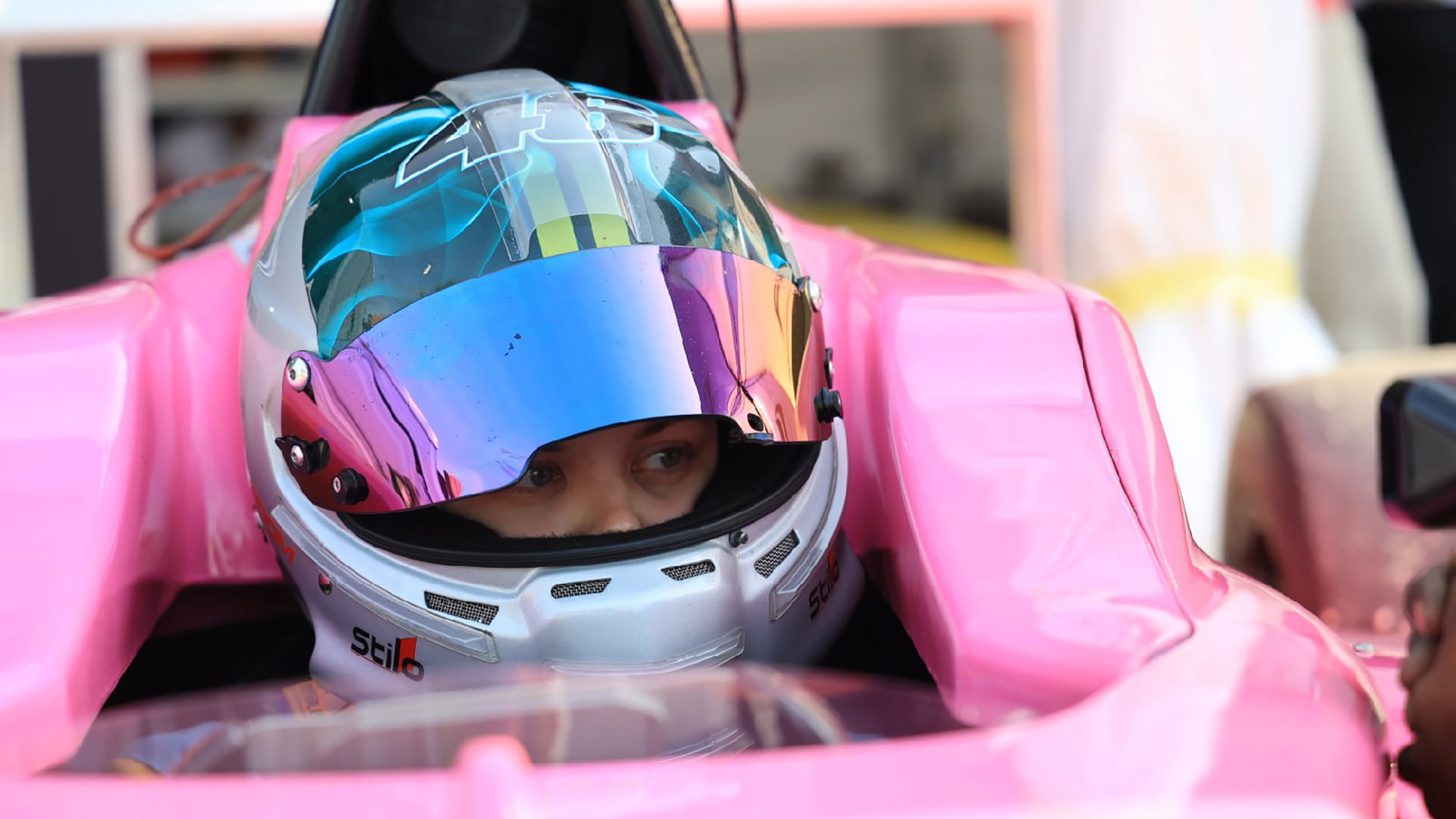
Crew Chief Eric: Like always, I can’t thank you enough for coming on the show. And I don’t know that we ever come to a consensus, but that’s kind of the point of what should I buy is we’re not really supposed to agree on what we would buy. We’re supposed to give people food for thought.

So this was new. This was different for us to do a two parter Porsche versus Corvette. I had a lot of fun. I thought it was informational. And I hope that our audience got a lot out of this too. And if you have further questions about Porsche or Corvette, hit us up on our discord, reach out to us on our Facebook group, email us.

We’d have a lot of. We’ve got experts in our wings that can get more deep into the details if you’re looking to buy one of these [01:46:00] particular cars. So thanks again guys for coming and we hope to see you in another. What should I buy? Awesome.

Ryan Bahrke: Thank you. What a pleasure.

Crew Chief Brad: Thanks for having us.

Crew Chief Eric: We hope you enjoyed another awesome episode of break fix podcast brought to you by Grand Touring Motorsports. If you’d like to be a guest on the show or get involved, be sure to follow us on all social media platforms at GrandTouringMotorsports. And if you’d like to learn more about the content of this episode, be sure to check out the follow on article at GTMotorsports.

org. We remain a commercial free and no annual fees organization through our sponsors, but also through the generous support of our fans, families, and friends through Patreon. For as little as 2. 50 a month, you can get access to more behind the scenes action, [01:47:00] additional Pit Stop minisodes, and other VIP goodies, as well as keeping our team of creators Fed on their strict diet of fig Newtons, gumby bears, and monster.

So consider signing up for Patreon today at www. patreon. com forward slash GT motorsports, and remember without you, none of this would be possible.

Bonus Content

There's more to this story!

Be sure to check out the behind the scenes for this episode, filled with extras, bloopers, and other great moments not found in the final version. Become a Break/Fix VIP today by joining our Patreon.

All of our BEHIND THE SCENES (BTS) Break/Fix episodes are raw and unedited, and expressly shared with the permission and consent of our guests.

Singer Vehicle Design

As mentioned several times on this episode, Singer Vehicle Design is an American company that specializes in restoring and modifying Porsche 911s.

It was founded by Rob Dickinson in 2009, who is also known as former frontman and guitarist of the English rock band Catherine Wheel. The company is based in Los Angeles, California and produces rollings works of art using older 911s like this “Turbo” unveiled at last years Quail (Monterey Car Week 2023).


The Flachbau 964

William’s choice comes in the form of the 76 US-spec X85 Turbo S Flachbau “slantnose” examples of the 964, seen below with a 996 GT3. Do you agree?

Photo courtesy Garage Style Magazine

What’s a Porsche Purist these days?

We spend some extra time with Lee Raskin (noted Porsche Historian, and subject matter expert on 356 and 550 Spyders) talking about vintage Porsche’s and his thoughts on “Porsche Purism” in today’s enthusiast world.

Tune in everywhere you stream, download or listen!

Listen on Apple
Listen on YouTube
Listen on Spotify

Learn More

Interested in buying a 911? 

And if you’re interested in buying a Porsche, look no further than Exotic Car Marketplace with over 20 years of personalized service to find you the right 911 experience!

What else should you buy? Check out other What Should I Buy? Podcast episodes for more car buying “advice” 😉 And remember: the debate never ends – it just shifts gears.

Despite its consistent silhouette, the 911 evolved significantly over the years. From the 901 to the 911T, E, and S variants, each brought incremental improvements. The panel dives into the grassroots motorsports culture that fueled Frankenstein builds – mixing cams, heads, and carbs for performance gains.

David notes that Porsche’s engineering philosophy was more iterative than revolutionary, especially compared to Corvette’s dramatic styling shifts. Germans weren’t big on personalization – at least not in the early days.

Photo courtesy Garage Style Magazine

With safety regulations came bigger bumpers, flared fenders, and a more mainstream appeal. This era of 911s – especially the SC and Carrera – became the poster cars of the 1980s. Ryan fondly recalls the hips on the SC as the moment 911s became “cool.”

Don and David point out that Porsche, like Corvette, began catering to yuppies. The cars got heavier, more luxurious, and less raw. But they never lost their engineering edge. Even the 930 Turbo, introduced in 1975, was a technological marvel – a six-cylinder that could clean Ferrari’s clock.

Photo courtesy Garage Style Magazine

The 930 Turbo (above) was the car that made Porsche a household name. With its infamous turbo lag and brutal power delivery, it earned the nickname “widowmaker.” Eric shares a childhood memory of a neighbor with a silver 930 and BBS wheels – forever cementing the car’s status as the Alpha Porsche.

David reminds us that the 930 wasn’t just about luxury – it was about racing pedigree. Fuel injection, turbocharging, and endurance racing roots made it a standout in a sea of malaise-era cars.

Photo courtesy Garage Style Magazine

If you’re a first-time collector, the panel suggests steering clear of the earliest 901s unless you’re rounding out a collection. Instead, look to the SCs, Carreras, and even the 930s of the late ’70s and ’80s. They offer the best blend of drivability, collectability, and that unmistakable Porsche charm.

And remember, whether it’s a Singer tribute or a bone-stock survivor, the right 911 is the one that makes you smile – and maybe makes your friends raise an eyebrow.


Thanks to our panel of Petrol-heads!

If you’re looking to add a classic Porsche (or Corvette) to your collection, reach out to William at exoticcarmarketplace.com. Want to hear about cool adventures with Porsches, then check out the Road Show Podcast with Ryan. If you want to learn how to drive a 911 really fast in the virtual world, then be sure to chat with David at MIE racing. And you’re guaranteed to catch Mark on another upcoming episode of Break/Fix so stay tuned for that, and don’t forget… What should be in your garage? A Porsche! So be sure to keep an eye out for cool Porsche collections with Don over at Garage Style Magazine. Thanks again to our panel for another great What Should I Buy? debate! 

Guest Co-Host: Don Weberg

In case you missed it... be sure to check out the Break/Fix episode with our co-host.
Listen on Apple
Listen on YouTube
Listen on Spotify

Guest Co-Host: William Ross

In case you missed it... be sure to check out the Break/Fix episode with our co-host.
Listen on Apple
Listen on YouTube
Listen on Spotify

Guest Co-Host: Ryan Barhke & Doug Fogler

In case you missed it... be sure to check out the Break/Fix episode with our co-host.
Listen on Apple
Listen on YouTube
Listen on Spotify

Guest Co-Host: David L. Middleton

In case you missed it... be sure to check out the Break/Fix episode with our co-host.
Listen on Apple
Listen on YouTube
Listen on Spotify

Guest Co-Host: Mark Shank

In case you missed it... be sure to check out the Break/Fix episode with our co-host.
Listen on Apple
Listen on YouTube
Listen on Spotify

Don’t agree, let’s agree to disagree? Come share your opinions and continue the conversation on the Break/Fix Discord!


This content has been brought to you in-part by support through...

Remembering Howard Purdy & The Deuce

When Howard Purdy and Bob Hodgson chalked out the frame for the Purdy Deuce on the floor of his parent’s home in 1964, little did they know that the car would be one of the dominant cars to compete at the famed Oswego Speedway from the mid 1960’s thru 1974…as well as ultimately become one of the most iconic supermodifieds in the history of the sport.

Photo courtesy International Motor Racing Research Center

The car debuted late in the 1964 season but was plagued by “new car” issues. The 1965 season however was a revelation as driver, Ron Lux, won 5 features in a row and 12 of the 16 races held, easily winning the track title. In several of those wins, Lux used an alias as he was afraid of losing his USAC sprint car license. That year, the car also made its first – and only – race ever on dirt, racing in the National Open at the Williams Grove Speedway. Lux was running 5th when he hit a rut and spun out. Sadly, Lux was fatally injured in a sprint car crash in July 1966 in Tulsa.

Photo courtesy International Motor Racing Research Center

The winter before he died, Lux had suggested a young, New England driver, Bentley Warren as a candidate for the ride. Purdy wanted a more experienced driver, but after trying several veterans with no success, he put Warren in the car. Warren drove the car from 1966 – 1969, winning 7 features in that span, including the 1969 International Classic, the biggest race of the year. Canadian Warren Coniam was behind the wheel in ’70 and ’71 winning 2 features and the final driver was the late Jimmy Winks, who won 5 features including the car’s final race in 1974.

Photo courtesy International Motor Racing Research Center

Small block and big block injected Chevy motors have powered the car over the years. The current restoration carries a 1960’s small block Chevy. In its time at Oswego The Deuce racked up 25 wins – 11 seconds – 5 thirds with 1 track championship and 1 win in the International Classic.

The car was competitive throughout the eras of upright supers, the sleeker, Indy roadster style bodies, and even when rear engine supers were running.

Tune in everywhere you stream, download or listen!

Listen on Apple
Listen on YouTube
Listen on Spotify

The Oswego Speedway, located in Oswego New York, was built in 1951 when original owners Harry, George and William Caruso converted the one time Wine Creek Horse Track into a 3/8 mile dirt auto racing facility. The track was paved during 1952 and remained a 3/8 mile track until 1961 when it was enlarged to its current 5/8 mile size. The Oswego Speedway has been a continuously run weekly race track since it opened in August of 1951.

Photo courtesy Oswego Speedway

Dick O’Brien former Public Relations & Track Manager at Oswego Speedway kicked off this IMRRC Center Conversation about the history of Super Modified racing. He spent over 40 years in Motorsports and spoke to the early history of the track how it has significantly evolved this discipline of racing.

Following his presentation, Drivers from Oswego’s over 70 year history were invited on stage: Bentley Warren, Warren Coniam, Eddie and Brandon Bellinger, Alison Sload (the only woman to win a supermodified feature), Otto Sitterly, Dave Danzer, and car owner/promoter John Nicotra answered a wide variety of questions posed to them by “The voice of Oswego Speedway”Roy Sova. Enjoy this funny and insightful view of how Oswego and supermodified racing has been a major influence in their racing careers.

Tune in everywhere you stream, download or listen!

Listen on Apple
Listen on YouTube
Listen on Spotify

Transcript (Part-1)

[00:00:00] We always have a blast chatting with our guests about all sorts of different topics, but sometimes we go off the rails and dig deeper into their automotive and motorsports pasts. As a bonus, let’s go behind the scenes with this pitstop minisode for some extra content that didn’t quite fit in the main episode.

Sit back, enjoy, and remember to like, subscribe, and support Brake Fix on Patreon. When Howard Purdy and Bob Hodgson chalked out the frame for the Purdy Deuce on the floor of his parents home in 1964, little did they know that the car would be one of the most dominant cars to compete at the famed Oswego Speedway from the mid 1960s through 1974, as well as ultimately become one of the most iconic supermodifieds in the history of the sport.

The car debuted in late 1964 but was plagued by new car issues. The 1965 season however was a relevation as driver Ron Lux won five features in a row and 12 of the 16 races held, easily winning [00:01:00] the track title. In several of those wins, Ron used an alias as he was afraid of losing his USAC sprint car license.

That year the car also made its first and only race ever on dirt, racing in the National Open at the Williams Grove Speedway. Lux was running 5th when he hit a rut and spun out. Sadly, he was fatally injured in a sprint car crash in 1966 in Tulsa, Oklahoma. The winter before he died, Ron Lux had suggested a young New England driver, Bentley Warren, as a candidate for the ride.

Howard Purdy wanted a more experienced driver, but after trying several veterans with no success, he put Warren in the car. Bentley Warren drove the car from 1966 to 1969, winning seven features in that span, including the 1969 International Classic, the biggest race of the year. Canadian Warren Conium was behind the wheel in 1970 and 71, winning two features, and the final driver was the late Jimmy Winks who won five features, including the car’s final race in 1974.

Small block and big block injected Chevy motors have [00:02:00] powered the car over the years. The current restoration carries a 1960s small block Chevy, and in its time at Oswego, the Deuce racked up 25 wins, 11 seconds, 5 thirds, and one track championship and one win in the International Classic. The car was competitive throughout the eras of the upright Supers, the sleeker, Indy Roadster style bodies, and even when rear engine Supers were running.

The following presentation covers the history of the Purdy Deuce in more detail and was recorded during the IMRRC’s Center Conversation Around Supermodifieds and the History of the Oswego Speedway and is hosted by the voice of Oswego Speedway, Roy Sova. I want to introduce a few people who were involved in the restoration of the Purdy Deuce.

Up here in the front row, Bob and Nancy Hodgson, who are on the pitcrow. Mary Purdy, wife of Howard Purdy. Chris Purdy is over here. Doug Holmes was greatly involved in the restoration. Jamie Moore had a hand in it. How about a big hand for all of those people.[00:03:00]

I’m Nancy. And you’re Bob. That’s Bob. Oh, he could tell. Laughter. I’m with Nancy and Bob Hodgson who were instrumental in the original deuce that raced at the Oswego Speedway starting way back in 1964. Bob, you were on the, not only on the, uh, crew, but it seems to me like your name was mentioned in winning races.

Uh, yeah, well, I, I drove some race cars myself. That was one reason that Ronnie decided to use my name when he didn’t want Newsac to know that he was running other races. Did everybody think it was you or did they know better? At first I think they did think it was me. But after he won a few races in a row with Airboy, of course he decided he should use his own name.

And he continued to do that the rest of [00:04:00] his career. And, uh, Nancy, what was your involvement in this, other than probably bringing the phone to the track? Well, no, I used to bring food to them when they worked every night until 10 o’clock or so. Tube steak and fried egg sandwiches were their favorites. I did a lot of driving because they worked so many hours that they would be too tired to drive, so I ended up being the chauffeur for the car in the early days.

How do you feel about all that, getting started in that and being such a big part of the crew? Oh, I loved it. We were a big family. We were just all a family. And the story about them taking tape measures and straight edges and chalk and drawing out a frame on the floor of Howard’s parents garage is actually true.

And I was there that night. I could hold the straight edge. Well, good for you. And what did you do during that, Bob? Well, of course, Howard came up with the design of the [00:05:00] new car, and we just started getting materials together to get it built. One thing I wanted to mention about Howard Purdy, when I met him, he was a car salesman in a Ford dealership.

Then he got into, he took over a restaurant near the Ford dealership, and, I guess one or two doors away there was a shoe store. And Nancy was employed in the shoe store. And of course, uh, we would work on the car every night. And then when it come closing time for the restaurant, we would go to the restaurant, clean the restaurant up.

And so that was ready for the next day. I had to thank Howard for introducing me to this lady here She was very cool. This August, we will celebrate 63 years of marriage. Congratulations. Thank you. So, [00:06:00] that’s how Nancy and I got together. But anyway, Howard, after the restaurant, he then went and started the business of Purdy Ford.

Then he had a Campland RV business and a Z Bart rust proofing business. And then there came Lakeshore Ford, another Ford dealership. Another thing that he did, we, in the wintertime, we used to go skiing. He designed and patented a ski boot case for ski boots. I think because he had so many things going on, he never got the opportunity to market it.

And then besides all those things going on, Howard and Mary had a hobby farm where he had registered cattle and he had horses. With all these things going on all those years, Howard actually built [00:07:00] 56 race cars during his career. So he was a pretty busy person In the later years of our racing, uh. When people talked about, we didn’t run the total seasons, and of course with all that stuff going on, that was a reason for, you know, every race at that time.

Now, what about you, during all this time, and putting up with him for 63 years? Oh, it’s been wonderful. And racing was wonderful. Bob met Howard when he was 16. I met Howard when I was 18. They were in one another’s weddings. We’re godparents to one another’s children. It’s been a marvelous friendship. And it’s almost more like family than just friends.

And Howard was a very brilliant man, well beyond his time. And when people say he wanted the best to be better, it’s true. [00:08:00] And it didn’t matter whether it was a car or his business. Or his relationships with people. I think that was, that was his motto in life. It was never It was never just good enough. No, it was, nothing was ever good enough.

It always had to be better. There was a way to make it better. And he’d work at it, and he’d work with people to get that. And that’s a rare talent. And Mary, Mary Purdy is joining us, uh, wife of Howard. You must have led some interesting times with him over the years. probably, yes. . . There were always the race car.

And then after our children came and you know, that sort of went, uh, I think he, he wouldn’t have wanted his son to drive. Right. And so, then we bought a farm and we’re working on the farm. We had Angus cattle. We grew, and that was a [00:09:00] big enterprise. We grew corn, hay. Why did he finally get out of Russia? I think he really didn’t want his son Chris to get it.

Howard didn’t really drive, but he wouldn’t have wanted his son. Too dangerous? Too dangerous. Probably, yes. Well, thank you for joining us Mary, Mary Purdy, Nancy Hodgson, and Bob Hodgson, the iconic Purdy Deuce, here at the International River Racing Research Center at Watkins Glen. We’ll have the next part of our program in just a few minutes.

Thank you for having us. First of all, let me tell you a little bit about the Purdy Deuce. One of the most iconic cars ever at the Oswego Speedway. The whole thing was triggered by a guy by the name of George Offenburg in Florida. On the 26th of November of 22, the car arrived at Doug Holmes place in Auburn.

On the 27th, they started the disassembly, and that was completed [00:10:00] on the 30th of November. On the 2nd of December, the frame went to Lee Osborne and was returned on the 4th of January. The frame in the auto body then went to Steve Miller’s shop in Mexico, New York, and Steve returned it on the 21st of March.

The trailer arrived at Doug Holmes place on July 4th. And was ready to go on July 5th. Trailered it to Lee Osborne on the 14th. Lee returned it on August 9th to Doug Holmes. On the 24th, the fuel filter arrived. That was the last part they were waiting on to complete the car. And on the 28th of August, 2023, The deuce was fired up for the first time since 1974, and that was done at the Romulus Airport in Romulus, New York.

So, ladies and gentlemen, we’ve got Bentley Warren, Warren Conium, Doug Holmes, Lee Osborn, and Steve Miller, the guys who primarily were responsible for all of the restoration. I want to mention that the car, as soon as we are done here today, will be loaded up. by Bentley Warren and taken up to Bentley [00:11:00] Saloon in Arundel, Maine, where it will be on display for the rest of the year.

If you’ve never been to Bentley Saloon, you need to go. It’s a fantastic place. He sells more t shirts and hoodies than any racetrack in the world.

He has two large, maybe the size of this room, or bigger. Barnes, with classic cars, and classic race cars, and the uh, Duke’s is going to go up there and do that. People are invited to go in, there’s no charge, there is an honor box if you want to leave some money in the box, uh, to help support what he does there.

But it’s just a tremendous visit, at Bentley Saloon. He has a lot of classic car shows, motorcycle shows, entertainment with music and everything like that. You could pay me like a fortune. No, so, that car is going to be out there, what, for the entire rest of the year? Yes, uh, Chris told me we’d keep it till the end of the year.

And, uh, we’re looking forward to it. And I’m sure a lot [00:12:00] of people are going to love to see it because it was such a great race car. And it just did so much with, you know, different drivers in it and winning races and all that stuff. So, I’m just very, very proud that he, uh, let us have it. That he got it restored by Doug.

A lot of other guys helped restore it. It’s just an honor to have it. Mention a couple of other cars you got there. I got the 61 Junior, then there’s a replica of 49 Ford that I drove in 61. I think I won a championship with it. I look at Fisher and me and I standing with the checkered flags. What the hell happened to me now

But, uh, there was a lot of cars in there, a lot of race cars. President Bush was there once with, uh, his whole entourage and uh, the guy who was in a wheelchair at that time and the guy pushing him was his head PR guy. He said we gotta get out of here. He’s telling me we gotta go. We gotta go like this. But he didn’t want President Bush to hear it.

President Bush says to me, What’s over there? I said Model [00:13:00] T’s and Model A4’s. I want to see them. He turns around to the guy and the guy’s going like this.

I mean, it was just such an honor. He came to the saloon three times. He and Barbara Bush, and they were just wonderful people. I got another cute little story, too. We have, for some reason, the surprise ears hanging in the office. So I’m standing next to Barbara, President Bush was next to her, and luckily my girlfriend, Lisa, who runs the place, was right beside me on the left side.

And Barbara said, Bentley, I have to ask you a question, in this beautiful English language that she just spoke so eloquently. And I said, sure Barbara, what? She said, how do the brassiers get in the rafters? And luckily Lisa, she said, oh Barbara, some of the girls come in with two bras on, and they take, before Lisa said they take, But I was like, oh gosh, I did not come prepared for the occasion.

It was so [00:14:00] quick, so quick, so witty.

That’s happy for me, and a lot of people are going to see it. I want to start with you, Doug, because you were kind of the coordinator for all of this. Well, it took a little while before we received the car. Chris was going to restore it with his son, David. They just decided it was more than they can handle in a reasonable amount of time.

So Bob Hodgson had called me, mentally called me, asked if we could get it done for classic. I said, yeah, if we get the car here, we’ll have it done. We got to get, we didn’t have the car at that point. It showed up at my shop, like Bentley said, the half inch shock stems were about five eighths, you know, with rust.

It’s pretty rough looking. One of the first things I did was call Lee, and I said, Lee, you gotta come over and look at this thing. Give me a plan of attack on this thing, and so we soaked it with WD 40. And, uh, I had it apart in a couple days. Took the frame up to get Lee, cause there was a couple cracks. We needed some motor mounts made for it.

Just some small things fixed on it. Blasted and powder [00:15:00] coated. Got that back, took it to, uh, Steve’s. Got the tail section done, hood. nose, replace the right side door panel, and paint, and lettering. After that, it was just taking every single part apart, and either rebuilding it, or hopefully rebuilding it, but some stuff we had to replace.

A master cylinder was lost cause. Fuel filter was also shot. That was a problem. It seemed to be aircraft stuff from back in the day. We just couldn’t find a fuel filter, so we tried the best we could to duplicate it, and that’s where Ted Johnston helped me on that. The brakes went to Martin’s machine in, uh, I think it’s Oklahoma.

The gauges went out, got new bezels put on them. Just took the rack apart, the rear end apart, polished up the axle, zinc flashed it. The wheels were all just done and Cerakoted. I should have brought my thumb drive because there’s pictures or, I don’t know, maybe George did, but I had all the, uh, photos from everything right from start to finish.

But yeah, I couldn’t do it without Lee and Steve Miller and a bunch of [00:16:00] people’s name on that board there. And, uh, I’m glad it turned out as well as it did. Well, we want to mention that Howard Purdy’s wife is here, his son Chris are here. They were responsible for the car finally being turned over for restoration.

And Bob and Nancy Hodgkins, Bob was a mechanic on the deuce for a number of years. Lee, let me get you in here next. What was your role in this? Did some frame repairs, made some bumpers, motor plates, stuff that was just beat up too bad to fix. We got a friend of mine painted part of it, then we sent it back to Doug and he sent it up to Steve.

Now how did you get involved? Doug contacted you about this? It was my lucky day, yeah, he called me. Yeah, yeah, he called me up because I’ve done other projects for him. So just one more on the list. That’s right, just more iron, you know. And Steve Miller, Steve, this is probably one of the fastest restorations that’s been done.

I know you’ve had a number that have been known all over the United States, uh, competed again, not competed, but showed again at Indianapolis and stuff like that. But this has had to be a very quick restoration. We didn’t [00:17:00] seem quick. Body looked like King Kong jumped up and down on it several times. The whole back end of it, I had to fabricate that that was missing because this had a tail section on it when it last ran.

Oh, that was sad. Did you keep the original hood? Original holes have been filled and recut for a big black radiator. They did a couple of things, they, they moved the offset. I think in 68, was that it, Bentley? When they changed the offset on it and put the, uh, open tube axle in it and everything. I, I can’t remember, but it looked so much like original when I drove it in the 69, I think it was 68 and 69.

It looked just like when you guys brought it. I’m like, wow, that’s the same guy, I didn’t think it was touched. Except it looked cleaner. Well, originally the engine was in the center. The rear end is out of an Indy Roadster. They had an Indy Roadster that they were going to replace this car with, but it didn’t work as well as this car.

So they took all the running gear out of it because [00:18:00] originally this car had wide fives and housing rear end and stuff when they changed the offset because it is an offset rear end. Instead of making a new hood, they just riveted a patch over where the engine used to be. So, then they put a big block in it, and then cut up more of it.

They cut into the nose section. There was a lot of it, uh, had to be replaced. This is the original top, though, and the original nose piece. Now, Doug, I’ve been hearing for years this car was put away right after it was raised. It was still in pristine condition. All you had to do was take it out and dust it off.

That was obviously not the case. No. I have witnesses. Yeah, it was rough. It was rough. It didn’t roll at four flat tires. He backed the trailer up to the garage and we picked the back end up with a cherry picker and then we kind of scraped it off the trailer, you know, got the rear on jack stands and we picked the front up with a cherry picker and set it on the ground.

It wasn’t going anywhere on its own. Now what made this car so competitive? It started in, uh, 64, ran through [00:19:00] 74. The roadster era came into being, and yet this car was still a winner. Maybe just the drivers? Well, yeah, that’s probably a lot of it, yeah. But, the car’s very light. We scaled it with the small block, and it was 1, 740 pounds with the iron small block.

Valley said it would have run better if I didn’t have 50 year old shocks on the back. Well, they were relatively new. Well, Bob found them for me. They were in the bottom of one of the boxes there. They’re Monroe Max, is what they are. They were yellow, but in all the photos they’re black, so we painted them black.

One of the front shocks, we had trouble finding that little one that’s on the lower part of the axle. All I did was go in the book and measure lengths and compress and that. That shocks off of a heater built cab or tip flip over cab or something, I don’t know, but that’s the only thing we could find that would fit on there.

Yeah, as far as the chassis, I don’t know enough about what made it fast. Bob Hodgson said it’s basically a three wheeled race car. I don’t really know what makes it so fast, other than I know it’s light. I mean, we’ll talk to Bentley, he knows what made it fast, right? I think a lot of it was Howard [00:20:00] Birdy.

He was a person that was Driven to do everything perfect and make things right and fast. And I remember driving it, we’re out, we’re running practice. And Fritz Kline was, Fritz used to be a big guy that worked on the car. Real nice guy. How is what, why can’t you go faster Bentley? And I’m like, I thought we were going pretty, no, pretty good.

Isn’t good enough. He said, why can’t you, he said, what’s wrong with the car? I said, I don’t, I don’t think anything. He said, well, why can’t you get into the corner deeper? What happens? So then I tell him what, what happened. He said, well, what happens in the middle when you try to pick the throttle up? Does it push or is it, or is it assy?

I said, well, it gets assy when you put the throttle down. He said, what about coming out of the first two parts of the corner? What about coming out? The, I said, well, sometimes it’s pushing, sometimes it’s acting. And then he had Ray and Bob change tires, and he only had four wheels, so he had to take the wheels and tires off the car.

He had a couple of spare tires, changed the tires, and it’d go outward, run the same speed, but it was a little bit different. Fritz told him, he said, you know, you’re the fastest car on the track by two tenths. He said, But Howard always wants to go faster. [00:21:00] And that was Howard’s way. He always wanted to go faster.

And I really believe he did that in his businesses and in life and everything. How did you get in the car in the first place? Now Ronnie Lux, of course, had it in 64, won 12 features, was the track champion. It didn’t do a lot after that. And then you got in the car and in 69 won the classic. How did you get the ride?

Uh, Howard called me up and asked me and I was like, Oh my God. And then I remember practicing in the car and the car was so good and Ronnie Lux helped me get the ride. And Ronnie Lux, I believe. I told Howard that I would be the guy to put in the car. He and I raced a little bit together and talked a little and stuff like that, just on different things.

He thought that I would be a good driver for the car, a good fit for the car. And uh, when I remember getting into it in the first practice I was running, I was so darn nervous and I wasn’t on the throttle wide open. I was just in practice till they threw the green. I thought I was going to break a drive shaft or a rear end.

My foot was shaking so bad the car was going, whoa, whoa, whoa. like this. Like, Holy Cripes, I’m going to break something. When the green flag came out, I practiced the car was, it was unbelievable how good it went. All right. Now, after 69, you won [00:22:00] the classic first classic win. Then you got out of the car. Well, I got a chance to go to the Indy 500 and you took that instead.

Yeah. What? Stupid. But this was like a ladder and I, this climbed me up the ladder to get some recognition and the people involved with this car, just people that saw me and how it just made me look good. And then I just got rides after that. And then, Warren, you got in the car. How did you get the ride?

Well, Howard just called me and, uh, asked me if I had time to drive his car. And you said, sure. Yeah, I mean, the car was so iconic. You know, I said, great, that sounds like a good time. But like Bentley says, Howard always wanted to go faster, and he was great at reading tires. He would just rub his hand across the tires and say, well, this one’s working, that one’s working, but this one’s not.

He’d always say, well, the car’s faster than that. I know when I qualified for the classic, drove it the first week with a small block in it. And I said, I don’t know, this motor doesn’t seem to have much. And he said, you’re kidding. He says, it’s a four by four. And I said, [00:23:00] well, it doesn’t pull as good as four by fours that I’ve run.

So he said, okay. Well, that was a week before classic. He said, okay, I’ll see you next week. Well, I showed up at the track on the Friday night to practice the car. And Gladdy, the girl at the, uh, hotel, said Mr. Purdy called and said he’s gonna be a little bit late. He was making an adjustment on the car. So I said, oh, okay.

Yeah, he probably won’t get in till tomorrow. So, uh, okay. We missed some warm ups. But the next day he showed up and here it’s got a big block in it. And so, uh I said, well, that’s quite a tune up. He said, yeah, well, he said, you said it didn’t have much power, but he says, after I put this motor in, he said, I did find that the four by four had a broken valve spring.

And he said, so it was probably down a little bit. But he says, uh, hopefully this will be okay. But it was a stock 427 big block off the GM shelf with a flat tap at cam in it. I don’t think that’s going to go any better than a four by four. [00:24:00] Anyways, he was great to work with. Unfortunately, the rear torsion bar adjuster.

Broke just as we were starting the classic and we were down 14 laps. And the last thing he said to me was, well, if you win it from here, you’re doing something. But we did pick up a lap on the field. The car was phenomenal. And I know he changed all the bars after the fact. After classic weekend, he changed all the bars.

He said, I should have done this before classic. But anyways, I only ran the car, I would say six or eight times. And one win. No, well, Oswego, yeah, and then we won Fulton, and we won Flamborough, I think. So why did you get out of the car? Somebody else called me for a full time ride, and Howard wasn’t going to run a full schedule.

Well, Bentley, I think that’s one of the interesting things about this car. He almost never ran a full schedule, only a couple of years. In the 10 years or 11 years that it ran, I believe it was 97, either 94 or 97 races [00:25:00] total, and the average finish for the car with all the drivers, he had 10 different drivers in it, the average finish was 5.

8. Well, most of that was Ronnie Lux. Ronnie Lux and Howard and Bob and Ray and Fritz and all of them were just such a team. Ronnie had a good foot to stand on the gas, I’d say something else to go along with the foot, but he, uh, he really got the job done well, and he was a phenomenal driver, and he won. I think every feature but one, the last year he drove it, before he went to Indy.

And uh, he was just a phenomenal race car driver, and the car was phenomenal too. After that, the guy, the last guy in the car, and I believe it was the last time they ran a full season, last time they ran it all, was Jimmy Winks, who had quite a career in it. Yeah, now Howard put that Reynolds Aluminum big block in it.

I know Jimmy told me, he said, man, it sure doesn’t run out of power now. But no, Howard, Howard was before his time, really. He was a smart man. So Doug, want to sum this up? How competitive would it be today? What can you get it down to? Probably have to ask Bentley, but we would need more power. I’m sure he’d [00:26:00] say that, but I don’t know what the weight and all, I don’t know, Steve, these guys could probably answer it better than me.

I mean, if you put a rip today’s big block on there, I’m not even sure the frame would handle it really. It’s, you know, it’s pretty rusty, you know, it was all blasted and powder coated, but it would need to have some, it’s bent too. Bentley told me this thing’s bent, the front’s pushed over a little bit, but yeah.

You would, you would probably have to take it all apart and just make a new frame and for it. Maybe put some better brakes on it too. I don’t know. And get a younger driver. Wow. I don’t know. He’s still good. He’s still good. All right. Ladies and gentlemen, we want to thank Mrs. Purdy, son Chris Purdy from Howard Purdy family, Bob and Nancy Hodgkins, and of course, Lee Osborne, Steve Miller, Doug Holmes, Bentley Warren and Warren Coney.

Thanks for being with us here now.[00:27:00]

Make it to your favorite racetrack this year. Thank you.

This episode is brought to you in part by the International Motor Racing Research Center. Its charter is to collect, share, and preserve the history of motors, sports spanning continents, eras, and race series. The Center’s collection embodies the speed, drama and camaraderie of amateur and professional motor racing throughout the world.

The Center welcomes serious researchers and casual fans alike to share stories of race drivers, race series, and race cars captured on their shelves and walls and brought to life through a regular calendar of public lectures and special events. To learn more about the Center, visit www. racingarchives.

org. This episode is also brought to you by the Society of Automotive Historians. They encourage research into any aspect of automotive history. The SAH actively supports the compilation and preservation of papers. organizational records, print ephemera and images to safeguard, as [00:28:00] well as to broaden and deepen the understanding of motorized, wheeled land transportation through the modern age and into the future.

For more information about the SAH, visit www. autohistory. org.

We hope you enjoyed another awesome episode of Break Fix Podcast, brought to you by Grand Touring Motorsports. If you’d like to be a guest on the show or get involved, be sure to follow us on all social media platforms at GrandTouringMotorsports. And if you’d like to learn more about the content of this episode, be sure to check out the follow on article at GTMotorsports.

org. We remain a commercial free and no annual fees organization through our sponsors, but also through the generous support of our fans, families, and friends through Patreon. For as little as 2. 50 a month, you can get access to more behind the scenes action, additional Pit Stop minisodes, and other VIP goodies, as [00:29:00] well as keeping our team of creators Fed on their strict diet of fig Newtons, gumby bears, and monster.

So consider signing up for Patreon today at www. patreon. com forward slash GT motorsports, and remember without you, none of this would be possible.

Transcript (Part-2)

[00:00:00] Brake Fix’s History of Motorsports series is brought to you in part by the International Motor Racing Research Center, as well as the Society of Automotive Historians, the Watkins Glen Area Chamber of Commerce, and the Argettsinger family. The Oswego Speedway located in Oswego, New York was built in 1951 when original owners Harry George and William Caruso converted the one-Time Wine Creek horse track into a three eighth mile dirt auto racing facility.

The track was paid during 1952 and remained a three eighth mile until 1961 when it was enlarged to its current five eighth mile size. The Oswego Speedway has been a continuously run weekly racetrack since it opened in August of 1951. Dick O’Brien, former public relations and track manager at Oswego Speedway, kicked off this IMRRC Center conversation about the history of supermodified racing, where he spent 40 years in motorsports and spoke to the early history of the track and how it has significantly involved this discipline [00:01:00] of racing.

Following his presentation, drivers from Oswego’s over 70 year history were invited on stage. Bentley Warren, Warren Conium, Eddie and Brandon Bellinger, Allison Slode, the only woman to win a super modified feature, nine time champion Otto Siderly, Dave Danzer, and car owner and promoter John Nicotra answered a wide variety of questions posed to them by the voice of Oswego Speedway, Roy Sova.

Enjoy this fun and insightful view on how Oswego and Super Modified Racing has been a major influence in their racing careers. Welcome to the center conversation. Oswego Super Modifieds, a legacy of speed at the Steel Palace. We’ve got some outstanding Hall of Fame drivers, future Hall of Fame drivers here at the International Motor Racing Research Center.

And to start our program I’m going to call on Dick O’Brien, long time track manager at the Oswego Speedway, who was involved in the change from the Modifieds to Supermodifieds and the growth of the Supers. Dick? I think we’re going to have a [00:02:00] great afternoon for Supermodified racing right here. We’ve got a lot of great drivers, owners, a lot of people that donated to the sport.

I’d like a special thanks to the Purdy family for, uh, Bringing their iconic race car here and making things happen. But what I want to talk about initially is what happened before the Supers got there and the changeover into the Super Modified Division. And Harry, Bill, and George Caruso always loved auto racing.

In the late 40s, they bought a modified stock car. They raced it, Sandy Creek and Vernon tracks. Dante Rapone was their driver. The car wasn’t very fast. Being the sportsman that they were, they went out to Chicago to Andy Granatelli and bought a motor from him of STP fame, put it in their race car. It still wasn’t very fast.[00:03:00]

So, the next step, they went out and bought the Long Dorman. Vine Creek Racetrack, which was located on the site of the Oswego Speedway. And they were going to clean up the dirt track and use it for a practice track, so that Dante could pick up the pace, maybe, and be a little more competitive. Well, this was a period, post war, racetracks were popping up all over the country.

And then he says, We’re, we’re sort of messing with maybe the wrong end of the deal. Let’s build a racetrack. So they built Oswego Speedway. It opened in 51. It’s a half mile dirt track. They ran seven races that year. Charlie Berry of Salve won the initial race of her run at Oswego. One of the winners that year was John Terese Sr.

And his son, John Jr., and Eric now own Oswego Speedway. They ran seven races there. They opened up in 52 with a [00:04:00] half mile dirt track, rough, bumpy, dusty. They were sailing dust all over Sweden. Didn’t like it. They shut the place down after four weeks. Paved, reopened in August, is a half mile racetrack. The next thing, we had the three brothers, Harry was upstairs, overseeing the tower and the finances.

Bill was good inspecting the cars. He was good with tubing and welding, and he was our inspector. And George Sr. ran the concession stand. And he’s the man responsible for bringing those world famous Hoffman hot dogs to Oswego Speedway. So things rolled along during the 50s. And in 57, two things happened.

They added a second division. These were for flathead motor stock cars. They were called B’s. And then the overheads that had been running, they were the A [00:05:00] cars. And they were the big hitters. You know, Swifty, Irish Jack, Ellinger, Bliss. The A’s got a bigger purse than the B’s. They were a faster car. Their motors were a little more expensive.

At the end of that year, the Carossos decided to run a big race. They had some cars there. They had a decent turnout of fans. So they ran a 100 lap international class. Irish Jack Murphy won it, won 1, 000. So things moved along. In 1961, that was a very, very important year in the history of the racetrack.

First of all, the track was enlarged to its present 5 inch mile size. So the racing got a little faster. They were having some problems with the B’s. The B’s had more cars than the A’s, and they wanted equal cars. The Caruso brothers talked it over, and they didn’t feel that, you know, the A’s were drawing the people, and they went back and forth.

And finally one night, they [00:06:00] struck. So the B’s came down and blocked the racetrack. You couldn’t run any races. The Carusos asked the police to come, and they opened the gate, and they asked all the B’s to leave the property. And to my knowledge, I don’t believe there’s ever been a flathead race at Oswego since that day.

They also had a deal for Nolan Swift, who was the top dog with the 10 pins. He built a two frame modified for the 61 season. By the rules of the day, that was an illegal car. And it kept going back and forth. You know, he kept demanding, you know, let me run, let me do it. So at the end of the year, as a compromise, they said they could run it in the And the classic race had been building since 57, it now is the biggest asphalt modified race around.

And it was billed as an open competition modified race. So what happened, cars [00:07:00] came from Michigan and Canada, these were super modifieds, but they came under this open competition rule. The crucials were in a tight spot. You had a pit full of modifieds, and you had a few supers. What are you going to do?

You had a big crowd. Finally, I guess, it came down to Harry. And Harry said, I like these supers. Everybody’s got modifieds. Around Oswego, Fulton, Utica, Spencer, Lancaster, Shaverlock, Albany, Saratoga, all had pavement modifieds. Harry liked these supers. It was different. He says, let them run. It wasn’t popular.

They dominated. Bennett, Lloydy John got a Trump role. Bennett wins the race. A lot of crumbling fans. So, in 62, he opened the rules up. He says, We’re going to run Supers. Well, that sounded good. The Michigan cars come in. There were no [00:08:00] local cars. Other than Swifty, he’s the only guy that could stay on the lead lap.

But, Harry, Put money into the purse and he said some of you local guys go out and build some cars or get some cars Guys are taking the bodies off the cars. Jimmy Champlain was there had an old 10 pins car He took the body off in 62 and started his career. He wasn’t very good, but obviously he picked up the pace a few years later.

And he turned out to be the man out there for many, many years. But he kept putting money into the purse, and now you’ve got a situation where the field is building. We’ve got a really good weekly show. The next thing you know, the, uh, switch to supers was basically complete. It took a while. When it took money, he had a little motto.

Money brings cars. Cars bring people. And he used that. Even though the crowds weren’t that big, once he kept getting these cars, [00:09:00] we went from a local modified truck to a regional truck. Guys started coming in. Todd Gibson. Norm Becker came in from Canada. Bentley Warren comes in from New England. The people liked that mixture.

Of the out of town invaders. Versus the local guys trying to pick up the pace. I’ve been there an awful long time. I was there 40 years at the racetrack. I think the most important decision in the history of the Cerrico Speedway happened in 1961 when they went against the grain while they basically threw the modified rulebook out the window and they brought in the supers.

But, they followed it up with money and made that class develop at the Cerrico Speedway. I got one other quick story and then I got to stay out of the way. Everybody wants to keep things moving. You know, they were running in the 60s, Saturday night. Superzone. 3H, 2 semis, Patsy, 45 lab, A main. [00:10:00] I was working up there then, in the early 60s, 64, 65.

I used to talk to Harry, I said, Harry, we got to run a race. We got to do something a little different. The classics coming along. And he says, well, what would we run? He says, well, We could run USAC sprint cars. They had Indy type drivers, Rutherford, Branson, Plusky, Omsers, were all running sprint cars back then.

He wasn’t too excited about that, mainly because they never ran in upstate New York. He never saw a USAC sprint car race. I did. I used to go from Reading and go here and there to the races. And then I said, you know, if we ran a race, I think I could get Mario Andretti up here in a sprint car. And I did. To an old guard Italian, like the Caruso family, having a Mario dread on their racetrack.

That was a big deal. He said, Dick, if you can get a dread over on the race. So I says, okay. So I went down the line on to a USAC Champ car race. I went up to [00:11:00] Mario, introduced myself. I said, we’re running a big hundred lap race in August. I said, we’d really like to have you up there. He said, I’d love to. I got a really fast.

Wally Muskox was my owner, and he’s, he’s good. He said, I gotta have some travel money though. I said, well what do you gotta have? He said, a thousand dollars. Well, 1966, a thousand dollars was a lot of money. I buzzed right over to the pay phone, called Harry up. I said, Harry, I can get Andretti to come to the suite on Mars.

It’s gonna take a thousand bucks. He thought for a minute, he says, make the deal. We’re ready to go. So I went back, shook his hand, we’re ready to go. No contract, no paperwork, just a one on one, shake the hand, there we go. August comes, we’re upstairs, Harry and I, we’re looking off the tower roof, along the lines of the concession stand, it’s a beautiful day.

We’re going to sell out the Trump grants. I get a [00:12:00] call from Danny Bartlett, Pitt signing, he said, There’s that drainage down here. He won’t sign in until he gets his money.

I said to Harry, I said, Harry, I’ll run down, I’ll get him signed in and get him inside and he’ll be ready to go. Harry said, no, I’ll bring him up here, I’ll give him the money. I want to meet Mario Andretti. So I bring him upstairs, I bring him upstairs, Harry Caruso, Mario Andretti, shake hands. Next thing I know, They’re talking in Italian.

Where they’re from, where they did, you know, the whole deal. Ten or fifteen minutes. Back and forth in Italian. I have no idea what they’re talking about. Then I get a call from the bitch. It’s Wally Muskowski. He says, get in dirty over here. We’re ready to warm up. They only give you two warm up sections for the sprints.

I gotta have him over here. So I told Harry, Harry, he’s gotta have his money. So Harry always [00:13:00] carried a big lot of bills. That’s it. Pulls him out, big thick rubber band around him. Takes the rubber band up and it flips open. There’s a stack of ones.

Takes down to the bottom part. And there’s all the hundreds. And drives like this. There he peels off ten 100 bills. He was in his driver’s seat. Takes them, pulls them up. Puts it in the separate pocket. Closes it. Goes down. Sets fast time. Wins the 100 lap race. We got him back the next year. In 67. In 67. And he, uh, had the leader card.

Sprinter with a big Ford 4 cam motor. Dominated. Twin 50s. Wins them both. He’s got his twin brother Aldo there. And they raced for the first time in USAC competition together. Aldo wasn’t very good. Sorry. [00:14:00] But Mario put on the show again. So we ended up the deal. Mario Andretti’s career record at Oswego was unbeaten.

Three feature wins out of three. We were, at that time, the top super modified track in the country. And having IndyCar drivers and people like Andretti there elevated our status as one of the top pavement short tracks in the country. That’s it, folks. The early years of the SWCCO speech. One other person I want to recognize is one of the former track owners and one of the sons of one of the original owners, Romy Caruso, who’s back here.

Now the main part of the show. I’m going to introduce all of the people who are down here on our page. I’m going to introduce them in alphabetical order [00:15:00] by their first name. Which is also ladies first. Ladies and gentlemen, Allison Sloan. Bethany Warren.

Brandon Bellinger.

Dave Dancer.

Eddie Bunyan, 83. John Acotra. Arnold Sidderly.

And Warren Coneyan.

Just to run down a few things. We’ve got, uh, Eddie Belminger with two track championships. Brandon with one. Arnold Sidderly with nine. [00:16:00] Eddie Belminger with two. Warren Coneyan, he had two. And of course, Bentley had six. Classic wins, Dave Dantzler with one, Otto Sidderly with five, Eddie Bellinger with five, Bentley Warren with six, and Warren Coney with two.

So we’ve got some high powered people up here. What we’re going to do is we’re going to ask questions. Uh, we’ve got two microphones, they’ll pass them around as we ask questions of the individuals up here on the stage. And I want to start out with Bentley. Bentley, you won your first ever Classic in 1969 in the Purdy Deuce.

What do you remember most about that race? Winning it. Okay, Allison, next question for you. No, go ahead, Ben. It was certainly a unique opportunity for you, the iconic number two, to take it to the win. And then, of course, next year you left the ride, Warren and Cody took it over and went to USAC racing for a while.

Yeah, so what?

Batman can be like this, he can [00:17:00] also be a nice guy. Alright, Warren, Pauline, what are you next? That’s a hard act to follow. Well, you gotta be able to say one or two words. We’re good. Warren, when you drove the Ferdie Goose, it started out as a Small block car and you talked to the Purdy crew and, and Howard Purdy and had it converted into a big block.

Why did you do that? Well, I told him the first night I drove the car the week previous to the classic, told him this car’s a little short on power. And he said, no kidding, it’s a four by four. I said, well, all the cars I’ve driven are four by fours, and they had more snot than that. So he went home and, uh, made a couple changes.

He put a big box in it. Came back and, uh, surprised me the week later with a big blockhead. What difference does it make? Power? Well, it didn’t have a heck of a lot more power than the 4×4. Like, a good 4×4 is a pretty good motor. Anyways, it did the job. Interesting, since it got the pretty goose, [00:18:00] it almost never ran a full season.

It had under 100 total feature races at the Oswego Speedway. And the average feature finish for that car was a 5. 8. Eddie Bellinger. You were the first driver, and I think the only one, who made a pit stop and won the classic. A lot of other drivers have tried it before you and after you, but you made it work that year.

I know it was a plan you had going in. Why did you decide to do it that way? The tires weren’t really holding up all that great. We just kind of felt like, We just had to do something to get a chance going. And did you practice the pit stop? Oh, the boys did. I didn’t. So they’re still doing the work for you now?

All I had to do was pull it and stop. Get it out of gear. Get it back in gear. Alright, Brandon. Your grandfather was a track champion three times at the Oswego Speedway. Your father’s been a track champion. You won the track championship a couple of years ago. First ever two generation family to win. First ever three [00:19:00] generation family to be track champions.

What does that mean to you? As a competitor or as a person? It was definitely a pretty special win. I feel like getting a swiggle, even winning a heat race is hard. But much less, you know, if you can do anything beyond that. I mean, winning a feature is hard. And to have the opportunity and to be able to deliver one in a championship is pretty special.

You’ve got the classic win as well. Your grandfather never won a classic. I don’t have a classic win yet, but I’m going to change it this year. Oh, that’s right. That’s right. That’s right. That’s right. That’s right. Alright, Alison Sloan, in last year’s classic. They’re the first woman who ever won features at the Oswego Speedway.

I know you yourself consider yourself a race car driver, but in the history of supermodifieds at Oswego, there have only been three women who have ever competed. Sheila Hayes, who was quit a few years ago, probably before you were born. Jen Chesbrough, and now you. When you get into a car, what do you think?

I mean, does that ever enter in your mind at all? No, being a woman is not something I consider on the racetrack. How did you get [00:20:00] started? I know you started in, what, TQs? I started at quarter midgets when I was seven, and I raced locally until I was sixteen, and then I jumped into a three quarter midget with Lou Ciccone.

It was Lou Ciccone. He wanted to get out of his ISMA Supermodified, and he reached out and said, You want a track championship in a TQ with the ATQMRA? You know, he’s like, here’s your next step, buy my car, and that’s kind of where we headed. Dave Danzer, you come from a long racing family at the Oswego Speedway.

They’ve been there practically from the beginning. Through all those years, they had never won a feature. until you started driving. What did that mean to you, to be able to put your family’s name up a little bit higher at the track? A lot. I mean, I remember going back in the day, and we didn’t even make the show.

It was huge, and, uh, I remember showing up at Classic Weekend a lot of times and counting cars, thinking, yeah, they ain’t gonna make the race. Moved to the next steps, been [00:21:00] pretty nice. Hopefully we can continue to move up more. It’s just been a lot of work and a lot of effort in the graduate program. Now Otto, you got your start on the dirt.

You had a pretty good career going on the dirt. You moved over to the small block super modifieds at the Oswego Speedway. What got you to make that move? Probably going to the track in 1990 the first time. I’m watching, my high school buddy sat next to me and we drank Miller Genuine Draft, so we used to say this guy was one of our picks, and Bentley was the other pick, and just watching the cars, you know, um, the speed, the noise, the thrill, the feel in the grandstands, so yeah, I was racing probably a stock car on dirt then.

You know, I think I got to a point where I had to make a decision. I was going to move out of the stock car class and go into a modified type class, and the limited super modifieds came about. So for somebody on the outside, I, you know, so many kids. That race. Super modifieds now are [00:22:00] third generation, second generation.

I had no roots. I was a, basically a relative. Nobody I, I think it was just something that I looked at and said, that’s attainable to race. A small black, super modified. So that’s sort of probably what brought me There was a limited super modified back then. And then you moved into the supermarket buys, which again was a pretty good step.

You owned your own car for a while, had a lot of success in it. Yeah, I ran part years with the small block. I really didn’t have the funds, so I crashed it. I basically was out of business, temporarily, until I could patch something together. And, you know, after we won a few races, and I had a car that was a commodity, I sold it and did well.

And all the equipment, and really I didn’t have to put a lot of money with it to buy out a team. I bought Jeff West’s backup car. It was the entire operation. You can’t buy an engine. today for what I bought that whole entire outfit for. It was not even 20, 000. I actually talked to Eddie about [00:23:00] his, and they were along the same lines, but there was a lot of equipment that came with Westy’s car.

So yeah, then we ran, you know, Rookie of the Year in 2000. I won a couple of races here and there. I ran really consistent, and then when the Hawk car came along, and I bought a used, needless to say that was the right move. I won a lot of races that last year, and basically at that point I was out of money.

So, uh, pretty much I decided I was going to be finished. And then he hit it. One phone call. And it’s been an interesting 18 years. John, I remember you and I talking on the roof at the Oswego Speedway before you got your deal together with Otto. And we talked about it as being a good choice for you to go in that direction.

But what made it your final choice to pick Otto? The whole plan was to get a car ready for Davy Hamilton, if he ever recovered from his serious injuries. And I had talked to quite a few different guys. I was friends with Muldoon, and you know, I talked to Otto, and I talked to this one and that one. And honestly, Muldoon called me one [00:24:00] time, and he goes, Otto’s your guy.

Because, you know, I was even thinking Muldoon, Timmy Snyder, I didn’t know. You know, I was so green. But I knew Otto, and Doug Caruso introduced me to Otto, and I watched him. I could see that he was the real deal. Went that way, and uh, I took Muldoon’s advice, and it turned out exactly what I would have hoped for.

Alright, Dave Ganser, we talked about your family history and everything, and being the first driver in your family to take a car to Victory Lane. When you first switched to the super modified, your very first time on the track, it was not a real pleasant experience. I think you got two laps in. I think I got about 40 that day, but I think I had 41 on the trip to the hospital.

But, uh, yeah, that was, uh, throttle hung up, and that was actually, I think, that was a Furlong car. That’s the one he won all the classics with. So that one’s a write off. Yeah, that’s how I started. Then I went back to the small blocks. That was the interesting thing. A lot of people didn’t think you [00:25:00] would go back to small blocks and take the year off, but you did.

You went back to small blocks, put another supermodified together, and came out the following year. Yeah, I went back, and then I started talking to Hawksby, and we started putting something together. We spent all winter long, and he really took me under his wing, and I just really fine tuned that thing we did together, and every rookie year we came out swinging, we were really good.

John, you were saying? When, uh, he got the hum thrall and crashed that super first time out, I was coming through the walk through gate, and he was coming out. And I felt so bad for him. It bothers me right now, but he had tears in his eyes. You know, he’s put a lot of work and effort into becoming the Dave Dantzler we all know today.

He started in a bad way. Well, you know, the whole family over the years has done a tremendous job of putting race cars on the track and having some good drivers, having some mediocre drivers on the track, and now they got one of the best in Dave. It was a bit of a classic last year. Well, let’s go back to your first feature, Winner on the Squiggle.

I remember talking to you after the race, and you [00:26:00] said in the interview at the track, that all you had to do was concentrate on hitting your marks. You had the lead, you just had to hit your marks. Yeah, so consistency has been one of my strong points. It’s out on the racetrack, especially at Oswego, and it’s pulling off the corner in the exact same spot and entering the corner in the exact same spot every time, one and two and three and four.

It worked out for me. The classic last year, you were running in second late in the race. At one point it looked like you may be able to make a pass. I think a yellow flag came off maybe? And that kind of ended your day in terms of winning the race. Yeah, to be honest the entire race I was just focused on getting around Dave.

And when, uh, Barnsey came around both of us at one point. I was like, eh, we’re just going to let him run off and, you know, we’ll catch him later in the race. I don’t know about you, Dave, but I had no idea that he ran out of fuel. So I was so concerned about catching him, that I had no idea going into one, we had both passed Farnsley running out of fuel.

And in the meantime, you ended [00:27:00] up with a podium finish, finishing second. Right, right. Great race. Now Dave, in that race, that was a very hot day. And I know a lot of drivers suffered a little bit of heat exhaustion. When you get out of your car, you look a little bit tired. Did that affect you in the race at all?

No, uh, usually once you’re in the mode, you get palm effects and you’re probably going to be fine for a little bit until you realize what the hell happened. I just got out of the car, I just thought I threw it away. There you go, you see Barnes you’re driving out of your life, it’s kind of like I just needed to free the car up just a little bit and you got what you got in that race.

I mean, you can’t really change what you got and with the way the cars are right now is where you start is where you’re going to finish. Our goal was to put the thing on the front row and kind of hopefully stay there all day. Well, luckily I didn’t lead all 200 because I had a couple people tell me they were probably going to kill me that night if I did.

So, luckily Barnsley went around and I had no idea he ran out of fuel. I thought that was Jack Patrick, so I thought it was between me and Allison for second and I had no idea I won the race [00:28:00] until Chuck came across the radio and said pull outside. Now, we’ve got three of the four drivers from Eddie B and 83, which Chance started just as soon as you, well, pretty much as soon as you passed through the lead.

If you don’t remember the race, or if you haven’t seen it, Eddie B and 83, the last lap and a half of the race, Doug Hagerhund was winning first. Bentley Warren was running second. Warren Coney was running third. Eddie Bellinger was running fourth. Before they came down to the white flag, Eddie was able to get by Warren to take over third.

And then this is where the action really started, coming out of the second turn. Now I had started to say, Around lap 195, that Havron was running out of fuel. At which point, Doug Caruso said to me, Roy, this is a dog race, you’re not going to make it exciting by doing that. Doug Havron was running out of fuel.

Warren, you were running third at the time, Eddie got by you, how did that happen? I was [00:29:00] right close to the back end of Bentley. And when Dougie ran out of fuel, It’s sort of freight train, and I got right up close to Bentley, and I couldn’t get out and go around him. Eddie was back far enough that he got a good run.

And I couldn’t get by them until I let out of the throttle. Now I think you told me at one point, other than that in the race itself, you felt otherwise you had a chance to win in that feature. Yeah, well, you almost go there, but I think you’re not ready. Bentley, you were running in the number two spot, going into that white flag lap.

Doug had been running out of fuel. He was bogging down particularly bad, coming out of turn two. You came off the second corner right behind Doug, and he almost stopped, and you ran into the back end of him, which caused you a couple of positions, and that’s when Eddie and Warren both got by you. I didn’t want to pass Dougie because he won the thing twice in a row.

And they were just taking me as an invitational driver. And the car [00:30:00] was running beautifully. Ed said, pass it, pass it. And I, I didn’t answer back. I don’t know if he had two way radios or not. I didn’t say anything. I just followed him. And I said, he’s going to win. And when he bought, I hit him, and that’s when Eddie and Warren and all of them got Eddie B in 83.

It was a hell of a win for him, and I was very, very happy for him, and I think I drank half of his beer. But I’ve done that a lot of times, you know. Now, going into that race, about halfway through it, I thought, you thought your car was running pretty badly, and you had even given it thought to dropping out.

Yeah, I was just an average car, in fact, I had a real bad front end shake, so I couldn’t really go in the turn crate bar. One time I actually thought about pulling in, and I thought, well, I’m not going that bad, I’ll just stay here and get what I can get. And so that’s basically all I was doing the whole race, was just hoping to get what I could get, and it just got more than I thought it was going to get.

When did you realize Doug was running out of fuel? Well, you know, we were at a little bit of distance in there. I actually could see him kind of really [00:31:00] slowing down in the turn. And like Bentley said, he conked out and they kind of hit. And it opened up a hole. I just happened to be there. It was his luck.

I was on Doug’s crew that day and uh, he was running out with 10 to go. We knew it. But we knew it with 10 to go, he was in trouble. And then whatever these guys ended up doing, that’s, that’s, that’s for the history books. When we talk about classic wins, Otto, Bentley’s got 6, you’ve got 5. I don’t know. I know you’ve had a couple of shots and at the end, you know, you’ve had car problems or something, but is six doable for you?

I would think so, yeah. One said that every time you go to the track, any of these guys would say the same thing. If you didn’t think you had a shot at winning, you wouldn’t go, so. We have a good car, for sure. We’ll see what happens, you know, there’s a long time between now and the end of the summer, but just a little side note, everybody’s got their stories.

You can talk about all the races you’ve won, and you’ve done this and that. There’s some races that I didn’t win, that I can’t even shake the memory. And one of them is the [00:32:00] 2015 Classic. I had a car that was driving itself, it was, It’s just a little tight all day, and I mean it was just on rails, anybody could have drove this thing, and it got out front, and it just had a nice, almost a little too much of a push to it, and I came around a lapper, I think it was four or five laps to go.

Nine laps to go. And he was still pushing. So, and I, and I, it was Brian Silvis, who’s a friend of mine. I helped him along when he was, you know, first starting. And, um, you know, I think he got a land flag. But, it was two or three laps in a row. And he really just didn’t move. And he was right sort of where I needed to be.

My car was tight enough that. I had to be careful, and I had a guy signaling me, you know, that I had a nice lead, but I still didn’t want to just sit there that long. So I went down into one, and this car never slipped a rear wheel all day. And I went to the outside, and then all of a sudden it just like, stepped, and I turned to the right to catch it, and it did the slowest, longest slide [00:33:00] sideways from, you know, the exit of one all the way over to the exit of two.

And I sat there smiling. As the leader, not many laps to go. I have to track ahead. So if you think that something like that doesn’t weigh on you, the wins don’t mean anything. Whenever I think of that year, because we gave the championship away too. We won six regular races that season, and lost the championship by two.

Three and a half points. So those are some memories that I have that don’t go away . Now Brandon, you got your first feature with a couple of years ago, your first track championship. You’re still working on an international classic. When you started the oh two, the first car that had the, the tail wing they’re using now, how did that come that you were going to do it?

And what did you think about it at the time? To be honest, I think it was a surprise. There was kind of two generations of super modifieds at the track at the time. Some cars had more engine offset, other cars didn’t. You know, the ones with more offset, they were able to get a lot of air to their tail, which we had an older generation car that we [00:34:00] couldn’t get that.

So I feel like we were competitive, but just lacked a little bit, it seemed like. So, I think that’s why we got picked. It’s just, we were a competitive car that we could compare to the newer generation of the Hawksby cars at the time. And see how, uh, that tail wing compared to the rest, and it was, it was an experiment.

I think the way they set it up was, wherever we finished, like, everyone else got moved up a spot, we got paid money, and, and, I don’t really, the first night we went to try it was a Friday practice. We got one time on the track, and someone had an engine problem and oiled up the track really bad, so, like, I couldn’t even really get up to speed after that.

So, I think they decided, like, well, we want to try it again the next day. It was kind of an in the moment decision. We were game to try it. I guess the rest is history now. Now that’s what we all run, so. But there’s a little change to it this year, isn’t there? Yeah, there’s a little bit of an angle change.

Definitely going to take away some downforce. I think all of us are probably looking forward to getting to the track and seeing exactly what you’ve got to adjust on your car. And, uh, how much it’s going to change, you know, what it fits up. It’s going to slow them down a lot. Maybe, maybe it only slows them down with, won’t be that much with new tires, and it’s more of a slow down [00:35:00] with old tires.

Right now, Allison, Otto was just talking about it, that there’s always the one that gets away, or the couple that get away. Before you won your first feature, you lost a couple, when you had a great race car, but didn’t make it to the checkered flag. Now I’m going super modified. It took me a little bit of time, not as much as I thought, originally, to get used to the car.

Because I was used to the Isma wing, and the downforce, and You know, going a lot faster. I remember Otto and Johnny both telling me, like, Hey, you can’t drive this like an Isma Super into the corner. And I said, yeah, okay. And I, and I went in the first corner, I was like, oh shit. Yeah, I can’t, I can’t drive it like that.

So, it did take me a little bit of, you know, learning curve, but I tried to listen. You know, it doesn’t, doesn’t often work out that way. But, you know, I’ve been very fortunate to race with both these guys, so. Thank you for that. Bentley, you won your last classic driving a Jeff West car in 1998, I believe. It was kind of a last minute deal to get in the car.

Nobody expected you to win, maybe not even you. And [00:36:00] all of a sudden you’re in victory lane with your sixth classic. Well, Jeff gave me, you know, we always say everybody gives you a great car, he gave me a really good car. It was set up for him, and he liked a tighter car than I liked, or a looser car. And I remember taking the front wing off it because it was too loose for me.

And he did a whole bunch of stuff, changed shocks and everything, and I just rode up there on a coin like I called, he’d asked me to drive earlier and I wasn’t going to, and then I called him back and said yeah, I’ll drive if you want to. He said, no, I already got somebody driving. I said, okay, well no problem, I’ll just stay home and ride my motorcycle.

So then he called me back, he said, well if you want to come up and drive it, you can. So I jumped on my motorcycle, I threw my fire suit in the thick middle of this trailer, and rode my motorcycle up. And we, I drove, I drove the car. It’s just kind of a Funny win, cause I think Mike Muldoon lost a rear end, Eddie Shaysky was winning, came around for the green flag, with about 10 to go.

I remember I straddled the oil, [00:37:00] a line of oil, in the middle of it, and uh, it was clean, but it still had the speedy dry down, and I straddled it, and uh, Eddie Shea’s car went through it, and he got a little bit sideways and just gave me enough bite that I could win, and then, uh, then I think Dave Hamilton was coming up on me, and I could hear him, so I, my car became very wide.

Now, that race, you time traveled pretty well. When did you think, I gotta shut the windows. I, I told Jeff after practice. When I went up with the full fuel load, the car felt awesome. I said, we got a good chance, we got a good car. We can really probably win this race with a little bit of classic luck. And we had the classic luck.

John? So Davey ended up second that day at the classic, right? The sheet panel was all dented on Bentley’s car. He had gotten some kind of tangle and looked like a junk rolling around there. And, uh, Davey comes in after the race, he goes, God, who the hell’s in that black car with all the damaged [00:38:00] bodywork? I go, oh, you mean the winner?

Yeah, that was Batman. Oh, no wonder he was riding. No wonder that car got wide. He got a spark. Eddie, when you got started racing, you know, I understand your dad had been racing at the track for a while, was a three time champion. As I recall, he didn’t know you went out and bought a Todd Gibson car. Yeah. No, actually he didn’t.

Of course, you know, I grew up my whole life around the speedway. My dad never really, you know, he wasn’t the type of guy to just go buy cars and all that stuff. If I wanted one, it was going to be up to me. I had saved up a little money, borrowed 500 bucks from one of my buddies, and I put 500 bucks on a credit card, and I had some cash, and I called Todd up.

Made a deal on the phone. I paid an extra 400 bucks for that old single axle trailer he had. I was working for my dad at the time. Well, my dad got to work that morning. He was got there before I did. And Tom Gibson was sitting in the yard waiting. [00:39:00] Dad comes out, he goes, what are you doing here? He goes, well, your son just bought this car.

I think all he said was, hmm. Now, Warren, you drove for a number of different owners over the course of your career at the track. We mentioned earlier you were in the, uh, the Purdy Deuce, got a feature win in that car. You drove it for one year, and then the next year, you switched. You went to somebody else.

Why was that? Howard wasn’t going to run a full schedule, and I wanted to run a full schedule. That’s why, you know, we changed rides. Who was the best in order you had? That’s not a good question. They think it is. I, I, you know, I drove for so many great people. A lot of Rutledge dates. You name them. I drove for a lot of good people.

Came out of it with a lot of great friends. What more can you ask for? And you drove 25 years and then pretty much just walked away. Yeah. It [00:40:00] was not too many races after your last classic win. Yeah. It was the classic win when I retired. That year I got driver of the year. You know, they had the banquet at the end of the year.

I got driver of the year and a few accolades. And I’m thinking all the time, you know, Ryan, my son, wants to start racing karts. I thought, you know what, a fella doesn’t get a chance most times to go out and race. With Classic Wynn. I got up to say a few words at the banquet. My wife had gone to the washroom.

And I was supposed to drive the following year with Joe. And, uh, That’s Joe McGarry. Yeah. I just got up and all of a sudden the words came out of my mouth. That was my last race. And my wife was standing at the back of the hall, came down, I sat down at the table. She said, so now what do we do on Saturday nights?

And I believe your response was, go to the window and throw 500 out. Yeah. Yeah, that was, uh, that was [00:41:00] about it. And I don’t regret a minute of it. A lot of drivers retire and then come back and run a race or a couple of races and start racing over again. You’ve never done that. No, I did drive a race, well, not a race, an event up at Cayuga Speedway when Brad Littke had bought the track and they had a bunch of old race cars.

I had a buddy of mine, well, Al Webster owned Gary Witter’s car. Al Webster bought an old Teddy Hogan car. And I don’t know whether you remember Teddy Hogan, but he did ride a Swiggo years ago. But anyway, he bought this old Teddy Hogan car, and he asked me if I would drive it in this race. So I said, well, yeah.

Then Brian looked at it, and I always looked at race cars that Brian was going to drive, and I’d say, no, Brian, you’re not getting in that race car. And Brian went over and looked at it, and he says, Dad, I wouldn’t. So I said, that’ll be fine. It’s just, you know, warm up sort of thing. A buddy of mine, his name is Bernie Redick, had built a brand new [00:42:00] Jimmy Howard car, exact replica of Jimmy Howard’s, for Howie Standall to drive.

So Standall wanted to race, we get out there, we start racing, going faster, and this car, this Hogan car, that I’m driving, is going down the straightaway, and it’s like from one wall to the other, and I’m just saying, please, throw the checkered flag. It’s like I was getting nervous. They threw the checkered flag and went to pull in the pits, and the pitman arm fell off.

So, I’m in the pits, and I said, Al, the nut for the pitman arm came off, and the pitman arm fell off. And he said, oh, well, he says, uh, I’ll see if I can find another nut. And I said, no, the one behind the wheel’s done. I’m going up there in the tower to drink beer. It’s just another Warren Coney of not story.

I’m pretty sure, might have been a classic. I can’t remember, he’ll verify this. The caution’s off, he’s in front of me. And all of a sudden, [00:43:00] this wheel duck comes off and lands right in my lap. What the hell? Where the hell did that come from? I’m hoping it’s not mine. Well, pretty soon, about a minute later, his left rear, I believe it was, was flying so that it was his, it was his.

Luckily, we’re under caution.

Alright, Dave Dancer, you had a, uh, pretty decent year last year. Winning the Classic, and then going out to Vegas and winning the East West Shootout, 5, 000. What made you decide to go and do that race? I talk to Doug Kells every once in a while, and he kind of got in my ear, and I got a little one coming in June, so I just found out, and I go, Hey, I don’t really want to stop racing, I just want to go do something wild.

I talked to my father, I said, Hey, let’s go to Vegas and try to run with it. He looked into it as well, and we started getting the car ready. I’ve heard the story. I don’t know if you can verify it or not. Early on in the race, you lost your radio and it was down on the floor. And you turned in some pretty erratic laps while you were trying to get it back.

Yeah, I was [00:44:00] swerving all over the place. I was afraid to tug on it. I usually clip a radio over on my left side, and usually it’s tight in your belt. As soon as I did, it fell, and then I got caught underneath the fuel filter. So, it took me about 8 laps to get that thing out of here, but, I was up against the wall, I was in the, I looked drunk, I’ll be honest, it was, it was pretty bad, it was, it was some pretty bad 8 laps, and, then on the restart, I said, alright, time to get focused, and, I just buried the top, just kept that thing longed up, and strode around everybody.

Now, there’s going to be a rerun of that race this year in California. And there’s also going to be a kind of an east west shootout at Carraway Speedway in North Carolina. You can go to either of those. As of right now, we’re gonna hit them both. Good. Brandon, what about you? You gonna hit some out of town shows?

Yeah, I’m sure we’ll probably hit a few this year. We don’t have, like, an exact schedule or anything. We’re probably just moment decisions, almost like how Dave was for the Las Vegas race. You know, if the car’s in good shape and it’s an opportunity to go, you know, it’s something we’ll probably consider taking it.

For [00:45:00] some reason our car is all smashed up. Well that complicates things to make another race. You’re making that decision based on Dave’s success last year? There’s a few people that have actually done it now. I mean, Ableton had success with their car going to, you know, some ISMA races. Dave had success with his going to ISMA races.

And even for ourselves, you know, we went to Evans Mills last year. Kind of solve some of our heating issues that we’ve had with the top wing. And we didn’t win the race, but it was a pretty good run. And I think there’s a lot of room for improvement. So it definitely gets you motivated to take your car and do some more racing with it, you know, with different rules and different organizations.

Allison, on your rollcage, it says Chick. Where’d that come from? It’s been my dad’s nickname for me since I was a kid. And Johnny, uh, adopted it as well, so. There’s two people in this world that can call me Chick, it’s Johnny and my dad. Now, I know there’s some question about what your plans are for this year.

I’ve been told before that Johnny and Otto want a downside, so they officially did it this year, and, and shook my car off to Canada. They want to focus on [00:46:00] running ISMA and the Wing Shows and everything that Johnny’s put together, so I’ll take a backseat to that, to the champ, right? And he can, uh, go win some races for the team, and, um, I’m gonna enjoy a little bit of the shore this year, and getting to travel not to Oswego.

I’ll hit the track every once in a while, but I’m looking forward to having the summer off. Okay, but I don’t see this as an end. You never know, Roy. You never know. Bentley. Now here, here’s another story I heard that maybe only you know the true answer. When you first got into racing, you were building your first race car, modified or something like that, and you weren’t a very good welder at the time.

And you finish welding something, and we’re working underneath it, and it fell down and knocked out. I was working on a farm in Essex, Mass., 14 years old, and riding my bicycle after work, which we got done milking cows and stuff, around 3. 30. So I’d walk to Danvers, which is about 15 to 20 miles away, and I was welding the roll bys and bumpers and all that stuff on my car.

Long story short, a guy welded a [00:47:00] wheel for me, offset wheel, I was wicked proud. Put a Buick tire on it, it was a blown out tire, but I put a patch in it, and I looked like a real big time racer. Went out and practiced, and I blew the right front tire in the cab, went off the bank, and Hit the telephone pole.

My back bumper fell off and went under the car. The right front wheel of the guy welded stayed on, the front bumper stayed on, and a rope out on the back of the roll cage hit me in the head, shoved my head through the uh, shifter lever. They counted me out to the hospital at 14. Before they got to the hospital, the nurses were all P.

O. ‘s because What the hell is this kid doing driving a race car? They made me sit that wheel like a stuck pig. But that was my first race car. Alright, now Otto, you’ve had, as I said earlier on, you’ve had a tremendous career at Oswego, nine track championships, an all time record, and of course your five classic wins.

You haven’t raced full time at Oswego the last couple of years, you’ve done some ISMA, [00:48:00] MSS races, you’ve got a title there. What’s your plans for Nothing was written in concrete. This guy’s got the five race series. The first two races are his races. So we’ll be there, oh, the opener, with the car we call, now, Betty.

It’s, it’s blue. That was Joe Moriarty’s old car. Great car, that’s the car that Al ran last, the last two seasons that he ran for us. And then the next week is the ISMA show. That’s gonna go his, his race. And then really, if opening night goes good, we could be there the third night, with the small wing again.

See what happens from there. I’m not going to say that it’s impossible that we couldn’t run every race, but I don’t know that. I was talking to John a couple of months ago or so. You had the lead going into the ESMU final, didn’t you, this year? Uh, last year, yeah. Yeah, last year. Yeah, we had, uh, we had the point lead the last two shows.

Oh, so many things. So many thoughts because, you know, like if you have one super modified, that is so nice. If you crash it really bad, maybe you’re handy, maybe you can [00:49:00] fix it, maybe you can put it back together, spare parts, what have. If you have three, that’s like, is it really nice? Is it three times as nice?

It’s probably not. It’s three times the work. set up for a race car times three. There’s so much to that. I know it’s very unfortunate to have the equipment that we have but sometimes I feel like it also maybe holds me back. Having the workload and the responsibility of not just physically taking care of it, thinking about all of it.

You know, like Brendan was saying, you know, they’re looking forward to putting a wing on their Oswego car. You know, you look at like the A bolts. One car and you can massage that car and you can learn it and get better and better and better with it. So, um, we acquired another car late in the season. We sort of thought we wanted an engine because we’ve had some restart problems with our wing car.

And we ended up with a whole other package. So, great car, great equipment, but that’s the one concern I have at this point. I’m [00:50:00] 56 years old, you know, I work a day job, and I come home and I work an entire another job. And you’re also down a couple of people that would crew with you. Yeah, yeah, we’ve got, you know, there was a guy named Fish, he’s retired, he’s 83 years old, he just doesn’t want to do it.

Wiedemeyer, same thing. Older, Tinney, older. They’re just not around anymore, so guys that were in the shop that, I don’t know how old, but these guys were workers. You know, uh, this fish and, and weed and those guys were really hard workers. They didn’t, they weren’t really a mechanic, but it’s repetition. Week after week you pick that car in the air and you peel the body.

They learned what to look for and cleaning, cleaning is super modified. You would think it rides around on a pavement track. It’s just as dirty as any dirt car, in a different aspect, in a different way. So, the maintenance program, really, to have a car run every lap of every race, and we’ve had seasons that we’ve literally finished every lap of every race.

Now, Warren. Through your career, you mostly ran for other [00:51:00] tribes. So you didn’t have to go through what Otto went through with the constant maintenance of a car. I built my own cars in the start. And I really didn’t enjoy that. I didn’t, you know, I didn’t like working on it, but I was capable. I found it a lot better to show off my helmet and my bag and get my percentage off the top.

That was pretty nice. And, you know, my time was my own. Now I worked on Ryan’s race cars, never excited about it, but you do it for your kid. I mean, a lot of guys really get a lot out of it though. You know, I know a lot of drivers that really enjoy working on the race car. I mean, I know my son, he really enjoys working on his race cars, not me.

Eddie, you have been behind the wheel of the two seat Supermodified. In real terms, it’s a real race car, it’s just an extended Supermodified. Things differ to put a person in the back seat. But I remember that I think the first time we did the [00:52:00] Ride with a Legend series, down by the start finish line, and you’re on the track, and I hear this loud squeal of tires, Which finally stops, and I ran down and I said to you, Eddie, what broke?

You said, just me. Okay, I’ll tell you that, that scared the crap out of me. The guy behind me, you thought he just won a million dollars, he was so thrilled. He said, you going to do it again? I said, no, not today. John, Otto was talking about the series, the challenge series, that has started, you know, you’ve had great success with it.

Honestly. How did you get started with that? You know, a bunch of the fans and car owners got together and things were kind of MSS had their series, Oswego had their schedule, ISMA had their schedule. Nobody was really breaking down the doors, you know, with an abundance of cars, so Uh, you know, I got some owners and fans together and we put some sponsorship [00:53:00] together to help out the Speedways, you know, subsidize some of the purses and the point funds and stuff like that.

That’s really how, just trying to help pay. Speedways can only do so much. In today’s world, you know, everyone has so many things that they can do on a Saturday night. Crowds might not be, well they’re certainly not what they were years ago. It’s where Harry Crusoe generated money, but in today’s world, you gotta try to find the money somewhere else.

Or, like Dick O’Brien said, money can bring cars, a car can bring people. You gotta have the money in the cars first. Well, you’ve, you’ve come up with some unique ways to get money, like Business is paying to sponsor the draw. Yeah, A. B. Hamilton actually gave me that idea, and I’m thinking, you’re crazy. Well, then I tried implementing it, and it was pretty successful.

You know, you take in 30, 000, you pay out 5, 000, and it keeps 25, 000 for the points. You know, each guy pays like 500 a night. to be a pill sponsor. Right. And if their driver wins they win a thousand. [00:54:00] So, you know, it gives the sponsor a little something to root for and involve them and they know they’re helping.

And I mean, let’s face it, you know, that’s what we all want to do is help keep supers alive and the tracks alive and you got to try new stuff and that’s how it started. This will be our third year. I think it’s been very successful but I feel like we’re only on second base. Well, it certainly helped bringing ISNA and MSS together, where they were way apart.

Well, that had to happen. That had to happen. And with, uh, the scheduling is the most important thing. After that is money. Once you get to scheduling, everybody working together, and putting money up, then you know, you kinda gotta let us take its course. Like I was saying a minute ago, I feel like we’re on second base.

I need that one big corporate sponsor to get us home. We’re looking, looking, looking, but so far, you know, no check. Bentley. Going back to the two seat super modified, you were one in the first group that [00:55:00] did a ride with the legends. And we auctioned you off to the highest bidder. And it came down to, uh, Chris Hagerty and Bernie Finnegan.

And the bid was 650 by Chris. Bernie apparently misread what’s going on and lost the last call on it, so Chris was going to get the ride. Now, you went over to Chris and said, if Bernie also paid 650 Do you mind if I give him a ride too? And Chris said yes, as long as I go first. It was just a great idea, a great thing for you to do that day.

Well, I just wanted to help the fund. I think it was a cancer fund, wasn’t it? Something like that? Yeah, yeah. You know, it’s a passion that I think all of us drivers and everybody in the room has a passion for. Helping things like that, and I just thought if we could help. I do it, and uh, I did it, and it worked out well, and we had fun.

I don’t even think I came off the track when I was supposed to at one time. I think, I think you guys were throwing the checkered flag, then you threw the red flag, then somebody ran out in the middle of the [00:56:00] track and said, What the hell is this guy doing? Did you like that part? Yeah, it was, it was fun. It was a race car.

I remember the last Super Motorcycle you were in, the number 15. The Napa car, and it was really kind of a boat anchor, you weren’t going anywhere with it. And I said to you, Bentley, you can use the two seater, it’s faster. I probably grieved you. I know the other 15 car was a good car, but it just wasn’t fit for me for some reason.

They changed it, tried to make it better, but it just didn’t work for me. I said, wow, I must be all done that I got in a couple of other cars and won again. So I said, well, maybe I’m not. So I was, I was happy to have a chance to drive something else after that. Now, Otto, going back to you and maintenance and everything like that, working a full time job, a lot of people really don’t understand what goes into maintaining a quality race car and putting it on the track.

See, it’s more than just getting in the car and driving it. Yeah, [00:57:00] yeah, a lot of work. Your last question too, yeah, we were leading the ISMA points. Right. And we decided, we tested it at Evans Mills the week before the race. Took our ISMA car and the new John McKinley car. Ran them both basically back to back.

I didn’t really fit properly in the out of threshold, we called it the out of threshold car. It felt like the car was really, it had a really nice feel, and the engine, it was really what we’ve been looking for. We opted all of us. It was unanimous to go with that car. And ironically, probably a 3 part broke fuel injection nozzle.

It’s like an long extension during the race. It may have been busted and been floating on top of the intake valve. Somebody broke in the red flag, came out, they cleaned the track up and we were fifth at the time that the car felt really, really good. I think, you know, a hundred laps. If there’s only maybe 15 or 20 laps in.

But we really just need it to be around the top ten somewhere to finish the point deal. And when they went to push the car on the [00:58:00] restart It may have gone from here to that paper and it locked up. And that was it. So, ironically, all this maintenance you’re talking about, it wasn’t our car. It was somebody else’s work and it broke.

It took us out of contention. Well, John told me that was the first time you were ever in the lead in points going into the last race and didn’t take it. Eddie, talking about race cars and maintenance, was it Trevor who drove the other super? Uh, Jared. He had just a horrendous crash on the front street.

And I know you spent many, many, many hours trying to find out what had happened to that car. Well, we actually kind of just kind of stumbled onto it. We didn’t really know at first, but I started looking at it. Basically what happened was, it was kind of a high man’s fault, but it was a little bit my fault too, because I, I had a washer, just a safety washer, over a, you know, in behind the I mean, just in case it ever pulled apart.

And then my washer was a little bit too small, so the I man actually came right off. You know, so I’m sure that’s [00:59:00] what happened, because Nothing was even back right there where that came apart. Has he ever thought about racing again? Ah, I’m sure he probably would if I said, There you want to go, but you know we don’t have the cameras.

I need the crew. He’s our guy right here. So, my kids are my crew. Back to Dave, you know, talking about things that happened like that, with your stuck throttle. It’s just one of those things that you can’t go into a race and say this may break because you think it’s all set before you ever get in the race car and when you get in the car you think it’s going to have some trouble.

Yeah we were trying to get the car around for like three days it ended up being a mag issue. So the entire time we got those injections, so we kept screwing with an arm and the arm stripped and my father had an arm sitting on the wall and goes, Hey, this will work and he put it on and lasted for a little bit.

It came loose. So you learn your lesson pretty fast with these things. So every time I go out the back gate, I always. Give us some throttle, and first thing I check, make sure that throttle comes back. Well, Allison, you haven’t been [01:00:00] in, I don’t think any real serious crashes at Oswego. Have you been in any bad crashes?

One? John says you’ve been in one. Yeah, you know, one that basically totaled the car. That was me driving ahead of myself, actually. We were going into turn one in the start of a heat race on, you know, like a July afternoon, and And I was worried about making it to the corner first, and wasn’t paying attention to the two cars that were in front of me.

And I clipped Joe Gosek’s left rear with my right front, which ultimately broke the whole front end on me, and I shot off into the My husband likes to joke that he’s never seen a race car accident take out so many appliances within the house because it took out the dishwasher and the laundry machine and the snacking container all in, uh, all in one swipe.

So, uh, I was pretty sore after that. Put my head down and get to the shop and, you know, fix what I broke, because it was 100 percent [01:01:00] my fault. Did you ever think about giving up after that? Absolutely not. No, never in consideration. It was more How quickly can I work in the shop and let the guys to run parts and pick up body panels and do my piece of it so that Otto can put the car back together in the shop?

So, in all fairness, it was her fault, but the week prior to that was a wing show and she ran the car with a wing. And what did she say about her first time when we told her you can’t go in the corner that way? So she just ran the week before with that car with a wing and it’s entirely different. And she went out and was the first lap of the heat race.

And she just was an athlete. So, I mean, she still was sort of a little bit, it was the very next race that that happened. So, chalk it all up to experience. Warren, I know we’ve talked about you retiring and never really thought about going back, but when you look at some of the cars today, the way they have evolved, have you ever thought about just getting to try one to see what it was like compared to the ones you drove before?

No, [01:02:00] not really. I mean, Ryan said that car that he had, he says, Take it out, Dad, see what you think. But no, you know, when you quit, you quit. Back when I drove that car of McGarry’s, that’s when they were starting to evolve. Like, Muldoon was a better car. A lot of them had more downforce. I just thought, you know, now you’re done.

I don’t think you ever go back. Well, I just meant to not race again, but just, just to drive it, just to see. No. That’s fair. What about you, Eddie? No. Ever, ever thought about getting back out just to drive your own, your own car? Every time, Brady, he couldn’t get to the racetrack. He was living out of state at the time.

We had just put the mower together, so I just wanted to run it to make sure it was okay. So I went out there, of course he’s on the phone going, Jesus Christ, he’s going on kind of slow. You know, and then I, when I came in I said, You know what? I remember why I quit.

Just a cab of that. We were racing, my son was racing a [01:03:00] modified, up at Flamborough Speedway. And it was raining and everything else. Junior Hanley, I’m sure you’ve heard of him, was there giving us a hand. He’s very sociable. Ryan was off somewhere and the cars were ready to go up the track. My wife says, uh, Warren, you better move the car up.

It’s in line. They’re in line to go up to the track. And it was a big race. So I said, well, Ryan can move it. She says, no, you got to move it. So I said, all right, put my leg up to get in the car, rip the ass out of my pants. I said, I’ll never get in another race car again. I started going to Dave. Obviously, I said, you had some success in the Small Block Super Modifieds and moved into the Supers.

Were you surprised? That’s your success in the Supers? Yeah, because everybody tells me I was the worst SPS driver of all time. Hopefully I’m not like Bruce.[01:04:00]

Our SPS you know, the Super career, you put yourself around good people. Like Furlong and Hawkspeak. They took me underneath their wing and they guided me all the way. I mean, I was going over there some nights where I’d go out and run top five. And I’d go over to Greg’s track and put the thing on. It was great.

Or the tape, and he’d sit there and yell at me for 45 minutes. Then he’d put his lead race on, where he goes from 18th to 1st, and he’d start screaming in my face. I’m like, I don’t know if I want to do this anymore. Cause he was just so out of control, but he was an awesome coach to have. And now he’s got, uh, Taylor Hodgkin on his way.

Yeah, he has helped not only you, but a number of other drivers, and he does it kind of quietly. He doesn’t make any big deal about it. No, he’s humble at times, but when he wants to get his point across, he’ll definitely get his point across. Well, I’ve seen him in that mood. He talked me through my first win, and, uh, it was a whole road blew up with like two laps to go when I was leading.

And, so it was a red flag, and Kozak comes rolling up next to me and gives me a little [01:05:00] wave. And that just got in my head, and Greg comes out and starts. Just hit your marks, that’s, that’s a big thing. Try not to overreact and be smooth with the throttle, don’t light them up, and, and just hit your marks. I think Joey Payne took out Otto that night, so it made things a little easier.

It just, it just worked out. When you had the car, you got your first feature win. I know your dad, Craig, you know, as I said, family has been involved in racing all the time. He was, let’s just say, very emotional with you in Victory Lane. Yeah, I mean, he He started in 86. He traded, uh, he traded a boat for a race car.

All them years going in there, and, you know, I think they had maybe two top fives. So our rookie year, we came out, we were really fast. There was like three weeks where I should have won. And just, we kept having mistakes, and we just didn’t think it was gonna happen. It was just a lot of relief. To have all these years, to put all your time and effort into everything, and finally you’ve come out on the good end.

And you’ve won a couple dozen since then. Fourteen. Yeah. Brandon, [01:06:00] same thing with you about winning your first feature in a Super Modified. You haven’t driven anything else before that, right? No, just the Super. Like any other driver on the stage, you probably lost a couple of races before you won your first.

Yeah, actually I think the, the week before my first win, we had a, a real good going. It was actually a, I think it was the first time they did retro night. I was actually racing Maldoon too, ironically enough, and we were both going for the lead and, uh, we made contact and kind of Ben, our up, so I didn’t go very good.

After that, ended up not finishing good. We ended up winning the bumping week, I think it was. And, and it was, it was definitely, it’s a feeling of relief. Like there was a period for me, like when I first started, it was kind of the, the older, uh, like Shoveled Hill Super and. We had some pretty good runs towards the end of the year.

We did some investment racing and built our own car, and when we built our own car, it was kind of a struggle, like, we just, we weren’t even working on handling problems sometimes, we had so many other problems, and, you know, not a lot of great finishes, and certainly, like, to get your first win, especially, like, for me, I saw my dad win a million races, it’s like, [01:07:00] Jesus, I’m at the back of the field, I gotta, you know, I should, I gotta do better, so.

So when you do finally get going good and get your first win, I mean, it’s feeling relief, excitement, all of the above. Allison, the same question that we talked earlier about, you lose some before you win some. Once you win, you win your first. It’s a tremendous confidence builder. Yeah, it was. I had really big shoes to follow with Otto, so I didn’t want to disappoint the team.

You know, I kind of, on a whim the year before, we were getting out of ISMA racing and my dad and I didn’t really want to put in the time and the effort to work on a car anymore and travel as much as we were doing. So, we saw that, um, I guess Schulich jumped out of Johnny’s second car. I had never spoken a word to Otto or Johnny before my dad made the phone call after the Classic one year and said, Hey, heard you have an opening, can we come run?

And I’m sure, I don’t know what Johnny was thinking, but obviously it worked out, so. I had really big shoes to follow and I was just happy that I could prove myself in that [01:08:00] sense. Wait, 1971 I think, or 70, I think you went USAC racing. And you had a crash that put you out of racing for about a year. I was running a sprint car.

It was just kind of a bad wreck I had. And I ended up in the hospital for a while. And actually Mary Purdy saved my foot. Because she was a nurse or a technician in the hospital. And she was in the hospital when I was in the emergency room. And they were going to chop it off and she said, No, wait a while.

And I said the same thing and uh, Ended up with a doctor in Toledo, Ohio. Fixed me up pretty good. That’s why. I could drive again, and I could ski again, and I could do all kinds of stuff, so I had to thank Mary Ferdie and Howard Ferdie, and I just wanted to say one thing about people talking about early driving, and the first time I drove Howard Ferdie’s car, it was such a, it was a thrill, a huge, huge thrill.

And I had huge shoes to fill, like a lot of people hear from Brandon, trying to fill his father’s shoes and stuff like that. And I was trying to [01:09:00] fill, uh, Otto’s shoes. And I was trying to fill Ronnie and Lex’s shoes, which were impossible to fill. But the first time I drove the car, I was in practice. The green flag wasn’t out yet, and I was so nervous.

That my throttles go up, up, up, up, up like that. And, and finally we threw the green flag for the practice. I thought I was going to break a drive shaft or a U joint or something in the car. It was just such a wonderful car to drive. Alright, Otto, since you’re holding the microphone, I’ll ask this question.

This is Dan Belinsky. Is there any race that you can recall that was just a lot of fun? You enjoyed that race more than any other race you’ve been in? Oh, boy. Anytime you win, but usually, you know, all the work you put involved. The fun factor really is about an hour time window at the end of the night, when maybe you think you have the race won, and it happens.

And then you and all your buddies are celebrating, and that might last about an hour. And then you work for a whole week to try to go back to get that hour. What [01:10:00] about you, Eddie? Favorite places? Now, obviously, anything in 83 has got to be at the top of your list. Well, almost everywhere you went is just fine.

I don’t even know if you could Probably 83, watch this, because there was so many people that never left. There was like thousands of people, they never went home, they just stayed. It was just a weird situation. Just a minute ago you mentioned Dan Heletsky’s name, you know, his dad built a lot of Superman back in the day.

A lot of people know that. Warren Coney, going along with the same vein, what about you and the most exciting race you ever had, or the best way, the best feel you got? Every win is great. My first win in Oswego with The Rutledge car was great, of course, seeing the smile on their faces. The rear engine car, the Champlains, was probably the most fun I’ve had in a race car.

I mean, I knew it was fast, you know, when I was warming it up. But just to get to drive for People like Champagne callin and askin you to drive it. Captain Gates, [01:11:00] he came off a winning championship and puts me in his car. I drove for a lot of great people and I came out of racing with a lot of good friends.

Friends sittin right here in this room today. Makes racing all worthwhile. What about the Champagne car? That race really ended the rear engine cars at Oswego. Had you not had the leak in it with 15 to go, it was, it was the obvious winner of the race. To watch you, it was an effortless race. You didn’t seem like you were ever in trouble, that you were battling the car, ever had a problem with it?

No, I mean that car would just go anywhere on the racetrack. You know, you get up in the dirt, near the fence, and the car’s in the fence normally. That car would go anywhere. Hats off to Jimmy, he’s teamed up a great piece. Do you think the car should, the rear engine cars totally should have been banned? To run rear engine cars with roadsters is probably tough.

At that time, there wasn’t a lot of people capable of building a car like that, I don’t think. There’s been a lot of rear engine cars that have been [01:12:00] tried and just didn’t finish. I would guess they probably came up with the right idea, probably going back, Roadster the Jimmy Champagne is the one that really made antiques out of most of the cars when he came up with the, you know, the radically offset Roadster.

Well, then that’s one of the reasons why the track decided to ban their rear engines at that point. Because the Champagne car had just revolutionized super modifieds. People were still trying to catch up with that, and now here’s another one that they had to try to catch up to. And that was much more sophisticated.

Well, like, Eddie and I used to joke, we had, what, 12 inch offset race cars, and all the guys would run 19s. Oh, wait, finish. You know, one or two or three in the future. We used to joke about having the best antique in the field. All right, Eddie. Every track has some good rivalries. Not every driver has a rivalry.

But every track has some good rivalries. And at Oswego, [01:13:00] you had a good rivalry with Steve Choi to the point where when the two seat super modified came out, I asked you to drive the car, and you said you would. And when I told Steve and Pat that you were going to drive the car, And Steve said to me, How did you get him to do that?

I said, he likes me. This is true. Alright, but what about rivalries? I know you had one with Steve. Anybody else? I never really, you know what, I think we all have a weekly rivalry, but sooner or later, you know, we all get over it. Being mad at somebody forever is a lot of work. So, I don’t, I don’t really, Dave, anybody you’d like to beat on the racetrack?

One person you want to finish ahead of? No matter if it’s 10th or 15th or 1st. Otto. I mean, I think everybody down in Oswego looks to beat Otto. He doesn’t race very quickly, but he’s still the guy that you want to go in and beat. You look [01:14:00] down, you don’t turn one. That’s the best in the business, in one. So, if you beat him at night, you’re partying pretty good.

Brandon, what about you? I don’t know, I’d say every competitor really, I mean there’s just, you know, even right now there’s still a lot of fast cars, fast drivers, hard working teams. I mean, I don’t know if I can single one person out that I want to make sure I beat because I, you know, I, kind of like other people have touched on earlier, when I go into the night I want to win the race and so there’s, there’s a field of cars that you’re going to have to beat to do that, so.

2024. You’ll be racing on Oswego. What are your other plans? Well, definitely going to focus on Oswego. That’s something, you know, we’ve done for years and we’re going to do again this year. Running the last race at Evans Mills last year kind of gave us an opportunity to finally cure our, a heat problem that we’ve had in our car and the foot box just getting too hot and burning up.

So I guess, having solved that and finishing a race with a wing on for once, I think it gives us, uh, A little more optimism to, to put the wing on a few times is, you know, as far as picking it out, It’s kind of something like for us having one car just [01:15:00] Sort of depends on how the week prior goes. If for some reason our car ends up all smashed up at Oswego, well, that complicates, uh, going to a wing race after that.

So it’s, for us it’s easy to decide in the moment. We’re last minute on everything anyway, so. Okay, gave the answer. Same question, what are your 2020 vote plans? We talked about, uh, you’re probably going to go to California, maybe Carraway, and the Oswego Speedway. Is that about it? Yeah, I plan on running a full Swiggle schedule, the Swiggle Wing and the Yzma Wing.

I’d really like to maybe hit the high miler and maybe run lead too, uh, transport as many Super Shows as we can. So that’s, that’s the plan right now. Okay, I hope plans are a little flexible, but you’re gonna be on Swiggle at least for the first two shows, you’re on Yzma, MSS. Yeah, if we were successful the first two weeks, then we would probably try to go.

So, maybe we, Johnny says, stub our toe kind of thing. Going to Berlin and all those places with work, with travel, with, with help. Really tough thing. We’ve done it the last two, three years in a row. So [01:16:00] it’s, we want to race, but it’s just, you know, work commitments, all that. We’re going to just have to take it week by week.

I’m not going to rule out one in every race that we did run, but, you know, we’ll have to see. And the high miler, Sandusky, will be there? Yeah, I think so. Okay. That’s about it. I’m going to start with Allison, and come across one by one. Just any last thoughts on Supermodified Racing here today, anything? You asked earlier about a really fun race.

It wasn’t a race that I won, but it’s a race that I raced Otto against in an ISMA Super at Oswego. The best part of it was hearing the entire crowd boo him after I got out of the race, because they thought that he was jumping the start, and I actually had, I had a stumble in my motor and it ended up being a fuel pick up issue, which the crowd didn’t know that at the time.

They just had thought Otto was kinda being Otto. And, um, it was really, we had a really great time after that race. Busting balls and having a good time and, uh, that’s just [01:17:00] something that’s always stuck in my mind with racing. I’ve had a hell of a lot of fun, met a lot of friends, and I did all, all my businesses came from learning stuff that I learned on Race Guys, all my friends, and it’s just been a wonderful career, knowing all these people that do it all, embracing me and everybody.

I can’t ask for anything more. Okay, don’t give the mic away yet. Alright, Brandon, last thoughts from you. I’d like to ask, uh, Bentley and Warren pointed my question. So, for me growing up, watching my dad race, like, he made no mistakes at all. It was perfect. So, I guess, from another guy’s perspective, there’s two guys that race against him.

Do you have any dirt that you can give me? Like, um, How do you tell him? What was that move? What was he thinking? Eddie was very, very clean. A good racer. And I enjoyed This is what you always say when you retire. Everyone’s like 1980 something. I say, what an asshole he was. No, he was always a good guy. I actually everything I had to race with was wonderful.[01:18:00]

You had your heated moments. Of the day, and I’m sure Andy had some with me, because I remember him talking to me in funny ways, different ways, but uh, No, we, we, we had our racing instruments, because we both, like Brandon says, and, and Allison says, Everybody wants to win. You go there with one thing in mind.

You want to pass the car in front of you, and if there’s another car in front of him, you want to pass him. And that’s what you’re trying to do, so you get PO’d and people that are in your way. Even though they’re not in your way, they’re going faster than you. That’s how they’re doing it. So that’s about it.

Dave, last thought before we end, did we do more? No, I was just wondering if more coin had any dirt, maybe two. Maybe that’s the way to go. I bet he does. I bet he does. He’s telling a story. Maybe you better. I’m telling a story. Because I’ll tell the truth. Anyways, it was funny. Two different times. Well, here we are.

We’re up to [01:19:00] queue. It was your fault. I’m running third, right? I’m running third. Well, at that time, back in those days, we always had a passive flag and everything. So here I am, third. The race is going on. Pass the flags out, there’s some lap cars in front of me. So I figure, well, you know, they’re for us.

Well, little did I know, he’s leading the race. And he’s behind me. He’s working a lap me, and I’m working a lap him. I didn’t get a good look at him or whatever. So I come out and flip the front wheel and smash the shit. And then, I went down the track, and I was going to throw my helmet out. He’s in the cruise lap.

I didn’t want to throw a 300 helmet at him. So I just threw my gloves for something to do. Bentley comes in after a race and says, Hey, you dropped your gloves.

And then he comes over and puts his arm around me and says, Come on, let’s go have a beer. [01:20:00] Okay, Dave. Dave Gansel, last thoughts on today. You’re racing anything. Glad it was a good turnout. I mean, I love the stories. I love all the history and stuff about racing, so this has been a pretty cool day. You know, it’s been a dream to sit up here with these types of people up here.

I mean, people I’ve looked up. I stayed up in Turn 4 for 20 years and just get to watch these guys race for all these years, especially. 80s and 90s, so it’s really cool. Any last thoughts from you? My whole life of Soygo Speedway was just no regrets. Great place to go. All my kids go to the race and we’ll meet on Saturday night.

That’s always a good thing. You were with your dad. It was always nice to see your dad. And your dad was my favorite driver all the time. Three track championships. But he was with you in the pits all the time. You ask these guys about their favorite race, and of course it’s not fun to come back from a wreck the previous week and win the next week.

But we have been lucky enough to do that, I think, three times. Brandon mentioned it [01:21:00] earlier with Joy, or Dave, he mentioned it. Joy Ping took out Otto, last race of the year. You know, we had run three cars for class a few times. Every time I’ve done it, I look at my buddy and I go, don’t ever let me do this again.

Right? Because it’s a circus, right? Yeah. So, we were debating on whether to bring two or three for plastic in two weeks. When I went out on the wall, and it was kind of a dirty deal, I thought, I didn’t tell all of them. I gathered all the troops, like, everybody take off work, we’re going out, I want three cars here, right?

I was mad, right? So, we get the three cars for plastic, and I happened to be walking through tech that day, I told the crew, I go, get ready for a lot of blue in here. All full of it, right? And that day we came in first and second in the Classic. And, uh, so to come back from that rack, and pull off, I think, I don’t know if it was 11 or 12, but it was one of the 1 2 finishers that we had there at Classic.

That was one of my favorite races, you know. Echoing a lot of these guys, I feel very [01:22:00] fortunate. Been a lot of hard work, been a lot of fun. I’m very thankful for the career that I’ve had to this point, especially Swiggo. To go there as an outsider and become somebody, and leave a mark. It’s been an accomplishment in racing.

I’d like to say thanks to everybody for, uh, coming to this event. Thanks for being invited. Just great running against, uh, All these guys over the years and met a lot of super people over the years that are still my friends and Great to come away with racing come away from racing with a lot of good friends Let’s hear it for Allison slow billy gore and Brandon Bellinger Dave Dancer Eddie Bellinger John Nicotra Otto Siddeley and Warren Codingham

Make it to your favorite racetrack this year. Thank you[01:23:00]

This episode is brought to you in part by the International Motor Racing Research Center. Its charter is to collect, share, and preserve the history of motorsports, spanning continents, eras, and race series. The center’s collection embodies the speed, drama, and camaraderie of amateur and professional motor racing throughout the world.

The Center welcomes serious researchers and casual fans alike to share stories of race drivers, race series, and race cars captured on their shelves and walls and brought to life through a regular calendar of public lectures and special events. To learn more about the Center, visit www. racingarchives.

org. This episode is also brought to you by the Society of Automotive Historians. They encourage research into any aspect of automotive history. The SAH actively supports the compilation and preservation of papers. organizational records, print ephemera, and images to safeguard, as well as to broaden and deepen the understanding of motorized, wheeled land transportation through the modern age and into the future.

For more information about the SAH, [01:24:00] visit www. autohistory. org

We hope you enjoyed another awesome episode of Brake Fix Podcast brought to you by Grand Touring Motorsports. If you’d like to be a guest on the show or get involved, be sure to follow us on all social media platforms at GrandTouringMotorsports. And if you’d like to learn more about the content of this episode, be sure to check out the follow on article at GTMotorsports.

org. We remain a commercial free and no annual fees organization through our sponsors, but also through the generous support of our fans, families, and friends through Patreon. For as little as 2. 50 a month, you can get access to more behind the scenes action, additional Pit Stop minisodes, and other VIP goodies.

As well as keeping our team of creators fed on their strict diet of fig Newtons, gummy bears, and monster. So consider signing up for Patreon today at [01:25:00] www. patreon. com forward slash GT motorsports, and remember without you, none of this would be possible.

Bonus Content

Behind the Scenes – Video Versions

Learn More

If you enjoyed this History of Motorsports Series episode, please go to Apple Podcasts and leave us a review. That would help us beat the algorithms and help spread the enthusiasm to others. Subscribe to Break/Fix using your favorite Podcast App:
Listen on Apple
Listen on YouTube
Listen on Spotify

Consider becoming a Patreon VIP and get behind the scenes content and schwag from the Motoring Podcast Network

Do you like what you've seen, heard and read? - Don't forget, GTM is fueled by volunteers and remains a no-annual-fee organization, but we still need help to pay to keep the lights on... For as little as $2.50/month you can help us keep the momentum going so we can continue to record, write, edit and broadcast your favorite content. Support GTM today! or make a One Time Donation.

This episode is part of our HISTORY OF MOTORSPORTS SERIES and is sponsored in part by: The International Motor Racing Research Center (IMRRC), The Society of Automotive Historians (SAH), The Watkins Glen Area Chamber of Commerce, and the Argetsinger Family – and was recorded in front of a live studio audience.

Photo courtesy International Motor Racing Research Center

This content has been brought to you in-part by sponsorship through...

Motoring Podcast Network

Corvette vs. Porsche: The Everyman Sports Car Showdown (Part 1)

Welcome back to another raucous round of What Should I Buy? – the podcast segment where our panel of break-fix petrol heads debate the perfect car for a first-time collector. This time, the challenge is clear: find a vehicle that makes your friends say either “Where’d you get that Corvette?” at the next Cars and Coffee.

And what better battleground than the age-old rivalry between Porsche and Corvette? With the 911 turning 75 and the Corvette celebrating 70 years, we’re diving deep into which one truly deserves the title of “everyman’s sports car.”

The Corvette’s origin story begins not in a showroom, but on the streets of Watkins Glen. Harley J. Earl, GM’s legendary designer, was inspired by the European roadsters he saw racing there. His vision? An American sports car that could compete with the likes of Jaguar and Aston Martin.

Photo courtesy Donovan Lara, GarageRiot

The result was the 1953 Corvette C1—fiberglass-bodied, six-cylinder-powered, and built in a barn-like facility with no racing pedigree and minimal marketing. It was beautiful, but flawed. No crank windows, no exterior door handles, and a steering wheel that challenged anyone with a beer belly or long legs. It was more expensive than its European rivals and slower, too. Unsurprisingly, only 300 were sold that first year.

Tune in everywhere you stream, download or listen!

Listen on Apple
Listen on YouTube
Listen on Spotify

By 1955, Chevrolet dropped in a 265 V8, and by 1956, the Corvette had transformed. Chrome, crank windows, two-tone paint, and a whole lot of American swagger. Sales jumped to nearly 8,000 units. The Corvette was finally finding its footing, thanks in part to competition from Ford’s Thunderbird – a more luxurious, user-friendly alternative.

  • C1 Corvette
  • Vicari Classic Corvette Collection
    Collection of C2 Corvettes (Pete Vicari)
  • Vicari Classic Corvette Collection
    Collection of C2 Corvettes (Pete Vicari)
  • The 1960 C1 Corvette LeMans Cars (No.1 thru 3)
  • Corvette Concept Car
  • Racing C2 Corvette Stingray
  • C2 Corvette alongside a C6 Corvette
  • The Aerovette Concept
  • Vicari C3 Corvette Coupe
    Early C3 Corvette (Pete Vicari)
  • Widebody Racing C3 Corvette
  • Late Corvette C3
  • 1996 Corvette C4 Grand Sport Convertible
  • Racing Corvette C5
  • Corvette C5.R IMSA/WEC (Andy Pilgrim)
  • Corvette C6 Z06
  • C6 Corvette Grand Sport
  • C6 Corvette Grand Sport
  • 2005 Corvette C6.R Race Car IMSA/WEC
  • C7 Corvette Z51 Package
  • Corvette C8 Z51 Package
  • Corvette C8.R IMSA/WEC (Ben Keating)

Still, the C1 remained a niche collectible. As our panelists noted, most buyers today seek them to complete a generational lineup or for their visual appeal. Driving one? Not so much. They’re tight, heavy, and not particularly fast. But they’re undeniably gorgeous, especially the early models with their fluid lines and European-inspired curves.

Shopping Criteria

Our panel of automotive enthusiasts debates which Corvette model is the best investment for a first-time collector. The conversation covers a range of Corvette generations from the C1 to the C8, each with its own unique characteristics, strengths, and weaknesses. The discussion delves into specific details about the history, performance, and market value of various Corvette models, including the C4 ZR1, C5 Z06, C6 Grand Sport, and the latest C8. They also touch upon the car’s involvement in motorsport, notably the dominance of the C5R and C6R. The panel considers both modern and classic options for a budget of $100,000, debating the merits of newer technology versus the charm and modification potential of older models. They conclude that both modern and classic Corvettes offer excellent value, with the right choice depending on personal preferences and intended use.

  • Does anyone know about the history of the ‘Vette? Where it all got started, etc? (Check out Kip’s presentation above!) 
  • Special Models… Z51 (base), Z06, ZR1, etc – any to look for, or stay away from?
  • Corvette silently adopted that “Race on Sunday, Sell on Monday” approach.
    • Which is the best generation of vette for track use – looking at the numbers
    • Track vs Drag Racing? Seeing more Vettes used in Drifting. 
    • Things to think about when building a high performance Vette?
  • “Sell all your shit and buy a Vette” – how many times have you heard that?
  • Knowing what we know now, before turning the tables… Would you buy a Vette? (or settle for a Porsche). 

We have 8 generations of the Corvette to talk about. However, they can be grouped: C1, C2/C3, C4/C5/C6 because the chassis are similar, C7, and then the Mid-Engine C8. So hang in there, it’s worth it! 

Highlights

Skip ahead if you must… Here’s the highlights from this episode you might be most interested in and their corresponding time stamps.

  • 00:00 Introduction to the Debate
  • 00:19 Porsche vs. Corvette Rivalry
  • 00:56 Meet the Panelists
  • 02:02 History of the Corvette C1
  • 08:35 Collectibility and Market Trends of the C1
  • 11:24 Transition to the C2
  • 12:01 Design and Performance of the C2
  • 21:33 Collector Market for the C2
  • 26:07 Introduction to the C3
  • 39:10 Exploring the C3 Corvette Market
  • 39:46 Modifying the C3: Aftermarket Options
  • 42:15 Trans Am vs. Corvette: A Value Comparison
  • 44:01 The Missing 1983 Corvette and the Rise of the C4
  • 45:07 C4 Corvette: Versatility and Market Value
  • 52:31 C5 Corvette: Evolution and Track Performance
  • 01:10:01 C6 Corvette: Design and Market Trends
  • 01:15:07 The LS3 Engine Update and Magneto Suspension
  • 01:16:23 Grand Sport Market Trends
  • 01:18:52 C7 Corvette: A Design Departure
  • 01:21:37 C8 Corvette: The Mid-Engine Revolution
  • 01:25:32 Corvette’s Evolution and Market Value
  • 01:40:54 Daily Driver Debate: C7 vs. C8
  • 01:47:41 Conclusion and Future Episodes

Transcript

Crew Chief Brad: [00:00:00] Our panel of break fix petrolheads are back for another rousing what should I buy debate. Using unique shopping criteria, they are challenged to find our first time collector the best vehicle that will make their friends go, Where’d you get that? or What the hell is wrong with you? at the next Cars and Coffee.

Crew Chief Eric: There are so many automotive rivalries, Ford versus Ferrari, Honda versus Volkswagen, Chevy versus Ford, and the list goes on and on. But there is an extra special one in the sports car and motorsports world, and that’s Porsche. Versus Corvette, both of which recently celebrated their respective 75th and 70th birthdays.

And after all this time, is it possible to agree on whether or not the 911 or the Corvette is THE everyman sports car?

Don Weberg: And we’re here to answer that very question with our petrolhead panel to settle yet another what should I buy debate. For the first time, as part of this series, our panelists will be focused on a [00:01:00] specific set of vehicles.

In one of our two part Porsche vs. Corvette debate, we’re joined by Mark Schenk, our 90s expert, along with Corvette owners like William Big Money Ross from the Exotic Car Marketplace, Rob Parr from Collector Car Guide, and Rick Hoback from Auto Interest and Hoback Racing. And then there’s me! expert by way of my work with Mecham Auctions, who sells more Corvettes than anyone else on the planet, and I get to write about them.

Who am I? I’m Don Wieberg from Garage Style Magazine.

Crew Chief Eric: Thanks, Don. And like all What Should I Buy episodes, we have some shopping criteria. So get ready, folks. It’s time to unbutton your Hawaiian shirt, shine up your gold chains, and put on a fresh pair of New Balance sneakers, because we’re going to talk about Corvettes.

In our panel of Extraordinary petrol heads are challenged to find our first time collector something that will make their friends go Oh, that’s so you at the next cars and coffee. So welcome back to the show guys. Thanks. Hello. Hello. Hello You guys know how this works [00:02:00] listeners if this is your first what should I buy?

You know We sit and argue for the next hour and a half about what car we should buy for our fictitious first time collector But I want to kick this off by asking, does anybody know about the history of Corvette? Sort of like where it all got started? I’m gonna give you a hit. My t shirt is a big clue.

Don Weberg: Definitely Road America. In the words of Ferris Bueller, anyone, anyone?

Crew Chief Eric: So I got to give a quick nod to our friends at the International Motor Racing Research Center. If you go back into their history books, and we’ve done some episodes on this on break, fix the. Conception point of the C1 started with Harley J Earl.

It’s designer, but it stems from the early Grand Prix at Watkins Glen, when they used to race on the streets of Watkins Glen, he came to Watkins Glen to see the Grand Prix for the first time in a LeSabre and he said, it would be cool to compete in this car, but it’s too big. It’s too heavy. It’s not fast roadsters and some of the other boutique manufacturers out there.

Harley J Earl was inspired. Day one, the [00:03:00] Corvette was designed to compete against all these other cars. So what we’re going to look at over the course of this episode is how does it stack up over the years and where should people focus their attention and their money, much like the nine 11, there are eight generations of Corvette to talk about over 70 years of production.

What do we know about the C1? Is it worth collecting or is it too much hype, too expensive? Are there better options out there? If

William Ross: you’re a vertically challenged person, you can fit in it. They’re tight. That steering wheel is huge. Yeah. You got any kind of beer

Rob Parr: belly, forget about it. Or if you have big legs, forget it too.

Yeah. I can’t even get my legs on the steering wheel.

Crew Chief Eric: It started with a six cylinder, right? And then became a V8.

Rob Parr: 53 had a toll boat, six, then since 54. And was that the infamous blue flame six or something like that? Yeah. It’s the blue flame six. They call it, yes. Two carburetors. And the first year they only made about 200 of them.

1955, they adopted the two 65 V8. First year,

Crew Chief Eric: but not high performance by any stretch of the imagination. So sort of a dud when the C1 [00:04:00] first came out. So it took them, let’s say 10 years to almost get it right. And all is

Don Weberg: well. And the funny thing is when you get right into it, you end up with everybody immediately hit that thing against the Jaguar and the Aston Martin here.

You’ve got three cards with six cylinder engines, side draft carburetors, lightweight body, two seats. And yeah, I mean, they were born to compete with each other. But when you got into the original Corvette 53, 54, they would move. Oh, Hey, compared to other cars at their time, but you’re just zero to 60.

You’re still looking at something like 11 or 12 seconds, which in that day, really not too bad. When you consider the Chevy Bel Air or any of those basic sedans, you’re looking upwards of 18 seconds for zero to 60. Then you take the light weight into it. And really when you get right down to it. That first generation Corvette was actually pretty heavy for having a fiberglass body.

If I remember correctly, they still came in over 3000 pounds. It really wasn’t that light at all. It was almost equivalent to the Jaguar. And another problem that Corvette always [00:05:00] faced was when it came out, it was actually more expensive than the Jaguar. Then the Jag XK, how do you justify that when it was not as quick, not as fast, didn’t drive as well, didn’t have the panache, didn’t have a lot of stuff the XK did, and yet it costs more money.

So there’s a reason they only sold 300 that first time out. Not to mention, remember when they showed that car, they didn’t know if the public was going to embrace it. And the public loved it so much so that Chevrolet, General Motors, everybody rushed this thing into production, get it going, get it going, get it going.

So they did on a makeshift, not even assembly line, but more like a big barn where they built these cars largely by hand just to get them out. There was no marketing. They had no racing history. They didn’t go racing. I mean, it was really kind of a keystone cop. Operation when they first started. It was pretty funny when you start looking at their real history of the actual production Corvette.

Crew Chief Eric: Well, what I think is interesting about the C1 is it started as a convertible. It’s really interesting that later they’re like, Hey, let’s put a roof on this thing, because obviously we want to go racing, but then the intent was to go racing [00:06:00] from day one, so I’m like, yeah, I guess I get it, but even the C1 morphed over the years, because if you look at the later part of 1960, 61, 62, towards the tail end of the C1, Things like the Camerati Corvette that went to Le Mans and actually placed in the top 10.

And, you know, we’ll talk about that on a whole nother episode. Didn’t it get bigger though?

Don Weberg: Yeah. When you look at 53, 4, and 5 for the same reasons, they kind of fell on their face originally, which Zora Arkus Doontov wanted to correct immediately. But believe it or not, your designer that you mentioned, as well as Chevrolet itself, Did not, they did not want to correct the six cylinder immediately.

They did not want to correct the, I don’t have a crank window. They did not want to correct. I don’t have an outdoor side door handle, all these preacher comforts. They didn’t want to correct those things. They wanted a true diehard died in the world sports car that you can race on Sunday all day long against Jags and Ashton Martins and MGs and whatever.

Sales were just lagging American buyers. If they wanted that, guess what kids, they’d go buy a Jag. What? You’re going to tell me [00:07:00] Jag sold well? They outsold Corvette every single day of the week. So they fell on their face. It really wasn’t until Ford said, well, hell, we need something like that. And they brought about the Thunderbird.

Asked Ford officially? No, we never wanted to compete with the Corvette. We never wanted to do that. What they wanted was a personal luxury convertible car, but it had the crank windows, it had the exterior door handles. The vet had a radio too, but so too did the Thunderbird. The Thunderbird was useful. The Thunderbird was one of those cars that, yeah, it was sporty.

It could move okay, but you could drive it every day comfortably. You could take your mom to church in it on Sunday and you wouldn’t be embarrassed by it. Corvette was a different animal. Obviously. 1955, Chevrolet dropped in the V8. Now, why’d they do that? Did they know Thunderbird was coming out? Probably, but that was their first step.

But also Chevrolet didn’t have a V8 until 1955. They had that working against them. But remember 1956, whoa, baby, the Corvette was a whole different ball game. Yes. You had a lot of chrome. You had a lot of glitz. This thing screamed, I’m as American as Superman. [00:08:00] And that’s it. You had your VA, you had your crank windows, you had your exterior door handles, you had two Tom Pings jobs.

And what did we have? We had almost 8, 000 sold. Fantastic. The following year, you had a little bit more. And remember in 1958, huge recession year, but Corvette grew. That was really positive. You can definitely thank Thunderbird for that. Because that came along and Chevy, everybody got on board with more stuff for the Corvette.

Rob Parr: Don’s talk. I think the Corvette would have died if he wasn’t behind it. Oh yeah. A hundred percent. And the racing side, the Pikes Peak 1957 was a big year for that car. It won, it got a lot of, some racing involved in and really got inspiration.

Crew Chief Eric: Let’s talk about from the collector side. So Don, William, Rob, C1’s.

Are people buying those right now? Are they sought after Mark? Are you seeing anything? I’ll bring a trailer. Like what’s the market for the C1 right now?

Rob Parr: I’ve seen it going through auctions and the 53s are picking up steam. People that have collections are picking those up. They’ve had a couple of the last two Coral options.

Crew Chief Eric: Is it just sort of. Eh, because the C2, and we’re going to talk about the Stingray here in a second, the [00:09:00] infamous split windows and all those, are those more sought after than the original Corvettes because they’re just that much better?

Don Weberg: I think they are. You’re looking at the difference of drivability. I think today’s market, today’s buyers are more interested in friendly drivability than collectability.
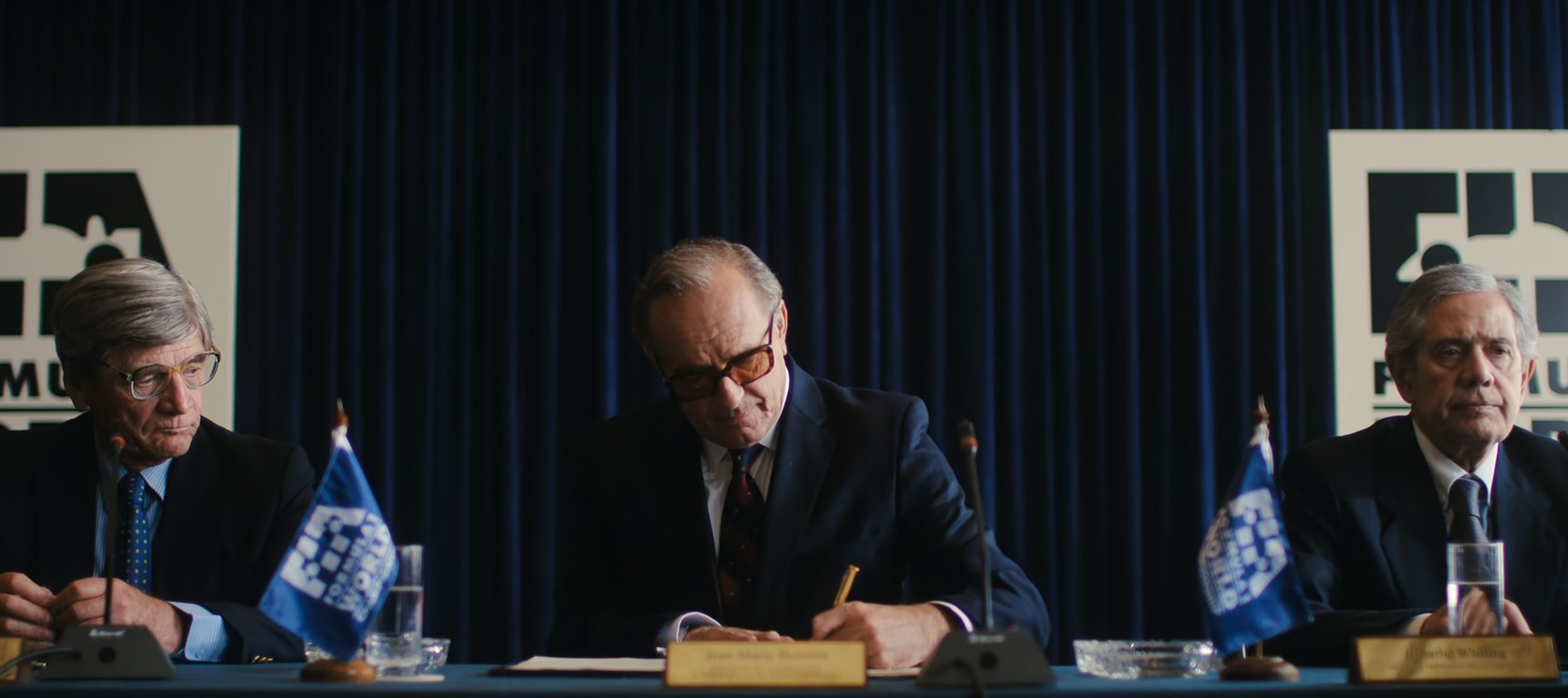
William Ross: I think People that are buying that C one, probably the biggest reason, in my opinion, they’re balancing out or completing their collection. I got C2, C3, I need a C1. And I said, they didn’t build too many and especially ones that are nice and collectible, they don’t need tens of thousands of dollars of restoration work.

But I think a lot of those people buy it because, well, I need to have it complete my collection. I got every other one. I need that one. I think that’s what they do just so they’re lined up. They look nice.

Rob Parr: We have on our cover, we have a 57 Corvette, black with a silver code, red interior, gorgeous. And people are buying them for the look.

I mean, they’ll put them on a trailer, take it to an event and drop it right off. They’re not driving them around. It’s really purely for collectability.

Don Weberg: Building on what both of you are saying. I’ve got two friends, one’s got a 53, one has a 54. One of them. You’re [00:10:00] absolutely right, William. He bought it because he did have a C two.

He had a C four. He had very little Corvette. He just wanted a C one. He drove it, he hated it, and he never drives it. He just can’t stand that car. It’s terrible to drive. The second guy is more of a blue collar guy, and he like me, and I totally agree with him. I always thought the 53, 4 and five was one of the most beautiful cars Chevrolet ever built.

I just thought it was. Gorgeous the way they laid that car out. Very gorgeous.

Crew Chief Eric: It is and it has those same sort of fluid lines like the 356s and the Jags and some of the other cars of the era that you mentioned. Those really kind of bulbous roadsters that were out there. You mentioned the Thunderbird and that was more of a luxury convertible.

Whether we dive into was Ford trying to compete or trying to keep up the Corvette sort of stood alone. If you look at American sports cars made by the big manufacturers, there weren’t many at all. Like Corvette was sort of a new territory. They got it wrong. Then they kept refining. And so they didn’t just keep going.

Can it, which was awesome. So somebody had the [00:11:00] vision and the tenacity to say, you know what? Okay. The six cylinder, let’s get rid of that. We got to add door handles, all these kinds of things. We’re going to keep making it better. If you look at the C1 all the way up to 61, 62, when they started to phase it out, it went through a metamorphosis.

Like you line up the 54, 55, 56, you know, sort of like that Johnny Cash song. They’re just interesting. And if I think I was a C1 collector, I’d want to have almost one of every year. If I was that nerdy about C1s, but we do have to kind of move the story forward into the C2 into this sudden golden age of Corvette, which was interesting because it’s Corvette versus the world.

There’s nobody else. Mustang didn’t exist. yet. Chrysler still hadn’t figured its muscle cars out. That hadn’t happened yet. Corvette was in uncharted territory against Porsche and Ferrari and Jaguar and all the Europeans that we already knew. So C2 was a ground up redo, carries nothing over from the C1, right?

Other than maybe some rear trailing arms or axles or stuff like that. But As far as chassis and design [00:12:00] go, it was a redo.

Don Weberg: Yeah. The C2 was a groundbreaking car.

Crew Chief Eric: And what’s interesting is the C2 for Mark and my generation, I don’t want to put words in Mark’s mouth, but that’s the Corvette I fell in love with because when I was a kid, the C4 was just still sort of new and we’ll get to the Barbie Corvette as I like to call it as we go along here and the C3, because it looks so much to me like the Trans Am and stuff of that time.

Jokes aside, the C2 was just so striking. It was angular and the split window and it’s deceptively large, but then it’s really small when you compare it to other cars and it had hips, but it didn’t, it was straight and sort of set slab sided and every angle you look at it, it sort of changes, it’s mystical in a way.

It just sucks you in. It’s such an interesting and unique design. There’s not another car ever that looks like a C2 Corvette.

Mark Shank: And you forgot. Oh, yes. Yes. Geez. Maybe the coolest thing a car can have. C2. You’re right. It’s the golden age. Like you mentioned earlier, Eric, like where are these things selling?

Like if [00:13:00] you compare a C1, C2, C3, C3 gets thrown off by the L88 from a transaction price perspective. Take the L88 out of the data set. You struggle to find a C3 that sells over a hundred grand. You look at C2s and there’s just tons and tons of C2s that transact over 100, 000. And your C1s are in that 50 to 200 type range.

It coincides with the demographic boom, the baby boomers coming of age. So it becomes this thing that they want when they actually get some disposable income in their 40s and 50s and 60s. And so it had that benefit to it. But I agree with you. Like to me, the C1 was this kind of GT cruiser type car. And the C2 was, to me, it was a sports car.

It was badass. And it was, it looked angry and fast.

Don Weberg: You’re right. The designer C2 knocked people on their butts. It was like nothing they’d ever seen before. But remember they had to play a little catch up because in 1961, the E type was born and there was a car that just, I mean, just talk about a gorgeous car.

It does everything right by [00:14:00] design. And like the Jaguar for the first time ever, you could have Corvette as a hard top coupe. Yeah. That beautiful sloping roof with a split design, a boat tail. Yeah. Well, of course, if I’m remembering correctly, that was

Crew Chief Eric: Earl, Harley J Earl.

Don Weberg: Huge fan of those early Bugattis or the boat tail cars from the thirties.

And that’s where Boattail came from.

Rob Parr: Right. Shinoda was the designer of that car. And, and Guntholf totally inspired it. But we’re

Don Weberg: forgetting one other designer who was huge on styling. In fact, if I’m remembering correctly, he was actually the first one on deck to help Harley J Earl style the Vision.

Shinoda is the one that finished it off. And that is Peter Brock. My understanding was Peter Brock was first charged by Harley Gerald to help him style the vision, which he did. Then he left. Why? Cause he had to go work for Carroll Shelby. Then Shinoda stepped in and he finished off the design. Shinoda though, he was with Corvette for a long, long time, but to your point, it was the first [00:15:00] time you can get Corvette in a coupe, which what makes it again, much more user friendly.

It had a larger interior, which again, made it more user friendly. I mean, I’ll put it this way, six foot three, 330 pounds. I don’t fit in a lot of cars. I fit in a C2, not tremendously well, but I can get in it and I can drive it. C1, I really can’t drive that car. It’s just too tight for me. So they increased everything, but the styling to your point, Eric, you could look at that car all day long and still find new nuances that turn you on about it.

When you look at the side profile of a C2, you have that razor sharp edge that breaks the car almost in half. And you have this undercut, which is incredible. If you look at the 70 to 81 Firebird and Camaro, it too had that sharp cut. But what’s funny is when you look at De Tomaso, Ghia was huge at using that line right down the fender.

You even saw it in the Granada for God’s sake. So I think that car, just by a styling standpoint, was just [00:16:00] absolutely salivating. It was wonderful. And knocked it out of the park for sure. It was fantastic. Plus you had that 327, which was as flexible as a rubber band. I mean, that thing would do all kinds of crazy stuff.

Of

Rob Parr: course, Dunkelhard had the 327, came out in 62, and that really added a lot of performance and added more engine options. So you could have more power. And then they started fuel injection. I think back in 57, I want to say.

Crew Chief Eric: That’s what they call the fuelies, right?

William Ross: Yeah. The fuelie. Yeah. They’re Rochester mechanical fuel injector.

Crew Chief Eric: Yes. Which you make more power by throwing that in a box and putting carburetors back on, right? Yeah.

Don Weberg: We have the 23 and 57 when you fuel injected it, if you did what they called the Duntov PAM, and when you did the heads, You could make 283 horsepower that today doesn’t sound like a hell of a lot. I mean, I think my Ford flex makes more than that right now.

No turbo.

Crew Chief Brad: I mean,

Don Weberg: that’s what it’s doing, but for 1957 to make one horsepower per cubic inch, that was a huge, huge deal. Remember those mid to late fifties, who is everyone chasing was [00:17:00] Chrysler. They had those monster Hemis come on the C300. Well, what was it named after? 300 horsepower. And what was it? 331 cubic inches.

Then it was 354. Then it was 392. I think was the last of the, those Hemis. So for Chevy to come out with a small block that made 287 horsepower. And let’s not forget, even the big fat Bel Air weighed a lot less than any Chrysler you put it up next to. So when you have 287 horsepower with a lightweight body, And let’s put that in a Corvette.

Now your Corvette has graduated more to compete against the original Jag, Aston Martin, and of course your aforementioned Porsche and all the Italians. I hate to say it. They were terrified of Corvette. They don’t admit it, but when you do the history and you look at the Italians knew what Corvette was before Corvette knew what Corvette was.

It’s one of those situations where, you know, you have a father who sees his son and the father knows. He’s never going to be like me. He’s going to be an artist. He’s going to be some, and the father is not necessarily disappointed. It’s telling, and yet the son has no clue, no clue yet [00:18:00] what they are going to.

Potential

Crew Chief Eric: is yeah, exactly.

Rick Hoback: Definitely more drivable. Even the later C2s versus the early C2s. There’s a big difference there and just some drivability. They’re all similar, but maybe the bushings.

Crew Chief Eric: I remember seeing an early C2. And it was up on jack stands, no wheels. And I’m like, oh my God, drum breaks all the way around.

You gotta be kidding me. Guys, race these cars. Like you’re out of your mind.

Rick Hoback: Yeah. They’re just not as enjoyable. Later ones are better.

Don Weberg: When you go see two, you really, really get to see Zorak or Stuntal’s handiwork in there because for the first time. And I believe it was 1963 with that whole new chassis.

You had a four wheel independent suspension. Yes. You had the four wheel drum brakes, you know, GM moves at a glacial pace. You know, be thankful. We were able to get a four wheel independent suspension, but the chassis was completely retuned. And Zora had a lot to do with that retuning.

Rob Parr: How does it compare to driving a C3 in your opinion?

Or is there any noticeable difference?

Rick Hoback: They’re similar. I think the C3 probably drives better. I’ve probably been spoiled on some of the ones I’ve driven too. I’ve driven some original ones and then some of them had [00:19:00] been gone through with, we’ll say OE style or basic aftermarket bushings and stuff, put back in them.

And then I’ve driven some race versions, which is a whole different class. I think they’re similar. I think the three seat drives a little better. Better. And then obviously when we get to the C4, it’s drastically different. They’re all fun.

Crew Chief Eric: And we’ll talk about why that’s important. That lineage starting with the C2 carries through some other cars.

And like we said before, the C1 sort of stands on its own. And then even though there’s been eight generations of the Corvette, that can be kind of lumped together, but we’ll get into that as we go along. So one of the things I want to sort of just pick apart on the C2 is C1 was sort of like, well, okay.

But if you look back. And this is where it gets fuzzy for me because it’s not my generation, but I look at it and go, wow, that’s a cool car. I see some of these historical pieces, some of these movies, and you hear stories about how, like they were given C2s to astronauts and then celebrities were driving them.

And then you got guys like Mark Twain. Donahue behind the wheel and Parnelli Jones. And it’s like, wait a second, who was [00:20:00] behind the marketing for C2 Corvette that suddenly turned it into America’s heartthrob sports car. How did that happen? Zordonta backdoored

William Ross: everything. Cause there was the gentleman’s agreement for that period that the manufacturers wouldn’t support racing or put that into it, but.

Duntov backdoored everything to teams to help support them to do that. And if you’ve got a race team, you’re getting free stuff. That’s what you’re

Don Weberg: going to use. I mean, case in point, you brought it up, Eric, the Comorati Corvette. There were three other Corvettes entered that year in 1960. 1960, that was toward the end of the C1’s lifespan.

As William is saying, those three Corvettes, they were not backed by General Motors. They were backdoored. I saw Arcus Duntov and dealerships and some of his fun guys in the parts counter building these cars specifically for competition. But I think those are the cars that really, especially for racing aficionados, I think those were the four cars that 1960 at Le Mans, they were the four that [00:21:00] really.

But Corvette on the map, because up to that point, as far as I can remember, Corvette really wasn’t competing all that much, but for the most part, it was pretty quiet. It was, you know, a bunch of privateers at Riverside, et cetera. And then all of a sudden here’s these four that show up at arguably the most grueling race that we have.

They all did pretty good against the world’s best sports cars with the world’s best drivers. Here are four Corvettes, four Yankees that come out of nowhere and say, we’re here to play. We want to play ball too. We want you to take us seriously. But I think that’s what put them on the map.

Crew Chief Eric: So I’ll actually want to turn this back to Rick and Mark for a second, because Mark was talking about how C2s are transacting in the collector world.

And there’s a lot more of them than I think we realize. There’s tons of them in collections. You see them at car shows, you see them at car week, you see them in private. Do they hold their value when they’re modded? Are people still resto modding them? Has the C2 hit a point where it’s now unobtainium, you’re better off with a virgin one.

Where are we in the collector [00:22:00] space with C2?

Rick Hoback: The demographic of who likes them and who was around them in the age group and their availability of having plan to buy one. I think there’s way more C2s than C1s on the market for sale and they were affordable. I mean, I’ve owned three of them and I was picking these up for a quarter of the price of a C1.

C1s weren’t even in my range. I would have bought one. Couldn’t find them. Couldn’t afford them. They were way different than that C2. So I think those are some of the reasons there. I don’t want to call them better. They’re just more available, more collectors have them in their collections. Digging

Mark Shank: through some of the data on bring a trailer and comparing the generational sale, they kind of track the volumes.

You’ve got more than twice as many C2 transactions on that as you do C1. The C1s, they’re in a more narrow band in the 50 to 100k range. They certainly have ones trading in the 100 to 250 for particularly, uh, special stuff, usually 53s, kind of first year. Collector items. Whereas in the C2s, your 67 and your 63 split windows [00:23:00] are the ones that really demand the premiums.

And those are the ones that are in your 300, 000 range, but there’s a bunch, right. You know, just looking at the transactions. It’s like, if you just have one and it’s in good, reasonably original condition, then, then it’s a very valuable thing, but they had good sales volumes for the other years.

Rob Parr: I’ve noticed a couple of things about the C2.

I frequent the Corvette forum quite a bit. And I find that the convertibles sell for less than the coupes. It was for a while, the big blocks were going from a lot more, but now some of the people, because of the handling and the heavy weight of the 65 at 396 and 427 and six and seven, some of the people are going back to this 327 motors.

Because the handling, it’s just easy to drive corners better, but yeah, definitely convertibles. If you’re trying to find one for a better price, you’re going to be better off getting a convertible than a coupe.

Rick Hoback: My 67 that I currently still own that I am probably looking to sell this year because it’s a pro street professionally built and done drag car.

By a gentleman that owned multiple, I [00:24:00] forget at one point, I had like 14 Bloomington gold Corvettes, which is the top of the top Corvettes in his collection, a gentleman named Mark Tate. I bought this car off of, I worked on his team when I was a kid and they taught me a whole bunch of stuff. So I’m hoping that the modded market is still holding on.

But to be honest, I had a 1967 big black car that was all original. It would probably be worth three times as much, at least. This car still may be worth up to 100, 000, but an all original one would be 300, 000. I see a lot of these cars coming out in the autocross world and honestly the road racing world a little bit, but more in the autocross world.

Guys are finding beat up bodies and throwing chassis or tons of suspension pieces underneath them. There’s a lot of them. I mean, if you go to a good guy’s, uh, event, you’re going to probably see four C2 Corvettes running versus all kinds of other stuff, including, you know, the C5 Corvette is a lot of good guys and they race each other.

And I watched Danny Pop this weekend in his 1972 [00:25:00] Corvette beat everybody, including C5s. In the autocross. So I think there’s a lot of action with that C2 going on coming out of Barnes. People are finding them. They’re just beat down and haven’t been on the streets in decades. That’s really what we’re going to continue to see.

People will try to restore them, but some of them, I just, I think the pro touring world is going to start gobbling the really bad ones up and people are going to start modifying these things right or wrong. I don’t know the values in an original, but they’re only original ones. And once they’re not, it seems to pull the pricing down quite a bit, unless you invest a ton of money to make them extraordinarily original.

Don Weberg: You might be seeing a lot more pro touring modified vehicles out there, but when you go back in the day, that chassis was world class, and coming off the C1 into the C2, what really made that car? Well, hell, the whole damn thing. I mean, you had a body that was spectacular. You had a choice of a real hardtop body.

Poop for the day, there was nothing that could touch it in that price range. Yeah. The Jag was there and the Jag did damn good, but the Jag [00:26:00] was finicky and the Jag was still a six cylinder car. So for that torque, you weren’t going to beat the 327, not with that car.

Mark Shank: You know, the C3 is a different beast because it was around for so long and they actually did sell the snot out of it throughout the seventies, 40, 000 units a year, and just a ton of them sitting around, but it’s not as love of a model.

By any means.

Crew Chief Eric: And that’s a great segue into 1968 at the birth of the C3s.

Don Weberg: And the C3, yeah, they were selling in volume, but they were entering the dark era of the 1970s. You had your emissions controls. You had your efficiencies worried. You had your heavyweight bumpers. We were going into a whole experimental era for the government’s demands.

And yeah, we weren’t sure what we could do. Corvette still held it alive. They were relying heavily on the C2 chassis. Which gives you an idea of how good it was. They didn’t have to change very much for the C3.

William Ross: That motor sit back behind it for an axle. Is there a little bit? No,

Rick Hoback: it’s kind of right there.

It looks like it would sit back [00:27:00] because the hood’s so long. It’s not really, if you’re kind of stretching for like, is it close to mid engine? Not

Don Weberg: really. The C4 is the one that brought that engine back into the firewall. That said, you had this drastically changed body. Again, the 427 segued into the 454, but we had the LT1, which was an incredible 350.

So now you’ve got almost the power of a big block, but in a small block package revved like crazy. It was a fantastic car. I think the C3 is one of the most amazing Forbats ever made. If for no other reason. All the advances it gave to the point to where they segwayed over into the next Corvette’s body style.

Crew Chief Eric: C3, the longest production run of a Corvette by any stretch of the imagination. The only one that comes even close to that after that is the C4. But C3, 1968, All the way to 1982. And as you said, Don, based on the C2 chassis, continuing to evolve that, but we sort of got that long hot dog sheet, right? And that’s why I always equate it [00:28:00] with the Trans Am.

And I know that they’re not similar, but there’s so many design cues and so much design language that’s shared between the Trans Am. The Firebird, the Corvette at that time, it’s the T tops, it’s the rake of the windshield, things like that. Now, the early C3s with the little bobtail, with the 427, with, you know, Mako shark nose, because if you look at some of the Corvette prototype that came out in between, you know, there’s the Aerovette and all these other things that they were working on at the time.

Those early C3s were really cool, but as they got older, 20 plus years of production, you’re like, they got bigger and they got heavier and they got rounder and they, you know, started to hide the five mile an hour bumpers and all those kinds of things. So C3s, good, bad, or indifferent. Are they the soft spot in the market?

Are they even worth considering? What can you do with the C3?

Rick Hoback: So for me, I segment the C3 into like two groups, 68 through 72, the chrome bumper stuff, kind of the evolution of that C2, they still have very sharp lines. If you look at the front and rear haunches and the way [00:29:00] they designed it, they still have very sharp.

Edges when you sit in one, like you can see the front fenders rise up over. It’s just a great view from sitting back in one of those cars. The dashboards are amazing and see one, two, and three. I think there’s some of the coolest dashboards that have been out the waterfall design down the center. There’s a lot of cool things about those cars that they designed into them.

The C3 got that fiber optic connected to the lights to kind of show you what’s going on inside the car. And I really enjoy, like I said, the early, the first four years that 73 has got a half a Chrome bumper. It’s got a Chrome rear and a fiberglass rubber front, whatever you want to call that. And then they kind of did get a little bit, I don’t know, boring, I guess.

I mean, they can be exciting, but I kind of draw that line in those first four years of, to me, those are the ones that. Either I choose to focus on, or you know, my family maybe birthed me into that. And Chrome is where it’s at. And anything without Chrome doesn’t

Don Weberg: count. And it, it’s interesting that if you look at the C3, especially the earlier one, you’ll see the evolution from C two.

Yeah, those [00:30:00] haunches, they were in the C two, they’re just much more pronounced in the C3. The C3 was like a Batmobile. I mean, that thing was just. all over the board. And when you looked at it from the side, you had that what they call the coke bottle body shape. But when you talk to some people, no, they see a woman laying on her side, you know, they see that half hourglass shape, which is very interesting.

So they made the Corvette very voluptuous. And when you look down on the top, Again, you have a sort of hourglass shape. That car is incredible.

Rick Hoback: I’ve come in the last couple years to like the later years more but I still don’t love them as much as the first four years and I just am kind of okay with the Rest

Crew Chief Eric: and i’m with you those later ones.

I always kind of fall back to the movie with Mark Hamill and Annie Potts, exactly. Right? Like how much more gaudy could you make a C3? And that’s the movie that sort of does it for you.

William Ross: I’m a big fan of the 81 Corvette because my dad actually bought my mom that car. And she had that. And I love those things.

I remember riding in the back, no back seat, but in the [00:31:00] hatch, you know, back days, it didn’t matter. My brother took his driving test in that car, but I always have a soft spot for those. I’d love those too.

Crew Chief Eric: And every time you see one of those, it reminds me of like something from Death Race or it’s just, I don’t know.

I can’t get over it.

Don Weberg: Believe it or not, when it comes to the C3 outside of the LT1, my favorite one was in fact, the 82. The last of the generation, the gaudiest, the biggest fenders, the aero flares every which way, frost fire injection on the side. That car was so proudly in your face. I am trash. I had to love it.

I just absolutely had to love that car.

Crew Chief Eric: Having driven Trans Ams and stuff. It’s just like, God, are these cars. So alike to me

Don Weberg: now, you know eric you brought up trans am you brought a firebird camaro, etc And isn’t it interesting and nobody wants to talk about this. Sorry guys I am a trans am guy to the core trans am hot corvette a lot about downforce and that was something that You just don’t hear about because if anything, Corvette taught Trans Am.

No, no, no, no, no, no, no, no, no. Who was the first one to be [00:32:00] wearing all the skirts for downforce? Who had the spoiler? Who had all that stuff? Sorry, guys, that was Trans Am. And why did they do it? They figured out that downforce is a good thing and it would hold those Trans Ams down. Trans Ams were heavy enough to hold themselves down.

They didn’t need a hell of a lot of help. Corvettes did, and that largely came from the Pontiac school.

Rob Parr: You know, it was interesting you mentioned that, Don, about the Trans Am, because even the formula that you could get a 400 engine, even a 455 up until 76 versus Chevy dropped the 454 after 74, and you could get a Pontiac 400 all the way up to 1979.

So it was actually ahead of the Corvette in some ways. And they fought him a long time ago. It was a battle inside the General Motors.

Don Weberg: Yeah, the Trans Am was definitely Corvette’s number one enemy in terms of, you know, the two brothers who fight all the time, you definitely had to fight. I mean, I mean, let’s face it.

It was Pontiac versus Chevy for a long time, you know, Trans Am and Corvette were really where it came down to neck and neck. And yeah, they had the 455. They had the 400, they had the four speed. They, I mean, they were, and the [00:33:00] downforce again, when it came to the aerodynamics and a lot of people made fun of Trans Am, because it was so garish.

It was so outlandish. It had all these scoops and flares and spoilers and wings and whatever. But when you drive a Trans Am and I mean, when you actually, and okay, Eric and Rick, because both of you were race car drivers, I’m just a putz who’s running around trying to piss off cops. When you drive it around trying to piss off cops, you realize, God damn, this thing really does hold the road.

This thing anticipates your every move. And then when you move over to a Corvette, you feel that DNA. You feel that and you wonder, okay, who had it first? Was it Corvette or was it Trans Am? Nobody wants to talk about that, but it’s the truth. And the one with all the flares and all the scoops was the 82, which is ironic because it was, Probably the slowest one that they ever made

Mark Shank: easily fixable now

Don Weberg: when you get in that 82 Because it’s so slow.

It holds the road really really well Rick if you haven’t had the opportunity get yourself an 82 and get out there on that track and you run the bejesus [00:34:00] out of it Now don’t mind when the beetles outrun you because they will right they will but you’re gonna look cooler Losing. Okay, you’re going to look cooler losing.

Rick Hoback: My C3 is a little bit, again, if you don’t know by now, guys, I like to modify cars. My 68 has full suspension from van steel. It’s a big block car, but it’s a more powerful big block and it has a pro charger on it. It’s very rowdy. And so I don’t really stick to the purest, even though again, they’re worth more money, but I just can’t do it.

I think I enjoyed the C2 experience a little bit more, but it is nice to have the variety of having those big front wheel wells that pop up over everything else when you’re driving a C3. That fender view alone is worth the price of admission. From

Crew Chief Eric: a performance perspective, let’s say taking a C3 to the track or to autocross, I mean, I grew up watching my dad compete against early bodied C3s.

Well, 914 versus a C3 Corvette, that was like David versus Goliath, but they were amazing to watch those [00:35:00] guys drive those cars at speed to see the footage of the early days of C3s at the track. But I don’t see them anymore. I don’t see them really at car shows that often anymore. What’s happened to all the C3s?

They made them for so long. Where have they all gone?

Don Weberg: That’s a great question. And I think right now, especially if you look on the market, except for the C4. You can get a tremendous bargain for a C3, even some of the earlier ones, even the LT1s, they’re getting up there as the big blocks are.

Mark Shank: They’re almost all basket cases though, that’s the thing.

It’s not like the car that got maintained. But I’m with you by the way, I just would like to point out, I would rather a pre emissions era C3. Post emissions era C3? Yeah, 1982. All the way. Full stand. Full mullet. Mullets are back now, by the way. Like, you see all these teenagers just running around with their damn mullets?

They have no idea what they’re doing. Put that kid in an 82

Don Weberg: vet. He could afford it, too. When you go back to the 70s or those extreme early 80s, too, remember we were all crippled by Emissions, efficiency and [00:36:00] safety. Corvette was trying to keep its head above water. Corvette was trying to be the performance car of America.

And that’s just my 10 cents, but you can get one hell of a bargain. You really can.

Rob Parr: Well, you have to understand too, in the, in what we call the Malays era, you had situation where. They were having this transition, the luxury car versus a sports car in order to keep it going and keep continuing to produce those units,

Don Weberg: you know, I keep rooting for the LT one 70 or 71.

The first year for the LT

Rob Parr: one, and

Don Weberg: then 72 was the last year. And 72, if I remember correctly, it was the only year available with. Air conditioning, which Rob plays right into your conversation of, we had to make them more luxurious because we’re selling a high end sports car. We can’t justify the price because it’s not so fast anymore.

The LT1 kind of held that flag, but it came with air conditioning in 72.

Crew Chief Eric: Now here’s the funny part about the C3. I have grown to appreciate it more. As I’ve gotten older, maybe it’s cause, you know, you lose taste buds as you get older, you know, you like more bitter things and you look at the C3 and go, you know, it [00:37:00] doesn’t taste so bad, but realistically the design language of the C3 changed so much in those 20 plus years.

You had the T tops, you had the convertible, you had the fixed roof coupe, you had the one with the glass in the back. Like there’s these things that carried from the C2 all the way into the C4. Those rear lights. Especially in the later C3s became iconic to Corvette from the C4 onwards. That was not a design cue from the early cars, those four round rear taillights.

And so what I’ve noticed about a C3 is I check the door at the plane Jane, you know, with the rally wheels. I’m like, I’m not interested in those. What I’m interested in are the lowered wide body GTU M suspension. Bondurant, there’s these crazy Resto modded c3s, especially in black the c3 looks really good and i’ve come around on them And every time I see like another sima c3 or something on, you know, one of these restoration shows on netflix [00:38:00] I’m, like man, I want a c3 but is it worth it?

Rick Hoback: No Financially, it’s not. I’d say that almost about any car. They’re never worth throwing 20, 30, 50 grand at. Never. But, they are cool. I do agree with that. When you widen the already wide body, or the wide appearance, and you make them fit a big tire, you lower them down, you make them look real sexy, throw in a couple hundred extra horsepower, they really are cool and fun.

They really are. If you just want a cruiser, the 180 horsepower, Perfect. If you want to have some fun, they can be very fun. They really can.

Rob Parr: The trick is to buy one that’s already been done and only use the next person buying it because you never get back the money you dump into it. Very true.

Don Weberg: You’ve got to be really careful with those LT1s because yeah, a lot of them are trashed out.

And the LT1 had a lot of very special parts in that engine that made it do what it did. If they’re not rebuilt correctly, you’re ruining the whole thing. And that’s really tragic.

Rob Parr: They’re going up to 70, 000. I mean, the value of those are really [00:39:00] going through the roof right now. We’ll probably hit six figures in the next couple of years.

Crew Chief Eric: Wait, wait, wait. You’re saying one of the most. Special. C threes is under a hundred grand. Isn’t that a bargain? Yeah, that’s a bargain. Yeah. So how soft is the C3 market then? Like how cheap can you get one of these things?

Don Weberg: Think about a regular C3. My God, if you go to 1975, if you get a 75 C3, what? Mark, Rick Rob?

All day long. 75.

Rob Parr: Five. 10. 15,000.

Don Weberg: 10,000 For a mint condition? One. Yeah. Yeah. Maybe 12. And yet you’ve still got the chassis. And you’ve still got the look. So to Rick’s point, you could modify the bejesus out of that Corvette and you’ve still got a great chassis already, but if you make it even better, guess what?

You’ve just taken a 10, 000 Corvette. I don’t know how much money you’re going to dump into it, but all of a sudden you’ve got a performance car.

Crew Chief Eric: Okay. So, so Rick, I know it’s not worth it, but what’s the aftermarket like on a C3? How moddable are they?

Rick Hoback: They’re pretty good. So there’s a company in Florida called Van Steel that makes almost anything you need to put underneath those things.

They make remarkable, beautiful. Stuff I’ve [00:40:00] raced against cars. I’ve driven a few, but I probably raced against more that have pretty simple packages. I mean, they use the same frame and typically like the same arms, but they’ll put a really good set of like JRI shocks under it, they’ll do some spring adjustments.

They’ll do some solid bushing or blocks in the back of them to kind of soak up some of the rubbery, squishy stuff. And they’re fast stock brakes with a good pad. They are really fast specifically on an autocross. I mean, road course is a little different, but on an autocross, they can compete. They’re a lot of fun.

Don Weberg: Are you a sinner because it’s no longer original? I don’t think so because you’ve got the darkest era of Corvette and now you’re making it fun. Now you’re making it more enjoyable. Now you’re making it. I mean, Eric will tell you all day long. I’m more of a handling guy than a speed guy. I really don’t give a shit about horsepower, torque, all that stuff.

It’s fun. It’s cool. I grew up Fiat. Believe me, I have the art of driving slow mastered, but I know about handling. And I think that’s why I celebrate the 82 Corvette so much, because if you drive one, you’ll see [00:41:00] what I’m talking about. They’re absolutely incredible the way they’re put together. I don’t know if it’s that whole last of the breed thing or what, but they’re You take a 74, five or six, modify it to where it’s just fun.

I’m not even talking about competing with racing or the under thing. Make it fun. If you’re keeping

Mark Shank: her on the road, then you’re doing a good thing, right? I mean, especially for something in that volume, I think in the C3, you know, look at sales volume. So the biggest year was 79 sold over 50, 000 Corvettes.

So I think those late seventies models. A 1979 four speed looked really clean, clean interior, look good on bring a trailer. Not exactly the most value conscious buyers on bring a trailer transacted just two months ago for 13, 000.

Crew Chief Eric: What?

Mark Shank: That’s a lot.

Crew Chief Eric: What? To me, that’s a steal. I can’t buy a WRX for 13 grand.

Are you kidding me?

Mark Shank: I mean, and you know, yeah, of course, if you’re not in California, you can rip all the emissions crap off that. And I mean, without even doing any real modifications, you can [00:42:00] make that a nasty, nasty platform.

Crew Chief Eric: You should buy everybody a C3 for Christmas. It was

Mark Shank: clean. It looked good. It was black.

I mean, it’s not amazing. I’m not trying to say it was made, but it was clean. You know, the good interior was clean and all together and looked good. It wasn’t like torn and ratted out or anything at all.

Rob Parr: You know, what’s interesting now, going back to the Trans Am versus Corvette. Is the fact that the Trans Am in 1979 is worth easily double the price of a Corvette, the nicest Corvette, unless you have an anniversary model from 78, you might get a little closer, but they always were lower in value.

They never came back up to the hype amount when they were back in the day.

Don Weberg: The Trans Am though fell in the shadow. If you remember a few years ago, when. Mopar went absolutely psychotic. You couldn’t touch a Cuda. You couldn’t touch a Challenger. You couldn’t touch any of that. Well, guys, realize, well, I’m not going to spend that on the Charger, whatever it was.

I’m not going to spend it because of whatever reason I’ve got. They started scoping out the Trans Ams. All of you will remember for the longest time, nobody wanted a Trans Am. That was the Rednecks muscle car. That was the Maserati of the trailer park, the car nobody wanted. It was [00:43:00] embarrassing to have a Trans Am.

Now, all of a sudden, and I think largely because of those Chryslers, Grand van got caught up in it and all of a sudden the prices are going up. Rob, you brought it up too. They, in my opinion, they were the last of the Mohicans, man. They had their 400 cubic inches in 1979. If you had a four speed, you had a Pontiac 400.

If you had the automatic, you had the Oldsmobile, which is a very, very durable motor. It’s just not very exciting. The Pontiac. Had more pep to it. Long live Burt Reynolds! Yeah, and it’s true. Smoking the bandit put those cards on the map.

Crew Chief Eric: And I don’t want to open Pandora’s box here, but that sort of legacy for Pania continues in 1982 with the advent of Knight Rider.

But we won’t go there. Cause I know that’s an hour long presentation to itself. But what I want to do is jump us sort of now into the digital age, because we could probably talk about CA3 for the rest of the night and what we could do with it and where we could go with it. And I think there’s a lot of potential there.

So I want to put a pin in it, but 1983, I think a lot of our [00:44:00] listeners may or may not know. There is no Corvette. In 1983, there is only one in existence. Apparently, allegedly it’s at NCM and it ended up in the sinkhole when the middle of the museum collapsed or whatever. It was a prototype in 1983, but there were no Corvettes built in 1983.

The first year of the C4, a whole new car designed from the ground up yet again, like the C2. But taking some of the design language from the C3 forward into the digital era in 1984 and what I like to call the Barbie Corvette, because Barbie was associated with the C4 Corvette. A lot of things were associated with the C4 Corvette.

You started seeing it on television. You started seeing it with celebrities, much like the C2. Suddenly there’s this marketing machine behind the all new Corvette. And one of the things I’ve learned, and I’ve come to respect about the C4 Corvette, and I’ve coached in a lot of them, you know, with its funky digital dashboard and all this fun stuff, there’s a lot of restomotors, Mark Talley being one of them out west, you know, Gotham Garage and all that.

A lot of [00:45:00] guys love to harvest the C4 to build other things, because it’s probably one of the most versatile chassis. The Corvette ever built? Am I wrong in this?

Rick Hoback: Part of it’s the A arms, the leaf spring design. I think they lend themselves very easily to, we’ll call that the pro touring world, or other vehicles.

Plus I think it’s the time frame, as those were kind of expiring in the later 90s, the pro touring really started picking up. I think people were just scavenging those pieces off of a high, high, high performance vehicle in their minds. And putting it in their older vehicles. It was good timing and a great product.

Don Weberg: The C4 is to Corvette what the C2 was to Corvette. The chassis was completely re engineered. It was a whole new car from the ground up. It was very exciting. Chevrolet dumped a lot of money. Into developing that car. And if I remember correctly, part of the reason you mentioned 83, they didn’t build it.

They had a huge changeover. It was such a drastic changeover. They couldn’t go [00:46:00] into production.

Crew Chief Eric: The retooling costs and everything.

Don Weberg: Yeah. The assembly line loan went through such a absolute change. It was incredible. But also the key bar roof suddenly became a Targa. And what’s interesting about that, that wasn’t supposed to be the C4 originally was supposed to have.

And there was one guy at Chevrolet and one guy specifically at Corvette and they both had the same idea at the same time, but came from different schools of thought, one guy was looking at an ad and he saw a Trans Am and he saw the T bar and, you know, it was a dealership ad, whatever, but there’s that T bar.

And he thought, you know, Corvette should be better than Trans Am. We shouldn’t have to rely on a T bar roof. We should have full open section up there. That’d be better. The other side of the factory, there’s another guy. Who’s watching Magnum PI and he’s seeing that Ferrari 308 with the open roof. And he’s thinking that is what we need.

That is exactly what we should be doing. And as it turned out, they had an engineer who was very big on Porsche. Well, gee, golly, gosh, guess who put the Targa on the [00:47:00] map? Portia. So you had these three minds coming together and they realized, yeah, yeah, yeah, we got to get rid of that bar. Let’s open this up.

Well, how do we do that? Well, you got to stiffen that frame. You got to stiffen that chassis. You got to stiffen that body. A lot of re engineering went into the Corvette, which slowed it down again. So you had the factory on one side, slowing everything down, and then you had a slight re engineering of an already seriously amazing chassis.

I mean, that chassis was so amazing. But when they brought out ZR1, there was not a lot of modifications that had to be done. No, they really weren’t,

Crew Chief Eric: but we’ll get to ZR1, but I want to turn to William for a moment and I want him to explain to us as a previous C4 owner, how did you make the transition from Fiero to C4?

What was that like?

William Ross: You know, done with college and whatnot, and I wanted to get a car. At first I was going to get an M3. I was at the dealership and I looked at M3 and the sales individual was attractive. I asked her out. She said, no. So I said, all right, I went and bought a C4 vet instead. [00:48:00]

Rob Parr: Man. Yeah.

William Ross: So I got myself a black on black six feet, man.

That thing was crap. I met my wife with that car. I think it was great. It was a great car. It wasn’t like crazy powerful. I mean, 300 horsepower now, but I mean. Still a crap load of fun, man. I had some really good times at being 24 years old and having that car and single.

Crew Chief Eric: Oof. You were pretending to be Ian Ziering in the 90210, you know, showing up in the black Corvette.

Oh

William Ross: yeah.

Crew Chief Eric: Did your mullet get longer or shorter when you went from the Fiero to the C4?

William Ross: Oh, it got shorter. No, my Fiero, man, my mullet, I even permed that thing, man. Make it curly. I bleached the top and then like I’d make it permed. in the back. Oh, yeah, man. But

Crew Chief Eric: we make fun. It is par for the era. But the reason I bring up the comparison between the Fiero and the Corvette is you went from a mid engine sports car unique into itself to this front mount rear drive near 50, 50 weight distribution.

Cause they were shooting for that back then, you know, again, like Don said, alluding to Porsche and the nine 44 and [00:49:00] some of the other stuff that was happening, you know, around the world in that type of vehicle design. What was it like making the jump? Did you enjoy driving the C4 more or did you kind of look back and go, man, that Fiero was a lot more fun?

William Ross: Well, you got to understand. I also, I had a Mustang GT between those two. Oh

Crew Chief Eric: boy.

William Ross: I’ll put it this way. If I had my options looking at, and I’m not worried about price looking at, but if I, it was a beautiful Fiero GT 88 with the fastback look to it, not the notchback, I had a notchback one, or a C4, but I’d probably take the Fiero.

Cause like to Don’s point, it’s not about the speed stuff. That Fiero handled. Like a go kart, no horsepower, but that thing was so fun to drive. So fun to drive. I mean, it was small, it was tight, you know, and it’s unfortunate that they got killed off from my understanding. You know, they had something going in the works that was going to be the next generation one that was going to just be phenomenal.

They’re going to fix everything more horsepower. I mean, just do what they want to do. Basically be a mid engine Corvette with the Pontiac badge, but [00:50:00] I ain’t happening. So I just went by the wayside. I love that for him. I mean, it’s just, it’s phenomenal.

Crew Chief Eric: And I’m glad you went there because that is something that we’re going to talk about, even on the Porsche side of this conversation, it’s that point at which no other car in the fleet can outperform, let’s say the nine 11 or the Corvette.

They’re not the flagship because there’s other cars. In the portfolio, like the Cadillacs and this and that, they can generate more revenue and more prestige and all this, but from a sports car, from a performance perspective, you don’t want the little brother outperforming the flagship sports car because Corvette, at this point, C4.

You saw a ton of people get behind the C4, like we mentioned earlier, just like the C2. Now you had Bondurant cars and you had guys like Andy Pilgrim and Johnny O’Connell and Brutal Roots. I mean, you name it. All these famous names running C4 Corvettes. They were freaking everywhere. Everybody had a C4 Corvette.

There were series designed around that car in the 80s. [00:51:00] Nobody’s going to build anything from a GM parts bin that’s going to be better than the Corvette. Even if the C4 by today’s standards is sort of a dog at 300 horsepower, it wasn’t really anything to write home about even then, because everybody else was making 300 horsepower as well.

Think about the middle eighties. Nissan’s making 300, Porsche’s making 300. Everybody’s making all these power numbers, but we got this new Corvette and people are rallying behind it. And it’s exciting.

Rob Parr: I had an 85 Corvette. And it had a very quirky four plus three transmission. The early ones had a lot of problems, a lot of recalls, and we’re kind of trashy, unfortunately.

Crew Chief Eric: Here they have horrible rear main seal leak problems and all sorts of issues like that.

Rick Hoback: You just have to watch the electronics. The electronics are real tricky. Those digital dashboards are so cool. They’re very Knight Rider. But man, there’s a lot of wires. And the thing I don’t like about cars of this era or GM or whatever, is when they started to be so technologically advanced that they almost made them so difficult to work on so much stuff in their [00:52:00] redundancies and one thing fails and it’s pointing you in 17 different directions to try to fix it.

They’re a little quirky, but a little goofy, but they’re neat. If you sit in one, they sit differently. You sit like in an inside a bathtub, like your arm. It’s almost resting on the door sill. It’s a very unique feel. I do enjoy driving them again. They’re not fast by my definition. They’re just not fast, but you can make anything fast, but they’re fun.

Rob Parr: They’re beautiful cars. They wrote nicely. In fact, I had driven a Fiero and it was felt similar to the Corvette, even though it was rear engine and less power. Chassis wise it felt similar, but

Crew Chief Eric: the question is, is the C4 second longest running production Corvette ever? They made a gajillion of them. How soft is the market?

Are they worth owning today? And what can you really do with a C4 Corvette?

Rob Parr: The secret sauce for the C4 is to get a 96. With a six speed because you have 330 horsepower also comes in the, in the grand sport version, the grand sport version costs 40, 000 now to buy on a used market, but you can pick up a 96 with a six speed in the teens.

That’s the real secret of all [00:53:00] that whole era to get that one year.

William Ross: What’s nice with the 96 too, it’s got the widened back end. It’s got the ZR1 body base. Is what it has on it. I agree to it. If the 96 way to go. Grand sports are gorgeous cars.

Crew Chief Eric: If the market is soft on a C4, C4, C3, where’s our investment money going?

William Ross: If you want to take a C4 and just do whatever the hell you want, just buy the hell out of it, whatever, you know, 94 or older. I like Rob said, you know, 96, especially if you’re buying the grand sport, even got the collector edition one, those are the ones, if you’re going to want to buy it, keep value. But again, you’re not going to drive it a ton because you don’t want to be putting the miles on it.

They look phenomenal. I love the paint jobs on the grand sports. They just look great. But if you’re going to go 94 or older, I mean, you could have at it because I mean, they just build a crap load of them. There’s so many aftermarket things out there you can do with them. Companies that can supply you with whatever the hell you want.

Mark Shank: Absolutely. They’re a modern car. They’re fast. They’re fun. They’re dirt cheap. One sold last month, 40th anniversary edition, six speed, 80, [00:54:00] 000 miles, pretty clean all the way around. Six grand. Six? Six grand on bring a trailer.

Rick Hoback: That’s super cheap. So I just worked on a 93. Again, nothing that comes in my place is normal.

So it has like 23, 000 miles and a supercharger on it, like a Paxton stuffed under the hood. Sat for like 10 years and they’re really debating whether to sell it or to fix it. And I’m like, well, if I fix it, you’re going to have thousands and thousands of dollars to fix it. Nobody wanted to work on it because they’re a nightmare to work on.

Especially with this much 1990s antiquated technology.

Mark Shank: It’s very cool.

Rick Hoback: And the only reason I really took that on is because I had built one prior with similar same stuff on it. So I was familiar with everything about that. Era of performance parts true speed parts from that era But I’m blown away by your six thousand dollar price tag because I was trying to talk to them about pricing and i’m like I don’t know if you’re gonna get what you want out of it, but it could if you get the right buyer [00:55:00] I didn’t know I don’t I don’t need anymore, but they end up keeping it.

I fix it for them They keep it. They drive it. They love it But six grand is a steal for that

Mark Shank: era of car. If it’s transacting for that on that, then what are you going to find on Facebook marketplace or, or whatever?

Crew Chief Eric: All right. So the grant sports untouchable in some respects and the ZR1 is as well. Don mentioned it earlier.

The ZR1 was sort of the crescendo for the C4. We’re going to throw as much horsepower as we can, all the good stuff, all the bells, all the whistles. And even more special paint than the grand sport. It came in some really amazing colors. Like one of my favorites is C4 ZR1 holo green, which is a dark, dark green.

It looks black from far away. Absolutely gorgeous. You know, special wheels, the whole nine yards. That’s where we started to see the Genesis. Of things like the Z06 and all these other packages. Yeah, granted they always existed in the Chevy catalog, but those GSs, you know, ZR1, stuff like that. Now we’re starting to see these new evolutions of Corvettes and make them, you know, more special sort of like Porsche has.

But the one thing I can’t get over. I look [00:56:00] at them and I respect them because I grew up around those cars, the Corvette of my generation and Mark’s generation, but I look at them now because there’s one in my neighborhood. I passed this guy drives it around. It’s like his daily driver and he’s always working on it and whatever.

He enjoys it. He drives it, but I look at it and it hasn’t aged well. You know what I mean? It feels like something from the eighties. It’s like looking at a tape deck and you’re like, yeah, that’s cool. But you’re like, that’s not cool. At the exact same time. Am I wrong? Am I crazy?

Don Weberg: I think what you’re dealing with is what we call the Aqua Velva syndrome.

Oh boy. Aqua Velva has been around since world war one, basically. And let’s face it, we grow up. Our dads use it. We hate it. We have polo. We have whatever. And ultimately we end Velva at some point in our life because works. I really think that’s where C4 is going to go because right now, I damn right. Okay.

That car is as eighties as they come. There’s only one other car that might be more eighties, maybe two, and I’m not going to get into them [00:57:00] for Eric’s sake, but that car falls right in there with those two other cars, C3 when C4 was brand new, C3 was okay. Break out the bell bottoms, break out the mullet, break out the gold chain.

Let’s get some chest hair going on here because we’re going back to the 70s. It was a horrible car. It suffered from the same problem Trans Am had. It was do 70s. Nobody wanted anything to do with it. And now here we are, the C3 and the Trans Am are both, damn, that’s cool. But the C4.

Crew Chief Eric: That’s why I say it’s like Malibu Barbie.

It’s all plastic. And you look at it, it’s all sort of one piece of fiberglass, but at the time it was space age, right? It was different. It was new. It was sleek. I don’t know. I don’t think it’s aged well.

Don Weberg: So you’re saying, is it worth buying? I do think it’s worth buying. I really do. And I am a C4 fan and I don’t really fit in them very well, but what they did for that chassis was art.

And yes, those 90s C4s, if you can get one, oh my God, they are a game changing car. In [00:58:00] fact, if you drive one of those late C4s and then you drive a C5, there’s not a hell of a lot of difference. And in fact, I would venture to say, I’d rather have the C4. It’s got more personality.

Crew Chief Eric: I don’t think people realize the C5 carried over much like C3 did from C2.

So it’s sort of this repetition. We’re going to use the C4 chassis. We’re going to build the C5. We’re going to make it awesome. The only thing I think the C5 suffered from design wise was what I call the marshmallow syndrome. Everything from the nineties was soft and pillowy and just gooey. And C5 is that to me, that’s just me personally.

Don Weberg: The C4, where it loses its aqua velveness is the fact that the C5, the C6, and I’ll even go as far as to say the C7, every single one of them goes back

Crew Chief Eric: to the C4. It’s like this. never ending story of just generations of Corvette after that. In fact,

Don Weberg: I just had an argument with a guy about this the other day.

As a Lamborghini fan, again, nothing against Ferrari, but I really do love [00:59:00] Lamborghini. I have a problem with Lamborghini though, which is they’ve got to stop chasing the Countach.

Crew Chief Eric: Yeah.

Don Weberg: Ever since Kuntosh, the Diablo, well, it’s still got that flat front end. You can see that its father was Kuntosh. Well, then there was, what was the one after that?

Crew Chief Eric: Murcielago and the Gallardo. Murcielago,

Don Weberg: that’s the one I’m thinking of. Same thing, long front end, funny little doors. It’s still, you know, that its grandfather was Kuntosh. And then there was Aventador, which you know, its great grandfather. Now it’s the same thing over at Corvette. They built C4 and it was like, holy cow, we have hit the formula.

And so the C5 comes along much improved, much better car, but it still uses so much of the C4. The C6 used a lot of the C5, which it all goes back to the C4. So while we still see the C4 as Aqua Velva, much like C2, it begat the C3, even though they look nothing alike, underneath they were all the same. And I think that’s where C4 is going to come on real strong here at some point.

Nothing against [01:00:00] C5. As you say, it’s a marshmallow car, the C5. I don’t know. It’s kind of the tweener. You know, the C6 came out and was like, now we got a car. But the C5 was like that stop gap of hold on guys. We’re building something better.

Crew Chief Eric: But it’s a hell of a car. It’s the car I go back to every time to people that say, I want to go to the track or I want to autocross, or I want to get into road racing and the, what should I buy?

You should buy a C5. That’s what you should buy. But I feel that the C5 sixes and sevens got tighter. They got more jet fighter. Like you’re in it. Those cars remind me of what Mazda did with the third gen RX 7s. You sort of put them on like a glove or a pair of pants. So C5 did have a short lifespan, right?

97 to 2004. And we don’t need to get into production numbers, but what I think really puts C5 on the map, two things. Zero six. Yes,

William Ross: with a notch back. Love it. If I could buy another Corvette, that’s what I wanna buy. I love that

Crew Chief Eric: car. The fixed roof coop is another thing we can argue about for a long time.

But I think the other thing is really kind of stepping [01:01:00] away from the Firehawk series, the Bonderant series, all these series that were designed around C four. Now GM comes to the table and says. Have you met Jake? Would you like to be introduced to Team Corvette? The C5R puts Corvette on the global stage in a big way.

I mean, they were already winning races. We know that they were competitive, but not until C5 did they just basically give the full bird salute to everybody and say, we’re here to kick ass.

Rick Hoback: I agree. That C5R was amazing. I mean, it got everybody’s blood pumping. And if you liked Corvettes or like American muscle car, sports car, whatever, you really gravitated towards that thing.

That thing probably sold a lot of C5 Corvettes.

Don Weberg: I would venture to say that car converted a lot of people to like Corvette. Even 911 diehards, whatever your sports car was, you saw that C5R and you thought, Whoa, wait a minute. It really was a game changer. Again, going back to [01:02:00] 1960, those four Corvettes at Le Mans, those were the ones that made people stand up and take notice of, Whoa, maybe Chevy’s got something here.

I think the same thing happened with that C5R.

Crew Chief Eric: There is something to the sound of the C5R and the later C6 and C7Rs and so on. Suddenly you’re like, wait, what was that? You don’t just hear the car. You. Feel a C5 are on the track. It’s just got this, it’s like an AMG Mercedes. It’s like in you when it’s going around and the previous Corvettes didn’t have that, yeah, they had a great sound, but it didn’t affect you the same way at the racetrack, you know, when you’re there in the middle of all of it.

So I think that’s part of the hype, but also there’s a new rivalry that comes to the table, which I think really sets Corvette apart. It was no longer. Corvette versus the world, especially Corvette versus Porsche, it was Corvette versus Viper. And you saw that with C5 and it was amazing. I mean, I remember being glued to the television watching what I thought at the time was one of the hottest battles in, you know, ALMS and [01:03:00] Le Mans and all these different series that they were competing in against each other.

Dodge versus Chevy. I mean, mind blowing stuff.

William Ross: Yeah. I always picture Earnhardt, senior and junior racing that Daytona. It always sticks in my head with that car.

Crew Chief Eric: A hundred percent. And unfortunately things turned out the way they did for Dale senior. But oddly enough, C5 also sort of died just shortly thereafter.

So it’s sort of weird, like. How all that worked, but I think C5 left this whole new impression. You know, they talk about what you imprint on, you know, we imprinted on C4 or whatever, but the C5, holy crap, that’s just a game changer. But would I buy one today?

Mark Shank: The C5s that sell for money are actually bodied as C1 or C2.

They do one of those conversions. Like they take the C5 chassis and they put like a C1 or C2 body on top of it. And then you can sell it for 150 K. Of course, you probably spent 200 grand building.

Crew Chief Eric: So where does that put the base model? Let’s say Z51 versus the Z06 in the [01:04:00] market. In the

Mark Shank: last 12 months, we’ve got 181 transactions on bring a trailer for C5.

It’s kind of funny. Like your Z06 is transacting for the same as you’re like commemorative edition convertible. You know, they’re all kind of in the mid twenties.

Crew Chief Eric: That’s really good for a Z06.

Mark Shank: So the early C5. The higher mile ones going for in the teens, 95 percent of transactions are between 20 and 40 K most of them between 20 and 30.

Crew Chief Eric: And this is why we say as a starter track car, they’re fantastic because you could go out today and buy a spec Miata for 30, 000, or you could buy a Z06 and slap tires on it and do nothing else for 30 grand. And go to the track. I think I would only look at a C five at the lens of I’m going to the track and I want a cheap track car.

Rick Hoback: Yeah, I was gonna say, I wouldn’t have one for a daily or just to drive around. I probably would, to be honest. If I had a really clean one, I’d drive it for a daily and drive around. But you’re right, it is a today track car. For people that are [01:05:00] starting out, want to have one car that they’re going to have for the next 10 years at track or want to upgrade from their Miata to a real car.

A Corvette. Oh, so yeah, I think they’re very affordable. They’re very durable. They’re phenomenal cars. They’re not terribly difficult to work on. There is a lot of engineering stuff in that package. So there are some quirks and some difficulties. If you’re going to change a clutch, it’s a major. Job versus changing a clutch in a traditional car, Camaro or a Trans Am or something.

It’s a lot more intensive because the transmissions in the rear, but you can see the engineering behind these cars. You can feel the engineering granted. They are a little squishy when they’re stock. The seats are terrible. You know, there’s some stuff that makes them soft and poshy and squishy, but for a couple bucks, you can get all that stuff out of there and have a fantastic track car.

Fantastic.

Crew Chief Eric: Not only that, the numbers that C5 was able to put down, you know, the 400 400, we talk about the LS2 and all this kind of stuff. But you’re talking [01:06:00] now a Corvette that isn’t some specially prepared Calloway or a sledgehammer or something making a gajillion horsepower. Like they were doing in the C4s.

You’ve got a, from the factory, 150 plus mile an hour car that can do way better than 150 mile an hour. But now you’re putting up big numbers and they’re fast. But they were also really heavy. And the reason I bring that up is I’ll never forget the ad campaign for the C6. When they were teasing it, they’re like, we’re going back to our roots.

We’re making the Corvette light again. The C6 is going to come in at like 3, 000 pounds or 3, 200 pounds. I was like, how heavy is the C5? Is it not made out of fiberglass anymore?

Mark Shank: A lot of cars ballooned in weight in that era because of the crash testing requirements that came in the late 90s. And this was the first one they designed to work with.

So I think it would make sense that the C6 got lighter than the C5. They had more time to figure out how they were going to react to the crash testing and they were able to take some weight out of it to make that happen.

Don Weberg: I always thought that [01:07:00] was a funny thing about Corvette and I said it for the C1.

They’re not light. They’ve never been light. I really don’t think Corvette has ever been considered light. As a DeLorean guy, I’m constantly getting hit with. Oh, well, those cars were so heavy, but they were 2, 800 pounds. I mean, they were nothing compared to so many other point is for 1981. I think the Corvette came in at 3, 300 pounds, almost 3, 400 pounds.

Corvette had never been light. And that’s what I always thought was weird about Corvette. I got this glass body. It weighs nothing yet. The darn thing still weighs as much as a Firebird.

Mark Shank: It was small, small footprint, small car. I mean, yeah, it didn’t have a 32 valve cylinder head, adding weight, you know, it had some things that would help it lighten up.

I’m not sure how much weight that fiberglass really saved.

Rick Hoback: They’re pretty robust. So a lot of the stuff in the Corvette was probably a little overbuilt. They used a lot of materials that were light. There’s some magnesium in them. There’s a lot of aluminum in them from the factory. The fiberglass could have been a little lighter, but in the later, in the, in the C5s, like the Z06s had like lighter glass in them for a few pounds.

The [01:08:00] engineers really did a lot to lighten them up. And I think it was a lot of, I don’t know if it’s marketing. Yes. They, they were still over 3000 pounds, but they were a beefy 3000 pounds and like the knuckles in them and the arms are strong and they’re thicker, they’re aluminum, but they’re still thick and take a lot of abuse.

If Corvette really took the stance of let’s lighten it up, they definitely would have come in under 3000 pounds easily. But because they wanted them to be robust and strong and durable, I think that’s where that extra heft, those couple extra hundred pounds are just for durability.

Don Weberg: Yeah. And I think it was worth it because, I mean, let’s face it, you put on a watch and it weighs 20 pounds.

You think a whole, I’ve got a hell of a watch here, you know? And when you drive a lightweight car, you feel it. You don’t want to feel it when you’re paying that much money for a Corvette. And I don’t care what I’m a C5R. We’re just talking about the doctor wants to commute to work in his midlife crisis car.

And it’s an automatic transmission. Corvette, they don’t want to spend that kind of money and feel vibration. They don’t want to see the hood, you know, flexing around. They want to feel quality. They want to feel something nice [01:09:00] and Corvette delivers it. I thought they all bought Cadillac XLRs.

Crew Chief Eric: So I thought that was the point, right?

The kissing cousin. Yeah. C4, baguette, C5, C5, baguette, C6. C6 is. It’s still sort of the same evolution. I think it got physically smaller. The C5 to me, when you line them all up, it’s big, it’s wide, it’s long. It’s also exaggerated by that very flat rear end, which became a design cue for all the Corvettes from the C4 forward.

It’s like, well, the pencil broke at the back. We’re just going to just make it just a wall with these four round lights in the back. So C5 is in my opinion, kind of soft. And then we get C6. We go back to those razor sharp edges, angular corners. And then we get rid of the pop up headlights for the first time in like Corvette history.

Since the C1, C2 through C5, we’ve got rollovers. We got pop ups. We got, you know, all this stuff. And we go to the fixed headlights built into the bonnet and the fenders and all this kind of thing. Is

Mark Shank: it

Crew Chief Eric: [01:10:00] me?

Mark Shank: I feel like it’d be scary. When the C6 looks like a C5, I’ll agree, right? I mean, the ZR1 and everything with the C6 was a huge deal, you know, and obviously the C6R was great.

Crew Chief Eric: It’s sleek. It looks modern, a supercar of the time, right? Corvette’s trying to elevate itself. I feel like

Don Weberg: it transcended more than just chassis, et cetera. When you look at. The two interiors between a C5 and a C6, the C6 has such better detailing, such better materials usage.

Mark Shank: C5 to C6. The C5 is a very 90s interior, right?

To me, anyway.

Crew Chief Eric: C5 felt like you were stepping into a Beretta or a Trailblazer or anything else that was on the GM assembly line at the time. It

Mark Shank: really does. Every time I think, I’m like, C5, C06, like, that’d be a blast. And then I’m like, wait, I don’t want to sit in that. Like, no, I’m with Don. If you’re going to actually drive and sit in the car and move around, the C6 is a much nicer cabin to be in for sure.

Rick Hoback: It is. I mean, they’re all evolutions, right? But I think it’s very, very, very similar to the C5. [01:11:00] It’s almost like a 55, six and seven Chevy. How. You can tell it’s the same, but they’ve changed the body a little bit, evolved the engine, there’s more horsepower, it’s an upgrade from an LS1 to an LS3, the transmissions are a little more robust, they’re just a little better, a lot of the parts transfer between the two cars, the two generations, you can take almost All of the parts and swap them.

The knuckles, the knuckles in the C6 are a little bit stronger, but they still fit C5 and vice versa. It’s almost like a half generation change for me. There’s a change, but it’s not as dressed as a C7 or the C4 change. C4 to C5. Pretty good change there. C6 to C7, pretty big change there, but I think that C5 to C6 is pretty muted.

It’s just kind of an evolution of more horsepower, a little more refinement, a little more robust, and keep that train going.

Crew Chief Eric: They’re same, same, but different. It’s sort of like, you can make your bed and it looks nice, or you can go all out and do, you know, the hospital folds and the cuffing and the turndown service.

It’s different. The same bed, it’s the same sheets, it’s the same bedspread. And [01:12:00] you’re like, man, it looks so much better. Right? So it’s sort of like taking that wrinkled shirt that was the C5 and sort of stretching it out and pressing it and going, here’s what we can do with this before we completely go insane with the C7.

Rick Hoback: That’s a good way to put the wrinkled shirts. A great analogy for that one. Feeling

Mark Shank: personally attacked right now, my wrinkled shirt. But no, but I mean, the C6 to me is very similar with the exception of the models, you know, that were obviously unique to that generation.

Crew Chief Eric: But the one thing I walked away with from C6, and I’ve heard it from plenty of owners that track them and I’ve experienced it myself, they’re extremely Twitchy the C5 being bigger and heavier and just longer.

It’s a much more planted car. It’s not as nervous. That’s the word I like to use for a C6. They’re nervous, right? They’re always on edge. I never was comfortable in a C6, but C6 prices. So Mark, all the data you’ve brought to the table so far has sort of represented the C3s, the 4s and the 5s as the soft spot in the market.

Mark Shank: Value for dollar and performance. I’m probably with you in [01:13:00] C5, particularly if you’re thinking track.

Crew Chief Eric: When I’ve looked at C6s, it feels like we’ve suddenly turned a corner and the Corvette got expensive. Is that still true today?

Mark Shank: Almost same number of transactions C5 to C6 months. Much broader spread. And I think we have the 01 to thank for that.

It’s a hundred thousand dollar car. It was when they brought the 01 back, right? Obviously the first one.

Crew Chief Eric: Since the C4, yeah.

Mark Shank: So they bring it back. It’s supercharged. It’s, for its time, crazy town power. You can get a C7 Z06, which is more horsepower than your C6 Z01, for less than you can get a C6 Z01. I think that’s because the C7 had heat problems from the factory, which really kind of dampened the aftermarket and dampened the resale values.

And it had a reputation for being very tunable. So there’s lots of thousand horsepower and filter, whoever tuner aftermarket. I can remember being sold for 15 K under sticker new when they were just sitting in dealer lots and not moving. Those were usually [01:14:00] the automatics. So I do think that it’s easier to fix those heat soak issues now with aftermarket parts for cooling.

And so it’s not necessarily a flaw. That is something you’re really going to have to deal with as an owner. Now, it’s really just that reputation that’s harmed the transaction value. So your C7 06 transacting for about 60K, C6 01 transacting around the 80K range, at least then bring a trailer with some miles on it.

They go over a hundred gay if you didn’t really drive it at all. The C6 Z06, though, is a really special car. Yeah. I mean, those selling for the mid forties. There’s been a bunch of them this year, just in May, they sold three on bring a trailer, 40 4K, 40 2K, 40 4K. The last one was 12,000 miles, $44,000, and that’s a hell of a car for $44,000.

Crew Chief Eric: Is there any delta when you step up to something special like a grand sport?

Rob Parr: What I have is a six B with a grand sport. Which is actually a track car. Quite an amazing vehicle. I’m doing a [01:15:00] few slight mods to it, but it’s been a very fun car and you can feel it nicely. You could get the L, the Ls two with 400 horsepower.

And in 2008 they updated it to the LS three, which has 400, was it 35 horsepower with a dual tone exhaust? And your grand sport has the magneto suspension, right? It does not. And actually I’m, as I’m looking on the Corvette forum, I’m better off with that ’cause you can’t get parts for it. GM is phasing parts out.

This is the aftermarket hasn’t picked a lot of them up. I’m better off without it because there’s people in there bleeding for parts and they have to get used parts.

Crew Chief Eric: And the reason I bring it up is I actually drove one with just regular coils and one with a magneto suspension, both C6s at NCM and I prefer.

Bird, the coil spring car. I just didn’t like the way the magneto worked. Everybody says it’s amazing, but for me, the response, it was only delayed, but sort of numb. It was missing a little bit of road feel where yeah, maybe the coil spring didn’t perform as well, but it just felt so much more reactive to me.

Like it communicated to me as a driver better. So personal preference, [01:16:00] but to your point, I didn’t hear too much more. About what people were, you know, were they ripping the magnetos out and putting regular ones back in? Because again, it’s unobtainium type of stuff. It’s a good idea. I feel like it was a fad.

I don’t hear about it on any of the other manufacturers anymore either.

Rob Parr: Well, they continue the production on those later on. But the thing is, that’s me. If you’re driving a lot on the street, yeah. Like you and I, if you’re gonna go, you’re driving on a tracker, you’re just gonna go out on the weekend. You don’t need it.

Mark Shank: So I’m seeing a disproportionate number of UNT transacted grand sports. They go for auction, but they don’t meet the minimum. And so 3LT Grand Sport, which is heavily optioned, right? Not a cheap option package was bid up to 29 grand on bring a trailer a few months ago, but didn’t go higher and it didn’t transact.

I’m not seeing a lot of grand sports in the closed sale. So one grand sports, 48, 000 miles, six speed 3LT, again, heavily optioned, sold for 31, 000 on. Bring a trailer just a couple of months ago. It’s kind of the only one I can find that completed it.

Rob Parr: I’m not ready to sell it right now. Even for a [01:17:00] C7, I have to very hard to consider trading up to a C7 and paying one and a half times when I pay for the C6 and you can get a pretty good bargain than C6 is right now.

Crew Chief Eric: So that being said, even the C6 is a really, really good value.

Mark Shank: Yeah. I think since you’re such a track guy, you appreciate what the Grand Sport brings to the table. It adds a lot of chassis and capability and it already has. A motor that exceeds the vast majority of the world’s talent in regards to their ability to extract something, which I think is another interesting point.

Again, as you start getting into the later generation, can you really push a T six, the zero six on a track, whether it’s 505 horsepower, or god forbid, a zero one or a C 7 0 6, whether it’s 650 horsepower. That’s starting to get into the realm of like, you know, are you buying your Widowmaker, hope your life insurance is sorted out, like, do you have the ability to acknowledge where your talent envelope is and where the car is relative to that as somebody who personally owns a car who far exceeds my talent, I have [01:18:00] to respect that car’s ability.

Don’t pull on Superman’s cape. Cause I wouldn’t know what to do with it. I think from a track perspective, an enthusiast perspective, the Grand Sport represents a really unique value proposition because it’s undervalued by the market. But because of that, it doesn’t really transact for more than a Z51.

Like it’s five, 6, 000 more than your Z51. That’s the best 5, 000 you could ever spend. You can’t turn that Z51 into a Grand Sport for five grand with carbon fiber, fenders, and all of the stuff that came with that Grand Sport. So there’s no way you’re doing that for 5k seems like 5, 000. Well spent, especially if you’re going to take it to a track.

So I didn’t start this conversation with you thinking that the C6 transport was a really great idea, but now that I’m kind of, now I’m kind of there and I’m like, yeah, that’s actually five grand more. Why wouldn’t you spend that? Like, that’s a really great deal.

Crew Chief Eric: Now let’s jump forward. C7. When I first saw that car, I said, did this just roll off the Universal Studios lot for the next Transformers movie?

[01:19:00] Because it is a step away from everything we know about Corvette. It is so angular. It is so different. It is so sharp. It’s striking and not necessarily in a bad way or a good way. And the irony of ironies. Designed by the same guy that designed the Pontiac Aztec. So that angular design language comes from years of study.

And there was a lot of hate on the C7 because the classic thought, Oh, it should look like this. And it’s not a Corvette, but it is a Corvette. It’s so muscular. It’s so this, it’s so that. I

Rick Hoback: hated them when they came out. Ugly to me. So foreign. So not Corvette to me. And then I drove one and it was all over.

It was the greatest Corvette I ever drove. It was the greatest car I’d driven at that point. possibly. It was really amazing. And then I don’t know if it made me realize what they built or why they built it that way.

Don Weberg: Well, you know, I was like you guys, when C7 first came out, I just thought they ruined it.

You know, you have a 280Z roofline, you have the rear end of a Camaro, you just ruined it. Well, as time went on, I saw more and more and more of them. And [01:20:00] gee, golly gosh, I am so in love with those cars now. It’s unbelievable how much I love C7. I call

Crew Chief Eric: it the C7. Subaru effect. You hate the current one, which makes you love the previous one, but you hated the previous one because you love the one before that one.

Right. And the WRX has the same problem. And I think Corvette is starting to begin to realize that as well versus the Porsche where the 911. You look at it, you go, it’s still just a nine 11. It keeps getting a little bit longer, a little bit wider. The lights are a little further, but it’s still just a nine 11, right?

Corvette has gone through these changes. It’s gone through these evolutions.

Rick Hoback: I don’t know. It won me off driving that car made me love it.

Crew Chief Eric: I became a believer when I went the first year. C7 came out, I was at National Corvette Museum, and were there coaching owners of brand new C7s. That car, for me, could do no wrong.

It is absolutely amazing. It was like, after all these years, it took them 50 plus years to get that formula [01:21:00] right, and C7 was the answer. So if you check kind of the cramped cockpit, Pit jet fighter interior that it has at the door. Although you could fit really well in those things. It’s an amazing, amazing car.

And it just got better with every package that they added to it. ZO six and ZR one and everything else.

Rick Hoback: I have one. I love it. It’s fantastic. I like the way it looks. When it first came out, I would have said the C5 is better. I think I’m crazy now because the C7 is way sexier than the C5. But back then, when I first saw it, no, I preferred the C5.

Crew Chief Eric: So do you say that about the C7 because of the C8? We’re going to get to that. We’ve been holding off talking about the mid engine Corvette. Is it because that’s so different yet again that you look at the C7 and go, well, that’s so different. Corvette that’s still front mount rear drive.

Rick Hoback: I think the timeframe that I hated the C7 was longer than I hated the C8 for some reason, but that C8 is so impressive.

It’s so unbelievably impressive. If you gave me a [01:22:00] choice of racing somebody for a million dollars, but I take a 650 horsepower C seven, you know, the highest horsepower, one of the C seven stock, everything stock, or the brand new C eight stock. I think I can go faster in a C eight stock if that gives it any type of, I mean, it’s 200 horsepower, 150 some horsepower down in power.

It makes up for it. All day long.

Crew Chief Eric: So what I think is interesting about C7, the price point when they launched it, they were basically giving that car away. If you were lucky to buy a C7 in the first year, today you are sitting pretty. Because what we didn’t realize as consumers, and when I stepped out of that car the first time like you did, I turned around and I looked at it, And I said, that’s worth every penny of 80, 000.

And it wasn’t an 80, 000 car at that time. It was a 60, 000 car.

Rick Hoback: 58, 000. I think

Crew Chief Eric: it was insane. They were literally giving them away for that kind of money. And I’m like, finally, they built a near six figure sports car. They’re there. They’re almost there. I kind of said in my head, they’re going to get there with the ZO [01:23:00] six.

But I also feel like even though Chrysler had. Pulled back Viper. It was no longer on the track. That rivalry had died. I still think there was a little tit for tat happening, because if you look at the Viper ACR, the very last ones, they were finishing up as Corvette C7 was coming online. And it’s sort of an answer to that because you’re like, who did they build this car to compete against?

Cause it wasn’t against the 9 11 anymore.

Rick Hoback: Yeah. I don’t know if you’re wrong. I think nobody told Corvette that that rivalry was over. I think nobody gave them the memo that ACR is dead.

Crew Chief Eric: In respect to that, they built a brilliant car. It lasted one of the shortest, if not the shortest run of Corvettes, period.

Because the C8 is not done yet. It’s only been around for four years. So C7, five years, and that’s it. As much as I didn’t like it, like you in the beginning, at the I said, I can’t believe this. They finally got it right. And now that’s it. It’s done. It’s over.

Rick Hoback: Yeah. It’s a shame. It was gone, but they came out with something better.

They came out with something better, but it really was cool.

Crew Chief Eric: Do you think [01:24:00] C7, they could have evolved that same design again? Could it have continued or was there? The C7 just that good that there was nothing else to give.

Rick Hoback: I believe that I believe if they were to evolve it, it would have been like the C5 C6 where it kind of transitioned and just was better.

They could have added more horsepower, little bigger tire. Wasn’t much more to do with suspension. I think it was at the apex. I think it was good as it was going to get.

Rob Parr: And I’ve been in a C7. I’ve never driven one. I’ve ridden in one. I’m told it’s because the last analog car was a C6. People were selling C7s to go back to C6s, again, because they missed it.

Just a lot of fun, even in a base coupe.

William Ross: I’ve been a passenger in one. Yeah, I mean, it’s got creature comforts, everything like that. And I haven’t been in like one of the ZR1s or anything like that. It’s a

Mark Shank: very well engineered car. I still love the idea of the C06 C7. The ZR1 C7 still transacts Sells for more than it was new over MSRP because it’s the last of the front engine.

They fixed the heat problems by the time they got the ZR1. I think they put 87 radiators in the ZR1. You know, so they fixed [01:25:00] the heat soak issues and it was tunable and you could add power to it. And so it just has this great reputation as the last one. The Z06 though. It’s half the price of the 01 and it is not half the car, as long as you’re not going to kill yourself, realize what you’re buying, right?

It’s a wide relative to its total wheelbase and length. So it’s going to have some kind of snappy handling characteristics that you need to be cognizant of, especially when it has 700 horsepower.

Crew Chief Eric: But it’s got a lot more smarts in it than the earlier Corvettes did.

William Ross: Yes. It’s got computers. Don’t turn them off.

The nanny’s on. So at what point internally was that decision made C8s? Mid engine.

Rick Hoback: What else? I mean, they made carbon fiber. I mean, what else? They can’t do much more other than a whole bunch of weight out of it. I mean, they had 650 horsepower. It’s never enough, but that’s enough for a stock car.

William Ross: 650 horsepower in that car.

You know, you got a lot of cars with that horsepower. I mean, that’s stupid horsepower for the street. We don’t need that. You have to wonder if the C8 was going to be a front engine again. It would have been interesting to [01:26:00] see how they would have, I mean,

Mark Shank: how would they improve on that C7? The C7 is going to have an interesting journey.

Relative to its aesthetics, I think it’s one of those things that’s going to look severely dated very soon. And I can see my kids being like, ew, they like it now give them eight or 10 years or something. But then the GTV six or, you know, other cars, they were maybe a little extreme and styling for the time.

And then they got very dated and then they became cool again. I can see it being cool again, 20 years down the road or something. I think there’s something to be said for just being the last generation of the front engine. Assuming that that’s the direction the platform continues to go in. And that will probably help the C7 from a value perspective for a long period of time.

William Ross: Again, for the money though, I mean, I go back, I buy a C5. I mean, why spend the money on a C7? I just don’t see it. No, that’s

Crew Chief Eric: just me. Oh, that’s where you and I differ, my friend. I have C7 all day long. I’m a believer. That’s for sure. C5R, C6R, C7R, multiple. Times over and over and over again, champions of [01:27:00] ALMS and IMSA and Lamar and all the pro racing series that they were in.

I mean, unstoppable team Corvette for 25 years, just kicking butt and taking names. We decide to go mid engine and I don’t think a lot of our listeners maybe know. And I wrote an article about this a couple of years ago. C8 is not the first mid engine. Corvette, it was in the works going way back in the day.

There’s three previous prototype attempts at a mid engine Corvette. They just couldn’t ever get it right. There was just something technologically not there that, which was mind boggling because you’ve got people like Porsche and Lotus and Ferrari, and you name it. That had been building mid engine cars for a millennia.

At this point and Corvette can’t figure it out.

Don Weberg: Mid engine has always been a ghost in the background at Corvette. And it was a seed planted by Zora. We’ve got to do this. You’re going to have weight distribution, blah, blah, blah, blah, blah. You know, I don’t think it was so much engineering or technological.

I think it was general motors and Chevrolet thing. Great idea. It’s a fantastic idea. And we [01:28:00] would have the penultimate sports car on the road, but you’ve got to think of our buyers and you’ve got to think of our dealership network. Who’s going to service these cars? Who’s going to fix these things? Who’s going to pay to fix these things?

When you hit a Corvette buyer and you say, yeah, you just paid. X number of dollars for your Corvette. You’ve saved money over a Porsche. You’ve certainly saved money over a Ferrari. You’re doing good. You’re ahead of the ball game and you got a performance car that will kick butt all day long. Oh, but we got to change the spark plugs.

And guess what? Motor’s got to come out. That’s going to cost money. We got to disconnect the transmission, the suspension, all the labor, labor, labor, labor, labor. Oh, and while you’re in there. You know, let’s start singing the European song they’re famous for. While you’re in there, let’s just rebuild the whole damn car.

American buyers, especially going back to the fifties and sixties. No, they don’t want to hear about that. So I think GM and Chevrolet kept hitting those brakes on Zora, hitting the brakes on anybody who wanted to talk about mid engine, and that is why. William beloved Fiero was killed because it was getting way too [01:29:00] dangerously close to being an ultimate sports car.

They equipped it with a V6. They were talking about turbos or superchargers in a mid engine sports car that costs way less than a Corvette. Corvette couldn’t have that. So they put a contract out on Fiero and that was the end of Fiero.

Crew Chief Eric: The same story for the GNX and a bunch of other cars are trying to take a stab at the Corvette, right?

Again, that shall not pass. That is, this is not going to happen. The point is. It’s an evolution of an idea, a dream, a passion, right? So C7 was the end of an era, and then we brought about C8, the first production mid engine Corvette. Like Rick said, I first saw it, I didn’t like it. I don’t think a lot of people like it.

I don’t think a lot of people still like

Mark Shank: it. Wish they’d stuck with a six speed, but I personally, uh, personally like them.

Crew Chief Eric: I’ve talked to folks and they’re like, yeah, it’s not a Corvette. It looks like an NSX. Oh, it looks like a Ferrari. It looks like this. It looks like every other hyper car. That’s being produced by McLaren, you name it.

They all look sort of the same because when it comes down to aerodynamics, there’s really only one shape when you have a mid [01:30:00] engine that sort of cheats the wind,

Rick Hoback: the technology really makes that car fast. It is so smart. If you put a novice driver in each one, they’re going to be faster in the C8. C8’s gonna save them, you know, from killing themselves.

Those things are smart. I mean, those things are like Tesla Corvettes. I mean, they’re just smart. The C7 was still, I mean, it was smart, but man, it had some brute force. I mean, there’s a difference between, I guess

Crew Chief Eric: Everything’s a nail when you’re carrying a hammer, is that what you’re saying?

Rick Hoback: Yeah, it’s a baseball bat versus a sword.

It’s similar. Way different. One can slice and dice and the other one can just beat things up.

Mark Shank: There feels like there’s a gap in the Corvette portfolio which maybe they’ll fill this generation. They have this amazing opportunity to make a GT3 like car and they’ve started to fill that with their naturally aspirated Z06 being the monster of an engine that it is.

Now give me a real proper six speed transmission that’s geared appropriately for the car [01:31:00] and just eat the gas guzzler tax. My

Rick Hoback: personal big disappointment with the C8, the horsepower being down, I’m a horsepower guy. I like to use horsepower. I don’t like to use horsepower in a straight line. I like to use it in twisties, and I like, I like too much horsepower.

So not enough horsepower, which they’re fixing, which is something I love, and then not enough front tire. They don’t have huge front tires. I know there’s less weight up there, there’s this, there’s that, but come on. You gotta put a tire, it starts with a three. three in front of a Corvette, in my opinion.

Mark Shank: My kids light up every time one drives by the car.

I enjoy seeing them drive down the road. I hope they sell 30 to 40, 000 of them a year. I really do.

Crew Chief Eric: You know what kills me about the C8 and even the C8R? It’s the sound. With C4, Five, it’s suddenly transcended. And it’s like, you could pick a Corvette out amongst everybody else on track or on the road, or it just had this tone to it.

You know, I remember those videos. We’re going to fire up the C8 for the first time. And they uncover the car and it’s in this satin silk red thing. And they [01:32:00] fired. I’m like, Oh my God, that sounds like a Ferrari 360. Like, what is that? It’s awful. It’s like two little four cylinders running together because the way they split the exhaust, even at the track, whether it’s on TV or In person where I’ve seen him at Lamar, I’ve seen him at petite Lamar, you know, all these kinds of things.

It’s like, ugh, like I can still pick it out, but it’s harder to pick out from, let’s say the Ferrari two 96 and some of the other ones that are running alongside of it, you know, and I’m just like, it just irks me. And that’s what makes me say to myself, it’s, it’s not really a Corvette. Sort of like the new Fiero, right, William?

William Ross: And the interior of those things is horrendous. That center thing is just weird.

Crew Chief Eric: With the buttons on the passenger side. I don’t get it.

William Ross: Try to separate the cockpits to make, I don’t know.

Crew Chief Eric: They made some weird decisions on the design too. Like, The trunk has to fit a set of golf clubs and who’s making these rules up.

Don Weberg: Keep in mind though, when it comes to those golf clubs, remember who first really started pushing that was Nissan with the three 50 Z convertible. The [01:33:00] big thing was you had to have. Ability to put golf clubs in there. Well, it

Crew Chief Eric: started way before that. Nine 11 kept. Well, you could put a set of golf clubs in the front of a nine 11.

William Ross: Right. Drive by the country club and tell me how many Corvettes where you count on your hand with gonna play golf on zero. Right.

Crew Chief Eric: Well, that’s what I’m saying. I’m sure they exist, but it’s silly. It’s a silly design requirement.

Don Weberg: Yeah. No one’s buying it. You think that’s why they do it? I think they’re having fun with it and they’re just making fun of the silliness.

I don’t think they mean it seriously at all.

Crew Chief Eric: Ferrari doesn’t do it. McLaren doesn’t do it. None of those mid engine cars are like, Oh, I got to carry a set of golf clubs. Really? No,

Don Weberg: no, I really think they’re doing that as joke. I really do. I think the only one who actually meant it seriously was Nissan.

Maybe Porsche took it a little bit seriously because a lot of doctors. Drive Porsches and a lot of doctors play golf.

Crew Chief Eric: And I’m still not sold on the look because there’s certain design language that they carried forward from even the C4. If we go back that far, it’s that slab rear end. And I kept making the joke that the backside of a C8 looked [01:34:00] no different than a Camaro at the time, right?

It was hard to tell them apart. If they were going down a straightaway, you know, between a ZL one and a C8. But what I found interesting was redesigner of redesigners, Chip Foose. Did one of his things during COVID where he sat down at his desk and, you know, him and his camera, they sort of asked him if you were going to do this in your own way, how would you do it?

And when he was done with it, he was able to pull from the C2 and make the C8 look more like a C2 and it was gorgeous. Now, granted, it was all pen and ink or whatever, but I’m hoping. That maybe they take from other designers and say, we can continue to improve the C8. This is just the beginning, sort of like the C1 we’re starting over again.

It’s not so great, but maybe the next one, the C9 will be even better.

Don Weberg: Yeah. I think that’s what you’re faced with your point though. I think the C8. It right now has ugly duckling syndrome. You look at Corvette, when they emerge, the C4 was the one I remember because I was there when that car came out. I [01:35:00] remember the oohs and ahs and wows and holy cow.

But I also remember, Oh my gosh, this thing’s a piece of garbage. It’s a piece of junk. Because guys were not used to it. They weren’t used to that exotic looking of a car compared to the C3 and certainly compared to the C2. I think C8 is faced with that right now. And my wife and I were just behind a C8.

And as we pulled up to it, she said, is that a Corvette? And I said, yeah, that’s the C8. She said, boy, that rear end really needs some work. I said, yeah, there’s a lot going on there.

Crew Chief Eric: It’s probably the worst part of that car. Hands down.

Don Weberg: But I think you’re right though. I think Chevrolet, I think General Motors.

They will smooth things out. They will make things a little less Ferrari, a little less McLaren, and a lot more Corvette. And I think they need to do that. And, and I do think, in fact, I know C7 and C8 have both alienated a lot of loyal Corvette customers, but they’ve engaged a lot of younger customers.

Crew Chief Eric: And that’s just it.

So the target demographic for the C7, C8. Are the people that saw [01:36:00] C4 when it came out that now have the earning potential and let’s say the discretionary income to afford a Corvette, and they’re not going to buy that C4 that they saw as a kid, they’re going to buy the new hot one that’s full of technology and gizmos.

What also plagues C8, let’s put the design stuff away for a second. We talked about how C7 was that 75, 000 sports car, although it was a Under sticker at 58 when it debuted in the Z 51 package and all that kind of stuff all day long. That was that near perfect, near 100, 000 sports car that GM had created.

Then CA comes out and they said, well, uh, it’s COVID because it came out in 2020. The world’s shut down. Nobody can get one. So we will offer it for 65 grand. Put your orders in today and don’t take delivery till 2022. And then suddenly the price went up and a friend of mine got a C eight and he kept it for a little while and he wanted to flip it.

He ended up paying something like $92,000 for it before all the destination charges and all this kind of thing for just a [01:37:00] Z 51. Base C8. So obviously they’re going up from there with the Z07 and all these other things that they’re going to build. The question becomes, is the C8 a six figure sports car right

now?

Crew Chief Eric: Is it really as good? And I know on track, yeah, the gizmos it’s technically better to put down a faster lap time, but for the consumer dollar, is it really as good? A car to have in your garage is let’s say a C7 from maybe that investment standpoint.

William Ross: I just looked online. You can buy a 2024 with 700 miles on it for 66 grand.

Crew Chief Eric: Where? That’s

William Ross: cheap. You know, out in the Amherst, the guy down there was 759 miles, somebody that’s looked at it as.

Crew Chief Eric: Were they fire sailing it? Cause they can’t move it. What’s going on?

William Ross: It’s got yellow colors, but I mean, if you know what I like, they’re a bunch of them on there for under 70 grand.

Don Weberg: I think we’re all thinking the same way, which is C8 is a great engineering idea.

It’s a fantastic car for Corvette. Bye. I think C seven for a long time is going to be a much better investment than a C eight. Oh yeah. If for no other reason, [01:38:00] it’s the last of the front engine Corvettes. Yep. It’s the very last one.

Crew Chief Eric: It’s like a 9 93. It’s the last of the air cooled nine 11.

Don Weberg: Exactly. The air cooled Porsches, my God.

When the 9, 9 6, the one that was first water cooled when that came out. Yeah. 9 9 3. Oh, you couldn’t touch them today. I mean, would you rather have a Ferrari, a Lamborghini? Cause they’re in the same price bracket, basically. I think C7 is going to be that. I love C8. I do think she’s a little ugly, but I see good things happening.

I think Chevrolet will clean up C8.

Crew Chief Eric: Here we are. We don’t know what the future holds. Nobody has a crystal ball. The C8 is still an infant. They’ve been making changes. They’ve been fixing recalls, different wheels, different packages, paint schemes. You know, they have the IMSA C8. R edition, which has nothing to do with the actual C8 R, you know, you’ve got the E Ray, you’ve got some other stuff, blah, blah, blah.

Mark Shank: I think the advice we haven’t given the Corvette sells insufficient bump, particularly, you know, the C5 and it’s done really pretty well for itself in [01:39:00] the last 20 odd years. There are enough people out there for whom it is their dream car. It’s the last car they ever want to buy. Last fun car they ever want to buy.

And so they just dropped so much money in it that they’re never going to get back. And so I think if I’m really giving advice to somebody on this, if I were to do it, be really patient, it might take you two or three years to find the right vet, but be patient, know what you’re looking for. Don’t be afraid to transact and you probably will have to let a few get away that a year later, you’re kind of like, I should’ve bought that.

Why didn’t I buy that? I was so dumb. But then the next time something like that comes around, you have the courage to pull the trigger and not wait. Cause there’s always a little bit of FOMO in that game of, but what if I find something else six months from now, 12 months from now, the thing that brought it home to me, just looking through these transactions is apparently one of my jobs on this podcast is to reference bad data.

Is this C5 06 that sold a few months ago and bring a trailer for 25K. This guy has so many mods on it. It’s all [01:40:00] supercharged and just built out suspension and everything. It’s like, this guy spent so much money on this stupid car and it doesn’t sell for any more than any other Z06 that’s being sold. You added 0 in value to that car in spite of everything that you dumped in it.

And if you just kind of have the patience, if that’s what you want, you know, maybe you don’t want to deal with it. You want a track car and you don’t want a super truck. Okay, fine. But even then you could look for somebody who really spent the money on the suspension and spent the money to get it set up, right.

Because it is in volume. It is such a dream car. It’s not like a BMW M3, which sells in good volume. It’s kind of like you’re a successful executive and you have kids and you want something that’s kind of fast. You get an M3. Like no, the Corvette is end game. So many people. And because it’s their end game, they’re not afraid of putting money into it.

Cause they’re gonna drive it until their hip goes out and they can’t shift gears. It’s this dichotomous advice of don’t be afraid to wait, but when you find something, don’t be afraid to pull the trigger. And that is the needle you have to thread for yourself.

Crew Chief Eric: But it comes down to this, because this is what should I buy.

And let’s say you have 100, 000 to [01:41:00] spend. Do you buy a C8? Or all things being equal, taking the extremes off the table, like the LT1, like the ZR1s, like some of the split window stingrays and things like that. And you’re just kind of looking at Corvette and you got a hundred grand to spend. Do you buy new or do you buy old?

And if you buy old, what do you buy?

Rob Parr: I would probably seriously consider a C7 ZR1 if no money was no object. Price has gone way through the roof on those. They’re selling for more than they cost when they were new.

Don Weberg: You know, it’s such a gamut. You’ve got a hundred thousand dollars to spend. You want a daily driver.

Well, I’ll tell you the C5 is sort of the bastard child of all of them. But that one night in Malibu.

Oh God.

Don Weberg: No, seriously. If you’re just looking for a daily driver to go back and forth to work in, the C5 is fantastic. I mean, it is really a fantastic car, but that said, you got a hundred grand. Got a little bit more money to play with.

Is it worth getting a C8? Honestly, I, I don’t know. I don’t know. Is it daily driver friendly? Let me throw that out there. And Eric, you’ve heard me make this argument before when it comes to certain other cars that [01:42:00] are two seats with nothing behind it. There’s nowhere to put your stuff in a C8. There’s nowhere.

You’ve got to put it in the little cubby holes and whatever and hope to God you don’t have too much stuff. A C7? Well, you’ve got a station wagon’s rear end. You just throw it over your shoulder, you’re done. Uh, even with The convertible, you’ve still got that area behind you. You’ve got a lot of space. So in terms of daily driver, I think your C7, C6, C5, I don’t know if I want to go C4.

All of those, I think would be much, much more forgiving, much more enjoyable, much more practical daily drivers than a C8.

Mark Shank: One of the things I like so much about the Corvette platform is there are so many really great cars for less than a hundred thousand dollars. So that’s my first. Kind of reactions to our quick take.

So, okay, I’m going to spend a hundred grand, you know, number one, this is what should I buy? So for C1, I will go with the 1962, three 27 black silver cove red interior. If anyone listening is curious, but I mean, don’t get me wrong. I love a C4. I feel like the C4 made Corvette cool. Again, the C3 [01:43:00] was so long in the tooth.

And if you look back at the press from the eighties, The C4 was a big deal, but the C2 was certainly the golden age. I would totally agree. You know, I’m probably on the hunt for a ZR1, a C6, C7. I’m going to spend a hundred grand. Might be hard to find the right one. ZR1. But yeah, I would probably try and be patient and hope the economy continues to kind of be a little weak and not impact me personally so that I can pick one for a hundred grand.

Because I think that makes a lot of sense. Having said that, if I’m really struggling to find a ZR1 for a hundred K, Man, I would be so tempted to do something foolish with a C seven zero six. I wouldn’t pay a hundred K to get it, but I could end up spending that money to get it to something being really silly.

You’re not going to get that money back. At least not till the market changes a bit. You could build one of those Texas mile car. You could do 150 mile an hour roll on car. Like you could do so many silly, silly things with that

Crew Chief Eric: platform. William, it’s not big money, but it’s six figures.

William Ross: This is my daily driving and I got to spend the whole [01:44:00] hundred grand on just the one car.

I’d buy the C8, you know, the technology’s there, the comfort’s there, everything’s there. You can have fun with it. I mean, it can do a lot, wear a lot of different hats. If that’s what you have to use, it’s not going to kill you. It’s not going to beat the shit out of you. You know, if you get a C5, I mean, you’re going to buy a 6 speed, you know, those clutches are kind of heavy and then dealing with that fucking shift skip shit.

Crew Chief Eric: I forgot about that. Oh my God.

William Ross: That was always a trick I had my C4, too, was either rev it up a little higher, so you delete it out or whatever. But yeah, I would just. It’s annoying, but you know, Hey, you got the a hundred grand buy a really nice C6 and then spend some extra money, buy a beat up C5 and turn into a race car, buy a bunch of stuff.

But you got to buy the one for a hundred grand. It’d be a C8. Rick, what do you think?

Rick Hoback: I don’t speak daily driver very well. I prefer driving race cars as daily drivers and the a hundred thousand dollar price points a little tough because I think you’re right. I think if you have a hundred grand, you just buy the newest, latest and greatest, the C8.

Probably.

Crew Chief Eric: Maybe. Sort of. Yeah.

Rick Hoback: [01:45:00] I can’t daily driver in my head. I can’t compute that. Does not compute. What I’m hoping happens, and it’s more than 100 grand, I’m hoping they make a 900 horsepower ZR1C8. For me, that checks every box for me. It checks a warranty. It checks enough horsepower to keep me satisfied.

It checks a lot of boxes. The technology would be there and I don’t have to modify it.

William Ross: Wider front tires too.

Rick Hoback: Yeah. Wider front tires. The ZR1 would definitely have wider front tires if they followed the same format they always have. And you can’t talk C2 and 3 as daily driver. I think I would, I don’t know, daily driver’s gotta be C8.

I think you almost have to rephrase that question. Like, what would you do with your 100 grand for overall? Then it gets really complicated because then I’m looking at C2s.

Crew Chief Eric: So we’re used to doing this on What Should I Buy? So we go a little offensive. So I’m with you. I’m right there with you. And so here’s what I’m thinking.

There’s a lot of things I will put up with and I won’t put up with. And inside of the construct of daily is, yeah, I got to take it to work. Maybe I have a backup car, [01:46:00] probably not going to drive in the winter. I’ll have a second car, but I want to go to the cars and coffee. I want to take my wife to the ice cream parlor.

You know, those kinds of things. Like you’re going to use it. It’s not going to sit. In a mausoleum somewhere, not a museum in a mausoleum, dying a decrepit death, disintegrating on a garage floor. I want to drive this car. That’s what I mean, what we’ve always meant by that daily car. Right? And so I look at it two ways.

If I’m going to go modern C7 all day, Z06. Done deal C7 in that charcoal gun, metal pewter, whatever you want to call that gray that it came. Oh, it’s gorgeous, right? With the right set of wheels all day long, but I got a hundred grand to spend and I want a Corvette that I’m going to call my own. That’s going to be different.

Maybe have some money left over. I actually think after all this, I’m going to buy a C3 and I’m going to restomod it, put some wheels on it, lower it, side pipes, fenders, just do it upright. And I think I could make a C3. A really cool air quotes daily driver something I could take to work something I could cruise down the [01:47:00] highway I could do a mountain run with it.

I could go to cars and coffee. I could go get ice cream with my daughter I think I could go either way vintage or modern and there’s probably money left over at either end of that discussion

Mark Shank: Yeah, i’m feeling you I’m feeling I like that answer. It’s probably better than mine because the c3 also just it gets so little love So it would be so awesome to see one that was just done really really well And that somebody really just put their money and passion into to turn something that’s worth it when you know what you’re looking at and you walk up to a car and you just see the little things right and you’re Just kind of like man that guy loves that car.

I hope he you’re not going but like I don’t I don’t mean it It was like maybe he’s gonna have a heart attack next week. I can buy it from the sprinter

Crew Chief Eric: Right on, brother. That’s what I’m talking about. Real quick shout out to the International Motor Racing Research Center who sponsored this episode. And by the way, you have the opportunity to win a brand new C8 Corvette.
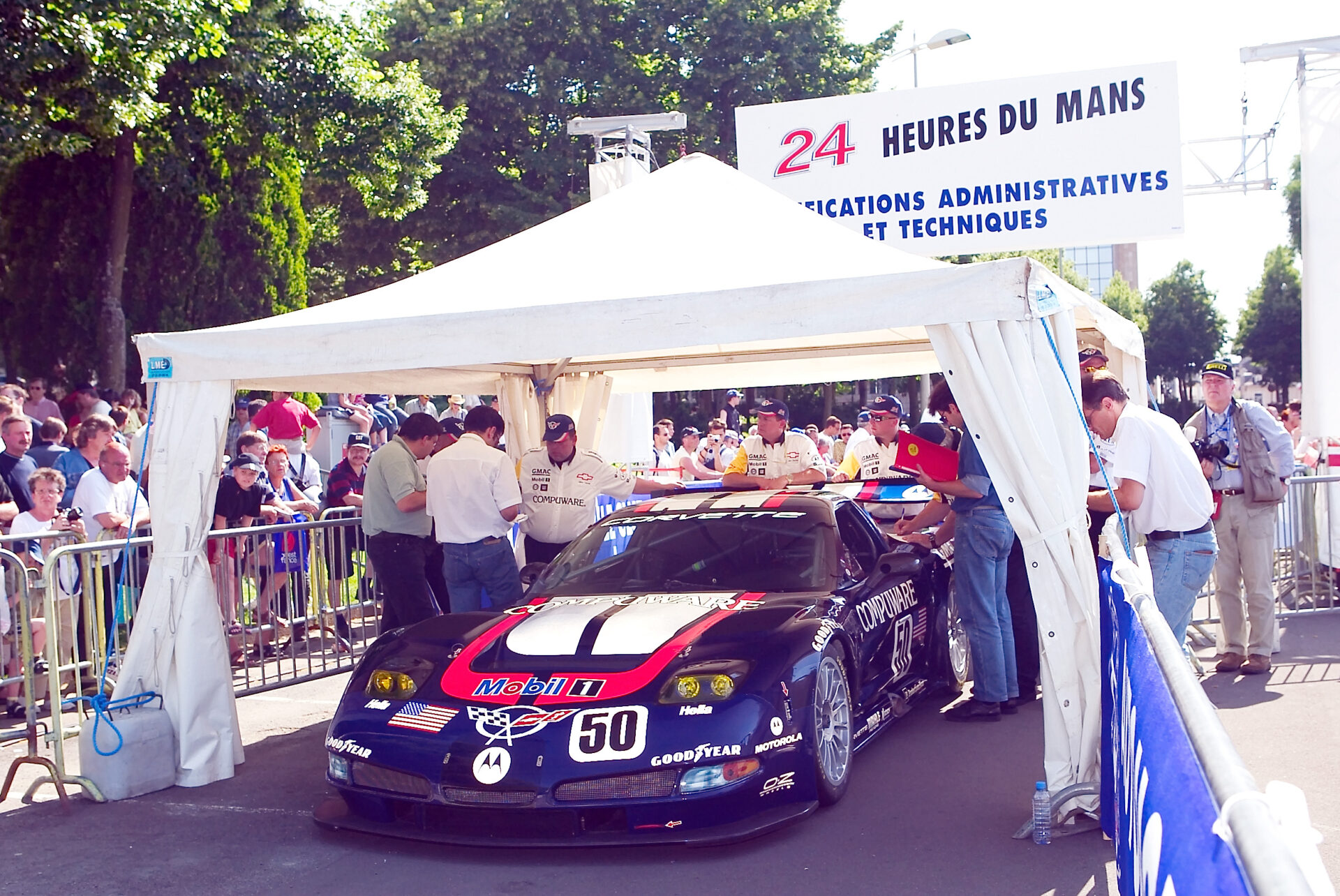
You can enter their sweepstakes by visiting racingarchives. org and then clicking on sweepstakes in the top right corner where you can be entered to win a 2024 [01:48:00] C8 Corvette. C8 Z06 with the Z07 add on package. And if you don’t want the Vette, there is always a cash option and the proceeds do benefit the IMRRC Upper Watkins Glen.

Don Weberg: If you’re looking to add a classic Corvette or Porsche to your collection, then reach out to William at exoticcarmarketplace. com. Learn more about local events and shows where you can meet other Corvette owners by touching base with Rob over at collectorcarguide. net. And if you want help building a Corvette for all sorts of occasions, look no further than Rick at Hoback Racing.

And you’re guaranteed to catch Mark and myself on another coming episode. So stay tuned for that. And don’t forget what should be in your garage Corvette. Thanks again to our panel for another great, what should I buy debate?
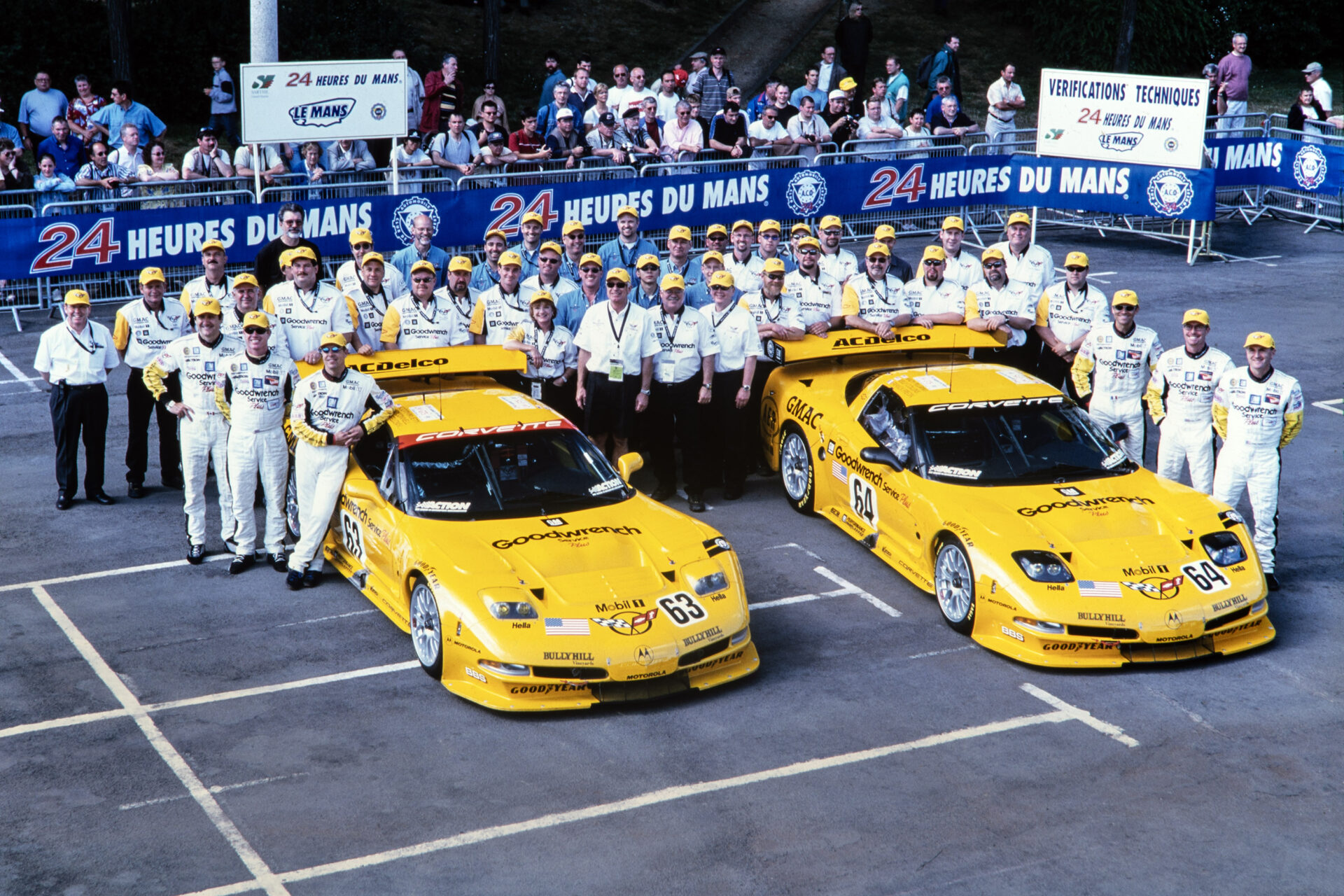
Crew Chief Eric: Like we mentioned in the introduction, this is part one of two. Next time we’re going to talk Porsche versus Corvette and go through the generations of 911.
I hope you enjoyed this. There’s a lot to educate yourself on in the world of [01:49:00] Corvette. I think you can go down rabbit holes on every generation. You got eight generations. Pick from just some amazing stuff out there. Absolutely amazing cars. If you haven’t considered a Corvette before, I think more people should be looking at them.

There’s a lot of really, really great deals out there. And with that guys can’t thank you enough for joining us again and look forward to seeing you in the next. What should I buy?

Rob Parr: I’m going to take off, but I appreciate your including me. And if you do a sequel to this, I’m happy to be a board.

Don Weberg: Thanks guys.

Thanks. Good to meet you, Rick. Take care of guys.

Crew Chief Eric: We hope you enjoyed another awesome episode of Brake Fix Podcast brought to you by Grand Touring Motorsports. If you’d like to be a guest on the show or get involved, be sure to follow us on all social [01:50:00] media platforms at Grand Touring Motorsports. And if you’d like to learn more about the content of this episode, be sure to check out the follow on article at gtmotorsports.

org. We remain a commercial free and no annual fees organization through our sponsors, but also through the generous support of our fans, families, and friends through Patreon. For as little as 2. 50 a month, you can get access to more behind the scenes action, additional Pit Stop minisodes, and other VIP goodies, as well as keeping our team of creators Fed on their strict diet of fig Newtons, gummy bears, and monster.

So consider signing up for Patreon today at www. patreon. com forward slash GT motorsports, and remember without you, none of this would be possible.

Bonus Content

There's more to this story!

Be sure to check out the behind the scenes for this episode, filled with extras, bloopers, and other great moments not found in the final version. Become a Break/Fix VIP today by joining our Patreon.

All of our BEHIND THE SCENES (BTS) Break/Fix episodes are raw and unedited, and expressly shared with the permission and consent of our guests.

Learn More

What else should you buy? Check out other What Should I Buy? Podcast episodes for more car buying “advice” 😉 And remember: the debate never ends – it just shifts gears.

Then came the C2 in 1963 (below), and everything changed. This was a ground-up redesign – new chassis, new styling, and finally, a coupe option. The split-window Sting Ray was unlike anything else on the road. Angular, aggressive, and dripping with attitude, it became the poster child for American performance.

Under the hood, the 327 V8 delivered flexibility and power. Fuel injection had been introduced in 1957, and by 1962, the Corvette was making serious horsepower. The C2 wasn’t just a looker – it was a legitimate sports car, capable of taking on the best from Europe.

Zora Arkus-Duntov, the “Father of the Racing Corvettes,” played a pivotal role in transforming the car into a racing contender. Though GM officially avoided motorsports, Duntov backdoored support to private teams. The 1960 Le Mans effort, featuring the Camoradi Corvette and three others, put the car on the global map.

Meanwhile, astronauts, celebrities, and racing legends like Mark Donohue and Parnelli Jones were seen behind the wheel. The Corvette had arrived – not just as a car, but as a cultural icon.

C2 in the Collector Market: Still Hot, Still Climbing

Today, C2s are highly sought after. According to our panelists, they transact more frequently and at higher prices than C1s. Split-window coupes and big-block models command serious premiums, often exceeding $300,000. Convertibles tend to sell for less, and interestingly, some collectors are gravitating back to the 327 small-block for better handling and drivability.

Resto-mods and pro-touring builds are also gaining traction, especially for rougher examples. But originality still reigns supreme in terms of value.

Photo courtesy Garage Style Magazine

As the episode wrapped, the conversation began to shift toward the C3 era – launched in 1968 and spanning the emissions-choked 1970s. With high production numbers and declining performance, the C3 faces a different kind of legacy. But that’s a story for Part 2.

Stay tuned for the next installment, where we dive into the C3, C4, and beyond – and continue our quest to crown the true everyman’s sports car. Is it Porsche or Corvette? The debate is just getting started.


Thanks to our panel of Petrol-heads!

If you’re looking to add a classic Corvette or Porsche to your collection, then reach out to William at exoticcarmarketplace.com. Learn more about local events and shows where you can meet other Corvette owners by touching base with Rob over at collectorcarguide.net. And if you want help building a Corvette for all sorts of occasions, look no further than Rick at Hoback Racing.

Guest Co-Host: Don Weberg

In case you missed it... be sure to check out the Break/Fix episode with our co-host.
Listen on Apple
Listen on YouTube
Listen on Spotify

Guest Co-Host: William Ross

In case you missed it... be sure to check out the Break/Fix episode with our co-host.
Listen on Apple
Listen on YouTube
Listen on Spotify

Guest Co-Host: Rob Parr

In case you missed it... be sure to check out the Break/Fix episode with our co-host.
Listen on Apple
Listen on YouTube
Listen on Spotify

Guest Co-Host: Mark Shank

In case you missed it... be sure to check out the Break/Fix episode with our co-host.
Listen on Apple
Listen on YouTube
Listen on Spotify

Don’t agree, let’s agree to disagree? Come share your opinions and continue the conversation on the Break/Fix Discord!


This content has been brought to you in-part by support through...