
Home Blog Page 25

From Dirt Tracks to Determination: The Grassroots Legacy of West Virginia Motorsports

0

West Virginia’s motorsports history isn’t just about speed – it’s about spirit. It’s the story of ingenuity, community, and the relentless drive to make something out of nothing. Vehicle historian Tom Adamich took listeners on a heartfelt journey through the hills and valleys of the Mountain State, tracing the evolution of racing from its humble beginnings to its modern-day momentum.

Motorsports in West Virginia began in the 1930s with grassroots ambition. Early races were held on ball diamonds, grassy fields, and harness racing tracks – venues that weren’t designed for speed but became crucibles of creativity. Dunbar, near Charleston, emerged as a key site in the mid-teens, hosting both auto and motorcycle races. Clay surfaces, grandstands, and pits followed, transforming these makeshift tracks into community hubs.

Tune in everywhere you stream, download or listen!

Listen on Apple
Listen on YouTube
Listen on Spotify

World War II paused racing, but the post-war years ignited a surge of interest. With manufacturing booming in areas like Huntington, Parkersburg, and Morgantown, racing became a working-class pastime. Tracks like St. Albans, Scott Field, and Pennsboro flourished. Evans Raceway even installed lights in 1947, signaling a new era of investment and popularity.

The cars evolved too. Open-wheel racers dominated the 1920s and ’30s, but modified passenger cars – precursors to stock cars – returned with a vengeance. These vehicles embodied the DIY ethos of West Virginia racers.

Bio

Tom Adamich has been a vehicle/motorsports historian since the early 1990s. He served as the project archivist at the Wills Sainte Claire Auto Museum (Marysville, Michigan) from 2009-2016.  He has been a frequent presenter at the Argetsinger Symposium – including presentations on Strategic Air Command (SAC) racing history, Cuban motorsports history, and Formula Vee.

Synopsis

This episode of The Logbook, our History of Motorsports series, presented by Tom Adamich, explores the rich history of motorsports in West Virginia. Adamich, an experienced vehicle historian, outlines the grassroots beginnings of racing in West Virginia from the 1930s, highlighting key events and influential individuals who shaped the sport. It covers the challenges and innovations in early racing, the impact of World War II on racing activities, and the resurgence post-war. The discussion also touches on modern advancements, legislative developments, and community efforts to sustain and grow motorsports in the region. Personal anecdotes and notable stories, such as those of racer Dave Kurtz, add depth and a human element to the historical narrative.

Follow along using the video version of the Slide Deck from this Presentation

Transcript

[00:00:00] Break/Fix’s History of Motorsports series is brought to you in part by the International Motor Racing Research Center, as well as the Society of Automotive Historians, the Watkins Glen Area Chamber of Commerce, and the Argettsinger family.

West Virginia Motorsports History By Tom Adamich. Tom Adamich has been a vehicle and motorsports historian since the early 1990s. He served as the project archivist at the Will St. Clair Auto Museum in Marysville, Michigan from 2009 to 2016. He has been a frequent presenter at the Artsinger Symposium, including presentations on strategic air command racing history, Cuban motorsports history, and Formula V.

Grassroots and bootstrap strategies were used by early racing pioneers in West Virginia beginning in the 1930s. Adamitch, co author of the auto racing entry in the West Virginia Encyclopedia and other related articles and publications, will profile several events and individuals who [00:01:00] innovated and dominated on the dirt tracks, ball diamonds, and other unique race courses that dot the hills and valleys of the great state of West Virginia.

Tom, we’re going to talk about West Virginia motorsports history. My name is Tom Adamich. I’m the president of Visiting Librarian Service, and I have been in that role for 30 years. I’m an archivist and a librarian and a vehicle historian. I’ve been a member of SAH since 1993. I’ve been a member of the National Association of Automobile Museums since 1998.

I’m a humble servant in that I’ve had the pleasure of getting to know many of you through this symposium. It has been one of the great opportunities to share information, particularly on motorsports. Tom, what in the world possessed you to look into this topic? Understanding that racing really… Is that grassroots type of activity, even in its upper [00:02:00] echelons as it becomes that business model.

And I think there’s still that local aspect of people getting together that people enjoy vehicles. They enjoy the mechanical aspect of creating something out of nothing. And they still do it. Believe me, even where I live in Ohio, there’s still these small tracks all over the place where people get together and they have modified stocks and all those things.

And the young kids, that’s what’s heartening, that a lot of these kids learn skills and they’re still doing it. And of course, the time that I did work in West Virginia and I met a lot of good people, and wanting to know what did it look like at different times in the state, and to be really somewhat surprised at times that the Area had such a very successful and still does a very successful racing climate today.

I’m going to talk about something that is in line with some of my past presentations. Keep [00:03:00] in mind that theme of the populace, the people and some of the spirit that they have to make something out of nothing. Particularly, look at the time frame of the history of racing in West Virginia, starting in the early 20th century.

A lot of that is historically based, which I think reflects on the spirit of the individuals who were involved. We’re going to look at some of those early years, and we’re talking starting in the late teens and early 20s. Progressing through particularly jumping forward, then following World War 2 because of some of the issues that racing faced during the war, then we will focus on some of the good people.

And then we’ll just briefly talk about a racing today in West Virginia. And some of the future opportunities that may exist. I like to say that a lot of the people who are involved in racing in West Virginia are probably part of that [00:04:00] camp that dealt with the fact that they were just in the right place at the right time.

And that history was on their side and I think when you look back, you can say that a lot of this is very true. 1 of the most interesting parts of early racing was the fact that it took place in small venues. Venues that would not have been thought of as being appropriate. Some early racing took place on ball fields and some very grassy areas that were available.

And of course, venues that were part of county fairs and those activities were very popular early on. The idea of racing on a harness racing track was very appealing. And it helped to really start the development of racetracks throughout West Virginia, various regions of the state progressed at different times.

The northern part of West Virginia, somewhat close [00:05:00] to the Ohio border really was 1 of the 1st areas that developed probably because of that influence of Ohio and Pennsylvania. The population center for those of you who know West Virginia still is based in Charleston in the capital. It was a logical choice for development and Dunbar, which is in that South Metro Charleston area was 1 of the biggest.

Early tracks, they started the mid teens to have auto racing and motorcycles and I include that because again, our motor sports focus, you know, we think of cars, but we want to always be cognizant of some of the other vehicle types that did evolve during that time and the opportunities for racing and competition.

Again, Dunbar was one of those early places, and it really speaks to the fact that there were opportunities for development beyond what had been a traditional harness racing [00:06:00] track. And of course, improvements were very much part of that. In this case, at Dunbar, clay was brought in as a surface. Giving the opportunity for infrastructure to be developed, the pits, including grandstands, and those spectator areas and participant areas, you know, that were also part of that progress.

Racing, as you went into the 20s and the early 30s, most of those open wheel type race cars that we were familiar with from that era, then began to be the dominant vehicle type. Prior to that. Most of the vehicles were modified passenger cars, and you’ll see a trend back to that, but the open wheel cars were very specialized.

And very much targeted toward very organized racing. And this was again the dominant racing type during that period. I jump forward to World War II because I think it’s significant to say that the [00:07:00] war did pause a lot of the racing events. After the war, the pent up demand that did exist was really what gave the sport, especially in the state, that real catalyst to move forward and become extremely popular, especially for the working folks.

There was a lot of manufacturing that did exist within the state, especially in that area. On the Ohio and West Virginia border, and in the Charleston segment, and over into Huntington to the West and Eastern Kentucky. Other parts of the state as populations and opportunities existed, they developed tracks.

St. Albans became a big racing venue as did Scott field. And Gillen Park at Parkersburg had a lot of industrial influence as did Williamson, Glenboro, and Pennsboro. Pennsboro being a location in Ritchie County, which is in that region. And then as you went [00:08:00] west to Wellsburg and Weston, and then further west.

Into the areas of Morgantown, which had a big steel area that not a lot of people know about, but definitely connected to its influence from Pittsburgh. But I mentioned that because as we get into some of these locations, you’ll see how some of that post war opportunity influenced the development.

Notably, that Evans being one of the first tracks to have lights back in 1947. So again, they were putting resources into these venues, and they became very popular. Going back to that modified stock car, what became a stock car, and the good people who were very ingenious and inventive to make something out of nothing.

I had the pleasure of meeting Dave Kurtz and his lovely wife. I worked briefly for the state of West Virginia for the library commission. And I drove from Charleston. They lived in Weston. I drove [00:09:00] east to visit them. He started racing at age 17. He actually had to get a note from his mother because he was underage.

And so you can think back and, and look at some of the things today and, and that’s kind of an interesting juxtaposition that somebody had to go through that. But there again. People were very industrious and inventive, as they are today. Young people find a way, and he did. He enjoyed racing at Norwood Park, which was in Clarksburg, and then at the Pensborough Rice Speedway, which is in Simpson, and some of the areas.

In that region, including Eldora Raceway in Fairmont, he was part of that Central West Virginia Racing Association organization that developed, and there were several of those throughout the state that were the oversight bodies for the sport. This is the part I always enjoy. He was able to take a football helmet and some pipe and bail wire that he [00:10:00] had around to make that roll cage that he used.

And he used the army pistol belt that a family member was in the war, had worn when he was in the war. Thank goodness he had that roll cage, because he was not immune to having rollovers and things happen to him. No injuries, but as you can see, he, to the right, he’s already up and about. Dave was a resourceful gentleman, so.

One story, they bought a car from an old lady. They found this car and the lady said, Here it is. I don’t have a title on it. I’ll sell it to you. Of course, it was one that had been sitting outside and the bees got into it. And his friend that he went with was in that position of dealing with it. But there again, Mr.

Kurtz really represents that person who could, again, make something out of nothing. Some of the things that he did were just very inventive. And I think represented the common people and what they were trying to do and accomplish in the [00:11:00] sport. Dave got involved in some product testing for NASCAR, that he was part of that initiative for Monte Ward.

And then he went on and raced in those early races at venues that we’re familiar with, as far as NASCAR is concerned. Just kind of some neat. Things that happened to the people as they were trying to create their team, trying to create their racing opportunities. I go back and I referenced his wife, Pauline, cause she was just the nicest lady.

God bless her. As far as somebody who was industrious, she was just as industrious as he was. To be able to help him, and she even helped in the pits when she could. This was back in the day when the ladies weren’t allowed to be working there, but she was able to go in there every once in a while, and if he needed something, she would do just as much work as he was doing.

And of course, when they were off track, she did a lot of that, too. They decided when he was going to retire [00:12:00] when she had her first babies. She was pregnant, so he was honored his word, but by golly, he got drawn into a race and won the money. Then they were able to use that money for the birth of their first daughter.

She passed away a few years after I talked with them. And then Dave passed away in 2019. So it’s kind of a trip down memory lane for me that it was such a nice trip out to talk with them. Just one of those things that is in the right place at the right time, I think, and represents that spirit of the sport and why racing is still popular with people, because I think it does represent that common interest and so on.

And again, here’s some friends of his that were part of that early racing. Monty Ward in particular was a very successful racer during that time. And these people throughout the state of West Virginia represented the different regions of the state. I wrote an article that appeared in the state magazine Golden Seal [00:13:00] as a result of that.

As I mentioned earlier, parts of the state developed at different times, but even around Morgantown that became a very popular venue for racing. Today, there’s been a lot of Activity at the legislative level, and that’s a place, even when I was in the state, people in Charleston were trying to promote it and they had a motor sports commission developed during that time.

But this is the latest iteration of the West Virginia motor sports committee. And again, the emphasis is not only on auto racing, but it does involve a lot of other types of vehicle racing and motocross and those types of activities. They promote the different areas, and these are the dedicated facilities that exist today, areas that are dedicated to track racing, but also this Hatfield McCoy Trail, which if any of you have an inclination to [00:14:00] learn more about that, please let me know, because it’s a very interesting development.

It really lends itself to types of vehicles that are on there and its relationship to people enjoying the sports and what develops and how they can participate. You get to learn a lot about geography at West Virginia, which for any of you that have been there, it is God’s country because of its many little valleys.

And haulers as the natives call it and river bottoms and things like that, that really give it its unique character. It’s just a good way to learn not only about racing, but about where the people lived and what they did. So it has evolved a bit. It’s a little bit more technologically advanced and a little bit more expensive.

Some of those people have to invest a good amount of money, but there again, the intent. And the idea is to enable people to enjoy and [00:15:00] participate and they’re historically able to do so. Looking at timeframes history without that context of what the history is at the time, sometimes we miss what really is there.

And in this case, we have to look at today and see what our economic conditions are and, and some of that to really get a sense of. Today’s activities. It continues to be a story that evolves and one that will continue to require making improvements and things that will be part of that as the industry continues to develop.

Particularly in the early 2000s, there was that big move to try to have a NASCAR venue set up in the state, and I think there’s still some movement there, not as much as it was, but there’s always that interest in having some type of influence NASCAR wise. In the state, we’ll see where that comes. And again, just a lot of good people that live [00:16:00] there.

They’re just friendly folks. You all come, you know, they’re very welcoming in that sense. They do represent motor sports very well in that regard. And I encourage you to look at the West Virginia encyclopedia. If you’d like to go online, I’m happy to provide this deck for you, if you’re interested, and to answer any questions, and I had a lot of good help from people, folks from the West Virginia Encyclopedia and, and from Golden Seal, who are very much part of that Humanities Council in West Virginia, and very eager to share information and promote the good things that West Virginia has to offer.

And again, I’m happy to talk with any of you, and hopefully, God willing, that we can meet again in the future. Thank you, Tom, once again. West Virginia has a very interesting racing history, and I think Tom covered a lot of that. Hint, hint, hint to some of you. There’s a lot to be covered by racing historians about [00:17:00] West Virginia, and Tom, I think you provided a nice framework for looking into it, because I think it’s one of those types of situations where it kind of gets overlooked.

A lot of connection. Thank you, Tom, for the presentation, and we’re looking forward to having you come back in the future.

This episode is brought to you in part by the International Motor Racing Research Center. Its charter is to collect, share, and preserve the history of motorsports, spanning continents, eras, and race series. The center’s collection embodies the speed, drama, and camaraderie of amateur and professional motor racing throughout the world.

The Center welcomes serious researchers and casual fans alike to share stories of race drivers, race series, and race cars captured on their shelves and walls and brought to life through a regular calendar of public lectures and special events. To learn more about the Center, visit www. racingarchives.

org. This episode is also brought to you by the Society of Automotive Historians. They encourage research into any aspect [00:18:00] of automotive history. The SAH actively supports the compilation and preservation of papers. Organizational records, print ephemera and images to safeguard as well as to broaden and deepen the understanding of motorized wheeled land transportation through the modern age and into the future.

For more information about the SAH, visit www. autohistory. org.

We hope you enjoyed another awesome episode of Brake Fix Podcast brought to you by Gran Touring Motorsports. If you’d like to be a guest on the show or get involved, be sure to follow us on all social media platforms at GrandTouringMotorsports. And if you’d like to learn more about the content of this episode, be sure to check out the follow on article at GTMotorsports.

org. We remain a commercial free and no annual fees organization through our sponsors, but also through the generous support of our fans, families, and friends through Patreon. For as little as [00:19:00] 2. 50 a month, you can get access to more behind the scenes action, additional Pit Stop minisodes, and other VIP goodies, as well as keeping our team of creators Fed on their strict diet of fig Newtons, gumby bears, and monster.

So consider signing up for Patreon today at www. patreon. com forward slash GT motorsports, and remember without you, none of this would be possible.

Livestream

Highlights

Skip ahead if you must… Here’s the highlights from this episode you might be most interested in and their corresponding time stamps.

  • 00:00 Introduction and Sponsors
  • 00:16 Meet Tom Adamich: Motorsports Historian
  • 00:43 Early Racing in West Virginia
  • 01:09 Tom Adamich’s Background and Passion
  • 01:51 Grassroots Racing Culture
  • 04:12 Historical Racing Venues
  • 06:54 Post-War Racing Boom
  • 08:47 Dave Kurtz: A Racing Legend
  • 13:13 Modern Racing and Future Prospects
  • 16:46 Conclusion and Acknowledgements

Learn More

If you enjoyed this History of Motorsports Series episode, please go to Apple Podcasts and leave us a review. That would help us beat the algorithms and help spread the enthusiasm to others. Subscribe to Break/Fix using your favorite Podcast App:
Listen on Apple
Listen on YouTube
Listen on Spotify

Consider becoming a Patreon VIP and get behind the scenes content and schwag from the Motoring Podcast Network

Do you like what you've seen, heard and read? - Don't forget, GTM is fueled by volunteers and remains a no-annual-fee organization, but we still need help to pay to keep the lights on... For as little as $2.50/month you can help us keep the momentum going so we can continue to record, write, edit and broadcast your favorite content. Support GTM today! or make a One Time Donation.

One standout figure was Dave Kurtz of Weston. Starting at age 17 with a permission note from his mother, Dave raced at venues like Norwood Park and Eldora Raceway. He built his own roll cage from pipe and bail wire, strapped in with an army pistol belt, and tackled tracks with fearless resolve.

His wife Pauline was equally industrious, helping in the pits despite restrictions on women. When Dave won a race just before retiring, the prize money paid for the birth of their first daughter – a poetic end to a racing chapter. Both Dave and Pauline have since passed, but their legacy lives on in the spirit of West Virginia motorsports.

Beyond Cars: A Broader Motorsports Landscape

West Virginia’s racing culture isn’t limited to stock cars. The state’s motorsports commission promotes a wide range of vehicle competitions, including motocross and off-road racing. The Hatfield-McCoy Trail system exemplifies this diversity, offering rugged terrain for recreational riders and racers alike.

West Virginia’s unique topography – its valleys, haulers, and river bottoms – shaped its racing culture. Tracks popped up where opportunity struck, often influenced by neighboring states like Ohio and Pennsylvania. Morgantown, with its steel industry ties, became a surprising motorsports hotspot.

Efforts to bring a NASCAR venue to the state in the early 2000s reflect ongoing aspirations. While that dream remains unrealized, the passion for racing endures.


Preserving the Past, Inspiring the Future

Tom Adamich’s work, including contributions to the West Virginia Encyclopedia and Golden Seal magazine, helps ensure that the stories of racers like Dave Kurtz aren’t forgotten. His presentation reminds us that motorsports history isn’t just about the cars – it’s about the people, the places, and the perseverance.

West Virginia’s racing legacy is a testament to what happens when heart meets horsepower. It’s a story still being written, one lap at a time.

This episode is sponsored in part by: The International Motor Racing Research Center (IMRRC), The Society of Automotive Historians (SAH), The Watkins Glen Area Chamber of Commerce, and the Argetsinger Family – and was recorded in front of a live studio audience.


Other episodes you might enjoy

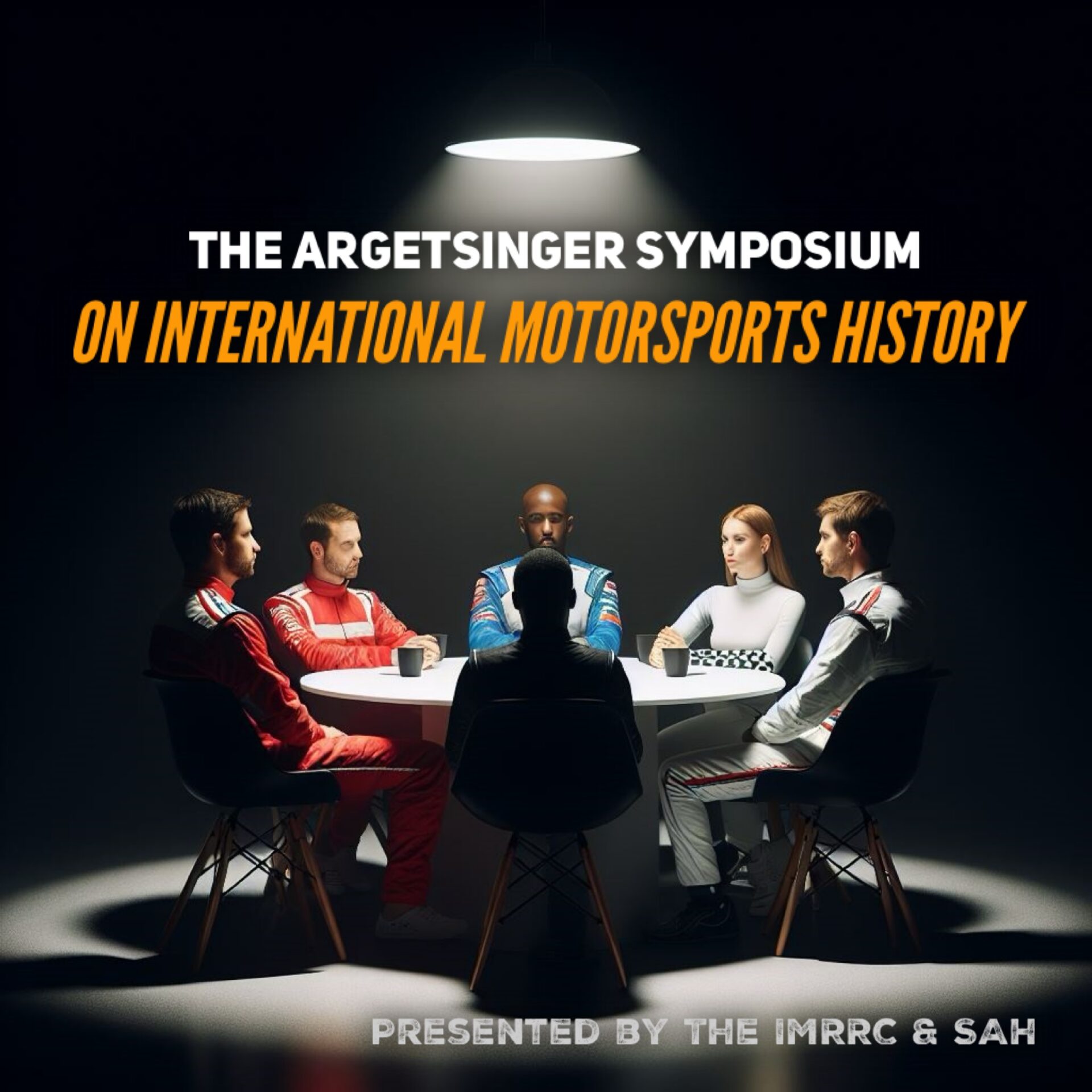
Michael R. Argetsinger Symposium on International Motor Racing History

The International Motor Racing Research Center (IMRRC), partnering with the Society of Automotive Historians (SAH), presents the annual Michael R. Argetsinger Symposium on International Motor Racing History. The Symposium established itself as a unique and respected scholarly forum and has gained a growing audience of students and enthusiasts. It provides an opportunity for scholars, researchers and writers to present their work related to the history of automotive competition and the cultural impact of motor racing. Papers are presented by faculty members, graduate students and independent researchers.The history of international automotive competition falls within several realms, all of which are welcomed as topics for presentations, including, but not limited to: sports history, cultural studies, public history, political history, the history of technology, sports geography and gender studies, as well as archival studies.

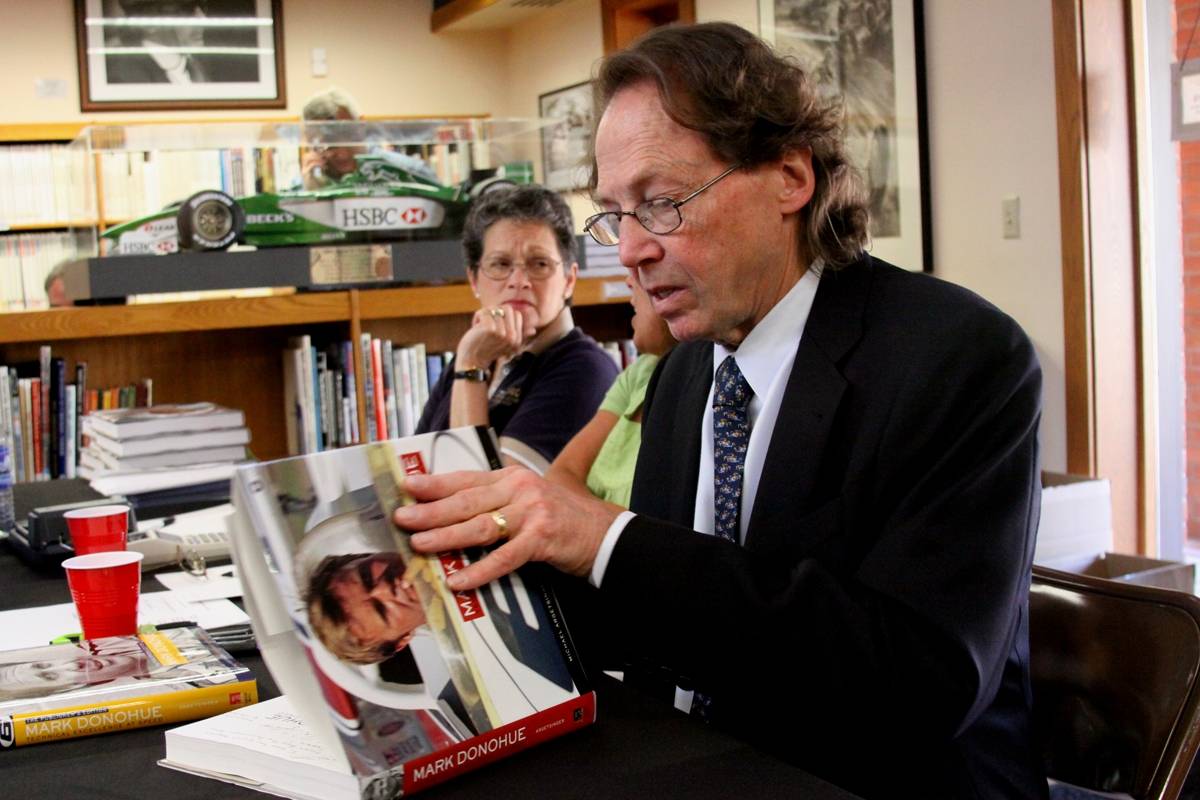
The symposium is named in honor of Michael R. Argetsinger (1944-2015), an award-winning motorsports author and longtime member of the Center's Governing Council. Michael's work on motorsports includes:
  • Walt Hansgen: His Life and the History of Post-war American Road Racing (2006)
  • Mark Donohue: Technical Excellence at Speed (2009)
  • Formula One at Watkins Glen: 20 Years of the United States Grand Prix, 1961-1980 (2011)
  • An American Racer: Bobby Marshman and the Indianapolis 500 (2019)

This content has been brought to you in-part by support through...

Motoring Podcast Network

From Pit Road to Podcasting: Steve Post’s Sprint Through NASCAR and Beyond

For over two decades, Steve Post has been a familiar voice in the NASCAR community. Whether calling the action from pit road or hosting Winged Nation, his journey through motorsports media has been anything but static. On this episode of Break/Fix, we catch up with Steve to explore how his career – and the sport itself – has evolved since 2017.

Back in 2017, Steve was settling into his role at MRN and Winged Nation was just gaining traction. Fast forward to today: the hair’s longer, the waistline’s slimmer, and the passion for motorsports burns brighter than ever. Now the lead pit reporter for MRN, Steve reflects on the 2023 NASCAR season as one of his most enjoyable yet – his 21st year on the road. “I still absolutely love the men and women who work on these cars,” Steve shares. “From engineers to pit crew athletes, it’s just amazing to watch them work.”

Tune in everywhere you stream, download or listen!

Listen on Apple
Listen on YouTube
Listen on Spotify

We pick up where Part-1 of the IMRRC’s “Life in the Fast Lane” left off, picture it… Watkins Glen, December 2017.

Tune in everywhere you stream, download or listen!

Listen on Apple
Listen on YouTube
Listen on Spotify

Winged Nation has grown from a niche show into a full-blown passion project. While the MAVTV segment has wrapped, Steve and the team are pivoting to long-form podcast storytelling. “We’re in a beautiful time for communication,” he says. “We want to go deeper – no more seven-minute segments interrupted by commercials.”

Photo courtesy Steve Post

Expect more social media content, trackside interviews, and grassroots coverage. With sprint car racing undergoing a seismic shift – between World of Outlaws and High Limit – Steve is committed to spotlighting the hundreds of drivers beyond the headline names.

Spotlight

Synopsis

This episode features a conversation with Steve Post, a seasoned NASCAR journalist and pit road reporter for the Motor Racing Network (MRN) with over two decades in the industry. Steve discusses his work in NASCAR, including his role as the lead pit reporter and his involvement with the program Winged Nation, which focuses on sprint car racing. He reflects on the journey from 2017 to 2023, detailing the evolution of his career, the growth of sprint car racing, and memorable interactions with legendary racing figures. Steve also shares personal stories about taking up running, spending time with his daughters, and his new passion project, the blog Postman68. He emphasizes the importance of following one’s dreams and offers advice to aspiring motorsport broadcasters. The narrative highlights Steve’s passion for motorsports, his dedication to his craft, and his ongoing commitment to inspiring the next generation of petrol heads.

  • In part-1, things were settling in at MRN, Winged Nation was picking up speed, and you’d just met your long time hero Pete Cordez – It’s been nearly 7 years since then – What’s happened since? Take us on the journey. 
  • How has Winged Nation Evolved?
  • Have you kept in touch with Pete/Judy? 
  • You’re still involved with NASCAR – how have you seen it change in the last 7+ years.
  • Garage-56 – thoughts?
  • What else have you gotten into since 2017? 
  • If someone wanted to get into your line of work, what piece of advice would you give them? 

Transcript (Part 1)

[00:00:00] Break/Fix’s History of Motorsports series is brought to you in part by the International Motor Racing Research Center, as well as the Society of Automotive Historians, the Watkins Glen Area Chamber of Commerce, and the Argettsinger family. I’m always a big sucker for the story where the small town guy makes it in the big time.

And our featured speaker today is that, quintessentially. I’m also a big fan if the small town guy happens to be from this area. And by this area, I mean Southern New York, Northern Pennsylvania. Mr. Post is a guy who, as a kid, grew up on the dusty bull rings of Five Mile Point Speedway and Pencan Speedway.

And once the small town guy who made good is a fellow that I know, that’s pretty much the trifecta for me. I’ve known Steve now for probably close to 25 years, I think. He was a tremendous guy then, he is a tremendous guy now. It’s taken us three years to get him here, [00:01:00] in part because he just has such a crazy, crazy schedule.

And what I’m most happy, and what I think you guys are gonna be Really interested in hearing about, you’re going to hear about NASCAR and drivers and all of that cool stuff. But this is really Steve’s personal journey. This is really the story of a guy from Halstead, Pennsylvania who made it to the big time.

There’s eight people that announced for Motor Racing Network. And Steve is one of them. Small town guy who made it on the big stage. Local guy who made it on the big stage. And a guy I know personally. That’s it for me. I’m going to introduce Mr. Steve Post. Thanks very much. Thanks for coming. Steve. Alright, thanks Kip.

Thank you. As Kip has talked about, it has taken about three years to put this together, and I’m really shocked that Kip would want to put it together. As he mentioned, we’ve known each other about 25 years, and Kip did bus tours. And I recall one of the early bus tours we did was a group from the WeGo Racing fan club.

We went to New Hampshire. And the shocking part that Kip would have me back is because I was surprised [00:02:00] he let me on the bus to return from New Hampshire. Back in the day, I enjoyed frosty cold beverages. And in many cases, I enjoyed multiple frosty cold beverages. So, we’re riding in this bus trip to New Hampshire, and this was when Stroh’s Beer introduced the 30 pack.

Oh, are you kidding me? 30 pack of beer. So I break out a 30 pack on our bus trip to New Hampshire. We get to New Hampshire, we park across the street, and over into the racetrack is six lanes of bumper to bumper traffic. So we’re playing Frogger, trying to get to the traffic. I have what I’m taking into the racetrack of my Stroh’s 30 pack in one of those really handy styrofoam coolers with a nice string handle on it.

I get halfway through playing Frogger in the six lanes of traffic, the handle breaks, the cooler hits the ground, and beer goes everywhere. While not wanting to waste the investment in the beer, I [00:03:00] do the best thing that I know what to do, and I pull my shirt, and I’m rounding up beer cans while all the cars are tooting their horns and people are laughing and cat calling.

And I probably got six or eight of my beers near my shirt there. And I look up and here’s Kip over along the fence line, just keeled over, laughing, laughing out of just the sheer moment of me trying to round up my beers, laughing out of embarrassment that this is part of his people. These are his group.

And here we go. One of the finest examples. So first off. Kip, I’m glad you let me get back on the bus to return from New Hampshire, and I do appreciate being here, and I’m glad everyone has joined us here on this snowy, frosty day. So the story kind of starts like this, and it starts with an announcer. Good evening, ladies and gentlemen.

This is Dusty Doyle welcoming you once again to Five Mile Point Speedway, your home speedway of the Southern Tier. I was a little kid, and my life and my passion began every Saturday night with those words. Dusty Doyle, five mile point speedway, going to the [00:04:00] races with my father. And I loved being at the racetrack.

And I loved listening to Dusty Doyle announce races. The Dusty Doyle isms that were out there. When a car came off from turn number two, he would go up, up, up, up, up the backstretch. And you know that he was making time. You may or may not have been, but Dusty Doyle sold you. That car is going into turn number three faster than any car in the history of Five Mile Point has ever gone into turn number three.

One of my favorites is a mysterious character named Andy. We’re under caution. We’re coming through turns three and four, ready to go green. And the phrase was, Andy, let him go! We all wondered who Andy was. The flagger was not Andy, the flagger was Joe Winterstein. Who’s Andy? But every time we’d go green, Andy, let him go!

And there is actually a Facebook name, Andy, let him go, out there now. In tribute of Dusty Doyle. The Dusty Doyle isms that were so much fun. When the heat rays would roll out and there was 13 cars. He would say 12, and another [00:05:00] car because it’s not good luck to say 13 at the racetrack. It was always that.

And when we did that moment at the beginning of the night, ladies and gentlemen, will you please stand? Let’s remember who we are, what we are, and where we are for one stanza of our national anthem. Dusty Doyle isms, an announcer that had a passion for racing, a guy that I never met, but a guy that had such an impact on me along the way.

My roots in racing go back actually before I was born. My father, who is father of ever, I wouldn’t put him a year or a decade, my father was a mechanic, there was a racer in New Milford, Pennsylvania named Buzz Gulick, and Buzz’s grandstunts still races along the way, but Buzz Gulick raced locally at Pen Can, and my dad was a mechanic on his car before I was born.

Dad decided at some point that raising a family and they were doing some horse showing and some other things that maybe it wasn’t compatible with working on a race car, so he decided he was going to take the family and take us to races, and that’s what we did. We went to races virtually every night of my childhood along the way.

It was an amazing childhood. It really was. And we would go [00:06:00] Saturday nights to Five Mile Point Speedway. Pen Can was our Friday night track, but in that era, in the early 70s, Pen Can was very hit and miss. Some year, one club was running it. Another year, another club was running it. They’d start in May.

They’d end in August. They’d start in August. They’d end in September. It was very hit and miss. So a lot of my memories We’re from five mile point Speedway down in the Binghamton area. And so many great memories. We think about racing and we talk about racing now. And one of the bygone events that we used to have in racing that I don’t see too much of anymore are kiddie rides.

We don’t seem to see that too much anymore. I think they’re important because I remember riding in Wally Locke’s J 10 car at five mile point Speedway. And that’s 45 years ago. I remember climbing in and sitting on the side rails. And the rumble of red Harrington’s modified was 45 years ago. I remember kiddie rides.

I remember at Penn Can you’d line up along the fence and a car would pull up and you didn’t have a choice who you’re getting. I got the chance to ride with Mike [00:07:00] Colston in his car. The flagger threw us all in the back of it and we went into mud up to our knees riding with Mike Colston. And I remember those moments, those kiddie rides, those moments.

45 years later, it meant so much to me that developed this passion of racing. Grew up going to Five Mile Point, we would sit on the backstretch. We would sit over in turn number three, there was a barrel down at the end of the back straightaway, and we would stand on it, it was a big water barrel, big, long water barrel, and we would stand on it.

David Brush, one of my friends, He was the shortest guy, so he would stand in front. I’d stand next. My brother John would be there or whoever else we would all kind of fall into line and we would watch bigger than life names, wheel cars around a racetrack guys with a name like Chuck Akulis and Carl Bubby Nagel.

How about that name? Man, there is a great, great race car driver. Old Bones, Dave Kniesel. Wow, Clark Summit, Pennsylvania. Kniesel Speed Sport. Man, there’s not a cooler guy on the planet than Dave Kniesel. [00:08:00] Frankie Mears used to come up. That was the kid. That was a protege of Dave Kniesel. And Frankie Mears, he could roll a race car around a racetrack.

Larry Catlin from down in Waverly. Turquoise number 88 coupe. What a beautiful race car. He won a lot of races in that number 88 coupe car. Toughest guy in the world in the history of all of motor sports to pass. This is no offense to Dave Marcus and no offense to Ryan Newman, but if you pass Gordy Isham at five mile point speedway, you really accomplished something.

I ran into years ago, Andy Belmont, who raced in the Arca series. And I ran into Andy down at Daytona talking about the Arca series. And I said, ham from five mile point speedway. And he says, I’m telling you what he says. I lost 15 years of my life trying to pass Gordy Isham. And those were the heroes.

Those were the racers. Those were the big names that we love. Those were the big names that we followed along with my first recollection of a race. And I appreciate there’s a Facebook group. I went on there a couple of weeks ago and ask, and I think I’ve got the dates on this, right? Would have been 1971.

Would’ve been the Spring 100 or Miller Dodge 100 at five Mile [00:09:00] Point, and a guy by the name of Pete Cordes scored the win in that race. Blue number 68, bigger than life, Pete Cordes, Walden’s floor covering on the race car, and Pete Cordes won that race being that was maybe my first memory. That became my guy.

I was a Pete Cordes man, eight years old, but six years old when I first saw that race, but I was a Pete Cordes guy. My dad, he liked Bubby Nagel. My brother was a Chuck A Coolest guy. David Brush, he liked Dave Canizel. I was all in for Pete Cordes, and I loved watching Pete Cordes race a car. Pete Cordes, my hero as a childhood, bigger than life.

And I just loved watching Pete Cordes score and race cars around Five Mile Point Speedway. Away from the racetrack, my life was all about racing as well. I would take little matchbox cars and line them up around a carpeting, or on the floor, and I would announce races. I could say the same things that Dusty Doyle said.

I could say the same things that Cal Arthur over at Pen Can or Jimmy Bevins at Pen Can would say. There is no way in [00:10:00] the world I could sound like Jack Burgess’s voice ringing through the fairgrounds at the State Fair in Syracuse. I would do anything in the world to hear Jack Burgess’s voice ringing through the fairgrounds at Syracuse.

Sadly, Jack is no longer with us. And even sadder yet is that at that fairgrounds they tore that thing down and it’s just unreal. But all of the voices that I would listen to. And I love the way they described races. Joe Murata had some great, great lines. I love Joe Murata. I could listen to Joe Murata call a race.

Roy Sova, friend of mine up at Oswego Speedway. And I love the way announcers called the race. And it was a passion of mine on those little matchbox cars. I would use Dusty Doyle’s lines and Joe Murata’s and Jack Burgess’s lines. And I would love that. Another part of my childhood was on Thursdays. When all the other kids were riding bikes, or climbing trees, or in the creek playing, or doing whatever, I would sit by the mailbox, waiting for the gator racing news to arrive.

Gotta get a gator! Oh, I lived for Thursdays when that gator, I would tear into that, and I knew the next hour of my life was [00:11:00] reading through, taking me places that I had never dreamed I would go to see. Gotta get a gator, and I’m telling you, Pete the Mailman, that poor guy When that gator didn’t arrive on Thursday, you want to talk about a kid walking back in the driveway cussing out a mailman.

I was that kid cussing out Pete the Mailman when that gator didn’t arrive on Thursday. Saturday afternoons, the ritual in the family was me sitting on the front porch. Where I lived, between Halsted and New Milford, you could see both Highway 11 and Highway 81. And there they would go, the Kniesel Speed Sport Hauler with Dave Kniesel headed to Five Mile Point Speedway.

Oh ho, we knew we were in for it then, when Dave Kniesel was gonna be there. There goes Norm Norton, there goes Doug Holgate, going up there. And I would sit there and I would check off who’s all gonna be at Five Mile Point that night. Oh my gosh, there goes Dick Longstreet. In his late model, that number 97 late model.

You know what that meant? When Dick Longstreet was running late models, it was a race for second. That guy had more bounties on him than anybody in the world. And I would sit there on that porch on Saturday afternoons. And then we’d have those rainy Saturday afternoons where [00:12:00] I’d sit there and watch the cars go up and I’d sit there and one would go the other way.

And I was in complete denial as a kid. Oh no, the car must have broke down. Oh no, no, no, there’s no way. And when that second car went by, and the third car went by, I lost my mind. I’m telling you, you want to talk about a little kid having a tantrum. I am telling you, I was done, because we weren’t going to the races, because the stupid weather had rained us out.

on Friday nights or Saturday nights at five mile point. That was my young childhood along the way. We always went to the races and along with elementary school and then in middle school and into high school. And I think the first Saturday night we would miss some along the way because I am telling you, my father, what a wonderful man.

The only time we would miss races is we were in Canada fishing. So we would go to Canada fishing trips and that would cause us to miss some races. But the only planned miss that I had that I ever scheduled something else. was my junior prom. Oh man, I’m going to the junior prom. My brother let me have his car.

Really cool car. Wendy Hine was going to be my date along the way. [00:13:00] I was going to go to the junior prom. Yeah, I was sad. I was going to miss five mile point, but you know, it’s the junior prom. It was a disaster. I hated the junior prom. I had no fun at all and I felt sorry for poor Wendy Hines stuck with me at the junior prom so much so that the night of my senior prom while everyone else was borrowing brother’s cars and wearing nice.

I was in the car, headed back to Five Mile Point Speedway where I belong, and I spent my senior prom at Five Mile Point Speedway. I loved racing as a kid, and I mentioned my father. We would go on road trips. We’d go to Fonda. We went up there one time. We went to Albany, Saratoga, went to Lebanon Valley, and one of the great trips we would go on every year is Labor Day weekend.

We would load up. Bob and Ella Darrell, mom and dad, all of us kids, and we’d get a place somewhere up on Lake Ontario. Friday nights, we’d go to Rolling Wheels. Saturday nights, we’d go to the Bud 200 modified race at Oswego. We did a little bit of asphalt racing. We’d go to Shangri La a little bit. And boy, with the Bud 200, we were regulars there.

We loved going to Oswego for the Bud 200. We’d go to Weed Sport on Sunday night. And on Monday, coming back, we would [00:14:00] go to the New York State Fairgrounds. While kids were running to the cotton candy stands. While kids were running to do rides. While other kids were running to do this, or listen to that, or see that.

This guy was a beeline to the ticket window because we were going in to watch the Labor Day Classic at the New York State Fairgrounds, and we did that many, many years. What a wonderful, wonderful weekend of racing with the family, and it is something that I cherish forever. One of our other favorite events was the Northeast 150.

Up at Weed Sport. We’d go up there and we had our Pete Cordes and our Chuck Akulis and our Carl Nagel’s. The beauty of the Northeast 150 is that we would see Carl Nagel racing against Will Kegel. Oh my gosh. Wiley Will Kegel. The Tampa Terror. I read about him in Gator Racing News. And here he is in front of me.

Dave Lape. He built his own race cars. Lapco chassis. Oh my gosh. Dave Lape. What a legend. Jumping Jack Johnson. Kid AJ Slideways. Magic Shoes. Mike McLaughlin. So I’m sitting there and it’s overload for a kid. You’ve got Will Kegel and Carl Bubby Nagel and Dave [00:15:00] Kniezel and Pete Cordes and Alan Johnson and just overload for a kid.

It was the Northeast 150. Man, what an experience. We did that a number of years and all of those were great, but our favorite event, and actually I was just talking to dad about it a couple of weeks ago. Was the Eastern States 200 down at Orange County Fairgrounds, Middletown, New York. Man, that was it.

That was, that was big time. 1978. We watched a man by the name of Lou, the monk Lazaro win that race. Lou Lazaro. While everyone is rolling in with nice trailers, with wheel racks, Lou Lazaro would roll into a track with a flat trailer pulled by a station wagon. With tires in back of the station wagon and a dog is the only person with him.

He would roll into the racetrack and you know what would happen? He’d whoop everyone’s butt. Lou the Monk Lozaro. I watched him win the 1978 Eastern States 200. Man, what a memory. 1979. Oh, it was a fluke. No way this could have happened. The Eastern States 200, 1979. The [00:16:00] kid got lucky. Oh, the kid, he was not Will Kegel.

He was not Buzzy Rudiman. He was not Frankie Schneider. He was not Lou Lazzaro. Some kid by the name of Brett Hearn won. The Eastern States 200. Oh, what a fluke. That is never going to happen again. Well, it happened 10 more times. Brett Hearn, kid, but I watched him win his first Eastern States 200. Maybe my favorite, 1980.

Oh, just the name since chills. Just the names. Kenny Brightbell. Huh? I don’t know if any of you remember Kenny Brightbell. I’m telling you, still around, still doing stuff, raced up to a few years ago. And every once in a while, I think he still climbs aboard a race car. Kenny Brightbill, on the side of the car, on the side of the hauler.

Brightbill Donkey Farms, we haul ass. Yeah, and I’m telling you what, Kenny Brightbill, and it didn’t matter where he went, he hauled ass. That guy could wheel a race car. Later got to meet Kenny Brightbill, and the first thing I noticed about him was when he shucked my hand. He shook my forearm. His hand was so big he would grab you.

His fingers were at your elbow and your hand, [00:17:00] your palm to palm. Just an amazing guy. Kenny Bright Bill. I watched him win the Eastern States 200 in 1980. And I guess the point that I’m getting at is, is it’s no mystery how I ended up where I ended up because I had the best childhood that any kid could ever have going to the racetrack.

Watching heroes going to the pits afterwards and meeting your heroes. My dad was buddies with Eddie Rafferty. Eddie Rafferty showed up at my house one time. Oh my gosh. I mean, this was an amazing childhood that I have, and I’m so blessed with my mom and dad. They are just so amazing. And we did so much together.

My mom and dad were school bus contractors in Pennsylvania. The bus contractor, the school districts would contract with individuals. It wasn’t like New York state where you were, the school district owns all the buses and they just hire people to drive them. In Pennsylvania, they contracted with the people.

So mom and dad had the same schedule we did. So our summer times when we weren’t at the races, we were in Canada fishing and just a blessed childhood and amazing childhood that I had. And I’m just so thankful to [00:18:00] have been raised in turn number three at five mile point speedway and going to all those races.

Graduated from Blue Ridge High School in 1982. And I had this really weird, awkward, backward misconception of what a career needed to be. Somewhere I got twisted up that you never let your passion become your career because you could then learn to hate both of them and that I am telling you is the most faulty premise on the planet.

Okay, I lived my life for a number of years thinking I don’t want racing to be my career because I don’t want to hate and I don’t know where that came from. I know it didn’t come from my parents. I’m not sure where it came from, but I had this premise, so I go off, I get accepted at. I’m at Penn State University and I am going to be an accountant.

Yes, I’m going to be an accountant. And I’m going to go to the races on the side. So I roll through my freshman year and my sophomore year and I’m at Penn State Hazleton. And I go to my junior year at the main [00:19:00] campus and the big accounting 401 class. This is the Mac daddy of all accounting classes. This is the one man.

This is the one. This is going to set me up for life. And I’m sitting there at night library or in my room doing the homework. Oh my God, I hate this stuff. Oh my God. Let me just get this homework done. So I never have to see this stuff again. Have they lost their mind? I’m going to sit here and do this.

And all of a sudden it struck me. It’s like, wait a minute, dude. This is your major. This is what you proclaim that you wanted to do. And so I was in the Smeal school of business at Penn state and had this right hand turn and made the decision at that point to go into marketing because marketing was more people oriented.

Accounting was more numbers oriented. So I got out of that, but I still lived under this mindset that I didn’t want to work in racing. I wanted to work somewhere and just have racing be this passion and be this hobby. Along that time period, it was 1984, July 22nd, 1984, between my sophomore and junior year, made my first trip to Pocono Raceway, the like Cola 500 for the Winston [00:20:00] Cup series.

And you wanna talk about heroes bigger than life. Harry Gantt beat Kale, Yarborough. Kayle Yarbrough and Harry Gant. I used to watch those guys in February in the Daytona 500 with Ken Squire calling the races. I’d run home from church and hear those guys, and here they were at Pocono Raceway, right in front of me, racing, and watched Harry Gant win the race down at Pocono, beating Kayle Yarbrough, Bill Elliott, I think was third in the race, and all of these bigger than life TV guys were right here in front of me, right here, close to home.

Rolled through the balance of my college career when I arrived at my senior year, did all of the traditional interviews for sales jobs, all the marketing interviews you would do, and nothing was really happening. And I kind of poked around and said, well, maybe I’ll just dabble in this racing a little bit and reached out to Pocono Raceway, reached out to five mile point Speedway and soon after that effect that ironically, I think the phone call or the mail or whatever it was, we didn’t have email back then.

That all came about on the same day where Bob Plebin at Pocono Raceway. was going to allow me to volunteer to work in the press [00:21:00] room. Staff, man, I’m telling you what, I’m Kale Yarborough and Harry Gant, Richard Petty. I’m going to be right there. Well, rubbing shoulders with them. My gosh, we’re, Hey, we’re going to be hanging out together.

So I got hired, hired being an interesting term when you’re really offered to volunteer at Pocono Raceway. And then Jim Randall was the promoter at five mile point speedway at the time. And Jim offered me to do PR. And to find sponsorship, and I’m not sure. I think Jim was paying me 35 a week or something like that.

I mean, it was for where I was at. It was great. So graduated from Penn state in 1986. And that summer I actually worked at five mile point speedway, 35 a week. Worked at Pocono Raceway for free. We’re sitting at five mile point speedway and in comes a pace car. The Reverend Brother Pat Evans shows up. Now there’s a character.

Some of you know, Pat Evans, some of you have heard of Pat Evans and Pat was a racing minister. He showed up and he recruited me to be a columnist for Speedway Scene newspaper. Oh my gosh. You want to talk about having it all? I mean, I had it all. I was going to Pocono doing [00:22:00] the cup stuff. I was at five mile point doing the dirt stuff.

And now I was a columnist for Speedway Scene. Oh my gosh. Well, the reality set in. And about September, the 35 a week, the five mile point was paying was only during the race season. And that was going to be thin along the way. And I needed to find a job, got a job in the marketing and sales field. Cause again, I’m still subscribing to this racing on the side.

Got to have a career. That’s not racing. And I got a job at warehouse carpet outlets. They’re now based in Endwell. I was actually in the Ithaca store for about three or four months. And then in 1988, made the move down to the Endwell store. 1987 started working in Endwell with Warehouse Carpet Outlet.

1987, a couple of different things happened to me on the racing front. Made the move from Speedway Scene to Gator Racing News as a columnist. Just became dear friends with Norm and Donna and Joe and Susie Patrick and just wonderful people with Gator Racing News and another one of those entities we have that is no longer around.

But became a columnist there, just a sheer numbers thing and so much easier to get my stuff to Syracuse than it was up to Massachusetts. But something happened in 1987 [00:23:00] in local racing in the southern tier in northeastern Pennsylvania that would alter my life and alter the course of racing. It was June 26 of 1987 and a new guy had come into Pen Can Speedway.

He was a new old guy. As 1987 started to unfold, different people would say, did you hear Ricey’s coming back to Pen Can? I’m like, Ricey, who’s Ricey? Who’s, who’s Ricey? Seward Rice. He was the club president for the Susquehanna County Stock Car Club in the early 1960s. And from all accounts, he was the man.

He was beloved. They thought he did a great job. The club had more money than they ever had before, and Seward Rice was the club president. Ricey worked at a foundry in Halstead, Pennsylvania, the Halstead Foundry. And the Halstead Foundry shut down, and he was looking for work. Driving up 171. His old buddy, Pappy Bevins, owns Susquehanna at Pen Can Speedway.

Charlie Bray, the previous promoter, had shut it down the year before, and the track was sitting vacant. And on June 26th, Seward Rice took over and started promoting races in 1987 at Pen Can Speedway. And over [00:24:00] the course of that time, I got to know Seward over the course of that year, still working at Five Mile Point.

As we got acquainted and got into the off season, the next year, Ricey wanted to hire me to be the assistant announcer to Cal Arthur. Oh my gosh. Assistant announcer to one of my heroes. What an opportunity. And in 1988, I went to work as an assistant announcer for CalArthur. And I also went to work doing some PR and some sponsorship stuff for Seward Rice.

And I learned so many great lessons watching the way Seward Rice operated. He was one of those rare promoters. that would walk the pits after the races. Promoters never walked the pits after the races because you don’t want to hear all the pissing and moaning and complaining. Promoters don’t walk the pits.

Seward Rice would walk the pits. And I’ll never forget one of my favorite drivers meetings in the history of drivers meetings. Early August. It’s hot. We’ve been there every Friday night. Everybody hates everybody. Nobody wants to be there. We all want to be there because we all like racing, but everyone’s tired.

I’ll look at you cross eyed and you’ll take my hat off. And Ricey calls the troops in and he had a big baritone [00:25:00] voice. And he said, Gentlemen, we’re all tired. We’re all hot. And we’re all really bothered by it. You’ve been racing here, and this guy’s ran into you, and my flagger did this to you, and my handicapper, Casey Cole, he puts you back here.

Casey’s right there. He puts you here, and you feel like you’ve been screwed, blued, and tattooed. And Russell said, what in the world is this? He said, your crew members, they’ve been working all year. They’ve been sweating. You’ve hollered at them. They’ve hollered back at you. The officials, they’ve told them to push the car here.

We’re doing this. You got screwed by this guy. Your crew members, they feel like they’ve been screwed, blued, and tattooed. And all of a sudden, this is starting to unfold. He said, my employees. They’re sick of arguing with you. They’re sick of working in the kitchen up there, flipping burgers in 90 degree weather.

They’re sick of parking cars, and they’re sick of dealing with security, and everyone’s hot, and everyone’s miserable. My employees, they feel screwed, blued, and tattooed. And I’ll be honest with you, I’m about done with all of it as well. And I’m feeling [00:26:00] screwed, blued, and tattooed. And we’re all sitting there, it’s the only time drivers have ever listened in a pit meeting.

I’ll guarantee you, it’s the only time they’ve ever listened. And everyone’s standing there, he says, Gentlemen, let’s make a deal. We’ve only got three more weeks of racing. Let’s all just get through it together and get away from each other. And we’ll all come back next year. And I never saw a transition more amongst a field of drivers, employees, everyone, everyone walked away and we had three peaceful, wonderful weeks of racing ended with a pen can spectacular.

And it was just amazing. Ricey. I’m telling you, the guy had a real knack for communicating and his very first thing was the spectator comes first. I’ll never forget the first night back in 87. He took over the track and he called the driver’s meeting. And he said, look, he said, we’re in Susquehanna, Pennsylvania.

There’s a few people around here. There’s a lot more people 30 minutes away at a whole lot more people in Scranton, which is 40 minutes away. We need to roll early. We need to be done. We’re starting at seven 30. We need to be done by 10, 15, 10 30. We need to be out of here so everyone can go do what they wanted to do.

Along the way, I became the lead announcer at pen can, and I knew the starting time was seven 30. We had a gentleman by [00:27:00] the name of Millard Hall, who sang the National Anthem. Quite generally, at 7. 28, Millard Hall was singing the National Anthem, and we were good. But we had one night, I think Mike Colston flipped on the front stretch, I think we had some kind of bounty to issue to Billy Trigo or something, I don’t know, something, there was all kinds of stuff going on, and we were late.

And I looked at my clock, I looked at my watch, and it was 7. 34, when I introduced the singing voice of Pen Can Speedway, Millard Hall. Well, Seward Rice, white, head to toe, handlebar mustache, he’s over in turn number two, he just walked out of the pits and I saw him. I saw him. Puts the arm down, like, oh boy, here we go.

I’m in trouble here because I’m four minutes late. First heat race runs, he’s down in the infield, he comes across it, and you’re sitting duck. He’s headed my way, he’s taking his time, and he’s meeting people and kissing babies and talking to tow truck drivers and everything, but He’s not veering in any other direction.

And it took him about three heat races to get there. And he walks up in the tower and I was announced from outside there and he walks up and he just kind of taps me on the shoulder and he said, uh, let’s get on the office and talk. I don’t remember. I don’t know if Liam was my gal, other announcer or someone, someone else took over the microphone and we went [00:28:00] down in the office and he said to me, Steve, what time do we start here?

And I said, we started at seven 30. He said, what time did we start today? And I said, well, Millard was singing at seven 34. He said, All right. He said, So that’s four minutes. I said, Yeah, he flips me a sheet of paper and he says, Count the names on that paper. And as I’m counting, I realized this is the employee list and everyone’s name is there.

Probably Grant Buck’s name was there and Casey Cole and everyone’s name was there. He says, How many years on that list? And it was 50. 50 people. He said, hold on one second. And he radios down to Sandy, his daughter who ran the ticket office at Sandy ballpark. How many people we have here? She’s way about 1500 people here.

And he said, okay, he flips me a calculator. He says, now take your four minutes. He says, and multiply it by 50 people. Now multiply it by 1500 people. He said, if every one of my employees cost me four minutes, we’re out of business. We’re done. I don’t know how, I don’t know what the number was, but it was thousands of minutes.

We’re done. He said, so my question is the same question I had at the beginning of this conversation. What time do we start? Said we start at 7 30 and it didn’t matter. We could have pestilence. We could have [00:29:00] tornadoes. We could have cars on. Fire the length of the front straight away. We could have 10, 000 people in the stands or two in the stands.

It didn’t matter. It’s seven 28. Millard hall was singing that national anthem. It was just going to happen, but those lessons learned about fans first and his passion for it. And all the lessons learned. What a great, great era. What a great time in the late eighties also did some work. Then I got into the radio business overnights at WHWK, the country station down in Binghamton and did that along the way as well.

And then came 1990, had an opportunity to pick up a second track, Makatek Speedway in Lakeville, Pennsylvania, the Thrill Track. And Thrill Track had something to do with what happened on the racetrack and had everything to do with what did not happen on the racetrack. I kind of went down for an audition.

I’m down here, I’m announcing and Makatek, you announced at a porch off from the side of it. I love announcing outside. I’m not one of these guys likes to be behind glass. I like being outside where I can hear things. So I’m on this porch and I’m reading lucky numbers. For a hat, lucky number 765 321. And [00:30:00] I hear some people cheer and I say, someone won something.

For a t shirt, 761. The next thing I know, I hear people cheering and screaming and hollering. I get to like the third number and the place is just losing its mind. I look up and at the start finish line. Making his way from turn number one to turn number three is a man buck naked. We had a streaker at mock attack on my first night announcing their crowd is going wild.

I said, well, there’s no sense of doing lucky numbers. They don’t care about lucky numbers. Now place is going wild. Everyone’s losing their minds. So streaker on my first night at mock attack. And as it got done, I said, you know, I think I’m going to like this place. This is entertaining. This is really entertaining.

I introduced music to the shows, and I would play some songs along the way. One of the songs that I liked to play was David Rose’s The Stripper. Da da da, da da, da da, da da. You know, and we all know that’s an old song from the early 60s. And so, and I would go, like, we’d go to intermission. I’m like, oh, ladies and gentlemen, we’re gonna take a little break here.

And hey, if you feel so inclined, here’s a little music. You know, so boom, and I’d hit it. [00:31:00] And you know, some fat guy’d get up and dance, and I wouldn’t, you know, it’d be fun. So I’m sitting there one night. And I hear this ruckus as the stripper is going on, and I look down at the start finish line, and here is this middle aged woman who is starting to do the dance.

And I’m sitting here going, oh, this is fun, yeah, we’re gonna have fun with this, you know? Any of you, when you were first driving, ever play chicken in the car? You know, any of you ever play chicken? It soon became obvious that she was ready for a game of chicken, and I wasn’t sure. All of a sudden, articles of clothing started to come off, and I’m like, oh boy, we’re entering territory here that I’m not sure we should enter, but I’m game, I’m in.

And it became obvious to me, she was a little bit more in than I was. So I hit the pause button on the stripper song. She stops. The crowd loses their minds. Beer cans are flying at the tower. And all hell is breaking loose at Mocatech Speedway because I ruined what was a perfectly good Strip tease going to happen at the thrill track at Makatek Speedway.

Makatek Speedway the other thing, and they explained this to me right off the bat, you are a two sport announcer. When you announced that Makatek, you were a [00:32:00] race announcer and a fight announcer because they love to fight at Makatek Speedway. The flagger was a guy named Ed Ziga. And to my understanding, Ed Ziga, like three things, flagging races, drinking beer and fighting.

And I’m not sure what the order was, but I do know what the rules were. When a fight would break out on the grandstand, it didn’t matter where we were at in the race, the caution would come out. Because it was time for the announcer to start calling the fight. And you start calling the fight. Now, if Ziggy knew the people involved in the fight, the red flag would come out.

He’d come down off from the flag stand and join the fight. He loved to fight. And I called many a fight. fight at Makatek Speedway. So much fun. So we were going to clean the place up. We get this security guard, guy by the name of Clarence. Clarence was very round, big one way as he was the other. He was about five by five.

And I think the reason he got the security is he had the shirt, he had a fake badge and he had some handcuffs and he worked for free, probably for food in the concession stand. So Clarence is there one night and Makatek was built on a side hill. And so you stood along in the dirt on the back. So [00:33:00] Clarence is standing there watching the races unfold and this scrawny little guy bounces off from him.

Clarence is like, okay, you know, no big deal. This scrawny little guy bounces off again and Clarence says, I’m gonna have to ask you to stop bouncing off from me. About the third time the guy bounces off from Clarence, it’s game on. Now Any other place on the planet, when you have a fat security guy chasing a skinny guy, the first place the skinny guy goes is to the exit.

Not mock attack. No, the skinny guy goes right down through the grandstands with clearance in hot pursuit. Of course, we’re there, we’re during intermission or something, so I’m all of a sudden going down the front stretch, up through the grandstands, with clearance, in hot pursuit, back down through the grandstands, back up.

The pits were behind the grandstands. So the guy jumps the fence into the pit area. The whole crowd runs back to the watch and watches and up through the pit area. And the crew guys are all working on the car. So what the hell’s going on? And there goes this guy. And finally he wants to the pits and out the exit.

They go with Clarence and hot pursuit. All right, ladies and gentlemen, now that intermission is over, we need to get back to racing. I’m sitting there. Announcing a race and 10 minutes later or so, Clarence [00:34:00] walks up into the tower, just huffing and puffing like you wouldn’t believe he says to me, I caught that guy and I said, really?

I said, man, he put you through the paces. He said, yeah, I never ran like that in my life. He said, I caught the guy. He says, you ain’t gonna believe it. I said, I found drugs on him. Whoa. I said, man, that’s really, really good. You found, so he found drugs on the guy. He says, yeah, and I’m sitting there and I’m announcing or doing something and I’m like, well, what are you going to do about it?

Then he said, well, I’m going to call the state police. I’m like, oh, okay, that’s fine. I said, wait a minute, where’s he at? What’s going on? And he says he’s handcuffed to a tree, Steve. The modified feature is next and I’m not going to miss the modified feature. So he’s handcuffed to a tree up in the woods.

This poor guy goes to the races, has a little weed on him, gets into it with a rotund. He gets caught by the fat security guard and finds himself handcuffed to the tree. While Clarence watches the modified feature, then he calls the state police. Mockitech Speedway, the one and only. I could not do the post race parties at Mockitech Speedway were unreal.

I could not do one half of one night at Mockitech Speedway now, and we [00:35:00] would party until sunrise. We would bother. One time at Mockitech Speedway, I was in charge of turning the lights off. Well, I’m telling you at 10 o’clock in the morning, you don’t realize the lights are on. And the client that ran the track went over there Wednesday night to start grading the track.

And the place is lit up all week long because I forgot because we left at daytime. Mockitech Speedway, just some great, great memories. Some great Williams times along the way. Career, I’m still selling floor covering. I’d moved to a distributorship and I moved down to Clark Summit, Pennsylvania. And in Clarksville, Pennsylvania, I hung at a place called The Only Place, and there I made some really, really good friends.

Reed Miller and Dick and Phyllis Longstreet. Just dear friends to this day. Unfortunately, we’ve lost Dick in the last year and a half. Just really, really sweet people, and we formed a car show called Speed Sports Showcase down in Scranton. I know many of you that had gone to the car show, and we did that.

So we had the car show going on, and I’m really thrilled, by the way. I’m stepping forward to hear Tony Frable and a group are going to put together Speed Sports Showcase again. So the car show returns to Scranton, and I am just so happy for them. And I do like it. They didn’t know this. to me, but they actually reached out to fill us into myself.

And I believe to read and ask for our permission to go do it again. And I just like [00:36:00] that respect that they showed. They didn’t have to do it, but I love the fact that there’s a car show. So as I’m looking at life here in the early nineties, speed sports showcase, I have a program book that I do with all the racetrack or the two racetracks I’m at I’m announcing.

I’ve got all this stuff. I’m writing a column for Gator racing news. Another group that I was very involved with is we go racing fan club. I talked about that a little bit when we’re talking about Kip. I was president of the Wigo racing fan club, and we just had so many great memories. Life was just rolling along.

with Selen Carpeting and the party and the racing and everything else. It was really, really good. Well, at a WeGo Racing fan club event at Shangri La down in Owego, I met a young lady. And that young lady would ultimately become my ex wife. But of course, there was a few steps in between there, along the way.

And this whole philosophy of You don’t let your passion become your work was really starting to fail on me because I was spending more time and races and events and social events and we go fan club and speed sports showcase than I was selling carpeting and the people that I worked for was a distributorship out of York, Pennsylvania.

They came and they said, look, we’re not telling you to leave, but we’re ultimately going [00:37:00] to tell you to leave. You need to follow this racing thing, dude, you’re spending more time on racing than you’re working for us. And we really suggest you do it. Had a lot of things going on and. I had this young lady that I was falling in love with.

And so it was like, we better start to think about this. In 1994, started interviewing for some jobs in the NASCAR business. Landed in 1984, I was hired by a company called McLean Marketing. I was going to be the PR rep for Factory Stores of America with Butch Mock Motorsports and Todd Bodine. Well, what do we do?

How do we do this transition? So we hurried up February 4th, 1995. We decided to get married. We’re going to throw together a wedding. And some of you were there as well as 26 inches of snow on wedding day. This was fraught with a challenge as well, because we were doing all of our friends a favor by saying, we’re just going to do a money tree.

We want to make it easy for you. We just want to do a money tree. Truth of the matter is, is we needed the money tree to pay for the wedding and to pay for the trip to North Carolina. We have 26 inches of snow, we [00:38:00] go through the ceremony, and we’re getting word that this one’s not coming, and that one’s not coming, and this one’s not coming, and it’s like, oh my gosh, what are we gonna do?

Beyond all of the feelings we’re having of the day is, the money tree is going to be dry. We’re going to be at the VFW in Halsted, Pennsylvania and not even be able to pay for the keg of beer that we spent the money on. But the good news is, is the money tree was good, was enough money to pay for that. We went and we did a family reception at the VFW in Halsted.

Then we went and we did a racing family reception at Tego’s Tavern in Conklin. Another great place, by the way. And then we were staying at the Quality Inn. And of course, there’s 26 inches of snow. The Quality Inn was right next to a place named Country Bob’s. So the third reception was at Country Bob’s, and Country Bob’s was a place not for the faint of heart, not a whole lot of proud moments happened at Country Bob’s, by the way.

But yes, we were there, and my bride at the time actually rode the mechanical bull in her wedding dress on that night in our third reception, yeah. Casey and Clara, they’re, they’re remembering that. They’re remembering that. Well, just an amazing, amazing time. Tego’s Tavern. I got it. I got to [00:39:00] get off script here a little bit to do a Tego’s Tavern story.

Great little bar in Conklin, Tim and Polly Bunsik. They ran it. How ate up we were with racing. Okay. The old phrase, you’re not drinking a beer unless you have dirt in your beer. We get to the off season and we know we’re facing a long, cold off season with no dirt in our beer. Polly Bunsik goes over to five mile point and she gets a shovel full or pale full, five gallon pale, five mile point and clay, I don’t know that they’ve ever seen each other, but whatever the dirt was, and I love.

Five Mile Point Speedway, but I’m telling you what, the clay content of Five Mile Point Speedway has never been all that much. She went over and she got a five gallon pail of Five Mile Point dirt. And she brings it over, and she puts it in little baggies. And she takes and she puts a pinhole in the little baggies and tacks one up above every seat at the bar.

You’d walk in, you’d get your draft beer, you’d tap the baggie, and a little Five Mile Point dirt would fall down. We had dirt in our beer the entire off season. Now, of course, strangers that would walk in off the street What are these people doing? Putting dirt in their beer, lost their minds. But that’s just part of life that we had around at that time, and just an amazing, amazing adventure.

So fast forward, we’ll get back to the wedding [00:40:00] now. I got married on Saturday, February 4th. We made our way to North Carolina. We’re getting ready to go to Daytona. I’m gonna be Todd Bodine’s PR guy. Tuesday morning, arrive back in the office, get a call to go and meet with the boss. I could tell by the look on his face, this was not necessarily one of those real happy meetings that we were gonna have.

Steve says, I think I jumped the gun on hiring you. We no longer have the Factory Stores of America account. What I need you to do is take the press kits that you developed, take your business card out of the front of them, box them up, drive up to Charlotte Motor Speedway, and deliver them to another agency.

Because we’re so late in the game, they’re going to take your press kits and go to Daytona. What does this mean for me? What does this mean for, we just got married. We got no money. We got nothing. Ed McClain, the guy that owned the agency, he was able to take us to Daytona. We did hospitality for CITCO, for Speed Weeks, so we went down to Daytona for Speed Weeks, but it wasn’t soon after that, that we end up broke in Matthews, North Carolina, which is just outside of Charlotte.

Ultimately, to be ex wife and I, we handled things usually by going to a bar room somewhere along the way. That was generally our way of handling crisis situations. And it was a Tuesday night, and we [00:41:00] had a whopping total of 26 to our name. We didn’t have enough money to move back home. And I was pretty much committed, I’m gonna do this racing thing.

Even though right now it’s looking really bleak. Unemployed, strange city, all of our friends are up in the Binghamton area. We’re sitting here in Charlotte, North Carolina, and we got 26 to our name. And she’s like, what are we going to do? We’re crying. We’re all upset. We’re all everything like that. And I said, well, there’s a bar out across the parking lot.

They have dollar draft night tonight. We’re going to go drink. Like we own the place. We’re going to get up tomorrow morning. We’re going to build resumes and we’re going to do like everyone else in America does and find jobs and that we did. We drank like we own the place staggered back across the parking lot, got up the next day and created resumes.

Fortunately, she was a travel agent and at the time we had travel agents. It’s an old career. That’s no longer on Skip can attest to very few travel agents around, but at the time it was a great career. And the good news is, is she landed really, really quickly. I think that was Wednesday morning and she interviewed with a guy that Friday morning, and not only did he hire her to start Monday, but he paid her a little bit in advance because she explained the situation.

So [00:42:00] we bailed ourselves out of that. I’m left with the dilemma. Do I go back into the floor covering business in North Carolina, knowing that I’m lying to whoever I’m interviewing with, because if I tell them I’m going to be your best salesman in the world and someone in NASCAR comes, I’m going. And so I made up my mind I was going to work for temporary labor agencies and that’s what I did.

And I’m not mechanically inclined at all. It’s really bad for a guy that works around racing. I mean, I can barely find the dipstick. I mean the key in the side of the engine. I’m good at that. That’s about it. So I get a job with a temporary agency installing heating and air conditioning units. And I often think about it when I drive by those complexes when it’s 100 degrees in August or when it’s 20 degrees in July, those poor, poor people, because there ain’t no way in the world when I installed those air conditioning units are those things working properly, and there has got to be the worst air conditioning installation job in the world.

So we rolled through 1995 with me doing that. Julie, being a travel agency, the fall of that year, I was able to get a volunteer job at Charlotte Motor Speedway working in the press room and through that was meeting a lot of people and that really worked out well. [00:43:00] And the good news is I came out of that with an interview and in 1996 was hired by Cotter Communications Square D Company.

Film are racing with driver Kenny Wallace. Yes, indeed. Well, Kenny Wallace, the Kenny Wallace you see on TV, the Kenny Wallace you see on social media, the Kenny Wallace that you hear laughing in real life is the same Kenny Wallace that I have. Wide assed open. Kenny Wallace. That’s who he is. Al Robinson, of course, we all know, a lot of us know and love Al Robinson.

Al was doing PR at Dover, and Al asked if Kenny and I could fly into Baltimore on a Thursday, do a media tour, and then drive up around and go to Dover. So we do that. And we go to all the TV stations and met with a reporter and did all of that. And when you traveled with Kenny Wallace, you were a fast food person.

We didn’t eat all that well with Kenny Wallace. We were fast food. Well, this day, we were feeling really, really good. We felt like, man, we did a great media event. Everyone’s going to be happy. So we stepped up our game. We went to Subway. Wow. Subway restaurant somewhere up around the Chesapeake Bay. We stopped at a [00:44:00] subway.

We walk in places full of people. There is a large African American woman is the sandwich artist that we have. And we’re going down through and we’re getting our sandwich. And she says, do you want oil and vinegar on your sandwich and Kenny said, why would I want oil and vinegar on my sandwich? And she says, that’s what Aretha Franklin’s doing.

And she’s losing all that weight. Kenny being Kenny right in the middle of the subway, puts his hands down and he says to this large rotund African American woman, you like Aretha Franklin. And she says, Honey, I love Aretha Franklin. 15, 20 people in the restaurant, 4 or 5 people in the line, Kenny Wallace, R E S P E C T, find out what it means to me.

He breaks into a chorus of respect right there. I don’t know whether I’m dying of horrified. I’m standing there going this is, I’m his PR guy. I’m supposed to be preventing incidents like this. She drops her fixings and she’s dancing, he’s singing. The whole place is wondering what the hell is going on, and we’re standing here in a subway, singing Aretha Franklin songs.[00:45:00]

Something I never saw and didn’t really plan in the whole PR training. There’s not a manual on Aretha Franklin songs in a subway. So Kenny gets done singing the song, and she says, So now, the question is, do you want oil and vinegar? And he says, I want double oil and vinegar on mine and put it on his too.

If it’s good enough for Aretha Franklin, it’s good enough for us. And out the door we go. Kenny Wallace, what a guy, what an adventure. Your first PR gig. If I would advise anybody on first PR gigs, I would say, get a guy like Kenny Wallace, because you know, you’re never going to have a dull moment and never going to have a dull moment.

As far as that goes, I learned a very valuable lesson during that time period because while Kenny Wallace was a lot of fun and we had a lot of fun doing media and media and everyone loved him. We average about 22nd place finishes. And so when you’re running in that position, you don’t get a lot of TV coverage.

Square D was like, we need to get more coverage. We need to get more coverage. We need more coverage. And I said, I’m trying. I’m talking to the TV people. And I met Benny Parsons. Benny was always around the Concord area. We’d always see him when we’re out to eat and out to dinner. And I met Benny and I said, Benny, man, I’m getting clubbed by my folks here.

He said, Steve, we’re not going to talk about a guy running in the mid pack. He said, we’re going to talk about [00:46:00] the guys up front. He said, I’ll do what I can. He said, we’re not going to talk about it. It was April of 1997. Second year was Square D Martinsville Speedway. Kenny Wallace goes up and puts the Square D Ford on the pole position.

Like, oh boy, here we go. Game on. We’re able to lure ourselves into an in car camera and that race for 500 laps at Martinsville, Kenny and Rusty went toe to toe for the win. We ended up not winning the race, but we ended up on TV all day long. Every reporter wanted to talk to us afterward. We’re standing there.

We’re an hour after the race and there’s people still wanting to talk and everything like that. I go out to dinner, but get back home Monday. There’s people calling radio interviews. Everyone wants to talk to Kenny. Everyone wants to talk to Kenny. Happy to go out to dinner that Monday night, ran into Benny Parsons.

And Benny said, let me guess PR man of the year after yesterday. Aren’t you damn right about that, Benny. There’s a whole big different world. He says, that’d be happy with your PR efforts. Now I said, yeah, you know, I’m a really good PR guy today. And five days ago, I was a useless PR guy. We learned the value of performance and learn those lessons.

doing stuff with Kenny Wallace. So I worked on that program for two years with Square D company needed to change. The agency business was [00:47:00] changing and was just in a spot where it was time to move on, which is customary in it and did an interview and got a job doing PR for the IWX motor freight team, which was a truck series team.

Randy Tolsma was the driver of that truck. And we just had an absolute ball did team PR for them also in 1998. I was able to return to my racing roots a little bit. My announcing routes, I got hired to sit in and start announcing the summer shootout at Charlotte motor speedway on Tuesday nights. That’s the legends and bandolero racing that they have at Charlotte.

So 1998, I’m doing team PR for IWX on the road, traveling with the team, having fun, really having a great group of guys. We’re all hanging out, having fun Tuesday nights during the summer for 10 weeks, able to do the summer shootout. Roll through that a year and a half, I get to August of 1999, Steve Coulter, a man that I have so much respect for, he was the owner of IWX Motor Freight.

We get to August, we’re in Indianapolis, and it was nothing for Steve to say, let’s go have a beer at the bar. And we sat down, we had a beer at the bar, and Steve said, I’m a trucking company, and a trucking company really doesn’t need a good PR man. Here we go. I know where this conversation is [00:48:00] going.

Conversation had a little bit of a twist to it though. Steve said, here’s the deal. He said, you’re part of the team, you’re part of the family here. I want to keep you on board, I’ll keep you to the end of the year. So, I’m a guy that got a five month window. to get a job. Why have so much respect for Steve Coulter?

He said, what I want you to do. He said, I want you to find the right job. He said, don’t take the first job. He said, if we get to the end of the year and you don’t have anything, we’ll talk about next year. We’ll figure it out, but find the right job. He says, and I’m with you. He says, use the fax machine, use the printer.

You need time off to go interview whatever you need to do. He said, you’re part of the family. You’re a great PR guy. I need you with someone who needs a great PR guy, not a trucking company. Then that’s what I want for you. Roll along. We get into October, November, and I catch when the Texaco Haviland is going to have a driver change, Ricky Rudd is going to drive for Robert Yates.

Knew the people at the agency performance PR plus woman by the name of Kimberly Brannigan. Kimberly is the daughter of Dick and Linda O’Brien, formerly with Oswego Speedway. Day before Thanksgiving of 1999. meet with her and it became just a formality. She says, I need to [00:49:00] run this past the owner of the agency.

She said, but I’m going to recommend we hire you. She said, where are you going? I said, I’m going back to IWX for the team. She said, I’ll call you by the end of the day. I get done, go up to the race shop. Sure enough, an hour or two later, get the call. And I’ve been hired by them. She said, here’s the problem.

This is brand new with Ricky Rudd. We’re late. We’re behind. We don’t have a photo shoot. We don’t have this. We don’t have that. We need to start ASAP. Called up Steve Colter. And I said, look, I got a gig, Texaco Haviland. It’s exactly what you said I needed to do. It’s what I need to do. It’s what I need to go from there.

I said, where do we go? And he says, what do you have to do there? And I said, I got to do this. I got to do that. And he says, you start Monday down there. He said, as long as you get done, which you’re supposed to get done for me over the month of December to get everything buttoned up, we’re good to go that month of December, double money, double income because Steve Colter, the man of his word, kept me through that year and that month.

December 1999 with IWX, we had a bonus program and the bonus program was a percentage of winnings and had this conversation with my wife and I said, you know, I can’t ask for the bonus check, but you know, I guess technically because I was with the team all year, I earned it. I had that month of December of 1999 was getting paid by IWX by the Texaco have on folks performance PR plus.

And the day after [00:50:00] Christmas got a check for 2, 600. My bonus money for Steve Coulter just could not believe that someone could, it’s fair and it’s right, but in our business that doesn’t happen all the time. And what an amazing, and it turns out Steve ends up being part of my story as we go further down the road.

2000 ends up donning Ricky Rudd. I’m going to be Ricky Rudd’s PR guy. Ricky Rudd, classiest guy that I’ve ever worked for in my life. Straight up shooter. We sat down and met the first time and he said, what are you responsible for? I said, I’m responsible for media. He says, when media around you be there, he says, you’re not my hat.

carrier. You’re not my helmet carrier. You’re not in charge of my suit. You’re not in charge of anything else. You’re hired to do PR with media. You do media and we got along really, really well. Ricky Rudd, just an absolute pro to deal with some amazing PR stuff. We pulled a lot of really good stuff. Ricky cherished the media relationship.

He used it to his advantage a lot. He would go do media tours. He was very savvy on it. He had previously owned his own team with the tide sponsorship, so he certainly knew the value of it and had a great, great run with Ricky Rudd through the year 2000 came close to winning. And in 2001, what was it? June 17th.

We roll [00:51:00] into Pocono Raceway where I’d got my first gig, first volunteer job. We roll into Pocono, Friday afternoon, when the pole position and I’ll be darned if Ricky Rudd doesn’t go out and win the first race with the Texaco Haviland team. My first race as a PR guy at Pocono Raceway of all places. When you’re the PR guy, when you’re going to win a race, especially when you’ve been snake bit like we had, we had a lot of things go wrong.

You have in the truck, you have a hat bag. And that is your victory lane hat bag. But of course, you don’t want to be the guy with five laps to go to get the hat bag, because then you jinxed everything. But of course, Pocono Raceway, to get from one point to the other is about 18 miles. There’s nothing close at Pocono.

So I’m sitting there with five laps to go. It’s like, we’re going to win this race and I got to go all the way back to that truck and then all the way back out to victory lane with that hat bag. So I said, well, okay, I’m not going to get the hat bag. I’m just going to walk back here. So then when Ricky brings the car in, so I walked and walked, I didn’t want to jinx anything four laps ago, three laps ago, two laps ago, I’m just about to the truck as the car’s coming off from the third turn.

Pocono and the radio just erupts. We did it, we did it, you know, and I did that and a run into the truck [00:52:00] and Kelly was our truck driver and Kelly literally throws me the hat bag and I said, dude, he said, I didn’t want to touch it. I didn’t want to be the one to jinx this. I said, I didn’t want to walk back here.

I didn’t want to be the one to jinx it. He says, let’s go. And away we went with a hat bag out to victory lane, had an amazing celebration, amazing first win for Ricky with Robert Yates and fat back McSwain. And that whole crew did all of the post race stuff, did all of that needed to be done. And I’m sitting there and I got.

Don and it was quiet and most of the media had left. It was dark. It was late at night. And I said, you know what? I’m just going to take a walk out to victory lane. Just to kind of take this all in to kind of savor it. I walked out into victory lane, victory lane at Pocono still the same victory lane. It’s kind of an oval shaped area over in the corner.

Someone had left a cooler, one of those little igloo coolers. And I’m like, Oh, open that cooler. And there was one can of yingling beer. in that cooler. There’s no one around. I’m like, I’m technically stealing this beer, but I’m assuming somebody left it. And I sat on the steps and just thought about life, thought about starting at Pocono and standing there in victory lane that day with the first [00:53:00] win with an ice cold, yingling beer.

Man, I’m telling you what, life didn’t get much better than that. Get in the car, go back to the hotel, back to the airport, and we’re just rolling along. The PR gig with Ricky Rudd, with Texaco Have One, was an amazing time. I learned a lot of the lessons with Kenny Wallace about being in the front of the field and being in the mid pack and where you’re at in the pecking order.

With Ricky Rudd, we were challenging for championships, winning races, and you just became a really, really busy PR guy, and what an amazing, amazing time it was in life. As we rolled along, that was 2001. We got our first win. We want it Richmond later that year. We want it Sonoma the next year, but Ricky and Roberts were, they were getting ready to have a divorce.

Texaco. Have one was going to go to chip Canassie racing with Jamie McMurray. And you know, I started to look at the lineups here and I said, wait a minute. Ricky’s going to the wood brothers and they already have a PR person. Texaco. Have one is going here and they already have a PR person. Robert Yates is going to have one car with Dale Jarrett, UPS or Ford, whatever it was, might’ve been UPS.

They already have a PR person. And I’m like, huh. I don’t know, this is not working out and I was working well ahead of the curve and got a chance to talk with David [00:54:00] Hyatt, who was then the president of Motor Racing Network. And we had talked before and we’d talked about me doing an audition and he grabbed me at Pocono, the July race.

We’d won the June race. He grabbed me in the July race at Pocono. He says, you still interested in doing an audition for us? I said, yeah, as a matter of fact, I may be a little bit more interested now than I was before because, and I shared with him, I said, look, my deal’s coming to an end and I don’t know what it’s going to look like.

I feel like I’m going to be all right, but I don’t know what it looks like. September 13th, 2002. New Hampshire Motor Speedway, hanging off a billboard in turn number three for a modified race, I did my audition. It was an interesting cast of people in that audition, now that I look back at it. We had Joe and Barney Hall in the booth, which they always did the auditions.

Down in turn one and two, Kyle Rickey. In the pits, Ryan Horn, Gary Danko, and I was in turn number three. Probably turned out to be the biggest audition that MRN ever had, because I actually work for Ryan Horn now. He is our production department manager. He oversees the department. Kyle Rickey still works with the network.

I still work with the network. Gary Danko had a few races. So we literally on that audition went four for four and everybody got a gig with MRN along the way. The modified race [00:55:00] was kind of funny. A little bit of a side note on the modified race. It was one of those races, I don’t know if it rained or was wet or damp or something.

Ryan Horn was our pit road guy doing the audition and we were just mocking the broadcast. This was going to nowhere other than just our little private channel there. This is going to nowhere. Carl Pasterak is one of the modified racers and Carl wrecked or something broke and he was really hacked off at NASCAR.

So Ryan being a good little MRN audition pit reporter runs down, Carl what happened? Well the goddamn NASCAR did this and damn the NASCAR didn’t do this and they didn’t do that. NASCAR officials heard it. And NASCAR officials fined Carl Pasteryak 500 for something he said on an MRN audition because they thought it was an MRN broadcast and he actually got fined later on they amended that because he got into it with an official they amended it so that he was altercation with an official but actually it was the MRN audition were the only audition in the history of MRN that resulted in someone getting fined just a crazy great memories along the way so we roll into 2003 I’m going to get this career of a lifetime motor [00:56:00] racing network here I come I get my contract, I rifle it open, and the number on the bottom of it is 12, 000.

Let’s see, wife, two kids, 12, 000. That’s not gonna pay the rent, let alone anything else. But it’s the dream job. But it’s 12, 000. How does this work? How does this work? And I had one of those moments where I reached out to all the relationships I had in the past. I reached out to performance PR plus the agency and they hired me to do hospitality for DuPont that year.

So I ended up doing Jeff Gordon hospitality for 10 or 12 or 15 races. Went back to Steve Coulter with IWX and I said, look, here’s my deal. You know, this is my dream job. If I could write a trucking newsletter for you, if I can do whatever it is. He said, well, we still have the team. I don’t need full time PR.

He put me on a retainer, did that, knew the folks at Concord Speedway hired to do that. Another one that, and we was chatting earlier, LW Miller, Wayne Miller from down in Dew Shore, LW was racing in the modifieds down there, and I had done some work up here with LW and I reached out and I said, guys, I just need a favor.

I’ve got a [00:57:00] dream job here with MRN. but it only pays 12, 000. I need some help to get to the next level. And everybody that I had formerly worked for contributed something that year. And it was an amazing year. Next thing I know, I’m juggling projects and I’m flying here and I’m doing this and I’m doing that and trying to invoice people and trying to remember, did I do this?

And did I do that along the way? Also the summer shootout gig at Charlotte motor Speedway had moved into the big track. So I was the voice of Charlotte motor Speedway for a few years. And for the years, 2003 and 2004, it was very, very part. time the MRN stuff was 16 races. I think it was in 2003 and I’ll never forget that first race.

It was March 14th of 2003. The craftsman 200 NASCAR craftsman truck series at Darlington raceway. My first race at that was at Darlington. That’s pretty stinking cool. I don’t care who you are. That was pretty cool. So we’re there and I’m gung ho. I’ve done research on. Every guy that has ever ran in the truck series.

I know more than anybody ever needed to know about the truck [00:58:00] series. I am so gung ho and so ready to go. And there was a young kid from Missouri by the name of Carl Edwards in that race. And Carl was his ninth truck series start and he was driving for Jack Roush. It was his first year of his big opportunity.

We’re running in March. So it was early season might’ve been the second or third race. What we had is Carl’s truck was overheating midway through the race. And the signal with MRN is we would just point, we would see the driver, get the driver’s attention as he’s sitting in the truck. He would motion you in or tell you no, and that’s fair, and that’s the kind of the signal we have.

They push the truck off from Pitt Road on the front stretch. What we had was an announcer that was really, really anxious to get that interview. I was gonna get Carl Edwards. Well, what we had was Carl Edwards who was like, I’m gonna get the chance to talk on MRN. This is great. Point of the mic flag, Carl calls me in.

In hindsight, looking at it, it was pretty stupid because the crew was still working on the truck. I go in. Carl, what happened? What put you out? Put the microphone into Carl. The next thing I know, I’m picked up by a crew member, told to get the hell out of the way. They pick me up, and they’re pushing the truck back to the garage area, and I did my first in race interview with MRN, being carried by a crew member through the [00:59:00] garage.

Well, Carl’s getting his first MRN interview, so he ain’t letting up. He’s thanking his dad, his mom, his Meemaw, his papa, he’s thanking everybody. And we’re rolling across the interview and there’s crew guys and I’m hanging out of the roll cage and I’m getting carried and my feet are dangling and I got the microphone in there and I’m getting this story and everything and I drop.

And when I go off the air, the crew chief cussed me out from head to toe. And I said, but Carl, it doesn’t matter. It was just, it was my first race. And Carl Edwards and I, our first meeting along the way, and it was just really, really cool to have that. The irony of the world, you know, talk about the interesting irony, talking about Ricky Rudd to win that first race at Pocono.

Bobby Hamilton won that truck race, Square D Company was his sponsor, which was part of my past. And, I don’t know, I just love the irony like that. And then we rolled along, 2004 sedan, and I got a 33 percent pay raise, baby. I’m up to 16, 000 man again, went and begged, borrowed and steal from everybody. But as things would happen with MRN, there was a couple of things going on that [01:00:00] really worked in my favor.

One of my dear friends got my name of Winston Kelly. Winston is the executive director of the NASCAR hall of fame. And Winston is still with the network. But at the time he was with Duke power and we had a. Period of time there in 2003, 2004, where we had a lot of hurricanes in the Southeast. And when there was a hurricane, Winston had to stay back in Charlotte and man, the headquarters, if you will, for Duke Power, because I was in Charlotte, which was a hub city for US Airways.

I was a very convenient guy to fill in. So I’d be sitting there on a Thursday morning and someone from MRR recall and say, Hey, Winston’s, gotta stay. Can you fly to Dover? Yeah. Says there’s a plane ticket waiting for you at the airport. Up to Philly. Would go to Dover. And I think in the course of those two years, 2003 and 2004, I picked up six race weekends.

because I was in Charlotte because I was convenient because I was ready to go because I had all of this part time work and I was very flexible and was able to do it. We also had in that time, our veteran reporter, Jim Phillips, he retired at that time. Adam Alexander was another one of our reporters. He made the move to TV, although I worked a few years with Adam Daniel Humphrey at the time or Daniel Fry.

She [01:01:00] also moved on. And so there was a lot of turnover and Adam and Danielle were having. babies and kids. So I was called every time that someone was having a baby. Someone had a doctor’s appointment. I was called to fill in and I was very, very fortunate in 2003 and 2004 that I picked up a lot of extra work with motor racing network and really was able to kind of carve out a little bit niche somewhere around the way.

2005 things really started to pick up. I did an audition with NASCAR performance at the time. NASCAR had an automotive line. They wanted to do a NASCAR performance doors, brand moved chassis parts or clevite bearings or whatever it was, you know? And so they want to do a crew chief show. Larry McReynolds was going to be the co host of it.

It was just determined who was going to be his co host of it. And I’d have gotten along really well with Larry. His son Brandon had ran the summer shootout. Larry and I knew each other fairly well from the garage area and everything. And just loved Larry and I thought we could work together well. But their vision of the show was, let’s have a bunch of crew chiefs sitting around and talk tech.

And we’re gonna do this on radio. And I thought, okay. And I was able to weasel my way into an audition. I have no technical knowledge at all, no skills at [01:02:00] all. And I’m sitting there and there’s this crew chief turned broadcaster auditioning with Larry and another crew chief turned broadcaster auditioning with Larry and another MRN guy that worked on his own car, shade tree mechanic guy.

And me, I wouldn’t know a Phillips head screwdriver from a socket wrench, okay? I’m just, that’s just, just how I am. And so I did the audition and the on air audition went well. Larry and I worked well together. We mock interviewed somebody or did something. And I sat in the meeting afterward, the interview portion of it.

And there’s old cartoons, and I don’t know if you’ve seen it where the light bulb goes on on the head in the caption of the cartoon. And I don’t know where this came from. This is just divine, whatever, whatever it is. I’m sitting there in the meeting. And I said, what you guys envision is crew chief sitting around talking.

They said, yes, that’s what we want. And that’s really what we’re concerned about. Steve, you’ve admitted you don’t have much knowledge of the technical end of the sport. And I said, Are people going to listen to that? I said, Because what happens when those two crew chiefs get talking over everyone’s head?

And I sat in that room and I swear to God, I’m watching light bulbs on top of people’s heads going off. I’m like, You need an [01:03:00] idiot. You need a dummy. You need someone. That can get these guys to translate it to English so that people will listen and not drive themselves into bridge abutments trying to figure out what Larry Mack and Chad Knauss are talking about, for God’s sake.

And I sat there in the room and I thanked them for their time and I walked out and I’m like, son of a gun, I don’t know where that came from, but I think that was pretty good. I got back to the hotel and David Hyatt, the president at the time of MRN, he calls me at the hotel. He says, dude, I don’t know where that came from.

I think you got the gig. He said, and you were the low man on the totem pole when we went into this thing. He said, you were the one who just slid in there because we liked you. And sure enough, I got that gig NASCAR performance live. And we had a 10 year run, which is in radio. A 10 year run is a lifetime.

And we had a wonderful experience where Larry, another crew chief and I would co host a radio show and getting to know those crew chiefs and getting to work alongside of them. And they. owned it. Guys like Jimmy Elledge and Chad canals and those crew chiefs loved coming in and doing NASCAR performance live because it was their show.

It was a crew chief show. And yeah, there were times I had to [01:04:00] slow them down. There were times I have to say, okay, speak English guys. There were times I had to do it and we really had a great run and that really emboldened me in the garage area. I was so fortunate to have that show. And to this day I have crew chiefs come up, man, we got to get that show going again.

We got to get that crew chief show going again. And that relationship with the crew chiefs talking about. That relationship. So that when I walk in that garage on Friday morning, I know those guys that is gold for what I do with MRN and that radio show may be one of the best breaks that I ever had in my life in the opportunity to do that show and to sit in the studio for an hour with a crew chief and pick his brain and talk about things and talk about the way things go.

As we rolled along programming on Sirius XM NASCAR radio kind of came into play as well and I was able to weasel my way into the midday show co hosting with Chocolate Meyers. And I don’t remember, I tried to find the year of this, but there was one year where I was on the air virtually seven days a week.

I know I had one year, the month of May and the month of September, I was on the air every day doing something. And you get to the stage where you’re just running yourselves in circles. And you continue on, and I had [01:05:00] all of these things happening, and this career is just growing. And along the way, I mean, you’re interviewing, you’re in Sirius, you’re at the SEMA show in Vegas doing Sirius shows, where you have Carol Shelby and Guy Fieri.

Sitting there across from me, the diners, drive ins, and dives guy, and they’re both car guys, and they’re talking about it, and Chocolate Myers, and you know, Charlie Daniels swings by and hangs out with us, or James Taylor’s doing a new concert tour, and we have a, I’ll never forget, we’re in Daytona, we’re down there for one of the anniversaries of the Daytona 500, and up comes AJ Foyt.

And sits down at our table and chocolate Meyers, A. J. Foyt and Steve Post. Talk about who doesn’t belong and why. Okay, we’re sitting there talking, hanging out, talking, racing, just absolutely amazing what was going on and what was happening. When I look at Interviewing different drivers. The question always comes up, who are some of your favorites to interview?

I’ll tell you the one that’s always the adventure to interview is Tony Stewart. Tony Stewart. I am telling you, he will mess with you every time. His standard go to is while you’re talking, you’ve got the microphone, he’s tapping the microphone and you’re talking and it’s bouncing [01:06:00] off your lip. It’s bouncing off your chin.

And he does that. But Tony has this trick, uh, I’ll try to describe this in a family friendly manner here. Tony is part of the Coca Cola race or was when he was driving part of the Coca Cola racing family of drivers. And that meant during driver intros, he’d always walk around with a Coca Cola bottle.

Well, he would carry this Coca Cola bottle at about belt height, walk up alongside of you. And one little flip of that Coca Cola bottle at belt height, he could take your breath away. If you know what I mean. So you’d be standing there interviewing somebody and the next thing you know, boom, you’d get hit by Tony Stewart and your breath was gone.

Poor Clint Boyer and I are talking to each other. We’re standing face to face pre race. Neither one of us saw it coming. The good news for me is the microphone was over to Boyer. At this point, Tony puts the bottle and did a double flip. And he got Both of us, at the same time. Boyer is there, and I’m not pulling this microphone back.

Cause I’m in as [01:07:00] bad a shape as you are. And Boyer’s like, Oh! Oh! Tony Stewart’s down here with his normal greeting! And I’m like, Oh my God! So the Tony Stewart, he was just that character. And so, uh, Boyer got through that interview. I just threw it back to the booth, cause I couldn’t talk. I was breathless, and we rolled along.

And I would dare say though, The characters in NASCAR, one of my all time favorites, Was Ward Burton. Ward Burton, South Boston, Virginia. Oh, Ward Burton with the South Virginia draw. Ward had ran for Larry McClure for years and that deal had went away. And then two or three years or one year or something later, they had kind of revived the deal and they show up at Pocono with a car and Ward is ready to go.

He’s their driver. He’s their guy. We’re out on pit road for qualifying. And I said, Hey, I’m the two way channel or whatever it is. Let’s talk to Ward Burton. We haven’t talked to him in a while and you know, he’s always good to talk to and everyone loves Ward Burton and everything. Hi, Ward. Welcome back to racing.

Welcome back. Uh, good to see you. How did this deal all come together? And hold the microphone over. And Ward starts to talk [01:08:00] and a bee starts flying around his mouth. Well, I want to thank Larry McClure for putting this deal together. And he’s blowing at the bee cause the bee is landing. And we got Ron Pittman running the engine.

Runt Pitman building the engines and we got Joe’s text sponsoring. I’m losing my mind. My producers on the radio, what is going on? I can’t answer. I’m just holding the microphone. We do also, MRN does the sprint vision, the vision screens. And later on they told me the vision people, all you could see was the MRN microphone just doing this because I’m losing my mind.

You talk about church laughs. This interview never. Ended. I am telling you, Ward and this bee had the most persistence I’ve ever seen in my life because Ward wanted to thank everybody from the guy that cleaned the shop floor. And this bee was not leaving him alone. And he did a he had to do that 20 times during the interview.

I’m losing my mind. I can’t even stand myself right now. And literally when the interview was done, we use that while that’s [01:09:00] word bird, I just turned the mic off. Cause I couldn’t have talked if my life depended on it. And it was an amazing, amazing run. And an amazing time in my life doing all of the serious stuff and doing the stuff for Motor Racing Network.

And again, the years all kind of run together. Got called into an office, got called into a meeting, and it was with the serious folks. And, uh, they had decided that they were going to go in a different direction with the Midday Show. Face it, nobody likes to hear this and I didn’t want to hear it. I didn’t like to hear it.

Although I will say this, doing seven days a week and doing everything. I knew that that probably wasn’t really good either. And so I was still going to work on serious on the weekends, but I was no longer going to do the midday show. And I kind of disagreed with that. I’m not one of those people that really, uh, you know, I told him, okay, when’s my last day?

I’m not going to be a jackass at the end of it. I’m going to thank everyone for their time and say, Rick. Benjamin will join you next week and we’ll continue right on. And then they were cool. We were all good with it. We all handled it well. And so you’re doing it. And the NASCAR thing is kind of rolling along.

And I love what I do for motor racing network. And it’s like, okay, all of a sudden I have this big block of time during the middle of the week. And so I started working on some projects beyond NASCAR. And at the time, and it would have been [01:10:00] a 2010 MRN bought a website called racing one. com and racing one.

com had chat rooms and fan forums. Back in the day when that was a big time. So they had the fan forums and we’re at a meeting and they said the number one fan forum on racing one. com is cup series. Next tell cup sprint cup. It wasn’t Winston cup then, but probably next tell copper sprint cup series racing.

The number two fan forum is the world of outlaw sprint cars. Does anyone here know anything about the world of outlaws? And I’ll be honest with you. I knew. A little bit about the world of outlaws. My history with sprint car racing was generally not all that good, quite honestly. I grew up here in this area, as I’ve established, and I would go to the races around.

And we had a group up here called the Empire Super Sprints. And the early years of the Empire Super Sprints were not all that pretty at times. The Empire Spin and Stops, I think, were some of the nicknames that they had. The drivers were perfectly fine, but a track would prepare for the sprint cars by bringing in one push truck.

And sprint car racing was not necessarily something that I really enjoyed at that point in my life. But I love dirt track racing and I’m like, I want to get back to some dirt track [01:11:00] racing routes. So what we did that year is we formed what we call the world of outlaw report in 2010. We would just dial up somebody, Steve Kinzer, Sammy Swindell, Donnie shots, whoever it was, Jason Myers, Jason sides, we’d call them up and interview them about the race that they just had.

Maybe they won or an upcoming race and we put together the world of outlaw report and that was 2010 and it was the year of the 50th. Annual Knoxville Nationals and the numbers on the world of outlaw report to the voice of NASCAR to MRN, the numbers on the world of outlaw report were surprisingly good.

I don’t know now looking back at it, the neighbors were shocked, but I think we were all kind of pleasantly surprised by it. So let’s do something special for the 50th anniversary of the Knoxville Nationals. Let’s do an MRN one hour show. Highlighting the Knoxville Nationals. We need to get your cohost.

Who are you going to have? Kendra Jacobs. I had worked with Kendra on the Texaco Havilland account. Kenny Jacobs, a legendary sprint car driver from Ohio. His daughter, Kendra, she had been working at the time for Penske Racing. So she knew sprint car racing. She’s a former Miss Knoxville National. I said, she’d be the perfect cohost for this one hour show.

We’re just going to do one off. It’s going to be one off [01:12:00] deal. Kendra and I knew each other. Like I said, we’d work together. We were buds. We were pals. We’d travel around the country some. So we were really, really good friends with each other. Called her up. She would love the idea of doing it. She sat in the studio and we recorded the show.

We were going to just record it and then air it later on. Not going to do it live. So we sit down and we do the first segment of the show. Five minutes, seven minutes, 10 minutes, whatever it is. And this thing is just rolling. We are on the same page. I mean, I’ve done a lot of radio by this point and I’m sitting there and we are clicking.

We get to the first break. Craig Moore is our producer of the show. Craig gets on the private channel. Kendra, how much radio have you done? She looks at her watch. She’s about 10 minutes. He says, you’re serious. You’ve never done this before. She says, no, I’ve never done any of this before. Well, we interviewed Danny Lasoski.

We interviewed Brian Brown and readers, Bobby Ellen. Bobby would have been the 20th anniversary of Bobby winning the nationals. I think he won the 30th Knoxville national. So it would have been the 20th anniversary. Obviously, Danny Lasoski and Brian Brown was the young gun. Danny’s nephew. We interviewed those three showing up and the show blew the doors off.

We’re like, man, there’s something here. There is something here. That was 2010. We sat down during the off season. We’re like, you know, you have the world of outlaws, [01:13:00] which are great, but you have the Pennsylvania posse, which are not the world of outlaws. Although the world of outlaws come there and you’ve got.

California and you’ve got Ohio and you’ve got Knoxville and you got Jackson. You’ve got all of this sprint car racing. So we need to be bigger than the world of outlaw report. And we came up with a show by the name of winged nation and wing nation was born in 2011. Kendra Jacobs and I talk in sprint car racing.

It has been an absolutely amazing journey along the way. We ended up with an invite to go out and do live shows at the Knoxville nationals. Wow. It’s go to the Knoxville. My first year I did a Knoxville nationals. It was opposite of Watkins Glen. for the cup series and I’d already committed that I was going to be with MRN Watkins Glen.

So the idiot that I am said, we’ll do Wednesday and Thursday shows at Knoxville and then we won’t do a Friday and Saturday show. I’ll just leave. So I go out to Knoxville for my first time ever and I arrive in Mecca. I arrive in heaven, dirt track heaven. Tom Schmay, formerly with the Sprint Car Hall of Fame, he knows what I mean.[01:14:00]

You walk into the Marion County Fairgrounds for the Knoxville Nationals, and you know that’s where you want to be that week in August for the rest of your life. I walked in, we did a live show, crowd there, everyone’s screaming and hollering, races go off, preliminary night one, just a great night. Come in and do a show on Thursday, preliminary night number two, everything is great, everything is good.

And Friday morning Well, everyone else is all fired up about going to Knoxville. I go to the Des Moines airport to get on a plane, to fly Des Moines, to Charlotte, to Philly, to Buffalo, to Erie, to wherever, to wherever, to wherever, to get to Elmira. I love Watkins Glen, but I have never been in a spot where that was the last place on the planet.

I wanted to go that day. I was in good company that day. I don’t know what exactly was going on. A young lady that many of us know, Aaron Crocker, who raced sprint cars and race world of all the sprint cars. Erin Everett. She was on the board of directors for the Hall of Fame and something in her world was that she had to leave on Friday morning and her and I sat in the Des Moines [01:15:00] airport and had the biggest Pity party that two grown people have ever had in our lives.

And we have vowed that that will never, ever happen again. We roll along. We started doing live shows at Knoxville in 2015. He called into a real quick meeting at MRN. We’ve got something out here. Someone’s fishing around here. So we’re going to play around with this a little bit. Mav TV. They want a sprint car show, radio style talk show covering sprint car racing.

And so we’re thinking about putting cameras in the studio. And would you guys be into that? Well, yeah, we’ll be into that. Mav TV. It’s great taking a show to TV. It’s a sure enough. We ended up doing a separate show for Mav TV, just the logistics of it. And I just take a whole lot of pride. In saying that M.

R. N. And I love the motor racing network. I love our NASCAR work. I love what we do. M. R. N. The voice of NASCAR. Our first venture into TV was sprint cars. And I just love that. I just love, I love what we’ve created with Wing Nation. And it continues on to be just this amazing show that we’ve built. Kendra has gone on, she is [01:16:00] now out at Knoxville doing all the marketing and promotion out there.

Aaron Everham now, Ray Everham’s wife, Aaron Crocker, she’s my co host on the show and I’ve got another co host, Ashley Strami, David Strami’s wife, her father was Joe Deal, raced at Port Royal. So we have got this show, we do three shows a week and the numbers are unreal. As a matter of fact, this year we hit a milestone, 2017 Wing Nation was the first MRN digital show to clear one million unique.

Listeners to our show. It has been unreal. We’re now invited to do Knoxville. We did shows at the Jackson Nationals in Jackson, Minnesota. We did shows at the Bob Weikert Memorial in Port Royal and this wing nation stuff just is amazing. And I think it’s so amazing about it because when I sat down years ago and had that meeting was serious.

And they told me they no longer wanted me during the mid days. I don’t know that I was heartbroke. I know I was disappointed. And I look at that meeting and I’ve talked to Daniel Norwood, the guy at serious, and I thanked him because that door closing opened up this unreal world of sprint [01:17:00] car racing that we have now.

And it is absolutely amazing to get to do my passion of NASCAR racing, my passion of sprint car racing, and be able to do it all and put it all together. Along the way, I ventured into some other things. I did a food blog. I shared with you that when I was doing the serious stuff, I’d met Guy Fieri, the diners, drive ins and dives guy.

And we remain in touch now and just kind of once in a while our paths across, but he’s just all over the place like I am. But I said, what if we did a NASCAR version of diners, drive ins and dives? Like, what are the good places to do in Richmond and what are the good places to eat here and who are the good team cooks and you know, food sponsors and everything else.

So for a few years, did a website called food around the track. dot com, and we actually had an MRN podcast called fast food. What really happened with it? I was kind of at a crossroads with it. And when that meeting about the math TV thing happened, I said, well, I think it answered the crossroads probably need to put my focus on sprint cars.

And so we kind of got out of the food business along the way. Last year, kind of discovered a couple other hidden passions that I didn’t realize were there. Lenny Sammons, who does area auto racing news and does. Indoor TQ racing. So I had the opportunity to [01:18:00] start announcing those. I did Allentown and Atlantic city last year.

I was able to do Trenton and I’ll do Allentown and Atlantic city, not able to do the Albany race. I’m sorry. I’m going to miss the bus load, but we’re in Daytona at that point. And I just found this world of TQ and we did 600 micro racing. That is just a wonderful, wonderful place of short track racers just out there slugging it out and I’ve had so much fun.

Along the way last year as well, we have a modified tour, the NASCAR wheel and type modified, the Southern modified racing series. Of course, in the South, we have this juggernaut called Bowman gray stadium, the mad house, and it is an amazing place. And the mad house is a football stadium. So they’ve got to end like in the second week of August, because a Winston Salem state plays their football games there.

So the mad house is a very short season, very compact, very exciting. It’s great. great racing. Those drivers have got with the folks who are in Caraway, a private tour, southern modified racing series, and they also promote the north south shootout. So found myself getting involved with those folks a little bit and I discovered the asphalt modified again, kind of rediscovered it.

And what an amazing car that is. I sat at [01:19:00] Charlotte Motor Speedway and there was a modified race. Then I was on that little quarter mile track, so it’s not really a great track for him, but I’m watching this and I’m like, man, he’s modified cars. Wow, they’re drastically different than the wing sprint car, but so much the same wide tires engine hanging out all over the place.

You know, sprint car has a wing. They have the wide tires and the loud pipes and the noise and started to do a little work in the modified world. And we’ve got a project coming up beginning of next year, a little bit more work with a modified tour and going to start doing some of that. And so as we’ve evolved and as NASCAR has evolved, I love doing the pit road stuff, but I found passion and the other forms of racing.

I just had a moment this year. I had a couple of moments this year, but I had one that just kind of blew me away. The summer shootout. I mentioned that in 1998, I was hired to do the summer shootout. So I roll along and we’re on a media tour. And one of the executives at Charlotte motor Speedway says, how long have you been doing the summer?

Sure. I says, actually, you know what? This is my 20th year of doing the summer shootout, man. That’s really cool. We need to do something with that. We need to do something with that. And I’m like, oh, that’s good. That’s great. Whatever you guys want to do. I’m here. So we roll along through the summer shootout.

I never hear about it. [01:20:00] I’m not. begging for it. It is what it is. I mean, it’s a great idea, but a lot of great ideas fall by the wayside. We get to week number nine, the next to last week. And they said, Hey, we want to do something special next week for the season finale. We want you down with Lenny’s the tiki is the announcer.

He does the track side stuff. I do the play by play. So we want you down to do the pre race for that. I said, okay, whatever you guys need, I’ll be down there, you know? So I go walking down and I’m just standing there, minding my own business, talking to the flag or talking to the officials. And I see a young man behind the stage, a young man by the name of Thomas van Wingerden, the van Wingerden family.

is an amazing family. Tom Van Wingerden was the patriarch of that family. He had a passion for racing that was just amazing. It was legends racing at Charlotte. It was what him and his boys did. His boys went and raced on Tuesday nights at Charlotte and they were all in. They were there to win races. He ran a successful business in town, but they were there to compete hard and they did racing for all the right reasons.

Tom. Died probably seven or eight years ago in a four wheeler accident. So sadly the family had kind of fallen by the wayside. As far as racing goes, they still run the business. They’re [01:21:00] still all very successful. And I follow along with some of them on social media, but I saw Thomas Van Wingerden backstage.

I said, that’s weird. I hadn’t seen him at the track all year long. There is an award that is not given out on a regular basis called the Tom Van Wingerden spirit of the legend award. And it is an award that is given not on the basis of what you’ve done. It is given on the basis of how you’ve done things and that passion, that spirit.

And I’m standing there and all of a sudden it strikes me that I’m getting ready to go on the stage and get the Tom Van Wingerden Spirit of the Legend Award. And I am telling you, I’ve been blessed with so many honors in this sport with so many things that have happened along the way. But getting that award in August of this year for who I am, the Tom Van Wingerden Spirit Award was the highlight.

It’s the best award because it was how I present myself. I love racing. I don’t know if I can tell. I know I’m a little shy. I know I’m a little reserved. I know I don’t really come out of my bubble. But I love racing. Racing legends cars on Tuesday night at the Daytona 500 and everything between. I love it.

And to get that award was just [01:22:00] absolutely amazing. And it’s just really, really touched my heart, but I up that this week, I did something this week that is even in my opinion, better than that. I was at Eldora Speedway doing the, uh, truck series race. And I shared with you back an hour, hour and 15 minutes ago, my favorite driver was Pete Cordes.

I’ve never met Pete Cordes as an adult. I was a fan of his as a kid, but I’d never met Pete Cordes as an adult. I met Eldora. I’m doing some hospitality. I’m there hanging out and some guy comes up and says, Hey, I remember you from five mile point. You used to watch Chuck. Cool. Some Carl Nagel and those guys race.

And I said, yeah, man, those are the days. It’s a man. I used to live right nearby to Pete Cordes. I was all my God. That was my guy. Pete Cordes. That’s my guy. He’s man. He’s doing great. Doing really, really well. You know, we’re older race car drivers. We don’t know. I hadn’t read that Pete had passed or anything, but you just never know.

And I’m like, wow, that’s great to hear. He’s doing well. He’s doing great. I got thinking to myself, I said, how many people get to meet their heroes? How many times when we’re a kid, whether it’s a baseball hero or [01:23:00] football hero or racing hero, do we get a chance to meet our hero? And as Kip and I were putting this together, I said, you know what?

Why don’t I come up a little bit early and why don’t I go see if I can meet my hero? I’m at Knoxville. I’m out there getting ready for the Nationals. Pete and I had started to email back and forth and started to talk a little bit back and forth about it. In 1975, Pete was involved in a crash at Five Mile Point Speedway.

And I was an 11 year old kid, a Pete Cordez fan, and he broke his back in that crash at Five Mile Point Speedway. Being the fan that I was, I was able to reach out and send a letter to Pete and send him a note. And I’m there and Knoxville Raceway. We had just kind of emailed back and forth and broached that conversation about, Hey, I’m coming up there in December.

I’d love to take you and Judy to dinner to meet you. You’re my childhood hero. I would love to meet Pete Cordes. I’m pulling into Knoxville. I get an email from Pete Cordes. And in that email is a picture. And in that picture is this [01:24:00] card. Dear Pete, I am one of your fans. And I saw you Saturday night and hope you get well.

I will miss the blue number 68 at Five Mile Point. Your fan, Steve Post. How cool is that for your hero to save it? Isn’t that amazing? He sent me that. Steve Post, RD2 Halsted. Pete Cordes, modified stock car driver, Sydney, New York. I found the zip code, 10 cent stamp. I’m pulling into Knoxville Raceway. I get an email from Pete Cordes, and I’m sitting in the passenger seat, and I open this up.

And I started to cry. My passion. My hero had saved this letter from an 11 year old kid that his bigger than life hero had suffered a back break at a race blown away by this. I was able to reach out and to make this even better. I landed in Syracuse, jumped in the rental [01:25:00] car, made the haul over to Sydney and on Thursday night at 4 I did dinner with my hero, Pete Cordes, and his wife, Judy, to meet your hero, the guy that saved your letter as an 11 year old kid.

I’m happy to report a lot of times when you meet your heroes, they may disappoint. As we live in this age of social media, we learn way more about our heroes than we need to know about them. We all have warts. We all have bad times. We all have little hiccups along the way. My hero, Pete Cordes, when I was an 11 year old kid, was bigger than life.

My hero, Pete Cordes. As a 53 year old man is bigger than life. Times 10. An amazing man, an amazing man. This guy built his race cars from bumper to bumper, built his engines from bottom to ground up, raised three kids, had a successful career at Bendix, race that modified three or four nights a week, depending on what the tracks were and did it all while raising that family and while doing everything.

Pete Cortez, 30 years ago, found out he had cancer in his arm. Had some failed [01:26:00] procedures done and has lost his right arm to cancer. His wife shared with me something that just blew me away. And part of the reason he lost his arm was maybe some faulty diagnosis from some doctors or some faulty treatments.

The day after he lost his arm, he went home and he got up the next morning and Judy walks out and Pete Cordes is sitting at the table learning how to write left handed. Unreal. He still changes brakes on his own cars, says it’s amazing what you can do with vice grips and some leverage with only one arm.

And it’s your weak arm. He claims, and I was, he claims he’s smarter because he says the whole left brain, right brain thing. And he was right handed. So his left brain was very engaged, but now that his left hand is the primary hand and he says, I have so many ideas I wish I could have done as a race car.

I’m like, why didn’t you think of that? Why didn’t you think of that? What I learned was that he was so smart with chassis setups and then it was bigger tires on the right front, bigger tires and bars here and everything like that. And on Thursday evening, I had a two and a half hour visit with my hero, as I mentioned, bigger than [01:27:00] life as a kid and bigger than a lifetime’s 10.

I met my hero, Pete Cordez. And that is just an amazing, amazing night that I will never forget. And the good news is we’re going to meet again. Next time I’m up, he may even come to a NASCAR race along the way. I just cherish that relationship. So that’s really my story. Steve post race fan, little kid that grew up at five mile points.

Speedway loved racing. Little kid that used to sit around a matchbox cars and mimic the announcers. A single dad with two kids and just love my daughters to death. Teenage girls love my desk. I’m a radio broadcaster, but ultimately just a kid from Halstead, Pennsylvania that decided to pursue my dream after some bumps and hurdles and misturns along the way, and I got, I caught that dream and I’m really, really proud of where I’ve been at and where I’ve come to.

And I’m just appreciate the opportunity today to share my story with you. And I thank you for coming out and listening here today. Appreciate it.

This episode is brought to you in part by the International Motor Racing Research Center. Its charter is to collect, share, and [01:28:00] preserve the history of motorsports, spanning continents, eras, and race series. The center’s collection embodies the speed, drama, and camaraderie of amateur and professional motor racing throughout the world.

The Center welcomes serious researchers and casual fans alike to share stories of race drivers, race series, and race cars captured on their shelves and walls and brought to life through a regular calendar of public lectures and special events. To learn more about the Center, visit www. racingarchives.

org. This episode is also brought to you by the Society of Automotive Historians. They encourage research into any aspect of automotive history. The SAH actively supports the compilation and preservation of papers. Organizational records, print ephemera and images to safeguard as well as to broaden and deepen the understanding of motorized wheeled land transportation through the modern age and into the future.

For more information about the SAH, visit www. autohistory. org.[01:29:00]

We hope you enjoyed another awesome episode of Brake Fix Podcast brought to you by Grand Touring Motorsports. If you’d like to be a guest on the show or get involved, be sure to follow us on all social media platforms at GrandTouringMotorsports. And if you’d like to learn more about the content of this episode, be sure to check out the follow on article at GTMotorsports.

org. We remain a commercial free and no annual fees organization through our sponsors, but also through the generous support of our fans, families, and friends through Patreon. For as little as 2. 50 a month, you can get access to more behind the scenes action, additional Pit Stop minisodes, and other VIP goodies, as well as keeping our team of creators Fed on their strict diet of fig Newtons, gumby bears, and monster.

So consider signing up for Patreon today at www. patreon. com forward slash GT motorsports, and remember without you, none of this would be possible.[01:30:00]

Transcript (Part 2)

Crew Chief Brad: [00:00:00] BreakFixPodcast is all about capturing the living history of people from all over the autosphere. From wrench turners and racers, to artists, authors, designers, and everything in between. Our goal is to inspire a new generation of petrolheads that wonder How did they get that job or become that person?

The road to success is paved by all of us because everyone has a story.

Crew Chief Eric: Tonight’s guest needs almost no introduction. He’s been part of the NASCAR community for over 20 years. And Steve, the postman post has been one of the mainstay voices. of MRN for the past 13 years while carving out a niche in television projects, reporting, and being a talk show host for programs like The Winged Nation.

He joins us tonight and we pick up where part one of the IMRRC’s Life in the Fast Lane leaves off. Folks, picture it, Watkins [00:01:00] Glen, December of 2017. And with that, let’s welcome Steve to BreakFix. Hey, hey. Like I said, Steve, in the introduction, in part one, we were settling in at the MRN. You were talking about how Wing Nation was picking up speed, and you had just met your longtime hero, Pete Cordes.

And it’s been nearly seven years since then. So let’s talk about Where is Steve now? Take us on the journey from 2017 to 2024.

Steve Post: Well, it’s interesting because you held that cover. And where I’m at is the hair is obviously longer. I think I’ve shed about 60 pounds since then, too. I’ve actually, I’ve seen some of those pictures that kind of pop up every once in a while.

And it’s been an amazing journey. It’s been a remarkable journey and really, really good. Wow. Where have I been in six years? A little bit of everywhere. And it’s been all over the map, if you will. I guess big picture as far as the motorsports goes, just continuing on as the lead pit reporter now for Motor Racing Network.

Absolutely love my work with [00:02:00] MRN. I was sharing with some folks that as we wrapped up the 2023 season, I think This year I maybe enjoyed my NASCAR coverage and being part of the NASCAR coverage as much as any other year. And this is the 21st year that I’ve been on the road with MRN. So really, really enjoyed the season with NASCAR.

Love being on pit road. I still just absolutely love the men and women who work on these cars, whether it’s the technical engineers or the mechanical guys that are up under the car and inside of the car. Are those athletic pit crew members? I just absolutely marvel at how they work on these cars. Always cool to hang out with the drivers.

Always cool. Just to get into the people involved with the sport.

Crew Chief Eric: So have you

Steve Post: learned

Crew Chief Eric: the difference between a

Steve Post: screwdriver and a

Crew Chief Eric: ratchet since 2017?

Steve Post: No, it’s still served me well not to know the difference between that. I know what a hammer is. So I do know what a hammer is exactly. But now, as I shared in my visit back in 2017, and it was Eli Gold, the great broadcaster, the voice of Alabama football, many, [00:03:00] many years with MRN, he says, you don’t need to know the answers.

You just need to know the people and ask the questions to get the answers. And so I still don’t know a ratchet or a socket wrench thus far. It’s still served me all right in the past six years and the previous years.

Crew Chief Eric: In addition to all your duties at MRN, you’re also still part of Winged Nation. And like we were talking about, it was just picking up a head of steam back in 2017.

So how have things progressed since then?

Steve Post: Yeah, Winged Nation has just exploded. It’s taken over my life. And that’s a good thing. I really enjoy, I love winged sprint car racing. We had probably just started the MAV TV portion of the show. And so we have just wrapped up. As a matter of fact, the MAV TV portion.

We’re in such a beautiful time in communicating in the world, let alone sports, let alone motor sports. And what we found is the constraints of a 30 minute television program broken down in seven minute segments. We just get someone started talking and then it’s like, hold that thought. We got to pick a commercial break.

[00:04:00] There was some other behind the scenes issues with the program, some challenges with personnel, the timing of it, we’d had to record it on Monday. I’m telling you, you get home midnight, one o’clock in the morning or fly home Monday morning. You’ve got to go straight to the studio and do the show. So the Mav TV portion of wing nation, we just closed that out.

But what we’re doing is we have a Tuesday show that will remain about what it is. And that’s the nuts and bolts, the weekend and week out who won this, who won that. We’ll interview at least one of the race winners, big newsmakers. If something’s coming up, we’ll preview it. And then what we’re going to do is we’re going to do a little bit more podcast D storytelling where we sit down and we don’t have those seven minutes.

So when we get someone wound up on a topic. They can get going on the topic. So we’re going to go along form wing nation conversations, also looking at some social media elements. When I’m out at the racetrack, I’m going to be doing a fair number of sprint car races this year. And you know, rather it’s just good to three or four minute segment with a driver that we’ve not heard from.

There’s so many interesting characters. We’re in a fascinating time with [00:05:00] sprint car racing, where there’s even a split in big time sprint car racing with the world of outlaws and high limit. And everyone’s worried about where everyone’s going. Well, let’s say High Limits gets eight drivers. And let’s say the World of Outlaws get 12.

That’s 20 drivers. And we all know those 20 drivers. There are hundreds and hundreds of drivers at Lernerville Speedway and Silver Dollar Speedway and Usage Speedway and various racetracks. And we’re going to kind of get in the trenches. And even if we go three, four minutes with some of these guys and gals and talk about who they are.

We’re going to tell a little bit of a story. Our president of the Motor Racing Network and MRN owns Wing Nation. Our president is like, who is telling the story of sprint car racing? And we’re raising our hands. We’re going to be the ones to do that in a little different format as we look at 2024.

Crew Chief Eric: Originally you had talked about. Coming up through oval track racing, especially asphalt, you got into dirt later, especially winged outlaw cars and things like that. Now you’re heavily involved in that. Earlier this season, we had Lynn Paxton on and he gave us [00:06:00] a tour of the EMMR, which is basically, you know, his museum, if you think about it.

Who are some of the hall of famers, some of the people you’ve met now that you’ve had to kind of go back and relearn that world?

Steve Post: Well, I’ll tell you, first and foremost, Lynn Paxton is my go to guy. When it comes to things, we did a variety of live shows for years at Port Royal Speedway. And one of the shows we would do on our Saturday night program is all the hall of famers, all the classic drivers.

And I said, I’ll do this under one condition. That Lynn Paxton will co host it because Lynn knows everything about everybody and he knows every story about everybody. The true ones, the untrue ones, and all of those that fall in between. Lynn has always been a great resource to me as far as that goes. I was fascinated you mentioned Lynn Paxton.

I always get a little bit of a chuckle. My local track was Five Mile Point down in the Binghamton area. Which sadly, I think we’ve lost five mile point. We were supposed to lose it last year. It got a stay of execution, but sadly, I think we’ve lost it this time. And it looks like it’s going away. And in 1972, there was a world of outlaw [00:07:00] race there.

And I went to that race as a kid, never remembered anything about it. Now here I am doing wing nation. So I am in Lin’s museum getting the grand tour as only Lin can do. And he said, what’s your background in sprint car racing? Well, I said, not a lot in sprint car racing, just as I shared with everybody at the talk six years ago, not a lot in sprint car race.

I said, there was a race at five mile point. I went to a 1972 world of outlaw race. Only 14 cars showed up and yada, yada, yada. He stands back and he gets this big grin on his face and Lynn says, Oh, you were at that race where he says, you remember who won that race? I have no idea who won that race. He says, you’re looking at Lynn Paxton actually won that race.

And it was ironically. The first world of outlaw race in the state of New York, which I found out in talking with Lynn, I think the next night they ran up at rolling wheels, but it was the first outlaw race in the state of New York. So Lynn Paxton is certainly one of those historic people that I really, truly love to talk to.

Another one from [00:08:00] Pennsylvania is Fred Ramer. Fred Ramer is one of my favorite people on the planet. If you want to know an opinion, just ask Fred. Because he will share with you his opinion. There is very little gray in Fred’s world. It is black or it is white and he will gladly share with you. And I always look forward.

I always make it to the pits and make sure I catch up before the races. And then after the race, we always have a cold, frosty beverage. Fred and I do. And we solve all the problems of the sprint car world. And shake hands and go on our way. So Fred RA’s one of those legendary, iconic people that I really enjoy.

When you look at some of the younger legends of the sport, Darren Pitman is a guy that I just have huge respect for, really have enjoyed our visits. Darren is such an advocate, and this is whether it’s a visit on Wing Nation or a visit in the pit area, Darren is like the foremost authority on safety in sprint car racing.

And of course. All of auto racing, we always deal with safety. We always have those questions in whatever form. Darren is just a wealth of information [00:09:00] on safety in sprint car racing. Always enjoy chatting with Joey Saldana. Joey is just such an interesting guy. So he looks like an accountant. But he drives like the Tasmanian devil.

I mean, it’s unreal how Joey Saldana is just such a great, great person in the sport, great, great guy. And honestly, one of the guys, and he is future hall of famer. He’s not there yet. But one of the guys that I have just truly enjoyed is Donnie shots, 10 time world of outlaw champion. We just have hit it off really well over the course of time, Donnie and I have.

So, you know, you get into the sprint car world and when you’re hanging out with guys like Donnie Shots and you’re interviewing guys like Sammy Swindell and Joey Saldana, Terry McCarl is another guy I love. Just spent some time with Terry at the World Finals at Charlotte. We solved all the world’s problems in the trailer one night before we even got started.

Really enjoy. Talking to the legends of sport will love the talent in the sport, the present talent in the sport, but love talking to the legends of the sport as well.

Crew Chief Eric: I got two more names to throw at you. Damien Gardner. We recently [00:10:00] sat down for a movie night with our friends at the international motor racing research center and watched his documentary about going from the West coast version of outlaws to doing land speed in a late model there.

And so I’m wondering, have you had a chance to sit down with Damien the demon? I had one chance with Damien

Steve Post: probably seven years ago. Auto club speedway in Southern California. They did a tribute to the California short track racers. They had Brent dating down, but they had Damien there. And I actually interviewed Damien on a stage show that we did there.

And it is fascinating to listen to his stories about sprint car racing, the demon. He certainly earned that nickname, but then the land speed and the things they did with that car and the way that that car went, I think that you have got to be a special, not one too tight person to run a sprint car on a dirt track.

Damien Gardner says here, hold my beer. I’ll show you what really whacked out is, and he is absolutely amazing. Great, great conversation we had there on the stage, actually, at Auto Club [00:11:00] Speedway.

Crew Chief Eric: Let’s rewind the clock a little bit and talk about Pete Cordes and his wife, Judy. You were just reigniting that relationship in 2017.

So how has that played out? Eric, I’ve dropped the ball on that one totally.

Steve Post: Pete and I would talk to each other a couple times a year on the phone, and we would go, and about nine months ago, I crushed my phone. I’m not one of those people smart enough to back up anything, and I’ve lost numbers. I was up in the Binghamton area last week.

I reached out and sent a Facebook message to the person that had got me Pete’s number, and I haven’t heard back from him yet. I’ve lost touch with Pete, but the goal is to get back with him here. And as soon as I get the number, that’s going to be the next call I make, uh, within the next day or two, I’ll be reaching out and touching base with Pete again.

But it’s just one of those things where once the season hits, I just lose mind. And the next thing, you know, it’s a month, it’s two months, it’s three months. And that’s been multiple months since I’ve had a chance to catch up with Pete. And I haven’t caught up with him this year yet. And I literally was thinking about him.

I crushed the phone and haven’t had a chance to double back. So I need to get on that one [00:12:00] again.

Crew Chief Eric: Well, you know, what’s good about this is that he’s still with us. So that’s kind of awesome that that relationship, that friendship perpetuates and you guys will get back together soon enough during part one, you also talked about, you know, moving to the Carolina.

So guessing you’re still headquartered down there and how are your girls?

Steve Post: Girls are great. They are 25 and 22. They are living their respective dream lives. I have stressed to them that if their dad could move from Northeastern Pennsylvania to North Carolina to try to get a job broadcasting races on the radio and do it, they need to pursue their dreams.

And so my oldest daughter is doing well. She’s 25 years old. She spends about half of her life here in America. She spends the other half of her life in India. She is a yoga instructor and you vetics is a holistic medicine that she does. She is a counselor in that. And then some spirituality as well. She knows who she is.

She’s trying to figure out how to monetize it, but she’s doing really, really well. And I love the path she’s on because she’s just as I did with my passion. She’s chasing her passion. [00:13:00] You chase your passion. You’ll figure out a way to how to make it work. She’s doing really, really well. My youngest one is far more traditional in the, went to college and did that.

She is in what they call a gap year. She just wrapped up. She graduated from Charlotte with a theater degree and she is literally not in school. She is working at a cat cafe. She’s living with four roommates and she’s working at a dance studio. And it’s been fascinating because she graduated in May. She said she wants to take a year before she starts doing anything.

And over the Thanksgiving break, she’s like, you know, Seattle has a really interesting theater scene, of course there’s Chicago, of course there’s New York. She said, there’s some other cities that have a really nice theater scene. So I think she’s finding her way as well. And she’ll do well also. So my girls are doing really, really well.

I’m fortunate. As a matter of fact, we spent some time over Thanksgiving weekend. Up in Pennsylvania, all of us together. So they still like to hang out with dear old dad every once in a while.

Crew Chief Eric: I share that in common with you. I have two girls as well. They’re a lot younger, but one of the things we pride ourselves on here at Grand Touring is [00:14:00] that we want to perpetuate motorsport in the younger generations.

And one of my biggest things that I subscribe to is make the kids part of your life. Not really the other way around. And so I wondered from your original talk, if you were dragging the girls with you to the track, what their track life was like, did it rub off on them? Do they enjoy it in any way? Mine are still coming up.

They’re coming up through the sports car and endurance world. So they’re seeing cars that they can relate to, you know, Lamborghinis and Porsches and things like that, that they can relate to everybody air quotes around that. So what was it like for you as a dad with two girls in the world of motor sports?

Steve Post: Sierra, my oldest one, really never caught on to it, and she’s my free spirit. Just never caught on with her. Now, Summer, my youngest one, she started going with me to the summer shootout. I do the Tuesday night summer shootout at Charlotte Motor Speedway, and she would go because of the cute boys. Out there at the racetrack.

Well, she’s no longer going because of the cute boys, but she goes every week and she hangs out and watches and she knows all the storylines. So it’s, it’s not [00:15:00] nearly as involved as I am, but she still follows the sport. They all follow that. I mean, she, they know who wins the NASCAR races. They follow along.

It’s funny with summer though. I always joke around with her. Ben Rhodes is our truck series champion. And now he’s a two time champion. I am not mistaken. I know one of these facts is maybe the other one is truthful. She may have been the first person to join the little Ben Rhodes fan club when he was running a legends car out at Charlotte.

That may or may not be true. If not, she was second or third. The one thing I know is that he was her first celebrity crush and I busted her and Ben about that. Ben is happily married and winning truck series championships. And she’s doing her thing. So she follows along with it a little bit, not nearly as much as dear old dad, but I think they have a really good respect.

Some of her friend group now they’ve started, they’ve got into watching the formula one races. And so they’ll get up on Sunday morning and do brunch and watch the formula one races. And I think that’s awesome. Racing is a social thing. And if she finds it for her friend group, if it’s formula [00:16:00] one. If it’s sprint cars, wherever it is, I think that’s really, really cool.

Crew Chief Eric: You being in the profession of motorsports, you have to stay in tune with what’s going on during your season in your discipline of motorsport. Is there a guilty pleasure? Is there another discipline of motorsport that you enjoy watching? Or maybe when you take some time off, you’re like, you know what? I want to go check out a race.

Over at X. What is X?

Steve Post: I’ve been very, very fortunate with MRNs NASCAR coverage. We cover cup Xfinity truck, Arca, and some modified races with wing nation. We cover wing sprint car racing. I do Tuesday night legends racing at Charlotte motor Speedway. I do micros and box stocks out at Millbridge Speedway.

Then I do some pay per view with late model stock racing on asphalt in the Carolinas. Those are all the things that I work in and I love every one of them. My guilty pleasure is Dirt Late Model Racing. Dirt Late Model Racing is the one series where I refuse. To work anything in it. I actually turned down a pay per view [00:17:00] gig because I’m like, I’ve got to keep something where I’m just a fan.

I’ve got to keep one aspect of where I’m just a fan. So for instance, a couple of weeks ago, there was a Saturday night race at Lancaster Speedway, which is a half mile dirt track, southeast of Charlotte. And then one of the historic great late model races is that Cherokee Speedway in Gaffney, South Carolina.

The blue gray 100 pays 20 grand to win. And they have these two paired up. And I literally like lived for that weekend. Got up Saturday morning, did my thing, went to the track, paid my money, had my cooler, went in and sat down and watched the late models. They were great. They started the show early. So it was a cold November evening.

But we were out of there at 7 30 home, restocked the cooler, got up, went and tailgated over at Cherokee, paid my money, went in and sat there and watched the dirt late model. So I really enjoy the dirt late model racing and I’ve traveled to the Western part of North Carolina for some dirt late model races.

There’s a couple of other bucket list races that I’m going to get to, but I’m really working diligently not to get involved in it. I [00:18:00] want to keep that as my fandom. I’m starting to actually know some of the drivers and which ones I follow and which ones I like, and there’s some incredible racing there.

So that’s my guilty pleasure. Dirt late mounts. Have you gotten behind the wheel of any of the race cars? Have you been on track? Years and years ago when I was at Five Mile Point Speedway, I was writing for Gator Racing News up there out of Syracuse. I did a meteor race. And I learned really, really early that I was not cut out to be a race car driver because I am the most calm, mild mannered person on the planet.

In that 10 lap media race, every little infraction or that I thought was an infraction toward me became an offense that I wanted to wreck the guy in the spot. I grew horns in that race. And I got out of the car and my buddy, Roger Salai, Rockin Roger was, his car was driving. And I got out and he thought I was ready to go whoop somebody and he thought I was pro wrestling it and I got out and he said, you’re really pissed off, aren’t you?

I said, yes, I am. He said, stop, stop, stop. And we decided [00:19:00] right then over a couple of beers that that might be my one and done as far as driving goes. No, I don’t need to get fighting and scrapping going on here because I’m not a fighter. Man, that got the juices flowing in a way that I’ve never had anything in my life took over like that.

That was an interesting 10 laps of my life.

Crew Chief Eric: So in part one of your story, you took us on this journey from the late 60s, early 70s, all the way through 2017. And you see so much evolution, not only in your person, but in motorsport and the way you tell the story and this encyclopedic knowledge of all these people’s places and things.

I mean, absolutely incredible. If we just hone in for a second, we target fixate. On NASCAR, which you’ve spent a lot of time in NASCAR has gone through multiple evolutions over the years. And it parallels formula one. There’s even a point at which, you know, they had to say no more tobacco advertising and everything changed.

But we find ourselves now with the six or so. generation of NASCAR cars, and we can expand upon that a little bit. I want to talk about what you’ve seen in your time at NASCAR and how you think the [00:20:00] sport has changed some of the new rules, the new formats. What do you like? What don’t you

Steve Post: like? I really do like the playoffs that we have.

I respect the year long championship run, and everyone can point out the one that went down to Atlanta. With Bill Elliott, Davey Ellison and Alan Kowicki, but there were also multiple ones that ended three weeks before the season was open with Dale Earnhardt firing the engine at Rockingham and being crowned the champion.

So I just think we live in a time where you’ve got to have those moments. Sports entertainment is not about anticlimactic. It’s all about getting that two minute drive, that ninth inning home run. Four drivers going head to head at Phoenix for the championship. So while it’s a huge change and I’ve enjoyed watching how the teams navigate this, the first round of the playoffs, the round of 16 to the round of 12, that’s your base hit round.

Don’t have any problems. Just knock it out. Give three top 10 finishes. If you have a chance to go win a race, go win a race. Don’t put yourself in a bind when you get down to the round of eight, it’s like all hands on deck. [00:21:00] We’re going to do anything we can in our power to win a race. And so I think that’s fascinating the way that that’s been navigated and the way teams have successfully or not successfully navigated it.

So that’s one thing that’s changed drastically. I think our race weekends have changed drastically as well. We used to go in on Friday morning, we’d practice for two hours, we’d qualify on Friday afternoon, we’d practice another hour or two on Saturday morning, and then we’d race on Sunday. And, and this all started during COVID, during 2020, since we had that visit, but now we go in on Saturday morning, we have 20 minutes of practice, we qualify right after it, and we tee them up on Sunday, and we race the cars.

I think the one constant in NASCAR racing is when something changes. You listen to everybody wringing their hands. This is never going to work. This is never going to work. Four weeks later, it’s like, oh yeah, that’s what we do. We practice for 20 minutes. For years and years and years, we practice for hours and hours and hours.

Now we practice for 20 minutes. For the Phoenix race, we had a one hour practice session [00:22:00] and the crew chiefs were like, well, we don’t have enough tires. I don’t even know what we’re going to do. We’ve got three things we want to try and we got an hour to try them in. I mean, yes, they enjoyed having the hour of practice, but they just had to reset everything.

So the way we do the race weekends now being so compacted is amazing because I mean, it used to be, you were at the racetrack three long days to run one race. Now you’re there two days, we learned during COVID, we could be there for one day. The problem with that is that you’re selling all these camping programs, you have all the television networks, and they need some kind of content to go.

The qualifying shows are a great place to tell stories as well, that we can’t tell on Sunday afternoon. So, I think the race weekends has changed drastically as well. So, you know, when you look at the playoff format, that’s been a drastic change. The weekend format, that’s been a change. And then where we’re going with NASCAR racing, we have raced at the LA Coliseum who in the wide world of sports would have ever seen that coming.

We have raced on a street course in Chicago. I love the [00:23:00] new nature of it. I was talking with a buddy today and I said, you have a mutual friend that’s getting married. When are you getting married? I’m getting married the third week of August. Oh, well, I’ll be in Michigan. I’m getting married the third week of September.

I’ll be in Dover. We lived our life year after year after year with the same schedule. Now, when someone says. We’re having some going on on April 15th. I have no idea where we’re going to be at. And what I think made 2023 so fascinating is we have the new, we have the Chicago street race, we continue with the Coliseum, and yet in 2023 we also brought North Wilkesboro back into play.

And we went with the old as well with the all star race up there. I think it’s fascinating where we’re at with the schedule. We’re bringing Iowa onto the tour this year and it’s going to be interesting to see where we go with the schedule. You know, are there other coliseums or venues we can race in?

There are obviously other street courses we can do. So stay tuned and see where we go with it. And I think the other thing is we’ll probably know more after this year. Is the coliseum a three year deal? Is it a four year deal? And then we go somewhere else for three or [00:24:00] four years. Then we come back to the coliseum.

In Chicago, it’s a three year agreement. Do we do three years in Chicago and then go do the Meadowlands for three years and then go do Seattle for a year or two, and then back to Grant Park in Chicago. This is not your dad’s NASCAR where we went to Pocono twice a year, whether we needed it or not. Now we’re all over the map.

You know, we’re going to Watkins Glen next year in the playoffs in September. I think that’s awesome to have that race in September. I just, I love where we’re at with the variety in the, in the series and not knowing one year to the next,

Crew Chief Eric: where we’re going. So you mentioned the All Star Race, which brings back memories of IROC, the International Race of Champions.

Do you miss those days? I lament about how we need to bring IROC back.

Steve Post: Yeah, I really did. I loved when you would have Eddie Cheever and Dale Earnhardt arguing at Daytona. You know, Al Unser Jr. swinging it around with A. J. Foyt and Steve Kinzer at Darlington. SRX has attempted to do it, and it’s a good attempt, and what they’re doing there is fine.

But it’s not been the Iraq series. It’s not been the old Jason Norie [00:25:00] Iraq series. And I would love to see more of that. I think when we look at, and we have a cycle there, a period of time where the Rolex 24 was looking a lot like that. I loved that when we had the Rolex 24 with all the NASCAR drivers and all the IndyCar drivers.

We’ve gotten away from that a little bit. I know A. J. Allmendinger’s ran it some, and we’ve gotten away from that a little bit. I don’t know that the feasibility of IROC, but to me, it’s like the Rolex 24 seems almost like a no brainer. It’s why can’t we do something there where we get more of the NASCAR drivers.

The international crowd is already there. The IndyCar crowd is there to some degree, but to me, it would be really, really cool to see something like that. To me, it seems like the Rolex 24 is a simpler. Ask and get that maybe a separate IROC series. I think that’s a little bit heavy lifting that we’re going to do.

Crew Chief Eric: I’m glad you brought that up because that takes us back to 2001, which is a great year and a bad year at the same time. And we had Andy Pilgrim on the show two seasons ago, and we talked about his time at Lamar and [00:26:00] at Rolex, and obviously he was Dale and Dale Jr’s teammates in the C5R back in 2001, to your point for me, seeing.

The Earnhardst and seeing some of the other folks coming over from the other disciplines to run in sports car endurance. It was like, wow, this is a meeting of the greats. And I think 2001 was probably one of the best years for that. I think

Steve Post: you’re right on that because you did have all of them. Tony Stewart running the Rolex 24.

I remember late in the day, he cuts a tire down and he wheels that car on three wheels around the racetrack and saves the day for his team. And so to me, it was like, you’d see these non NASCAR people, the folks that I’m not familiar with that I read about. Back in the day and speed sport news, if you will, or the, you would only see on ABC’s wide world of sports or the Indy 500 coverage.

And I think that that was a fascinating time. And I would love to see us get back to that. I don’t understand. And especially what really strikes me as the lack of NASCAR involvement in the Rolex 24, especially with the proliferation [00:27:00] of road courses in the NASCAR schedule. Now, back in 2001, there was two road courses.

You know, there was Watkins Glen and Sonoma. And yet everybody from NASCAR was running the Rolex 24. Well, why are we running it? We’re running it because it was a race. It was a trophy and we wanted to win. It’s fascinating to me that now we have seven road course races and nobody goes and runs the Rolex 24, which would seem to meet backward, but it seemed to me like everybody would want to get a ride at the Rolex 24 to get some left and right experience, but.

The other thing is, is that our young drivers have so much left and right experience between coming up through the ranks and running Trans Am and TA2 is, TA2 is the hotspot right now. Ford’s development program and Chevy’s development program have such a road course emphasis that these young drivers, the Austin Cindericks and Chase Briscoes of the world are very, very good road racers.

So maybe that prevents them from thinking they need to go run the Rolex 24. It’s kind of a different time, but it’s interesting. I would love to see. More and more of that integration of the various forms of motorsports take place on the racetrack.

Crew Chief Eric: You’re a hundred percent right. And one of our previous guests, Colin [00:28:00] Garrett came up through the world of asphalt oval and the truck series and whatnot.

And now he finds himself as the touring car champion in world challenge through SRO. So he’s working his way up into IMSA as well, but he wants to be this Swiss army knife, right? He wants to have all these different backgrounds in these disciplines. That being said, we could turn this whole conversation on its nose here in 2023 by uttering.

Two words, garage 56, you take a NASCAR to Europe.

Steve Post: Yeah. I’m the public address announcer at Charlotte Motor Speedway. Among other things, I do the PA address for the rollable race in October. The guy I work for walks in and says, Rick Hendrick wants to talk to you. And I’m like, Rick Hendrick wants to talk to me.

I’m like, what did I say? Did I say something in qualifying? Did I do what, you know, cause I’m just the dumb announcer, you know, Rick Hendrick wants to talk to me. And he said, yeah, the garage 56 car is doing a couple of parade laps and he wants to make sure you have the bullet points. And I said, his PR people gave [00:29:00] me six.

Pages of bullet points sequential shift. I know the gear ratios. I know the weight I know that the mirrors on the side of the car this I know everything about they’re going to run two laps I could talk about this car for 20 laps with everything. They gave me I understand That’s Mr. Hendrick’s PR people.

Mr. Hendrick wants to talk to you to make sure you have it right. And I walk down and I’m supposed to coordinate with a PR person, supposed to meet Rick Hendrick in the 24 Hall or at 1030 on race morning or whatever time it was. So I walk out and I have those notes and everything there. Uh, I said, Hey, and we chit chatted.

I’ve interviewed him multiple times. He’s a wonderful guy. Rick Hendrick, he’s a racer. That’s a successful businessman. He’s a great guy. We chit chatted for a few minutes. He said, I know you have all the bullet points, but I just wanted to make sure that you have the right messaging for this. And I said, well, yeah, I said, you know, I’ve kind of highlighted this and I’ve kind of highlighted this and I’ve kind of highlighted that and he looks at the sheet and on the bottom of the sheet, it said garage 56 brought a lot of American and NASCAR pride from the international motor [00:30:00] sports world.

And he’s looking down the sheet and he looks and he says my people have this buried at the bottom. This is the lead. This is the only thing you need to talk about. He said they called it the beast over at Lamont. When it showed up, everyone was snickering. Everyone was thinking this beast is not going to get around the racetrack.

We fired it up and then they were snickering even more, except for it sounded really, really badass. So they were kind of snickering, but kind of like, well, it does sound kind of cool. He said, we put it on the racetrack and it was fast. It was real fast for what we were doing, where our expectations were.

Then our pit crew members go over and do the pit crew contest. And this is NASCAR style pit crew contests. He says, from snickering the crew members from other teams wanting to come and swap crew uniforms with our crew guys, this thing turned upside down. And he said, and I don’t care who you are, he said, when you’re an American standing on the start finish line in France, and they’re chanting USA, [00:31:00] USA, USA, he says, it’s a special moment.

It’s a special moment. For America, it’s a special moment for NASCAR was a special moment. I’ll never forget it for the rest of my life. And he said, that’s your story. These other details use them wherever you want to do it. But that is your story. Typical MRM guy. I was covering a race somewhere else. So, I mean, I knew Lamont was happening.

I knew what was going on with garage 56, but wasn’t glued to the TV. Like a lot of people were, which I thought was fantastic. I thought it was great. I wasn’t glued to it. But after having that conversation with Rick Hendrick, what, uh, the other thing is, is just the international interest in NASCAR that we have and, and yeah, Shane Ginsberg and coming over certainly didn’t hurt anything from the land down under with that, but there’s so much interest in NASCAR internationally that was not there.

These are kid cars. These are not sports cars. Well, when they put that kit car out on the racetrack and the thing hauled around Lamar at a very, very good grade speed, it’s like, well, [00:32:00] you know what? These are pretty bad ass cars. My garage 56 moment was probably not until October talking to Rick Hendrick about it.

And then the exposure, like some of these videos were in the millions. Of views. He said that’s the exposure for Lamont. He says that they weren’t getting prior to that, he said, so it was a win for everybody. Don’t know where the program is going beyond the ville a couple weeks ago, but what an amazing event.

And again, I think where we can integrate, whether it’s a Garage 56 at Lamont or Kyle Larsson in a midget race or anything in between where we can integrate the sport, I think is really, really cool. And that Garage 56 program, everything was so well done and not a shocker. Rick Henrik, when he signs onto a project, when Chevy signs onto a project, when Goodyear signs on a project, when NASCAR signs onto a project, we actually talked to Greg Ives over at Henrik Motorsports.

He’s next in command behind Chad Canals overseeing this project. And he shared the same thing being there and how it was a life changing moment. Greg had been Dale Earnhardt Jr’s crew chief and crew chief for [00:33:00] Alex Bowman and everything else. And he said to be over there and to be part of that was absolutely amazing.

Just everything from the driver lineup to the car, to the performance, to the reaction. What an amazing, amazing sequence of

Crew Chief Eric: events. It was back there in June. And you mentioned van Ginsberg and the Aussies and gaining their respect. And I think what’s interesting about the garage 56 cars, it showed the potential that those cars actually have.

They’re not the old two frame kind of Conestoga wagon leaf spring set up that they were forever. You know, the days of thunder cars where it’s like they were the same for the longest time. Now they are more like GT three cars in a lot of ways. And the garage 56 car took it there. But I think what got the.

Is it took a NASCAR to the level of what they consider a V8 supercar? Because if you look at the Falcons and the HSV Holdens, those were a step above for a long time than our NASCAR. So they were still production based, things like that. There were awesome cars running around Bathurst. But you never saw them leave the islands.

Steve Post: When this generation of race car came about last year, [00:34:00] people said it’s probably closest to the V8 supercar from Australia. You know, people always say, well, except for this and except for that, we, it’s easy to do the except fours. And so it’s its own car and NASCAR wanted it to be its own car, its own identity, and we get all of that.

When he came over, it was the perfect sequence for an international event like that. It was a racetrack that nobody had any seat time. It was a street course where he has far more seat time than any of the NASCAR drivers. It was a wet track condition. And it was a car that he was more similar to than he would have been the old 1956 Ford rear end truck arms that we run forever.

And so it was a perfect storm. But what an amazing sequence of events. June 15th, approximately, we’re in Le Mans with Garage 56 and we get to July 4th weekend and an Australian supercar champ is winning a NASCAR Cup Series race. What a year for NASCAR, what a three week period it was. And when Shane gets out and talks about how that car drove and how that car raced and how it went and [00:35:00] everything like that, I don’t necessarily care for all of the stock parts.

I’ll just be honest with you. I like the engineers and the crew chiefs to have a little creativity. I also get why we don’t have that because enforcing it and policing it becomes a whole lot of gray area. I get why we do it. I’m not necessarily sure that I’m in favor of it. I like a little creativity and ingenuity.

But I talked to Mike Rockenfeller as well and he said this car is just incredible to drive. You guys take for granted this car that is just a stock car. He says this car is absolutely amazing. And So when you have guys like Rockenfeller and Shane and Jenson Button has talked about the car as well, because he had some starts and you talk about that.

And it’s like, you know, it’s probably pretty good. It’s probably a pretty cool beast that we have

Crew Chief Eric: here for this generation of race car. Then we had a want, want moment this year in NASCAR. We brought over famed Formula One driver, Kimi Raikkonen. Yeah, it’s

Steve Post: just. They’re not all going to win in Chicago, but this is what I love where we’re at with NASCAR is we have team owners like Justin [00:36:00] Marx that’s willing to do this Project 91 call.

That’s what Kimi drove. It actually was weird, was it his first effort at our Watkins Glutton last year. Uh, two years ago or 2022 was better than what it was when he ran it this year, but I think that’s racing. I think that there’s so much involved with racing when you have guys like Kimi or Shane or any of them They get out and they’re just freaking kota going nine wide into turn number one shoot nascar drivers.

I’ve never seen that There’s just such a uniqueness to nascar style of racing And I think in some areas it jumps out as a good thing and other areas, it’s like, Oh, that’s a little more difficult. But the project 91, I really can’t wait to see where this goes. And there’s other teams that have the international development programs as well.

And it’s going to be fun to see who else might climb aboard some of these cars as we go forward. The problem is seeing him in Ginsburg and he kind of set the bar pretty high for this thing and I’m not sure. I think he’s a very talented race car driver. I think that’s a really, really good team. If there’s practice, I think that gets a little bit weird.

If it’s dry, I think it gets a little bit different not to take anything away from him. He is a cup [00:37:00] series winner and he earned that cup series race and all respect in the world to him for winning that cup series race. But the reality of it is, is the stars did align for him. Well, as the stars of the line for NASCAR cup series drivers, winning cup series races in the 75 year history of the sport, it’s fascinating times where we’re at with NASCAR when you think about it from an

Crew Chief Eric: international perspective.

You mentioned during COVID things changed again, right? And it’s always in a constant flux and growth, but we also introduced, sort of took a shot in the arm to the virtual world and that brought in iRacing as a replacement for racing at the real tracks because they were all closed. We couldn’t be there.

Did you find yourself calling races in the virtual world too? I did

Steve Post: not do any of that. I’ve not done any virtual races at all. The TV crew, Fox, they just went with their normal Fox crew when they did those races, which they should have, and we didn’t call any radio races. What we did with MRN, we went in a total different direction with MRN and created a whole new product.

On Sunday afternoons, we’d put together two hour classic [00:38:00] And we started with like nine stations grudgingly taking them. Well, then the next thing, you know, 15 stations. Well, I think now we have a classic race that airs every week and it’s distributed to radio stations. I think there’s 70 or 80 radio stations that are taking them.

Now they might run them at 10 o’clock on a Sunday night. So we went that way, but when it comes to the virtual stuff, I think the virtual thing was so fascinating. And we got into this also with the world of outlaws. They were even maybe a step ahead of where NASCAR was. I don’t remember. It all runs together now.

Comparable time wise, because we were in that short window of time in 2020. What it did was. First off, it was entertaining. Those early days of COVID, we didn’t know if we were all going to live or we’re going to die. Couldn’t go anywhere. If you had to go somewhere, everyone was masked up. Nobody wanted to talk to anybody.

Nobody wanted to do anything. And here it is on our TVs. Here is NASCAR on our TVs, running virtually. Here is… Alex Bowman’s dog tripping over the outlet and unplugging his system while he’s [00:39:00] leading the race. The drivers and the commentators all being able to play on social media as well, I think it was fascinating.

Obviously what it did for iRacing was, you want to talk about buying a Super Bowl ad for iRacing, this was a Super Bowl ad. Times thousands for iRacing because then everybody was on it. Everybody was playing the games and we gathered together on, I think it was Wednesday nights for these iRacing events that we had until we could get up and running at Darlington of all places to get back to running.

But the iRacing thing was absolutely amazing. And again, where we were at as a society, we just wanted to not. Be hunkered down and scared to death for two hours. And that’s where NASCAR really filled a gap with the NASCAR fans is you literally would have CNN or MSNBC or Fox news or whoever your news source is.

You would have those on for 22 hours. We had that two hours of [00:40:00] Fox with NASCAR coverage, where instead of seeing the latest numbers from the CDC and seeing this and seeing that. You were literally laughing because Bowman’s dog did this and Boyer was drinking beer and got hammered on the broadcast and forget what happened to Denny Hamlin.

Something happened with him where one of his kids came down and flipped the switch on the TV or something. And what they did though is also showcase the personality of the drivers. I’m sure it didn’t hurt some of their personality when fans started to see that, you know, I kind of thought that guy was a little bit of a jerk, but then when you see this and you see that he’s kind of a cool guy.

And I think they did a really nice job with it. The virtual racing during that time period was amazing. It

Crew Chief Eric: humanized them. That’s for sure. Right. Because a lot of times they’re the figure on the poster and you idolize them for their feats and their triumphs and even their defeats, but to see them vulnerable in their own home, it’s a whole different story where they’ve become very real.

Yeah, it really was. You

Steve Post: see them in their

Crew Chief Eric: own

Steve Post: home. We met Alex Bowman’s dogs. Alex Bowman’s dog cost him a race win. We got to put the personalities and you’d get out of that and you’d be like. And that was funny. And this guy, and [00:41:00] that was hysterical that this guy did that. And that guy did that. And it was really, really good at a time where we needed really, really good.

There was two hours of entertainment on Wednesday nights. That was much needed for where we’re at as a culture, as a society. At

Crew Chief Eric: that point, when you look at your bigger story. And how COVID plays into it. You know, as I got through part one, you basically started to tell everybody, you know, my life has finally settled down the turbulence that was there up until that point.

It’s all good. And then COVID hits and here we go. We’re shaking it up all over again. Now, as we’re on the other side of it, do you find yourself finally sort of stabilize, but also what else is going on? First and foremost,

Steve Post: big picture NASCAR. I find it absolutely amazing and ironic that of all places Darlington.

brought us back from COVID. Darlington, 20 years ago, lost the Southern 500. They’re going to shut the place down. It’s going to be over. It’s going to be done. And this is bigger than NASCAR. The Darlington race was the first sporting event in COVID. That grand old [00:42:00] racetrack brought us back from COVID. And so we came back from COVID and yeah, you’re right.

It upset everything. My instructions when I went to Darlington is you go in the infield. You get your gear off in the truck. You go to your turn position. You don’t talk to anybody. You don’t say anything to anybody. You go to your turn position and you leave your gear there and you get in the car and you go the hell home.

That’s what I was told to do. What we had was we had a North Carolina based crew. Alex Hayden and Dave Moody in the booth. I was in the turn. Dylan Welch was in the turn and Kim Kuhn was on pit road. We were all Charlotte based. Well, all the races for the first month were all Martinsvilles and Darlingtons and drive by places.

We would go, we would never drive together, and do those races on our own, drive four and a half hours to Atlanta to do an hour and 15 minute truck race to drive four and a half hours back home. Don’t stop anywhere. Don’t say it. So what was funny about it is, is we want a phase where Alex, Dave and I, we were the three that did every one of those races.

Alex, Dave and I did six weeks worth of [00:43:00] races and never saw each other. Never saw each other because we were instructed. You go home. It was fascinating from that perspective, what COVID did as far as the MRM broadcast goes and the scheduling goes. Andy Petrie, the longtime competition director at Richard Childress Racing.

They told him they were going to go to Darlington and race with no practice. He said, that’s going to fail. That’s going to be the biggest mistake we ever made. We’re going to be the first sporting event back. And we’re going to look like a bunch of buffoons, the ringing of the hands, that’s what it was, 20 laps into the race, when everyone is wheeling it around Darlington, everything is good.

So COVID was fascinating from that perspective. It really, truly was. The other perspective I have on COVID was we were running Tuesday night truck races at Martinsville and Saturday afternoon truck races at Atlanta and we were at Charlotte Motor Speedway doing this. I don’t know where I’m at. You get up the next day and it’s like, okay, I got a truck race tomorrow.

I got to do notes. I got this. I got to do that. I have a friend that is a basketball commentator for the University of Kentucky or he was at the time. He’s still up there. And so he sent me a note, how are you doing? So I called him, I said, [00:44:00] dude, I don’t know whether I’m coming or going. I’m wore out. I’ve got so many races.

I’m just going crazy. This is unreal. Not complaining, running us into the ground. And so finally, after I talked about being busy for like five minutes to him, I come up for air and I said, so how are you? And he said, a whole lot different than you. And I said, why is that? And he said, if the sec decides not to play football this year, I’m unemployed.

I’m like, well, you don’t do football. He said, no, but football in the sec pays for everything else. And if the sec decides not to play football this year, I’m unemployed. I’m like, Oh, so I guess me whining about all my work is probably not necessarily what you needed to hear today. We had a good chuckle over and everything like that.

So I’ll never forget that COVID time period. And what that was and how that changed the sport, how it changed zoom calls prior to COVID. Nobody did zoom calls during COVID. That’s how we did all of our media sessions was via zoom call. We still use the zoom call regularly, frequently. So as far as we went through COVID and you’re right, things have settled down a little bit.

Now we’re back into the routine of [00:45:00] NASCAR. And this year I’ve enjoyed my NASCAR time this year, maybe more than any other year. First and foremost, I love traveling. So I’m, I’m grateful that I still have the love for traveling. Next year, I’m even going to enhance that a little bit by going into town a few days early.

So I’ve targeted a few races and one of them is Watkins Glen. I’m going to come up on Wednesday morning because in September, the Finger Lakes region, Watkins Glen, there is some wineries. There are some breweries. There’s some hiking. There’s some places that I’m going to check out. When I look at this year, the NASCAR stuff was a blast.

It just was really fun. We have the new, the old Ricky Stenhouse Jr. Michael McDowell winning races. Just when you thought you understood what was going on, the wheels would fall off from somebody. And, you know, you’d be like, well, I guess they’re not what they are. Beyond that, probably since 2017, I’ve added kids racing.

I do stuff at Millbridge Speedway, which is a great little dirt track that runs a kid’s program. And this was where the Brexton Bushes and the Owen Larson’s and all of the kids. They run these little box stock [00:46:00] carts and on a Tuesday night, we’ll have a hundred kids out there racing cars. So I do that program is what I’ve added to it.

And the other thing I probably added from a racing perspective, I’ve added some health and fitness projects that I’m doing. I’m dabbling with my own blog site called Postman 68. The 68 is for Pete Cordes, as a matter of fact, I’m working on that. I’ve got two or three different ideas. This is never going to be NASCAR.

com. It’s never going to be huge. It’s little things that I enjoy. Started writing, started blogging and writing some columns. And I really enjoy that. I’ve got a couple other things I’m going to do and just kind of develop that a little bit. So, uh, it’s out there at postman68. com. It’s funny. I get working on one thing and I get behind on another.

I have my race coming on there. I was, I’m at 129 races this year. I haven’t got caught up with that. So I need to spend some time to get caught up with all of that and really to share my passion for short track racing. I absolutely love. The short track world. I’m so blessed to get to work within NASCAR, but I also get to go to short tracks.

The blue gray, [00:47:00] 100, I went to a Cherokee was race number 129 of this year that I’ve been to last year. I actually went to 160 races. I vowed I would never do that again because that just became a stupid obsession. So doing all of that, the short track stuff in some pay per view work, postman, 68 wing nation.

And MRN, between all of that, I mentioned right off the top, I mentioned about losing 60 pounds, I’m actually running, I’m doing a half marathon in February, doing a lot of that as well. Between all that, it takes the 28 hours in every day and fills most of them up, that’s for sure.

Crew Chief Eric: Every story, Postman. I am always left going.

Wow. I don’t know how you do it. And you know, I thought I talk fast and I thought I jammed a lot of stuff in a five pound bag, but you got me beat. That’s incredible. I have to ask, here we are. Where is he now? We know where you’re at, but what’s next for Steve post?

Steve Post: Enjoy the ride. You know, I’m that little kid that announced my matchbox cars.

That I shared back in 2017, I think part of it is just that I’m that guy that caught my dream. First and foremost, I’m a radio [00:48:00] guy. I don’t even own a television. And there are about six or eight people on the planet that make a living calling NASCAR races on radio. And I’m one of them. That’s something to be grateful for.

And so I really have worked hard to enjoy the ride. Enjoy my passions with sprint cars. Enjoy my passions with short tracks. Enjoy my passions with running and health and fitness. If I’m going to do this and enjoy it, I might as well try to live a little bit longer and enjoy it a little bit longer as well.

I’m at a really good spot. Our leadership at MRN, it’s never been bad, but there is a significant level of respect that we have from our leadership at MRN. If you have the respect of the people you work for, Boy, I’m telling you what, life gets a whole lot easier. I could use a few more bucks in the quarterly pay.

Yeah, it’d be nice if they’d give me first class tickets on a plane instead of steerage where I ended up going. But the bottom line is, is that we’re at a really good spot with our team. So here’s a fascinating little MRN factoid. If it’s Jason Toy and I on Pitt road, I’m the new guy at MRN at 21 years.

21 years. We have [00:49:00] people that have been there for more than 30 years. We have Alex Hayden, Jeff Striegel, Dave Moody, Mike Bagley, part timers Kurt Becker, Dan Hubbard, Jason Toye have all been there longer than I have been. I’m the new kid at 21 years. Now we’ve added Kim Coons and Dylan Welch’s and Chris Wilmer.

We’ve added some really good young people. I think that’s part of it too. I love the guys I work with. It’s so fascinating this time of year. Because we get done with Phoenix and we don’t want to talk to each other. We don’t want to see each other. We’re sick of each other. We’re never going to talk to that person again.

And then usually about Thanksgiving morning, someone will send a note. Hey, you big, dumb Turkey. Happy Thanksgiving. Well, the next thing you know, the barge is flying and everyone is doing it. I think that’s what’s next is just, I’m very, very fortunate with who I work with, who I work for, what I get a chance to do, where I get a chance to go.

Kids are great. Life is good. I’m just, uh, sitting back and enjoying the ride. That’s for sure.

Crew Chief Eric: So Steve, you mentioned something really, really important, and it’s fundamental to the show as we try to inspire young petrolheads [00:50:00] trying to find their way in what we call the autosphere. And you mentioned more than once that you’ve caught your dream.

So if a young person came up to you and said, Steve, how do I get your job? What piece of advice would you give them?

Steve Post: Get a microphone in your hand and start talking. It sounds really, really elementary, whether it’s high school volleyball or your local short track or college softball, get a microphone in your hand.

Because inevitably when you talk for 11, there’s that catch phrase, that’s going to be the greatest catch phrase in all of the world, you’re going to get your key Jackson, all Nelly, and then you say it the first time and it’s not nearly that good where you get that out of the way. And then you’re going to learn some other phrases, but.

Get microphone in your hand. If you want to be a broadcaster of any kind, get a microphone here. We live in a fascinating time. Back when I was a kid, you had to get a job at the radio station. Now with podcasting and blogging and vlogging and social media, there’s so many neat opportunities. Get out there and start telling the story.

Start doing it. [00:51:00] And boy, the other thing is, and this goes back to Barney Hall, our legendary iconic broadcaster, our lead voice of MRN for years and years and years. Get in the garage area and do your homework. I do all my notes during the week so that I don’t have to sit there on race morning doing my notes.

So that I can be in the garage area talking to crew chiefs or talking to drivers or doing things. So, roll up your sleeves and have fun. Motorsports is supposed to be fun. I know sometimes we work diligently at making it not fun. We work hard at making it not fun, but you know what? If you’re having a good time, you’re likely going to have success with it.

I tell everybody have fun with it. Just yuck it up, have fun with it and enjoy it. And I love new people coming into the sport. There’s going to be one of them. It’s going to take my job someday, and I may not necessarily like that person at that time, but you know, up until then. I love all the young people coming in the sport and everyone trying to follow your dreams.

That’s the whole thing. You follow your dreams and you catch it. It’s well worth it. It really truly is. I can speak from experience.

Crew Chief Eric: Well, Steve, we’ve reached that part of the [00:52:00] episode where I like to ask my guests any shout outs, promotions, or anything else you’d like to share that we haven’t covered thus far.

Steve Post: I’m just so, so fortunate and I have so many good people around me professionally and personally. And the shout out is to the young person that’s trying to pursue their career gig, whether it’s an announcing gig or whether it’s a driving gig or whether it’s a mechanic gig or whether it’s an official gig, get out there and do it, get out there and do it.

Life is

Crew Chief Eric: meant to be lived. That’s for sure. Steve Post is currently one of the pit road reporters on MRN’s race coverage. He’s the co host of Wing Nation, an audio and television program covering sprint car racing. He’s the weekly contributor to Raceline, a nationally syndicated motorsports television program.

And for the past 20 years, he has been the lead announcer for the popular summer shootout series at Charlotte Motor Speedway. He also hosts many corporate hospitality events over the course of the year at tracks and events away from the track. So if you’d like to learn more about Steve, be sure to visit stevepostcommunications.

com or follow him on [00:53:00] social media at ThePostman68 on Facebook and Twitter. And don’t forget about his new website, postman68. com. And with that, Steve, I can’t thank you enough for coming on break fix and wrapping up your story here with part two. You know, you talked a lot about Pete Cordes and how he changed your life and he was your hero.

I want to take a moment to remind you that don’t forget that you’re a hero to many petrol heads out there as well in various disciplines of motorsports. And on behalf of all those folks, I have to say, it’s been an honor to share your story.

Steve Post: Really great to catch up with you. I thank you for the kind words and I’m fortunate and I think I understand a little bit of that and I appreciate it.

I’m just a kid from Halsted, Pennsylvania. That’s living my dream.

Crew Chief Eric: This episode is brought to you in part by the International Motor Racing Research Center. Its charter is to collect, share, and preserve the history of motorsports spanning continents, eras, and race series. The center’s collection embodies the speed, drama, and camaraderie of amateur and professional motor racing throughout the world.

The Center welcomes [00:54:00] serious researchers and casual fans alike to share stories of race drivers, race series, and race cars captured on their shelves and walls and brought to life through a regular calendar of public lectures and special events. To learn more about the Center, visit www. racingarchives.

org. This episode is also brought to you by the Society of Automotive Historians. They encourage research into any aspect of automotive history. The SAH actively supports the compilation and preservation of papers. Organizational records, print ephemera and images to safeguard as well as to broaden and deepen the understanding of motorized wheeled land transportation through the modern age and into the future.

For more information about the SAH, visit www. autohistory. org.

We hope you enjoyed another awesome episode of Brake Fix Podcast brought to you by Grand Touring Motorsports. If you’d like to be a guest on the show or get involved, be sure to follow us on all social media [00:55:00] platforms at GrandTouringMotorsports. And if you’d like to learn more about the content of this episode, be sure to check out the follow on article at GTMotorsports.

org. We remain a commercial free and no annual fees organization through our sponsors, but also through the generous support of our fans, families, and friends through Patreon. For as little as 2. 50 a month, you can get access to more behind the scenes action, additional Pit Stop minisodes, and other VIP goodies, as well as keeping our team of creators Fed on their strict diet of fig Newtons, gumby bears, and monster.

So consider signing up for Patreon today at www. patreon. com forward slash GT motorsports, and remember without you, none of this would be possible.

Highlights

Skip ahead if you must… Here’s the highlights from this episode you might be most interested in and their corresponding time stamps.

  • 00:00 Meet Steve Post: NASCAR Veteran
  • 01:05 Steve’s Journey from 2017 to 2024
  • 03:16 Winged Nation’s Evolution
  • 05:47 Sprint Car Racing Legends
  • 12:11 Steve’s Family and Personal Life
  • 16:47 The Allure of Dirt Late Model Racing
  • 19:13 NASCAR’s Evolution and New Formats
  • 28:22 Meeting Rick Hendrick
  • 28:50 The Garage 56 Story
  • 31:31 International Interest in NASCAR
  • 37:19 Impact of COVID on NASCAR
  • 45:00 Personal Reflections and Future Plans
  • 50:12 Advice for Aspiring Broadcasters
  • 52:26 Conclusion and Acknowledgements

Bonus Content

Learn More

See Steve weekly on Winged Nation!

Winged Nation with Steve Post and Erin Evernham is live every Tuesday at Noon (ET). Be sure to catch Steve Post and Ashley Stremme for Winged Nation TV on REV TV in Canada at 8:30 PM ET on Wednesdays, and on MAVTV each Friday at 12:30 PM (ET). Click HERE for all the shows

If you’d like to learn more about Steve be sure to visit stevepostcommunications.com or follow him on social media @thepostman68 on FB and Twitter and don’t forget his new website postman68.com

Steve’s love for sprint car history runs deep, thanks in part to Lynn Paxton, his go-to co-host for Hall of Fame interviews. “Lynn knows every story – true, untrue, and everything in between,” Steve laughs.

One standout memory? Discovering that the first World of Outlaws race in New York, which Steve attended as a kid, was won by none other than Lynn Paxton himself.

Other icons Steve reveres include Fred Rahmer (“If you want an opinion, ask Fred”), Darren Pittman (“a safety advocate”), Joey Saldana (“looks like an accountant, drives like a Tasmanian devil”), and Donny Schatz (“we’ve just hit it off”).

Photo courtesy Steve Post

Family, Free Spirits, and Fan Clubs

Steve’s daughters, now 25 and 22, are forging their own paths. One splits her time between the U.S. and India as a yoga instructor and holistic counselor. The other, a theater graduate, is exploring creative cities like Seattle and working at a cat café and dance studio.

While motorsports didn’t fully rub off, Steve’s youngest has a soft spot for racing. “Ben Rhodes was her first celebrity crush,” Steve jokes. “She might’ve been the first member of his fan club back in his Legends car days.”


Guilty Pleasures and Grounded Passions

Despite working across NASCAR, sprint cars, Legends, and late model stocks, Steve keeps one discipline sacred: dirt late model racing. “It’s my guilty pleasure. I refuse to work in it – I just want to be a fan.”

From tailgating at Cherokee Speedway to bucket-list races, Steve finds joy in simply watching the action unfold.

Steve once tried his hand at racing in a media event at Five Mile Point Speedway. “I grew horns in that race,” he admits. “Ten laps turned me into someone ready to wreck the guy next to me. That was my one and done.”


NASCAR’s Evolution: Playoffs, Practice, and New Venues

Steve’s seen NASCAR transform – from the old days of tobacco sponsorships to the current playoff format. “I love the drama of the playoffs. It’s like a ninth-inning home run every week.”

Practice has shrunk from hours to mere minutes, and the schedule now includes street races in Chicago and events at the LA Coliseum. “This isn’t your dad’s NASCAR,” Steve says. “We used to go to Pocono twice a year. Now we’re all over the map.”

Steve misses the days of IROC, where legends from different disciplines battled in identical cars. “SRX is fine, but it’s not IROC,” he says. He sees potential in the Rolex 24 as a modern-day alternative – if more NASCAR and IndyCar drivers joined the fray.

Steve Post’s story is one of passion, persistence, and perpetual motion. Whether behind the mic or in the pits, he’s dedicated to telling the stories that make motorsports matter. And as he continues to evolve alongside the sport, one thing’s clear: Steve’s not just reporting history – he’s living it.


This content has been brought to you in-part by support through...

Motoring Podcast Network

Racing to the Moon: How NASCAR Found Its Way into Space

0

What do moon rovers, stock cars, and Vaughn Monroe’s 1941 hit “Racing with the Moon” have in common? According to Dr. Mark Howell, quite a bit. In a recent presentation for the Brake/Fix podcast’s History of Motorsports series, Howell – professor, cultural historian, and lifelong motorsports enthusiast – explored the unlikely but fascinating alliance between NASCAR and aerospace giant Leidos in their bid to build NASA’s next lunar rover.

Photo courtesy Dr. Mark Howell

In April 2023, Leidos, a Virginia-based high-tech firm with deep roots in defense and engineering, announced a partnership with NASCAR to develop a next-generation Lunar Terrain Vehicle (LTV) for NASA’s Artemis program. The collaboration debuted at the Space Foundation’s 38th Space Symposium, where Leidos executives emphasized NASCAR’s expertise in high-performance vehicles, rapid maintenance, and modular design – skills honed in the crucible of pit lane chaos.

The connection may seem surprising, but Howell argues it’s a natural evolution. NASCAR’s Next Gen Cup Series car, introduced in 2022, is a spec-built machine designed for durability, ease of repair, and future hybridization. These same principles – standardized parts, quick swaps, and rugged performance – are critical for a lunar rover expected to operate in extreme conditions.

Tune in everywhere you stream, download or listen!

Listen on Apple
Listen on YouTube
Listen on Spotify

This isn’t the first time motorsports and moon missions have crossed paths. Howell traced the lineage back to the original Lunar Roving Vehicles (LRVs) of the Apollo 15, 16, and 17 missions. Built by General Motors, Boeing, and Goodyear, these electric, all-wheel-drive machines were marvels of Cold War ingenuity. Capable of 6 mph and folding to fit inside the lunar module, they enabled astronauts to explore farther and faster than ever before.

And explore they did – with a racer’s spirit. Apollo commanders like Dave Scott, John Young, and Gene Cernan pushed their rovers to the limit, even staging impromptu “Grand Prix” runs across the lunar surface. Cernan still holds the lunar land speed record at 11.2 mph, thanks to a downhill assist.

Spotlight

Dr. Mark D. Howell has been involved with motosports his entire life. As a teenager, he tagged along with the NASCAR Modified pit crew of Brett Bodine, who raced out of Howell’s hometown of Dallas, PA. He earned a BA and MA from Penn State, and a Ph.D. in American Culture Studies from Bowling Green State University. His dissertation evolved into From Moonshine to Madison Avenue:  A Cultural History of the NASCAR Winston Cup Series, published by The Popular Press/University of Wisconsin Press in 1997.

Howell is professor of communications at Northwestern Michigan College in Traverse City. He lives with his wife and son (and two dogs) in the village of Suttons Bay on Lake Michigan.

Synopsis

This episode of The Logbook, our History of Motorsports series, provides a presentation by Dr. Mark D. Howell, discussing the 2023 partnership between Leidos and NASCAR to develop a next-generation lunar roving vehicle (LTV) for NASA’s Artemis program. The collaboration leverages NASCAR’s expertise in high-performance vehicles and quick maintenance, reflecting on the cultural and technological history of motorsports and space exploration. The presentation highlights NASA’s previous lunar roving vehicles from the Apollo missions, addressing their design, functionality, and historical significance. Additionally, Leidos’ corporate strategies, including diversity and inclusion initiatives, are discussed in relation to their efforts to secure the NASA contract. The presentation conveys the intersection of motorsports culture with aerospace innovation, aiming to secure a competitive edge in the privatized and commercialized space industry.

Follow along using the video version of the Slide Deck from this Presentation

Transcript

[00:00:00] Break/Fix’s History of Motorsports series is brought to you in part by the International Motor Racing Research Center, as well as the Society of Automotive Historians, the Watkins Glen Area Chamber of Commerce, and the Argettsinger family.

Racing to the moon, NASCAR in space. By Dr. Mark D Howell. Mark Howell has been involved with motor sports his entire life. As a teenager, he tagged along with the NASCAR modified pit crew of Brett Bodine, who raced out of Howell’s hometown of Dallas, Pennsylvania. He earned a bachelor’s of arts and a master’s of arts from Penn state and a PhD in American culture studies from Bowling Green State University.

His dissertation evolved from Moonshine to Madison Avenue, a cultural history of the NASCAR Winston Cup series published by the Popular Press, University of Wisconsin Press in 1997. Howell is professor of communications at Northwestern Michigan College in Traverse City. He lives with his wife and son and two dogs in the village [00:01:00] of Sutton’s Bay on Lake Michigan.

This presentation examines the 2023 alliance between Leidos, the international high tech engineering firm, And NASCAR to build a next generation lunar roving vehicle. The paper looks at the adaptation of motorsports culture by the aerospace industry as space exploration grows more privatized and commercialized.

Additionally, the presentation looks at the history of NASA’s LRV program and how astronauts saw their rovers through the context of automobile racing. Both Leidos, Dynetics, and NASCAR are relying on particular language, imagery, and historic legacies to justify their partnership while trying to earn NASA’s new LRV contract by the end of November 2023.

Our next presenter, good friend of mine for many years now, Professor Mark Powell, is going to talk about something that got my attention, racing to the moon, NASCAR in space. Mark, it’s yours. [00:02:00] This is part of a project that’s been ongoing and it’s started off as kind of a vanity project because I grew up following the space program like everybody else wanting to be an astronaut and then realizing I just didn’t have the right stuff as they say.

I have applied to be an astronaut but I was turned down. But then my interest in motorsports and growing up around motorsports. I saw a connection between the manned space program And motor racing. I started doing some research, that was probably five or six years ago. This thing is really kind of, as I said, taking a life of its own.

With that, we will get into this. I’ve got some video, so bear with me. I’ve got just a few couple of minute clips that we can look at. My mother, Virginia, loved three things. Her family, naturally, NASCAR competition, she was a huge NASCAR fan, and the music of Vaughn Monroe, the band leader with a baritone voice and a catalog of hit recordings that included the famous 1941 [00:03:00] tune, Racing with the Moon.

Little did anyone guess that at some point, stock cars and this World War II era song would collide in a form of corporate and technological connection in 2023. It was this past April when Leidos, a Virginia based high tech engineering and design firm serving the defense, health, and intelligence sectors, announced its technical affiliation with NASCAR.

A statement coming just as the sanctioning body began celebrating its 75th anniversary in sports. Their partnership ultimately resulted in a next gen Lunar Terrain Vehicle, or LTV, for NASA’s return to the moon. through its impending Artemis program. The Leidos NASCAR LTV debuted in Colorado at the Space Foundation’s 38th [00:04:00] Space Symposium.

And this is a clip from the unveiling. Hi everybody, I’m Jonathan Pettis, Senior Vice President for Aerospace, Civil, and Defense at Leidos. And again, thank you all for being here, and thanks to Pete for being here. We’re super excited. About this partnership. I think the goals and the themes and the emphasis areas that NASCAR has for the future are shared greatly with what NASA is pursuing and what one of the reasons we’re so proud to partner with NASA on the Artemis program.

And as you have a chance during the next couple of days to visit our booth, you’ll see a wide variety of things we’re doing in the space. world, but obviously several different roles in the Artemis campaign. We couldn’t be more proud to be part of that. From the NASCAR partnership perspective, their deep experience and capability in developing high performance vehicles in harsh environments is something that obviously can help us a great deal as we engineer this vehicle.

And so we’re looking forward to tapping into that talent. For [00:05:00] example, the most recent effort they’ve had in designing their next June race car. If you look at some of the principles that they use to develop that new vehicle, they’re shared with some of the criteria and principles that NASA needs for a sustainable lunar terrain vehicle.

In terms of the focus on fast and agile maintenance, agile replacement of parts, designing for maintainability, who could be better at that problem? Then an organization that has to focus on high speed maintenance and pit stops. And so taking that innovation and their experience in that we think is really important to how we want to approach this problem again to develop a safe and sustainable vehicle.

And then finally NASCAR. is very good at connecting sponsors, and we are excited about what that may mean in terms of our commercial plans for the future and how we can leverage their expertise relative to our commercial pursuits. [00:06:00] We think there’s a lot of opportunity there, and so we’re super excited about that.

So without further ado, I think we have Steve and Pete in pole position. So, ladies and gentlemen, I have introduced to you the Leidos NASCAR Lunar Terrain Vehicle. Leidos

sought out NASCAR in part, as you heard, because of the organization’s development and implementation of its next gen Cup Series race car. This version of stock car It’s been in use since 2022, and it continues the tradition of NASCAR’s somewhat creative interpretation of the term stock. The next gen, or Gen 7 car, is what you might call a spec vehicle.

Cars are built according to a rigid set of guidelines using specially manufactured components [00:07:00] sold to teams by NASCAR approved companies. Using standardized parts and pieces registered with an official UPC is intended, theoretically at least, to lower costs and eliminate advantages enjoyed by better equipped teams.

Next gen cars use chassis built by a single supplier. With standardized front and rear clips for consistency, ease of replacement, and safety. We saw this system in operation last season when NASCAR re engineered rear clips after Alex Bowman and Kurt Busch were both injured in rear end collisions when impact energy was transferred into the cockpits of their cars.

So much to the point that Busch actually had to retire from competition because of his injuries. The Next Gen Cup Series cars also run composite body panels that are easier to use, easier to maintain, and more difficult to [00:08:00] massage, shall we say, into an advantageous shape. A forward thinking feature of the Next Gen Cup car is its ability to accommodate hybrid technology.

The car runs on 18 inch wheels that allow not only for larger brakes, but for the addition of regenerative equipment as well. As the automobile industry looks to both hybrid and fully electric vehicles, so too does NASCAR. Given its emphasis on consistent components and energy conservation, maybe it’s no wonder that a cutting edge systems development firm like Leidos came calling.

Leidos Dianetics, the aerospace division of Leidos, also forged relationships with recognized motor racing entities like Roush Industries and Moog Suspension Components, both of which have long standing ties to NASCAR. A key element of these partnerships is NASCAR’s ability to develop, quote, high performance vehicles for [00:09:00] harsh environments, as you heard the Leidos executives say in the press conference.

A far more interesting notion, however, is NASCAR’s ability to attract corporate and industry sponsors. You also heard that comment made. Especially as modern space exploration becomes privatized and commercialized. Leidos was founded in 1969 and today is a Fortune 500 company boasting a little over 46, 000 employees.

The firm began as Science Applications Incorporated. With initial clients like Los Alamos National Laboratory and the Air Force Weapons Laboratory. SAI supervised the cleanup at Three Mile Island in 1979. I went to graduate school right across the river from Three Mile Island. You could see it from the parking lot at the college when you were…

And the company also helped engineer the boat Stars and Stripes to victory in the America’s Cup in [00:10:00] 1987. In 2013, SAI split into a next generation of sorts of SAI and a new firm called Leidos. Leidos fosters a corporate culture of diversity, equality, and inclusion, or DEI. The company became a primary sponsor of Bubba Wallace’s No.

23 Fast Car Cup Series Toyota Camry in 2022. In the words of Leidos CEO Roger Krohn, and I quote, Bubba’s efforts have paved the way for real change while advancing a culture of inclusion and diversity in NASCAR and across the world. We see this as much more than a sponsorship. It’s an opportunity to showcase our shared values.

We are proud to have Bubba Wallace representing Leidos. Both on and off the track. Bubba Wallace represented Leidos in April at the unveiling of its prototype Lunar Terrain Vehicle, a project seeking a [00:11:00] NASA contract for the Artemis program. The Artemis program is a good match for Leidos, given the program’s attention to DEI initiatives and guidelines.

The first Lunar Orbital Mission, which is scheduled for 2025, will carry both a female astronaut and an astronaut of color. The same demographic NASA wants when astronauts return to the Moon’s surface in the years to come. Accommodating the size of a female astronaut was part of Leidos initial LTV planning, but other factors were considered as well.

Those other factors were where NASCAR came in. Leidos considered NASCAR given the organization’s 75 year history of innovation and adaptability to all manner of extreme situations. Now, granted, a Sunday afternoon at Martinsville or Michigan… isn’t nearly as challenging on a vehicle as a Sunday afternoon on the moon, but the folks at Leidos weren’t about to quibble.

Partnering [00:12:00] with NASCAR during its Diamond Jubilee is about more than just winning a NASA contract. The partnership between Leidos and NASCAR is a most interesting affiliation. While Leidos recognizes NASCAR for its innovative approach to Cup Series racing, NASCAR recognizes Leidos as a corporate entity backing not only the sports foray into interesting new markets like the Chicago Street Race, but also a team co owned by perhaps the greatest basketball player in the game’s history.

Michael Jordan, by the way, if you didn’t know. What Leidos and NASCAR provide are not only new opportunities in motorsports, but also technological opportunities that harken back to the days of the Cold War. America’s space race with the Russians got off to a rough start in the early 1960s, but Uncle Sam got her dialed in by the end of the decade.

When Apollo 8 reached lunar orbit in 1968, [00:13:00] and when Apollo 11 reached the moon’s surface in 1969, the race was over. Those successes, ironically, led to the demise of future Apollo missions. With only six lunar flights remaining on what became a reduced schedule, NASA had to work smarter, not harder. Say hello to the Lunar Roving Vehicle, the most technologically interesting and aesthetically pragmatic machine ever built.

General Motors teamed with Boeing and Goodyear To develop the golf cart sized, all electric, all wheel drive, two seater, with both front and rear steering, just like a monster truck, capable of hauling about a thousand pounds at six miles an hour, a total distance of 40 miles. Made from aluminum, fiberglass, and kapton for thermal protection, and with wheels fashioned from flexible woven wire mesh, the [00:14:00] LRV folded to fit in the descent stage of the lunar module.

The vehicle could be unloaded and assembled by two astronauts in one sixth Earth’s gravity in about ten minutes. The LRVs on Apollo 15, 16, and 17 The LRVs enabled astronauts to explore terrain far away from their lunar modules. The LRVs also enabled astronauts to explore their innermost competitive natures.

Mission commanders who began as military test pilots cut from the same genetic cloth as race car drivers. pushed these moon buggies to their mechanical limits. Apollo 15’s Dave Scott drove the first Grand Prix, as it was called, and reached a top speed of 6 miles an hour before the rear wheels lost traction and his LRV started to slide.

John Young, commander of Apollo 16, reached about six miles an hour as [00:15:00] well before his rear wheels, likewise, lost grip and slid. And here is NASA footage of John Young doing his Grand Prix. In 1972. Okay, I’m ready. I’m not gonna[00:16:00]

go the other way.

Okay. Here is Sharpie. Yeah,

that sounds good. That sounds like we’ve probably got enough.[00:17:00]

Charlie Duke, who you heard narrating the Grand Prix there. Also, on a couple of occasions enthusiastically compared John Young to racing legend Barney Ofield, making two distinct references to America’s Speed King during recorded EVA communications with flight controllers. At one point, actually, they didn’t know who he was talking about, so then he had to explain, in kind of an aside, who Barney Oldfield was.

And once he explained it, then everything was okay. During Apollo 17, Commander Gene Cernan did what any truly competitive racer would do, and simply reinterpreted the rules of the event. His Grand Prix resulted in a top speed of 11. 2 miles per hour, but only because he ran a downhill route. Cernan’s LRV record has stood for more than 50 years.

But who’s to say the 2023 [00:18:00] Leidos NASCAR LTV won’t shatter Cernan’s 1972 mark? Preliminary data suggests the new vehicle will have a top speed of 9. 3 mph and a gradeability of more than 20 degrees. Add a female astronaut and a downhill route, and it’s likely NASCAR will be truly renowned for what it brought to the project.

A competitive focus based on next gen inspired design principles, like fast and agile maintenance that are also useful for a lunar rover, as we heard during the press conference. An old school NASCAR mindset was necessary when it came to fast and agile maintenance on the Apollo LRVs. On Apollo 17, an errant rock hammer broke the right rear fender.

causing thick clouds of moon dust to cover the astronauts and all of their sensitive equipment. Gene Cernan made a quick repair using lunar maps, duct tape, and clamps, [00:19:00] building a replacement fender, and earning himself lifetime membership in the Auto Body Association of America in the process. We used to see spur of the moment, seat of the pants problem solving like this in NASCAR all the time.

But the standardized and compartmentalized nature of the next gen cup car has turned creative thinking into more of a remove and replace reality. Despite all of this, Leidos still waxes romantically about the NASCAR of old. Here’s a video the company released recently on YouTube.[00:20:00]

President Kennedy, in a speech at Rice University, committed the United States to being the first nation to put a man…

Not because they are easy, but because they are hard. Because that goal will serve to organize and measure the best of our energies and skills. Because that challenge is one that we’re willing to accept, and one we intend to win.

Ignition sequence starts. Three, two, one. We have a liftoff. [00:21:00] Throughout our history, we move forward. From advancements in engineering, to pushing the limits of what we once deemed impossible. Forward isn’t just our trajectory. It’s the whole point. Keep running, flat out! That’s the, the Eagle has landed. Ah, ah, ah, ah, ah!

We are the champions, yes! We choose to move forward. Not because it’s easy, but because it’s hard. From breaking the barriers of space. To shattering glass ceilings for those whose guts and determination move us past our limits to unimagined heights. Our history is one of innovation and ingenuity.

After all, always forward has no limits. [00:22:00] Any questions? Alright, let me leave you with this. We do this. We choose to go to the moon. Not because it’s easy. Because it’s hard.

Okay, I’m just gonna do a little editorial aside here. If you’ll notice, under diversity and equality, they show a picture of Danica Patrick. To me, if I were on the creative team, I would have had footage of Janet Guthrie, because Janet Guthrie was actually an aerospace engineer, and actually knew her way around the inner workings of a car.

And she was a woman. Danica Patrick, I think now she just does podcasts that are like conspiracy theory things. I don’t know, just an editorial aside there. I will move on now. The relationship Leidos has [00:23:00] developed with NASCAR is two fold. One aspect of the partnership focuses on more recent NASCAR innovations.

Not just the next gen car, but also this past summer’s Garage 56 NASCAR by way of IMSA project we saw at Le Mans. The other aspect celebrates NASCAR’s sociocultural and almost mythic connection to American automobile history, seen here in Kyle Busch’s Toyota Camry. Lido sees NASCAR as a celebration of grassroots ingenuity and what we cultural historians often refer to as rugged determination or individualism.

Achieving success according to your dreams, your goals, and your work ethic. As I see it, Leidos is relying on particularly strategic language and particularly specific historical narratives, including President Kennedy’s 1962 speech at Rice University, to [00:24:00] validate its technical and professional affiliation with NASCAR while trying to earn NASA’s contractual approval.

The Artemis LTV competition is down to a handful of aerospace automotive affiliations, including partnerships between Lockheed Martin and General Motors, Teledyne, Toyota, and Bridgestone, and Northrop Grumman with Michelin. Since NASCAR hopes to award the LTV contract to its chosen recipient, By the end of this month, NASCAR finds itself squarely in the middle of a closely watched, competitive, and entirely next gen race to the moon.

And with that, I’ll take whatever questions folks might have. What happened to the vehicles? Are they still on the moon? And are they workable, or? There are three still on the moon, Apollo 15, 16, and 17. They left those vehicles behind. Conditions on [00:25:00] the moon are very difficult. What people say is that the American flags that were left behind probably don’t exist.

If they are there, they’re bleached to almost transparent because of the solar radiation. These vehicles might still be runnable. I mean, they were battery powered. They didn’t exhaust the batteries at all. They only ran them limited miles. So, there’s a possibility if you got there, they would still run.

But they are located at different points where the astronauts left them. There was a fourth vehicle built that was essentially used for sort of archival purposes. And for testing on Earth. GM and Boeing built what they called a 1G version. It was essentially a Earth bound version. It had Goodyear tires on it.

It was the exact same vehicle, ran on batteries, had the front and rear steering that the astronauts would use for training purposes on Earth. So they could learn how to negotiate rugged terrain and hills and things like that. A couple of those test vehicles are still around. But the [00:26:00] originals are still on the lunar surface.

Mark, I thought the video was fascinating. Really slick, a kind of techno patriotism with a good old boy spin. Who’s the intended audience? Is this a tool to influence the decision making that you mentioned, or is there some larger audience? I think that’s twofold in and of itself. The key here that Leidos isn’t really playing up is the corporate sponsorship connection.

One of their main reasons for signing on with NASCAR was, yeah, NASCAR’s got technology and it’s got innovation and all that kind of stuff, but it also has that strong corporate connection. It’s what we’ve seen in NASCAR forever. NASCAR sells products. Lytos sees NASCAR as being sort of a money magnet and getting that kind of commercial input.

Especially, as I said, the space program now is becoming much more commercialized and privatized. If you’re going to compete against the Jeff Bezos’s and the Elon Musks. You’re going to have to have a sugar [00:27:00] daddy who’s paying some of the bills and the federal government’s not going to be able to do it.

So there’s that idea. But yeah, the video is very interesting. And this is actually the second one they produced. They produced one right about the time of the debut. I actually tried to find that one because that one was laden with historical footage. You know, they showed pictures of Neil Armstrong and they showed pictures of the Saturn five, but then it was juxtaposed.

with the next gen car. There was really no historical quotient. It was just the next gen car and Apollo footage. Now they’ve kind of backed off and they’re doing that whole sort of nostalgic thing. The shade tree mechanic, the race car that’s built in a shed out behind the house. And then tying it in to all of that sort of cold war.

And notice that you don’t see anything about NASA other than the moon program. Because that’s the key here. This vehicle is all about getting the contract to go to the moon. Very, very highly sort of socio political, technical kind of. [00:28:00] Mark, you talk about the commercialization business. General Motors provided Corvettes to the first astronauts, correct?

Yep. And as a PR stunt, and some of the astronauts became race drivers. I think of Pete Conrad, he raced here in the Toyota Celebrity Race once. I remember Pete came here to try to qualify for the six hour race. Just fell short. He didn’t make it. His time was too slow. But yeah, I mean, there is this GM connection.

And GM was a principal player in the original Lunar Roving Vehicle. It’s interesting that GM is now working with Lockheed Martin. So they’ve separated themselves. It’s kind of like Ben there done that. Lydos really jumped in here when they said that they partnered with NASCAR. I mean, I could see a company like Lydos partnering with, let’s say, a Formula One team.

Because if you’re talking technology and cutting edge sort of development, yeah, there you go. But to be sort of saying, well, because of the next gen car, and this [00:29:00] whole idea of quick maintenance and durability, I can guarantee you if something breaks on this new lunar roving vehicle, The astronauts, they’re not gonna put it on the crash clock and try to repair the thing.

If it stops working, if they can’t get it going again, they’re just gonna ditch it. The Apollo 15 mission almost did that. Dave Scott and Jim Irwin unloaded the lunar rover. They unfolded it, got it together. They hooked the batteries up and they couldn’t get voltage. They couldn’t get a reading that there was any power in the batteries.

It took them sort of talking with engineers in Houston. To make adjustments and, you know, switch wires and do this kind of thing. And they eventually got it working. But again, it’s that whole sort of mythic notion. You know, well, NASCAR is all about bare bond and duct tape and chewing gum. And that’s what gets cars back out there.

And you can still win races. Dale Earnhardt just about totaled a car. They brought it in. And he went back out and was competitive. And we’ll see how this contract goes. [00:30:00] Because they may not even get the contract. It’s quite possible that this will fall through. But it’s an interesting campaign. Thank you, Mark.

I don’t know how you do it, but you keep copying your previous one. That, that’s amazing. Thank you. Thank you, Mark.

This episode is brought to you in part by the International Motor Racing Research Center. Its charter is to collect, share, and preserve the history of motorsports, spanning continents, eras, and race series. The center’s collection embodies the speed, drama, and camaraderie of amateur and professional motor racing throughout the world.

The Center welcomes serious researchers and casual fans alike to share stories of race drivers, race series, and race cars captured on their shelves and walls and brought to life through a regular calendar of public lectures and special events. To learn more about the Center, visit www. racingarchives.

org. This episode is also brought to you by the Society of Automotive Historians. [00:31:00] They encourage research into any aspect of automotive history. The SAH actively supports the compilation and preservation of papers. Organizational records, print ephemera, and images to safeguard, as well as to broaden and deepen the understanding of motorized, wheeled land transportation through the modern age and into the future.

For more information about the SAH, visit www. autohistory. org.

We hope you enjoyed another awesome episode of Brake Fix Podcast brought to you by Gran Touring Motorsports. If you’d like to be a guest on the show or get involved, be sure to follow us on all social media platforms at GrandTouringMotorsports. And if you’d like to learn more about the content of this episode, be sure to check out the follow on article at GTMotorsports.

org. We remain a commercial free and no annual fees organization through our sponsors, but also through the generous support of our fans, families, and friends through [00:32:00] Patreon. For as little as 2. 50 a month, you can get access to more behind the scenes action, additional Pit Stop minisodes, and other VIP goodies.

As well as keeping our team of creators fed on their strict diet of fig Newtons, gumby bears, and monster. So consider signing up for Patreon today at www. patreon. com forward slash GT motorsports, and remember without you, none of this would be possible.

Livestream

Learn More

If you enjoyed this History of Motorsports Series episode, please go to Apple Podcasts and leave us a review. That would help us beat the algorithms and help spread the enthusiasm to others. Subscribe to Break/Fix using your favorite Podcast App:
Listen on Apple
Listen on YouTube
Listen on Spotify

Consider becoming a Patreon VIP and get behind the scenes content and schwag from the Motoring Podcast Network

Do you like what you've seen, heard and read? - Don't forget, GTM is fueled by volunteers and remains a no-annual-fee organization, but we still need help to pay to keep the lights on... For as little as $2.50/month you can help us keep the momentum going so we can continue to record, write, edit and broadcast your favorite content. Support GTM today! or make a One Time Donation.

But the Leidos-NASCAR partnership isn’t just about engineering. It’s also about storytelling. Howell highlighted how Leidos is leveraging NASCAR’s mythic status in American culture – its grassroots ingenuity, its rugged individualism, its sponsor-savvy showmanship – to position itself as a worthy steward of NASA’s lunar ambitions.

A slick promotional video released by Leidos blends Kennedy’s moonshot rhetoric with NASCAR’s high-octane visuals, evoking a kind of “techno-patriotism with a good ol’ boy spin,” as one audience member put it. It’s a calculated move, aimed not just at NASA decision-makers but at a broader public increasingly invested in the commercialization of space.


Diversity, Inclusion, and the Artemis Era

The Artemis program itself is emblematic of a new era in space exploration – one that prioritizes diversity and inclusion. The first crewed lunar mission will include both a woman and a person of color, and Leidos has aligned its branding accordingly. Their sponsorship of Bubba Wallace, NASCAR’s only Black full-time Cup driver, underscores this commitment.

Still, Howell couldn’t resist an editorial aside: if Leidos really wanted to highlight women in motorsports and aerospace, why not feature Janet Guthrie – an aerospace engineer and pioneering racer – instead of Danica Patrick?


A Race with Real Stakes

As of late 2023, Leidos and NASCAR are one of several contenders vying for NASA’s LTV contract. Rivals include Lockheed Martin with GM, Teledyne with Toyota and Bridgestone, and Northrop Grumman with Michelin. It’s a high-stakes, next-gen race to the moon – one where engineering prowess, cultural cachet, and commercial viability all matter.

Whether or not Leidos wins the contract, Howell’s presentation makes one thing clear: the boundary between motorsports and spaceflight is more porous – and more poetic – than we might think. From duct-taped fenders on the moon to regenerative braking in stock cars, the spirit of racing continues to shape how we explore the final frontier.

This episode is sponsored in part by: The International Motor Racing Research Center (IMRRC), The Society of Automotive Historians (SAH), The Watkins Glen Area Chamber of Commerce, and the Argetsinger Family – and was recorded in front of a live studio audience.


Other episodes you might enjoy

Michael R. Argetsinger Symposium on International Motor Racing History

The International Motor Racing Research Center (IMRRC), partnering with the Society of Automotive Historians (SAH), presents the annual Michael R. Argetsinger Symposium on International Motor Racing History. The Symposium established itself as a unique and respected scholarly forum and has gained a growing audience of students and enthusiasts. It provides an opportunity for scholars, researchers and writers to present their work related to the history of automotive competition and the cultural impact of motor racing. Papers are presented by faculty members, graduate students and independent researchers.The history of international automotive competition falls within several realms, all of which are welcomed as topics for presentations, including, but not limited to: sports history, cultural studies, public history, political history, the history of technology, sports geography and gender studies, as well as archival studies.

The symposium is named in honor of Michael R. Argetsinger (1944-2015), an award-winning motorsports author and longtime member of the Center's Governing Council. Michael's work on motorsports includes:
  • Walt Hansgen: His Life and the History of Post-war American Road Racing (2006)
  • Mark Donohue: Technical Excellence at Speed (2009)
  • Formula One at Watkins Glen: 20 Years of the United States Grand Prix, 1961-1980 (2011)
  • An American Racer: Bobby Marshman and the Indianapolis 500 (2019)

This content has been brought to you in-part by support through...

Motoring Podcast Network

Historiography in NASCAR

Historiography sounds very ivory tower academics, but really it isn’t. The Oxford English Dictionary defines historiography as “The study of the writing of history and of written histories”.

So, it is about how the story is told: not just who won the race, but whether we watched it live, saw it on TV, or had the story told to us by a drunk man in a pub.

The big point is that critical analysis of news sources is crucial in contemporary society (Fake News). The smaller point is that no one seems to have done this for motor racing history. Just casual reading of a few old racing stories immediately gets you thinking “but that’s not how I heard that story before”, i.e. straight into historiography.

This paper was recently presented at the International Motor Racing Research Center conference at Watkins Glen.

Differentiating Between Richard “The King” Petty and Pixar’s “Mr The King”: Historiography in NASCAR, and Why it Matters

Disney/Pixar’s “Cars” franchise is currently the biggest brand for American boys under ten. Children recognize “Mr The King”, the screen alter ego of Richard “The King” Petty, while the man himself provides the voice. As historians, our ability to interpret and publicize stories of King Richard has been hijacked by Pixar!

This paper surveys the way NASCAR history is currently received and understood by examining existing written sources, the remarkable color film archive which has survived and is freely available on youtube, and physical sources such as cars and tracks. It then makes a case as to the value of historiography applied in a motorsports setting. Fundamentally, we stand a better chance of preserving the history we motor sports enthusiasts love if we are able to improve some of our practices to allow us to stand as recognized academic history.

Hijacked by Pixar? Yes, some Hollywood hyperbola but, thinking more, we can see our sport has always been this way. The event now considered the world’s first race, the Paris-Rouen of 1894, was conceived by a newspaper. The notion of motor sport as international competition was also that of a newspaper man, James Gordon Bennett. Seen from this perspective, Bill France’s vision was to monetize the sport beyond selling papers and cars, to selling tickets for the show itself. Others had failed to monetize a beach race at Daytona; as with most successful entrepreneurs, execution on his vision was what set Bill France apart. The PR theatrics which accompanied the finish of the first Daytona 500, where the decision on the race win was strung out over three days seems sophisticated manipulation of the media for 1959, until one remembers that Bill France was always considering the publicity angle. And look at the photo. It takes less that three seconds to judge who won, not three days.

Motor racing history, particularly NASCAR, is likely to come to people both now and in future first by TV pastiche; for this generation it is Pixar’s Cars, for my generation it was a primetime show such as Dukes of Hazzard, or The Rockford Files, or perhaps a movie like The Last American Hero, a dramatized account of the life of Junior Johnson. In this TV-land context we first see a J- turn, bars in the doors, and learn about bootleggers, stock cars which are anything but stock and good guys outsmarting the misguided law enforcement officers and corrupt politicians. Approached in this way, a ‘ripping yarn’ with Hollywood sheen and sanitization, it is easy to miss that this is Nascar’s truth, and real American history.

When covering a contemporary race it is natural for the production team to raid the archives and find flashbacks of old races which give a flavor and context to events today; that is to say David Pearson is present in the minds of Nascar fans who never saw him race because they have seen many grainy, bleached clips of the #17 or #21 in victory lane while they were waiting for the day’s racing to start.

Today, the ubiquity and quality of information on the internet encourages research: when watching Cars, one wonders “Why were the Hudsons good?” and “Who is that Pixar character based upon?” and can surf and find the answer on your smartphone without moving from the couch.

Many NASCAR races can be found complete on youtube. It is hard to underestimate just how compelling a resource this is. We can judge for ourselves, by watching the actual races, which driver was the most skilled. Documentaries made in the nineties feature interviews with those from the fifties who have since passed, so we have Buck Baker and Cotton Owens in their own words. Moving from the eighties into the seventies, rather than full races, we are more likely to find highlights – perhaps a 500 mile race in twenty minutes – but still very high quality color film with period commentary. As far back as the mid-sixties, we see a similar quality of color film, especially of Daytona. As far back as the fifties, and the film tends to be black and white, and there is much less of it. Tropes of these early films include lurid crash footage with exaggerated skidding noises, tires howling on grass.

Turning to the historians traditional resources – books and journals – these exist in Nascar with a character and a richness which is truly reflective of the sport. Many of the books published in the last two or three decades resemble Formula 1 style Christmas stocking stuffers – the “definitive biography” of the latest champion, despite his being under the age of 25, badly ghost written by a journalist who normally covers a stick and ball sport and delivering an uninformed lack of depth. However, some excellent histories are available, perhaps most notably Greg Fielden’s work documenting each Nascar sanctioned race, and many Nascar figures have self published their work: what we have is the writer in conversation, often a seemingly unedited polemical. Smokey Yunick’s thousand page opus is a well-known example of this, although I have half a dozen self published titles such as Buddy Mewbourne’s memoir. Some Nascar content is available as electronic-only books: the one book I can find on Marshall Teague is available as a kindle ebook only, and admits to being a no more than collected newspaper articles.

Mainstream published Nascar histories are also different from those about other kinds of motor sports. Often the same stories will be repeated in a slightly different form in numerous books. This tends to give the whole thing the quality of a myth. One example is when Curtis Turner landed a plane on the main street of a small town, in order to buy more whiskey. While the fundamentals of the story does not change, some versions of the story have bikini clad ladies getting out of the plane to go in the store, and some have the plane escaping scott free while others have it getting tangled in power lines or traffic lights.

Turning to regional newspapers, with their detailed race reports, my sense is that more even than youtube, these are a vast and a largely untapped source which if studied will reveal surprising insight – my work has been almost exclusively at the book/youtube level.

Disappointingly, most non-video online sources tend to repeat basic information and anecdotes. Some do have fresh material aggregated and these exceptions can offer remarkable insight- eg. littlejoeweatherly.com explaining how he got his distinctive facial scar.

Thinking now about physical sources, the Nascar Hall of Fame in downtown Charlotte North Carolina provides an entertaining visitor experience for a broad range of ages, knowledge and interests. Older and more inaccessible is the Joe Weatherly Museum at Darlington. Static displays are also found in local history museums, such as a Junior Johnson ‘40 Ford in the Wilkes Heritage Museum. Varying in the glitz which they apply to telling the story, all display exhibits which stand testament to Nascars remarkable history, albeit with the paradox that museums are about worthy preservation, while Nascar itself has always been about running wide open and using the car up by the end of the afternoon.

Visiting Nascar’s physical sites offers considerable variety. The rough Jacksonville neighborhood where LeeRoy Yarborough was born, first raced and lived with his mother later in life seems similar in 2017 to how it was 40 years earlier when LeeRoy was alive. His local track, the site of his maiden victory is has all but gone, the modern housing development aping the shape of the circuit. Across the country, Nascar’s first road course, Riverside, is now also a housing estate. The story of the track on the outside of town falling victim to urban sprawl and rising property values is as much a cliche as that of the future Nascar champion sneaking through the fence as a young boy to watch his first race, and vowing then and there this would be his path in life. The decay at North Wilksboro is particularly palpable, and a visit there resulted in my being escorted away from the track, and out of the county, the hostility towards me open.

Daytona Beach is equally astonishing. My visit was in January 2017. The Streamline Hotel, well known as the site of the meeting where Nascar was formed, was closed for a remodel. Bill France’s Gas station has nothing to mark it at such. With Herb Thomas, Marshall Teague was the most successful Hudson racer, and thus forms the basis for the critical, Paul Newman-voiced mentor character “Doc Hudson” in Pixar’s movie. Today, on the site of Teague’s garage is a business which lifts and puts oversize chrome wheels on golf carts. Arguably Nascar’s greatest car builder was Smokey Yunick. His “Best Damn Garage In Town” has completely disappeared, even the foundation has grass grown over it.

Many of the tracks which have survived have changed radically, with tracks like Bristol and Martinsville being first dirt, then paved, and thus utterly different in character.

We must surely accept that the rapid disappearance on physical reference points described here must likely continue; examination across other areas of automobile history show the Cooper Factory near London recently sold for renovation and the first Shelby factory in Venice, Los Angeles an office building, with nothing noting its significance. Indeed Ford’s modernist masterpiece, Highland Park, where the miracle of the moving assembly line was perfected, is now a rather grotty mall in urban Detroit with an atmosphere which rivals North Wilksboro for its hostility.

Racing cars have hard lives, often needing full rebuilds after each event, even if no break down or crash took place. This attrition rate means that “original condition” and “historic racing car” are generally oxymorons. Most are sold to lower budget teams, sometimes competing in a different, lower racing series, and are thus raced into oblivion. More, the interesting engineering innovations which differentiated period European racing cars are often examined and discussed today; that same engineering ingenuity applied in Nascar, with it’s “strictly stock” rulebook, was probably cheating, and by definition something to be hidden, even decades on. So, while there are historic Grand National racing cars, they do not constitute the definitive historical sources we might expect.
The cars may not be original, but nonetheless they remain compelling. What remains is the “I could go out and buy one just like that” element. Joe Weatherly’s ‘63 Pontiac Grand Prix looks like the one l have in my garage, the ones my son and I see at Pontiac meets. The thought of my Pontiac high on the banking at 150mph is pretty attention getting, and the thought of racing guys like Lil Joe, Fireball or Turner terrifying. Even though we know Joe’s Pontiac was built by Bud Moore, and is not just any old Pontiac 55 years from the end of the assembly line, the visual similarity will be an important touch point for future generations asking themselves ‘why drive round in circles ever faster?’

Regardless of the actual authenticity of the cars, as tangible manifestations of the past, striking and impressive in their noise, smell, and dangerousness, the cars which survive are amazing counterpoints to the color footage and stories.

Historiographical method seems to have particular traction in Nascar due firstly to the fact that there are so many contrasting versions of the same remarkable stories. Curtis Turner’s landing a plane on a high street to buy more whiskey, mentioned above, is one example of this. Often the protagonist himself tells the story differently in different sources; when the story is retold by others, another level of obfuscation and embellishment is added!

More than detail clarification, historiography can correct oversight in the accepted cannon: H.A. Branham’s 2015 official Nascar biography of Nascars founder and leader, Bill France contains a remarkable misrepresentation of Carrera Panamericana event. For Branham “Thankfully, there was little material resulting from the France Turner effort” However, the Official Story of the Mexican Road Race publicity book of the event features an amusing two thirds of a page image of France and Turner “hitching” a ride home, in front of a cactus, wearing sombreros. In his 1993 book “Carrera Panamerica, the History of the Mexican Road Race” Daryl Murphy has a great deal “of material resulting from the France Turner effort”. Having shown well early in the going, Bill France had, as Branham points out, ignominiously wrecked their Nash. Well down the field but ever enterprising, they simply bought the sixth placed Nash from Roy Pat Conner, who had fallen ill. On the following day’s stage, while descending a mountain pass, Turner came upon the Italian ace Piero Taruffi in his Alfa Romeo. To pass and win the stage, Turner bumped Taruffi a little, “Nascar style” to ensure he moved aside. Following a flat tire drama, Turner and France still won the stage, only to be disqualified for the buying of Conner’s car. These two impressions seem at odds: for Branham, it was a non-event and illustration of why Bill chose to focus Nascar in the south. For Murphy, it introduced California car builders and racers like Bill Stroppe and Johnny Mantz and Italians like Taruffi and his team mate Felice Bonetto to Bill France, and Nascar itself. Banham has failed to show what Turner and France’s relationship was once – the ultimate leadfoot driver alongside the ultimate creative thinking fixer/manager co-driver. Banham also leaves out the most dramatic image of the whole story, of somewhere high up in a Mexican mountain pass Big Bill and Curtis in someone else’s bathtub Nash ramming Taruffi’s beautiful Alfa until he yielded. To wreck, buy another car, and then ram your way into Victory Lane, a Nascar, not a road racing story, that. The memorableness of stories is important – it’s what makes legend, and Branham missed it. By eliminating fundamental oversight such as this we will go a long way to establishing improved credibility with academic historians.

The other crucial element in making our history accessible for academics is curating, interpreting and presenting stories in a manner which is accessible for readers lacking motoring vocabulary – people who think about a housing development when they hear “small block” and part of someone’s body when they hear “flat head”.
However, historiographical method seems to offer the most interesting rewards around stories which have remained untold: specifically the Pandoras Box of cheating.

Through the university I teach at met a leading car collector. A student, a chemist, was considering setting up a business around confirming the authenticity of collector cars. The car collector’s comment on this was that no-one wanted the service, since no-one stood to gain from it. As a seller, obviously, you want the car to be authentic and original, it’s worth more. As a buyer, you want that too – you just have to be sure of the cars authenticity before making the deal. Even the insurance company want the car to be genuine, otherwise they have less value to insure. So, it is in nobody’s interest to develop improved tests for authenticity, since the only result could be disappointment.

Applying this thought to Nascar, at Daytona in 1962 Fireball Roberts was absolutely untouchable. For Buddy Mewbourne “Fireball was the greatest driver to ever turn a wheel, including Petty, Earnhardt and all the rest. A tiny few argue, to no avail, that Curtis Turner was better.” Writing in his memoirs, Fireball’s car builder and owner, Smokey Yunick, says the car was supercharged. Were this true, no wonder Fireball was so much faster than the others. Moreover, just how great is Fireball as a driver now, if we believe that his super speedway success was simply due to having far more power than everyone else? Certainly, his reputation can only be compromised by research. Given his outstanding performances in the Sportsman series and in a Ferrari GTO sports car, any tarnishing of Fireball’s reputation as a driver might be seen as unfair. Does it matter? To Buddy Mewbourne, I bet it does.

Historiography can help us answer the question, here, however, like the wealthy car collector, I am reluctant to explore this kind of history because it tears down our heroes, while delivering little tangible benefit. Having said this, it is vitally important to consider, because rule bending is so much a part of NASCAR ’s identity: many early racing cars were moonshine haulers, by definition stock appearing cars designed to conceal their speed parts and modifications.

Perhaps what is required is a fresh definition, a word to describe the grey area in the rule book. Speaking at the 1998 Stock Car Legends Reunion “Little” Bud Moore proposes this, since he sees this creativity as part of what defines the sport.

Until we are somehow able remove the stigma from cheating by doing this, we will never learn the secrets – what was done to deliver the winning edge. The more winning the driver, the more they have to lose in terms of status, and hence the less willing they are to share. On the Stock Car Legends Reunion, when asked directly about cheating, Bobby Allison and Junior Johnson both skillfully deflect the question , Junior even raising a laugh (“Nascar caught it all”). David Pearson seems unwilling to own even a fairly innocuous story of his hiding in some bushes on the inside of a turn and leaping out in order to spoil one of Bobby Isaacs’ qualifying laps.

In conclusion, historiography matters because it shows us how, sadly, the notion of “one truth” is a fallacy. Frustratingly, reality is more nuanced – even when Fireball won, the quality of his victory can be tainted decades later by Yunick’s scurrilous and, it has to be said, rather unlikely supercharger claim. (Where would the plumbing go? Who’s reputation grows by this story?)

Historiography matters because it leads us to discover more amazing stories, as opposed to simply retelling the ones we already know – this is an internet trope, and pernicious, because exciting, dramatic American history becomes buried in once-exciting-but-now-dull-with-repetition stories.

Historiography matters because without it mainstream historians will never take us seriously. Having academic recognition matters: when the Road & Track archive needed a home, and was at risk of being discarded as trash, Stanford University library stepped in to save it. This could never have happened without academic recognition of the value of the archive. More, academic historians will help us curate and interpret the history and artifacts we are passionate about.

Big Bill France once said he felt NASCAR was “the best show in racing” and indeed that is precisely what Pixar saw. But between their pastiche, and old men with thick accents telling racing stories there is so much room for american history to be written. Pixar shows us how NASCAR’s place in American history is still open to debate: in our era of “fake news” it never seemed more relevant to look at a modern American institution with the discerning eye of the historian. The Road & Track Archive officially arrives at Stanford


This content was originally featured on JonSummers.net, reposted with permission. 


A new host on the block!

0

FOR IMMEDIATE RELEASE

Be part of the Legend, L’Automobile Club de l’Ouest (ACO) USA

David Lowe, US Ambassador for the ACO

Email: d.lowe@aco-lemans.org


EVENING WITH A LEGEND SERIES – NEW HOST!

February 9, 2024, Washington, DC ꟷ The ACO USA team is pleased to announce that “Crew Chief Eric” of Gran Touring Motorsports, and founder of The Motoring Podcast Network, as well as an active ACO USA Member, has graciously accepted our invitation to volunteer and serve as our MC/Host for the “Evening With A Legend” (EWAL) series.

As part of your ACO USA membership you’re invited to join Evening With A Legend, a series of presentations exclusive to ACO USA Members where a Legend of the famous 24 Hours of LeMans race will share stories and highlights of the big event.

If you’re not familiar with Eric, he is an avid Motorsports Enthusiast, Racer, and Coach. He hosts the wildly successful Break/Fix Podcast with over 300 episodes in its catalog. Break/Fix is all about capturing the living history of people from all over the autosphere. From wrench turners, to artists, authors, racers, designers and everything in between. Their goal is to inspire a new generation of petrol-heads that wonder ”How did they get that job? or Become that person?”

The Motoring Podcast Network serves as a platform for creators with a similar charter to Break/Fix interviewing and share stories about the Vehicle Enthusiast and Motorsport world through programs like: The Motoring Historian, The Ferrari Marketplace, IMRRC/SAH’s History of Motorsports Series and many others.

Eric will be making his debut on February 28th at 7:00 PM (EST), when he welcomes Rick Knoop and “Doc” Bundy together for another exciting session of “Evening With A Legend” (EWAL). Registration for this members only event can be found here: https://motoringpodcast.net/contact/evening-with-a-legend/ – please reserve your spot today, and be sure to send Eric your questions so they can be answered on air by our Legends! 

Also look for additional content in future months to be hosted on the Motoring Podcast Network as a sub-series on their podcast platform sponsored by the ACO USA; for more details visit https://www.motoringpodcast.net.


About L’Automobile Club de l’Ouest (ACO)

L’Automobile Club de l’Ouest (ACO) was founded in 1906 and is behind the creation and organisation of major car races: the first Grand Prix ever in 1906, then the 24 Hours of Le Mans starting in 1923. ACO has also been organising and promoting the Fédération Internationale de l’Automobile World Endurance Championship (FIA WEC) since 2012 and has created continental series too: The European Le Mans Series (2004) and the Asian Le Mans Series (2013). On its circuits at Le Mans, ACO organises the 24 Heures Motos bike race, the 24 Hours Karting, the 24 Heures Camions truck race and the Grand Prix de France Moto bike racing event…

The 24 Hours of Le Mans is a technology laboratory in its own right, focussed on automobile innovation. This has been the development roadmap followed by ACO since its inception. One of ACO’s top goals is sustainable mobility, eminently incarnated by Mission24H aimed at bringing hydrogen into the 24 Hours of Le Mans sphere.

As an enthusiasts club, dedicated to protecting the everyday rights of road users, ACO offers members a privileged welcome for experiencing the thrills of mechanical sports at the events it organizes.


The Automobile Club de l’Ouest is a 200-strong multi-talented workforce organising world-class sporting events. Conscious of the prominence of our actions, we make every effort to contribute to sustainable mobility. Together, our departments – Club, Communication, Competition, Sport & Infrastructure, Clients & Events, Culture and Heritage, Administrative & Financial & Procurement, and Human Resources – form a seamless team.

Become a Member of the ACO USA

Membership into the Automobile Club de l’Ouest – the founder and organizer of the 24 Hours of Le Mans – is open to all! The Club hosts events in Le Mans and around the world, attracting fans who enjoy their shared passion for motoring and motor racing. Tired of sitting in the pits. Explore the many advantages of becoming an ACO Member today!

Follow Us on Social Media

FB: https://www.facebook.com/groups/acousamembersclub

Learn more about Break/Fix podcast by tuning in everywhere you stream, download or listen

Apple: https://podcasts.apple.com/us/podcast/break-fix-the-gran-touring-motorsports-podcast/id1520501489

Spotify: https://open.spotify.com/show/189QItXkXtESv7BPtk82g6

Visit the Gran Touring Motorsports online magazine: https://www.gtmotorsports.org

And learn about the Motoring Podcast Network at https://www.motoringpodcast.net

Follow both on social media @grantouringmotorsports and @motoringpodcastnetwork

Union vs. Empire: Curtis Turner, the Teamsters, and NASCAR’s Forgotten Labor Battle

0

In the summer of 1961, NASCAR wasn’t just a racing series – it was a tightly controlled empire ruled by one man: Bill France Sr. Behind the roar of engines and the glamour of the Grand National circuit, a quiet rebellion brewed. At its heart was Curtis Turner, a driver with a dream, a debt, and a daring plan to unionize NASCAR.

Photo courtesy Mackenzie Kirkey

From its earliest days, NASCAR operated under France’s iron grip. He owned the rulebook, the purse strings, and the power to disqualify drivers at will. In 1949, Glenn Dunaway was stripped of a win for a suspension tweak. When his team sued, the courts sided with France, cementing his authority. Drivers who dared race elsewhere – like Lee Petty or Red Byron – were punished. France’s monopoly extended beyond the track; it defined the very identity of stock car racing.

Tune in everywhere you stream, download or listen!

Listen on Apple
Listen on YouTube
Listen on Spotify

Curtis Turner wanted more than wins – he wanted legacy. In 1959, he began building Charlotte Motor Speedway, envisioning a crown jewel for Southern racing. But granite soil, torrential rains, and ballooning costs turned the project into a financial sinkhole. By mid-1961, the track was $800,000 in debt. Turner was ousted from leadership, desperate to reclaim control.

Enter the Teamsters…

Spotlight

Mackenzie Kirkey received his MA in History from Brock University and his undergraduate degree in history from Bishops University.

Synopsis

This episode of The Logbook, our History of Motorsports series, is presented by Mackenzie Kirkey, delves into the efforts to unionize NASCAR drivers in 1961, focusing on Curtis Turner and the involvement of the International Brotherhood of Teamsters. The presentation covers pivotal events including Bill France Sr.’s role in maintaining control over NASCAR, the challenges faced by the Charlotte Motor Speedway, and the eventual failure of the unionization effort due to legal precedents and strategic actions by France. The episode also touches on the broader historical context and the reasons behind the lack of documentation on this period in Teamsters’ history.

Follow along using the video version of the Slide Deck from this Presentation

Transcript

[00:00:00] Break/Fix’s History of Motorsports series is brought to you in part by the International Motor Racing Research Center, as well as the Society of Automotive Historians, the Watkins Glen Area Chamber of Commerce, and the Argettsinger family.

Organized Labor and NASCAR, the Teamsters and the Federation of Professional Athletes, by Mackenzie Kierke. McKenzie Kirkey received his master’s in arts in history from Brock University and his undergraduate degree in history from Bishop’s University. McKenzie’s presentation focuses on NASCAR driver Curtis Turner and the efforts of the International Brotherhood of Teamsters to unionize NASCAR drivers in 1961, and the tactics used by NASCAR’s founder and president Bill France Sr.

to try and thwart their attempts. Our next presentation kind of ties into some of the, uh, things we’ve talked about over the years, like with Buzz and some of the others who’ve talked about NASCAR. Well, good afternoon, everyone. My name is McKenzie, and today we’ll be talking [00:01:00] about organized labor and NASCAR, the Teamsters, and the Federation of Professional Athletes.

And as Buzz McKim had already went a little bit this morning, France privately owned the company that was a management control system. Basically, France had say in everything that NASCAR had to do, whether it was guarding purses, driver points, schedule, etc. But one thing that he did was disqualify any driver that did not specify his rules book and only his rule book, which he had sole control over.

And this happened in 1949 with the first Grand National Race, which we know today as the NASCAR Cup Series. When driver Glenn Dunaway was disqualified by France for having an illegal piece of wedge in his springs that helped the car turn better in the corners. Now back then, there was no appeals board for NASCAR, so whatever France said was final.

Except, Dunaway’s owner, Hubert Westmore, decided to sue NASCAR for 10, 000 to have Glenn Dunaway reinstated as the race winner. The first true case of someone going up against Bill France and testing his authority. In early 1950, Judge Johnson J. Hayes sided with [00:02:00] NASCAR saying that France had the right to disqualify the race car drivers that did not fit specifications according to the technical specifications of the rules book.

A major victory for France in the sense that not only was his rule book legal precedent, but also his decision making as well. Bill France Senior, if he caught you racing in any other series besides his own, he would strip you of your driver points during the season. Happened to Curtis Turner, the aforementioned Lee Petty.

In 1950, happened to Red Byron twice of the year, had been the previous champion. But there’s also one key legal case. In 1951, That would be key not only for the start of the FPA, but ultimately its end. And this was the legal case of the Outdoor Sports Corporation. So in a 6 1 rule, the New Jersey Supreme Court had said that the drivers participating in the series We’re not employees of this series, but rather contestants or independent contractors.

In short, the court establishes there’s no employer employee relationship in any racing series. Come 1961, the founding of the [00:03:00] FPA and the latter stages of it. So skipping a little bit ahead to 1959, Curtis Turner decides he wants to build the Charlemotor Speedway, a dream of his to own and operate. He even got Bill France Sr.

to sanction a bunch of NASCAR races starting in 1960, the most prominent being the World 600, on Memorial Day weekend, which today is known as the Coca Cola 600. Well, unfortunately for Turner, construction problems hampered the track from the very beginning. First and foremost, the land that was being constructed on was under solid granite.

Construction costs went for the roof overnight. It also did not help efforts that over three feet of precipitation fell in the fall and winter of 1959 1960 alone. Despite enacting 12 hour workdays for the construction workers, The track could not have the race ready for May of 1960, it got pushed back three weeks, in large part because half the track wasn’t even fully paved yet, and they only got it done, the paving job, within about a day or two of the race actually ready to go.

So how did the World 600 turn out in 1960? [00:04:00] It was a complete disaster. The fact is, if you don’t let the pavement harden, it’s going to create the potholes, and the problem was that… Chunks of asphalt were going so bad that they threatened to go through the windshields of the drivers themselves and even the grills of the cars that would pretty much kill the motor.

Out of the 60 drivers that started the race, only 18 finished. It did not help things that Bill Francine disqualified Lee Petty, Richard Petty, and Junior Johnson for what he called illegal pit entry and stripped all their prize money. Things could not have turned out worse for Curtis Turner. And the track floundered with attendance and upkeep costs like the unforeseen repaving the track and even payable costs.

So by the time we get to June of 1961, the Charlemore Speedway is at a crossroads. It’s facing over 800, 000 in debt. And the track board is given an ultimatum, remove Curtis Turner immediately from all positions, whether it’s the board, the presidency, or the track will be foreclosed on. So, that’s exactly what happens.

And now Turner, in his mind, after being forced to resign as [00:05:00] president and bloated off the board directors has one goal in mind, regain control of the track in any way he could. And he only saw one way to do so, get the debts paid off that the track owed. And this is where the Teamsters Union comes in.

Ironically, before Turner was even ousted, his chief financial officer, William Rabin, had offered him a meeting with the vice president of the Teamsters Union, Harold Gibbons, to talk about the problems of the track, to see if he’d be interested in getting a loan in exchange for unionizing himself and his fellow drivers.

Turner was just too proud of a guy to do so. So he rejected it thinking that he and he alone could solve the track debts problems. What ended up happening was Turner at this point realized I need to go see the Teamsters again See if the offer still stands and it did. So Kurtis Turner along with his fellow driver Glenn Farlbaugh Roberts One of the most respected drivers of the early NASCAR days Decided to go to Chicago to meet with the Teamsters in an early August hampered out the agreement for an 850, 000 loan for unionizing as many NASCAR drivers as possible [00:06:00] and with the understanding that this would have to be formally in public recognized by NASCAR Once the meeting is done, Turner quickly goes to Bowman Gray Stadium on August 5th to talk to his drivers to see if they’d be interested.

And surprisingly, there were quite a few. Now, why did the drivers be so interested in the FPA? Well, they saw a few reasons. One, pay scale wasn’t right. They thought that the pay themselves that they were getting in the rice purses were more like the late 40s, early 50s standards. By the time you get to 1961, NASCAR has a longer schedule, more diverse races, higher paying races.

And they would get fans not only for the races themselves, but for practicing and qualifying as well. So the tracks would make more money, and the drivers didn’t see that trickling down to themselves. Also, once you retire from NASCAR, there was no retirement system, you had no pension, you had no benefits.

But above all, the drivers saw one thing. They saw Bill Francis having all decision making in any NASCAR decisions, and they had no say. And they saw this union as a potential for them to finally get in voice of NASCAR’s decision making. [00:07:00] So, Once they’re doing that right under Bill France Senior, do you think he’s going to just let it go?

Of course not, he doesn’t. First thing he does on August 6th through the 7th is call his fellow track owners and promoters to see if not only are they behind him, but behind him for one particular reason. A ban. France wanted to ban any FPA driver competing in any of his races at any of the tracks and wanted to make sure the tracks themselves…

When in force is spanned by escorting any drivers from the property and seizing the last car licenses if it came to that. But you also want to do one other thing. Go to Washington DC. In early 1961, who’s the one guy you want to see in Washington DC if you have a teamsters Jimmy Hoffa problem?

Specifically someone who’s confronted Hoffa maybe in the televised, not so much debates, but grillings. That’s right, Attorney General Robert F. Kennedy. And does France have an appointment to go see him? Of course he doesn’t. It’s Bill France. So he goes right to his office and, well, France can’t see him at the moment.

So he sends him to one of the special assistants to the Attorney General, John Cassidy. But before [00:08:00] he does, France calls Cassidy and lets him know what’s going on. Tells him who France is, what his organization is, and tells him Jimmy Hoffa and the team should try and take it over. We cannot let that happen.

Do what you need to do to help him. But also, before France left Washington, he wanted to check one important thing. The 1951 Supreme Court case by the state of New Jersey was still legal precedent. That the drivers themselves were not employees of racing series, but rather contestants or independent contractors.

And he got that reassurance. With all that said, on August 9th, Bill France leaves Washington, D. C. and goes right to Bowman Gracie in the next race on the schedule. Well, on the way down, it did not help things that the Teamsters had publicly proclaimed in the Charlotte Observer. They had taken over NASCAR by signing up the majority of drivers.

That did not help Bill France feel any better. Bill France, before the race, quickly meets with the drivers and lets it know. Any driver after tonight’s race that’s an FBA member will be banned from NASCAR for life. Yes, he had a gun. Yes, he showed it and threatened them. But he also reminded them a few things.[00:09:00]

Any support you would get from Detroit will be taken away if you stay with the union. If you have any, say like any workers, like a mechanic, now you’re gonna have to pay them overtime. Time and a half on Saturday, double time on Sunday. And he offered the drivers to sign these cards, renounce your union membership, pledge your loyalty to NASCAR.

No worries, I’ll even do something that’s gonna really make you happy. I’m gonna offer you a committee. Ned Jarrett, you can lead it and we’re going to seek to improvements in NASCAR. If you have any grievances against me or any questions, any concerns, go to this committee. After all that’s done, did it convince the drivers to change their mind?

Well, it did. And why did the drivers abandon this union so quickly? France had offered to address their main grievance, have a grievance committee listen to all the complaints or whatnot, and maybe have a say in NASCAR decision making. But by the time you get to early 1961, NASCAR was no longer a hobby.

NASCAR at this point, with their extended schedule of high paying races, drivers did not work in the mills Monday through Friday and go race on the weekends. NASCAR was their livelihood. A [00:10:00] way that they made a living for their families. That’s the way the NASCAR was to them. And also, we have to remember, Bill France had a monopoly on 7 star car racing.

You just couldn’t go to any other series, make the same amount of money, make a living for your family. France had control, whether you owned the racetracks or sanctioned races with other track promoters who were behind them. Remember, the reason track promoters were behind him too is, these are the big races they get every year.

This is where the most money is made, for the tenants, for gate receipts. The drivers had nowhere else to race. And, we cannot forget about the perception of the Teamsters Union itself. Not just between Jimmy Hoff and Robert Kennedy. Or as Bill France liked to call them, gangsters. Or thugs. Or corrupt. The good news for Kurt Turner is he still has Fireball Roberts, who is the FPA president.

But, two days after France met with the drivers, Roberts surprises everyone and renounces his union membership. He resigns as president. Of course, Bill France welcomes him back right away. Now, Roberts was asked, why did you abruptly resign your membership? And it goes back to the very last point, the [00:11:00] perception of the Teamsters.

He sees the Teamsters Union doing more harm than good when it came to NASCAR racing. What does Curves Turner think the next move is? Well, I got myself, I still got Tim Flock. Let’s see if France really is gonna enforce this ban. You know, he’s just all talk. He’s not gonna do anything. Let’s go to like a modified race, one of the lower divisions in NASCAR in Roanoke, Virginia.

Is he really gonna do anything? Track officials are waiting for him. As soon as Turner and Flock get there, they’re confronted, they have their NASCAR licenses seized, they are banned from the track. Just a couple days later, on the 13th of August, the next Grand National Race, or Cup Race, is held in Nashville, with not a single FPA driver racing.

Just what Bill France said would happen. So at this point, Turner only sees, he only has one car left in his deck. And that is to sue Bill France and NASCAR to be reinstated. And this happens in September 1961. NASCAR simply brings up the legal precedent of the 1951 case. Before you know it, early 1962, Circuit Court Judge Robert Winfield agrees and tosses the lawsuit [00:12:00] out of court.

And Turner’s Turner and Tim Flock are banned, at least for the time being. Why didn’t the team try harder to save the union or get more involved? They had a lot of other problems going on with them. First and foremost, In Cincinnati, in late August of 1961, they have four of their own branches trying to defect to the AFL CIO.

And not just there, but in St. Louis, and San Francisco, and elsewhere found in the country. Jimmy Hoffa did not want to let that happen. He personally flew to these places to make sure that he would convince them to stay, or maybe in his words, remind them who’s boss. But also the Teamsters realized the union itself was not worth saving.

You had gone from maybe about 10 to 12 drivers on the August 5th to down to two drivers. At the end, the Teamsters realized they had violated one of the very simple rules of the Hart Taftley Act, Section 302. You cannot offer a person or a group of people, in this case Turner and Roberts, alone in exchange for forming a union that you [00:13:00] would be affiliated with.

It’s against the law. So they realized after they had sued NASCAR that this was not going to work. And that’s why the Teamsters themselves did not get more involved between having problems with their own union members and the fact they realized this lawsuit was not going to work. FPA failing, Kurtz Turner never regained control of Shubhamer Speedway.

An ironic twist of fate? Bill France maintained full control and power of NASCAR because the committee he had set up. He didn’t really set it up to, you know, like, actually do anything. He made sure that he picked Ned Jarrett. Someone who was, as they say, his nickname, Gentleman Ned. Someone who is respected, but wouldn’t be like Kurtz Turner.

He wouldn’t form his own driver’s union or raise a fuss. He would just be told what to do, and simple as that. So, as Ned Jarrett said, the committee met for a couple of years and then quietly dissolved. France had quashed the union. And had gained full control and say of NASCAR decision making. And the Teamsters themselves.

Unfortunately, for their decision not [00:14:00] to fully support the union, focus on more important things, which might have been the good point at the time, led to its demise. In fact, the Teamsters are so embarrassed by this, that when I did my research at the Teamsters archives in Washington, D. C., I could not find anything on this.

And I asked the person who was the archivist, why is this the case? Why is there no documentation? He said, well, since this was such a failure, and a bit of a small black guy on the teamsters, any documentation they had at the time was destroyed. They wanted this erased from memory. That’s how bad it was for them.

That was a very good explanation. One of the better ones I’ve heard. Nothing against you Buzz, but that was really good to the point. We’re going to take some questions right now. I was on the board of International Speedway Corporation from 1982 to about 10 years. John Cassidy was their go to Washington attorney, even in those days.

So he had a long tenure working with the France family [00:15:00] after he left and went into private practice. Did you ever look at 1977? Jeff Bodine and Jack Housby and their efforts to get Teamsters as a sponsor. Yeah, you ought to look into that one, too. It’s pretty interesting. Any news about what ever happened to Jimmy Hoffa?

I was hoping you’d ask. I was a Mark Scorsese fan with the movie The Irishman. I have to believe that you cannot find the body of Jimmy Hoffa. If the movie is correct, I believe it is, there is no body. He was whacked, and then they pretty much incinerated him. Turned him into ashes, so I don’t think you’re gonna find a body.

Thank you everyone.

This episode is brought to you in part by the International Motor Racing Research Center. Its charter is to collect, share, and preserve the history of motor sports spanning continents, eras, and race series. The Center’s collection embodies the speed, drama and [00:16:00] camaraderie of amateur and professional motor racing throughout the world.

The Center welcomes serious researchers and casual fans alike to share stories of race drivers, race series, and race cars captured on their shelves and walls and brought to life through a regular calendar of public lectures and special events. To learn more about the Center, visit www. racingarchives.

org. This episode is also brought to you by the Society of Automotive Historians. They encourage research into any aspect of automotive history. The SAH actively supports the compilation and preservation of papers. Organizational records, print ephemera and images to safeguard, as well as to broaden and deepen the understanding of motorized wheeled land transportation through the modern age and into the future.

For more information about the SAH, visit www. autohistory. org.

We hope you enjoyed another awesome episode of Brake Fix Podcast brought to you by Gran Touring Motorsports. [00:17:00] If you’d like to be a guest on the show or get involved, be sure to follow us on all social media platforms at GrandTouringMotorsports. And if you’d like to learn more about the content of this episode, be sure to check out the follow on article at GTMotorsports.

org. We remain a commercial free and no annual fees organization through our sponsors, but also through the generous support of our fans, families, and friends through Patreon. For as little as 2. 50 a month, you can get access to more behind the scenes action, additional Pit Stop minisodes, and other VIP goodies, as well as keeping our team of creators Fed on their strict diet of fig mutants, gumby bears, and monster.

So consider signing up for Patreon today at www. patreon. com forward slash GT motorsports, and remember without you, none of this would be possible.[00:18:00]

Livestream

Learn More

If you enjoyed this History of Motorsports Series episode, please go to Apple Podcasts and leave us a review. That would help us beat the algorithms and help spread the enthusiasm to others. Subscribe to Break/Fix using your favorite Podcast App:
Listen on Apple
Listen on YouTube
Listen on Spotify

Consider becoming a Patreon VIP and get behind the scenes content and schwag from the Motoring Podcast Network

Do you like what you've seen, heard and read? - Don't forget, GTM is fueled by volunteers and remains a no-annual-fee organization, but we still need help to pay to keep the lights on... For as little as $2.50/month you can help us keep the momentum going so we can continue to record, write, edit and broadcast your favorite content. Support GTM today! or make a One Time Donation.

Turner, once too proud to accept help, now saw salvation in organized labor. Alongside Fireball Roberts, he brokered a deal with the Teamsters: an $850,000 loan in exchange for unionizing NASCAR drivers under the Federation of Professional Athletes (FPA). Drivers were intrigued. They wanted fair pay, pensions, and a voice in decision-making – things France had long denied.

But France struck back.

Within days, France mobilized track owners to ban FPA members. He stormed into Washington, D.C., uninvited, demanding help from Attorney General Robert F. Kennedy’s office. France reminded officials of a 1951 court ruling: drivers were independent contractors, not employees – making unionization legally shaky.

Then came the ultimatum: at Bowman Gray Stadium, France threatened drivers with lifetime bans, financial ruin, and even showed a gun. He offered a compromise—renounce the union, pledge loyalty to NASCAR, and join a grievance committee led by the ever-gentlemanly Ned Jarrett.

Most drivers folded.

Roberts resigned from the FPA. Turner and Tim Flock tested the ban at a minor race in Virginia – only to have their licenses seized. The union crumbled. A lawsuit followed, but courts upheld France’s authority. The Teamsters, facing internal strife and legal violations under the Hart–Scott–Rodino Act, quietly abandoned the effort. Turner never regained Charlotte Motor Speedway. The grievance committee dissolved. France’s empire remained intact.


Erased from Memory; Legacy of a Lost Cause

The Teamsters were so embarrassed by the failed unionization that they purged all records. Even the archives in Washington, D.C. held no trace. As one archivist told researcher MacKenzie Kirkey, “It was a small black eye… they wanted it erased.”

Curtis Turner’s union push wasn’t just a footnote – it was a flashpoint in NASCAR’s evolution. It revealed the tension between individual ambition and institutional control, between labor rights and racing tradition. And though the FPA failed, it sparked conversations that still echo today.

This episode is sponsored in part by: The International Motor Racing Research Center (IMRRC), The Society of Automotive Historians (SAH), The Watkins Glen Area Chamber of Commerce, and the Argetsinger Family – and was recorded in front of a live studio audience.


Other episodes you might enjoy

Michael R. Argetsinger Symposium on International Motor Racing History

The International Motor Racing Research Center (IMRRC), partnering with the Society of Automotive Historians (SAH), presents the annual Michael R. Argetsinger Symposium on International Motor Racing History. The Symposium established itself as a unique and respected scholarly forum and has gained a growing audience of students and enthusiasts. It provides an opportunity for scholars, researchers and writers to present their work related to the history of automotive competition and the cultural impact of motor racing. Papers are presented by faculty members, graduate students and independent researchers.The history of international automotive competition falls within several realms, all of which are welcomed as topics for presentations, including, but not limited to: sports history, cultural studies, public history, political history, the history of technology, sports geography and gender studies, as well as archival studies.

The symposium is named in honor of Michael R. Argetsinger (1944-2015), an award-winning motorsports author and longtime member of the Center's Governing Council. Michael's work on motorsports includes:
  • Walt Hansgen: His Life and the History of Post-war American Road Racing (2006)
  • Mark Donohue: Technical Excellence at Speed (2009)
  • Formula One at Watkins Glen: 20 Years of the United States Grand Prix, 1961-1980 (2011)
  • An American Racer: Bobby Marshman and the Indianapolis 500 (2019)

This content has been brought to you in-part by support through...

Motoring Podcast Network

How good was “Lil” Joe Weatherly?

Joe Weatherly was NASCAR Grand National Champion two years in a row, and was leading the Championship when he was killed during a race in early 1964. His image today is shaped by his untimely death: there is color film in the public domain, and it is emotive, shocking, and seems at once senseless and mysterious to contemporary eyes because Joe was not wearing a seatbelt at the time of his accident.

This paper seeks to re-evaluate Weatherly’s career, in the light of his unique achievement: in 1963, he retained his championship driving ten different makes of car, despite often arriving at the track on race day without a car to drive. [NB Upon reflection and further research, it seems likely that Joe phoned round in the run up to races, that is to say when he arrived on race day he likely knew which car he would be driving, but wouldn’t have had a chance to practice or improve it. Once the checkered flag flew, he would be back to asking for a drive ahead of the next event]

Comment will also be made on the compelling sources available.

NASCAR and motorsports in general were exploding in terms of technical developments and performance gains at the time of Weatherly’s career. Featuring cars supposedly showroom stock, similar perhaps to the one sitting on your driveway, yet lapping giant banked superspeedways at speeds above 160mph in a symphonic cacophony of American made V8 roar, it was a sufficiently impressive spectacle for clips of races to get on to the news, and ABC’s Wide World Of Sports, just as color TV became the norm. Car makers were involved, often fielding multiple brands (Chrysler: Dodge, Plymouth; Ford: Ford, Mercury; GM: Chevrolet; Pontiac) and the sport itself was transitioning from its short – ¼ or ½ mile – dirt track roots to paved super speedways more than two miles in circumference. 1964 proved a difficult year for NASCAR. On the heels of the assassination of JFK, Weatherly, the back to back defending Champion and current point leader died in January. A pile up at Indianapolis and the loss of two other NASCAR drivers including super-speedway maestro Fireball Roberts, for Ned Jarrett “the first superstar of our sport” made many, Jarrett included, reconsider the nature of his involvement with the sport.

Joe’s passing was an unusual event in a number of ways. NASCAR is oval racing, yet this event was on a road course, with both left and right turns. NASCAR at the time was almost exclusively based in the south east, yet this event was at Riverside, in California. Weatherly’s Mercury Marauder S-55, built and owned by Bud Moore, ran wide on a fairly slow right hander, and struck the outside retaining wall. Joe was not wearing seatbelt and thus his head came out of the window and struck the wall. Contrary to contemporary sensibilities, Joe not wearing seatbelt is hardly surprising: his biggest fear was fire, specifically being trapped in the car while it was on fire. It must be said that this fear was far from unfounded – since, with bitter irony, that was to be Fireball Roberts’ experience later in the year. At this time and distance, it is hard to add much to the theories about what caused the accident. Engine failure is one possibility. Bud Moore has said that new parts within the brakes failed. The film in the public domain of the incident tends to support this, as the commentator draws attention to the smoke coming from one of Weatherly’s wheels as he enters his final corner. Another version looks at what took place in the race – Moore and his crew changed the gearbox, and Joe was hustling to catch up – and perhaps over-driving the car. Deeper yet, an eyewitness claimed he heard Weatherly struggling with the transmission, unable to get the car into a lower gear to slow it for the corner. The Marauder is a huge car, weighing 4000lbs, and the brakes were drums, so Weatherly would certainly have been relying on engine braking to get properly slowed. Unable to find a gear, it is easy to see how he ran wide at Turn 6,  a sharp uphill right at the end of a series of fast swerves. Remembering that the transmission was fitted in a hurry during the race, while the engine and back axle were still at racing temperatures, and it is easy to envisage an improperly fitted gearbox giving Joe the issues the eyewitness described. Due to the film of the incident in the public domain, it is easy to see why contemporary coverage can seem to focus on how Joe died rather than how he lived.

In 1962 Weatherly became champion racing for Bud Moore, using Pontiacs; Fireball had dominated the superspeedway events in Smokey Yunick’s Pontiacs, and as this was clearly the car to have, it was sensible for Joe to remain with Moore. However at the beginning of 1963, political developments – perhaps a Federal Anti-trust case taking shape against General Motors – meant that the factories pulled out of racing – they no longer supplied cars and modified parts to racers such as Bud Moore. Moore told Weatherly he was not going to be able to afford to enter many of the races that season, leaving Joe without a car. It should be said that at this time few drivers competed in all NASCAR point scoring races during the season. Some – in later years, notably David Pearson – would only compete in big money races. Hence it was that although Weatherly was champion in 1963, the story of that year was Fred Lorenzen’s record breaking $100,000+ winnings. Weatherly, like the Pettys, contested all events, including the smaller, lower paying meetings, and, judging from the evidence available, came up with a cunning way to ensure he had cars to drive, and could thus accumulate the points he needed to retain his championship. At that time, NASCAR paid $300 starting money to the current Champion if he started a given event, since having the Champion at the race drew a bigger gate. Kyle Petty says “My grandfather raced for the money” – and indeed so did many other drivers. Looking at the records of winnings through 1963[JS1] , it is clear Joe offered to share his $300 with them if they let him race their car. Indeed, by the end of the season Weatherly had a falling out with Moore, because Moore felt he was driving to finish, to get the points to retain his championship, rather than to win.

Weatherly’s main rival in the championship for 1963 was Richard Petty. Petty built his own cars, with his ex-moonshine running Champion driver father Lee, and his brother Maurice in a small farm workshop overlooked by the bedroom in which he was born. Richard was about to earn the nickname “the King” during a dominant 1964, and he would go on to be the most winning driver in NASCAR history, with 200 wins in a four decade career, almost twice as many as his nearest rival. Let there be no doubt, Joe’s achievement in 1963 is measured against a very high – perhaps the highest – yardstick, since Joe beat “the King” when he was still young and hungry.

Weatherly proved his driving talent in the late forties, as a leading American Motorcyclists Association (AMA) racer. During a five-year professional motorcycle racing career Weatherly won three AMA nationals, including the prestigious Laconia Classic 100-Mile road race in 1948 and 1949[JS2] . It was unusual for a NASCAR driver to transition from bikes, yet it seems clear bikes represented an ideal proving ground for car racing, at least in the middle of the last century, since almost all Grand Prix drivers [JS3] of the interwar period began racing bikes.

Weatherly came to prominence as a car racer in the early-fifties, first as a dominant force in modified racing, and later driving for a team known as the “Purple Hogs”. Weatherly was partnered with Curtis Turner, using Fords, and Turner had the better of the results: in the short-lived NASCAR convertible series, Turner won 38 times against Weatherly’s 12. Often, Weatherly ran second to Turner. The pair were great friends, known for drinking, womanizing and on track showmanship. Another soubriquet they earned at this time was “the Gold Dust Twins”, the gold dust being the rooster tails of earth thrown up into the air by their sliding Fords. Turner was a truly larger than life figure who bought and sold more than half of North Carolina during his time as a timber baron and was, according to veteran NASCAR promoter Humpy Wheeler “the only man I ever knew who threw away the top when he opened a bottle of whiskey”.

Direct comparison between Turner and Weatherly is difficult however, since Turner never raced close to a full schedule, and for much of his prime was banned from NASCAR following an ill-advised attempt to borrow money from Jimmy Hoffa to unionize NASCAR. Certainly, during the era of the Purple Hogs and NASCAR Convertible series, Weatherly seems to have been Robin to Turner’s Batman. Physically, Turner was tall, dark, handsome and fearless far beyond the point of recklessness; Weatherly was short and scar-faced from a teenage on-road car crash, with a penchant for practical jokes, and a peculiar scrambled dialect[JS4] . He wore brown and white loafers which became something of a trademark – indeed, in photographs it is rare to see him wearing any other shoes. Clearly, both understood what today might be called branding, but in period was known as showmanship. Turner and Weatherly called each other “Pops”, the origin of the term being the sound when one car struck another. For Turner and Weatherly that contact might have been on track, to the consternation of the Ford company men, or indeed it might have been rental cars at a stop light or cruising down the freeway.

HILLSBORO, NC – 1956: NASCAR superstars Joe Weatherly (L) and Curtis Turner (R) at Orange Speedway. (Photo by ISC Images & Archives via Getty Images)

Rarely is reference made to Weatherly without his nickname “The Clown Prince of Racing” being mentioned. Weatherly’s pranks included riding donkeys in race car parades, fooling the unwary with rubber snakes and stealing the ignition keys from all the cars on the grid right before the “Gentlemen Start Your Engines…” command. Like Glen Roberts’ hated “Fireball” moniker, or “King” Richard Petty, the memorable name is part of the journalist or commentator’s story-telling toolkit, even as it cast Joe as a jester next to Turner’s rugged hero. Joe’s estranged wife might also have struggled with seeing the funny side of Joe’s behavior; she married him despite breaking both her legs in the accident which gave him his distinctive facial scar.

In examining a racing driver’s skills it is important to recognize the only meaningful yardstick is other drivers of that period. It is also important to recognize that statistics only tell part of the story, because greatness lies in how accomplishments were realized, not the volume of race wins/championships. That Joe had outstanding natural talent is certainly clear – he did well on two wheels and four, on loose surfaces and pavement. Anyone racing at these speeds with the safety and medical facilities available in the early sixties was clearly brave to the point of foolhardiness to twenty first century eyes: simply to run with Turner, Weatherly had to be fearless behind the wheel. Fireball and Fred Lorenzen were outstanding on superspeedways, yet Joe won and retained his championship by consistent point scoring on the shorter, dirt tracks. In the fifties, it is clear Joe was overshadowed by Turner, yet by the early sixties, a back to back champion, Weatherly had fully emerged from Turner’s shadow. Rather than a lead-footed joker, he took a pragmatic approach to winning, and should be remembered that way. Away from the track, with his sheer hooliganism Weatherly has perhaps a deeper cultural resonance: to drive a car into a swimming pool is a Hollywood movie cliché, however Joe did it first, racing from a track back to the motel with Turner in a couple of rental cars, for the prize of a bottle of Canadian Club whiskey….

Looking then to sources available to tell Joe Weatherly’s story, NASCAR is particularly rich, since this is recent, geographically localized history is matched with thorough print and TV media coverage, a growing body of literature and a large number of museums, archives and Halls of Fame.

Detailed race by race results and analysis is available, with special attention drawn to Tom Higgins, the sports writer at the Charlotte Observer for over four decades, and Greg Fielden, who has published an encyclopedic four volume history of NASCAR offering a thumbnail of each race, and results including positions and money won. Primary sources – interviews with racing drivers and car builders, both in period and after the fact, and many hours of color film of races from the fifties and sixties is available on YouTube, with more being posted each month. Other online resources, such as forums and the fan page littlejoeweatherly.com proved very useful when learning about Joe, carrying compelling material not found elsewhere.

The traditional canon of motorsports literature – Christmas gift stocking stuffer biographies of the most recent champion written by a sports journalist – has been reinforced by the self-publishing revolution: notable amongst these efforts is Smokey Yunick’s thousand page, highly libelous autobiography/philosophy/racing memoir, “The Best Damn Garage In Town”. Content in both types of literature is often verbatim conversation or polemical rather than a politically correct dull recitation of race results found in many European motor racing biographies, and as such differing and even contradictory accounts of many incidents can be noted.

Although this is recent history, many of the physical sites have changed beyond recognition since Joe’s time. Tracks have been resurfaced, or have disappeared completely: Riverside is now another SoCal shopping mall, David Pearson’s home town of Whitney is now a suburb of Spartanburg, and the original Hollman-Moody base was pulled down to make way for the new runway at Charlotte airport. Standing out amongst the many abandoned tracks, North Wilkesboro is slowly collapsing like a fading Appalachian Colosseum. One place which has not changed is the Petty’s farm, in Level Cross, North Carolina, where even the local fire station is #43, “King” Richard’s racing number.

The Joe Weatherly museum offers a cabinet with a picture of Joe, some of his famous shoes and trophies. Alongside is a rare and fascinating exhibit of components constructed with the specific purpose of cheating, i.e. making the cars better than stock. Included is a special Smokey Yunick Pontiac hood, which appears to be steel, but in fact is a clever amalgam of papier mache and aluminum – making it far lighter, and hence the car faster, and an extra gas tank, fitted under the dashboard, thereby giving Lorenzen’s Hollman-Moody Ford an extra two laps of fuel. How much did these things – and other cheats surely missed by NASCAR inspectors – contribute to Fireball and Lorenzen’s success on the superspeedways?

The NASCAR Hall of Fame recalls Joe in a balanced way, the Clown Prince and Purple Hog stories set against Weatherly’s AMA and NASCAR modified Championships and his stock car successes of the early sixties. Inducted a year before Turner in the Class of 2015, Weatherly is one of the first thirty inductees, reflecting his double champion status and that remarkable 1963 season.

Finally, it should be said that the cars which have survived arguably represent the most accurate physical document of early NASCAR and hence Joe Weatherly’s career.

[JS1] Forty Years of Stock Car Racing Vol 2, by Greg Fielden

[JS2] Per the AMA Hall of Fame

[JS3] For example, Nuvolari, Varzi, Taruffi, Rosemeyer, von Brauchitsch

[JS4]“In ’62 ‘Balls won everything but Miss Congeniality in Smokey’s big Indian” Joe Weatherly discussing Fireball Roberts performance at Daytona in 1962. Smokey is Smokey Yunick; Pontiac was a rebellious native american leader, who entered the popular consciousness as the subject of a popular novel just as the GM board were considering how to make-over their Oakland brand: like Hummer a decade ago, GMs leadership felt “Pontiac” properly captured the zeitgeist of the age.


This was prepared for the 2016 Drive History Conference, organized by the HVA at the NB Center in Allentown, Pennsylvania. It was also presented at the 2016 International Motor Racing Research Center conference in Watkins Glen, read by Don Capps. It was the first in a series looking at historiography, that is to say HOW the story is told. NASCAR seemed like the natural place to start, because so many of the stories feel like legend: for outsiders, this looks like implausable deeds performed for impenetrable reasons, like the first time we hear Greek Mythology (a dude with a bull for a head? Gods regularly having sex with mortals? A quest for a sheep fleece?) My premise was simple: subjected to the scrutiny of historical judgement, how good a driver was Joe Weatherly? The evening before I was due to present, I met someone who knew Joe his surviving relatives. Presenting to him was intimidating; I wanted to shed light on Joe, but realized that risked tearing down a hero. He sat in the front row, and much to my relief, shook my hand afterwards, thanking me for what I had said.


This content was originally featured on JonSummers.net, reposted with permission. 


Big Bill France and the Birth of NASCAR: A Legacy Forged in Grit, Vision, and Loyalty

0

In the annals of American motorsports, few figures loom as large as William Henry Getty France – better known as Big Bill. Standing six-foot-five with a booming voice and a relentless drive, France didn’t just help shape NASCAR – he built it from the ground up. In this episode of the Break/Fix Podcast, motorsports historian Buz McKim takes us on a riveting journey through France’s life, tracing the roots of NASCAR from its humble beginnings to its rise as a national institution.

Born in 1909 in Washington, D.C., France came from a lineage of bank clerks and Scottish nobility. His eighth great-grandfather was James Graham, the Great Montrose – a nobleman whose body was famously quartered by Cromwell’s forces and later reburied with honor. That legacy of boldness seemed to echo in France’s own life.

As a teenager, Bill defied convention, sneaking his father’s car onto the high-banked board tracks of Laurel, Maryland. By 1934, he’d relocated to Daytona Beach – not because his car broke down en route to Miami, as legend suggests, but because Daytona’s racing heritage called to him.

Tune in everywhere you stream, download or listen!

Listen on Apple
Listen on YouTube
Listen on Spotify

France’s early years in Daytona were marked by grit. Working at a gas station during the Depression, he often required customers to front money for parts. Stories of hiding from tire salesmen in the ladies’ room paint a vivid picture of a man scraping by – but always with an eye on the future.

In 1936, Daytona hosted its first stock car race. France entered and finished fifth, but the city lost $22,000. By 1938, France had partnered with local financier Charlie Reese to promote the race himself. They split a $100 profit, and France was hooked. By 1939, profits soared to $2,000, and France began to see the potential of organized stock car racing.

Spotlight

Buz McKim, formerly historian at the NASCAR Hall of Fame in Charlotte, NC, is a distinguished figure in the motor sports world and a much sought-after speaker at motorsports gatherings. Mr. McKim served as director of archives for International Speedway Corporation and as coordinator of statistical services for NASCAR. He is the author of The NASCAR Vault: An Official History Featuring Rare Collectibles from Motorsports Images and Archives.

McKim’s Legends of Racing Radio Show is a hugely popular forum for enthusiasts of the sport. Buz McKim was our Keynote Speaker for two prior Argetsinger symposia.

Synopsis

This episode of The Logbook, our History of Motorsports series, is a detailed exploration of NASCAR’s origins led by Bill France, as delivered by motorsports historian Buz McKim. The presentation highlights France’s early life, his love for racing, and his move from Maryland to Daytona Beach. France’s challenges during the Great Depression, his initial stock car race experiences, and his eventual decision to form NASCAR in 1948 are discussed. The script also touches on key historical moments, including France’s recognition of the need for credibility in racing, his philanthropic contributions, and his strong influence and relationships within the motorsports community. The content captures France’s journey from a mechanic and racer to a visionary leader who shaped NASCAR into a nationally recognized sport.

Transcript

[00:00:00] Break/Fix’s History of Motorsports series is brought to you in part by the International Motor Racing Research Center, as well as the Society of Automotive Historians, the Watkins Glen Area Chamber of Commerce, and the Argettsinger family. Bill France and the Origins of NASCAR by Buz McKinn. Buz McKim, formerly historian at the NASCAR Hall of Fame in Charlotte, North Carolina, is a distinguished figure in the motorsports world and a much sought after speaker at motorsports gatherings.

Buz served as director of archives for the International Speedway Corporation and as coordinator of statistical services for NASCAR. He is the author of The NASCAR Vault, an official history featuring rare collectibles from motorsports images and archives. Buz’s Legend of Racing radio show is a hugely popular forum for enthusiasts of the sport.

Buz was also our keynote speaker for two prior Argettsinger Symposiums. Buz’s presentation explores the racing career of NASCAR’s iconic founder, Bill France, and the origins [00:01:00] of NASCAR in the late 1940s and early 1950s. Big Bill’s exploits are legendary and his captivating and sometimes overwhelming style belay his extraordinary contribution to the evolution of professional motor racing in America.

Buz’s presentation is a deeply informed and sympathetic portrayal of the man and his accomplishments. Our next presenter really doesn’t need any introduction, particularly here at Watkins Glen. Welcome back, Buz McKim, who had a great effect on NASCAR history, been the historian at the NASCAR Hall of Fame museum.

I’ve been involved in more books and more productions than I can even think of, and it even paints race cars. That’s how I got started. And also it was a very important role in the archives of NASCAR. We’re going to be talking about an interesting topic, one that always is a little… Interesting to hear about from different perspectives.

And that is Bill France and the origins of NASCAR. Buz, it’s yours. Take it away. [00:02:00] Yeah, I, uh, headed up the Archive Department at Daytona for a number of years and then went over to the NASCAR side and was the Director of Statistical Services for a while. And then I was able to go to Charlotte and become the historian for the NASCAR Hall of Fame when they were just breaking ground, basically.

So it was my job to go out and find all the items that… We’re in the hall. That was like three years of nonstop treasure hunting. And, uh, that was really, really cool. But today we’re going to be talking about Bill France and the founding of NASCAR. It’s hard to imagine how one person can have such an effect when you think about how big NASCAR is and what they started out with William Henry Getty.

France was born in 1909 in Washington, DC. He came from a line of bank clerks. His dad liked the name Getty because it meant strength and power. And ironically, Bill turned out to be six foot five. He loved motorcycles, he loved racecars, he wanted to drive in the Indy 500, and he was kind of a black sheep of the family because of that, and that he wasn’t following the family line.

He decided he was going to do it his own way. H. A. [00:03:00] Branham, in his book, Big Bill, The Life and Times of NASCAR founder Bill France Sr., wrote about heritage of the France family, and it says here, Big Bill seemed appropriate, indeed, when viewed within the context of his ancestry on his mother’s side. His eighth great grandfather lived life large, to say the least.

That was James Graham, the fifth Earl and first Marquise of Montrose, known in Scottish history as the Great Montrose. So Bill was directly related to the Great Montrose. So people were expecting great things out of him. Now Graham, in the 1600s, he was a Scottish nobleman and a soldier who fought for Charles I.

As the English Civil War developed from 1644 to 1646, and again in 1650, he was renowned for his spectacular victories. Taking foes by surprise via superior battle tactics. Now he must have really pissed off Oliver Cromwell that he was fighting with. Because he was known for being beheaded by military dictator Cromwell’s troops in [00:04:00] 1650.

And not only was he beheaded, but his body was cut into four parts and sent to four major towns in Scotland. So he really got under some people’s skin. Ten years later when the monarchy was restored following Cromwell’s death. King Charles II took the throne, and James Graham’s body parts were actually collected and buried with great ceremony at St.

Giles Cathedral in Edinburgh. That burial area is known as the Montrose Isle, where the Dukes of Montrose are interred, and that was part of Bill’s family. Like I said, all he wanted to do was drive. He wanted to race. When he was 16, he took his father’s car to the Laurel, Maryland racetrack. This was a mile and a quarter track.

It was a board speedway. It was made out of 2x6s laid up on edge. The board tracks were all the rage back in that part of the century. And the motorcycles and the IndyCars of the era raced on those boards. They had 48 degree banks on that turn. Now Daytona’s only 31 degrees. But 48 degrees and Bill got to know the people at the track and they would let him take his dad’s car around the track and his dad got all P.

[00:05:00] O’d and went over to the Ford dealer and wanted to know why his tires were wearing out so quick. Bill never bothered to tell him he was out there playing hot laps. Bill drove in the uh, Maryland area. He had a little sprint car that he raced. And then in 1934, he decided that if he was going to work on cars, he might as well do it where it was warm.

So he decided to move to Daytona Beach. Now the story goes that he was on his way to Miami, and that the car broke down, and that they stayed in Daytona. And Bill always said that that was a bunch of baloney, because he was a mechanic, and he said, I could have fixed the car, and we could have gone to Miami.

But we came to Daytona because of the racing background, and they had family in the area. So they went ahead and they stayed in Daytona, and that’s where he found his fortune. And he went to work for a, uh, Buick dealership as a front end specialist, and then later got his own gas station. And this was during the Depression, when things were really, really tight.

And you talk to some of the old timers in Daytona, and they’ll tell you that when Bill had his station, if you wanted to get your car work done, you would have to front him the money for the parts. And then pay him for the labor when the job was done, because Bill did not have the money to get the parts.

And there was another time when there was a [00:06:00] tire that was sitting on a, uh, display out on the island out in front of the gas station. And it was on consignment, and Bill had sold the tire. One day the tire salesman rode by and saw the tire was missing. Sammy Packard, who worked in the gas station at the time, told me the story.

He said, Bill went and hid in the ladies room because he didn’t have the money to pay for the tire. So the next day, the tire guy came by and Bill had the money and he went ahead and paid him. But, I mean, that’s how tight things were. In 1936, the city of Daytona put on its first stock car race. Through 1935, from 1903, they had the last speed record runs through the measured mile.

There was no stock car racing at all up until 36. Malcolm Campbell was doing close to 300 miles an hour in people’s backyards in 1935, and the city of Daytona decided that it was time that they had to find another place to play. So they went to Bonneville Salt Flats. The rest is history there. But in 1936, a guy named Sig Hogdahl, who was a land speed record run guy, first guy to run 180 miles an hour, he went ahead and came up with an idea for a stock car track on the beach, using half the beach and [00:07:00] half State Road A1A.

So Bill went ahead and entered the race and came in fifth, but the city lost 22, 000 on that race in the middle of the depression. So they were immediately out of the stock car business. So for 1937, the local Elks Club put on the race and they lost their butt. The winner made like 50 bucks. So for 1938, they didn’t have a promoter and Bill France being a race driver and coming in fifth in that first race really got him fired up about racing on the beach.

There’s a guy named Ralph Hankinson, who was a promoter, he was the greatest promoter in the country. And he wintered in Orange City, which is about a half hour from Daytona. So Bill thought he’d go ahead and call Collect. He did not have, this quarter right here, could have bought NASCAR in 1938. He didn’t have the quarter to make the phone call, so he called Collect.

And Hankinson didn’t know who this Bill France guy was, so he refused a phone call. So Bill was considering doing it himself. He didn’t have the money, and he was complaining to a guy he knew named Charlie Reese, who was kind of a gangster, really, he had a lot of money. But he talked to Charlie about the race, and what are we gonna [00:08:00] do, so…

Charlie Reese said, well, you know people and you know the sport and if you do the legwork, I’ll put the money up. So they ended up putting on the 1938 race and they split a 100 profit. And Bill thought, that’s a pretty darn good deal. They charged 50 cents. So, uh, for the next year, they went ahead and they charged a dollar and they split a 2, 000 profit.

Bill said, this is getting a lot better. Bill continued to race and he became the 1940 unofficial stock car champion. There were no official champions back in those days because of the sport. It was just scattered. There was no uniform rules. There was just no organization to it. There’s no credibility to it.

Bill raced one time in Maryland. They had a big race advertising 500 to win. So Bill drove his heart out that day and finished third and he got 10. So he asked the promoter, he said, well, what about this money? What about this 500 bucks? So the winner got 50 bucks. And the promoter said, oh, I just said 500 dollars to make things interesting.

Yeah, there was no credibility. So that always stuck in his craw. And Bill was a very honest guy and he didn’t care for being screwed like that. During the war, he went to work at the [00:09:00] local boatyard, building sub chasers. He had a couple of little kids at home, so he got a job at the boatyard, didn’t have to go out into the service.

That worked out pretty good for him. Bill went ahead and continued to race until 1946. Then he quit driving, and he went into promoting full time. And he got an idea for a race up in Lonsdale, Rhode Island, in October of 1947. There was a guy named Bill Tuthill, who was a great promoter in the Northeast, and they came up with an idea for kind of a North versus South.

Tuthill’s guys against Bill France’s guys. This was a third of a mile high banked asphalt track, and nobody thought that it would ever work, because stock cars had never been run on asphalt. They figured there’d be no passing, and you know, maybe you might get 500 people to show up if you’re lucky. They went ahead and charged 1.

20, and they got nine. people to show up for this race. So Tuthill and France decided that if this thing became organized, it could be something really special. They had an idea to bring some credibility to the sport. And in December of 47, just six weeks later, they [00:10:00] had a four day series of meetings at the Streamline Hotel.

In Daytona, they banged out the rules and they selected the heads of different committees and all that sort of thing. And they came up with NASCAR. For that deal there, Bill gave a stirring speech. In fact, it’s so stirring that it covers one whole wall in the Research and Development Center there in Charlotte.

The way he worded this is pretty amazing. He says, Stock car racing has got distinct possibilities for Sunday shows and we do not know how big it can be if it’s handled properly. We can go the same way as big car racing, Indianapolis. And I believe stock car racing can become a nationally recognized sport by having a national points system.

Stock car racing as we’ve been running it is not, in my opinion, the answer. We must try to get track owners and promoters interested in building stock car racing up. We’re all interested in one thing, and that is improving the present conditions. And the answer lies in our group right here today to do it.

With that, he was awarded the position of President of NASCAR. Tudhill became the Executive Secretary. Interesting [00:11:00] that NASCAR was not the first name. It was an acronym that they wanted to call the organization. And then after the first vote, somebody realized that there was a group in Georgia that had the same name.

So they had to go back and come up with a different name. So, Red Vogt, who was the first superstar mechanic, he built all the moonshine cars and all that stuff. He came up with the name NASCAR, National Association for Stock Car Auto Racing. A lot of people didn’t like it because they said it sounded like NASCAR.

But then on the second reading, they went ahead and they adopted the name NASCAR. And that was in December of 47. And it was incorporated in February of 48. Right from the beginning, it was great. They came up with a uniform set of rules. They came up with a point fund. They came up with a national champion.

I have an entry blank from High Point, North Carolina from 1941. And on one of the lines, it says, Just call yourself whatever you want. We’re just looking for good stories for the newspaper. You know, you could say anything you wanted to back in those days. And it really didn’t make any difference to anybody.

Bill went ahead and they did away with that sort of thing. And he brought credibility to the sport. And it’s funny how he talked about [00:12:00] Indianapolis and the big car racing. And uh, so here are these guys, they’re a bunch of hillbillies, a lot of them. Didn’t have two nickels to rub together. They’re talking about being as successful as Indianapolis.

And that’s just about how it is now. In 1965, Bill said that NASCAR would be as big as the stick in ball sports by the turn of the 21st century. And he didn’t miss it by much, and he was a visionary, very much a visionary. Well, I’d say he was 6’5 very booming voice. He knew who to schmooze and how to schmooze them.

And he was the major, major guy in that regard. He got an awful lot of friends that way. He was very honest, very charming. He could talk you into anything. There’s a lady that is working in the ticket office at Daytona Speedway, Lightning Epton. She’s 103 years old. And she still goes to work every day. And she’s been working for NASCAR since the 1950s.

And that’s the kind of loyalty that Bill instilled in people. It’s pretty amazing to see how things grew up over the years, and what NASCAR has become. And now they’re even talking about the space deal, too. So there’s no telling how far NASCAR is going to go. They had that car go [00:13:00] to Le Mans this year.

That’s quite an operation there. Let me tell you, in closing, what kind of guy Bill was. In 1972, they had the race at Talladega, the Talladega 500. Bill talked to a fella named Lynn Hendershot that worked for NASCAR. He gave Bill the entry blanks and said, Divide the prize money up into 60 spots. And Lynn said, Why 60?

He said, We’re going to run 60 cars at Talladega this year. And he said, Well, I think you’re making a big mistake. And Bill got P. O. ‘d. He didn’t like being told he was wrong. Lynn said, we’ve had a lot of problems with Talladega with only 50 cars. I think you’re making a big mistake here. He said, well, if you don’t like my opinion, you can just hit the trail.

So Lynn went ahead and divided it up into 60 spots. And during the race, they had a huge pileup on the backstretch. And it destroyed about half the field. And Bill needed those cars to make his next race. And everybody was racing on a shoestring back in the 70s. There was only a couple of cars that really had a big budget and big sponsors and that sort of thing.

Everybody was running kind of foot to mouth. Lynn said, I’m sitting up in the press box and all of a sudden I get a tap on the shoulder and it’s the tall man. That’s what they [00:14:00] called Bill around the track, the tall man. And then he said, the tall man said, we need to go for a ride. So they got down to Bill’s station wagon and they went down into the pits.

And Bill went ahead and wrote a check for every one of those wrecked race cars. Because he knew it was his fault. Those guys got tied up, got all tore up. So it cost him, but he did the right thing. And he had a full field for the next race. But he told Lynn, he says, Do me a favor, don’t ever tell me I told you so.

Ha, ha, ha, ha, ha. But that’s the kind of guy he was. He was extremely benevolent. Very much a civic minded guy. And he certainly has made things interesting. He’s made my life interesting, that’s for sure. And, uh, does anybody have any questions? Yes, ma’am. We are not NASCAR people, but slowly sort of getting indoctrinated through this.

We’re going to get you. Don’t worry about that. We’ll get you. You mentioned that, you know, people could sort of make whatever statements they wanted to make. How, as a researcher, do you then handle that looking back, sort of as an unreliable narrator? Yeah, it’s pretty tough before the war, you know, and up through 1946.

Pretty [00:15:00] much the thing, you know, I mean, there were people that were recognized as national champions, but it’s always in quotes, unofficial, the philanthropic side of the France family. Can you talk a little bit about that hospital? There is massive. I know there’s a lot of family involvement. Oh, yeah, yeah.

They have the France wing of the hospital there, the Halifax Hospital in Daytona and the Betty France Tower. And they have speedy attributes, which is a special fund for kids. And then they have the NASCAR Foundation, which is another child foundation. Most of the drivers have their own foundations. Some of them are for animals, some of them are for abused wives, some of them are for kids, some of them are for this and that.

Giving back is a big, big part of the sport now. Junior Johnson and Richard Childress had given millions to the hospital in Winston Salem, North Carolina for kids. It’s just a big part of the sport. I just want some clarification. Legend has it that Big Bill showed up at the driver’s meeting at Bowman Gray with a pistol.[00:16:00]

The drivers were trying to essentially unionize and get better working conditions. And he stood up in the driver’s meeting and brandished a handgun and said, I’m not afraid to use this if you continue down this path of wanting to negotiate. Is that true? Yes, it is. Okay. That’s all I wanted to know. Ned Jarrett was there and he said it was true.

He had the pistol and he knew how to use it. He wasn’t going to have anybody mess with his baby. In fact, McKenzie did a heck of an interesting book on that subject that he’ll be talking about a little bit later on. Yeah, old Curtis. Curtis Turner was trying to get financing for his Chariot Motor Speedway, and Jimmy Hoffa came along and said, If you unionize the drivers, I’ll give you whatever you need.

So boy, that’s the last thing Bill Franch needed, and it got to be a real civil war, and Curtis was thrown out of NASCAR for about five years. And he was eventually let back in, showed he could still win. Another group got their money together and finished Charlotte Motor Speedway, and Hoffa was never involved.

And it [00:17:00] never got anywhere. Cameron Argettsinger and France were collaborators. Can you talk about that? Oh, yeah! In fact, Bill always thought an awful lot of what the Argettsingers did here. I’m not sure, on an inside track, what it was like, but I know that they had a great respect for each other. Yeah, of course, NASCAR first ran the Glen here in 1957.

So that’s how much that Bill thought of the race. Road racing was extremely rare back in those days. There was only one or two other road races that had ever been run before. Buck Baker went ahead and came here in a 57 Chevy and won. And they ran in the opposite direction. That must have been kind of interesting back in those days.

I was told that France was an official or an organized, uh, community office. Oh, yes. Yeah, I didn’t hear about that, but he was involved with George Wallace back in one of his presidential campaigns because they had built Talladega and Wallace was a big help. So one hand washed the other in that regard.

And Bill was really good about that sort of thing. He got a lot done just by being charming [00:18:00] and giving back and making deals and all that. Bill Rexford was the second NASCAR champion, and he was a northerner. Somehow he gets lost in the shuffle, I think. Yeah, well I heard the story, and I heard this from his co driver, Lloyd Moore, who was from Jamestown, New York.

He said that a year or two after Bill had won the championship, he ran off with his neighbor’s wife. He moved to California to get the heat off. So that was where that happened. But yeah, Rexford still is the youngest NASCAR champion. And Lee Petty, if he had run one more race, he would have been the champion.

I think Petty had some points taken away too, during the year, but Rexford turned out to be the champion and that’s pretty good. Supposedly a Southern sport. And then here’s a Yankee winning the championship only one year in. Thank you Buz, always. We appreciate that. I wore my lucky underwear today. [00:19:00] This episode is brought to you in part by the International Motor Racing Research Center.

Its charter is to collect, share, and preserve the history of motorsports, spanning continents, eras, and race series. The center’s collection embodies the speed, drama, and camaraderie of amateur and professional motor racing throughout the world. The Center welcomes serious researchers and casual fans alike to share stories of race drivers, race series, and race cars captured on their shelves and walls and brought to life through a regular calendar of public lectures and special events.

To learn more about the Center, visit www. racingarchives. org. This episode is also brought to you by the Society of Automotive Historians. They encourage research into any aspect of automotive history. The SAH actively supports the compilation and preservation of papers. Organizational records, print ephemera and images to safeguard as well as to broaden and deepen the understanding of motorized wheeled land transportation through the modern age and into the future.

For more information about the SAH, visit [00:20:00] www. autohistory. org.

We hope you enjoyed another awesome episode of Brake Fix Podcast brought to you by Gran Touring Motorsports. If you’d like to be a guest on the show or get involved, be sure to follow us on all social media platforms at GrandTouringMotorsports. And if you’d like to learn more about the content of this episode, be sure to check out the follow on article at GTMotorsports.

org. We remain a commercial free and no annual fees organization through our sponsors, but also through the generous support of our fans, families, and friends through Patreon. For as little as 2. 50 a month, you can get access to more behind the scenes action, additional Pit Stop minisodes, and other VIP goodies, as well as keeping our team of creators Fed on their strict diet of fig Newtons, gummy bears, and monster.

So consider signing up for Patreon today at www. patreon. com [00:21:00] forward slash GT motorsports, and remember without you, none of this would be possible.

Livestream

Learn More

If you enjoyed this History of Motorsports Series episode, please go to Apple Podcasts and leave us a review. That would help us beat the algorithms and help spread the enthusiasm to others. Subscribe to Break/Fix using your favorite Podcast App:
Listen on Apple
Listen on YouTube
Listen on Spotify

Consider becoming a Patreon VIP and get behind the scenes content and schwag from the Motoring Podcast Network

Do you like what you've seen, heard and read? - Don't forget, GTM is fueled by volunteers and remains a no-annual-fee organization, but we still need help to pay to keep the lights on... For as little as $2.50/month you can help us keep the momentum going so we can continue to record, write, edit and broadcast your favorite content. Support GTM today! or make a One Time Donation.

Frustrated by the lack of rules and credibility in the sport – where promoters advertised $500 purses and paid out $50 – France envisioned a unified organization. In October 1947, he and promoter Bill Tuthill staged a North vs. South race in Rhode Island that drew 9,000 spectators. Just weeks later, they convened a four-day meeting at Daytona’s Streamline Hotel.

Out of those meetings came NASCAR – the National Association for Stock Car Auto Racing. The name was coined by Red Vogt, a moonshine mechanic and early racing legend. France was elected president, and the organization was incorporated in February 1948.


Building a National Sport

France’s leadership brought structure: uniform rules, a national points system, and credibility. He famously predicted in 1965 that NASCAR would rival stick-and-ball sports by the 21st century – a vision that proved remarkably accurate.

His charisma and integrity earned loyalty. Lightning Epton, who began working for NASCAR in the 1950s, still worked in the Daytona ticket office at age 103. France’s benevolence was legendary – after a massive wreck at the 1972 Talladega 500, he personally wrote checks to every affected team to ensure a full field at the next race.


Controversy and Control

France’s fierce protection of NASCAR extended to dramatic moments – like the infamous Bowman Gray driver’s meeting where he brandished a pistol to quash unionization efforts. The standoff with Curtis Turner and Jimmy Hoffa nearly split the sport, but France prevailed, keeping NASCAR independent and unified.

France’s respect for Cameron Argetsinger and Watkins Glen was mutual. NASCAR first raced there in 1957, a rare road race in a sport dominated by ovals. France also engaged in political alliances, including support from George Wallace during the development of Talladega.

His civic contributions were vast: the France Wing at Halifax Hospital, the Betty France Tower, and numerous charitable foundations supporting children, animals, and families. Giving back became a cornerstone of NASCAR culture, with drivers like Junior Johnson and Richard Childress donating millions.


Remembering the Man Behind the Machine

Buz McKim’s portrait of Big Bill France is one of complexity, vision, and heart. From hiding in a gas station bathroom to founding one of America’s most iconic sports organizations, France’s journey is a testament to perseverance, loyalty, and the power of a singular dream.

As Buz closed his talk, he reminded us: “Bill France made my life interesting, that’s for sure.” And for anyone who’s ever felt the rumble of a stock car or the thrill of a checkered flag, Big Bill’s legacy lives on.

This episode is sponsored in part by: The International Motor Racing Research Center (IMRRC), The Society of Automotive Historians (SAH), The Watkins Glen Area Chamber of Commerce, and the Argetsinger Family – and was recorded in front of a live studio audience.


Other episodes you might enjoy

Michael R. Argetsinger Symposium on International Motor Racing History

The International Motor Racing Research Center (IMRRC), partnering with the Society of Automotive Historians (SAH), presents the annual Michael R. Argetsinger Symposium on International Motor Racing History. The Symposium established itself as a unique and respected scholarly forum and has gained a growing audience of students and enthusiasts. It provides an opportunity for scholars, researchers and writers to present their work related to the history of automotive competition and the cultural impact of motor racing. Papers are presented by faculty members, graduate students and independent researchers.The history of international automotive competition falls within several realms, all of which are welcomed as topics for presentations, including, but not limited to: sports history, cultural studies, public history, political history, the history of technology, sports geography and gender studies, as well as archival studies.

The symposium is named in honor of Michael R. Argetsinger (1944-2015), an award-winning motorsports author and longtime member of the Center's Governing Council. Michael's work on motorsports includes:
  • Walt Hansgen: His Life and the History of Post-war American Road Racing (2006)
  • Mark Donohue: Technical Excellence at Speed (2009)
  • Formula One at Watkins Glen: 20 Years of the United States Grand Prix, 1961-1980 (2011)
  • An American Racer: Bobby Marshman and the Indianapolis 500 (2019)

This content has been brought to you in-part by support through...

Motoring Podcast Network

REVS Institute Acquires Treasures of Van Bever Photography Archive

The Historic André Van Bever Photography Archive has been acquired by Revs Institute®, the esteemed institution dedicated to the study and celebration of the automobile’s rich history and cultural significance. Home to over 120 archival collections from the history of the automobile and automotive culture, this includes the remarkable André Van Bever Photograph Collection.

“Throughout his career, André Van Bever chronicled motor racing history, from Juan Manuel Fangio in 1949 to Niki Lauda in 1975, making him one of the most renowned visual witnesses of post-war motorsport,” said Scott George, Curator of Collections, Revs Institute, Inc. The archive, comprising nearly 29,000 photographs, now finds its home at Revs Institute, marking a significant milestone in its mission to preserve and celebrate the heritage of the automobile. The images will be indexed and digitized, making Van Bever’s work even more accessible to researchers, scholars, and the motorsport community through the Revs Digital Library.

Born in 1922 in Brussels, diverse interests marked André’s early life, from trains to mountaineering and horseback riding. His family’s background in jewelry did not resonate with him, and photography became his true calling—a medium that allowed him to explore his love for action, discovery, and artistry. André Van Bever’s photographic journey commenced in 1946 when, at the early age of 18, he covered a motorcycle race at the Bois de la Cambre in Brussels as a favor for a friend. This event set the stage for a career that spanned over four decades, capturing the essence of motorsport and its iconic figures.

Together with his wife and collaborator, Nicole Englebert-Van Bever, André covered the great European races of the 1950s and 1960s. As a freelancer, he continued to cover racing until 1975. His portfolio includes images from his 28-year tenure as the official photographer for the Belgian newspaper Les Sports. His work graced the pages of publications such as Royal AutoLe Moniteur de l’AutomobileSport MoteurVirageAutosportAuto Motor und SportCar and Driver, and more. Notably, he contributed photographs to books authored by racing driver and journalist Paul Frère, solidifying their enduring partnership.

Beyond motorsport, André Van Bever had an innate passion for photography that extended into his personal life. He documented friends, strangers, and the world around him, always seeking to capture the natural, living aspect of his subjects. His commitment to preserving the history of motorsport and his artistic approach to photography made him an iconic figure in the industry. As he also was an excellent gentleman-rider, he would eventually return to racing horses at the age of 53.

“As a custodian of automotive history, I am delighted to see André Van Bever’s iconic photography find its home at Revs Institute,” says Miles Collier, founder of Revs Institute. “Through his lens, Van Bever’s work has immortalized the rich history of motorsport, and its inclusion in the Revs Digital Library ensures that it will continue to inspire and inform generations of automotive researchers, enthusiasts, and historians.”

Revs Institute wishes to recognize the efforts of Nicole Englebert-Van Bever, whose tireless efforts to preserve André Van Bever’s legacy have made this acquisition possible.

About Revs Institute

Widely regarded as one of the top automotive museums in the world, Revs Institute, in Naples, Florida, USA, is dedicated to the study and celebration of the automobile. It exists to foster a new level of understanding of the automobile, not only as a technological device, but as an agent for social and economic change worthy to be considered among the masterpieces of human creativity. Housed in the museum is a collection of over 100 influential automobiles that meet rigorous standards for historical importance, rarity and technical, aesthetic, or social significance. Revs Institute also has an extensive archive and library of books, periodicals, photos, ephemera, brochures, advertisements, and multilingual technical publications. We welcome journalist inquiries. The library is available as a resource for those interested in automotive history. Revs Institute is a not-for-profit 501(c)3 organization, housed in an 80,000 square foot, purpose-built facility. For more information, including hours, tour times, and ticket prices, visit revsinstitute.org or call +1 (239) 687-7287. Regrettably, walk-up visitors cannot be accommodated.

Follow REVS on Social Media

B/F: The Drive Thru #41

0

This episode of ‘The Drive Thru,’ GTM’s monthly automotive news recap, is packed with sponsorship mentions, the unveiling of episode number 41, and a variety of automotive updates. Key highlights include a discussion about the anticipated Tesla Cybertruck’s extremely limited Foundation Series and the frustrations surrounding its orders and delivery timelines. There’s also humor about winter weather, dad outfits, and the ‘Elmo slide’ trend. The episode breaks news about different car models, disparities in car prices, the overstated capabilities of electric vehicles in winter, and offers comedic anecdotes about real-world automotive scenarios. Special segments touch on entertainment, like Shatner’s film ‘Senior Moment,’ and a closing Florida Man story about a peculiar strategy to heat an EV battery.

Tune in everywhere you stream, download or listen!

Listen on Apple
Listen on YouTube
Listen on Spotify

Showcase: The Cybertruck

Tesla's Cybertruck Could Be A Lot More Expensive Than People Thought, And Some Are Cancelling Their Reservations

One anonymous Cybertruck buyer says Tesla offered them a tri-motor truck for over $100,000  ... [READ MORE]

Tesla Offers $1,000 To Cybertruck Reservation Holders To Get A Different Tesla

The new discount may hint there's still a lengthy wait ahead for Cybertruck deliveries  ... [READ MORE]

Tesla won't sue you for reselling your Cybertruck after all

 ... [READ MORE]

Tesla's Cybertruck is just another bloated EV that misses the point of green transportation

 ... [READ MORE]

CyberTruck stuck in the snow carrying Christmas Trees

 ... [READ MORE]

Tesla Cybertruck Vs. Porsche 911 Drag Race Was Pure Spectacle

The electric Cybertruck beat a gas-powered Porsche 911 Carrera in drag race while towing a 911 Carrera, of course  ... [READ MORE]

This man spent $15,000 making a Tesla Cybertruck out of wood – and he's sending it to Elon Musk

 ... [READ MORE]

All the reasons why Elon Musk's Cybertruck won't be coming to Europe anytime soon

 ... [READ MORE]

Elon Musk: 'We dug our own grave with the Cybertruck'

 ... [READ MORE]

**All photos and articles are dynamically aggregated from the source; click on the image or link to be taken to the original article. GTM makes no claims to this material and is not responsible for any claims made by the original authors, publishers or their sponsoring organizations. All rights to original content remain with authors/publishers.


Automotive, EV & Car-Adjacent News

For a list of all the articles and events referenced on this episode check out the show notes below.

CyberTruck

EVs & Concepts

Lost & Found

Lowered Expectations

Rich People Thangs!

Stellantis

Tesla

VAG & Porsche

TRANSCRIPT

Executive Producer Tania: [00:00:00] The Drive Thru is GTM’s monthly news episode and is sponsored in part by organizations like HPTEjunkie. com, Hooked on Driving, AmericanMuscle. com, CollectorCarGuide. net, Project Motoring, Garage Style Magazine, and many others. If you are interested in becoming a sponsor of the Drive Thru, look no further than www.

gtmotorsports. org. Click about, and then advertising. Thank you again to everyone that supports Grand Touring Motorsports, our podcast, Brake Fix, and all the other services we provide.

Crew Chief Eric: You know, I hear it, Tanya. I hear that sultry baritone. What is that sound? We haven’t heard it in a while.

Crew Chief Brad: Welcome to drive thru episode number 41! This is our monthly recap where we put together a menu of automotive, motorsport, and random car adjacent news. Now let’s pull up to window number one for some [00:01:00] automotive news.

We are

Crew Chief Eric: back! We are coming out of the winter freeze. This is pretty awesome, and

Executive Producer Tania: I don’t think that’s true that we’re coming out of a winter freeze when it’s like 17 degrees out the last few days.

Crew Chief Brad: I’m down here in the tropics of Richmond where it’s 37.

Executive Producer Tania: What a heat wave!

Crew Chief Brad: I know, I was out in shorts and a Hawaiian shirt and I was living the life today.

Crew Chief Eric: Is that the new dad look? Is that how it works after you have the second kid? You get the flip flops and the Hawaiian shirt?

Crew Chief Brad: Don’t forget the socks, socks and sandals, socks and slides, socks and slides. Shout out to Doug Turner.

Crew Chief Eric: No, no. You got to have the toe thong with your sock.

Crew Chief Brad: Yeah, it’s the Elmo slide.

That’s what, that’s what we’re doing up in this piece. The Elmo slide. All right. Let’s go. But before we dig in to the showcase, I have breaking news. I received an email from Tesla.

Executive Producer Tania: They, uh, hacked your account and have all your personal info.

Crew Chief Brad: They would like you to reset your password. Yes. There was a security breach.

And then, no, I’m kidding. Your limited edition [00:02:00] foundation series. Cybertruck is ready to order. Did

Executive Producer Tania: you say limited edition?

Crew Chief Brad: Limited edition foundation series. Cybertruck is ready to order because I got in with my deposit on day one So i’m one of like the first couple hundred as an early reservation holder You have been invited to order your foundation series cybertruck with early access Two delivery.

I’m guessing that means 2027 maybe. I don’t know. It says further on that they’re delivering trucks in California and Texas and they’re delivering as early as 2024. I don’t know. Warm

Executive Producer Tania: climates.

Crew Chief Eric: Okay. Yeah. Well, we’ll get into that. We’ll get into that.

Crew Chief Brad: So yeah, I need to call Tesla and get my a hundred dollars back.

That’s what’s going to happen with that. So let’s dive into the showcase. If you haven’t been able to tell, we are talking about all things, Cybertruck.

Crew Chief Eric: That’s right. I am so glad you’re back. This is going to be a hell of a winter recap. Obviously. Congratulations are in order. You had your second son, you know, that’s an awesome big event in your life, but maybe not [00:03:00] as big as getting the opportunity

Crew Chief Brad: to

Crew Chief Eric: pick up this Cybertruck.

Crew Chief Brad: Yes, yes, yes.

Crew Chief Eric: So to quote Steven Izzy from our Everything I Learned From Movies episodes, What have we learned over the winter about the Cybertruck now that people are taking delivery of these things?

Crew Chief Brad: We’ve learned that they’re available, but they’re not available. Tesla really doesn’t want to sell any because they’re trying to offer you money to buy another Tesla.

So you don’t sit around waiting for a cyber truck that may or may not exist. All the ones that are out there running or doing funky things like crashing and you know, weird things like that. All good things. Let’s start with this.

Crew Chief Eric: You’ve got that email. Does it give you any details? Are you able to go in and maybe spec it out and figure out how much it’s going to cost?

Because I’ve heard some rumors. About what maybe the real price is for these

Crew Chief Brad: Cybertrucks. So this one’s going to be expensive. Your Cybertruck will be fully optioned and will include limited edition laser etched badging, premium accessories, charging equipment with [00:04:00] PowerShare home backup hardware, all terrain tires, full self driving capability.

Executive Producer Tania: Wait, all terrain tires?

Crew Chief Brad: All terrains.

Executive Producer Tania: She got hung up

Crew Chief Eric: on all terrain

Executive Producer Tania: tires? Wait, what do we mean? The tires that can’t get up a hill in the woods? Or when there’s, like, snow?

Crew Chief Brad: V1s. I don’t know which all terrain tires they are offering, but they’re probably not Duratrax, which means they’re probably not very good.

Don’t ruin it for everybody. But here’s the part I thought Tanya would’ve honed in on. Full. Self. Driving. Capability

Crew Chief Eric: that’s what I thought too. She got hung up on these all terrain tires. I wasn’t listening

Crew Chief Brad: full self driving capability That will need to be recalled before I even take delivery. Yeah, because that’s false advertising So maybe I should take this email and just sue tesla.

Executive Producer Tania: Well, the lawsuit’s not over yet. That’s why that’s why they can still use it I guess

Crew Chief Brad: but still no talk about what it costs though Well, I can continue to my account. I haven’t logged into this in like three years four years Maybe five when was it first announced?

Executive Producer Tania: [00:05:00] With

Crew Chief Brad: that steampunk kind of like cyberpunk

Executive Producer Tania: wasn’t it in the year before Cove in the year 2000 and the time before

Crew Chief Brad: yeah, it was like in the before times.

Yeah, it was like in the November

Executive Producer Tania: BC before Cove it Yeah

Crew Chief Brad: before Cove it. I Was working at that terrible mortgage company a while

Crew Chief Eric: ago

Crew Chief Brad: then yeah 2019.

Crew Chief Eric: Oh man. Wow, so it’s been Jeez, five years since you put this deposit. And the one thing that makes your particular deposit special is you actually went full in on the tri motor version of this thing.

So it is like the upper echelon of Cybertrucks if it ever comes to fruition.

Crew Chief Brad: That’s why it’s the top of the line limited edition. Some are limited

Crew Chief Eric: to

Crew Chief Brad: somebody limited to my imagination.

Crew Chief Eric: What I’ve read is. They had all these bargain basement prices. Oh, you can get a cyber truck. It’s going to be the cheapest truck in town.

Blah, blah, blah. 50, 000, 60, 000, 30, 000. You know, all these numbers that you never ensure. It’s sort of like Christmas time where they double the price and then put it on sale. 50 [00:06:00] percent off one of those kinds of deals. But I’m reading over a hundred grand for these things.

Crew Chief Brad: So the all wheel drive foundation series tri motor.

Fully loaded 99, 990 before taxes. Yeah. Well, they lost the tax credit, didn’t they? So you can’t get that. You can get the cyber beast. I can upgrade if I wanted to, to the cyber beast. For 119, 990 stop playing games. Tesla 100, 000 dropping that 10 off does not make it any better. I apparently had very lofty goals for my income.

When I put the order on this truck, I will tell you

Crew Chief Eric: what, but let’s put that in perspective though. We already know that pickup trucks are expensive to begin with, but how much truck real truck. Can you buy for a hundred grand these days?

Crew Chief Brad: I mean, you can get a fully optioned out diesel 3, 500 dually or something like that.

F two [00:07:00] 50 King ranch or something like that.

Crew Chief Eric: Talk about a beast. That’s a real beast, right? Compared to this thing. And we’ll get into more of these specifics of what’s working and what’s not with the cyber truck here is we’ve learned through the winter months and doing this research.

Crew Chief Brad: I’m not even done.

So yeah, a hundred thousand or 120, 000. But then,

but wait, there’s more call Now.

Crew Chief Brad: You can add the range extender for $16,000, so it’s 116,000 or $136,000 for any of the trim motor versions. Uh, what percentage APR these days? Car loans are for excellent credits and like the five to 7 percent range, something like that.

And it only goes up from there. Still a lot. Well, you financed it for 30 years, like a mortgage.

Crew Chief Eric: I mean, when you’re talking six figure cars,

Crew Chief Brad: because remember Tesla not only does their own insurance, but I think they do their own financing too. So, okay. Yeah. The interest rate would be 6. 59%. You can do up to 84 months.

With a 4, 500 down [00:08:00] payment, your monthly payment for seven years

Crew Chief Eric: on a

Crew Chief Brad: truck that probably won’t last two years is 1, 500.

Crew Chief Eric: Well, they also do some other financing. Do you guys remember the Tesla Roadster and the thousand people that put money down on that thing like 10 years ago? If you do the math on that, it’s like a cool quarter million dollars they got.

Tax free.

Executive Producer Tania: What kind of scheme is it? Like, does it have a name where you get people to put deposits down and you get a million people to put a hundred dollars down and then you use that money to finance yourself and don’t give them anything?

Crew Chief Eric: I believe that’s called a sweepstakes. Isn’t that what it’s called?

So this is the Tesla Roadster sweepstake and Cybertruck semi truck. Program.

Executive Producer Tania: Great. If you order now, we’ll throw in

Crew Chief Brad: a windshield wiper blade.

Executive Producer Tania: Does it have windshield wipers?

Crew Chief Brad: Yeah. It’s got that one. It’s got that one giant windshield wiper.

Crew Chief Eric: Large one. So we’ve confirmed that it has side mirrors. Now it doesn’t have lasers or sharks with lasers.

It kind of looks like a shark toy with lasers [00:09:00] on it in a way. We’ll talk about the aesthetics here as we go. We already know about the less than 10 microns of panel gap and all that stuff. We’ve reviewed that in the past.

Crew Chief Brad: Better than Legos. You know what I’m not seeing? I’m not seeing how to get my 100 back.

That’s what I’m not seeing. Where’s the link for that?

Crew Chief Eric: You told the Ethos, the great wide interwebs, you would give away your Cybertruck allotment for a bucket of chicken. Has anybody taken you up on this yet? I mean, come on, man.

Crew Chief Brad: No, I’ve been waiting for Mark Hewitt to give me a call, and he just has not reached out.

So I don’t know what’s going on with that.

Crew Chief Eric: Because he’s trying to figure out how to buy Dogecoin, because even that doesn’t exist anymore.

Executive Producer Tania: Is your donation to the Tesla Corporation, is that tax deductible on your yearly taxes? It’s

Crew Chief Brad: supposed to be fully refundable. Yeah, yeah. I, I filed it. I got the tax write off for that back in 2019.

This says all prices are shown without incentives or estimated seven year gas savings of 8, 400.

Executive Producer Tania: Wait, you’re only going to save for seven years? And then the gas [00:10:00] car,

Crew Chief Brad: because it says a cyber truck is 900 estimated electricity per year versus a gasoline cars, 2, 100 estimated gas costs at 13, 000 miles, three 30 a gallon.

Okay. Okay. Let’s stop. Hold

Crew Chief Eric: on. Yeah. All that’s great. That’s well and good, but imagine this you fit in a GR Corolla, right? I do not have any answer for that.

Executive Producer Tania: They’re going to compare it against an F 150 triple duty quad cab. Fine, fine,

Crew Chief Eric: shenanigans. Okay. But what I’m saying is for the rest of us, normal humans, especially those of us that are automotive enthusiasts, listening to this, the GR series cars are hot.

Whether you’re into the 86 or the super or the Corolla or the Yaris or any of those, let’s just say Toyota’s the place to go. If you want a hot hatch or a sports car right now from the. Not American market. So let’s just say you pick up a Corolla for 40, 000. Cybertruck’s 100, 000. You can’t tow anything with either of them.

You can actually probably [00:11:00] get more in the back of that Corolla hatchback than the Cybertruck. How much are you actually spending on gas after seven years on a GR Corolla? Even if you bought that. What is it? The meat Sano edition or whatever that thing is that they have the special one, add another 10 grand to it.

You’re still going to come out on top with a gas car. It’s sort of like when we would debate diesel versus gas and people were like, I’m not buying a diesel truck because there’s a 20, 000 tax on it. And I’m never going to recoup the amount of diesel. Cause diesel’s more expensive, blah, blah, blah, blah, blah, blah, all this kind of stuff.

I’m wondering if this debate about some of these EVs, especially really expensive ones like this, is it really worth? Buying the EV when you can buy, let’s say a couple year old off lease Mercedes Benz, that’s depreciated, have a really nice car money left over. How much gas are you going to buy in that seven year period?

Let’s say if you own a Mercedes,

Crew Chief Brad: I do have a correction to make though. Breaking news. My foundation series is not the tri motor cyber beast. Oh, it’s [00:12:00] just the dual motor. So the dual motor is a hundred thousand dollars. When the dual motor was supposed to be 80, 000 when they first announced it.

Crew Chief Eric: Do we have a countdown timer for this?

Like we did

Crew Chief Brad: with

Crew Chief Eric: the DeLorean. Do you remember that? That

Crew Chief Brad: we need the same thing for you. Oh, the stopwatch was stopped back in 2019 because I’m not actually ever going to pick up one of these fucking things. No, because

Crew Chief Eric: you want a bucket of chicken for

Crew Chief Brad: this. Yes. I want a bucket of chicken. I will even take a bucket 2019.

You know what? No, I want. When it was first announced, one of the day one Popeye’s had that chicken sandwich that was sold out and people were like stabbing each other for him. I want one of those, give me one of those Popeye’s chicken sandwiches and you can have my a hundred dollars.

Crew Chief Eric: So you’re saying that’s worth more than your cyber truck a lot, man.

I, I,

Crew Chief Brad: yeah, yes, yes, exactly.

Crew Chief Eric: Even if you did get your cyber truck, I’m going to convince you to buy this thing by the time it’s over. Right. This is like our little, what should I buy here? You’re not going to convince my

Crew Chief Brad: wallet

Crew Chief Eric: to buy it. You only get one car to buy. It’s a cyber truck,

Executive Producer Tania: but you only get one car to buy.

And it’s the cyber truck. I [00:13:00] guess I’m riding my bicycle

Crew Chief Eric: cyber bike. Think of the mulch you can haul or you can’t haul. Apparently we’ll talk about that too. If you did take delivery of this thing, let’s say you set up all the financing and you’re making your payments and all this kind of stuff, and you could, I got my cyber truck and you decide in three months, you want to get rid of it.

There was a bunch of, again, shenanigans are the words I’m going to use here about whether or not you could actually unload the car, trade it in, get rid of it, sell it. Were you going to get sued? Aren’t you going to get sued? I still don’t know the answer to this.

Crew Chief Brad: I don’t know either. I would assume you would get sued, but it depends.

I think if you try to flip it for more than you paid, like if I took it to CarMax and said, Hey, will you take this? First of all, they won’t take it. But second of all, If CarMax was to take it, I certainly wouldn’t get market value. I’d get below market value for it. So I don’t think Tesla would have a problem with that.

I think they’re trying to stop the people that are taking their day one investment and flipping it to somebody else for 150, 200, 000, which [00:14:00] is what I was hoping to do until I couldn’t even get it about to get a chicken for it.

Crew Chief Eric: You mentioned before that they’re offering people a thousand bucks to change their reservations over.

Is that in the system? Can you do that now? Can you convert that to a. Isla model three reservation instead?

Crew Chief Brad: Not anymore. I could only have done that by end of year last year.

Crew Chief Eric: That’s really timely too, because they just announced that they’re going to be restyling the model three. So if you missed that window and said, you know what the heck with the cyber truck, I want to get that new model three that’s coming out.

Now you’re sort of stuck. But with again, what you got, uh, okay. So that’s out the window. That’s no fun. You can’t sell it. You can’t get a thousand bucks for it. You can’t get the economic rebate from the government for it.

Crew Chief Brad: The price went up because of inflation from the day they announced it. Exactly.

Exactly. What are you going to do? What are you to do?

Crew Chief Eric: Well, you’re going to buy a bucket of chicken because you’re hungry, but nobody’s going to give it to you for that Cybertruck allotment. We’ve established that.

Crew Chief Brad: I’m going to get my a hundred dollars back and then I’m going to buy a hundred dollars worth of chicken.

And I’m going to share it with my closest friends.

Crew Chief Eric: And I think this [00:15:00] next article sort of hits this idea right on the head, which is the Cybertruck is just another bloated EV that misses the point of being green transportation. And this is written by like an IT blog or whatever. And so they’re comparing the Cybertruck to the F 150 and the Rivian R1T and all this kind of stuff.

I have this like, dodoy moment when I look at this because it is not functional. And this does give us an opportunity to talk about the aesthetics of the truck. I haven’t seen one in person yet. You know, there’s rumors people have seen them and that they’re out there and this and that. And you see the videos like on YouTube and stuff.

I don’t know what to think. I don’t know who to believe when people say, Oh, it’s so amazing. It looks so good. What do you consider ugly? Right? I guess I need to phrase it that way because I don’t see the beauty. I can understand someone in the art community trying to explain to me why you bism and all the Picasso and the melting clocks and all this stuff is beautiful.

Okay, great. But I don’t see the beauty in this thing.

Crew Chief Brad: I think [00:16:00] beautiful is. The wrong word. There’s nothing beautiful about it. There are very few cars these days that are beautiful.

Crew Chief Eric: But why would you buy this thing? Is it just ironic? Is it like those memes that I don’t understand?

Crew Chief Brad: Because in that very peak, it looks like it’s got a lot of headroom for the driver.

That’s all I care about.

Crew Chief Eric: Have you seen anybody? sit in it?

Crew Chief Brad: No.

Crew Chief Eric: It’s like a Supra. You’re on the slope side of the roof. So there is no headroom. Oh, well, that’s dumb. It’s so weird. I don’t even know how you see out of these. I don’t get it.

Crew Chief Brad: It’s so when you flip it over, you can spin it around when you flip it on the trail.

So

Crew Chief Eric: yeah, it’s just another bloated truck.

Crew Chief Brad: Bloated EV. Not good as a truck. There you go. It’s not good as an EV. What is it good as?

Crew Chief Eric: Well, I don’t know because let’s talk about that all wheel drive system and those fabulous all terrain tires that Tanya got so excited about. Have you seen these videos of the few Cybertrucks that are out in the snow?

None of them. I haven’t

Crew Chief Brad: seen the ones in the snow, but I saw the one that wrecked. That was a while

Crew Chief Eric: ago, but these ones in the snow, I mean, you can see See the all wheel drive trying to do something. [00:17:00] There’s definitely some latency from front to back because obviously the systems aren’t connected. It’s not like quattro or like a Jeep or something like that.

There’s no mechanical all wheel drive here. It’s all digital, right? These all terrain tires must be slicks because they don’t work. And then the hilarious video was over on jalopnik and the cyber truck gets pulled out by like a regular F three 50. Looked like he was just off the showroom. Like nothing special.

It’s not like he had a lift kit, you know, 93 inch tires with big foot knobs on her. Hold the Cybertruck out. And the Cybertruck’s not light by any stretch of the imagination, but that’s something to be said too. You have a heavy vehicle in the snow. It should kind of like, let’s say, push itself down into the ground.

If you have decent tires, you should be able to get around, but it can’t get out of its own way.

Crew Chief Brad: It looks like snow and ice is stuck in the grooves of the tires. So basically you’ve created a slick. I’m assuming it doesn’t have a low range transfer case.

Crew Chief Eric: Well, why would it? It’s all digital, right? There’s no real all wheel drive system in there.

I know, I know.

Crew Chief Brad: I bet an Audi could get out of that hole.

Crew Chief Eric: I mean, that second video where he’s kind of going up the driveway and you [00:18:00] see him just like the back ends like fishtailing and stuff and it’s just trying to crab walk its way up. To your point, I think a Audi could do that. My Jeep could definitely do that.

There’s a lot of other four wheel drive vehicles that could do it. So you’re paying all this extra money for dual motor, tri motor, whatever for what? To have a bunch of extra stuff in the rain? This thing could be front wheel drive and I guess it’d be like the new Aztec, I guess.

Crew Chief Brad: To be fair, a lot of vehicles would get stuck like that, though.

It depends on how you’re driving it. It depends on if you’ve got a low range. I think your Jeep’s got a 4 low that you can put it in, which is, it’s different gearing and changes the power delivery, which is necessary in snow and stuff like that. You know what? This reminds me of on Top Gear, they used to make fun of the BMW X5s.

Yeah. Because the all wheel drive system in those was not very good. If they had appropriate tires or maybe they should put chains on their tires.

Crew Chief Eric: Kind of defeats the purpose though.

Crew Chief Brad: My truck would probably look like that. with an empty bed with no weight over the rear. I guess the battery’s in the rear though.

I’m not impressed though.

Crew Chief Eric: And I don’t think a lot of people are, and you know what else really isn’t impressive. We’ve talked about it [00:19:00] many times before, which are these stupid drag races, Tesla versus the world. And this latest one is just, I don’t even know what to say. It’s just a spectacle. I also heard that it was a complete farce and it’s.

Mostly produced and or staged. So it’s a Cybertruck that’s trailering a 911. Drag racing a 911. And what am I supposed to take away from this?

Executive Producer Tania: Who won?

Crew Chief Eric: Well, who do you think won?

Executive Producer Tania: And they were doing a what, quarter mile?

Crew Chief Eric: Quarter mile drag race.

Executive Producer Tania: I would assume an electric vehicle can get up to the quarter mile faster.

Crew Chief Eric: But again, what is the point? Who cares?

Executive Producer Tania: It wasn’t even a tea can?

Crew Chief Eric: No! It was a regular gas 9

Crew Chief Brad: 11. Both are base level 9 11 Carreras. So, no additional power or anything like that. It’s just a base 9 11. Which is still no slouch. It’s 350, 400 horsepower in the base level 9 11, so. Tesla and Porsche go back and forth all the time with who’s better.

I don’t know why.

Crew Chief Eric: Yeah, but you don’t see a 911 towing a Model 3 or a take hand towing a Model 3. It doesn’t make any sense.

Executive Producer Tania: [00:20:00] Cayenne.

Crew Chief Brad: So that’s what they should have done. That’s what Porsche needs to come back with. With a Cayenne Turbo towing a Model 3.

Crew Chief Eric: And blowing this thing out of the water. Publicity stunt for the sake of publicity stunts.

To me, it doesn’t make any sense. It’s just another stupid Tesla drag race. As far as I’m concerned. Yep. If you didn’t think things could get any stupider.

Executive Producer Tania: No, wait, you have to go back to Brad’s Foundation Edition. You haven’t talked about the range it’s going to get.

Crew Chief Eric: Oh, oh?

Executive Producer Tania: There’s a gentleman out there in the world who also, I guess, put a day one reservation in and has his Foundation Edition Cybertruck, decided to take it on a 27 hour, 1, 340 mile road trip from Austin, Texas to California.

And he had to stop 12 times to recharge it.

Crew Chief Brad: At 30 minutes of charge, that’s wow, an additional, I’m assuming

Executive Producer Tania: you took a longer than 27 hours then.

Crew Chief Brad: Yeah.

Executive Producer Tania: I mean, that’s like 111 miles per chart. Like what?

Crew Chief Brad: Yeah, that’s not good. That is [00:21:00] terrible. So here it says 318 mile range estimated or 340 mile range with the all season tires, which are available to purchase.

So those trucks that you saw may not even have the all terrain, they may just have all seasons. Oh man. Which are not good anyway.

Executive Producer Tania: And also apparently the truck doesn’t fit well to the charger, and so it basically maxes out the cable length. The Tesla chargers barely reach. charge port. So you have that to contend with.

Also, you better back it up real close.

Crew Chief Brad: That’s like the people that pull into the gas station on the wrong side of the pump, and then they’re dragging it around the side of their car, trying to pump it because they don’t feel like moving their car. Been there, done that. And then the towing capacity, I thought it was supposed to be over 20, 000 pounds towing.

It’s only 11. My current truck gets 9, 900. Then there’s plenty of other pickups. They can do 000 pounds. Yeah. How about anything diesel can do easily? 15, 20.

Crew Chief Eric: So Brad, do you remember when we gave you the option, you know, when you’re still trying to sell, well, Oh [00:22:00] wait, you are still trying to sell your cyber truck allotment when we talked about the Plyber truck.

Do you remember that one? On Craigslist?

Crew Chief Brad: Yes, the one that was built on an MDX.

Crew Chief Eric: Yeah, yeah, yeah. It was quality, right? It was, yeah, quality. It was IKEA quality. Dude, those panel gaps were really, really nice, okay? You remember, we’ve talked before, there’s been other people that have made cars out of wood, right?

That guy that, you know, restored his Dogebo out of wood, and there’s a guy that made a Ferrari out of wood, and But there’s this dude in Vietnam that seems to just have a real knack for building replicas of vehicles. And he’s at it again, and he built a wooden Cybertruck. I don’t know what it’s based on, but he said he was going to send it to Elon because, quote, I am aware that Tesla has faced its share of challenges in bringing the Cybertruck to fruition.

However, I maintain unwavering faith in your vision and Capabilities of Tesla. I hope to have the honor of gifting this wooden cyber truck [00:23:00] to you and Tesla to wish you and Tesla continued success and to maintain your position in the international arena. This guy’s super nice. He spent 15 grand on this thing.

It looks

Crew Chief Brad: better than the real thing. Oh my God. He built a wooden ATV with it.

Crew Chief Eric: Yeah, man. That’s legit.

Crew Chief Brad: It’s tube frame. This thing’s awesome. I would pay 15 grand for this as a side by side. That’s the real Plymouth shark right there.

Crew Chief Eric: Here’s the deal. Elon actually responded to this guy. He has these eloquent emails that he sent out that have been leaked to the public and things like he’s, you know, he’s I’ve got a great way of presenting this

Crew Chief Brad: as a way with words.

I will say that’s

Crew Chief Eric: absolutely marketing genius. So what did he say in response to this gentleman?

Executive Producer Tania: Sure. Much appreciated.

Crew Chief Eric: I was surprised you didn’t go here, Tanya, but we’re going to go here now because his reaction was so benign. Sure. Much appreciated because what he should have really said is what he said on Twitter.

Go F yourself.

Executive Producer Tania: What was that in response to? So I don’t even remember because it could have applied to so many things. It

Crew Chief Eric: was stupid and it went viral. I forget [00:24:00] what it was and he responded to some It was some interview or something and he told the guy to go F himself. And I’m just like, ugh. But it was on Twitter, which is a platform that everybody’s been Bailing ship like rats off the Titanic.

I don’t really care, but I thought it was hilarious. Go Elon!

Crew Chief Brad: Woo!

Executive Producer Tania: Who cares?

Crew Chief Brad: He was responding to advertisers boycotting X.

Executive Producer Tania: That’s a good way to get your advertisers back. Ha ha

Crew Chief Brad: ha. X gonna give it to you. That’s the marketing campaign right there. X gonna give it to you.

Executive Producer Tania: X marks the

Crew Chief Eric: spot. A man with so many things to say.

And that’s it. I mean, this guy went out of his way to build this beautiful Plymouth truck. All jokes aside, it is really nice.

Crew Chief Brad: What he should do is share with Elon Musk, his manufacturing process. ’cause a hundred days, I feel like that’s gonna beat cyber truck manufacturing and delivery. Yeah. Right times.

It looks really good too. I I would totally buy it. It looks kind of small though, but it, it looks good. I like it. I think it’s the scale.

Crew Chief Eric: I think it’s that it’s not stainless steel. That it looks smaller than it really is. And because it’s not stainless steel, you know what else it has [00:25:00] going for it. No smudge marks and you can clean it with pledge.

It’s a modern

Crew Chief Brad: day

Crew Chief Eric: Morgan.

Crew Chief Brad: Lemony fresh. Yes, lemony fresh.

Crew Chief Eric: Well, Brad, you know, when you do take delivery of your Cybertruck, you’re going to have to celebrate. Celebrate my ass.

Crew Chief Brad: I’m going to celebrate with a divorce if I

Crew Chief Eric: take delivery of this truck. You’re going to celebrate something one way or the other.

So let’s just say you need to celebrate with a case. Of cyber beer. Oh my

Crew Chief Brad: God. The angles on that bottle, ,

Crew Chief Eric: right? According to this, it says, Tesla super fans are complaining about the $150 cyber beer, calling it hot garbage and posting pictures of rusty bottle caps. It does look like complete swill.

Crew Chief Brad: It looks like someone pissed on a bottle.

Crew Chief Eric: Let’s say you’re partying a little too hard in your garage by yourself.

Crew Chief Brad: Well, then your Cybertruck can drive you home.

Crew Chief Eric: Well, yeah, that’s true. If you’re self driving, according to, yeah.

Crew Chief Brad: Until it runs into a wall or a firetruck.

Crew Chief Eric: Did you know if you spill your beer on your Cybertruck, you [00:26:00] can now get renewed?

Cyber shield cleaned it up with. Wow. I mean, I would have just gone with Windex.

Executive Producer Tania: Oh no, stainless steel, barkeeper’s friend.

Crew Chief Brad: Yeah, barkeeper’s friend.

Crew Chief Eric: That’s what you should use on that thing. But no, special cyber shield. But the big question is, and this next article had me laughing, and I thought of Tanya when I read it.

Does the cyber shield, which is a cleaning and protective layer, blah, blah, blah, all these wonderful paint protection products and chemicals we have these days, you know, graphene and carbon ceramic and all this stuff. But the question is, does it actually protect against bird shit? Because reports are coming in that bird droppings can actually ruin the stainless steel finish of the Cybertruck.

So Brad, you had to worry in the past about birds sitting on a tree ranch and pooping on your golf. Now it could burn a hole in the stainless steel of your Cybertruck.

Crew Chief Brad: How did DeLorean get away with it? None of them ran. They were all parked in garages, I guess.

Crew Chief Eric: See, you answered your own question. Exactly.

Crew Chief Brad: Well, then you just take it to the factory and have them replace the body [00:27:00] panel that got damaged for thousands of dollars.

Executive Producer Tania: So what happens in the winter? Cause obviously there’s bird droppings are maybe acidic or whatnot. And you know, over time could corrode or oxidize. the stainless steel because it’s not impermeable to things, but like salt is not that good on stainless steel.

Crew Chief Eric: You get that nice crust on the salt on the stainless steel.

Executive Producer Tania: And sometimes in poor quality stainless steel, and you’ll see it in like cookware, when you throw salt in the water to boil the water for pasta and things like that, you can actually get pitting that happens on the bottom of the pan when you put the salt in at the end.

Improper time and things like that. So in the wintertime when they’ve put the brine and all that stuff down on the roads and you’re driving around and you can’t wash The car right away because it’s 17 degrees outside

Crew Chief Eric: You’re gonna go out and it’s gonna be like fred flintstone And you’re gonna be able to see through the doors and the fenders.

I mean

Executive Producer Tania: I said it before People you have stainless steel appliances in your home the fridge the stove the dishwasher You get a drop of water on it two minutes [00:28:00] later. The thing looks like you vomited all over it And you’re sitting there buffing it every two minutes so that it’s shiny and nice looking.

Crew Chief Eric: But you have carbon ceramic graphene shield spray on car detailers to take care of all that.

Executive Producer Tania: Okay, and then when the rock chip hits it and breaks that coating and then the surface is exposed, it can start looking like when your wheels pit after a while. Cancer that happens. Exactly. Coatings.

Crew Chief Eric: To think that bird droppings could ruin the finish isn’t unfathomable.

Executive Producer Tania: That’s not unheard of because droppings if you leave it on a regular painted car will eat through the clear coat after a while and can cause damage.

Crew Chief Eric: Well not only that, in talking to DeLorean owners and listening to how they do car care and stuff, there is a certain way to clean the stainless and to your point barkeepers friend and some other these household cleaners is the way to go but you also have to remember that you need to grain the stainless steel

Executive Producer Tania: no kidding done in a certain direction on regular paint now umbrella pad you see what [00:29:00] happens if you use like even a soft thing sometimes on cookware.

God forbid, like, you’re rubbing it with something that has some sort of grit that you don’t realize, you’re gonna have massive swirl marks. It’s gonna

Crew Chief Eric: look

Executive Producer Tania: terrible. Maybe all our concerns are completely unfounded and unwarranted, and we just don’t know.

Crew Chief Eric: We’re just not happy. We’re grumpy curmudgeons screaming at the clouds.

Everybody’s going, you don’t understand! Well, the Cybertruck is so awesome, it’s just as funny as these memes.

Crew Chief Brad: Yeah, I think to that point, this is going to be a golden age for our show, because we can rag on the Cybertruck with all the new articles about how terrible it is for years to

Crew Chief Eric: come. In perpetuity.

Executive Producer Tania: I don’t even want to give them air time.

Crew Chief Eric: Well, we’re going to do it for the rest of this episode. So guess what? The Onion. Cracked me up. So I’m reading about bird shit on the Cybertruck and next across my desk, I get this from The Onion, which I know is a farce, but it cracked me up about pressure washing the Cybertruck.

And they basically CGI’d or AI rendered the [00:30:00] Cybertruck just getting obliterated by a power washer. And I just thought it was funny. You think about it. I’ve seen people wash their trucks. With a power washer, why wouldn’t you power wash a stainless steel truck?

Crew Chief Brad: Because the people that power wash their regular trucks aren’t buying Cybertrucks.

The people that are buying Cybertrucks, they’re going to take them to their power wash down the street. They’re not going to wash it in their driveway.

Crew Chief Eric: So I heard a good one. I was out in California. Over the winter talking to somebody and, you know, you see a lot of the Wemos, which are these driverless taxi cabs and stuff, which I thought were interesting.

Somebody actually said they took a ride in one, which is a weird lottery system to get involved with those things anyway. And I was like, wow, you’re pretty daring. Like, I don’t know that I would do that. And then they actually kind of changed the conversation into, well, you know, my Tesla and the self driving.

And I was like, oh, okay. And I just sort of played stupid and let them talk. And I said, Oh, you know, those systems have a long way to go. And I don’t know that I would trust my Tesla to drive me around. Like the Wemo does, you know, you see all those cameras. And then they said to me, it’s okay. Because you know, Tesla is switching from radar sonar, you [00:31:00] know, the system they have, and I’m thinking to myself, okay, well, it’s LIDAR just keep talking.

Right. So I’m thinking to myself, and the gentleman says they’re going to be switching to neural. Net technology. At which point I’m biting my cheek on the inside because I’m trying not to show my hand. And I’m thinking to myself, all right, there are commander data, you and your positronic brain in the test.

I’m like, get the hell out of here. You know what? Stay tuned folks. Laser beams mounted on sharks, neural net. Commander data technology up next for Tesla. So, and my Tesla roadster too.

Executive Producer Tania: There’s a lot of articles on it. I mean, I’ve been talking about it for a while.

Crew Chief Eric: Well, Brad, you’re out of luck, man. You’re trying to sell this cyber truck here in the United States for a bucket of chicken.

And I was thinking, you know what? Maybe if Americans won’t buy your allotment, you could sell it to somebody overseas. Maybe somebody in Asia wants it. Maybe somebody in Europe wants it. Maybe, maybe. There’s a whole list of reasons why the Cybertruck won’t be going to Europe. Let’s face it. Tanya’s mentioned it before.

The [00:32:00] overall size of the vehicle. Shipping it from California to Europe. There’s a lot of obstacles in that.

Crew Chief Brad: But if we get lucky, it could get lost at sea on a shipping container ship. We would lose hundreds of them.

Crew Chief Eric: That only happens to Porsches and Lamborghinis. There’s all these obstacles getting it through the European version of like the DOT and getting it approved and, you know, safety testing and all that kind of stuff is a lot more strict than it is over here.

Granted, they don’t have to worry about the emission side because it’s an EV, but do they have the charging network to support it? You know, all those kinds of things. Do

Crew Chief Brad: we have the charging network to support? Well,

Crew Chief Eric: I wasn’t going to get into that. Also, there’s an issue with the gross vehicle weight being between 8 and 9, 000 pounds.

So four and four and a half tons. That’s also a problem with Europe. It’s just too big. It’s just too heavy.

Crew Chief Brad: The issue that the Cybertruck is just gross, regardless of gross vehicle weight. It’s just gross.

Crew Chief Eric: And that sort of leads into our final article about the Cybertruck. Elon

Crew Chief Brad: Musk, and I quote, we dug our own grave [00:33:00] with the Cybertruck.

Executive Producer Tania: I guess it was shortly after he announced, Oh, it’s coming in November. And then, Oh, we dug our own grave on this. Basically like, yeah, this is a bad idea, but we’re doing it anyway.

Crew Chief Eric: What kind of business sense is that though? And I mean, we’re past the point of no return, right? I guess there’s enough people that want this that they’re going to build it.

Executive Producer Tania: It’s still a year and a half from being cash positive. He said scaling the production is still a problem. So to your point, Brad, if you’d actually click yes to that order, it’ll be a couple of years till you see it. Probably.

Crew Chief Eric: If you place that order, how much of a deposit do you have to put down?

Crew Chief Brad: When I did the estimator, it was 4, 500.

Crew Chief Eric: Do you start paying on it right away? You haven’t taken delivery of your Cybertruck.

Crew Chief Brad: You’re not going to finalize the loan until there’s a VIN number.

Crew Chief Eric: Are you sure? Because they can generate a soft VIN number and reserve it for you and say, this is going to be your chassis number.

Crew Chief Brad: But a bank is not going to fund that loan until there’s an actual vehicle.

That they could repossess when you don’t pay.

Crew Chief Eric: You’re using logic, my friend. You’re going to go through the Tesla financing [00:34:00] corporation.

Crew Chief Brad: Oh, that’s right. That’s right. And they can repossess unicorns and glitter.

Crew Chief Eric: That’s right. It’s like software. I’m going to generate you a license key, but your trial hasn’t started yet.

Crew Chief Brad: Oh, you mean how they generate stock value? They’ll just generate it out of thin air.

Crew Chief Eric: So they’re going to allot you your VIN. You’re going to start paying on a truck that you’re not going to receive for two years. I

Crew Chief Brad: think this is a good deal. That means I’m two years into my seven year loan. And all of a sudden, when I get the truck, it’s a five year loan.

And don’t forget, it’s an armed loan,

Crew Chief Eric: so it’s adjustable rate.

Crew Chief Brad: So wait a minute, when I buy it at the 100, 000 or whatever, does that mean, I haven’t technically driven it off the lot, but when I actually take possession, does it mean it’s worth 30, 000? Yeah,

Crew Chief Eric: because you have two years of depreciation. But not two years of wear and tear.

I would tell you this, if you were in a different state of life, I’d say send it. Let’s make this happen. You gotta get this Cybertruck. It’s just gotta happen, right? Just go for it. We got a little homework to do here. I don’t think I’ve convinced you properly to buy this truck. I don’t think I could convince [00:35:00] anybody to buy this truck.

Honestly.

Crew Chief Brad: I don’t think Elon Musk can convince anybody to buy this truck. What are you talking about? I don’t see why they have volume in production issues when there aren’t going to need to make that many because not that many people are going to take delivery. Demand is artificially

Crew Chief Eric: high. Just like generating those VIN numbers.

Crew Chief Brad: Yeah, everybody put in 100 on a whim. Cause like, Oh, it’s a fucking hundred dollars. Who cares if the truck ends up, you know, shit in the bed or they never make it or whatever. I lost a hundred dollars. Who cares?

Crew Chief Eric: Is that how you’ve rationalized it for yourself? Have you just said I’ve wasted a hundred dollars on a lot of other things?

And let it go. Or do you think you can get your money back? Do you think you can unload

Crew Chief Brad: this Cybertruck allotment? Getting the money back versus unloading the Cybertruck allotment are two different things, because when I first signed up for it, it was a refundable deposit. So I should be able to technically call up Tesla and say, Hey, you know what?

Nevermind. Can I have my a hundred dollars please?

Crew Chief Eric: Wait, wait, wait. You said call up Tesla. You could talk to a human.

Crew Chief Brad: Yeah. I’m going to call him up on the [00:36:00] cyber webs. I’m going to use my neural net right to Elon. And he’s going to cut me a check for a hundred dollars minus a hundred dollars processing fee.

So he’s going to mail me a check for like 15 cents.

Crew Chief Eric: If nothing else. They should be paying you interest on the a hundred dollars. It should be like a bond. I

Crew Chief Brad: was going to say it should be like, yeah, a hundred dollars plus 5 percent interest over five years. So I’ll take that.

Crew Chief Eric: Exactly. You loaned the Tesla foundation a hundred bucks.

It was a charitable donation. You want your money back?

Crew Chief Brad: I aided in their stock valuation and their inflated cash position and stock valuation. Oh, it was great. Freaking mess there too. And he took that money and bought X. I don’t mean, I don’t mean ecstasy, although he probably bought that too.

Crew Chief Eric: X insert variable here, right?

Yeah. Well, let’s put a pin in this Tesla talk. Let’s

Crew Chief Brad: put a bird shit in this Cybertruck talk.

Crew Chief Eric: Yeah, exactly. We’ll put a pin in this. We’ll come back to Tesla a little bit later in the show, but we need to switch over and talk about Volkswagen, Audi, and Porsche news. And I’ve got one piece of hot hatch [00:37:00] information for you, and I’ve said it before, the end of Volkswagen’s.

Rain in the hot hatch world was upon us. The end is nigh. We saw it when they said we’re doing away with the two door. We’re doing away with the turbo four cylinders because we’re going EV, blah, blah, blah. Now they finally said no more manual transmissions. That’s it, folks.

Crew Chief Brad: It’s over. Is it just in the U. S.

or is it globally?

Crew Chief Eric: Worldwide. They have switched permanently to the DSG. 2024 will be the last year that the Golf R, which over there they have the GTI 380, that will be sold with the stick shift. So this is it. This is the end. This is the end of the hot hatch era for Volkswagen as far as I’m concerned. So, as I said earlier, Brad, if you fits, you sits.

If you want a hot hatch right now in the United States. HGR Corolla is where it’s at because nobody else makes anything. The Veloster’s gone. Honda hasn’t made a hot hatch since I think [00:38:00] you’re civic in the nineties, but you know, Volkswagen is the last one out door. So we’re left with Toyota. Toyota is making some really, really cool stuff.

Crew Chief Brad: Toyota always doubles down when other people are going left. They always kind of double down. Stay right. They come out ahead. Yes. Always. Did you say the Veloster N is also losing the manual?

Crew Chief Eric: The Veloster N, they stopped production. All together.

Crew Chief Brad: So yeah, it’s losing the manual, losing the car. What’s going to happen in rally?

There are already paddle shifters. Mainly kidding, but I was like, what type of cars are they going to use? But I guess they use the Ford Puma and the other cars

Crew Chief Eric: overseas. Hyundai has the I 20. A slightly bigger version of, like, say, the Veloster. If the Veloster was the Yaris, the i20 is more like the Corolla, although they’re very similar.

They share, like, a lot of DNA. That’s what they’re using now. I could have that backwards, though. It could be smaller. It could be more like the Polo. You know, I don’t pay that close of attention to the Hyundais that are outside of the United States. States, so it is what it is.

Crew Chief Brad: So the next step for Volkswagen is to just get rid of the Tiguan and the GTI becomes the Tiguan.

Crew Chief Eric: Well, [00:39:00] the old Tiguan, you mean, because the new Tiguan is actually the old Touareg became the Atlas, whatever, right? It’s all turtles, or maybe it’s just turds all the way down. And it wasn’t

Crew Chief Brad: earlier this year or last year, they stopped offering the 3. 2 liter as well. Wasn’t everything going to

Crew Chief Eric: the VR six.

Died, yeah, a year or two ago, and that was a 3. 6 liter.

Crew Chief Brad: Yeah, that’s what I meant, the BR.

Crew Chief Eric: And so that was another death knell. They’re getting out of the gasoline business. They’ve been saying for a while that they want to go all EV. And then as we reported last year, they, they fired the guy that came up with the retro designs, like the ID buzz and all that.

And if you’ve noticed, they’ve gotten really quiet about that too. And it’s just like, what the hell is going on? And some of the other things I’ve seen with respect to even stuff that’s going on in Audi and Porsche, I’m like, Volkswagen has just lost their way. Yes, they are still in the top five largest manufacturers in the planet, but that’s also by volume.

They’re a conglomerate. They own so many other brands that they can lose their ass on VW while they’re making 97 percent of all 911s or [00:40:00] GT3 RSs. Now or whatever this lunacy going on at Volkswagen and it’s just like, okay guys, and unfortunately hot hatches are still really, really popular overseas. The French are still building them.

The Japanese are still building them. They’re just not bringing them here. I don’t understand. And maybe I never will. Although I own an SUV myself. It is a glorified hatchback at the end of the day and it has its reasons and its purposes and I love my Jeep But I love a hot hatch a proper hot hatch that you could just go thrash on a mountain road or take to the track Put a couple bags of mulch in the back or whatever.

There are a lot of fun. It’s what makes driving fun

Crew Chief Brad: I saw something on Instagram the other day. It was one of those throwback posts on somebody’s account And it was one of the old Mark 5 GTI commercials, the unpimped Z auto. Oh yeah. With this, this really funky focus. And then they pushed the button and we unpimped Z auto and it’s a Mark 5 GTI.

I feel like Mark 5 and a little bit into Mark 6, that’s the generation when Volkswagen. [00:41:00] Completely lost their way. And now they’re basically just GM. They’ve got no direction. They’re just releasing junk that nobody really wants. They lost their funkiness, their identity. I think, as you said, their uniqueness, their creativity, it’s sad.

Crew Chief Eric: And unfortunately to fill that void, we’re not getting the other European cars. I was hoping we were going to see that with Stellantis when they bought up the PSC, Peugeot and Citroen, right? Altogether. And I was hoping we’d see more of those cars. There was talk about Peugeot coming back to the United.

How cool would it be to have 208 now and the 308 and some of those that they have? I mean, those cars are super cool and a lot of fun. And then bringing over, maybe that gives an opportunity for Renault to expand Nissan, which is in desperate need of a shot in the arm in terms of marketing. But ushering in Alpine, that A110, I would buy one tomorrow if they would sell that car here.

Of course, we never get the good stuff, God forbid.

Crew Chief Brad: You should just go out and get an RS6.

Crew Chief Eric: It’s a hard toss up, we’ve had that debate before. Alfa Romeo, RS6. I’ve [00:42:00] had Audis before, I think I need something different. But, that does open up a conversation. Talking about cars that are going away. The manual transmission’s going away, the Veloster’s gone, the GTI’s basically dead in my book.

We need to talk about Stellantis.

Crew Chief Brad: Oh, we’re skipping over Mercedes Benz and BMW. Two car companies that I didn’t know still existed. News alert. They don’t have any news moving on.

Crew Chief Eric: There’s a lot of drum beating right now over at Chrysler and Dodge about the new 2025 Charger EV. There’s a bunch of spy photos.

Nothing. Different than you’ve seen before from the renderings and the car they had at CES and all that kind of stuff. So I don’t really want to dive into that because there’s nothing really new to report. But what’s interesting at this time of the year, and especially next month, when we talk about cars that are going away this year, you know, new cars for 2024.

And we’ll touch on some of that as we go along here. One of the ones that they’ve already signed the death certificate on over at Stellantis is the Jeep Renegade. Because apparently, nobody’s buying those cars.

Crew Chief Brad: You know, if I was in the market, if I was a [00:43:00] different person, I would actually be interested. I really like the Renegade.

To me, it reminds me, I know it’s not the same and Tanya will poop on me, but it reminds me of like the U. S. version of like a Fiat Panda. It’s a small, all wheel drive, manual transmission, just kind of runabout.

Crew Chief Eric: Well, it’s based on the 500X. So it’s a Fiat underneath, and, you know, it had its own quirks and, and whatever, but yeah, to your point, I agree.

It was the American version of the Panda. The European Panda, you know, has its own thing, and, and there is a new version of that coming out, as we’ve learned over the last couple of months, but, Tanya, I mean, if you were in the market for a new car, would you consider the Renegade?

Executive Producer Tania: I rented one several years back in Hawaii, and it was quite nice for those purposes.

Given the landscape of other vehicles. I mean, I would go test drive one. I don’t know if I could actually buy one.

Crew Chief Eric: Because there’s a GR Corolla that she wants instead. I

Executive Producer Tania: mean, I would also test drive one of those.

Crew Chief Brad: I’m surprised you haven’t bought one already.

Executive Producer Tania: I don’t need one.

Crew Chief Brad: Yet. We’re going to put [00:44:00] yet on that.

If you can’t get that brake light working, you might need one.

Executive Producer Tania: My brake light works wonderfully now. Thank you very much. And it wasn’t the brake light that always worked, but my rear tail light is fantastic.

Crew Chief Eric: Because her mechanic is fantastic. Well, you know, what else is a little bit of sad panda? Would you guys care to guess how many cars Fiat sold last year?

None.

Crew Chief Brad: Worldwide or just in the U. S.? Just in the U. S. Let’s see. There are what? 350 million Americans.

Executive Producer Tania: I hardly see any 500s anywhere anymore. Honestly, I

Crew Chief Brad: can’t remember the last time I saw a Fiat. You see

Executive Producer Tania: one or two alphas. If that, I haven’t seen one in a while.

Crew Chief Brad: Uh, I would say 30. You’re way under there, Bob. A hundred

Executive Producer Tania: thousand.

Crew Chief Brad: You’re way over. Whoa. A hundred thousand.

Executive Producer Tania: Fifteen thousand.

Crew Chief Brad: No. I don’t even think they brought a hundred thousand to the U. S.

Crew Chief Eric: They sold 605 cars last year. For the entire brand.

Executive Producer Tania: Just Fiat. Yes. Not Alfa is another thing.

Crew Chief Eric: Countrywide. 605 fiat. Can you believe that? Now I know our local fiat Alfa [00:45:00] Romeo dealer here does not exist anymore.

It got absorbed back into the Chrysler building that was already there and they use it as storage. There’s not a single Alfa or Fiat on the lot. I think the next closest one is still like in Tyson’s corner, like just off the beltway.

Executive Producer Tania: Goes along with the death of hot hatches. There’s why there’s a death of hot hatches.

Nobody wants something small like a Fiat 500. How many Honda Fits do you see around? Did they stop making the Honda Fit already? Yeah, they

Crew Chief Eric: did. A couple years

Executive Producer Tania: ago? Nobody wants a car that small.

Crew Chief Eric: You know, they bring over stuff like the Hornet, which is really the Alpha Tonale. It’s the same size as the Jeep Cherokee.

Not the Grand Cherokee, the small Cherokee, which they’re also talking about getting rid of. Okay, Fiat, you control everything. You pretty much own every company that’s over there. You’ve got that big Maserati. SUV that nobody buys, why not Reba that as something and bring it out as a Hil luxe, uh, for a male that’s bigger than the Stelvio and even the Stelvio, it’s a [00:46:00] gi on stilts, but it is cool it, and if you’ve seen them fixed up with big wheels and that you buy the Q4 version, they’re pretty awesome.

Where do you go see one? Where do you go buy one? I feel that Fiat suffers in the same way Nissan does. They don’t know how to market themselves and they can’t blame. Well, Oh, back in the sixties, when we brought the chink with Chanto to America, it was a turd and everybody hated it. And all the came from the factory with rusted panels, Fiat one 31s and spiders and all one 24s and all that kind of stuff.

Guys, it’s a quality product. The Fiat 500 won best car of the year in Europe, like over and over and over again for like years running, but you have other stuff, you have other cars. Try to bring something over here. And I feel like it was all half hearted, but if they are slowly starting to peel back the offerings.

What is the big parent Stellantis going to do longer term? What’s their goal? Because Chrysler doesn’t have anything but the van. Dodge has no cars right now because the Charger’s dead and the [00:47:00] Challenger’s dead and the new Charger is like two years away. So they’re selling Jeeps, but even there, they’re cutting the Jeep line down to the Grand Cherokee and the Wagoneer.

So what I’m wondering is, are we seeing the death of Stellantis in the U S?

Crew Chief Brad: I think Stellantis is priming themselves to be bought by somebody else.

Crew Chief Eric: Toyota’s not going to touch them. General Motors doesn’t want them. Ford doesn’t want them. Volkswagen’s not going to buy them.

Crew Chief Brad: GM is all about buying shitty companies.

GM will do it. GM will buy them. I love this stat. 605 cars sold in the US. And an entire year out of 357 dealers. That’s less than two cars per dealer. How did those dealers even stay open? I don’t know, but it’s terribly sad. I will say for Christmas, Henry got a box of Hot Wheels cars. And in it, one of his favorite cars is a little Fiat 500 that he calls a beetle.

Because he also got an old like seventies beetle in that box as well. That’s awesome. So he’s got his beetle and then he’s got his, his fetal.

Crew Chief Eric: You know, we [00:48:00] don’t have a ton to talk about in terms of the rest of our domestic news sponsored by American muscle. com. You’re a source for OEM and performance parts for your Ford Chevy or Mopar product.

What I came up with over the winter, you know, things. Again, are very quiet. There’s an Italian company that’s a modding C8 Corvettes. And I wanted to see what you guys thought.

Executive Producer Tania: Modding them to do what?

Crew Chief Eric: This new car is called the S1 Coupe by a company called Aries out of Modena. And they’re rebodying the C8 Corvette.

We’ve argued before that the C8 Corvette sort of looks like an NSX and a kind of rip off of a Ferrari and this and that. So there’s a history in Italy of doing this. There’s tons of Carazzorias. Out there that have rebodied cars, whether it’s, you know, Zagato or Pininfarina or Scaglietti or Bertone or whatever, Aries are coming to the table and they said, we’re going to put pen to paper and we’re going to come up with a new body for the Corvette C8.

I look at it, it’s got gold wings and reminds me of a McLaren.

Yeah.

Crew Chief Eric: [00:49:00] It’s an Italian McLaren. The Gordon Murray, right? Same kind of thing. And I’m just like. I mean, it

Executive Producer Tania: doesn’t look bad as far as hyper looking cars go or something, but if someone just showed the picture to you, I would have no idea it had anything to do with Corvette.

I

Crew Chief Eric: think that’s the point. You get the power plant and the drivetrain and all the awesome stuff of the Corvette, but you know, they sort of redid everything to include the interior, which this is a lot nicer and it looks to be a lot roomier and more comfortable than the C8 Corvette comes from the factory.

If, Brad, you’ve sat in a C8, you know what it looks like with that. Funky dashboard with the buttons that go up the side towards the passenger seat and all that crazy stuff. It’s kind of cramped. This looks like you could actually enjoy this car on a long drive. I’m not saying you can’t enjoy a C8 Corvette on a long drive.

I

Crew Chief Brad: can’t enjoy a C8 Corvette on a long drive.

Crew Chief Eric: This looks way more comfortable. So I got to give him props in terms of their interior design. To your point, Tanya, it is hard to discern, especially from the back. To me, the back screams McLaren or Bugatti a little bit. I kind of like it. But then there’s [00:50:00] certain things I don’t like.

It’s got these snouts over the rear trunk. I don’t know if that’s where the exhaust comes out. I don’t understand what those holes are. Yeah,

Crew Chief Brad: those are the exhaust. Those don’t belong there.

Crew Chief Eric: It kind of reminds me of a

Crew Chief Brad: boat. It looks like they took the back of a McLaren P1. Because I think the P1 has the same kind of thing.

I will say, in looking at this article, some of the pictures of some of their other projects, I am all about that Aries, Bentley, and all seeing coupe. Because it reminds me of the old Bentley’s Bricklins or whatever.

Crew Chief Eric: The one I gotta give my hat off to as you go down and look at this is the Aries Panther.

Crew Chief Brad: That looks pretty sick.

Crew Chief Eric: Yeah, that’s an homage to the Pantera. And I was like, build that car. Whatever that is, I’m here for it all day long. That’s based on the Huracan. Dude, that is way nicer than the Huracan. That is cool. Why can’t Volkswagen build stuff like that?

Crew Chief Brad: Because they’re too busy taking manual transmission out of cars that people want to drive.

Crew Chief Eric: I would put my money down on that Panther. That’s really, really cool. I would too. We have a little bit of Asian domestic news. I’ve been [00:51:00] following this build for a while. It’s on Instagram. It’s all over the place. It’s a K24 Honda swapped Ferrari 308. Have you guys seen this car? Nope. Oh, dude, it’s sick.

Gorgeous car. It’s a 308. So I don’t feel bad. You know, people, oh my god, it’s sacrilege. Oh, Ferrari, blah. 308’s the most mass produced Ferrari on the planet. It’s like a Porsche 944. You’re like, whatever, okay? It’s indicative of the times, right, of the late 70s, early 80s. It was also the car that kept Ferrari out of bankruptcy, much like the 944 did for Porsche.

Unfortunately, all the work and effort and all the years I followed these guys building this K24 Honda swap Ferrari, yep, boop, is dead. They blew it up at a grid life global time attack event or whatever. And that’s the end of that. But it went out in a heroic ball of white smoke.

Executive Producer Tania: Did it oil start? Cause all the comments are saying that you can’t do that without a proper.

So

Crew Chief Brad: it will live on for another generation because they are going to do a less swap now, which again has oil cooling issues. So they need to make sure that it gets plenty of oil, but [00:52:00] why didn’t they do that? To begin with, they should do what we see at water fest all the time. They should do a VR swap.

Crew Chief Eric: Those make a gajillion horsepower and they’re pretty damn reliable. I can understand why they went with the Honda power plant drive train and all that, because a lot of people don’t know that the 308 is actually transverse. And it’s a V8 transverse, right? So think giant Fiat X1 9 at the end of the day.

So a Ferrari V8, it’s not small. It is in there sideways. So I’m kind of thinking like Fiero now in my head. If an LS fits, like you say, Brad, if I fits, I sits. I would have started with that. Yes, the Honda K motor, blah, blah, blah. But every K swap I’ve ever seen, whether it was Miatas or other stuff, and even this, they sort of all end in somebody crying in a bowl of Wheaties.

If you’re going to build, especially a drift car, go V8 or go home. Unless it’s a straight six from Nissan back in the day, but you’re going to pay a mint for that. So now I’m going to start looking at 308 costs. You don’t, they’ve gone up a lot since I’m sure they

Crew Chief Brad: have. I’m sure they have. I’ll stick to the nine 44s,

Crew Chief Eric: nine 24s.

You mean [00:53:00] other

Crew Chief Brad: random new. News.

Crew Chief Eric: That’s right. Random new EVs and concept cars. So what’s hot for 2024? You know, we’re going to talk about this more in February as more of these reports come out from all over the industry. But there’s about 10, 12 cars here on this list that people are jonesed about right out of the gate.

We’re looking at the Heidi buzz. Which, again, I haven’t heard a whole lot about whether or not and how you can buy it if it’s really coming. I mean, yes, I saw one in person at Car Week and it is super cool. It’s a lot bigger than I thought it would be. I like a lot of the features and stuff that’s going into it.

I’m excited that it might be coming out. The question is When? How? Where? Can I order one? I need more details. I need more firm numbers and more information. We got the new Land Cruiser. Brad, you’re a Toyota guy. What do you think?

Crew Chief Brad: It’s smaller than the one it’s replacing. I don’t know. I’m not a fan. It looks like a cross between the FJ Cruiser and the 4Runner.

I don’t like it. I’ll stick with my Tundra and our Sienna.

Crew Chief Eric: I mean, the rest of the list is [00:54:00] Kind of unexciting or cars that we already know about, right? The Volvo XC 30, the New Forester hybrid that we talked about last year. You’ve got the GR cars and all that, but there’s one in particular here that goes back to one of Tonya’s favorite actors.

He drove one of these cars back in the day. Tell us about one of Patrick Stewart’s favorite cars.

Executive Producer Tania: Probably what the Integra should have been instead of, of the new TSX, the Honda Prelude, which isn’t. official. It’s kind of like a teaser. There’s no firm plan that that’s actually going to get built, but the render is a two door.

Not that I would call it a hot hatch, but it is a two door panda.

Crew Chief Eric: This thing is fire. The old Preludes, I’ve driven Brian’s Gen 2. They’re fun cars. They had their own, that was the H block motor, like all this kind of stuff, you know, they didn’t share any parts with a lot of other cars with the prelude was just kind of its own thing.

As you’ve told me, Patrick Stewart, you know, captain Picard owned a prelude way back when this new one, you’re a hundred [00:55:00] percent, right? This should be. The Integra. This is super cool, and I hope Honda builds it.

Crew Chief Brad: It should be the Integra, and it should compete with the, uh, GR86.

Crew Chief Eric: What would really be the icing on the cake is if Honda would put the Civic Type R motor in this, and for once in a very long time, ditch the front wheel drive.

Build this as a rear wheel drive, use the S2000 drivetrain or some variant thereof. Give us a proper sports coupe, and this thing will be killer. I can see this thing selling and flying off the shelves. You’re going to have these Hondas running neck and neck with the Supras and the GR 86s and all those things.

But the design from these angles, I really like it. I want to see more pictures of it, but I think this is super cool that Honda is going this way. And they need something because as Tanya said before, they’ve been kind of boring up until now.

Crew Chief Brad: Like Volkswagen or GM. Does anybody want to buy any cars from any of these brands?

GM has the Corvette. They killed the Camaro. Volkswagen has the GTI, [00:56:00] which they’re killing

Crew Chief Eric: slowly. They’re bleeding that thing to death, but it’s sort of like, I hate to say like cars and vacuum cleaners sometimes are very similar. Like you’re looking at some of these brands, you’re going black and Decker shark, whatever Bissell.

And then you got like these other, that’s a Dyson. Look at that. Right. It’s so futuristic and so different. We joke that cars aren’t appliances, but. I feel like they’re boiling them down to the point where you could just change the label on them. You still know the quality difference, but every once in a while, it’s like, do you buy the Roomba or do you buy the Ecovac

Crew Chief Brad: Electrolux Electrolux?

Yeah.

Crew Chief Eric: Okay. It’s like buying a Packard. Talked earlier about the Cybertruck. Here’s the list of the EVs that are eligible for instant tax rebates. As of the 1st of January,

Executive Producer Tania: it’s basically every Chevy model. Ford, Lightning, and the Tesla’s.

Crew Chief Eric: There you go. And it used to be, you’d get the 7, 500 tax credit. I’m sure they’ve changed that number by now.

If the vehicle was built in the United States. So then it was okay. That limited the field [00:57:00] to let’s say the plants that exist in like Tennessee and the Carolinas and Kentucky and all that. That’s how like Toyota and BMW and Volkswagen were getting away with, Oh, well you can still get the tax credit versus like, Oh, you buy a Chrysler.

It’s built in Detroit. Blah, blah, blah, blah. What they did is they changed the law so that it’s now EVs with battery materials manufactured in China are not eligible for the tax credit. So we’ve taken that first window and now we’ve made it even narrower. And to your point, Tanya, it’s the GM stuff, a couple of Fords.

And the Tesla’s. And so the list is getting smaller and smaller and smaller. But the price of the EVs hasn’t come down, although they have fluctuated. A lot of the incentive to get people to buy them is now going away, or they’re making it more difficult to buy these EVs by not giving you that government rebate.

Crew Chief Brad: Which is funny because considering how the government was trying to push everybody to buy EVs. Just a short time ago.

Crew Chief Eric: I still feel that it’s going to come full circle at some point.

Crew Chief Brad: We’re all going to be driving diesels. [00:58:00]

Crew Chief Eric: Nah, hybrid isn’t as bad. Diesel’s dead, unfortunately, except in the big, bigger trucks.

Crew Chief Brad: And again, Toyota has doubled down and created more hybrids.

Crew Chief Eric: Exactly. You know, I hate to say it because I’m a ride or die. VAG fan, and it’s losing its appeal. I’m disillusioned with them at this point. There’s nothing that they sell that I’m really that interested in. But when I look at Toyota, to your point, they’re the trendsetter.

Now it used to be Volkswagen. It used to be a lot of other companies that were bucking the mold and saying, ah, we’re going to rewrite the history books. This is how it’s done. Now it’s Toyota. And to your point, if you want the answers of what the future is, look to Toyota for those answers. If Toyota is not going full EV, they have like one car that’s full EV, and they’re going to make like.

Three of them to your point, they were doubling down on hybrid. Hybrid is going to be the answer. All this other stuff is like a proof of concept. So buy your Rivians and buy your Teslas, do whatever you want to do. Live your best life. That’s fine. Eventually, just like in the 1920s, we had all these boutique manufacturers out there, but where are they [00:59:00] today?

Where can you go buy a Studebaker or an Oldsmobile or a Packard, all these names, they’re on the winds of history anymore. And I think you’re going to see that with Rivian and Tesla, Lucid, and a lot of these other brands, as they get absorbed for their intellectual property and their patents by the bigger brands.

And eventually a new big three will emerge that is concentrated in a alternative fuel space. Brad, you’re a hundred percent right. Look to Toyota for those answers. today.

Crew Chief Brad: We just talk about a car company that I am sad to not see anymore. Who’s that? That’s Mitsubishi. They still make HVAC and ductless air conditioning systems.

They make the all wheel drive SUV, AUV, SAV, Eclipse. Is that their only car? I think. When did they disappear? I can’t remember the last time I actually saw one Mitsubishi.

Crew Chief Eric: I rented a Mitsubishi in Texas, like, two years ago. Why? It was the only thing available when I went to go kick something up off the lot.

It was a Lancer Cross something or other, [01:00:00] some goofy thing with a CVT, and it literally made 140 horsepower normally. like, you know, like a small tank. It was pathetic and it was horrible. And I was like, this Mitsubishi is why you have died in the United States. You cannot put stuff like this out. Now I get, Oh, we’re not going to, you know, put a motor in it.

That’s like the Lancer evolution. But at this point, everybody’s got freaking turbochargers on everything. You can’t put out a 4, 000 pound CUV with a normally aspirated one, six, that makes less than 200 horsepower. That’s insane.

Crew Chief Brad: No, not in this country. Maybe the. put around like the little cities in Europe or something, but not here where you got to drive cross country or something.

Crew Chief Eric: I was so tempted to go to the local Walgreens and get shoe polish, which I think you can still buy these days. And right on the back, the struggle is real because anytime you merged, you were better off getting out behind it and pushing it. I mean, it was just pathetic. Absolutely pathetic. And the build quality was just junk.

I actually sat down and [01:01:00] started writing an article about it. I just got frustrated doing that. And I was like, nobody’s going to care. It’s Mitsubishi. Where’s the last dealership in America? Like, it’s like the last blockbuster. There’s going to be one in like Nome, Alaska, where you can still buy a Mitsubishi and that’ll be it.

Crew Chief Brad: You’ll be able to buy Fiats and Mitsubishis next to each other.

Crew Chief Eric: It’s like junks are us. Guys, I want to remind you our sponsor, ESC carbon has put a significant price drop on their carbon wheels. You can now get the E2 for the low price of 1, 100 a wheel instead of the MSRP of 1, 724. So you’re looking at made in the USA, all one piece carbon fiber wheels for a plethora of different cars, Audis, Volkswagens, Hondas, Subarus.

And so on down the line, there’s a fitment guide on the website, esecarbon. com. They are on sale, 1, 100 each, lots of really awesome stuff going on there. A new wheel is coming out and some other programs that they have going on with some major distributors for the foreign car market. So check out esecarbon.

com for the latest [01:02:00] on their wheels and new stuff that’s coming. Well, it’s time we talk about your favorite section, Brad. It’s time for a little bit of Lost and Found.

Crew Chief Brad: Lost and Found. Scour of the internet to tell you all what is available. Oh boy, what have we got? It’s been a minute. I will say that 1988 Cadillac DeVille is gone!

It’s gone! No longer on the list. Somebody either bought it or turned it into cash for clunkers. Something happened, but it is no longer available.

Crew Chief Eric: I’m still waiting for our sponsor check from gray Chevrolet. That’s all I’m saying. We help sell. I know, I

Crew Chief Brad: know, I know. You know, we give them a spot every month and we still have received nothing, the oldest vehicle you can buy on cars.

com. Brand new. Again, this is because people don’t know how to use the internet, but the brand new car is a 2000 Volkswagen Jetta GLS TDI. Oh, and then you get a 2001 Pathfinder that Ford GT is still out there, 2008 Shelby GT 500. You know

Crew Chief Eric: what we haven’t heard of in a while?

Crew Chief Brad: HHRs,

Crew Chief Eric: Dodge

Crew Chief Brad: Darts, and Vipers.

Crew Chief Eric: That hasn’t [01:03:00] shown up on the list in a while.

Crew Chief Brad: 2014 Dodge SRT Viper GTS in lime green for the cool price of 249, 000.

Crew Chief Eric: You know, I’m glad you brought that up because you know what I found that’s going to start replacing Vipers as leftovers on the lot. That’s going to be at your local Honda dealership when you go out.

To put your deposit on your prelude. So what’s taking the place of the Viper now? The NSX. The NSX went out of production a couple of years ago, right? How many did they sell last year?

Crew Chief Brad: They

Crew Chief Eric: sold five,

Crew Chief Brad: but I’m not surprised. It’s a low production supercar. How many Vipers did they sell in a given year? What?

12, 13, something like that. It’s the nature of the beast. They’re priced accordingly. They don’t need to sell very many of them. They’re super fucking expensive to begin with 350, 000. Not surprised that they only sold. Five.

Crew Chief Eric: You mentioned brands that you don’t hear about anymore. This one is right up your alley.

Pontiac. Yeah. What about Pontiac?

Crew Chief Brad: Apparently you can buy a nice Pontiac vibe. [01:04:00] 25. No. 25, 000 the SEMA car looks like it’s lower to some suspension, just a mini sub box in the back. Okay. What is so special about this car?

Crew Chief Eric: It’s orange. That’s what’s special about it.

Crew Chief Brad: Yes.

Crew Chief Eric: And it’s not a manual. I think there was a certain percentage of these that were manual.

And what people forget about the vibe is it’s the Toyota matrix. It’s the same car rebadged. It was a deal that Toyota had going on with GM.

Crew Chief Brad: I don’t know if people forget that they choose not to remember. Oh yeah.

Crew Chief Eric: That’s how it works. Okay.

Crew Chief Brad: Choose not to remember that.

Crew Chief Eric: It’s clean. The only problem is it’s an auto tragic.

To your point, I don’t know that I’d spend 25 bucks on this, but okay, sure. When was the last time you saw a Pontiac vibe?

Crew Chief Brad: There’s a

Crew Chief Eric: reason for that.

Crew Chief Brad: There’s a reason like Mark 4, Mark 5 Volkswagens are still running around, but Pontiac vibes are not. Not so much. I didn’t like its vibes.

Crew Chief Eric: Speaking of cars that are still running around, couldn’t believe this when I read it.

Honda will lease you a 10 year old car because the new ones are too expensive. What?

Crew Chief Brad: [01:05:00] So 10 year old cars are not available for leasing, but five year old cars, CPO, are available for leasing.

Crew Chief Eric: It says here, while Honda TrueUse launched in 2022, it does include pre owned vehicles up to 10 years old. They are not available for leasing.

Crew Chief Brad: Reading, comprehension.

Crew Chief Eric: But that’s written terribly.

Crew Chief Brad: Okay, so you can lease a 5 or 10 year old Honda Accord. Why?

Crew Chief Eric: So here’s what I’m thinking to myself. If the new cars are so expensive, why don’t we just lower the price? Am I totally, like, off my rocker here? Am I speaking alien language? Hello. And they have this funky like warranty policy where it’s like, where they’re finding these low mileage Hondas.

I don’t know.

Crew Chief Brad: They’ve gotta be CPO cars.

Crew Chief Eric: Yeah. CP program and 86,000 miles of non powertrain coverage, or 84 months and a hundred thousand miles per powertrain. And I’m like, what? No, just lower the freaking price of the new one because what kind of price tag are you putting on this? Accurate TSX or whatever it is you’re trying to sell me.

Let’s say that’s 30, [01:06:00] 000 if you multiply out the lease, you know, and all the, all the stuff that goes along with that. Why can’t I buy a new Accord for 30 grand? Why does a new Accord have to be 50, 000? It doesn’t make any sense.

Crew Chief Brad: So I will say I did go to a Toyota dealership once many years ago, back in, it was the mid 2000s, early to mid 2000s.

The reason I went to the dealership is because they had a used Toyota Supra on the lot, like a 96, 97 Supra. They wanted to lease a used Toyota Supra because they were trying to sell it for 45, 000 or 50, 000 or whatever, because it was in the height of the whole fast and furious craze. And they were trying to lease me this car.

And he said, Oh yeah, you can’t buy it. We can lease it to you. No, thank you. I don’t think so. I’m not going to lease any car, let alone a tuner car, but still leasing a used car. I agree with your point. Why not just make the cars cheaper? I guess they’re doing this because of the crazy auto market. The crazy auto loan rates right now.

People are priced out of vehicles that they normally would have been able to buy.

Crew Chief Eric: You remember when we had a take it to the bank moment? It’s that [01:07:00] would Andrew buy this car? This next one is a hundred percent a take it to the bank moment. Dude, I totally would have bought this car. Oh, come on. Why not?

Headline reads, Someone willingly paid 16, 000 for a Maserati Ghibli on Cars and Bids. What’s wrong with the Ghibli? For 16, 000? What is wrong with the Ghibli? That’s what I’m asking, what’s wrong with the Ghibli? It needs 66, 000 worth of maintenance. That’s what it needs.

Crew Chief Brad: Oh yeah, I see. 400 oil changes, 1, 200 brake jobs.

But if you can do this stuff yourself You’re gonna order parts for your Ghibli

Crew Chief Eric: on Rock Auto? Did you see those door panels? This car looks like it was in a flood. And Andrew bought a flood Mercedes. And it wasn’t Piece of junk. He lost money on that car. What is wrong with these door cards? It says here 3, 500 to repair the door cards at an upholstery shop because you’re paying the Maserati tax on everything you touch on this car.

Crew Chief Brad: What you do is you go to the junkyard, you find a Dodge Charger. Which is the same car, and then you take the door cards out of the Dodge Charger and put them in [01:08:00] your Ghibli.

Crew Chief Eric: And I would buy a Chrysler 300 and be done with this because they’re all aliezoic era Mercedes at the end of the day. I don’t know.

This is junk, man. I wouldn’t go near this with somebody else’s 16, 000. I’m sorry, Andrew would buy this car though. So let’s call him up, see if he’ll go get this thing and we can all go hoon around in a Maserati.

Crew Chief Brad: He already bought a car. Got that Viper. It’s just as bad. No, he’s, he’s got the, the Lexus. He got a Lexus?

Was it the RC Coupe?

Crew Chief Eric: Was it in a fire, a flood? Did it have locusts? What other of the seven plagues did it suffer?

Crew Chief Brad: Well, it’s got Andrew ownership, the eighth plague.

Crew Chief Eric: Yeah. Yeah. So he’s going to take it to the track and something’s going to break on it.

Crew Chief Brad: Yeah. And then he’s going to flip it for more money than he bought because he’s got the touch.

Brilliant.

Crew Chief Eric: Unfortunately, now it’s time that we return to our conversation about Tesla because we would be remiss if we didn’t talk about Elon.

Executive Producer Tania: Oh yes. That’s exactly who I want to talk about. Who cares about this guy and who cares about his boring company? How boring. Like this is still a thing you and your freaking like we’re going to tunnel under [01:09:00] everything and then we’re going to have.

Tesla robo taxis in Vegas. And, oh yeah, it’s like two blocks and it’s people driving the Teslas in the tunnels.

Crew Chief Eric: Autonomous self driving level zero. That’s when you dropped the car.

Executive Producer Tania: Yeah. Why don’t you just leave the keys in it? Let me drive through the tunnel.

Crew Chief Brad: I like how people say this was a good idea.

Executive Producer Tania: They

Crew Chief Brad: wanted it to work. They should have made the tunnel so you could drive completely like in a loop. So you just drive up on the wall and go around the loop. Like a loop, a loop. That’s what he’s calling the

Crew Chief Eric: Hyperloop. It’s like a rollercoaster. I get it. The Tesla Hyperloop. It’s a ride at Six Flags. It all makes sense now.

Executive Producer Tania: I don’t even think the Teslas are fast enough to overcome. The forces needed to make it through the loop to loop

Crew Chief Brad: the cyber truck can do it. , I don’t know, zero to 40 miles an hour. They got it. It’s just a shame they weigh 20,000 pounds.

Crew Chief Eric: The thing about the boring company, that’s hilarious and I can’t believe to Tonya’s point that this made news again seven years.[01:10:00]

We’ve been kicking this coffee can down the road. And how far have they made it, Tanya? A total of what?

Executive Producer Tania: Apparently 2. 4 miles. I mean, that’s money well spent. It didn’t take seven years to build a 2. 4 miles. So how much is being spent to go nowhere? I mean, I guess you need to spend it.

Crew Chief Eric: And I think the subtitle sort of sums up a lot of these projects, right?

They’re pet projects for a multi billionaire who’s just like, I got an idea. Let me fart out, you know, a hundred million dollars and you can go do this thing for me. It says the boring company is years behind schedule and employees. say it’s because musk had a good idea but failed to execute

Executive Producer Tania: well it also talks about that like there’s huge turnover because all the engineers just leave because the engineers are grounded in reality and he’s not it sounds like and so if you’re telling somebody this doesn’t work for xyz or you know you need to do this abc blah blah blah and it costs this much he’s like no after a while you’re gonna be like deuces i have better things to go do

Crew Chief Eric: isn’t that the origin story of [01:11:00] lucid

Executive Producer Tania: But we haven’t heard of the boring company equivalent boring 2.

0 or not boring company. That’s actually doing something. Oh, wait, it’s every other person’s already built a tunnel and a subway underground.

Crew Chief Eric: Everybody keeps asking me about BYD. What about their presence in America? Is that going to happen? You know, I haven’t seen too much on that lately. They are a force to be reckoned with.

They have more global EV share than Tesla does right now, so keep an eye on them.

Executive Producer Tania: BYD in America I think is a whole other political issue that remains to be seen. In terms of the rest of the world, obviously they got more latitude.

Crew Chief Eric: But I think one of the telltale signs is this next one.

Executive Producer Tania: All these rental car companies that started taking huge orders for EVs, specifically Teslas, because they were going to turn over their fleets of gas and diesel vehicles to electric.

Sixt, S I X T, which is a very large rental company in Europe, a German company. [01:12:00] They, like Hertz here in America, had taken huge orders for Teslas, and now are selling them all off. Because apparently the repair costs are way too much to be sustainable. And not that they’re abandoning their quest to have 90 percent of their rental fleet BEVs, they’re just abandoning Tesla for, to your point, BYD, the Chinese automaker, who’s apparently not only more affordable just to buy the car, but also their repair costs are much more affordable.

Crew Chief Brad: Because they look like normal cars. They’re probably mass produced like normal cars. Good for Sixt.

Executive Producer Tania: And Hertz is also selling off. The Tesla fleet that they had purchased, presumably for similar reasons.

Crew Chief Brad: I guess all those Tom Brady advertisements didn’t work for him.

Crew Chief Eric: Yeah. Right. Let’s go. I want to interview the guy that thought that was a good idea.

I want to pick that person’s brain and be like. Here you are a year later, two years later, have a long spin. Cause we’re still in this sort of like [01:13:00] COVID time warp.

Executive Producer Tania: You thought this was a good idea? Go big or go home. Sometimes you gotta swing for the fences to make a home run. Takes money to make money.

You miss a hundred percent of the shots you don’t take. So he was shooting from three courts away.

Crew Chief Brad: Was the 7, 500 tax credit only for individuals or were companies? Like Hertz who were buying these cars eligible for that on a per car basis as well.

Crew Chief Eric: I don’t remember. I thought that was for personal cars.

Crew Chief Brad: I’m wondering if they, as well as Sixt out there in Germany, I wonder if these people were expecting Some sort of government funding or kickback or something, and it either never came or the juice wasn’t worth the squeeze or something like that. My cynical mind is trying to figure out if there were some underlying reasons as to why they were buying these cars.

Crew Chief Eric: Well, we have to dig into that a little bit further,

Crew Chief Brad: but I do have a question for Tanya, Chevy Impala or Tesla model three is a [01:14:00] rental car.

Oh man. That’s hard. I might just not go on the trip. Uber, Uber.

Executive Producer Tania: Uber is the answer.

Crew Chief Brad: What if your Uber is driving a Tesla?

Executive Producer Tania: You know, Hey, I have been in a Model S Uber before.

Crew Chief Brad: More than likely your Uber is driving a Nissan Maxima or they’re driving an Ultima. Yeah. Well, going back to our

Crew Chief Eric: showcase, Brad Tesla, Cybertruck, or sweet frog franchise.

Crew Chief Brad: It depends on where you put the sweet frog, because they, they do not succeed in all places. Just like the Tesla

Crew Chief Eric: does not succeed in the North.

Talking about not succeeding. This next one had me rubbing my temples.

Executive Producer Tania: This one’s a little bit of clickbait 1. 2 million mile Tesla with 13 motor replacements and three battery pack replacements. And it’s like, this was one of the early initial model S’s that were built. That apparently were also known to have somewhat defective, let’s say, parts.

And if you dig into it, most of the [01:15:00] stuff was fixed under warranty. And like the final battery that got put in or the last battery that got replaced went like 900, 000 miles if eventually they got it right through the years. Then it’s like, is this really that big of a deal? I don’t know, like, what’s really the truth and where the parts are breaking?

Like, this guy is an outlier. I don’t think there’s enough Teslas on the road with people driving 100, 000 miles to understand, are these rear motors breaking still this consistently, or in this low mileage? I’m kind of like, meh about this. One of your first cars that was a piece of garbage anyway, had garbage parts in it, and then somewhere along the line, you put less garbage parts in, and it works better.

Like, okay, yes, growing pains.

Crew Chief Eric: I don’t see too

Crew Chief Brad: many Model S’s on the road anymore, do you guys? Every once in a while. I see more Lucid Airs than I do Model S’s now.

Executive Producer Tania: You know what? Honestly, they all frickin look the same a lot, but I can’t tell what the hell it is, and I don’t even look at it, so I’m not sure.

I think every once in a while, yes.

Crew Chief Eric: I think the Model Y is the best selling Tesla right now or something like that. And I do see a ton of [01:16:00] those kind of everywhere I go. But even the Model 3s is probably the next most popular. But Model Ss, when I read this article, I was like, Do they even make that car anymore?

Because it has been about like 10 years since it came out. And I’m just like, I haven’t seen one in a long time.

Crew Chief Brad: I still do. Part I have not seen is the Model X. I can’t remember the last time I saw a Model X. Did they stop production of that finally?

Executive Producer Tania: They didn’t, those are really kind of hard to tell between the Model Y and the X though, when you see them on the road, like if you’re not really paying attention, like if you’re just like glancing and seeing stuff, they all look so similar.

Crew Chief Eric: Like we said earlier, the new Model 3 is coming with a facelift. It’s a little more angular. Is it?

Executive Producer Tania: I’m like, I fricking looked at it. I’m like, I don’t pay enough attention to any of these cars to tell the difference. I’m like, does it look different? It still has that. Smashed Botox front face. It’s

Crew Chief Eric: a little less platypus than the original one.

Executive Producer Tania: Maybe, I don’t know.

Crew Chief Brad: Before we move on, I will say about this article, this 1. 2 [01:17:00] million mile Tesla, Toyota called, they said, been there, done that with general maintenance.

Crew Chief Eric: Yeah. And Volvo said the same

Crew Chief Brad: thing too. It’s like, come on,

Crew Chief Eric: man.

Crew Chief Brad: Take your 13 motors and your three batteries. You could have bought this car probably 10 times over.

Executive Producer Tania: What I was disappointed in. Well, and I guess if it was under warranty, then it. Didn’t necessarily cost that guy much, but I’m like, how much did this Tesla cost you right over the last 10 years or whatever, 14 motors later,

Crew Chief Eric: if you didn’t have warranty or some sort of extended warranty plan, but even how much did they pay out to have this done?

How much downtime did this guy incur? So let’s say this is his only vehicle. It’s not like a hop, skip and a jump to change these parts. So what was he driving while his Tesla was out of service?

Crew Chief Brad: Probably driving his Volkswagen Polo.

Crew Chief Eric: Well, this next one is just another didoey

Executive Producer Tania: whistleblower says autopilot is not safe enough to be used on public roads. It’s like, okay, I don’t need to read the rest of this. I don’t care.

Crew Chief Brad: We’re just trying to get you [01:18:00] spun up. That’s all it is. We’re trying to get a rise out of you, Tanya. Get on your soapbox.

Executive Producer Tania: I’m getting desensitized.

Crew Chief Brad: We need something else.

Executive Producer Tania: How do we get

Crew Chief Brad: Tanya excited?

Crew Chief Eric: You know, this next one would have me excited. We talked about the cyber truck and how the stainless steel bird poop and hair and maintenance of all that stuff and barkeeper’s friend and all that Tesla is making this move now.

And I think it’s a cost saving maneuver because painting a car is actually very expensive. People are just paint the car and, you know, clear coat it. So paint shops can cost multiples of millions of dollars to do that. And now they’re talking about wrapping their car. I mean, from the factory, so you can pick a rap, you know, whatever style you want, all this kind of thing.

And reports are coming in that the rap quality might be as bad as the paint.

Executive Producer Tania: This costs 8, 000 and that’s cheaper than a paint job because if you went to somebody third party and had it painted, I’d think you could paint your car for that under that.

Crew Chief Eric: But that’s what the team of folks and you got to count the labor hours and the [01:19:00] prep time.

So

Executive Producer Tania: on your fricking assembly line, it should be more cost effective.

Crew Chief Eric: It’s cheaper to wrap because the one robot can do the whole car in one shot. They prime it, wrap it, it’s out. If you have to do multi stage painting and then the time it takes to cure the paint, clear the paint, buff the paint, finish the paint.

Executive Producer Tania: Man, nowadays they turn around a paint job in like a.

Crew Chief Brad: And they’re terrible. If only there was a car manufacturing process that really zeroed in and just had this process down of making cars mass produced and painting them and getting them through assembly and to the market really quickly. Has anybody been able to do that yet?

Not in a hundred years, my friend.

Executive Producer Tania: Here you go. And this article even says you could go to a local body shop who could wrap a compact crossover car for size comparison for 3, 500. So what are they charging you for eight grand? That seems really expensive for what you’re getting.

Crew Chief Eric: Cyber wrapped.

Executive Producer Tania: I’m sorry.

Like I’m pretty sure the assembly line paint job [01:20:00] would be cheaper.

Crew Chief Eric: But think about it. You can get your cyber truck wrapped. In a stainless steel wrap, then you don’t get the fingerprints on it, but it still looks the same.

Executive Producer Tania: Yeah. And then apparently people are complaining that there’s bubbles and like missing pieces to the wrap.

So the robots need to be Lego robots that can go to 0. 0000001 micron tolerance when they layer the wrap on your car.

Crew Chief Eric: But think about it this way. If you wrap the cyber truck, it solves the panel gap problem because you wrap right up for the gaps. And now they’re sealed! And it looks like one smooth panel.

He has solved the problem! And then when you open the door,

Executive Producer Tania: the whole wrap rips apart.

Crew Chief Brad: It looks like the wraps are ripping apart anyway.

Executive Producer Tania: Well, yeah. No, no, no. It’s a distressed look.

Crew Chief Brad: Oh, it’s distressed. It’s patina.

Executive Producer Tania: It’s all the rage now. It’s antiquing. I’m going to

Crew Chief Brad: save my 8, 000. I’m going to go to Mako and I’m going to get the 350 on sale holiday [01:21:00] paint job.

What a mess. I’m not

Executive Producer Tania: suggesting you go that cheap on your paint job, but there’s something in between 350, 000 and 8, 000.

Crew Chief Brad: What are we up to next? Yeah. Tesla raps about his paint jobs.

Executive Producer Tania: He started his own price war with himself and he can’t win it.

Crew Chief Eric: This is the freaking hokey pokey that Tesla’s been doing.

You know, again, let’s raise the price 200 percent and then we’ll give you 50 percent off. It’s like all this back and forth. I still don’t know how much a Tesla three actually costs. Going back to our point about the Cybertruck, is it 50 grand? Is it price adjusted for inflation? Because it’s been 10 years since they talked about it.

And you know that when Brad bought his Cybertruck allotment, what is the price of these cars? And so. And to your point, Brad, even about the stock valuation, how can any of the, the investors keep track of this stuff too? If one minute we’re selling a car for 35 grand and then we’re selling it for 65 grand and then tomorrow it’s 12, it’s all over the map.

They need to get this figured out.

Crew Chief Brad: So they lowered the price to hit vehicle [01:22:00] deliveries. But then they met expectations on the revenue side, but they also still didn’t make deliveries.

Crew Chief Eric: What the fuck are they doing? This screams of Ponzi scheme. This is like a Bernie Madoff special here. All right. That’s how

Crew Chief Brad: I feel about all those tech companies out there in Silicon Valley.

Crew Chief Eric: It’s all inflated bullshit. And I’ve said it before. Tesla is a software company, not a car company. They operate like a software company and it’s a mess. For sure. But now they’re going to get into the food business. Next thing you know, there’ll be the Tesla show on the food network. Have you heard of this drive through restaurant thing that you don’t drive through?

Executive Producer Tania: First I said, how stupid? And then I said, well, while you’re sitting there for 45 minutes, charging your Tesla or however long it takes,

Crew Chief Brad: I

Executive Producer Tania: mean, yeah, you go get a bite to eat. And then there’s like a movie theater too, or something. So there you go. Make it an event. It’s a whole experience just to recharge your car.

Crew Chief Brad: We’re taking all these old ideas and repurposing them as brand new innovations.

Crew Chief Eric: You hit the nail on the head. It is like a Howard [01:23:00] Johnson’s the same idea was a place to go to stop. And I’m like, Oh my God. But I’m wondering if we’re talking about the build quality, what’s the food quality? Could it be like, it’s not the Alto grill in Italy, right?

Crew Chief Brad: It’s crusty. He’s crusty. My question is, if you don’t have a Tesla, can you still eat there?

Executive Producer Tania: Will there

Crew Chief Brad: be parking in a gas pump for my tundra?

Crew Chief Eric: If it’s anything like what we heard about here in the last couple of weeks, about those. Tesla’s getting frozen at the charging stations and all that kind of stuff.

There’s going to be gridlock. What are they going to do? Build a Bucky’s where there’s like 200 spots so that everybody can charge. There’s going to be a line around the block. They’re proposing this one in Hollywood. Are you kidding me with all the Tesla’s that there are in Los Angeles? It’s going to be successful, but it’s also going to be super inefficient.

It’s sort of like when you go to a theme park and there’s only one rollercoaster train running when there should be four.

Crew Chief Brad: They’re probably going to sell like all organic, [01:24:00] vegan, animal free foods for the fruit food people in Hollywood.

Crew Chief Eric: They’re going to sell electrons. See, there’ll be this like asterix in it.

It’s fine print. It’s really not. It’s food for humans. It’s food for your Tesla. I would love to have a scoop of ice cream right now, but instead I think we’re going to get the inside scoop on the Tesla Semi.

Crew Chief Brad: Oh wait, there’s more Tesla news.

Executive Producer Tania: Apparently it’s a hot mess.

Crew Chief Eric: You’re kidding me, right?

Executive Producer Tania: I mean, I’ve never, I haven’t seen one on the road.

at all. I mean, not that I guess I would expect to, because I’d imagine so few.

Crew Chief Eric: Didn’t Pepsi buy them or something like that?

Executive Producer Tania: Yes, PepsiCo, I think, was one of the first. Is it PepsiCo, Frito Lay? Are they the same or are they different?

Crew Chief Brad: I think they’re the same.

Executive Producer Tania: Both of them, I think, took early orders and apparently some PepsiCo employee that must have been driving one has described it as a disaster.

That does 400 miles at best with around the clock servicing by Tesla engineers.

Crew Chief Eric: Wow.

Executive Producer Tania: That sounds like a cost effective approach.

Crew Chief Eric: It’s going to save the world, remember? The Tesla Semi is going to revolutionize the trucking industry.

Executive Producer Tania: In their [01:25:00] defense. You gotta start somewhere.

Crew Chief Eric: Somebody’s gotta break the mold.

Yes, I agree with that. But my bigger question is, how many of the trucks Did Pepsi return?

I don’t know.

Crew Chief Eric: So they’re back to gas guzzling diesels. I know we had Carrie Weisher on the show a while back and she’s from the trucking industry. And she’s sort of alluded to some changes that are happening amongst the big companies, you know, like Freightliner and Mac and all those, again, this is where I make the argument to be able to move the weight that we move in America, because we don’t use trains in the same way we did, let’s say a hundred years ago, you know, to move stuff around the country.

Although we still use trains. I don’t know why trucks didn’t adopt diesel electric hybrids. 50 years ago, the technology was already there and we’ve said many times before we’re doing all this carbon offset stuff that we’re doing the middle class average person with their Honda Civic and whatever is paying the price for these semi trucks and school buses and Metro buses that are belching black smoke out every time they go down the road.

And it’s sort of like. Why [01:26:00] can’t we speed up the process of getting new hybrid technology, not EVs, into these trucks?

Executive Producer Tania: Oh my gosh. Tesla isn’t using special grade truck parts for the Tesla Semi, i. e. weight and energy grade, heavy duty parts. Tesla is using car parts on the Semi, which is why it breaks down so often.

Crew Chief Brad: That can’t be true. Tesla’s using Home Depot parts.

Executive Producer Tania: You’re right.

Crew Chief Brad: This is the thing that really gets me. PepsiCo did a 500 mile trip with the Tesla Semi from California to Phoenix, but it was just for PR. The batteries completely burned out, which is why on these PR trips, they bring three Tesla Semis, with two of them being towed by diesel Semi trucks, and then they swap them out when the battery dies.

Oh my god. It’s like the Formula E, where the pit stop is they swap out the car, Pepsi’s swapping out the trucks. That’s really good for their logistics.

Executive Producer Tania: Maybe that’s the plan. You just have a bunch of the cabs, like, at [01:27:00] certain checkpoints along the highway, and then you pull up to one, you drop the load, the other freshly non burned up battery cab pulls it in.

Grabs the load and then keeps going until the next one.

Crew Chief Eric: It’s like a relay race.

Executive Producer Tania: Yeah.

Crew Chief Brad: Pass the baton. Then they’re using pouch battery cells made in Nevada, which get damaged in heavy rains.

Executive Producer Tania: Here is the best. None of the Tesla semi drivers care about the fact that the semi can accelerate to 60 miles an hour in 20 seconds.

God damn. Yeah, because I want my like 20 ton of cumming thing to accelerate. in 20 seconds at 60 miles an hour and how quickly is it stopping? People commenting on the Tesla Isemi said it might help in passing other trucks, but PepsiCo’s employees said nobody cared. Tesla uses the tri motor system from the Model S X Flad on one axle of the Semi, which seems both dangerous and needless.

Given the lack of concern among semi users for a quick acceleration.

Crew Chief Brad: Wow. What’s funny is when the Tesla was first introduced in [01:28:00] 2017, they touted zero to 60 in five seconds, first 20 seconds for a diesel semi. So now the actual drivers are saying it’s going zero to 60 in 20 seconds.

Executive Producer Tania: I wonder if that’s empty or loaded.

Crew Chief Brad: It’s towing on

Crew Chief Eric: 9 11.

Executive Producer Tania: That right there, you built a semi truck capable of a zero to 60 in 20 seconds. Why? You’re not grounded in reality. It does not need to go zero to 60 in 20 seconds.

Crew Chief Brad: No, it needs to be safe and it needs to be able to walk and it needs to be durable. Their use case,

Executive Producer Tania: exactly. It’s like, I need to go distance.

I need longevity. I also need safety. I need to hopefully be able to stop when you have a huge payload of tens of thousands of pounds. Whatever.

Crew Chief Eric: There’s also a bunch of talk right now too about these new sodium batteries. There’s some stuff coming from Panasonic. There’s some alternatives to this. Some people are saying that we don’t need the sodium batteries, we don’t need these other techno.

There’s a lot of shaking of the tree right now, and even though Tesla’s been at the front [01:29:00] of this battery technology for a while, and I still think the the long term game. The long con here has been to sell everybody their battery technology in the same way that Toyota has licensed their hybrid technology to most of the automotive industry at this point.

But I don’t see it coming if we’re revolutionizing the battery technology. Still, I don’t think lithium ion is the answer. We’ve talked about that before, and this just proves the point and the bigger the object gets, whether it’s the cyber truck. Or the semi, we’re not getting the range out of them that we’re looking for.

And this isn’t a range anxiety thing. This isn’t an infrastructure thing. Like we were arguing about, you know, three years ago, this is the efficacy of these vehicles at a point of stupidity, where it’s just like, stick with what you’ve got.

Executive Producer Tania: And this is why you haven’t seen one yet.

Crew Chief Brad: Yeah, they haven’t made it yet.

Crew Chief Eric: Well, now that you all have. Thoroughly lowered my expectations. Lowered expectations. Talk about something a little more fun. What did you guys, did you guys get anything good for Christmas?

Crew Chief Brad: I [01:30:00] got a leaf blower. A gasoline leaf blower. I

Executive Producer Tania: got a Mercedes Lego set. Yeah.

Crew Chief Eric: Well, you know, in our holiday shopping guide, we talked a lot about some really cool gifts that you could get.

I mean, we talked about the crazy stuff, model cars and Legos and watches and clothing and shoes and books and you name it, right? Well, there was a list that came out that was sort of the antithesis of our holiday shopping guide. The worst gifts you could have received this Christmas. Did you guys take a look at this list?

Some of these are. Pretty funny.

Crew Chief Brad: Dodge Charger

Executive Producer Tania: Shelby. Yeah, because I want a Chevy belt buckle. You know what? Those giant carbos are really expensive. Hundreds of dollars. That ain’t no joke if you actually got somebody one of those. There was an event one time and we had cars on site and they were Promotional lottery, you know, whatever cars people were gonna put in sweepstakes or whatever to get them.

Crew Chief Eric: They were making a donation that they would not get refunded. Yeah, I got you.

Executive Producer Tania: Yes, but like the dealers they brought the bows to put on the [01:31:00] car and they were like do not mess these bows up Like it was like a whole thing. They’re like hundreds of dollars just for the one bow. They ain’t cheap

Crew Chief Brad: I love the useless multi function system.

I actually got my dad one for his truck a couple years ago The wrong polish knob.

Crew Chief Eric: I like this one, right? Because did you read the sub caption for this? And it says, a Mugen 5 speed shift knob. My car has a 6 speed and is German. And I was

Crew Chief Brad: like, that’s awesome. I love the ram. T shirt that was clearly bought at Walmart

Crew Chief Eric: and the dream cars calendar, like who gives people paper calendars anymore?

You know, I get my free one from SCCA every year. Don’t buy me a calendar, but I think my favorite is that last one where it’s GM parking only. And it’s a picture of a Mustang. Obviously they couldn’t tell the difference between the Mustang and the Camaro. And we’ve talked about that before.

Executive Producer Tania: I think that’s a gag gift.

Crew Chief Eric: Speaking of [01:32:00] gags. Tonya, you brought this next one to my attention.

Executive Producer Tania: Oh yeah. Did you watch the clip? You were silent on it. I’m like, wow, I stuck this out into the world and like nobody commented on it. I was like, let me crawl back under my hole here.

Crew Chief Eric: I saved it specifically. For this moment. I don’t know how we missed

Executive Producer Tania: this,

Crew Chief Eric: but we need to review this movie with Steve and Izzy,

Executive Producer Tania: right?

Crew Chief Eric: The movie we’re talking about is senior moment, starring William Shatner.

Executive Producer Tania: It’s epic. He’s like a retired test pilot or something. And he’s senior now and whatever. And like, he’s out in his like three 56 or something in California. And like he rolls up next to somebody in a stoplight and is all like let’s do this and like he’s like drag racing And I think he’s like 360s and across a parking lot or something I don’t know basically gets his like license revoked and then it’s this whole thing of him like trying to get his I think driver’s license back and then like meet some woman who I think is into cars too or something.

And he [01:33:00] ends up like on a racetrack with her. It’s like this whole thing. I’m like, what is going on?

Crew Chief Eric: This is awesome.

Executive Producer Tania: How did we miss this in the middle of COVID? It was 2021.

Crew Chief Eric: Exactly.

Executive Producer Tania: Must’ve been a straight to TV streaming movie. There was nothing in the hallmark

Crew Chief Eric: channel, but we are definitely going to revisit this movie.

We’re going to pick this apart. We’re going to get together with Stephen Izzy. And I think this is going to be epic. Thank you, Tanya. We have found the next movie to review. Not

Executive Producer Tania: only William Shatner, but Jean Smart is like the woman in the movie and Jean Smart is hilarious. If anybody like follows her, I mean, she’s been around forever in everything.

Really good actress. Hilarious. There’s some spots for Christopher Wooley too.

Crew Chief Eric: Now this is going to be awesome. We’re going to have a lot of fun with this one. So folks, spoiler alert, in the future, there will be a review of Senior Moment on Break Fix. So we’re looking forward to doing that with Steve and Izzy.

So thank you, Tanya, for that. But since we’re talking about TV and movie right now, one of the announcements that came out here over the winter, and I don’t know if. Anybody’s actually surprised or if anybody [01:34:00] actually cares anymore, but top gear has been suspended indefinitely.

Executive Producer Tania: I thought that already happened like three years ago.

Crew Chief Eric: No, no, no. Officially off the air. Wah, wah, wah. Until it comes back.

Crew Chief Brad: I mean, I never knew when it was on or how to watch it after, for whatever reason, when I stopped with cable and I didn’t get BBC America anymore. I had no idea how to get it. So I just stopped watching it.

Crew Chief Eric: And Netflix lost its relationship with the BBC and then sort of got it back.

You know, COVID messed all that stuff up and then Britbox picked it up and then certain other places you can get BBC America through like Philo and things like that, but I lost interest once Clarkson Hammond and May were gone. And then the grand tour was such a disappointment that you’re just like, man, I don’t care anymore.

You know, there’s still even some grand tour specials that I haven’t watched. And I remind myself periodically, I’m like, Oh, I should watch something. And I’m like, Oh, I should watch the Scandi flick. Nah, I’ll just watch reruns of Star Trek instead because it’s like, I just don’t care anymore. You know, there’s so much other interesting stuff out there to talk about, whether it’s Tex Mex [01:35:00] Motors or the new season of Car Masters, which you can go back into our older episodes this month, William Ross and I sat down and reviewed season five of Car Masters.

Cause there’s some controversy there in the Ferrari world. And you know, there’s a lot of other stuff that’s gotten my attention. And so going back to watch. The same old shtick is whatever. And sadly, Top Gear America was not good. Top Gear Australia was short lived. I really enjoyed that. And then the new, they kept changing the team, except for, you know, Joey from Friends, you know, on Top Gear.

And it’s just like, whatever, who cares anymore?

Crew Chief Brad: I thought Matt LeBlanc was actually pretty good.

Crew Chief Eric: That’s why they kept him around. Everybody else, it was like a revolving door until, you know, they got Chris Harris and all those guys. And even Chris Harris has got his own thing going on. But if you’re a fan of his podcast.

Even that doesn’t have any sort of cadence anymore. It’s like, oh, well, three months have gone by and he puts out another episode. And you’re like, all right, whatever. And I get that he’s busy doing his thing, but I think we’ve all sort of moved on. And the new generation of petrolheads [01:36:00] aren’t consuming this sort of media on TV anymore.

They’re consuming it on YouTube. So between Hoovy’s Garage and Whistle and Diesel and all those guys, I mean, there’s a million different channels you could be watching on YouTube and getting car reviews. And getting access to stuff and people hooning around and playing the fool. And speaking of hooning around, we also saw in the last couple of months, the dissolution of Hoonigan.

All the OG guys from Hoonigan are gone. Like just the last one, I think it was last week said he’s out, he’s done. And so you’re seeing a turnover right now in the market, in this automobile entertainment sector, whatever you want to call it. So we’re going to keep doing our thing like we always have, but I’m curious to see what.

Props out here in the next couple of years, if anything at all,

Crew Chief Brad: our four listeners are happy that we’re going to continue on

Crew Chief Eric: arbitrage rated for listeners. All right. So be real lowered expectations, right? The whole thing is sort of like, wow, that caught me by surprise. Didn’t know that was a thing, whatever.

And you know, we. Made [01:37:00] fun of this movie for such a long time. Oh, this is a joke, whatever. I had the opportunity to watch the Gran Turismo movie because I was delayed on a flight and I was like, well, I got a couple hours to kill. It’s free on the airline. I might as well watch it. I went into it with low expectations as the point of this segment.

And I came away. And I know you guys saw it as well. And I want to get your hot takes.

Crew Chief Brad: I thought it was good. I thought it was entertaining. I saw it in IMAX. It’s just something to do on a Wednesday night or something. I thought it was good. One thing I did note the Instagram personality, Amelia, I can’t remember her last name, but she was one of the drivers in the, in the movie.

So congratulations to her for getting a, uh, an acting gig like that. Good job. I thought it was interesting. I don’t think it had anything to do with how that whole situation really went down, but it was entertaining, which I think is the whole point of a movie to begin with. It’s supposed to be entertaining and I was entertained.

So the thumbs up.

Crew Chief Eric: Exactly. And I think it gave us a glimpse into the NISMO program at the [01:38:00] time. It gave us a glimpse into the GT Academy and loosely based on true events. Now, Jan, the main character was actually in the movie and did his own stunt driving, which was cool, you know, on that part. Somebody else pointed out to me, you know, when he went through the GT Academy, the GTR was not available.

He was in 350Zs.

Executive Producer Tania: I don’t think that the GTR wasn’t available, but he didn’t use it.

Crew Chief Eric: Well, nobody wants to watch a movie with, you know, 20 year old Nissan 350Zs in it, although it would have been kind of cool. Yeah, I

Executive Producer Tania: would have. I would have too. I would have preferred that. It would have been more exciting.

Crew Chief Brad: They should have used black Honda Civics with underglow.

Executive Producer Tania: They weren’t actually trying to make a documentary, so there you have it, because they should have actually used what he drove because those cars are still available. It can be found.

Crew Chief Eric: And I did have somebody ask me recently. I think Tanya, you’re with me when, when it happened, they were like, so did they really win Lamont?

The amateur class? Yeah, but not Lamont. So I was like, I’m not going to sit here and explain how sports car endurance racing works. So I just kind of nodded my head and smiled like an idiot. And I’m like, yeah, yeah,

yeah,

Crew Chief Eric: sure did. And unfortunately that’s the takeaway from the movie. It’s [01:39:00] going to give people this certain impression because once you put up that thing that says based on true events, how do you know what’s fact and what’s fiction?

Tanya, we talked about this. His coach, the chief engineer guy, that guy did not exist. Obviously he had a whole team of people he was working with, but that one character, they needed him to move the story forward. I’m assuming Orlando Bloom’s character sort of existed. That character existed. The things I took away from it, and I think you guys probably did too, is the driving sequences, the wide line and the late apex and all this stuff.

And I was like, what in. Physics. Are you talking about sometimes I take the line and it’s faster than the preferred line around the racetrack. And I’m like, offline passing is one thing, but all this nonsense, I’m like, dude, you’re losing speed. Yeah. The further you get away from the apex, the longer you’re making the track.

Like, what are you talking about? You’re not going to carry more speed on the exit. Just centrifugal force. It’s not going to work period. At that moment, I had to stop myself because I was getting agitated and I’m like, nope, stop, it’s a movie. Stop thinking about it. [01:40:00] Just go with it. What kind of killed me though, was every race ended the same way.

Executive Producer Tania: Two centimeters.

Crew Chief Eric: Ugh.

Executive Producer Tania: Difference, nose to nose.

Crew Chief Eric: Like an episode of the Dukes of Hazzard where the car is midair and they just, See y’all next week! And you’re like, come on, man. Everything’s a photo finish in this movie and it’s just super annoying. Drama. Oh yeah, okay, whatever. But, did you guys do some car spotting?

Because there was something super cool that I appreciate the movie for. What did Jans It’s dad drive. I know. I know. I was there. His dad drove a BR6 Corrado. How awesome is that? Yeah. Yeah. That car came on the screen. I was like, boom. I’m here for this. Now the stupid driving sequence, you know, trying to evade the cops and all that stuff.

I was like, okay. We owned a Corrado. I’ve driven Corrados. I drove my dad’s Corrado. I learned how to drive on a Corrado. It doesn’t do that, but okay. Okay.

Crew Chief Brad: Maybe in the right hands it does.

Crew Chief Eric: Yeah. And the right hands of my controller on need for speed underground. It sure does, but not in real life. [01:41:00]

Executive Producer Tania: It must not have had glazed rotors.

Crew Chief Brad: Oh man. Oh God. Oh yeah. I wrecked cause I had glazed rotors. No, you did it. Yes, he did. Oh god.

Executive Producer Tania: Because Gran Turismo on PlayStation 2 simulated glazed rotors a lot or whatever. Yeah, it was so dumb. So

Crew Chief Brad: dumb.

Crew Chief Eric: It’s so realistic. It’s so realistic. I just wrote a whole article about simulation racing and the realism and how games have changed all this kind of stuff.

So I’m not going to go on my soapbox about that. I just encourage people to go to our website. It’s like GTMotorsports. org and read about it. It’s been an interesting adventure going into that, but Tanya and I recently sat down and watch Road to Glory, which is the group B story as told by Lancia. That too, we were doing fact checking while we’re watching the movie.

It’s like, did that really happen to Walter Rural? Like, and then, you know, Michelle Mutant drives me nuts. Some of the acting was just whatever, but the movie itself was actually quite good. And I’m going to watch it again. I want my kids to watch. It didn’t get good scores on Rotten Tomatoes. Tanya and I talked [01:42:00] about that and it’s like, who’s the person doing the judging of this?

Are these automotive enthusiasts? Are these rally fans? Or is it just a bunch of people going, Ah, this movie sucked. I didn’t like it. I thought it was dumb. Growing up in the groupie era, watching these races and whatnot. I thought it was a good way to dramatize and sort of water down the struggle between Lancia and Audi.

Executive Producer Tania: Yeah, they interweaved some real footage in there in a nice way, which was nice to see. Overall, the movie was entertaining, I would say questionable in terms of what was truly factual versus dramatization. And I think even the closing credits where it said, you know, based on true events, there was some other turn of phrase that was used that made it sound like it was more inspired by than based on loosely interpreted or something.

There was

Crew Chief Eric: definitely a disclaimer there, and it was an homage to the era, but it wasn’t in the same way as when we reviewed the Lamborghini movie where you’re like, This is fake. Don’t take this [01:43:00] as any sort of fact.

Executive Producer Tania: I’d be curious to, like, find some information around, because Walter Rorel was a huge focal point in the movie.

And honestly, I guess I don’t really know much about him. But the way he was depicted, I was a little surprised by, I guess I just had an assumption of his personal true character. And it was a bit of an antithesis to that. So I’d be interested to see, did they actually have his buy in and support of the way he was represented.

Crew Chief Eric: And a lot of us, especially in the Audi community, regard Walter Wuerl like he’s a god up on Mount Olympus. You know, he’s a hero amongst men. The way they painted him, you’re like, man, he’s a jerk. But I’ve read some articles, like in the Quattro Quarterly and stuff like that, where they’ve done these winter driving events with Walter, and I’ve seen some interviews with him and Hans Stuck.

He seems like a nice guy. I don’t know, maybe that’s because of age. Maybe back then when he was younger, he was like, I’m the hot shoe. Everybody wants me to drive on their team. And so he could play these games. Like they sort of portrayed him doing where it’s like, I’m going to drive the races I want to drive and to hell with the [01:44:00] rest of your season kind of thing.

And it really put. Launch on a bad spot again, if you’re a race fan and you want to learn a little bit about rally and you want to get a taste for group B without watching mockumentaries and stuff like the killer B years and some of these other films that are out there. This was a good telling from an angle that hasn’t been told before.

Normally you get the Audi side of things and the Ford RS 200 and you don’t really hear about launcher too much. So it was nice. to have a different perspective on the whole era. Now, I will say, I haven’t gotten the opportunity to watch the Ferrari movie yet. I’ve been told, go in with an open mind, again, be entertained.

So, we’ve got a bunch of these movies right now where it’s sort of like, take them on face value, be entertained. Again, I miss the chance to see Ferrari in theaters. I am going to watch it and hopefully we can get together and talk about it, maybe review that with Steven Izzy as well, because, you know, there is that Hollywood aspect.

Of the new Ferrari movie as well. But I’ve heard good things about it, so I’m excited to see that. So hopefully by next time, you know, we’ll be able to talk about it a little bit more. But before we [01:45:00] close out, lowered expectations, Brad, we have a nominee for the uncool wall.

Crew Chief Brad: Yeah, . This is like the eagle eye hammer thrust right here.

This is like the Jeep Patriot. It looks like the old Cherokee. I don’t know what that is. The Liberty or the Patriot. Compass. That’s the other one I was thinking.

Crew Chief Eric: Let’s read the name of this thing, shall we? It says here, the extremely rare and bizarre Italian coach built Hummer, H one T-Rex.

Executive Producer Tania: It has nothing to do with a Hummer has.

Has that person ever seen a Hummer? It’s

Crew Chief Eric: obviously a Jeep. This thing is

Crew Chief Brad: horrendous for every Aries coach builder to build something that people might actually want. There’s this. Will. I am coach builder. That is absolutely

Crew Chief Eric: absurd. I don’t get it. And that’s just it. And so what I love about this is when I saw this, I laughed out loud.

And then I said, man, Oh man, we finally got the La Forza [01:46:00] for the new era. Cause if you remember that SUV handcrafted Italian made from like. A lot of parts out of Russia or whatever, like this is the same thing, you know, move it forward about 10, 20 years. It’s abysmal. I mean, there’s no other way to put this absolutely horrendous.

It just proves that there’s an ass for every seat because somebody bought this thing.

Crew Chief Brad: So what’s better, this or the multi blood?

Crew Chief Eric: I mean, I’d buy this before I. Took over your Cybertruck allotment.

Crew Chief Brad: Is that a circle sunroof?

Crew Chief Eric: You don’t have to unpack it really. It just gets worse. The more you look at it. We do have rich people thangs.

Executive Producer Tania: Picture that I found Michael Jordan, allegedly a picture of him unveiling at some point, his car collection at the time of this picture, the second most expensive in the world. I don’t know if that’s true anymore. Probably not. But what was interesting was immediately. Where my eyes went by like the front row of red Ferraris with the rally cars on the left [01:47:00] side.

Yeah.

Crew Chief Brad: You get the three random rally cars.

Executive Producer Tania: Yes.

Crew Chief Eric: Well, not just random. Some of the most iconic ones in history.

Crew Chief Brad: Random as some of these are not like the others.

Crew Chief Eric: Yes. Okay. But let’s look at what they are for what they are. The Audi S1 Evo 2 Pikes Peak car. The Delta S4. And at 037, I’m like, holy crap. Those are three of the most iconic rally cars of all time.

And if you look closely, you can’t identify all the cars in this mix. I mean, you can point out the Countach and the 550 convertible in the back and the 599. There’s a Miura, there’s a R390 Nissan GT1 street version. He’s got two EB110s. There’s some cool stuff.

Crew Chief Brad: He’s got two 550 convertibles. And then I think the other.

Newer Ferrari, there’s like a convertible 599 or

Crew Chief Eric: FXX or, yeah, Fiorano or one of those. Yeah. Yeah. I think it’s Fiorano.

Crew Chief Brad: And then the orange cars looks like an XJ220 with a wing.

Crew Chief Eric: Yeah. That’s what I was thinking too. So that’s an [01:48:00] XJ220LM if it has that on it. Each of the Ferrari halo cars, the 288 GTO, the F40 and the F50.

If

Executive Producer Tania: this is true, I don’t know.

Crew Chief Eric: That’s a hell of a collection. Whoever it belongs to,

Executive Producer Tania: or maybe it’s all Photoshop.

Crew Chief Eric: It’s his Forza Garage, Project Cars here or whatever. That’s what my Forza Garage looks like. 100 percent it does.

Executive Producer Tania: My Forza Garage would have a Fiat Panda in it.

Crew Chief Eric: And an Eagle Talon. I can only imagine that Michael Jordan has some cool cars.

That’s all I’m going to say about this. So whether this is real or fiction, I’m good with it one way or the other. Well, now it’s time we go down south. Talk about alligators and meat.

Florida man.

Executive Producer Tania: Except I don’t think we ever do and this is what happens when somebody else does Florida man. Cause I don’t know what this one [01:49:00] has to do with anything other than being part of stupid criminal files, but if you’re going to rob a Walmart, don’t do it when 75 police officers are there for a shop with a cop day.

Just saying. Don’t rob Walmart in general, but if you’re going to, cause you’re stupid, don’t do it when the PO is there.

Crew Chief Brad: It says 727. I read that 72, 000. I was like, who would be thinking of 72, 000 worth of shit at Walmart? It’s one of everything in the store.

Executive Producer Tania: So don’t do that. I’m not sure where the car relation is.

Crew Chief Eric: It’s holiday Florida, man. You see, that’s the

Crew Chief Brad: importance

Crew Chief Eric: of it.

Executive Producer Tania: Okay.

Crew Chief Brad: Maybe there were Hot Wheels in the 727 worth of shit. Guarantee you there were. Probably some

Executive Producer Tania: Power Wheels.

Crew Chief Brad: Well, that’s how they were moving the merchandise.

Executive Producer Tania: That would have been a good story. Woman driving power wheels with seven hundred, uh, with six hundred and fifty.

You gotta count the power wheels in there. Yeah. [01:50:00] Anyway. Moving on. This next one’s much better. I didn’t know the Danes were so foolish.

Crew Chief Eric: You know why this is important? We literally talked about this a couple drive thrus back where we said we’ve never had Danish people in the Florida Man segment and the universe.

Provided the donor provides.

Executive Producer Tania: Ah, this intrepid soul thought that they were going to keep their EV battery. It’s not disclosed which EV this is.

Crew Chief Eric: Let’s just assume it’s a Tesla.

Executive Producer Tania: Their electric vehicle, they wanted to keep the battery warm during the below freezing overnight temperatures. What do you think they did?

Have a garage? Have a heated garage? Maybe they exist, I don’t know, like, blanket? Like, the diesel engines you can get? The warming blankets? I think it’s probably a bad idea on the battery in general, and that you can’t get that, but this guy thought putting a toaster on the highest setting possible under the car, presumably touching the [01:51:00] battery.

It was a good idea. The whole damn thing burnt to the ground.

Crew Chief Brad: It worked.

Executive Producer Tania: The battery was warm.

Crew Chief Brad: The battery was warm. The

Executive Producer Tania: battery was warm.

Crew Chief Brad: That’s all you can ask for.

Crew Chief Eric: It was warm for quite a while too.

Crew Chief Brad: I applaud his ingenuity.

Crew Chief Eric: I love the subheading here. Danish police say they strongly discourage this practice.

To me that implies that it’s happened more than once. There’s a run on people heating their EVs with toasters?

Crew Chief Brad: Or space heaters or something? Space heaters, yeah.

Crew Chief Eric: So this begs the question, my diesel has a plug with an engine warmer that I can plug in in the winter. You’ve

Crew Chief Brad: got an engine block heater.

Crew Chief Eric: Yeah, so.

The electric car is already plugged in. Why aren’t the manufacturers creating a system that pulls the electricity from the wall and keeps the batteries at a temperature that is comfortable for them in these sub below temperatures? Well, I don’t get it here. What possesses people?

Crew Chief Brad: It would use too much battery power to keep the battery warm,

Crew Chief Eric: but it’s plugged in

Executive Producer Tania: or you live [01:52:00] somewhere where it’s like sub Arctic temperatures.

Don’t have an EV because they’re not going to be great. I mean, bless you for thinking of the environment in terms of emissions from your tailpipe. But

Crew Chief Eric: how many pollutants does a melting EV put into the atmosphere? That’s what I want

Executive Producer Tania: to know. They probably can never recoup that. All the toxins that got released in the burning of that vehicle.

Crew Chief Eric: That’s a government grant. I would be okay with subsidizing. Let’s do a study on when a Tesla burns to the ground, how many hydrocarbons does that put into the atmosphere?

Executive Producer Tania: But EVs burn to the ground far less often than ICE vehicles.

Crew Chief Eric: Tell me they burn cleaner. That’s all I want to know.

Crew Chief Brad: Yeah, that’s the clean

Crew Chief Eric: incineration of your vehicle.

Executive Producer Tania: All right, this next one had a video with it, but the video doesn’t exist anymore. So it’s really hard to understand what’s actually happening. Somebody driving a dump truck abandoned it on the highway. And then almost got plowed into by a cement truck.

Crew Chief Eric: But also, did you notice in the [01:53:00] photograph, they put a spotlight on the guy.

What’s in the left lane that he almost got hit by as well?

Executive Producer Tania: Well, that’s who recorded the video. A Tesla dash cam caught it.

Crew Chief Eric: See, it’s Tesla’s everywhere.

Executive Producer Tania: Without seeing the video, it’s hard to say what actually we’re supposed to get out of this. Because one photo, the dump truck was literally just. Stopped in a lane of traffic and it’s a foggy situation.

I don’t necessarily blame him for wanting to get out of the car. Are you safe? Stop dead in a lane of moving traffic.

Crew Chief Brad: You’re safer in the car than out.

Executive Producer Tania: I don’t know if you are or not.

Crew Chief Eric: I call this the Tony Stewart rule. We learned this at the track all the time. Never get out of the vehicle unless it’s on fire, and if it is, go somewhere safe.

Again, what possesses people to do shit like this?

Crew Chief Brad: I still feel like it’s safer to be in a vehicle on the highway than to be out of the vehicle on the highway.

Executive Producer Tania: Suspended on a bridge like that? You’re stuck. But if you were somewhere where you could go over the Jersey wall behind a guardrail and be far away from your vehicle, I’d say it’s safer to get the hell out than have some [01:54:00] asshole who’s texting rear end you because that happens all the time.

In

Crew Chief Brad: that instance. Yes, I would say so. But this guy clearly didn’t have any situational awareness to see. I mean, yes, he’s on a bridge. Where the fuck is he going to go?

Executive Producer Tania: Some people in the comments who saw the video were like, the cement truck was headed straight for him. If you saw cement truck heading straight for you, what would you do?

Stand there? I don’t know.

Crew Chief Brad: Well, no, I wouldn’t be out of the car, period.

Crew Chief Eric: I’ll say this in closing. We’ll never know except for the few photographs that are lingering around, because not only was the video taken down, to Tanya’s point, if you read closely the warning from YouTube, it’s not just like, Oh, the user, the author creator of this video has remove this or whatever.

It literally says the video is no longer available because the YouTube account associated with the video has been terminated.

I don’t know what that means.

Crew Chief Eric: Something really egregious happened here. Like I don’t really know. So I don’t think it was a publicity stunt or anything, but it is a public service announcement in the sense that to Tanya’s point, if you’re on a bridge, you’re sort of stuck.

But I tend to agree that if you can get your vehicle. Off the [01:55:00] road as it’s becoming incapacitated and you can get away from your car with your cell phone, you’re probably better off over the wall in the woods as far away from it because that chance that the truck driver or that another Tesla or whatever it is, isn’t paying attention and hits you could be pretty high these days.

So when you do exit, don’t do like this guy, don’t exit into traffic, crawl across your interior, you know, exit out the passenger side, especially if you’re in the right shoulder, you know, stuff like that. Use common sense at the end of the day. And finally, this last one, who needs the Tesla semi?

Executive Producer Tania: You must’ve been planning this because you hook up your, what is this?

A model model?

Crew Chief Eric: Why

Executive Producer Tania: you’re able to hitch it randomly to the

Crew Chief Eric: 53 foot trailer.

Executive Producer Tania: Like what

Crew Chief Eric: was this? Daniel, is

Executive Producer Tania: that possible that your hitch just can connect? You must’ve purposely planned this and like had time to make sure you had the correct hitch to mate with this. trailer

Crew Chief Brad: he got the right attachments and jerry rigged something onto the trail was that in the

Executive Producer Tania: foundation edition

Crew Chief Brad: maybe [01:56:00] this is in the tri mode or cyber beast edition

Crew Chief Eric: did you see the tiktok video though like this was done on purpose i’m guessing that the trailer yeah it’s empty it

Executive Producer Tania: was 100 percent done on purpose

Crew Chief Eric: there he is doing like Three miles an hour towing this thing and then he turns across traffic, but it did it.

He’s pulling it. And that’s the thing about towing, right? I mean, we joke all the time about the Europeans and they’ll tow a vacation camper van behind them with a Seat Ibiza or whatever the 1600, you know, four cylinder. But the thing is, once you overcome the inertia and you start rolling a lot of the big trucks, it’s sort of a waste in the sense.

And I understand the science that he’s proving here that you don’t need an F. 475 triple diesel, you know, smokestacks and all this stuff. Did the batteries burn up? Right. You put a lot of stress on that Model Y at the end of the day. And that’s where the big trucks have the advantage. They can pull a lot of weight with ease.

But once you’re rolling at 50 miles an hour. The most important thing at that point is how big are your brakes? How quickly can you [01:57:00] stop that weight? But once you’ve overcome the inertia, eh, it’s all about the same, right? I’ll give credit where credit is due. As stupid as this is, the Tesla Y did it, but I don’t know if he was carrying pillows in the back.

The weight of an unladen trailer is heavy.

Executive Producer Tania: It did it, but we don’t know that that Tesla’s gonna go another 100 miles down the road before.

Crew Chief Eric: It’s under warranty, 13 motors later, it’ll be fine. We already know this.

Executive Producer Tania: If you go back to the PepsiCo Tesla semi truck that it couldn’t do 400 miles, it burned itself up.

It probably had an empty payload and it burned the batteries up in the motor or whatever for going 400 miles. It’s allegedly designed to be a tractor trailer. And this thing pulled a trailer. I don’t know. Oh,

Crew Chief Eric: you said it before the Tesla semi is built with car parts. What you saw here is this is the Tesla semi.

You just put the bigger body on top of the model Y and you have the semi

Crew Chief Brad: weight reduction. This is Tesla semi 2. 0.

Crew Chief Eric: This is the Tesla semi superleggera. [01:58:00]

Executive Producer Tania: You get the plaid edition, then you get the speed key,

Crew Chief Eric: triple motors, the whole nine yards.

Executive Producer Tania: Could the model Y do zero to 16, 20 seconds?

Crew Chief Eric: With the trailer.

Yeah. A hundred percent. That rounds out our Florida man for the winter, Tanya. I’m looking forward to, as we come out of the winter freeze, what will blossom in the great state. State of Florida for us, you know, great stories that we get to tell throughout the year. So looking forward to it. And for those of you that are missing out on a great Florida man stories, go back to last month.

We did our best of Florida man stories from the year, incorporating some new stuff in there too, that you haven’t had heard before. So it was a lot of fun. So hopefully if you didn’t catch it, go back and listen to it. And if you did, we hope we put a smile on your face, more to come from Florida man throughout the year.

But now it’s time to go behind the pit wall, talk about sports news. Of which we have none on this list because it’s the middle of winter and the seasons really haven’t kicked off. There’s no formula one right now. You know, everything’s really still in its gestation period. The only event that I can think of that’s [01:59:00] of importance or significance right now is kicking off the sports car and endurance series.

At the end of January at the Rolex 24 hours. So I’m really looking forward to watching Rolex from the comfort of my couch this year. As we talked about last year, it’s a great way to kick off the year. And I am also looking forward to my membership to the ACO, getting access to the WEC races leading up to Le Mans.

And then, you know, I’m thinking. Maybe we’ll go back to Rhode Atlanta for petite again this year. That was a lot of fun last year. It was great getting together with friends down there, making new friends while I was down there. Really looking forward to the sports car and endurance scheduled this year.

And as a bonus, some of our new co hosts on break fix that’ll be coming on throughout the year that you’ll get to hear their voices. A couple of us are actually rally fans. So we’re going to be doing some like quarterly rally recaps instead of doing it inside of the drive thru episode. So you can totally fast forward and skip over those episodes if you’re not interested.

But if you want to learn more about WRC, we’re going to be doing some specials [02:00:00] throughout the year. So I’m really looking forward to doing some coverage with some other fans of rally this year. You guys have any events that you’re looking forward to? Any news, any rumblings in formula one?

Crew Chief Brad: I mean, all the new livery press events are being set up and McLaren just dropped a bomb on everybody and release.

There’s just

Crew Chief Eric: randomly that looks like last year’s and the year before.

Crew Chief Brad: Yeah. All the cars always look like the year before. The only one that’ll be different this year, I guess, is Alfa Romeo is no longer Alfa Romeo. They’re steak. Yeah. That’s a cool name.

Crew Chief Eric: That’s a gap year, right? Until Audi comes on next.

Year

Crew Chief Brad: possibly. Is Audi still coming? I don’t know. Is

Crew Chief Eric: Andretti buying Haas? I mean, there’s all that drama too, right?

Crew Chief Brad: No. , I mean, yeah, not true bombshell. I guess in F1 right now is that Gunther Steiner is no longer the principal for Haas

Executive Producer Tania: who gives a crap good. Like why did Gene keep him as long as he did?

Crew Chief Brad: Because of the ratings are drive

Crew Chief Eric: to survive.

Crew Chief Brad: Yeah, he was a personality. Force or a farce. I don’t know. One of the two. I like [02:01:00] them. I like them.

Crew Chief Eric: Next month, we are dedicating February to NASCAR. We have a full lineup of NASCAR episodes. So if you’re at home watching the Daytona 500 in February, catch up on some of our history of motorsport series, where we’re going to be reviewing the beginnings of NASCAR and some of its changes all the way up through NASCAR in space.

So look forward to some really cool episodes. In February surrounding NASCAR. And with that, our motorsports news is brought to us in partnership with the international motor racing research center in Watkins Glen. They haven’t posted their schedule of events yet, but I can tell you that the eighth annual Argenzinger symposium is going to be in the November timeframe.

Again, it’s always in the fall, just about the same time every year. So you can pretty much put that on your calendar right now, or at least to save the date for that. They’re still trying to figure out the rest of their schedule for 2025. for, but I do want to remind everybody that the current Corvette e ray sweepstakes for the [02:02:00] IMRRC is ongoing through April of 2024.

So if you want to be eligible to win that e ray 3LZ convertible package, you can go to racingarchives. org and click on the Corvette sweepstakes and enter to win today. There’s a bunch of different promo codes for that, where you can, you know, double down on tickets. If you want to get more information on that.

Call the research center, ask for Kip, and he can give you all the information you need on how to get involved in the sweepstakes for the Corvette. So we’re looking forward to seeing that car in person and congratulating whoever wins it here in the April timeframe. So you’re still in time to jump in and get yourself a Corvette.

Well, guys, it’s that time that we do our shout outs, promotions, and anything else we haven’t covered thus far.

Crew Chief Brad: As a reminder, you can find tons of upcoming local shows and events at the Ultimate Reference for Car Enthusiasts on collectorcarguide. net.

Crew Chief Eric: And the track season is not yet underway, so we don’t have any special bulletins as part of our hbdejunkie.

com trackside [02:03:00] report, but Dave Peters is in the process of adding all sorts of events to his database.

Executive Producer Tania: Not kicking off, maybe not up here. Kick off for NASA, MSR Houston is like a week or two away.

Crew Chief Eric: Chin has already got like eight events for the next eight weeks. So yeah, no, there are track events going on, but we’re looking down the barrel of some snowstorms right now.

So there’s nothing happening in our area for sure. And we are also carrying a new motorsports calendar on gt motorsports. org. So you can check out some of the other events, whether it’s road rallies, club racing, rally cross, autocross, all those kinds of things from around the country on our events database.

Executive Producer Tania: We just crested 260 episodes of break fix while you’ve been listening to this episode, but more importantly, we’ve expanded our catalog as part of our new motoring podcast network, where you can enjoy programs like the Ferrari marketplace, the motoring historian, the history of motorsports series. Break, fix, and others.

Just search for break slash [02:04:00] fix or grand touring everywhere you download stream or listen and be sure to check out www. motoringpodcast. net for reviews of the show’s new episodes, bios of our on air personalities, and descriptions of the services we offer.

Crew Chief Eric: We don’t have any special announcements for For our winter recap.

But when we do, you’ll find them here as part of our wrap up.

Crew Chief Brad: If you’d like to become a break, fix VIP, jump over to www. patreon. com slash GT motor sports, and learn about our different tiers. Join our discord or become a member of the GTM clubhouse by signing up at club. gtmotorsports. org. Drop us a line on social media or visit our Facebook group and leave us a comment.

Tell us what you like and send us ideas for future shows.

Executive Producer Tania: And remember for everything we talked about on this episode and more, be sure to check out the follow on article and show notes available at gtmotorsports. org.

Crew Chief Brad: And I want to give a special shout out to all the guest hosts that dropped in and filled in for me during my leave.

Danny Pilling from Danny P on cars podcast, Don [02:05:00] Weber from garage style magazine, and of course, William big money Ross from the exotic car marketplace. And a thank you to our co host and executive producer, Tanya and all the fans, friends, and family who support GTM. Without you, none of this would be possible.

Crew Chief Eric: You are back. My friend, you are back and thanks for being back that big. Thank you to you. And we’re happy to have you back on the air. So looking forward to more episodes with rad on break, fix,

Executive Producer Tania: break, fix on the outro

Crew Chief Brad: on the,

Executive Producer Tania: on the. .

Crew Chief Brad: I was gonna say, welcome to Break Fix. This is our parenting podcast where we talk about how our kids break things and we have to fix them

Crew Chief Eric: and change diapers.

I do like that though. And change

Crew Chief Brad: diapers.

Crew Chief Eric: MPN, the tro ,

Crew Chief Brad: cinco, there’s[02:06:00]

behind

Executive Producer Tania: me. I lean out the window and scream, Hey, what you trying to do

blind

Executive Producer Tania: me?

My wife says Maybe we should.

Crew Chief Eric: We hope you enjoyed another awesome episode of Brake Fix Podcast, brought to you by Grand Touring Motorsports. If you’d like to be a guest on the show or get involved, be sure to follow us on all social media platforms at GrandTouringMotorsports. And if you’d like to learn more about the content of this episode, be sure to check out the follow on article at GTMotorsports.

org. We remain a commercial free and no annual fees organization through our sponsors, but also through the generous support of our fans, families, and friends through Patreon. For as little as 2. 50 a month, you can get access to more behind the scenes action, additional Pit Stop minisodes, and other VIP goodies, as well as keeping our team of [02:07:00] creators Fed on their strict diet of fig Newtons, gumby bears, and monster.

So consider signing up for Patreon today at www. patreon. com forward slash GT motorsports, and remember without you, none of this would be possible.

Highlights

Skip ahead if you must… Here’s the highlights from this episode you might be most interested in and their corresponding time stamps.

  • 00:00 Introduction and Sponsorships
  • 00:46 Welcome to Episode 41
  • 01:44 Breaking News: Tesla Cybertruck
  • 02:44 Cybertruck Features and Pricing
  • 07:06 Cybertruck Performance and Issues
  • 18:59 Tesla’s Marketing and Publicity Stunts
  • 20:24 Cybertruck’s Practicality and Real-World Use
  • 36:49 Volkswagen, Audi, and Porsche News
  • 40:10 The Decline of Hot Hatches
  • 40:53 Volkswagen’s Identity Crisis
  • 41:12 European Cars We Wish We Had
  • 42:09 The Future of Stellantis
  • 44:14 The Death of Fiat in the US
  • 48:13 The Rise of Car Modding
  • 53:05 The Future of EVs and Hybrids
  • 59:28 The Struggles of Mitsubishi
  • 01:08:41 The Tesla Dilemma
  • 01:21:42 Tesla’s Pricing Chaos
  • 01:22:24 Tesla’s New Ventures: Food and Entertainment
  • 01:24:17 Tesla Semi: A Hot Mess
  • 01:29:57 Holiday Gifts and Worst Presents
  • 01:32:16 Movie Reviews: Senior Moment and Gran Turismo
  • 01:33:57 Top Gear and Automotive Entertainment
  • 01:48:33 Florida Man Stories
  • 01:58:43 Motorsports News and Events
  • 02:02:37 Shoutouts and Promotions

Would you like fries with that?


Other episodes that aired this month…


This content has been brought to you in-part by sponsorship through...

Motoring Podcast Network